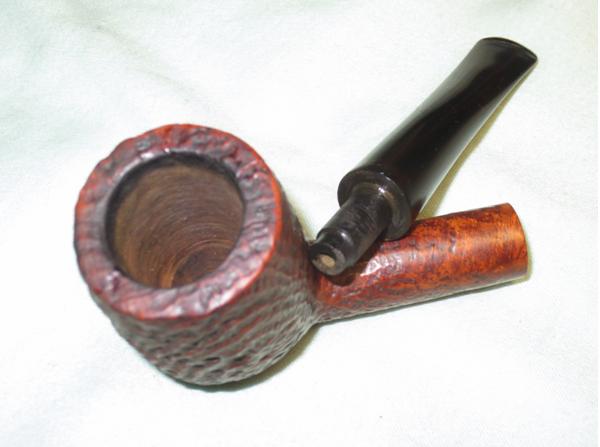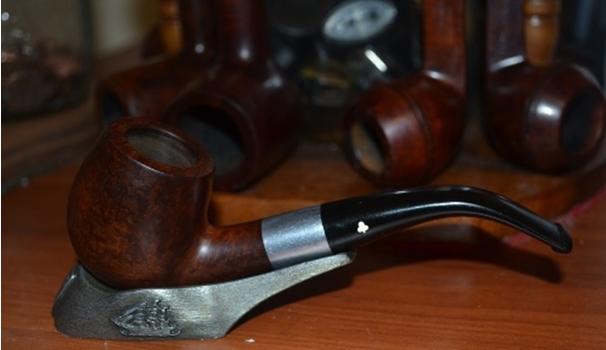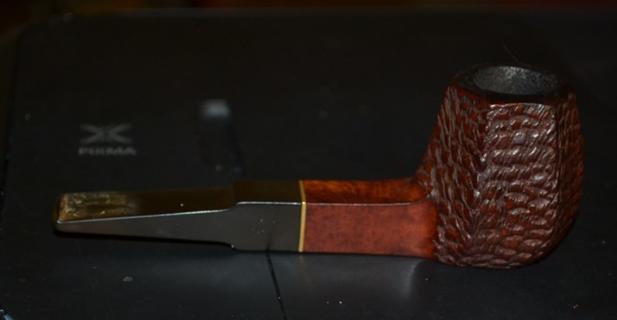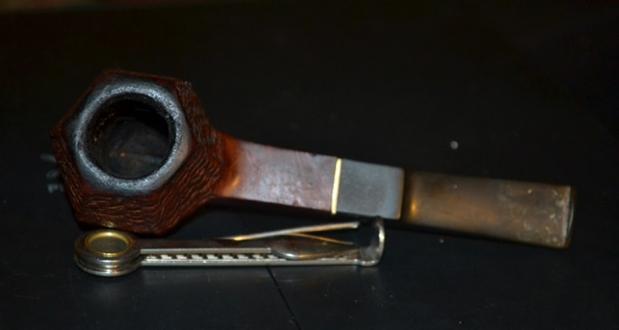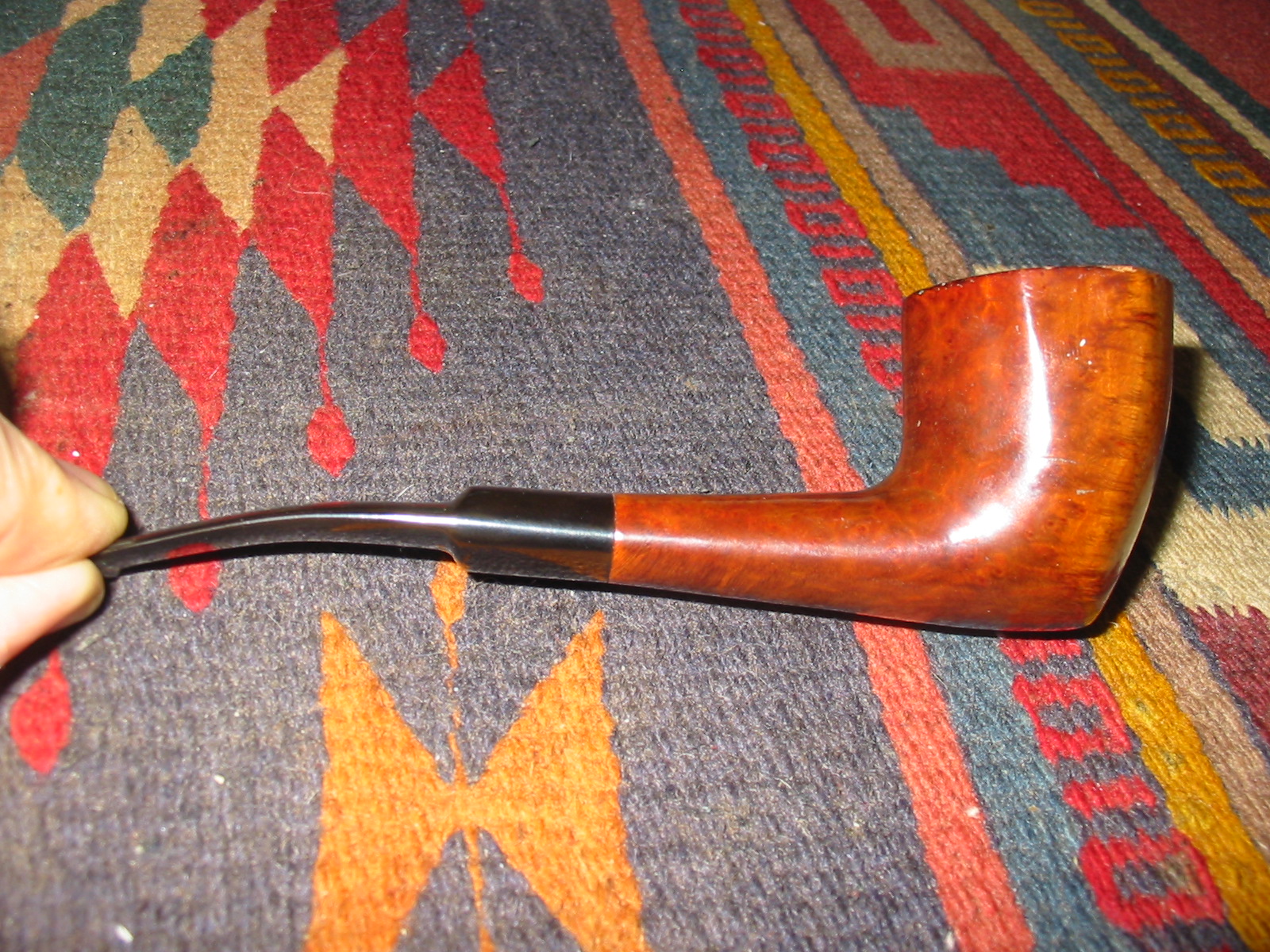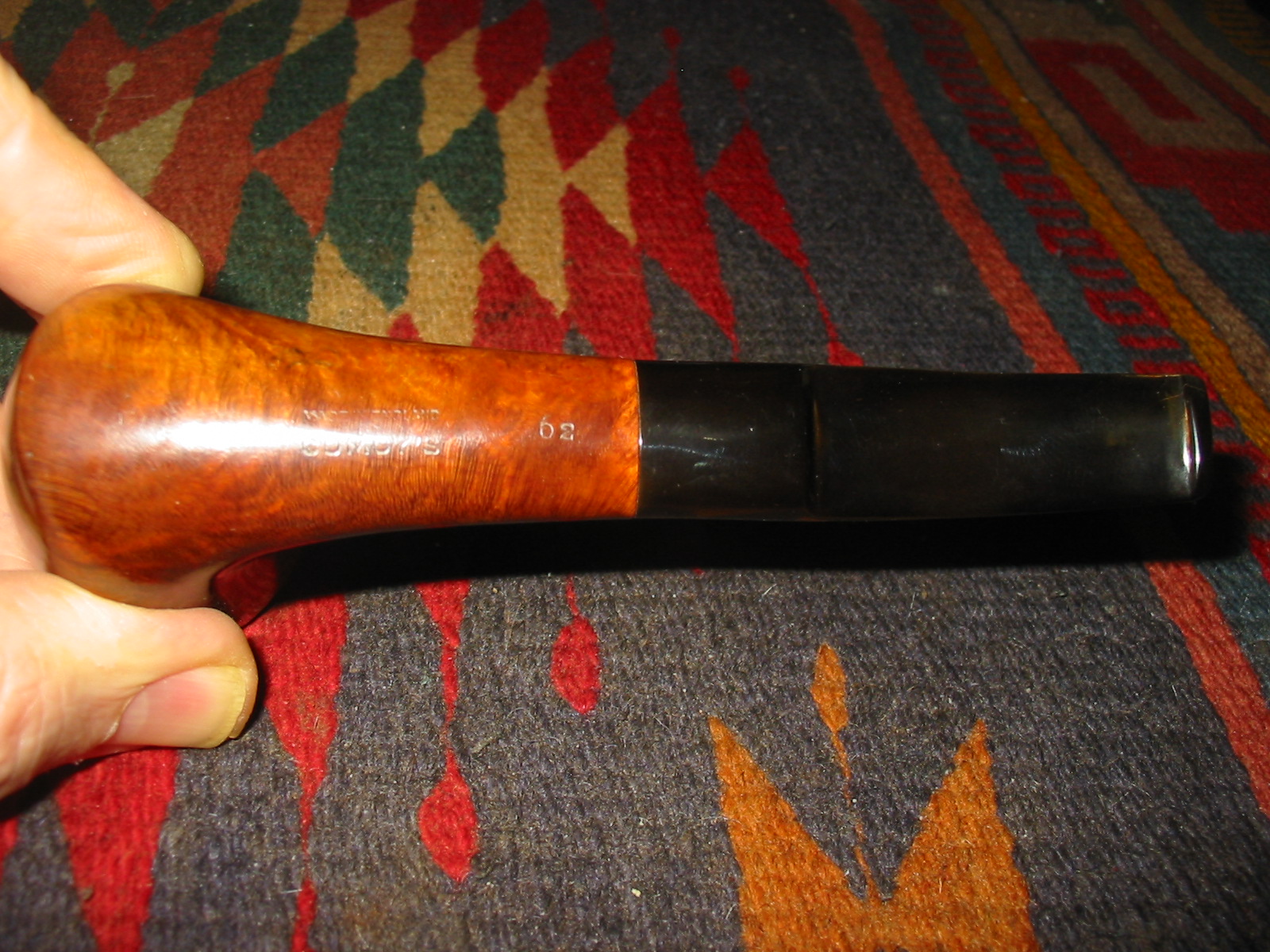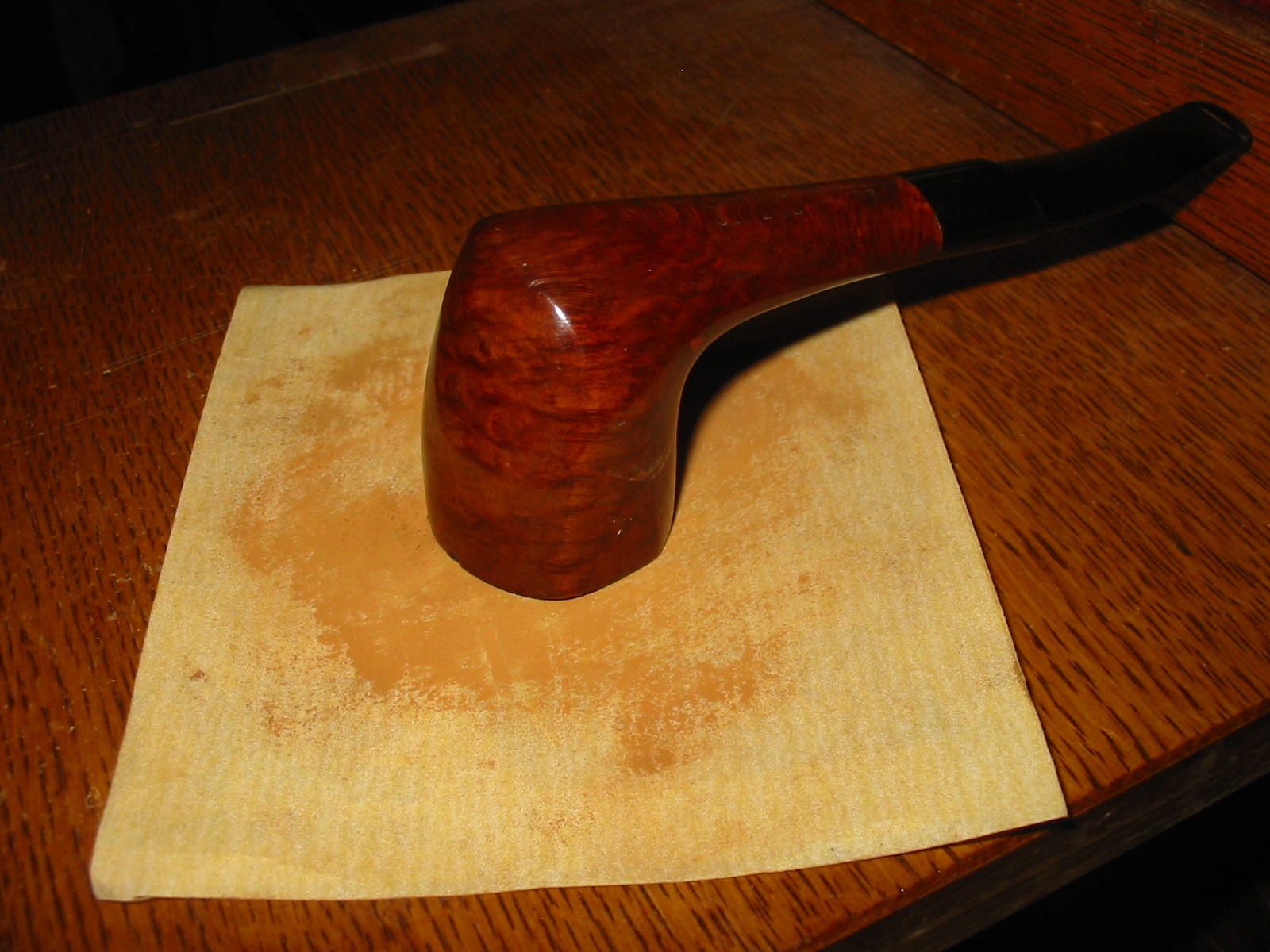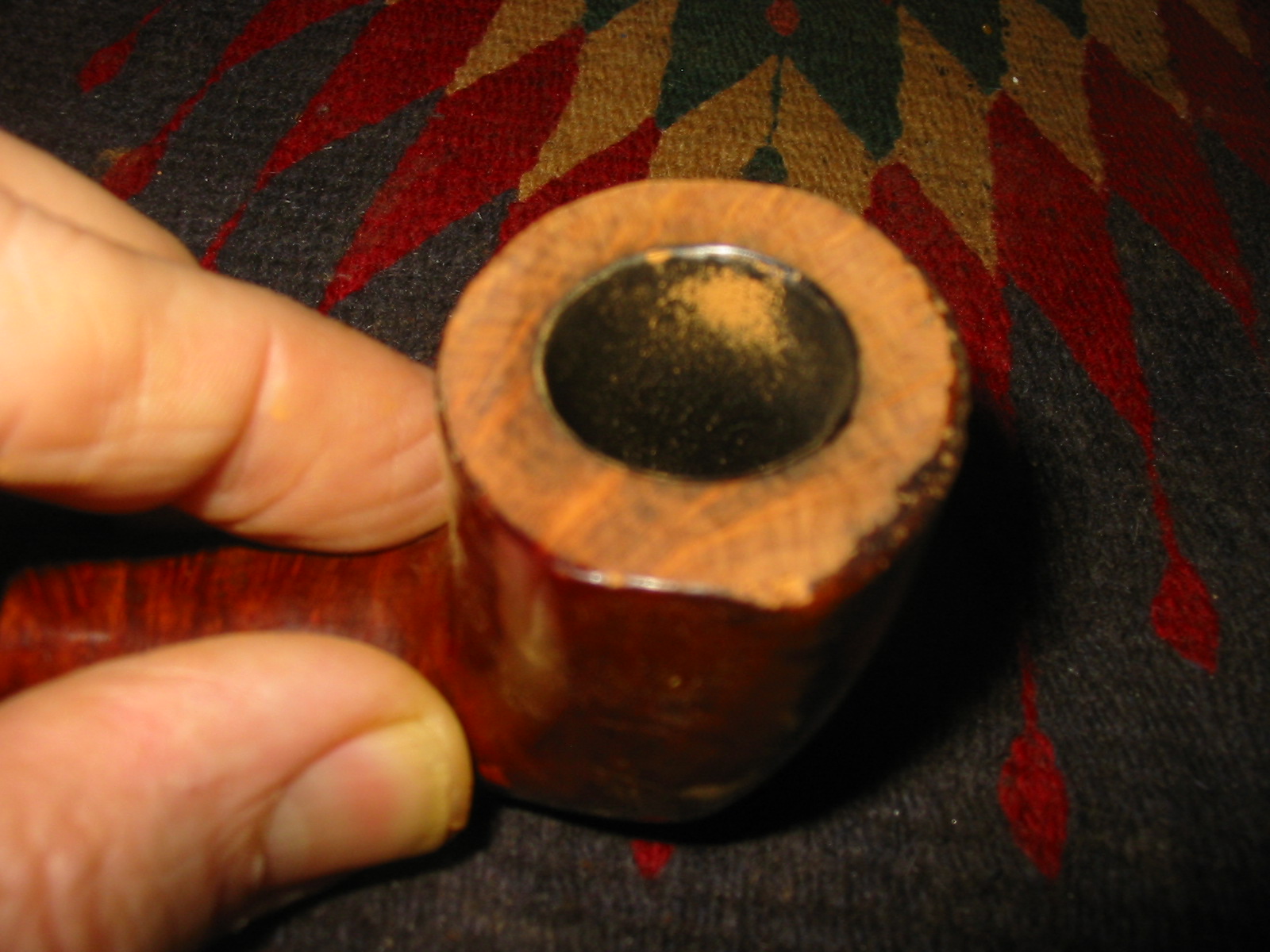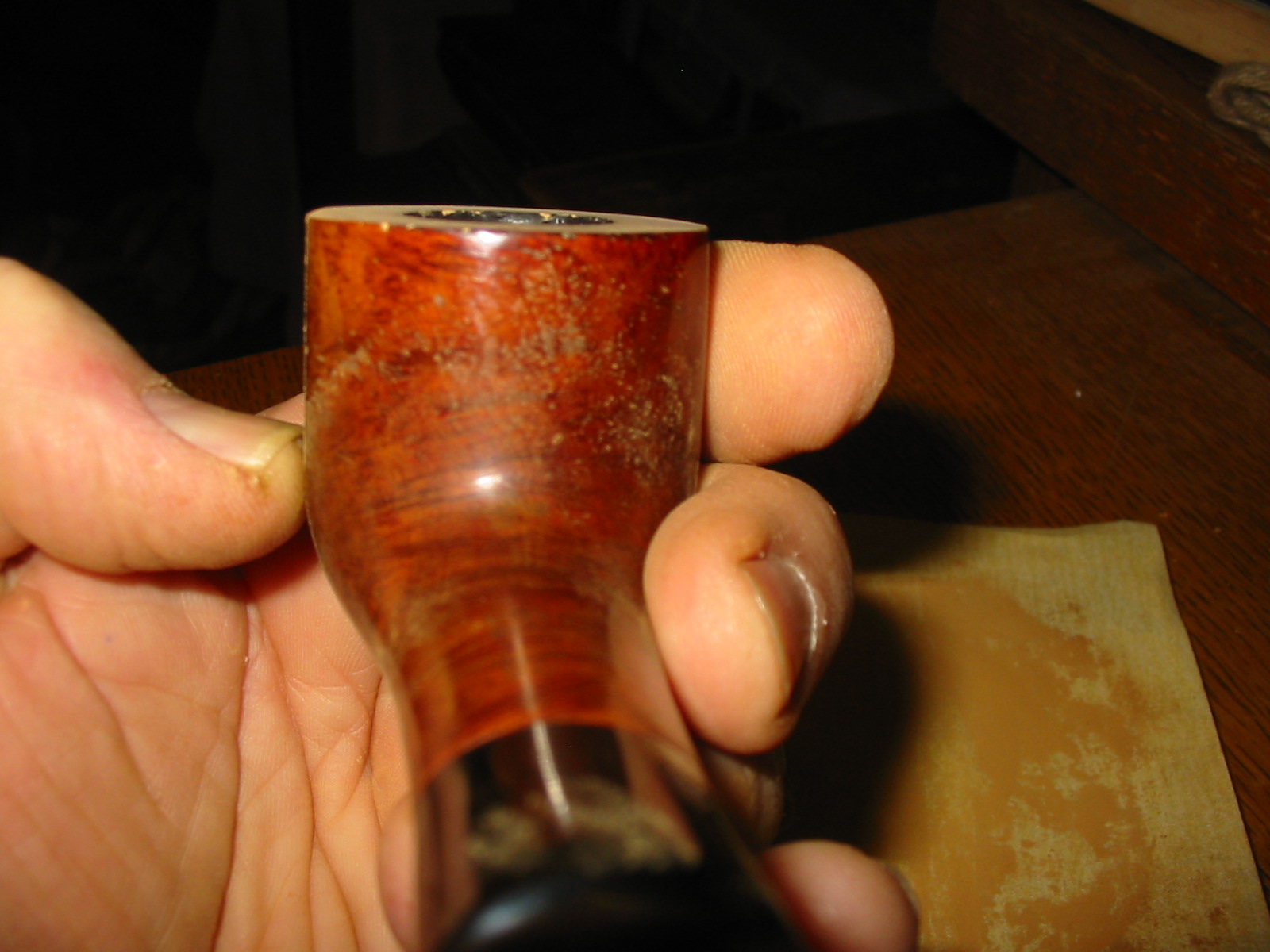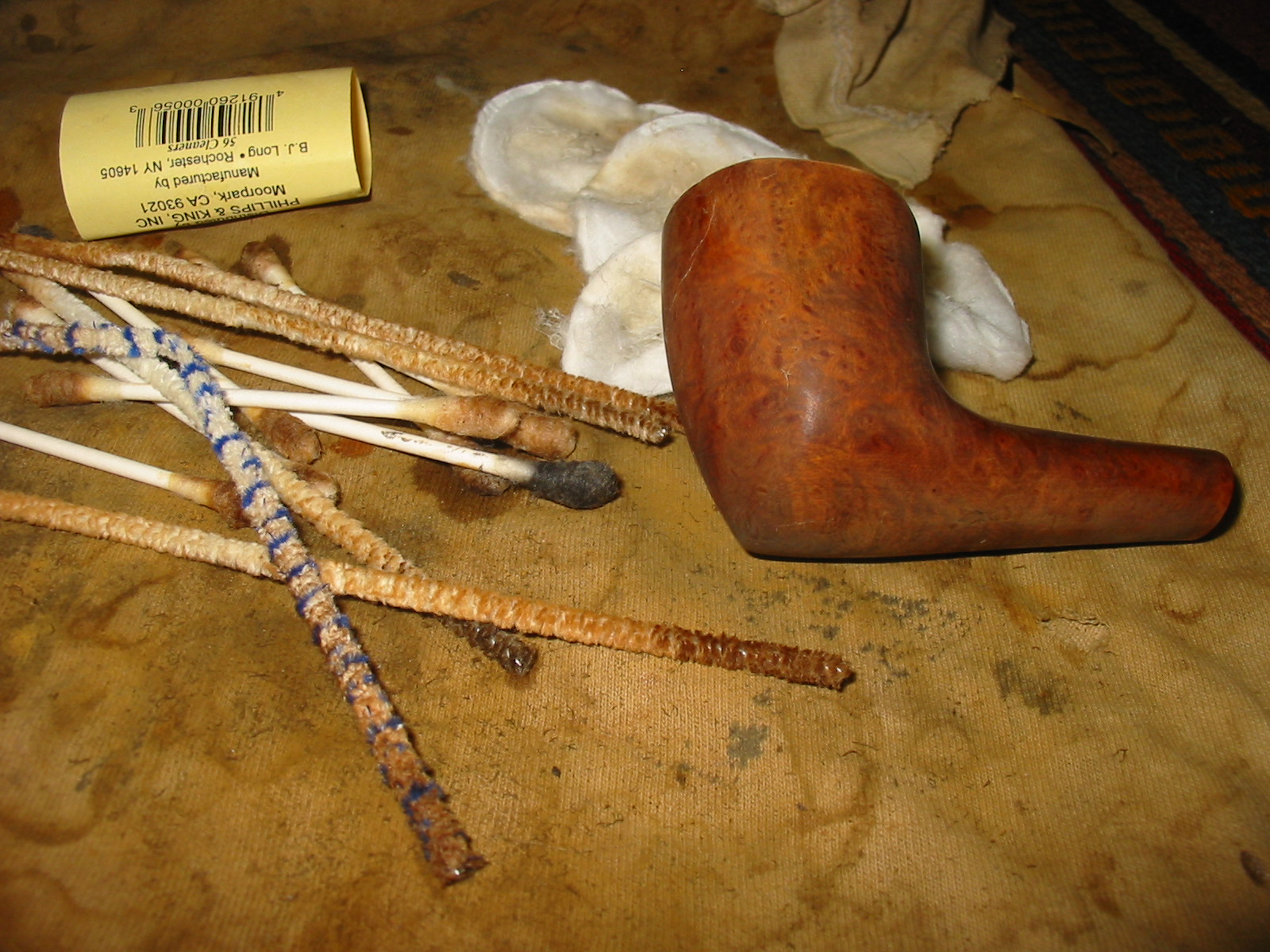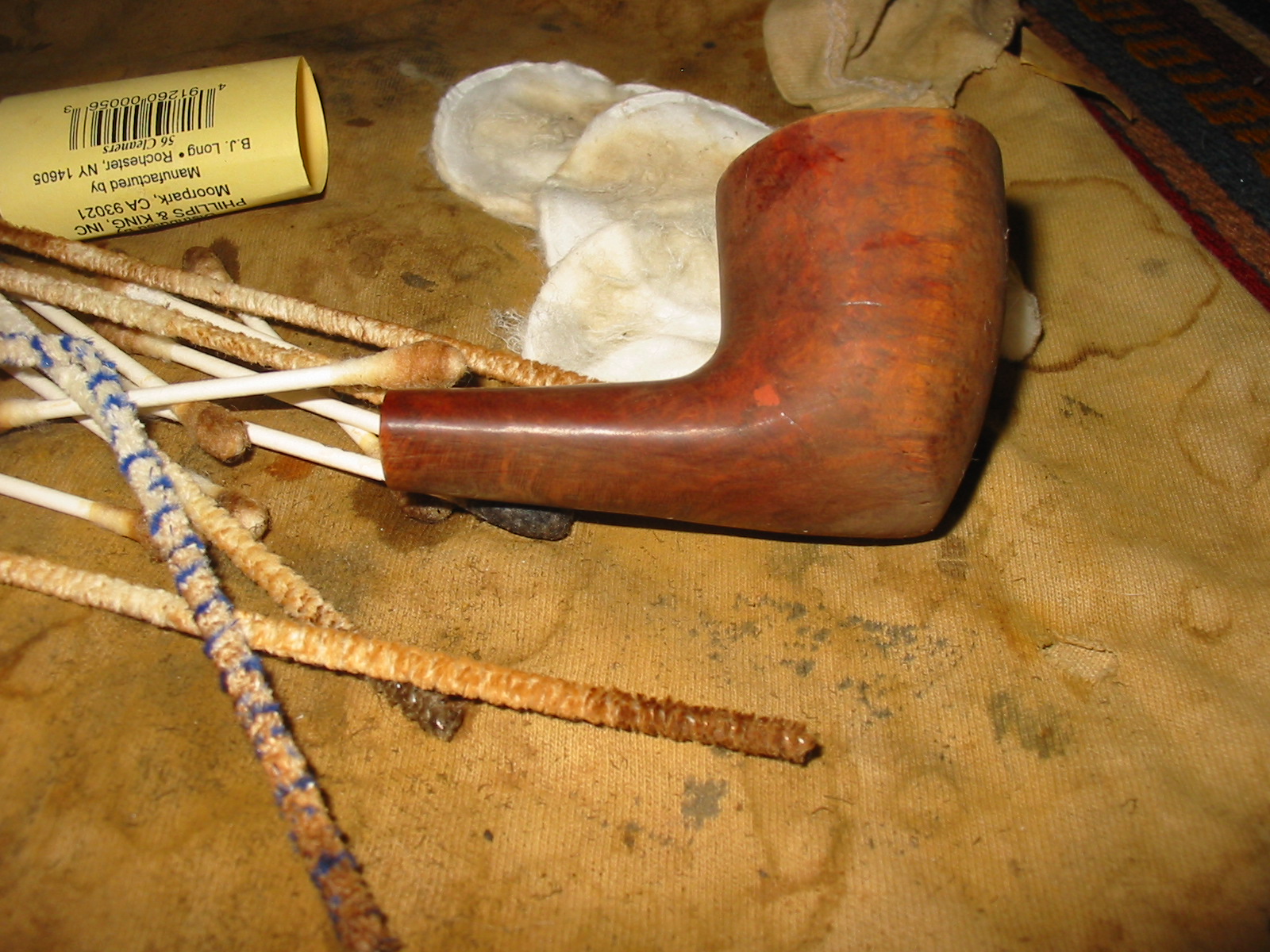
Tag Archives: Comoy’s pipes

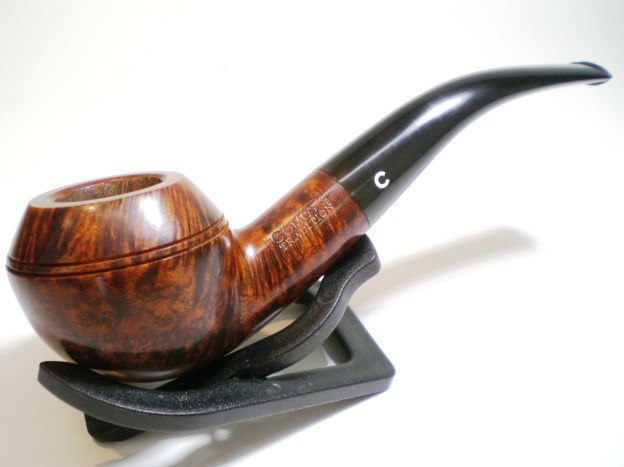
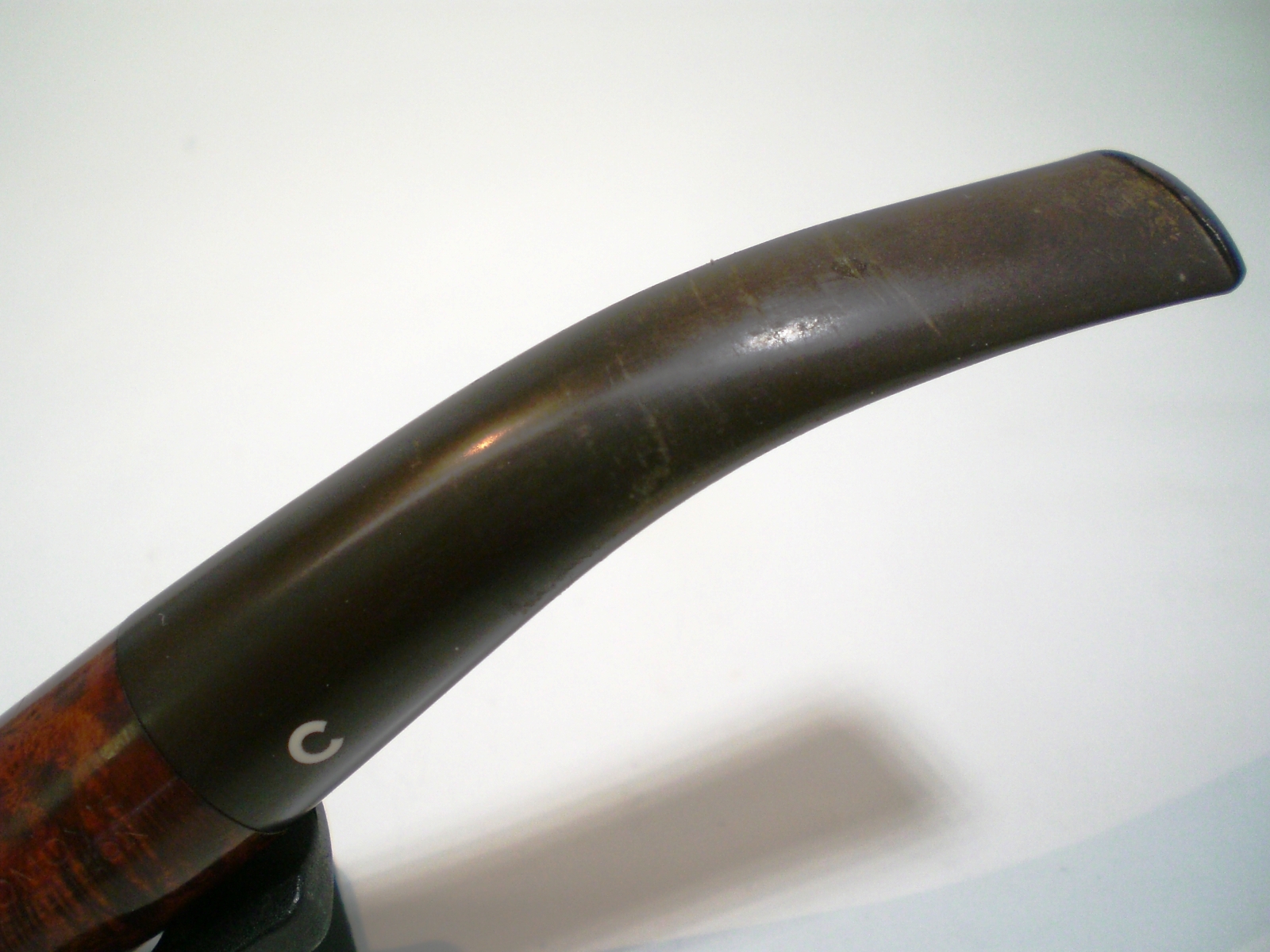
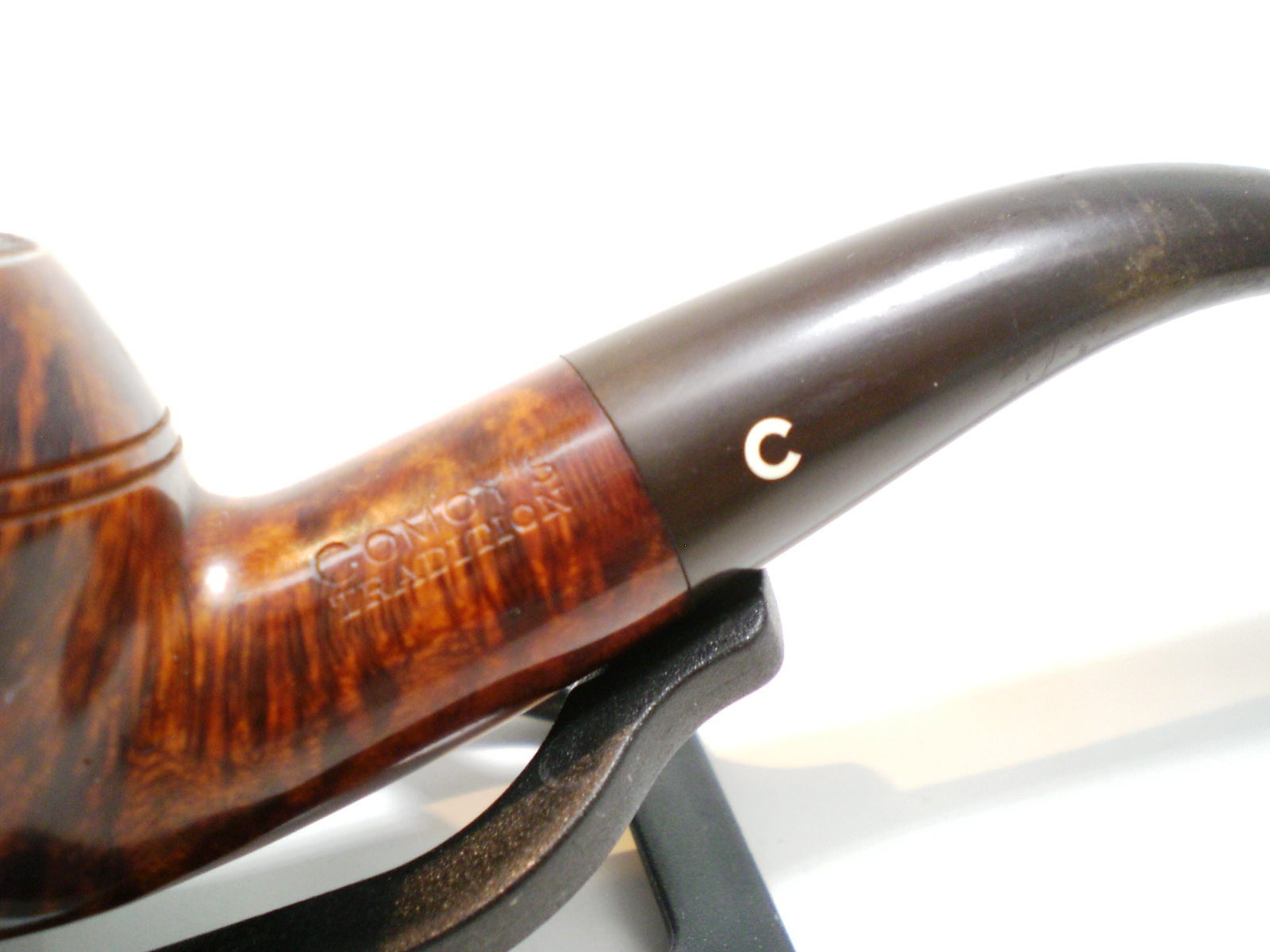
Restoring another of Barry’s Dad’s Pipes – a Comoy’s Grand Slam Pipe 202


Blog by Steve Laug

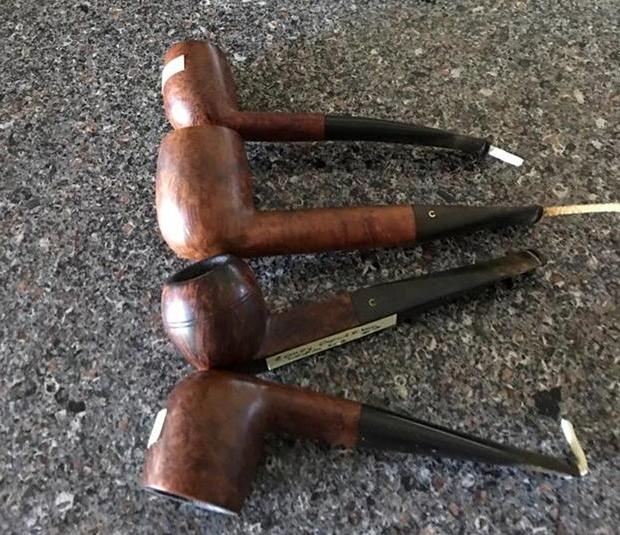
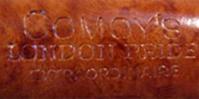
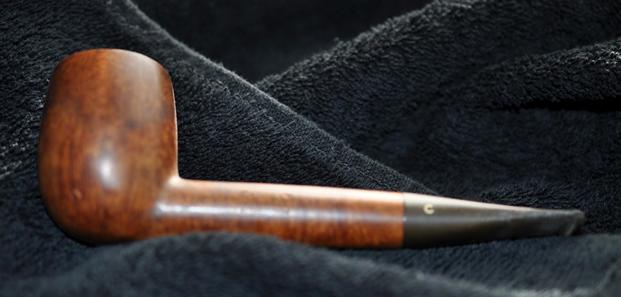
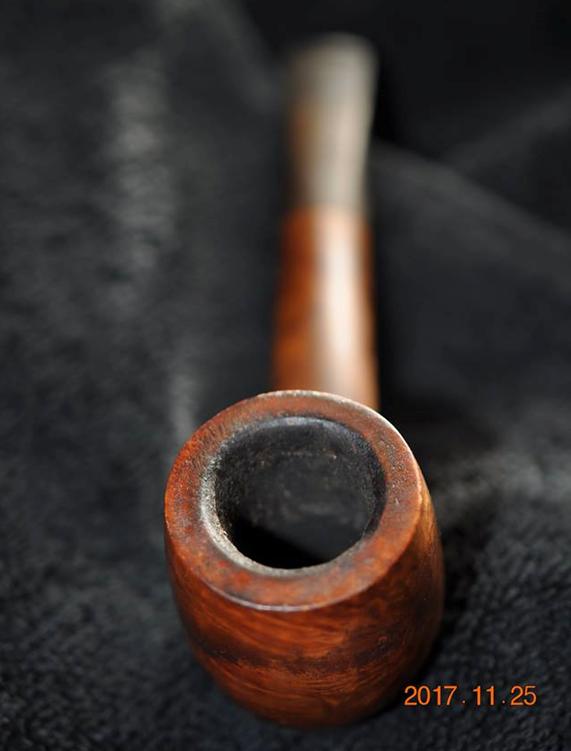
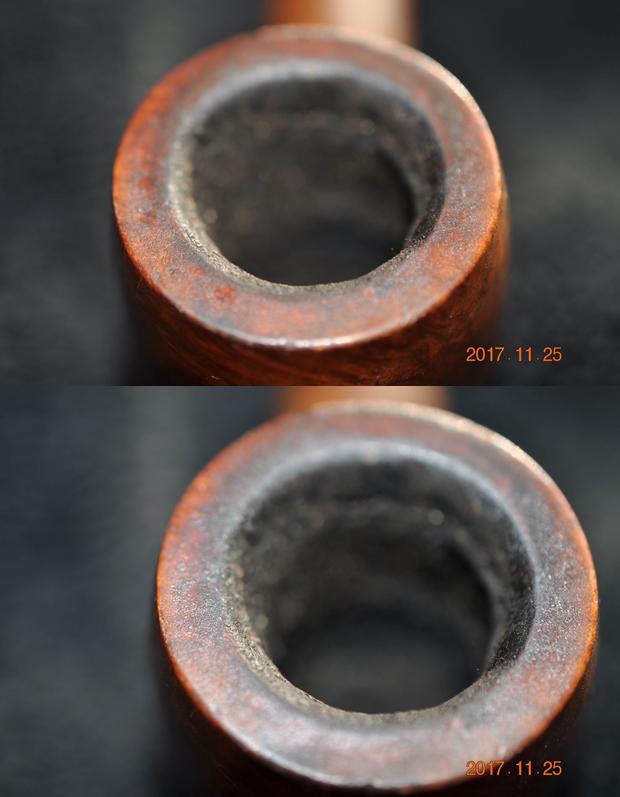
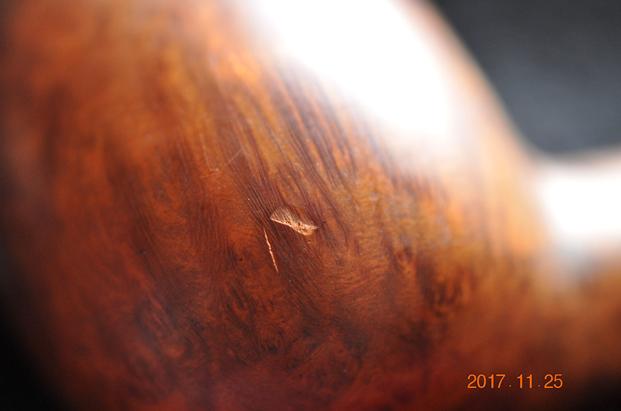
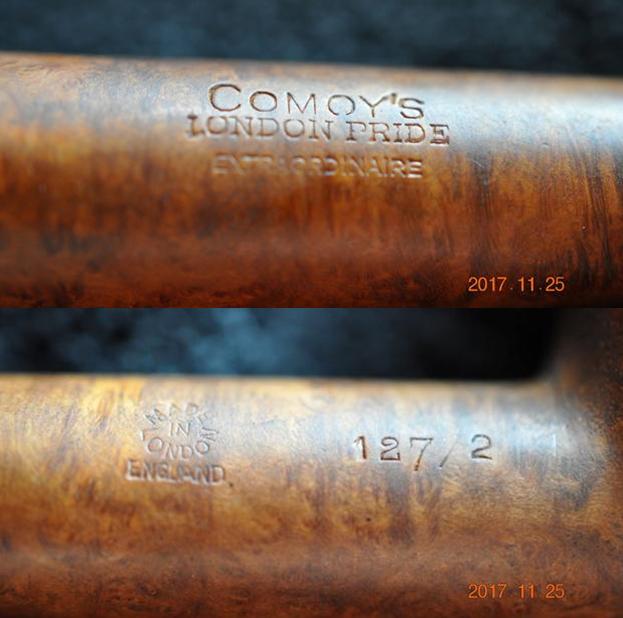
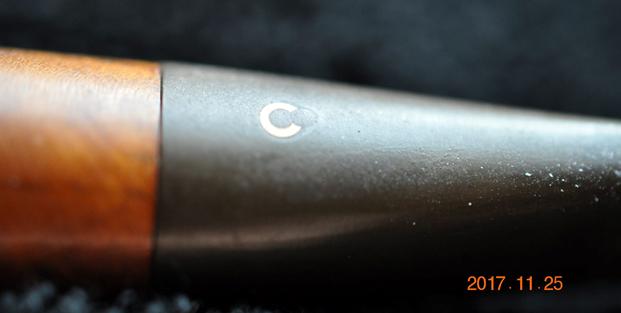
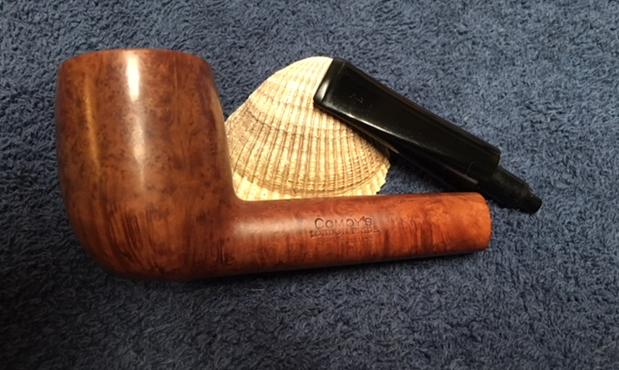
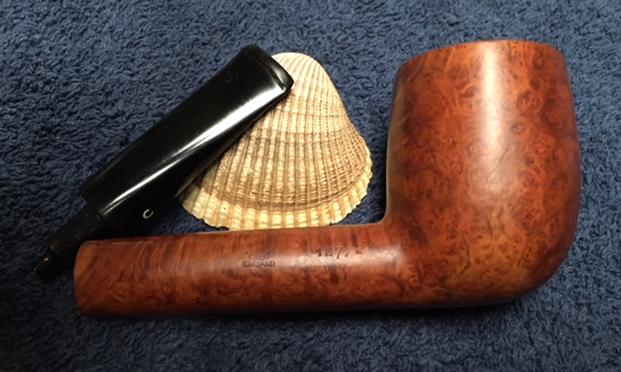
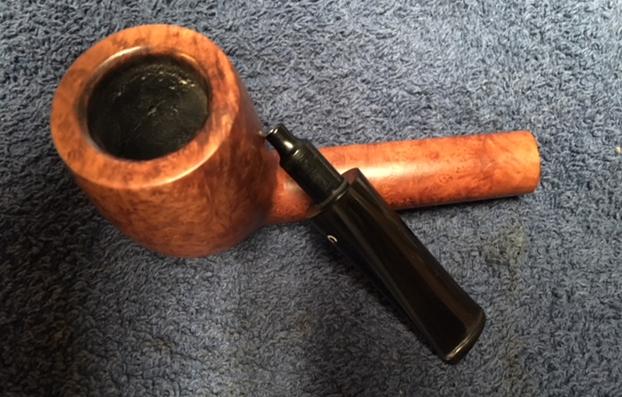
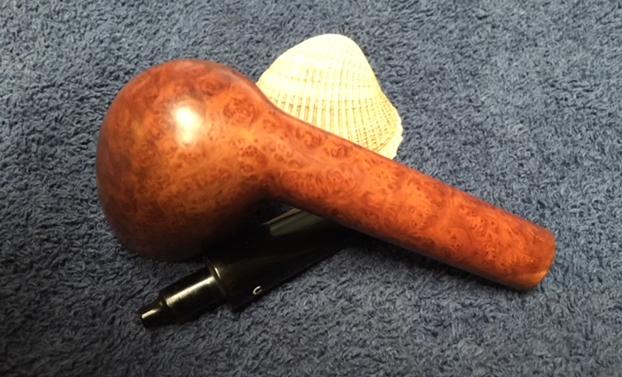
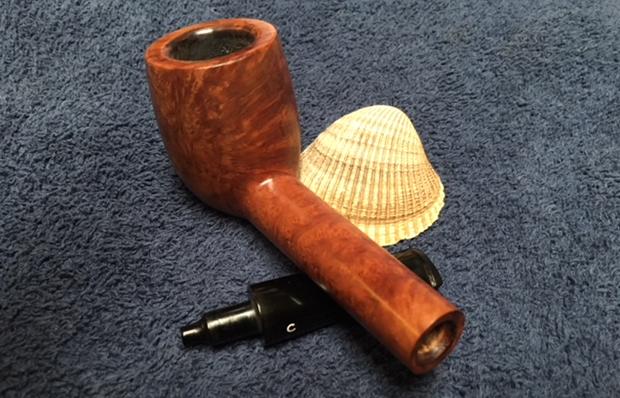
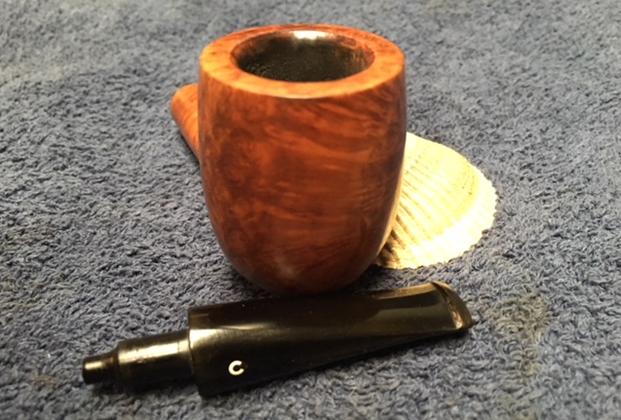
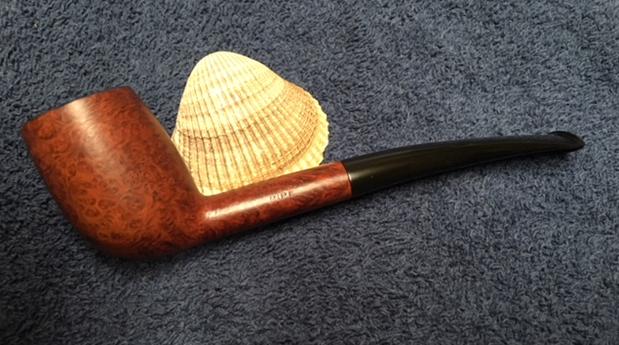
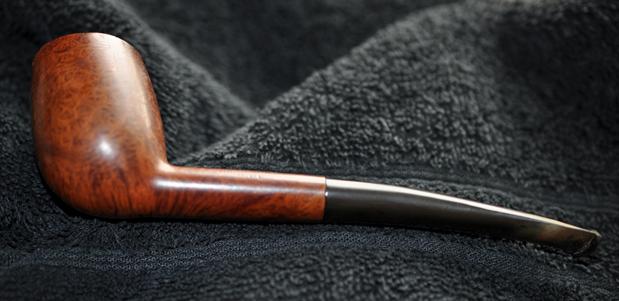
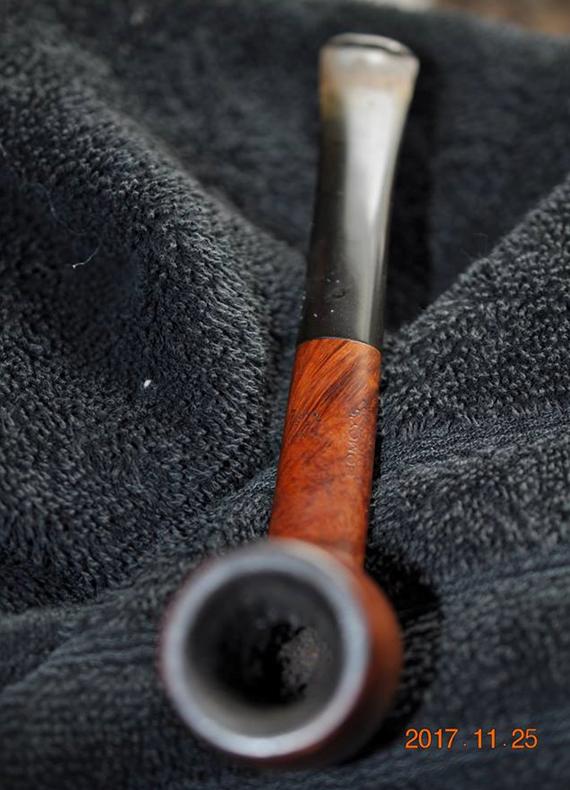
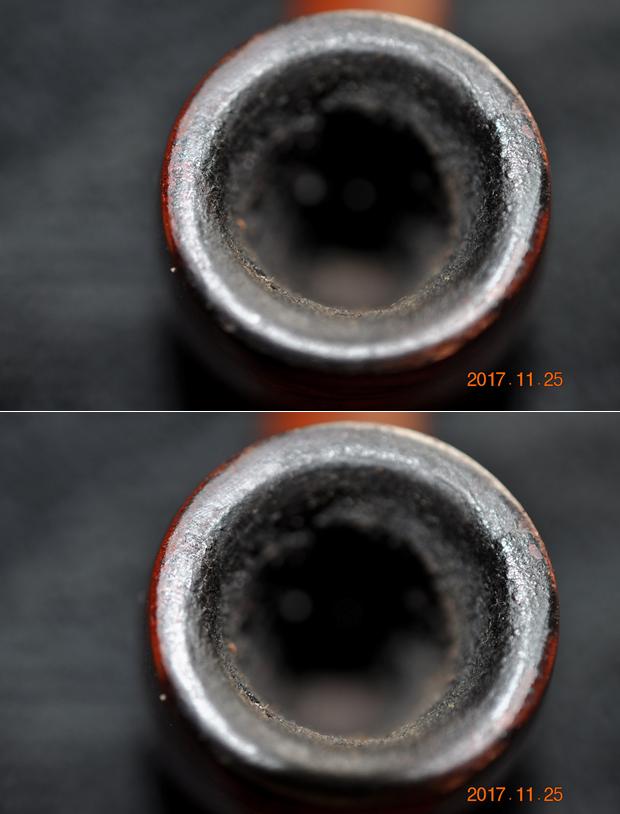
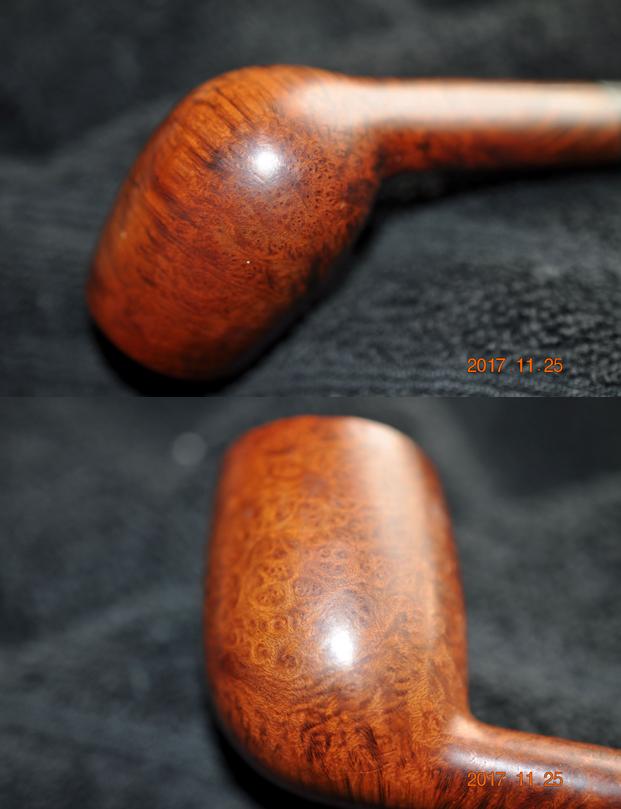
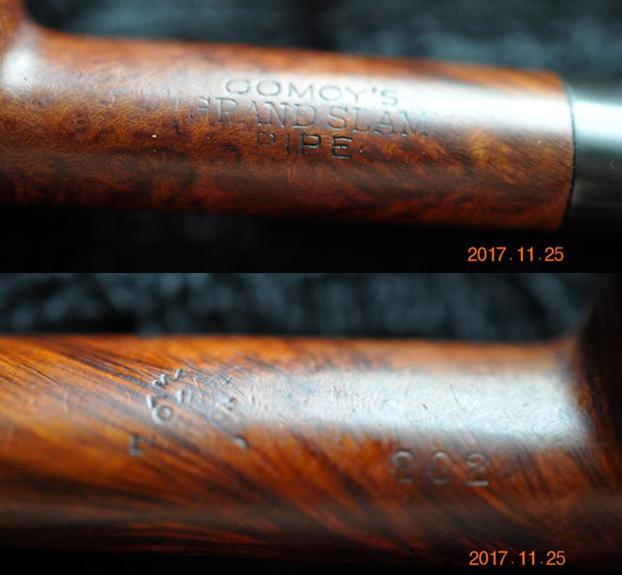
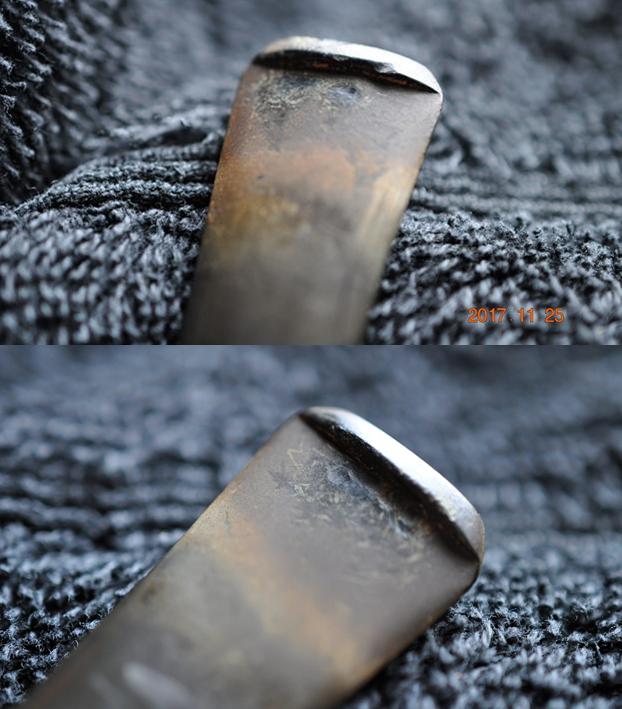
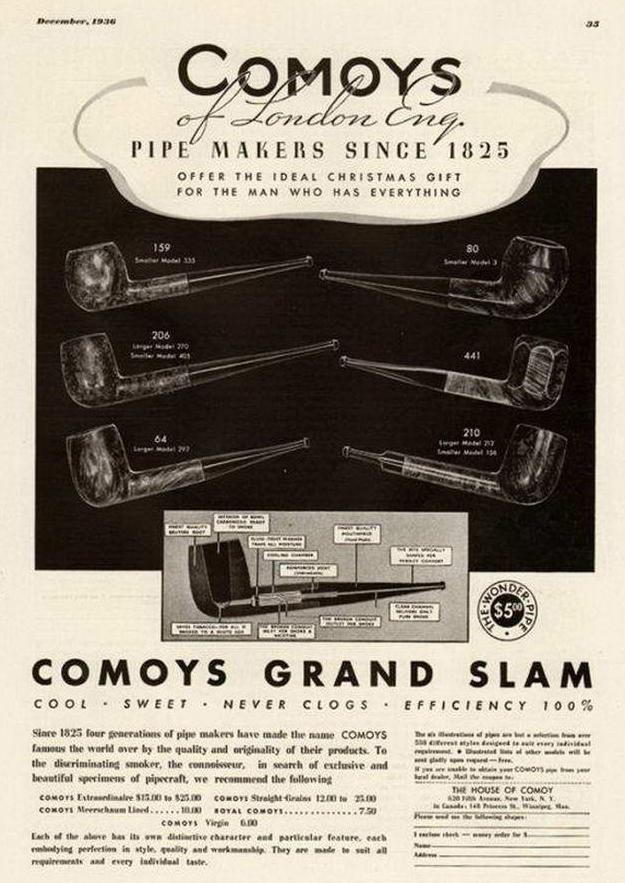
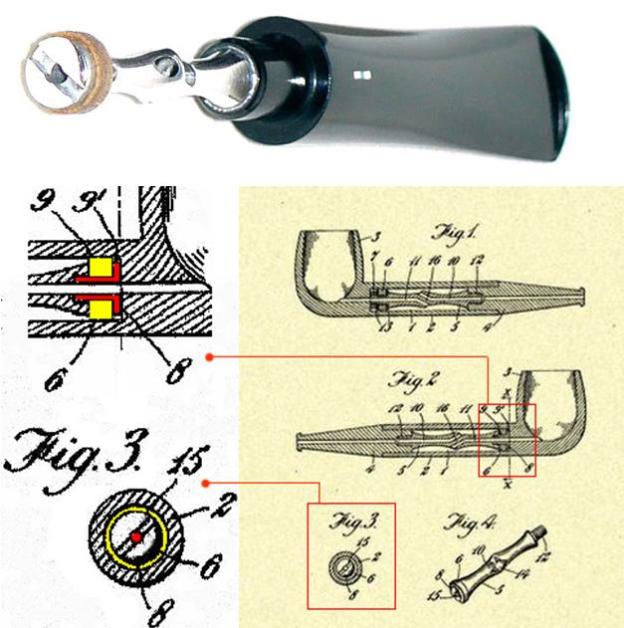
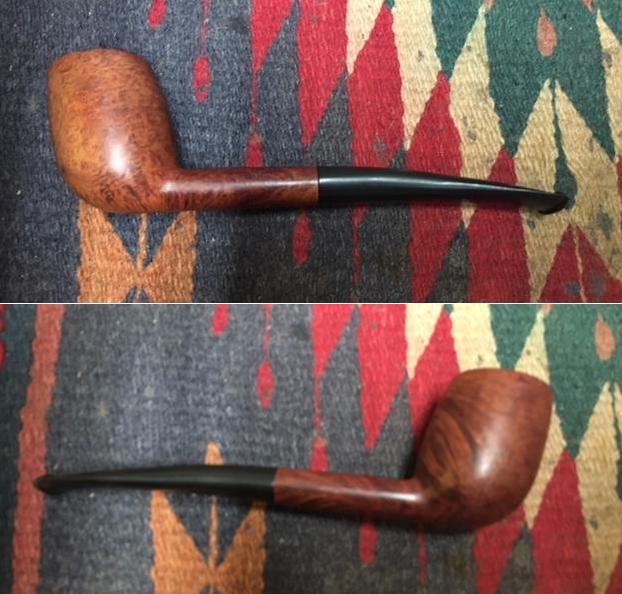
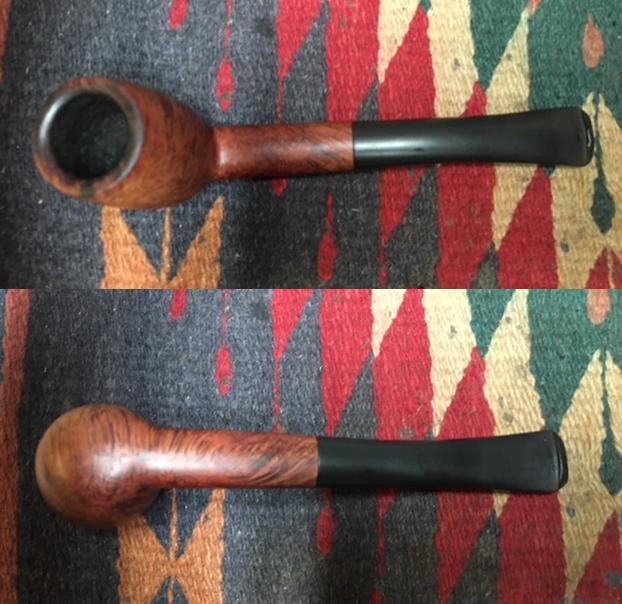
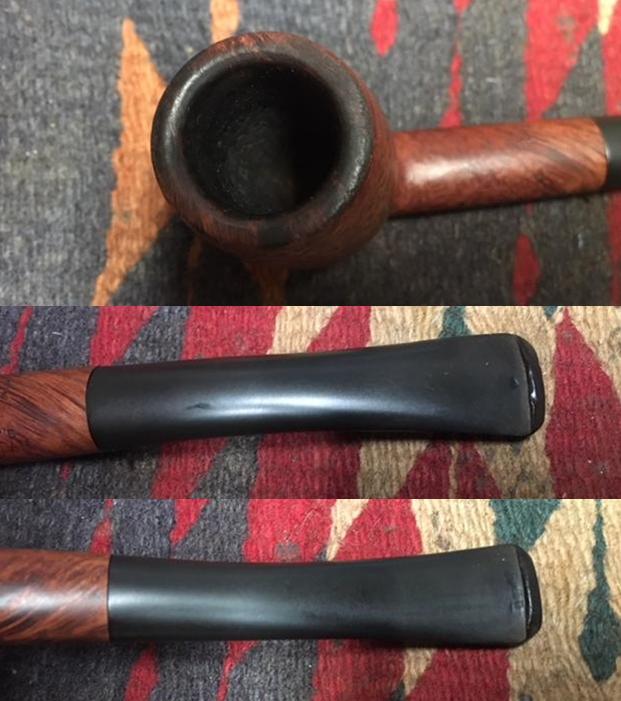
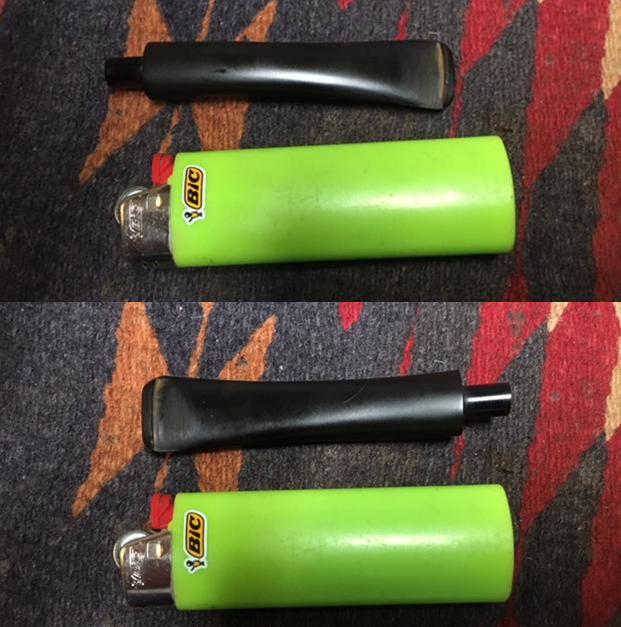
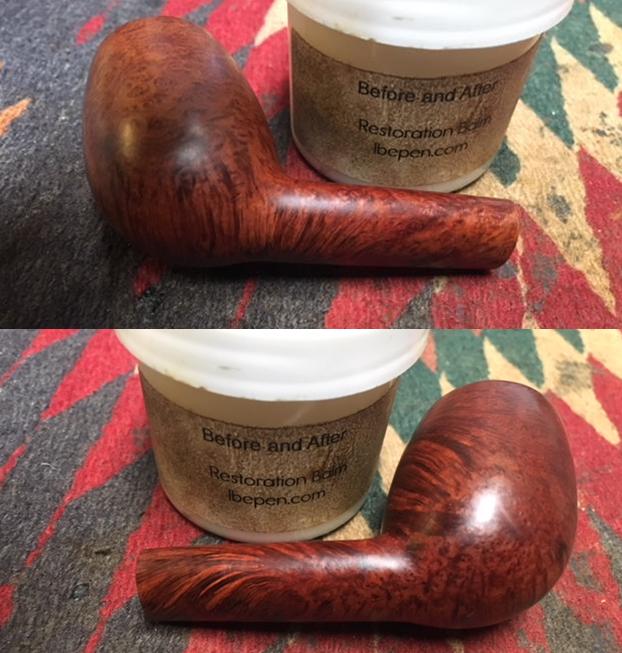
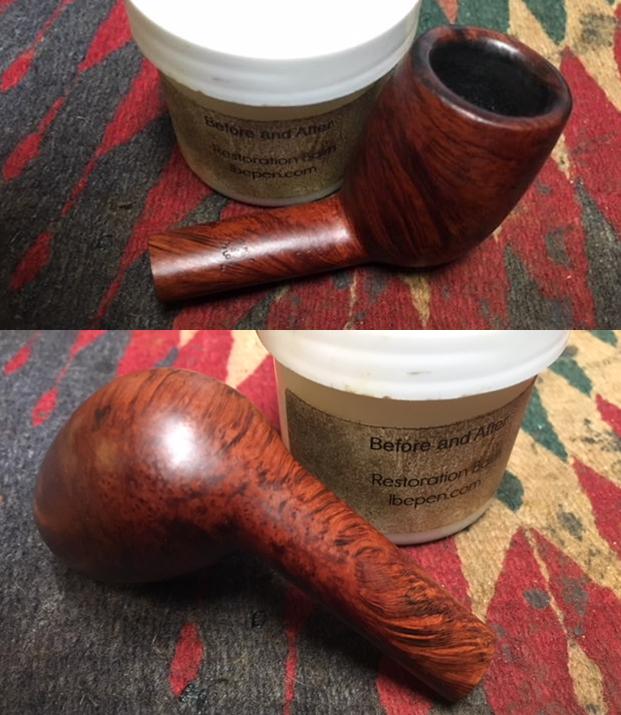
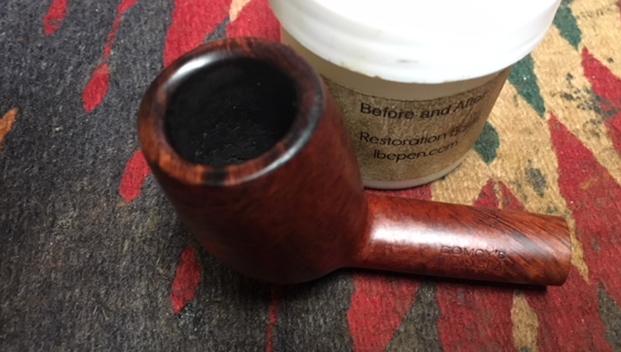
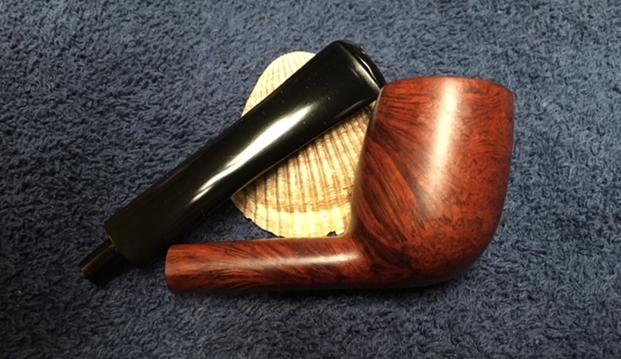
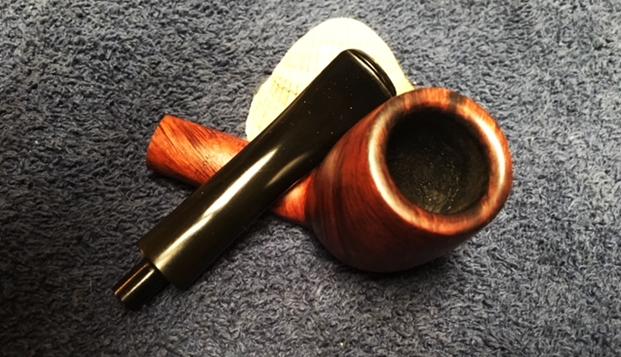
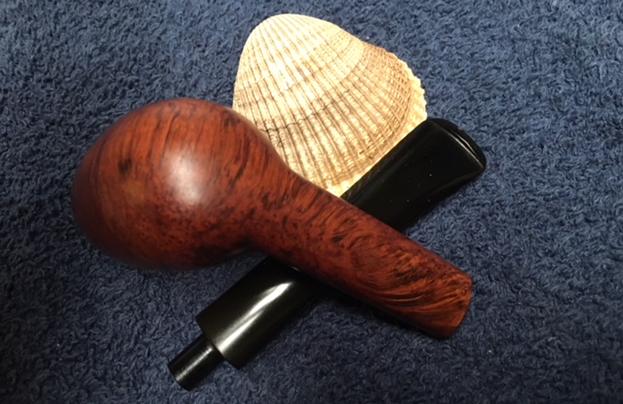
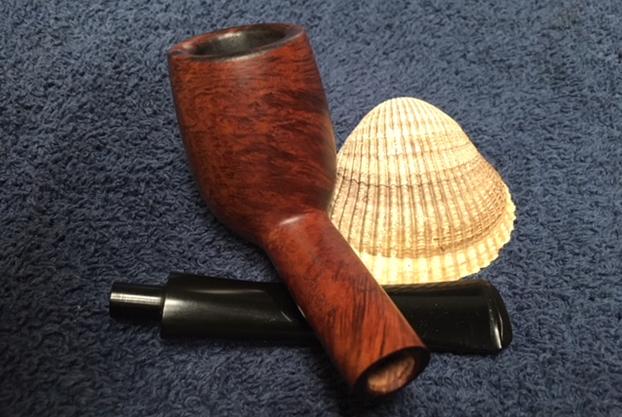
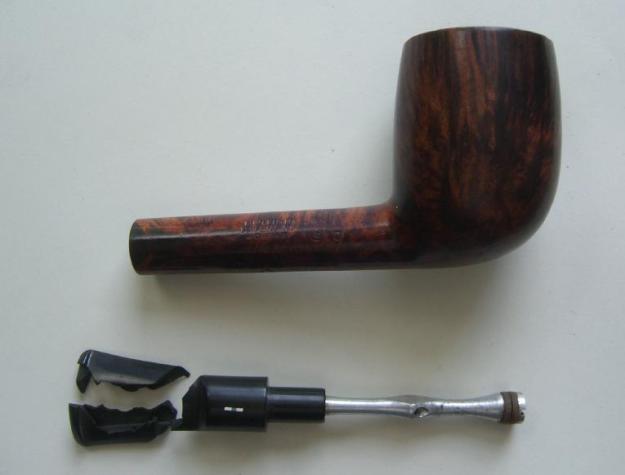
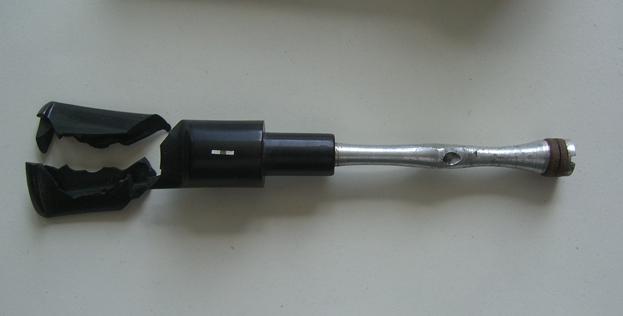
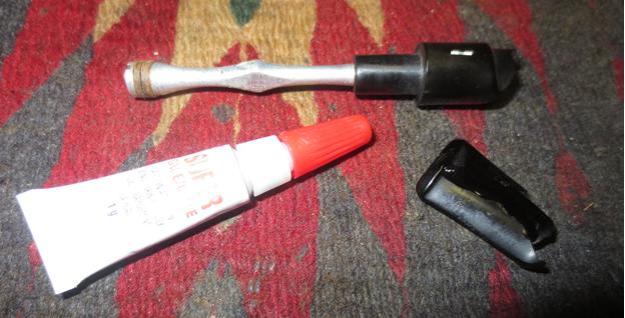
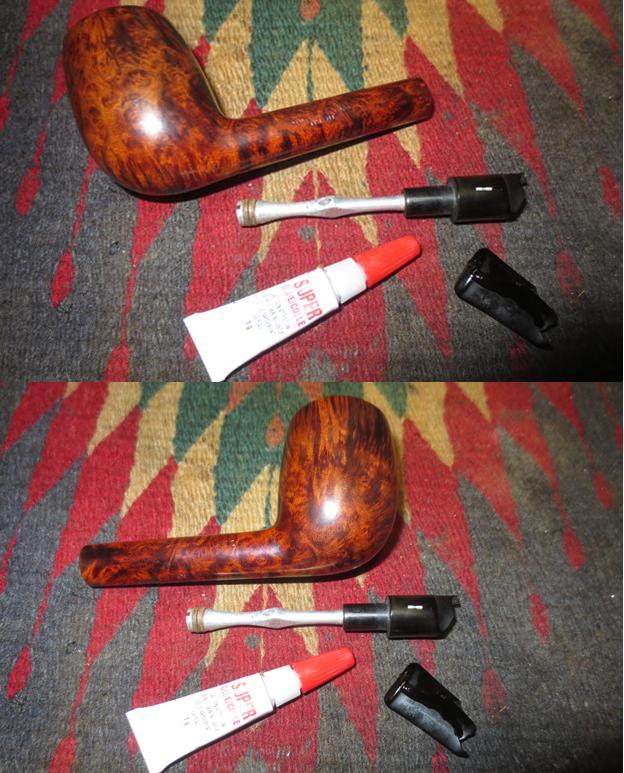
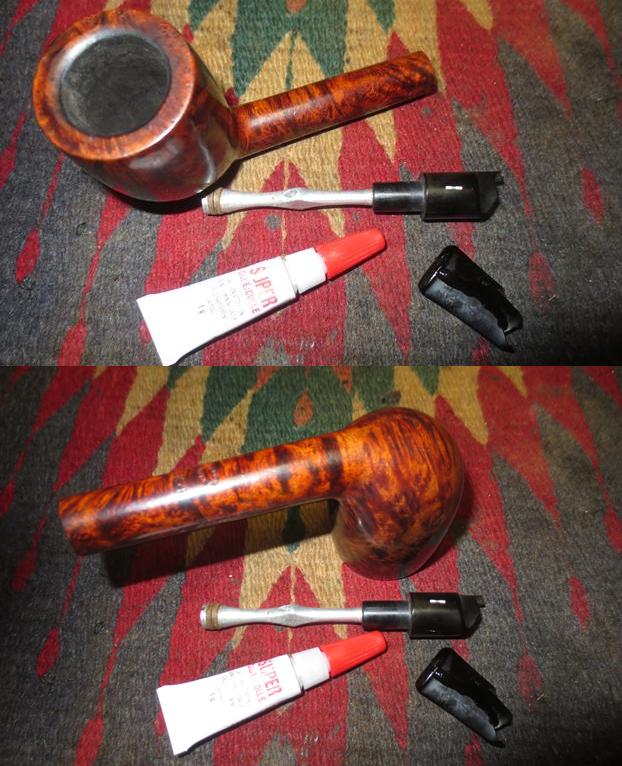
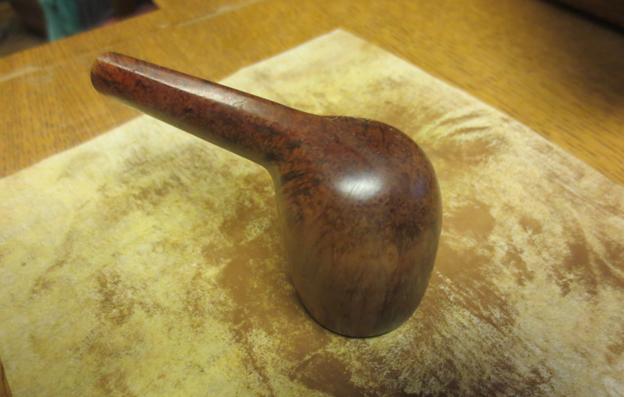
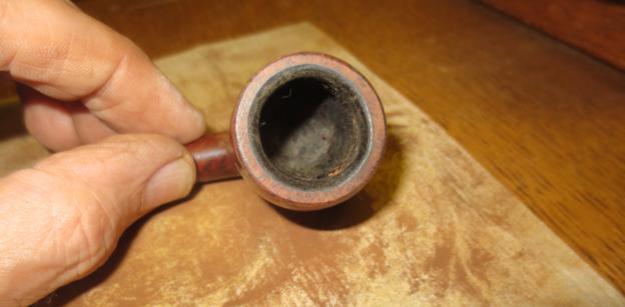
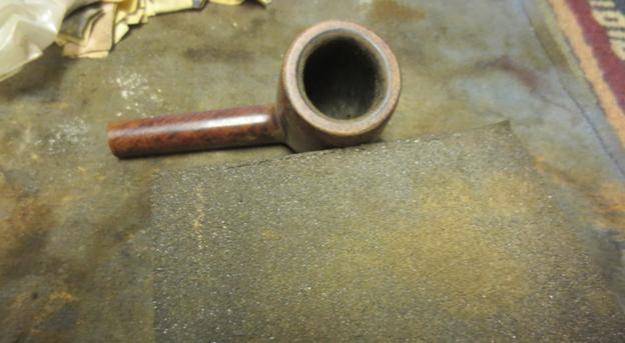
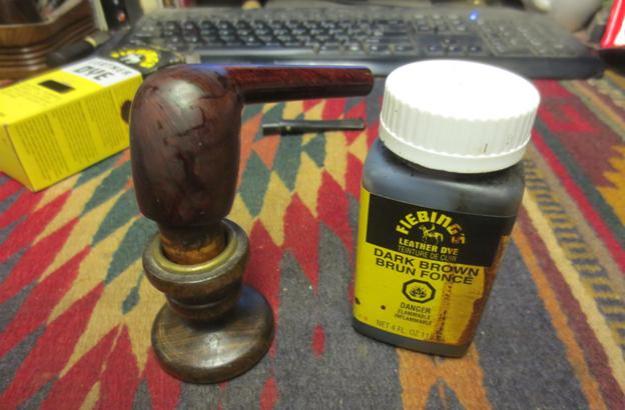
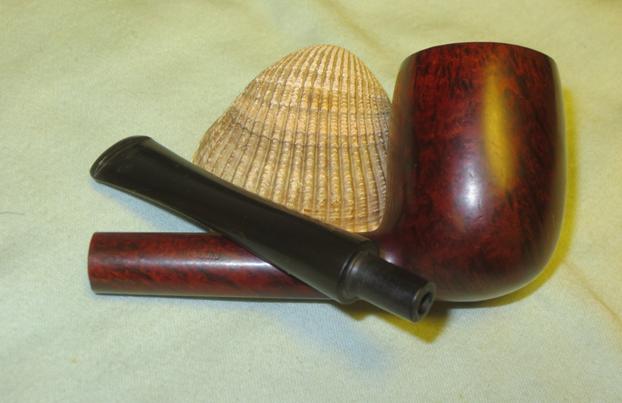
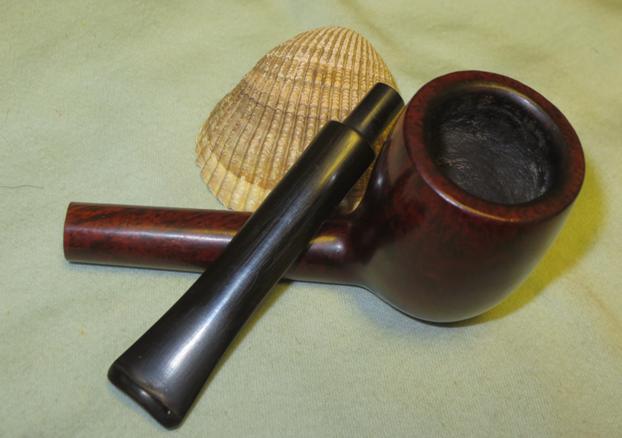
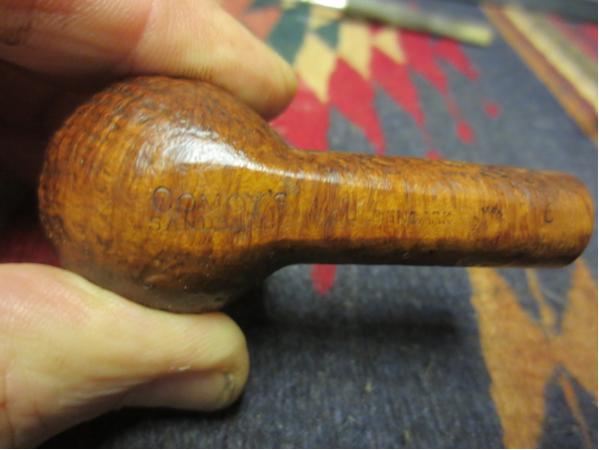
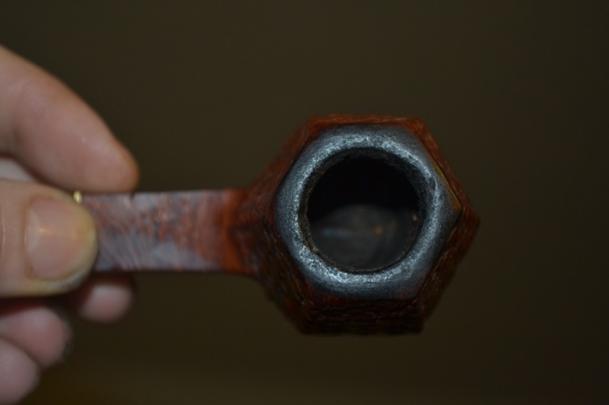
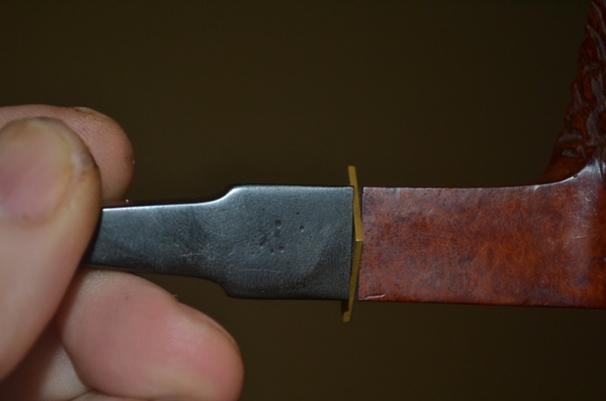
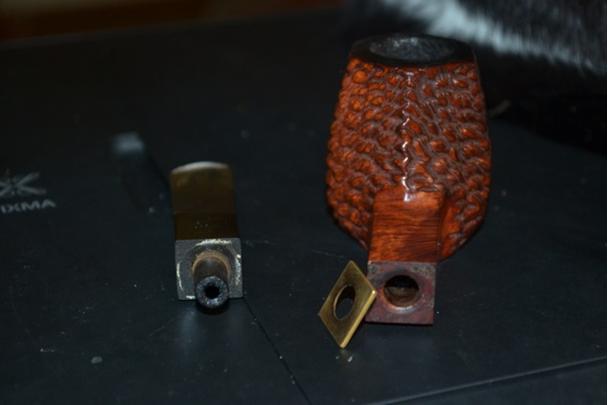
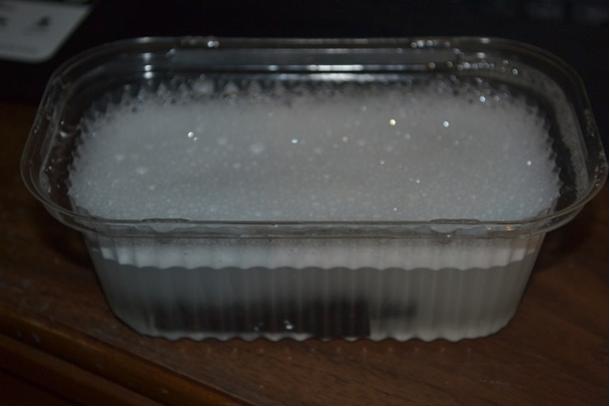
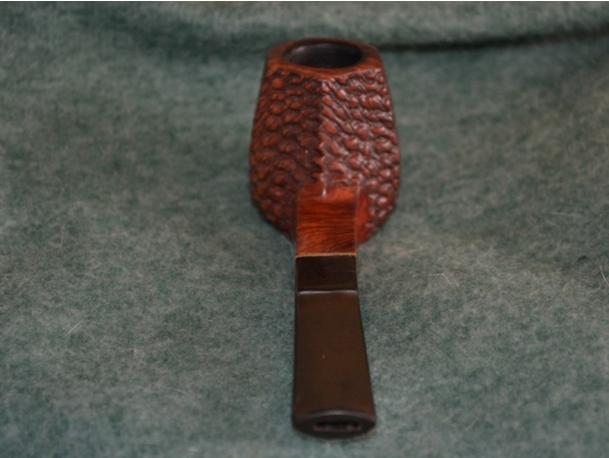
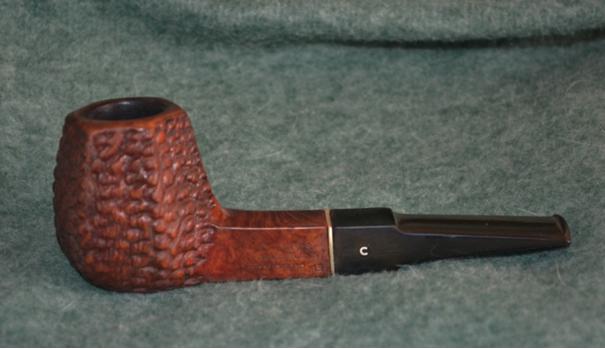
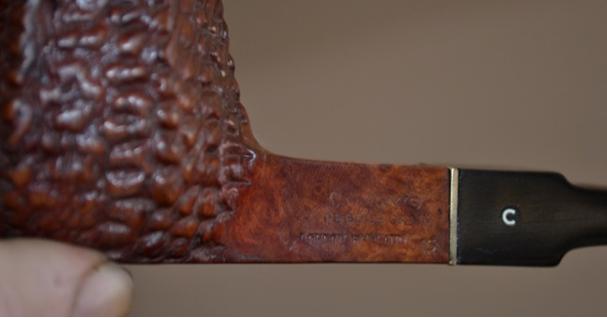
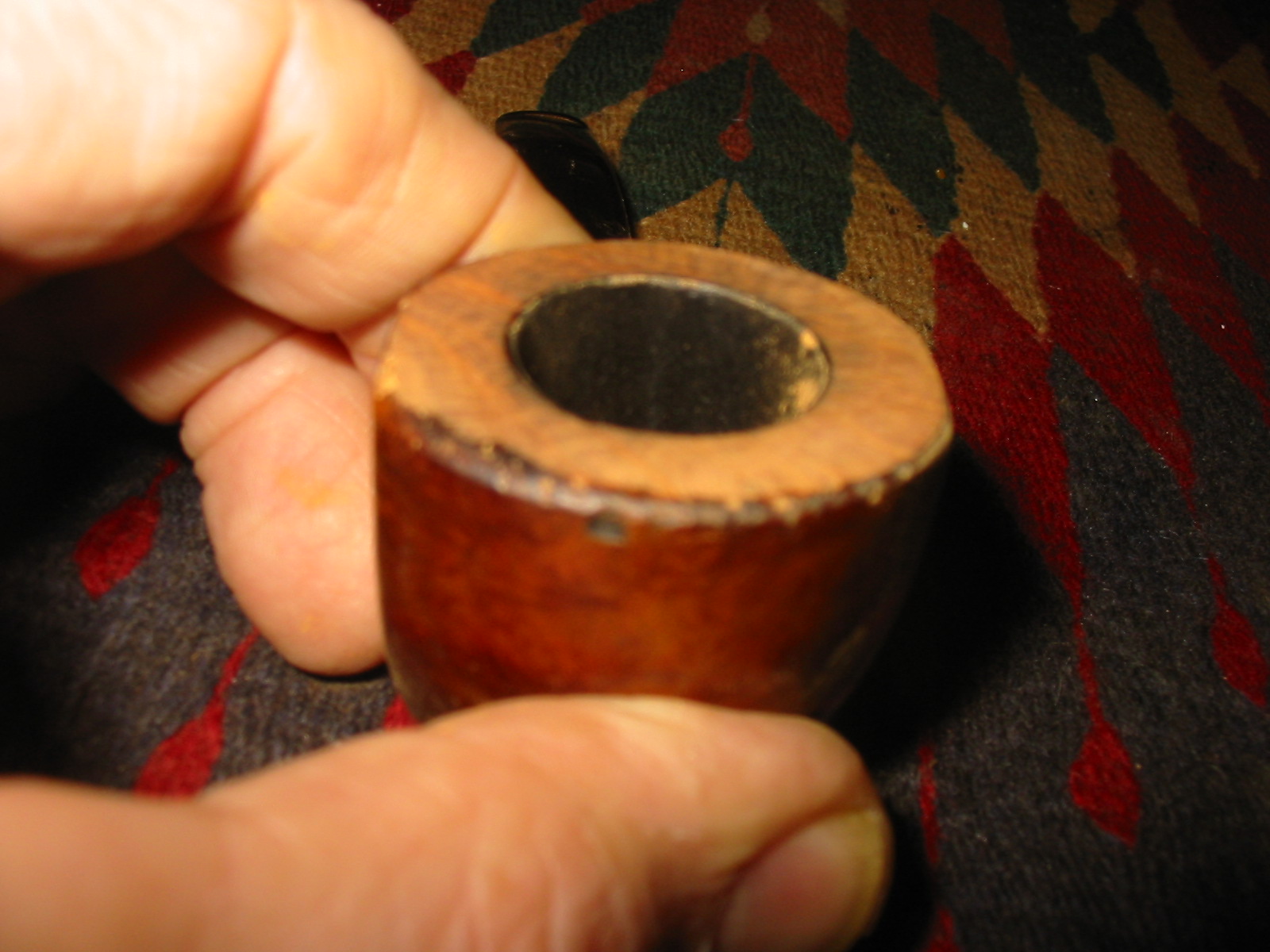
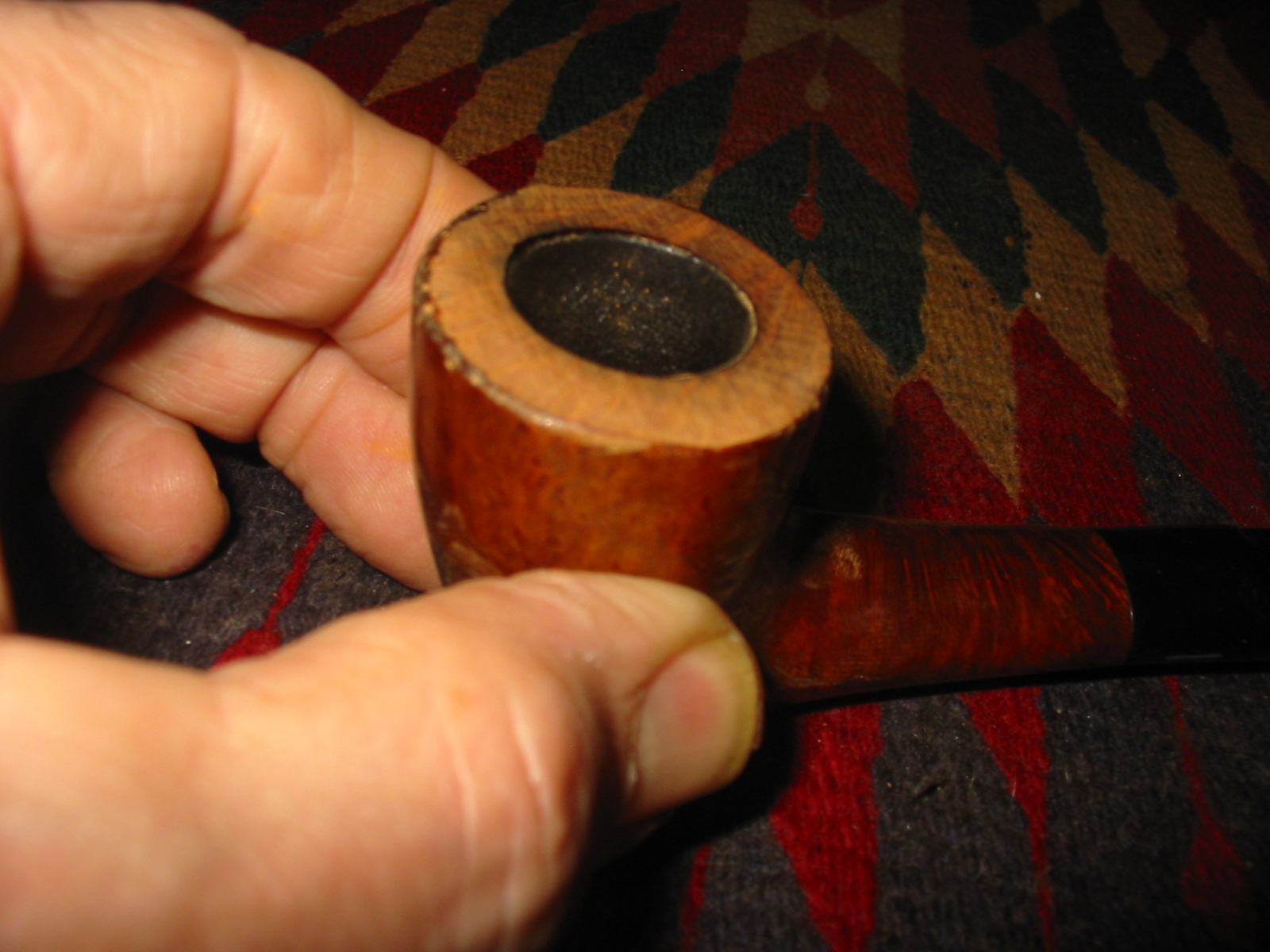
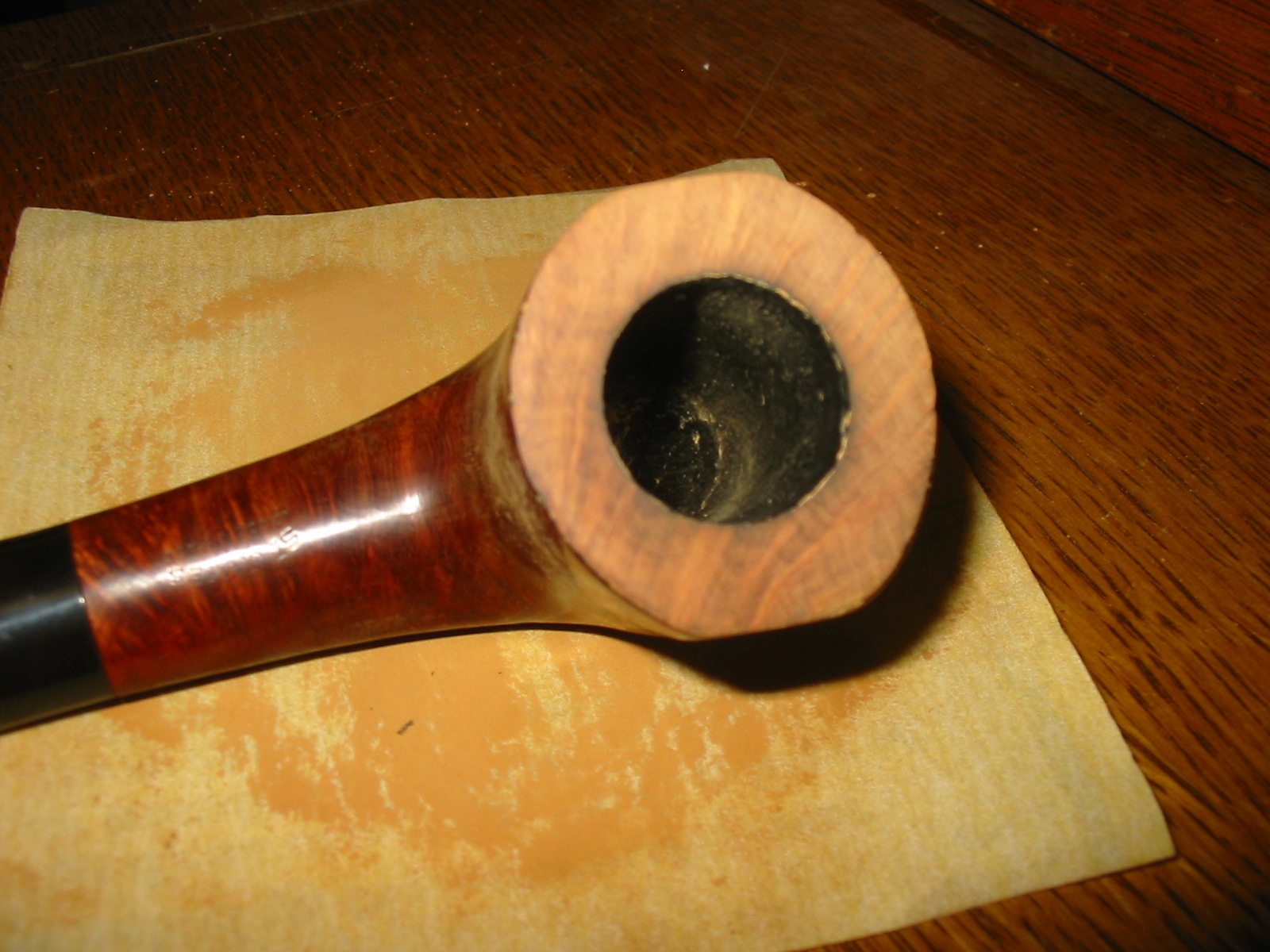
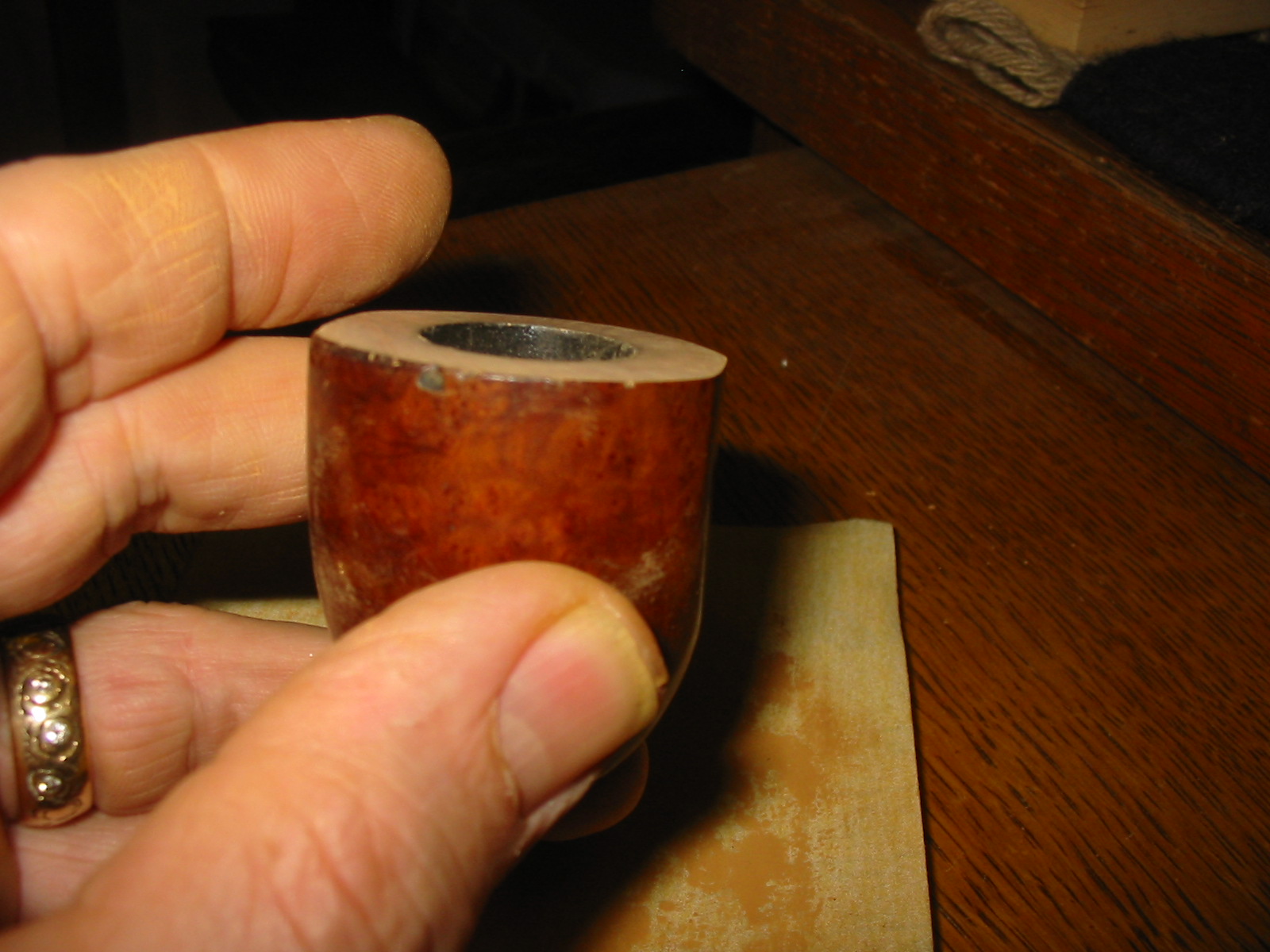
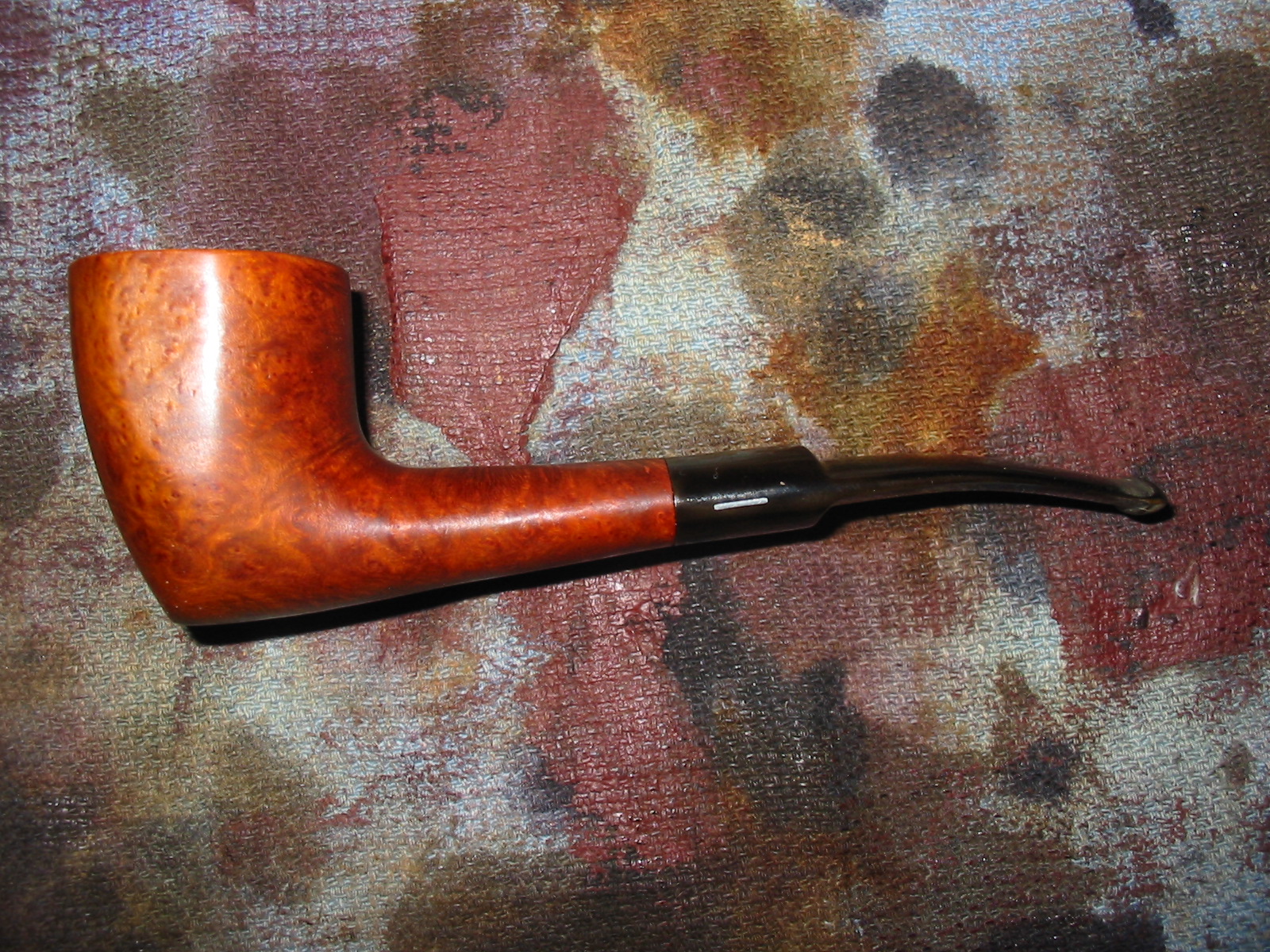
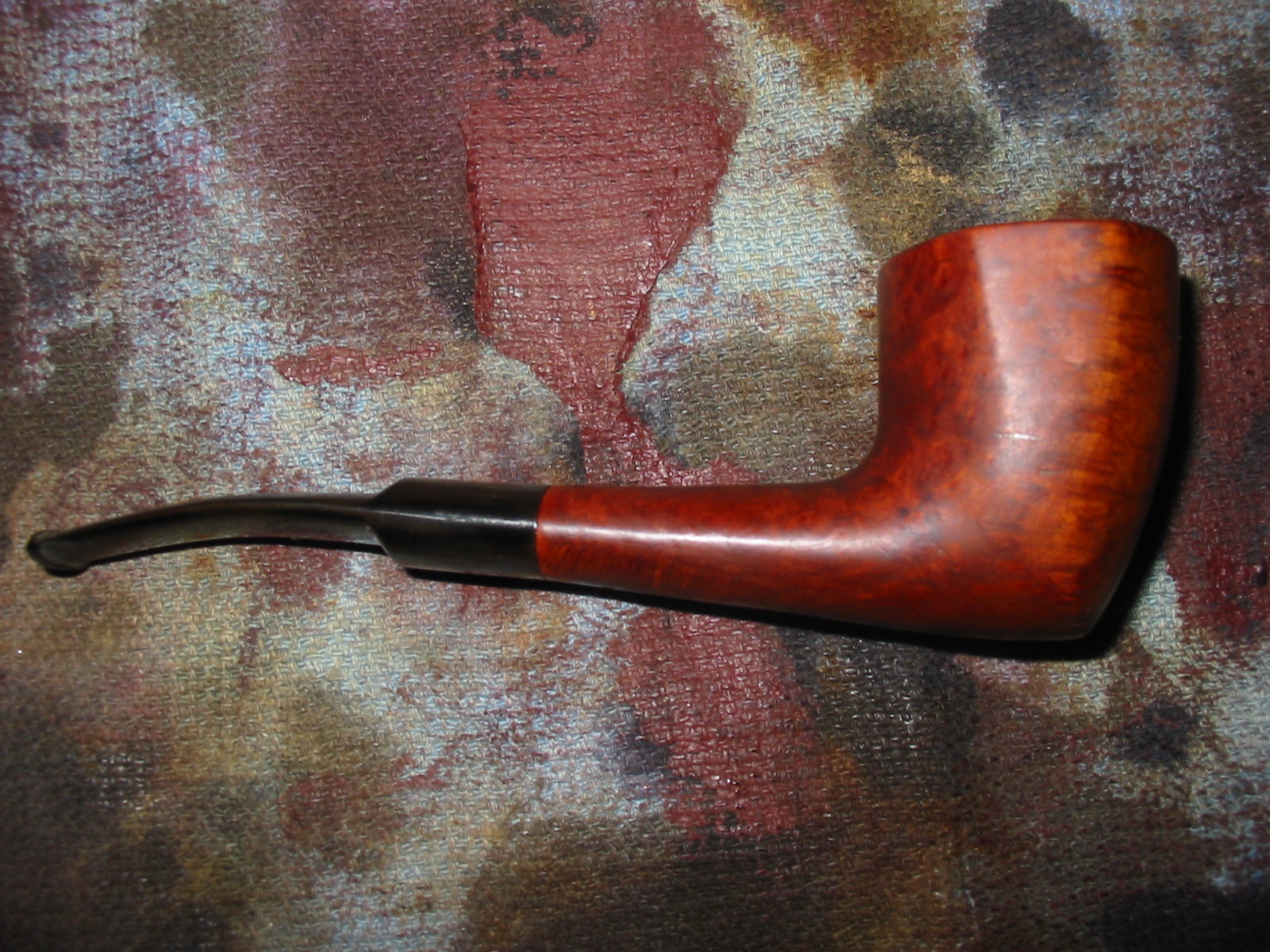
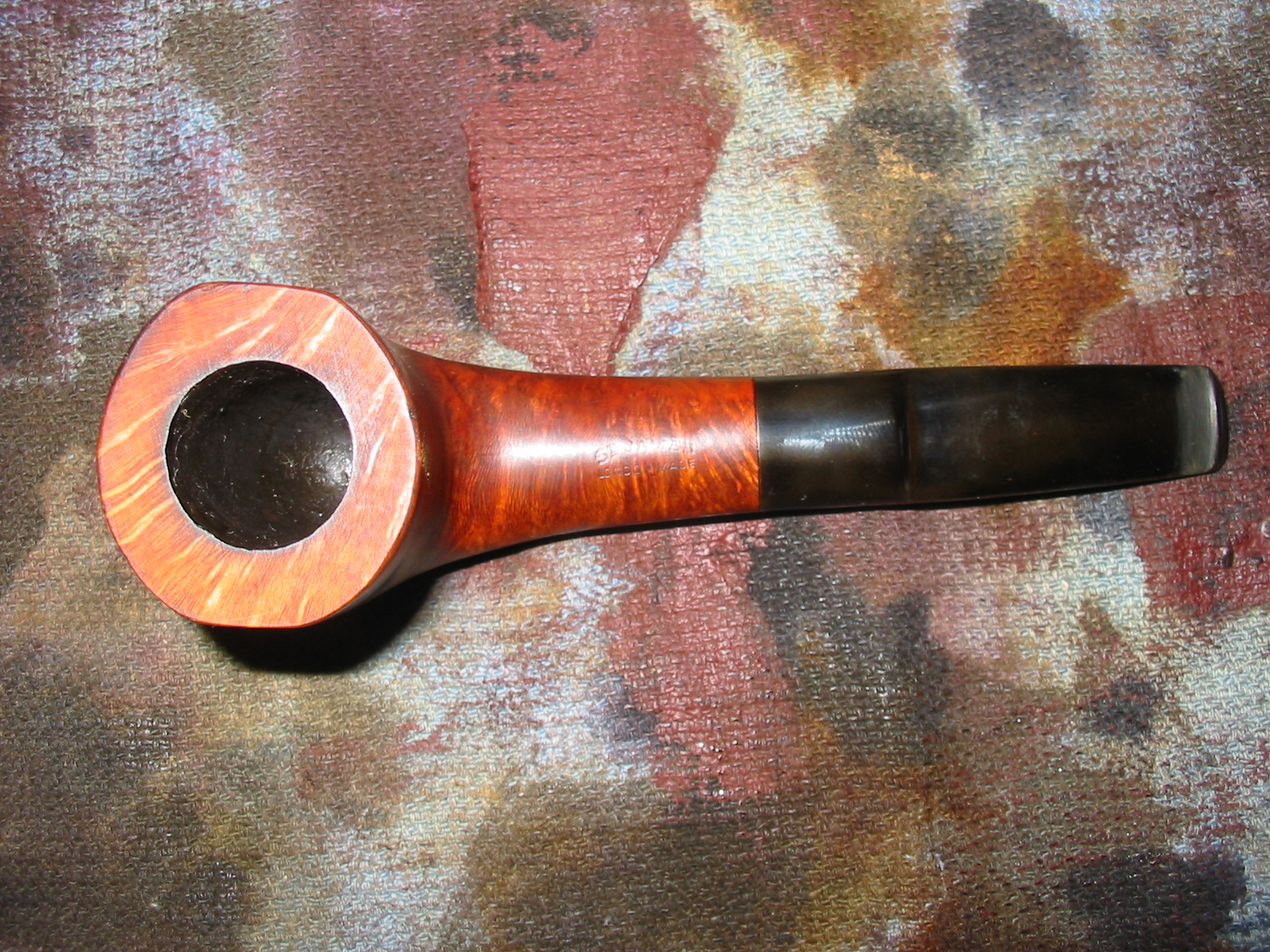
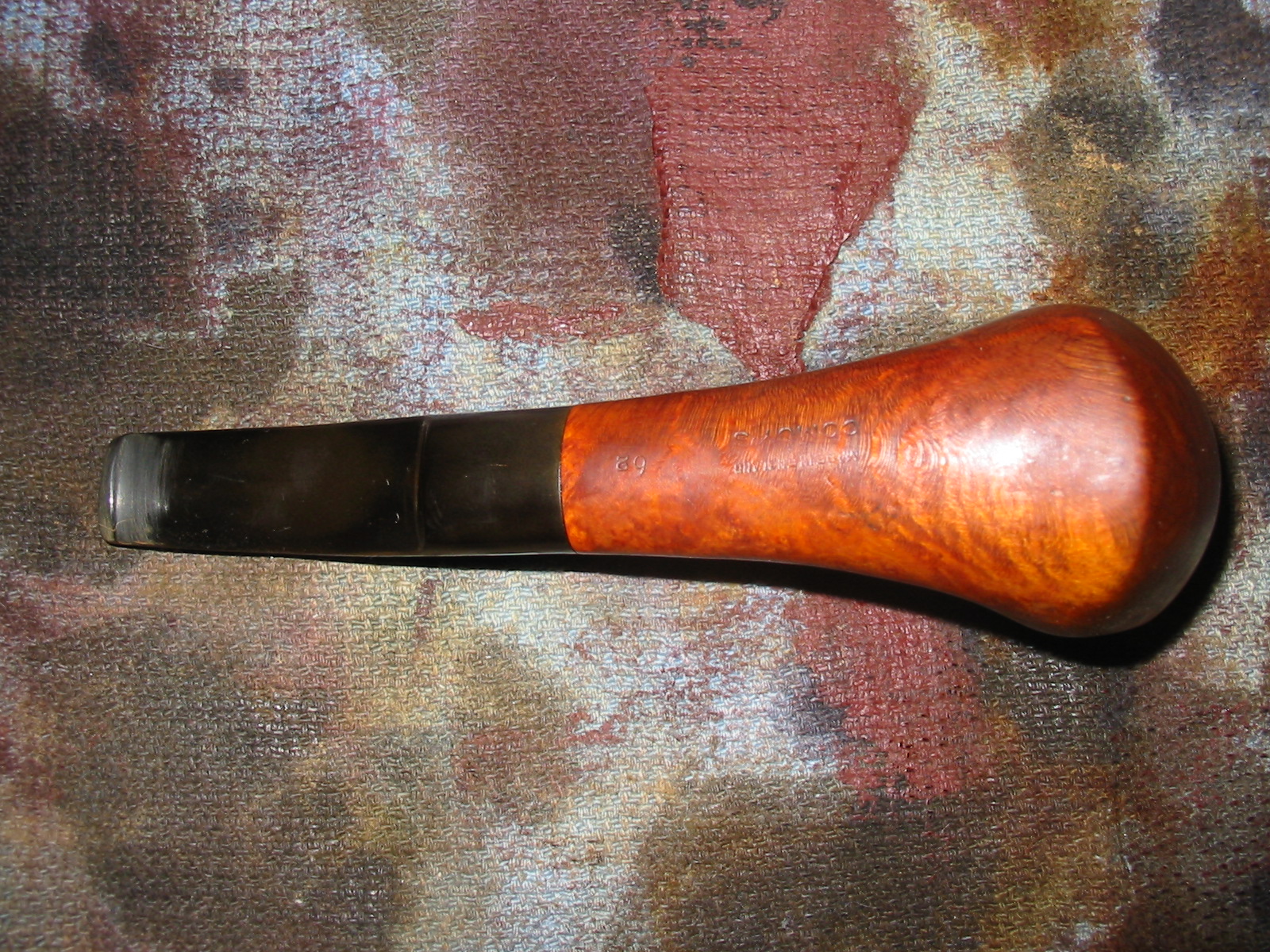
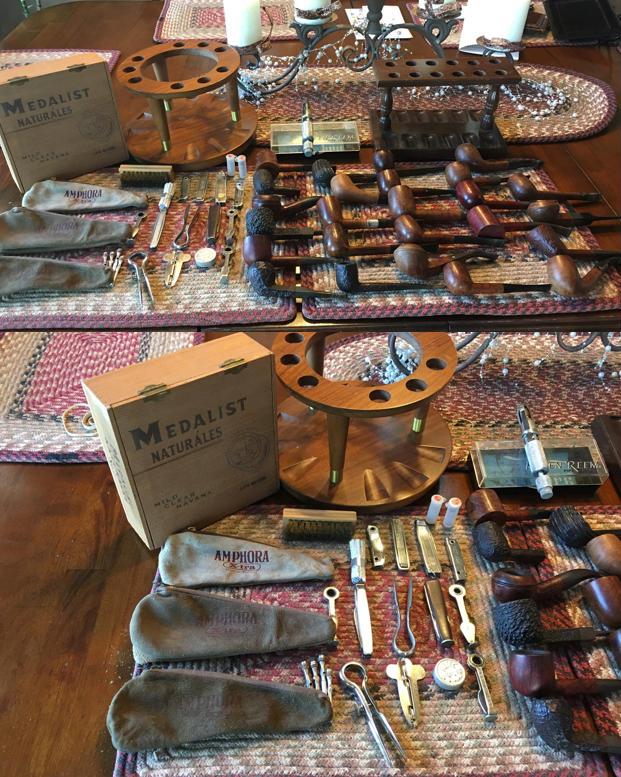
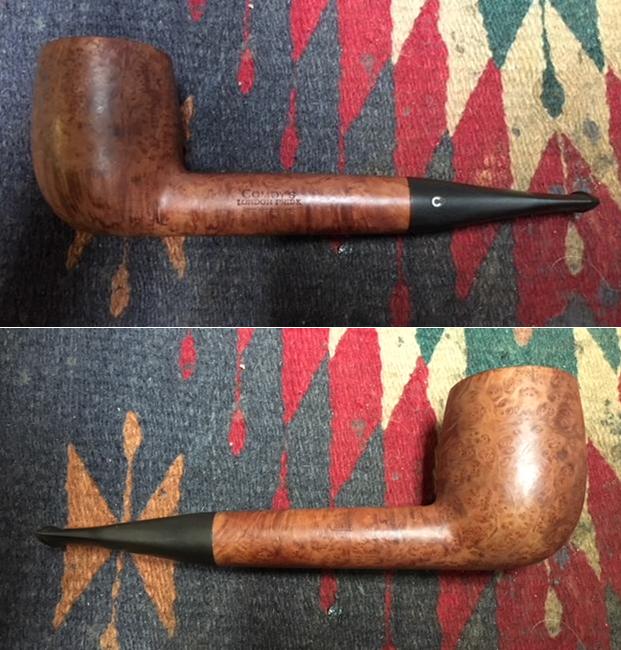
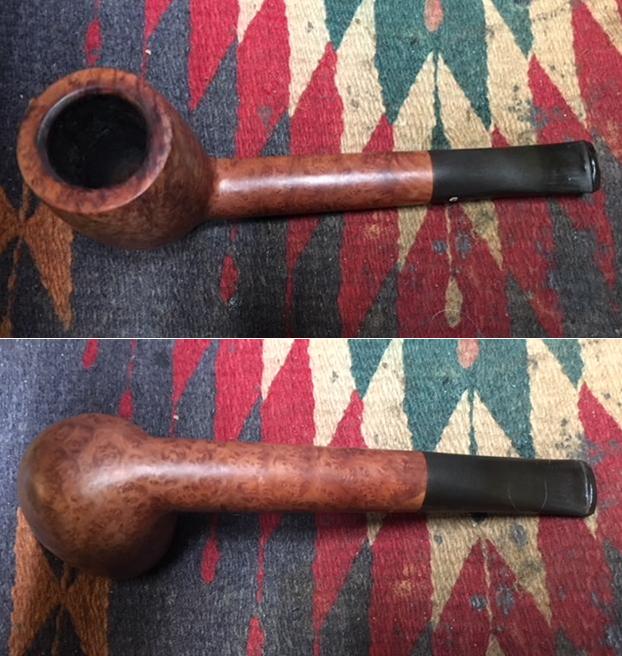
Late in the summer of 2017 I received an email on rebornpipes blog from Barry in Portland, Oregon. He wanted to know if I would be interested in purchasing his father’s pipes. He wrote that his Dad was a gracious, dignified and dedicated father, businessman and community leader for many years in Fresno, California where he was raised. He acquired his pipes when he gave up smoking cigarettes in the 1960s. There wasn’t an ounce of pretense in the man and he smoked his pipes for pleasure and as a pass-time while reading, enjoying company or watching sports on TV. Barry and I corresponded back and forth and concluded our deal. I became the proud owner of his Dad’s pipes. The inventory of the pipes he would be sending included some real beauties – Comoy’s, Parkers, Dunhills and some no name brands. They were beautiful and I could not wait to see them. I had him send them to Jeff where he would clean them up before I received them. Jeff took some photos of the lot as he opened the box. Each pipe was individually wrapped with bubble wrap and taped to protect them. There were 25 bubble wrapped packages and a lot of pipe accessories included – pipe racks, reamers, scrapers and Comoy’s filters and washers. There were pipe pouches and a wooden cigar box that held all of the accessories and reamers. There was a boxed KleenReem pipe reamer that was virtually unused. Jeff unwrapped the pipes and took pictures of the estate showing both the pipes and the accessories. Barry had labeled each pipe with a sticky note. It was an amazing addition to my pipe and tool collection. The next pipe I chose to work on from the collection was a Comoy’s Grand Slam Pipe, one of four Comoy’s pipes. It was also was missing the original stem but the shape of the bowl and shank were elegant. The shape was a classic Yachtsman or Zulu. The bottom of the shank was flattened and the pipe could stand on the desktop. The finish was dirty and filled with the detritus of years of use followed by sitting unused. The bowl was thickly caked and had an overflow of lava on the rim top. Even through the grime and grit you can still see the amazing birdseye on the sides and cross grain on the front and back of the bowl and the top and underside of the shank. Once more the presence of the replacement stem told me that the pipe had been a favourite and that the original stem had been either gnawed or broken and replaced. The new stem was well made and fit the shank perfectly. The pipe repairman had done a great job on the stem. I also had some use and was lightly oxidized and had tooth chatter and marks on both sides of the stem at the button. The surface edges of the button also had tooth marks that were present. This stem also had some calcification around the button as well that made me think that perhaps the stem had once sported a softee bit. Jeff took photos of the pipe before he cleaned it up. The photos tell the story better than my words can. He took some close up photos of the bowl and rim top to show the cake and their condition.  He also took photos to show the grain on the side, front and underside of the bowl. He also photographed the stamping on both sides of the shank to show what it read and the condition of the stamping. The left side is stamped Comoy’s over Grand Slam over Pipe. On the right side it is stamped with the Comoy’s Com stamp Made in London in a circle over England. Next to that is the shape number 202. There is no patent number on the shank and the markings of the leather washer size *5 on the underside of the shank at the shank/stem union. The replacement stem was oxidized as mentioned above and had tooth chatter and marks. Jeff took photos of both sides of the stem to capture their condition before he cleaned the pipe.I wanted to learn a bit more about the Grand Slam line. The pipe had originally come with a special stinger/filter apparatus screwed into the tenon. I found the following photos and info on the pipephil website. I include both the link and the following photos for your information. http://www.pipephil.eu/logos/en/infos/comoy1.htmlThe next photo shows the original metal filter system that  was made to force “the air stream through a go-between space before entering the stem and the smokers mouth.” The stem that I have does not have the threaded tenon and thus cannot hold the apparatus. The photos below show the stem and the diagram of the system.I also wanted to have some idea of the date on this old pipe so I did a bit of digging on Pipedia. I found a helpful dating guide there. I found that the Comoy’s Grand Slam stamp on the shank dated it to the 1950s. At that time there were four variants to the stamping.
  1. A simple block-letter style without serifs but with the C larger than the other letters and the apostrophe before the “S”.
  2. A return to the slightly more fancy block letters with serifs and the apostrophe. (It seems that some grades carried different stamps, or at least that the stamping changed in different years for some grades.)
  3. A simple block-letter style without serifs and without the apostrophe and with the “C” the same size as the rest of the letters. This stamp was probably not used very long.
  4. A simple block-letter style without serifs but with the apostrophe before the “S” and with the “C” the same size as the rest of the letters.

Variant number 4 fits the style of stamping on this pipe. It is stamped with capital letters, block style without serifs and having an apostrophe between the Y and the S of Comoy’s. That helped me identify the pipe as coming from the 1950s.
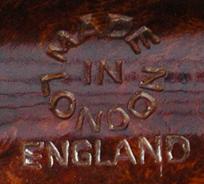
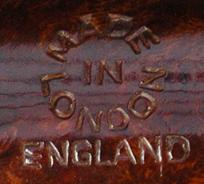
The COM stamp (Country of Manufacture) is like the one in the picture to the left. The picture shows exactly what is stamped on the shank of this pipe. It is stamped in a circle with “MADE” at the top, “IN” in the middle, and “LONDON” at the bottom, with “ENGLAND” in a straight line beneath. According to the Pipedia article it can be assumed that this stamp was first used in the export drive in the early 1950s. Here is the link to the article: https://pipedia.org/wiki/Comoy%27s_Dating_Guide

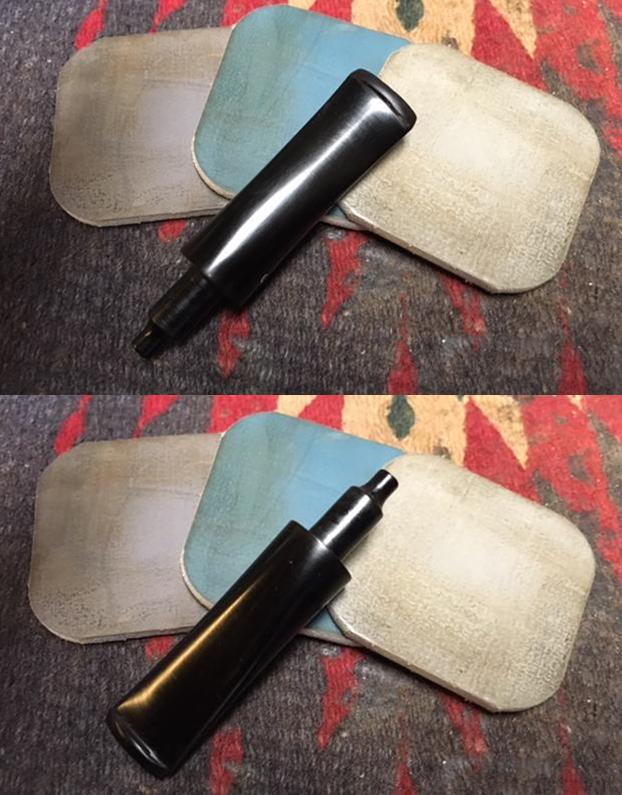
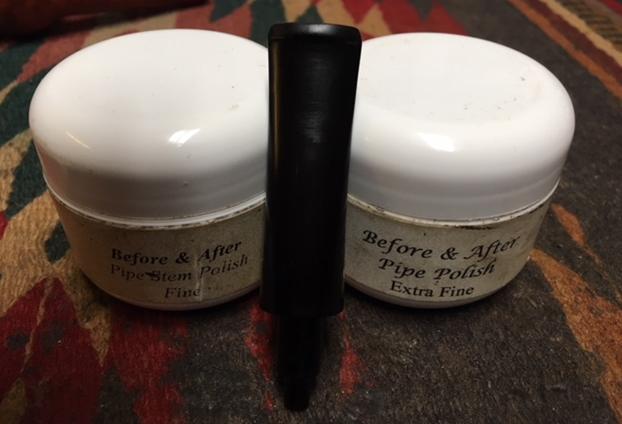
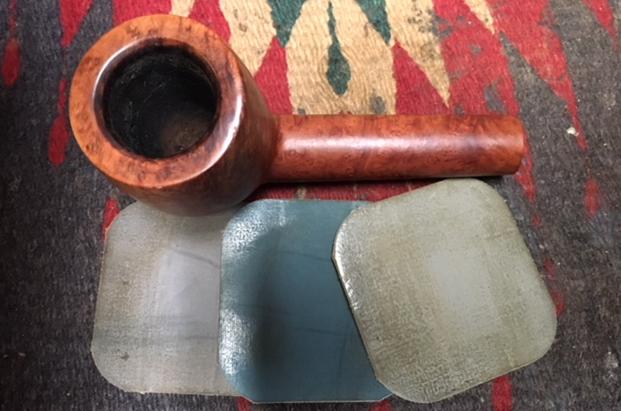
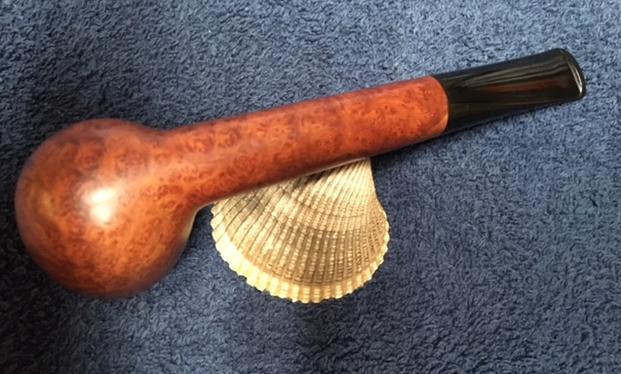
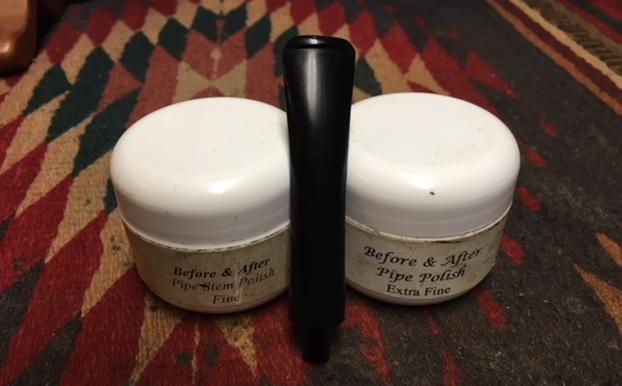
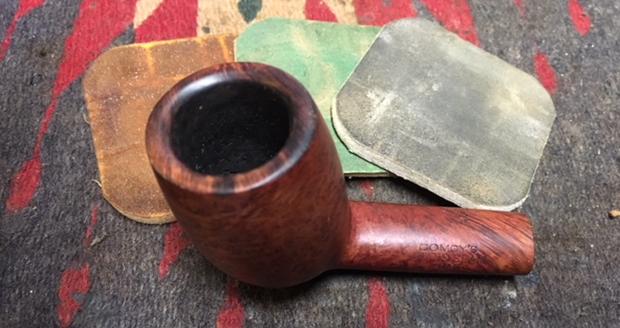
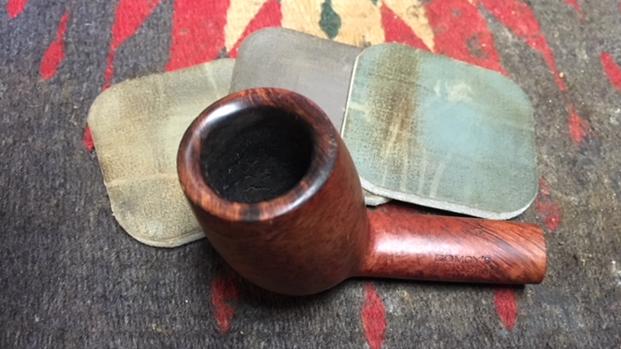
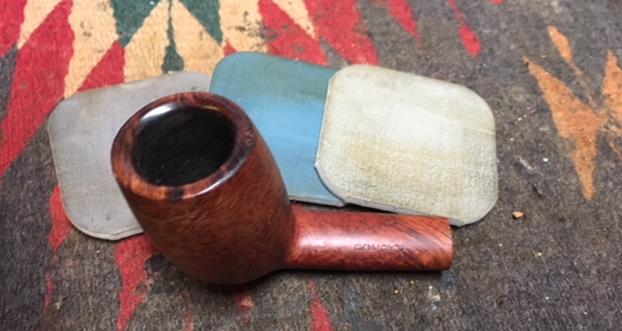
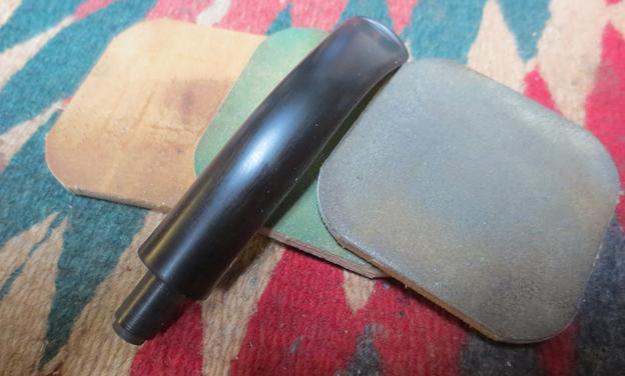
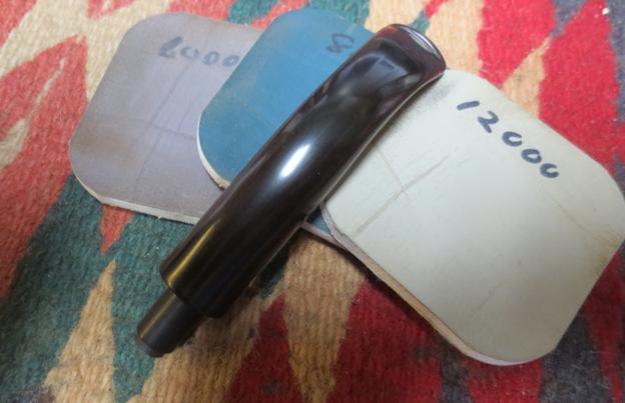
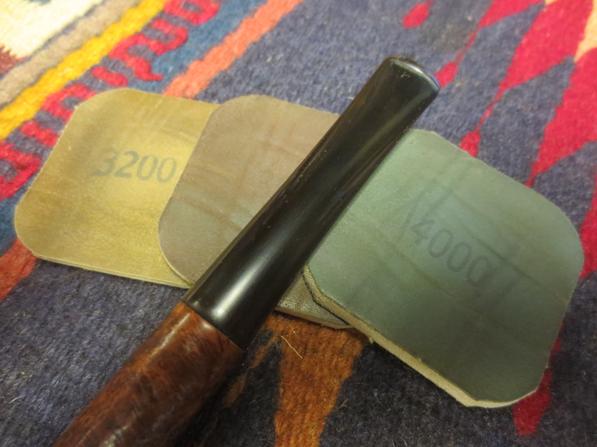
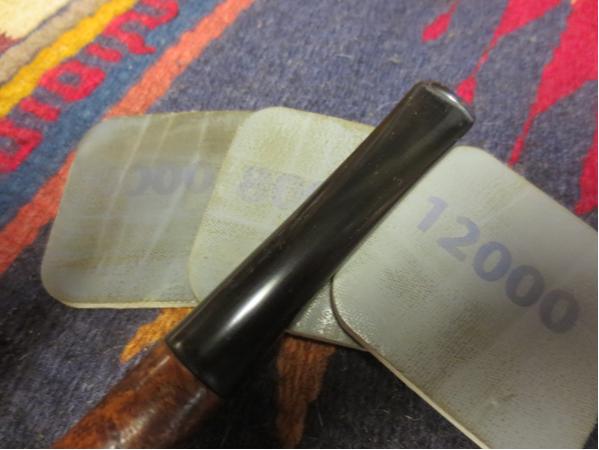
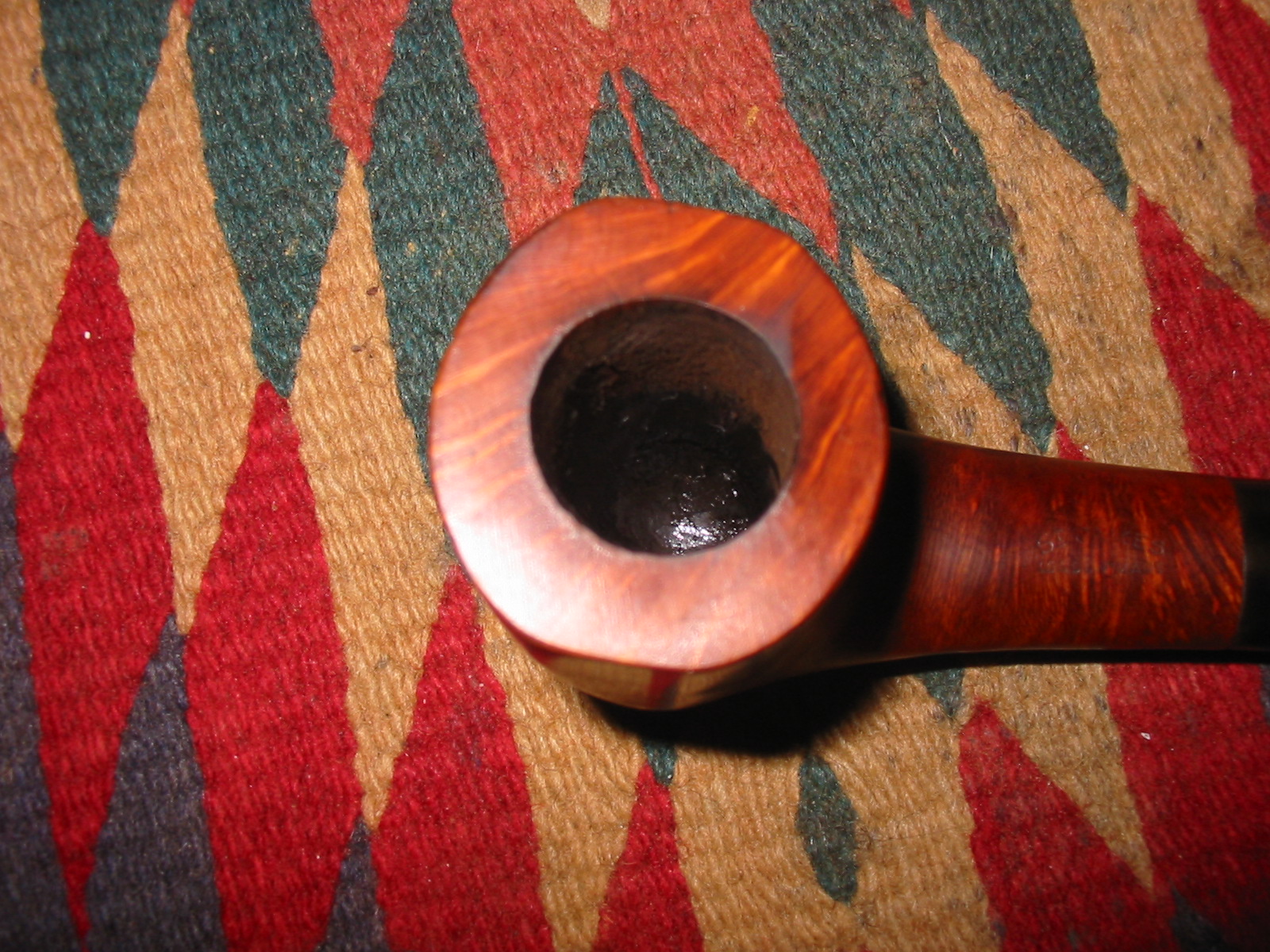
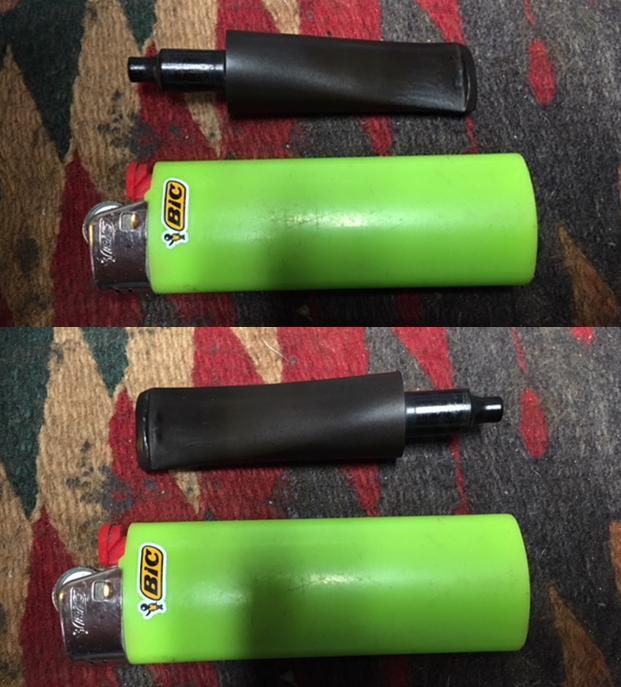
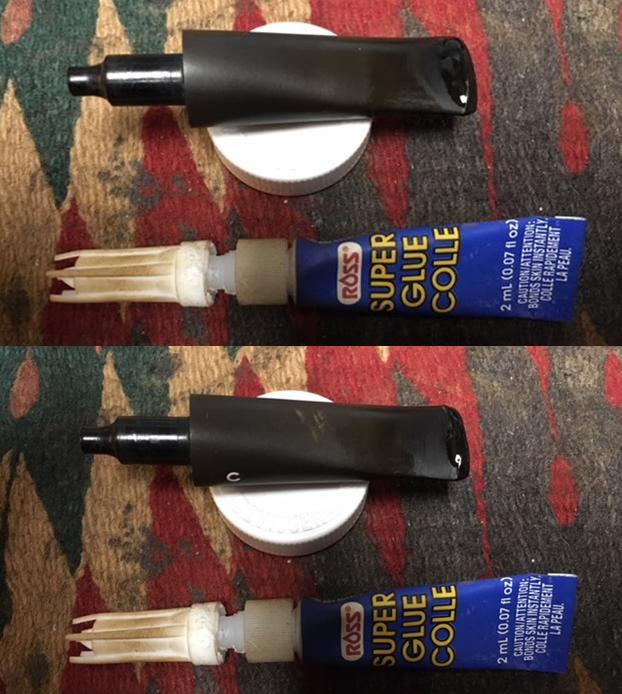
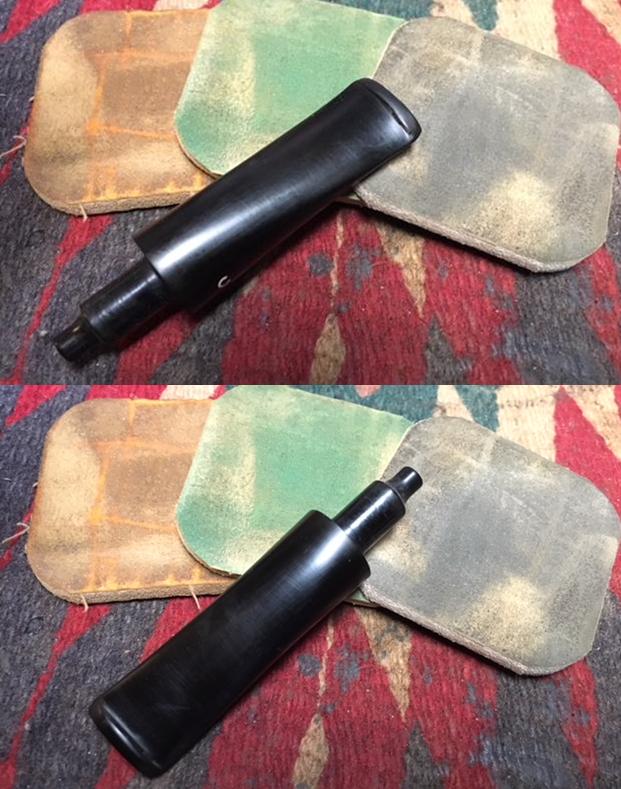
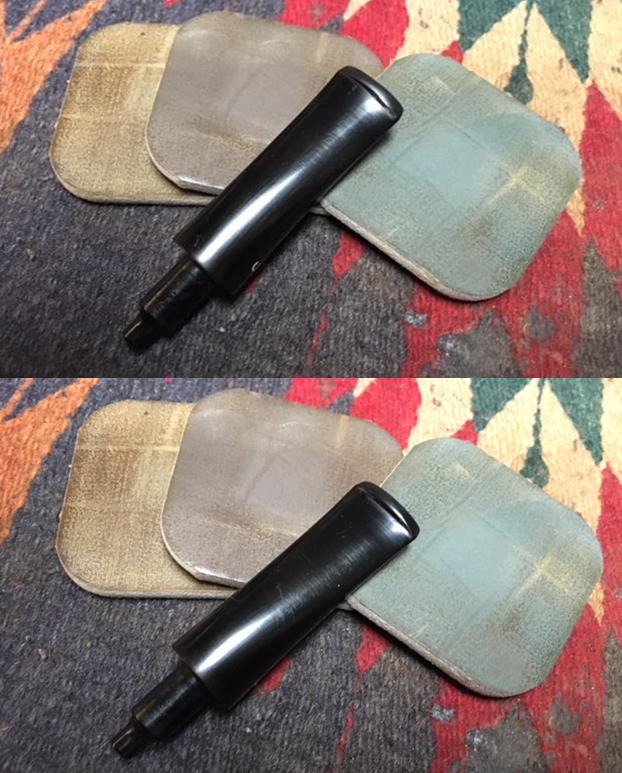
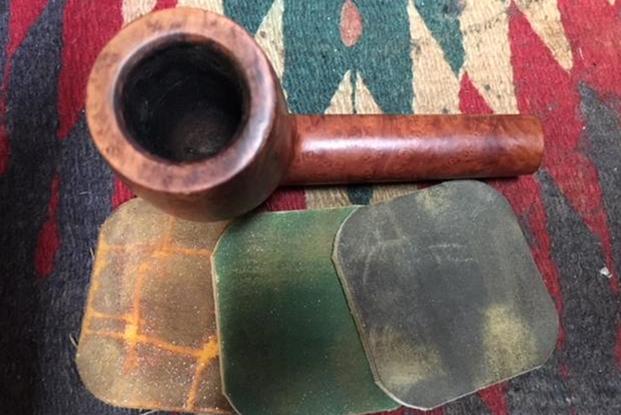
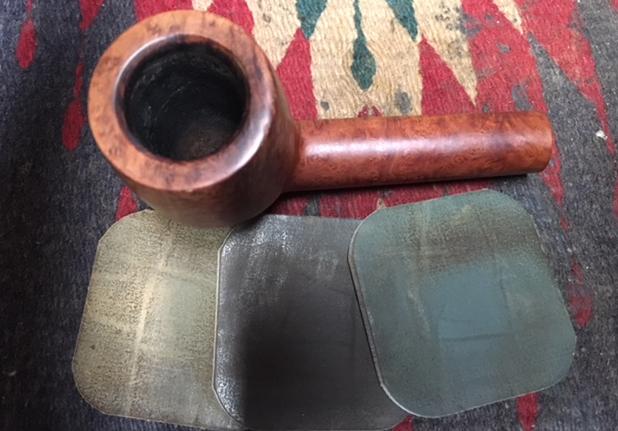
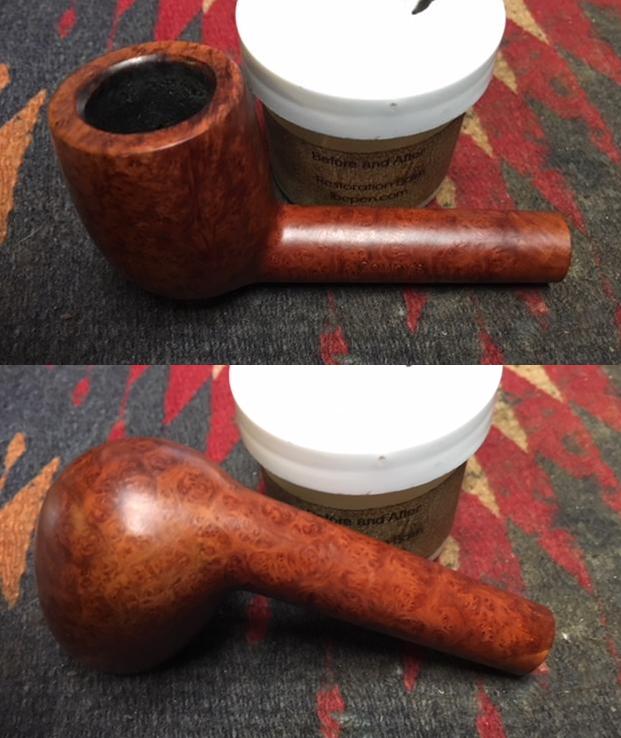
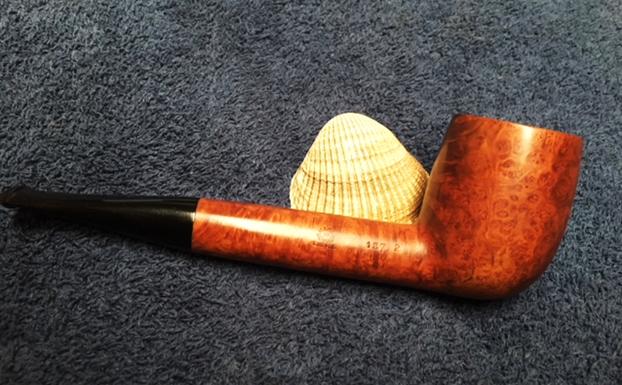
Jeff did his usual stellar clean up job on the pipe leaving it pristine and without damage to the finish. He reamed the bowl with a PipNet pipe reamer and cleaned up the remnants with the Savinelli Fitsall Pipe Knife. He scrubbed out the mortise and the airway in the shank and the stem with alcohol, cotton swabs and pipe cleaners. He scrubbed the exterior of the bowl, rim and shank with a tooth brush and Murphy’s Oil Soap to remove the grime of the smooth finish on the bowl and shank. He rinsed it under running water. He dried it off with a soft cloth. Once the dust and debris were removed the finish looked very good. I took photos of the pipe to show its condition before I started my work on it. I took some close up photos of the bowl and rim top as well as both sides of the stem to show their condition. The bowl was very clean and the rim top looked good other thank some light nicks and darkening. He had been able to remove the lava from the finish. The inner edge was in excellent condition and there was some slight roughness on the outer edge. The stem is lightly oxidized as can be seen in the photos and has small tooth marks near the button on both sides.I started with the stem on this one. I “painted” the tooth marks with the flame of a Bic lighter and was able raise most of them even with the surface of the stem. I used some clear super glue to fill in the tooth mark on the top of the button that did not rise with the heat. Once the glue dried I sanded out the tooth chatter and the tooth marks next to the button on both sides and the repair on the top of the button with 220 grit sandpaper. I polished stem with micromesh sanding pads – wet sanding with 1500-2400 grit pads and dry sanding with 3200-12000 grit pads. I wiped the stem down with Obsidian Oil after each pad. I polished it with Before & After Pipe Stem Polish, both Fine and Extra Fine. I gave it a final coat of Obsidian Oil and set it aside to dry. I worked on the darkened rim and the small marks and nicks on it with micromesh sanding pads. I lightly sanded it first with 220 grit sandpaper and followed it up with 1500-12000 grit micromesh sanding pads. I wiped it down after each pad to check on the progress. I worked Before & After Restoration Balm deep into the briar on the smooth finish to clean, enliven and protect it. I wiped it off with a soft cloth. I buffed the bowl with a cotton cloth to polish it. It really began to have a deep shine in the briar. I took some photos of the bowl at this point to mark the progress in the restoration. The grain on the bowl is really beginning to stand out and will only do so more as the pipe is waxed. I put the stem back on the bowl and worked the pipe over on the buffing wheel using Blue Diamond to polish the stem. I buffed the bowl and the stem with Blue Diamond polish to raise the shine on the briar and the vulcanite. I was careful to not buff the stamping and damage it. I gave the bowl and stem multiple coats of carnauba wax. I buffed the entire pipe with a clean buffing pad to raise the shine. I hand buffed it with a microfiber cloth to deepen the shine. The finished pipe is shown in the photos below. The rich brown stain allows the grain to really stand out on this little pipe and it works well with the rich black of the polished vulcanite stem. This Comoy’s Grand Slam is a beautiful and interesting looking pipe. The dimensions of the pipe are: Length: 5 1/2 inches, Height: 1 3/4 inches, Outside Diameter: 1 1/8 inches, Diameter of the chamber: 3/4 inches. This 1950s era Comoy’s is one that will fit well in any pipeman’s collection and add a touch of real class. Thanks for walking through the restoration with me.
Repairing a shattered stem on a Comoy’s Grand Slam Lovat Patent 210


Blog by Steve Laug

I received an email from Pat about a pipe he had that he wanted to know if I would have a look at and see if I could do anything with it. Here is his first email.

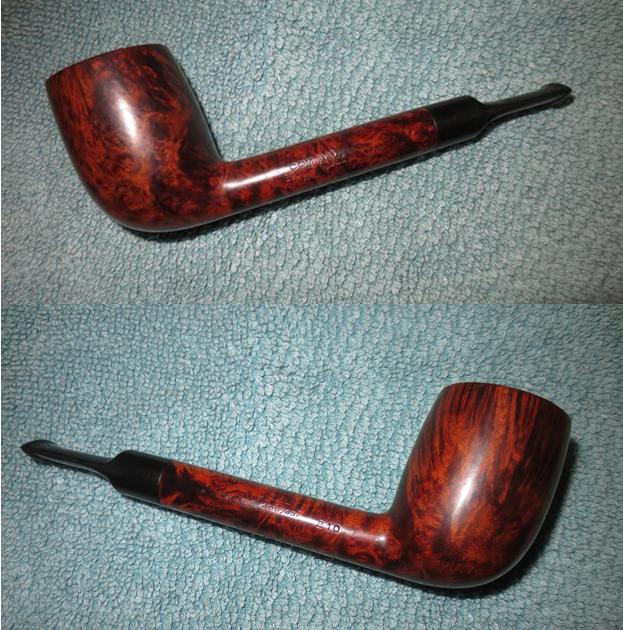
Hello Steve, I have a 1930’s Comoy,s grand slam 210 Lovat with the old bar logo on the stem. The stem however is broken in three or four places. I have all the pieces but one. Is it possible to join the pieces back together again and fill the remaining hole from the missing piece? I visit your site often and you truly have done some amazing things. I don’t know if you typically do repairs but if you do would you consider taking on a repair like this. It’s a lovely old Comoy’s and I’d really like to bring it back to its former glory. Can you help? Thanks for your consideration. — Pat

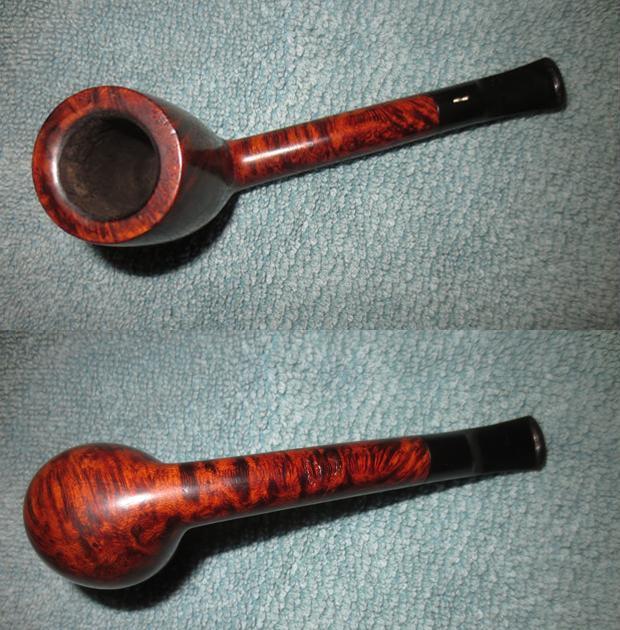
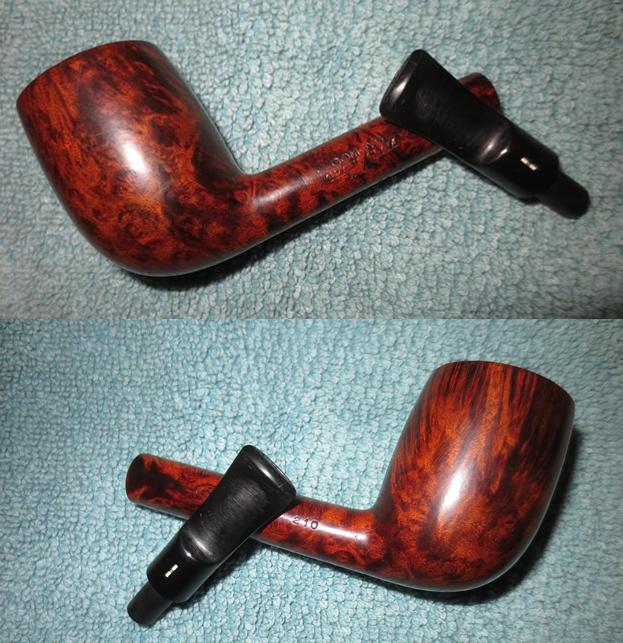
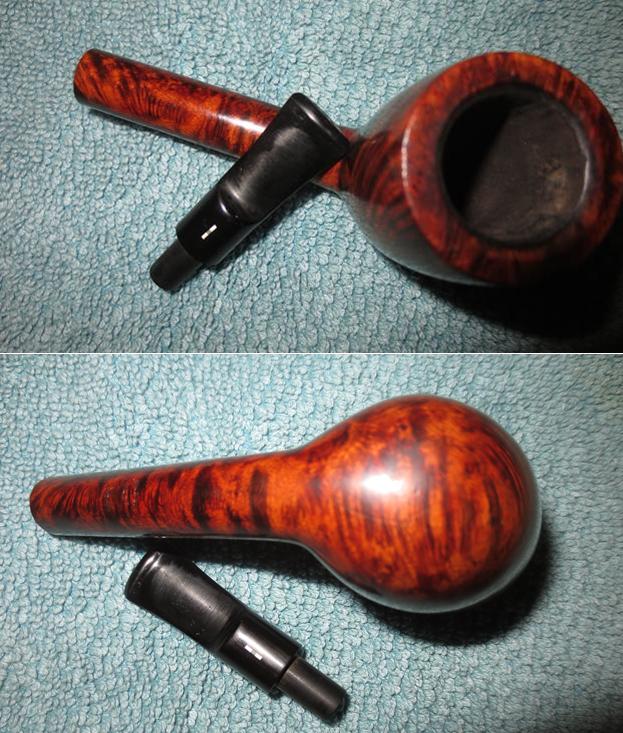
I wrote him back saying that I would like to see photos of the pipe before I committed to trying a repair. He sent the following two photos of the pipe for me to look at. The piece of briar was a typically beautiful specimen of a Comoy’s pipe. It had some excellent grain and the finish was in very good shape for a pipe this old. The stem however, was another issue. It had shattered.The first photo above showed the bowl and stem together. I had been a really nice looking Lovat and with the bar logo on the stem it was indeed an old one. He wanted to see if I could somehow piece the stem back together preserving the old logo. Looking at the photos I was pretty amazed at the condition. It was obvious to me that the stem must have been stuck in the shank and when someone torqued on it to remove it the stem had shattered into pieces. It looked to me that there were some pieces missing but maybe I could do something with it. I had him ship it to me with all of the parts included.It did not take too long to arrive in Canada and when it did, I opened the box with some trepidation. I was expecting the worst and what I found inside was pretty close to what I had expected. There were two broken pieces in a small baggy, the rest of the stem with the stinger in another baggy and the bowl wrapped in bubble wrap. I laid out the pieces to get a feel for what was missing. The two broken pieces fit well together and together they fit well with the saddle portion. The underside of the stem looked pretty good with the parts connected. However the top side was another story – there was a large chunk of vulcanite missing virtually the length of the stem. Now I knew what I was dealing with.

I put the pieces back in the bag and put the bag and bowl back into the box. I laid it aside and took some time to think through the best course of action for putting it back together again. It was a true Humpty Dumpty project and I did not know if all the kings’ men or even this king’s man could put it back together again. I let it sit while I repaired pipes that were in the queue ahead of it.

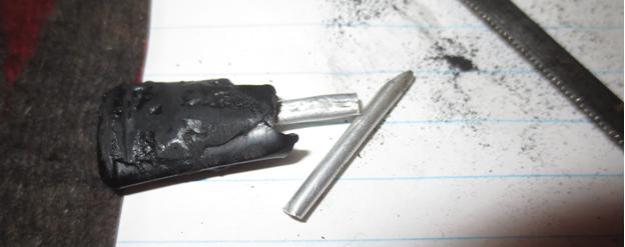
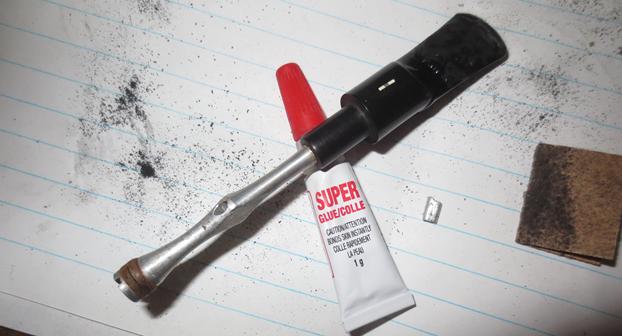
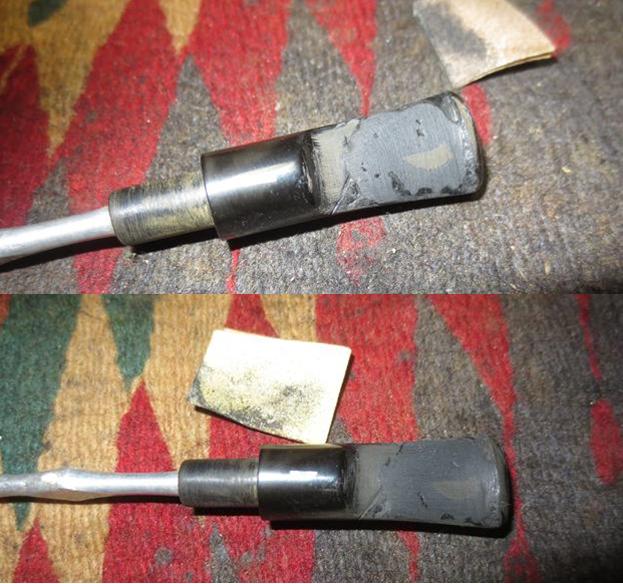
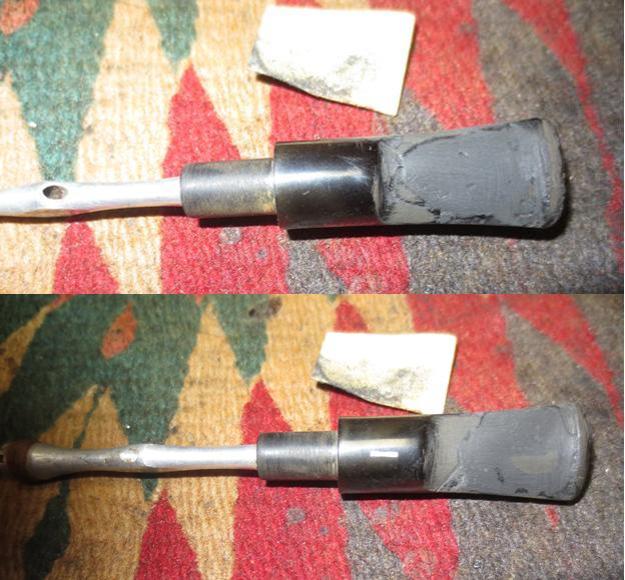
Several weeks went by, at least it seemed that way to me and I did not look at the pipe again. I knew it was there but I was not ready to commit to a repair. Today, Saturday arrived and I finished the repairs that were ahead of it. I decided that today was the day. I unpacked the pieces and put them together again to have a look. The tenon/saddle end had a clean break away from the rest of the pieces. The airway inside was oval shaped as was the airway in the button and in the gap between the pieces. Whatever I used to repair this one would have to take that into account. I would need to give an adequate interior base for the rebuild of the stem. If I could glue the pieces together and then insert a tube of some sort I could then rebuild the gap of the missing pieces of vulcanite. It seemed like the plan would work. The first step was to glue to two parts of the button end together. I cleaned the surface with alcohol and ran a bead of clear super glue along the edges of each piece. I put them together and ran a bead of glue along the surface of the crack on the underside of the stem.I took some photos of the bowl and rest of the broken stem just to give an idea of the beauty of the pipe and the magnitude of the issue at hand. The bowl and the finish on the pipe were in excellent condition. It really did not need any work. I don’t know if Pat cleaned the briar or not but it was looking really good. To encourage myself a bit I took some photos of the bowl. The grain is beautiful and the stamping is very sharp and clear. It is stamped on the left side of the shank Comoy’s over Grand Slam over Patent. On the right side it is stamped British over Patent No. over 40574.I flattened the first two inches of the inner tube to make it oval. The trick was not to collapse the tube but merely change its shape from round to oval. It worked really well. I slid the oval tube into the repaired pieces of stem. I aligned it so that it was centred looking at it from the slot in the button. I took photos of the tube in place from the top and the bottom sides.It was now time to proceed. I prepared my charcoal powder and black super glue putty mixture on a folded piece of paper. Because the super glue cures slowly I stir the two components together until I get a thick paste. I double checked the alignment of the tube in the stem end and then applied the mixture to both sides of the stem with a dental spatula. I pressed it into the area on the top side where the stem pieces were missing first then applied a thick coat over the top of the repaired area. The photos below show the progress and the filled repair once I had smoothed it out with the spatula. The flattened tube is anchored solidly in place and the area around it is filled in with the putty. The putty is purposely thick so I have a good base to work with once it dries. I will need to flatten it out and reshape the edges of the button. So far I was happy with the progress of the repair. Once the repair had dried it was time to work on shortening the tube to fit into the other half of the stem. I cut it off with a hacksaw until the length such that when I slid the two parts together it would allow them to match.I applied super glue to the edges of both pieces of the stem and slid the two parts together. I filled in the low spots on the connection with clear super glue to begin with and set the stem aside to cure some more.When the repair had cured I sanded the patch with 180 grit sandpaper to smooth out the surface and begin to blend it into the rest of the stem. I wanted the two parts of the stem to flow together naturally. I continued to sand it with 220 grit sandpaper to further smooth out the surface. In the process air bubbles showed up in the repair surface. This is a normal occurrence and would need to be patched further once I finished this stage of sanding. I also lightly sanded the tenon as the fit in the shank was too tight and I was pretty certain that the stem had shattered because of that. I used black super glue to fill in the air bubbles and pits in the surface of the stem and set the stem aside to cure overnight. In the morning I would sand out those repairs and continue to shape the stem.In the morning the repaired had cured well and the stem was solid. It was a unit once more. The touch up repairs to the air bubbles had also cured so I began the long process of sanding the stem with 220 grit sandpaper to smooth things out. The next two photos show the beginning of the progress. The stem is starting to look pretty good. Still a lot more sanding to do before it is finished but I like what I see so far.In talking to Patrick he wanted to have the stinger apparatus removed and cleaned up so that he could put it back in place should he want it but he wanted the more open draught of the stem without the stinger. These older style Comoy’s stingers were usually threaded and screwed into the tenon of the stem. In all of the ones that I have cleaned up the stingers were locked in place by the lacquer like tobacco juices that had dried and caused it to be frozen in place.

I rubbed the tenon end down with a cotton swab and alcohol and let it soak into the tenon itself. I wanted to soften the tars and oils there and the alcohol would do that without damaging the rest of my repair. Once it had soaked for a while I dried off the area to make sure there was no residual alcohol and heated the stinger repeatedly with the flame of a Bic lighter. Heat would further loosen the lacquers on the threads so that I could unscrew it without damaging the tenon. I used the flat sides of the diamond on the stinger as anchor spots for a pair of needle nose pliers and unscrewed it from the tenon. It was threaded on the end and sat at the bottom of the tenon.The tenon was slightly enlarged and would not seat easily in the mortise. I wonder if this may not have been part of the reason the stem had shattered. Even before I heated the stinger the fit in the mortise had been tight and it would not sit snug against the shank. I cleaned out the inside of the mortise and shank with cotton swabs, alcohol and pipe cleaners to remove any residue that lined the walls. I wanted to be sure that the fit was not hampered by the shank itself. In examining the tenon I could see that the it was slightly thicker at the tenon/saddle junction. I used a needle file to smooth out the thickness and sanded it with 220 grit sandpaper.The fit of the tenon now was snug and the stem could be easily removed and put in place without being tight. I sanded the stem with 220, 320 and 400 wet dry sandpaper. I polished the stem with micromesh sanding pads – wet sanding it with 1500-2400 grit pads and dry sanding with 3200-12000 grit pads. I wiped it down with Obsidian Oil after each pad and gave it a final coat after the 12000 grit pad. The photos show some white flecks on the top surface of the stem. These needed to be sanded out and polished. I gave the stem multiple coats of Conservator’s Wax and hand buffed the stem and pipe with a shoe brush to polish it. I buffed it with a microfibre cloth to raise and deepen a shine on the briar and the vulcanite. The finished pipe is shown in the photos below. I am sending the original stinger back with the finished pipe to Patrick. He has the option of using it or not as he chooses. The finished stem looks better than the three parts and missing chunks that arrived. It should work for him but I am wondering about the fragileness of the old vulcanite. We shall see. Care will need to be exercised when smoking this pipe and taking it apart for cleaning. The briar is absolutely beautiful and the age and patina of the pipe is stunning. I will send it back soon Patrick. Can’t wait to hear what you think.

Refreshing a Comoy’s Golden Grain 110 Billiard


Blog by Steve Laug

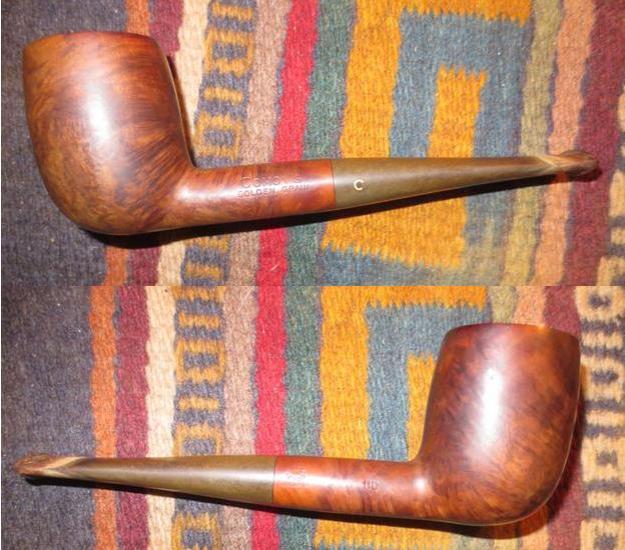
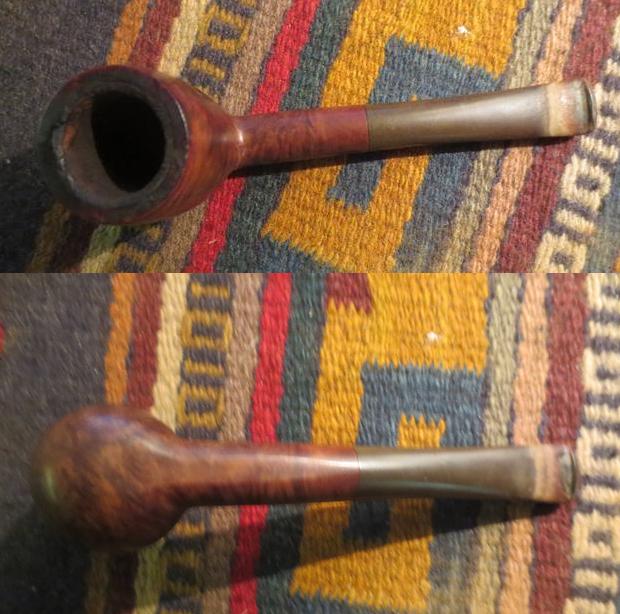
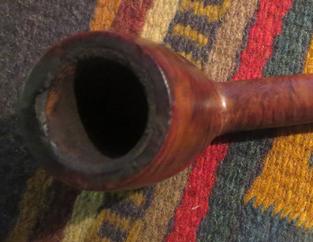
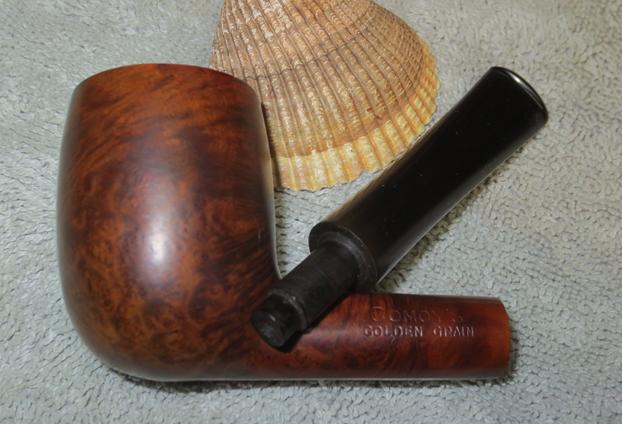
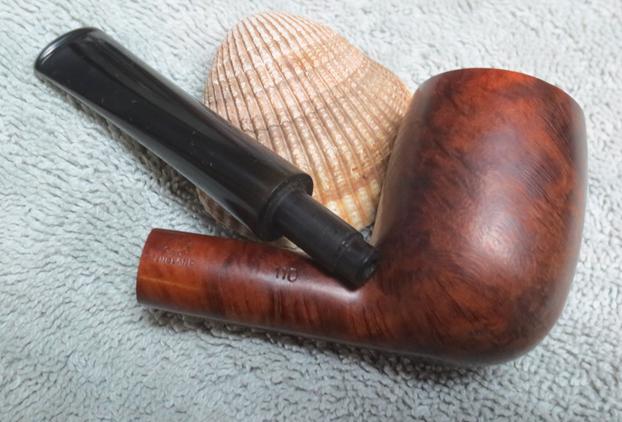
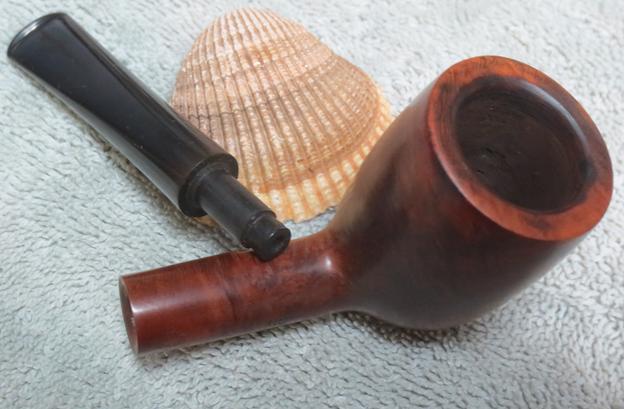
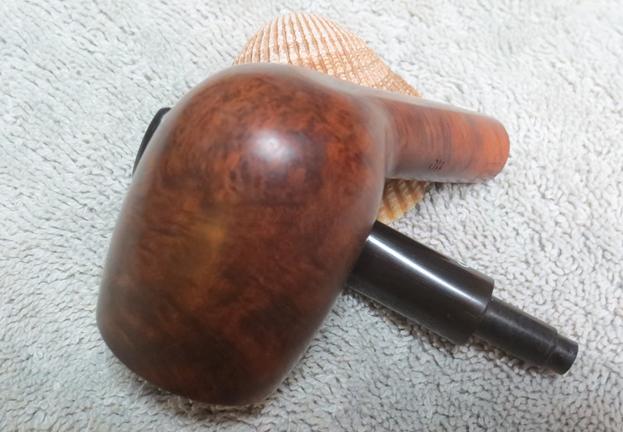
This is yet another from the old pipeman’s collection that came to me from the local pipe shop. It is a beautifully grained Comoy’s Billiard. The stamping on the pipe is very readable and clear. On the left side it reads Comoy’s over Golden Grain with a C on the side of the stem. On the right side of the shank it is stamped with COM (Country of Manufacture) circle Made in London over England and shape number 110. The finish is decent with a medium brown stain with great grain showing through. It is in good enough shape that I hope to not have to refinish it but rather just clean and renew the finish. There is thin cake in the bowl and rim darkening. The stem is oxidized and there is light tooth marks on top and bottom of the stem near the button. There is also some calcification from a Softee bit on the stem and button.gold1 gold2The photo to the left showgold3s the condition of the rim. The inner beveled edge of the rim is cake and dirty. There is a light lava overflow on the rim and some darkening as well. I am hoping that I will be able to scrub this off and also clean up the inner rim bevel in such a way that I can leave the original finish unaltered. It will take some slow and patient work to restore it and not just refinish it.

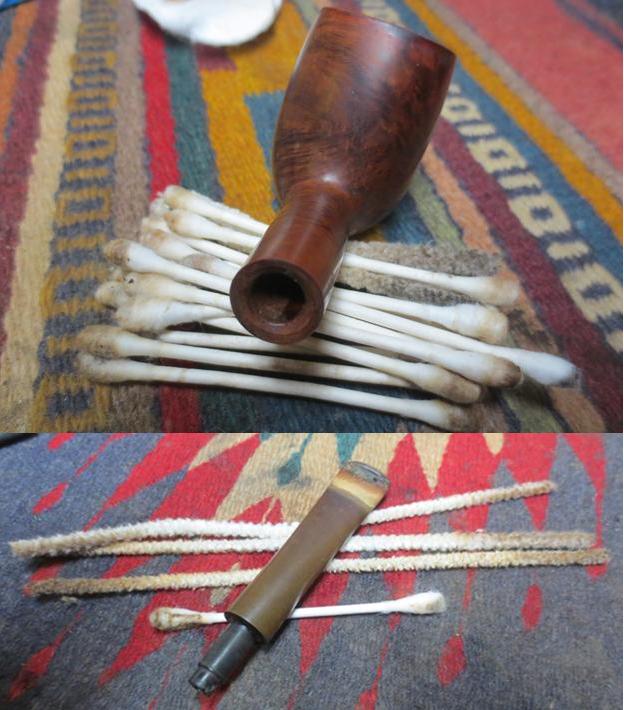
I reamed the bowl back to clean briar using a PipNet pipe reaming tool and a Savinelli Fitsall Reamer. I carefully worked the reamer over the beveled rim to remove the buildup on the edges of the rim.gold4I scraped the rim edge and bevel with a sharp pen knife to remove the carbon buildup that was there and scrubbed the rim and bowl with a small bit of Murphy’s Oil Soap to remove the darkening and grime left behind after the scraping. The photo below shows the rim after this work over. It is looking pretty good at this point.gold5I cleaned out the internals of the mortise and the airway in the shank and the stem with 99% isopropyl alcohol, pipe cleaners and cotton swabs.gold6I “painted” the tooth marks in the stem with the flame of a Bic lighter to raise the vulcanite. I am so thankful for the fact that vulcanite has memory and when heated will return to its original state if the tooth marks have not broken the edges. In this case it worked very well and I was able to minimize them with the flame and finish working on them with 220 grit sandpaper. I sanded the stem and removed the oxidation and the calcification on the button end.gold7I polished the cleaned stems with micromesh sanding pads – wetsanding with 1500-2400 grit pads and dry sanding with 3200-12000 grit pads. I buffed the stem with White Diamond after the 4000 grit pad and then finished with the remaining three pads. I rubbed the stem down with Obsidian Oil after each set of three pads and after the final rubdown set it aside to let the oil dry.gold8 gold9 gold10Once the oil dried I buffed the pipe and stem with Blue Diamond on the buffing wheel and gave it multiple coats of carnauba wax. I buffed it with a clean buffing wheel to raise a shine on the bowl and stem and then hand buffed it with a microfibre cloth to deepen the shine. The finished pipe is shown in the photos below. It is a beautiful grained Comoy’s made pipe that should provide years of good smoking to whoever adds it to their rack next. It will be available for purchase on the rebornpipes store later today if you wish to add it to your collection. Thanks for looking.gold11 gold12 gold13 gold14 gold15 gold16 gold17 gold18 gold19


Breathing Life into a Comoy’s Spectrum Boxed Bent Billiard


Blog by Steve Laug

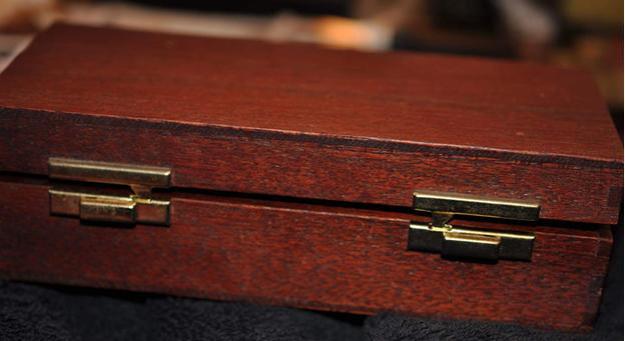
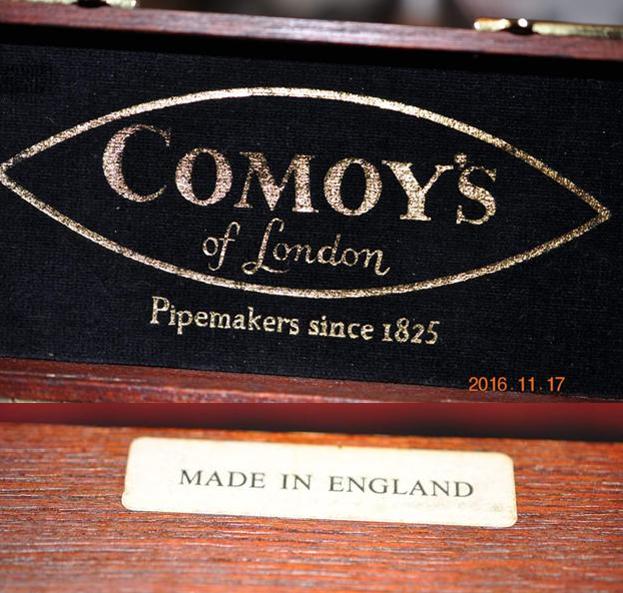
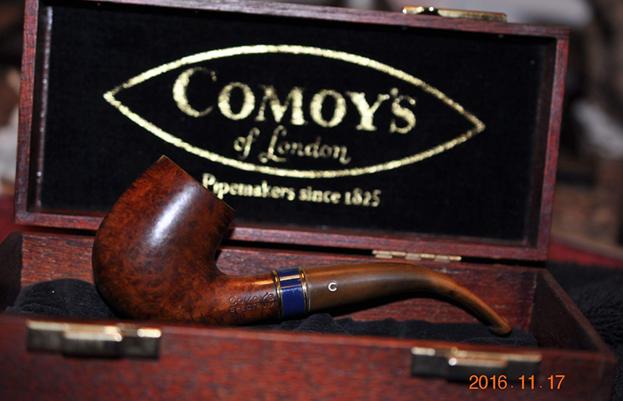
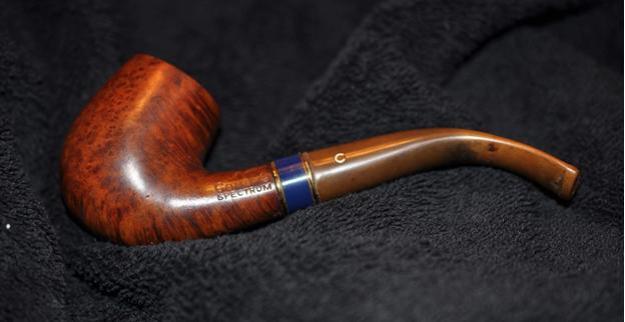
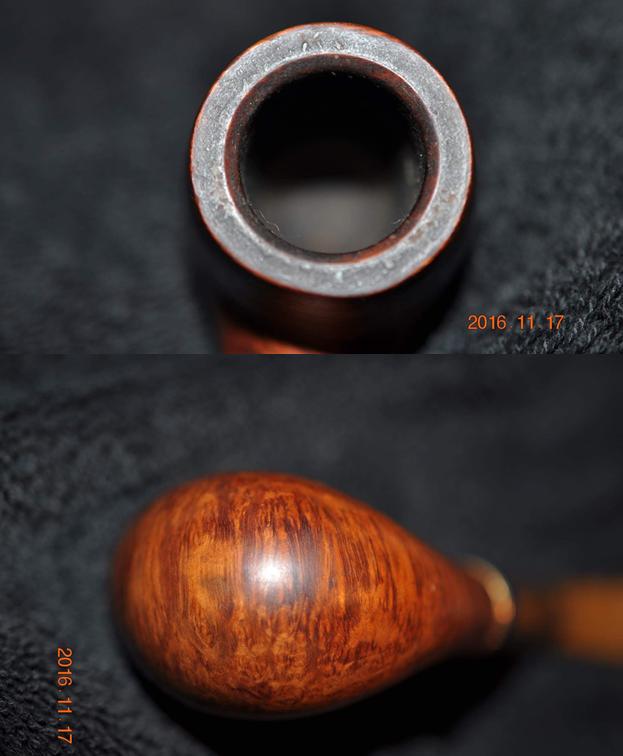
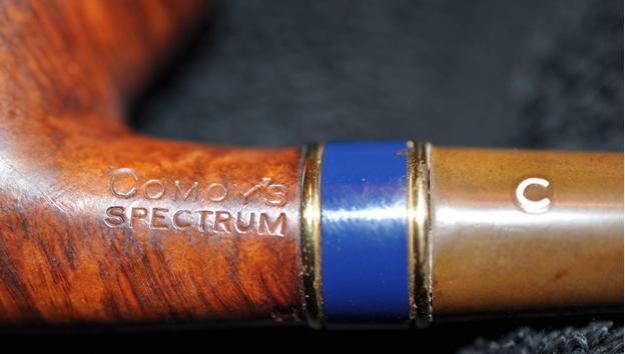
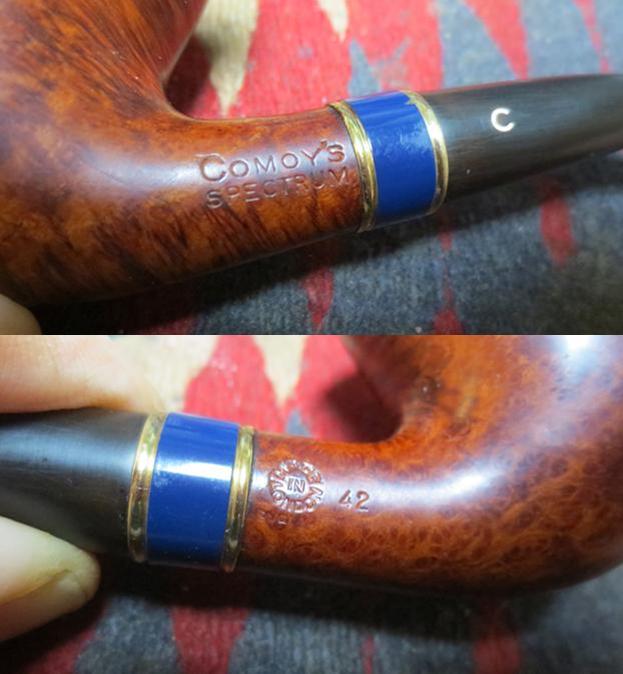
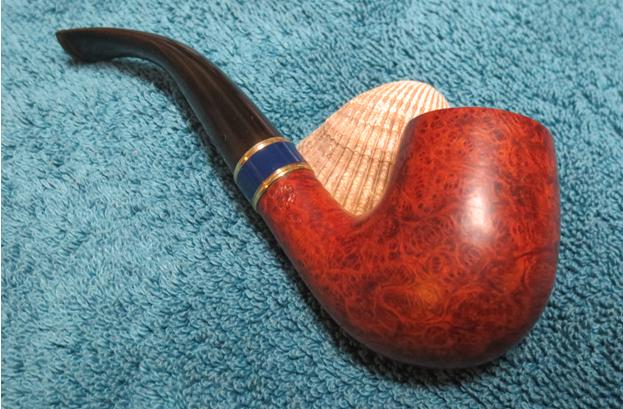
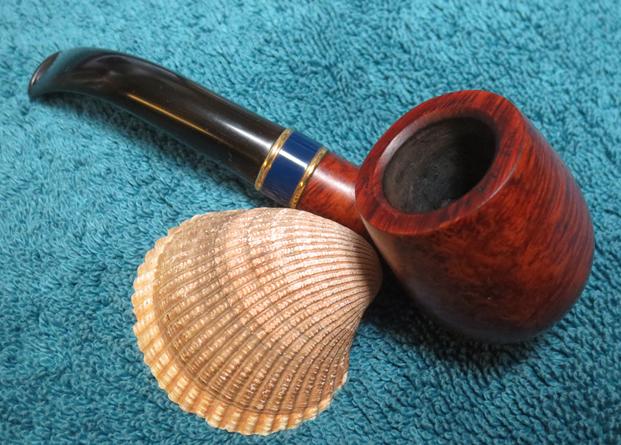
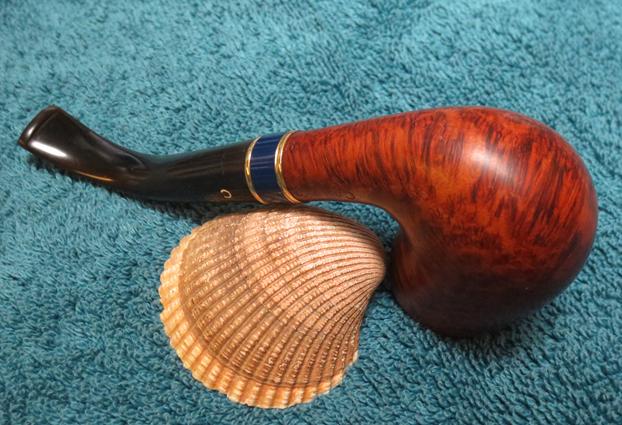
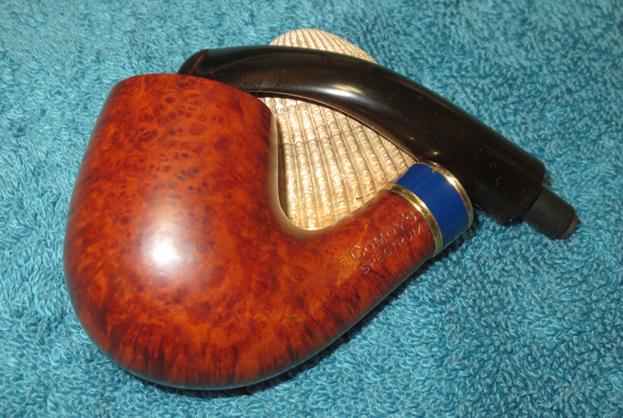
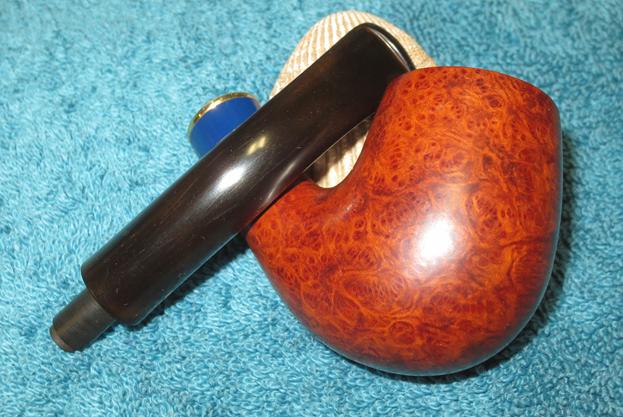
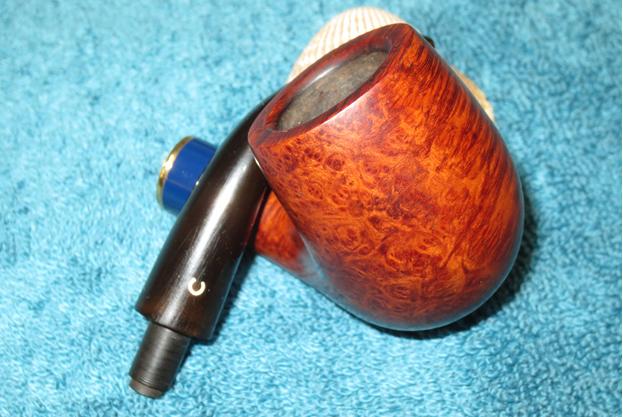
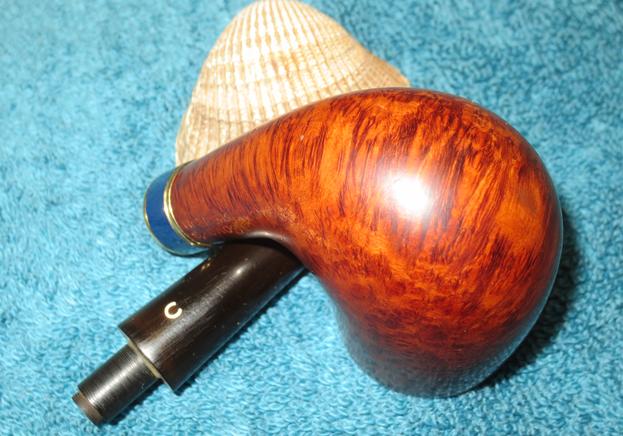
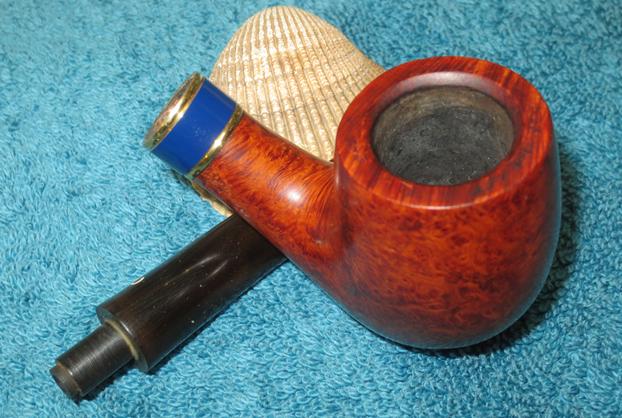
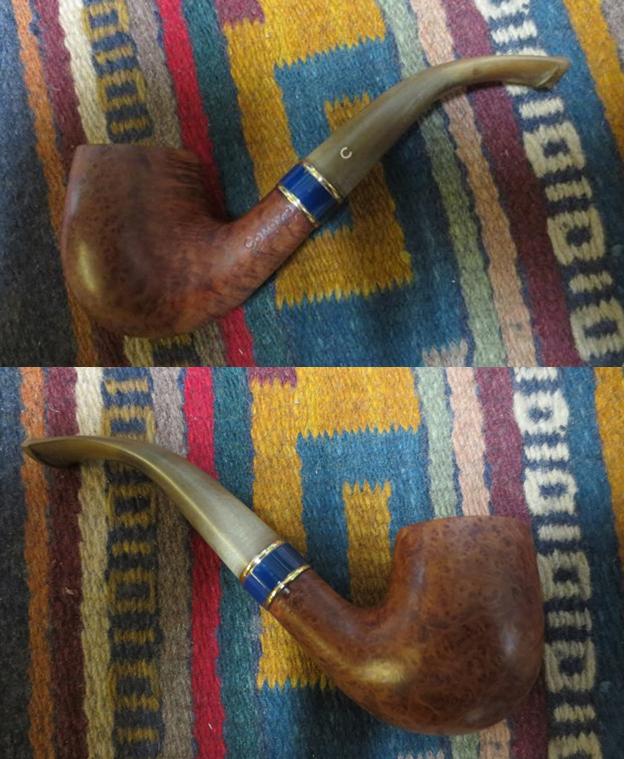
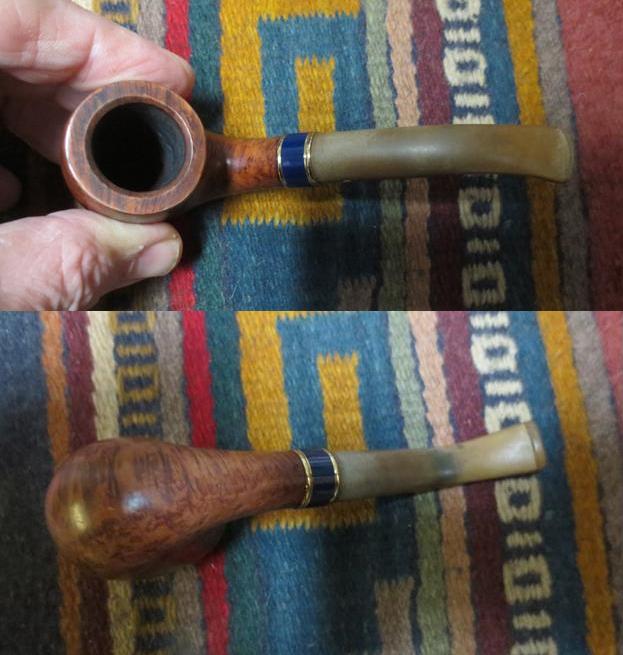
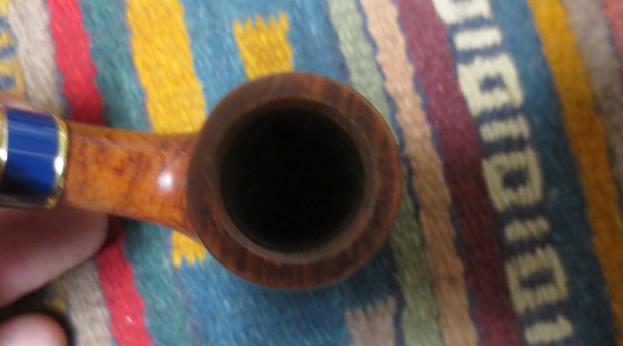
My brother picked an interesting Comoy’s pipe. It is from a line of Comoy’s that I was unfamiliar with. I could not find much information in my online searches either. It was a nicely made Comoy’s with a single drilled letter C on the stem side. It came in a black velvet lined presentation box with the Comoy’s of London logo and Pipemakers since 1825 in gold on black felt on the inside of the lid. The well-made box with dovetailed corners is mahogany that is stained with a rich cherry stain. The gold latches and hinges look very good with the red stain of the wood. On the underside the box is stamped Made in England.comoy1 comoy2Once the box was opened and the pipe visible it clear to see it is a beautiful pipe. I am actually surprised that there is not more information on the line available. It is stamped Comoy’s over Spectrum on the left side of the shank and the COM stamp on the right shank is the expected Made in London circle over England. Next to that the shape number 42 is stamped. Looking that up on Comoy’s Shape Charts shows that it is the number for a medium sized ½ bent billiard. This is exactly what I have here. There is also an H stamped on the underside of the shank next to the brass and blue band.comoy3The pipe appears to have some nice grain in the photos that my brother sent to me. The front, underside and back and top of the shank are beautiful cross grain. The sides of the bowl are full of birds-eye grain. The pipe has a brass band that had a wipe enameled strip of royal blue in between two ridges of polished brass. The stem was oxidized in the early photos but the single drilled C stamp is very clean.comoy4 comoy5My brother took some close up photos of the bowl and rim to give me a clear picture of the pipe. It appeared that the bowl had been reamed and well care for. The rim looked very good – a little bit of lava overflow from the bowl but the inner beveled edges and the outer edges of the rim were both very clean. The rim itself was also undamaged. The underside of the bowl and shank showed beautiful cross grain.comoy6The stamping on the pipe was deep and sharp. It had not been over buffed or damaged. It was readable and clean. The finish was dirty and the buildup of grime and grit on the surface of the bowl and band seemed to be the only major issue on the pipe. You can also see the single drilled C logo on the stem in the photo below.comoy7From the next photos you can see the deep oxidation on the stem. What is not visible at this point is if there was any tooth chatter or damage to the stem. That would have to wait until the pipe arrived in Vancouver.comoy8While I was waiting for the pipe to arrive in Vancouver I did some hunting for information on the Spectrum line of Comoy’s pipes on the internet. Sadly I was unable to find much that was definitive. There was a similar pipe for sale on smokingpipes.com that had a brief write up. From that I learned that the pipe dates after 1980 because of the single drilled C. Evidently that was when Comoy’s no longer used the three-part inlaid C on the stem. I wrote to a friend of mine and writer on rebornpipes, Al Jones and asked what he knew about the line. He wrote back that “they are early post-merger, with the single drill C logo. They usually have an adornment of some kind and box. It was the go-go 80’s, right! They’re most likely made with good stock leftover from pre-merger, so she should be a good smoker. As an added bonus, this pipe comes in wooden box complete with matching tamper.”
This confirmed what I had gleaned online so far. I Googled and found a question and short discussion on alt.smokers.pipes community regarding the line and found some more information from friend, Mike Stanley. He wrote: “The only thing I can pass along is what R.C. hacker wrote in his Ultimate Pipe Book. The Spectrum came with a wooden box and matching tamper with the same brass and enameled ring as the pipe. They were, I suppose, “firsts and fairly pricey. I had one I picked up from ebay. It had no tamp or box. It was a fine enough looking pipe. No putty or sand pits. It was too big for my taste. I re sold it. I would guess that they were made up until the late seventies or early eighties. Just a guess though.” (http://alt.smokers.pipes.narkive.com/yA8KASQj/comoy-s-spectrum)

When the pipe arrived in Vancouver and I unpacked it I was amazed at how clean my brother Jeff had gotten the rim and the bowl. The finish was very clean. The enameled band was also clean an undamaged. The oxidation had really come to the surface on the stem. However, all that being said, the briar on the pipe is very stunning. I took some photos of the pipe before I began to work on it to try to capture what it looked like when it arrived.comoy9 comoy10The next picture is a bit out of focus. It will teach me to have a look at the photos before moving on with the cleanup. However, you can see that the rim is spotless. He was able to get all of the darkening and debris off the rim and also ream the bowl clean.comoy11I took photos of the stamping on both sides of the shank. You can see in the first photo the stamping on the left side of the shank. The second shows the COM stamp and shape number on the right side.comoy11aI took photos of the stem to show the oxidation and to try to capture the tooth chatter and tooth marks on both sides of the stem near the button. They are hard to see through the oxidation. The ones on the topside of the stem are not too bad. The ones on the underside are a little deeper. Once I clean off the oxidation a bit I will be able to assess how bad they are.comoy12I sanded the stem with 220 grit sandpaper to break up the oxidation on the surface and also to sand out the tooth chatter and tooth marks on the stem. I was able to remove all of them as they proved to be fairly shallow and superficial.comoy13I polished the stem with micromesh sanding pads – wet sanding with 1500-2400 grit pads and dry sanding with 3200-12000 grit pads. I rubbed the stem down with Obsidian Oil after each set of three pads. After rubbing it down with the final coat of oil I set the stem aside and let it dry.comoy14 comoy15 comoy16I buffed the bowl and stem with Blue Diamond on the buffing wheel. I avoided buffing the enameled band on the shank. I gave the stem and bowl multiple coats of carnauba wax and buffed it with a clean buffing pad to shine it. I hand buffed it with a microfibre cloth to deepen the shine. The finished pipe is shown in the photos that follow. It is a beautiful pipe with stunning grain. The contrast of the black vulcanite, the blue and brass enameled band and the cross grain and birds-eye grain formed a great contrast. It comes with the velvet lined mahogany case with brass clasps and hinges. The only thing lacking was the tamper that originally came with the pipe. Thanks for walking through this restoration with me.comoy17 comoy18 comoy19 comoy20 comoy21 comoy22 comoy23 comoy24 comoy25

Doing Shaping Work on a Comoy’s Grand Slam Pipe 66


Blog by Steve Laug

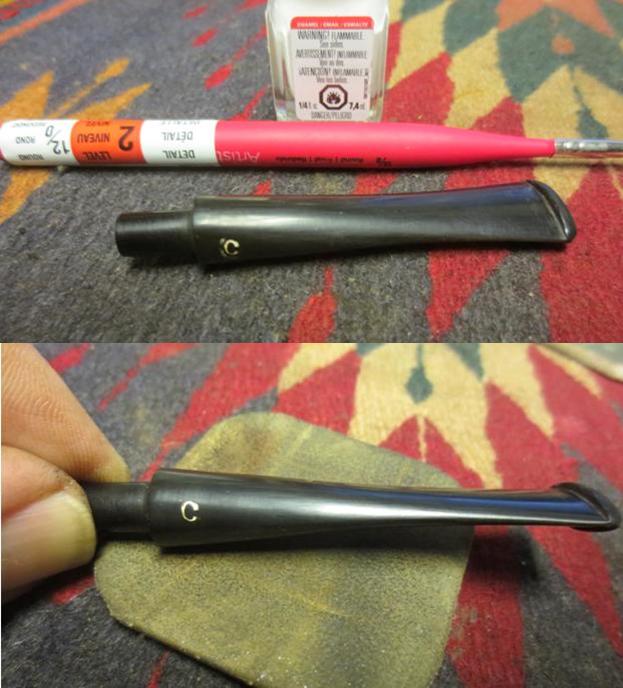
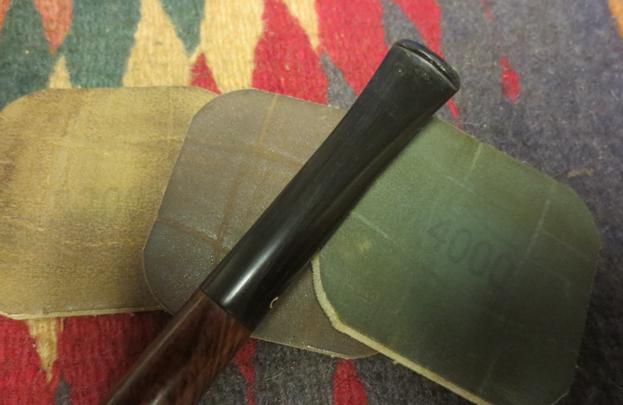
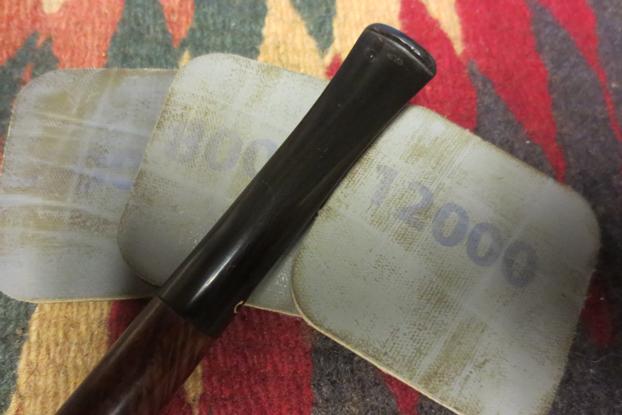
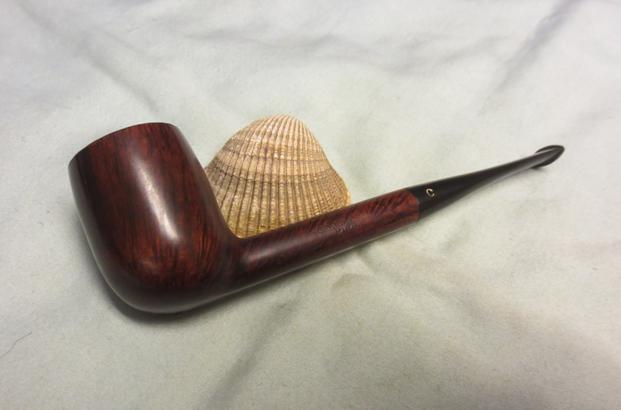
Recently I traded the Simpson Sandblast Billiard that I restored with a reader of the blog for a Comoy’s Grand Slam 66. It is stamped on the left side of the shank Comoy’s over Grand Slam over Pipe. On the right side it has the classic Comoy’s Circle Made in London over England Com Stamp and further along with the shape number 66. The finish was in decent shape though there was some sticky dirt buildup on the sides. The right side of the bowl had a small divot on the bottom front of the bowl. On the left side of the bowl there was a ring or a small trough that was indented in the bowl from the left rear of the bowl to left front of the bowl. It looked like a dent in the briar. It is very clearly shown in the second and the third photos below. The stem had some oxidation and three deep tooth gouges on the top of the stem and one on the button top. There were also some deep tooth marks on the underside of the stem and the button. The C stamp on the stem is a newer stamp in the vulcanite that is painted with a white paint.Comoy1 Comoy2 Comoy3I measured and studied the side of the bowl before I decided what to do with it. I was not sure if the trough was caused by and issue inside of the bowl so my brother and I both cleaned and checked that out and could see nothing. I turned to look at the outside of the bowl and noticed that the bowl actually bulged above and below the line. That line itself actually was the same height as the rest of the bowl apart from the bulge. The bulge was thus briar that needed to be removed rather than the line a dent of missing briar. I breathed a sigh of relief and began to work on restoring it to normalcy.

I sanded the side of the bowl with 220 grit sandpaper to try to minimize the groove in the bowl side. The photos below show the progress of the repair. The first photo shows the first sanding on the bowl side. With the initial sanding you can see length of the groove on the side of the bowl. I sanded the bowl side on both sides of the groove until the groove disappeared. I was actually surprised that I was able to remove the damage to the bowl without making the bowl any thinner in the process. It was almost as if when the bowl was turned in the factory the cutting head that turned the bowl slipped and left a hump above and below the groove. Thus the groove itself was actually level with the rest of the bowl other than the humps.Comoy4 Comoy5 Comoy6 Comoy7In the next photo you can see the slight divot at the 11 o’clock position at the top of the photo. It was a deep cut in the briar that must have happened when the pipe was dropped somewhere along process. I sanded it smooth and filled in the divot with clear super glue and briar dust. Once the repair cured I sanded it smooth with 220 grit sandpaper to smooth out and blend in the repair. I sanded it with a medium and a fine grit sanding block to remove the scratches in the briar.Comoy7a Comoy8The rim on the bowl had a light buildup of tars so I lightly topped it on the topping board to remove the buildup. I topped it against 220 grit sandpaper then against a medium and a fine grit sanding block.Comoy9 Comoy10 Comoy11 Comoy12I stained the bowl with a dark brown aniline stain thinned with alcohol to match the colour of the existing finish. I applied it to the surface and flamed the stain. I repeated the process until I had a good even coverage on the bowl sides.Comoy13 Comoy14I wiped the bowl and shank down with alcohol on cotton pads to even out the colour of the stain and make it more transparent. Once that was done, the finish of the bowl looked really good to my eye.Comoy15 Comoy16 Comoy17 Comoy18The stem was a newer style Comoy’s as noted above because of the style of the logo. It was stamped into the vulcanite and then painted. There were some significant bite marks on the stem that needed attention. The lighter tooth marks I was able to sand out with 220 grit sandpaper and remove them. There were others that were quite deep. I cleaned the surface of the stem and used a thick black super glue to fill in the tooth marks. Comoy19I sanded the repaired spots with 220 grit sandpaper and cleaned up the sharp edge of the button with a needle file. I was pleased with the overall look of the stem once the repairs had been sanded smooth.Comoy20I wet sanded the surface of the stem with 1500-2400 grit micromesh sanding pads to begin the process of polishing the stem. I rubbed it down with Obsidian Oil.Comoy21Before proceeding further with the micromesh I decided to touch up the “C” stamp. I used a fine bristle brush and white acrylic paint to fill in the letter. I sanded off the excess with the 1500 grit micromesh pad and went over that section with 1800-2400 grit to match the rest of the stem.Comoy22I dry sanded the stem with 3200-4000 grit pads and gave it another coat of Obsidian Oil. I finished sanding it with 6000-12000 grit pads, gave it a final coat of oil and set it aside to dry.Comoy23 Comoy24I polished the pipe and the stem on the buffing wheel with Blue Diamond polishing compound and gave the entire pipe several coats of carnauba wax. I buffed it with a clean buffing pad and then by hand with a microfibre cloth. The finished pipe is shown in the photos below. The adjustment to the left side of the bowl worked well to smooth out the bulges and crease and the pipe looks as it should have when it left Cadogan. Thanks for looking.Comoy25 Comoy26 Comoy27 Comoy28 Comoy29 Comoy30 Comoy31

Restemming a Comoy’s Sandblast Goldenbark 6 Billiard


Blog by Steve Laug

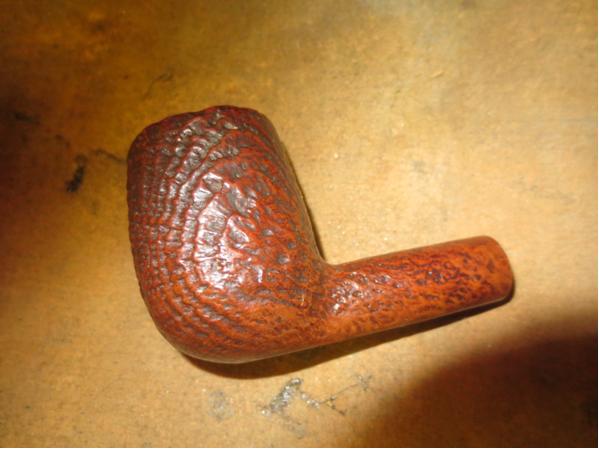
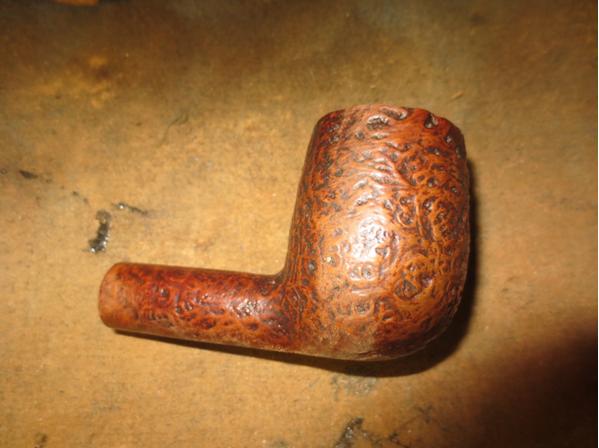
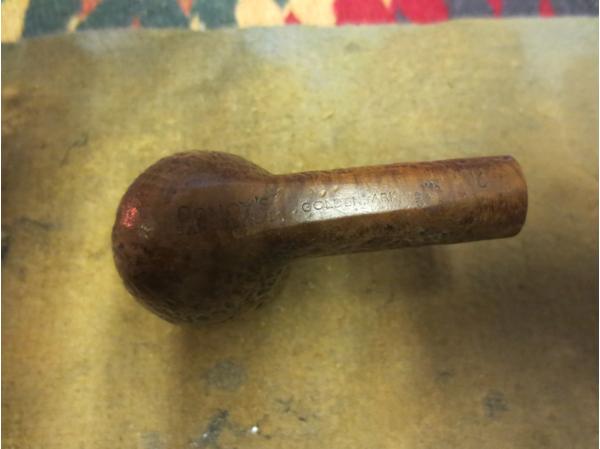
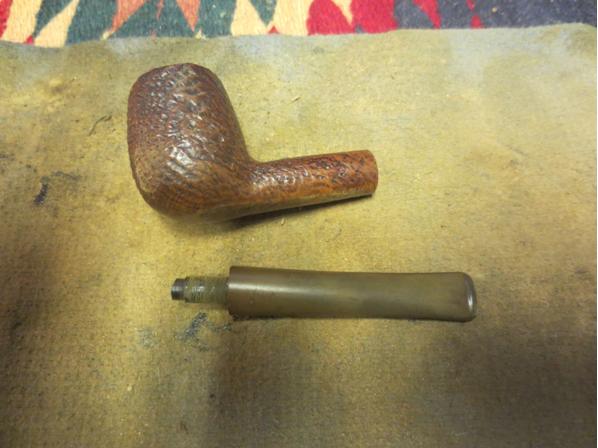
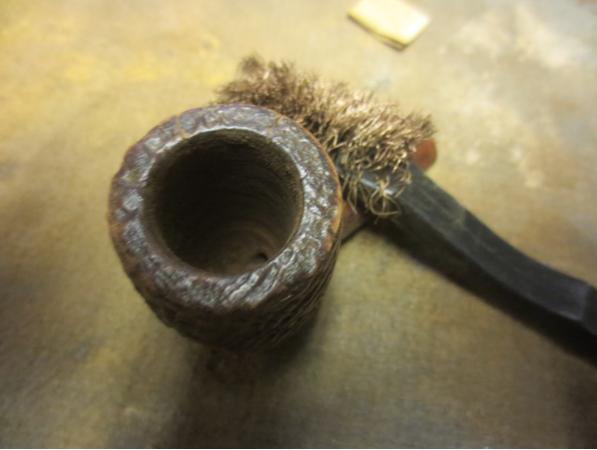
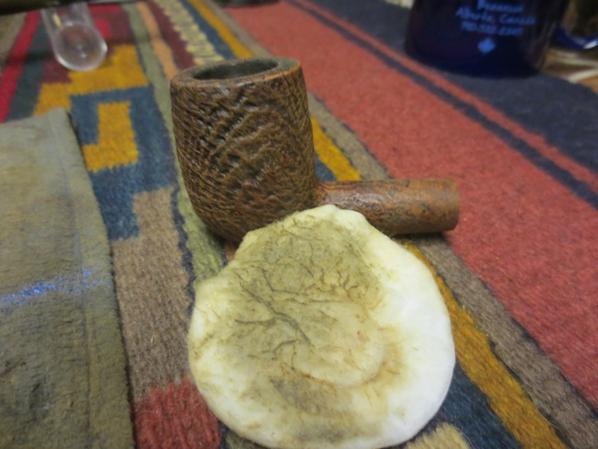
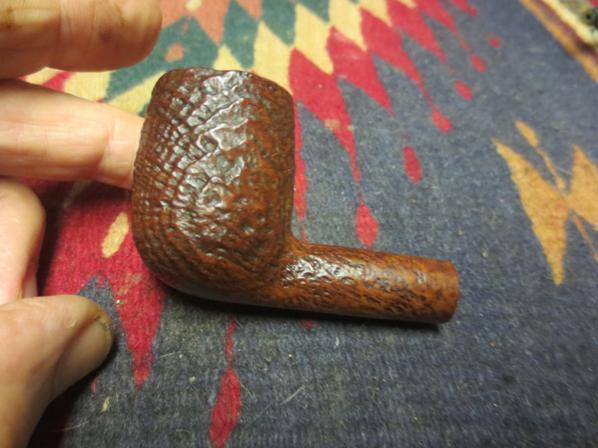
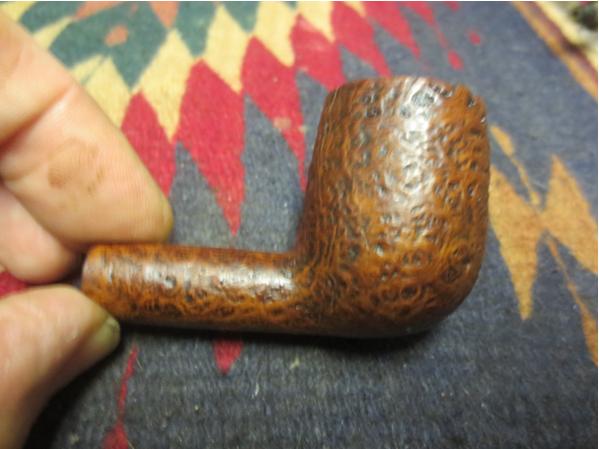
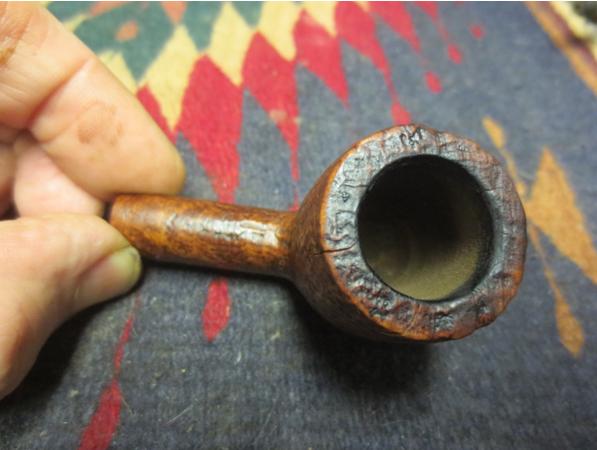
This sandblast bowl came to me in a lot of pipes from eBay. When I saw it I was pretty excited about refurbishing it. It had a great blast and really appeared to be a decent looking pipe. With a little bit of elbow grease it would be a beauty. It is stamped on the on the underside of the shank in a smooth flat base. It reads COMOY’S over SANDBLAST on the bottom of the bowl. Next to that is stamped GOLDENBARK followed by the Com Stamp – a circle composed of MADE ENGLAND with IN stamped in the middle of the circle. Following that it is stamped with the number 6. The finish was dirty but underneath there was some great grain showing through the blast. Someone had reamed the bowl before I got it so it was really quite clean. Once the grime was cleaned out of the swirls and ridges in the blast it would look really sharp. I would need to fit a stem to the shank to complete this pipe but it had a lot of promise.Comoy1 Comoy2 Comoy3 Comoy4I went through my can of stems and found this one. It took very little sanding on the tenon to get a snug fit in the shank.Comoy5 Comoy6I scrubbed the top of the rim with a brass bristle brush to remove the tars and grit in the sandblast in that area. The blast looked really good under the grit. So far so good!Comoy7I scrubbed the finish with acetone on cotton pads to remove the finish and the grit.Comoy8 Comoy9 Comoy10With the grime cleaned off the rim I found three disturbing looking cracks on the rim. One of them was small and was on the top with minimal cracking down the side of the bowl. One of them was cracked down the inside of the bowl about ½ of an inch and the third was cracked down the outside of the bowl almost an inch. This was a huge disappointment. I figured I had a nice example of a Comoy’s Sandblast and while it was the cracks gave me serious pause. This one would clean up and be good basket pipe but never one that is stellar. It would probably last longer than me but I was choked.

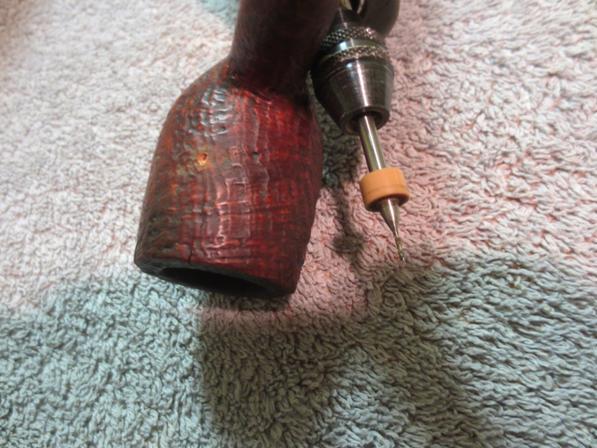
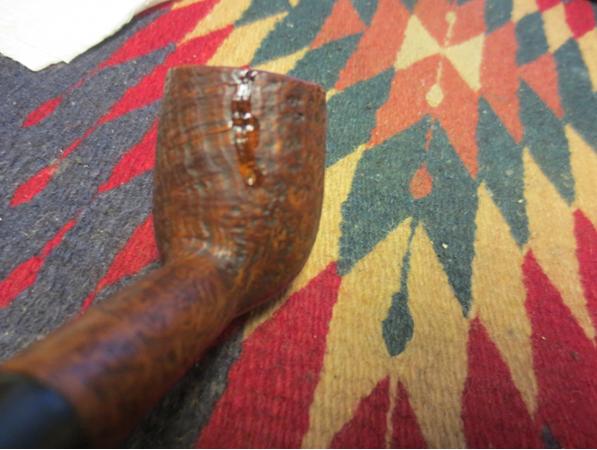
I almost stopped working on it at this point and pitched it back in the refurb box but I decided since I was so close to finishing it I would complete the task. I rubbed the bowl down with a light coat of olive oil and dried it off. I buffed the bowl with a shoe brush.Comoy11 Comoy12The photo below of the top of the rim shows the crack toward the back of the bowl that ran down the back side for almost an inch. I would need to drill the end of the crack and repair it. The other cracks are not as visible but they are at about 10 and 4 if the front of the bowl is 12.Comoy13 Comoy14I used a micro drill bit on the Dremel to drill a small hole at the bottom end of the largest crack. The crack on the inside of the bowl was irreparable at this point and I drilled a small hole at the end of the small crack as well. Comoy15I used a tooth pick to push super glue into the holes and then pushed super glue into the cracks on the bowl sides. At the top of the rim I also used the tooth pick and pressed the glue down into the cracks.Comoy16 Comoy17Once the glue had dried I used a sanding stick to gently sand the glue that was on the surface of the rim and in the cracks on the bowl sides to remove the excess.Comoy18 Comoy19The repairs to the cracks were as complete as I could make them so I set the bowl aside and worked on the stem. I have to tell you the pleasure of fitting this stem and making it shine had pretty much dissipated. This is one of the frustrating things about pipe restoration. You find what appears to be a great pipe only to run into unforeseen issues in the restoration. For me this one had move from a pleasure to a “get it done” pipe! I wet sanded the stem with 1500-2400 grit micromesh sanding pads and then rubbed it down with Obsidian Oil. I dry sanded with 3200-4000 and gave it another coat of oil. I finished with 6000-12000 grit pads and gave it a final coat of oil. I set it aside to dry.Comoy20 Comoy21 Comoy22I buffed the pipe with Blue Diamond on the buffing wheel – careful to have a light touch on the bowl. I then gave the pipe several light coats of carnauba wax. I buffed the pipe with a clean buffing pad to raise the shine. I then buffed it by hand with a microfibre cloth. The look of the blast is quite beautiful it is only a shame that the bowl had the cracks in it. The repairs are quite invisible but I know that they are there and to me it diminishes the beauty of the pipe. It will likely smoke well and last longer than me. One day I will likely gift it to a friend. Until then it will reside in my collection. The photos below show the finished pipe. Thanks for looking.Comoy23 Comoy24 Comoy25 Comoy26 Comoy27 Comoy28 Comoy29
My Courtship of a Comoy’s Pebble Grain Panel Brandy


Guest Blog by Robert M. Boughton
Member, International Society of Codgers
Member, North American Society of Pipe Collectors
http://www.naspc.org
http://www.roadrunnerpipes.biz (Coming soon)
http://about.me/boughtonrobert
Photos © the Author

For there are moments in life, when the heart is so full of emotion,
That if by chance it be shaken, or into its depths like a pebble
Drops some careless word, it overflows, and its secret,
Spilt on the ground like water, can never be gathered together.

― From “Priscilla” in The Courtship of Miles Standish (1858), by Henry Wadsworth Longfellow (1807-1882), U.S. poet and author

INTRODUCTION
I suppose I should consider myself fortunate to have had many such moments in life as Longfellow described, and can only hope to be blessed with frequent more, yet when each occurs, the awareness never fails to strike like a suffering pleasure. Call me a sentimentalist, or a romanticist as were the poets who influenced Longfellow, or make of it what you will.

Several years ago, when I first began buying up numerous fine examples of restored pipes by my friend and mentor, Chuck Richards, I fell in love with the beautiful Comoy’s Pebble Grain Panel featured in this exercise in refurbishing. As I might as well admit at this point, my reaction to the coloring and fine pebbles adorning the panels and the unusual shapeliness of the pipe itself was as the great American poet described. Many other works of art created for the enjoyment of pipe tobacco, some of which I have had the pleasure of acquiring and quite a few more remaining on my wish list, affected my sensibilities (in the philosophical sense) in a similar manner.

Still, the persistence of my attraction to this singular pipe has never lessened. Perhaps this reaction was a result of the fact that, in a moment of largess, I promised the special pipe to a friend who prefers cigars but was interested in taking up the fairer form of smoking – and on frequent occasions since then, I have been able to appreciate its allure, albeit in the hands of another man.

With that chemistry in mind, I have on a few occasions, with permission from my friend of course, again held the full-figured darling in my own appreciative embrace to ensure that she has been given the care and respect deserved. I am happy to report that the lovely creature has received excellent if frequent attention.

That said, and recognizing that when I first cleaned the Comoy’s a few years back for my friend, Mike Brasel, I knew even less about restoration and refurbishing than I do now, I knew I could make the lovely pipe better than when I gave it away. If anyone detects a touch of regret in those last words, it is only because… well, it’s the truth! There. I got that confession out of the way. I also had taken no photos of the pebble grain before I turned it over to the care of Mike, and concluded that one easy way to correct that mistake was to get it back in my hands long enough to give the pipe a little needed cleaning. Machiavellian? Somewhat. Sneaky? Definitely. Regrets? None.

My primary solace for the loss of the pebble grain is two-fold: other than getting to see it on a regular basis, I can observe its regular upkeep. I knew Mike was in the good habit of running bristly cleaners through it but had no idea he must do so after every smoke until I at last was able to convince Mike to entrust me with the Comoy’s a few days ago. He actually paid me for a sweet, vintage Kaywoodie Signet bent smooth billiard I restored about a year ago (my first experience cleaning a pipe properly with a retort). I believe it dates to the 1960s if not a little earlier. Mike therefore had a substitute to use in the other pipe’s absence.

The reason I chose the Comoy’s for Mike in the first place was his comment that he had been unable to find a big, thick, sturdy enough pipe that would never overheat at a price he could afford. I knew the pebble grain would be perfect for his needs and fit his personality at the same time. But based on his standards for appreciating the thick-skinned Comoy’s, I was surprised and more than a little concerned when he picked the Kaywoodie from my restores available for sale. Nevertheless, while enjoying his first bowl of McClellands 2015 Christmas Cheer in his new Signet, Mike told me it smokes great and is easier to control without holding. The photo below was snapped just as he was about to remove it from his mouth.
Mike trying out his Kaywoodie the first time

Mike trying out his Kaywoodie the first time

Mike’s new pipe

Mike’s new pipe


REFURBISH
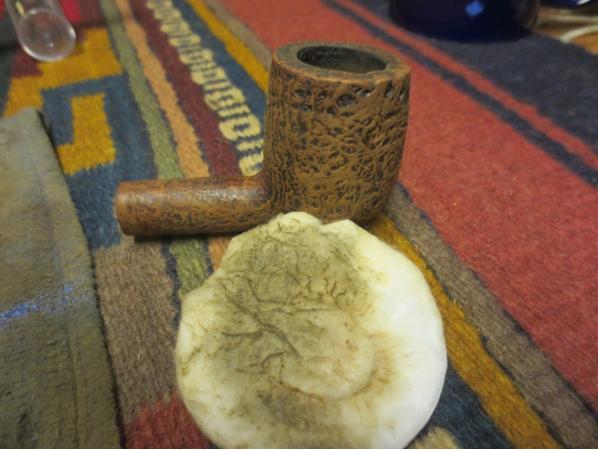
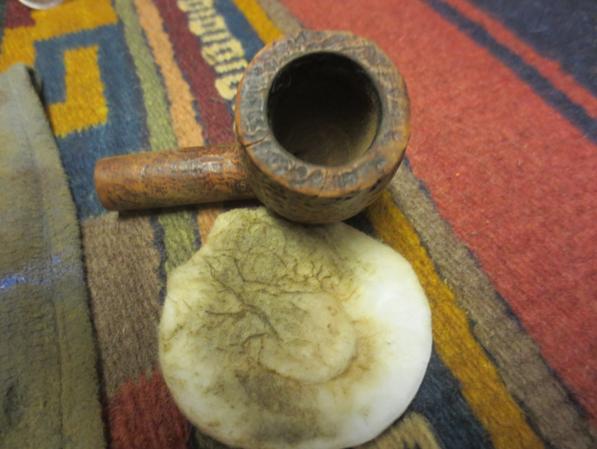
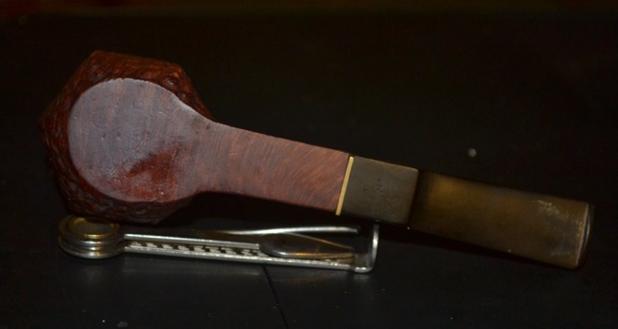
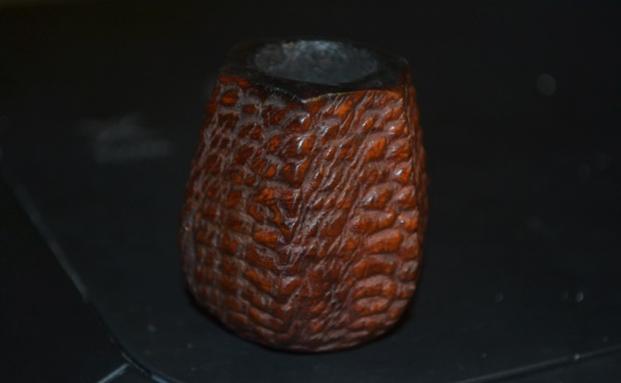
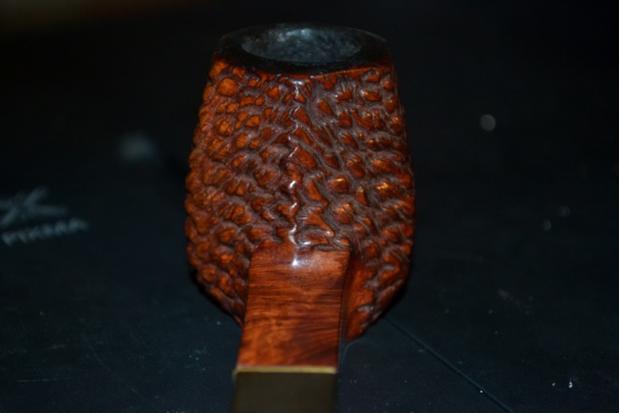
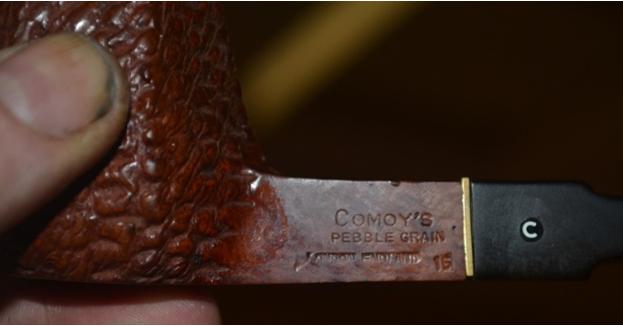
Comoys3

Comoys4

Comoys5

Comoys6

Comoys7

Comoys8

Comoys9 AN ASIDE
I see Mike at our local tobacconist almost every time I’m there, and for the most part he smokes the cigars he still loves. On occasion, I’ll even buy one and light it up myself. It’s true, I enjoy a good candela on special occasions, in particular when I can get my hands on a genuine Havana, which is a treat I have savored only five times: twice on trips to visit my mother when she lived in Cozumel, Mexico; once with another onto which I slipped a Nicaraguan band and smuggled back to the States (although the Customs agents at the border picked it right out from the little humidor box I handed them, which otherwise had legal varieties, and smiled at each other before letting me get away with my attempt at subterfuge); again with a gift from a former co-worker in grocery store deli merchandising, this one being, I was certain, a fake – until I held it and noted the unique paleness and skin-like suppleness of the green wrapper, and the last that I bought from a friend in England who was a true gentleman to mail to me along with three more I purchased for Mike and a couple of other cigar aficionados I know. All of the Cubans I’ve smoked required hours to finish and left me with an almost illicitly pleasant, light-headed giddiness.

BACK TO THE REFURBISH
And so I was somewhat amazed to see from tell-tale signs on the Comoy’s that it had been used far more often than I suspected. The rim, of course, was the first hint, blackened as it was. Then there were the slight dents on both sides of the top of the shank, visible in the third photo above, and some minor scratches on the rest of the wood. However, the most revealing symptoms of frequent use were the general grime on the outer briar and the lip end of the bit. I also discovered, without even removing the bit from the shank, that the thin brass band that had been connected to the bit had come loose.Comoys10

Comoys11

Comoys12 That was a repair I never had to ponder before. Tossing the bit into an OxiClean solution for a nice long soak, I decided to tackle the rim first. I was able to remove the majority of the charring safely with superfine steel wool before shifting to micromesh, using 1800, 2400 and 3200. The rim as shown in the last shot below, I knew, was not finished, but more about that later, in its order.Comoys13

Comoys14

Comoys15 Removing the bit from the OxiClean wash, I rinsed it and with haste, while it was still wet, started micro-meshing, from 1500-12000. There was no need for sandpaper, other than the narrow edge around the tenon where the thin brass band still needed to be replaced. To eliminate the residue of the original adhesive, I made fast work of it with 150-grit paper followed by 320, then micro-meshed all the way through my pack of pads. Not having to sand any of the regular surface of the bit was such an extremely rare event that I was truly struck by Mike’s high degree of care for the Comoy’s. Here is the band before I cleaned it up easily with my steel wool, and after I reattached it with a small amount of Super Glue.Comoys16

Comoys17 Less than a minute’s more work with the steel wool made the tenon opening like new.

I considered the bowl and shank and how to clean them. Six small, thin cotton squares, used two-ply and wetted with purified water, took off much of the dirt with serious scrubbing both vertically and horizontally to get around the pebbles as thoroughly as possible, but that was not enough. With the wood wet, I returned to the three micromesh pads and made more progress, but the task called for something else. After serious consideration, I opted to go all-out with a couple more two-plies using Everclear, again rubbing both directions. At last I found the exact lighter shade I sought.

At this point, I finished the rim, using 320-grit paper with two of the gentlest swipes possible, one around the top and the other covering the rounded inside where it borders with the beginning of the actual chamber. I finished that step with the same micromesh progression as before.

While I still had the 320-grit paper and micromesh pads out, I saw no reason not to tackle the two dings in the shank and the sundry scratches. Again, most of these blemishes were mended with the micromesh. Almost all of the very slight imperfections remaining came off with light, focused application of the 320-grit followed by – you probably guessed – the same three micromesh pads. With an uncommon sense of caution, given that this pipe already belonged to my friend Mike – someone I had reason to suspect I never want to see really mad – I settled for the results I had achieved, except for a quick turn or two of 150-grit paper followed by 320-grit on some excess cake buildup in the chamber, and to clean out the loose soot from the sanding, a wipe with another cotton cloth piece wet with purified water.Comoys18

Comoys19

Comoys20

Comoys21

Comoys22

Comoys23 I only needed a few seconds to consider a retort and dismiss the notion, realizing it would remove too much of the cake that I had promised Mike I would not ruin. But I did dip a bristly cleaner in Everclear and ran it through the shank, turning it briskly as I did so, and saw it came out filthy. After using a dry cleaner that brought out more grime, I repeated the process, still finding some unnecessary old smoke, tobacco and other accreted matter. The third cleaner soaked with Everclear was almost white.

I left the shank as it then was and proceeded to the bit’s air hole, at which point I was amazed to find that one alcohol-soaked cleaner came back with minimal blackness. One more dry cleaner paved the way for another dipped in Everclear, which was clean, ending that step.

The hard parts of the job complete, the time came to open my jar of Halcyon II wax and dip a finger in for a dab of the stuff. The single dab was enough to coat the bowl and shank until they shone with a wet brightness and set it aside for about 15 minutes while it soaked into the smooth rim, bottom of the bowl and shank, and every crevice of the pebbled area.

When I could stand the wait no longer, I carried the two pieces of the pipe into the spare bedroom of my new apartment that I will use as an office/shop when it is furnished. Of course, I had already set up my buffers on their sturdy stand and had only to plug them in for the first time in that setting. I buffed the bit with red Tripoli, white Tripoli and White Diamond, using the clean cloth wheel after each, and wiped it down with a big soft cotton cloth. Setting it aside and taking a deep breath, exhaling slowly, I stuck my left index finger in the chamber and, with complete calm and a firm grip on the precious briar, buffed the Halcyon II on the clean wheel. Rubbing it down with the cotton cloth, I concluded a final run with the carnauba wheel and then the clean buffer was in order.

Studying every angle of the briar while I rubbed it with the cloth, I was a tad disappointed that the waxing and buffing process had made it almost as dark as it started. I had wanted to finish with a lighter shade of wood and a high sheen of wax, but decided against another coat of Halcyon II.Comoys24

Comoys25

Comoys26

Comoys27

Comoys28

Comoys29

Comoys30 CONCLUSION
A few words about why the first three photos of the finished Comoy’s Pebble Grain have a different background: when I went to the tobacconist to see if Mike was there, he wasn’t, and I sat down to enjoy a bowl while I took the pipe out for what I thought would be a final quick exam. I was horrified to see what appeared to be bad blemishes on the right side of the bit and shank, and on the top and bottom of the bit. Fortunately, I had my cotton cloth with me and discovered that the problems were only smudges of excess wax. And so I wrapped the rag around the entire pipe and gently turned it round and round for five minutes or so, while I puffed away at one of the tobacco samples on hand.

When I at last stopped rubbing the pipe, I handled the pipe as I would if I were checking out a new purchase, and found no more smudges. Relieved, I wiped it quickly one last time before taking the pictures of the first three angles again.

Knowing I couldn’t take it home with me, I put it back in the leather pouch I included for Mike, so that he could carry it with him with added protection, and left the Comoy’s of which I remain so fond with Chuck at the counter.Comoys31 Cheers, then, old gal.

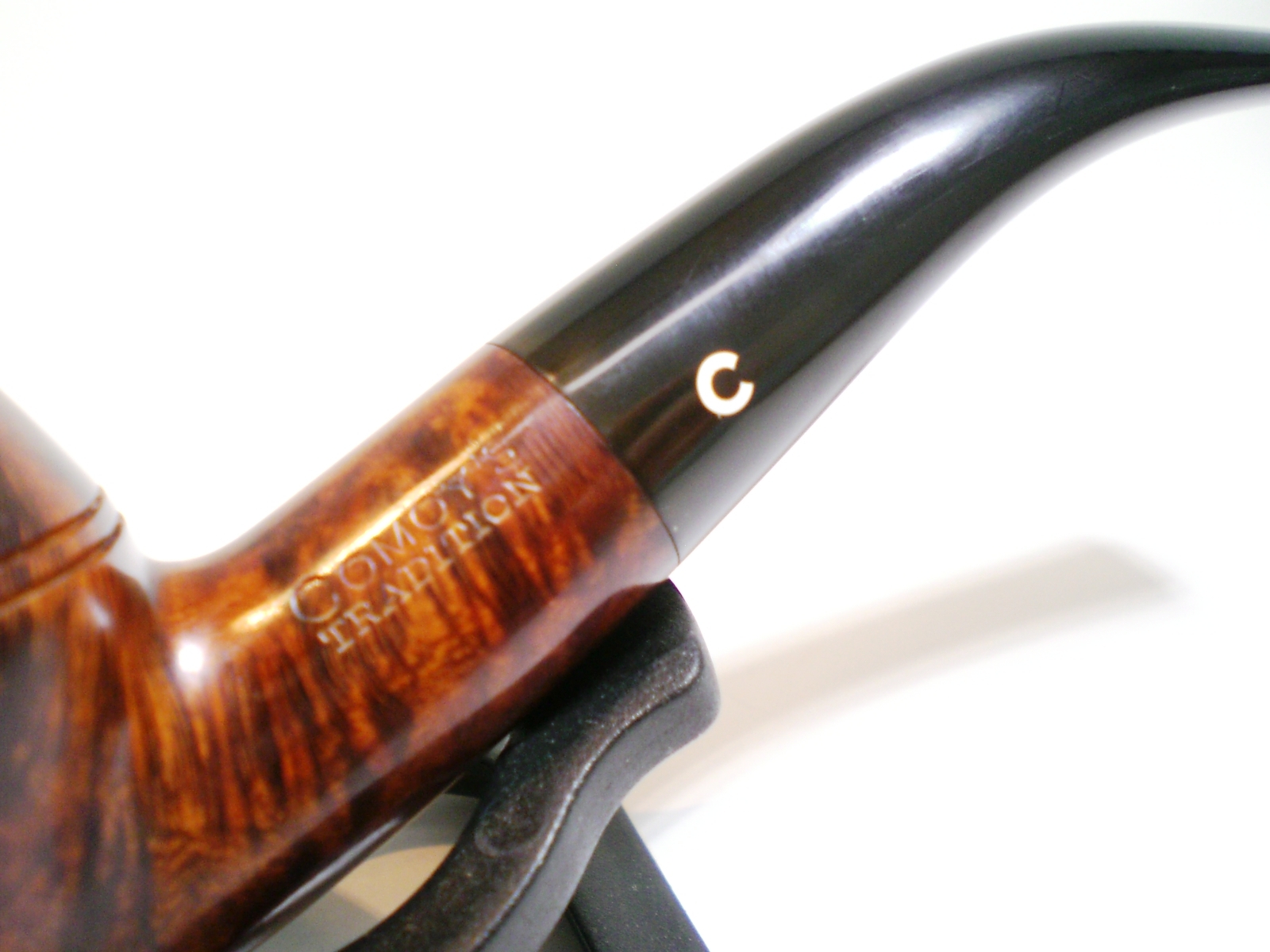
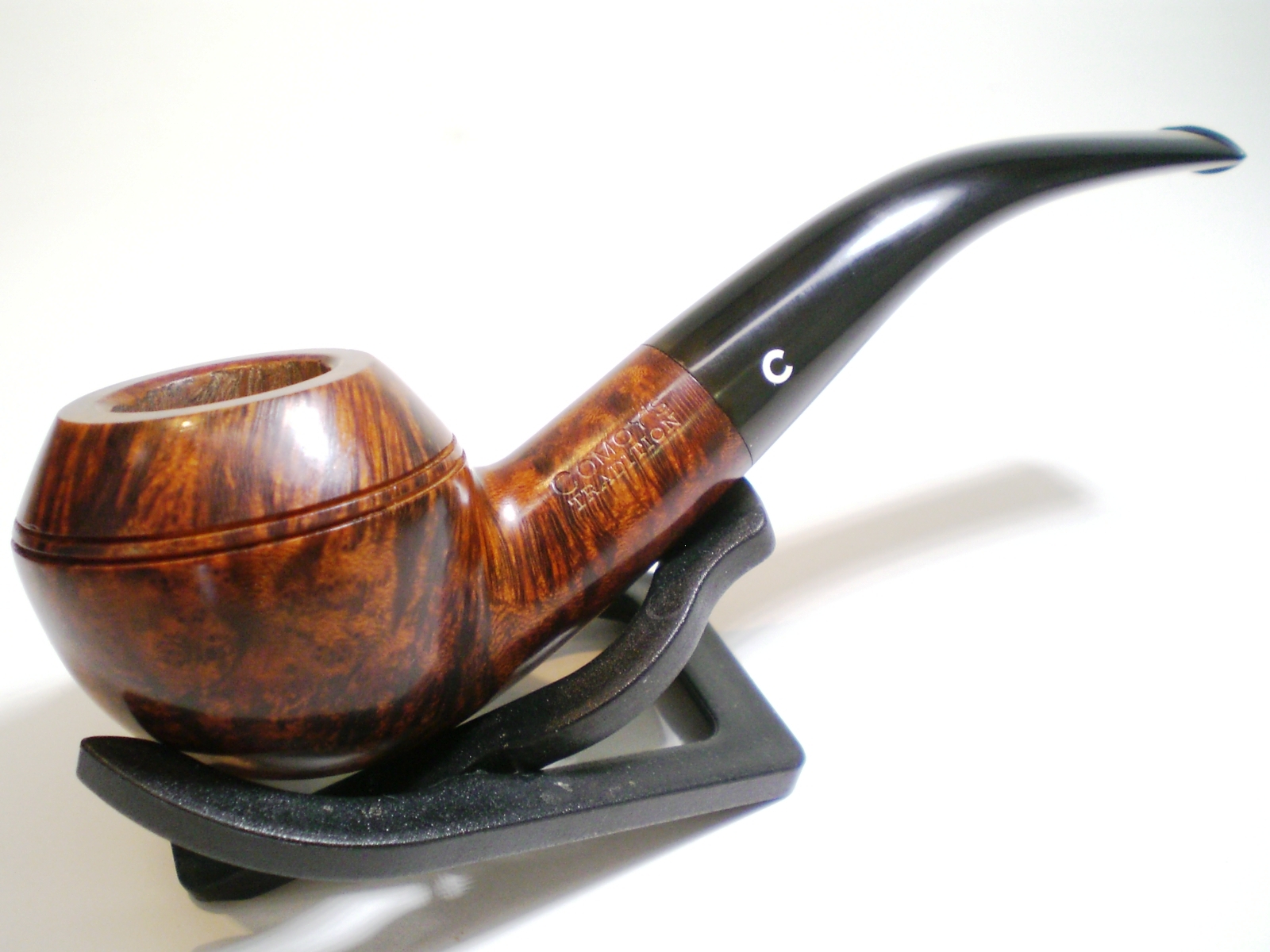
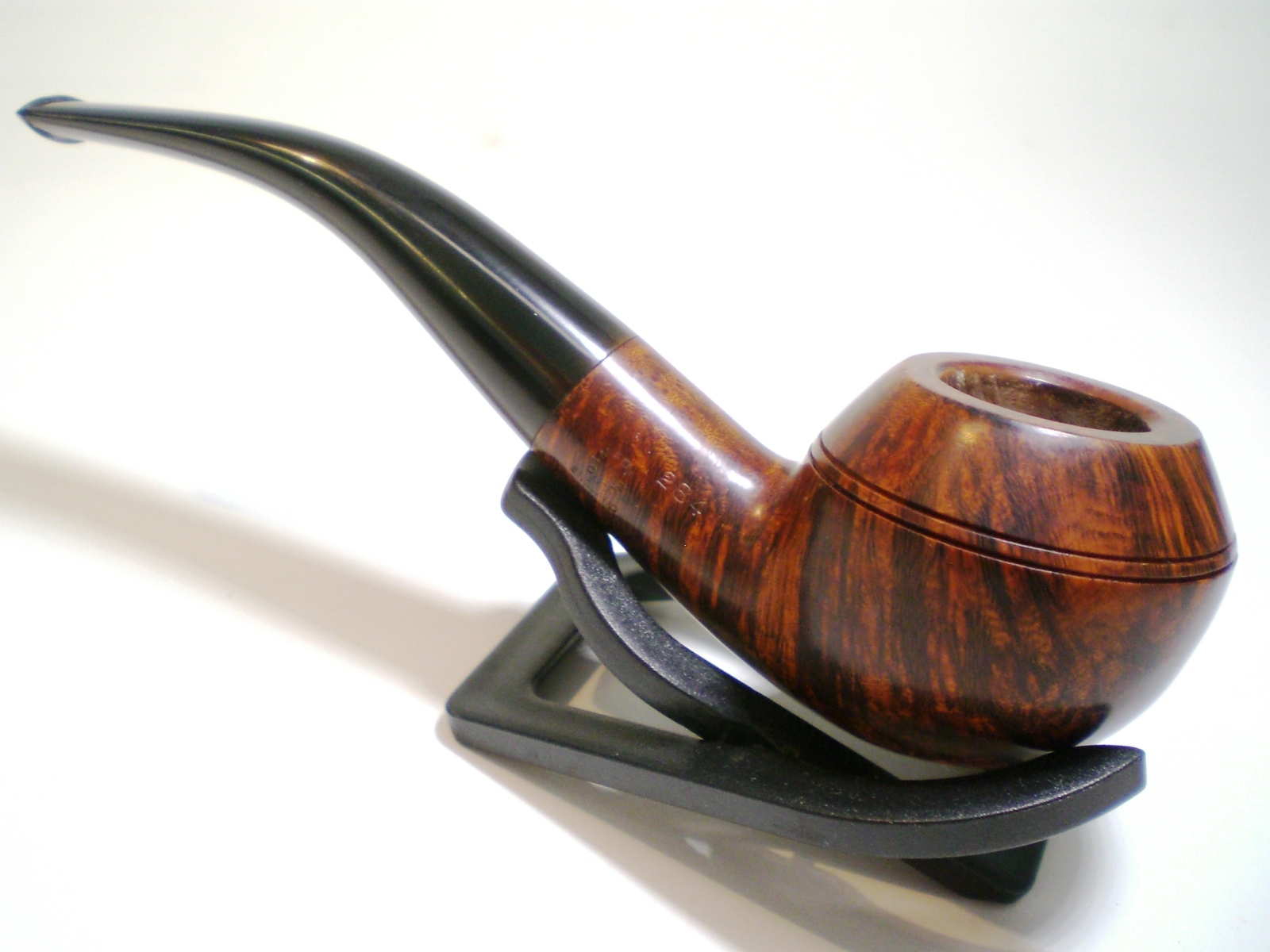
Comoys 284 Tradition Restored


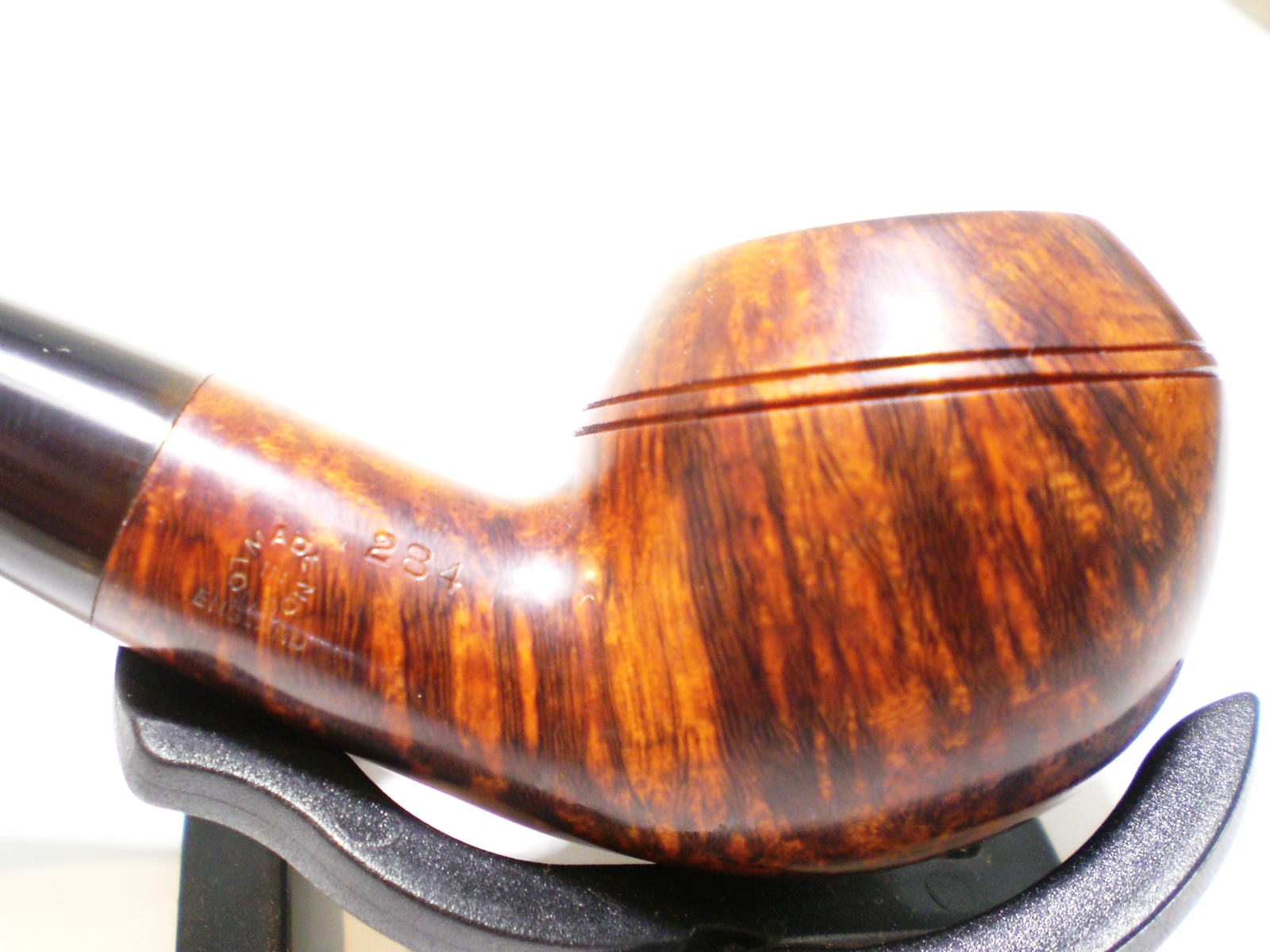
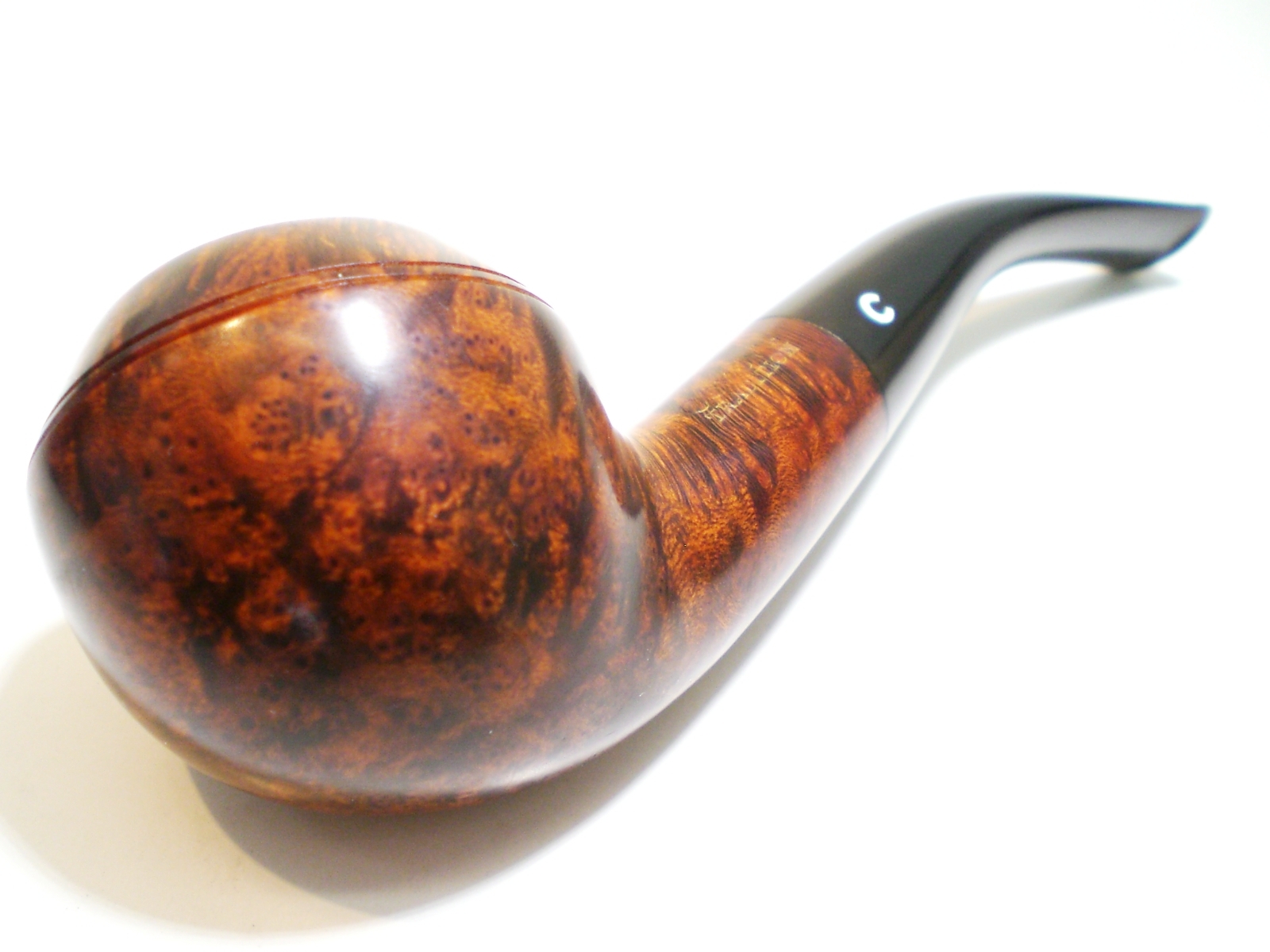
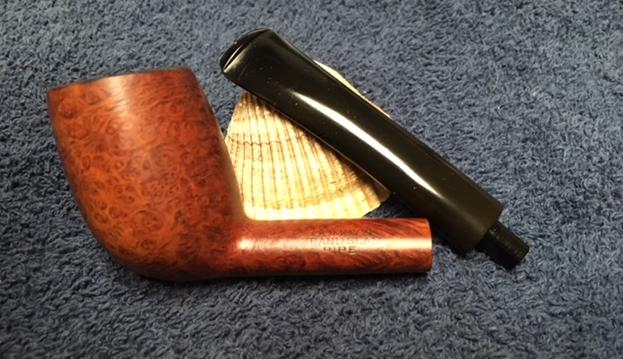
As a fan of the Rhodesian pipe shape, the Comoys Shape 284 is one of my favorites and in the top 5 of my “Holy Grail” list. Last week, this Tradition grade pipe showed up for auction. I made an offer to the buyer and surprised to find it accepted. As this is a hotly sought after shape on the market, I couldn’t believe my good fortune until I opened the package and held it in my hand.

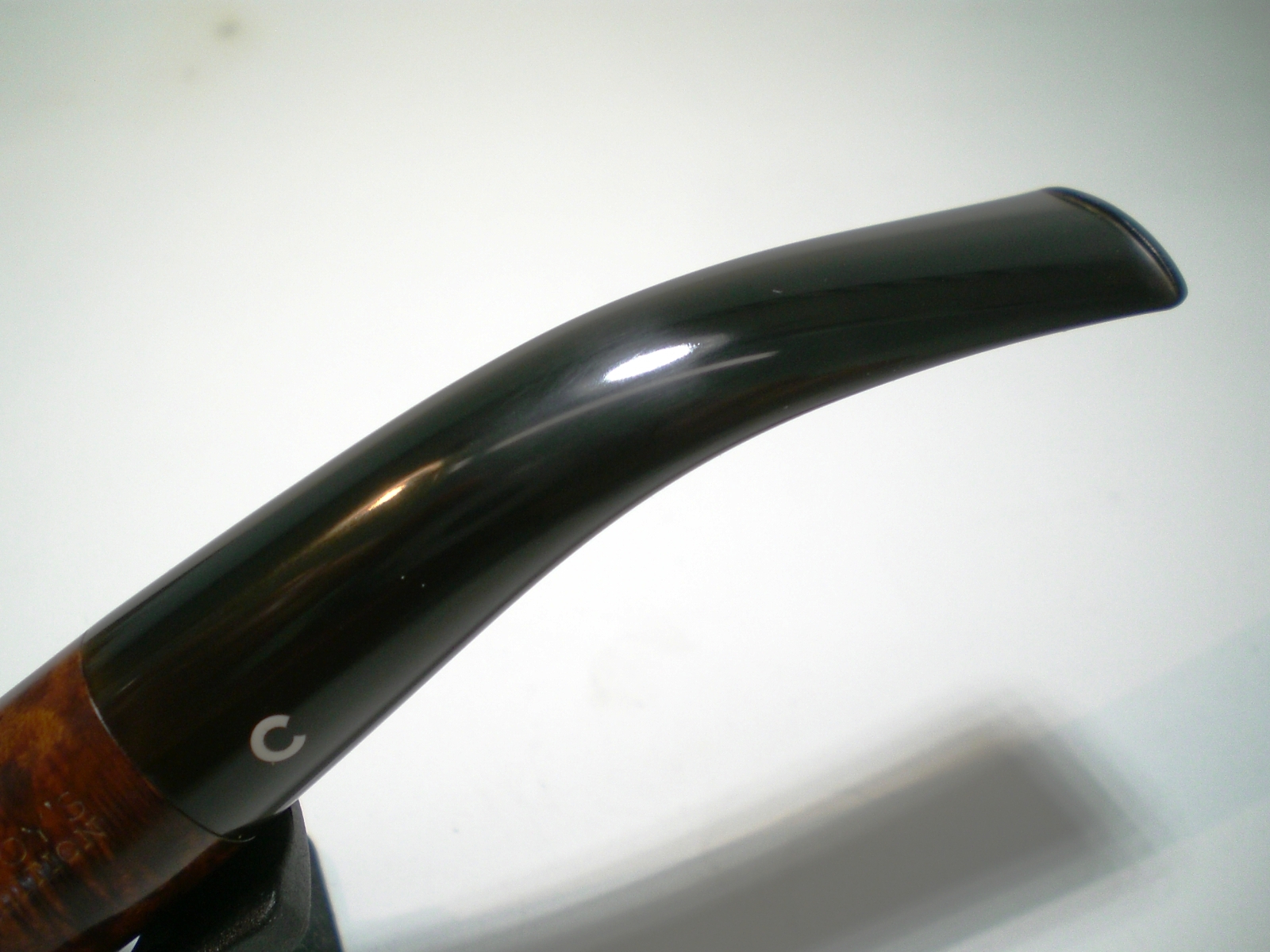
The pipe was in excellent condition, bowl and stem. There were only the slightest handling marks and the bowl top was not scorched. The stem, while oxidized only had two tiny teeth marks on the button. The three piece “C” logo was in perfect condition. I love working on Comoys stems, they just seem to shine more brilliantly than other British made vulcanite stems of that era.

The stamping of “Comoy’s” with the slightly larger “C” and the apostrophe was started in the 1950’s and the round “Made In London” with England below was also used in that era. The pipe could have been made from the 1950’s to the end of the Cadogan era in 1982 (give or take!).

Comoys_284_Before

Comoys_284_Before (8)

Comoys_284_Before (4)

Comoys_284_Before (3)

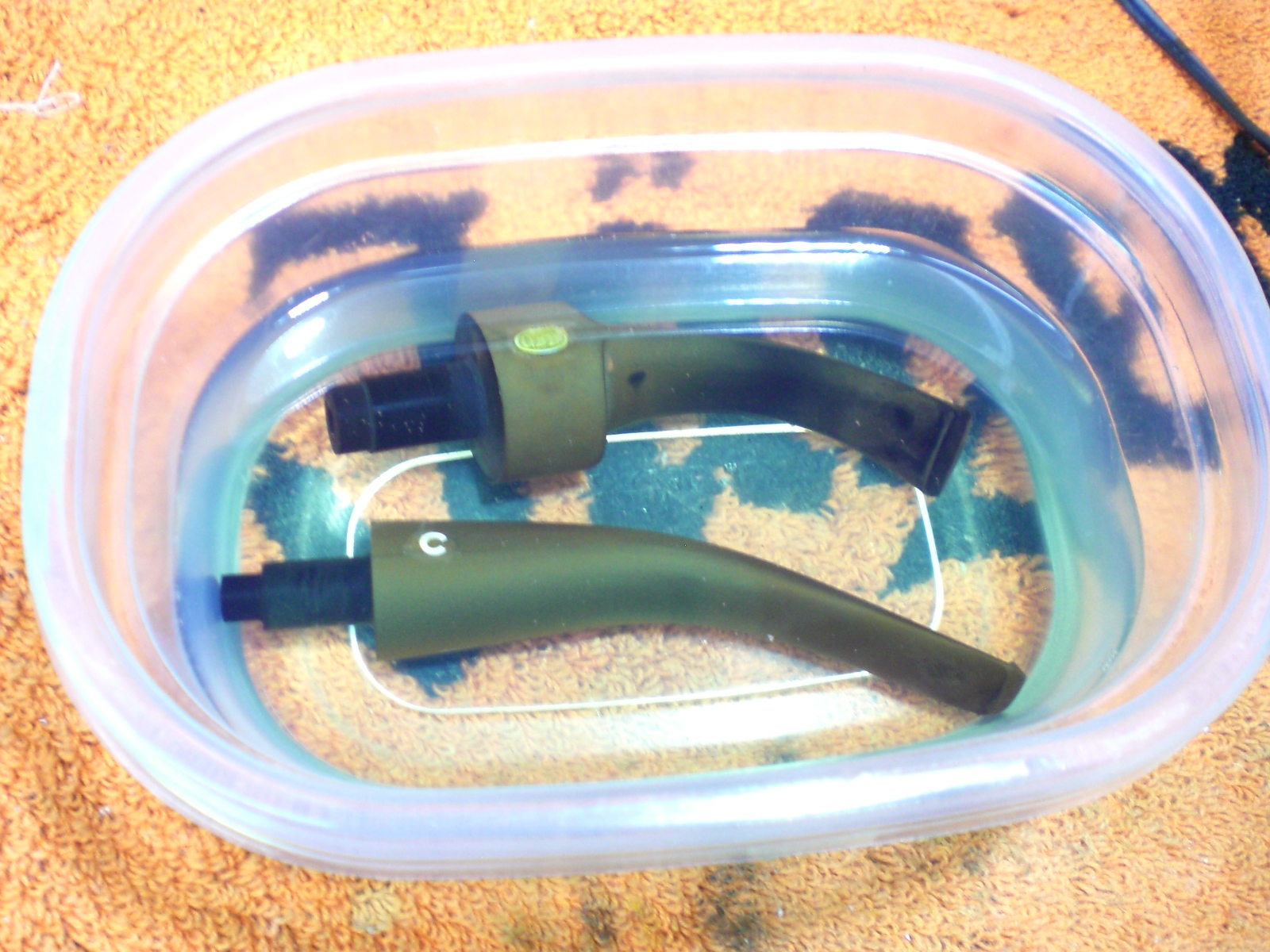
I soaked the bowl in salt and Isopropyl alcohol. Here the pipe is shown along with another project, a GBD 9438 Century. I put a dab of grease on the stem logo and soaked the stem for several hours in a mild Oxyclean/water solution to loosen the oxidation.

CIMG1104

CIMG1103

The bowl only required a light buff with white diamond and then a few coats of Carnuba wax. The nomenclature is quite strong and I didn’t want to damage it.

I started removing the stem oxidation with 800 grit wet paper and then moved thru 1000, 1500 and 2000 grades. I used the 8000 and 12000 grade Micromesh papers before going to the buffing wheel. The stem was buffed lightly with White Diamond and then Meguiars Plastic Polish.

Below is the finished pipe. I’m thrilled to add this one to my collection of Rhodesian pipes and look forward to breaking it in later this evening.

Comoys_284_Gallery (6)

Comoys_284_Gallery (5)

Comoys_284_Gallery (4)

Comoys_284_Gallery (2)

Comoys_284_Gallery (1)

Comoys_284_Gallery

Comoys_284_Gallery (3)

Comoy’s St. James Shape 62 Restored


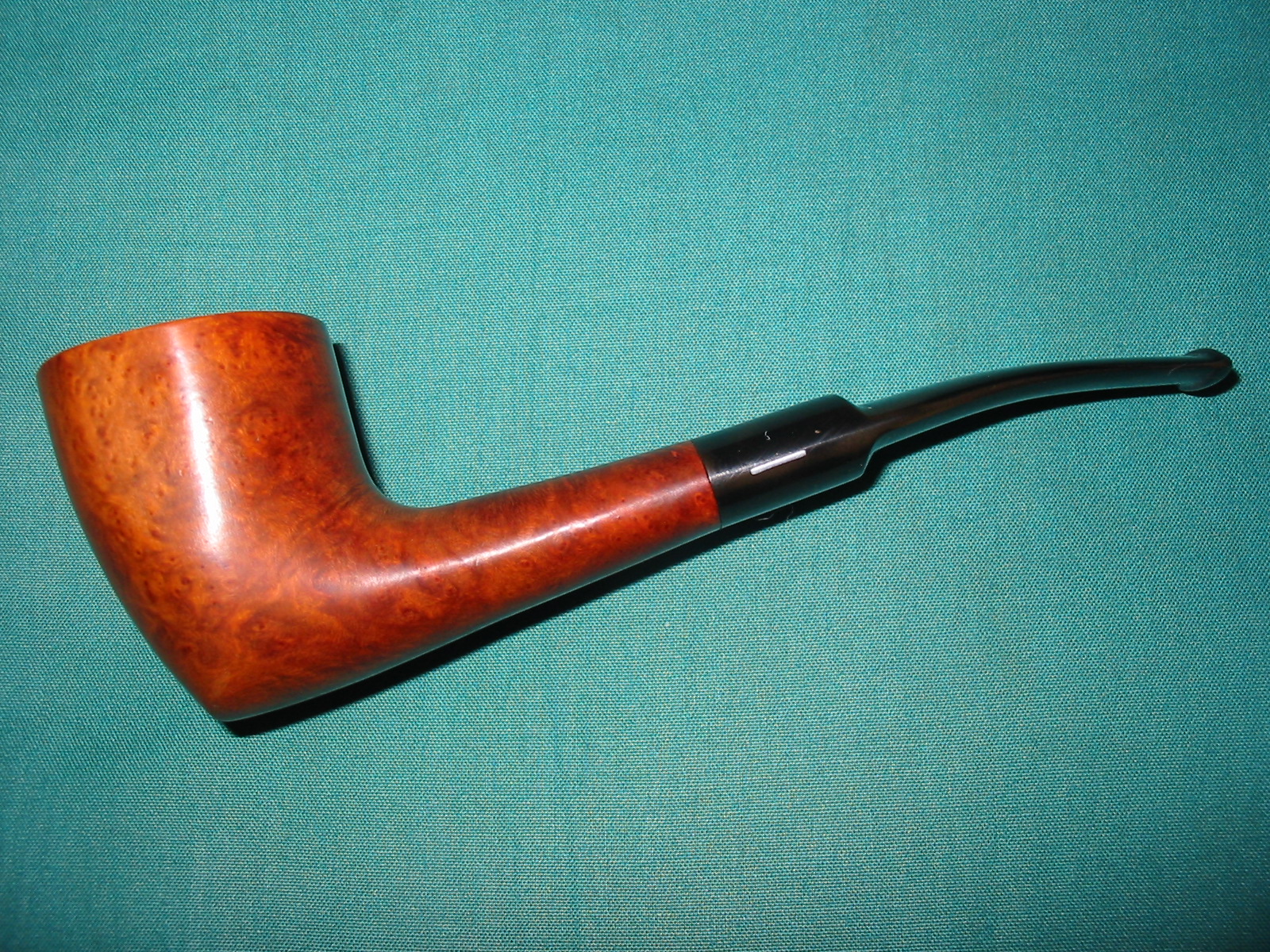
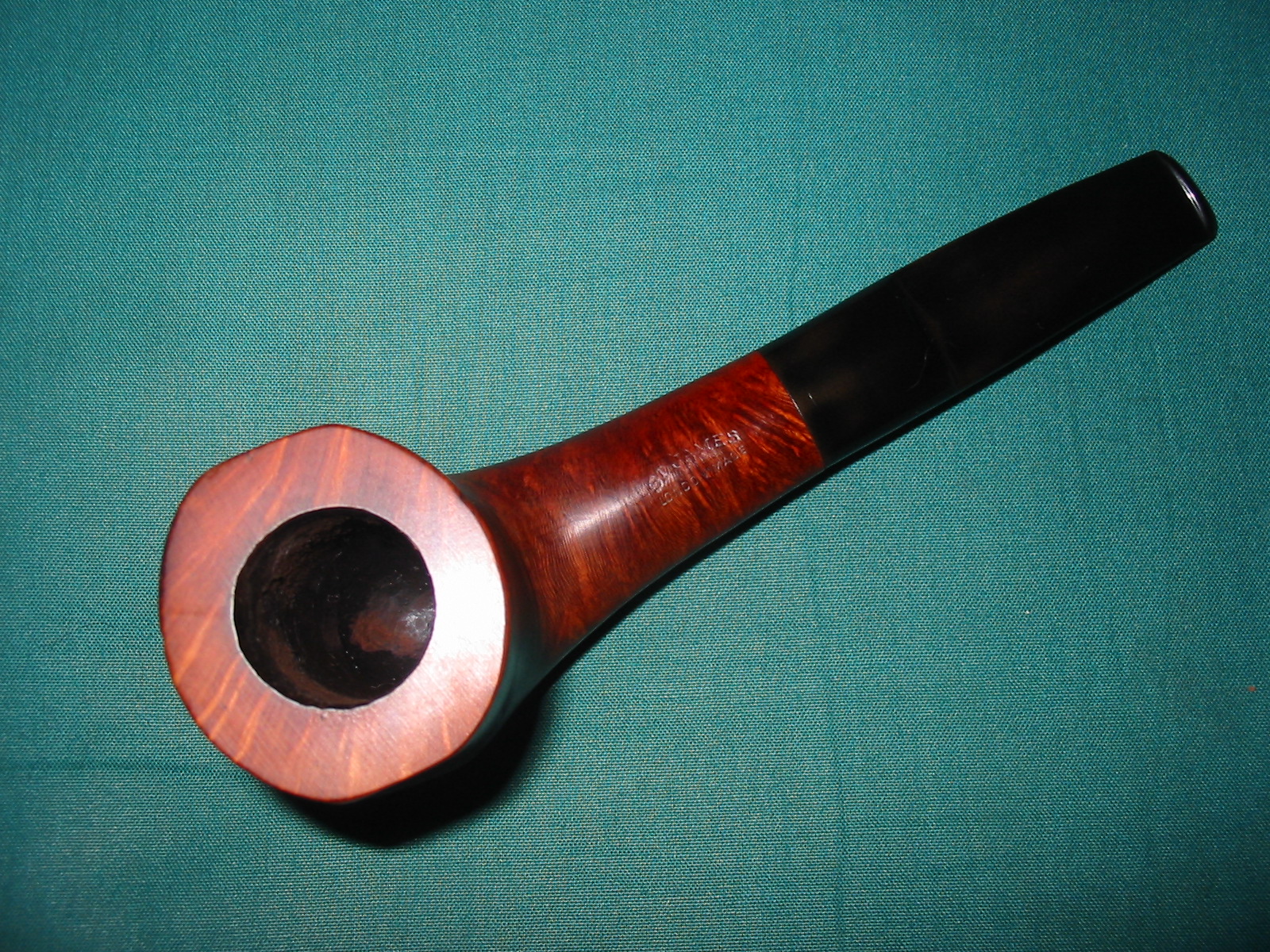
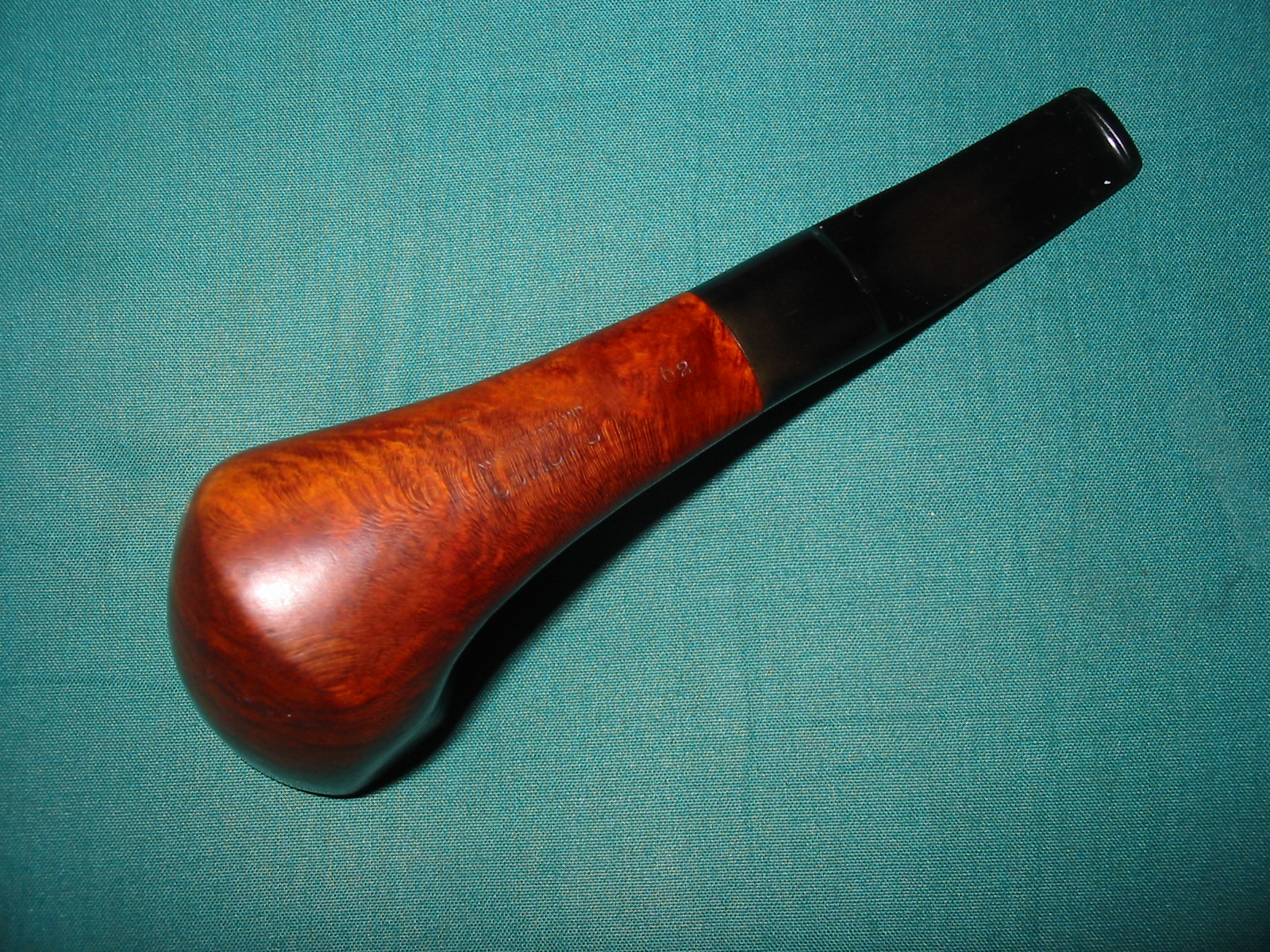
This oddly shaped Comoy’s came to me in a lot that was donated years ago to the Vancouver Pipe Club. It has been sitting for a long time needing a bit of care to bring it back to life before going to the Club to be sold or given away. It is stamped on the top of the shank, St. James in an arc over London Made in a straight line. On the underside of the shank it is stamped Made in England by Comoy’s followed by 62. The finish was rough on this one; the top of the rim had been beaten against something hard and had damaged the outer edge to the point that it was no longer sharp. The inner edge of the rim was not too bad but the bowl had been coated with a black rubbery bowl coating that was grim. There was one rather large fill on the right side of the bowl near the shank/bowl junction. The stem had some oxidation next to the button and some small tooth chatter there as well. The stem also had one silver bar inset in the vulcanite on the left side. It is not a logo that I have come to associate with Comoy’s but rather with Savinelli. I am not certain the stem is original. Perhaps someone here can shed some light on the stem logo and this particular line of Made in England by Comoy’s Pipes.
IMG_3960

IMG_3961

IMG_3962

I decided to top the bowl and try to repair the outer rim damage. It was truly a mess. In the next photos you will see the set up for topping and also several photos of the bowl rim as I began to sand it out. The sanding dust stuck to the bowl coating.
IMG_3963

IMG_3964

IMG_3966

IMG_3967

IMG_3969

IMG_3971

IMG_3972

When I finally got the topping done to the point where the rim was more smooth and crisp I also sanded the outer edge to minimize some of the deeper chips and rough areas that I left because I did not want to top too much of the bowl. I then cleaned out the bowl and the shank and wiped the bowl down with acetone on cotton pads to remove the varnish coat that had been put on the bowl. I reamed out the bowl coating with a PipNet reamer as I wanted to remove the sticky black substance and wanted to see what the walls of the bowl looked like underneath the ooze.
IMG_3973

IMG_3974

IMG_3976

IMG_3977

I sanded the bowl and rim with a medium grit sanding sponge and then with a 1500 grit micromesh sanding pad to remove the scratching that was present under the finish and that left behind by the sanding sponge. I wiped it down a final time with acetone on a cotton pad to clean and prepare it for restaining.
IMG_3978

IMG_3981

IMG_3982

IMG_3983

I used a black permanent marker to bring grain lines into the fill area and minimize the way it stood out. In the second photo you can see the effect of the marker and stain on the fill near the bowl/shank junction. Previously it had stood out and now it was muted. I restained the bowl with MinWax Medium Walnut stain. I rubbed it on with a cotton pad and wiped it off with a cloth and repeated the process until the stain had given the bowl a good coverage. I sanded the oxidation and tooth marks near the button on the top and the bottom of the stem with the medium grit sanding sponge.
IMG_3985

IMG_3986

IMG_3987

IMG_3988

I took the next photo to show the improvement to the damaged rim and the clean edges that were now present. The stain did a great job in bringing out the grain on the rim. It follows the pattern of the grain on the shank.
IMG_3989

I buffed the stem with red Tripoli and then sanded it with my usual array of micromesh sanding pads – wet sanding with 1200-2400 grit pads and dry sanding with 3200-12,000 grit pads. I buffed the stem with White Diamond and rubbed in a coating of Obsidian Oil to protect against further oxidation.
IMG_3990

IMG_3991

IMG_3992

I buffed the pipe with White Diamond and then gave it multiple coats of carnauba wax. I finished by buffing it with a soft flannel buff. The finished pipe is shown below. Soon it will go the Pipe Club for their benefit.
IMG_3993

IMG_3994

IMG_3997

IMG_3998

Refurbishing a Comoy’s Tradition Shape 4 Bulldog


When hunting for estate pipes I always am on the lookout for certain brands that feel like a win when I find them. I have found a few of them over the years. Some of those brands are Dunhill, Comoy’s, GBD and BBB. Added to that are a few older American brands such as CPF and GFB. On a current hunt I did exceptionally well and found four GBD pipes and two Comoy’s pipes. The first one I have been working on is stamped Comoy’s Tradition and is a shape 4 bulldog. In my mind Comoy’s knew how to make the quintessential bulldog so I was glad to find this one. However, the previous owner had modified the shape dramatically and made it almost unrecognizable due to his changes. I bought it anyway and went back to the books to see what the original shape must have looked like. In the brochure photo below it is the third pipe down labeled Tradition.
f0ae64a8d61b130fc0974354f17_prev

Now for the modifications. The next set of four photos show the pipe’s condition when I bought it. The briar is a beautiful piece with no fills or flaws in it. The grain is very nice with a mix of flame, straight and birdseye. The stain is the typical two stage stain that is present on the Tradition pipes that I have seen – a dark understain with a walnut brown stain over that. The bowl when I received it was slightly caked with a small build up of tars and cake that overflowed on the back edge of the top of the rim. There was a slight series of marks on the bevel above the rings where the pipe must have been dropped on concrete or gravel. I don’t believe the stem is an original as the shape is a bit different from the ones I have seen and it is missing the logo. It is also missing the step down tenon that I have come to associate with these pipes. The stamping is weak on the left side though visible. It is not present at all on the right side of the shank. The bottom of the bowl, shank and stem have been sanded flat to make the pipe a sitter. It appeared that the owner merely laid the pipe on a flat sander and never bothered to smooth out the scratches or refinish the bottom of the pipe. He knew what he was doing because he left just enough briar on the bottom of the shank to not go through into the airway and on the bottom of the bowl to leave it still thick enough to protect it from burning out.
IMG_3586

IMG_3587

IMG_3588

IMG_3589

The photo below shows the flattened underside of the pipe and the scratches that are visible in the briar and the vulcanite stem.
IMG_3590

I reamed out the bowl with a PipNet reaming set beginning with the smallest cutting head and progressing to the one that fit the bowl. I cut back the cake to the bare wood so that I could build it up again evenly. It had tended to be thick around the top of the bowl and about half way down the bowl thinned out. I cleaned out the bowl and shank with pipe cleaners, cotton swabs and Everclear
IMG_3591

I heated the surface of the stem with a lighter to lift the bite marks on the stem surface. The ones on the topside of the stem lifted quite well and a little sanding repaired them. The ones on the underside were deeper and required more work. Several of them lifted but one in particular was very deep and the fibers of the vulcanite were broken. This required a patch with black superglue. There was also a small divot out of the button on the top side that I repaired with the black superglue. I set the stem aside to dry while I worked on the bowl.
IMG_3592

IMG_3593

I wiped down the bowl and rim with a cotton pad and saliva. I scrubbed the tars and carbon on the rim with the cotton pad and saliva until it was gone. It took a bit of scraping and a lot of elbow grease to remove the buildup but once it was clean the stain was still in very good shape. I also scrubbed the bevel of the inner edge of the rim to clean it and polish it as well.
IMG_3595

IMG_3597

IMG_3599

Once the superglue was dry I sanded it with 220 grit sandpaper to remove the excess and smooth out the surface of the patch. I sanded it until it was well blended into the surface of the stem. The next two photos show the patch after sanding with 220 grit sandpaper and then with a medium grit sanding pad.
IMG_3600

IMG_3601

I sanded and stained the flattened bottom of the pipe with a medium walnut stain to blend it in with the rest of the pipe. I sanded the stem with my usual regimen of micromesh sanding pads from 1500-12,000 grit pads. I buffed the entire pipe with White Diamond and then rubbed in a coat of Obsidian Oil into the stem.
IMG_3602

IMG_3603

IMG_3605

IMG_3607

I buffed the pipe and stem with multiple coats of carnauba wax and finished with a clean flannel buff to bring out the shine. The next series of four photos show the finished pipe. Though the previous owner’s modification certainly changed the profile of this old pipe, I think the finished product still looks very good and should continue to provide a good smoke.
IMG_3610

IMG_3611

IMG_3608

IMG_3609

After reading Al’s comment below, I did a bit more comparison work with Tradition colours both on line and in my own collection. They tended to be slightly more red than the walnut colour of this bulldog. Armed with that information I decided to give it a coat of Minwax red mahogany stain to bring out the reds a bit more in the briar. Below are the updated pictures of the pipe. In real time the addition of red brings the colour into the same spectrum as the other Traditions in my collection. Thanks Al for the nudge.
IMG_3657

IMG_3658

IMG_3659

IMG_3660