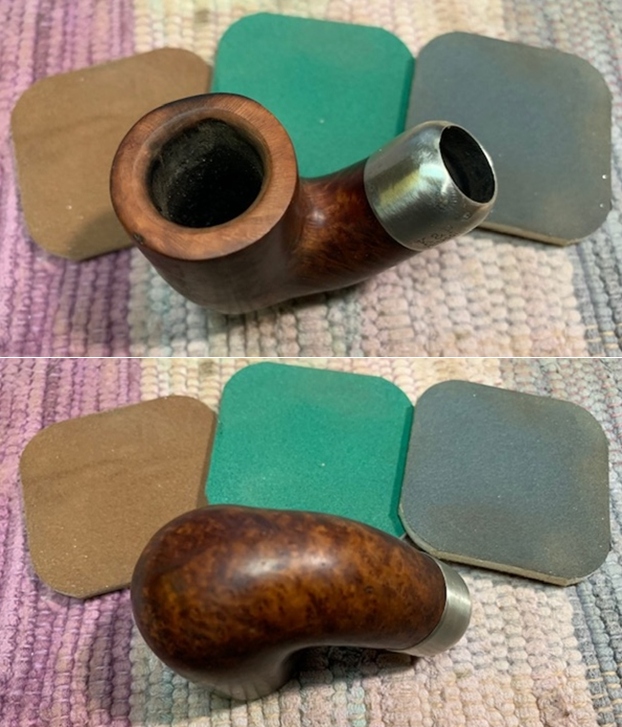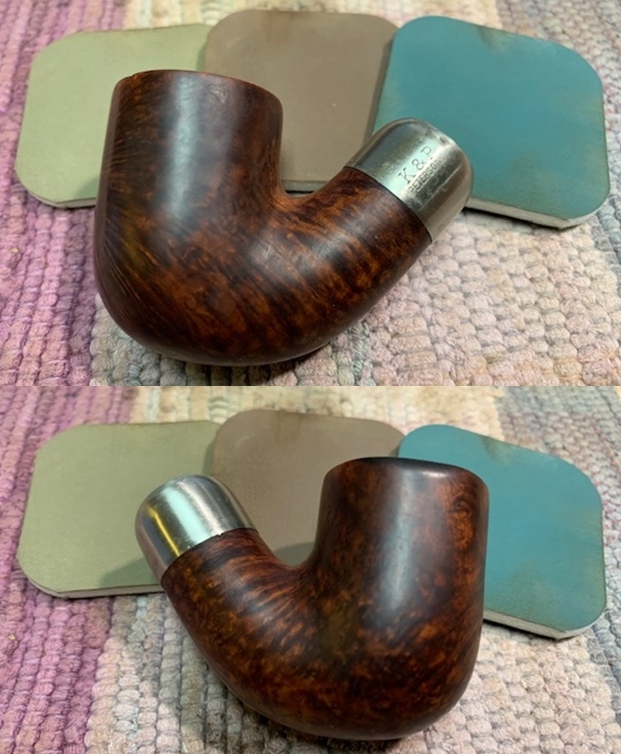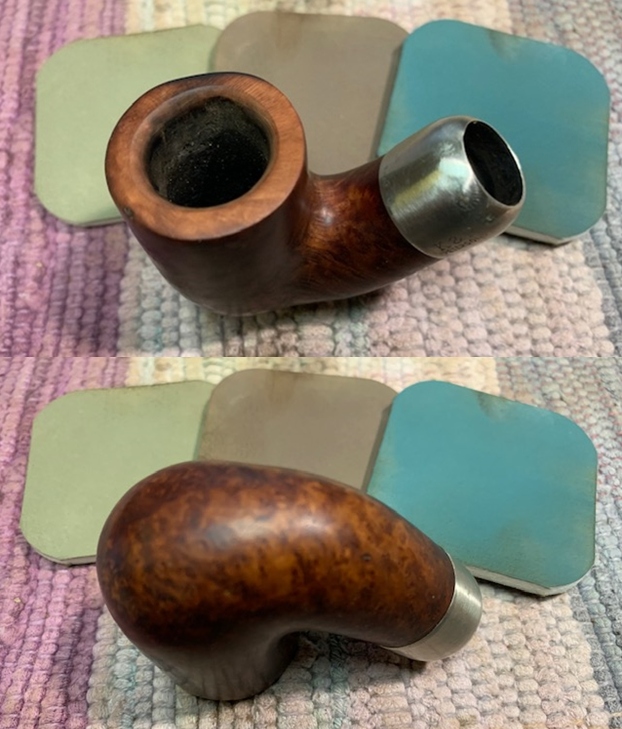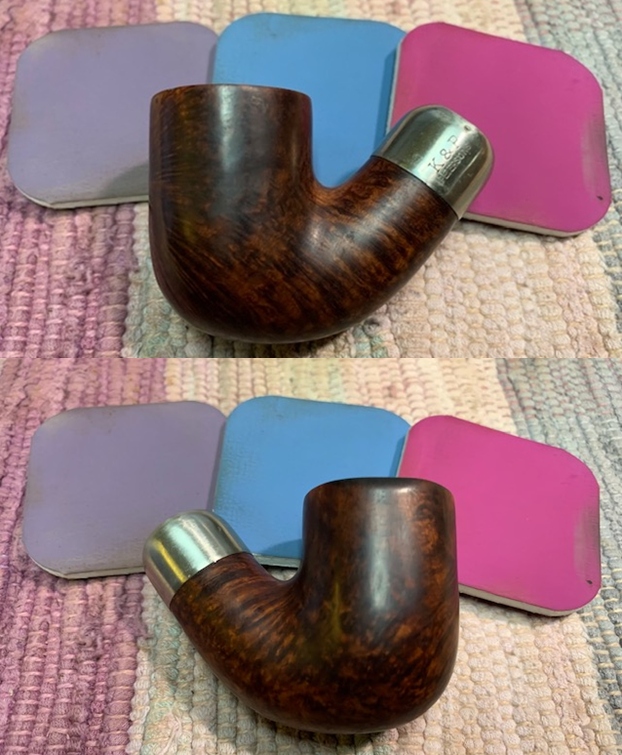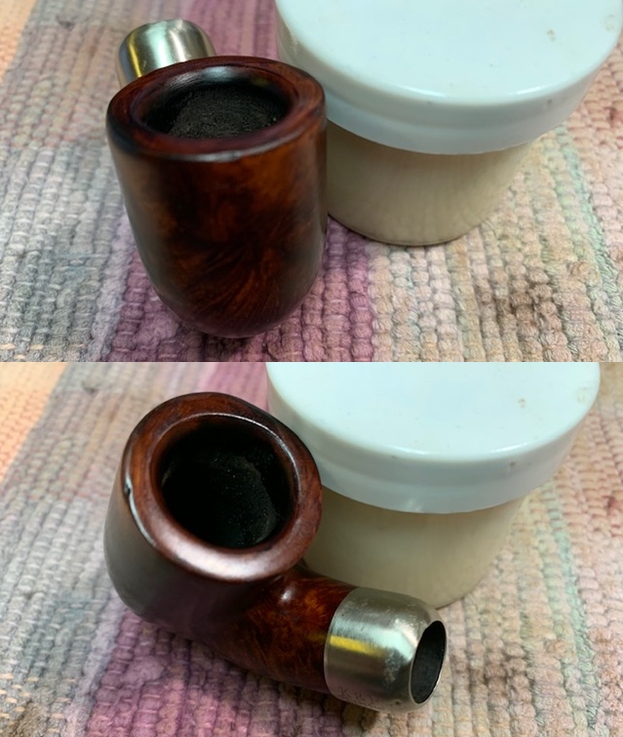
Tag Archives: bowl topping

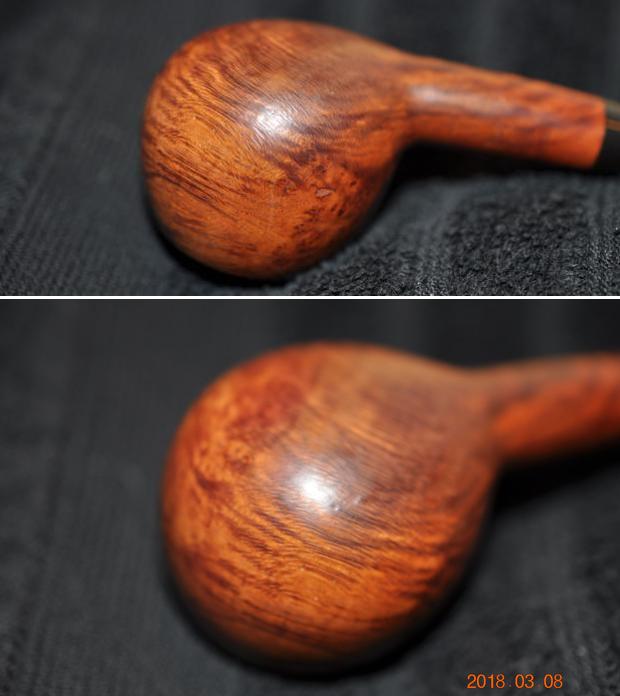
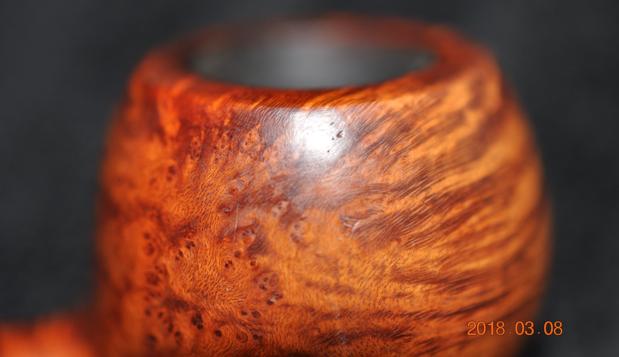
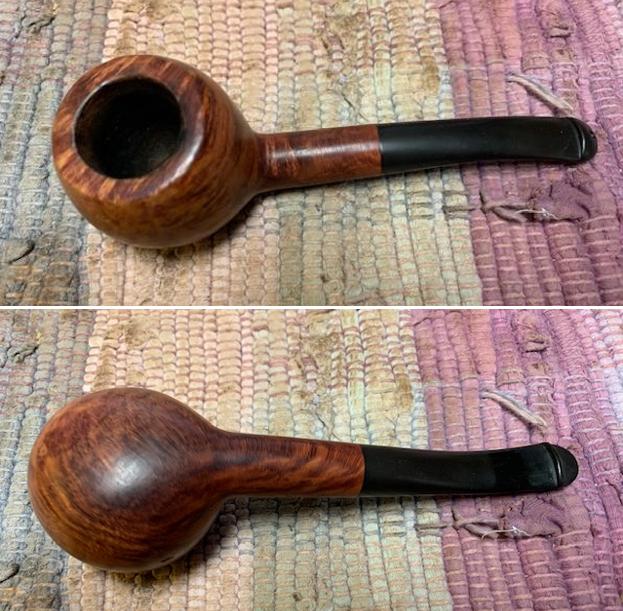
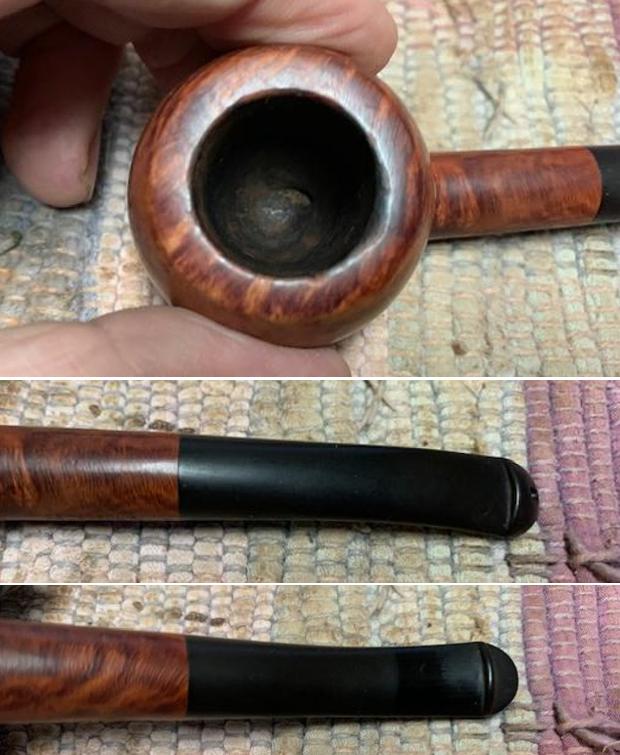
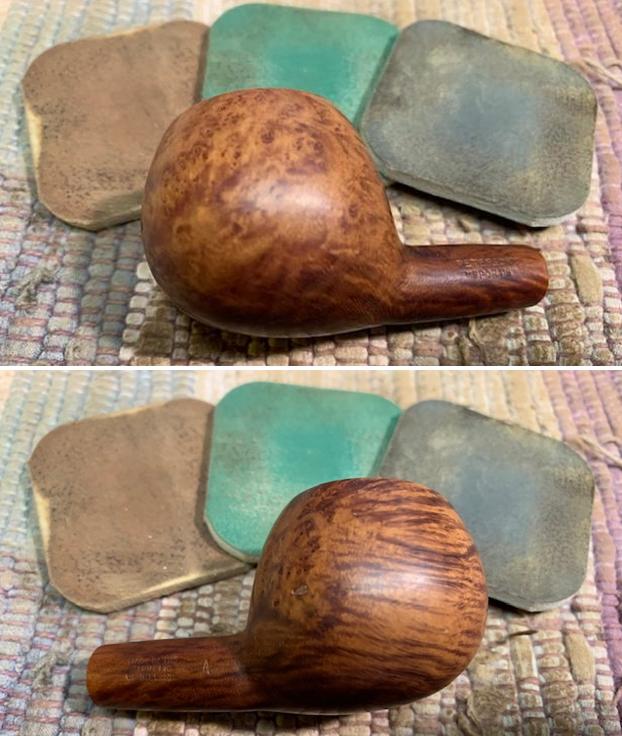
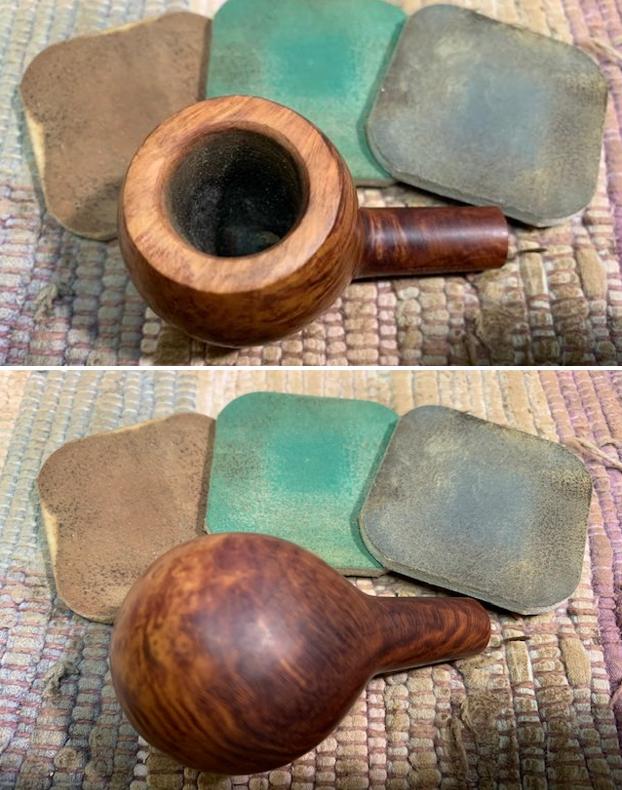
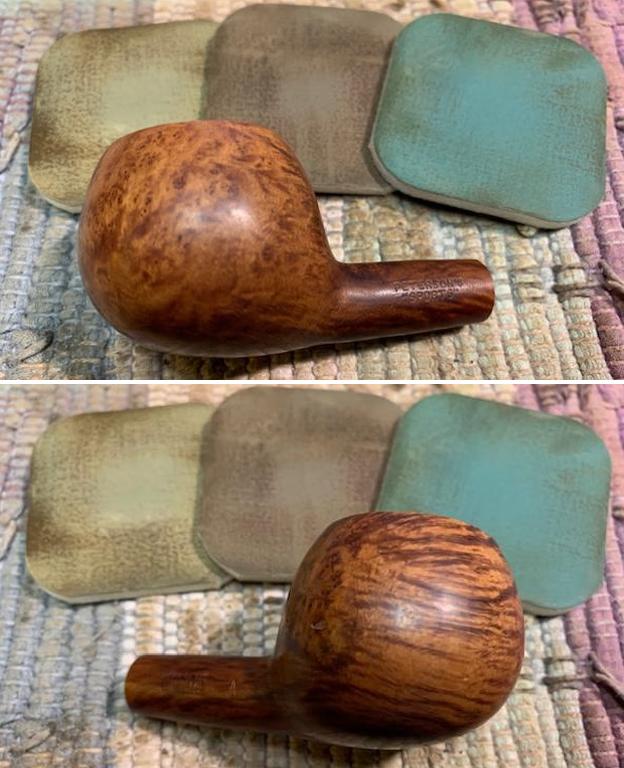
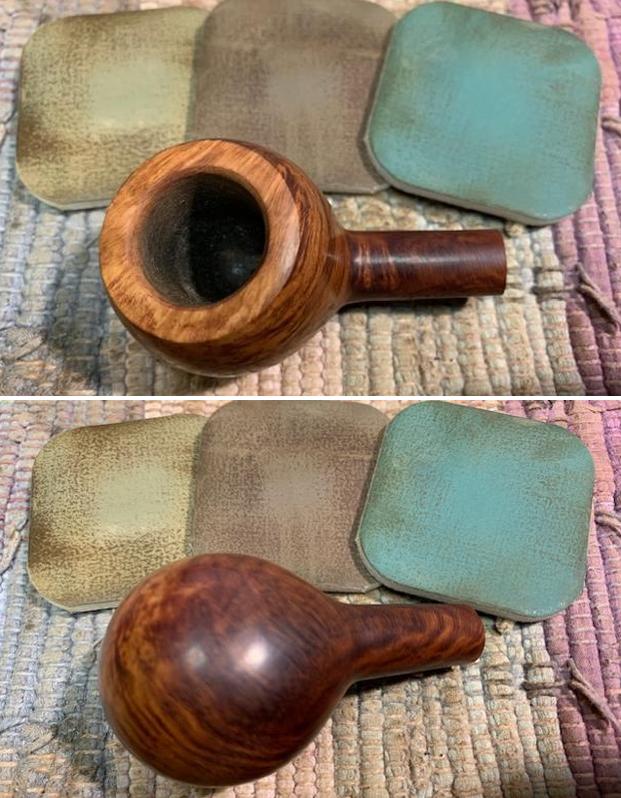
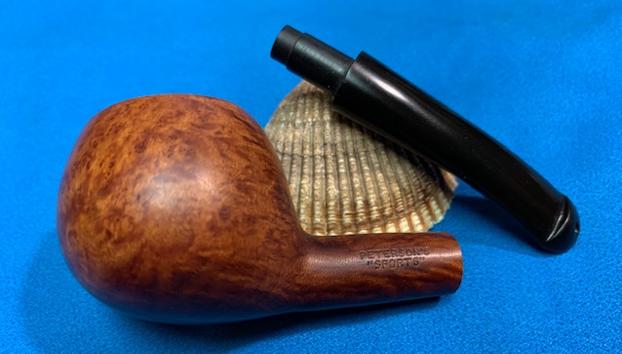
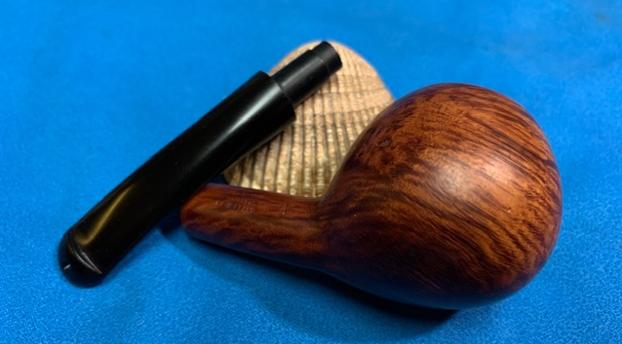
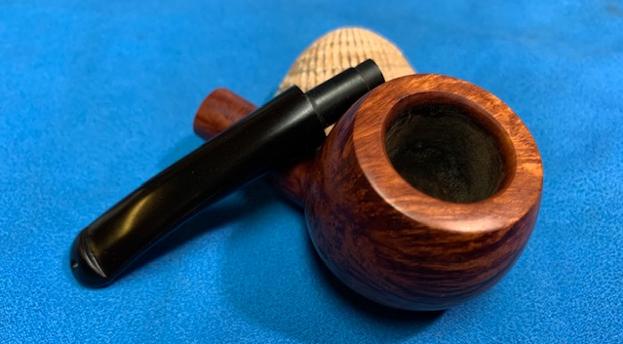
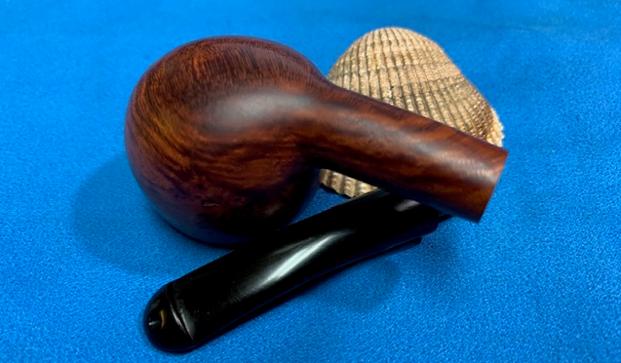
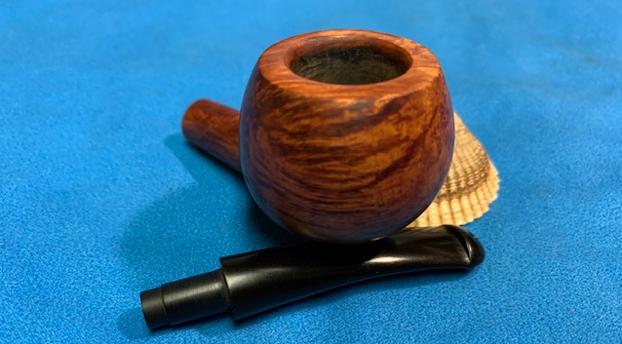
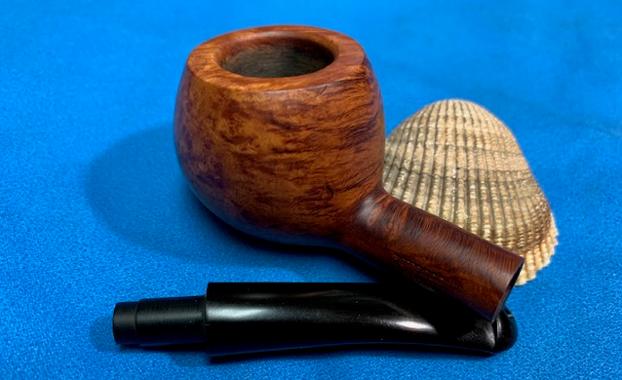
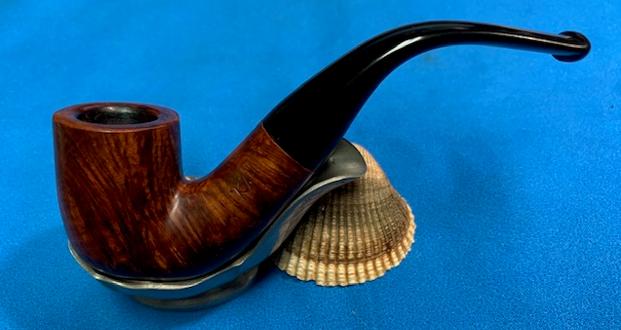
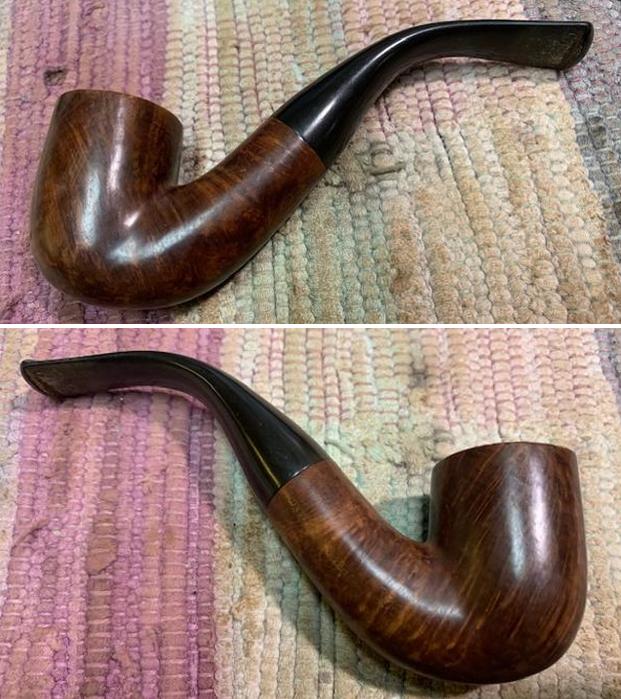
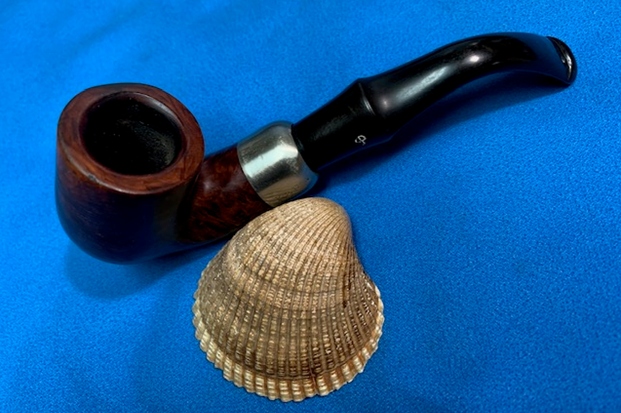
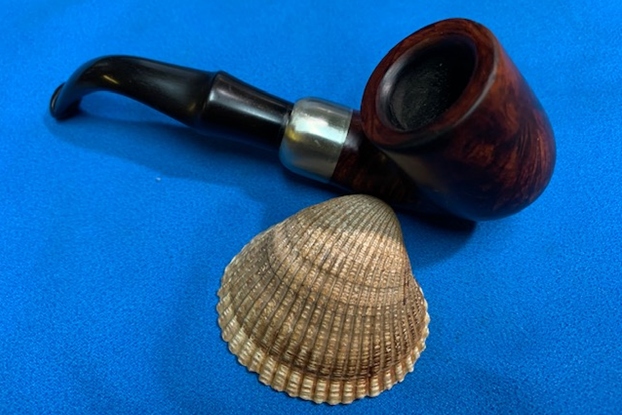
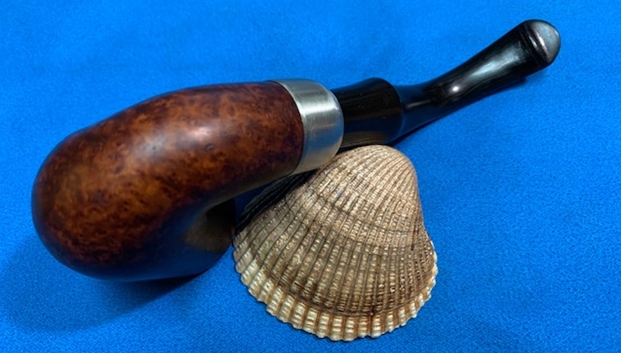
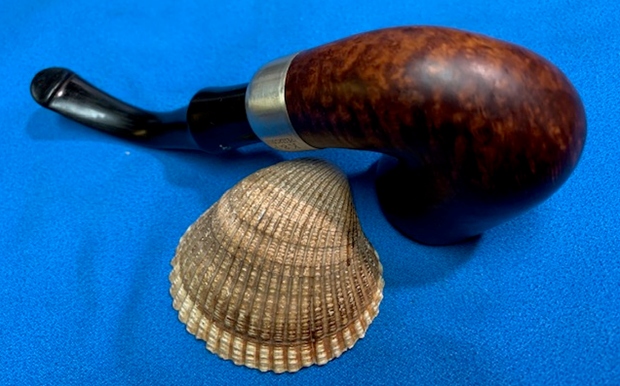
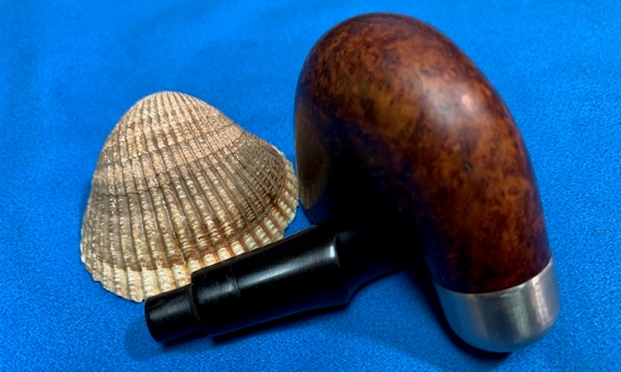
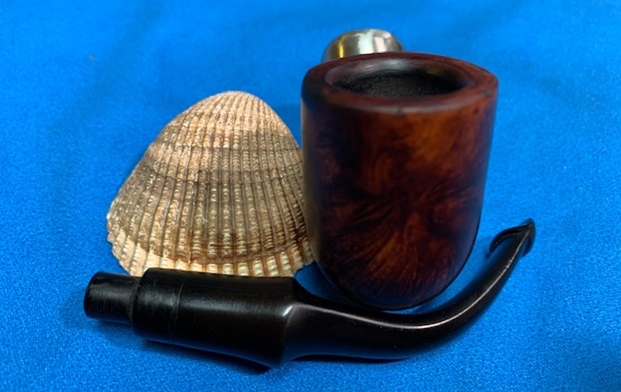
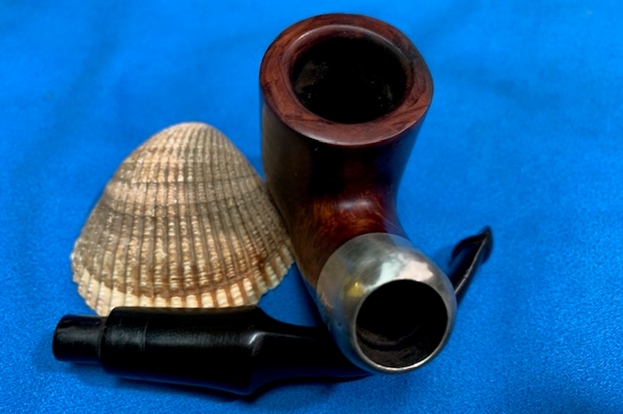
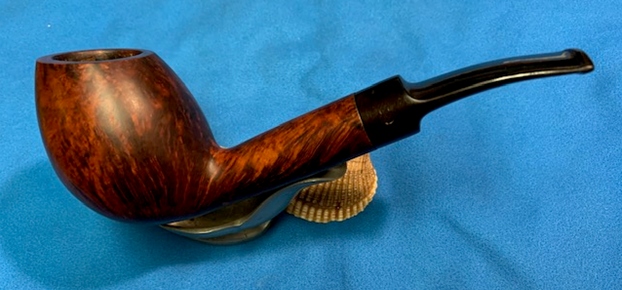
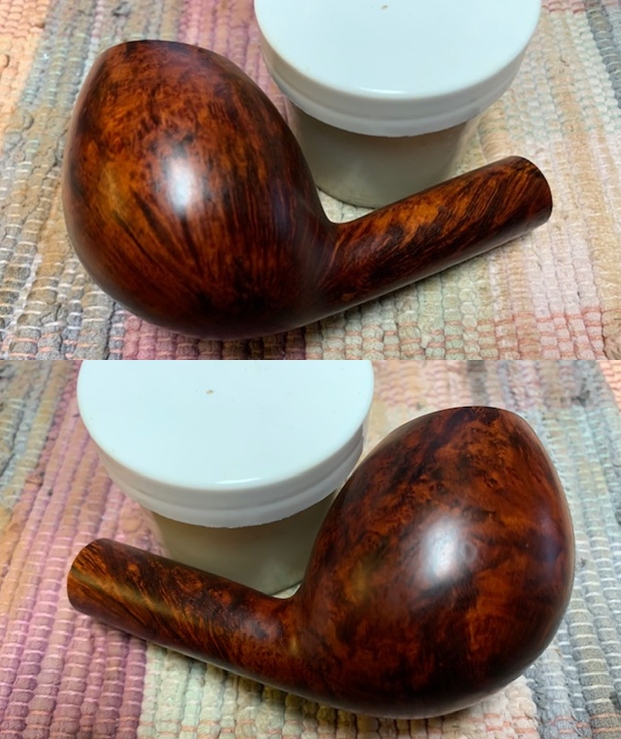
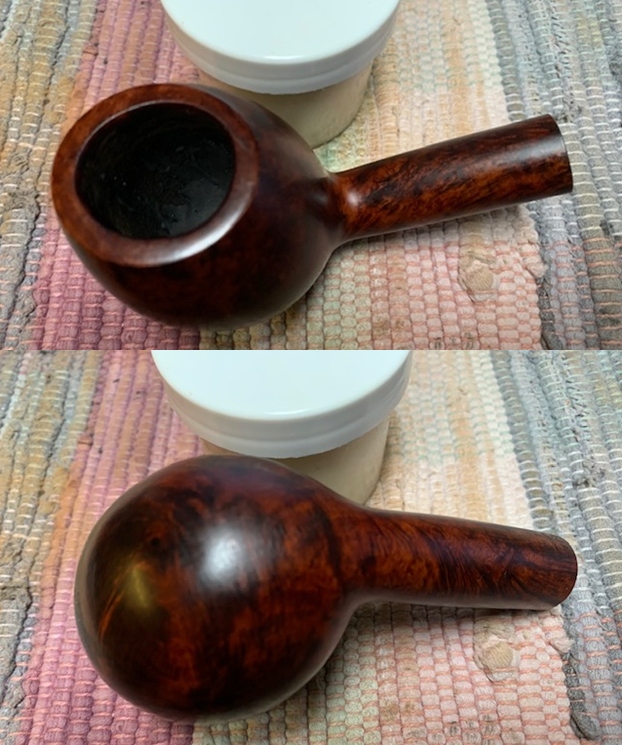
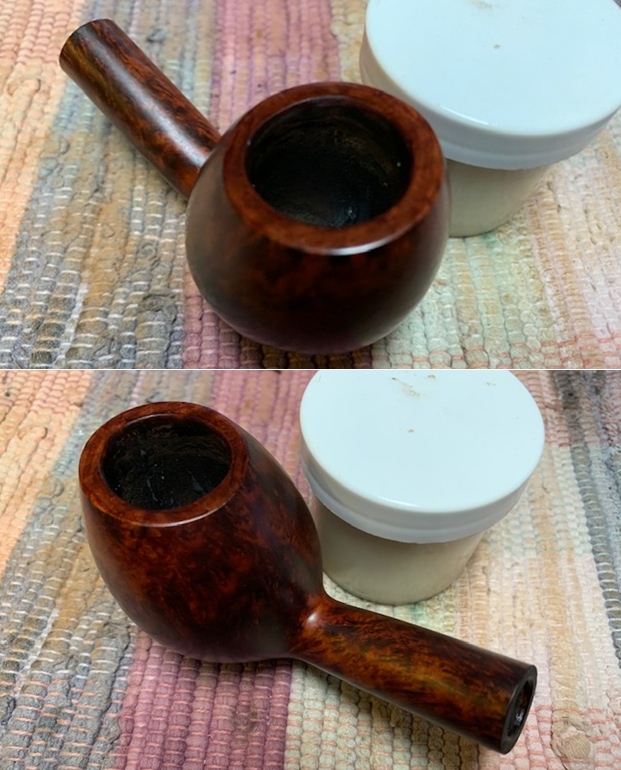
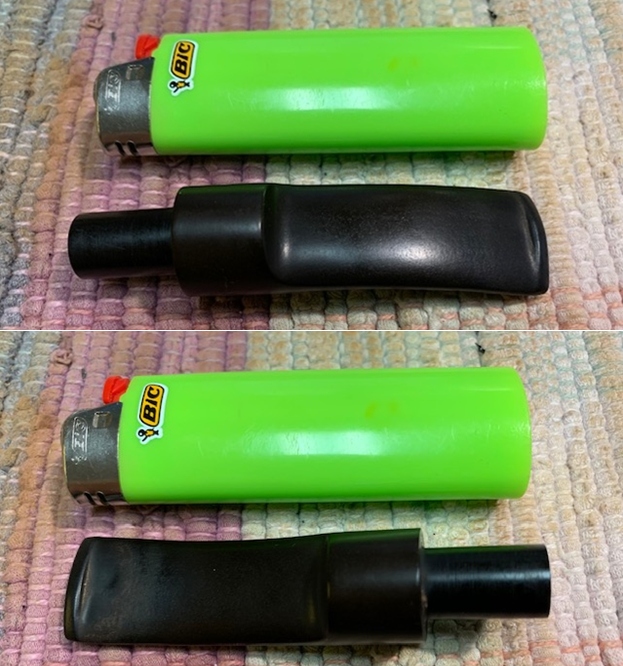
Breathing New Life into a Bjarne Hand-Carved Canted Egg


Blog by Steve Laug

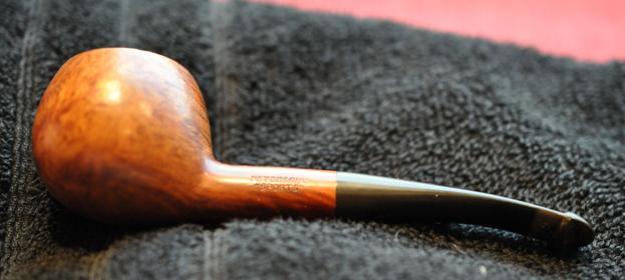
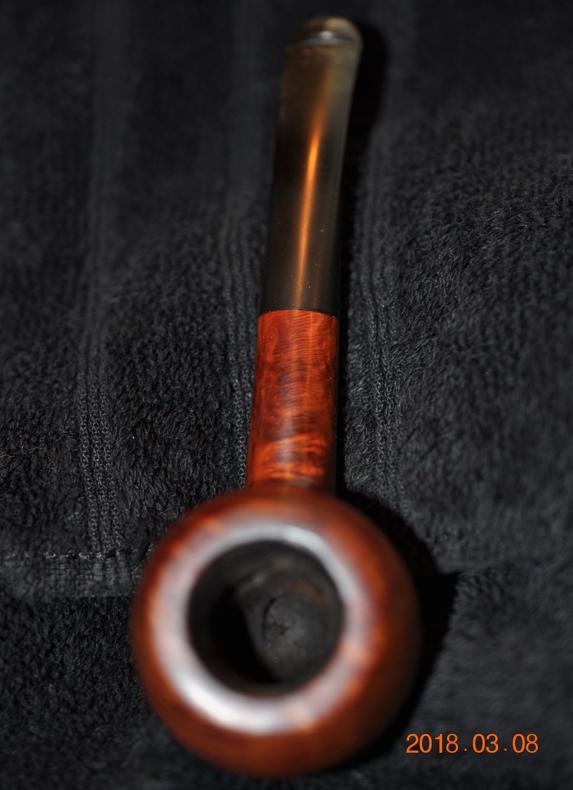
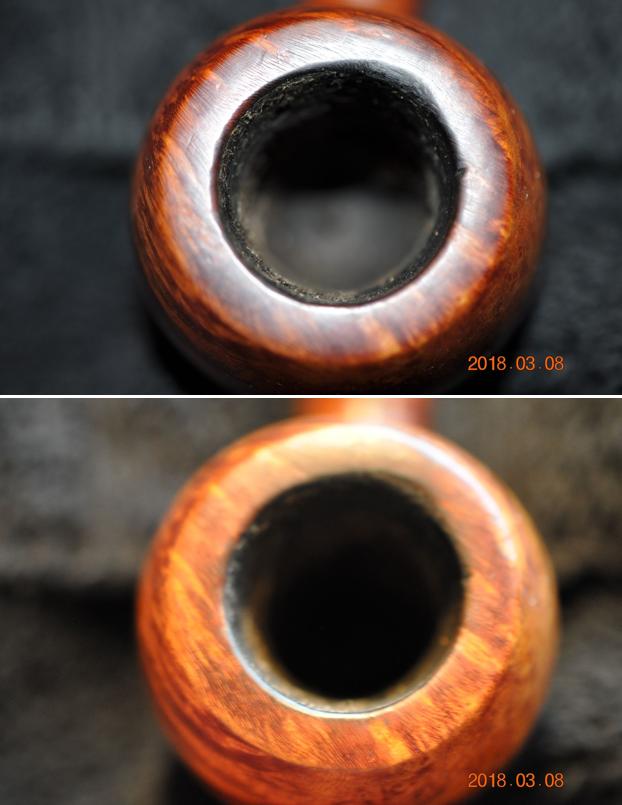
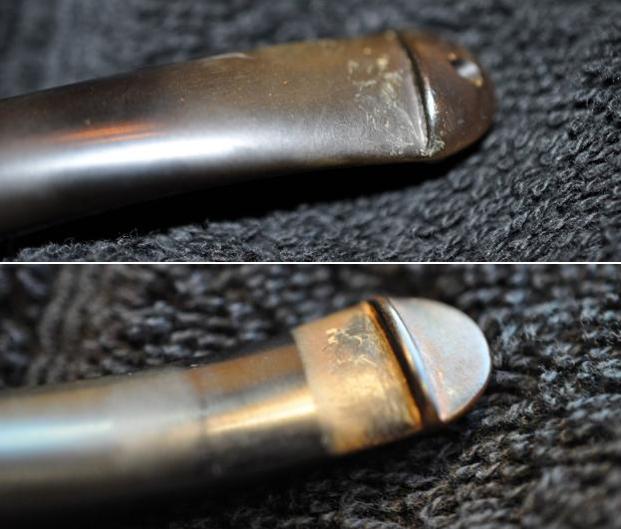
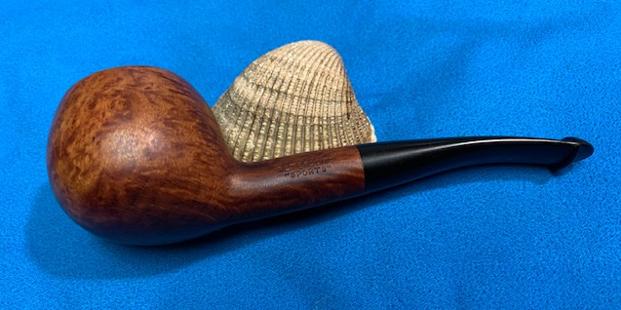
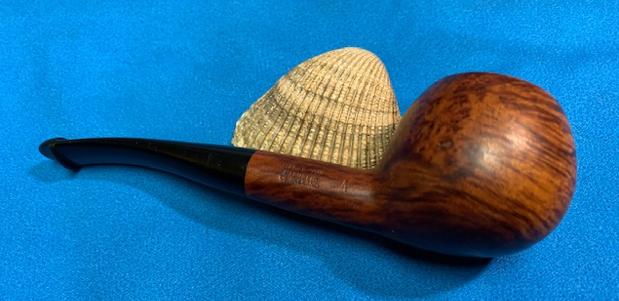
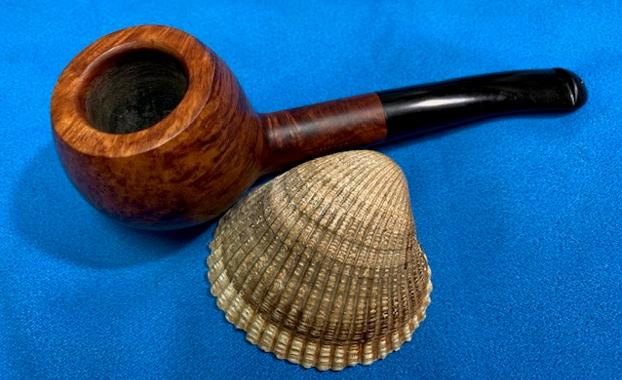
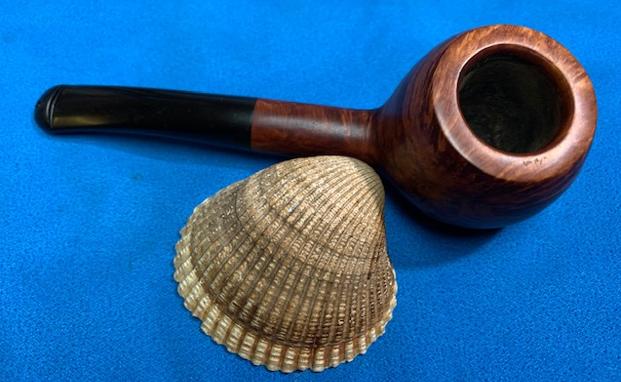
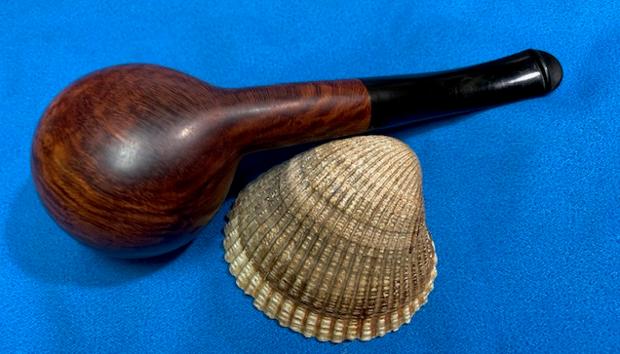
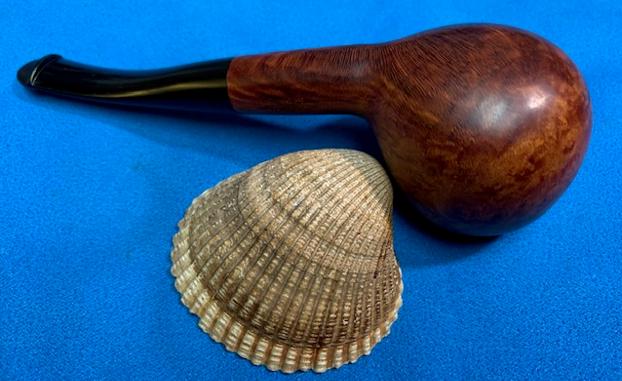
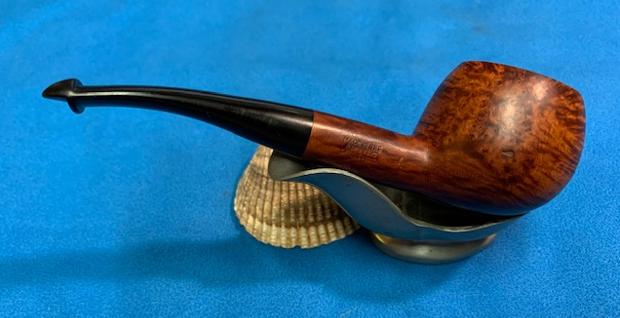
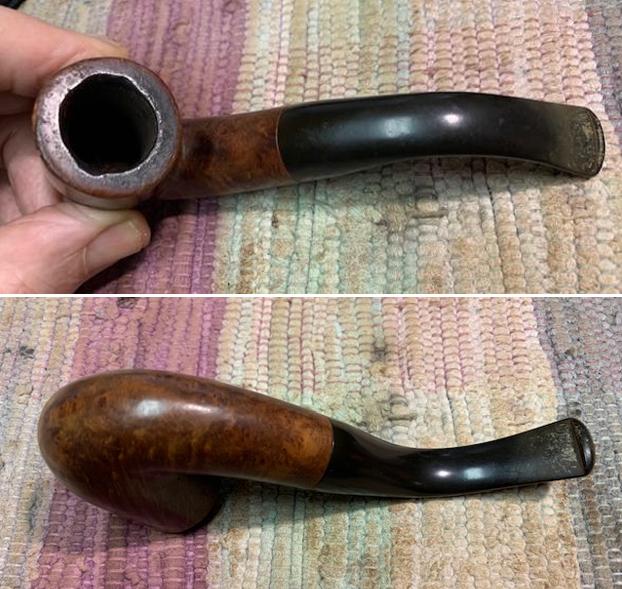
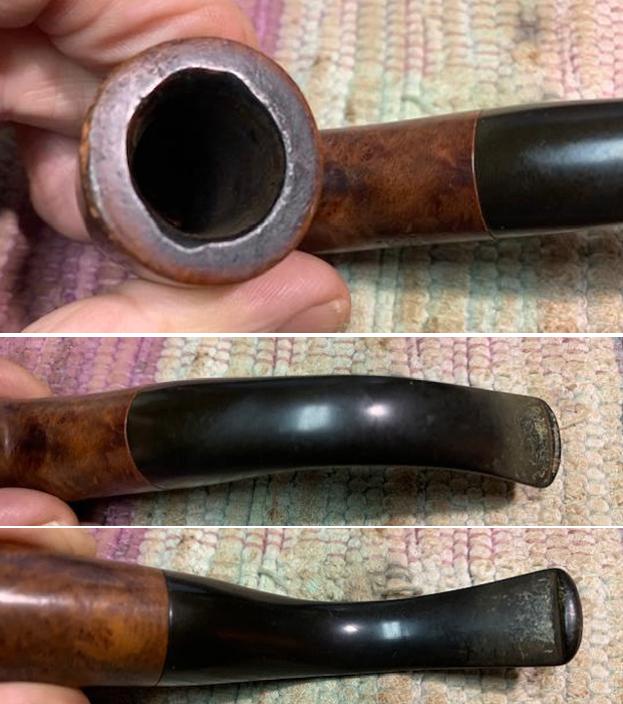
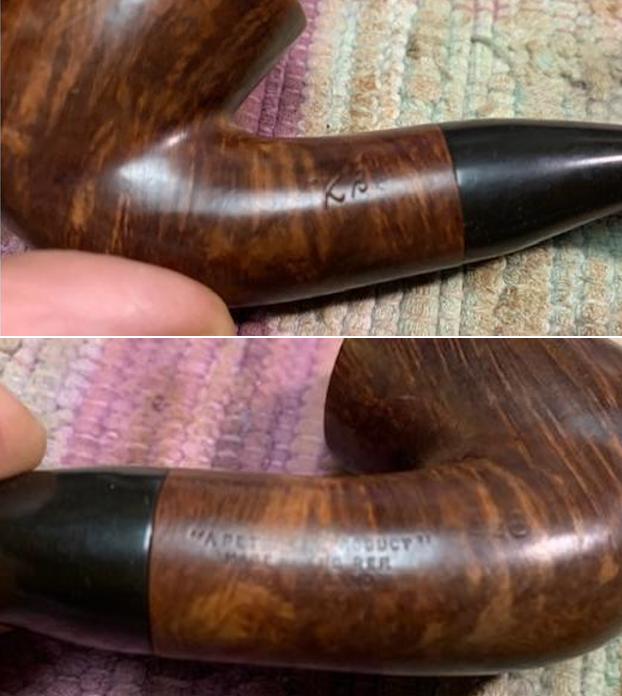
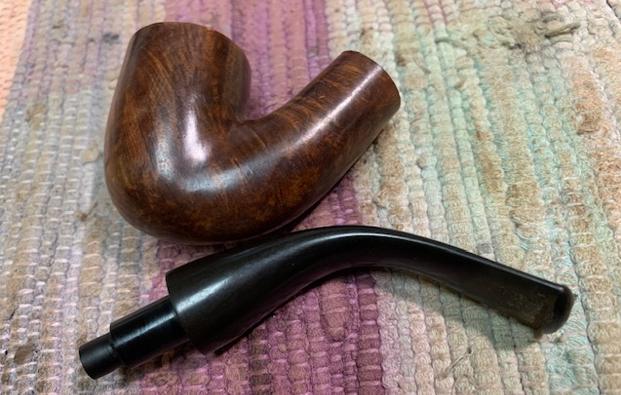
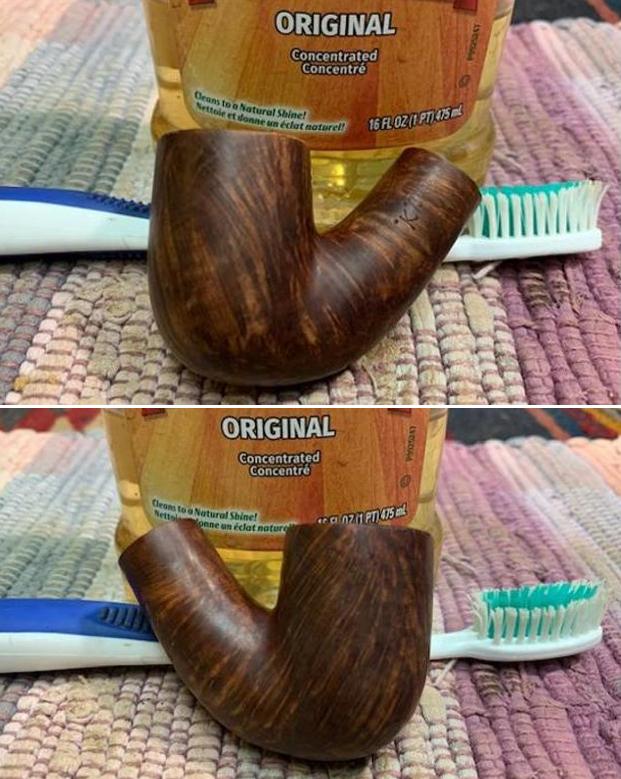
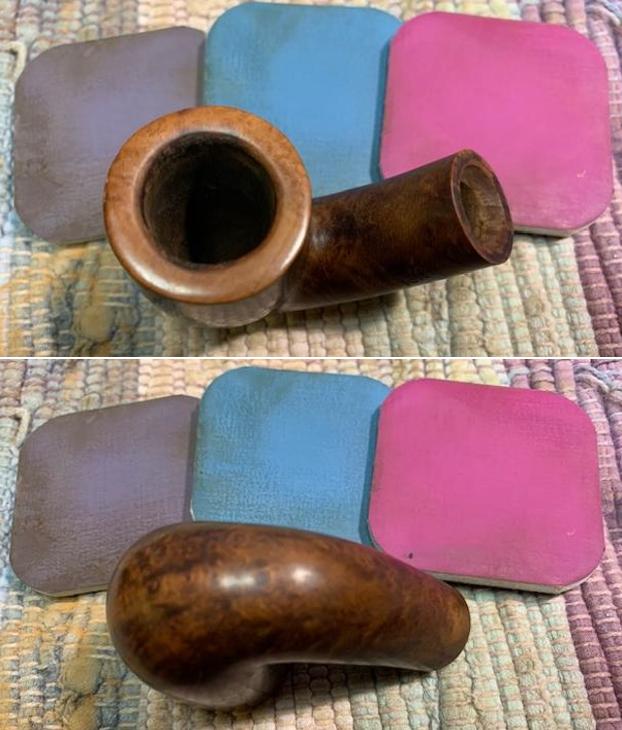
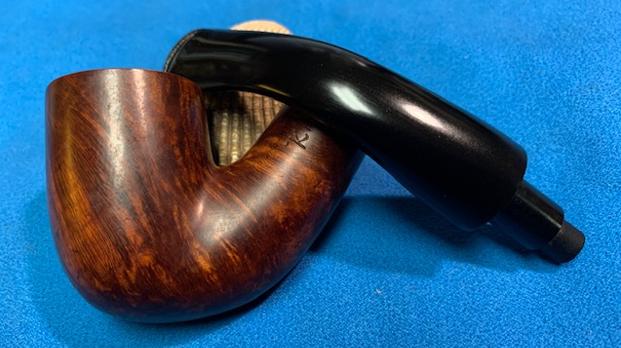
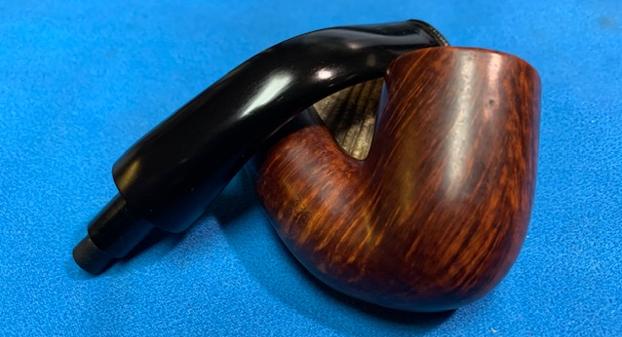
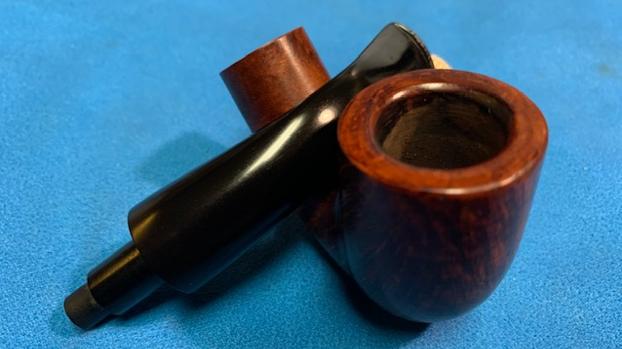
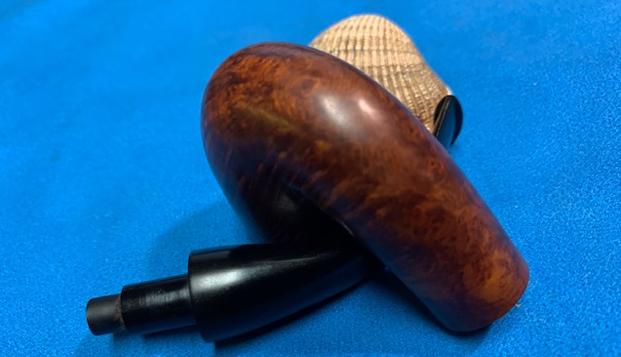
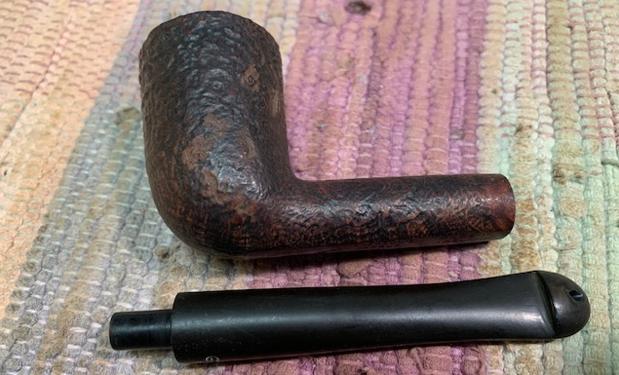
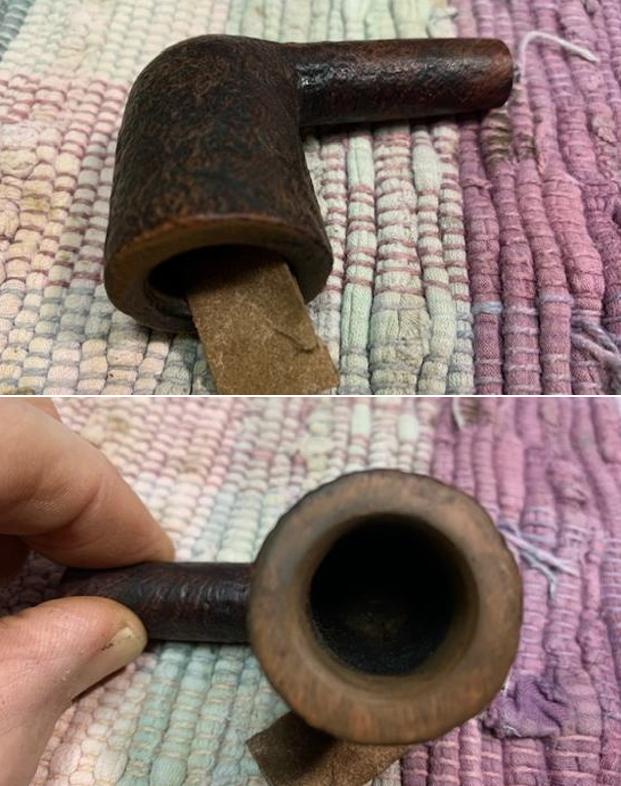
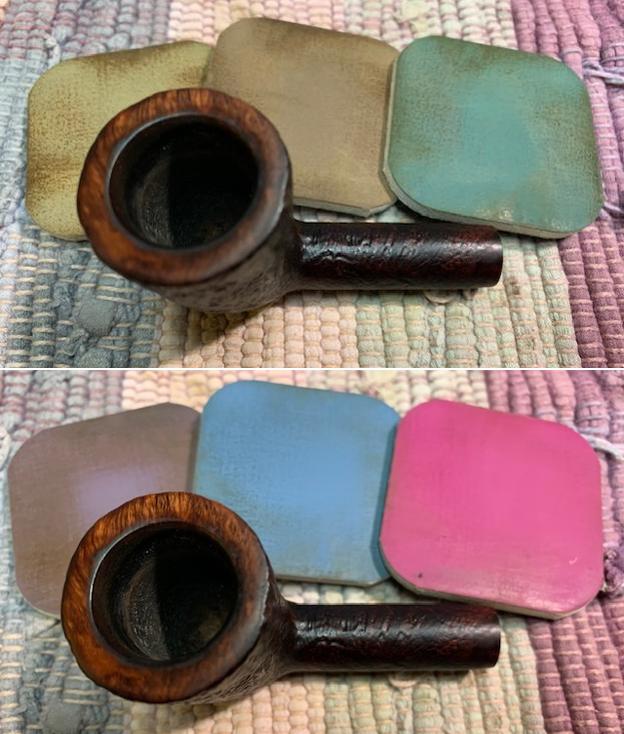
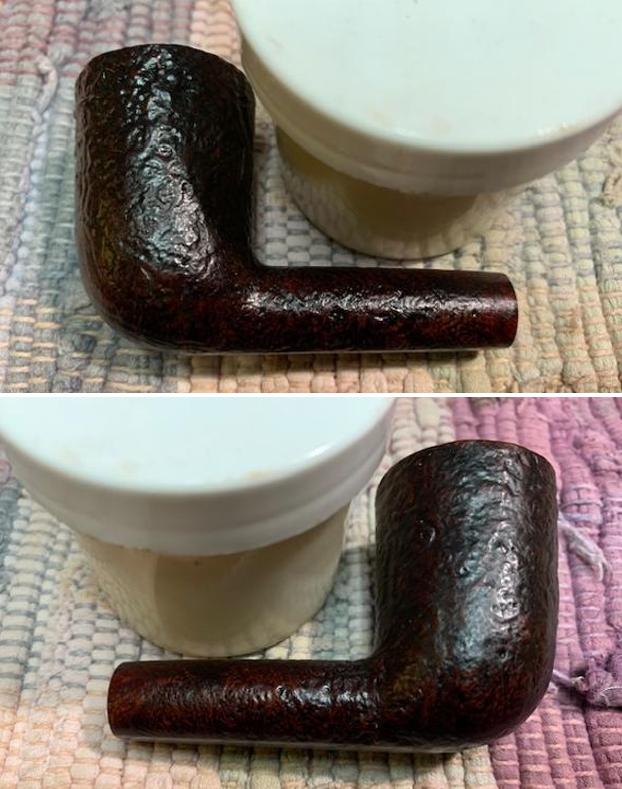
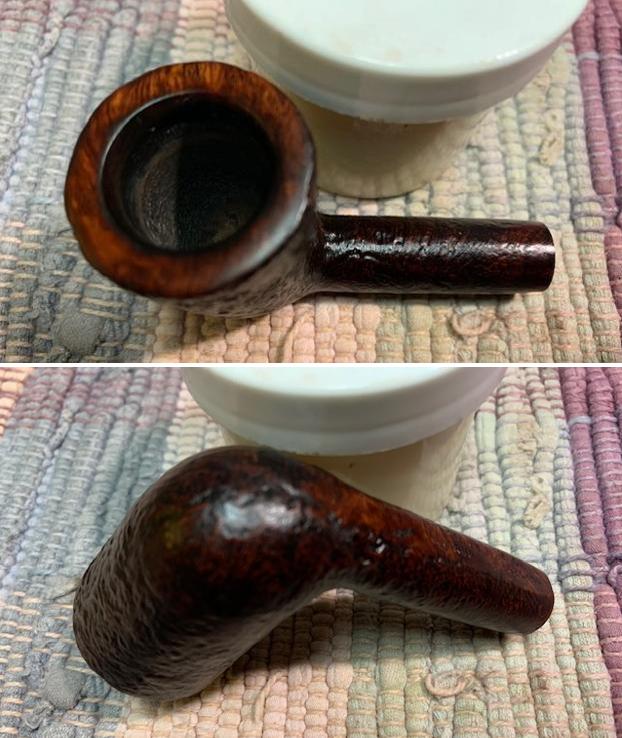
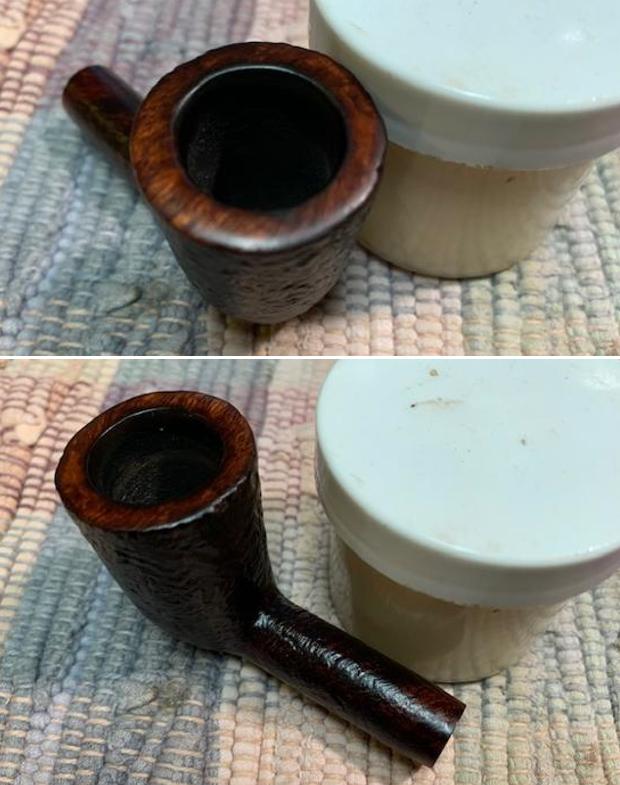
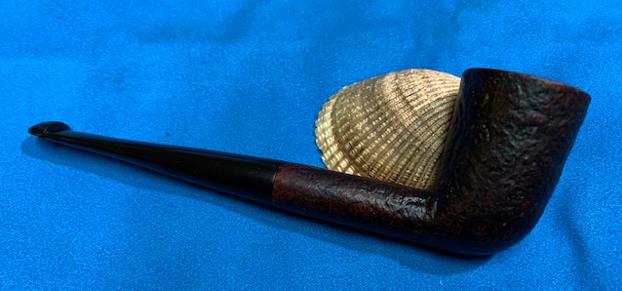
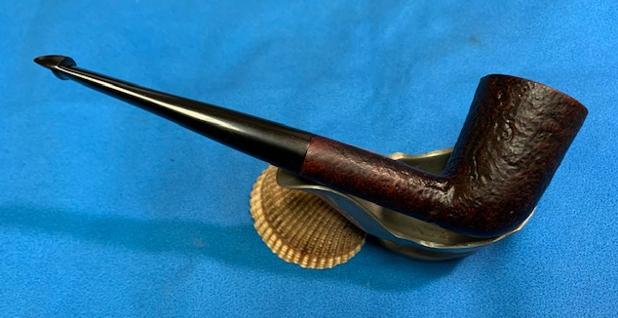
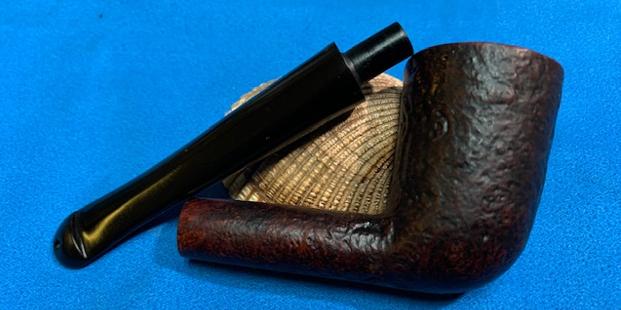
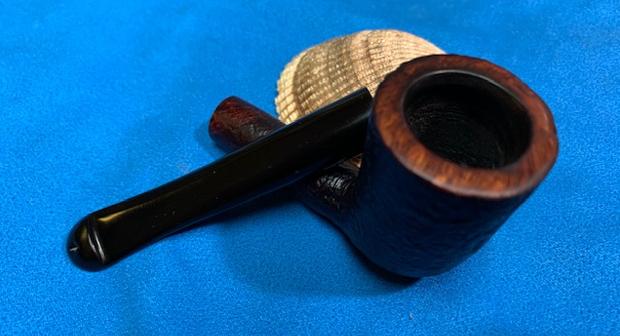
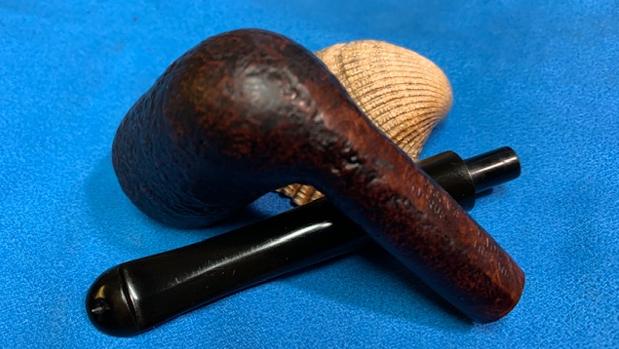
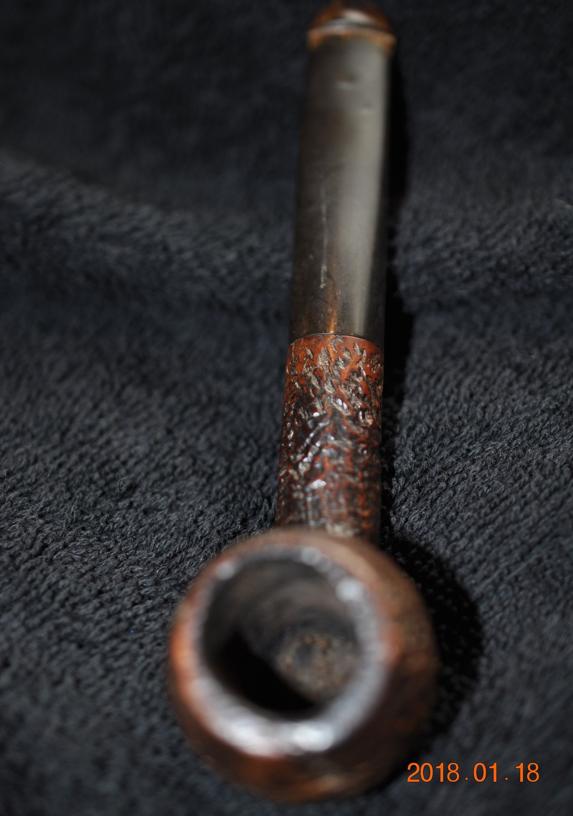
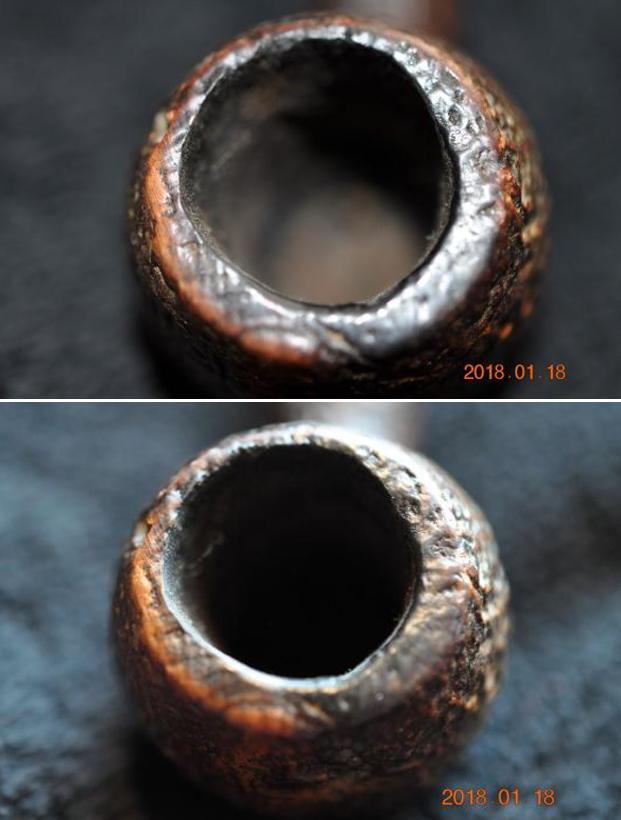
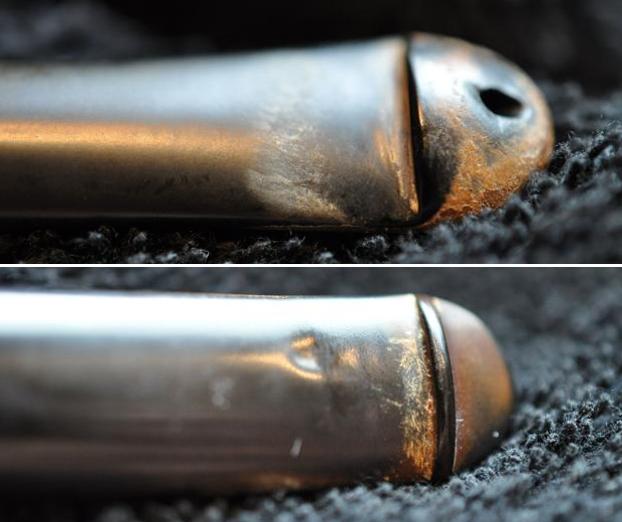
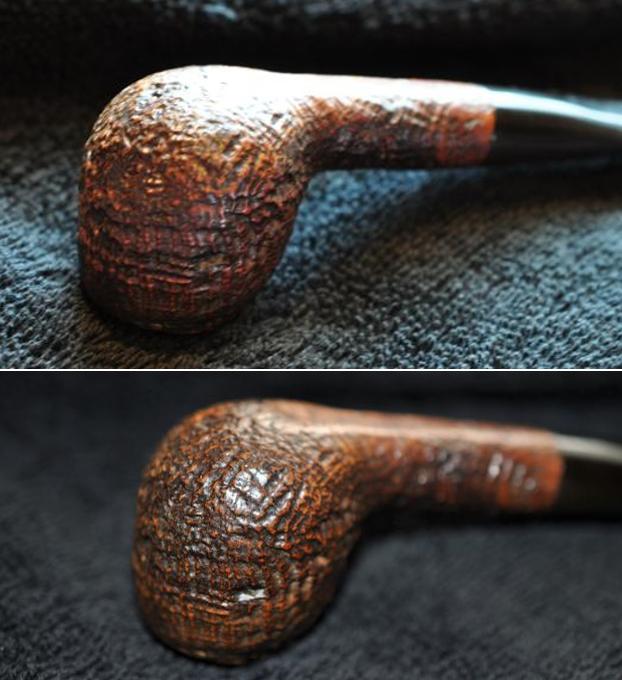
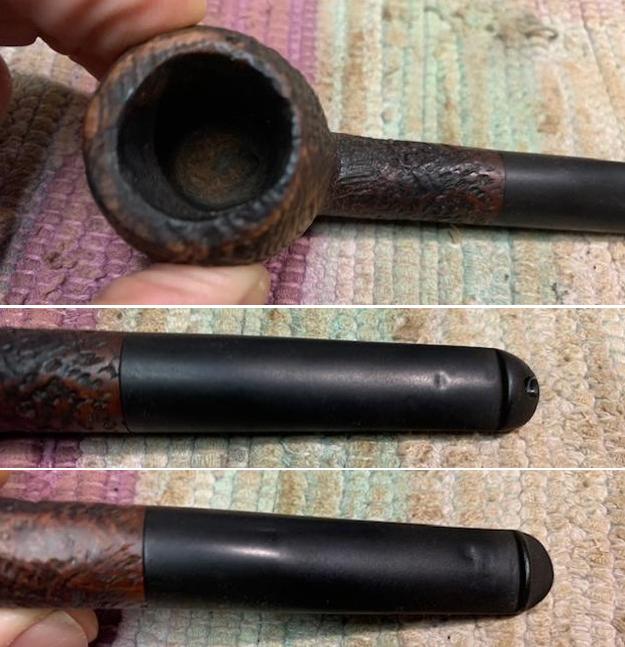
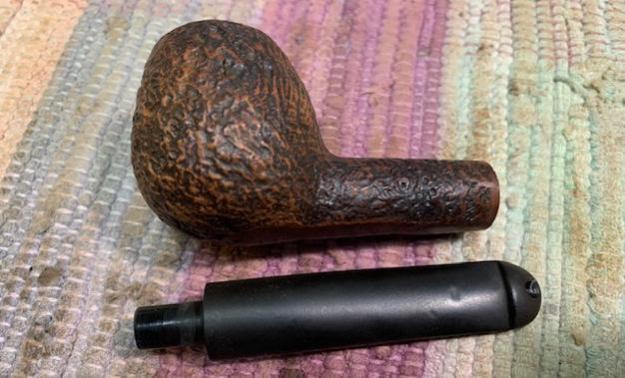
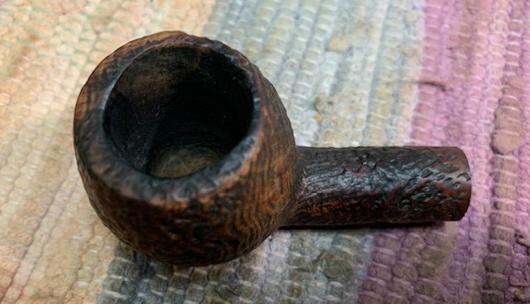
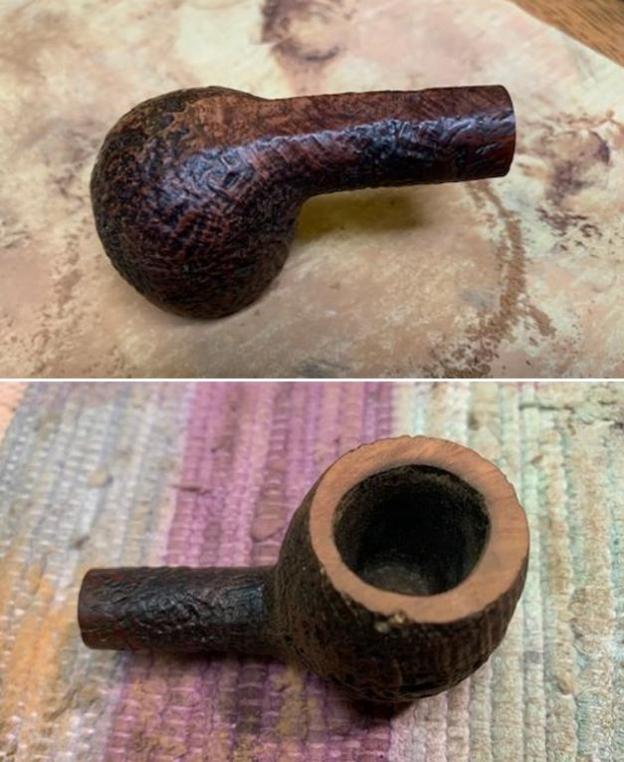
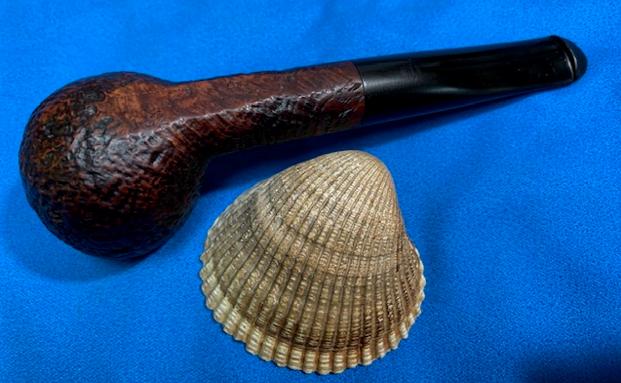
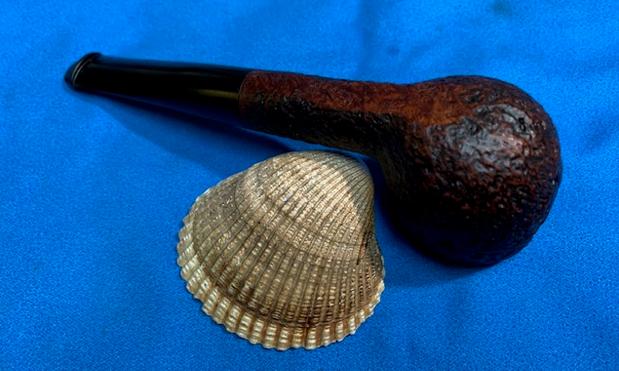
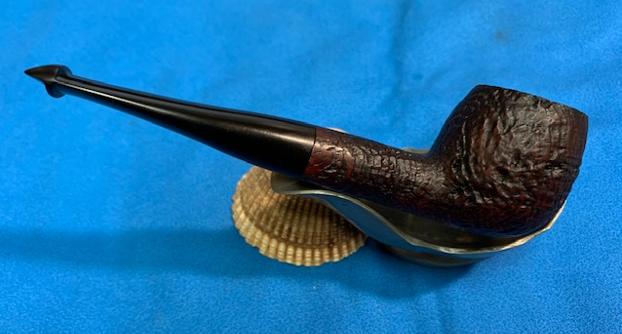
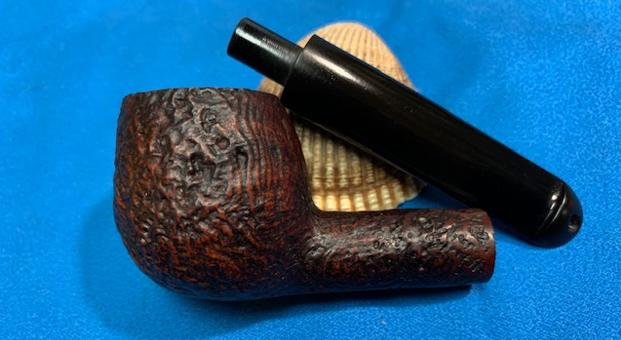
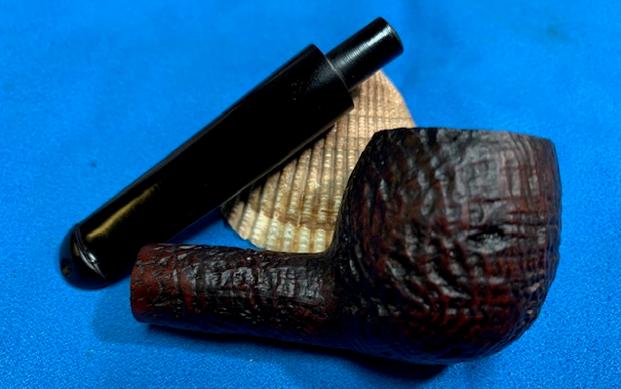
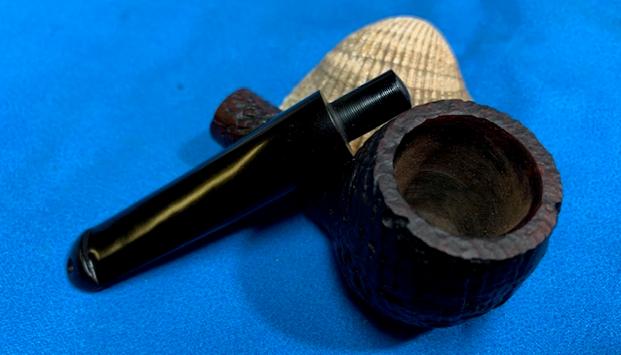
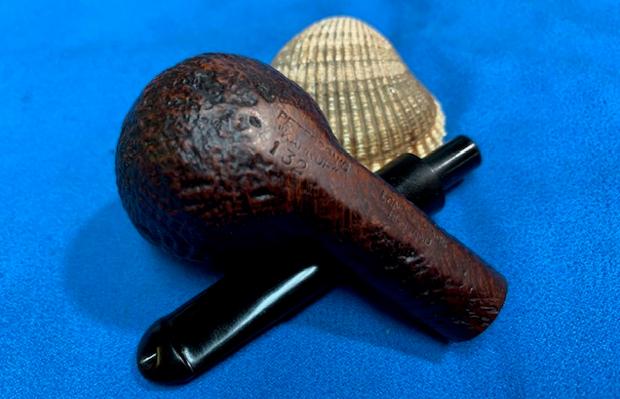
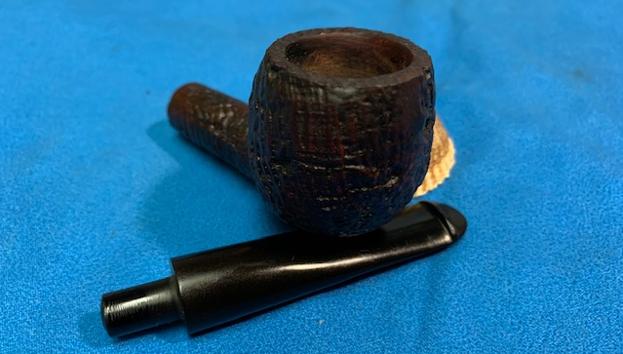
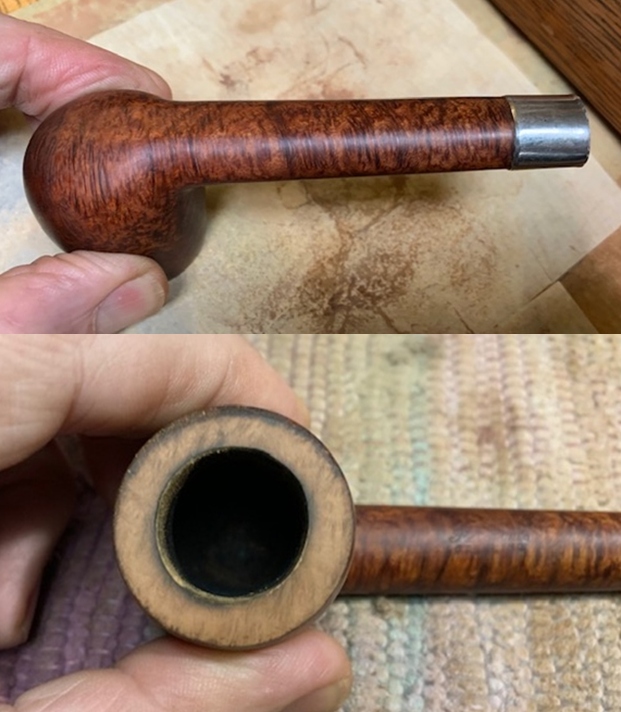
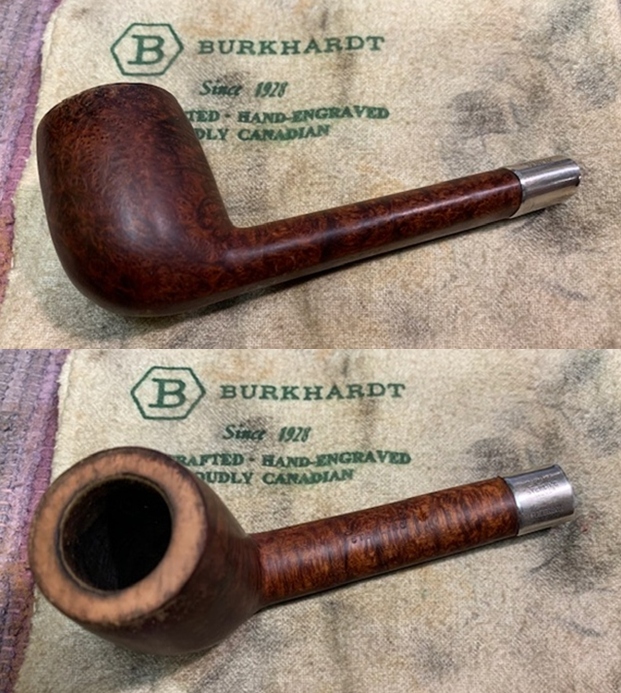
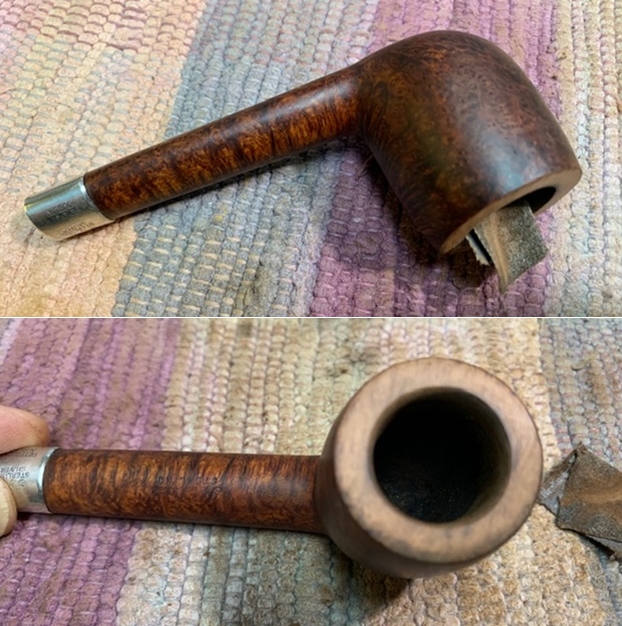
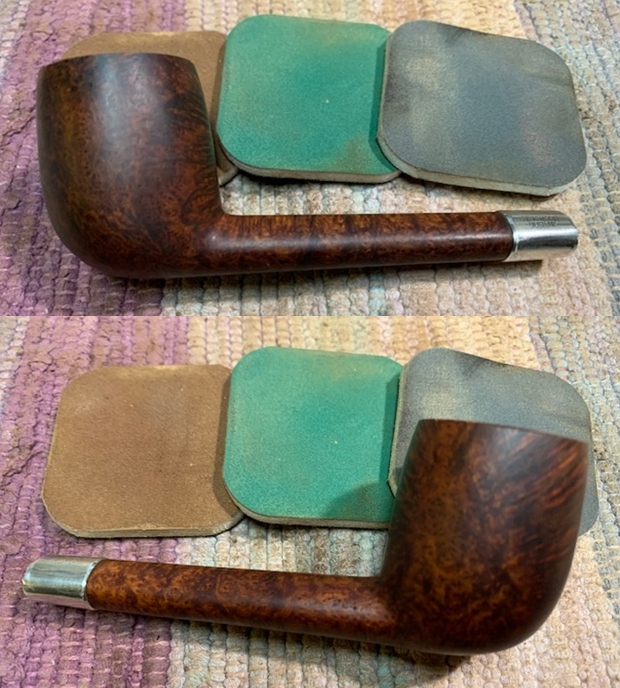
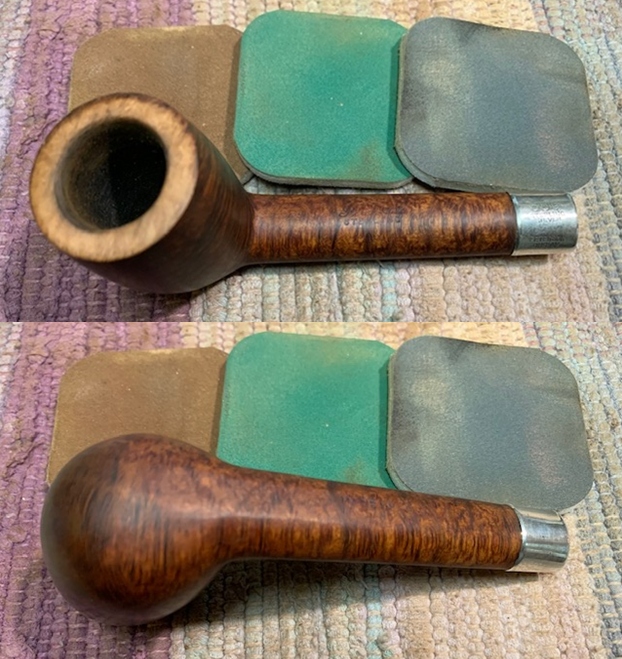
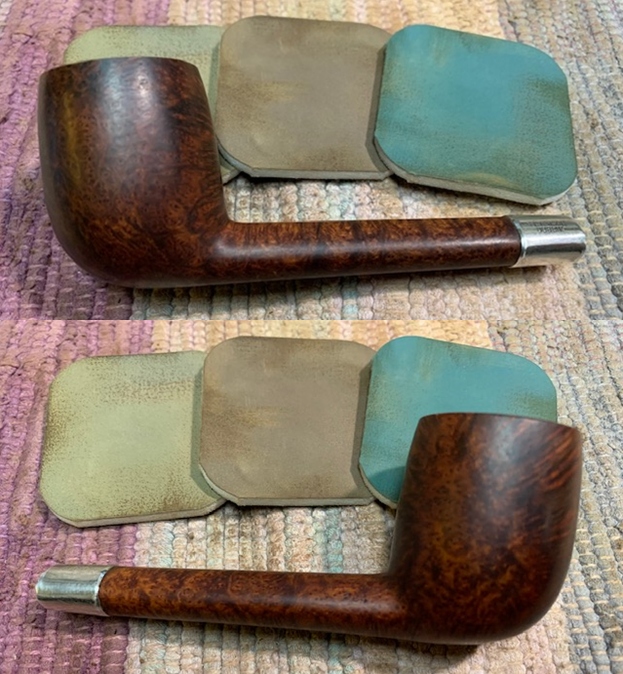
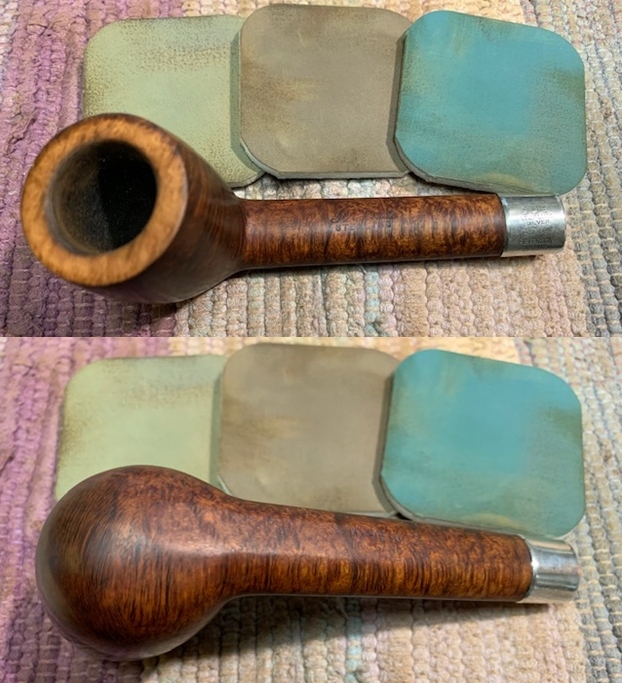
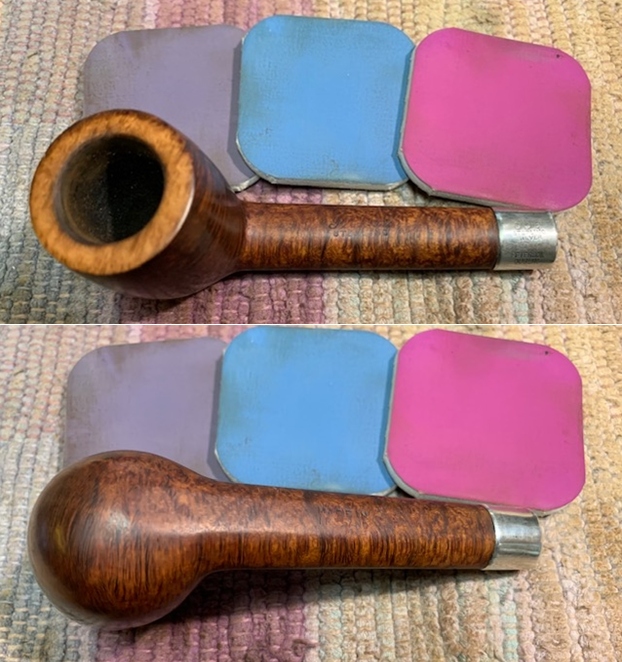
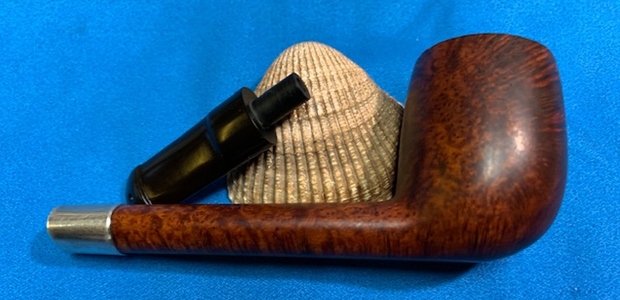
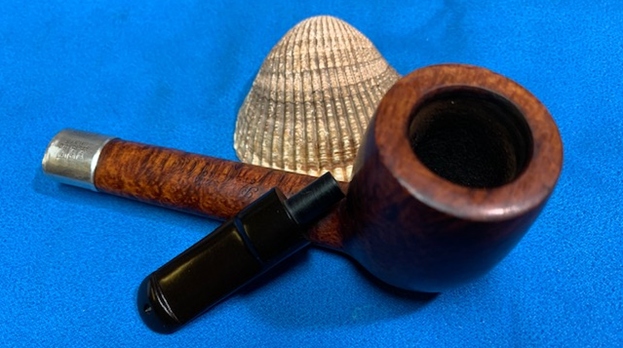
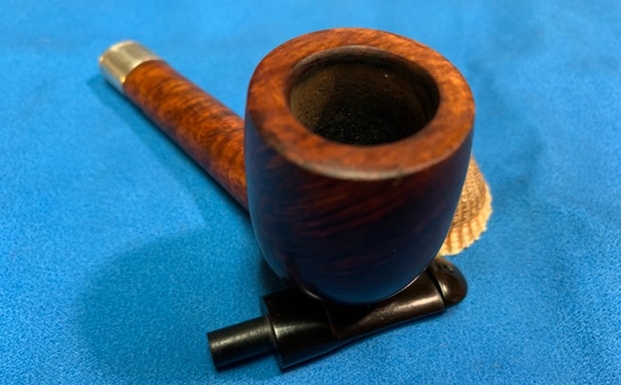
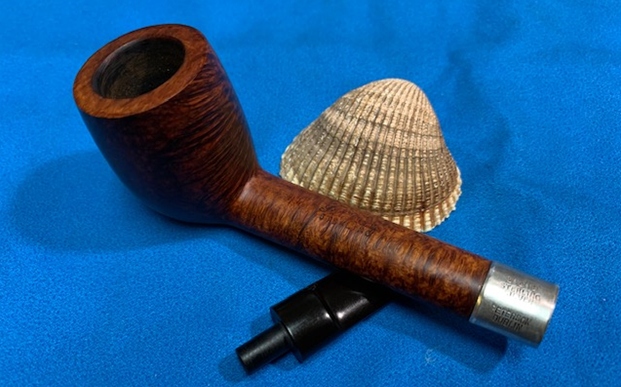
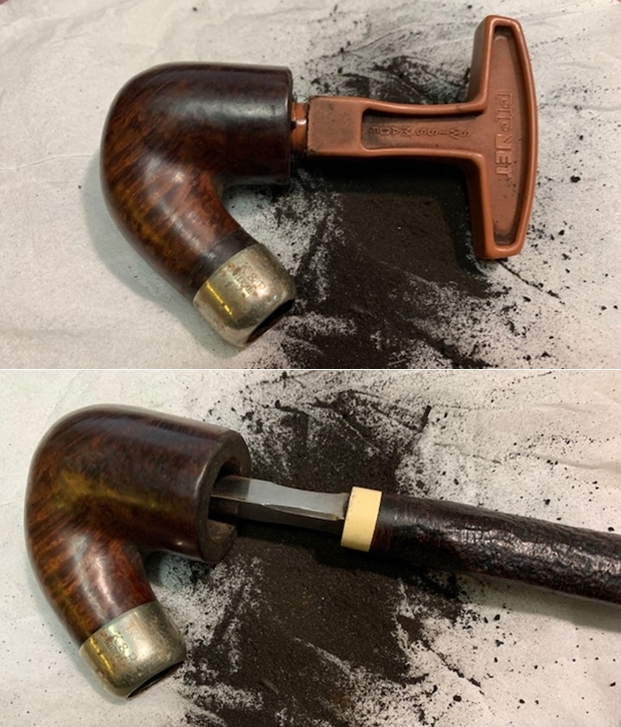
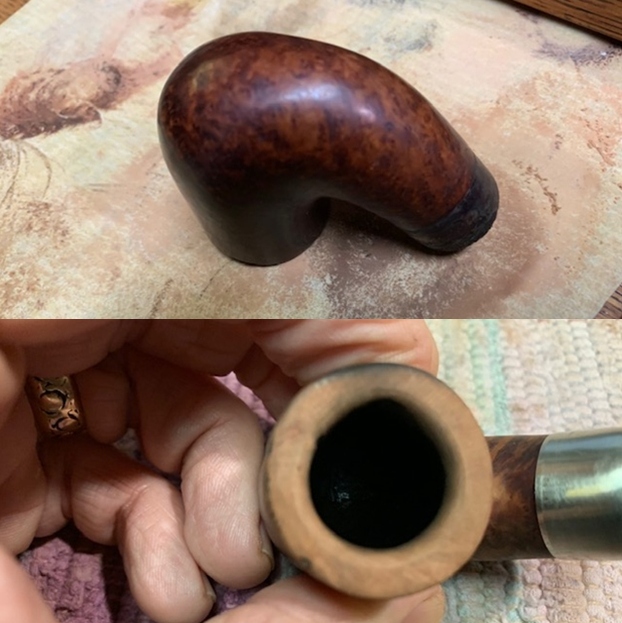
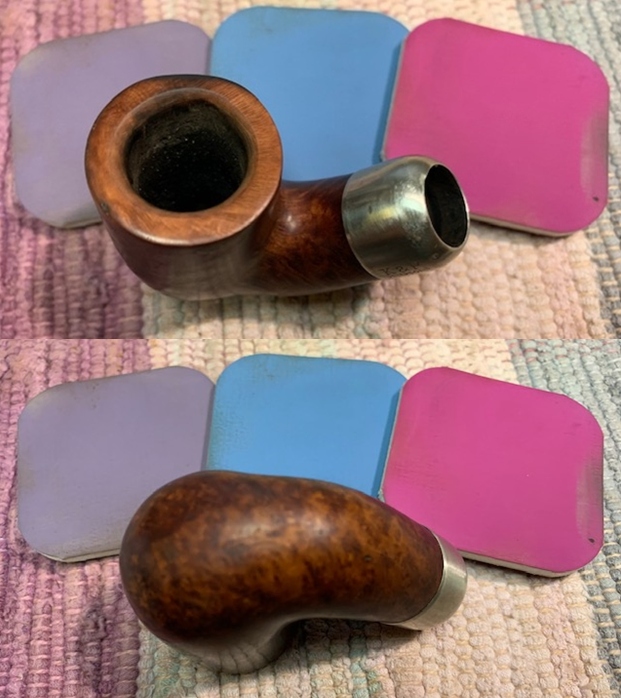
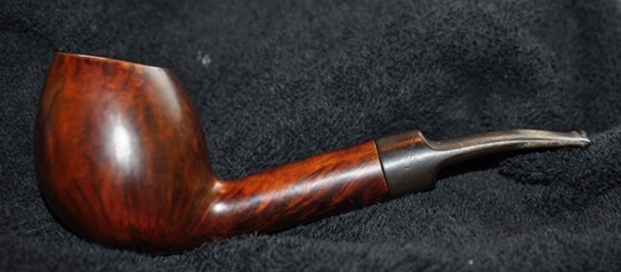
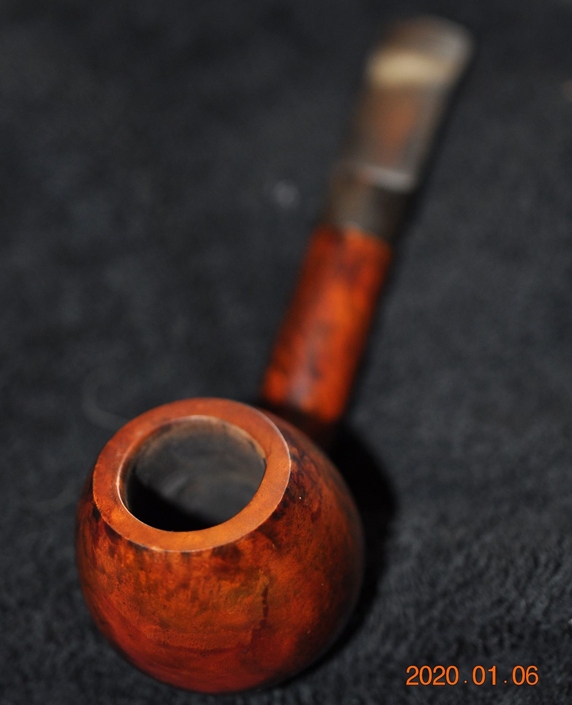
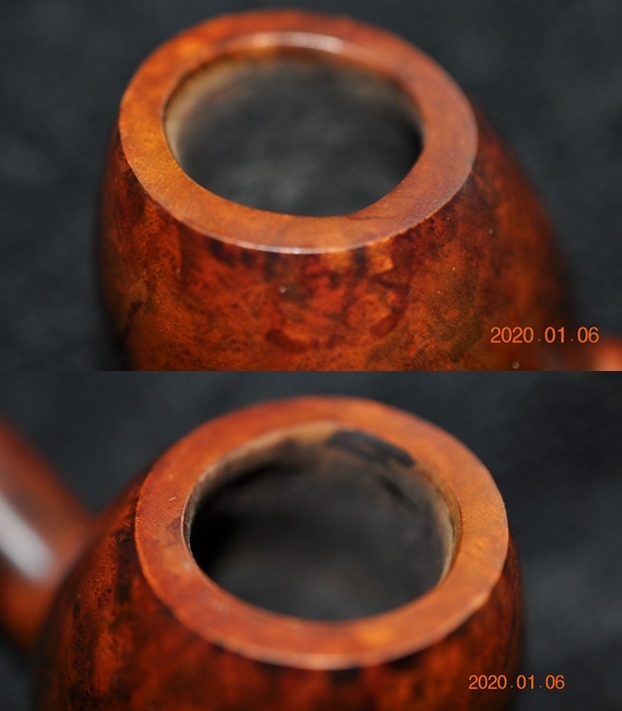
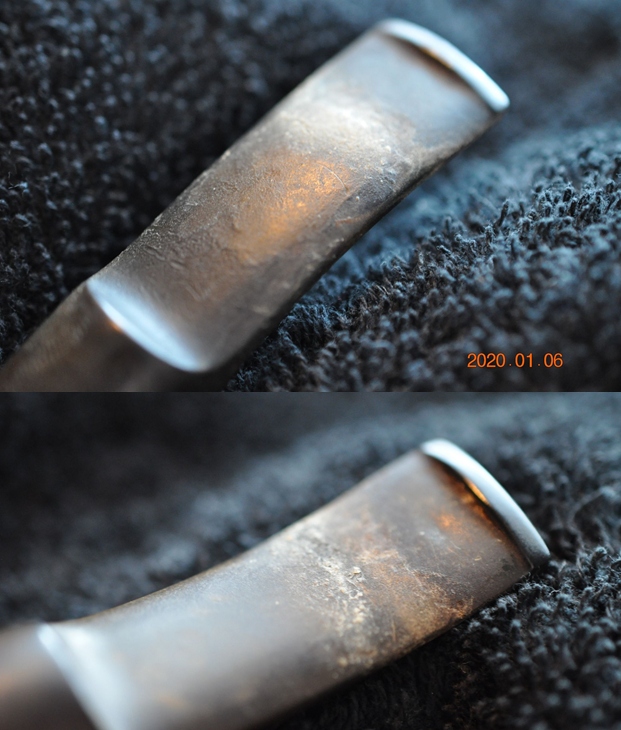
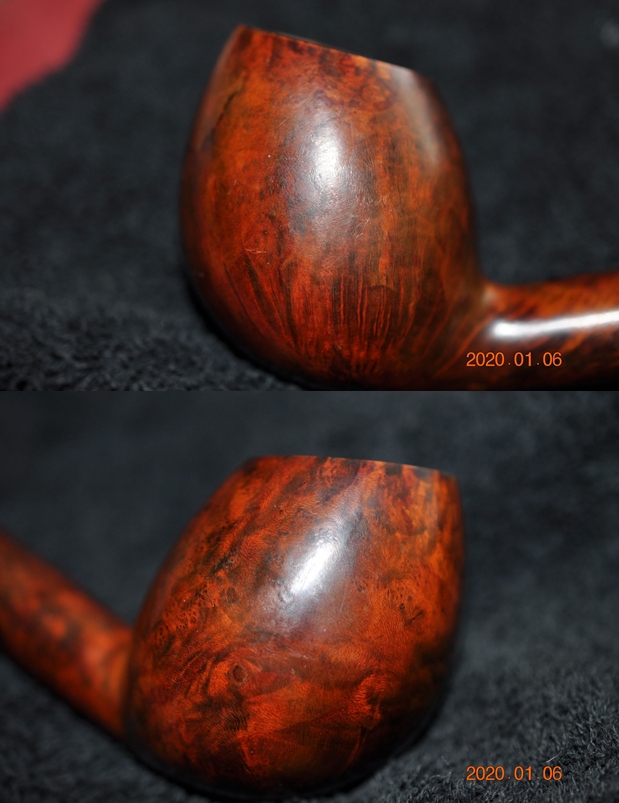
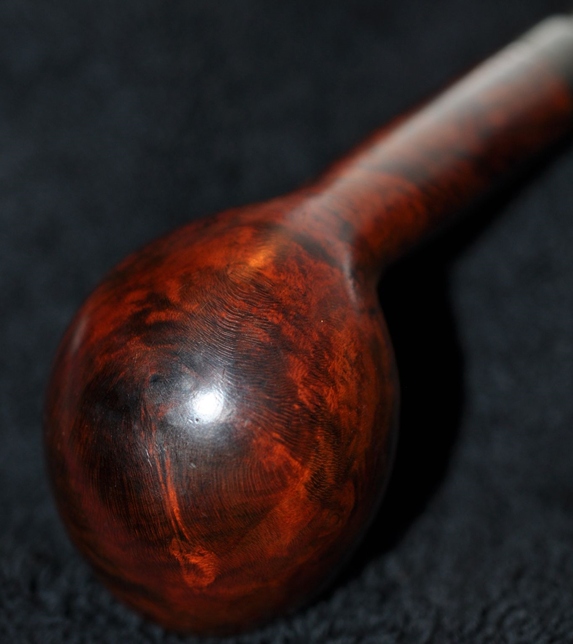
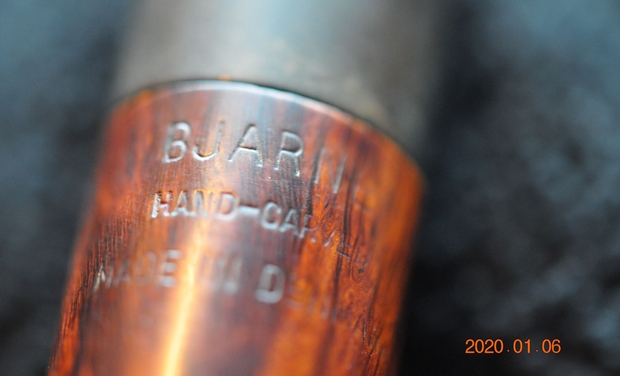
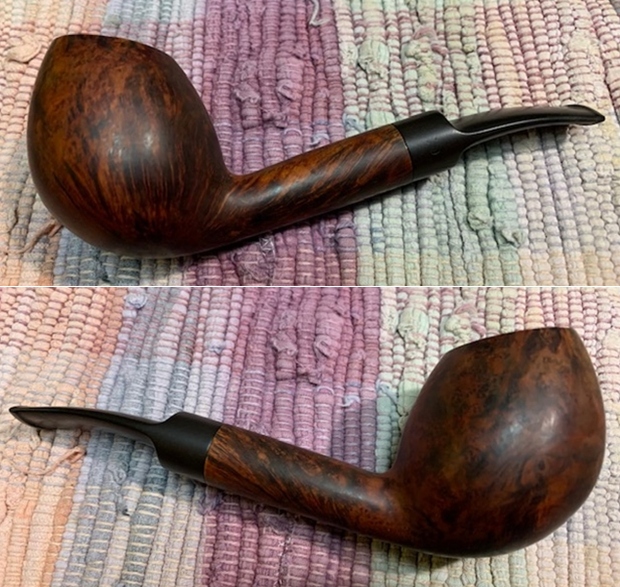
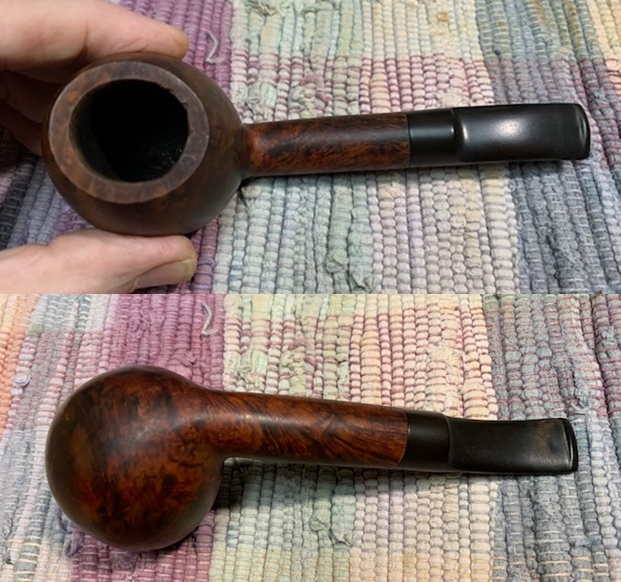
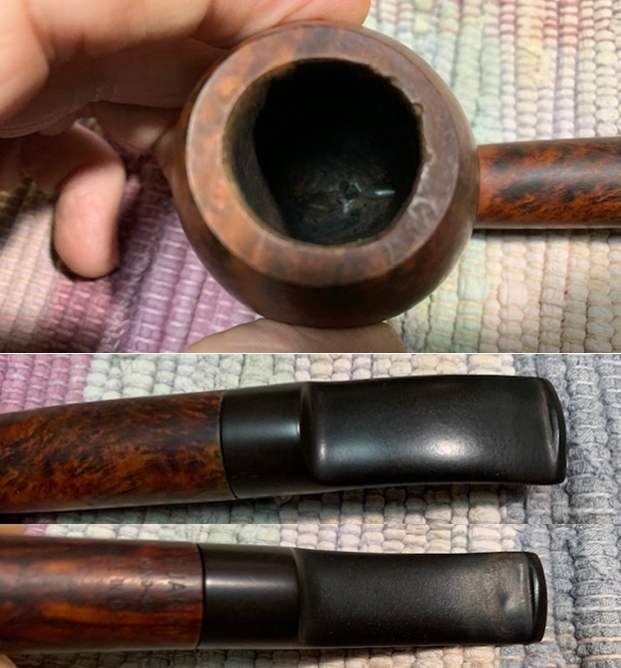
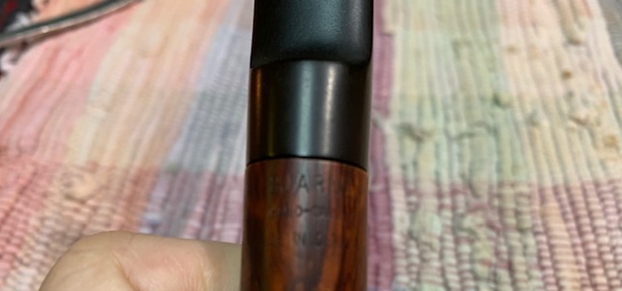
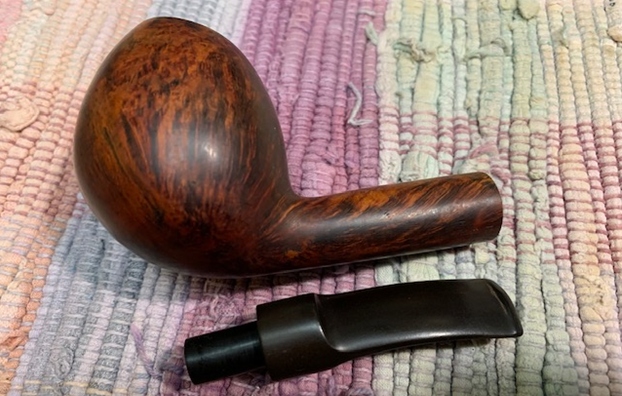
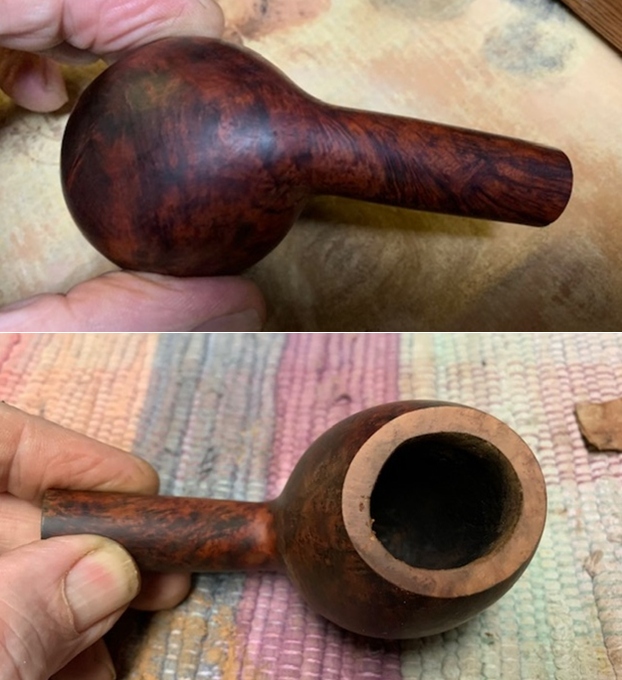
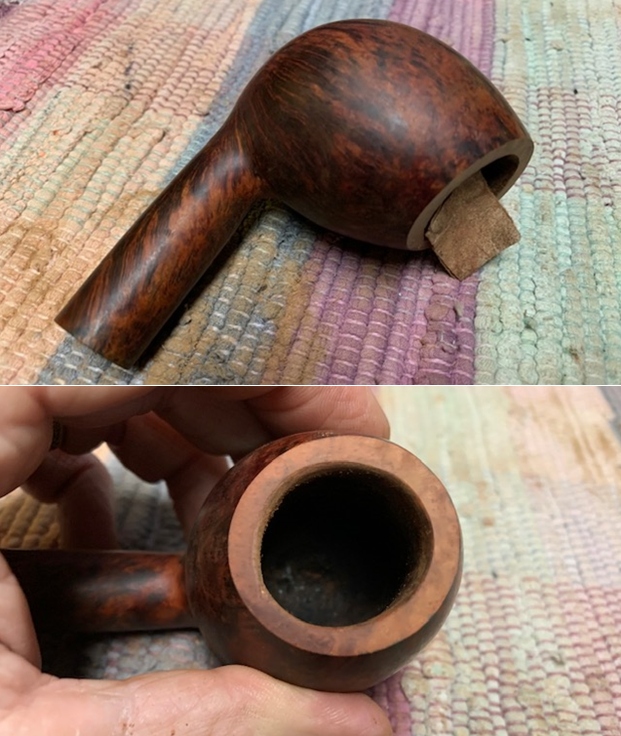
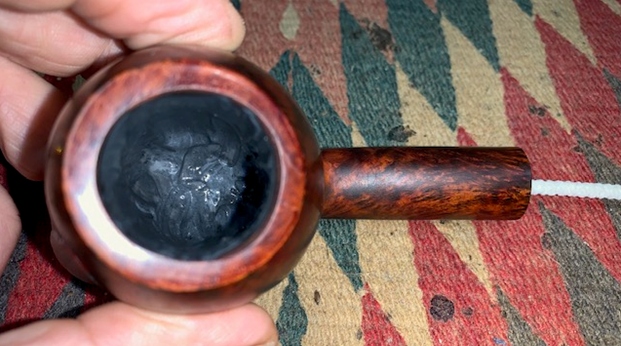
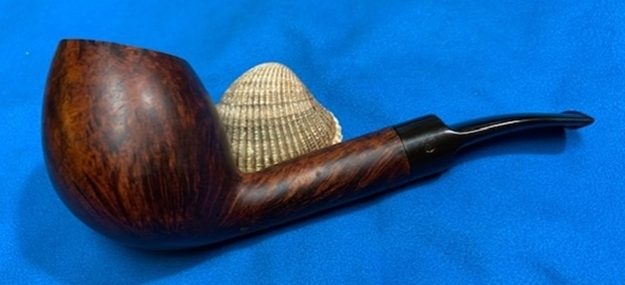
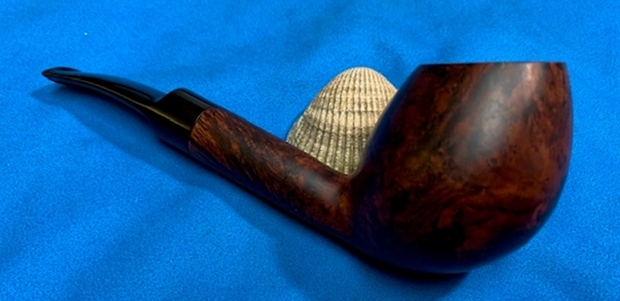
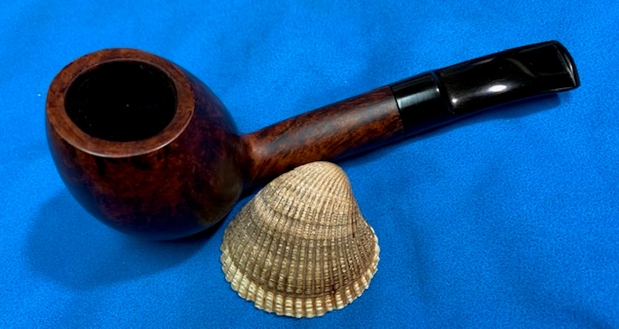
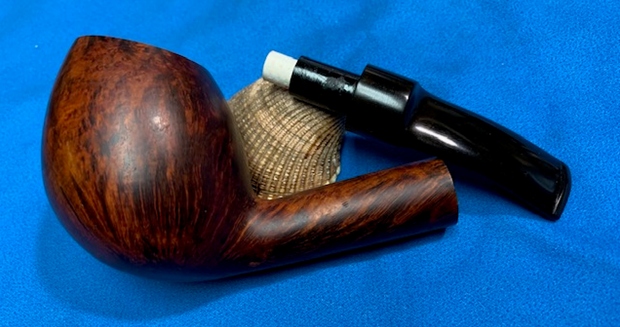
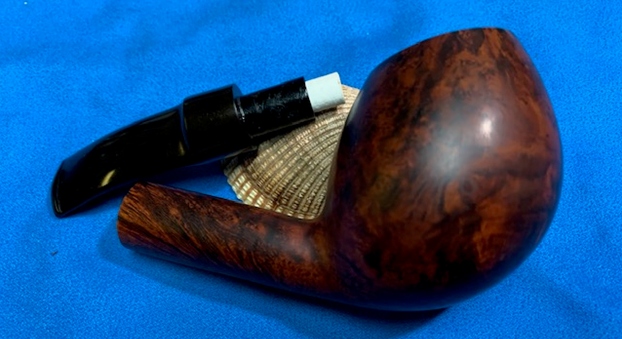
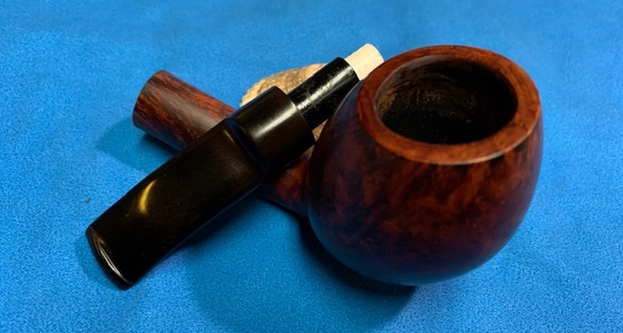
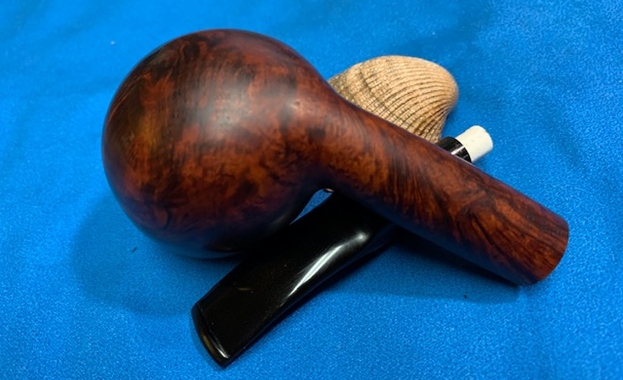
The next pipe came to us from a lot of pipes that Jeff and I purchased from a fellow in Los Angeles, California, USA. It is canted egg shape pipe that is quite large in the hand. Even though it was dirty it had some charm showing through the grit and grime of the years. The grain around the bowl and shank were quite stunning under the grime. On the underside of the shank it was stamped Bjarne [over] Hand-Carved [over] Made in Denmark. The finish is filthy with dust and grit ground into the briar of the bowl and shank sides. The bowl had a light cake and no overflow of lava on the top and inner edge of the rim. It was surprisingly clean inside the bowl other than being just dusty. The stem is calcified, oxidized and had tooth marks and chatter on both sides near the button. It was a filter pipe and came to us without a filter in the shank. The interior of the stem and shank were quite dirty with tars and oils. Jeff took some photos of the pipe to show its overall condition before he started his cleanup work. He took photos of the rim top and bowl to give a clear picture of the good the pipe bowl looked inside. The rim was quite clean but the inner edge was out of round on backside. It was not burned but appeared to have been caused when it was reamed sometime in its history. The photos show the contrast of the bowl’s general condition with the wear and tear on the saddle stem surface.   Jeff took photos of the sides and heel of the bowl and shank to give a picture of what the briar around the pipe looked like. He took a photo of the stamping on the shank. It reads as noted above and is clear and readable.    I turned to my favourite go to sites on the background of brands. The first is Pipephil’s site (http://www.pipephil.eu/logos/en/logo-b5.html). There I looked up the Bjarne brand. I have copied the pertinent information below.

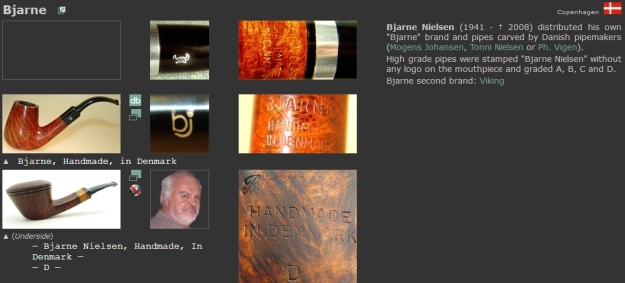
Bjarne Nielsen (1941 – † 2008) distributed his own “Bjarne” brand and pipes carved by Danish pipemakers (Mogens Johansen, Tonni Nielsen or Ph. Vigen). High grade pipes were stamped “Bjarne Nielsen” without any logo on the mouthpiece and graded A, B, C and D. Bjarne second brand: Viking.

I have included a screen capture of the section on the brand below. I turned to Pipedia and looked up the brand for a bit more information on the pipes that were stamped like the one that I am working on (https://pipedia.org/wiki/Bjarne). It is a great history of the brand and a good read. Toward the end of the article I found what I was looking for. I quote:

Among the pipemakers that worked for Bjarne were Johs (for the lower priced high volume pieces), and makers like Ph. Vigen, Ole Bandholm and Tonni Nielsen for high grade pieces. The cheaper line was stamped “Bjarne” while the highest grades were stamped “Bjarne Nielsen” (never with the pipemakers’ name) and graded, from highest to lowest, by the letters: AX, A, B, C, D, E, F, G, H, I, and J.

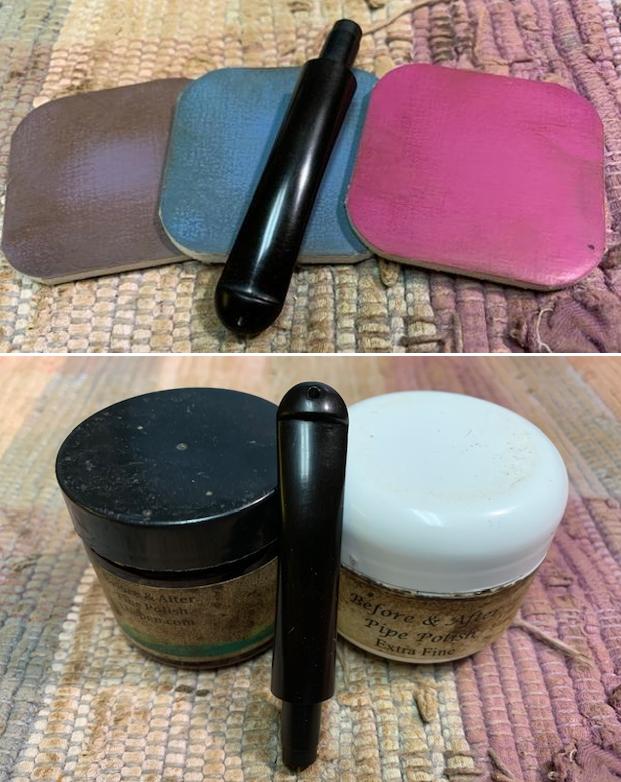
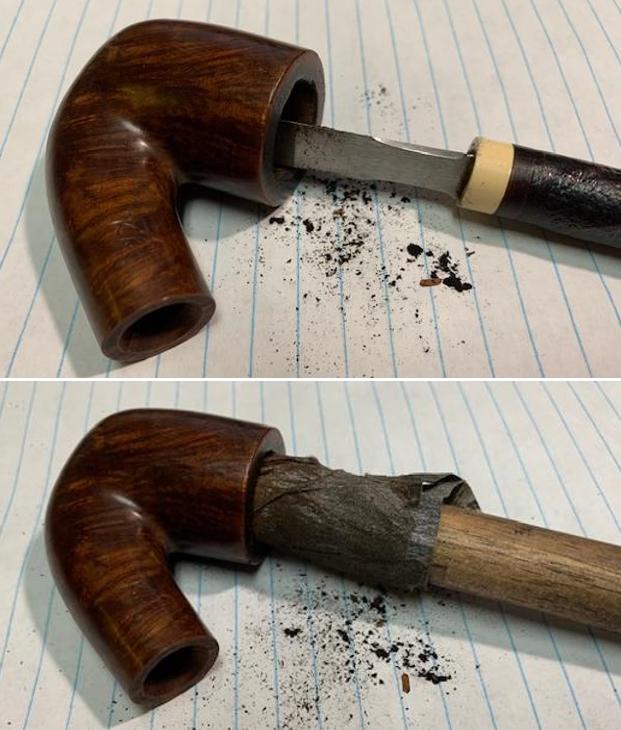
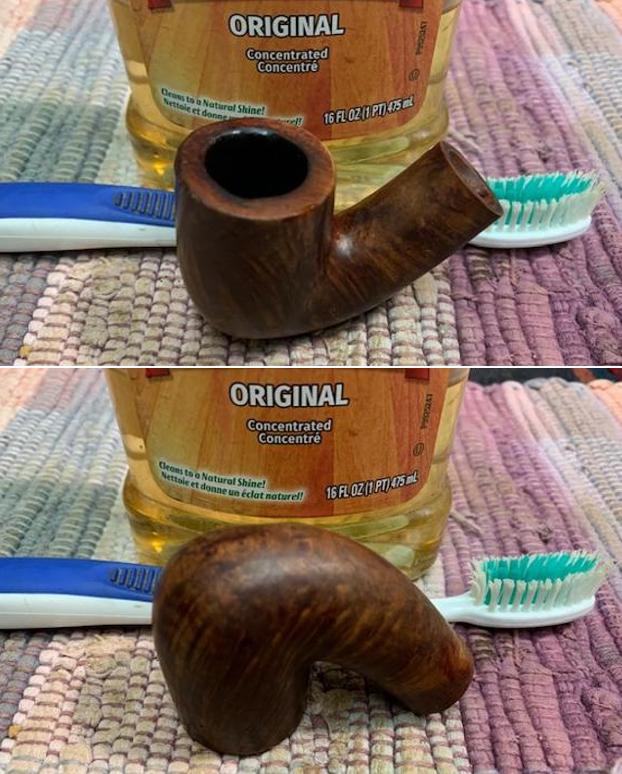
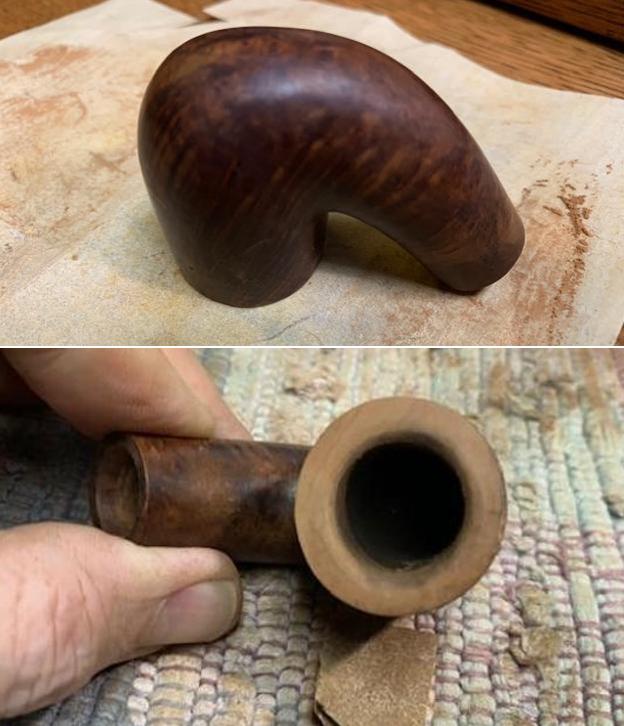
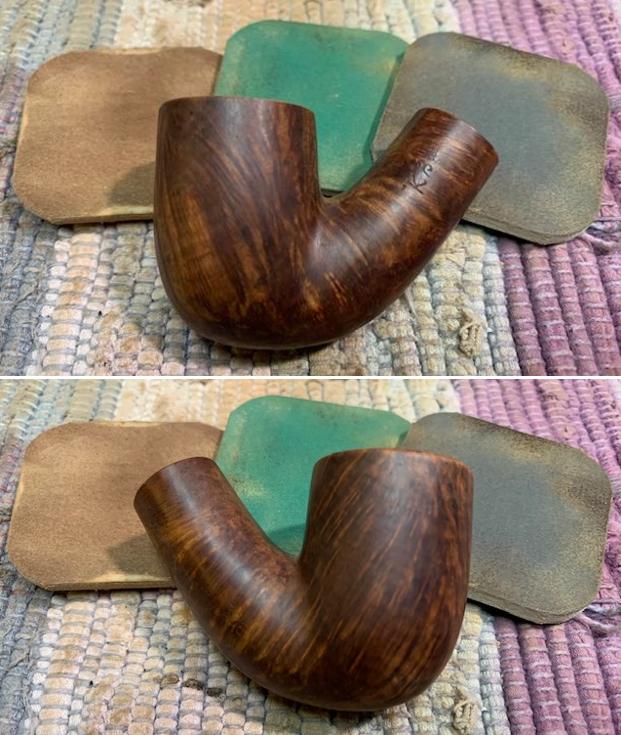
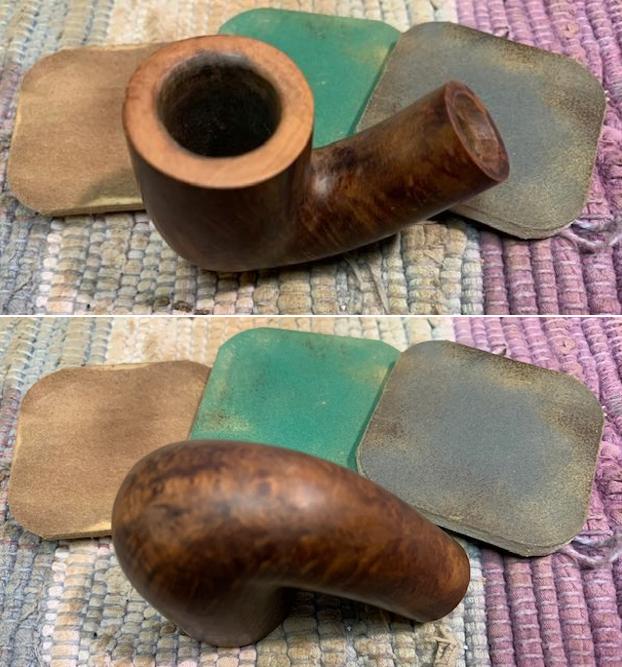
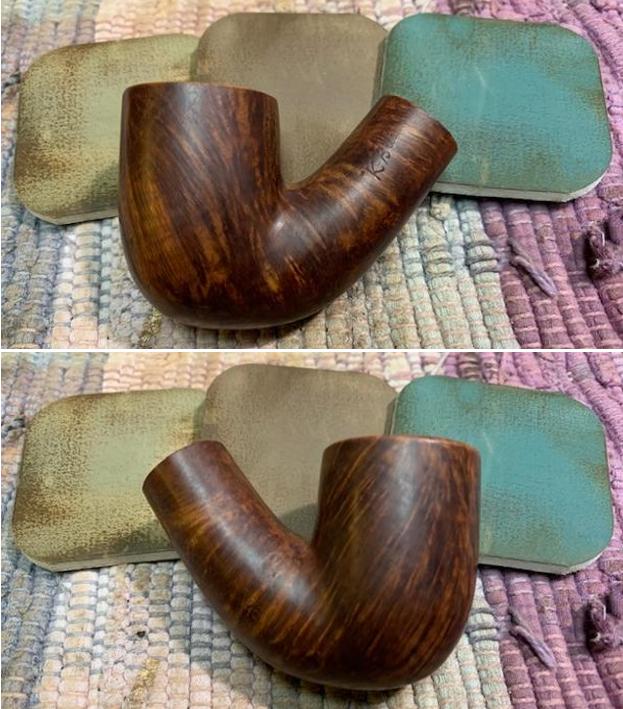
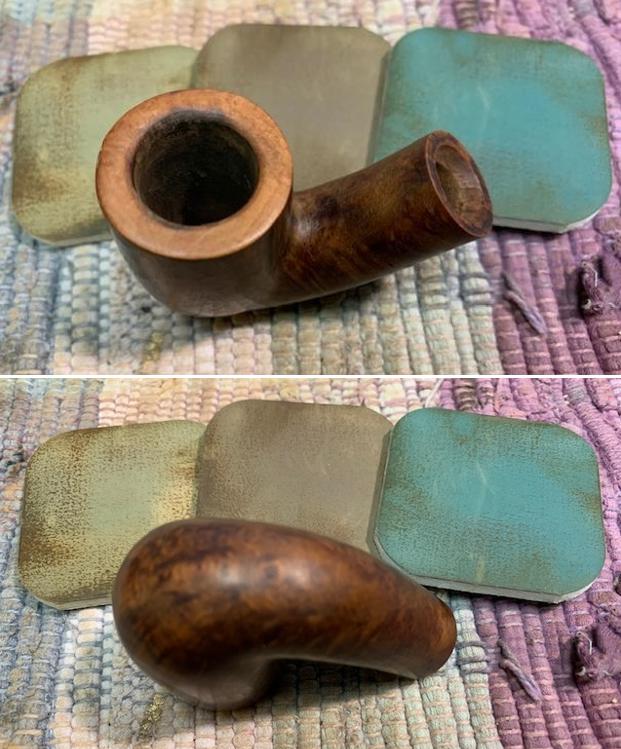
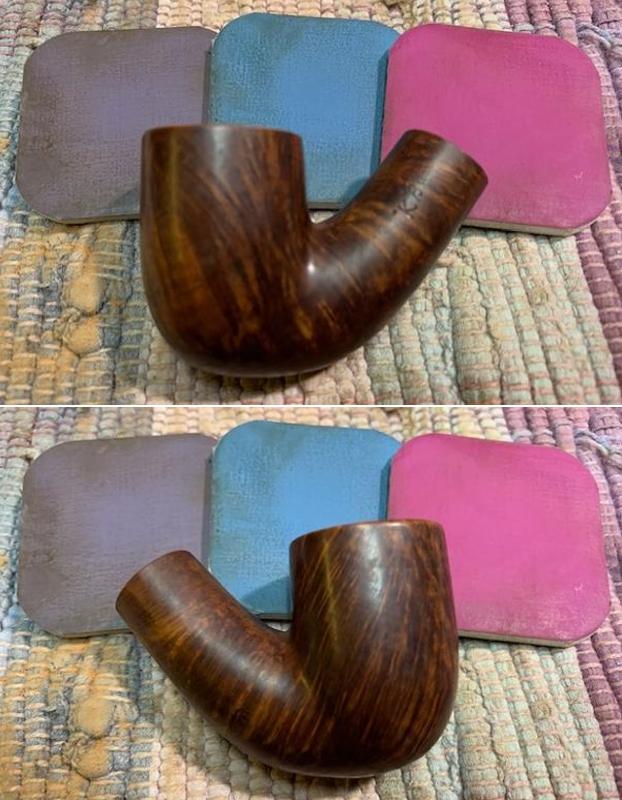
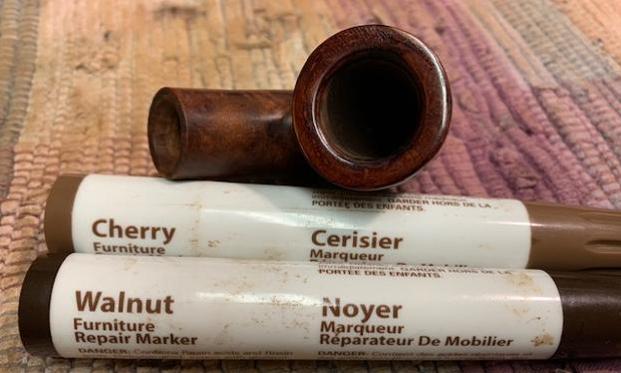
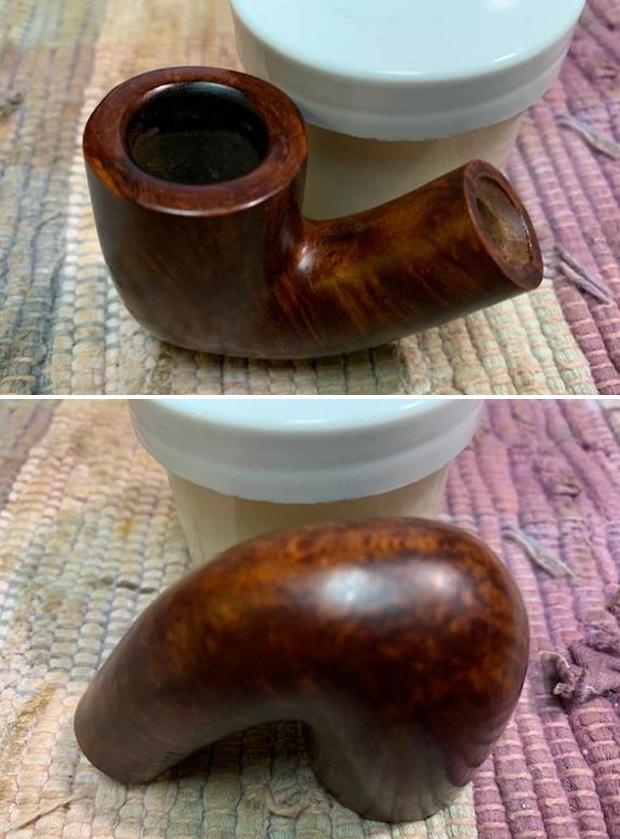
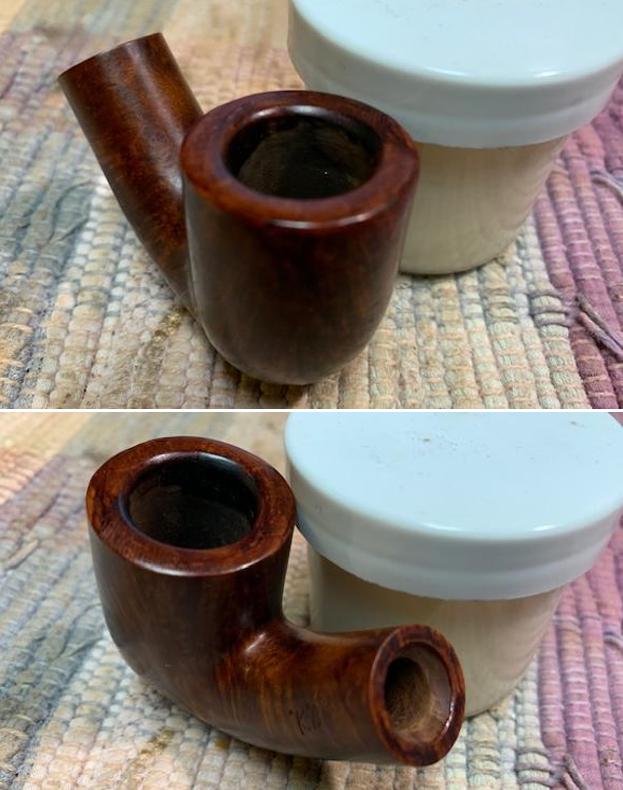
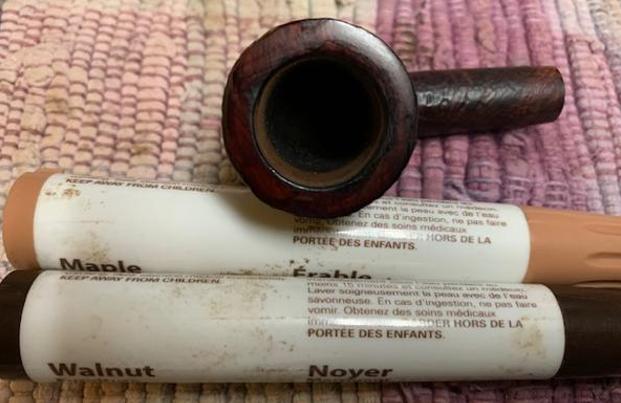
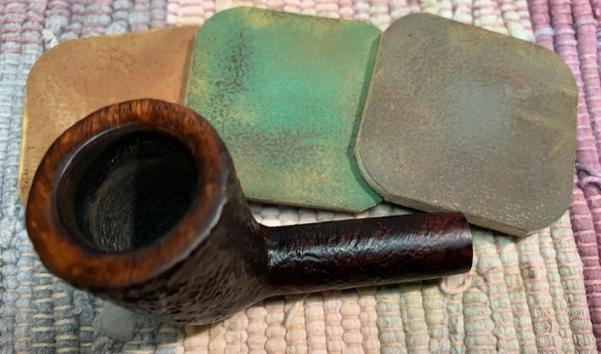
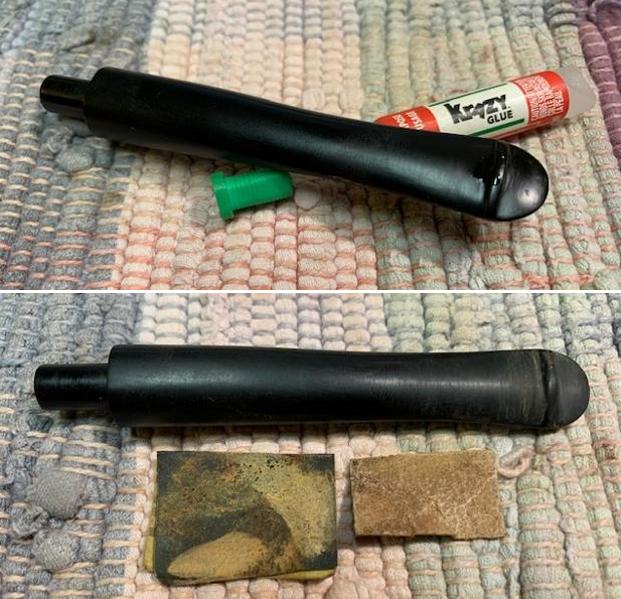
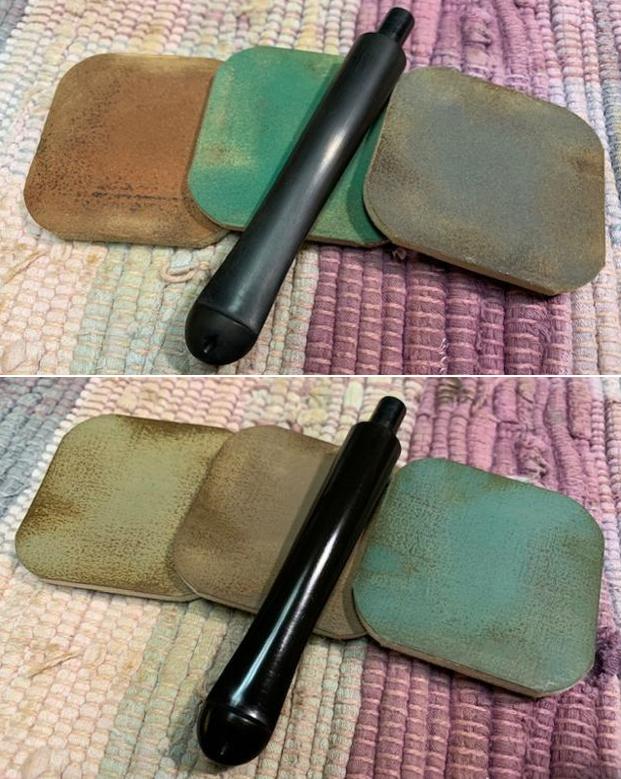
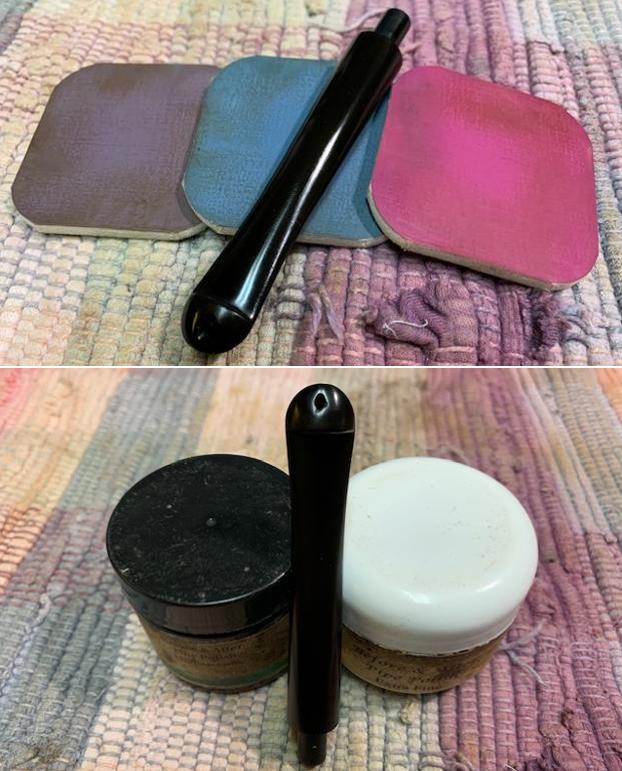
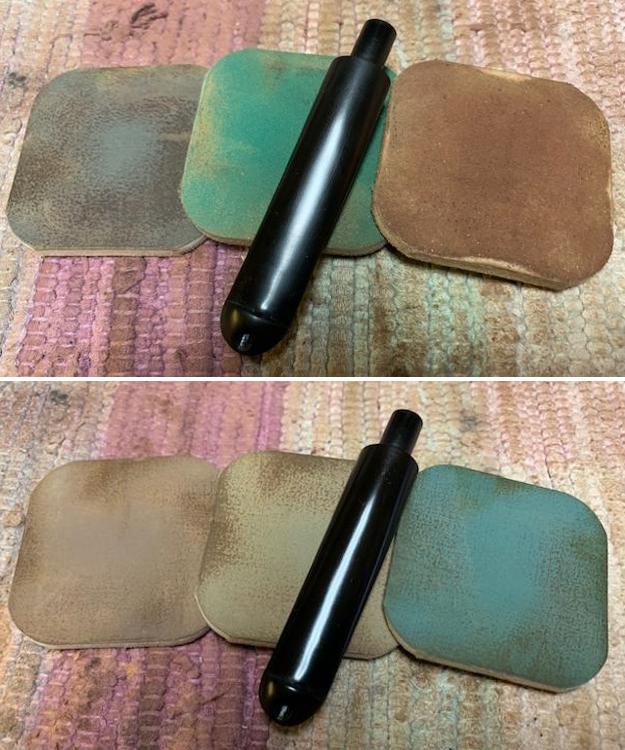
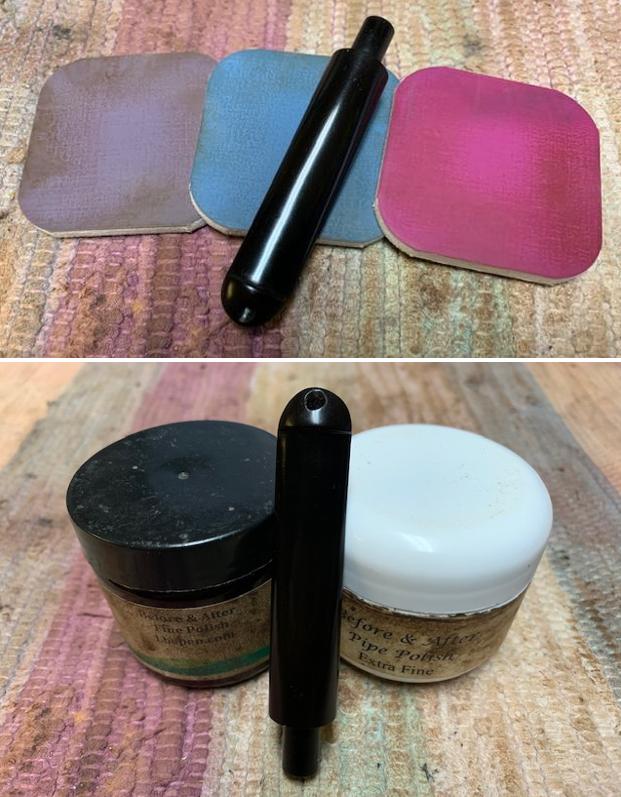
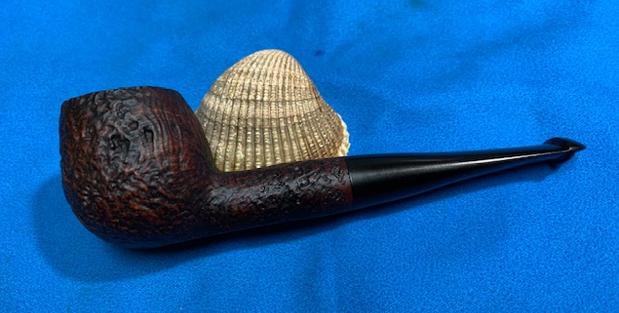
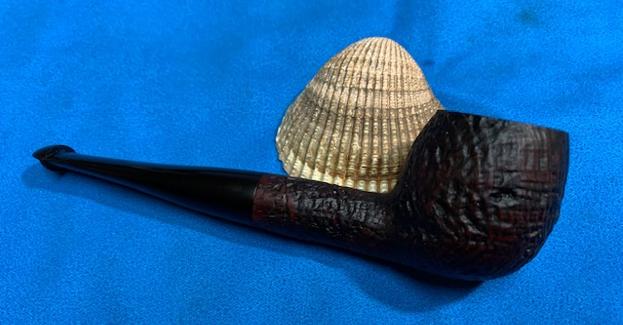
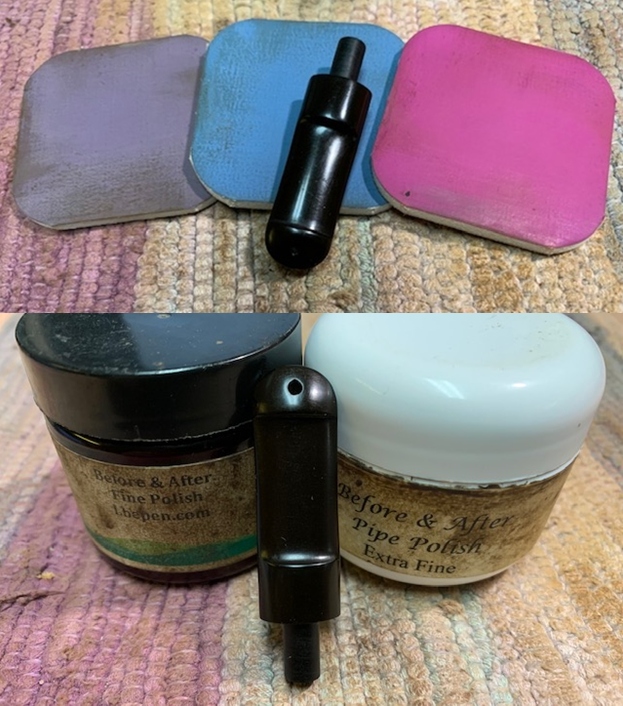
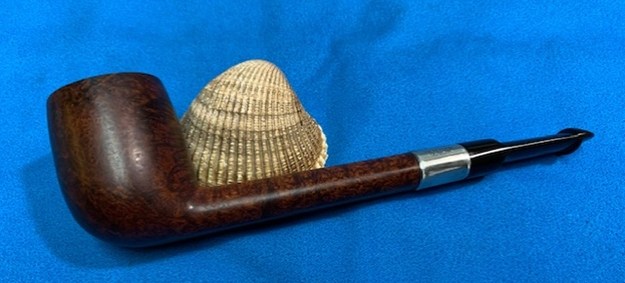
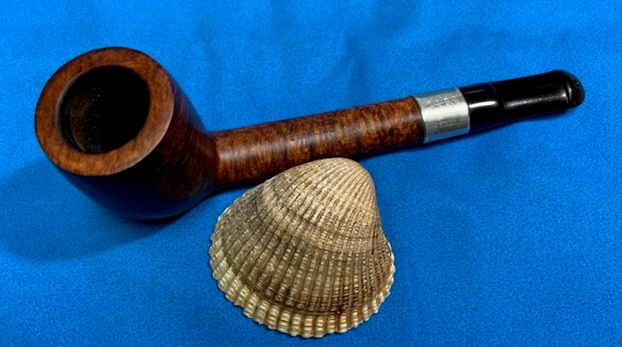
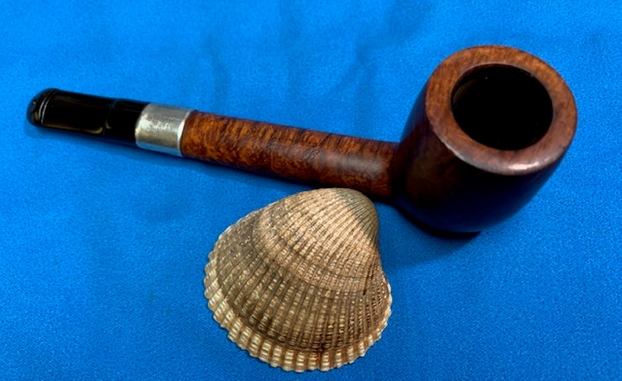
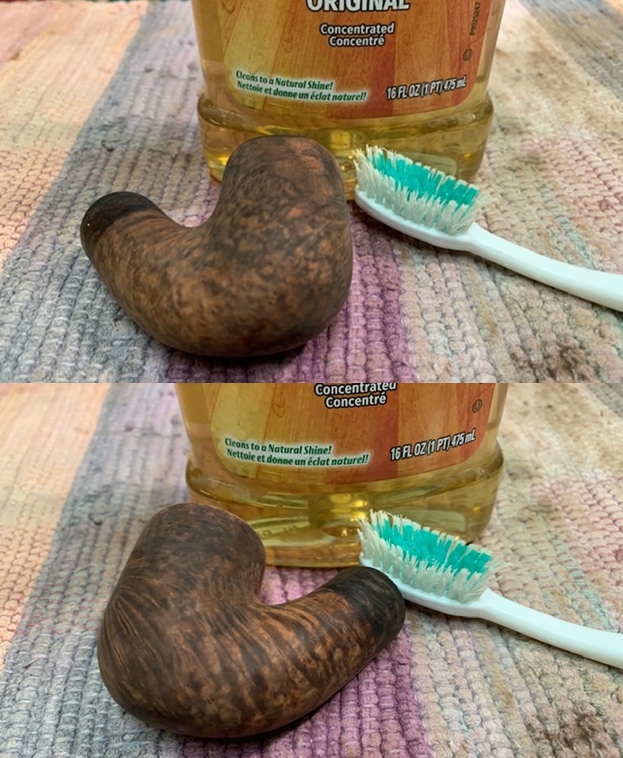
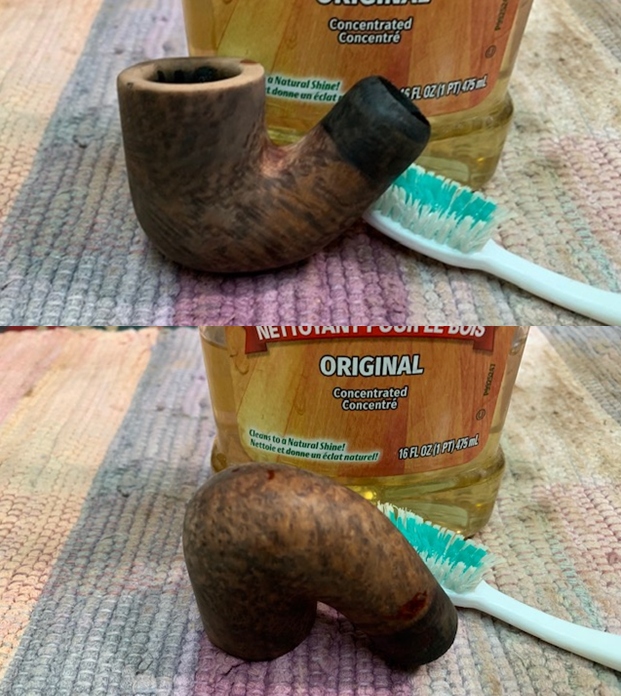
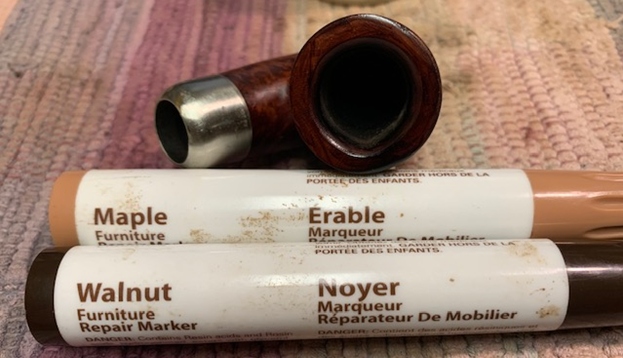
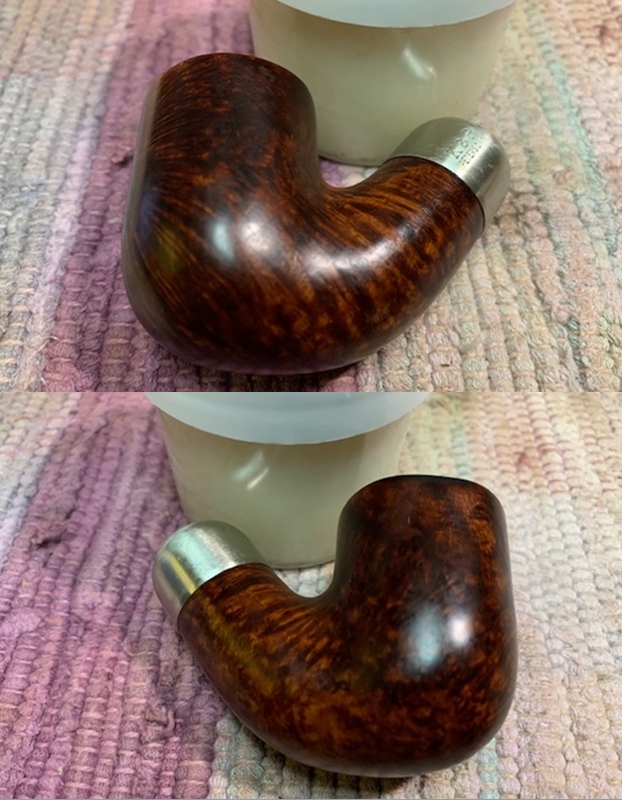
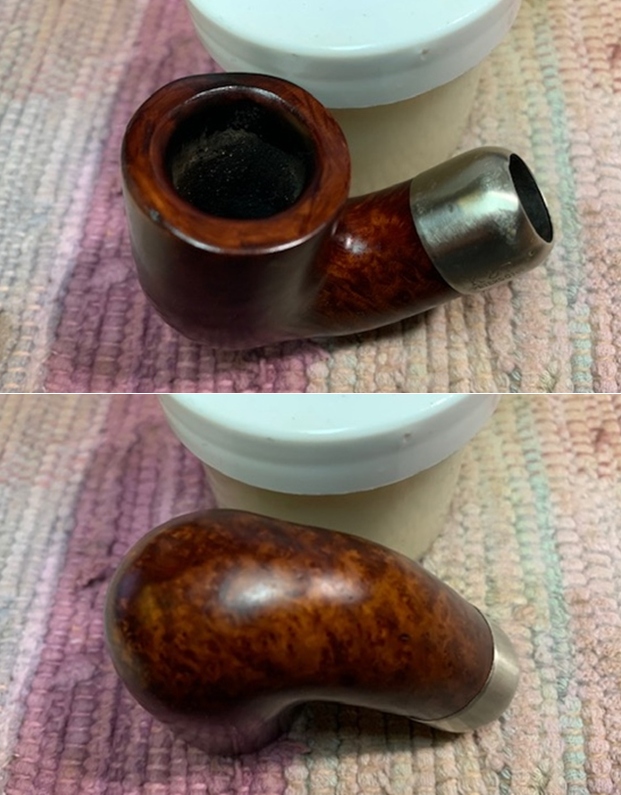
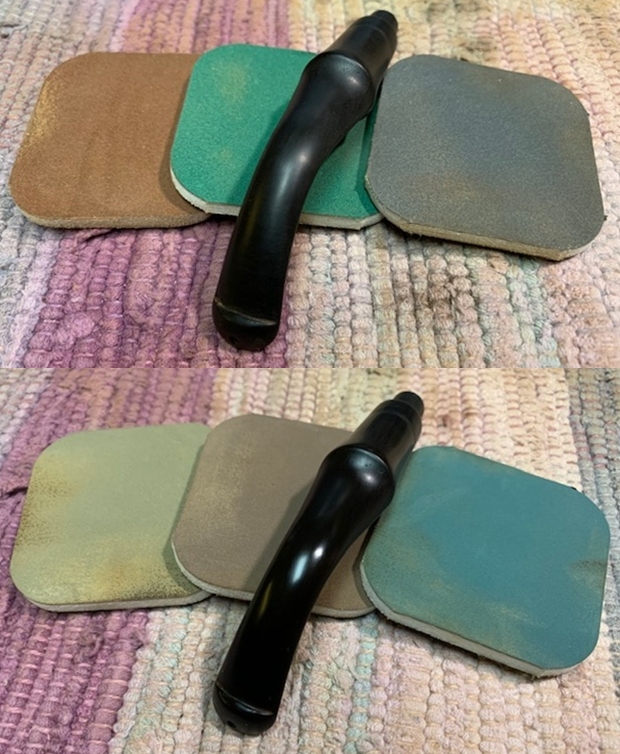
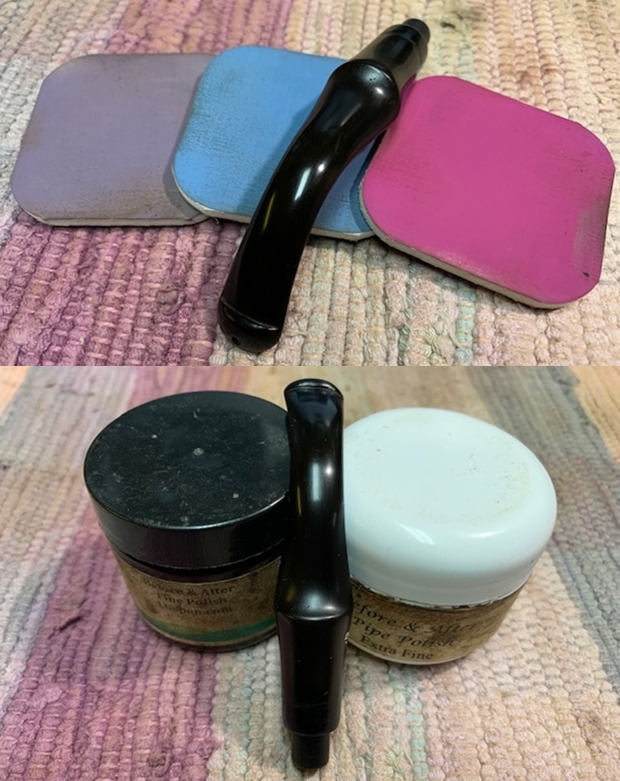
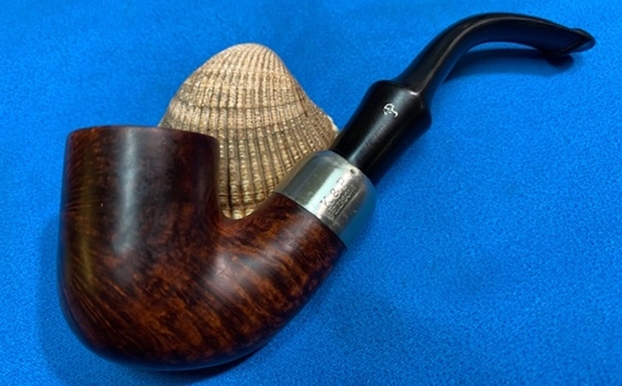
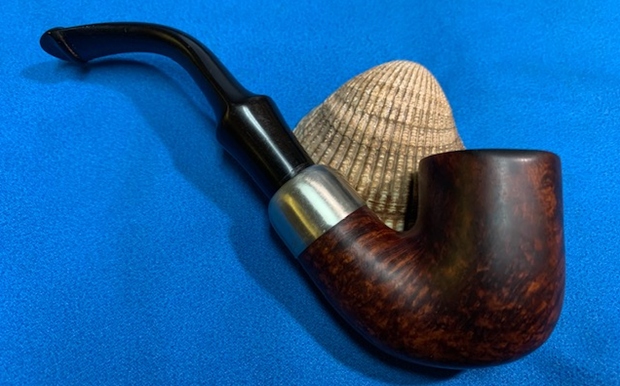
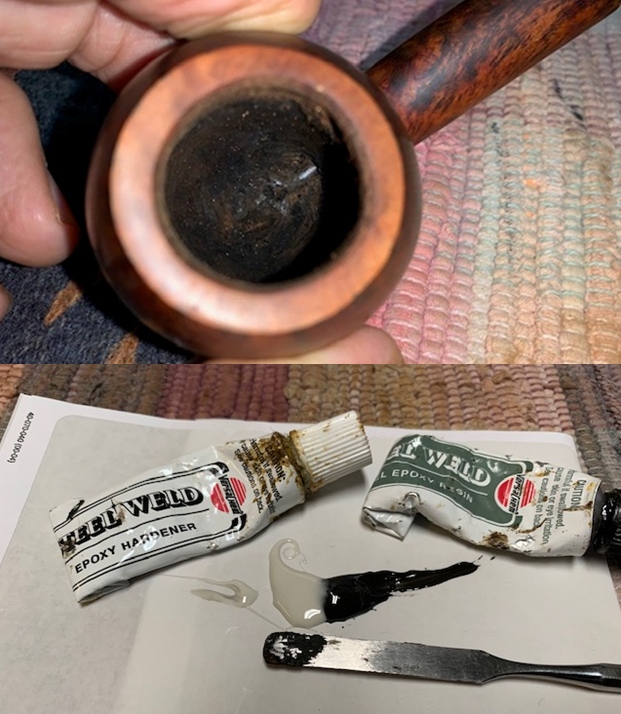
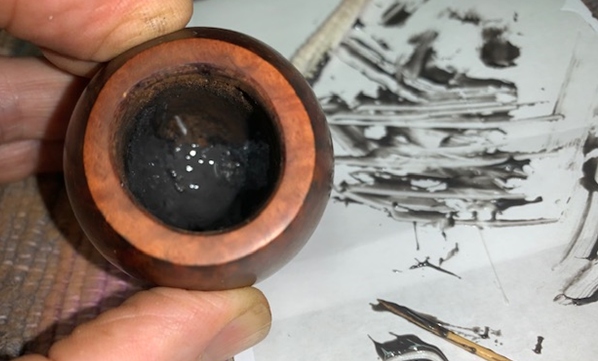
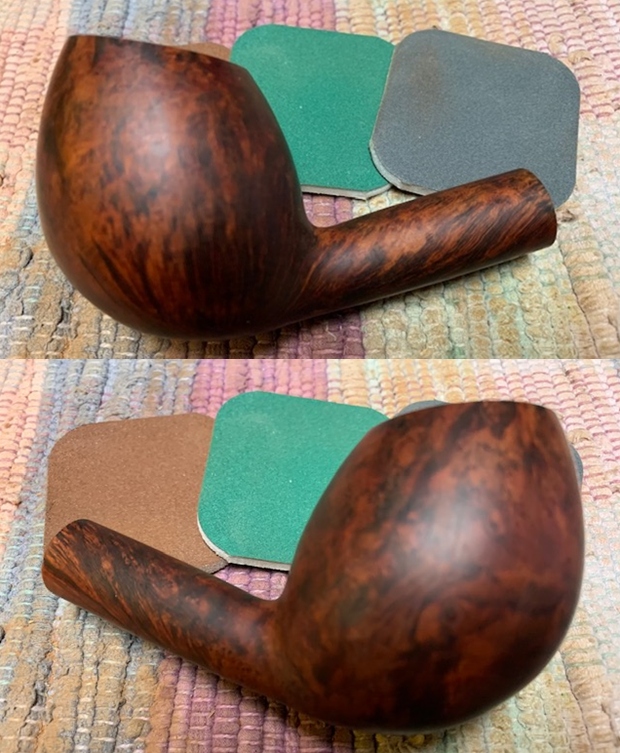
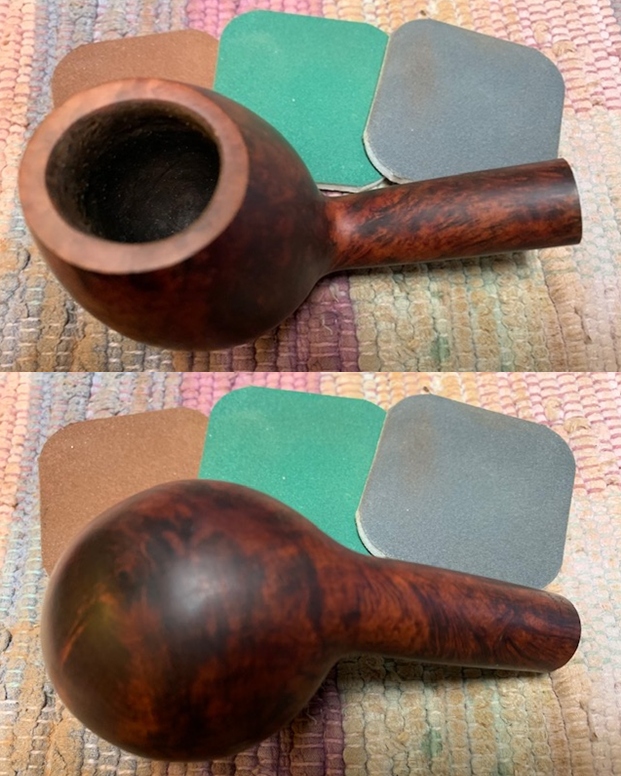
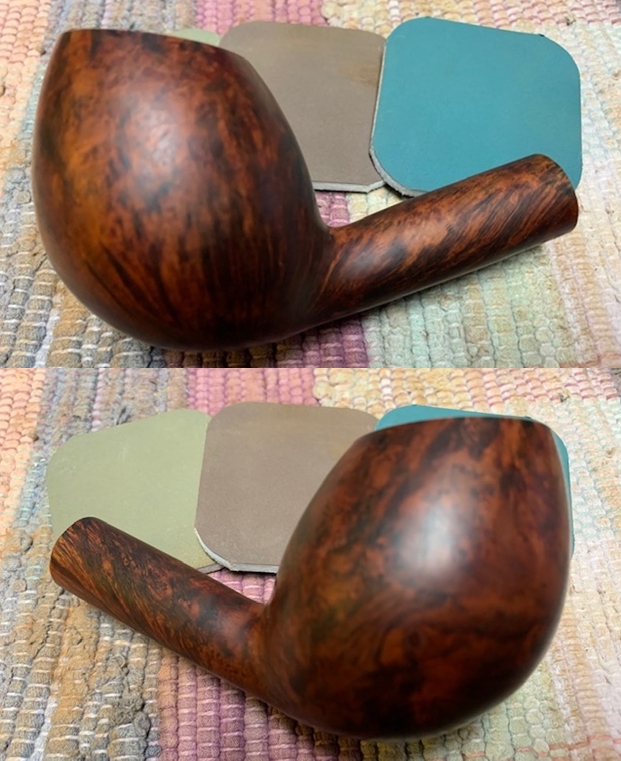
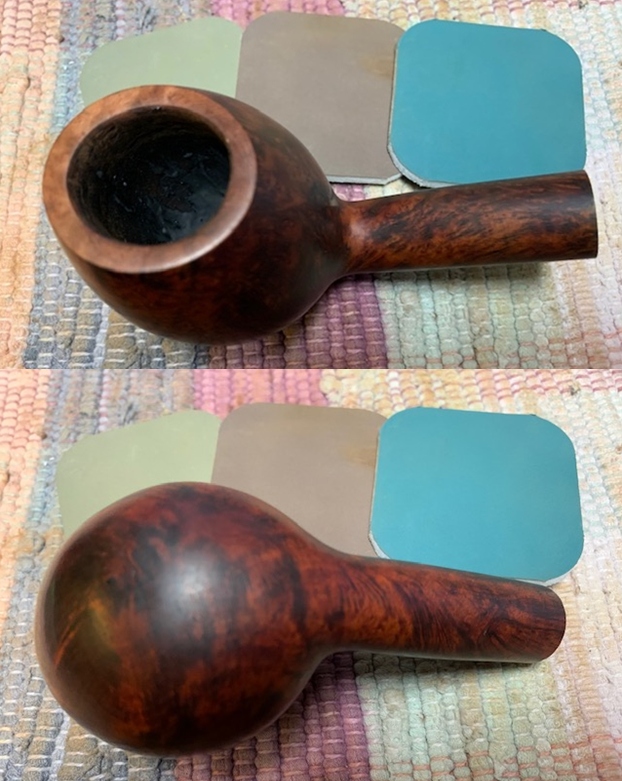
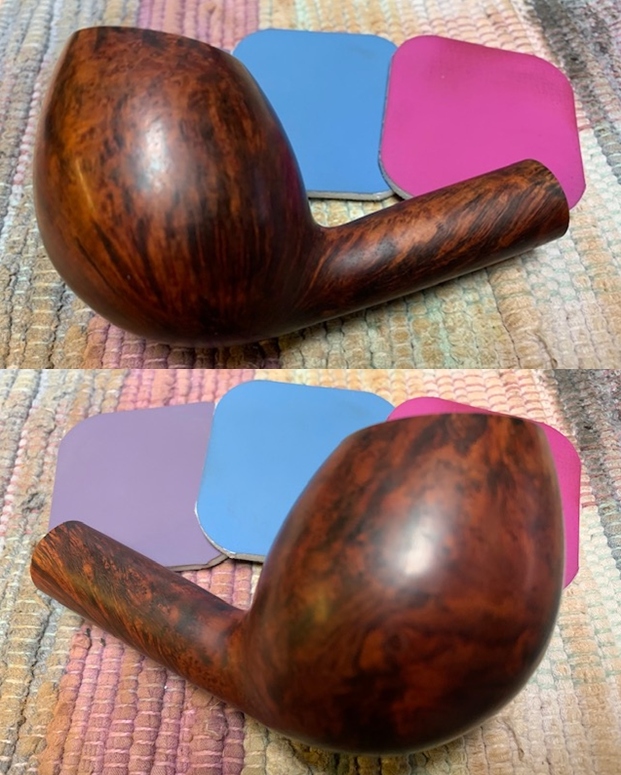
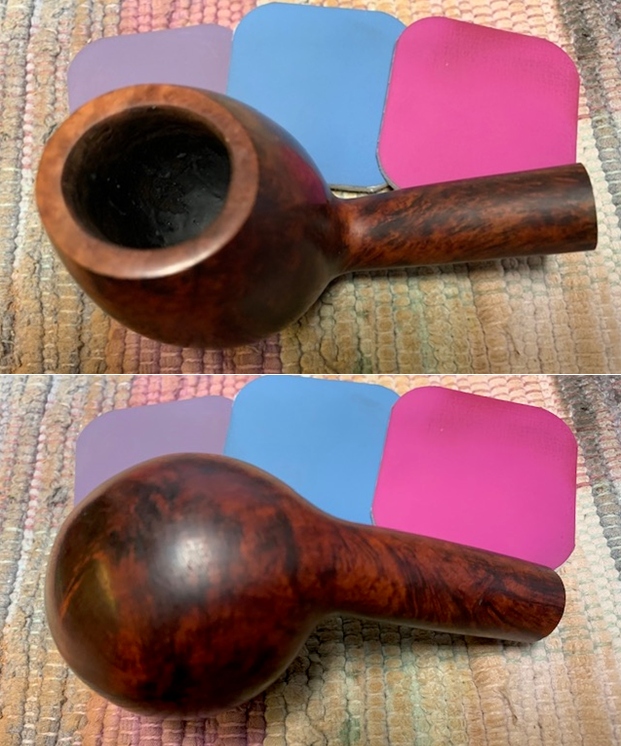
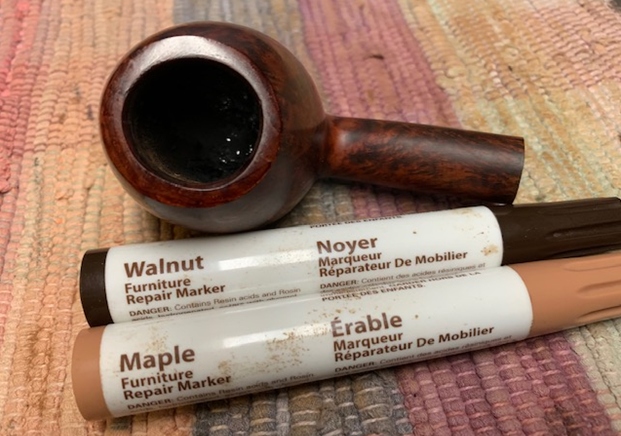
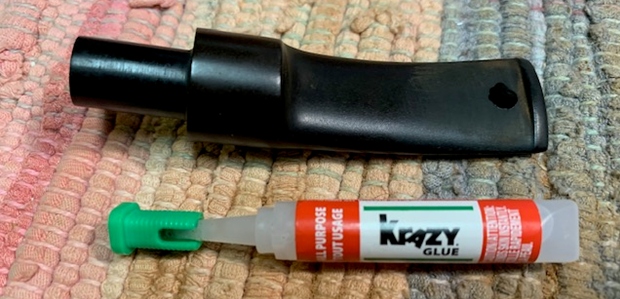
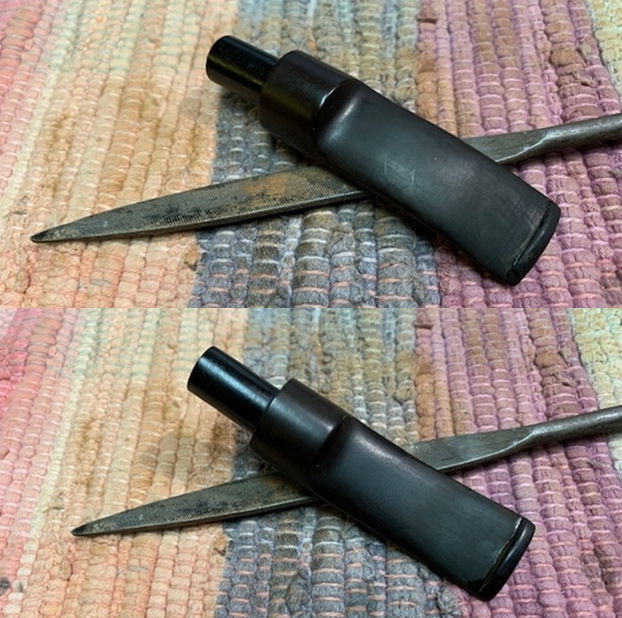
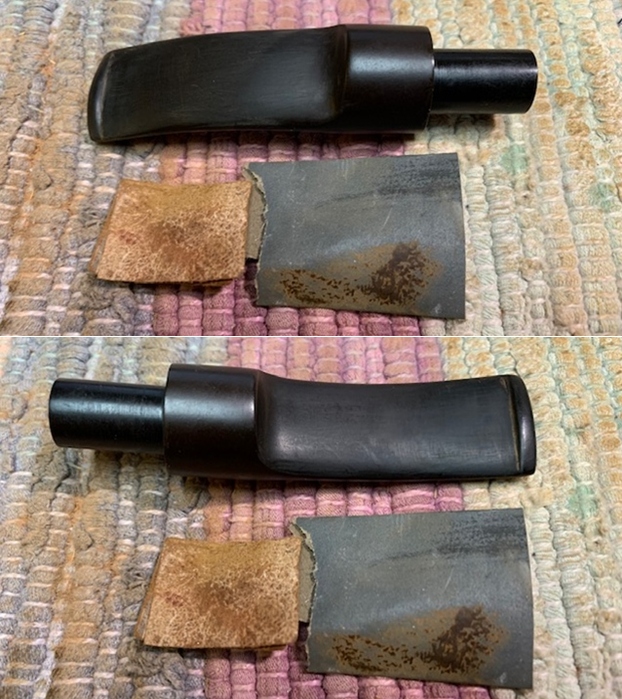
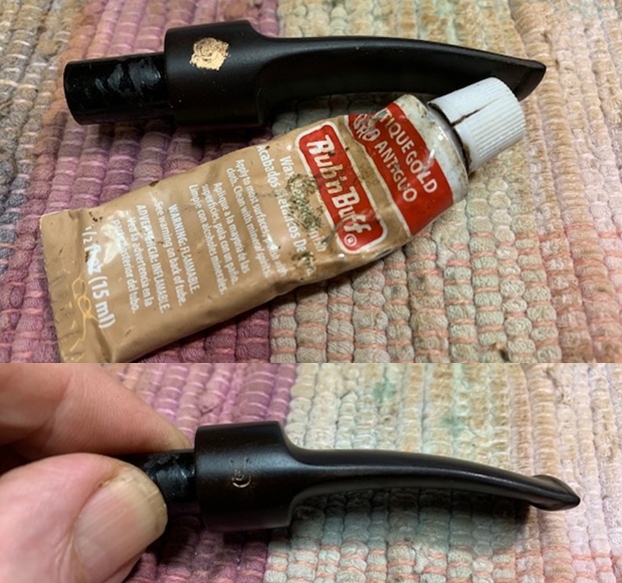
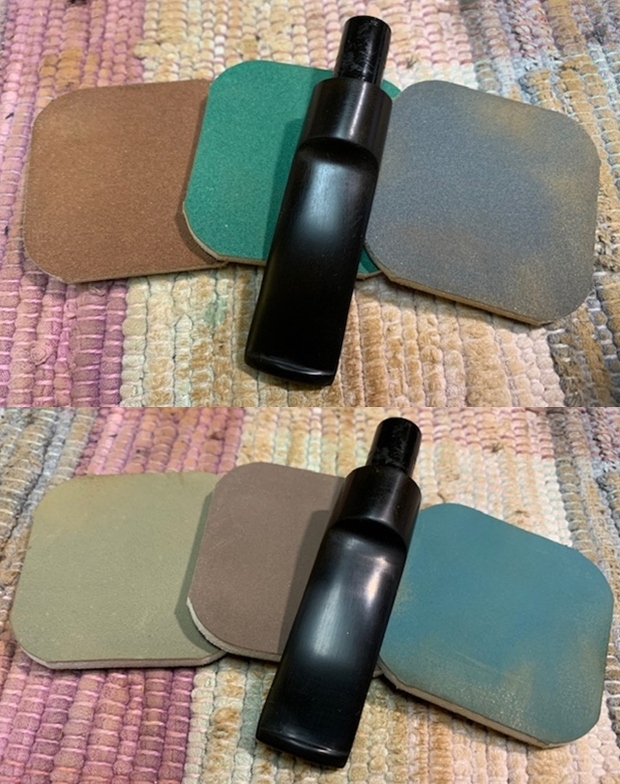
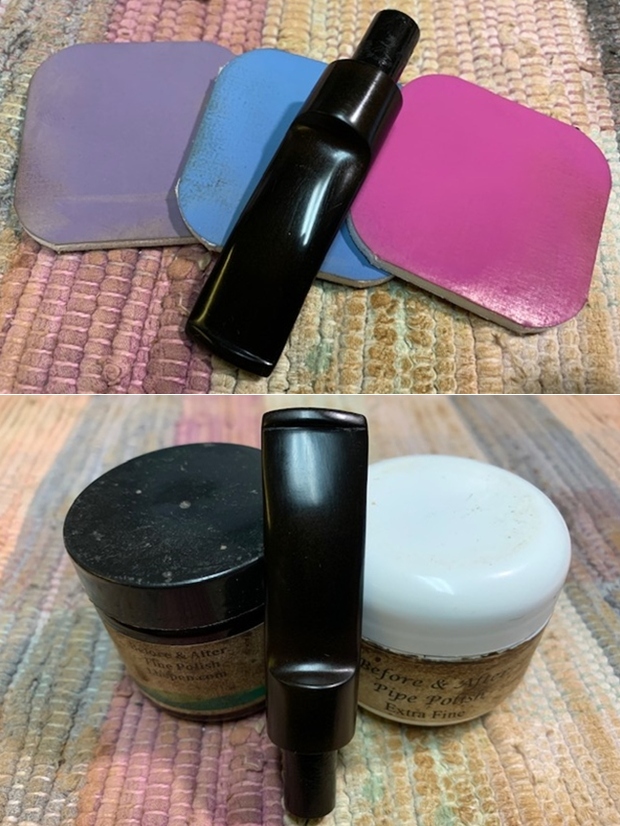
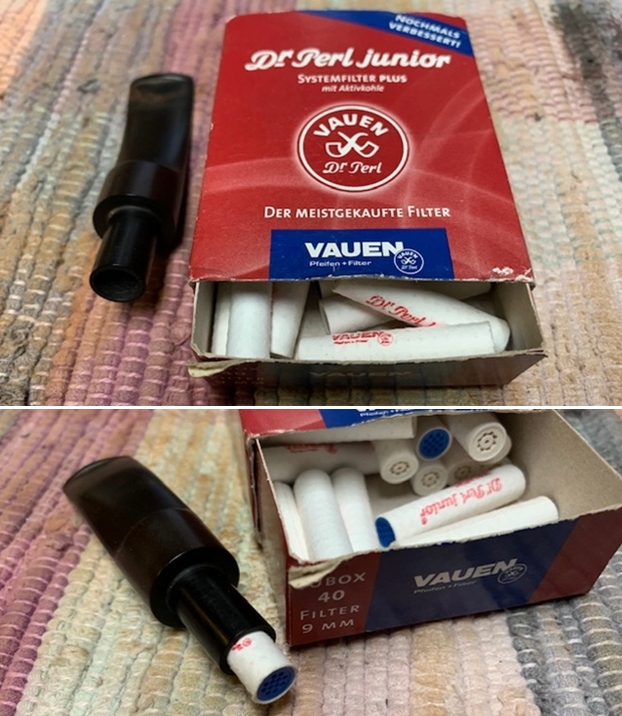
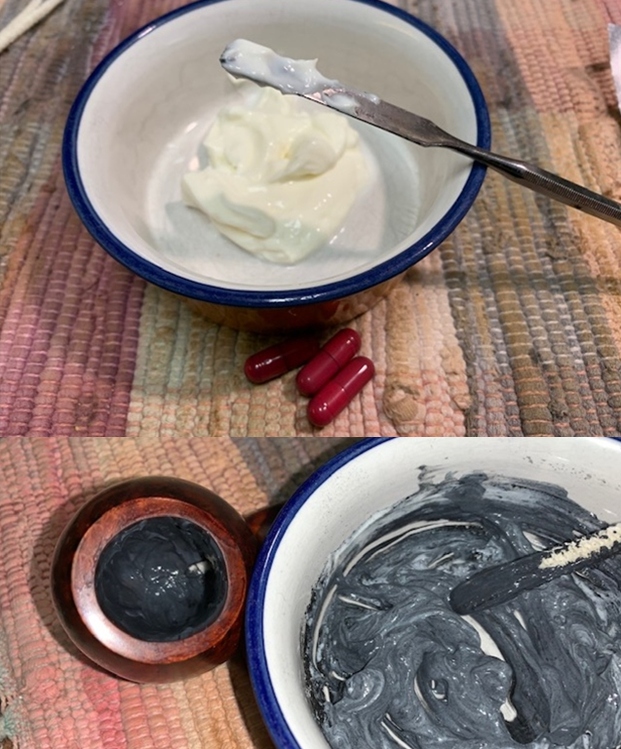
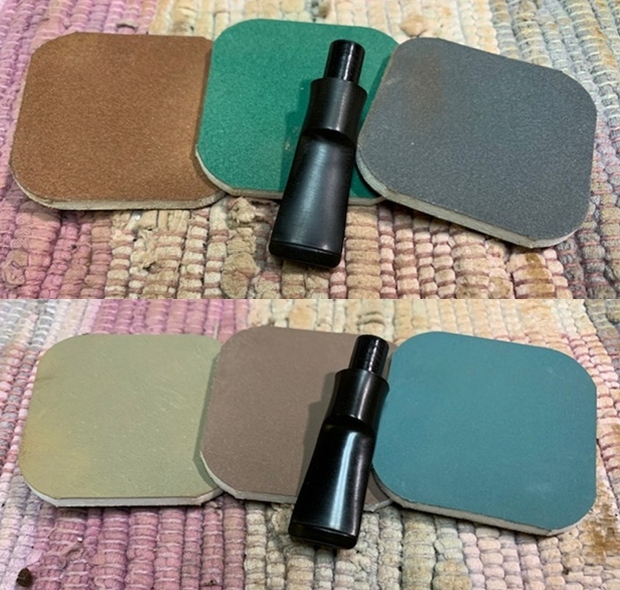
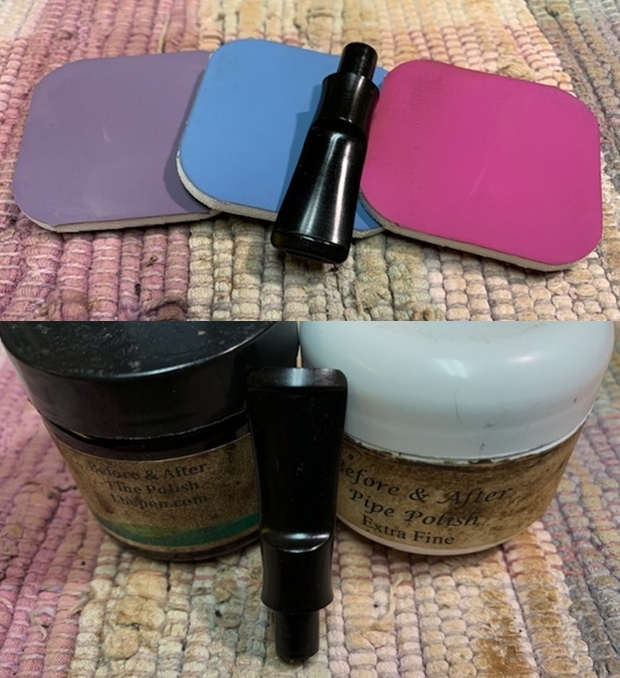
Now I knew that I was dealing with the cheaper line of pipe made by the company. It was stamped Bjarne while the higher grade pipes were stamped Bjarne Nielsen with a grade stamp. Now it was time to work on the pipe. Jeff had cleaned up the pipe with his usual penchant for thoroughness. He reamed the pipe with a PipNet Pipe Reamer and cleaned up the remnants with a Savinelli Fitsall Pipe Knife.  He scrubbed the bowl with undiluted Murphy’s Oil Soap with a tooth brush. He worked over the debris on the plateau rim top and was able to remove it. He rinsed it under running warm water to remove the soap and grime. He cleaned out the inside of the shank and the airway with alcohol, cotton swabs and pipe cleaners. I took photos of the pipe bowl once I received it. It really looked good.    The bowl had been over reamed to the point that there was a pit in the bottom of the bowl. There was a trough from the airway to the front of the bowl and large dip mid bowl. It makes the bottom of the bowl quite thin. There were chips out of the rim top and the bowl was out of round. The stem looks really quite good. There were some light tooth marks and chatter on both sides near the button.I took a photo of the stamping on the underside of the shank. It was clear and read as noted above. I took the stem off the shank and took a picture of the pipe to give a sense of its overall look. It is going to be a great looking pipe once the restoration is finished. I decided to begin my work on the pipe by dealing with the damage to the rim top and inner edge of the bowl. I topped the bowl on a topping board with 220 grit sandpaper. I took of the damage and removed the chips from the rim top. I used a folded piece of 220 grit sandpaper to reshape the inner edge of the bowl. I gave it a light bevel to deal with the damage to the edge of the bowl. When I was finished it looked a lot better than when I started.   The next item on the agenda was the surprise mess on the bottom of the bowl. The bowl had a trough from the entry of the airway to the front of the bowl and a pit mid bowl that made the bowl bottom dangerously thin. I mixed up a batch of JB Weld and filled in both the trough and the pit in the bowl bottom. I used a folded pipe cleaner to press it into the bottom and set it aside to cure.  I polished the briar with micromesh sanding pads – dry sanding with 1500-12000 grit pads. I wiped it down after each sanding pad to remove the sanding dust. I stained the top of the rim with a mix of Walnut and Maple Stain pens and was able to match the surrounding briar perfectly. Once it is buffed it will be very nice.I rubbed the bowl down with Before & After Restoration Balm. I worked it into the surface of the bowl sides and shank with my fingertips. The product works to clean, enliven and protect the briar. I let the balm sit for 15 minutes and then buffed with a cotton cloth to raise the shine.   I set the bowl aside and turned my attention to the stem that I had picked out. I “painted” the surface of the stem with the flame of a lighter to lift the tooth marks. I was able to lift all of them on the top side and all but one on the underside. I filled them in with super glue and set it aside to cure. I used a file to flatten the repair on the stem and reshape the button. Once I had it reshaped and the repair flattened I sanded the stem with 220 grit sandpaper to remove the scratching and blending them into the surface. I began the polishing with 400 grit wet dry sandpaper. The stamping on the left side of the saddle stem was faint but I touched up what remained with Rub’n Buff Antique Gold.  I rubbed it into the stamping and used a tooth pick to work it into the stamp. I buffed it off with a cotton pad.I polished the scratches out of the stem with micromesh sanding pads – 1500-12000 grit pads. I wiped it down with a damp cloth after each sanding pad. I used Before & After Pipe Polish – both Fine and Extra Fine to further polish the stem.    The stem and shank were made for a 9MM filter so I took out a box of Vauen Dr. Perl Filters and fit one into the end of the stem. It fit perfectly in both the stem and the shank. Once the repair in the bowl bottom cured I mixed a bowl of sour cream and charcoal powder to protect the bowl and facilitate breaking it in the first few smokes. I put a pipe cleaner in the airway into the bowl and used a folded pipe cleaner to paint the walls and bottom of the bowl with the mixture. I set the bowl aside to let the mixture harden and cure. Once the bowl coating dries it is neutral and leaves behind no taste that affects the flavour of the tobacco.   This smooth finished Bjarne Hand-Carved Canted Egg is a great looking pipe. It is a pipe made in Denmark. The fancy, saddle vulcanite stem that is drilled for a 9mm filter works well and goes nicely with the reds of briar. I put the stem back on the bowl and buffed the pipe with Blue Diamond on the buffing wheel using a light touch on the briar. I gave the bowl and the stem multiple coats of carnauba wax on the buffing wheel and followed that by buffing the entire pipe with a clean buffing pad. I hand buffed the pipe with a microfiber cloth to deepen the shine. The finished Bjarne Canted Egg fits nicely in the hand and feels great. Give the finished pipe a look in the photos below. The dimensions of the pipe are Length: 6 ½ inches, Height: 2 ¼ inches, Outside diameter of the bowl: 1 ½ inches, Chamber diameter: 7/8 of an inch. The weight of the pipe is 74grams/2.61oz. I will be adding it to the rebornpipes store shortly in the Danish Pipe Makers Section. Thanks for reading this blog and my reflections on the pipe while I worked on it. There are many more to come!

Recommissioning Another Barontini Aldo Velani Trio of Italy – A Classic Billiard


Blog by Dal Stanton

The Aldo Velani Trio Classic Billiard now on the worktable represents the 6th of 7 pipes Daniel commissioned from the For “Pipe Dreamers” Only! collection.  It also represents the second Aldo Velani Trio Daniel included in his trove of 7.  I acquired 4 Aldo Velani Trios in 2018 in what I have called the St. Louis Lot of 26 that my son, Josiah, found in an antique shop. The original 4 Velanis are pictured below.The  Bent Apple and Rusticated Volcano have already found homes with new stewards. The Pot on the bottom is waiting for the Billiard to be completed to join Daniel’s commissioned pipes all which benefit the Daughters of Bulgaria – women and girls who have been trafficked and sexually exploited.   This is a classy line up of pipes!  Looking at their current restored states:   With the Classic Billiard next, some pictures provide a closer look.  The nomenclature on the left shank side is cursive script, ‘Aldo Velani’ [over] ‘TRIO’.  On the shank underside, the COM, ‘ITALY’ is followed by the shape number ‘52’.  As I noted with the Pot, when I first looked at the logo it was difficult to figure out but found in Pipedia’s Aldo Velani article, an example and details of the stamping on an original Aldo Velani box (courtesy of Doug Valitchka).  The stamp depicts a pipe as the front leg of the ‘A’ for Aldo and the back leg of the ‘A’ forms the front riser of the ‘V’ of Velani.  Again, I repeat the previous research here:  The article cited from Pipedia provides helpful information understanding the provenance of the Aldo Velani Trio line:

Most Aldo Velani pipes are made in Livorno, Italy, for the USA market by Cesare Barontini. They were previously imported by Lane Limited. Lane spokesman Frank Blews once described Velani’s stylish, intrinsically Italian designs as “Billiards with more ball, bulldogs with more jaw.” The name “Aldo Velani” is actually fictional.

Another Barontini 2nd is named “Cesare”.

I learn two interesting things from this information.  First, Aldo Velani is a faux name that does not describe an Italian pipe house but a specific line of pipes.  Secondly, the Aldo Velani is made by the Casare Barontini name based in Livorno, Italy.   Further information is available cross referencing to Casare Barontini in Pipedia:

In 1890 Turildo Barontini opened a factory for the production of briar. In 1925 his son Bruno began to produce the first pipes. Cesare Barontini, son of Bruno, started direction of the factory in 1955, and still runs it together with his daughters Barbara and Silvia.

Sub-brands & Seconds: Aldo Velani. Cesare, L’artigiana, Stuart, Cortina

Additional information is found in Pipephil’s site.  Aldo Velani line was produced primarily for export.  The stem stamping on the Aldo Velani line had different variations provided by Pipephil:Looking now to the condition of the Aldo Velani Trio Billiard, much like his Apple and Pot brothers, the chamber has a thick cake which needs cleaning.  The lava crusted on the rim too, is thick.  This will need cleaning.  The stummel with the ruby/burgundy is soiled and generally in good shape.  I’m hopeful of keeping the hues consistent between the Pot and Billiard now on the table.  The clear acrylic stem, like the Aldo Velani Trio Apple, is soiled and has some tooth chatter.  There is one tooth compression on the lower bit which was the same on the other Aldo Velani Trio pipes – forensics pointing to a sole steward passing these pipes on.  The clear acrylic always gives a pause to ask the question about whether it is the earlier acrylic known as Perspex, on older GBD pipes.  This stem is not Perspex and therefore alcohol may be used to clean without concerns of the material crazing.  The airway does have a burgundy coloring, so after cleaning, it should still be burgundy but more translucent. I take a picture of the starting point of the clear acrylic stem. To start the airway’s cleaning process, I put the entire stem into a soak of lemon juice to help soften the oils in the airway.  As a natural acidic cleaning agent, I use lemon juice when working on Perspex stems.  I decide to experiment to see how it works on the Aldo Velani stem.  I assure you; the stem is in the lemon juice!While the stem is soaking in the juice, I begin the cleaning process of the chamber and rim.  I’m hopeful that there will be no heating issues with this Aldo Velani Billiard as was the case with his brother, the Pot.  The rim is capped with a thick lava flow crust.  The cake in the chamber is thick and I take a picture to show the starting point.To begin the reaming of the chamber, starting with the smallest of 4 blade heads provided by the Pipnet Reaming Kit, I use 2 blade heads.  Next, I transition to scraping the chamber wall using the Savinelli Fitsall tool and finish by sanding the chamber with 240 grade sanding paper wrapped around a Sharpie Pen.   After wiping the chamber with a cotton pad to remove carbon dust residue, an inspection of the chamber reveals healthy briar ready to go again. Looking to the rim, using the edge of my Winchester pocketknife, I carefully scrape the crusted carbon.  I avoid gouging the briar by pulling the edge over the surface rather than pushing the blade.  Next, using undiluted Murphy’s Oil Soap and starting with a cotton pad, the ruby/burgundy external surface is scrubbed.  I also employ a brass wire brush to work on the rim.  After scrubbing the bowl and rim, I take the stummel to the sink and continue the cleaning using warm water to rinse the Murphy’s Soap.  Using shank brushes, I then work on the internal mortise chamber with anti-oil liquid dishwashing soap.  This helps to break down the tars and oils which have built up through use.  After a thorough rinsing, the stummel is transitioned back to the worktable.  After the cleaning, the rim shows some bald spots where raw briar is exposed.  I’ll need to address these, but the challenge will be to match and blend the stummel ruby/burgundy and the rim contour so that it doesn’t draw attention.I also find a small fill needing attention in the crook of the bowl and shank.  It is not too noticeable.The cleaning continues with the internals using cotton buds and pipe cleaners dipped in isopropyl 99%.  After some effort, the cleaners and buds emerge lighter.  The job is done, and I move on.I continue with the stummel and take another look at the rim.  I had to do some work on rim of the Aldo Velani Trio Pot that I just completed.  I saved the dye mixture I used to color the rim and I’ll use that dye mixture on the Billiard’s rim.  The hue will be consistent between the two restorations of the same colored pipes.  I take another picture of the Billiard’s rim, which is not in bad of shape as was the Pot’s, but the finish on the rim is thin at places and uneven. First, I apply the 1500 grade micromesh pad to clean the rim.This is followed by applying the full battery of micromesh pads to smooth the rim surface.As I mentioned above, I saved the dye mixture that I used to restore the Aldo Velani Pot, in my last restoration project.  After testing and some experimentation, I used a mixture with the base of Fiebing’s Oxblood Leather Dye with a few drops of Fiebing’s Black Leather Dye to deepen the hue.  It worked well on the Pot so I’m hopeful the Billiard will be just as happy! I apply several applications of the dye mixture with a cotton bud until the rim seems to be fully colored.I take another look at the fill I found earlier at the crook of the shank/bowl union.  While I have the dye on the worktable, I apply some of the mixture on the fill to see if it would help camouflage the area. Unfortunately, it didn’t.  Next, a red Sharpie Pen is used to attempt to blend the fill in.  After touching up the fill, the Sharpie has helped somewhat but the fill is still somewhat visible.  The reality of the challenge of this seemingly small repair is that to remove fully it would require refinishing the entire stummel.  Yet, desiring to preserve the original ruby/burgundy finish so that it matches the Aldo Velani Pot also in Daniel’s Trove of 7 commissioned pipes, creates the necessity of leaving small imperfections in the original finish.  If I attempt a spot repair by sanding and then refinishing, I’m afraid the result would be to draw even more attention to it!  I’ll be satisfied at this point with the Sharpie repair.Putting the stummel aside and turning now to the clear acrylic stem, the stem has been waiting in a lemon juice soak.  Using lemon juice allowed the natural acidic hopefully to help clean the airway of staining.  The original stem airway has a burgundy coloring.  I fish the stem out of the lemon juice.  The airway continues to be darkened.  We’ll see if the lemon soak had any benefit.Using bristled and smooth pipe cleaners, I use isopropyl 99% to clean the airway.  Using smaller diameter shank brushes also helped to clear the staining from the airway.  As I work, I can see the cloudiness dissipate and more of a translucent airway emerges.  It looks much better now, and I move on!Looking now more closely at the upper and lower bit, there is tooth chatter on both and the lower also has a small tooth compression.  Using 240 sanding paper, the tooth chatter and tooth compression are easily sanded and dispatched.    After inspecting the entire stem, I can find no scratching in the acrylic stem other than the bit sanding to repair the tooth chatter. With most of the stem in pristine condition, there is no need to sand the entire stem.  I will focus the sanding with 600 grade paper on the bit and then apply 0000 grade steel wool to the entire stem.  Therefore, using 600 grade paper the bit area is wet sanded.  Following this I apply 0000 steel wool to entire stem.Transitioning now to micromesh pads, the stem is wet sanded with pads 1500 to 2400 followed by dry sanding with pads 3200 to 4000 and 6000 to 12000.  Even though it really doesn’t protect the acrylic stem from oxidation, I like applying Obsidian Oil to condition it.  The stem looks great. To shine the gold nickel shank ring, I use Tarn-X Tarnish Remover which gives the metal a new spark of life. I apply some of the Tarn-X to a cotton pad and rub it into the ring, making sure I get it into the crevasse between the two ring risers.  I also am careful to keep the cleaner off the briar which would probably leech the dye.  After applying the Tarnish Remover, I wipe/rinse the fluid off with a cotton pad wet with water.  I then buff up the ring with a cotton cloth.  It looks great – the bling factor is increased with the ring!Next, after reuniting stem and stummel, a cotton buffing wheel is mounted on the Dremel and the speed is set to about 40% full power.  I then apply Blue Diamond to the pipe avoiding the ring – this would create a black gunk that could stain the briar surface.  After applying the Blue Diamond over the entire pipe, the pipe is given a buffing with a felt cloth to remove the residual compound dust before applying the wax.The unique Aldo Velani stem stamping needs refreshing to augment the classy look of this Billiard.Using European Gold Rub ‘n Buff metallic paint, I use a pointed cotton bud to paint over the stem stamping. Once thoroughly covered, I wait only a few moments because the paint sets up very quickly.  I then use the side of the pointed cotton bud to scrape excess paint.  I then flip the bud to the clean end and wipe/buff up the remaining excess to sharpen the stamping.  The results are nice – it looks great!Next, another cotton cloth buffing wheel is mounted onto the Dremel.  Remaining at the same speed, carnauba wax is applied to the stem and stummel.  After applying the carnauba, the pipe is given a rigorous hand buffing to remove excess wax and to raise the shine.I’m pleased with the results of this second of the Aldo Velani Trio pipes that Daniel commissioned.  The ruby-burgundy finish initially draws one’s attention and then the clear, glass-like acrylic stem.  Finishing the ensemble is the golden double-bumped shank ring joining stem and stummel to present this classic Billiard after-dinner pipe.  Both Aldo Velani brothers that Daniel commissioned, this Billiard and the Pot, will provide great fellowship with one’s favorite blend and adult beverage.  Daniel has the first opportunity to claim the Aldo Velani Trio Billiard in The Pipe Steward Store which benefits the Daughters of Bulgaria.  Thank you for joining me!

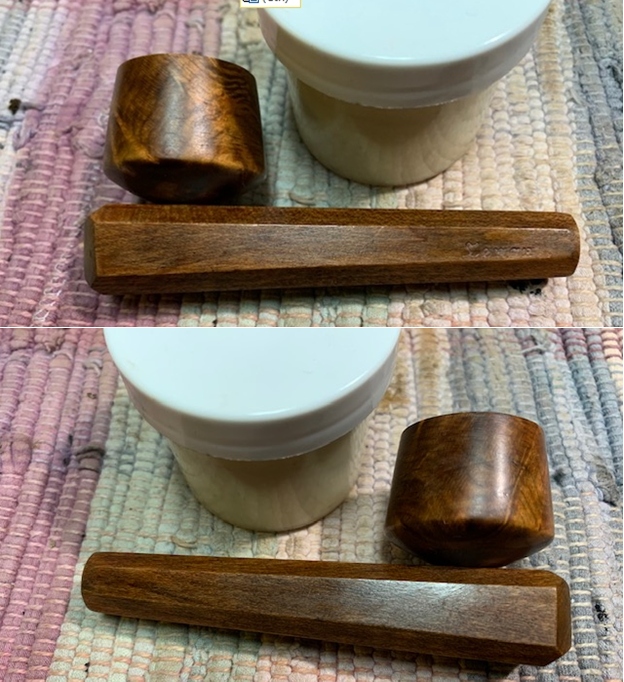
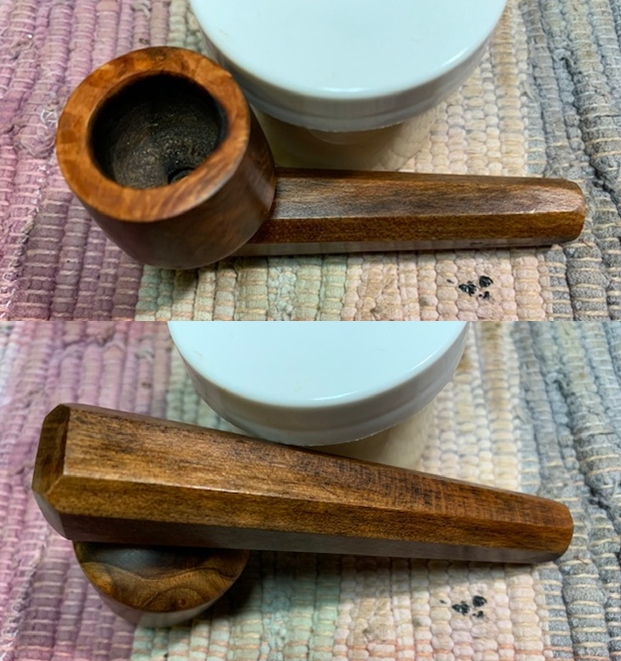
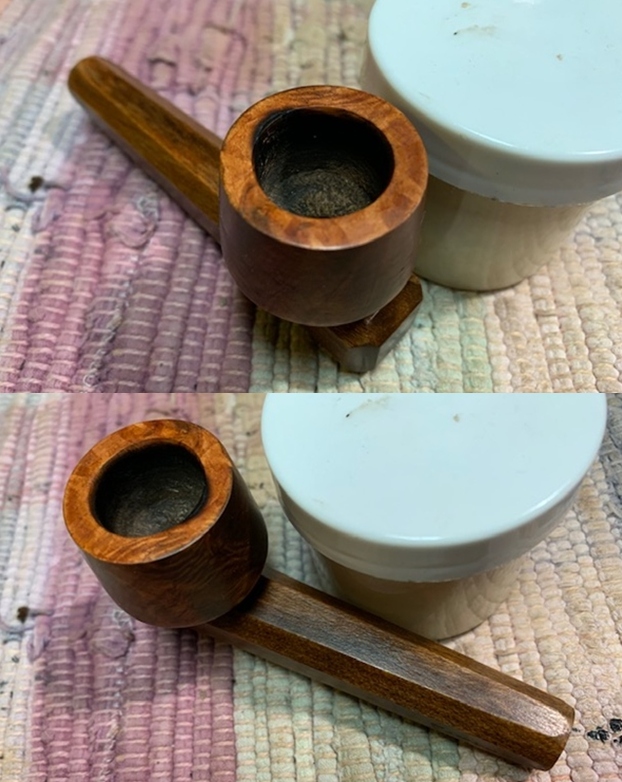
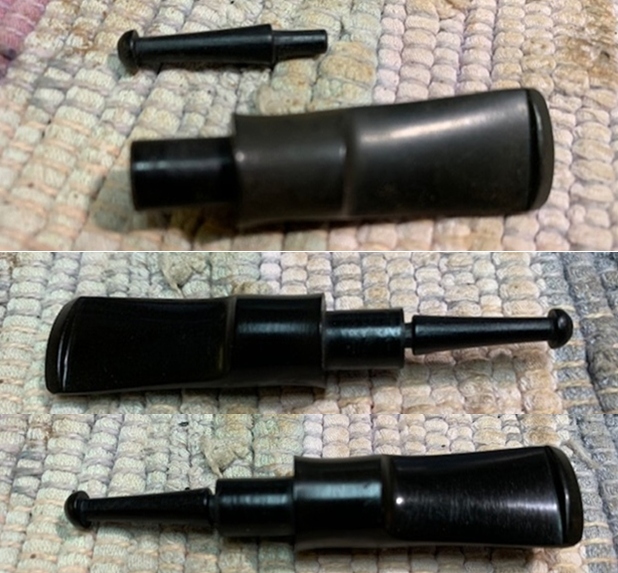
Another Bizarre & Interesting System Pipe – A Lenox All Wood Pipe


Blog by Steve Laug

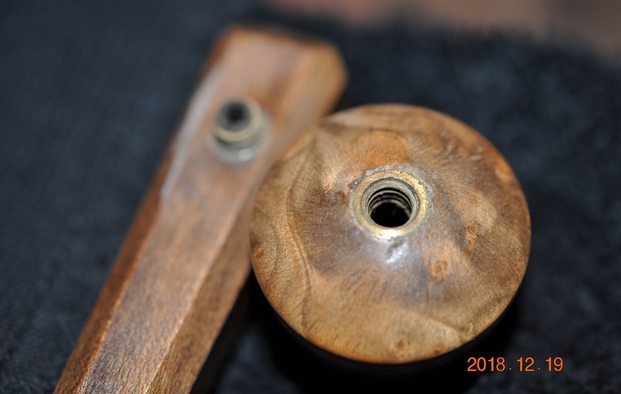
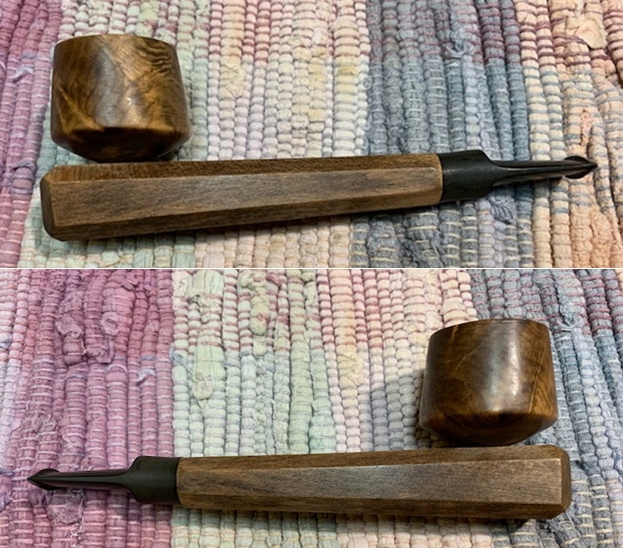
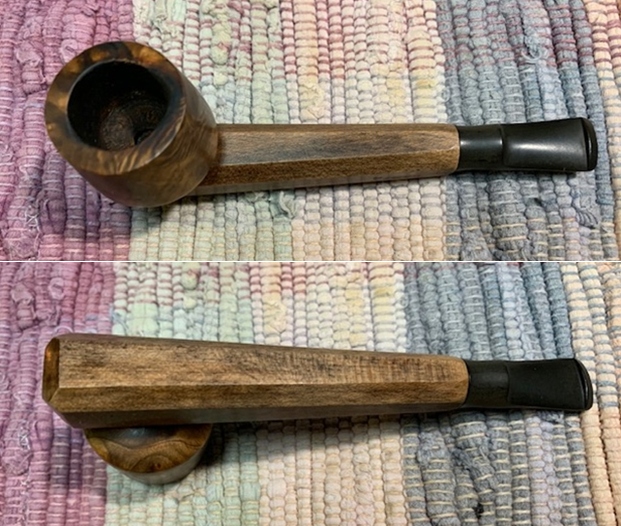
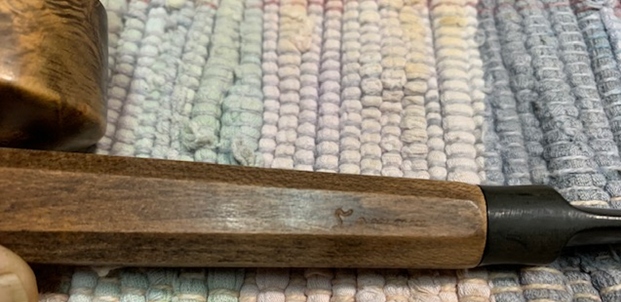
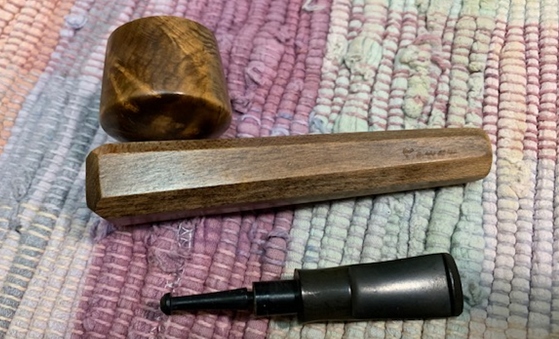
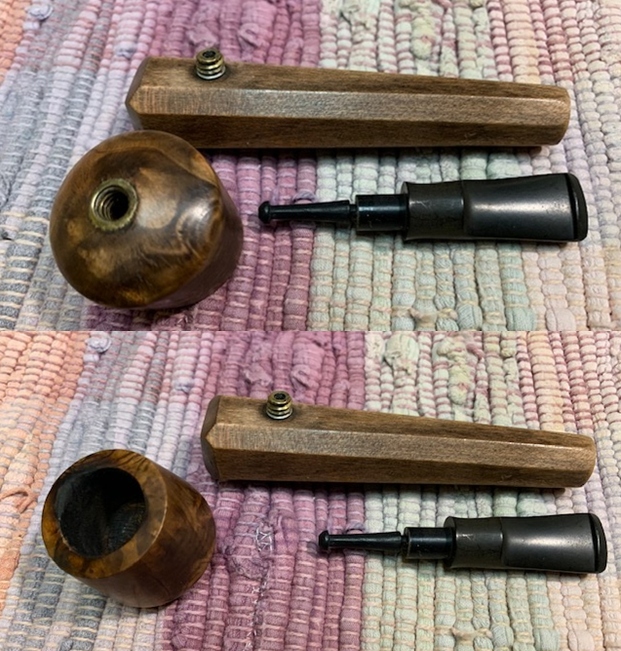
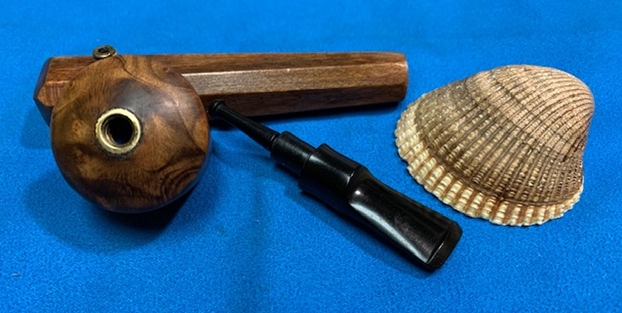
A few years ago Jeff picked up a Lenox from EBay that had a plastic wood finished barrel and a wooden bowl. It was an interesting looking piece. I restored it and have it in my collection of unusual pipes. When he saw this one he was drawn to it because it was all wood. The barrel and bowl were both wood. The internals were the same as the previous pipe. He picked it up because of it being all wood. He can’t remember where it came from but he remembers finding it. It is now on the work table after sitting here for almost a year. The pipe was dust and dirty. There was a thick cake in the bowl and a lava overflow on to the rim top. There appeared to be burn damage on the back inner edge and rim top that would need to be dealt with. The wooden barrel was dirty and dusty but otherwise in good condition. The bowl screwed onto the barrel and seemed to align well. The barrel is stamped Lenox on the left side of the barrel near the stem. The wood of the barrel and that of the bowl were stained to match each other well. The stem was inserted in the end of the barrel and was in good condition. There was some light oxidation and tooth marks and chatter on both sides near the button. Jeff took the following photos of the pipe before he sent it to me. It looks a lot like a wooden version of a Kirsten — at least externally. Jeff took some photos of the rim top and bowl to give an idea of the extent of the cake and the damage to the inner edge of the bowl at the rear of the pipe. You can see the damage and the lava coat on the top. The stem photos show the light oxidation and tooth marks and chatter on both sides near the button.  He took photos of the sides of the barrel and the bowl. The grain on this wooden barrel and bowl is quite unique. It is obviously not briar but I am not sure what the wood is. He removed the bowl from the barrel and took a photo.  His photo shows the threads in the bowl and the metal threaded extension on the top of the barrel. I turned to the blog I had written on the previous Lenox pipe and read what I had found out when I worked on that pipe (https://rebornpipes.com/2016/10/30/a-bit-of-the-bizarre-and-interesting-restoring-a-lenox-system-pipe/). I include that information below.

I was not familiar with the Lenox brand so I did some research to see what I could find out. There was not much information on the brand online until I turned to one of my favourite sites for information on odd and unusual metal pipes – smokingmetal.com

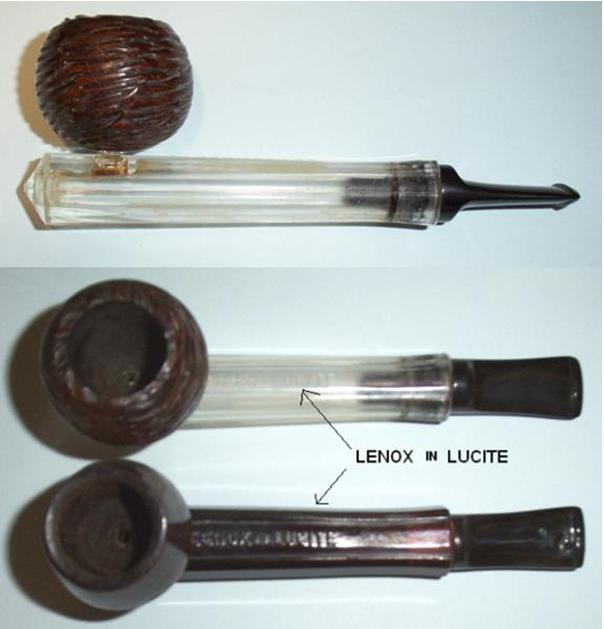
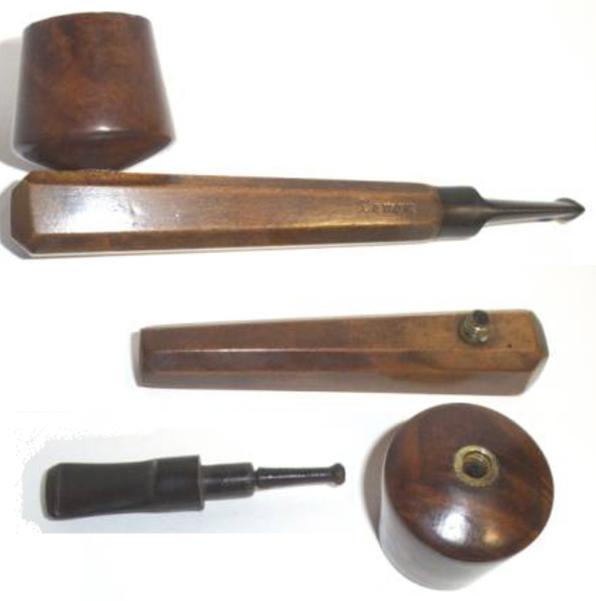
I found the brand listed in three variations. The first of them was a Lenox made of Lucite (ed. By Lucite I assume that barrel is actually made of Perspex so in the information below I have edited it to read that). The link for the brand is: http://smokingmetal.co.uk/pipe.php?page=82. The site has this to say about the Perspex version of the pipe. I quote: “Hard to see the purpose of this one. There would be no significant extra cooling and there is no end plug to remove for ease of cleaning. It is stamped LENOX in the perspex top of barrel. (ed. I have included two photos from the site on the Lucite version of the pipe.) Centre image shows two colour versions. The dark version does not appear to be the result of discolouration by tar etc. These pipes were certainly on sale in 1951. The overall length 5 5/8 inch (143 /m).The site also had photos of the Lenox with a wooden barrel and wooden bowl. The metal barrel is stamped LENOX on the top of the barrel and a threaded bowl was screwed onto the top. The bowl had a brass insert in the bottom and it threads onto the nipple on the barrel. The following link has photos of the pipe: http://smokingmetal.co.uk/pipe.php?page=150.Jeff had cleaned up the pipe with his usual penchant for thoroughness. He reamed the pipe with a PipNet pipe reamer and removed the rest of it with a Savinelli Fitsall Pipe Knife.  He scrubbed the bowl with undiluted Murphy’s Oil Soap with a tooth brush. He rinsed it under running warm water to remove the soap and grime. He cleaned out the inside of the barrel and the airway in the stem with alcohol, cotton swabs and pipe cleaners. He soaked the stem in Before & After Deoxidizer and rinsed it off with warm water. I took photos of the pipe once I received it.  I took photos of the bowl and rim top after the cleanup. You can see the extent of the damage on the backside of the edge and rim top. The bowl is very clean. The stem looks very good. The light chatter and marks will easily come off.I took a photo of the stamping on the left side of the shank. It reads as noted above.I unscrewed the bowl from the barrel and took the stem out of the end. The next three photos below show the “exploded” view of the pipe. The rim darkening in the first photo needed to be cleaned up. I decided to start my work on the pipe by addressing the damage to the rim top and inner edge. The damage was quite extensive so I started by topping the bowl on a piece of 220 grit sandpaper. Once I had removed some of the damage I rebuilt that portion of the top and edge with the dust from the sanding and super glue.   I cleaned up the inner edge with a folded piece of 180 grit sandpaper to smooth out the repair and then retopped the bowl to remove the buildup from the repair. Once I finished it was better. The bowl was back in round and the darkening was minimized on the top.  I polished the bowl and rim top with micromesh sanding pads – dry sanding with 1500-12000 grit pads. I wiped the bowl down with a damp cloth after each set of sanding pads.  I stained the bowl and the barrel with an Oak Stain pen to blend in the repairs with the rest of the bowl. The Oak stain highlighted the grain and tied the parts together. I put the pipe together and took photos of it at this point in the process.   I rubbed the bowl and shank down with Before & After Restoration Balm. I worked it into the surface of the bowl sides and shank with my fingertips to clean, enliven and protect the briar. I let the balm sit for 15 minutes and then buffed with a cotton cloth to raise the shine. The Balm did its magic and the grain stood out.   I pulled the pressure fit stinger out of the tenon and ran a pipe cleaner through the stem. It came out very clean – yet another testimony to the great job my brother does in his clean up. I put it back in the tenon and took two close-up photos of the stem to show the really clean condition the stem was in. All that needed to happen was to polish it.I polished the stem with micromesh sanding pads – dry sanding it with 1500-12000 grit pads. I rubbed the stem down with Obsidian Oil between each set of three pads. I polished the stem with Before & After Pipe Polish – both Fine and Extra Fine. I rubbed it down with a final coat of Obsidian Oil and hand buffed it.   The wood is clean and really came alive. The rich reddish brown coloured stain gave the grain a sense of depth with the polishing and waxing. I put the pipe back together and buffed it on the buffing wheel with Blue Diamond polish to bring a shine to the surface. I gave the bowl, barrel and the stem several coats of carnauba wax. I buffed the bowl, barrel and stem with a clean buffing pad to polish the wax coats. I hand buffed it with a microfibre cloth to deepen the shine. The finish unique pipe is shown in the photos below. The bowl and barrel and the bowl match very well and look like they may well have come from the same piece of wood.  The finished Lenox System Pipe has its own beauty and feels great in the hand and looks very good. Give the finished pipe a look in the photos below. The dimensions of the pipe are Length: 5 ½ inches, Height: 1 ¾ inches, Outside diameter of the bowl: 1 ¼ inches, Chamber diameter: ¾ of an inch. The weight of the pipe is 34grams/1.20oz. I will be adding it to the rebornpipes store in the US Pipe Makers section if you are interested in adding it to your collection. Thanks for reading this blog and my reflections on the pipe while I worked on it. There are many more to come!

This Long Pencil Shank Viborg French Made Lovat is a real Beauty


Blog by Steve Laug

I woke up to the sound of something large jumping on the roof next to our bedroom window around 4:30am this morning. That gave me an early start at the work bench. I have to tell you that on days like today I miss my old supervisor Spencer who would greet me no matter what time and beg for a treat… strange to not have him here. Ah well time to work. The next pipe, the second one on the table today, came to us in a group of pipes that we picked up through an online auction in 2017 in Wilder, Idaho, USA so it has been sitting here for a while. Even though the finish was a dirty and worn it had some charm showing through the grit and grime of the years. On the left side of the shank it was stamped Viborg [over] Made in France. The pipe is a long pencil shanked pipe with an elliptical shaped bowl. The saddle stem would make it a long Lovat but the stem is also long! The finish is filthy with grime and oil ground into the briar of the bowl and shank sides. The bowl had a thick cake and there was an overflow of lava on the rim edges. There was some damage to the inner edge of the bowl as well. The stem was a vulcanite saddle stem that was oxidized, calcified and had tooth marks and chatter on both sides ahead of the button. Jeff took some photos of the pipe to show its overall condition before he started his cleanup work. He took a photo of the rim top and bowl to give a clear picture of the thickness of the cake and the lava and dust ground into the rim top. You can also see the damage to the inner edge of the bowl and the burn marks on the top back. He also took photos of the top and underside of the stem to show the chatter and tooth marks. Otherwise the stem is quite clean. Jeff took photos of the sides and heel of the bowl to give a picture of what the briar around the pipe looked like. There are a lot of white putty fills on the right side of the bowl and on the right and underside of the shank. He took a photo of the stamping on the shank. It reads as noted above and is clear and readable. The pipe is a bit of a mystery to me. The Viborg name sounds like it should be Danish but the pipe is stamped Made in France. I looked on Pipedia and Pipephil’s site and nothing was listed for the brand on either one. Perhaps one of you know the brand and could shed some light on it for us all. Thank you!

Jeff had cleaned up the pipe with his usual penchant for thoroughness. He reamed the pipe with a PipNet Pipe Reamer and cleaned up the remnants with a Savinelli Fitsall Pipe Knife.  He scrubbed the bowl with undiluted Murphy’s Oil Soap with a tooth brush. He worked over the debris on the rim top and was able to remove it. He rinsed it under running warm water to remove the soap and grime. He cleaned out the inside of the shank and the airway in the stem with alcohol, cotton swabs and pipe cleaners. He soaked the stem in Before & After Pipe Stem Deoxidizer and rinsed it off with warm water. He scrubbed the stem with Soft Scrub and cotton pads to remove remaining oxidation on the ferrule and the stem. He rinsed it with warm water and dried it off. I took photos of the pipe once I received it. It really looked good.  The rim top and the inner edge of the rim were clean but the damage was very evident. The stem had remaining oxidation and a few small tooth marks and chatter on both sides near the button. I took a photo of the stamping on the underside of the shank. It was clear and read as noted above. I removed the stem and took a photo of the pipe to give a sense of the whole. The pipe has a vulcanite saddle stem. I decided to address the damaged white putty fills first. I cleaned up the area in the fills and then replaced them with briar dust and super glue. It tends to turn the repair dark but anything would look better to me than the white spots on the bowl and shank.   When the repairs had cured I flattened them with a small file and then smoothed them out with a folded piece of 220 grit sandpaper. I wanted to start the process of blending them into the surrounding briar so I wanted them smooth to touch.   With that finished I wanted to address the damage to the rim top and inner edges of the bowl. I topped the bowl on a topping board with 220 grit sandpaper. I worked over the inner edge with a folded piece of 220 grit paper. The rim top and edges looked considerably better once I was finished.   To help mask the fills on the bowl and shank and to make the grain stand out better I stained the pipe with a black aniline stain. I flamed it to set the stain and repeated the process to ensure good coverage. Once it had cured I wiped down the bowl with isopropyl alcohol to begin the process of removing the black from bowl while leaving it in the grain.   I polished the bowl and the rim top with 1500-2400 grit micromesh sanding to remove more of the stain and make the grain stand out more.   Once I had finished the sanding I buffed the pipe with red Tripoli and then brought to the worktable for the top coat of light brown stain. I applied the stain and flamed it. I repeated the process until I had proper coverage. I buffed the bowl with Blue Diamond on the buffing wheel and then brought it back to take it through the entire range of micromesh sanding pads – 1500-12000 grit pads. I wiped the bowl down after each pad to remove the sanding dust. I rubbed the bowl and shank down with Before & After Restoration Balm. I worked it into the surface of the bowl sides and shank with my fingertips. I used a horsehair shoe brush to work it into the plateau on the rim top and shank end. The product works to clean, enliven and protect the briar. I let the balm sit for 15 minutes and then buffed with a cotton cloth to raise the shine. I polished the vulcanite stem with micromesh sanding pads – 1500-12000 grit pads. I wiped it down with a damp cloth after each sanding pad. I used Before & After Pipe Polish – both Fine and Extra Fine to further polish the stem.    This interesting French Made Long Pencil Shank Viborg Lovat with a vulcanite saddle stem is a great looking pipe now that it has been restored. I put the stem back on the bowl and buffed the pipe with Blue Diamond on the buffing wheel using a light touch on the briar. I gave the bowl and the stem multiple coats of carnauba wax on the buffing wheel and followed that by buffing the entire pipe with a clean buffing pad. I hand buffed the pipe with a microfiber cloth to deepen the shine. The finished French Made Viborg Lovat fits nicely in the hand and feels great. Give the finished pipe a look in the photos below. The dimensions of the pipe are Length: 6 ¾ inches, Height: 1 ½ inches, Outside diameter of the bowl: 1 ¼ x 1 3/8 inches, Chamber diameter: ¾ of an inch. The weight of the pipe is 23grams/.78oz. I will be adding it to the rebornpipes store shortly in the French Pipe Makers Section. Thanks for reading this blog and my reflections on the pipe while I worked on it. There are many more to come!


Recommissioning an Interesting Belgian Hilson Fantasia Block Meerschaum Lined Billiard


Blog by Dal Stanton

Thanksgiving travels are now completed with us visiting kids and grandchildren in St. Louis and Nashville and I’m now back at the worktable in Golden, looking at an interesting pipe.  Daniel was bold to commission 7 pipes from the For “Pipe Dreamers” Only! collection and with 3 completed, the fourth is now on the table, a Meer lined Hilson Fantasia.  I acquired it along with another commission of Daniel, the Paul Viou Plume (See: Discovering the Vintage of a Paul Viou ‘Feather’ with the Help of Sebastien Beaud of Genod Pipes of St. Claude) from a Lot I acquired from an eBay seller in Paris.  The pictures show the French Lot of 50 and the Hilson marked by the arrow in the picture below.The Hilson is next on the worktable and I take some pictures to get a closer look. The Hilson name is not found on the shank, but the stem.  On the right shank flank is imbedded, BLOCK [over] MEERSCHAUMLINED.  To the right is the shape number, ‘7’. The stem’s left side is stamped a half ghosted, HILSON [over] FANTASIA.  This is my first opportunity to work on a pipe with the Hilson mark and my first impression of it drew mixed reviews – what is the material this is made of?  I discover in a quick look to Pipedia’s article that this name finds its origins in Belgium but after financial difficulties was acquired in the early 1980s by the Dutch consortium, Elbert Gubbels & Zonen B.V., which later acquired the Big Ben name from England and started the Royal Dutch Pipe brand.  I think the best short description of the Hilson name I initially found in Pipephil.eu but later discovered it originally came from Estervals Pipe House website:

 In 1846 a German named Jean Knödgen started the production of clay pipes in Belgium. At the end of the 19th century Jean Hillen (married into the Knödgen family) took over the company and developed the idea of also producing briar wooden tobacco pipes in his factory. He had some suppliers from the French Jura district turn some bowls which he then finished himself. Some time later he took up the complete production process of briar wooden tobacco pipes so he did not have to depend on others.

Jean Hillen had 2 sons: Jos Hillen who was responsible for sales and Albert Hillen who was responsible for the production of pipes. Albert was also an interpreter in the English army during WWII and he succeeded in establishing many international contacts. Thus they were soon able to export the first pipes manufactured in Belgium to countries all over the world with the brand name HILSON (Hillen and sons).

In 1980 the Hillen Pipe factory from the Belgium-Limburg town of Bree was purchased by the Royal Dutch Pipe Factory where the production of Hilson pipes was continued, carefully observing the traditional craftsmanship.

The link to the Estervals Pipe House website I found in a rebornpipes posting in which Steve’s research and summary of the Hilson name provides a great overview of the Fantasia.  The title of this rebornpipes.com writeup resonates with my first impressions and sets the table for a great summary:  Is it really a plastic smoking pipe? What is a Hilson Fantasia?

From my research on the web I found that the Hilson Fantasia, made in Belgium originally came out as a meerschaum lined pipe with an outer bowl made of a new material that they called pipenite. In 1962 it came out in what they called ivory white and in a colour they called tortoise. In 1963 they seemed to have added the option of a black pipenite bowl. From what I can find out about the material they call pipenite, it was a specially designed polyester resin. It was light weight and fairly indestructible. The block meerschaum insert was something that Hilson turned into a specialty. (I have restored some beautiful briar pipe with the Double Ecume or meerschaum liners as well.) These colourful resin pipes look like a product of the 60’s and in my research on Chris’ Pipe pages, http://pipepages.com/hilson.htm I found them in catalogues from that era. The swirled materials of the bowl gave the pipe a 60’s psychedelic look. I have included a catalogue page from a 1962 Wally Frank Catalogue that was on the pipepages site. The write up on the Hilson Fantasia is entertaining to read in terms of the sales pitch that is delivered.

Unfortunately, Chris’ Pipe Pages that Steve references above is now defunct, but the Pipedia Hilson article has the early 60’s Fantasia add Steve references which follows containing the great pipe pitch as the ‘Most Beautiful Pipe in the World’!  Who could resist having a Fantasia in one’s collection!When I first took a close look at the Hilson Fantasia chosen by Daniel, I wondered what the butterscotch colored material was – plastic?  Steve’s research revealed that the ‘pipenite’ described in the Wally Frank add is a specially designed polyester resin which is practically indestructible.  The other noteworthy characteristic Steve referenced from the add is the quality Meerschaum block used in the Fantasia line.  The add also makes a point regarding the long, smoking condenser which was Hilson’s contribution to the pipe world’s ‘holy grail’ – the dryer, cooler smoking experience. The lower inset box in the add above shows the #7 as among a large offering of shapes by Hilson equipped with the condenser.

With a better understanding of the history of the Hilson Fantasia on my worktable, I look closer at its condition.  The Block Meerschaum chamber and rim are covered with a thick cake buildup with the lava over the rim.  This needs cleaning to give the Meerschaum a fresh start.   I’ve lightened the picture to enable the black surface to be visible.The stem has deep oxidation, and the bit has heavy tooth chatter on both upper and lower bit.  The ‘Pipnite’ surface is dirty and should clean up well without problem.  The only question I have is what first appeared as a crack in the polyster acrylic resin bowl but is most likely a scratch.  The question is, how best to address this, if at all?  The glassy surface probably does not respond well to sanding or if I did sand the surface or buff with a compound to erase the scratch, will the scratching of the abrasives (papers, pads or compound) be able to be removed?  Or will sanding inevitably leave the highly glossed surface dulled? If this is the case, then any attempt to sand out the scratch will leave the repair area standing out from the rest of the Pipenite surface.  My guess now is that it is an ‘all or nothing’ proposition – either sand/buff the whole stummel or not at all.  With the question of the approach to the stummel a question, I decide to send a note to Steve to get his feedback on the behavior of Pipenite if sanded?  While waiting for Steve’s response, I press on.

The cleaning of this Hilson stem began while I was still in Bulgaria and these pictures record the cleaning of the stem.  Starting with 0000 grade steel wool, I rub and buff the long, heralded Hilson condenser. It spruces up the nickel condenser nicely.Following this, only a few pipe cleaners dipped in isopropyl 95% clean the internal stem airway.Next, a ‘Soft Scrub’ product gets a head start breaking up the oxidation imbedded in the stem surface before continuing the cleaning by giving the stem a Before & After Deoxidizer soak.  While protecting the Hilson stem stamp, using 0000 grade steel wool wetted with the CIF, the oxidation is mitigated. To further the cleaning of the stem, it joins other stems in the queue in a Before & After Deoxidizer soak.  The stem soaks for several hours.After the soak is completed, the stem is fished out of the Deoxidizer allowing the fluid to drain off.  A cotton pad wetted with isopropyl 95% is then used to wipe away the excess Deoxidizer from the stem surface.  This is followed by using a few pipe cleaners, also wetted with isopropyl 95% to clear the Deoxidizer from the internal airway.The stem’s rejuvenation is commenced using paraffin oil and a cotton pad.  The stem looks good.Earlier I sent a note to Steve to get his input on how best to approach the Pipenite surface scratch and the kind of material Pipenite is?  His response was helpful in describing the universal lack of consensus on what ‘Pipenite’ is!  Here’s Steve’s first response:

Hey Dal

The material on the Fantasia is described as everything from Bakelite to epoxy resin in a multitude of places. Others have called it plastic resin. some even fiber glass. To me nothing fits better than the resin concept… not sure about epoxy but everything about it is resin. It is not bakelite for sure…

Sanding the pipenite or resin leaves scratches that are nearly impossible to remove. I polished out a lot of scratches with my buffer and blue diamond polish and succeeded in not losing the lustre. Personally, I would buff it out best you can and leave it alone… war wounds from its travels.

S

To refresh my understanding of the unique composition of resin, I turn to a helpful Wikipedia article:

In polymer chemistry and materials science, resin is a solid or highly viscous  substance of plant or synthetic origin that is typically convertible into polymers.[1] Resins are usually mixtures of organic compounds. This article focuses on naturally occurring resins.

Plants secrete resins for their protective benefits in response to injury. The resin protects the plant from insects and pathogens.[2] Resins confound a wide range of herbivores, insects, and pathogens, the volatile phenolic compounds may attract benefactors such as parasitoids or predators of the herbivores that attack the plant.[3]

Steve followed with another email with links from sites like Pinterest, Etsy, and Worthpoint, which are sales platforms with examples of different Hilson Fantasia offerings and the varied descriptions of the pipes running the gambit as Steve described above. I enjoyed looking at the Hilson Fantasias for sale on these sites which were of the ‘tortoise shell’ variety – nice.  The collage below shows these examples.These examples reminded me of another Hilson Fantasia in my Pipe Steward inventory that also is a tortoise shell but has a significant crack in the stummel, so it never made it to the For “Pipe Dreamers” Only!  online offerings – I just didn’t know what it was – or whether it was worth the effort being a ‘plastic’ pipe?  I might give this Hilson another look!The tortoise shell is attractive, but the description by Steve that Pipenite is ‘practically indestructible’ found an example expanding ‘practically’!  I still believe that Daniel’s Hilson Fantasia is marred by a scratch in the polyester resin shell, even if it is a trauma crack, perhaps from being dropped (?), it doesn’t appear to be such to question the pipe’s integrity with the Pipenet resin material.  Turning now to the Hilson Block Meerschaum stummel, I start with clearing the Block Meerschaum chamber of the accumulation of carbon cake.  As a reminder, Meerschaum does not need a protective layer as with briar pipes.  It is best to keep the Meerschaum totally clean of buildup.  In my own Meerschaums, after each use my practice is to gently scrape the chamber with a folded bristled pipe cleaner.  This cleans the surface nicely keeping the Meerschaum in good shape.  To allow a cake buildup can cause the Meerschaum to crack in time.  Carbon cake expands differently from Meerschaum when heated and this can cause stressing on the Meerschaum.  I take a couple pictures to mark the start of the cleaning process.The aft section of the rim reveals the lighting practices of the former steward – drawing the flame over the back.  The crusted lava cake has totally covered the Meer rim lining and the Pipenet portion, too.  Cleaning is needed to show what’s beneath.With Meerschaum, using my usual Pipnet Reaming Kit with the blade heads is not good.  The torque created by this reaming approach can crack the Meer.  Instead, using the slow, patient, less intrusive approach, the chamber wall is gently scraped using the Savinelli Fitsall Tool.The Fitsall Tool also does well to begin clearing the rim of lava flow.  The approach is gentle!  I then transfer to the sharper edge of the Winchester pocketknife.  With the knife, the approach is more to ‘pull’ the blade carefully over the surface rather than to push the blade.  I’m careful not to gouge the softer Meerschaum.    With the rim scraping looking good, I transition to sanding the chamber by wrapping 240 grade sanding paper around a Sharpie Pen.  I then continue the sanding on the rim using a small piece of 240 paper.  I sand the rim gently and remove the lava and clean the rim nicely.     To complete the main cleaning of the Meerschaum lining and finish, I wipe the bowl with a cotton pad wetted with isopropyl 99%.  In Bulgaria, I was able to find isopropyl at 95% purity.  Now in the US, I was able to find 99% which is about a pure as one can get.  Switching now to the external ‘Pipenite’ surface, undiluted Murphy’s Oil Soap is used to scrub with a cotton pad.  The surface, as expected, cleans up very nicely.  To guard the Meerschaum lining, instead of rinsing under a tap, I wet a cotton cloth and wipe the bowl to rinse off the soap. Next, the internal mortise is cleaned using several cotton buds dipped in isopropyl 99% and one pipe cleaner.  After a time, the buds emerge lighter and it’s’ time to move on.  Cleaning completed.The stem now awaits attention.  The stem cleaned up nicely from the thick oxidation.  Even though the HILSON FANTASIA stem stamping was protected during the process, it appears even more ghosted now.  I’ll continue to protect this remnant by covering the stamping with painters’ tape during the next stages of sanding.Both the upper and lower bit have minor tooth chatter remaining along with a bite compression.  I’ll begin to minimize the damage by the heating method.  Vulcanite, a rubber compound, is an amazing material.  Using a Bic lighter to paint flames on the bit, the heating causes the expanding of the vulcanite allowing it to regain much of its original composition.  After several ‘flaming’ cycles, a few more on the lower bit, the comparison of before and after shows a distinct improvement with upper and lower.  Using a piece of 240 sanding paper, I sand the residual tooth chatter which is dispatched without difficulty.  I also refresh the button with a flat needle file and sand it with 240.  From the 240 paper and file working on the bit and after placing tape over the stem stamping, the sanding is furthered first by wet sanding the entire stem with 600 grade paper.  The 600 paper is followed by applying 0000 grade steel wool.  Next, the full regimen of micromesh pads is applied to the stem.  Starting with pads 1500 to 2400 the stem is wet sanded.  This is followed by dry sanding with pads 3200 to 4000 and 6000 to 12000.  Between each set of 3 pads, Obsidian Oil is applied which rejuvenates the stem and helps to prevent future oxidation. The pop in a freshly micromeshed stem is nice!   After the micromesh cycles are completed, the Hilson Fantasia stem and stummel are reunited to get a look at the progress. I discover that the union of tenon and mortise reveal a bit too much tightness.  I know that the Pipenite is tough, but I don’t want to test it and inadvertently crack the shake trying to force the tenon in the mortise.  To reduce the mortise pressure, 0000 steel wool is first used to see if this will clean the tenon allowing a seating.  While pinching the tenon with the steel wool, I then rotate the stem to create the abrasion.  After using the steel wool, the fit is tried again, and it remains too tight.Next, 240 is employed in the same way to reduce the pressure by sanding the tenon.  This does the trick.  The mortise now receives the tenon snugly.   I finish the tenon smoothing with 600 paper and 0000 steel wool and reunite the Hilson stem and stummel.Next, after mounting a cotton cloth buffing wheel on the rotary tool, the speed is set to about 40% full power and Blue Diamond compound is applied to stem and stummel.  I start with the Pipenite stummel with a bit of fear and trembling.  Steve had used the compound on his Fantasia projects but the anxiety stewing in my mind was, will the Blue Diamond buff up the glossy surface or will it apply fine scratchings that become impossible to remove?  I gingerly start applying the compound with the Dremel’s cotton cloth buffing wheel and to my joy, the surface is responding very nicely to the fine tune buffing of the Blue Diamond.  I continue with the stummel then the stem.  I like the results. The gloss of the Pipenite is enhanced with additional glow and the removal of fine marks and scratches on the resin surface.Before applying wax to the pipe, I spruce up the BLOCK MEERSCHAUMLINED stamping on the right shank side with Rub ‘n Buff European Gold metallic paint.  The gold and the butterscotch hue of the stummel will go well.As the name implies, after rubbing some of the metallic paint with a toothpick over the lettering and number, I simply rub it off with the flat edge of a toothpick then a cotton pad.  The result is good.  The ghosting of the stem stamping leaves me with no hope of freshening it with white acrylic paint, so it remains as it is – bearing the wear of its service.After wiping the entire pipe with a felt cloth to remove residue compound dust, another cotton cloth wheel is mounted with the speed remaining the same.  Carnauba wax is applied to the entire pipe followed by a rigorous hand buffing with a microfiber cloth to raise the shine further.

This Hilson Fantasia Block Meerschaum Lined has transformed amazingly from being an interesting gimmick pipe to becoming an extremely attractive alternative pipe to briar.  The butterscotch hue of the bowl pops in relationship to quality Block Meerschaum lining. The added benefit is the ability of the Meerschaum to be used repeatedly without rest, unlike briars.  This makes for much fellowship!  The timeless classic lines of a Billiard make this Hilson Fantasia a great addition to a collection and possibly to add to one’s regular rotation.  Daniel commissioned this pipe and will have the first opportunity to claim it from The Pipe Steward Store benefitting the Daughters of Bulgaria.  Thanks for joining me!

Breathing New Life into a WDC Wellington Jumbo French Briar


Blog by Steve Laug

The next pipe on the work table came to us from a group of pipes that we purchased from an antique mall in 2018 in Newport, Oregon, USA. It is a large WDC Wellington Jumbo Pipe with a fancy hard rubber stem. The pipe is stamped on the left side of the shank and reads Wellington [over] French Briar separated by the WDC Triangle. The right side is stamped Made in U.S.A. There is a stamp on the metal shank cap/ferrule that reads Nickel Plated. This is a nice piece of briar with interesting grain all the way around the bowl. The finish had a lot of grime ground into it. There is also a large area of road rash on the front of the bowl where it has obviously been dropped on a hard surface. The bowl was moderately caked and there was a lava coat on the top and the inner edge of the rim. The rim top has deep scratches in the surface and the bowl appears to be out of round under the lava coat. The stem was oxidized, calcified and had tooth chatter and marks on the top and underside near the button. The bent stem had straightened over time and would need to be re-bent. The stem bore the WDC Triangle logo stamped on the top ahead of the saddle. It was also stamped Wellington in an arch under the triangle logo. The pipe showed promise but it was very dirty. Jeff took photos of the pipe before he started his cleanup work.    He took photos of the rim top and bowl to give a clear picture of the thickness of the cake and the condition of the rim top and beveled inner edges. You can see the cake in the bowl, the lava on the rim top and the damage to both the top and inner edge. He also took photos of the top and underside of the stem to show the oxidation, calcification and chatter and tooth marks.  There are also flecks of metal in the hard rubber stem that I have seen in pipes of this time period in the past.   Jeff took a photo of the right side and heel of the bowl to give a picture of what the briar looked like.He took photos of the stamping on the shank and the stem. It reads as noted above and is clear and readable. I turned to Pipedia’s article on WDC (William Demuth) pipes. It is a great read in terms of the history of the brand (https://pipedia.org/wiki/William_Demuth_Company). I have included one of the advertising flyers on the Wellington Jumbo below. Look at the price of this pipe when it was sold.Now it was time to work on the pipe. Jeff had cleaned up the pipe with his usual penchant for thoroughness. He reamed the pipe with a PipNet Pipe Reamer and cleaned up the remnants with a Savinelli Fitsall Pipe Knife.  He scrubbed the exterior of the pipe and bowl with undiluted Murphy’s Oil Soap and a tooth brush. He rinsed it under running warm water to remove the soap and grime. He cleaned out the inside of the shank and the airway in the stem with alcohol, cotton swabs and pipe cleaners. He soaked the stem in Before & After Deoxidizer and rinsed it off with warm water. I took photos of the pipe once I received it.   The rim top and edges of the rim were in rough condition. The rim top was chipped, scratched and had gouges in the surface. The inner edge of the bowl was out of round and had burn and reaming damage. The outer edge also showed nicks and damage as well. The stem surface looked very good with some tooth marks and chatter on both sides near the button.I took photos of the stamping on the shank. It is clear and readable as noted above. I removed the stem and took a photo of the pipe to give a sense of the whole. The stem is a fancy saddle version. I decided to start my work on the pipe by addressing the damage on the rim top and the edges of the bowl. I topped the bowl on a topping board with 220 grit sandpaper to remove the damage on the flat surface and clean up the edges at the same time. I worked over the out of round inner edge of the bowl with a folded piece of 220 grit sandpaper until I had brought it back to round. I gave it a slight bevel to take care of the burn damage and chipping. I decided to address the road rash on the bowl front next. There were deep gouges and nicks in the surface of the briar. Interestingly when Jeff cleaned the pipe some of them were raised. What was left behind would not be lifted any further. I filled in the remaining marks in the briar with clear super glue. Once the glue cured I sanded it smooth and blended it into the surrounding briar. I would polish it with micromesh when I worked on the rest of the bowl surface.   I polished the briar with micromesh sanding pads – dry sanding with 1500-12000 grit sanding pads. I wiped the bowl down with a damp cloth after each sanding pad.  The pipe was in such good condition that started by rubbing it down with Before & After Restoration Balm. I worked it into the surface of the bowl sides and shank with my fingertips. The product works to clean, enliven and protect the briar. I let the balm sit for 15 minutes and then buffed with a cotton cloth to raise the shine.     I set the bowl aside and turned my attention to the stem. I decided to deal with bending it to the proper angle first. I inserted a long pipe cleaner in the stem heated the stem with my heat gun until the rubber was flexible. I carefully bent it so that it matched the flow of the stem. I cooled it with running cool water to set the bend.  Once it cooled I inserted it in the stem and took photos. Now it was time to work on the tooth marks on the stem. I sanded them out with 220 grit sandpaper and started polishing the stem surface with 400 grit wet dry sandpaper. Note the white specks on the black rubber ahead of the button and on the button edge in the photo below. Those are actually bit of metal in the rubber. This was typical of pipes made during the war when recycled tires were used to make rubber stems.I polished the vulcanite stem with micromesh sanding pads – 1500-12000 grit pads. I wiped it down with a damp cloth after each sanding pad. I used Before & After Pipe Polish – both Fine and Extra Fine to further polish the stem. I touched up the gold stamping in the logo on the top of the saddle stem with Rub’n Buff Antique Gold. It is a great product and easy to apply. I rubbed it into the stem with a tooth pick and once it was well worked in I wiped the stem down with a soft cloth to remove the excess. The resulting stamp looked very good!   This WDC Wellington Jumbo French Made Bent Billiard with a the polished briar, polished nickel ferrule and fancy saddle stem is a great looking pipe now that it has been restored. The parts all come together to form a great looking piece. The beautiful grain that shines through the polished finish is stunning. I put the stem back on the bowl and carefully buffed the pipe with Blue Diamond on the buffing wheel. I gave the bowl and the stem multiple coats of carnauba wax on the buffing wheel. I buffed the entire pipe with a clean buffing pad which really brings the shine out with the wax. I hand buffed the pipe with a microfiber cloth to deepen the shine. The finished Wellington Jumbo fits nicely in the hand and feels great and will truly be a pipe to be smoked while sitting and reading or listening to music. Give the finished pipe a look in the photos below. The dimensions of the pipe are Length: 10 inches, Height: 2 ¼ inches, Outside diameter of the bowl: 1 ½ inches, Chamber diameter: 1 inch. The weight of the pipe is 93gr/3.25oz. I will be adding it to the American Pipe Maker section of the rebornpipes store soon. If you are interested in adding this pipe to your collection send me a message or an email. Thanks for reading this blog and my reflections on the pipe while I worked on it. There are many more to come!

Wow what amazing grain on this tired looking Selected Straight Grain Canadian


Blog by Steve Laug

The next pipe I have chosen is one that neither Jeff nor I remember picking up. It could have come to us through a trade for work on a pipe or it could have come from one of an earlier pipe hunts that either Jeff or I did. Either way, the long and short of it is that this is another pipe that we have no idea how it came into our hands. It is stamped on the left topside of the shank and reads faintly Selected[ arched over] Straight [over] Grain underneath that. The rest of the stamping is lost to overzealous buffing. While I was trying to figure out the stamping on it and finally was able to read the Selected  Straight Grain stamp I remember that I had worked on several with the same stamp in the past and had come understand that they were Comoy’s made pipes. The shape definitely looks like a Comoy’s Canadian shape. It was a nice pipe that showed some extraordinary grain.

Jeff had cleaned up the pipe with his usual penchant for thoroughness. He reamed the pipe with a PipNet pipe reamer and removed the rest of it with a Savinelli Fitsall Pipe Knife.  He scrubbed the bowl with undiluted Murphy’s Oil Soap with a tooth brush. He rinsed it under running warm water to remove the soap and grime. He cleaned out the inside of the shank and the airway in the stem with alcohol, cotton swabs and pipe cleaners. He soaked the stem in Before & After Deoxidizer and rinsed it off with warm water. I took photos of the pipe once I received it.   I took a photo of the rim top to show the interior the bowl and the rim top and inner edge. The rim top and edges were quite damaged with nicks, dents, darkening and burn marks. The vulcanite tape stem is in decent condition with light tooth marks on the top and underside near the button.  I took a photo of the top left side of the shank to try to capture the stamping that was there. It is too faint to pick up with my camera.I found a photo of the same shank stamp when I did a google search for Selected Straight Grain pipes. It perfectly matches the one that is barely visible on the pipe that I am working on now. It is faint but it is identical to that in the photo to the left.

I took the stem off the bowl and took a picture of the parts of the pipe to give a sense of the beauty of the grain on this pipe.Before I started my work on the pipe I wanted to double check the connection that my brain had made when I made out the stamping. I turned to a blog that I had written on the restoration of another Selected Straight Grain pipe (https://rebornpipes.com/tag/selected-straight-grain-pipes/). This is what I found.

…I did a bit of hunting online and read on Pipedia that these pipes were made by Comoy’s and were essentially “Specimen Straight Grain” (exceptional line of Comoy’s pipes). The Selected Straight Grain pipes were seconds to the Specimen line that exhibited some small flaw or sand pit. They were listed in the 1965 catalogue at $15 or $17.50 in Extraordinaire size.

I decided to begin my work on the pipe by addressing the damage to the rim top and edges. I topped the bowl on a piece of 220 grit sandpaper on a topping board. Once I had finished I used a folded piece of 220 grit sandpaper to rework the inner edge of bowl. It took some time but I was able to bring it back to a pretty clean condition.   I polished the briar with micromesh sanding pads – wet sanding with 1500-12000 grit pads and wiped down the bowl after each sanding pad. I carefully avoided damaging the already faint stamping.   I worked some Before & After Restoration Balm into the surface of the briar with my fingertips to clean, enliven and protect the briar. I let the balm sit for 15 minutes and then buffed with a cotton cloth to raise the shine. The photos show the bowl at this point in the restoration process. It looks quite nice at this point.  With that done the bowl was finished other than the final buffing. I set it aside and turned my attention to the stem. I polished it with micromesh sanding pads – wet sanding with 1500-12000 grit sanding pads. I used the pads to remove the tooth marks on the stem on both sides near the button. I wiped it down after each sanding pad with Obsidian Oil. I was just getting ready to post the final photos of the restored pipe when my daughter’s dog, Frankie came and climbed up on the desk top and laid down in front of me with his head on my arm. He has taken it upon himself to be my buddy when I am working on pipes.

With Frankie’s help I am posting these last photos of the pipe. This beautifully grained Comoy’s Made Selected Straight Grain Canadian is a great looking pipe now that it has been restored. The briar is clean and really came alive. The rich medium brown coloured stain gave the grain a sense of depth with the polishing and waxing. The grain really popped. I put the vulcanite stem back on the bowl and carefully buffed the pipe with Blue Diamond on the buffing wheel using a light touch on the briar. I gave the bowl and the stem multiple coats of carnauba wax on the buffing wheel. I buffed the pipe with a clean buffing pad to raise the shine. I hand buffed the pipe with a microfiber cloth to deepen the shine. The finished Selected Straight Grain Canadian is a beauty and feels great in the hand and looks very good. Give the finished pipe a look in the photos below. The dimensions of the pipe are Length: 5 ½ inches, Height: 1 ¾ inches, Outside diameter of the bowl: 1 ¼ inches, Chamber diameter: ¾ of an inch. The weight of the pipe is 26grams/.92oz. Thanks for reading this blog and my reflections on the pipe while I worked on it. Remember we are not pipe owners; we are pipemen and women who hold our pipes in trust until they pass on into the trust of the next pipeman or woman.


Fresh Life for a Savinelli Oscar Lucite 111KS Billiard


Blog by Steve Laug

The next pipe on the work table came to us 2018 from a fellow in Pocatello, Idaho, USA. It is a nice looking Billiard with cross grain and birdseye grain and has a Fancy Lucite half saddle stem. The Lucite stem fits the name on the left side Oscar Lucite. The bowl has a rich reddish brown colour combination that highlights grain. The pipe has some grime ground into the surface of the briar. The finish had a few small fills around the sides but they blended in fairly well. This pipe is stamped on the sides of the shank. On the left it reads Oscar [over] Lucite. On the right it has a Savinelli “S” Shield and next to that was the shape number 111KS [over] Italy. There is a thick cake in the bowl and an overflow of lava on the top beveled inner edge of the bowl. The rim top looks good but it is hard to be certain with the lava coat. There were some light tooth marks and chatter on both sides of the Lucite stem near the button. The pipe looks to be in good condition under the grime. Jeff took photos of the pipe before he started his cleanup. He took photos of the rim top to show the thick cake and the thick lava coat. It is hard to know what the condition of the rim top and edges is like under that thick lava. It is an incredibly dirty pipe but obviously one that was a great smoker. The acrylic half saddle stem had light tooth marks and chatter on both sides ahead of the button.   He took a photo of the sides and heel of the bowl to show the beautiful grain around the bowl and the condition of the pipe. You can see the grime ground into the surface of the briar. He took a photo of the stamping on the left side of the shank. It is clear and readable as noted above. On the underside of the shank it is stamped Savinelli Product. I turned first to Pipephil’s site to look at the Savinelli write up there and see if I could learn anything about the Oscar Lucite line (http://www.pipephil.eu/logos/en/logo-savinelli3.html). There was a listing for the Oscar Lucite and I did a screen capture of the pertinent section.I looked up the Savinelli brand on Pipedia to see if I could find the Oscar Lucite line and the 111KS Shape (https://pipedia.org/wiki/Savinelli). There was nothing that tied directly to the line I am working on. There is a detailed history of the brand there that is a good read. I also captured the shape chart and boxed in the 111KS shape in red. The shape is identical to the one that I am working on. The stem on this one is the original shape that was on the Lucite Line but there was no shooting star logo on the left side.It was time to work on the pipe. As usual Jeff had done a thorough cleanup on the pipe. He reamed the bowl with a PipNet pipe reamer and followed up with a Savinelli Fitsall pipe knife to remove the cake. He scrubbed out the mortise and the airway in the shank and the stem with alcohol, cotton swabs and pipe cleaners. He scrubbed the exterior of the bowl, rim, shank and stem with a tooth brush and Murphy’s Oil Soap to remove the oils and tars on the rim and the grime on the finish of the bowl. He rinsed it under running water. One of the benefits of this scrub is that it also tends to lift some of the scratches and nicks in the surface of the briar. He dried it off with a soft cloth. He cleaned the internals and externals of the stem with alcohol, pipe cleaners and cotton swabs. He scrubbed the stem with Soft Scrub all-purpose cleanser and rinsed it off with warm water and cleaned out the airway in the stem with alcohol. Other than the damaged rim top the pipe looked good.   I took a photo of the rim top and stem to show the condition. The rim top was in very rough condition. The rim top and the edges of the bowl had darkening, burn marks and some nicking. The Lucite half saddle stem had light tooth chatter and marks on both sides ahead of the button and on the button edges.  The stamping on the sides of the shank is clear and readable as noted above.     I removed the stem from the shank and took a photo of the pipe to give a sense of the whole. It is a nice looking billiard that should clean up very well. I started working on the pipe by dealing with the damaged rim top and edges. I topped the bowl with 220 grit sandpaper on a topping board. I worked over the rim top and inner bevel of the rim with 220 grit sandpaper. I smooth out the damage and gave the  rim top and edge a clean look that would polish out nicely. I wiped the rim top down with a damp cloth to remove the dust and debris.   I polished the briar with micromesh sanding pads – wet sanding with 1500-12000 grit pads and wiped down the bowl after each sanding pad.     I stained the rim top with an Oak stain pen to match the rest of the bowl. Once I buffed and polished the bowl it would be a perfect match. I rubbed the bowl and shank down with Before & After Restoration Balm. I worked it into the surface of the bowl sides and shank with my fingertips to clean, enliven and protect the briar. I let the balm sit for a little while and then buffed with a cotton cloth to raise the shine. The Balm did its magic and the grain stood out.  I polished the Lucite stem with micromesh sanding pads – 1500-12000 grit pads. I wiped it down with a damp cloth after each sanding pad. I used Before & After Pipe Polish – both Fine and Extra Fine to further polish the stem. The photo below shows the polished stem. This nicely grained Savinelli Made Oscar Lucite 11KS Billiard with Lucite half saddle stem is a great looking pipe now that it has been restored. The briar is clean and really came alive. The rich reddish, brown stains gave the grain a sense of depth with the polishing and waxing. The grain really popped. I put the vulcanite stem back on the bowl and carefully buffed the pipe with Blue Diamond on the buffing wheel using a light touch on the briar. I gave the bowl and the stem multiple coats of carnauba wax on the buffing wheel. I buffed the pipe with a clean buffing pad to raise the shine. I hand buffed the pipe with a microfiber cloth to deepen the shine. The finished Oscar Lucite Billiard is a beauty and feels great in the hand and looks very good. Give the finished pipe a look in the photos below. The dimensions of the pipe are Length: 5 ¾ inches, Height: 2 inches, Outside diameter of the bowl: 1 ½ inches, Chamber diameter: ¾ of an inch. The weight of the pipe is 46grams/1.62oz.Thanks for reading this blog and my reflections on the pipe while I worked on it. There are many more to come!

Discovering the Vintage of a Paul Viou ‘Feather’ with the Help of Sebastien Beaud of Genod Pipes of St. Claude


Blog by Dal Stanton

When I first laid eyes on this unique ‘Feather’ or ‘Plume’ shaped pipe, I debated adding it to my own personal collection and not posting it in the For “Pipe Dreamers” Only! collection, making it available for pipe men and women to commission.  Well, the Feather did find a place in the ‘Dreamers’ collection and Daniel eventually added the P. Viou Feather to his trove of commissioned pipes totaling 7(!) benefiting the Daughters of Bulgaria.  I acquired the P. Viou Feather from the French eBay auction block in 2018.  This ‘French Lot of 50’, which is what I have affectionately called it, has offered up several treasures – one restoration that became my first publication adding to Pipedia’s wealth of information (See: Discovering the History with the Reclamation of this Petite EPC Majestic Bent Horn Stem Billiard and for Pipedia contribution see: A. Pandevant & Roy Co.).  The picture of the Lot provided by the Parisian seller only created the urge to know what was hidden within the tangle of stems and stummels.  That I could see so many interesting shapes and horn stems supplied the impetus to acquire the Lot.  The P. Viou Feather is mostly hidden in the picture (arrow below left) and it wasn’t until later after the package arrived in Sofia and I gleefully sorted and grouped the pipes that I came to realize the treasure trove of pipes in this Lot.  The Feather grouping is pictured below.Looking more closely at the P. Viou Feather, I take some additional pictures. The nomenclature is worn and thin at points but generally recognizable.  On the left flank is stamped in fancy cursive ‘P’ [underscored] followed by ‘Viou’ which is punctuated with a flared underline.  The COM stamped on the right flank of the Feather stummel reads: St CLAUDE [over] FRANCE.  St. Claude is the pipe center of France and the birthplace of the production of briar pipes.  The horn stem is also stamped, P. VIOU.  This stamp is also thin, but I’m hopeful to refresh it later.     I had the opportunity of restoring another Paul Viou from the French Lot of 50 – a Churchwarden (See: Recommissioning a Vintage French Paul Viou Churchwarden of St. Claude).   There is scant information about the Paul Viou name on the internet that I could find.  Pipedia’s article of Paul Viou is brief:

From Pipes, Artisans and Trademarks, by José Manuel Lopes’

Paul Viou was the brand and name of a French artisan who sold his pipes by correspondence and then he was a pipe supplier for military institutions. He also made sculpted pipes and sometime used horn stems.

The brand is currently sold by Jacques Craen and made by Genod in Saint-Claude, after having also belonged to Paul Guilland and Vuillard. They are stamped P. Viou and made primarily for export.

This information is confirmed by Pipephil.eu with the addition of the date of 2006 when the Paul Viou name transferred to Sebastien Beaud of Genod.As I broaden my online research, I discover that Sebastien Beaud is an interesting story.  He currently is the owner of the Genod house of pipes in St. Claude and is a younger entrepreneur.  In trying to find out further information about Paul Viou, Genod information is prevalent in the research.  The Pipedia article dedicated to Genod of St. Claude is also interesting (See: Genod).  The Genod story began in 1865 when Comoy founded pipe production in St. Claude.  In 1923 the production is taken over by Georges Vincent and in 1939, son in law John Craen joined Vincent.  John Craen’s son, Jacques, joined the business in 1959 and took over the business in 1977 where he expanded the Genod name and opened the shop in St. Claude to visitors to observe the pipe production.

From the same Pipedia article: In 2006 the young pipemaker Sebastien Beaud started his work in Jacky’s factory. As Craen himself he took over the brand Viou to start with. In future he will take over the business in its entire and continue this sympathetic workshop in its traditional way.

In the excerpt above, the Paul Viou line is mentioned as continuing under Genod during the Craen period, then Sebastien Beaud took over the Viou line.  Unfortunately, this article nor the article in Pipedia dedicated to Paul Viou, provide much in the way of specific dating of the Paul Viou branding.

I’ve searched several forums for answers to questions regarding when the historical Paul Viou began production using this name?  The Paul Viou Feather, or Plume (French translation) appears to have some age.  The horn stem would suggest a dating in the 1940s during the rubber shortages of WW2.  Horn became a ‘go to’ material in place of rubber compound stems.  Yet, a question arises regarding this older dating when I discovered in Genod’s current offerings of pipes on its website an almost identical ‘Plume’ yet, not with a horn stem but an ebonite or vulcanite stem (See: Link). Also missing is the P. Viou nomenclature. Furthermore, more than many pipe manufacturers today, Genod’s quality offerings include many horn stemmed options.  I like this(!) but it brings into question the necessity of an older dating for the P. Viou on my worktable.With the foundational question being, when did the P. Viou name begin?  Was it before or during the Craen era of Genod?  Was the P. Viou stamp on this Feather an indicator of a pre-Genod production?  My experience with tracking down and nailing down French pipe production details has never been easy but always interesting!

Potentially to find answers about the dating of the Paul Viou name, I sent an email via the ‘Contact’ form provided on the Genod website.  I have been surprised in the past to receive responses from ‘Hail Mary’ requests to pipe houses in Europe and America.  We’ll see what happens.

Well, I am continually amazed at ‘names’ in the pipe world being accessible to folks like me!  The next day I received a reply from Sebastien Beaud, currently at the helm of Genod.  I include my original message with the replies that followed:

DAL:   Greetings,  Thank you in advance for your time! I restore vintage pipes and publish the restoration process and research online at www.ThePipeSteward.com. I have restored some Paul Viou pipes and have researched a lot and enjoy the connection of Paul Viou and Genod. However, there is very little information that I can find on the internet regarding Paul Viou, historically. Can you please provide any information about Paul Viou’s origins, when he lived, when the P. Viou name started being placed on pipes? My current restoration is a P. Viou Plume with a horn stem. I see that you still produce these shapes on your website but with Ebionite stems. I’m trying to determine the potential dating of this pipe but cannot find much information about when Paul Viou came onto the pipe scene. Thanks so much for your help in advance if you are able!

———–

Dear Dal,

Congratulations for your work and your website! All I know about Paul Viou is that as a former officer in the French army, he used to advertise his pipes in the army magazines.  So he used to sell a lot to the soldiers during the Algerian war, back in the 50’s / 60’s. He ran the business together with his wife Odette.  Their workshop was located right next to ours, and when they got old, Jacques Craen, started making pipes for them.  At the same time, Jacques Craen created the “Genod” brand to start selling directly to the smokers instead of selling to whole sellers. Genod is a tribute to his grandfather Georges Vincent-Genod (on his mother’s side) with whom he had learned and from whom he inherited the workshop. In the early 90’s, Jacques bought the Paul Viou brand and customers’ addresses file. I myself took over when Jacques retired, and kept Paul Viou’s name for a while, but it is the exact same product as a Genod pipe, so now I stamp all the pipes “Genod”.  I hope this helps.

Best regards,
Sebastien BEAUD
www.maitrepipier.fr
SARL GENOD VIOU
13 Faubourg Marcel – BP 145
39205 SAINT CLAUDE Cedex FRANCE
Tél. (+33) (0)3 84 45 00 47

———

DAL: Sebastien,  Thank you so much for responding to my inquiries! This information needs to be added to Pipedia. If I could ask one follow up question regarding the pipe on my worktable. The nomenclature is the cursive ‘P. Viou’ and COM: St. Claude, France. The horn stem is stamped, ‘P. Viou’. Can you venture a guess as to what period this ‘Plume’ was manufactured with this nomenclature and horn stem?   Before the Jacques Craen period (50/60s?) or when Jacques Craen was making them for Paul Viou (60/70s) or during the Genod period starting in the 70s but still using the ‘P. Viou’ stamp? I hope you can understand this! I’m simply trying to place this pipe in a time period. I’ve attached a few pictures if this is a help.  Again, much thanks.

———

Dear Dal,

I think this pipe has been made by Jacques Craen back in the 80’s (even though it could also be the 90’s or late 70’s).

Best regards,

Sebastien BEAUD

With deep appreciation to Sebastien Beaud for his time and for the information he supplied, I have a much better understanding of the Paul Viou name and a small piece of the man himself.  Valuable information added was regarding Paul Viou, the man.  He was formerly an officer in the French army – a military man but also a pipe man/entrepreneur.  Apparently after his time with the military and residing in St. Claude, he was undoubtedly very much a part of the ‘pipe world’ milieu and at one point added his hand to the pipe making industry.  With his connections in the military, he advertised his pipes in the military magazines of the time and in military institutions.
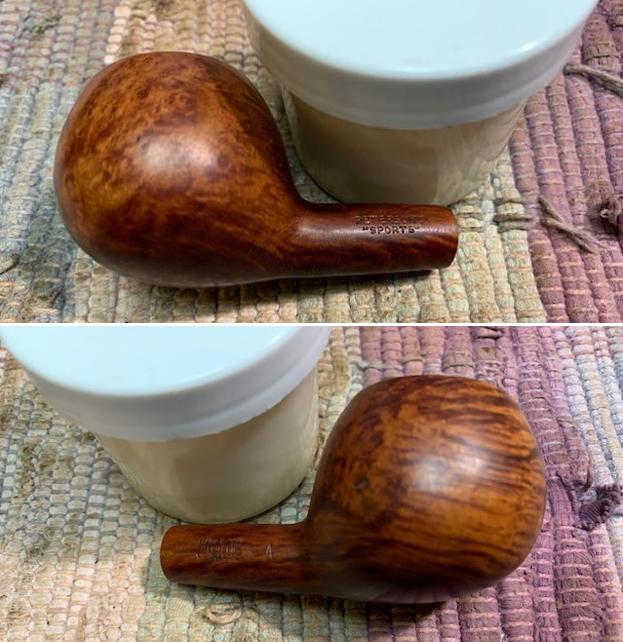
It is noteworthy that Sebastien pinpoints this activity during the Algerian War.  A quick search on the internet renders a Wikipedia article describing the war that was from 1954 to 1962 that found France engaged in a ‘decolonization’ war with the Algerian National Liberation Front and facing turbulent times at home with a war that garnered international attention.  The war gradually resulted in an independent Algeria – much resembling the turmoil of the Viet Nam conflict of the United States.  Paul Viou had developed his business selling pipes and during this difficult time, with French servicemen abroad, Paul Viou, along with the support of his wife, Odette, provided pipes for the troops via army magazine adds.  The personal relationship between Jacques Craen and Viou family is interesting – their shops were next door to each other and the aging of the senior Viou created a transition from Paul Viou’s actively working in the shop to his work being done by Jacques.  During this transition period, undoubtedly steps were taken to sign over the Viou name to Craen and the Vincent-Genod legacy.  Another transition alluded to by Sebastien’s words – the brand created by Jacques, “Genod”, was a tribute to his grandfather.  The Viou brand joined the Genod brand and again, this legacy was passed on to Sebastien Beaud.  The Viou name is no longer used to mark pipes, but the quality of the Viou pipe was brought under Genod craftsmanship.
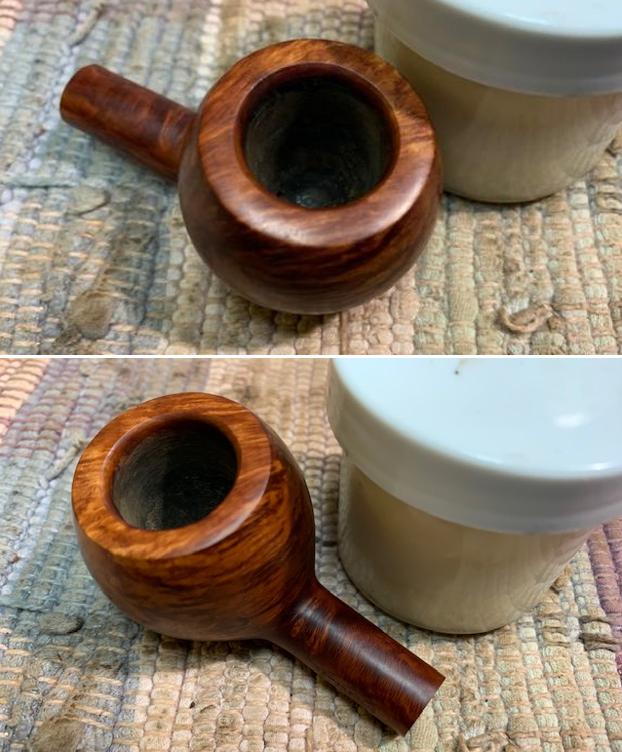
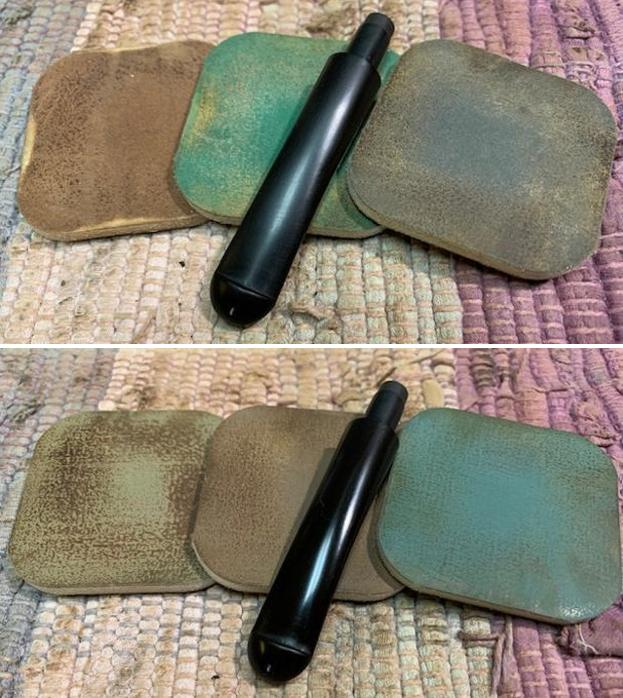
One last question I brought to Sebastien was the dating of the P. Viou Feather on my worktable.  His qualified answer is somehow in sync with French pipe dating in general!  Most likely the P. Viou Feather is from the hands of Jacques in the 80s, but the late 70s or the 90s could be possibilities as well!  Much thanks to Sebastien Beaud for his help in this project!

One very interesting piece of information related to horn stems I discovered on the Genod site written by Sebastien Beaud in March of 2020 regarding Genod’s current use of horn stems (See tab: All About Pipes).  More than most pipe houses, Genod continues to fit their pipes with horn stems which I find interesting.  His article was excellent and apropos since a horn stem from the Genod house is now on the worktable!  I include his article which taught me a good bit!

Close up on the horn!

March 16, 2020in All about the pipe by Sébastien Beaud

Most of the pipes fitted to briar pipes are made of ebonite because this material combines flexibility and resistance to wear by the teeth. But other materials are interesting for the production of pipes. There is one that is dear to us, because it is comfortable, beautiful, and presents various shades of colors, it is the horn.
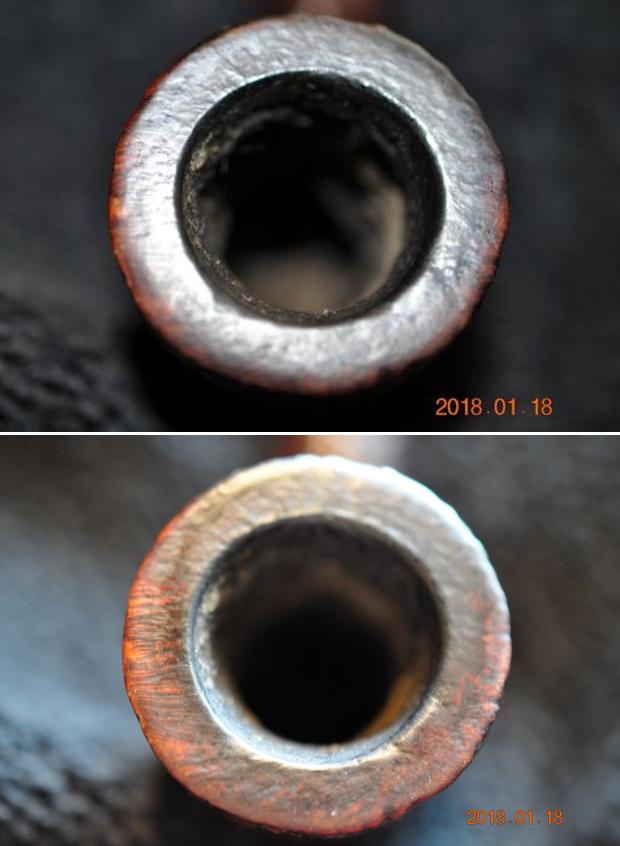
 Which horn for pipe stems?

The horn is made of hairs bonded with keratin, the material from which our nails are made. This hair-armed keratin protects and strengthens the bone that grows on each side of the head of cattle. The horn we use to make the pipe stems is that of the zebu. It can reach 1 meter in length. As we have seen, a horn is hollow because it contains a bone. Therefore, only the end (the tip) is suitable for turning work. A cow’s horn is therefore not long enough to be used in turning.
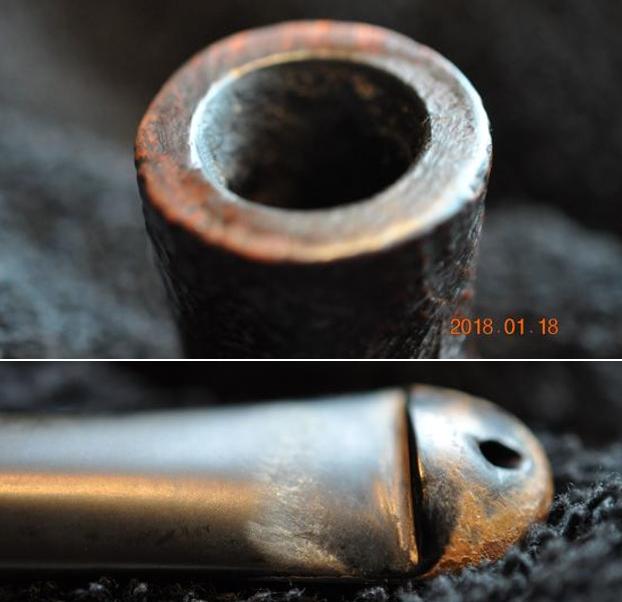
Zebus also have a brown, white or marbled coat, their horn presents a magnificent variety of shades, ranging from sometimes very dark brown to blond, the association of the two colors being called “marbled”.

 Filming on horn.

The zebu is bred for its meat in Brazil, Argentina and Madagascar. The horns, instead of being lost like the other inedible parts, are exported for use in the manufacture of combs, knife handles, beads, and of course, for turning pipe stems.

Once arrived in the workshops of the Jura, the horns are possibly softened by heating in a bath or steam, in order to straighten them by pressing.  Then comes cutting, turning, shaping, then drilling. Now here is a straight pipe stem.
If necessary, it can be bent in a “form” press dipped in a hot oil bath, and there it is, ready to be adjusted to the heather.

 How to maintain the horn?

An organic material, the horn offers a soft contact, and quickly takes the mark of the teeth. And what a pleasure to combine plants and animals in a beautiful object!  The maintenance of horn pipes is very simple: just avoid exposure to heat sources, and if you want to prevent the shine of the pipe fading over time, you can rub it regularly with a simple cloth, as a polish.  Choose now the pipe with horn stem that suits you, fill it with your favorite mixture, natural or aromatic, and… good tasting!

With a better understanding of the Paul Viou name and man who originally have his name to the pipes, I take a critical look at the Feather or Plume shape now on the worktable.  The grain on the stocky Feather stummel is attractive.  The briar block was cut allowing very intricate Bird’s Eye grain to emerge on both sides.  Looking at the stummel straight on – at the nose of the ‘torpedo’, the cross grain is visible connecting the sides creating the cross grain perspective.The finish on the briar is dark and in need of cleaning.  The surface shows dents and scrapes on the heel of the stummel as well as on the upper side.  The diminutive size of the Feather allows it to be the perfect ‘pocket pipe’ but in the pocket are keys and change to compete with!  The chamber has light cake buildup and will be removed to allow a fresh start for the briar.  The rim also shows caking which needs removing so that the condition of the rim can be seen more clearly and to rediscover the rim’s grain.  There are nicks and dents around the rise to the rim.  The horn stem is predominantly a dark hue except for near the bit area where it lightens.  The horn is rough but should clean up very nicely.I start the restoration of the P. Viou Feather by addressing the cake in the chamber. Only the smallest blade head is accommodated by the 3/4-inch diameter chamber.  The process of clearing the carbon cake transitions quickly to employing the Savinelli Fitsall Tool to scrape the chamber walls.  The rim is carefully scraped as well with my Winchester pocketknife then the chamber is sanded with 240 grade sanding paper wrapped around a Sharpie Pen.  The progress looks good.  With the chamber cleared of the cake buildup, After taking a starting picture, I clean the external briar surface using undiluted Murphy’s Oil Soap.  The stummel is scrubbed with a cotton pad as well as utilizing a brass bristled brush to work on the darkened rim. The brass brush will not negatively impact the briar as it scrubs the rim.To further the cleaning the stummel is transitioned to the sink.  Using warm water, shank brushes are employed with anti-oil liquid dish washing soap to clean the internal mortise chamber.  The brass bristled brush is used a bit more on the rim.  Back at the worktable I take another picture to show the cleaning progress.  The cleaning did a great job revealing very nice looking briar. The rim is much improved as well.  With a clean stummel before me, I take a closer look at the dents and pits primarily on the underside of the stummel I observed earlier.  The rough surface is from normal wear placing the Feather stummel down on the table or other harder surfaces.  The pictures show the comparison of ‘before and after’ to see how much progress is made with the repair.The approach I take capitalizes on the fact that wood is a very porous substance – spongelike in its composition.  Using a hot iron (with my wife’s permission!), I place a wetted cloth between a hot iron and the dents and press.  The heat generated by the iron heats the water in the cloth turning it into steam which permeates the briar surface with water.  The hot steamed water is absorbed and softens the wood allowing it to regain all or some of its pre-damaged condition. A comparison after several steaming sessions shows that the main heel damaged has lessened in its severity as the briar has expanded.  The side dent is now almost invisible.  To repair the residual pitting, using a toothpick as a guide, clear CA glue is spot dropped to fill the pits.  I put the stummel aside to allow the CA to cure.Turning now to the horn stem, pipe cleaners wetted with isopropyl 99% are used to clean the airway.  Along with smooth and bristled pipe cleaners wetted with isopropyl 99%, shank brushes are used to clean the airway.  A dental probe is used to scrape inside the slot as well as inside the nickel tenon.  Eventually, the pipe cleaners begin to emerge lighter and I move on.Before continuing working on restoring the horn stem surface, I place a piece of painter’s tape over the thin P. Viou stem stamping to protect it. In no way do I desire to contribute to its demise!I approach working on horn stem much like on vulcanite stems.  I take a few more pictures looking at the current condition of the horn material – upper and lower.  I like the solid blackish hue of the horn’s midsection contrasting with the gradual lightening of the bit.The condition of the stem is good except for one small tooth compression on the lower bit.  I fill it with a drop of CA glue and allow it to cure before sanding. The CA patches on the stummel heel have cured.  A flat needle file is used to file the glue mounds down to the briar surface. Transitioning to 240 grade paper, the patches are sanded further followed by 600 grade paper. I’m pleased with the results.  There is almost no visible reminder remaining of the rough area.  The repair blends nicely. The rim continues with darkened, scorched areas.  There are nicks as well on the right side of the rim (top of the picture below).  Using a hard backing behind a piece of 240 sanding paper, the slightly canted bevel is sanded and refreshed.  Following the 240 paper, the same is done with 600 grade paper.  I’m pleased with the refreshed rim.   Next, utilizing the full regimen of micromesh pads, the stummel is sanded.  Before sanding, painters’ tape is used to cover the P. Viou and COM on the sides of the stummel.  Using pads 1500 to 2400 the stummel is wet sanded.  Following this, the stummel is dry sanded with pads 3200 to 4000 and 6000 to 12000.  The protective tape was removed for the last 3 pads to even out the briar tone.  The beauty of the briar grain emerges through the micromesh process – I’m liking what I see!   Before returning to the stem, I’m looking forward to applying Mark Hoover’s ‘Before and After Restoration Balm’ to the stummel.  I apply some of the Balm to my fingers and rub it into the briar surface.  At first it has a cream-like consistency but as it works into the briar it transforms into a waxy consistency.  After applying the Balm, the stummel is set aside for 20 minutes or so for the Balm to enrich the briar.  After 20 minutes I use a microfiber cloth to wipe off excess Balm and then hand buff the stummel to raise the shine.  I like the way the Restoration Balm enhances the natural hues of the briar.Returning now to the horn stem, the sanding process is much like that of vulcanite stems.  After the CA patch has cured filling a tooth compression, using the flat needle file, the lower bit patch is filed until level with the stem surface.  The file also helps to refresh the lower button lip. Next, I transition to 240 sanding paper and smooth further the lower bit blending the patch more.  Flipping the stem over, the upper bit is sanded to smooth and tighten the horn surface from normal wear.   Next, the entire stem is wet sanded using 600 grade paper.As with vulcanite stems, next I apply 0000 steel wool to the entire stem to smooth and shine further. While using steel wool, I also apply it to the nickel tenon which shines it up very nicely.  Next, with the P. Viou stem stamping still covered with painters’ tape, the stem is the recipient of the full regimen of micromesh pads.  Starting with pads 1500 to 2400, the horn is wet sanded.  Following the wet sanding, I dry sand with pads 3200 to 4000 and 6000 to 12000.  I remove the tape for the last two pads to sand more closely to blend the area.  Obsidian Oil is applied and worked into the horn between each set of 3 pads.  The horn almost ‘drinks up’ the oil. To get a look at the progress, the stummel and horn stem are reunited.  Two issues surface after I do this. The seating of the stem into the mortise is off.  The next picture shows this with a gap of sunlight on the upper side of the connection point.  To remedy this, I fold a piece of 240 sanding paper and insert it between the lower halves of the stem and stummel and sand in a sawing motion.  This hopefully will even out the high point to bring the two faces back together flush – or as close as possible.   The result is good. There is still some daylight, but I’m satisfied at this point.  Sanding to remedy an unseated stem can be a bit finicky and sometimes ‘less’ is ‘more’ – I don’t want to complicate things!The other issue that emerged was that through the cleaning process the internal mortise cavity expanded somewhat so that the nickel tenon is not as snug as it should be.  The ways to fix this are limited.  If this were a vulcanite stem and tenon, the approach would be to expand the width of the tenon by heating it and forcing expansion by wedging the end of a drill bit in the softened tenon airway.  A nickel tenon, however, does not expand.  The remedy is to paint the external surface of the metal tenon with an acrylic nail polish or with CA glue.  The results are the same.  The hardening of the acrylic creates a hardened layer around the metal tenon, thus expanding its diameter and creating a snugger fit seated into the mortise.  I use a small bottle of acrylic nail polish and apply the acrylic polish with the small brush that comes along with the bottle. After each coating, I wait until the acrylic is cured before applying another layer.  After each cycle, the tenon is carefully fitted into the mortise to determine if another layer is needed.  To help it to dry evenly after each application, I ‘post’ the stem vertically on the end of a chop stick.  After several coats of clear acrylic nail polish, the fit of the stem was much snugger.  Mission accomplished.   Next, I attempt to refresh the P. Viou stem stamping, but am not successful.  The vestiges of the stamping were not deep enough to allow the white acrylic paint to grab the stamp channels.  After several attempts, I settle for what is. Now on the homestretch.  After mounting a cotton cloth buffing wheel to the Dremel, speed set at about 40% full power, I apply Blue Diamond compound to horn stem and stummel.  After completing this, a felt cloth is used to buff the pipe to clear the compound dust before applying the wax.To apply carnauba wax, the cotton cloth wheel is changed to a wheel dedicated to carnauba.  With the speed on the Dremel maintaining 40% power, wax is applied to the entire pipe.  The first coat applies the wax thoroughly over the surfaces.  Following this, the pipe is buffed up using the Dremel to make sure all the wax is dispersed and absorbed.  Finally, the pipe is given a rigorous hand buffing with a microfiber cloth to raise the shine further.I’m pleased with how this product of Jacques Craen in St. Claude has turned out.  With Sebastien Beaud’s generous assistance, we can date this pipe after Jacques received the P. Viou name from the aging Paul Viou and his wife, Odette, who provided pipes to French military servicemen.  This ‘Plume’ is a beautiful example of French pipe making with its subtle intricacies, flow, and lines.  The grain, especially the exceptionally tight Bird’s Eye, is pleasing to behold! The horn stem with its gentle natural bend, has unique coloring.  The glassy shine of finely polished horn is pleasing to the eye and its rustic character will make it a pleasure to enjoy tobacco fellowship.  Last but not least, the unique Plume or Feather diminutive shape allows it to cradle very nicely in the palm.  This is the second of Daniel’s commissioned pipes and he will have the first opportunity to claim the P. Viou Feather from The Pipe Steward Store benefiting the Daughters of Bulgaria – women and girls who have been trafficked and sexually exploited.  Thanks for joining me!

Restemming and Restoring a No Name Billiard


Blog by Steve Laug

This morning I received another call from a customer sent to me by the local pipe shop. The fellow had a pipe that needed to be restemmed. He said he would stop by and drop the pipe off for me to work on. Irene and I were out and about so he left it in the mail box. When Irene brought it down to me in the shop the smell was overwhelmingly strong and filled the room with the overly sweet smell of years of aromatic vanilla smelling tobaccos. It was in a plastic bag and once I opened the bag it was even more pungent. The bowl was filled with a thick cake that took over half the diameter of the bowl. There was tobacco debris stuck on the walls of the bowl. The cake was sticky and tacky with the tars and oils. The exterior of the pipe was cake with sticky substances around all the sides and on the rim top. The rim top had been beat up and was in rough condition with a thick buildup of lava on the top. The finish was in rough condition with a lot of nicks and gouges around the sides of the bowl and shank. It was really a mess. The stem was chewed and split in half at the button forward for about an inch up the stem. Once I removed it the inside of the shank was as smelly as the rest of the pipe. I took photos of the pipe before I began my clean up. I took a photo of the rim top to show condition of the bowl. You can see the damage to the top and the inner and outer edge. You can see the thick cake in the bowl and the thick lava coat on the heavily damaged rim top. It is a very dirty pipe. I also took photos of the stem to show its condition. It has tooth marks and cracks on the top and underside of the stem near the button.  You can also see that the stem does not fit tightly against the shank but has gaps on both sides. I took the pipe apart and took photos of the pipe as a whole. It is in rough condition and I think that the stem was a replacement at some point in its life.The pipe stunk so bad and filled the room with the odor to the degree that I decided to clean the bowl before restemming the pipe. I reamed it with a PipNet pipe reamer using three of the four cutting heads. I removed the cake back to bare walls so I could check for damage to the inside of the bowl from heat or otherwise. I scraped the remainder of the cake from the bowl with a Savinelli Fitsall Pipe Knife and scraped the rim top at the same time. I scrubbed the exterior of the bowl with a tooth brush and undiluted Murphy’s Oil Soap. I worked to get the thick grime off the outside of the bowl and shank. I rinsed it with running water and rinsed off the soap and grime. I cleaned out the shank and the airway into the bowl with pipe cleaners, cotton swabs and isopropyl alcohol to remove the tars and buildup in the shank. I wanted the shank clean before I fit a new stem.I built up the inside edge of the bowl and the damage to the rim top with super glue and briar dust. I layered the mixture on the rim and rebuilt the inner edge. Once I had it built up I topped the bowl on a topping board with 220 grit sandpaper. Once I topped it smooth I stained the rim top with a Maple Stain Pen. I found a stem that was the same diameter as the ruined stem. I turned it on the PIMO tenon turning tool and my hand drill. I took the excess material off the diameter and the length of the stem to get a snug fit in the shank. I took photos of the fit of the stem to the shank. The fit of the stem to the shank end was the same as the previous one.There was a gap on both sides and it sat firm against the top and bottom. I examined the shank end and saw that it had been damaged and was no longer flat. I decided to square it up with a thin brass band as it would give a flat surface for the stem to face against. I glued and pressed it onto the shank end and set it aside to cure.   I used the Dremel and sanding drum to take down the excess diameter of the stem and sanded it smooth with 220 grit sandpaper. Once I had the fit correct I put the stem in place on the pipe and took photos of the fit and look at this point in the process.    I filled in the nicks and chips in the finish with briar dust and clear super glue. Once it had cured I sanded them smooth with 220 grit sandpaper. I wiped the bowl down with isopropyl alcohol to remove the finish and the dust on the briar.  I restained the bowl and shank with a light brown aniline stain. I flamed it with a lighter and repeated the process several times until I had the coverage that I was looking for.Once the stain had cured I took the pipe off the cork and took photos of the stained look of the bowl and shank with the brass band.   I wiped the bowl down with isopropyl alcohol to make the stain more transparent. I polished the briar with micromesh sanding pads – wet sanding with 1500-12000 grit pads. I wiped the bowl down between pads with a damp cloth. I rubbed the bowl and shank down with Before & After Restoration Balm. I worked it into the surface of the bowl sides and shank with my fingertips to clean, enliven and protect the briar. I let the balm sit for a little while and then buffed with a cotton cloth to raise the shine. The Balm did its magic and the grain stood out.    I sanded out the scratch marks on stem from the Dremel with 220 grit sandpaper. I started polishing it with 400 grit wet dry sandpaper. I polished the vulcanite stem with micromesh sanding pads – 1500-12000 grit pads. I wiped it down with Obsidian Oil after each sanding pad. I used Before & After Pipe Polish – both Fine and Extra Fine to further the stem. The photo below shows the polished stem.  This pipe has come a long way from where it was when I received it to restem. It is not flawless but it looks better. The Vancouver piper who it belongs to has received far more that what he originally wanted – just a new stem. The briar around the bowl is clean and looks better. The rich brown stains gave the grain a sense of depth with the polishing and waxing. The rim top while not perfect is far better. I put the newly fitted vulcanite stem back on the bowl and carefully buffed the pipe with Blue Diamond on the buffing wheel using a light touch on the briar. I gave the bowl and the stem multiple coats of carnauba wax on the buffing wheel. I buffed the pipe with a clean buffing pad to raise the shine. I hand buffed the pipe with a microfiber cloth to deepen the shine. Give the finished pipe a look in the photos below. The dimensions of the pipe are Length: 6 inches, Height: 2 inches, Outside diameter of the bowl: 1 ½ inch, Chamber diameter: 7/8 of an inch. The pipeman will be picking it up soon and will be reintroduced to this pipe. Thanks for reading this blog and my reflections on the pipe while I worked on it.