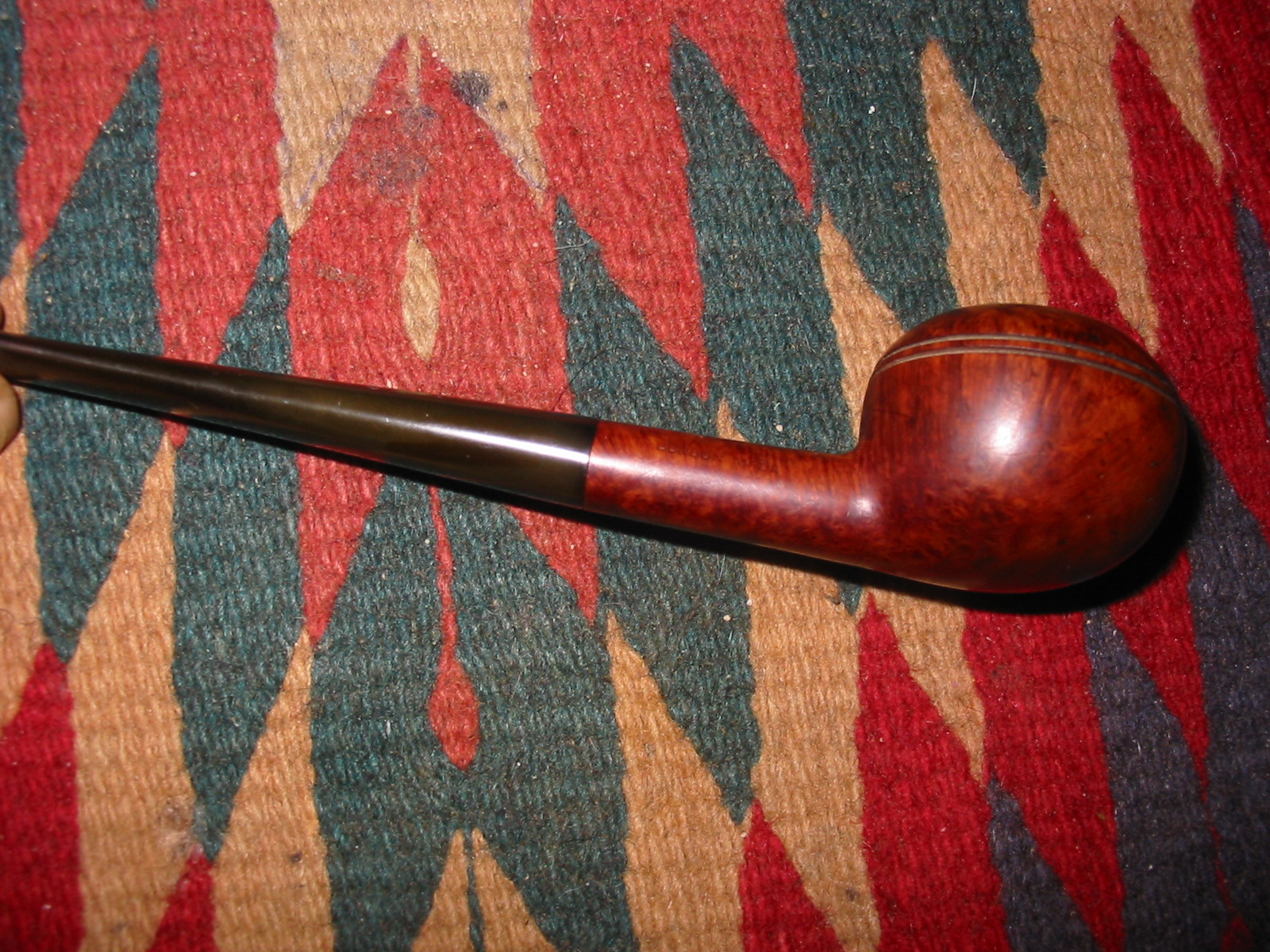
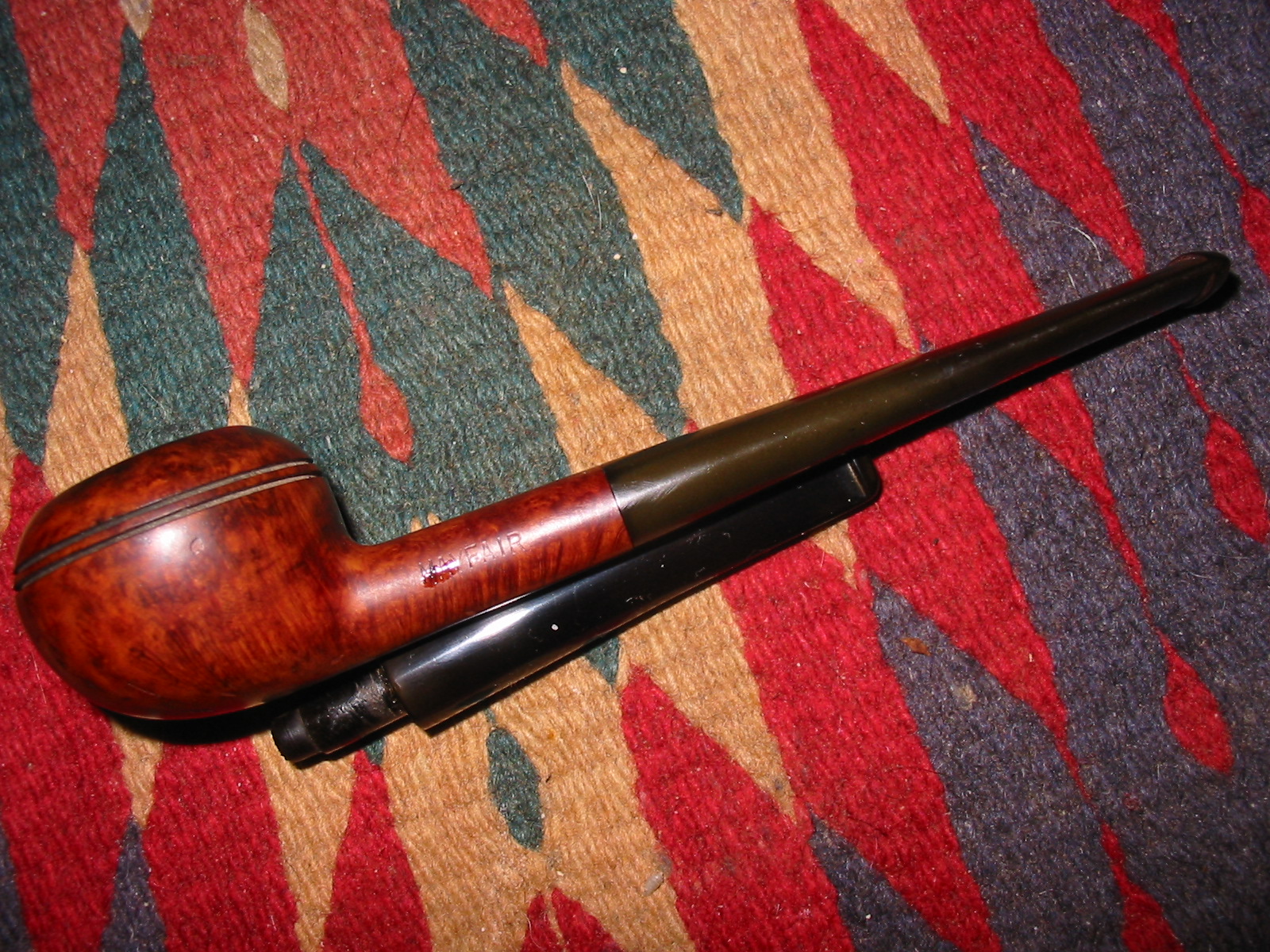
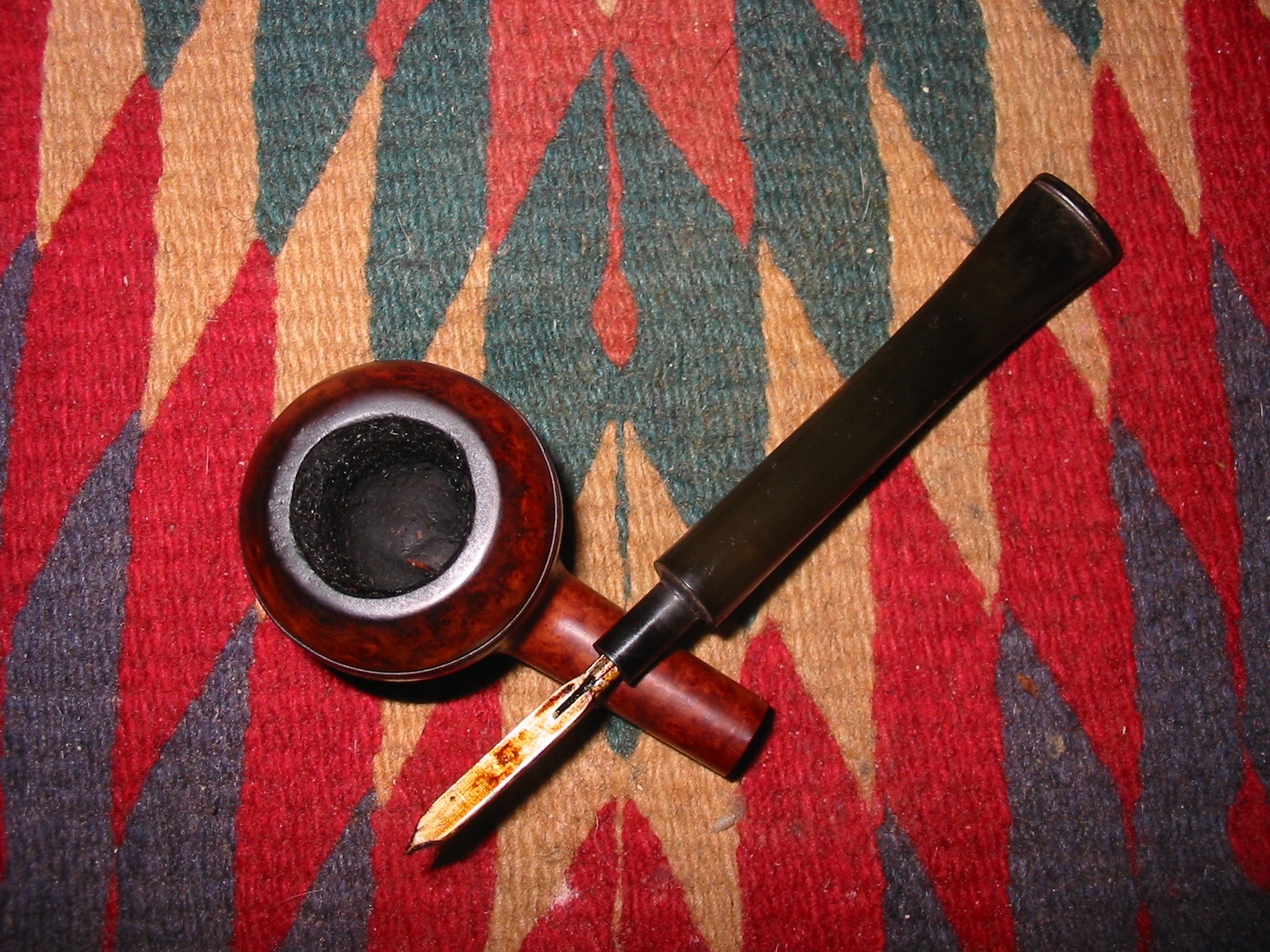
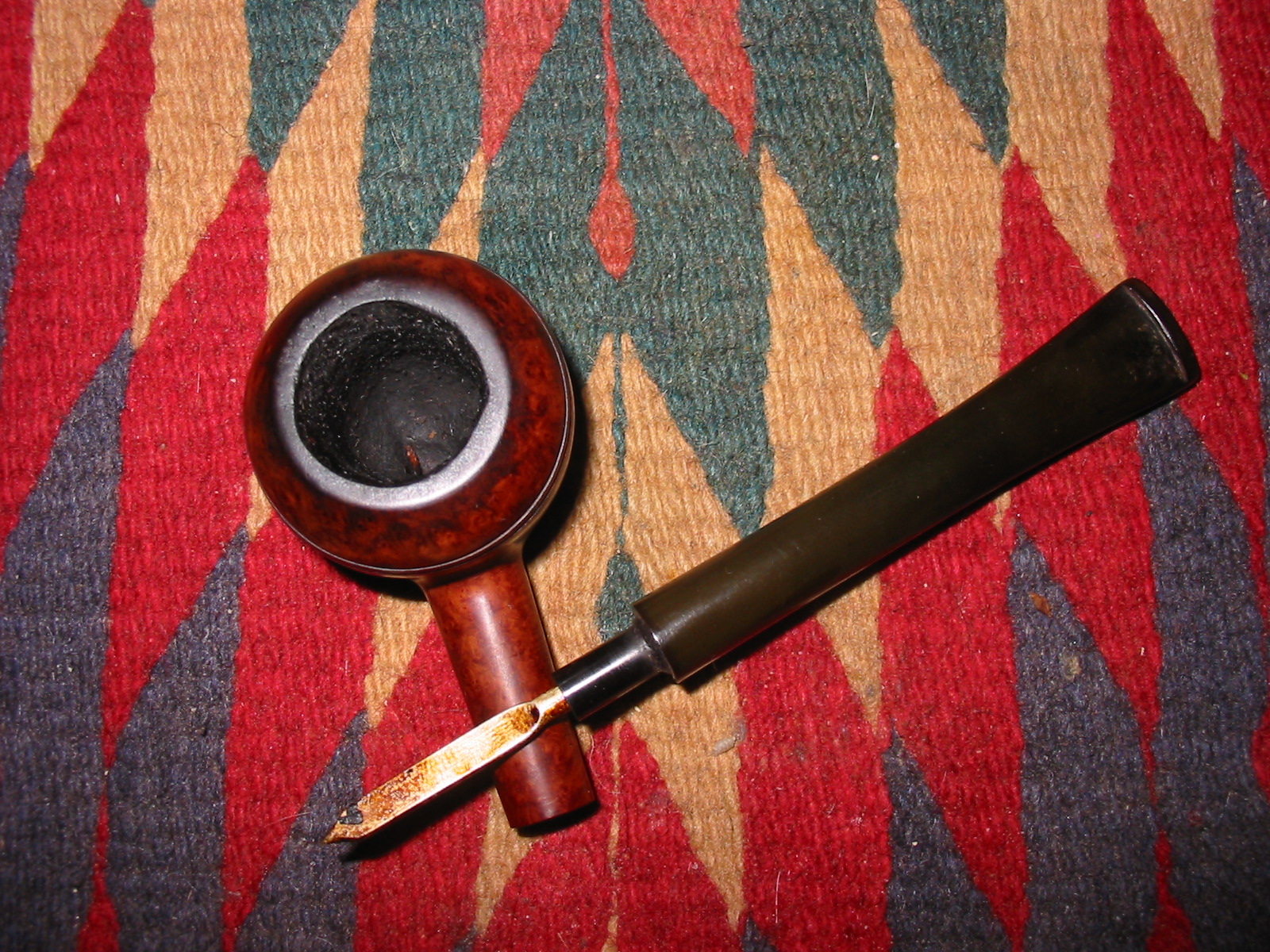
Tag Archives: Bowl – refinishing

Making a New Stem for a Peterson’s Kildare XL999


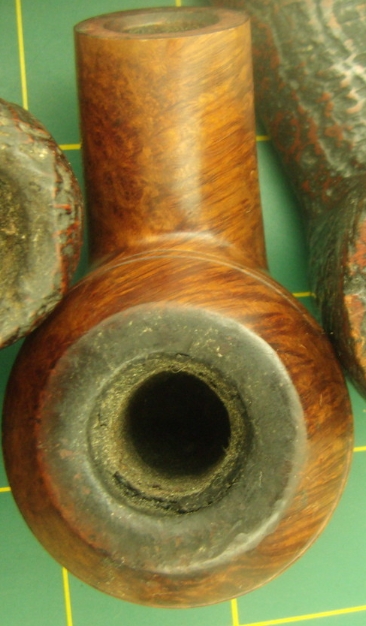
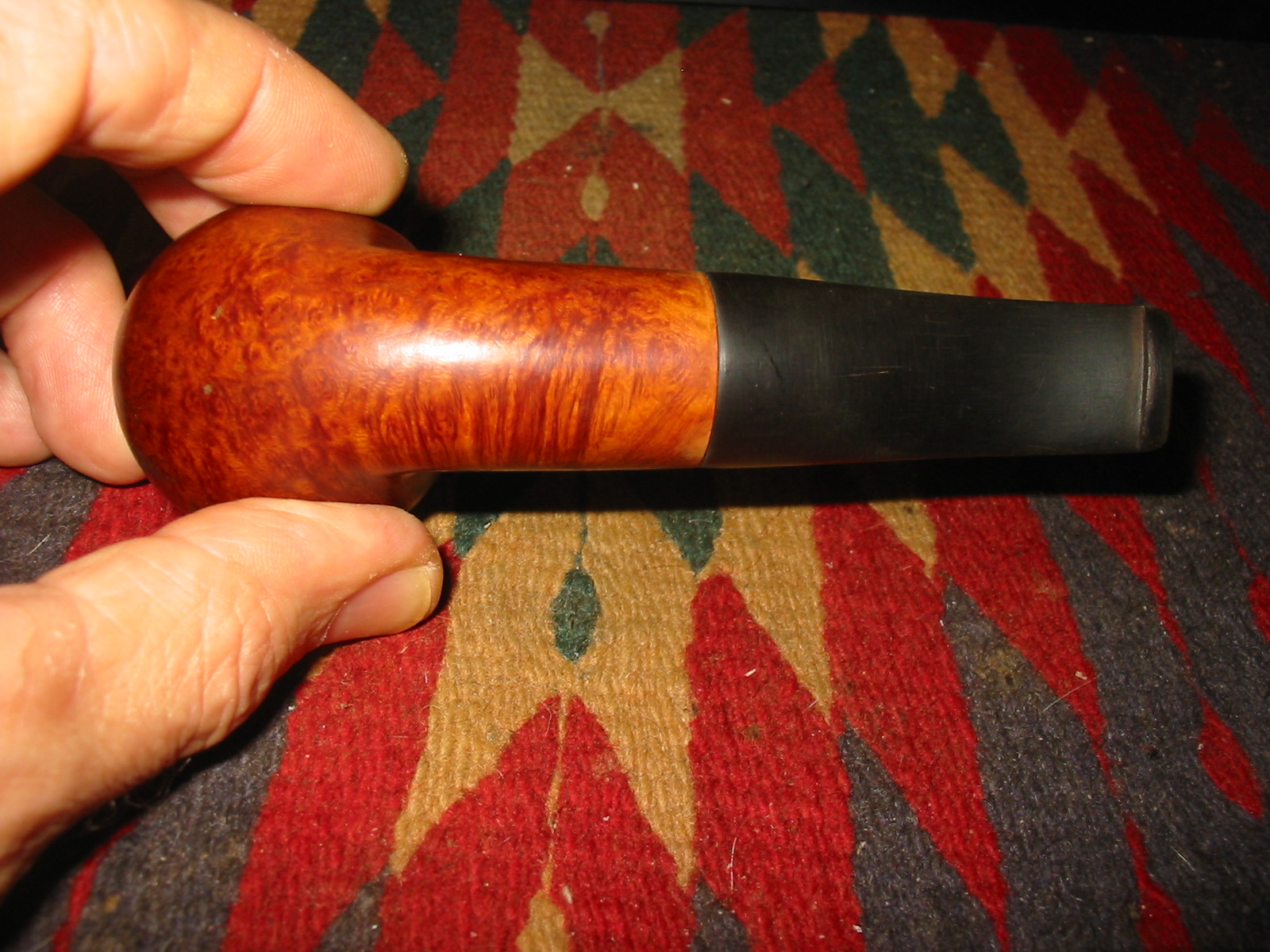
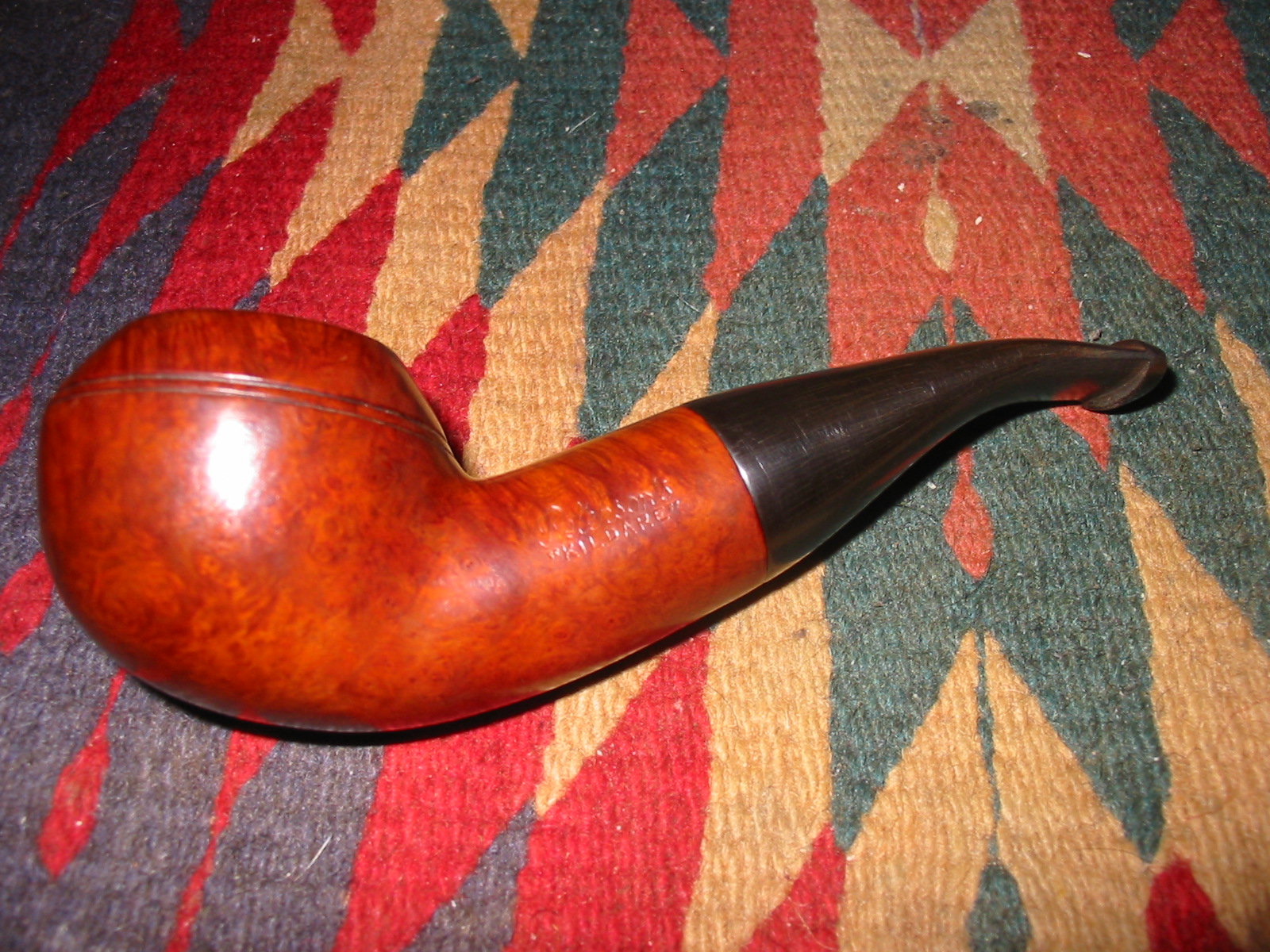
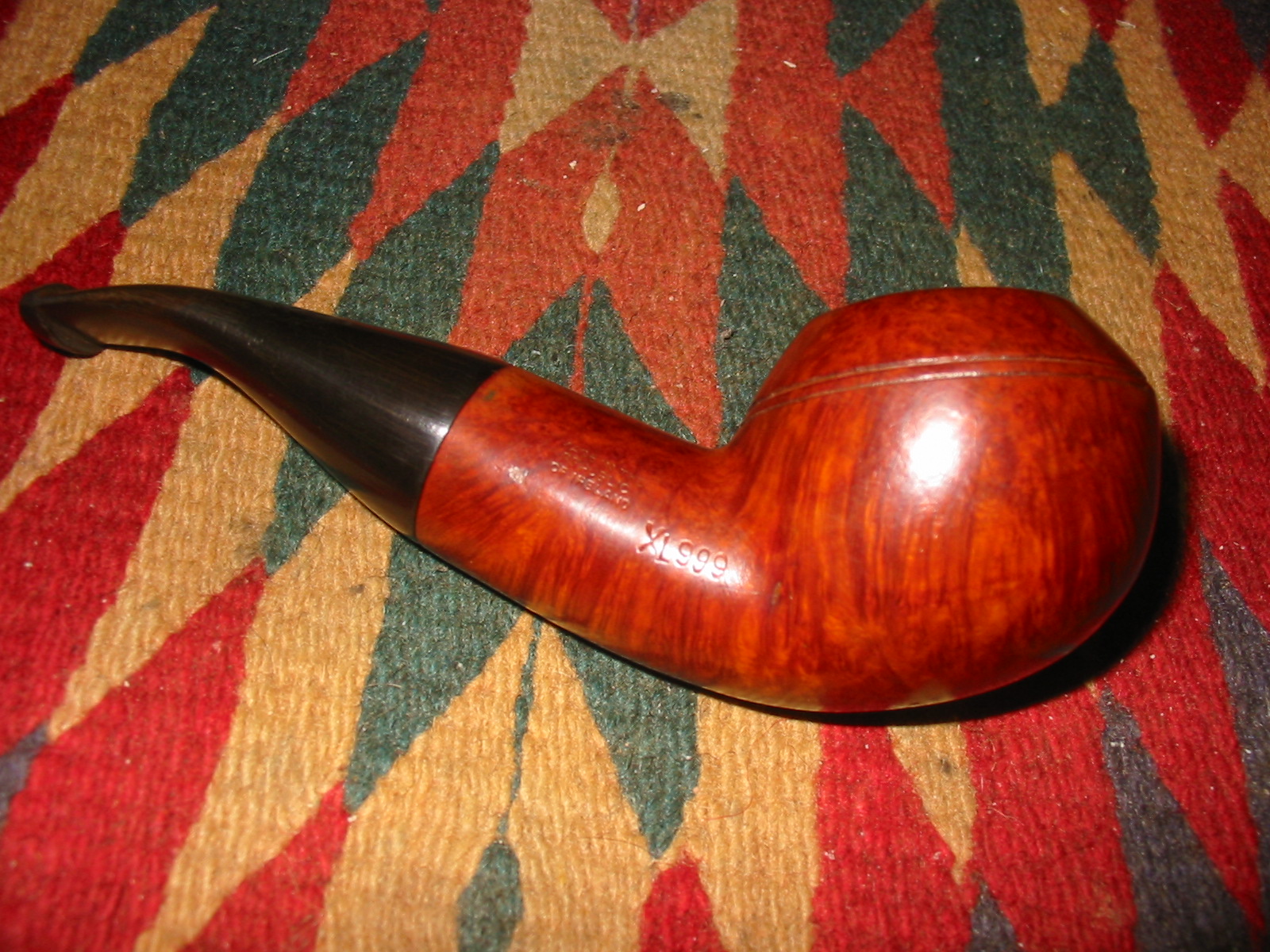
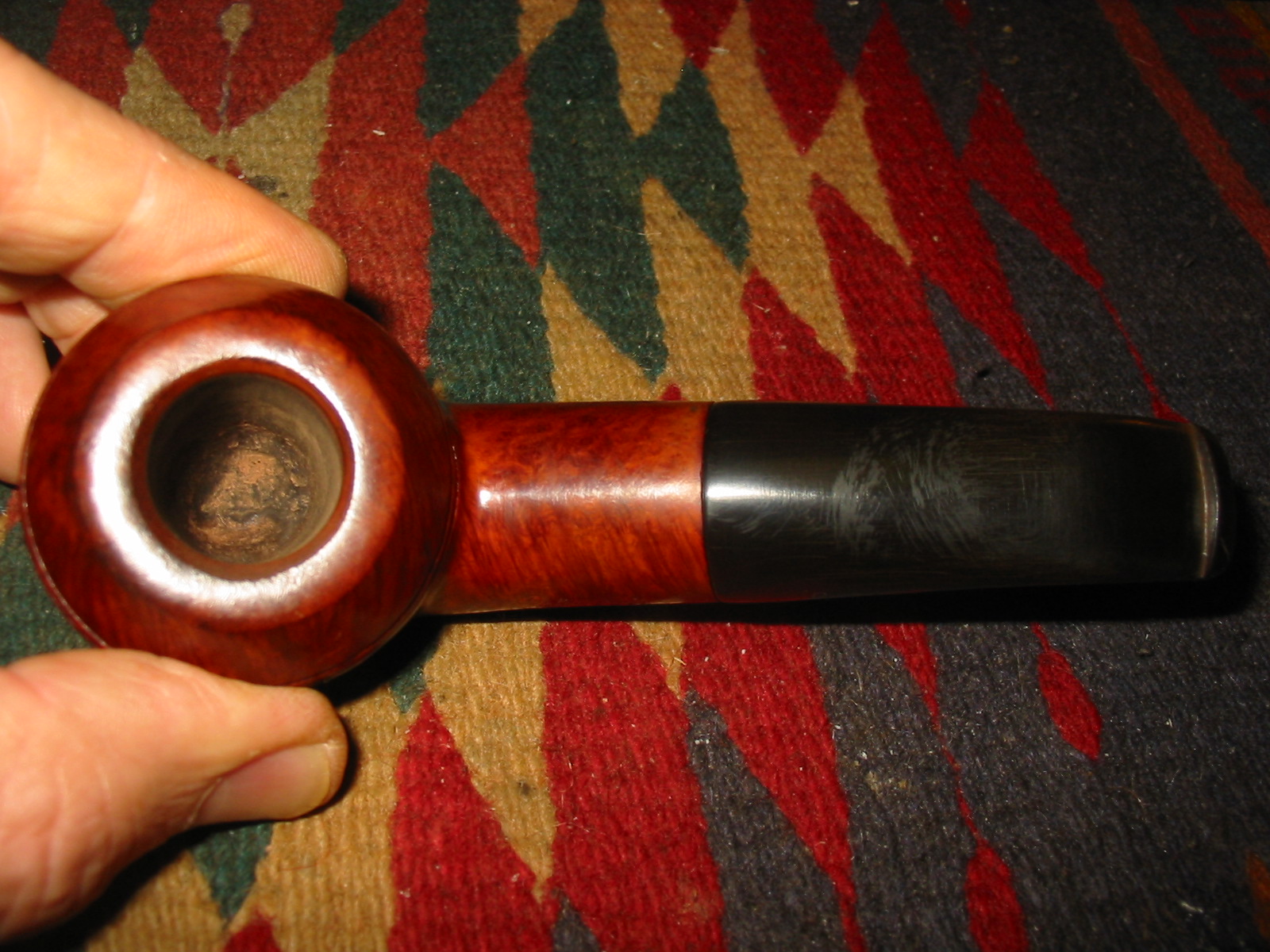
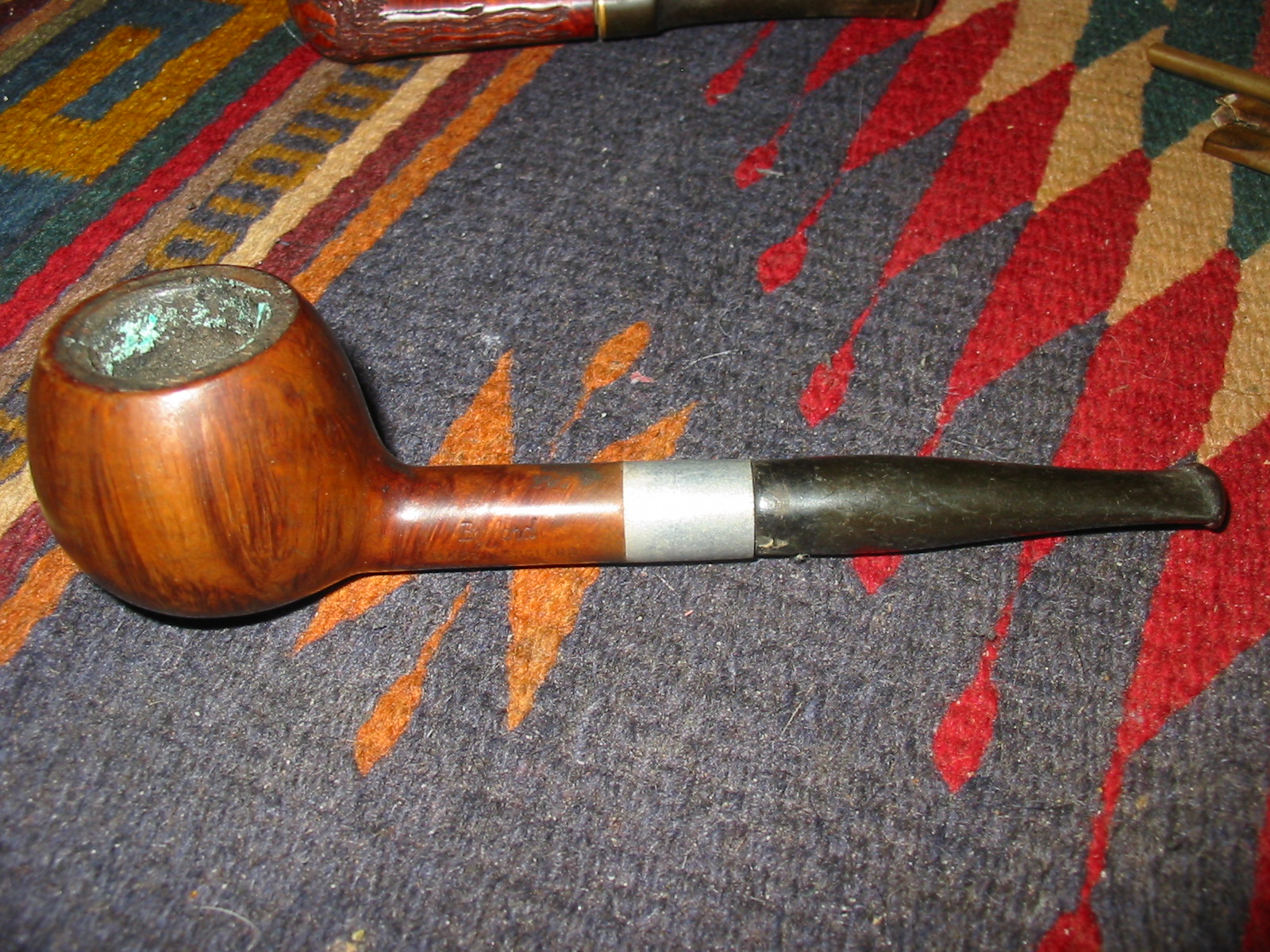
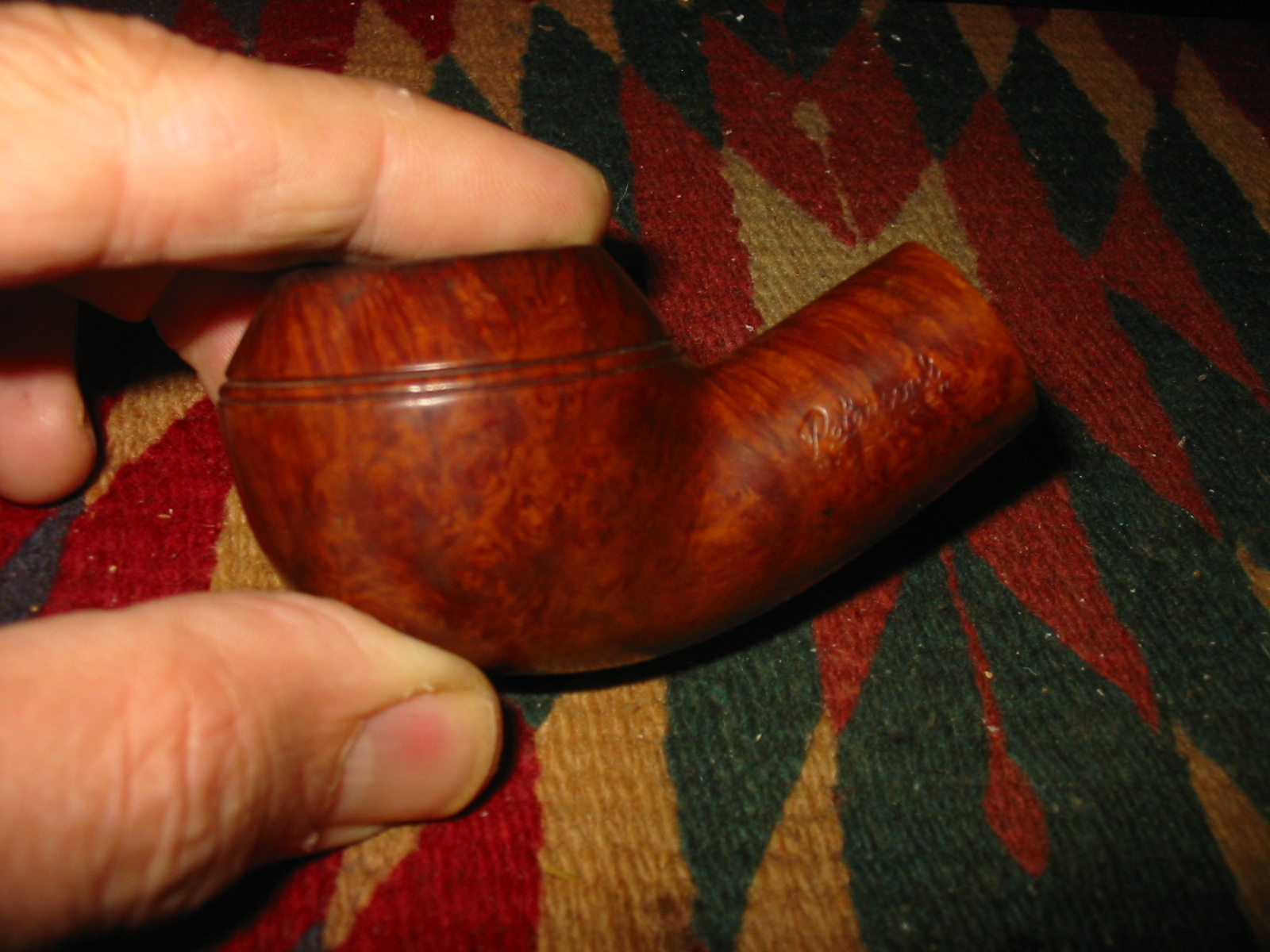
The Peterson’s Kildare is the second pipe down in the left column in the photo below. The second and third photos are of the pipe bowl apart from the lot. The externals were in pretty decent shape but the rim has a heavy buildup of tars and the cake in the bowl is quite thick and hard. To give an idea of the thickness of the cake I was unable to put my little finger in the bowl. The shank was quite large – the tenon is ½ inch in diameter for a snug fit in a clean tenon. The shank itself is 7/8 inches in diameter. It is a large mortise and airway. The pipe is stamped Peterson’s “Kildare” on the left side of the shank and Made in the Republic of Ireland XL999 on the right side of the shank. The finish is quite clean. The top will need to be topped to remove the buildup and dents. I also will need to chamfer the inner edge of the rim to repair the damage that is present on the surface of the rim.

bowls1

Pete999

Pete9992

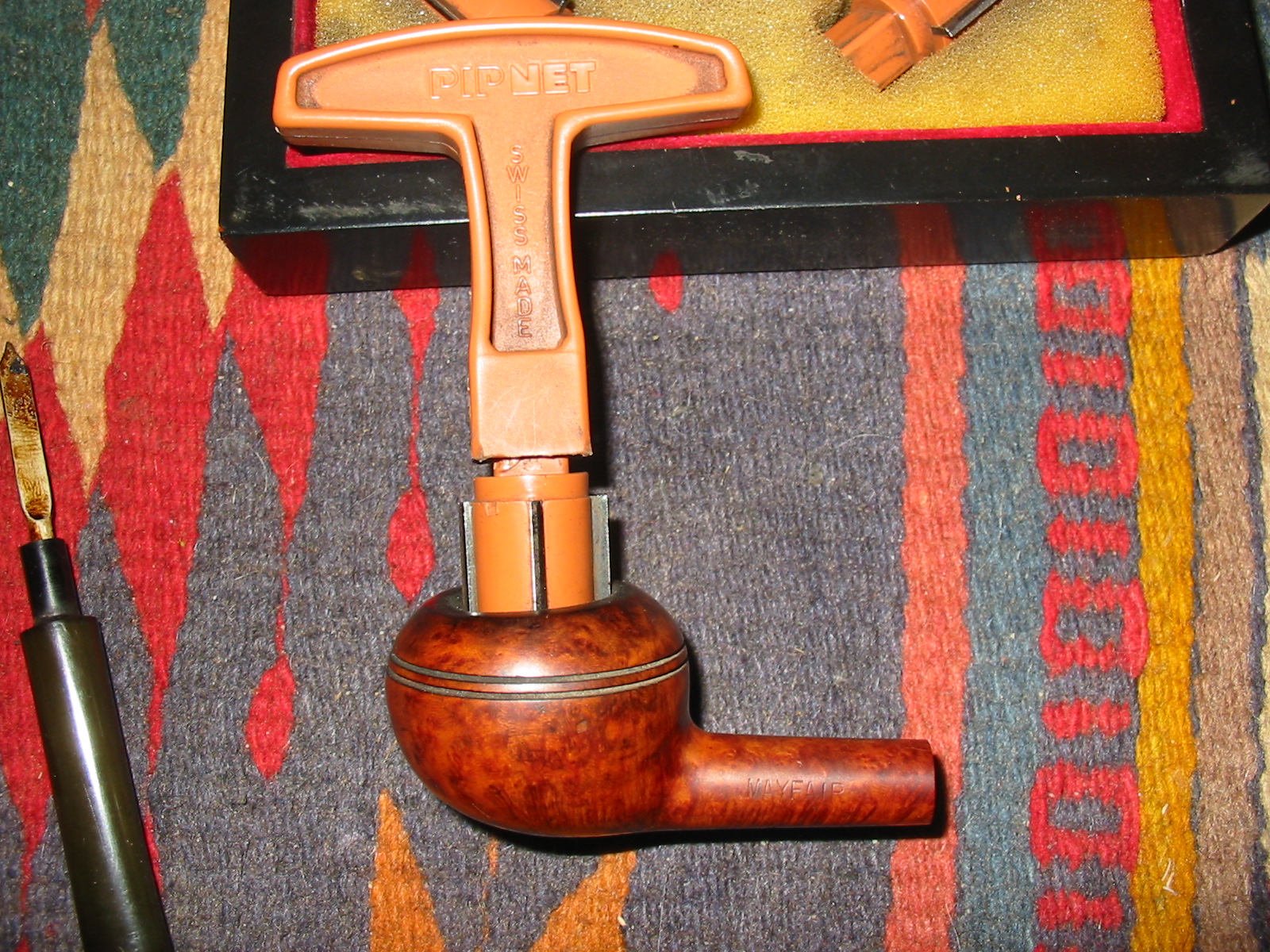
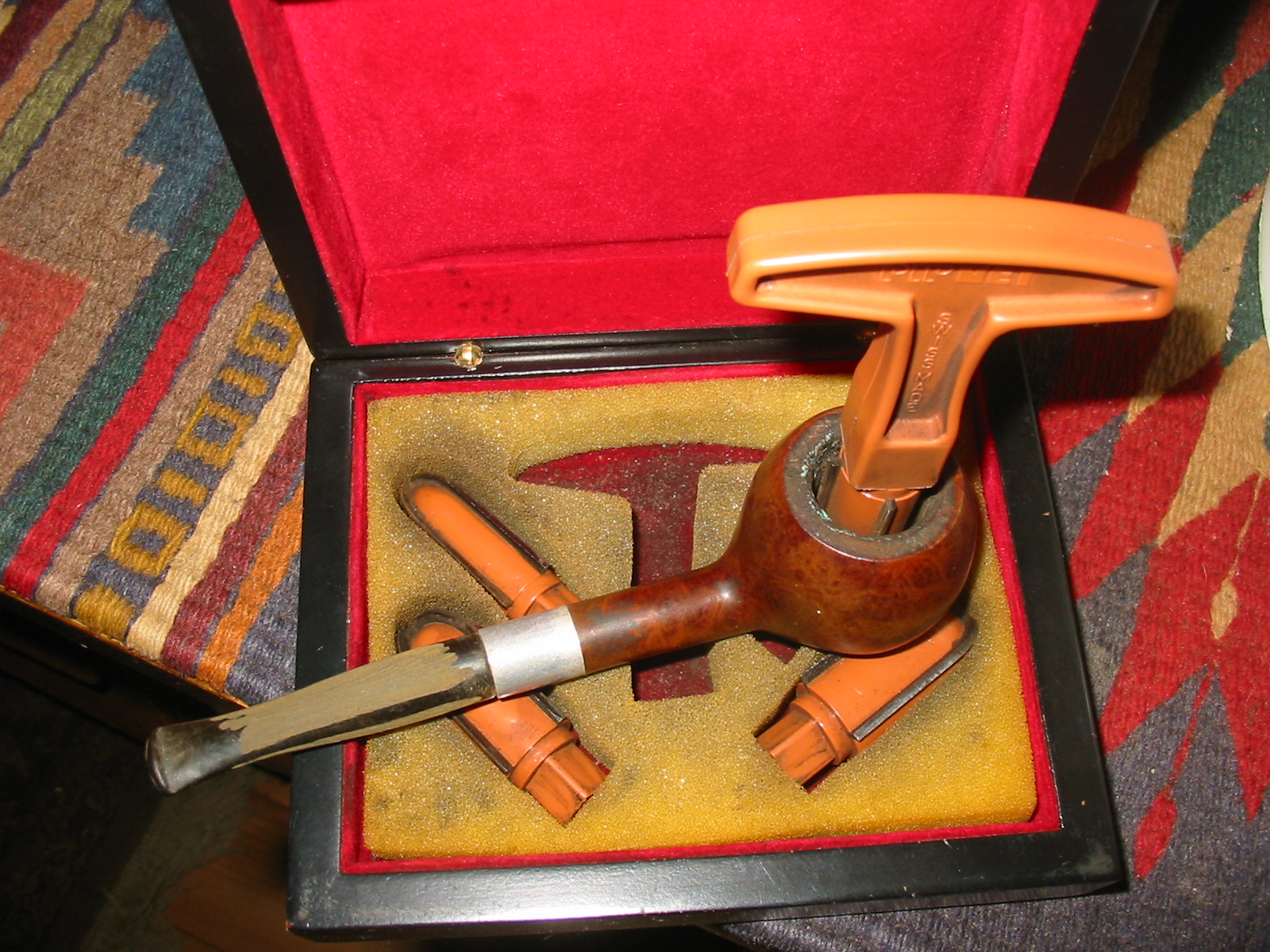
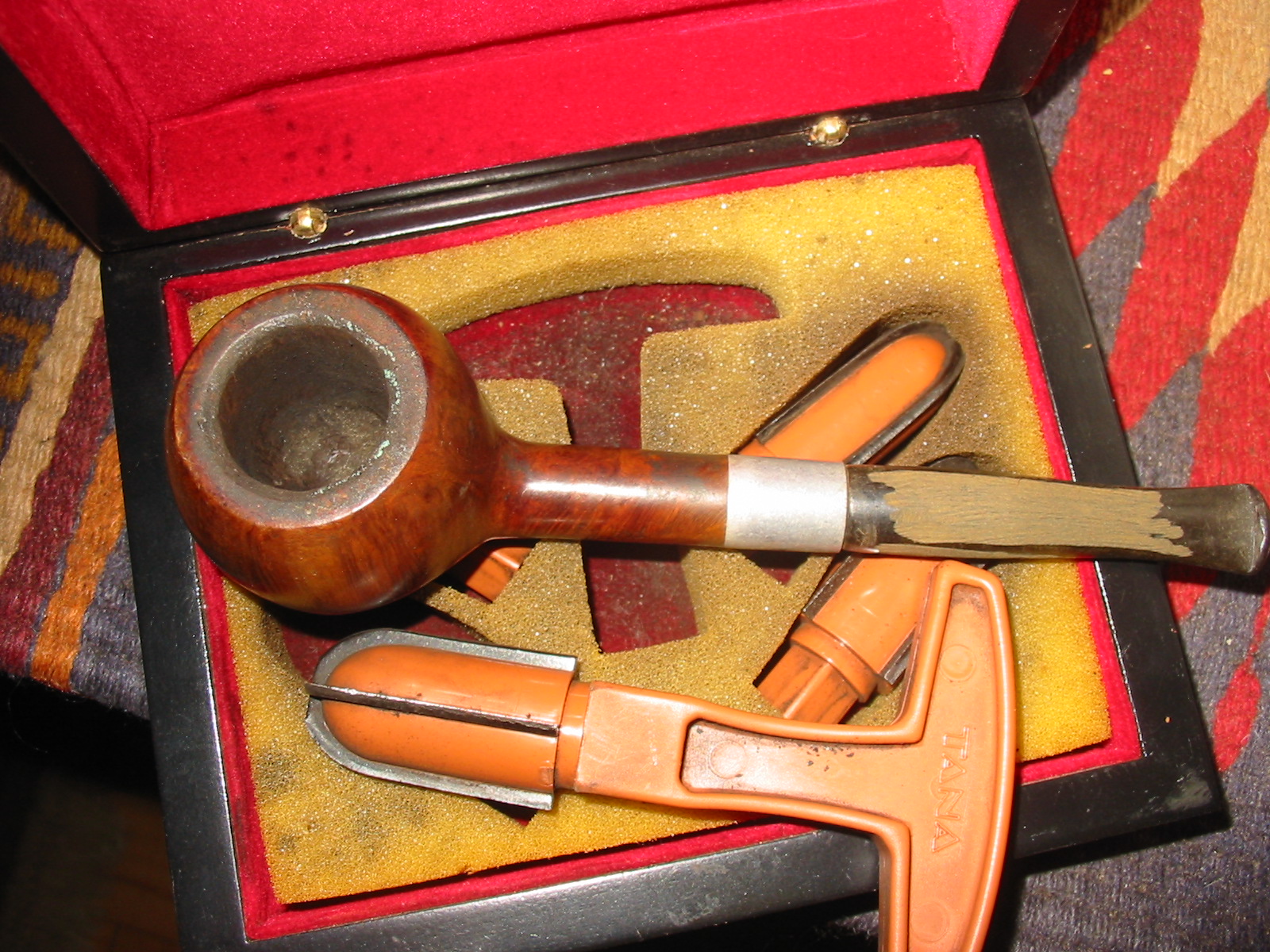
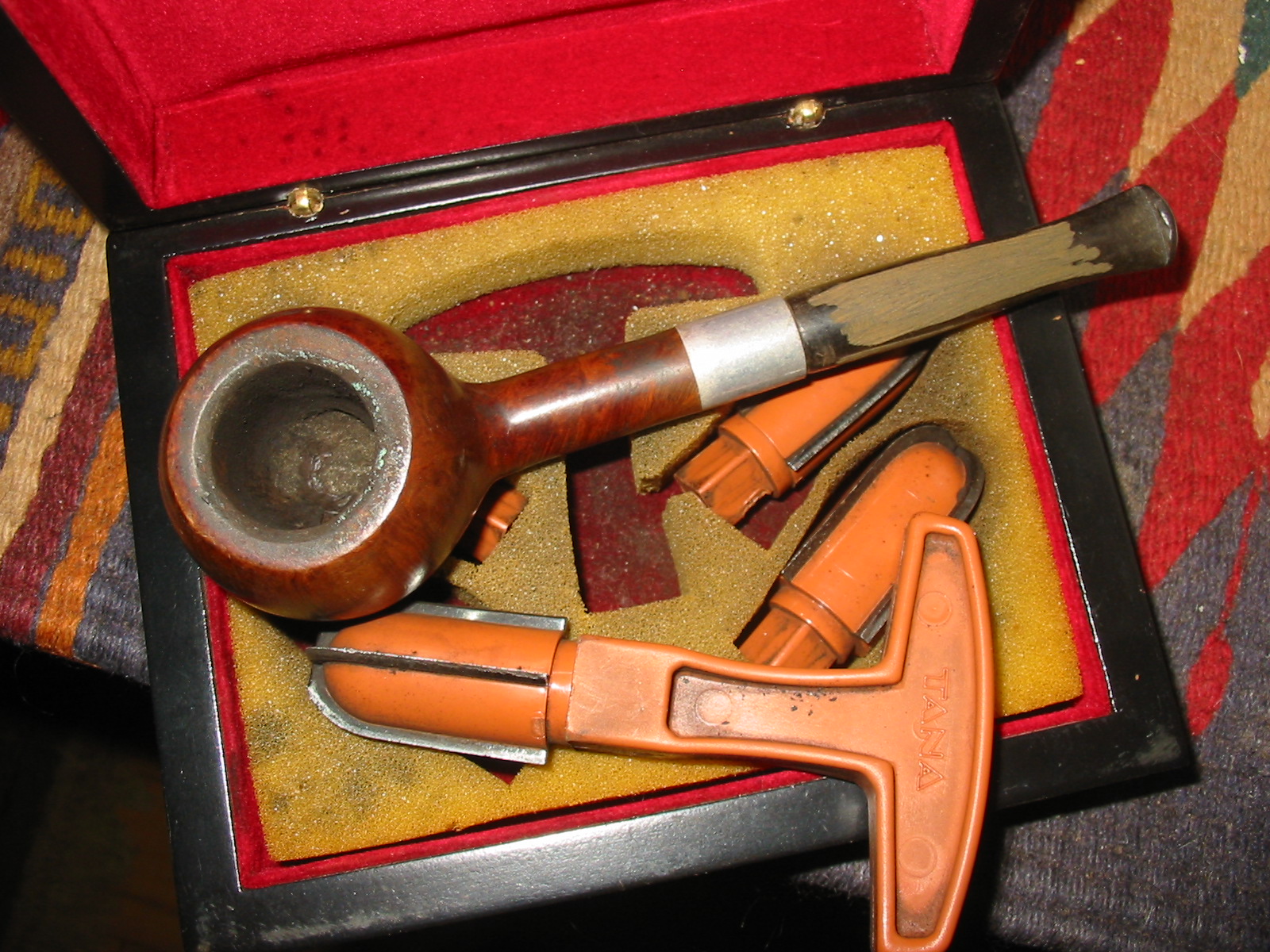
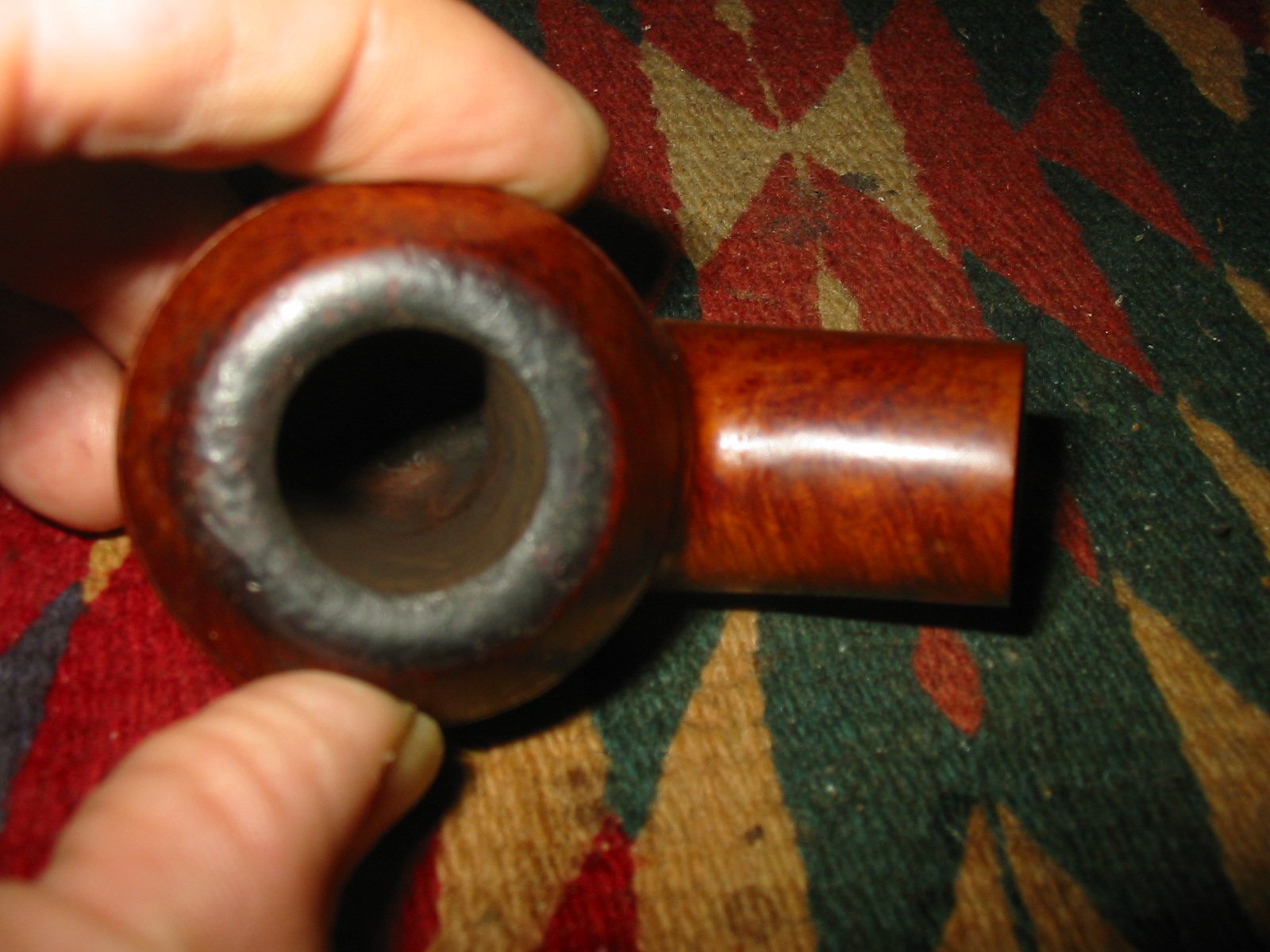
I reamed the pipe with a PipNet Reamer beginning with the smallest cutting head on the T handle and working up to the diameter of the bowl. I carefully ream the cake so as not to damage the bowl roundness or the inner edge of the rim any more than it already is. I emptied the carbon out of the bowl repeatedly until it was clean and empty. I reamed the cake back to bare wood to begin to rebuild on a clean surface. I scoured the bowl and shank with Everclear and cotton swabs and pipe cleaners.
IMG_1379

IMG_1380

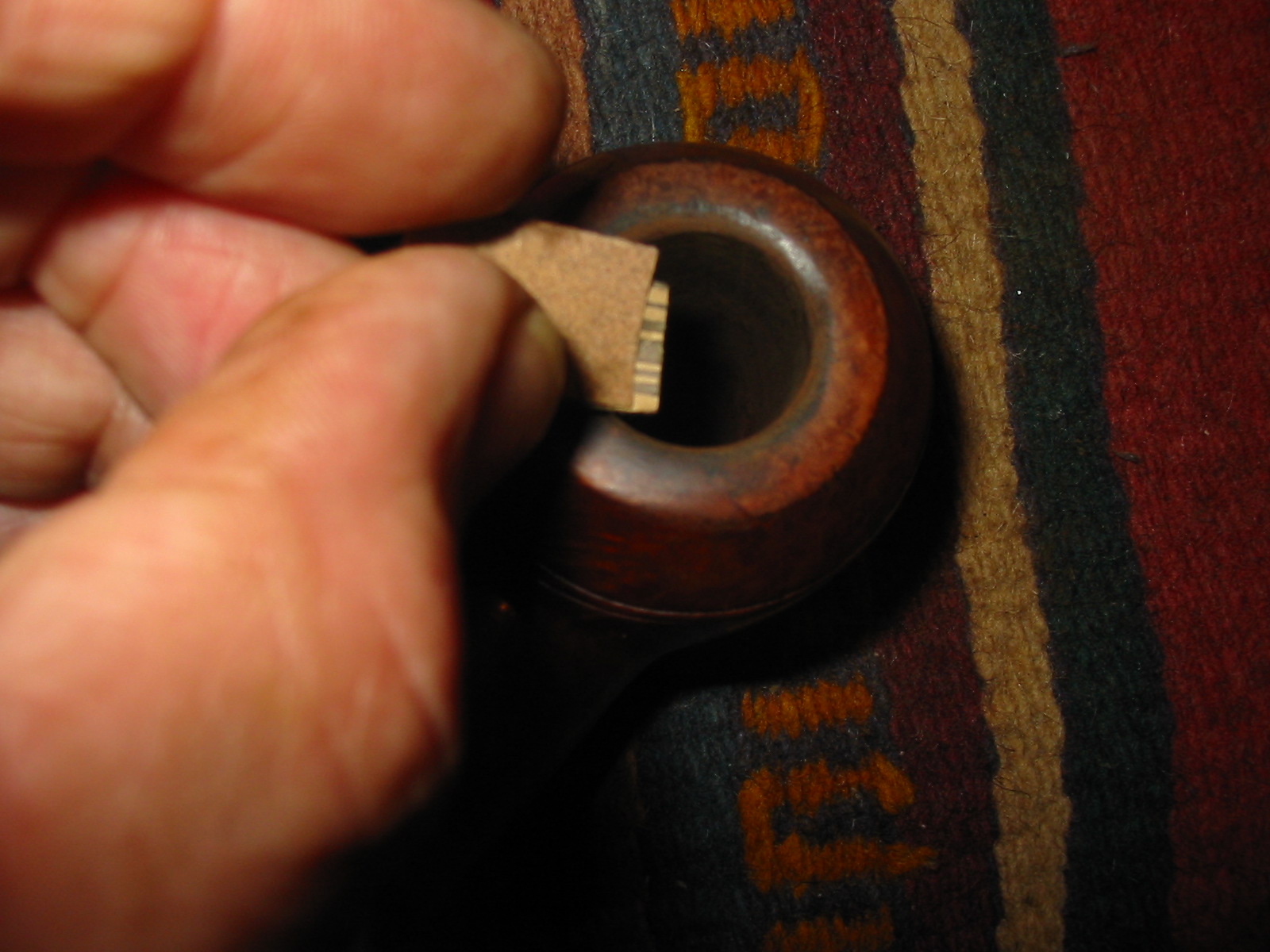
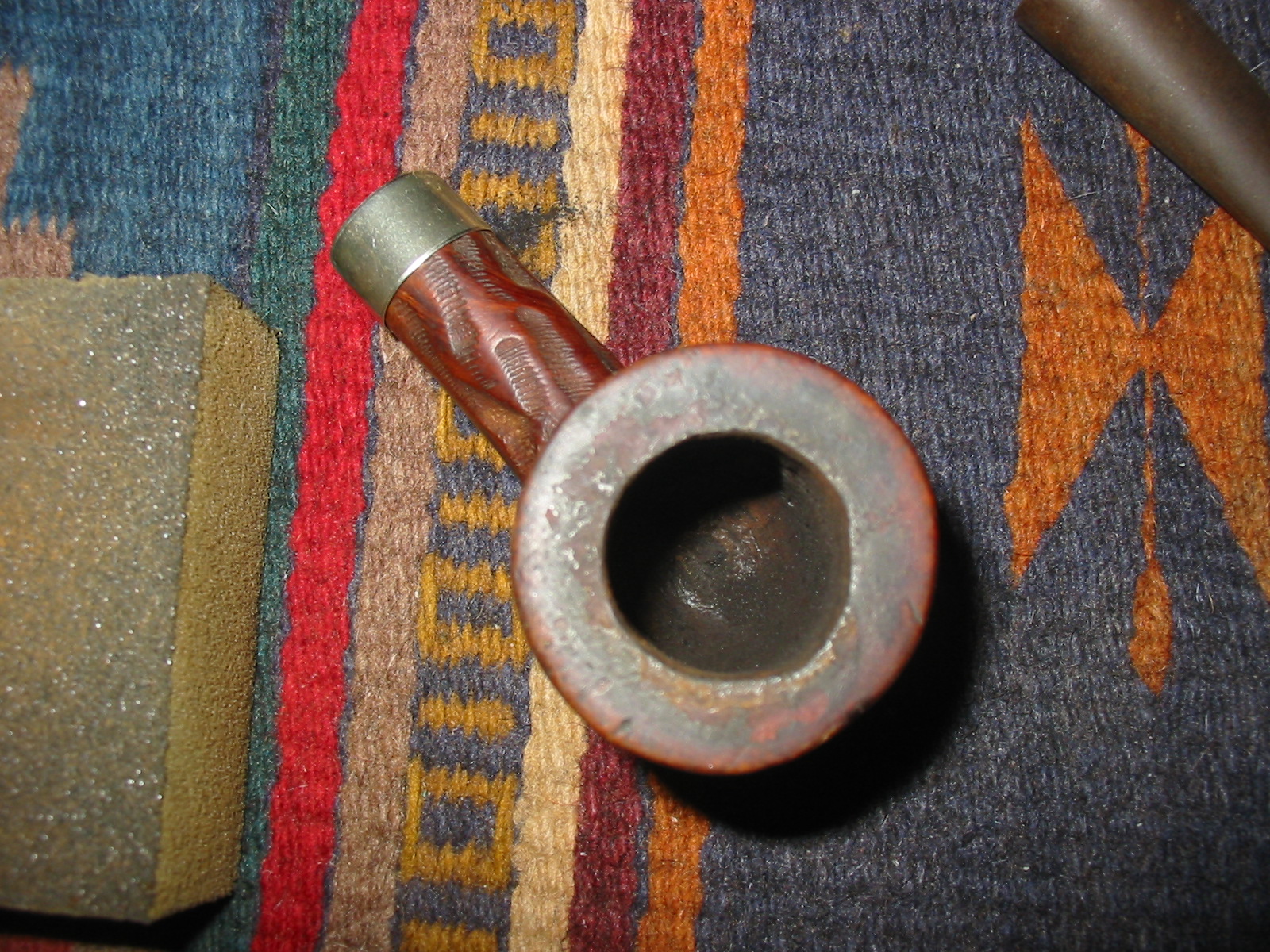
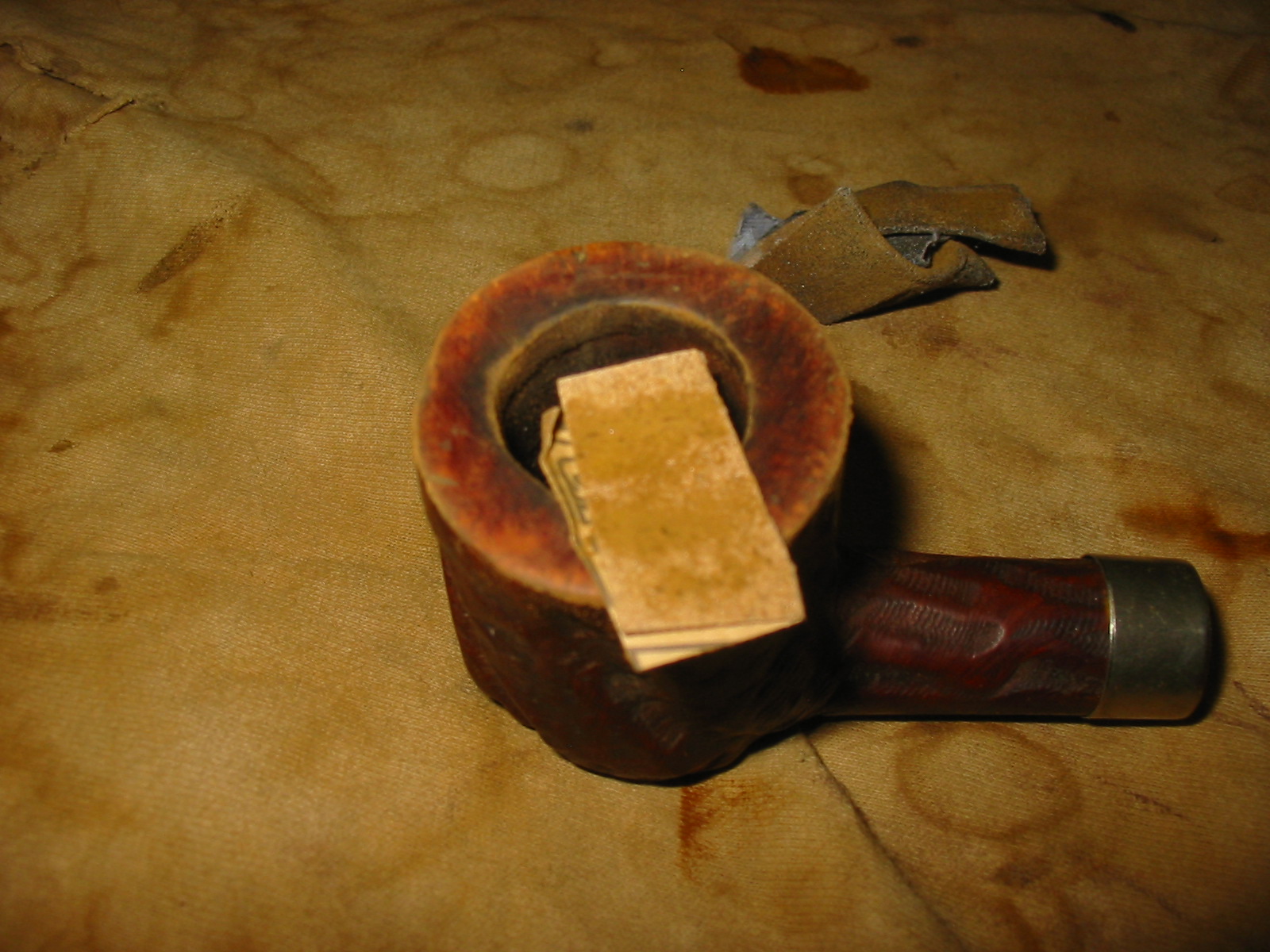
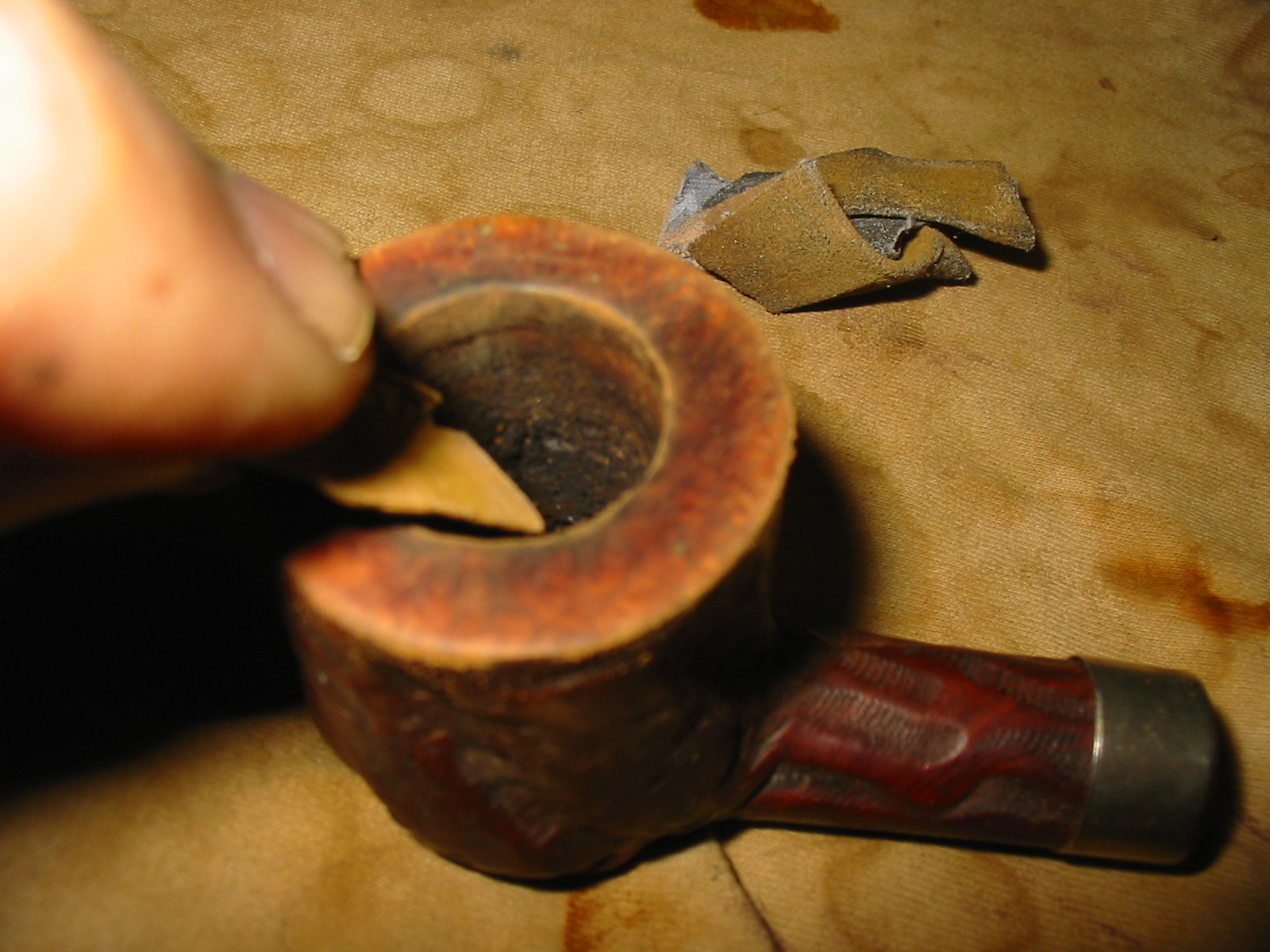
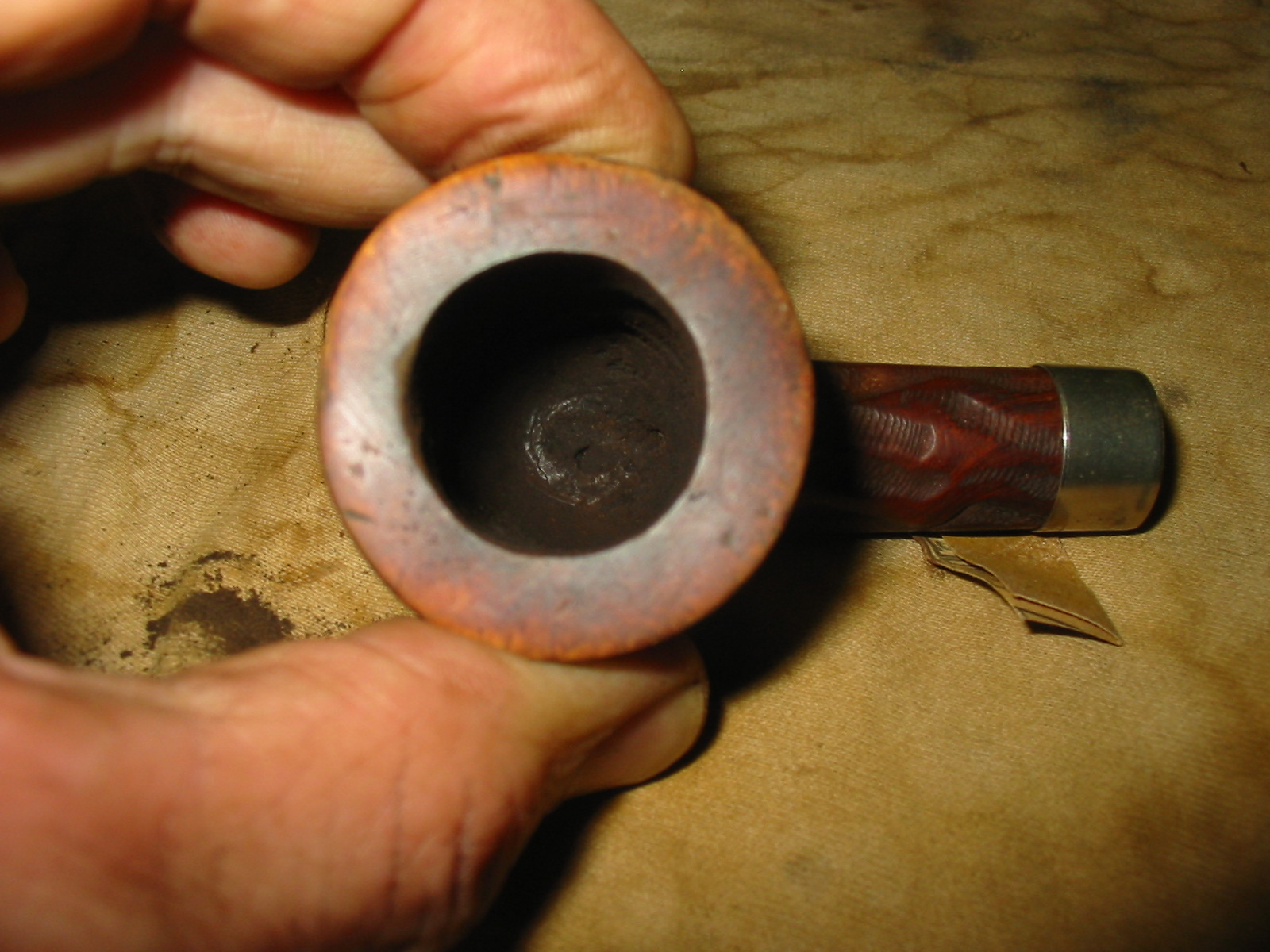
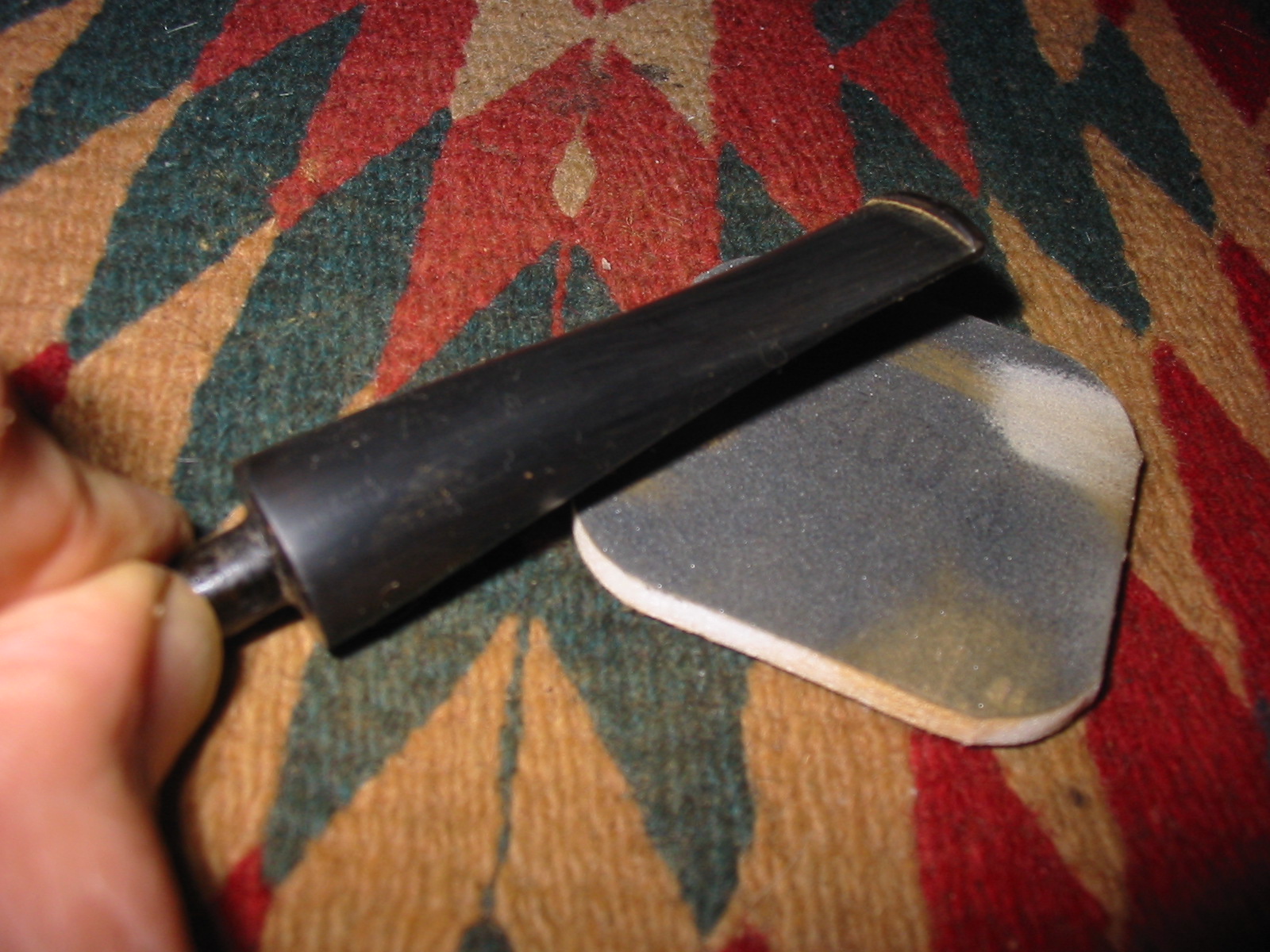
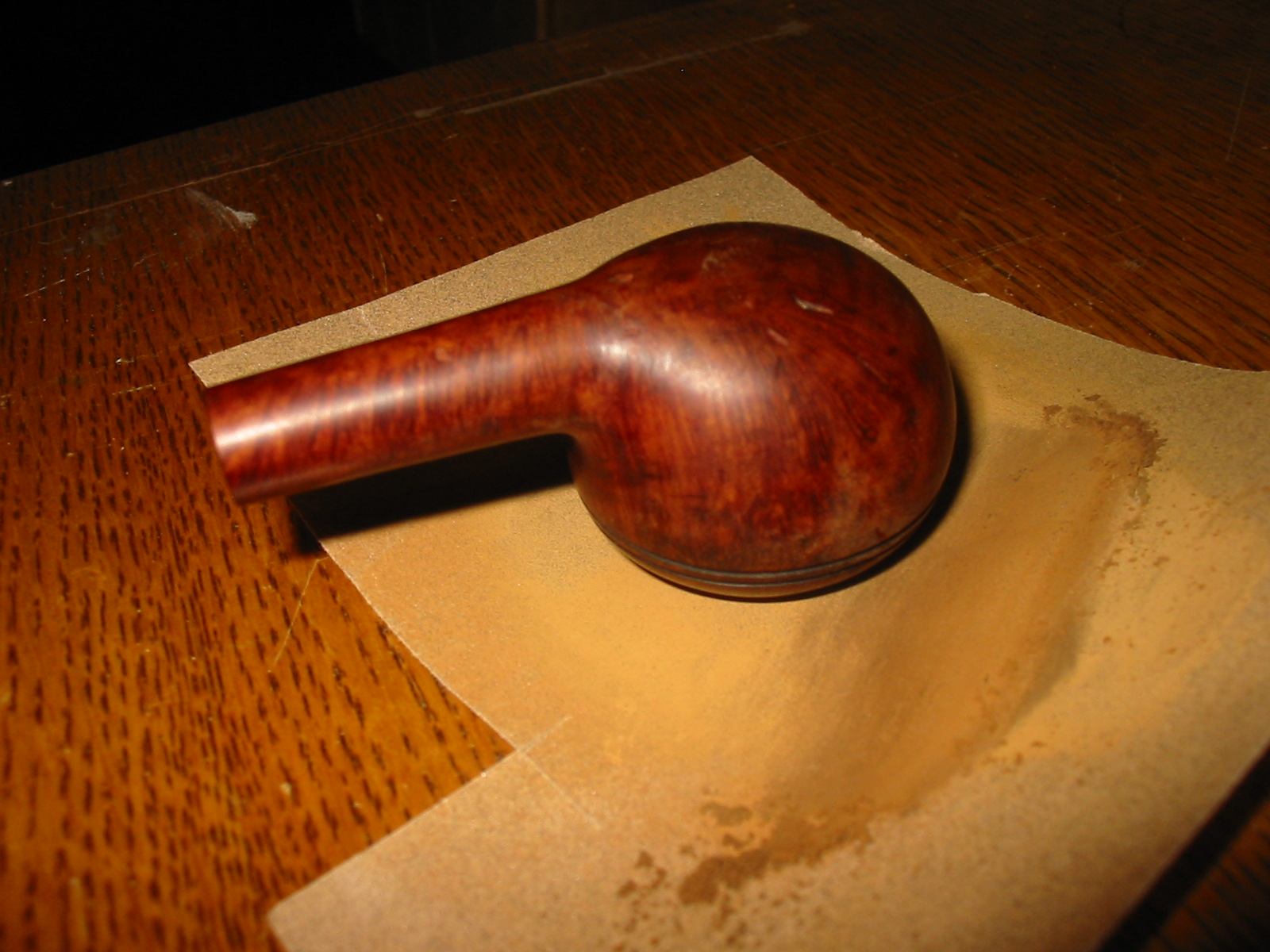
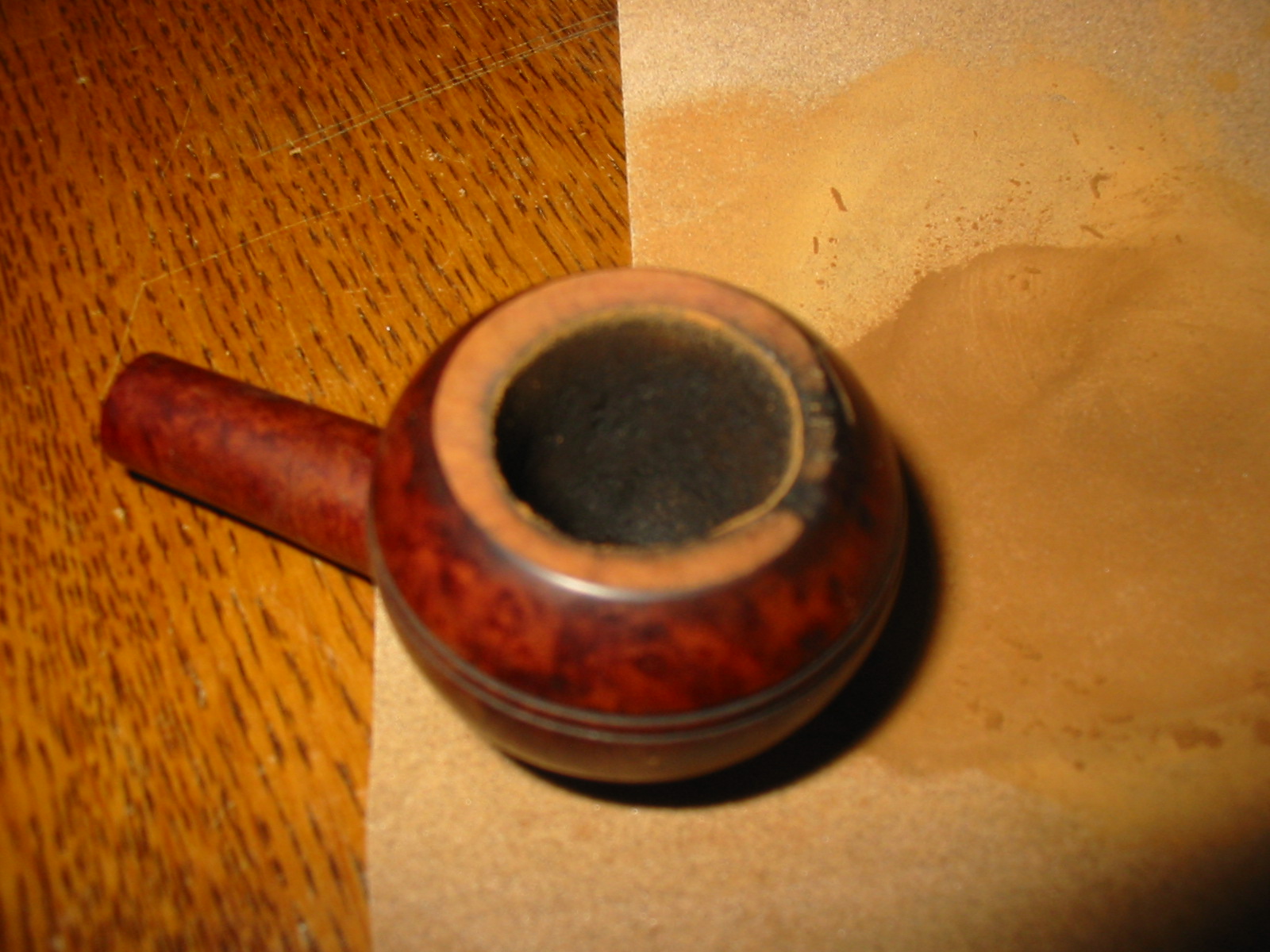
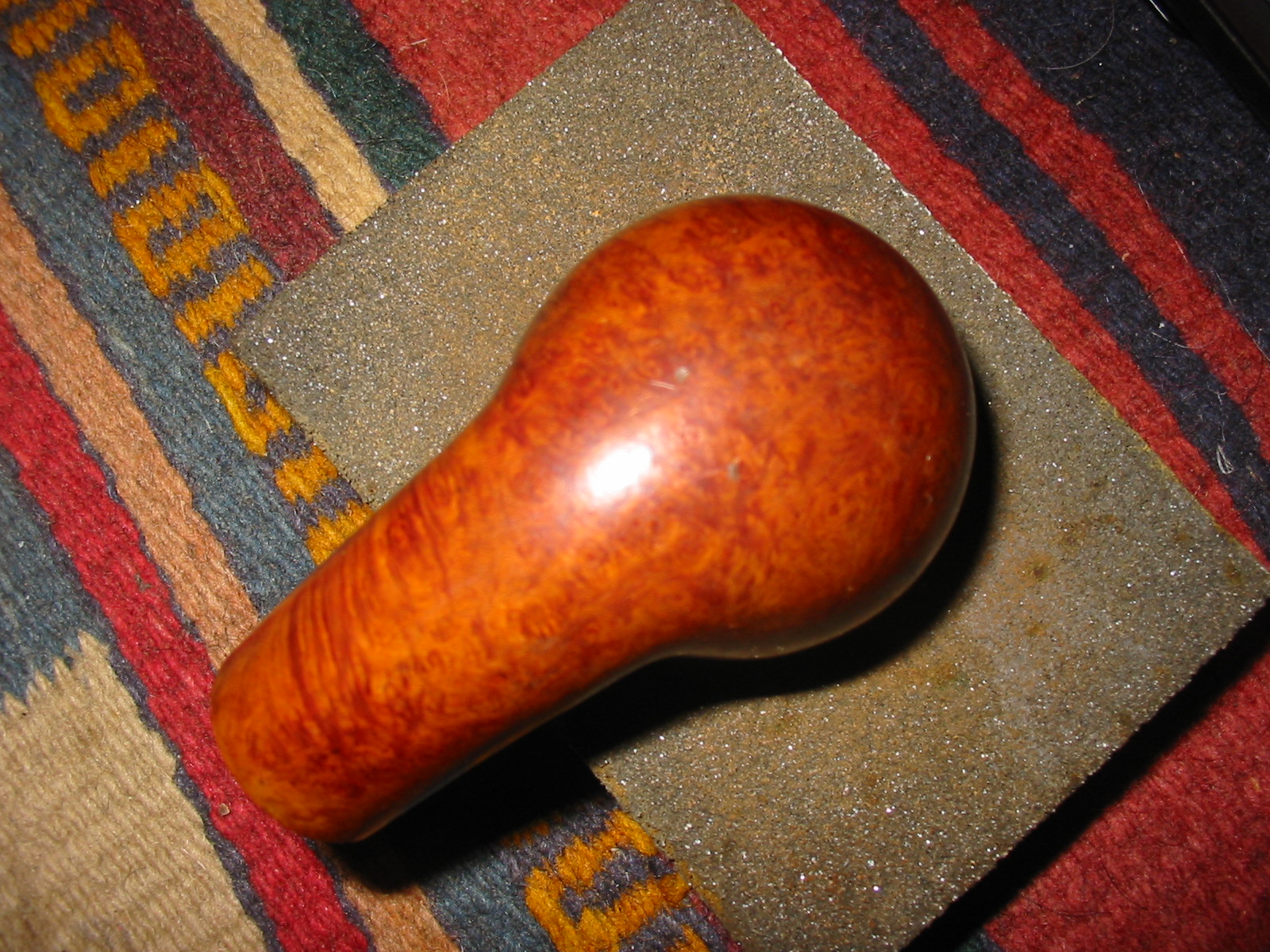
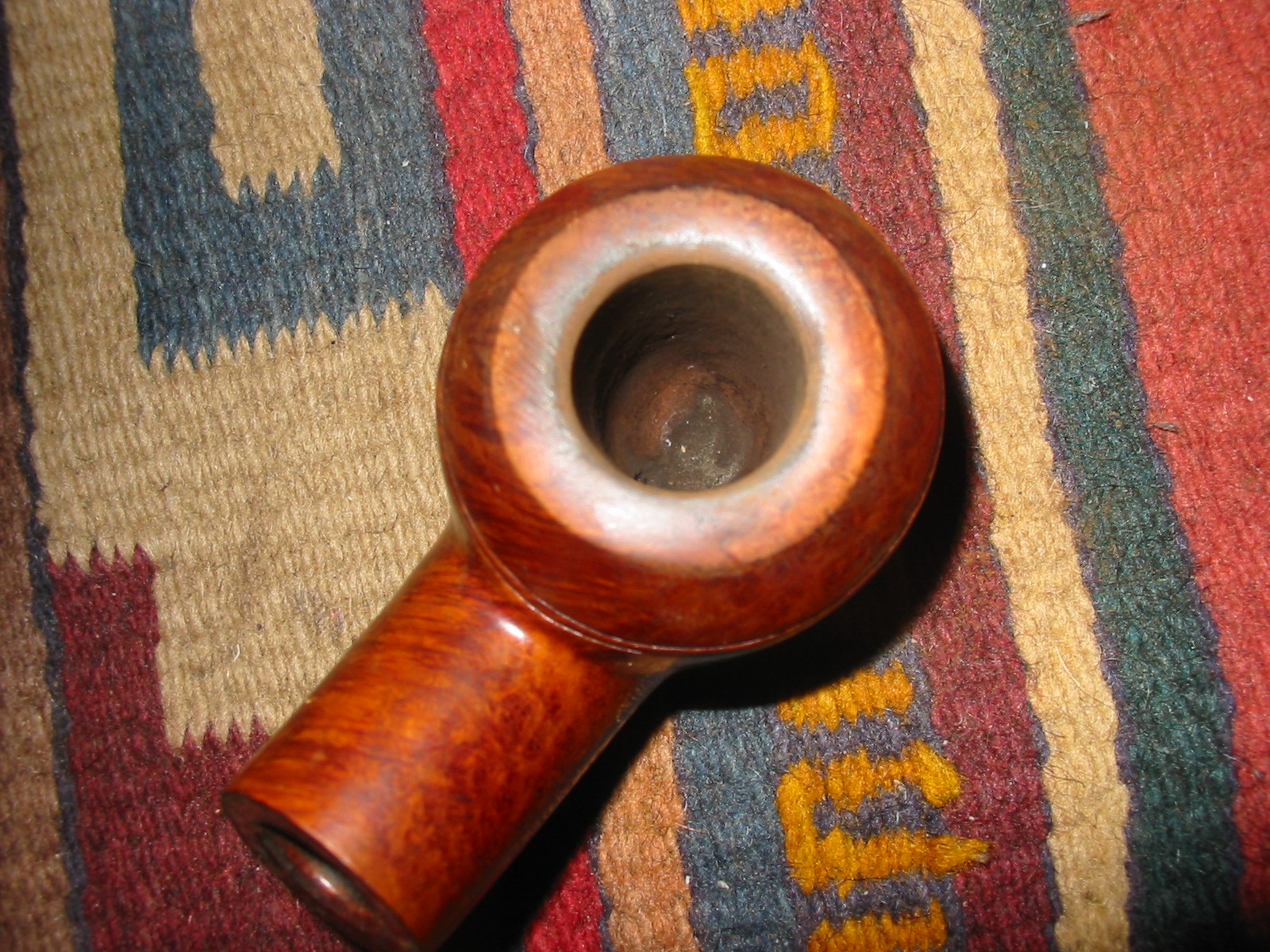
Once the inside was clean I decided to gently top the bowl. I used a medium grit sanding sponge flat on the table top and worked the rim against that to remove the buildup of tars. The first photo shows the set up and the second the result of the topping. Very little briar was removed from the rim, mostly tars. The finish however also was removed so the rim would need to be restained. The third photo shows how I used a folded piece of 220 grit sandpaper to bevel/chamfer the inner rim to repair the damage that had been done to the rim.
IMG_1381

IMG_1382

IMG_1383

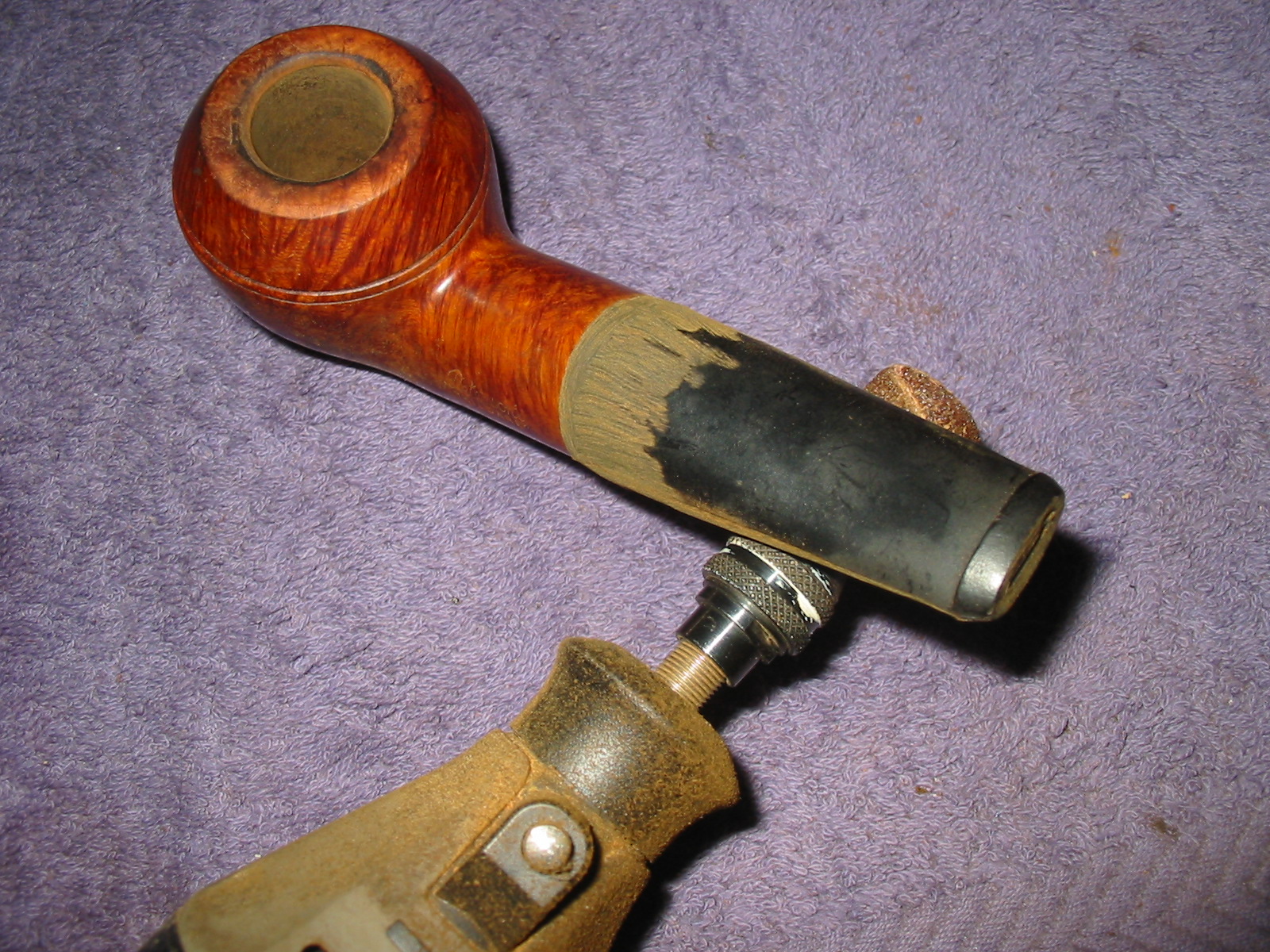
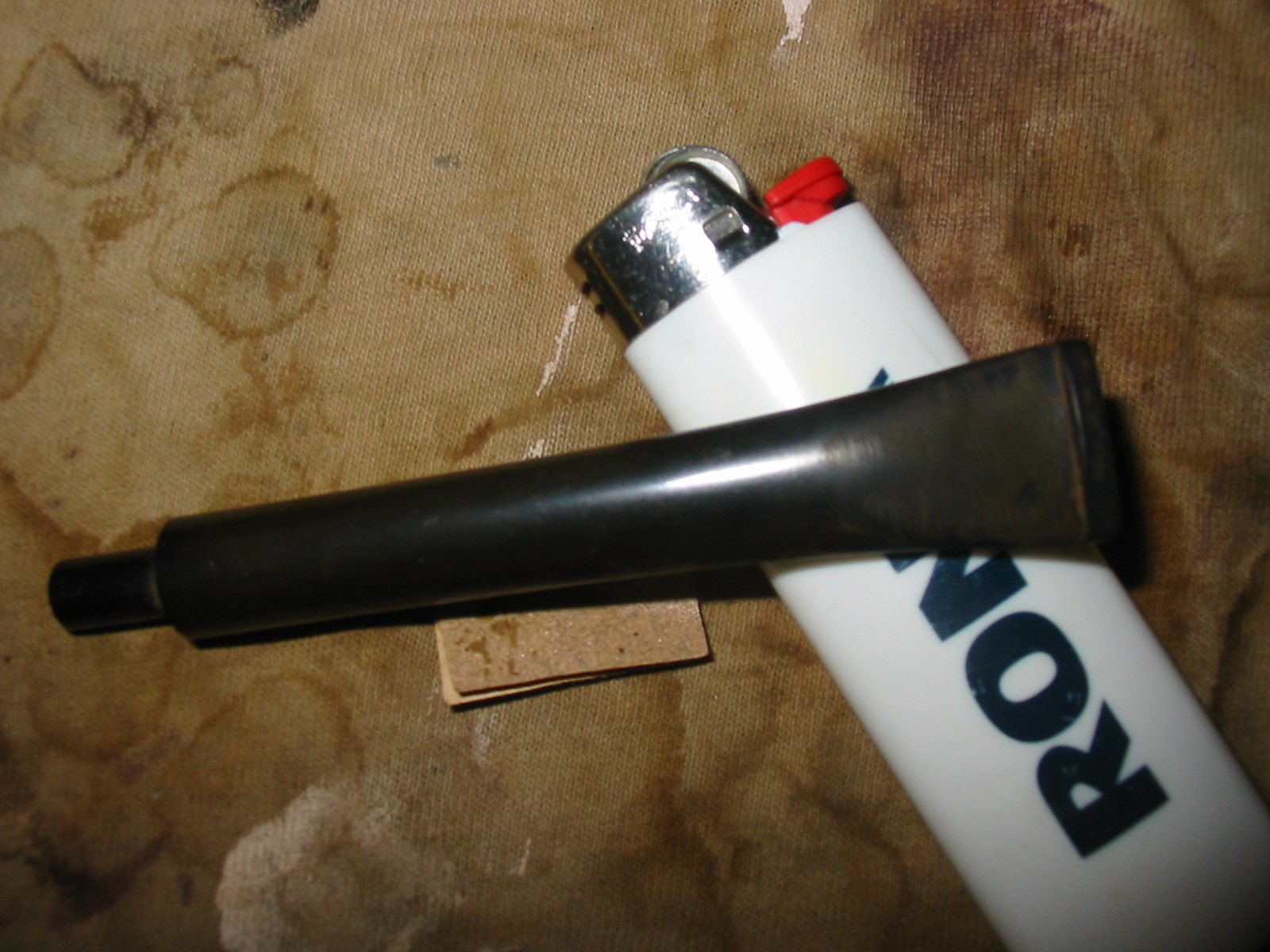
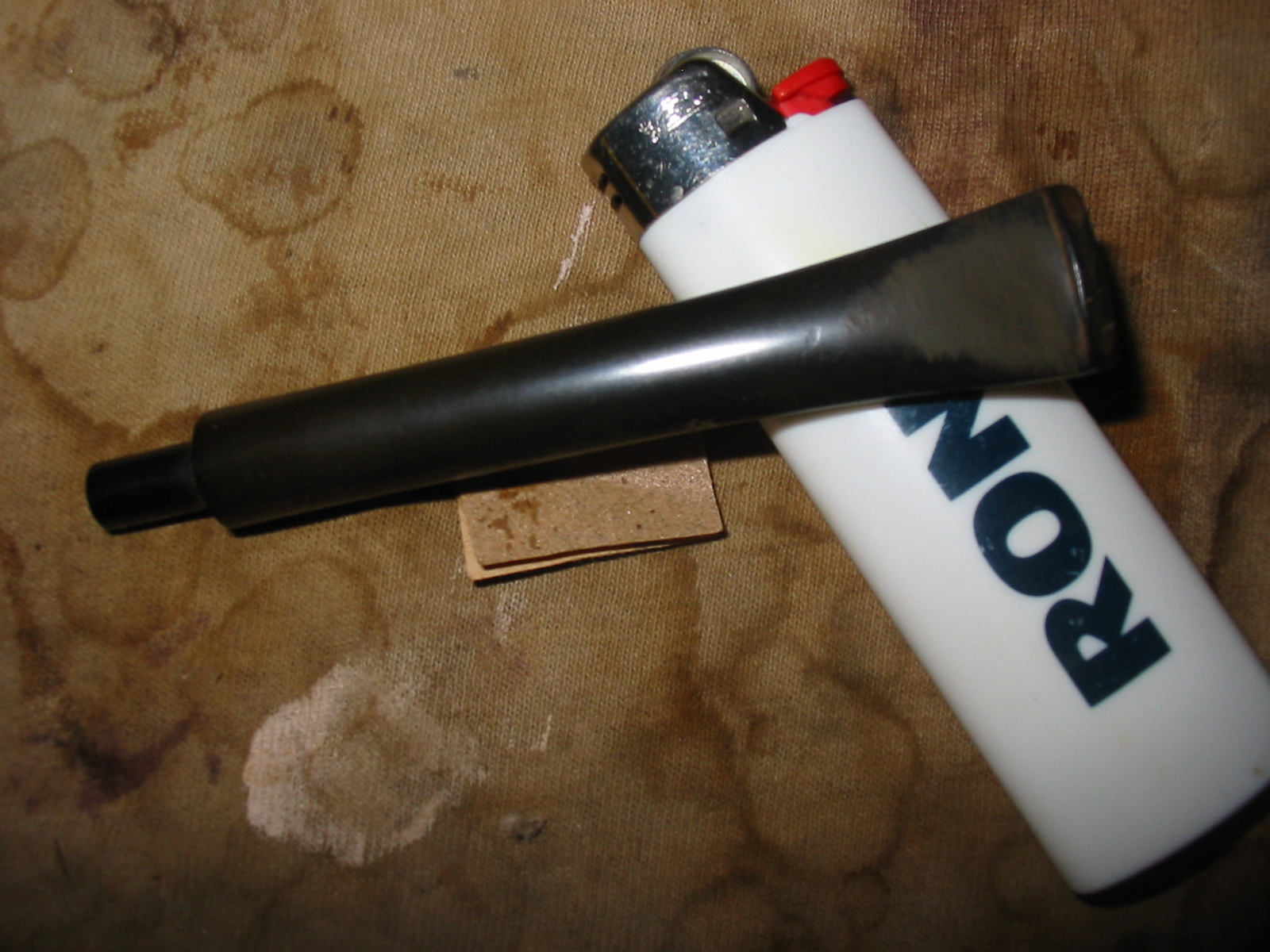
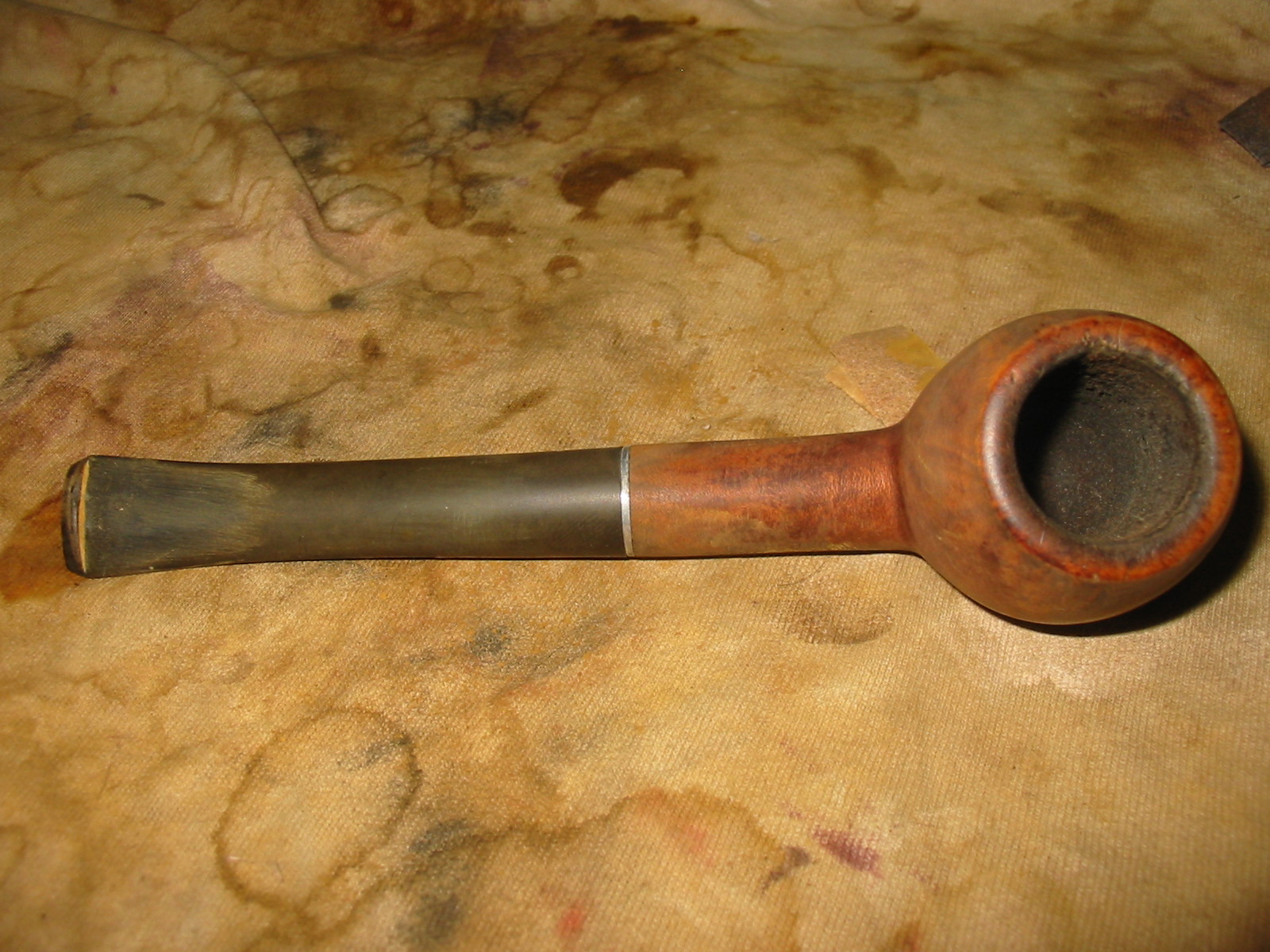
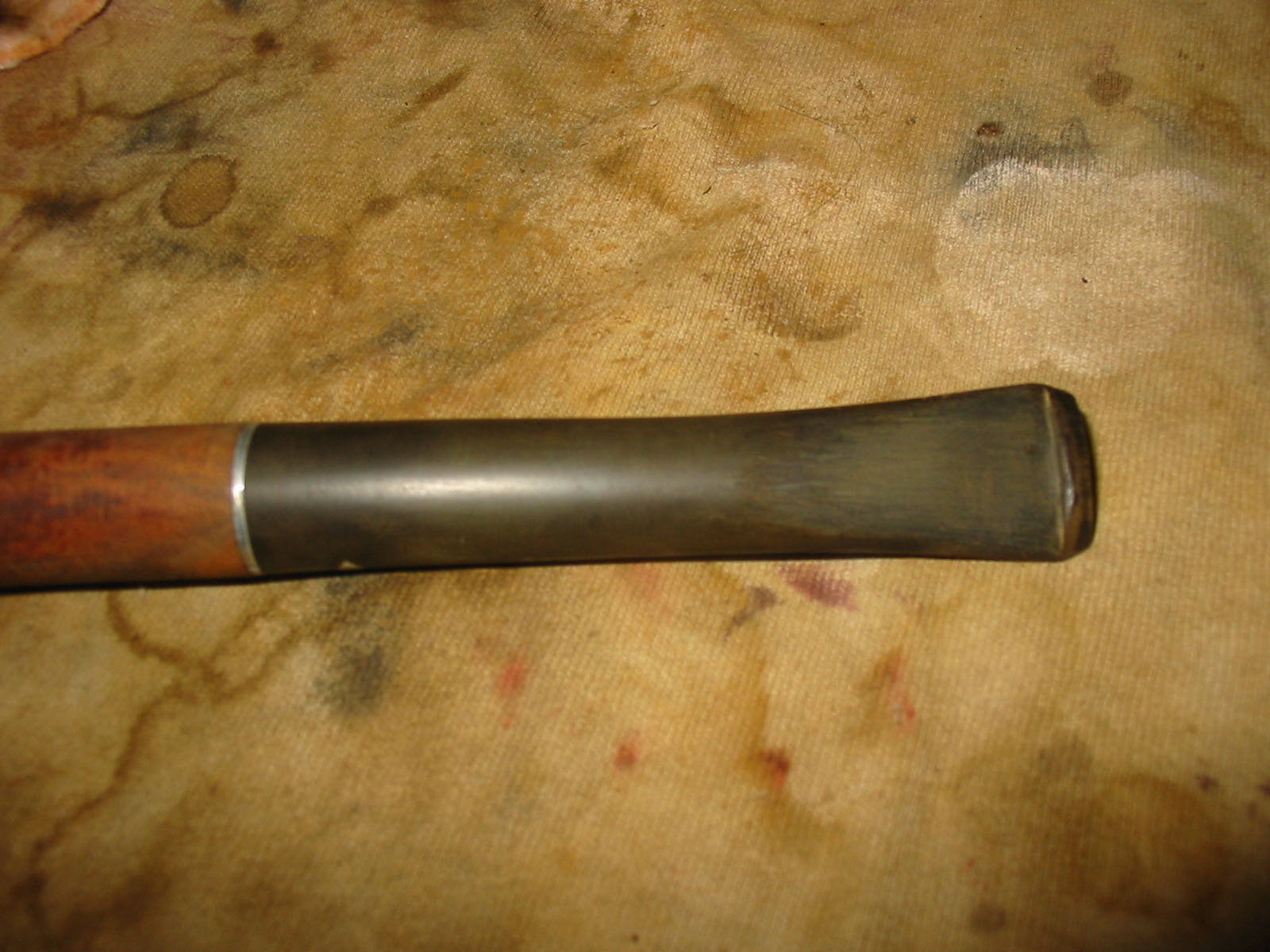
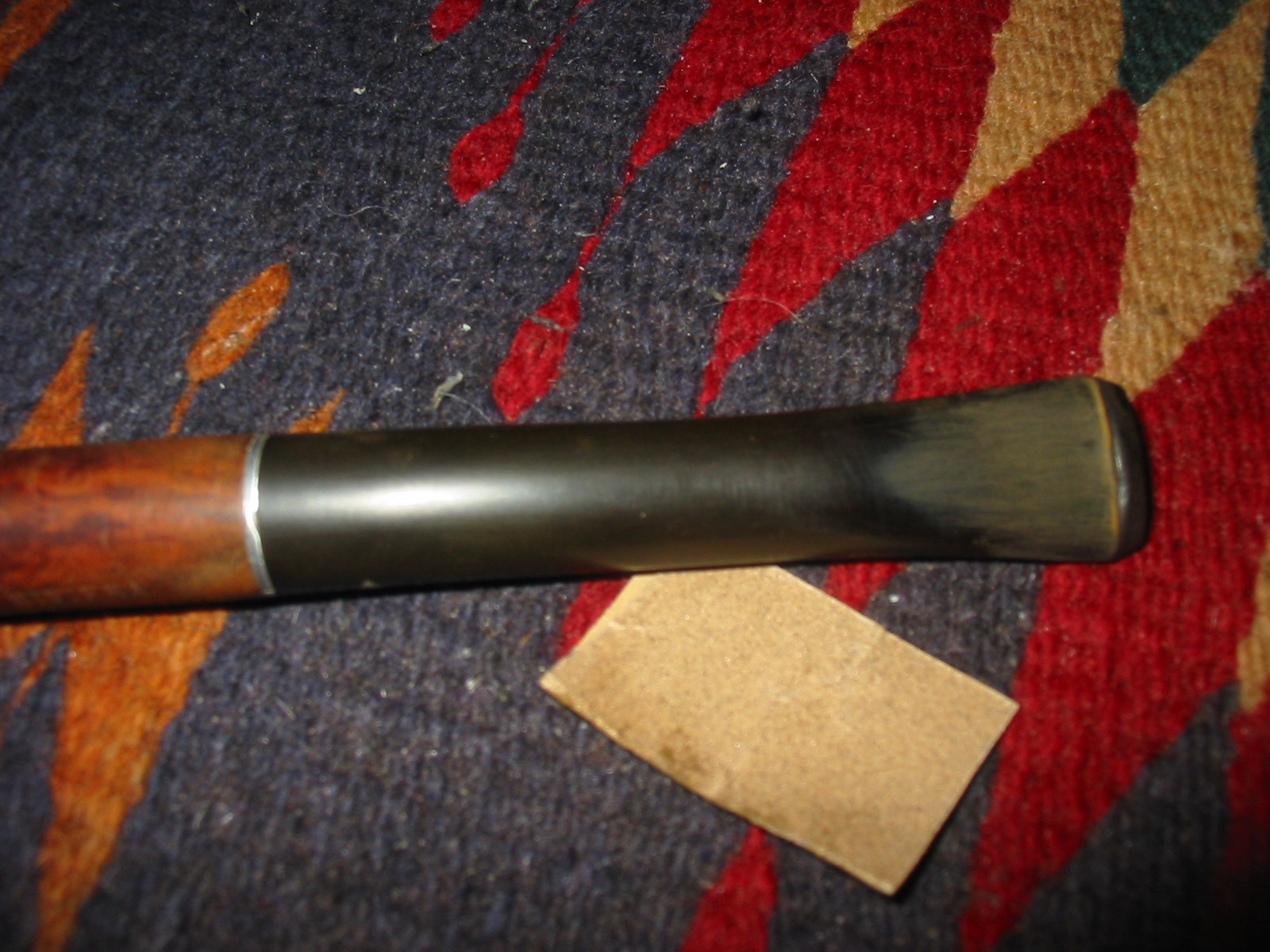
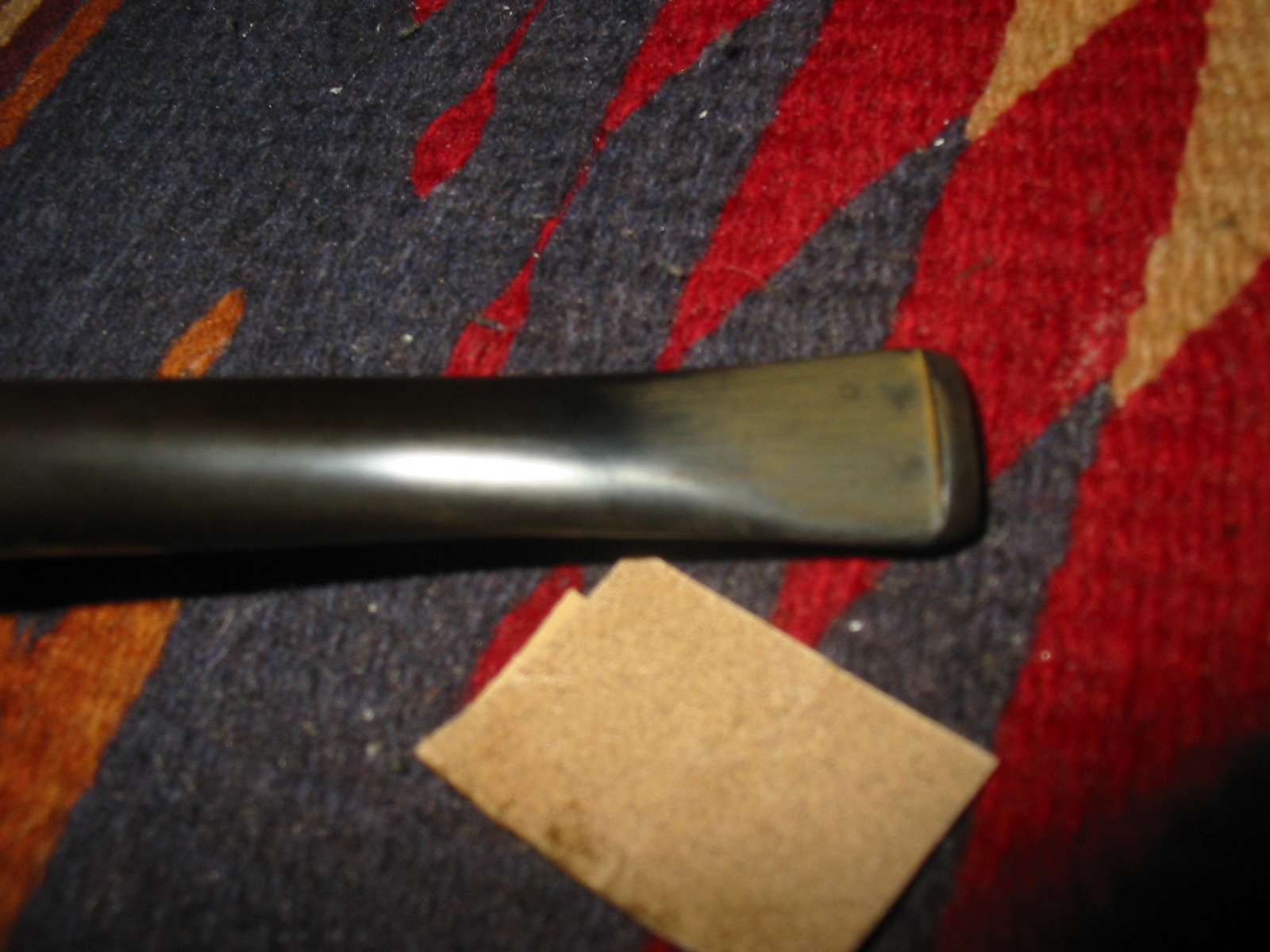
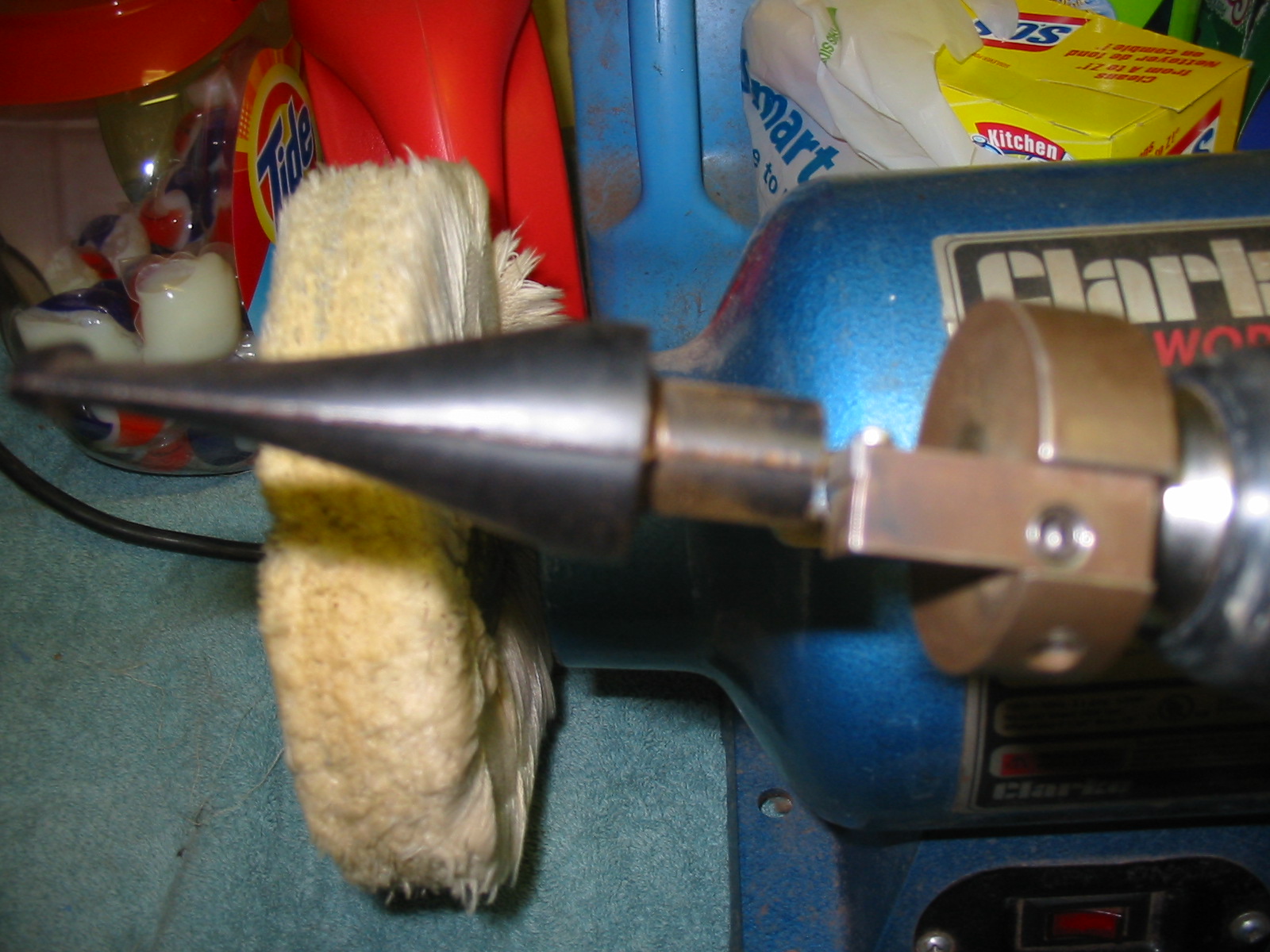
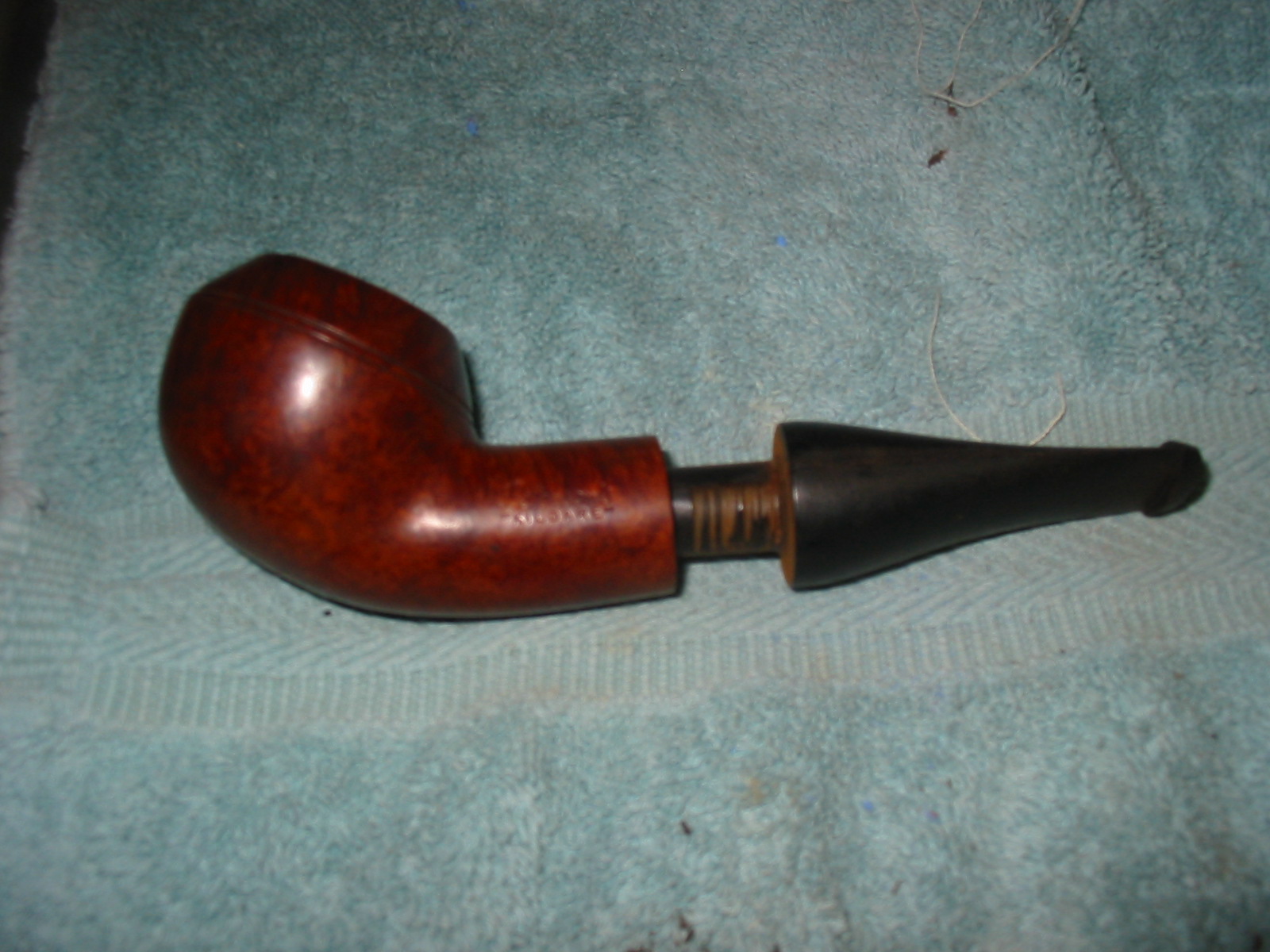
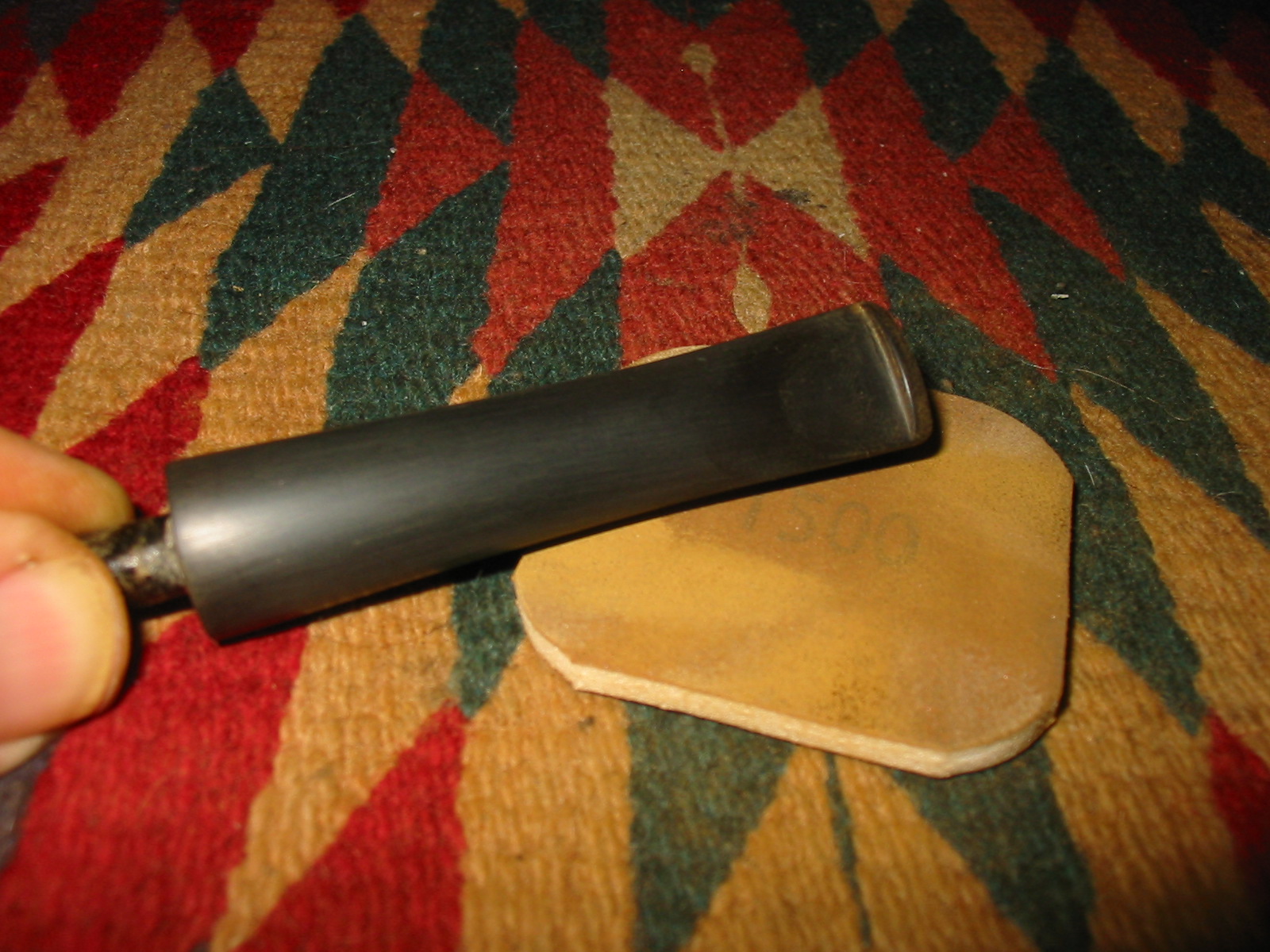
I sent out several emails and private messages to folks on the online forums to see if I could find a Peterson stem with these dimensions. I received many answers and several possible stems that could work for this pipe. Thanks to those who sent them. For the most part they were either too long or the diameter of the stem was not large enough to fit the shank. Chuck (desertpipe on SF) sent me several that would work. I also have a piece of brindle rod coming that Todd (Sasquatch on SF) was willing to cut for me. So in the end I will have two different stems for the pipe. While awaiting the arrival of the Cumberland stock I decided to turn the tenon on a vulcanite stem blank from Chuck. I turned it with a PIMO tenon tool and fit it to the bowl. The end fit was a ½ tenon for the mortise so I did not need to remove much of the existing vulcanite on the cast stem to make it fit well. To fit the stem on the tool I drilled the airway so that it slid easily over the pin on the tool but did not have too much play. I held the stem and ran the drill over the tenon for a first pass (second photo below) I adjusted the cutting tip and spun it several more times until the fit in the mortise was close. I used the Dremel with a sanding drum to take off more of the material and fine tune the fit (third photo below). I spun it one last time to clean up the face of the stem where it sat against the shank. I want that surface to be smooth and seamless in its fit.
IMG_1427

IMG_1428

IMG_1429

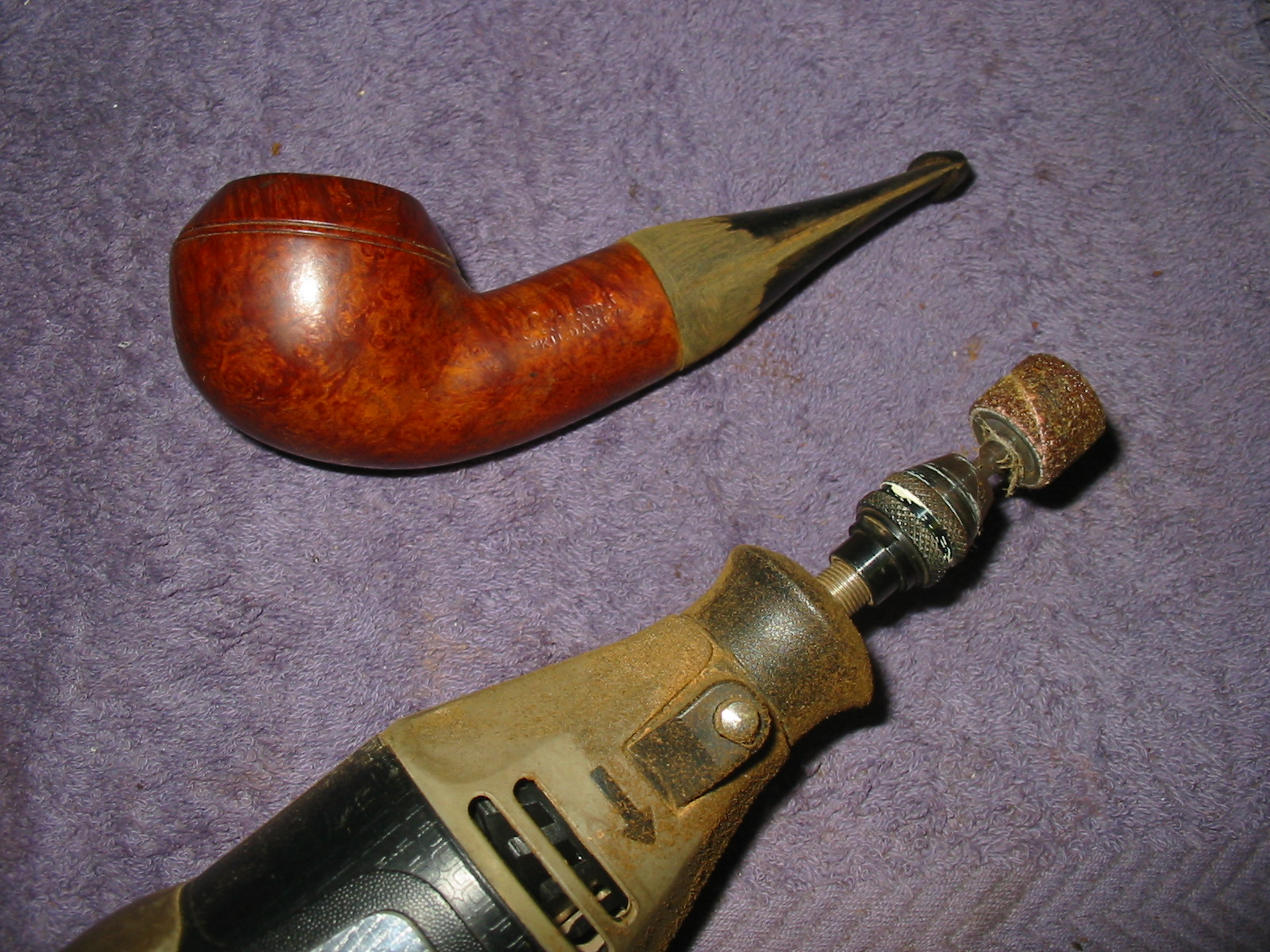
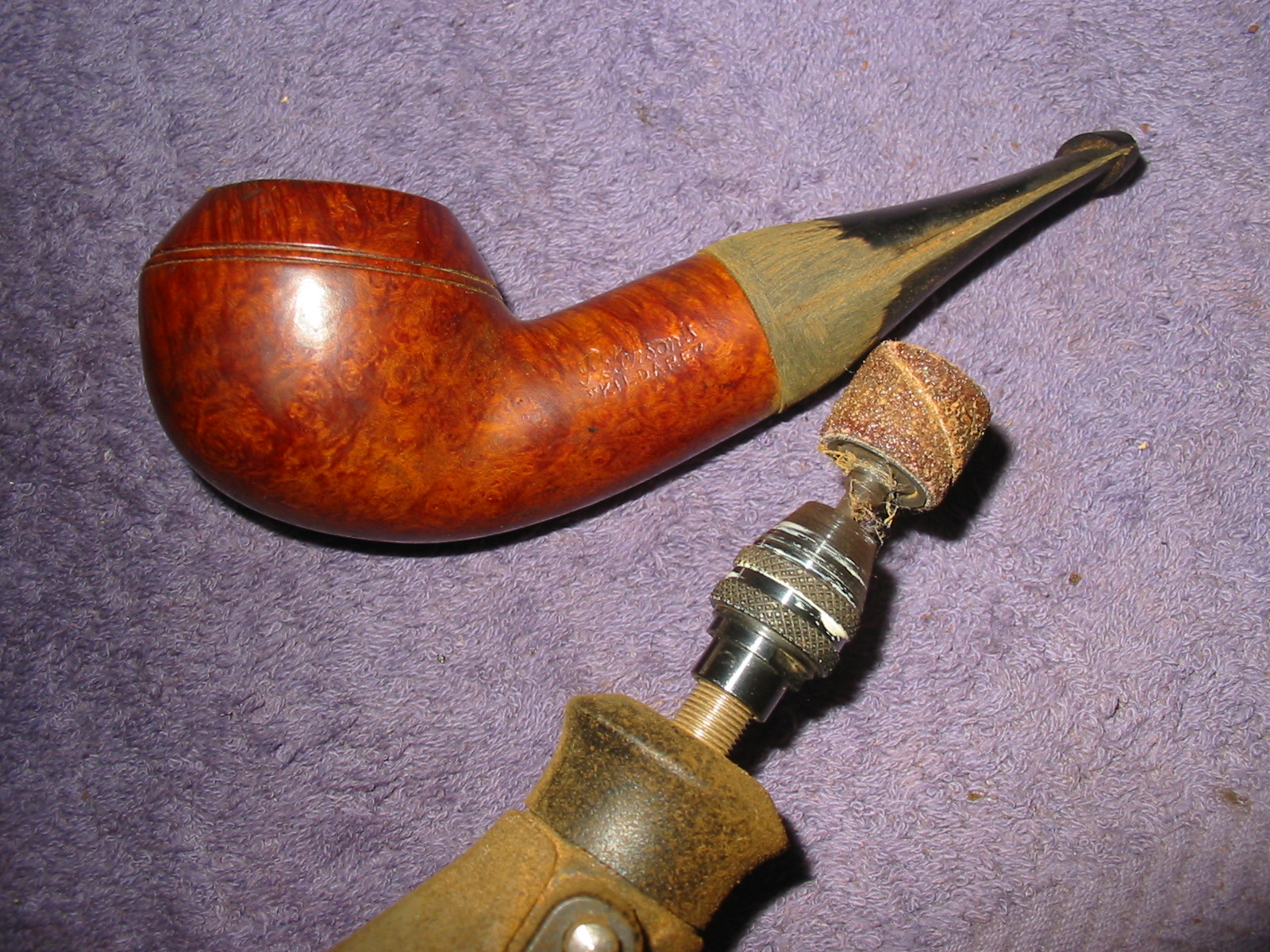
After fitting the tenon to the mortise I used the Dremel with a sanding drum to remove the excess vulcanite on the diameter of the stem. I carefully sand with the Dremel and bring the stem as close to the diameter of the shank as possible without nicking the briar. I also sand down the sides of the stem to remove the casting overrun on the stem and button. The idea is to get as close as possible to the stem diameter and then sand the rest of the fit by hand with medium grit emery cloth and 220 grit sandpaper.
IMG_1438

IMG_1443

IMG_1444

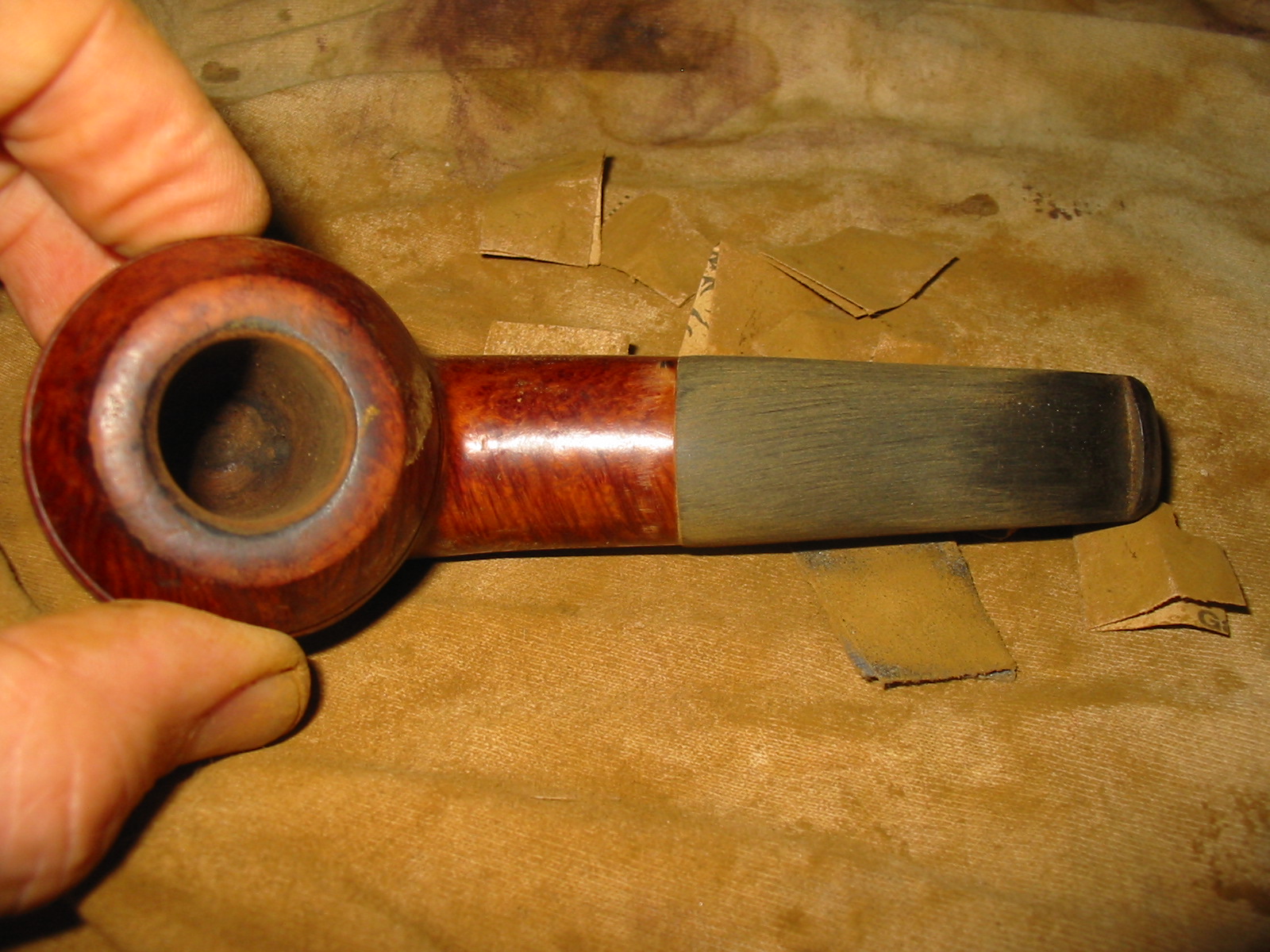
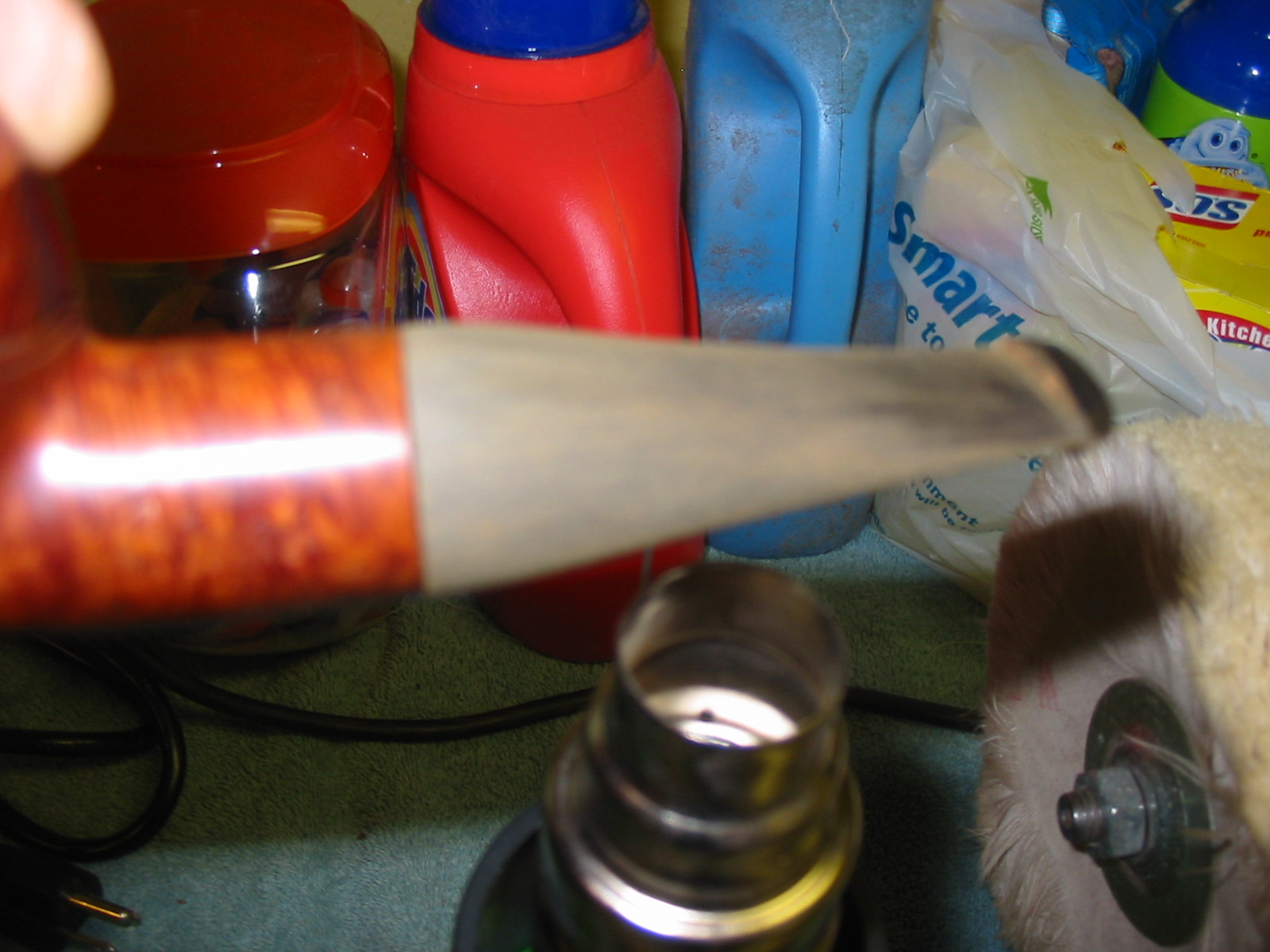
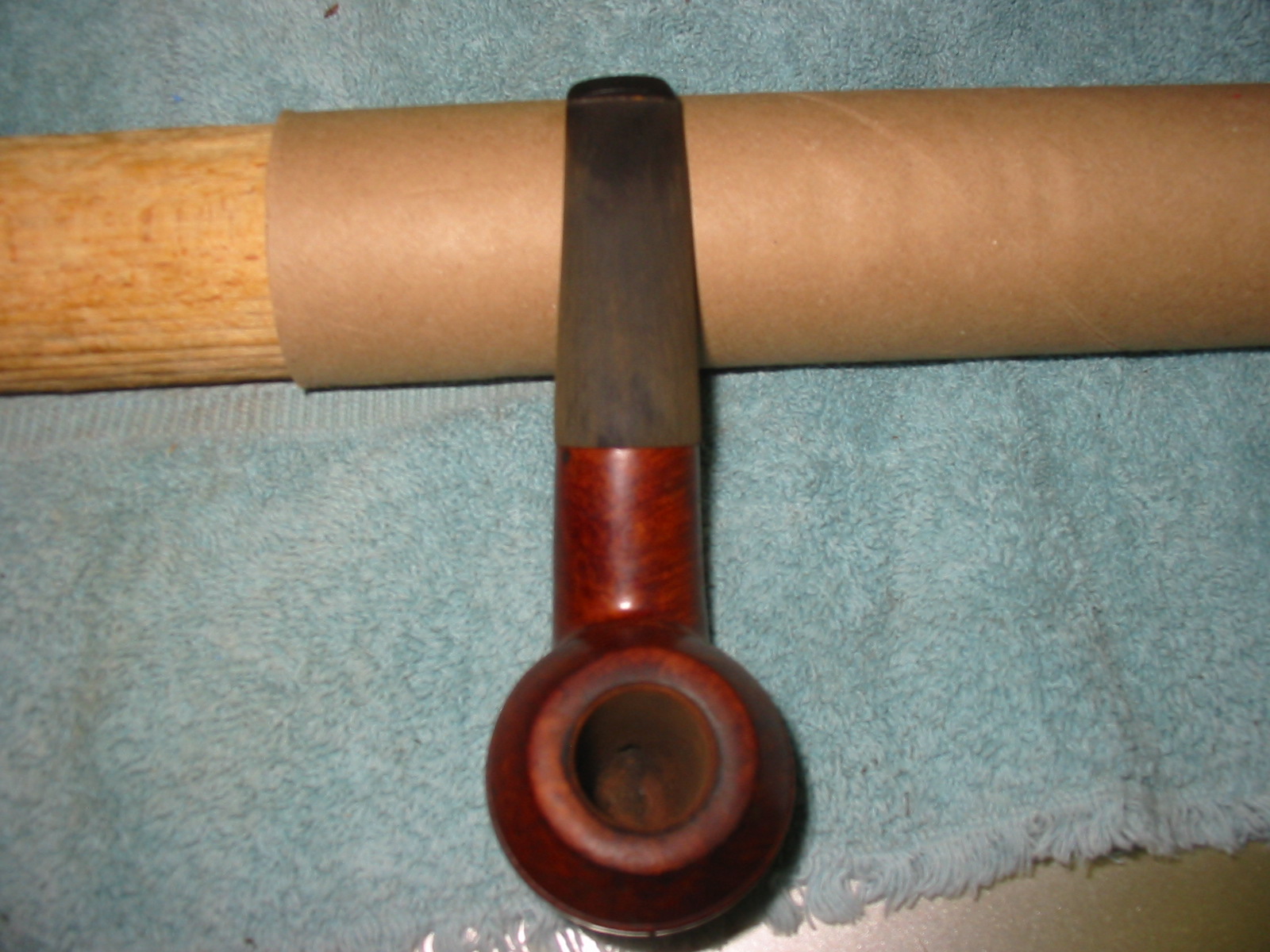
I took the pipe back to my work table and removed the stem and sanded it until the fit was perfect and the marks left by the Dremel were gone. The hand sanding is probably the longest part of the process of fitting a new stem. I sanded it repeatedly with emery paper and 220 grit sandpaper until it was smooth enough to move to the next step in the process. At this point I am not looking for a smooth and perfect fit but one that is getting close. I then heat the stem with my heat gun in order to bend the stem to fit the flow of the pipe. I heated it until it was pliable and then bent it over the rolling pin and cardboard tube that I use for getting the curve of the stem smooth and correct.
IMG_1445

IMG_1446

IMG_1448

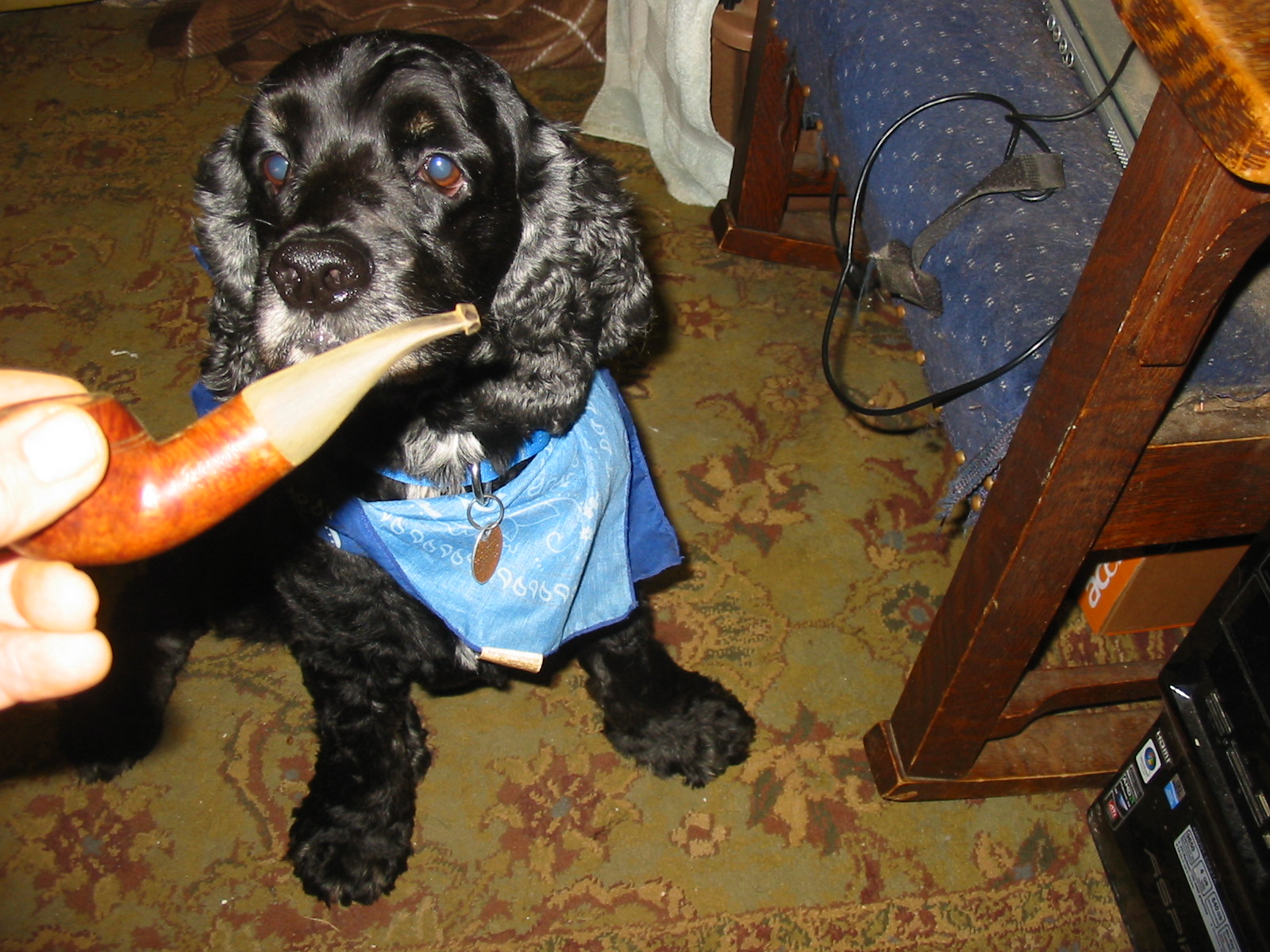
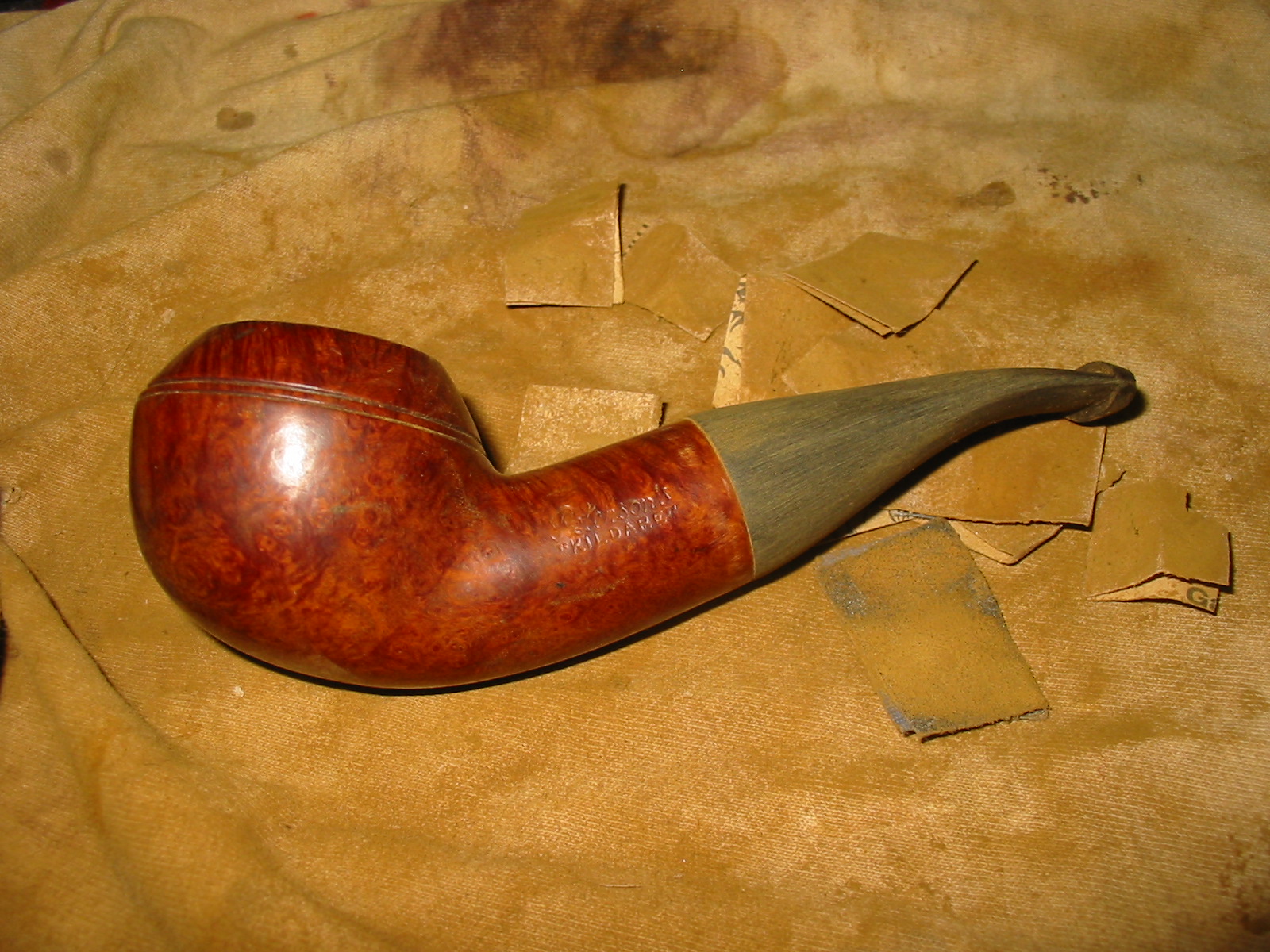
I took the pipe back to my table and showed it to my sidekick and helper, Spence for his approval. He gave it a sniff and looked it over. It passed his inspection so I continued to sand and shape the shank/stem union. Lots of pieces of sandpaper and emery paper later the stem is getting closer and closer to a good fit.
IMG_1449

IMG_1450

IMG_1451

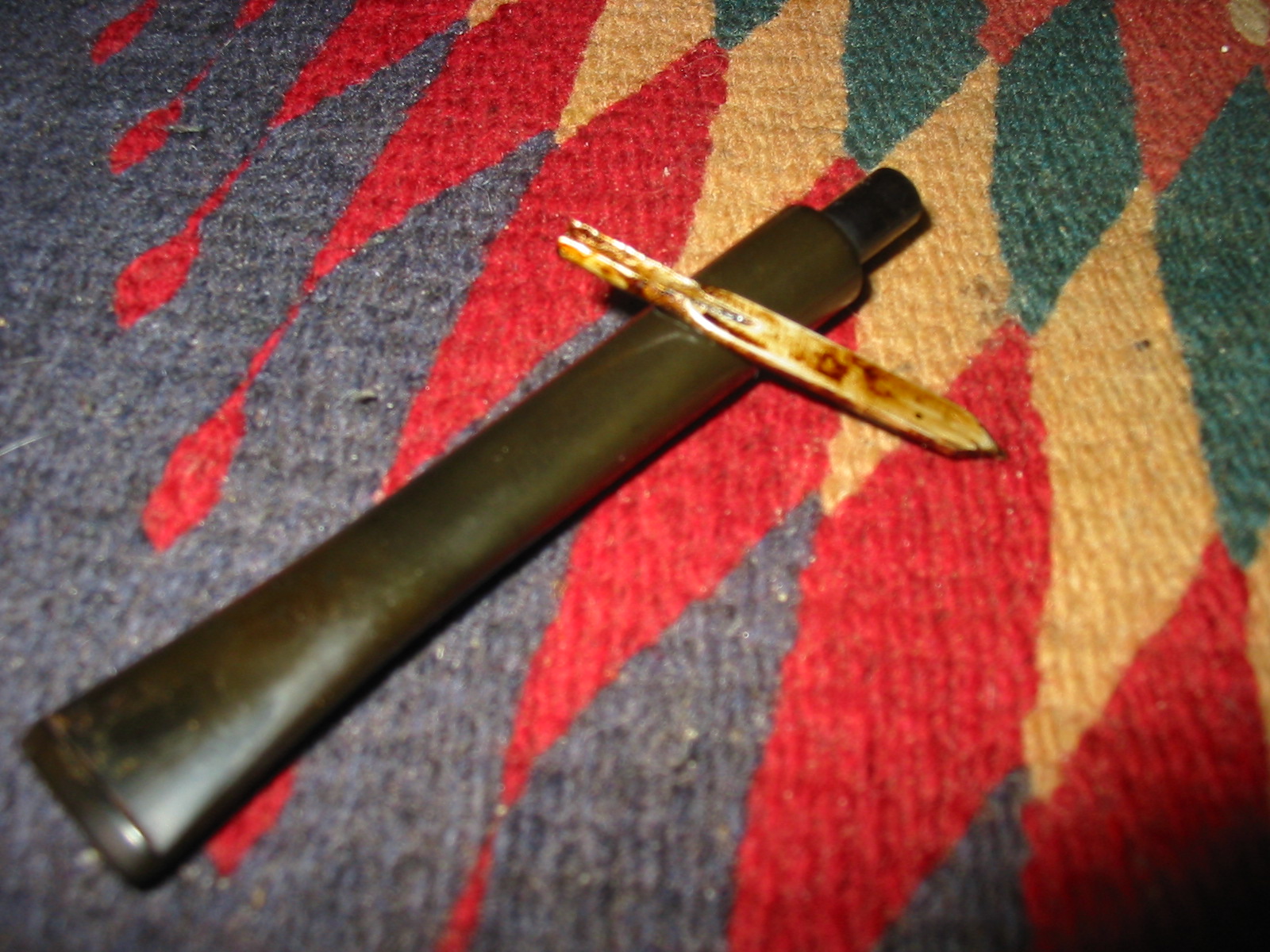
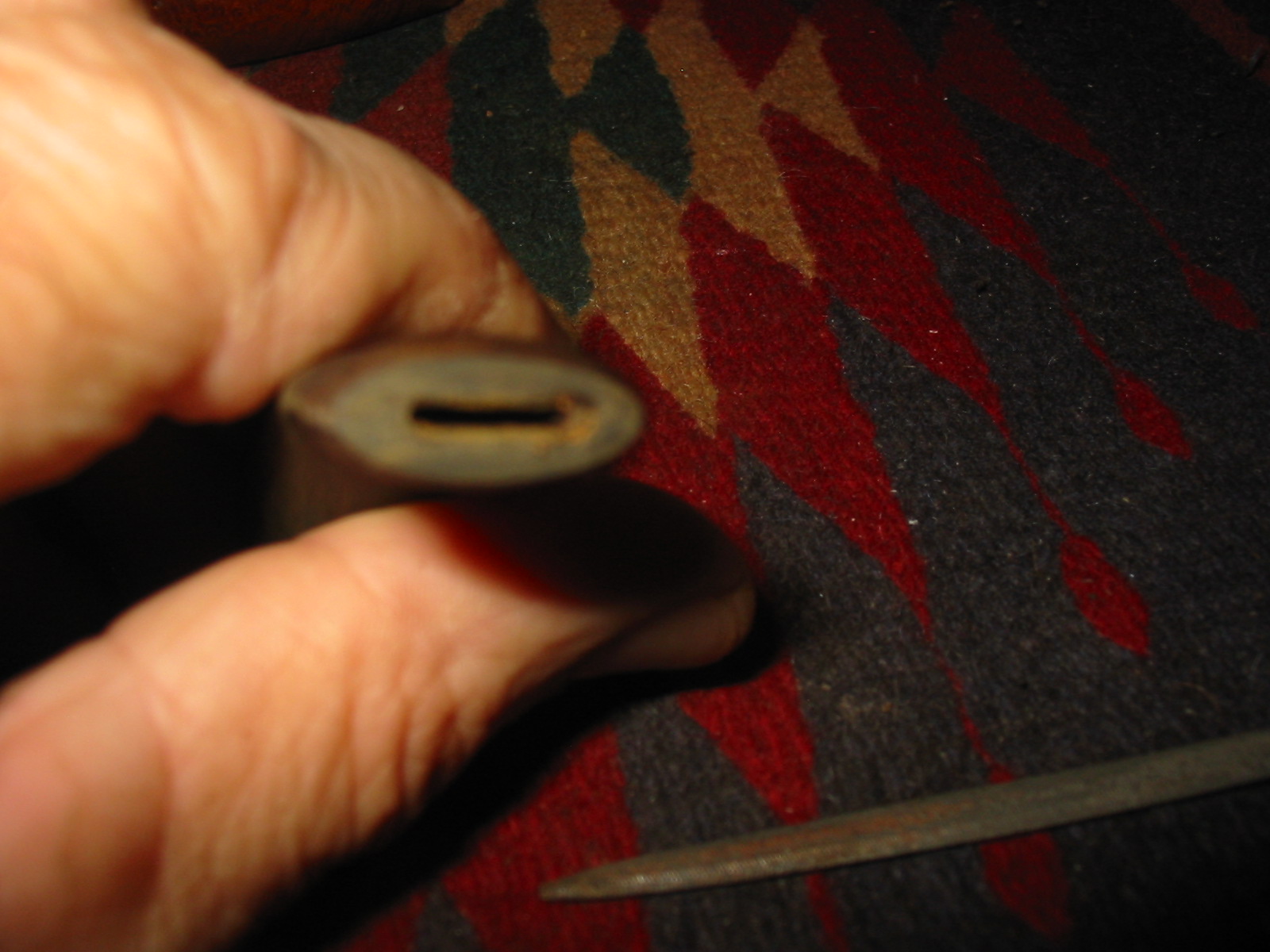
The button was very tight and I was not able to push a pipe cleaner through the slot so I opened the slot with needle files and reshaped it into an oval that was open and flared back to the airway in the stem.
IMG_1453

I sanded the stem with a medium grit sanding sponge and a fine grit sanding sponge to remove the scratches left behind by the sandpaper. Each step of sanding brought both the fit and finish closer to the look I was aiming for with the finished stem.
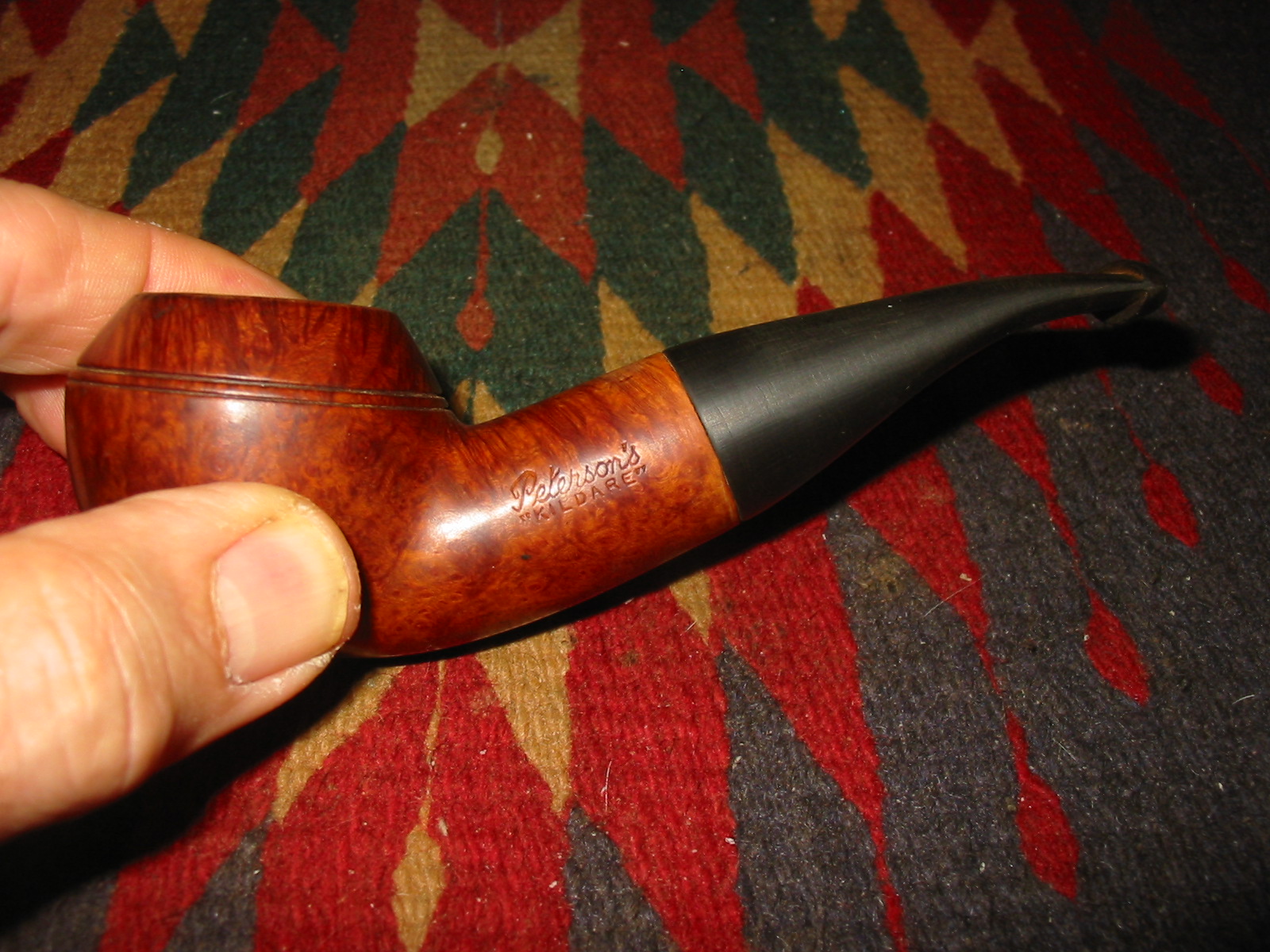
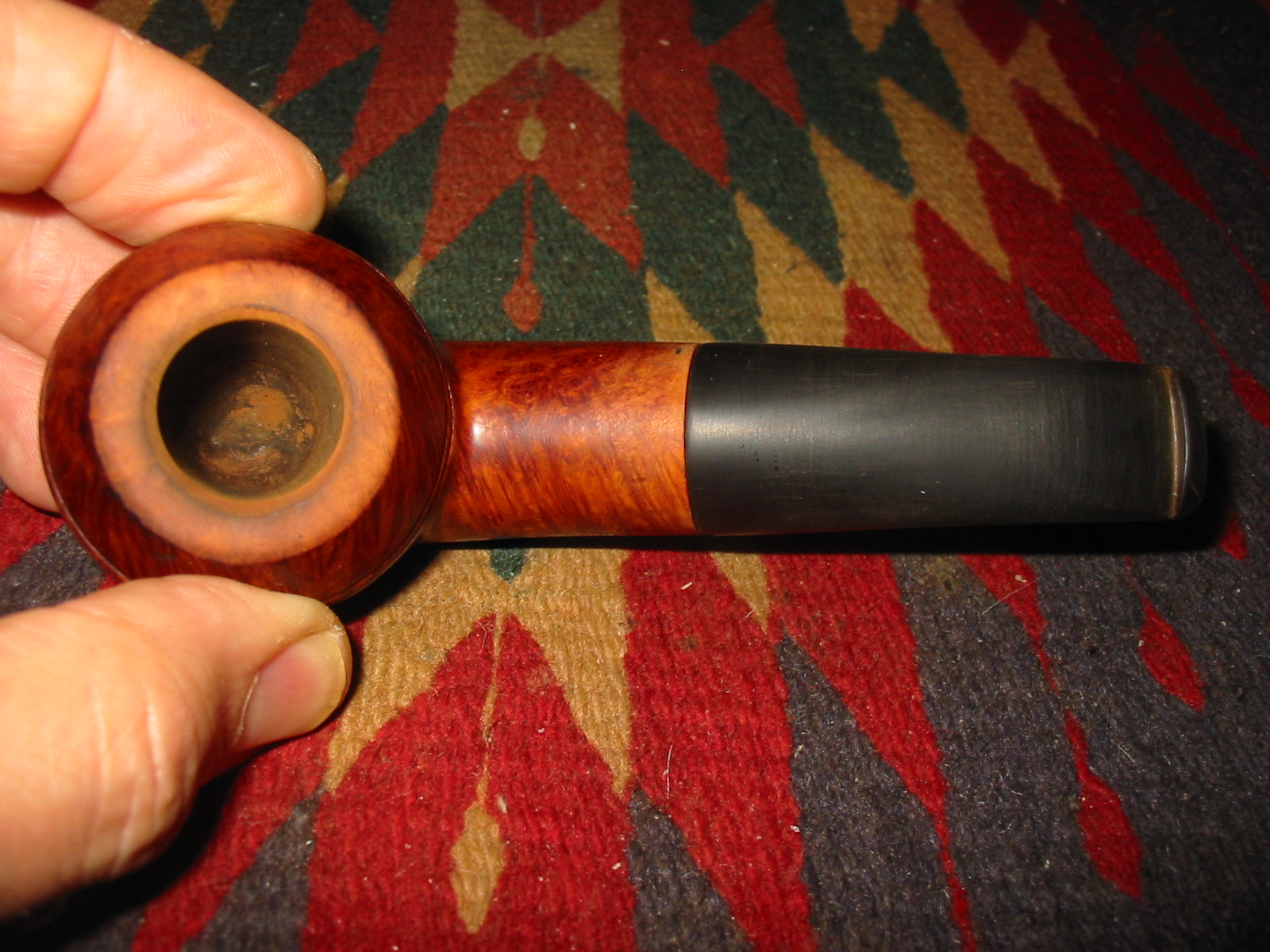
IMG_1460

IMG_1461

IMG_1462

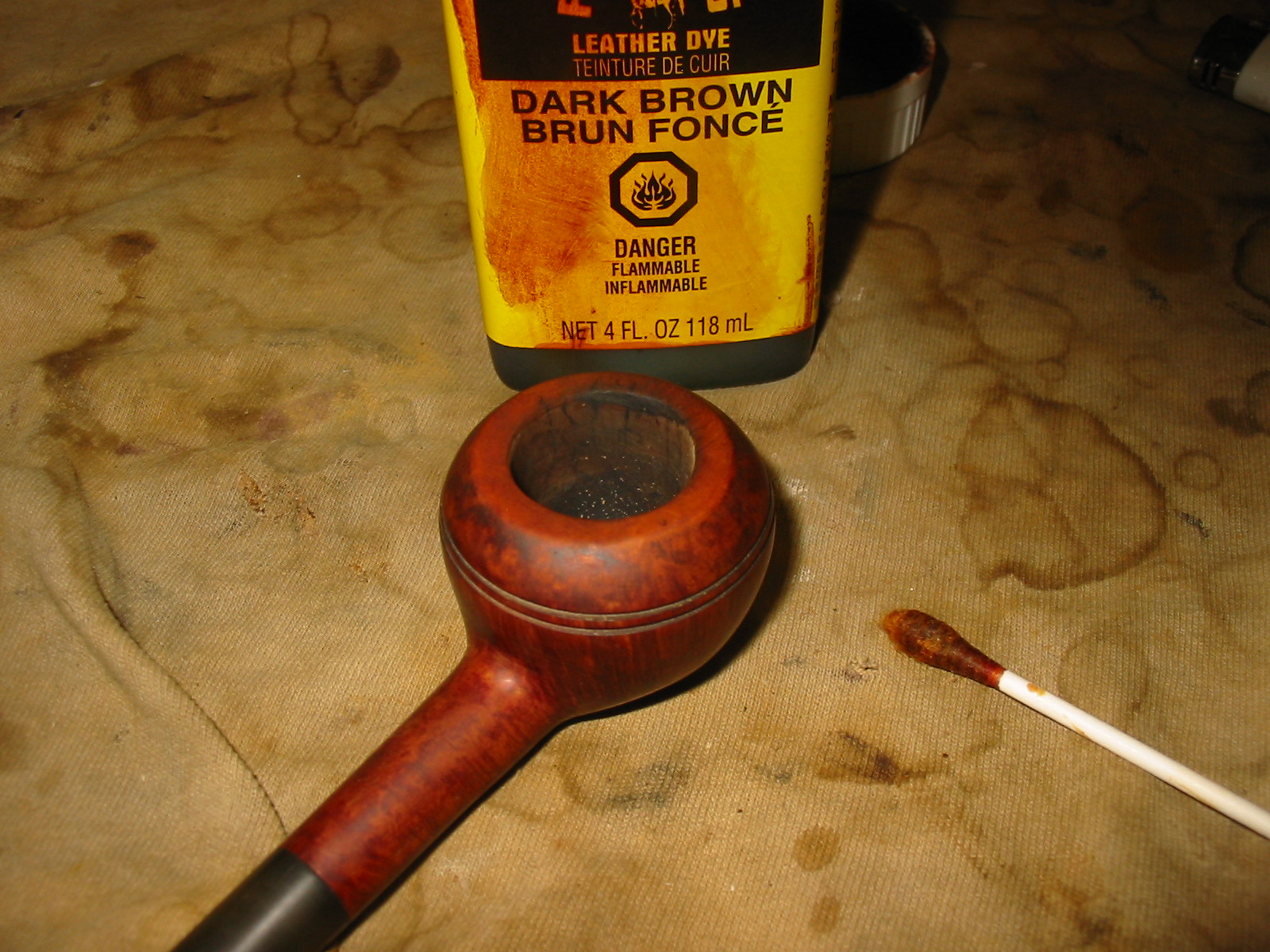
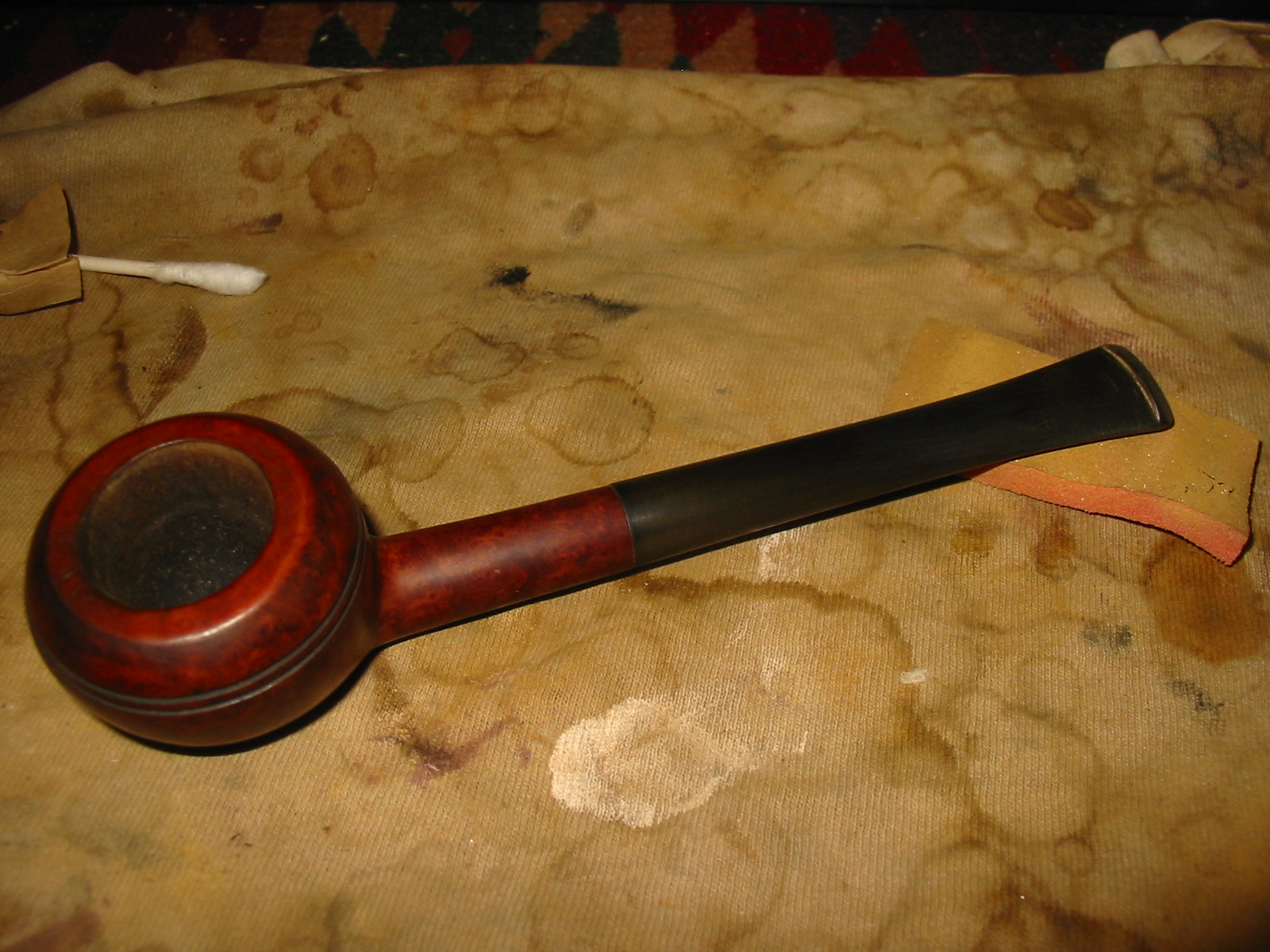
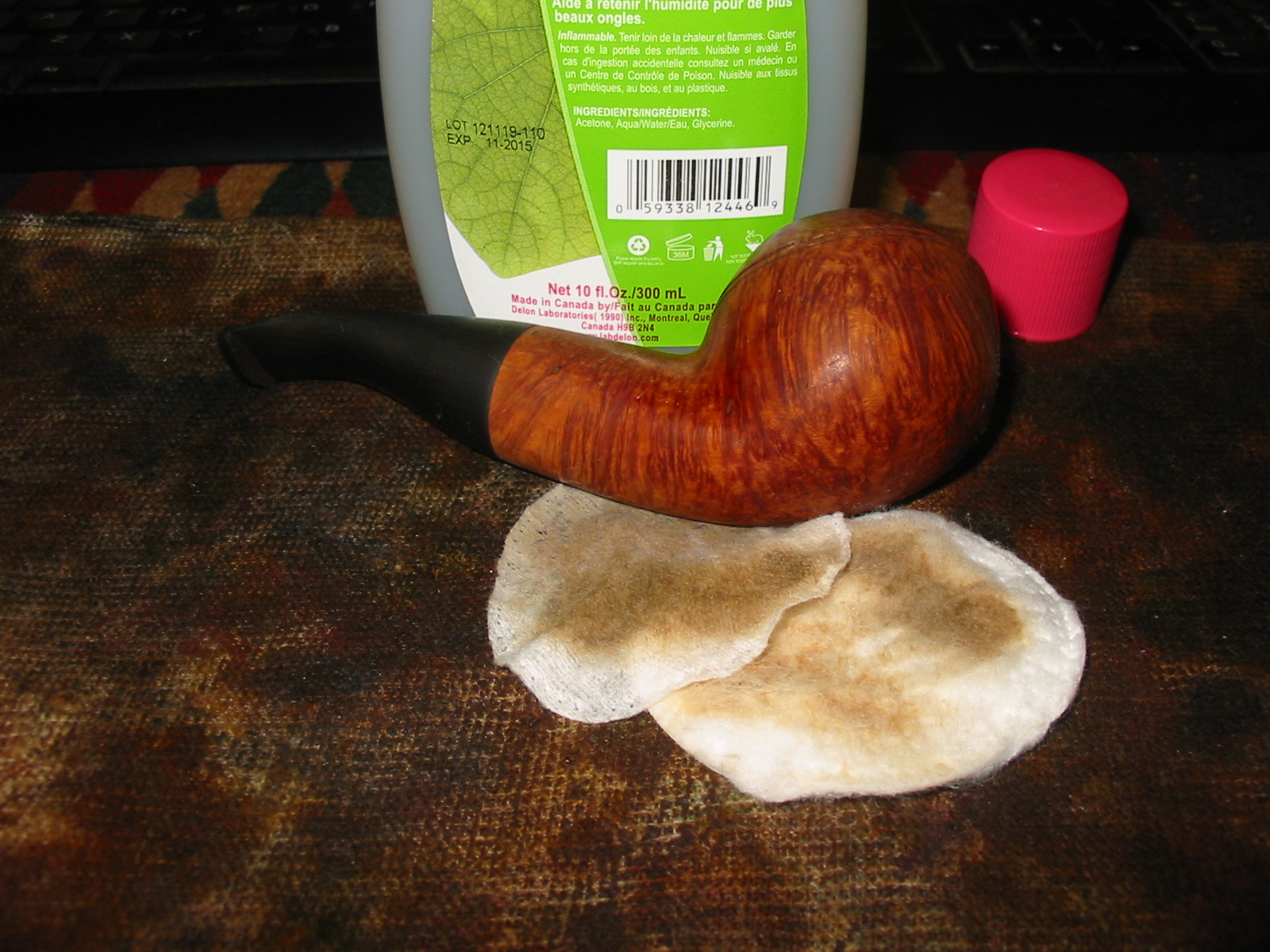
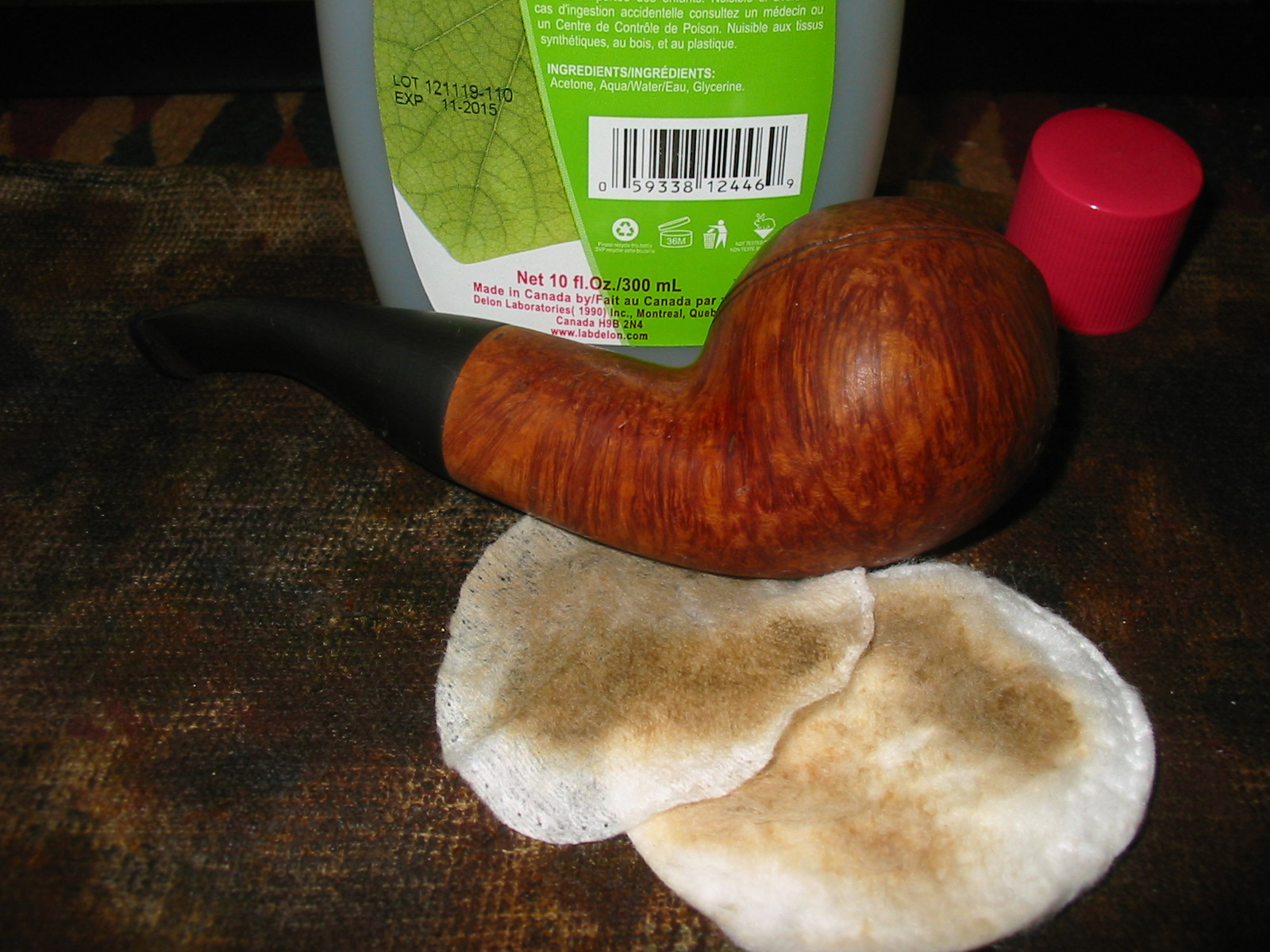
I wiped the bowl down with acetone on a cotton pad to remove the finish and prepare the bowl for a new coat of stain. I have found that if I do not remove the stain then it is very hard to match the rim to the colour of the bowl. With the finish gone the staining is very simple.
IMG_1463

IMG_1464

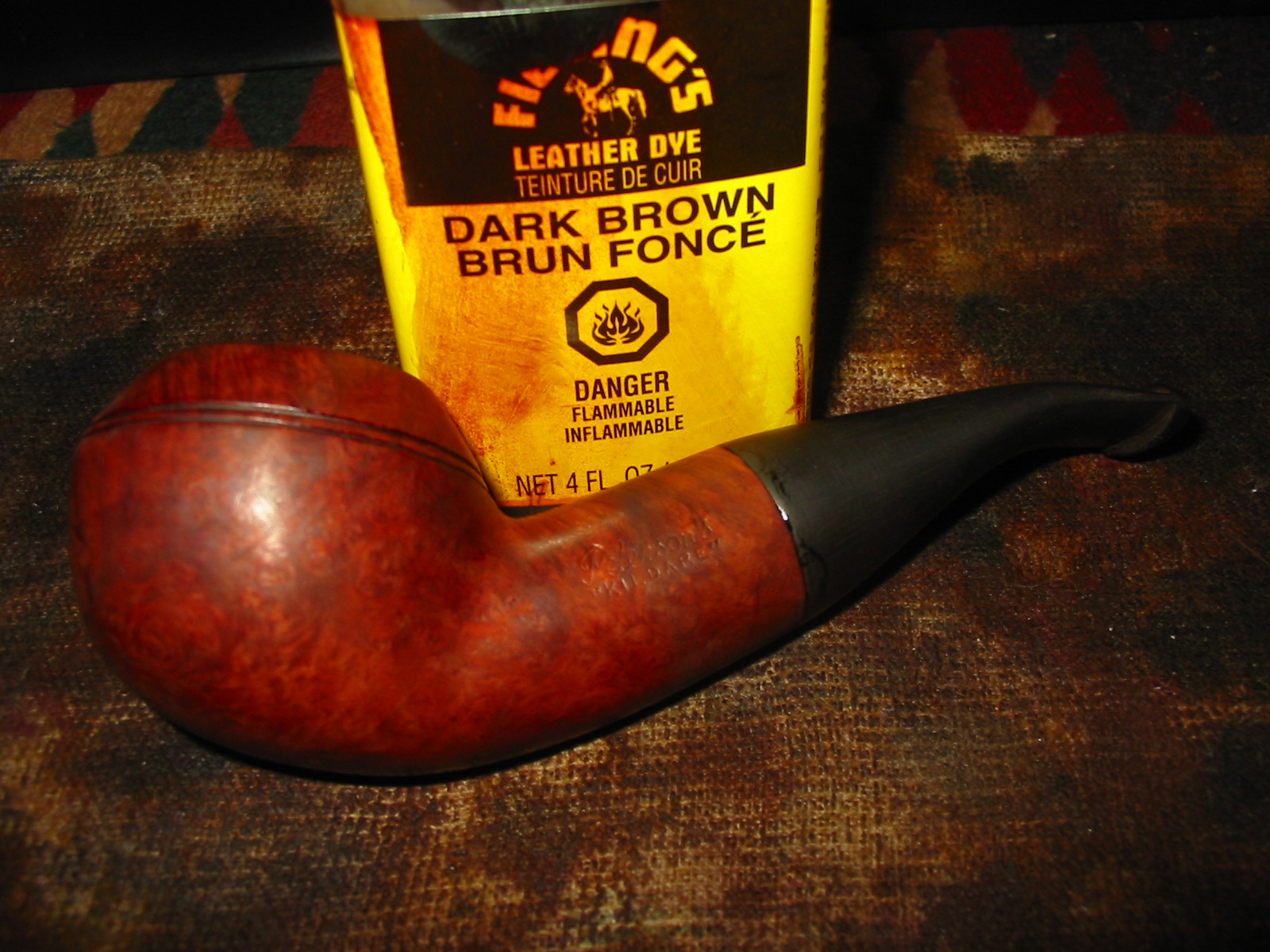
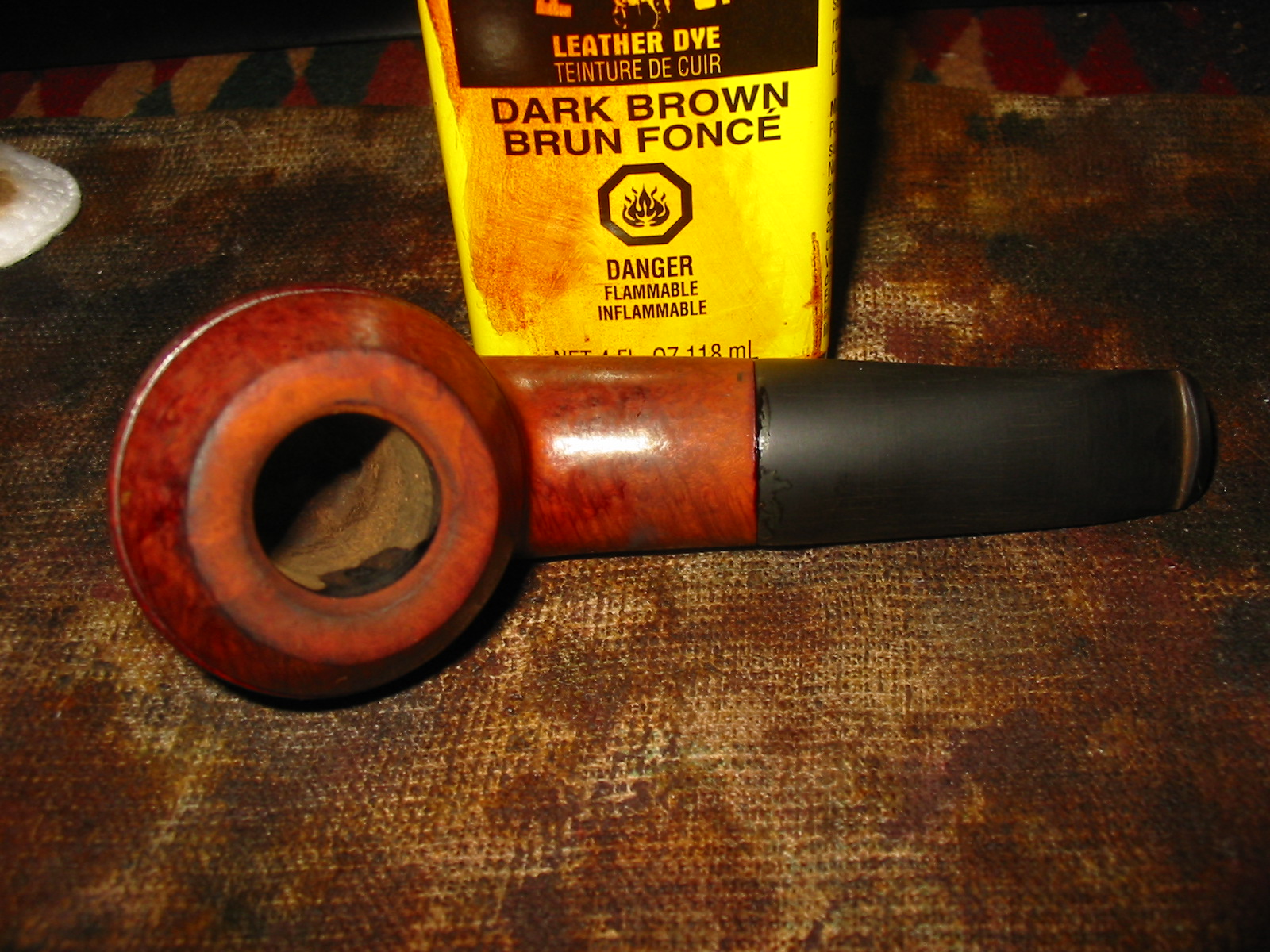
I thinned the stain, a dark brown aniline stain, with isopropyl alcohol – 1 part stain to two parts alcohol. I had picked a stain that matched the previous colour of the bowl and also matched another 999 Peterson that I have here. I heated the surface of the bowl with my heat gun to warm the briar and open the pores in the wood. Once it was warmed I applied the stain with a cotton swab and repeated until I had good coverage over the entire surface. I flamed the stain, repeated the application and flamed it a second time. Once it was dry I took it to the buffer and gave it a light buff with White Diamond to even out the stain coverage and remove the excess on the surface of the briar. I wiped down the inside of the bowl where the stain ran in with a cotton swab dipped in Everclear.
IMG_1465

IMG_1466

IMG_1467

IMG_1468

IMG_1469

IMG_1470

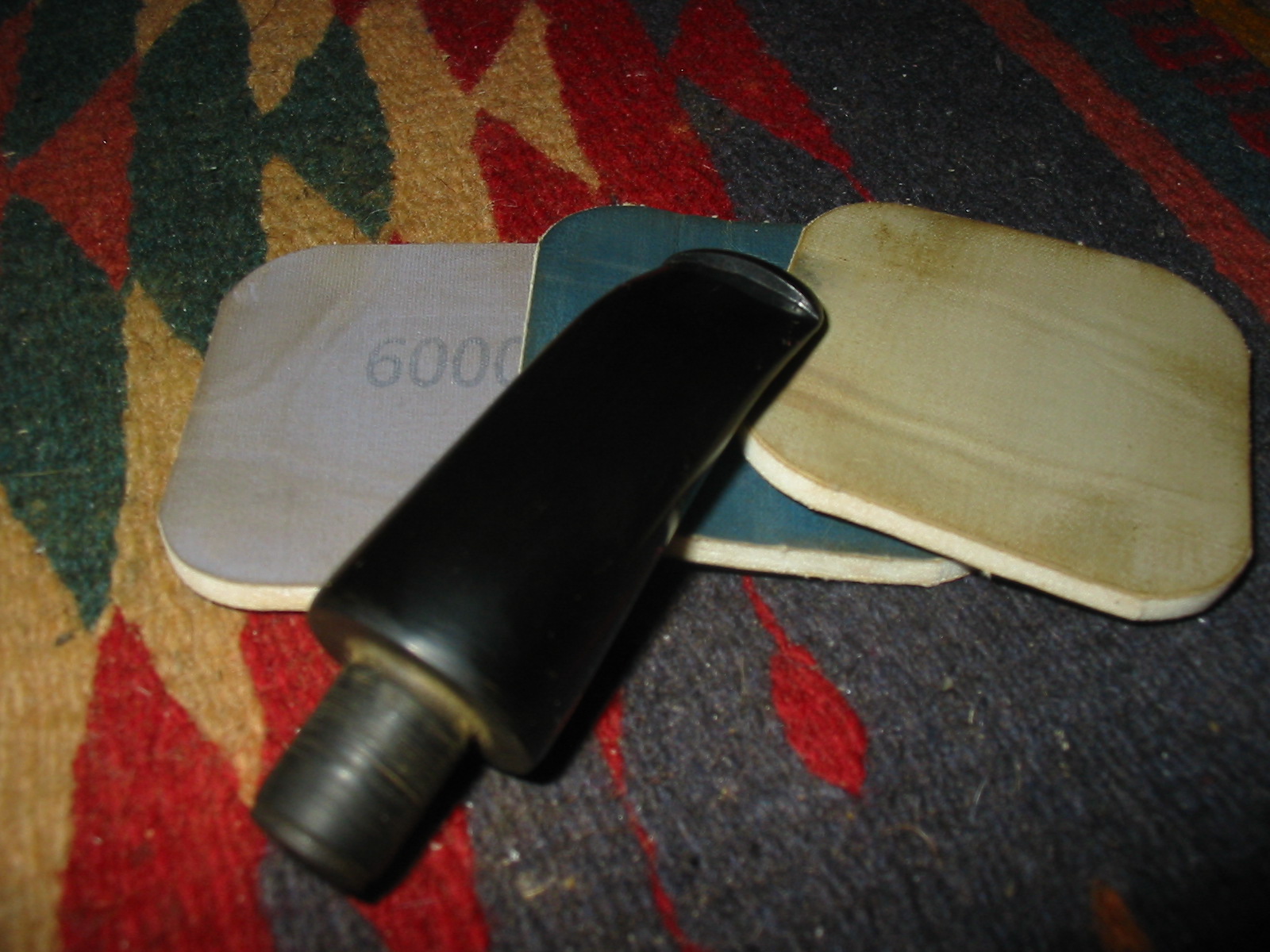
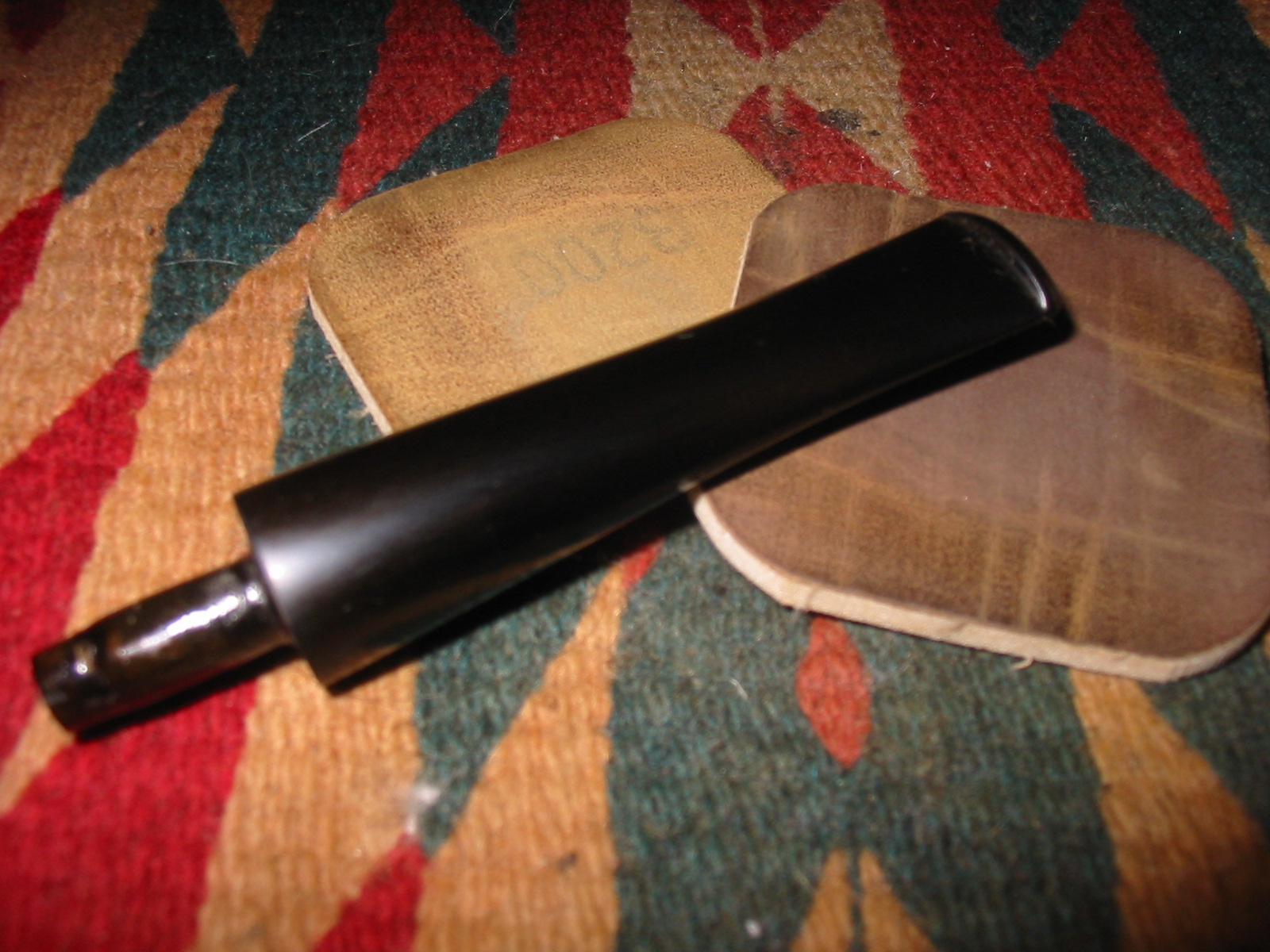
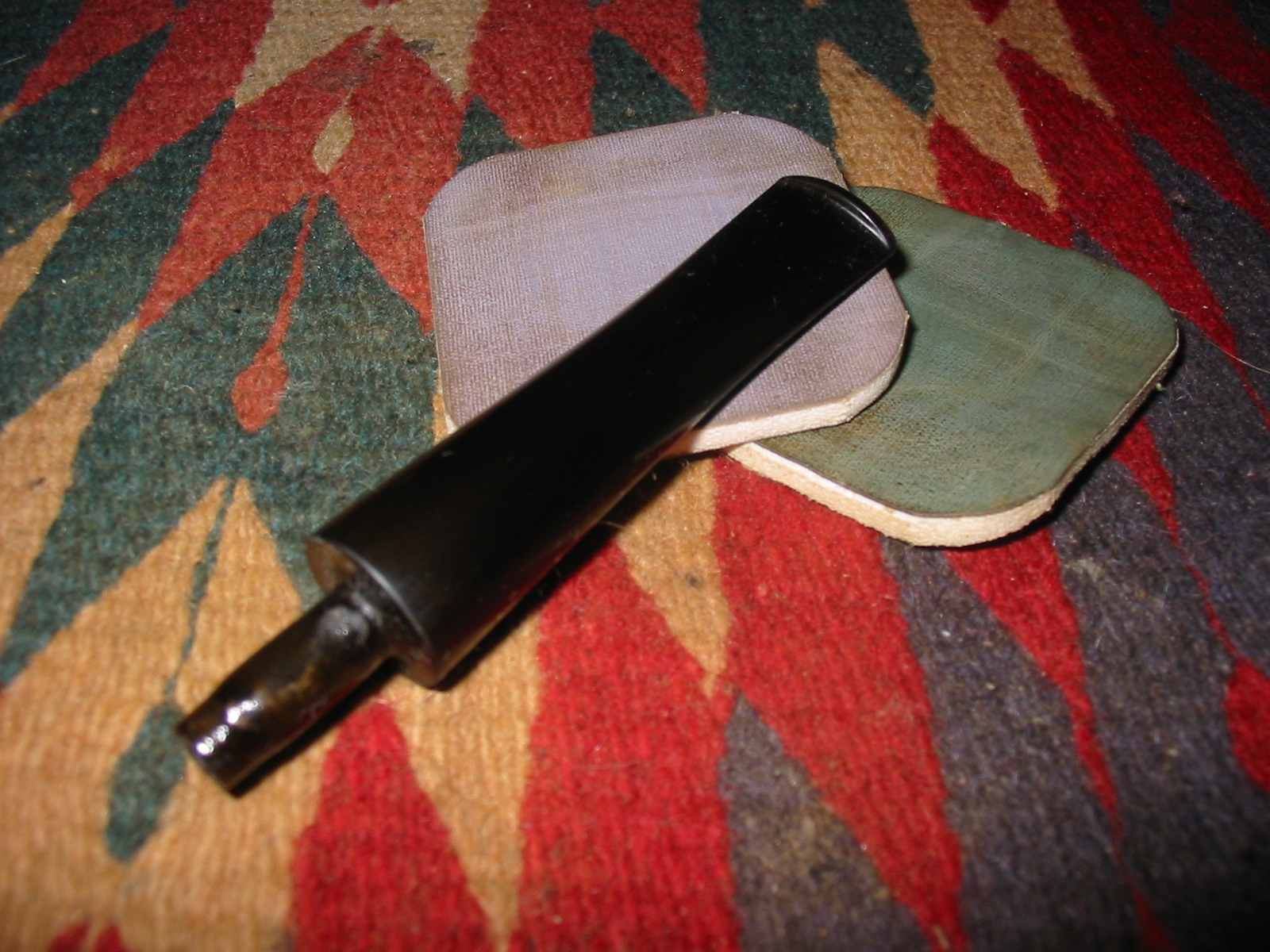
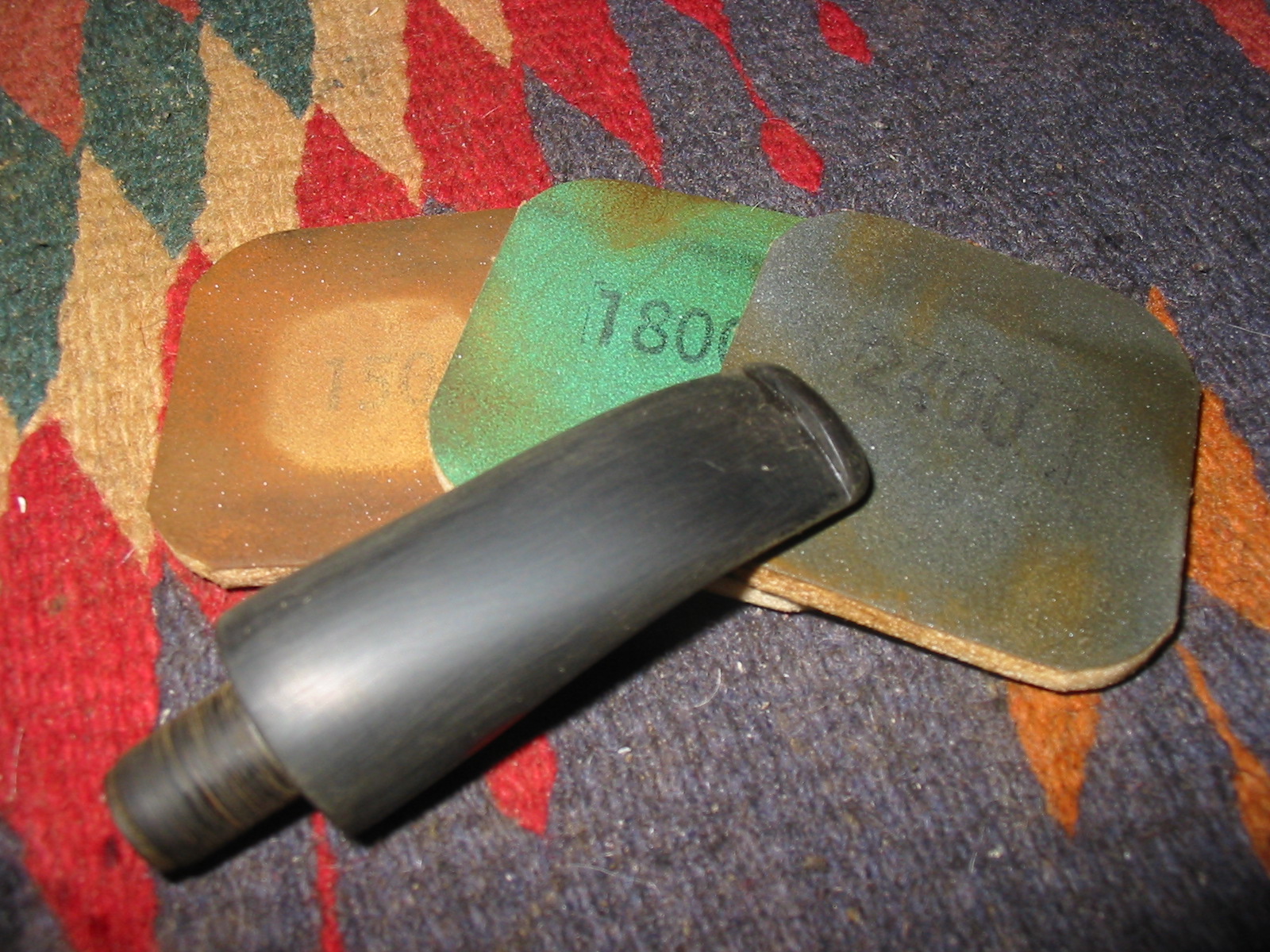
With the bowl finished and ready to buff it was time to finish the work on the stem. I sanded it with micromesh sanding pads. I wet sanded with 1500-2400 grit and dry sanded with 3200-12,000 grit. Each successive grit brought more of a shine to the stem and removed the scratches left behind by previous sanding.
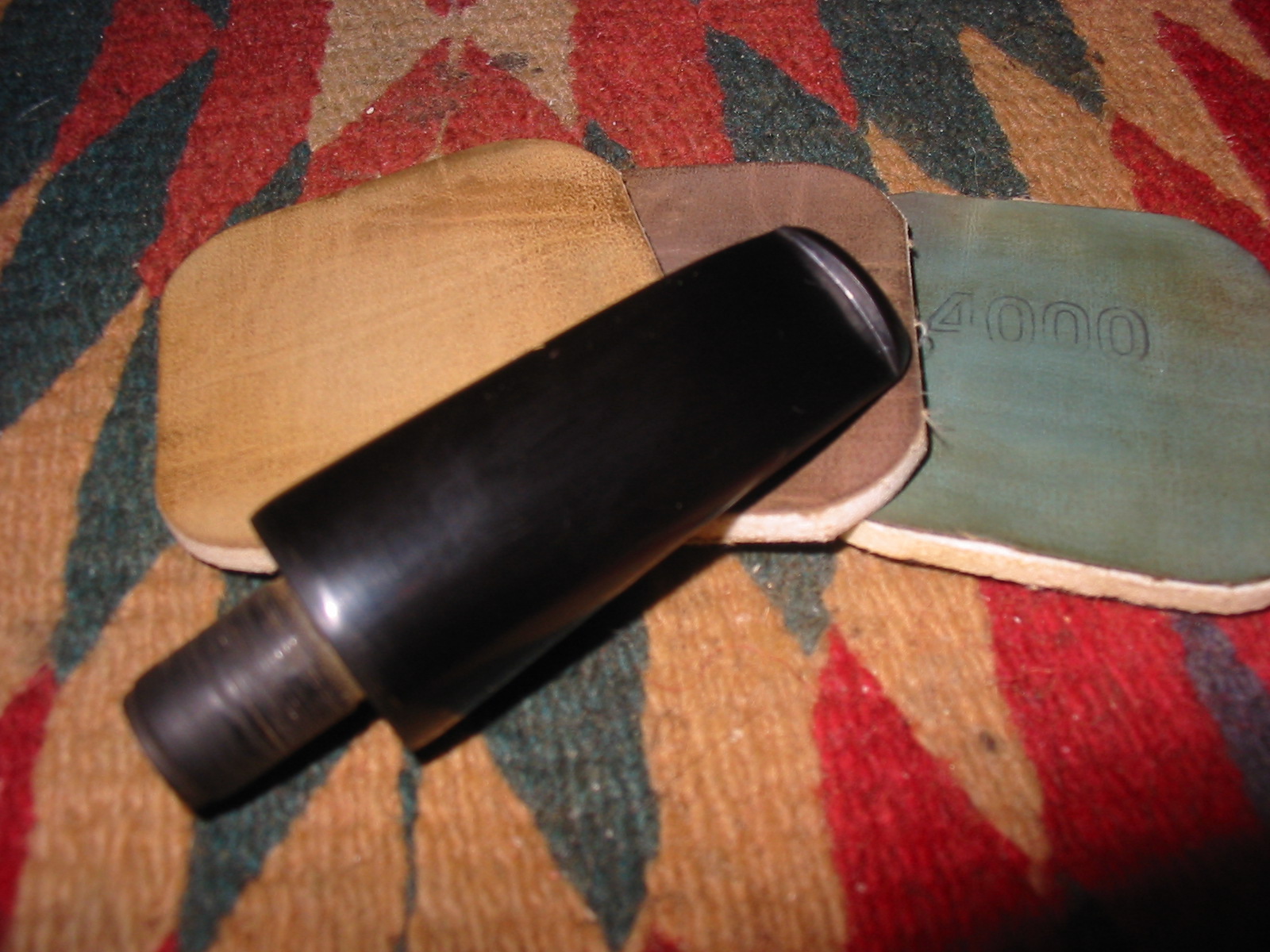
IMG_1471

IMG_1472

IMG_1473

I worked on the slot with a folded piece of sandpaper to smooth out the surface of the inside. I also shaped it with the sandpaper until I had the look I wanted. The oval slot now easily took a pipe cleaner no matter how fluffy.
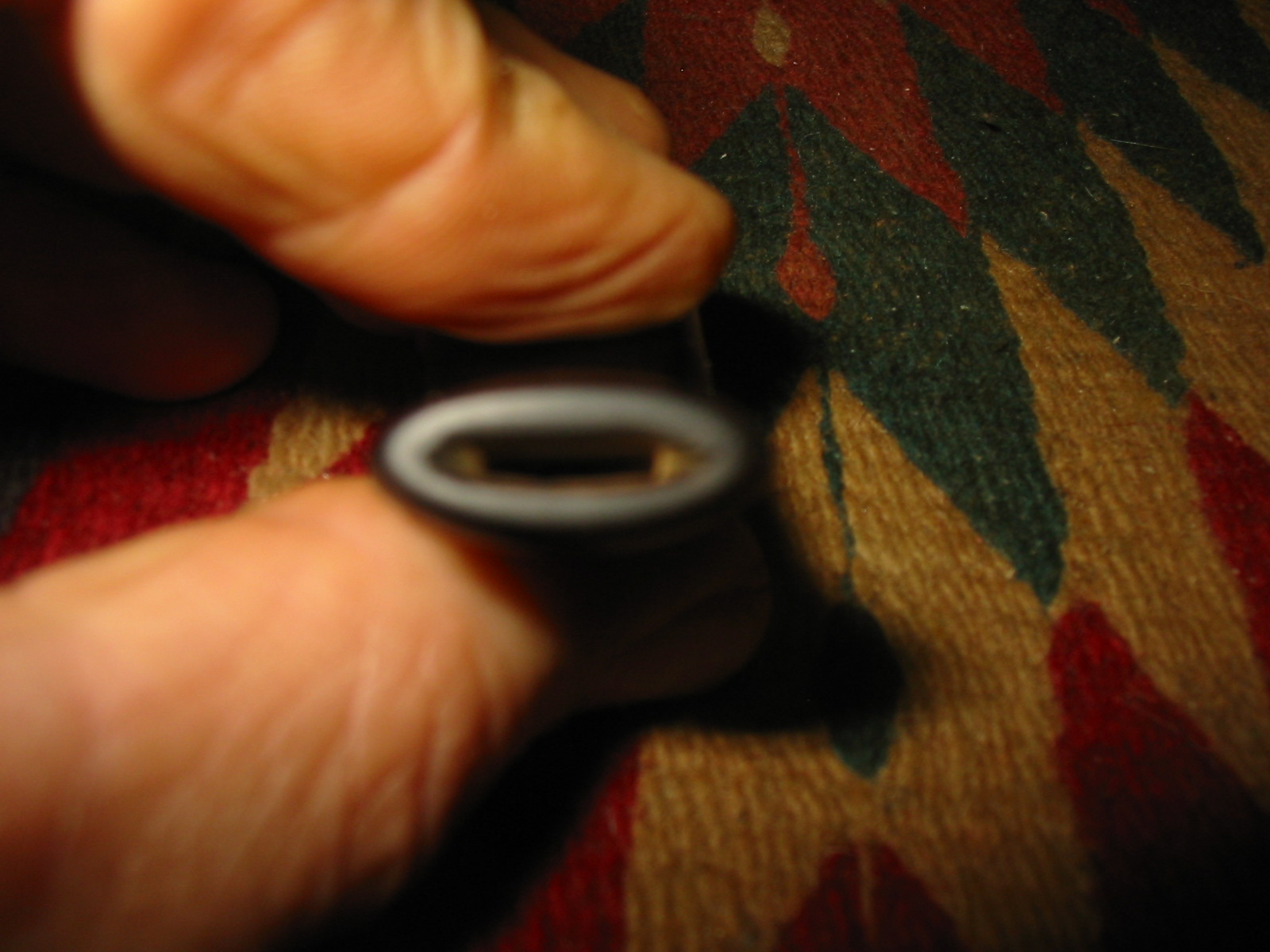
IMG_1474

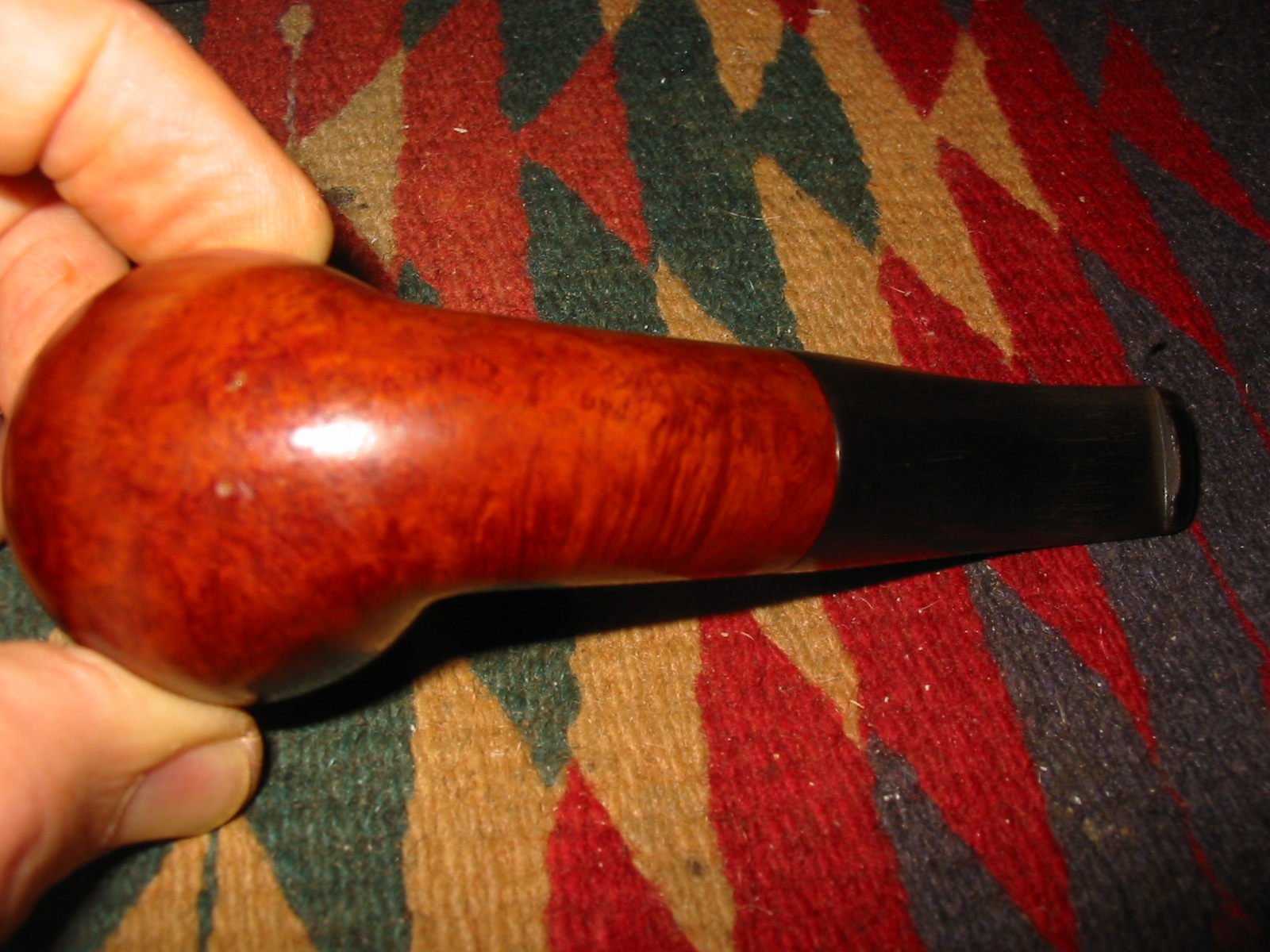
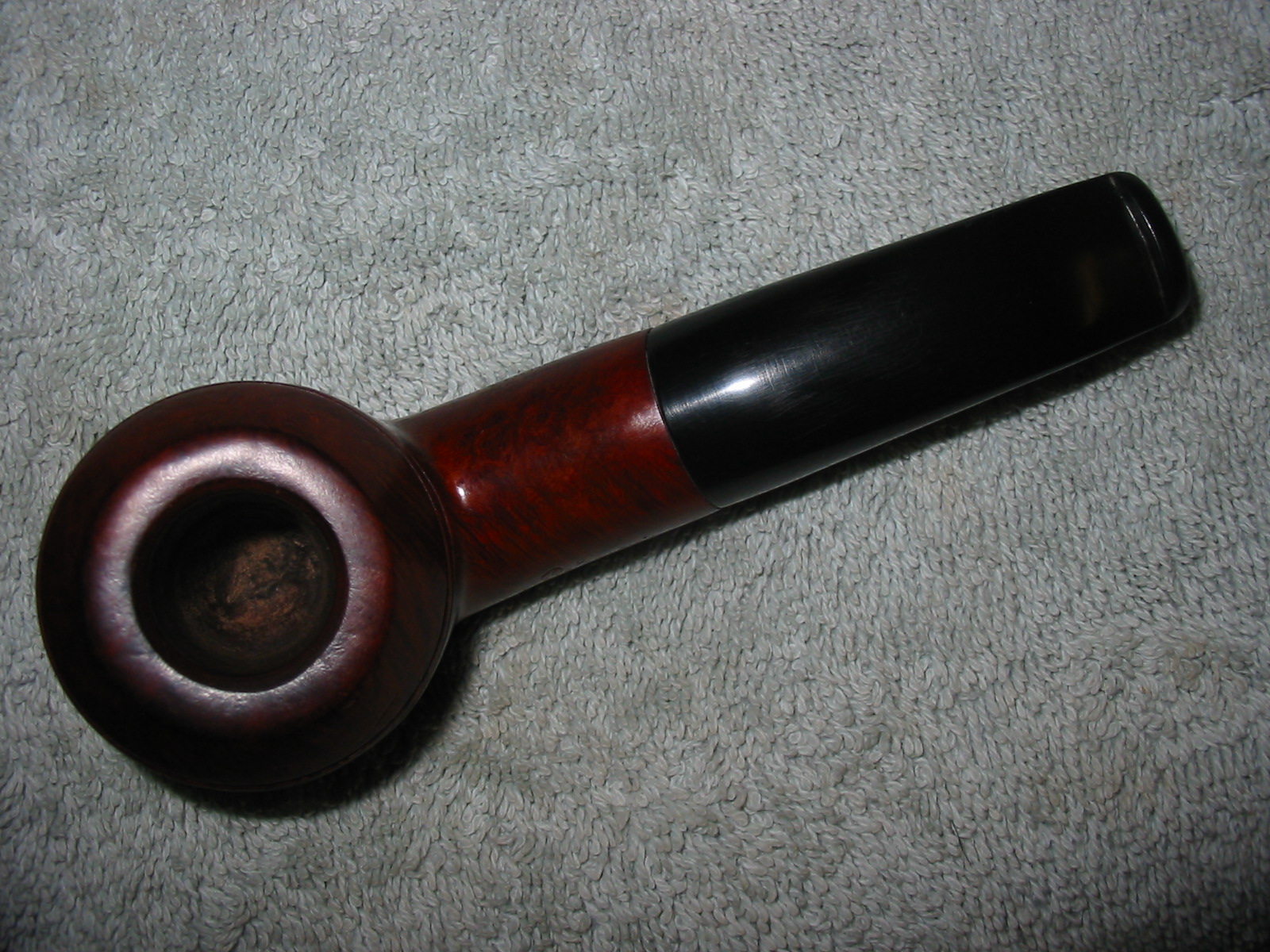
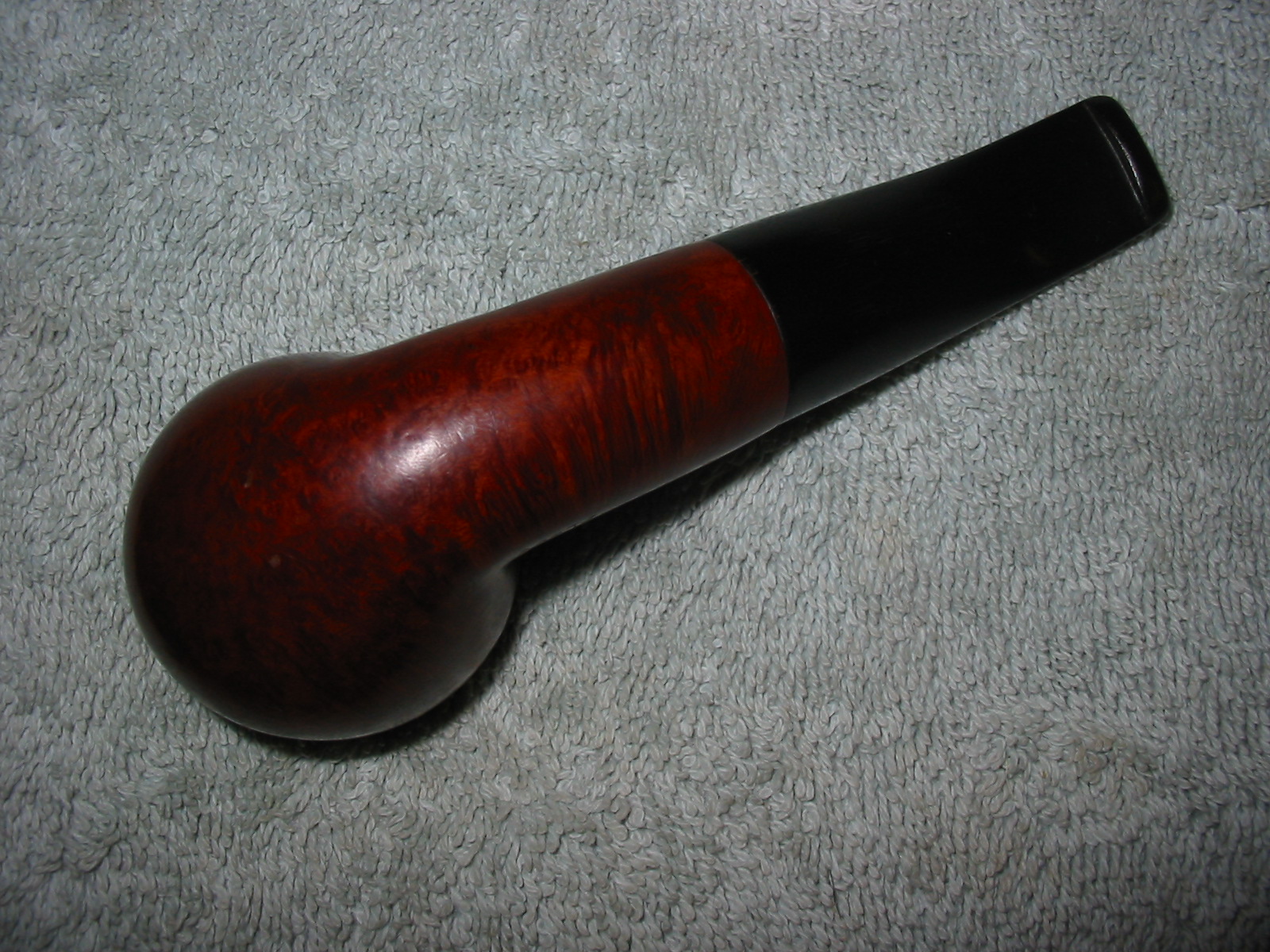
After much sanding and fitting, the vulcanite stem is finished. The pipe is smokeable while I wait for the Cumberland/brindle rod stock to come from Todd. I like the look and feel of the pipe as it is very close in size and design to the GBD 9438 with a tapered stem. The finished pipe is pictured below after buffing with multiple coats of carnauba wax and with a clean flannel buff.
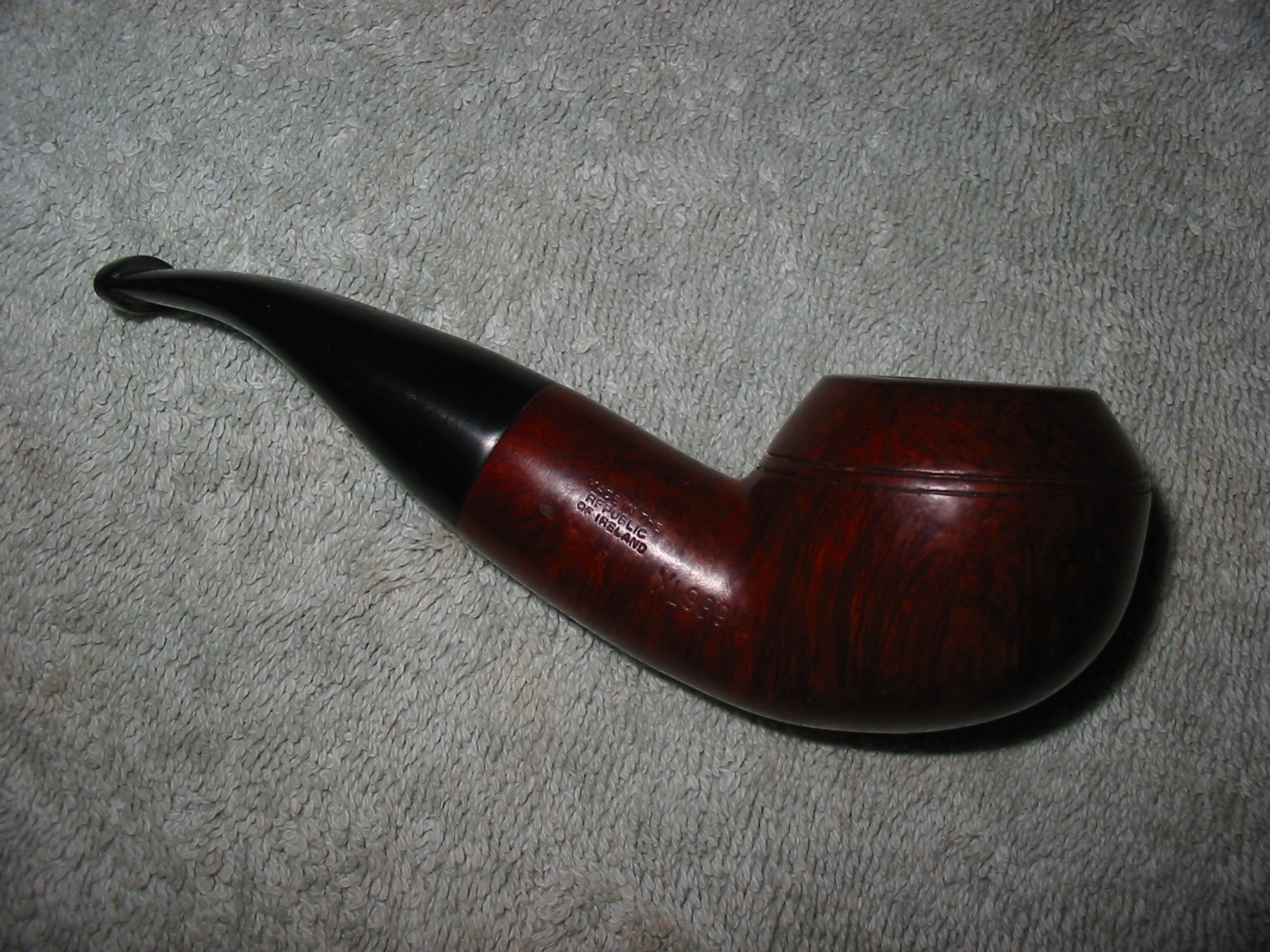
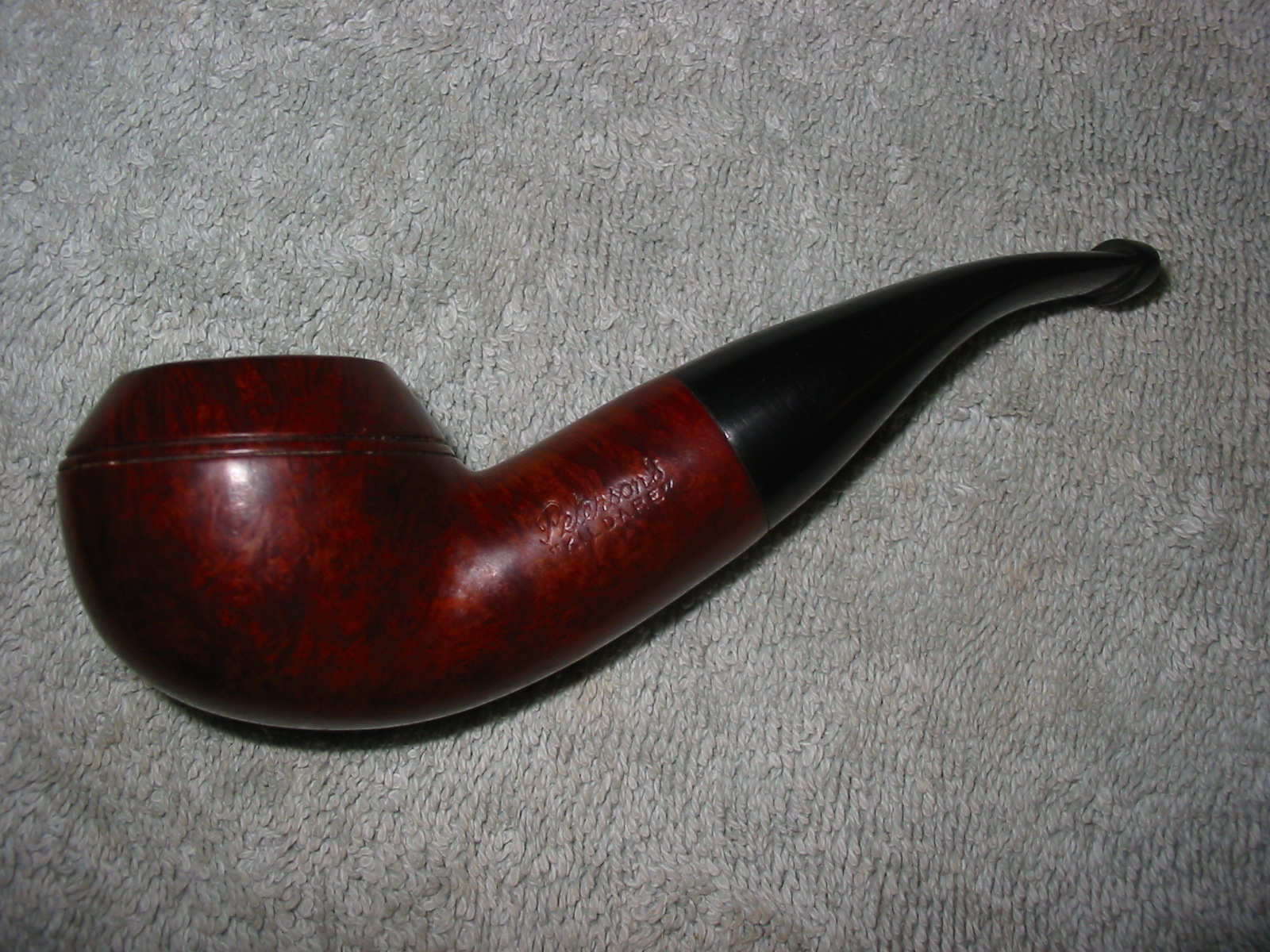
IMG_1488

IMG_1489

IMG_1490

IMG_1491

Custom Made Billiard Back into Service


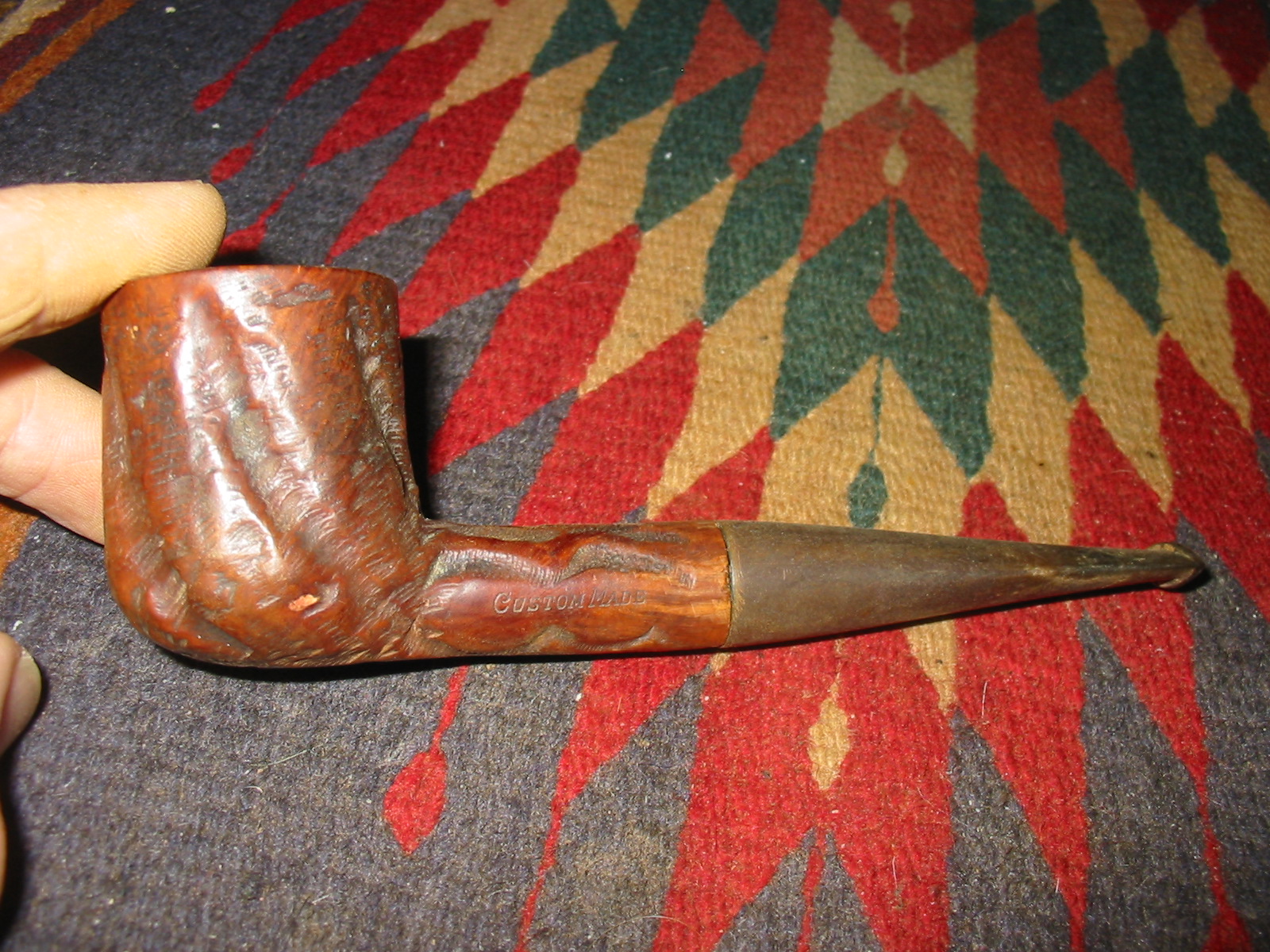
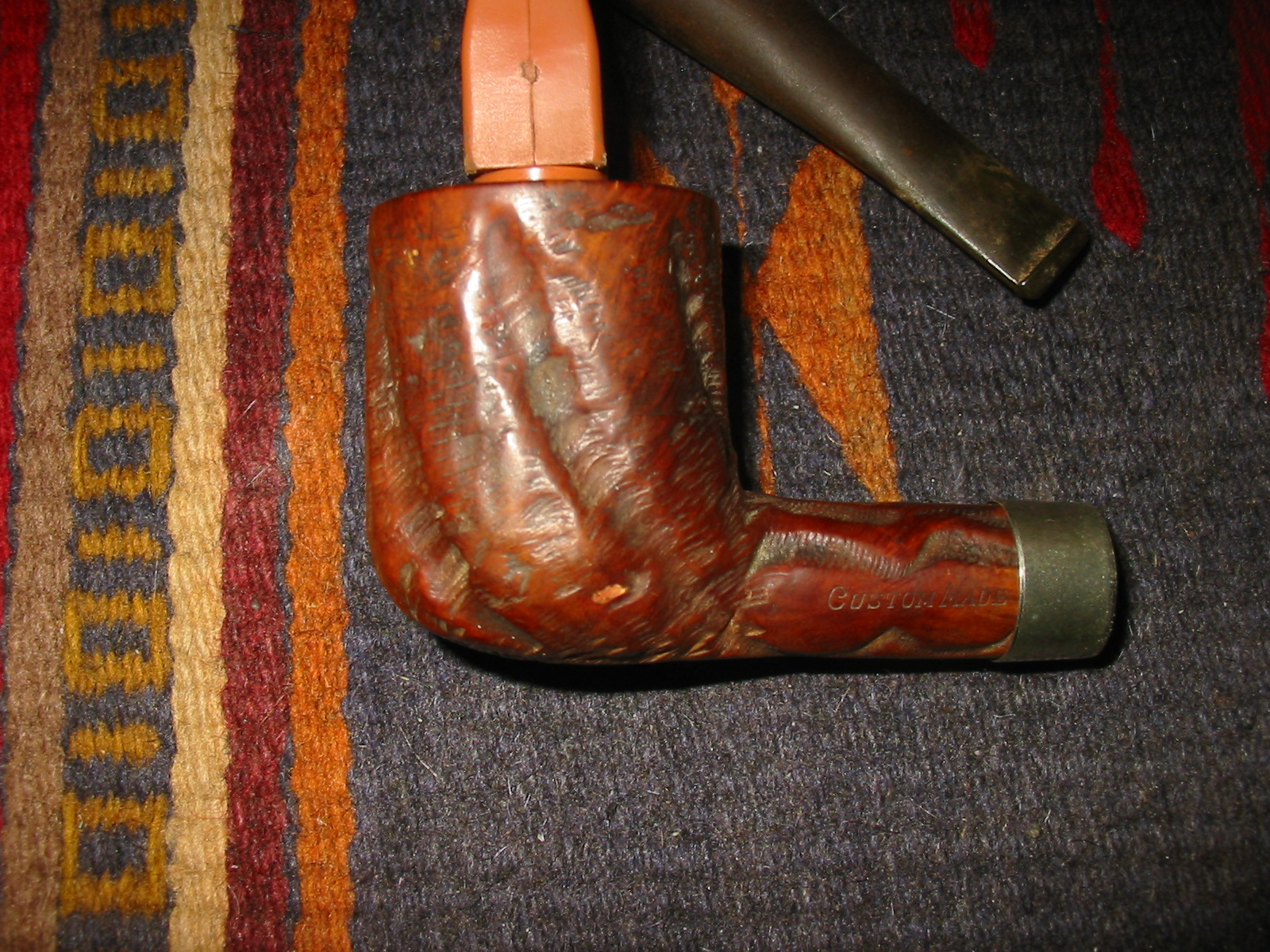
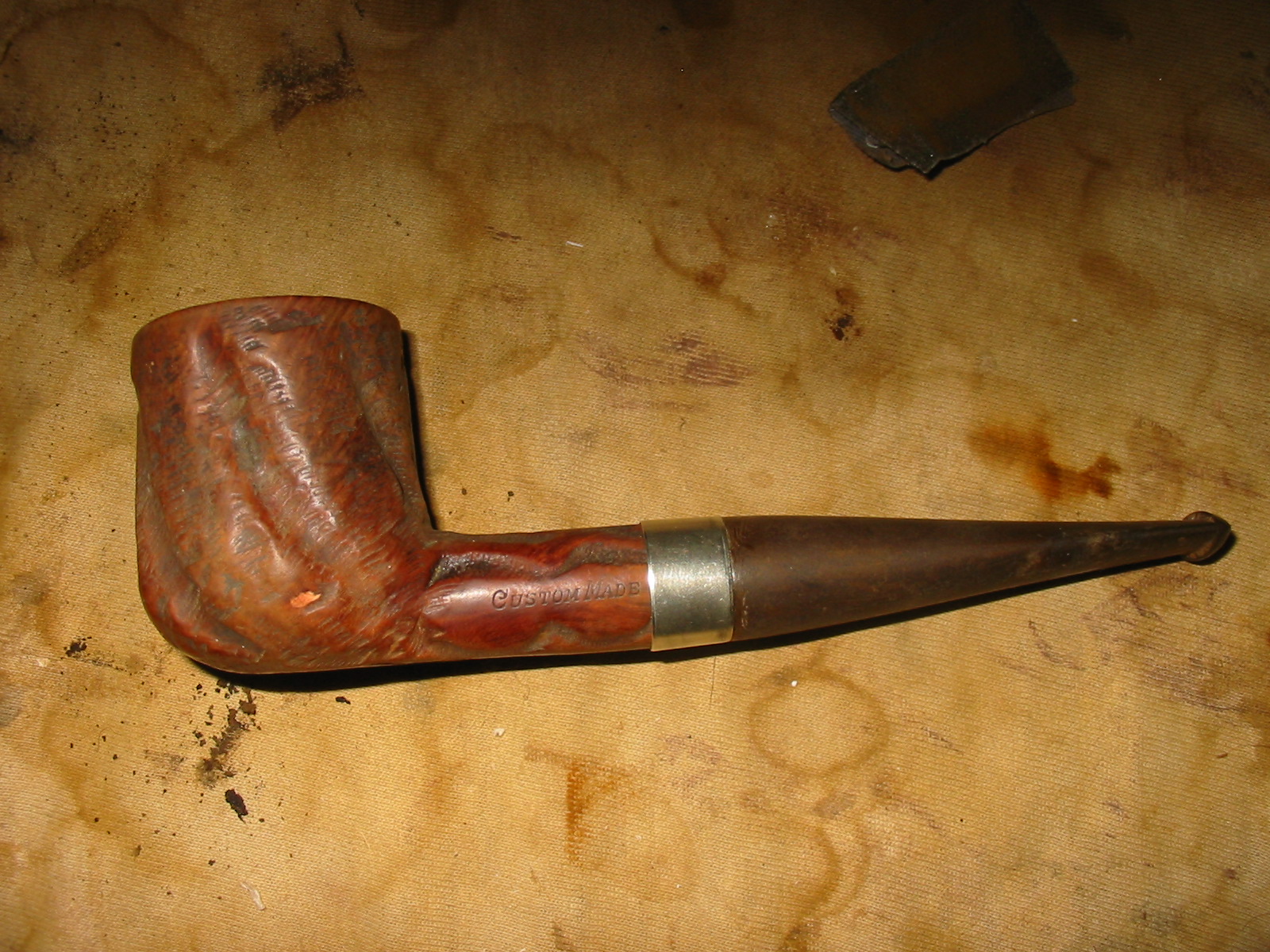
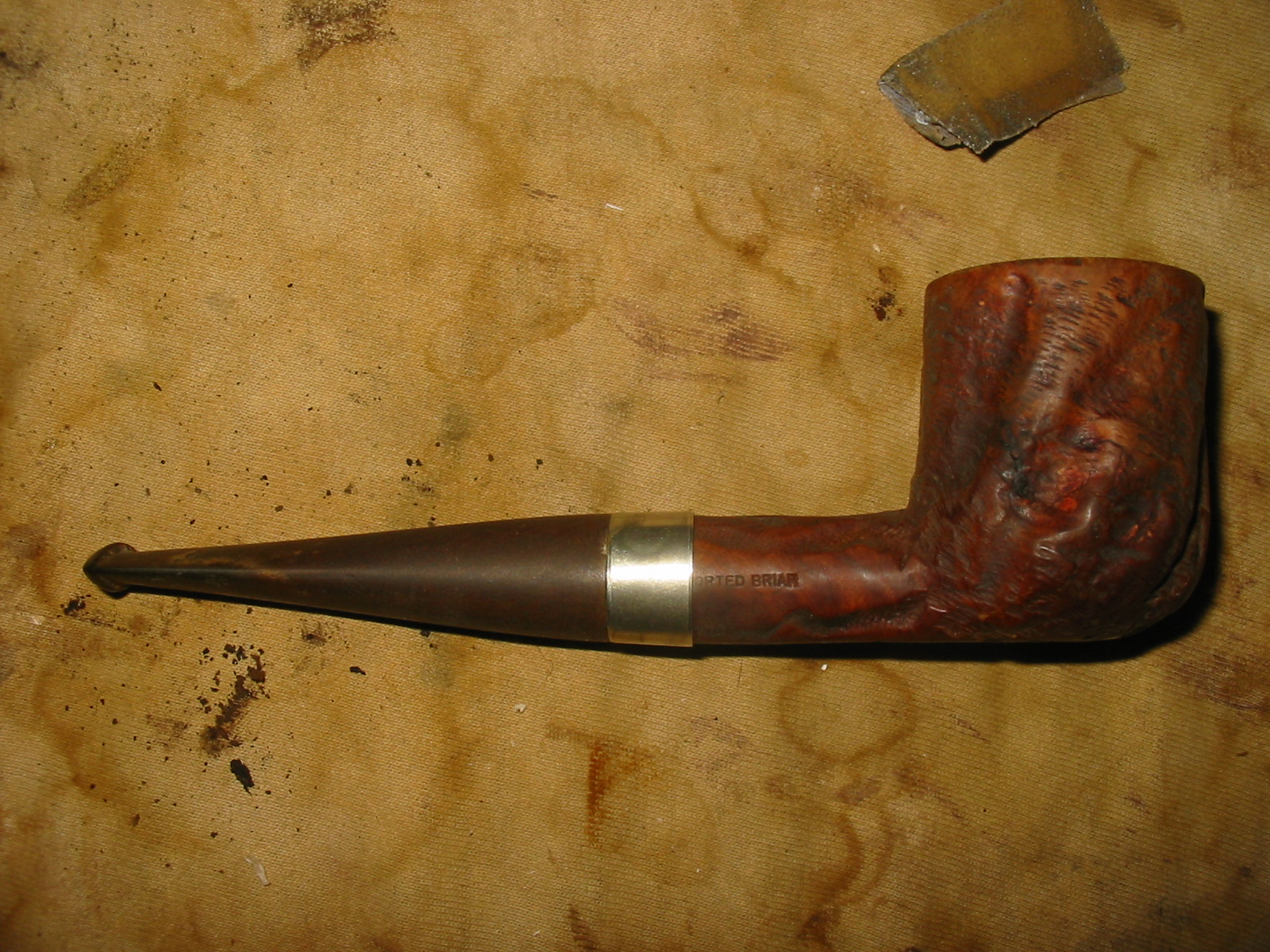
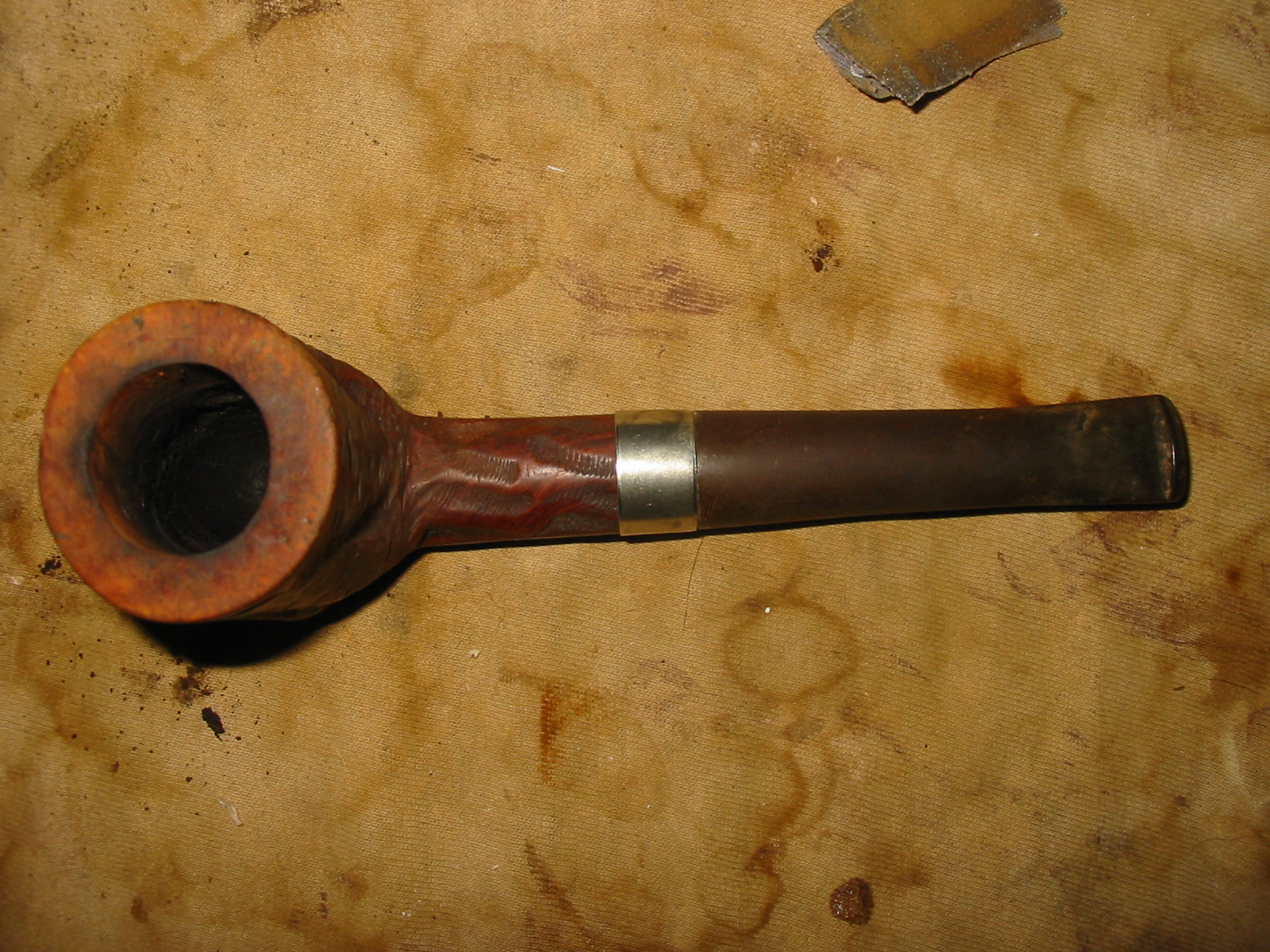
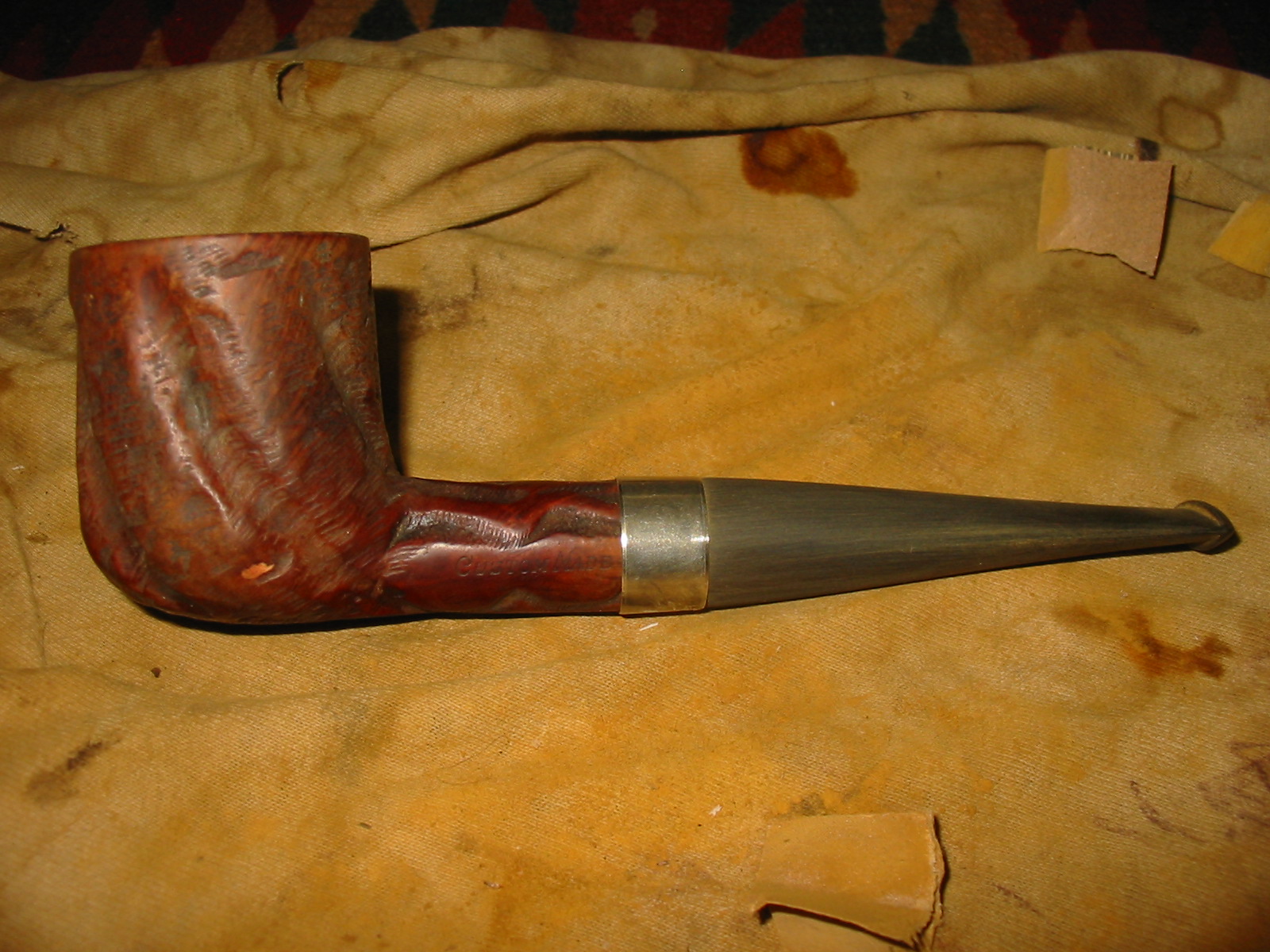
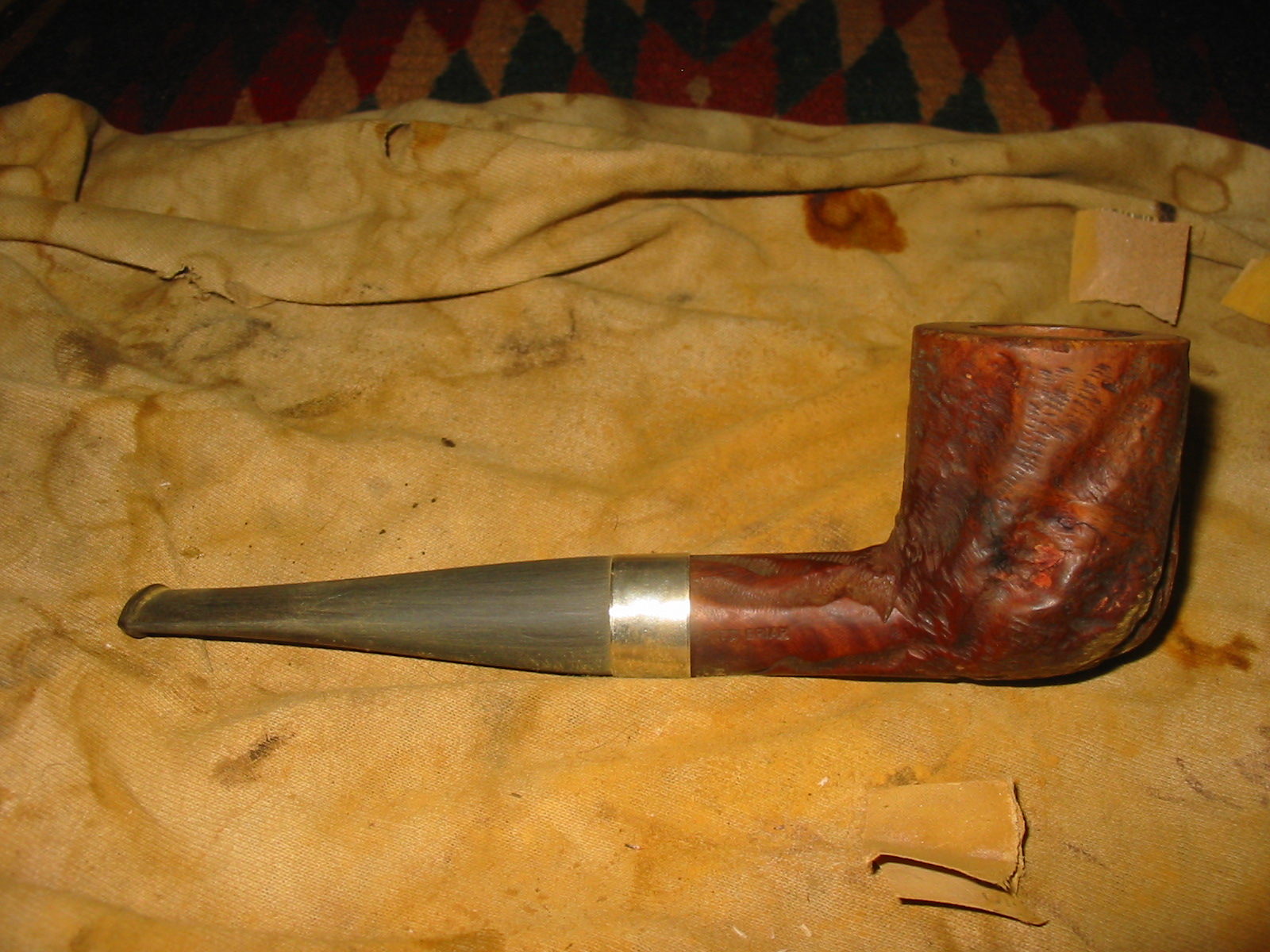
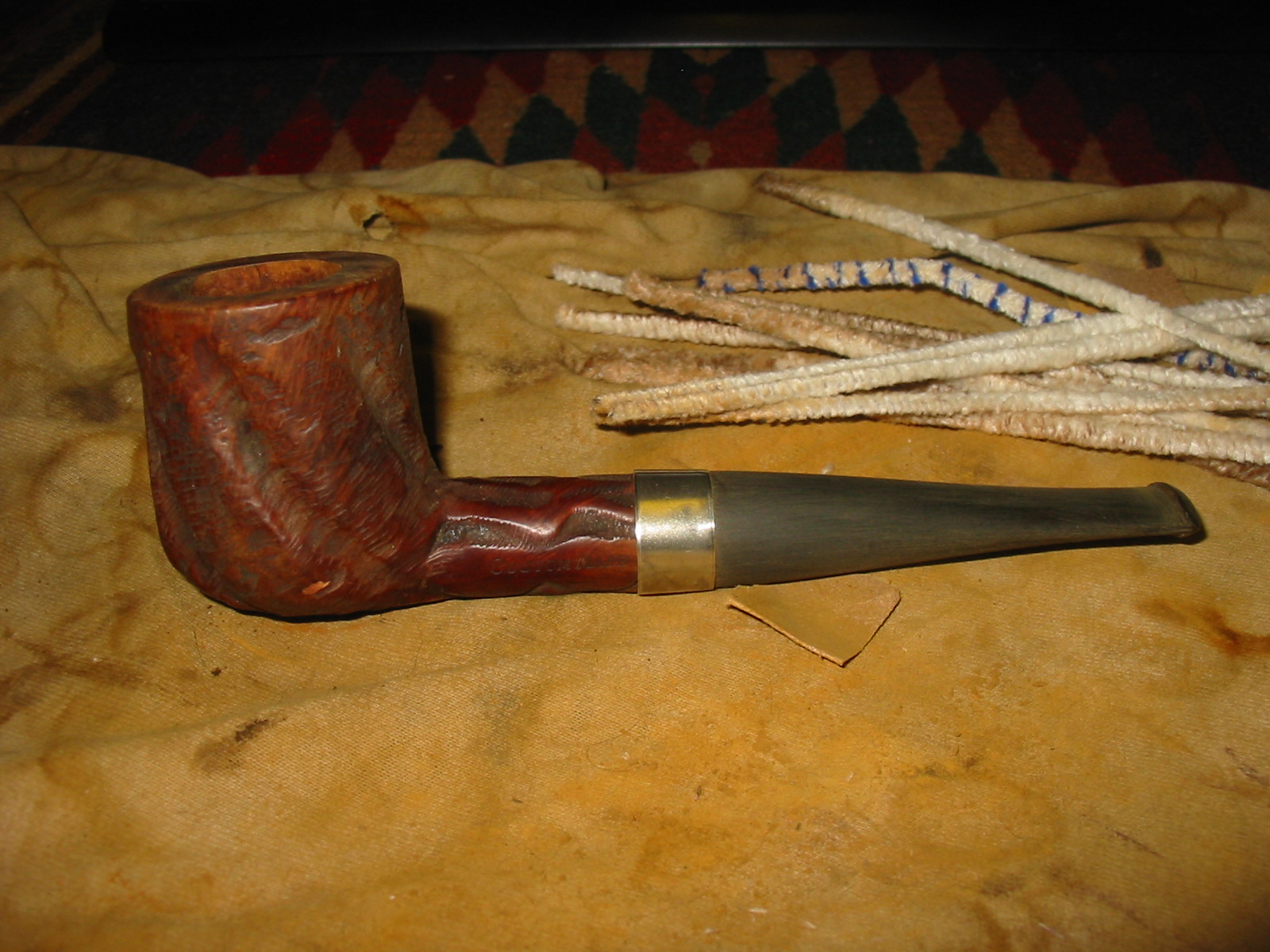
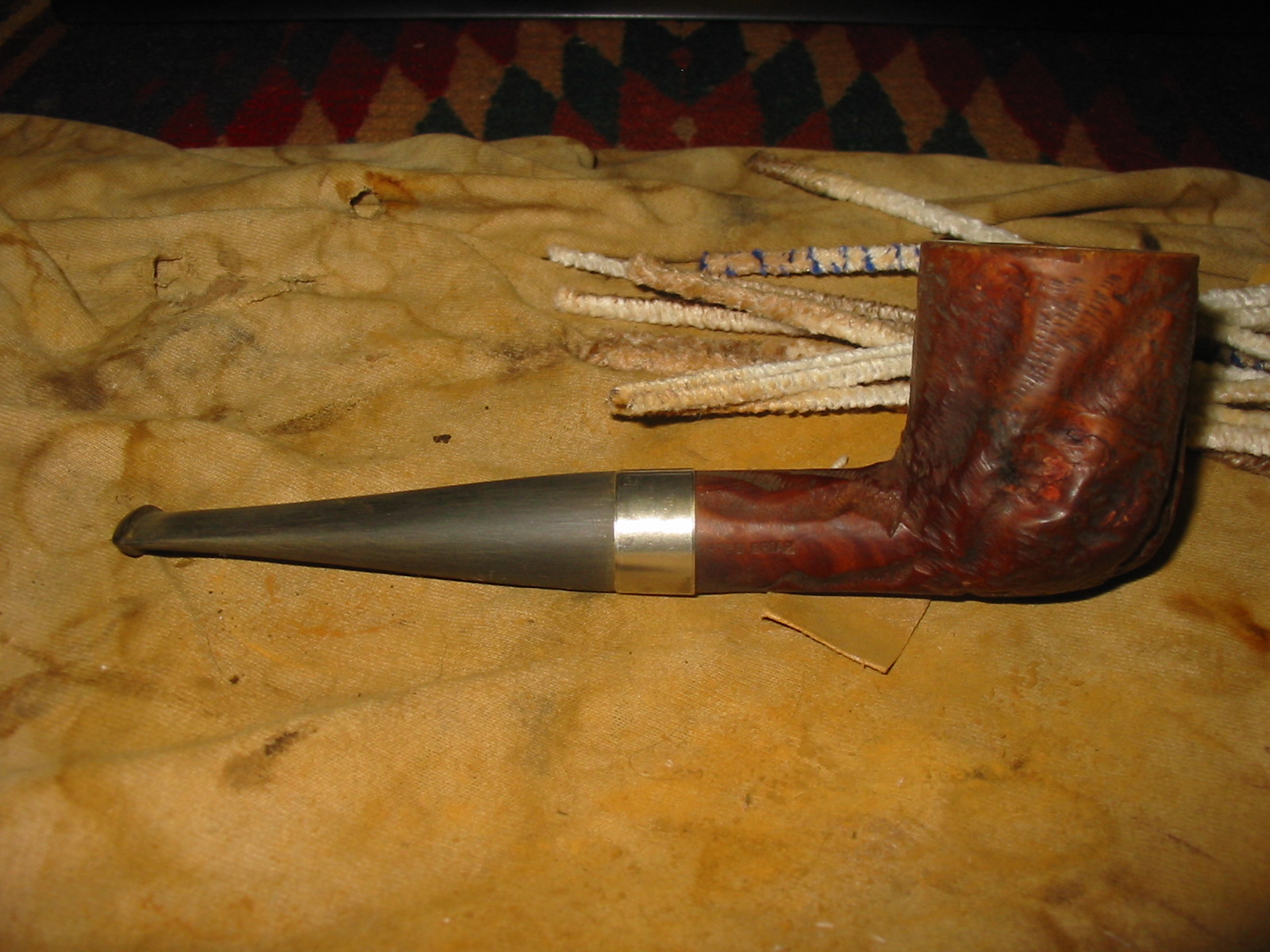
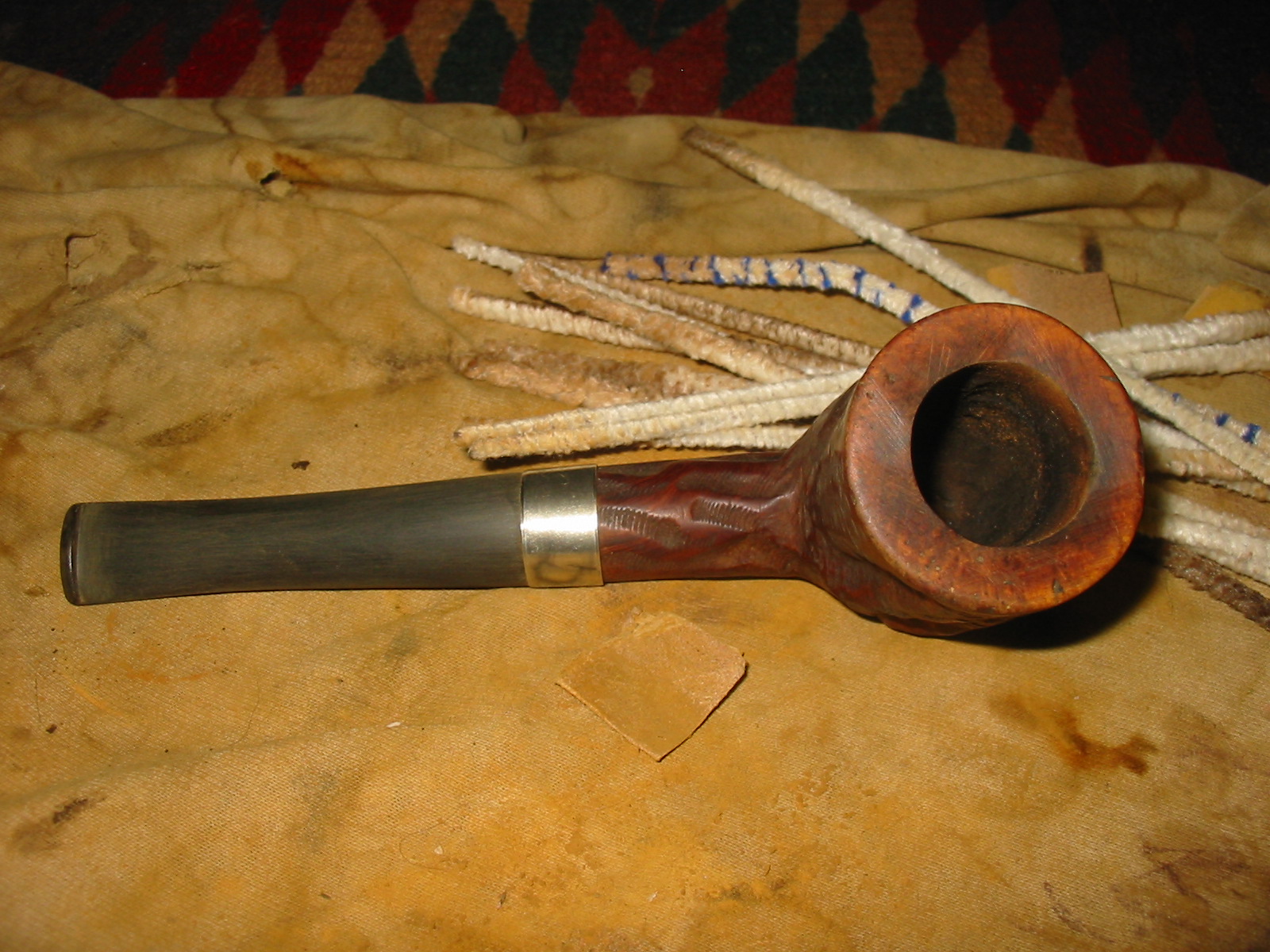
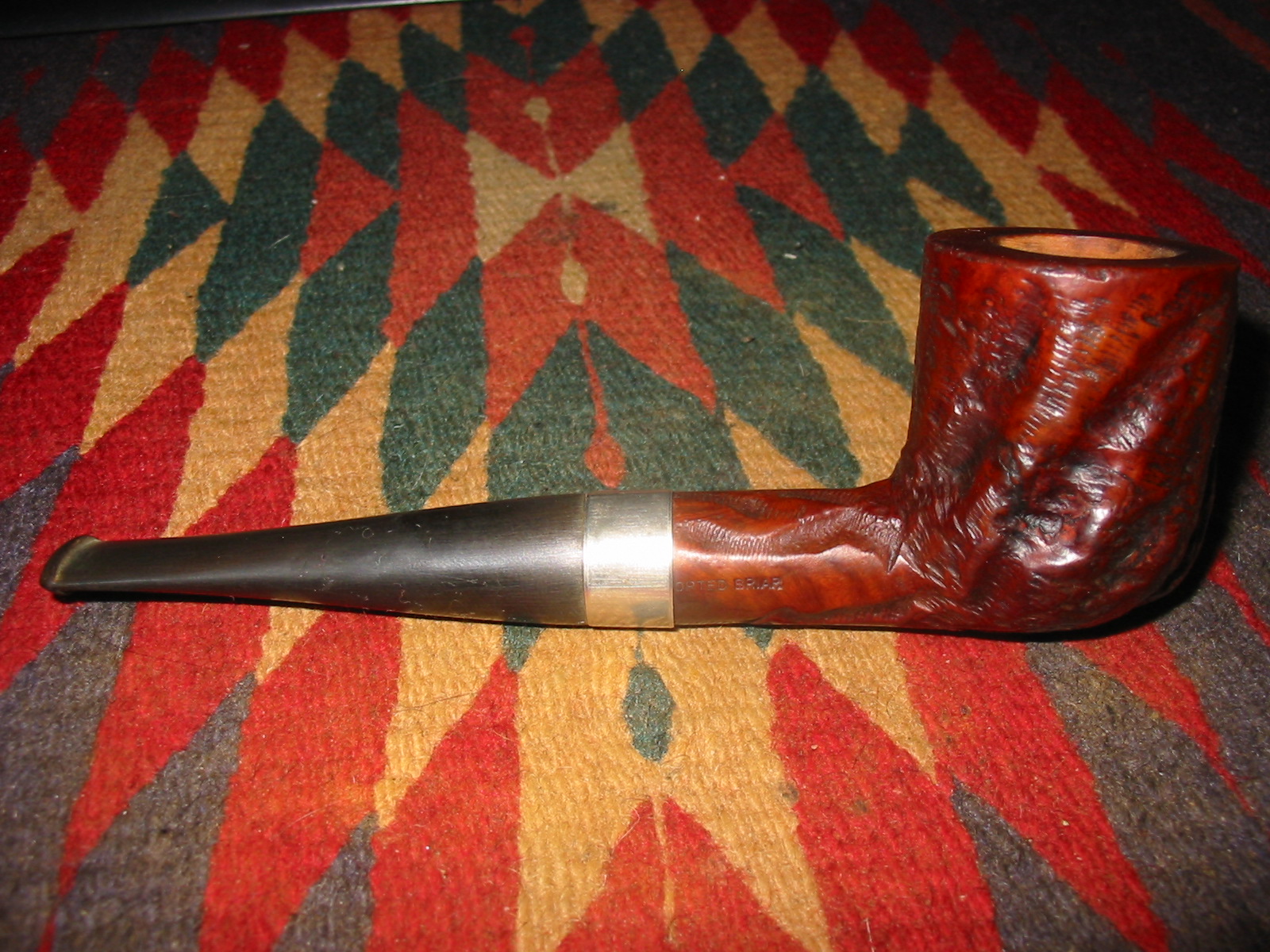
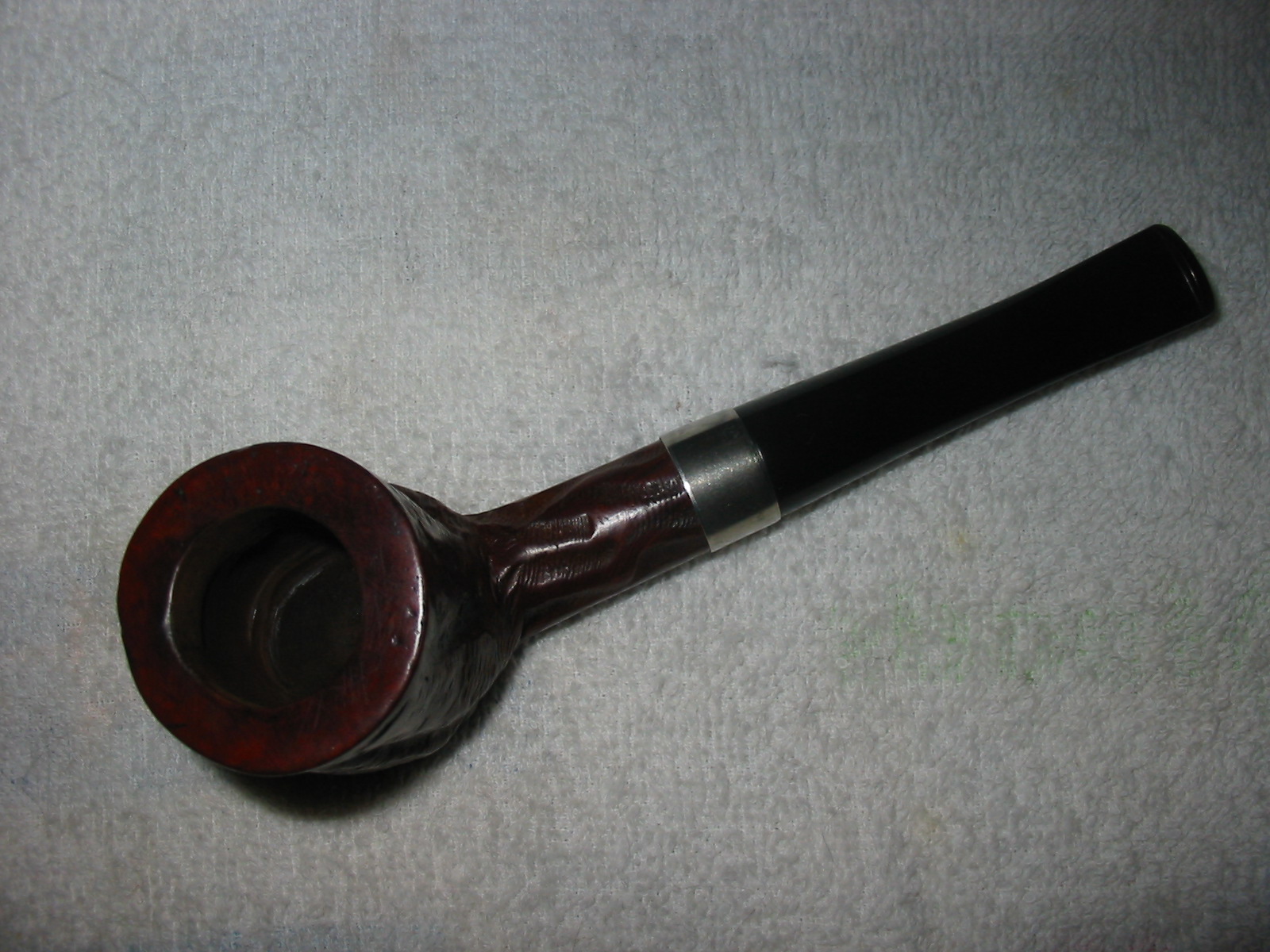
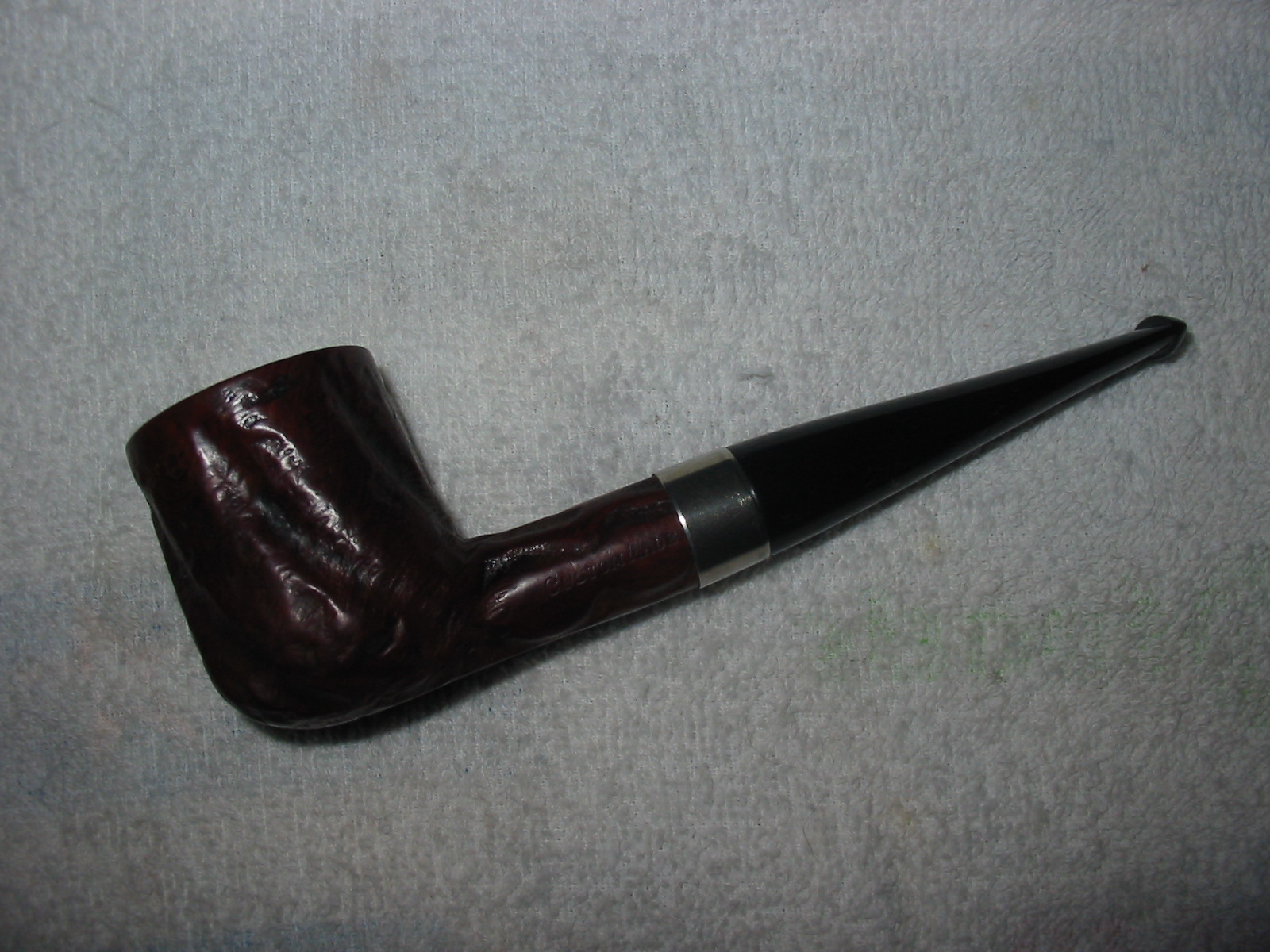
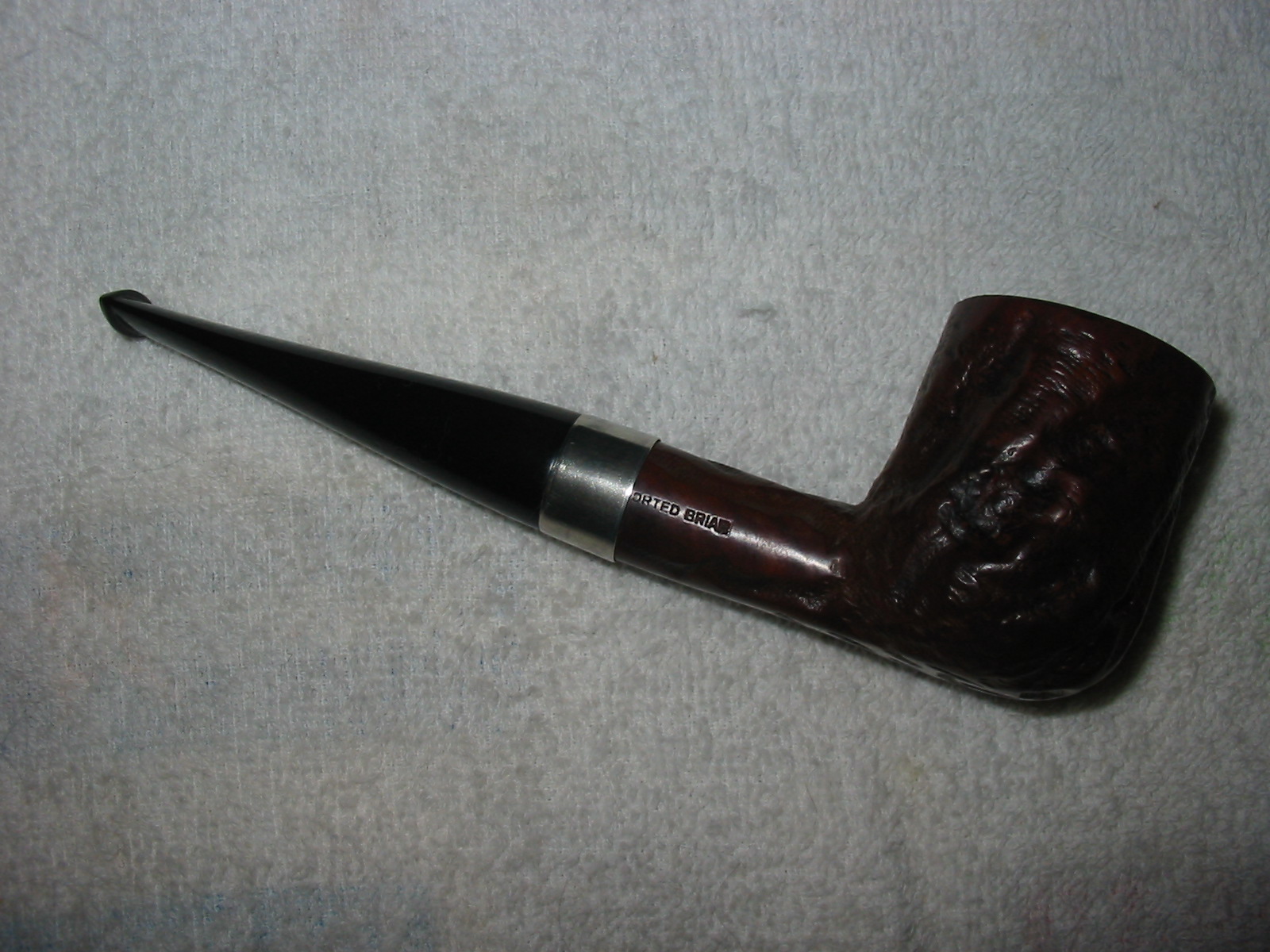
The next pipe in the lot that I refurbished was the top pipe in the centre column in the photo below. It was a Custom Bilt like billiard. It is stamped on the left side of the shank Custom Made and on the right side of the shank Imported Briar. That stamping tells me that it is an American Made Pipe. I cannot find any information on the stamping on the internet but will continue to look and see what I can find.

bowls1

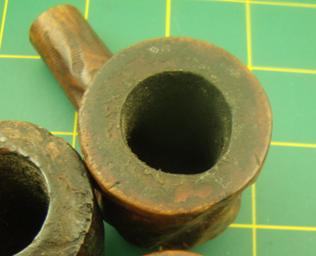
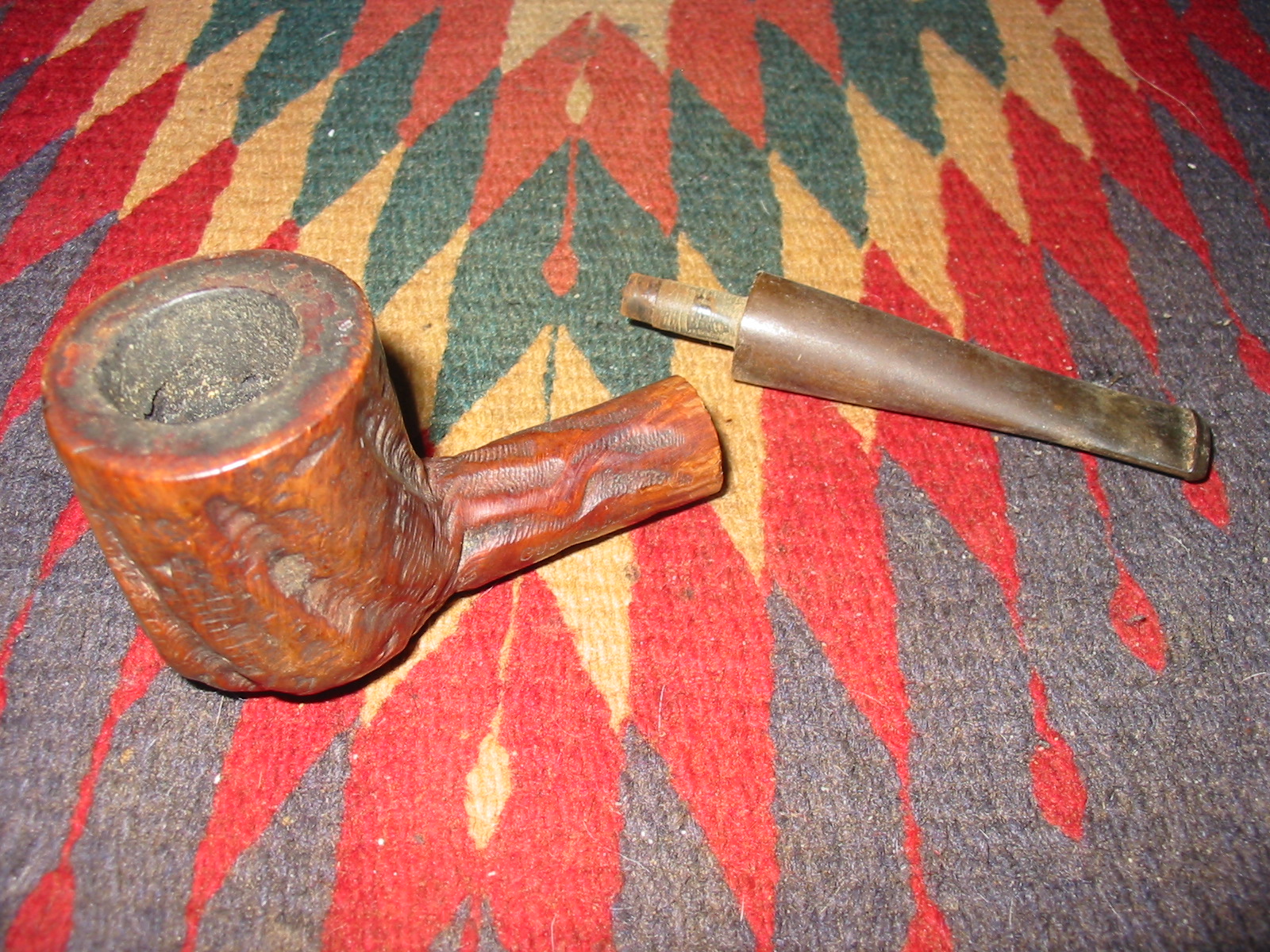
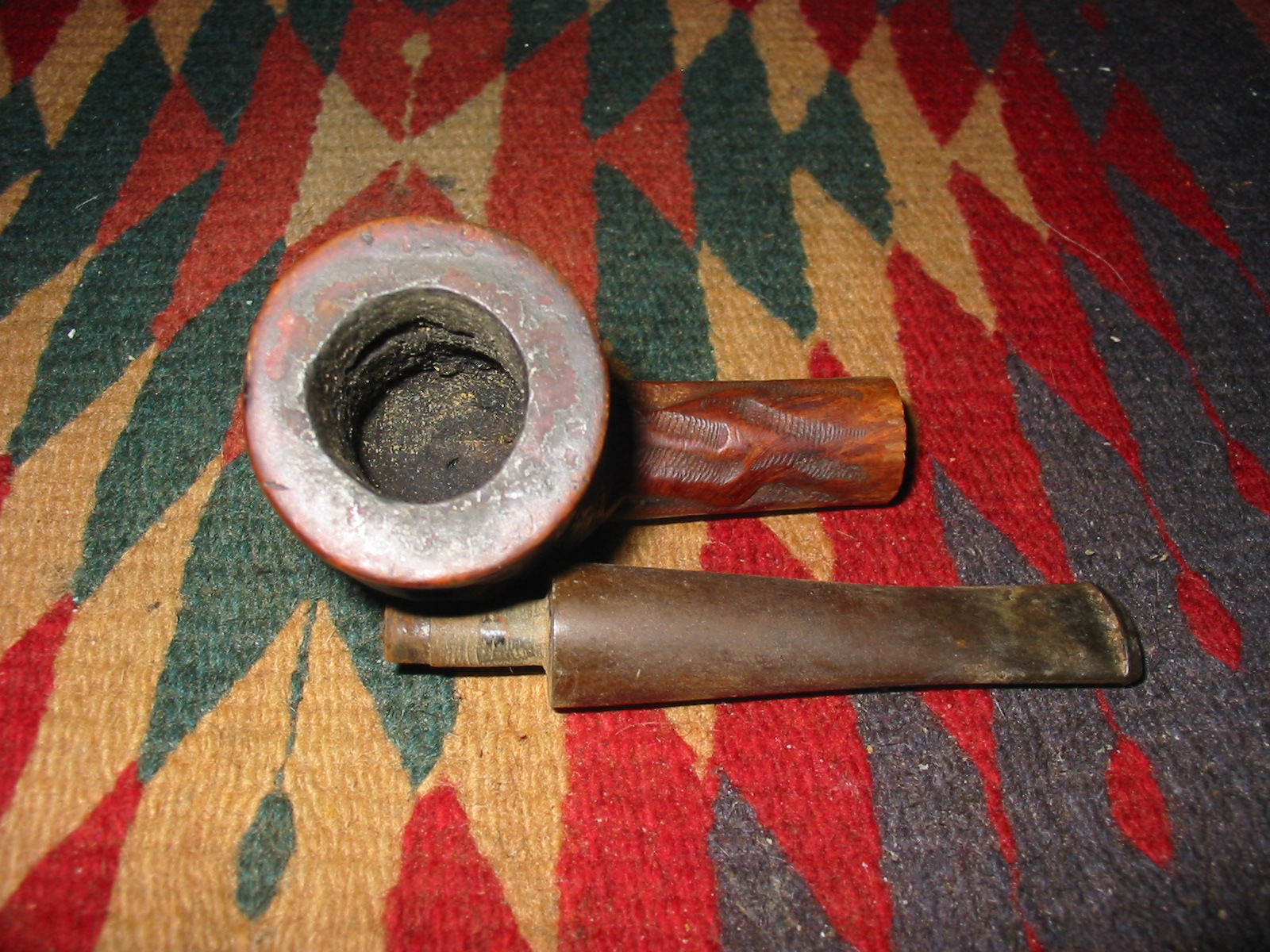
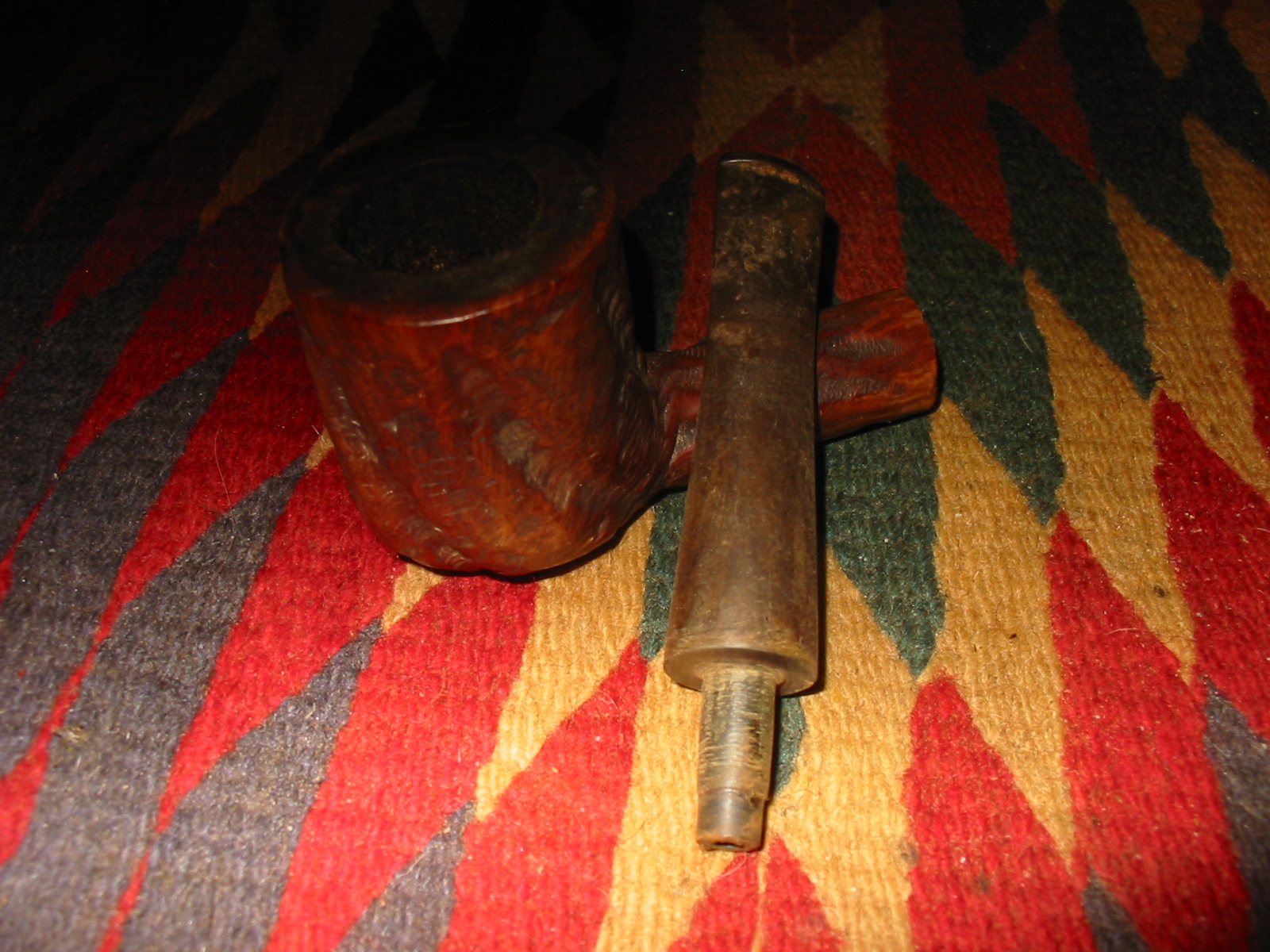
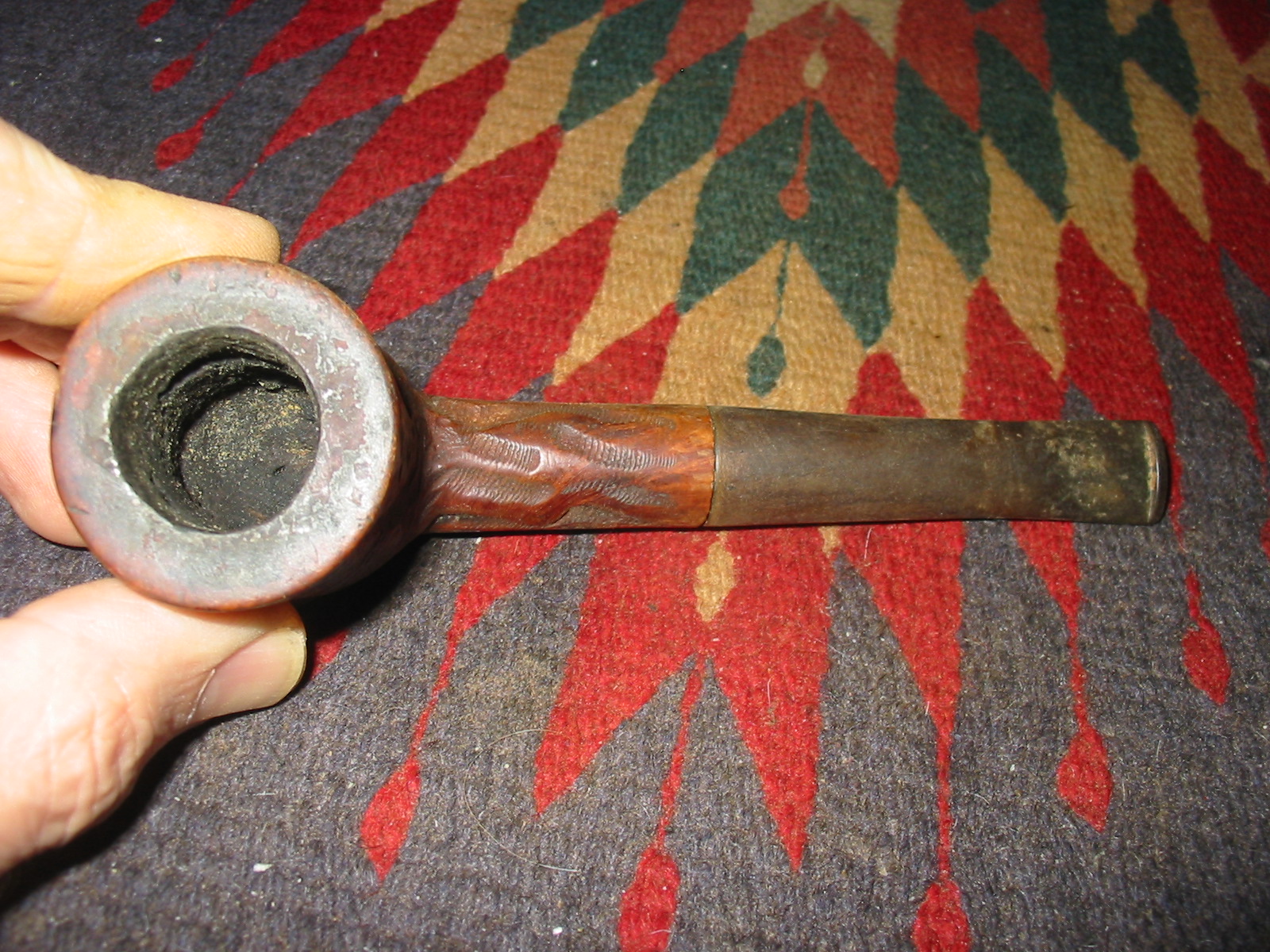
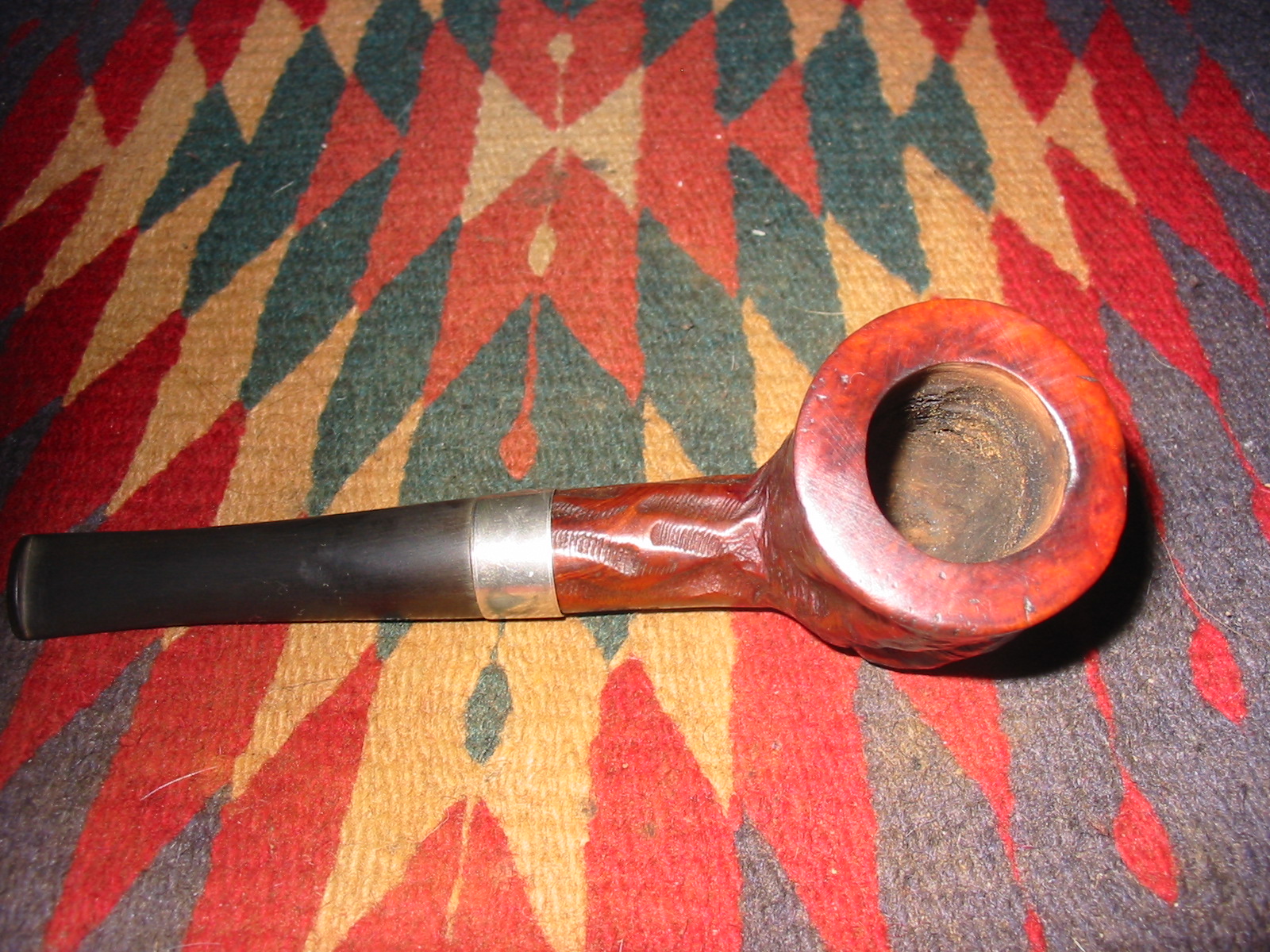
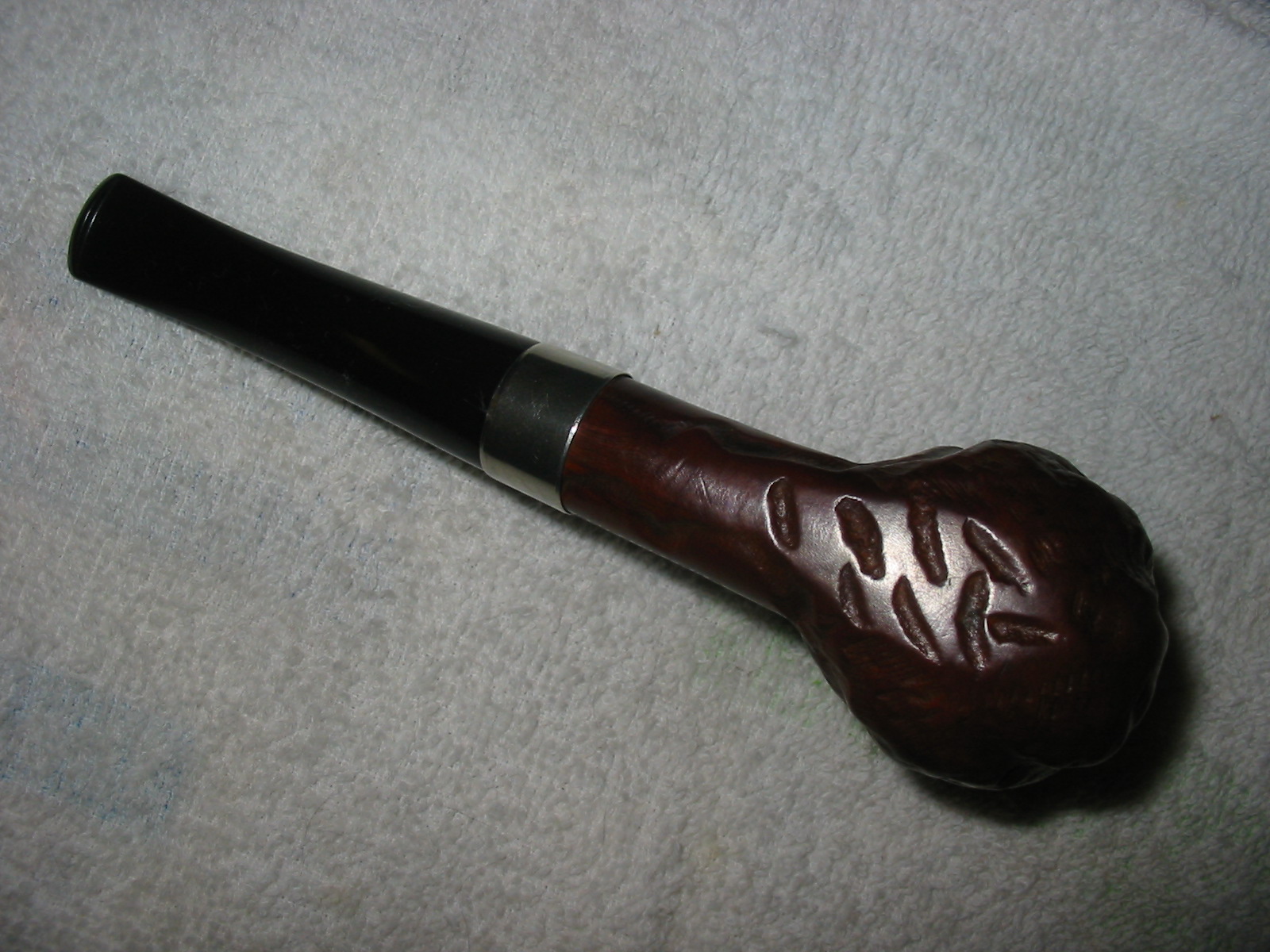
Custombilt The pipe was dirty. The bowl was badly caked – meaning that the cake was very crumbly and uneven. The bowl was out of round as can be seen in the photo below. I would need to ream it out completely to reshape the bowl. The finish was dirty in all of the worm trail carving that is found in these old rustic pipes. It looks a lot like a Mincer Custombilt but I am not sure. The rim surface is tarry with build up and the front inner edge of the bowl is burned. The shank looks good in these photos but there is a divot out of the briar on the left side where it will meet the stem. It did not have a stem when I picked it up on Ebay. I will need to make some decisions about what to do with the new stem and the match at the shank.

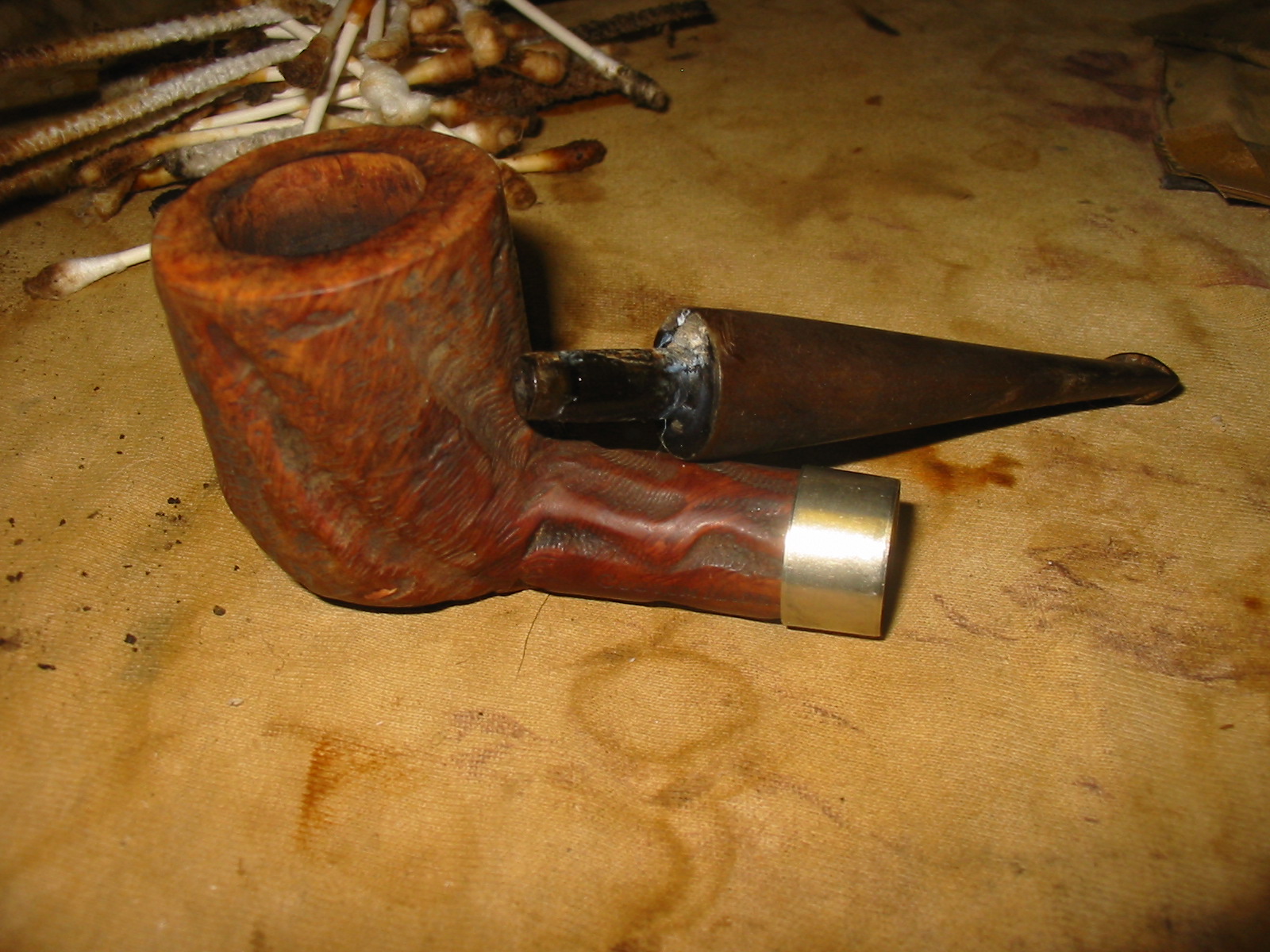
I went through my box of stems to find one that would fit the shank with little adjustment. I had just the stem there. The fit would be great as it was the same diameter as the shank. The stem was oxidized and dirty inside but there were no tooth marks. There was also a calcification on the stem near the button that would have to be dealt with when I got the stem fit to the shank. The next five photos show the “new” stem. I had to hand sand the tenon to get it to fit snugly in the mortise. The third photo below shows the sanded tenon. I used emery paper to sand the tenon back until it fit in the shank. The fourth and fifth pictures show the fit of the stem to the shank. The divot is visible in the fourth photo. It is mid shank on the left side of the pipe. No amount of fitting the stem would make that disappear. I could sand down the shank at that point to make a cleaner fit but I was not sure that is what I wanted to do. To do the sanding would change the chunky appearance of the pipe. So I decided not to sand the shank. I went on and cleaned the inside of the pipe before I made the final decision on the shank.

IMG_1330

IMG_1331

IMG_1332

IMG_1333

IMG_1334

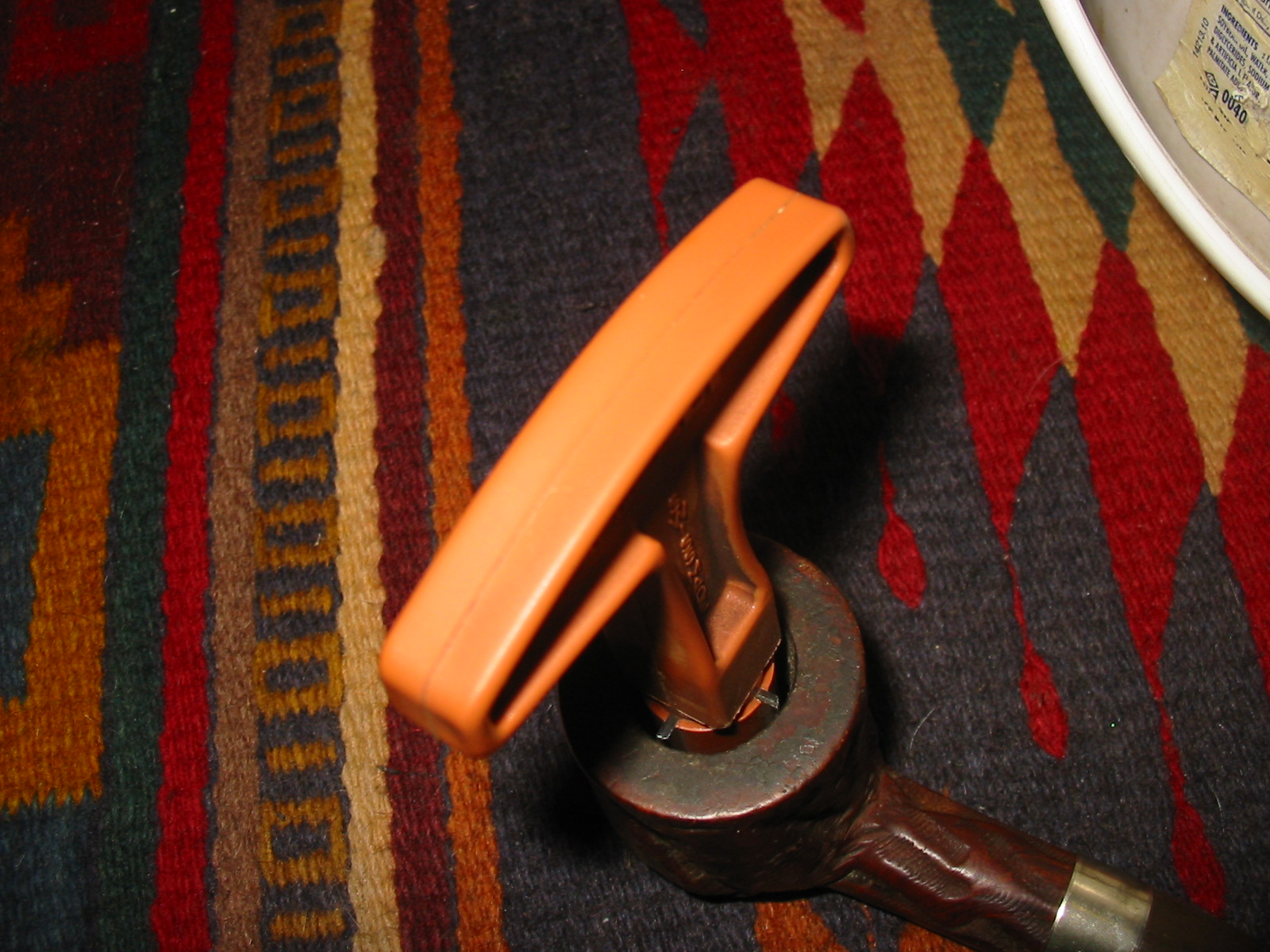
While I was prepping to ream the bowl I took out a nickel band to see what it would look like on the shank. I liked the overall look. I left it on the shank while I reamed the bowl. I used a PipNet reamer – a T handle with various cutting heads to ream the bowl. I started with the one that fit the easiest and then worked up to the third head which was the same diameter as the bowl. I reamed it back to bare wood (Photos 1 and 2). I then heated the band with the heat gun and pressed on the shank to give me a smooth transition between the stem and the shank (Photos 3 and 4).

IMG_1337

IMG_1338

IMG_1339

IMG_1340

I worked on the inner rim with a folded piece of 220 grit sandpaper. I sanded the top of the bowl with the same sandpaper and the fine grit sanding sponge to remove the build up on the rim (Photos 1 and 2). The third photo below shows the inner edge of the rim after the sanding with the 220 grit sandpaper. I was able to get the bowl close to round. I also used the sanding drum on the Dremel to even things out so the third photo shows the finished repair to the inner rim edge.

IMG_1341

IMG_1342

IMG_1343

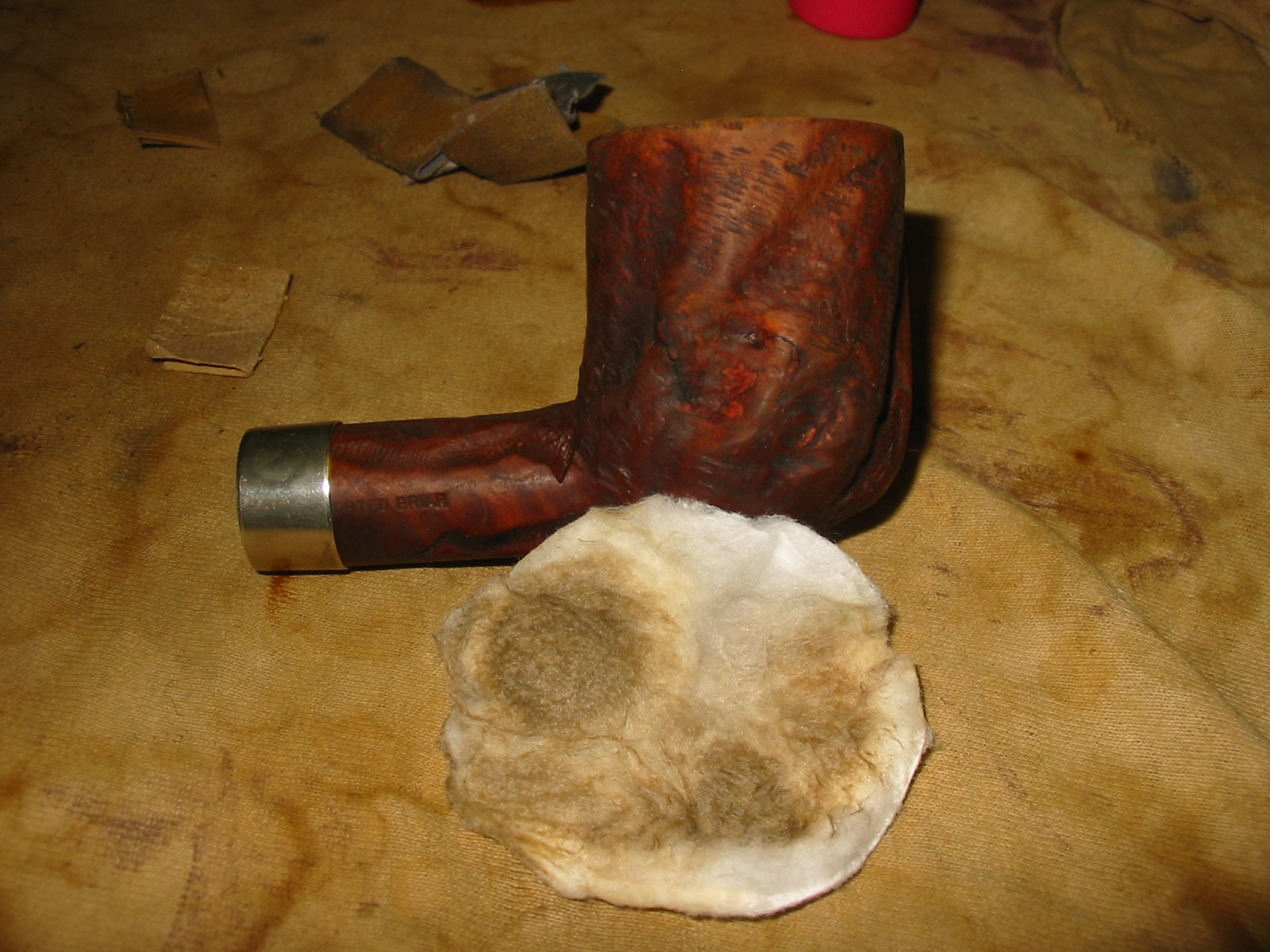
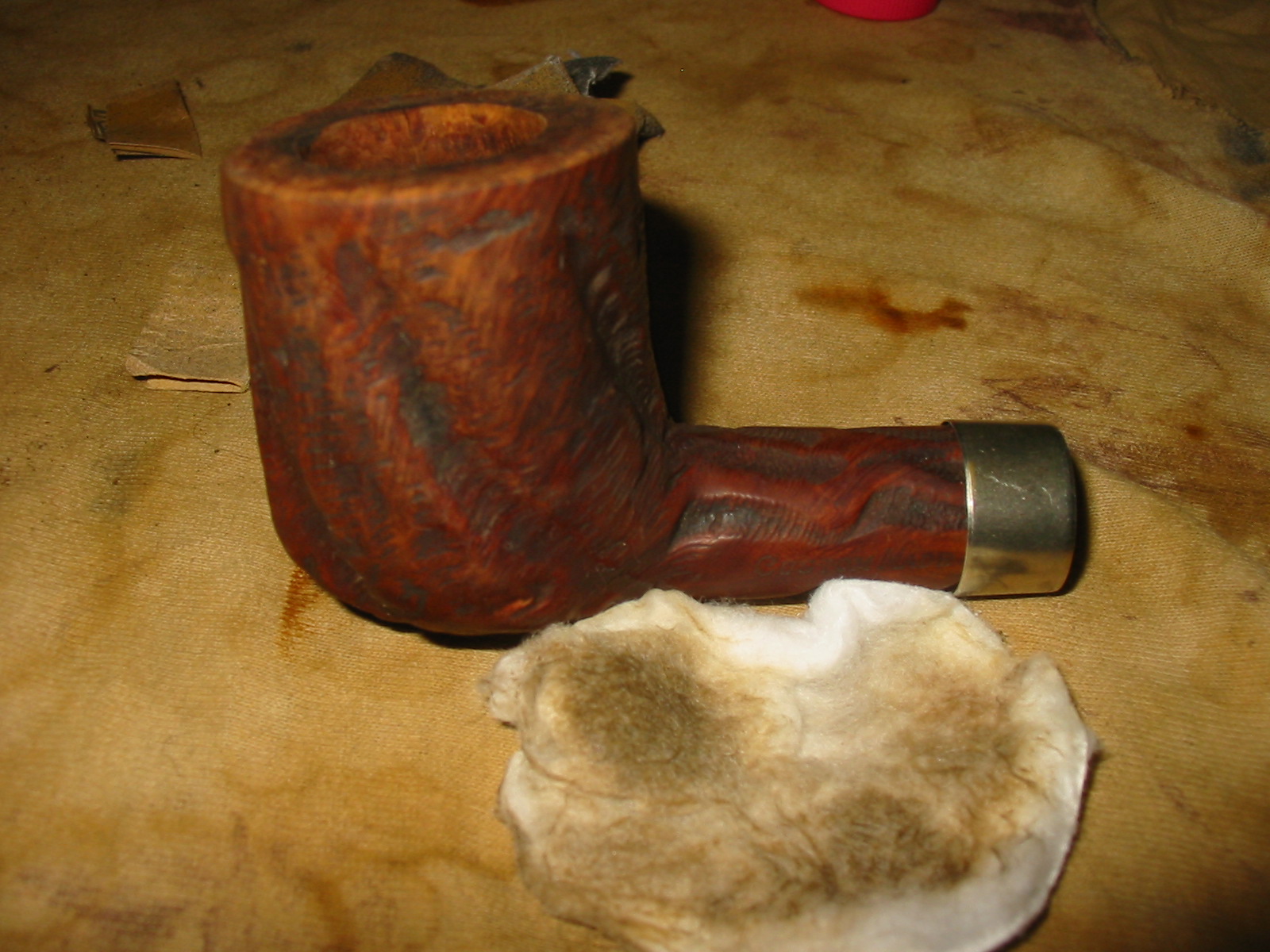
I wiped the exterior of the bowl down with acetone on cotton pads. I wanted to clean out the buildup in the crevices of the trails on the bowl. The dirt and finish that came off is visible in the two photos below. Two obvious fills also showed up in the bowl. These would need to be taken care of to hide them under the new stain once I was finished.

IMG_1344

IMG_1345

With the finish removed it was time to clean out the shank and airway of the pipe. I used pipe cleaners, cotton swabs and also the drill bit from the KleenReem Pipe reamer to remove the tars and oils that had built up in the shank. I probably could have used a retort but the shank did not smell sour or rank. It smelled like Virginia tobaccos had been smoked in this so I just used a lot of pipe cleaners and cotton swabs dipped in Everclear until they came out spotless. I wiped down the tenon on the “new” stem as well with the Everclear.

IMG_1346

IMG_1347

Once the insides were clean I inserted the stem in the shank to see if I still had a snug fit. Sometimes when the grime is removed the fit is not as good as it was before cleaning. I have learned the hard way to leave the stem tight and when it is cleaned the fit will be perfect. I sanded the stem with fine grit emery paper to remove the calcified buildup and the oxidation on the stem. The next three photos show the stem after the sanding with the emery paper.

IMG_1348

IMG_1349

IMG_1350

I then sanded the stem with 220 grit sandpaper to remove more of the oxidation and also the scratches left behind by the emery paper. The next series of three photos show the stem after sanding with the sandpaper.

IMG_1351

IMG_1352

IMG_1353

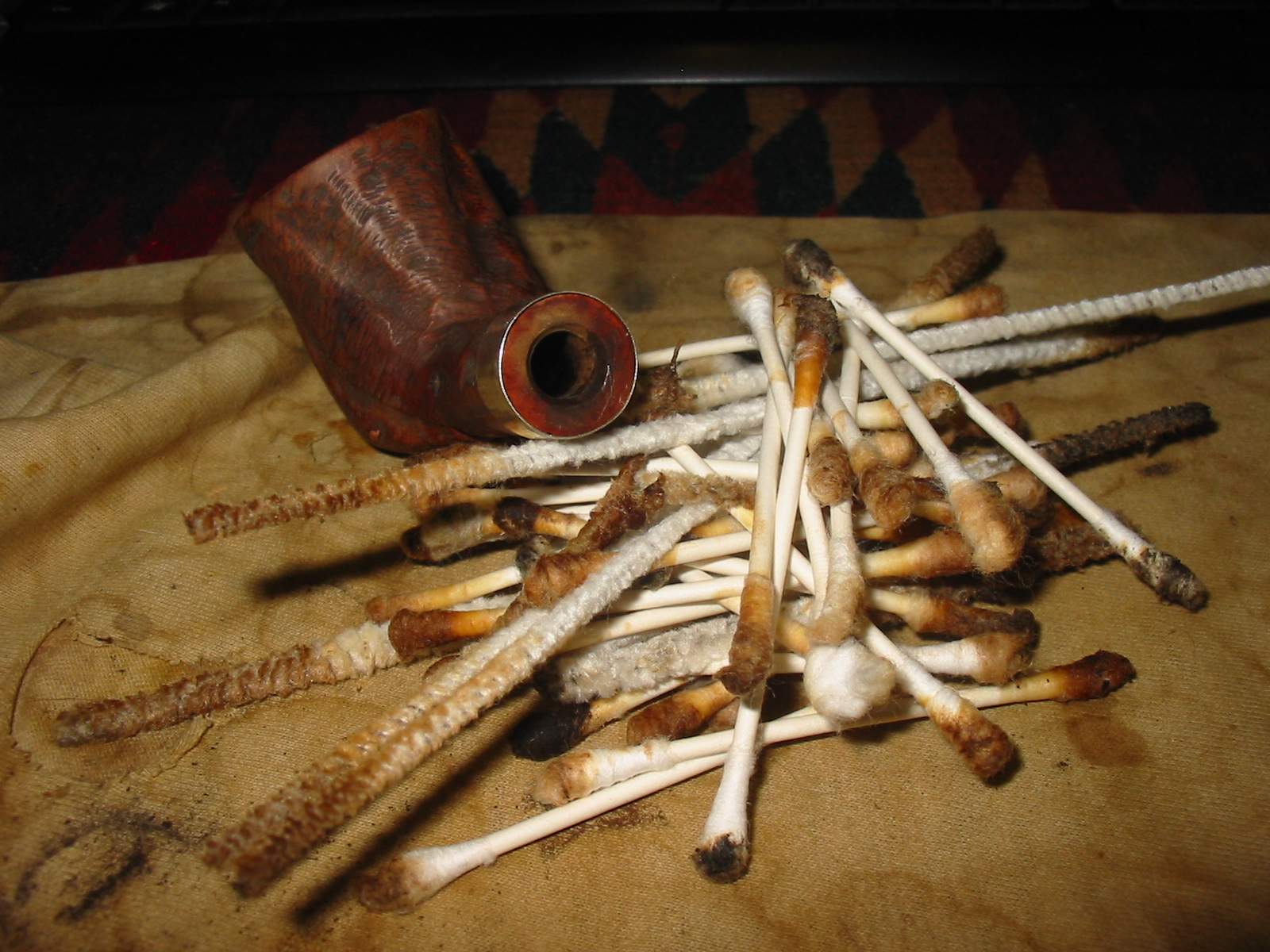
I went back and cleaned the stem with pipe cleaners and Everclear. I should have done that when I was cleaning the shank but honestly I forgot to do so. Never too late however so I did it next. The next four photos show the pile of pipe cleaners that it took to clean the stem. I also wiped the bowl and shank down with Everclear on a cotton pad to prepare it for staining.

IMG_1354

IMG_1355

IMG_1356

IMG_1357

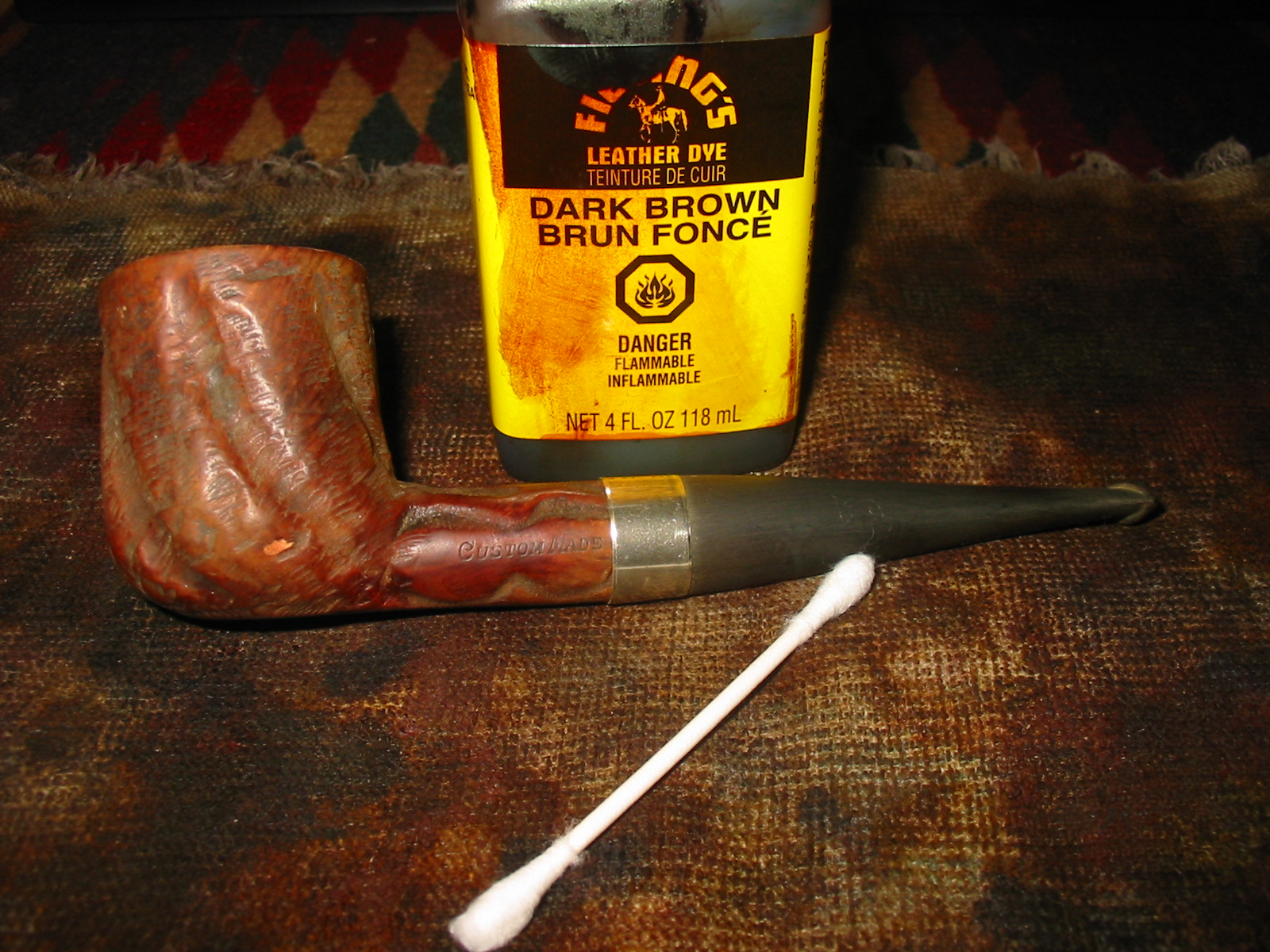
I restained the pipe with a dark brown aniline stain. I thinned the stain with 1 part alcohol to 2 parts stain to get the brown I wanted for a colour. I wanted it dark enough that the fills would blend into the finish but also transparent enough to show the grain through the stain. I used a black permanent marker, called a Sharpie here in Canada to give the fills a dark top coat before applying the stain. I have learned that this method makes the fills blend into the bowl better on these rusticated bowls. I applied the stain with a cotton swab, flamed it with my lighter and reapplied it and flamed it again. It took three applications of the stain to give good coverage to the bowl. The next three photos show the unstained pipe (Photo 1) and the newly stained pipe (Photos 2 and 3).

IMG_1358

IMG_1359

IMG_1360

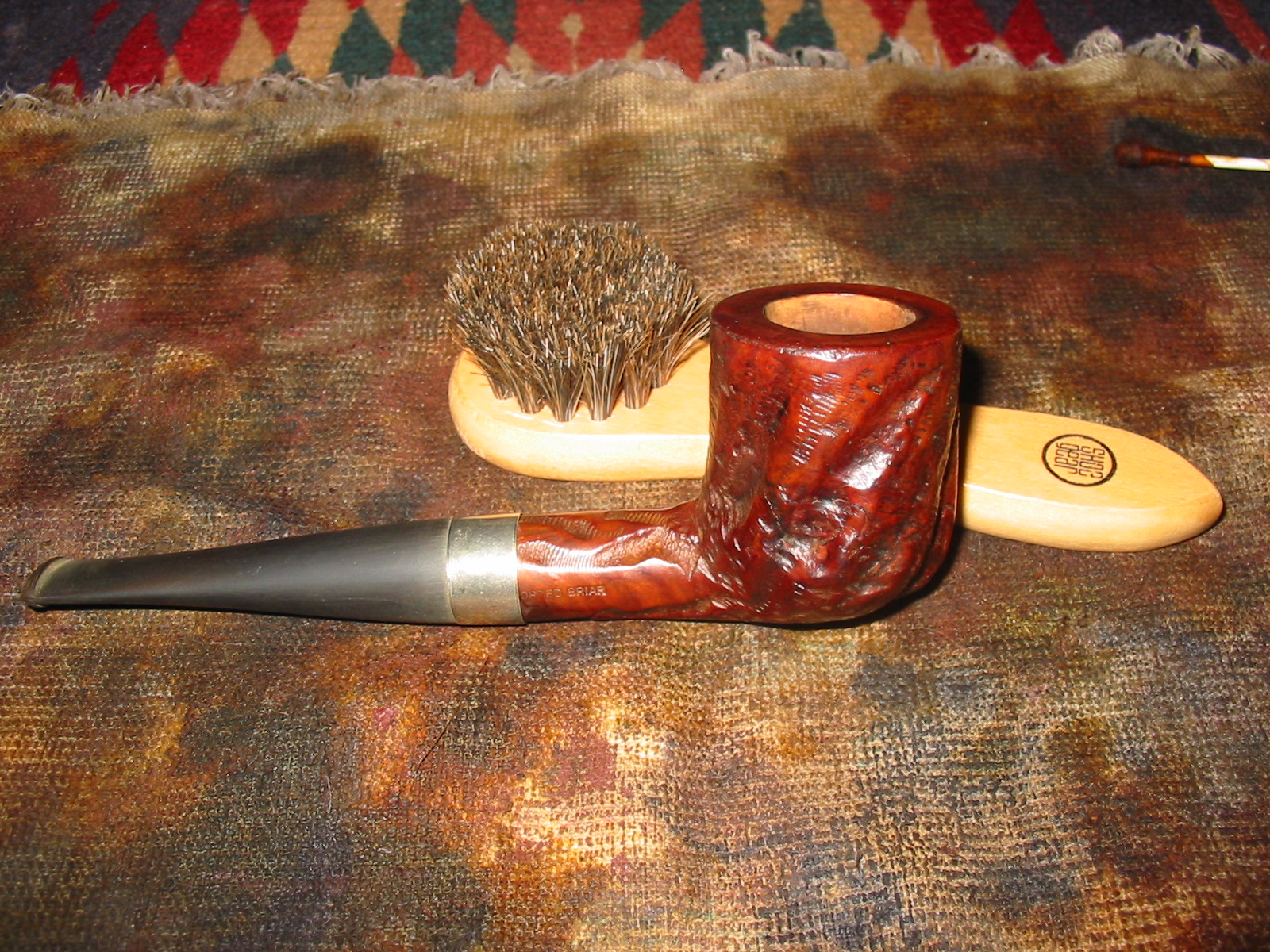
Once the stain was dry I hand buffed it with a shoe brush to see if I needed to add any more stain to some of the spots on the bowl and rim (Photo 1). The next three photos show the buffed bowl and the finished colour. The coverage was good so I buffed it by hand and then went back to work on the stem.

IMG_1361

IMG_1362

IMG_1363

IMG_1364

The next series of six photos show the progressive polishing of the stem with micromesh sanding pads from 1500-12,000 grit.

IMG_1365

IMG_1366

IMG_1367

IMG_1368

IMG_1369

IMG_1370

I took the pipe to the buffer and buffed the stem with White Diamond and then rubbed it down with Obsidian Oil to preserve it. I gave the bowl a coat of Halcyon II wax and the stem several coats of carnauba wax to prevent oxidation. I buffed the entire pipe lightly with a soft flannel buff. The finished pipe is pictured in the last four photos.

IMG_1371

IMG_1372

IMG_1373

IMG_1374

A Phoenix Rises – Reworking a Pipe


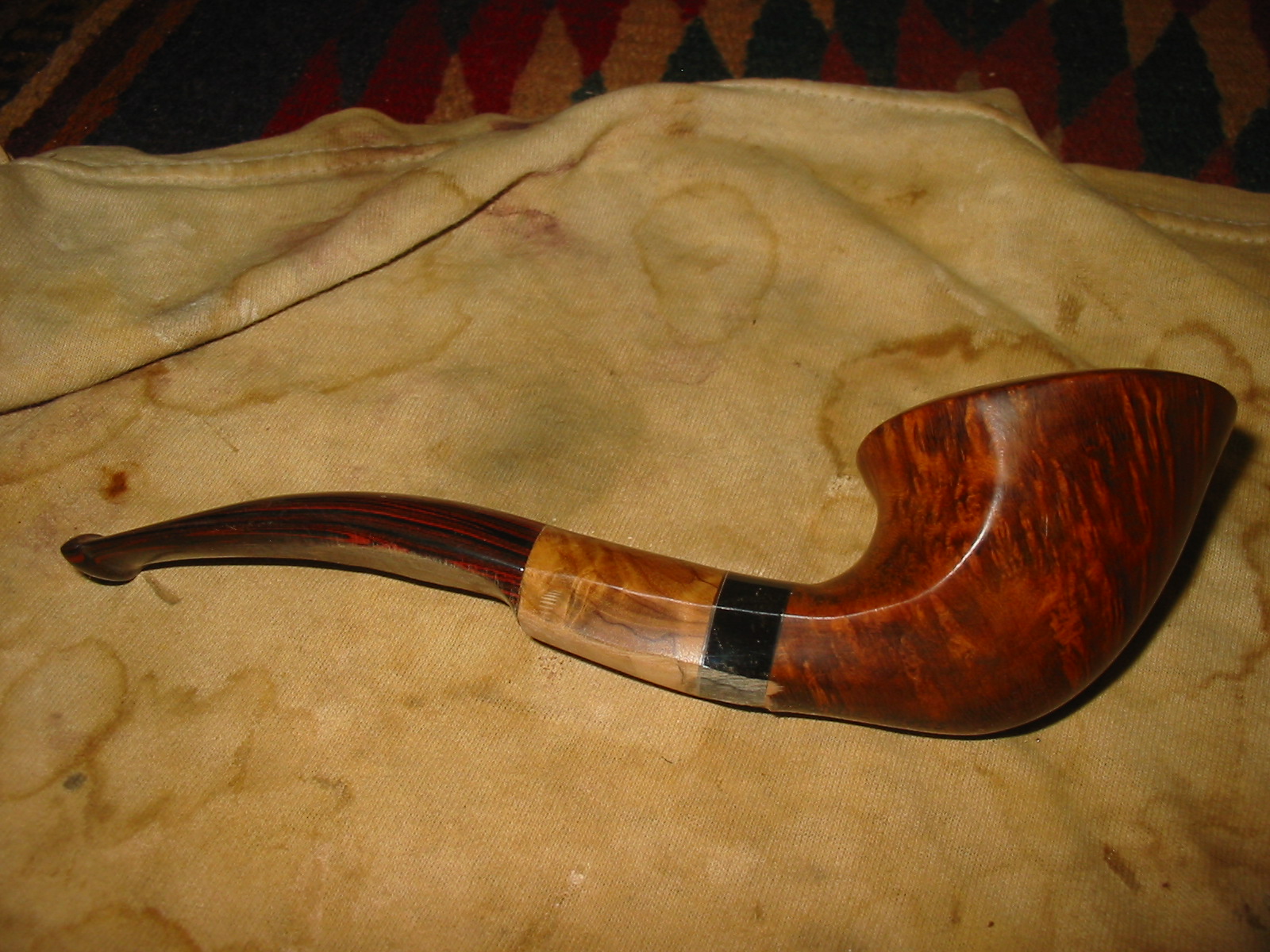
This post may be controversial to some folks as it is about the reworking of a pipe from a living artisan. I know that many would never do such a thing and would either sell the pipe or leave it in the collection. I chose to do neither of those things. Knowing that when Stephen gave it to me it was not one that he was going to sell and that in some ways he saw as problematic made this adaptation an easy choice for me.

Quite a few years ago now – enough years have passed that I am not sure when – I used to visit Stephen Downie when he lived in Vancouver. We had connected through the Vancouver Pipe Club and I enjoyed his company. When I visited I would pick up tips on pipe making that I could use in my pipe refurbishing – stem making, sanding techniques, staining processes, etc. I enjoyed looking through his box of throw away stummels that for one reason or another had problems and did not make the grade. He would often give me one or two to use to practice carving. I enjoyed the process of working with these blocks just to learn about briar and how it responds when cut and sanded. I learned about sand pits and flaws in the block and got to play around with the tools to remove the flaws as much as possible and craft a passable pipe for me to smoke.

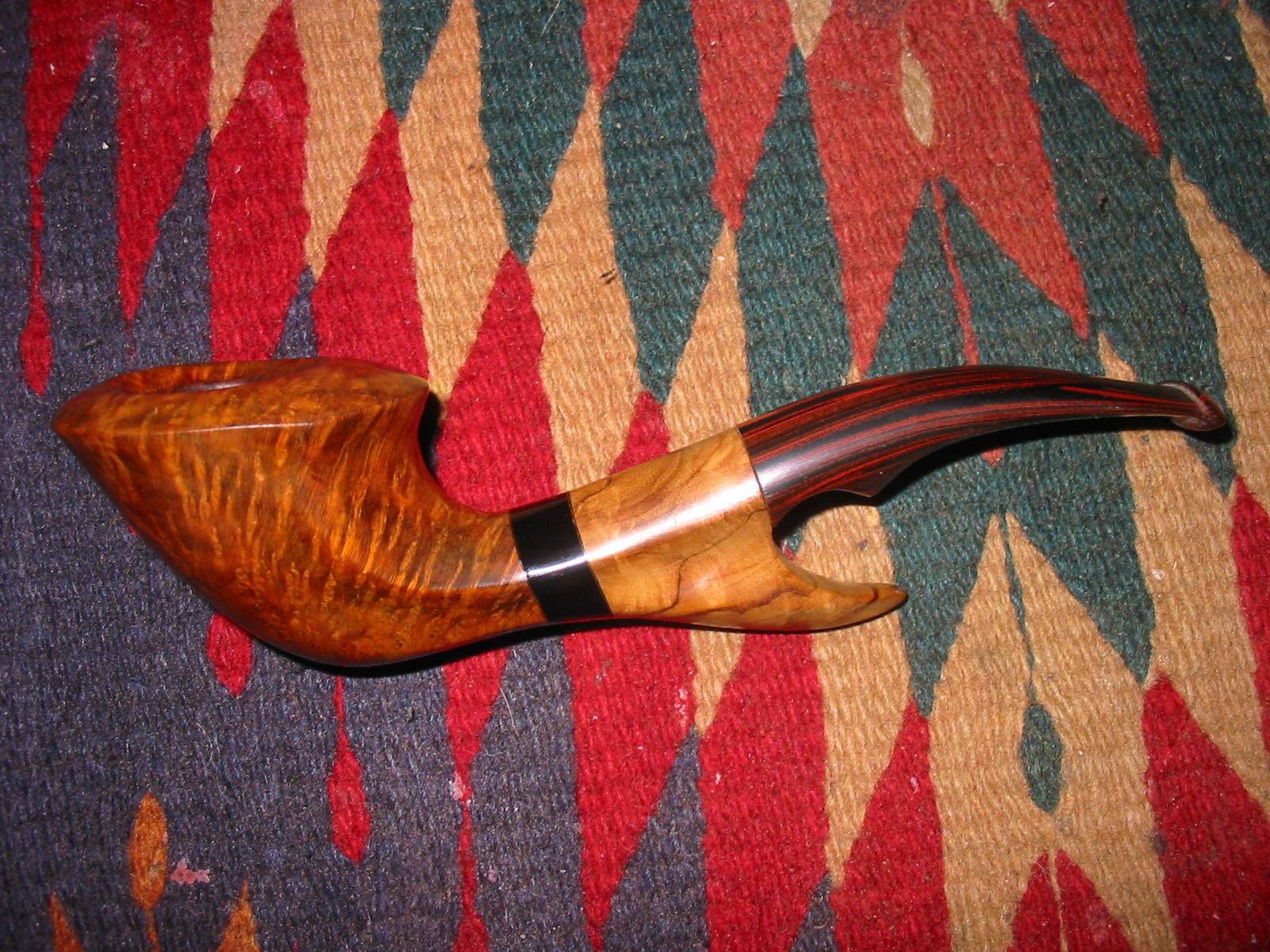
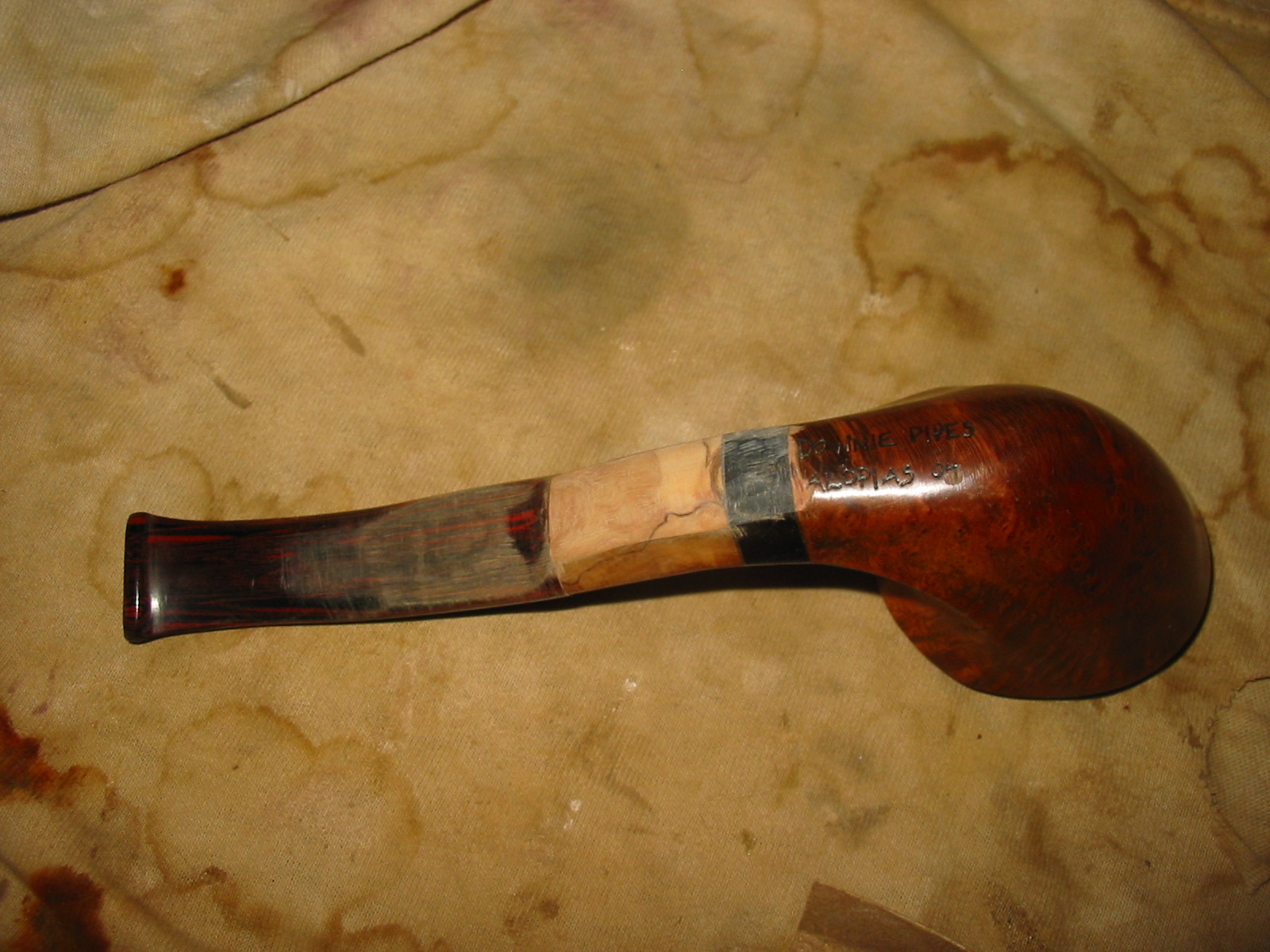
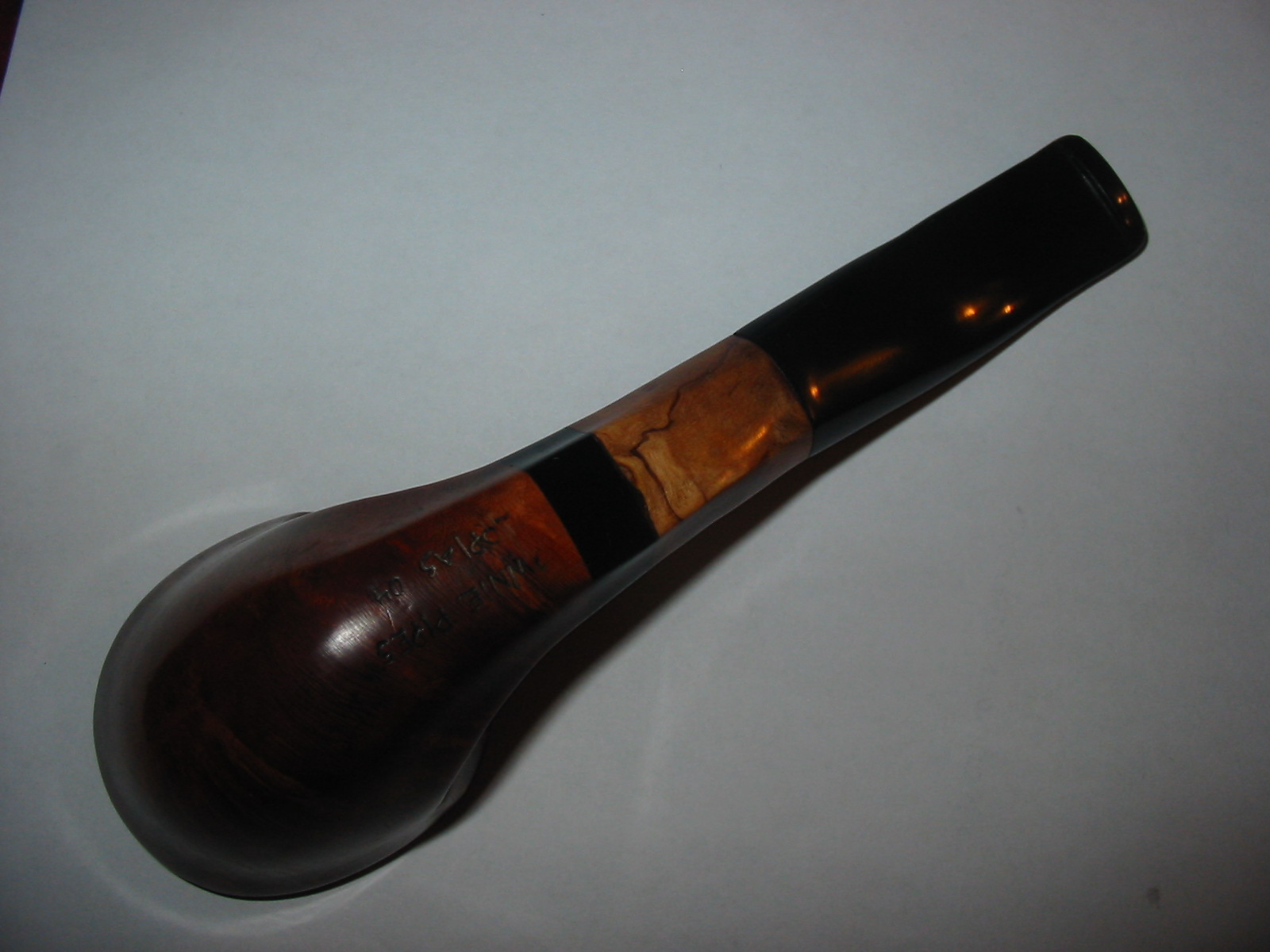
One day when I was going through the box he gave me this pipe that he had made in 2004. If memory serves me correctly, Stephen said that he thought that the drilling of the bowl had left it too thin in the bottom front. As such he would not place it on his site for sale. He figured that it would still smoke well if broken in carefully. I gladly took it home with me, smoked a few bowls and then put it in the pipe cupboard. Over the years I have rarely smoked it much as I found the hanging tail fin on the underside very uncomfortable to hold. I took it out of the cupboard when I was choosing a pipe to smoke. Sometimes I picked it up and smoked it but it never quite made it into the rotation. The pipe smokes very well so it was not a matter of mechanics that kept me from picking it up more often, but it just seemed that the fin was in the way.

Fast forward to a wedding I did just a few months ago (2013) for a couple of good friends of mine here in Vancouver. At the reception dinner I connected with Stephen and his wife. We talked about life in general, books we were reading and writing and pipes we were enjoying. We talked of the pipes Stephen was carving and the ones I was refurbishing. We laughed over different details of the work while we sipped our drinks and ate the buffet supper.During the course of our conversation Stephen talked about an idea he had about reworking pipes for people and giving them new looks and improved feel. If they had a pipe in their collection that just did not get smoked often for whatever reason he would reimagine and rework it for them. He called his idea a Phoenix pipe. As we talked about it I found that I liked the idea a lot. When I went home that evening I could not get it out of my mind. I looked over some of my old pipes that for one reason or another have not seen the use they deserve. I sorted through them to see if one of them might be a candidate for this idea of his. I picked up the old finned pipe that he had given me many years before. As I looked it over I had several ideas of how to rework it. I put it back in the cupboard and let it sit for several months while I thought about what do about it.

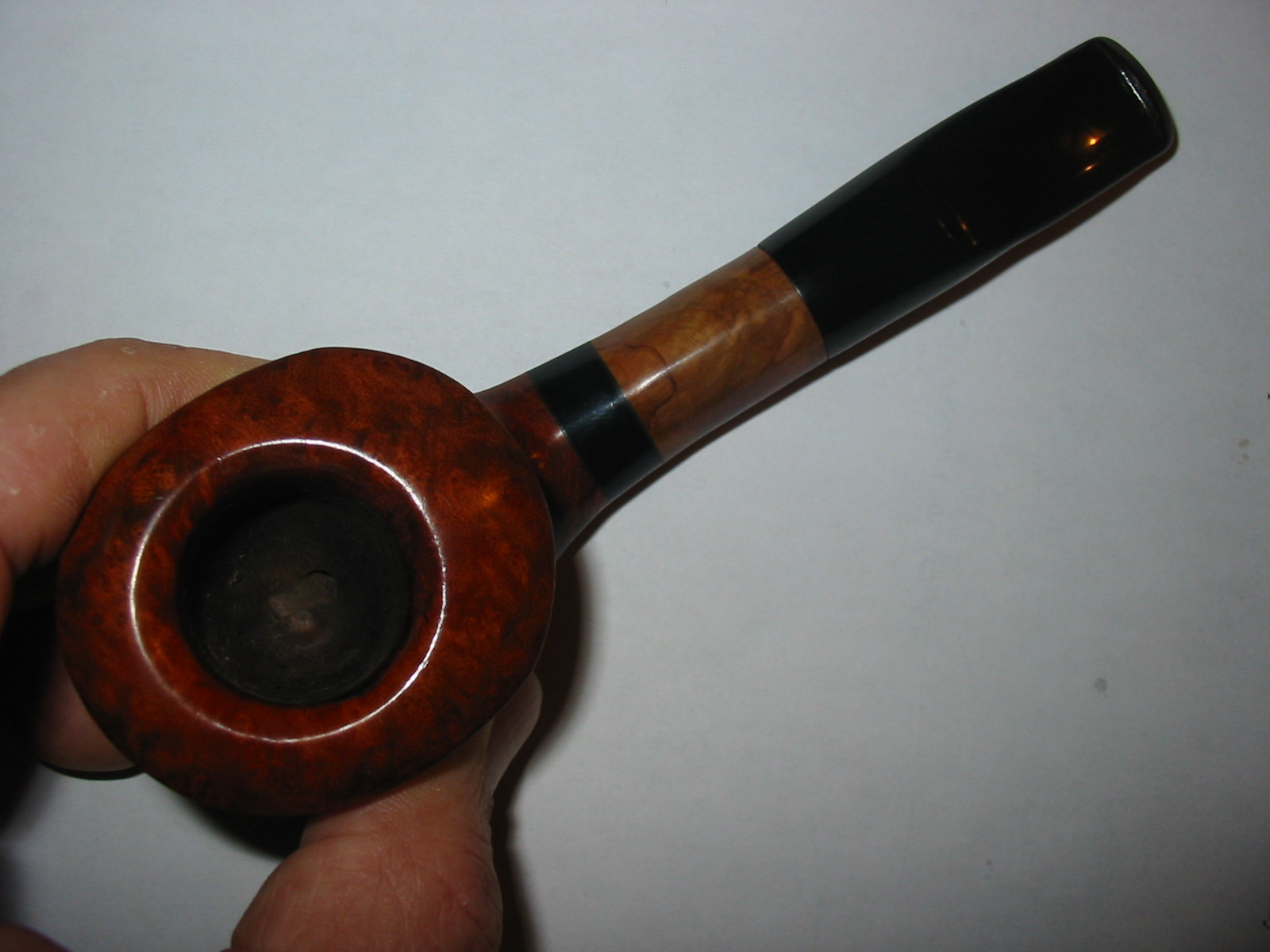
I picked it up again several days ago and looked it over. I like colour of the stain but wondered what it would look like if I darkened it. I like the feel of the bowl in the hand. I liked the curves of the rim and the bowl to the shank. I liked the flow of the curve to the stem. I liked the shape of the shank and the black acrylic insert and the olive wood extension on the shank. The mortise was Delrin lined and the drilling was vintage Downie – well drilled, straight and clean. The fit of the stem was stellar. The stem was also comfortable and the button thin as is my preference. The Cumberland colour and material suited the pipe well. There were many things I liked about it. I turned the ideas over in my mind of what I might do to rework it. I thought that I would remove the fin on the bottom of the shank and the nob on the bottom of the stem and I would have it done. I thought about calling Stephen and setting up a meeting to drop the pipe off for him to reimagine – do his Phoenix work on it and see what he could do with it. But after looking it over for a while I decided rather than sending it to him I would do a Phoenix rework on it myself.

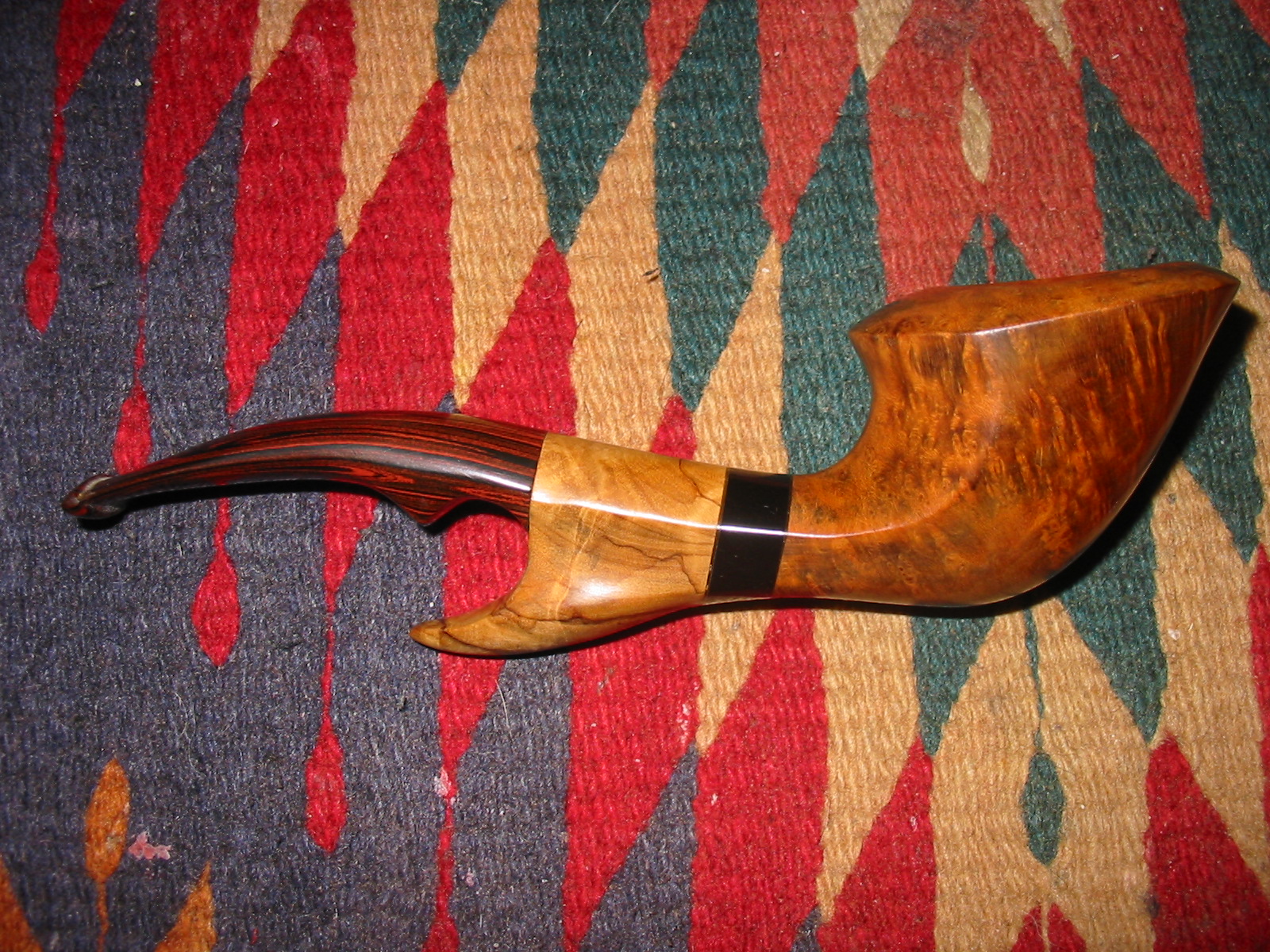
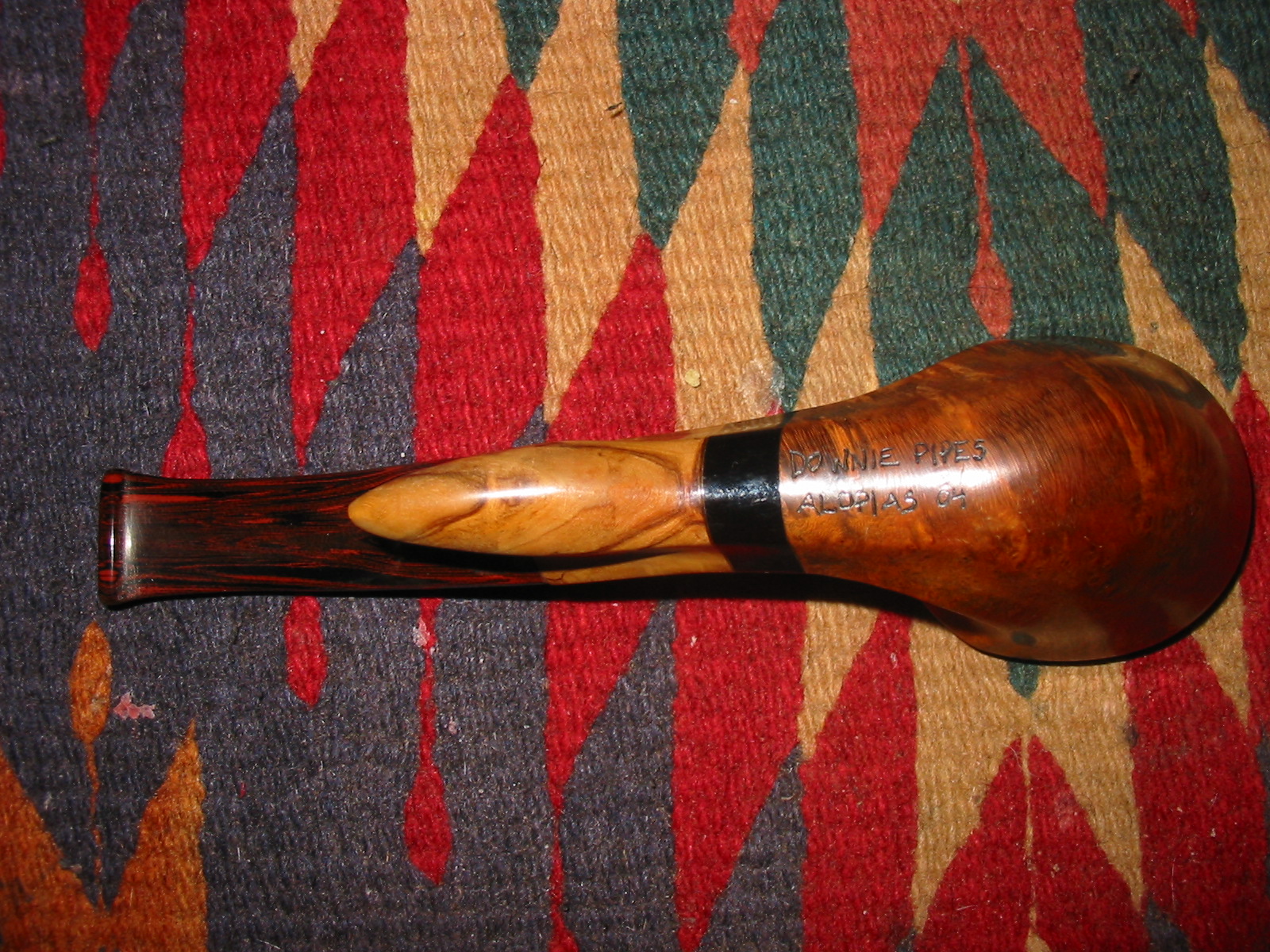
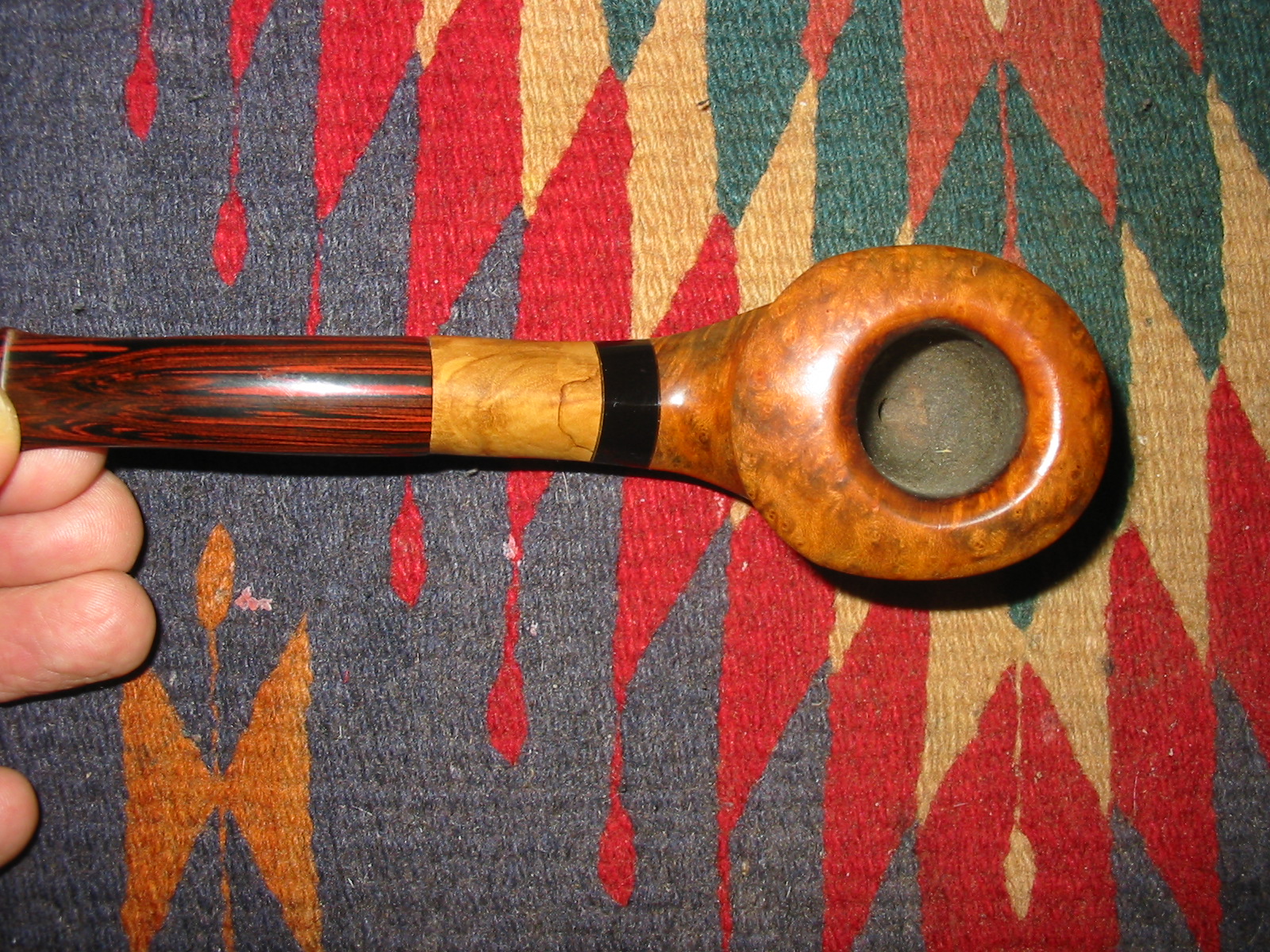
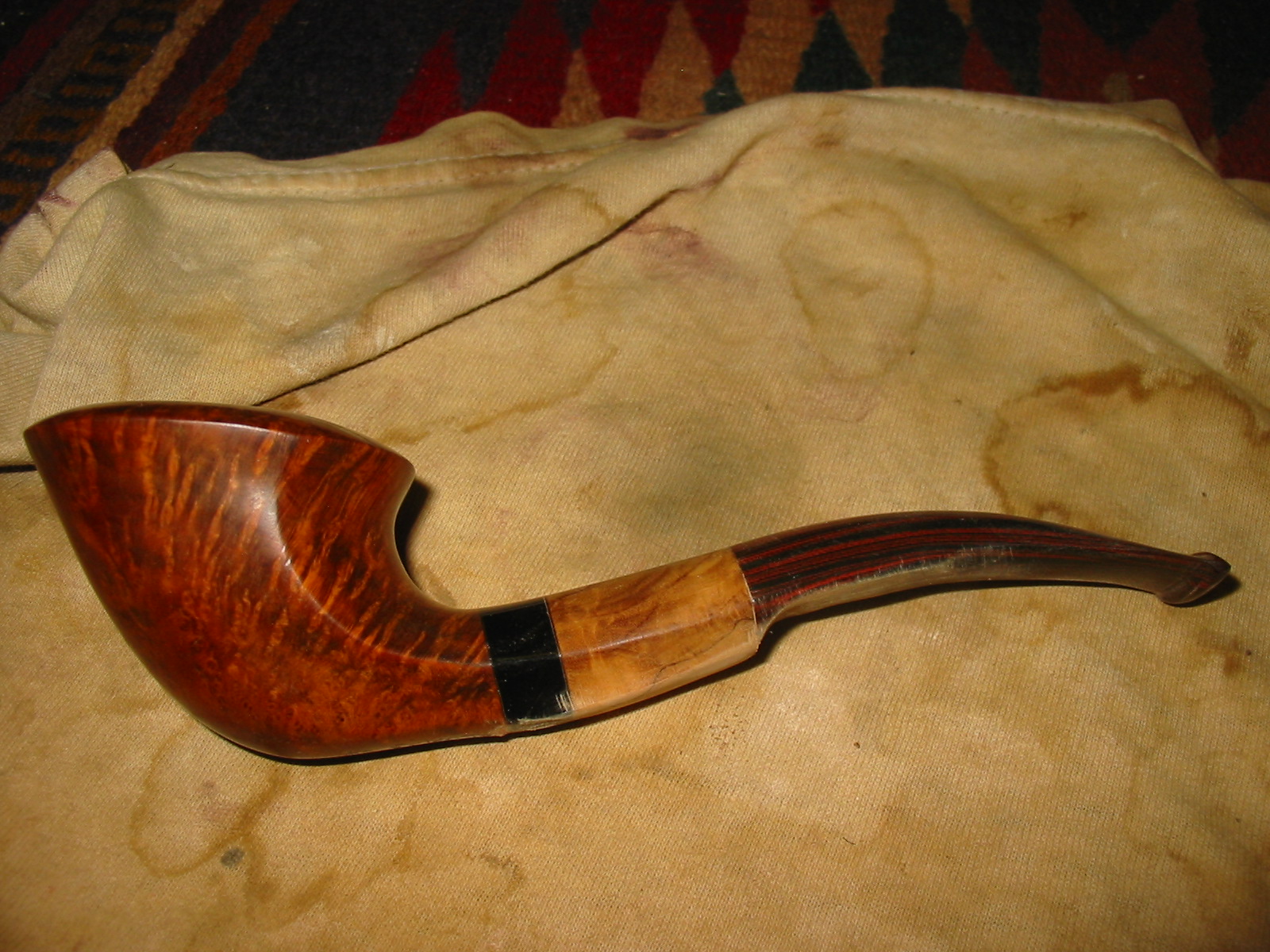
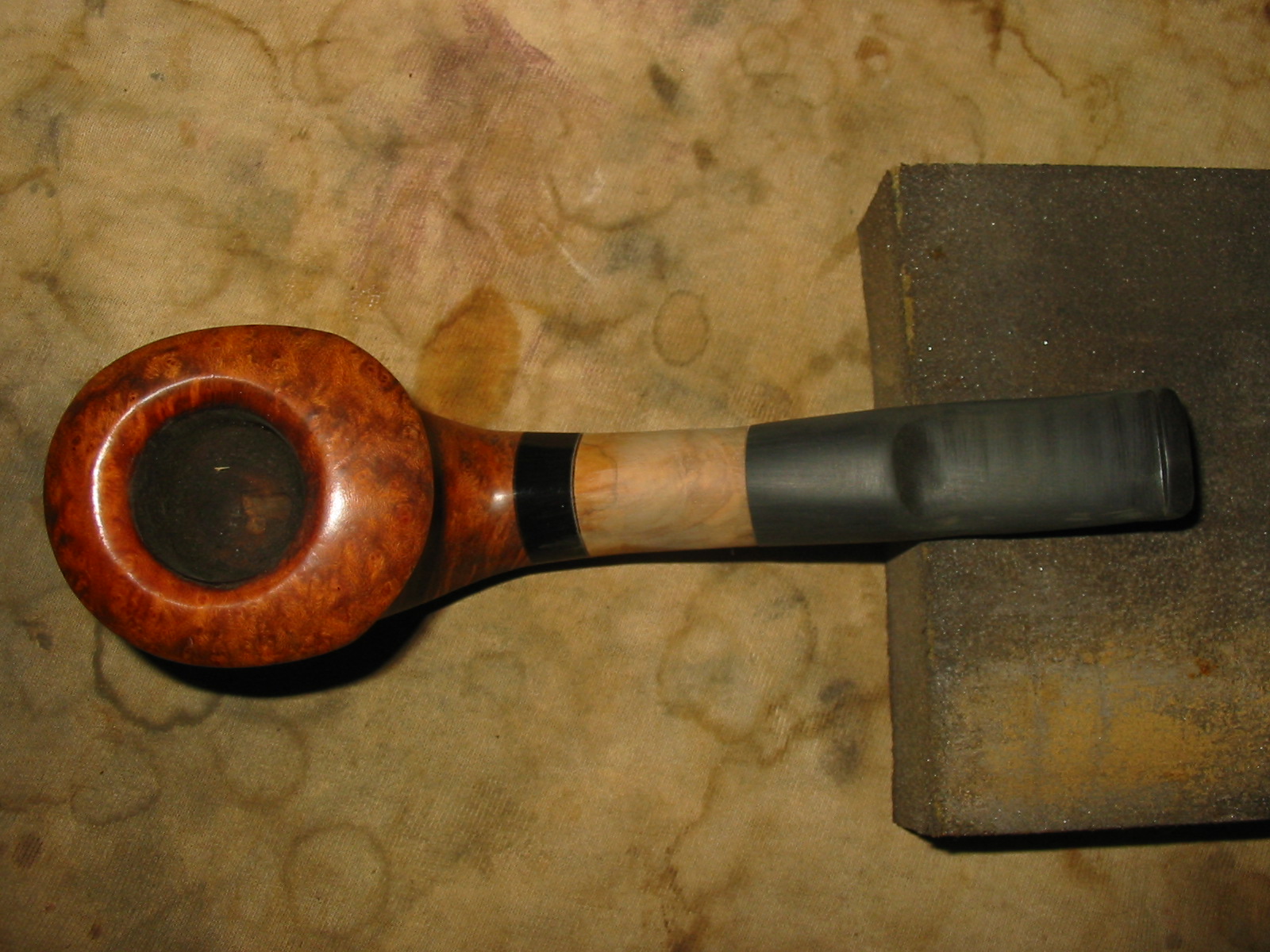
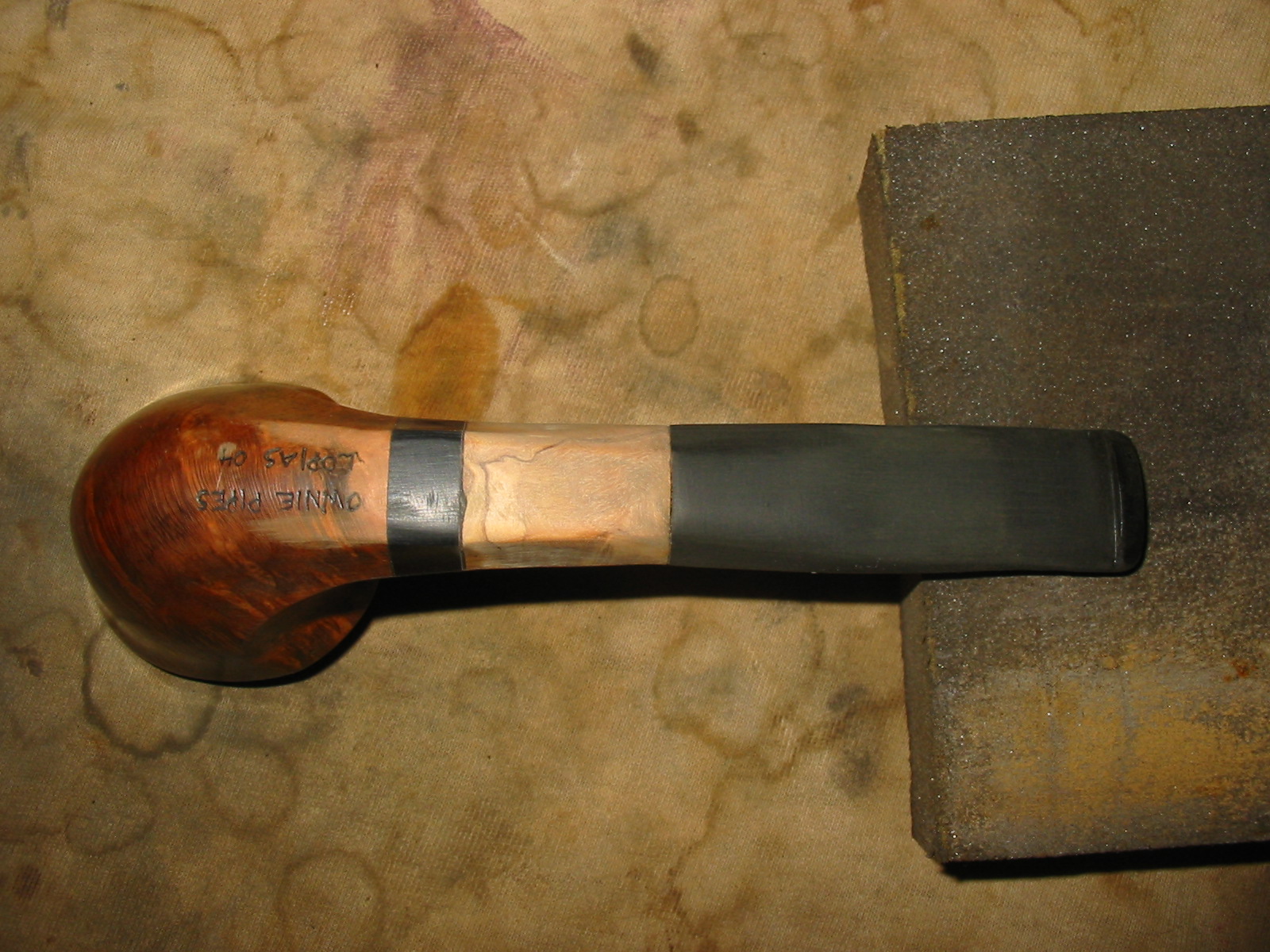
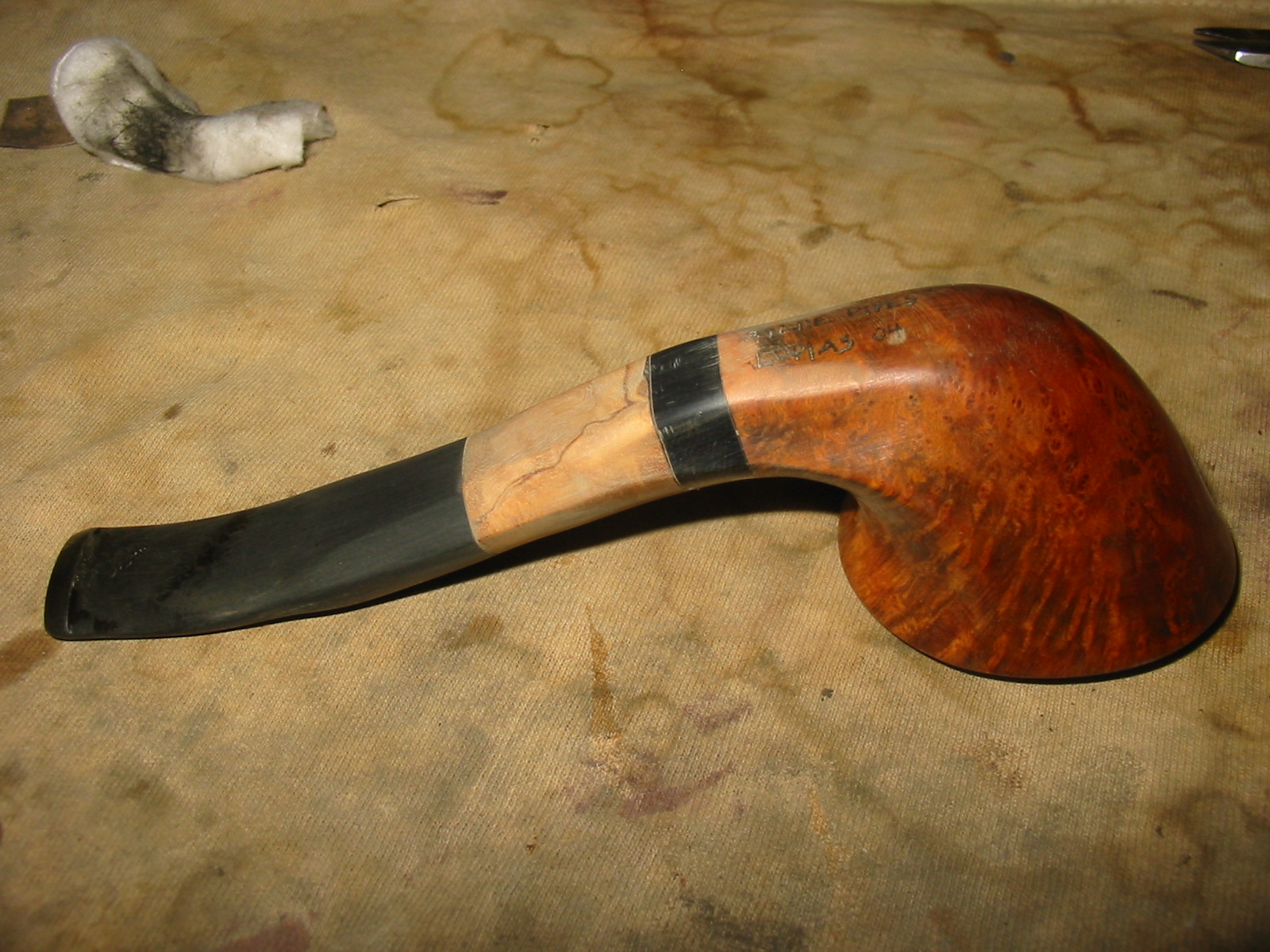
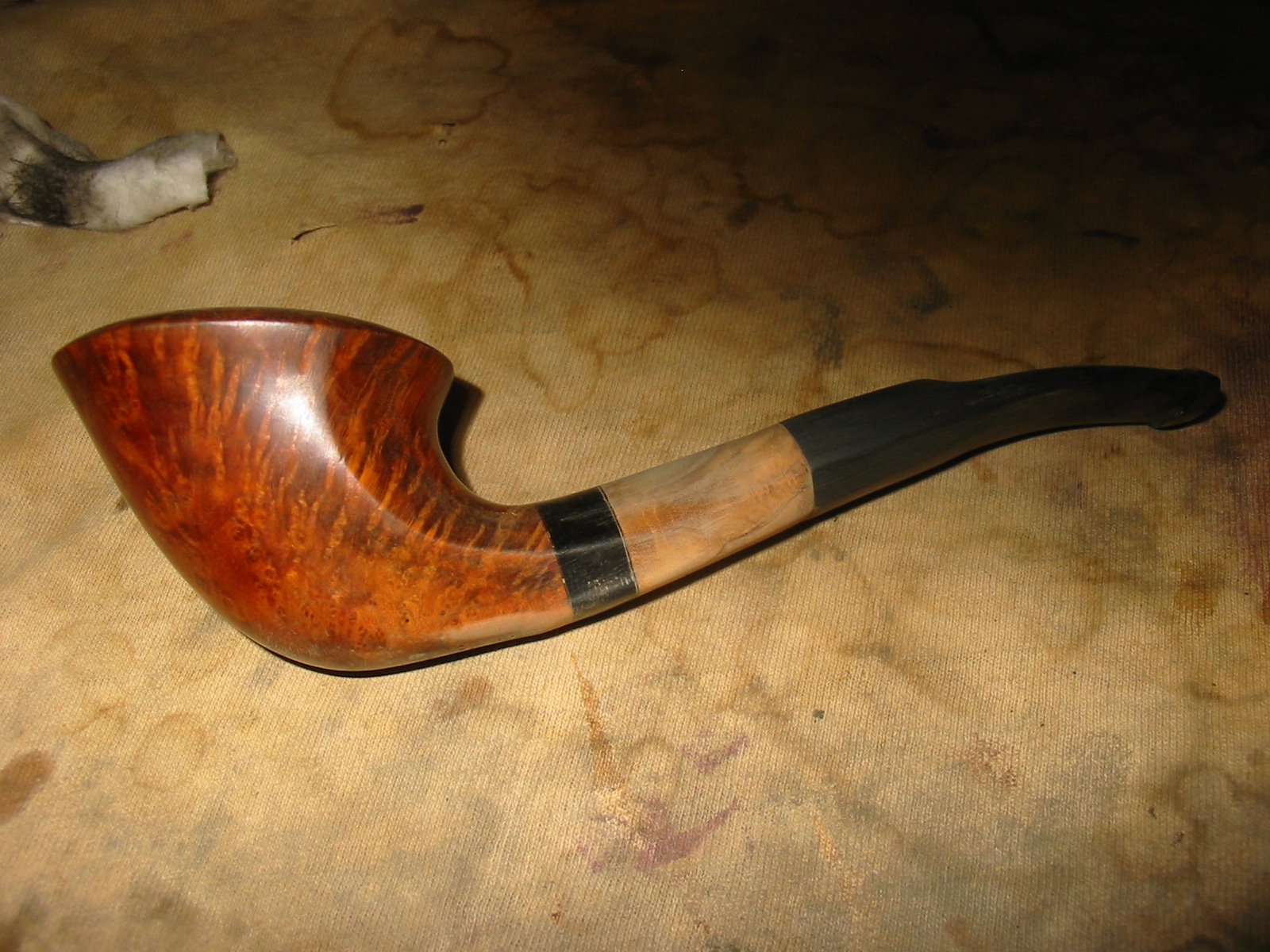
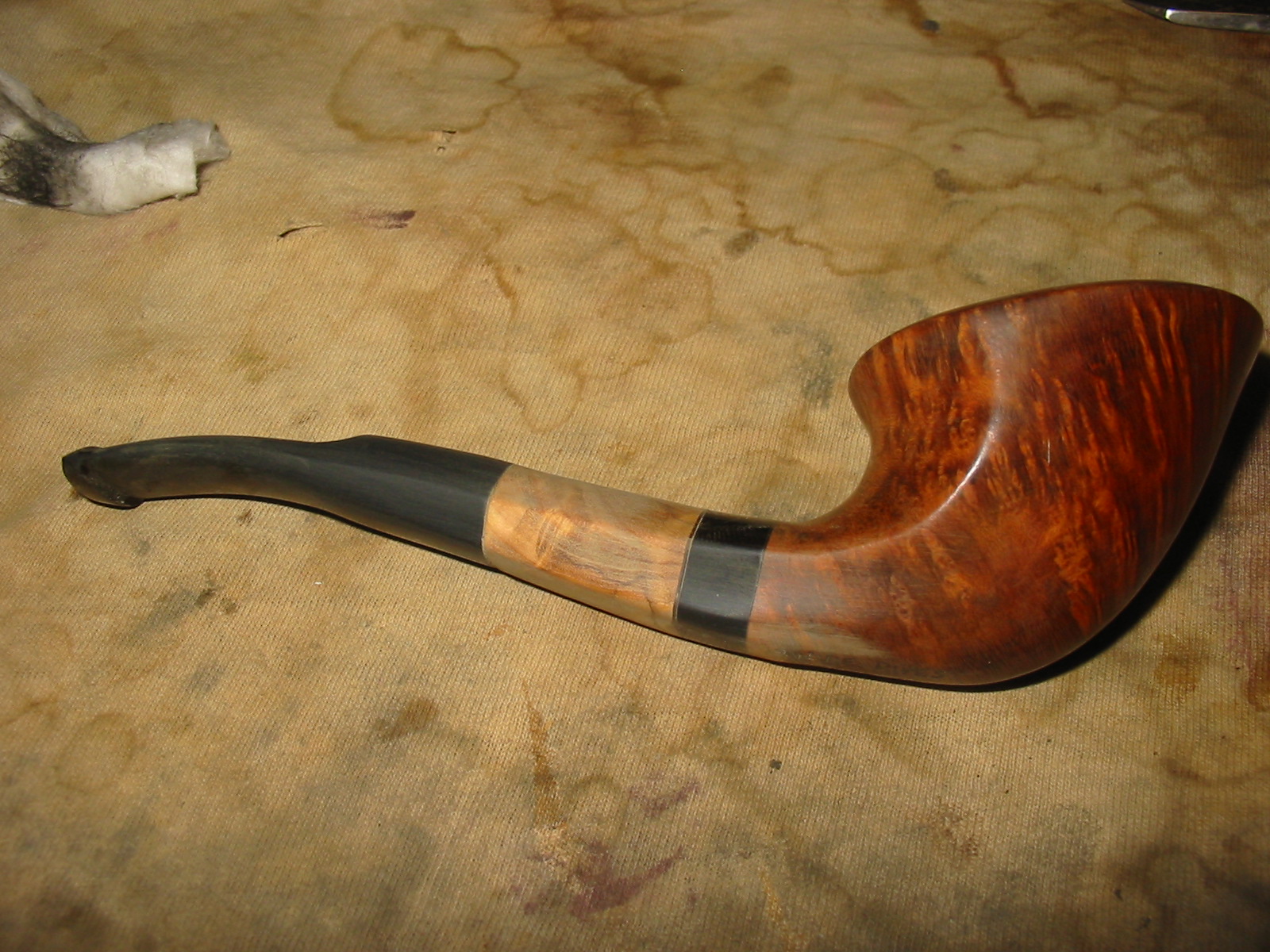
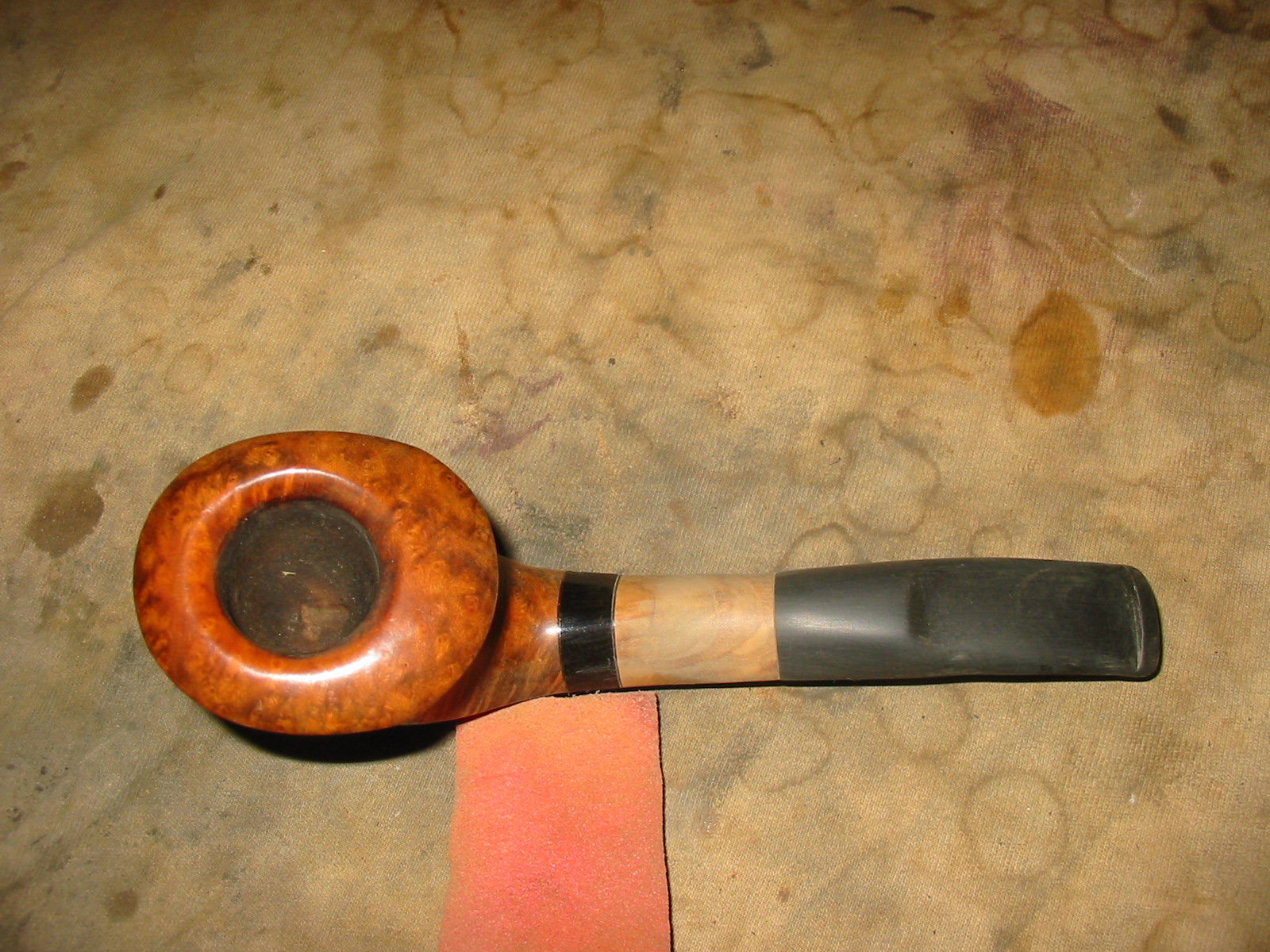
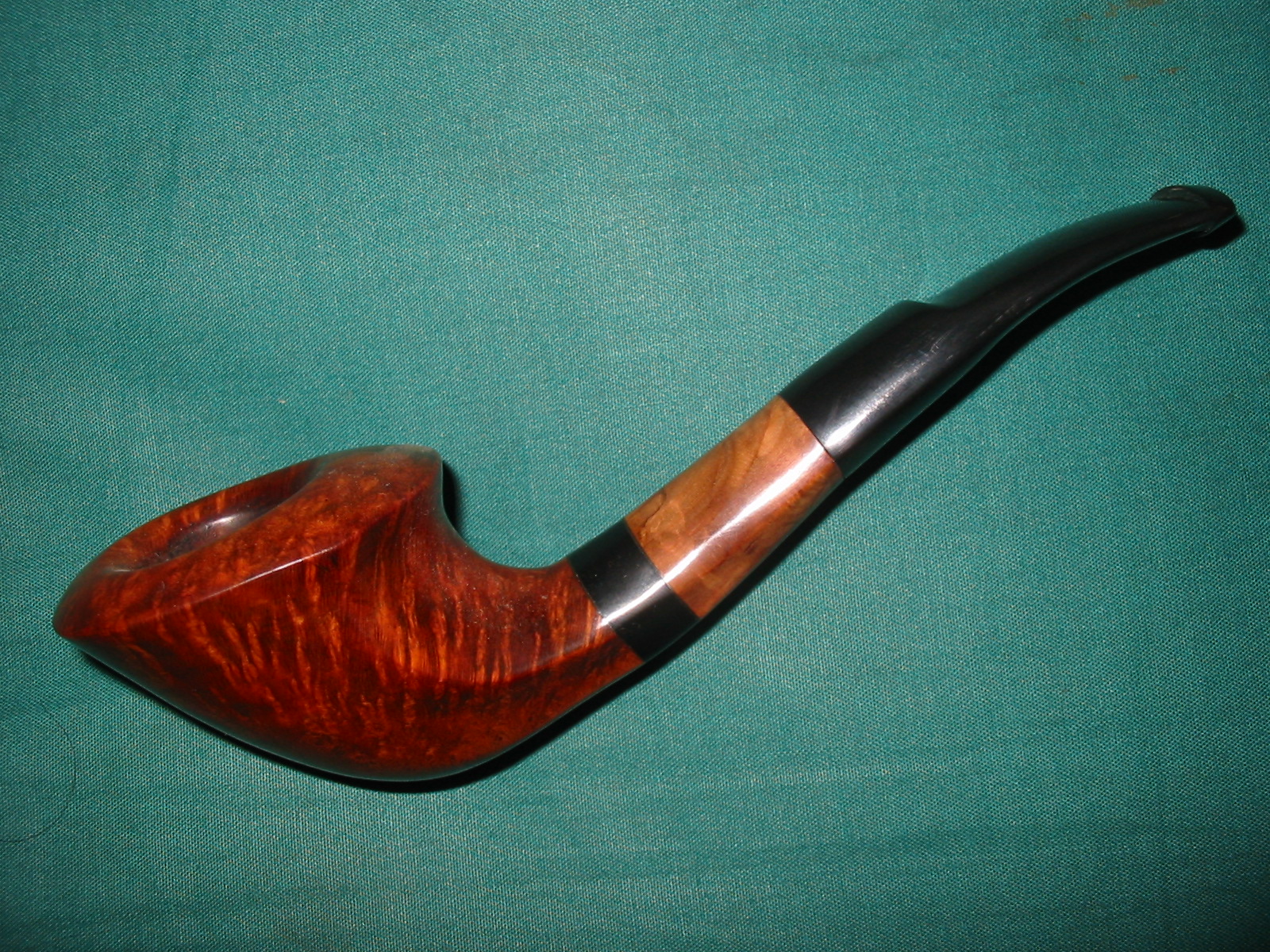
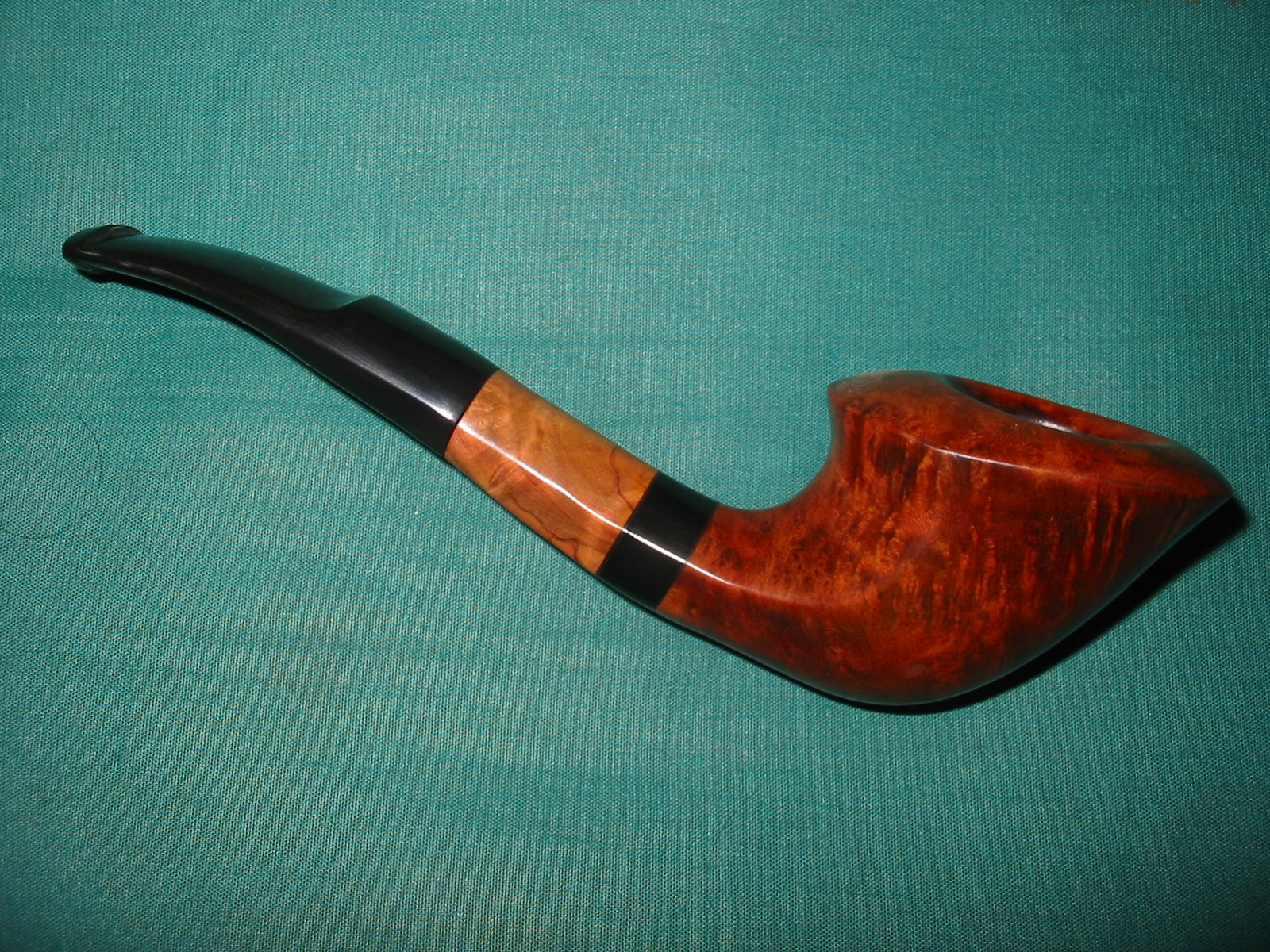
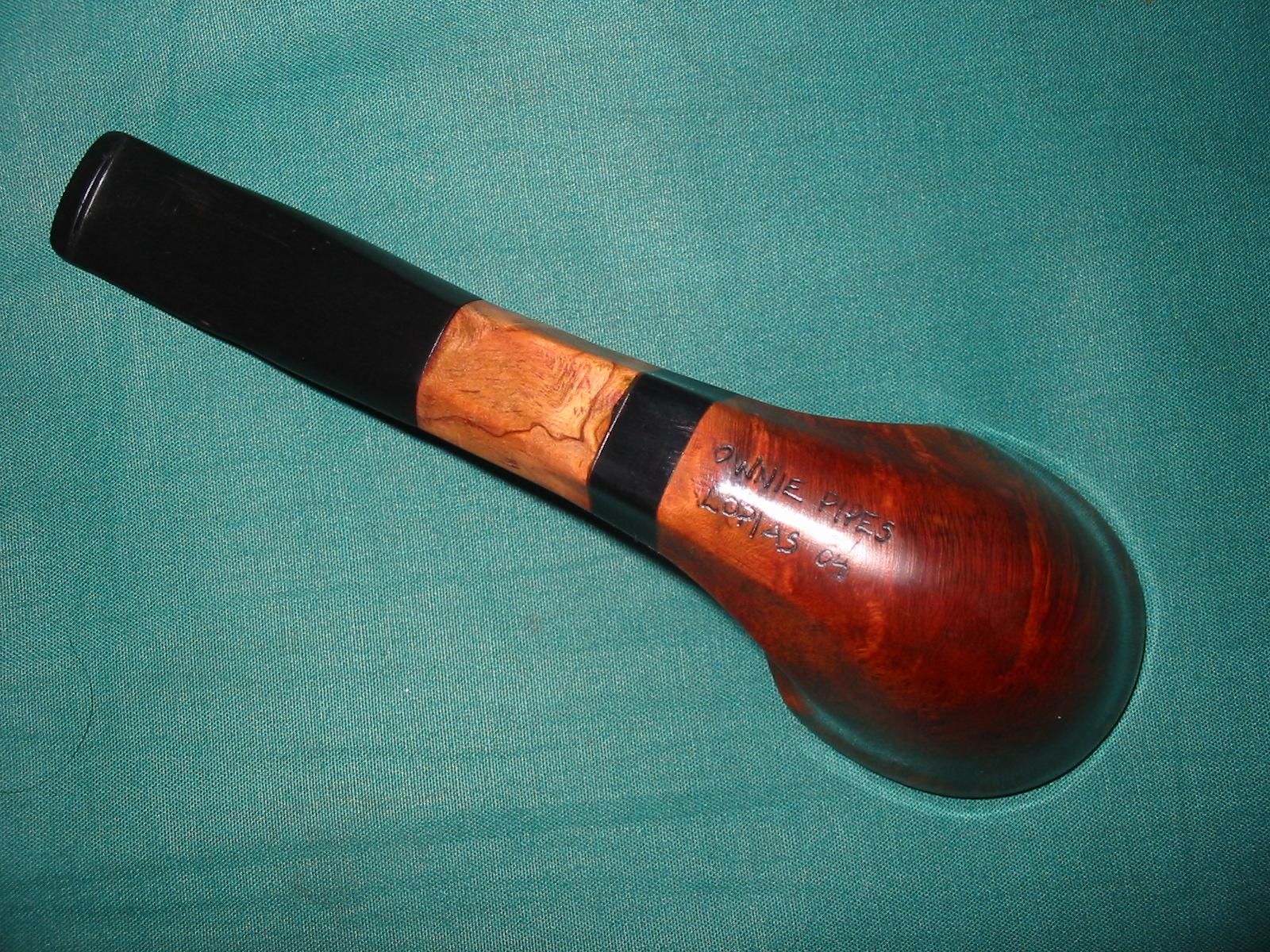
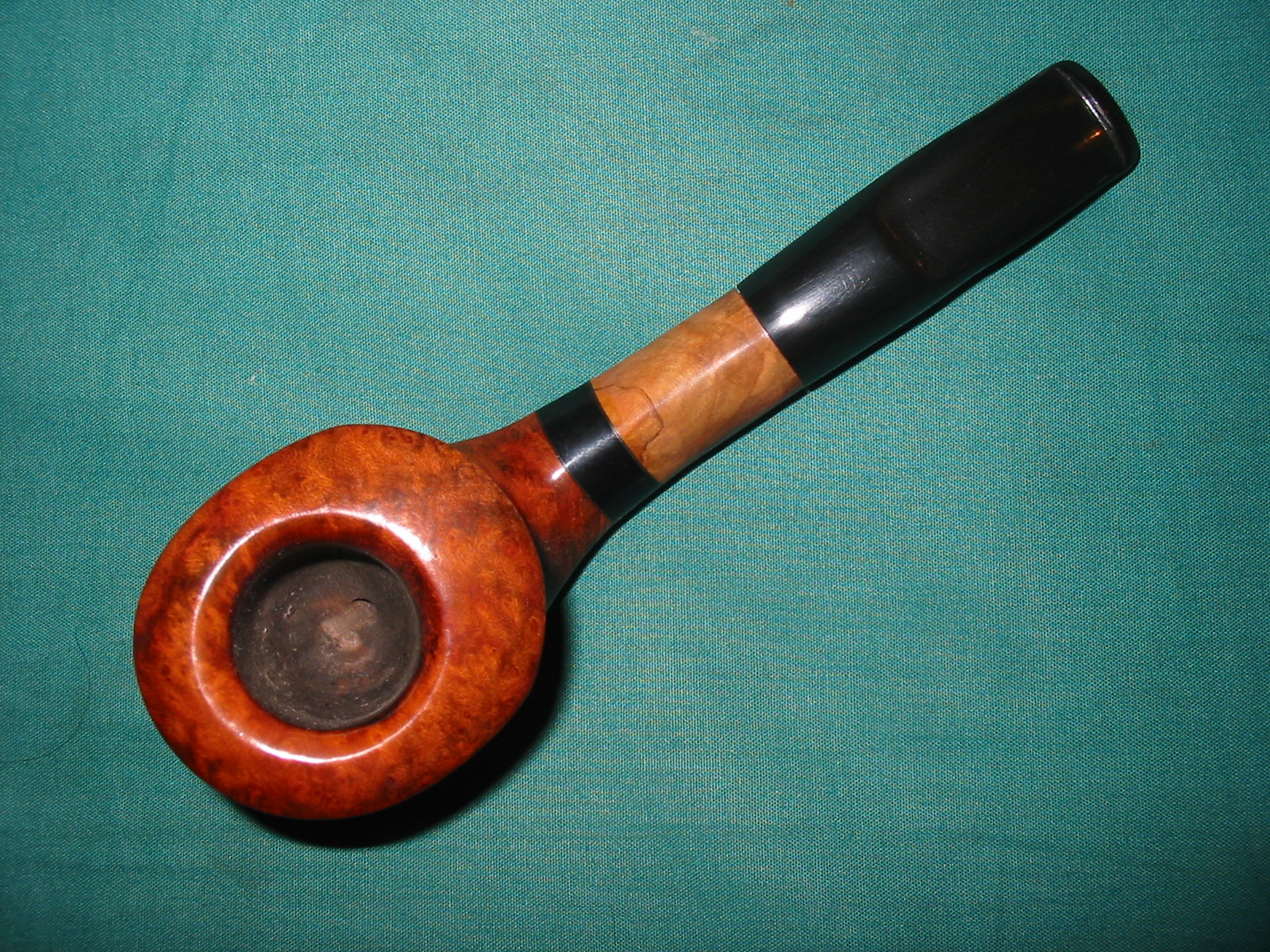
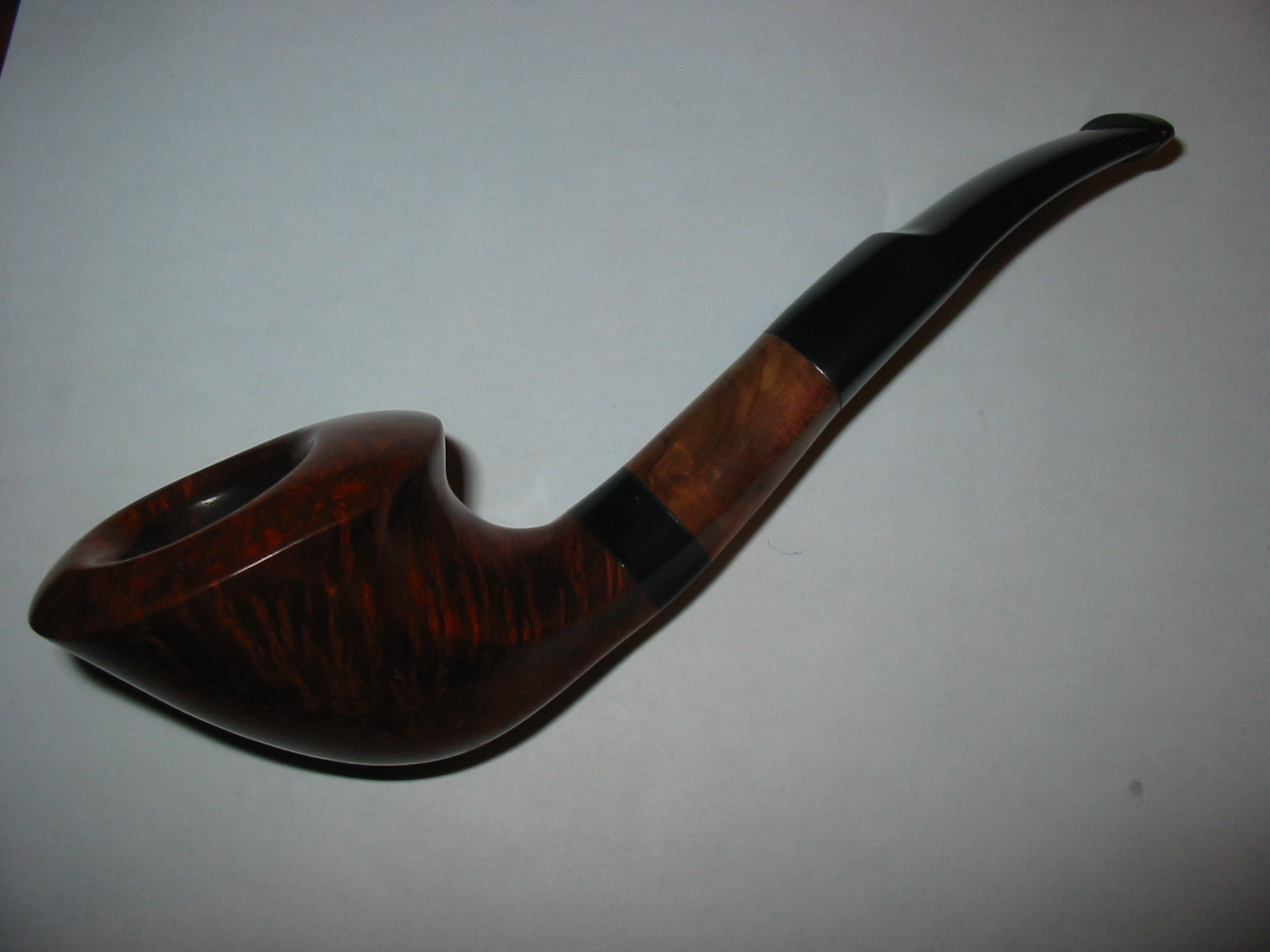
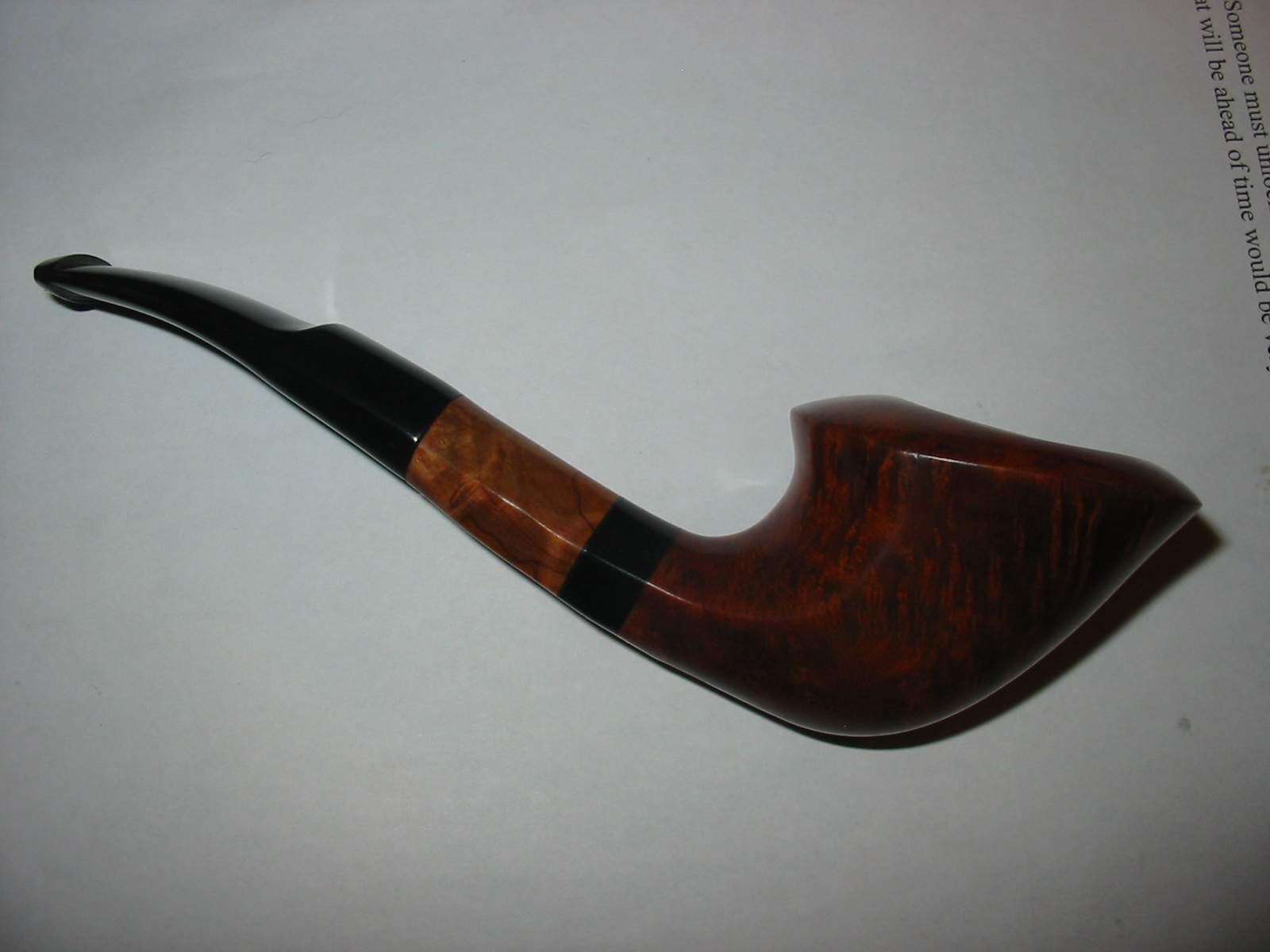
The first series of four photos are of the pipe Stephen named the Alopias (named after a Thresher Shark). This is what it looked like when I took it from the cupboard to work on it.

IMG_0933

IMG_0934

IMG_0935

IMG_0936

I used a Dremel with a sanding drum to take down the fin on the shank and the nob on the Cumberland stem. I figured that would be fairly straight forward work – not a big deal to do with the Dremel. And it certainly worked easily enough. Removing the two parts of the pipe was pretty quick work. I finished with the sanding drum and left a little extra on the shank and stem that I would sand away by hand. I wanted to make sure that I could match the flow and shape of the shank and stem. The next three photos show what the pipe looked like after I had removed the fin and nob. It certainly changed the appearance and the hand feel of the pipe. I began to think that my reimagining was going to work out well.

IMG_0937

IMG_0938

IMG_0939

I took the pipe to my work table and sanded the stem and shank with medium grit emery paper and also with 220 grit sandpaper to further shape the flow of the shank and stem. I wanted to sand a gentle taper from the shank into the stem. I worked at the slope to get it the way I saw it in my head. Once I had that done I sanded it with a medium grit sanding sponge to smooth out the scratches and marks in the briar and the Cumberland. I really like the way the pipe was beginning to look. As I looked at the pipe I thought that a little more sanding of the slope would really make the pipe look proper.

But that is when the job became more than I had bargained for. In order to accomplish what I had in mind I would have to sand down the shank a bit more. To match the stem and shank flow it would need to have some more of the shank extension sanded away. That is when it hit! MAJOR PROBLEM! When I took the stem off the shank to check things before sanding I saw that there was not enough olive wood on the extension between the Delrin insert and the outside of the shank to take any more material off the shank. If I continued to sand it as I had been doing would expose the Delrin and ruin the shank. Even the amount of sanding and sloping that I had done had made the wood very thin on the underside of the shank. I could not do any more sanding on it without ruining it. So that is where this Phoenix took a turn and a new solution had to be worked out.

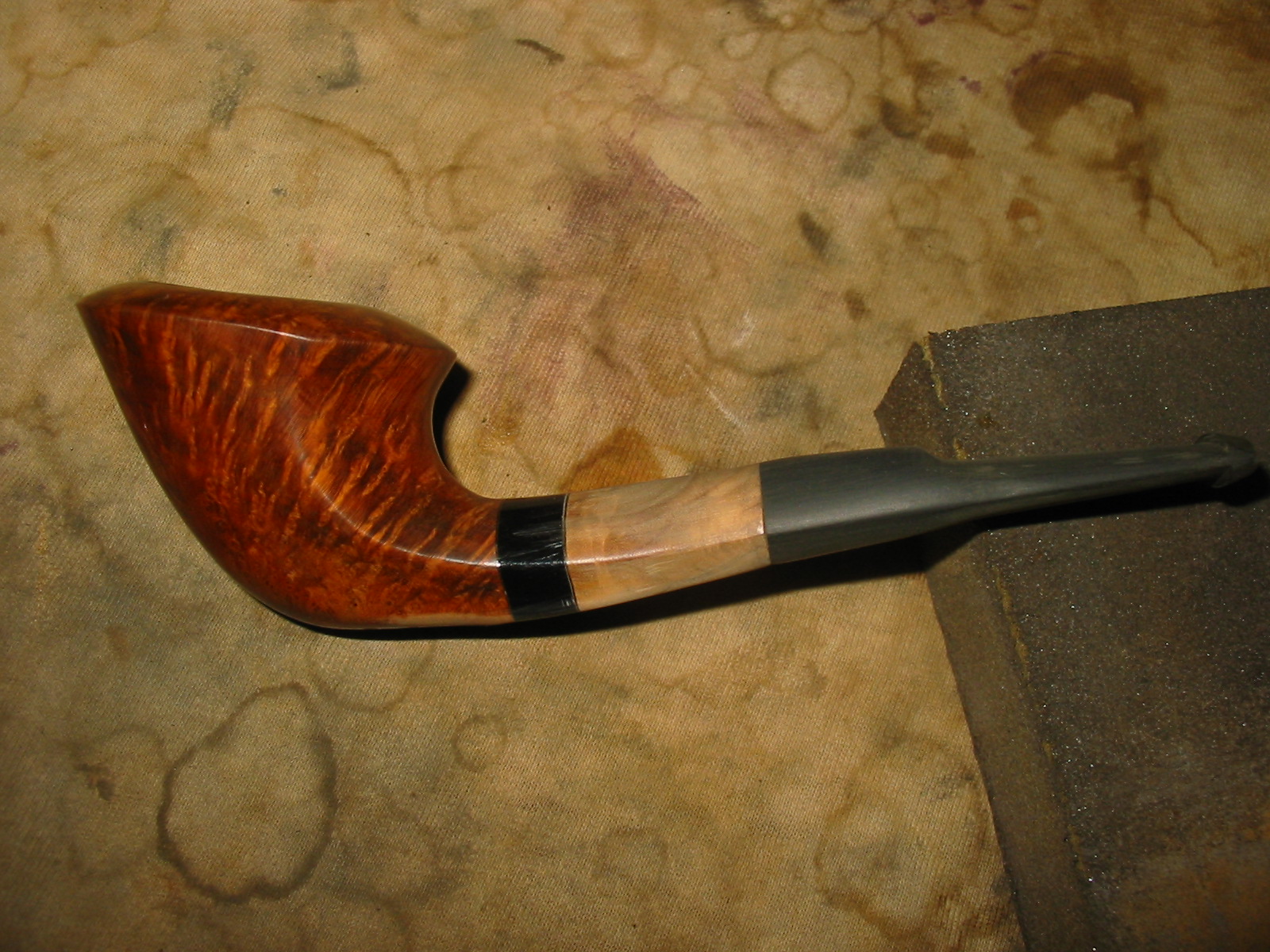
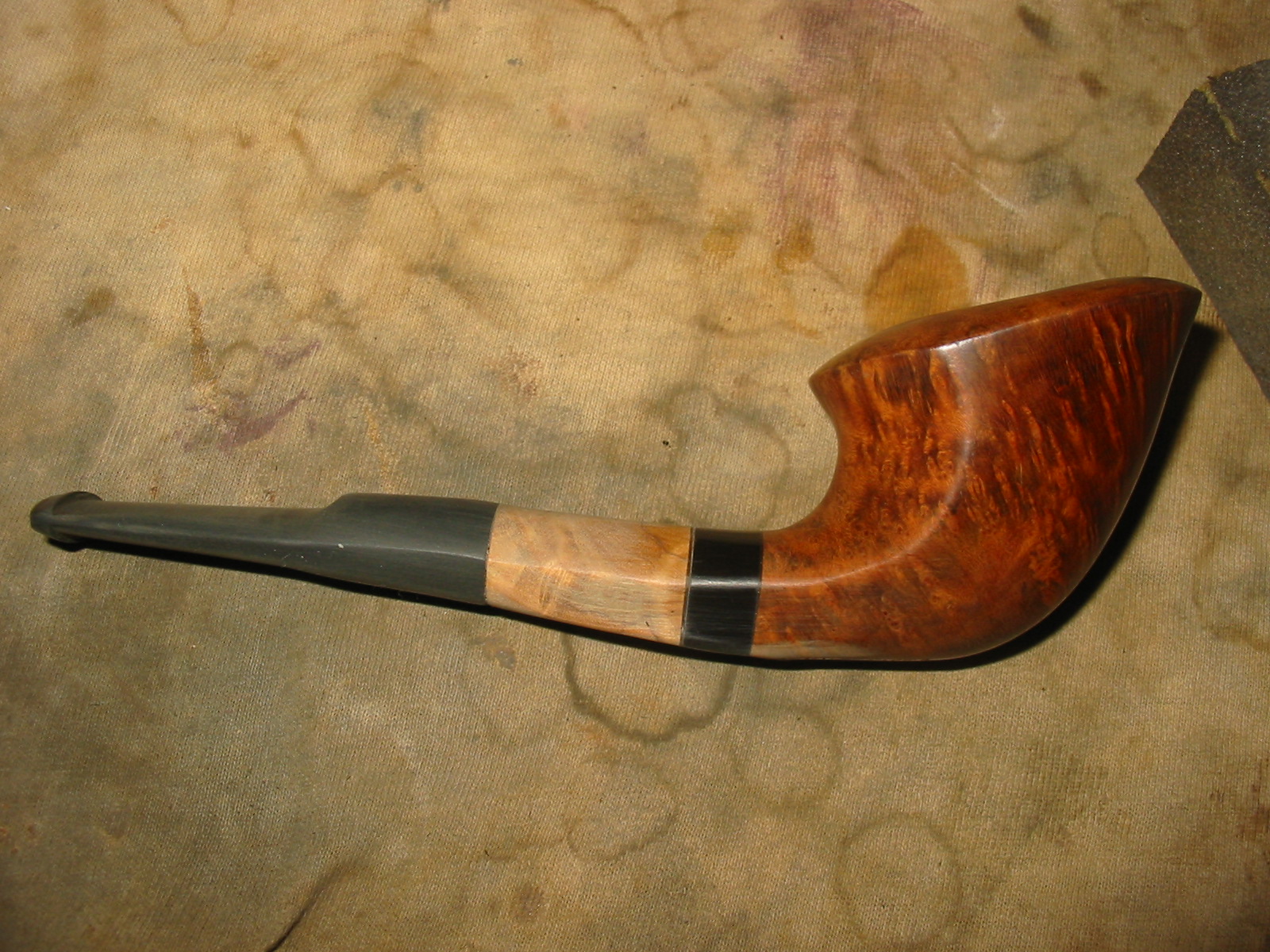
I looked at it and scribbled out some sketches of how to rework things. I thought about shortening the shank but really did not want to do that. So in the end I decided to remove the old stem altogether and shape a vulcanite stem for the pipe. The polished black of the vulcanite would match the band of black on the shank. It would also bookend the olive wood shank extension. So I found an oval saddle stem in my box of stems and turned the tenon with the PIMO tenon tool. Once I had a good fit on the tenon, I used the Dremel with the sanding drum to shape the stem to the shank. I decided to make the stem a half saddle by removing the saddle portion on the underside of the stem. This was tedious and slow work as I did not have any margin for damage on the shank itself. Once I had sanded the stem to a close fit with the Dremel I did the rest of the work by hand with files and sandpaper. The next four photos show the new vulcanite stem after all the fitting and shaping work had beencompleted. I still needed to polish and bend the stem to make the angle similar to the original.

IMG_0940

IMG_0941

IMG_0942

IMG_0943

At this point in the process I wiped down the bowl with an acetone soaked cotton pad to remove the wax and finish from the pipe so that I could restain and blend the sanded portion of the shank on the bottom with the stain on the bowl. I also chose to stain the olive wood with the same stain to add a patina like quality to the look. The next three photos show the pipe after it has been wiped down and is ready to be stained.

IMG_0946

IMG_0944

IMG_0945

I did some more sanding on the shank and stem using a fine grit sanding sponge to smooth out any of the remaining surface scratches.I followed up by sanding the shank and the stem with micromesh sanding padsand then wiped it down a final time to remove the sanding dust and other debris before staining.The photo below shows the bowl and shank ready for staining.

IMG_0947

I stained the bowl and shank with an oxblood stain to give a reddish over stain to the brown undercoat. I wiped it on, flamed it, wiped it on again, and flamed it again. The red overcoat gave a depth to the colour on the bowl that had not been present before. It also gave a patina to the olivewood that really highlighted the grain in the wood. After the stain had dried I took the pipe to the buffer and buffed the bowl and stem with Tripoli and with White Diamond. The next series of four photos show pipe after I had buffed it. The new look seemed to work with the pipe. From the photos I could see that I also needed to make some adjustments to the underside of the shank to give it a better flow.

IMG_1223

IMG_1224

IMG_1225

IMG_1226

In the above photos it is evident that there was still a slight hump on the bottom of the shank on both sides of the acrylic band. That hump bothered me so I took it back to the Dremel and sanding drum and removed some more of the material on the shank around the acrylic band. I wanted to smooth out the flow of the bottom of the shank from the tip of the stem to the bottom of the bowl. One of the issues that I had to think through in doing this was that some of the original Downie stamp would lost. I would not remove all of the stamping but some of the letters on the stem side of the shank would be lost. I decided that I had made enough changes to the pipe that to not finish would leave the job half done. Sanding it down definitely improved the way it looked. After I finished sanding with the DremelI sanded the entire underside of the shank with 220 grit sandpaper, a medium and fine grit sanding sponge and then micromesh sanding pads 1500-3200 grit. I stained the portion I had sanded with the oxblood stain to match the rest of the pipe and then buffed it with White Diamond. I gave the entirety several coats of carnauba wax and then buffed with a soft flannel buff to polish it. The final series of four photos show the finished pipe.

IMG_1326

IMG_1327

IMG_1328

IMG_1329

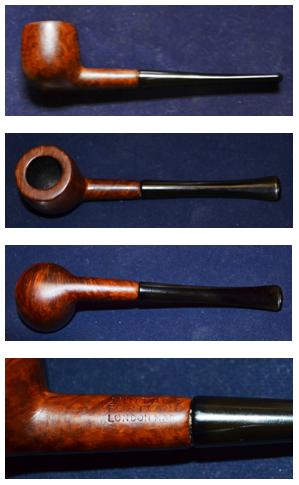
Concerning a Vintage Portland London Made – Robert M. Boughton


It is a pleasure to have another article by Robert Boughton. In this article he demonstrates his skills in the restoration of a Portland Pot shaped pipe. Thanks Robert for your additions to the blog.

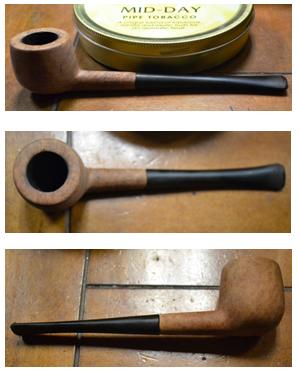
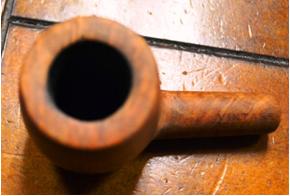
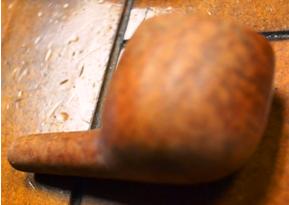
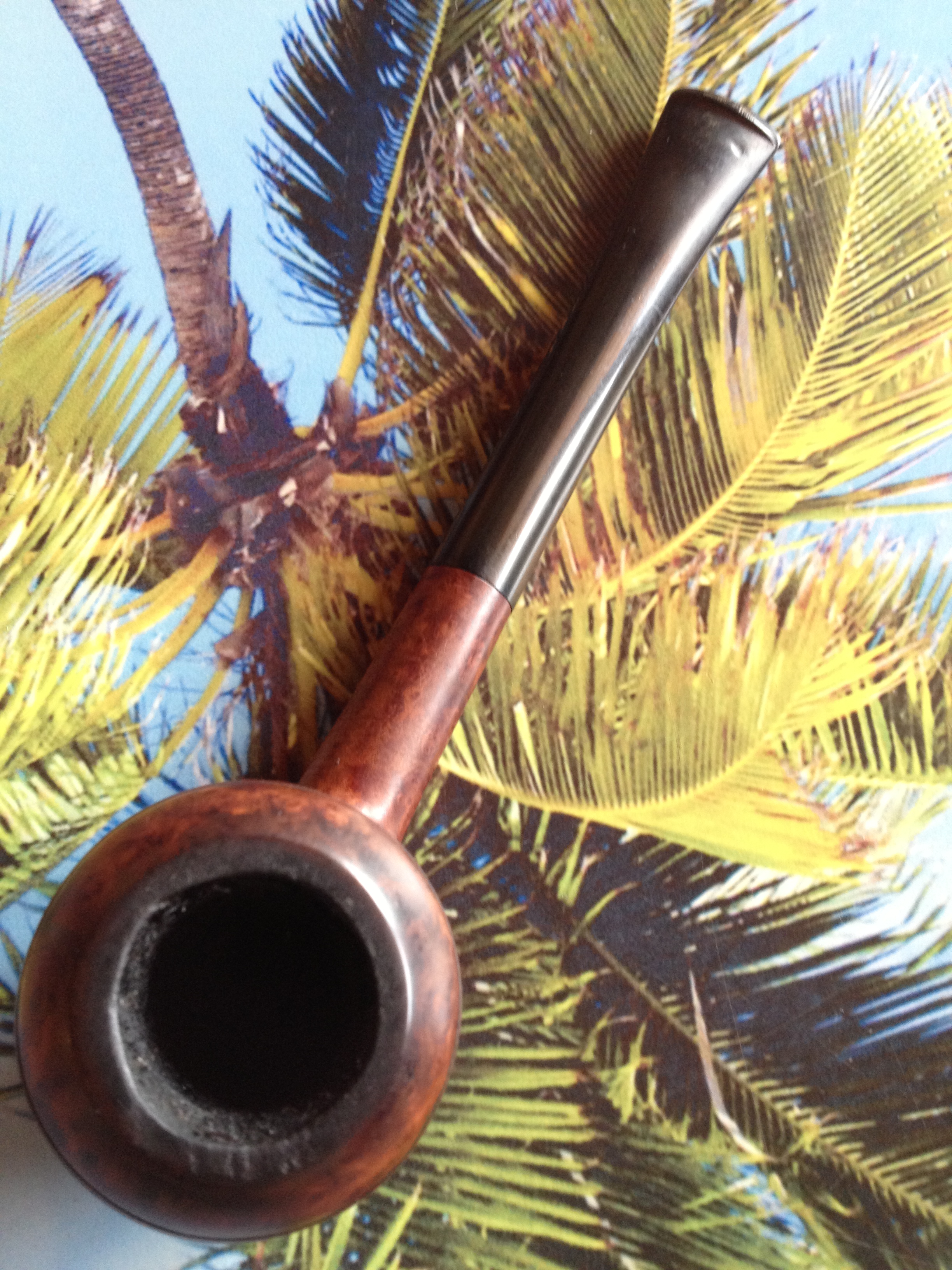
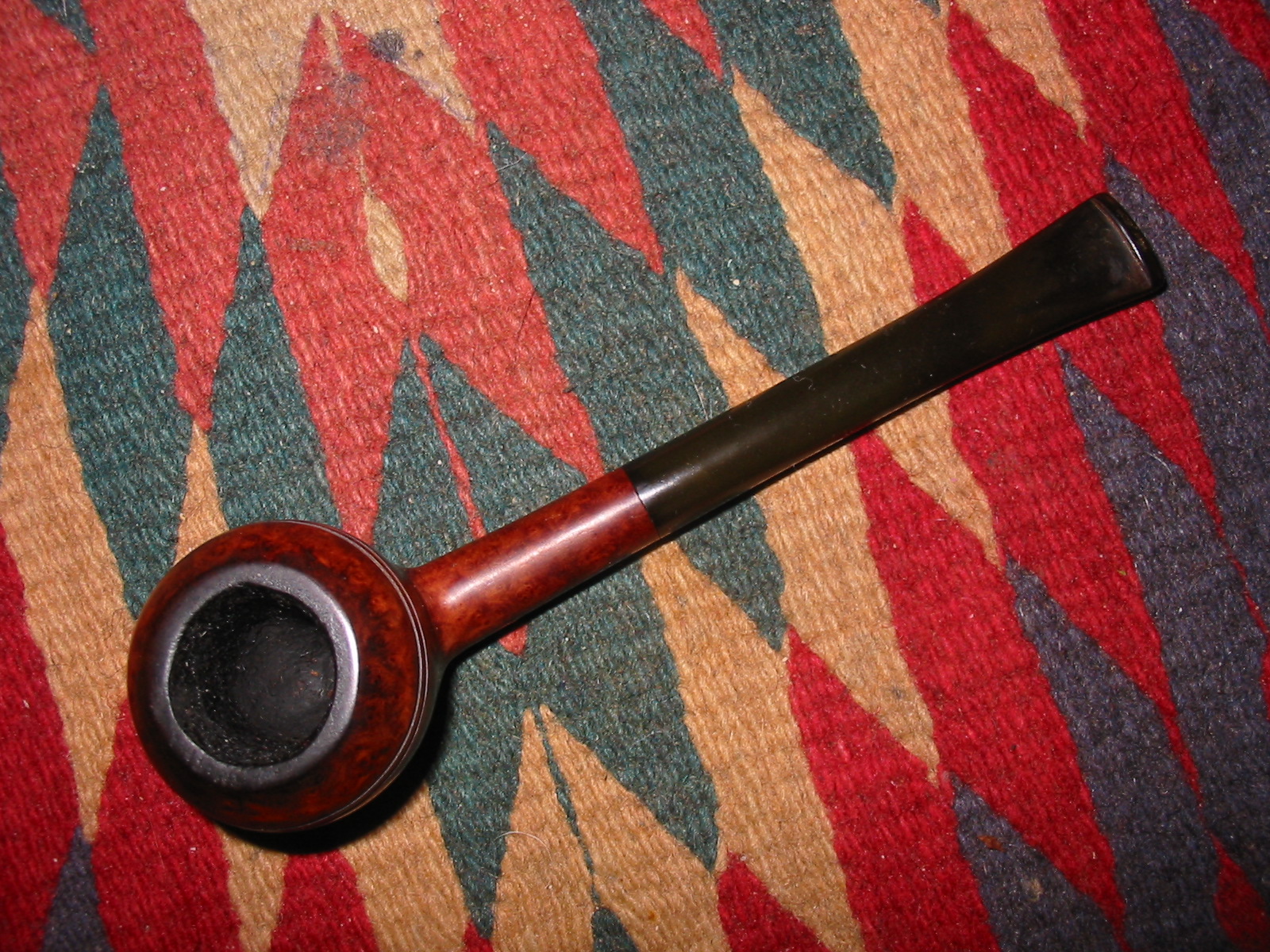
The particulars of said pipe being that it is an elegant, very small straight pot (5’’ length with a 1.5” x 1.25” bowl), and is believed by the author to be a BB&S, or Barling, seconded to Topsall Portland
Guest Blog by Robert M. Boughton

Introduction
Irish author James Joyce, in a memorable example of poetic license, called his collection of short stories assembled in Dubliners his “little epiphanies.” Rare stones are known as gems. Wise men have written that the smoking pipe is “the poor man’s friend”and“the fountain of contemplation, the source of pleasure, the companion of the wise,” and that it “draws wisdom from the lips of the philosopher, and shuts up the mouth of the foolish.” To me, the moment I first saw on eBay this fine specimen of pipe-making, its simple and classic lines and curves shining through the obvious considerable use by its previous owner(s),“sudden as the spark from smitten steel” I was effected the same as the hammer striking metal in a forge. I had to have this pipe, and for a penny less than $20 it became mine. Knowing nothing at the time of purchase of its possible history, my only desire was to restore the beautiful little pot to its original splendor.

As I sit here on the only piece of comfortable furniture so far moved into my new apartment in a much better and safer part of town than I described in my previous blog, with the morning view of a golf course outside my window, I am smoking in my little Portland pot – now restored to the above-sought condition – a gentle bowl of Stokeby’s 4th Generation 1855 ready-rubbed mixture with its natural Virginia sweetness, and feeling so happy I made the small investment of money and time. Although I am comfortable taking credit for the full restoration of the pipe, this being my first such complete endeavor in the art and craft of such work, I must again give thanks for the collaborative contributions of several friends, in this case Chuck Richards, Hunter Brooks and Leigh Brady, whose parts in the task will be described in time.

Boughton1

Again, when I bought this pipe, I did so without any initial research. By the time it arrived in the mail four days later, however, I had found references online that seem to identify it as a BB&S (Barling’s) second made for a company known as Topsall Portland. Other sources include eBay and the Brothers of Briar. I am satisfied with the pipe regardless of its origins, though, and any better information would be appreciated.

Chuck Richards.  Photo © by the Author

Chuck Richards. Photo © by the Author

Hunter Brooks.  Photo © by the Author

Hunter Brooks. Photo © by the Author

Leigh Brady.  Photo courtesy of L. Brady

Leigh Brady. Photo courtesy of L. Brady


Restoring the Portland

First, there’s the sanding that I expected to reveal a small crack in the top of the shank near the stem, which in fact was my original excuse for the full restoration of the pipe as opposed to the initial refinish I had completed to remove the bad discoloration of the bowl and stem…but after sanding down the entire bowl and shank, the “crack,” I was actually disappointed to discover, was only a mirage created by the old finish.

Boughton5

Then, after the initial setback of discovering there was no need to fill a crack and use a metal band to seal the shank, I micro-meshed the wood:

Boughton6

Boughton7

Boughton8

Following the micro-mesh, I used a light brown leather stain recommended by Chuck, which I found at Hoffmantown Shoe and Boot Repair, after which Hunter at Stag Tobacconist(owing to my lack of supplies and equipment) buffed the bowl with Red Tripoli Wax and the stem with White Tripoli.
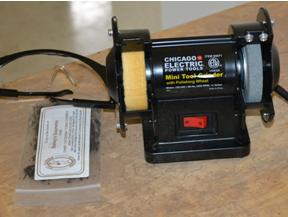
I bought a very cheap wheel buffer to apply Halcyon II Wax, which gave the pipe a decent but still somewhat wanting finish.

Chicago Electric Mini Grinder/Buffer

Chicago Electric Mini Grinder/Buffer

Finally, I tackled the hardest, and therefore most satisfying, task of micro-meshing the stem where it connected to the shank, which appeared to have been replaced at some point during the pipe’s long life. By my estimate, this Portland London Made pot was crafted no later than the 1960s. Perhaps this accounts in large part to my dread of fitting the stem to the shank, a job that even I could feel was necessary to call the overall work a full restoration but which I approached with considerable trepidation for fear of overdoing this step – and in so doing botching the entire effort! But, at Chuck’s insistence, I applied gentle, patient micro-meshing and at last achieved the desired effect. Again I am indebted to Chuck’s guidance, without which my own inclination to put the helpless stem to the wheel almost surely have obliterated all of my hard work!

The next Friday night, at our weekly pipe club meeting, I presented the pipe for scrutiny by my fellow members. I was gratified by Chuck’s initial pronouncement, which was a simple “Nice!” but even more so for his almost immediate observation that I had attached the stem upside-down – and his final contribution of a quick carnauba Wax spin on the shop’s high-speed buffer wheel as well as a small amount of beeswax to tighten the loose stem, rendering the following finished product:

Boughton10

Conclusion
It is with a sense of humility and responsibility for the admitted first attempt at such a work that I present this finished product to the pipe smoking world at large for its final judgment and, I hope, suggestions for how to approach future restorations.

My final word of appreciation is owed to Leigh, a fine British friend and fellow lifelong member of the Stag Pipe Club, for his contribution concerning this pipe’s possible history being linked to the Great Portland Street of London, which he wrote in an email is known for its tobacconists as well as being “very close geographically to the famous Baker Street which was the choice of abode for the great Sherlock Holmes.”

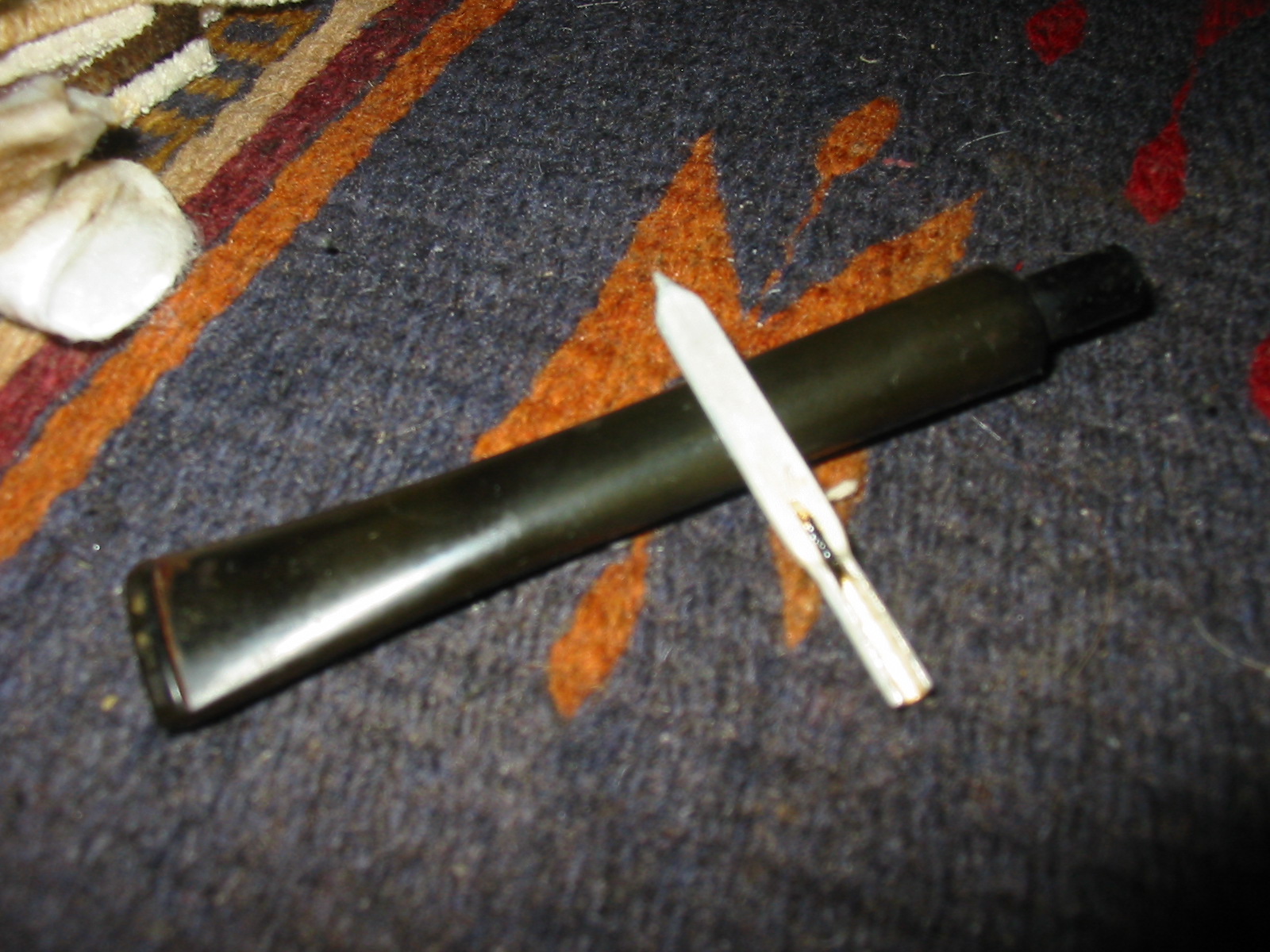
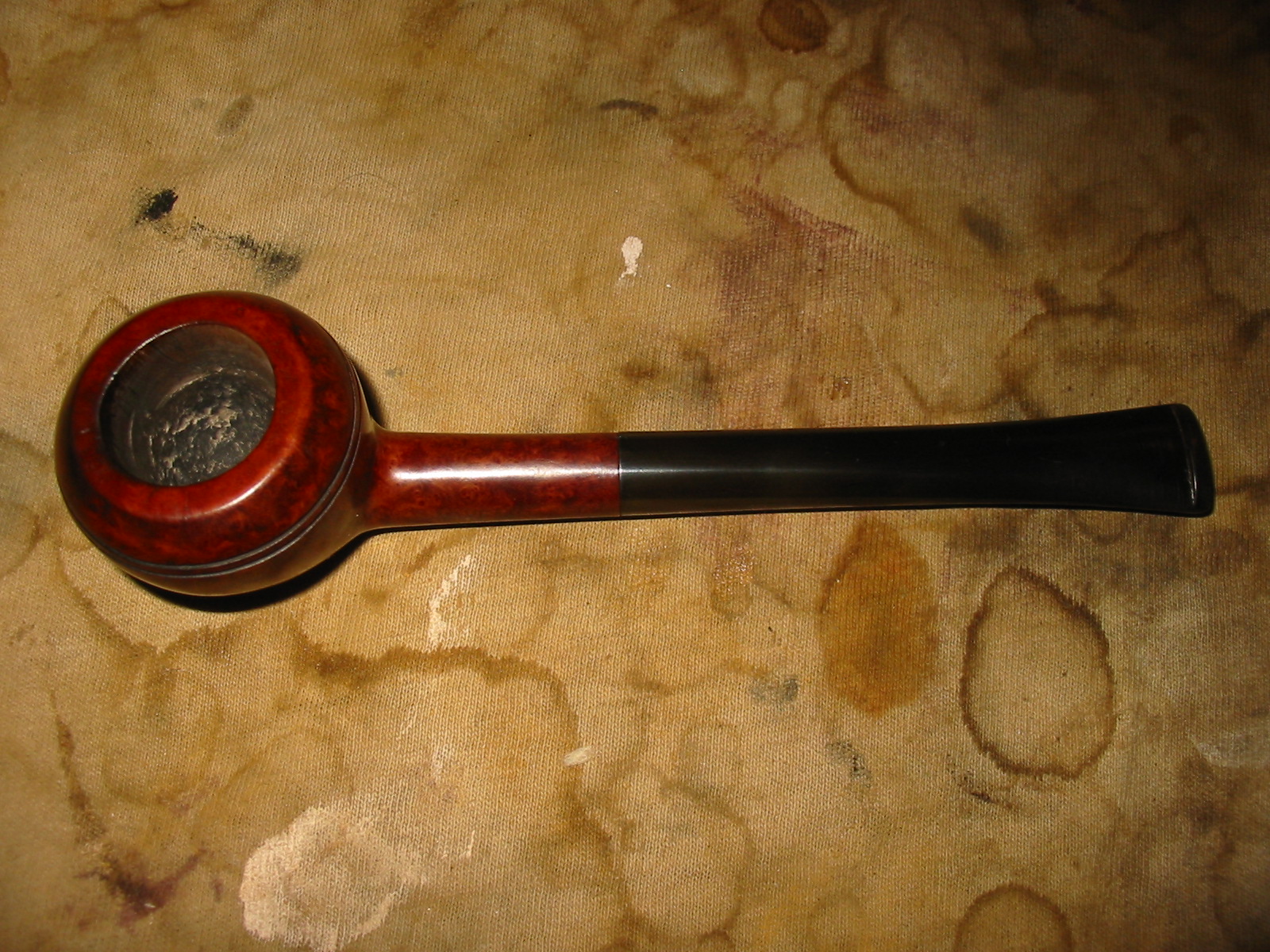
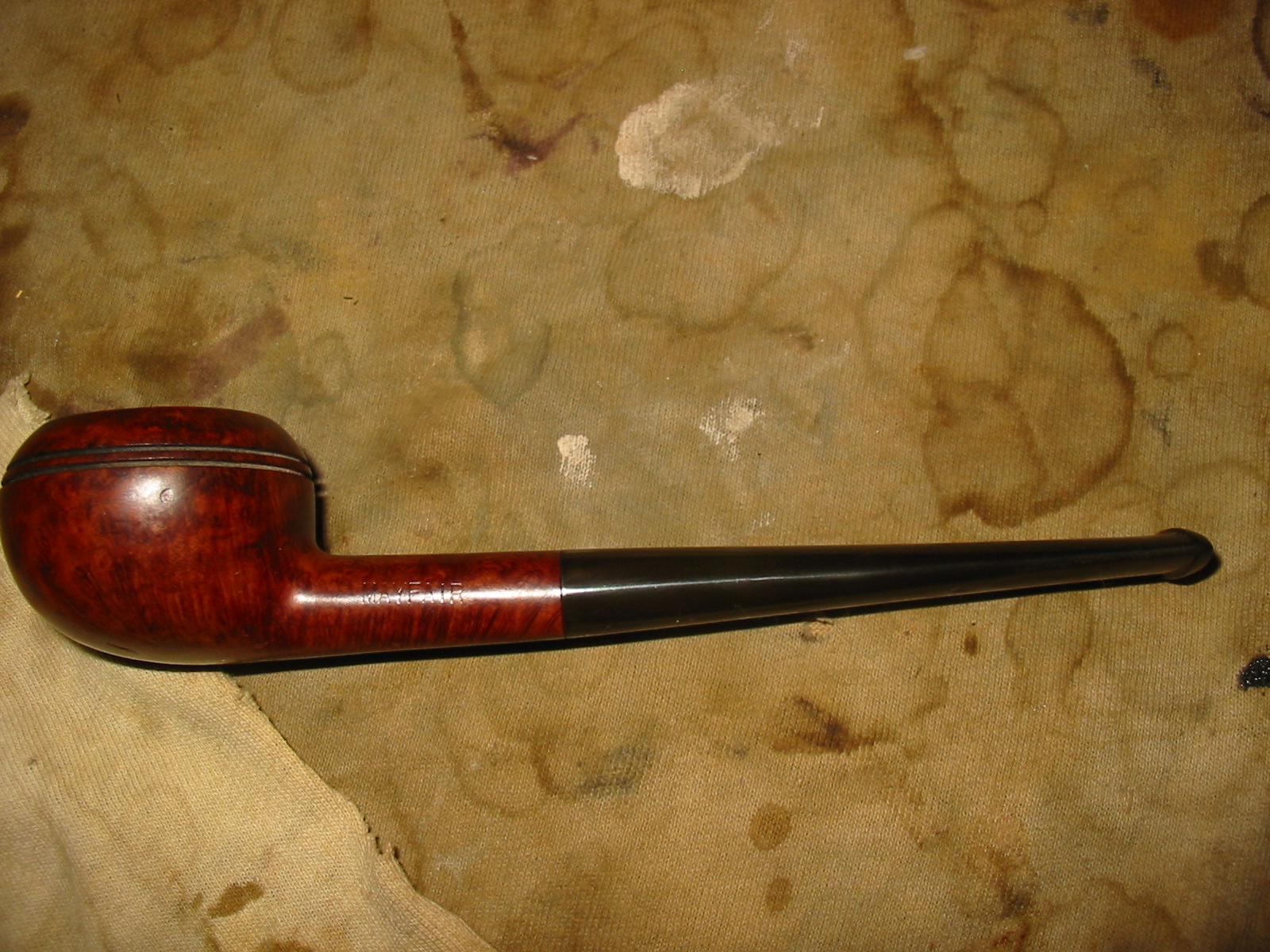
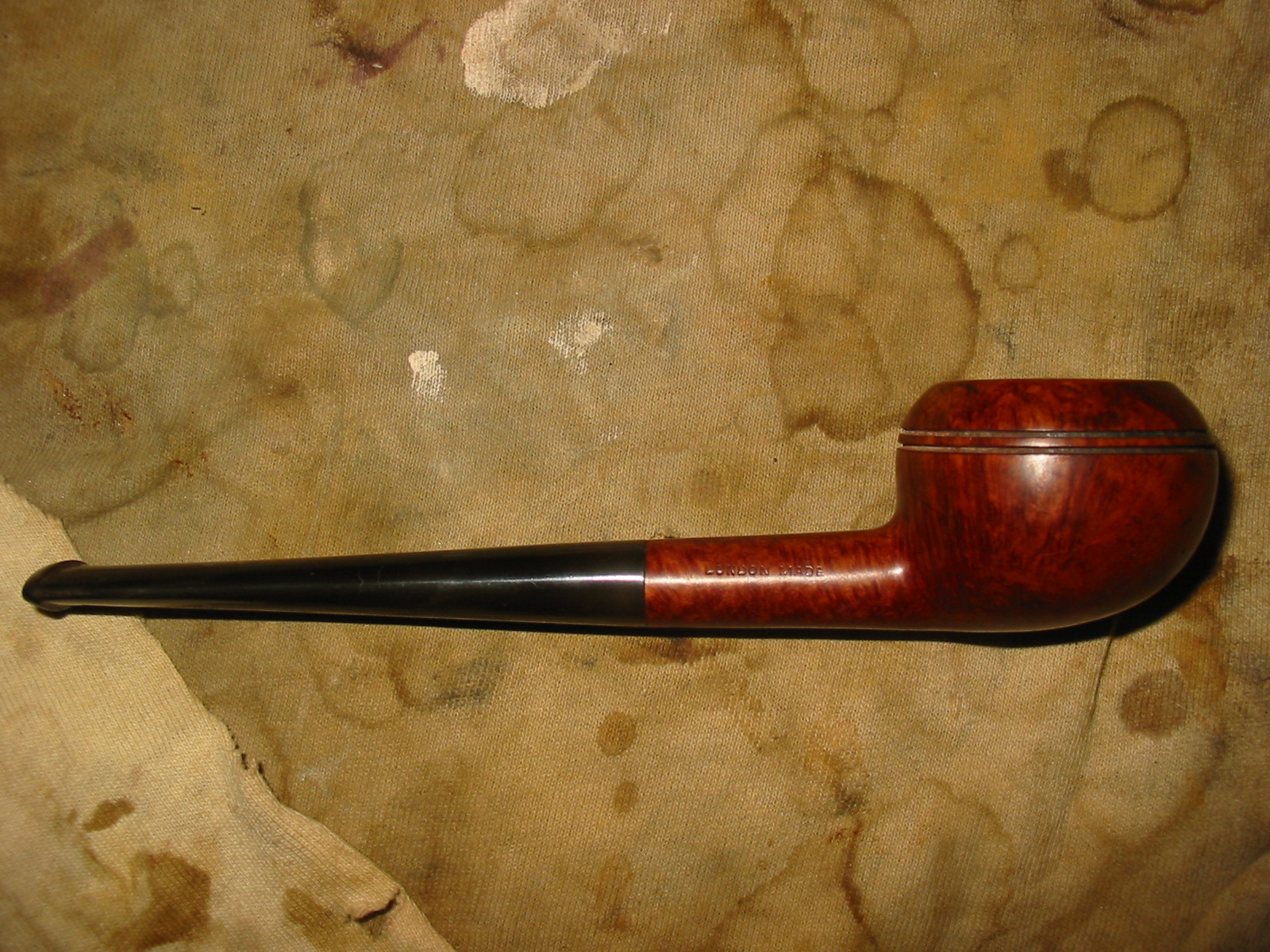
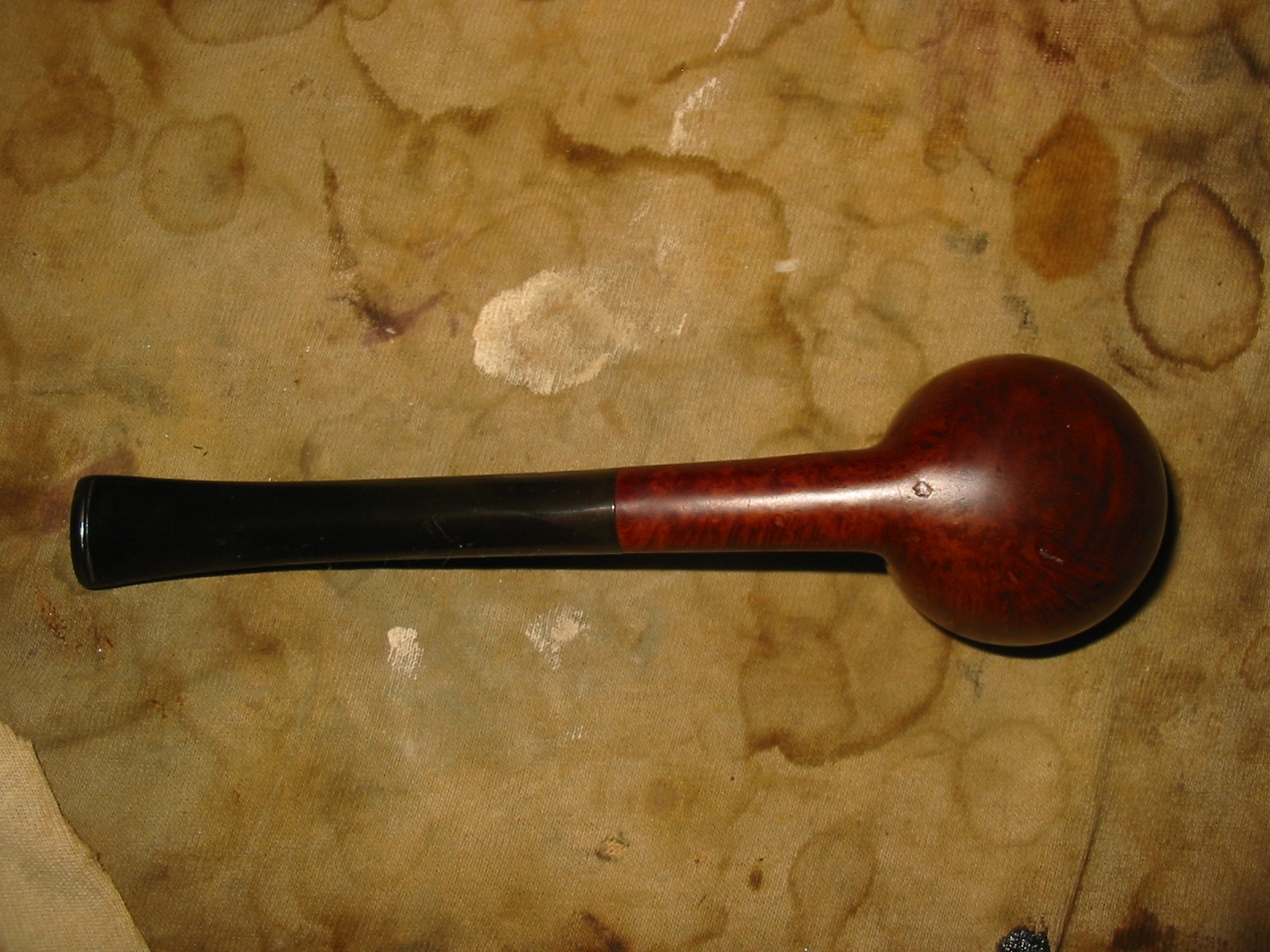
Beautifying a Sasieni Mayfair


Blog by Steve Laug

Yesterday I picked up this beautiful little Sasieni Mayfair. It is stamped Mayfair on the left side of the shank and London Made on the right side. The bowl was tarry with a sticky aromatic and the top had been burned on the front side and then poorly topped to get rid of the burn. This left the bowl slanted toward the front side where the burn had been. The rim was also covered with the aromatic goo. The stem was tight but I was able to remove it from the bowl at the shop and found the typical stinger apparatus intact. It was a flat metal blade that ended in a round tube that inserted into the tenon. The tube was slotted to allow the smoke to pass into the airway of the stem. The stem was slightly oxidized and had a tooth mark on the top and the bottom of the stem. Other than those things it was a nice piece of briar and the finish was actually in excellent shape. There were several small sandpits on the bottom of the bowl but they did not detract from the beauty. The shape is kind of a cross between a Prince and a Rhodesian. The shank is a pencil shank. Dimensions for this little pipe are: length 5 ½ inches, height 1 ¼ inches, bowl diameter ¾ inches, bowl depth ¾ inches, shank diameter 3/8 inches. The two photos below show the pipe as it was when I found it. We went for supper at a Mexican Restaurant and I took these photos on the table top.

IMG_0373

IMG_0374

This morning I went to work on it. I took the following photos on my work table. The first three show the externals of the pipe. The damage on the rim is visible as is the state of the bowl. In the third photo note the angle of the bowl top in comparison to the one above it in the second photo. The angles are different and the bowl top is slanted toward the left and the front of the bowl.
IMG_1101

IMG_1102

IMG_1103

I took the pipe apart to check on the internals and remove the stinger apparatus. The next two photos show the top and bottom of the stinger. It is also clear in these two photos the damage to the right inside edge of the rim as well. It is slightly out of round.

IMG_1104

IMG_1105

I reamed the bowl with a PipNet reamer using two different cutting heads. I start with one size smaller than the diameter of the bowl to start the reaming. I then follow-up using the correct size cutting head in the bowl. I find that it is easier to cut the cake carefully and not do any further damage to the roundness of the bowl.

IMG_1106

Topping the bowl on this one was a bit tricky. I needed to take down the back left side of the rim and even out the back side of the rim without removing any from the front edge. I used the flat hard surface that I always use for topping. I held the bowl with the back side pressed into the sandpaper and the front edge off the paper. I move the bowl right to left across the sandpaper checking to see the effect (photo 1 below). I did not want to make the top worse than it already was. Once I had the back left and right sides even and the front and the back even I was ready to do a slight topping on the bowl to even it up neatly (photo 2 below).

IMG_1107

IMG_1108

At this point I sanded the top a little more to clean off the burn damage on the front of the bowl. Once I had that minimized I sanded the top with a medium and a fine grit sanding sponge until the scratch marks were gone. I also used the Dremel to even out the diameter of the bowl and bring it back into round.
I then removed the stinger apparatus and cleaned it with alcohol and cotton pads. I picked the slot clean with the dental pick. I did not intend to use it on the pipe once it was clean so I put it away in case I sold the pipe and the new owner wanted the stinger.

IMG_1109

IMG_1110

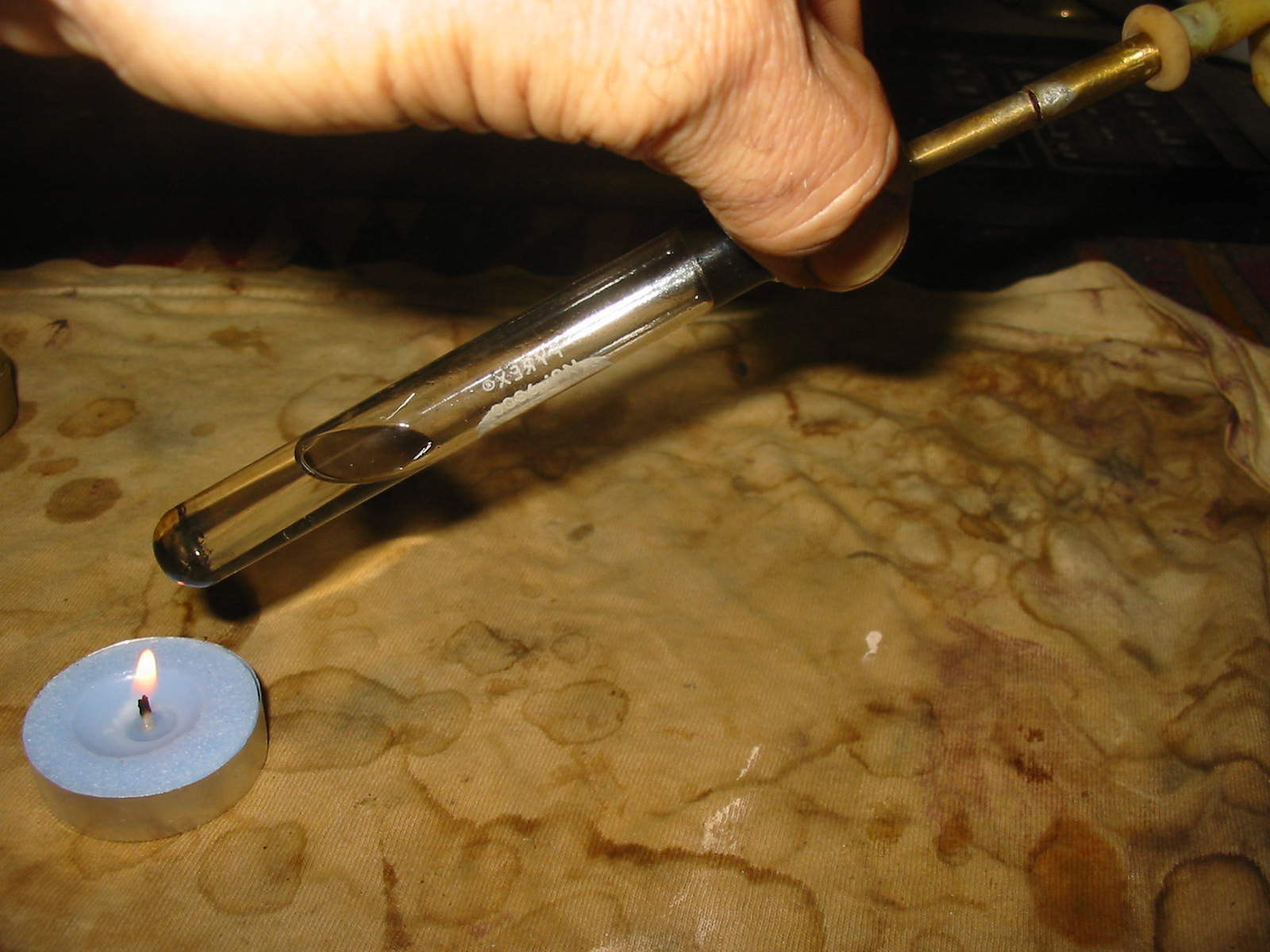
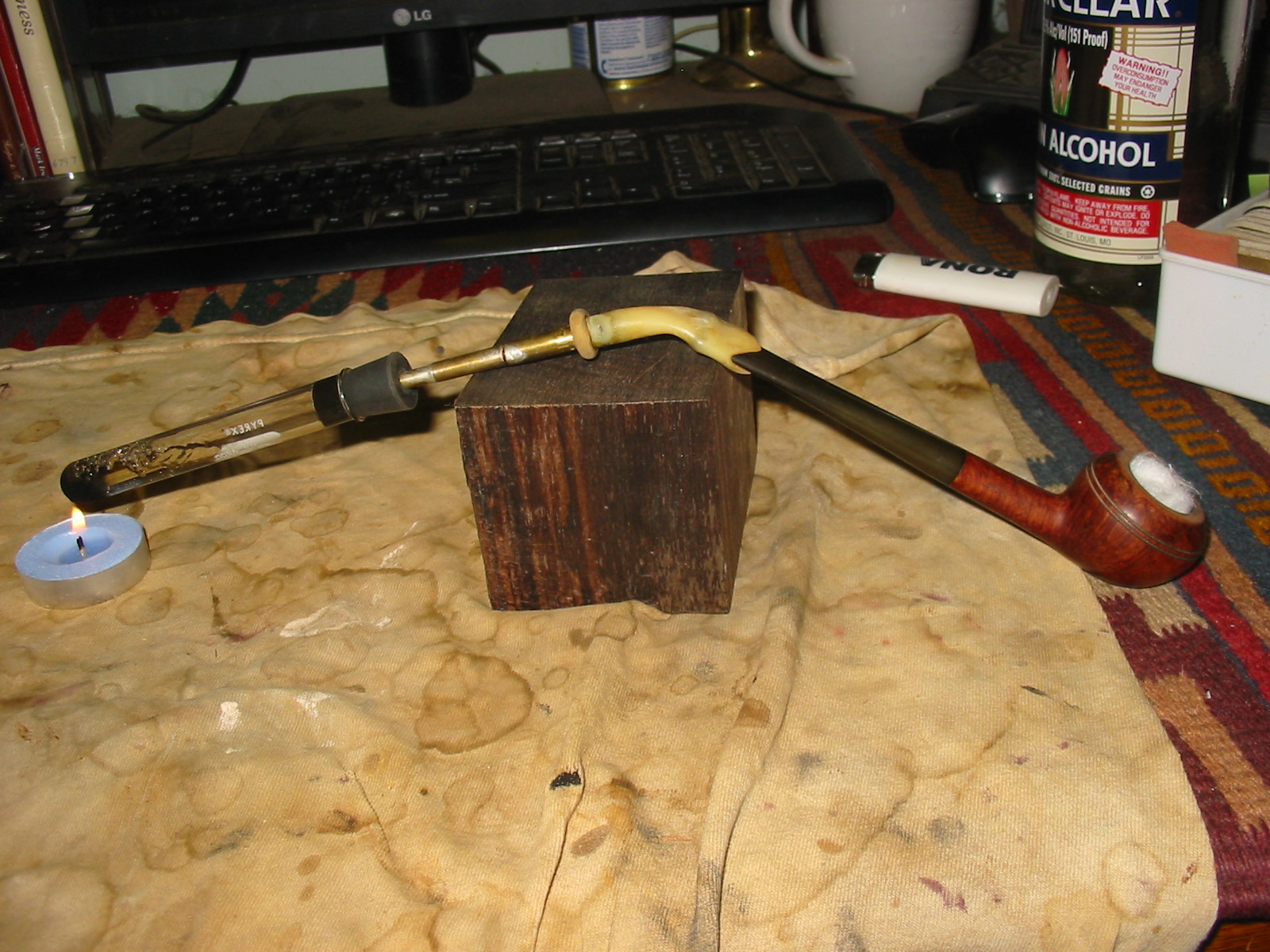
I set up the retort and filled the test tube with isopropyl alcohol and boiled out the inside of the bowl and stem. The next four photos show the set up and the process. I heat the alcohol with a tea candle and once the alcohol has cooled from the boil it returns back to the test tube and carries the oils and tars of the bowl and shank with it. I repeated this process twice.

IMG_1111

IMG_1112

IMG_1113

IMG_1114

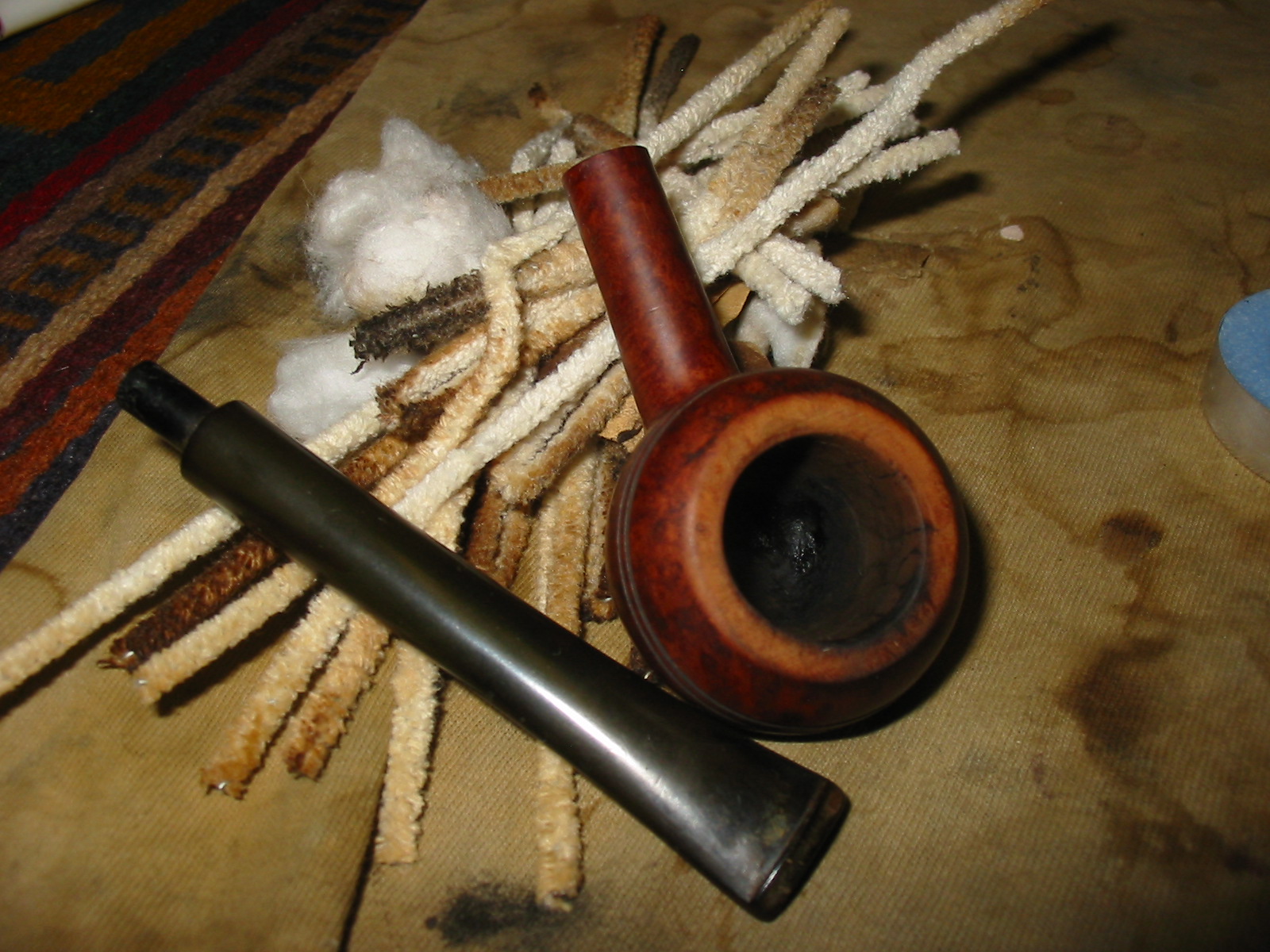
I cleaned up after the retort with pipe cleaners and Everclear. Both the stem and the shank were cleaned of all the internal grime. The pile of pipe cleaners in the picture below show the sheer volume of pipe cleaners used in cleaning up after the retort. Once this was finished the interior of the shank and stem were clean and pipe cleaners came out pristine.

IMG_1115

It was time to work on the stem. I ran the flame of a Bic lighter across the tooth marks on the topside and bottom side of the stem until they lifted. I then sanded the stem with 220 grit sandpaper to remove the remaining signs of the marks. And then I sanded the entire stem with a fine grit sanding sponge to remove the oxidation and to deal with the scratch marks from the sandpaper.

IMG_1116

IMG_1117

IMG_1118

I stained the top of the bowl with dark brown aniline stain that I thinned 2:1 with isopropyl to match the colour of the bowl and shank. I flamed it and then repeated the process until the colour was an exact match to the rest of the pipe.

IMG_1124

IMG_1125

I took the pipe to the buffer and buffed the bowl with White Diamond to shine up the bowl and the newly stained rim. I also buffed the stem with Tripoli and White Diamond at the same time to further shine the stem. The four photos below show the buffed and polished bowl and stem after the White Diamond buff.

IMG_1128

IMG_1129

IMG_1130

IMG_1131

I took the pipe back to my desk and sanded the stem with micromesh sanding pads. I worked through the various grits of micromesh from 1500-12,000 to polish the stem.

IMG_1132

IMG_1134

IMG_1135

IMG_1136

I gave the entire pipe another buff with White Diamond and then gave it multiple coats of carnauba wax and buffed it to a shine with a clean flannel buff. The final four photos show the finished pipe.

IMG_1137

IMG_1138

IMG_1139

IMG_1140

GBD Midnight 9456


Blog by Greg Wolford

The last few months have been extremely busy for me. It is amazing how much a disabled, non-working person can be obligated to do; I think I had more “free time” when I was working full time in the car business! Ah, but I digress …

By chance, I found myself today with no obligations, no chores, no appointments, just a day to myself. Unfortunately it also stormed badly which flared up my arthritic joints but I was able, finally, to get to a project, if only a simple one.

I picked up this GBD Midnight about two weeks ago. It was a fair price and an interesting pipe to me; all of the Midnight models I had seen before had acrylic stems and this one had vulcanite. Some later research led me to believe that there were at least two productions of this line: the first with vulcanite stems shortly after the merger and another some time later with acrylic stems.

Although I forgot to take “before” photos the seller’s were quite accurate except for the oxidation was a bit more than I anticipated: it wasn’t thick or heavy but was even, all over brown. The seller said he had only smoked it a few times over the years and didn’t like it; he prefers a 9 mm filter pipe. He said there were a few tooth dents but not bad ones and that he had cleaned it; these things were accurate, if he meant cleaned the inside.

The too had a fair amount if tar build up but not thick. The stummel was dirty but not in bad shape at all. And the dents were mild as be had said.

I began with an alcohol soaked pad, wiping down the stummel, paying extra attention to the rim’s build up. It didn’t take a lot to get it cleaned up and the rim smoothed out. I then reamed the bowl, which needed it but wasn’t badly caked. I set the stummel aside and began to work on the stem.

I started by rubbing the entire stem well with Back-to-Black, which removed a lot of oxidation. Then I took some automotive rubbing compound and cotton pads and polished away almost all of the remaining oxidation. After the rubbing compound I took the stem to the heat gun to raise the dents. They came up pretty well but not completely. But they were now slight enough I decided to not sand them smooth; I wanted to finish this pipe and write this blog tonight, those things and the small dents left made this decision for me easy. I did wet sand the stem with 400 grit wet/dry paper to remove the last of the oxidation and the few scratches I saw.

I reassembled the pipe and went to the buffing wheel. I like to buff the shank-stem union together so as to keep a nice fit. I began with black buffing compound, about an 800-grit I believe. After the union was buffed I took the stem and stummel apart and buffed each piece. I moved onto brown tripoli, then white diamond doing the same process.

I had a small deviation at the end of the white diamond buffing: the wheel grabbed the stummel and bounced it off my table. It left two dents, the bounce across the garage, that totally irritated me. I then had to steam the the dents out; thankfully the dents weren’t bad and came out. I went back to the white diamond and re-buffed the stummel.

I reassembled the pipe and gave it several coats of carnauba wax, buffed it on a soft, clean wheel and, finally, hand buffed it wearing a pair of linen gloves I bought just for that purpose.

The pipe came out quite well I think. After cleaning and buffing it is a bit lighter on color, which I am very happy with; the grain, especially the Birdseye on the front of the bowl really pops now.

Hopefully the frantic pace of life will slow some over the coming weeks; I have many more wonderful old pipes that are patiently awaiting being brought back to life. And I am anxious to do the work an share it with you.

20130613-222006.jpg

20130613-222015.jpg

20130613-222023.jpg

20130613-222030.jpg

20130613-222040.jpg

20130613-222049.jpg

20130613-222056.jpg

20130613-222105.jpg

20130613-222111.jpg

20130613-222119.jpg

20130613-222126.jpg

20130613-222132.jpg

Refinished Rims and Touch-Ups – Alan Chestnutt


A while ago Alan posted this on Smokers Forums and I kept a copy of it. We spoke of the process and how well it worked. Since then I have been hunting for them in my area and so far no luck. I thought I would post Alan’s piece so that you all could read it and give it a try. Let us know how it works.

When restoring pipes, I nearly always like to refinish the rim. I think a nice clean sharp rim always sets a pipe off. As well as this it is just as easy to sand and refinish a rim as to try to remove tar and staining to the old rim. One of the problems though in refinishing a rim is trying to match the stain to the rest of the bowl. I always shied away from getting leather dyes, simply because you would need to be artist to be able to correctly mix all the differing shades.

I always remember my grandfather staining shoes and the smell of the dye always lingered in my brain. In more recent times that memory was triggered when smelling a sharpie marker, so my thoughts were that it must contain a similar alcohol based dye. I used a sharpie a few years ago to restain a black sandblast bowl and it worked a treat. “If only they were available in shades of brown” I thought to myself.

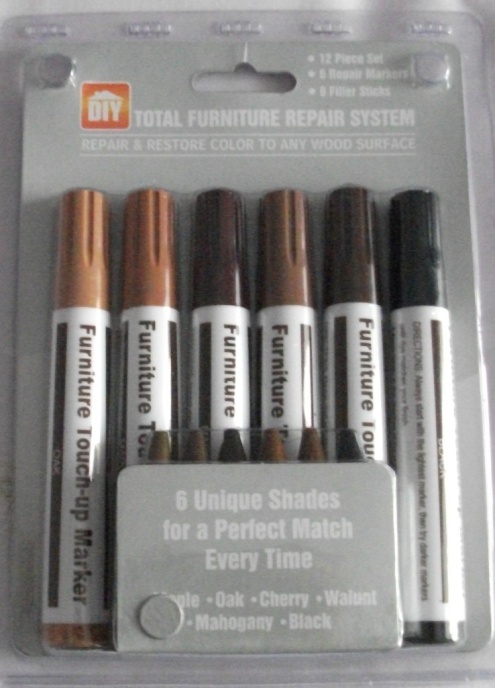
So while walking through a local discount store a few months ago, I spied furniture repair markers. Exactly what I had been thinking of.

pens

They come in 5 shades of brown plus black and cost £2 (about 3 bucks). I couldn’t wait to get home and try them. They are a chisel shape marker and apply a translucent stain exactly like an alcohol dye. Perfect! With the variety of shades a match can be made 99% of the time by application of a couple of coats or moving to the next darker shade. Simply cover the rim by wiping the marker over it and a few seconds later remove the excess with a soft cloth.

pens2
A refinished Tilshead rim.

They are excellent for touch ups on other areas of the pipe and I often use them to just refinish the whole pipe to brighten up the grain. Needless to say I acquired a few more packs, but I have refinished literally hundreds of pipes and I am still on my first pack. Simple to use, no mess, a variety of shades and cheap. I class them as my best purchase ever for restoring pipes, so keep your eyes open for them. Available on eBay too, but at a premium.

They are excellent for touch ups on other areas of the pipe and I often use them to just refinish the whole pipe to brighten up the grain. Needless to say I acquired a few more packs, but I have refinished literally hundreds of pipes and I am still on my first pack. Simple to use, no mess, a variety of shades and cheap. I class them as my best purchase ever for restoring pipes, so keep your eyes open for them. Available on eBay too, but at a premium.

Restoring and Reclaiming a Byford Prince


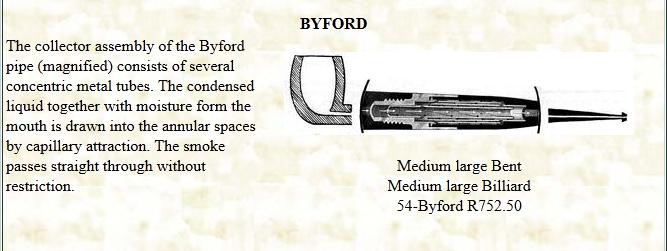
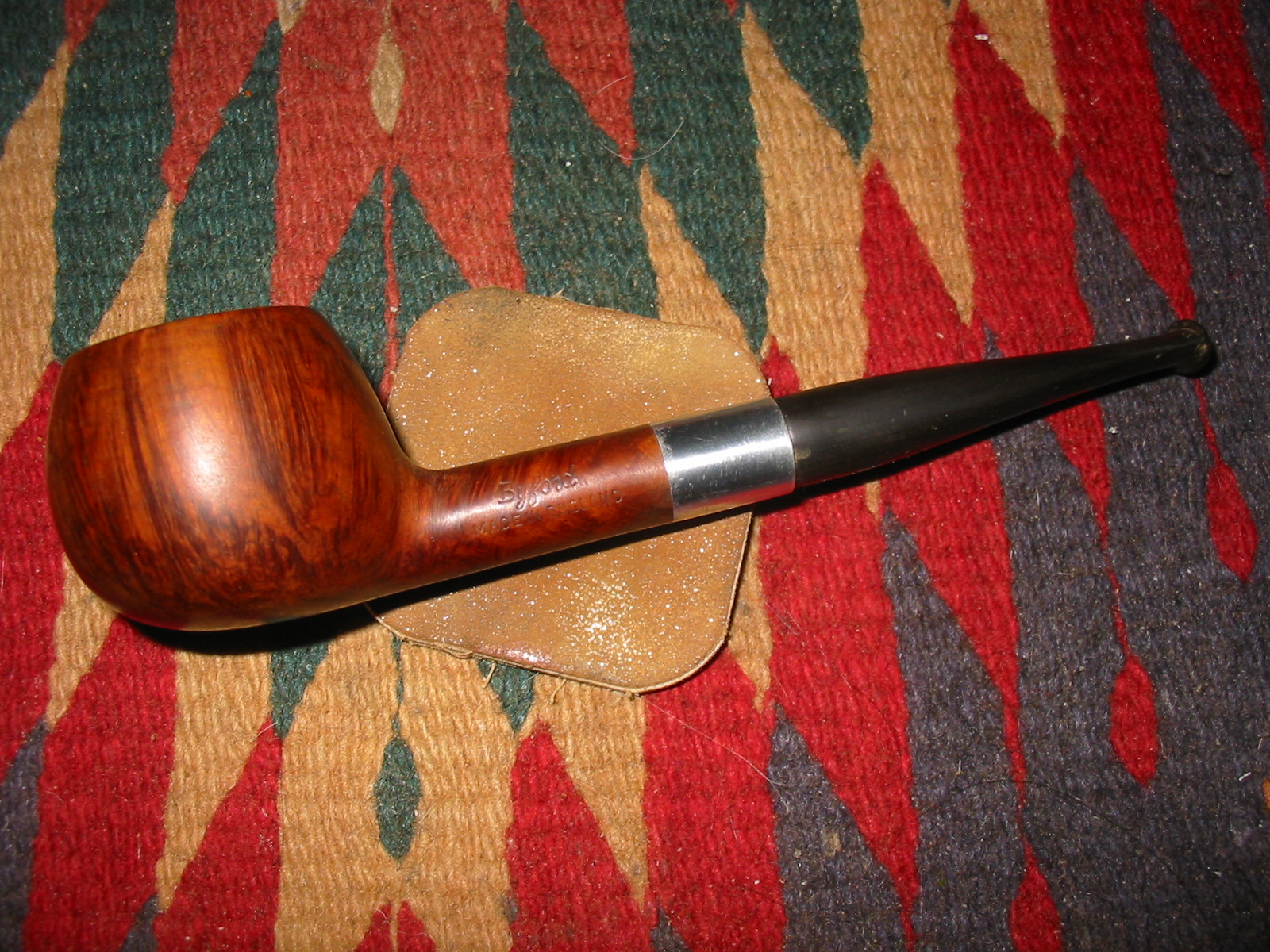
I was gifted three old pipes by a friend on Smokers Forums. The first that caught my attention was an older Byford Prince. It was pretty worn but the wood was in good shape under the wear and tear. The stem was shot. It had a split along the stop side and was missing a few pieces. When I removed it I found that it was quite brittle. Once I took the stem off I found the most interesting system inside. The shank had an aluminum attachment which held two metal tubes inside of it. On the inside of the broken stem was a third metal tube. These formed three concentric, nested circles which wicked out the moisture of the smoke while not hampering the flow of air in the pipe from bowl to button. The photo below shows magnified picture of the interior of the stem and shank.

Byford Pipes

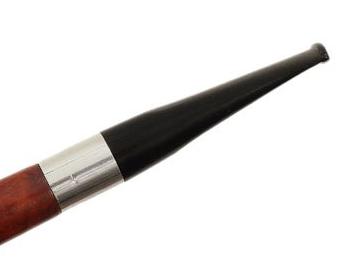
The stem was so broken and damaged that I was not sure how the flow of the angles on the taper was supposed to look. I did not know what the button and the stem were supposed to be like. I did a search on the internet and found this photo of a Byford stem that showed the proper angles on the stem. I used the stem in the photo as a template for my replacement stem. I made one modification which I will speak about in the explanation of the restemming below.

Byford stem

The next photo shows the interior of the stem and shank – the system part of the pipe. The tube in the stem sits between the other two tubes in the shank creating three rings on the inside of the shank and stem. It looked like this stem apparatus would be a bear to clean up. I would have to used cotton swabs, folded pipe cleaners and whatever I could to get in between the layers.

Byford2

The bowl was badly caked with a broken cake. It was soft rather than hard. There was also a buildup of some blue substance on the bowl. I am not sure what it was but it smelled suspiciously like a mold. The stem as you can see in the poor quality pictures below was damaged beyond repair. The aluminum band or shank end was oxidized and rough. Underneath all of the grime it was a beautiful piece of briar. The shape is a well executed prince. The old stem seemed a bit long to my liking so the new one would be slightly shorter and accommodate the lines of the one in the photo.

IMG_1012

IMG_1013

IMG_1014

I removed the old stem and went through my box of stem and found what I was looking for. The drilling on this had to be very wide to accommodate the apparatus on the system of the Byford pictured above. This older style stem had exactly the right fit. It slipped into place and looked good. It was a bit flared on each side and on the top and bottom so that would need to be sanded back to a flush angle. In the photo below you can see the fit of the new stem before I did any shaping on it. You can also see the blue/green substance on the bowl.

IMG_1019

I used a Dremel with a sanding drum to remove the excess vulcanite and shape the stem to the proper angles. I reamed the bowl with a PipNet reamer starting with the smallest head and working up to the third head which took the cake back to bare wood. I wanted to remove the cake and whatever the buildup on the bowl and rim that was there.

IMG_1024

IMG_1025

IMG_1026

After reaming the bowl back I sanded the rim and inner edge with a fine grit sanding sponge to remove the remaining blue/green substance. I also sanded the inside of the bowl smooth to remove any thing that was buildup on the inside edges. I sanded the stem with 220 grit sandpaper to remove the scratches caused by the Dremel and sanding drum. I sanded the exterior of the bowl and the oxidized aluminum on the shank end with the fine grit sanding sponge as well. The next three photos below show the state of the bowl and stem at this point in the process.

IMG_1031

IMG_1032

IMG_1033

I wiped the bowl down with an acetone wetted cotton pad to remove the grime and the old finish. The next two photos show the bowl at this point. The cotton pad is below the bowl to show the amount of finish and grime that came off. I find that the acetone will even out the finish and clean up any remaining grime.

IMG_1034

IMG_1035

I continued to sand the stem with 220 grit sandpaper and also cleaned out the shank apparatus with Everclear and cotton swabs. That was a challenge! The grime that built up in the concentric tubes took some bends and twists of cotton swabs and pipe cleaners to remove from the shank. I also scrubbed down the interior of the bowl with Everclear on the cotton swabs and then scoured it out with 0000 steel wool. I did not want any remnants of the blue/green stuff. While the bowl was wet with the alcohol I also flamed the inside with a lighter. The alcohol burns quickly and should destroy whatever remnants of the sludge that may have been resident in the briar. I sanded the aluminum with 1500 grit micromesh sanding pads to remove the oxidation and crust that had built up at the junction of the aluminum and the briar.

IMG_1036

IMG_1037

The next two photos show the stem after the pipe and stem have been cleaned and after I had finished shaping the stem with the 220 grit and 340 grit sandpaper. The angles matched the photo above that I was trying to duplicate.

IMG_1038

IMG_1039

At this point it was time to sand with the micromesh sanding pads. The next series of five photos show the progressive shine that comes through the micromesh. I wet sanded with 1500 and 1800 grit micromesh to remove the scratches and begin to give the stem a polish. I also sanded the bowl with these two grits as well. I followed up by dry sanding with the remaining grits of micromesh from 2400-12,000. I sanded the bowl, the aluminum shank end and the stem.

IMG_1040

IMG_1041

IMG_1042

IMG_1043

IMG_1044

Upon completing the sanding and polishing with the micromesh pads I took the pipe to the buffer and buffed the stem and bowl with White Diamond on the wheel. It brought out the shine and help highlight the grain. I wiped down the stem with Obsidian Oil to protect it and then gave the entire pipe several coats of carnauba wax and buffed it to a shine. The last series of four photos show the finished pipe.

IMG_1045

IMG_1046

IMG_1047

IMG_1048

ADDENDUM 03/07/15
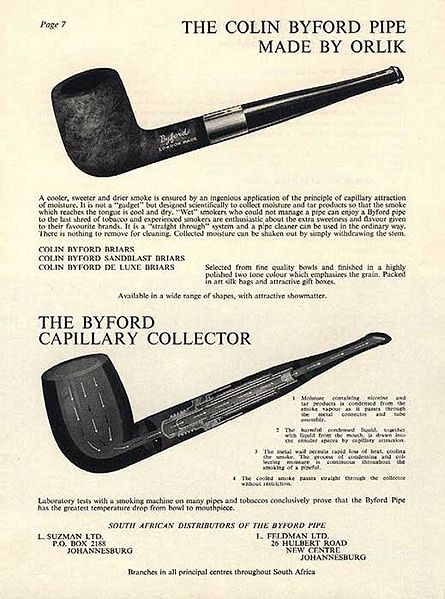
Just recently I discovered this interesting piece on the Byford pipes. They were originally made by Orlik. Here is a page from their catalogue.
445px-Orlik_70S07

Restemming and Reclaiming a BBB Hand Made Unsmoked Bowl


Blog by Steve Laug

This is the third unsmoked New Old Stock pipe bowl I picked up on EBay. It is stamped BBB in a diamond with Hand Made split by the Diamond on the top of the shank. The finish was very good and the bowl absolutely clean. Again it had no stem. I talked with a friend on the forums and he is sending some stems that may work. But, I decided to give it a go with fitting a stem blank while I was waiting. Sometimes the old impatience can be productive! The first series of four photos are from the EBay seller and show the condition of the bowl.

BBB1

BBB4

BBB3

BBB2

I sorted through my box of stems and chose an oval stem that looked to be the right length and close to the diameter that I needed. I used the PIMO tenon turning tool on my cordless drill to cut the tenon close to the diameter I was looking for. One issue with the turning tool is the inability to get accurate cuts so over time I have learned to take it very close and then finish the fit by hand. The first photo below shows the stem on the turning tool. Prior to putting it on the turner I had to drill out the airway to the same size as the stabilizing pin on the tool.

IMG_0958

The next photo shows the tenon after turning it on the tool. I needed to sand it by hand to get a proper fit in the mortise. I use medium grit emery paper to sand the tenon down and then 220 grit sandpaper to smooth it out.

IMG_0959

After sanding the tenon the fit is perfect. The next two photos show the stem in place. There are still casting marks on the sides of the stem and the diameter of the stem needs to be trimmed to match the diameter of the shank. I use a Dremel with a sanding drum to bring the stem diameter down close to the shank size. I am careful to not trim to close to the shank as I do not want to inadvertently scratch the shank and cause more work. I also run the Dremel the length of the stem to take down the casting marks and excess vulcanite. I use it the same way on the end of the button to remove excess and also clean up the marks from the cast.

IMG_0960

IMG_0961

After removing the excess material from the stem as close as I can to the shank using the Dremel the rest is handwork. I begin with medium grit emery paper to quickly remove more material. This is by far the most labour intensive part of the work. There is no way to rush it as it just takes patience to keep sanding until the fit is correct. I work it on the shank and off the shank. Photos one and two below show the results after the stem has been sanded with the emery paper. The diameter is getting close. Photos three, four and five below show the next progress of the shaping. For that I used 220 grit sandpaper. I cut it into squares and fold it so that I can get in close to the button and also close to the shank without scratching the shank. I also used a heat gun to bend the stem. This was done in several installments before I actually got it the way I wanted. The bend in the early photos below is a bit abrupt and too close to the button. I reheated and rebent the stem over a wooden rolling pin that I appropriated for this purpose.

IMG_1301

IMG_1302

IMG_1303

IMG_1304

IMG_1305

I continued sanding the stem to get the fit right with 340 grit sandpaper and then a fine grit sanding sponge. You can see from the photos that the shank stem junction is well fitted. There is no gap at the joint. The next two photos show the progress of the shaping after I used the sanding sponge. They also show the stem after it was rebent to the angle I wanted for this pipe.

IMG_1306

IMG_1307

Though the fit was good and the pipe looked and the stem was getting smoother, it just seemed bland to me. There was something missing to the look that would dress up this pipe and take it beyond just a well fit stem and a darkly stained bowl. I decided to shape and press on a nickel band to dress up the shank. The band was not necessary as the shank and stem union was perfect and the shank was uncracked. It was solely done for decorative purposes – to add a bit of bling to the shank of the pipe and dress it up (in my opinion!). The next three photos show the newly banded shank and the fit and look of the stem in place. The delicate bend of the stem, the flow of the bowl and the band all work together to give this pipe a touch of elegance.

IMG_1308

IMG_1309

IMG_1310

The next series of six photos show the progressive polishing of the new stem with micromesh sanding pads from 1500-12,000 grit. Each successive grit of micromesh sanding pad gives a deeper and more polished shine to the stem. It always amazes me to see the difference between the stem before the last three grits of micromesh (6000, 8000, 12000) and the previous grits.

IMG_1311

IMG_1312

IMG_1313

IMG_1314

IMG_1315

IMG_1316

Once I finished with the micromesh pads I took it to the buffer and buffed the bowl and stem with White Diamond polish on the wheel. The next two photos show the pipe after the buff. The shine is almost glass like by this point in the process. All that remains is to buff on several coats of carnauba wax and polish the metal band with metal polish.
IMG_1317

IMG_1318

The next four photos show the finished pipe. To me it has a gentle elegance to the shape and the bend. The slender stem and the bend make the pipe sit well in the mouth. The light weight makes this a likely clencher. The deep shine in the bowl and stem give it the look of a new pipe – which for all intents and purposes it is. This Hand Made BBB has come back to life to fulfill the purposes for which it was originally made.

IMG_1319

IMG_1320

IMG_1321

IMG_1322

Breathing New Life into a Dr. Grabow Riviera


Blog by Steve Laug

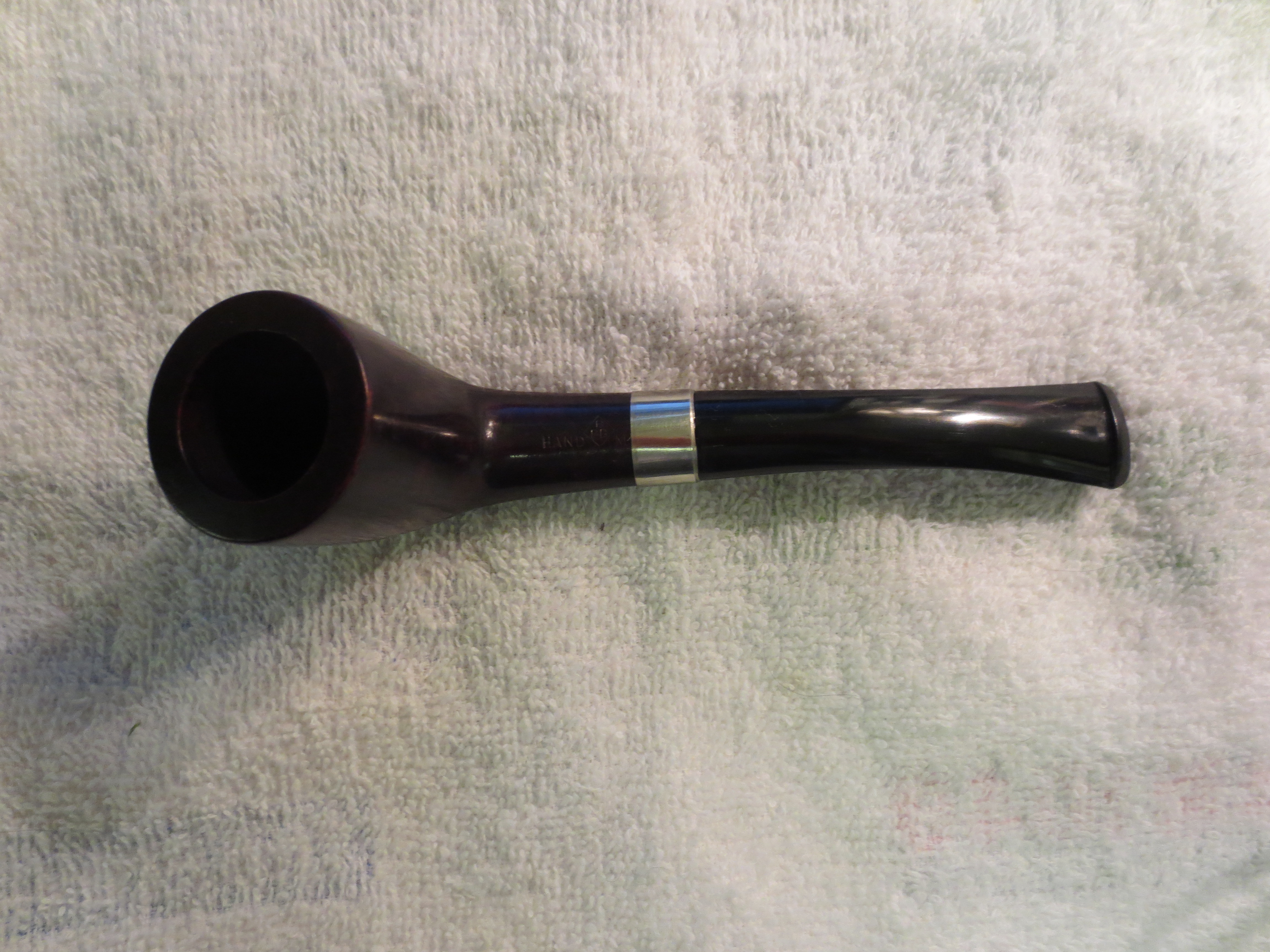
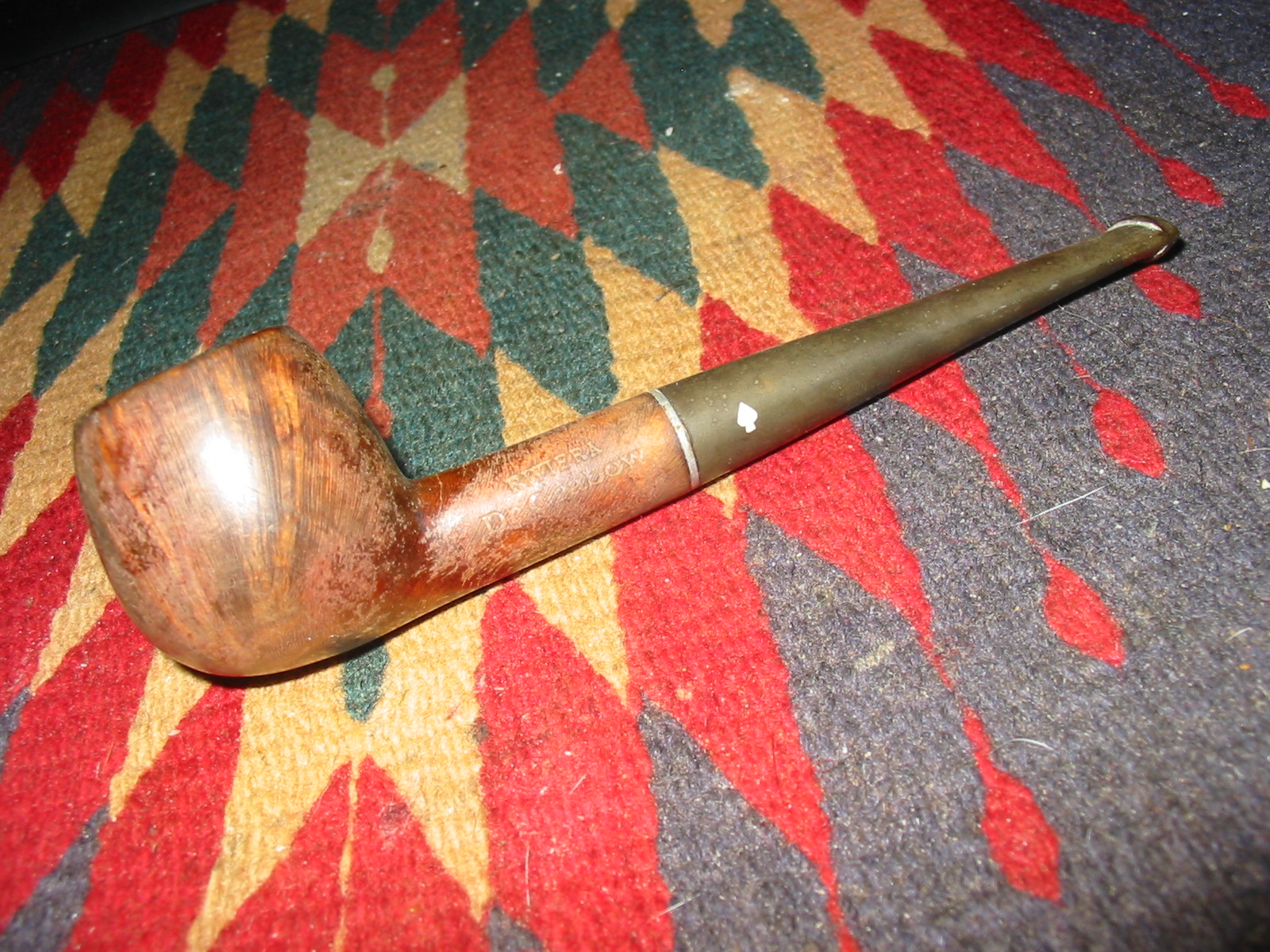
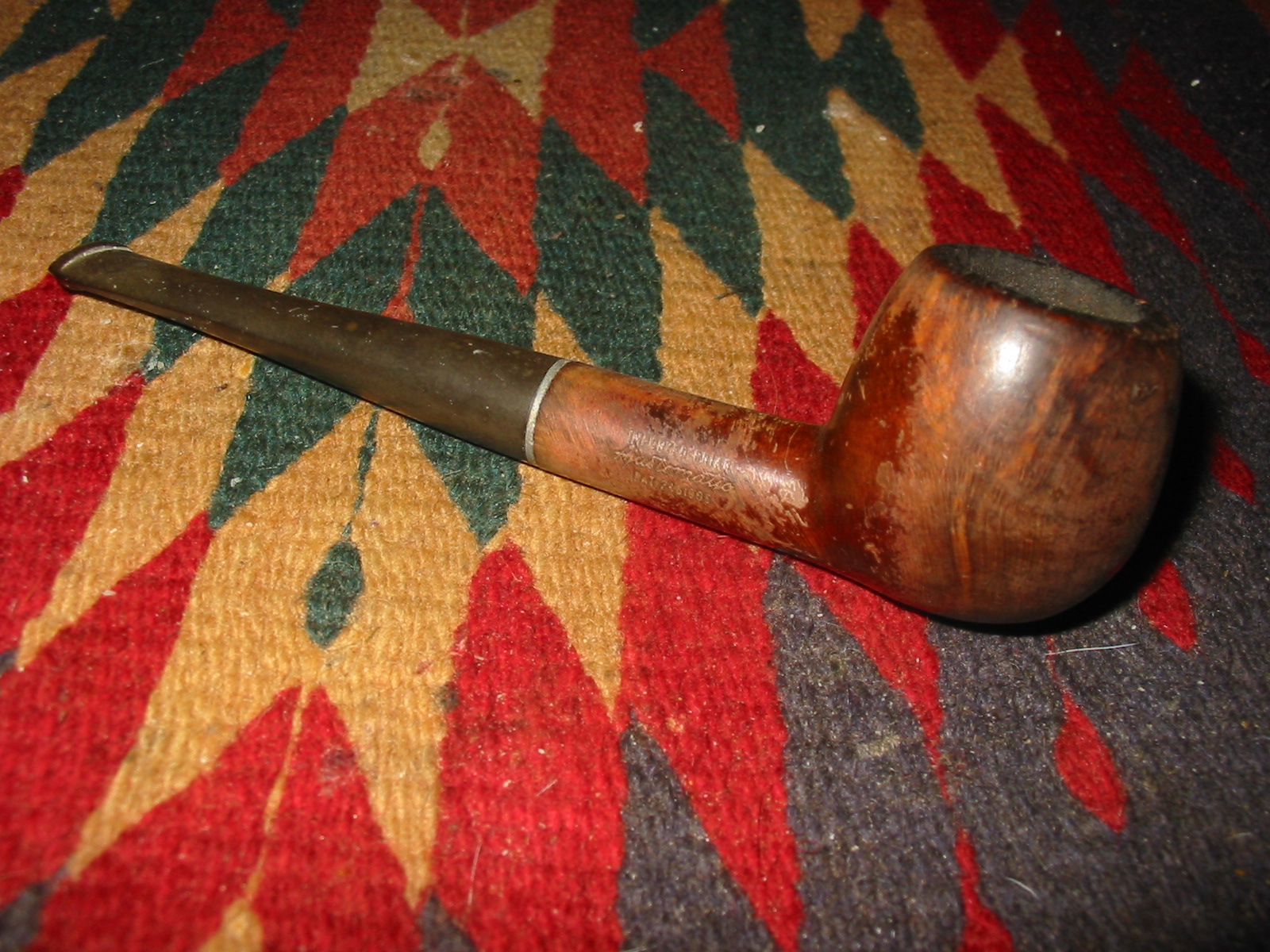
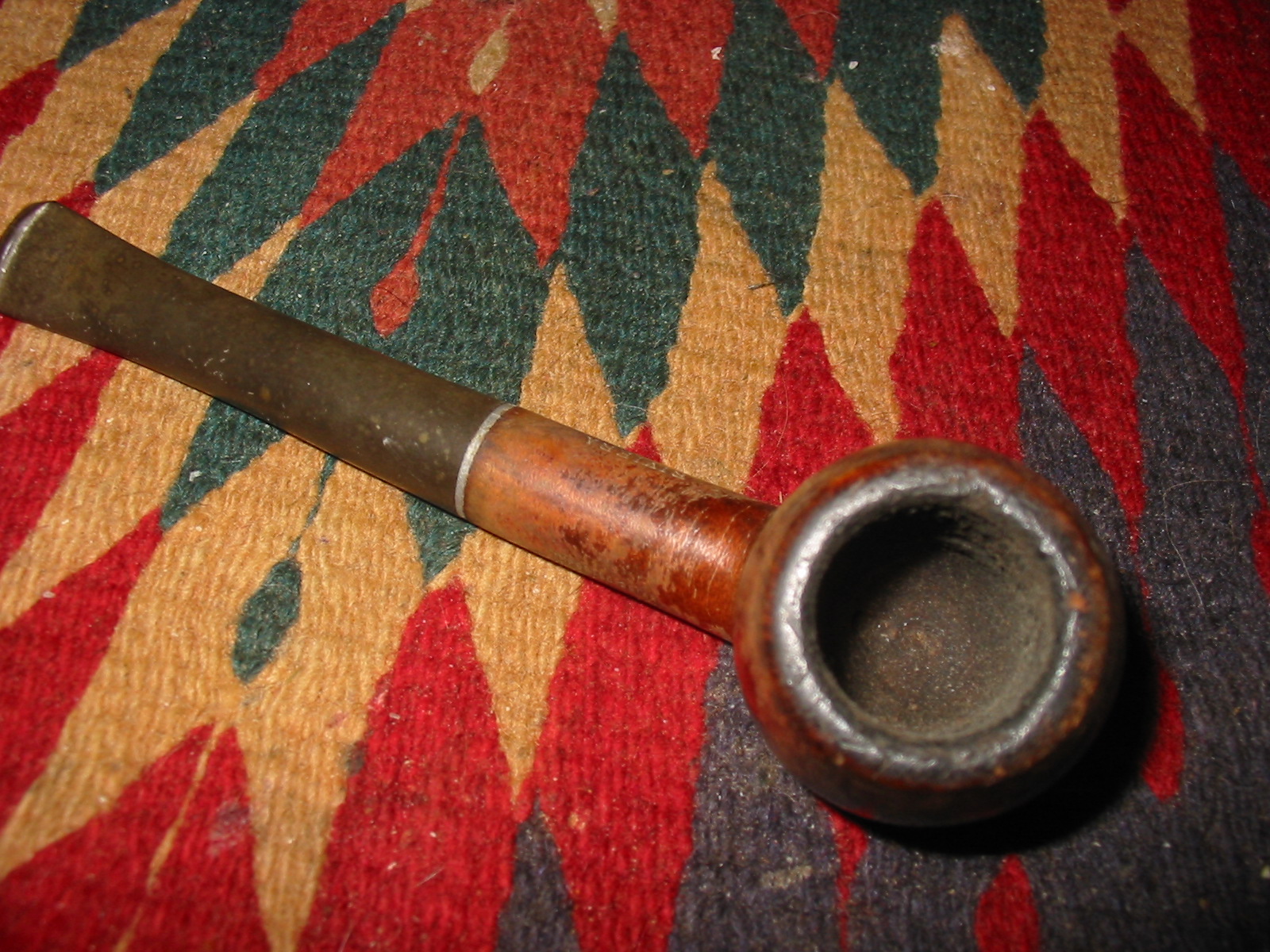
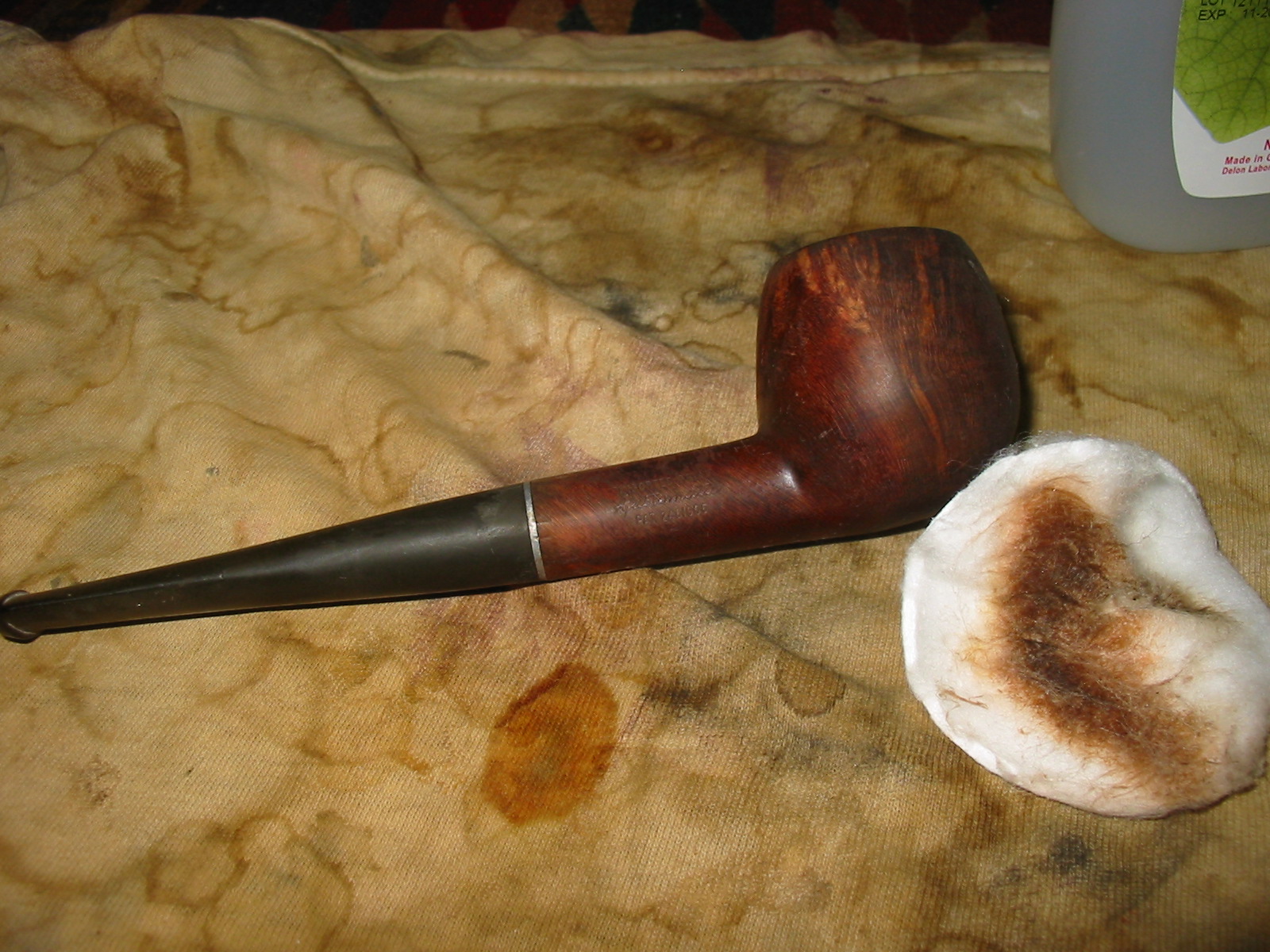
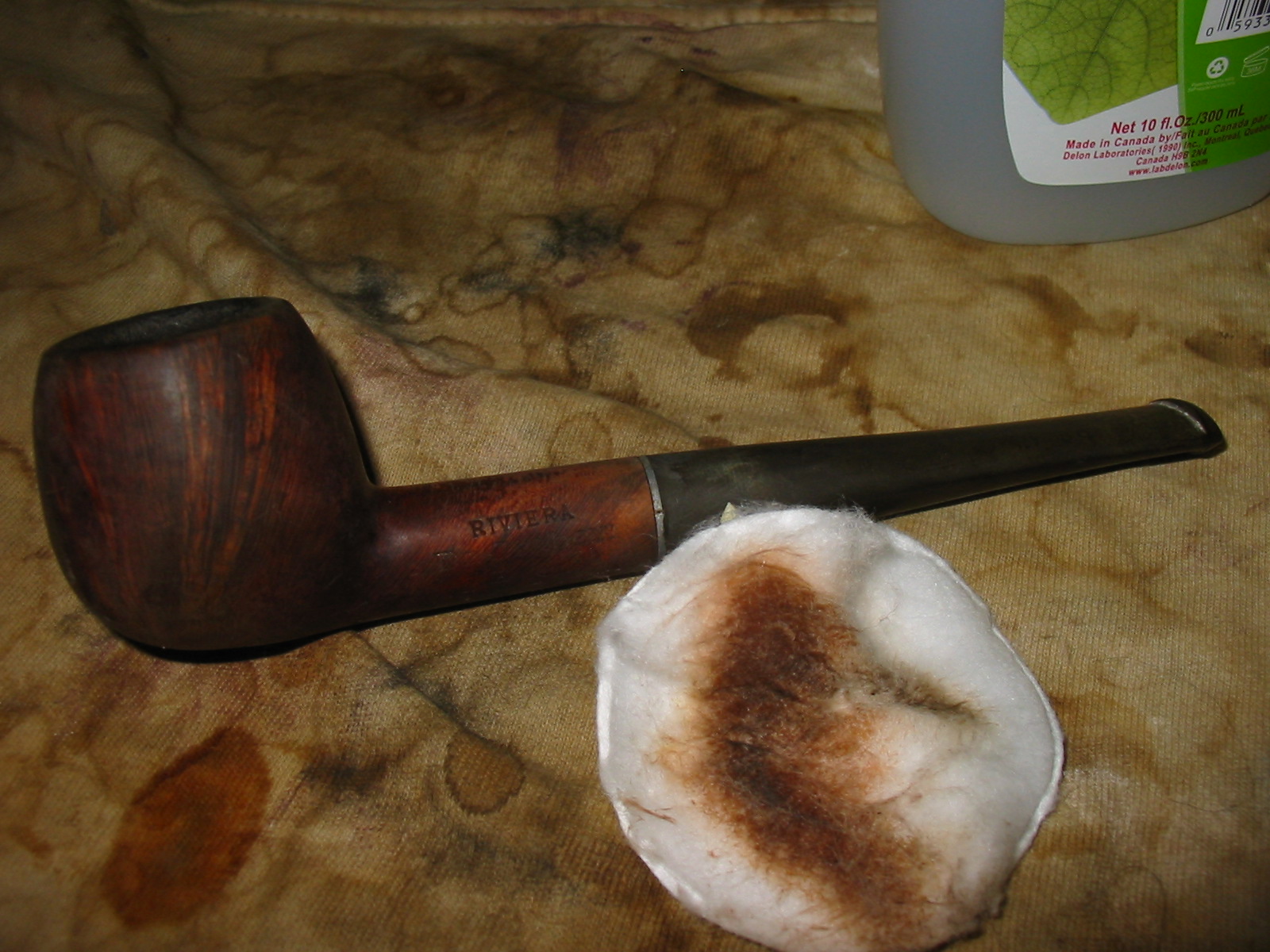
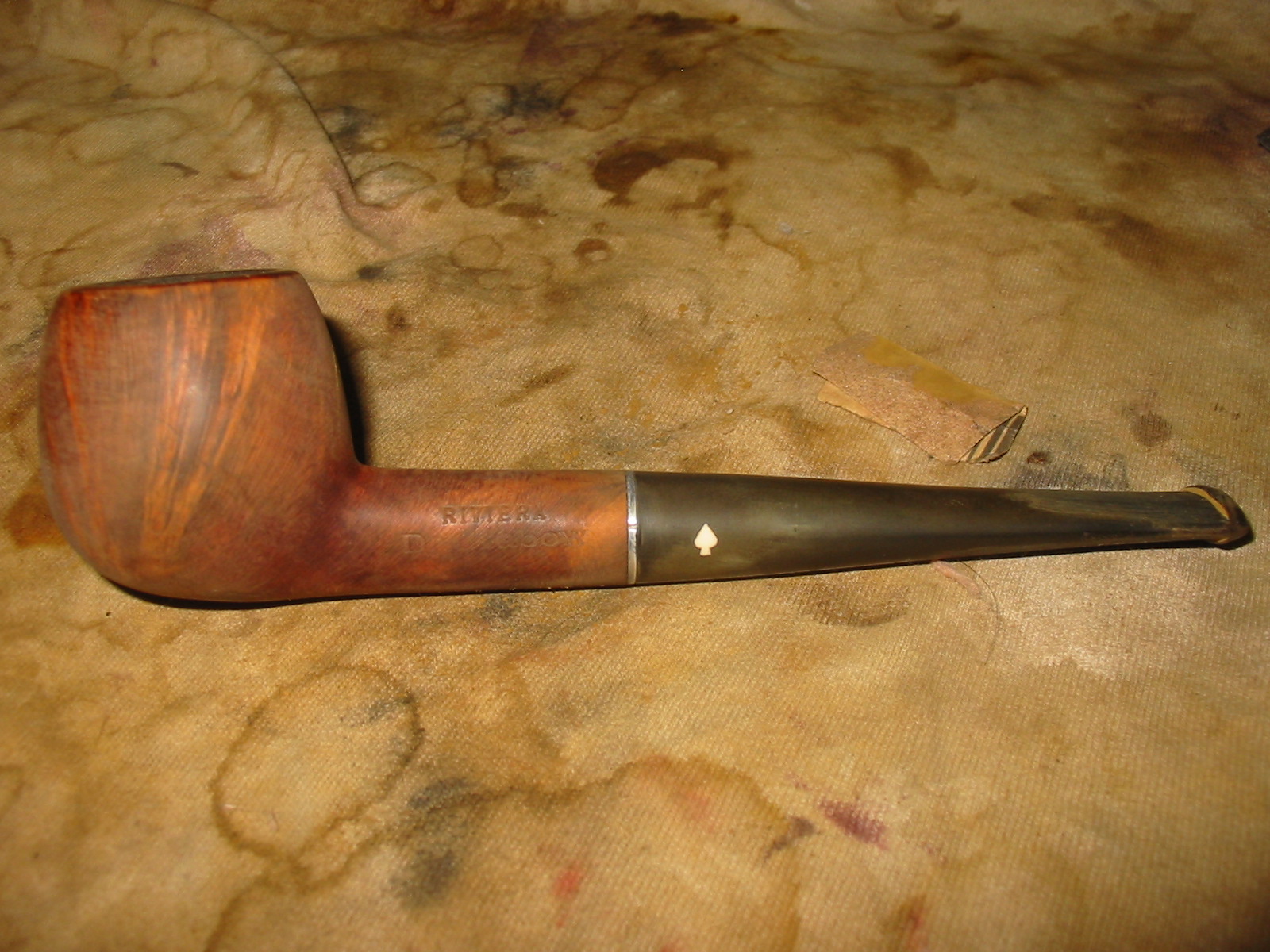
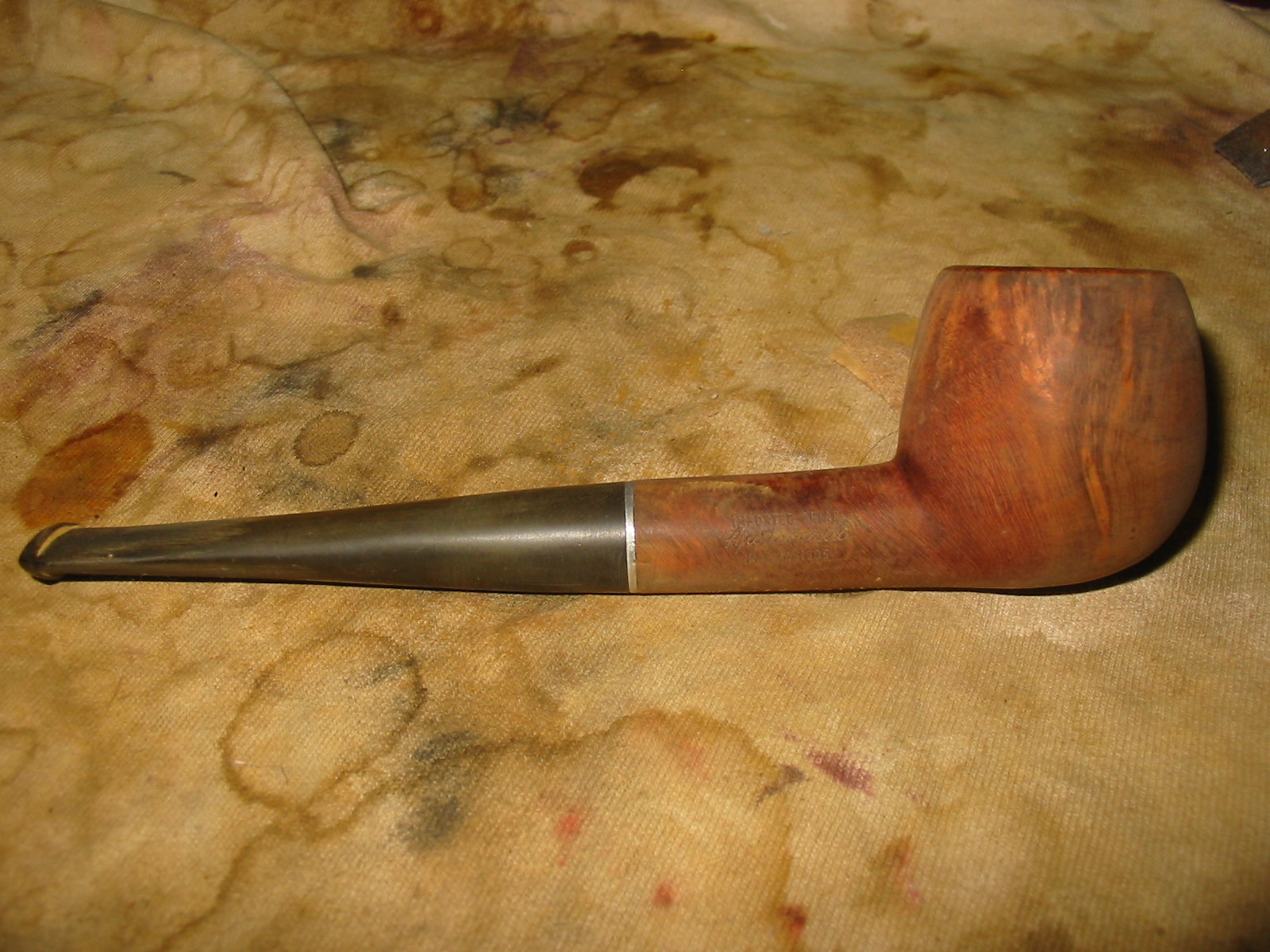
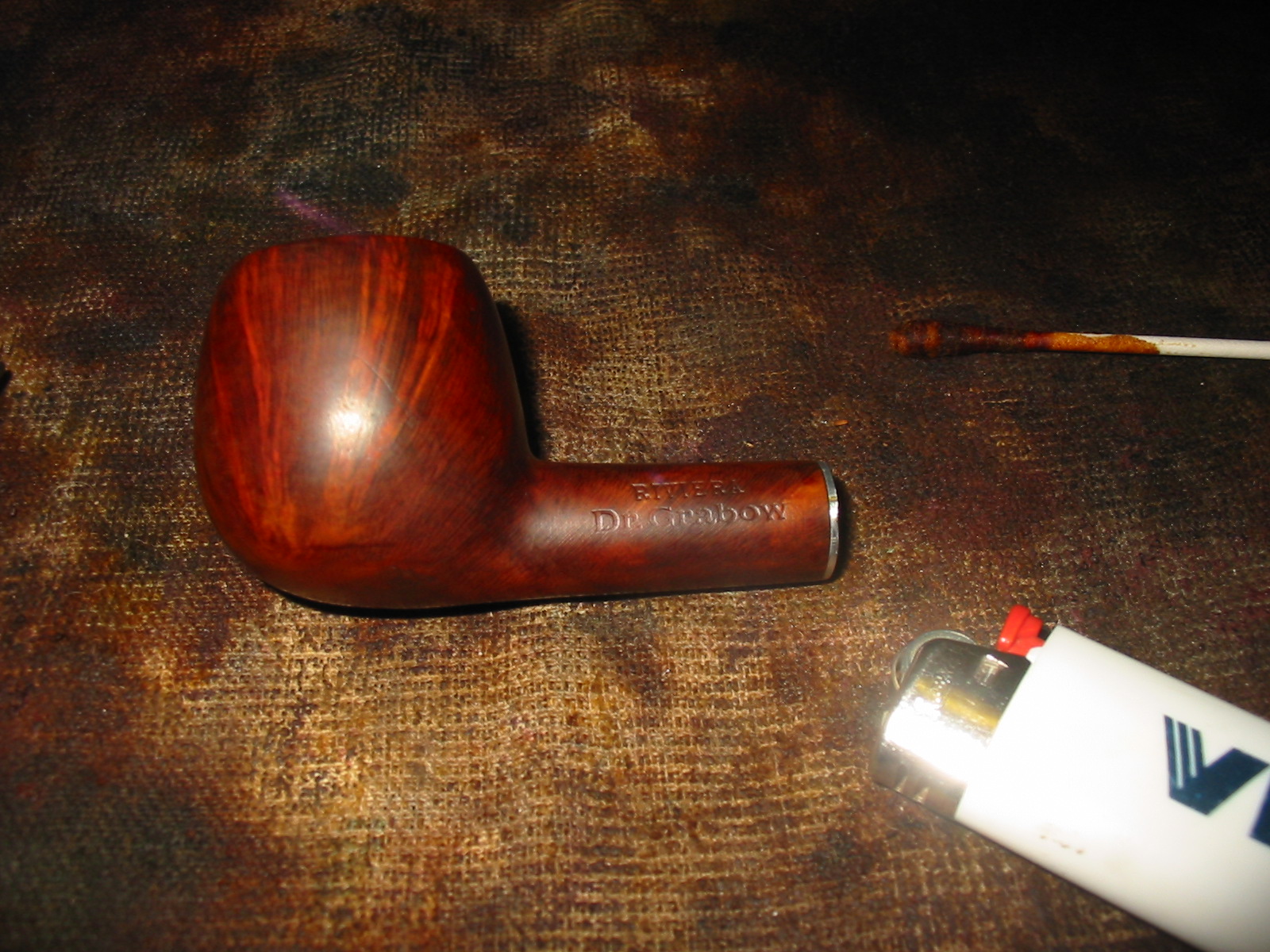
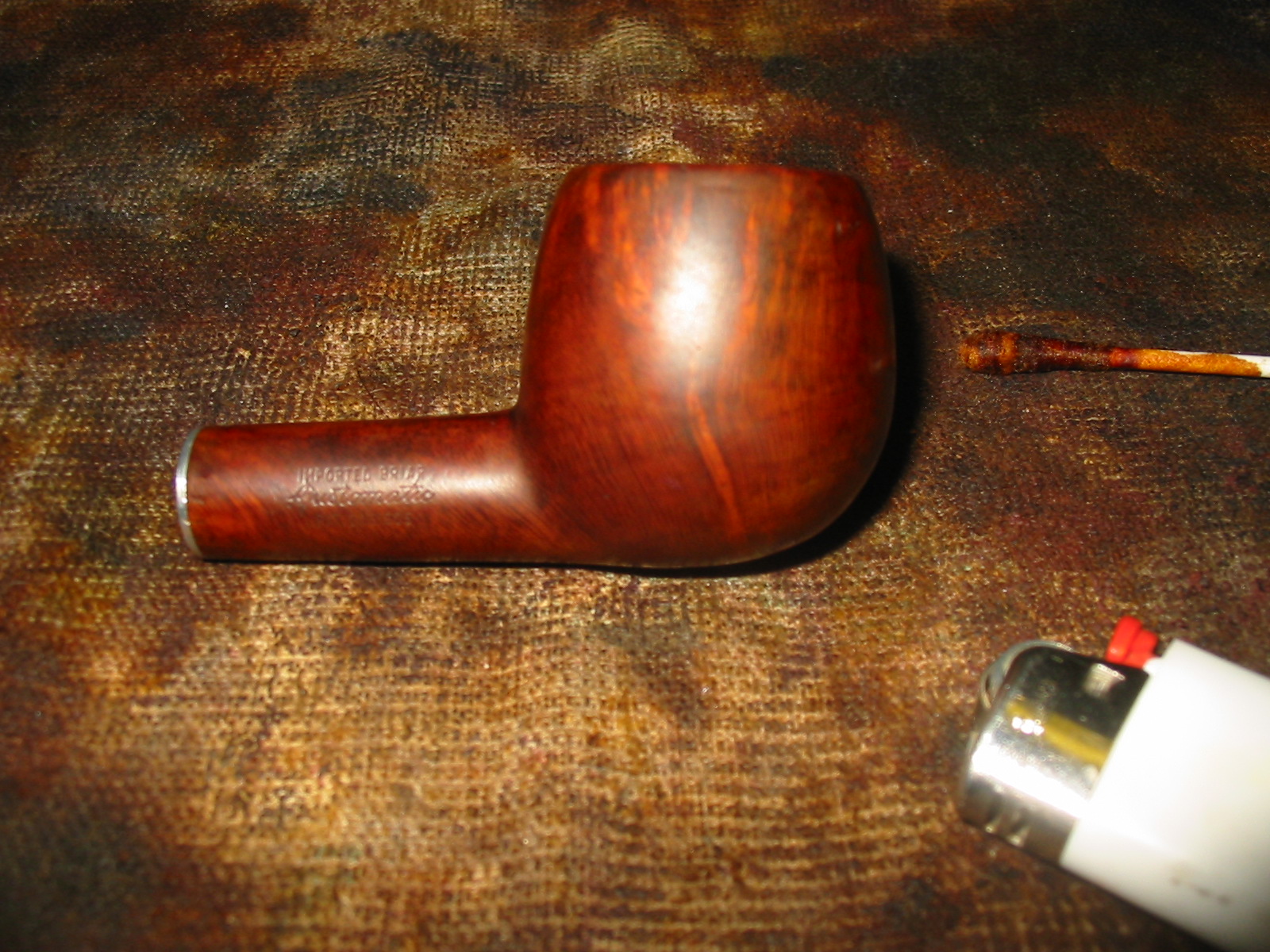
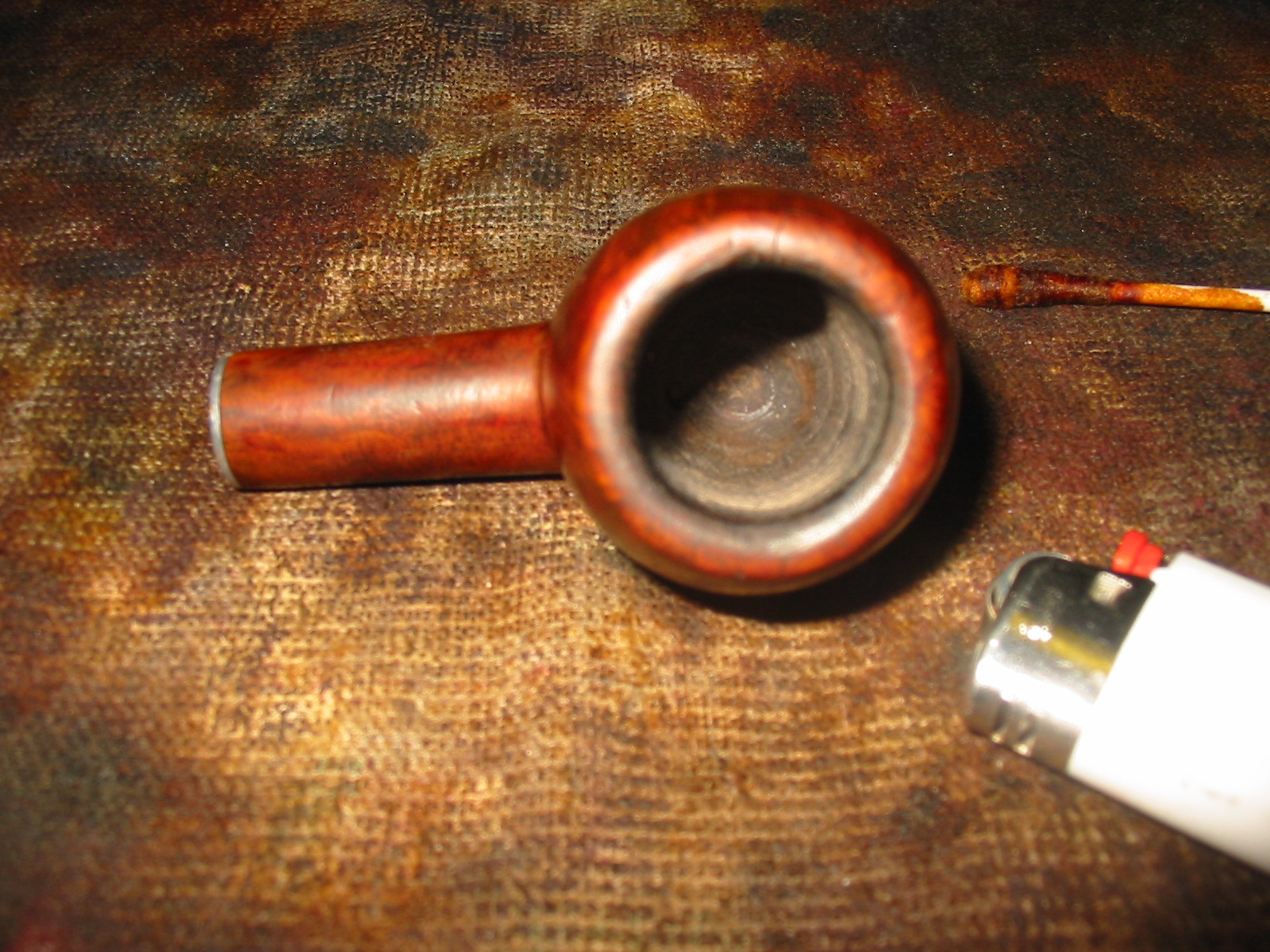
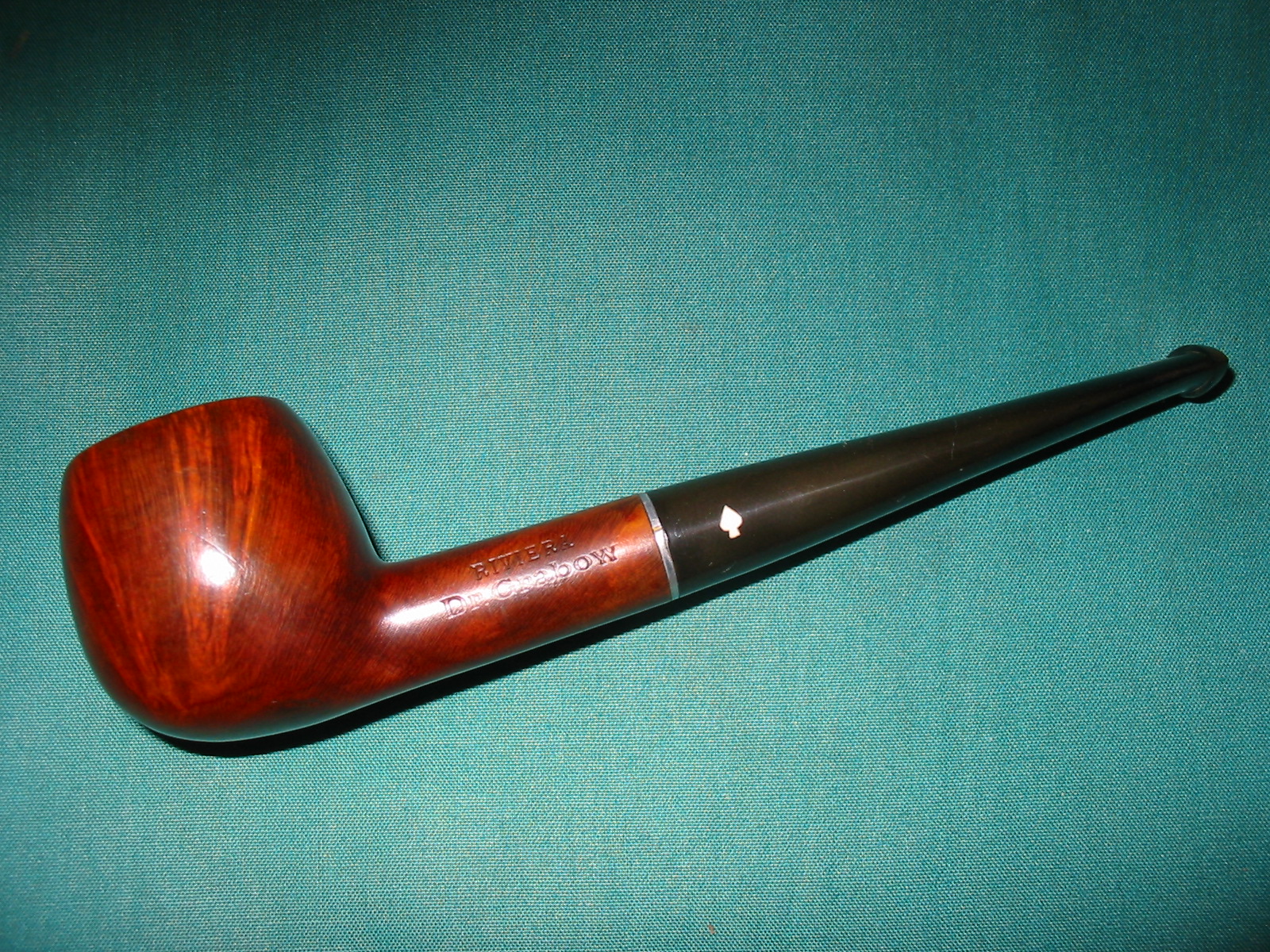
When I am refurbishing pipes I take the same care on older factory made pipes as I do on the more collectible ones. To me this is part of the stewardship of refurbishing. It does not matter what the original price of the pipe was – it is worth redeeming and bringing back to life. The refurbishing of the next pipe is one of those. It is an older Dr. Grabow Riviera. It was given to me by a good friend in Ponoka, Alberta. He gave it to me as a gift when I visited him recently. It is stamped Riviera over Dr. Grabow on the left side of the shank and Imported Briar over Adjustomatic over a patent number – PAT. 2461905 on the right side of the shank. The stinger apparatus in this one is an insert into the metal tenon. It is tube with a scooped portion on top that has a hole in the bottom of the scoop. The air/smoke circulates in the shank and is drawn into the stem by the smoker. The surface area of the apparatus acts as a condenser and filter. The beauty of this design is that it can be removed. The stem was badly oxidized and also had tooth dents on the top and bottom near the button. The finish was shot and the varnish was peeling from the bowl and shank. The rim was darkened and dirty and had a small crack on the top left side. The four photos below show the state of the pipe when I brought it home.

IMG_0846

IMG_0847

IMG_0848

IMG_0849

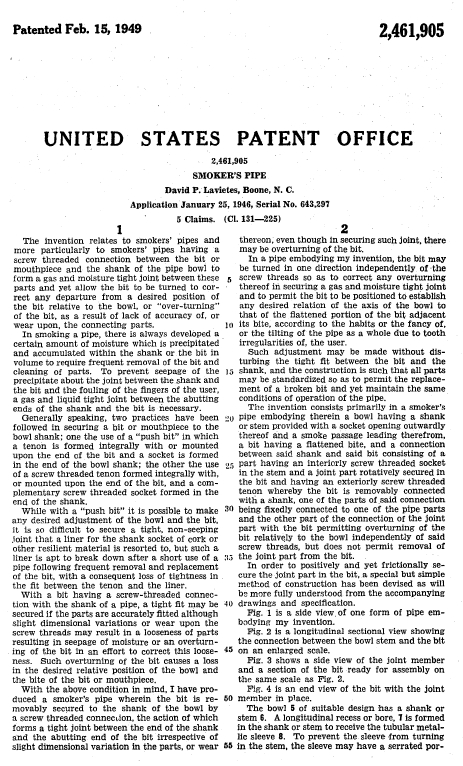
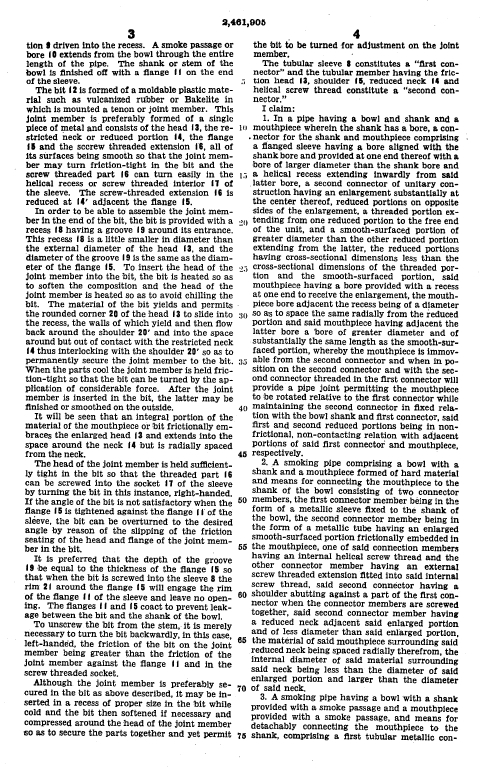
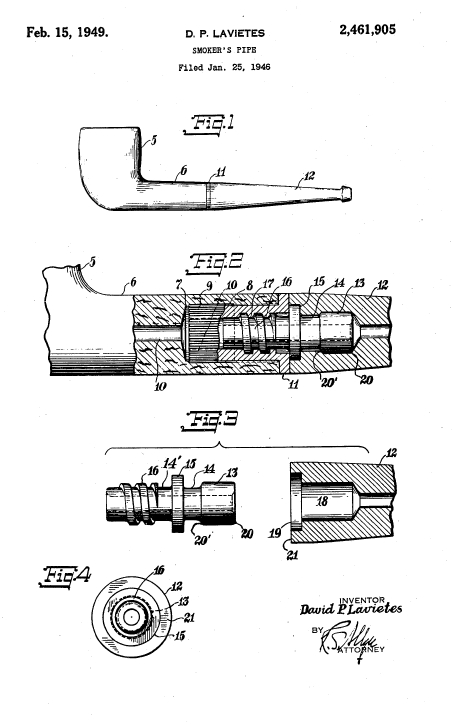
I love doing research on old patents and with US made pipes it is very simple. The following website is a simple way to find data and diagrams. http://patft.uspto.gov/netahtml/PTO/srchnum.htm In the search parameters you enter the patent number from the pipe and click on the search button. Generally, these older patents have been made into PDF files that can be downloaded. Here is a copy of the information I found there. It is a patent for the Adjustomatic connector. I always find reading through these patent application documents gives me a feel for why the designer came up with invention. This proved true of this application as well.

Grabow Patent1

Grabow Patent2

Grabow Patent3

Grabow Patent4

After reading through the patent information I was ready to restore this old pipe. It appeared to be made somewhere around the time of the Patent as it had the patent number stamped on it. That dated it somewhere around 1949 after the patent was given. I began by reaming the bowl with the PipNet reaming set to clear up the uneven and broken cake. I decided to work on the externals first. I wiped down the bowl and shank with acetone on a cotton makeup pad to remove the finish. There was some very nice grain poking through the mottled finish and very few tiny fills that made it even more attractive to me. The acetone removed the varnish very well and also took away the dirt and filth on the exterior. The first two photos below show the process of wiping down the bowl. The old finish is visible on the cotton pad.

IMG_0850

IMG_0851

Once the finish was removed from the bowl as much as possible with the acetone, I sanded it down with 340 grit sandpaper and a fine grit sanding sponge to further remove the finish. The next series of four photos show the bowl after the acetone wash and the sanding. The grain on this one is very nice. The inner rim would need to have some attention to smooth out the rough edges and the darkening.

IMG_0852

IMG_0853

IMG_0854

IMG_0855

I sanded the metal shank band as it had some deep scratches and gouges in it. I could not remove the damage but I minimized its look. I worked on the tooth marks in the topside and the underside of the stem surface. I heated the stem with a Bic lighter – passing the flame over the tooth marks to lift them to the surface. I then sanded the stem with 220 grit sandpaper to remove the remaining marks that were present (Photos 1 – 4 below). I followed that by sanding with a fine grit sanding sponge to remove the scratches left behind by the 220 grit sandpaper (Photos 5 – 6 below).

IMG_0856

IMG_0857

IMG_0859

IMG_0860

IMG_0861

IMG_0862

I sanded the entire stem with the sanding sponge to remove the oxidation from the vulcanite. I took the pipe apart and cleaned the stinger apparatus with a cotton swab and alcohol. The next two photos show that design of the stinger. It is a two part piece and the extended tube can be removed from the screw in metal tenon. I cleaned the inside of the stem and also the inside of the stinger to remove the buildup of tars and oils inside.

IMG_0863

IMG_0864

I sanded the bowl with 1500 – 12,000 grit micromesh sanding pads, being careful around the stamping on the shank. Once the scratches were removed and the bowl was smooth I restained it with a dark brown aniline stain thinned 2:1 with isopropyl alcohol. Doing this makes the stain less opaque and also several shades lighter. I wanted to highlight the grain not hide it so this was the perfect mix to do that. I applied the stain with a cotton swab, flamed it with a lighter to set the stain and then repeated the process a second time. The next three photos show that process. You will note that I also cleaned up the inner edge of the rim with the sanding process noted above. Most of the roughness is removed. A small crack remains on the top of the left side of the bowl rim.

IMG_0948

IMG_0949

IMG_0950

I set the bowl aside and worked on finishing the stem. I sanded it with 1500 – 12,000 grit micromesh sanding pads until it was smooth and finished. I rubbed down the stem with Obsidian Oil to protect and remove the oxidation. I reattached it to the bowl and buffed the stem and bowl with White Diamond on the buffer. I gave the entirety several coats of carnauba wax to bring out the shine and protect it. The final four photos show the finished pipe – cleaned, restored and ready to smoke. The photos show tinges of brown/oxidation still remaining in the stem under the flash of the camera. To deal with that I polished the stem some more and gave it another coat of Obsidian Oil and let it soak in. Upon finishing I buffed it again with carnauba.

IMG_0951

IMG_0952

IMG_0953

IMG_0954