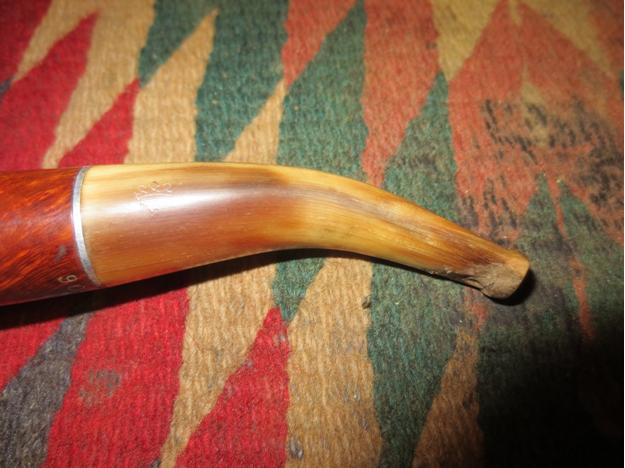
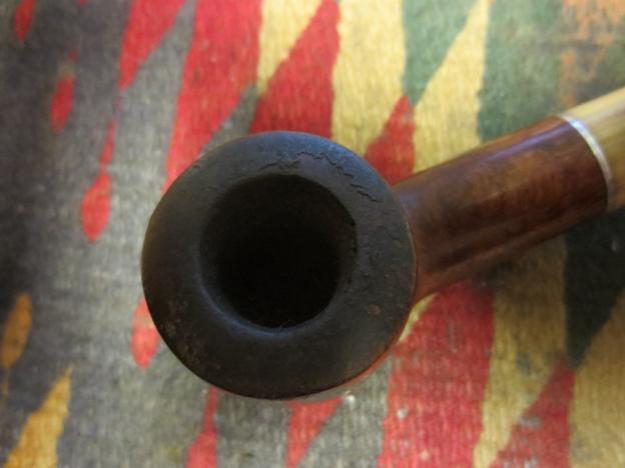
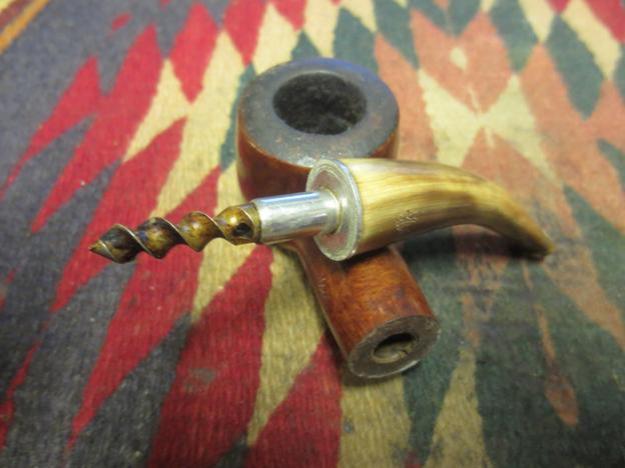
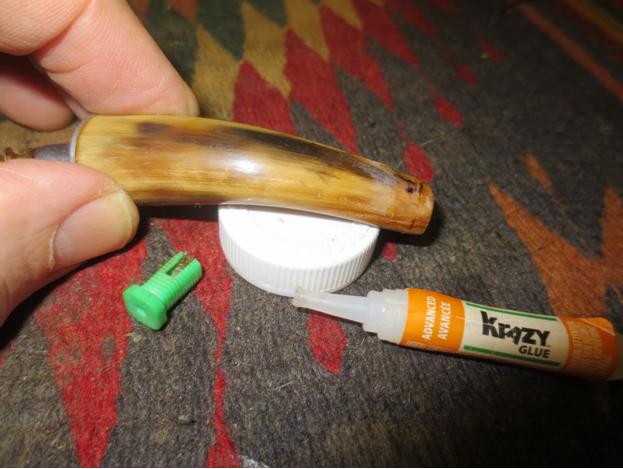
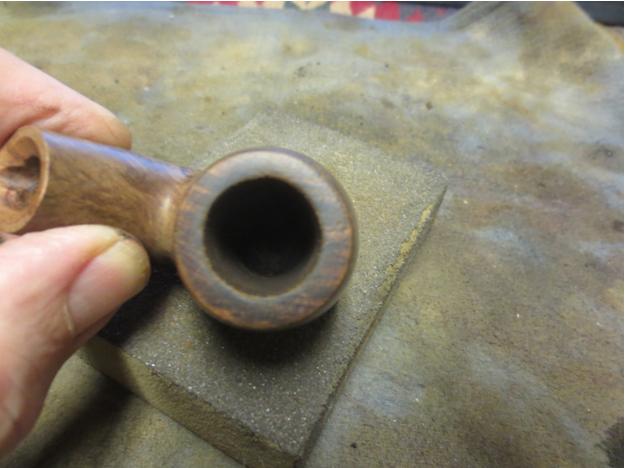
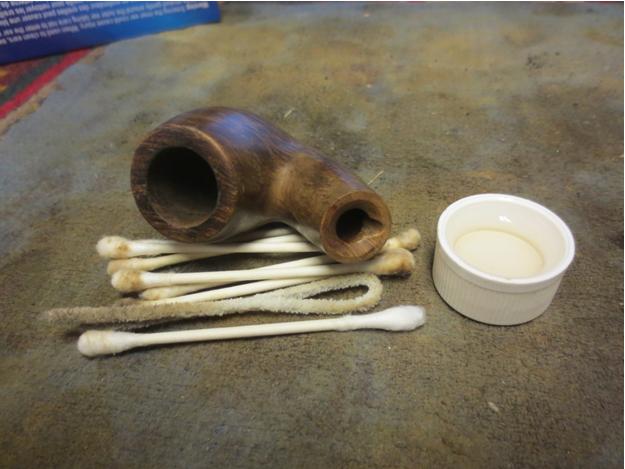
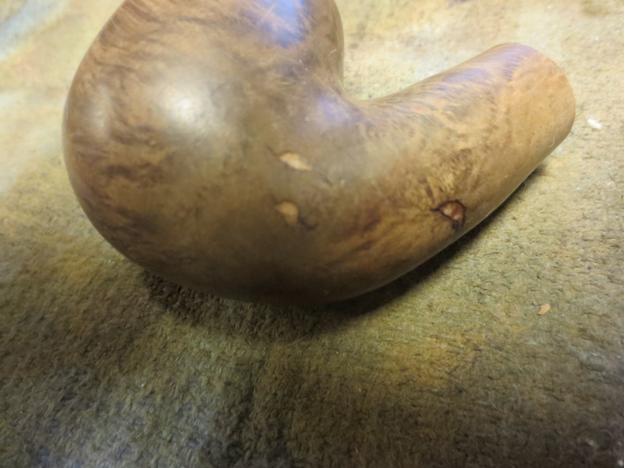
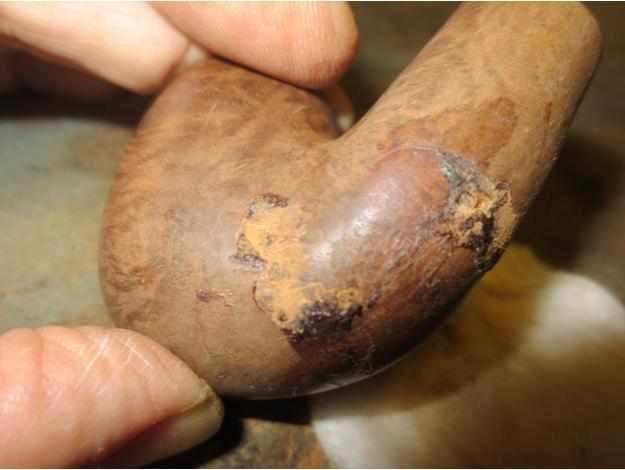
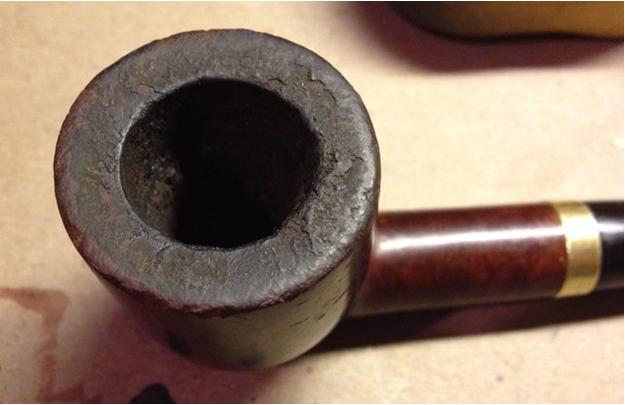
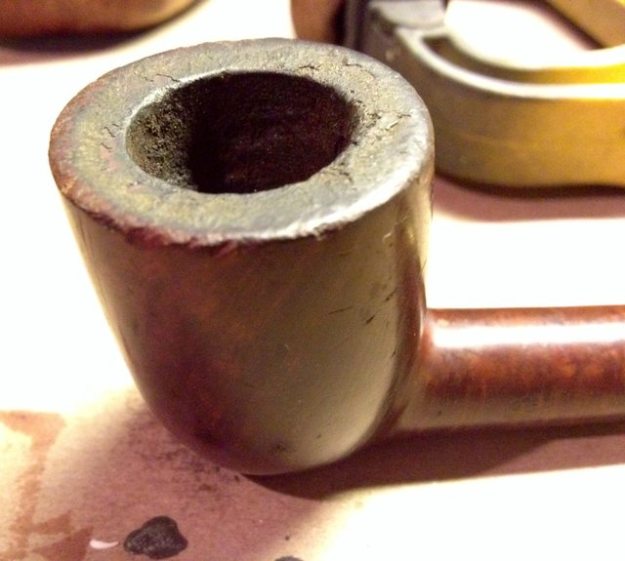
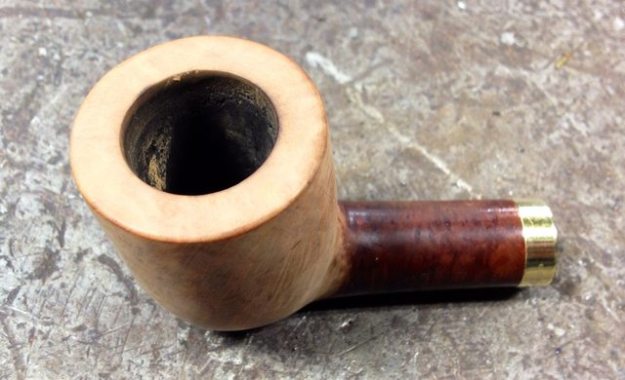
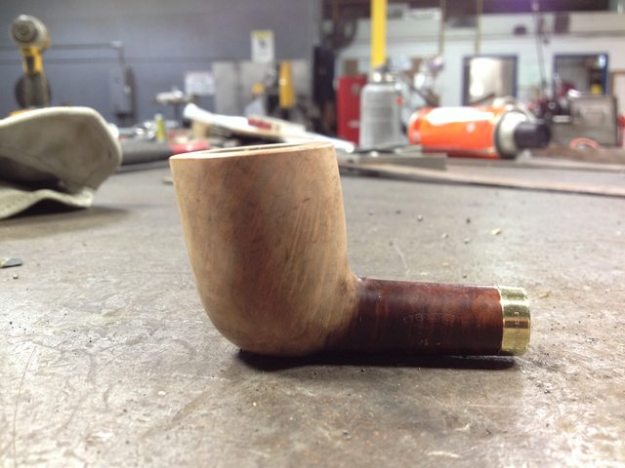
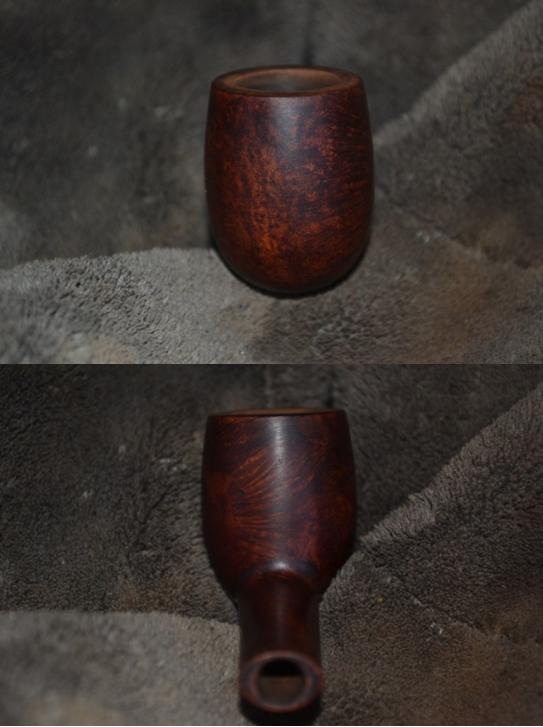
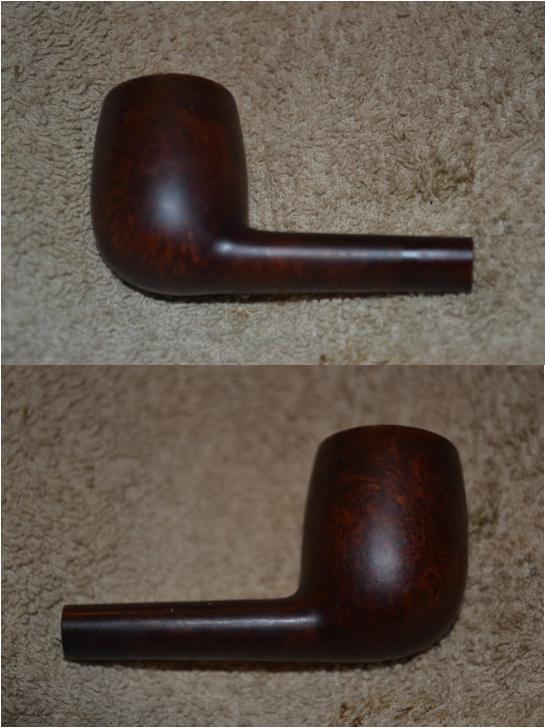
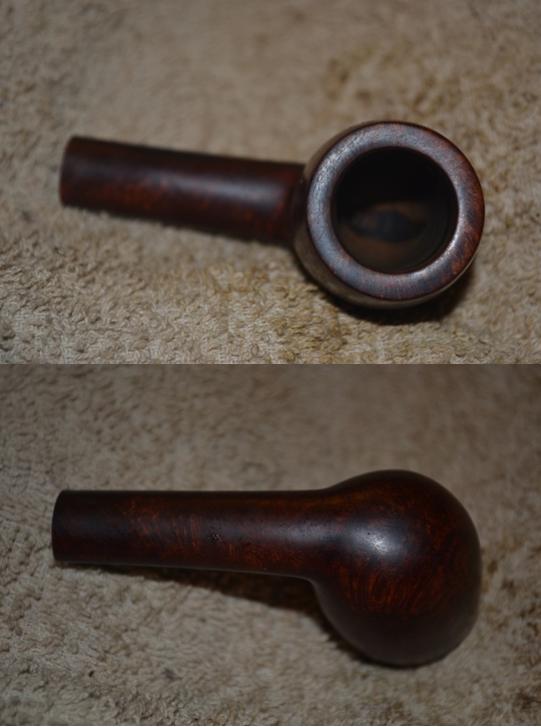
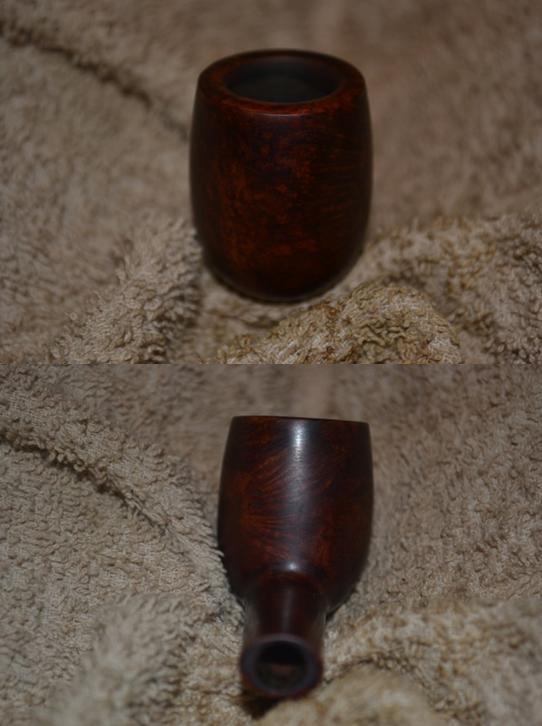
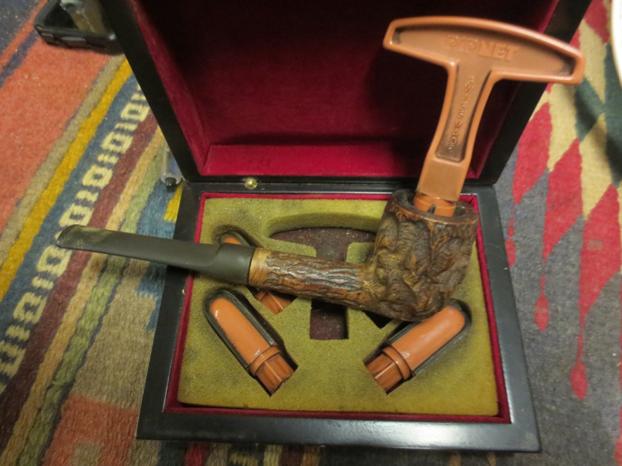
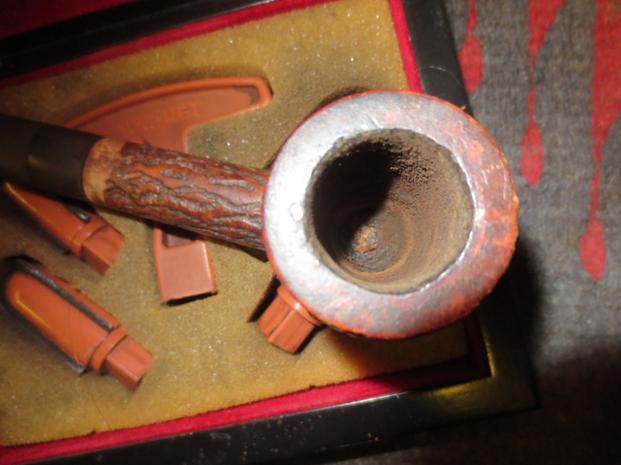
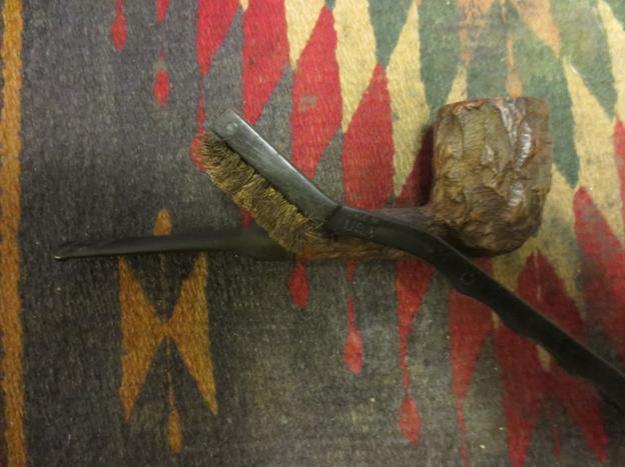
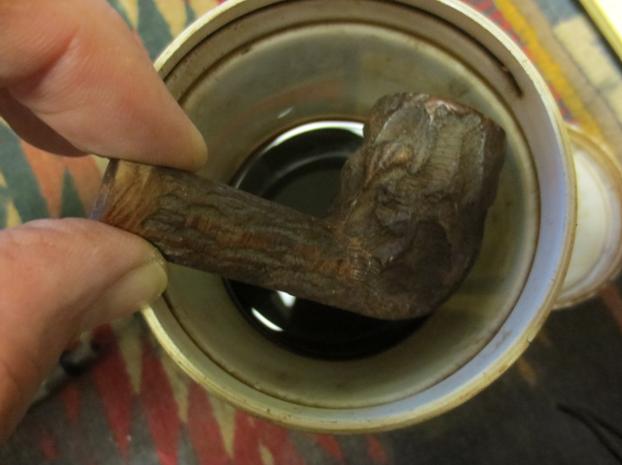
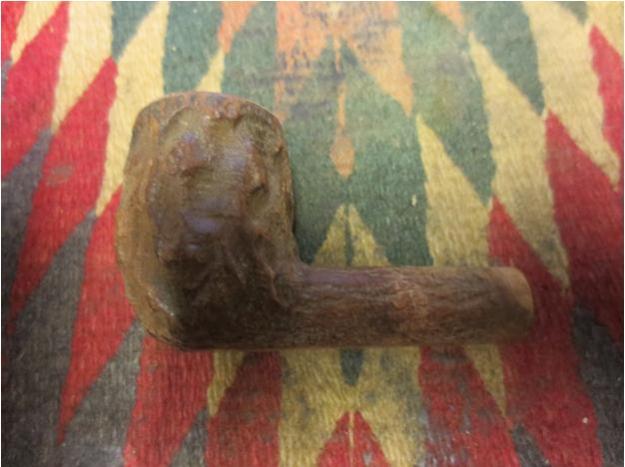
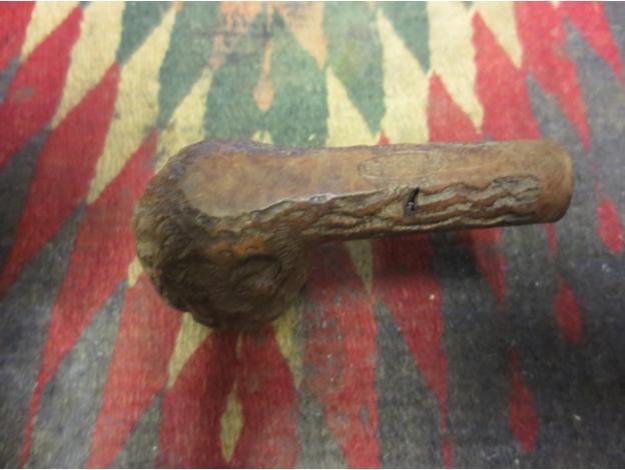
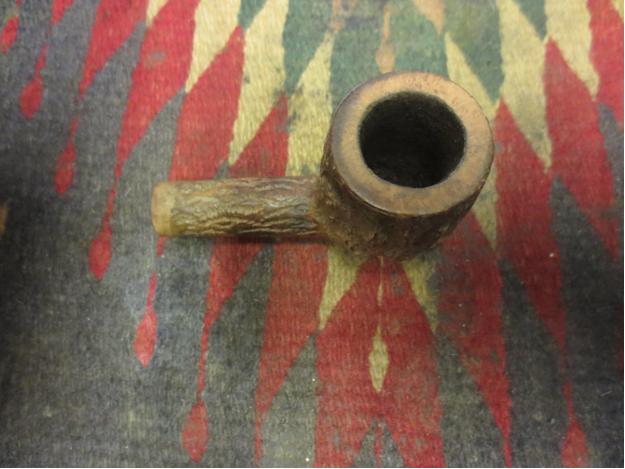
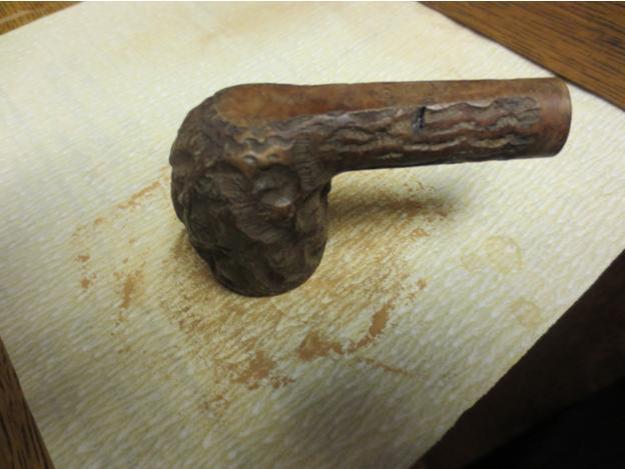
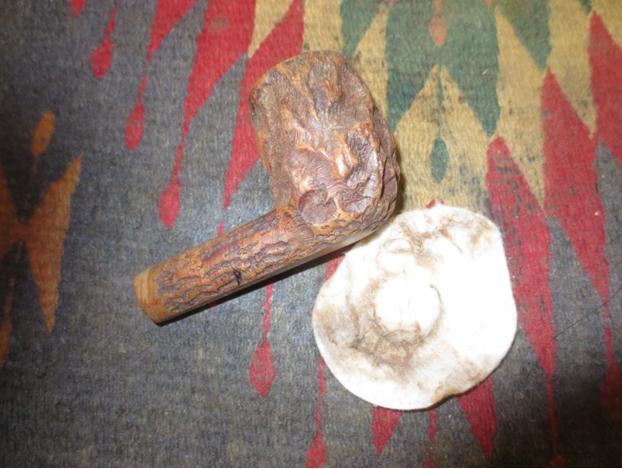
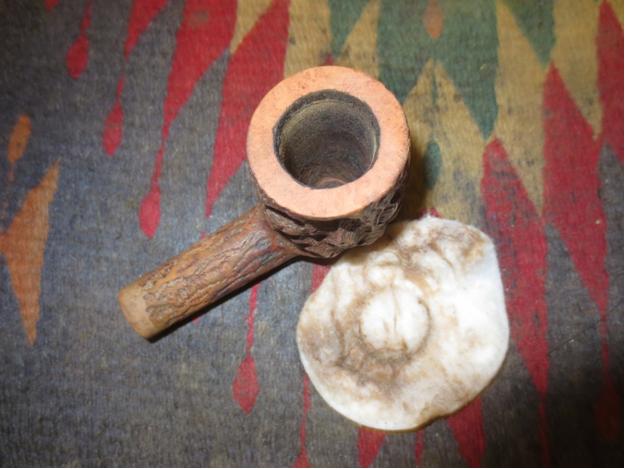
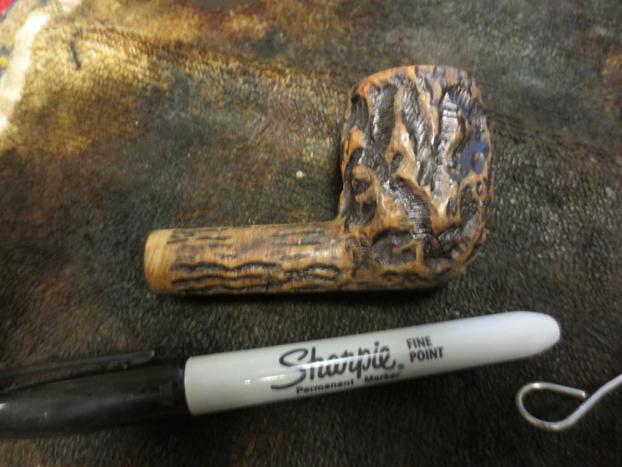
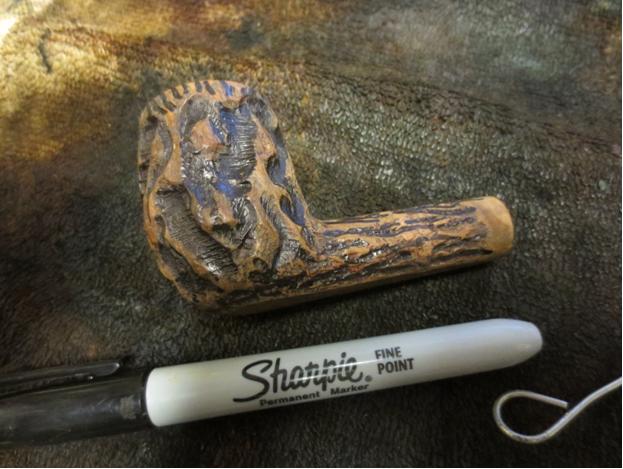
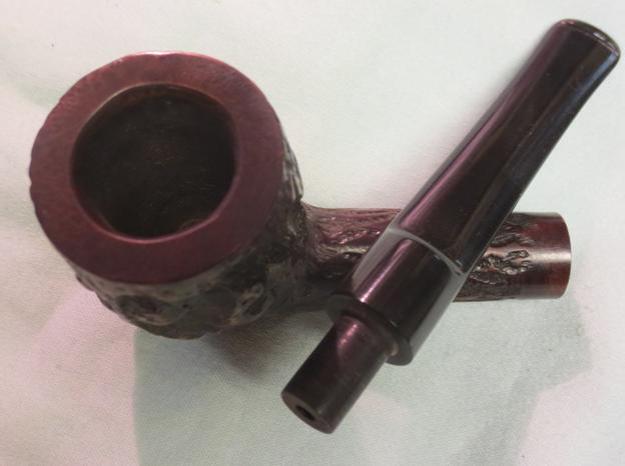
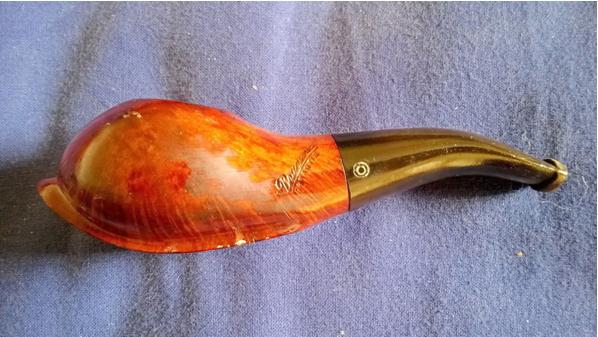
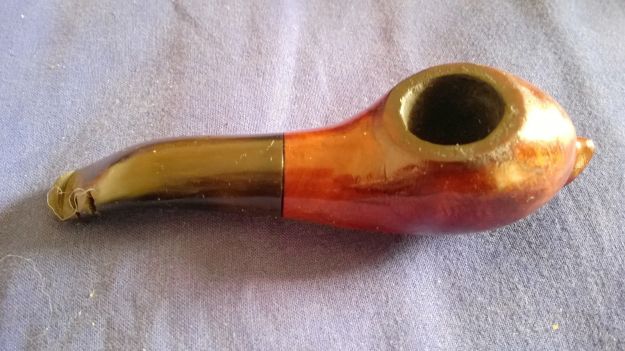
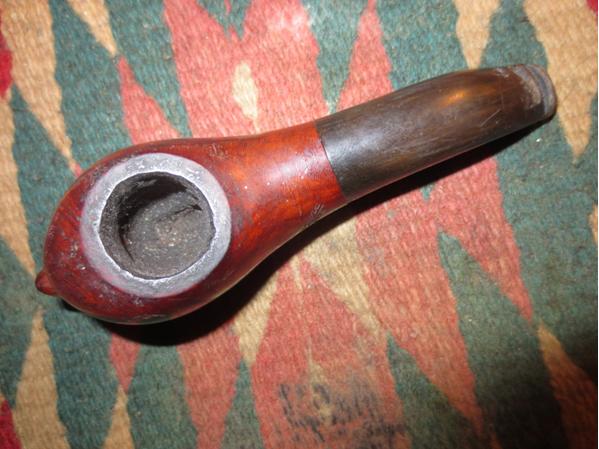
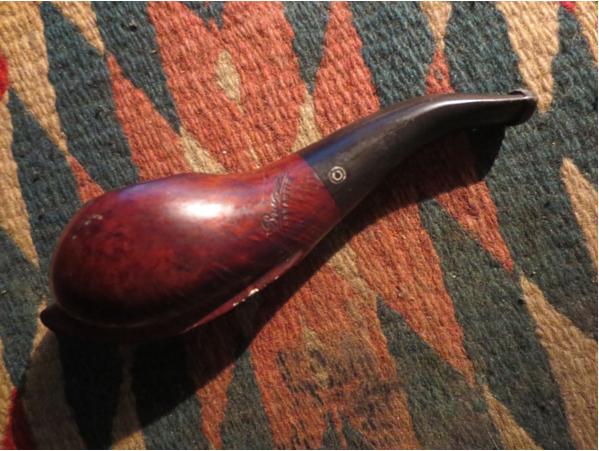
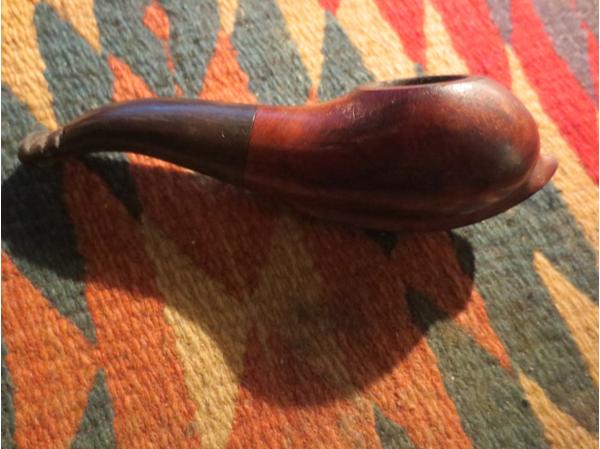
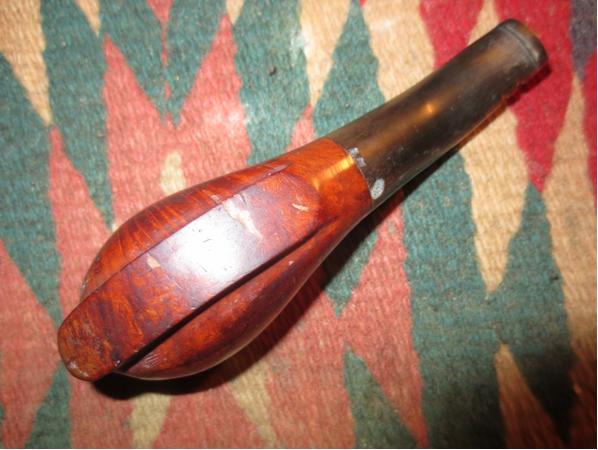
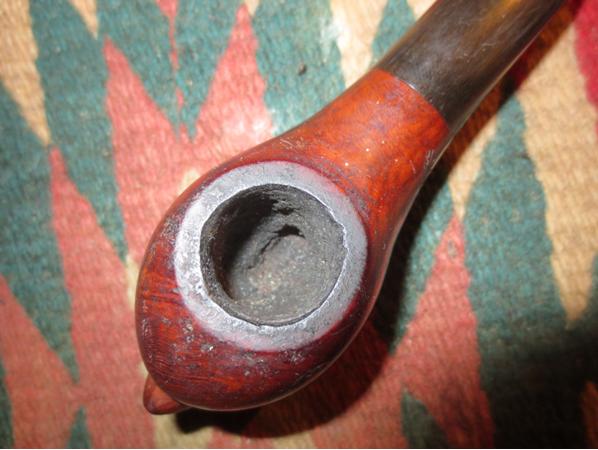
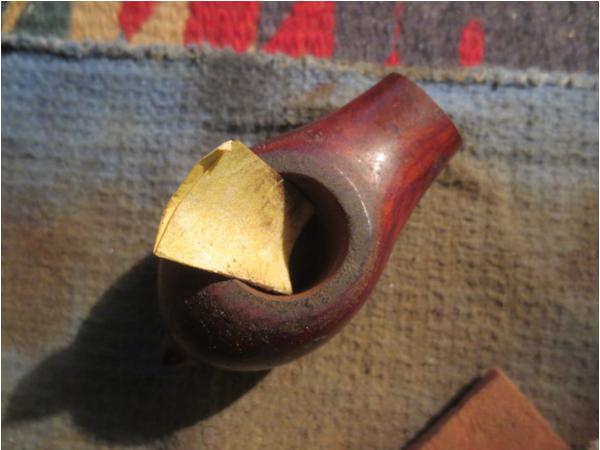
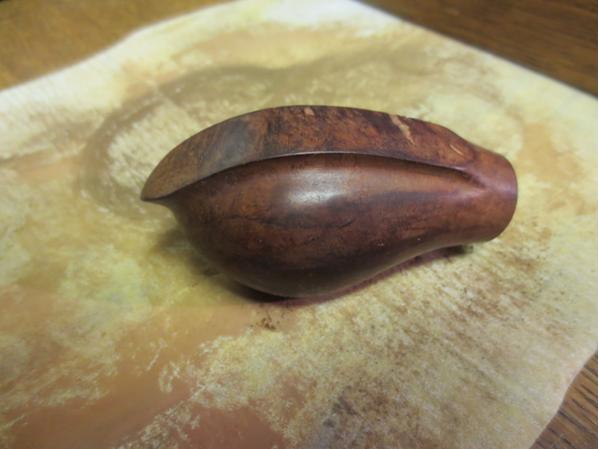
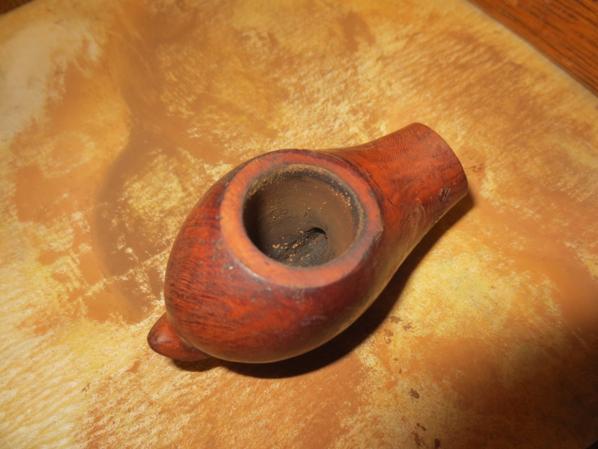
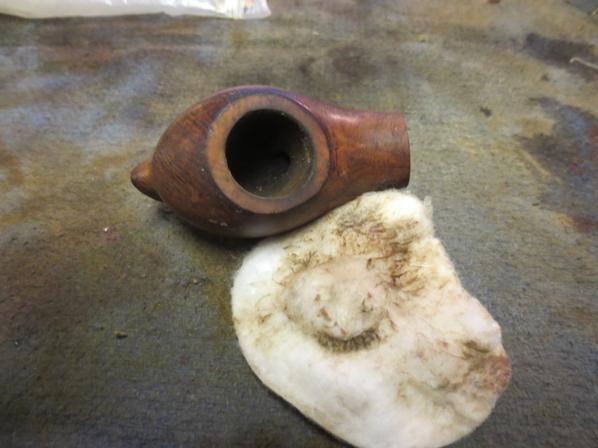
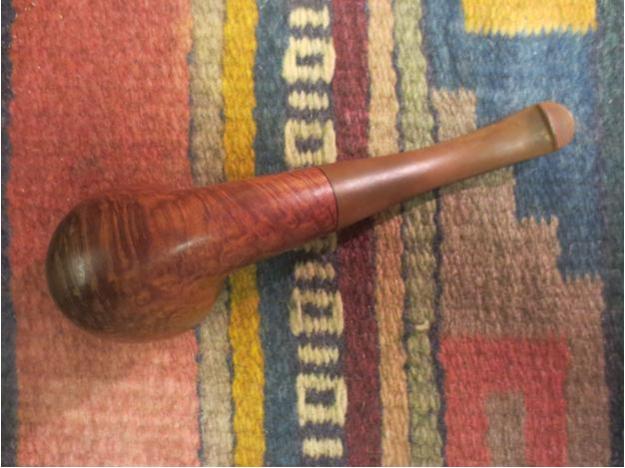
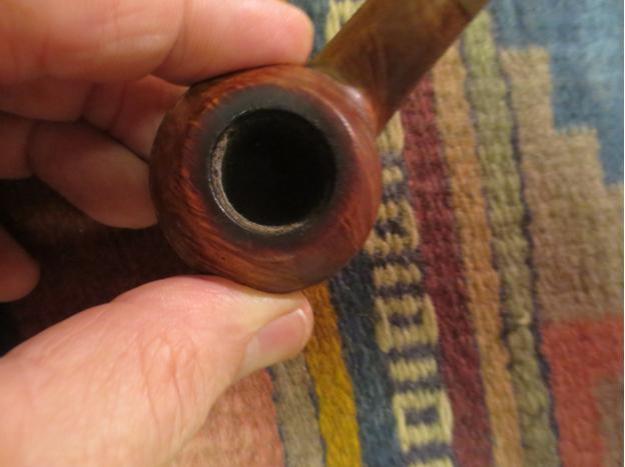
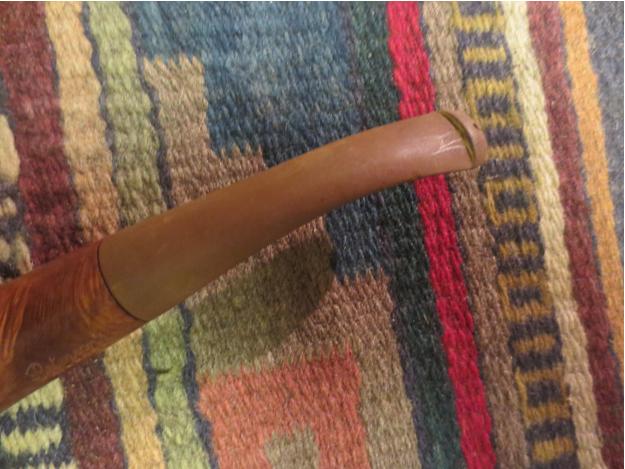
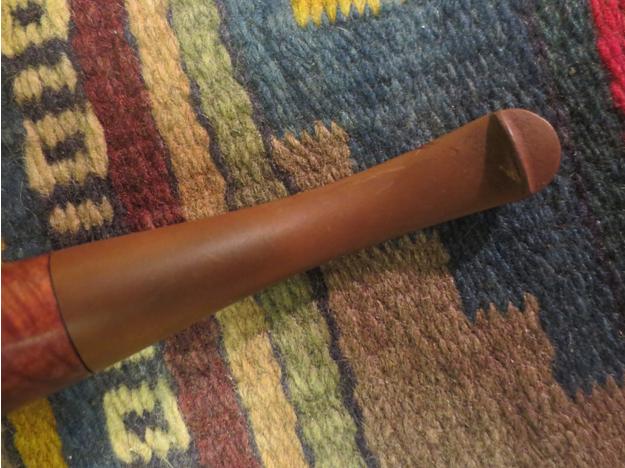
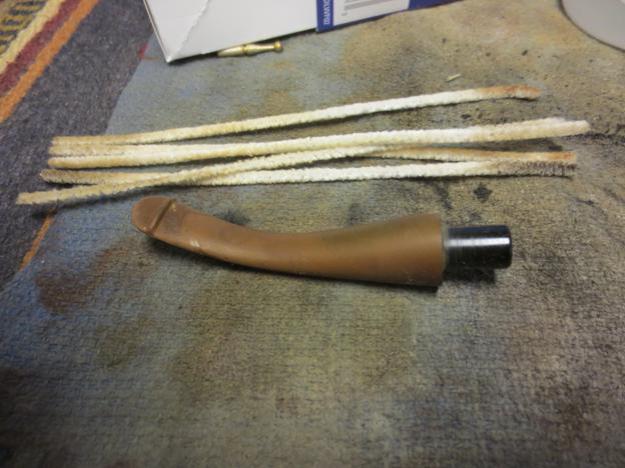
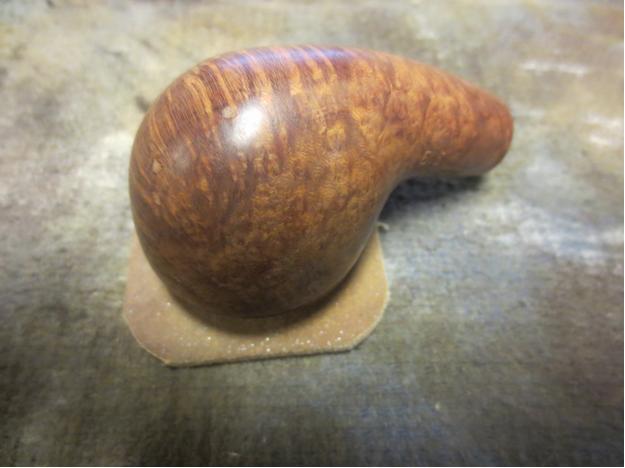
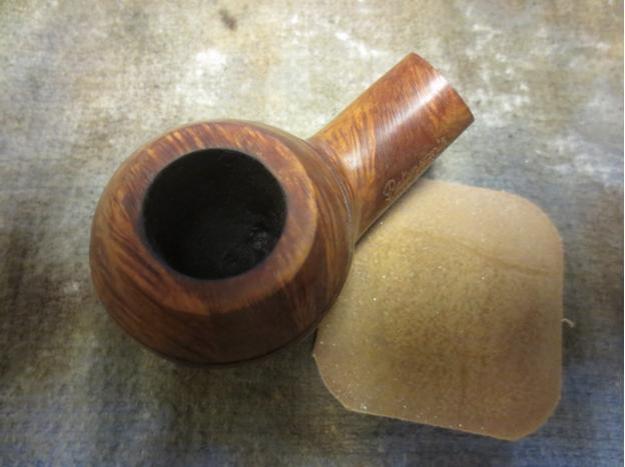
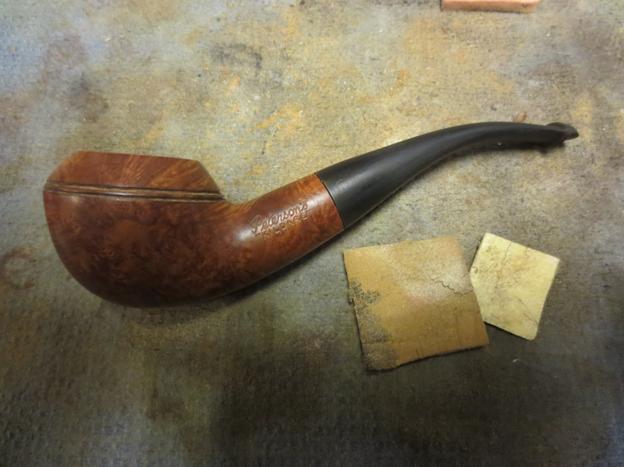
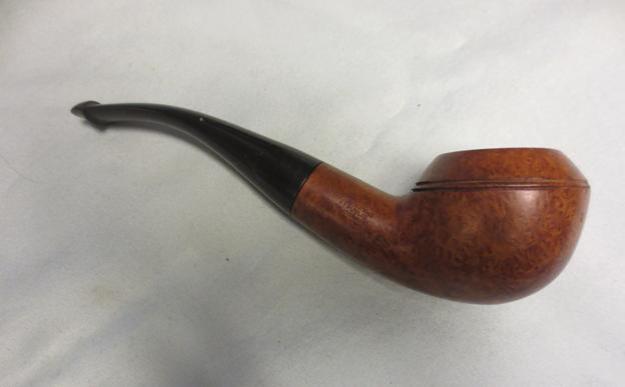
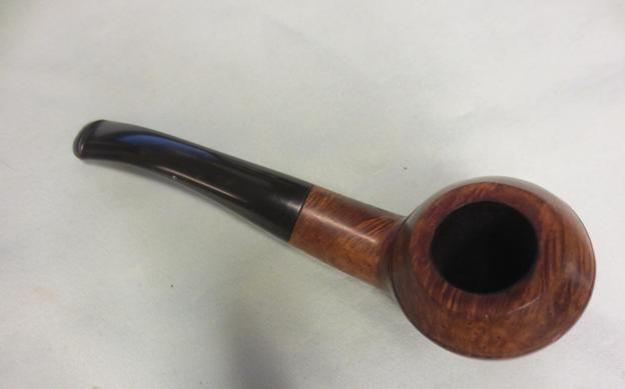
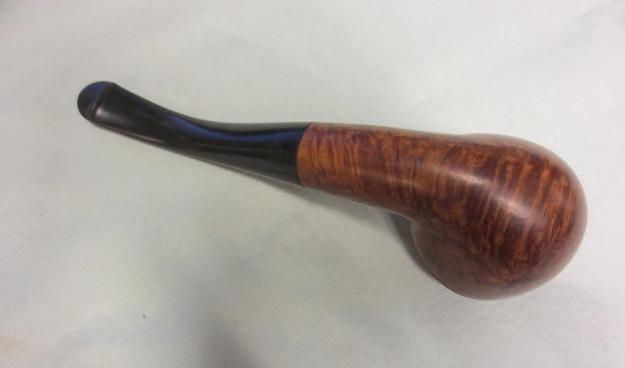
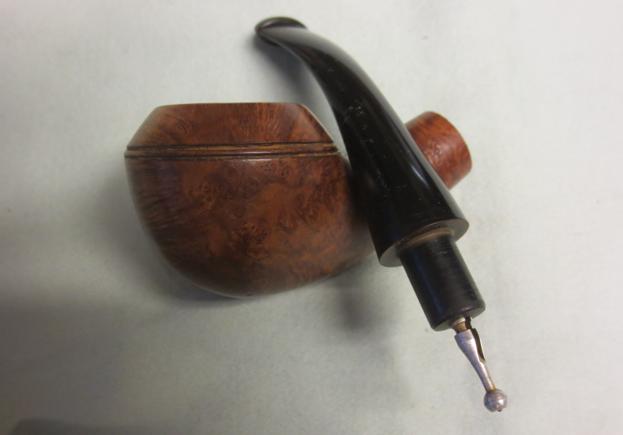
Tag Archives: Bowl – refinishing

Bringing a Dr. Grabow De Luxe 9704 Bent Billiard Back to Life


Blog by Steve Laug

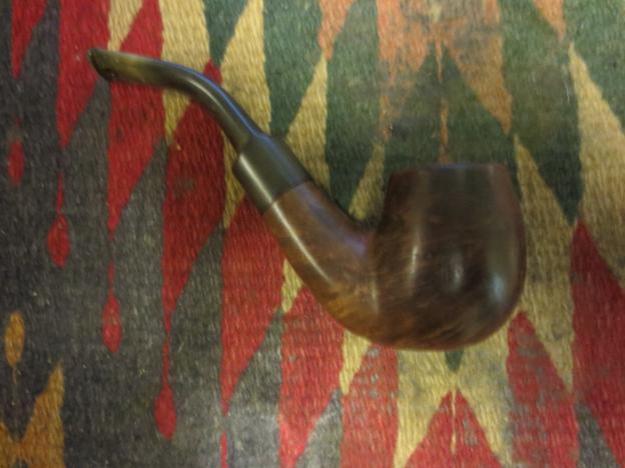
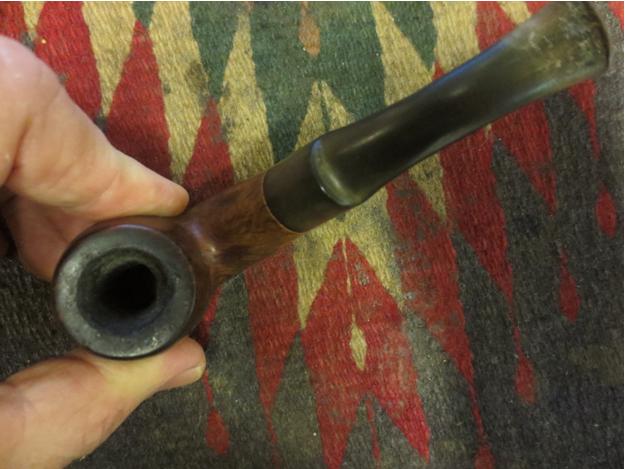
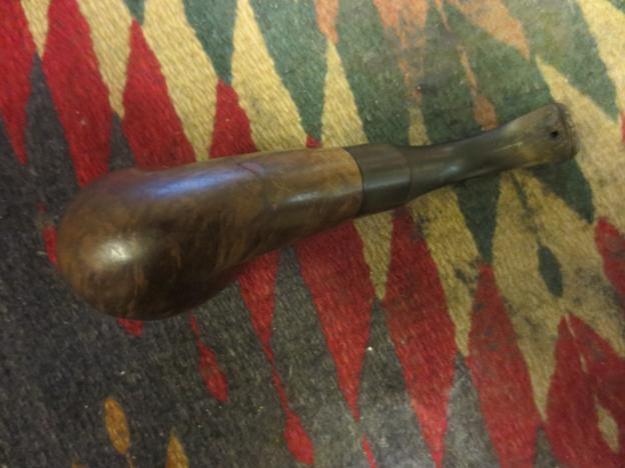
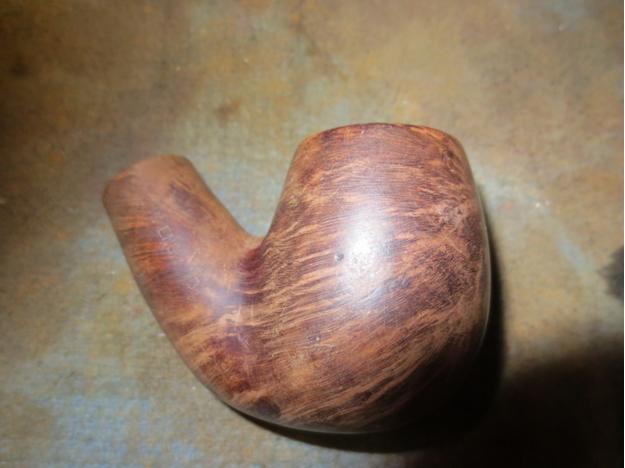
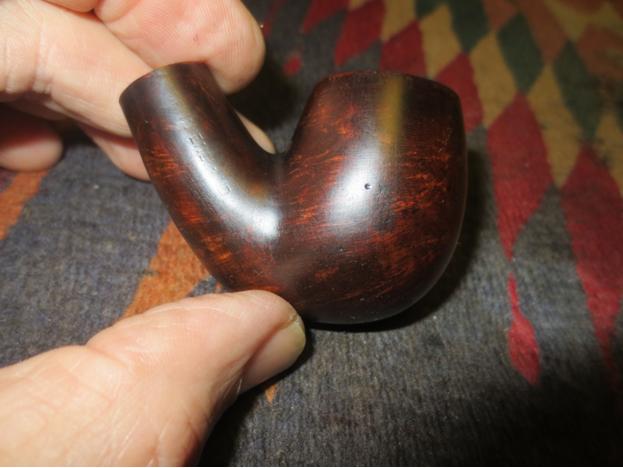
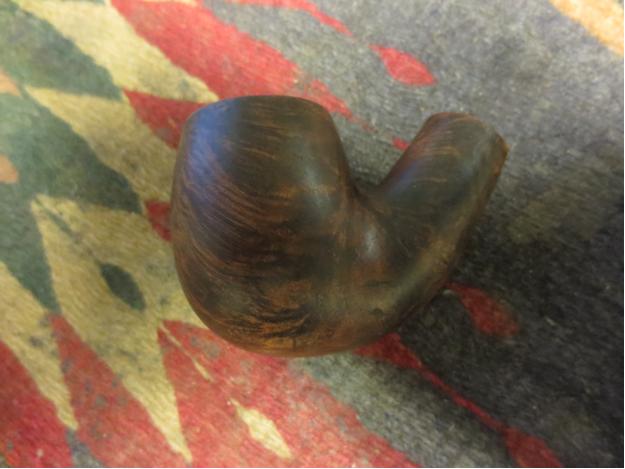
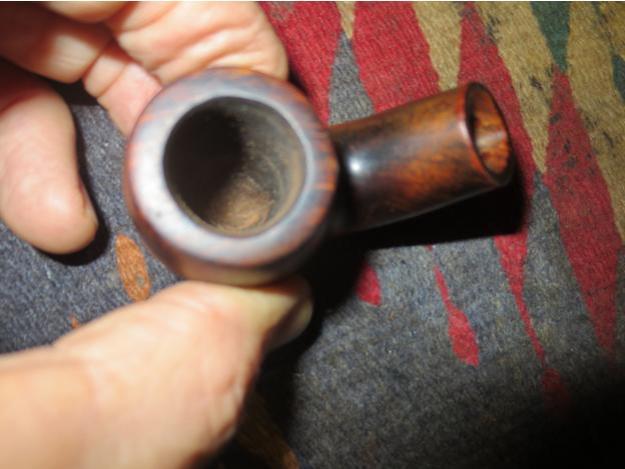
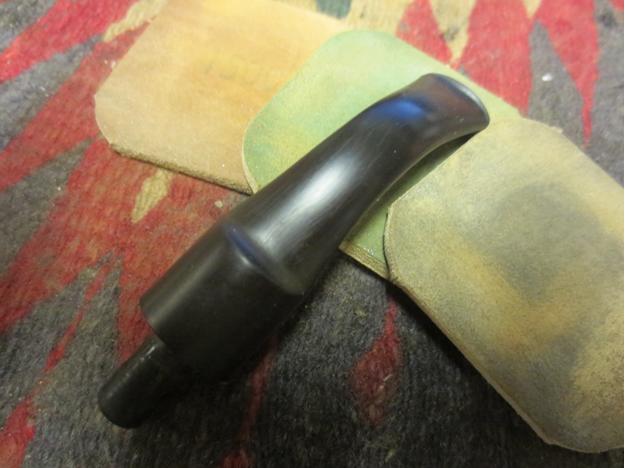
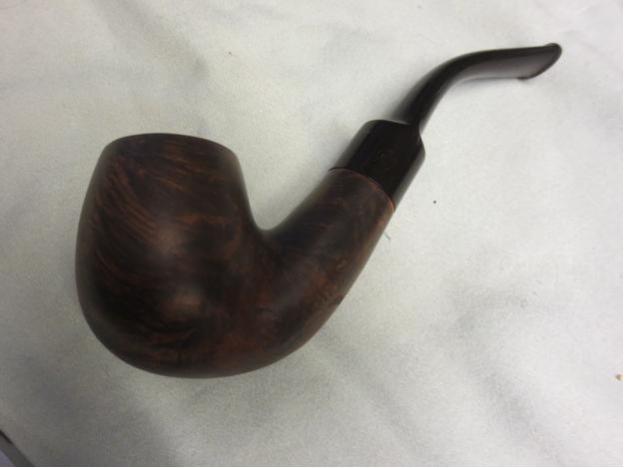
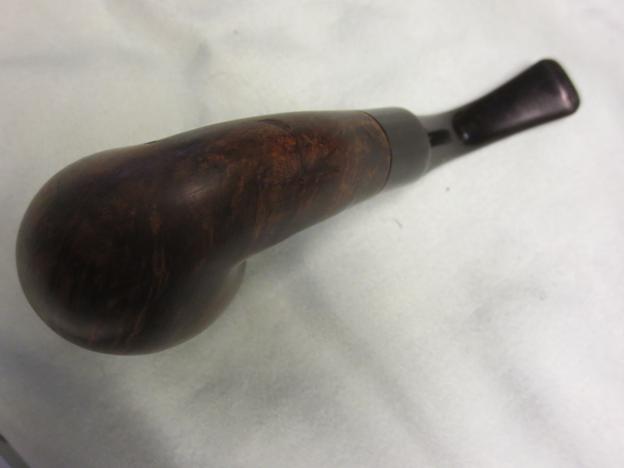
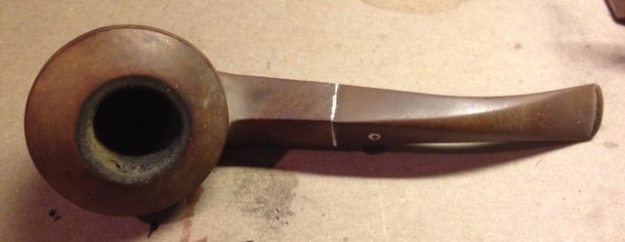
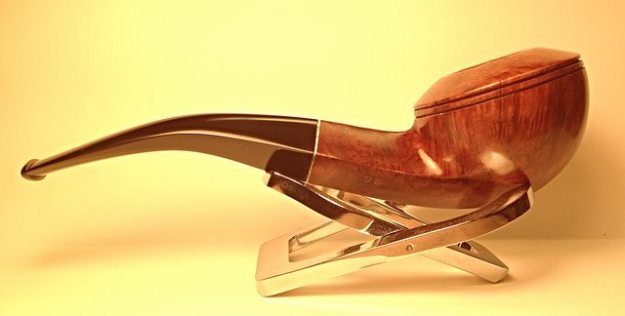
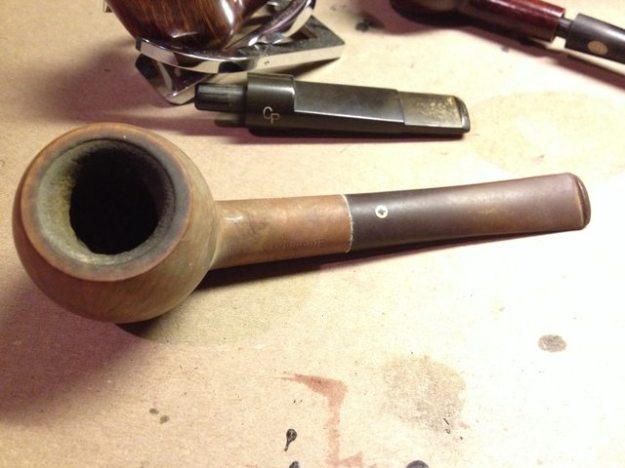
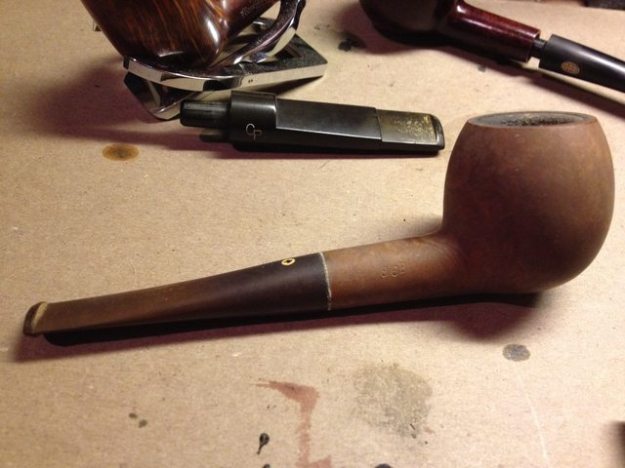
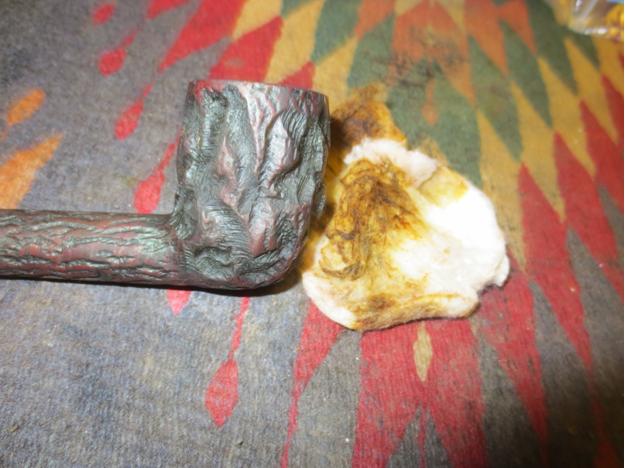
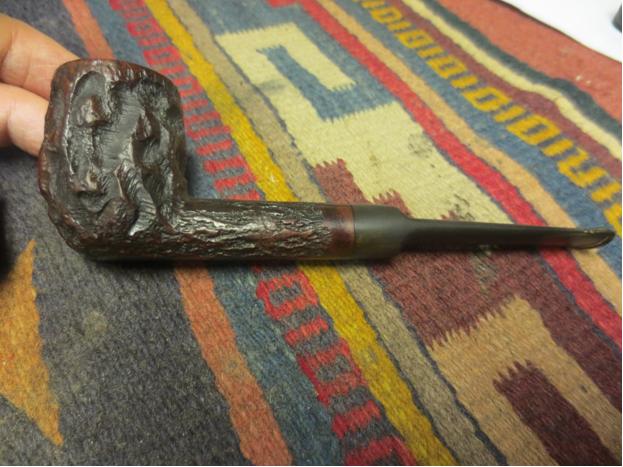
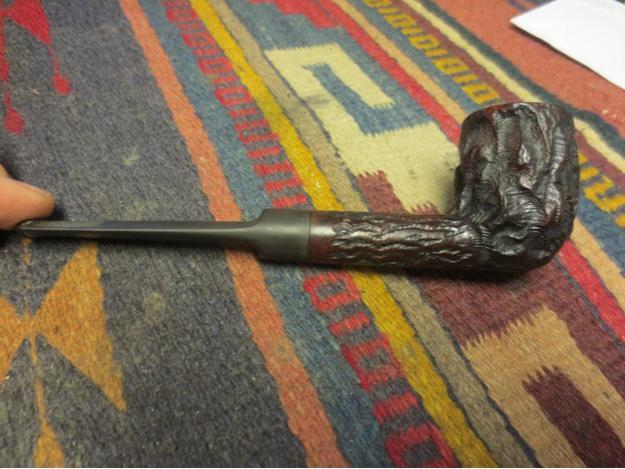
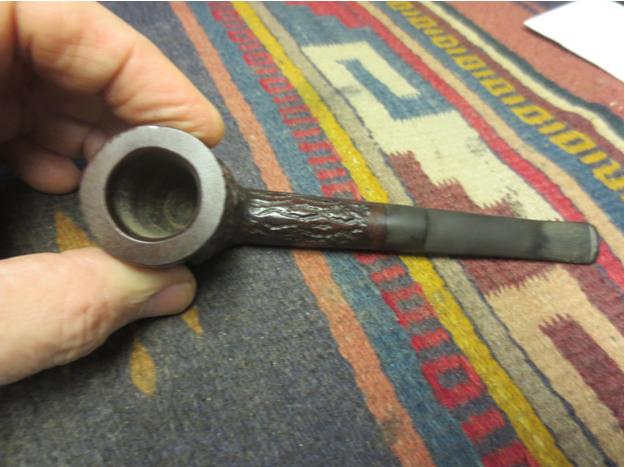
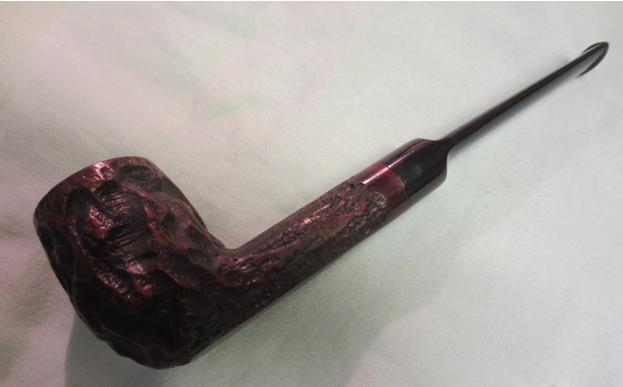
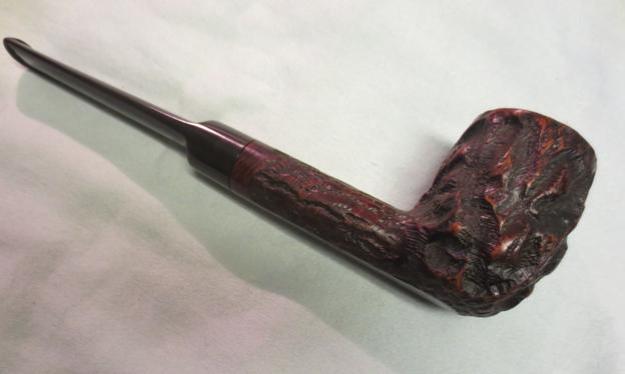
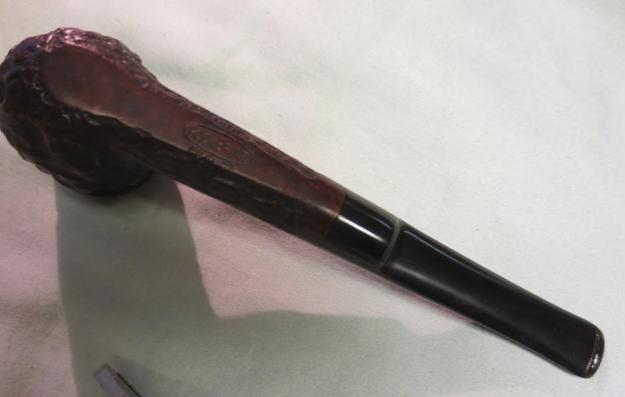
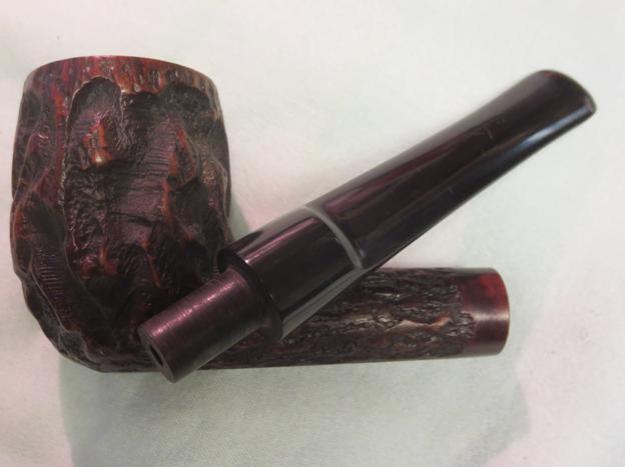
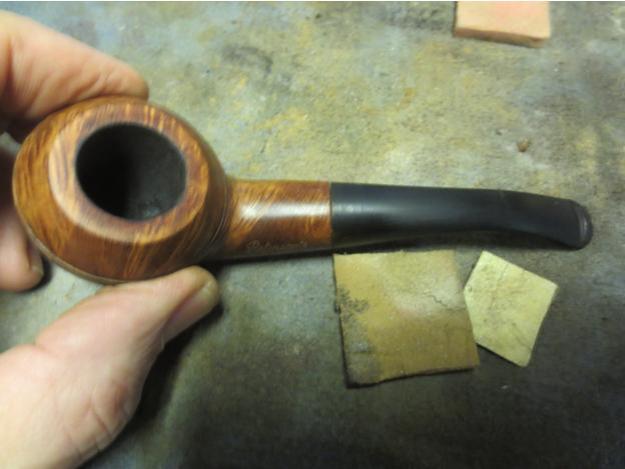
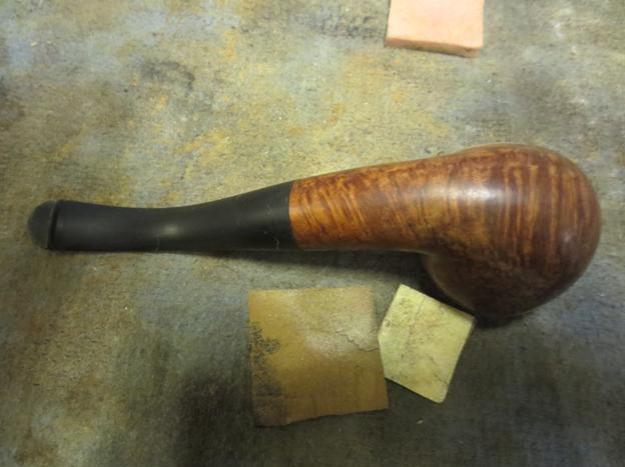
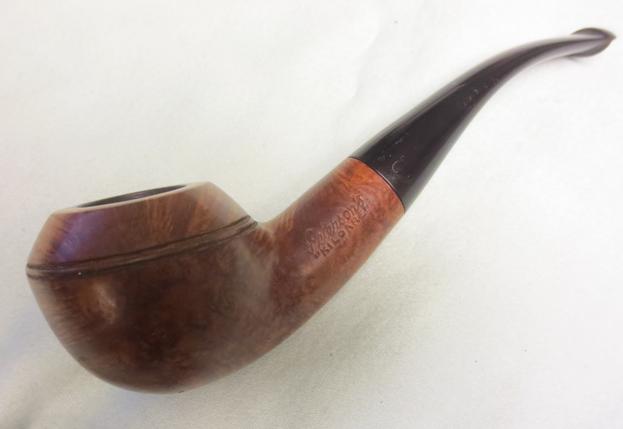
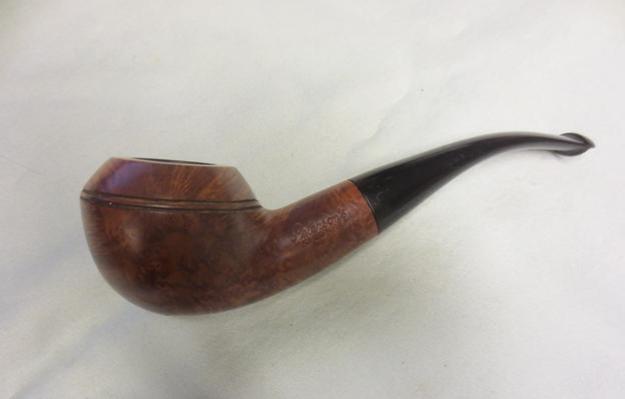
I just finished cleaning up the last of the pipe I picked up from the antique malls while I was in Idaho Falls. It is a little Dr. Grabow bent billiard. It is stamped on the left side of the shank Dr. Grabow over De Luxe over Imported Briar. On the right side near the stem shank union it is stamped with the shape number 9704. From what I can find on the Grabow shape charts the 04 shape is the bent billiard. This one was in rough shape. The finish was basically worn off and the bowl had spots of sticky grime on the sides and shank. There were also spots of paint on the shank and bowl. There were scratches all over the bowl. There were a lot of small fills on the right side of the bowl and the top of the shank as well as a large one on the lower part of the front of the bowl. Because of the missing finish these stood out. The top of the rim had a buildup of tars that looked flaky and hard. The bowl had a thick cake that made it impossible to see if the inside of the rim was in decent shape. I would need to ream it back to be sure. The stem was oxidized and the dirty with light tooth chatter on the underside near the button.Dr1

Dr2

Dr3

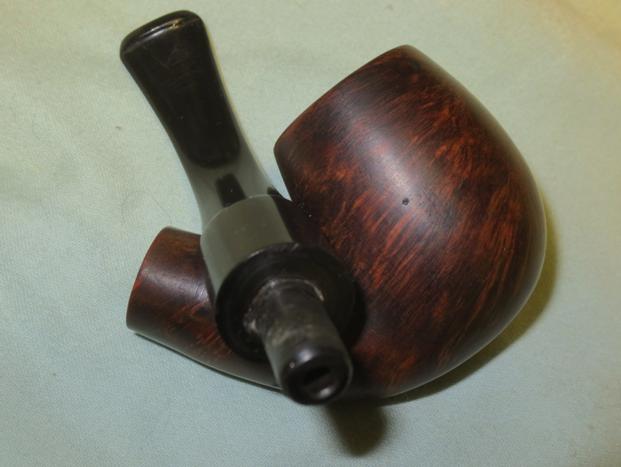
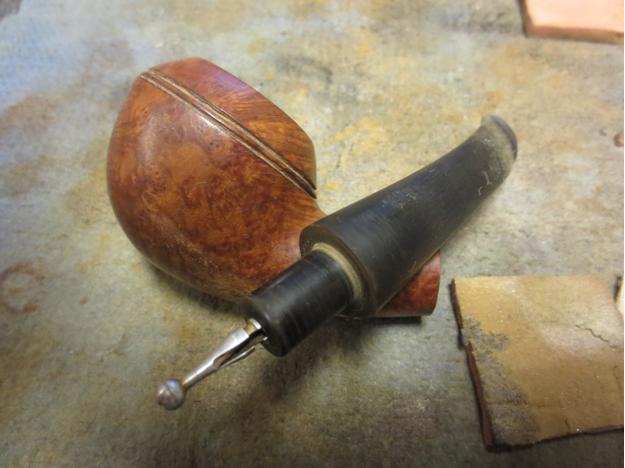
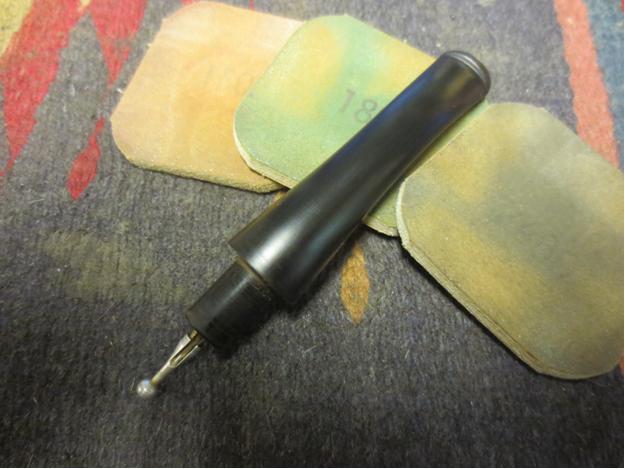
Dr4 I took a close up photo of the top of the rim to show what I had to work with in cleaning up the bowl and rim.Dr5 When I took the stem off the pipe it had the usual Dr. Grabow shovel stinger apparatus. This was a little unique in that it was not inserted into the metal tenon but was an integral part of the tenon. The two were cast together which made removing it impossible. It was covered in tars and in a tobacco coloured lacquer that was rock hard.Dr6 The next two photos show the stamping on both sides of the shank. The right side shows the clear shape number stamp and the left side the Dr. Grabow stamping. The Imported Briar stamping is weak but visible.Dr7

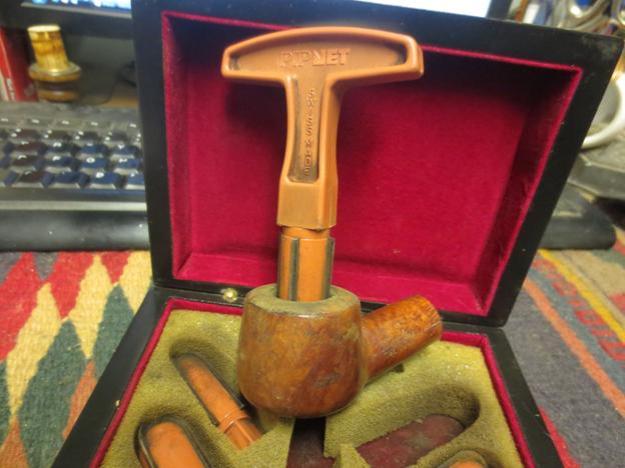
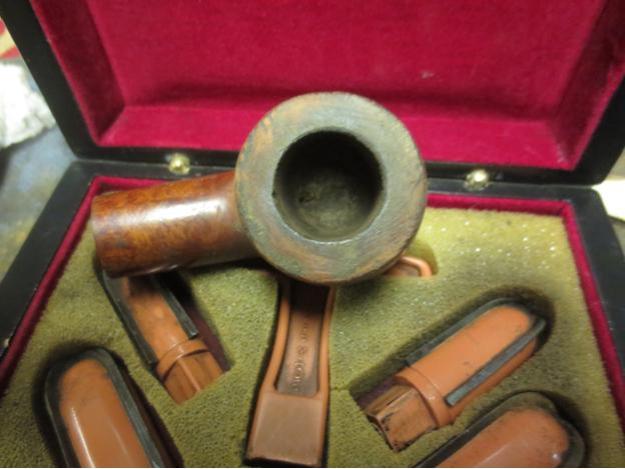
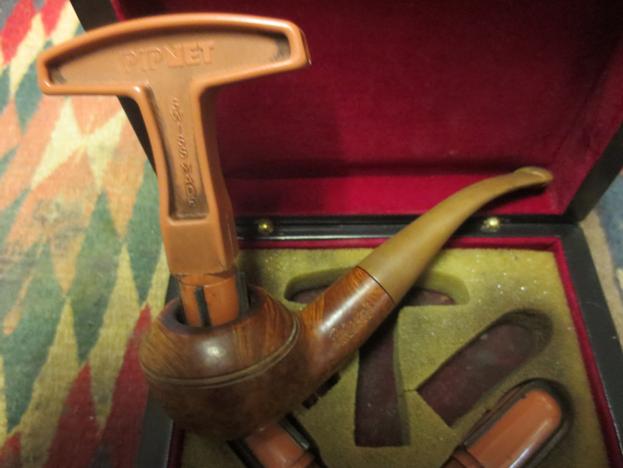
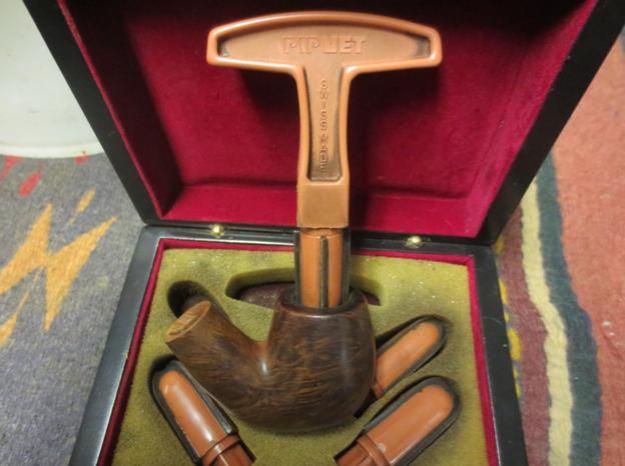
Dr8 I reamed the bowl back to bare wood with a PipNet reamer. I started with the smallest cutting head and worked my way up to one that was the same diameter as the inside of the bowl. Once the cake was cleaned out I used a pen knife to clean up the small ridge that shows up in the second photo below.Dr9

Dr10 I used a sanding sponge to lightly top the bowl. The tars and lava on the top were hard and this was the way I chose to remove it without damaging the finish to the rim. I worked on it until the rim was clean and smooth. It would still need to be scrubbed to remove the darkening.Dr11

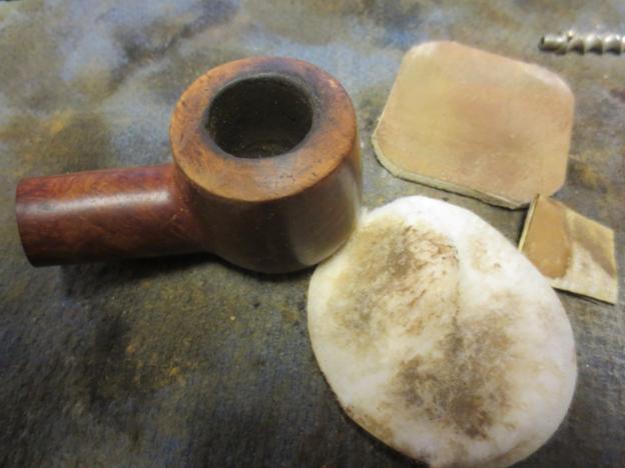
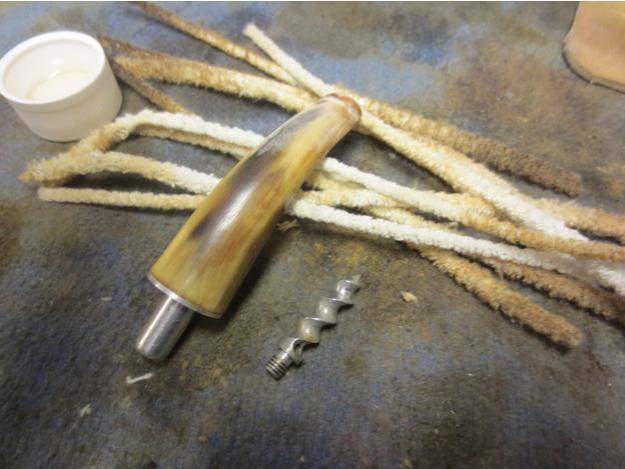
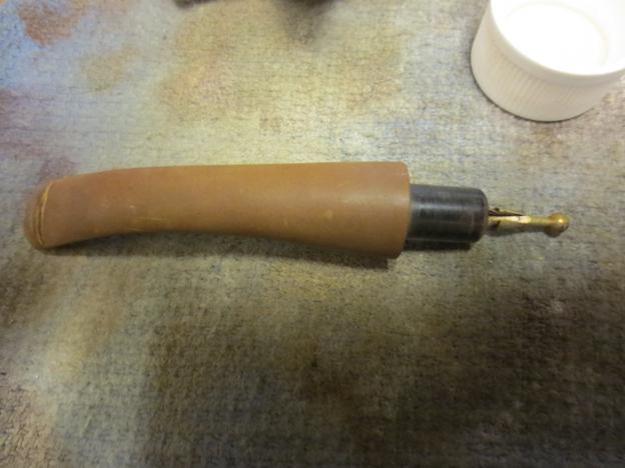
Dr12 I scrubbed the rim and the bowl with acetone on a cotton pad to remove the grime and oils left in the finish. I scrubbed until the rim and bowl were clean.Dr13 I scrubbed the shovel stinger with 0000 steel wool to remove the buildup on the aluminum and polish it at the same time.Dr14

Dr15 I cleaned out the shank with alcohol, pipe cleaners and cotton swabs until it was spotless. I then worked on the stem. It was made a bit more difficult with the built in stinger but I was able to get it clean with a bit of effort.Dr16 With the inside clean I sanded the bowl and rim with 220 grit sandpaper and a medium and fine grit sanding sponge to clean up the finish. I was able to remove the darkening on the rim and also the dark spots on the sides of the bowl.Dr17

Dr18

Dr19

Dr20 I screwed the stem back on the shank and then sanded the stem with the same sandpapers as I had sanded the bowl. I removed tooth chatter and the calcification on the first inch of the stem. I worked on the slight tooth marks on the button itself and cleaned them up. The pipe was beginning to take shape. Much more sanding would need to be done to the bowl to remove all of the scratches left behind by the sandpaper and a lot of polishing would need to be done on the stem before the pipe was finished.Dr21

Dr22

Dr23

Dr24 I rubbed the bowl down with olive oil so that I could wet sand the finish and work out the scratches.Dr25

Dr26

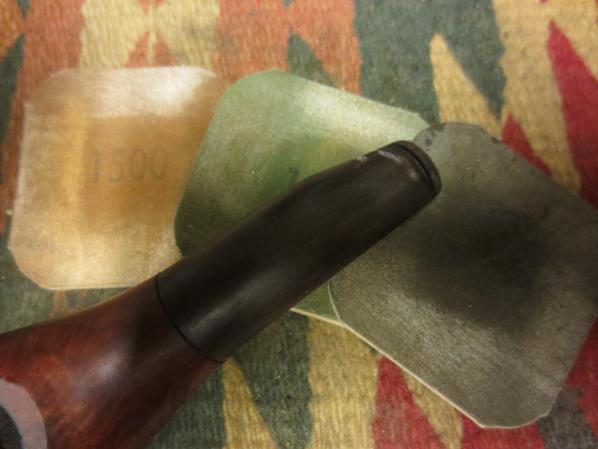
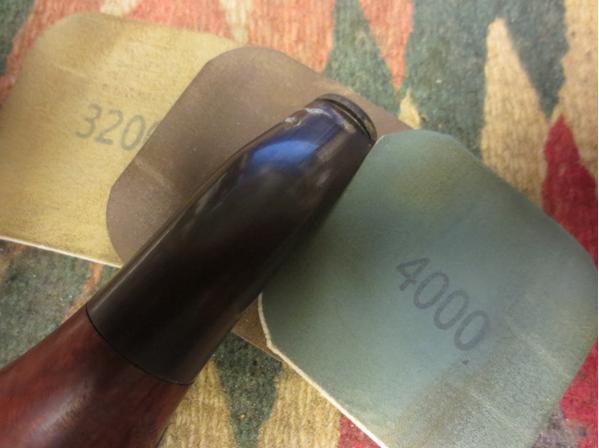
Dr27 I sanded the bowl with micromesh sanding pads and the olive oil until I was able to remove the scratches. I started with 1500-2400 grit pads and sanded until the scratches were minimized and then rubbed it down with olive oil once again before sanding with 3200-4000 grit pads. Each successive micromesh pad brought more of a shine to the briar. The fills became smooth and blended into the briar better and began to disappear into the briar as the scratches around the edges were smoothed out.Dr28

Dr29

Dr30

Dr31

Dr32

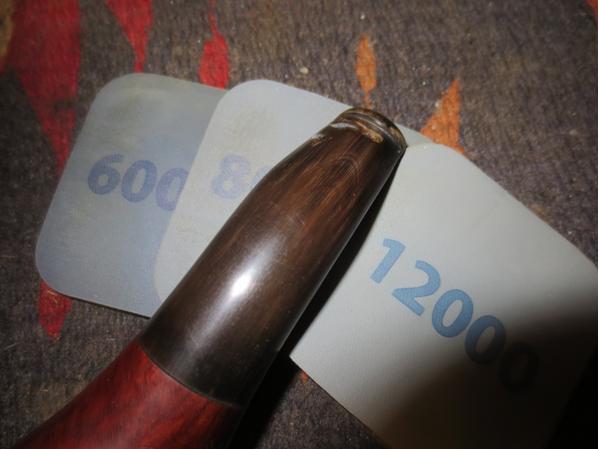
Dr33 I gave it a final rub down with oil and then finished sanding it with the last three grits of micromesh – 6000-12000. The bowl was smooth to the touch and had a shine to it that once was buffed and waxed would glow.Dr34

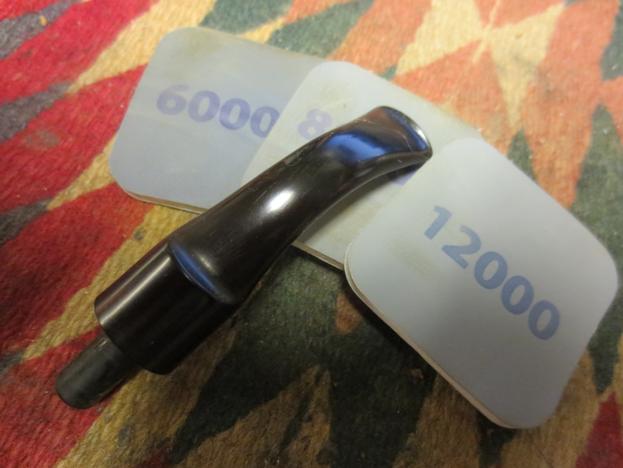
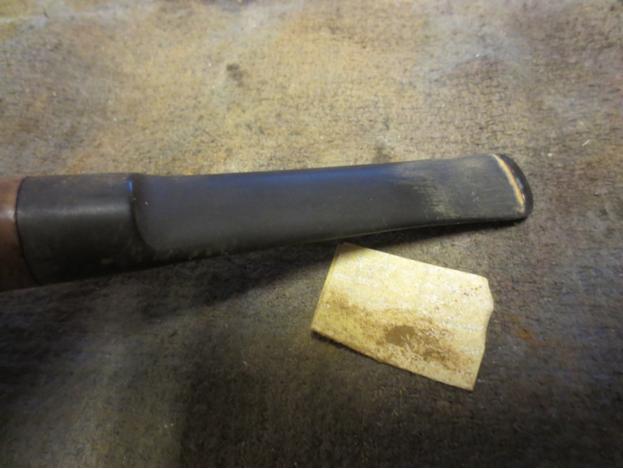
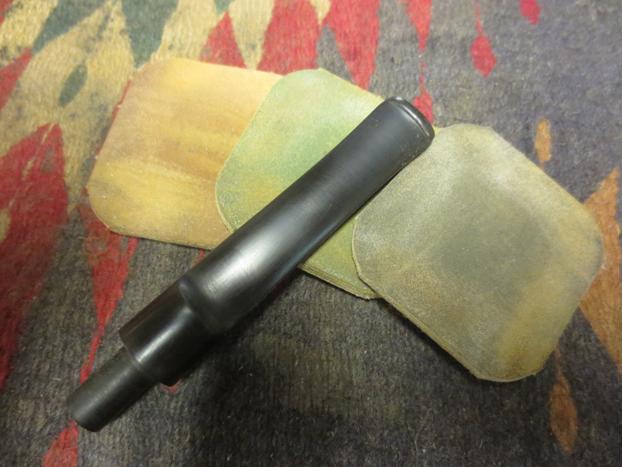
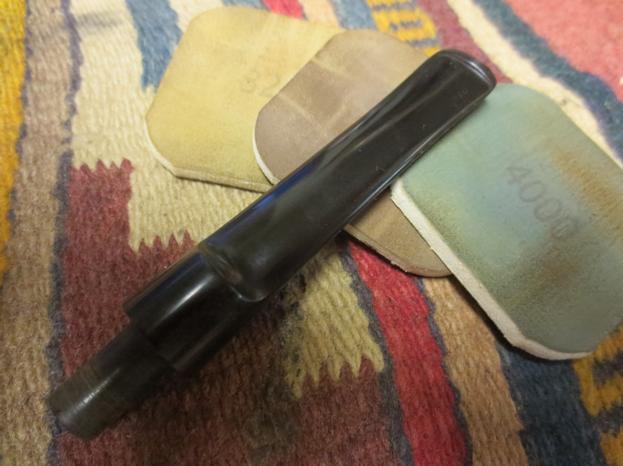
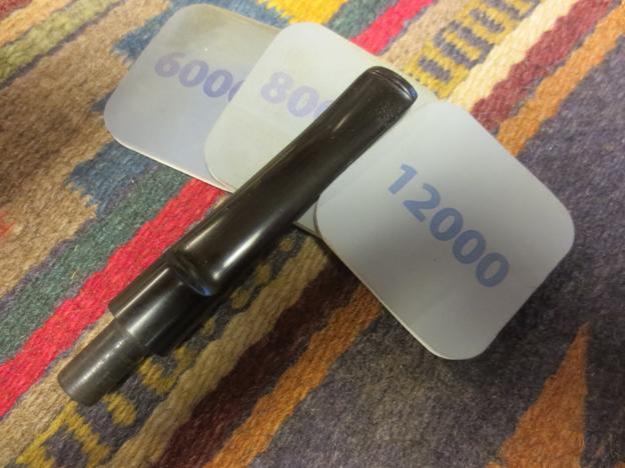
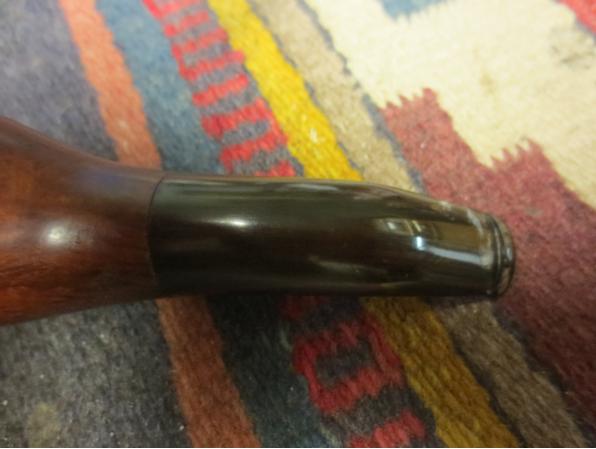
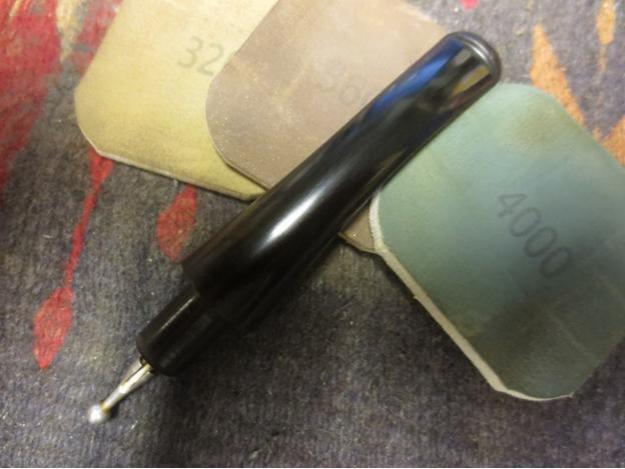
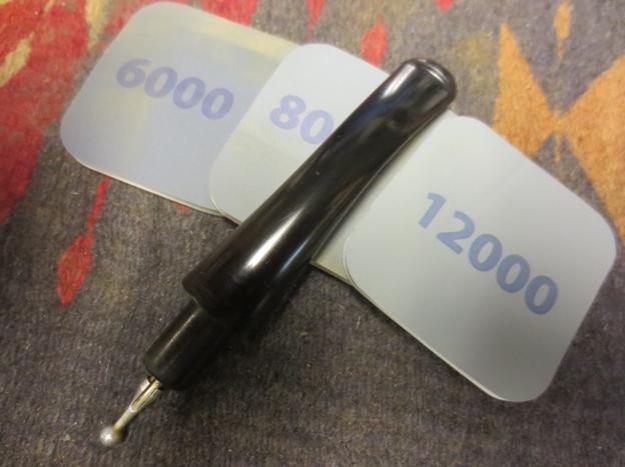
Dr35 I sanded the stem with micromesh sanding pads – wet sanding with 1500-2400 grit pads and then rubbing it down with Obsidian Oil. I continued to dry sand with 3200-4000 grit pads and gave it another coat of the oil. I finished by sanding it with 6000-12000 grit pads and then gave it a final coat of oil and let it dry.Dr36

Dr37

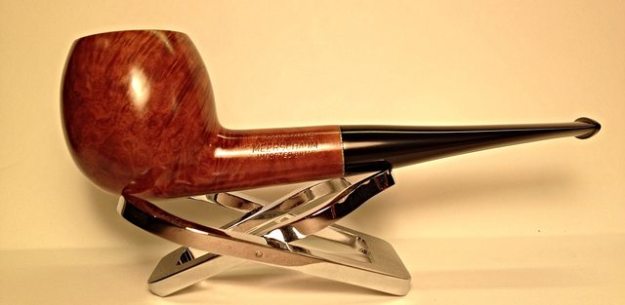
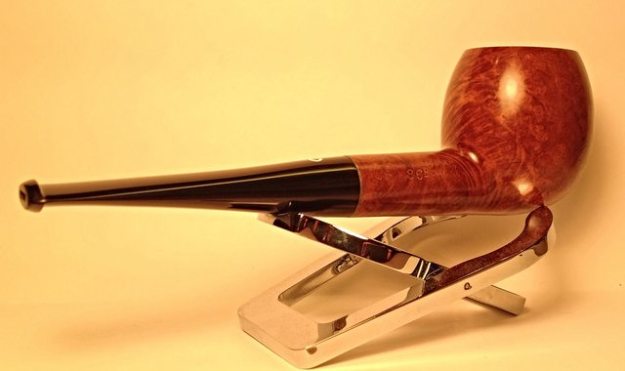
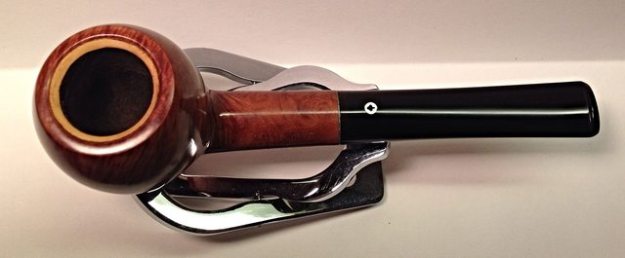
Dr38 I buffed the pipe on the wheel with Blue Diamond polish and then gave the bowl and stem multiple coats of carnauba wax. I buffed it with a clean flannel wheel to give it a shine and finished by buffing it with a microfibre cloth to deepen the shine. The finished pipe is shown in the photos below. It is a beautiful old Grabow that has a lot of life left in it. Whether I keep it or pass it on to someone else it should last much longer than I will. It should continue to give companionship to whoever’s rack it graces. Thanks for looking.Dr39

Dr40

Dr41

Dr42

Dr43

Dr44

Dr45

Dr46

ADDENDUM: I received the following message on FaceBook from Christopher Chopin. It adds much to the information on this pipe so I add it here:

A favorite shape. Nice job as always Steve. And yes, 04 is the shape code, 97 was the finish code for deluxe. Also 92 and 98, there was more than one De Luxe, and 97 was the natural variegated finish. Dating on that if I’m not mistaken is between 1944 and 1953, at which point the spade was rotated so that the tip pointed to the bowl instead of the mouthpiece, after the company was purchased by HL&T. That is a true Linkman’s grabow, they just discontinued the Linkman’s stamp in ’44. I suspect it’ll find a place in your regular rotation.
Restoring a Windsor De Luxe 13106 Unique with a Horn Stem


Blog by Steve Laug

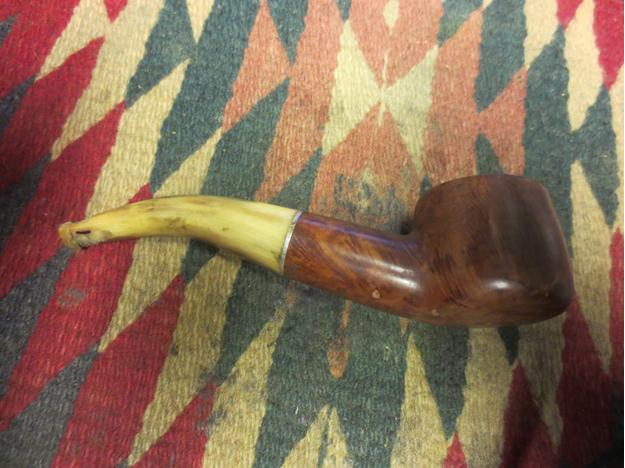
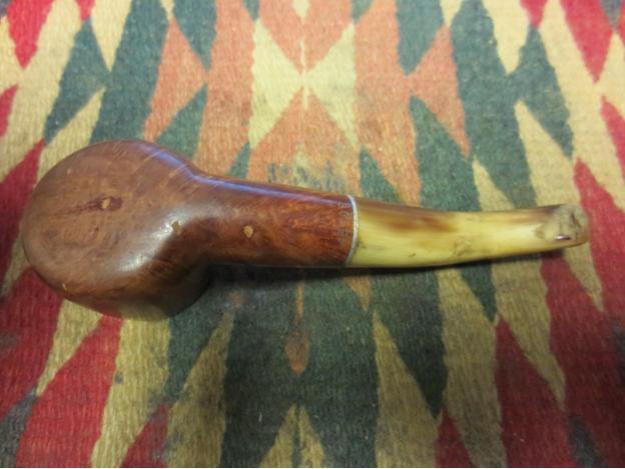
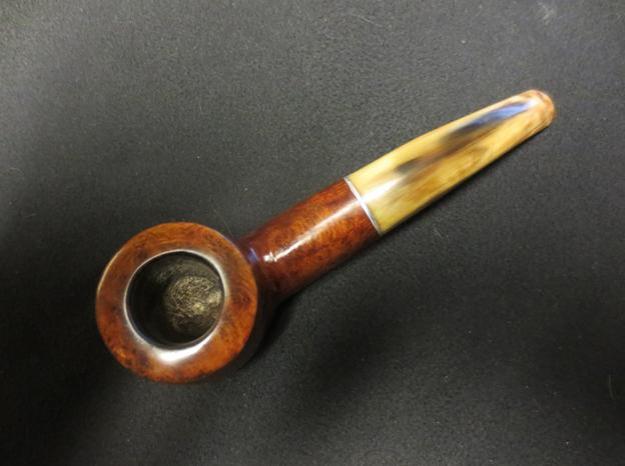
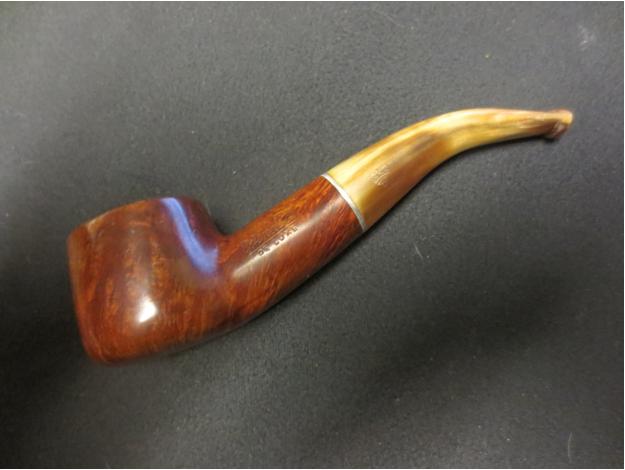
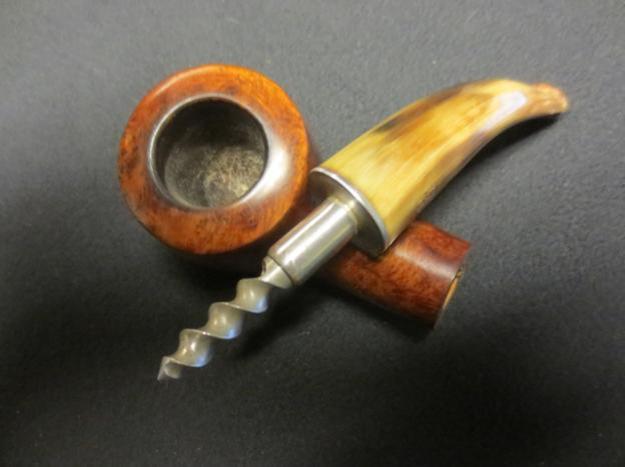
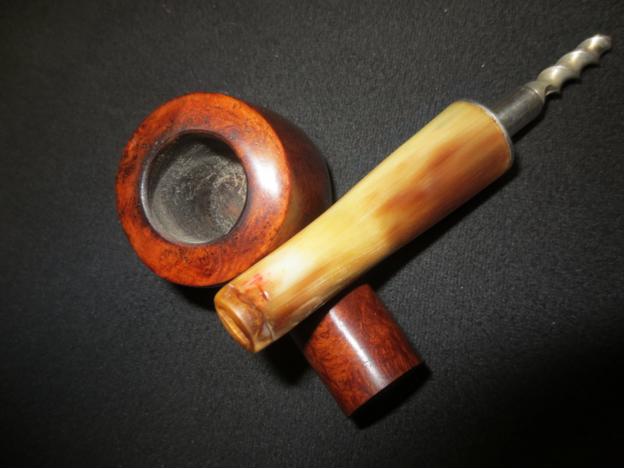
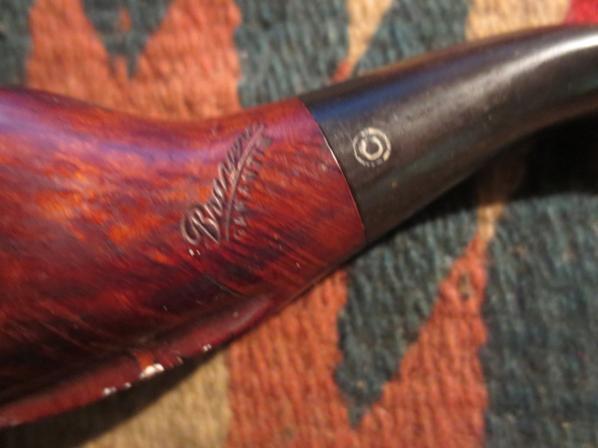
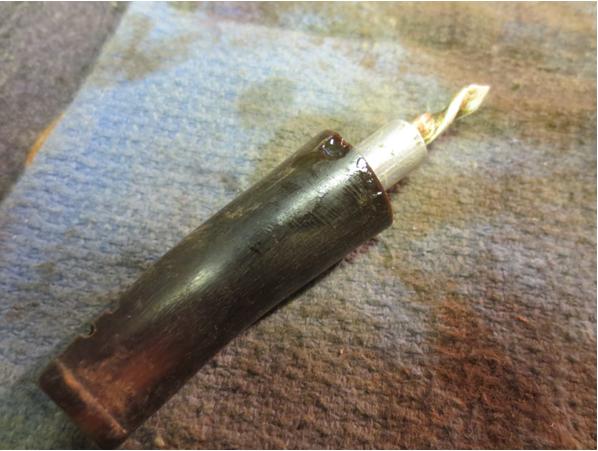
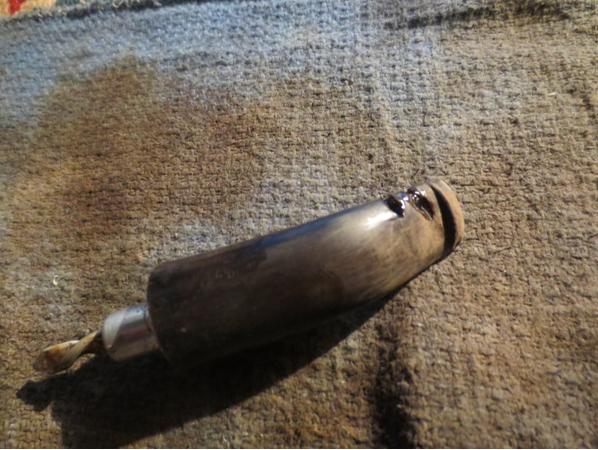
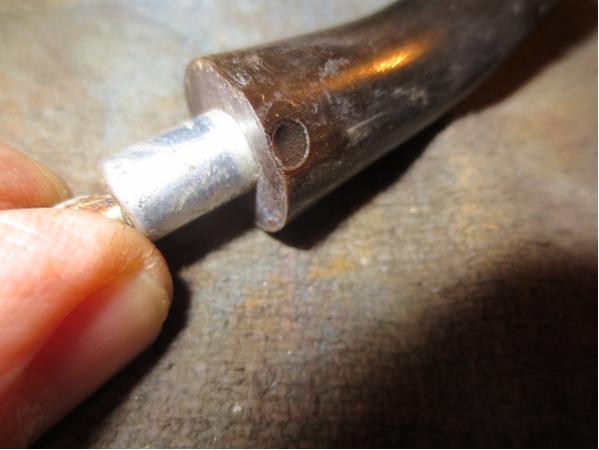
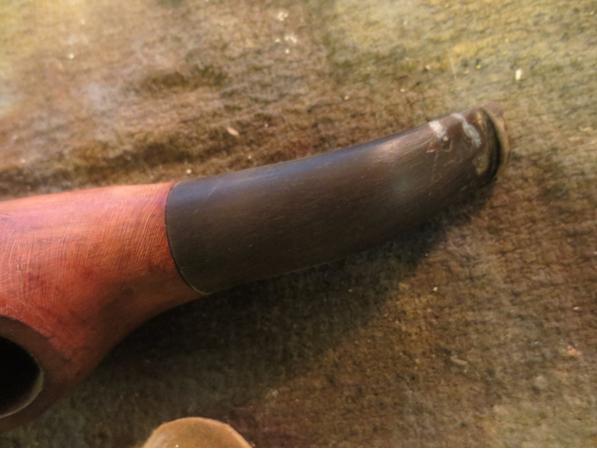
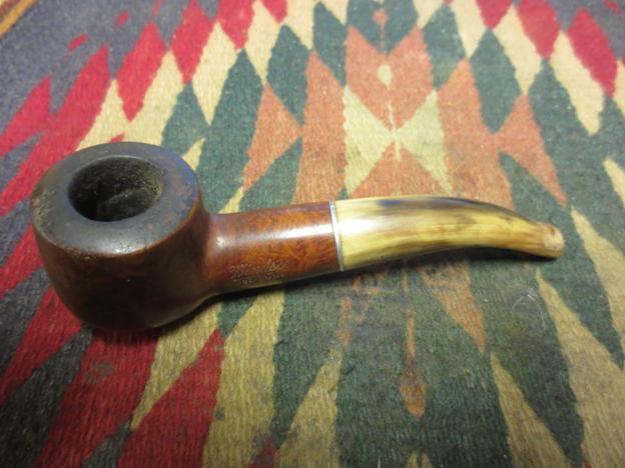
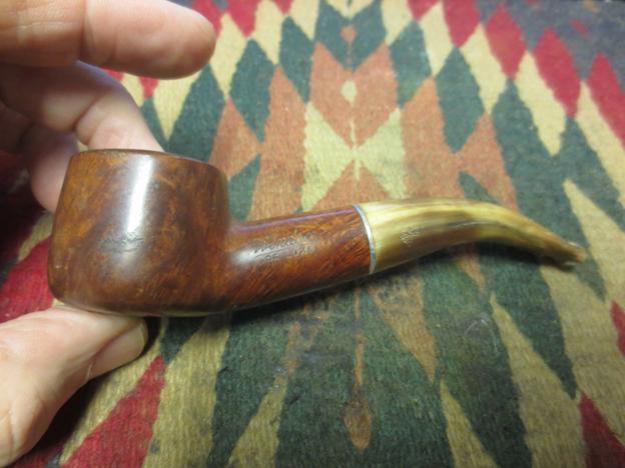
When I saw this old horn stem pipe on Ebay UK I immediately put in a bid and I won the pipe. It had a great striated horn stem that had lots of deep colours. The area in behind the button on the top and the bottom of the stem was really damage with large chunks of horn missing. On the underside of the stem there was a dark red stain in the striations of the horn near the button. The stem has a metal push tenon with a twisted stinger apparatus screwed into the end of the tenon. The metal ring between the shank and the stem was attached to the stem. The stem had a faint crown stamped in the horn. The bowl had a thick cake and the rim was heavily covered with lava that flowed over from the bowl. The underside of the bowl had a half-dozen fills in it that were shrunken and filled with white putty. The stamping on the shank said Windsor in a script with a flouring line underneath. Stamped under that was De Luxe. On the underside of the shank next to the stem it was stamped 13106. I have no clue as to the provenance of the pipe – WMTP says that there are several makers in England that made the brand. All have stamping that is slightly different. The finish on the bowl looked to be in decent shape under the grime and build up on the sides of the bowl. (Anyone have any ideas on the maker let me know).horn1

horn2

horn3

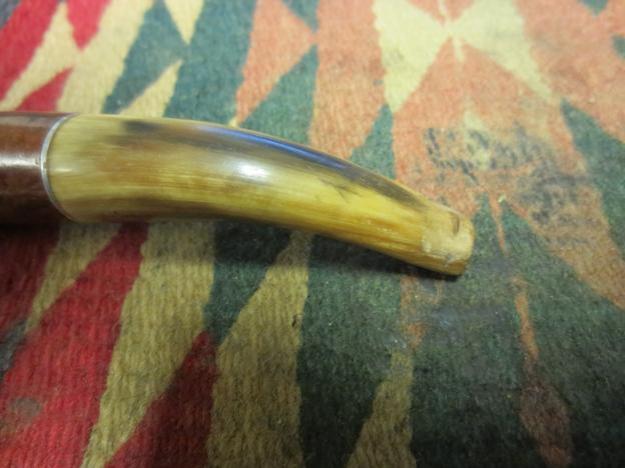
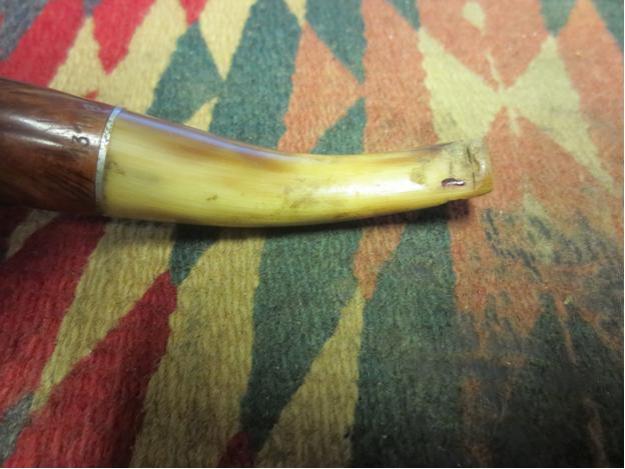
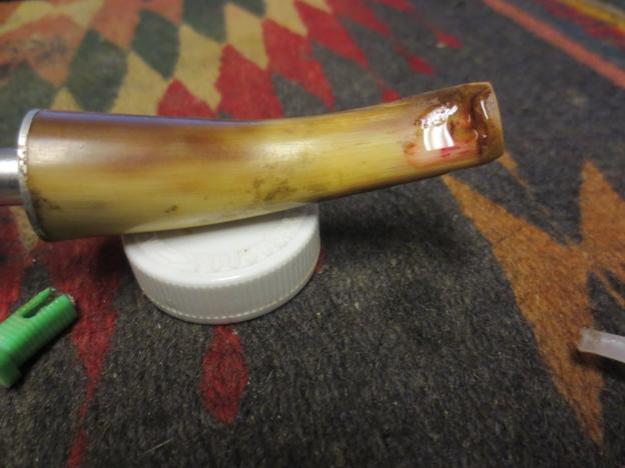
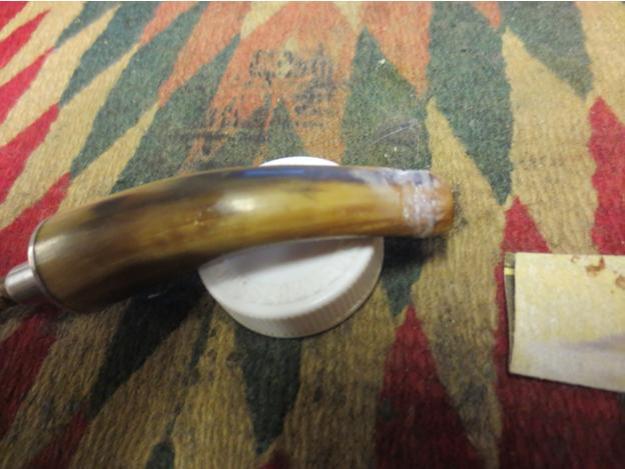
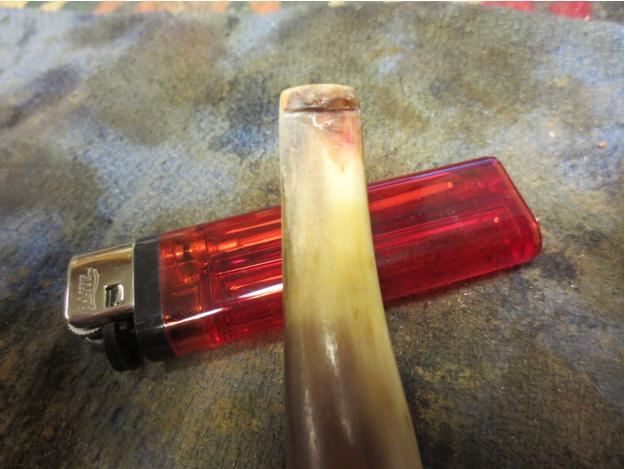
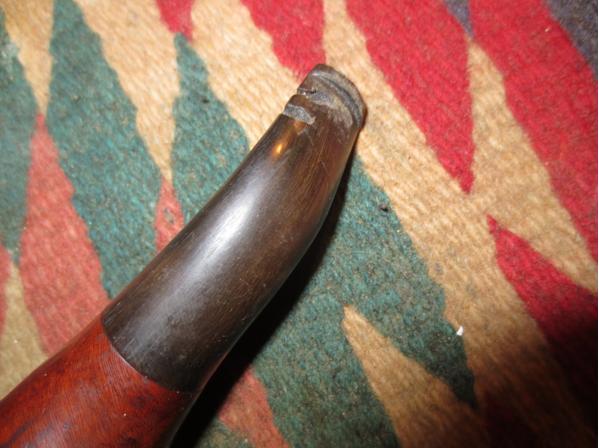
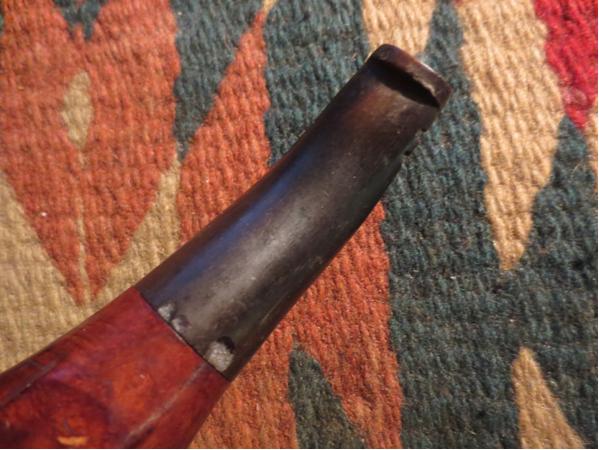
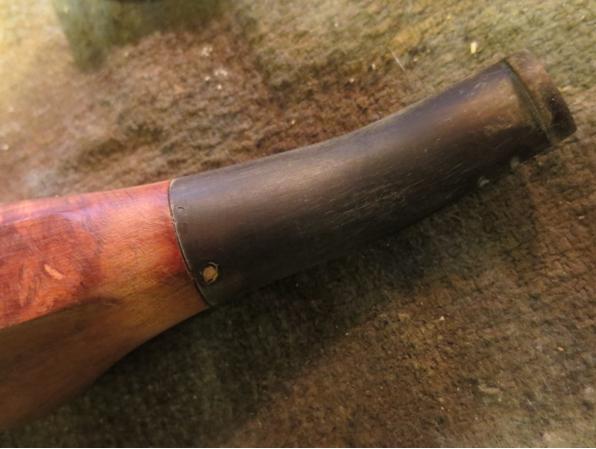
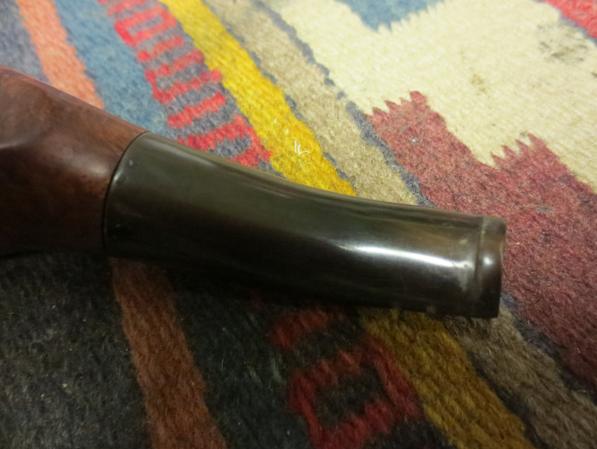
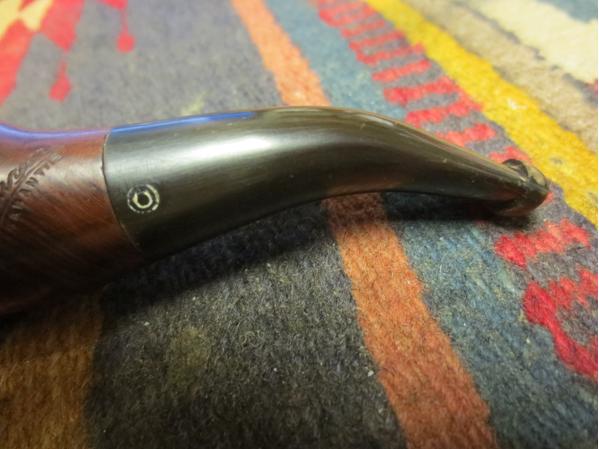
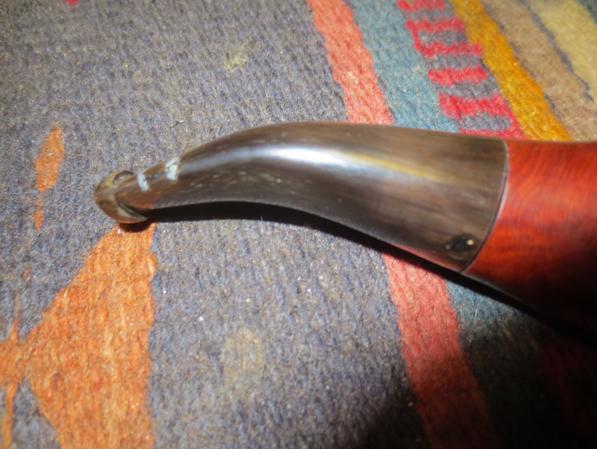
horn4 I took close up photos of the stem to give an idea of the damage that I would be working with on this pipe. On both sides of the stem there was serious damage in the form of missing chunks of horn. These chunks were missing in the sharp edge of the button and in the surface of the horn itself. The first and second photos show the top and bottom sides of the stem. In the second photo below there is a dark line at the bottom edge of the stem next to the button – that is the red mark that was in the surface of the horn. The third photo below shows the profile of the stem and clearly shows the missing chunks in the horn.horn5

horn6

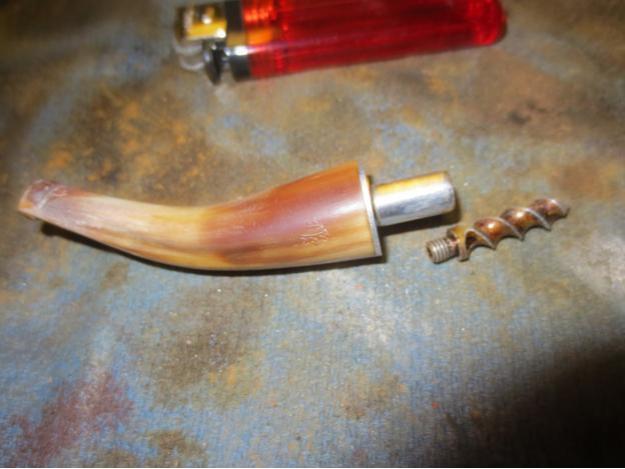
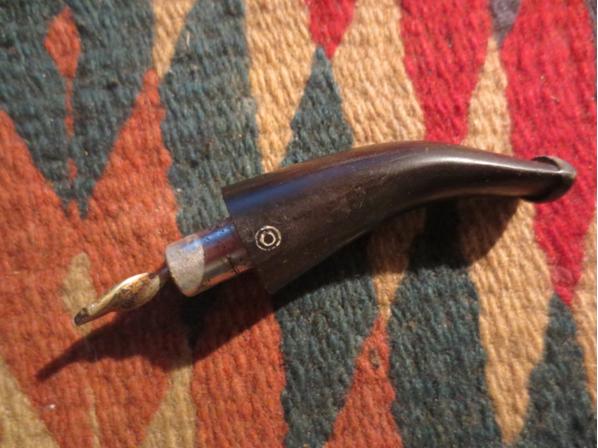
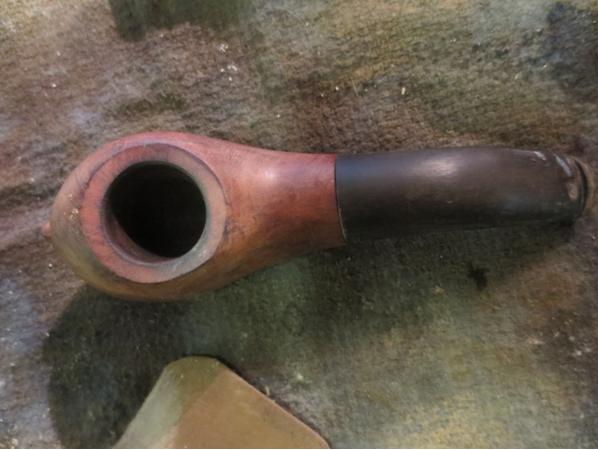
horn7 The close up photo of the rim below shows the overflow of lava on the surface that would need to be removed to assess damage to the bowl and rim.horn8 The twisted aluminum stinger apparatus was hefty and at first glance seemed to be stuck in the tenon. I tried to turn it and pull it and it would not budge. I would need to heat it to see if I could loosen the tars that bound it to the tenon.horn9

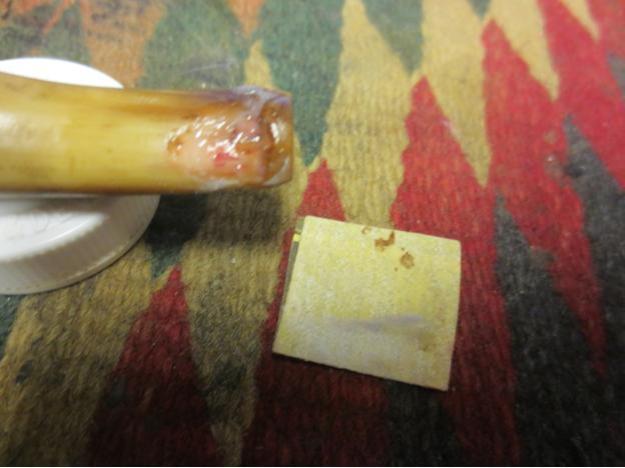
horn10 I decided to work on the stem first. I enjoy working on and repairing horn stems. I find great satisfaction in bringing them back to life and bringing out the rich glow that come from a polished piece of horn. In this case I sanded out the damaged areas with 220 grit sandpaper to smooth the edges of the holes and to clean up the debris. I wiped it down with a cotton pad and alcohol to clean off all the debris. I decided to add a little colour to the horn before filling in the hole so that the darker striation would continue to the button. I used a black permanent marker to colour in a stripe from the place it ended on the undamaged portion back to the button. I filled in the damaged areas on the surface of the stem and on the button with clear super glue. The area on the underside where the red spot was cleaned up a bit but the red bled through. I added multiple coats of the glue to build up the areas. I overfilled them so that I had material to work with in reshaping the button and the stem surface.horn11

horn12

horn13

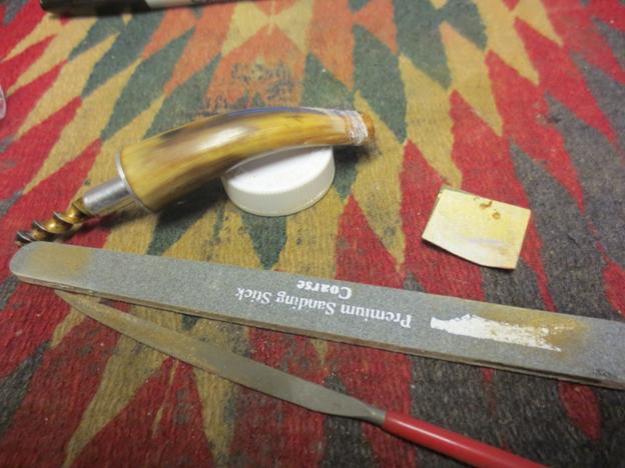
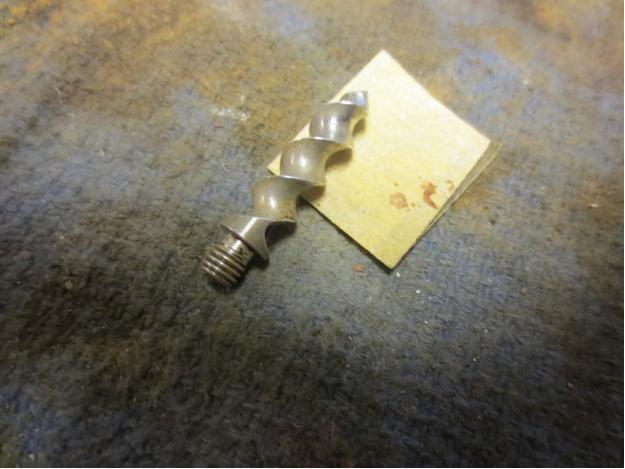
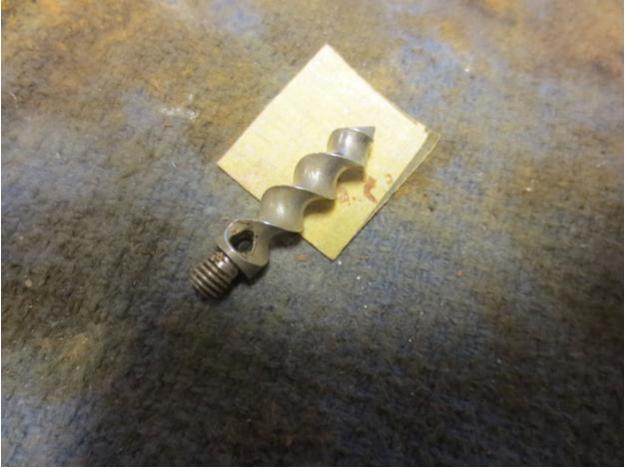
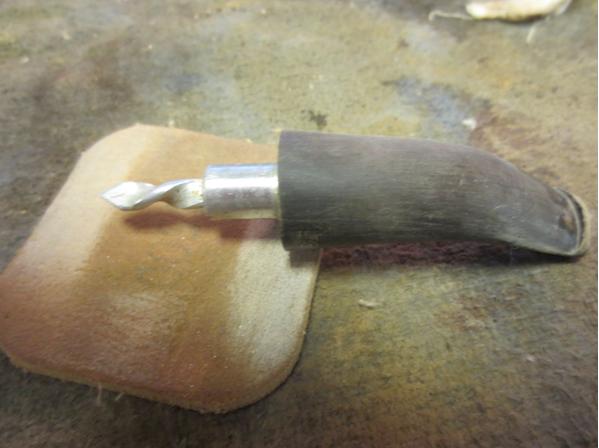
horn14 Once the glue dried I used a needle file and a coarse sanding stick to recut the edge of the button and clean up the top face of the button. I wanted a clean defined area that matched the undamaged part.horn15 I sanded the entire stem, carefully avoiding the area of the stamping with 220 grit sandpaper to blend the repair into the surface of the stem and to shape the button. I heated the metal tenon with a lighter and was able to unscrew the stinger from the end.horn16 I worked on the shape of the button and the flow into the button with sandpaper and sanding sticks. The shiny areas in the photo below next to the button are the patches of superglue. Much polishing still remains to be done at this point but the surface is smooth to the touch.horn17

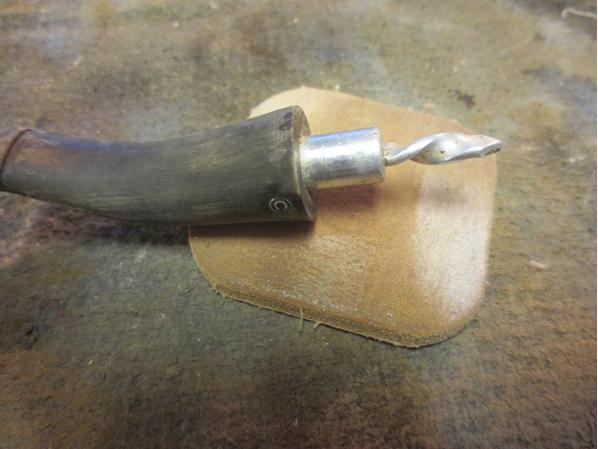
horn18 I cleaned up the stinger with 0000 steel wool to remove the tars and tarnish. I cleaned out the inside of the stinger with pipe cleaners, cotton swabs and alcohol.horn19

horn20 I reamed the bowl with the PipNet reamer and took the cake back to bare wood. I wanted to check out the inside of the bowl for damage or cracks. Fortunately it was very clean.horn21

horn22 I scrubbed the rim with alcohol and cotton pads to remove the tars. It was very hard so I also used a 1500 grit micromesh sanding pad. I was able to get most of the build up off the rim. There was some darkening that I would need to sand with a more aggressive grit of sandpaper. I scrubbed the exterior of the bowl down with acetone on cotton pads as well to remove the grime and old finish.horn23With the basic work done on the exterior I cleaned out the shank and the airway in the stem. I also scrubbed out the inside of the bowl with alcohol, cotton swabs and pipe cleaners.horn24

horn25 I put the pipe back together to get a look at how things were coming along. I wanted to see what the repaired stem looked like. In the photos below you can see the new look of the stem from all angles. I am pleased with the overall repair of the stem.horn26

horn27

horn28

horn29 I took the stem off the pipe and worked on it with the micromesh sanding pads – wet sanding with 1500-2400 grit pads and dry sanding with 3200-12000 grit pads. I rubbed the stem down with Obsidian Oil between each pad as I have found when working with horn that the oil gives it a better bite into the material and helps raise the shine.horn30

horn31

horn32

horn33

horn34 I lightly buffed the stem with Blue Diamond and then gave it several coats of carnauba wax. I buffed it with a soft flannel buff and then hand buffed it with a microfibre cloth.

With the stem done I turned to the finish on the bowl. I used a dental pick to remove the putty fills from the bottom of the bowl and shank. I wiped the bottom of the bowl down with alcohol and then packed briar dust into the holes where I had removed the putty. Once the dust was packed in I put a drop of clear super glue on top of the dust and then packed it down with the pick. I added more briar dust to top up the fill.horn35

horn36 When the patches had dried I sanded them with 220 grit sandpaper to remove the excess material and blend the surface of the patch into the bowl surface.horn37 I heated the briar and then stained it with a medium brown aniline stain. I flamed the stain to set it in the briar. I buffed the bowl with Blue Diamond on the wheel and then gave it several coats of carnauba wax to give it a shine. I hand buffed it with a microfibre cloth.horn38

horn39

horn40

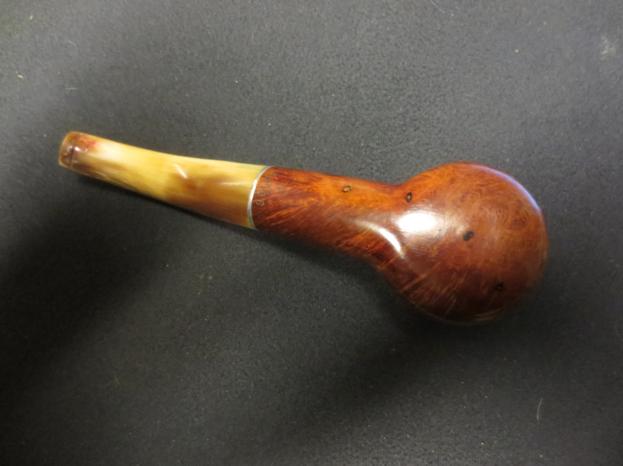
horn41 I pushed the stem back in place and gave the entire pipe a final coat of wax and then buffed it with a clean flannel buff. I finished by buffing it by hand with the cloth. The finished pipe is shown in the photos below. It is a beautiful pipe and the horn just shines. I am looking forward to enjoying it in the days ahead. What would you call this shape? Any ideas?horn42

horn43

horn44

horn45

horn46

horn47

horn48 Thanks for looking.

Cleaning up Two Sisters – A pair of Beaver Cut Genuine Briar Pipes


Blog by Steve Laug

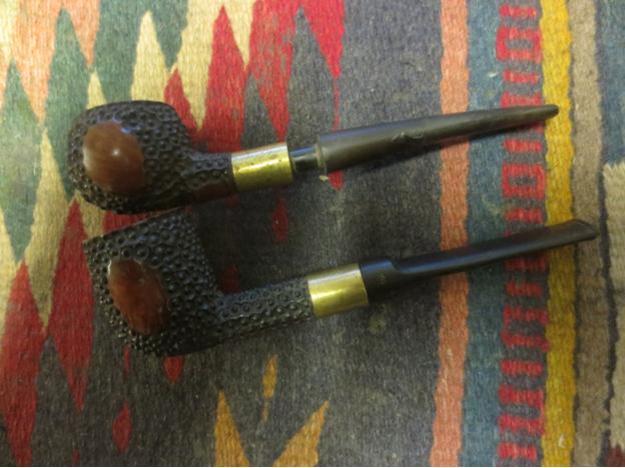
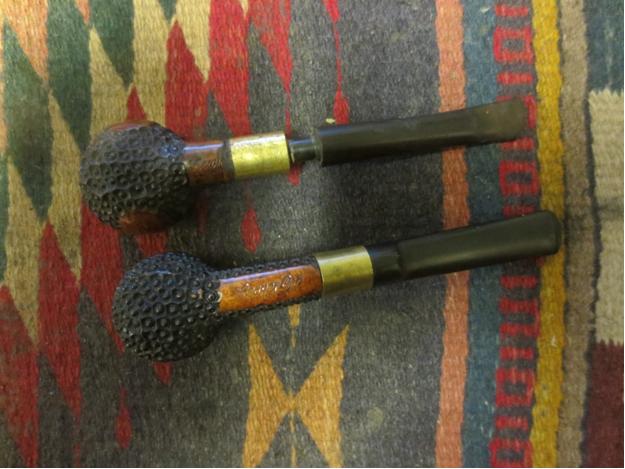
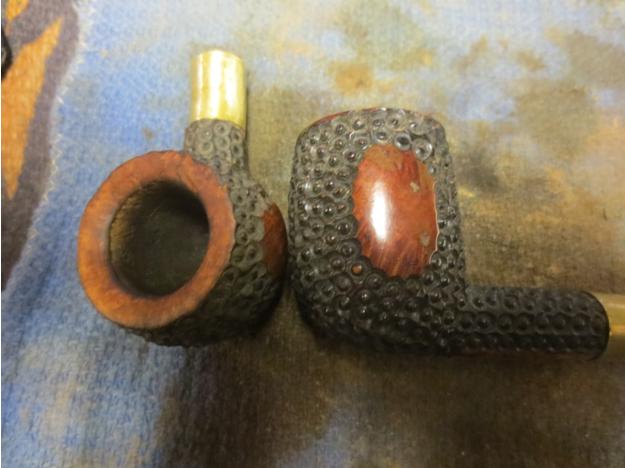
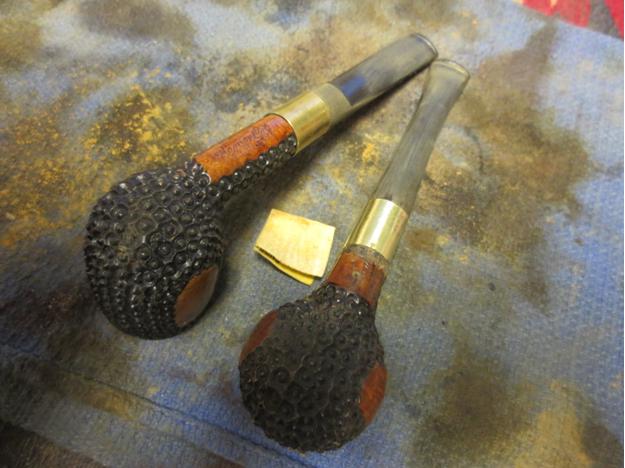
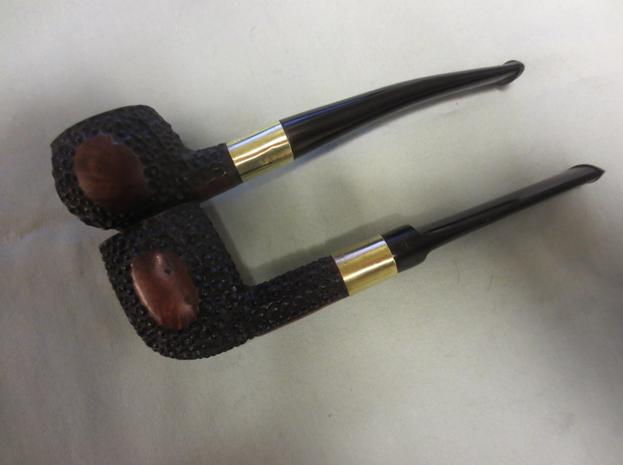
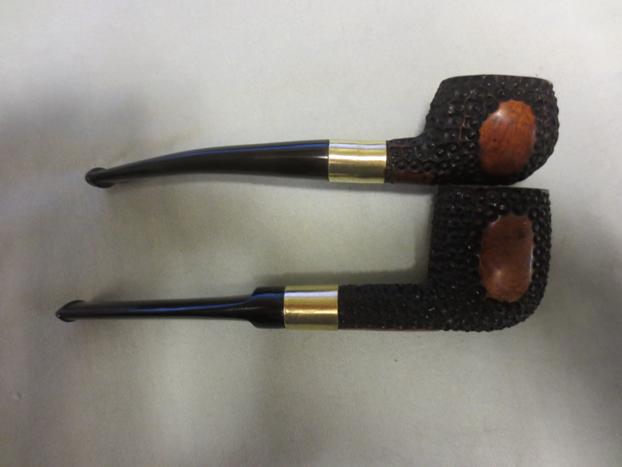
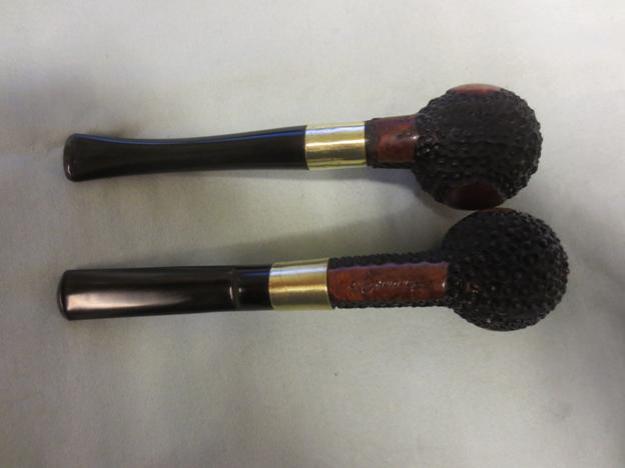
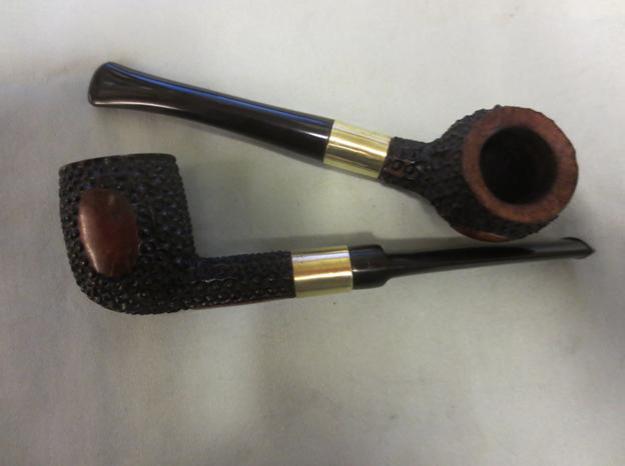
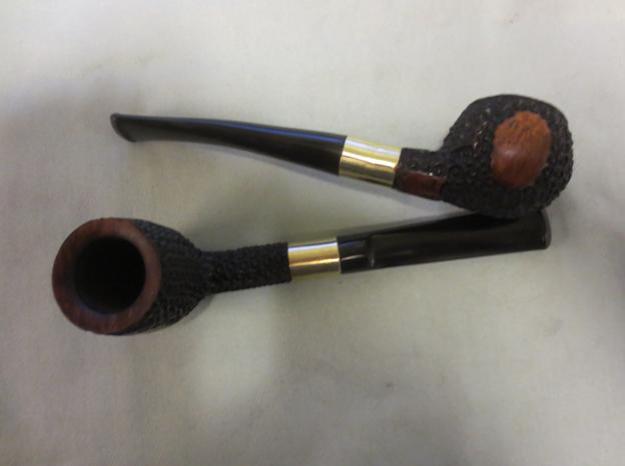
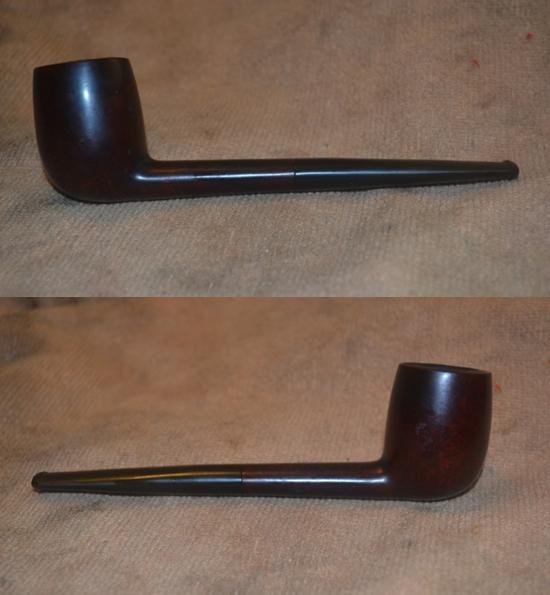
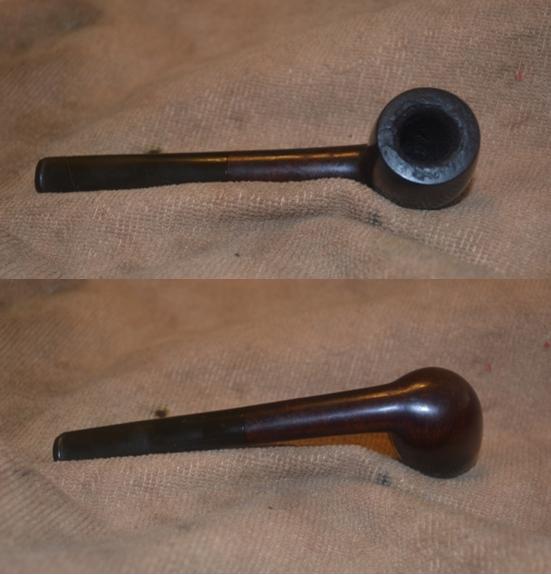
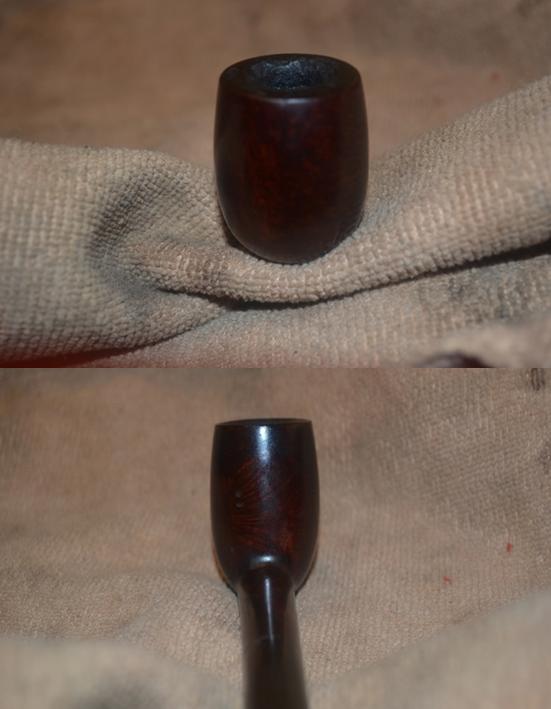
I received this pair of pipes from Charles Lemon of Dad’s Pipes Blog. He picked them up as part of an estate from London, Ontario, Canada. They are both stamped on the bottom of the shank on a smooth surface with the words Beaver Cut in script over a block script Genuine Briar. He did some hunting on the web and could find nothing that gave any sense of history of the brand. When I got them I did the same and found absolutely nothing. The Genuine Briar stamping tells me it is post WW2 and is made in the USA. I found another Beaver Cut for sale on Worthpoint but it also did not have any information. From what I can find that is the extent of the information available.
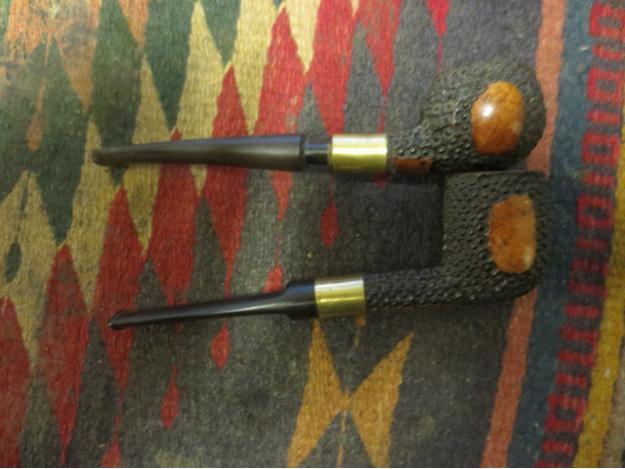
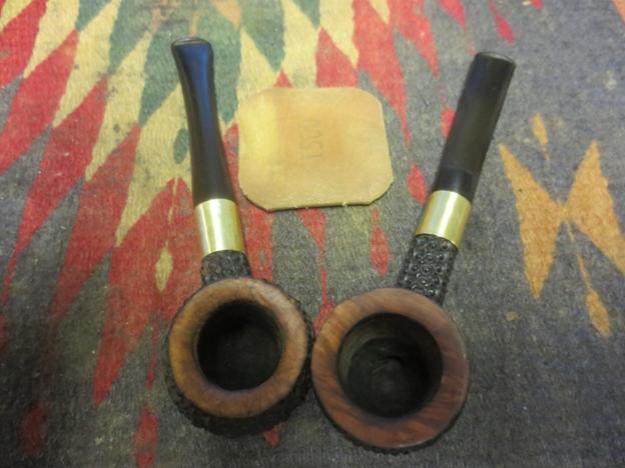
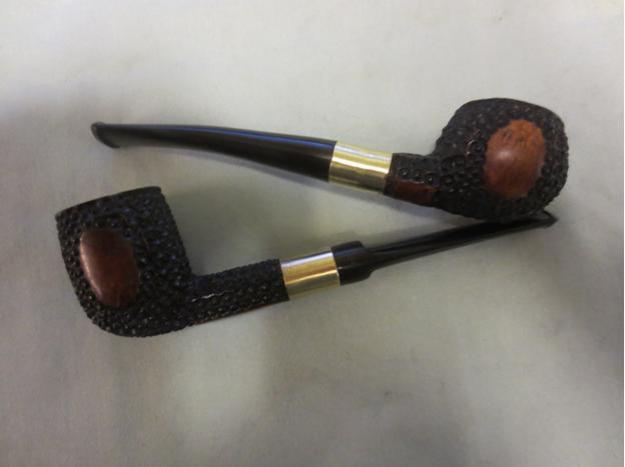
The top pipe in the photo is Prince. The rustication was dirty and a lot of dirt and debris had collected in the grooves. It had a rustication pattern that I had not seen before. It is like rows and rows of birdseye cuts in the surface of the briar. There is a smooth patch on both sides and on the bottom of the shank. The bowl had a thick cake and the shank had a lot of debris and oils in it. The rim had an overflow of lava and oils on the top of the bevel. The inner and outer edge of the rim was in great shape and the bowl was still in round. The brass band on the shank appeared to be factory as it was on both pipes and was identical. It was scarred and had tarnished. When it was installed the installer had made a mess of the shank. He had cut the shank back farther than the length of the band so that when it was installed it left a groove between the edge of the band and the rustication on the shank. It looked almost as if the band was an afterthought. I am pretty certain that it was sent out from the factory with that look. The stamping had been cut in two by the chopping of the briar to fit the band. The stem did not fit the shank due to the buildup internally. The stem was also missing a large chunk on the right side near the button and someone had cut a groove in the top of the stem to begin cutting a new button but had not finished the work.

The lower pipe is a Billiard with the exact same grain pattern. It was in a bit better shape than the Prince. The grooves in the unique rustication were actually clean. There was a varnish coat on the smooth parts of the bowl even though there were several sandpits in each smooth spot. The bowl had a thick cake and the rim had an overflow of tars and lava which obscured the bevel. The fit of the band to the shank on this one was better though looking at it from the end of the mortise it was clear that the shank was out of round. The brass was also scratched and marred on this pipe. The stamping on this one was clean and deep. The stem diameter extended further on the right side than on the left though the stem was of equal diameter all the way around. There were some light tooth marks on the top and the bottom of the stem near the button and there was tooth chatter. The stem was oxidized but was faintly stamped with a B in a circle.Beaver1

Beaver2

Beaver3

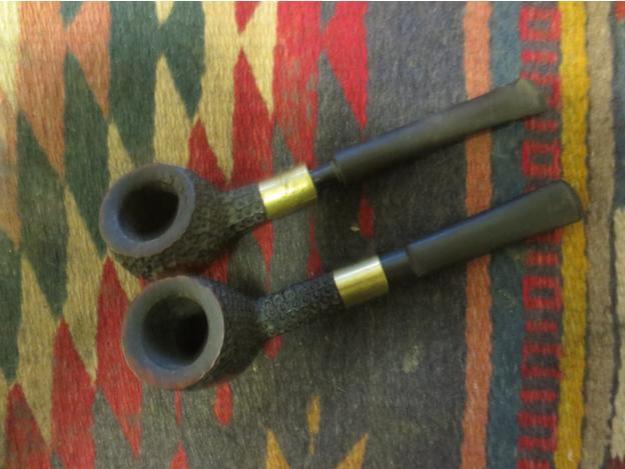
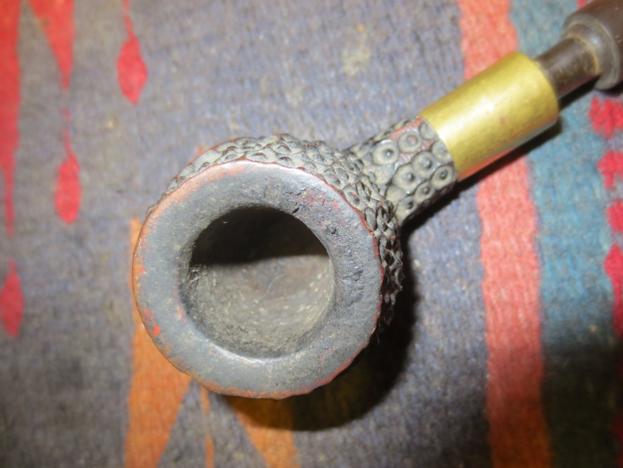
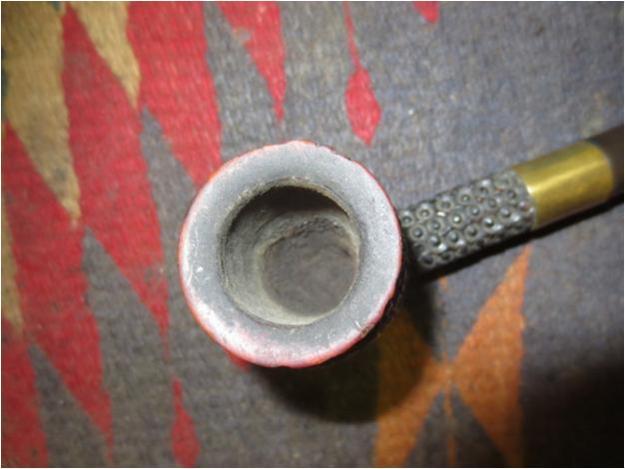
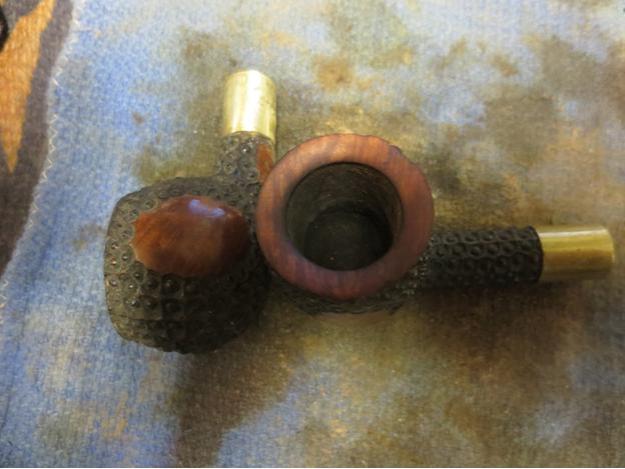
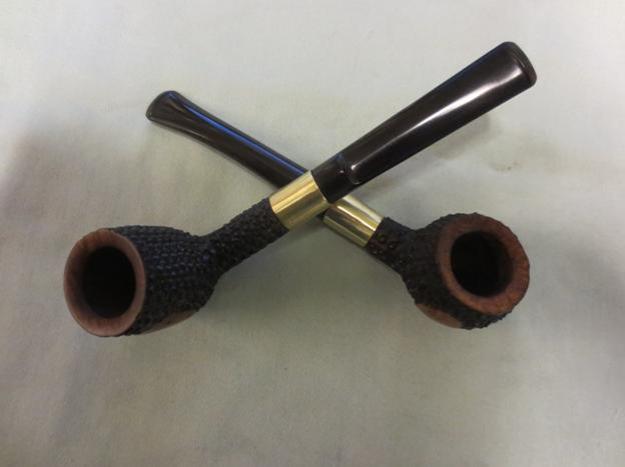
Beaver4 I took a close up photo of the rim on each of the pipes. The first photo below shows the rim on the Prince and the second shows the rim on the Billiard. The buildup and the uneven cake are visible in both pipes. It is hard to see the bevel on the rim in the Prince but it matches the one on the rim of the Billiard.Beaver5

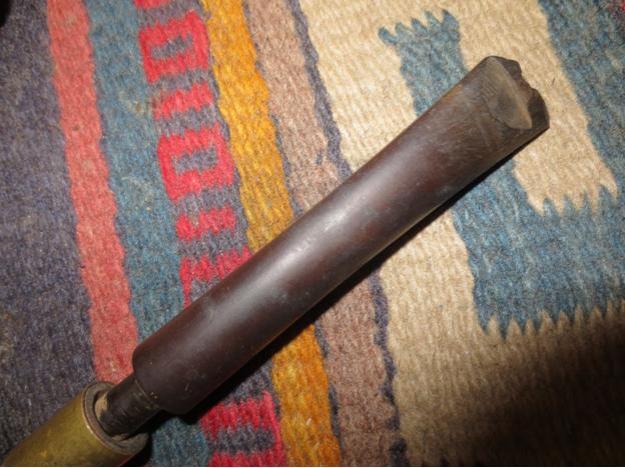
Beaver6 I also took some close up photos of the stems on both pipes to show the state of the stem. The first two photos show the stem on the Prince. You can see the damage of the broken area on the side of the button and the cut off button. You can also see the groove or divot that had been cut in the stem to make the pipe useable. The third and fourth photos show the stem on the Billiard and you can see the tooth marks and chatter on the stem surface. It is also clear that it does not fit well against the side of the band.Beaver7

Beaver8

Beaver9

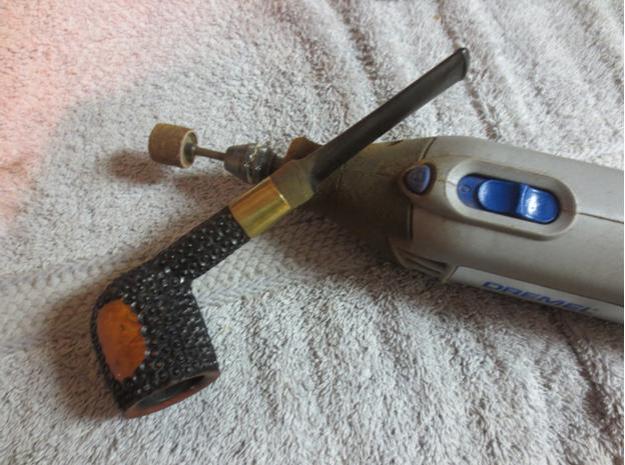
Beaver10 I decided to restem the Prince so I found a stem in my can of stems that was the same diameter as the shank and slightly longer than the broken stem to account for the missing button. I turned the tenon with a sanding drum on a Dremel to get a close fit and then hand sanded until it push snuggly into the mortise.Beaver11 To deal with the badly fit shank band I cleaned the area with a dental pick and then pressed briar dust into the groove just ahead of the band. I dripped clear super glue into the briar dust and then as it settled add more glue and more briar dust. I wanted the transition between the shank and the band to be smooth. I sanded the repair with a folded piece of 220 grit sandpaper and then with a medium and a fine grit sanding sponge to smooth out the scratches in the surface.Beaver12 I reamed both bowls back to bare wood with a PipNet reamer. I sanded the beveled rim on the Prince to clean off the oils and lava and to show the bevel. More work would need to be done on both rims.Beaver13

Beaver14

Beaver15 I worked on the bevel of the rims with 220 grit sandpaper to remove the buildup and also to smooth out the bevel. It took quite a bit of sanding on both rims to get the angle consistent all the way around the bowl and also to remove the burn damage on the inner edge of both. I sanded both with a medium and fine grit sanding sponge to finish the cleanup.Beaver16 I stained the newly cleaned surfaces of the rim with a light brown stain pen to approximate the colour on the smooth portions on the bowl sides and bottom of the shank.Beaver17 I sanded them both with 400 grit wet dry sandpaper to smooth out the remaining scratches that showed up with the stain. It also lightened the stain enough that the match was perfect.Beaver18

Beaver19

Beaver20

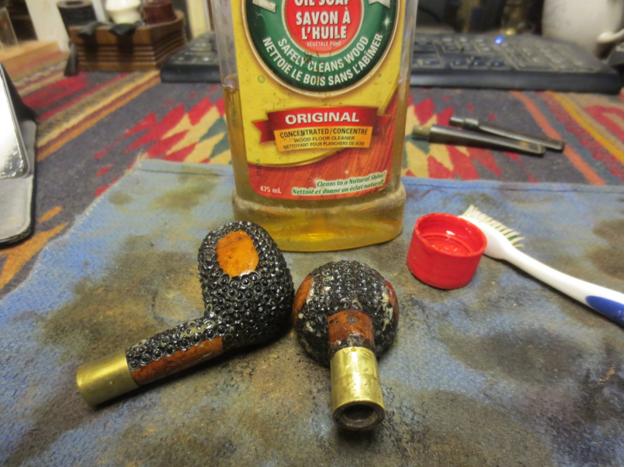
Beaver21 With the rims finished it was time to scrub the rustication. I used Murphy’s Oil Soap and a tooth brush to scour the rustication pattern on both bowls. I scrubbed them and then rinsed them under warm running water.Beaver22
Beaver23

Beaver24 To address the difference in diameter of the stem and the band on the shank on the Billiard I used a Dremel and sanding drum to take down the top, bottom and right side of the saddle stem. I repeatedly checked the fit until I had it very close then I finished adjusting the fit by hand with 220 grit sandpaper. I sanded the stem on the Prince with 220 grit sandpaper to remove the oxidation and the calcification on the end of the stem.Beaver25

Beaver26

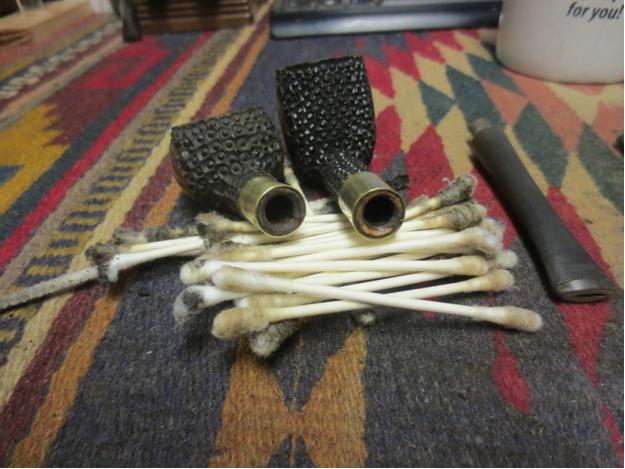
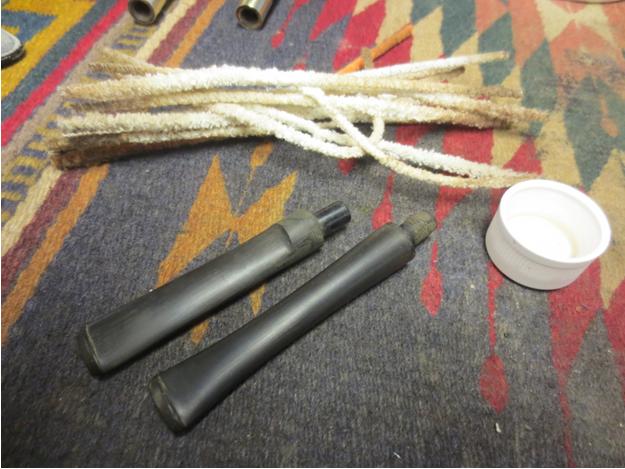
Beaver27 With the fit finished on the stems it was time to clean out the internals of the stems and shanks. I used alcohol, cotton swabs and pipe cleaners to scrub the insides until they were clean.Beaver28

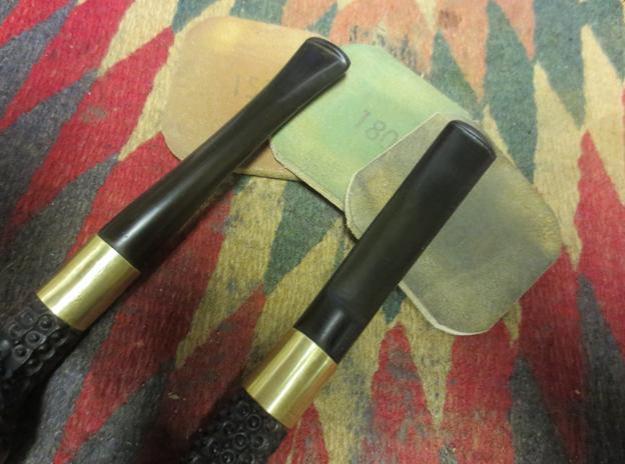
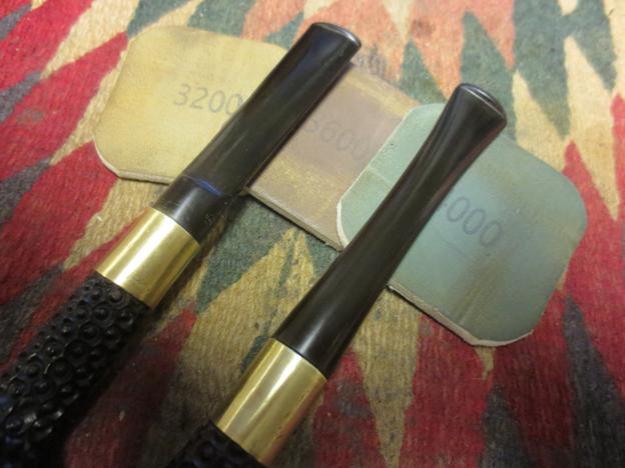
Beaver29 I wet sanded the stem and the brass with a 1500 grit micromesh sanding pad for the first round of sanding on both. It worked to remove many of the scratches and marks in the brass and the vulcanite.Beaver30 I worked on the stem with the micromesh sanding pads – wet sanding with 1500-2400 grit pads and dry sanding with 3200-12000 grit pads. I rubbed the stem down with Obsidian Oil between each set of three pads. When I finished sanding with the 12000 grit pad I let the oil dry on the stem.Beaver31

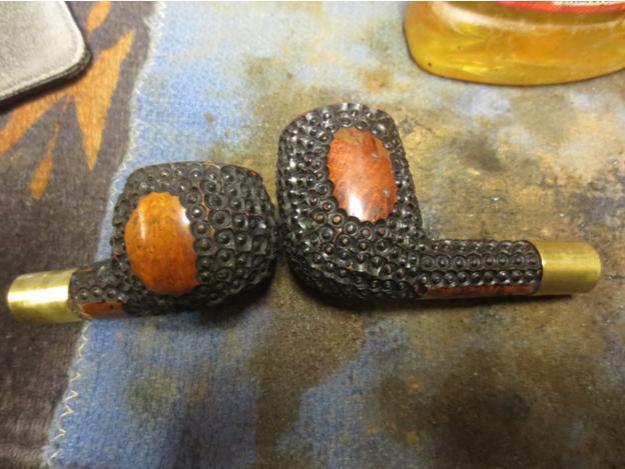
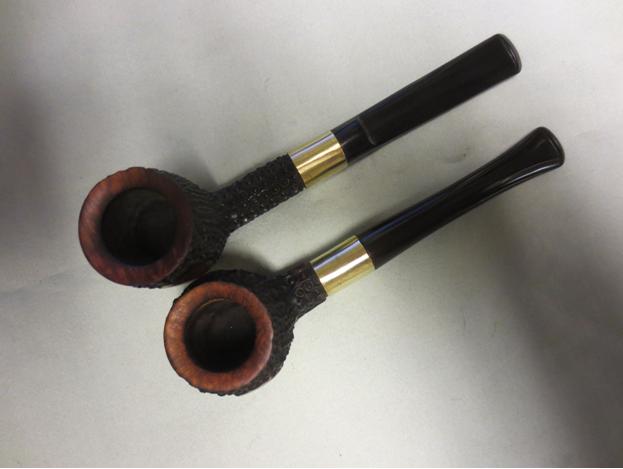
Beaver32 In the final sanding I sanded the brass and it carried over onto the top portion of each stem giving it a bit of a brown look in the next photo. This all came off when I buffed the stem with red Tripoli and White Diamond.Beaver33 I heated the stem on the Prince and gave it a slight bend to give it a more finished looked. I buffed the stems and rims with White Diamond and Blue Diamond and then gave them multiple coats of carnauba wax. I also waxed the smooth portions on the bowl sides, shank bottoms and the rims. I buffed these with Blue Diamond as well. I wiped the rustication down with a light coat of olive oil to bring some life back to the briar. The finished sisters are shown below.Beaver34

Beaver35

Beaver36

Beaver37

Beaver38

Beaver39

Beaver40

Beaver41 Thanks for looking. Does anyone have any information about this brand? It would be great to be able to get a little information. Please post anything you know in the comments below. Thanks.
A Mysterious Little Bent Billiard Brought to Life


Blog by Steve Laug
This is another pipe I picked up at the antique mall in Idaho Falls. It is a bit of a mystery pipe in that the stamping is faint on the left side of the shank. On the right side it is stamped Made in England. On the right side it is missing some of the first letters but is stamped _ ANTE_ over London. Searching through Who Made That Pipe the best option I found for that combination of letters was a CANTERBURY. The brand was made by Comoy’s. There is a very faint C in a Circle on the stem that also matches the CANTERBURY stamping so I think that may well be the stamping on this mystery pipe. The pipe was in pretty rough shape. The previous owner was in the antique mall when I bought it and he walked me through its deficiencies as he saw them. He had wrapped a piece of Teflon tape around the tenon to hold it in the shank. The stem itself had deep bite marks on the top and a large bit through on the underside near the button. The bowl had some fills on the left side and the underside that were quite large. The finish was shot and was dirty with lots of dents and dings. The rim was smooth but had tars and lava overflow. The bowl was heavily caked and the cake was as hard as rock. The inner edge of the rim was slightly damaged and out of round. The outer edge was clean with a small fill on the front of the bowl near the rim.Cant1
Cant2

Cant3

Cant4 I took the next photos to give a clear picture of the bite through on the underside of the stem and a close up of the thick cake in the bowl.Cant5

Cant6 I tried to ream the bowl with a PipNet reamer and barely made a dent in it. It was very hard. I decided to let it soak in an alcohol bath to soften the cake. I left it in the bath overnight.Cant7

Cant8

Cant9 When I took it out of the bath the finish was clean. The briar looked pretty good. The grain was quite nice. The fills softened and were white putty that would need to be removed and refilled.Cant10

Cant11

Cant12

Cant13 The softened cake came out easily with the PipNet reamer and then I scraped it further with a pen knife. The next photo shows the cleaned out bowl. I wiped down the rim with a soft cloth to remove the tars.Cant14 I lightly topped the bowl with a medium and fine grit sanding block to clean up the rim surface. The cleaned up rim looked very good.Cant15

Cant16 I cleaned out the bowl and shank with alcohol, cotton swabs and pipe cleaners.Cant17 I picked out the putty fills with a dental pick. I filled in the holes with briar dust and then covered that with super glue. I added more briar dust to smooth out the repairs.Cant18

Cant19 I sanded the bowl repairs with 220 grit sandpaper and then with a medium and a fine grit sanding sponge. I forgot to take photos after sanding the bowl.

I set the bowl aside and worked on the stem. I cleaned out the bite marks on the top of the stem and the underside with a dental pick, alcohol and cotton swabs. Once they were clean I put some charcoal powder and black superglue on the bite marks on the top of the stem and leveled the repair with the edge of the dental pick. I set it aside to dry.Cant20 Once the topside repair was cured I put Vaseline on the point of an old nail file that I use to repair bite throughs. I inserted it in the slot on the button. I mixed some black super glue and charcoal powder and filled the hole in the stem with the mixture. I spread it and leveled it with a dental pick. When the repair was finished I set the stem aside to cure once again.Cant21

Cant22 The next morning I sanded the repairs on the top and bottom of the stem with 220 grit sandpaper and with a series of sanding sticks to smooth out the surface. The sanding sticks allowed me to get a good angle on the sharp edge of the button. I started with the coarse stick and worked my way up to the fine stick.Cant23

Cant24 I cleaned out the inside of the stem to remove the Vaseline and the dust from sanding using alcohol, pipe cleaners and cotton swabs. I heated the tenon with a lighter and inserted an ice pick in the airway in the tenon to expand the tenon enough to get a good solid fit in the shank.Cant25 With the stem repair complete and the pipe clean inside and out I decided to do some contrast stain work on the bowl. I stained it with a black aniline dye for the first coat. I wanted to blend in the fills a bit and also highlight the grain. I was aiming for a darker colour in the finished product so this was the first step.Cant26 I applied the stain and then flamed it. I wiped it off with alcohol on cotton pads to lighten the surface coat while leaving the black in the grain and the fills.Cant27

Cant28 I sanded the bowl with micromesh sanding pads to remove more of the finish and then gave it a top coat of a medium brown stain. I applied it and flamed it before hand buffing it.Cant29

Cant30 The colour of the pipe was still too dark to really make the grain pop so I sanded it with a medium and a fine grit sanding sponge to further remove some of the dark colour and to also minimize the scratches in the briar. I wiped it down with acetone to lighten it further.Cant31

Cant32

Cant33

Cant34 With the finish on the bowl complete I sanded the stem with micromesh sanding pads. I wet sanded with 1500-2400 grit pads and dry sanded with 3200-12000 grit pads. Between each set of three pads I rubbed the stem down with Obsidian oil. On the last rub down I let it sit until it was absorbed.Cant35

Cant36

Cant37 I buffed the pipe with Red Tripoli and White Diamond to further lighten the top coat of stain and to polish the stem. I then buffed the pipe with Blue Diamond and gave it multiple coats of carnauba wax. The finished pipe is shown below.Cant38

Cant39

Cant40

Cant41

Cant42

Cant43

Cant44

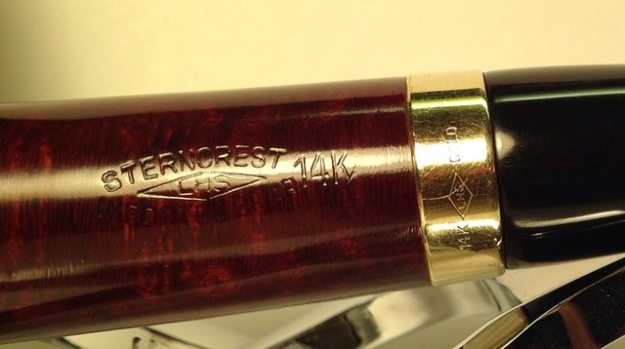
Revival of a Globetrotter: LHS Sterncrest 14K


Blog by Dave Gossett
Dave1

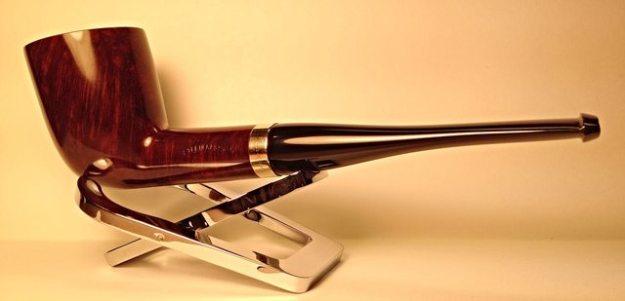
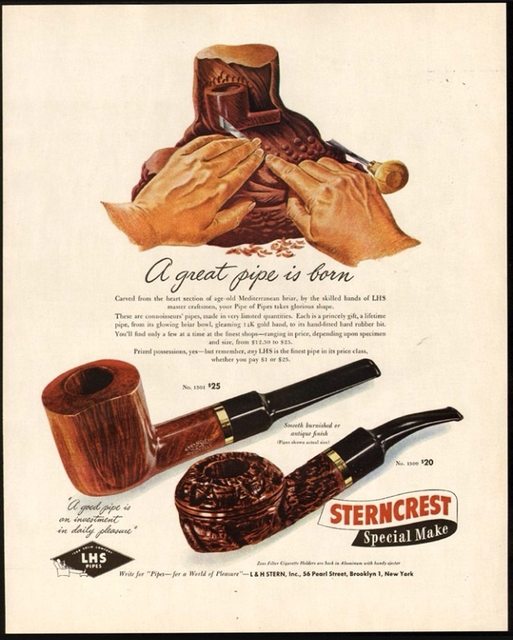
Dave2 A great pipe is reborn, the ad should read. This old LHS has been an extensive traveler throughout its long life. Plucked from the Mediterranean soil and carved in Brooklyn New York, traveling to the west coast, back to the east coast once more. From there it made its way to British Columbia, then again back to the east coast of America where it currently resides.

I received this pipe in an estate lot from California with the tenon and stinger broken off in the mortise. Someone had crudely tried to remove the broken tenon without success. I thought the pipe was a lost cause, but with little hope for a remedy I put out the bat signal for help. Steve Laug himself from Reborn Pipes answered the call. Off to British Columbia it went to undergo surgery from the master repairman.Dave3

Dave4 Here is the link to Steve’s great repair/rescue and stem replacement on this pipe.

Removing a Broken Metal Tenon from a LHS Sterncrest 14K

Back from surgery, Steve had sent me a fully functioning usable pipe.Dave5

Dave6 I started in on the usual ream and clean. Next I lightly topped the bowl and began working out the dents and scratches.Dave7

Dave8

Dave9

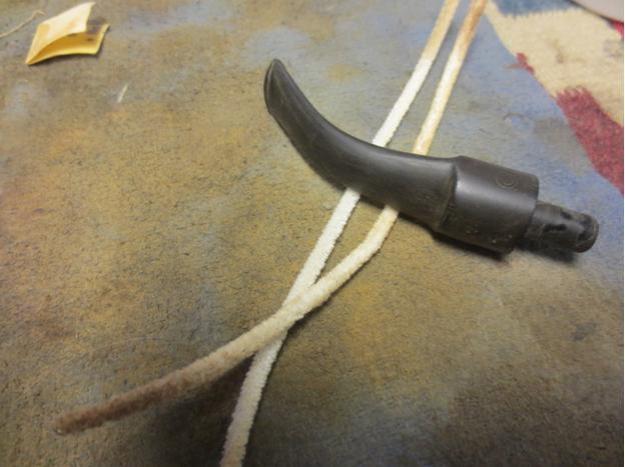
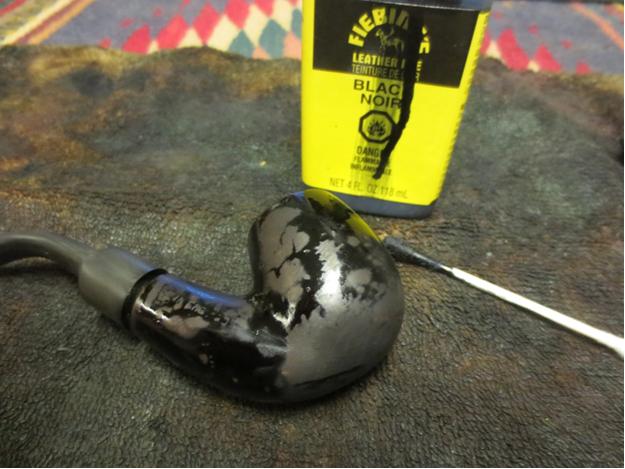
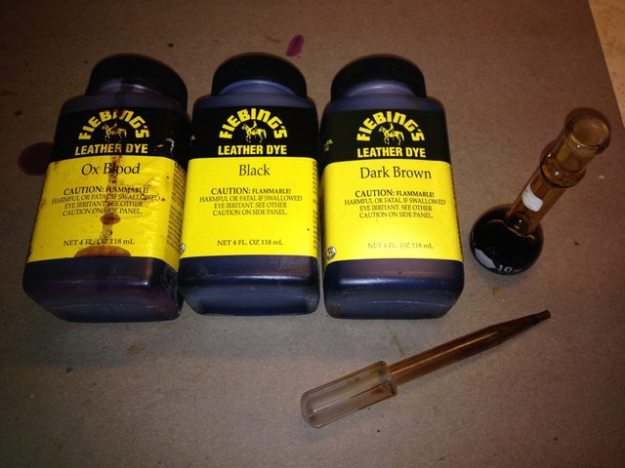
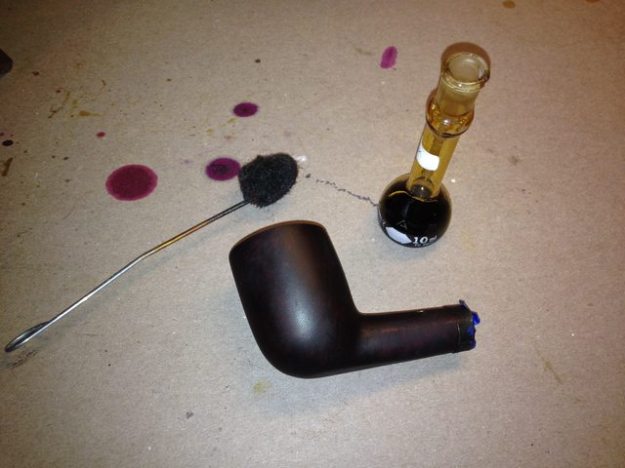
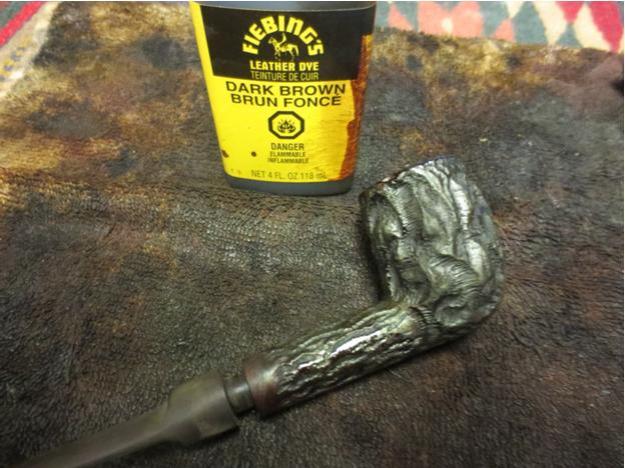
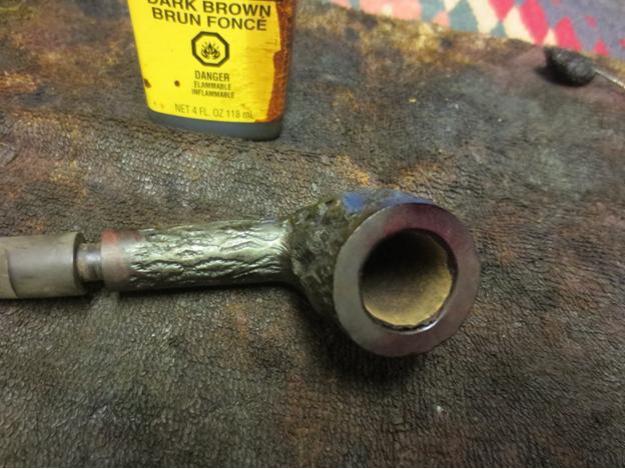
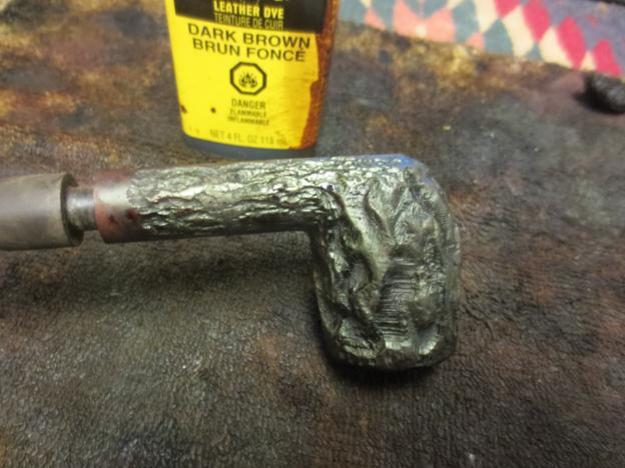
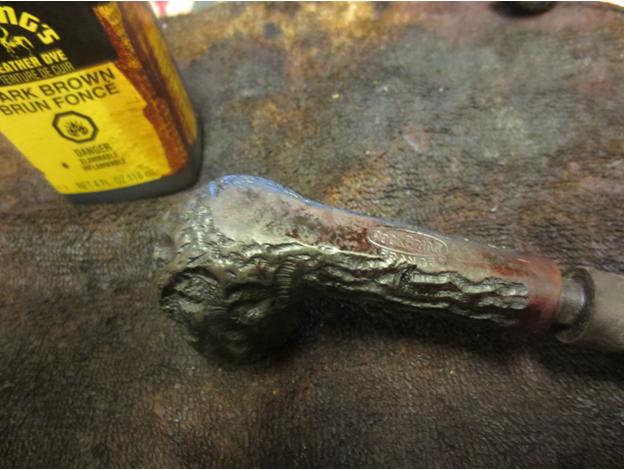
Dave10 Once I had a smooth clean stummel, I mixed up some Fiebings and tried to match the original finish.Dave11

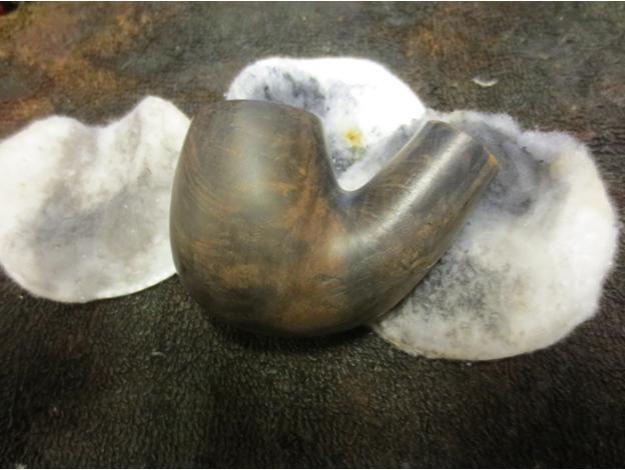
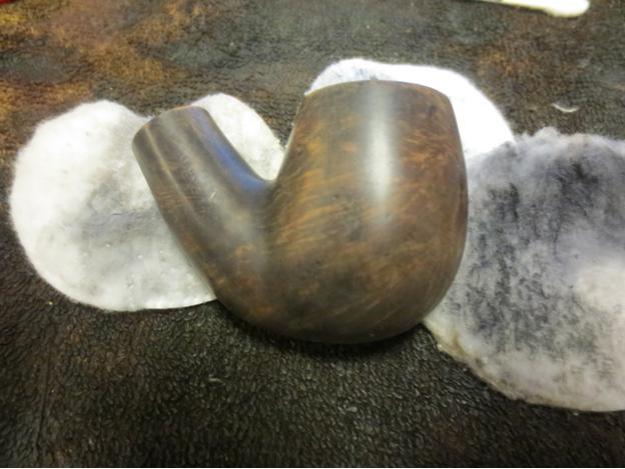
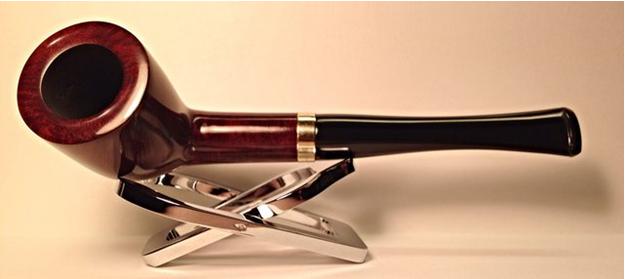
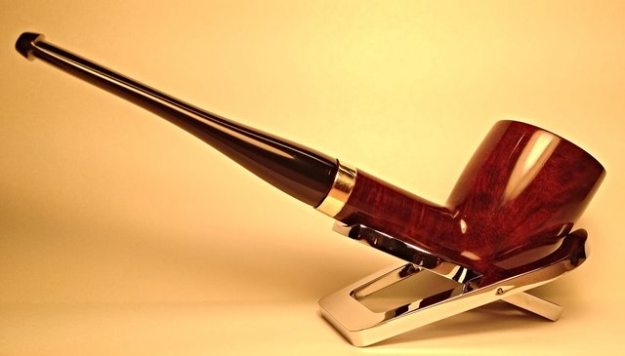
Dave12 Sanding with 2500 grit I lightened the stain until I was close to the shade I wanted. I used a rag dampened with alcohol around the stampings to lighten those areas and blend in with the rest of the stummel.Dave13

Dave14

Dave15

Dave16

Reviving a Reinhard’s Natural Billiard


Guest Blog by Robert M. Boughton
Member, International Society of Codgers
Member, North American Society of Pipe Collectors
http://www.naspc.org
http://www.roadrunnerpipes.com
http://about.me/boughtonrobert
Photos © the Author

Reinhard: Old Germanic male name meaning brave, hardy; fox
― From “Behind the Name”

INTRODUCTION
After searching in every nook and crevice of the Internet I could conceive, in search of a single clue, even, as to the origin of this Reinhard’s natural billiard, I had to concede defeat and turn to my friend and mentor, Chuck, for any suggestions he might have. I was certain this sleek gentleman’s pipe, with its classic form and fine engineering that from the general look and color hinted at a vintage make, must be an established brand, however limited its period of manufacture. The crispness of the nomenclature in particular threw me. Although the possibility that the Reinhard’s could be the creation of an independent pipe shop somewhere had crossed wires somewhere in my mind, I wanted to believe the elegant piece of briar was descended from a higher pedigree. When Chuck came back with a scenario that was not only viable but likely, therefore – that the derivation of my pipe indeed was probably a small shop somewhere, but with the added conjecture that it was likely of mid-western U.S. descent, from a place with a high concentration of German or other Teutonic immigrants – my spirits were somehow bolstered. Maybe the Reinhard’s was something more than the variety of pipe commonly relegated to the classification of “no-name” after all.

The natural, dark brown color of the pipe, reminiscent of staining popular during the 1950s and ’60s and into the ’70s, had grown more pronounced with age and regular use. As with all such pipes I come across, I wanted to bring out more of the natural grain I was sure was hidden beneath a thin layer or two of decades of accreted grime on top of the original finish. The bowl is slightly canted, suggesting a Canadian except for the longer bit. And so I settled on a sweet, alternative billiard. Please correct me if I’m wrong. I still have trouble with the whole Canadian-Lovat-Lumberman-Liverpool mess.

RESTORATIONRein1

Rein2

Rein3

Rein4 First, there was the typical carbon buildup in the chamber and the rim cleaning to confront.Rein5 A 17mm fixed reamer started the process of dispending with the cake, and followed up with sanding, using 150-grit paper to even out the chamber interior after which I smoothed it with 320-grit paper, the result was chamois-smooth. The basic cleaning with Everclear-soaked bristly cleaners and a thorough retort was easier than I feared, but still necessary, of course. I’m always happy when a pipe only needs two or three infusions of strong boiled alcohol through its innards to leach out the buildup of tobacco juices and other elements of regular enjoyment; it shows that the previous owner cared for the pipe.

After a bath with distilled water on small pieces of cotton cloth, wet micromesh paper from 1200-3600 did a nice job on the rim. The soft, brown, more natural exterior of the bowl and shank came out with delicate use of superfine steel wool.Rein6

Rein7

Rein8 Almost done, I used the same wet micromesh progression that cleaned up the rim to smooth the exterior of the pipe.Rein9

Rein10

Rein11 The bit was in exceptional shape, but I still rinsed it in a OxyClean solution and micro-meshed from 1500-3600. Finally, I buffed the bit with red and White Tripoli, with the clean wheel in between, and used white Tripoli, White Diamond and carnauba on the wood.Rein12

Rein13

Rein14 CONCLUSION
I achieved the effect I wanted, without over-removing the darker stain, to maintain the integrity of the maker’s – whoever he might have been, God bless him – plan.

Being somewhat of a known easy touch when it comes to gifting pipes to deserving individuals, I found myself at my tobacconist with a small box of finished pipes, including the Reinhard’s, and some that still needed work. Candice, the lovely young worker on duty, had told me she had her eyes on a golden-orange The Pipe for sale. As it was to be her first foray into the world of pipe enjoyment, in my judgment, that just would not do.

Candice, cropped from a photo with her in the background

Candice, cropped from a photo with her in the background

Perhaps a bit impetuously, I laid out my wares, separated so that Candice could choose from the restored samples. The good lady did protest, of course, citing the old it’s-too-generous excuse and even offering to pay something, but I would have none of it. They weren’t moving on my business website, after all, and Candice (who was named for Candice Bergen by her thoughtful parents) looked them all over and concluded she could not make up her mind, and she would be happier if I chose one. Isn’t that just like a woman? I love it!

And so, with a slight pang, my hand went on its own volition to the Reinhard’s, which I handed to Candice. Something in her reaction told me it was the one she would have chosen, had push come to shove, so to speak.

In my humble opinion, the Reinhard’s fits her always helpful, friendly, sparkling personality to perfection.

Restoring 2 Kaywoodies – a Flame Grain 99B and a Meerschaum Lined 86B


Blog by Dave Gossett
KW1 These two Kaywoodie’s were found at an estate sale. They are great survivor examples from the heyday of Kaywoodie. I could tell the previous owner cared for and loved these pipes. They were well used and dirty, but in near perfect condition. Free of fills, tooth chatter, scratches, nicks, or dents. The stampings are crisp and clear. The lines are sharp and straight. Both are 4 hole Drinkless stinger era KW’s.

Bringing these pipes back to their former glory was pretty simple. I have about an hour of work in each pipe. I gave them a wood soap wash, a light ream, deoxidized the stems, and put on fresh coat of carnauba.

The first is a Kaywoodie Flame Grain 99B KW2

KW3

KW1

KW5 The second is a Kaywoodie Meerschaum Lined 86BKW6

KW7

KW8

KW9

KW10

Bringing a Mastercraft Rock Briar Billiard back to life


Blog by Steve Laug

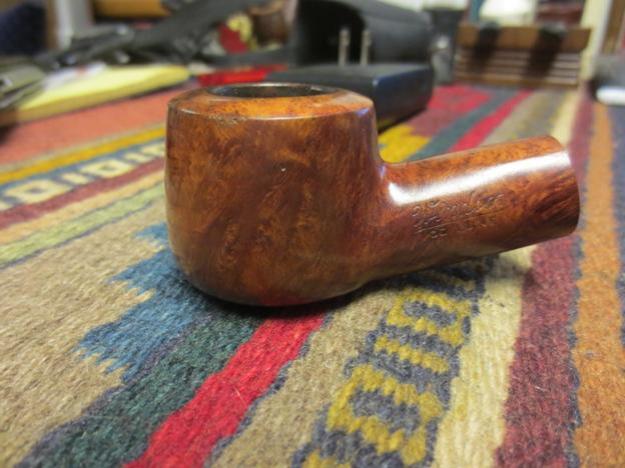
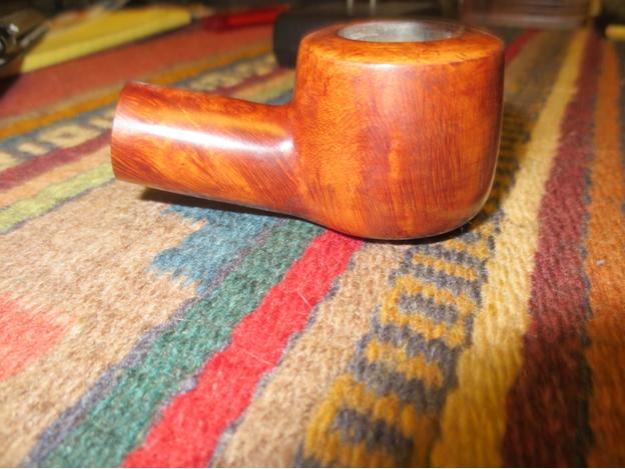
I found this old billiard for sale in an antique mall in Idaho Falls, Idaho. It was there when I visited in July and I bypassed it. It was still there this time so I made a deal with the seller and it came home with me. The bowl was dirty and had a cake and a bunch of tobacco debris and dust in the bottom. The rim had a buildup of tars and lava on the surface. The inner edge had some light damage and was slightly out of round. The finish was a rough rocklike rustication that was worn and dirty. There were white flecks and flecks of what looked like putty fills on the side of the bowl. There were several small sandpits in the bowl sides and on the bottom right side of the shank.RB1

RB2

RB3

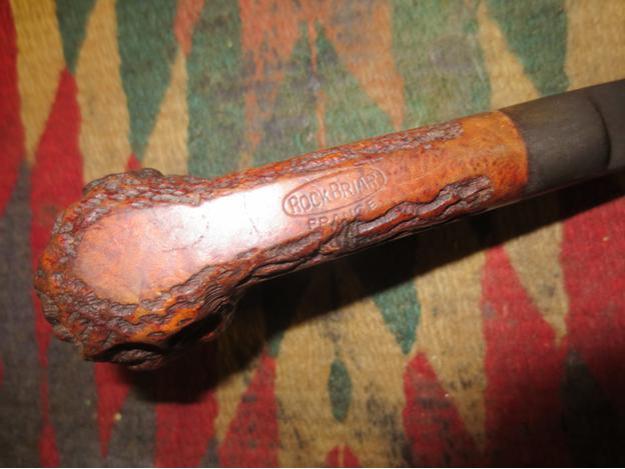
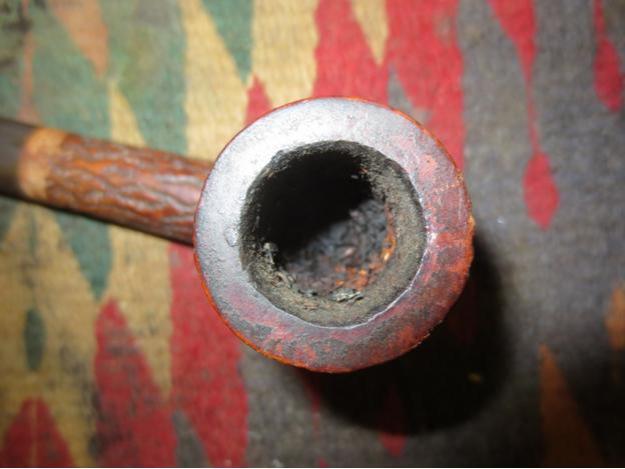
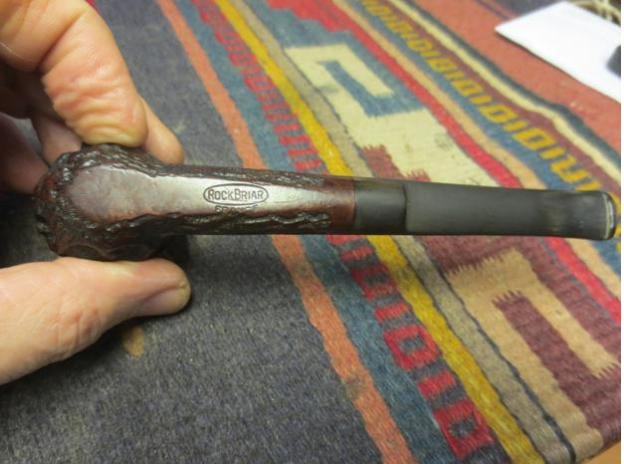
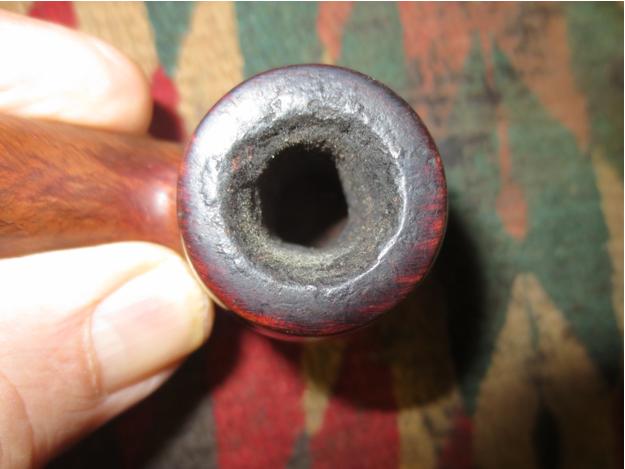
RB4 The stamping on the bowl was on a smooth flattened panel on the bottom of the bowl and shank. It bore the stamping Rock Briar in an oval and underneath France. I found out from Who Made That Pipe that the pipe was made for Mastercraft in France. From my research it doesn’t appear that Mastercraft ever manufactured pipes but rather bought them from multiple factories — mostly French and English. It survived briefly the post war recovery and then was acquired by Grabow.RB5 The next photo is a close-up picture of the rim and the debris in the bowl. The rim and bowl would take some work to clean out.RB6 I reamed the bowl with a PipNet pipe reamer and starting with the smallest cutting head worked my way up to one the same diameter as the bowl. I removed the cake and the clutter in the bottom of the bowl. I also used a pen knife to scrape out the small remnant of cake that the reamer did not take out.RB7

RB8 I scrubbed the bowl with a brass bristle whitewall tire brush to remove the buildup of grime and dust in the grooves of the rustication. Once the grime was loosened I put the bowl in an alcohol bath to soak while I went to work for the day.RB9
RB10 When I got home from work I took the bowl out of the bath and used the brass bristle brush on it once again. When I had finished brushing it I dried it off with a cotton cloth. The following photos show the bowl after the half day soak.RB11

RB12

RB13 I decided to lightly top the bowl to clean up the rim surface. I used a 220 grit topping board followed by a medium and a fine grit sanding sponge.RB14

RB15 I used a folded piece of 220 grit sandpaper to sand and bevel the inner rim. I wanted to minimize the inner edge damage.RB16

RB17 I scrubbed the bowl down with acetone on a cotton pad to remove the dust and remnants of the finish on the bowl and shank. I scrubbed out the shank, mortise and the bowl with alcohol, cotton swabs and pipe cleaners to remove the debris and dust.RB18

RB19

RB20 I decided to do a bit of contrast on the stain. I used a black Sharpie pen to colour in the grooves and rusticated patterns on the bowl and shank. Once I finished that they would add some depth to the colour that I stained the pipe.RB21

RB22 I stained the bowl with a dark brown aniline stain that I had thinned by half to give a bit of translucence to the colour on the bowl. I applied the stain and flamed the bowl to set the stain in the grain.RB23

RB24

RB25

RB26 I wiped the bowl down with isopropyl alcohol on a cotton pad to remove the stain from the high spots on the briar. I wanted a distinct contrast in colour between those and the grooves which I had coloured black.RB27

RB28 I buffed the bowl with red Tripoli and with White Diamond to remove some more of the colour from the high spots and polish them while leaving the grooves dark and unpolished.RB29

RB30

RB31

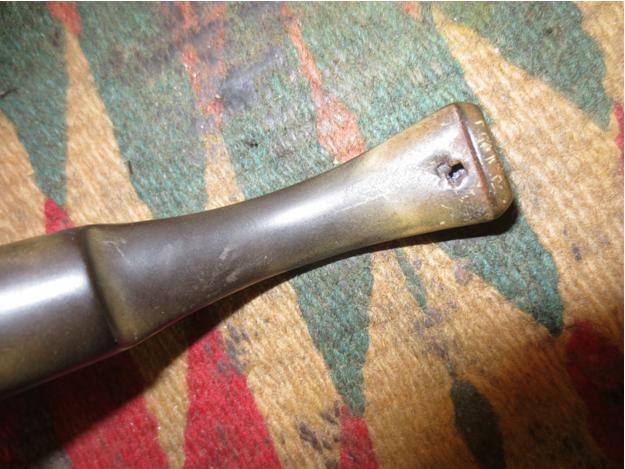
RB32 The stem was in decent shape with some tooth chatter and minor oxidation. I like the overall look and the rustication on the bowl. The stem and shank are long and straight and work well with this pipe.RB33
RB34 I sanded the stem with 220 grit sandpaper on both sides next to the button to remove the tooth chatter. I followed that by sanding it with a medium and fine grit sanding sponge.RB35

RB36 I worked on the stem with the micromesh sanding pads. I wet sanded with 1500-2400 grit pads and then rubbed the stem down with Obsidian Oil. I dry sanded with 3200-4000 grit pads, gave it another coat of oil and finished with the 6000-12000 grit pads. I gave it a final coat of Obsidian Oil and let it dry.RB37

RB38

RB39 I buffed the pipe with White Diamond and Blue Diamond and then gave it multiple coats of carnauba wax. I buffed it with a clean flannel buff and then hand buffed it with a microfibre cloth. The finished pipe is shown below. The unique finish intrigues me and the rustication feels great in the hand. Thanks for looking.RB40

RB41

RB42

RB43

RB44

RB45

Cleaning up a Bruyere Garantie Pocket Pipe with a Horn Stem


Blog by Steve Laug

This pipe reminds me of the Mokin Pocket Pipe that Anthony restored and wrote about in an earlier blog. When I saw it on eBay I put a bid in and actually won it. The pipe needed a lot of work. From the photo it looked as if it had a thick coat of varnish or some shiny topping. That would need to go. The finish was spotty and appeared to have some flecks of paint on the top and on the skate at the bottom of the bowl. The rim was darkened and hard to tell whether it was burned or just tarry. The bowl was slightly out of round but it also had a cake that would need to be reamed out before addressing the out of round inner wall of the rim.The stamping was clear and distinct and read Bruyere Garantie on the left side of the shank. The stem had a double circle on the left side. The stem also appeared to be horn. There were two deep cuts on the right side of the stem near the button that would need work and with those marks I was sure there were other issues. The first two photos are the ones included in the seller’s description of the pipe on eBay. I had no idea what the other side or bottom of the bowl or stem looked like or if there would be more issues that would need to be addressed.Bruyere1

Bruyere2 When the pipe arrived I was both encouraged by what I saw and concerned by several other issues that had not been shown in the photos above. The encouraging thing was that there was no shiny coat of varnish or lacquer on the bowl. All that was present was a very dirty, grimy natural finish that seemed to have a reddish-brown colouring to it. The concerns involved the fills on the underside of the bowl. What had appeared to be paint flecks on the skate at the bottom turned out to be part of the fill on the bottom and a missing piece of briar. The bowl was indeed caked and the cake was crumbling and uneven. Looking at it initially I wondered if there would not be burned spots in the walls of the bowl once the cake was removed. The inner edge of the rim was also more damaged than I had expected from the seller’s photo. The cuts in the stem were dangerously close to the airway but fortunately had not broken through. The fact that the airway was unharmed was a small miracle given the depth of the cuts. The fact that they angled probably save the airway from damage. On the underside of the stem there were also large chips missing from the stem at the shank stem union. It appeared that someone had tried to pry the stem away from the shank rather than twisting it off. There was also tooth chatter on the top and underside of the stem near the button. The button however was clean and sharp as was the slot in the in the end of the button. The stem had some beautiful striations of colour that I had not seen in the photos and I looked forward to seeing if I could bring them out.Bruyere3
Bruyere4

Bruyere5

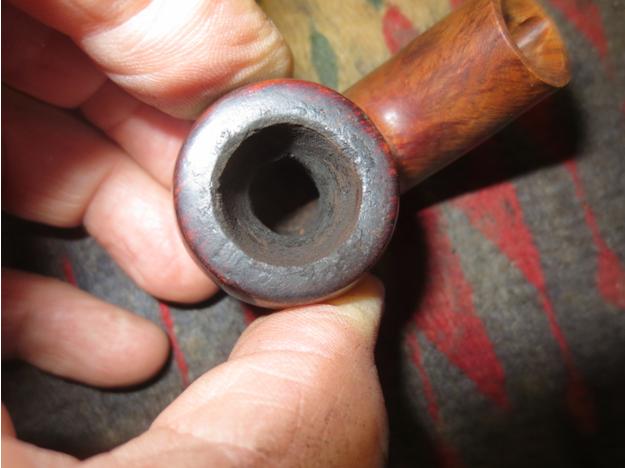
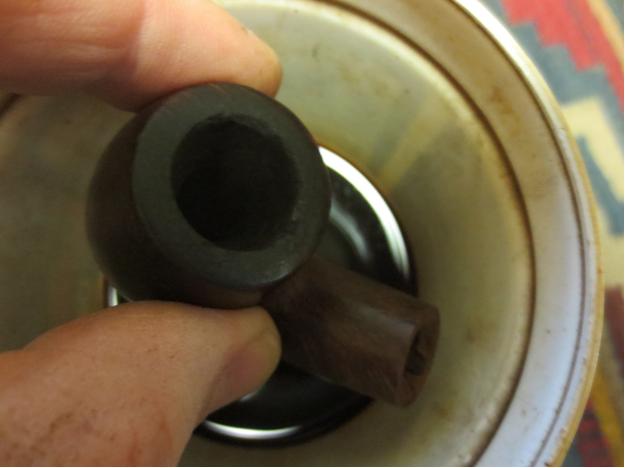
Bruyere6 I took some close up photos of the damage to the rim and the stem. The first photo below shows the damage to the inner edge of the rim and the crumbling cake in the bowl. Looking closely at the top of the photo and the bottom of the bowl you can see the cause for my concern regarding the potential burn out damage. The second and third photos below show the cuts in the stem and the missing chips. You can see how close the cut closest to the button came to the airway in that photo.Bruyere7
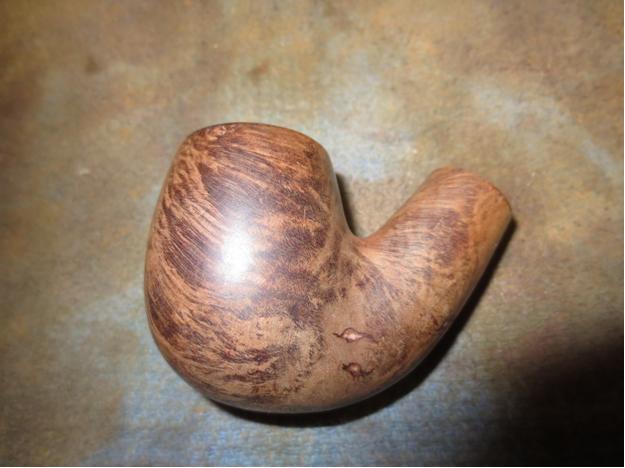
Bruyere8

Bruyere9 The next photo shows the stamping on the side of the shank and the logo on the stem. It is hard to see but much of the depth of the stamping on the stem is gone so restoring that with new white colouring will not be possible.Bruyere10 When I removed the stem the tenon was inset aluminum and there was a stinger apparatus in place. It was a twisted piece that had a slot in the top for the airflow that followed the twist to the airway. It was stuck in the tenon and would need to be loosened before I could properly clean out the airway in the stem. I included some extra photos of the stem to show the cuts and chips from a different angle.Bruyere11

Bruyere12

Bruyere13 I reamed the bowl with a PipNet reamer. I started with the smallest cutting head and cleaned things up with it first. I then used the second cutting head which was pretty close to the diameter of the bowl. I cut the cake back to nothing so that I could examine the interior walls of the bowl. I was pleasantly surprised to find that once the cake was gone the interior walls of the bowl were solid and there was no burning.Bruyere14

Bruyere15 I worked on the out of round bowl with a folded piece of sandpaper to smooth out the damaged areas and bring it back to as close to round as I could get it. I then topped the bowl on my topping board to smooth out the rim and clean up the damage on the surface. I will often do this just to bring the damage on the inner edge of the rim closer to the top so that I can smooth it out further with sandpaper.Bruyere16

Bruyere17

Bruyere18 I wiped down the bowl with acetone on a cotton pad to remove the grime and the remnants of the finish. There appeared to be some damage to the front of the bowl that I wanted to have a closer look at once the bowl was cleaned up.Bruyere19 I wiped down the horn stem with cotton pads and some alcohol to clean up the surface so that I could begin the repairs. I debated on whether to use black super glue or clear super glue for the repairs to the chipped areas but decided to go with the clear hoping that once it dried the colour would come through the repair and blend it into the horn better. I layered the repair to the chipped areas on the underside and the cuts on top side of the stem. I wanted each layer to dry before I added another layer of glue.Bruyere20

Bruyere21

Bruyere22 After many layers of glue I was disappointed that glue did not cure clear but rather had a cloudy white appearance. The fills on the cut areas dried hard but looked like two white slashes. I was hoping that as I polished the stem these would blend in a bit more. The fills in the chips were a mixed bag. The smaller ones dried perfectly and blended in well. The larger divot was also white. I cleaned that area once again and added a drop of black superglue to the top of the repair to see if I could hide it better.Bruyere23

Bruyere24 I sanded the bowl and stem with 220 grit sandpaper and then medium and fine grit sanding sponges to clean up the repairs and the scratches in the briar. I carefully avoided the area of the stamping and the logo so as not to harm them. I also cleaned up the stinger and was able to remove it from the tenon. It was threaded and after cleaning up the joint I was able to unscrew it and clean it and airway of the stem. I wet sanded the bowl and stem with a 1500 grit micromesh sanding pad. The striations of colour are beginning to show on the stem and the bowl is looking far better than when I started.Bruyere25

Bruyere26

Bruyere27 I wiped the stem down with a light wipe of alcohol to remove the sanding dust and then continued to wet sand it with 1500-2400 grit micromesh pads. I rubbed it down with Obsidian Oil and then dry sanded with 3200-4000 grit pads. I rubbed it down again with the oil and then finished sanding it with 6000-12000 grit pads. I gave it a final coat of Obsidian Oil and let it dry.Bruyere28

Bruyere29

Bruyere30 I buffed the bowl and stem with White Diamond and Blue Diamond on the wheel. I then cave the bowl and stem multiple coats of carnauba wax and buffed it with a clean buffing pad. I hand buffed the stem and the bowl with a microfibre cloth. The first photos below are of the polished stem. You can see the repairs from the cuts. For some reason the glue dried white – even though it is clear. I did a patch on the chip on the underside with black super glue and it does not quite match… ah the frustrations of repairs. This one is staying with me so I will not mind as the stem is now smooth and polished. The cuts and the chips are repaired and are smooth to the touch. The fit of the stem to the shank is good with no missing stem parts.Bruyere32

Bruyere33

Bruyere34

Bruyere35 The final four photos show the finished pipe. The bowl polished up very nicely with just carnauba wax. The polished stem shows the striations that are one of my favourite parts of horn as a stem material. The deep shine is a bonus.Bruyere36

Bruyere37

Bruyere38

Bruyere39

Breathing new life into a Republic Era Peterson’s Kildare 999


Blog by Steve Laug

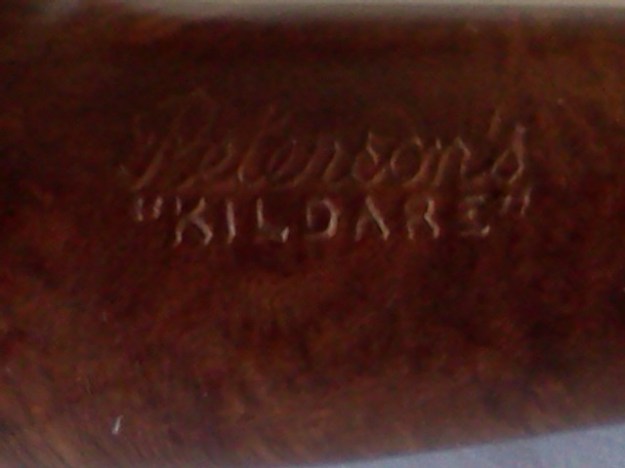
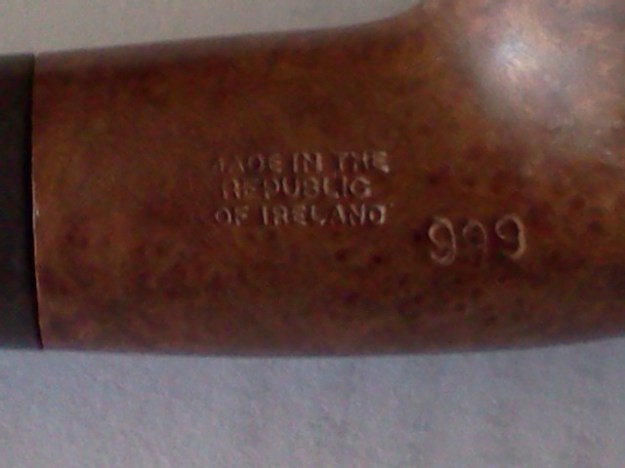
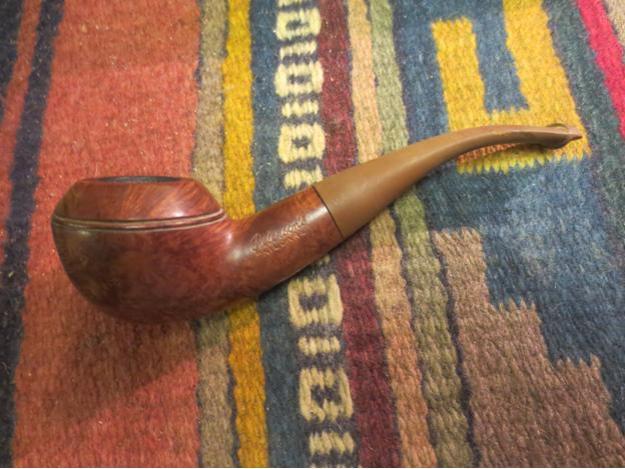
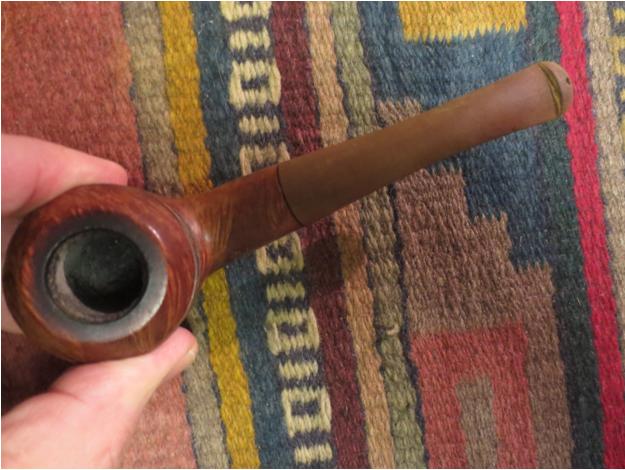
My brother picked this pipe up for me when he was in Austin, Texas. It is actually one of my favourite Peterson shapes – the 999. This one is stamped Peterson’s over “Kildare” on the left side of the shank and Made in the Republic of Ireland 999 on the right side of the shank. It actually is in really decent shape. The bowl had grime on the finish but no real dings or gouges. The rim was tarred and dirty but otherwise in good condition. The outer and the inner edge of the rim were smooth and the bowl was round. The double ring under the cap of the bowl was also in great shape with no chips or missing parts. There were a few small fills on the underside of the bowl among the cross grain that covered that and the top and bottom of the shank. The birdseye grain on the bowl and shank sides is quite stunning. The stem had straightened out during the time the pipe had been sitting and would need to be rebent somewhere along the line. The stem was oxidized, but otherwise clean with no tooth dents or bite marks. The fit against the shank was not tight but that would probably change once the pipe had been cleaned. There was a stinger in the end of the tenon once I removed the stem from the shank. The next three photos are ones that my brother sent me when he found the pipe. The first is a side view of the pipe and the second and third show the stamping on the shank.Pete1

Pete2

Pete3 When I was visiting with my brother in Idaho Falls I decided to rebend the stem on this one. I used a cup of water that I boiled in the microwave and then put the stem in to heat and soften the rubber. Once it had softened I bent it to match the curve of the bowl. When I heated the stem in the water the oxidation rose to the surface of the stem and turned it an unsightly brown. That is what I expected and why at home I use a heat gun rather than water. But as the stem was oxidized already the water would bring the rest of it to the surface for an easier clean up.Pete4

Pete5

Pete6

Pete7 I took the next three photos – close-up pictures of the rim and the stem – to show the state of those areas. Both the rim and the stem were in very good shape under the tars and the oxidation.Pete8

Pete9

Pete10 I reamed the bowl with a PipNet reamer to take the cake back to bare briar. I used the first two cutting heads to clean out the cake.Pete11

Pete12 I scrubbed out the bowl and shank with cotton swabs, pipe cleaners and alcohol to remove the build up and oils. It did not take too long for the shank to be clean.Pete13 The next photo shows the small stinger that was in the tenon when I removed the stem. It has a slot on the top of apparatus behind the ball and collects the moisture from the smoke. The shank is drilled deeper than my other 999 pipes to accommodate the stinger. I removed the stinger and cleaned out the stem with pipe cleaners and alcohol. I cleaned the stinger with the same and then polished it with 0000 steel wool.Pete14

Pete15 I scrubbed the top of the rim with alcohol and a cotton pad and then used a 1500 grit micromesh sanding pad to sand the surface of the rim. I used the pad like a topping board and worked the rim around the pad in a clockwise motion. Why clockwise? I honestly don’t know other than I am right handed.Pete16

Pete17 I wiped down the bowl with alcohol and a cotton pad to remove the wax and grime from the surface of the briar. The pipe was unstained or stained with a light stain so the alcohol did not remove any of the colour.Pete18 I sanded the stem with 220 grit sandpaper to remove the oxidation that sat on the surface of the stem. I worked hard on the angles of the button to remove the oxidation there. I then sanded the stem with a medium and a fine grit sanding sponge to remove the scratches left behind by the sandpaper.Pete19

Pete20

Pete21

Pete22

Pete23 I wet sanded the stem with 1500-2400 grit micromesh sanding pads and rubbed the stem down with Obsidian Oil. I dry sanded it with 3200-4000 grit pads and rubbed it down with Oil once again. I finished by dry sanding with 6000-12000 grit pads and giving it a final coat of Obsidian Oil. I let the oil absorb into the rubber of the stem.Pete24

Pete25

Pete26 I buffed the stem and bowl with White Diamond and then Blue Diamond on the buffing wheel. I gave it multiple coats of carnauba wax and then buffed it with a clean flannel buff on the wheel. I finished by hand buffing the pipe and stem with a microfibre cloth to give it a deep shine. The finished pipe is shown in the photos below. Thanks for looking.Pete27

Pete28

Pete29

Pete30

Pete31

Pete32

Pete33

Pete34