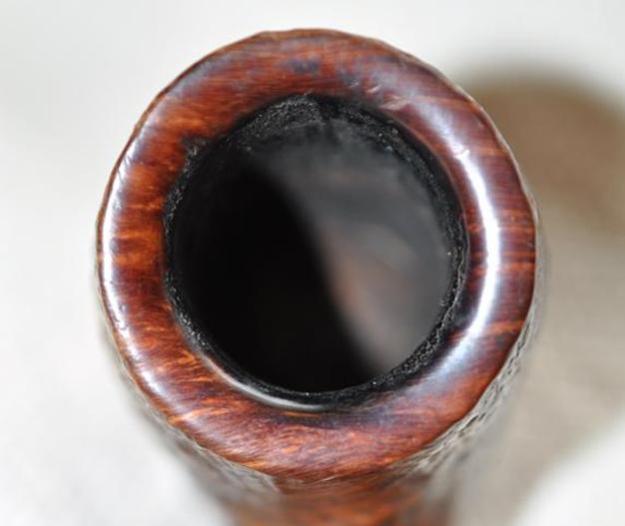
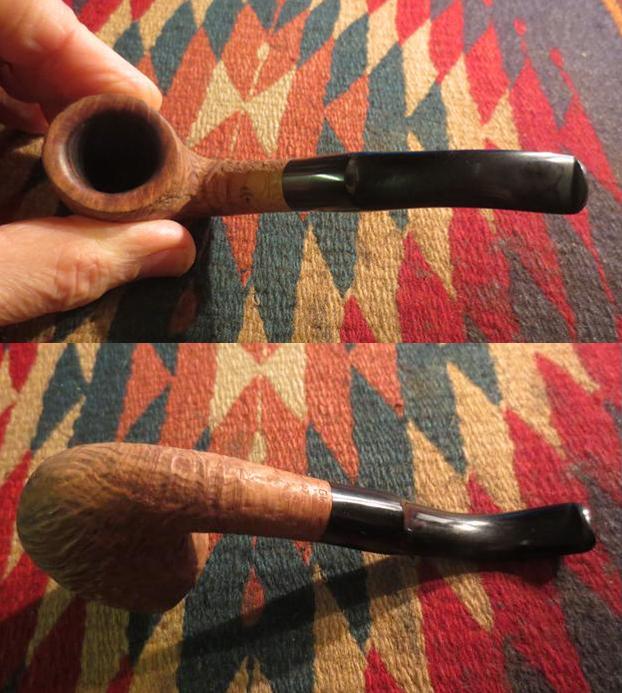
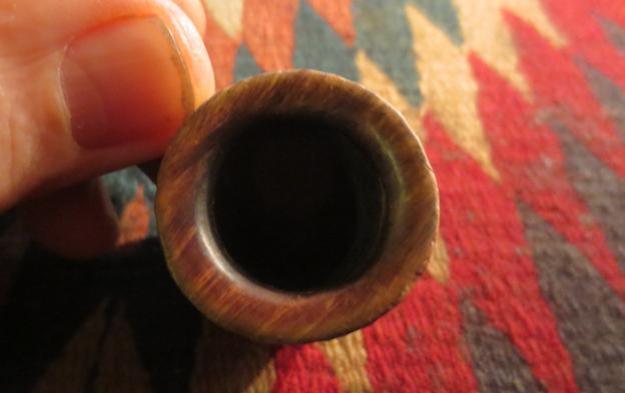
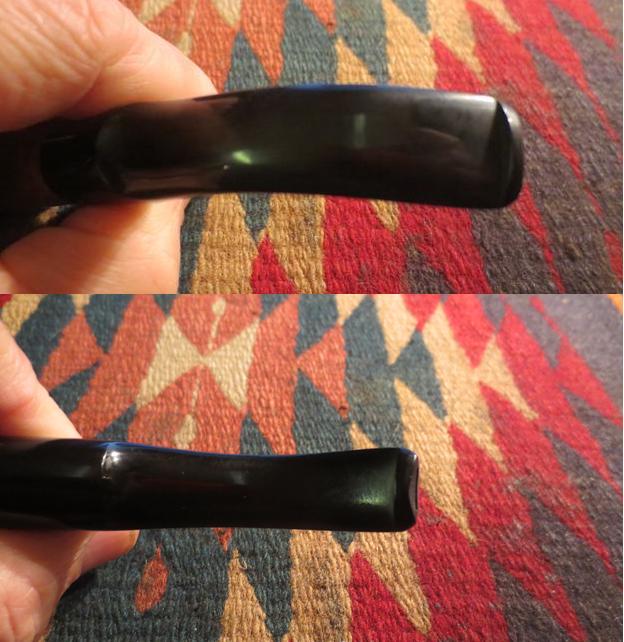
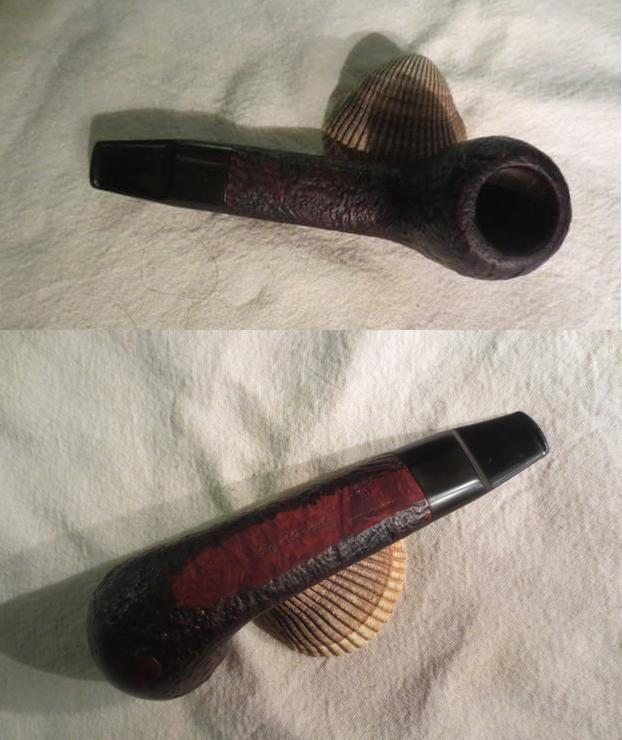
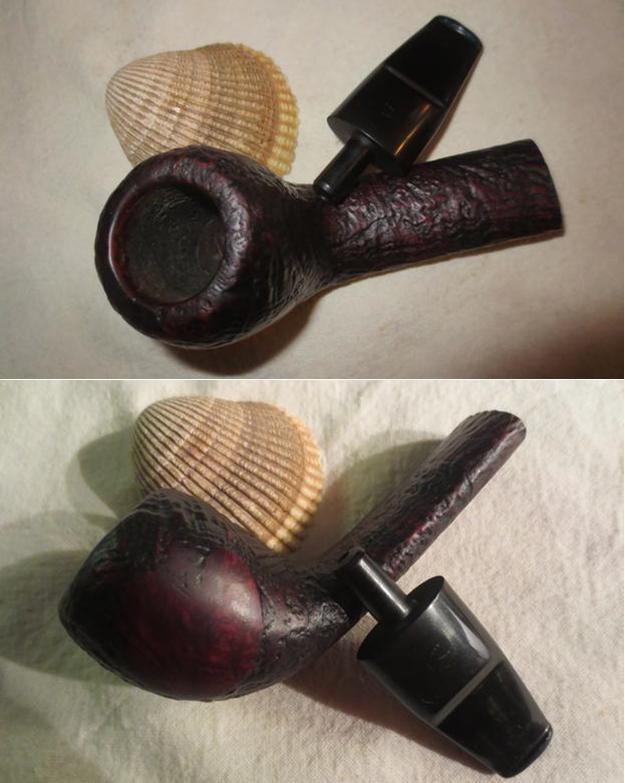
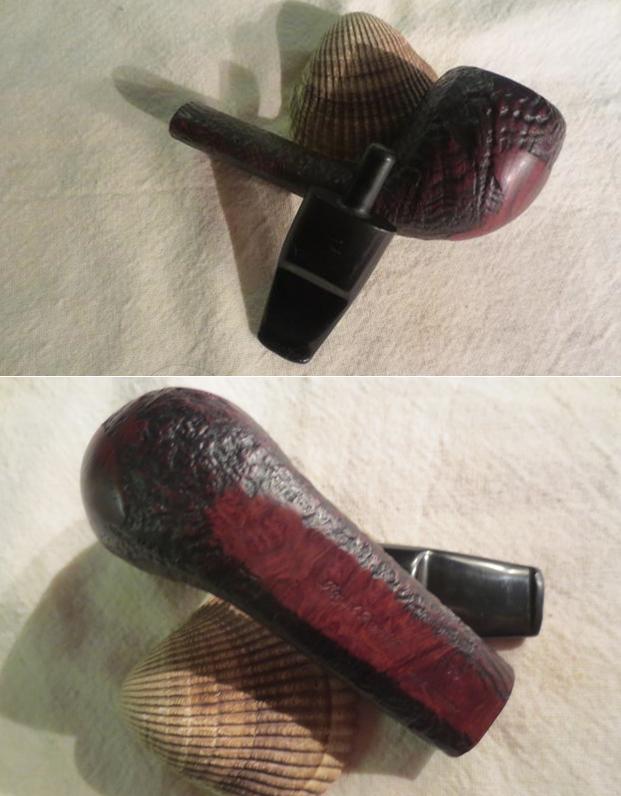
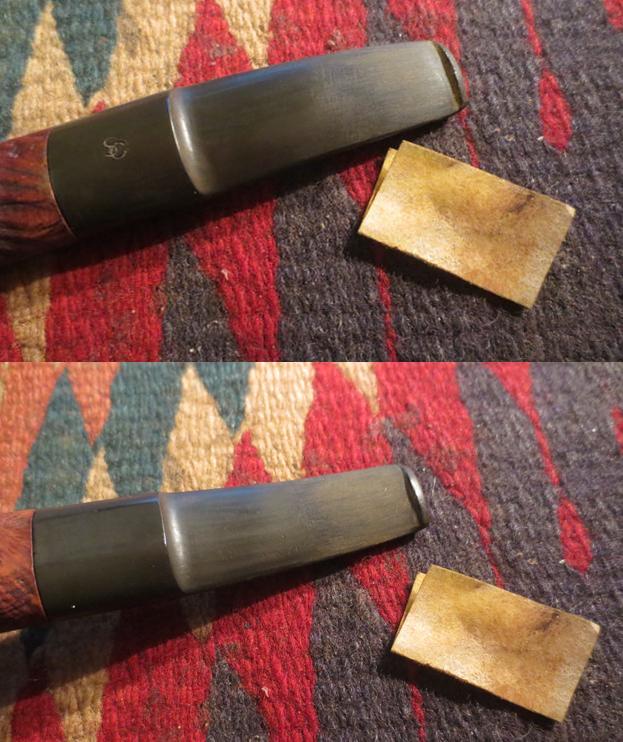
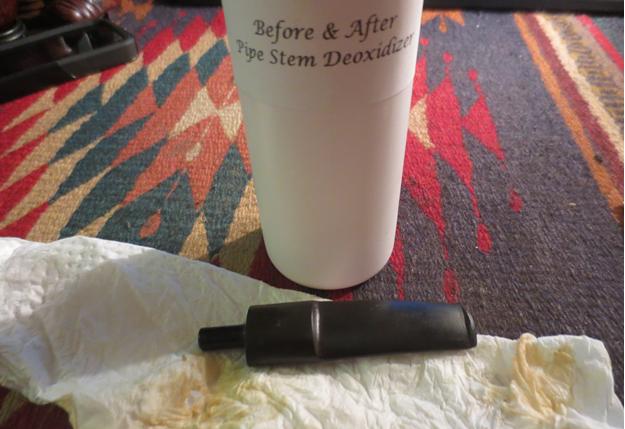
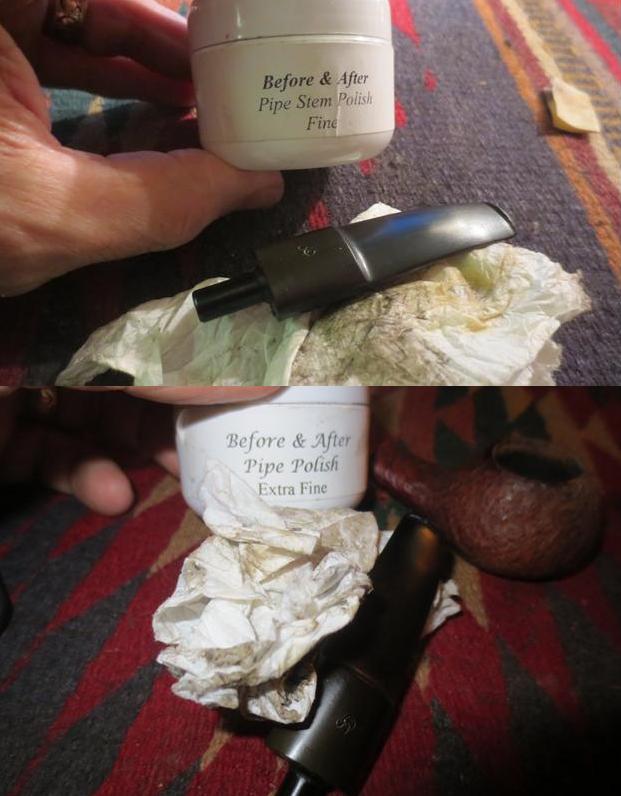
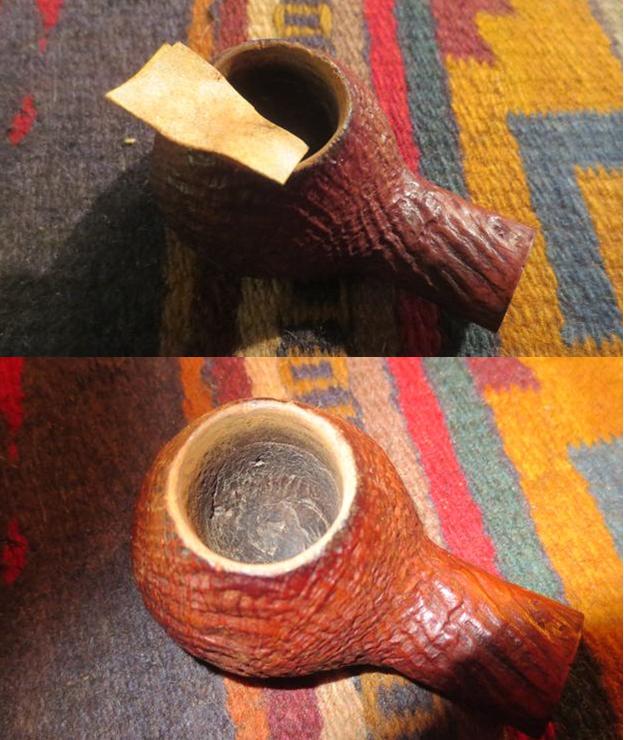
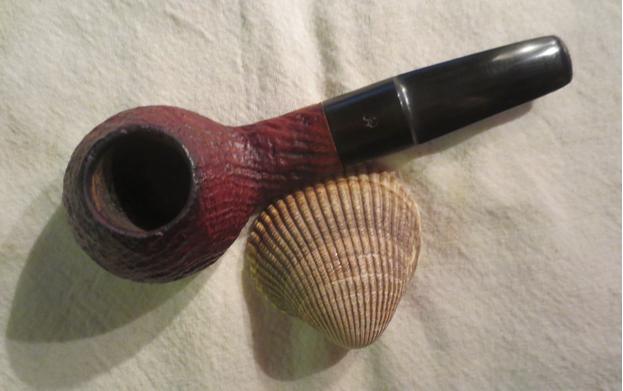
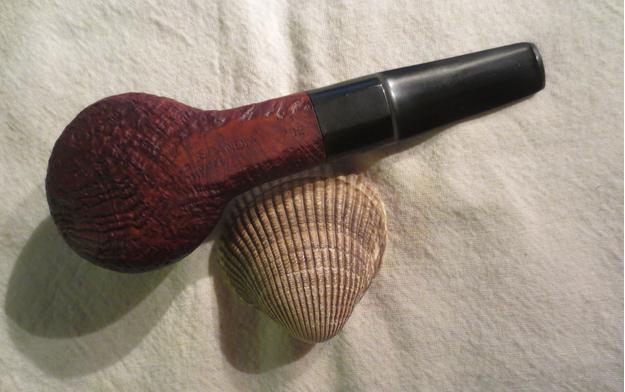
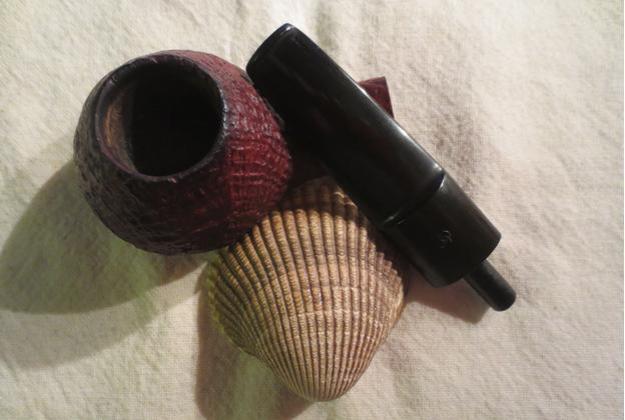
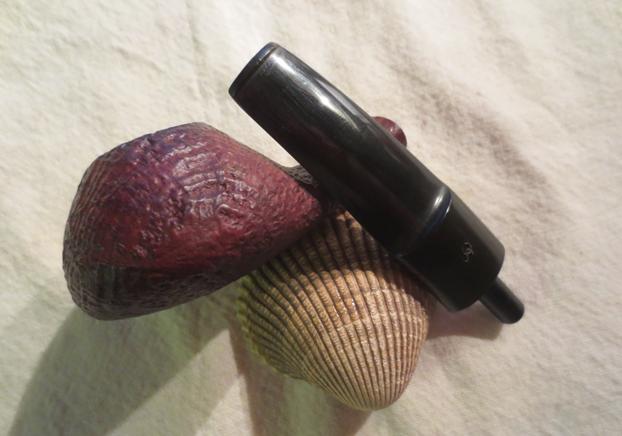
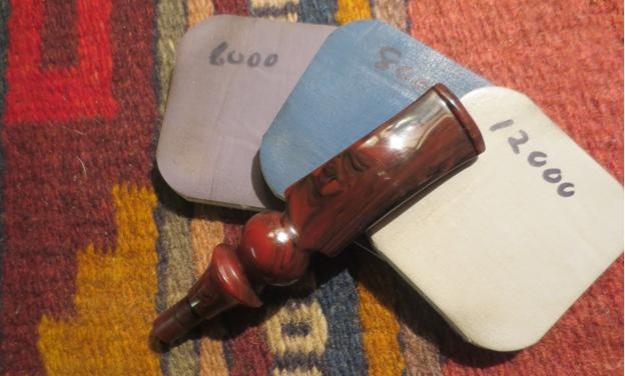
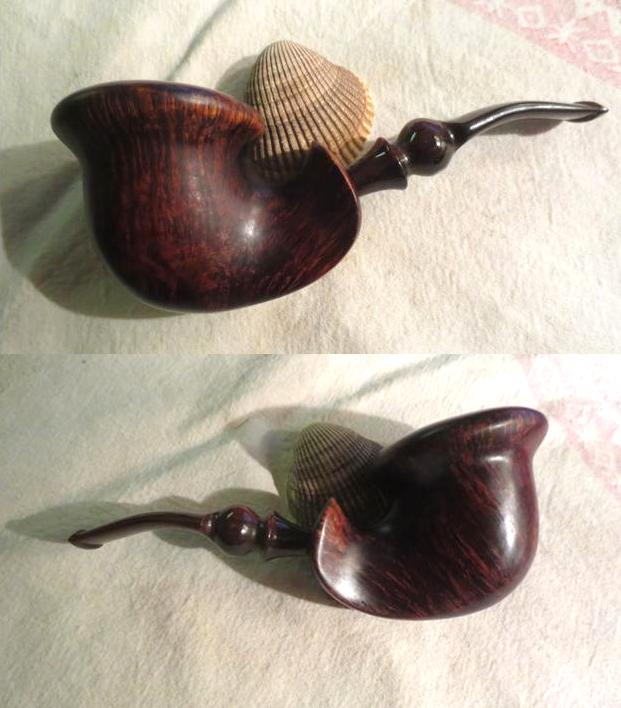
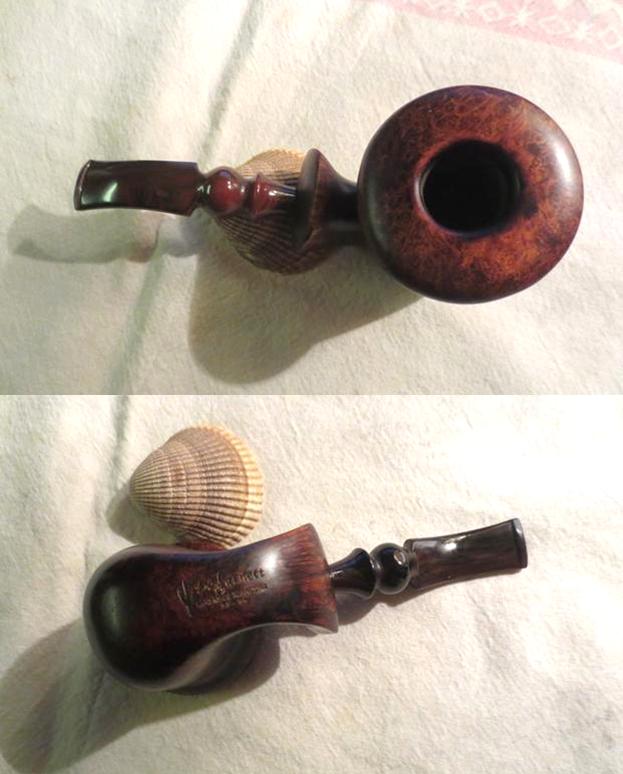
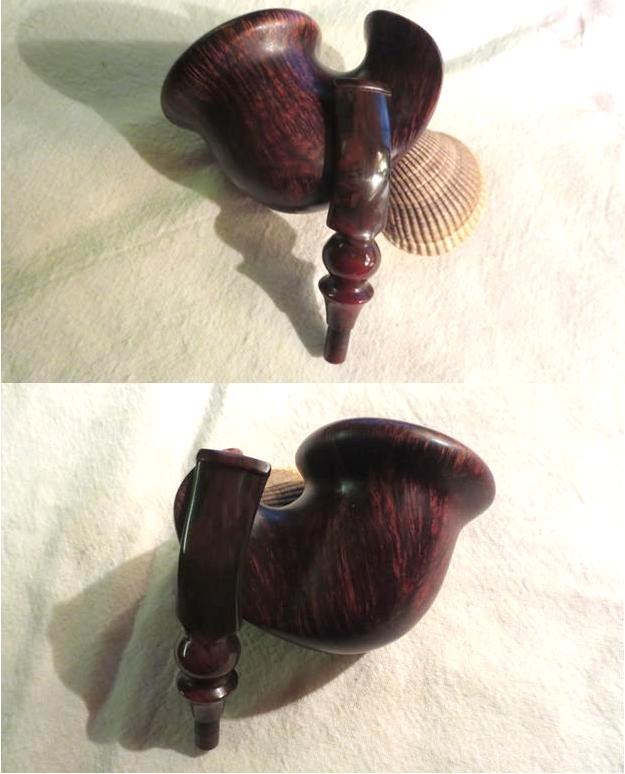
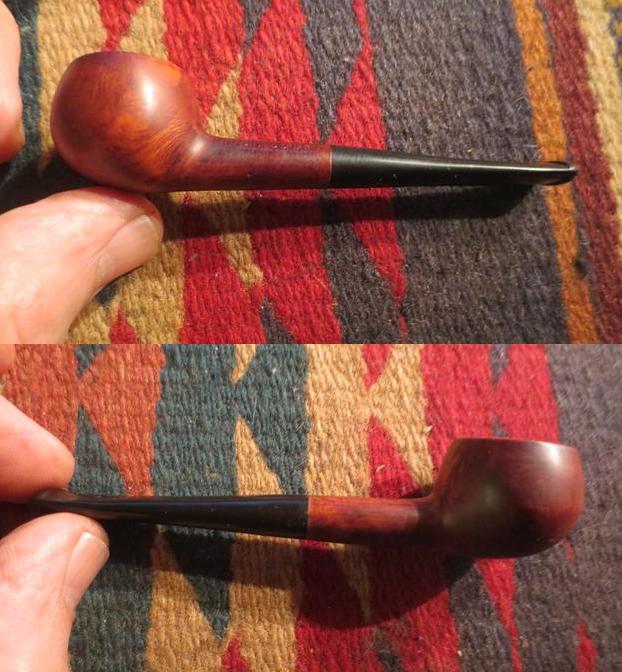
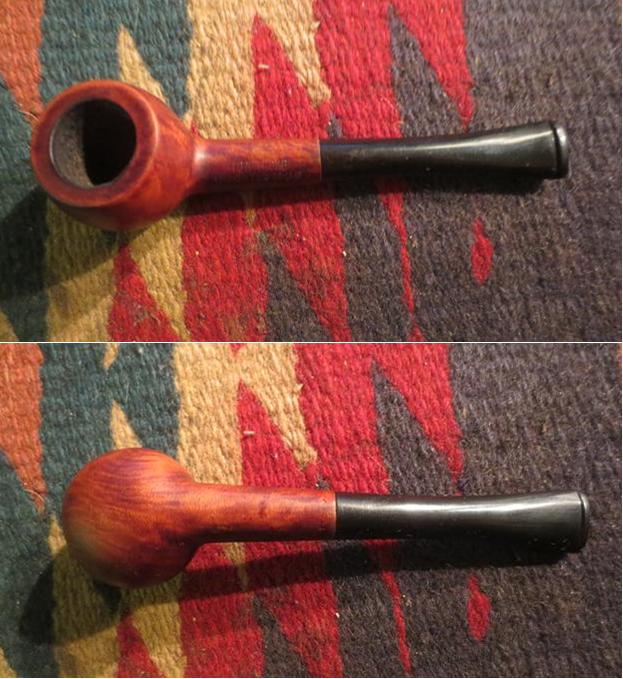
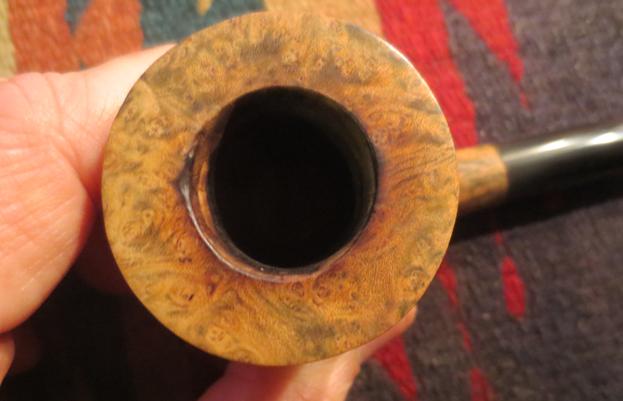
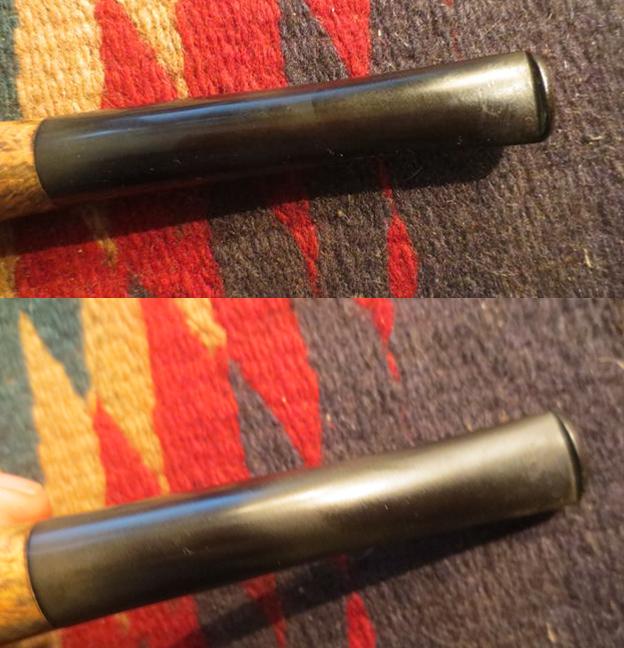
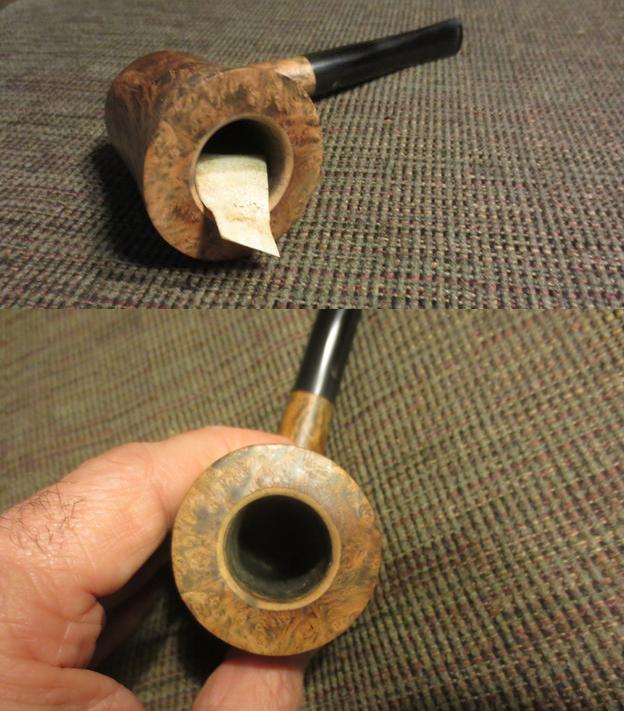
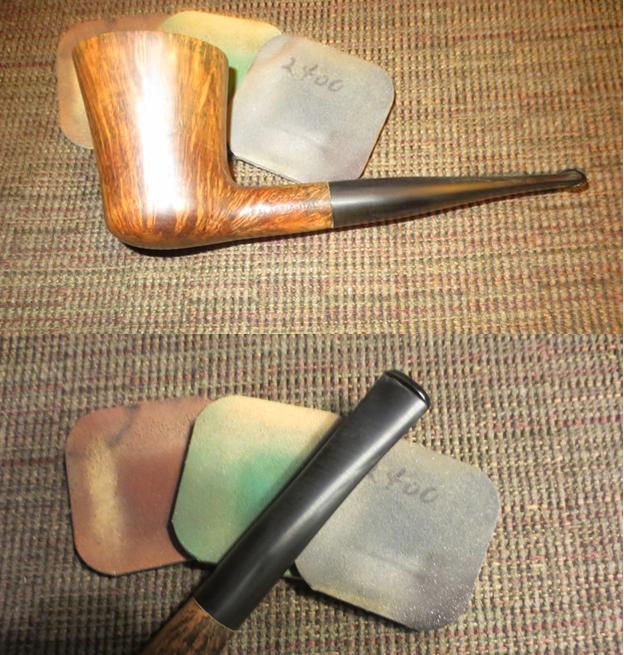
Tag Archives: Bowl – refinishing

My Latest Refurb, an Edwards Algerian Briar 771 is not a shape I’ve seen before


Blog by Steve Laug.

Over the years I have had many Edwards pipes cross my work table. I have kept a few and sold many. I have also repaired many of them. The available shapes that the pipes came out it spoke of a very fluid design philosophy. Pipedia says that “Edward’s Design Philosophy is hard to pin down, think of their style as the “American Charatan” with unique & clever twists all their own.” Across the board they were all Algerian Briar and all were unstained waxed or oiled briar. I remember reading that actually oil curing was a feature of their pipes. I did a quick look on Pipedia  https://pipedia.org/wiki/Edward’s and found that I was correct. I quote: “All of Edward’s pipes are Algerian Briar – a fact very few pipe companies can claim, and all are oil-cured utilizing natural finishes – no strange concoctions are used to interfere in your tastebud’s dance with the briar. Algerian, Calabrian, Sardinian, Corsican – take your pick, but Algerian Briar is generally considered the finest smoking briar ever used. When combined with oil-curing, Algerian takes on a magical quality that even Alfred Dunhill recognized as far back as 1918 as the choice for both his Bruyere and Shell.”

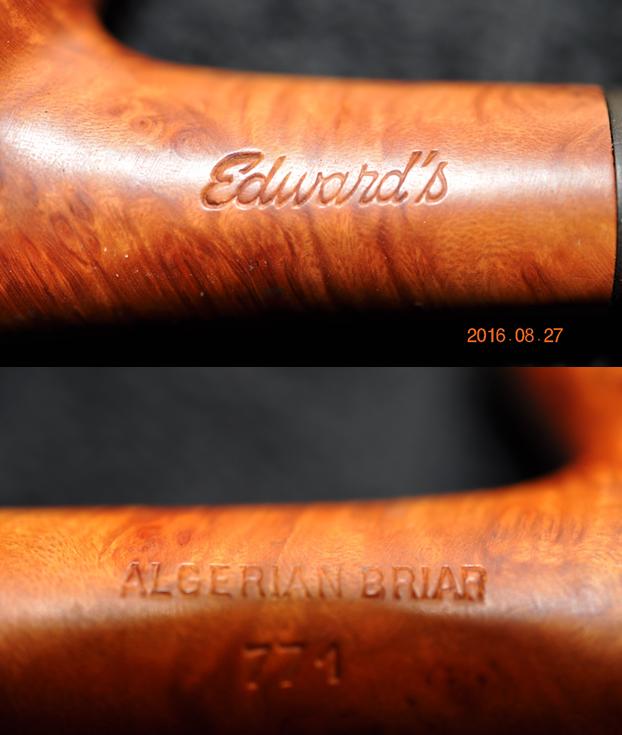
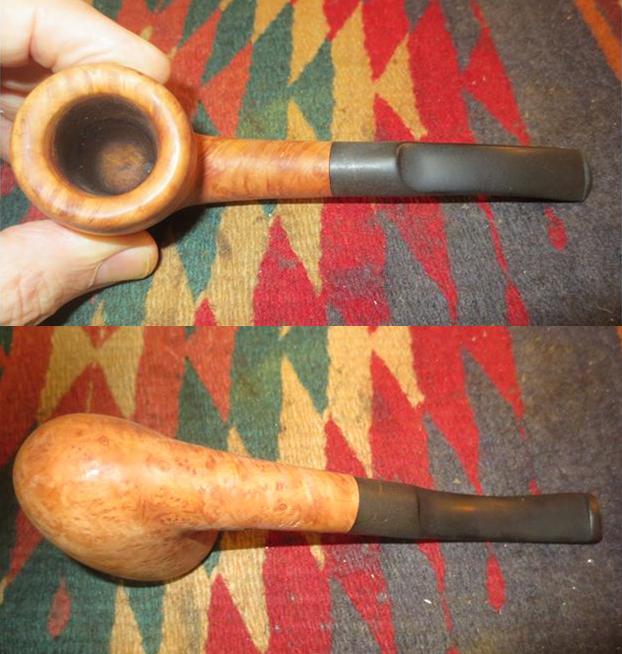
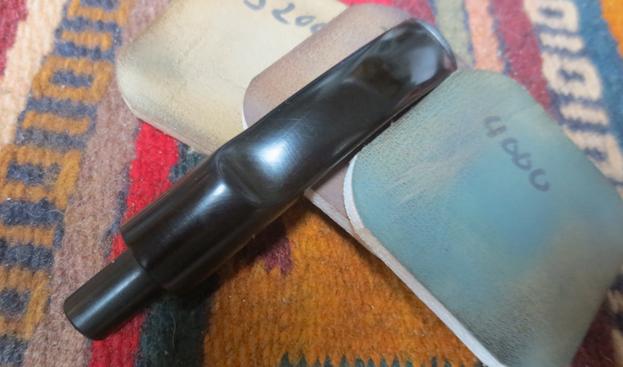
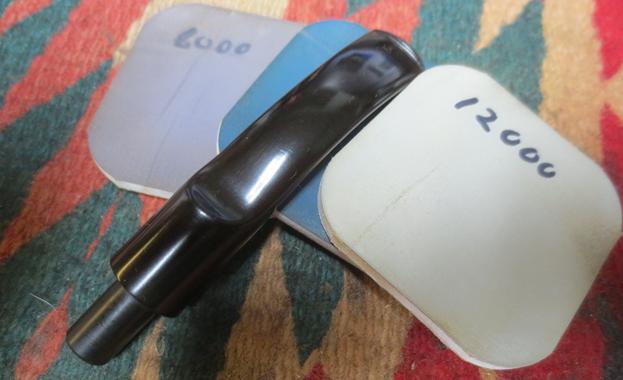
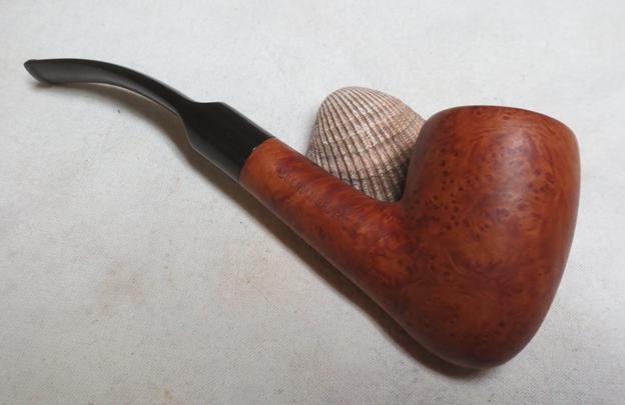
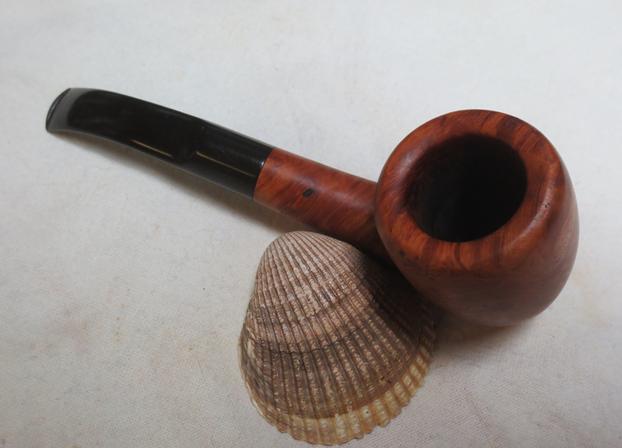
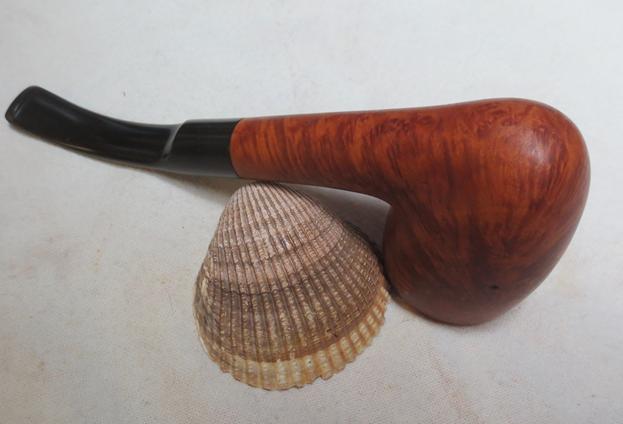
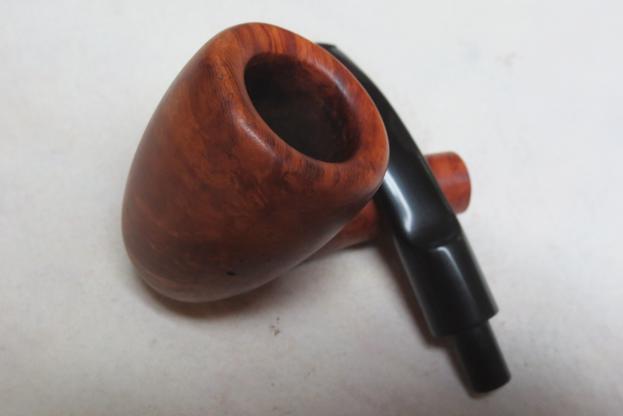
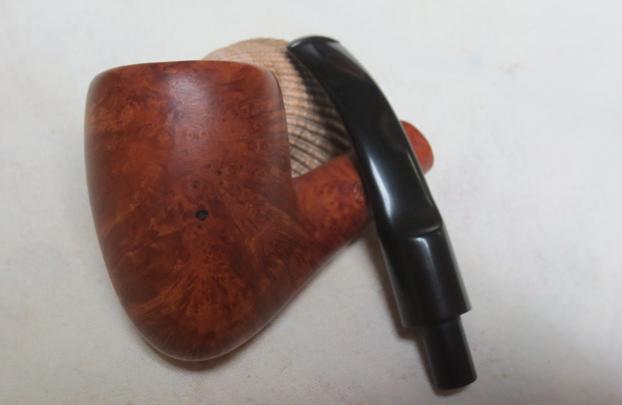
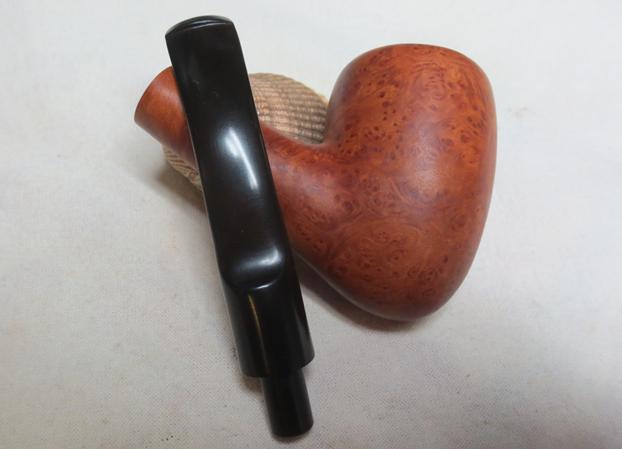
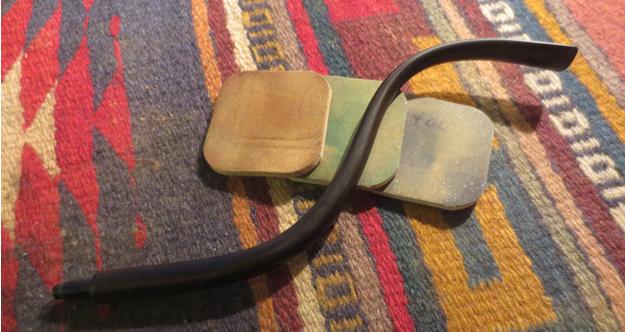
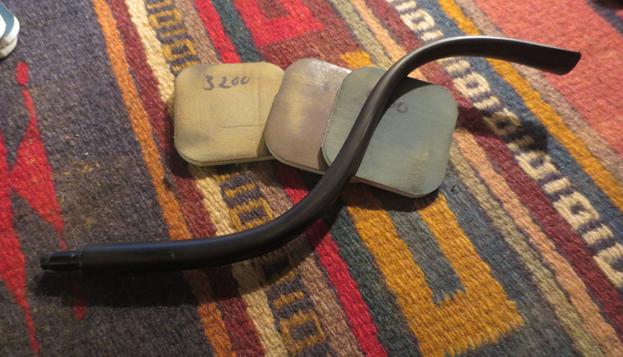
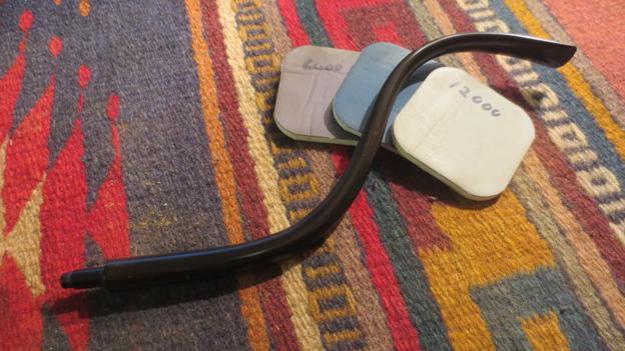
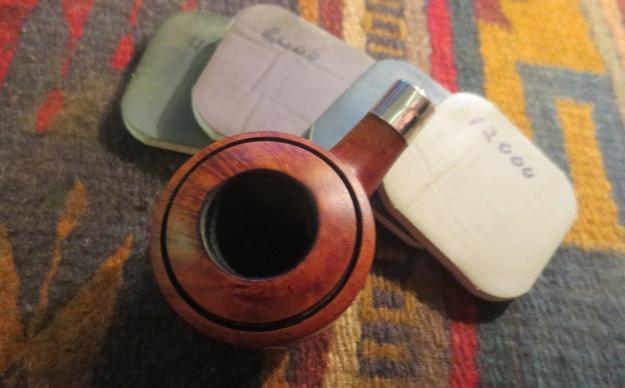
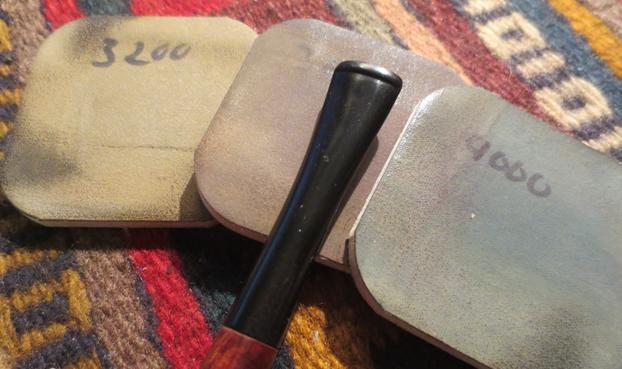
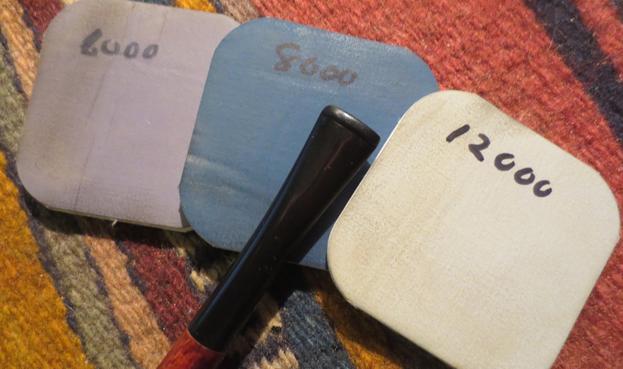
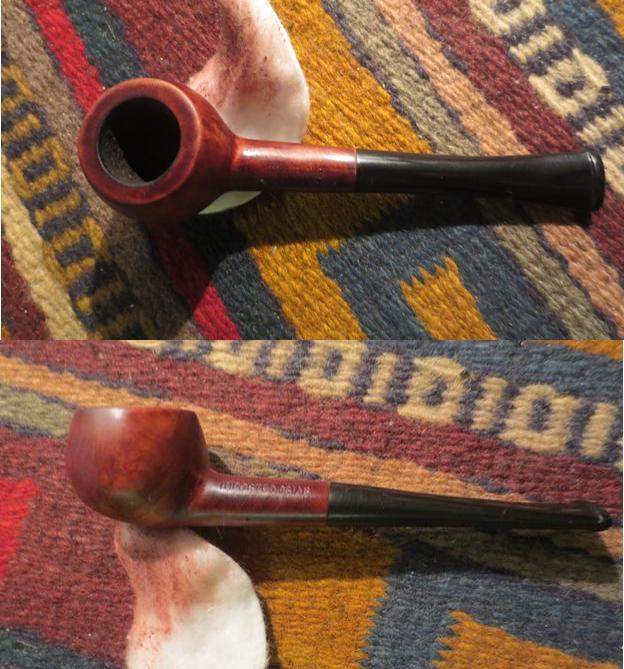
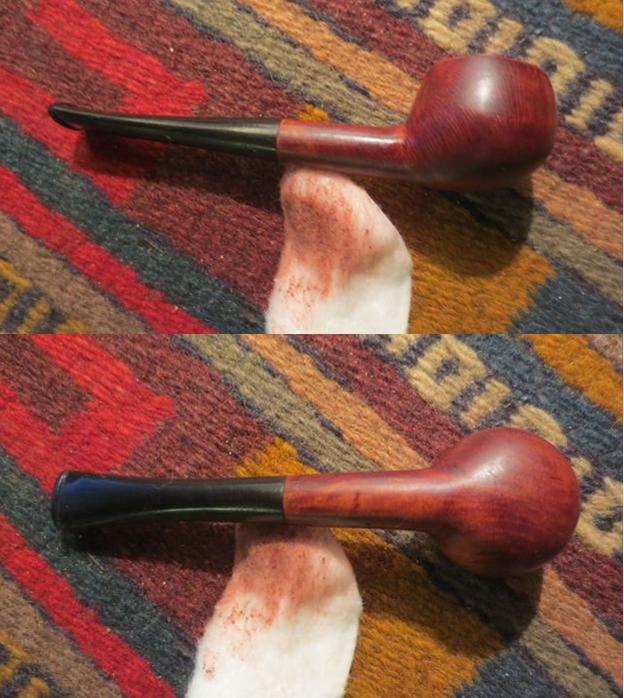
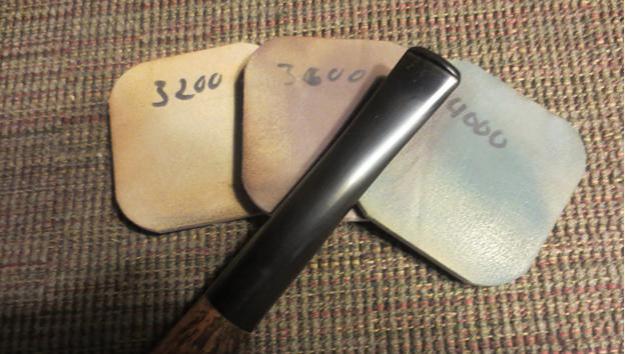
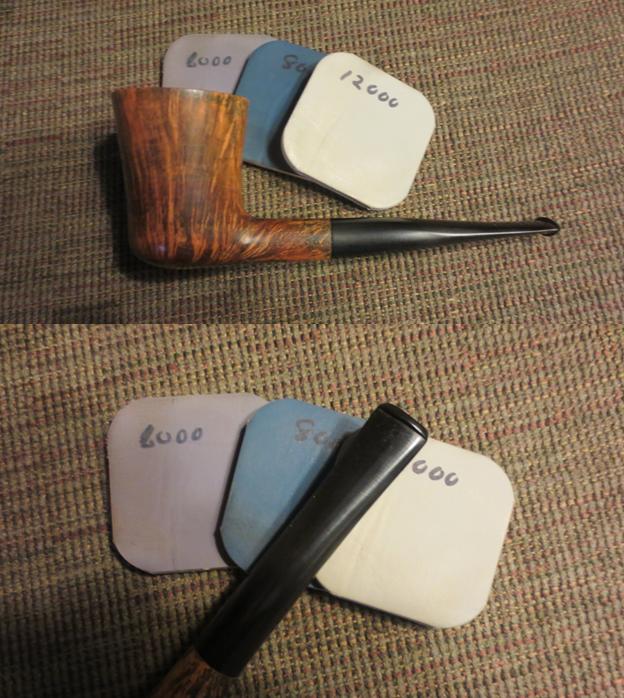
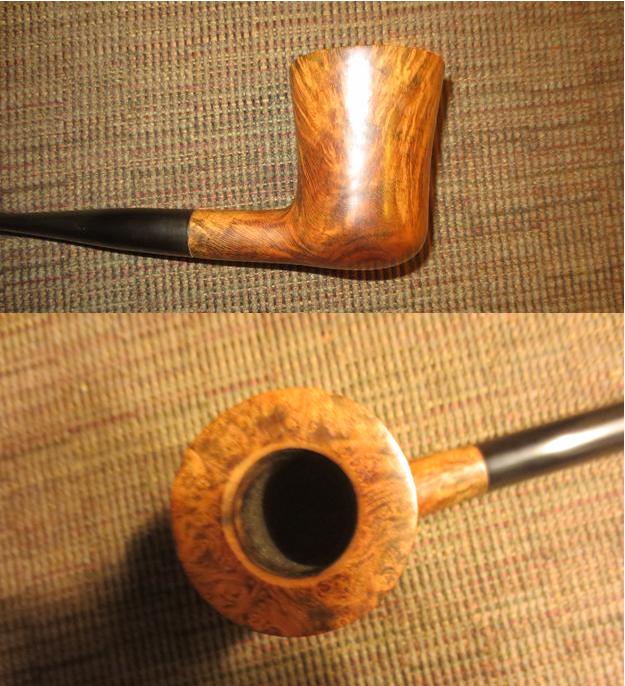
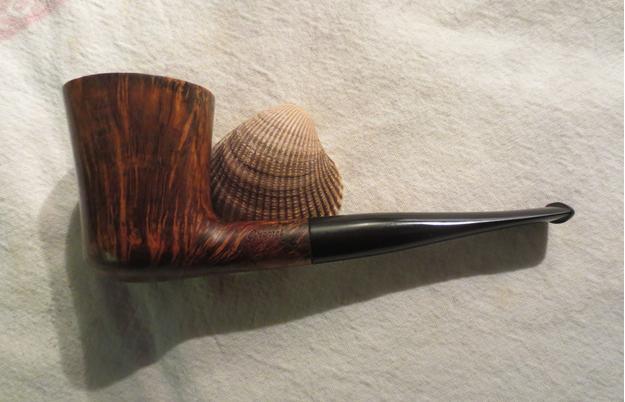
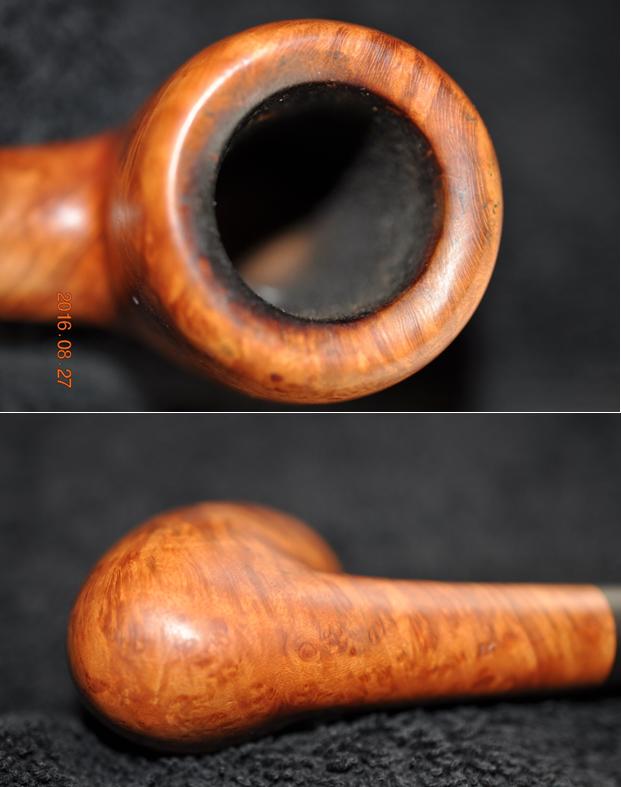
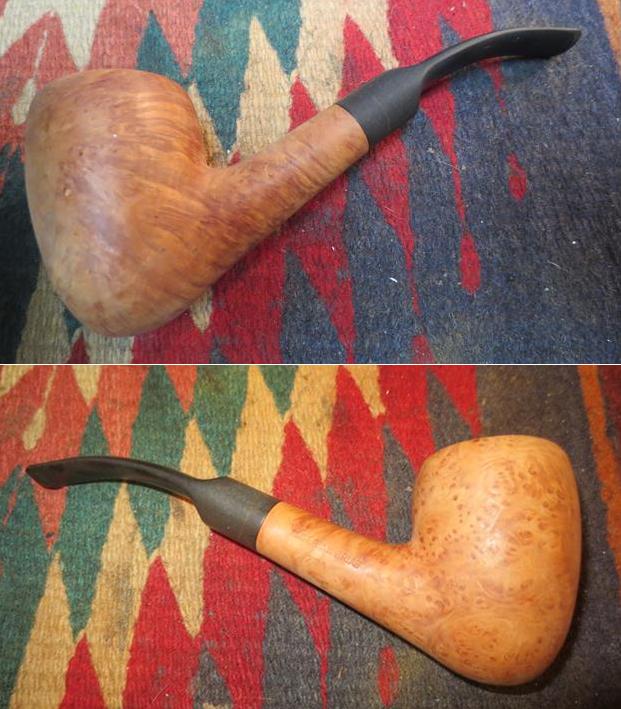
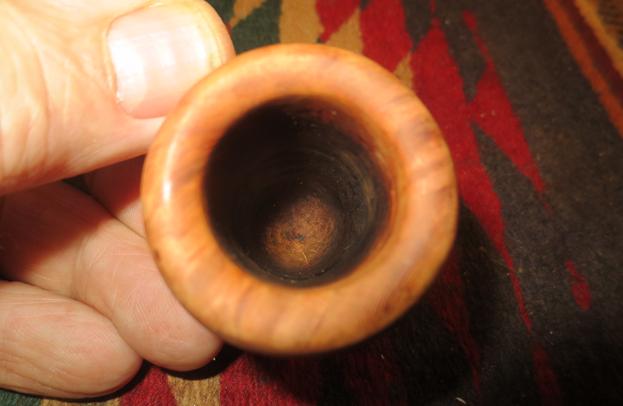
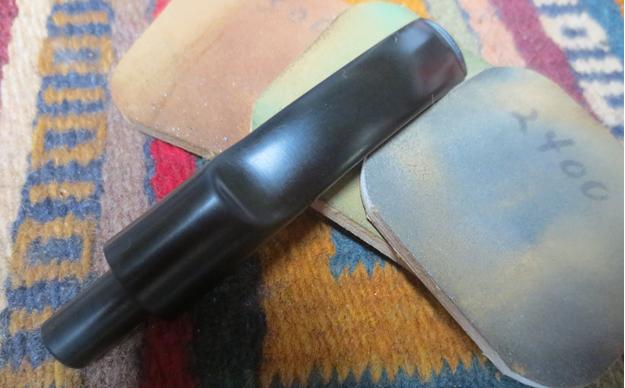
The pipe is stamped Edwards on the left side of the shank and Algerian Briar over shape number 771 on the right side of the shank. The pipe is a large group 5 sized bowl. The stem was lightly oxidized but does not have any tooth or chatter marks. Push in tenon fits tight. The dimensions are: length 6 inches, height 2 1/4 inches, chamber width 13/16, chamber depth 2 inches. The following photos were taken by my brother before he cleaned the pipe. It is obvious it is in pretty decent shape. The rim has a little tar and darkening on the rounded back edge but the rest is pretty clean. The finish is quite nice and has some rubbed in grime that will come off with scrubbing. The photos tell the story on this pipe.ed1My brother took some close up photos of the rim, the bottom of the bowl and the stampng on the sides of the shank. You can see from the photos that the pipe is in great shape except for the slight buildup on the back edge of the rim. There is a light cake in the bowl and the bottom third of the bowl appears to be raw briar that has not been darkened by smoking. I would call the pipe lightly smoked.ed2 ed3My brother scrubbed the pipe with his usual mix of a tooth brush and Murphy’s Oil Soap. He rinsed it with water. The scrubbing removed all of the grime and oils on the bowl and removed the build up on the rim as well. The stem was lightly oxidized and there were some scratches around the circumference of the saddle portion of the stem. My brother also cleaned the interior of the airways in the stem and shank and the mortise area. I took some photos of the pipe when it arrived here. ed4 ed5I took a close up photo of the rim to show how well it cleaned up after Jeff had scrubbed it. There is a shine to the rim that is unblemished by scratches or dents. I also took some photos of the stem to show the light oxidation and the absence of tooth marks or chatter. The stem is stamped on the underside horizontally across the saddle with the word France.ed6 ed7I worked over the stem with micromesh sanding pads – wet sanding it with 1500-2400 grit pads and dry sanding with 3200-12000 grit pads. I rubbed the stem down with Obsidian Oil between each set of three pads. After the final micromesh pad I gave it a last coat of Obsidian Oil and set it aside to dry.ed8 ed9 ed10I rubbed the bowl down with a light coat of olive oil to bring the grain to the surface. It also brought life to the briar. I buffed the pipe with Blue Diamond on the wheel and then gave it several coats of carnauba wax. I buffed it with a clean buffing pad. The finished pipe is shown in the photos below. It is a beautiful piece of briar, lightweight and well grained.ed11 ed12 ed13 ed14 ed15 ed16 ed17
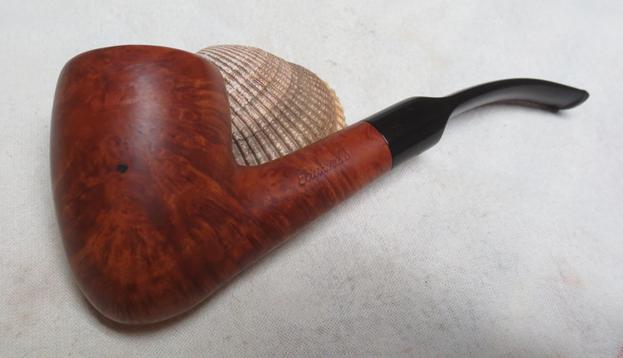
Getting Lazy – A Simple Restore on a Loewe Cutlass 10


Blog by Steve Laug

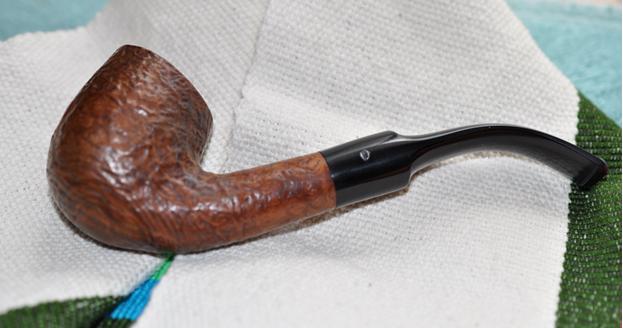
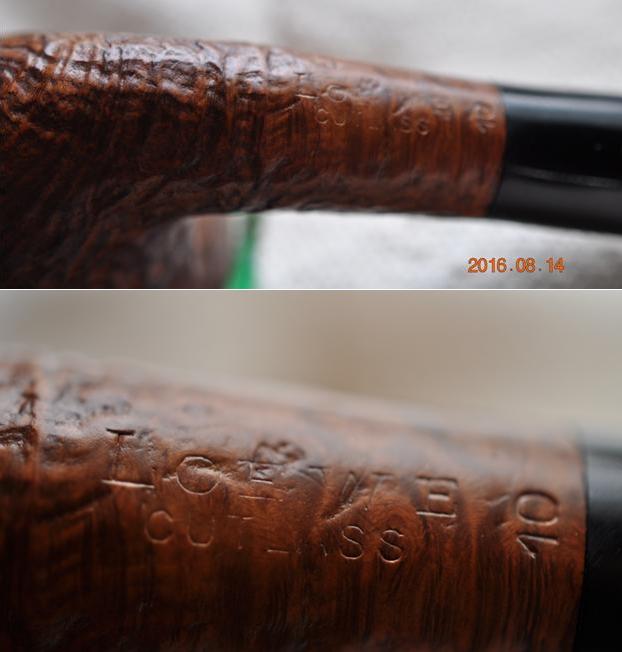
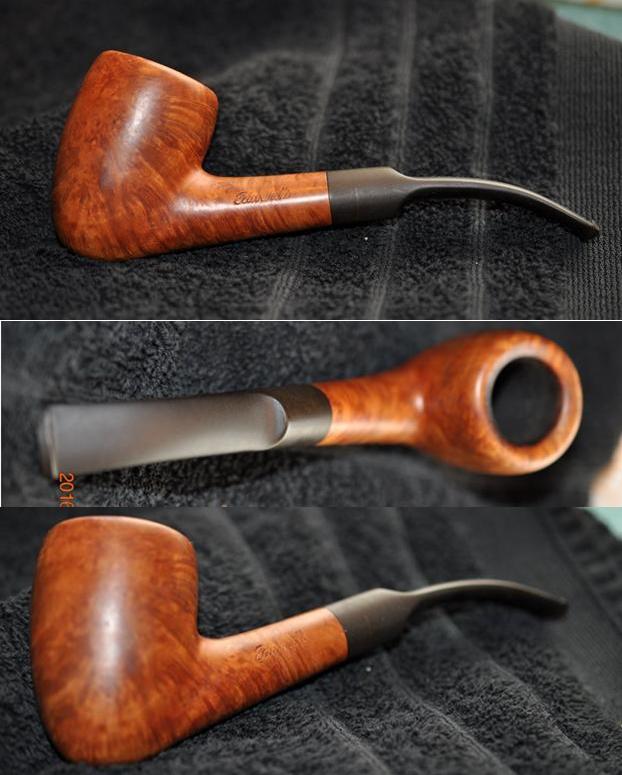
The last three or four pipes I have taken out of the refurbishing box have been very simple restorations. My brother sent me this Loewe’s pipe that is stamped Loewe over Cutlass on the underside of the shank with the shape number 10 at the shank stem union. In the photos he sent me it appeared to be in pretty decent shape. The finish looked dirty and murky but otherwise good. The rim had some tars and overflow from the cake in the bowl but not too bad. There were some nicks and dings in the rim but none too deep. The stem was virtually flawless with no tooth chatter or tooth marks. The boxed L logo on the stem was worn and almost illegible but with a lens it is clear.loewe1While I have heard of and enjoyed quite a few older Loewe’s pipes the shape of this one and the name were not familiar to me. Even the shape number was not recognizable. I looked on the pipephil site to see if I could find any information on this particular iteration of the brand and found what I was looking for. There on his site (http://www.pipephil.eu/logos/en/logo-l5.html) I found a pipe with the same stamping but a different number. The one in my hands does not have a COM stamploewe2 so I do not know where it was made. I have included the photo of the stamping and the stem logo to the left from that site as it is parallel to the one I have. I have also included some information from the listing there.

The brand was founded 1856 by Emil Loewe and was first bought out by Civic. Eventually the brand became part of Cadogan Group along with BBB, Civic, Comoy, GBD, Loewe and Orlik in about 1979. Judging from the age and the stamping on this pipe I would surmise that it was made after that merger and is a Cadogan pipe.

I also did some reading on the history of the brand on Pipedia and include a short excerpt here that is pertinent to the age and stamping on this pipe: https://pipedia.org/wiki/Loewe_%26_Co.#Bottom_of_shank: “By studying the website of one UK dealer I was able to deduce that the present shape numbers (early 2003) mostly (probably all) differ from those used from 1967. For example, a Billiard is now a 28, a Lovat an 834, a Canadian a 296. Some shape numbers now have 4 digits. But even today, Cadogan will occasionally still stamp a pipe with a shape name instead of a number, though only on request.”

It looks to me that I am dealing with a pipe made around 2003 jusding from the change in shape numbers to a two digit numbering system at some level. Though there is a lot of uncertainty regarding the dating of Loewe pipes after the Cadogan buy out.

My brother took the first and the following photos of the pipe before he did the cleanup. What follows are a series of close up photos of the stamping, the rim and bowl and the sandblast look on the bottom of the bowl. In the bowl bottom photo you can see the dust and debris in the grooves of the blast.loewe3 loewe4 loewe5My brother cleaned out the internals – the mortise and the airways in the shank and stem with pipe cleaners and alcohol. He scrubbed the externals with a tooth brush and Murphy’s Oil Soap and was able to not only remove the grime from the finish but most of the finish also. When it arrived in Vancouver the pipe looked like virgin briar. The stem is acrylic so there was no oxidation on it. The next photos show the pipe when I brought it to my work table. The blast on the briar is quite shallow and shows mixed grain.loewe6 loewe7I took some close up photos of the rim and the stem to show their condition. My brother was able to remove the tars on the rim. There was some slight rim darkening on the inner edge but other than that it was clean. The scratches and dings were also raised. The photos of the stem show how clean it was as well when it arrived.loewe8 loewe9I sanded the inner edge of the rim with 220 grit sandpaper to smooth it out and remove the darkening and light burn marks. I also sanded it with 1500-2400 grit micromesh sanding pads to remove the scratch marks left behind from my sanding.loewe10I wiped the bowl down with acetone on a cotton pad to remove any remnants of the previous finish and the dust from sanding. I stained the bowl with a dark brown aniline stain cut 50/50 with isopropyl alcohol. I flamed it and repeated the process until the coverage on the bowl was even.loewe11I hand buffed the bowl and took the photos below to show what it looked like at this point in the process.loewe12 loewe13I gave the bowl and stem several coats of Conservator’s Wax and buffed it with a clean buffing pad to raise the shine. I hand buffed it with a microfibre cloth to deepen the shine. The finished pipe is shown in the photos below. This one will also soon be on the rebornpipes store. If you are interested in adding it to your rack let me know through email at slaug@uniserve.com or by message on Facebook or a comment here. Thanks for looking.loewe14 loewe15 loewe16 loewe17 loewe18 loewe19

Another Easy Restoration – a GBD Seventy Six 255 Canadian


Blog by Steve Laug

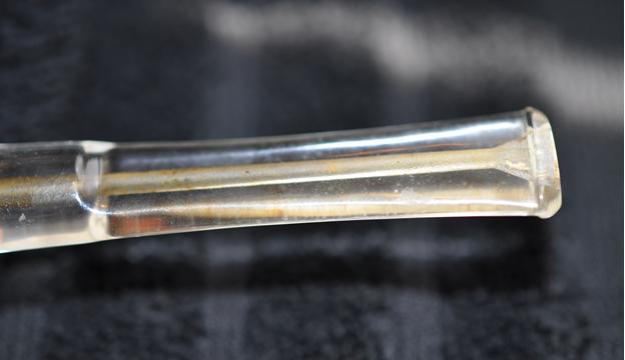
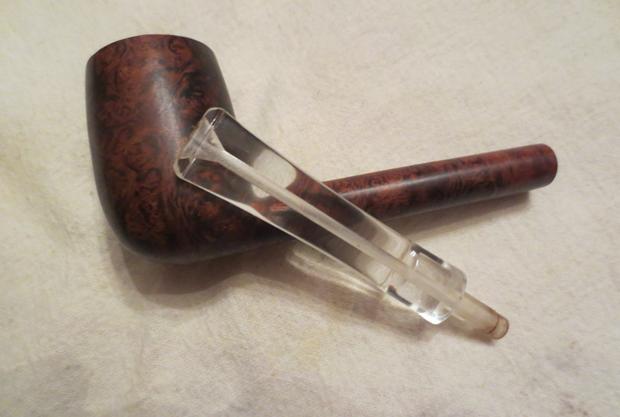
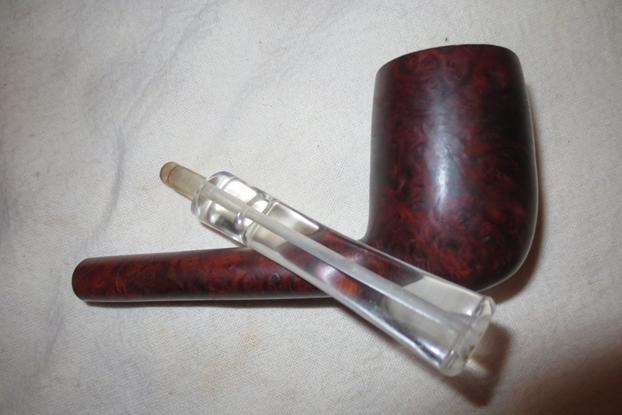
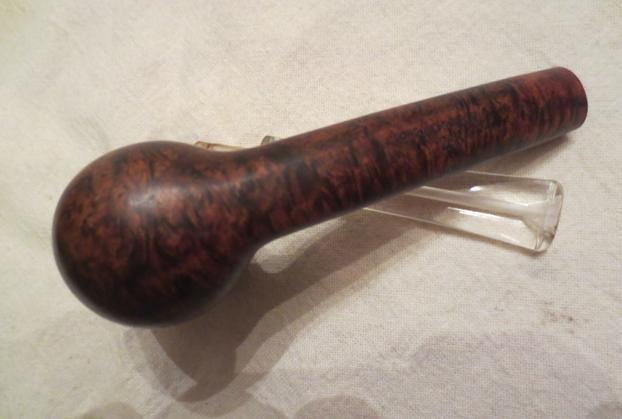
When I opened the box of pipes from my brother there was a long shanked clear stem pipe that stood out to me. The stem was in perfect condition, with no tooth chatter or marks and was very clean. In fact, the stem was probably a replacement made of Lucite. Looking at the classic shape and the grain on it I was pretty sure it was a GBD but had not even looked at it. When I got around to examining the pipe I saw that it was stamped on the top of the shank with GBD in the oval logo over Seventy Six in script. On the underside of the shank it is stamped Made in England over the shape number 255 which when I looked it up was a GBD number for a Canadian with an oval taper stem. Finding out that pretty well sealed the fact that the stem is a replacement. It is an oval shaped saddle stem.gbd1I remembered reading about the Seventy Six line before but had to look it up again. From what I found with a simple search I could see that the pipe was introduced by GBD in1976 in honor of the American Bi-Centennial. According to what I read the pipe was released as a polished dark brown “take off” finish. The best I can understand is that the dark brown was removed leaving it in the dark grain and birdseye of the pipe.

So my memory was nudged and I remembered that Al Jones (Upshallfan) had written about his repair of a classic GBD Seventy Six and given information on the brand in this link: https://rebornpipes.com/2013/06/17/gbd-oval-shank-pot-seventy-six-restoration/ I quote: “In 1976 GBD introduced a series called the “Seventy-Six” to commemorate the United States Bicentennial.  I was a Sophomore in high school during 1976 and the year-long celebration had a big impact on me.  The Seventy-Six model remained in the GBD catalog until 1981.”

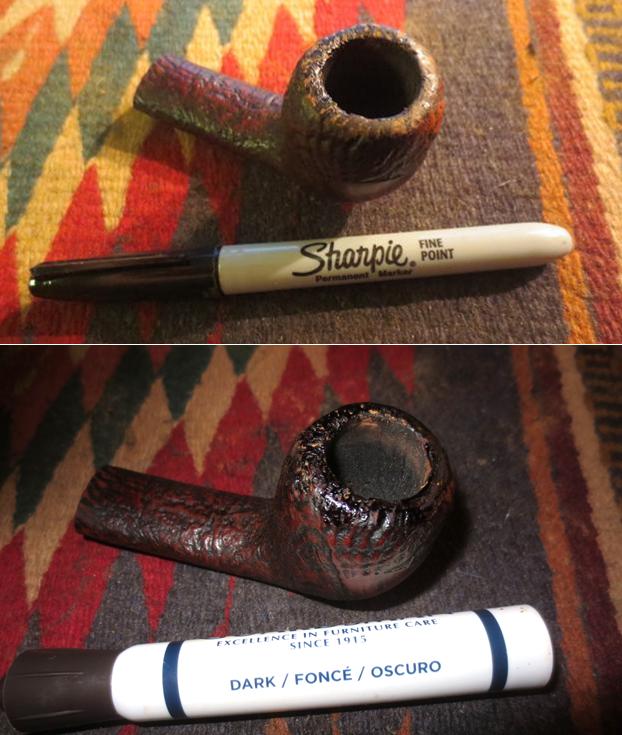
He also quotes from the 1976 Catalogue: “The GBD “Seventy-Six” is our contribution to the Bicentennial celebrations.  We have really pushed out the boats for “the colonies” in launching this new series that will be remembered by its proud owner long after the celebrations are forgotten.”gbd2My brother took the above photos and the close up photos that follow before he did any clean up on the pipe. The first photos shows the condition of the bowl and the rim. There was a cake in the bowl and an overflow of lava on the rim. I did not know until the pipe arrived that the rim was beveled inward to the bowl. There appeared to be a lot of damage on the rim. The second and third photo show the stamping on the top and underside of the stem. It is clear and readable. The last photo shows the condition of the stem. There were no bite marks on the top and underside near the button. There was some light tars in the airway in the stem.gbd3 gbd4 gbd5My brother scrubbed the exterior of the pipe with Murphy’s Oil Soap to remove the wax and the buildup on the rim. It removed the oils and wax and left the pipe clean and natural briar. He cleaned out the airway in the shank and stem. He also cleaned out the mortise with alcohol, cotton swabs, pipe cleaners and alcohol. The photos below show the pipe when I received it. When I saw the rim it was then that I knew that it was beveled inward. The briar on this pipe was truly stunning. There were no sandpits or flaws in the briar.gbd6 gbd7He was able to remove most of the lava on the rim and what had appeared to be burned areas was merely dirty. It would not take much to clean it up and make it shine.gbd8There was still some inner edge darkening and some damage on the inner edge. I used a folded piece of 220 grit sandpaper to clean up the darkening and the damage. The third photo shows the process of sanding the inside of the bowl with a piece of 220 grit sandpaper wrapped around the end of a Sharpie pen to smooth out the inside of the bowl. The fourth and final photo shows the interior of the bowl after it was sanded.gbd9 gbd10I decided not to stain the pipe but to leave it natural. I rubbed it down with a light coat of olive oil to bring life back to the briar. I liked the look of the pipe with the natural oil finish. I buffed the bowl with Blue Diamond on the buffing wheel to raise the shine. I gave the bowl and the stem several coats of carnauba wax and buffed it with a clean buffing pad to raise a shine. I hand buffed the pipe with a microfiber cloth to deepen the shine. The finished pipe is shown in the photos below.gbd11 gbd12 gbd13 gbd14 gbd15 gbd16 gbd17 gbd18

“Chinrester” Pipe stamped Screwball would be an interesting restoration project


Blog by Steve Laug

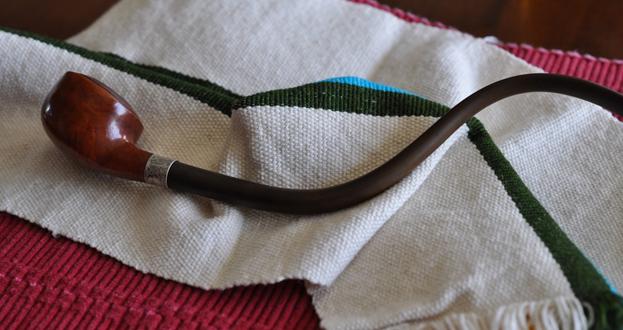
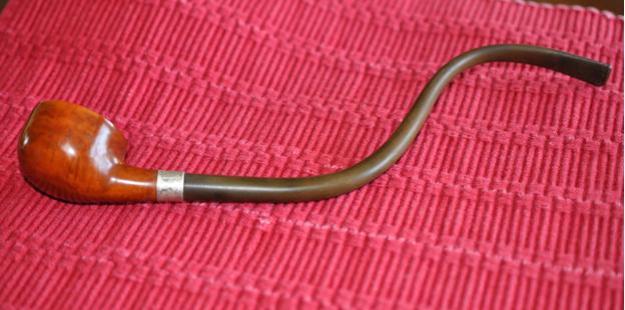
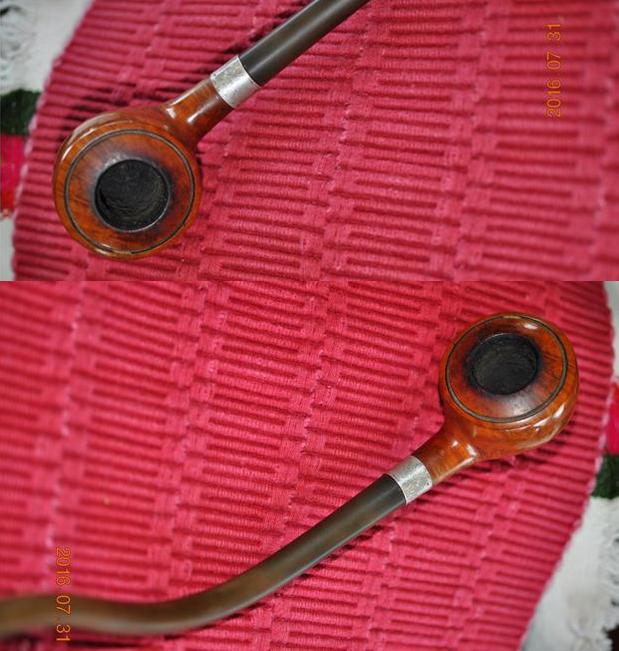
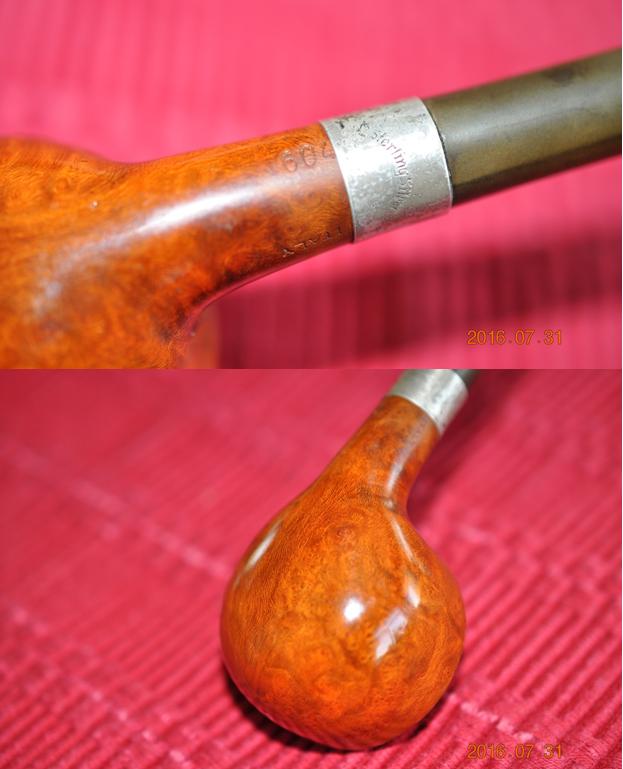
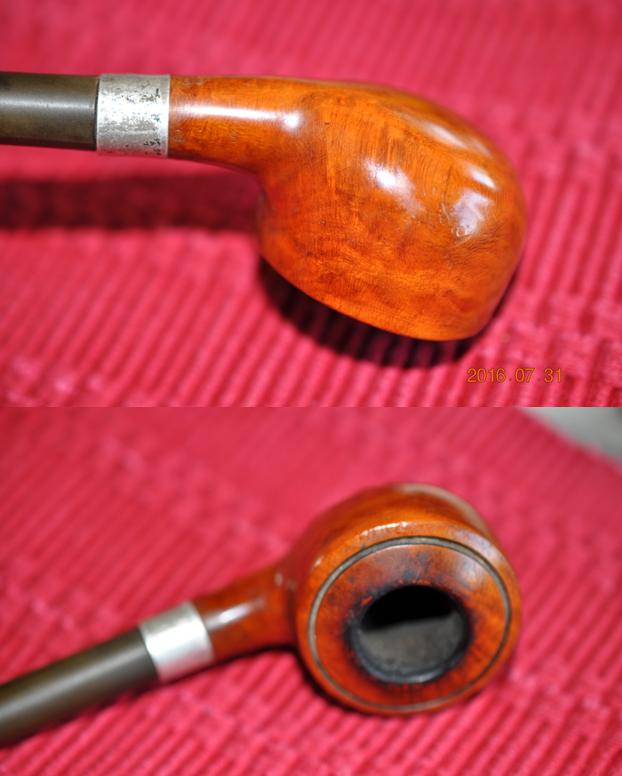
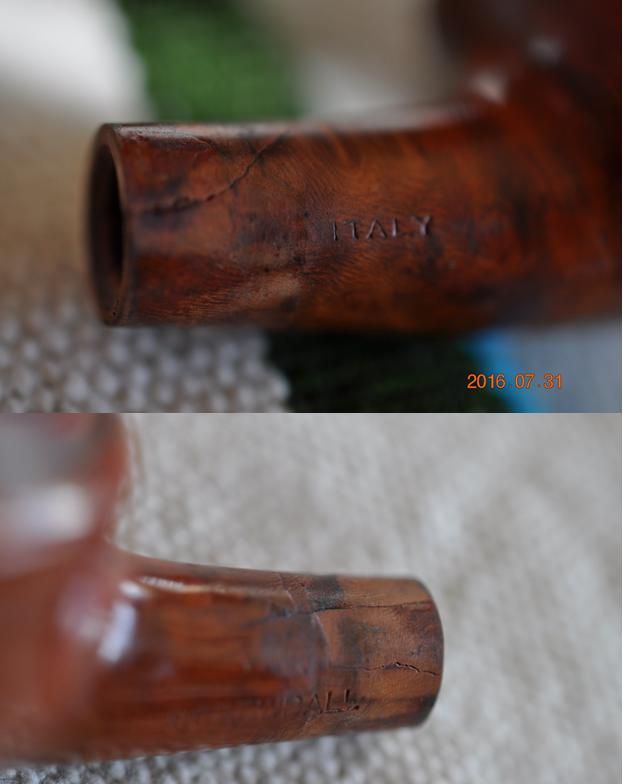
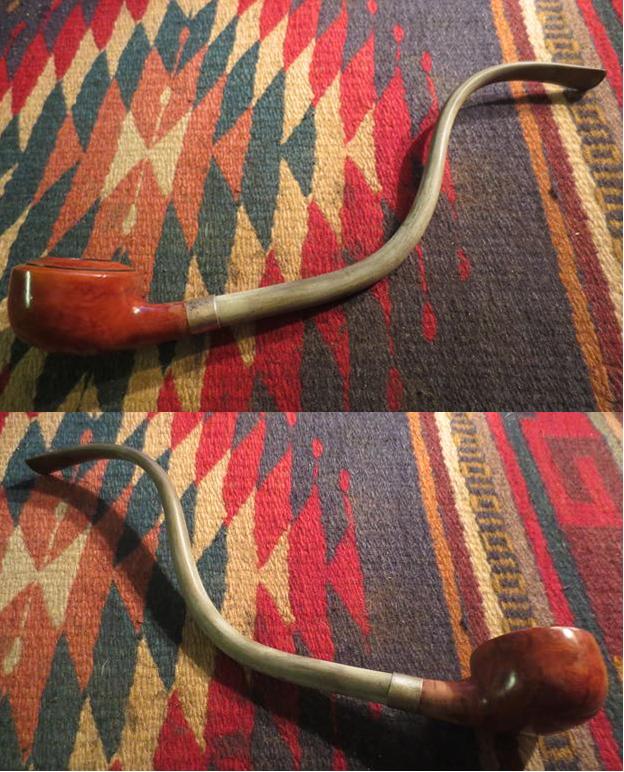
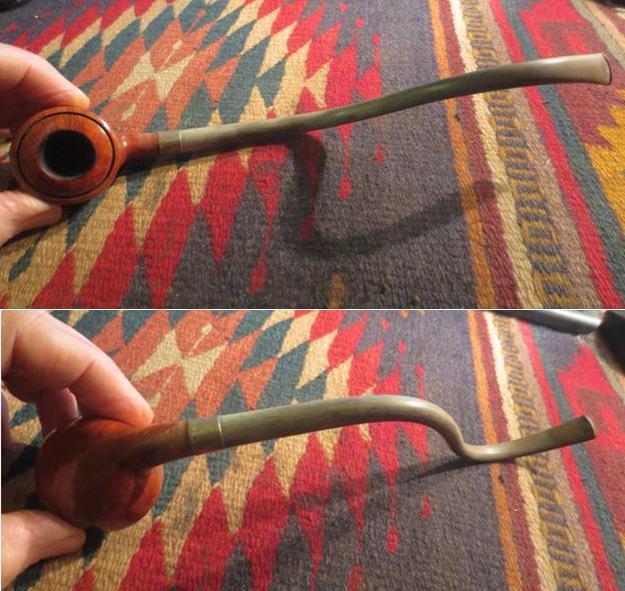
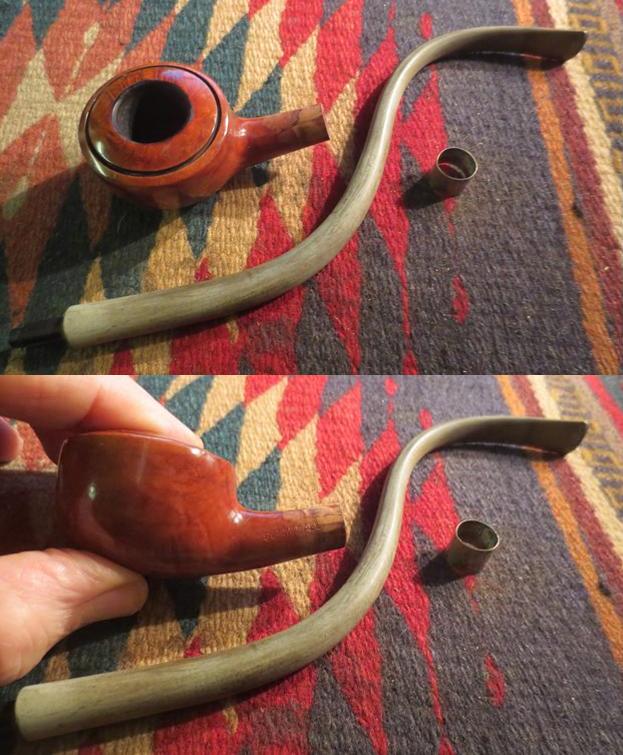
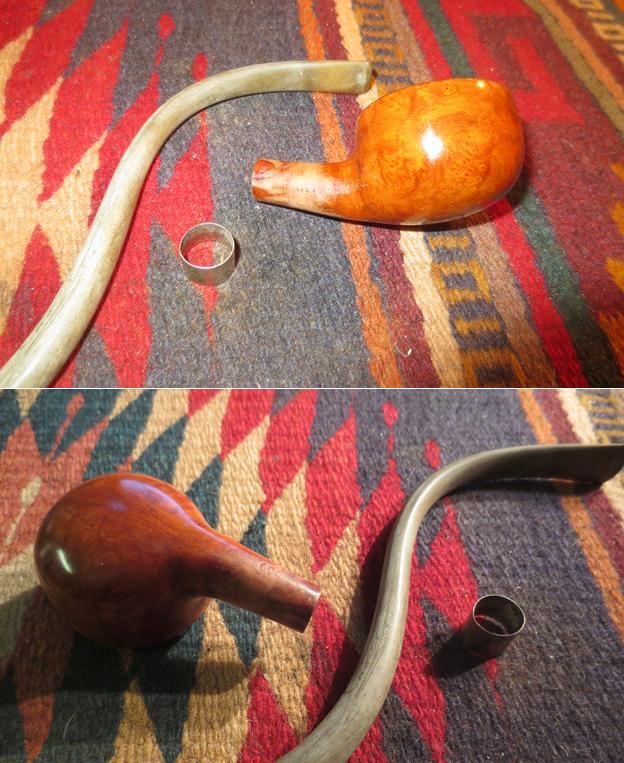
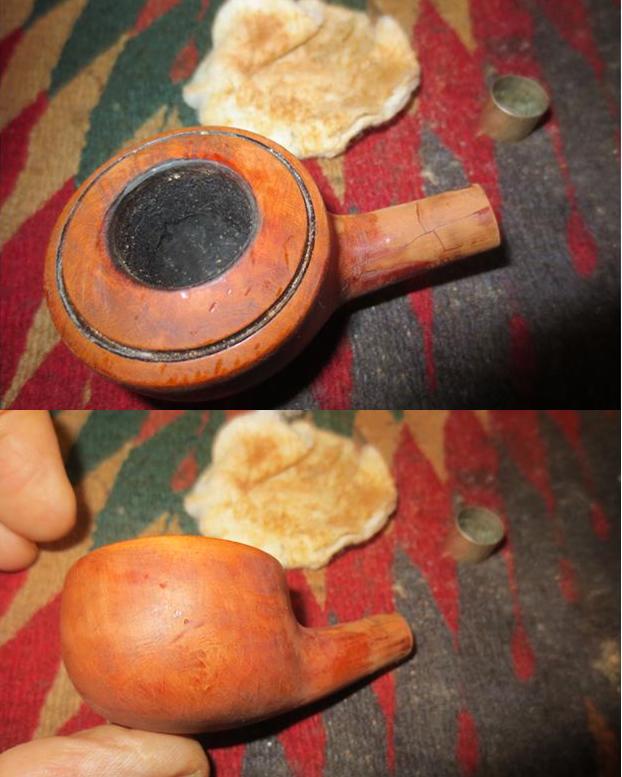
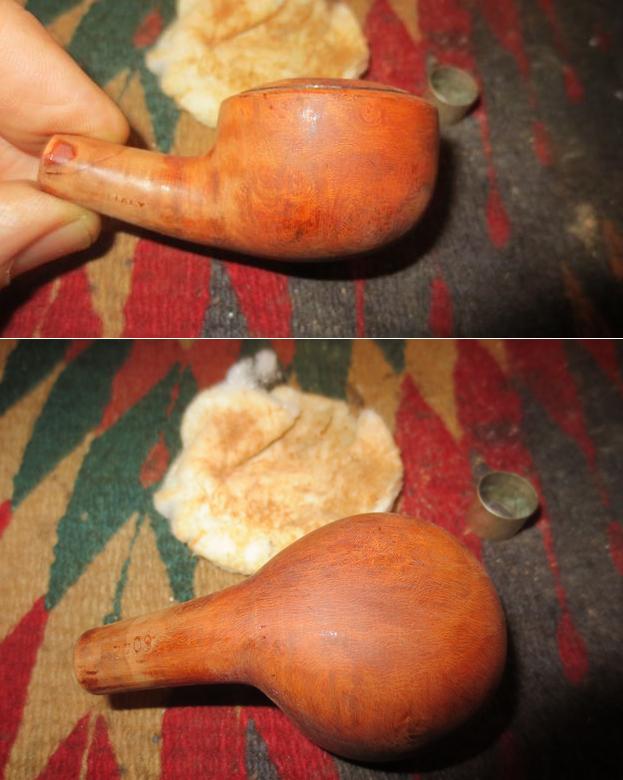
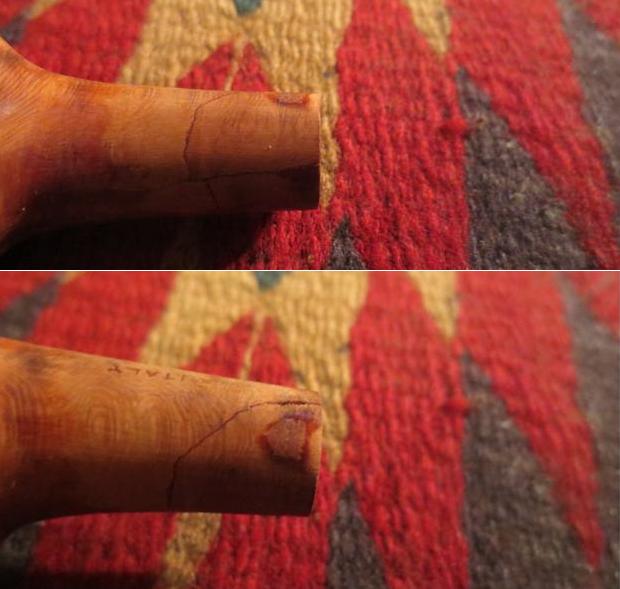
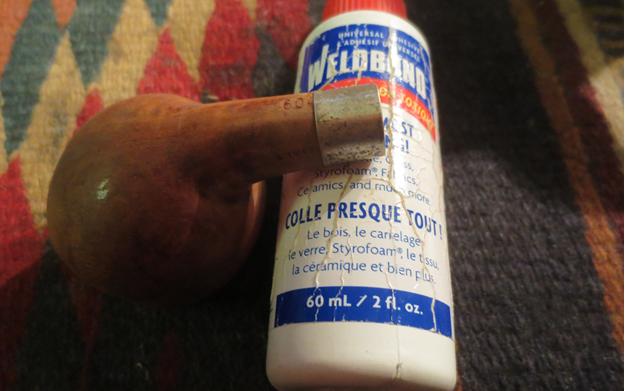
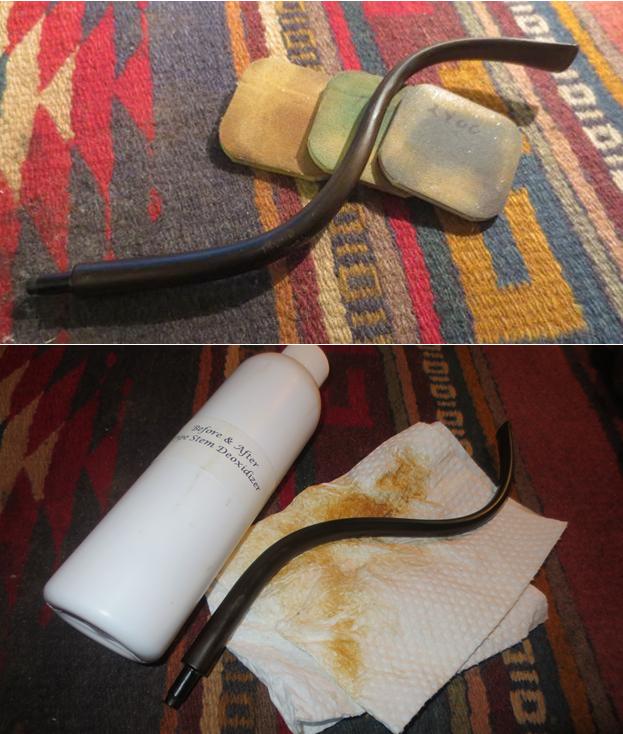
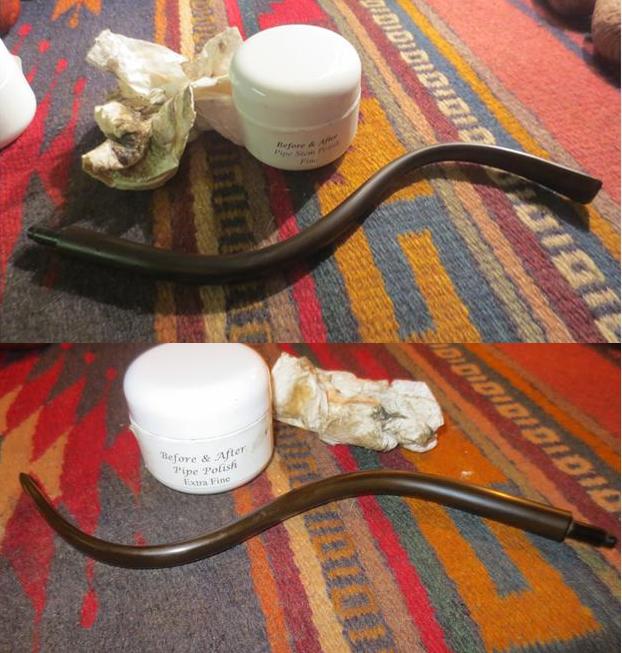
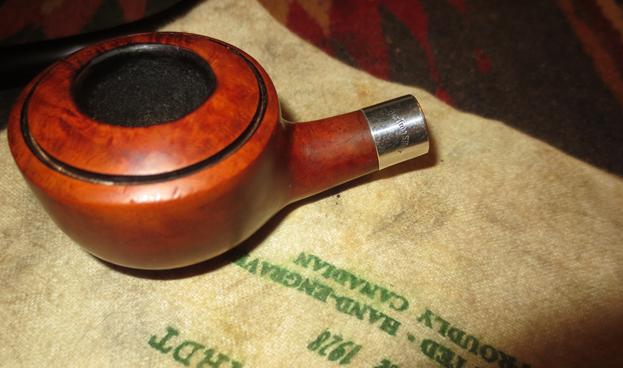
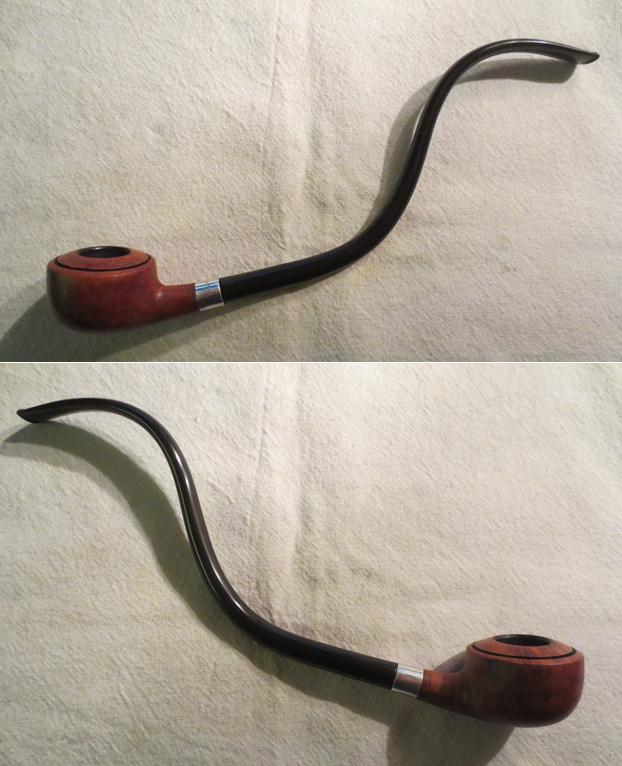
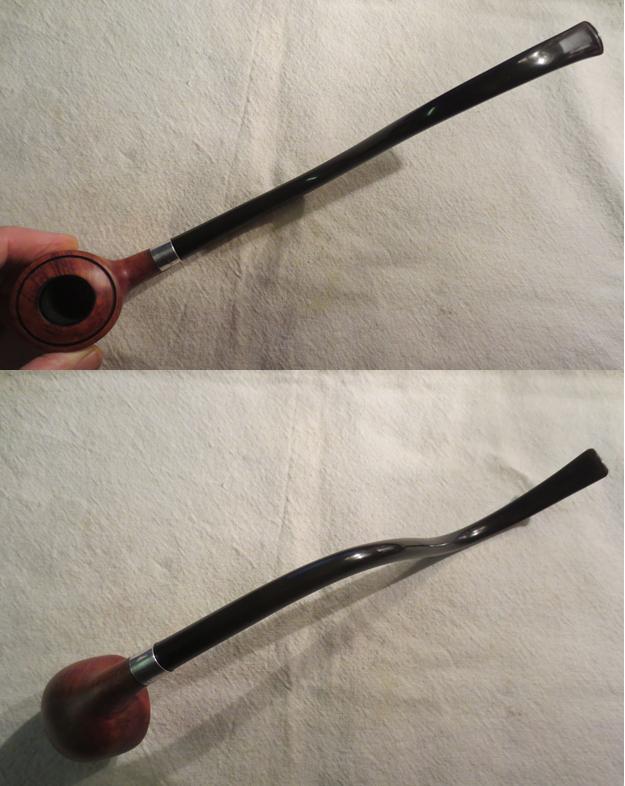
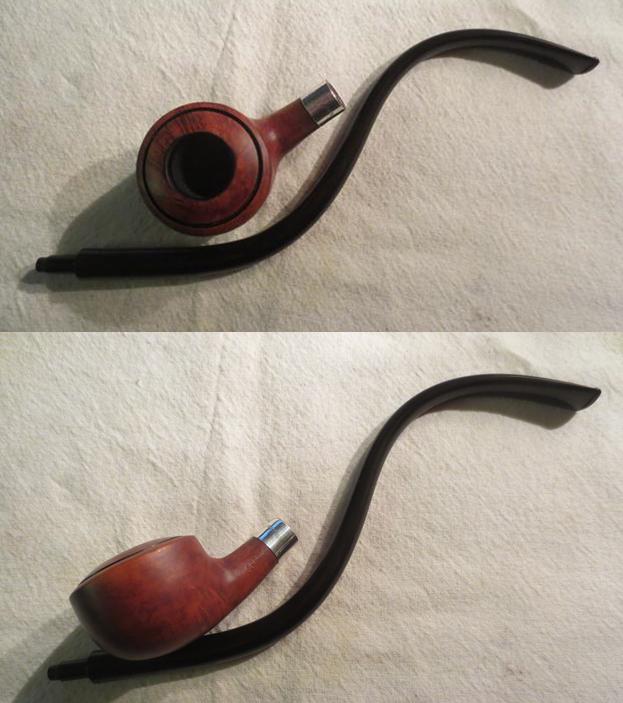
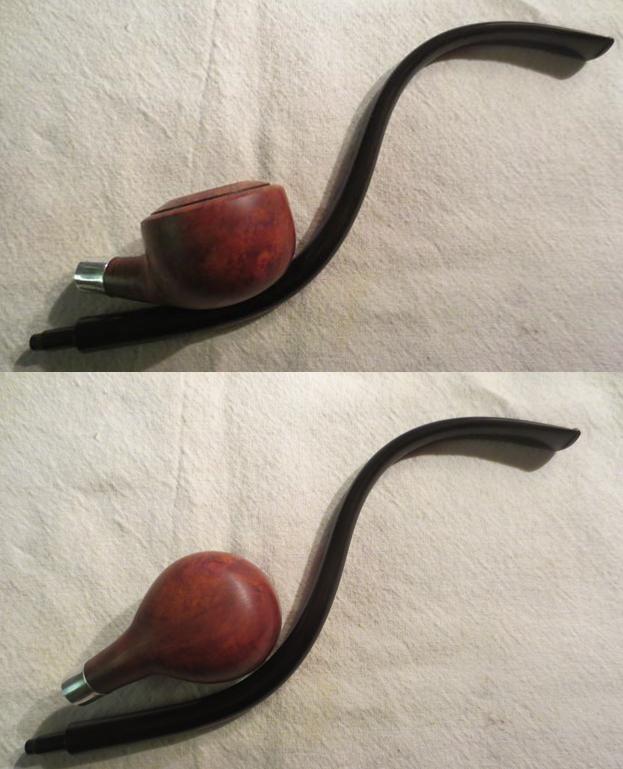
Over the years I have seen photos of the strangely shaped pipes with the long almost tortuously bent stems but I had never seen one close up. Then my brother sent me photos of one that he had picked up for me to restore. It was stamped Screwball on the left side of the shank and 6044 over Italy on the right side. It had a tarnished silver coloured band on the shank that covered what appeared to be a cracked shank. The finish had been sanded free of the area that was banded but the rest of the bowl was still covered with a shiny plastic coat finish that seemed impermeable. The stem was intact which was interesting as many of the ones I have seen were either twisted or bent or broken. The bowl was a unique shape as well. At a side glance it was a combination of a prince and pot but there was a ring around the top of the rim that divided the rim into two enclosed circles. It is a large pipe – 11 inches long, 1 ¼ tall, 1 ¾ inches diameter and a ¾ inch chamber diameter.chin1The stem was oxidized and slightly brown. The silver band was tarnished but the pipe still had a glossy shine in the photos he sent me.chin2The rim showed darkening and some lava over flow on the top of the bowl. There was a light cake in the bowl. The ring around the top was filled with grit and grime. chin3My brother took some close up photos of the pipe. The first of these shows the rim top and the cake and overflow on the rim. The second shows the stamping. The name of the pipe as it appears in the photo is SCREW. Underneath the band is the second half of the name BALL.chin4The next two photos show the stamping on the shank and the imprint of Sterling Silver on the band. They also show the grain peeking out of the shiny topcoat on the underside of the bowl.chin5Here are a couple more shots of the bowl – you can see that the shiny coat has some scrapes in the surface and the almost painted on look that makes me wonder if it is not a later coat of varathane.chin6When my brother received the pipe the band was loose so he slid it off the shank and revealed not only the complete stamping on the pipe but a large cracked area that had been repaired. The cracked area looks like a large chunk of briar had broken free. It had been glued in place and then a band slid over the repair. The glue had dried and long since let the band fall loose.chin7 chin8My brother did the clean up and took off the rim burn on the top and scrubbed the exterior with Murphy’s Oil Soap and the interior with pipe cleaners, cotton swabs and alcohol. When I received the oxidation on the stem was on the surface and the pipe was ready to restore. I have to be honest with you all it was not a restoration that I was looking forward to. The long and curved stem just spelled trouble to me. Trying to run pipe cleaners through it and also polishing and cleaning the oxidation seemed a daunting task. But finally I brought it to the table. Here are some photos of the pipe before I started.chin10 chin11I took the pipe apart and took photos of the parts. With the band removed you can see where the repair person had sanded the shank and done the crack repair before banding the shank.chin12 chin13Trying to scrub off the shiny topcoat with acetone was next to useless. The only place it came off was in the area that had already been sanded. I lightly sanded the bowl with 220 grit sandpaper to break up the surface of the shiny coat. Once that was done I was able to scrub it off with acetone quite easily. In the next photos you can see the repaired crack. It was quite large.chin14 chin15I took photos of the repaired crack to show the extent of it. The band fortunately covered the entire cracked area so it provided stability to the glued crack. Unfortunately it also covered up half of the stamping on the left side of the shank.chin16I used some Weldbond white all-purpose glue to glue the band in place on the shank. I applied it with the tip of the bottle and spread it around with my finger tip to get good coverage. I pressed the band in place on the shank.chin17While the band repair was drying I worked on the stem. I broke up the oxidation on the surface by wet sanding with 1500-2400 grit micromesh sanding pads. I wiped the stem down with a damp cloth. I scrubbed the stem with Before & After Pipe Stem Deoxidizer and was able to remove more of the oxidation. This was a labour intensive effort and took a lot of scrubbing with the solution and paper towels. When there was no more brown coming off the stem I scrubbed it with Before & After Pipe Polish – both Fine and Extra Fine to further address the oxidation.chin18 chin19You can see from the above photos that much of the oxidation had been removed but under a bright light such as the camera flash the oxidation still showed. At this point I had a decision to make – either scrub the stem with more of the deoxidizer or use my tried and true method of micromesh sanding pads. I chose to use the pads. I wet sanded it again with 1500-2400 grit pads and rubbed it down with Obsidian Oil. I dry sanded it with 3200-12000 grit pads and gave it a coat of Obsidian Oil after each set of three pads. After the final set and another coat of oil I set the stem aside to dry.chin20 chin21 chin22While the stem dried I sanded the bowl with the micromesh sanding pads to polish the briar. I had decided not to stain the bowl but leave it natural with a light oil finish and a good buffing. I cleaned off the tarnish on the band with a jeweler’s cloth and polished it to a shine.chin23 chin24With the bowl and stem both hand polished I took the pipe to the buffer and buffed it with Blue Diamond on the wheel. I was able to raise more of a shine with the buffing on both the bowl and stem. Buffing the stem was a real interesting challenge – lots of twisting and turning to get the entire stem buffed. At one point I removed it from the bowl to make it easier to maneuver on the wheel. I gave the bowl and stem several coats of carnauba wax to protect it and buffed it with a clean buffing pad. I finished by hand buffing it with a microfibre cloth. It turned out pretty decent considering where it started. I don’t know if I would call it a chinrester or a shoulder rester as it is a big pipe. I do know that the original design to make it easier on the teeth of the pipeman may not apply here. In the original design the stem rested against the chin of the smoker. In this design unless the smoker has a jutting jaw there is no way that it can rest against the chin. Anyway, the finished pipe is shown in the photos below. Thanks for looking.chin25 chin26 chin27 chin28

A Worn Royal Danish 936 Wide Oval Shank Pipe given new life


Blog by Steve Laug

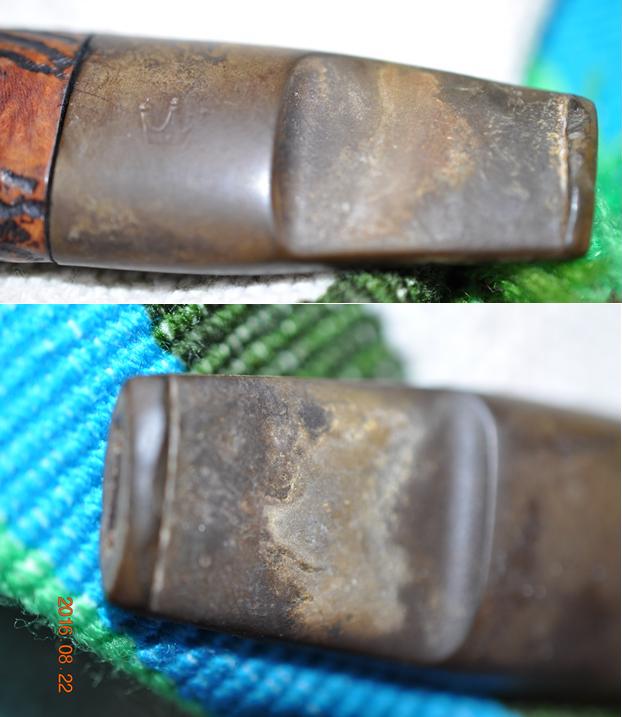
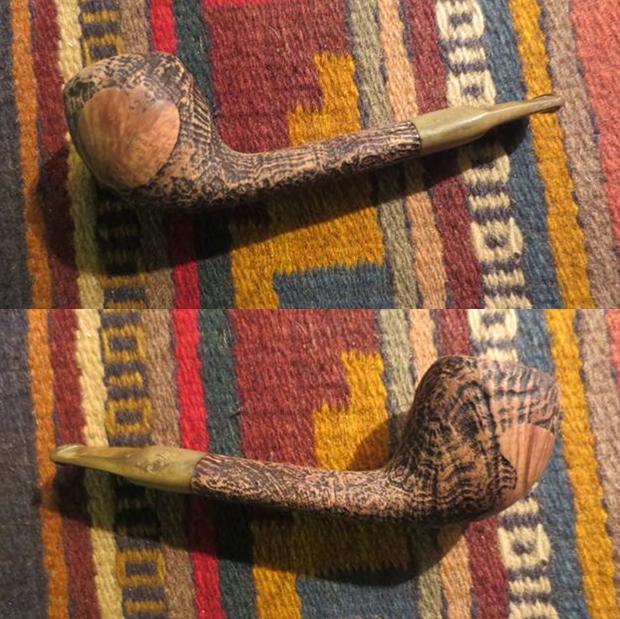
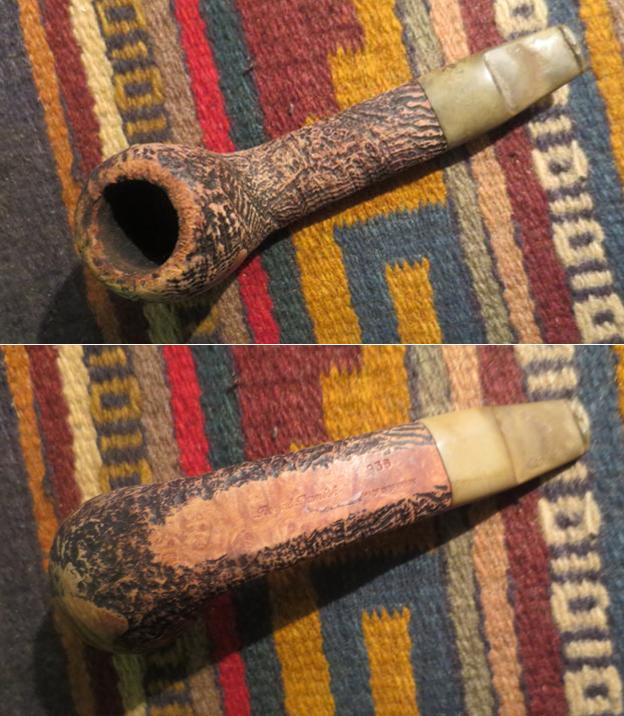
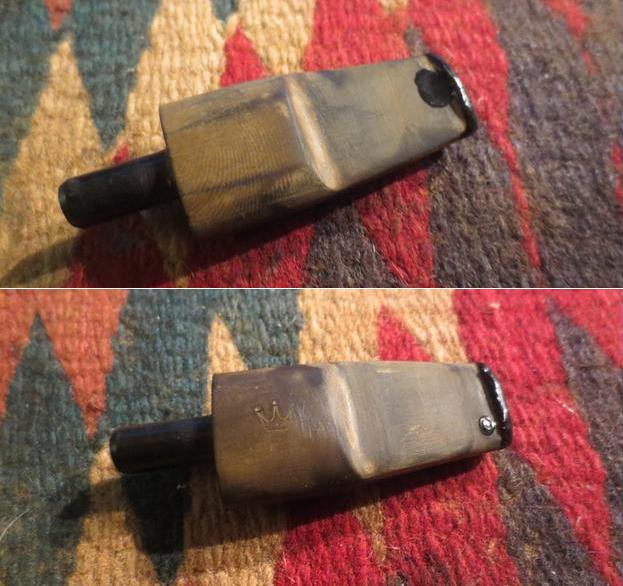
When I saw the pictures of the way this pipe looked – at least the first picture I thought it was in pretty decent shape. The finish was a little worn; particularly some of the high spots on the sand blast had worn off. The smooth patches were also worn and lifeless. The back edge of the rim looked really rough – as if the pipe had been knocked about on concrete or another hard surface to remove the dottle from the bowl. It was ragged. The inner edge of the rim also looked worn and the cake in the bowl was a bit odd looking – as if it was partially removed. It seemed heavier on one side than the other. The stem looked okay in the first picture but the second hinted that all was not well with it either.danish1The close up photos reveal the issues that I hinted at above. The first shows the strangely caked bowl – heavily built up toward the left side and rear of the bowl as well as the rough back rim top and edge of the bowl. The inner edge of the rim also looks like it has taken some damage. The second photo shows the slight cap at the stem junction that to my mind spoke of a tarry and caked mortise that kept the stem from seating properly. The finish also shows some wear in the photos. The pipe is stamped Royal Danish and Made in Denmark. The shape number is 936 which is a Stanwell shape.danish2The next two photos show the issues with the stem. There were tooth marks on the top and underside of the stem that went from quite deep to very shallow. The button top and bottom were worn down and had deep tooth marks. There was also a heavy build up of oxidation on the stem. The stem logo on the top is very faint. It made me wonder if I would be able to feel it with my finger once it arrived in Canada.danish3I am so glad my brother does the heavy work on cleaning out these pipes. I have reamed and cleaned out the shanks of a lot of pipes and I can’t say that I miss it. I still get to do my share of cleanups on pipes that I find but these that he sends me come ready for the restoration process. He scrubbed the exterior of the bowl with Murphy’s Oil Soap and was able to remove the wax and tars on bowl and rim. He reamed the bowl back to bare briar and scrubbed out the mortise and the airway in the shank and stem. When it arrived the stain was quite washed out and the stem was really oxidized. The damaged rim top was very visible and it was in rough shape.danish4 danish5I took some close up photos of the rim and the stem when it arrived here. The roughness of the rim top and inner edge are seen in the first photo. The tooth marks and wear on the stem top and underside in the second and third photos. My brother had cleaned out the mortise so the stem fit tightly against the shank so my guess mentioned above about a dirty mortise appears to have been correct. The crown logo on the top of the stem could hardly be felt by touch.danish6 danish7I started sanding the stem then decided to run a few pipe cleaners and alcohol through the airway in the stem and shank as well as in the mortise. They were quite clean and did not take too much work to remove the little bit of debris that was still left.danish8I sanded the rim lightly to take away the roughness but still leave the finish looking like the sand blasted portion of the rim that had not been damaged. I stained the bowl with a dark brown stain mixed 50/50 with isopropyl alcohol. I applied the stain and flamed it and repeated the process until the coverage was what I was looking for. I wanted the dark stain in the deep grain of blast to show through the brown top stain.danish9I hand buffed the bowl with a microfibre cloth to raise a shine and to give an even look to the finish. The photos below show the pipe at this point in the process.danish10In the second photo below the rim surface is visible. There will need to be some contrast applied to the finish to make it blend in and not look merely “less damaged”.danish11To address the contrast issue on the rim mentioned above I used a black Sharpie Pen to provide some darkening in the crevices of the pitted surface. I used a dark brown stain pen to give the top coat over the black stain.danish12I sanded the inner edge of the rim with a folded piece of 220 grit sandpaper to smooth out the roughened inner edge. In retrospect I probably should have done this before staining the bowl but I did not so I put it in the order I did the work. In the second photo below you can see how the contrast stain worked on the rim top.danish13When I finished sanding I stained the inner edge of the rim with the dark brown stain pen and added some streaks of black Sharpie pen to give it some contrast. I buffed the rim lightly Blue Diamond on the buffing wheel and with a microfibre cloth. The photos below show the pipe bowl after buffing. Notice the change to the rim after the sanding, staining and buffing.danish14 danish15I set the bowl aside and worked on the issues with the stem. I sanded the area around the button on both sides of the stem with 220 grit sandpaper and scrubbed the deeper tooth marks with cotton swabs and alcohol. Once they were clean I filled the deeper marks and built up the button surface with black super glue.danish16I sanded the repairs once they had cured with 220 grit sandpaper to smooth them into the surface of the stem. I reshaped the top of the button on both sides of the stem with the sandpaper.danish17The edge of the button on the underside of the stem was still rough so I used a needle file to shape and sharpen the straight edge.danish18I wet sanded the stem with 1500-2400 micromesh sanding pads. I rubbed the stem down with Before & After Pipe Stem Deoxidizer and a paper towel to further remove the oxidation on the stem. I polished the stem with Before & After Pipe Polish both Fine and Extra Fine with paper towels. The stem was beginning to shine.danish19 danish20I sanded the stem once again with the micromesh sanding pads using 1500-12000 grit pads. Each successive grit of sanding pad added more shine and depth to the shine. The more I polished the stem the more the crown logo disappeared.danish21I buffed the pipe with Blue Diamond on the buffing wheel and then gave the stem multiple coats of carnauba wax. I rubbed the bowl down with Conservator’s Wax by hand. I buffed the pipe with a clean buffing pad to raise the shine. I hand buffed the pipe with a microfibre cloth to deepen the shine. The finished pipe is shown in the photos below. The pipe is clean and looks new. The restoration brought it back to life. Thanks for looking.danish22 danish23 danish24 danish25

Good “bones” make for a beautiful restored pipe – Scandia 792 Squashed Tomato


Blog by Steve Laug

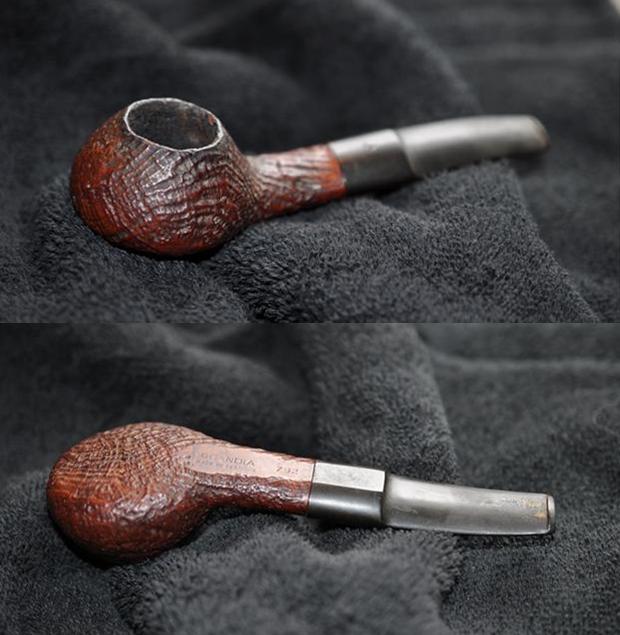
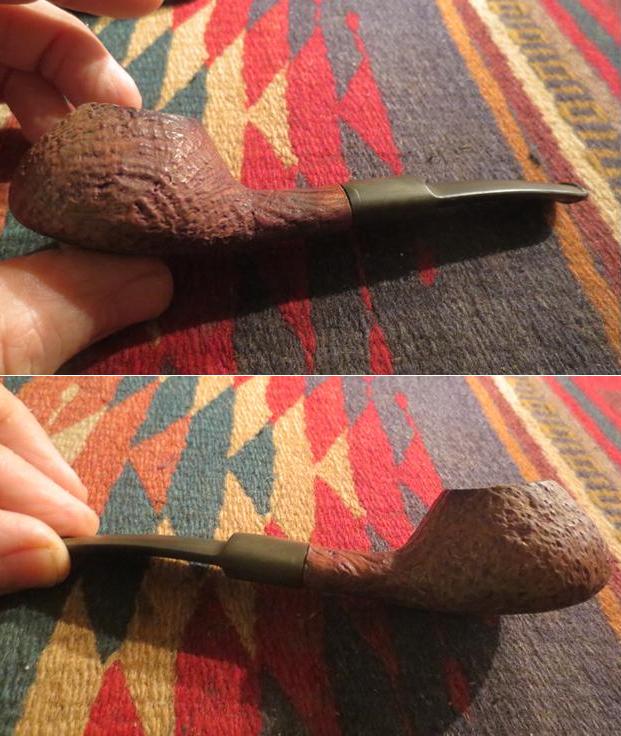
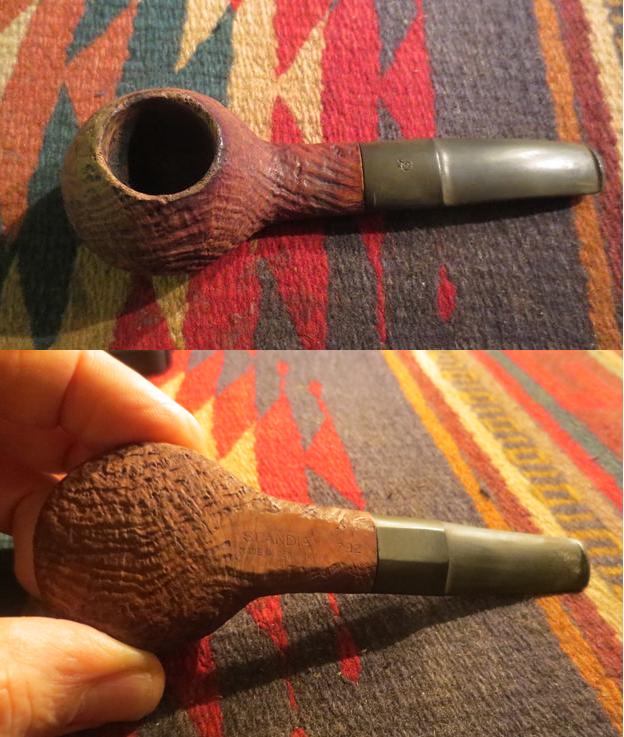
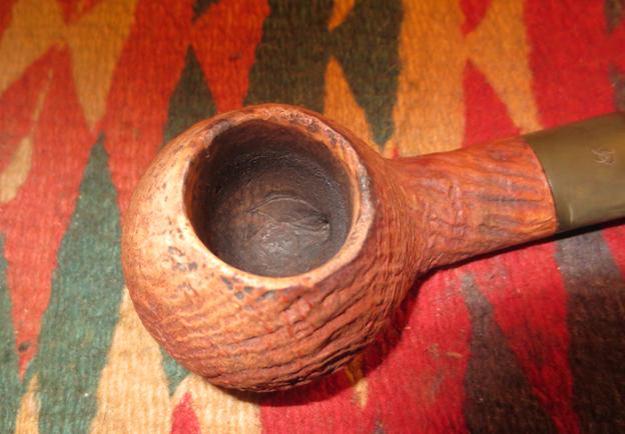
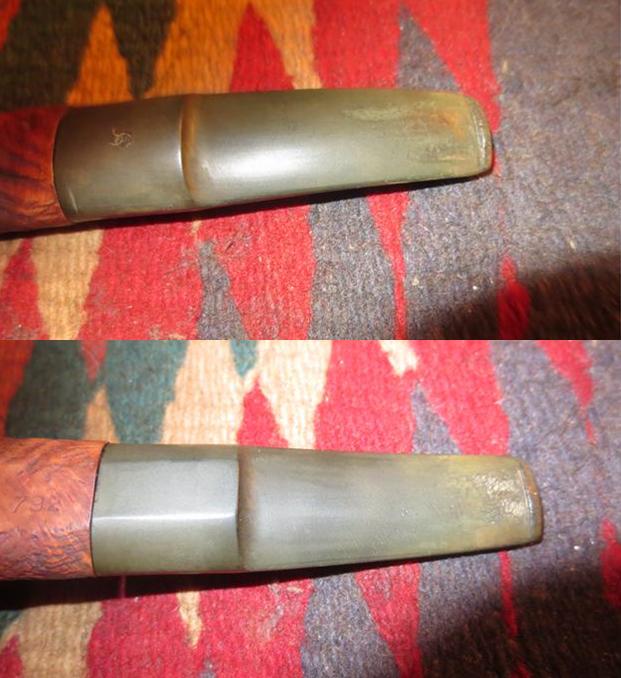
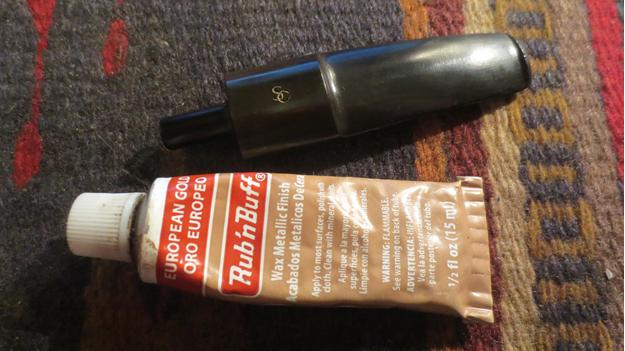
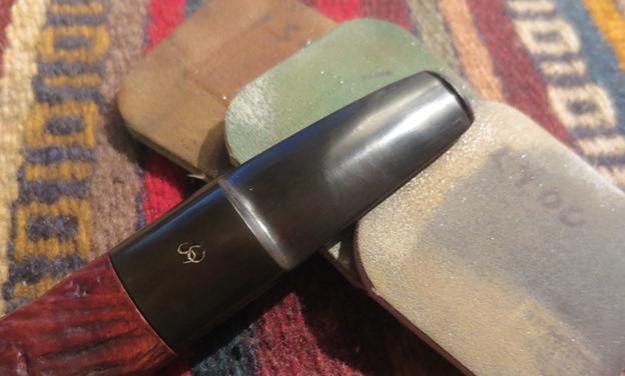
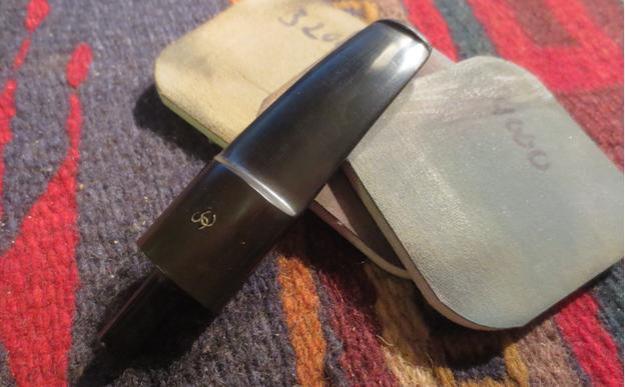
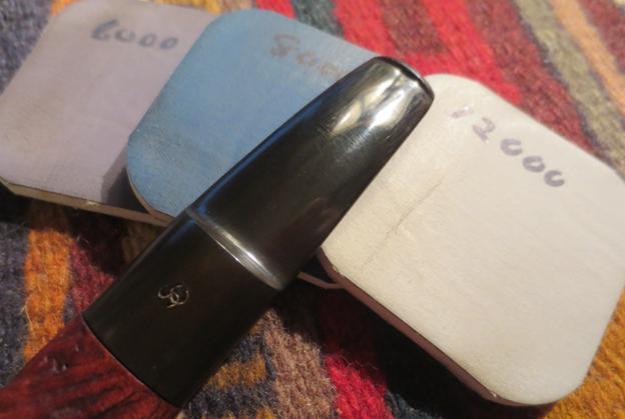
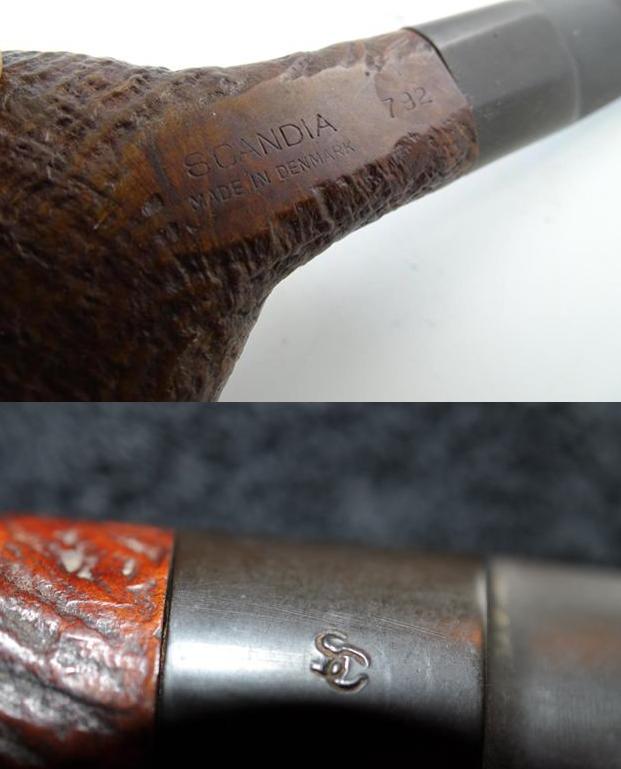
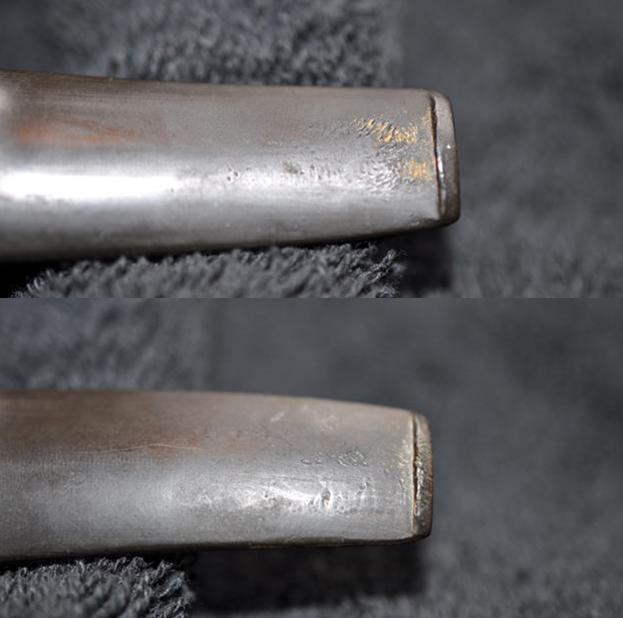
The next pipe I took out of the latest box was a Scandia 792 – a shape I call a squashed tomato. It may be a Danish author shape. It was in decent shape – the stem was lightly oxidized and there were tooth marks and chatter on the top and bottom sides of the stem near the button. The finish was worn but functional, there was a lot of dust and grime in the grooves of the sandblast. The rim had some small chips out of the inner edge. There was also darkening on the top of the bowl. The next photos show the pipe when my brother received it.scan1The next two close up photos show the close up photos of the rim. The chips on the top of the rim and on the inner edge are visible. There was also some tarry buildup on the inner edge and on the top. scan4The next two photos show the stamping on the smooth portion on the bottom of the shank. It is stamped SCANDIA over Made in Denmark and the shape number 792. The second photo shows the SC logo on the shank. Scandia is a Stanwell second line.scan2The next two photos show the tooth chatter and tooth marks on the top and underside of the stem. There was also some slight oxidation. scan3My brother scrubbed the exterior of the pipe with Murphy’s Oil Soap and rinsed it with running water. He reamed the bowl and cleaned out the mortise and airway in the shank with cotton swabs, pipe cleaners and alcohol. When I received it the pipe was in very clean shape. The next pictures show what the pipe looked like when I brought it to the work table.scan6 scan7I took some close up photos of the rim to show the darkening and the wear on the inner and outer edge. There are some chips. I took close up photos of the stem to show the condition and oxidation on the stem.scan8 scan9I sanded it with 220 grit sandpaper to remove all of the tooth chatter and tooth marks. I also sanded it to remove the oxidation.scan10I used the Before & After pipe stem cleaning kit to work on the stem. I scrubbed the stem with the Pipe Stem Deoxidizer and a paper towel until I had removed the surface oxidation. I continued to scrub it until some of the deeper oxidation came out. I polished it the Pipe Stem Fine and Extra Fine polish to further remove the oxidation.scan11 scan12I used a folded piece of 220 grit sandpaper to sand the rim edges and the top. I was able to remove the chips and divots from the inner edge. The second photo shows the rim after sanding.scan13I used Rub ‘n Buff European Gold to highlight the stamping on stem to bring life back into the logo.scan14I wet sanded the stem with 1500-2400 grit micromesh sanding pads and wiped it down with Obsidian Oil. I dry sanded it with 3200-12000 grit pads and rubbed down Obsidian Oil after each set of three pads. After the final rub down of Obsidian Oil I set the stem aside to dry.scan15 scan16 scan17I waxed the bowl with Conservator’s Wax and buffed the pipe with a clean buffing pad. The next four photos show the polished bowl.scan18 scan19I sanded out the bowl with 220 grit sandpaper on around my finger to clean up the scratches and nicks in the bowl interior. I buffed the bowl with a clean buffing pad and gave the stem several coats carnauba. I buffed the stem with a clean buffing pad and then once again with microfibre cloth to raise and deepen the shine. The finished pipe is shown in the photos below. It will one day be on the rebornpipes store, if you would like to add it to your rack email me at slaug@uniserve.com or send me a message on Facebook or a comment on the blog. Thanks for looking.scan20 scan21 scan22 scan23 scan24 scan25 scan26 scan27


The Rim on this De Jarnett Handmade Needed Attention


Blog by Steve Laug

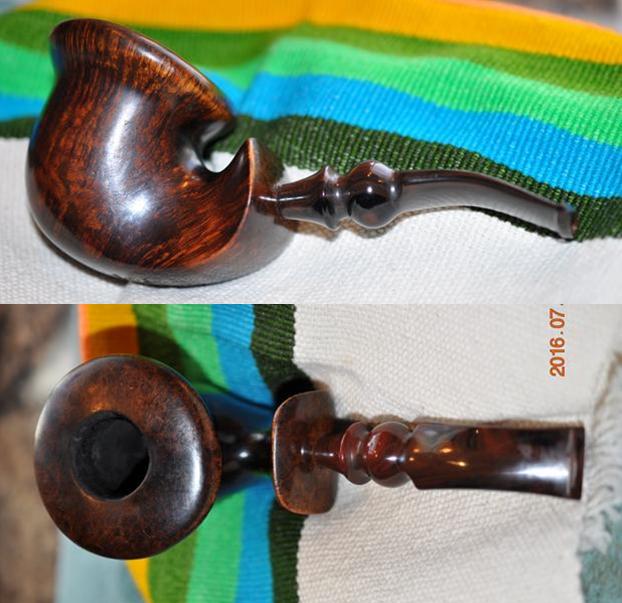
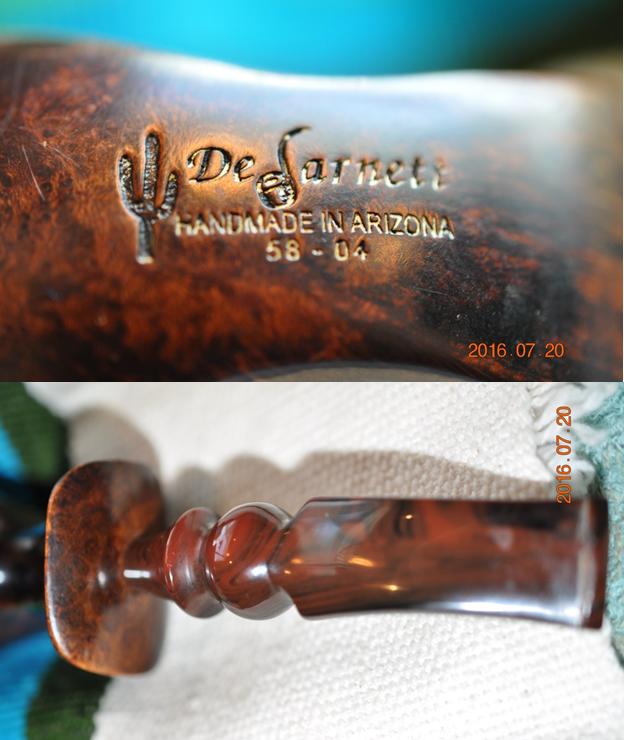
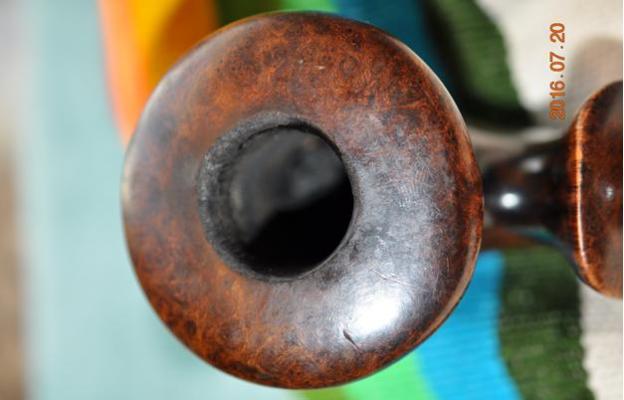
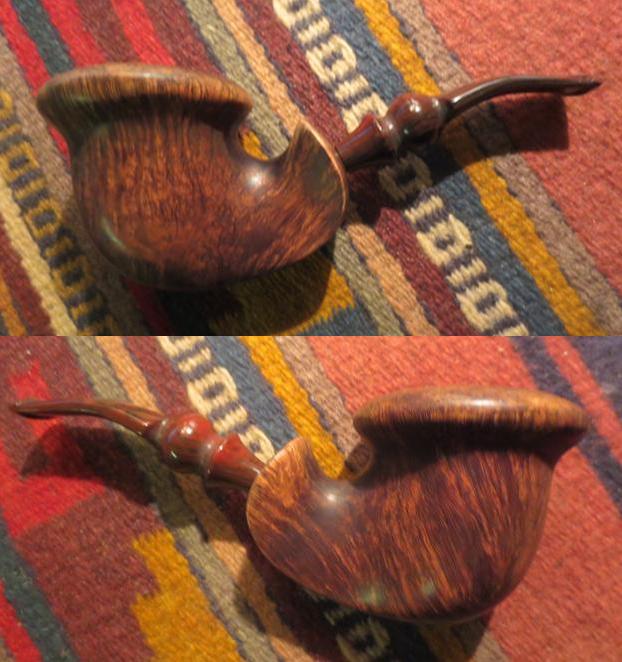
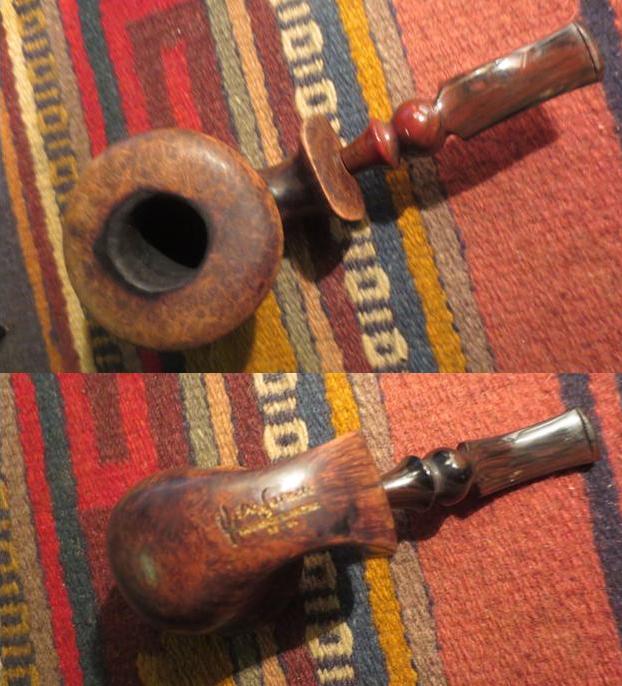
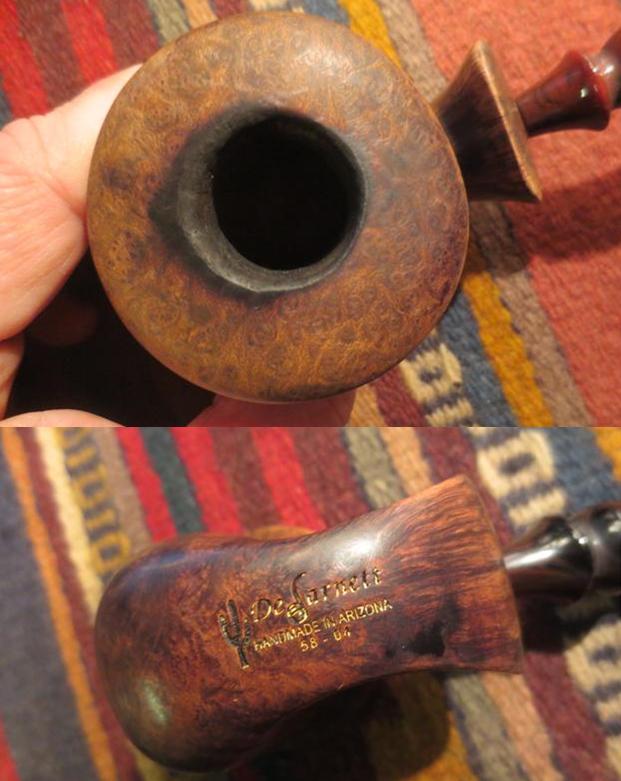
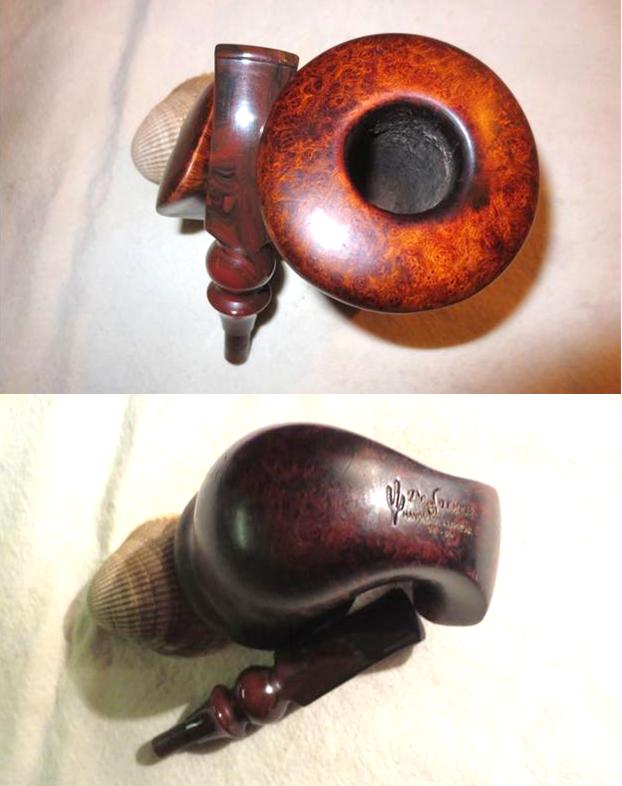
My brother sent me photos of this interestingly shaped De Jarnett pipe and wondered about it. I agreed there was something about it that grabbed me too. The grain on the darkly stained bowl, the Cumberland style Lucite stem, the curves of the pipe following the grain, the mushroom cap on the top of the bowl all were a part of the mystique of the pipe. He bid on it and the pipe was his. I received it in the mail in the last box of pipes he sent me. Last night I took it out to have a closer look at the pipe. I always have my brother take photos of the pipe before he does any work on it so he sent the following photos along with the pipe.de1It looks really nice but I had no idea how large the pipe was until I had it in hand. It is 6 ½ inches long, 2 ¾ inches tall, 2 ¼ inches in diameter with a chamber size of 7/8 inch. It is a handful. The stamping on the underside of the shank has a cactus which was Horace’s logo and the name De Jarnett with the J stylized into a pipe. Underneath it says Handmade in Arizona over 58-04. My guess is that the number stamping tells me that the pipe is the 58th pipe he made in 2004.de2The photo he sent me of the rim shows the cake in the bowl and the damage to the inner edge of the rim. It looks like it is burned but once I see it and examine it I will know how bad the burn mark is. There is also a sizable dent on the bowl top and some overall darkening of the rim cap.de3I had heard of De Jarnett pipes in the past and talked to others about them. I have also done repairs on one of them in the past but I had never taken the time to read about the maker. I assumed he was still living which turns out to be false. I turned to my two go to sites Pipephil and Pipedia for information and found little other than the dates of the maker which showed he had died and the location of the shop which is on the pipe anyway. However, Pipedia was more fruitful. Here is the link: https://pipedia.org/wiki/DeJarnett_Pipes

When I read the write up on Pipedia I found that Horace DeJarnett had died on July 24, 2013. He had been battling with terminal cancer, but his wife reported that he ultimately died of a stroke. Since I had also suffered a stroke this gave me a sense of connection with the carver. I only wish that I had been able to have a chat with him before he died. I find that those conversations I have had with pipe makers have been highlights of my pipe collecting and repair/restoration hobby.

Pipedia also included a photo of Horace that was taken by Pipes& Tobacco Magazine and used by courtesy. I have included much of the Pipedia article here for ease of reference. For the details and the remainder of the article use the link above.

Horace wrote of his pipes: “All of my pipes are carved from the finest quality Algerian briar I can find. I coat each bowl with a special pre-carb treatment which speeds up the break-in process. After the third bowl, it will smoke as if it had been in your collection for years. I get a lot of positive feed-back on this feature.

Standard draft holes are 5/32″. I think that’s too small and many pipe smokers agree with me. So I drill mine to 3/16″ for a better draw. You won’t have to send my pipes out to a pipe repairman to have them opened up, as many do.

For over 40 years I worked in the grocery industry. In 1984 I founded my own food brokerage business. It prospered and grew into a multi-state corporation. In 1999 I sold my portion of the business and retired.

Due to health concerns and public scrutiny, I quit smoking cigarettes in 1993 and took up the pipe.

(I believed then – and still do – that health risks are greatly reduced by not inhaling and just puffing.) Serious pipe-smoking is conducive to day-dreaming, and thus the idea of making my own pipes became a quest.

I was fortunate to study under Andrew Kovacs, a well-known carver in Northern Arizona (trade name “Jandrew”) for about a year, off and on. I learned a lot of the basics from Andy, but some of my best counsel came via long telephone conversations with Mark Tinsky.

Over the years I have made and sold approximately 1,000 pipes, most of them here in the United States, but I do have customers in Indonesia, Germany, Japan, England, Israel, Canada, and Thailand.

What began as a hobby has become my passion. I lost my leg in 2001 due to a blood clot, so fortunately for me, I have an occupation that is “handicap friendly”.

That glimpse of Horace from his own words gives a clear picture of what he brought to the making of each pipe that he sent out. I have no idea where the pipe that arrived in Vancouver has been before coming here nor do I know where it will go afterward. But I know that it will certainly outlive me. The quality of briar and craftsmanship give it a great chance at longevity.

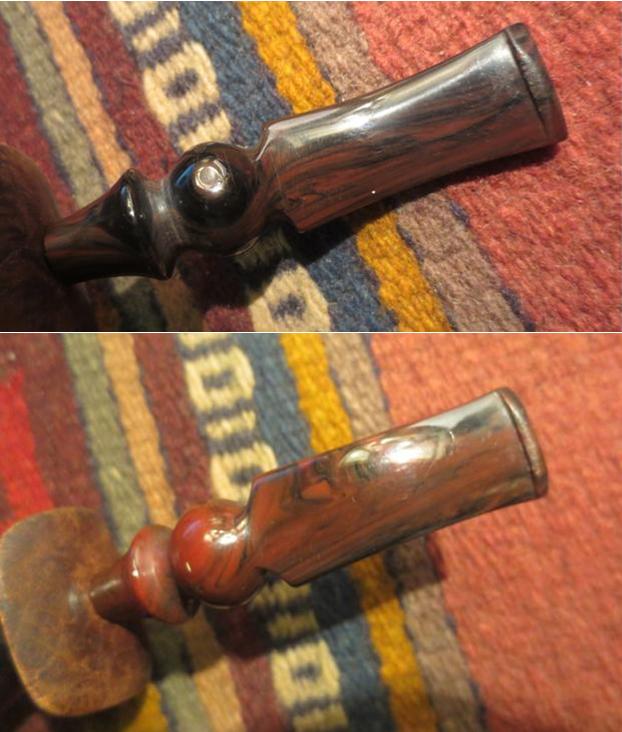
My brother Jeff did his normal thorough cleanup of the exterior and the interior of the pipe. When it arrived it had been reamed, cleaned and sent to me for the final touches. It is really nice to have him doing the grunt work on these pipes. This was no exception. I took a few photos of the cleaned up pipe when I brought it to my work table. de4The next photo shows the darkening and burn mark on the rim. A close up of that area is shown in the photos that follow.de5The burn mark and darkening at the front of the bowl was more extensive than I had originally guessed from the photos sent. The front inner edge is burned and beveled inward with the darkening extending quite a way into the rim top. The back edge also shows some burning that will need to be address. The second photo gives another view of the stamping.de6The stem had some tooth chatter on the top and the underside and the edge of the button was worn and flattened. de7To remove the burn damage on the inner edge of the rim I used a folded piece of 220 grit sandpaper to bevel the rim edge inward to accommodate the damage on the bowl front. I carried that bevel around the entire rim edge to clean up the damage at the rear as well. The next two photos show the newly beveled rim. The angle on the second photo makes the bevel appear to be thicker at the front of the bowl than the back. However, in hand the bevel is the same size around the bowl.de8I wet sanded the rim with 1500-2400 grit micromesh sanding pads and dry sanded it with 3200-12000 grit pads to polish the scratches and the new bevel. I used a dark brown stain pen to touch up the inner edge of the rim to match the colour of the bowl. All that remains of the burn mark is a small dark spot on the front top of the bowl and some darkening in the inner edge. It is far better than when I began. de9I sanded out the tooth chatter and reshaped the button with 220 grit sandpaper. I wet sanded the stem with 1500-2400 grit micromesh sanding pads, wiped it down with a damp cloth and dry sanded it with 3200-12000 grit pads. I wiped it down with a damp cloth a final time. de10 de11 de12I buffed the pipe and stem with Blue Diamond on the buffing wheel. I gave the bowl and stem multiple coats of carnauba wax. I buffed the pipe with a clean buffing pad to raise and shine and hand buffed it with a microfibre cloth. The finished pipe is shown in the photos below. It is a big pipe so it will eventually be listed on the store for sale. If you are interested in it before that time just send me an email at slaug@uniserve.com or send me a message or a comment here or on Facebook. Thanks for looking.de13 de14 de15 de16
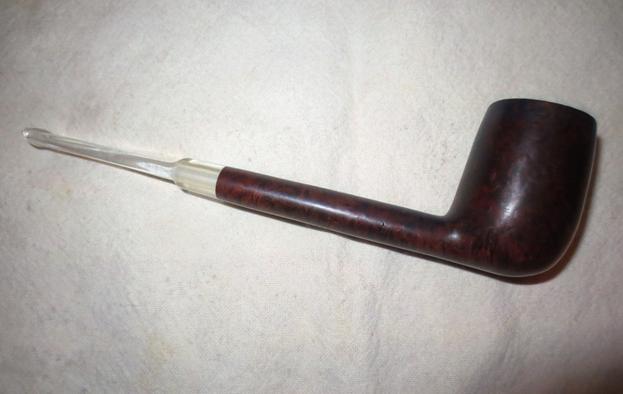
 

An odd assortment of tiny Salesmen’s Pipes


Blog by Steve Laug

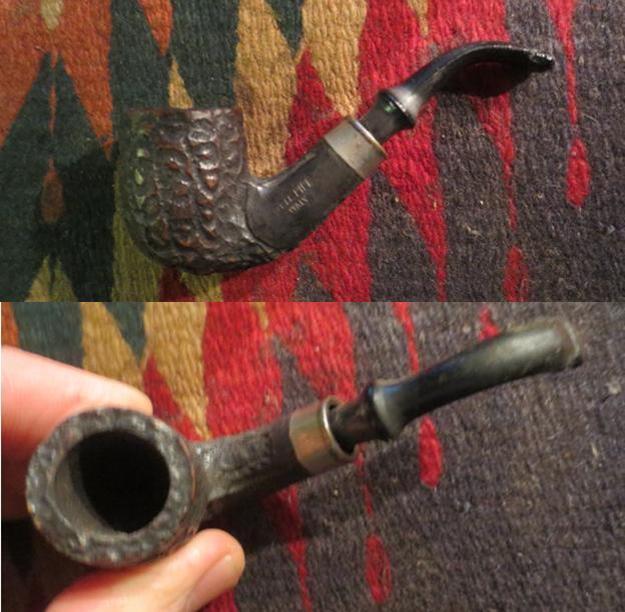
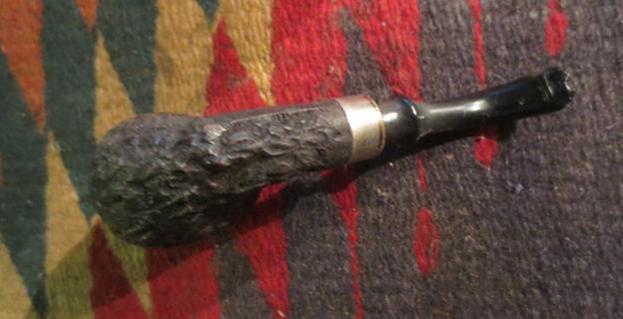
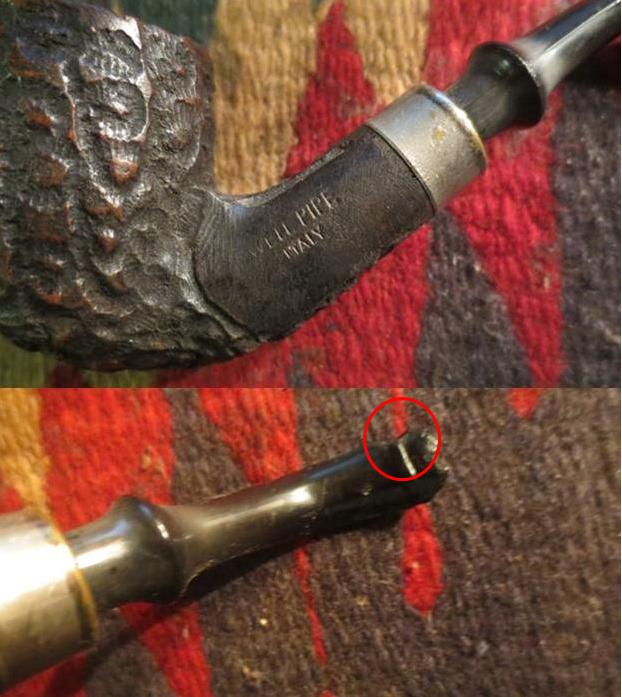
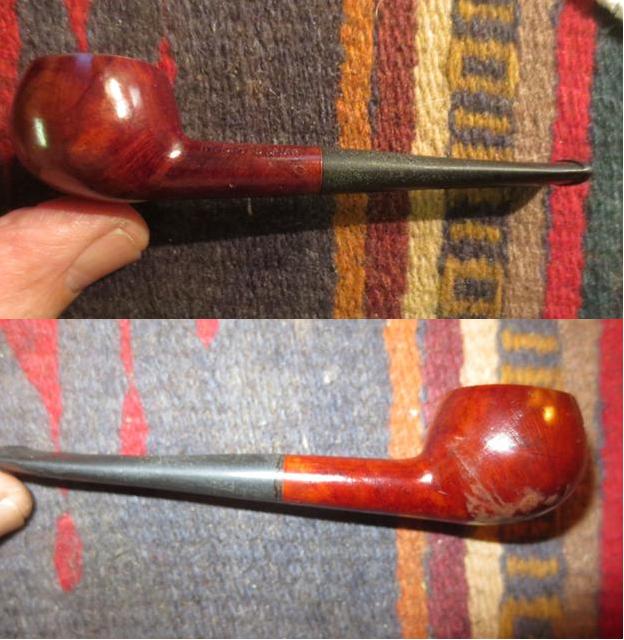
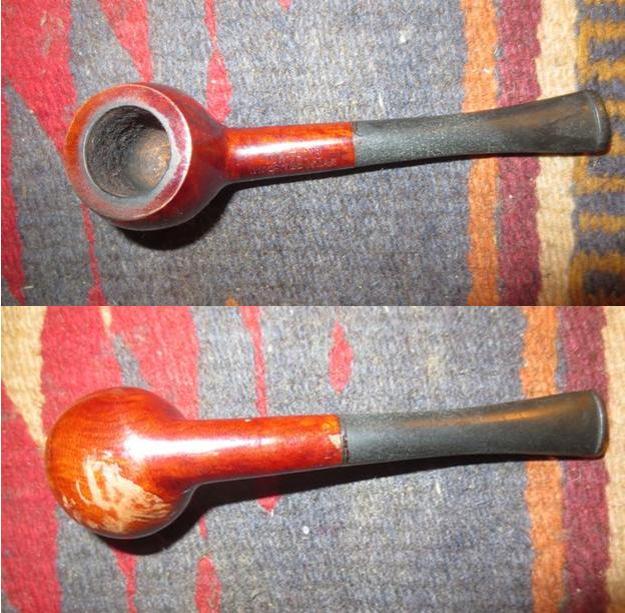
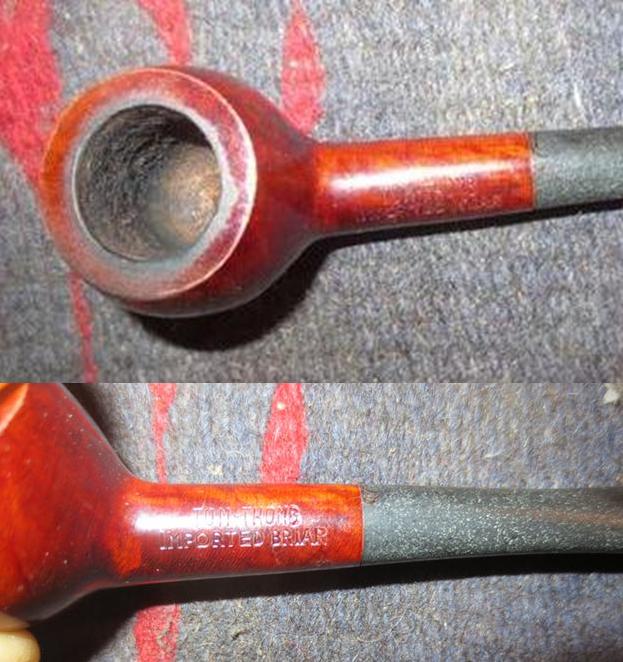
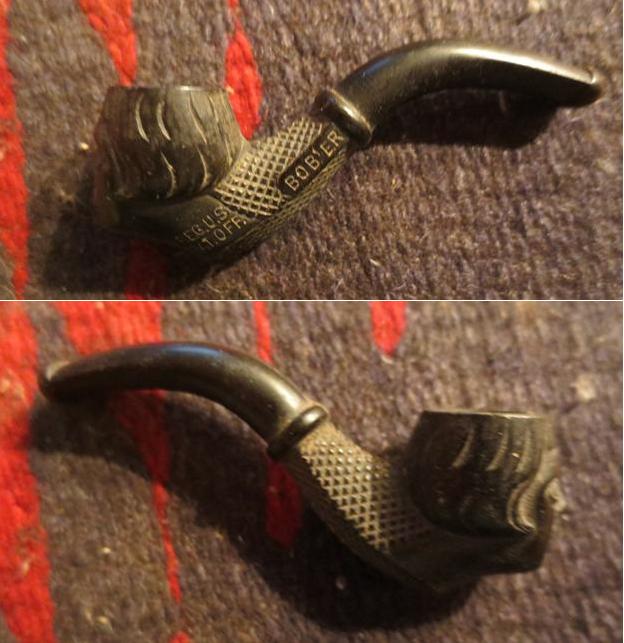
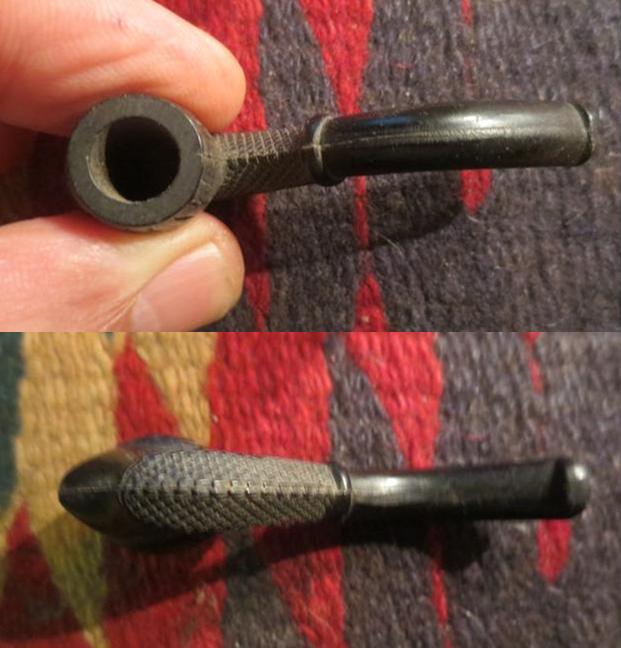
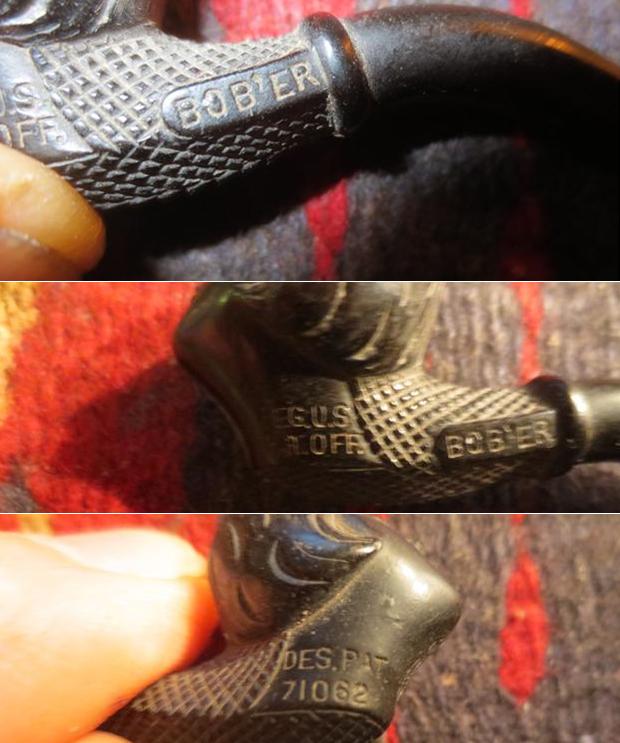
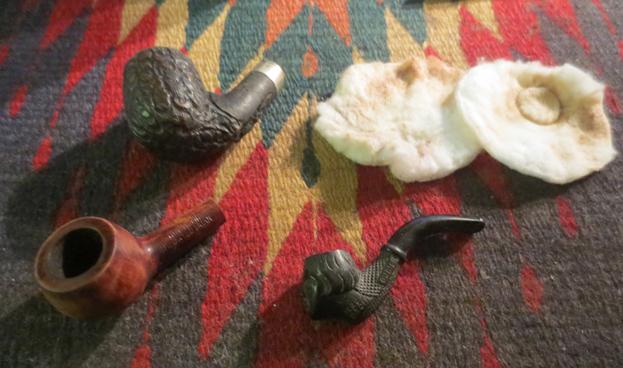
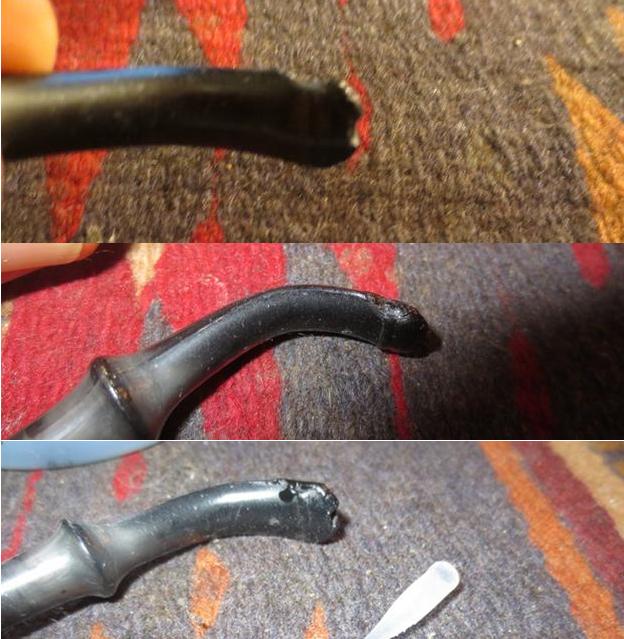
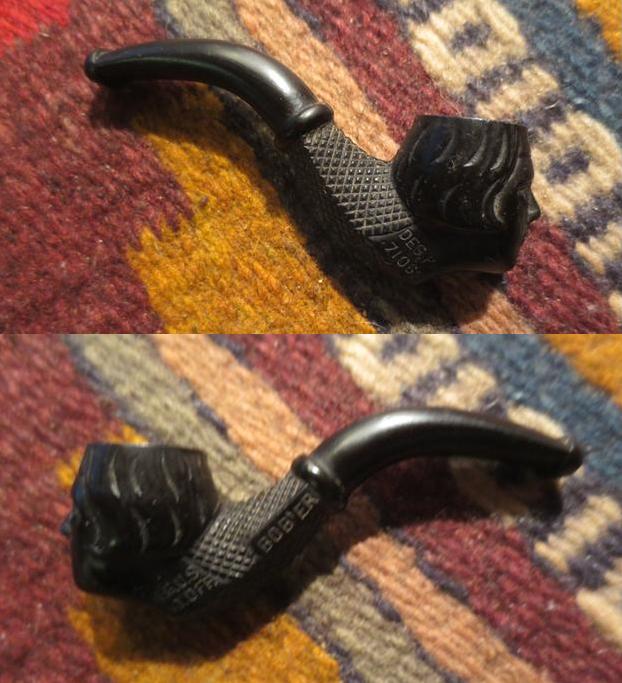
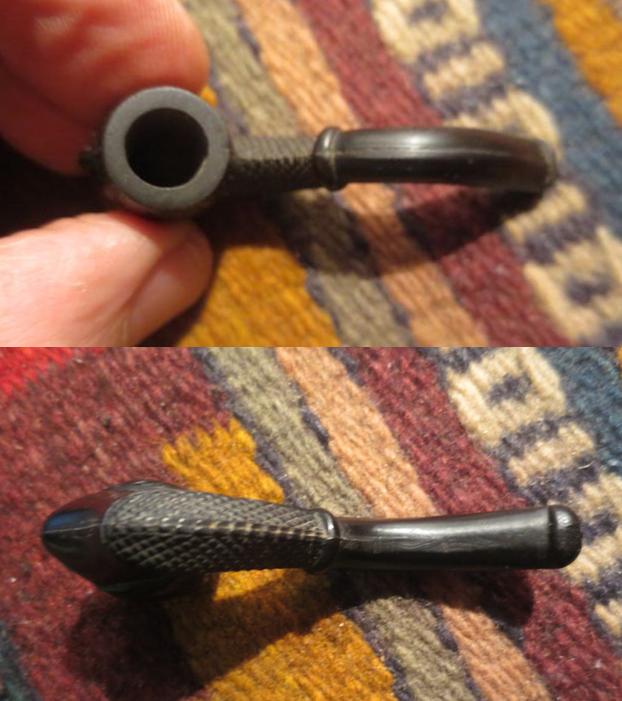
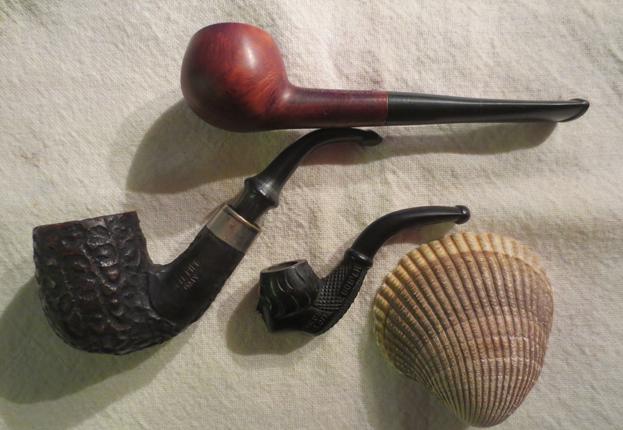
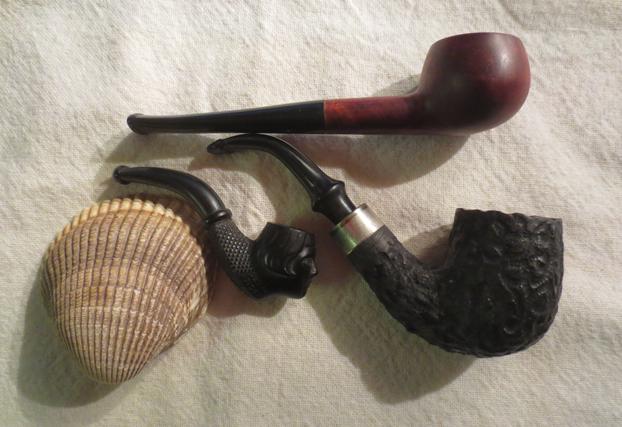
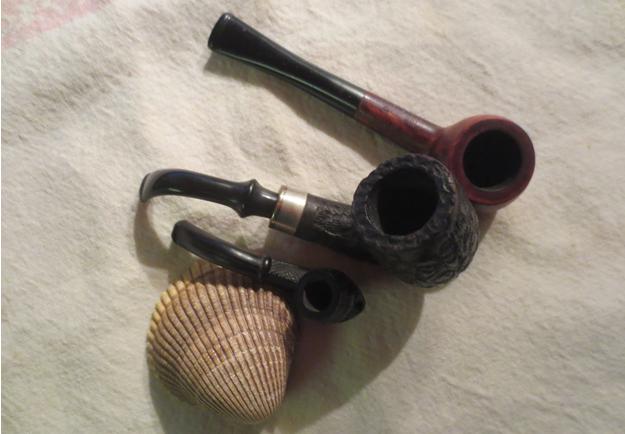
Over the past six months or so I have been taking the tiny pipes that my brother has sent and stack them to the side of the desk in a “maybe someday” pile. That is a pile that I might work on some day – you know what I mean kind of a cast of pipe pile. Finally last evening I was looking at them again. It may have been triggered by the refurbish I just did on the little KBB Yello-Bole bent billiard that refurbished recently (https://rebornpipes.com/2016/10/08/a-living-tiny-kbb-yello-bole-salesmans-pipe/). I am not sure but whatever it was I picked up the three pipes that were in the pile. The first was a rusticated bent billiard that looks like an old WDC System pipe. It is stamped Well Pipe over Italy on a smooth portion of the left side of the shank. The second one was a straight prince shaped pipe that was stamped Tom Thomb over Imported Briar on the left side and top of the shank. The third was a very unique pipe made of Bakelite I believe. It is a tiny carved figural head of a man who looks like a page. It is stamped Bob’er on the left side of the shank. On the neck and chin of the figural it was stamped on the left side Reg.US.Pat.Off and on the right side neck and chin Des.Pat. 71062. I took two photos of the group of three pipes as they were when I started.tiny1The first pipe, the Well Pipe was a fascinating little fellow. It is 3 ½ inches long, 1 ½ inches tall and the diameter is 1 inch. The chamber diameter is ½ inch. Proportionally, the pipe is very nicely done. The metal rim is oxidized. The bowl had a light cake that my brother had taken out. The stem was cast rubber with a typical P-lip type stem though the airway is directly in the end. The stem was chewed and there was a chunk out of the side of the stem below the button on the left side.tiny2tiny2aI took some close up photos of the stamping on the side of the shank and the condition of the stem. The bowl and stamping were in great shape. The nickel band was dirty and oxidized. The stem has a chunk missing out of the end of the stem. I have circled it in in red.tiny4The second pipe, the Tom Thomb prince was in decent shape. The bowl had a light cake that my brother reamed before sending it to me. The finish was peeling off the bowl on the right side and the bottom of the bowl. The rim had a tar buildup and some cake over flow. It is 4 inches long, 1 inch tall and the diameter is 1 inch. The chamber diameter is ½ inch. Proportionally, the pipe is very nicely done. The vulcanite stem was oxidized and there were two blisters on the top and bottom left side ahead of the button.tiny5 tiny6I took a close up photo of the rim to show the condition and the stamping to show its location on the shank. You can also see the oxidation in the vulcanite stem.tiny7The third pipe was the unique pipe Bakelite figural head of a man. The carved face is quite well done. It is a cast as the pipe has a seam on the top of the stem across the bowl and down the front and underside of the bowl and shank. It is 2 1/2 inches long, 3/4 inch tall and the diameter is 1/2 inch. The chamber diameter is 1/4 inch. The stem and bowl are pristine. The bowl is unsmoked. There is a cross hatched pattern on the shank. The casting is quite well done.tiny8 tiny9I took some close up photos of the stamping on the pipe. The first photo shows the left side shank stamp shows up clearly as Bob’er. The second photo shows the stamping on the left side of the neck and chin of the figural. The Reg.US.Pat.Off. stamping is very clear. The final photo shows the stamping on the right side neck and chin. Again the Des.Pat. 71062. is very clear.tiny10I wiped down the bowls with alcohol on cotton pads. I scrubbed the prince with acetone on a cotton pad. I was able to remove the grime and build up on the Well and the Bob’er. The acetone barely dented the surface of the peeling finish on the Tom Thomb.tiny11I started working on the stem of the Well pipe. I took a photo of the missing chunk. I cleaned the area with alcohol and then filled it in with black super glue using a tooth pick to place it in the divot.tiny12Once the repair had cured I sanded it with 229 grit sandpaper and shaped it with a needle file. I wanted it to match the right side of the stem and look like it had originally. I also shaped the P-lip on the top and bottom sides.tiny13I wet sanded the stem with 1500-2400 grit micromesh sanding pads and dry sanded it with 3200-12000 grit pads. After each set of three pads I rubbed the stem down with Obsidian Oil. After the final sanding of the 12000 grit pad I gave it a final coat of oil and set it aside to dry.tiny20 tiny21 tiny22I buffed the stem and the bowl with Blue Diamond and gave them multiple coats of carnauba wax. I buffed it with a clean buffing pad and then by hand with a microfibre cloth. The finished Well pipe is shown in the photos below.tiny17 tiny18With the Well Pipe finished I focused on the Tom Thomb prince. I started by sanding out the blisters on the stem. On both the top and the bottom there were blisters on the left side near the button. I forgot to take a photo of the bubbles but after I had started sanding it with 220 grit sandpaper I took the next photo. I sanded out the bubbles and then wet sanded the stem with 1500-2400 grit micromesh sanding pads. I dry sanded it with 3200-12000 grit sanding pads. I rubbed it down with Obsidian Oil after each set of three pads and let it dry after the last pad.tiny19 tiny20 tiny21 tiny22I sanded off the finish on the bowl and shank avoiding the stamping. I wiped it down with acetone on cotton pads to remove the remaining finish. I stained the pipe with Danish Oil and Cherry stain.tiny23 tiny24I buffed the pipe and stem with Blue Diamond on the wheel and gave it multiple coats of carnauba wax. I buffed it with a clean buffing pad and then by hand with a microfibre cloth. The finished Tom Thomb pipe is shown in the photos below.tiny25 tiny26The last pipe, the Bakelite pipe did not take a lot of work. I gave it a coat or Conservator’s Wax and hand buffed it with a shoe brush and a microfibre cloth. The finished pipe is shown in the photos below.tiny27 tiny28I thought I would take some photos of the finished lot. The tiny pipes shine with a new sparkle. As I look at them I wonder if this is what they looked like when the salesmen carried to the pipe shops to sell orders for year’s pipes. Thanks for looking.tiny29 tiny30 tiny31 tiny32
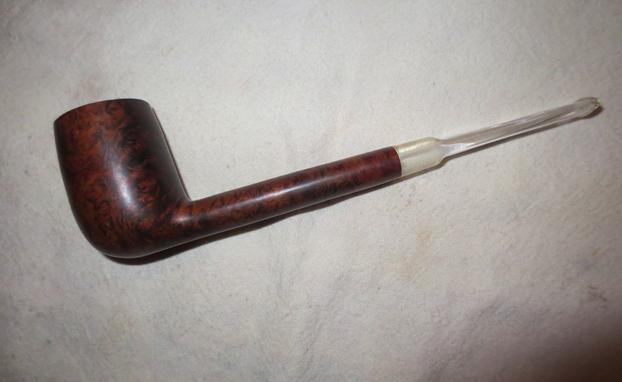
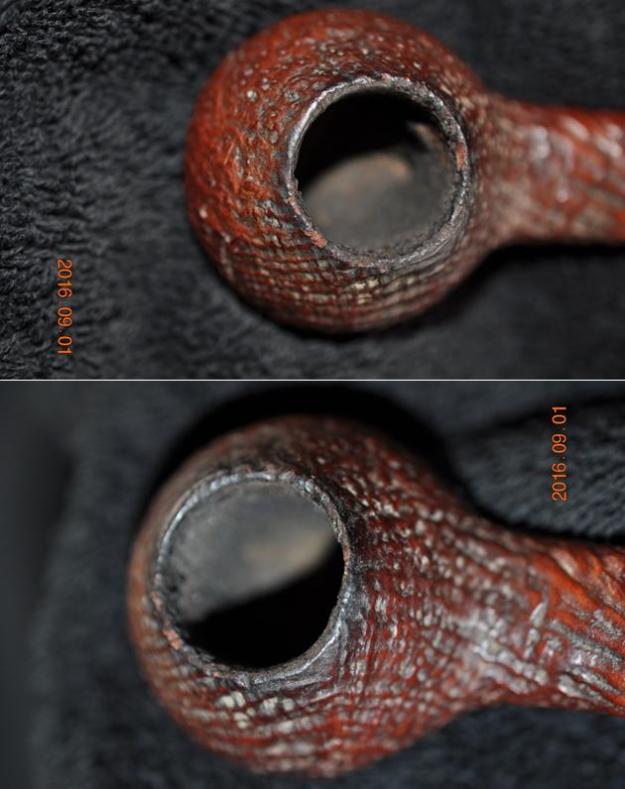
 

There was an old woman who lived in a shoe…


Blog by Steve Laug

There was an old woman who lived in a shoe.
She had so many children, she didn’t know what to do;
She gave them some broth without any bread;
Then whipped them all soundly and put them to bed.
-Child’s Nursery Rhyme – Mother Goose

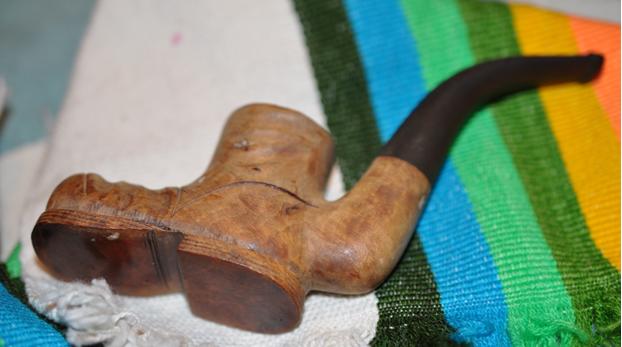
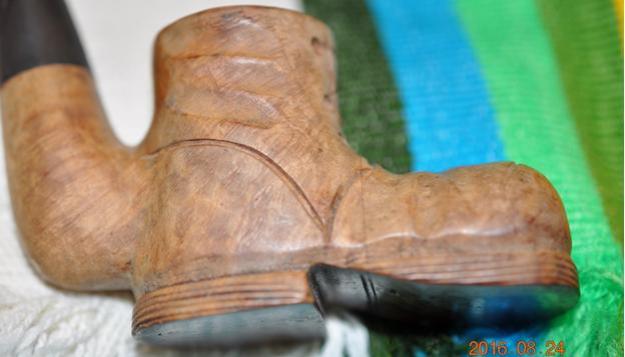
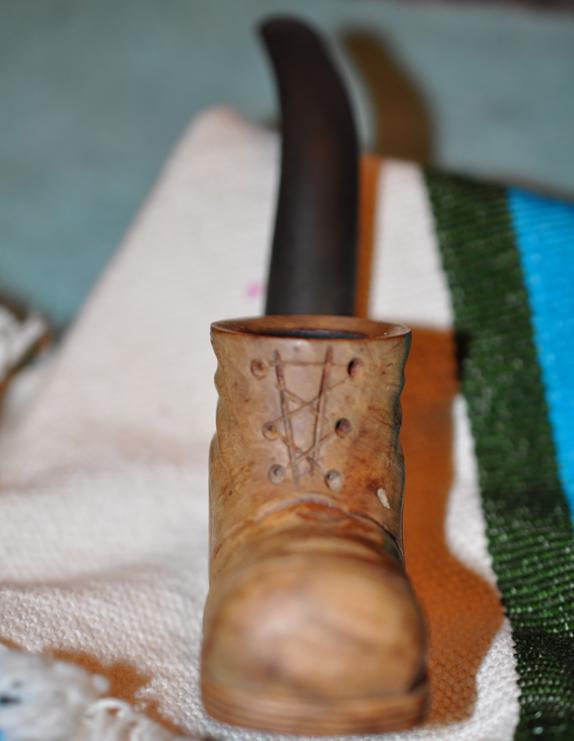
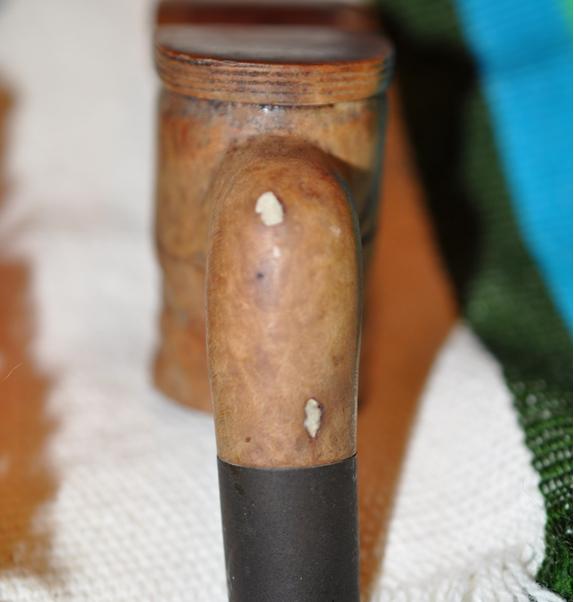
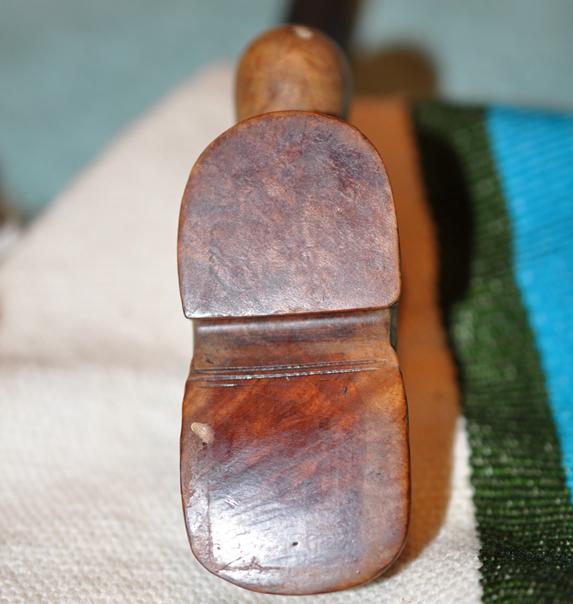
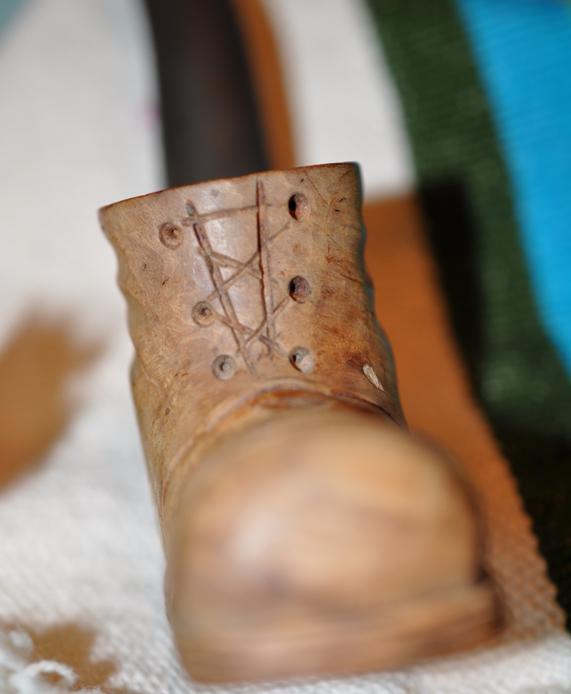
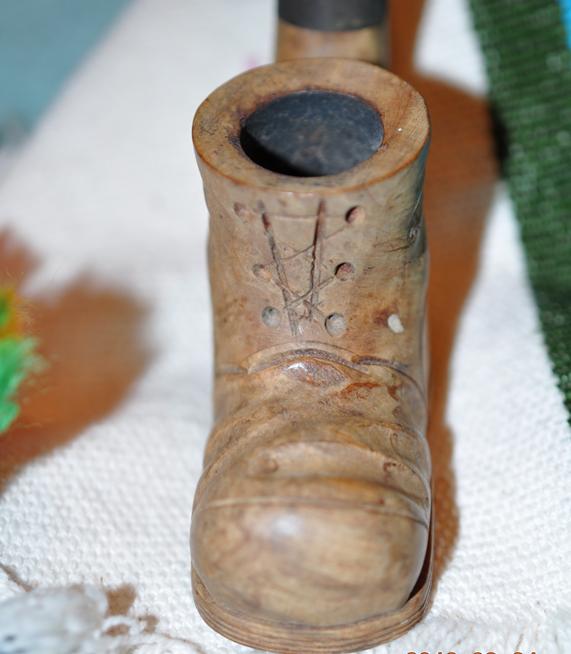
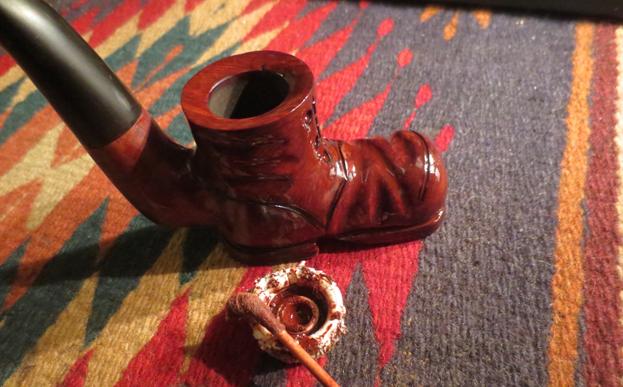
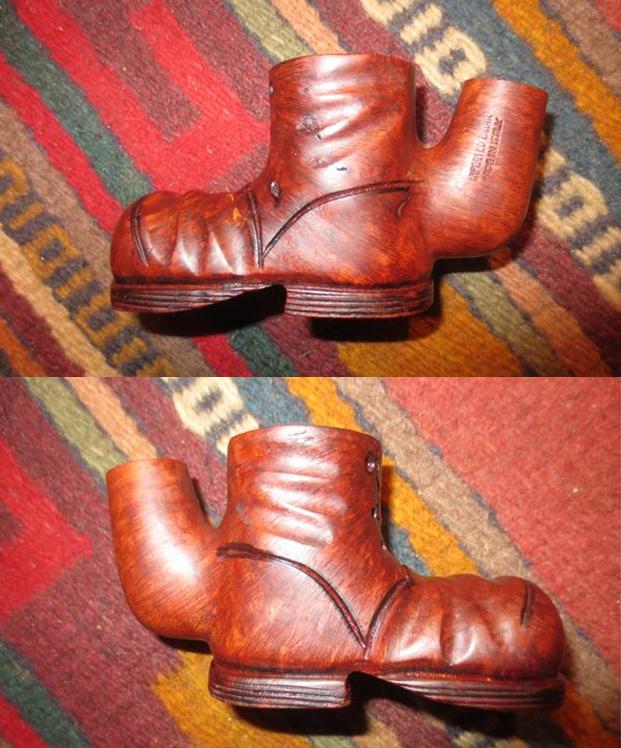
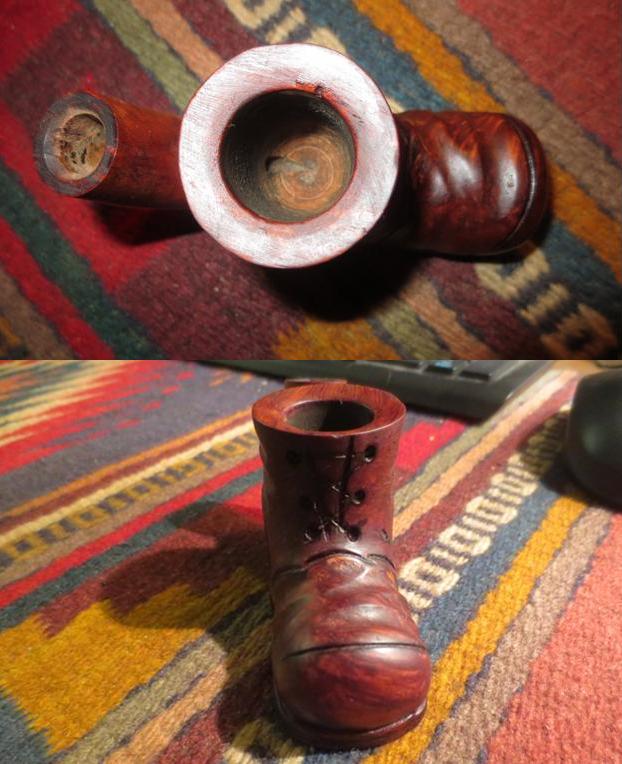
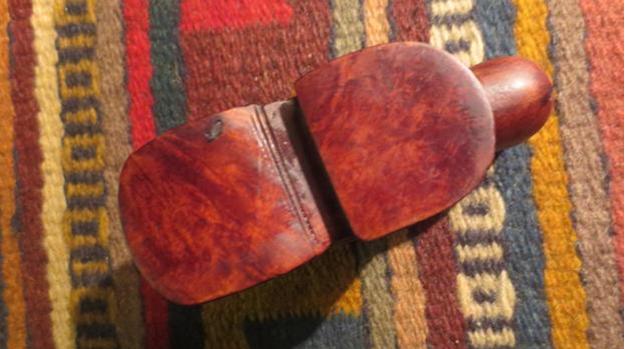
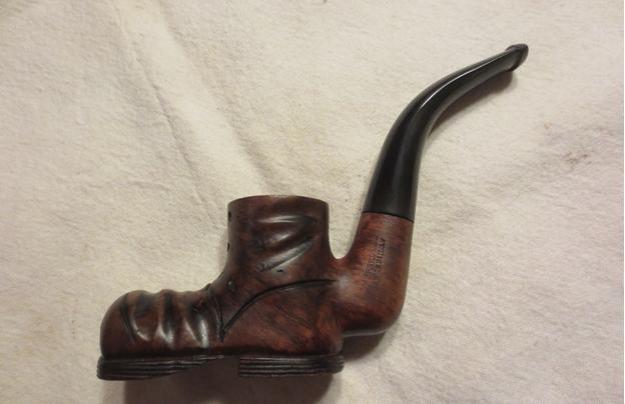
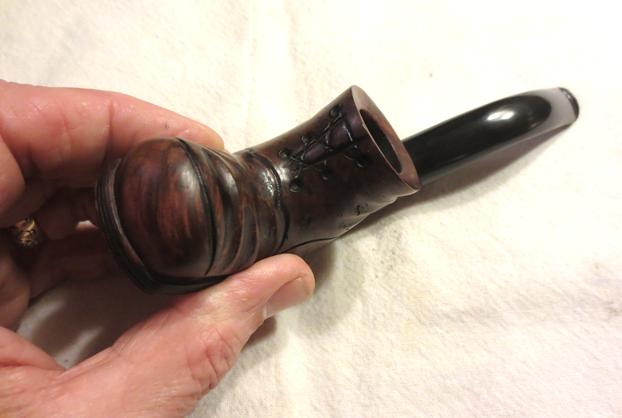
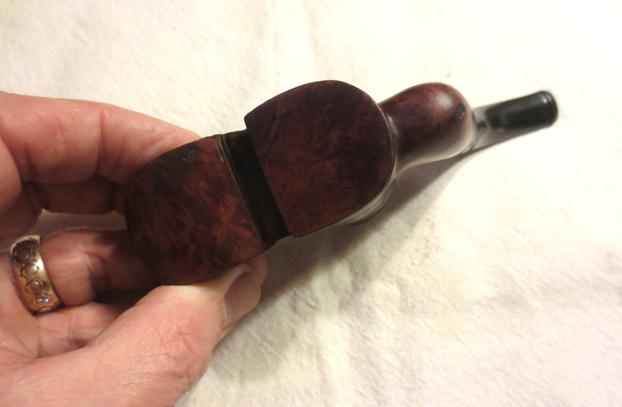
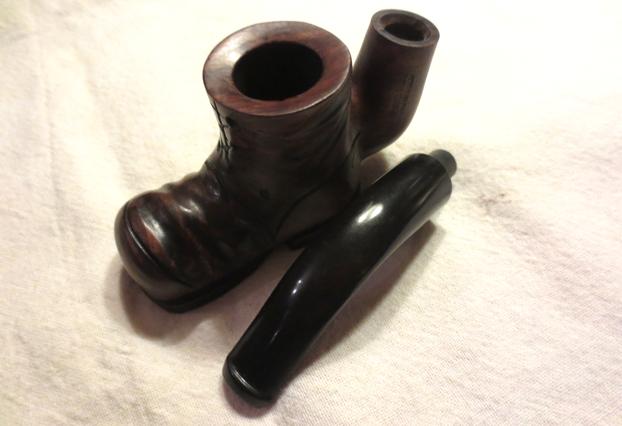
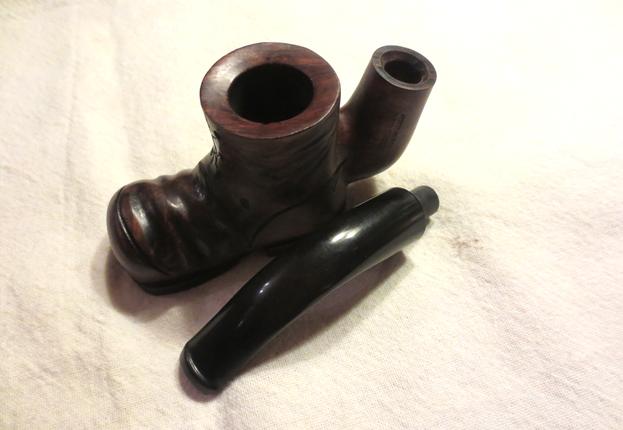
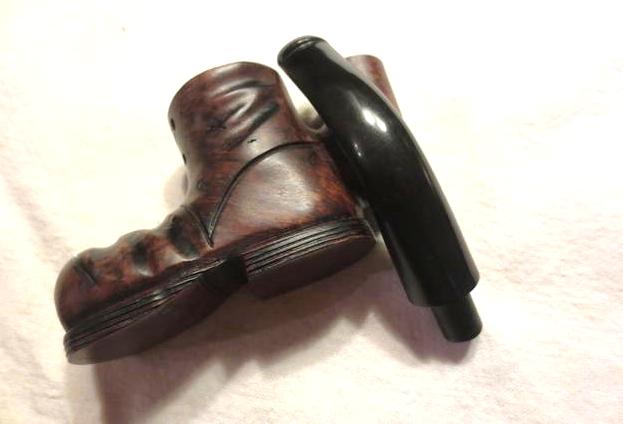
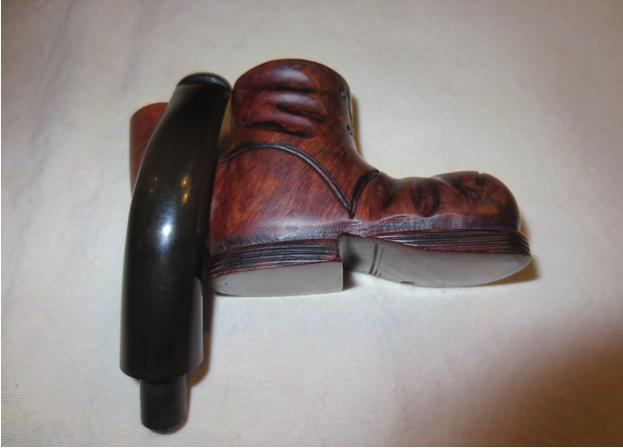
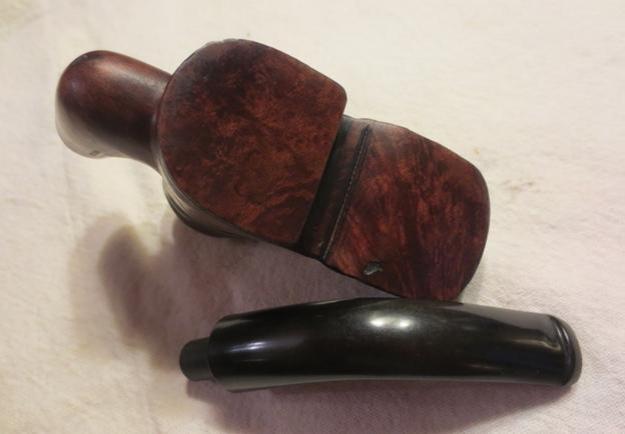
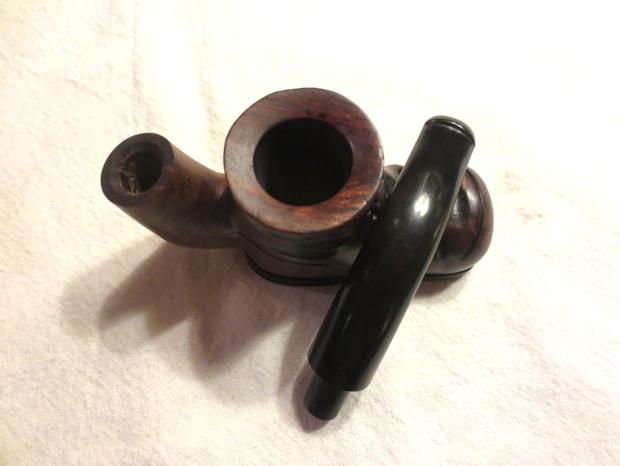
When I opened the box and saw this old pipe that my brother sent my first reaction was why? Then I started to look it over and I began to understand the attraction of it. It reminded me of the children’s rhyme, “The old woman who lived in a shoe”, that I used to recite growing up so it led me down memory lane. From what I can find the pipe is probably from the 30’s. The carving and detail of the shoe is quite well done. The lines demarcating the stitching and the worn look of a well broken in shoe add to the attraction. The carver even detailed the sole of the shoe and the bead around the boot. He carved in the laces and the tongue of the shoe. Even the fills added to the worn and well broken in boot look of the pipe.

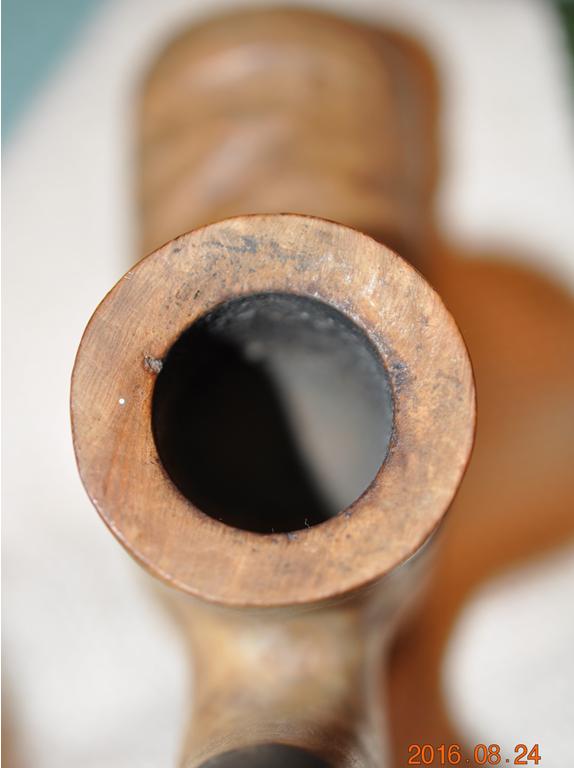
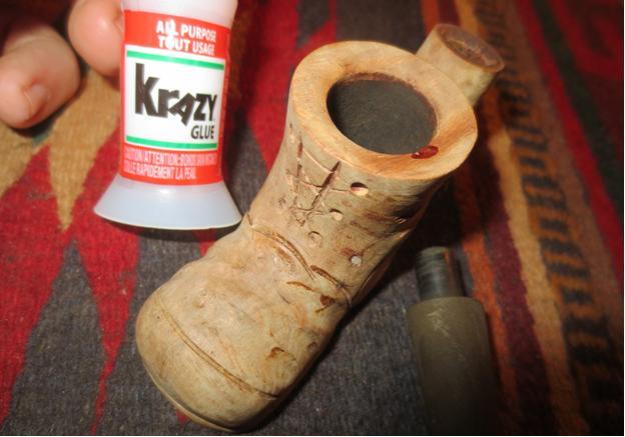
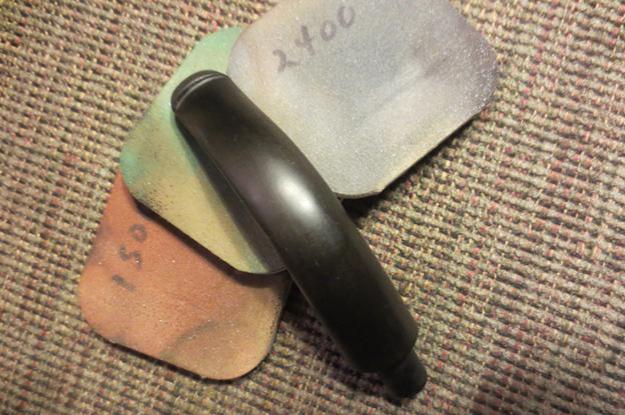
My brother sent me some photos of the pipe to show what it looked like when it was found. He found it in an antique shop on a recent trip around the Butte and Anaconda, Montana area. He added some other nice pipes and then this one as well. The pipe is not tiny, but is a full-sized smoking pipe. The dimensions will tell the story. It is 7 inches long and the bowl is 2 inches tall. The diameter of the bowl exterior is 1 ¼ inches and the chamber is ¾ inches in diameter. The photos focus in on the details of the carving on the pipe and the placement of the fills – which even give the pipe a worn and broken in feel of a worn boot.shoe1 shoe2 shoe3 shoe4 shoe5 shoe6 shoe7 shoe8I decided to work on the bowl first. The missing fill on the rim of the pipe that is shown in the above photo at the 10 o’clock position (left side of the photo toward the top of the bowl) was the first one I worked on. I cleaned off the rim with some isopropyl alcohol then filled in the divot with some clear super glue and briar dust. Once it dried I sanded the fill smooth to blend it in with the rest of the surface of the rim. I sanded the inside edge as well and smoothed it out.shoe9I used a Black Sharpie pen to mark out the lines used demarcate the stitching and lacing of the boot. I stained the briar with a cherry stain/Danish Oil combination. I rubbed the stain onto the briar and used a cotton swab to apply it in the grooves. I wiped it off with a soft cloth. The first photo below shows the pipe before I wiped it off.shoe10The next five photos show the pipe after I wiped it down. The cherry stain looked really good on the briar. I would need to reapply the black Sharpie to highlight the grooves and do some more highlights of brown into the worn areas of the boot.shoe11 shoe12 shoe13I used the black Sharpie to redefine the grooves in the stitching areas and tongue and laces once again. In the folds I applied some dark brown stain with a stain pen to add shadows. The next photos show the pipe after that. The browns add shadows to the finish and give the folds some depth.shoe14 shoe15I sanded the stem with 220 grit sandpaper to smooth out the roughness of the old vulcanite. It was pitted and rough in texture. The initial sanding smooth out the roughness. I wet sanded it with 1500-2400 grit micromesh sanding pads and the shine began to rise. I rubbed it down with Obsidian Oil. I dry sanded the stem with 3200-12000 grit pads. I rubbed the stem down with the oil after each set of three sanding pads. After sanding with the 12000 grit pad and rubbing it down with Obsidian Oil I set it aside to dry.shoe16 shoe17 shoe18I used a sharper pointed Black Sharpie Pen and a red felt tip pen to highlight more of the shadows in the folds of the boot. I buffed the pipe with Blue Diamond on the buffing wheel and .gave the pipe and stem multiple coats of carnauba wax. I buffed the pipe with a clean buffing pad to raise the shine. I hand buffed it with a microfibre cloth. My goal was to get the pipe looking like it was made out of old soft leather. I wanted the shadows in the folds and the stitch lines to look authentic. Hopefully the stain and the fussing with pens have achieved that. The finished pipe is shown in the photos below and personally I think the old woman’s shoe looks amazing. This was a fun project and really a diversion from the usual routine of pipe restoration. Thanks for looking. Enjoy.shoe19 shoe20 shoe21 shoe22 shoe23 shoe24 shoe25 shoe26 shoe27 shoe28 shoe29

A Grenci Calabria Italy Dublin with Stunning Grain


Blog by Steve Laug

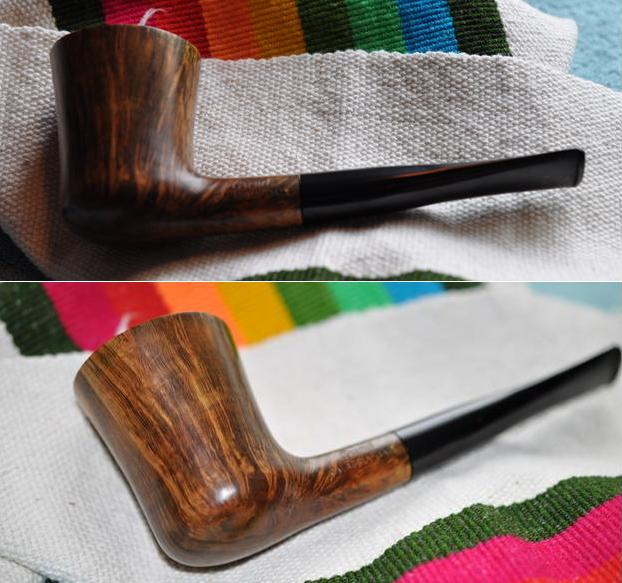
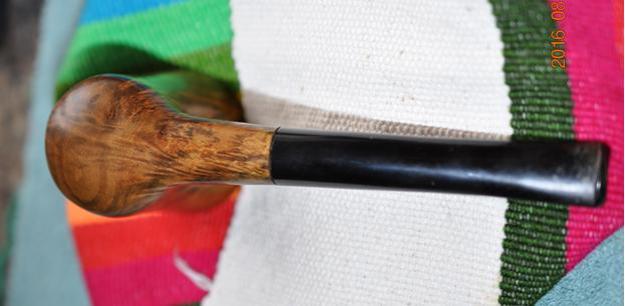
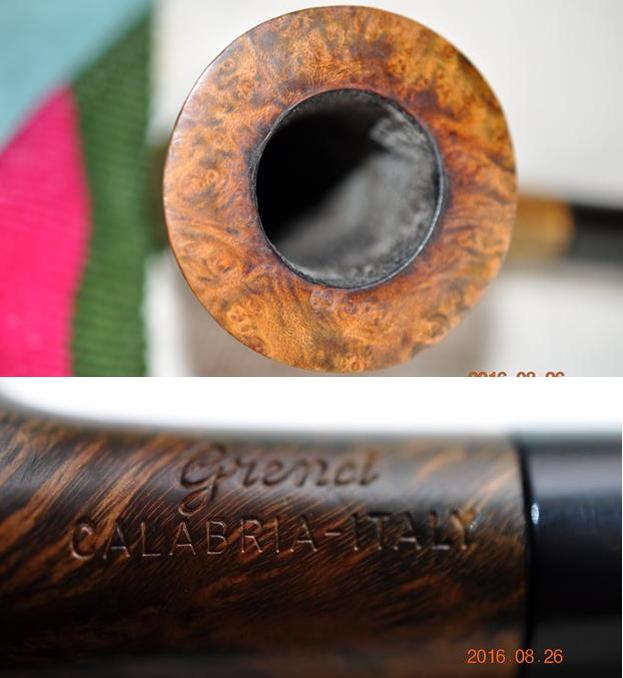
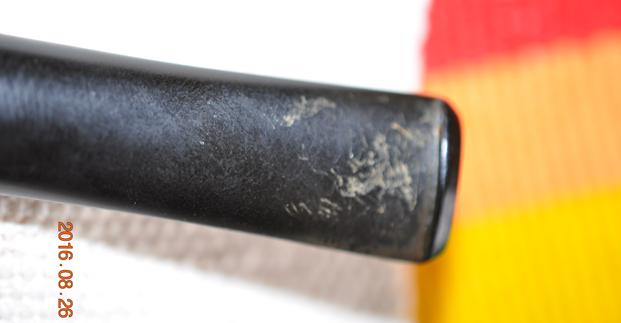
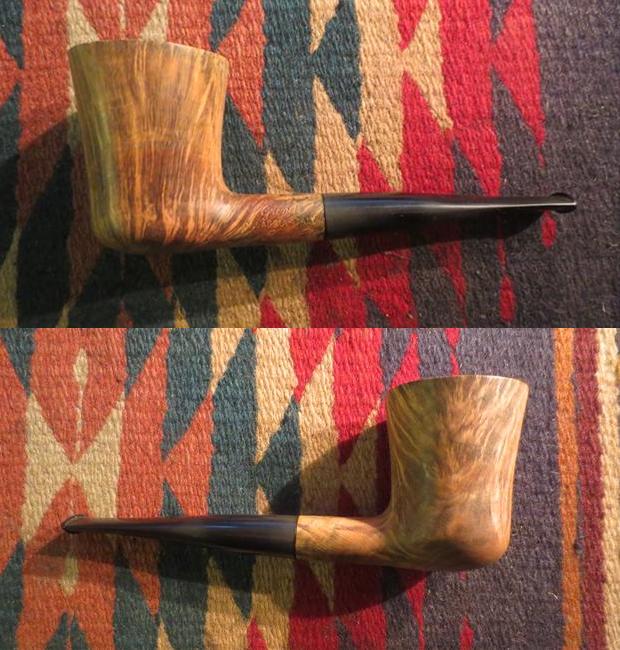
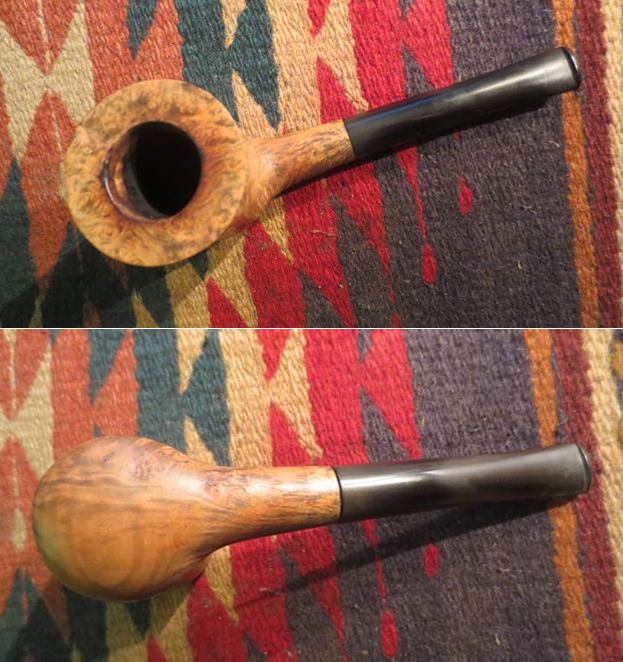
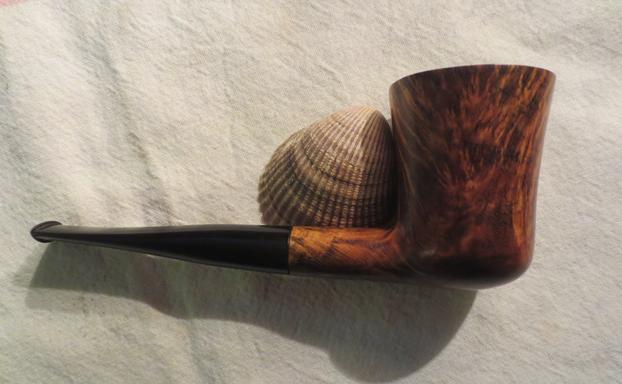
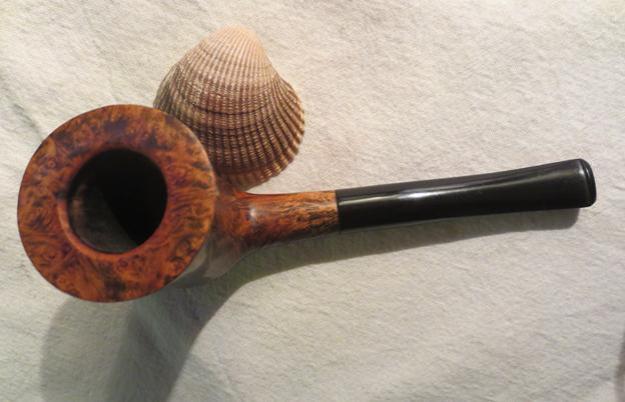
The next pipe I drew out of the box of pipes that my brother sent was stamped Grenci over Calabria-Italy on the left side of the shank. It had amazing looking grain on the sides of the bowl and on the rim. There was a burned area on the inside rim edge on the front side of the bowl. It was caused by a lighter and had left a burned area that damaged the look of the rim top. Other than that the bowl was clean in terms of dings and dents. The finish was worn but functional. The stem was in decent shape with a little bit of tooth chatter on both sides near the button. grenci1I did not know much about Grenci as a brand so I looked it up. I found that on the pipephil website (http://www.pipephil.eu/logos/en/logo-g5.html) that the brand was made by a carver named Domenico Grenci from Clabria, Italy. He was born in1920 and died in 1998. On Pipedia I looked up some background history on the braned (https://pipedia.org/wiki/Grenci,_Domenico). There I found that the bulk of Grenci’s pipes were smooth in most cases – only few pieces were sand blasted or rusticated when showing excellent graining otherwise. Generally, blasting and rusticating contradicted his high claims on his pipes. All models were formed free hand and mostly of generous dimensions. Grenci dedicated highest attention to the course of the grain. Light tones, but nevertheless rich in contrast, were preferred for staining in order to show the entire beauty of the wood. Therefore he also refused to coat the bowl’s interior.grenci2My brother took a close up photo of the rim and of the stamping on the side of the shank. They are shown below.grenci3His close up photo of the stem shows the tooth chatter on the top side of the stem.grenci4My brother scrubbed the exterior of the pipe with Murphy’s Oil Soap and it removed the waxes and light stain that had been on the bowl. It also removed the grime and tars that were on the briar. He cleaned out the internals of the pipe with alcohol, pipe cleaners and cotton swabs. When it arrived in Vancouver it was really clean and ready to restore. The next photos show the condition of the pipe when I received it.grenci5 grenci6I took a close up photo of the rim top that clearly shows the burn damage to the front inner edge of the bowl. Though the mark does not go too deep into the briar I do not want to top the bowl but will work on another solution to the issue.grenci7The stem was lightly oxidized and the tooth chatter was very light.grenci8I worked on the damaged rim with a folded piece of 220 grit sandpaper. I beveled the rim until the damaged area was removed and the overall look of the bowl was clean and fresh once again.grenci9I wet sanded the bowl and shank (being careful to not sand the stamping on the shank) with 1500-2400 grit micromesh sanding pads. I dry sanded it with 3200-12000 grit pads and buffed it by hand with a cloth. (The photo of the bowl after sanding with 3200-4000 grit pads is out of focus so I chose not to use it.) I sanded the stem at the same time with each successive grit of micromesh sanding pad and rubbed it down after each set of three with Obsidian Oil.grenci10 grenci11 grenci12I took some photos of the polished bowl after using the micromesh sanding pads. I liked the look of the grain and the way it stood out. I decided not to stain this one but buff it and polish it further.grenci13I buffed the bowl and stem with Blue Diamond polish on the buffing wheel and gave it multiple coats of carnauba wax. I buffed it with a clean buffing pad and with a microfibre cloth to raise the shine. It is a beautiful pipe that really shows the lay of the grain. According to the piece in Pipedia this would be a classic Grenci pipe and it is a testimony to his ability to read the grain and set up the lay of the pipe to follow the flow of the grain. The finished pipe is shown in the photos below. This one will also be on the store shortly so if any of you want to add it to your collection before it goes on the store email me at stevelaug@uniserve.com and we can talk about the price. Thanks for looking.grenci14 grenci15 grenci16 grenci17 grenci18 grenci19 grenci20 grenci21