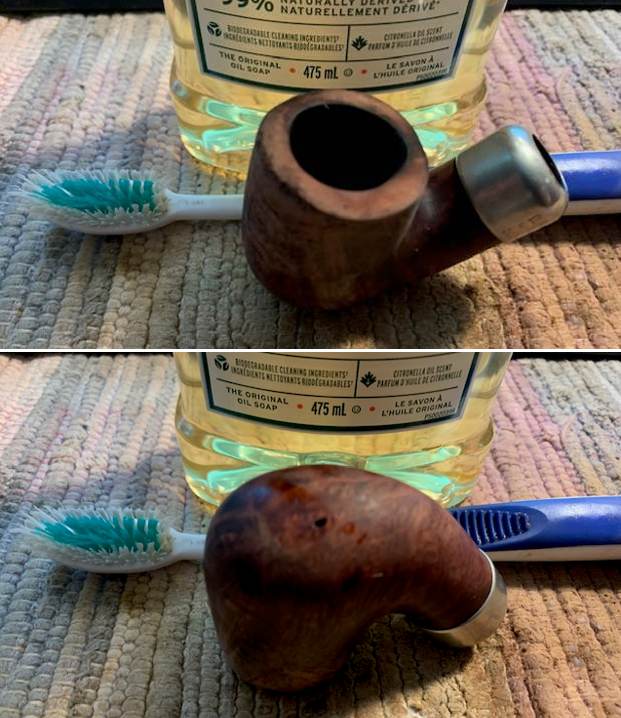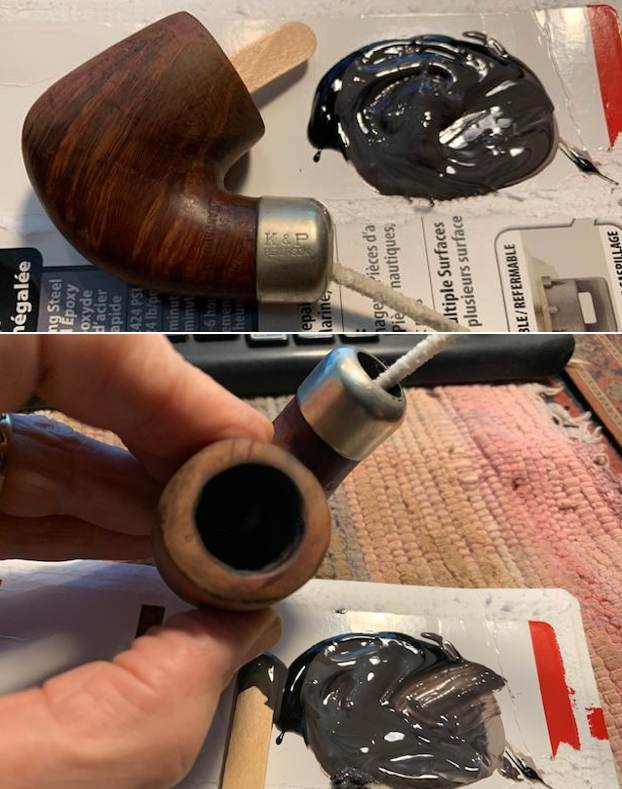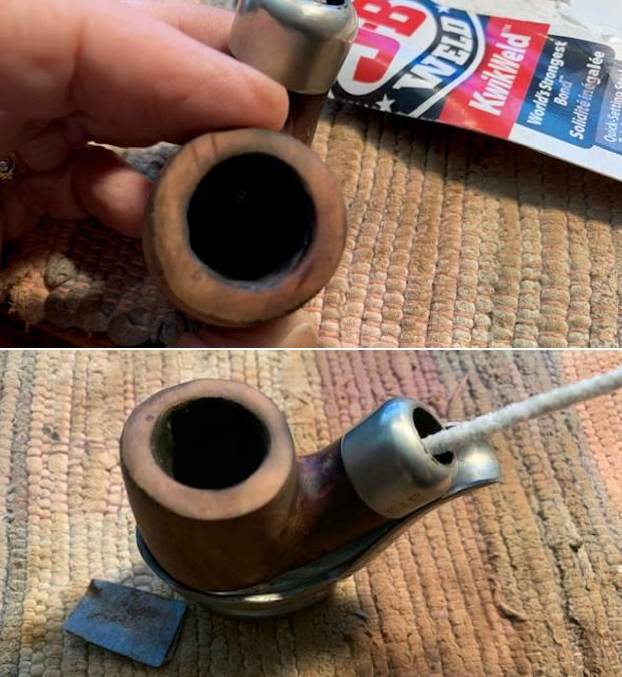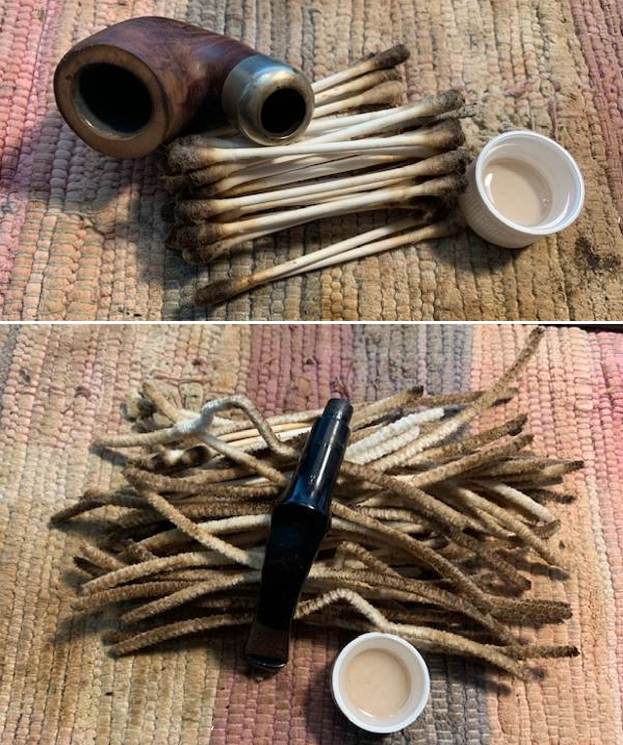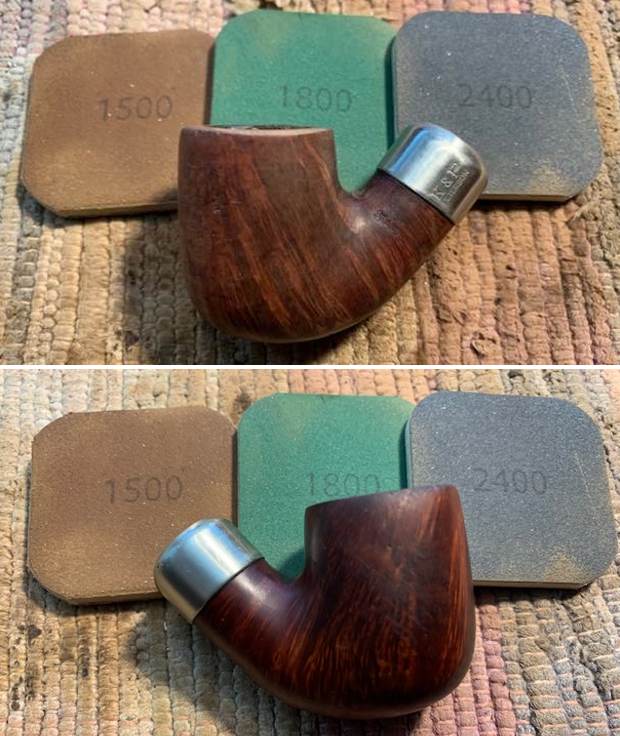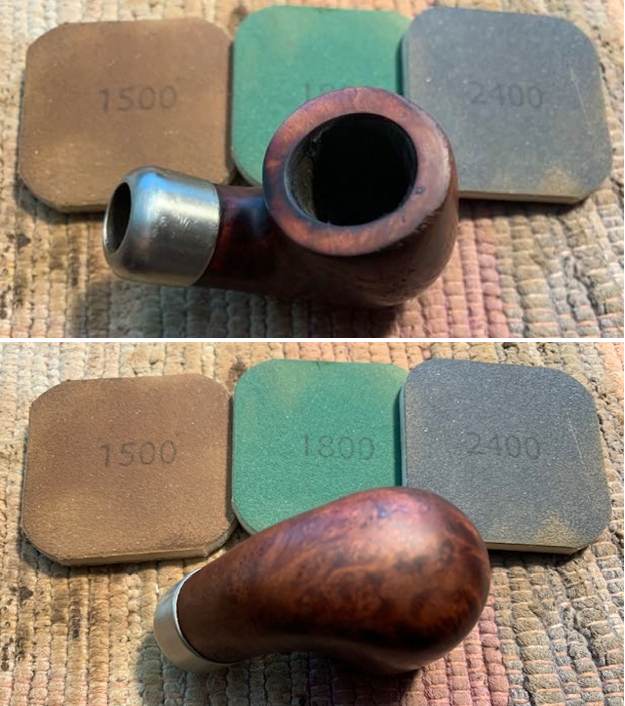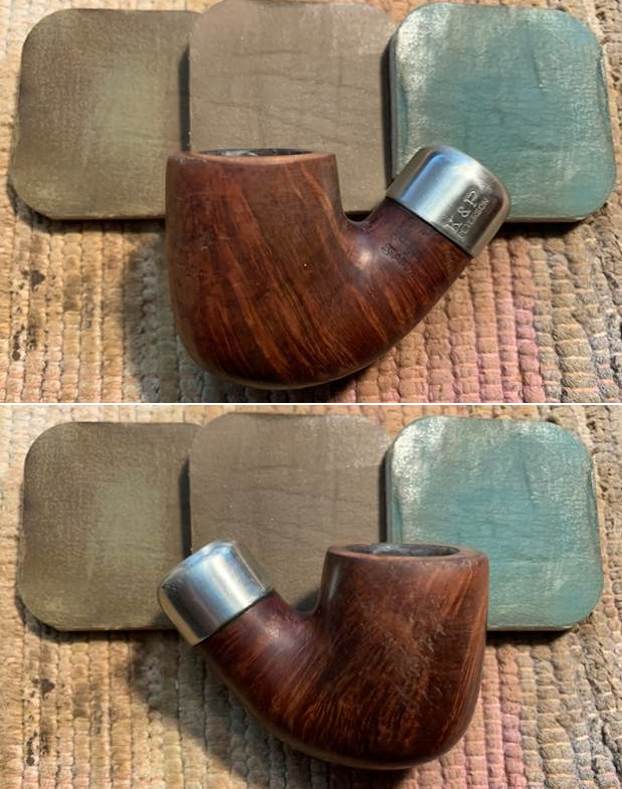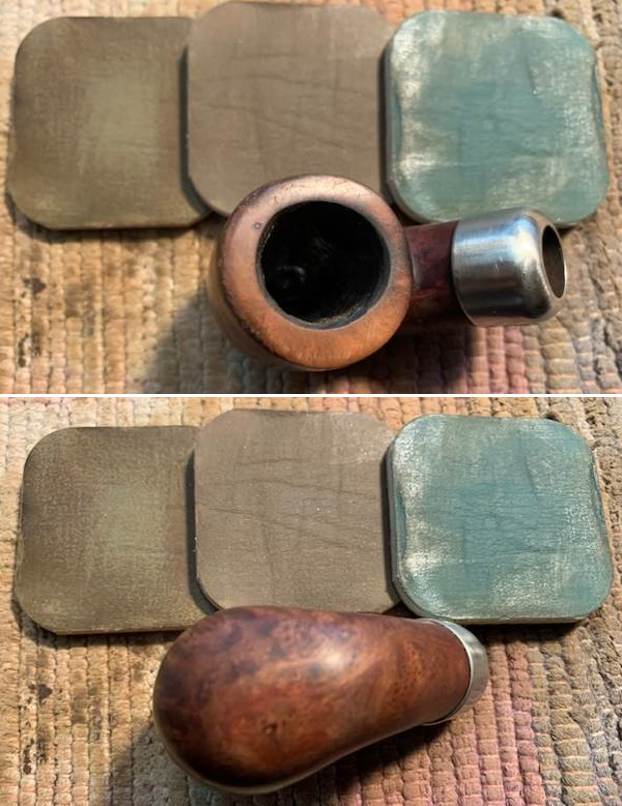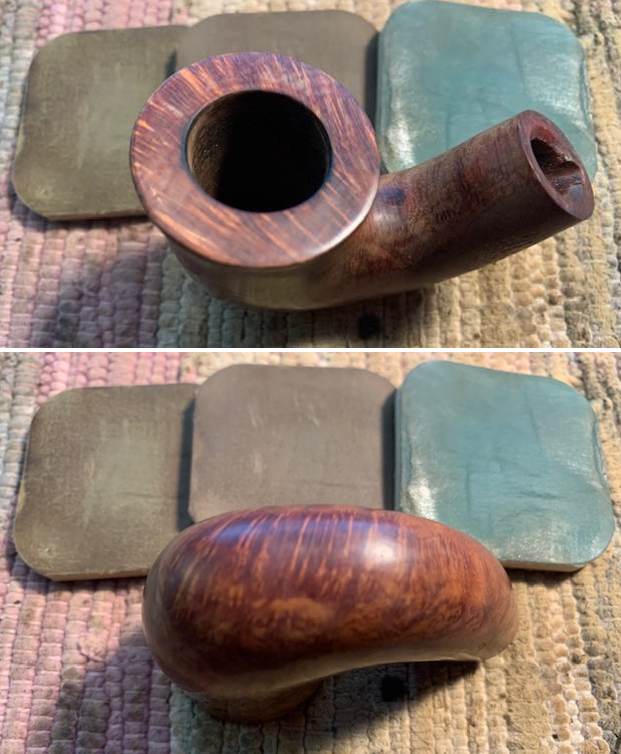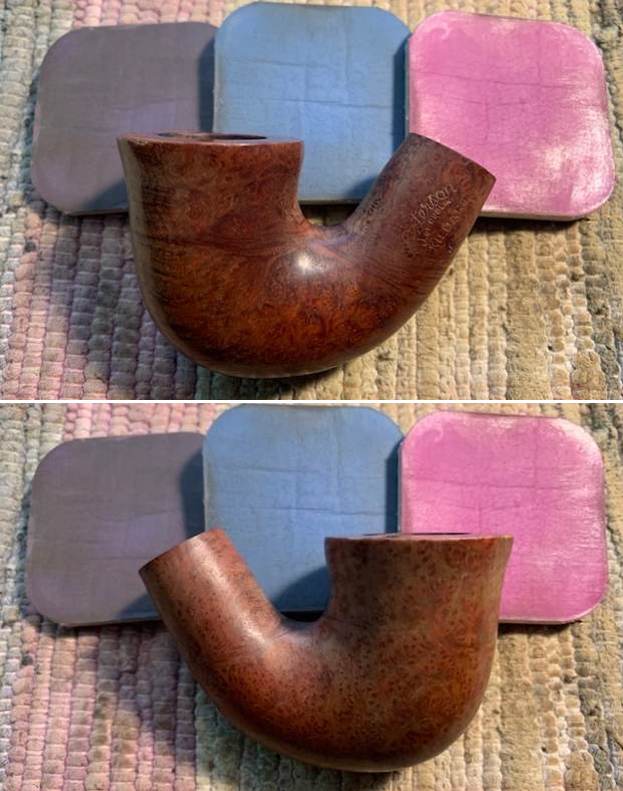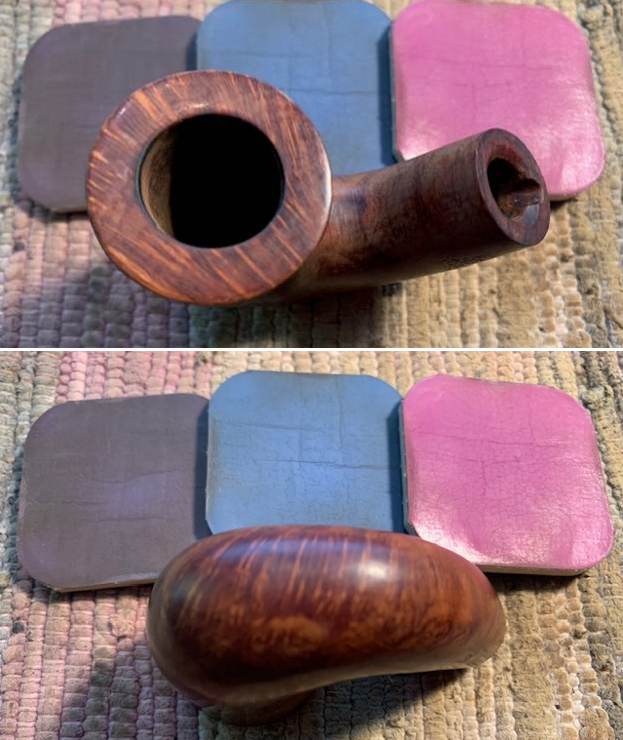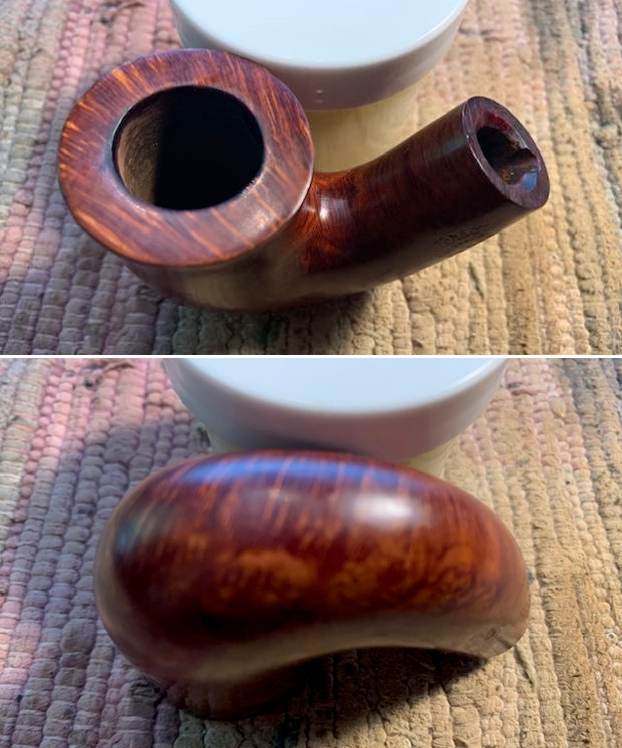
Tag Archives: bite marks

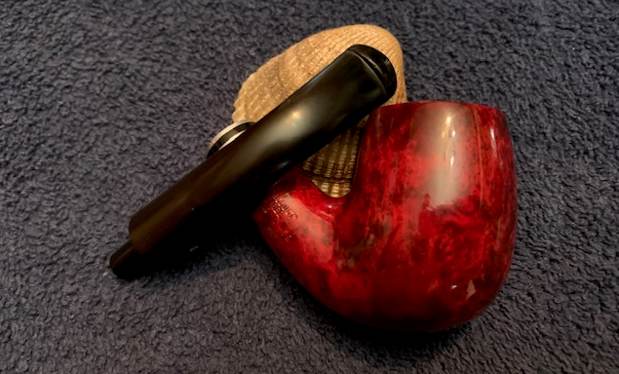
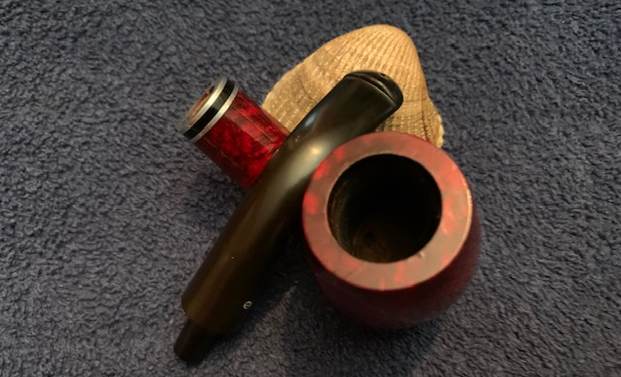
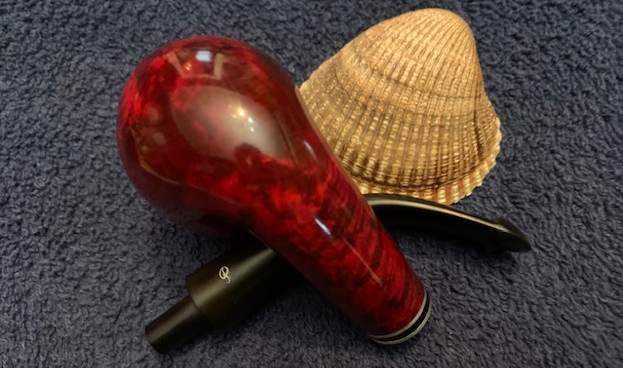
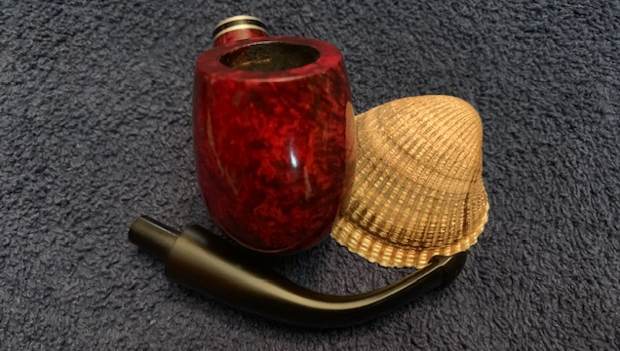
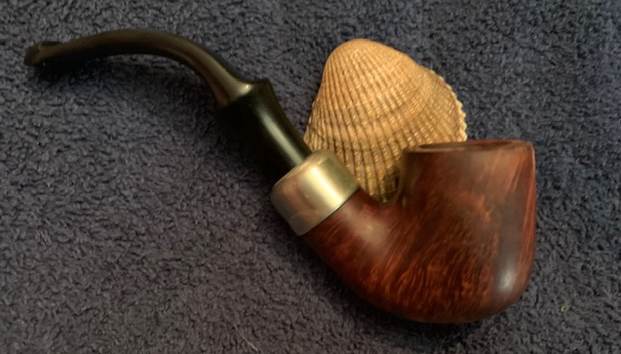
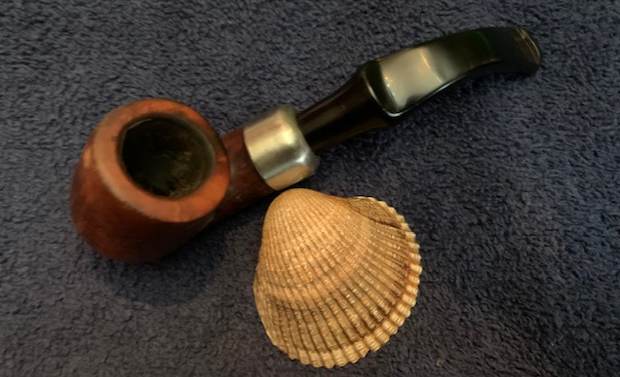
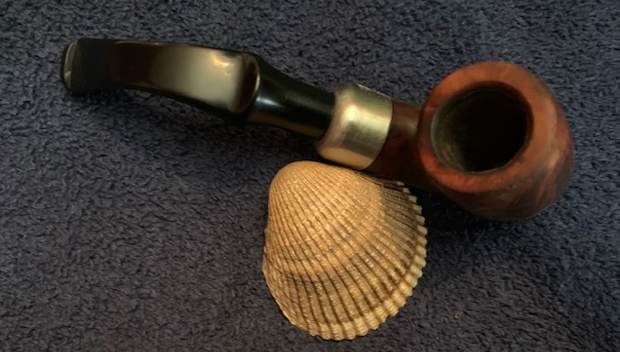
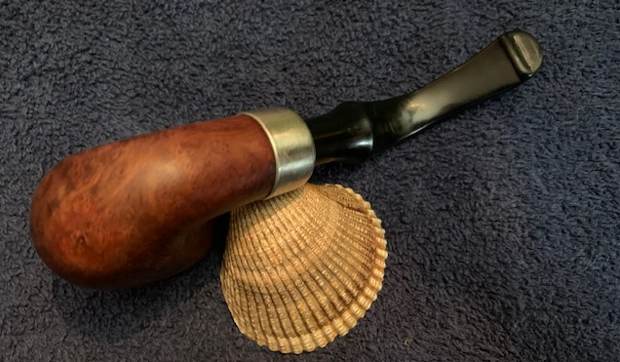
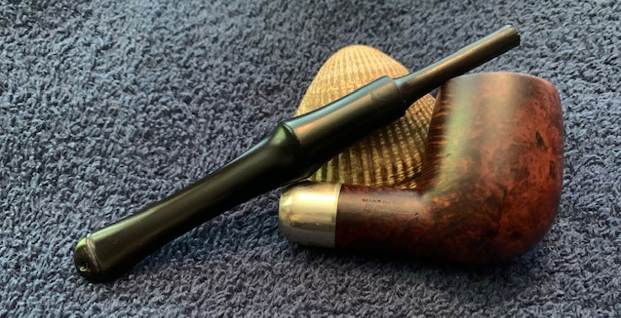
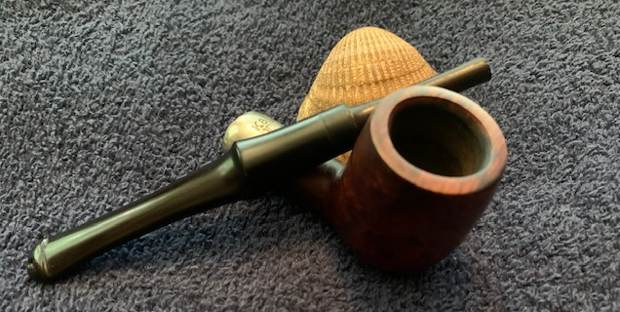
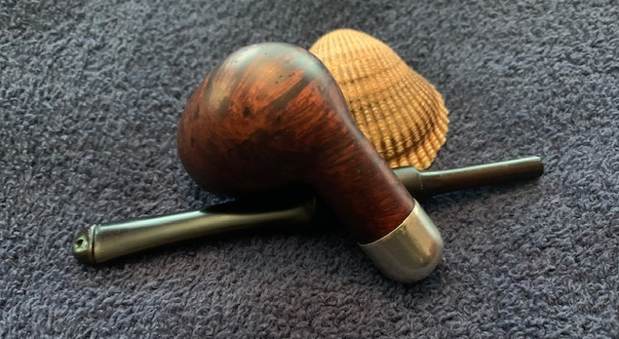
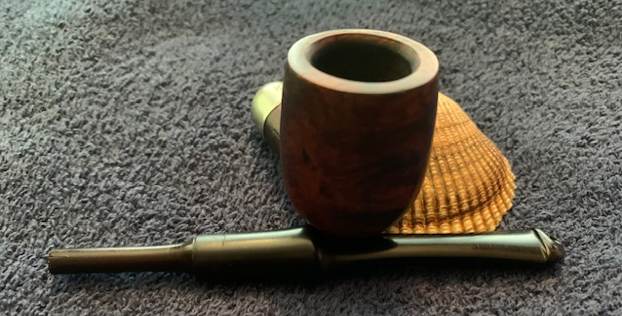
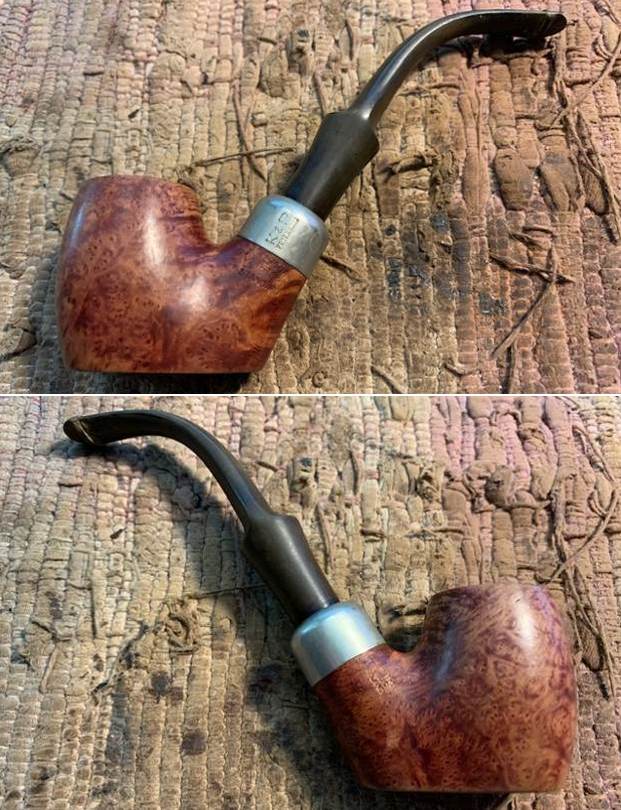
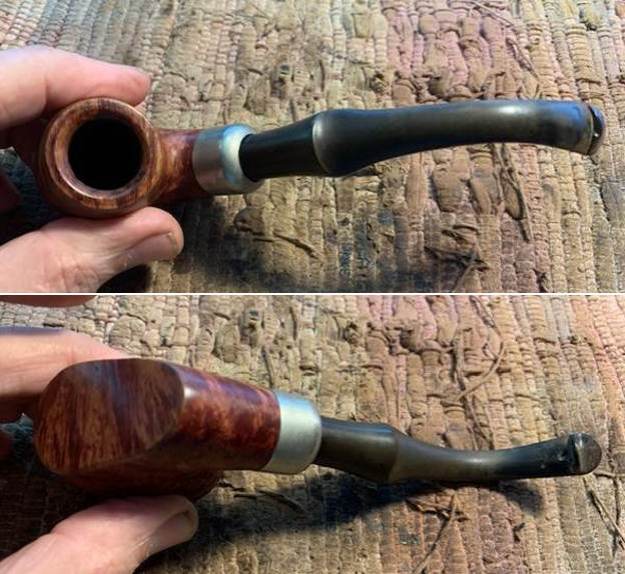
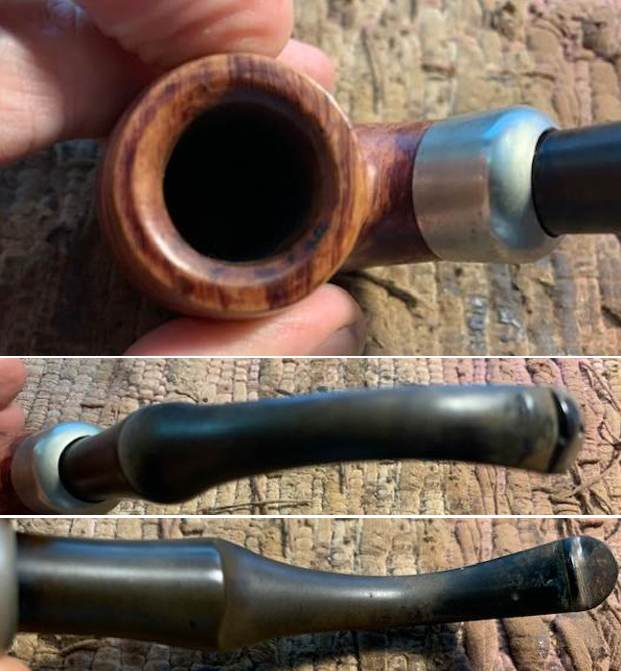
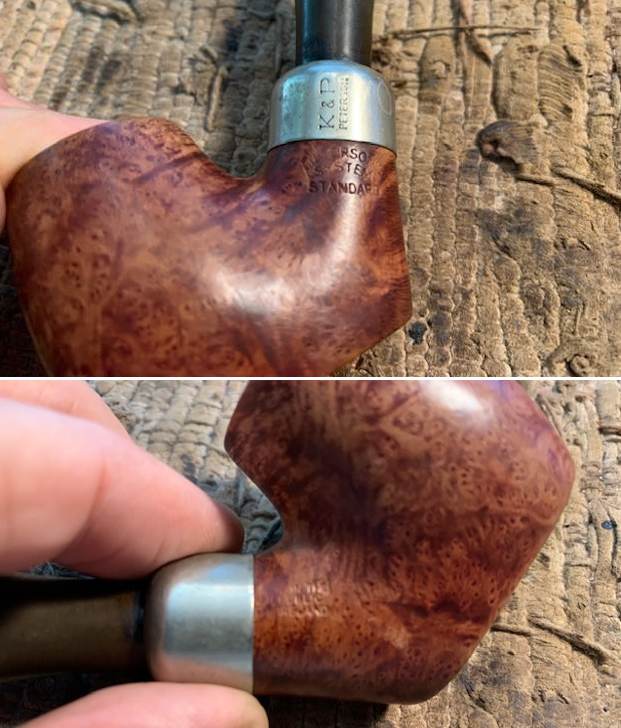
New Life for a Tired Republic Era Peterson’s System Standard 314


Blog by Steve Laug

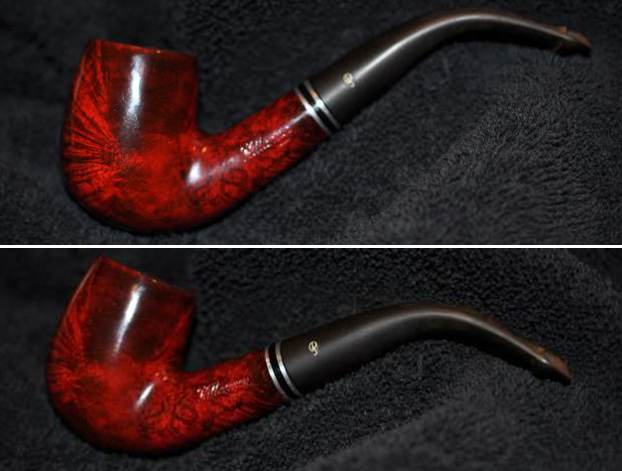
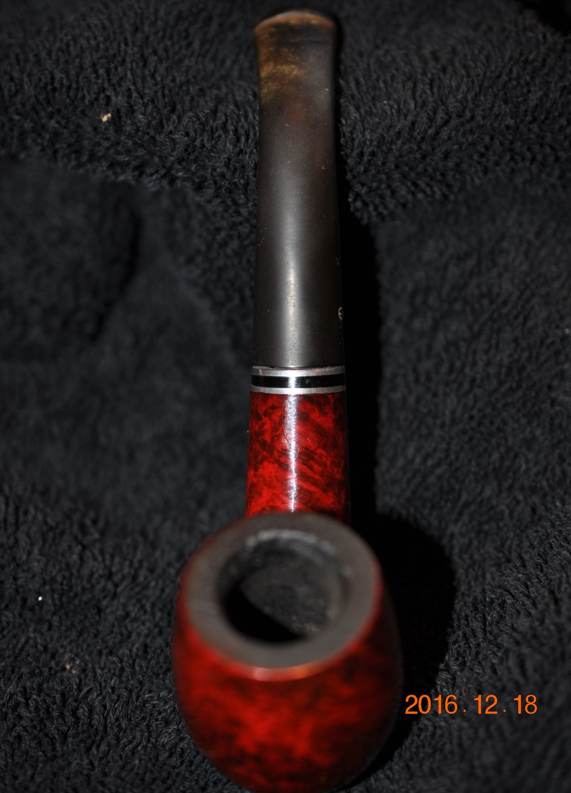
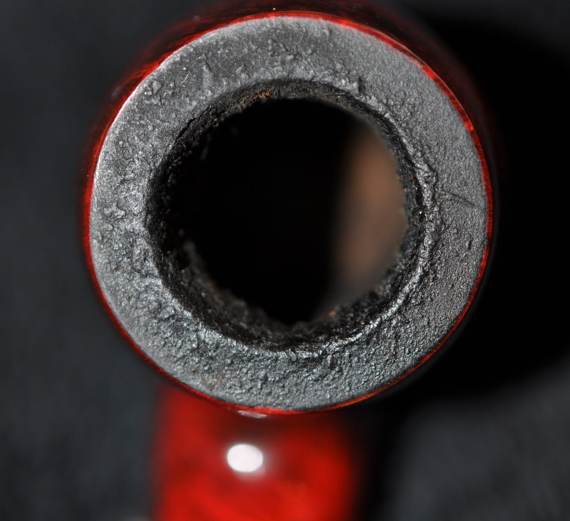
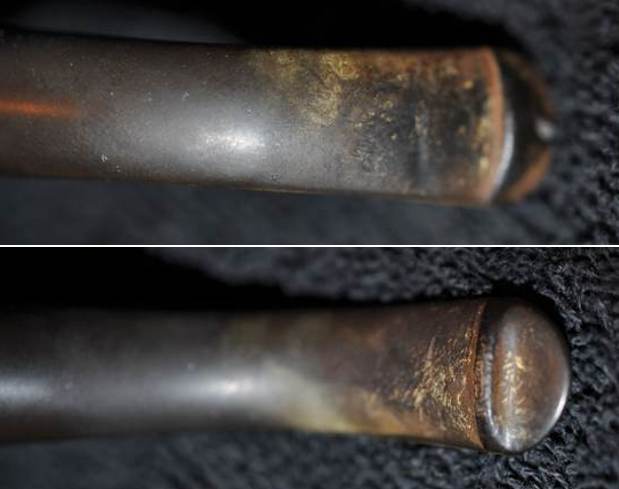
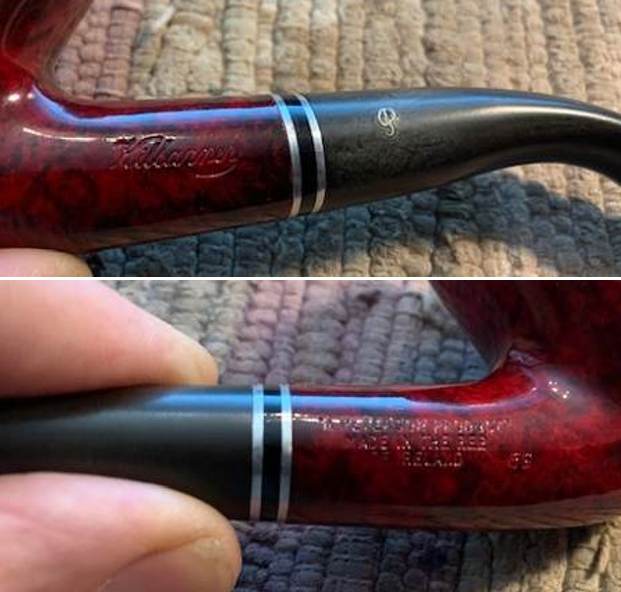
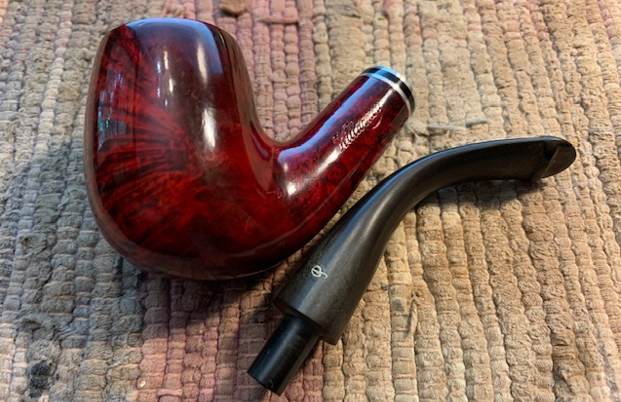
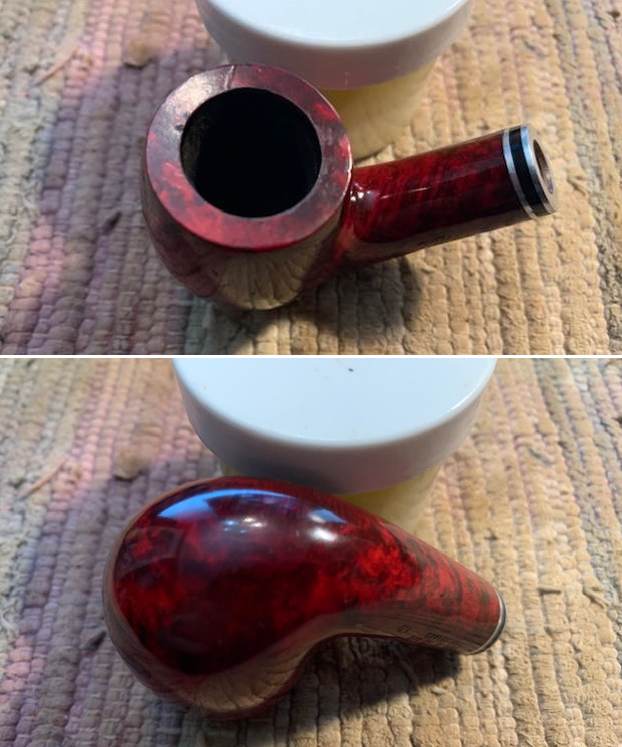
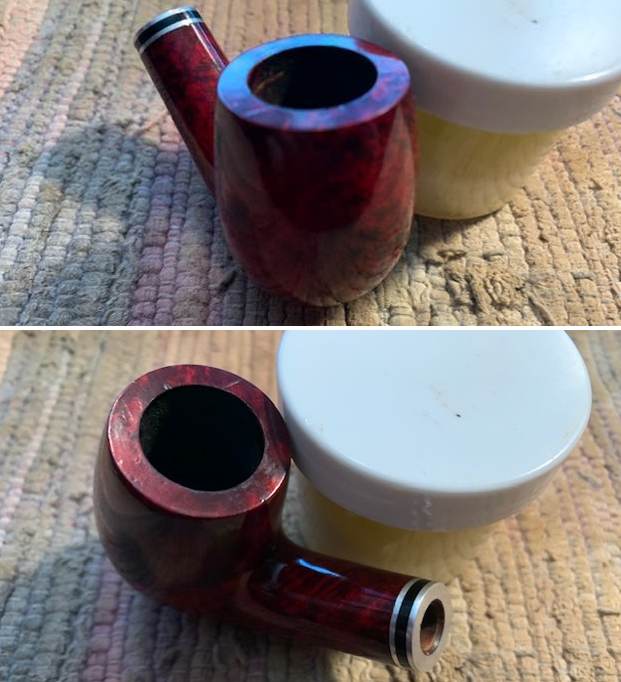
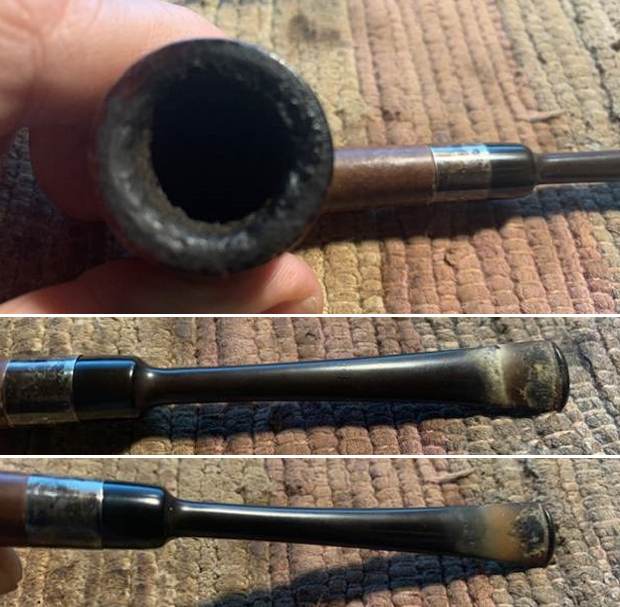
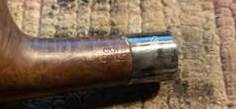
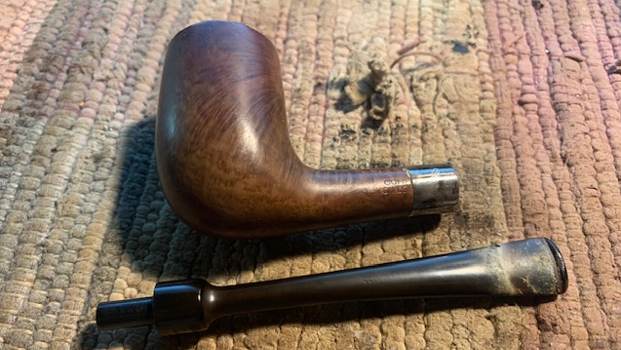
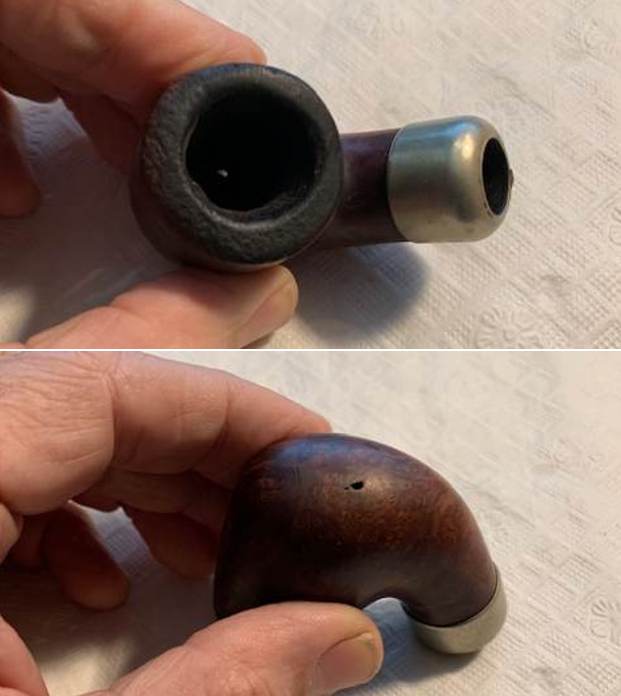
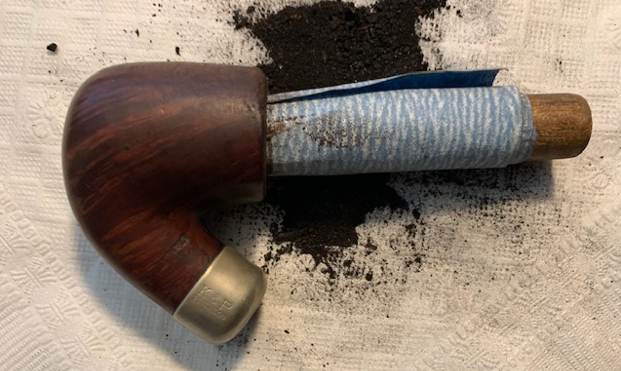
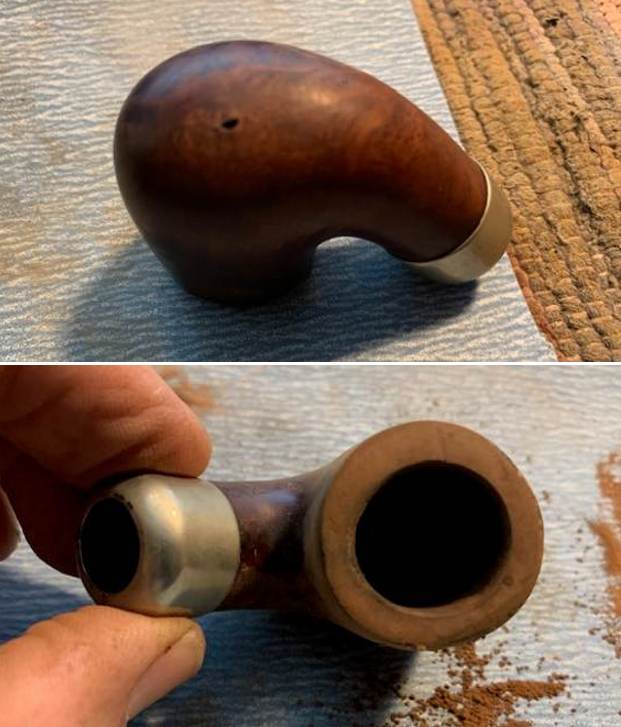
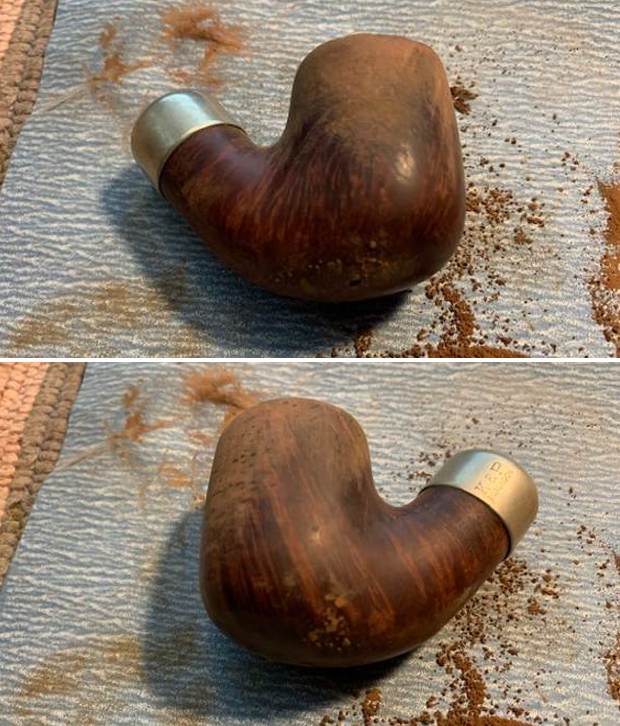
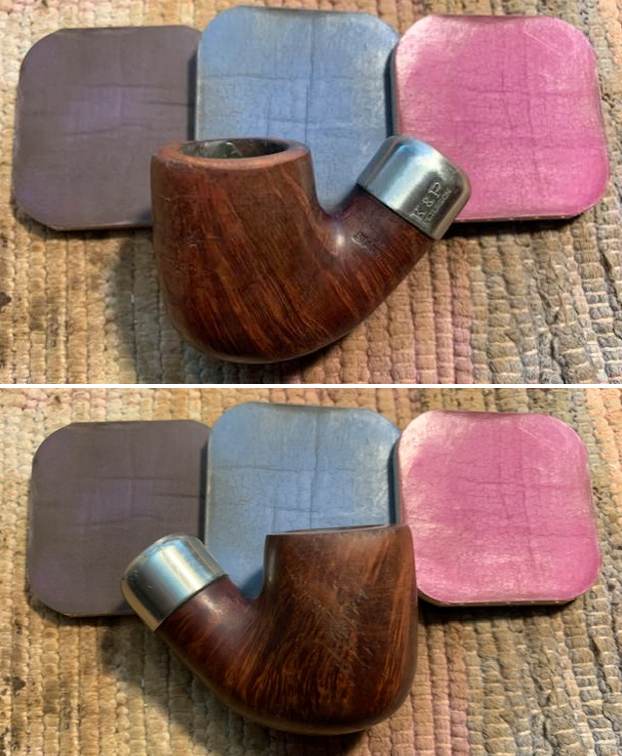
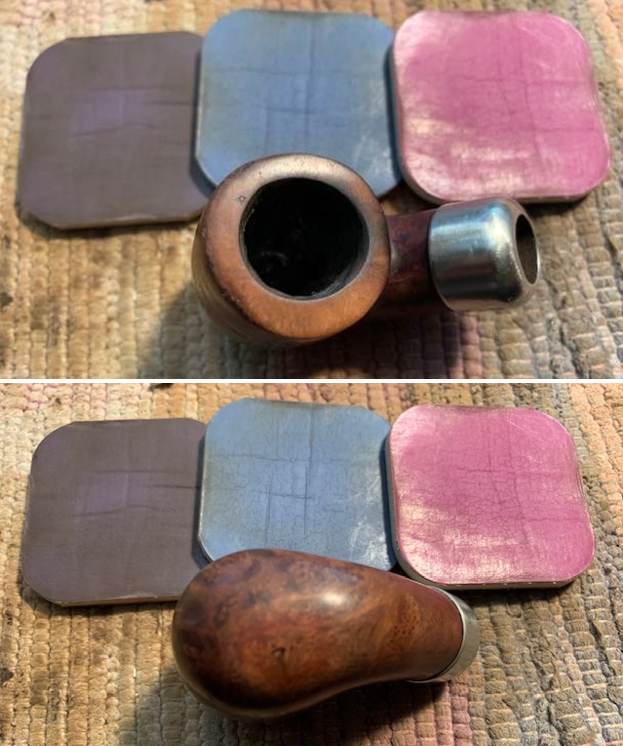
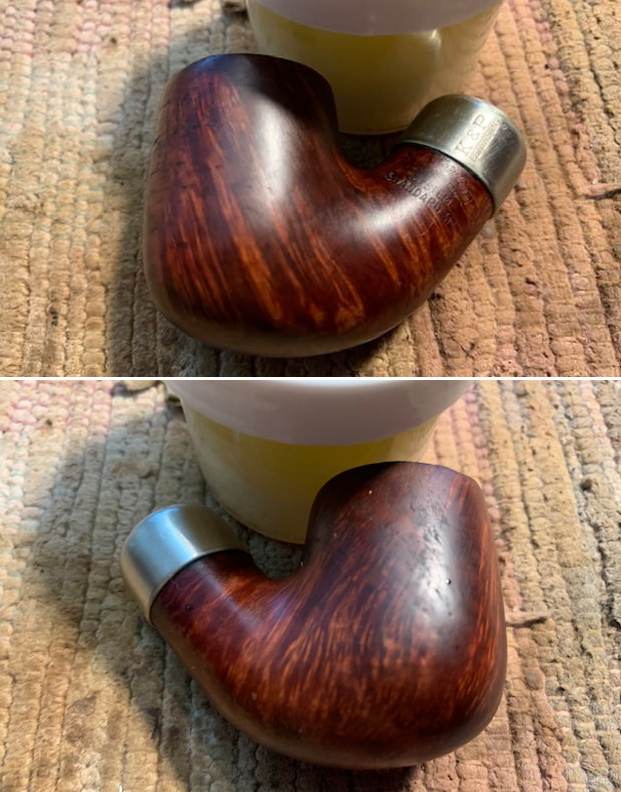
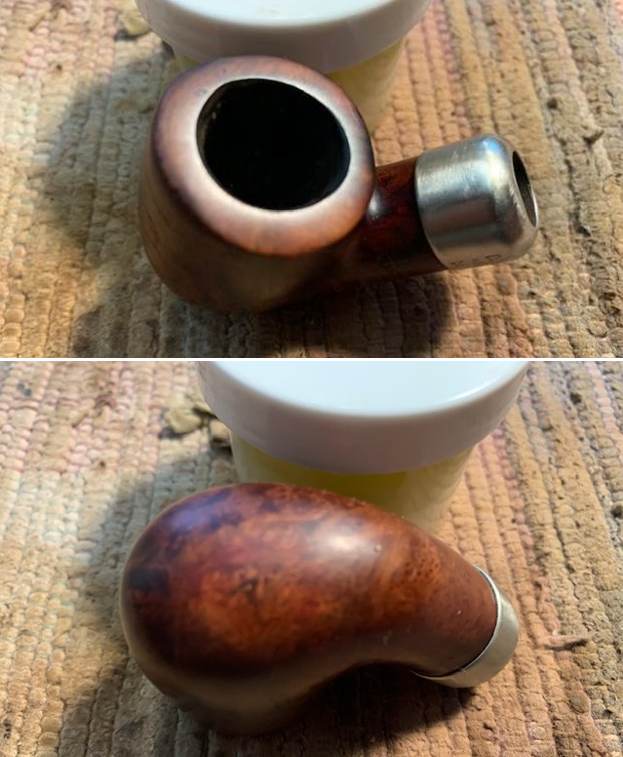
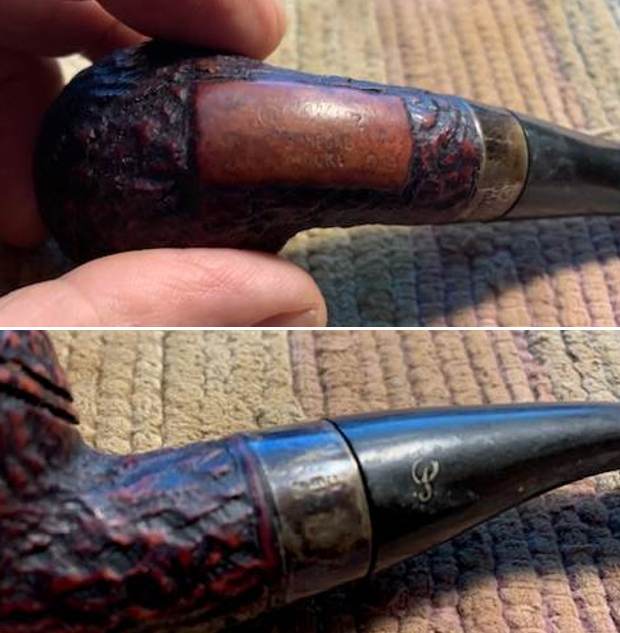
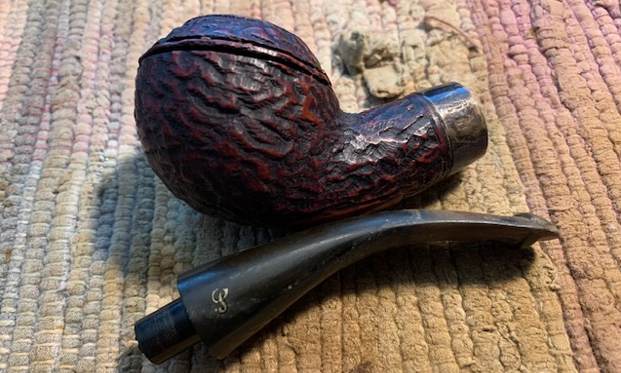
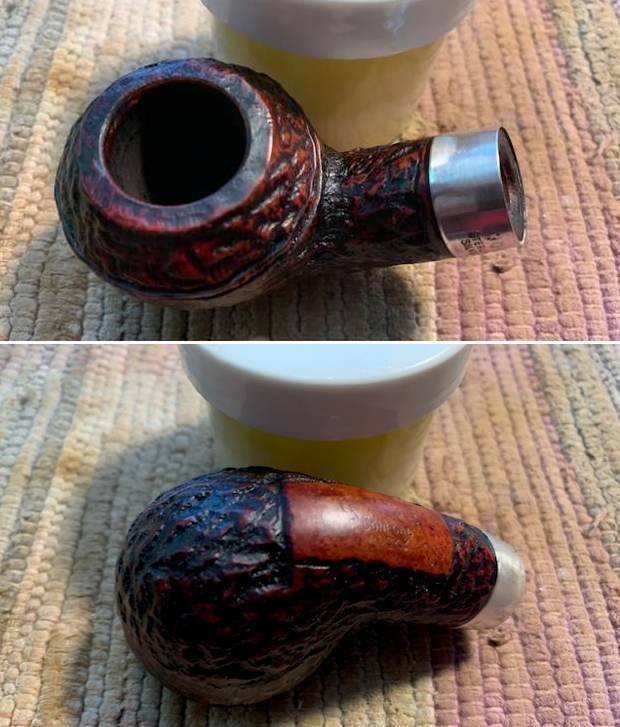
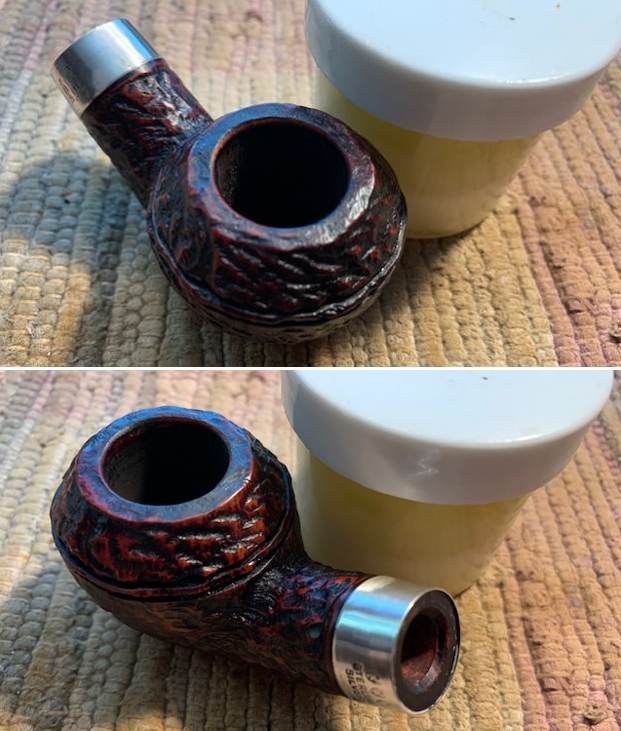
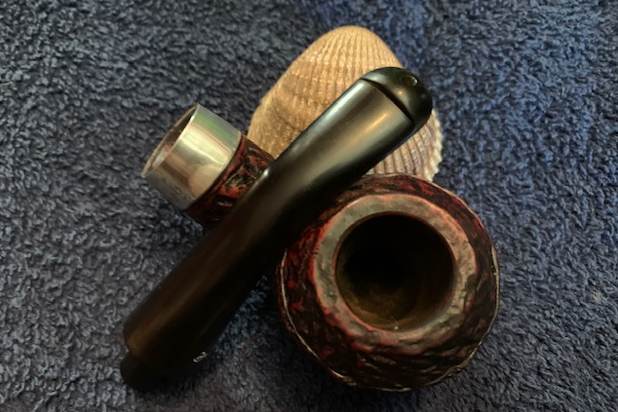
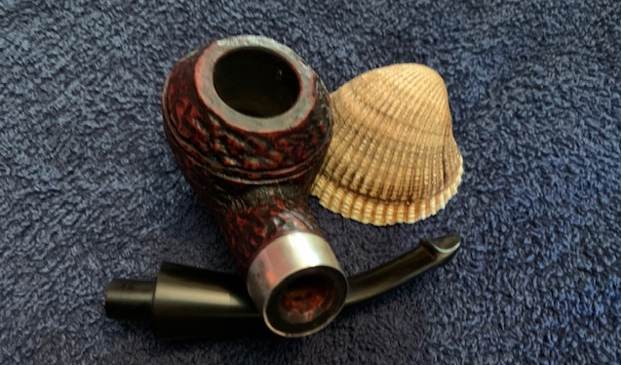
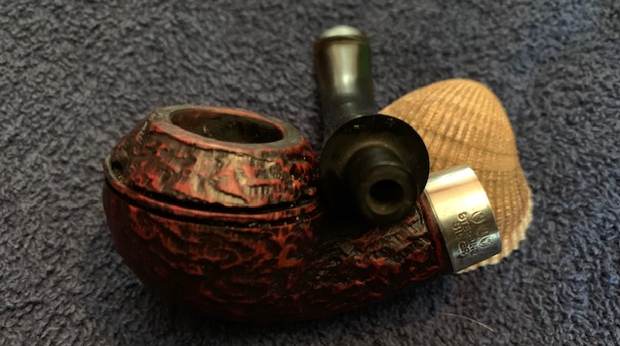
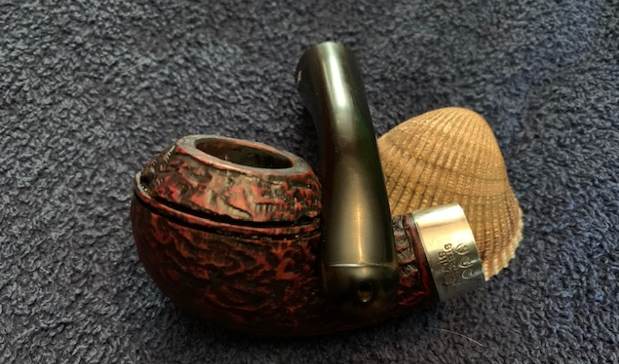
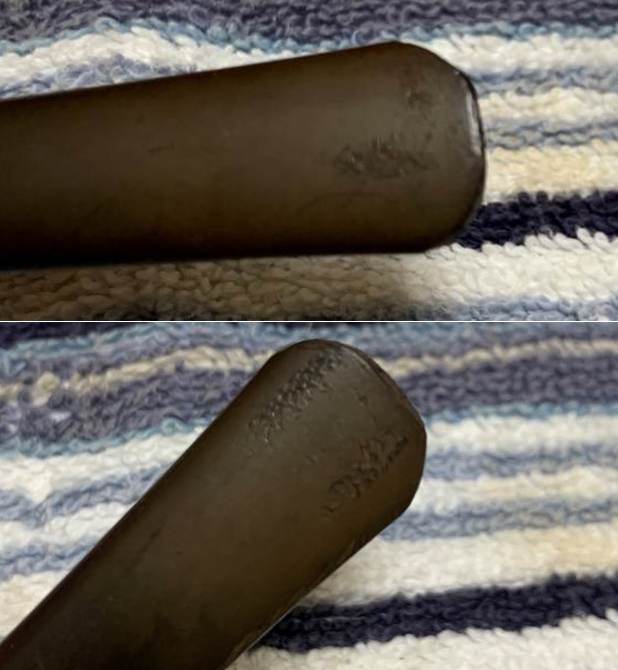
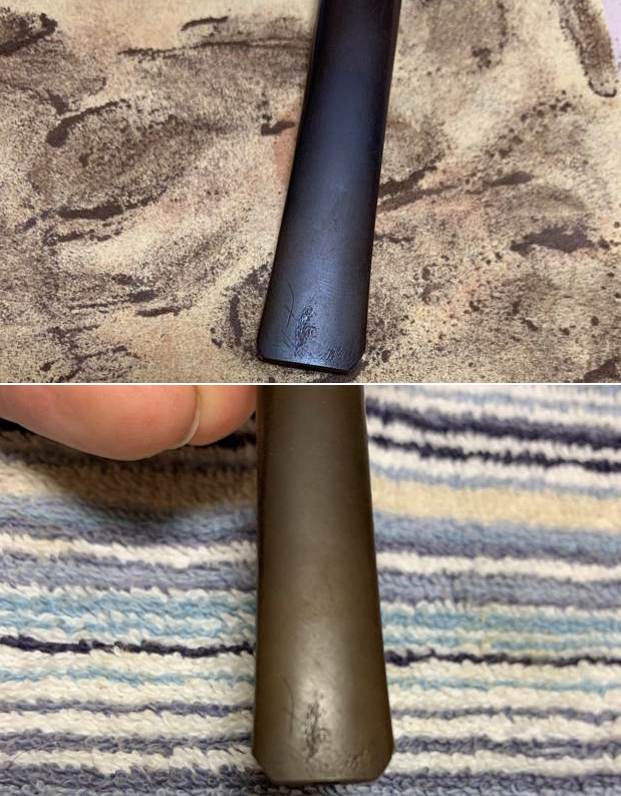
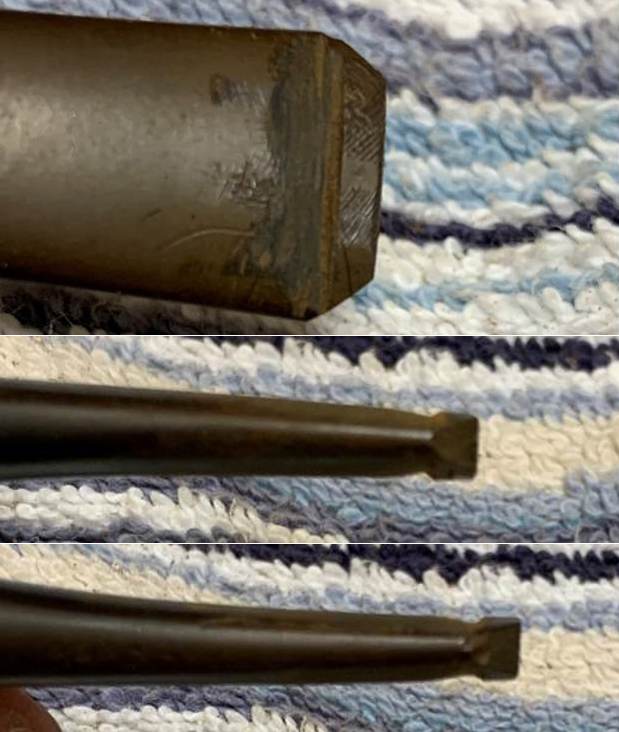
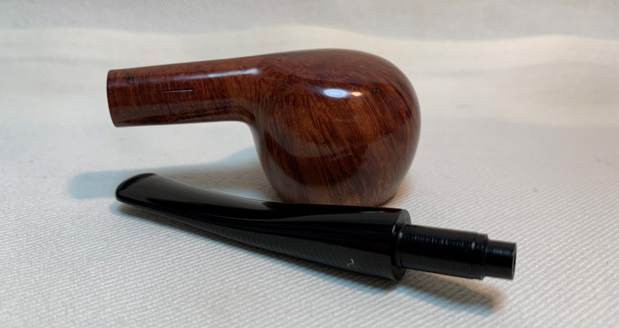
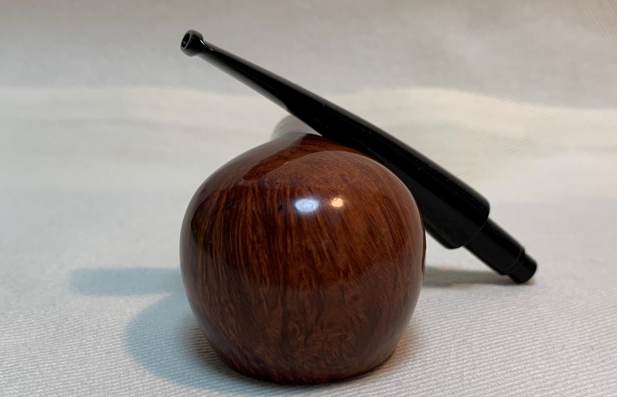
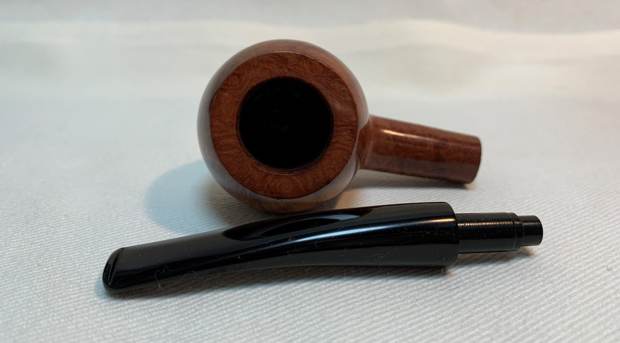
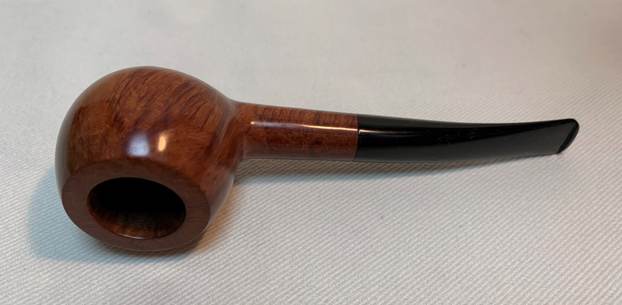
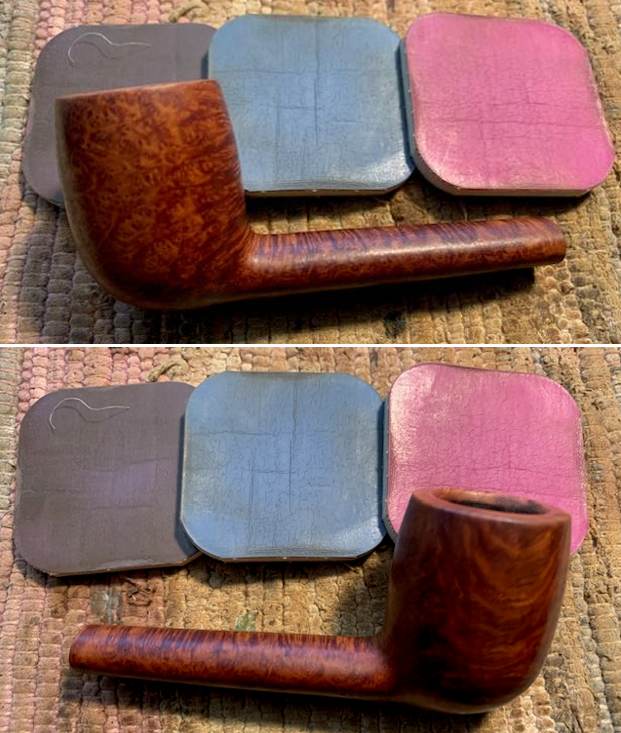
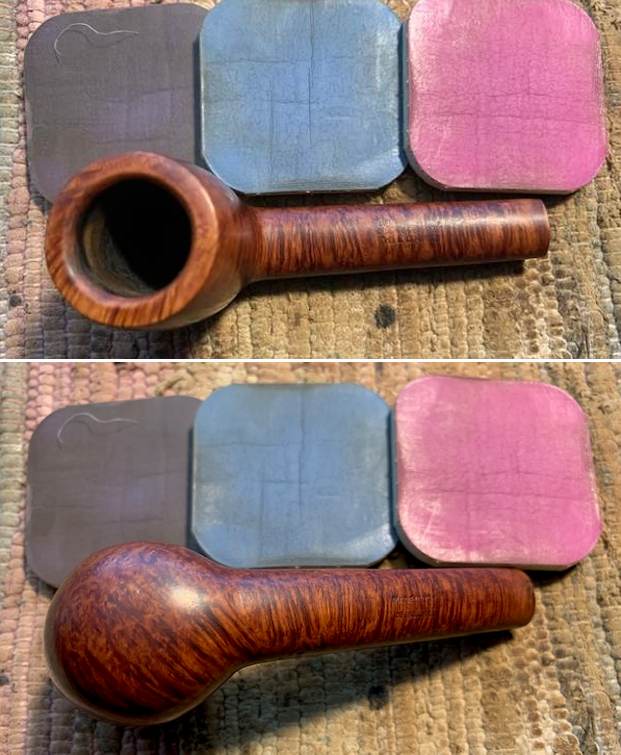
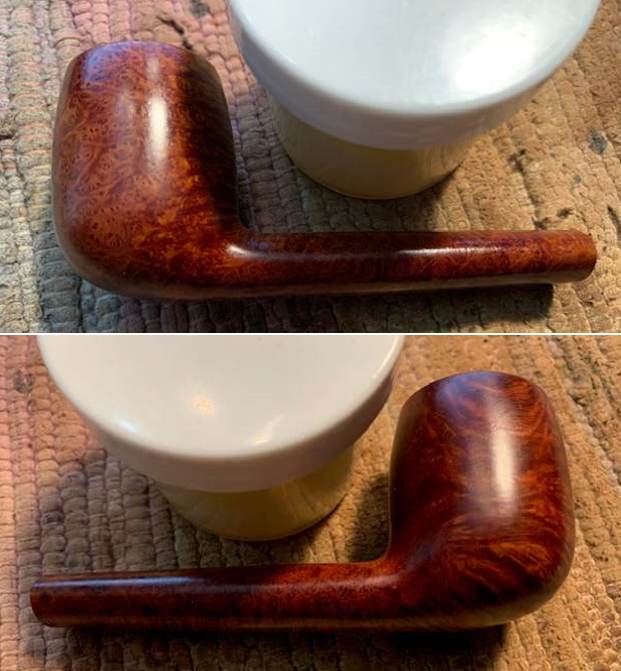
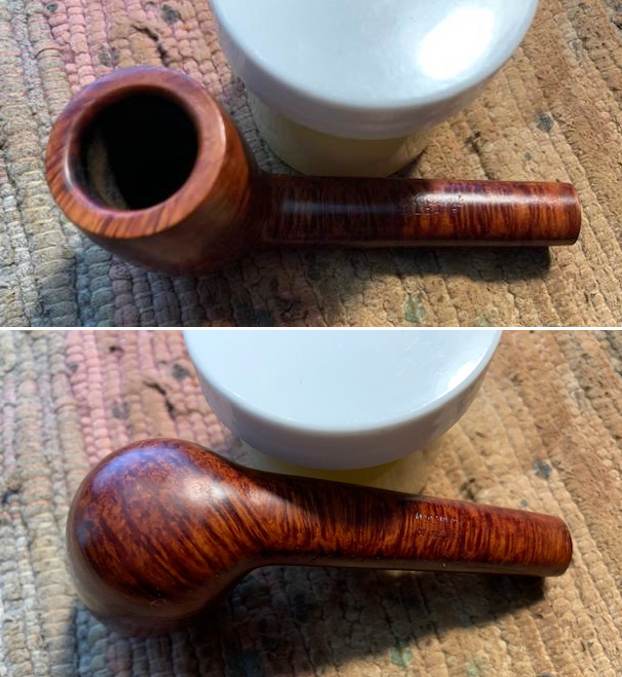
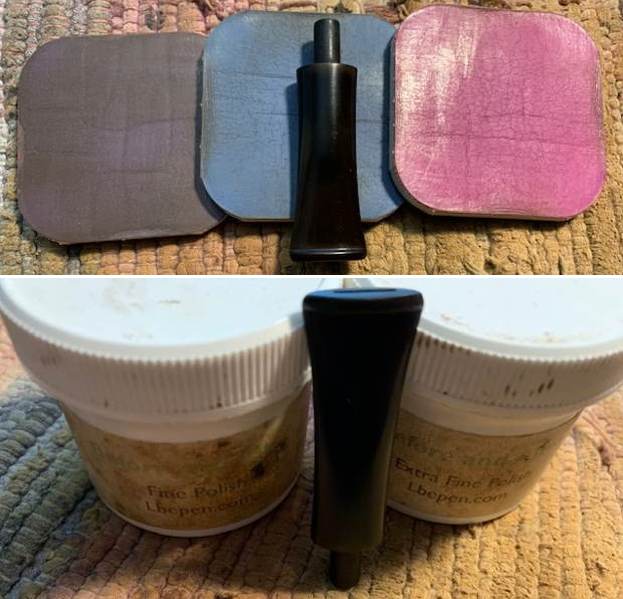
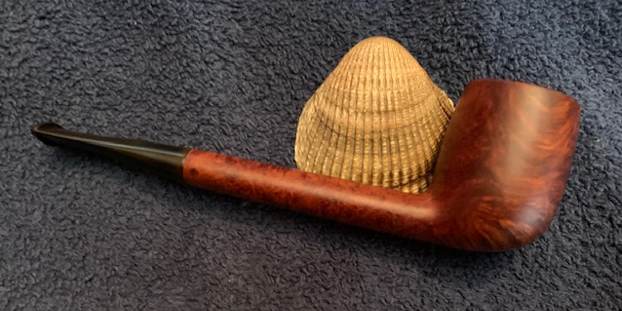
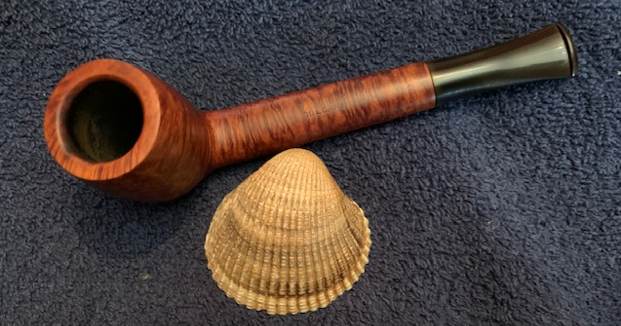
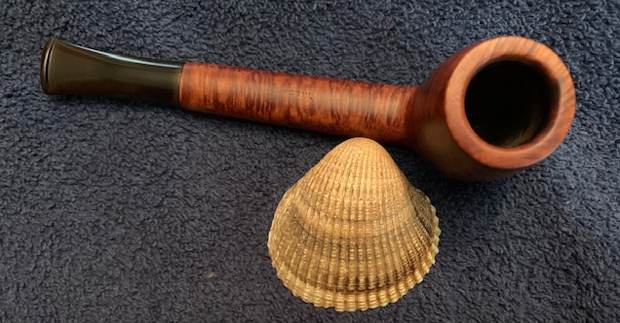
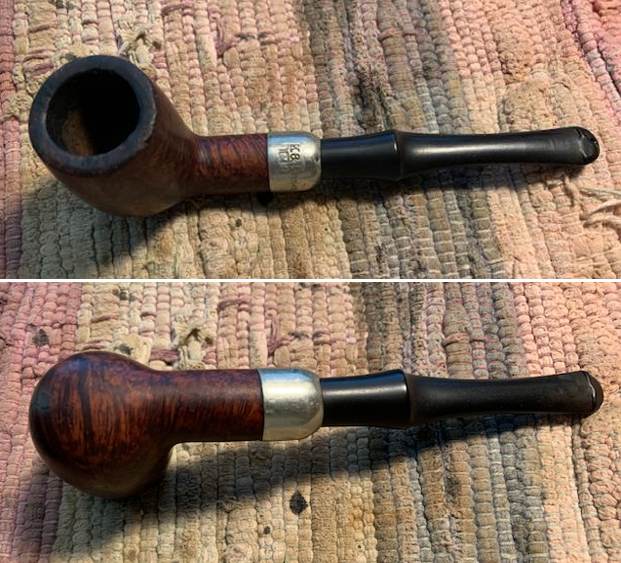
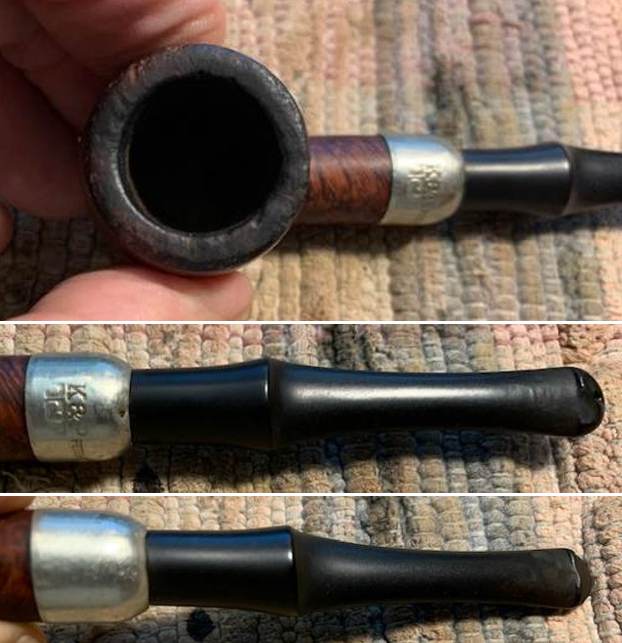
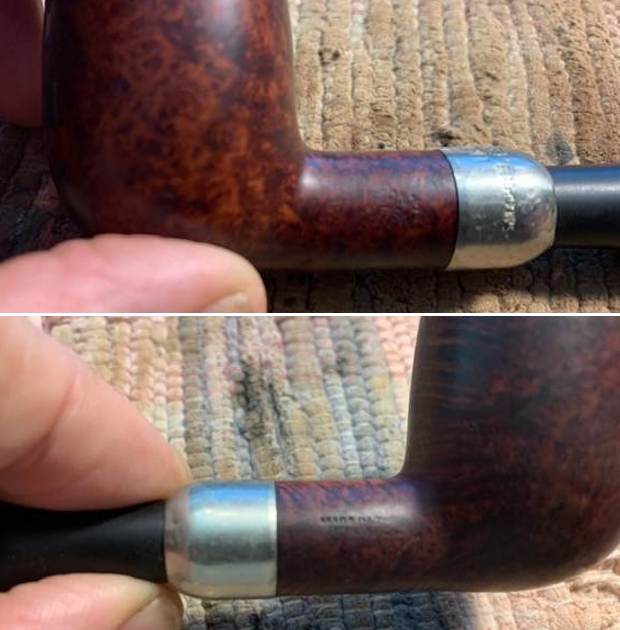
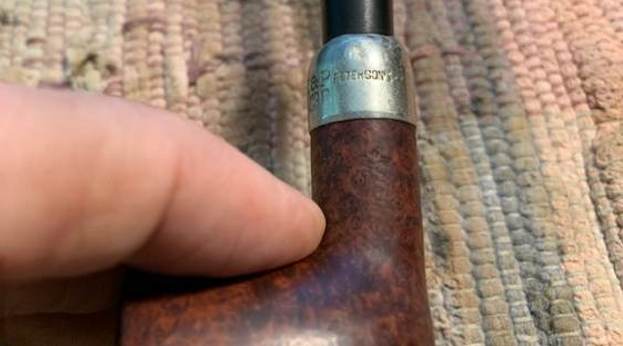
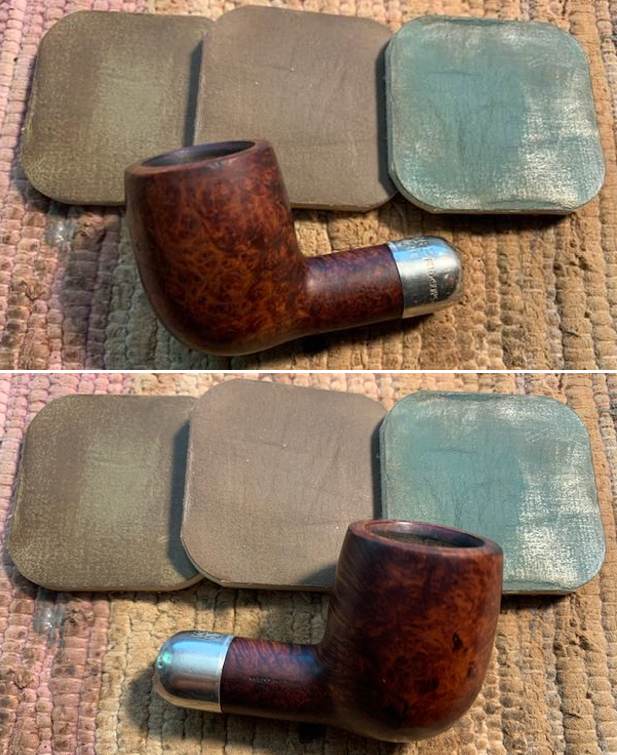
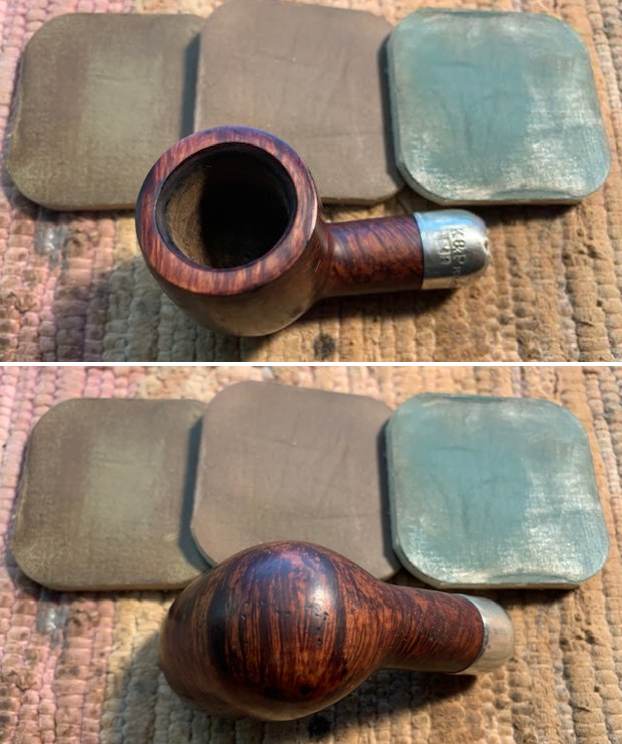
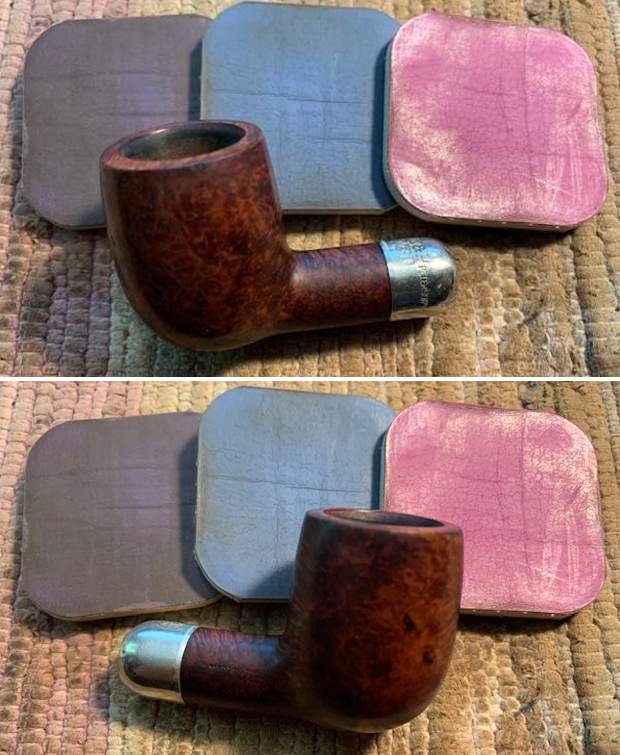
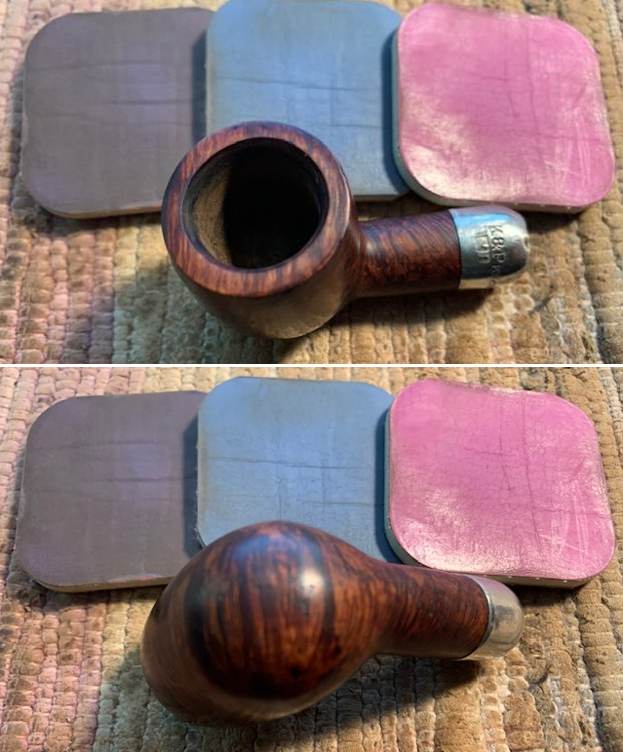
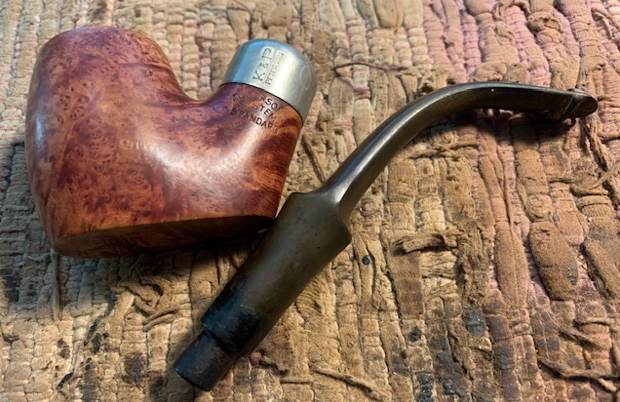
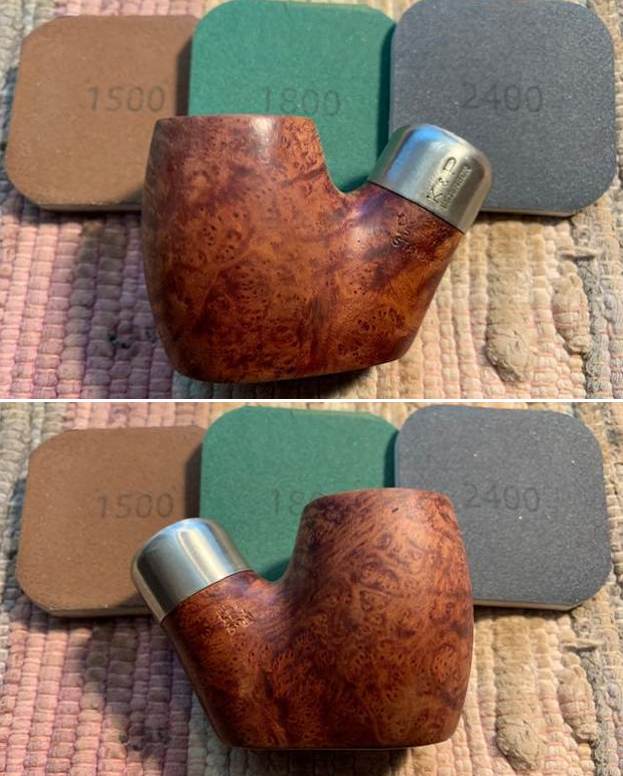
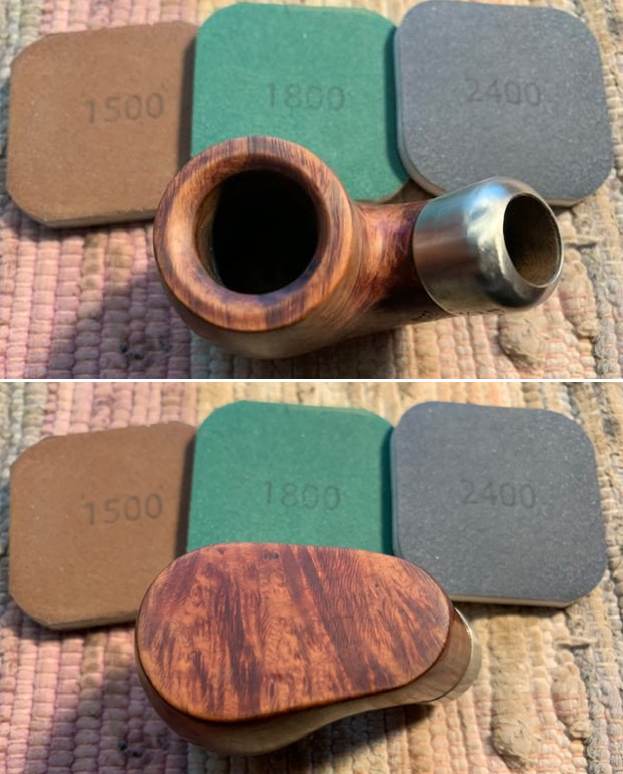
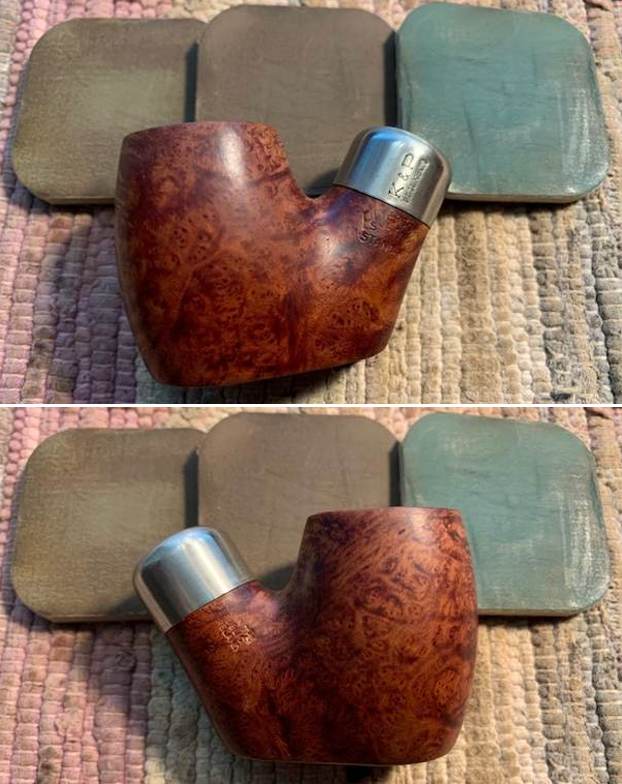
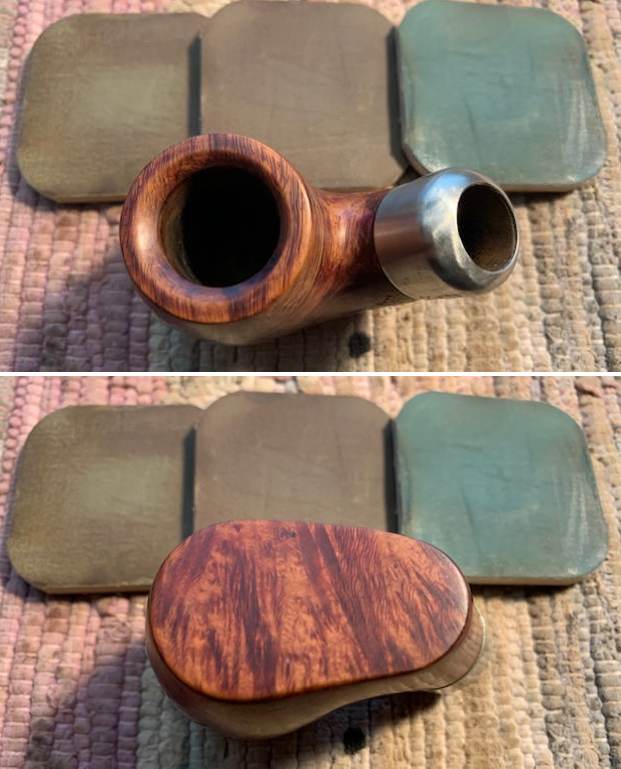
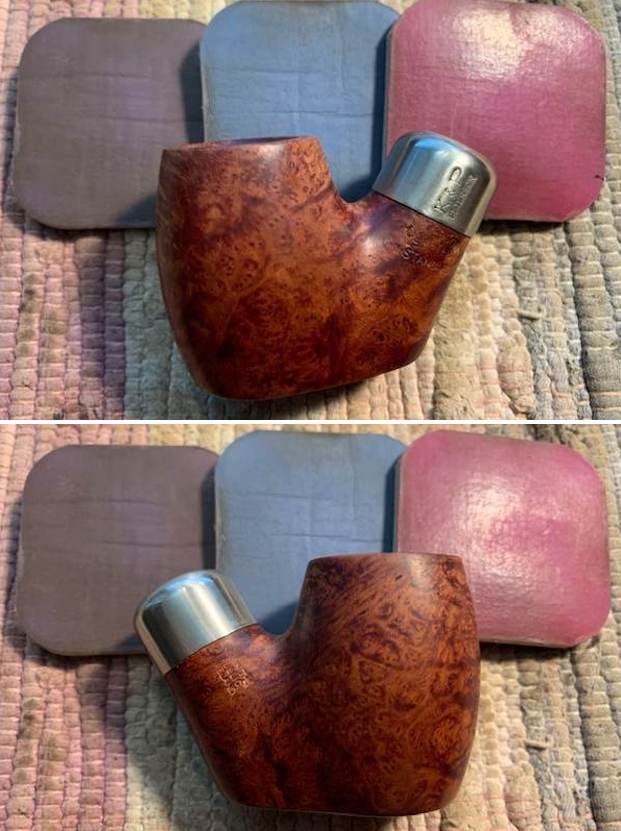
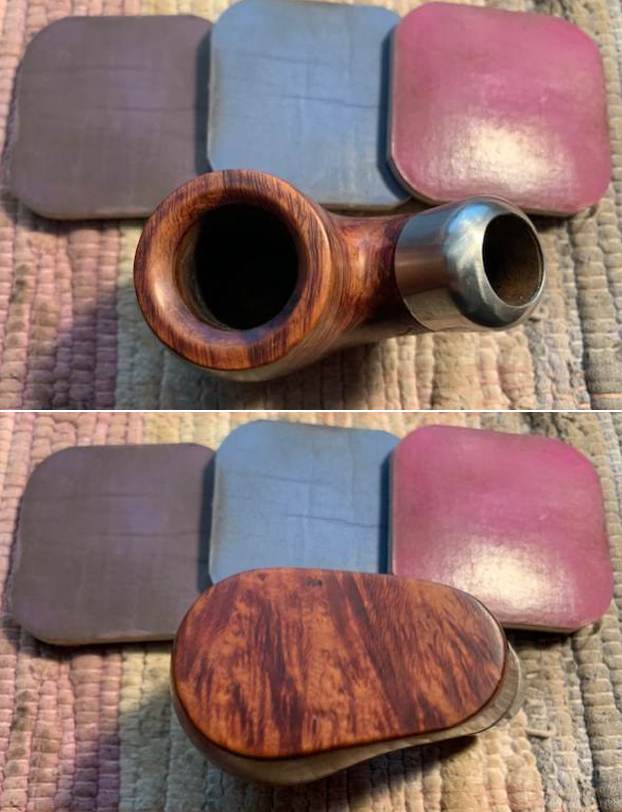
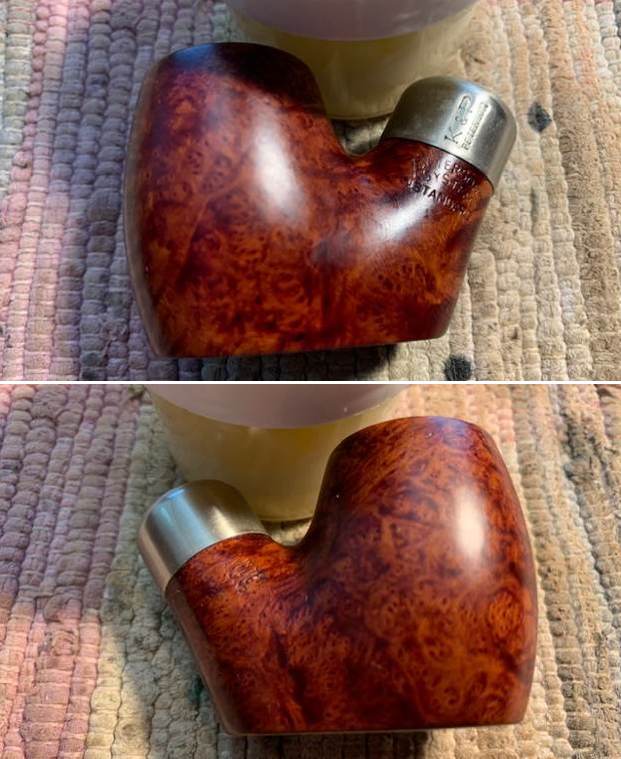
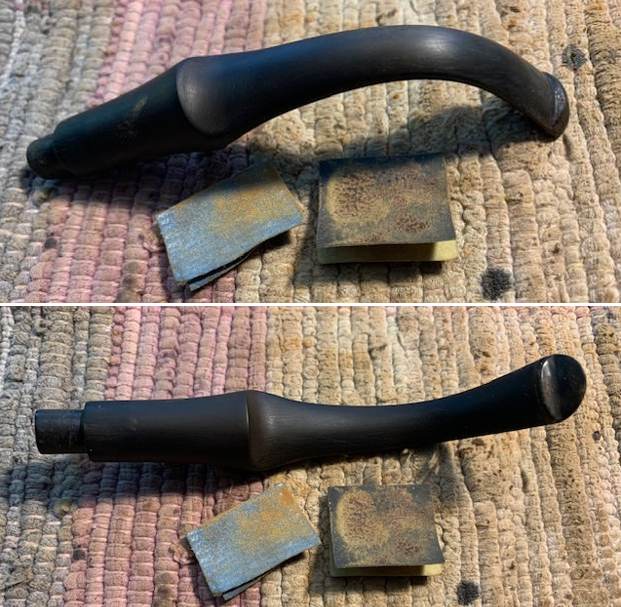
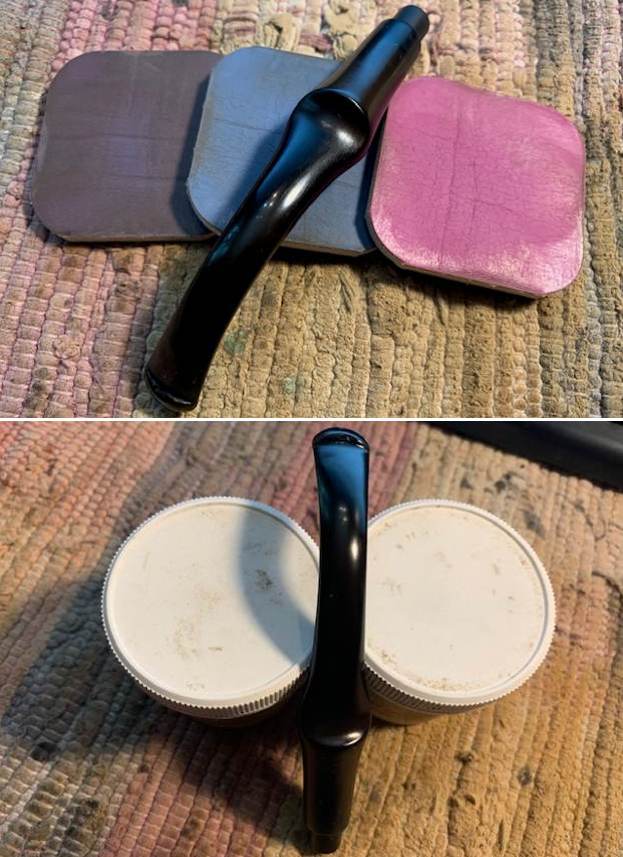
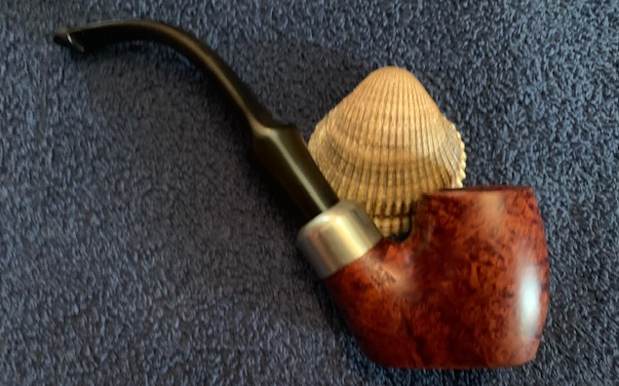
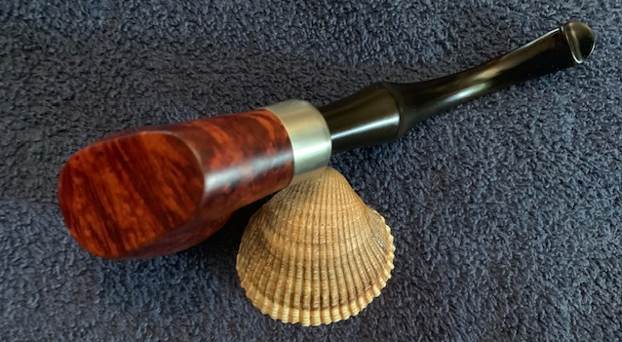
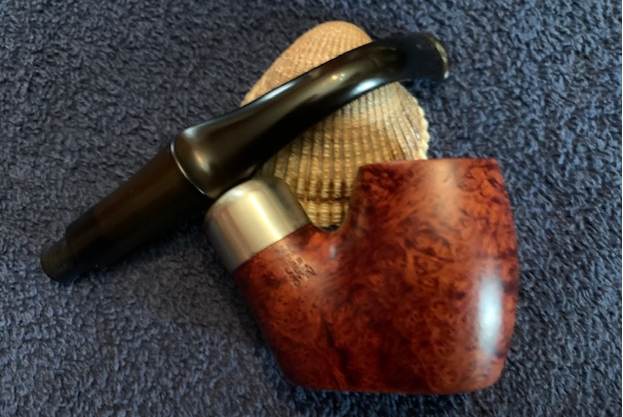
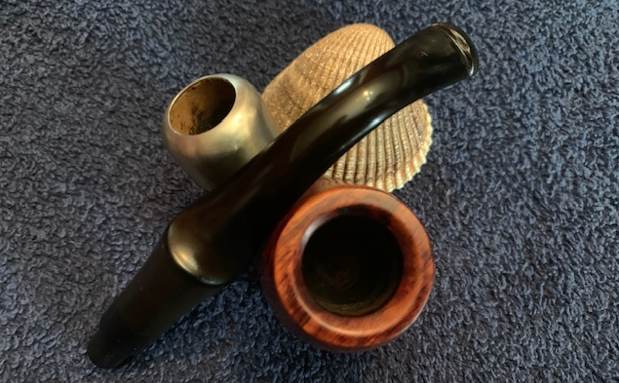
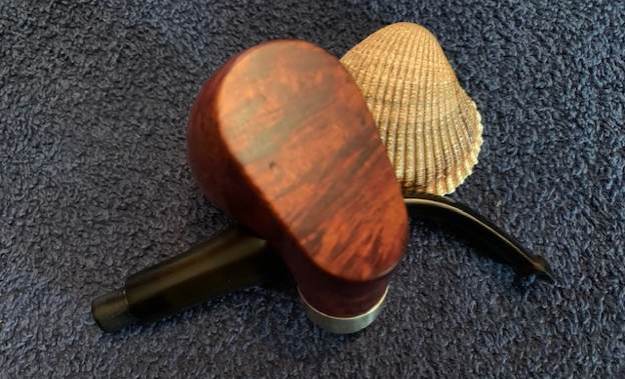
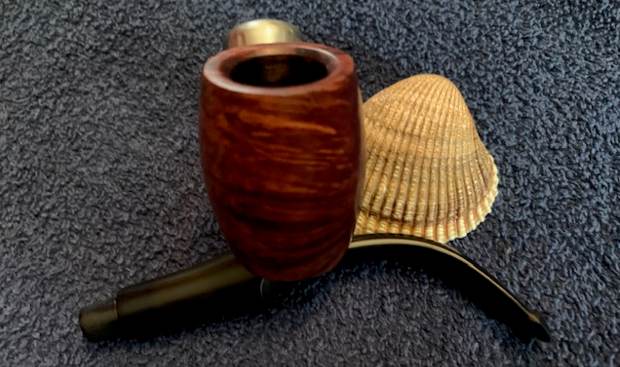
We picked this older Peterson’s System Standard purchased from a seller on 11/17/21 in San Marcos, Texas, USA. It was stamped on the left side of the shank and read Peterson’s [over] System [over] Standard. On the right side it is stamped and reads Made in the Republic of Ireland (three lines) with the shape number 314 underneath. The pipe was another tired old workhorse with lots of grime ground into the finish and a thick cake in the bowl. There was a heavy lava over flow on the rim top and some burn damage on the left front and side of the top and edges. The nickel ferrule was tired by undamaged. The sump and mortise were black with tars and oils. The stem was lightly oxidized and a lot of heavy calcification build up on the P-lip button and underside. There were some tooth marks and chatter on both sides just ahead of the button. Jeff took these photos before he did his clean up work to give an idea of the condition of the pipe. Jeff captured the thick cake in the bowl and the lava overflow onto the rim top in his photo below. There really was no way of knowing what the edges looked like under the thick cake and lava. You can also see the lava flowing down the sides of the bowl in the photos. The burn marks on the left side are also visible in the photo. The stem surface appears to have a lot of tooth chatter and marks but perhaps the calcification and grime on the bowl protected it a bit. There is also some oxidation. He took photos of the sides and the heel of the bowl to show the interesting grain patterns in the briar. It was quite beautiful. He took photos of the stamping on the sides of the shank and on the ferrule and stem. It is readable but faint in places. The stamping on the nickel ferrule is very clear and readable. I remembered that Paresh had restored a Peterson’s System Standard (his was a 314) earlier this year and as usual had done good work on the research. I turned to his blog and read through his work on the pipe (https://rebornpipes.com/2021/07/24/helping-a-fellow-piper-with-his-dream-pipea-petersons-system-pipe/). I quote below from the section on his blog regarding the dating of the pipe.

While dating a Peterson’s pipe, I always fall back to my under mentioned favorite site; http://thepetersonpipeproject.blogspot.com/2007/07/dating-peterons-pipes.html

I quote from the above site.

Stamping of Bowl:

During the years of Kapp and Peterson’s business operations, the country of Ireland has undergone several name changes and K&P’s stamping on their pipes reflects these changes. Knowing these changes, a Peterson pipe can be roughly dated and placed in “eras.”

  • The Republic Era is from 1949 until the present. The Republic of Ireland was formed on 17 April 1949. From 1949 to present the stamp for this era is “Made in the Republic of Ireland” in a block format generally in three lines but two lines have been used with or without Republic being abbreviated.

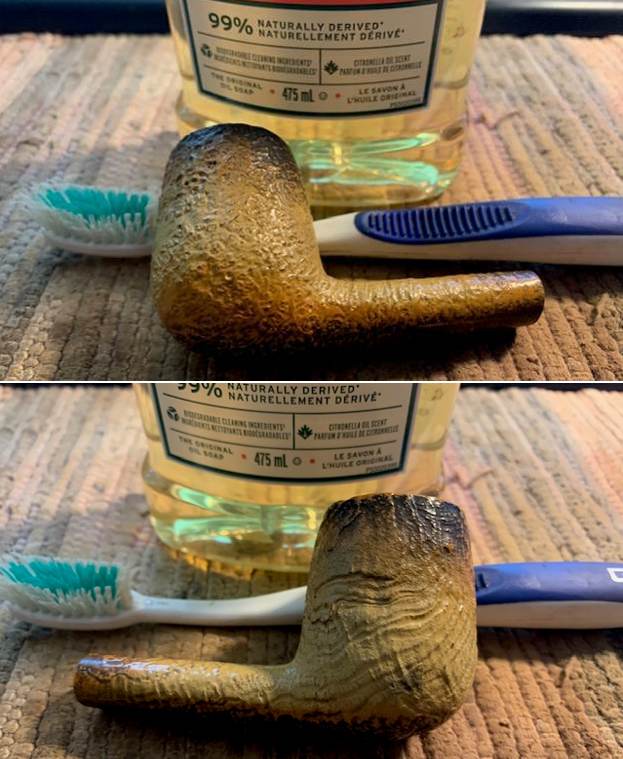
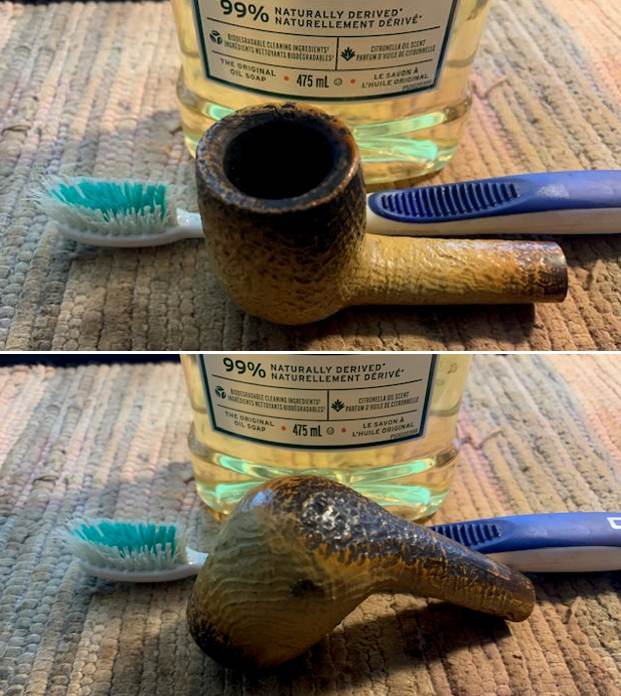
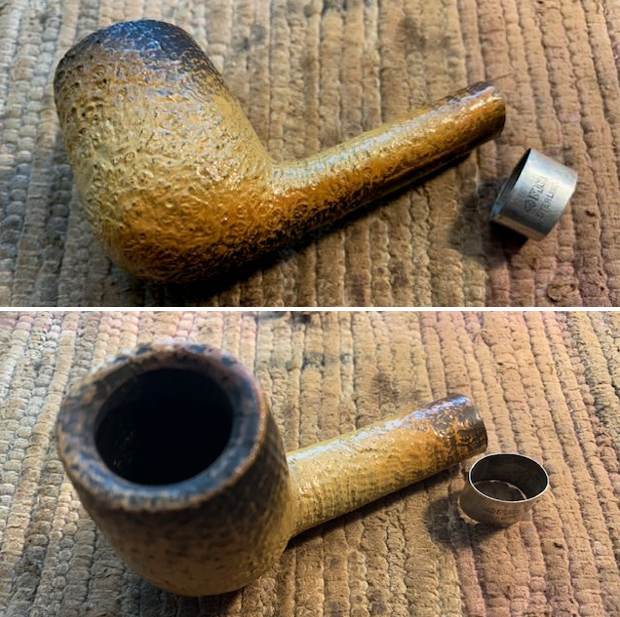
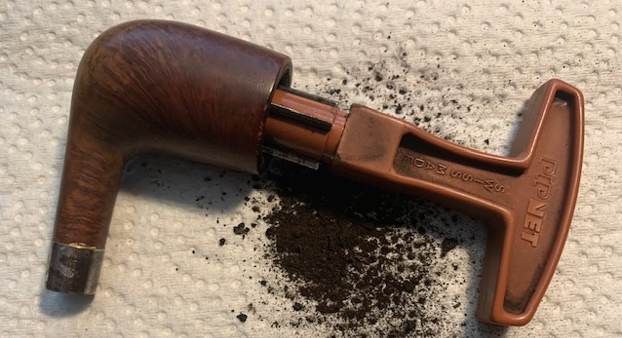
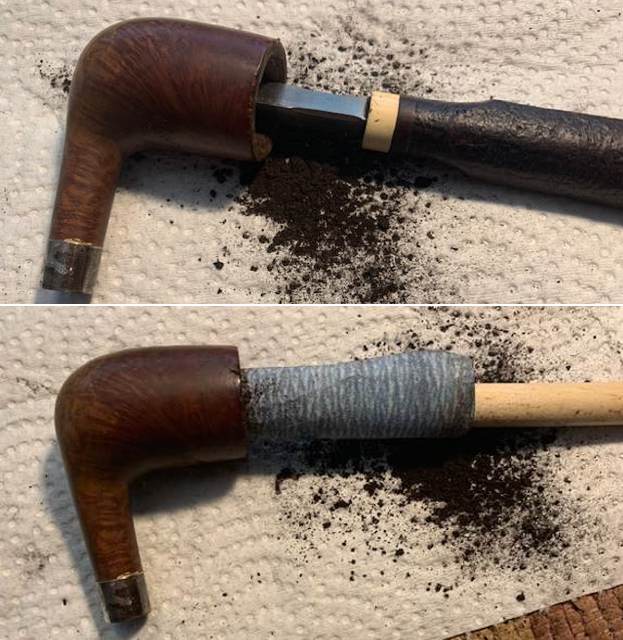
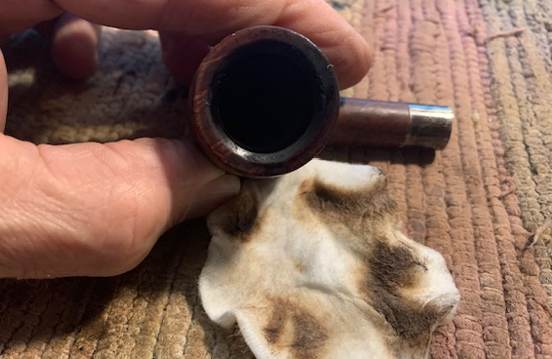
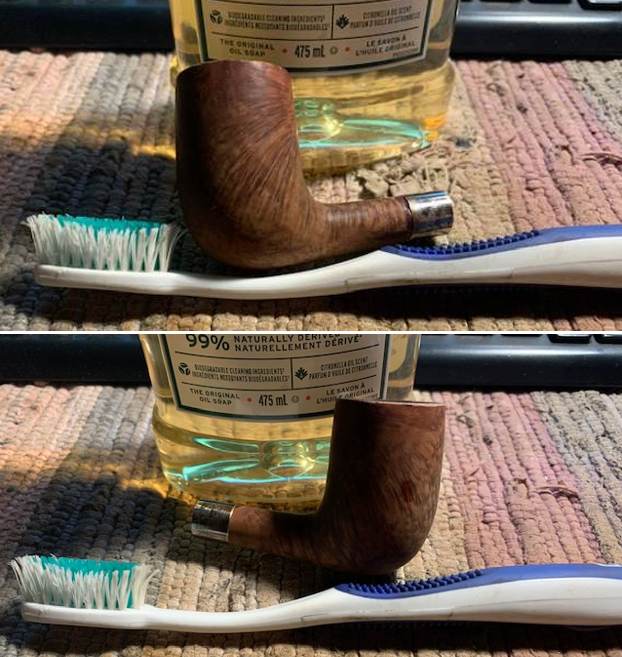
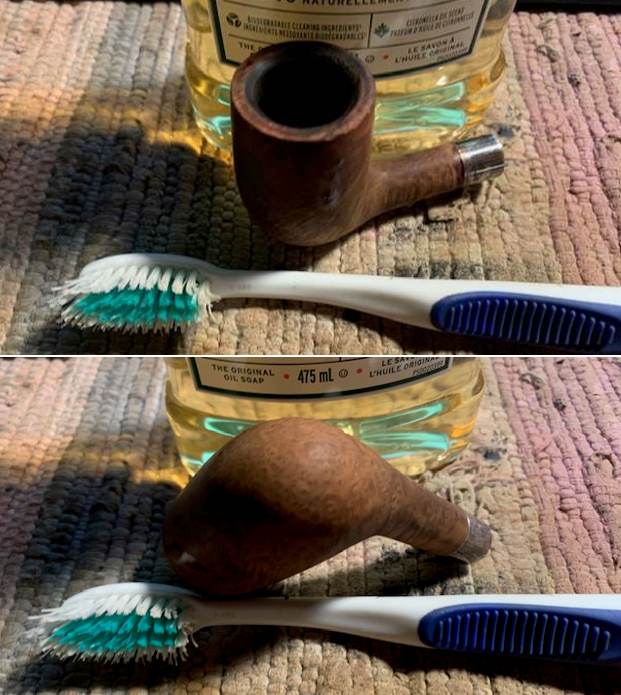
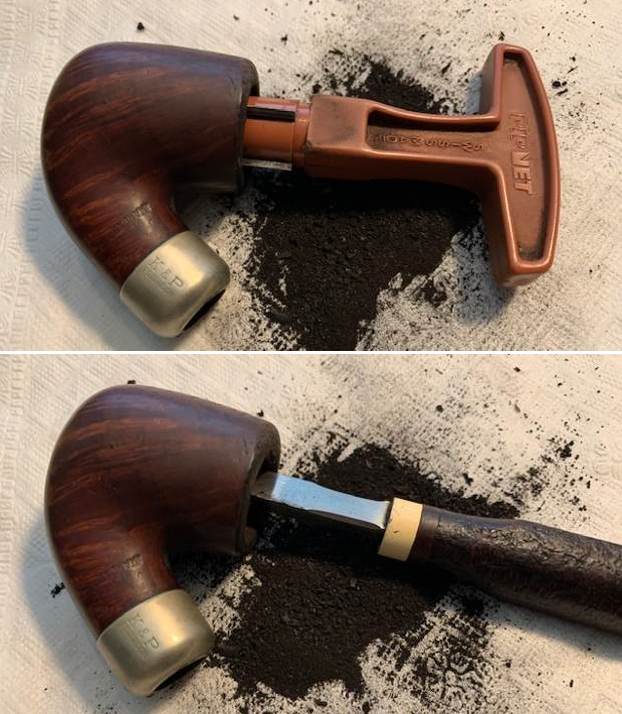
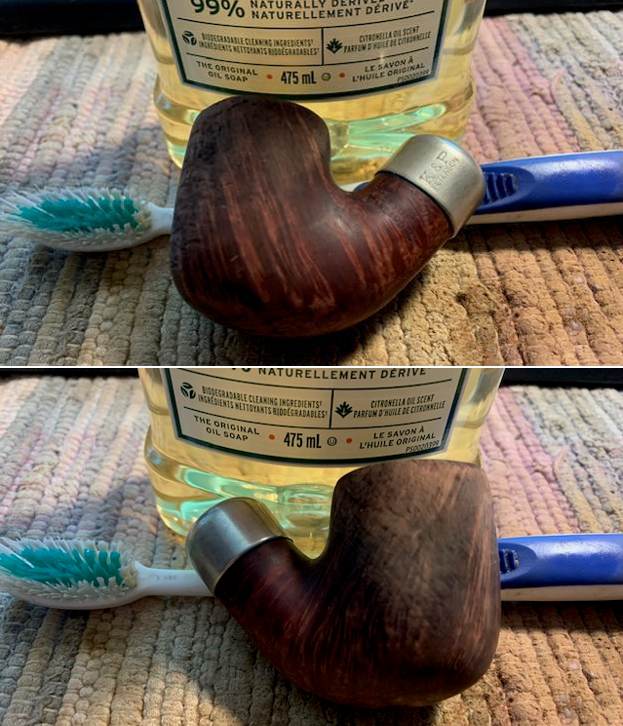
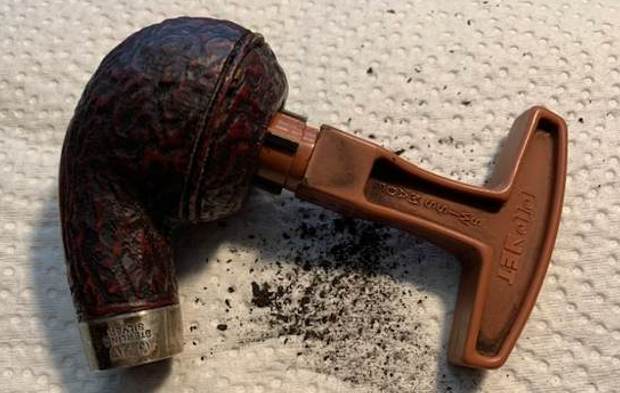
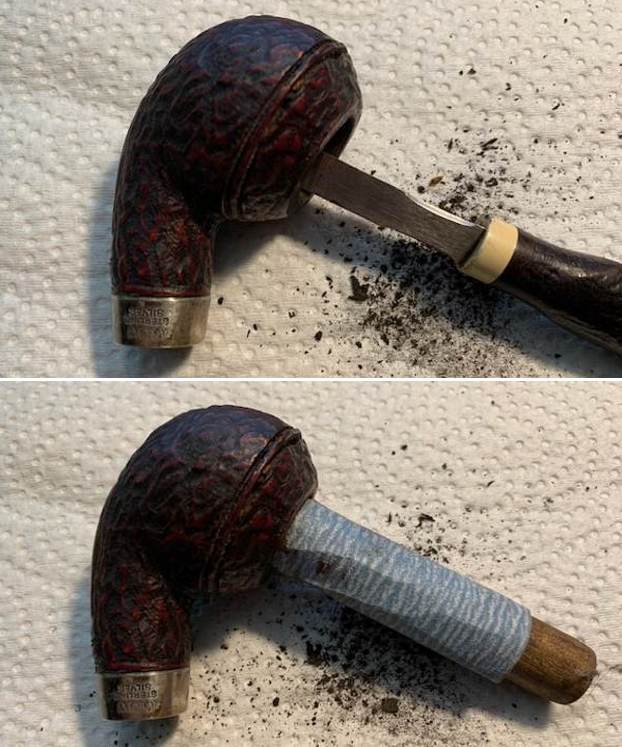
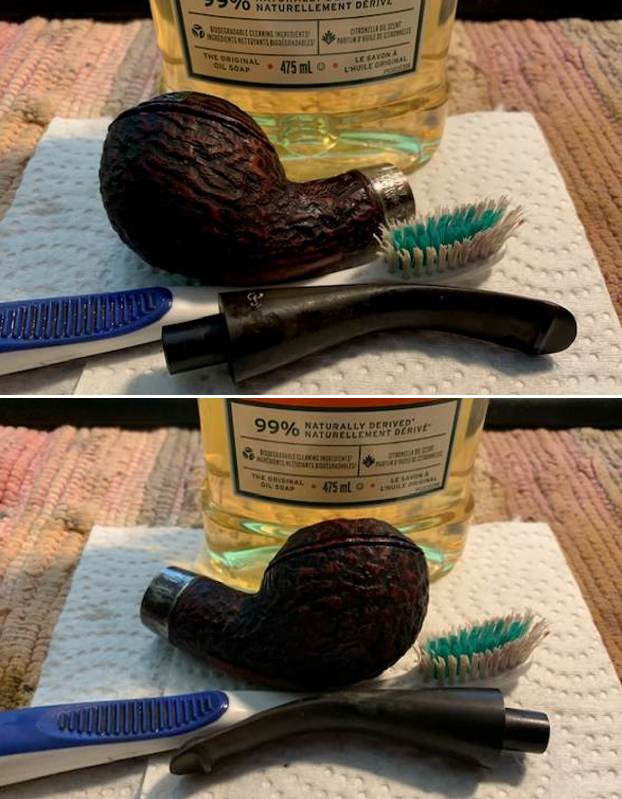
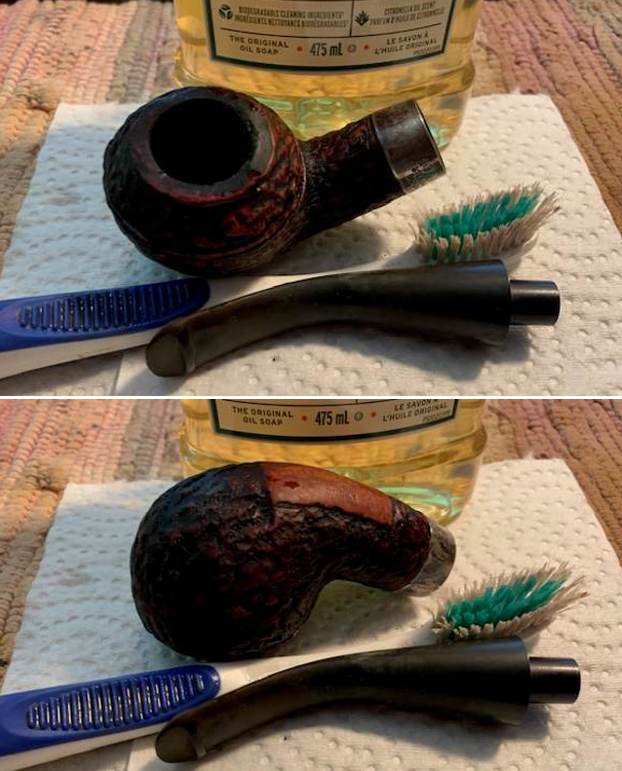
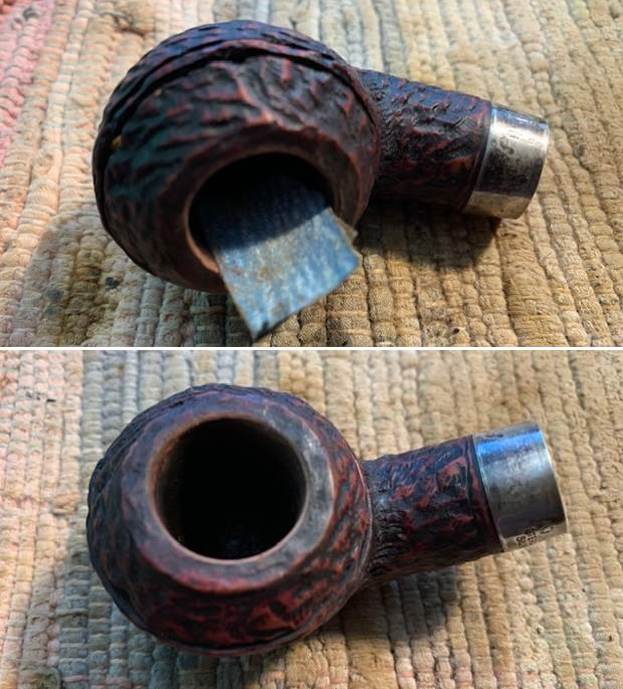
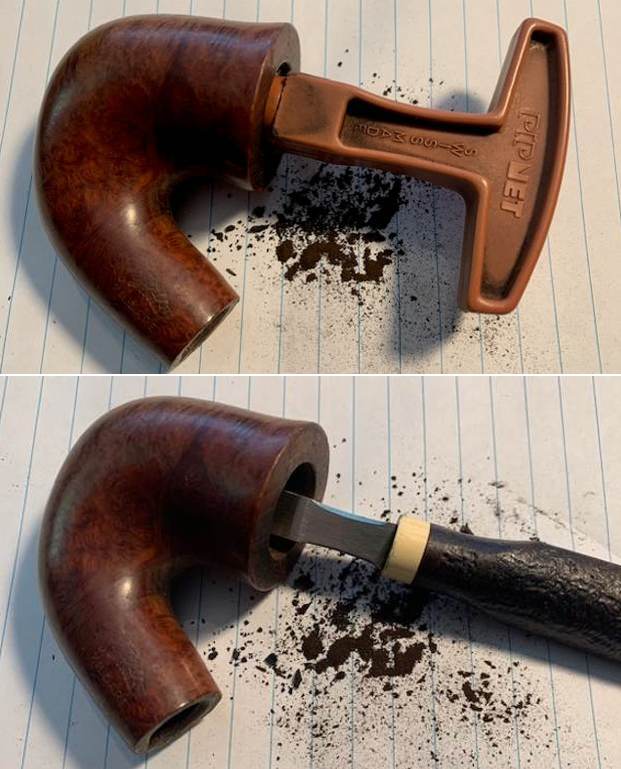
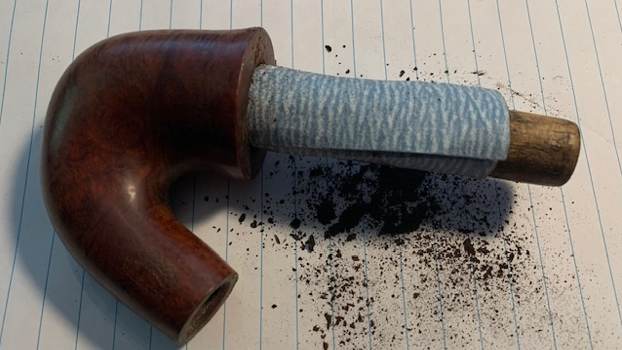
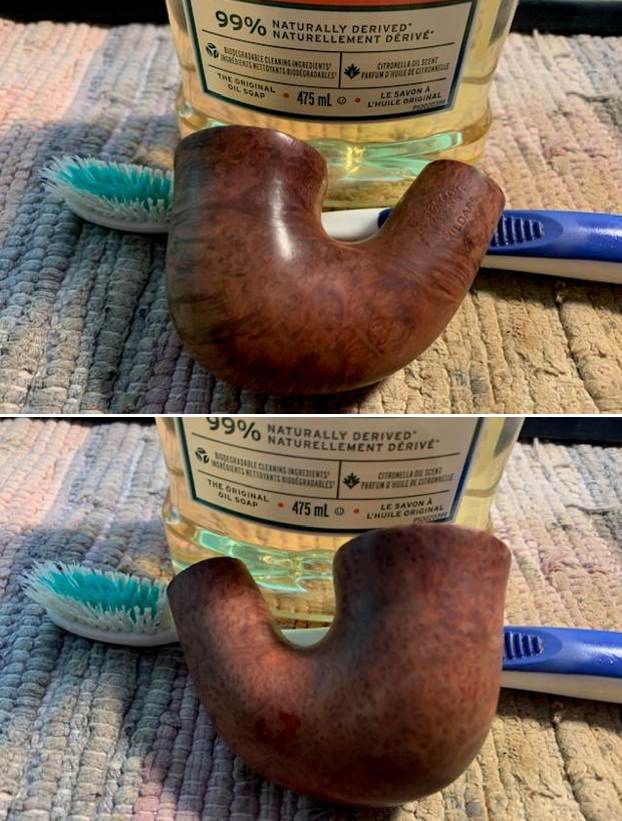
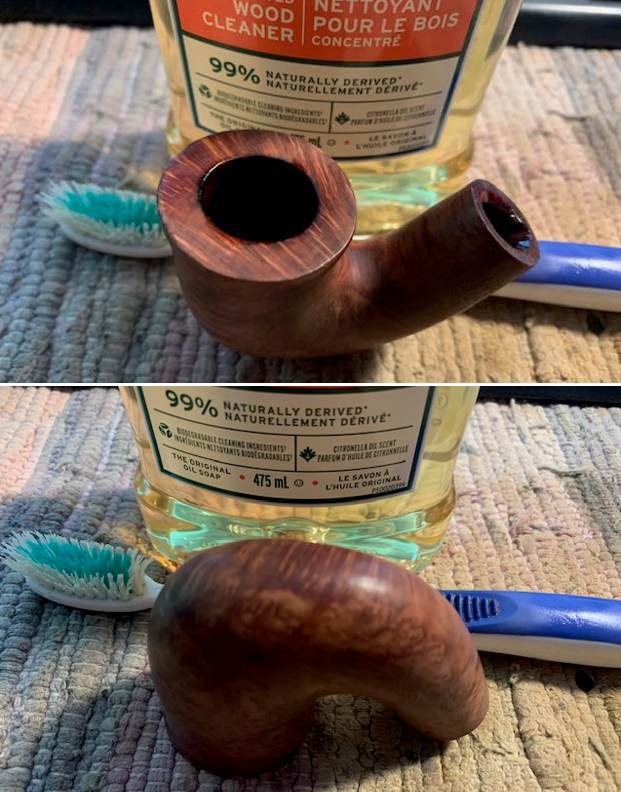
With that information at hand I turned to work on the pipe itself. Jeff had thoroughly cleaned up the pipe. He reamed the pipe with a PipNet Pipe Reamer and cleaned up the remnants with a Savinelli Fitsall Pipe Knife.  He scrubbed the bowl with undiluted Murphy’s Oil Soap with a tooth brush. He rinsed it under running warm water to remove the soap and grime. He cleaned out the inside of the shank and the airway in the stem with alcohol, cotton swabs and pipe cleaners. He scrubbed the exterior of the stem with Soft Scrub to remove as much of the oxidation as possible. He soaked the stem in Before & After Deoxidizer and rinsed it off with warm water. I took photos of the pipe before I started my work on it. (You can see the burn damage on the left edge mid bowl.) I took photos of the rim top and bowl as well as the stem to give a sense of the condition of both. The rim top had some scratching on the top and damage to the outer edge and rim top on the side. The stem cleaned up well and the tooth marks on the top and underside ahead of the button are light and should clean up easily.I took photos of the stamping on the shank sides. The are clear and readable as noted above. There is some faintness on parts of the stamping but it is still readable.I took the stem out of the shank and took a photo of the overall look of the pipe. I decided to start my work on the pipe by addressing the damage on the outer left edge of the bowl and the rim top.  I lightly topped the bowl with 220 grit sandpaper on a topping board. I wiped the top and edges down with a damp cloth and the rim top damage and burn marks on the outer edges were gone.I polished the top with 400 grit wet dry sandpaper to prepare it for staining. I stained the rim top and edges with a Walnut stain pen. I let it dry and repeated it until the stain matched.I polished the briar with micromesh sanding pads – dry sanding with 1500-12000 grit pads. I wiped the bowl down after each pad with a damp cloth. I rubbed the bowl down with Before & After Restoration Balm. I worked it into the surface of the bowl sides and shank with my fingertips. The product works to clean, enliven and protect the briar. I let the balm sit for a little while and then buffed with a cotton cloth to raise the shine. I sanded the tooth marks and chatter smooth with a folded piece of 220 grit sandpaper to begin blending them into the stem surface. I started the polishing with some 400 grit wet dry sandpaper.I set the bowl aside and turned to work on the stem. I polished the stem with micromesh sanding pads – 1500-12000 grit pads. I wiped it down with Obsidian Oil after each sanding pad. I used Before & After Pipe Polish – both Fine and Extra Fine to further polish the stem. This Republic Era Peterson’s System Standard 314 Bent Billiard with a vulcanite stem is a great looking pipe now that it has been restored. The beautiful grain that shines through the polished finish is stunning. As the pipe is smoked the patina should darken and look even better. I put the stem back on the bowl and carefully buffed the pipe with Blue Diamond on the buffing wheel. I gave the bowl and the stem multiple coats of carnauba wax on the buffing wheel and followed that by buffing the entire pipe with a clean buffing pad. I hand buffed the pipe with a microfiber cloth to deepen the shine. The finished Peterson’s System Standard 314 fits nicely in the hand and feels great. Give the finished pipe a look in the photos below. The dimensions of the pipe are Length: 5 ½ inches, Height: 1 ¾ inches, Outside diameter of the bowl: 1 inch, Chamber diameter: ¾ of an inch. The weight of the pipe is 41 grams/1.41 ounces. I will soon be adding it to the rebornpipe store in the Irish Pipe Makers Section. If you are interested in this pipe send me a message or an email. Thanks for reading this blog and my reflections on the pipe while I worked on it. There are many more to come!

New Life for a Worn and Tired Republic Era Peterson’s System Standard 303


Blog by Steve Laug

We picked this older Peterson’s System Standard on a Facebook auction on 02/02/22 from Cottage Grove, Minnesota, USA. It was stamped on the left side of the shank and read Peterson’s [over] System [over] Standard. On the right side it is stamped and reads Made in the Republic of Ireland (three lines) with the shape number 303 underneath. The pipe was a tired old workhorse with lots of grime ground into the finish and a thick cake in the bowl. There was a heavy lava over flow on the rim top and some serious burn damage on the right front of the top and edges from repeated burning with a flame lighter. The nickel ferrule was tired but undamaged and stamped K&P [over] Peterson. The sump and mortise were black with tars and oils. The stem was a mess with oxidation and a lot of heavy calcification build up on the P-lip button and underside. There were some light tooth marks and chatter on both sides just ahead of the button. Jeff took these photos before he did his clean up work to give an idea of the condition of the pipe. Jeff captured the thick cake in the bowl and the heavy lava overflow onto the rim top in his photos. It looks like there is some damage to the inner edge on the right front of the bowl. There really was no way of knowing for sure what the edges looked like under the thick cake. You can also see the lava flowing down the sides of the bowl in the photos. The stem surface appears to have a lot of tooth chatter and marks but perhaps the calcification and grime on the bowl protected it a bit. There is also some oxidation.He took photos of the sides and the heel of the bowl to show the interesting grain patterns in the briar. It was quite beautiful. He took photos of the stamping on the sides of the shank and on the ferrule and stem. It is readable but faint in places. I remembered that Paresh had restored a Peterson’s System Standard (his was a 314) earlier this year and as usual had done good work on the research. I turned to his blog and read through his work on the pipe (https://rebornpipes.com/2021/07/24/helping-a-fellow-piper-with-his-dream-pipea-petersons-system-pipe/). I quote below from the section on his blog regarding the dating of the pipe.

While dating a Peterson’s pipe, I always fall back to my under mentioned favorite site; http://thepetersonpipeproject.blogspot.com/2007/07/dating-peterons-pipes.html

I quote from the above site.

Stamping of Bowl:

During the years of Kapp and Peterson’s business operations, the country of Ireland has undergone several name changes and K&P’s stamping on their pipes reflects these changes. Knowing these changes, a Peterson pipe can be roughly dated and placed in “eras.”

  • The Republic Era is from 1949 until the present. The Republic of Ireland was formed on 17 April 1949. From 1949 to present the stamp for this era is “Made in the Republic of Ireland” in a block format generally in three lines but two lines have been used with or without Republic being abbreviated.

With that information at hand I turned to work on the pipe itself. Jeff had thoroughly cleaned up the pipe. He reamed the pipe with a PipNet Pipe Reamer and cleaned up the remnants with a Savinelli Fitsall Pipe Knife.  He scrubbed the bowl with undiluted Murphy’s Oil Soap with a tooth brush. He rinsed it under running warm water to remove the soap and grime. He cleaned out the inside of the shank and the airway in the stem with alcohol, cotton swabs and pipe cleaners. He scrubbed the exterior of the stem with Soft Scrubb to remove as much of the oxidation as possible. He soaked the stem in Before & After Deoxidizer and rinsed it off with warm water. I took photos of the pipe before I started my work on it. (You can see the burn damage on the right top edge of the bowl.) I took photos of the rim top and bowl as well as the stem to give a sense of the condition of both. The rim top had some scratching on the top and damage to the inner edge and rim top on the right front as I had guessed when I saw the photos before the cleanup. The stem cleaned up well and the tooth marks on the top and underside ahead of the button are light and should clean up easily.I took photos of the stamping on the shank sides. The are clear and readable as noted above. There is some faintness on parts of the stamping but it is still readable.I took the stem out of the shank and took a photo of the overall look of the pipe. I decided to start my work on the pipe by addressing the damage on the inside edge of the bowl and the rim top.  I topped the bowl with 220 grit sandpaper on a topping board. I then used a wooden ball and 220 grit sandpaper to give the inner edge a slight bevel to remove the burn damage on the right front. I wiped the top and edges down with a damp cloth and the rim top damage and burn marks on the outer edges were gone. I polished the briar with micromesh sanding pads – dry sanding with 1500-12000 grit pads. I wiped the bowl down after each pad with a damp cloth. I did not need to restain the rim top and edge because with polishing the match is very good. I rubbed the bowl down with Before & After Restoration Balm. I worked it into the surface of the bowl sides and shank with my fingertips. The product works to clean, enliven and protect the briar. I let the balm sit for a little while and then buffed with a cotton cloth to raise the shine. I sanded the repairs smooth with a folded piece of 220 grit sandpaper to begin blending them into the stem surface. I started the polishing with some 400 grit wet dry sandpaper.I set the bowl aside and turned to work on the stem. I polished the stem with micromesh sanding pads – 1500-12000 grit pads. I wiped it down with Obsidian Oil after each sanding pad. I used Before & After Pipe Polish – both Fine and Extra Fine to further polish the stem. I touched up the “P” logo on the stem with white acrylic fingernail polish. I worked it into the tails on the “P” with a tooth pick and scraped off the excess with my fingernail. I used a worn piece of 1500 and 1800 grit micromesh to polish off the excess, then buffed it with a soft cloth. This Republic Era Peterson’s System Standard 303 Bent Apple with a vulcanite stem is a great looking pipe now that it has been restored. The beautiful grain that shines through the polished finish is stunning. As the pipe is smoked the patina should darken and look even better. I put the stem back on the bowl and carefully buffed the pipe with Blue Diamond on the buffing wheel. I gave the bowl and the stem multiple coats of carnauba wax on the buffing wheel and followed that by buffing the entire pipe with a clean buffing pad. I hand buffed the pipe with a microfiber cloth to deepen the shine. The finished Peterson’s System Standard 303 Apple fits nicely in the hand and feels great. Give the finished pipe a look in the photos below. The dimensions of the pipe are Length: 5 ½ inches, Height: 1 ½ inches, Outside diameter of the bowl: 1 ¼ inches, Chamber diameter: ¾ of an inch. The weight of the pipe is 49 grams/1.73 ounces. I will soon be adding it to the rebornpipe store in the Irish Pipe Makers Section. If you are interested in this pipe send me a message or an email. Thanks for reading this blog and my reflections on the pipe while I worked on it. There are many more to come!

Restoring and Restemming a Made in Ireland Shamrock 106 Prince


Blog by Steve Laug

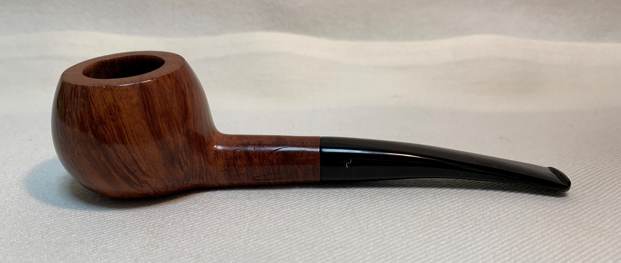
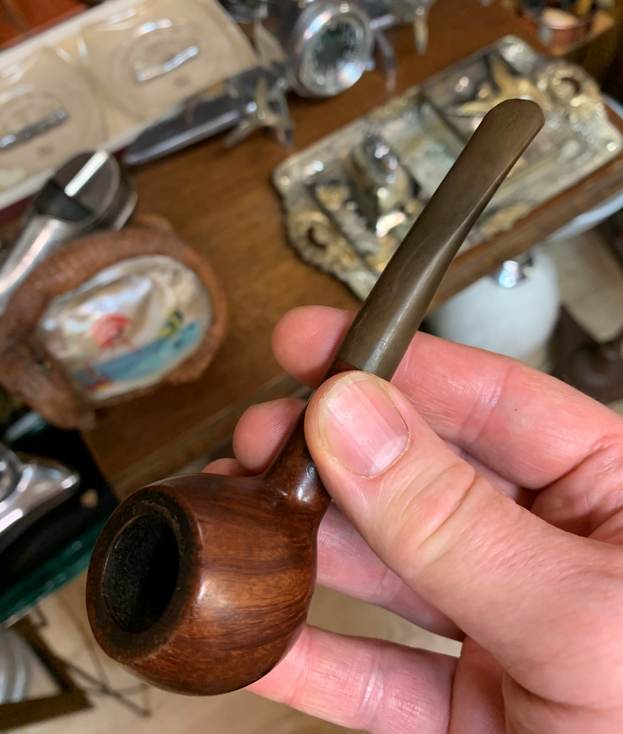
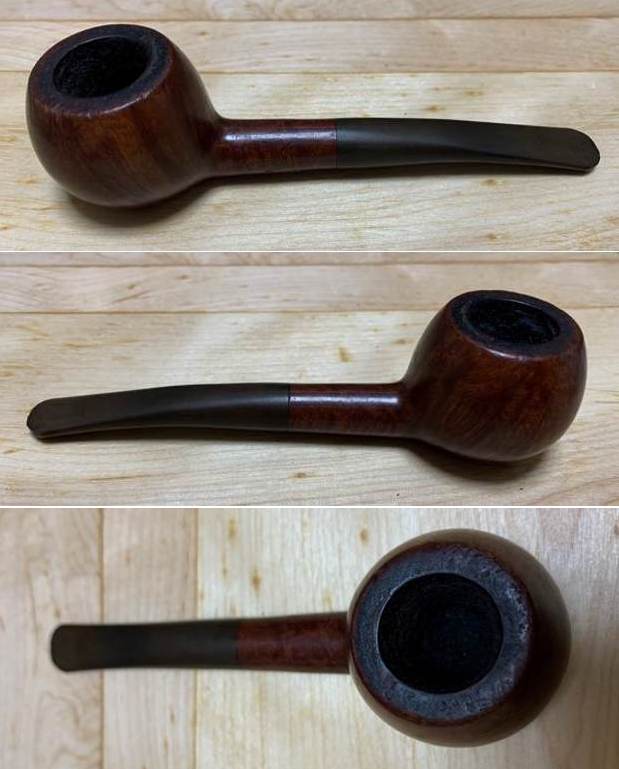
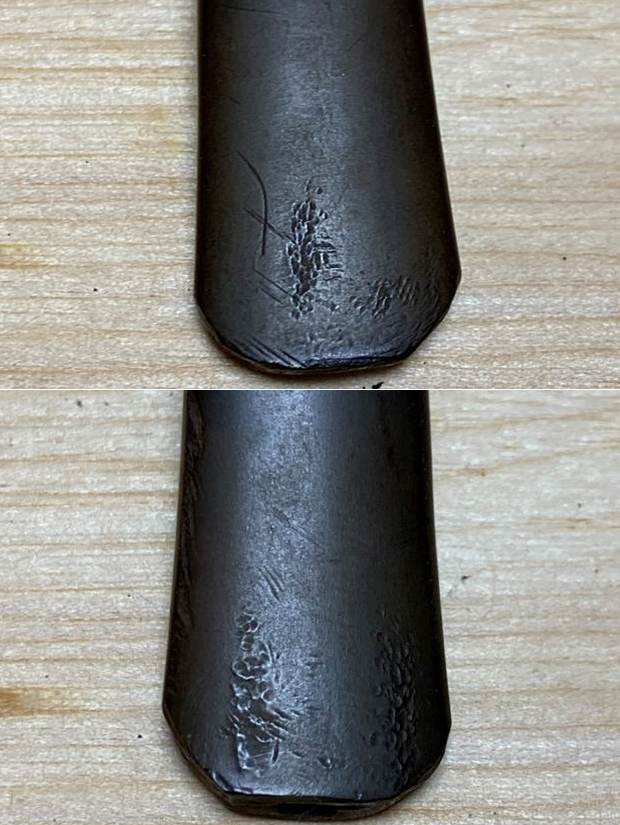
The next pipe was a mess and one that obviously had been “ridden hard and put away wet”. The finish and condition was abysmal. It was definitely a stranger to any cleaning! This one is a smooth Prince that has a rich coloured finish around the bowl sides and shank under the grit and grime of years. This pipe was purchased from an antique mall on 08/27/21 in Bozeman, Montana, USA. The finish is almost bland looking it is so dirty it was hard to know what to expect once it was cleaned. It was stamped on the  left side of the shank and read SHAMROCK. It was stamped to the right of the shank and reads MADE IN IRELAND (in a circle) with the shape number 106 lower and next to the bowl. It was filthy when Jeff brought it to the table. There was a thick cake in the bowl and lava on the rim top and the inner edge of the bowl. There were nicks in the outer edge all the way around. The replacement stem was chewed and damaged on the top and underside on and near the button. It did not appear to be vulcanite. Jeff took photos of the pipe before his cleanup work. Jeff took photos of the rim top and stem to show the general condition of the pipe. The bowl is heavily caked so it is hard to know the condition of the edges under the lava overflow. The stem was a replacement and had been heavily gnawed. The way the bit marks are on the surface of the stem makes me think that it is not vulcanite. The pipe is a real mess and I would probably have to restem the bowl. Jeff took photos of the bowl sides and heel to show the grain that was around this bowl. You can see the sandpits and nicks in the briar in the photos below. Even so, it is a nice looking pipe. He took a photo of the left side of the shank to show the stamping. The stamping is faint but readable in the photo below and is as noted above. He did not take a photo of the circular stamp Made In Ireland and the shape number on the right side of the shank. I will try to capture that later in the blog.I am including the link to the Pipedia’s article on Peterson pipes. It is a great read in terms of the history of the brand (https://pipedia.org/wiki/Peterson).

I turned to “The Peterson Pipe” by Mark Irwin and Gary Malmberg to get some background on the Peterson’s Shamrock Pipe. On page 312 it had the following information.

Shamrock (c1941-2009) Originally stamped SHAMROCK with no brand name, an inexpensive line first described in George Yale (New York) mail order booklet in 1941, imported by Rogers Import. The line was actively promoted beginning in ’45, aggressively promoted in US by Rogers from early ‘50s when they registered the Shamrock logo with US Patent Office, claiming propriety since ’38. Over the years offered with P-lip or fishtail mouthpiece, with or without nickel band, with or without Shamrock logo on the band, with or without S stamped in white or later in gold on mouthpiece. Appearing in 2008 as unstained smooth and rustic, fishtail mouthpiece with gold impressed P on the stem. COMS of MADE IN over IRELAND (C1945-1965), MADE IN IRELAND forming a circle (c1945-1965), “A PETERSON’S PRODUCT” over MADE IN IRELAND (c1945-1965), MADE IN THE over REPUBLIC over OF IRELAND9c1948-1998). Model is always difficult or impossible to date.

Judging from the description above, the pipe I am working on is stamped with the stamp noted in red above. Made in Ireland in a circle which narrows the date to between approximately 1945-1965. It is just stamped SHAMROCK with no brand name and no stamping on the stem.

I was utterly surprised when I took this pipe out of the box and compared it to the before photos. Jeff had done a great job cleaning up the pipe as usual. He reamed the pipe with a PipNet reamer and cut back the cake back to the bare briar. He cleaned up the walls with a Savinelli Fitsall Pipe Knife. Surprisingly the walls looked unscathed from the heavy cake. He scrubbed the interior of the bowl and shank with pipe cleaners, cotton swabs and alcohol to remove the tars and oils. He scrubbed the exterior of the pipe with Murphy’s Oil Soap and a tooth brush to remove the grime from the finish. He worked on the rim top lava and darkening with the soap and tooth brush. He scrubbed the inside of the stem with alcohol and pipe cleaners. He scrubbed the exterior of the stem with Soft Scrub and then soaked it in Briarville’s Deoxidizer. He washed it off with warm water to remove the Deoxidizer. When I examined the stem I knew it would need to be replaced. The pipe looked far better when it arrived. The cleaned up rim top revealed very damaged inner and outer edges and the top. There were nicks in the surface of the rim and the edges. I took some close up photos of the rim top and edges to show how well it had cleaned up and the damage to the edges around the bowl. I also took close up photos of the stem to show the tooth marks on the surface near and on the button itself. The stem would be replaced. You can see the deep tooth marks and damage to the button edges on both sides. The diameter of the stem is smaller than that of the shank as can be seen in the photos.I took photos of the stamping on the sides of the shank. It is faint but still readable. It reads as noted above.I removed the stem and took a photo of the pipe to have a look at the parts and overall look.I removed the stem from the shank and went through my stems to find one that matched the length and shape of the previous stem. I was pleased to see that it was slightly larger in diameter than the previous one. The tenon was almost the same size as the other one. It was bent more than the previous one but once straightened out it was only 1/8 of an inch shorter. I thought it would look very good.I used a small folded piece of 220 grit sandpaper to reduce the tenon enough that it would fit the mortise on the bowl. It did not take too much work and it fit perfectly. The diameter of the stem was slightly larger than the shank and would need some work to fit it properly. I took photos of the pipe with its new stem. I needed to reduce the diameter of the stem and also straighten it a bit to fit correctly. I used a flat file to take off as much of the excess as I could without damaging the briar ahead of it.I cleaned up the fit of the stem to the shank with folded 220 grit sandpaper. I worked over the flow of the stem into the shank to make the transition smooth. It was looking very good. I also heated the stem with the flame of a lighter to soften the vulcanite and straighten it. I repaired the damaged spots on the rim top with briar dust and clear superglue. Once it cured I topped the bowl on a topping board with 220 grit sandpaper. I used a folded piece of 220 grit sandpaper to clean up the inside edge of the bowl and smooth out the damage. I gave it a slight bevel to minimize the damage. I polished the briar with micromesh sanding pads – dry sanding with 1500-12000 grit sanding pads. I wiped the bowl down with a damp cloth after each sanding pad. I restained the rim top with a Walnut and a Maple stain pen to match it to the surrounding bowl colour. It looked pretty good. It will blend well once the pipe is polished and buffed. I worked some Before & After Restoration Balm into the surface of the briar with my fingertips to clean, enliven and protect the briar. I let the balm sit for 15 minutes and then buffed with a cotton cloth to raise the shine. The photos show the bowl at this point in the restoration process. I set the bowl aside and polished the stem with micromesh sanding pads – wet sanding with 1500-12000 grit sanding pads. I wiped it down after each sanding pad with Obsidian Oil. I polished it with Before & After Pipe Stem Polish – both Fine and Extra Fine. I am excited to finish this Older Made in Ireland Shamrock 106 Prince. I put the pipe back together and buffed it with Blue Diamond on the buffing wheel. I gave the bowl and the stem multiple coats of carnauba wax. I hand buffed the pipe with a clean buffing pad to raise the shine. It is fun to see what the polished bowl looks like with beautiful mixed grain all around it, looks great with the new black vulcanite stem. This smooth Classic Shamrock 106 Prince is great looking and the pipe feels great in my hand. It is light and well balanced. Have a look at it with the photos below. The dimensions are Length: 6 inches, Height: 1 ¼ inches, Outside diameter of the bowl: 1 ¼ inches, Chamber diameter: ¾ of an inch. The weight of the pipe is 36 grams/1.27 ounces. It turned out to be a beautiful pipe. I will be putting on the rebornpipes store in the Irish Pipe Makers Section. Thanks for your time and as Paresh says each time – Stay Safe.

Restoring a Republic Era Peterson’s “Kapp-Royal” 69 Bent Billiard


Blog by Steve Laug

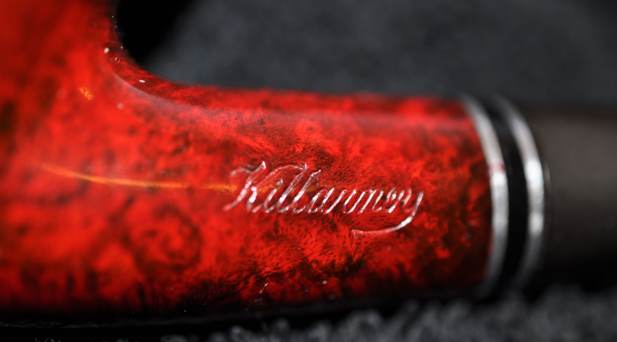
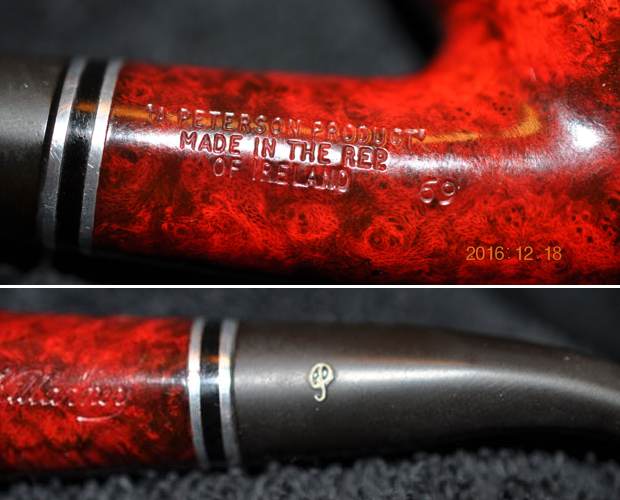
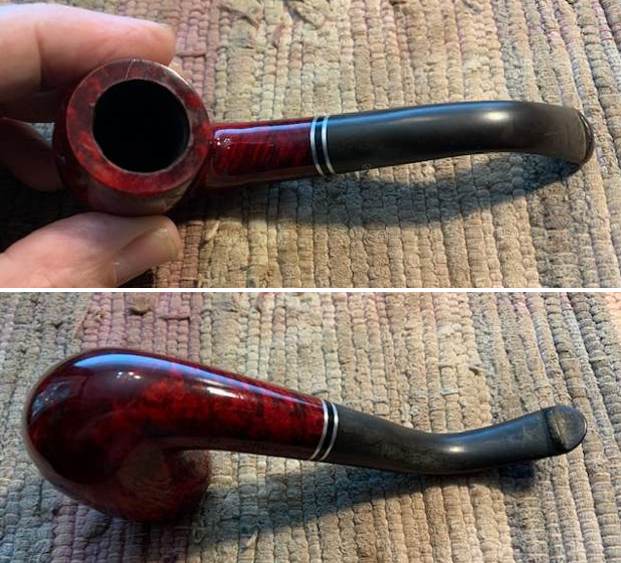
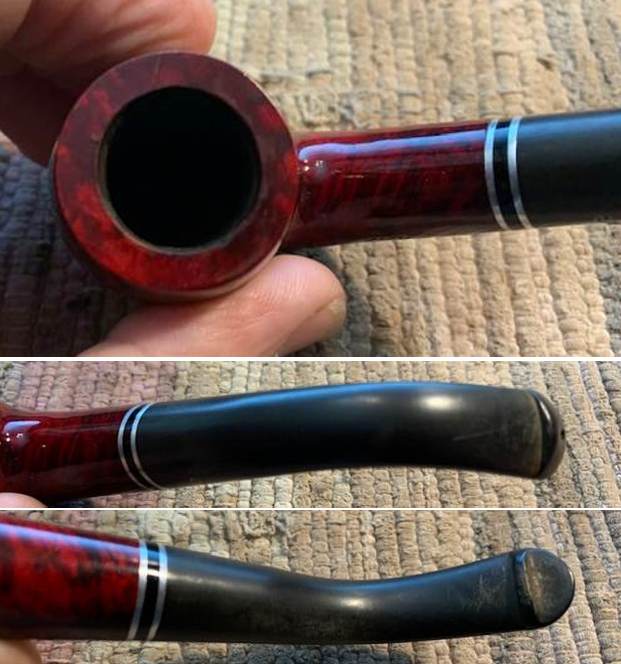
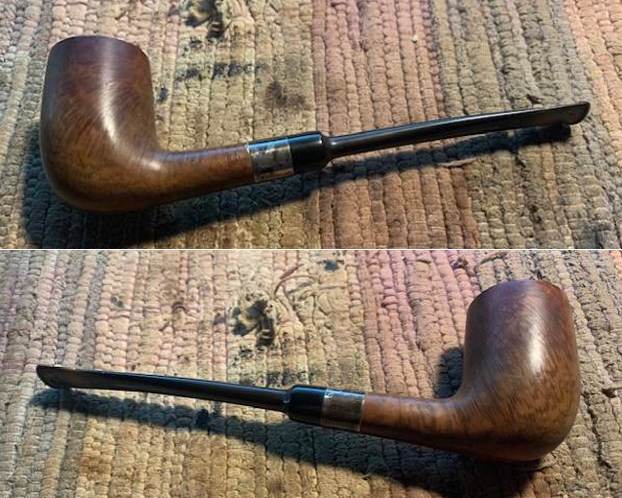
The next pipe was a mess and one that obviously had been “ridden hard and put away wet”. The finish and condition was abysmal. It was definitely a stranger to any cleaning! This one is a smooth Bent Billiard that has a rich coloured finish around the bowl sides and shank under the grit and grime of years. The shank end did not have a ferrule but had a carved finish on the end. This pipe was purchased on 06/17/21 from a fellow in Brazil, Indiana, USA. The finish is almost bland looking it is so dirty it was hard to know what to expect once it was cleaned. It was stamped on the  left side of the shank and read Peterson’s [over] “Kapp-Royal”. It was stamped to the right of the shank and reads MADE IN THE REPUBLIC OF IRELAND (three lines) with the shape number 69 next to the bowl. The underside of the shank was flattened like it is in a Dunmore pipe. It enables the pipe to be a sitter. It was filthy when Jeff brought it to the table. There was a thick cake in the bowl and lava on the back of the rim top and the inner edge of the bowl. The outer edge looked good. The stem was oxidized and had light tooth marks and chatter on the top and underside on and near the button. Jeff took photos of the pipe before his cleanup work. Jeff took photos of the rim top and stem to show the general condition of the pipe. The bowl is heavily caked and there was lava overflow on the back of the rim top and the inner edge. The stem is oxidized, calcified and grimy. It has some tooth marks on the top and underside near and on the surface of the button itself. Jeff took photos of the bowl sides and heel to show the grain that was around this bowl. The grain is quite beautiful around the sides of the bowl and shank. It is a nice looking pipe. He took photos of the sides of the shank to show the stamping. The stamping is readable in the photos below and is as noted above. I am including the link to the Pipedia’s article on Peterson pipes. It is a great read in terms of the history of the brand (https://pipedia.org/wiki/Peterson). There was a short note toward the bottom of the page about the series. It is definitely referring to the newer line that came out later. I quote:

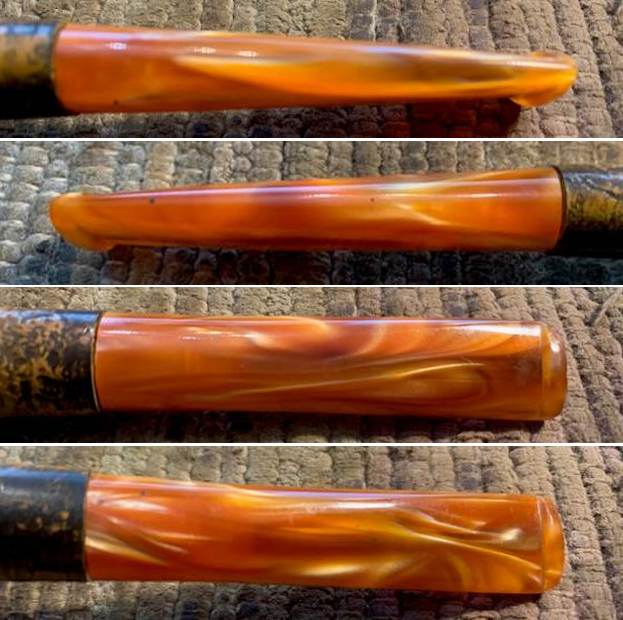
Kapp Royal Series: The Kapp Royal series is a relatively new one, but has a well establish history in Europe. They are a handsome colourful series with a good quality natural stain briar and bright orange Lucite stems and occasionally Cumberland.

I turned to “The Peterson Pipe” by Mark Irwin and Gary Malmberg to get some background on the Peterson’s Kapp-Royal Pipe. On page 306 it had the following information.

Kapp-Royal (1969, 1976-79, c1988, 2004) First appearance  as a line introduced 1969. In 1976-79 Iwan Ries catalog offering identical with non-System Dunmore line. Second appearance in the late eighties as a high-grade Italian market line with briar band inset into the mouthpiece. From c.2004, Italian line available in US as high grade, orange finish, sterling band, amber-colored acrylic fishtail stem or sometimes vulcanite, embedded aluminum P.

Judging from the description above, the pipe I am working on is probably made between 1976-79. It fits the description above in red that says it is “identical with non-System Dunmore line”. The Made in the Republic of Ireland stamp on the right side of the stamp puts it in the Republic Era 1950-1989.

I was utterly surprised when I took this pipe out of the box and compared it to the before photos. Jeff had done a great job cleaning up the pipe as usual. He reamed the pipe with a PipNet reamer and cut back the cake back to the bare briar. He cleaned up the walls with a Savinelli Fitsall Pipe Knife. Surprisingly the walls looked unscathed from the heavy cake. He scrubbed the interior of the bowl and shank with pipe cleaners, cotton swabs and alcohol to remove the tars and oils. He scrubbed the exterior of the pipe with Murphy’s Oil Soap and a tooth brush to remove the grime from the finish. He worked on the rim top lava and darkening with the soap and tooth brush. He scrubbed the inside of the stem with alcohol and pipe cleaners. He scrubbed the exterior of the stem with Soft Scrub and then soaked it in Briarville’s Deoxidizer. He washed it off with warm water to remove the Deoxidizer. The pipe looked far better when it arrived. The cleaned up rim top looked very good around the edges and the top. I took some close up photos of the rim top and edges to show how well it had cleaned up. I also took close up photos of the stem to show the light tooth marks on the surface near and on the button itself.I took photos of the stamping on the sides of the shank. It reads as noted above.I removed the stem and took a photo of the pipe to have a look at the parts and overall look.I started my work on this pipe polishing the briar with micromesh sanding pads – dry sanding with 1500-12000 grit sanding pads. I wiped the bowl down with a damp cloth after each sanding pad. I worked some Before & After Restoration Balm into the surface of the briar with my fingertips to clean, enliven and protect the briar. I let the balm sit for 15 minutes and then buffed with a cotton cloth to raise the shine. The photos show the bowl at this point in the restoration process. I set the bowl aside and worked on the stem. I scrubbed it down with Soft Scrub to deal with the remaining oxidation on the vulcanite. It took a bit of scrubbing but I was able to remove it.I polished the stem with micromesh sanding pads – wet sanding with 1500-12000 grit sanding pads. I wiped it down after each sanding pad with Obsidian Oil. I polished it with Before & After Pipe Stem Polish – both Fine and Extra Fine. I am excited to finish this beautifully grained Peterson’s Kapp-Royal 69 Bent Billiard. I put the pipe back together and buffed it with Blue Diamond on the buffing wheel. I gave the bowl and the stem multiple coats of carnauba wax. I hand buffed the pipe with a clean buffing pad to raise the shine. It is fun to see what the polished bowl looks like with beautiful mixed grain all around it. The polished nickel band is losing some of the plating but it still looks great with the black vulcanite stem. This smooth Classic Peterson’s Kapp-Royal Bent Billiard is great looking and the pipe feels great in my hand. It is light and well balanced. Have a look at it with the photos below. The dimensions are Length: 5 ½ inches, Height: 1 ¾ inches, Outside diameter of the bowl: 1 ¼ inches, Chamber diameter: ¾ of an inch. The weight of the pipe is 43 grams/1.52 ounces. It turned out to be a beautiful pipe. I will be putting on the rebornpipes store in the Irish Pipe Makers Section. Thanks for your time and as Paresh says each time – Stay Safe.

Restoring a Made in Ireland Shamrock +69 Bent Billiard


Blog by Steve Laug

The next pipe was a mess and one that obviously had been “ridden hard and put away wet”. The finish and condition was abysmal. It was definitely a stranger to any cleaning! This one is a smooth Bent Billiard that has a rich coloured finish and great grain around the bowl sides and shank under the grit and grime of years. This pipe was purchased on 06/05/21 from a fellow in Brazil, Indiana, USA. The finish is almost bland looking it is so dirty it was hard to know what to expect once it was cleaned. It was stamped on the  left side of the shank and read SHAMROCK. It was stamped to the right of the shank and reads MADE IN IRELAND (in a circle) with the shape number +69 next to the bowl. It was filthy when Jeff brought it to the table. There was a thick cake in the bowl and lava on the rim top and the inner edge of the bowl. There were nicks in the outer edge all the way around. There were burn marks on the outer edge on the right and left front of the bowl. The stem was oxidized and had light tooth marks and chatter on the top and underside on and near the button. Jeff took photos of the pipe before his cleanup work. Jeff took photos of the rim top and stem to show the general condition of the pipe. The bowl is heavily caked so it is hard to know the condition of the edges under the lava overflow. The burn marks are also visible on the outer edge of the bowl. The stem is oxidized, calcified and grimy. It has some tooth marks on the top and underside near and on the surface of the button itself. Jeff took photos of the bowl sides and heel to show the grain that was around this bowl. You can see the sandpits and nicks in the briar in the photos below. Even so, it is a nice looking pipe. He took photos of the sides of the shank to show the stamping. The stamping is readable in the photos below and is as noted above. I am including the link to the Pipedia’s article on Peterson pipes. It is a great read in terms of the history of the brand (https://pipedia.org/wiki/Peterson).

I turned to “The Peterson Pipe” by Mark Irwin and Gary Malmberg to get some background on the Peterson’s Shamrock Pipe. On page 312 it had the following information.

Shamrock (c1941-2009) Originally stamped SHAMROCK with no brand name, an inexpensive line first described in George Yale (New York) mail order booklet in 1941, imported by Rogers Import. The line was actively promoted beginning in ’45, aggressively promoted in US by Rogers from early ‘50s when they registered the Shamrock logo with US Patent Office, claiming propriety since ’38. Over the years offered with P-lip or fishtail mouthpiece, with or without nickel band, with or without shamrock logo on the band, with or without S stamped in white or later in gold on mouthpiece. Appearing in 2008 as unstained smooth and rustic, fishtail mouthpiece with gold impressed P on the stem. COMS of MADE IN over IRELAND (C1945-1965), MADE IN IRELAND forming a circle (c1945-1965), “A PETERSON’S PRODUCT” over MADE IN IRELAND (c1945-1965), MADE IN THE over REPUBLIC over OF IRELAND9c1948-1998). Model is always difficult or impossible to date.

Judging from the description above, the pipe I am working on is stamped with the stamp noted in red above. Made in Ireland in a circle which narrows the date to between approximately 1945-1965. It is just stamped SHAMROCK with no brand name and no stamping on the stem.

On page 302 there was a listing on the nickel mounted markings such as those used on the band on the shank of this pipe. I quote:

Nickel-Mount Markings. Often called faux hallmarks or faux marks by Peterson collectors, this set of three little images of a shamrock, an Irish wolfhound and a round tower appear within rectangular shapes as decorations on nickel mountings. Very early nickel mounts (1891-c. 1920) had no such decorations, only the same stamps used on sterling but without the hallmarks. As a stamp, the set of decorations began to appear at the beginning of the Irish Free State era, sometimes alone but often under K&P and over block lettered PETERSON over DUBLIN, although the  three emblems appeared on K&P’s Irish Carving Shamrocks pipes since 1896. The stamp was used until about 1963, when hand soldered nickel bands and ferrules were replaced by pressed ferrules and premade bands…The shamrock is the emblem of Ireland; the Irish wolfhound has long been used for both hunting and protection, and is an emblem of strength; the round tower a symbol of Ireland’s early religious power. These decorations were stamped at the factory on non-sterling mounts only, and the assay office has nothing to do with them…

I was utterly surprised when I took this pipe out of the box and compared it to the before photos. Jeff had done a great job cleaning up the pipe as usual. He reamed the pipe with a PipNet reamer and cut back the cake back to the bare briar. He cleaned up the walls with a Savinelli Fitsall Pipe Knife. Surprisingly the walls looked unscathed from the heavy cake. He scrubbed the interior of the bowl and shank with pipe cleaners, cotton swabs and alcohol to remove the tars and oils. He scrubbed the exterior of the pipe with Murphy’s Oil Soap and a tooth brush to remove the grime from the finish. He worked on the rim top lava and darkening with the soap and tooth brush. He scrubbed the inside of the stem with alcohol and pipe cleaners. He scrubbed the exterior of the stem with Soft Scrub and then soaked it in Briarville’s Deoxidizer. He washed it off with warm water to remove the Deoxidizer. The pipe looked far better when it arrived. The cleaned up rim top revealed very damaged inner and outer edges and the top. It was both burned and nicked from being knocked out on a hard surface. I took some close up photos of the rim top and edges to show how well it had cleaned up and the damage to the edges around the bowl. I also took close up photos of the stem to show the tooth marks on the surface near and on the button itself.I took photos of the stamping on the sides of the shank. It reads as noted above.I removed the stem and took a photo of the pipe to have a look at the parts and overall look. I started my work on this pipe by topping the bowl and reworking the damage to the inner edge. I topped the bowl on a piece of 220 grit sandpaper on a topping board. Once I had it smooth I used a folded piece of 220 grit sandpaper to give the inner edge of the bowl a slight bevel to accommodate the burned areas and blend them into the surrounding briar. There was a large flaw in the briar near the rim top on the right side of the bowl. I filled it in with clear super glue and briar dust. Once the repair cured I sanded it smooth with 220 grit sandpaper to blend it into the surrounding briar.I polished the briar with micromesh sanding pads – dry sanding with 1500-12000 grit sanding pads. I wiped the bowl down with a damp cloth after each sanding pad. I restained the rim top with a Walnut stain pen to match it to the surrounding bowl colour. It looked pretty good. I also touched up the repaired flaw on the right side of the bowl toward the top. They will both blend well once the pipe is polished and buffed.I worked some Before & After Restoration Balm into the surface of the briar with my fingertips to clean, enliven and protect the briar. I let the balm sit for 15 minutes and then buffed with a cotton cloth to raise the shine. The photos show the bowl at this point in the restoration process. I set the bowl aside and polished the stem with micromesh sanding pads – wet sanding with 1500-12000 grit sanding pads. I wiped it down after each sanding pad with Obsidian Oil. I polished it with Before & After Pipe Stem Polish – both Fine and Extra Fine. I am excited to finish this Nickel Banded Older Made in Ireland Shamrock 69+ Bent Billiard. I put the pipe back together and buffed it with Blue Diamond on the buffing wheel. I gave the bowl and the stem multiple coats of carnauba wax. I hand buffed the pipe with a clean buffing pad to raise the shine. It is fun to see what the polished bowl looks like with beautiful mixed grain all around it. The polished nickel band is losing some of the plating but it still looks great with the black vulcanite stem. This smooth Classic Shamrock 69+ Bent Billiard is great looking and the pipe feels great in my hand. It is light and well balanced. Have a look at it with the photos below. The dimensions are Length: 5 ¾ inches, Height: 2 inches, Outside diameter of the bowl: 1 ¼ inches, Chamber diameter: ¾ of an inch. The weight of the pipe is 59 grams/2.08  oz. It turned out to be a beautiful pipe. I will be putting on the rebornpipes store in the Irish Pipe Makers Section. Thanks for your time and as Paresh says each time – Stay Safe.

Restoring a Republic Era Peterson’s Dublin 120 Military Mount Dublin


Blog by Steve Laug

The next pipe I have chosen is another smooth finished Peterson’s Straight Dublin. This one is a smooth straight Dublin shape that has a rich coloured red finish around the bowl sides and shank. This pipe was purchased on 11/17/21 from a seller in San Marcos, Texas, USA. The finish is dark and dirty but there is some great grain around the bowl sides and shank. The briar has a few small nicks and flaws in the surface but is otherwise very nice. It was stamped on the  left side of the shank and read Peterson’s [arched over] Dublin. It was stamped to the right of the shank and read MADE IN THE REPUBLIC OF IRELAND (three lines) with the shape number 120 next to the bowl. It was filthy when Jeff brought it to the table. There was a thick cake in the bowl and a thick overflow of lava on the rim top that was heavier on the back side. It was hard to know what the condition of the rim top and edge would be under that thick lava coat. The Sterling Silver ferrule is tarnished but was stamped Peterson’s [over] Dublin. That is followed by Sterling over Silver. Following the R in Silver were three hallmarks. The first was the seated woman (Hibernia), the second was a harp (the symbol for the grade of silver, the third is the letter B (the year stamp). The unstamped stem was lightly oxidized and had tooth marks and chatter on the top and underside on and near the button. Jeff took photos of the pipe before his cleanup work. Jeff took photos of the rim top and stem to show the general condition of the pipe. The bowl is heavily caked and the rim top and edges have some lava overflow. The stem is lightly oxidized and has tooth marks on the top and underside near the button. Jeff took photos of the bowl sides and heel to show the grain that was around this bowl. It is a nice looking pipe with great grain around the bowl. He took photos of the sides of the shank to show the stamping. The stamping is readable in the photos below and is as noted above. I am including the link to the Pipedia’s article on Peterson pipes. It is a great read in terms of the history of the brand (https://pipedia.org/wiki/Peterson).

I decided to narrow down the date first before working on the pipe. I turned to a blog I had on rebornpipes on a silver ferrule that I had worked on previously (https://rebornpipes.com/tag/identifying-hallmarks-on-a-sterling-silver-ferrule/). I quote from that blog and include the graphics.

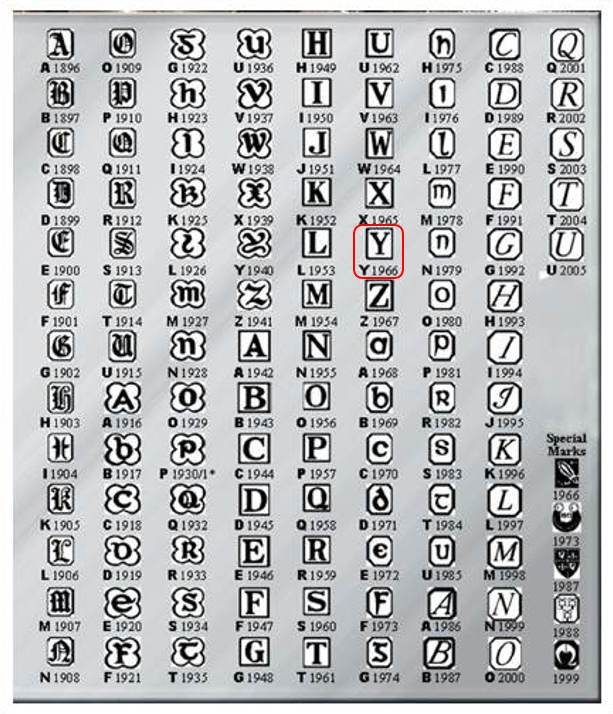
I always like to date the year a pipe was made while I am working on it. In the process of working on a pipe if I can pin down a date that it was made that it adds another dimension to the restoration process. Once I have identified the hallmarks on the pipe then I use a Hallmark chart to pin the date down. In the case of Peterson’s pipe with a silver band I use a hallmarking chart that Peterson included in their catalogs and on their website

I have a copy of the hallmark charts in one of the Peterson catalogs that I have uploaded to the blog on rebornpipes. I turned to that chart to lock down the date letter for the Sterling Silver Dublin that I am working on. Here is the link to the site (https://rebornpipes.com/wp-content/uploads/2015/05/peterson-cataloguecomp_page_27.jpg)

The chart defines the meaning of each hallmark on the silver band. The first one is of a seated woman with a harp is known as the Hibernia stamp and identifies the pipe as made in Ireland. The second stamp is a crowned harp which is a fineness mark denoting the high quality of silver that was used. The third stamp is the upper case italic letter “B”. I have included a larger screen capture of the section in the second photo below.

I blew up the photo of the above chart so that I could read the dates. I have drawn a square around the proper date letter below. It identifies the date of manufacture this Peterson’s pipe to 1987.From the hallmarks it appeared that I was dealing with a pipe that the hallmarks date to 1987.

I turned them to “The Peterson Pipe” by Mark Irwin and Gary Malmberg to get some background on the Peterson’s Dublin 3. On page 298 it had the following information.

Dublin (1906-2003) Although DUBLIN appears under PETERSON’S  on many pipe over the decades, it has served mostly as part of the brand name. The word first appeared on pipes hallmarked 1906-11, stamped PETERSON’S over PATENT over DUBLIN. The simpler PETERSON’S over DUBLIN first appeared on pipes hallmarked 1912 after the expiration of the patent. Illustrations of pipes in the ’37 catalog show a random dispersion of the stamp PETERSON’S over OF DUBLIN together with the ordinary PETERSON’S over DUBLIN on every model offered. Specimens of the former will bear either and Irish COM or LONDON MADE over ENGLAND COM and almost certainly date from 1945-62. It was first mentioned as part of a model name in the ’68 price list, as K&P DUBLIN, in ’92 for a Danish market line and in 2017 (see below).

I knew I was dealing with a pipe that had a long history of the stamping that I found on its shank. It is amazing to think that in a company that had a lot of anomalies in their stamping that the DUBLIN stamp continued from 1906-2003 and in other forms even longer. This 1987 made DUBLIN fits nicely within that time frame. Now it was time to work on the pipe.

Jeff had done a great job cleaning up the pipe as usual. He reamed the pipe with a PipNet reamer and cut back the cake back to the bare briar. He cleaned up the walls with a Savinelli Fitsall Pipe Knife. He scrubbed the interior of the bowl and shank with pipe cleaners, cotton swabs and alcohol to remove the tars and oils. He scrubbed the exterior of the pipe with Murphy’s Oil Soap and a tooth brush to remove the grime from the finish. He worked on the rim top lava and darkening with the soap and tooth brush. He scrubbed the inside of the stem with alcohol and pipe cleaners. He scrubbed the exterior with Soft Scrub and then soaked it in Briarville’s Pipe Stem Deoxidizer. He washed it off with warm water to remove the Deoxidizer. The pipe looked far better when it arrived. I took a close up photo of the rim top because I wanted to show how well it had cleaned up. The rim top looked amazingly good on the top and the inner and outer edges of the bowl. I also took close up photos of the stem to show the tooth marks on the surface near the button. I took photos of the stamping on the sides of the shank. It reads as noted above.I removed the stem and took a photo of the pipe to have a look at the parts and overall look.I sanded the bowl with micromesh sanding pads – dry sanding with 1500-12000 grit sanding pads to further make the stain more transparent and make the grain stand out. I wiped the bowl down with a damp cloth after each sanding pad. I worked some Before & After Restoration Balm into the surface of the briar with my fingertips to clean, enliven and protect the briar. I let the balm sit for 15 minutes and then buffed with a cotton cloth to raise the shine. The photos show the bowl at this point in the restoration process. I polished the Sterling Silver Ferrule with a jeweler’s cloth to protect and give it a shine. It is a pretty looking pipe.I “painted” the tooth marks in the stem with a lighter flame to lift the marks. Most lifted but I filled in the ones that remained on the top and underside of the stem next to the button edge with clear CA glue. Once the repairs cured I sanded them smooth with 220 grit sandpaper and started polishing it with 400 grit wet dry sandpaper. It was starting to look good. I polished the stem with micromesh sanding pads – wet sanding with 1500-12000 grit sanding pads. I wiped it down after each sanding pad with Obsidian Oil. I polished it with Before & After Pipe Stem Polish – both Fine and Extra Fine. I am excited to finish this Peterson’s Dublin 120 Straight Dublin. I put the pipe back together and buffed it with Blue Diamond on the buffing wheel. I gave the bowl and the stem multiple coats of carnauba wax. I hand buffed the pipe with a clean buffing pad to raise the shine. It is fun to see what the polished bowl looks like with beautiful straight and flame grain all around it. Added to that the polished black vulcanite stem was beautiful. This smooth Classic Peterson’s 120 Dublin is great looking and the pipe feels great in my hand. It is light and well balanced. Have a look at it with the photos below. The dimensions are Length: 5 ¾ inches, Height: 1 ¾ inches, Outside diameter of the bowl: 1 ¼ inches, Chamber diameter: ¾ of an inch. The weight of the pipe is 35 grams/1.23 ounces. It is a beautiful pipe and one that will soon be on the rebornpipes store in the Irish Pipe Makers Section of the store. If you want to add it to your collection let me know. Thanks for walking through the restoration with me as I worked over this pipe. Thanks to each of you who are reading this blog.

Restoring a Previously Repaired Cracked Shank on a Dunhill Shell Briar 40 Lovat


Blog by Steve Laug

The next pipe on the table is a Dunhill Group 4S Shell Briar Lovat that caught my eye. It has a two digit the shape number that I will define below. I purchased this pipe from a fellow on Facebook. He said that the shank had been snapped at the bowl and had been well repaired. There was a tube in the shank that joined the two parts. He sent me two photos of the pipe to show the overall look and also the repaired cracked shank. I was interested in adding this shape to my own collection so I was anxious to see it and work on it. This Dunhill Lovat is stamped on the heel of the bowl and underside of the shank. On the heel it reads 40 followed by Dunhill over Shell Briar. Next to that it is stamped Made in England6. A circle 4 followed by S is stamped on the right side next to the bowl/shank junction. The numbers and stamping tell me that the pipe is a Shell Briar (S) and the size is a Group 4. The 2 digit shape number makes it an older pipe. The date stamp 6 follows the “D” of England in the Made in England stamp. The finish was very shiny like it had a shellac coat on it and it seemed to be even over the lava on the rim top. The sandblast was deep and rugged looking. The bowl had a moderate cake in the bowl and lava overflowing onto the sandblast rim top. There was some shellac over the grime. The inner and outer edges of the bowl looked good and the bowl was in round. The shank repair is solid and fairly tight against the bowl. It looks good but with a lens there are gaps in the repair to the crack. The stem was quite clean but had tooth marks and chatter on both sides ahead of the button. The button itself appeared to be in good condition. I took photos of the pipe before I started my work on it. I took photos of the bowl and rim top to show the condition. You can see the cake in the bowl and the lava on the rim top and edges. The lava is thick and seems to have protected the edges and top. The stem was clean but has tooth marks and chatter on both sides ahead of the button.I took a photo of the stamping on the underside of the shank. It is clear and readable as noted above. You can also see the repaired crack near the heel of the bowl.I removed the stem from the shank and took a photo of the parts to show the overall look of the pipe. The sandblast is very deep and rugged. Now it was time to begin to work on the stamping on the pipe. Because I had just finished working on a few Shell Briar in the past I used the information that I had dug up on that one. I quote below.

Pipedia had some great information on the Root Briar finish and dates and how the finish was made (https://pipedia.org/wiki/Dunhill#Bruyere). The first quote below give the short version of the finish. I quote from both below.

Shell – A deep craggy sandblast with a black stain finish (usually made using Algerian briar) – the color of the stain used has varied over the years. Although there is some doubt as to them being the first to sandblast pipes, Dunhill’s Shell pipes, and the sandblasting techniques developed to create them are considered one of Dunhill’s greatest and most lasting contributions to the art of pipe making.

The documented history of Dunhill’s inception of the Shell is largely limited to patent applications — there are no catalog pages or advertisements promoting blasted pipes at the time. The preliminary work on the English patent (No. 1484/17) was submitted on October 13, 1917. The patent submission was completed half a year later, on April 12, 1918, followed by the granting of the English patent on October 14, 1918. This was less than a month before the end of The Great War on November 11th.

In 1986 Dunhill released a line of premium Shell finish pipes – “RING GRAIN”. These are high-quality straight grain pipes which are sandblasted. Initially only Ring Grain, but now in two different finishes. In 1995 the “Shilling” was introduced with Cumberland finish – it is an extremely rare series. These pipes exhibit a deeper blast characteristic of that of the 1930’s – mid-1960’s (and the limited ‘deep blast’ pipes of the early 1980s) and show a fine graining pattern. These are considered the best new Dunhills by many enthusiasts today and are very rare. The finish is sometimes described as tasting like vanilla at first, with the taste becoming more normal or good as the pipe breaks in.

With that information clear for me I wanted to identify the shape number and try to pin that down (https://pipedia.org/wiki/Dunhill_Shape_Chart). I turned to the section on the older 2 digit Shape Numbers and read it. I quote it below.

Early Days – 2 digits/letters – The original skus/model numbers from the 1920’s until the early 1970’s stood for very specific shapes and bowls. For example, the codes 31, 34, 59, 111, 113, 117, 196, LB, LBS… were all different types of Billiard shaped pipes and there were about 50(!), such codes for the Billiard shape alone. On top of those are a large variety of other shapes.

With the information on the 2 digit stamp not making clear enough the meaning of the number I turned to another link on Pipedia (https://pipedia.org/wiki/Dunhill_Shapes_List) to a shape list that Eric Boehm put together for Dunhills.

I knew that the pipe shape number locked in a time period between 1920-1970 – a large time span that I needed to narrow down more clearly. I turned to another link on Pipedia (https://pipedia.org/wiki/Dunhill_Shapes_List) to a shape list that Eric Boehm put together for Dunhills. I copied the four 2 digit numbers on Lovats from the list. The shape 40 was in the list.

Lovats:

37 Lovat, short, thick, saddle 1928 11

38 Lovat, long shank, saddle bit 3 4¾” 1928, 50, 60, 69 11

40 Lovat, long shank, saddle bit 4 5″ 1928, 1950, 1969 11

481 Lovat, long shank, saddle bit 1 5″ 1950, 1969 11

I turned next to dating the pipe. There is a 6 following the D in ENGLAND on the underside of the shank. The 6 is the same size as the D in England. I turned to the dating chart on Pipephil to pin down the date on this pipe (http://pipephil.eu/logos/en/dunhill/cledat-en1a.html). I did a screen capture of Part 2 of the Dunhill Dating Key and included it below. I drew a red box around the section dating this pipe.Since the suffix is not raised but is the same size as the D in England I turned to the section with the information highlighted by the red box above. I knew then that the date of the pipe would be 1960 + 6 (suffix) = 1966.

Armed with that information I turned to work on the pipe itself. I started by working on the rim top of the bowl. I used a brass bristle wire brush to knock off the debris and clean out the crevices of the sandblast. It took a bit of work to loosen all the debris and remove the shellac that was covering it. I wanted to remove the shellac coat from the sandblast finish and thus also remove the debris that had been shellacked over on the rim top. I wiped it down with acetone on cotton pads to remove the finish from the surface of the pipe. The bowl looked better and the rim top also was much better. With the externals cleaned up and the lava and the shellac removed it looked much better. I needed to clean out the inside as well. I reamed the pipe with a Savinelli Fitsall Pipe Knife and scraped the cake back to bare briar. I sanded the walls smooth with 220 grit sandpaper wrapped around a piece of dowel. The inside of the bowl looked very good.I cleaned out the internals of the shank, mortise and airway in the stem with isopropyl alcohol (99%) and cotton swabs and pipe cleaners. It was a dirty pipe. With a bit of work it smell sweeter and was noticeably cleaner.I filled in some of the hollow spots in the previous repair with clear super glue. I was aiming to have it more even and filled in with the glue. Once the touch ups to the repair had cured I restained it with a Walnut stain pen to match the surrounding briar.The bowl looked very good at this point so I rubbed it down with Before & After Restoration Balm. I worked it into the surface of the bowl and shank with my fingertips and a horse hair shoe brush to clean, enliven and protect the briar. I let the balm sit for about 10-15 minutes and buffed with a cotton cloth to raise the shine. I set the bowl aside and turned my attention to the stem. I “painted” the surface of the vulcanite stem with the flame of the lighter. I was able to lift all of the tooth marks and chatter on both sides of the stem. I sanded the surface of the stem with 220 grit sandpaper. I started polishing the stem with 400 grit wet dry sandpaper to start the polishing. I polished the vulcanite stem with micromesh sanding pads – dry sanding with 1500-12000 grit pads. I wiped it down with Obsidian Oil after each sanding pad. I used Before & After Pipe Polish – both Fine and Extra Fine to further polish the stem and gave it a final coat of Obsidian Oil to finish it. This Beautiful 1966 Rugged Sandblast Dunhill Shell Briar 40 Lovat is a great looking pipe with the little extra TLC I put in once I received it. The rich Shell Briar Sandblast finish that highlights the swirls of the grain and works well with the polished vulcanite stem. I put the stem back on the bowl and carefully buffed the pipe with Blue Diamond on the buffing wheel using a light touch on the briar. I gave the bowl multiple coats of Conservator’s Wax and the stem multiple coats of carnauba wax on the buffing wheel and followed that by buffing the entire pipe with a clean buffing pad. I hand buffed the pipe with a microfiber cloth to deepen the shine. The finished Dunhill Shell Briar 40 Lovat is a Group 4 size pipe that will be a great smoker. Give the finished pipe a look in the photos below. The dimensions of the pipe are Length: 5 inches, Height: 1 ¾ inches, Outside diameter of the bowl: 1 ¼ inches, Chamber diameter: ¾ of an inch. The weight of the pipe is 33 grams/1.16 ounces. I am going to enjoy smoking this one I added to my own collection. I take a moment to remind myself and each of us that we are trustees of pipes that will outlive us and the lives of many other pipe men and women who carry on the trust of their care and use. Thanks for reading this blog and my reflections on the pipe while I worked on it.

Restoring a Beautiful Heritage Antique 33 Apple


Blog by Steve Laug

I have always had an interest in the Kaywoodie Made Heritage Pipe line. I really like the way they are made – both in terms of workmanship and style. They really made some amazing looking pipes and I always try to pick them up when I can. Jeff has also found this to be true so he is on the lookout for this brand in all of his pipe hunts and auction haunts. We purchase this pipe in October 2021from a fellow in Redmond, Oregon, USA. It is stamped 33 on the heel of the bowl and Heritage [over] Antique on a smooth panel on the underside of the shank. The pictures of the sandblast showed it was well done. The finish was dirty and there was a thick cake in the bowl. It appeared that the bowl had been lightly reamed before it came to us. There was a light lava overflow in the sandblast finish on the rim top that would need to go. There was the Heritage double diamond logo on the left side of the stem. The stem was oxidized and had light tooth marks on both sides ahead of the button. All totaled it was still a beautiful pipe. We were hooked. Jeff took these photos before he started his clean up work. Jeff took photos of the bowl and rim top to show the condition that I noted in the description above. Even though it is very dirty you can see that the rim top and edges all look very good. The stem photos clearly show the oxidation and light tooth marks on both sides. It would need some work. Jeff took photos of the sides of the bowl and heel to show the sandblast finish on the bowl. This blast is rugged and deep. I have worked on quite a few Heritage pipes and have never seen this before. The next photos show the stamping that I described in the opening paragraph. It is clear and readable. He also included a photo of the double diamond logo on the left side of the taper stem. In other blogs on the brand I have given a bit of history on the Heritage Brand. I have included that here as well for ease of reference. Andrew Selkirk did a great job in researching and I am including a link to his work on the blog (https://rebornpipes.com/2014/12/23/refurbishing-a-heritage-heirloom/). I am including a brief summary of what he found in the next two short paragraphs to set the stage for the pipe on my work table.

Heritage pipes were Kaywoodie’s answer to Dunhill. According to one of their brochures, Heritage pipes were made from “briar burls seasoned and cured for up to 8 months,” with only “one briar bowl in over 300 selected to bear the Heritage name.” “Heritage stems are custom fitted with the finest hand finished Para Rubber stems. Mouthpieces are wafer thin and concave.”

The Heritage line began in the early 1960’s, with the trademark issued in 1964. The line was started at the request of Stephen Ogden, (who worked for Kaywoodie in 1962). Mr. Ogdon had previous experience working for Dunhill, either running the New York store or working for Dunhill North America. Mr. Ogden was made President of Heritage Pipes, Inc., Kaywoodie Tobacco Co.,Inc. and Kaywoodie Products Inc. as well as a Vice President of S.M. Frank & Co. Heritage Pipes were produced from 1964 until 1970 (Source kaywoodie.myfreeforum.org).

Andrew also included a copy of the Heritage brochure that I am also including below (Courtesy kaywoodiemyfreeforum). In going through the models displayed on the page there is not one for the 33. The brochure has a great write up on the Heritage Antique Line. It reads Rustic Grain Stands out in Rugged Relief. It describes the line as follows:

This pipe is so bold looking, yet so light and smooth smoking. A special sandblasting process exposes a greater surface area on the bowl, giving a cooler, more satisfying smoke. Centuries-old Heritage Antique is strikingly masculine in appearance.

Jeff had cleaned up the pipe with his usual precise work. He reamed the pipe with a PipNet Pipe Reamer and cleaned up the remnants with a Savinelli Fitsall Pipe Knife.  He scrubbed the bowl with undiluted Murphy’s Oil Soap with a tooth brush. He rinsed it under running warm water to remove the soap and grime. The rim top cleaned up very well. He cleaned out the inside of the shank and the airway in the stem with alcohol, cotton swabs and pipe cleaners. He soaked the stem in Briarville Stem Deoxidizer and rinsed it off with warm water. I took photos of the pipe once I received it. Now it was time to work on the pipe itself. The bowl and the rim top looked very good. The inner and outer edges of the rim also looked very good. There was no damage to the edges. The stem surface had light tooth marks and chatter on both sides near the button.I took photos of the stamping on the underside shank. The stamping was clear and readable as noted above.I took the stem off the shank and took a photo of the parts of the pipe to show the overall look of the pipe.I worked some Before & After Restoration Balm into the surface of the briar with my fingertips and a horsehair shoe brush to clean, enliven and protect it. I let the balm sit for a little while and then buffed with a cotton cloth to raise the shine. The following photos show the bowl at this point in the restoration process. I am very happy with the results. I set the bowl aside and turned my attention to the stem. I sanded the light tooth marks and chatter smooth with 220 grit sandpaper to blend them in and started polishing the stem with 400 grit wet dry sandpaper.I polished the vulcanite stem with micromesh sanding pads – 1500-12000 grit pads. I wiped it down with a damp cloth after each sanding pad. I used Before & After Pipe Polish – both Fine and Extra Fine to further polish the stem. I wiped it down with a final coat of Obsidian Oil and set it aside.    The sandblast Heritage Antique 33 Apple is a real beauty and the finish and shape are well done and have a classic English look even though this is an American Made pipe. The thin taper vulcanite stem polished up on the buffing wheel with Blue Diamond and had a rich glue. I gave the bowl multiple coats of Conservator’s Wax and the stem multiple coats of carnauba wax on the buffing wheel and followed that by buffing the entire pipe with a clean buffing pad. I hand buffed the pipe with a microfiber cloth to deepen the shine. The finished Heritage Antique Apple fits nicely in the hand and feels great. Give the finished pipe a look in the photos below. The dimensions of the pipe are Length: 5 inches, Height: 1 ½ inches, Outside diameter of the bowl: 1 inch, Chamber diameter: ¾ of an inch. The weight of the pipe is 1.02 ounces/29 grams. I will soon be adding it to the rebornpipes store in the American Pipe Maker section. If you are interested in adding this pipe to your collection send me a message or an email. Thanks for reading this blog and my reflections on the pipe while I worked on it. There are many more to come!
Repairing and restoring a Unique Tom Spanu Freehand Dublin


Blog by Steve Laug

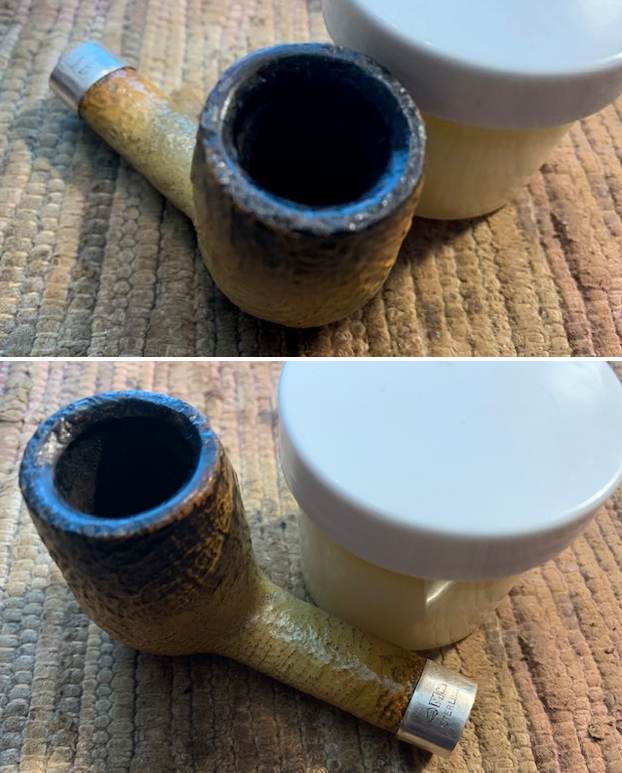
The next pipe I have chosen is smooth finished Dublin with a plateau top and a horn shank end. The stem is acrylic with a briar saddle and two strips of briar running down the sides. It came to us on September, 2020 from a lady in Salina, Kansas USA. The contrast of the brown and black stains make the grain stand out. It was stamped at an angle on the left side of the shank and read Tom Spanu. On the underside it is stamped F 3 followed by S P. The pipe was very dirty in the plateau on the rim top. All of the grooves were filled in with a thick coat of lava. The bowl was heavily caked so it was hard to know for sure what the condition of the edges was under the lava. The interesting stem with briar inlays was good in the saddle and inlaid sides. The acrylic blade of the stem had tooth chatter and deep marks on the top and underside on and near the button. Jeff took photos of the pipe before his cleanup work. They tell the story and give a glimpse of the pipe. Jeff took photos of the rim top and stem to show the general condition of the pipe. The bowl is heavily caked with a thick overflow of lava on the top and edges fills in the plateau finish. The stem has deep tooth marks and chatter on the top and underside near the button. Jeff took photos of the bowl sides and heel to show the grain and around this bowl. Underneath all the grime it is a nice looking pipe. He took photos of the left side and underside of the shank to show the stamping. The stamping is readable in the photos below and is as noted above. He also included a photo of the inlaid silver dot in an acrylic ring on the topside of the stem to show the condition. To get a short history reminder about the brand I turned to Pipephil’ sites to read what he had written there in the side bar (http://pipephil.eu/logos/en/logo-t7.html#tomspanu). I quote below and also include a screen capture of the pertinent section.

Artisan: Tommaso Spanu (born 1944 in Chiaramonti Sardinia) is an independant pipe maker since 1979. He was established in Laerru (Sardinia) from 1979 to 1999 where he used to harvest, cut and condition his own ebauchons. During this period he often worked for Paronelli. The workshop moved to Sassari (Sardinia) in 1999. He crafts Briar but also Lemonwood, Olivewood, Boxwood, Juniper, Oak and even Cork Oak.I turned to Pipedia for more information (https://pipedia.org/wiki/Spanu). I quote below:

Novarte S.N.C. di Spanu Tommaso

Update: We are sad to report that it has come to our attention that Tommaso Spanu passed from this World in the Fall of 2015 to join the many great Italian pipe makers that came before him. Our hope is that Tommoso’s sons and brother will continue the Spanu pipe making tradition. We can also enjoy the legacy he leaves in the many pipes he has made over the years.

In 1963 Tommaso Spanu left his home in Sardinia and wandered to Northern Italy to become a pipemaker. His uncle had managed an apprenticeship for him in Gavirate, in the province of Varese, with it’s many pipe manufactures. His exceptional talent soon attracted the attention of Alberto Paronelli (→ Paronelli), the grand seigneur of Italian pipe business. Paronelli, a famed pipe designer himself, arranged that the best pipe craftsmen schooled his young fosterling and personally taught him in pipe design and styles. Soon Spanu reached a remarkable level of skills and began to work on the Clairmont pipes, a high-grade brand produced for and distributed by Paronelli. A little later the bulk of the Clairmonts was made by Spanu who was even allowed to stamp them with his own name additionally.

All in all Tom Spanu spent 16 years in the North where he worked with many other famous pipemakers like Guiseppe Ascorti and Luige Radice e.g. In 1979 he finally felt it was time now to continue on his own. So he returned to Sardinia where he established his own workshop with some help from his brothers. A firm was founded to market the pipes, the Novarte S.N.C. di Spanu Tommaso. Furthermore he purchased a licence from the local government and following Spanu is the only pipemaker worldwide who grows, harvests, mills and conditions his own briar!
Today his brother and two sons carry on the family tradition, making more than a thousand pipes a year. Mostly more classic models for Italy, but also a good amount of more stylish designs for the foreign markets. Now, if it comes to talking about “entirely handmade pipes” … Just as when Tommaso started carving pipes, only hand tools are used. Not a lathe or drill is to be found in his workshop!
Around 1997 Spanu was approached by Mercedes-Benz and asked to design briar-burl dashboards for their most luxurious sedans. And he replied “Maybe tomorrow!” We can assume that the envoys looked quite dumbfounded to be turned down that way, and so Spanu explained that while the project would be fun, his first love was pipes, and only once he was not making as many pipes he would consider it. Mercedes-Benz is said to have taken the rebuff in good nature, and even this automobile manufacturing giant is still waiting on Mr. Spanu to finish some pipes.

Beside the all-briar pipes Spanu loves to work with a wide variety of others woods ranging from the traditional olivewood to beech, oak, boxwood and juniper. He often produces hybrids composing different woods.

Jeff had done a great job cleaning up the pipe as usual. He reamed the pipe with a PipNet reamer and cut back the cake back to the bare briar. He cleaned up the walls with a Savinelli Fitsall Pipe Knife. He scrubbed the interior of the bowl and shank with pipe cleaners, cotton swabs and alcohol to remove the tars and oils. He scrubbed the exterior of the pipe with Murphy’s Oil Soap and a tooth brush to remove the grime from the finish. He worked on the rim top lava with the soap and tooth brush. He scrubbed the inside of the stem with alcohol and pipe cleaners. He scrubbed the exterior with Soft. He rinsed it off with warm water to remove the Deoxidizer. It looked very good when I brought it to the worktable.   I took close up photos of the rim top and the stem surface. I wanted to show how well it had cleaned up. The rim top looked very good. The beveled inner edge had some damage on the right side toward the front that would need to be cleaned up in the process. I took photos of the stem to show the tooth marks on the surface ahead of the button and on the sharp edge of the button itself. I took a photo of the stamping on the left side and the underside of the shank. You can see that it is stamped as noted above. It is clear and readable. I took the pipe apart and took a photo of the pipe. It is a good looking pipe and has a few deep scratches around the bowl and shank. There were three small worm holes I the horn shank band where it met the briar stem. They were round and quite deep. They would need to be filled in and repaired to make the band round and smooth once more.I began my work on the pipe by dealing with worm holes in the horn shank band. I filled them in with clear super glue. I repeated the fill until the surface was smooth. I blended the repairs into the surrounding horn and it looked good. I put the stem on the shank and sanded the junction as well. I worked on the beveled inner edge of the bowl with a folded piece of 220 grit sandpaper to smooth it our and lessen the darkening. It cleaned up well and looked very good.I worked on the deep cuts in the left side of the bowl with sandpaper and filled them in with clear CA glue. I sanded the repaired areas with 220 grit sandpaper to smooth them out. I polished the repairs with 400 grit wet dry sandpaper.I polished the briar with micromesh sanding pads – dry sanding with 1500-12000 grit pads. I wiped the bowl down after each pad with a damp cloth to remove the sanding dust. By the end of the process they looked very good. I worked some Before & After Restoration Balm into the surface of the briar and plateau rim top with my fingertips and a horsehair shoe brush to clean, enliven and protect the briar. I let the balm sit for 15 minutes and then buffed with a cotton cloth to raise the shine. The photos show the bowl at this point in the restoration process. I set the bowl aside and worked on the stem. I filled in the deep tooth marks on the stem sides with black super glue and set it aside to cure. When it cured I flattened the repairs with a small file. I sanded out the repaired areas with 200 grit sandpaper to blend them into the surface. I started the polishing with 400 grit wet dry sandpaper. I polished the stem with micromesh sanding pads – wet sanding with 1500-12000 grit sanding pads. I wiped it down after each sanding pad with Obsidian Oil. I polished it with Before & After Pipe Stem Polish – both Fine and Extra Fine. I am excited to finish this Tom Spanu F3 SP Freehand Dublin with a Plateau Rim Top. I put the pipe back together and buffed it with Blue Diamond on the buffing wheel. I gave the bowl multiple coats of Conservator’s Wax and the stem multiple coats of carnauba wax. I buffed the pipe with a clean buffing pad to raise the shine and hand buffed it with a microfibre cloth to deepen the shine. It is fun to see what the polished bowl looks like with the rugged rustication all around it. Added to that the polished triple brass and emerald acrylic band and the black vulcanite stem was beautiful. This Spanu Freehand Dublin is nice looking and the pipe feels great in my hand. It is light and well balanced. Have a look at it with the photos below. The dimensions are Length: 6 ½ inches, Height: 2 inches, Outside diameter of the bowl: 2 ¼ inches, Chamber diameter: 1 inch. The weight of the pipe is 76 grams/2.68 ounces. It is a beautiful pipe and one that will be on the Italian Pipe Makers Section of the rebornpipes store soon. If you are interested in adding it to your collection let me know. Thanks for walking through the restoration with me as I worked over this pipe. Thanks to each of you who are reading this blog.

Restoring and Reworking a Stem on a Ser Jacopo Maxima R2 Canadian


Blog by Steve Laug

The next pipe on the table is a Rusticated Ser Jacopo Canadian that is proportionally well done. Jeff and I purchased a group of pipes on 04/26/2022 from a woman who contacted us from Cleveland, Ohio, USA. They had belonged to her husband’s father. We spent time chatting with her and arrived at a price and she sent the pipes to Jeff. It included 28+ pipes including this one.

This Ser Jacopo Canadian is stamped on the underside and Maxima followed by Per Aspera [over] Ad Astra. That is followed by Ser Jacopo [over] Fatta A Mano [over] Italia. A circle R2 follows that next to the bowl/shank junction. On the top of the stem is a single coral dot. The finish was very dirty with spots of grime and debris ground into the rustication. The bowl had a thick cake in the bowl and heavy lava overflowing onto the rim top. The rim top appeared to have some burn damage on the inner edge of the bowl. The outer edges looked good. The acrylic stem was a disaster. It was gnawed off with only two points remaining on either side. The externals were filthy with calcification, oxidation and tooth marks and chatter on both sides ahead of what remained of the ruined button. Jeff took photos of the pipe before he started his clean up work on it. He took photos of the bowl and rim top to show the condition. You can see the thick cake in the bowl and rim top and edges. The lava is so thick that is hard to know what the edges and top look like underneath. The stem was heavily oxidized, calcified and the end of the stem and most of the button had been gnawed off. Overall the pipe is a real mess. Jeff took photos of the rusticated finish around the bowl sides and heel. It was nice looking if you can see through the grime ground into the surface. He took photos of the stamping on the underside of the shank. The stamping is clear and readable. It reads as noted above. I turned to Pipephil (http://pipephil.eu/logos/en/logo-s5.html) to remind myself of the background of the brand. I also wanted to see what the single Coral dot meant on the stem. I knew that the Coral dot was on the older pipes but that was all I knew. I include a screen capture of the section on the brand below. The third photo below shows a similar Coral dot on the stem.I am also including the information that I found there in the sidebar on PipePhil. I quote that below. I have highlighted the R2 designation below in red.

Founder of the brand in 1982: Giancarlo Guidi (1943 – †2012). Production (2006): ~ 6000 pipes/year. Ser Jacopo seconds: Gepetto.

Finish mark: Rusticated pipes: R1 (dark brown) R2 (light brown); Sandblasted pipes: S (black), S1 (dark brown), S2 (light brown), S3 (tanshell); Smooth pipes: L (red), L1 (acceptable grain), L2 (nice grain), L3 (exceptional grain).

I then turned to Pipedia (https://pipedia.org/wiki/Ser_Jacopo) to read some more about the brand and see if there were more details regarding the single Coral dot. I quote below.

Ser Jacopo (provided by Marble Arch Ltd., US importer and distributor of Ser Jacopo)

Smokingpipes.com has an excellent concise history available on their website Ser Jacopo History at Smoking Pipes.com

Ser Jacopo, better to say Ser Jacopo dalla Gemma, was started by Giancarlo Guidi in 1982 upon leaving Mastro de Paja.

Giancarlo Guidi and Bruto Sordini broke away from Mastro de Paja in 1981 in pursuit of their own company. Ser Jacopo was named after an Italian nobleman. Guidi and Sordini, having taken part in creating the now infamous Pesaro “school” of pipe making, wanted to expand further. To accomplish this, Ser Jacopo focused their efforts on the pairing of the briar with a seemingly endless variety of mounts. Through the use of precious metals and stones, horn, and exotic woods Ser Jacopo pipes are given unique characters that many collectors find quite aesthetically pleasing. Although Ser Jacopo pipes borrow heavily from classical shapes, they are indeed quite unique in style.

In addition to creative mountings, Ser Jacopo is also well known for making themed pipes, and the most famous of these themes is perhaps the Picta Series, where pipes are modeled after pipes seen in pictures by and of famous artists, such as Vincent Van Gough.

Ser Jacopo makes multiple grades of pipes, with the “entry” level being the Geppetto brand, and the highest grade being the “Gem” series.

The small Ser Jacopo shop produces approximately 6000 pipes per year. The pipes are known for using outstanding Italian briar, which is well seasoned. The pipes have earned a well-deserved reputation for having excellent smoking qualities, equal or better than any other fine Italian pipe maker (or, for that matter, any other pipe maker in the world).

Giancarlo Guidi passed away on August 6, 2012, leaving behind a great legacy. He was 64 years old.

Nomenclature – the section on the nomenclature helps understand the stamping on the underside of the shank. It is helpful and really quite interesting.

The standard nomenclature found on Ser Jacopo pipes is as follows:

Ser Jacopo Fatta A Mano In Italia Per Aspera Ad Astra  – Fatta A Mano translates to “Made By Hand”. Per Aspera Ad Astra is a Latin phrase found on Ser Jacopo pipes and is the Ser Jacopo motto. It translates to “To the Stars Through Travails”, meaning that success comes through hard work. In the Summer 1997 Pipes and Tobaccos article Giancarlo Guidi translated this as “through a difficult way until the stars are reached”.

Ser Jacopo Pipes are generally found in one of three finishes (rusticated, sandblast, smooth) designated by a letter and number code:

R1: Rusticated, dark brown or plum finish.

R2: Rusticated, light brown finish.

S:  Sandblast, black

S1: Sandblast, dark brown

S2: Sandblast, light brown

S3: Sandblast, tanshell

L:  Smooth, red, usually with silver trim

L1: Smooth, flame grain, various finishes

L2: Smooth, straight grain, various finishes

L3: Smooth, straight grain extra, discontinued

Dating Pipes

In the photo to the left you can see the development of the stem inserts on the pipes.

Top: Early Red Coral Logo Middle: Coral Logo with Silver Ring Bottom: Modern Day Silver J Logo – Courtesy of Mike Ahmadi

Ser Jacopo pipes is somewhat difficult, because Ser Jacopo does not generally use date codes (the exception being the Diamond Gemma series pipes, which are dated coded). Early pipes (from 1983 to 1997) featured a red coral dot on the mouthpiece, sometimes found encircled in a silver ring. This was discontinued and changed to a sterling silver letter “J”. On the Gemma series of pipes, the mouthpiece logo is a precious stone surrounded by an 18k gold ring.

The pipe I am working on is one of the early pipes (1983-1997). It is a lovely pipe with a deep and unique rustication. Now it is time to work on the pipe and bring it back to life.

Armed with that information I turned to work on the pipe itself. Before he sent it to me, Jeff had done an amazing job cleaning the pipe. It almost looked like a different pipe after his work. He reamed the pipe with a PipNet pipe reamer and removed the rest of the cake with a Savinelli Fitsall Pipe Knife.  He scrubbed the bowl with undiluted Murphy’s Oil Soap and a tooth brush. He rinsed it under running warm water to remove the soap and grime. The finish looked very good and the rugged finish felt good in the hand. He cleaned out the inside of the shank and the airway in the stem with isopropyl alcohol, cotton swabs and pipe cleaners. He soaked the stem in Briarville’s Pipe Stem Deoxidizer and then rinsed it off with warm water. He scrubbed the stem with Soft Scrub and a tooth brush and rinsed it off with warm water. It looked amazing when I took it out of the package of pipes he shipped me. I took photos of the pipe before I started my part of the restoration work.   The rim top was cleaner and the inner edge of the bowl showed burn damage on the front right and back left. There was some chipping and damage around entire edge. The rim top and outer edge actually looked to be in good condition. The bowl was slightly out of round. The stem surface looked good with the oxidation gone and large chunk of the button missing. It was odd in that it was an even break on both sides and almost like a slot had been cut leaving behind two small thin posts on each side.I took a photo of the stamping on the underside of the shank. It is faint but is still readable as noted above.I took the stem off the shank and took a photo of the parts of the pipe. The overall look of the pipe is quite nice. The stem is quite stubby and short so that gave me an idea that I would explore later in the restoration.I started my portion of the work on this pipe by addressing the damage to the rim top and the inner edge of the bowl. I worked over the rim top with 220 grit sandpaper to remove the damage and the darkening. I used a folded piece of 220 grit sandpaper to smooth out the inner edge and give it a slight bevel to deal with the chipping and cutting that was present. It cleaned up remarkably well. With polishing and buffing it would look even better.I polished the smooth rim top with micromesh sanding pads – dry sanding with 1500-12000 grit sanding pads. I wiped the briar down with a damp cloth after each pad to remove the debris and sanding dust.The bowl looked very good at this point so I rubbed it down with Before & After Restoration Balm. I worked it into the surface of the bowl and shank with my fingertips and a horse hair shoe brush to clean, enliven and protect the briar. I let the balm sit for about 10-15 minutes and buffed with a cotton cloth to raise the shine. I buffed the bowl with a shoe brush to raise the shine on the bowl. It is a really nice looking pipe with a finish that has a look like cut glass to me. The rich brown of the stain vary through the layers of the rustication. It is very nicely done. I set the bowl aside and turned my attention to the stem. I cut of the two pegs that remained of the button and flattened the end of the stem against a topping board and 220 grit sandpaper. Surprisingly, it did not shorten the stem significantly. I did not feel that the pegs provided enough body to support a repair so I opted on shortening the stem and rebuilding the button with rubberized black super glue. I layered the repair on slowly, letting each layer cure before adding the next one. Once the repair cured I would need to reshape the button with files. I reshaped the button and the edge with a small file. The repaired button was beginning to look good at this point. I touched up the edge surface with CA glue to smooth and fill it in. Once the glue cured I sanded it with 220 grit sandpaper to continue the shaping. I repaired and resanded until I was happy with it. I started the polishing process with 400 grit wet dry sandpaper. I used a small pottery shaping saw to cut the slot in the end of the stem and shape it. It is getting closer and closer to being finished.I sanded the button surface some more with 220 grit sandpaper to further shape it. I filled in the air-pockets with superglue and let it cure until dry. Once it cured I started the polishing with micromesh sanding pads – dry sanding with 1500-12000 grit pads. I wiped the stem down after each pad with some Obsidian Oil. I polished it further with Before & After Stem Polish – both Fine and Extra Fine. I wiped it down a further time with Obsidian Oil and let it cure. This Beautiful Rusticated Ser Jacopo Maxima R2 Canadian with a Coral Dot is a great looking pipe now that it has been restored. The rich and unique rusticated works well with the polished, repaired and rebuilt vulcanite stem. I put the stem back on the bowl and carefully buffed the pipe with Blue Diamond on the buffing wheel using a light touch on the briar. I gave the bowl multiple coats of Conservator’s Wax and the stem multiple coats of carnauba wax on the buffing wheel and followed that by buffing the entire pipe with a clean buffing pad. I hand buffed the pipe with a microfiber cloth to deepen the shine. The finished Ser Jacopo Maxima Canadian is a large pipe that I am sure will be a great smoker. Give the finished pipe a look in the photos below. The dimensions of the pipe are Length: 6 ¼ inches, Height: 1 ¾ inches, Outside diameter of the bowl: 1 ¼ inches, Chamber diameter: ¾ of an inch. The weight of the pipe is 43 grams/1.52 ounces. I will be holding on to this one for awhile to test out the durability of the button rebuild. I take a moment to remind myself and each of us that we are trustees of pipes that will outlive us and the lives of many other pipe men and women who carry on the trust of their care and use. Thanks for reading this blog and my reflections on the pipe while I worked on it.