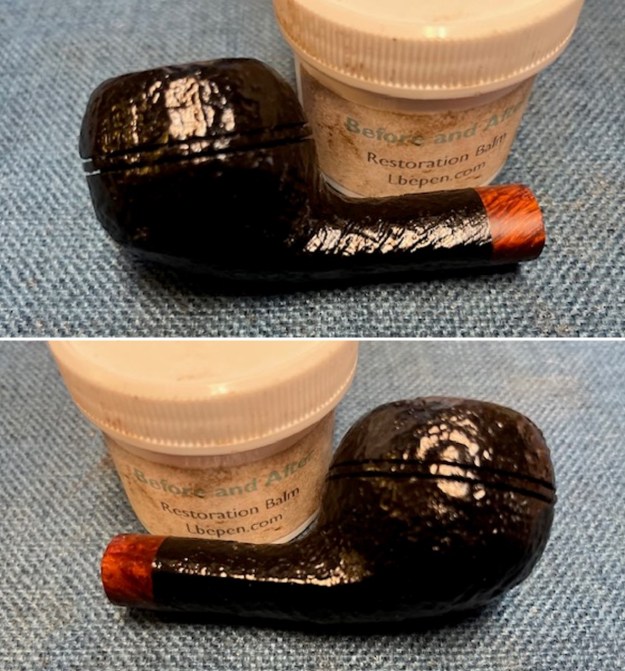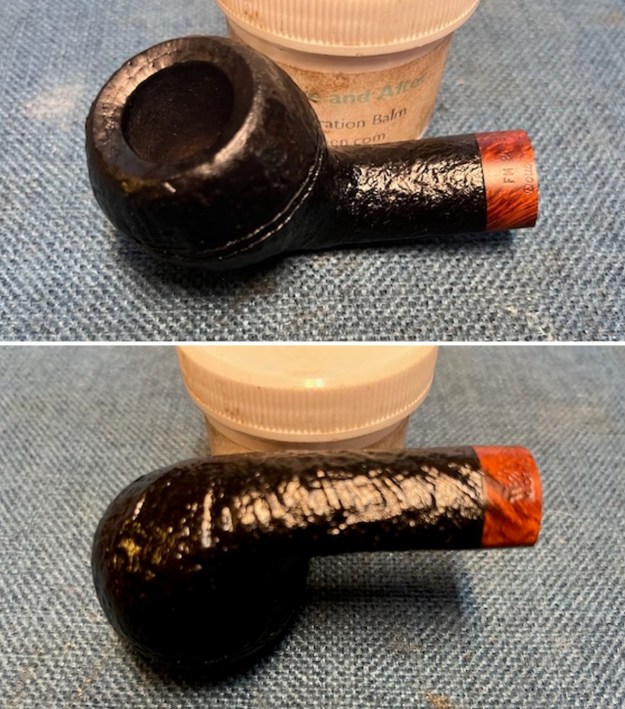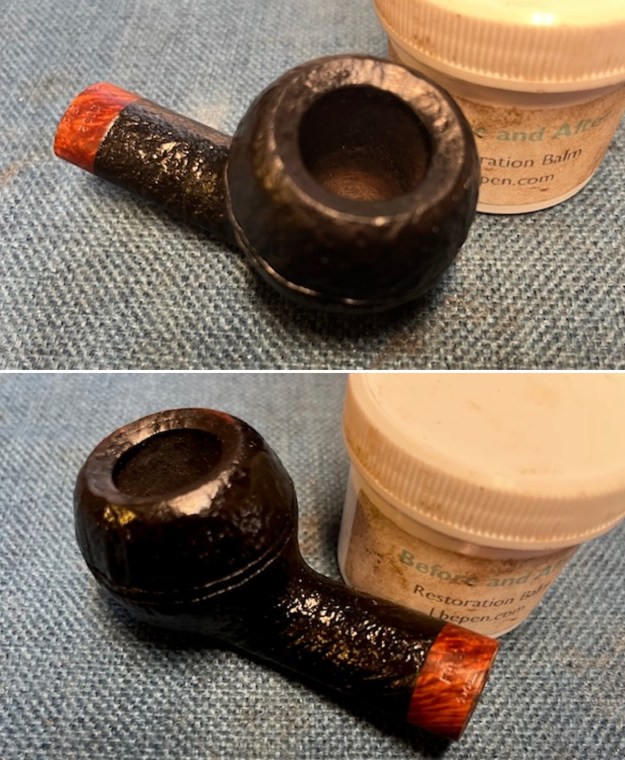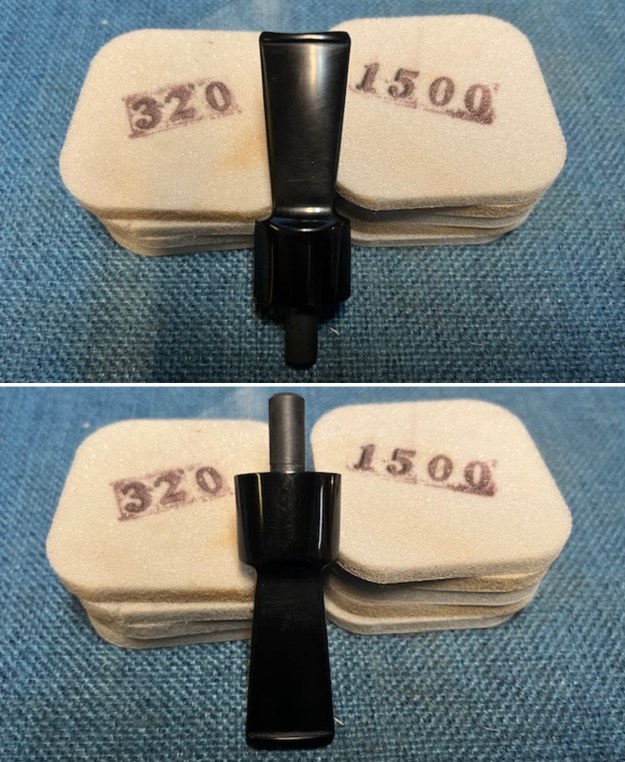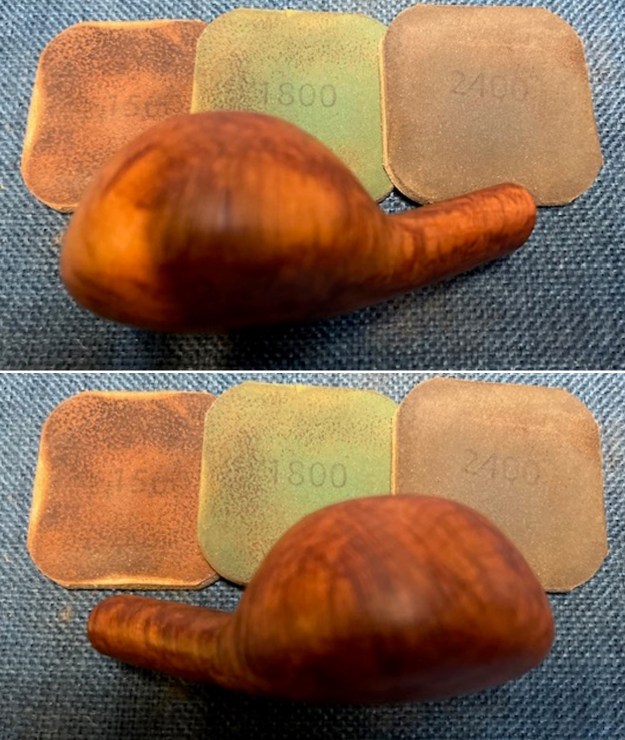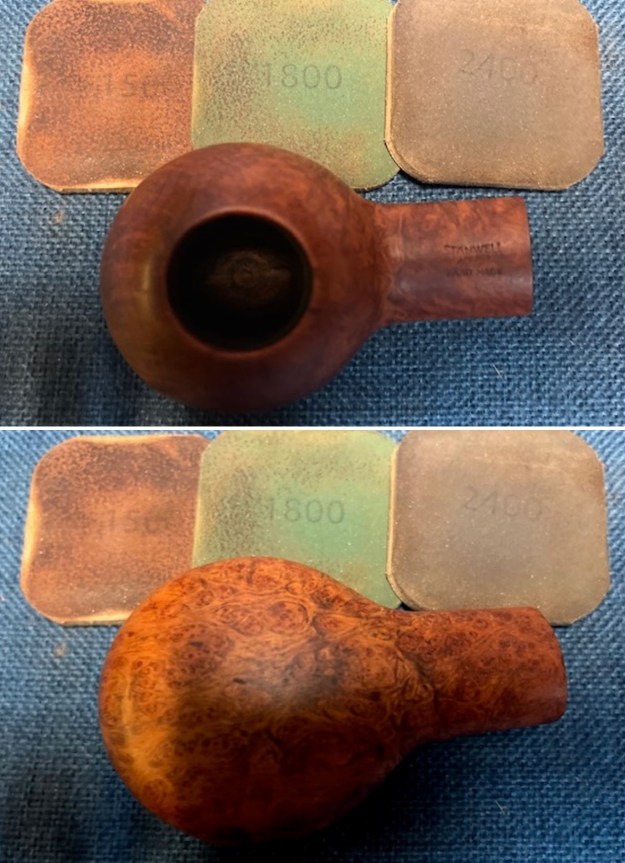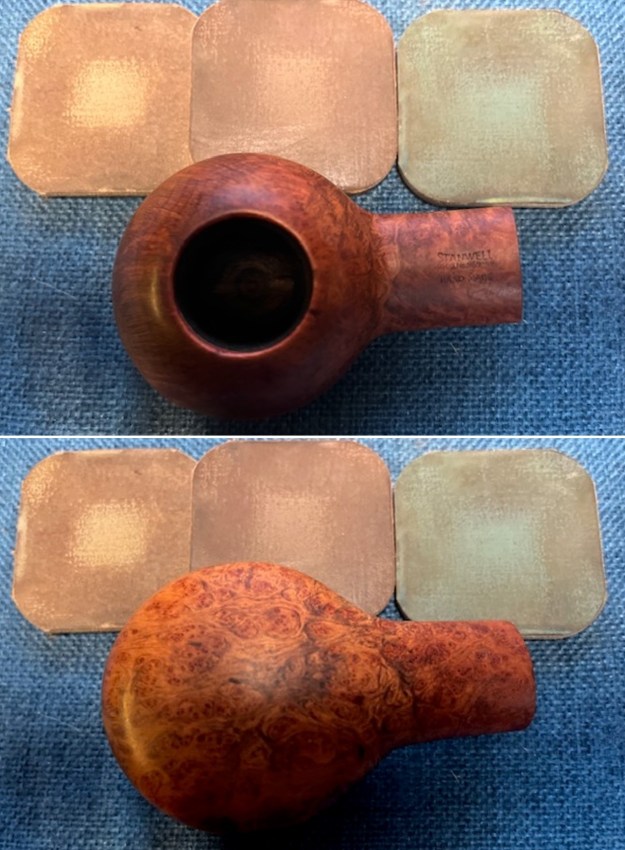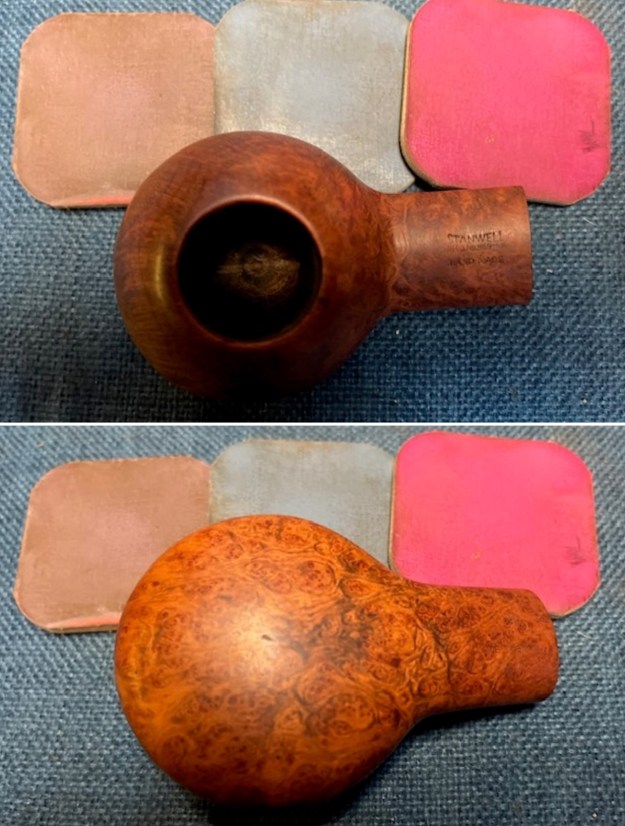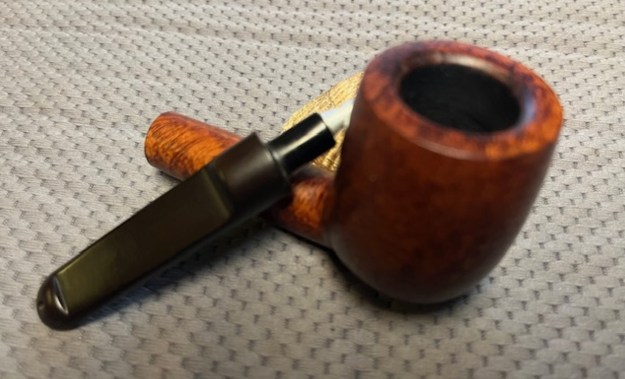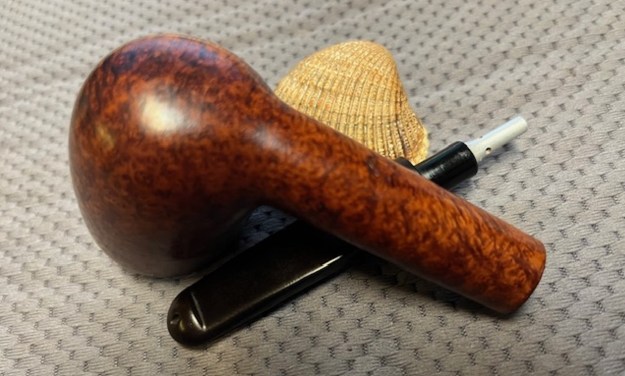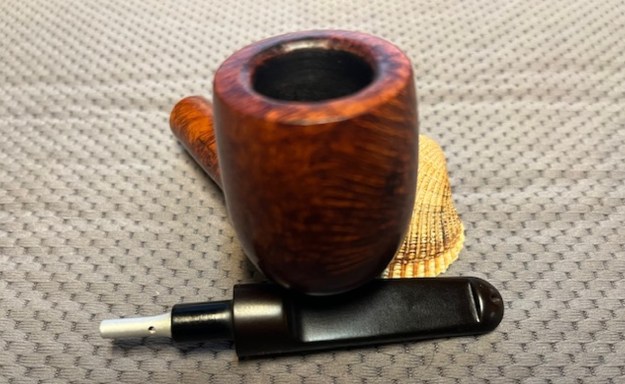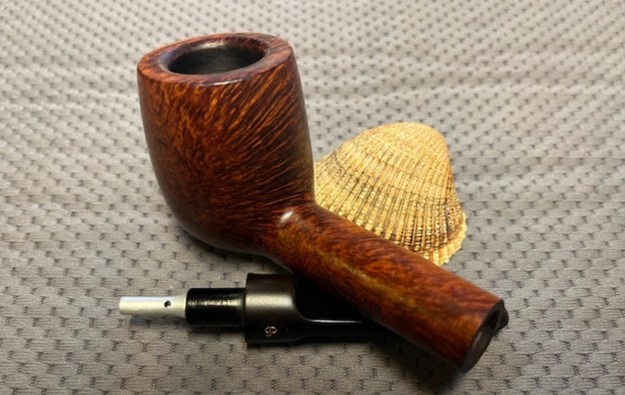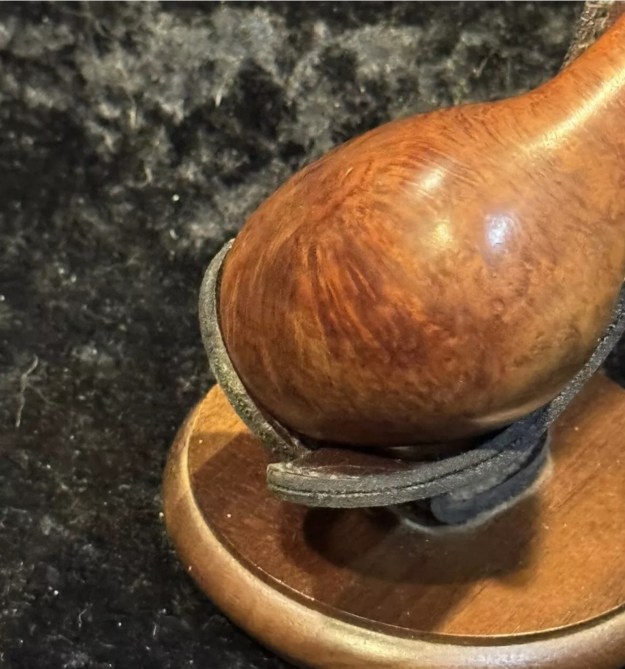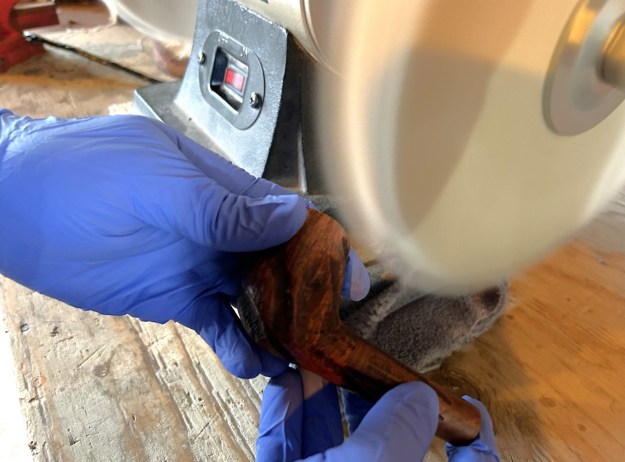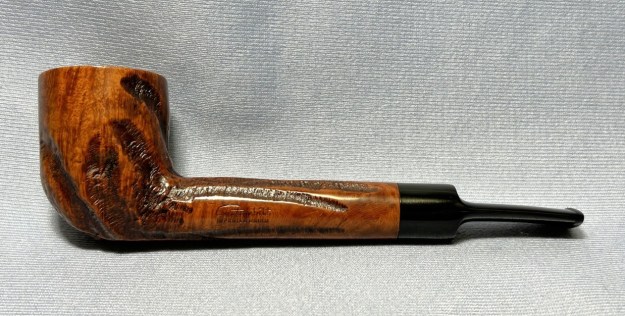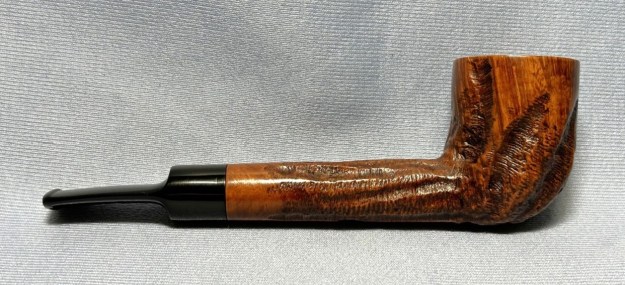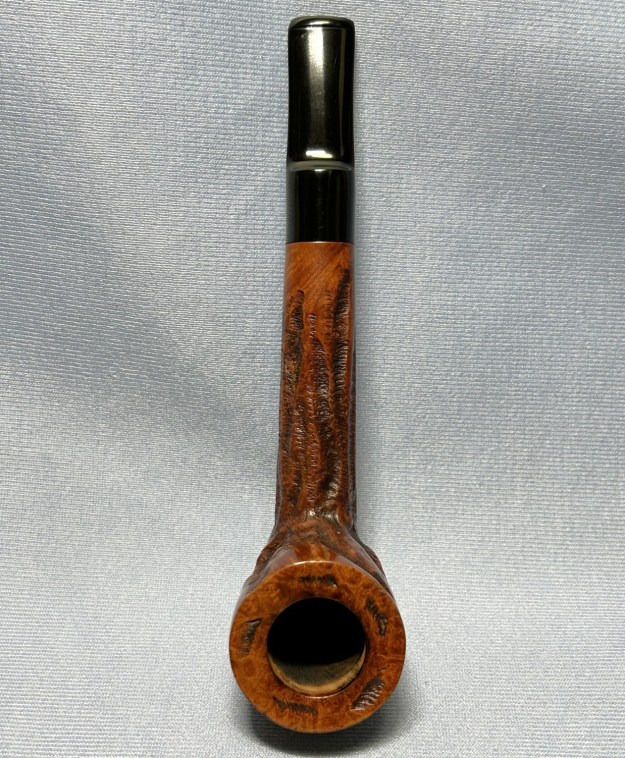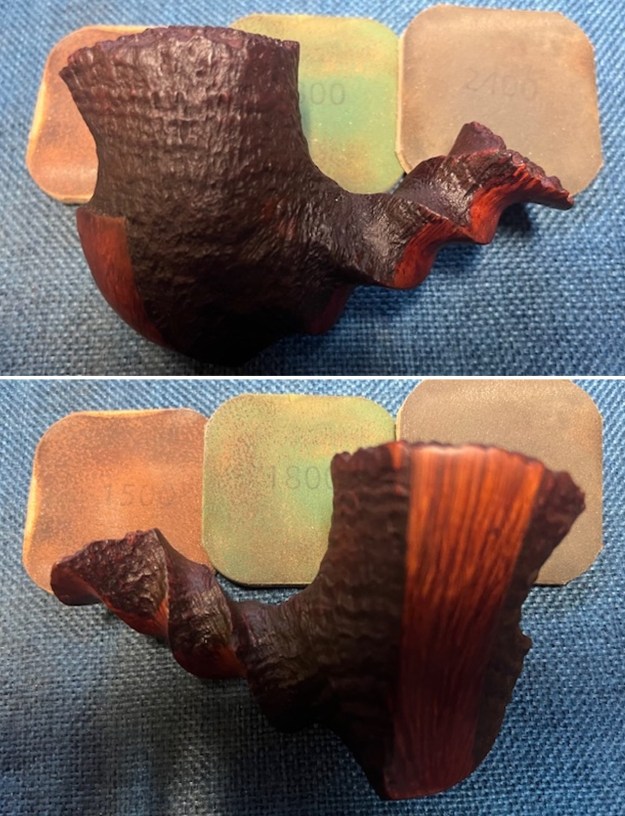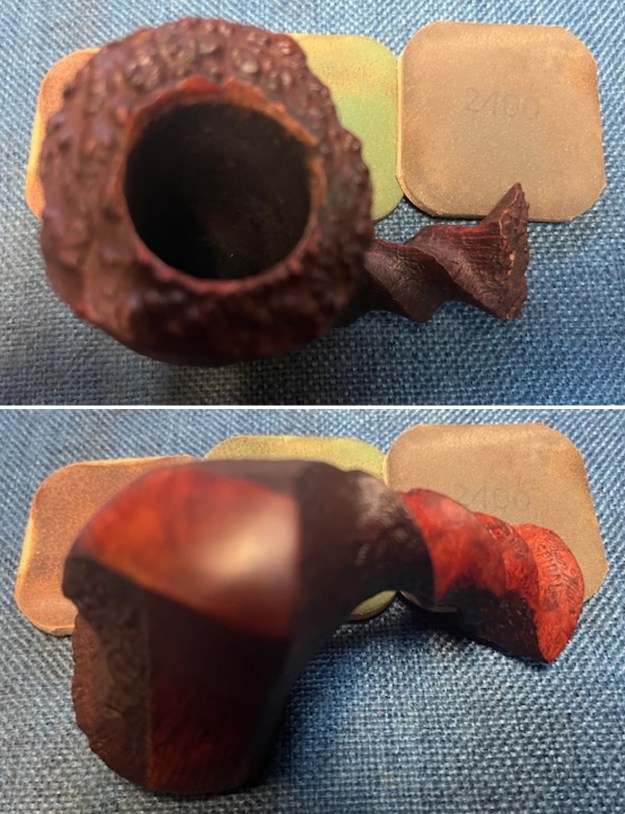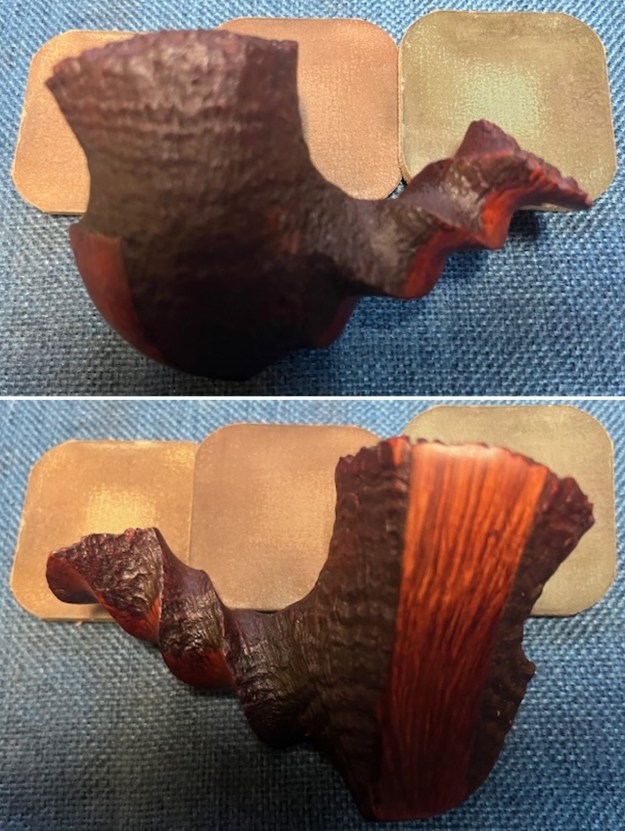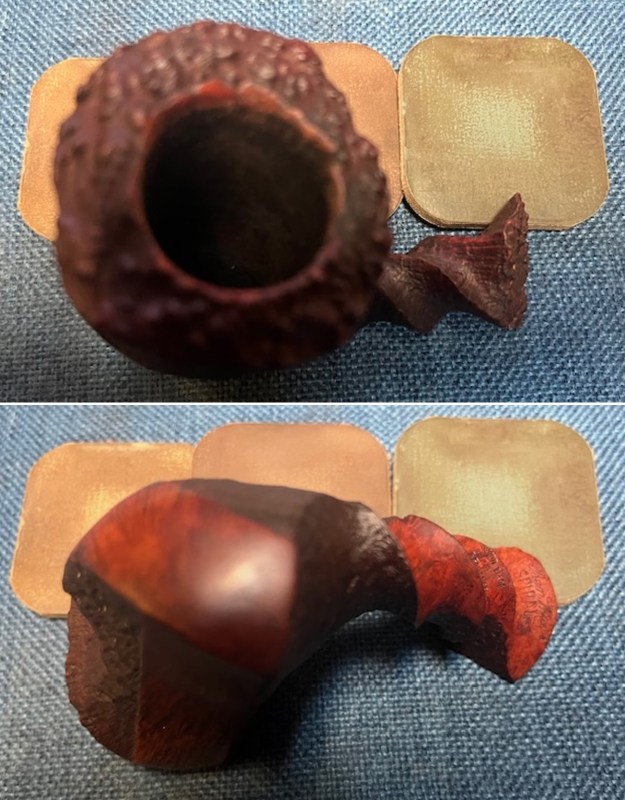
Tag Archives: bite marks

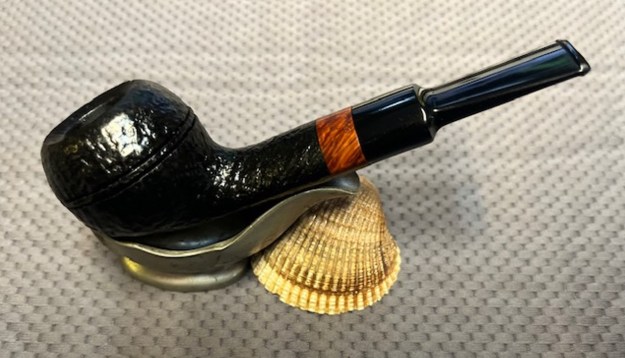
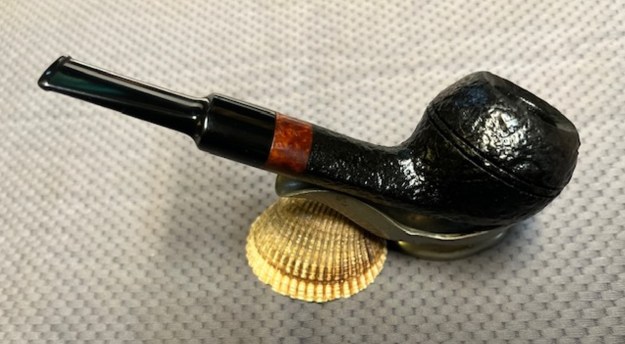
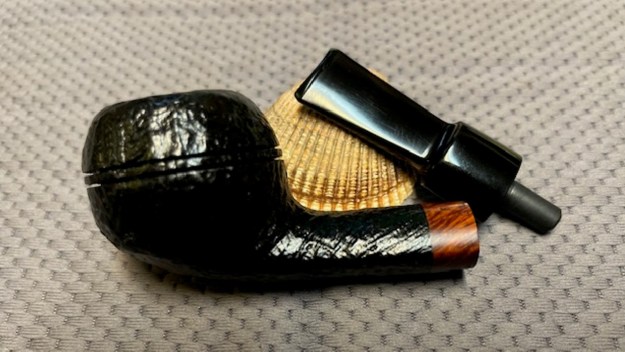
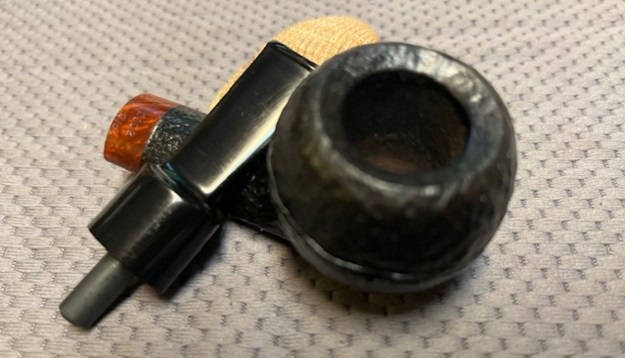
The Back Story of a House of Robertson Bent Billiard Carved for Dick Egelston


by Steve Laug

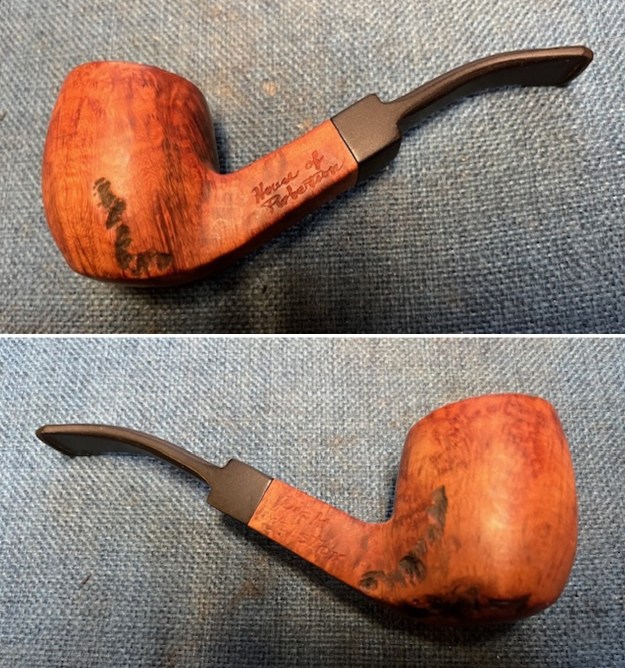
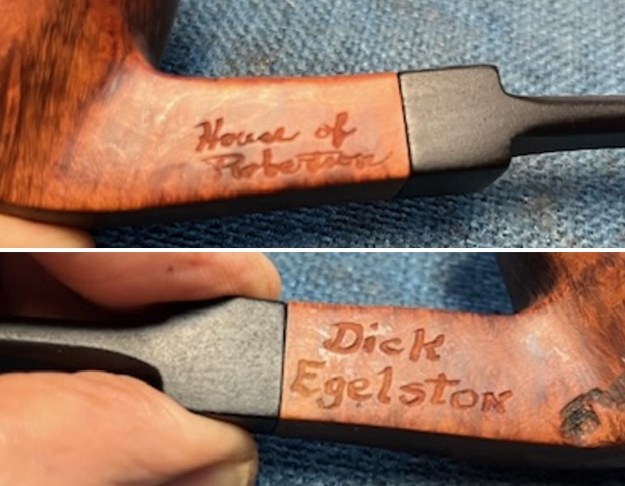
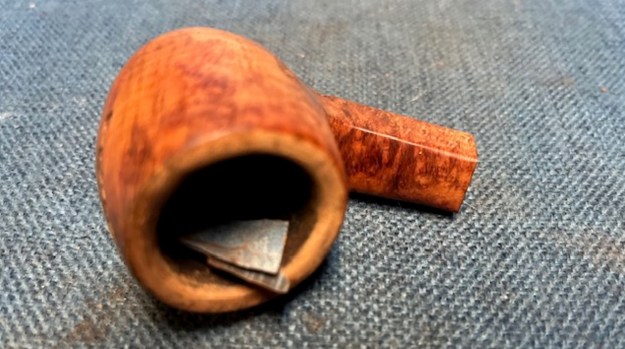
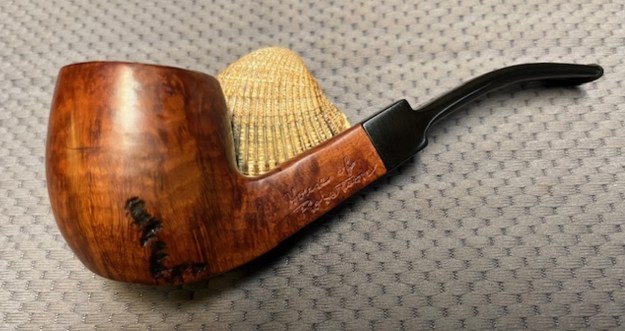
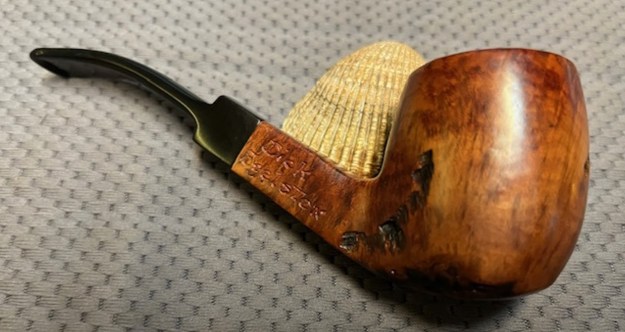
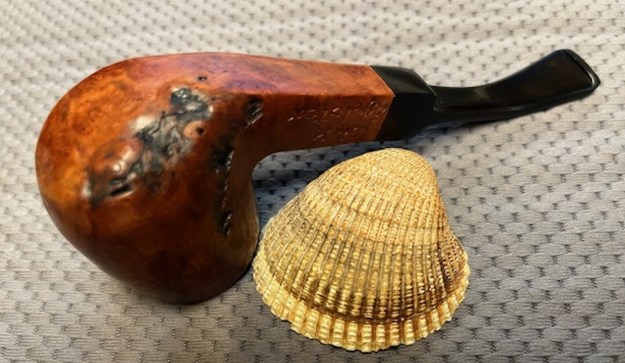
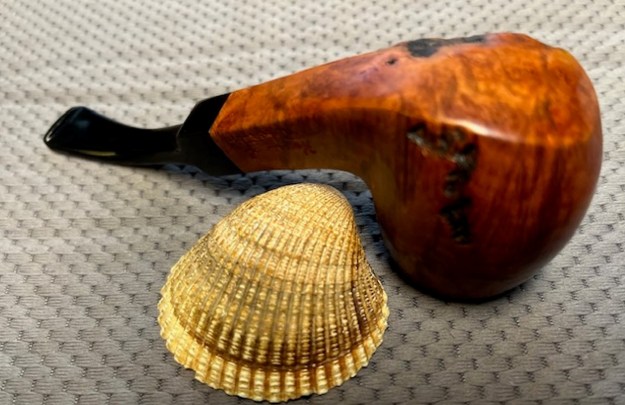
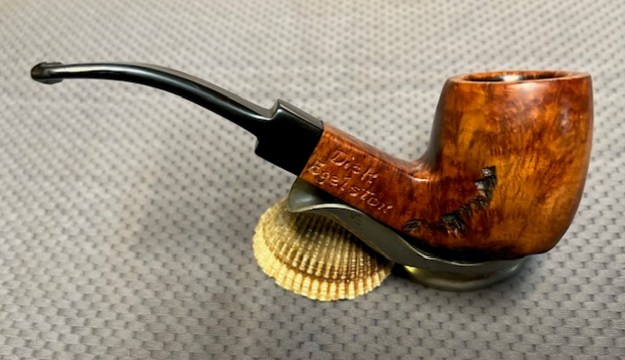
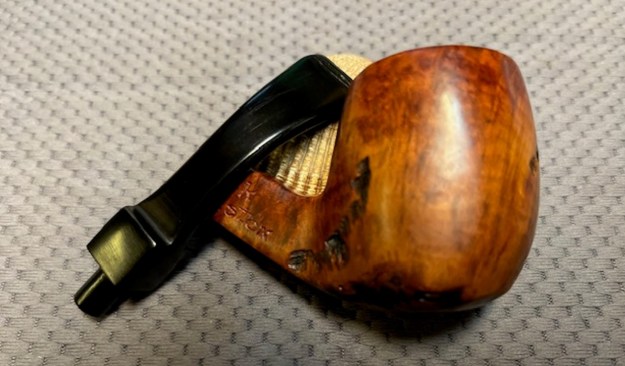
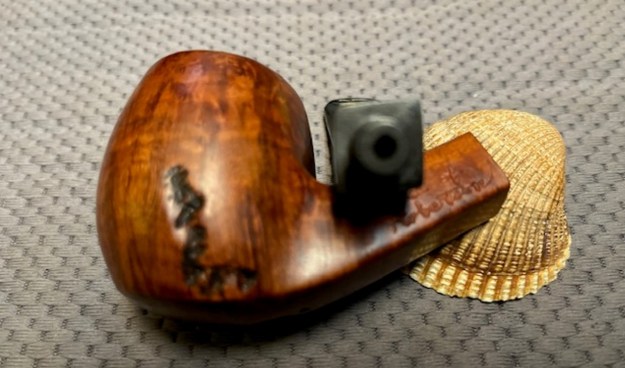
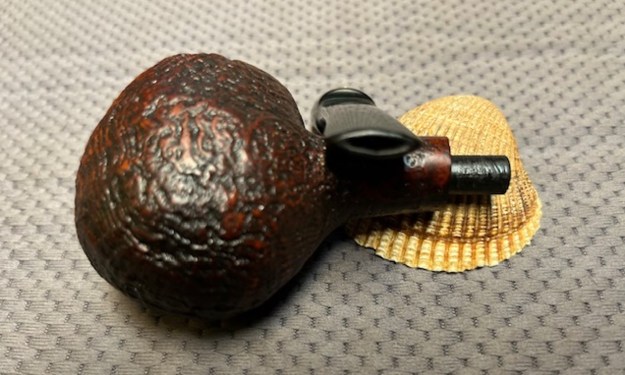
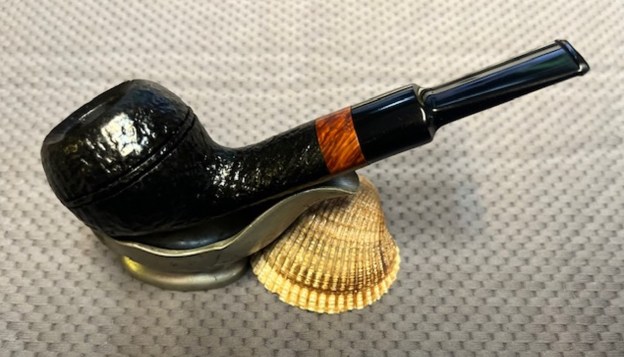
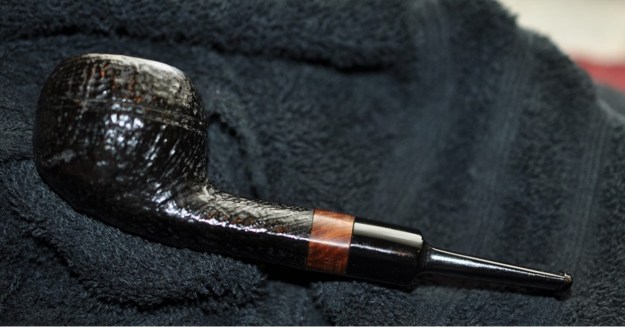
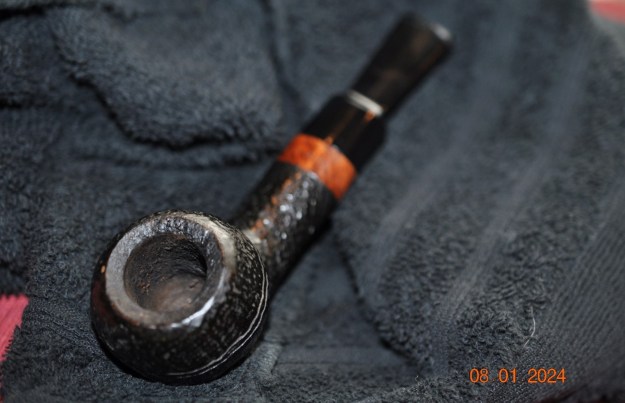
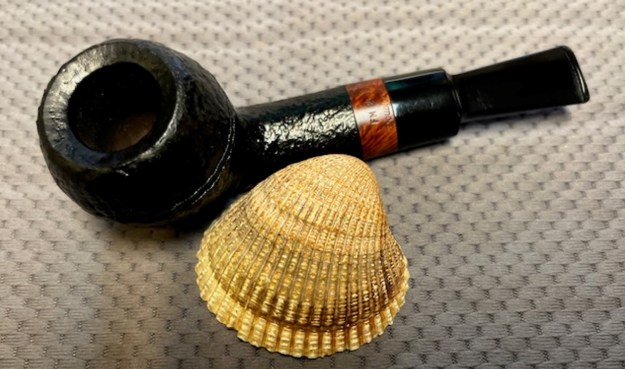
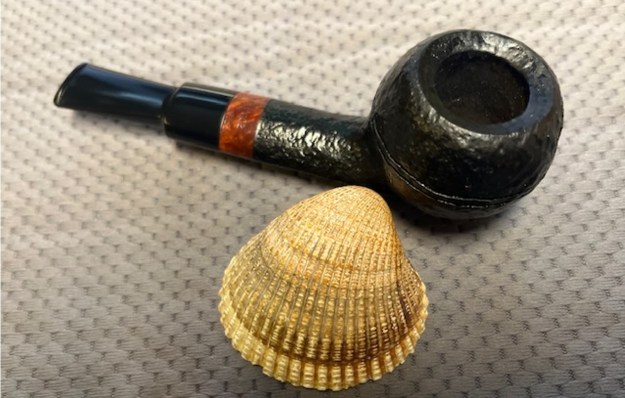
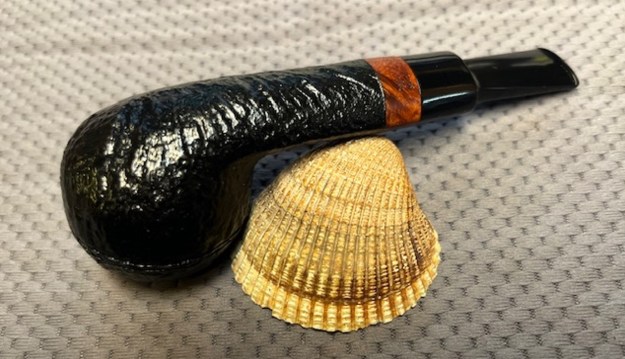
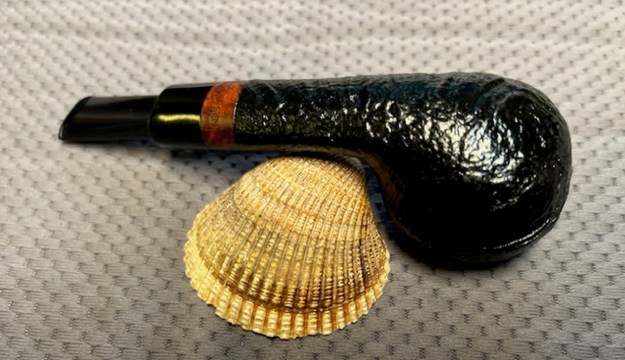
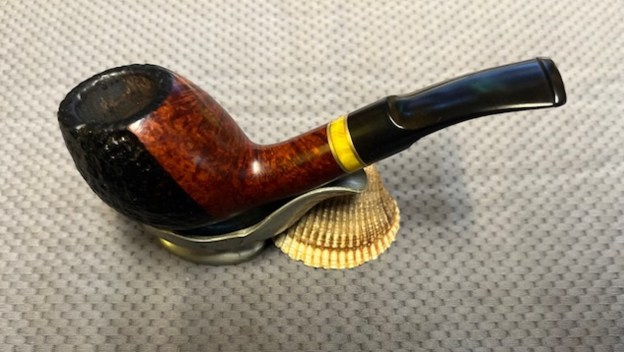
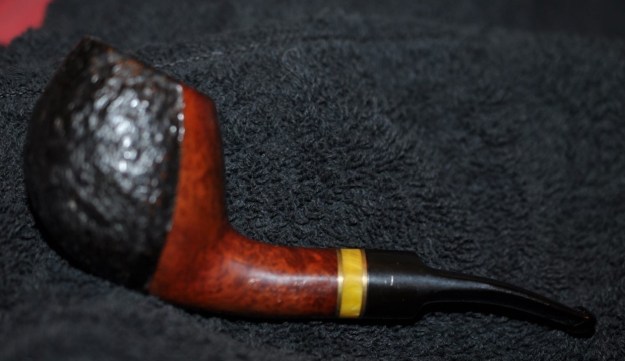
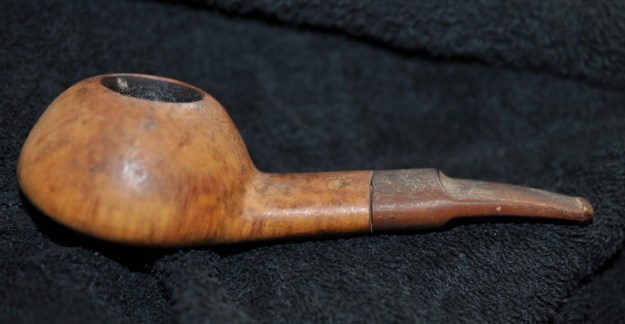
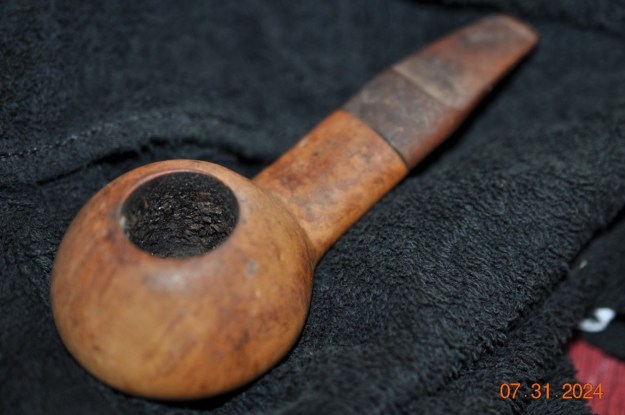
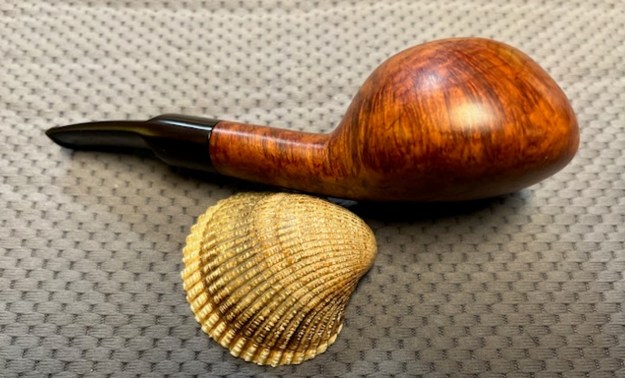
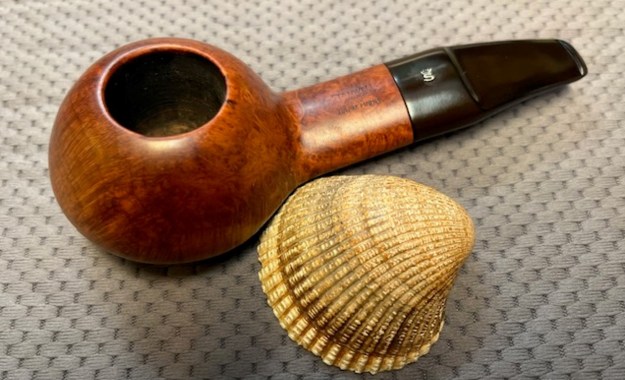
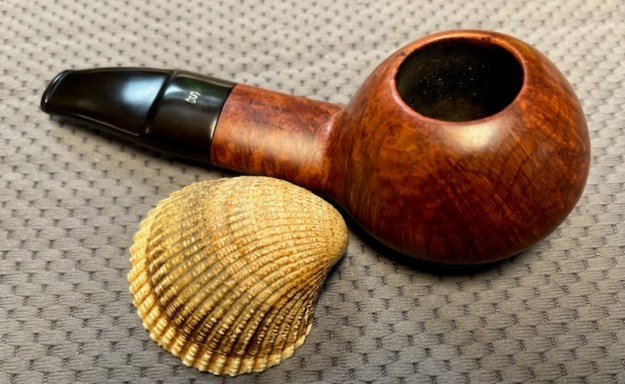
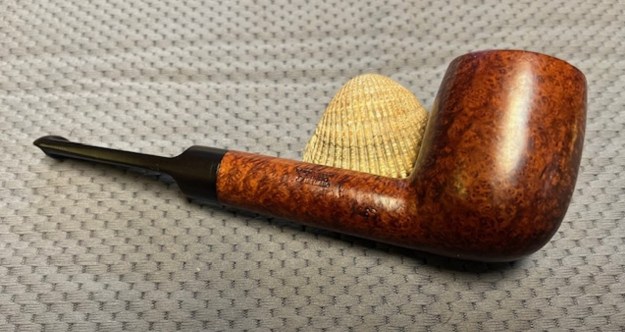
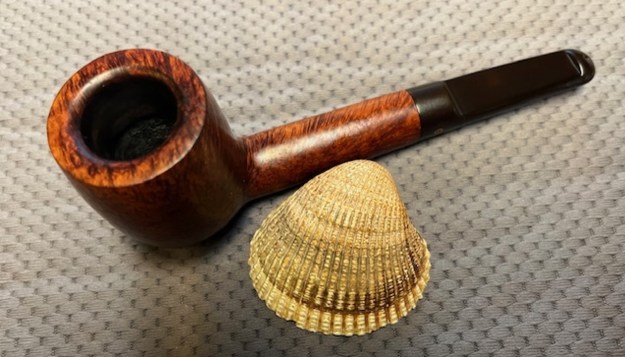
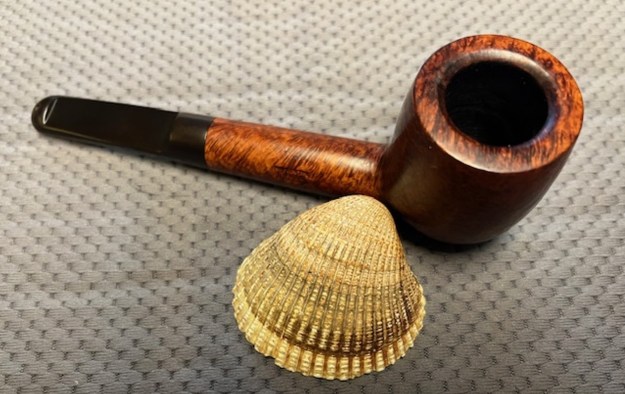
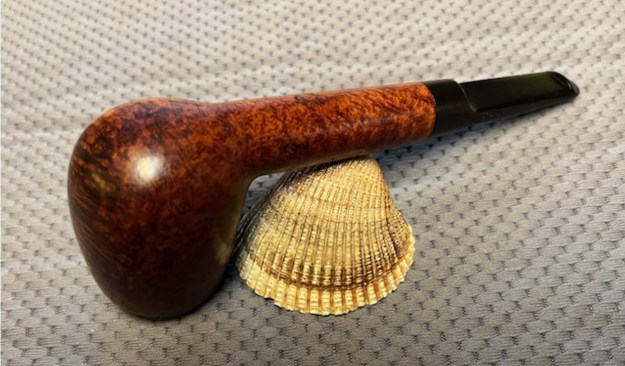
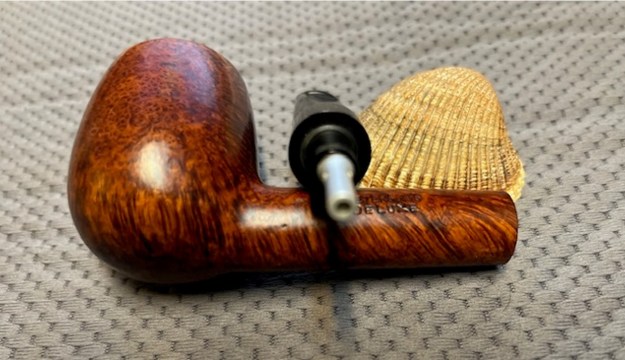
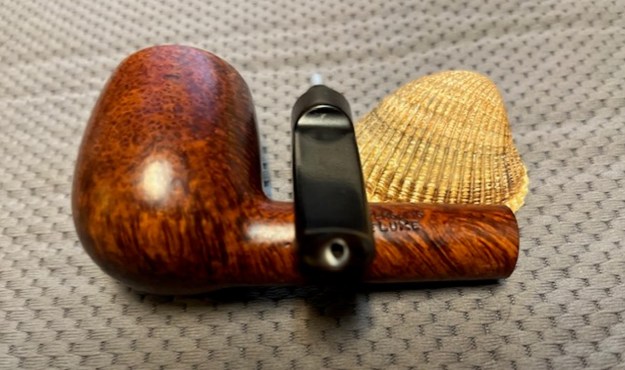
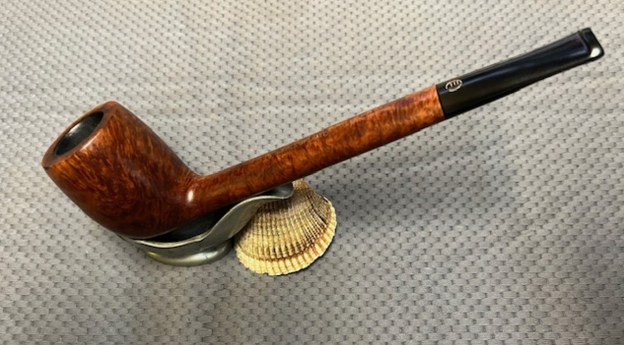
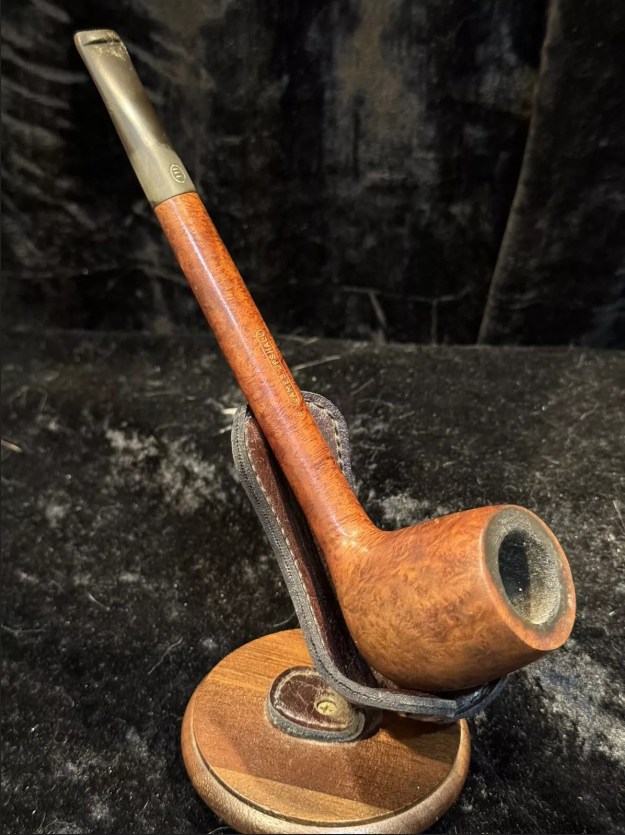
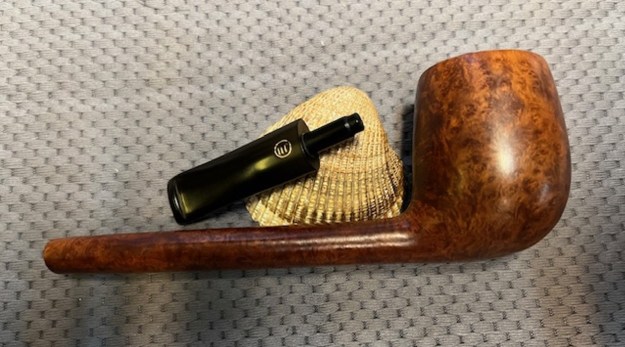
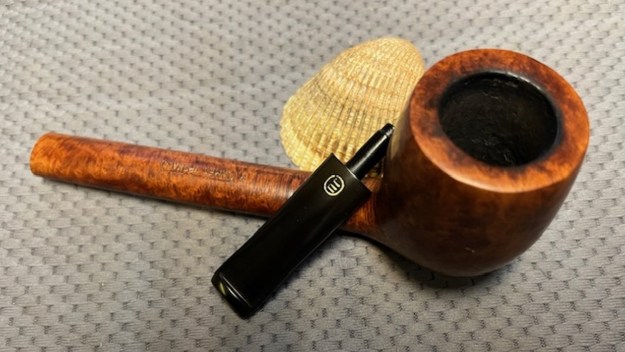
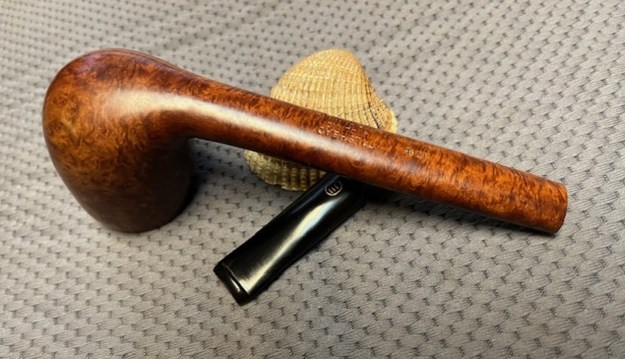
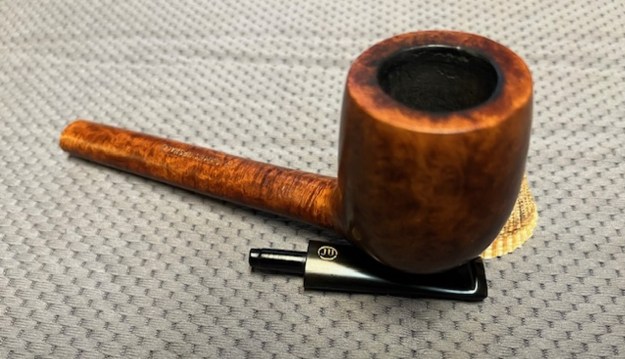
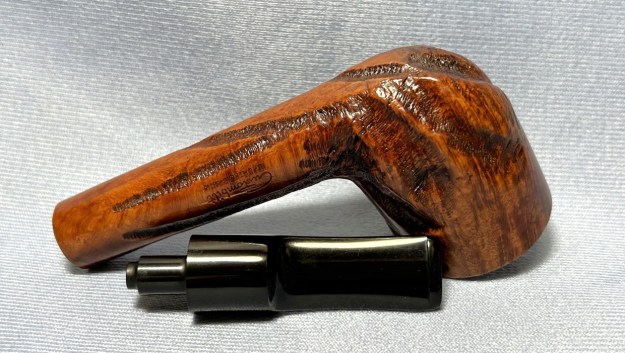
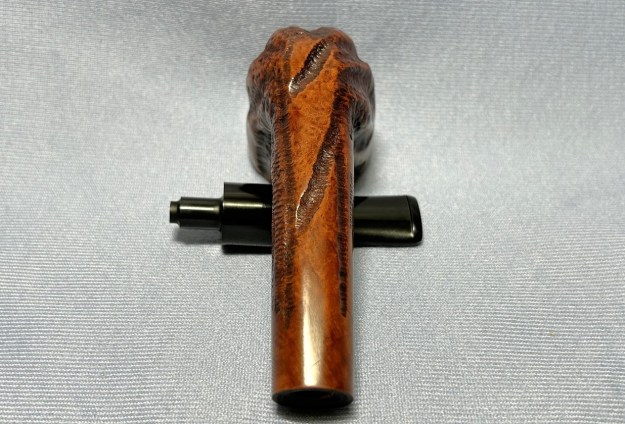
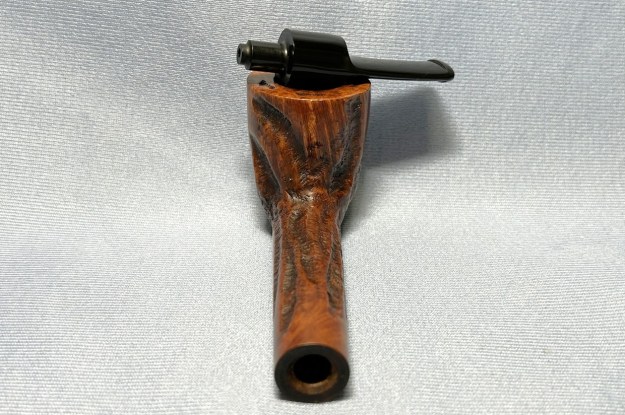
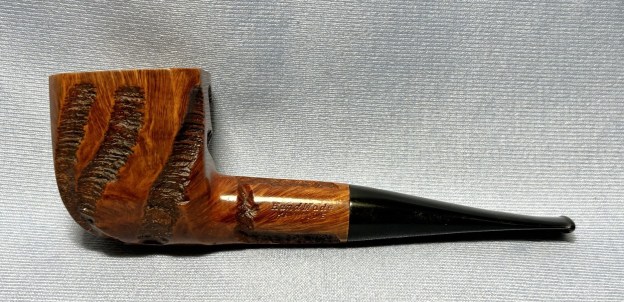
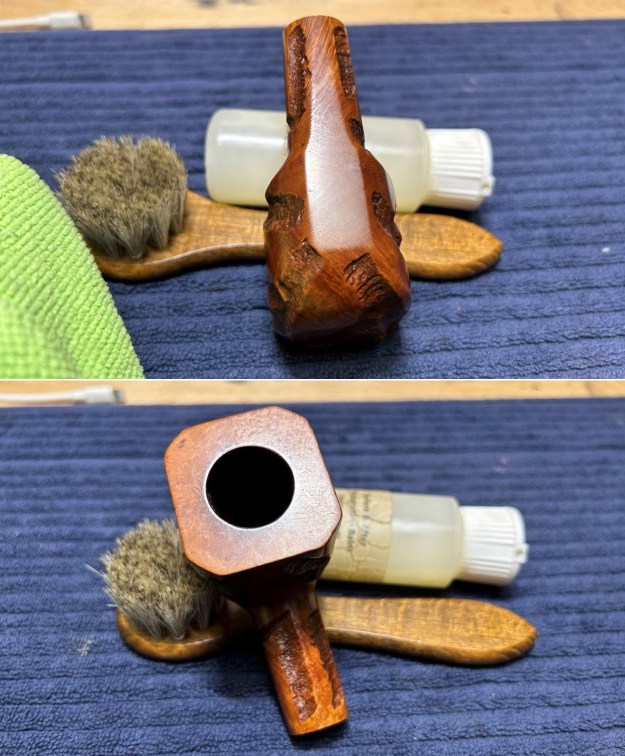
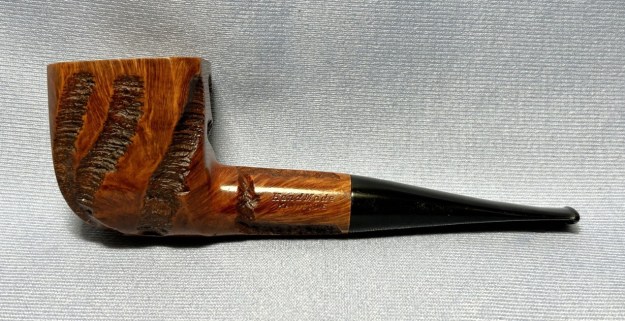
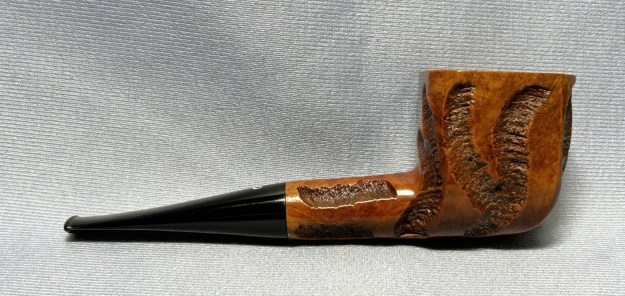
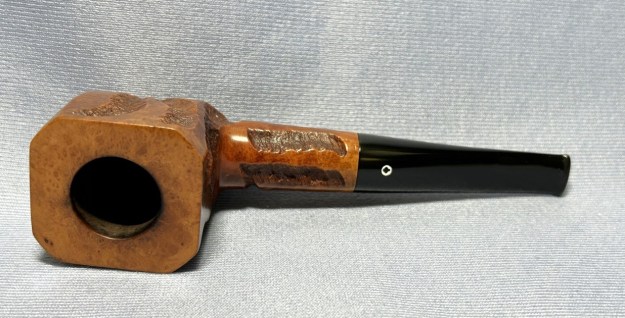
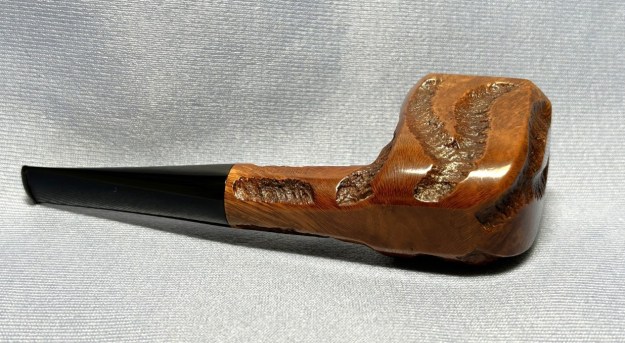
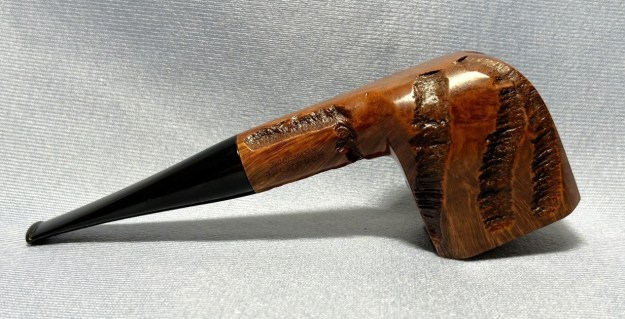
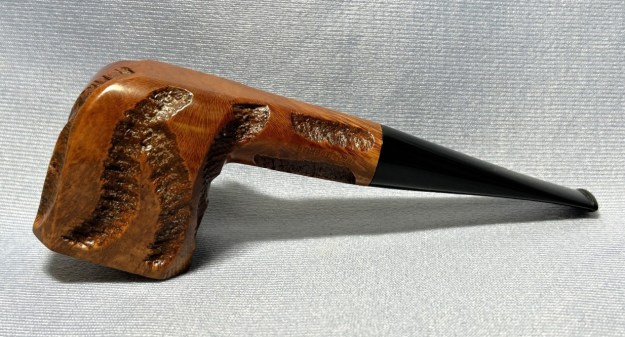
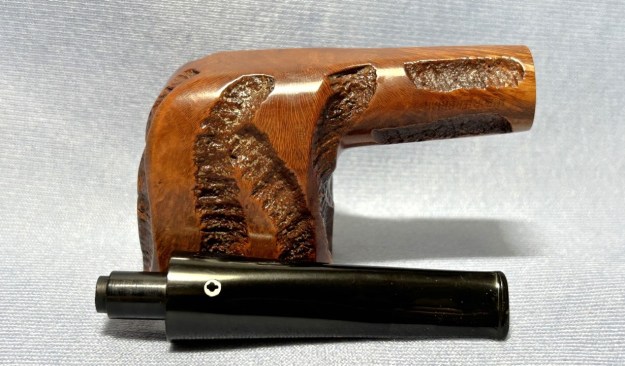
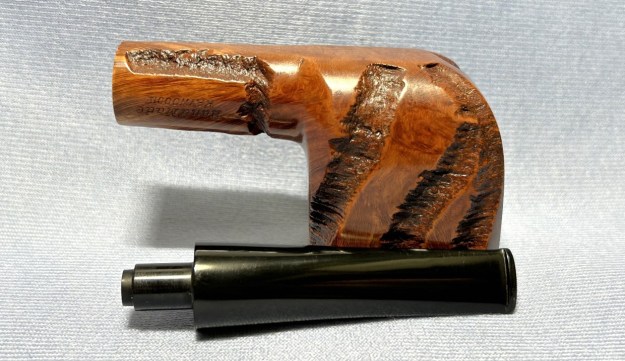
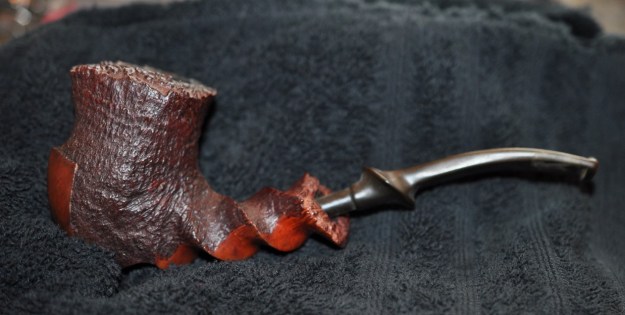
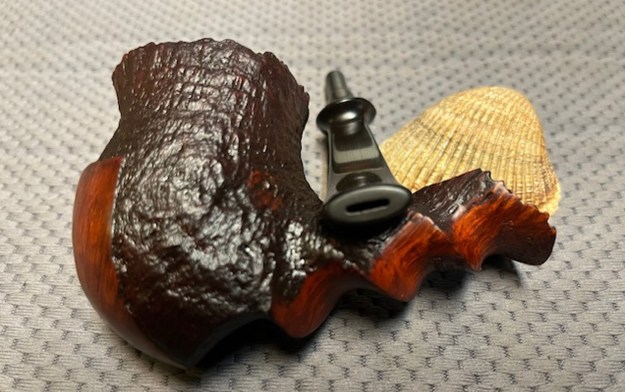
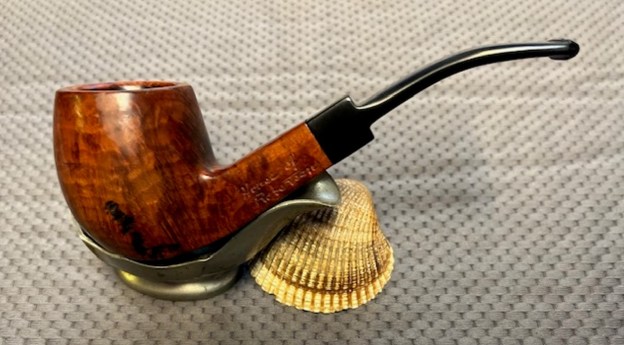
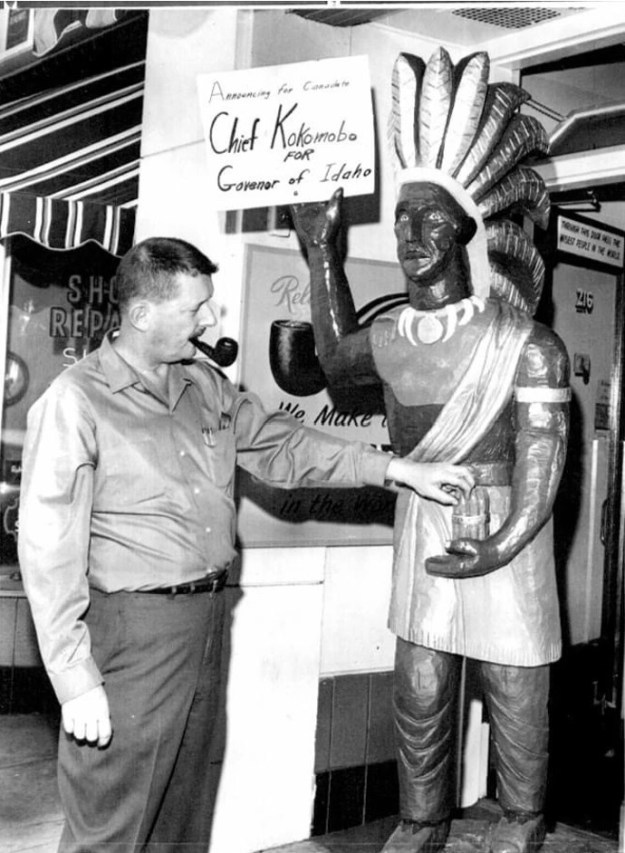
It was a sunny fall day in Boise when Dick Egelston walked past Thayne’s carved cigar store Indian and into the House of Robertson pipe shop. Like Thayne, he had pipe in his mouth and smoke curling out behind his head and greeted his friend Thayne. They knew each other for a long time as both of them were involved in the business community of Boise, Idaho and both belonged to several of the same organizations. Over the years they had become friends. Dick picked up his tobaccos and more than a few pipes from House of Robertson’s. He commented more than once that he was personal keeping Thayne’s business afloat with is purchases. Today, Thayne greeted him with a surprise. He had carved Dick a pipe. It was a square shank bent Billiard with some great grain around the bowl and a few swirls of rustication and some plateau on the heel on the right side. What made this one particularly special was Thayne or Jon, his son had etched Dick’s name on the right side of the shank. I think Dick must have been delighted with this pipe made for him by his friend. I know I would have been. To have both a pipe carved by Thayne and one that had his name etched on would have been a double delight.
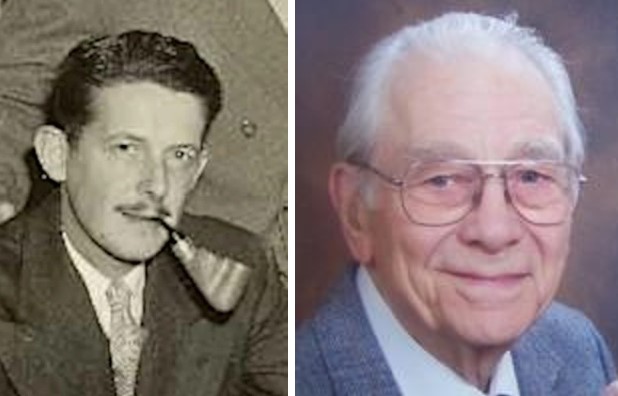
Just to set the record straight the story above is from my imagination but I don’t think it is far off from the facts. To the left are a photo of a young Thayne Robertson with a pipe in his mouth and an older Dick Egleston. I know that Dick Egleston was part of the Shriner’s organization in Boise and I know Thayne was a Mason and was well aware of the work of the Shriners (https://rebornpipes.com/2021/10/31/house-of-robertson-pipes-boise-pipe-carver-thayne-robertson/). From what I can find both were Masons. I know that both were in business in the Boise area and that both smoked a pipe. The day of the pipe’s delivery to Dick is purely my imagination. When we purchased the pipe, I thought it would be interesting to do some research on Dick’s name. I found an obituary for him dated October 12, 2020. It stated that he died at the age of 97. The obituary links him and the family to the Boise and the surrounding area (https://www.legacy.com/us/obituaries/idahostatesman/name/richard-egelston-obituary?id=7848148). My assumption is that the pipe I am working on belonged to this very same Dick Egelston. Of course, I cannot prove that it did, but I think it is a fair guess. How the pipe went from Boise and the estate of Dick to the seller in Baton Rouge, Louisiana I don’t think will ever be clear. We contacted the seller and he does not remember who he purchased it from. But really, you can make up your own story of the travels of this name pipe that bears the name of both the maker and the recipient. It is a fun process to enter into and one that always adds colour to any pipe I work on. Now let’s look at the pipe itself.

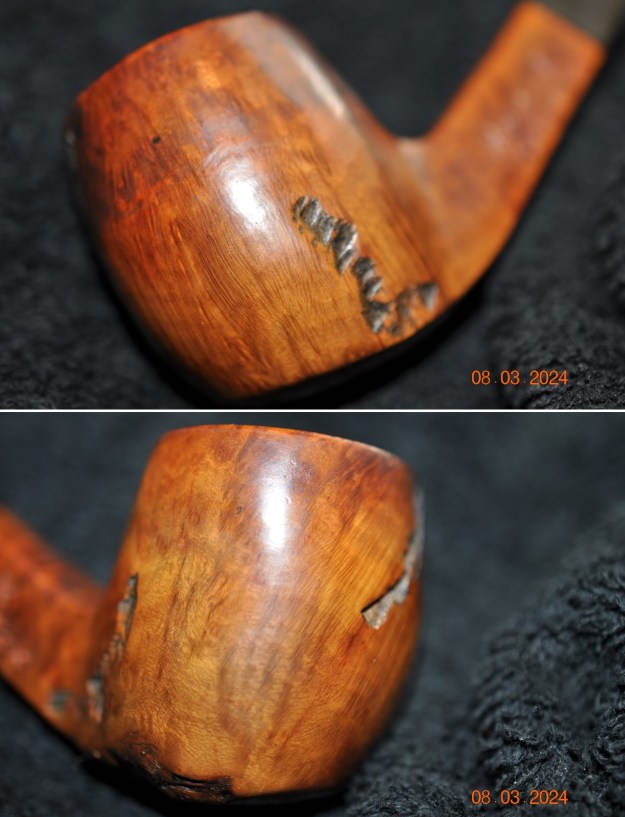
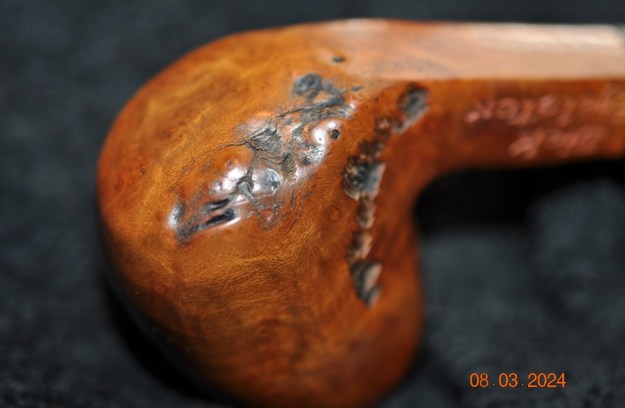
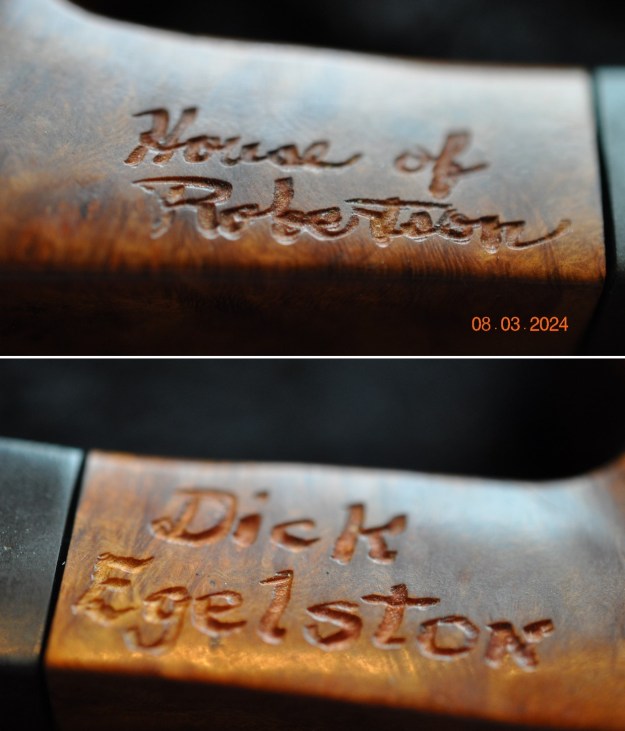
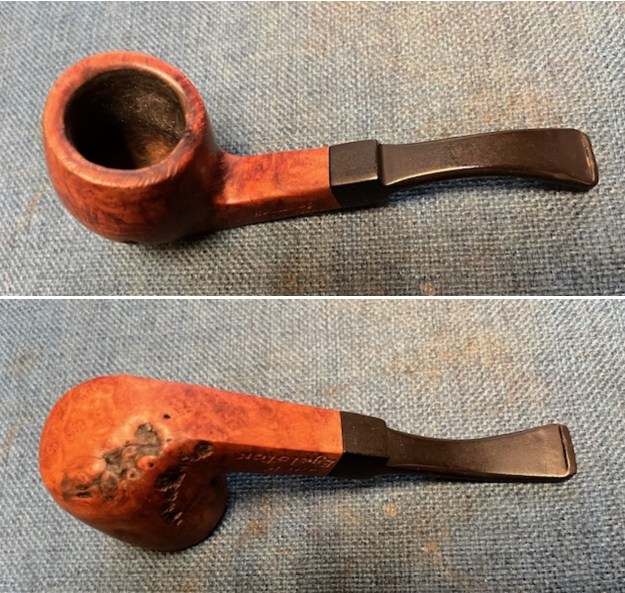
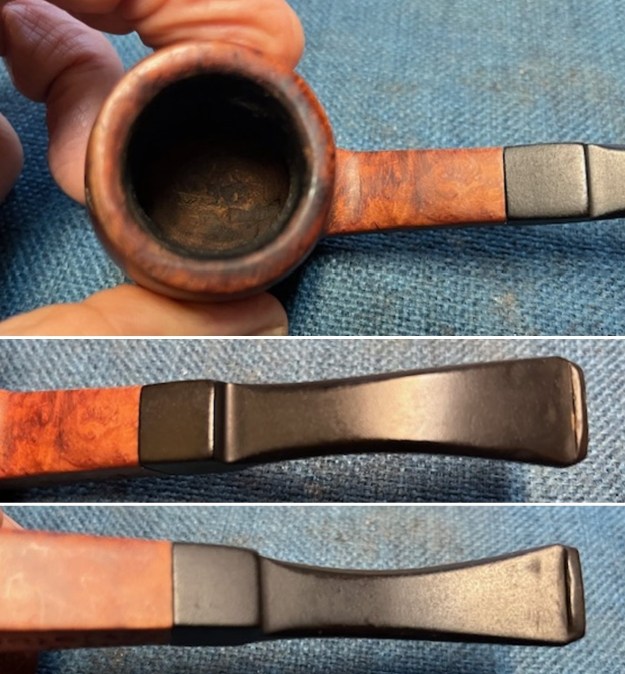
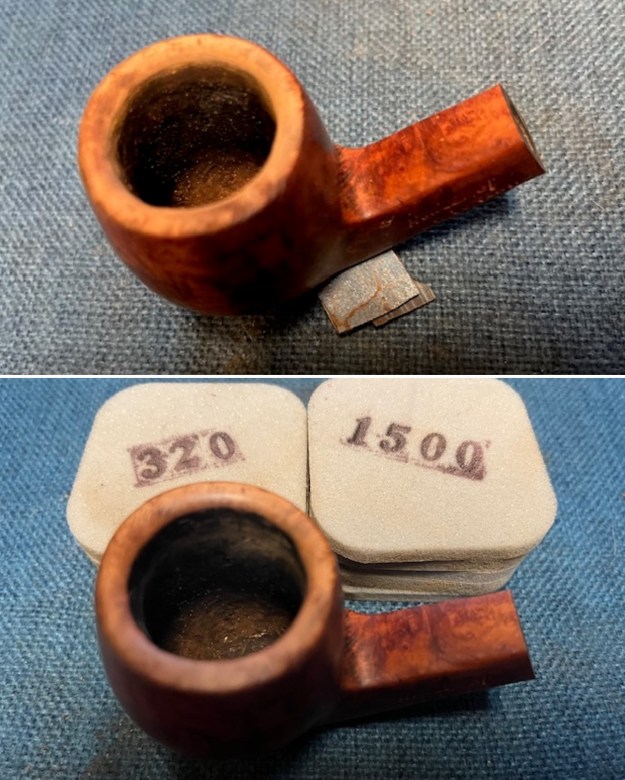
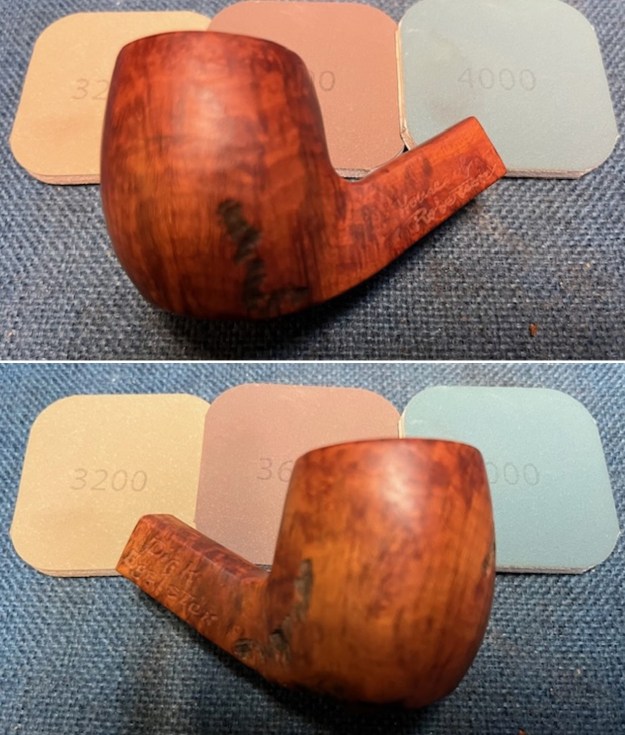
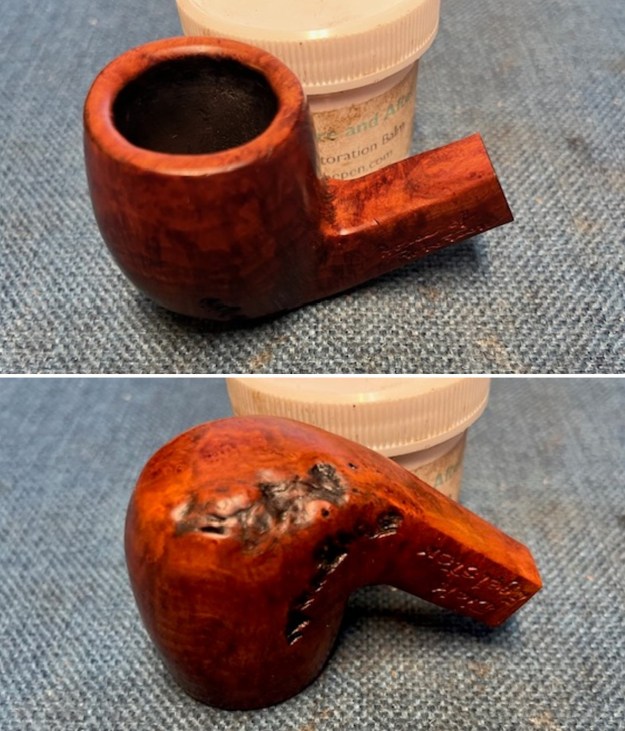
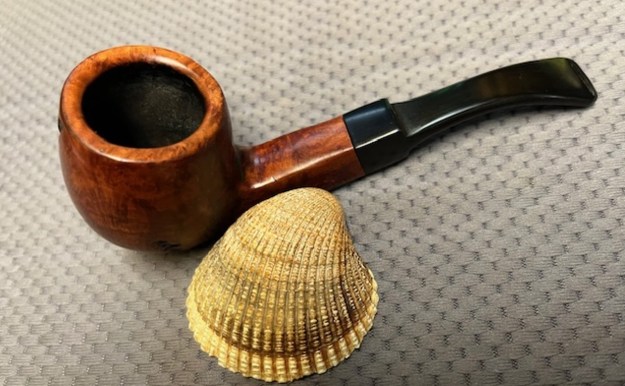
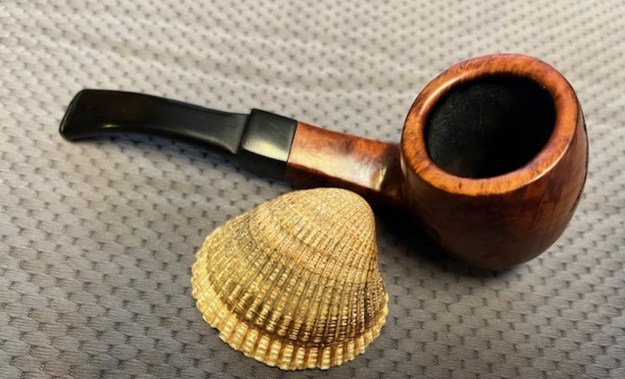
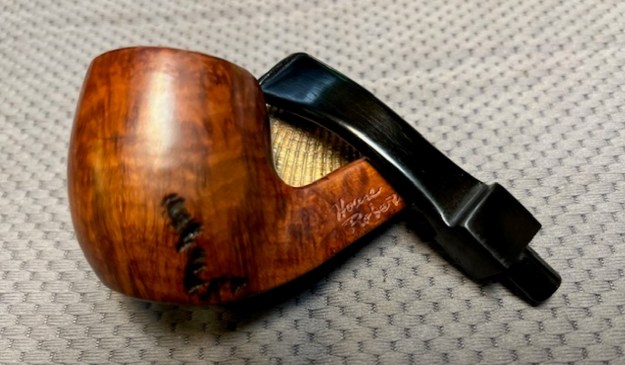
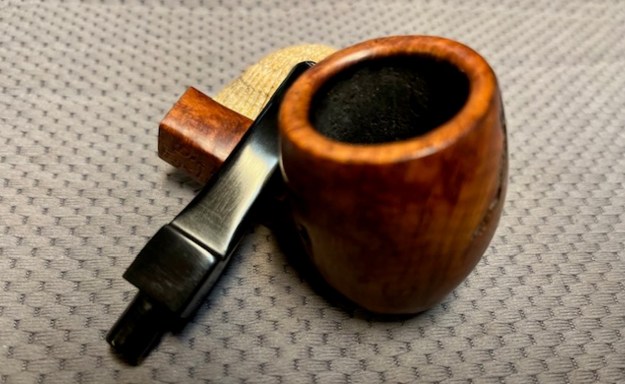
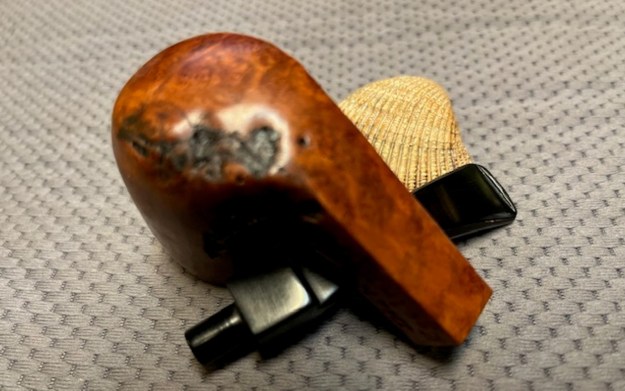
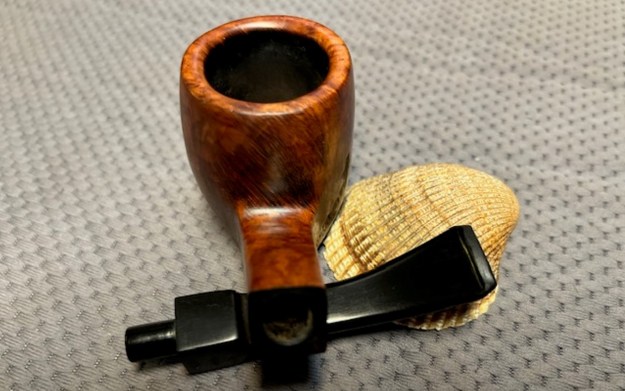
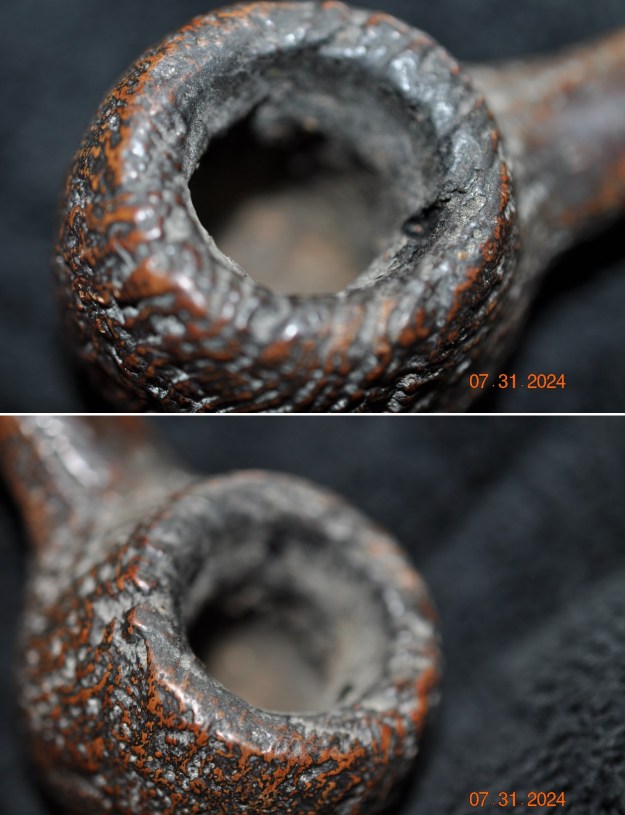
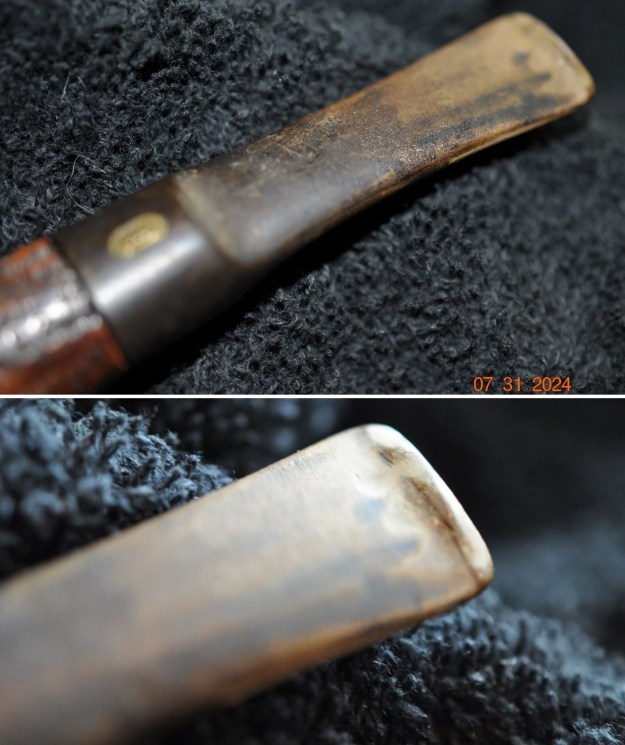
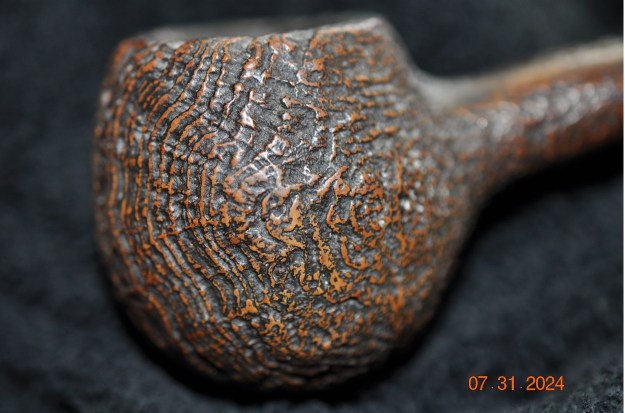
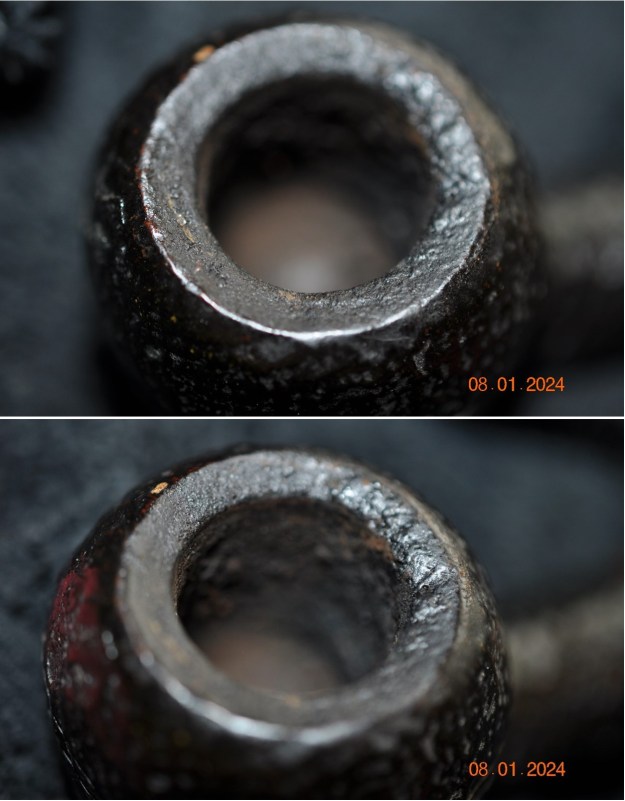
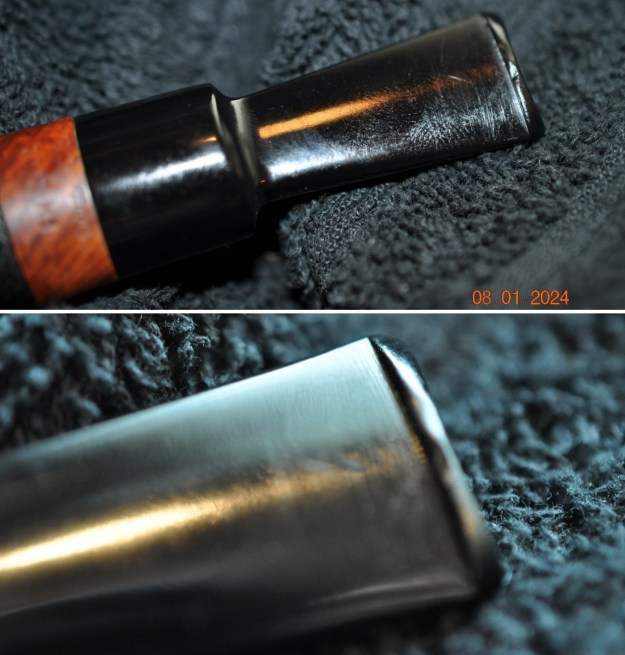
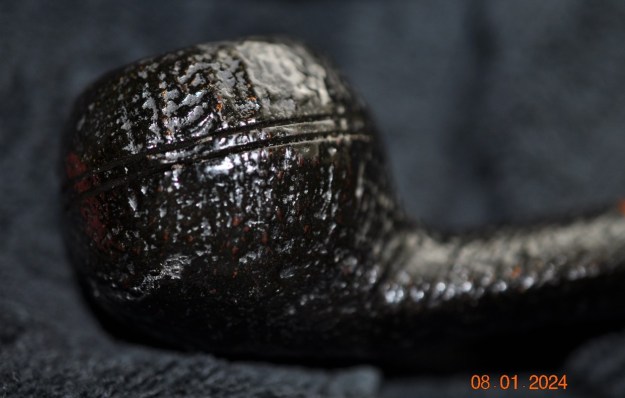
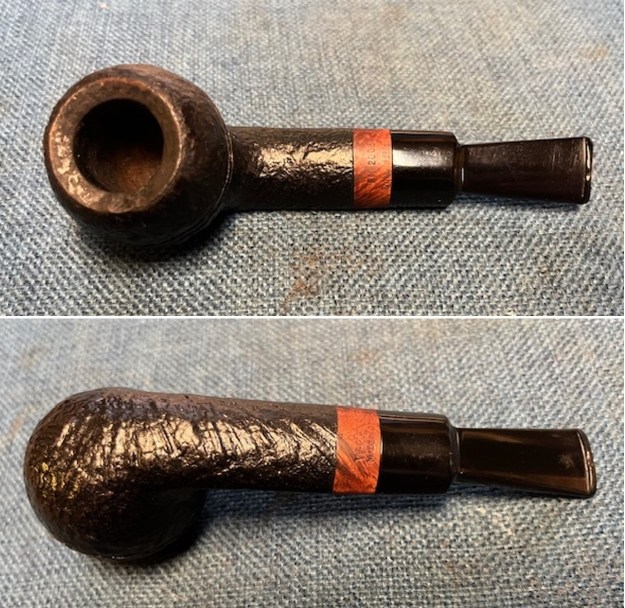
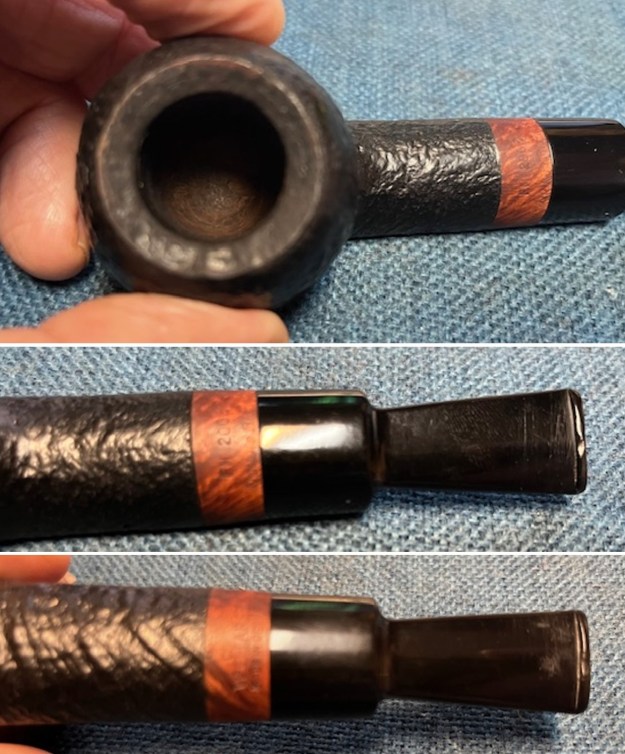
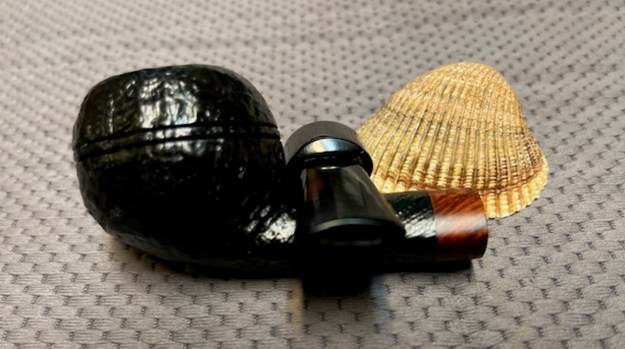
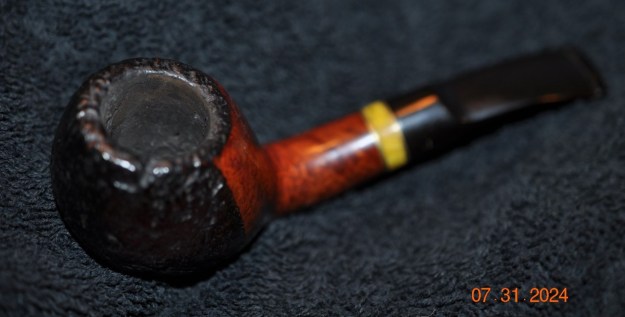
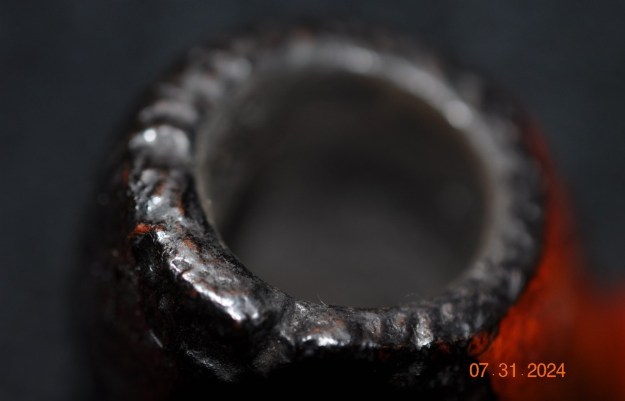
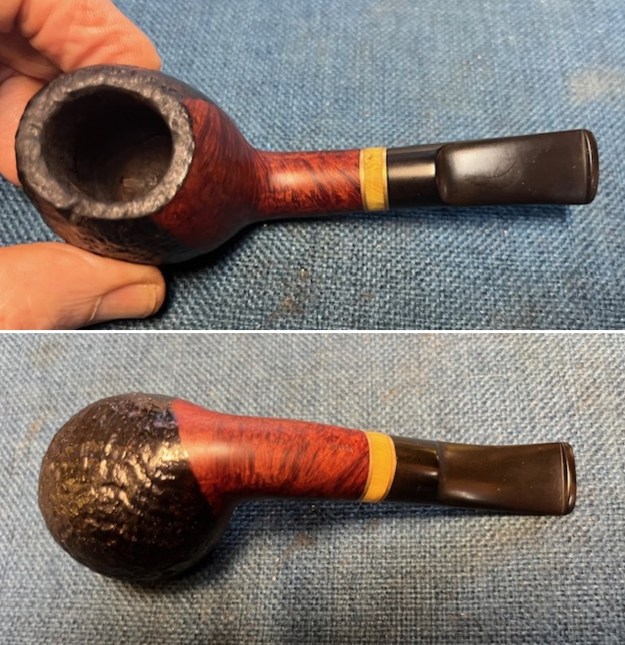
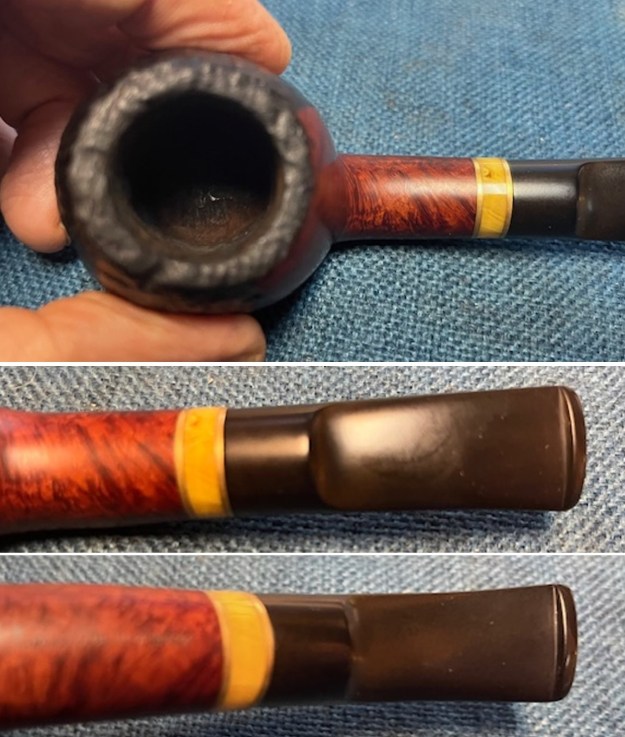
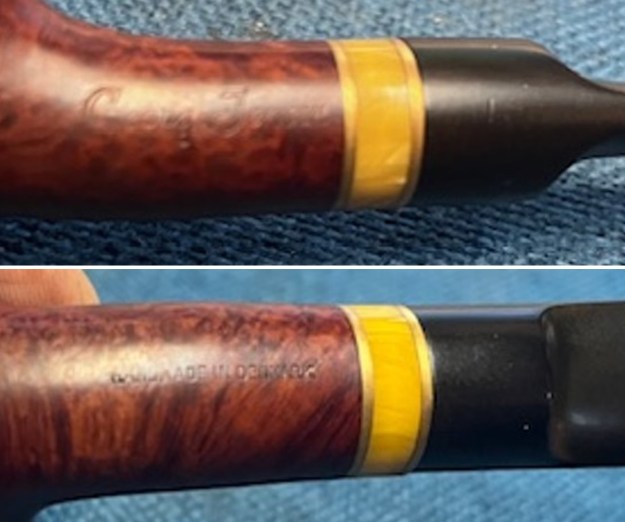
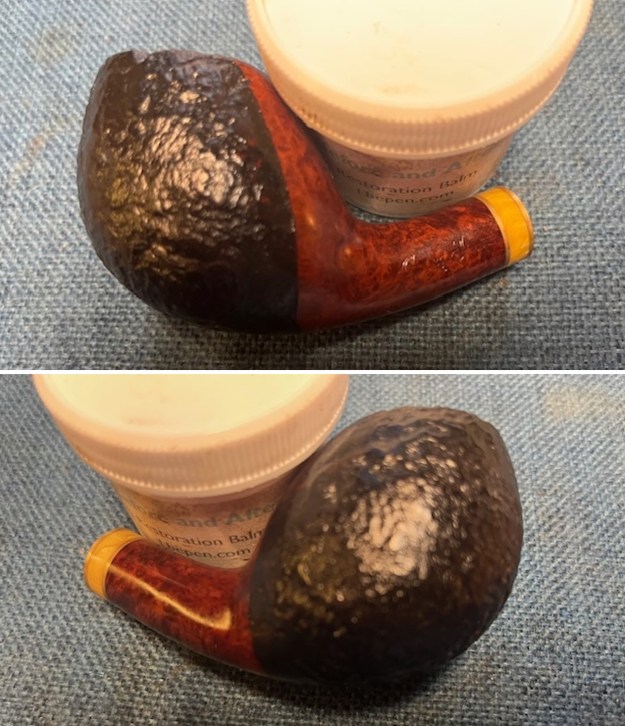
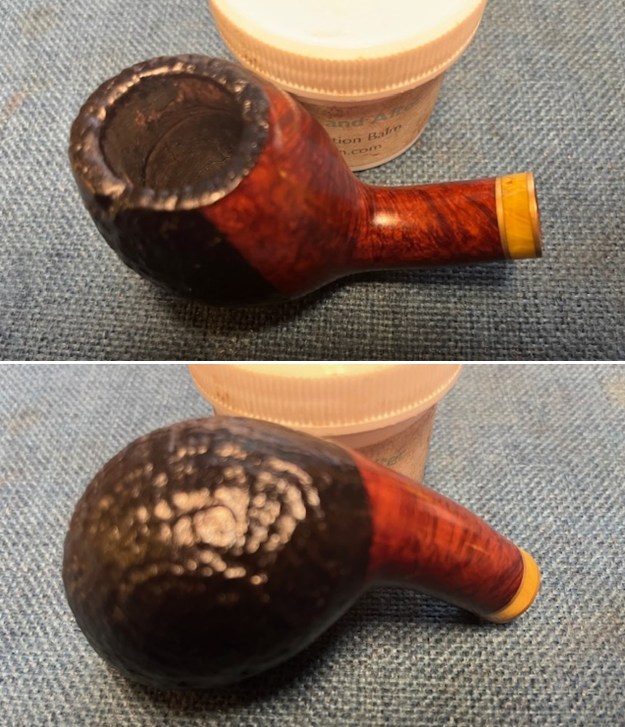
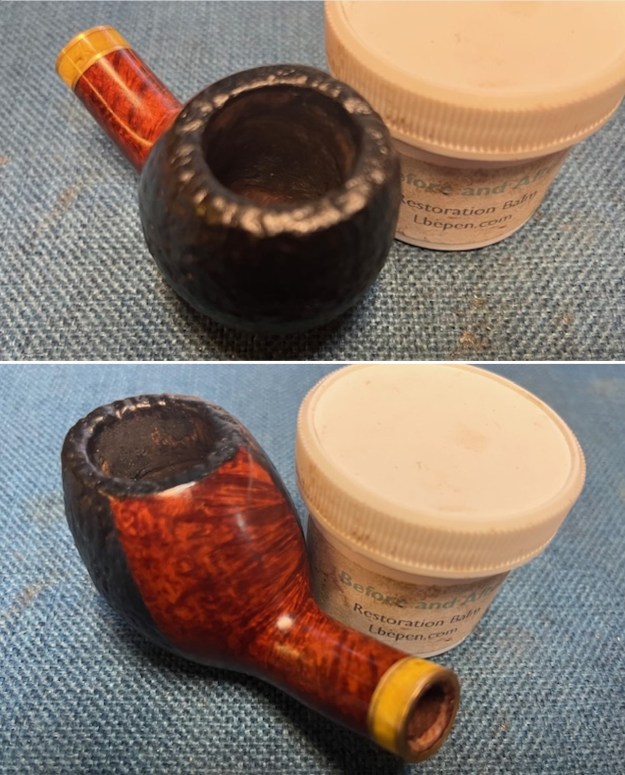
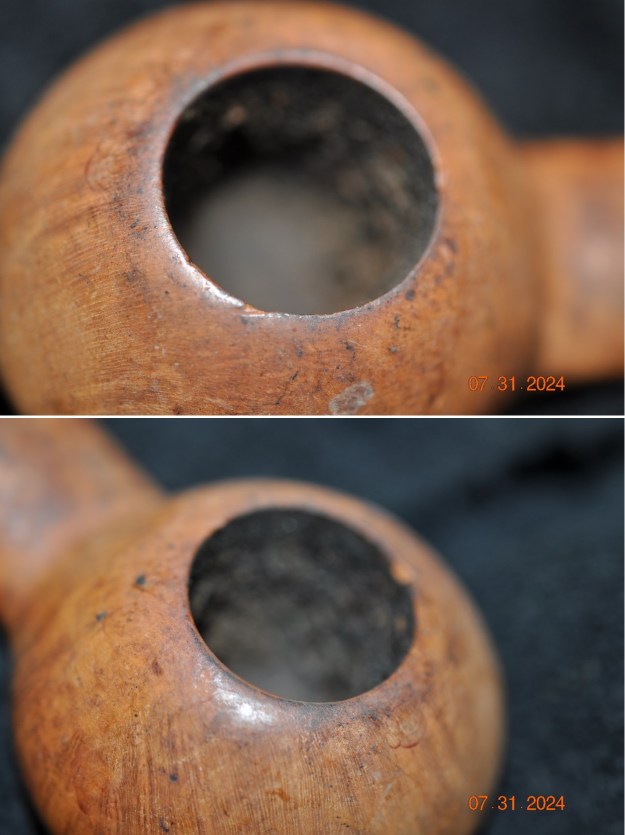
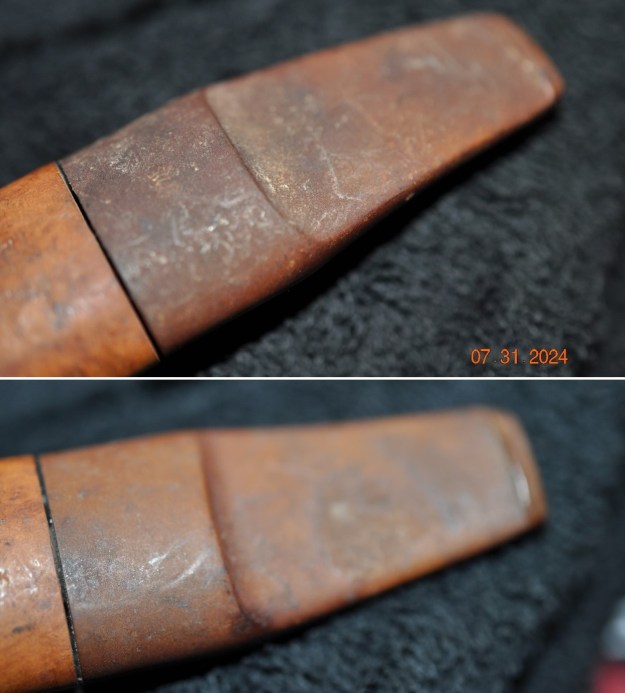
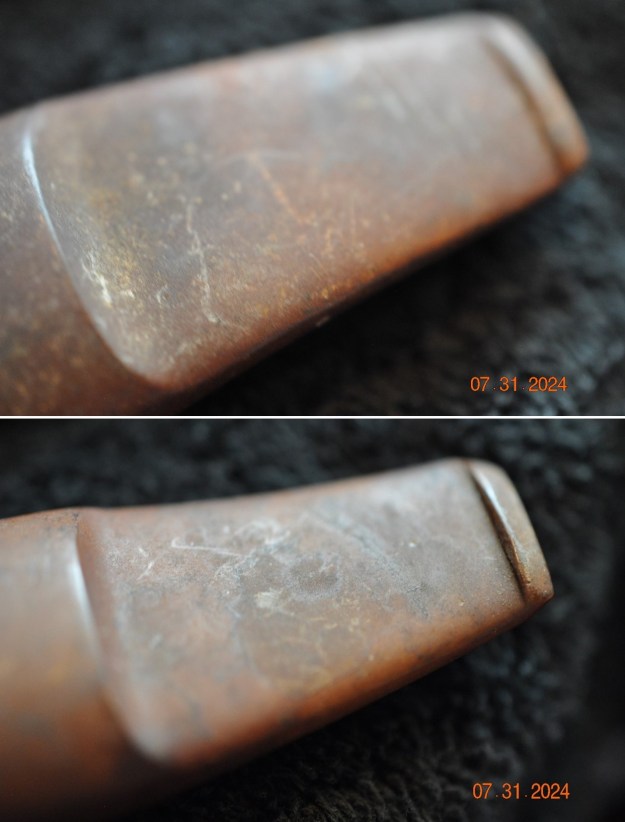
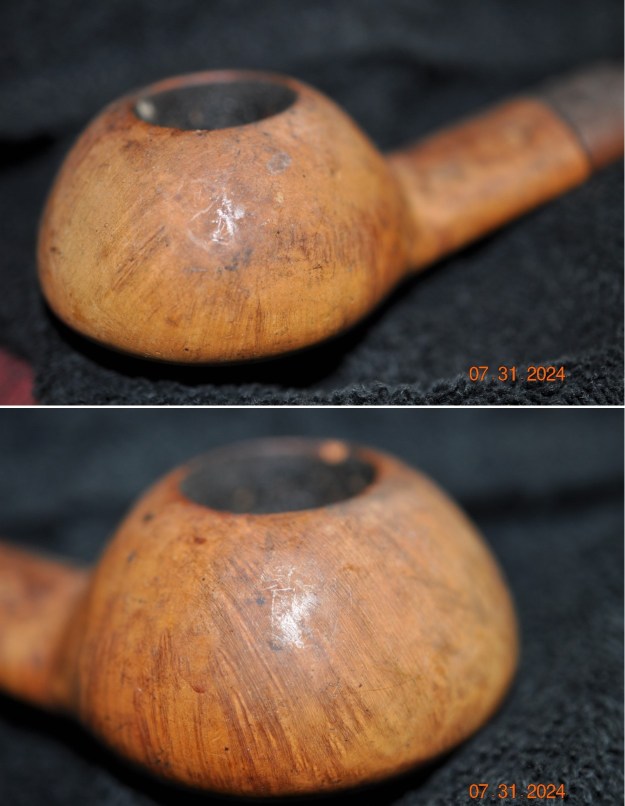
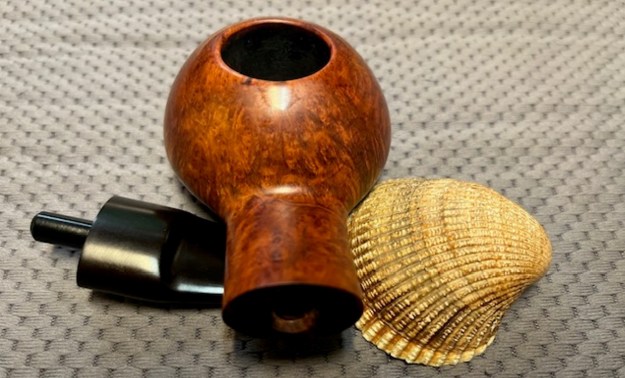
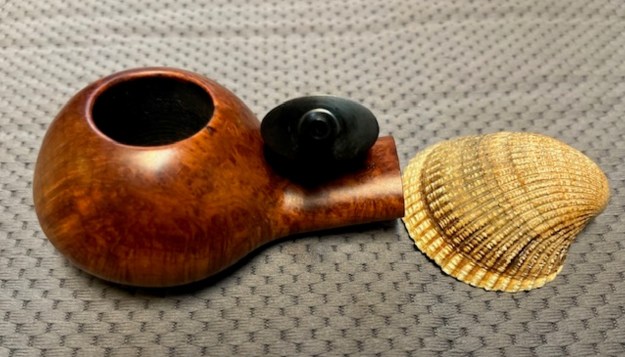
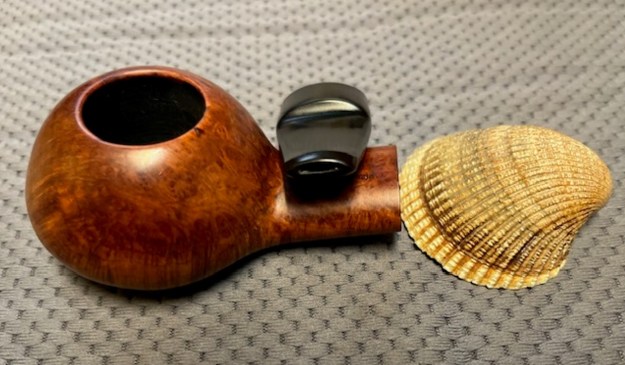
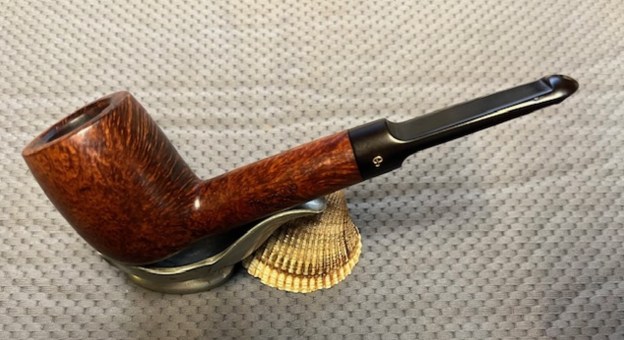
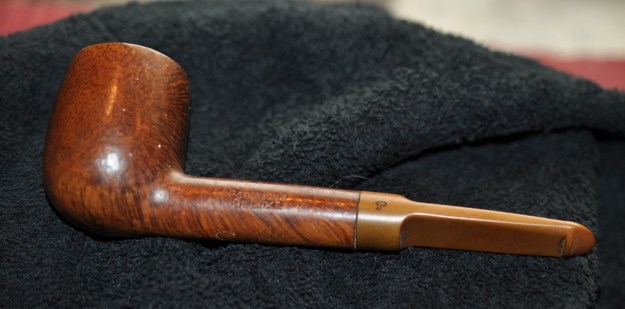
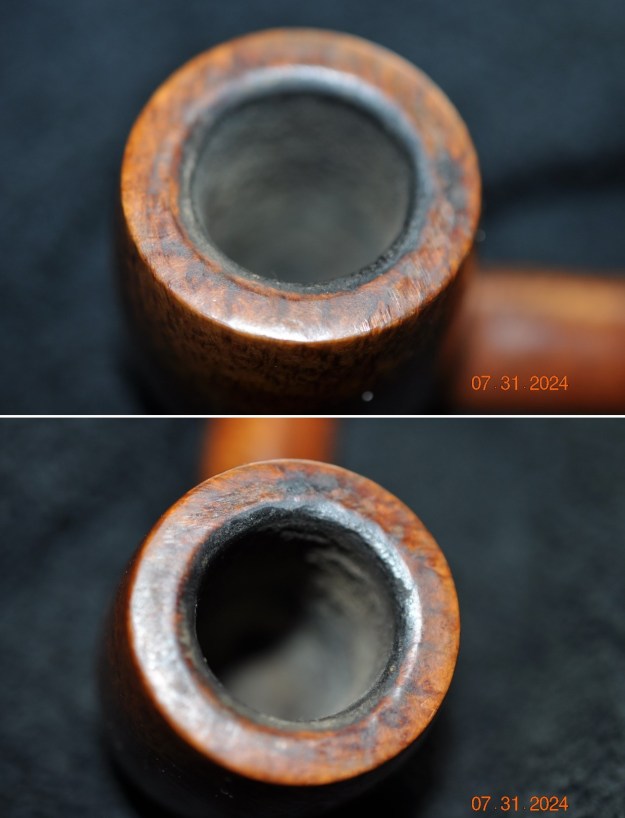
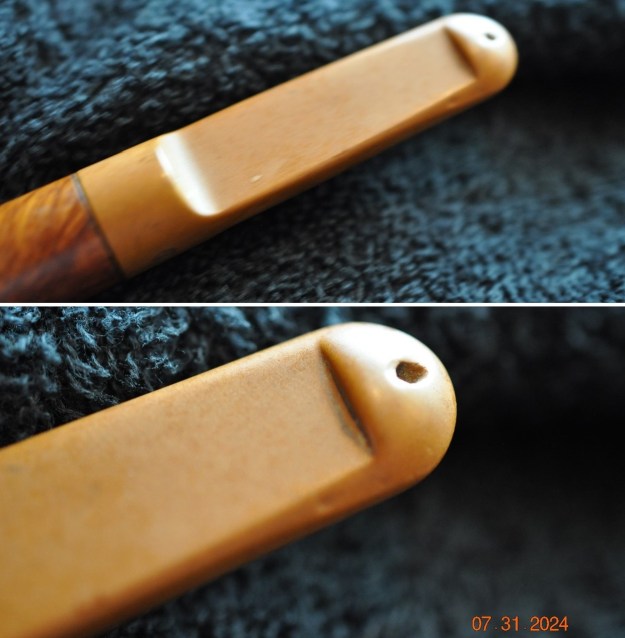
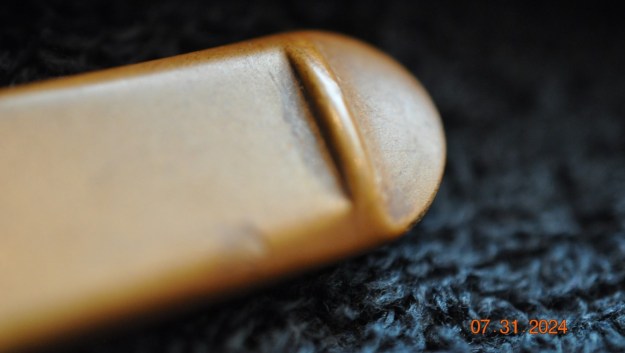
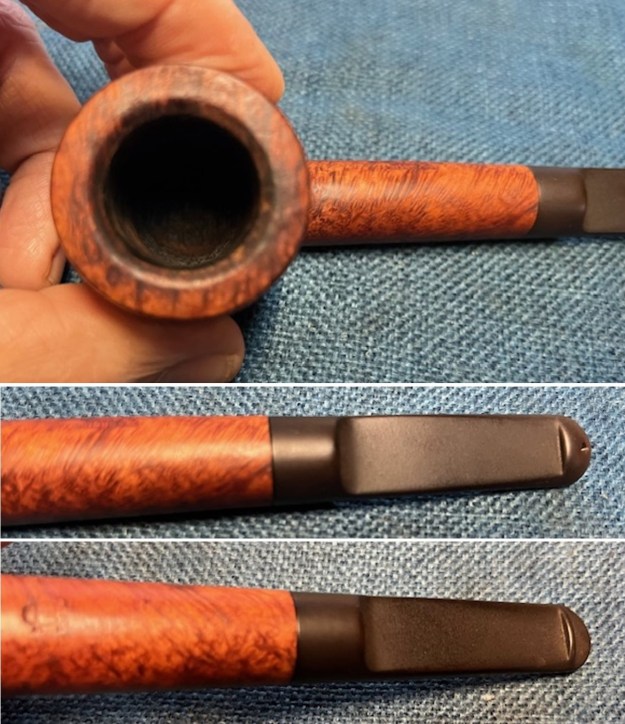
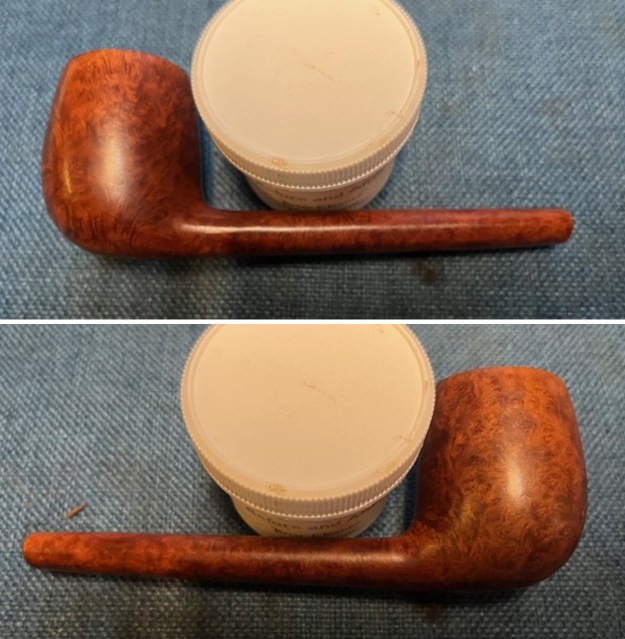
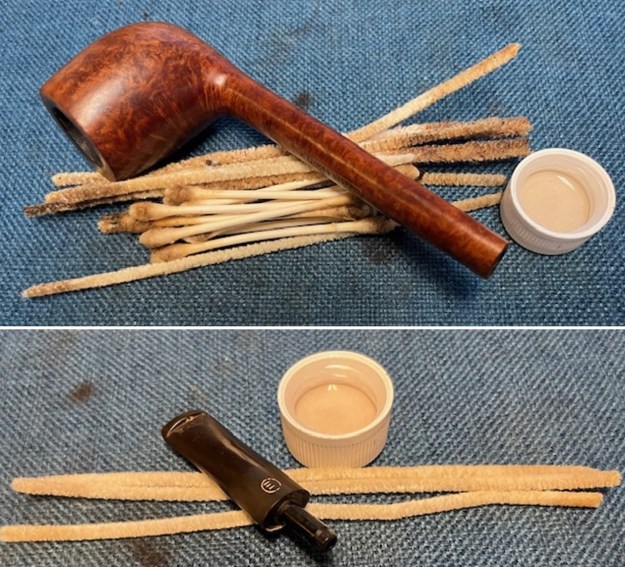
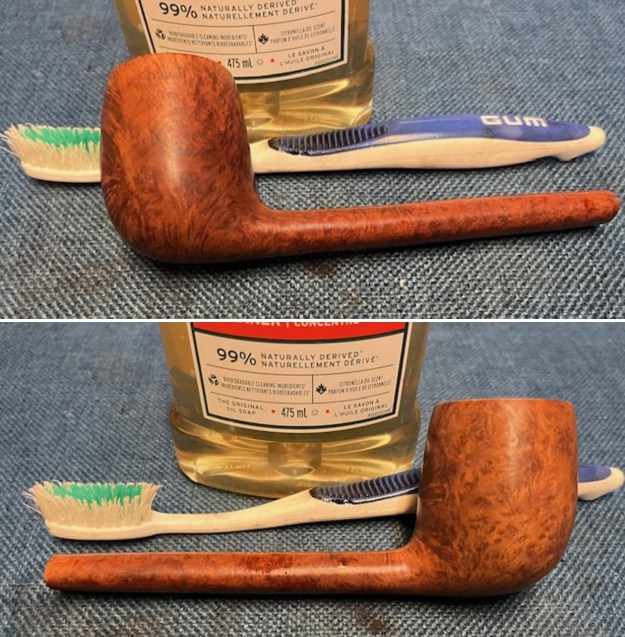
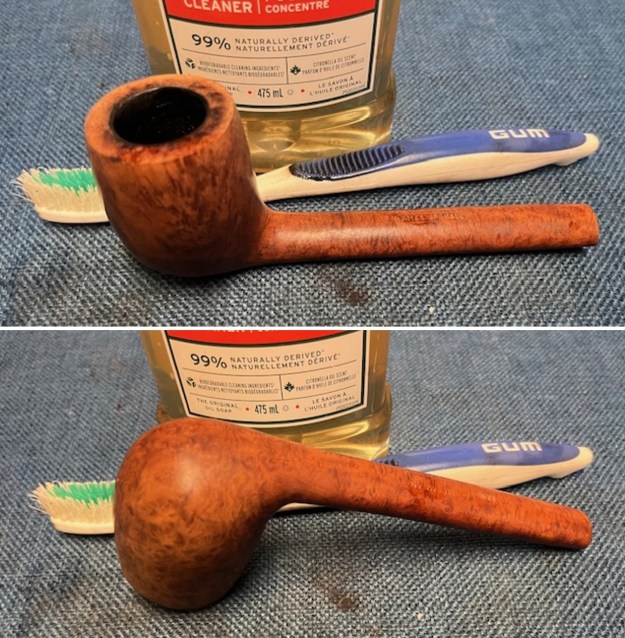
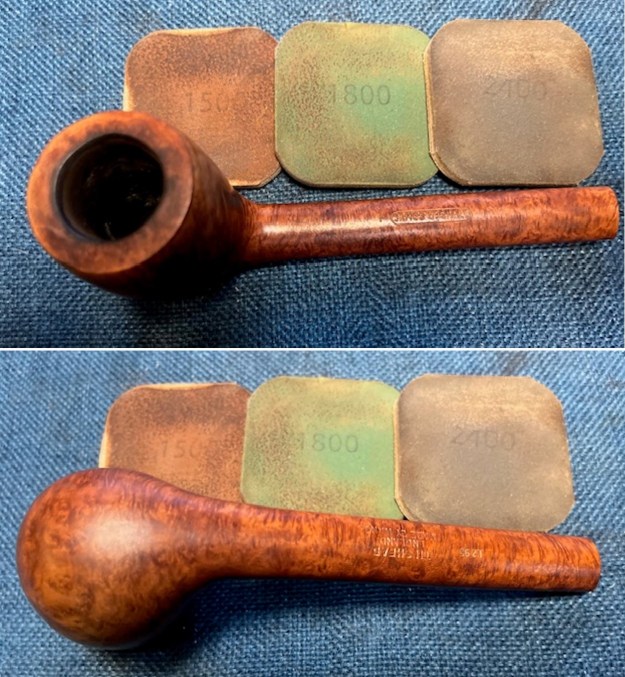
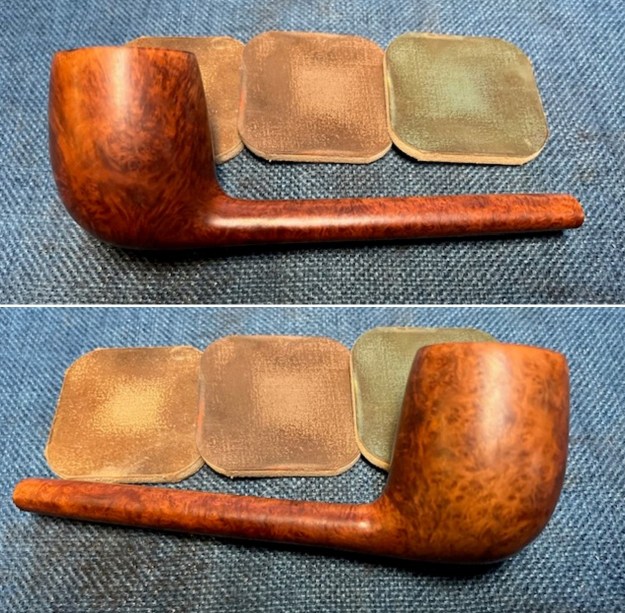
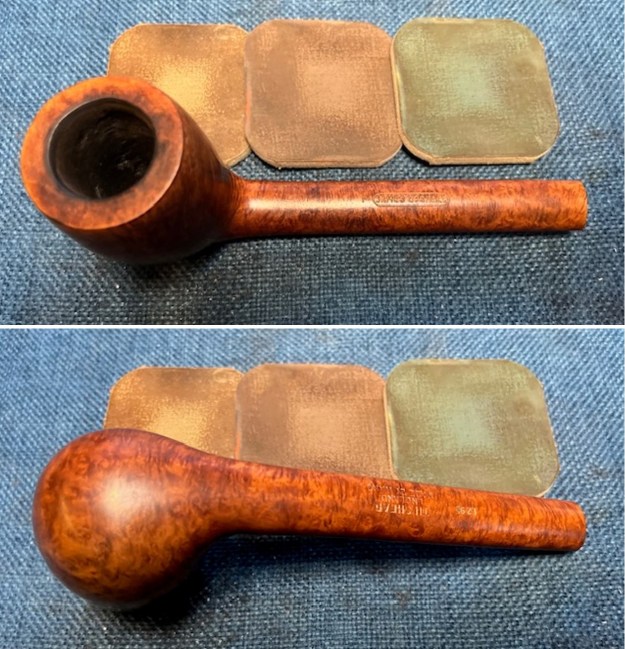
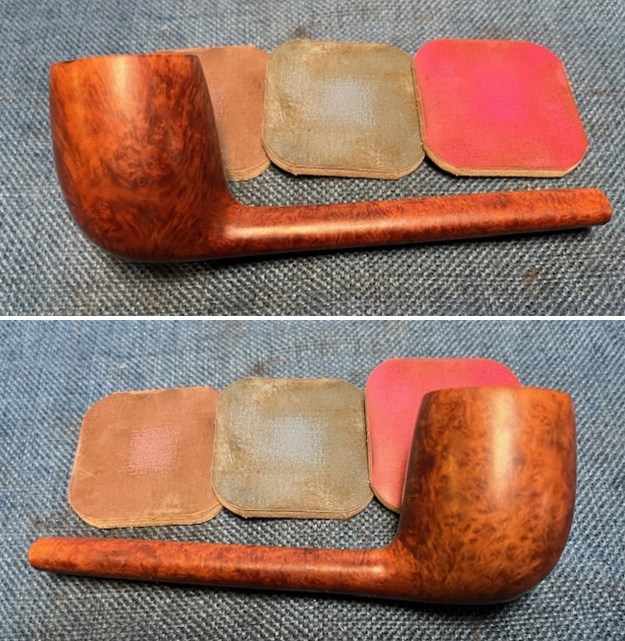
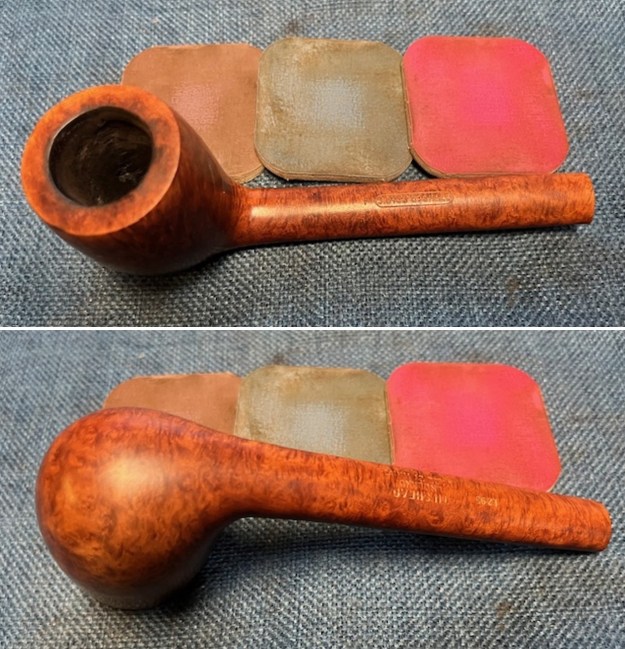
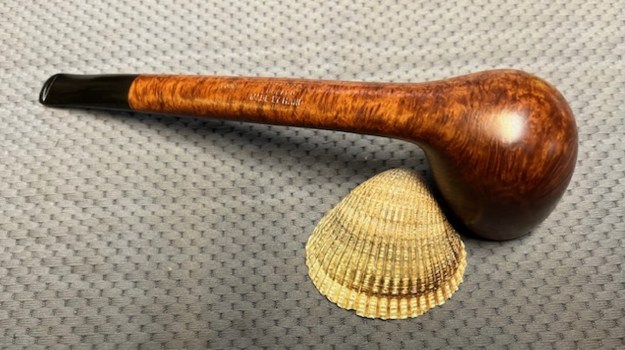
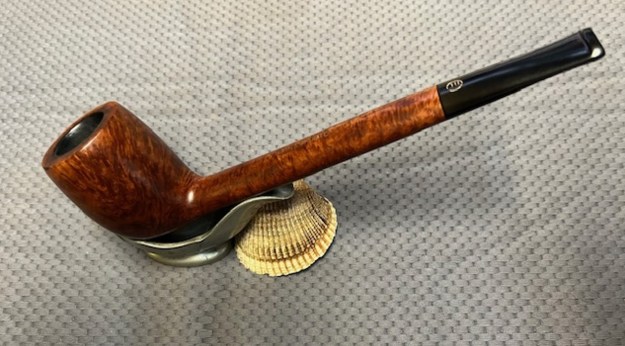
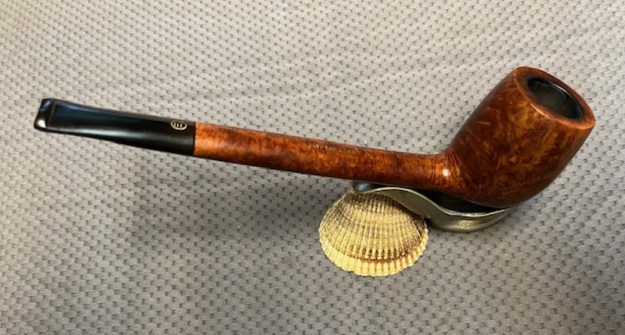
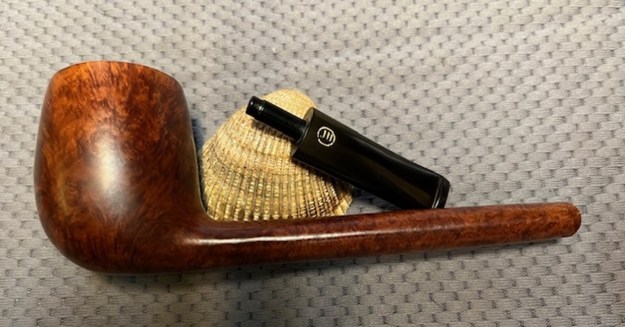
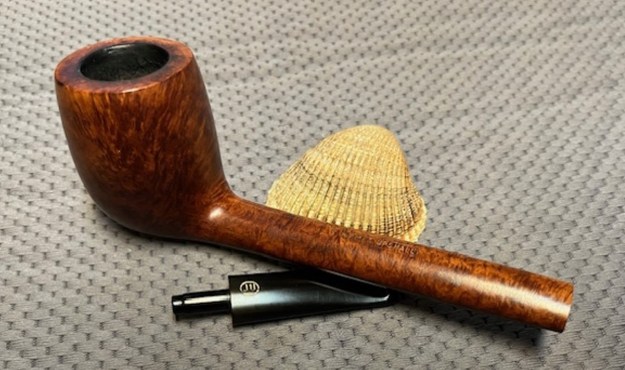
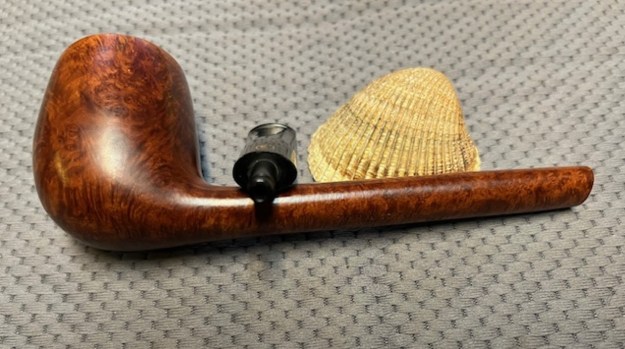
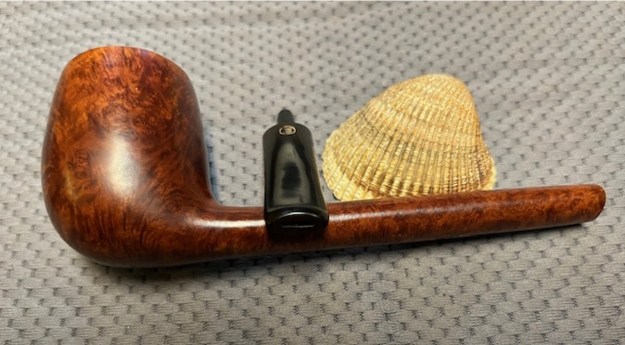
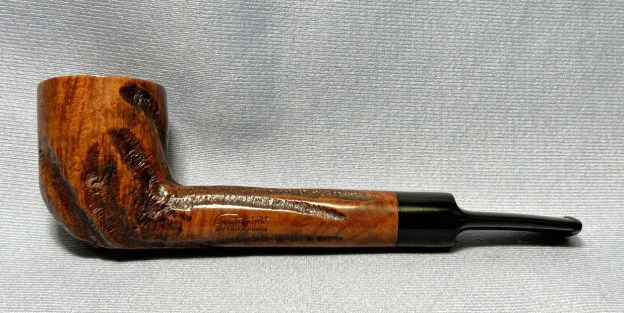
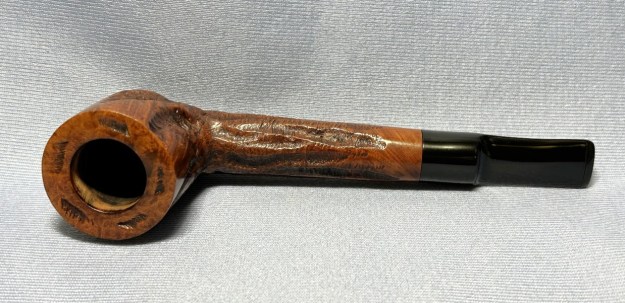
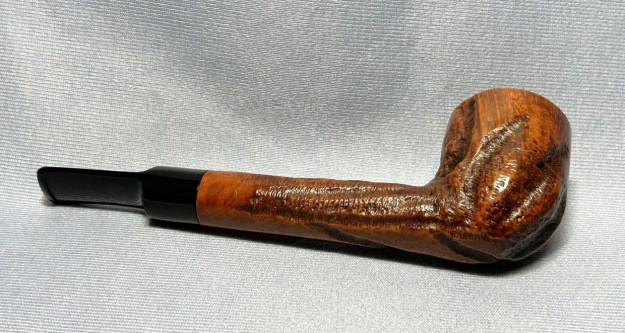
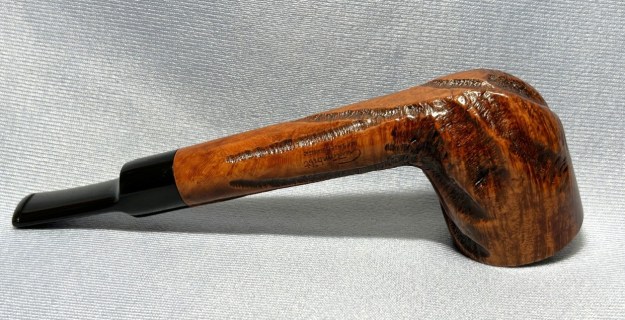
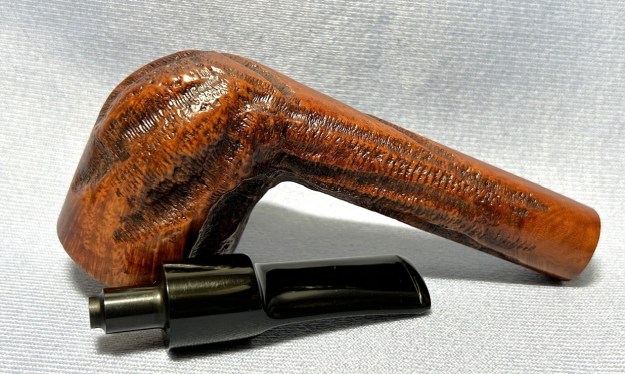
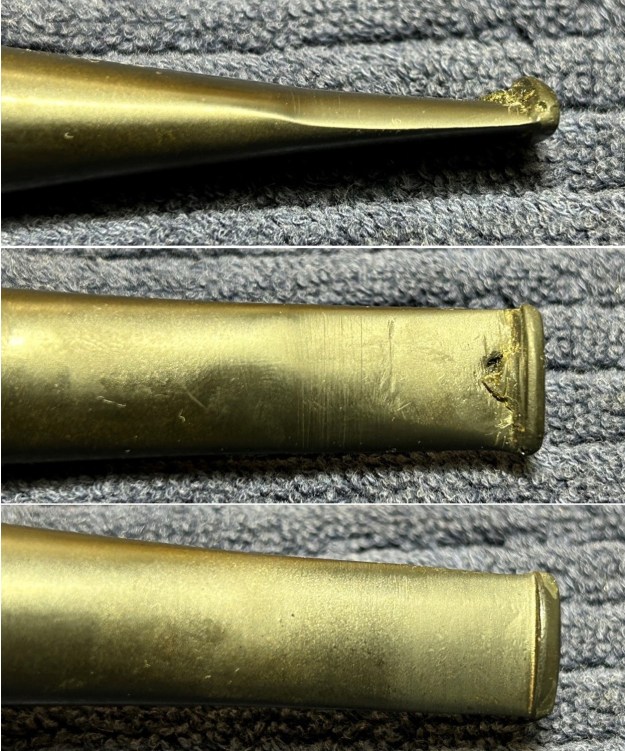
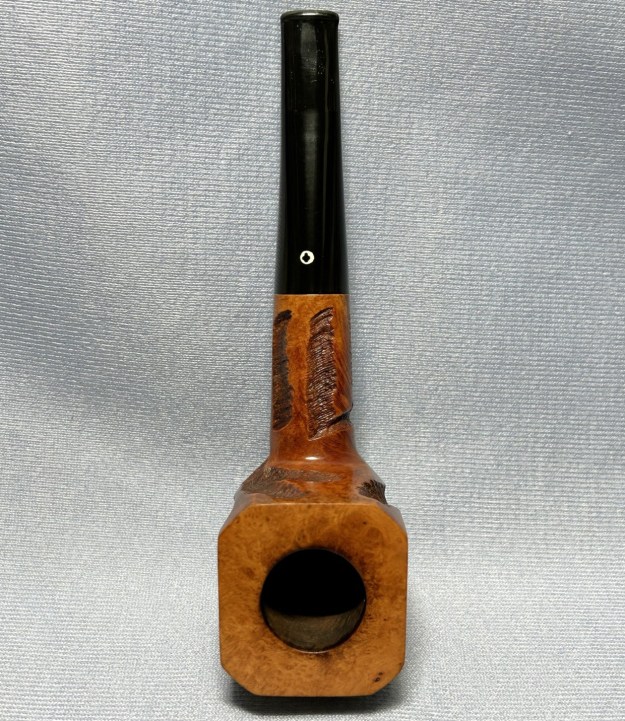
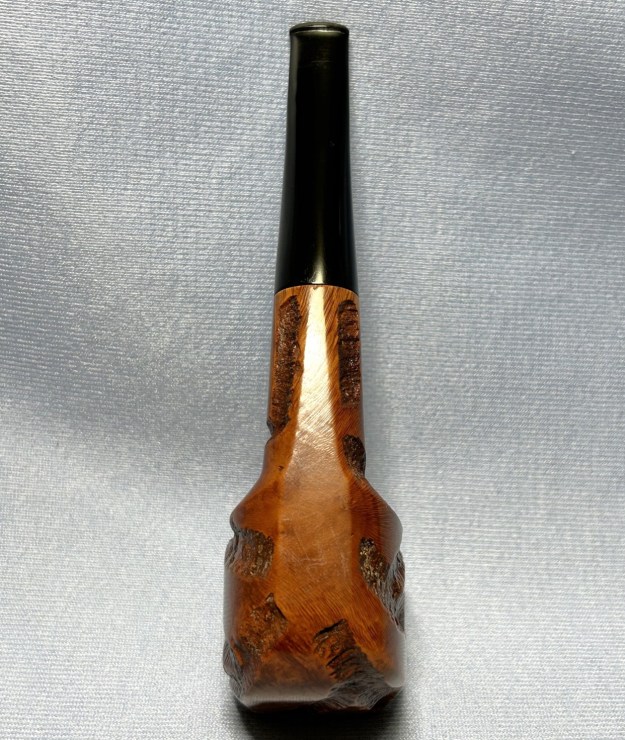
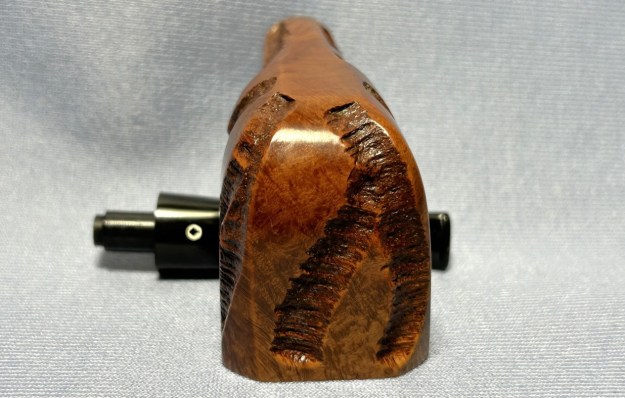
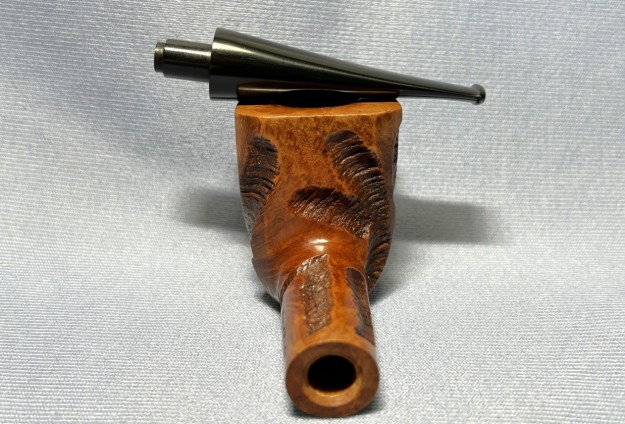
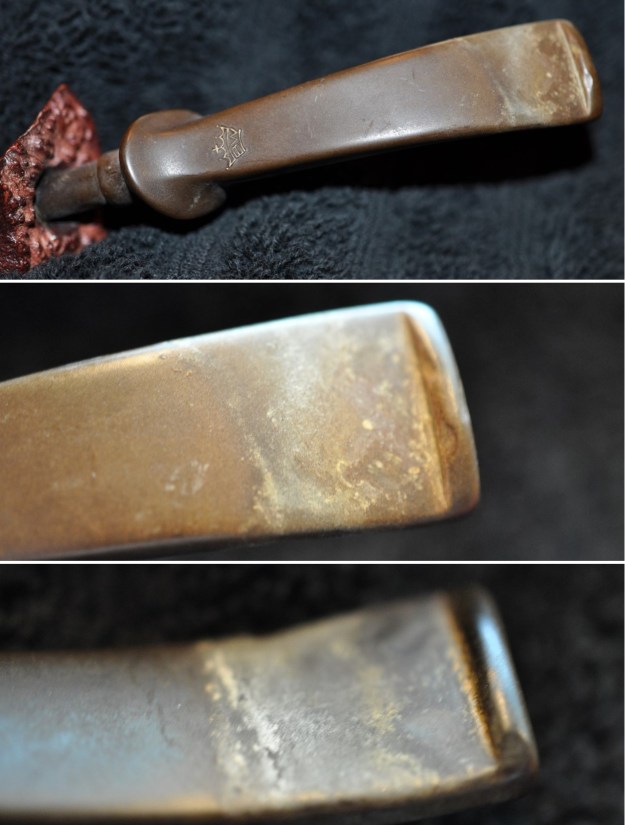
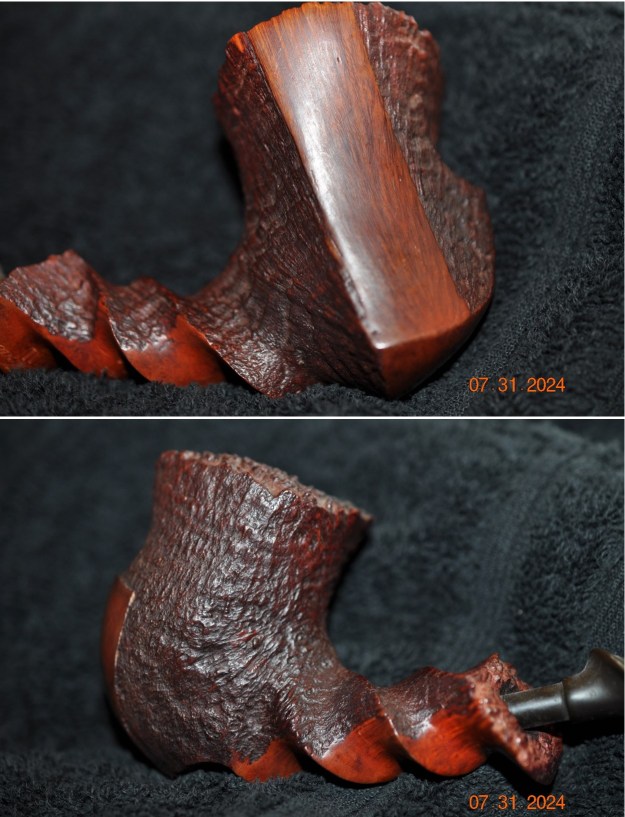
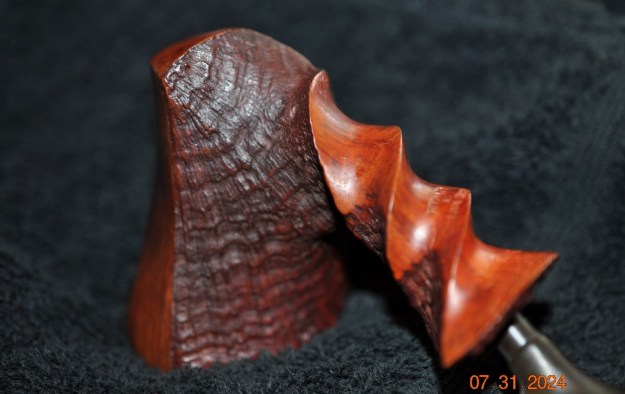
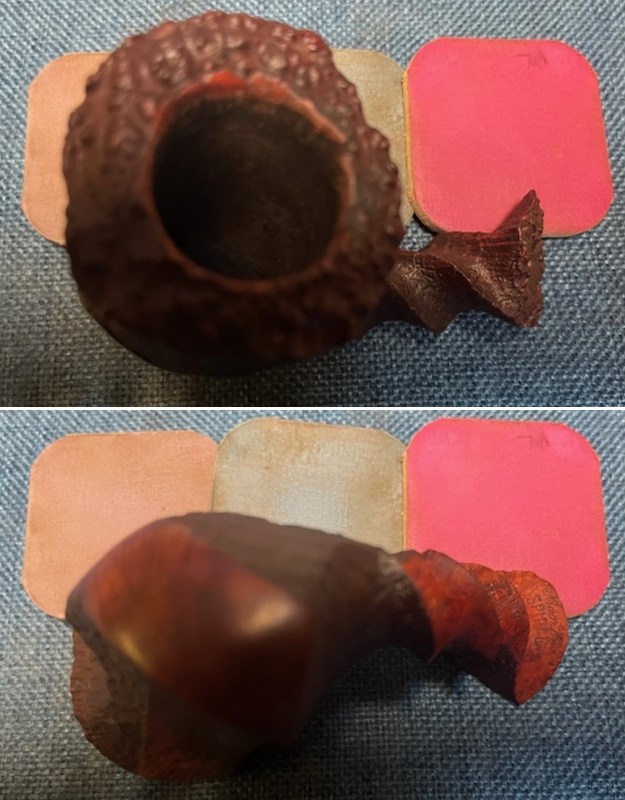
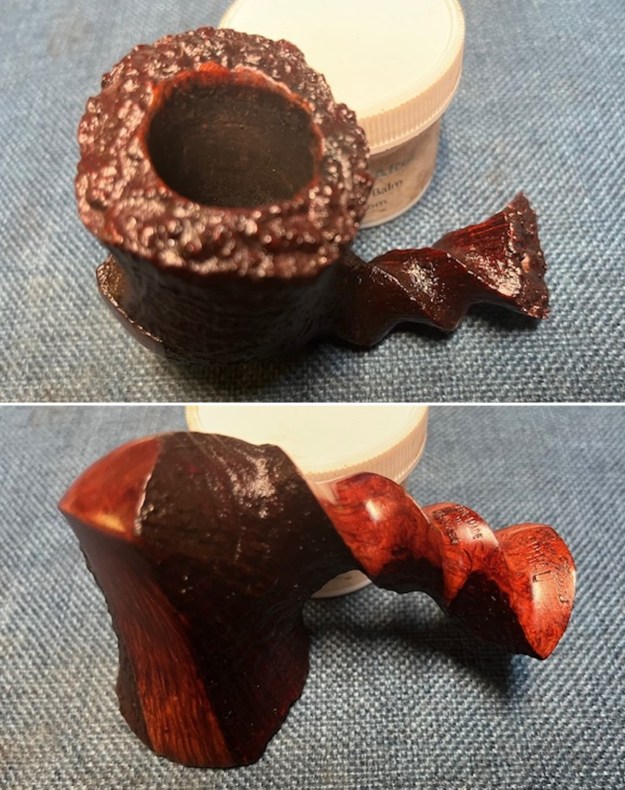
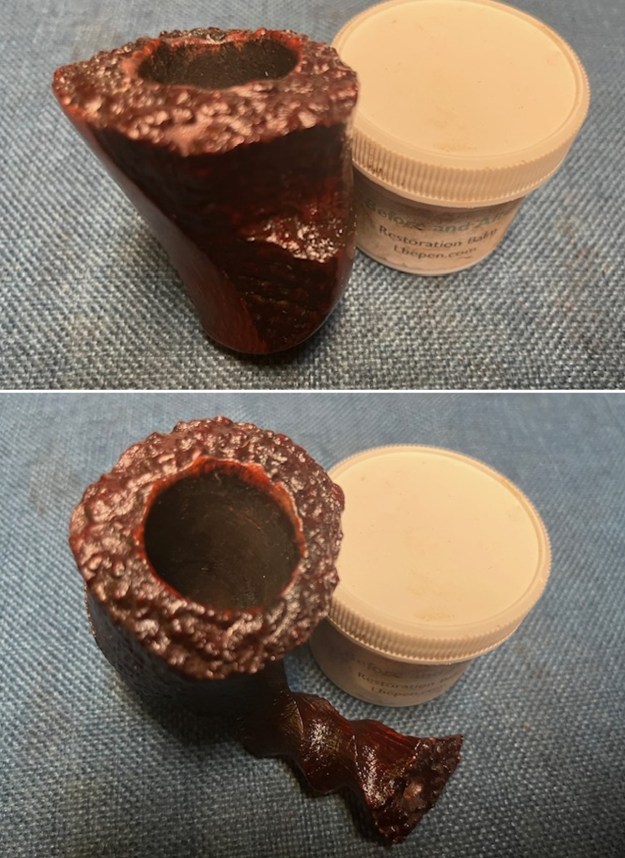
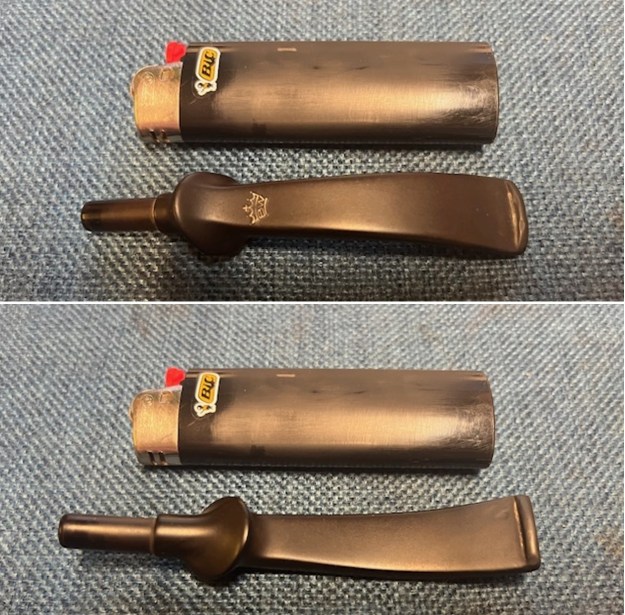
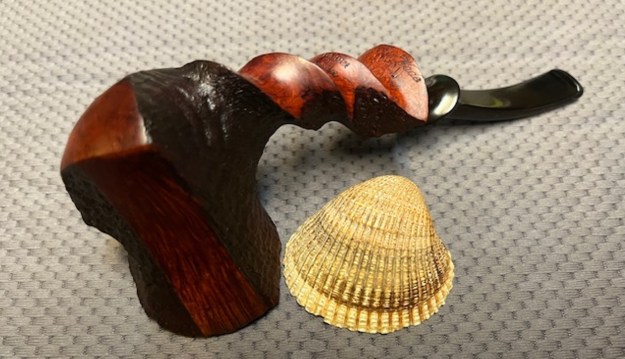
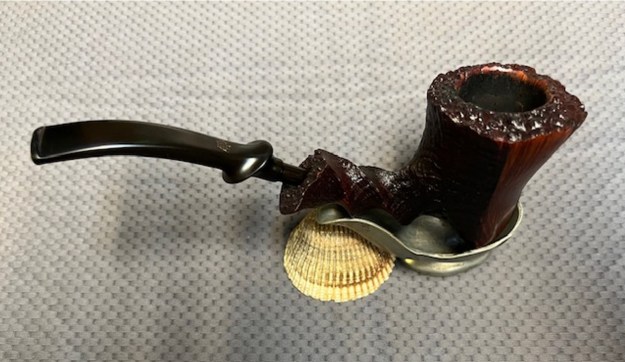
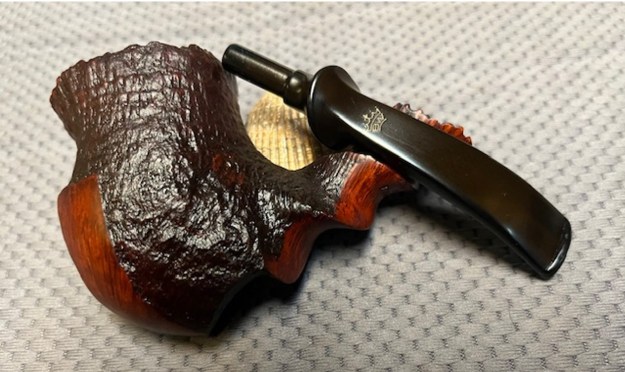
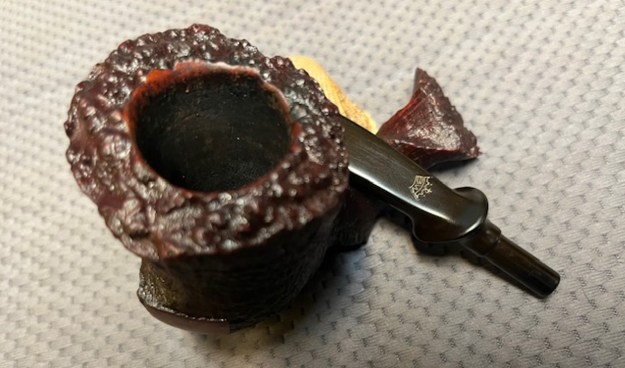
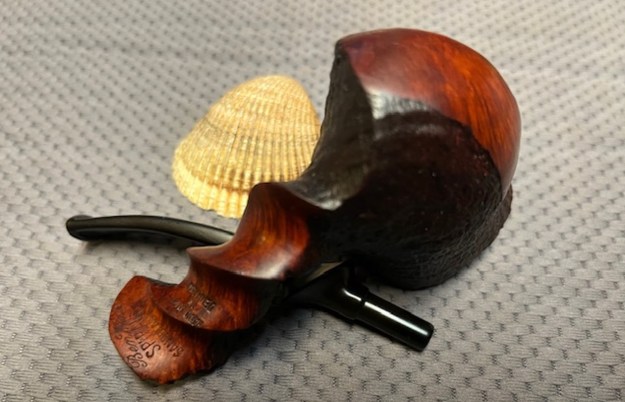
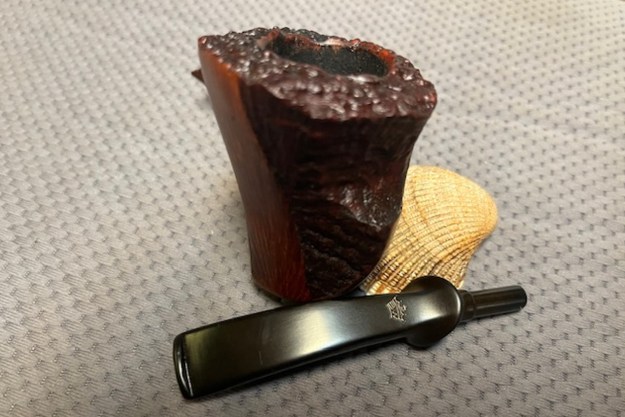
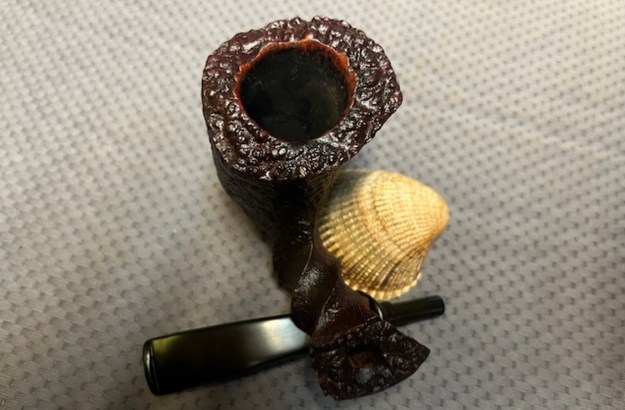
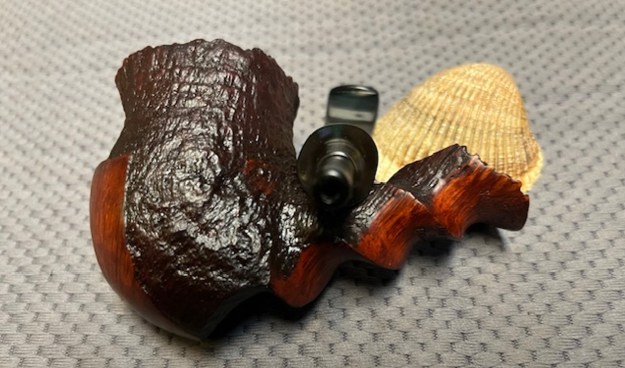
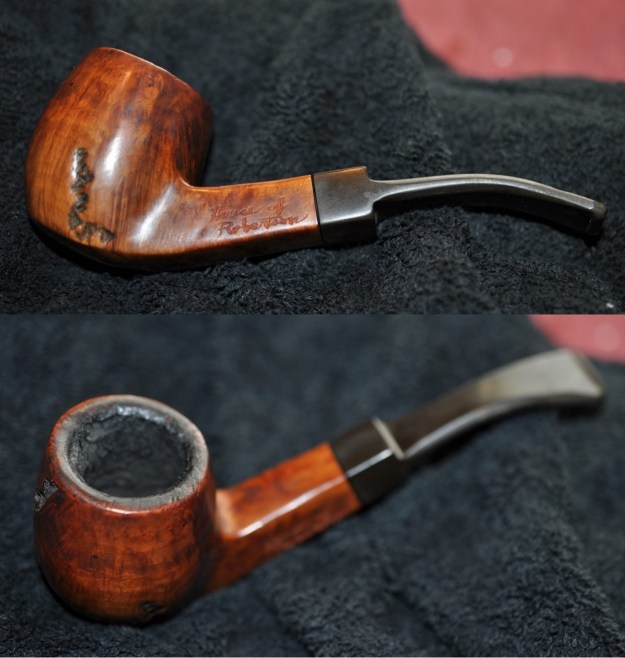
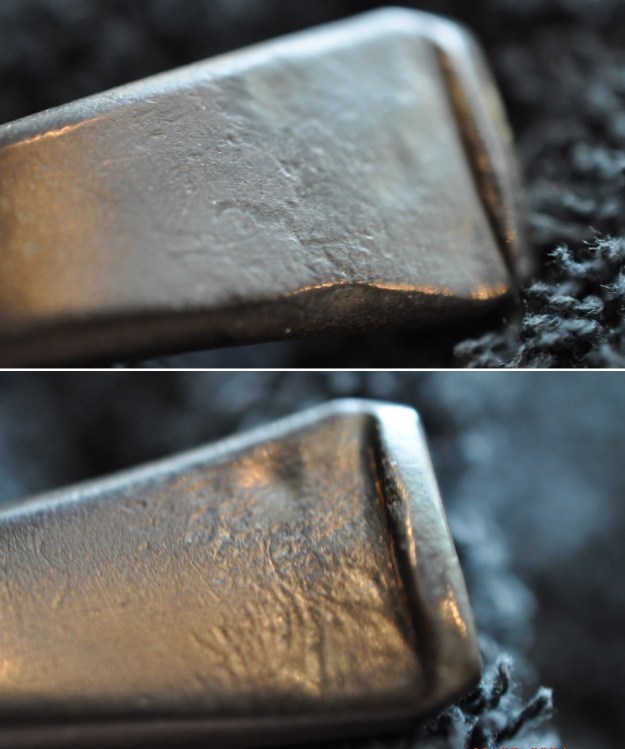
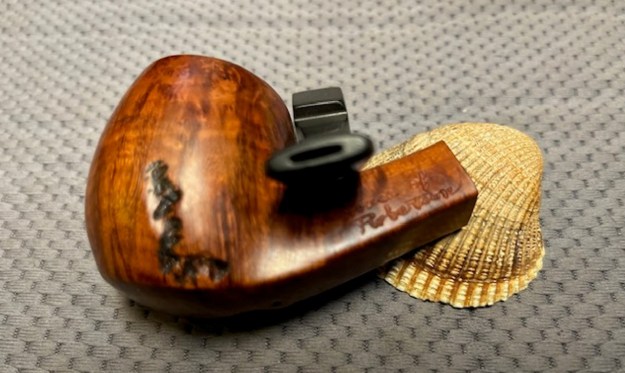
It is a Bent Billiard that has a square shank and saddle stem. It is smooth with some rustications on the front and sides. It also seems to have a bit of plateau on the right side of the heel of the bowl and Thayne used plateau area to inform the rustications. The name House of Robertson is hand-etched with an engraving tool on the left side of the shank and the name Dick Egelston is etched on the right side. The bowl is thickly caked with some lava overflow on the rim top. The outer and inner edges of the rim have some nicks from the pipe being knocked out against a hard surface. The pipe was dirty but underneath all of the grime it appears to be in excellent condition. It is definitely an interesting pipe that has a story connected to the names. It should clean up very well. The fit of the stem to the shank was good. The vulcanite saddle stem was oxidized and calcified. There are light tooth marks and chatter on both sides near the button. Jeff took photos of the pipe before he started the cleanup.Jeff took photos show the condition of the bowl and the stem. The photos of the bowl and rim show the cake in the bowl and the lava overflowing onto the rim top. The rustication on the top of the bowl and the inner and outer edge of the rim are pretty well covered in lava. It was hard to know what the inner edge and top really looked like until we cleaned it. The silver cosmetic band was heavily oxidized and almost black. The taper stem was oxidized, calcified and had a lot of tooth marks and chatter both sides ahead of the button and on the button itself. The photos of the sides and heel of the bowl show the condition of the finish but more importantly the grain under the grime. The combination of rustication patches, plateau and smooth finishes give the bowl a unique look. The next photos show the etched or engraved with a name of House of Robertson on the left side of the shank and the name, Dick Egelston on the right side of shank. Some people find these personalized pipes a bit of a pain but to me it always creates a lot of speculation about the man (in this case anyway) who bought the pipe. I am including the information that I found when I received my first of the House of Robertson Pipes. I found a link on Pipedia that gave me the only information I could find on the brand. I include that in total as it is interesting to read.
“House of Robertson” was in business for many years, but alas, closed their doors in 1999. They were located in Boise, Idaho. They are noted for making rather large and interesting pipes. Thayne Robertson was a Master Mason, AF & AM, and started the shop about 1947 and his son Jon started working there in 1970 when he finished college, along with Thayne’s daughter. Thayne and his son started making the big pipes at that time, and made them together until 1987 when Thayne passed away. Jon kept the store and his sister moved on to other things. The House of Robertson appears to have closed around 1999 (https://pipedia.org/wiki/Robertson).

Since then I have worked on a lot of House of Robertson pipes and have been able to track down more information. I am including a link to a Catalogue that I picked up on eBay. Click on the link and have a look at this interesting book of information on the brand and the pipe maker himself (https://rebornpipes.com/2022/12/11/a-house-of-robertson-catalogue-filled-with-great-examples-of-thayne-robertsons-work/).

I am also including a biography of Thayne Robertson that I found on Facebook from a fellow in Boise, Idaho. It is an interesting glimpse into the mind of the pipe maker. Make sure to take time to read it (https://rebornpipes.com/2021/10/31/house-of-robertson-pipes-boise-pipe-carver-thayne-robertson/).

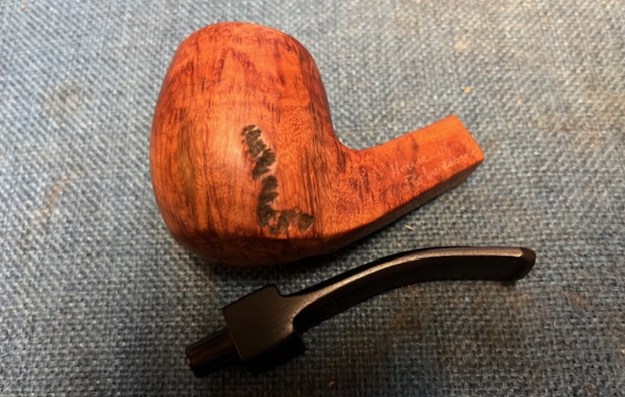
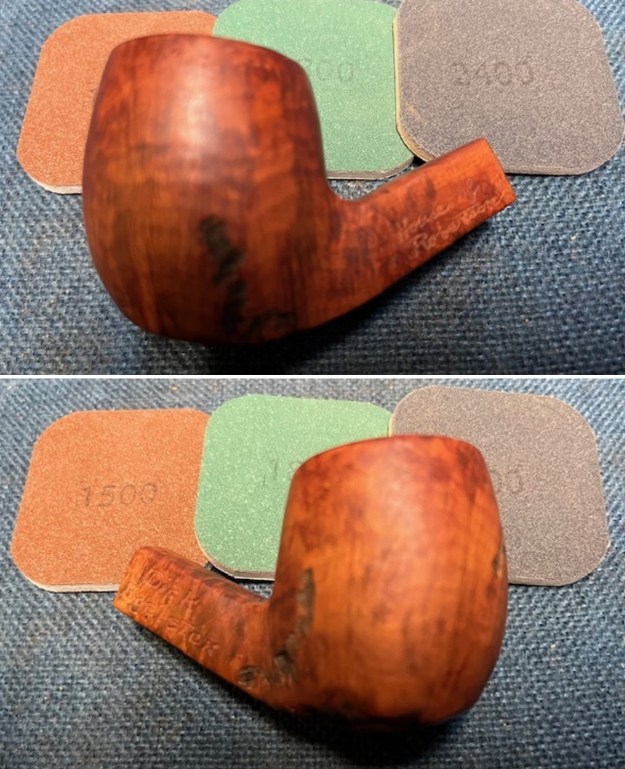
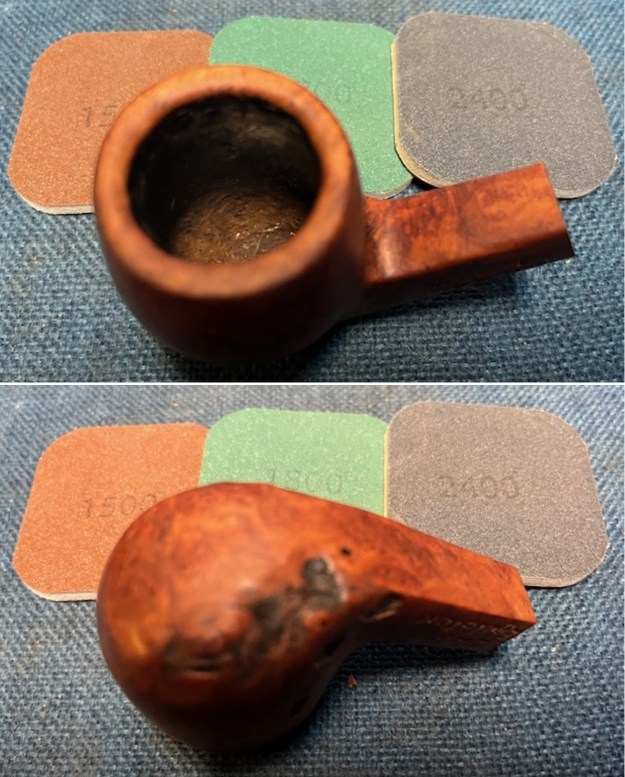
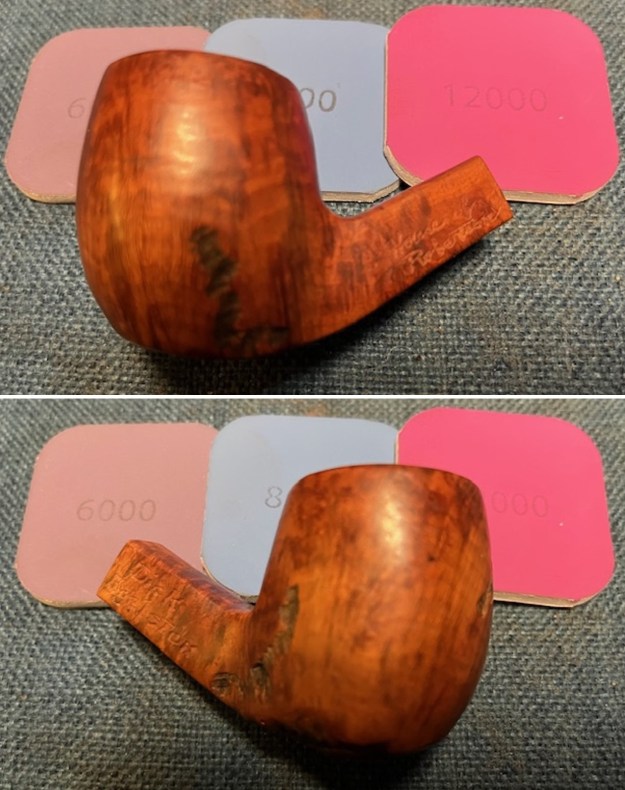
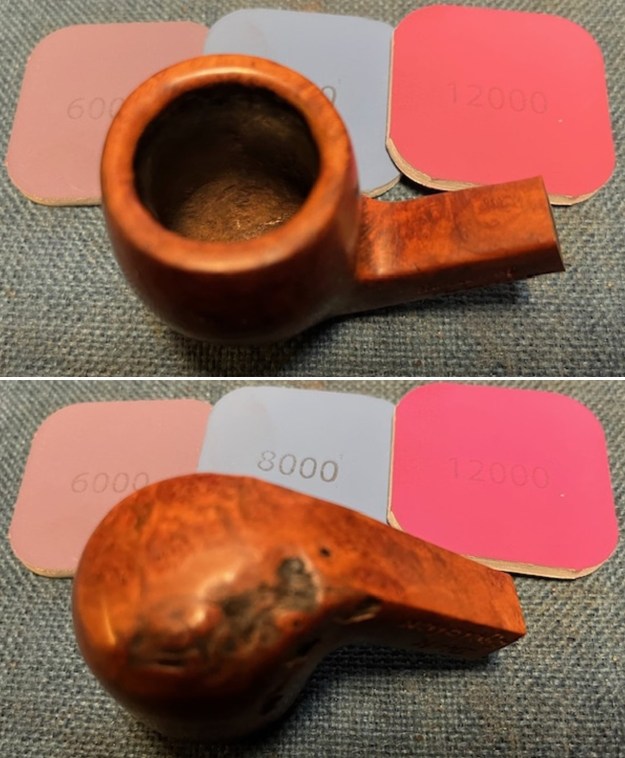
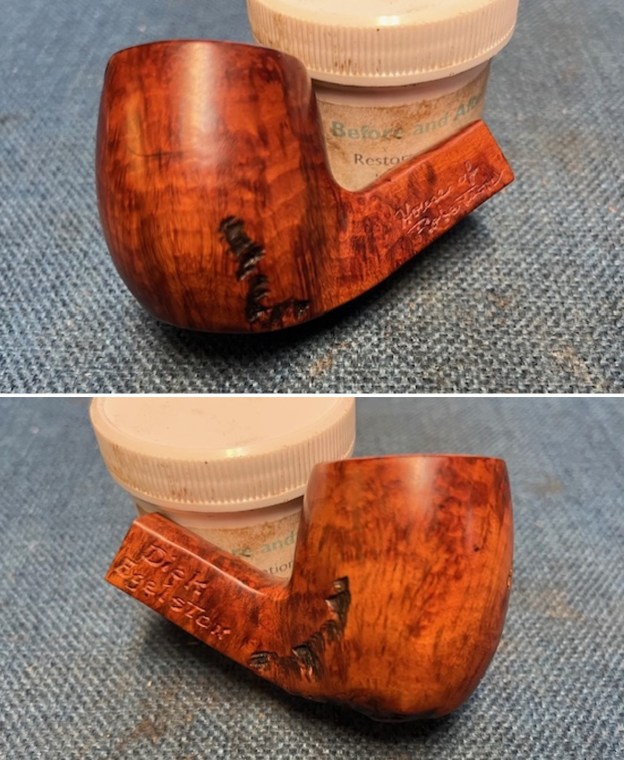
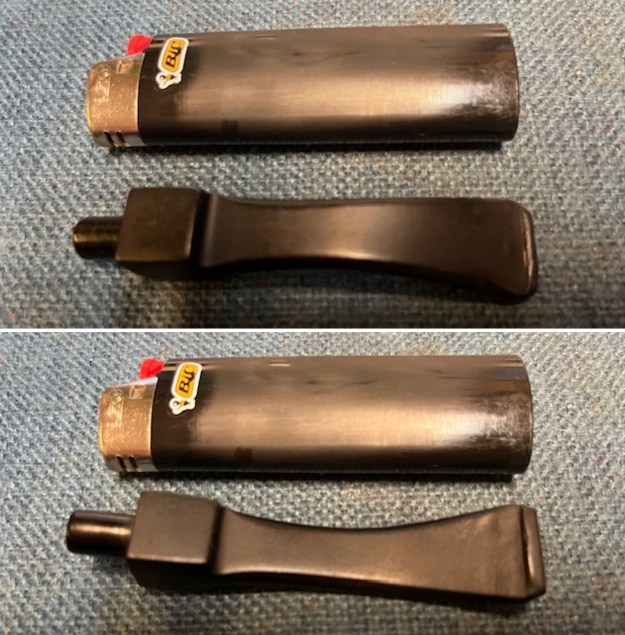
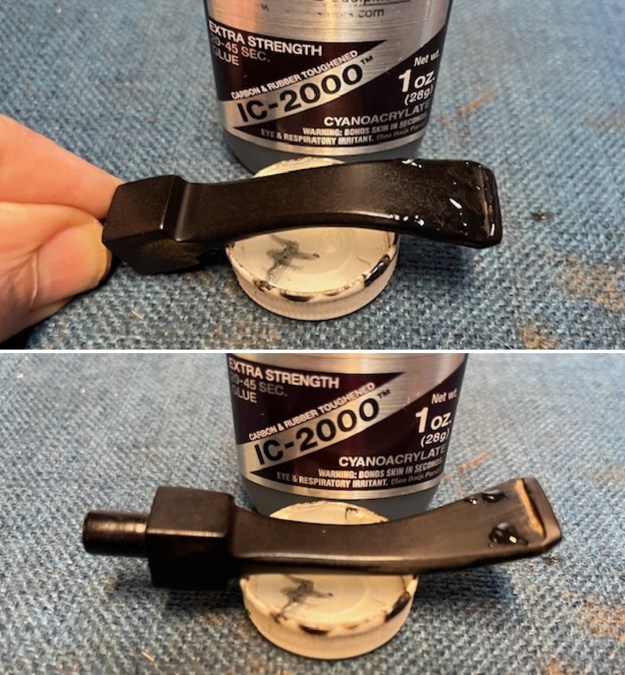
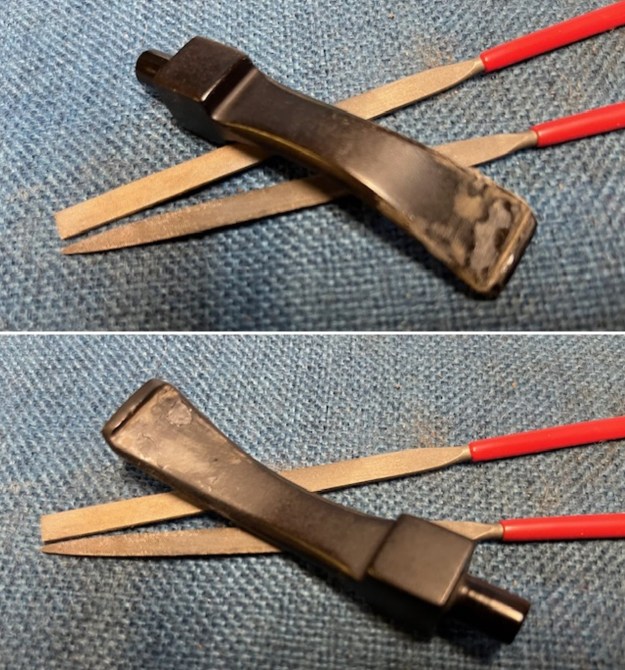
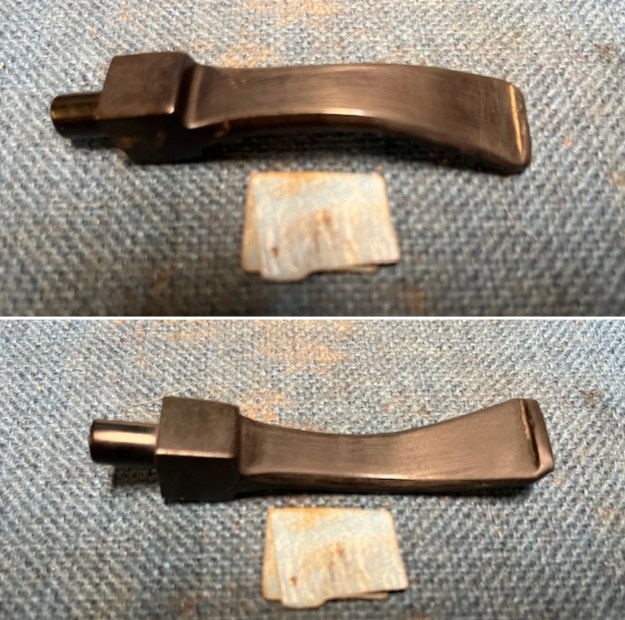
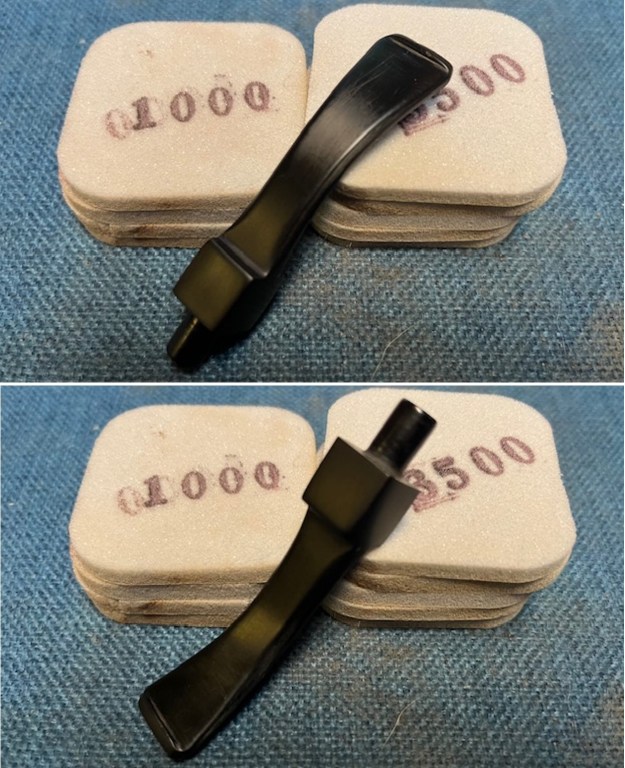
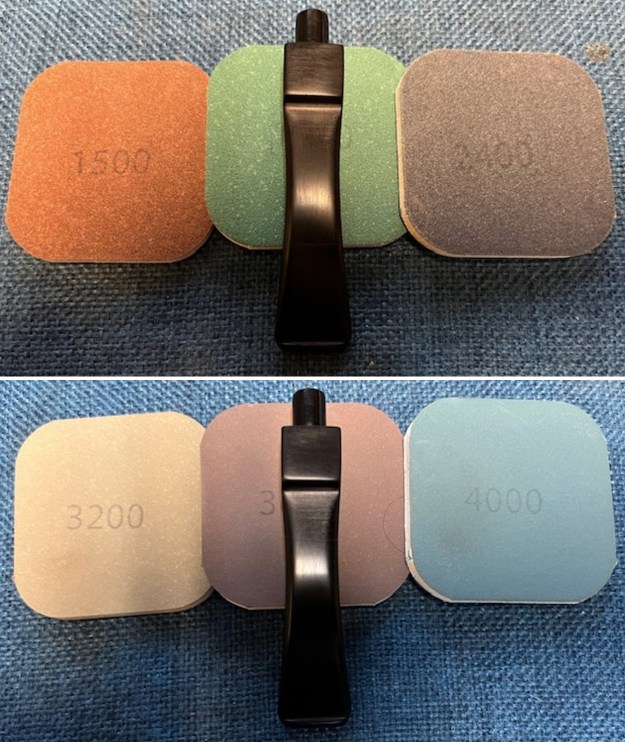
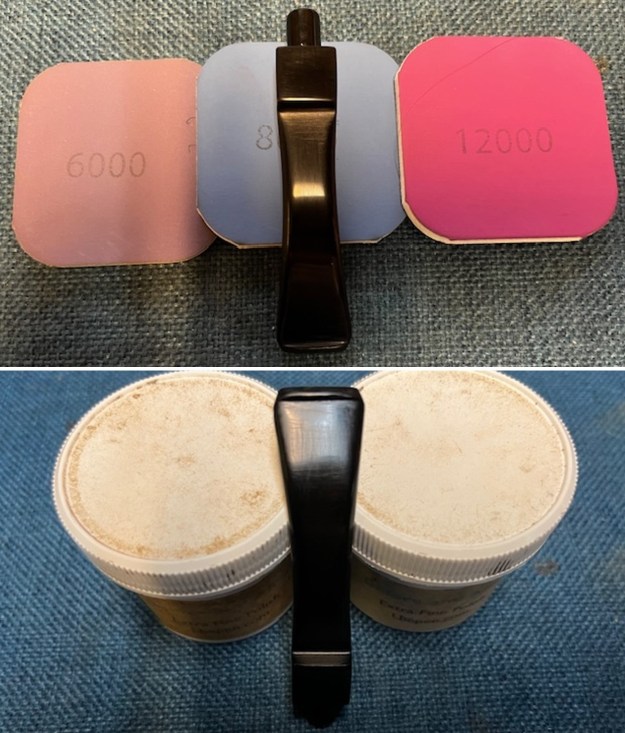
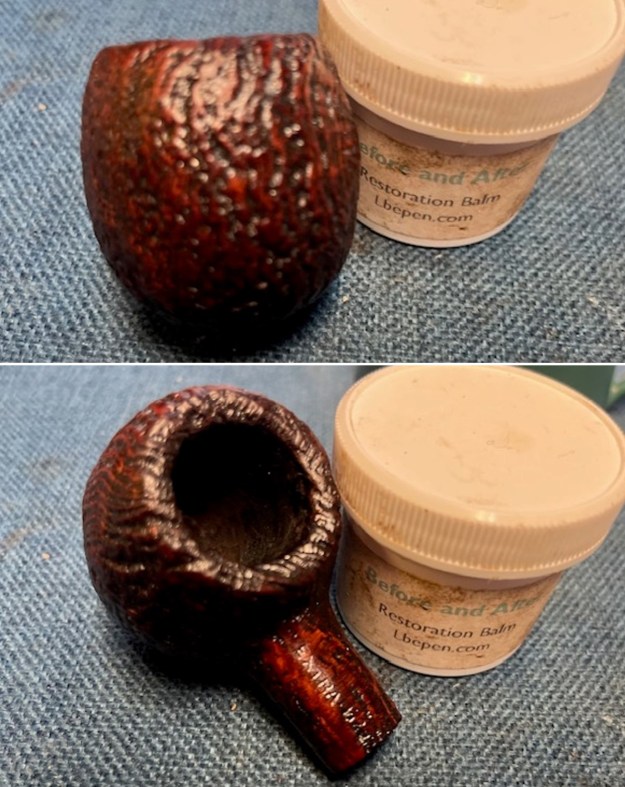
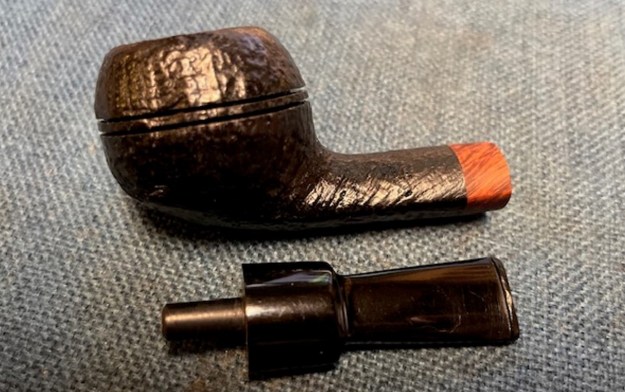
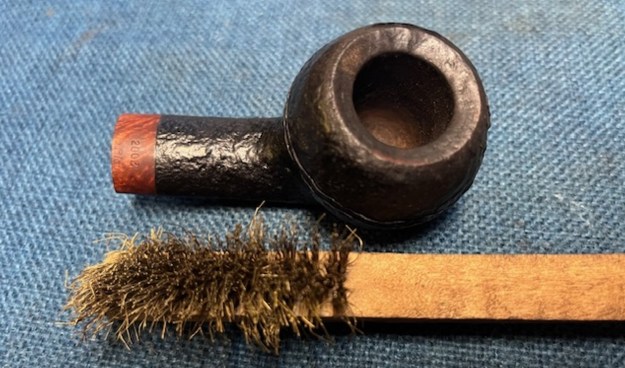
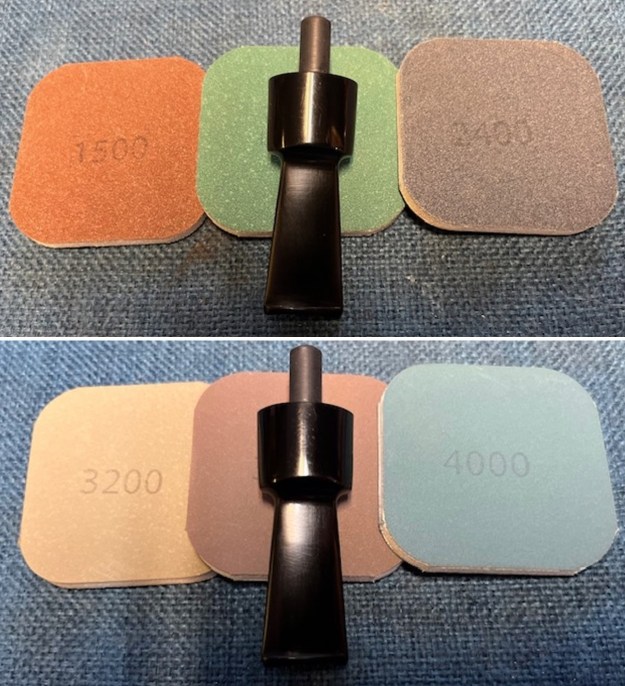
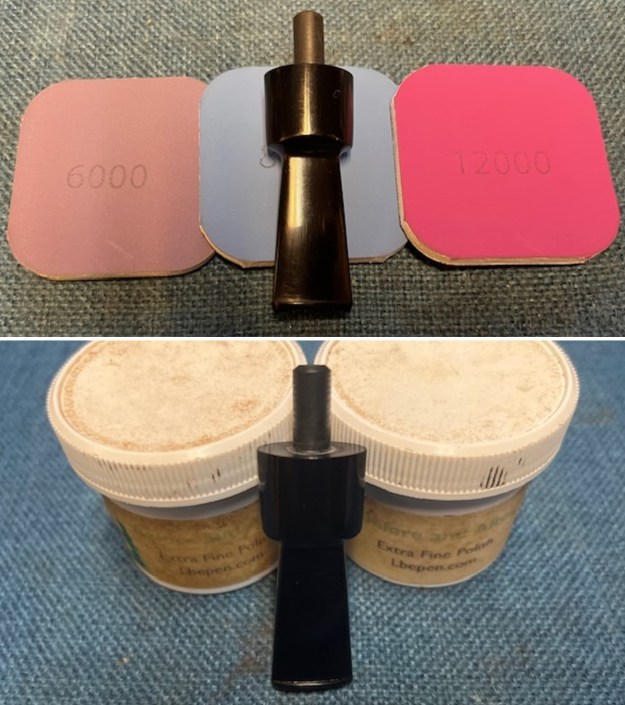
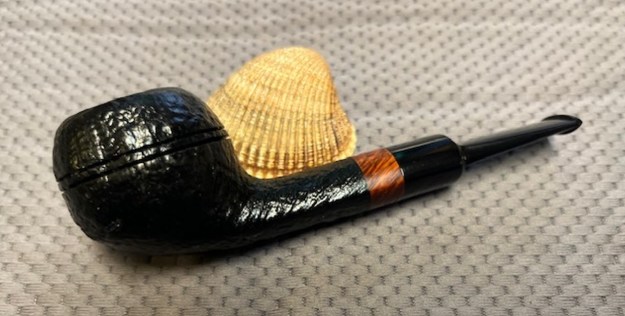
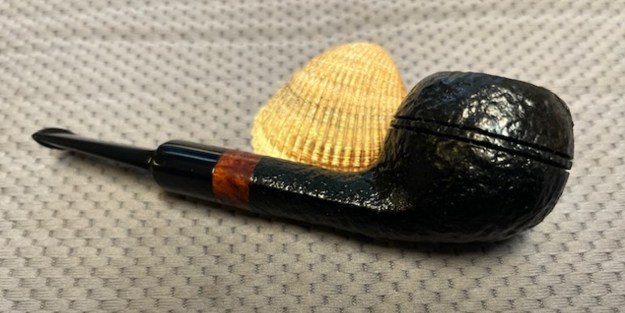
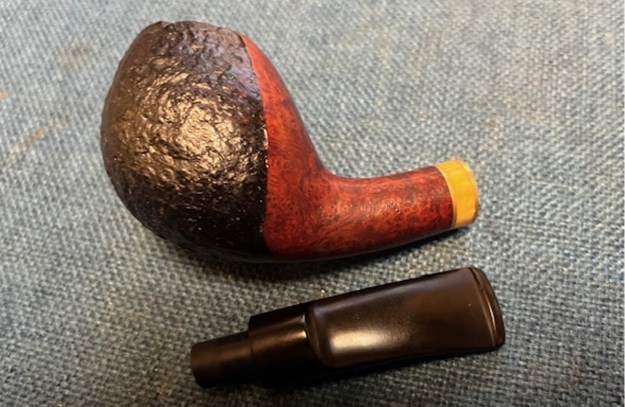
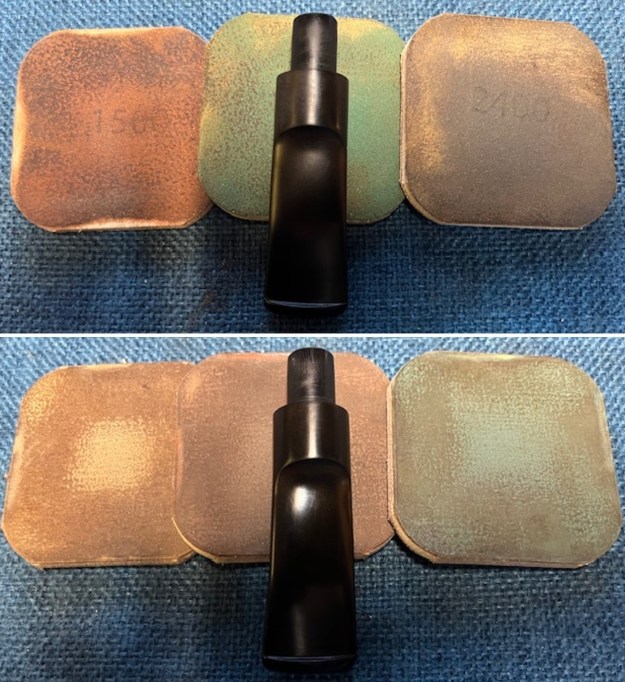
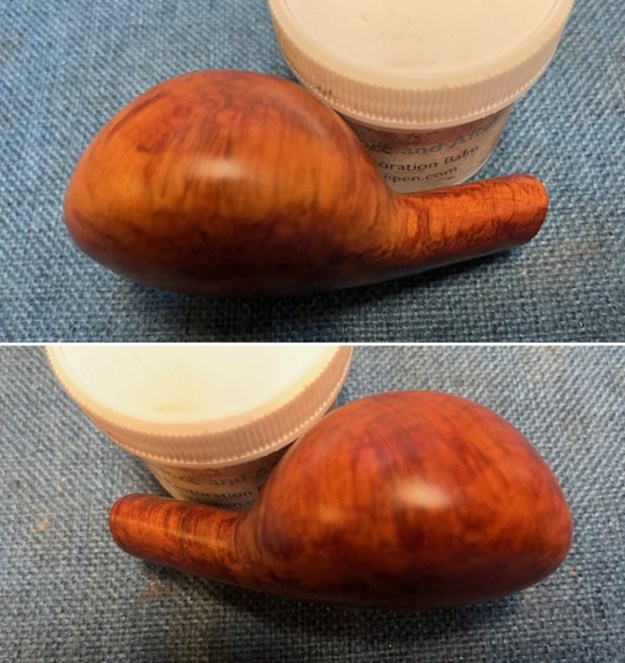
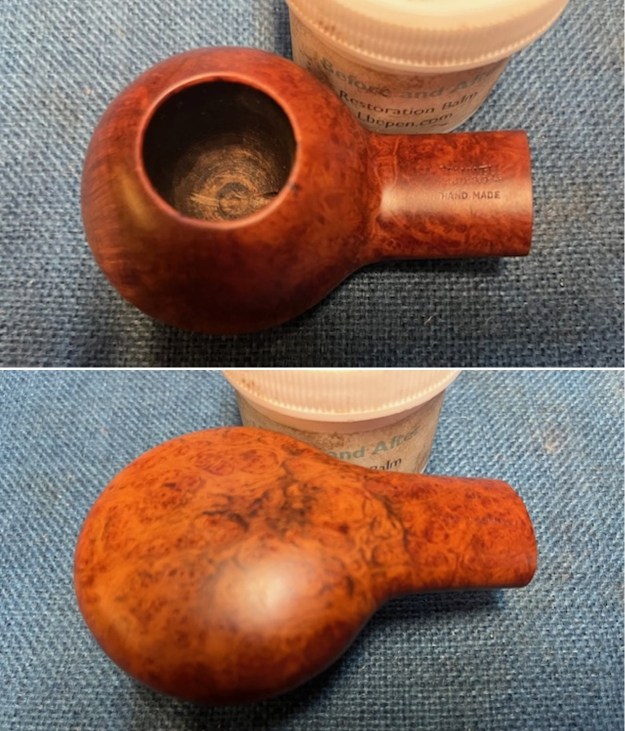
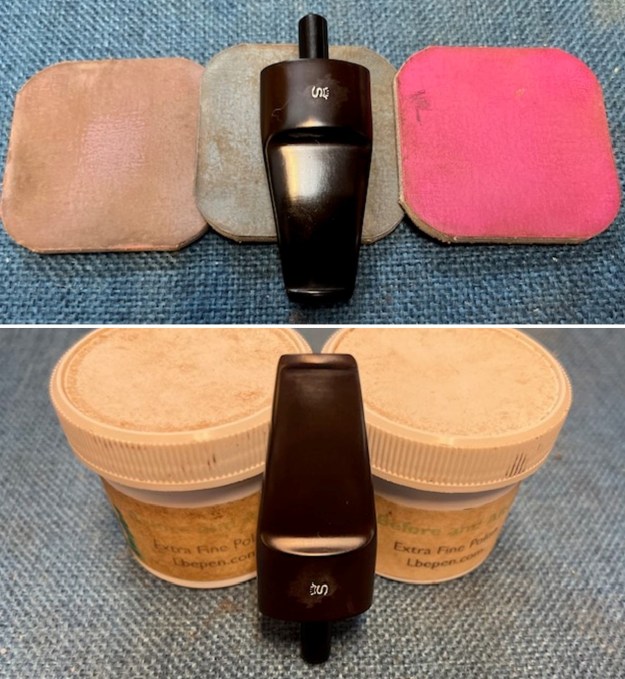
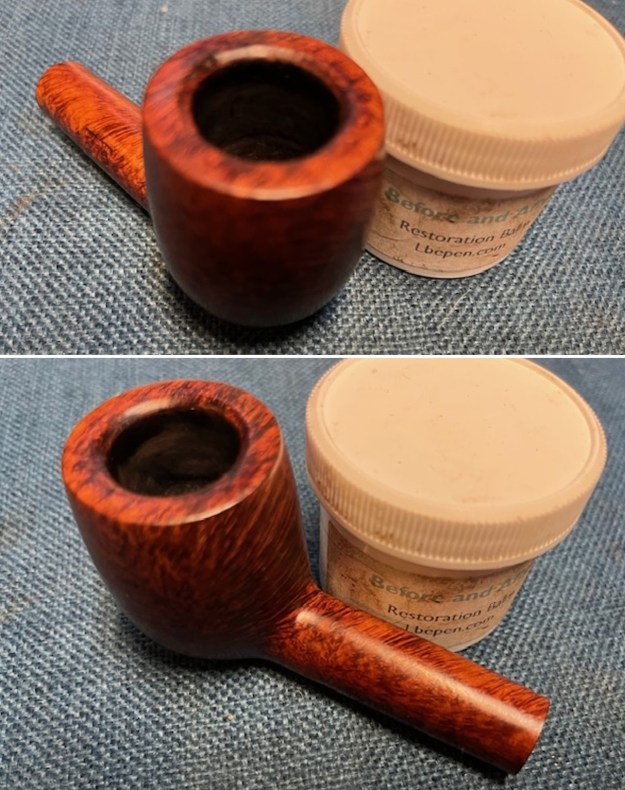
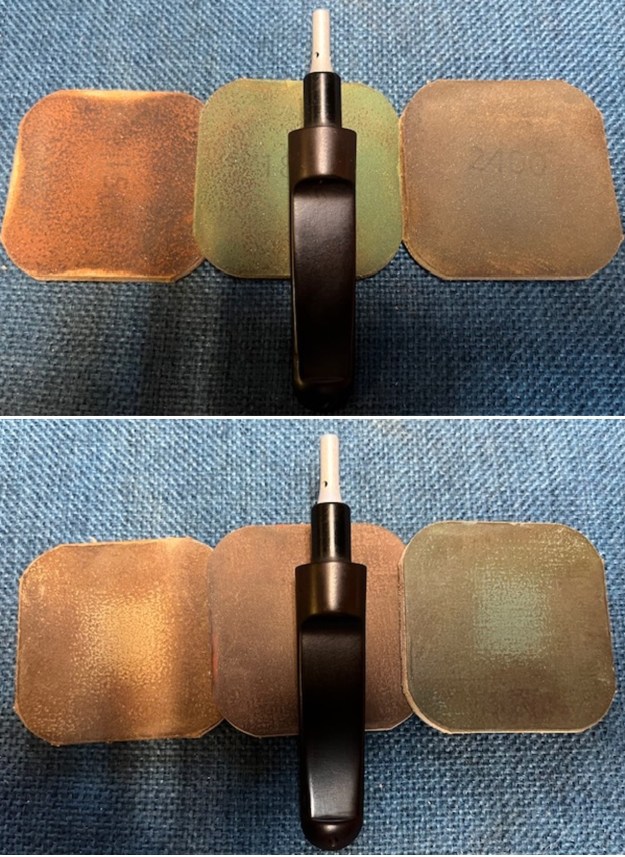
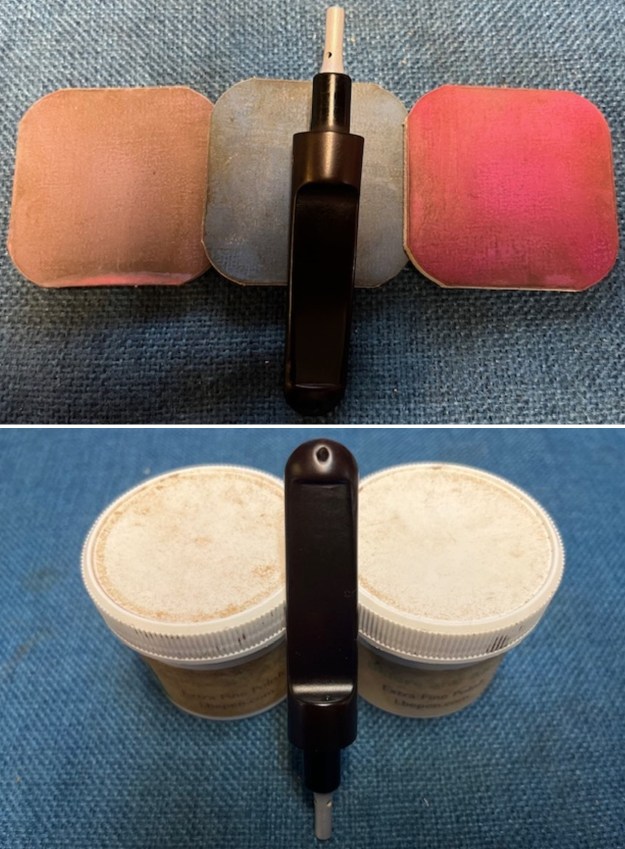
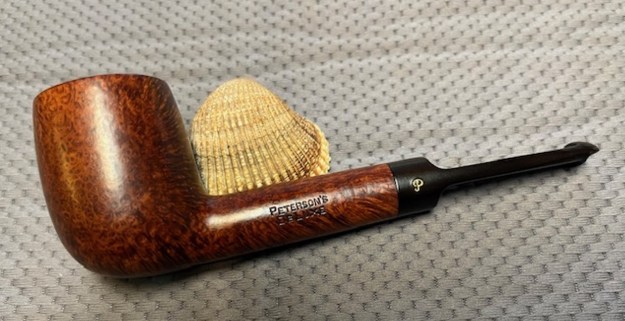
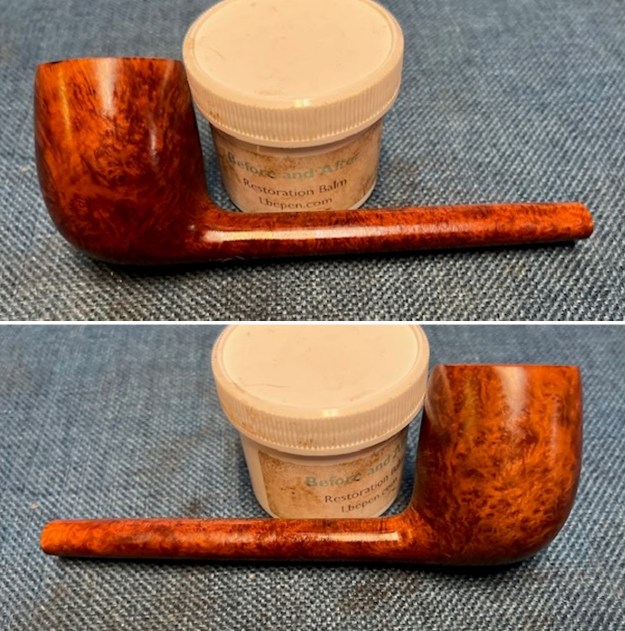
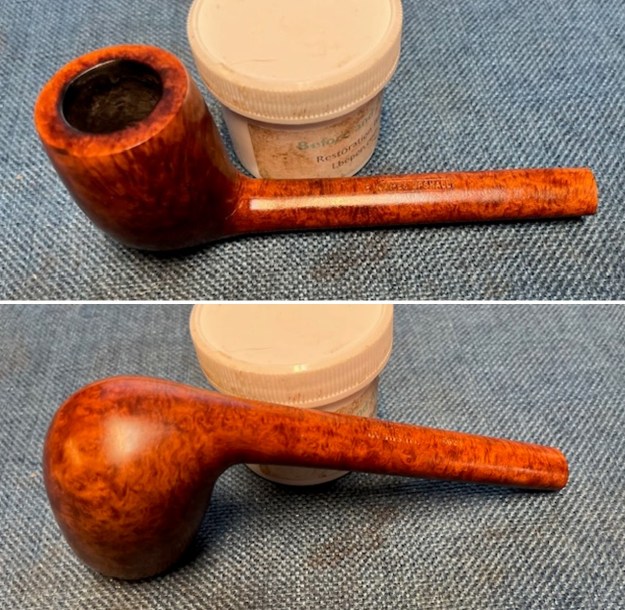
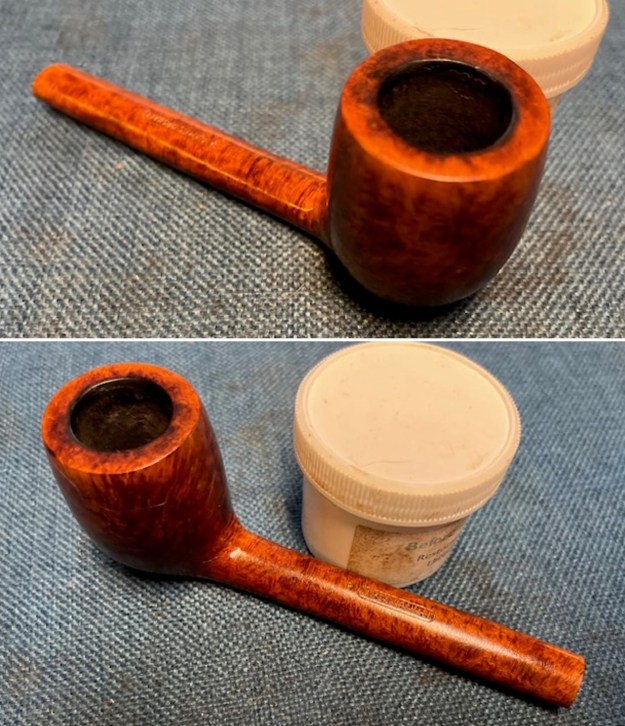
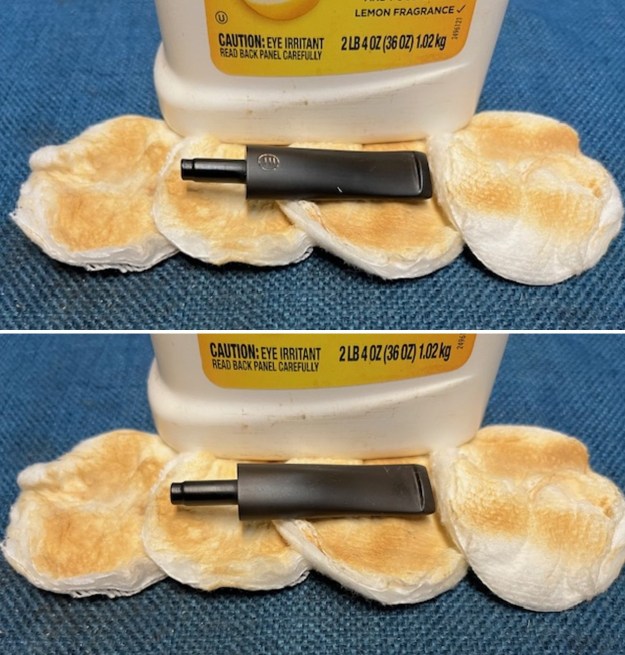
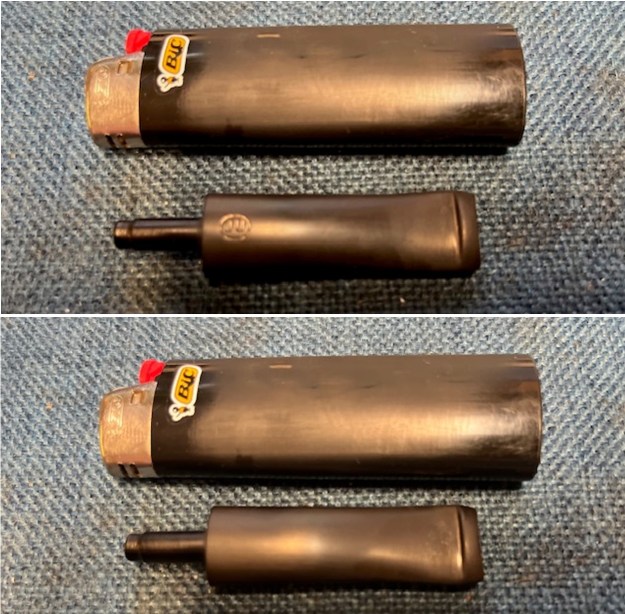
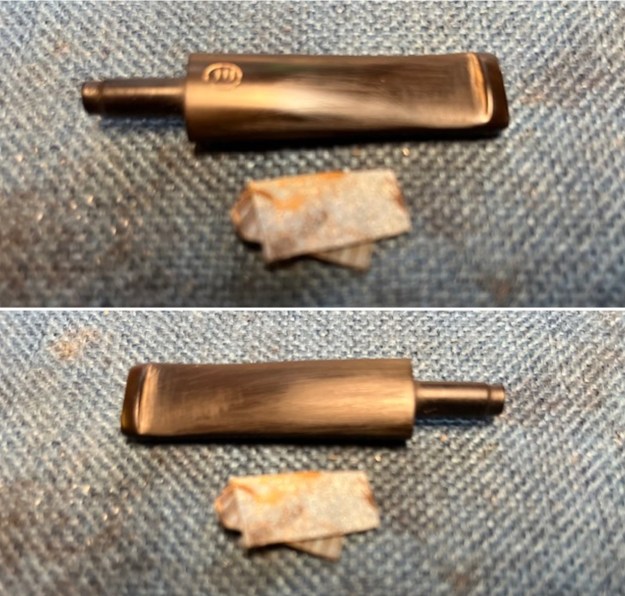
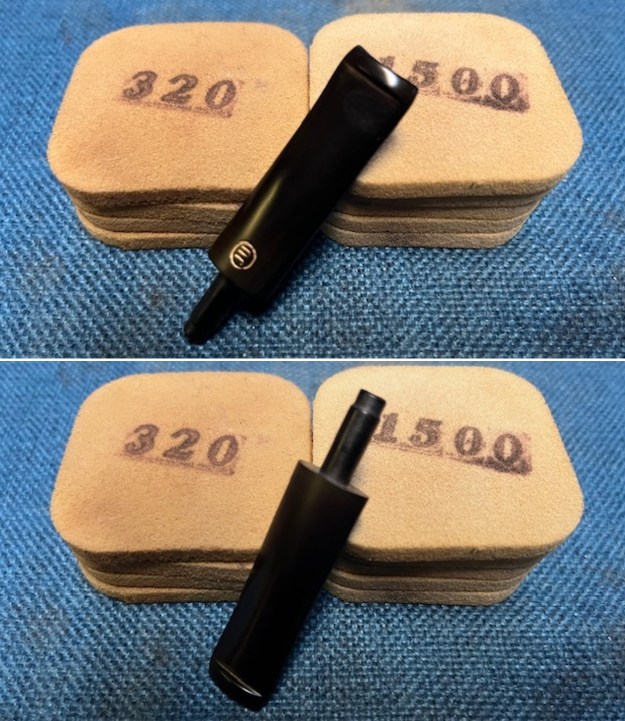
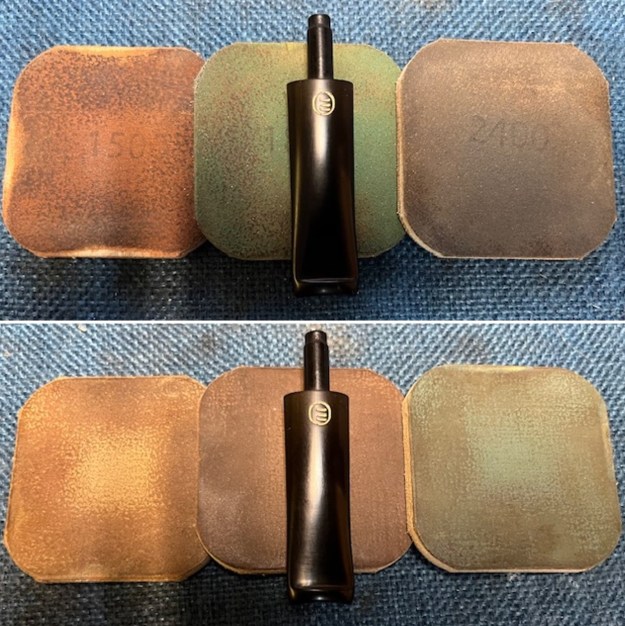
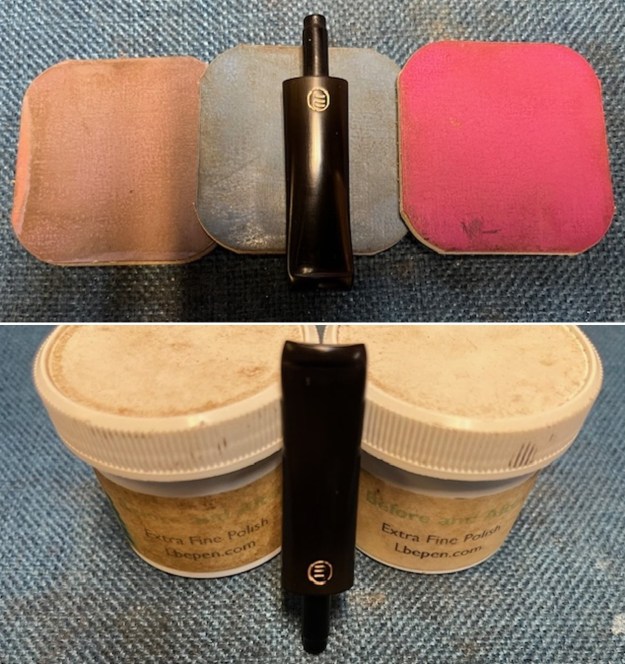
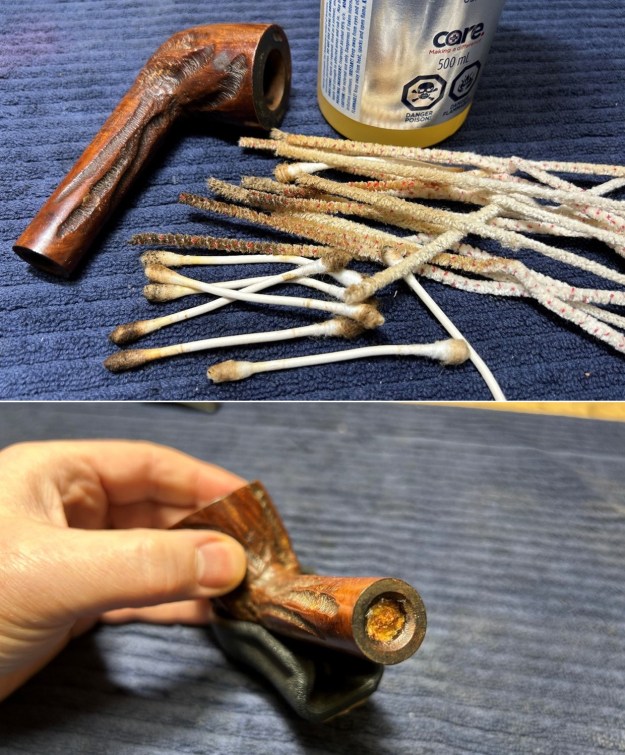
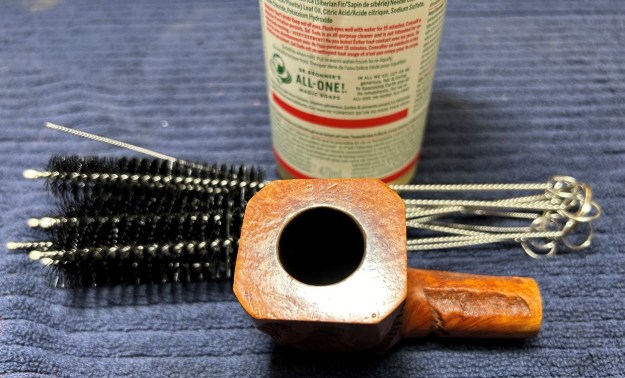
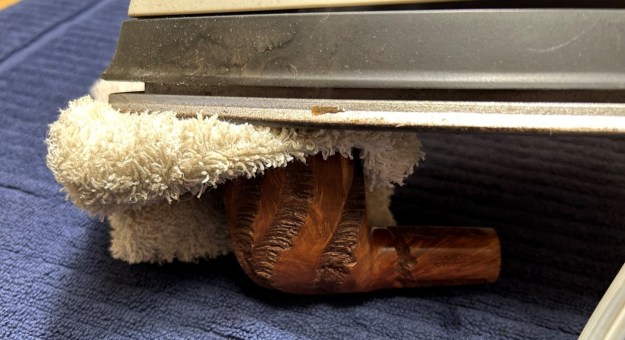
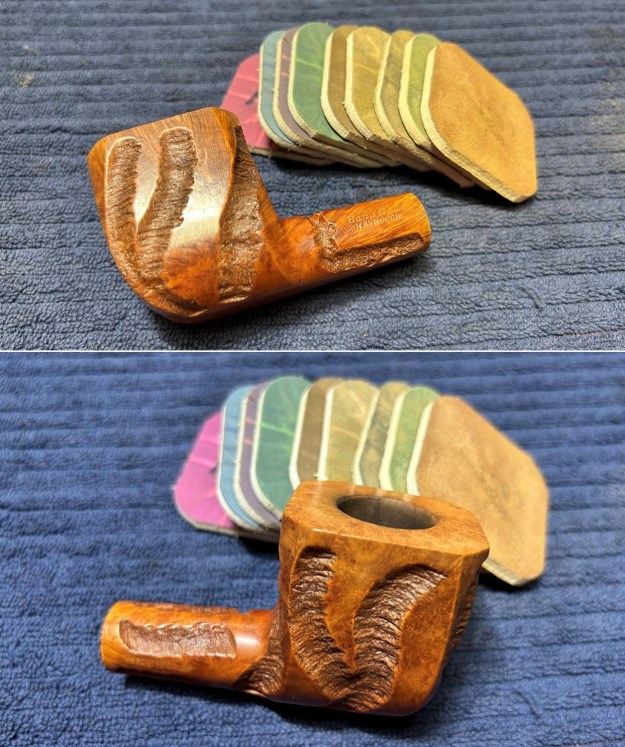
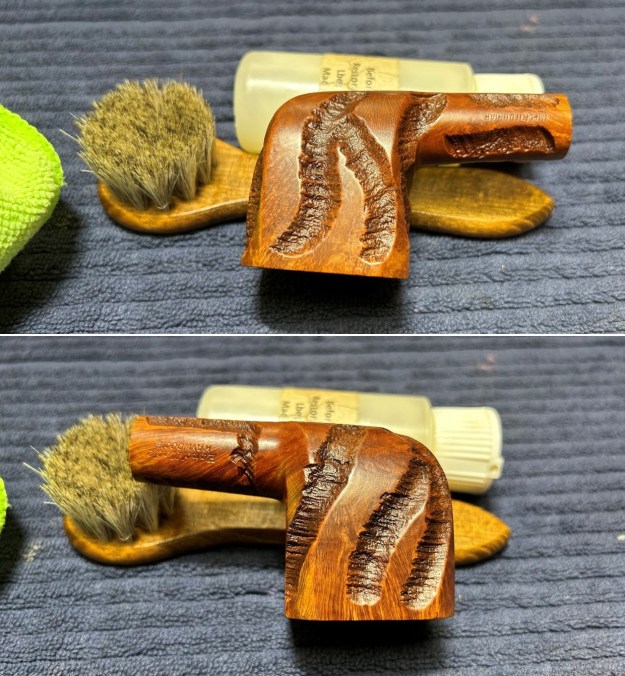
Now it was time to work on the pipe itself. When it gets to Vancouver it my turn to contribute to its restoration. Jeff did a great job cleaning the pipe on the inside and outside. He reamed the bowl with a PipNet pipe reamer and cleaned up the remnants with the Savinelli Fitsall Pipe Knife. He scrubbed out the mortise and the airway in the shank and stem with alcohol, shank brushes, cotton swabs and pipe cleaners. He scrubbed the exterior of the bowl with a tooth brush and Murphy’s Oil Soap to remove the dust in the rusticated spots on the bowl and shank as well as the smooth portions. He rinsed it under running water. He dried it off with a soft cloth. Once the dust and debris were removed the finish was dull but appeared to be in excellent condition. He soaked the stem in Briarville’s Pipe Stem Deoxidizer and rinsed it under warm water to remove the deoxidizer gel solution. I took photos of the pipe to show its condition before I started my work on it. I took a photo of the bowl and rim top to show how well it had cleaned up. There is some darkening and nicks on the top and inner edge of the rim. The stem tooth marks and chatter are visible. The ones on the topside of the stem are worse than those on the underside.I took a photo of the engraving on the underside of the shank. It is clear and reads as noted above. I also took the stem off the pipe and took a photo of the parts to give a sense of the proportions of the pipe. It is a beauty. I started my work on the pipe by dealing with the darkening on the inner edge of the rim and the darkening on the rim top with a folded piece of 220 grit sandpaper. It looked much better when finished. I worked over the rim top with 320-3500 grit sanding pads to smooth and polish the damaged areas and blend them into the surface of the briar. Once I finished it looked much better and the colour of the rim matched the rest of the bowl very well. I polished the bowl and shank with micromesh sanding pads – dry sanding with 1500-12000 grit pads. I wiped the bowl down with a damp cloth after each pad. The bowl and rim took on a beautiful shine. I would not need to stain the rim top as the match was very good. I worked Before & After Restoration Balm deep into the finish to clean, enliven and protect the briar. I rubbed it into the briar with my fingers and a shoe brush to work it into the finish then set it aside to dry for 10-15 minutes. I wiped it off with a soft cloth. I buffed the bowl with a cotton cloth to polish it. It really began to have a deep shine in the briar. The rim top is looking much better. I took some photos of the bowl at this point to mark the progress in the restoration. The rustication on the bowl stands out with interesting lines moving across the sides of the bowl and the heel. I set the bowl aside and turned my attention to the stem. I “painted” the vulcanite surface with the flame of a lighter – constantly moving the flame over the tooth marks and was able to lift many of them. I filled in those that remained with black rubberized CA glue. Once it cured I flattened the repairs with needle files. I sanded the stem with 220 grit sandpaper to blend the repairs into the surface. I sanded the stem with the 2 inch square 320-3500 grit sanding pads. I wiped down the stem after each sanding pad with Obsidian Oil. I polished out the scratch marks left behind by the sandpaper. The stem looked very good.I polished the vulcanite stem with micromesh sanding pads – dry sanding it with 1500-12000 grit pads. I wiped the stem down after each sanding pad with Obsidian Oil and set it aside to dry. I polished it further with Before & After Pipe Polish – using both the Fine and Extra Fine Polishes. I gave it a rubdown with Obsidian Oil one last time and set it aside. I put the House of Robertson Bent Billiard with a square shank and saddle stem back together and worked the pipe over on the buffing wheel using Blue Diamond to lightly polish the stem. I buffed the bowl and stem to raise the gloss on the briar and the vulcanite. I gave the pipe multiple coats of carnauba wax. I buffed the entire pipe with a clean buffing pad to raise the shine. I hand buffed it with a microfiber cloth to deepen the shine. Dick Egelton’s finished the House of Robertson Bent Billiard is shown in the photos below. The medium brown stains on the rusticated spots, plateau and smooth finishl works well with the rich black of the vulcanite stem. The dimensions of the pipe are: Length: 6 inches, Height: 2 inches, Outside Diameter: 1 ½ inches, Diameter of the chamber: ¾ inches. The weight of the pipe is 42 grams/1.45 ounces. This is an interesting piece of briar with a great back story. I really like how the briar and the vulcanite work well together. This one will soon be on the rebornpipes store, in the American Pipemakers Section. If you are interested in adding a House of Robertson to your collection this may well be the one for you. Thanks for walking with me through the restoration process.

New Life for a Jobey Shellmoor Extra E527 Hawkbill


by Steve Laug

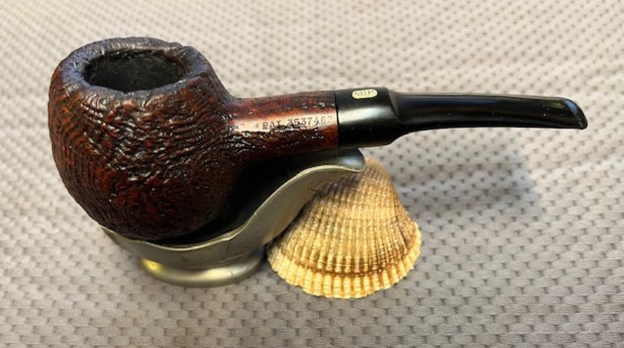
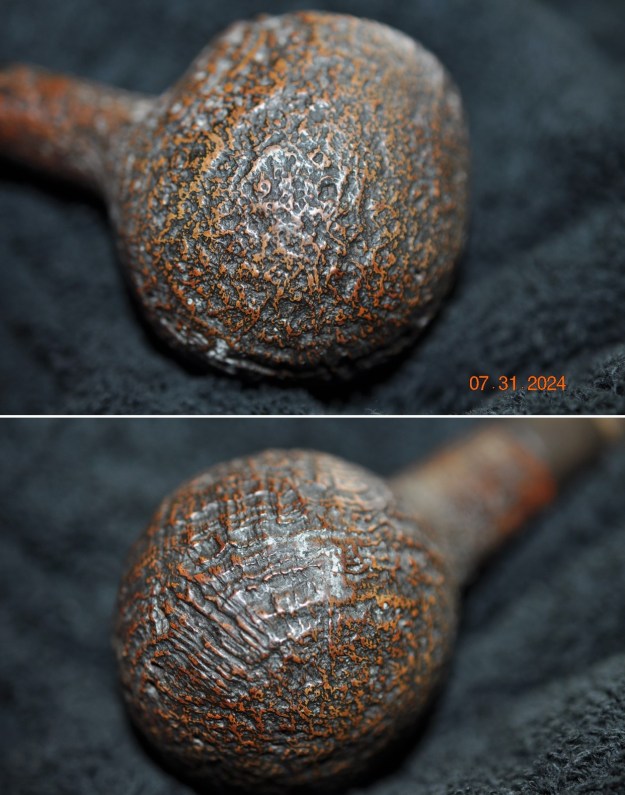
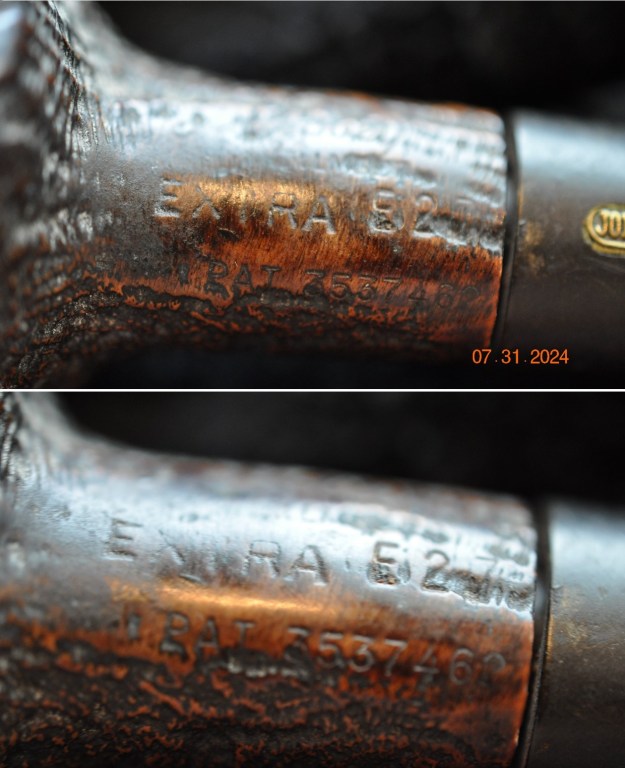
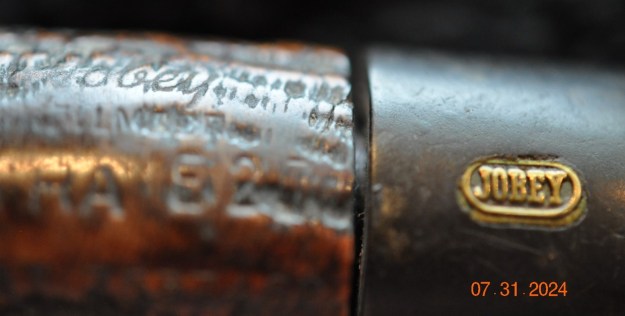
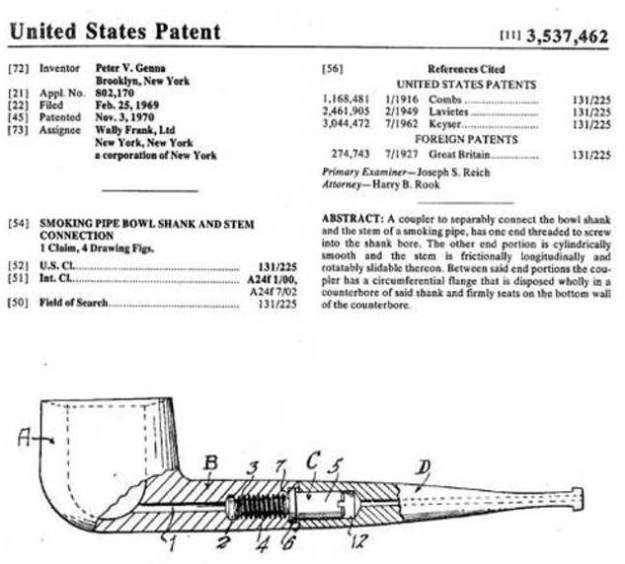
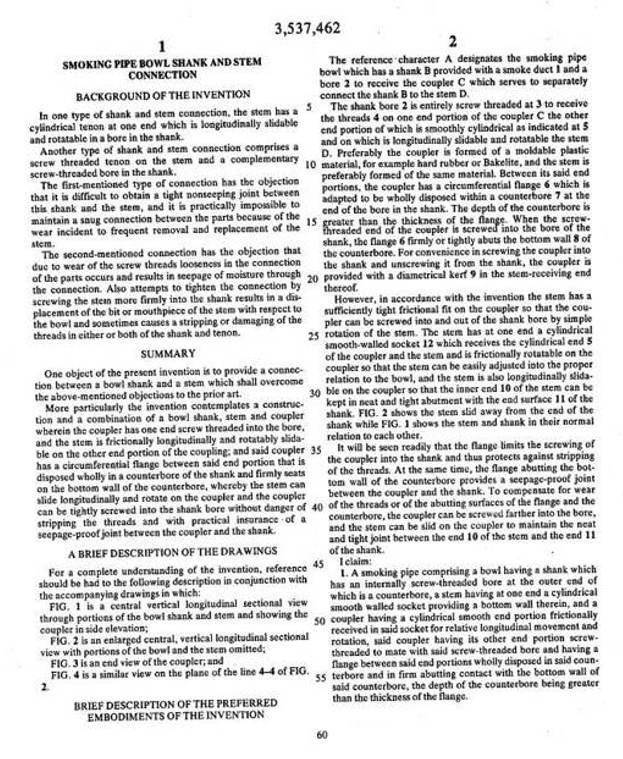
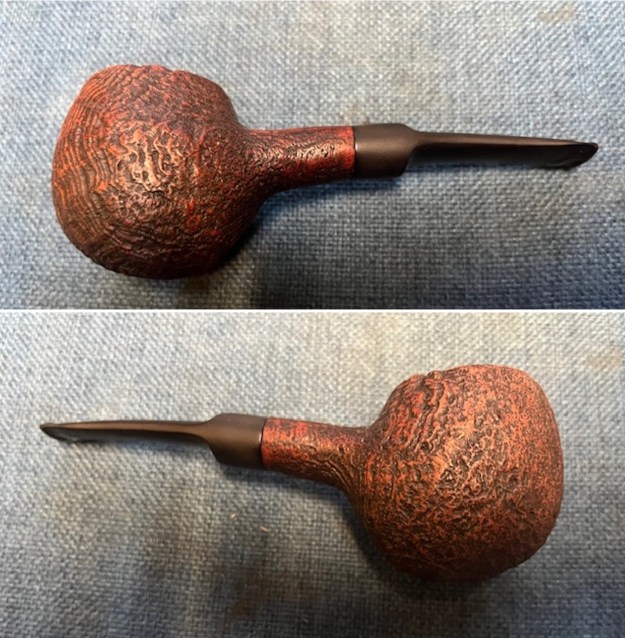
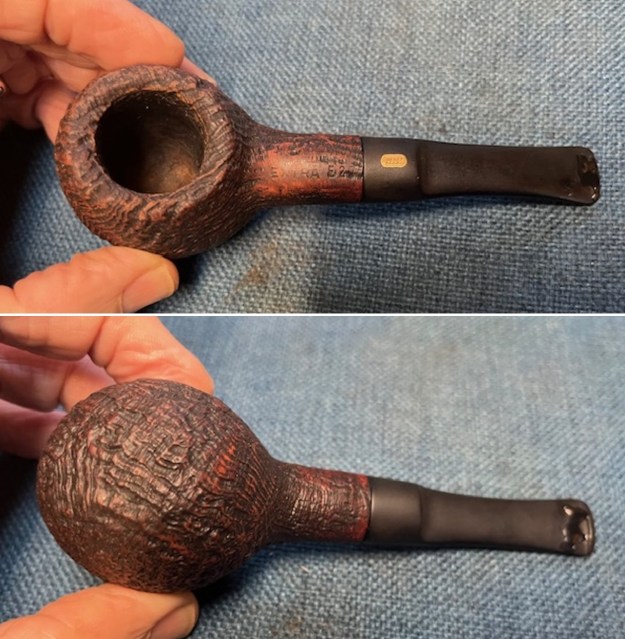
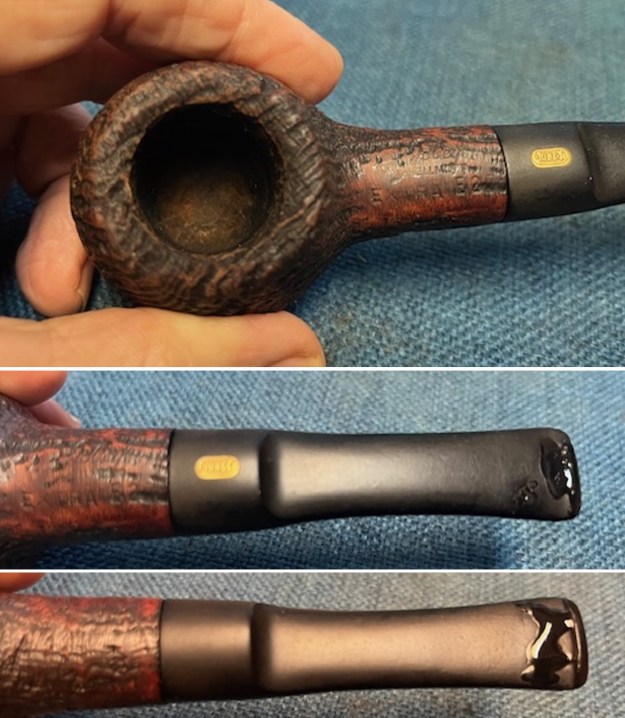
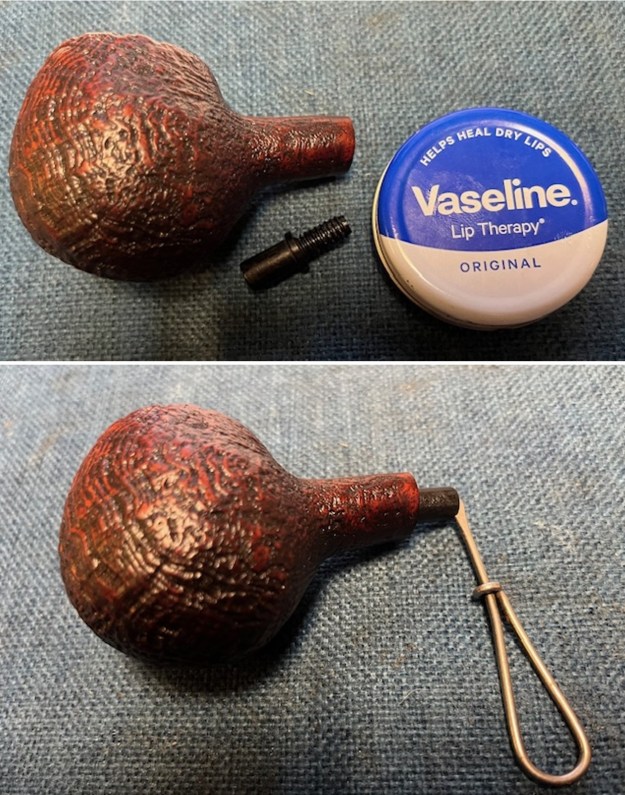
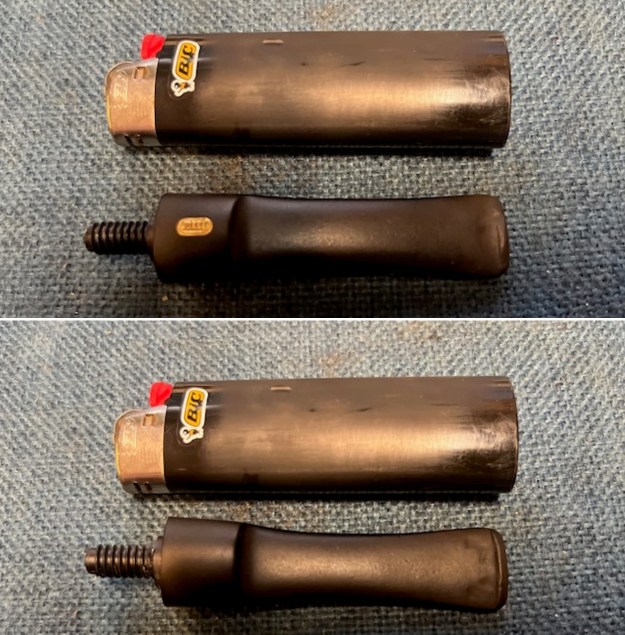
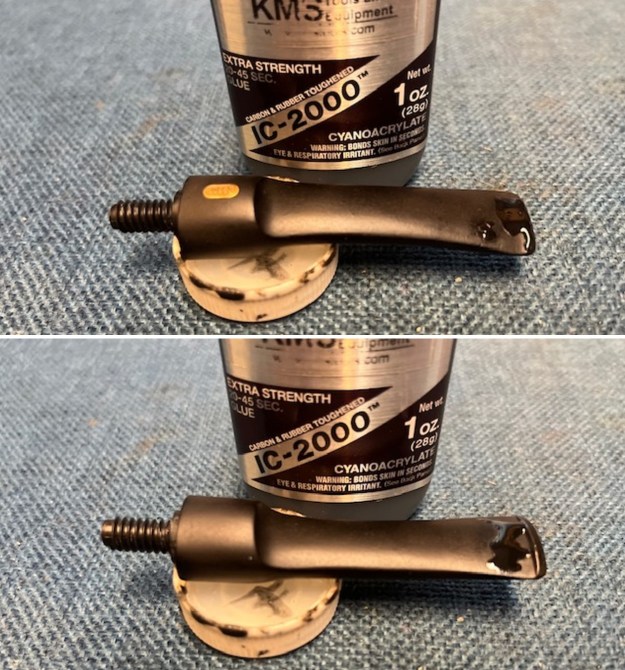
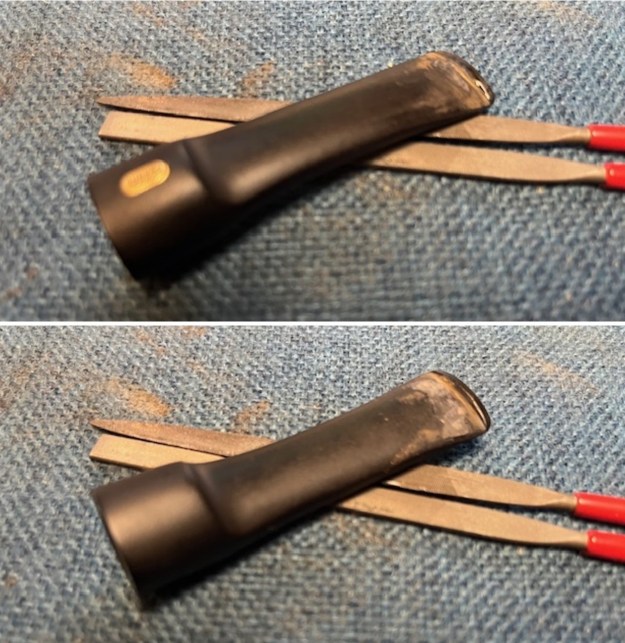
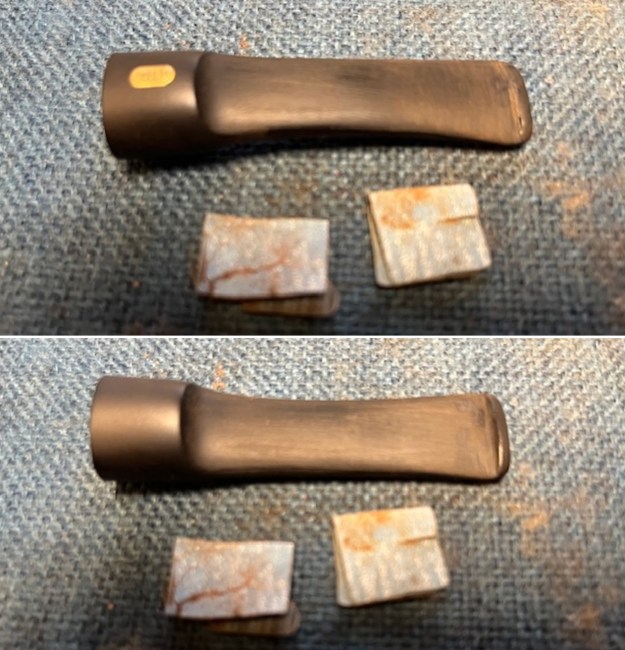
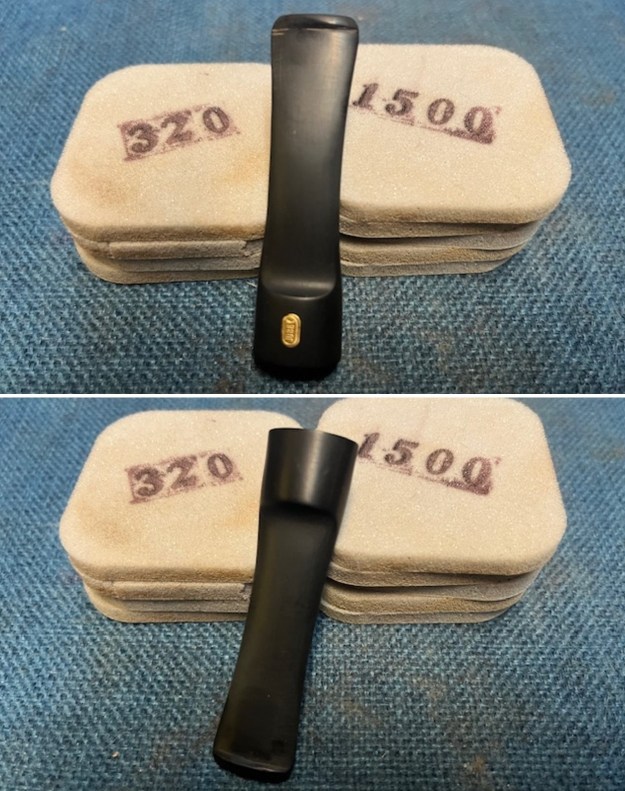
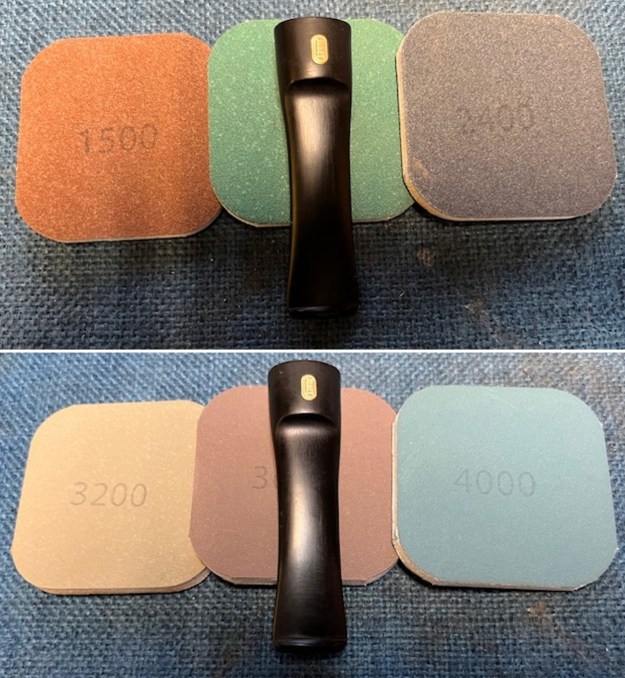
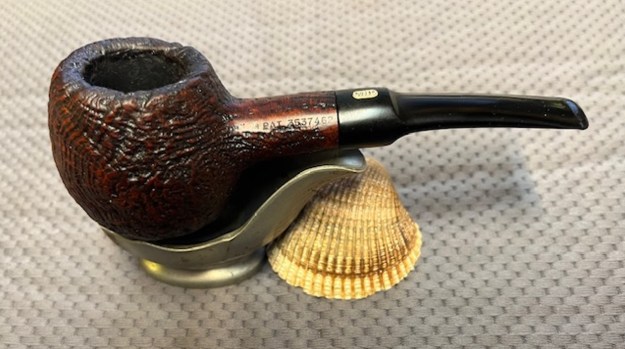
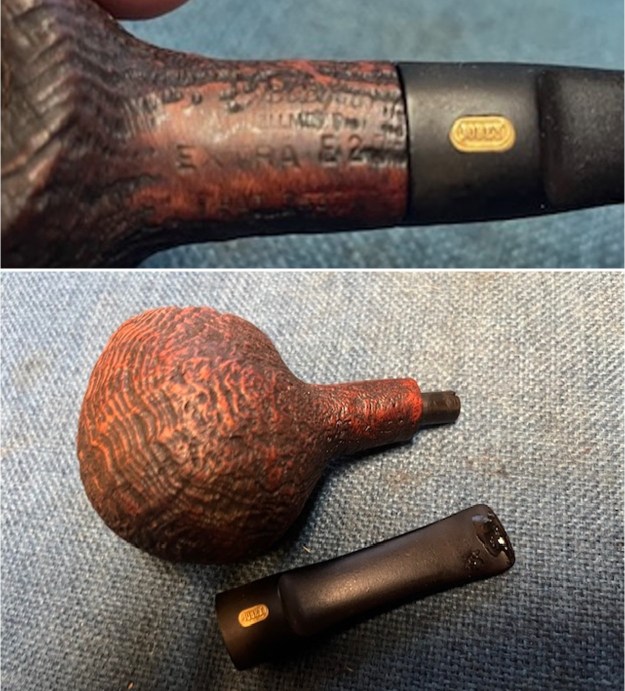
The next pipe on the table is one that has been in our work bins for over two years. It is nice looking sandblasted Hawkbill. We purchased it from an Antique Store in Bozeman, Montana, USA on 05/01/2022. It is a great looking pipe with lots of promise. The sandblast is very defined, not deep or rugged but really highlighting the grain around the bowl. There is a lot of dust and grit in the crevices of the blast. The pipe is stamped on the topside of the shank. There are faints spots but it readable. It is stamped Jobey (in script) [over] Shellmoor [over] Extra. Under that it is stamped – PAT. 3537462. The shape number E527 is right after the Extra stamp. The bowl has a heavy cake and tobacco debris in the bowl with lava overflowing and filling in much of the sandblast on the rim top. It is hard to know for sure what the edges look like because of the lava and cake but cleaning would tell all. Other than being dirty the finish is in good condition. The stem has a Jobey brass oval inlaid on the topside of the saddle stem. It has a saddle stem and is connected to the shank by the patented Jobey Link system. It is oxidized, calcified and has some deep tooth marks and chatter on both sides ahead of the button. Jeff took photos of the pipe before he started his clean up work. He took a photo of the bowl and rim top to show the condition of the pipe. You can see the cake in the bowl and the heavy lava on the rim top. The stem photos also show the oxidation, calcification and deep tooth marks and chatter on the top and underside ahead of the button. He took photos of the sandblast on the sides and heel on the bowl. It really is a nice looking blast and unusual shape. He took photos of the stamping on the underside of the diamond shank. It is clear and readable as noted above. There are some faint spots but it is readable. The Jobey brass oval logo stamp is inlaid on the top left side of the stem. Before I started to work on the pipe I wanted to understand the patent number on the shank. To understand the information, I turned to the US Patent search site and entered the numbers. I was able to find both a description of the invention and a diagram that was submitted with the Patent application. The patent is for the Jobey Link that connects the stem and shank on the pipe. Here is the link to the site and a screen capture of the information found there. https://pdfpiw.uspto.gov/.piw?docid=03537462&SectionNum=1&IDKey=6F776849C285&HomeUrl=http://patft.uspto.gov/netacgi/nph-Parser?Sect1=PTO1%2526Sect2=HITOFF%2526d=PALL%2526p=1%2526u=%25252Fnetahtml%25252FPTO%25252Fsrchnum.htm%2526r=1%2526f=G%2526l=50%2526s1=3537462.PN.%2526OS=PN/3537462%2526RS=PN/3537462 With that information, I turned to work on the pipe itself. Jeff had thoroughly cleaned up the pipe. He reamed the pipe with a PipNet Pipe Reamer and cleaned up the remnants with a Savinelli Fitsall Pipe Knife.  He scrubbed the bowl with undiluted Murphy’s Oil Soap with a tooth brush. He rinsed it under running warm water to remove the soap and grime. He cleaned out the inside of the shank and the airway in the stem with alcohol, cotton swabs and pipe cleaners. He scrubbed the exterior of the stem with Soft Scrub to remove as much of the oxidation as possible. He soaked it in Before & After Pipe Stem Deoxidizer and rinsed it with warm water. The acrylic stem was clean but had tooth marks and chatter on both sides ahead of the button. There was an Jobey Brass Oval logo inlaid on the left side of the stem. I took photos of the pipe before I started my work on it. It was an amazing looking pipe.  I took photos of the rim top and bowl as well as the stem to give a sense of the condition of both. The rim top and edges looked very good. The stem cleaned up well and the tooth marks on the top and underside ahead of the button were very light.I took a photo of the stamping on the topside of the shank. It is readable as noted above. I took the stem out of the shank and took a photo of the overall look of the pipe.The bowl was in excellent condition. The rim top and edges looked really good. I started my work by working some Before and After Restoration Balm into the surface of the sandblast bowl. I worked it into the crevices with a shoe brush. It works to preserve, clean and renew the briar. I let it sit for 10 minutes and then buffed it off with a soft cloth. The bowl really looked good at this point. I coated the threaded end of the Jobey Link with Vaseline and threaded it into the shank end. I used a screw driver to turn it into the shank end. The stem will fit over the non-threaded end of the stem.I set the bowl aside and turned my attention to the stem. I “painted” the stem with the flame of a Bic lighter to lift the tooth marks on both sides. I was able to lift them a bit. I filled in what remained with black CA glue. Once it cured I used small files to shape the button and flatten the repairs. I sanded out the remaining repairs with 220 grit sandpaper to flatten them out and blend them into the surface. I sanded the stem with 320-3500 grit sanding pads. I wiped the stem down after each pad with Obsidian Oil. It began to take on a deep shine after each pad.I polished the stem with micromesh sanding pads – dry sanding it with 1500-12000 grit sanding pads and wiping it down after each pad with some Obsidian Oil. I finished polishing it with Before & After Pipe Stem Polish – both fine and extra fine. I gave it a final coat of Obsidian Oil. This Patent Jobey Shellmoor E527 Hawkbill with a vulcanite saddle stem is a great looking pipe now that it has been restored. The beautiful sandblast on the briar shines through the polished finish is stunning. I put the stem back on the bowl and carefully buffed the pipe with Blue Diamond on the buffing wheel. I gave the bowl multiple coats of Conservator’s Wax and the stem multiple coats of carnauba wax on the buffing wheel and followed that by buffing the entire pipe with a clean buffing pad. I hand buffed the pipe with a microfiber cloth to deepen the shine. The finished Jobey Shellmoor E527 Hawkbill fits nicely in the hand and feels great. Give the finished pipe a look in the photos below. The dimensions of the pipe are Length: 5 ½ inches, Height: 2 inches, Outside diameter of the bowl: 1 ½ inches, Chamber diameter: 7/8 of an inch. The weight of the pipe is 59 grams/2.08 ounces. I will soon be adding it to the rebornpipes store in the American Pipe Makers Section. If you are interested in this pipe send me a message or an email. Thanks for reading this blog and my reflections on the pipe while I worked on it. There are many more to come!

A Gorgeous W.O. Larsen Double Black FM2002 86 Oval Shank Rhodesian


by Steve Laug

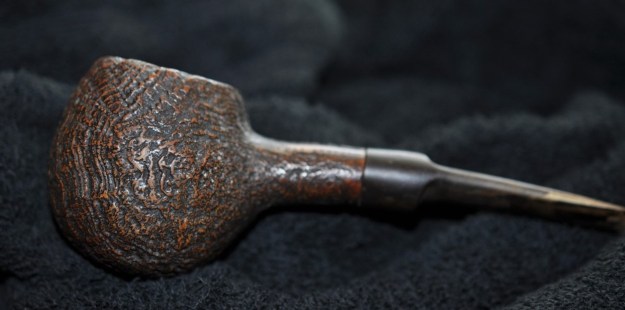
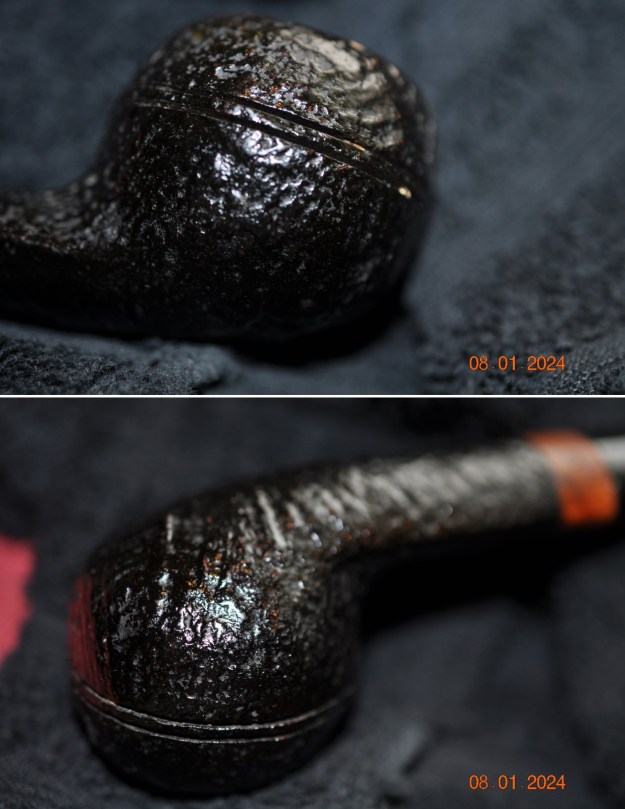
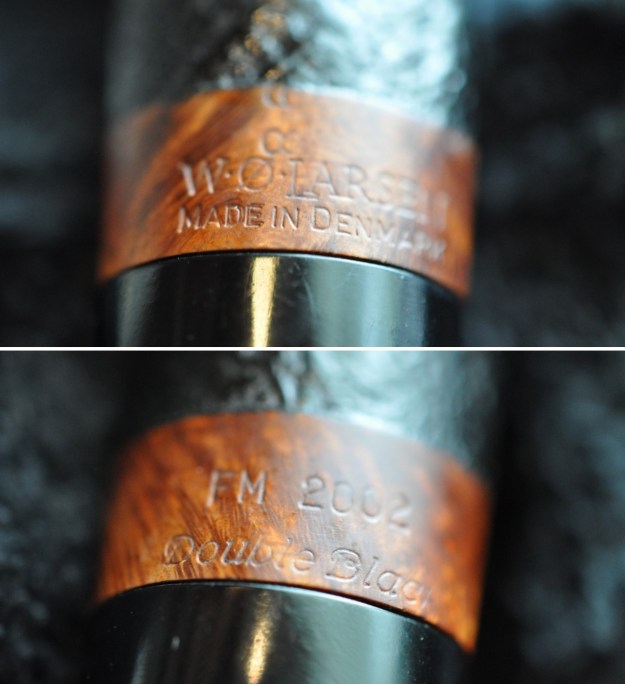
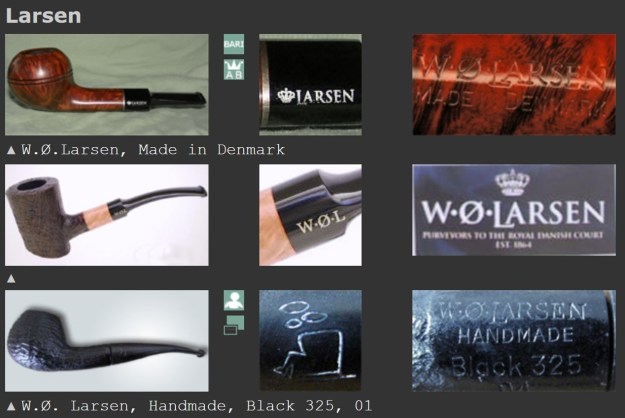
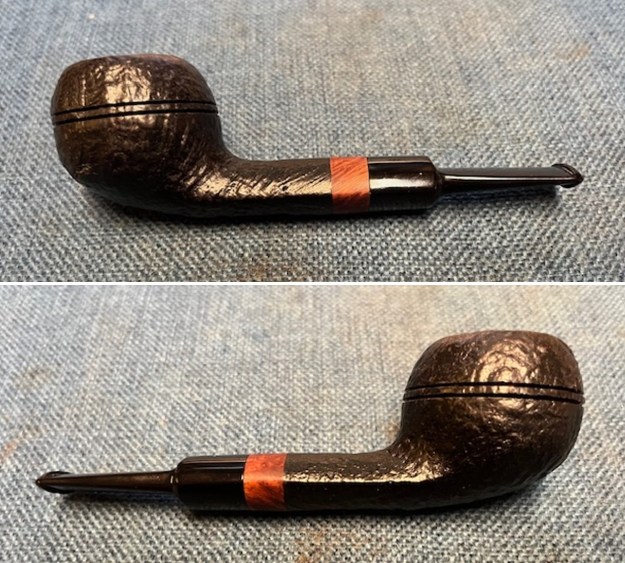
The next pipe on the worktable is an interesting W.O. Larsen pipe. It is a Danish take on a sandblast straight Rhodesian. I am pretty sure it was made after Stanwell purchased Larsen. We picked it up from a seller in Denmark on 05/22/2024. It is stamped on the topside of the shank and reads FM 2002 [over] Double Black. On the underside it is stamped with a shape number 86 or 68 [over] W.O. Larsen [over] Made in Denmark. All the stamping is on the smooth band of briar on the shank end. The bowl has a thick cake and there is lava in the sandblast on the rim top. The twin rings around the bowl cap are in good condition and look clean. The sandblast is dirty but the finish is in excellent condition underneath the grime. The mouthpiece is an acrylic fancy oval saddle stem. There are tooth marks and chatter on both sides on the button and ahead of it. It is a great looking pipe. Jeff took some photos of the pipe before he started his clean up work on it. Jeff took photos of the rim top and the stem to show the condition of the pipe when we received it. You can see the cake in the bowl and the lava in the sandblast on the rim top. It is hard to know the condition of the rim edges with certainty until the pipe is clean. The stem is acrylic and has a lot of chatter and a few deep tooth marks on both sides near the button and on the button surface itself. He took photos of the sides of the bowl and the heel to give an idea of the shape, the sandblast and the condition of the briar around the bowl. It really is a nicely shaped pipe that has charm and elegance. The next photos Jeff took show the stamping around the smooth briar on the shank end. It is clear and readable as noted above.I refreshed my memory about the pipes coming out of Ole Larsen’s Copenhagen tobacco shop. I knew that many famous Danish Carvers started their careers carving for the shop. I turned first to the Pipephil website to get and over view of the brand (http://www.pipephil.eu/logos/en/logo-l2.html). I did a screen capture of the section on the site showing a summary of the brand and the typical stamping. I quote from the sidebar information on Pipephil below.

In the 1960s Ole Larsen, owner of the Copenhagen tobacco store, retails pipes carved by Sixten Ivarsson, Poul Rasmussen, Sven Knudsen or Peter Brakner. Faced with the success and urged by Sven Bang (store manager), Sven Knudsen and Former (Hans Nielsen) are successively hired to carve pipes in the basement of the shop at the beginning and in the old Larsen cigar factory afterwards. Carver like Teddy Knudsen, Tonni Nielsen, Jess Chonowitch, Peter Hedegaard work a while in this context.

When Nils, son of Ole Larsen, succeeds his father he acquires the Georg Jensen pipe factory to focus on less expensive pipes. This turns out to be an error ending with the sale of W.O. Larsen trademark to Stanwell.

The famous tobacco shop at Strøget, Amagertorv 9 closed down for good on Dec 31, 2004.
Do not confuse W.O. Larsen with: Jorgen Larsen

This leads me to believe that the pipe I am working on came after Stanwell purchased the trademark. However, the RM2002 stamp on the pipe tells me that it was made in 2002 for the Roskilde Championship in Denmark (https://pipedia.org/wiki/Stanwell the Stanwell article explains these markings in a section called Competition Markings///). To me this is another reason I put the pipe post Stanwell’s acquisition of the brand. Stanwell did many pipe for the various shop competitions in Denmark. This is stamped the same way as the Stanwell’s that I have worked on from these competitions.

I then turned to Pipedia to do a bit more reading about the brand and the various lines making it up (https://pipedia.org/wiki/W.%C3%98._Larsen). The link took me to some pages on the finepipes.com website. Here is the link to the summary of the history of the brand. I quote it in full. I have marked the pertinent section with bold underlined font to mark out the section on the Stanwell/Larsen connection (https://www.finepipes.com/pipes/danish/w-o-larsen?sort=20a&page=2&zenid=562ff4b9d62f4f612d0f6ee60cab1224).

W.O. Larsen was one of the most famous tobacco shops in Copenhagen, with a beautiful store located on Copenhagen’s famous “Walking Street.” During the flowering of the Danish pipe in the ’60’s, they first began retailing pipes by such carvers as Sixten Ivarsson, Sven Knudsen, Poul Rasmussen, and Brakner. Urged on by his store manager Sven Bang, the owner, Ole Larsen, decided to begin making pipes in the basement of the shop. He first hired Sven Knudsen as the pipe maker, who soon passed the job to his protégé Hans “Former” Nielsen. Larsen’s fortunes rose along with the rest of the Danish pipe business, and Former was soon managing a group of carvers in the old Larsen cigar factory. Among these were Teddy Knudsen, Tonni Nielsen, Jess Chonowitch, Peter Hedegaard and others, who were responsible for the Select and Straight Grain series before they branched out on their own. After Former left to start Bentley pipes in Switzerland, his duties were taken over by Soren Refbjerg Rasmussen, while the straight grains were made by Teddy’s student Benni Jorgenson. As Ole’s health began to fail, the reins were taken over by his son Nils. Nils became convinced that the way for Larsen to prosper was by entering the low-end market, and acquired the Georg Jensen pipe factory to make an array of less expensive pipes. This turned out to be a fatal error, and Larsen was recently sold to Stanwell, who continue to produce so-called “Larsen” pipes in their huge factory. Thus ended an important part of Danish pipe history.

From all of that information I had learned that the pipe was a Danish Made pipe from the days after Stanwell acquired the Larsen trademark. It was made with a finish they called the Double Black. The 2002 date is two years before the closing of the Larsen Pipe Shop. Now it was time to work on the pipe.

I have to say I was really looking forward to seeing what Jeff had done to this Danish Made W.O. Larsen Double Black pipe when I took it out of the box. It had shown such beauty through the grime so I was quite sure it would be stunning. He reamed the bowl with a PipNet pipe reamer and cleaned the remnants of cake back with a Savinelli Fitsall Pipe Knife.  He scrubbed the bowl with Murphy’s Oil Soap and a tooth brush to remove the grime and oils. He cleaned the internals of the shank and stem with pipe cleaners, cotton swabs and alcohol to remove all of the tars and oils there. He scrubbed the exterior of the stem with Soft Scrub. He rinsed off the cleaner with warm water and wiped the bowl and stem down with a light coat of olive oil to rehydrate both. The pipe really was quite stunning. I took close up photos of the stem and the rim top to show both how clean they were and what needed to be addresses with both. The bowl had some debris and lava still in the sandblast on the rim top. The edges of the bowl looked very good. The stem looked better but the tooth marks and chatter were still present. I would need to remove those to bring the stem back. I removed the stem from the bowl and took a photo of the parts to give a sense of the beauty of the pipe. I worked over the rim top with a brass bristle wire brush to knock the remaining debris out of the sandblast. It looked much better once I had finished.I worked some Before & After Restoration Balm into the surface of the briar with my finger tips and a horse hair shoe brush to get into the twin rings around the bowl cap and the crevices of the sandblast. The product is incredible and the way it brings the grain to the fore is unique. It works to clean, protect and invigorate the wood. I set the bowl aside and turned my attention to the stem. I filled in the deep tooth marks on the button with black CA glue. Once it cured, I reshaped the button edge and top with a folded piece 220 grit sandpaper and sanded out the chatter and marks on both sides of the stem surface to blend them into the acrylic surface.I started polishing the stem with 320-3500 grit sanding pads. Each pad smoothed the surface with increasing polish. I wiped the stem down after each sanding pad with Obsidian Oil to remove the debris and give the stem a shine.I polished the stem with micromesh sanding pads – wet sanding it with 1500-12000 pads. I wiped it down with Obsidian Oil after each pad to protect it and preserve it. I polished it with Before After Pipe Polish – both Fine and Extra Fine. I finished the polishing with a final coat of Obsidian Oil. I am really happy with the way that this W.O. Larsen Double Black RM 2002 Rhodesian turned out. It really is a beautiful looking pipe with a great shape and sandblast. The acrylic saddle stem is really nice and really works with the smooth briar band on the shank end. The blast really came alive with the buffing. The rich black stains of the finish gave the pipe a sense of depth with the polishing and waxing. I put the acrylic stem back on the bowl and carefully buffed the pipe with Blue Diamond on the buffing wheel using a light touch on the briar. I gave the bowl multiple coats of Conservator’s Wax and the stem multiple coats of carnauba wax on the buffing wheel. I buffed the pipe with a clean buffing pad to raise the shine. I hand buffed the pipe with a microfiber cloth to deepen the shine. The finished W.O. Larsen Rhodesian RM2002 really is a beauty and feels great in the hand and looks very good. Give the finished pipe a look in the photos below. The dimensions of the pipe are Length: 5 inches, Height: 1 ½ inches, Outside diameter of the bowl: 1 ¼ inches, Chamber diameter: ¾ of an inch. The weight of the pipe is 46 grams/1.62 ounces. The pipe will be going on the rebornpipes store soon. It will be in the section on Danish Pipe Makers if you would like to add it to your collection. Thanks for reading this blog and my reflections on the pipe while I worked on it. It was a fun one to work on!

Cleaning up a Georg Jensen Handmade in Denmark Bent Egg with a 9MM filter stem


by Steve Laug

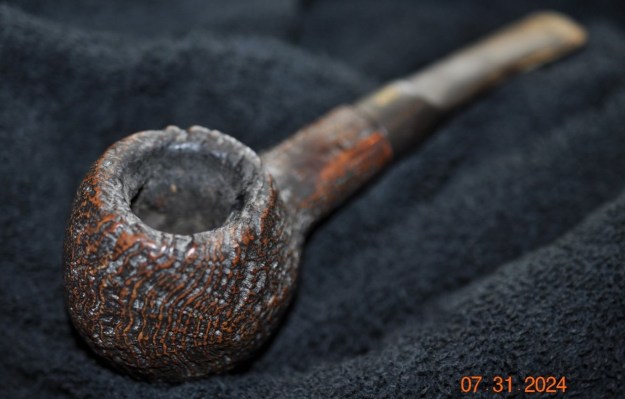
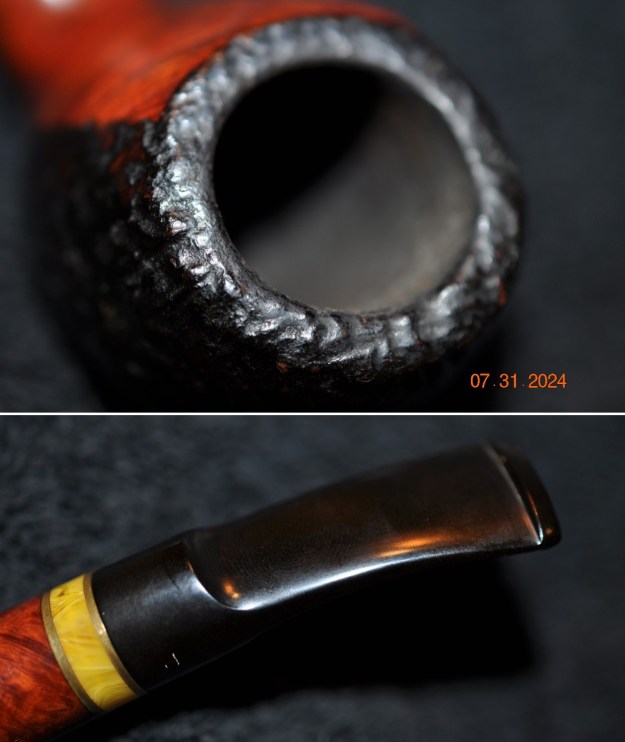
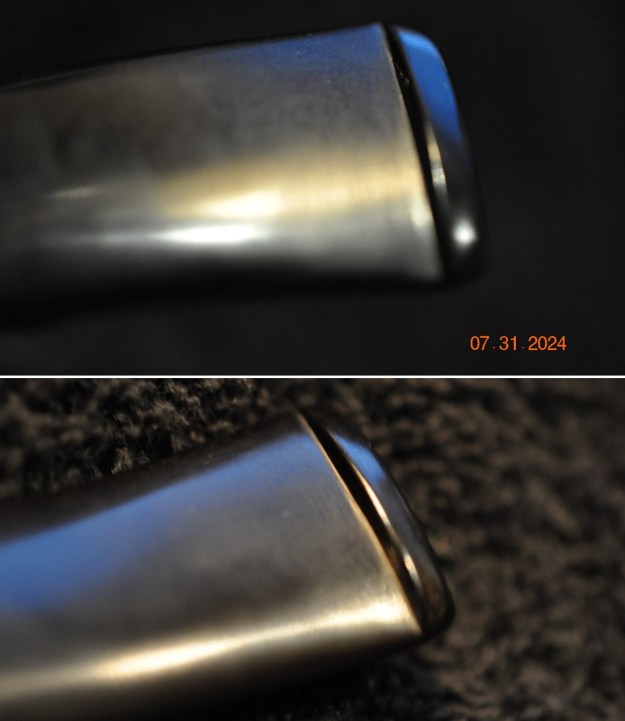
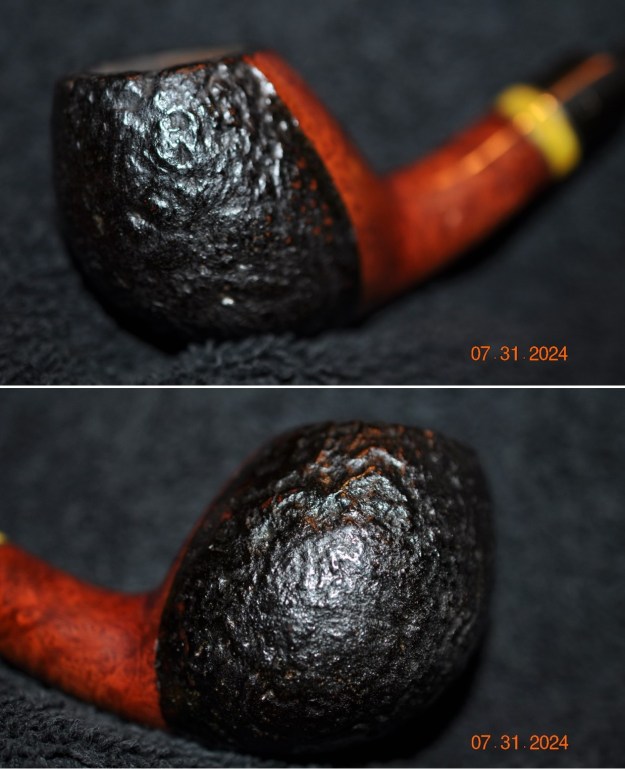
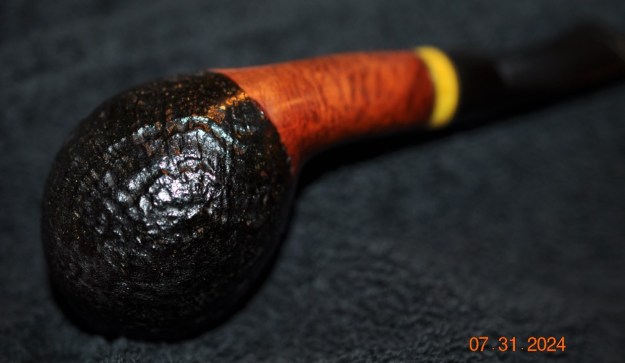
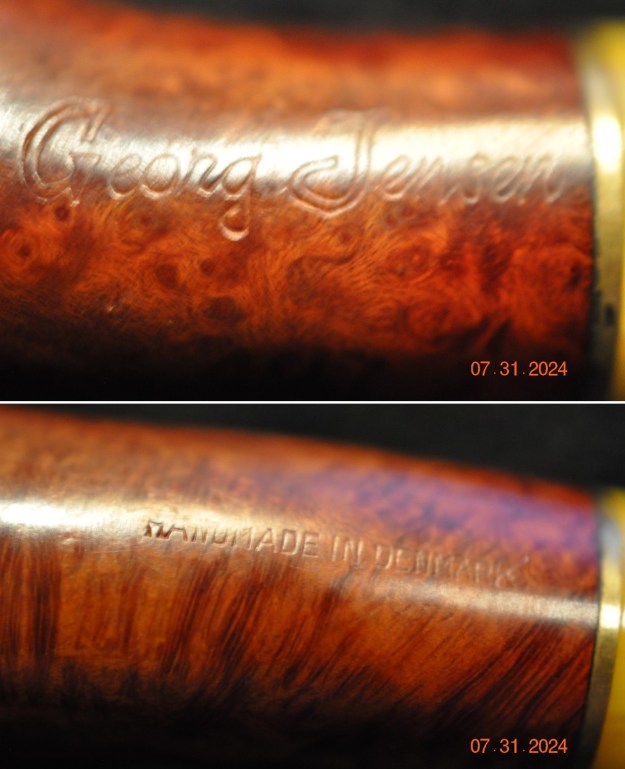
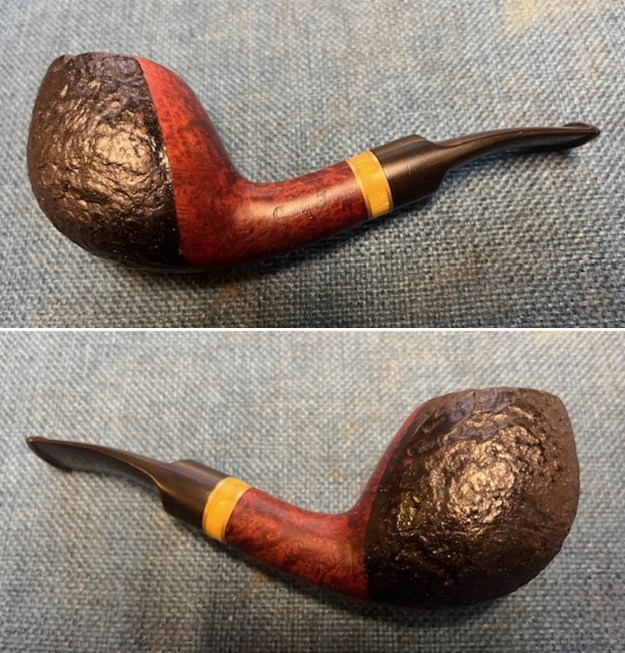
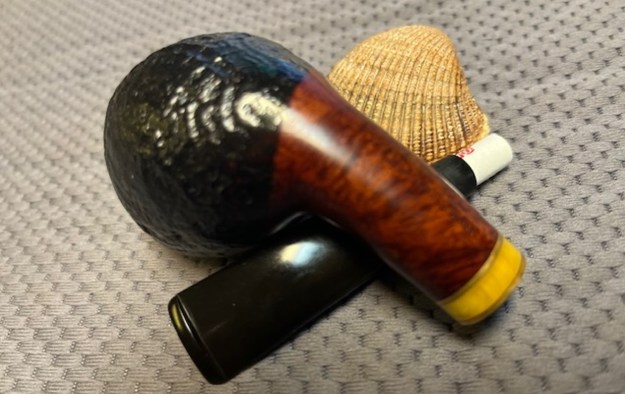
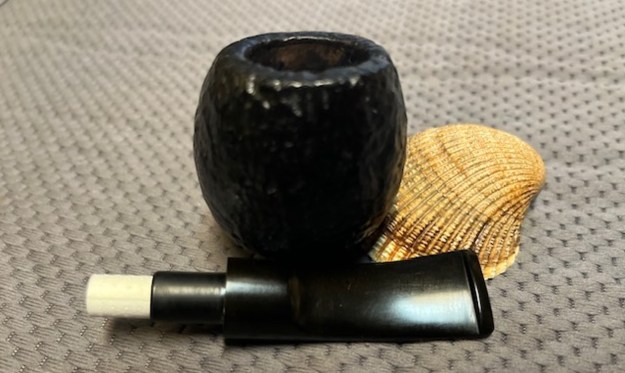
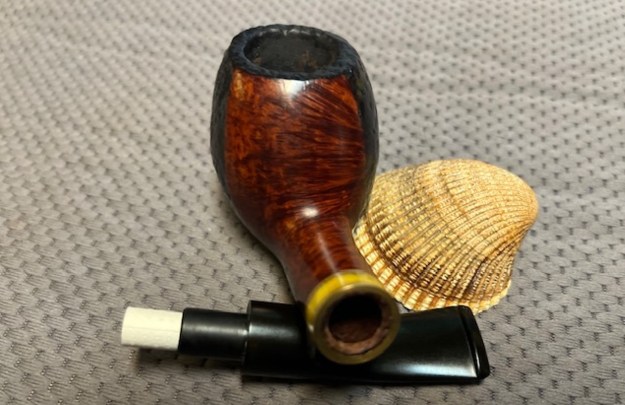
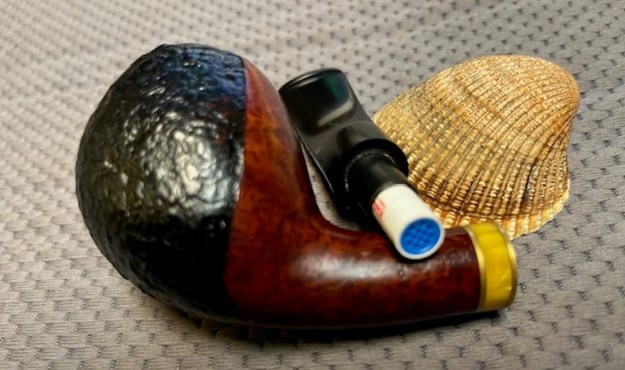
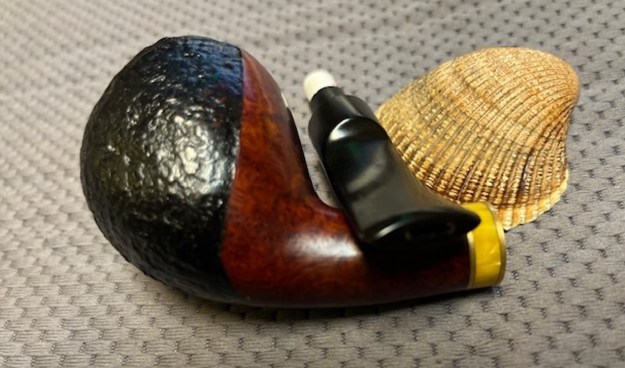
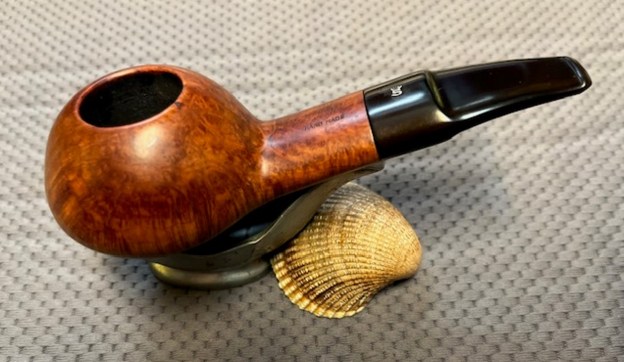
The next pipe on the work table is one that I took in on a trade from a fellow in the Nampa, Idaho, USA. It is a great looking smooth quarter bent mixed grain egg. The front ¾ of the bowl and the rim top is sandblast and stained black. The back of the bowl is smooth briar and stained a reddish brown. It is stamped on the left side of the shank and read Georg Jensen with the G and the J outlined and hollow. On the underside it is stamped Handmade in Denmark. The pipe is shaped to highlight the grain around the bowl. The finish is quite clean with just a bit of grime and oil ground into the sandblast portion and the smooth portion of the bowl sides. The rim top is in good condition with some light lava near the inner edge. The inner edge is clean and sharp. The bowl has a moderate cake that I will ream out but otherwise looks very good. The vulcanite saddle stem was made for a 9mm filter. There is faint GJ logo on the left side of stem showing only the J. The yellow acrylic band sandwiched between two brass bands has some great contrast. There is light oxidation on the stem surface and there are light tooth marks and chatter on both sides ahead of the button. Jeff took photos of the pipe before he started cleaning up the pipe. Jeff took photos of the rim top and the stem surfaces to give a sense of the condition of the pipe. You can see the light lava on the rim top and other than that top is in good condition. There is a moderate cake in the bowl. The edges of the rim look quite good. The stem photos show the light oxidation, light tooth marks and chatter on both sides ahead of the button. The photos of the sides and heel of the bowl show the mixed sandblast and smooth finish around the bowl and shank. The grime hides the grain in many ways. The finish on the pipe is shows a lot of promise in the contrasts. The stamping was on the top and underside of the shank as noted above. It is clear and readable as noted above.
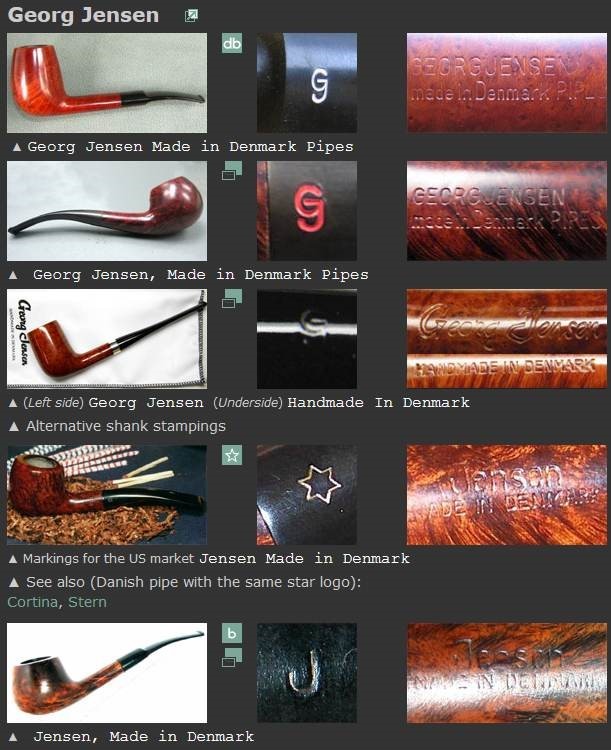
An added part of pipe restoration for me is the opportunity to gather background information on a brand and maker to add depth to the restoration. I almost always turn to Pipephil’s site first for a summary. In this case it did not let me down (http://www.pipephil.eu/logos/en/logo-g2.html#georgjensen). It has a longer listing for the Georg Jensen Brand. The stamping and logo on the one in hand is like the second pipe down in the photo below. I have included a screen capture of the section below. I have also included a copy of the side bar information that gives a brief glimpse of the brand.Per Georg Jensen managed the Georg Jensen Pipe brand during 23 years and is currently (2011) active as “Tobacco Professor” at Mac Baren Tobacco Company. See also: Danets, North Dane Pipes, White Star, Goodwill

I turned then to Pipedia (https://pipedia.org/wiki/Georg_Jensen) and found a short listing on Georg Jensen. I have included it below.

The Georg Jensen pipe factory was founded by Per Georg Jensen and his wife in 1954, in Kopenhagen, Denmark. Since the 80s the company is under the management of his daughter Lis, and his son with the same name, Per Georg Jensen. The company manufactured around 2,000 factory pipes per year. Among the top of the line pipes are hand carved special editions and free hands.

Top of the Line models of Georg Jensen have vulcanite or ebonite stems, factory pipes usually have acrylic stems.

Factory pipes (in increasing quality) were marked:

Danish Sand Achat / Amber Red Flame / Red Skin Sunrise / Orange extra / Starline Contrast / Bicolour / Harmon Excellent / Masterpiece

Pipes were commonly marked (in increasing quality) with: MODEL + MODEL NUMBER + “Made in Denmark”, GJ stamp in red on the stem. MODEL NUMBER + “Georg Jensen” in italic or fancy font.

Extremely rare and collectible freehands were marked with: “Straight Grain” and a number that discerns the grading from 1 (lowest) to 13 (highest).

Special edition pipes were marked with: MODEL + MODEL NUMBER + “Handmade in Denmark” + GJ stamp in white on the stem.

The factory closed down in 2001 when Per Georg Jensen (Jr) became “Tobacco Professor” for MacBaren Tobacco house.

Now it was time to work on the pipe.

Jeff had thoroughly cleaned up the pipe. He reamed the pipe with a PipNet Pipe Reamer and cleaned up the remnants with a Savinelli Fitsall Pipe Knife. He scrubbed the bowl with undiluted Murphy’s Oil Soap with a tooth brush. He rinsed it under running warm water to remove the soap and grime. He cleaned out the inside of the shank and the airway in the stem with alcohol, cotton swabs, pipe cleaners and shank brushes. He scrubbed the exterior of the stem with Soft Scrub to remove the grime and calcification. He soaked the stem in Before & After Deoxidizer and rinsed it off with warm water. The pipe looked very good when it arrived here. I took close up photos of the bowl, rim and the stem. You see the clean bowl and the inner edge. The rim top is sandblast and looks good. The vulcanite saddle stem is in good condition with light tooth marks and some chatter as noted above.I took photos of the stamping on the top and underside of the shank. It is readable as noted above. I removed the stem from the shank and took a photo to give a sense of the proportions of the pipe. The briar is quite beautiful and I think that polishing it will make the grain stand out. The bowl was in very good condition so I started with polishing the bowl. I rubbed the bowl down with Before & After Restoration Balm. I worked it into the briar with my finger tips. I let it sit for 10 minutes and the Balm did its magic. It enlivens, cleans and preserves the briar. It certainly brought this bowl back to life. I buffed it off with a clean cloth and took the following photos. I set the bowl aside and I polished the stem with micromesh sanding pads – wet sanding with 1500-12000 grit pads. I wiped the stem down after each sanding pad with Obsidian Oil. I finished polishing it with Before & After Pipe Stem Polish – both Fine and Extra Fine. Once I had finished the polishing I gave it final coat of oil and set it aside to dry. I fit the filter stem with a new 9mm filter. The fit was perfect and the pipe was ready to be smoked by the next trustee.As usual at this point in the restoration process I am excited to be on the homestretch. I look forward to the final look when it is put back together, polished and waxed. I put the Georg Jensen Handmade ¼ Bent Egg with a 9mm filter stem back together. I polished the bowl and stem with Blue Diamond to polish out the scratches in the briar and the vulcanite. I gave the bowl and the stem multiple coats of carnauba wax. I buffed the pipe with a clean buffing pad to raise the shine. I hand buffed it with a microfiber cloth to deepen the shine. The pipe polished up pretty nicely. The sandblast shows depth and on the smooth portion the grain really pops with the wax and polish. The shiny black vulcanite 9mm filter stem is a beautiful contrast to the reddish browns and blacks of the bowl. This Georg Jensen Handmade was a great pipe to spruce up. It is a very comfortable pipe to hold in the hand. The finished pipe is shown in the photos below. The dimensions of the pipe are Length: 5 ½ inches, Height: 2 inches, Outside diameter of the bowl: 1 ¼ inches, Chamber diameter: 7/8 of an inch. The weight of the pipe is 53 grams/1.83 ounces. This pipe will be going on the Danish Pipe Maker section of the rebornpipes store if you are interested in adding it to your collection. Thanks for reading this blog and my reflections on the pipe while I worked on it. This is an interesting estate to bring back to life.

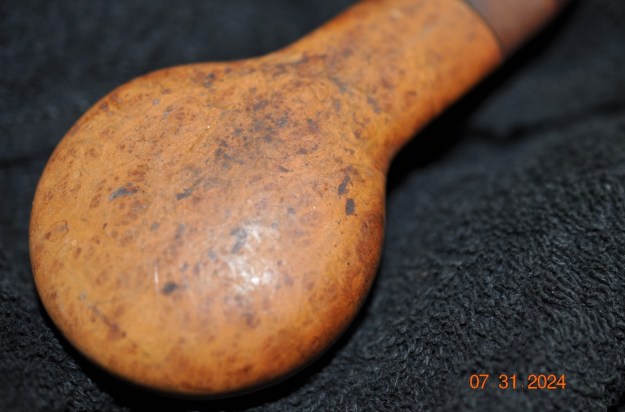
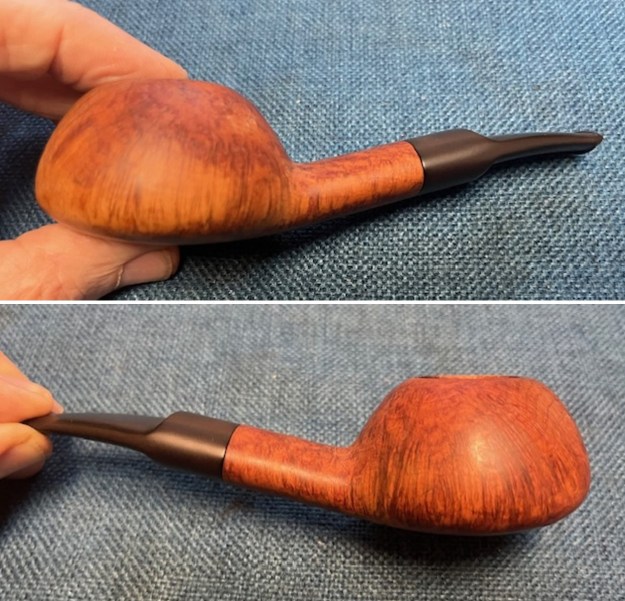
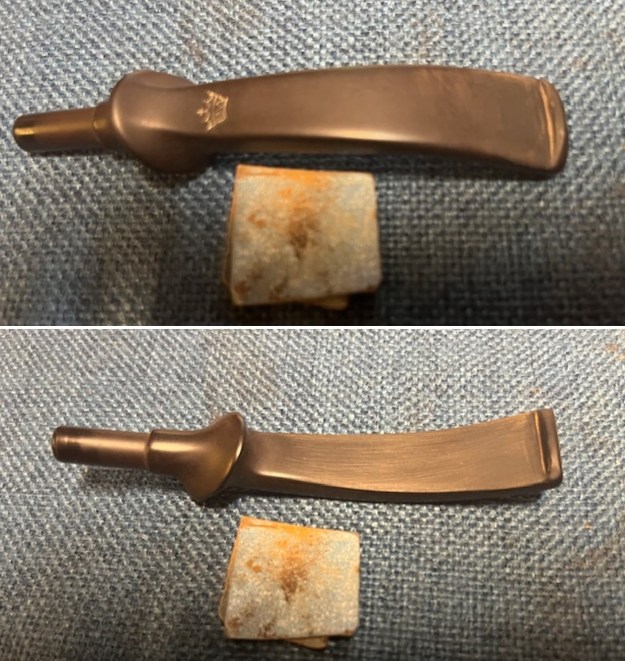
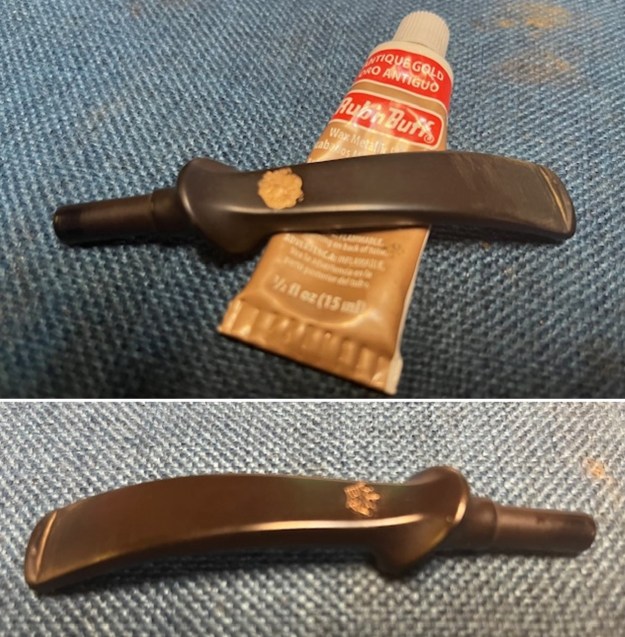
New Life for a Sixten Ivarsson Designed Stanwell Regd. No. 969-48 Hand Made Ukulele 91


By Steve Laug

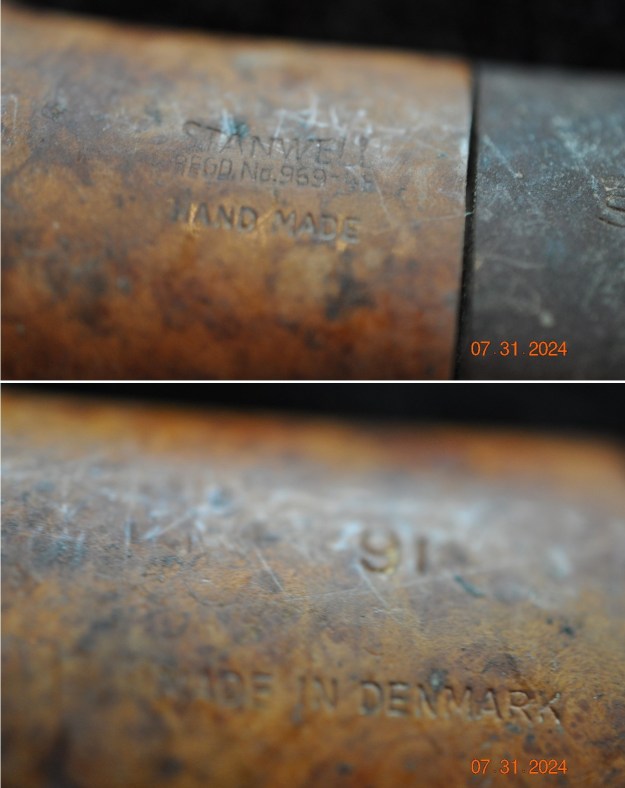
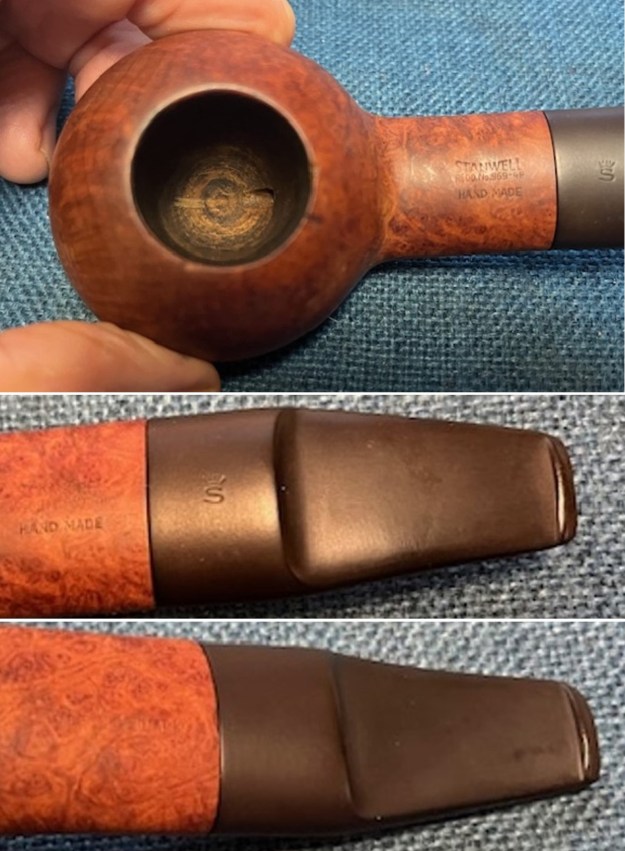
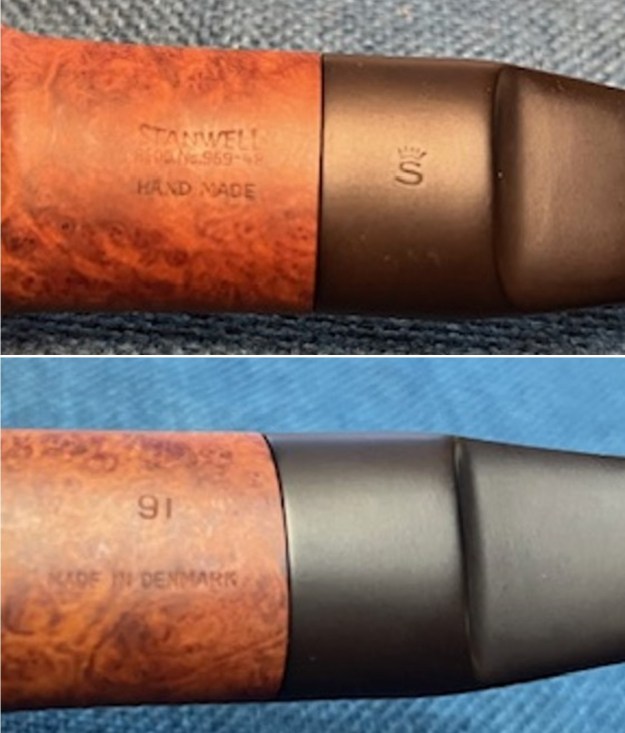
The next pipe on the table to work on is one that was purchased on 09/18/2020 from a seller in Los Angeles, California, USA. This is a oval shank ukulele with a smooth finish and an oval shank, vulcanite saddle stem. It is another Made in Denmark Stanwell. The smooth finish on this pipe, around the bowl and shank has a mix of grain highlighted by the brown stain. The pipe is stamped on the topside of the shank and reads STANWELL [over] Regd. No. 969-48 [over] Hand Made. On the underside of the shank the shape number 91 is stamped [over] Made In Denmark. The pipe was a well used pipe when Jeff received it. There was dust and grime ground into the finish on the sides of the bowl. The brown stain highlights some mixed grain under the dirt. The bowl was thickly caked and there was an overflow of lava on the smooth rim top. The condition of the inner edge was hard to know due to the lava coat but there appeared to be some nicks in the edge. The saddle stem is vulcanite and was dirty, oxidized and had light tooth marks, chatter and scratches on both sides ahead of the button and on the button itself. There is a stamped Crown S logo on the topside of the saddle stem. Jeff took photos of the pipe before he started his clean up work on it. He took photos of the bowl and rim top to show what they looked like before his clean up. You can see the cake in the bowl and the spattering of lava on the rim top and inner edges. You can see the nicks in the inner edge of the rim. He also took some of the stem to show the condition of both sides. It is heavily oxidized and calcified and very dirty. There appear to be tooth marks and chatter on both sides of the stem ahead of the button and on the button surface itself. The photos of the sides and heel of the bowl show the grain around the bowl and shank. The grime hides the grain in many ways. The finish on the pipe is worn but the grain stands out. The stamping was on the top and underside of the shank as noted above. It is clear and readable as noted above. The Crown S stamp on the top of the saddle stem can partially be seen in the first photo below. Before I started my work on the pipe I wanted to see if I could find any information that would help me get a sense of the background on the pipe. I turned to Pipephil to see if there was any listing on the
I then turned to Pipedia (https://pipedia.org/wiki/Stanwell) for more information. The article is great and gives a lot of history on the brand. There was a category of pipe call Pre-regd. 1945-1948 where all the photos of pipes had the same stamping as the one I am working on. That gave me a clue as to the dating on this particular pipe – it was made between 1945-1948.

There were also links to a shape article by Bas Stevens that I originally published on rebornpipes. I looked up the 91 shape number to see who had designed that shape (https://pipedia.org/wiki/Stanwell_Shape_Numbers_and_Designers). I quote the information below.

  1. Slightly bent wide, flattened volcano with an oval shank and a short, standard saddle, trapezoidal saddle, or tapered stem, by Sixten Ivarsson. Nicknamed the ‘Ukelele’ (pictured, right, in its reissued design).

Now it was time to work on the pipe.

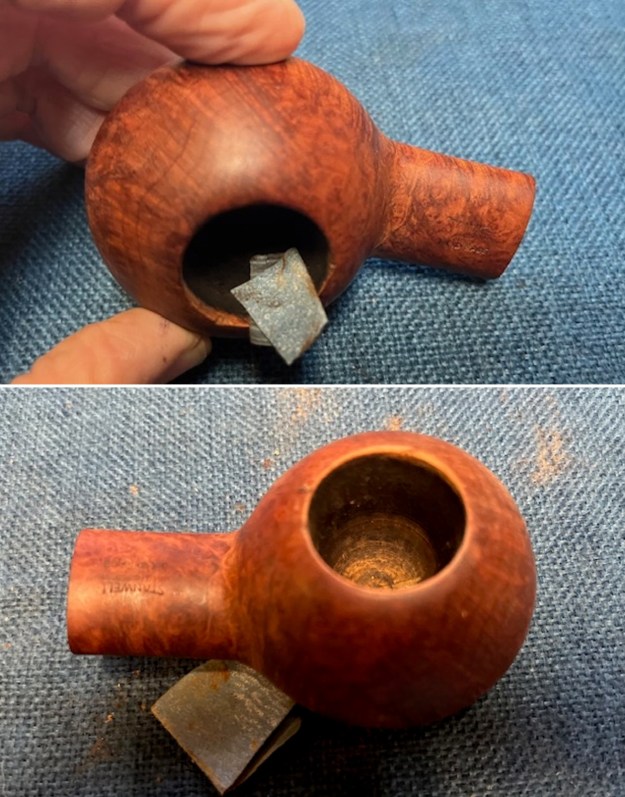
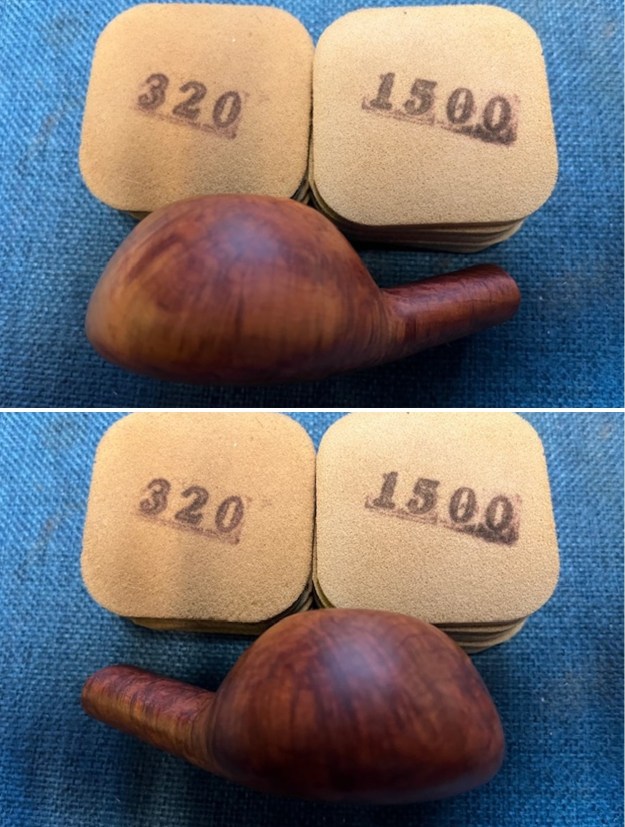
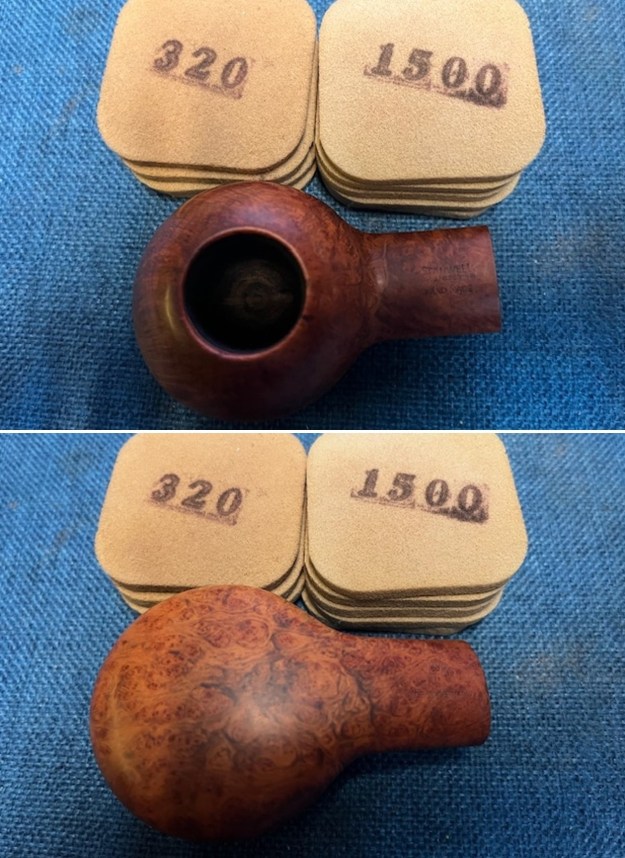
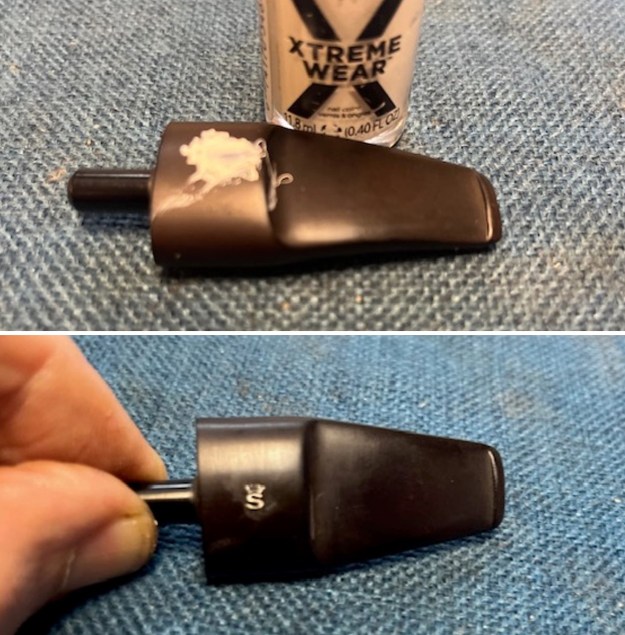
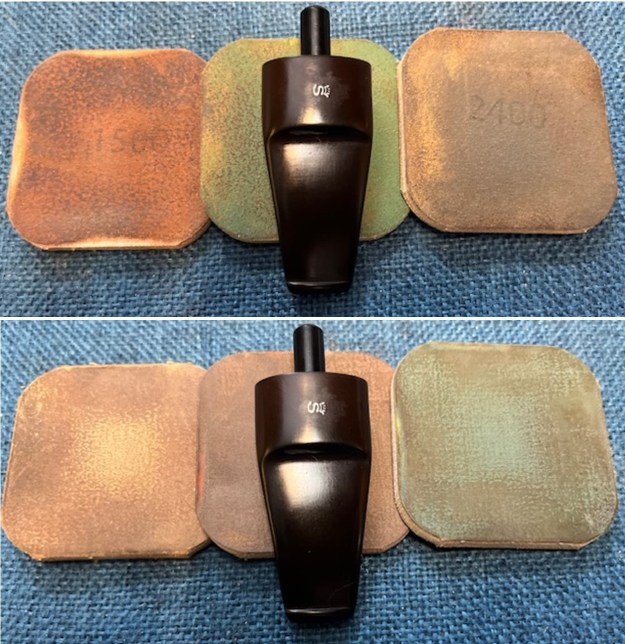
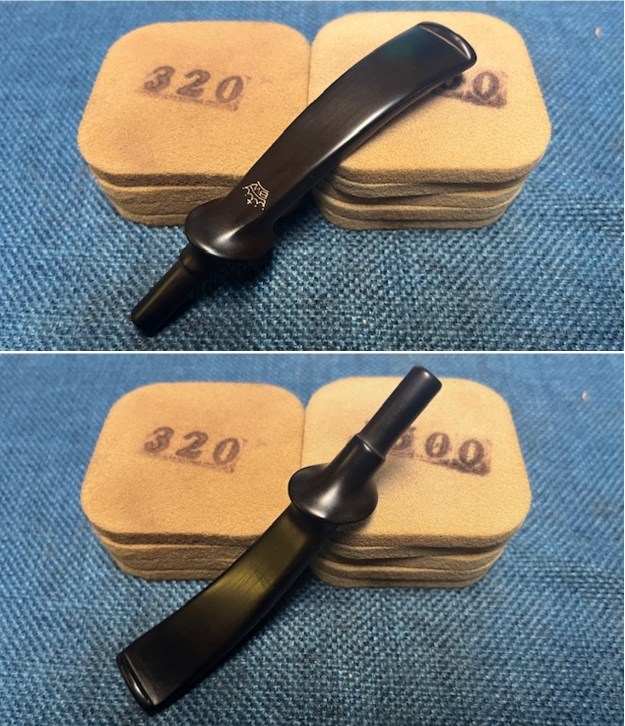
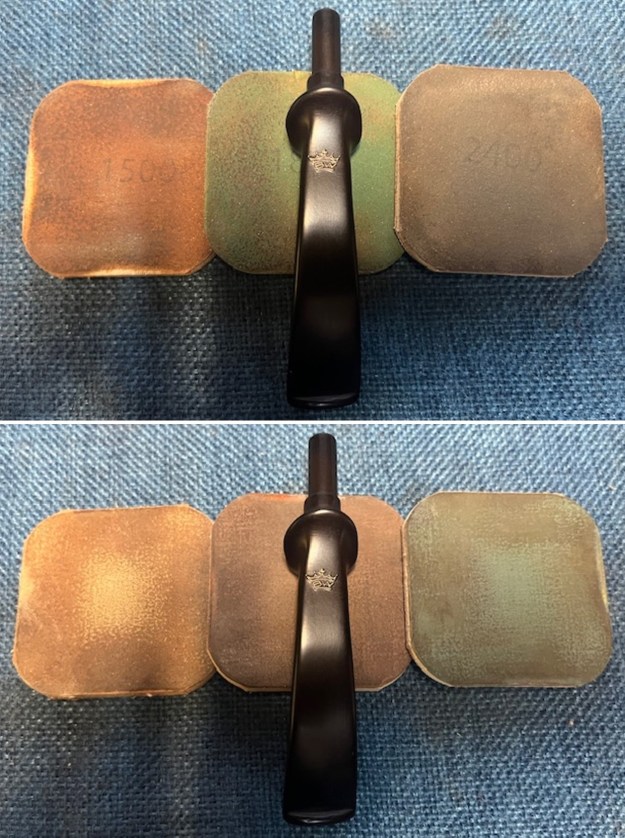
Jeff had thoroughly cleaned up the pipe. He reamed the pipe with a PipNet Pipe Reamer and cleaned up the remnants with a Savinelli Fitsall Pipe Knife. He scrubbed the bowl with undiluted Murphy’s Oil Soap with a tooth brush. He rinsed it under running warm water to remove the soap and grime. He cleaned out the inside of the shank and the airway in the stem with alcohol, cotton swabs, pipe cleaners and shank brushes. He scrubbed the exterior of the stem with Soft Scrub to remove the grime and calcification. He soaked the stem in Before & After Deoxidizer and rinsed it off with warm water. The pipe looked very good when it arrived here. I took close up photos of the bowl, rim and the stem. You can see the nicks on the thin inner edge of the bowl. The vulcanite saddle stem is in good condition with light tooth marks and some chatter as noted above.I took photos of the stamping on the top and underside of the shank. It is readable as noted above. I removed the stem from the shank and took a photo to give a sense of the proportions of the pipe. The briar is quite beautiful and I think that polishing it will make the grain stand out. I worked on the damage to the inner edge of the rim top with a folded piece of 220 grit sandpaper to smooth out the chips in the finish. By the end it looked much better.I sanded the bowl with 320-3500 grit sanding pads to smooth out the finish and bring some life back to the briar. I wiped the briar down after each sanding pad to wipe off the debris left behind by sanding. I polished the bowl and shank with micromesh sanding pads – dry sanding with 1500-12000 grit pads. I wiped the bowl down after each pad to remove the grit. The bowl began to take on a rich shine. It is a beauty. I rubbed the bowl down with Before & After Restoration Balm. I worked it into the briar with my finger tips. I let it sit for 10 minutes and the Balm did its magic. It enlivens, cleans and preserves the briar. It certainly brought this bowl back to life. I buffed it off with a clean cloth and took the following photos. I set the bowl aside and turned my attention to the stem. I touched up the “Crown S” stamp on the topside of the saddle stem with some white acrylic fingernail polish. I worked it into the stamp with a tooth pick. I scraped off the excess with piece of 320 grit sanding pad and buffed it off with a soft cloth and some Obsidian Oil. It looked very good. I polished the stem with micromesh sanding pads – 1500-12000 grit pads. I wiped it down with a damp cloth after each sanding pad. I used Before & After Pipe Polish – both Fine and Extra Fine to further polish the stem. This Sixten Ivarsson Designed Stanwell Regd. No. 969-48 Ukulele 91 with a vulcanite saddle stem is a great looking pipe now that it has been restored. The stain really highlights the grain and the polished finish is stunning. I put the stem back on the bowl and carefully buffed the pipe with Blue Diamond on the buffing wheel. I gave the bowl and the stem multiple coats of carnauba wax on the buffing wheel and followed that by buffing the entire pipe with a clean buffing pad. I hand buffed the pipe with a microfiber cloth to deepen the shine. The finished Stanwell Regd. No. 969-48 Ukulele 91 fits nicely in the hand and feels great. Give the finished pipe a look in the photos below. The dimensions of the pipe are Length: 5 ½ inches, Height: 1 ¼ inches, Outside diameter of the bowl: 1 ¼ inches, Chamber diameter: 7/8 of an inch. The weight of the pipe is 65 grams /2.33 ounces. I will be adding the pipe to the Danish Pipe Makers Section of the rebornpipes store. If you are interested in purchasing this pipe send me a message or an email.

As always, I encourage your questions and comments as you read the blog. Thanks to each of you who are reading this blog. Remember we are not pipe owners; we are pipe men and women who hold our pipes in trust until they pass on into the trust of those who follow us.

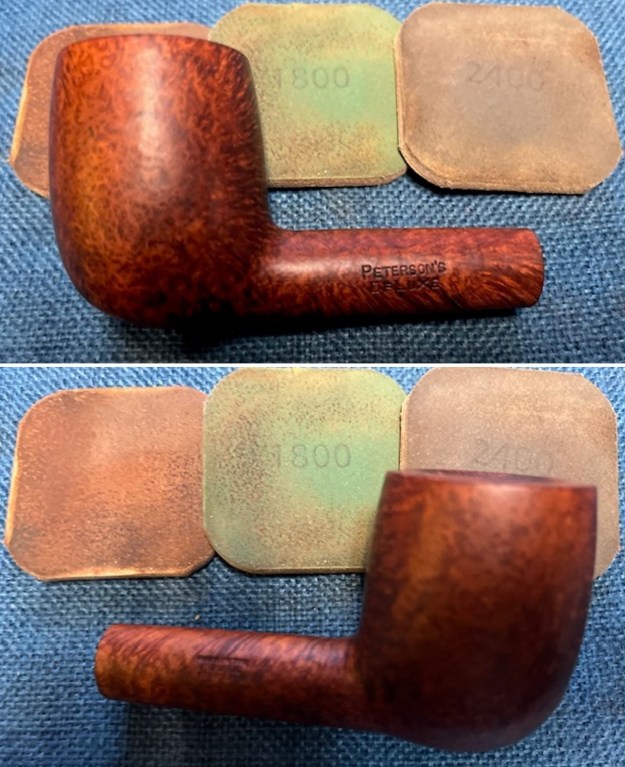
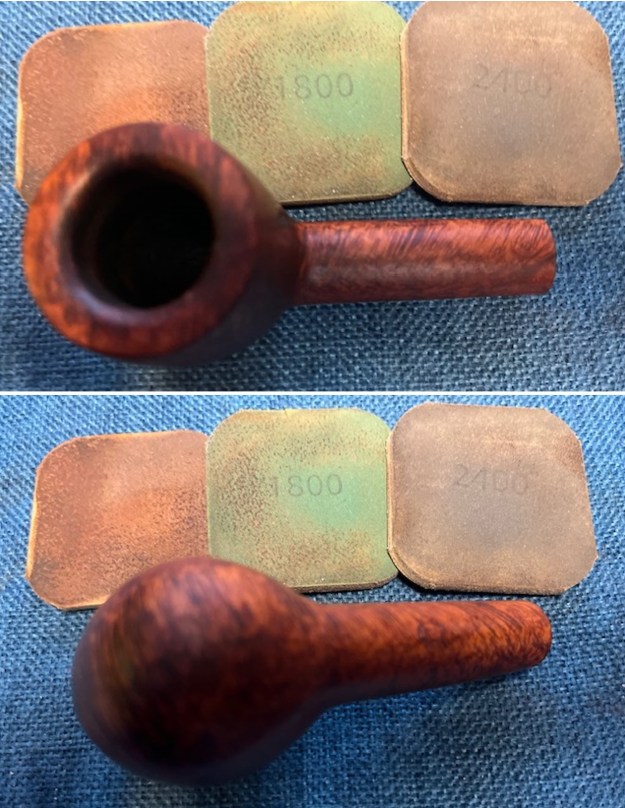
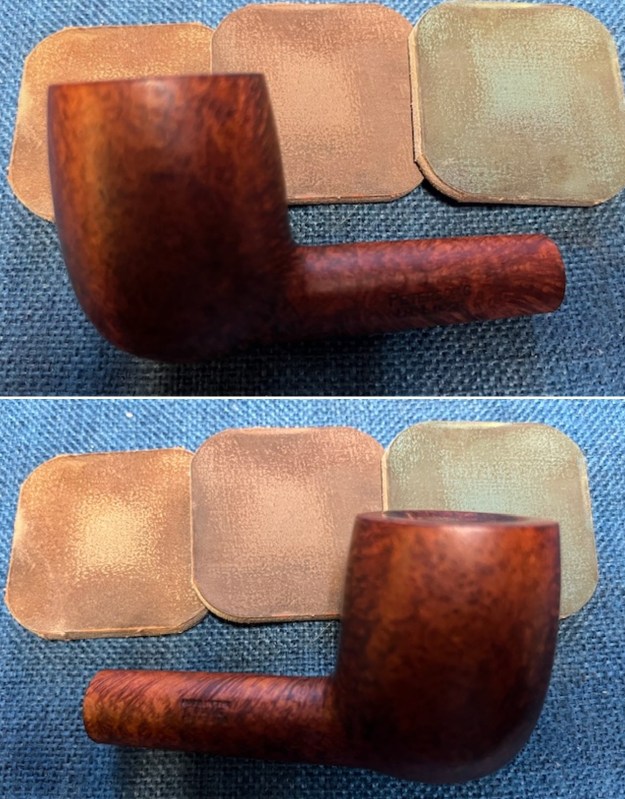
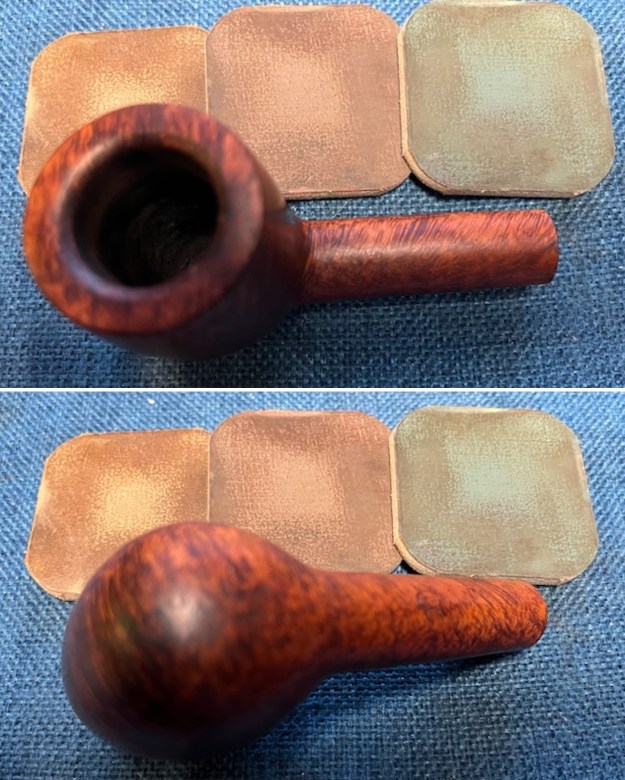
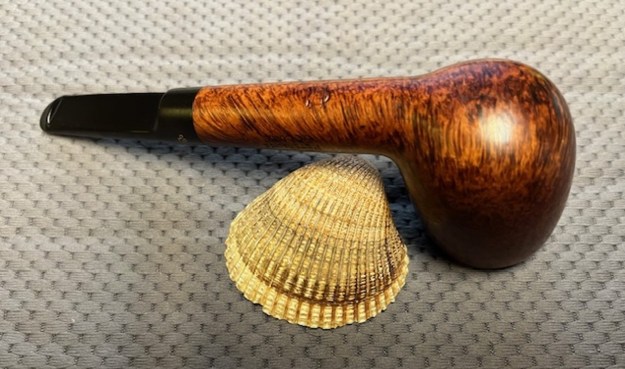
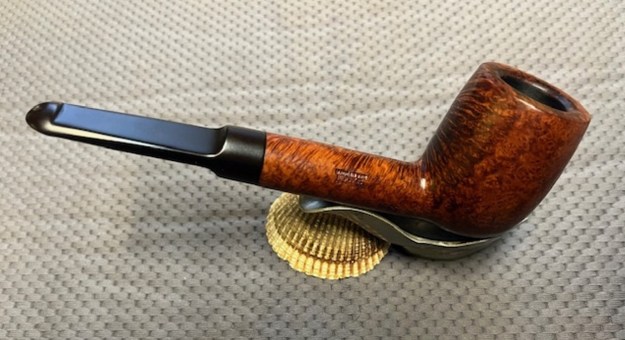
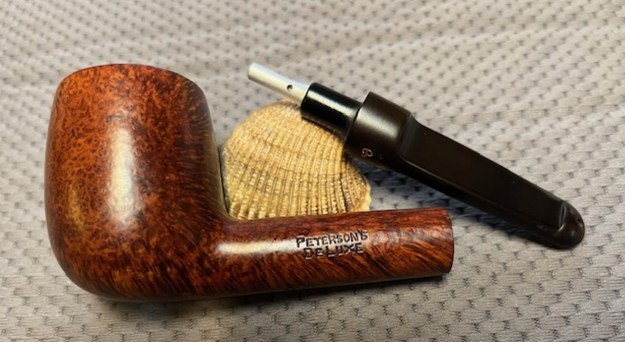
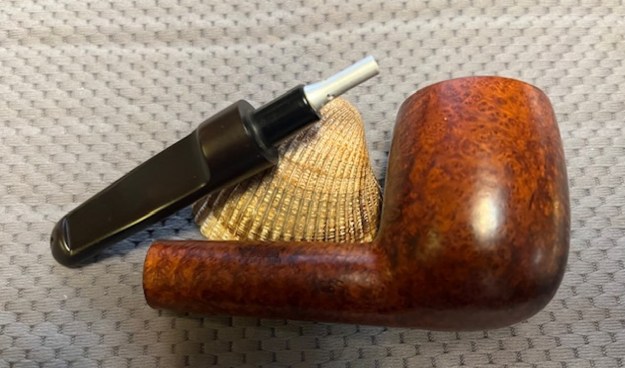
New Life for a Republic Peterson’s DeLuxe 106S Billiard


By Steve Laug

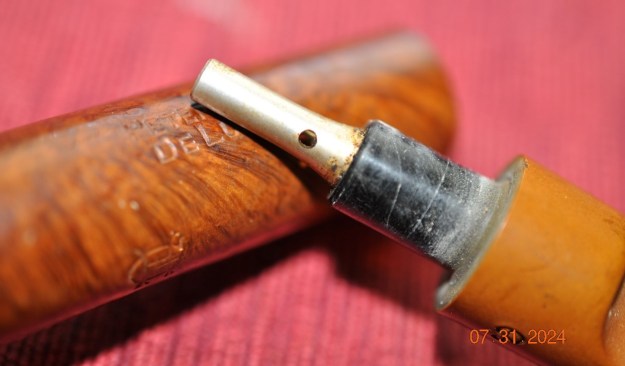
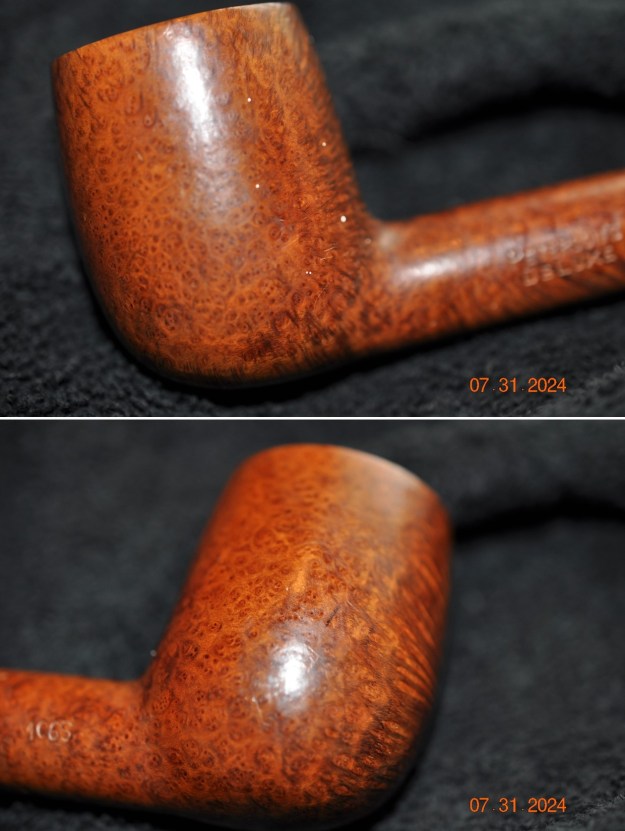
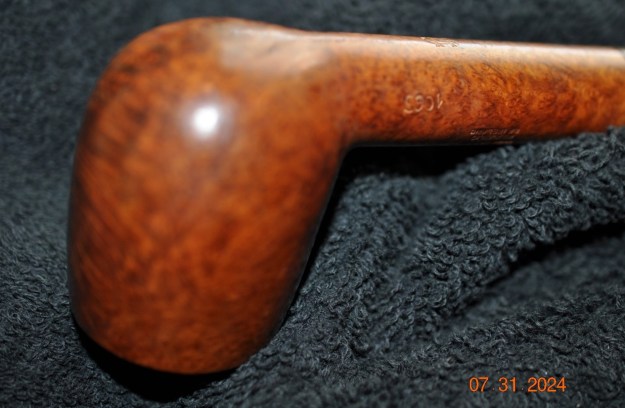
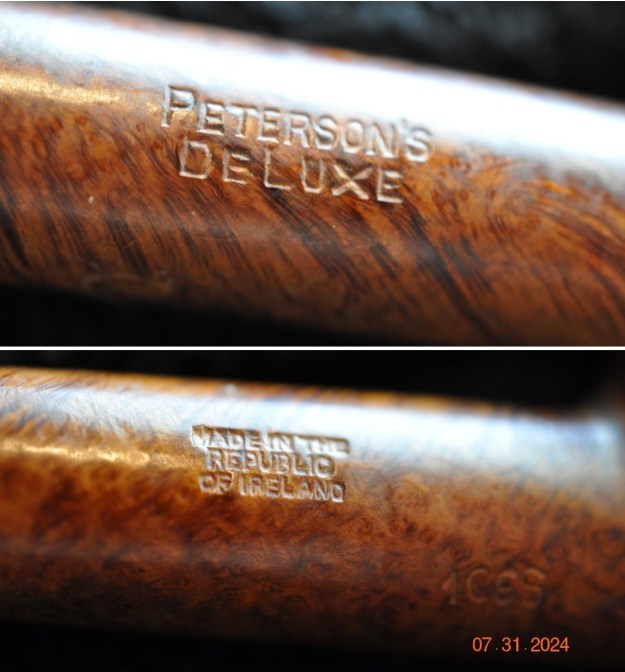
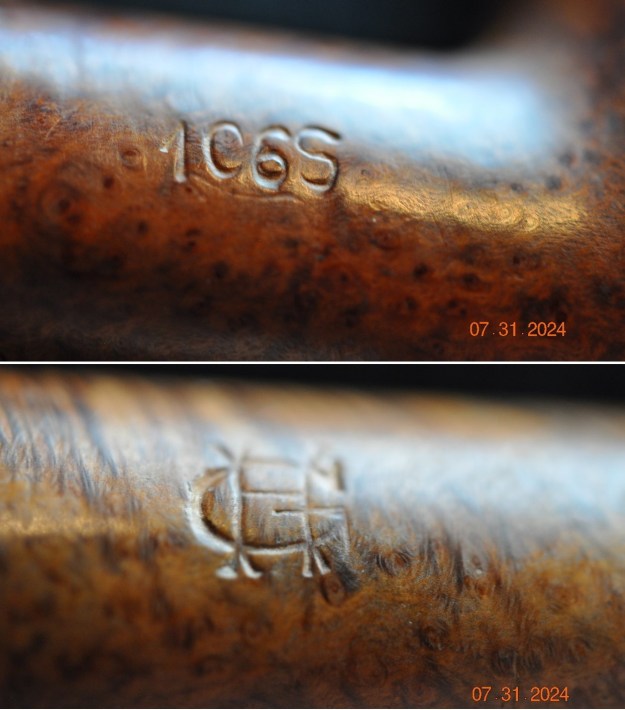
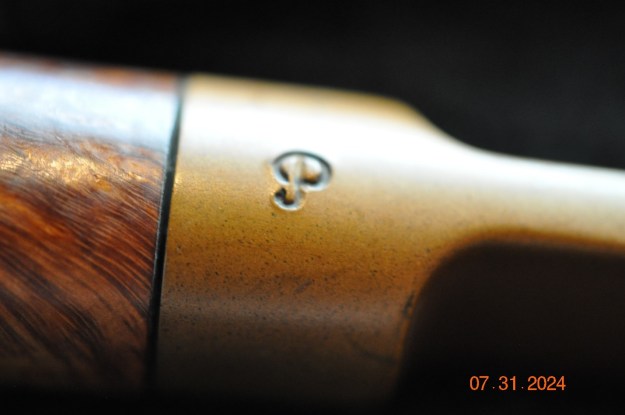
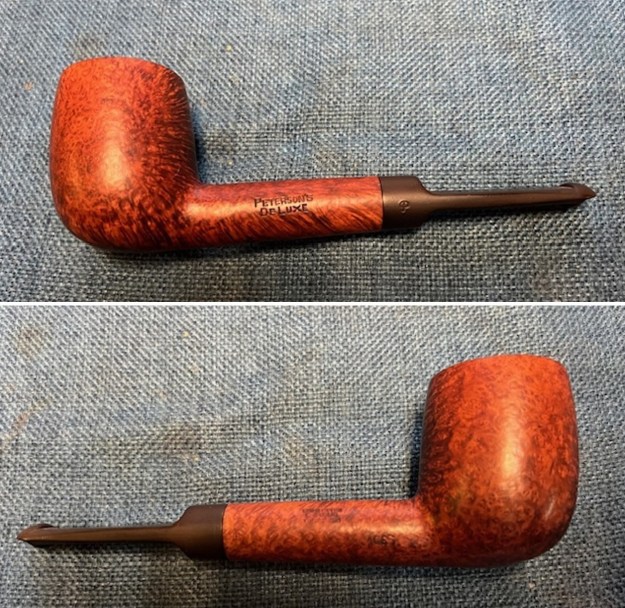
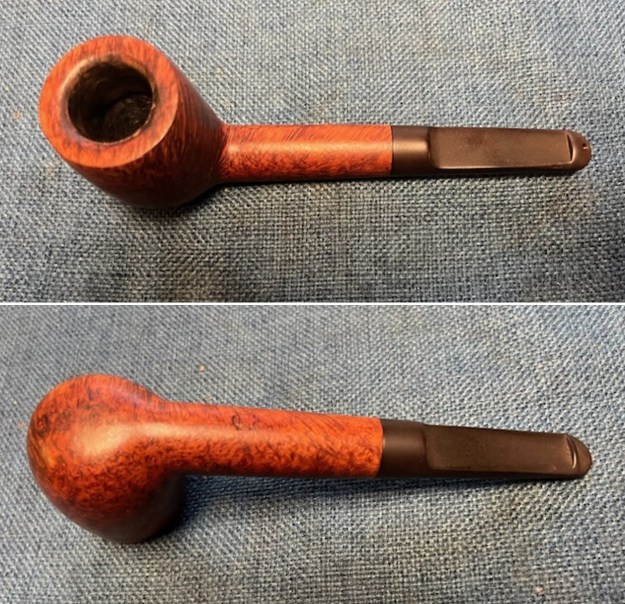
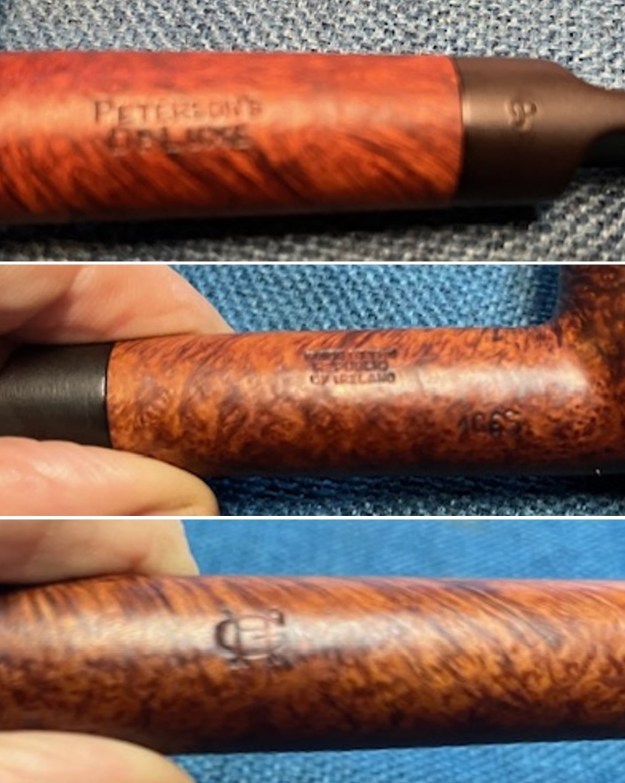
In the last box of pipes Jeff sent me there was an interesting, nicely grained Peterson’s Billiard to restore. This one is a Peterson’s DeLuxe 106S Straight Billiard. It is stamped on the left side of the shank Peterson’s [over] Deluxe and on the right side it bears the 106S shape number near the bowl shank junction and (three lines) Made in the [over] Republic [over] of Ireland. On the underside of the shank it is stamped with a large interlocked GH. From a past restoration (I have included the link) [https://rebornpipes.com/2023/10/14/petersons-kildare-special-hg-republic-of-ireland-10-canadian/], I remembered that the GH stamp is a “GH Retailer’s Monogram.” The SPECIAL stamp indicates that this pipe was made specially for George Huber of Munich, who had other Peterson pipes made expressly for their shop. It was a dirty pipe when we received it. There was lava on the rim top and heavily coated on the bevelled inner edge of the rim. The rim top was dirty and showed some wear and tear on the surface coming up for the bowl. There was a thick cake in the bowl that had remnants of tobacco stuck in it. The finish was dirty and there were spots of grime and oils. There also seemed to be spots of paint on the surface. The stem was heavily oxidized and there were light tooth marks and chatter on the top and underside ahead of the button. Jeff took some photos of the pipe before he started his cleanup work. He took photos of the bowl and rim top to show their general condition. You can see the tars on the inner edge of scuffing on the rim top. The cake in the bowl is quite thick and there is tobacco debris on the walls of the bowl. The finish on the bowl is dull but the grain is still very stunning. This pipe has a classic Peterson’s P-lip stem on a saddle stem. It has heavy oxidation on the surface of the vulcanite that is quite deep. There seems to be some tooth marks and chatter on the top and underside. He removed the stem from the shank and took photos of the aluminum chimney screwed into the end of the tenon.Jeff took some photos of the sides and heel of the bowl to give an idea of the grain on this particular piece of briar. It is amazing and I cannot wait to see what it looks like once it is polished and waxed. He took photos of the stamping on both sides of the shank to capture it for me. The first photo shows the left side of the shank and the stamping as noted above. The second and third photos show the right side of the shank with the Made in the Republic of Ireland stamp and shape number 106S. The fourth photo shows the underside of the shank and it bears the GH Retailer’s Monogram. The final photos shows the P logo stamp on the left side of the saddle stem. I did a bit of work on Google to gather background on the DeLuxe line of pipes when I worked on the 4S recently. I decided to quote that here as well.

The first information I found was on the Peterson’s website (https://www.peterson.ie/pipes/system/deluxe-system-smooth/). I quote from the description of the line below. I have highlighted several key portions in bold black for emphasis.

While the Deluxe stamp first appeared on our System pipes in 1940, the design itself dates to our 1896 and 1906 catalogues and, with the exception of the Supreme, has always marked our highest tier of System pipe. Like the System Standard and System Spigot lines, the Deluxe System pipe incorporates Charles Peterson’s patented System design, including a deep reservoir to collect excess moisture from the smoke; a graduated-bore mouthpiece that funnels the smoke and allows moisture to collect within the reservoir; a sturdy sterling silver military mount, which allows the pipe to be broken down and cleaned without damage or warping; and our patented P-Lip bit, which draws the smoke upward, thus reducing tongue bite. The Deluxe differs from those aforementioned lines, comprised of bowls with only the finest grain patterns and featuring a sterling silver mount and a push-gap stem, which was never designed to be flush-fitting, the space between the mount and stem base gradually decreasing with prolonged use. The Deluxe also elevates the System pipe by fixing each stem with a traditional chimney, an aluminum fitment that extends the tenon past the chamber’s airway for optimal System performance. Created for Peterson enthusiasts interested in acquiring the finest System pipe on the market, the Deluxe System will serve as the crown of any collection. Seen here in the Smooth finish.

From that information I knew how the De Luxe fit in the hierarchy of Peterson’s pipes. It was always the highest tier of the System pipes. It also was made with the gap in the fit of the stem to the shank on purpose with the idea that the distance would decrease over time with prolonged use. The attachment of a chimney at the end of the tenon was to maximize System performance.

From there I also turned to Pipedia. I quote from an article by Jim Lilley and have included much of it below. (https://pipedia.org/wiki/A_Closer_Look_at_The_Peterson_Deluxe_System_Pipe). Once again I have highlighted pertinent sections in bold below.

By Jim Lilley

The version of the system pipe for our closer inspection is one of Peterson’s more recognisable series, the handsome and very distinctive Deluxe system pipes, which include the Darwin and Mark Twain. These pipes are at the top of the ‘system’ series in terms of quality and finish.

Each Peterson Deluxe is made from carefully selected, age mellowed root briar. In matte finish with hallmarked sterling silver mounts and a unique space fitting mouthpiece to allow for years of wear. They are available in a wide range of shapes numbered, as follows 1s,2s,3s,4s,5s,8s,9s,11s,12.5s,20s,XL5s, 20FB and 11FB.

The pipes are well carved, construction, engineering and workmanship, is outstanding. The stems are well drilled and aligned. Silver work is excellent, finish very good, and the often maligned briar is of outstanding quality.

The design is a very typically Peterson classic shape. Apart from the Darwin, the balance can be stem heavy, the bit is thick and chunky, especially in the larger versions. I also enjoy the sense of presence they give to the pipe, particularly if smoking in company with friends or strangers. They have a sophistication about them.

The smoking qualities are excellent, dry and cool. The draw is good, and the flavour is particularly great in new pipes. The Mark Twain’s are outstanding in this department.

As for the aesthetics and ergonomics, I find some shapes much more attractive than others. Favourites for me are the 1s,2s,3s,the Mark Twain’s and the Darwin deluxe. As a clencher most are very good to hang, except the beautiful Darwin which is more of a ‘hand holder.’

The one weakness I find is the modern orange/golden colour, (the so called natural) it is, in my opinion, less attractive than that found in the older Walnut finish of the eighties.

As far as value and cost is concerned, for the excellent quality finish, these are competitively priced at around $135 to $250 depending on size and briar grade.

For what it is worth, I reckon the Deluxe s are probably the best value range of pipes that Peterson produce, both in terms of functionality and value. There is not a thing wrong with these pipes. Those who malign the brand because they’re made by the hundreds using machines, are very wrong, IMHO. I like them a lot and the bang for the buck is the best I’ve ever seen for new pipes of this quality.

The De-luxes are all excellent smokers. The Darwin, of course, is a truly outstanding pipe, its only “flaw” being that it’s not a clencher. One particular aspect of this pipe, that appeals to me most is its physical beauty and presence, they are a pipe like no other. For me, they also offer a bowl capacity that I like and a balance in the hand that I appreciate. They are well named Deluxe s for giving that special experience.

I turned to page 300 of “The Peterson’s Pipe” by Mark Irwin and Gary Malmberg as noted by him and found a great paragraph on the stamping. I quote in full.

GH Retailer’s Monogram (c. 1960s) George Huber of Munich, Germany, a Peterson distributor and retailer for decades, stamped their monogram on pipes sold in their store, G overlaid on H. Peterson shared in the 1988 commemoration of Huber’s 125th year in business by producing a special pipe with a sterling rim cap, stamped HUBER over CELEBRATION.

The pipe I have is one that bears that monogram but does not appear to have ever had the sterling rim cap and was not stamped HUBER over CELEBRATION. With that information I turned my attention to working on the pipe.

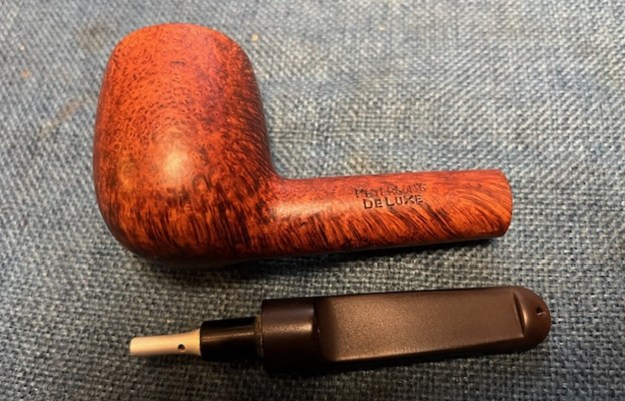
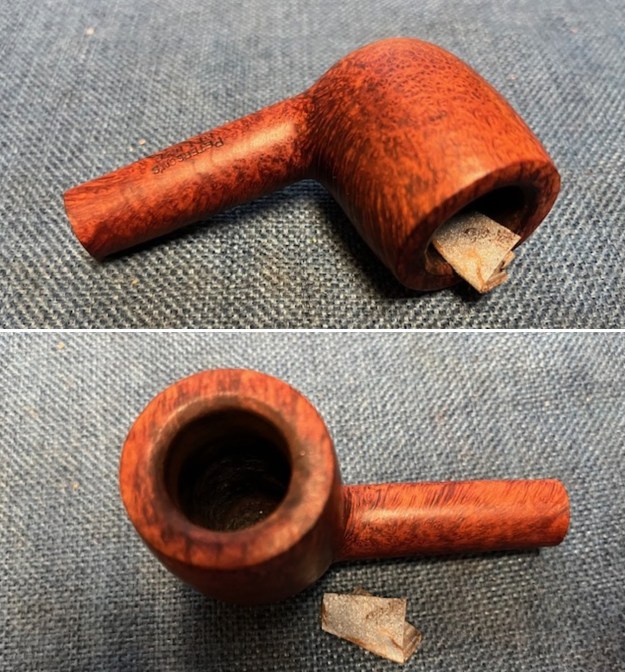
Jeff had cleaned it thoroughly. He had reamed it with a PipNet reamer and cleaned that up with a Savinelli Fitsall Pipe Knife. He had scrubbed the exterior of the briar with undiluted Murphy’s Oil Soap and a tooth brush. He rinsed it with running water to remove the grime and oils. He cleaned out the interior of the shank, sump and airway in the shank and stem with alcohol, pipe cleaners and cotton swabs. He scrubbed the stem with Soft Scrub to remove the oxidation and calcification on the surface. He soaked it in Briarville’s Pipe Stem Deoxidizer to remove the oxidation. He removed it from the Deoxidizer and rinsed it off with warm water. I took some photos of the pipe before I started my part of the work. I took some photos of the rim top and stem. The rim top and bowl looked very good. The cake and lava overflow were gone and the inward bevelled rim was very clean. There was also some darkening on the bevelled inner rim edge and light damage on the edge of the top and the bevel. Jeff had been able to get rid of all of the lava and tars. The rim top looked good with light marks and scratches on the surface. The closeup photos of the stem shows that it is a much cleaner and better looking stem. The tooth marks and chatter were still present with deeper ones on the button and on the underside of the stem next to the button.I took some photos of the stamping on the shank sides and the silver on the ferrule to show the condition after the cleanup. Often the stamping takes a hit with the cleaning and is lessened in its clarity. Jeff does a great job in leaving the stamping looking very good. I also took the stem off the shank and took a photo of the parts of the pipe to show the proportion. It is a beauty. I started my restoration work on this pipe by addressing the darkening around the inner edge of the bowl. I used a folded piece of 220 grit sandpaper to clean up the bevelled inner edge and the rim top with the same sandpaper. The finish rim top looked very good.I started my polishing regimen on the bowl. I used nine micromesh sanding pads and dry sanded the bowl with 1500-12000 grit pads. I wiped the bowl down with a damp cloth after each pad. The bowl really shines by the final three pads. I worked some Before & After Restoration Balm into the surface of the briar with my fingertips to clean, enliven and protect it. I let the balm sit for a little while and then buffed with a cotton cloth to raise the shine. The photos show the bowl at this point in the restoration process. I set the bowl aside and turned my attention to the stem. I touched up the “P” stamp on the left side of the saddle stem with some Rub’n Buff Antique Gold. I worked it into the stamp with a tooth pick. I buffed it off with a soft cloth and some Obsidian Oil. It looked very good. It was in pretty decent conditions so I polished it with micromesh sanding pads – dry sanding with 1500-12000 grit sanding pads. I wiped them down after each sanding pad with a cloth containing some Obsidian Oil. I finished polishing it with Before & After Pipe Stem Polish – both Fine and Extra Fine and buffed it off with a cotton cloth. I gave it a coat of Obsidian Oil to preserve and protect the stem. I don’t know how many times I have said this but I love it when I come to the end of a restoration and all of the parts come together and the pipe looks better than when we started the cleanup process. I put the stem back on the Peterson’s DeLuxe 106 Billiard and buffed the pipe with Blue Diamond on the buffing wheel. I carefully avoided the stamping on the shank sides during the process. I gave the bowl and stem multiple coats of carnauba wax on the buffing wheel and followed that by buffing it with a clean buffing pad on the buffer. I hand buffed the pipe with a microfiber cloth to deepen the shine. The finished pipe is a real stunning example of a Republic Era Peterson’s DeLuxe 106 Straight Billiard. Once again, the grain and the way the shape follows the grain is amazing. Give the finish pipe a look in the photos below. I can only tell you that it is much prettier in person than the photos capture. The dimensions of the pipe are Length: 6 inches, Height: 2 inches, Outside diameter of the bowl: 1 3/8 inches, Chamber diameter: ¾ of an inch. The weight of the pipe is 1.55 ounces/44 grams. This Peterson’s De Luxe 106 is a great piece of pipe history that is in exceptional condition. Thanks for walking through the restoration with me as I worked over another beautiful pipe. I will be putting this one on the rebornpipes store in the Irish Pipemakers Section. Let me know if you are interested in adding it to your collection. Thanks for your time.
As always, I encourage your questions and comments as you read the blog. Thanks to each of you who are reading this blog. Remember we are not pipe owners; we are pipe men and women who hold our pipes in trust until they pass on into the trust of those who follow us.

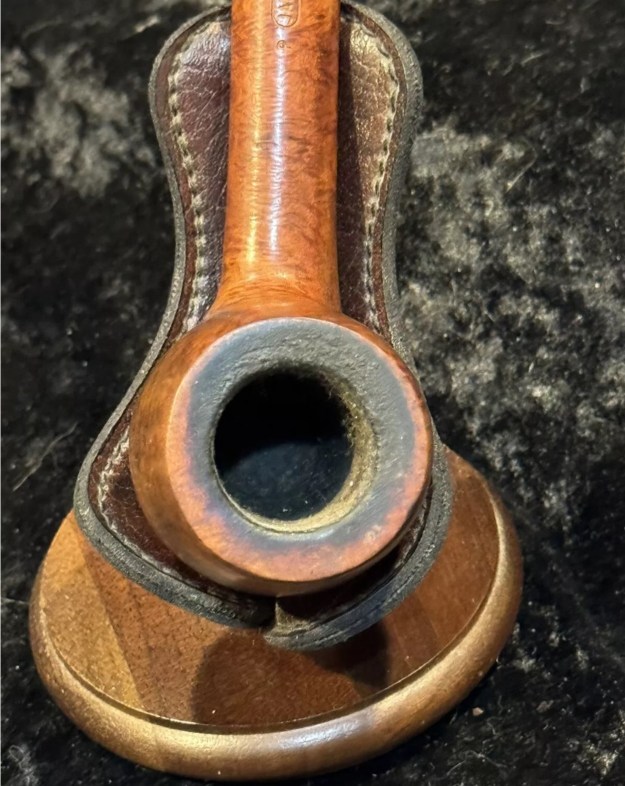
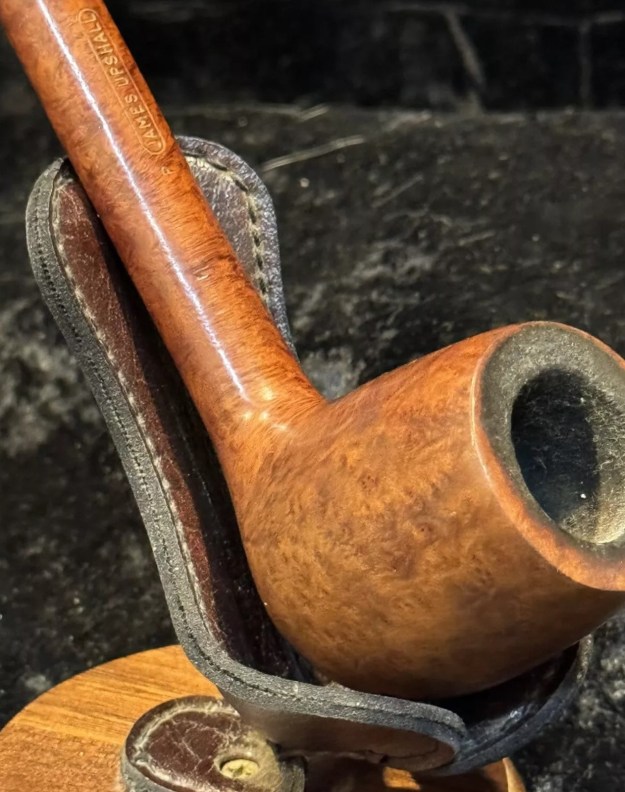
Restoring a Rare & Lovely James Upshall P L2 95 Long Canadian


by Steve Laug

Earlier this month a friend, Ilan wrote about a pipe. He was looking for an Upshall and wanted to know if I had one to sell. Unfortunately, I did not have one at that time. A few days later he wrote back about one that he had a line on. It was one that was recommended to him by a fellow, Pete Siegel on one of the forums who used to work for Upshall. He said he loved the look of it and wanted to know what I thought about it. His main question was if it was restorable. He sent me the link from eBay. I went to the link and carefully looked over the photos. It was a huge Upshall Canadian with great grain. The bowl had a moderate to thick cake with lava overflow on the rim top. To me the bowl was still in round and it looked like the edges were undamaged under the lava. The finish was dirty with a small burn mark on the outer edge on the left front. Otherwise it was undamaged under the grime. The stem was quite heavily oxidized and the logo was faded but looked to be deep enough to recolour. Overall, I felt that the pipe was a good buy and one that would clean up quite well. I wrote Ilan and let him know. Below is his response.

Perfect. I’ve bought it, and sent it to you. Happy to work with you again. I attaching the correspondence with the guy from Upshall. The pipe world is just outstanding!!! All the best. 

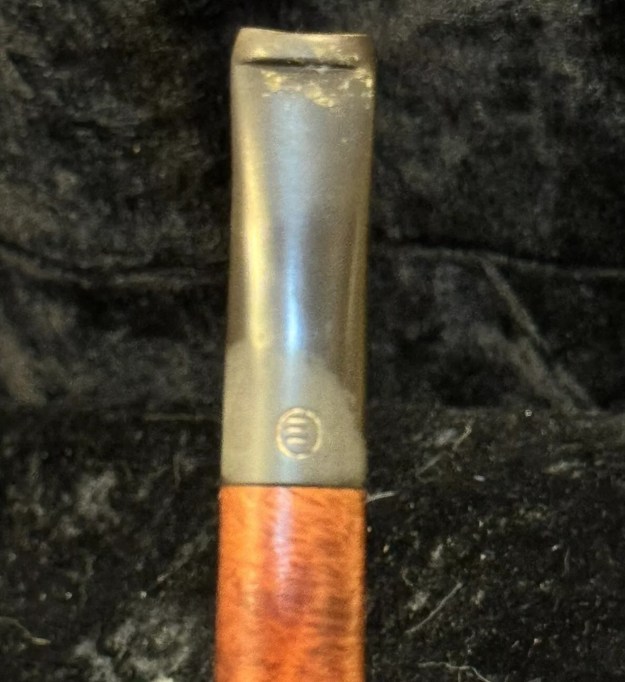
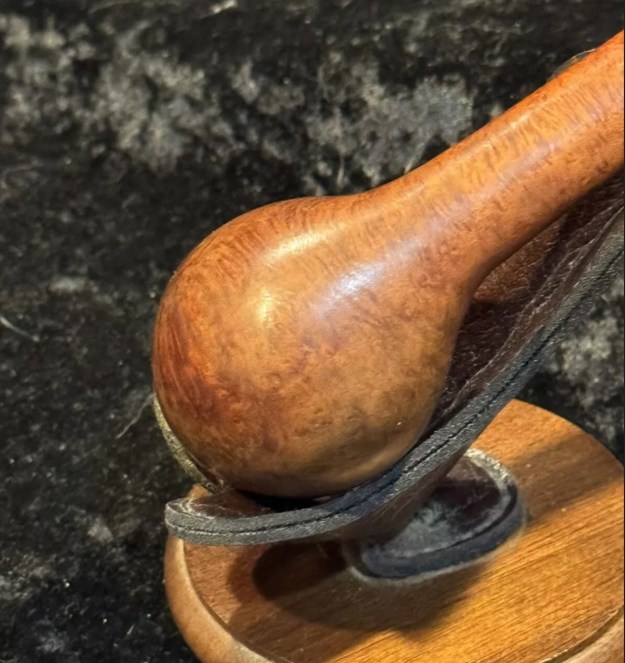
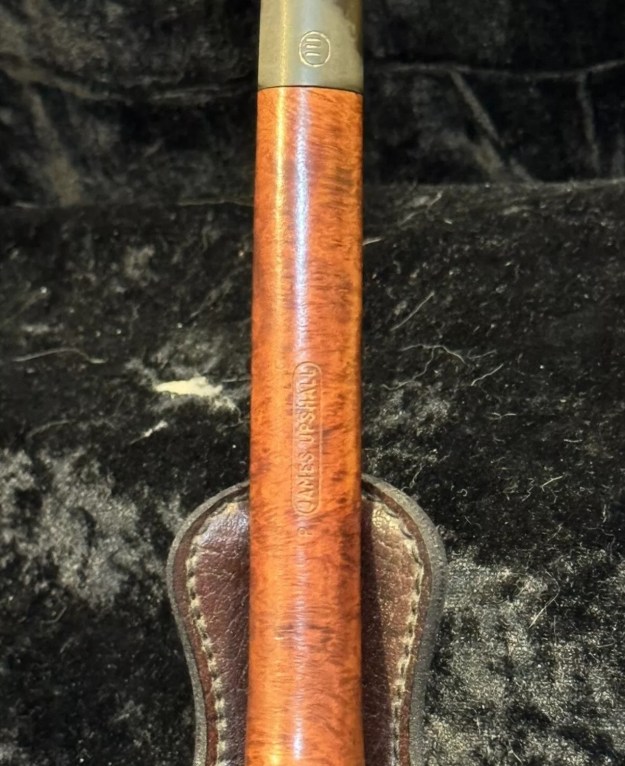
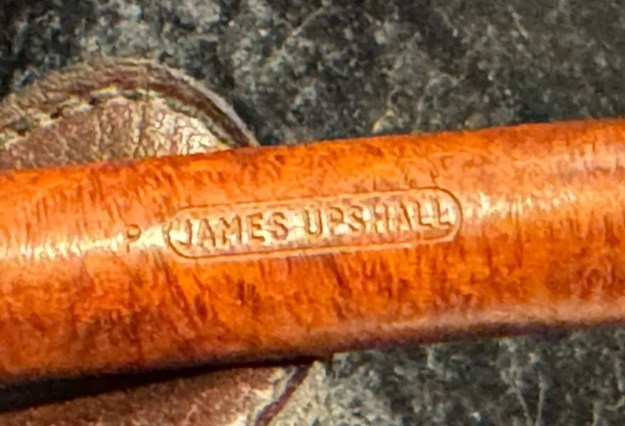
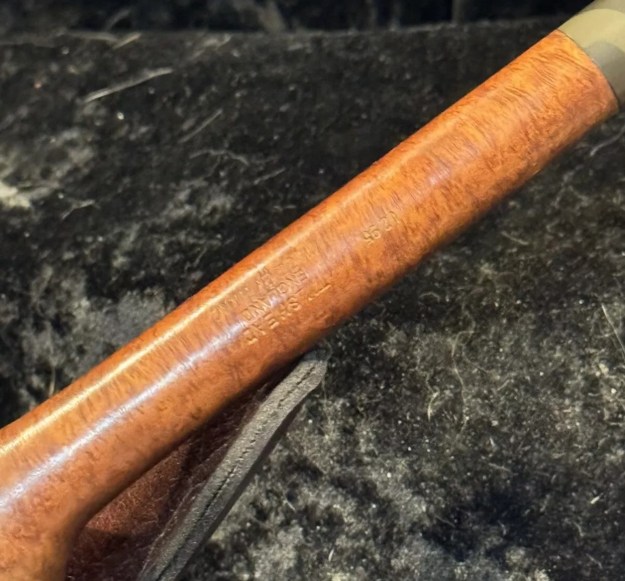
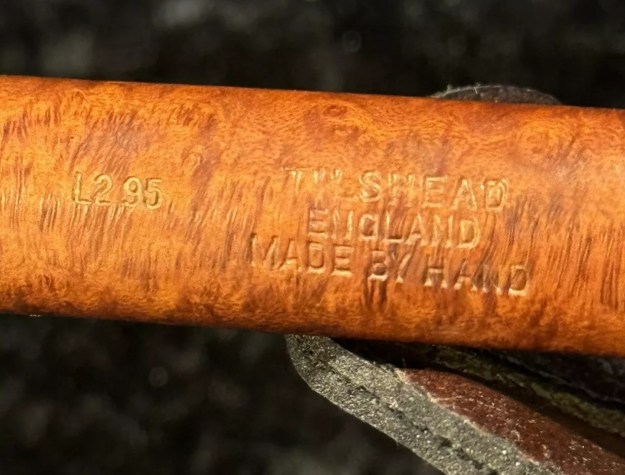
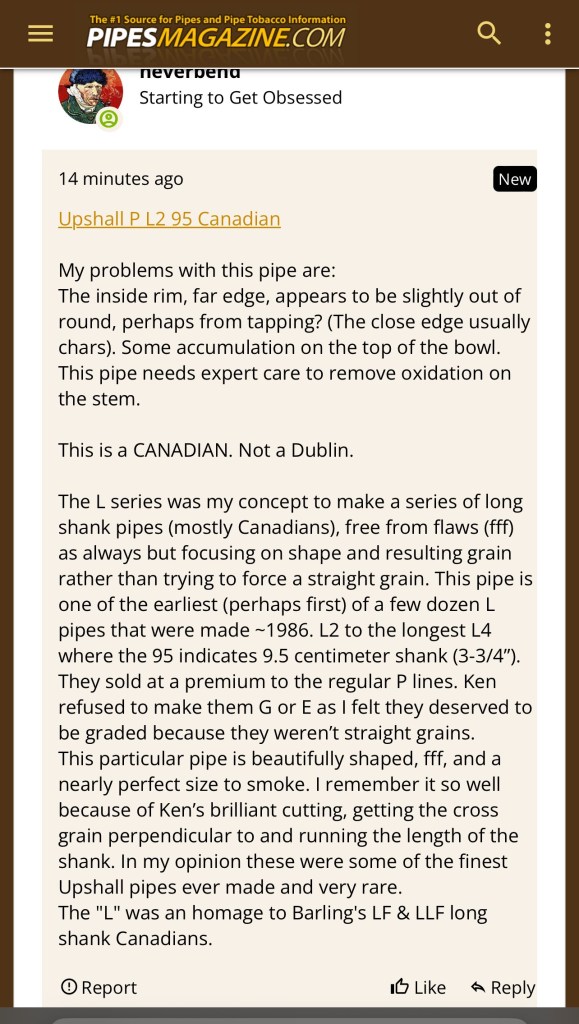
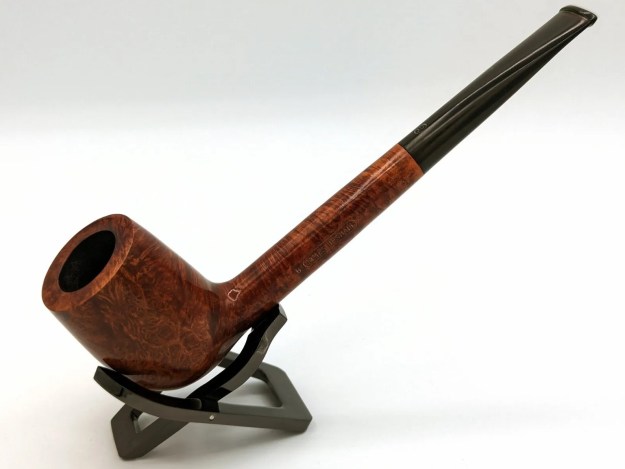
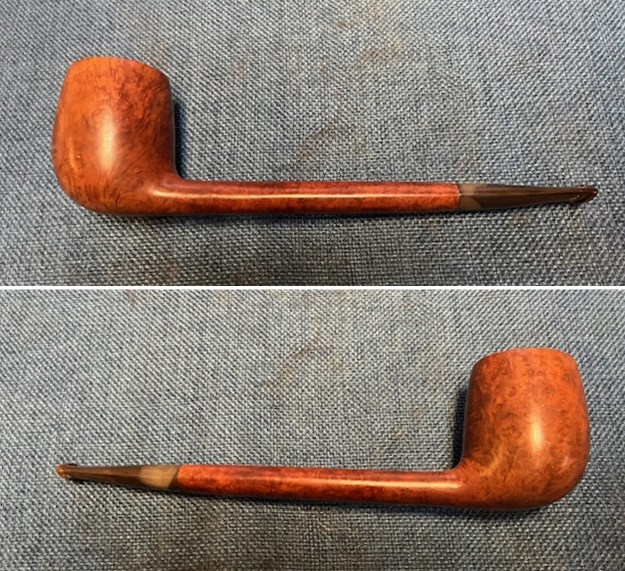
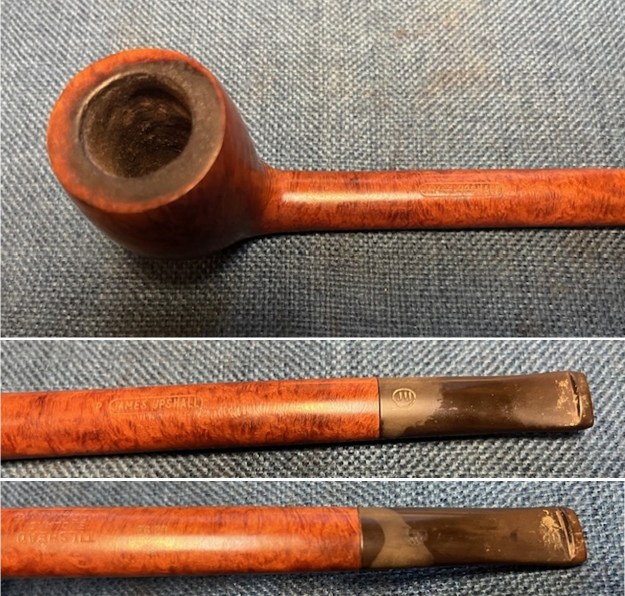
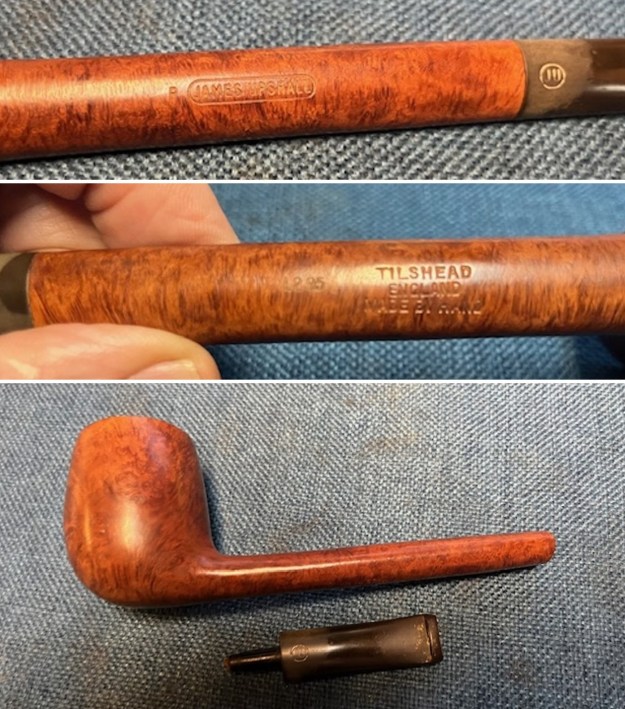
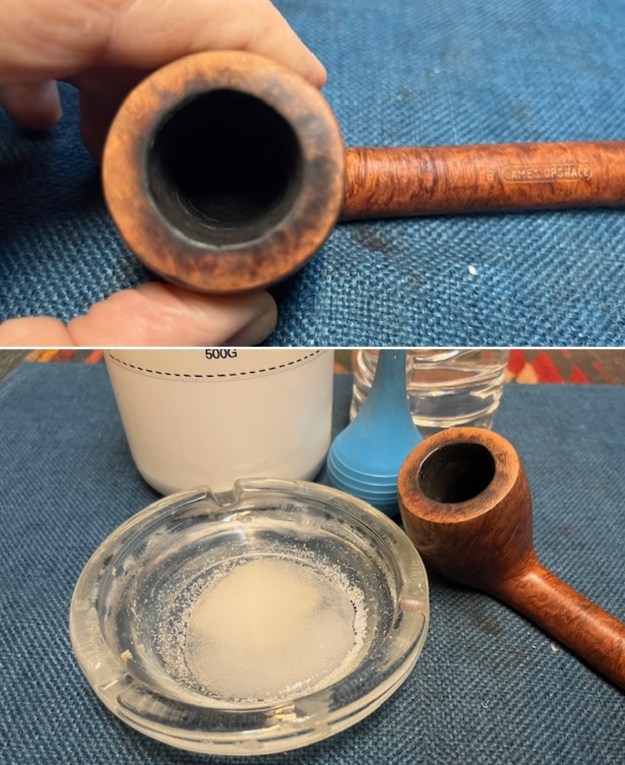
I went on the eBay link and saved the photos before the seller removed them after the sale. I wanted to have before photos for comparison sake. I was amazed at the volume of photos included and, in some ways, the odd angles they captured. I have included key photos below from the seller. They give a good picture of the condition of the pipe.I included some of the photos of the bowl and rim to show the cake and the lava build up on the top and inner edge of the bowl. It looks okay but one cleaned up I will know for sure. The lava could hide some darkening on the top but I will soon know. The stem photos show the stem from a variety of angles. You can see the tooth chatter and marks along with the heavy oxidation. I have also included shots of the sides and heel of the bowl to show the interesting grain patterns hidden under the grime. It is a pretty pipe. The seller included several photos of the stamping on both sides of the shank. It is very clear and readable from his photos. The stamping on the topside of the shank reads JAMES UPSHALL in an oval and there is a JU in an oval on the top of the taper stem. On the underside it reads L2 95 (Shape Number) followed by Tilshead [over] England [over] Made by Hand. Ilan also included a screen capture of his conversation on PipesMagazine.com with Peter Siegel for me to have a look at. I am including it as well because of the pertinent information that it gives regarding this particular pipe.Pete described what he saw as he looked at the pipe from the seller’s photos. He notes the inside edge of the rim on the right side appearing to be slightly out of round. That was certainly a possibility in the photos but I was not certain of it due to the build up around the inner edge. It would become very clear once the pipe was cleaned and reamed. He also notes the build up on the rim top as I pointed out above as well as the oxidation on the stem. Overall there were not too many issues that he noted that I have not mentioned above.

The rest of the post is perhaps the most important to me at this point in my process. The pipe is an L series which Pete says was his concept to make long shank pipes (mostly Canadians) free from flaws but focused on the shape rather than trying to force the grain. He believes that the pipe was one of the earliest L series pipes of a few dozen made in 1986. The stamping for length was L2 to the longest L4. The 95 indicates 9.5-centimetre shank (3 ¾ inches). They were marked P as Ken refused to grade them G or E as Pete felt they deserved because they were not straight grains.
He goes on to say that this pipe is beautifully shaped, (fff = Free from flaws) and a nearly perfect size to smoke. He also notes that he remembers this pipe in particular because of Ken’s brilliant cutting getting the cross grain perpendicular to and running the length of the shank. He states that these were some of the finest Upshall pipes ever made and are very rare. I found it interesting that he ends his post with a not on the L stamp which he says was an homage to Barling’s LF & LLF long shank Canadians.

Ilan also included an email that Pete wrote with the explanation that Pete was the US distributor for Upshall pipes. He asked if I wanted to be included in the correspondence. I answered unequivocally YES.  Have included that below:

Here’s what Pete wrote regarding the pipe. He was the US distributor. Do you want me to include you in our correspondence? — Ilan

Hi Ilan,

Nice to meet you. I was afraid that someone might buy the pipe out from under you. $160 is a great price. I think your pipe may be 1985 rather than 86 (as I wrote earlier) but it’s right there. To correct what I wrote, Ken wouldn’t grade the L series higher (at least at the beginning) because they weren’t straight grains so they were all (initially) P grade with a surcharge for the L series.  Iirc, the P was $125, P L2 $175, L3 $200 and L4 $225.  The longer shanks may have been impressive but they weren’t as symmetrical or beautifully (classic English) shaped as the L2.  

Upshall “Canadian” (really a large Liverpool)The pipe above is selling for ~$450.  Large and long, not an “L” series.  Looks a little buffed and rounded.  Nice but imho your Canadian is a better pipe to smoke and it should be more valuable.  

I used to get Steve’s blog and he seems to be an exacting craftsman.  

Looking forward to seeing pictures of the pipe 🙂

Pete

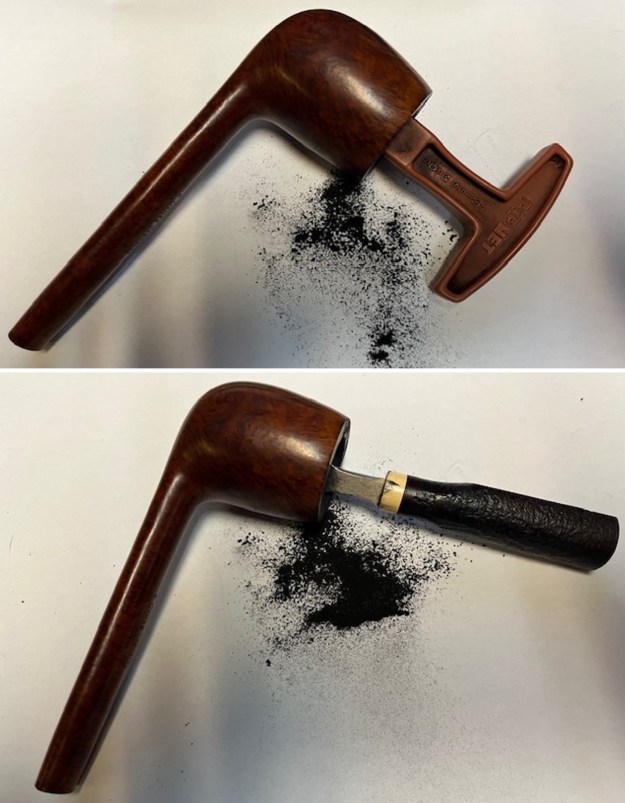
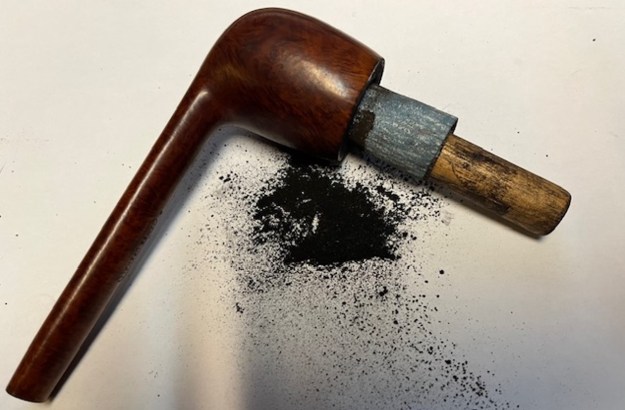
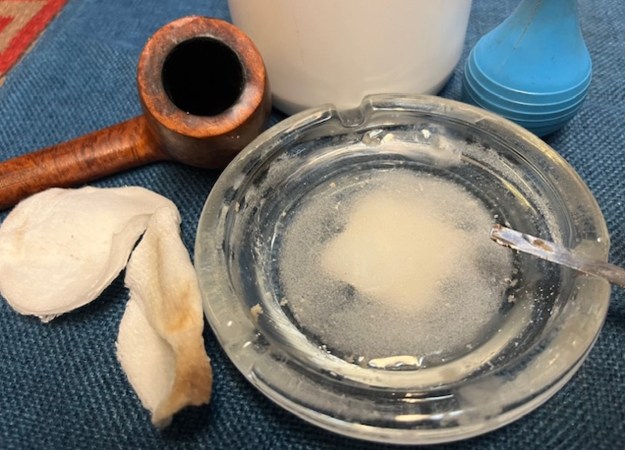
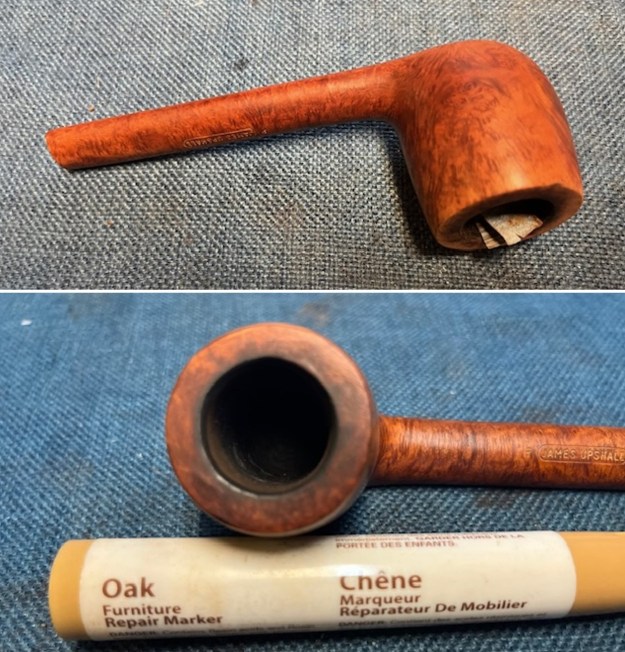
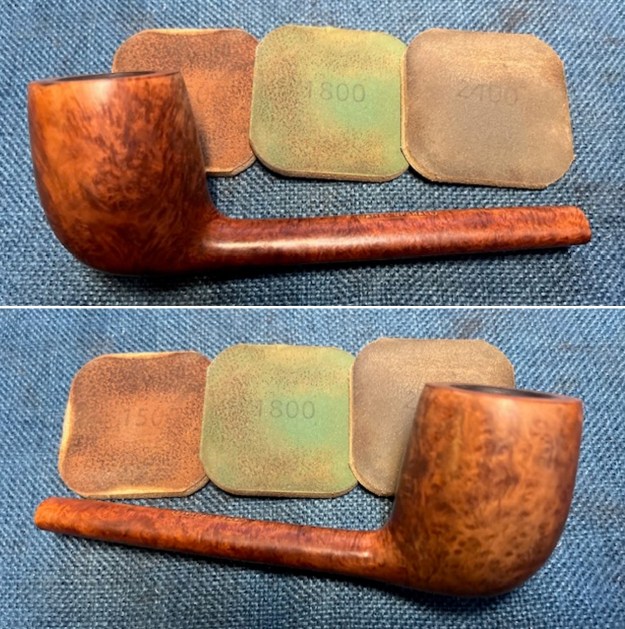
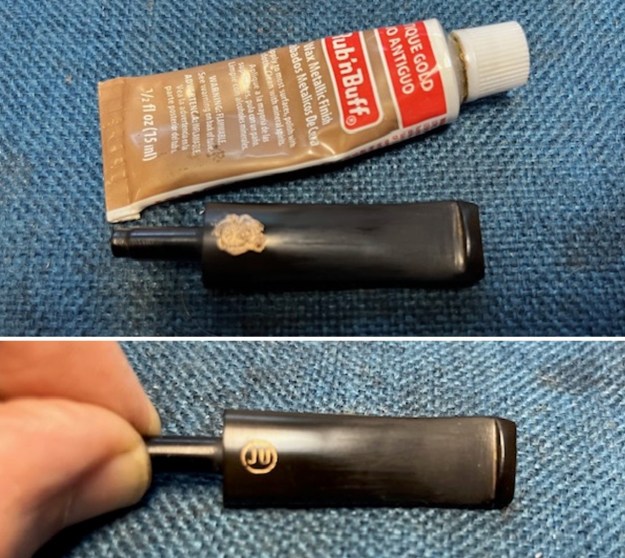
The Upshall arrived in Vancouver, Canada yesterday afternoon. I was excited to see what it looked like so I carefully unwrapped the package that it came in. I went over it carefully to check my initial observations and see if there was anything further to note. Thankfully, there were no surprises or issues that came up in this initial assessment. I took photos of the pipe when it arrived to document its condition before I started my clean up. I took photos of the rim top to show the cake in the bowl and the thick lava coat and debris in the finish. There was darkening all around the bowl edge and on the inner edge. I took photos of the stem to show the oxidation and tooth chatter and light marks on both sides of the stem ahead of the button.I captured the stamping as best as possible on the top and underside of the shank. It reads as noted above. I took the stem off the shank and took a photo of the parts to show the proportions of this long shank Canadian. It really is a beauty.Now it was time to work on the stunning 1985 Upshall P L2 95 Canadian. I started by reaming the bowl with a PipNet reamer and took the cake back to bare briar. I cleaned up the reaming with a Savinelli Fitsall Pipe Knife and then sanded the walls smooth with a piece of 220 grit sandpaper wrapped around a dowel. I do this thorough stripping of the cake so that I can check out the condition of the walls under the cake. I know others don’t do this but it is necessary in my opinion for a thorough look at the pipes condition. In this case the walls looked very good. I also carefully scraped the lava on the rim top with the Savinelli Fitsall Pipe Knife. I did an initial scrubbing of the briar with Mark Hoover’s Before & After Briar Cleaner to try to break through the darkening on the rim top. I applied it by hand, scrubbed with a tooth brush and wiped it off with a cotton pad. While it looked better it still needed more work. It did a good job of cutting through the grime around the bowl sides. I scrubbed out the internals of the shank and stem with 99% isopropyl alcohol, cotton swabs, smooth and bristle pipe cleaners to remove the tars and oils that were on the walls of the mortise and shank and in the airway on the shank and stem. It came out looking and smelling much cleaner than when I started.I decided to further scrub the rim top and finish with undiluted Murphy’s Oil Soap to see if I could remove more of the darkening on the edges and top of the bowl. I scrubbed it with a tooth brush and rinsed it with warm water. I certainly did look better but I wanted a bit more removed! I took a photo of the rim top at this point to show where I was in cleaning it off. It still needed more to remove the darkening. I mixed up a batch of Oxalic Acid and wiped the rim top down with that on a cotton pad. I removed even more of the issue. I gently cleaned up the inner edge of the bowl with a folded piece of 220 grit sandpaper to smooth out the damage to the edge. I wiped it off with a damp cloth. I stained the rim top and edges with an Oak stain pen which matched the stain around the rest of the bowl. Once it was buffed it would be perfect.I polished the bowl and rim top with micromesh sanding pads – wet sanding with 1500-12000 grit sanding pads. I wiped down the briar after each pad with a damp cloth to remove the dust and debris from the surface. The briar began to take on a shine. I worked some Before & After Restoration Balm into the surface of the briar with my finger tips. The product is incredible and the way it brings the grain to the fore is unique. It works to clean, protect and invigorate the wood. I set the bowl aside and turned my attention to the stem. I wiped the stem down with a cotton pad and some Soft Scrub cleanser to remove the oxidation on the surface and the area around the stamping in preparation recolouring it.I “painted” the stem surface with the flame of a lighter to lift the tooth marks and chatter out of the surface. It worked very well and lifted all of them. I sanded out what small marks that remained with a folded piece of 220 grit sandpaper. I was able to remove the damage and the stem looked much better. I touched up the faint stamp on the top of the stem with Rub’n Buff Antique Gold. I rubbed the product into the stamping and buffed it off with a soft cloth. It looks much better.I sanded the stem with 320-3500 grit sanding pads. Between the pads I wiped the stem down with Obsidian Oil. It is starting to look very good.I polished the stem with micromesh sanding pads – wet sanding it 1500-12000 pads. I wiped it down with Obsidian Oil after each pad to enliven and protect the vulcanite. I polished it with Before After Pipe Polish – both Fine and Extra Fine. I rubbed the stem down with Obsidian Oil and set it aside to dry. I am excited to be on the homestretch with this beautiful James Upshall P-Grade Made by Hand L2 95 Canadian. I look forward to when it all comes back together, polished and waxed. I put the bowl and stem back together. I polished the bowl and stem with Blue Diamond to polish out the tiny remnants of scratches in the briar and the vulcanite. I gave the bowl and the stem multiple coats of carnauba wax. I buffed the pipe with a clean buffing pad to raise the shine. I hand buffed it with a microfiber cloth to deepen the shine. The pipe polished up pretty nicely. The beautifully grained finish looks really good with the interesting grain patterns standing out on the shape. The long, well grained shank and the polished black vulcanite taper stem went really well together. This James Upshall Long Canadian L2 95 was another fun pipe to work on. It really has that classic English look that catches the eye. The rich colour of the polished briar really makes the pipe look attractive. It is a large but comfortable pipe to hold in the hand. The finished pipe is shown in the photos below. The dimensions of the pipe are Length: 7 ½ inches, Height: 2 inches, Outside diameter of the bowl: 1 ¼ inches, Chamber diameter: ¾ of an inch. The weight of the pipe is 52 grams/1.87 ounces. This is an Upshall that catches my eye. I will soon be packing it up and sending it back to Ilan. I look forward to hearing from Ilan what he thinks of this beauty. Thanks for reading this blog and my reflections on the pipe while I worked on it. This is an interesting estate to bring back to life.

Restoring a Very Handsome Custombilt Lovat


by Kenneth Lieblich

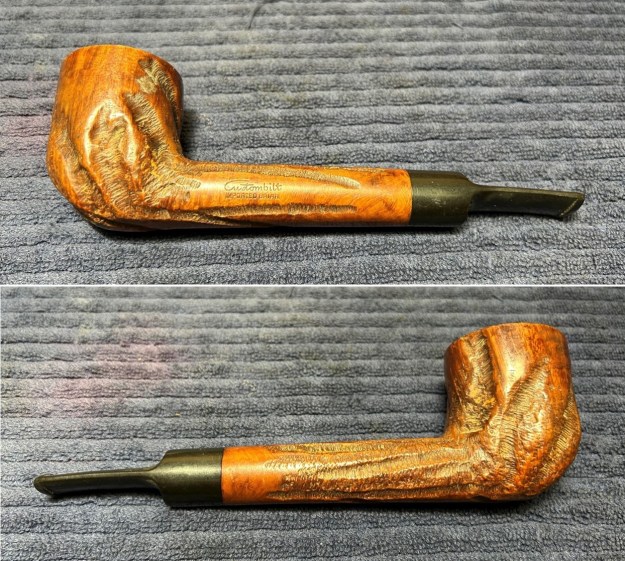
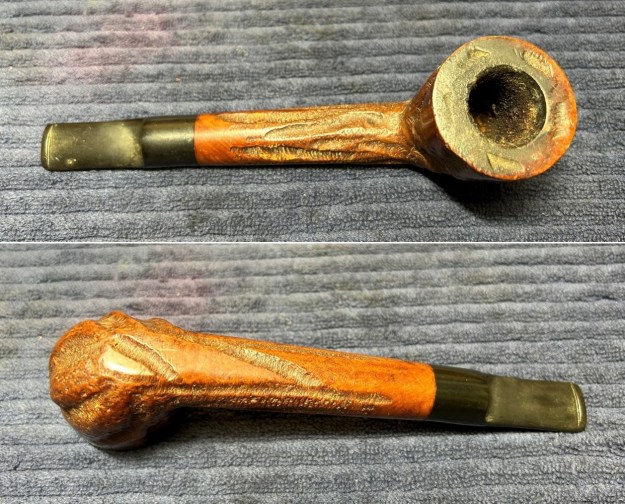
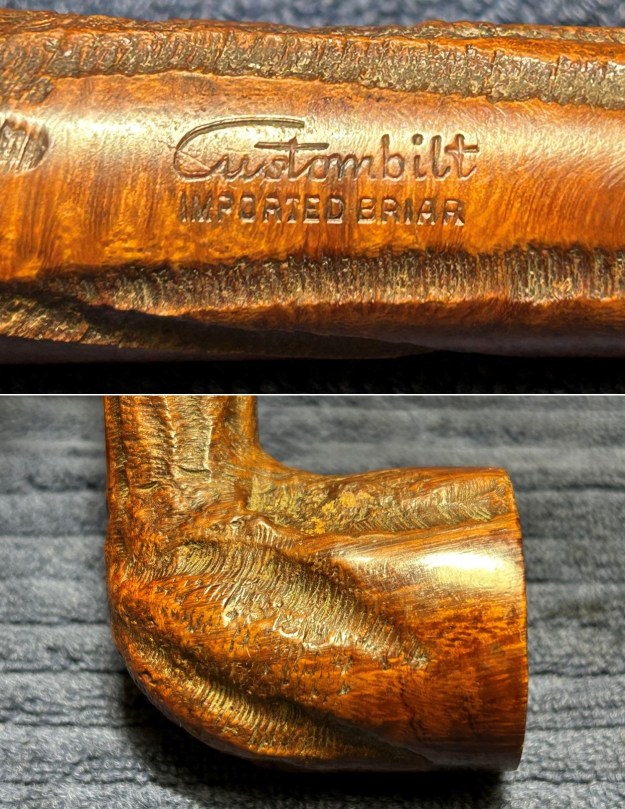
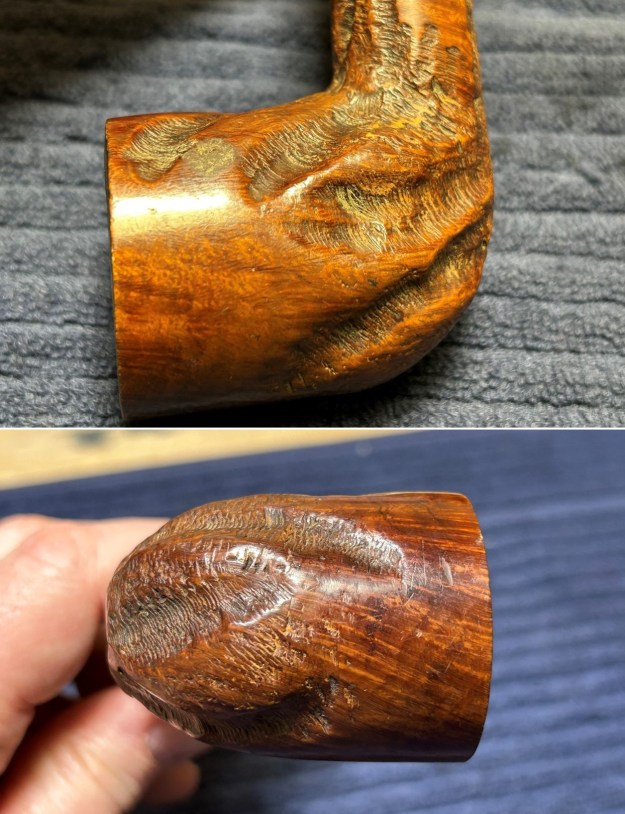
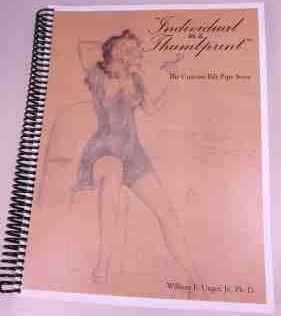
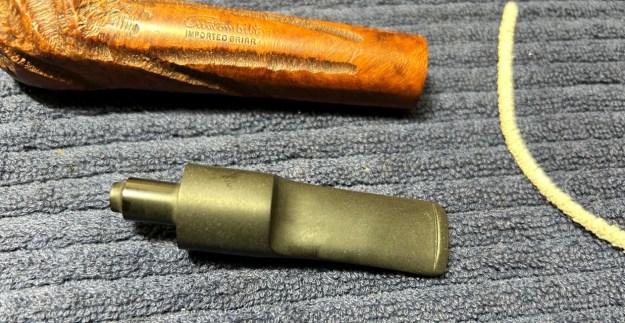
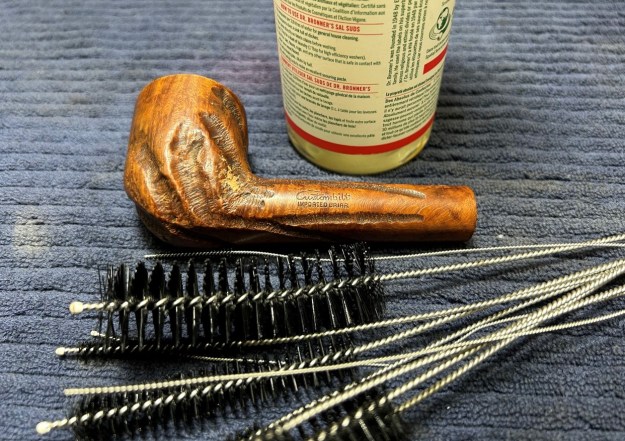
My last blog post was the restoration of an Oversize Kaywoodie and, in that article, I mentioned that it reminded me of a Custombilt. Well, lo and behold! I have a Custombilt to present to you all. I was rummaging through a box of junk (and calling it ‘junk’ is being kind) and came upon a really good-looking, substantial Lovat with a great saddle stem (which is ever-so-slightly bent). It’s a pipe that instills confidence. An interesting coincidence (or is it?) is that both the Kaywoodie and this Custombilt were made at almost exactly the same time. Read on. As you can see, the pipe has the classic Custombilt rustication on it. There’s something quite satisfying about this rugged rustication. These marks are reminiscent of Tracy Mincer’s original work and are seen as something of a hallmark of the brand. On the left side of the shank, the markings were as follows: Custombilt [over] Imported Briar. No markings on the right side and no markings on the stem. The history of Custombilt pipes is an interesting one and the most comprehensive source of information comes from Individual as a Thumbprint: The Custom-Bilt Pipe Story by Bill Unger. It is a very good book. Since the last time I worked on a Custombilt, I acquired a copy and it is an excellent resource on these pipes – as well as an entertaining read.

Unger’s book gives us some good information about the dating for this pipe. He displays five different logo stampings and this particular pipe corresponds to stamp number two. Unger writes:

The second stamp, which was used during the Eugene Rich years, from 1946 through 1952 (at the latest; it could have been 1950 or 191), is also quite unmistakable. Custom-Bilt became Custombilt in 1946, and the stamp reflects the major advertising campaign that was undertaken. The script letters do not slant, but the major feature is the big, looping C, which extends over the t (although, in some cases, it extends just to the top of the t). The t has a longer cross than on the Custom-Bilt stamp, but a shorter one than would be used during the Wally Frank era. Remember that the Eugene Rich-era stamp was used on pipes still being made in [Tracy] Mincer’s Indianapolis factory.

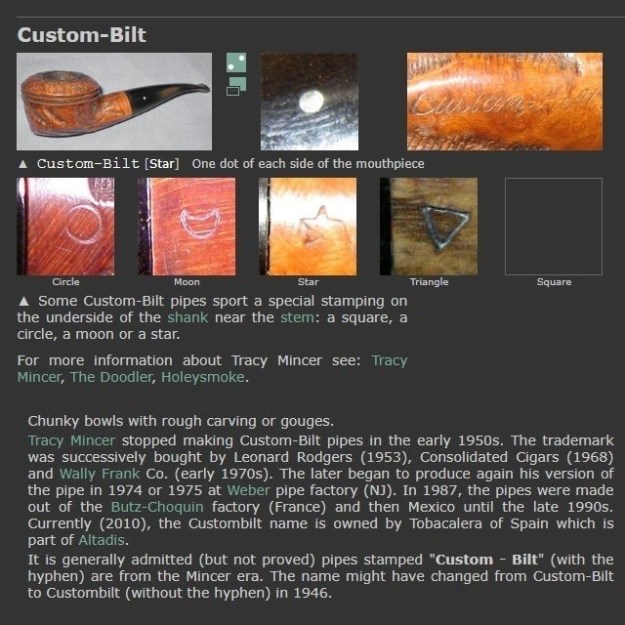
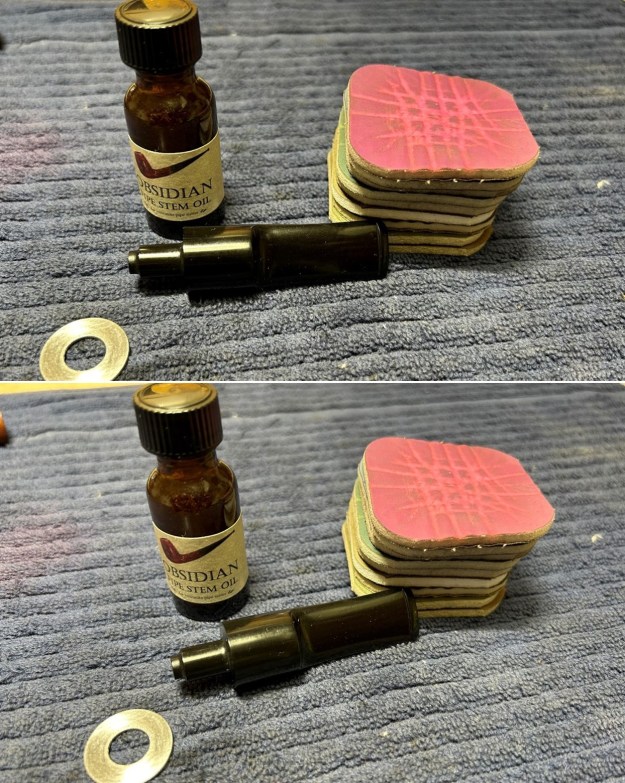
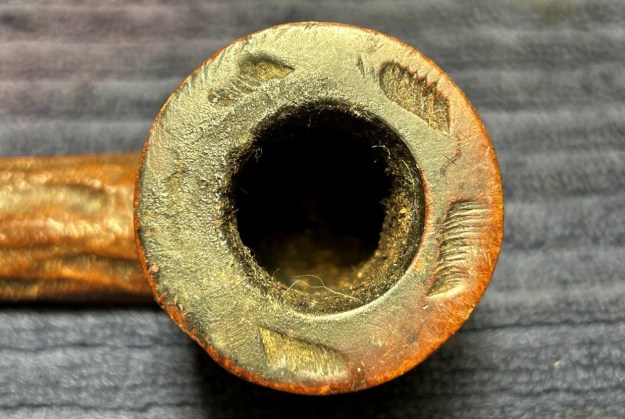
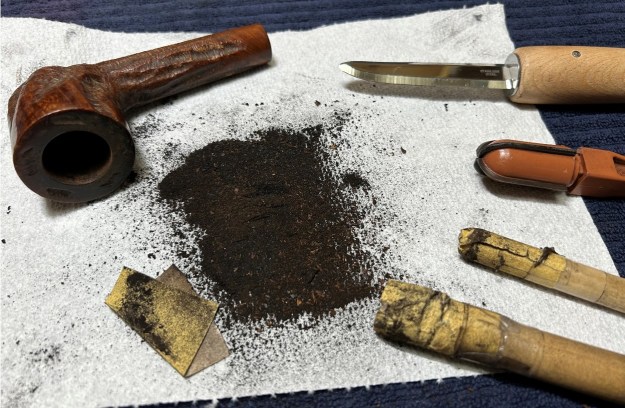
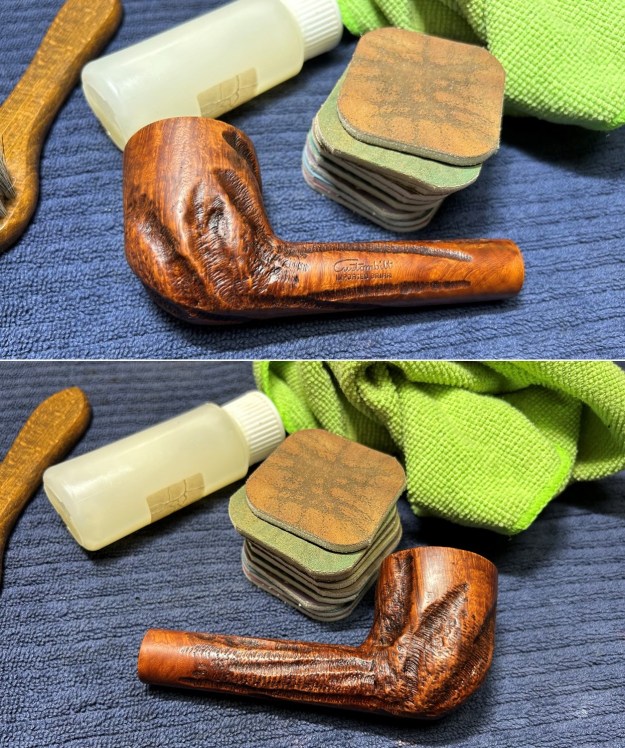
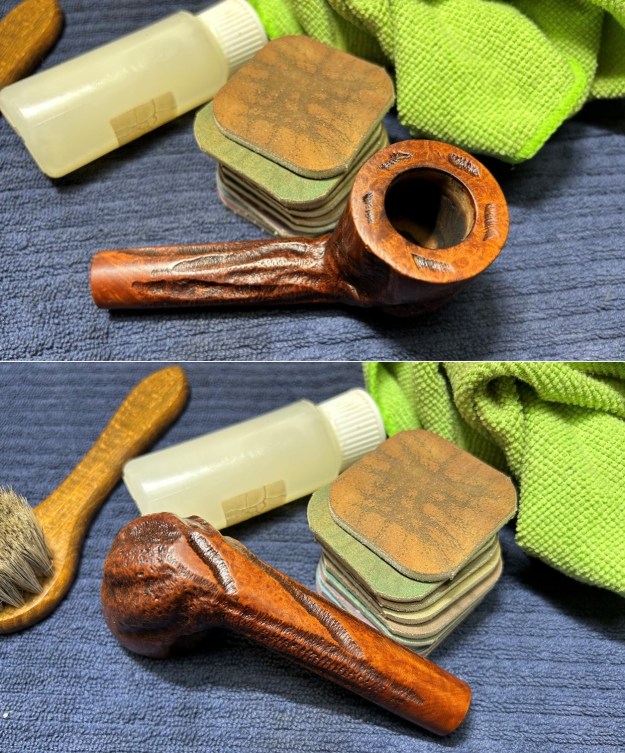
Pipedia’s article on Custombilt consists primarily of reviews of Unger’s book. It offers a cursory view of the markings and their approximate dating. This information confirms what I found in Unger’s book. Meanwhile. Pipephil provided a bit more information on the brand, although not strictly related to my pipe. In short, I think it’s fair to say that this sturdy pipe dates from the late-1940s.Let’s get on with cleaning up this pipe. I worked on the stem first and, I must say, I was surprised at its good condition. Not too dirty, not beat up at all.I wiped the outside with some oil soap on some cotton pads. Then I cleaned out the inside with pipe cleaners and isopropyl alcohol. The stem had a bit of oxidation, so I let it soak overnight in pipe stem oxidation remover. The following day, I cleaned all of the de-oxidizing mess off with a toothbrush. The oxidation had migrated to the surface and I scrubbed with SoftScrub on some cotton pads to remove the leftover oxidation. The stem turned out very well. I then used all nine Micromesh pads (1,500 through 12,000 grit) all over the saddle stem to remove any scratch marks and make it smooth and lovely. I also used Obsidian Pipe Stem Oil in between each pad scrubbing.All that finished, I set the stem aside and I began work on the very dirty stummel.Firstly, I decided to ream out the bowl. This is a large bowl and I used the PipNet Reamer’s biggest blade to remove the built-up cake, and followed that with 220-grit sandpaper taped to a couple of dowels to eliminate as much as I could. I took the chamber down to bare briar, as I wanted to ensure there were no hidden flaws in the wall. Fortunately, there were none. As the photos show, there was quite a mound of debris.I then proceeded to clean out the insides of the shank with Q-tips, pipe cleaners, and lemon-infused isopropyl alcohol. It was ridiculously dirty and took up the country’s supply of cotton to get it clean. To exorcise the demons of tobaccos past, I decided to de-ghost the pipe. I thrust cotton balls into the bowl and the shank and saturated them with 99% isopropyl alcohol. I let the stummel sit overnight. This caused any remaining oils, tars and smells to leach out into the cotton. I followed that up by cleaning the insides with some dish soap and tube brushes. Spic and span after that. There was still quite a bit of debris on the ample rim and it was time to address it. I took a piece of machine metal and meticulously scraped away the cake without affecting the finish of the wood. This quite a while – but it is most certainly worth it. Following that, I used some oil soap and a toothbrush to clean up the balance of the rim – especially the grooves of the rustication. I was really pleased with the results.Then I sanded the stummel down with the Micromesh pads (1,500 through 12,000 grit). The smooth areas got all nine pads, whereas the rusticated areas on received only the last three or four. I then coated the pipe with restoration balm and let it sit for 20 minutes or so, before polishing with a microfibre cloth and a horsehair brush. The balm does wonderful things to the wood and makes the whole stummel sing. Finally, I took it to the buffer and applied some White Diamond and a few coats of Conservator’s Wax. The lovely shine made the wood very attractive. This is a very handsome pipe and will provide many years of smoking pleasure.This handsome Custombilt Lovat looks fantastic again and is ready to be enjoyed again by the next owner! I am pleased to announce that this pipe is for sale! If you are interested in acquiring it for your collection, please have a look in the ‘American’ pipe section of the store here on Steve’s website. You can also email me directly at kenneth@knightsofthepipe.com. The approximate dimensions of the pipe are as follows: length 7 in. (177 mm); height 2⅛ in. (53 mm); bowl diameter 1⅝ in. (41 mm); chamber diameter ⅞ in. (22 mm). The weight of the pipe is 2¼ oz. (65 g). I hope you enjoyed reading the story of this pipe’s restoration as much as I did restoring it. If you are interested in more of my work, please follow me here on Steve’s website or send me an email. Thank you very much for reading and, as always, I welcome and encourage your comments.

Restoring a Terrific Handmade Oversize Kaywoodie


by Kenneth Lieblich

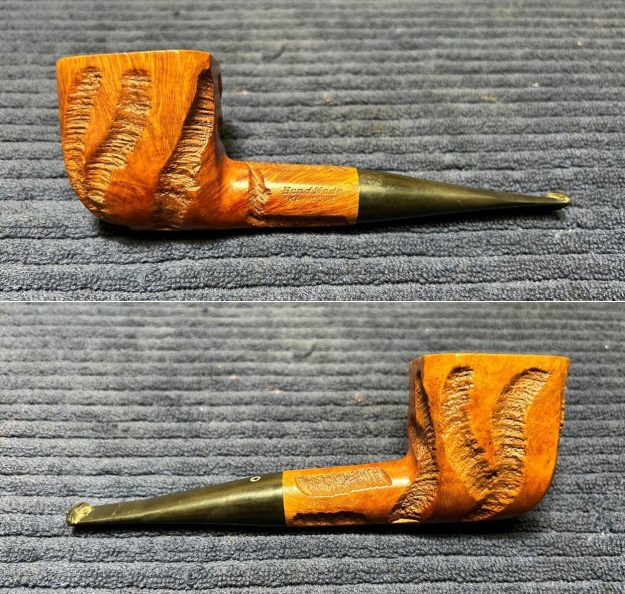
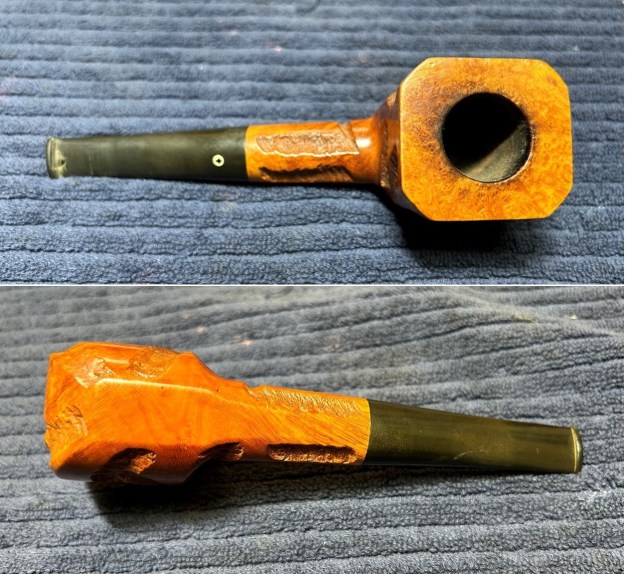
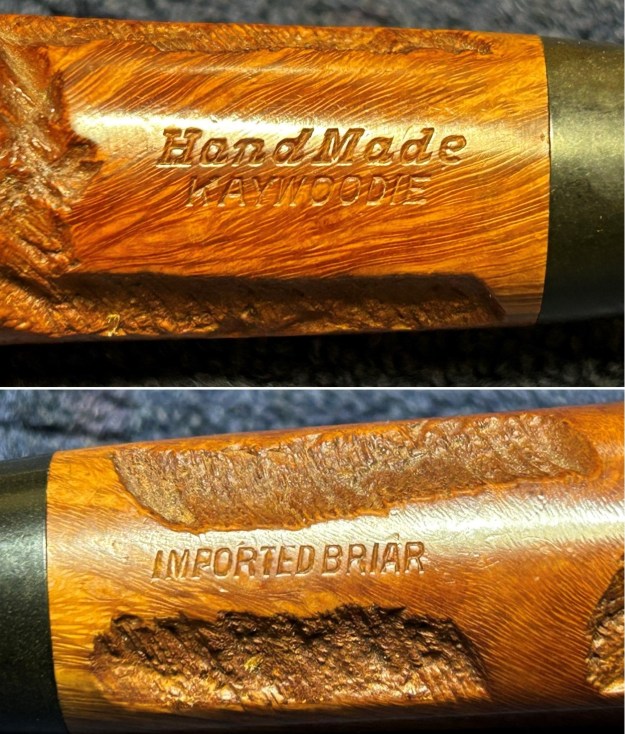
Next up is this interesting, rugged pipe from Kaywoodie. It is from the handmade Oversize Kaywoodie line and has wonderfully thick walls. When I first saw it, this nifty pipe reminded me, in style, of a Custombilt pipe. It is not that, but it is reminiscent of that. This was a bizarre and challenging restoration, but the results are terrific. Let’s examine the markings on the pipe. The left side of the shank shows HandMade [over] Kaywoodie. The right side of the shank shows, merely, Imported Briar. Finally, the stem has the famous cloverleaf logo on the top. As you can see, it is a white circle with a black leaf inside. Unfortunately, there was no shape number, no shape name, nor any other markings. Hmm… Dating this Kaywoodie is a bit of a head-scratcher. I think I’ve figured it out, but the historical details of many a pipe have been lost in the mists of time. This is an Oversize Handmade Kaywoodie and it doesn’t help that, as I mentioned, there isn’t any shape number on the pipe. Perhaps the cloverleaf logo on the stem can help. Pipephil says:

The cloverleaf logo: the round logo (black cloverleaf in white circle or white cloverleaf in black circle) was first used in 1937. Up until the late 40’s this logo was used on all of the upper-grade pipes. The concomitant use of the plain white cloverleaf and the disk inlaid logo continued until the early 80’s. Up until the late 1940’s/early 50’s, the logo was on top of the stem. After that the logo was moved to the side of the stem (exceptions exist).So, perhaps this is a better-quality pipe! From what little I understand, this was, indeed, considered to be a better pipe. Pipedia laid this information out:

Throughout much of the 1940’s, 50’s and 60’s, the Kaywoodie family of pipes consisted of 11 basic grades of briar pipes; though new grades were frequently added to the line and some older grades were discontinued or downgraded. These 11 basic grades of pipes, listed in ascending order of quality, were:
Drinkless
Hand-made Super Grain
Super Grain
Relief Grain
Flame Grain
Silhouette
Oversize Kaywoodies
Meerschaum Inlaid Kaywoodies
Connoisseur
Ninety-fiver
Centennial

Given how singularly rare the last two were (Ninety-fiver and Centennial), this would indicate a very good quality pipe. Pipedia gave me reason to think this particular pipe was from 1947. Part of the article entitled “Collector’s Guide to Kaywoodie Pipes”, states:

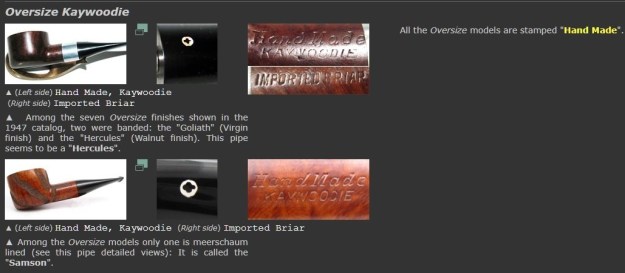
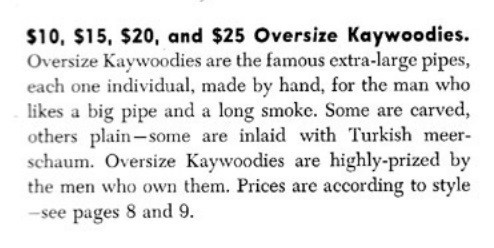
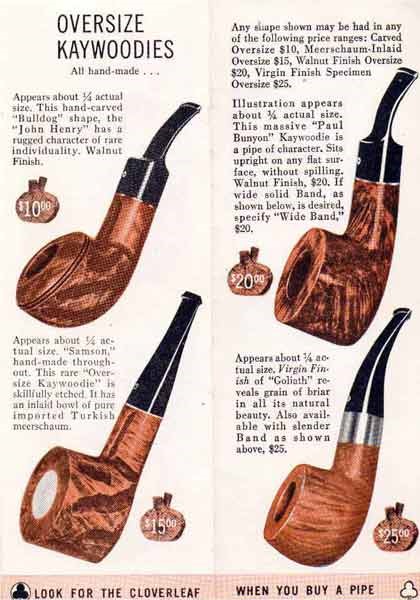
The 1947 Kaywoodie catalog shows 12 grades of briar pipes and introduces the Kaywoodie Block Meerschaum. The briar pipes were available in 69 shapes. In addition to these individual pipes, the 1947 catalog shows two- and seven-pipe matched grain sets. The Oversize Kaywoodies were, as the name implies, “Giants”. Lowndes notes that these pipes were stamped simply, “Hand-Made”. The pipes were all roughly “bulldog-ish” in appearance and were available in the following styles and grades:

Hand-carved “Colossus” ($10)
Walnut finish, banded “Hercules” ($20)
Hand-carved “John Henry” ($10)
Virgin finish, specimen grain “Paul Bunyan”
($25) Virgin finish, banded specimen grain “Goliath”
($25) Walnut finish “Atlas”
($20) Hand-carved, Meerschaum-Inlaid “Samson” ($15)Now, there is no model number or name on my pipe, so it’s not clear to me if this pipe one of the model names mentioned above or some other.

Let’s get on with restoring the pipe. The stummel was in good shape. The main issue with this pipe was the stem. The photos demonstrate that the bit had a small bite through. No big deal, I thought. I’ve repaired those before. Alas, this ended up being much more challenging than I had expected.I worked on the stummel first. In order to clean out the cake in the bowl, I used the Pipnet reamer and followed that up with a piece of sandpaper taped to a wooden dowel. I sanded down the cake until I hit the briar walls, so that I could inspect them for potential damage. Everything looked good on the inside, which is great.I proceeded to clean out the inside of the shank with 99% isopropyl alcohol and pipe cleaners and cotton swabs. It was a bit dirty in there, but I got it clean in the end.When that was done, I set up to clean the pipe’s insides with soap and some tube brushes. The pipe was beautifully clean after that.As I was cleaning, I noticed that there were a few minor dents on the rim. I wet a piece of cotton cloth with water, heated up my iron, and set about trying to raise the dents. Often, the hot, moist air created by the cloth and iron can lift the wood back into shape. This technique worked really well on this occasion.After this, I used all nine Micromesh pads (1,500 through 12,000 grit) to remove the scratches in the wood (especially on the rim) and make everything smooth. Then a light application of Before & After Restoration Balm brought out the best in the stummel’s grain. The grain on this pipe is pretty great! Moving on to the stem – I started out by cleaning the inside of the stem with lemon-infused 99% isopropyl alcohol and some pipe cleaners and cotton swabs. It was dirty, but not too bad. I also cleaned the stem with some Murphy’s on some cotton rounds. As you can see, the stem wasn’t too dirty and won’t need a soaking.Now it was time to fix the bite-through. Obviously, one option here would be to get another stem from my stock and replace the broken one, but I always try to use original materials wherever possible. I noticed that a repair had already been attempted on this stem at some point in the past. Someone had used some soft rubber (from one of those stem bits) to bridge the gap in the stem.I figured that adding my black carbon and rubber infused cyanoacrylate adhesive to this existing repair would be a good idea. I first plugged up the stem’s draught hole with a pipe cleaner coated in petroleum jelly. This ensured that any of the cyanoacrylate would not accidentally plug up the air passage in the stem.I then used a miniature file to shape the button and make it suitable for sanding. Uh oh – big problem. The soft rubber repair was not nearly good enough and broke off completely while I was sanding. Sigh. I repeated the process of building up the bit with black cyanoacrylate glue. This time I used a piece of cardboard coated in petroleum jelly (rather than a pipe cleaner). I then sanded the stem down with 220- and 400-grit sandpapers to meld seamlessly into the stem. I also used a sanding sponge to ensure that it keeps its shape and looks like it should. I won’t bore you by repeating myself, but I had to add black cyanoacrylate adhesive two more times until it was satisfactory. I then used all nine Micromesh pads (1,500 through 12,000 grit) on the stem to make it look as good as possible. I also used Obsidian Pipe Stem Oil in between each pad scrubbing. It is worth noting that a repair this big on a stem will never be invisible or perfect, but I was pleased with how the stem finished up. Off to the bench polisher to put the final touches on this pipe. I first gave it a thorough (but light-handed) going-over with White Diamond compound. One doesn’t want to use too much for fear of gumming up the rustication. Following that, several coats of conservator’s wax created a beautiful seal on the pipe.All done! This Handmade Oversize Kaywoodie looks fantastic and is ready to be enjoyed again by the next owner. I am pleased to announce that this pipe is for sale! If you are interested in acquiring it for your collection, please have a look in the “American” section of the store here on Steve’s website. You can also email me directly at kenneth@knightsofthepipe.com. The approximate dimensions of the pipe are as follows: length 6 in. (152 mm); height 2 in. (51 mm); bowl diameter 1½ in. (39 mm); chamber diameter ¾ in. (20 mm). The weight of the pipe is 2¼ oz. (64 g). I hope you enjoyed reading the story of this pipe’s restoration as much as I did restoring it. If you are interested in more of my work, please follow me here on Steve’s website or send me an email. Thank you very much for reading and, as always, I welcome and encourage your comments.

Restoring a Preben Holm Hand Made Ben Wade Spiral Sandblast Freehand


By Steve Laug

This interesting Preben Holm made Ben Wade Freehand with both smooth and sandblast finish and plateau rim top and shank end came to us from an estate we purchased from Santa Cruz, California USA on 05/28/2024. It is a unique looking pipe. The stamping on the underside of the spiral shank read Ben Wade [over] Spiral [over] Sandblast [over] Hand Made [over] In [over] Denmark. The pipe has some smooth strips around the bowl flowing from the rim edge to the bottom of the bowl. The rest of the bowl has a very good sandblast. The spiral shank is sandblast on the top and sides and smooth on the underside The finish is dirty with dust and oils ground into the finish and dust and debris in the plateau rim top and shank end. The rim top has a thick lava on the inner edge and heavier at the back of the rim top. The bowl has a thick cake. The fancy, turned saddle stem and is oxidized and has tooth marks on both sides ahead of the button. Jeff took some photos of the pipe before he started his work on it. He took photos of the rim top to show the cake in the bowl and the thick lava coat and debris in the finish on the rim top. There was darkening all around the bowl edge. He took photos of the stem to show the oxidation and tooth marks on both sides of the stem ahead of the button.Jeff took photos of the sides and heel of the bowl to give a sense of the finish on the bowl sides. Even under the grime it is a beautiful piece of briar in a unique shape. He captured the stamping as best as possible on the underside of the shank. It reads as noted above.I turned first to Pipephil to see what I could find about the Spiral line of pipes and get some background (http://pipephil.eu/logos/en/logo-benwade.html).  There was nothing there in terms of photos. There was however an interesting note that I am including below.

During the period 1972 (about) – 1989 Ben Wade pipes were mass produced for Lane Ltd. by Preben Holm’s workshop in his very personal style.

That gave me the time period for the manufacture of this pipe – 1972-1989. I knew that it was a Preben Holm pipe and that it was made for Lane Limited.

I turned then to Pipedia and read the listing on the brand to refresh my memory and flesh out the knowledge of the brand (https://pipedia.org/wiki/Holm,_Preben) and the article on Ben Wade (https://pipedia.org/wiki/Ben_Wade). I quote the portion of the Ben Wade article that summarizes the Danish period of the history of the brand:

Young Copenhagen master pipemaker Preben Holm had made a meteoric career heading a pipe manufacture employing 45 people at the age of 22! But around the turn of 1970/71 he was in major financial difficulties. His US distributor, Snug Harbour Ltd. in New York City, left him in the lurch. Holm had three unpaid invoices on his desk and another large shipment was ready for the USA, when Snug Harbour’s manager told him on the phone that there was no money at all on the account to pay him.

So, the Dane went to New York for an almost desperate search for a new distribution partner. He made contacts with Lane Ltd. and met Herman G. Lane in February 1971. Lane Ltd. had no interest in Holm’s serial pipes produced at that time but so much the more in the hand-carved freehands because the hype for Danish freehands and fancies in the States was still on its way to the climax then. The meeting resulted in an agreement to start a cooperation. Lane insisted to improve the quality considerably and in return he assured to be able to sell essentially larger quantities.

Holm went back home to work on new samples with all-new designs and altered finishes for Lane. Both, Lane and Holm, agreed that it would be unwise to sell the pipes under Preben Holm’s name as long as Snug Harbour had a considerable stock of Preben Holm pipes and might sell them pipes at very low prices just to bring in some money.

So on Mr. Lane’s proposal it was determined to use the name Ben Wade belonging to Lane Ltd. Lane spent considerable amounts of money for advertising the new brand in the big magazines– the centerpiece being whole-page ads showing a very exclusive Seven Day’s Set.

The cooperation with Lane Ltd. proved to be an eminent business success for both partners. Within a very short time Ben Wade Handmade Denmark sold in much larger quantities and at higher prices than they had ever dreamed of. And the hype these freehands and fancy pipes caused went on unbroken long after Herman G. Lane deceased. Preben Holm – obviously much more brilliant in pipe making than in pipe business – was in major troubles again in 1986 and had to sack most of his staff. The Ben Wade production was significantly lowered but continued until his untimely death in June of 1989.

Up to now Preben Holm made Ben Wade pipes are cult and highly sought for on the estate markets.

With that information my initial thoughts were confirmed. This pipe was a Preben Holm made Freehand distributed in the US by Lane Ltd under his own name. The freehand rage occurred in the late 70s and the pipes were made until Preben’s death in 1989. My guess would be that this pipe was made sometime during that time period.

Jeff had cleaned up the pipe following his normal cleaning process. In short, he reamed it with a PipNet pipe reamer to strip out the cake in the bowl and then cleaned up the reaming with a Savinelli Fitsall Pipe Knife. He scrubbed the bowl with undiluted Murphy’s Oil Soap with a tooth brush. He worked over the lava and debris on the plateau rim top and shank end and was able to remove it. He rinsed it under running warm water to remove the soap and grime. He cleaned out the inside of the shank and the airway in the stem with alcohol, cotton swabs and pipe cleaners. He scrubbed the stem with Soft Scrub and cotton pads to remove the debris and oils on the stem. He soaked it in Briarville’s Pipe Stem Deoxidizer and then rinsed it with warm water and dried it off. I took photos of the pipe once I received it. It really looked good. I took close up photos of the stem and the rim top to show both how clean they were and what needed to be addresses with both. The rim top and bowl look good. The inner edge bevel looked clean and undamaged. The stem looked better and there were light tooth marks and chatter on both sides ahead of the button.I took a photo of the stamping on the underside of the shank. You can see from the photo that it is clear and readable. I removed the stem from the bowl and took a photo of the parts to give a sense of the beauty of the pipe. The bowl was in such good condition that I started by polishing the smooth briar with micromesh sanding pads – dry sanding with 1500-12000 grit sanding pads. I wiped down the briar after each pad with a damp cloth to remove the dust and debris from the surface. The briar began to take on a shine. I worked some Before & After Restoration Balm into the surface of the briar with my finger tips and a horse hair shoe brush to get into the crevices of the plateau rim top and shank end. The product is incredible and the way it brings the grain to the fore is unique. It works to clean, protect and invigorate the wood. I set the bowl aside and turned my attention to the stem. I “painted” the tooth marks on the stem with the flame of a Bic lighter to lift them. It worked very well and what remained I sanded out with a folded piece of 220 grit sandpaper. I touched up the stamp on the top of the stem with Rub’n Buff Antique Gold. I rubbed the product into the stamping and buffed it off with a soft cloth. It is very visible and clear.I sanded the stem with 320-3500 grit sanding pads. Between the pads I wiped the stem down with Obsidian Oil. It is starting to look very good.I polished the stem with micromesh sanding pads – wet sanding it 1500-12000 pads. I wiped it down with Obsidian Oil after each pad to enliven and protect the vulcanite. I polished it with Before After Pipe Polish – both Fine and Extra Fine. I gave the stem another rubdown with Obsidian Oil and set it aside to dry. I am really happy with the way that this Preben Holm made Ben Wade Spiral Hand Made Danish Freehand turned out. It really is a beautiful looking pipe with a very unique shape and mixed sandblast and smooth finished bowl and rim and plateau on the rim and the shank end. The fancy original vulcanite saddle stem is really nice. The polished black of the stem works well with the briar. The briar really came alive with the buffing. The rich brown stains of the finish gave the pipe a sense of depth with the polishing and waxing. I put the stem back on the bowl and carefully buffed the pipe with Blue Diamond on the buffing wheel using a light touch on the briar. I gave the bowl and the stem multiple coats of carnauba wax on the buffing wheel. I buffed the pipe with a clean buffing pad to raise the shine. I hand buffed the pipe with a microfiber cloth to deepen the shine. The finished Ben Wade Spiral Hand Made really is a beauty and feels great in the hand and looks very good. Give the finished pipe a look in the photos below. The dimensions of the pipe are Length: 7 inches, Height: 2 ½ inches, Outside diameter of the bowl: 1 ¾ inches long x 2 inches wide, Chamber diameter: 1 inch. The weight of the pipe is 60 grams/2.05 ounces. The pipe will be going on the rebornpipes store in the Danish Pipe Makers Section if you would like to add it to your collection. Thanks for reading this blog and my reflections on the pipe while I worked on it. It was a fun one to work on!