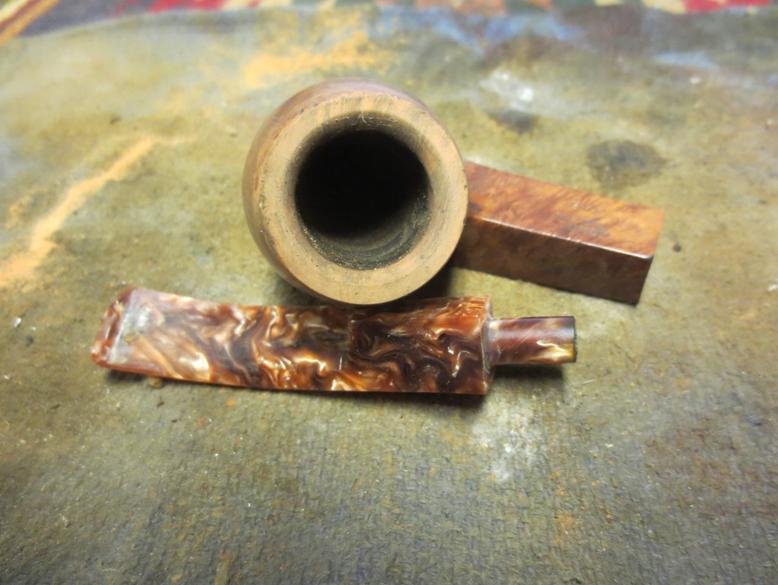
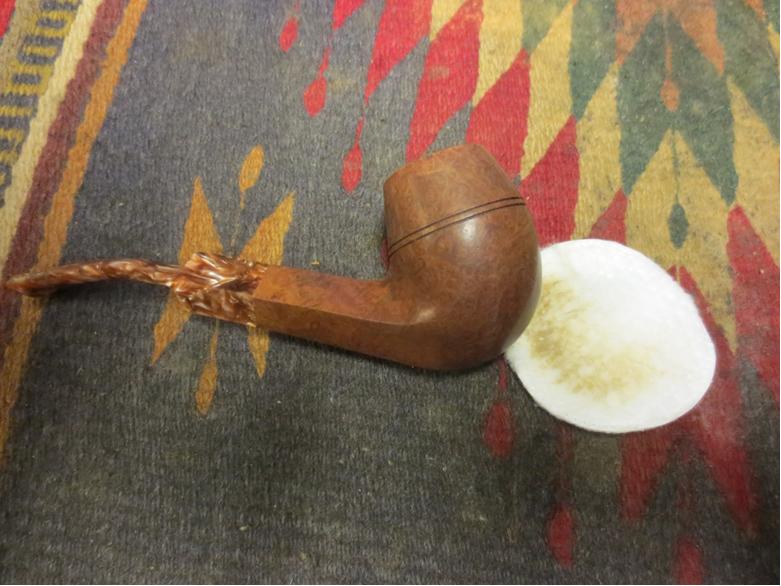
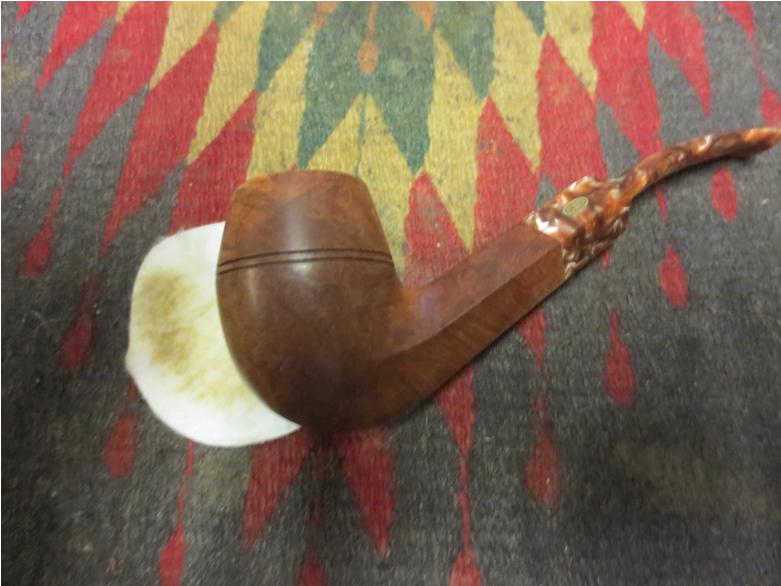
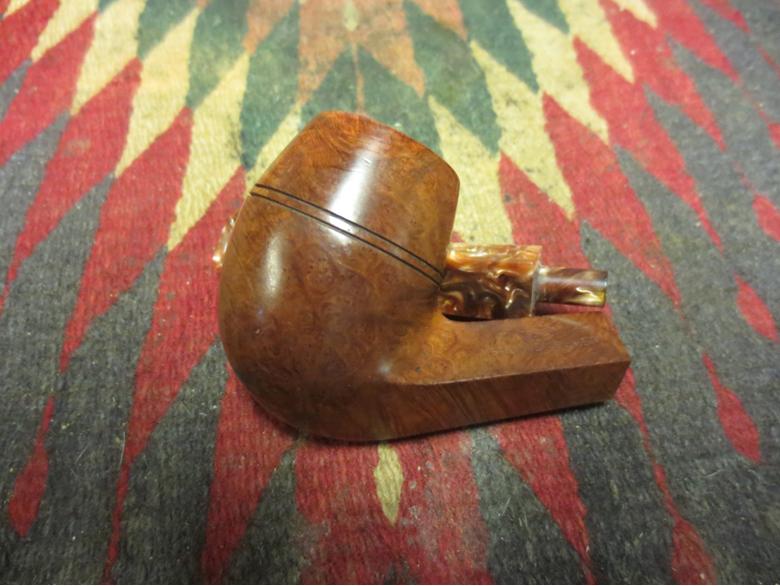
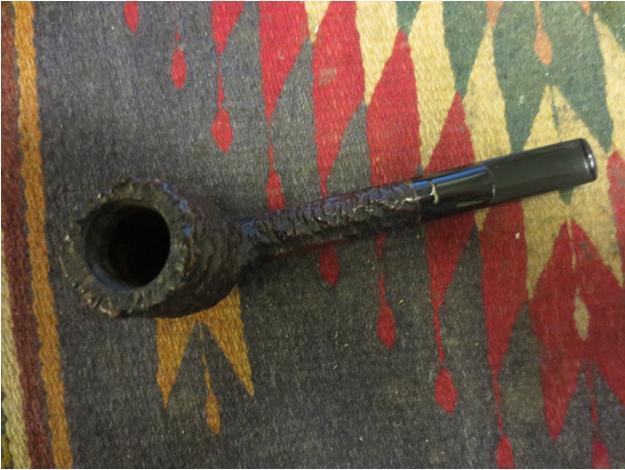
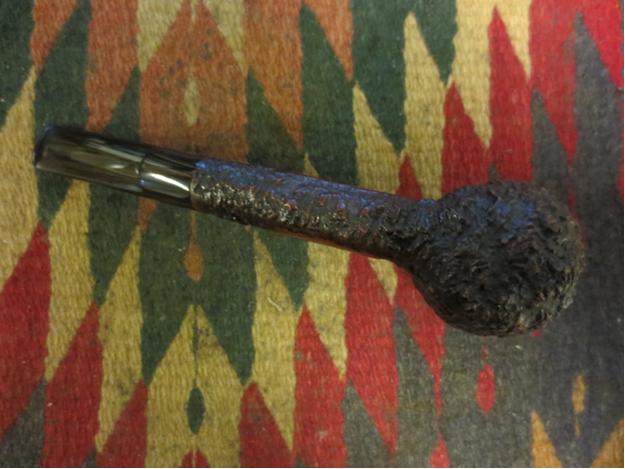
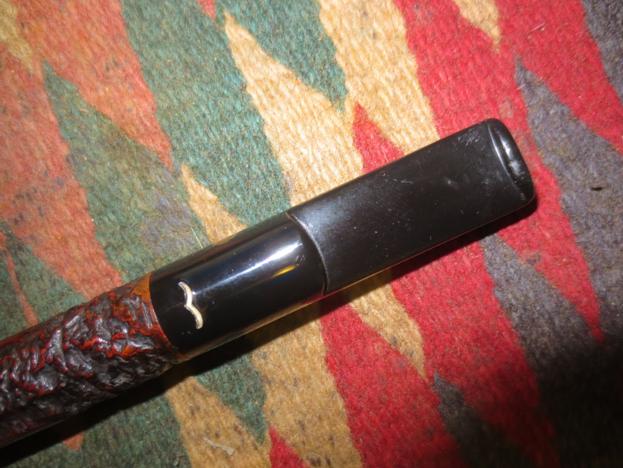
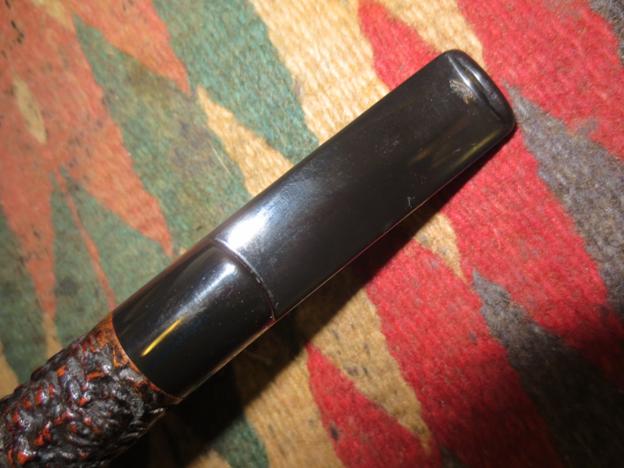
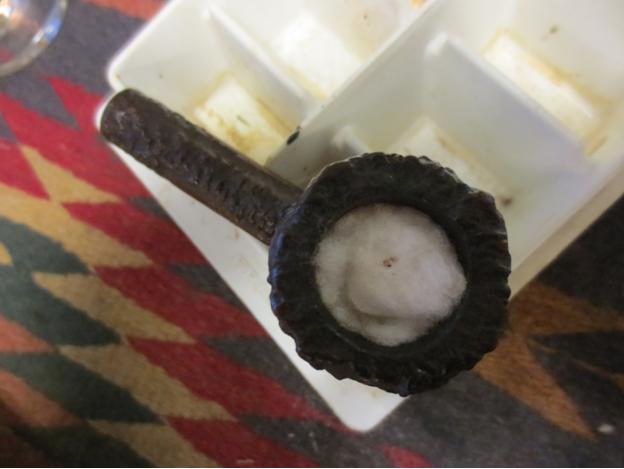
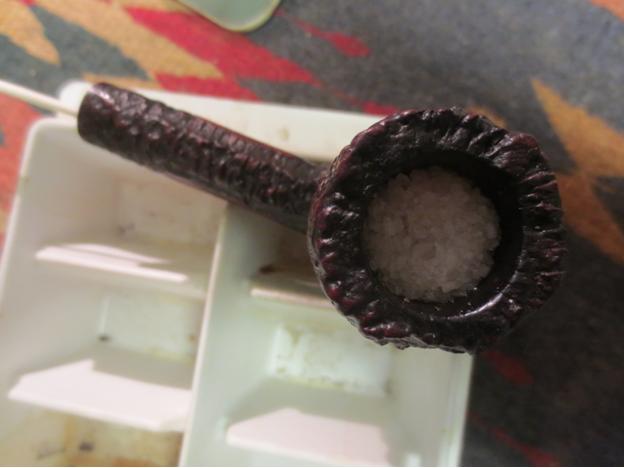
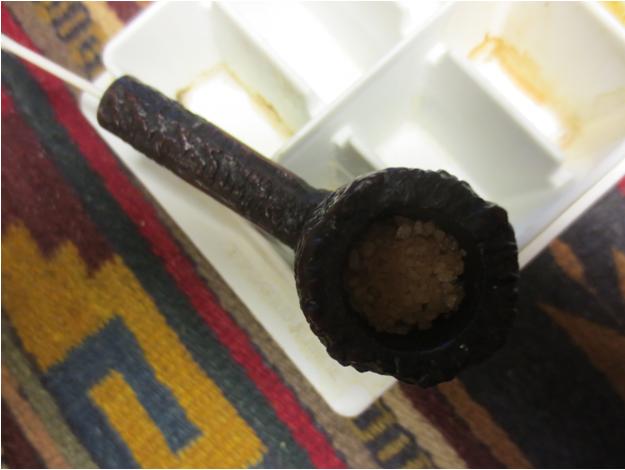
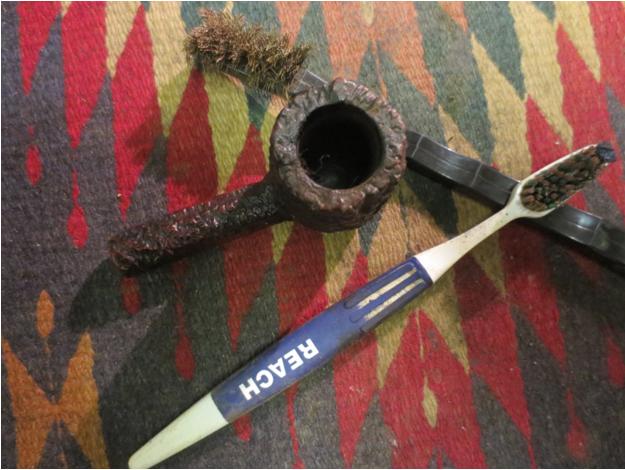
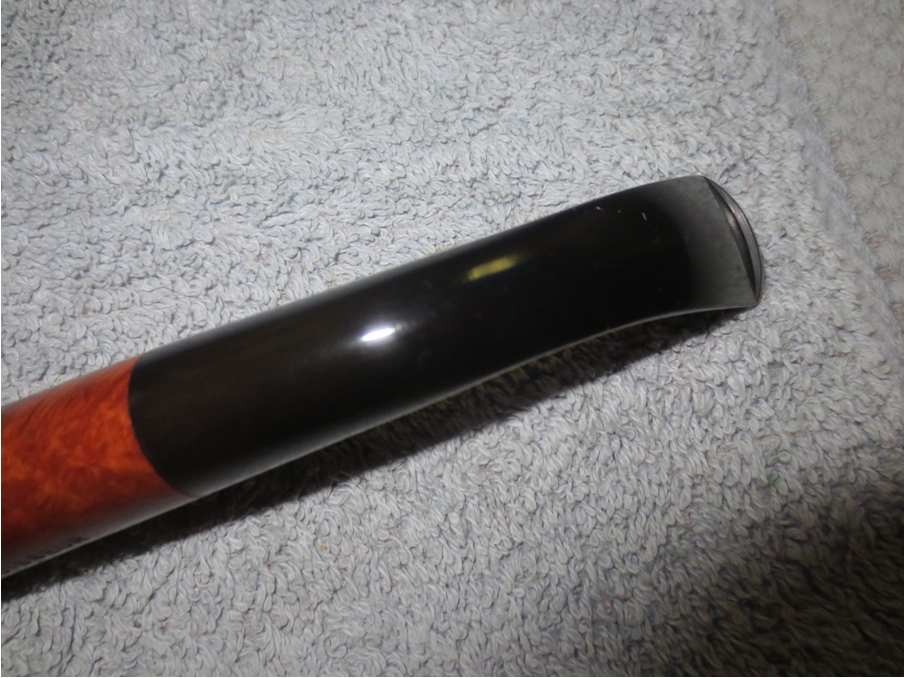
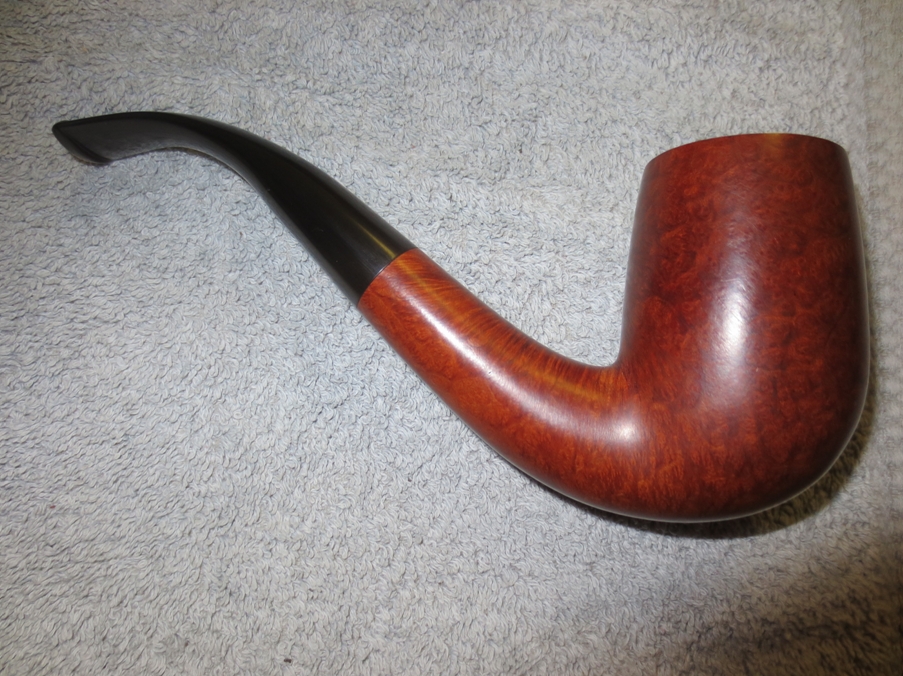
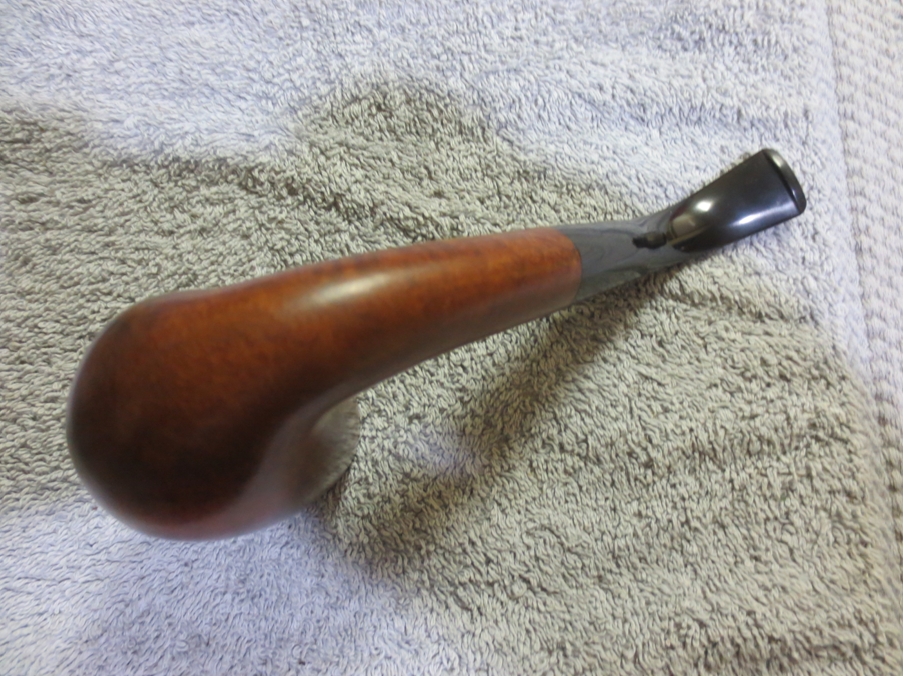
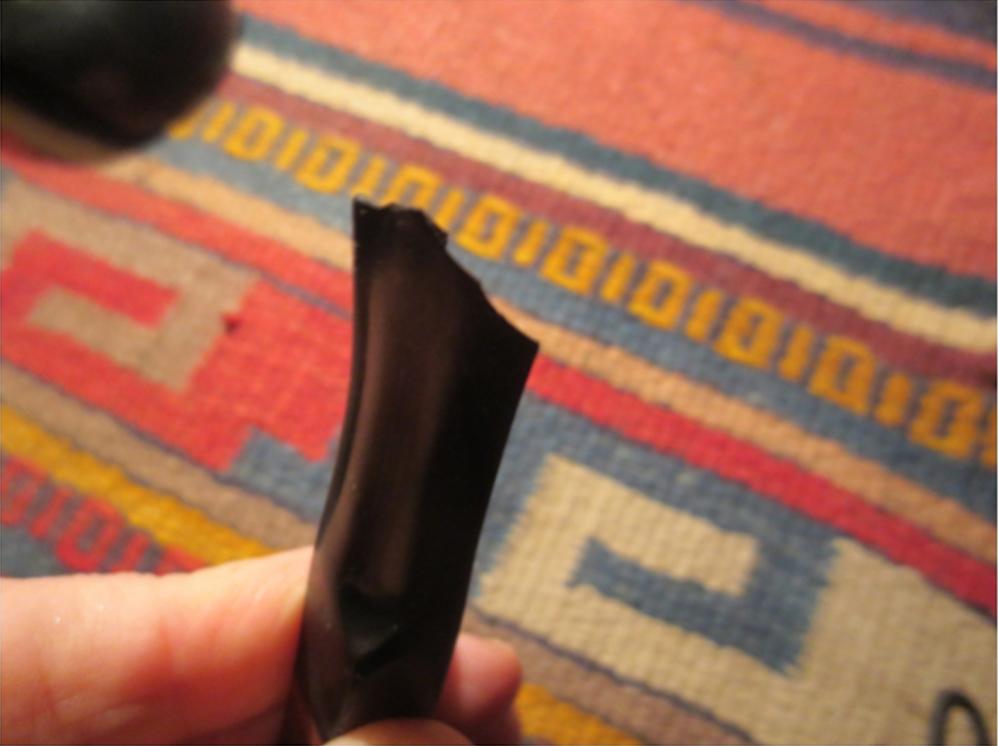
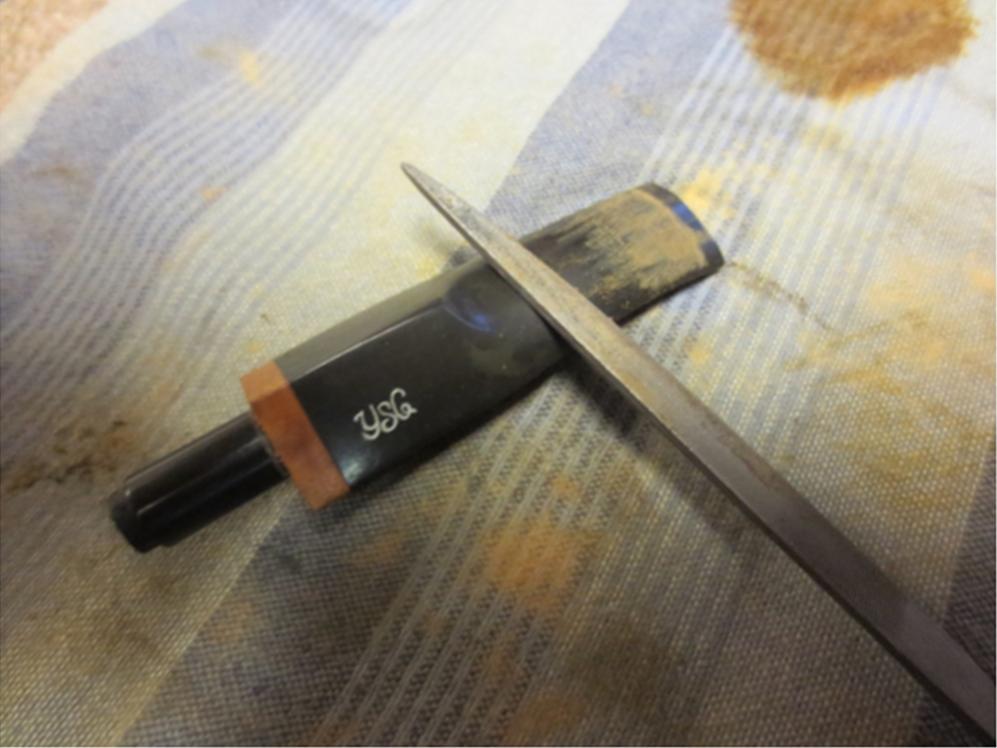
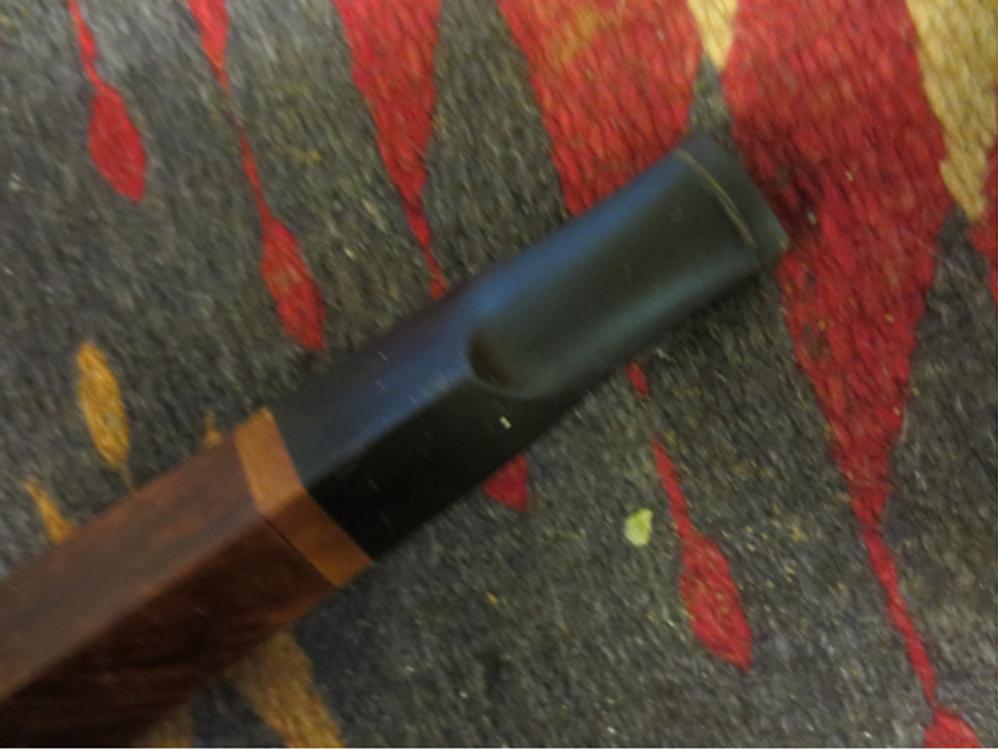
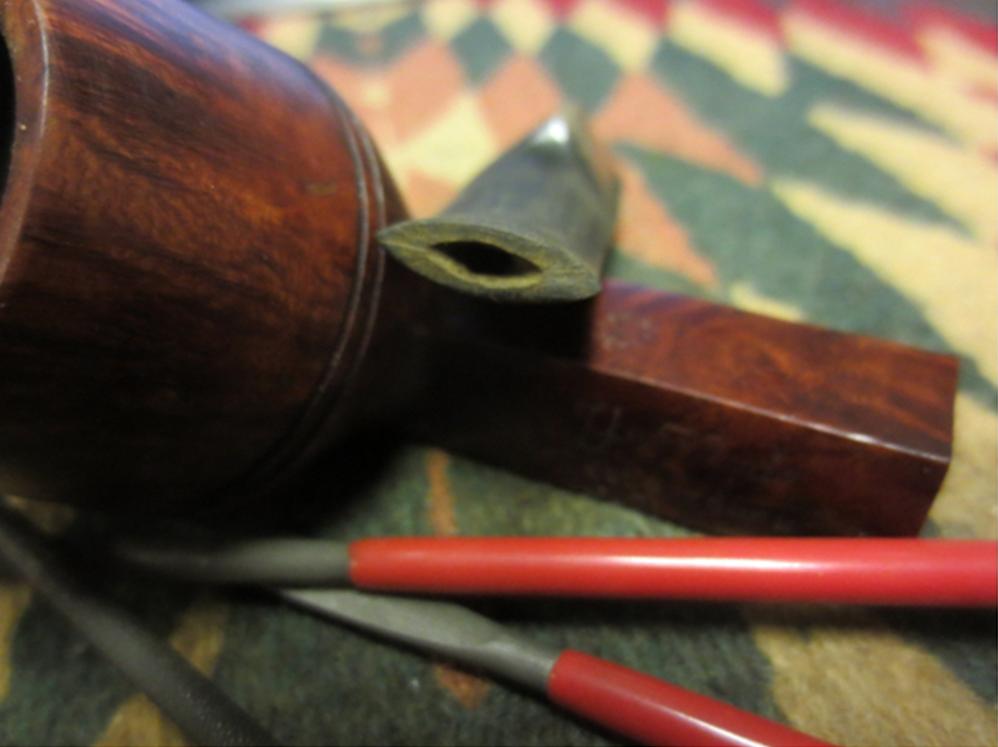
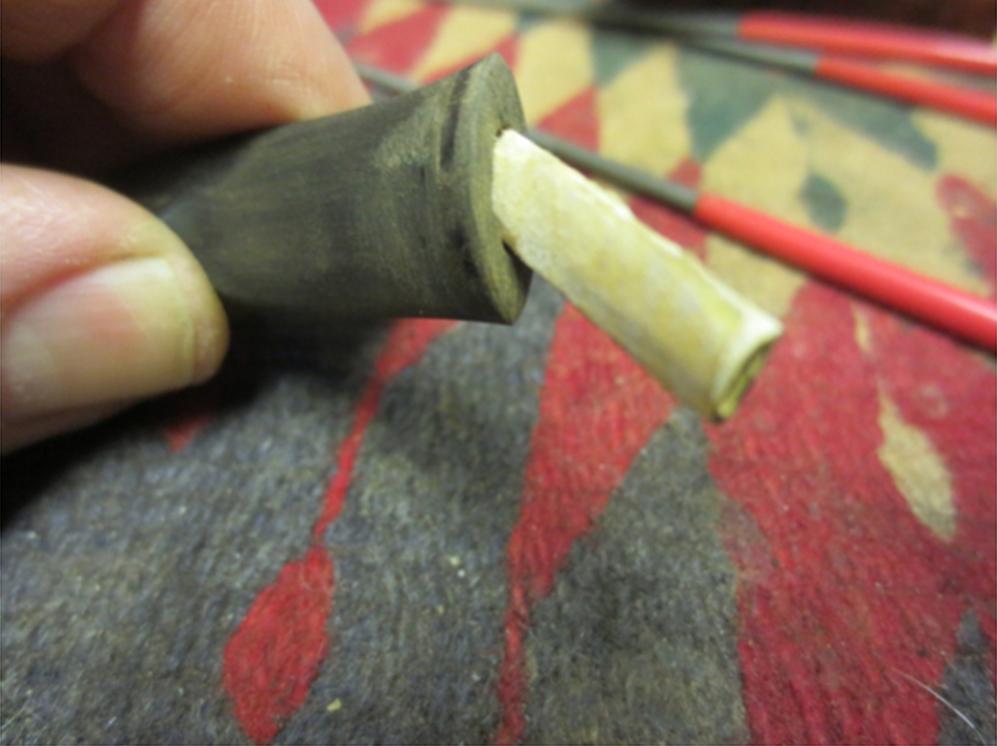
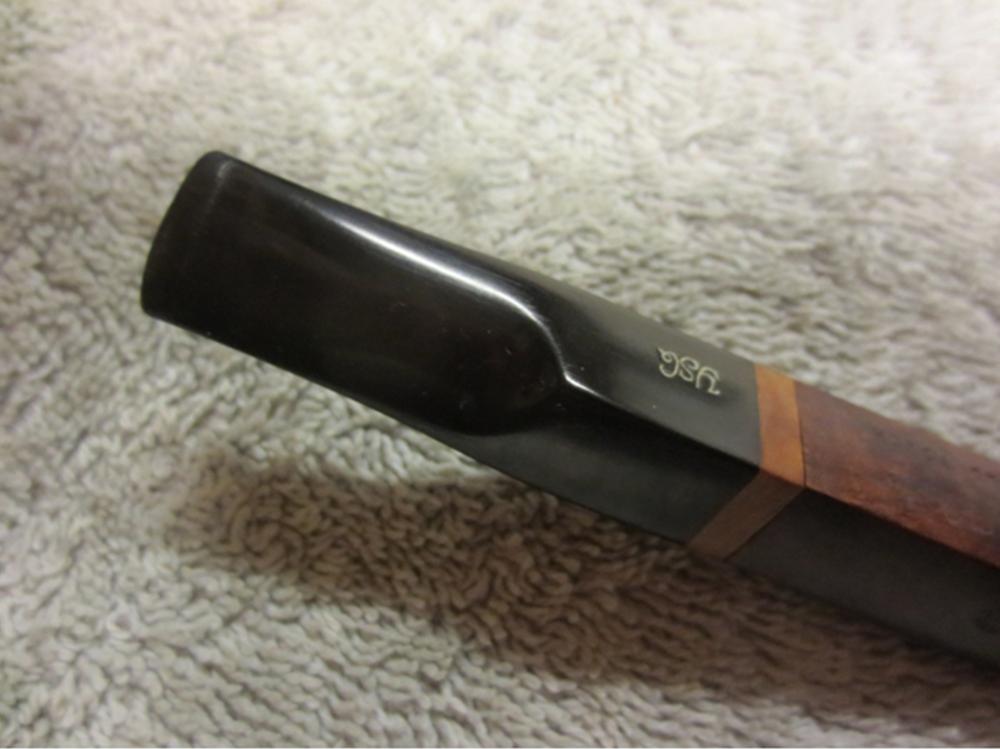
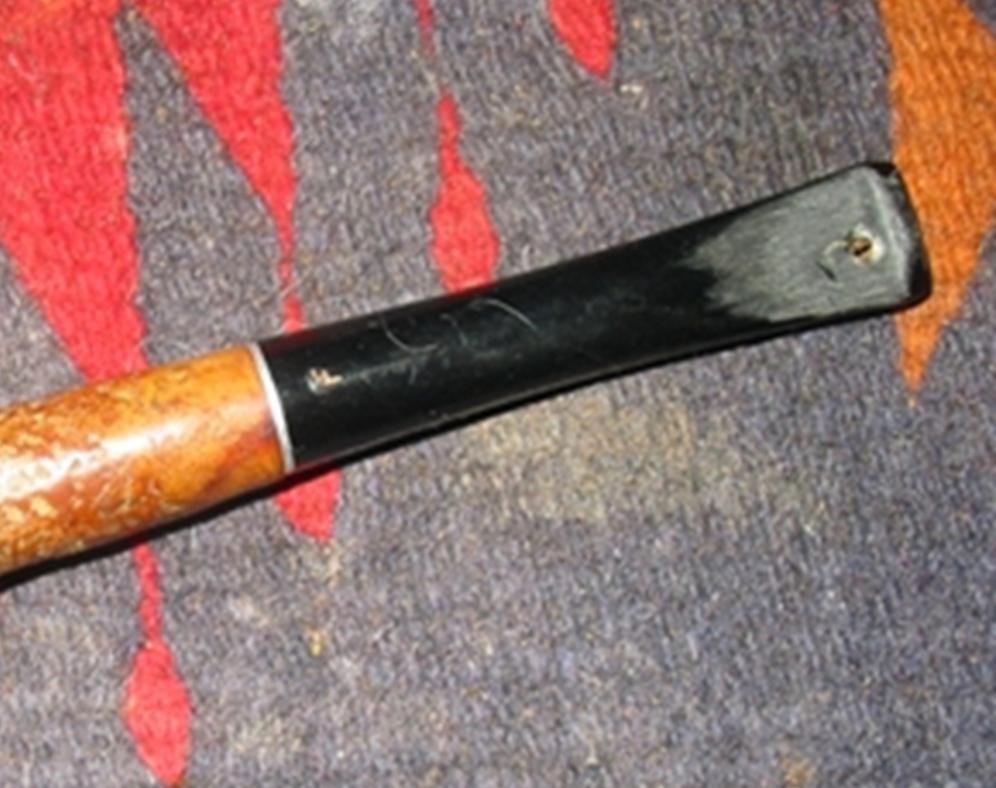
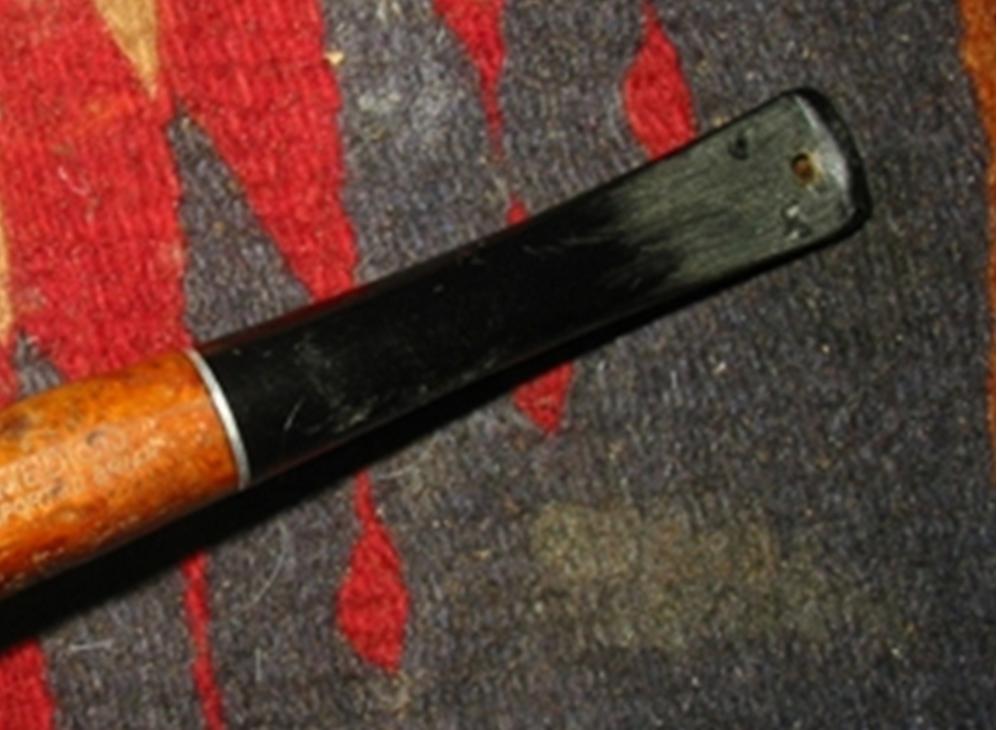
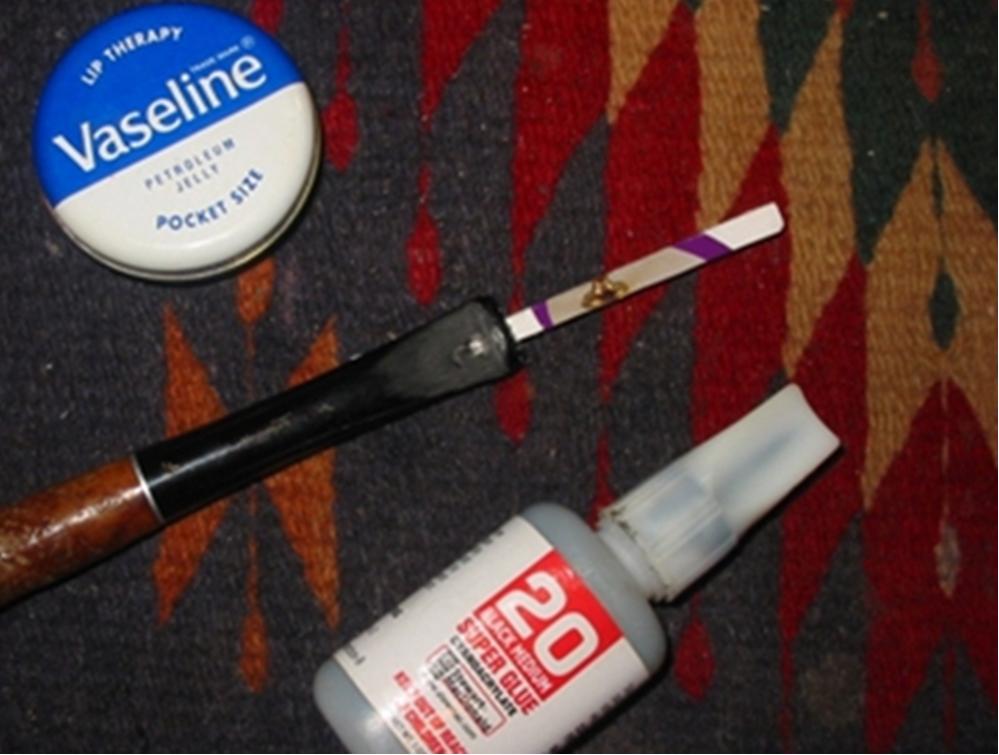
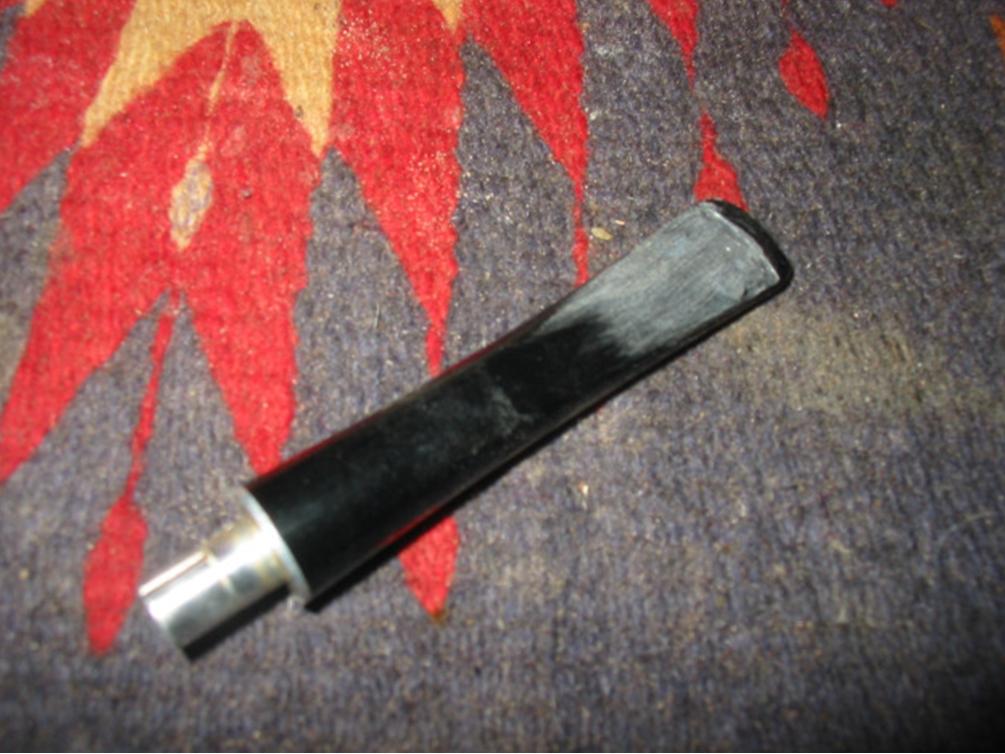
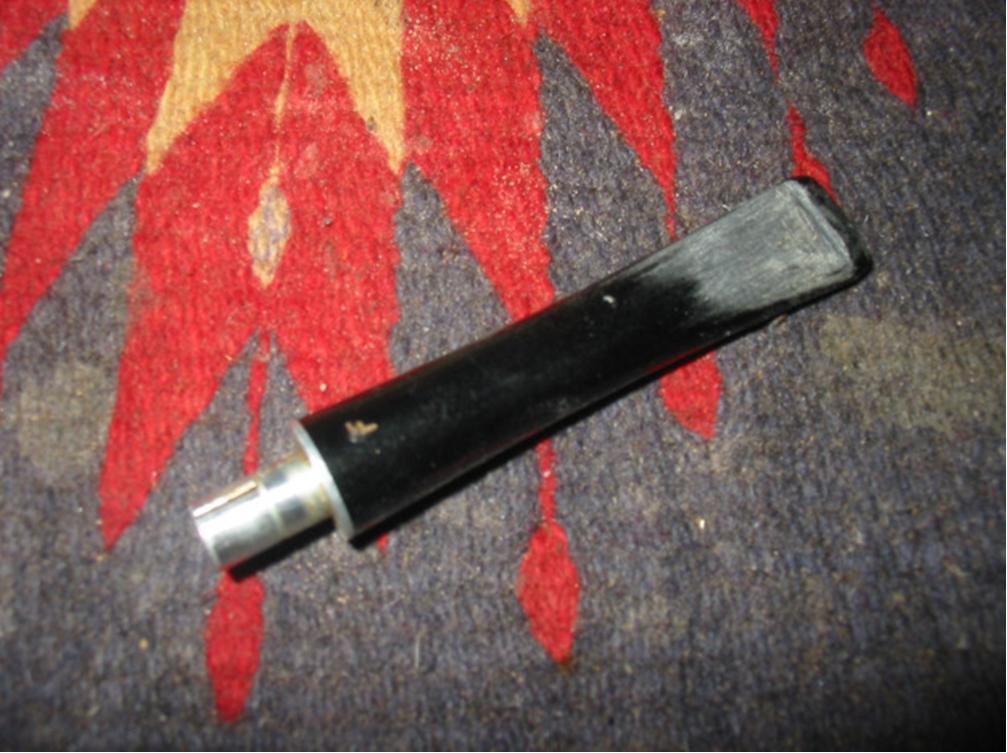
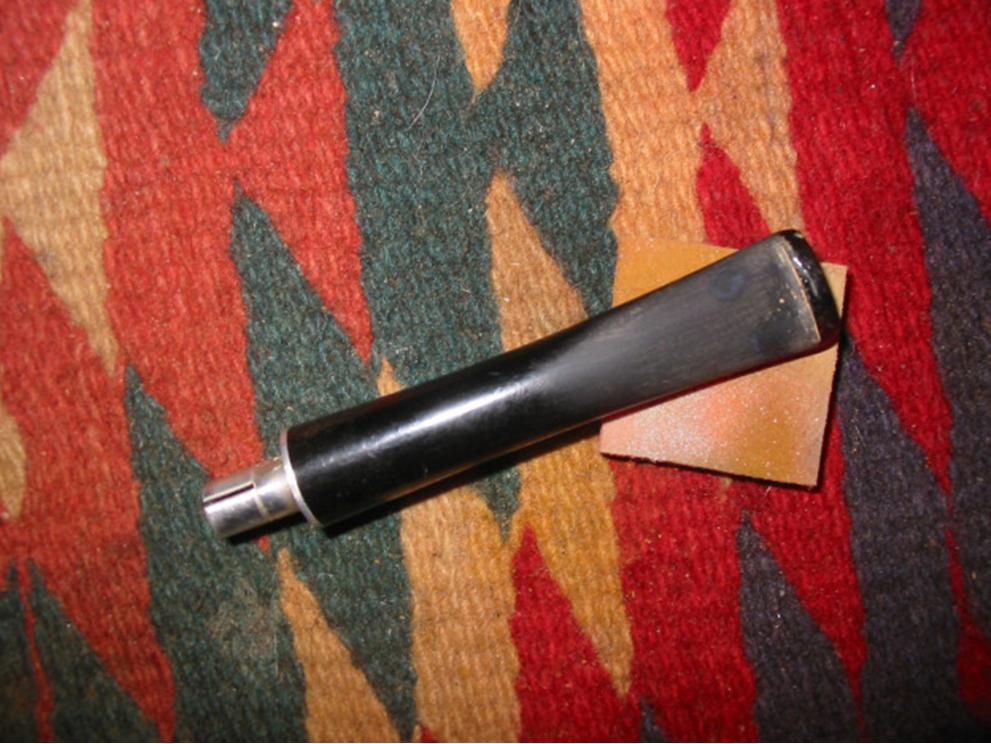
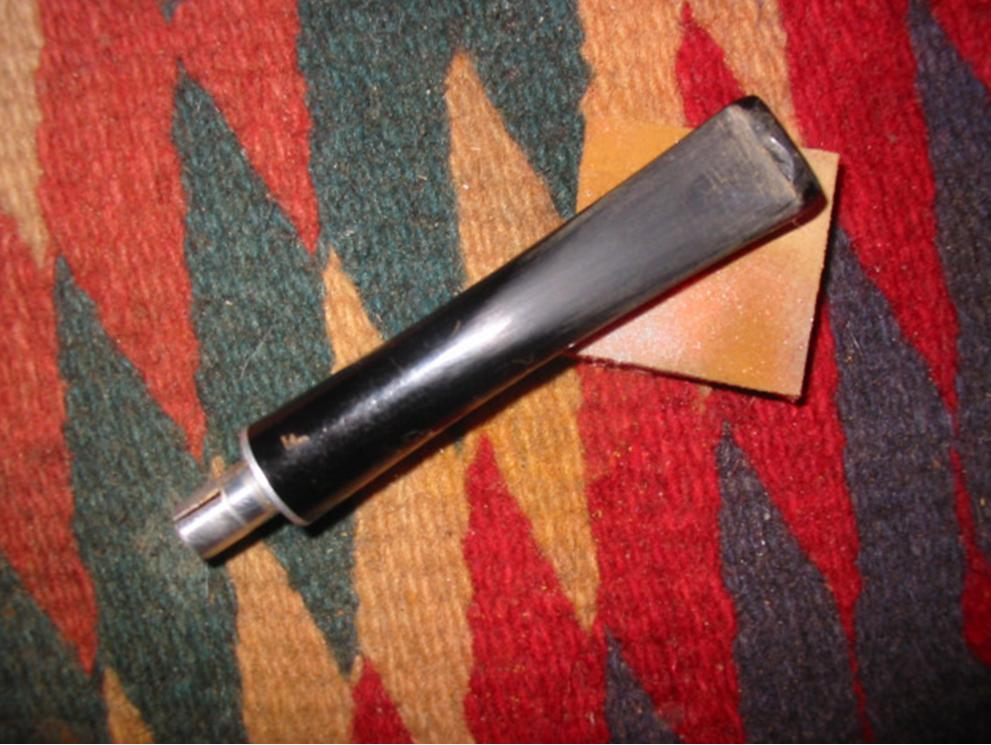
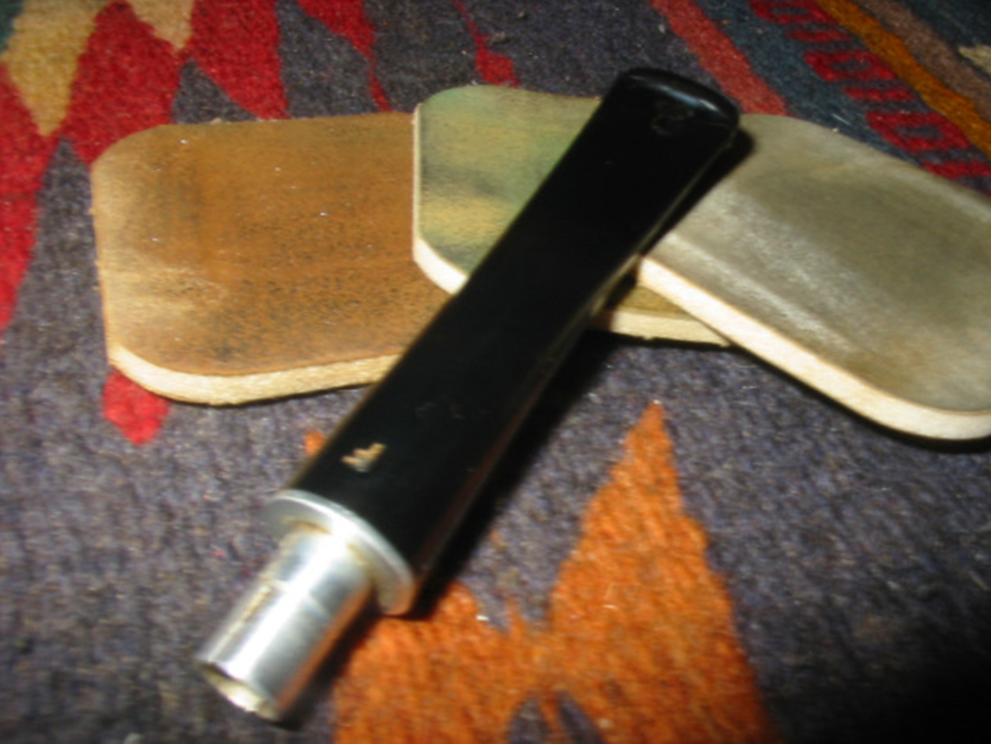
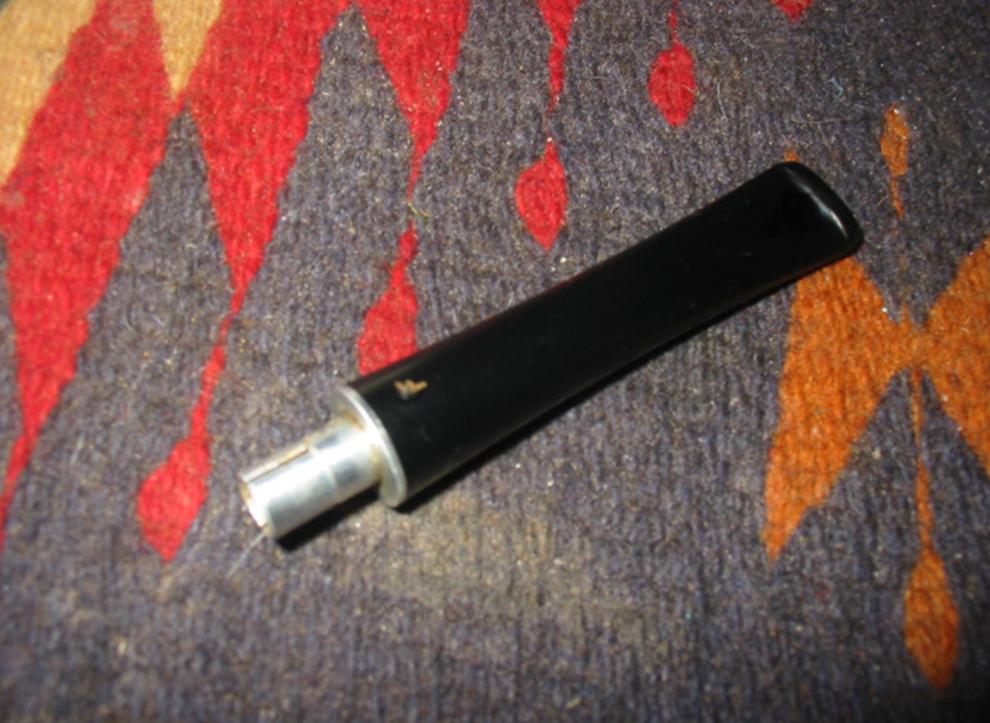
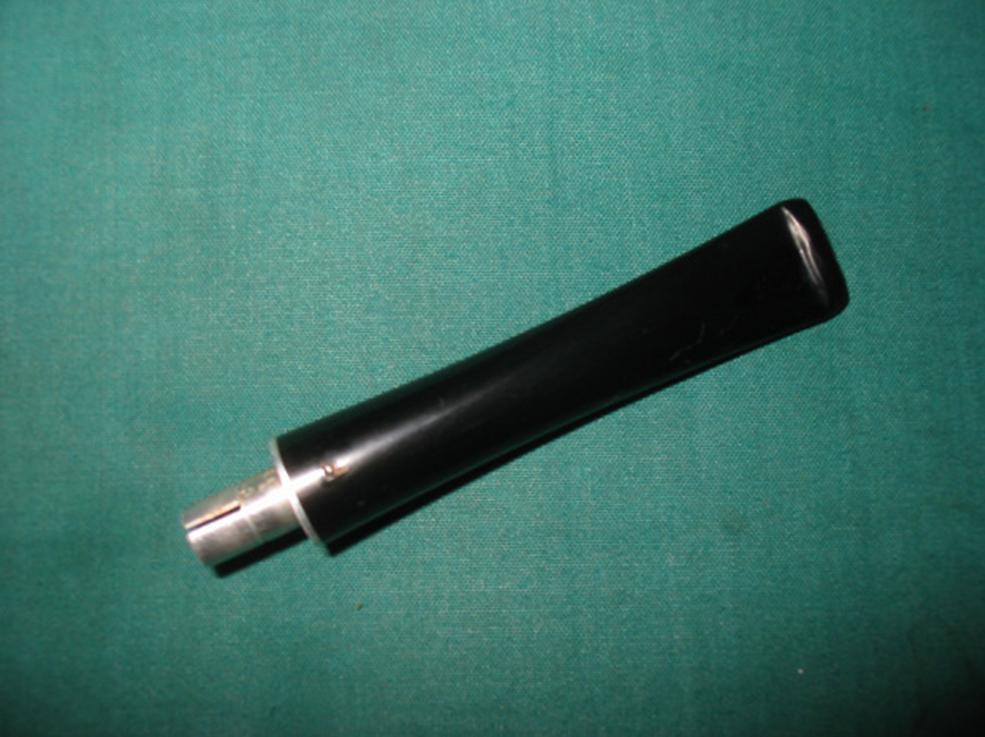
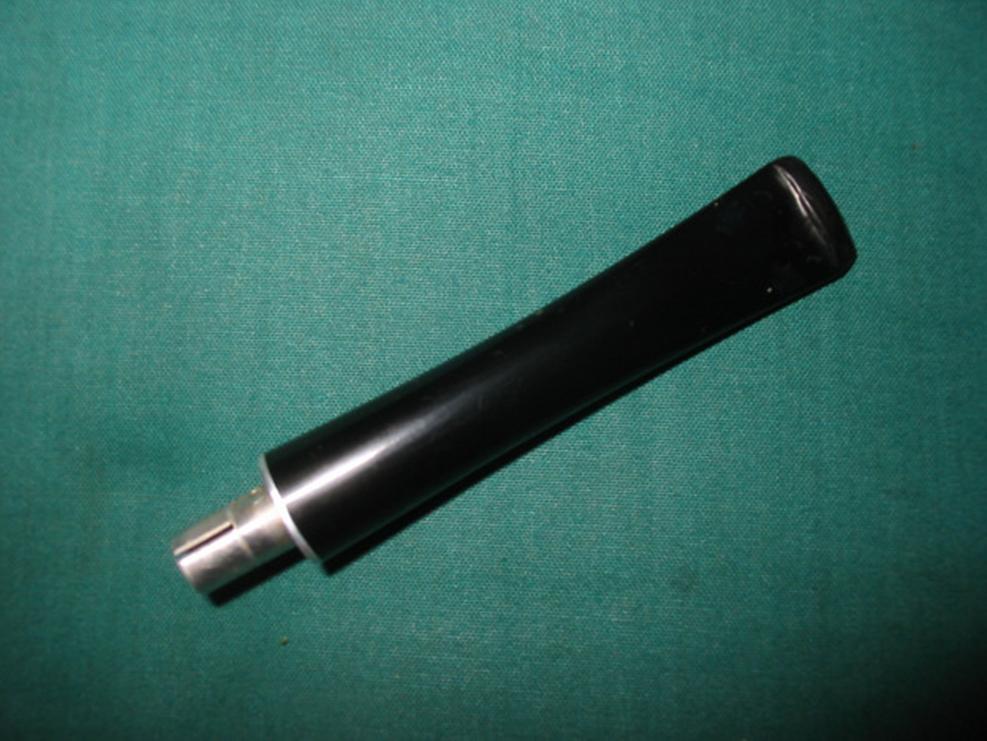
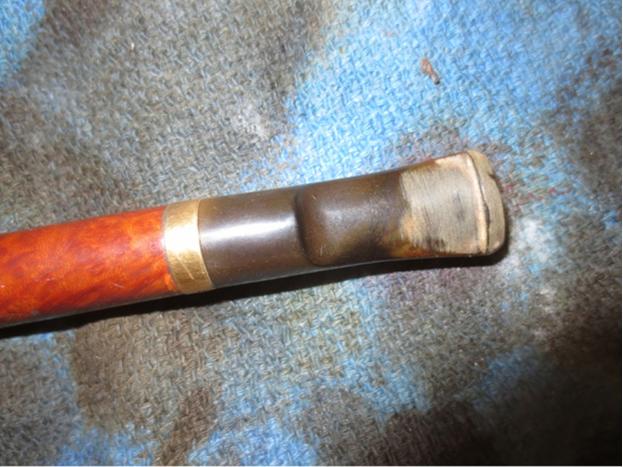
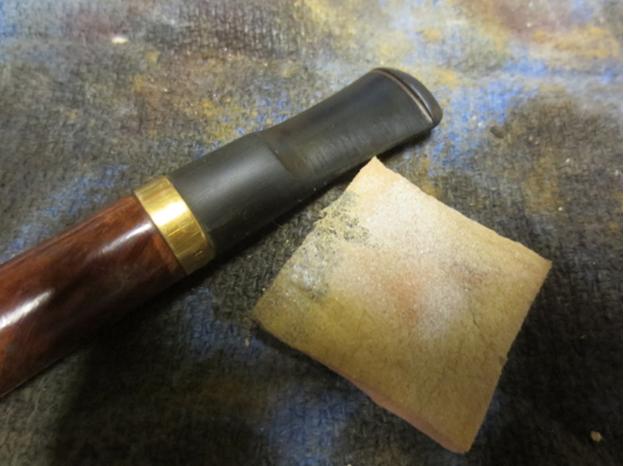
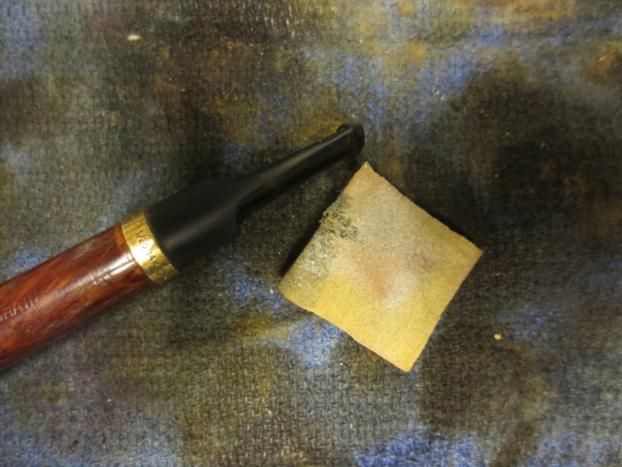
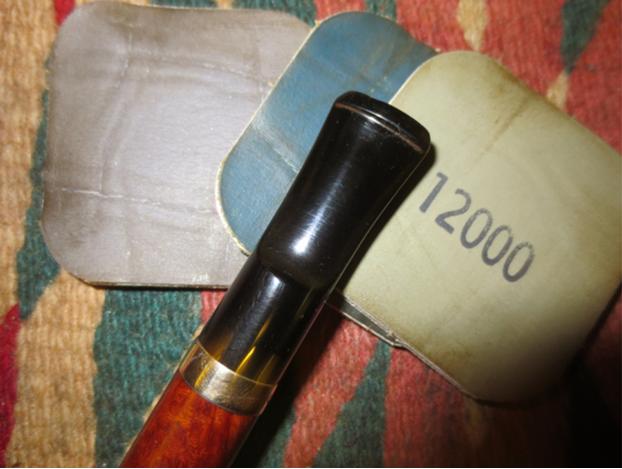
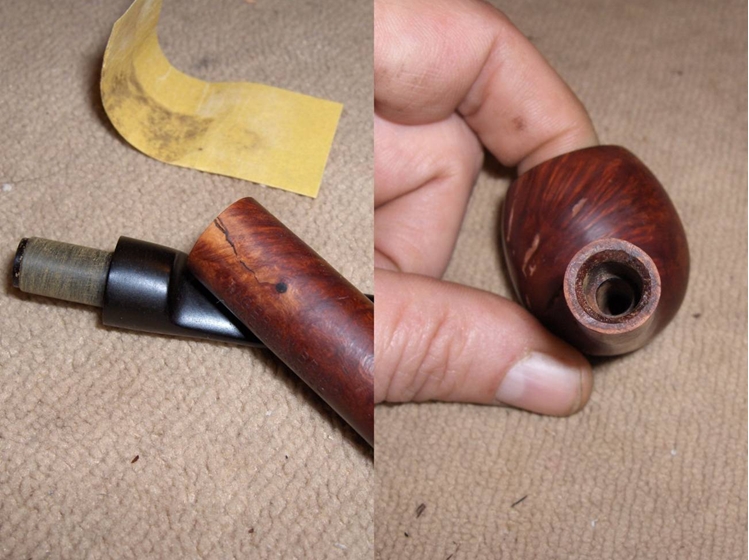
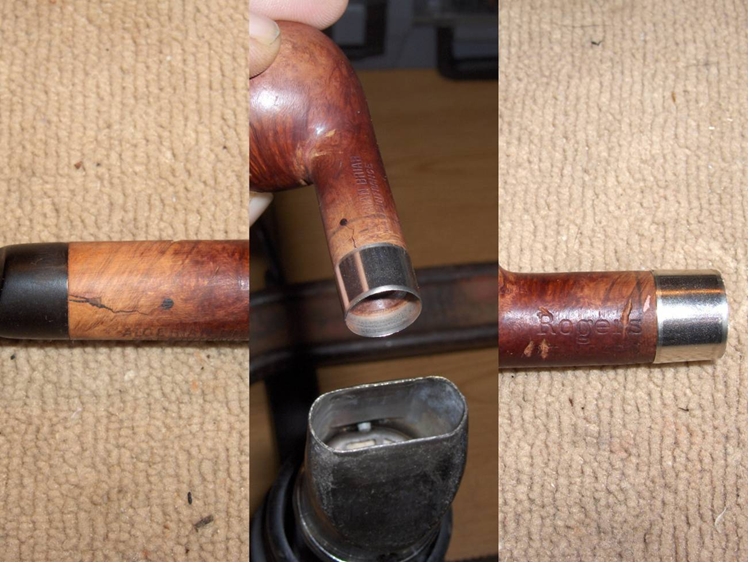
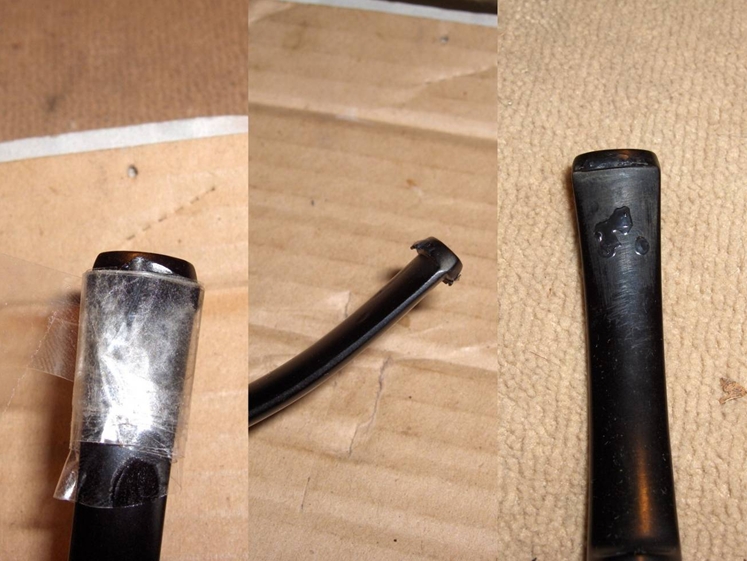
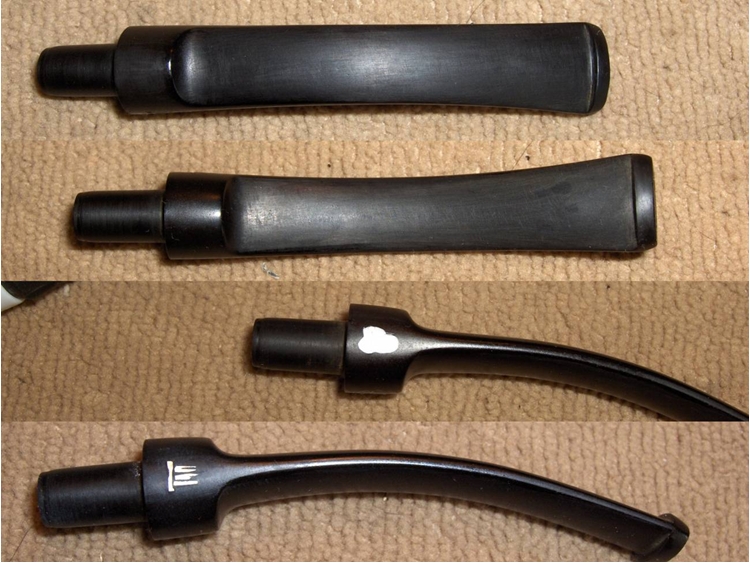
Tag Archives: bite marks

Restoring an old Wally Frank Ltd. Huntleigh Pot


Blog by Steve Laug

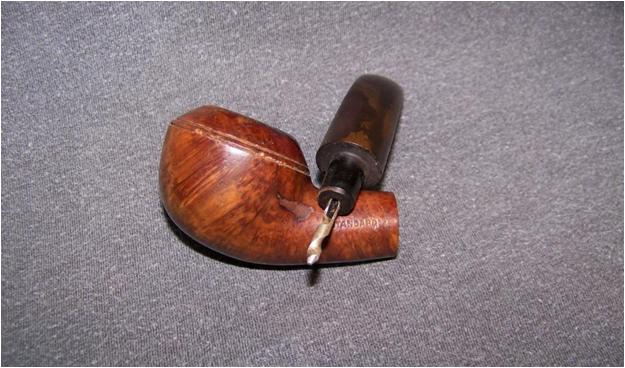
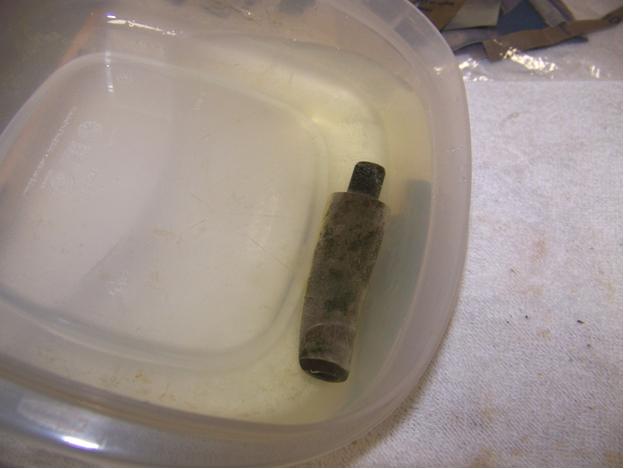
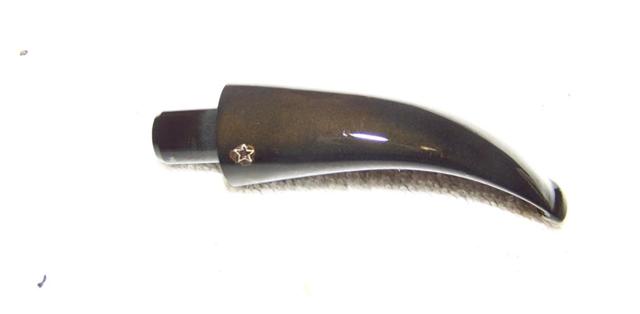
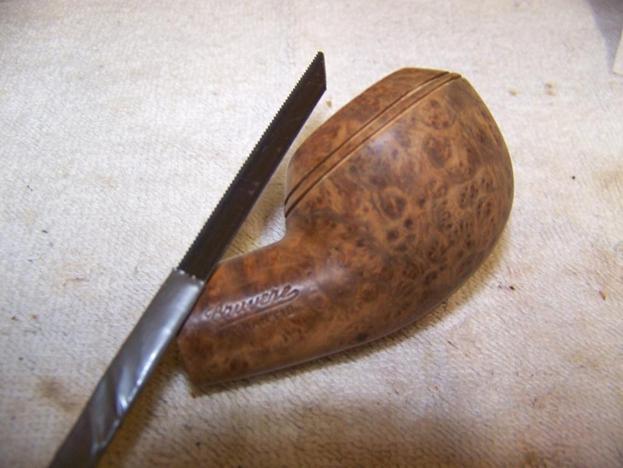
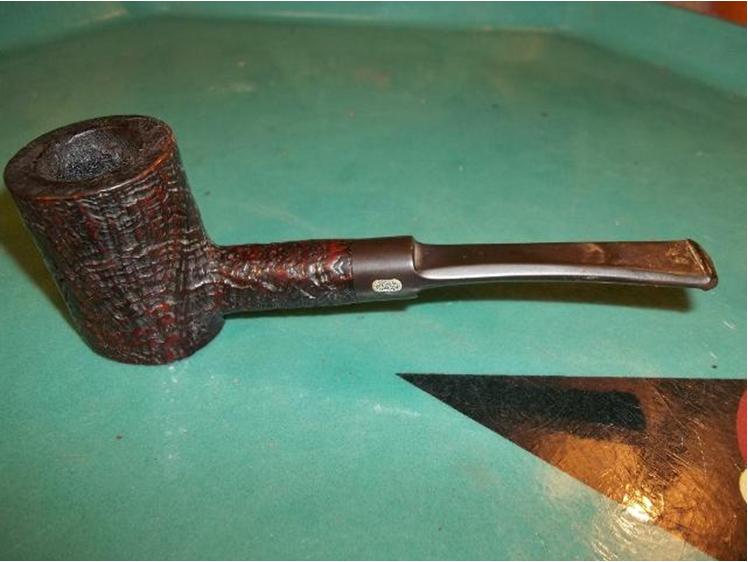
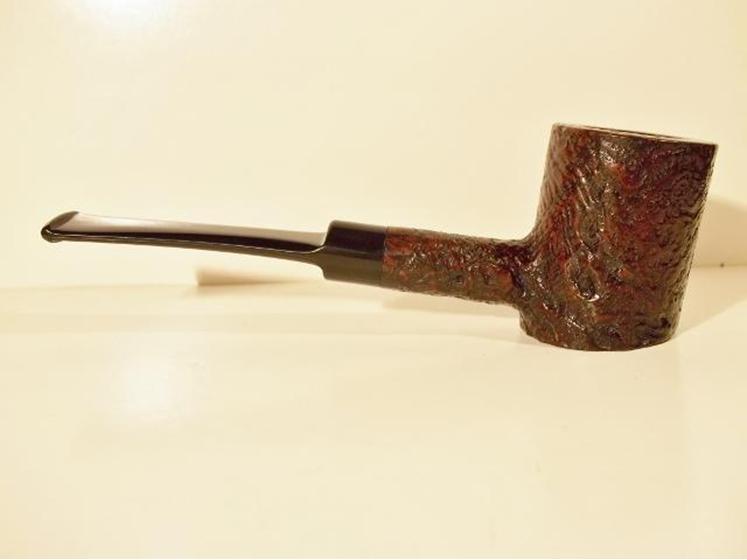
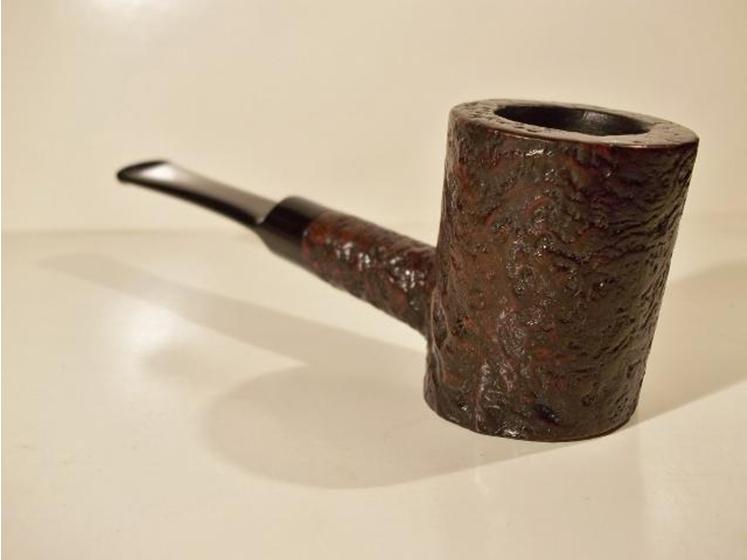
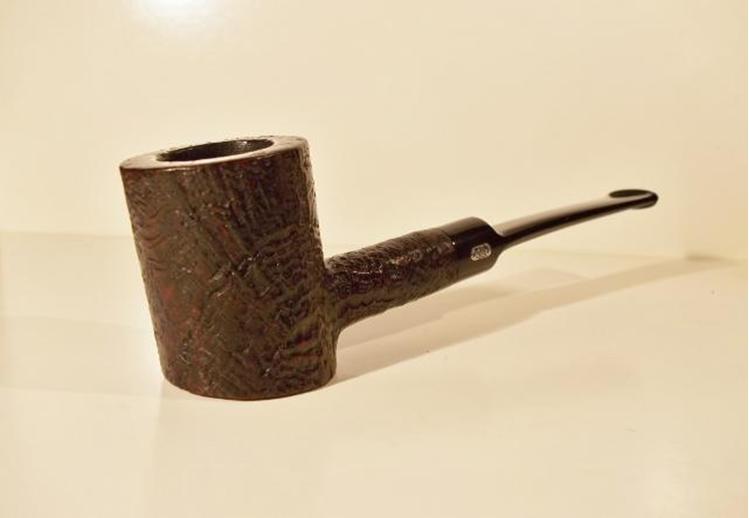
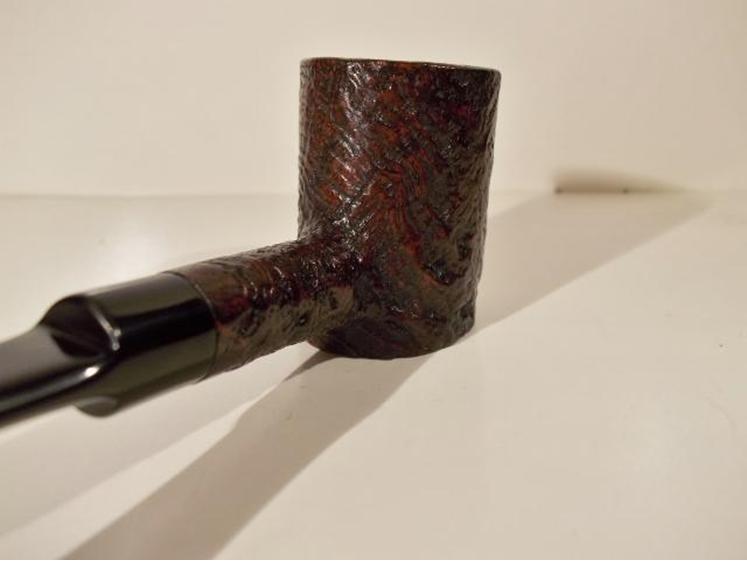
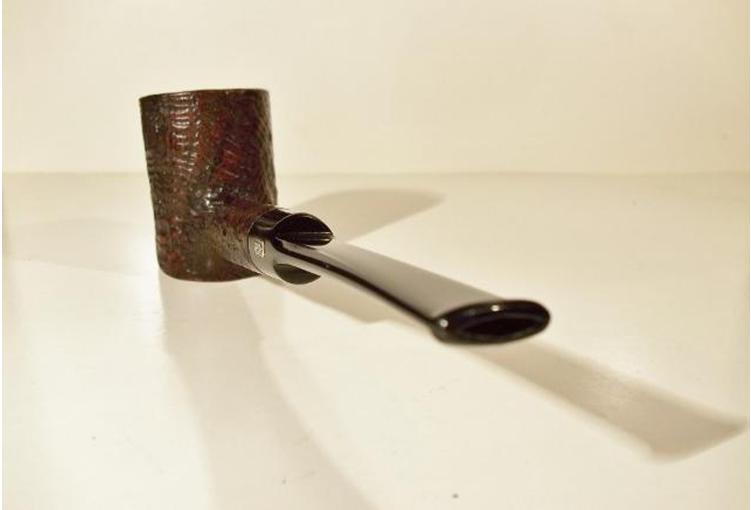
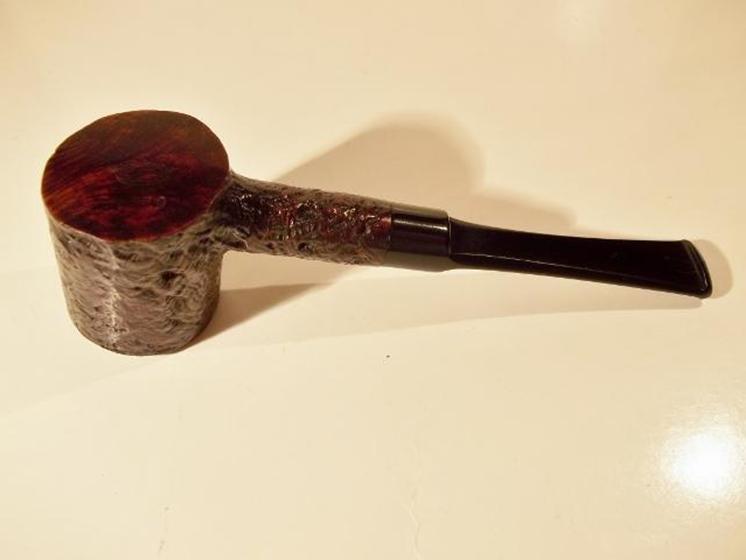
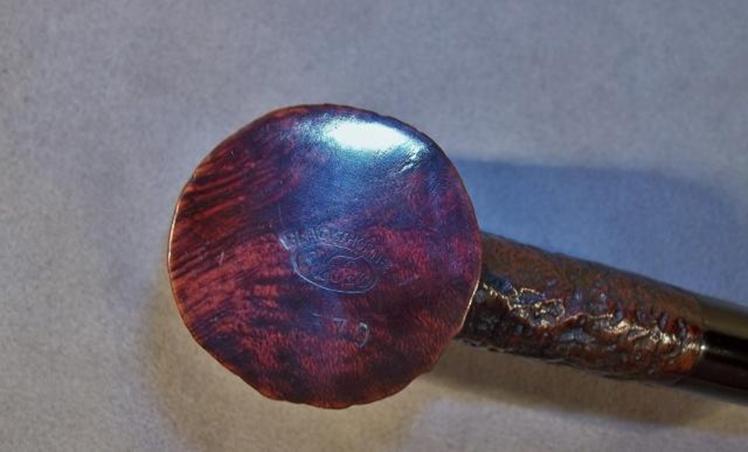
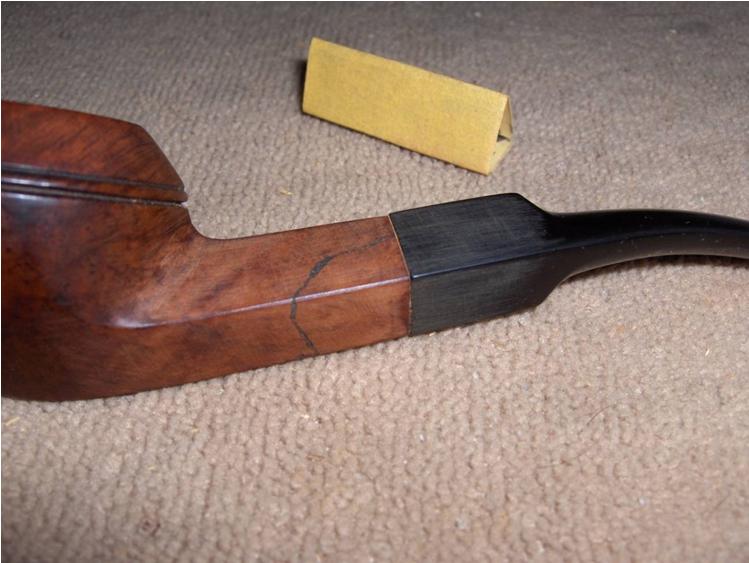
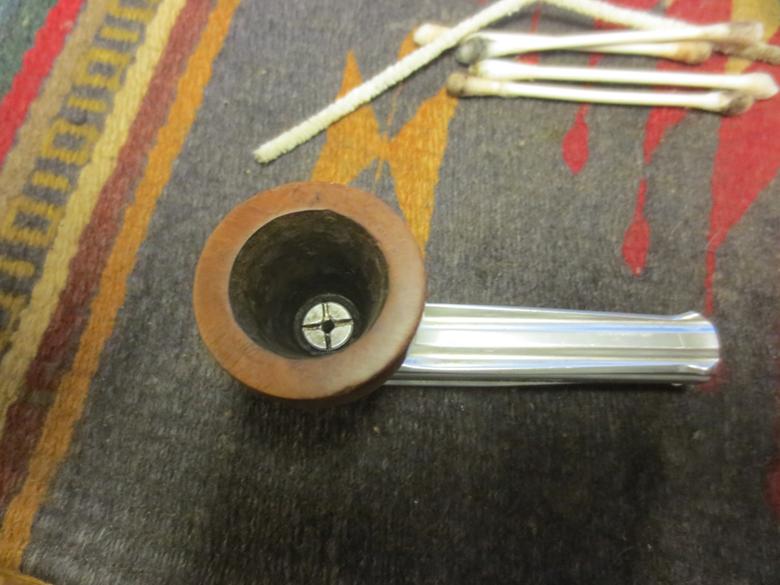
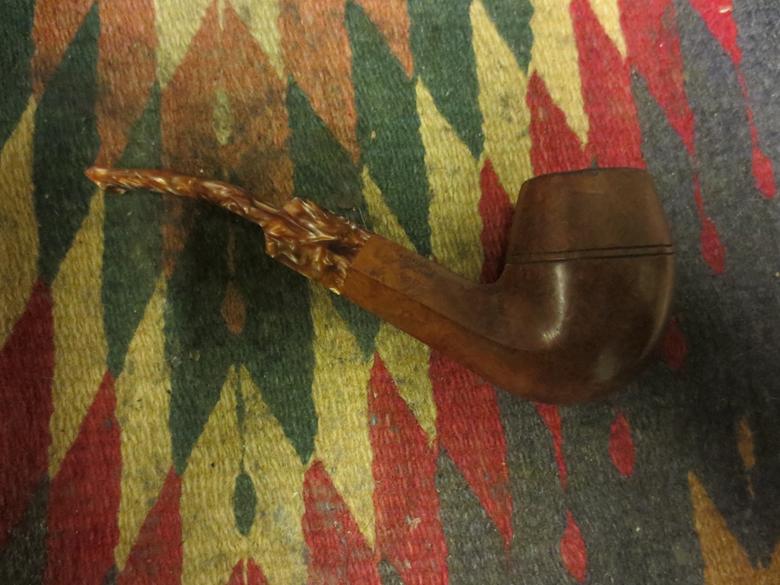
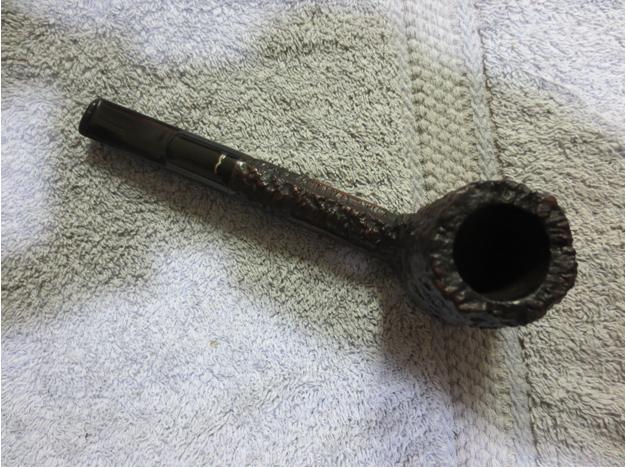
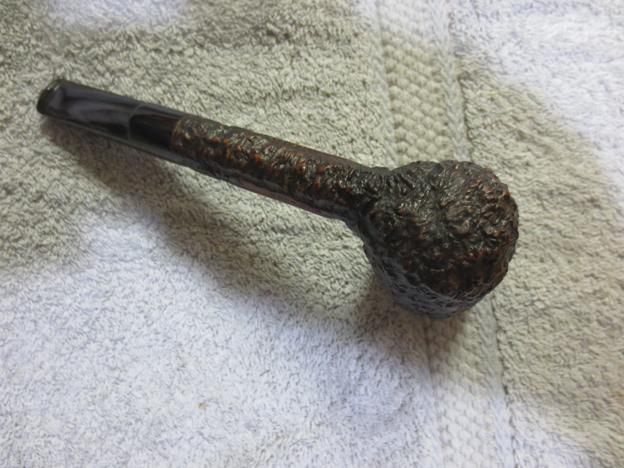
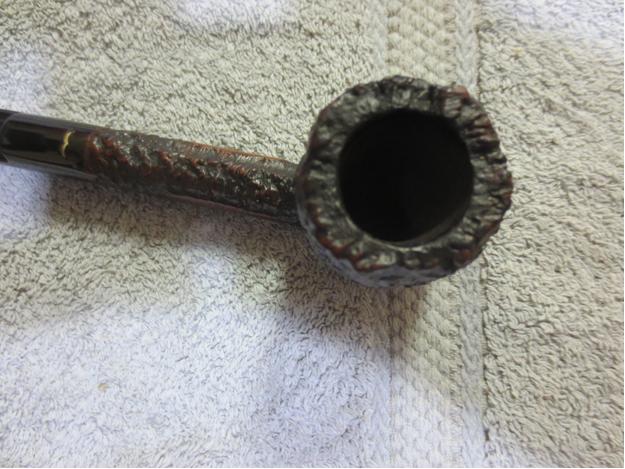
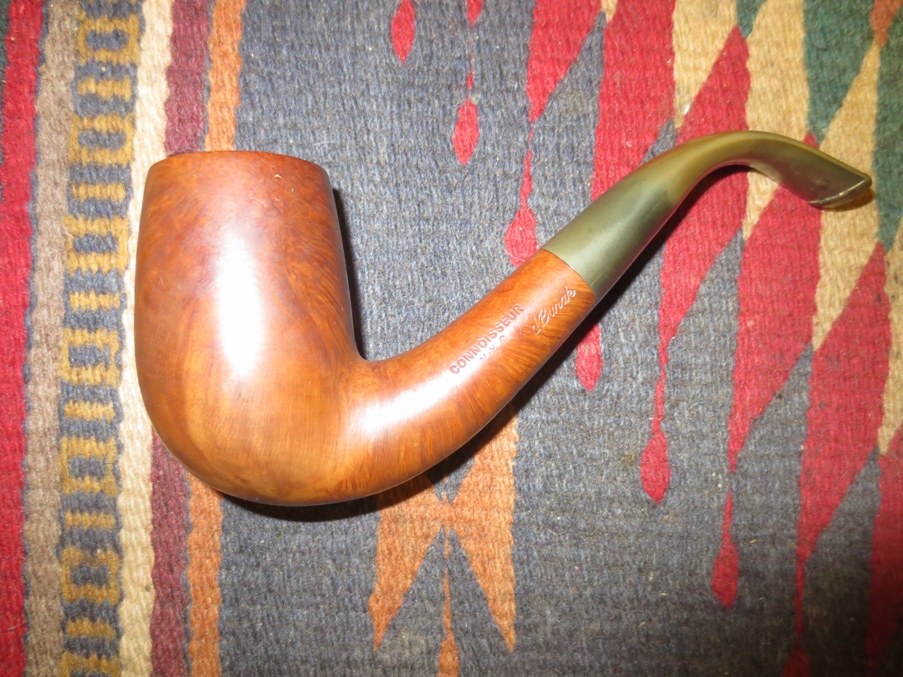
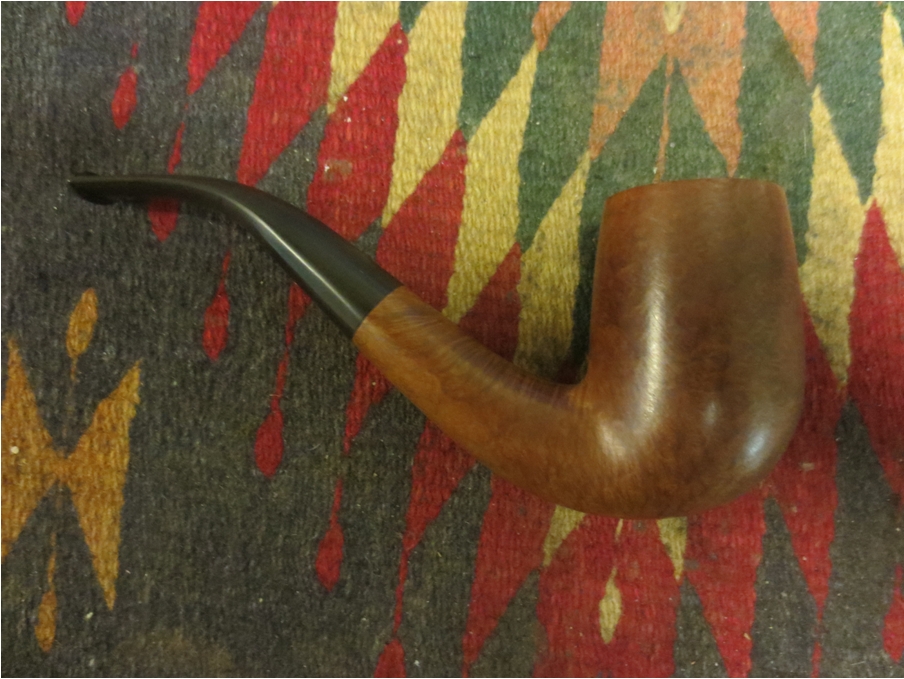
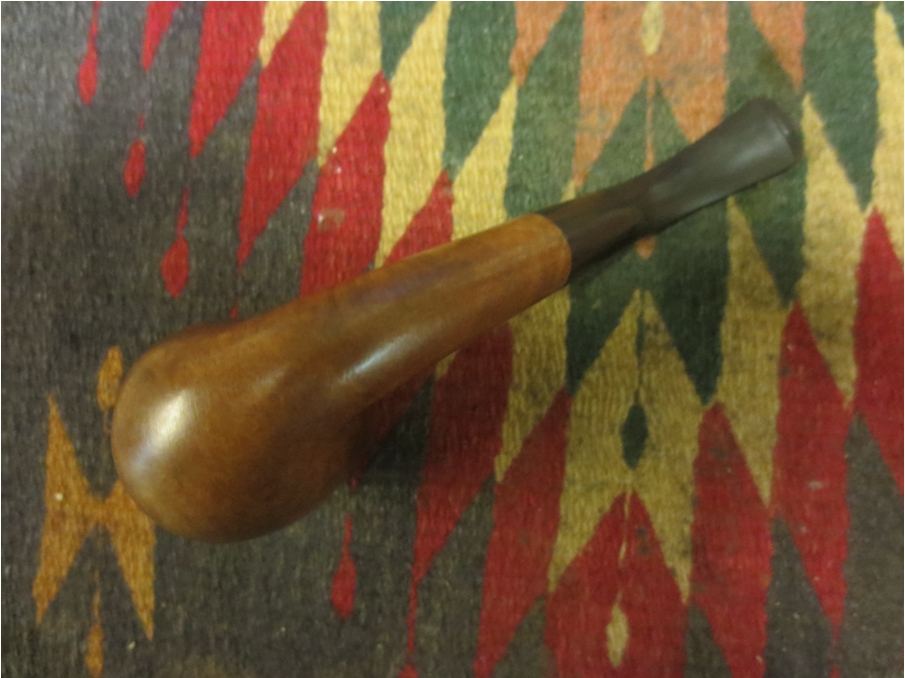
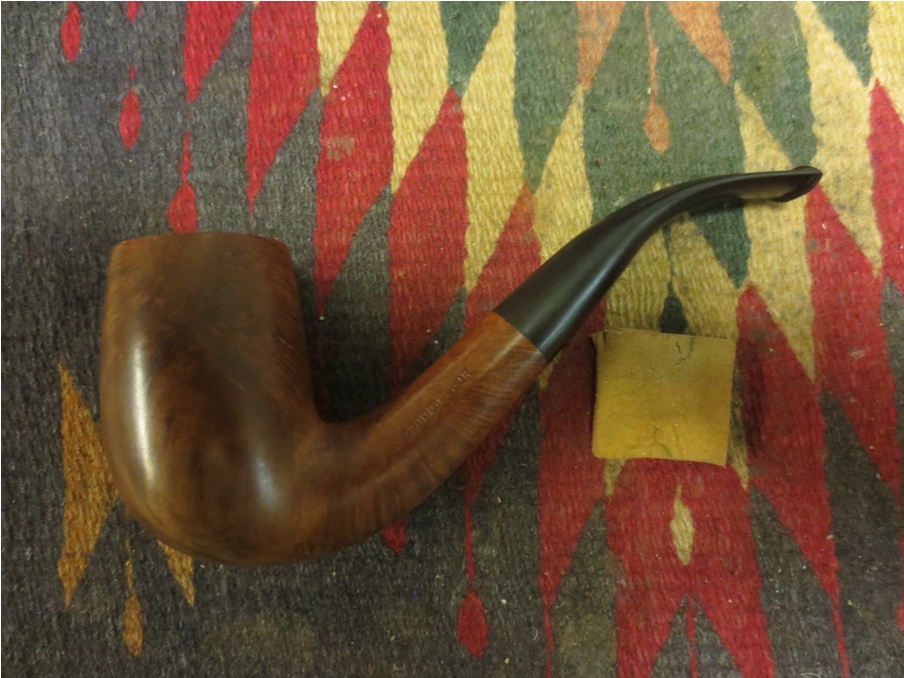
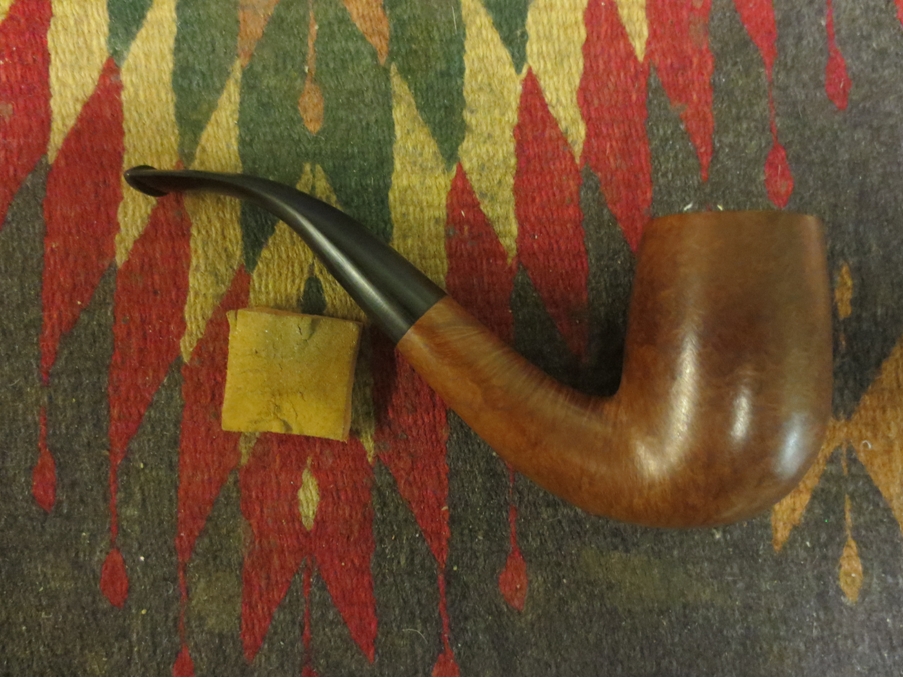
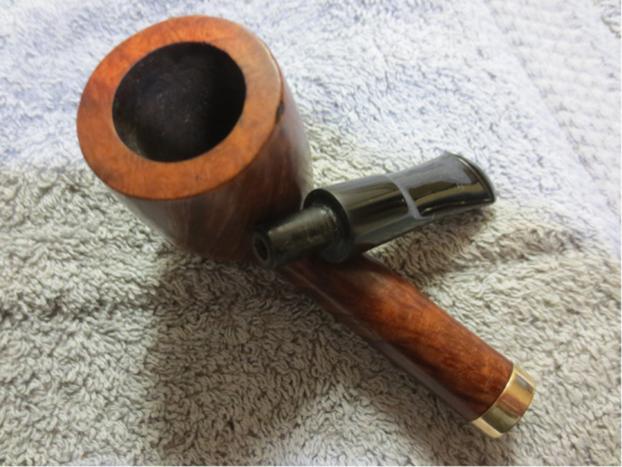
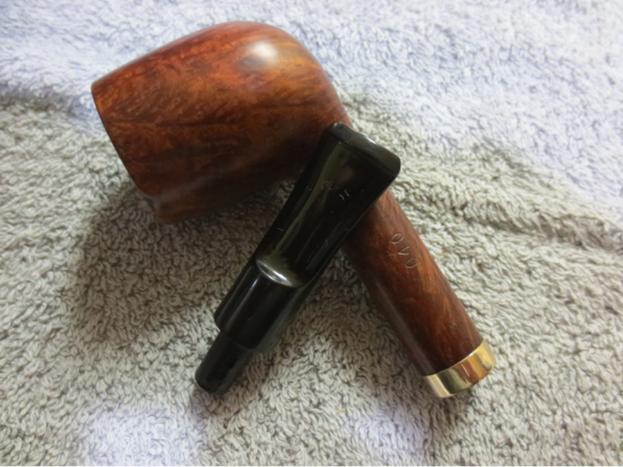
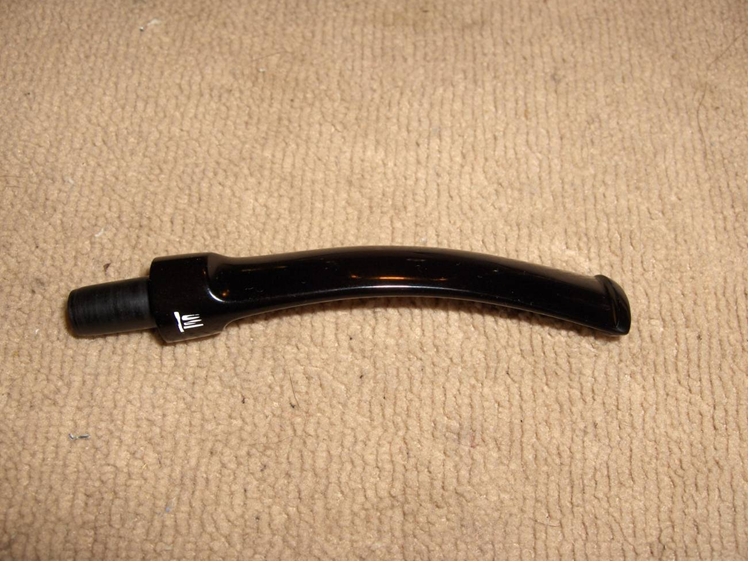
I gravitated toward restoring this old Pot shaped pipe next because it looked rough with a worn finish and what I thought was an oversized band on the shank. When I took it out of the box and looked at it more closely my first impression was that someone had banded it post manufacture. It covered the stamping on both sides of the shank so that on the left the HUNTLEIGH stamping only read HUNTLEI and the Wally Frank Ltd. on the right only read ally Frank Ltd. On the flat bottom of the shank it is stamped Imported Briar in a Germanic Script. You can imagine my surprise when I found that what had appeared as a band was not. It was metal mortise and cap fitting that held a threaded screw mount stem and tenon. The tenon had a stinger apparatus that extended into the shank. Now the mystery – I don’t know if this was how the pipe was shipped from Wally Frank or if it was a later addition to a favourite pipe. The saddle stem appears to be original and fits against the cap perfectly. It is the same diameter as the shank of the pipe.Wally1

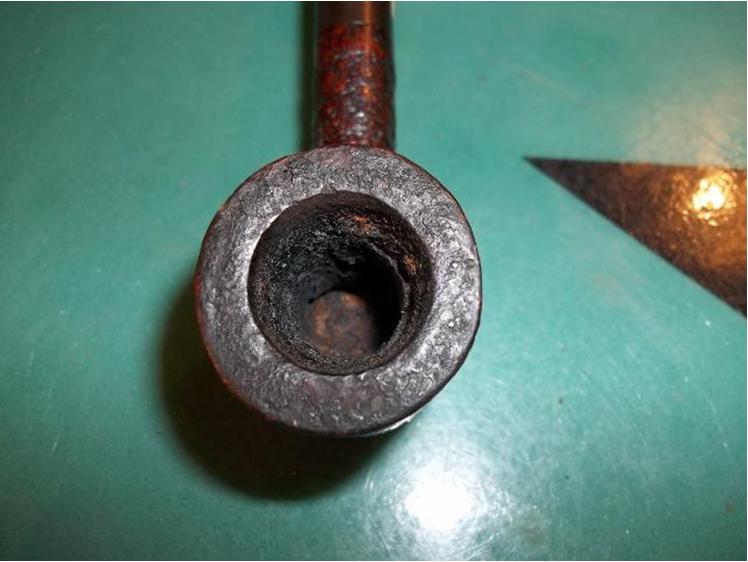
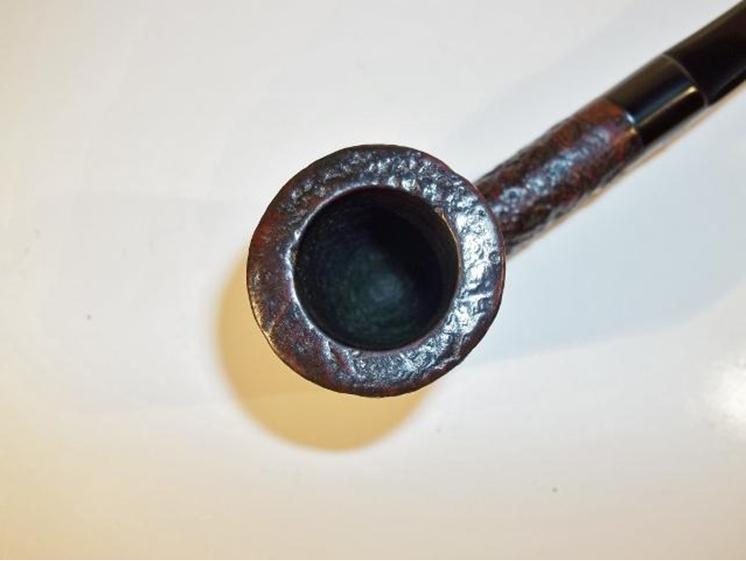
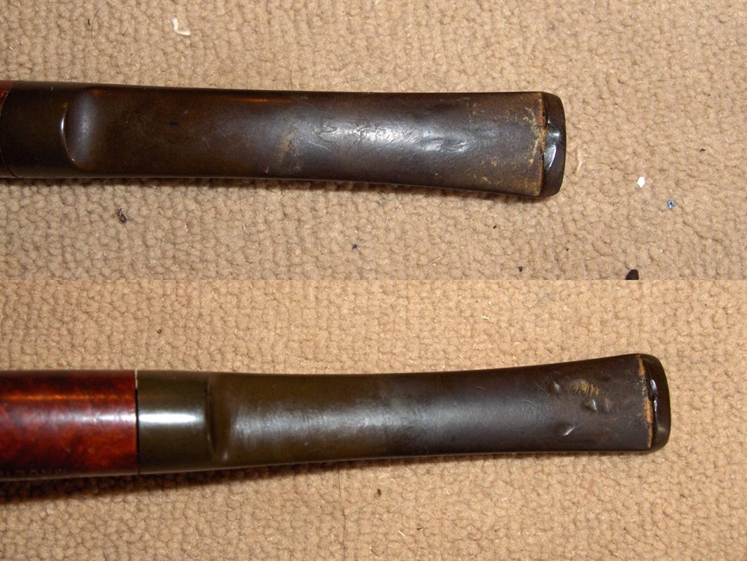
Wally2 The finish on this old boy was very tired. The finish on the top half of the bowl was worn off while on the lower half it had an old varnish coat that was peeling away. The outer edge of the rim was not beat up or worn at all. The inner edge was slightly damaged and had nicks in that made the bowl out of round. The top of the rim was damaged with small pin prick holes that look like they came from knocking out the pipe on a rough surface. The end cap/mortise insert was polished aluminum and it was oxidized. The stem had a lot of tooth chatter on both sides from the button up the stem about an inch. The button itself had nicks in it and there was a small tooth mark on the top and bottom of the stem next to the button in virtually the same spot. The stinger was quite clean. The bowl had been reamed out recently.Wally3

Wally4

Wally5

Wally6

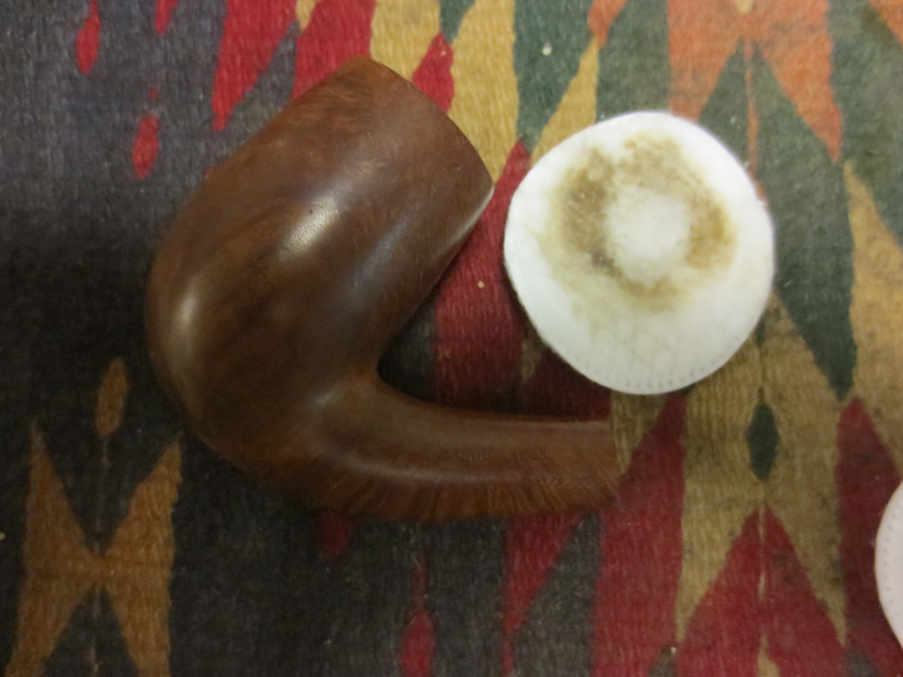
Wally7 I decided to start with cleaning up the finish on the bowl. The peeling varnish and overall worn and tired appearance bugged me so I started there. I wiped the bowl down with acetone on cotton pads to remove as much of the finish as possible.Wally8

Wally9

Wally10 I mentioned above the damage to the rim surface so I have included the first photo below to show a close up view of the damage. I topped the bowl with 220 grit sandpaper on a topping board and removed the damaged surface. I sanded until the rim was smooth and the pinpricks were gone.Wally11

Wally12

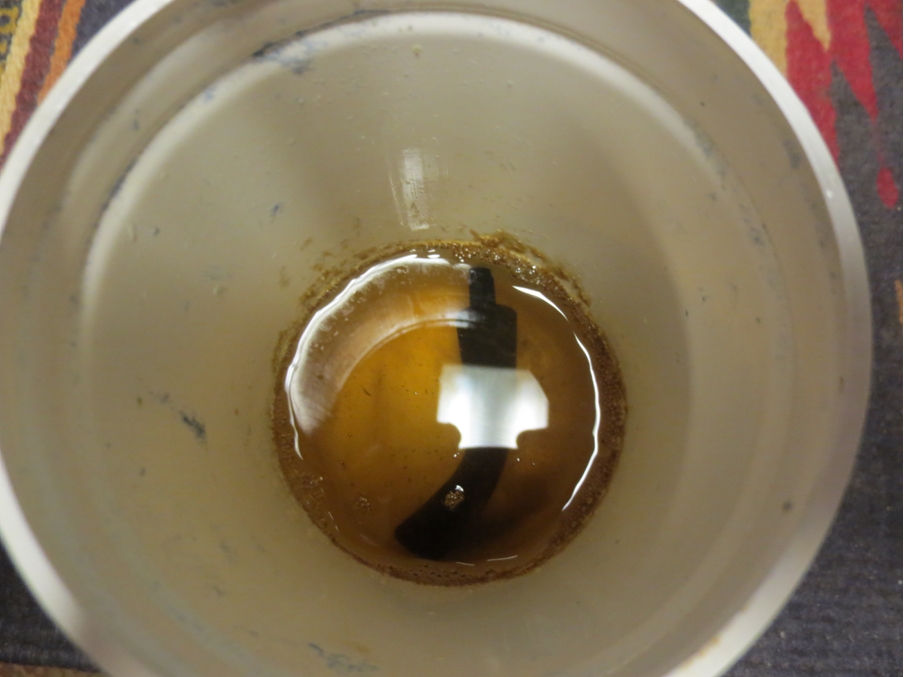
Wally13 With the rim clean and the finish partially removed I decided to drop the bowl in my alcohol bath and let it soak awhile. I figured the alcohol would loosen what remained of the finish and also lend a patina to the sanded rim and the bowl. When I removed it from the bath after an hour of soaking it looked pretty good – as long as it remained wet!Wally14

Wally15 Once I dried it off I could still see the line around the bowl where the finish had been and where it had worn off. This was a stubborn bowl. I sanded it with a medium and a fine grit sanding sponge. I also repaired some of the fills that were pitted with super glue and briar dust. The next two photos show the bowl after I had sanded the finish off. It was finally getting to the point where I could start again with the finish. There were many imperfections and fills in the bowl and shank. This one was going to be a challenge. I knew I could not remove all of them but I wanted to give the old pipe a bit of dignity and take away the tired looking finish.Wally16

Wally17 While I reflected on what to do with the bowl I worked on the stem. I sanded the tooth chatter and tooth marks with a folded piece of 220 grit sandpaper. I was able to remove all of the tooth marks and chatter. The stem would clean up nicely.Wally18

Wally19 I sanded the stem with a medium and a fine grit sanding sponge to remove the scratches left behind by the sandpaper. The stem surface was free of marks now but still needed to be polished to bring back the shine to the vulcanite.Wally20

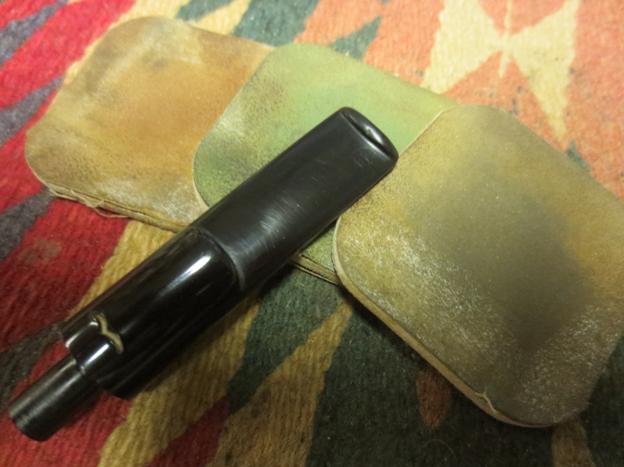
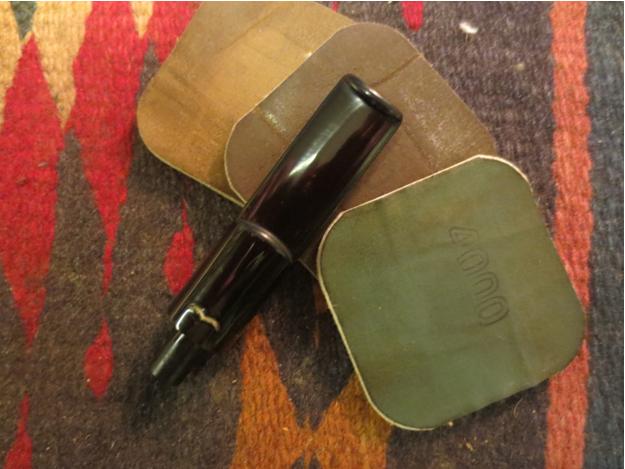
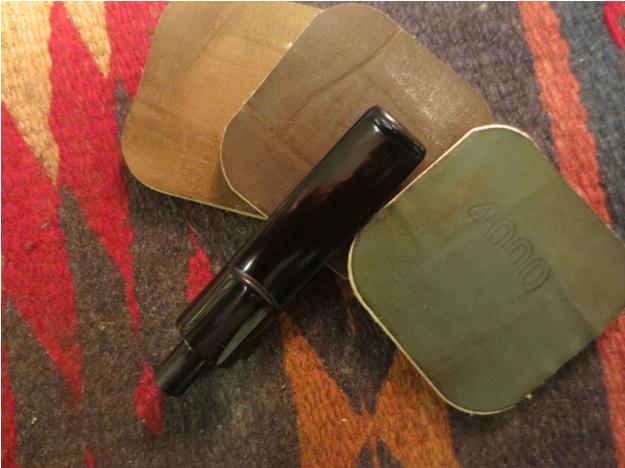
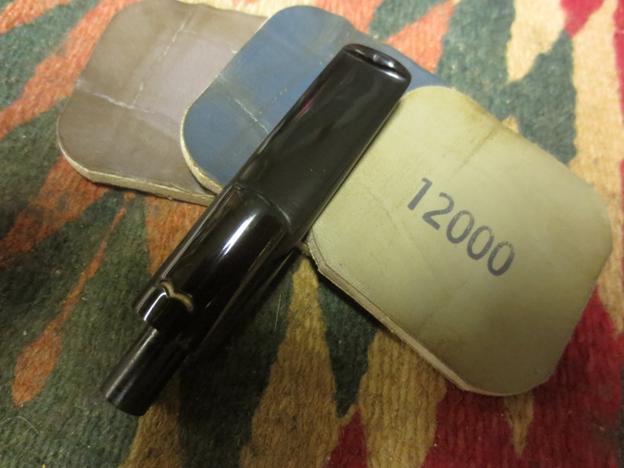
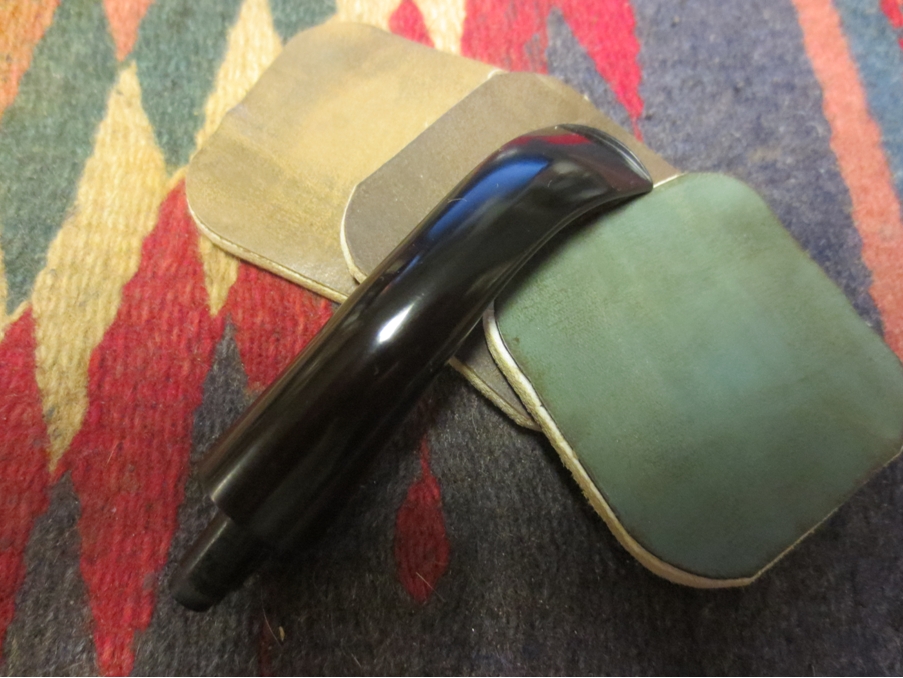
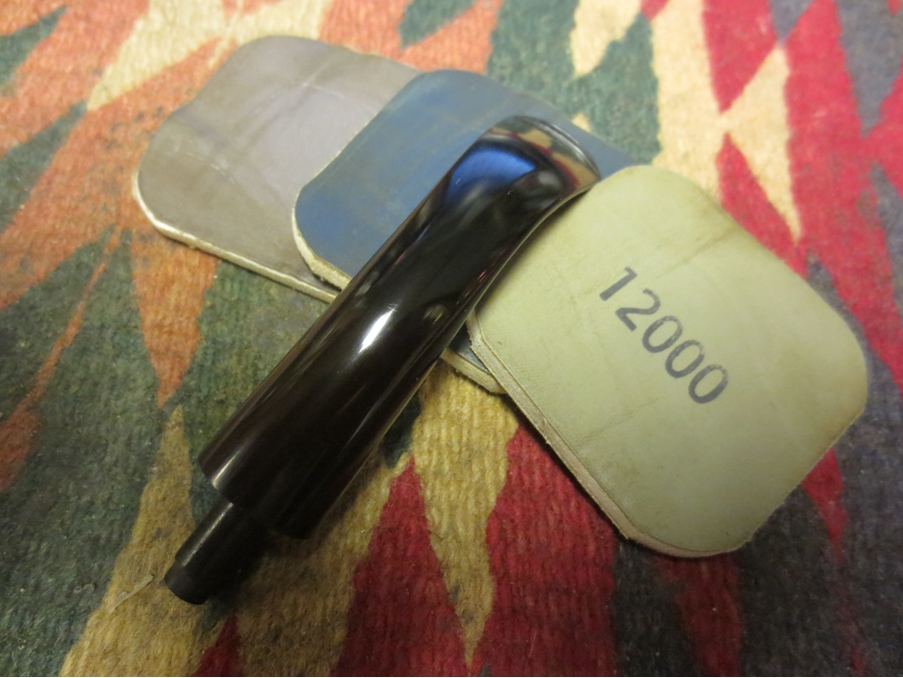
Wally21 I cleaned out the shank and stem with pipe cleaners, cotton swabs and isopropyl alcohol. The dirty portion of the shank was the grime in the threads of the mortise. The airway ahead of the metal mortise was clean. It took a bit of scrubbing but I was able to clean out the grime. The internals of the shank were clean. I ran pipe cleaners through the stem and stinger. I was surprised that I could easily run a pipe cleaner from the slot to the bowl without major issues with the stinger. Once it was clean I threaded the stem on the shank to see what the pipe looked like so far. It had come a long way and had the potential to turn out to be a good looking pipe.Wally22 I wiped the stem down with a damp cloth and then worked it over with the micromesh sanding pads. I wet sanded with 1500-3200 grit pads this time and then dry sanded with 3600-12,000 grit pads. I rubbed the stem down with Obsidian Oil between each set of three pads. I also used the later grit pads to polish the aluminum of the mortise insert. After sanding the stem with the 12,000 grit pad I rubbed it down a final time and let it soak in before taking it to the buffer.Wally23

Wally24

Wally25 I buffed the stem with White Diamond and a blue plastic polish bar that I picked up. It really gives the stem a deep shine.Wally26

Wally27 I stained the bowl with several coats of a cherry aniline stain and flamed it. In the photos below the pipe is shown after a light buffing with a soft cloth. (These photos were taken before I polished the stem.)Wally28

Wally29

Wally30

Wally31 I sanded the bowl with the 6000-12,000 grit micromesh sanding pads and then buffed it with White Diamond. I gave the bowl and the stem multiple coats of carnauba wax and buffed it with a soft flannel buff. The finished pipe is shown below. I have also included a photo of the reworked rim and the tenon and aluminum mortise just to show the finished pipe in all of its parts. It should make someone a good smoking pipe if the original condition was any sign of the smoke-ability of this pipe.Wally32

Wally33

Wally34

Wally35

Wally36

Wally37

Restoring an Old Yello Bole 2033 Apple


Blog by Troy Wilburn

This is the other pipe I got with the Doc Watson. Both came from the same owner estate sale – an old gentleman that had them has since passed on to glory. The two pipes have been together longer than I have been alive. It’s an early Yello Bole in that it has the Imported Bruyere stamp but no “Honey Cured Briar” along with the 2033 four digit shape stamp. I’m guessing 1930 – 1933 roughly.

The pipe as it was when I got it.YB1

YB2

YB3

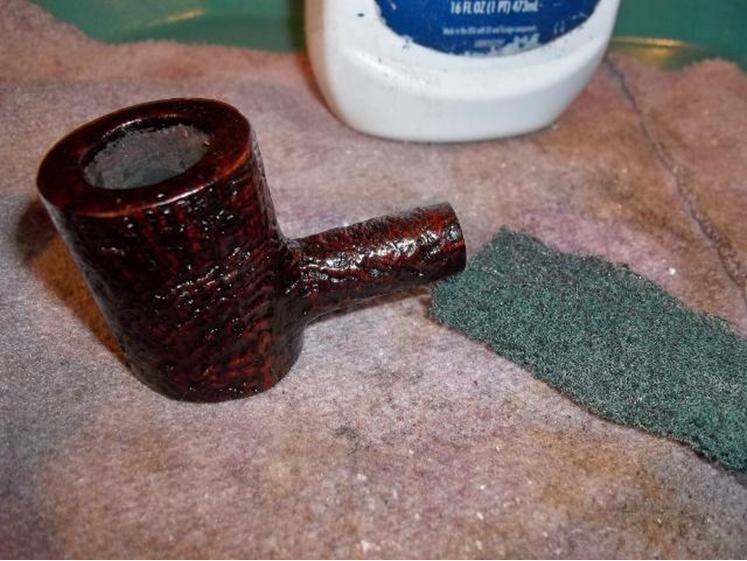
YB4 I started out by removing most of the cake, then sanding inner bowl with some rough grit paper leaving a thin coat of cake.YB5 Next I cleaned out inner shank and stem with 91% alcohol. On these large airway YBs I like to twist 2-3 shank brushes together for better scrubbing. I also scrubbed outer stem with 91% alcohol and a Scotch Brite pad to remove grease, oil, wax etc.YB6 This is easiest way I’ve found to remove rim cake. I mix up some Oxy Clean and warm water. Dip a piece of Scotch Brite pad in it leaving it not quite dripping wet. Lay it flat on surface and move rim along lightly. It takes it off pretty fast and will not harm under finish if you are trying to save it. It will leave it discolored but a little mineral oil will bring the color back to original.YB7

YB8Next I went ahead and scrubbed bowl and stem with same pad and Oxy Clean solution. It will remove contaminants and not hurt the finish just dull it. It will remove any light oxidation from stem that might be present. I scrub the stem harder than the bowl.YB9 Next I went ahead and scrubbed bowl and stem with same pad and Oxy Clean solution. It will remove contaminants and not hurt the finish just dull it. It will remove any light oxidation from stem that might be present. I scrub the stem harder than the bowl. After getting a good look at the bowl after old dirt and such was removed the finish looks toasted. Sadly it cannot be saved.

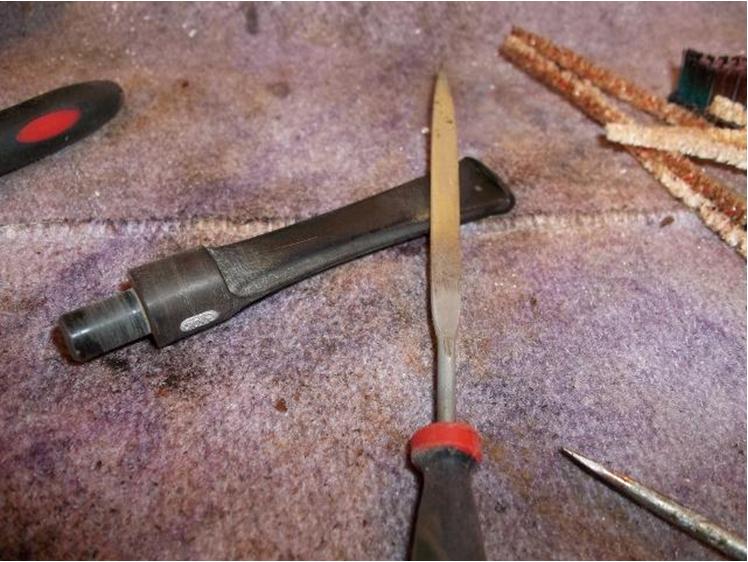
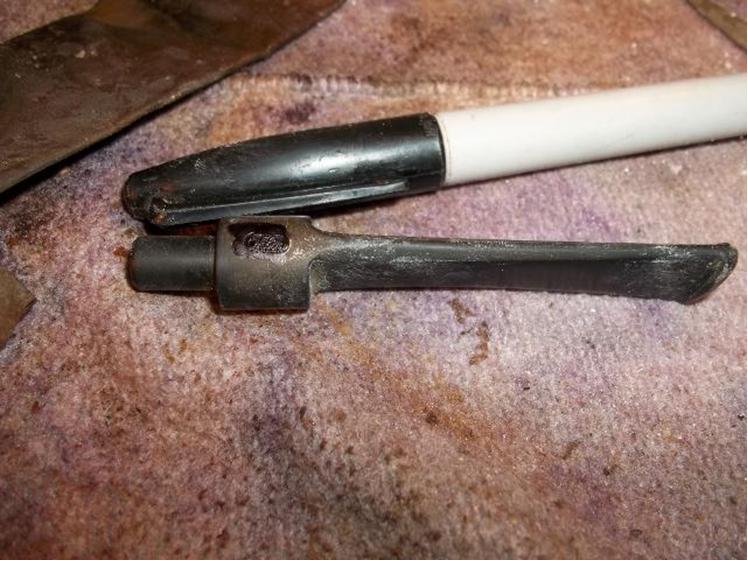
So I went ahead and sanded bowl with 400-2000 grit sandpaper. Never touching the stampings with any grit sandpaper less than 1200 grit. I will leave a defect or mark near a stamping just so it won’t be harmed.YB10 Luckily the stain I had left over from the Doc Watson was a good match so I was able to use it. I applied three coats letting in dry in between.YB11 After third coat of stain I like to apply mineral oil to help the grain stand out and condition the briar. The mineral oil lets you see any defects in the finish and what the bowl will look like when waxed. I set it to the side and let it air dry.YB12 I had to do some filing on the stem and button to remove some tooth marks.YB13 If you noticed in before pic the stem did not fit tight to the shank, so I filed down tenon a little at a time until it fit tight.YB14

YB15 I wet sanded the stem again using 400-2000 grit sandpaper.YB16 I put the bowl and stem back together and it is ready for some buffing and wax.YB17 On bowls I’ve stained I put about 3 coats of base wax then go back over with white Tripoli then go back to wax .

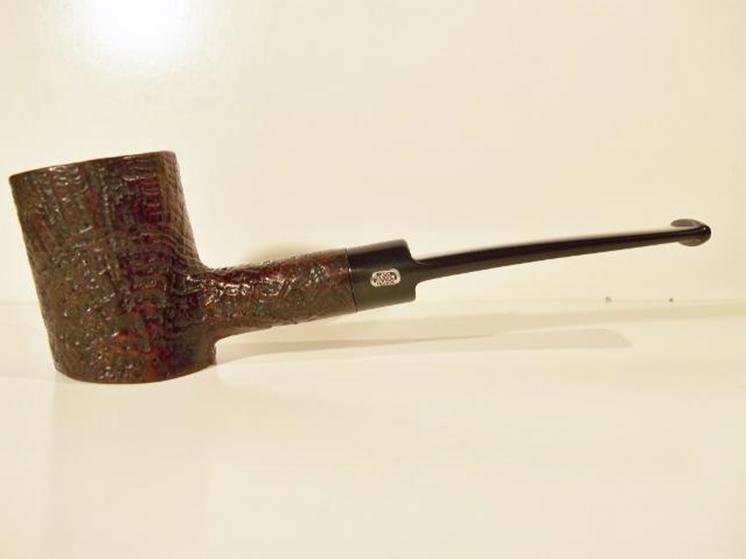
On the stems I use brown Tripoli, white Tripoli and then wax.YB18 Here are pics of the finished pipe.YB19

YB20

YB21

YB22

YB23

YB24

YB25 It was missing a stinger so I dug out an extra I had and cleaned it up.YB26

YB27

YB28

YB29

YB30 It should make a fine daily smoker and better than most any pipe I could buy today for under a 100 dollars. I have less than 12 dollars in it.YB31

Giving a Large No Name Imported Briar Cutty a New Look


Blog by Steve Laug

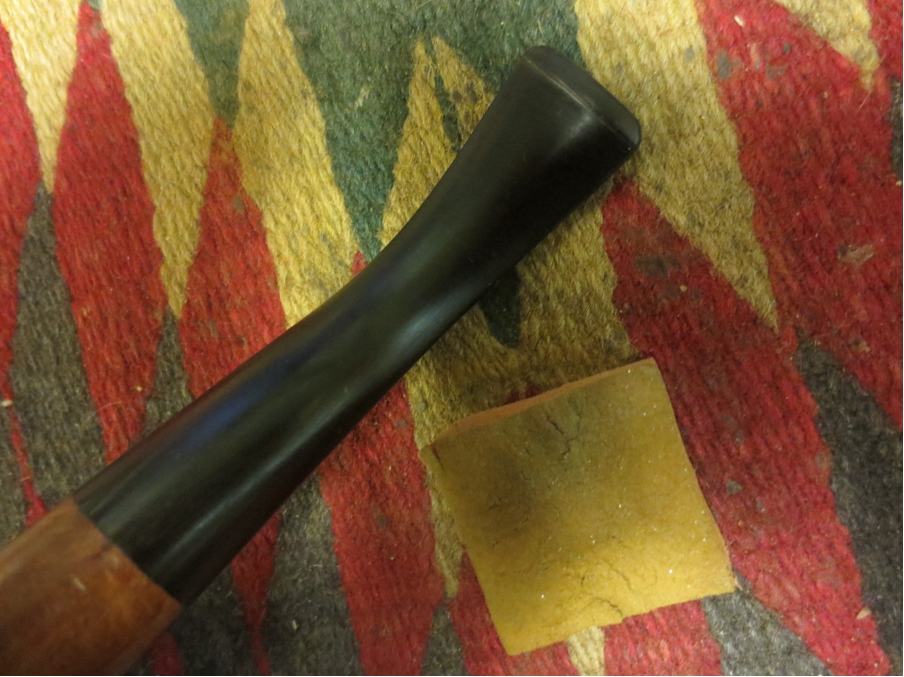
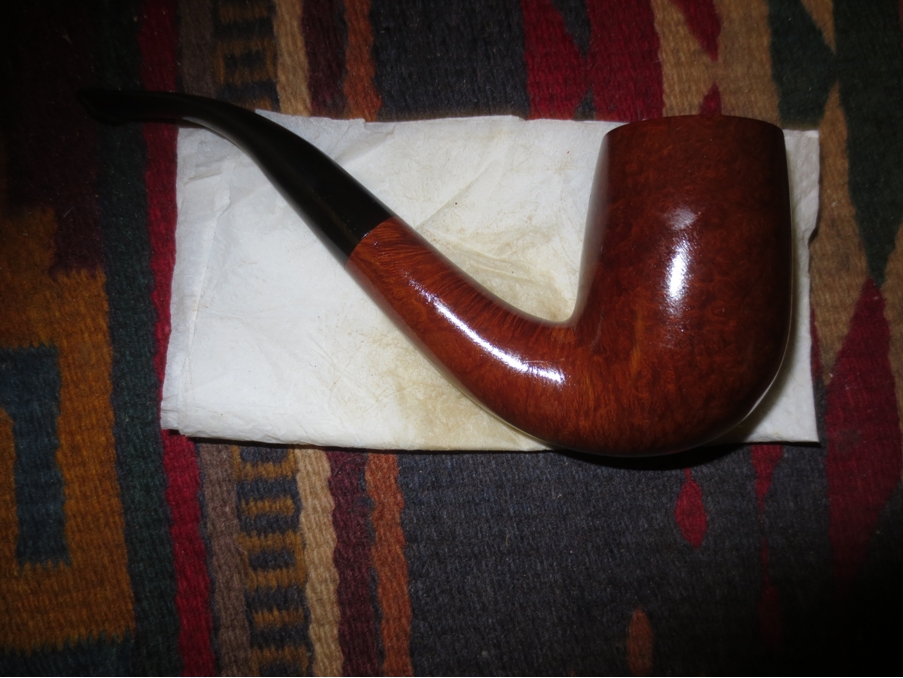
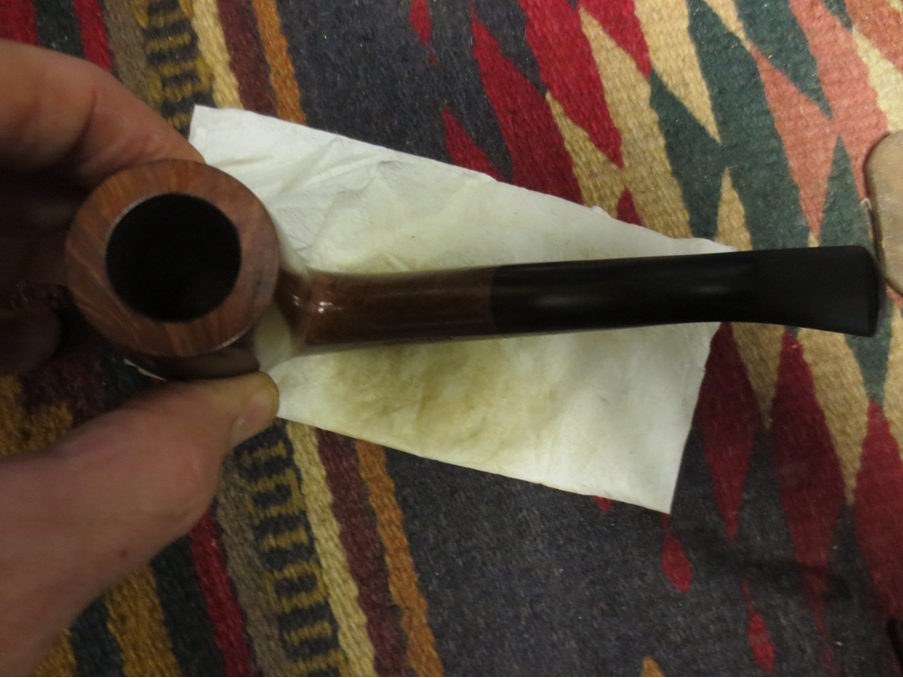
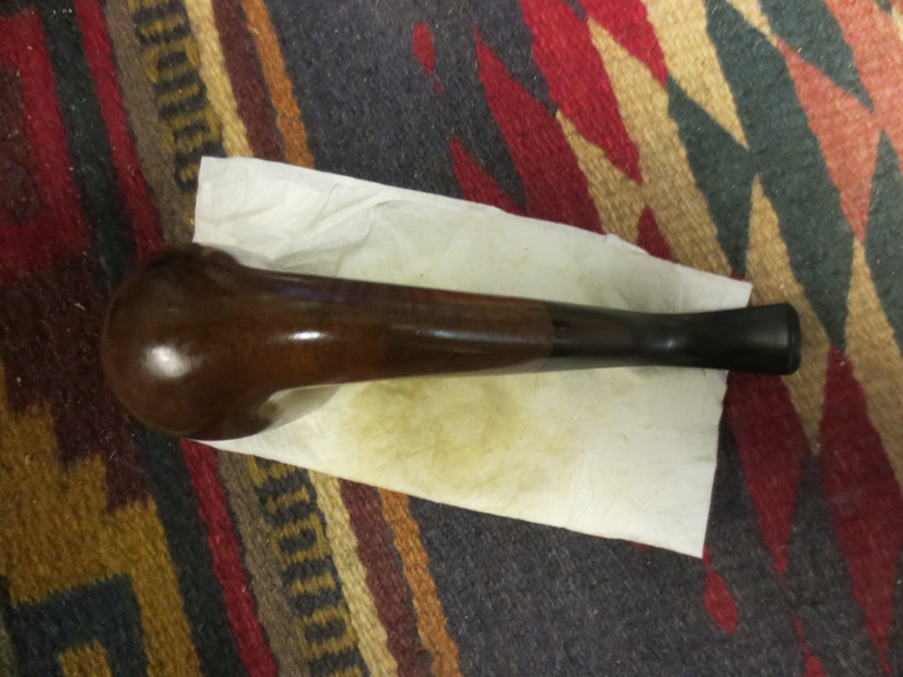
In the box of pipes that I was gifted was a large cutty shaped pipe that looked to be in pretty decent shape. It appeared that it did not need a lot of work to bring it back. The finish looked pretty good with birdseye on the sides and cross grain off to one side of the front and back of the stem. The grain followed a similar pattern on the shank. The bottom of the bowl had some mixed grain patterns. The stem was not oxidized. The bowl had a minimal cake in it. The only issue appeared to be the outer edge of the rim. On the back side it was very beat up and the briar was broken and nicked. All of this is what I assumed when I took it out of the box and took a closer look at the pipe.Cutty1

Cutty2

Cutty3

Cutty4 The pipe is large, at least for me. It is seven inches long from button to the front of the bowl. The bowl is 2 ¼ inches tall. The chamber is ¾ inch in diameter. Proportionally it is a well made pipe. There are no fills in the briar. There are no sandpits. But there were issues! The bottom of the bowl had been flattened but the flattened portion was not centered on the bowl and shank bottom. It was off to one side. This gave the bowl and pipe a distinct cant to the right. The damage to the rim was deep on the back outer edge. The stem had tooth marks on the top and bottom sides next to the button. All of these would need to be addressed in a restoration of this pipe.Cutty5

Cutty6

Cutty7 I reamed the bowl with the PipNet reamer. I seem to default to this T handled reamer as first choice in most of the refurbishing that I do. It is an easy tool to use. The T handle is small enough in diameter at the junction of the cutting head that it can be pushed deep into the bowl which was necessary with this pipe.Cutty8 Since I was planning on topping the bowl to repair the rim damage I decided to remove the finish from the pipe so that matching stain would not be necessary. I wiped it down with acetone on cotton pads. The finish dulled but it did not completely come off the bowl. It has the feel of a Urethane coat. Once I topped the bowl I would deal with that issue.Cutty9

Cutty10 I set up my usual topping board with 220 grit sandpaper. I would need to remove quite a bit of briar from the surface of the rim to take care of the damage. I also found that the cant on the bowl and shank left me with a canted bowl top as well. I sanded the bottom of the shank until the pipe sat upright and then had to work on the rim to make it horizontal without a slant. As usual I collected the briar dust for later use on fills and repairs.Cutty11

Cutty12

Cutty13

Cutty14

Cutty15

Cutty16 I used a folded piece of sandpaper to smooth out the inner edge of the rim and lightly bevel/chamfer it and remove the charring.Cutty17

Cutty18 I sanded the bowl and shank with a medium grit sanding sponge to break through the urethane finish. I wiped it down further with acetone until it was gone. I decided to drop the bowl in my alcohol bath to soak while I worked on the stem. I have found that the stain darkened alcohol bath works really well to give some patina to briar once the finish has been opened up. For such a large piece of briar the bowl was surprisingly light weight and it floated on the surface of the bath.Cutty19 I sanded the bite marks on the stem with 220 grit sandpaper until they were removed. I followed that by sanding the stem surface with a medium and a fine grit sanding sponge to minimize the scratches in the stem.Cutty20

Cutty21

Cutty22

Cutty23

Cutty24 I rubbed the stem down with Obsidian Oil and set it aside. I took the bowl out of the bath. The finish had completely disappeared with the soak and the entire bowl, including the rim had picked up a nice patina. The grain just popped in the clean surface of the bowl. It would be easy to stain and polish.Cutty25

Cutty26

Cutty27

Cutty28 The colour of the topped rim matched the bowl colour perfectly – in fact it matched so well that I was unsure that I would even stain it. The next photos show the bowl as it stood after the soaking and drying. I love the way that the grain stood out.Cutty29

Cutty30

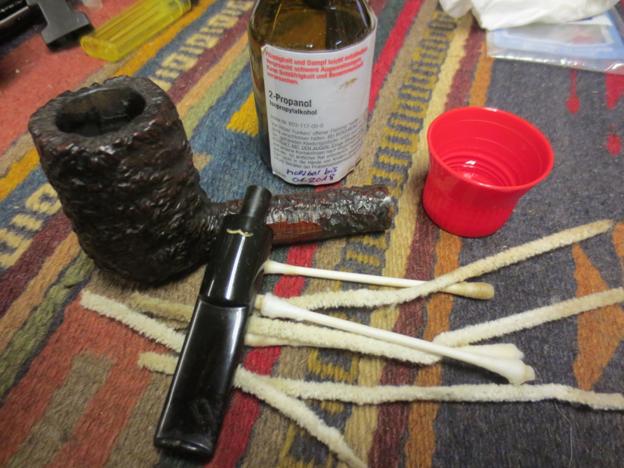
Cutty31 I ran a few pipe cleaners and cotton swabs soaked in isopropyl alcohol through the shank to clean it out. I was surprised with how dirty the shank was. The buildup of tars and oils was heavier than I expected. I set up a retort and boiled alcohol through the pipe until the alcohol came out clean.Cutty32

Cutty33 After the retort I used a few pipe cleaners and cotton swabs to remove the alcohol and remaining tars from the shank.Cutty34 With the bowl and shank clean and ready to go it was time to finish the stem. I sanded it with micromesh sanding pads – wet sanding with 1500-2400 grit pads and dry sanding with 3200-12,000 grit pads. I rubbed the stem down with Obsidian Oil between each set of three pads. When I finished sanding with the 12,000 grit pad I gave it a final coat of oil and let it dry.Cutty35

Cutty36

Cutty37 I gave the bowl a light coat of olive oil to highlight the grain. I did not stain the bowl as I really liked the natural look of the briar. I gave it a buff with White Diamond and did the same with the stem. I then gave the pipe several coats of carnauba wax and a buff with a soft flannel pad. I took the photo below to give some idea of the size of this pipe. It is sitting next to the Kaywoodie Prime Grain Lovat that I finished restoring recently.Cutty38 The finished pipe is shown below. The first four photos show the overall look of the pipe. The last three photos give a close up view of the bowl and stem. The pipe is like new. The new finish is far better than the one that came with the pipe. The look of the grain and the way the bath and olive oil highlights it is quite stunning. This pipe will make someone a great addition to their rack and should be a great smoking pipe. It is too large of a pipe for me at this phase of my pipe smoking. I am much more drawn to smaller bowls and lighter pipes, but that being said, the grain on this one makes it very tempting.Cutty39

Cutty40

Cutty41

Cutty42

Cutty43

Cutty44

Cutty45

A Restorfurb of a Doc Watson SR Billiard


Blog by Troy Wilburn

I have read about some of Troy’s refurbs on Pipe Smokers Unlimited and on the Dr. Grabow Collector’s Forum so when I saw his work on this old Doc Watson and the unique stamping it had I wrote and asked him if he would be willing to post it on rebornpipes. It is a pleasure to have some of Troy’s work here. He did an amazing job on this particular old timer with the distinct purpose of trying to keep the original finish as much as possible as he worked on it. Thanks Troy for taking the time to send me this blog. I am glad you were willing to post it here. Welcome to rebornpipes as one of the contributors. It is great to have you here. You have shared not only a great restorfurb but some tricks that I will have to use in the future. We would love to read about and look at more of your work. Thank you. – Steve

Hi everyone, my name is Troy Wilburn and I live in rural Virginia near Roanoke. I have been a dedicated pipe smoker for a little over a year now and refurbishing my own pipes for about 8 months. I mostly hang out on the Dr. Grabow Collectors Forum. My collection is mostly American made pipes. My favorite shapes are pokers, billiards and Canadians. Pokers are my most favorite with nearly 40 of them last count. I have kind of a tight budget to work with on my pipe smoking, pipe purchasing and pipe refurbishing. That’s why I got into refurbishing my own pipes. I’m always trying to find a bargain on pre 50s pipes as they are my favorite. Linkmans and Yello Boles are my most common pre 50s pipes with three Marxman’s thrown in. I do have a hard to find Marxman poker that is one of the prides of my pipe collection and is 100 % original finish.

I have browsed Reborn pipes for information and refurbishing info for a while.

This is my latest one and the pipe that got me here. It’s a Doc Watson pipe shape #51. I know from researching this pipe that Steve had restored a couple so I thought he might know some info on the odd stamping’s mine has. He invited me here to post my work on this pipe.

I got this one and an early Yello Bole apple from a woman who got them at the same estate sale. They both came from the same owner. The Doc Watson’s were made by KBB and though I have seen a few, mine has odd stamping of a P in a shield and mine has the name SR applied. The others I’ve seen are stamped just plain Doc Watson and with the KKB in a cloverleaf.Troy1 I know this is a KBB as it has the same shape number as KBB, YB and KW charts. The stem has the same logo as the KBBs. KBB stamped Watson’s are all marked Italian Bruyere not Algerian like this one is. I’m guessing this pipe is dated between 1936-1940 as it has the Bruyere stamp but lacks the four digit code.

Pipe as I got it… Troy2

Troy3

Troy4 After a reaming and a good cleaning I noticed that it had some discoloration spots from heat and the finish was all but gone on these spots. Also there were lots of scratches on the surface and some were deeper. So instead of stripping the whole thing I decided to try and blend in the spots with the original finish, to keep it as original as possible.

So after sanding the bowl down with some 600 grit sandpaper very lightly, being careful of the stampings and the stem with 1000 grit, I applied a matching dye that I mixed up to the spots.Troy5 The dye pretty much only stuck to the bare finish parts and the excess rubbed off after I wiped it with a rag. After three coats I applied some mineral oil. I had to file out some tooth marks on the stem and button and then wet sanded the stem.

Below is a picture of the bowl and stem back together and ready for some base wax.Troy6 After waxing the pipe late last night I saw some file marks still visible and the spots were not quite as well blended in as I would have liked. It was more visible in person that it is in the pic shown here.Troy7 So I decided to back up and punt. After some sleep, morning caffeine and some Vitamin N from some Haunted Bookshop I was ready to go at it again. I sanded the whole pipe and stem with mineral oil and 1000, 1400 and 2000 grit sandpaper. Then I applied a thin coat of red sharpie as toner and buffed off the excess with a loose pad. It left just a red tint and helped blend the dye with the original finish.Troy8 I lightly waxed the bowl to seal it in. The pipe is about 70-75 percent original finish with some slight blending and tone work. It still has some minor dings around the stampings but I didn’t want to damage them or buff them out any more than I could help. I guess you would call it a Restorfurb.

After several more coats and buffing…Troy9

Troy10

Troy11

Troy12

Troy13

Troy14

Troy15

Troy16

Troy17

Troy18 Sadly the stinger is missing on this one. The Doc Watson pipes have a pretty near stinger. Here is a pic of one that I got off the web.Troy19 I’ll try to find one for it but it may be difficult as these are not that common of a pipe and they were only made for a short time.

Restoring a Horn Stem Terminus Apple – An Early Version of a Reverse Calabash


Blog by Steve Laug

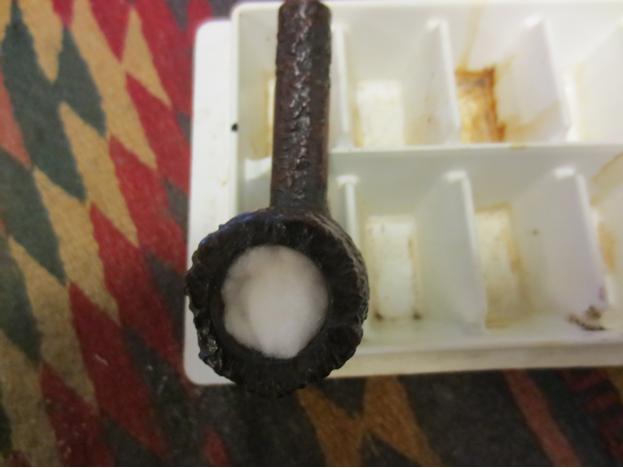
Terminusa I was gifted a beautiful rusticated Terminus apple from Anthony Cook. At least it has the potential to be a beautiful pipe to my eye. I have kept an eye out one of these old system pipes for a long time. They are like an early reverse calabash design. From my reading and observation it is both similar and different from the Keyser Hygienic pipes that I have written about before on the blog. It is similar in that it has an aluminum condensing contraption in the mortise of the shank with a centre tube that extends about ¼ inch beyond the end of the shank and rests in a larger tube in the military mount stem. This is the similarity – tubes, condensing contraption and the military mount stem. The dissimilarity is that at the end of the mortise where the flat base of the condensing unit sits there are two airway entries toward the top on either side of the centre tube. In the bowl there are also two airways at the bottom of the bowl. I found an online photo of the apparatus in the mortise and also how the stem and shank fit together. The Terminus I have is older than the one in the photo but the design is the same.Terminusb Terminus was a St. Claude, Francepipe maker. This is one of the early models, dating from the beginning of the 20thCentury.The patent was for an inner tube in the shank with two draw holes either side and a smaller inner tube in the stem, thus keeping “gunk” to a minimum.A straight apple with cow horn saddle bit.5.25 inches (13.5cms) long. Bowl height 1.75 inches (4.5cms). Looking up the name on Pipephil Logo and Stampings website I found the following information.Terminus4 On the screen capture from the site above you will note the phrase patented anti gunk system by Jean Masson. I clicked on that and was taken to the following information.Terminus4a There are several differences that I can see between this diagram (pictured below) and the pipe I have in hand. The first difference is that the back end of the condensing chamber is flat and does not have an extension or well on the bottom side of the chamber. The entire chamber extends the length of the mortise up to the two airways. The second difference is that the condensing chamber actually continues in the stem and there is a larger draw tube that the smaller tube in the mortise rests in. The third difference is that the stem is military mount and fits into the mortise around the smaller tube in the mortise. The tube seems to extend as far up the airway in the stem as I can see with a flash light.Otherwise the diagram gives an approximate idea of how the system fits together.Terminus5 Anthony sent me several pictures of the Terminus Pipe he was sending to give me a feel for what was coming. Overall it looked to be very workable. There was nothing in the pictures that gave me pause in terms of what it would take to clean it up. It appeared that the finish was basically gone – or it may have been a natural finish it was hard to tell. The horn stem looked interesting. It looked to be quite large and the taper on it was unique to the horn stems that I have worked on and kept in my collection. The tars on the rim did not seem to hide damage to the inner or outer edge of the bowl. The twin draught holes in the bottom of the bowl seemed to be hidden in the cake on the sides of the bowl. The condensation chamber in the mortise had a thick build-up of tars and oils that would be a challenge to get out.Terminus1

Terminus2

Terminus3 When the package arrived I quickly unwrapped it and took out the pipe. I really like the look and feel of it. It was comfortable in the hand and showed a lot of potential under the worn finish and dirt. It is stamped on a smooth rectangle on the left side of the shank with Serie No. 8349 in an arch over Terminus over Pipe. Under that it is stamped Brevete S.G.D.G. in a reverse arch. On the right side of the shank is a matching rectangle that is stamped 3036 over GP.The first four photos below show the pipe as it appeared to me fresh out of the box. The finish was slightly worn but underneath the tight rusticated pattern (almost a blast) was some beautiful ring grain that shone through the rustication. The bowl appeared to be unstained natural briar and would clean up very nicely. The stem was horn and had some tooth chatter on the top and bottom sides and also a deep tooth mark on both. The colour of the horn varied from a cream colour to a dark brown and seemed to move in waves that ran the length of the stem. When polished this stem would be beautiful.Terminus8

Terminus9

Terminus10

Terminus11 The next two photos are close-ups of the top and bottom of the stem and show the tooth chatter and the deep bit mark on both sides.Terminus12

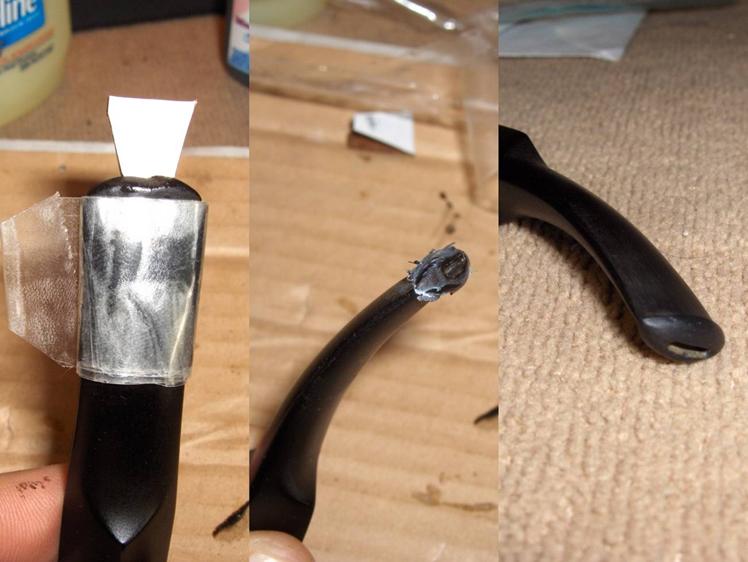
Terminus13 I decided to address the chatter and bite marks on the stem first. I sanded the stem with 220 grit sandpaper to smooth out the tooth chatter and the wear around the button. I also wanted the surface of the stem smooth before I repaired the bite marks. I sanded the stem with a medium and a fine grit sanding sponge to smooth out the surface then wiped it down with a damp cloth to remove the sanding dust. I used a drop of clear super glue to fill the holes on the top and bottom. And set it aside for ½ hour for the glue to cure.Terminus14

Terminus15 When the glue had cured I sanded the two patches with 220 grit sandpaper to blend them into the surface of the stem. The two photos below show the patches after sanding and before I worked over the stem with the medium and fine grit sanding sponge.Terminus16

Terminus17 I sanded the stem with medium and fine grit sanding sponges to further blend in the repairs and smooth out the nicks in the surface of the horn.Terminus18

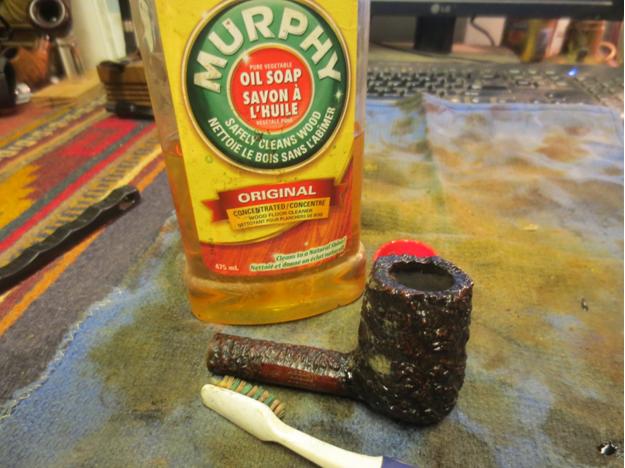
Terminus19 I cleaned out the shank, condensing chamber in the shank and stem and the airway in the stem and two airways in the end of the shank using alcohol, cotton swabs and pipe cleaners. I did not use the retort on this one as I am not clear on how the boiling alcohol would affect the horn stem. It took a lot of soaking and scrubbing before the aluminum chamber in the mortise and the chamber in the stem were clean and shiny once more I reamed the pipe back to bare wood and the used a dental pick to clean out the debris from the twin airways in the bottom of the bowl.Terminus20 I scrubbed the surface of the bowl with Murphy’s Oil Soap and a tooth brush and then rinsed it off with running water. I dried it off then wiped the bowl down with acetone on cotton pads to further clean the dirt and wax from the bowl surface. I scrubbed the aluminum shank band with silver polish and then lightly sanded it with the 1500 grit micromesh sanding pad.Terminus21

Terminus22 I worked on the tars and oils on the rim with saliva on a cotton pad and then used acetone on a cotton pad and was able to remove all of the build up. The grain really stood out on the rim and was a nice contrast to the rusticated pattern of the bowl.Terminus23 With the mortise and airways cleaned out I decided to use the cotton ball and alcohol treatment on the bowl to remove the heavy aromatic tobacco smell that still hung onto the pipe. I stuffed the bowl with cotton balls and used and ear syringe to fill it with isopropyl alcohol. I let it sit all day while I was at work. When I returned in the evening the oils had wicked out of the briar into the cotton. Once I removed the cotton and the bowl dried out the smell was gone and the bowl was fresh.Terminus24 I sanded the stem with micromesh sanding pads – wet sanding with 1500-2400 grit pads and dry sanding with 3200-12,000 grit pads. I rubbed the horn down with Obsidian Oil in between the sanding and while the oil was drying continued to sand with the pads. I find that the oil gives the micromesh the kind of bite on the horn stem that really raises the shine and removes the scratches and marks left behind from age.Terminus25

Terminus26

Terminus27

Terminus28

Terminus29

Terminus30 After polishing with the micromesh I buffed the stem with White Diamond and then gave it several coats of carnauba wax to protect it. I decided to rub down the bowl with some olive oil on a paper towel. I rubbed over the surface of the bowl so that oil went down into the grooves and soaked in. Once the oil had penetrated the briar I wiped it off with a soft cotton cloth and hand buffed it with a shoe brush.Terminus31 This morning I gently buffed the pipe and stem a final time and gave it a light coat of carnauba wax. I finished by buffing it with a soft flannel buff to give it a shine and make the horn material glow. To me there is nothing more beautiful on these old pipes that the warm luminescence of polished horn. In this case the variations in colours from cream to dark brown and everything in between gave the stem an almost three dimensional look. The oil enlivened the old briar without muting the ring grain that shone through the rustication. To me this old pipe just glows with deep inner warmth that will make it a pleasure to smoke. I am looking forward to the interesting smoke that the twin airway in the bowl and the condensing chamber in the pipe and stem will provide. The draught on the pipe is quite open so it should smoke well. My guess is that it will deliver a cool smoke. The horn stem provides a unique feel in the teeth and mouth that nothing quite rivals. The finished pipe is shown below.Terminus32

Terminus33

Terminus34

Terminus35 The final photos give a close up view of the parts of the pipe beginning with the cleaned and polished rim and walking you through the condensation chamber and a photo of how the two tubes intersect when the stem is in place.Terminus36

Terminus37

Terminus38

Terminus39

Bringing a Herbert Love of Edinburgh The Queensferry Billiard 422 back to life


Blog by Steve Laug

I received a gift box of pipes from a friend on Smokers Forums this week and it contained 23 pipes that presented a variety of challenges for repairs. Looking them over, I found that there were quite a few pipes with stampings that I was unfamiliar with. There were brands and sub-brands that were new to me. I chose to work on one of those I knew nothing about first. I had never heard of the Herbert Love Shop of Edinburgh. The stamping intrigued me. On the left side of the shank it was stamped Herbert Love of Edinburgh and on the right side it was stamped The Queensferry. On the underside of the shank it was stamped horizontally along the shank with the shape number 422. On the left side of the saddle portion of the stem it had a faint HL stamping.

I did my normal search on Pipedia and Pipephil’s site to see if I could find the stampings or the cursive HL on the saddle of the stem. There was nothing to be found. I posted a request for information on Pipe Smoker’s Unlimited Forums specifically asking several of the members there that are from Edinburgh to see if they had any information. I received a response from a collector of English pipes that included the photo and article on another Herbert Love Tobacco Shop in Glasgow. I also received a response from one of the Edinburgh folks, Chris with this information: … it closed down many years ago. It was on Queensferry St. (the road to the old ferry across the Forth before the rail and road bridges were constructed) at the West End, handily situated next to the iconic ‘Old Man’s Pub’, “Mather’s Bar”. At that time there were three pipe shops in Edinburgh (HL’s, one on George 1V Bridge and another in Leith); now only the latter exists… All I remember about the shop itself, apart from it being very old-fashioned, was that they used some interesting old scales for weighing out the loose tobaccos.

Here is the link to the article that I received about the closure of the Glasgow shop. http://www.heraldscotland.com/last-smokers-paradise-closes-1.828258 Sadly I could find no photos or information online regarding the now close Edinburgh shop to include in this post. If anyone reading has information be sure to let us know in the comments section below. Thank you.

When I brought the pipe to the worktable it is in pretty rough shape. The finish was damaged and spotty. The rim had a burn spot on the inner edge and the top at the front of the bowl. This damage also made a dip in the surface of the top of the rim. The bowl was filled with a crumbling cake that was uneven. The stem was oxidized and looked greenish yellow in colour. There were bite marks and tooth chatter on the top and bottom sides of the stem next to the button. The internals of the stem and shank were not too dirty and would clean up quite easily. There was no sweet smell of aromatics or the smoky smell of Latakia in the bowl so ghosting would not be an issue. Love1

Love2 I took close-up photos of the shank on both sides to show the stamping. The left side bore the Herbert Love of Edinburgh and the right side the Queensferry. From my queries I had learned that the Queensferry was actually the street the shop was located on. Herbert Love Tobacconists seemed to be quite widespread in Scotland – I found them in Aberdeen, Glasgow, Aylesbury, and Edinburgh. There were also hints of it being found in other locations as well.Love3

Love4 I scraped some of the oxidation away on the left side of the saddle stem and found that underneath was some faint stamping that read HL in script. I checked the right side and top and bottom for further marks and found none.Love5

Love6

Love7

Love8 I took a close up photo of the rim and bowl to show the damage from the burn on the surface. You can see that it is deeper than the surface of the rim and extends from the inner edge to the outer edge of the rim.Love10 I reamed the bowl with a PipNet reamer using the cutting head that fit the bowl properly. I took the cake back to bare wood on all sides of the bowl so that I could address the rim damage on an even and hard surface.Love11 The next photo shows the cleaned up bowl and further shows the damage to the inner edge and top of the rim.Love12 The first step in addressing this kind of rim damage is to top the bowl to even out the dip from the burn. I wanted the top surface to be smooth so that I could then chamfer the inner edge of the rim with a slight bevel to deal with the burned front edge. I used a flat board and a piece of 220 grit sandpaper to top the bowl. I sanded until the top of the rim sat flat against the board. As usual I collected the briar dust in my box for repurposing on fills and repairs.Love13 The next photo shows the top of the bowl after sanding and smoothing out the rim. It really shows the extent of the damage on the rim.Love14 I decided to keep topping the bowl until I had evened out the rim and removed as much of the top damage as possible without dramatically changing the profile of the bowl. The next photo shows the bowl rim after I had finished topping it with the 220 grit sandpaper. It still would be sanded with 400 grit wet dry and fine grit sanding sponges before the surface was finished. While I worked on the bowl the stem was soaking in a bath of OxyClean to soften the oxidation.Love15 With the top of the rim smoothed out I worked on the inner edge with a folded piece of 220 grit sandpaper. I chamfered or beveled the inner edge to minimize the damage and to give the entire inner edge a similar look.Love16 The next photo shows the beveled inner rim and how that process served to minimize the effect of the burn mark.Love17 With the repair to the rim finished I wiped down the bowl with acetone on cotton pads to remove the finish and facilitate matching the restain on the rim with the colour of the rest of the bowl. It also removed the damage and spotty finish that covered the bowl. It appeared to have a thin varnish coat over the stain that came off quite easily with the acetone.Love18

Love19

Love20

Love21 I used the Guardsman stain touch up pens to stain the rim. I chose the lightest coloured stain to get a proper match for the first coat of stain. When it dried I would then stain the entire pipe with a medium walnut aniline stain. The stain pen was the first step in matching the colours of the bowl.Love22 I cleaned out the shank with pipe cleaners, cotton swabs and isopropyl alcohol to remove the tars and oils in the shank. It was an easy clean up so I decided not to use a retort on this one. It took very few swabs and pipe cleaners before the mortise and airway was clean.Love23 With the bowl at this point in the process I set it aside and took the stem out of the OxyClean bath. It had been soaking for several hours while I had worked on the bowl. The bath had done its magic and when I rubbed it down to dry it much of the surface oxidation came off and the deeper oxidation would easily be removed with a light sanding.Love24 I put the dried stem back on the bowl so that I could finish staining the bowl. I used a medium walnut aniline stain, applied it and flamed it. I lightly buffed the bowl with White Diamond to even out the stain coat. I took some photos to show the progress. Note in the first photo the HL cursive stamp that is on the surface of the stem.Love25

Love26

Love27

Love28 I decided to use the Bic lighter trick that I have written about in other articles on the blog and painted the stem with the flame of the lighter to burn off more of the oxidation. It also helped to raise the tooth dents on the top and bottom of the stem next to the button.Love29 I put the plastic washer on the tenon between the stem and shank so that I could sand the stem and not damage the shoulders of either shank or stem. I lightly sanded the stem with 220 grit sandpaper and then with a medium and a fine grit sanding sponge to remove the remaining oxidation and tooth chatter.Love30

Love31

Love32 I sanded the stem with my usual micromesh sanding pads – wet sanding with 1500-2400 grit pads and dry sanding with 3200-12,000 grit pads. I rubbed the stem down with Obsidian Oil between each set of three pads. When I finished sanding with the 12,000 grit pad I rubbed it down one last time with the oil.Love33

Love34

Love35 I buffed the pipe with White Diamond and then gave it multiple coats of carnauba wax and buffed it with a soft flannel buffing pad to raise the shine. The stamping on the stem was very faint to begin with and when I removed the oxidation it is still present but is not deep enough to repaint.Love36

Love37

Love38

Love39 The last three photos give a closer picture of the top of the pipe – showing the rim edges and surface more closely. In comparison with where I started with this pipe the new look is dramatically better. The burn mark is much less visible and the grain on the rim looks sharp. The outer and inner edge are clean and crisp.Love40

Love41

Refreshing an Older Heritage Antique #13 Dublin Pipe


Blog by Steve Laug

The Heritage brand was on I had no familiarity with until Andrew wrote up this blog for us https://rebornpipes.com/2014/12/23/refurbishing-a-heritage-heirloom/ He gave background, history, line information and the classic brochure from the company. I want to give a brief summary of what he found in the next two short paragraphs to set the stage for the one that I found once he highlighted the brand for me.

Heritage pipes were Kaywoodie’s answer to Dunhill. According to one of their brochures, Heritage pipes were made from “briar burls seasoned and cured for up to 8 months,” with only “one briar bowl in over 300 selected to bear the Heritage name.” “Heritage stems are custom fitted with the finest hand finished Para Rubber stems. Mouthpieces are wafer thin and concave.”

The Heritage line began in the early 1960’s, with the trademark issued in 1964. The line was started at the request of Stephen Ogdon, (who worked for Kaywoodie in 1962). Mr. Ogdon had previous experience working for Dunhill, either running the New York store or working for Dunhill North America. Mr. Ogden was made President of Heritage Pipes, Inc., Kaywoodie Tobacco Co.,Inc. and Kaywoodie Products Inc. as well as a Vice President of S.M. Frank & Co. Heritage Pipes were produced from 1964 until 1970 (Source Kaywoodie.myfreeforum.org).

I found one online on Ebay that was stamped Heritage Antique 13. I scanned the brochure that Andrew provided and found this regarding the Antique Line: The Heritage Antique line is characterized by “Rustic Grain stands out in rugged relief.” “This pipe is so bold-looking, yet so light and smooth-smoking. A special sandblasting process exposes a greater surface area on the bowl, giving a cooler, more satisfying smoke. Centuries-old Heritage Antique is strikingly masculine in appearance.”The number 13 is the shape number for the Dublin shape. It can be seen in the first coloumn second pipe down on the left side of the brochure page below.heritage4_zpsdc6295ef The seller of the pipe I picked up on EBay included some basic information on the pipe. The said the stamping was Heritage Antique with a 13 on the bottom of the shank. The stem has an inlaid double white diamond on the left side. It is out of a Kansas City estate. It measures:
5-1/2 inches Long
1-3/4 Inches High Bowl
1-1/4 inches Bowl Width
3/4 inch of a Bowl Bore
3 inch long stem

The next eight photos were included with the EBay advert and give a pretty good idea of the type of blast on the briar as well as a good picture of the state of the stem. The pictures show the colour of the pipe in a more red hue than it actually appeared when it arrived. In reality the stain is a brown tone similar to that of the Dunhill Shell Briar.Heritage1

Heritage2

Heritage3

Heritage4

Heritage5

Heritage6

Heritage7

Heritage8 When the pipe arrived in Canada I was very pleased when I opened the box. The briar was in good but dirty condition and it appeared that the finish was in great shape under the grime and tars. The blast was amazing and craggy – very much like that on my older Shell Briars. The rim had some buildup on it that was flaking off but the bowl was in round and there was no damage to the edges of the rim.Heritage9

Heritage10

Heritage11

Heritage12 The stem was thin and quite clean. It was oxidized and had some waxy substance on the top side. There were two tooth marks – almost pin prick marks, on the underside of the stem visible in the first photo below. The second photo shows the waxy buildup on the surface of the stem and the oxidation.Heritage13

Heritage14 The rim of the pipe, shown in the photo below had a thick buildup of tars that were flaking off the surface of the rim. I picked at it with a dental pick and could see that the sandblast surface was undamaged underneath. The bowl was in need of a reaming to smooth out the uneven cake on the sides and bottom of the bowl.Heritage15 The stem was frozen in the shank so a short time in the freezer and the stem was easily removed from the shank. The step down tenon was in great shape and showed no damage and the tenon itself was not tarry.Heritage16 I reamed the bowl with a PipNet Reamer beginning with the first cutting head and finishing with the size 2 cutting head. I reamed it back to bare wood to restart the cake build up.Heritage17

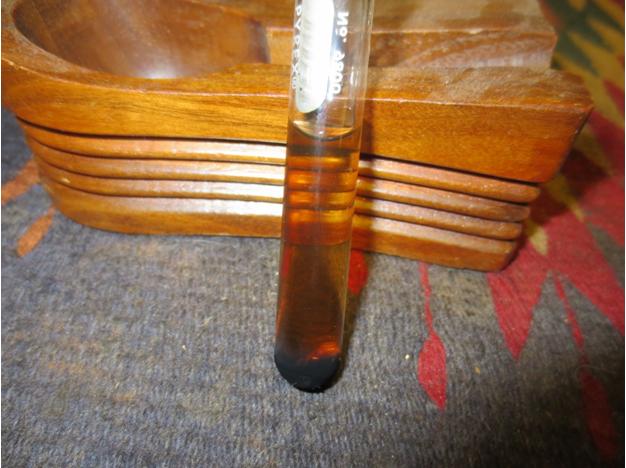
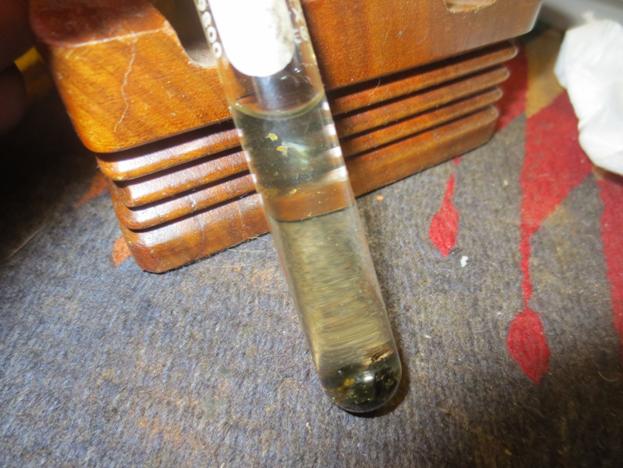
Heritage18 I picked the flaky buildup on the rim with a dental pick and the scrubbed it with a soft bristle brass tire brush to remove all the grit and take it back to the surface of the rim. I have used this method over years as the bristles remove the tars without damaging the sandblasted surface.Heritage19 Once I had the surface brushed clean with the wire brush I scrubbed the entire bowl and shank with undiluted Murphy’s Oil Soap and a tooth brush to get the grime out of the crevices of the blast and remove the oils from the previous owners hands. Once I had scrubbed it I put my thumb in the bowl and rinsed it off with cool water and dried with a cotton cloth.Heritage20 I put the stem back in place and set up the retort. I filled the test tube half full of 99% isopropyl alcohol and heated the alcohol over a tea candle. The alcohol boiled through the pipe and cleaned out the tars and oils in the stem and shank. The alcohol also rinsed the inside of the bowl which was plugged with a cotton ball.Heritage21

Heritage22

Heritage23

Heritage24 With the inside of the pipe cleaned and the exterior of the briar scrubbed it was time to address the oxidation and the marks on the stem. I put a plastic washer between the stem and shank so that I could sand the stem right up to the shank without worrying about rounding the shoulders of the stem. I sanded it lightly with 220 grit sandpaper to remove the waxy buildup on the stem (turns out it was a varnish) and also loosen the surface oxidation. I followed that by sanding with a medium and fine grit sanding sponge to remove scratching and oxidation.Heritage25

Heritage26

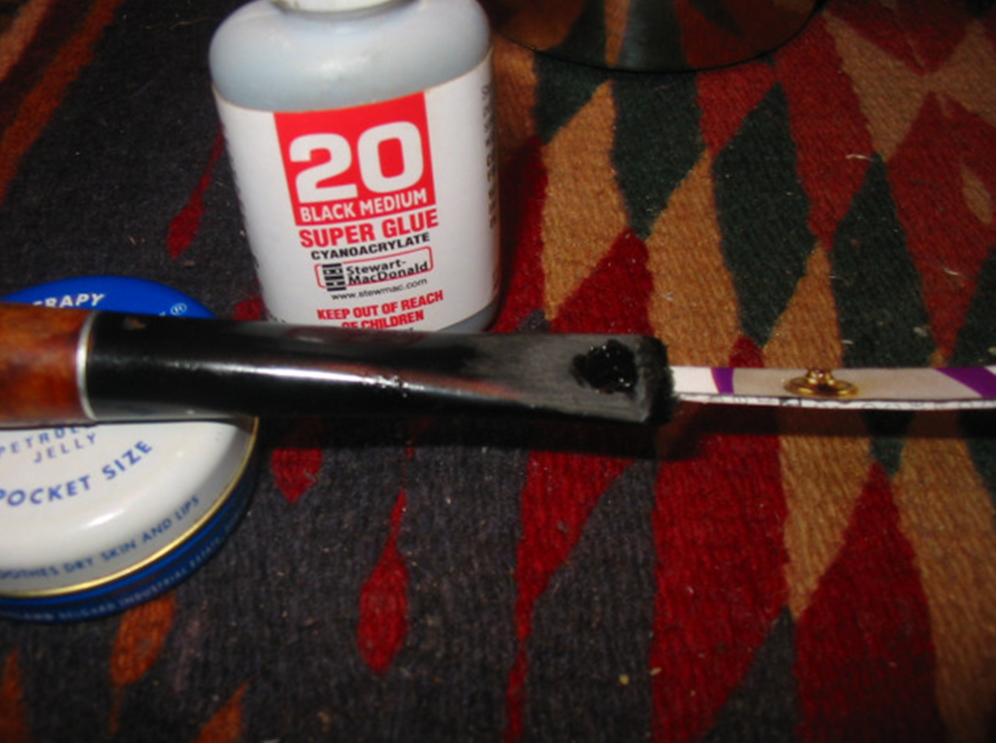
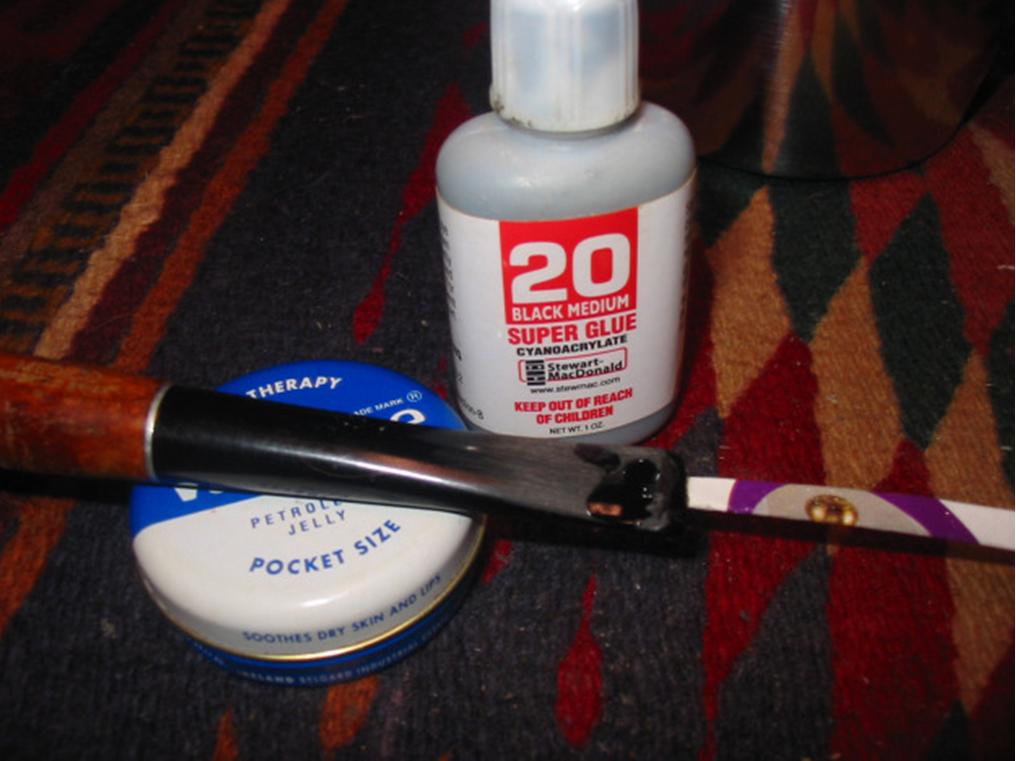
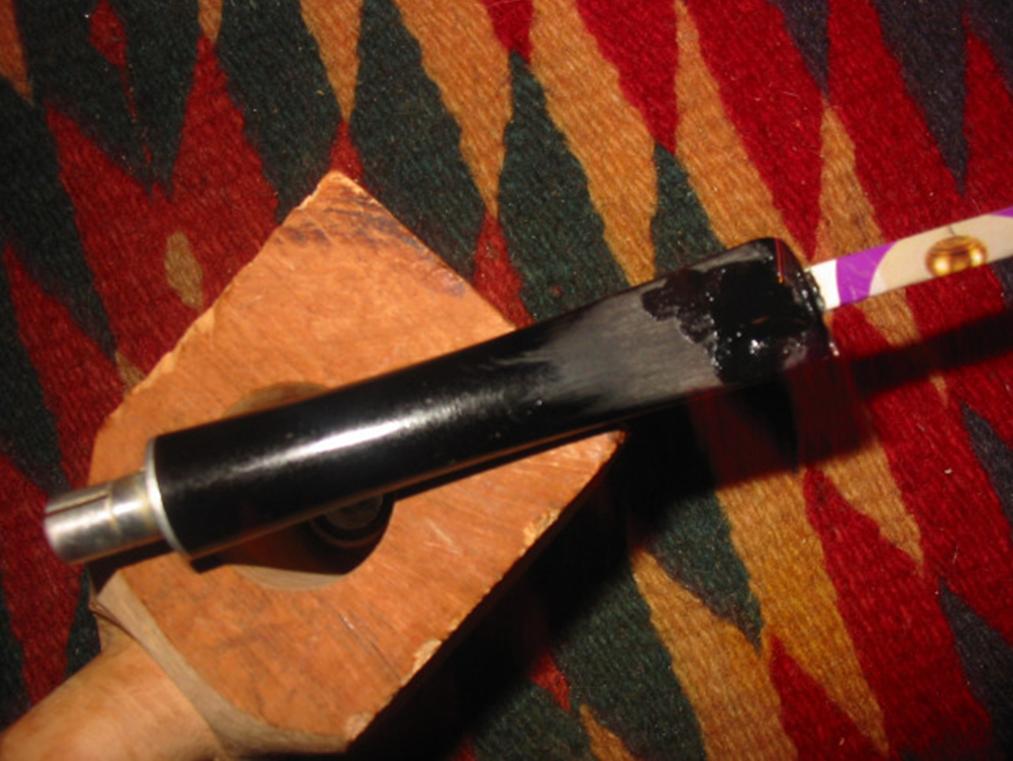
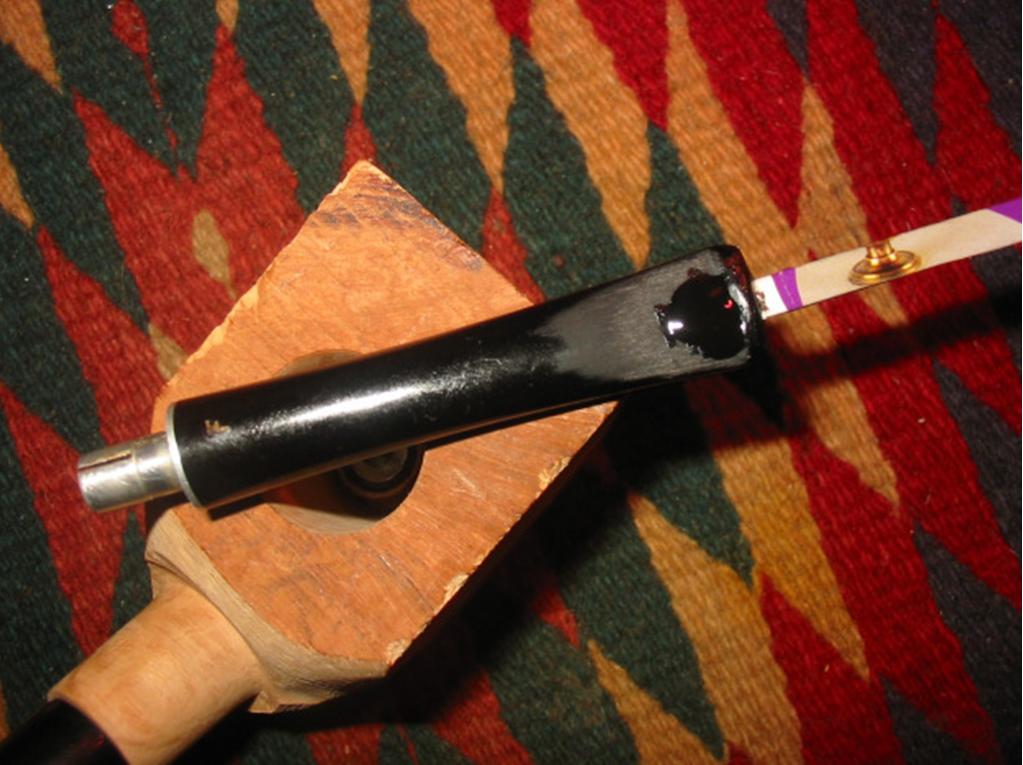
Heritage27 Once the stem was sanded, I wiped it down with a cotton pad and alcohol in preparation for repairing the two tooth marks. I filled these with black super glue and set aside the stem to let the glue cure.Heritage28 When the glue had dried I sanded the two spots with 220 grit sandpaper and the two sanding sponges to smooth out the patches and blend them into the vulcanite. I then sanded the stem with micromesh sanding pads – wet sanding with 1500-2400 grit pads and dry sanding with 3200-12,000 grit pads. I rubbed the stem down with Obsidian Oil between each set of three pads and also at the end of the sanding process.Heritage29

Heritage31

Heritage32 I buffed the stem with White Diamond and gave it multiple coats of carnauba wax. I rubbed two coats of Halcyon II Wax on the sandblast of the bowl and then gave the pipe and stem a light buff with a soft flannel buff to raise the shine. The next photos give a clear picture of the finished pipe. Heritage33

Heritage34

Heritage35

Heritage36 I end with three close-up photos of the bowl to give a good idea of the quality of the sandblast on this piece of briar. It is a stunning pipe with a blast that rivals that found on the Dunhill Shells that are in my collection. I intend to fire up this old pipe and enjoy its trust for many years to come.Heritage37

Heritage38

Heritage39

Restoring a Frozen Kirsten Companion K Straight Pipe


Blog by Steve Laug

The last pipe I picked up on my recent Alberta trip was a Kirsten style straight pipe. The metal shank is stamped on the left side Companion and on the underside it is stamped Made in U.S.A and then K. On the top of the shank the previous owner scratched in his initials FWE. The bowl was stuck on the shank. The finish on the bowl was worn and dirty. The rim of the bowl had a thick tarry buildup and had some deep dents in the surface. There was a thick cake build up on the inside of the bowl that was shaped like a cone – the bottom was very narrow and the top was wide open. Normally the bowl on Kirsten pipes are more U-shaped with the walls similarly open to the bottom of the bowl where the drilled screw goes through. The stem had a tooth mark on the top and the bottom side near the button. The stem was frozen in the metal shank and I could not twist it at all. The airflow adjustment end cap that normally twists to either open or dampen the airflow was also frozen in place. The metal barrel and end cap had scratches and marks on it. The end cap ridges were worn and looked like someone had used a pair of pliers on it to try to break it free.IMG_2531 IMG_2532 IMG_2533 IMG_2534 I was able to twist the bowl off the barrel by carefully turning it back and forth slightly to break it free. The tars in the barrel threads and on the drilled out screw in the bowl were really gummed up and dirty.IMG_2535I put the barrel in the freezer and left it there during dinner. After dinner I took it out and was able to twist the stem from the barrel. Once I removed the stem and the metal tube plunger it was extremely tarred and sticky. The second photo below shows the black tars of the interior of the barrel and plunger.IMG_2536 IMG_2537The end cap was still frozen in the barrel. I filled the barrel with alcohol and set it in an ice-cube try to let it soak. I knew that the tars on the plunger were also what held the end cap in place binding the metal of the barrel and the cap to each other. Typically the end cap had a rubber grommet on it that held it in place with a friction fit. In this case it appeared that the rubber grommet was compressed against the metal on the inside of the barrel and bound it in place.IMG_2538I cleaned the plunger and sanded the stem with 220 grit sandpaper to remove the hard tarry build up on it. I wiped it down with alcohol and then sanded it until the plunger was shiny and clean. I cleaned out the inside of the stem and the plunger with both bristle and regular pipe cleaners.IMG_2539 IMG_2540I reamed the bowl with a PipNet reamer and used all sizes of the cutting heads to ream back the carbon build up in the bowl.IMG_2541 IMG_2542 IMG_2543The bowl was badly dinged and hammered leaving some deep denting. I topped the rim with a topping board to clean up the damaged top edge.IMG_2544 IMG_2545I wiped down the bowl with alcohol on cotton pads and then used a flat blade screwdriver to remove the screw from the bottom of the bowl and remove bottom cap on the bowl. I wiped down the inside of the cap and cleaned the screw with a brass bristle tire brush. I wiped it down with alcohol and then sanded the outside of the cap and screw with 1500-2400 grit micromesh sanding pads to polish them.IMG_2546 IMG_2547The rim had two rather large fills that needed to be hidden with stain. I used the stain pens to restain the rim and the bowl. I started with the lightest colour pen and finished with the darkest colour.IMG_2548I buffed the bowl with White Diamond and then gave it several coats of carnauba wax. I put the metal cap back in place and turned the screw into the bottom of the bowl.IMG_2549 IMG_2550The end cap still did not come off after I had soaked it with alcohol. I used a Robertson head screw driver with a long shank and inserted it in the barrel. I hammered the end with a hammer and tried to drive it out of the barrel. It cam half way out but I could not budge it further. I boiled a cup of water and let the barrel and end cap sit in it to see if I could loosen the tars. I repeated this three times with the cooling of the water. I then inserted the screw driver and was able to drive out the cap. It was covered with a black tar build up and the inside of the barrel was also thickly coated. I cleaned out the inside of the end cap and the barrel with cotton swabs, pipe cleaners and alcohol. I rubbed down the rubber grommet on the stem and the end cap with Vaseline to soften them again and then inserted them in place in the barrel.IMG_2551I sanded the stem with 220 grit sandpaper and then medium and fine grit sanding sponges to remove the tooth marks and the oxidation. I then sanded it with micromesh sanding pads – wet sanding with 1500-2400 grit pads and dry sanding 3200-12,000 grit pads. I rubbed the stem down with Obsidian Oil between each set of three pads. I gave the stem a final buff with White Diamond and then gave it several coats of carnauba wax to give it a shine.IMG_2552 IMG_2553 IMG_2554The finished pipe is shown below. I rubbed the stem down with some Conservator’s Wax – a microcrystalline wax and hand buffed it with a shoe brush. I avoid using the buffer on metal as it turns the pads black and does not shine the metal. I put it back together and it is ready for its inaugural smoke. I have two other Kirstens that are great smokers and this one with be added to that number until the day I pass it on to someone along the way.IMG_2555 IMG_2556 IMG_2557 IMG_2558

A Reborn Peterson Tankard


Blog by Steve Laug

I have looked for one of these little Peterson Tankards for a long time. I have always liked the delicate simplicity of the pipe. The bowl is a round tankard and the pencil shank with the silver Peterson collar looks elegant. The rim is rounded and crowned. The stem has a gentle bend that allows the pipe to sit plat on the base. It is stamped on its base Peterson Tankard, Made in the Republic of Ireland. The pipe is pictured in the photo below, the third pipe down. It was one of the five I found on my recent pipe hunt.IMG_2049The Tankard was in worn but decent shape. The finish was dirty and there was darkening around the bowl middle from the hands of the previous owner. The rim had a thick buildup of tars and oils that had hardened. There were burn marks around the inner edge of the rim at the back of the pipe and the right front. The burn on the front of the bowl was more extensive that then one on the back inner rim. The bowl had a thick cake in it and the shank was dirty. The stamping was readable but faint. The stem had tooth marks on the top and bottom sides of the stem near the crease on the P-lip. It was badly oxidized and there was a heavy calcification around the stem about an inch in from the button. The silver ferrule was clean and would shine up easily.IMG_2123 IMG_2124 IMG_2125 IMG_2126I reamed the bowl with a PipNet reamer to remove the cake back to bare wood. I scrubbed down the exterior with Murphy’s Oil Soap on a cotton cloth and wiped it off to clean the briar.IMG_2128 IMG_2260 IMG_2261 IMG_2262 IMG_2263The next photo shows the reamed bowl and the caked rim top. It was very thick so it would take some work with sandpapers and oil soap to remove the tars. I scrubbed it with the soap and then with alcohol to remove as much of the tars as possible. I then sanded it with 220 grit sandpaper and a medium grit sanding sponge. I wiped it down with acetone once I had finished sanding it. The extent of the rim damage can be seen in the second photo.IMG_2264 IMG_2265I wiped down the finish with acetone on cotton pads to completely remove the wax and the finish from the outside of the bowl.IMG_2266 IMG_2267 IMG_2268I set the bowl aside to work on the stem. I used a Bic style lighter to “paint” the surface of the stem and lift the tooth marks. Doing this I was able to remove many of the tooth dents and lessen the depth of the remaining ones.IMG_2269 IMG_2270 IMG_2271I sanded the stem with 220 grit sandpaper to remove the rest of the dents and the oxidation and calcification. I reshaped the button and the crease to sharpen them. There was one tooth mark that I could not minimize further without damaging the thickness of the stem at the crease. I used a clear super glue to fill that spot. Once the glue had dried I sanded it and then used a needle file to reshape the crease and smooth things out. I sanded the repair with 220 grit sandpaper and then with medium and fine grit sanding sponges until I had blended it into the surface of the vulcanite.IMG_2272 IMG_2273 IMG_2274 IMG_2275 IMG_2276I sanded the stem with my usual array of micromesh sanding pads to polish and finish it. I wet sanded with 1500-2400 grit sanding pads and dry sanded with 3200-12,000 grit pads. I wiped it down with Obsidian Oil between each set of three grits. Once I finished with the micromesh pads I buffed the stem with White Diamond and then gave it several coats of carnauba wax to protect it and give it a deep shine.IMG_2281 IMG_2282 IMG_2283I decided to leave the finish natural and not stain it. I rubbed it down with a light coat of olive oil to enhance the redness of the briar.IMG_2277 IMG_2278 IMG_2279 IMG_2280I took a close up photo of the rim to see if the scratches were still visible. At the back side of the rim there were still some scratches that I needed to work on more to remove. I also wanted to see if I could also remove some more of the rim damage from the burn marks.IMG_2288I sanded the rim with a medium and a fine grit sanding sponge to work on the scratches and the burn marks. Working on the surface with the sanding sponge I was able to remove the scratches and some more of the burn marks from the surface.IMG_2289 IMG_2294I sanded the bowl with the same fine grit sanding sponge and then buffed it with White Diamond. I took special care around the stamping to make sure that I did not damage the light stamping. I gave it multiple coats of carnauba wax and lightly buffed it to a shine with a soft flannel buffing pad. The finished pipe is shown below. The birdseye grain on the sides and the cross grain on the ends both work really well. It is a beautiful pipe and I think it will be a great smoking pipe as well. It should provide many more years of service and certainly live beyond my lifetime to be passed on to a new generation of pipemen.IMG_2290 IMG_2291 IMG_2292 IMG_2293

Restoring a Peterson Dunmore #72


Blog by Steve Laug

The Dunmore line from Peterson really is a stripped down pipe. The one that I worked on this weekend was in essence a system pipe. The lack of a ferrule is made up for by a stylized carving around the shank end. The stem sits snugly against the end of the shank but is not flush with the diameter of the shank. The saddle on the stem has a different flair than a regular Peterson pipe. The one we found had a Plip stem. This particular Dunmore was found by my friend John when we went pipe hunting this weekend. We had a blast as can be seen from the haul of pipes that he picked up below. The Dunmore is picture at the top left of the first column in the photo below. below. IMG_2050 While John worked on restoring the oak pipe rack that he had found I worked on his Peterson Dunmore. This old pipe had some beautiful grain – birdseye on both sides and cross grain front and back. The bowl almost perfectly aligned with the grain on this one. I forgot to take pictures of the pipe before I began cleaning it up so the only one that is left of the pre-clean is shown in the group photo above. I reamed the bowl with a PipNet reamer and then cleaned out the sump and the internals of the bowl and stem with pipe cleaners, cotton swabs and isopropyl alcohol until all came out clean. Dunmore1 The finish on the bowl was virtually non-existent as it had worn away. I wiped it down with acetone to clean the briar and remove the oils and marks that had settled on top of the wood. The acetone pads came away dirty with the grime more than with any previous colour or stain. Cleaning the surface revealed even more clearly the marvelous grain that was on this pipe. Dunmore2 The top of the bowl and rim had some damage from tapping out the pipe. The outer edge of the rim particularly had taken a beating. The bowl was still in round so the inner edge was fine. To minimize the damage to the top and the outer edge I set up a topping board with 220 grit sandpaper and worked on the bowl top. (The whole time I was working on this pipe I gave a running commentary to John as he wanted to know the process so that he could clean up some of the other pipes once he had finished the rack). Dunmore3 Dunmore4 After topping the bowl I sanded the outer edge with a folded piece of 220 grit sandpaper to remove some of the darkening around the bowl top. I resanded it with medium and fine grit sandpaper to remove scratches and did the same to the rim top. I sanded the entirety of the rim and edges with 2400 grit micromesh to smooth it out. After wiping down the briar with alcohol to remove the dust from the surface of the bowl John and I decided not to stain the pipe but to keep it natural. I rubbed it down with a bit of olive oil to give some life to the wood and then buffed it with White Diamond. I was careful to not buff the areas around the stamping so as not to damage them. I chose rather to buff these areas by hand with a shoe brush. I gave the bowl several coats of carnauba wax and buffed it with a soft flannel buff to shine it. Dunmore5 Dunmore6 Dunmore7 There were two small crevices that showed up on the inside of the bowl on the right side about ¼ inch below the rim. I mixed a batch of pipe mud and filled the small crevices and smoothed the mud over the surrounding area of the bowl. I set it aside to dry while I worked on the stem.

The stem had a lot of tooth chatter and a few shallow tooth marks on the top and the bottom next to the button. It also had a deep oxidation that required a lot of elbow grease to remove. I sanded the stem with 220 grit sandpaper to remove the surface oxidation and the calcification near the button. I “painted” the stem with my Bic lighter to raise more of the oxidation to the surface and also to raise the small tooth marks on the stem. I sanded it some more with the 220 grit sandpaper followed by a medium and a fine grit sanding sponge. That work brought it to the condition shown in the next two photos below. Dunmore8 Dunmore9 I sanded it with micromesh sanding pads – wet sanding with 1500-2400 grit pads and dry sanding with 3200-12,000 grit pads. I rubbed the stem down between each set of three pads with Obsidian Oil. After finishing with the 12,000 grit pad I buffed it lightly with White Diamond on the wheel and then rubbed it down one more time with the oil. When it had dried I gave the stem multiple coats of carnauba wax and buffed it to a shine. Dunmore10 Dunmore11 Dunmore12 I hand buffed the completed pipe with a bit more wax and a shoe brush to finish the polish. The finished pipe is shown below in all of its beauty. I am really glad we decided to leave the wood natural and only give it a light oil finish before waxing. The grain stands out well and the feel of the pipe in hand is very nice. John loved the finished pipe. I am looking forward to hearing from him once he has smoked it a few times. Dunmore13 Dunmore14 Dunmore15 Dunmore16