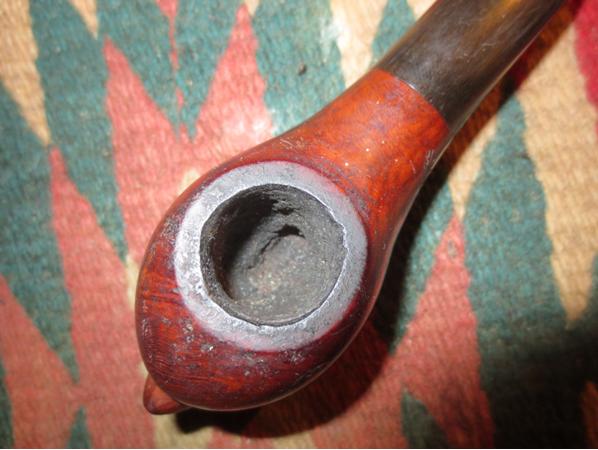
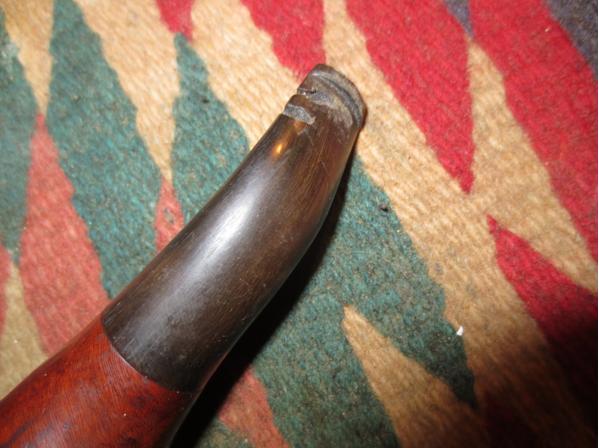
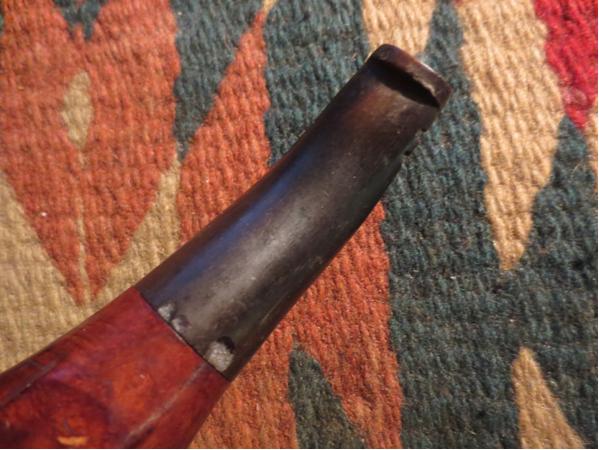
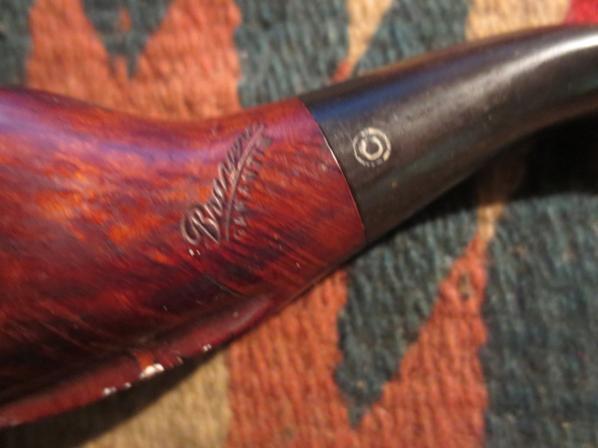
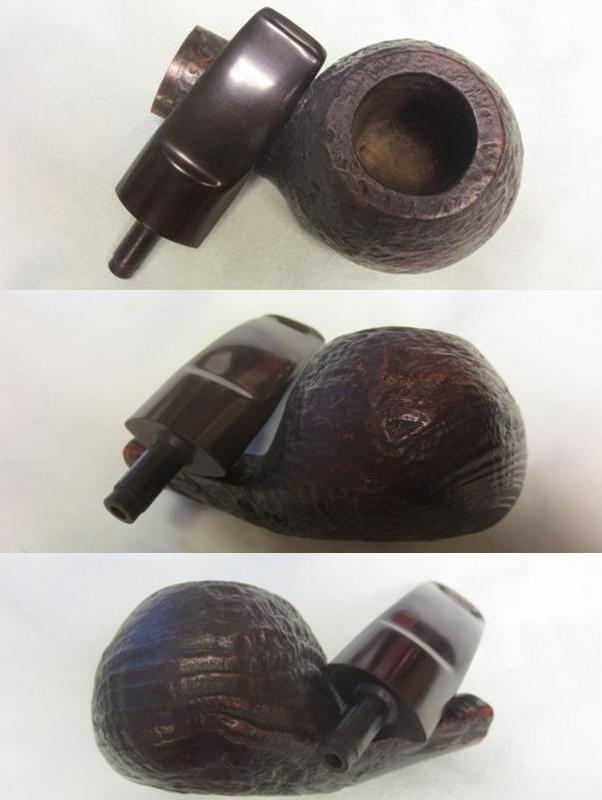
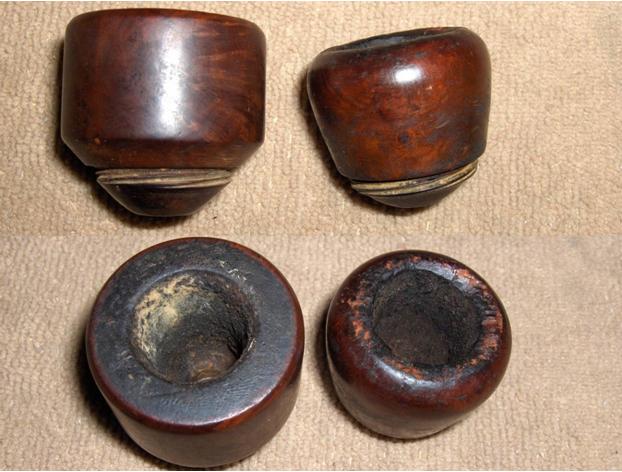
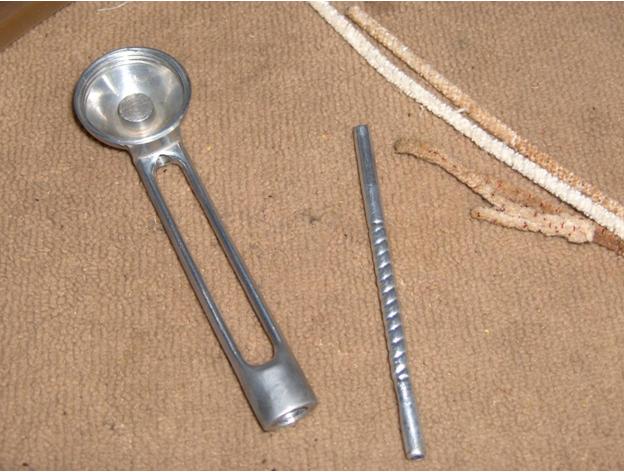
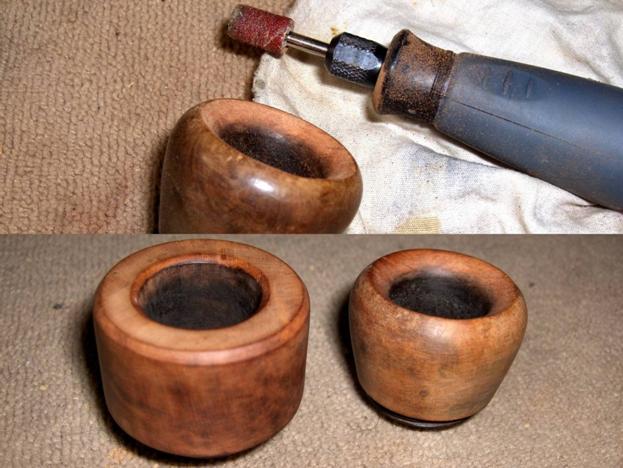
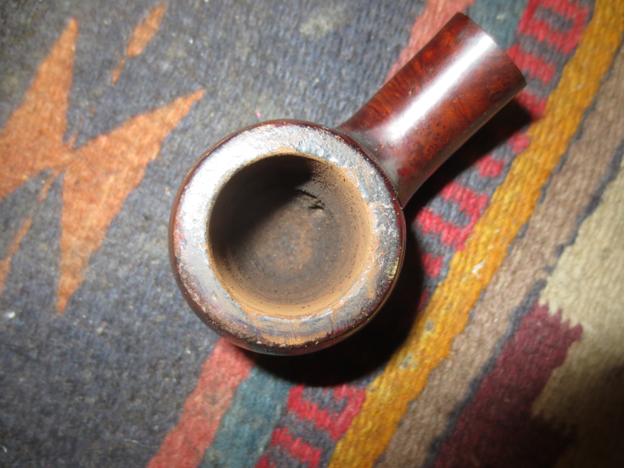
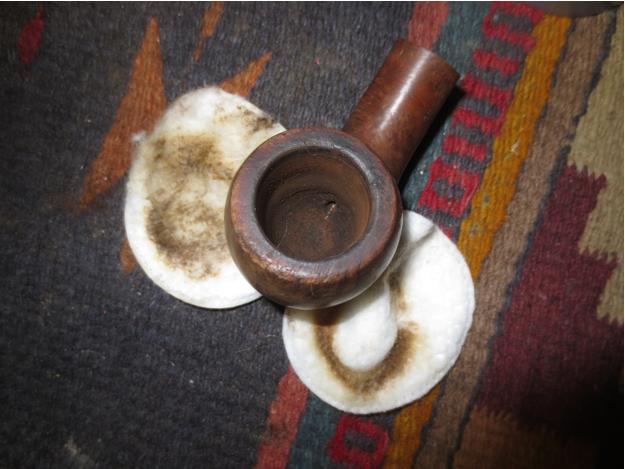
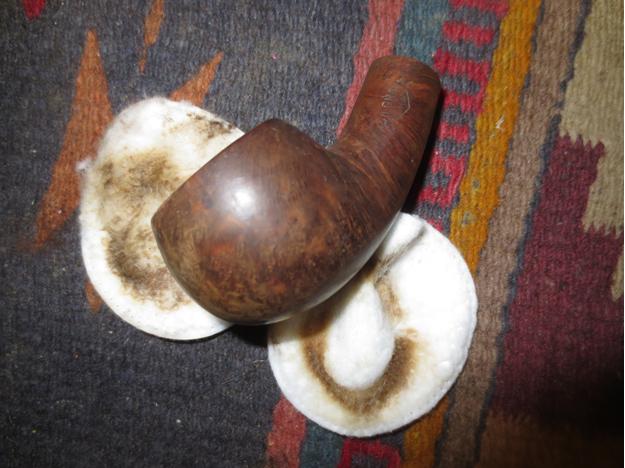
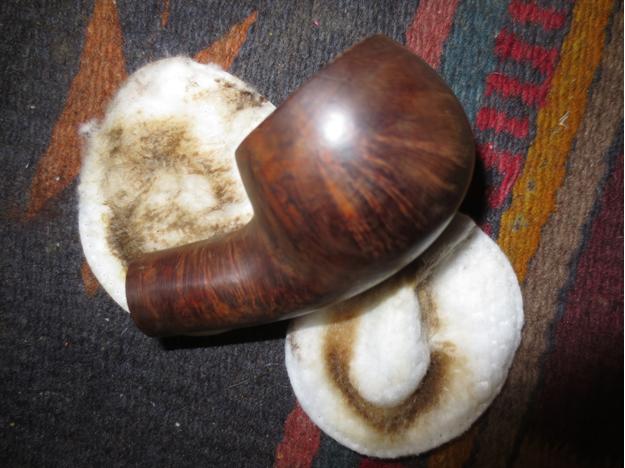
Tag Archives: bite marks

JPL Tomato restored and given a new look


Blog by Steve Laug

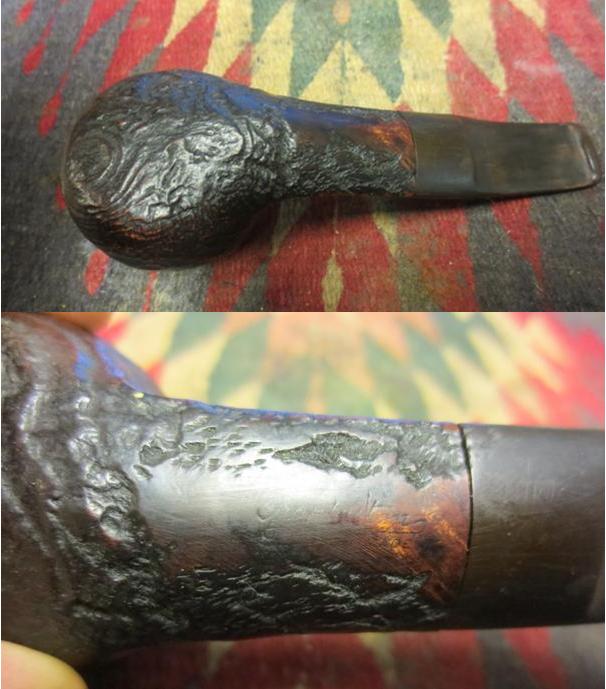
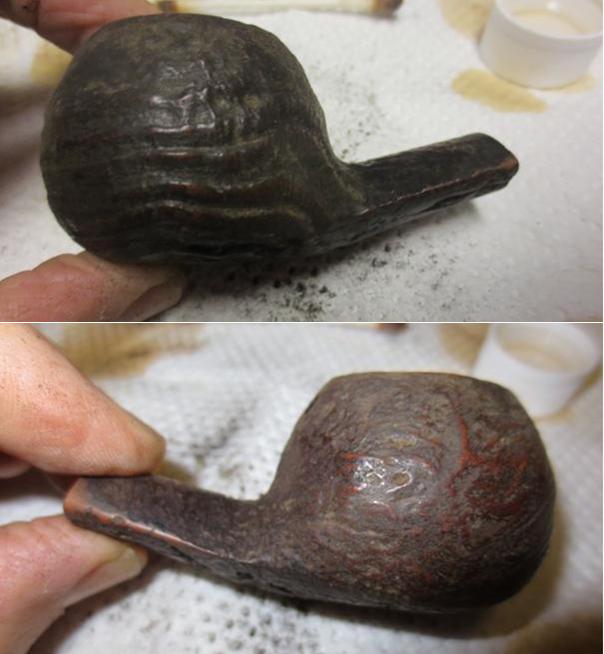
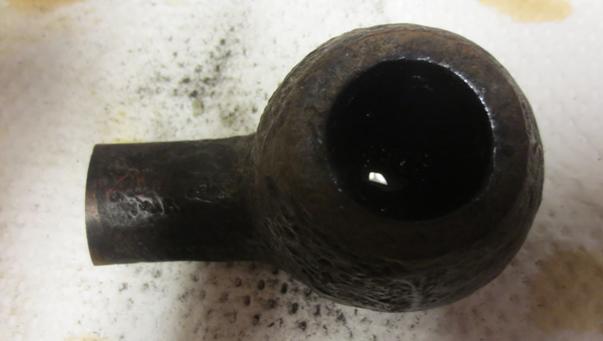
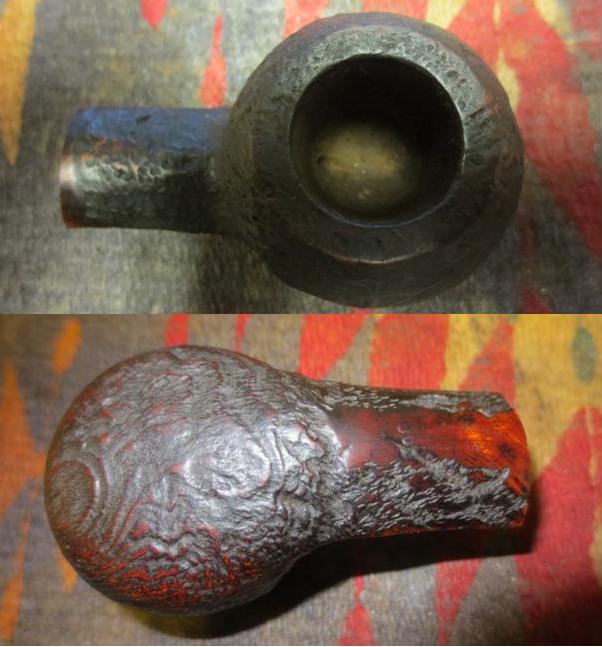
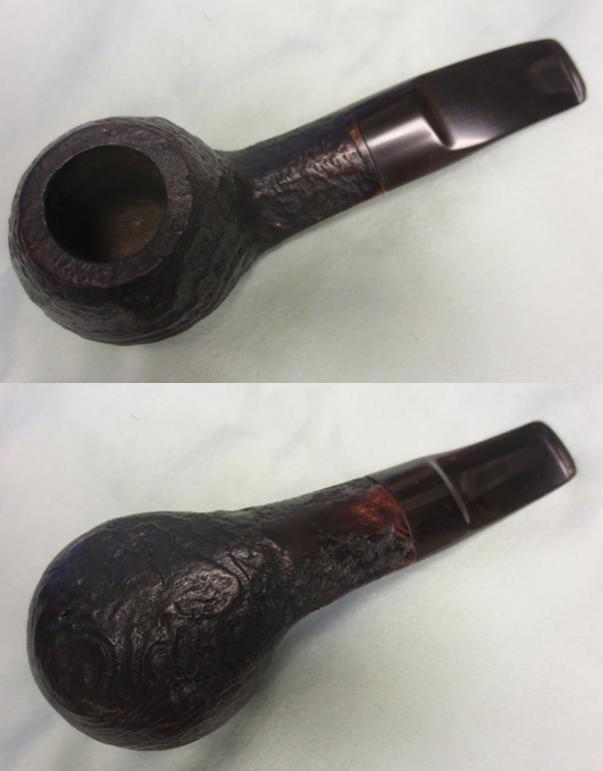
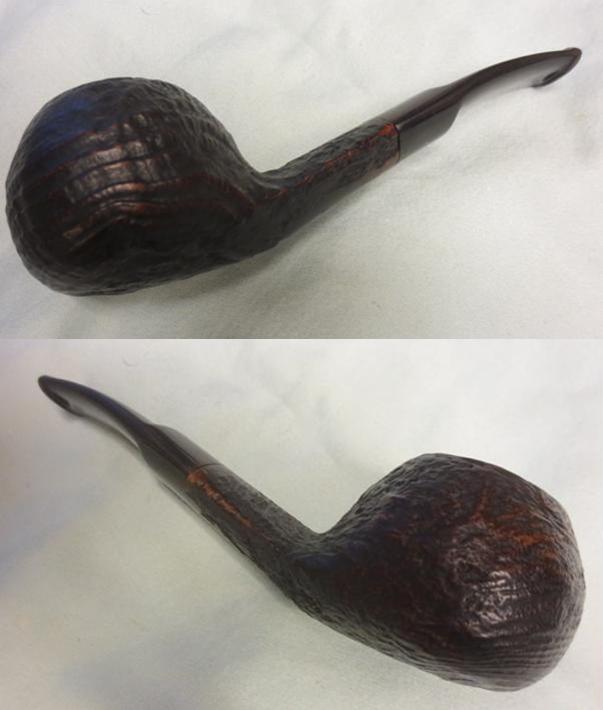
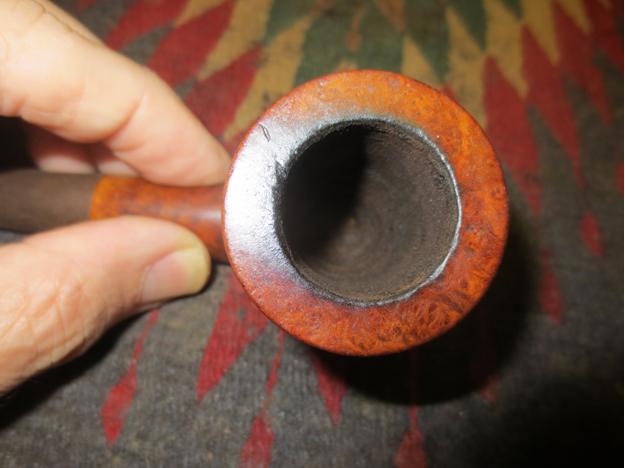
When I first saw the pipe lot on craigslist Vancouver the pipe that caught my eye was the squashed tomato that is shown in the photo below on the top right. I had no idea who the make was but it was obviously a large pipe and a unique shape that made me want to know more. It is actually the pipe that pushed me to make the phone call to the seller. I have a Rad Davis that is similarly shaped but nowhere near as large.craig5 When I got to the seller’s home and looked at the pipe I could see that it was stamped JPL over Bruyere over St. Claude France on the shank. The pipe was well smoked. The finish was pretty well dried out – I think originally it had been an oil finish over the natural briar and that was gone and in its place was a lot of grime. The top of the bowl was in the roughest shape. It had a thick coat of tar/oil that I call lava flowing over the rim. The bowl had a cake that was hard and there were remnants of tobacco stuck in the walls and bottom of the bowl. The top also had what looked like road rash on the front. There were many pin prick nicks and dents that made me think that the pipe had been dropped on concrete. The redeeming feature was that the briar had some stunning flame grain around the sides and top portion of the bowl and featured great birdseye grain on the bottom. The stem was oxidized and there were two deep tooth marks on the top and bottom sides of the stem near the button. There was also a lot of tooth chatter and it looked as if the stem had been covered at one time with a softie bit.JPL1

JPL2

JPL3

JPL4 I took the next series of three photos to show the damage to the top of the bowl and the tooth marks in the stem.JPL5

JPL6

JPL7 I was unfamiliar with the stamping on the pipe as I had not seen it before. Once Googled it on the web I found that JPL stood for Jean Pierre Lacroix. That was a name I was familiar with in previous reading on St. Claude pipe making families. I looked on Pipedia and found the following information:

“Lacroix Pipes have a rich history of pipe making tradition and the brand was started in 1962. Eugine Lacroix began making pipes for the Delacour factory in the 19th century; his sons founded their own factory in 1921. Two of the grandsons (including Jean) continued on in the business, but parted ways and struck out on their own in 1962. At that time, Jean set up Jean Lacroix pipes, coincidentally in the old Delacour building his grandfather started in 85 years prior. Today, Jean Lacroix, Chacom, Jeantet, and Vuillard are all pieces of the larger Cuty-Fort Enterprises, and Jean is actively involved with the prestigious Confrerie des Maitres-Pipiers de Saint-Claude. Jean still makes pipes; his spectacular freehands are known throughout the world. The model named “Nizza” De Luxe is made by him with scripted stamp showing his name (hard to read!). Jean Pierre Lacroix sometimes marked Maitre Pipier a Saint-Claude.” Quoted from Pipedia http://pipedia.org/wiki/Lacroix

More information is available on PipePhil’s website. http://www.pipephil.eu/logos/en/infos/lacroix-en.html#split

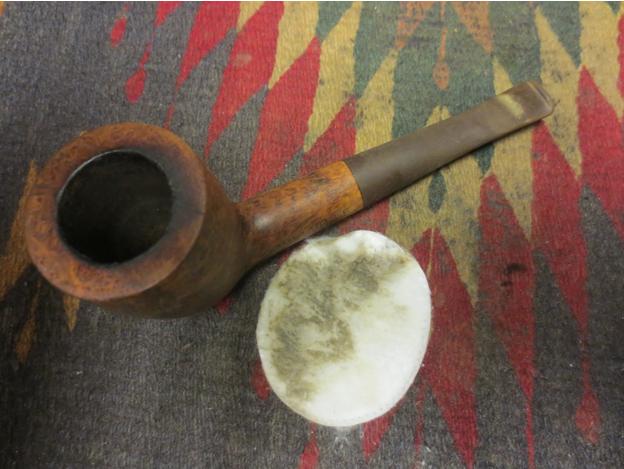
I began cleaning up the pipe by scrubbing the rim with acetone on a cotton pad. Since the pipe was unfinished and was so dirty I used acetone rather than alcohol. I scrubbed the bowl top until I had removed all of the tars and oils. I also wiped down the remainder of the bowl to remove the oils and dirt from the years of being held in the hand.JPL8 Once I had the bowl top cleaned I removed the stem to see what I was dealing with. I found that the stem and the shank was drilled for a 9MM filter but that somewhere along the way someone had inserted an ill fitting stinger apparatus in the tenon. It was pressed in place deep in the tenon and there was a lot of wiggle room around it. It did not extend very far into the shank and as such the shank was filthy. The first photo below shows the stinger in place. The second shows the length of the stinger once I removed it from the tenon.JPL9

JPL10

JPL11 I sanded the bowl with 220 grit sandpaper to remove the damage on the top of the bowl. I sanded until I had removed the road rash on the front edge and the damage to the back of the bowl. I sanded it further with a medium and fine grit sanding sponge to minimize the scratches left behind by the sandpaper.JPL12

JPL13 While I had the sandpaper out I also sanded the tooth chatter and tooth marks on the stem. You can see that after sanding I still had a fairly large tooth dent on the underside of the stem and a small one on the top near the left edge.JPL14

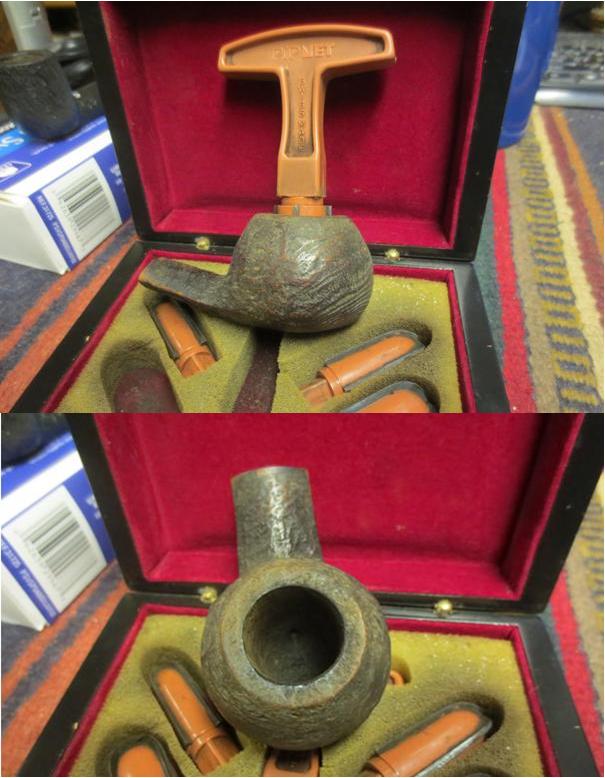
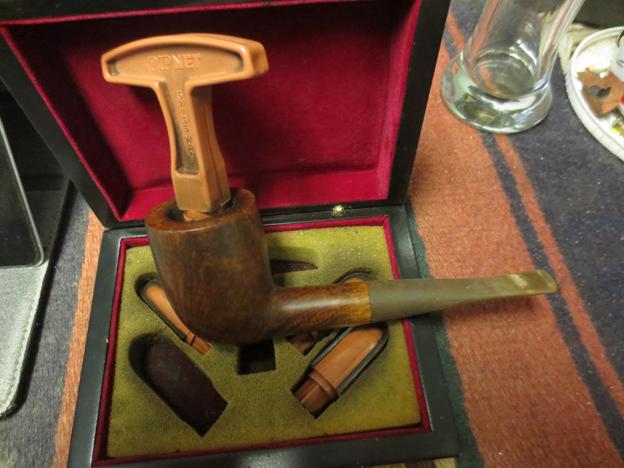
JPL15 I reamed the bowl with a PipNet reamer starting with the largest cutting head that would fit and working my way up to the largest head in the set. I took the cake back completely to leave the bare briar exposed and ready to build a new cake of my liking.JPL16

JPL17 I did some more sanding on the stem and was able to remove the damage from the top side near the button completely. The mark on the underside was still deep. I cleaned the surface of the stem with alcohol and picked the tooth mark clean with a dental pick. I filled it with black super glue and set it aside to dry.JPL18 I sanded the bowl with a medium and a fine grit sanding block and worked over the damaged area on the top front and some of the more minor damage on the sides and back of the bowl. I sanded it and then wiped it clean with isopropyl alcohol on a cotton pad. After wiping it down the grain really began to show. The final photo in this series shows the birdseye on the bottom of the bowl.JPL19

JPL20

JPL21

JPL22

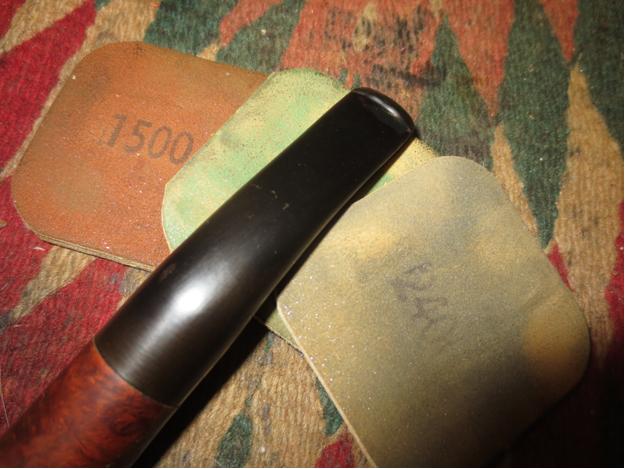
JPL23 I scrubbed out the shank of the pipe with pipe cleaners, cotton swabs and isopropyl alcohol until it was clean and the swabs came back white. I may well use a retort on it later but at this point I stopped with the swabs.JPL24 I sanded the bowl with micromesh sanding pads – wet sanding with 1500-2400 grit pads in preparation for staining the bowl.JPL25 Though the pipe was originally unstained when it was made I decided to use a contrast stain to highlight the beautiful grain on the bowl. I heated the briar and then applied several coats of black aniline stain. I flamed the stain to set it in the grain. I wiped the briar down with alcohol on cotton pads to remove the topcoat of black stain.JPL26

JPL27

JPL28 I took the pipe to the buffer and buffed it with red Tripoli to further remove the topcoat of stain. I sanded it with a medium grit sanding sponge and the fine grit sanding block.JPL29

JPL30

JPL31

JPL32 Once I had the surface stain removed and the remaining black stain highlighted the grain I wiped the bowl down a final time with alcohol and prepared to stain it with the contrast stain. I decided to use a rich mahogany aniline stain for the contrast coat. I applied the stain and then flamed it to set it in the briar.JPL33

JPL34

JPL35 When it had dried I buffed it with White Diamond and took the following photos to show where it stood at this point in the process.JPL36

JPL37 The grain really stood out on the pipe at this point. I still needed to sand it with micromesh to develop a richer sheen.JPL38

JPL39

JPL40

JPL41

JPL42

JPL43

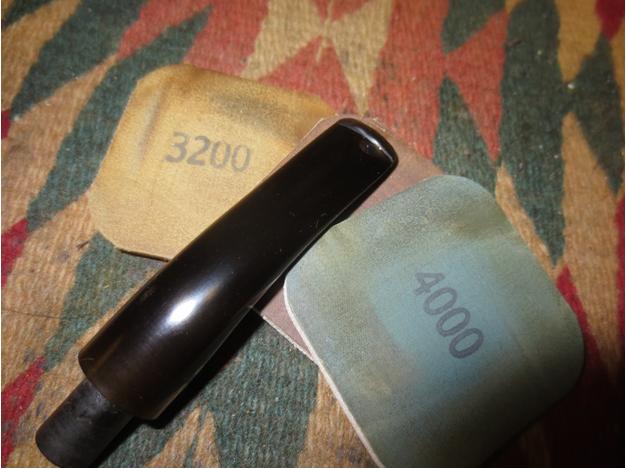
JPL44 I wet sanded the bowl with 1500-2400 grit micromesh sanding pads.JPL45

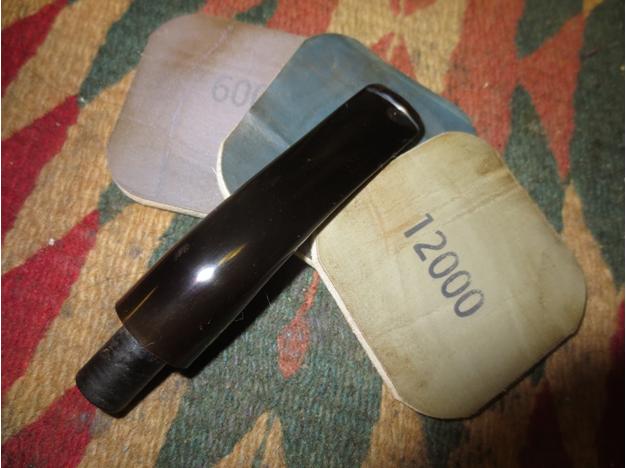
JPL46 I dry sanded with 3200-12,000 grit micromesh sanding pads.JPL47

JPL48

JPL49

JPL50 After sanding with the 12,000 grit micromesh pad I buffed the bowl with Blue Diamond on the buffing wheel and then gave it a coat of carnauba wax. I buffed it with a soft flannel buffing pad to raise the shine. I set the bowl aside and went to work on the stem. I cleaned out the 9MM tenon with alcohol and cotton swabs and pipe cleaners. I worked until the stem was clean.JPL51

JPL52 I sanded the stem with a medium grit sanding sponge and then rubbed it down with Obsidian Oil. I had a box of 9MM filters so I took one out of the box to try in the stem. It fit well and made the draw less open.JPL53

JPL54 I wet sanded the stem with 1500-2400 grit micromesh sanding pads and then buffed the stem with red Tripoli to remove the stubborn oxidation. I resanded it with the micromesh before moving on and dry sanding with 3200-12,000 grit sanding pads. I rubbed the stem down with Obsidian Oil between each set of three pads. After sanding with the 12,000 grit pad I buffed the stem with Blue Diamond and polished until the stem shone. I then gave it a coat of carnauba wax and buffed it with a soft flannel buff.JPL55

JPL56

JPL57 I put the stem back on the pipe and buffed the whole pipe with carnauba wax. I gave it multiple coats of wax and then a final buff with a soft flannel buffing pad.JPL58

JPL59

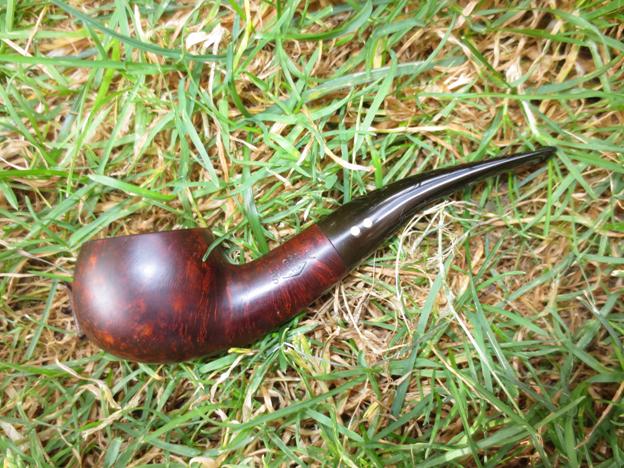
JPL60 The finished pipe is shown in the photos below. I really like the new look that the contrast stain gives the pipe. The colour makes the grain pop and stand out very well.JPL61

JPL62

JPL63

JPL64

JPL65

JPL66

JPL67

JPL68

Restoring a Willard Imported Briar Rhodesian


Blog by Steve Laug

I am finally finishing up the final pipes in the box of gift pipes. This one is a little long stemmed Willard Rhodesian. It is stamped Willard over Imported Briar. It was in pretty good nick. The finish was worn and peeling in some places. There were scratches in the surface of the briar on the sides of the bowl. The bowl was lightly caked with remnants of tobacco clinging to the walls of the bowl. The stem was chewed but no deep marks were in the surface. The stem is that odd nylon like material that was on pipes of this era. It had a threaded tenon and a short stinger that was pretty clean as well. The stem was clean on the inside as was the shank of the pipe. The stem was slightly over turned and had some damage to the nylon of the upper portion of the stem.Willard1

Willard2

Willard3

Willard4 The next two photos show the tooth damage to the top and underside of the stem near the button.Willard5

Willard6 I decided to remove the spotty and peeling finish first. I wiped it down with acetone on cotton pads until the varnish coat was removed. To my surprise there were no visible fills in this piece of briar. The wood actually had some nice grain under the varnish coat.Willard7

Willard8

Willard9

Willard10 I sanded the stem with 220 grit sandpaper to remove the damage on the surface and the tooth marks on the top and underside near the button. I heated the stinger with a lighter to soften the glue so that I could correct the over turned stem. Once it was softened I put it in the mortise and turned it clockwise until it lined up with the bowl properly. I let it cool and harden once again before removing it from the shank.Willard11 I scraped out the slight cake and remnants of tobacco with a pen knife taking it back to bare wood so that a new cake could be built up by the next pipe man.Willard12 I sanded the bowl and the stem with a medium and fine grit sanding sponge to remove the scratches left behind by the sandpaper and then put it back on the pipe and took the next set of photos.Willard13

Willard14

Willard15

Willard16 I stained the bowl with a dark brown aniline stain mixed with two parts alcohol to thin it down and lighten it. I applied it and then flamed it with a lighter to set the stain. I reapplied the stain and flamed it again.Willard17

Willard18 Once the stain dried I wiped the bowl down with alcohol on a cotton pad to even out the stain coat and to make it more transparent.Willard19

Willard20

Willard21

Willard22 I put the stem back on the shank and sanded it with micromesh sanding pads to polish it. I wet sanded with 1500-2400 grit pads and dry sanded with 3200-12,000 grit pads. I rubbed it down with Obsidian Oil between each set of three pads and then again the final time. I did not buff the stem with the buffer as I find that the nylon stems do not do well with the heat of the buffer. I applied some Paragon Wax to the stem and hand buffed it with a shoe brush.Willard23

Willard24

Willard25 I buffed the bowl with White Diamond and Blue Diamond on the buffing wheel and then gave it multiple coats of carnauba wax. The finished pipe is shown in the photos below. It is ready for a long life of delivering a decent smoke to whomever’s rack it ends up gracing. It is a pretty little Rhodesian that looks great.Willard26

Willard27

Willard28

Willard29

Willard30

Stem Reconstruction on an Ehrlich Billiard


Blog by Andrew Selking

“He’s not dead, just mostly dead.” Miracle Max The Princes Bride

I like the way the pipe looked in the auction pictures, but when I first examined it I thought the stem was beyond help. This is not a little pipe, but the previous owner was obviously a clencher. The top and bottom of the stem had a hole, as you can see by these pictures.Andrew1

Andrew2

Andrew3

Andrew4 Before getting into the stem repair, I soaked the bowl in alcohol.Andrew5 Although I have done simple repairs on tooth marks, I had never tackled anything this complicated. The holes were far enough down that it wouldn’t be practical to cut a new button. The stem is fat enough that finding a replacement was also out of the question. The one thing the stem had going for it was the edges were still in good shape. I decided to do a complete reconstruction of the stem.

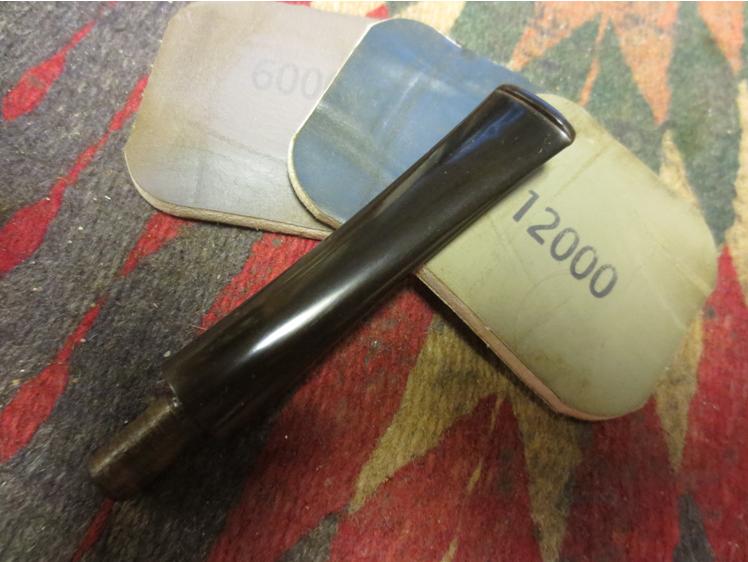
I don’t claim to be an expert on these things, so I turned to one of the how-to articles on Pipe Smoker’s Unlimited. The one gentleman used activated charcoal with super glue, so I decided to try it. I found a large container of activated carbon, which is the same thing, in the pet department of my local Walmart. It came in small pellets, which needed to be ground into a fine powder.Andrew6 This is what it looked like after grinding.Andrew7 I took some wax paper and folded it to fit inside the stem. Once I got the fit I wanted, I sprayed the wax paper with cooking spray and put it back inside the stem.Andrew8 I used a couple drops of clear super glue on the bottom of a plastic cup, mixed in some charcoal dust, and applied it to the hole. I added a couple of drops of glue accelerator and set it aside to cure.Andrew9 I did the same thing with the other side. I’ve found that even with accelerator, it’s a good idea to let the glue cure for at least 24 hours. You can work it sooner than that, but it has a tendency to come out when you’re sanding it.Andrew10 I used several applications of the glue and charcoal paste.Andrew11

Andrew12 Once the hole was filled in I sanded it down.Andrew13

Andrew14 As you can see the charcoal left a few pits. To fill them in I applied a thin layer of super glue over the pits and sprinkled charcoal dust directly on top of it.Andrew15

Andrew16 This is what it looked like after sanding.Andrew17 The stem was still far from finished, but it was good enough to start cleaning the insides.Andrew18 I went ahead and retorted the bowl first.Andrew19 The brush came out fairly clean.Andrew20 I learned a hard lesson while cleaning this shank. In spite of the large diameter, the inner hole was smaller than the q-tip I tried to stick inside it. The end came off and it took a lot of effort to get it out. The moral of the story is, if it doesn’t fit don’t try to make it fit.

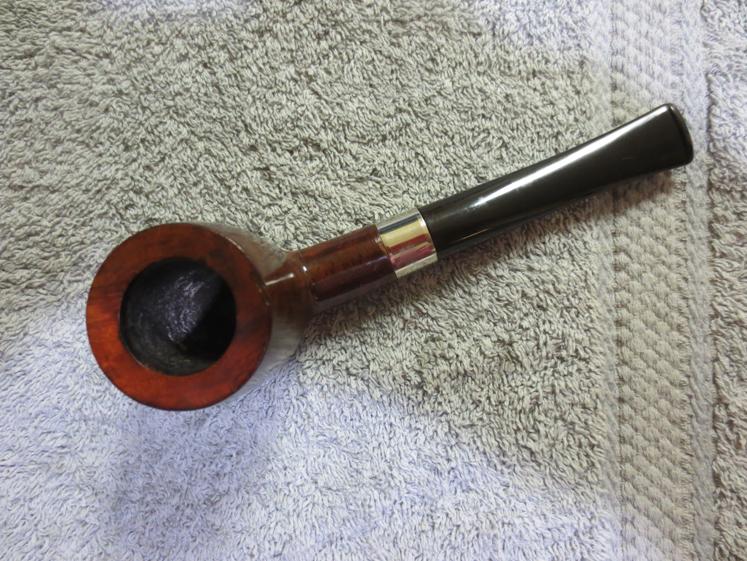
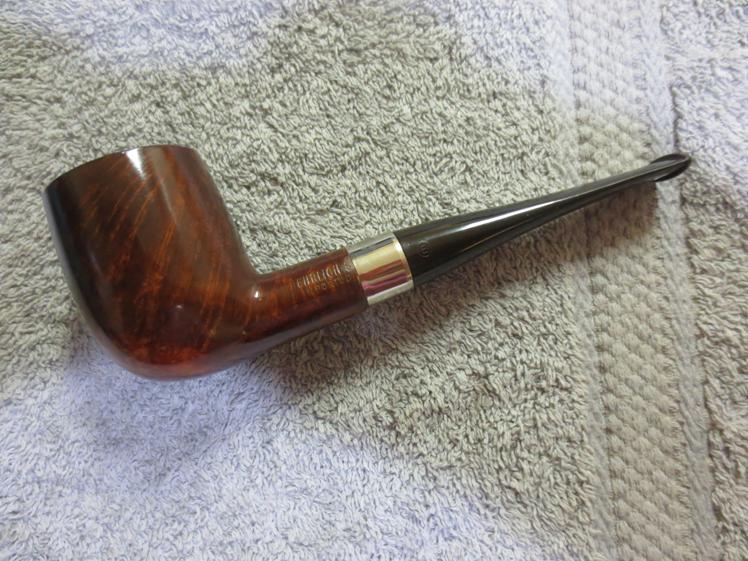
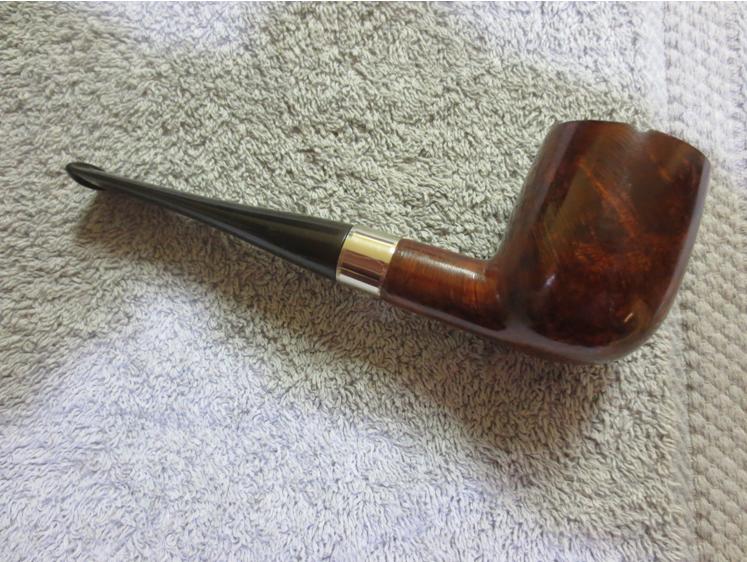
In spite of the minor set-back, the shank was pretty clean.Andrew21 Next I retorted the stem.Andrew22 It had a lot of tar inside it, so repeated the process an additional two times. It was easy to clean after that.Andrew23 With the inside cleaned, it was time to finish smoothing out the stem. I used 400 grit wet/dry with water, followed by 1500-2400 grit micro mesh pads with water. To prevent rounding the edges of the stem I held a rubber washer over the end of the tenon.Andrew24 While the stem dried I turned to repairing the rim damage.Andrew25 I used 150 grit sand paper on a piece of glass to remove the worst of the damage.Andrew26 Once I had the edge almost where I wanted it, I switched to 400 grit sand paper. This is what it looked like after sanding.Andrew27 I have become a big fan of natural finished pipes, especially when they have nice grain like this one does, so I used acetone and 0000 grit steel wool to clean the bowl.Andrew28 After cleaning the finish, I noticed a couple of dents on the front of the bowl.Andrew29 I used my wife’s iron and a wet cloth to steam out the dents.Andrew30 After allowing the wood to dry out overnight, I polished the bowl and stem with a progression of 3200-12,000 grit micro mesh pads.Andrew31 I know Steve uses Obsidian oil on his stems during this step and also uses olive oil to bring out the grain of the bowl. I’ve been experimenting with mineral oil for the same purpose. It doesn’t take much, just a little bit on the tip of your finger. I used one coat after the first three pads on both the bowl and the stem. After the final pad, I repeated the process. I really worked the bowl in my hand to bring out a beautiful reddish brown color.Andrew32 I used a soft cloth to buff the pipe and remove any excess oil before the final buffing stage. I buffed the bowl on my buffing wheel with white diamond and carnauba wax. I used my rotatory tool with white diamond and carnauba wax on the stem. I gave the whole pipe a final coat of Halcyon II wax and filled the E on the stem with a white out pen. This is the result.Andrew33

Andrew34

Andrew35

Andrew36

Andrew37

Breathing New Life into a Wally Frank De Luxe Saddle Billiard


Blog by Steve Laug

I am slowly working my way through the gift box of pipes I received. The one that caught my eye next was a small Wally Frank De Luxe saddle billiard. The stem was not in too bad shape – just a bit of tooth chatter on the top and bottom of the stem along with a deep tooth mark on the underside near the button. It was lightly oxidized. The metal threaded tenon had a pressure fit metal stinger in place that was stuck. The stem was slightly overturned. The bowl was dirty – the finish spotty and damaged. There were scratches but they did not go deep in the briar. The rim had a thick build up of “lava” (tars and oils) that came out of the bowl and over the rim. The bowl was thickly caked. The left side of the shank was stamped WALLY FRANK over DE LUXE. On the saddle of the stem was worn and light stamping of what appears to be WF in a circle but the right side of the stamping is missing. On the right side of the shank it is stamped Imported Briar. The bottom of the bowl and the shank are flattened making the pipe a sitter.Wally1

Wally2

Wally3

Wally4 I took two close-up photos of the rim and the stamping on the left side of the shank to show the state of the pipe when I brought it to the work table.Wally5

Wally6 I unscrewed the stem from the shank and dripped alcohol on the stinger to loosen it from the tenon. Once it soaked a few moments I was able to carefully pull it out of the tenon. One side of the stinger insert was missing but it still fit in the tenon tightly.Wally7 With the stinger removed I heated the tenon with a lighter to soften the glue and correct the over turned stem. It did not take long to heat it enough to screw it into the shank and turn the stem on the tenon until it lined up correctly.Wally8 I reamed the bowl with a PipNet pipe reamer starting with the smallest cutting head and working up to the head that would take the cake back to bare wood.Wally9

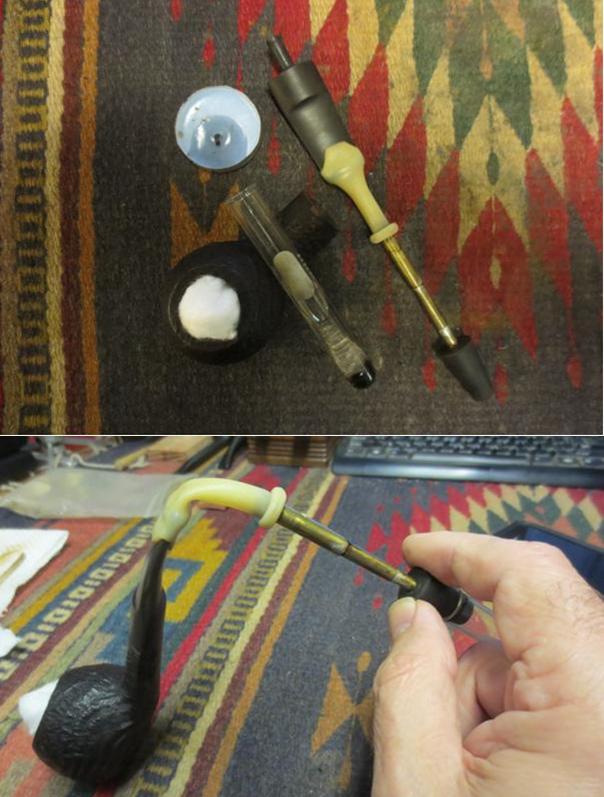
Wally10 With cake cleaned I scrubbed the rim with alcohol on a cotton pad to remove the buildup of tars and oils. I was able to remove the majority of the overflow on the rim with elbow grease and persistence. There was some slight inner rim damage that would be easy to clean up with a light sanding. I also scrubbed the bowl with acetone on cotton pads and then with alcohol. It took off the grime and some of the mess but left the stain intact.Wally11 The shank was very dirty and the aluminum on the tenon, stinger and end of the mortise insert was oxidized. I scrubbed those with 0000 steel wool and then put the pipe back together in order to use the retort on it.Wally12 I set up the retort using a jar to lift the pipe up above the flame of the candle I used to heat the alcohol. I filled the test tube 2/3 of the way full with isopropyl alcohol and inserted the rubber stopper in it. I pulled the surgical tubing over the end of the stem and put a cotton ball loosely in the bowl. I heated the alcohol over the candle flame until it boiled through the shank and bowl. I changed the alcohol four times before I was able to get the shank clean and the alcohol coming out clean.Wally13

Wally14

Wally15 Finally the shank and stem was clean. I removed the retort and ran pipe cleaners through the stem and shank. I used pipe cleaners, cotton swabs and alcohol to remove the leftover tar and oil from both. Finally they were clean and came out as white as they were when I put them into the shank and stem.
I decided to stain the bowl and rim with a oxblood stain. I applied it to the pipe with a cotton pad and then flamed it to set it in the grain. I reapplied it until I had the coverage I wanted with the colour.Wally16

Wally17

Wally18

Wally19 I set the bowl aside to dry for a while and worked on the stem. I sanded the tooth chatter and oxidation with a medium and fine grit sanding sponge. They were hard to remove so I used a folded piece of 220 grit sandpaper to work on the tooth chatter and tooth mark on the underside of the stem. I had to use a small drop of clear super glue to fill the tooth mark. Once it dried I sanded it smooth with 220 grit sandpaper and then began the work of polishing the stem with micromesh sanding pads. I wet sanded with 1500-2400 grit pads and dry sanded with 3200-12,000 grit pads. I rubbed it down between each set of three pads with Obsidian Oil before sanding with the next set of three pads.Wally20

Wally21

Wally22 I put the stem back in the shank after sanding with the 12,000 grit pad and then buffed the pipe with White Diamond and Blue Diamond before giving the bowl and stem multiple coats of carnauba wax. I finished by buffing it with a soft flannel buff to raise a shine. The finished pipe is shown below. The new stain coat, the wax and the polished stem give it a new look and the cleaned interior a new life. This one should be a great smoker if the amount of cake and gunk I removed from the bowl and shank are any indication.Wally23

Wally24

Wally25

Wally26

Wally27

Wally28

Wally29

Wally30

Wally31

Restemming and Restoring The Albany Pipe by ?Orlik?


Blog by Steve Laug

In a recent gift box of pipes there was a billiard that had a replacement stem. The stem did not fit correctly and when it was rotated in any other way but the one it did not fit and showed light between the shank and stem. The diameter of the shank and that of the stem did not match either and the shoulders on the stem were rounded – one of my pet peeves. The pipe is stamped with gold on the left side of the shank The Albany Pipe. On the right side it is gold stamped Made in England. On the bottom of the shank it is gold stamped 17 and Fieldcraft in script.Albany1

Albany2 The finish was natural – no stain and had begun to pick up a patina of age. The stamping was clear but the gold was faded and missing in some parts. The rim was dirty and also damaged on the outer edge and had some deep scratches in the top. The stem was not original. The bowl had a light cake and looked like someone had reamed it recently.Albany3

Albany4 I took a few close-up pictures of the rim and the stamping to give a clear picture of the state of the pipe when I brought it to the work table. You can also see the poor fit of the replacement stem in the photos as well.Albany5

Albany6

Albany7 The brand is one that I am unfamiliar with though in the back of my mind I have a memory of seeing it somewhere listed as a second line of a major English brand. I just cannot find it now. Does anyone have any ideas regarding the maker? I have looked in WMTP and on PipePhil and Pipedia and found nothing so far. I like knowing some of the history of the brands I restore so I am still digging on this one.

One suggestion in response to a post I made on Smokers Forums was from flatticus (Chris) who wrote the following: “Steve, I think The Albany Pipe must be the tobacconist (there was The Albany Pipe Hospital circa 1920?) and Fieldcraft must be the brand of the pipe. There was another Fieldcraft marked for Frederick Tranter Pipe Shop in Bath, England which came up on eBay some years back, unfortunately too long ago to link properly. I can’t find a thing (trademarks, old ads, what have you) mentioning the Fieldcraft name in relation to pipes, but Tranter is still in business. I wonder if someone there would know who used to make their pipes. They were bought out by Havana House, but only about 4 years ago, so you may get lucky.”

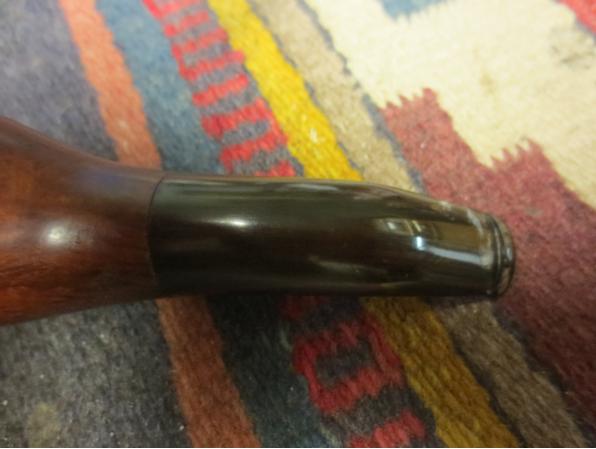
Thanks Chris I will keep looking. I did a bit more digging on PipePhil’s site and looked at the major English brands and sub-brands. The Made in England stamping looks much like that on Orlik Pipes. The shape number 17 also fits one shown in the Orlik Catalogue on Chris Keene’s Pipe pages.Albany8 I removed the stem and looked through my can of stems to find one that would work better for this billiard bowl. Two options came to the front. The first is shown in the photo below next to the replacement stem that came on the pipe. It is a saddle stem that could have worked but the tenon was too small for a snug fit in the shank.Albany9 The second stem I chose was a fat taper stem that had a tenon that was a little too large. I decided to use that one. I used a Dremel with a sanding drum to reduce the tenon enough that I could get a snug fit.Albany10 The next four photos show the pipe with the new stem. It has a slight bend in it that looks dapper on the bowl. There was light oxidation on the stem and tooth marks on the top and underside of the stem next to the button. Other than that the stem was in great shape. It was also slightly larger in diameter than the shank and would need to be fit properly.Albany11
Albany12

Albany13

Albany14 I decided to clean up the bowl before working on the fit of the stem. I lightly topped the bowl to remove the damage to the surface of the rim. I also scraped the remaining cake out of the bowl with a PipeNet pipe reamer.Albany15

Albany16 With the bowl cleaned I put the stem back on the shank and worked on the fit of the stem at the junction of the two. I sanded the stem and lightly sanded the shank, being careful of the stamping to clean up the transition. Because the bowl did not have a stain coat and was natural briar I figured this would be easy to blend in later when I worked on the finish. I used 220 grit sandpaper and medium and fine grit sanding sponges to blend the transition.Albany17

Albany18

Albany19

Albany20 I took several close-up photos of the transition to show the finished fit of the stem and shank. They also show the gold stamping on the bowl.Albany21

Albany22

Albany23 I wiped down the bowl with acetone on cotton pads. I did not worry too much about the gold stamping as I have some rub and buff that I could use to redo the gold once I cleaned up the pipe.Albany24

Albany25

Albany26

Albany27 I sanded the stem and worked out the tooth marks with 220 grit sandpaper and then with medium and fine grit sanding sponges. I followed that with micromesh sanding pads – wet sanding with 1500-2400 grit pads and dry sanding with 3200-12,000 grit pads. I continue to use Obsidian Oil in between each set of three pads.Albany28

Albany29

Albany30 I buffed the stem with White Diamond and then gave it several coats of carnauba wax to protect and shine. I used the Rub and Buff antique gold on the stamping to give it the same look as before and then rubbed down the bowl with a light coat of olive oil before calling it a night. The olive oil soaked in and blended the sanded area of the shank and the topped rim with the rest of the pipe. I sanded the rim, shank and bowl with micromesh sanding pads to smooth out any scratches left behind by the sanding sponges. I usually do this while the oil is on the surface of the briar as the oil gives bite to the micromesh sanding pads. The next four photos show the pipe as it looked when I quit for the evening.Albany31

Albany32

Albany33

Albany34 In the morning I buffed the pipe with a Blue Diamond wheel and then gave it multiple coats of carnauba wax to bring a shine to the pipe. The finished pipe is shown below. I am still undecided if I will leave the slight bend in the stem or not. We shall see.Albany35

Albany36 The next two photos – top and bottom view turned out more read in the photos than they are in real life. The colour of the bowl is more properly shown in the photos above and the close-up photos following them.Albany37

Albany38

Albany39

Albany40

Albany41

Albany42

Albany43

Restoring a NATIONAL Washington DC Square Shank Billiard


Blog by Steve Laug

I picked up this little square shank billiard in a foursome I purchased on EBay. I wanted the Rhodesian in the lot and the others were really just a bonus. This one was in the group but there was no information on it in the advert. When I saw it in the listing I thought it had a bit of a look like an older Comoy’s or even an old GBD square shank. There was no stamping visible in the photos. The stem had some heavy calcification and tooth marks in the photo and what appeared to be a bite through on the topside of the stem. Once it arrived I would have a better idea of what I had purchased.Foursome9

Foursome 6

Foursome8 When I opened the box, of course I went for the BBB Rhodesian first and it was the first pipe I cleaned up. The apple shaped pipe at the top was a Bertram and it was my second cleanup. I pretty much ignored the little square shank billiard as the stem was a mess that I did not feel like tackling at the moment. Shortly after receiving this one I got a gift box of more pipes so this one was pushed to the bottom of the refurb box.

Finally last evening I decided to take it out of the box and examine it more closely. It had faint stamping on the left side of the shank that read NATIONAL over WASHINGTON DC. In many ways it reminded me of the stamping on the Bertram apple that is shown above. It read Bertram in script over WASHINGTON DC. There was no other stamping on the sides, top and bottom of the pipe.Nat1

Nat2 The bowl had a heavy, hard cake that had chunks missing out of it in the bowl sides. The rim was heavily caked and tarred and also had cuts in the top of the rim and dents and chips in the outer edge of the rim.Nat3

Nat4 The underside of the bowl and shank had been flattened to create a sitter. There were scratches and dents in the finish of the bowl. The bowl had evidently been finished like the Bertrams as well in that it did not have a stain coat. It had picked up a patina in the finish over the years that had some red overtones that would come out nicely once the bowl was cleaned up.Nat5 The stem was in rough shape. With a buildup of white calcification that went half way up both sides of the stem. There were also a lot of tooth marks on the top and bottom sides of the stem. The stem was upside down in the photos and did not align properly with the square shank. I turned it over and everything fit very well. The stem had a pinhole like bite through in the surface that would need to be repaired. The stem itself had a slight cant to the right when it was manufactured and that could not be changed without drastically reworking the stem. The slot in the airway was clogged to an airhole the size of a pin that allowed minimal airflow and would not take a pipe cleaner.

Topside of the stem

Topside of the stem

Underside of the stem

Underside of the stem

With the stem removed from the shank it was obvious that the shank had never been cleaned out and had a thick build up of tars and oils. The tenon was a step down version and the step itself was tarred and caked to the point that the step did not show.Nat8 I had a gut feeling that the pipe had some connection to Bertram Pipe Company of Washington DC but only the vaguest memory of that connection. I could not remember where I picked that up but just had the memory. I did some searching on the Internet and found a National Briar Pipe Company of Jersey City, New Jersey with no clear ties to Washington DC on the Pipedia site. This was the company that purchased the Doodler after Tracy Mincer died. I could see that the Jersey City pipes were stamped differently and all had line names stamped on them. On the Pipephil site I found an English version that had very different stamping on the left side of the shank as well as Made in England on the right side of the shank.

I also posted a question on Smokers Forum and Pipe Smokers Unlimited regarding the brand. I received several responses that gave me information. One of them on SF came from Ed Klang and provided me with some confirmation regarding my memory of the connection with Bertram. I quote him in full, “In the history of the Bertram company, after the fire at the Washington facility and the decision was made to discontinue Bertram production a group of employees and a few investors wanted to buy the rights to the Bertram name, which was turned down and it was then proposed that they would rebrand the pipes as National, no mention was made whether anything ever came of that proposal. Supposedly this group did produce pipes for a while but the effort was finally abandoned and I have never been able to reliably confirm this. Just bits and pieces here and there.” Thanks Ed. This is the random memory that I was trying to dig up.

I also received a reply on SF from Radiobob that read as follows: “National Pipe and Tobacco was located on the 1700 block of Pennsylvania Avenue in Washington, D.C., just about a block from where I worked. I still have two Canadians that I bought there, as well as a Comoy’s Patina Apple. In my recollection, it closed down–much to my regret–in the mid to late 1980s.”

Those responses gave me the kind of details that I always find helpful in my restoration work. I will continue to do some digging on the company and see what I can find but that bit confirmed the visual tie to the Bertram Company of DC. Thank you for your help Ed and Bob.

I started work on the pipe by removing the stem and then reaming the bowl. The cake was hard as a rock but by beginning with the smallest cutting head of my PipNet reamer and working up to the third cutting head I was able to ream the bowl back to bare briar.Nat9

Nat10

Nat11 You can see in the photo above that there were still some rough places on the side of the bowl that needed more attention. I used a pen knife/letter opener that I keep in my refurb tool kit to carefully scrape away the remnant of cake.Nat12 I started to slowly sand the top of the rim with a folded piece of sandpaper but found the damaged areas significant enough that I decided to top the bowl and reshape the top of the rim by hand afterwards.Nat13

Nat14

Nat15 I scrubbed the bowl down with acetone on cotton pads to remove the grime that had been rubbed into the bowl sides and shank. There were a few fills present but I figured that once I oiled the bowl these would blend into the reddish finish of the briar.Nat16

Nat17 I reshaped the rim with a folded piece of sandpaper to smooth out the rough spots on the outer edge and to give the rim a slight bevel toward the inner rim edge. I wiped it down with acetone and cotton pads as well.Nat18 I set the bowl aside for a bit and worked on the stem. I sanded the stem surface to remove the tooth marks and the calcium buildup. I also wanted to remove the light oxidation that was underneath that and to also clean up the stem enough that I could see the extent of the damage around the bite through on the topside. The first photo below is enlarged to show the hole. It was not huge but there were small cracks radiating around the hole. There were no holes on the bottom side of the stem or tooth marks along the sides.Nat19

Nat20

Nat21

Nat22 I picked the area around the small hole with a dental pick to remove any loose pieces of vulcanite that were present and then scrubbed down the area on the top of the stem with alcohol to clean it up for the repair. I greased a pipe cleaner with Vaseline Petroleum Jelly and inserted it in the airway under the hole. I filled the hole with a large drop of black super glue, intentionally overfilling it in order to have the glue go into the spidering cracks around the edges. I set the stem aside for the evening and let it cure.Nat23 In the morning when the glue had cured I used a needle file to redefine the button and then sanded the repair with 220 grit sandpaper to remove the excess and feather it into the surface of the stem.Nat24

Nat25 I sanded the stem with a medium and fine grit sanding sponge and found that while the major hole was filled and solidly repaired there was a small air bubble that once sanded produced a small hole that also needed to be fixed. It was right next to the newly shaped button. I used a drop of clear super glue to repair that. It dries quickly so I could easily sand it and blend it into the stem.Nat26

Nat27 I sanded the patch and the stem with a medium and fine grit sanding sponge. The results can be seen in the photos below. The hole is gone and the stem is ready for polishing.Nat28

Nat29

Nat30

Nat31

Nat32 I sanded the bowl, shank and stem with micromesh sanding pads – wet sanding with 1500-2400 grit pads.Nat33 I rubbed down the stem with Obsidian Oil and while it dried I decided to rub down the bowl with a light coat of olive oil. It serves to highlight the grain and brings out the red in the briar. The next four photos show the pipe at this point in the refurb.Nat34

Nat35

Nat36

Nat37 I dry sanded the stem, bowl and shank with 3200-12,000 grit pads. I rubbed the stem down with Obsidian Oil between each set of three pads and gave the stem a final coat of the oil after the 12,000 grit pad.Nat38

Nat39 I buffed the pipe and stem with White Diamond and gave them both multiple coats of carnauba wax. I buffed it with a soft flannel buff to raise the shine. The finished pipe is shown in the photos below. The olive oil really highlights the red tints in the briar and shows the contrast between the birdseye and the background briar as well as the grain on the front, back, top and bottom of the shank and bowl. It truly is a beautiful pipe – the briar is well grained and the fills disappear into the red colour of the briar.Nat40

Nat41

Nat42

Nat43

Nat44

Nat45

Nat46

Nat47

Nat48

Nat49

A Kaywoodie Supergrain 5102 Poker Clean Up


Blog by Troy Wilburn

I got this pipe in a lot of pipes I received from a friend on Facebook. It’s a pre 1936 four digit (5102) stamped poker with the 4 hole stinger. It was in terrific shape, so being at least 78 years old I wanted to keep it as original as possible. I basically just gave it a good cleaning with little else needed.

Here is the pipe before:KW1

KW2

KW3 I scraped out old cake (which there wasn’t much of) and gave the shank a good cleaning. I cleaned off all the old grime with a cotton ball and a small amount of Oxy Clean mixed with warm water. I cleaned the rim with isopropyl alcohol on a cotton swab followed by scrubbing it with oxy/water with a Scotch Brite pad. Mineral oil will bring the color back out.KW4

KW5 I soaked the stem and stinger in isopropyl alcohol for about 45 minutes to loosen up the stuff on the stinger.KW6 I cleaned stinger and inside stem with steel wool and isopropyl alcohol. Once finished with the scrubbing it was ready for wet sanding.KW7

KW8 I had to file out some very minor tooth marks on the top and bottom of the stem next to the button.KW9 With the bowl cleaned and stem wet sanded I put the pipe back together for inspection.KW10 I wiped down the pipe and stem with mineral oil to condition wood, bring color back out and then did some final inspecting before buffing.KW11 Once the oil absorbed into the wood and vulcanite it was ready for a little buffing.

Here is what the pipe looked like after I was finished.KW12

KW13

KW14

KW15

KW16

KW17

KW18

KW19

KW20

KW21

KW22

KW23

KW24

An Easy Restoration – A Dr. Plumb Flat-Grip 422 Billiard


Blog by Steve Laug

After the latest struggle with the Savinelli I decided to work on one that I thought would be an easy restoration. But given my track record with the last one I was not sure. Time would tell if it would be easy or if the work on it that I did would make it hard. This little billiard came to me in the gift box of pipes to rework.boxadditions It is stamped on the right side of the shank Dr. Plumb in a script over – Flat-Grip. On the right side of the shank it is stamped with the shaper number, 722. On the underside of the shank there is a horizontal stamping next to the stem that reads FRANCE.Dr1

Dr2 The pipe was in good condition. The finish was dirty but had no damage. There was one fill on the bowl on the back right side. The stain was even and not faded at the shank stem union or on the sides of the bowl. The rim had some build up and darkening but did not have damage to either the inner or outer edges. It had a slight bevel inward to the bowl that is often found on older billiards of this era. The shape bore all the marks of the GBD line that is sprung from. My guess is that the one fill on the back right moved it from the GBD line to the Dr. Plumb line. The stem was oxidized and had some tooth chatter and marks on the top and underside near the button. The bowl was caked and had a few spots that looked like mould on the inside of the bowl. I scraped one and looked at it under the light to see if it was mould. For all intents and purposes it was. Now the question was how deep into the cake did it go and would a complete ream of the bowl remove it from the pipe. Maybe this pipe would not be as easy a restoration as I had thought.Dr3

Dr4 The stem had the Dr. Plumb red dot on the top of the stem with the word PLUMB stamped over the top in white. The Plumb stamping on the stem would need to be touched up.Dr5

Dr6 I have included two close-up photos of the bowl rim and the white mould in the bowl. I was very curious to see if a good ream would remove it. Would the mould go deeper into the bowl than the cake? Would it be in the briar itself? I certainly hoped not but a reaming would disclose the depth of the problem.Dr7

Dr8 I reamed the cake back to bare wood. I wanted to remove all signs of the mould. I scrubbed off the cutting head before putting it away. I examined the bowl to make sure I had removed all of the signs of the mould. The wood was clean and bare. It was so it looked as if the mould had only been on the surface. I scrubbed the surface of the walls with alcohol and cotton swabs to make sure that none of the spores survived.Dr9

Dr10 I scrubbed the darkening and build up on the rim with cotton pads and saliva and was able to remove it. I use cotton swabs with alcohol as a follow up on the rim and when I was finished the rim was dull but clean.Dr11

Dr12

Dr13 I scrubbed out the shank with cotton swabs and isopropyl alcohol and pipe cleaners to clean out the airway in the mortise and the stem. I put the stem back in the mortise and took a few photos of the pipe at this point.Dr14

Dr15 The Dr. Plumb Flat Grip stem is unique in its design. It has a different style of taper that allows it to have what GBD called a flat surface. Instead of a crowned, rounded stem top and bottom there were slight taper from the edge of the surface to the side of the stem on all sides top and bottom. On this stem these were slightly rounded from use. I used a 220 grit sandpaper to break through the surface of the oxidation, remove the tooth marks and chatter and also clean up these tapered edges.Dr16

Dr17 I sanded the stem with a medium and a fine grit sanding sponge to smooth out the scratches and clean up the stem surface further. I wet sanded the stem with 1500 grit micromesh and then used a liquid paper/Whiteout to touch up the PLUMB stamping on the top near the shank.Dr18

Dr19 I put the plastic washer on the tenon and inserted it into the shank so that I could sand the edge without rounding the shoulders of the stem. I sanded it with a fine grit sanding sponge to remove the light oxidation that still remained on the shoulders. I repeated the wet sanding with 1500-2400 grit sanding pads and then dry sanded with 3200-12,000 grit pads. I rubbed the stem down with Obsidian Oil between each set of three pads. I rubbed it down a final time and let it sit until it was absorbed into the vulcanite.Dr20

Dr21

Dr22 I buffed the stem with White Diamond to finish polishing it and raise the shine. I buffed it with a soft flannel buff to finish the stem.Dr23

Dr24 I buffed the entire pipe with White Diamond and Blue Diamond to polish the briar and stem. I gave the pipe multiple coats of carnauba wax and then buffed it with a soft flannel buffing pad to raise the shine. The finished pipe is shown in the photos below. It is cleaned and there is no sign of the mould that once was in the bowl. The pipe smells clean and new. It is ready to load up and smoke the first bowl.
Dr25

Dr26

Dr27

Dr28

Dr29

A Savinelli de Luxe Milano 431KS Reborn Twice – PART 1: reshaping a broken stem.


Blog by Steve Laug

You will see by the end of this blog why I say the pipe was reborn twice. Suffice it to say in this opening paragraph that a near pipe repair tragedy occurred when I had all but finished the first rebirth.When I picked up the pipe it was one of two that I found while on a pipe hunt in Bellingham, Washington with a friend. The other pipe was a Custom Bilt that I have already blogged about. The grain on this pipe attracted my attention and made me want to see what I could do with it.Sav When I brought the pipe to the work table most of the issues were with the stem. The bowl had originally had a natural finish so it was dirty but not stained. There was no finish on it or varnish that needed to be removed so the clean up would be quite simple. The rim was caked with a thick tar and oil buildup that was shiny and hard. The bowl had a cake of the same material and had the sweet smell of an aromatic – lots of vanilla. The main issue with the stem was twofold. The top surface of the stem from the button up the stem about 1 inch there were many dents and bite marks. The underside of the stem had a large piece of vulcanite missing from the stem and the airway had been clamped down by biting. It also was oxidized and calcified. The fit against the shank was fairly decent with a slight gap on the left side, top and bottom at the shank.Sav1

Sav2

Sav3

Sav4 The next two close up photos of the stem show the damage to the top and bottom side of the surface next to the button. The underside is the most damaged with a huge chunk missing. The second photo shows the top of the stem with the many tooth marks and bumps that created a thin surface on the top of the stem.Sav5

Sav6 I took the next photo to show the rim. All edges are intact but the surface is coated with a thick, hard coat of oils and tar.Sav7 The tenon had an inner tube insert in it. I have had several of these Savinellis but never had one with the tube. It would turn out to come in handy later.Sav8 I weighed my options with the stem for several days before I decided to cut off the damaged portion of the stem. I used my Dremel with a sanding drum and took the stem back to solid material.Sav9

Sav10 The next four photos show the look of the pipe with the shorter stem. Personally I like the more compact look of the stem as it seems to fit proportionally well with the pipe.Sav11

Sav12

Sav13

Sav14 I decided to work on the button on the pipe before turning to the bowl. You can see from the photo below that the underside of the area where I would cut the button was quite thin. I did not want to cut back the stem any further so I built up that area with black super glue. I applied the glue and set the stem aside to cure. It would take several coats before the button was built up.Sav15

Sav16

Sav17 While the glue cured and hardened I worked on the bowl. I reamed it with a PipNet reamer starting with the smallest cutting head and working up to a head that would cut back the cake to bare briar.Sav18

Sav19 With the bowl reamed back I could tackle the top of the bowl. Even using the reamer did not chip or crack the buildup on the top of the rim. It was like rock. I scrubbed the rim with oil soap and a tooth brush. I picked at it with a dental pick and was not able to break through the rock. I decided to lightly top the bowl to remove the buildup. The idea was not to remove any briar but merely to take of the rock hard tars on the rim. I used my topping board and 220 grit sandpaper and worked the rim carefully to ensure that I only took the rim down to briar. Once I broke through the rock I took several more turns on the sandpaper to finish up the rim.Sav20

Sav21 I scrubbed the bowl with acetone on cotton pads to remove the soiling and oils in the briar. It did not take much to bring the briar back to its natural state.Sav22

Sav23

Sav24 I decided to rub down the bowl with a light coat of olive oil to protect the briar and give it some life. I applied the oil with a paper towel and rubbed it in and rubbed it off. It also served to highlight the grain and make it stand out.Sav25

Sav26

Sav27

Sav28 I cleaned out the shank with cotton swabs, pipe cleaners and isopropyl alcohol until they came out clean. For the amount of build up of tars and oils on the rim the shank was quite clean.Sav29 I decided to use a cotton ball and alcohol soak on the bowl to remove the sweet smells of the aromatics that had been smoked in the bowl. It had a thick vanilla smell that needed to go in my opinion. I set the stuffed bowl in an ice cube tray and used an ear syringe to fill it with alcohol. I let the bowl soak overnight to leach out the oils in the wood.Sav30

Sav31

Sav32

Sav33 By the time I had finished setting up the bowl I called it a night and went to bed. The next morning I worked on cutting and shaping the new button on the stem. I used my usual knife blade file to make the initial cuts and shave back the slope of the stem.Sav34

Sav35 When I had the slope and look right I sanded the newly shaped button and stem with 220 grit sandpaper. I then repaired some of the low spots with clear super glue. I recut the button with the needle files and sanded it with 220 grit sandpaper to clean up the edges.Sav36

Sav37 With more sanding and shaping I had it where I wanted it and then sanded the stem with a medium and a fine grit sanding sponge to clean up the scratches in the vulcanite.Sav38

Sav39 With the button shaped in I worked on the slot in the airway. I used my usual three needle files – a flat oval, an oval and a round file to work on the slot. I always start with the flat oval and work to the round file.Sav40

Sav41 I used a folded piece of sandpaper to smooth out the inside of the slot.Sav42 At this point I worked some more on the surface of the button. It still was too rough to my liking. I sanded and filed it to reshape it. The next two photos show it before I worked it over with files and papers.Sav43
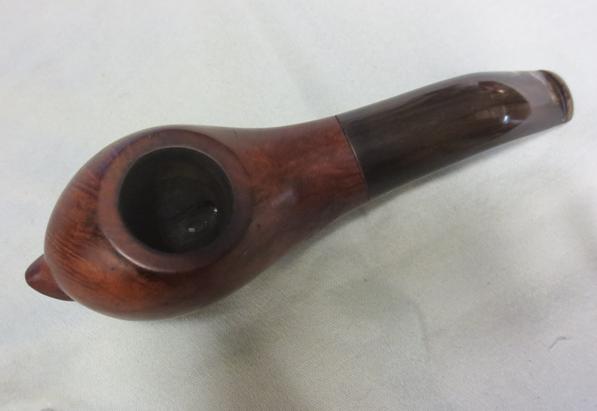
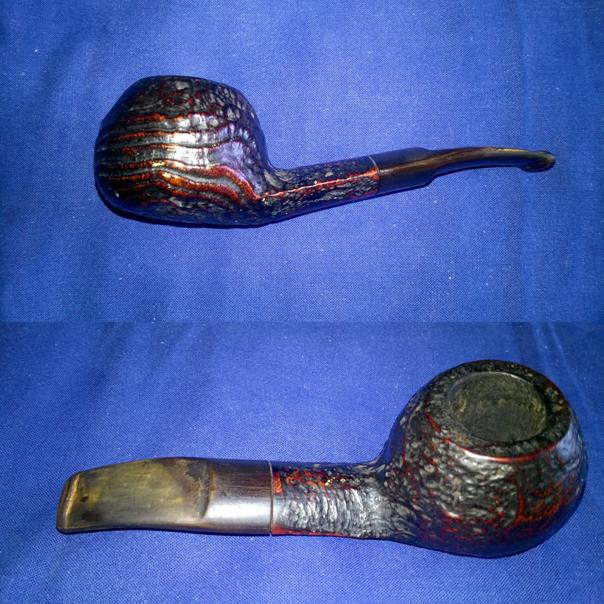
Sav44 Once I had the button shaped to my satisfaction I sanded it with micromesh sanding pads. I wet sanded with 1500-2400 grit pads, rubbed down with Obsidian Oil and then set it aside to dry. I was pleased with the overall effect of the new button and could not wait to finish polishing it. This is where I made the first mistake in this repair.Sav45

Sav46 Instead of leaving it on the work table and calling it a night I brought the pipe upstairs with me from the basement work area. I wanted to show the girls in my family the result of my work. I know that they are not that interested but they attempt to humour the old man. I stopped at the fridge to get some water and that is when the disaster struck. I could not believe it. The pipe simply slid through my fingers and hit the hardwood floor in our kitchen. I can’t tell you how many times that has happened with no issues. But this time there was going to be a major issue and it came with a vengeance. When it hit the floor, really only 2 feet as I was bending over, I heard the awful click and the stem and bowl separated. The tenon snapped at the shank.Sav47 All that work done and now what to do? I was sick with the thought of starting over. I carried the broken pipe down the stairs to the work table and left it in the dark and went to bed – just a tad frustrated. If you are interested in seeing what I did to try and redeem this disaster make sure to read Part Two of the work on this pipe.

Restoring one of my favourite pipe shapes – an Edwards Author 722


Blog by Steve Laug

This Edwards Author 722 came to me in the gift box I received. The shape has always been one of my favourites. This one is stamped Edwards in script on the left side of the shank. On the right side it is stamped Algerian Briar over 722. I am guessing that the 722 is the shape number. I have looked but cannot find any information on the Edwards shapes. On the underside of the shank it is stamped with a large number 5. On the underside of the stem was stamped the word FRANCE.Ed1

Ed2 From what I could find Edwards left all of their pipes with a natural finish, as was the case with this one. It was dirty and had darkened from smoking but it did not have a finish or stain on the briar. The bowl had been reamed and cleaned and the shank was clean. The briar had fills on the topside and the underside of the shank and on the left side of the bowl. They were white putty and some of them were shrunken and missing bits of the putty. The rim was dirty and slightly damaged.Ed3

Ed4 The stem was very tight in the shank and I carefully twisted it slowly from the shank. There was a yellow waxy substance on the tenon like old and dried beeswax. The mortise area was clean briar and was unstained by tars or oils. The fit of the stem to the shank was perfect. It was a smooth transition with no ridges or gaps.Ed5

Ed6 I wanted to know more about the brand. I have had several Edwards pipes over the years and still have them. I checked out my two usual sources Pipedia and PipePhil’s site. Reading on Pipedia I found the following information that I quote. http://pipedia.org/wiki/Edward%27s

“Edward’s pipes were originally produced in St. Claude, France when France actually was a world-class pipe maker with longstanding business & political connections to Colonial Algeria that allowed them to obtain the finest briar. During the tumultuous 1960’s, Edward’s created a business model to offer the finest briar available in both Classic and Freehand shapes – all at a fair price. They bought the company & equipment and cornered the market on the finest, choice Algerian Briar just before the supply vanished in political turmoil of Algeria’s independence. Edward’s packed up both machinery and briar-treasure to America, safely caching the essentials to create a new pipe-making dynasty. This was a coup, for the 70’s and 80’s were grim years for pipe smokers as quality briar all but disappeared.”

“Edward’s Design Philosophy is hard to pin down, think of their style as the “American Charatan” with unique & clever twists all their own. Today, they fashion pipes in several locations across the USA. All of Edward’s pipes are Algerian Briar – a fact very few pipe companies can claim, and all are oil-cured utilizing natural finishes – no strange concoctions are used to interfere in your tastebud’s dance with the briar. Algerian, Calabrian, Sardinian, Corsican – take your pick, but Algerian Briar is generally considered the finest smoking briar ever used. When combined with oil-curing, Algerian takes on a magical quality that even Alfred Dunhill recognized as far back as 1918 as the choice for both his Bruyere and Shell.”

There was also a non-working link to http://www.otcpipes.com that reference a collection of vintage Edward’s pipes and scans of Edward’s catalogs. I wish I could get that link to work. (If anyone has information on this please let me know as I would love to view this site and its information.)

I found a bit of additional information on the PipePhil site (http://www.pipephil.eu/logos/en/logo-e1.html). I quote it here as well.

“Edward’s Pipes, headquartered in Tampa, FL, got its start importing pipes from France and continued to do so from 1958 to 1963 when it started producing pipes in Florida from prime Algerian Briar, a practice they continue to this day (2010).”

I also found an interesting exchange on the Pipes Magazine site regarding Edwards that was posted three years ago. http://pipesmagazine.com/forums/topic/edwards-pipe I have copied one portion of that interchange by a poster named cypresspipe. He adds a personal dimension to the information having worked for Edwards in the 70’s. I quote him in full below.

“I worked at an Edward’s Pipe Shop in Jacksonville in the 70’s and I can provide more information about Edward’s pipes. Edward’s still exists with a few remaining shops around the country. Like the rest of the industry, they are primarily cigar stores and gift shops now. Edward’s pipes were and are their house brand and they were made in their factory in Tampa. I visited the Tampa store several years ago and they told me that Edward’s pipes are now made in Spain. They also told me that they were running out of Algerian Briar and, as a result, many of their pipes were no longer carrying that stamping.”

“If you are familiar with Randy Wiley pipes, he started out making pipes in the Edward’s factory in Tampa back in the 1970’s.”

“The models Skylark, Skipper, Royce, Benton, etc. are fairly recent name categories, probably starting in the 90’s. They didn’t use these names when I worked there, except the “Skipper” was a pipe with a particular style of etching on it. At the time they made some very nice high-grade freehands that sold in the $100-150 price range (several hundred dollars today).”

“While the individual Edward’s shops are franchisee-owned the parent company is FGT Enterprises of Tampa, Florida. The company makes pipes under the “Benton” brand for other shops around the country, and makes private label pipes for some shops as well. They are a leading wholesaler of smoking accessories. You can go to their website and download their catalog (www.fgtenterprises.com–you might want to check out the “About Us” page on the site. FGT at one time did not stress their connection to the Edward’s shops, as they wanted to downplay the fact that they were associated with stores that were competitors to some of their other customers.”

“I have about 20-30 Edward’s pipes from the time I worked there and they have always been good smokers. The only problem with them is that pipes in the 70’s tended to be smaller (about group 3) than they are today.”

“As far as I know, there are still Edward’s shops in Los Altos (CA), Englewood (CO), Tampa, Atlanta, Jacksonville, and Dallas. In case you are interested Edward’s was named after Edward Rowley, a Tampa TV personality of the 50’s and 60’s who founded the company in partnership with Frank Smith (“Smitty”). Rowley was essentially the “face” of the shops while Smitty was the tobacco and pipes guy. Smitty bought out Rowley’s interest in the company sometime in the late 70’s or early 80’s.”

Armed with that information I went to work cleaning up the pipe. I started by topping the bowl with 220 grit sandpaper on a topping board to smooth out the rim and even out the smooth surface. I followed that by sanding it with a medium and a fine grit sanding sponge.Ed7

Ed8 I picked out the ugly pink/white fills with a dental pick. I scrubbed the bowl down with acetone on cotton pads to remove the grime and the dust from the fills. When the bowl was clean I refilled the sand pits with briar dust from the rim and clear super glue. I have learned that these turn almost black but that is far easier to work with than the pink/white putty.Ed9

Ed10

Ed11 I sanded the repairs with 220 grit sandpaper and then with a medium and fine grit sanding sponge. I followed that by sanding with 1500-2400 grit micromesh sanding pads.Ed12

Ed13

Ed14 I have a dark alcohol bath – I filter out the sludge monthly but leave the alcohol dark. I have found that a soak in it not only removes the finish but also gives a patina to the briar. It tends to make blending the repairs and the topped rim much easier.Ed15 While the bowl soaked in the bath I turned to the stem. I sanded the tooth marks and tooth chatter on the stem with 220 grit sandpaper to remove it and smooth out the surface.Ed16

Ed17 By the time I finished the initial sanding of the stem it was time to remove the bowl from the bath. I dried off the bowl and took the photos below to show the colour that the bath added to the briar.Ed18

Ed19

Ed20

Ed21 I set it aside and finished working on the stem. I sanded it with medium and fine grit sanding sponges and then with micromesh sanding pads. I wet sanded with 1500-2400 grit pads and dry sanded with 3200-12,000 grit pads.Ed22

Ed23

Ed24 I buffed the stem with White Diamond and Blue Diamond on the buffing wheel. I gave it several coats of carnauba wax and lightly buffed it with a flannel buff. I am always careful when buffing the stem without the bowl (in fact I rarely do it) because it is very easy to round the shoulders on the stem making a tight fit against the shank impossible.Ed25

Ed26 I buffed the bowl with red Tripoli and White Diamond to remove the surface scratches around the patches. I buffed the rim carefully with the same product. I took the next two close-up photos of the rim to show the repaired and polished rim.Ed27

Ed28 The finished pipe is shown in the photos below. The rich patina is only from the alcohol bath. I used a stain pen to touch up the light spots around the patches on the right side of the bowl and shank. I gave the pipe several coats of carnauba wax and buffed it with a soft flannel buff to raise a shine. All that is left to do is to load the bowl and fire it up. Something I hope to do before the end of the week.Ed29

Ed30

Ed31

Ed32

Ed33

Ed34

Ed35