Reworking a horn stem on a Regent Pipe


Blog by Steve Laug

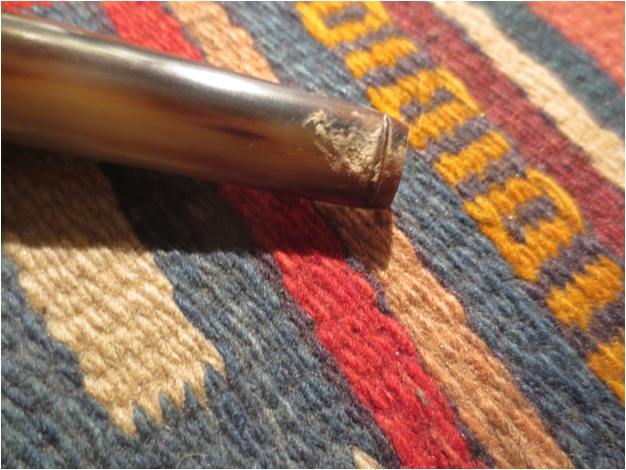
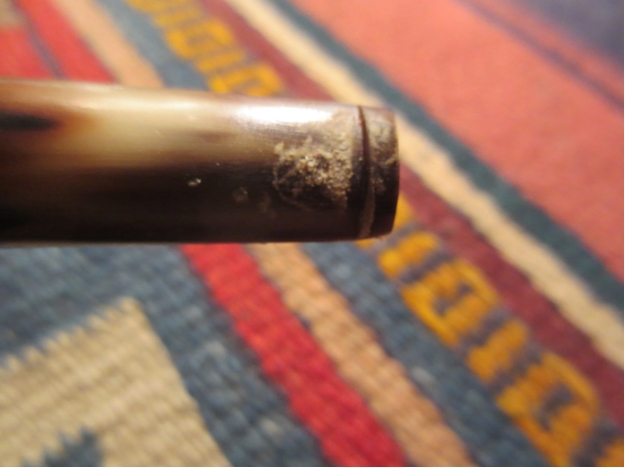
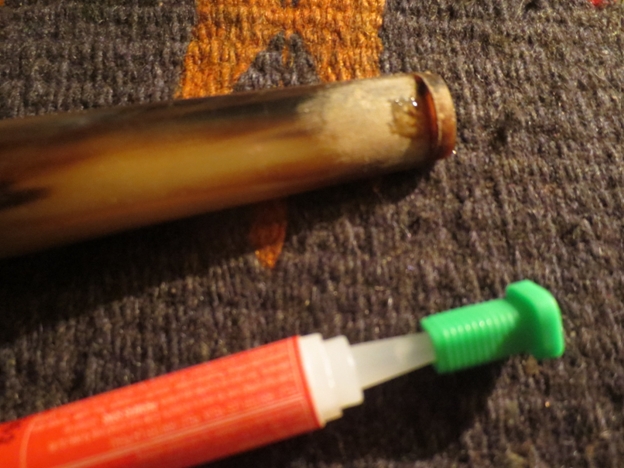
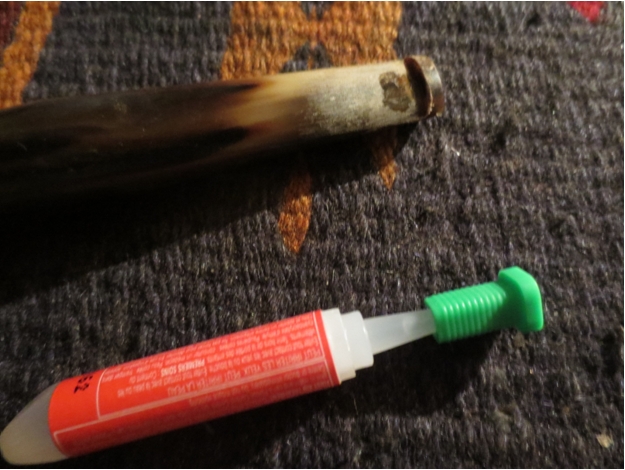
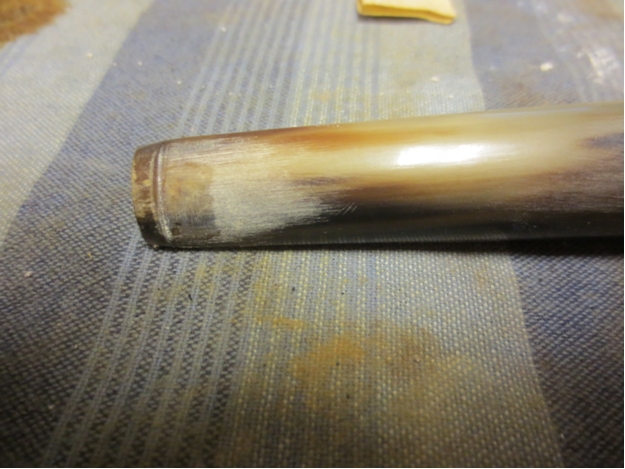
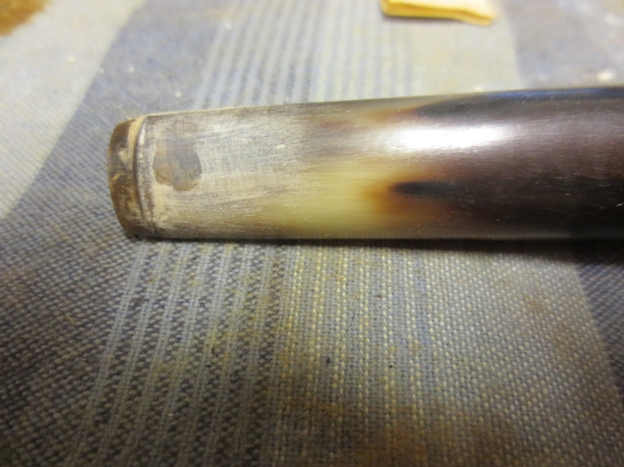
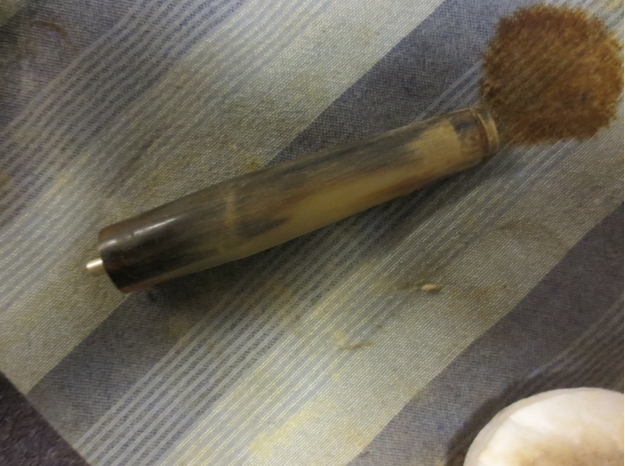
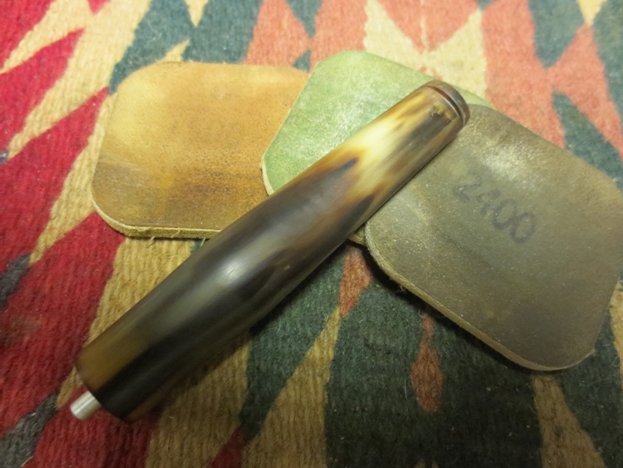
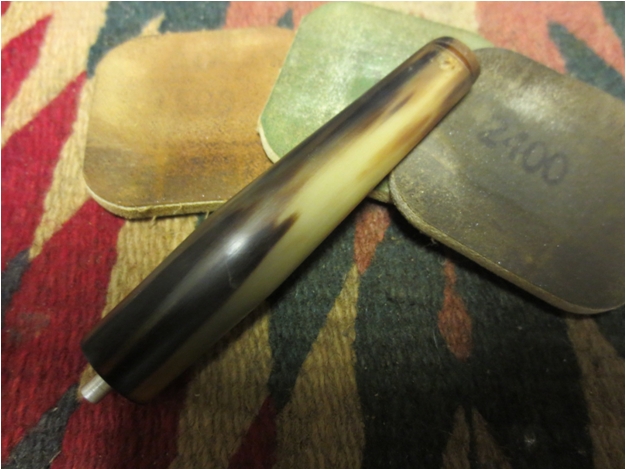
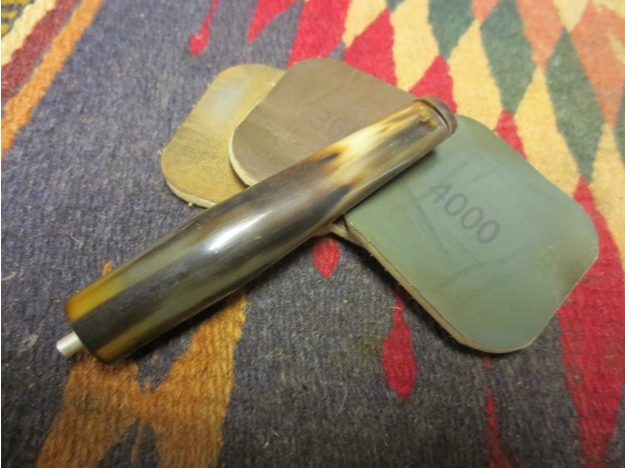
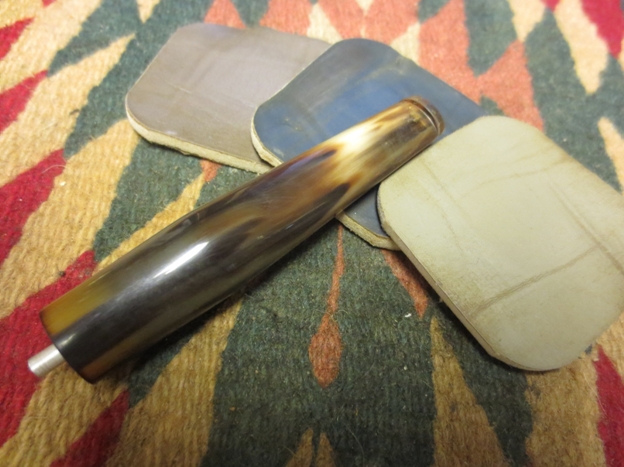
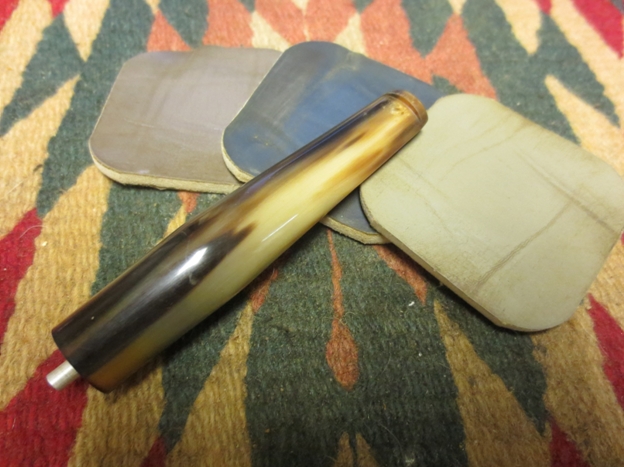
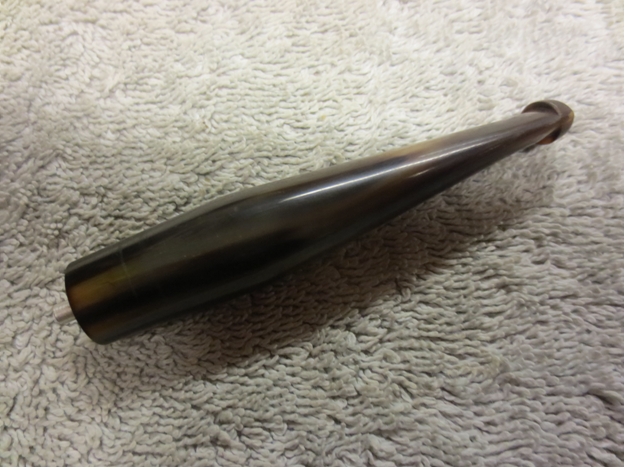
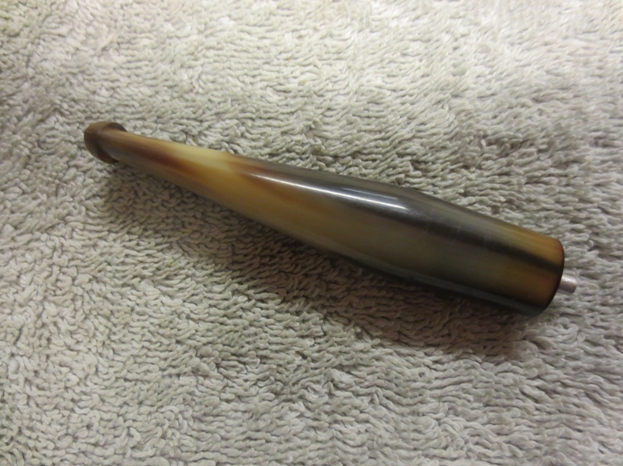
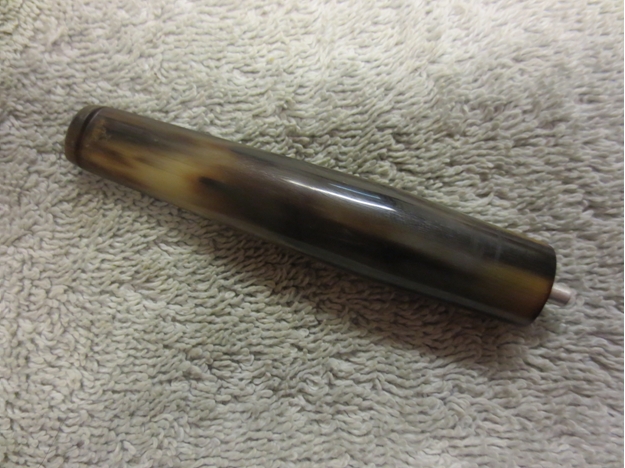
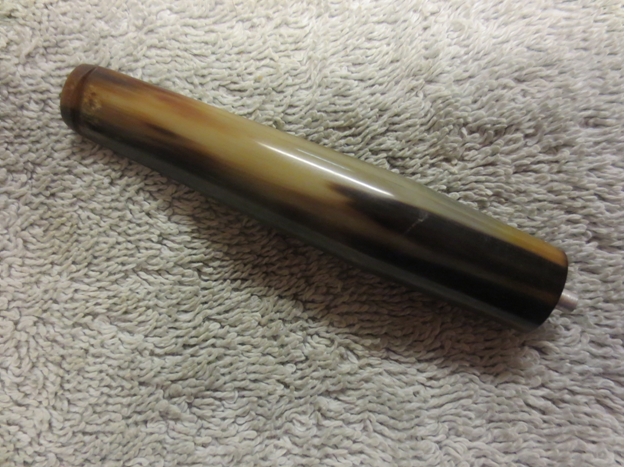
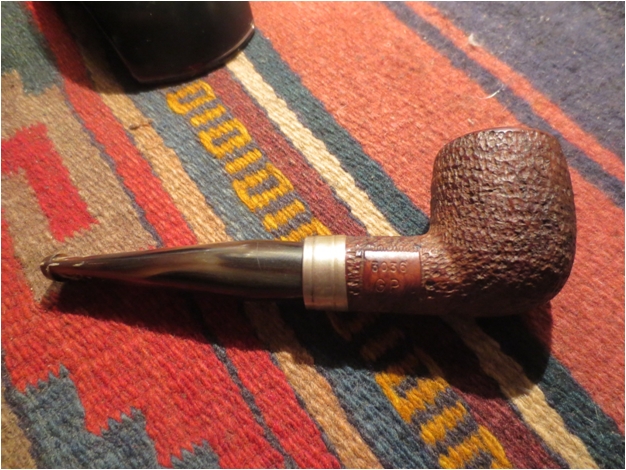
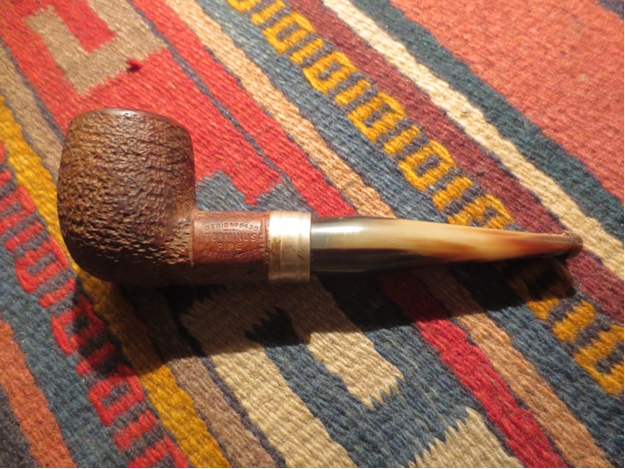
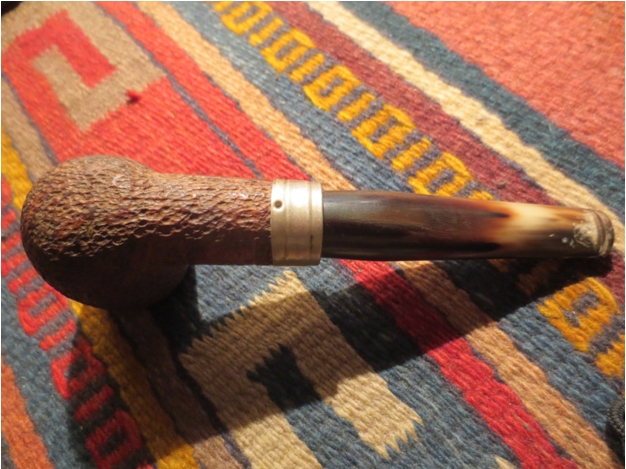
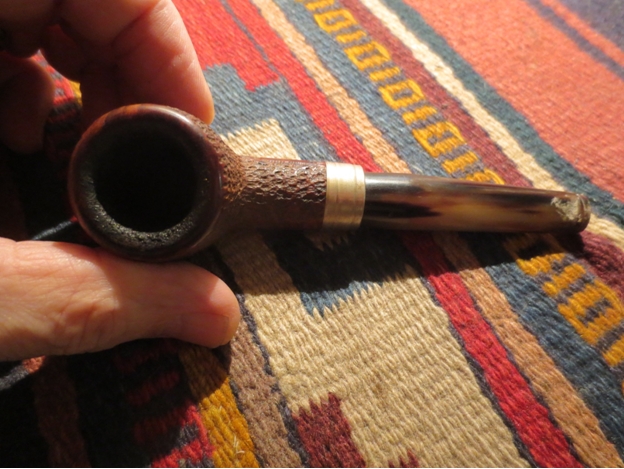
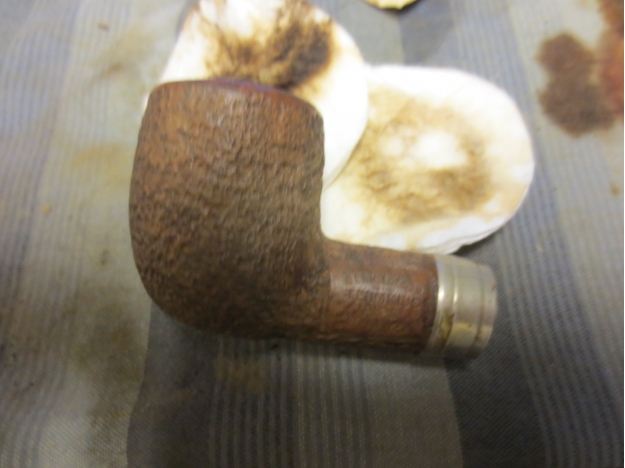
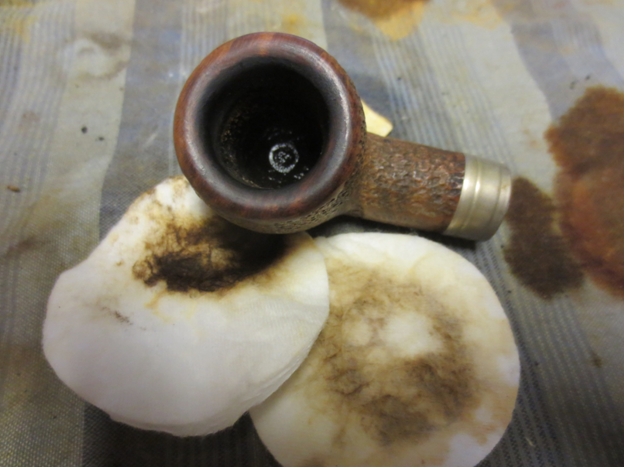
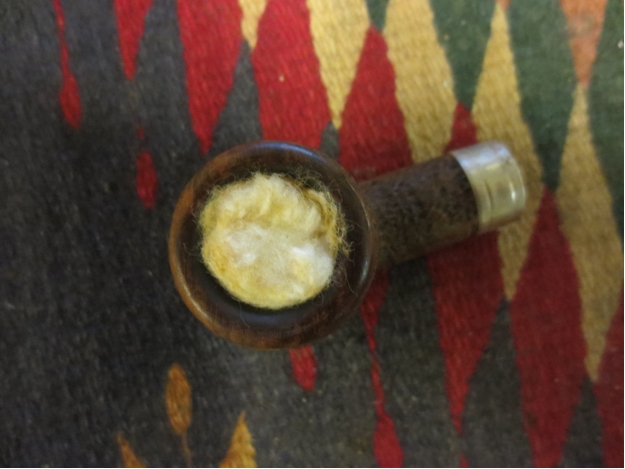
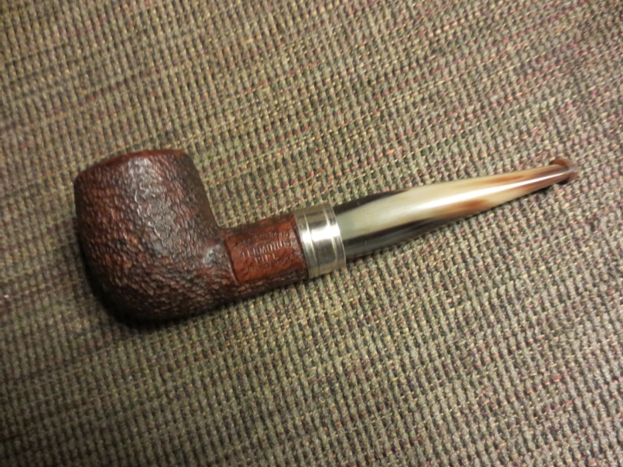
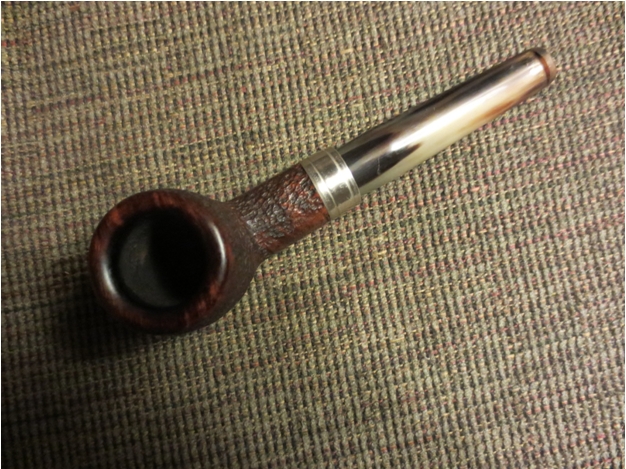
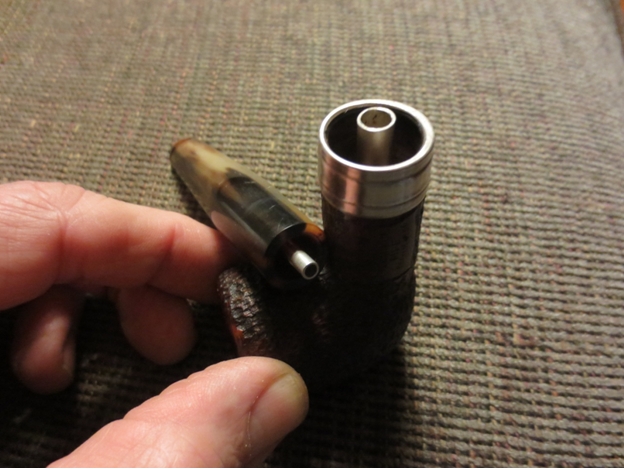
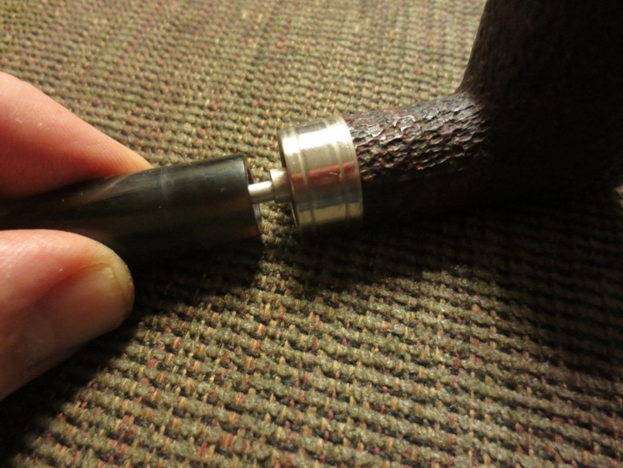
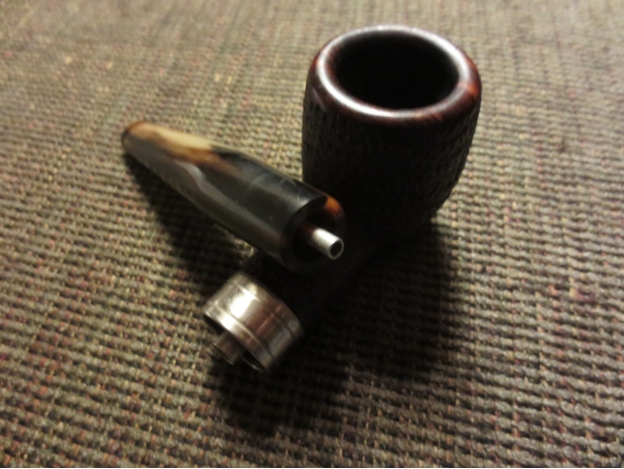
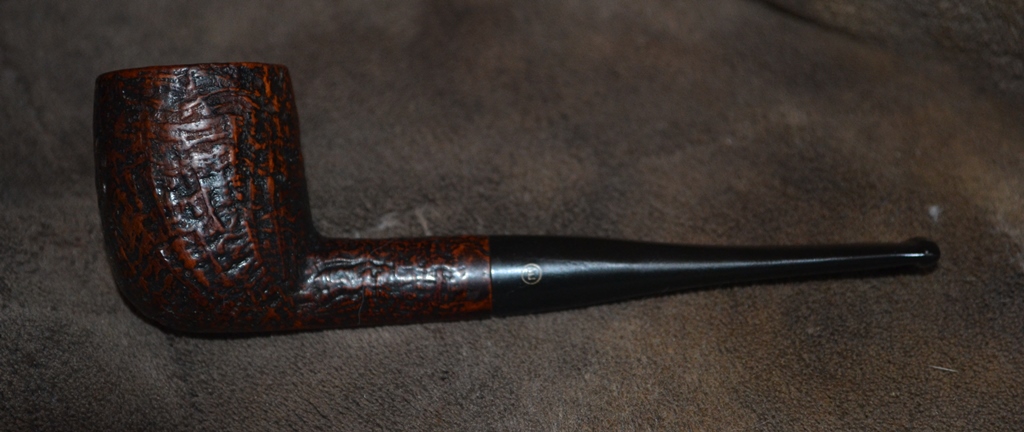
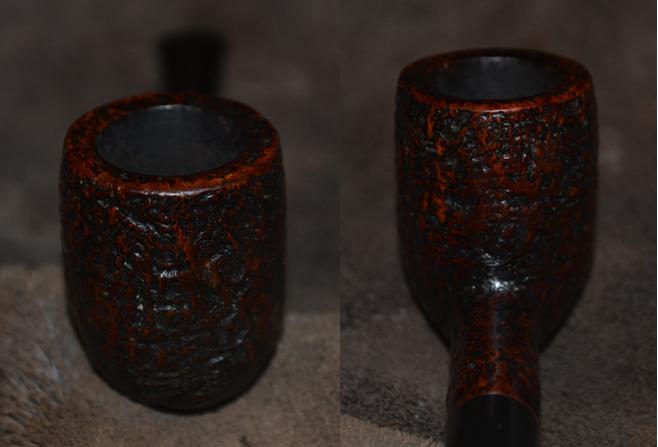
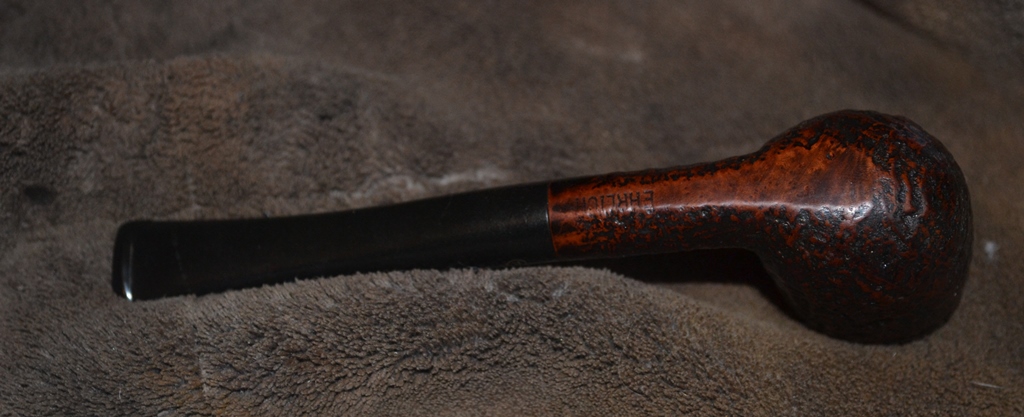
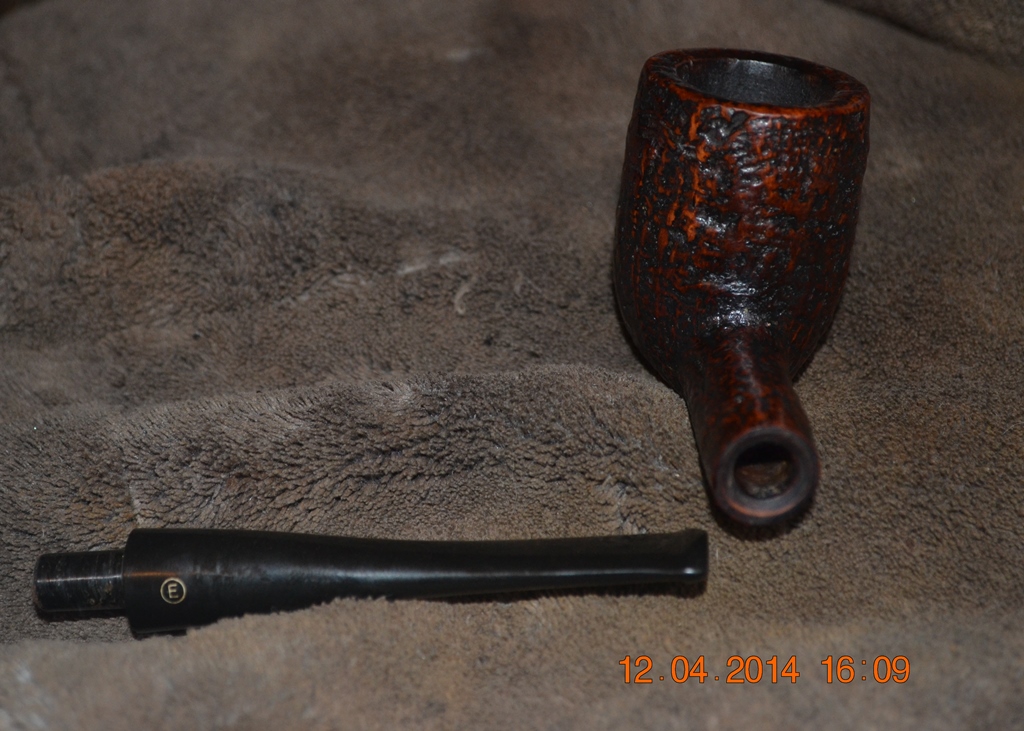
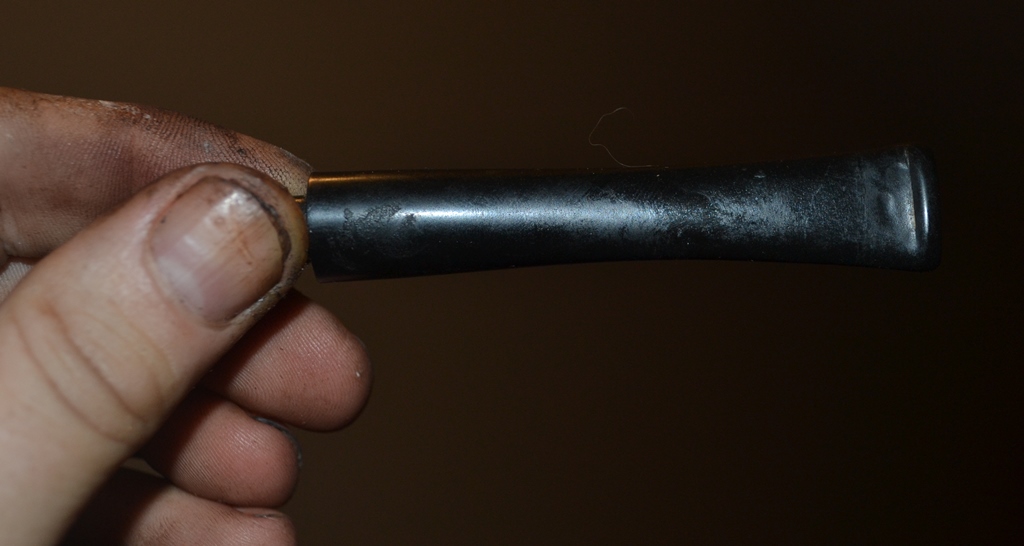
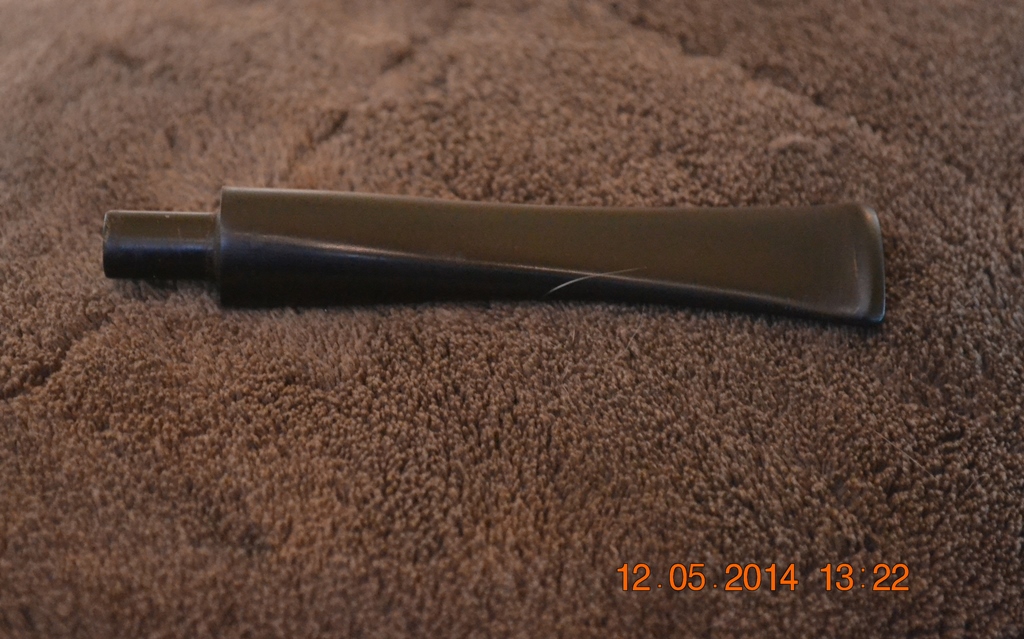
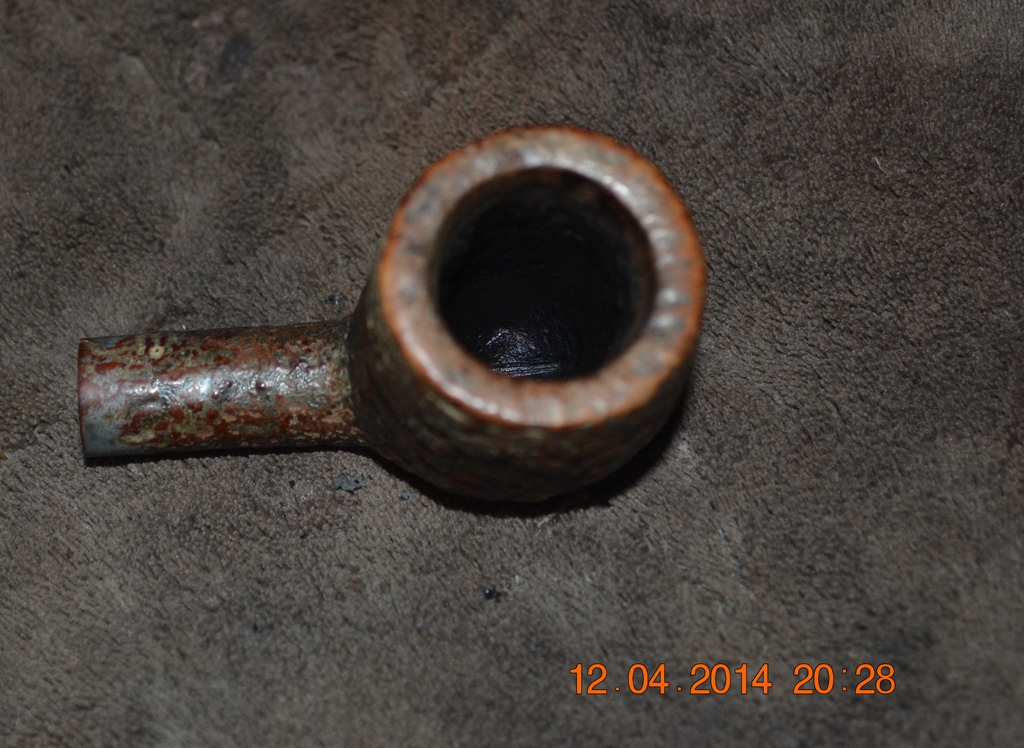
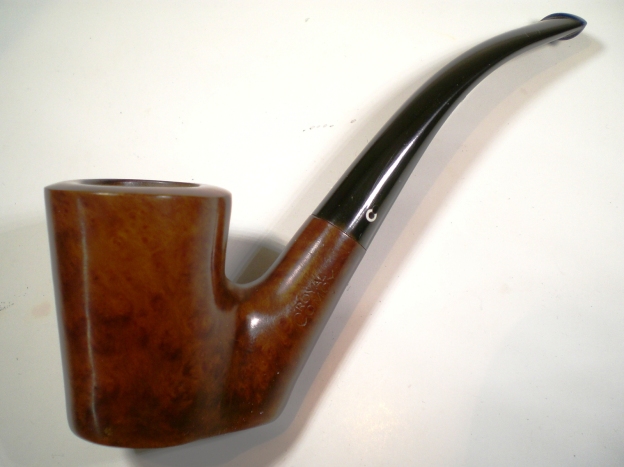
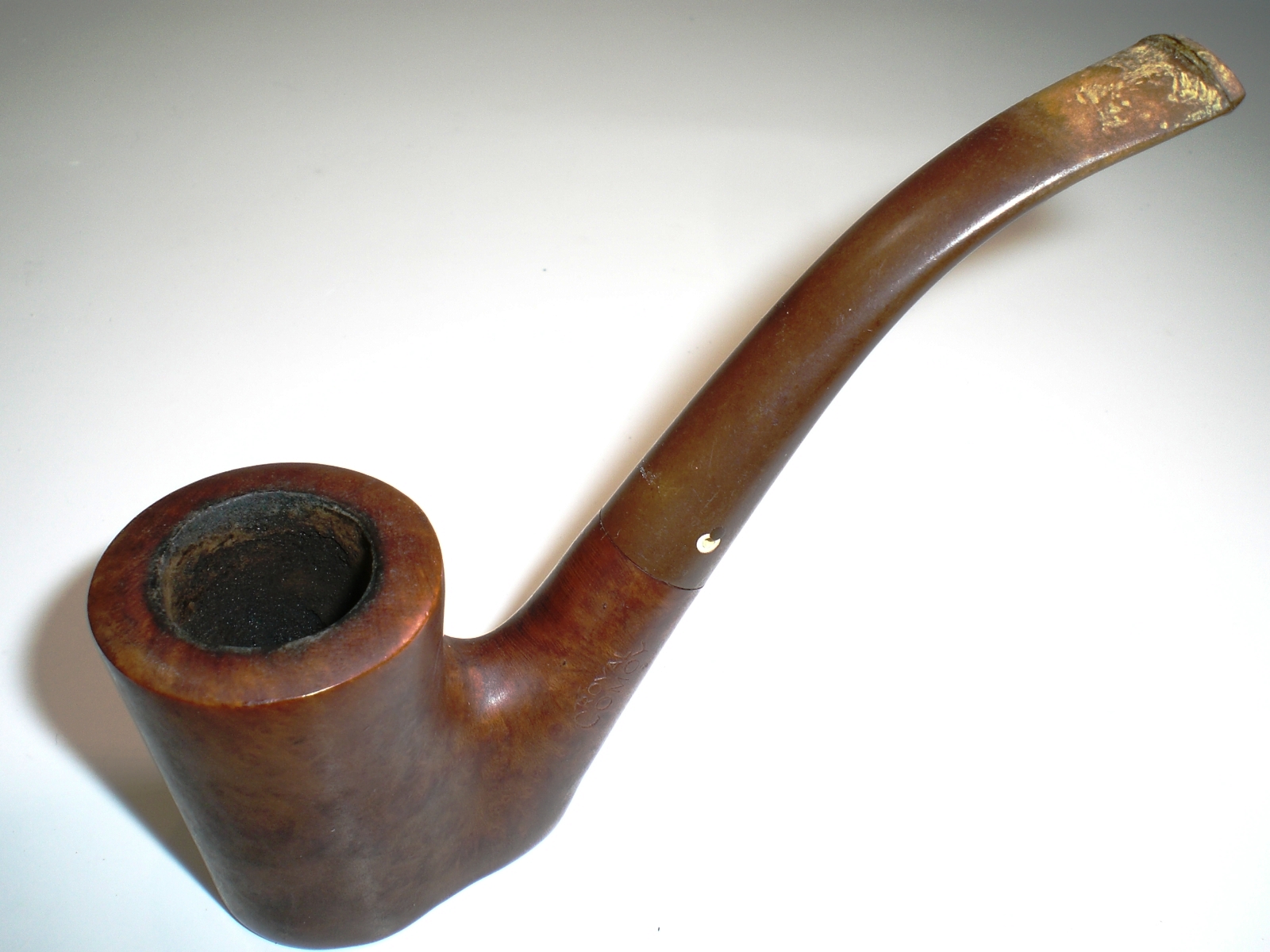
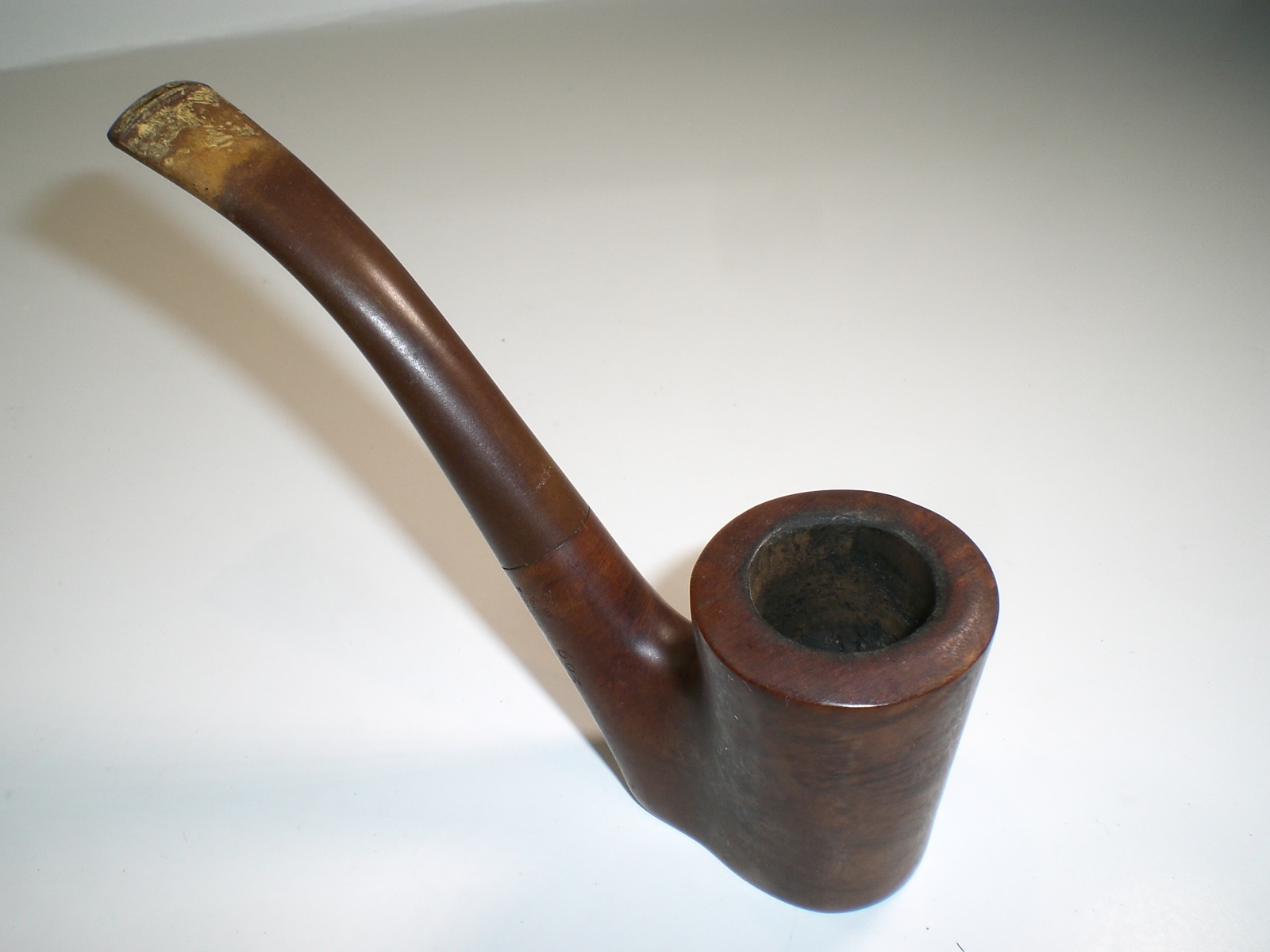
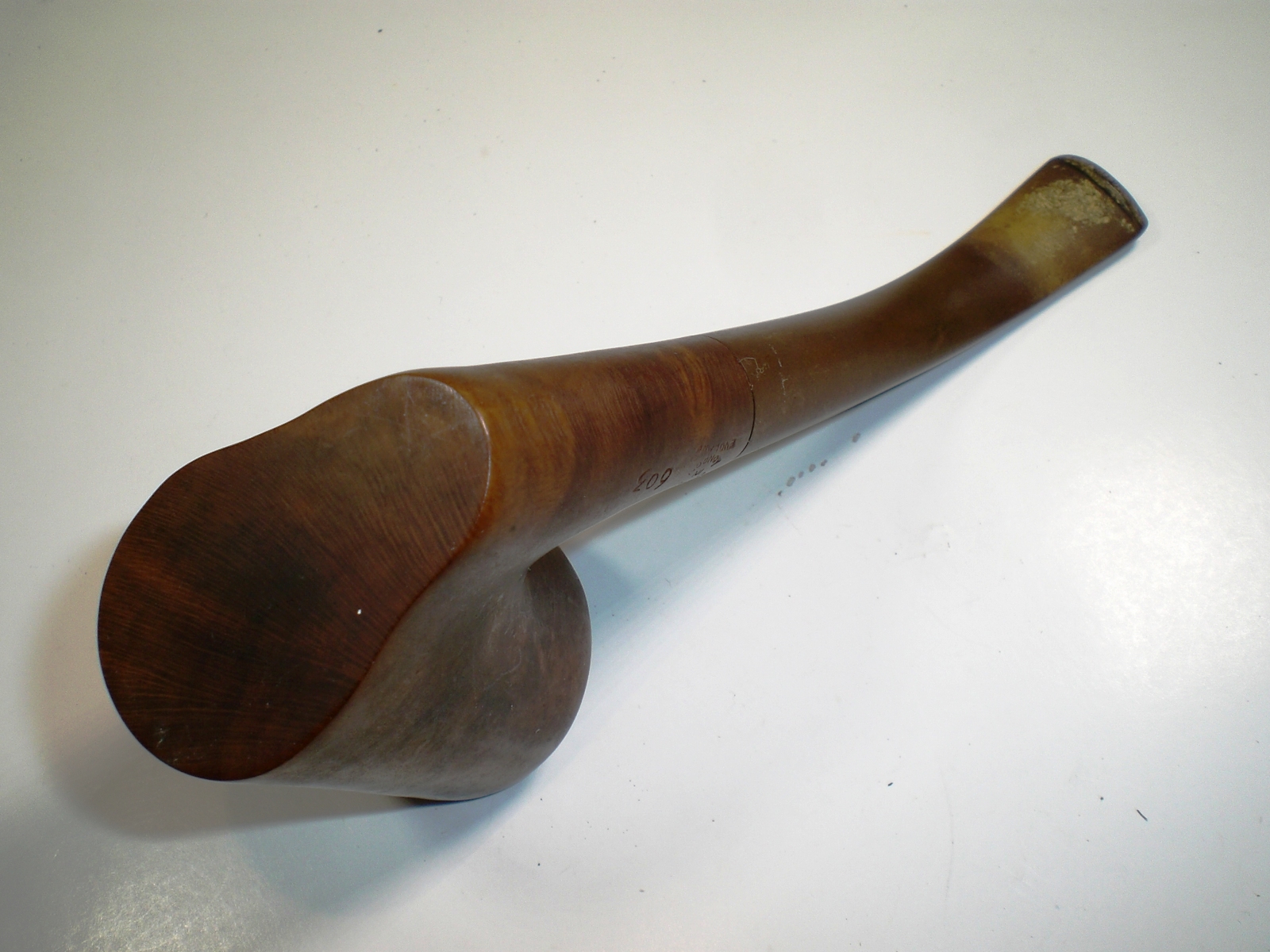
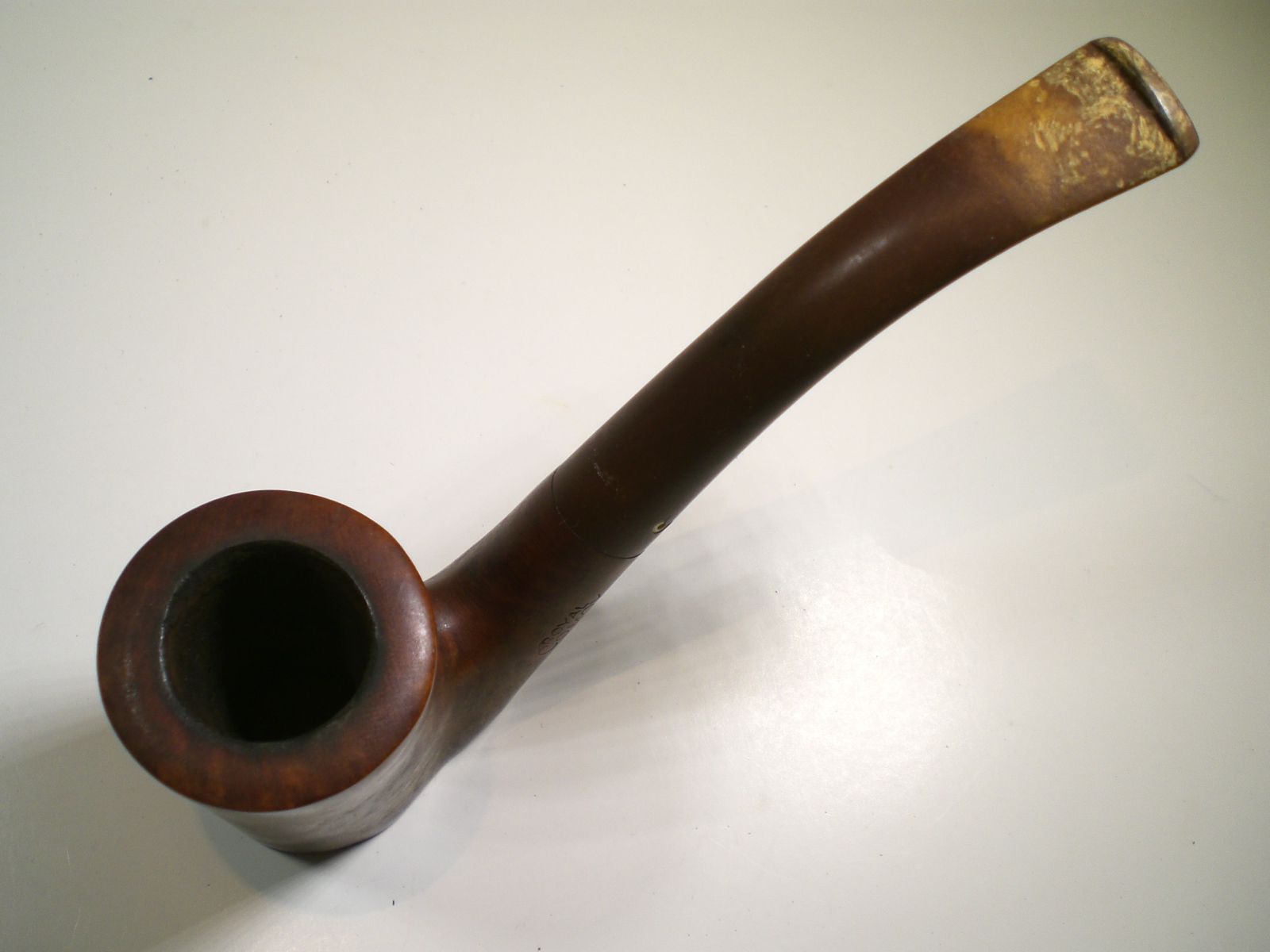
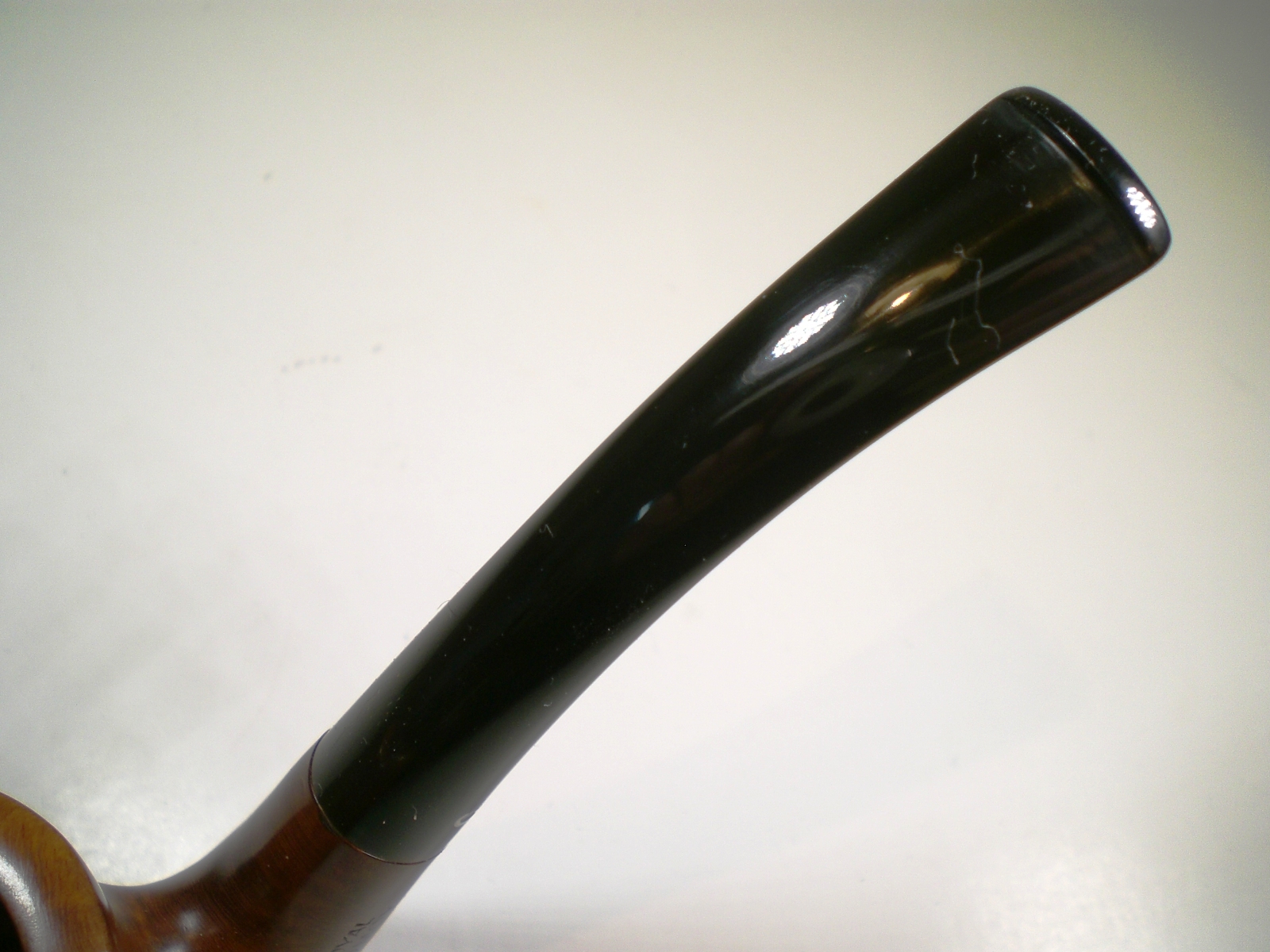
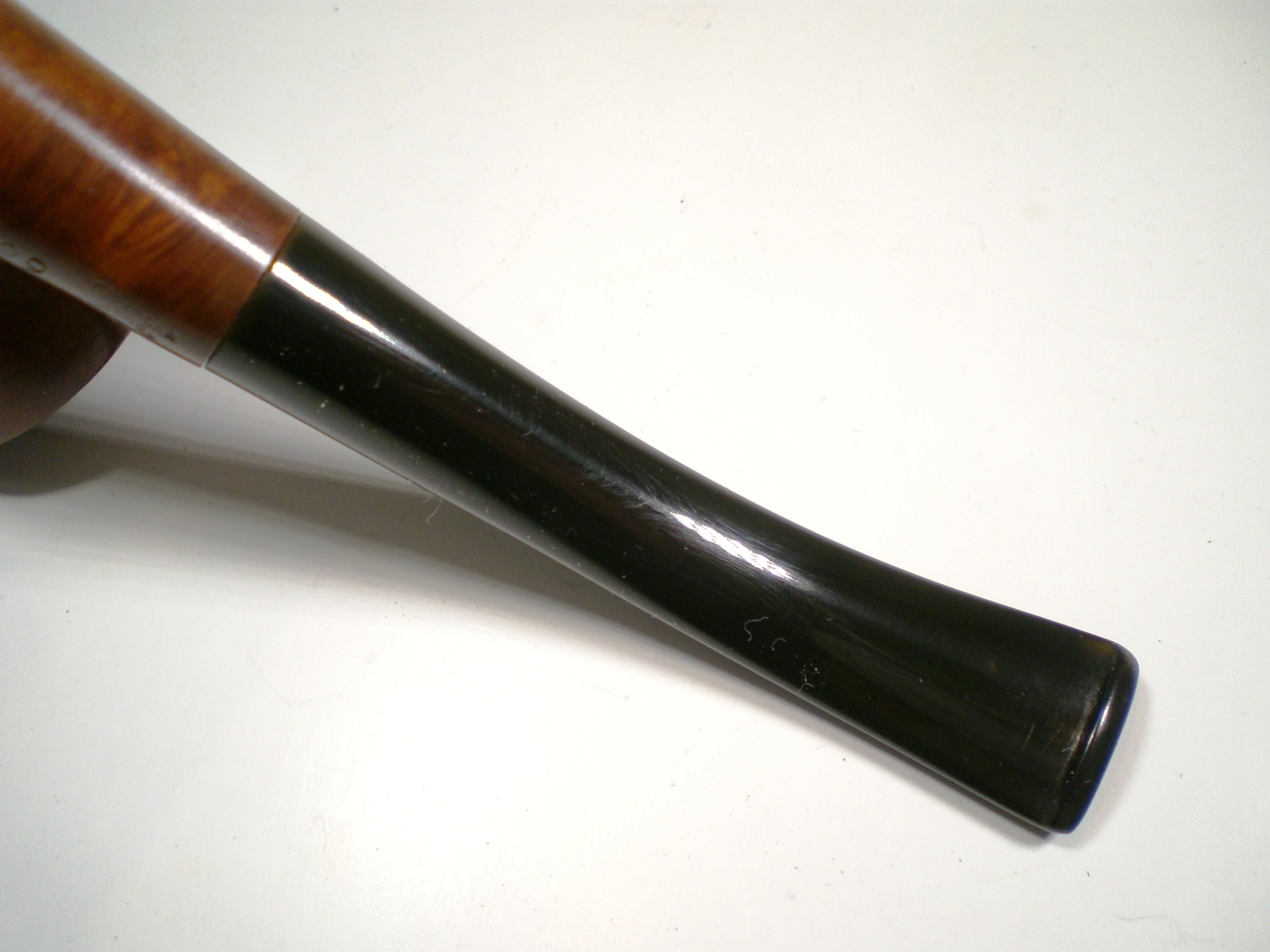
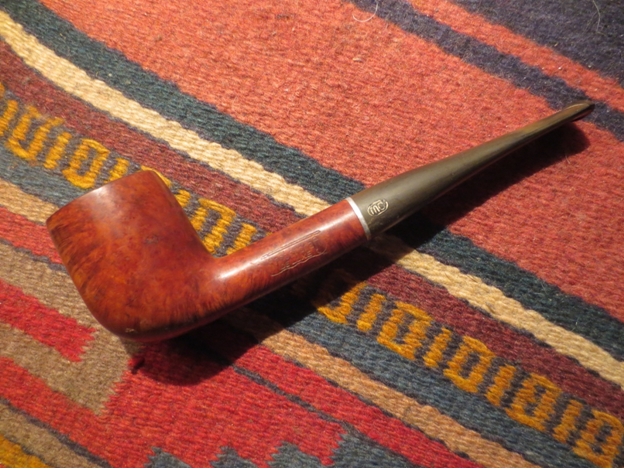
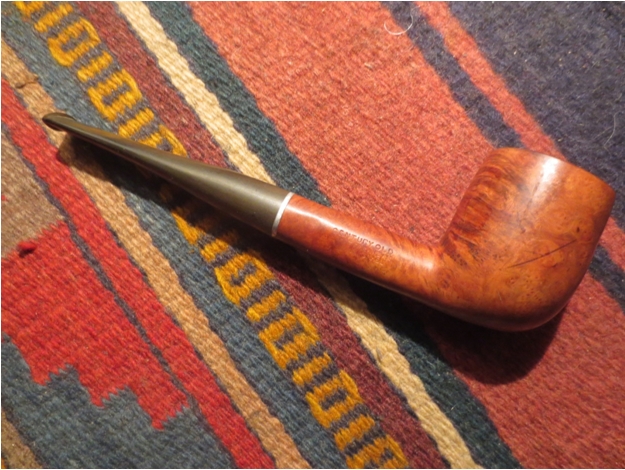
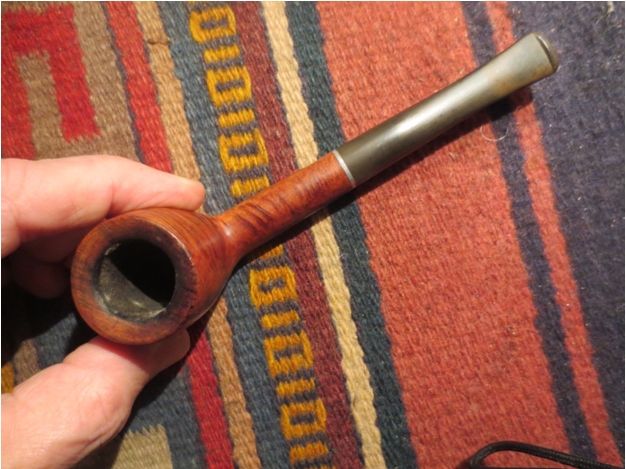
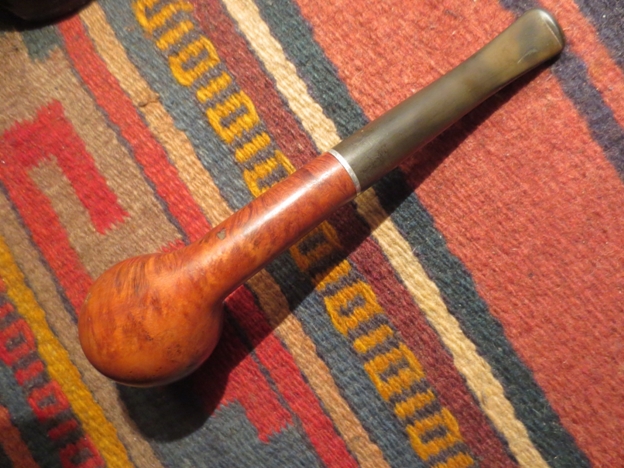
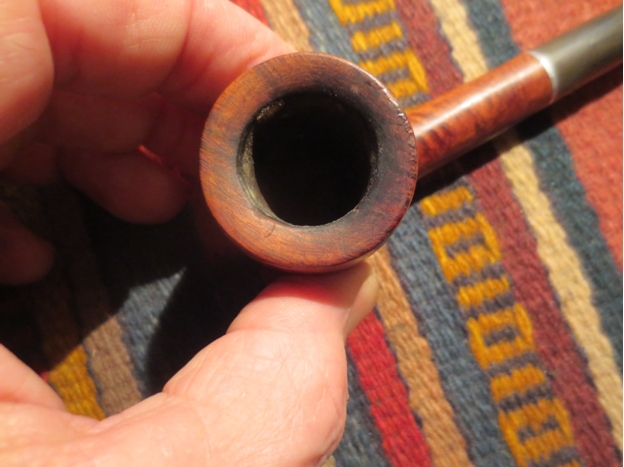
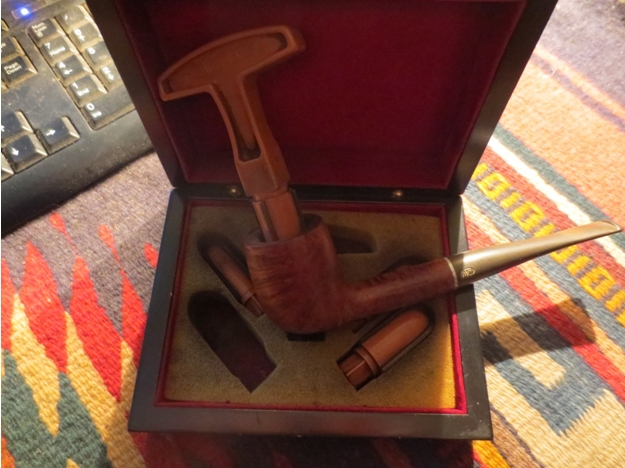
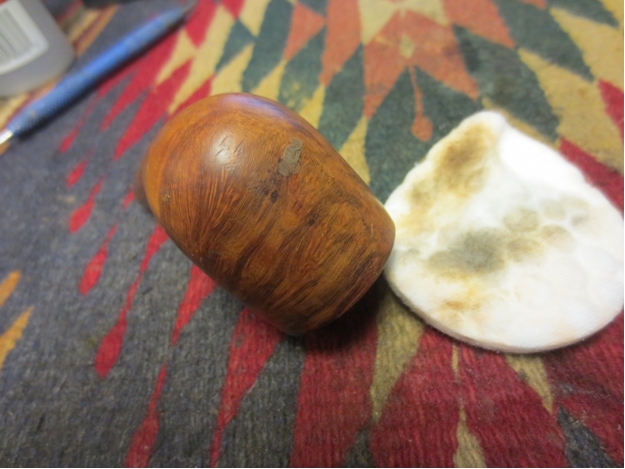
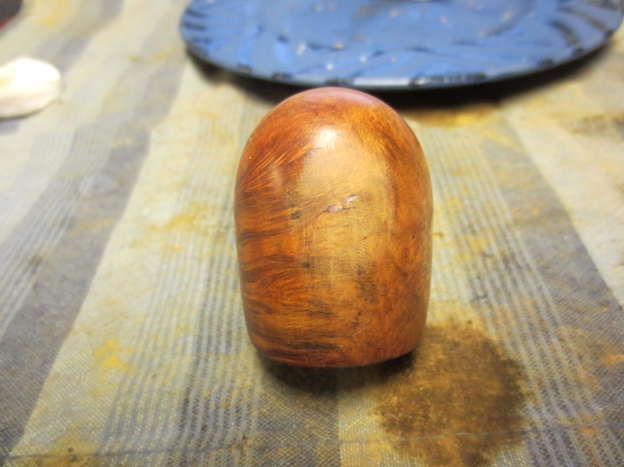
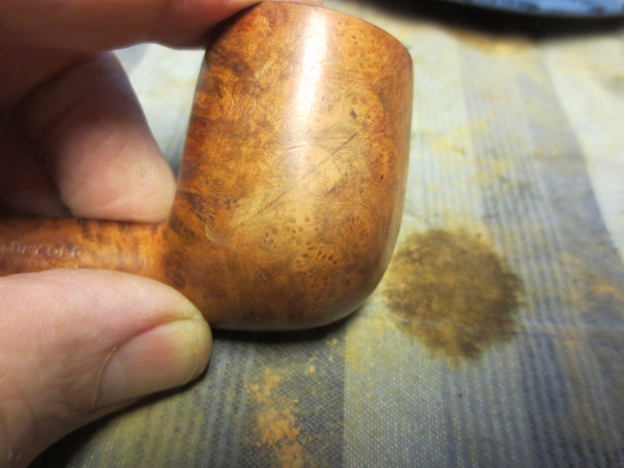
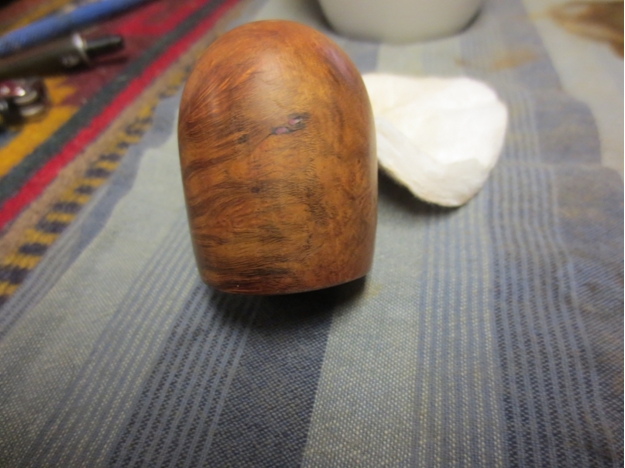
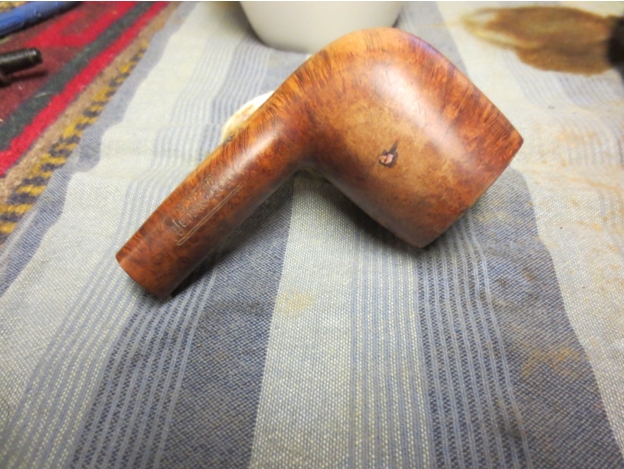
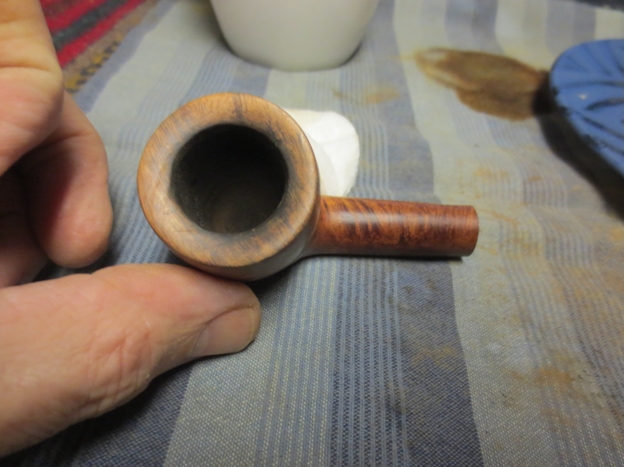
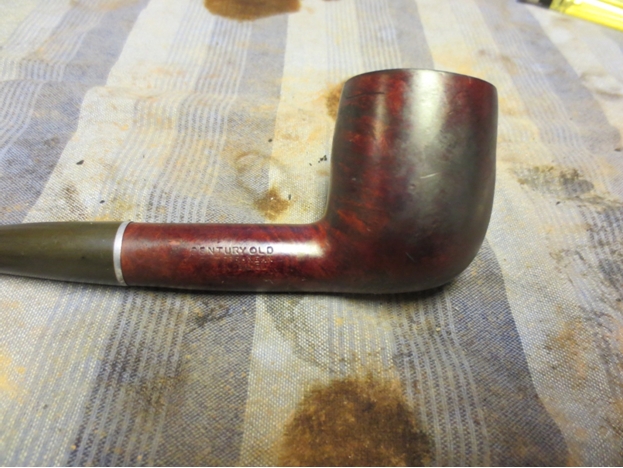
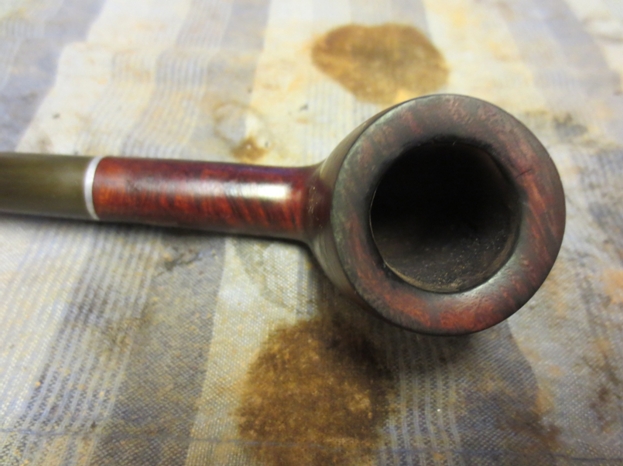
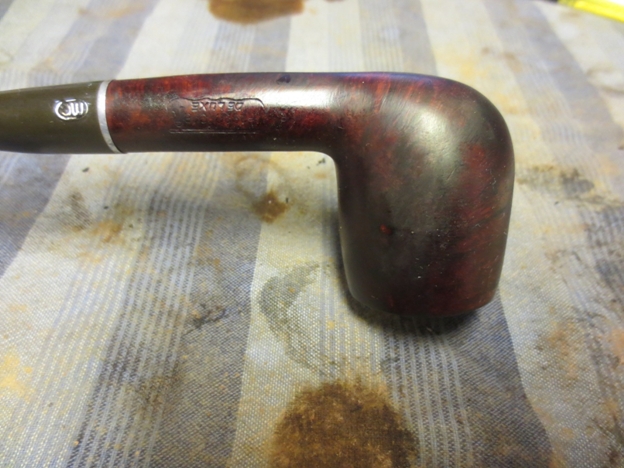
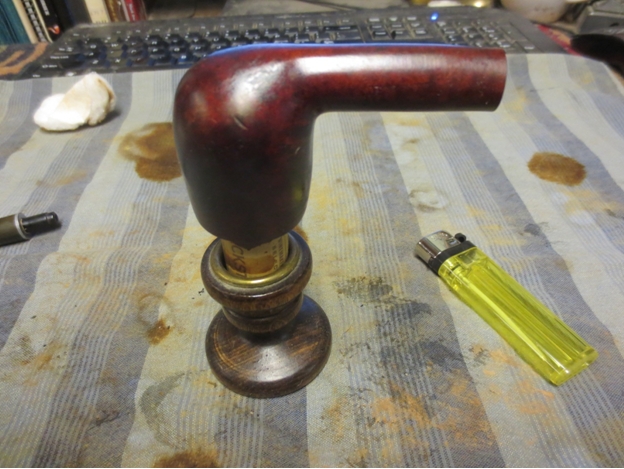
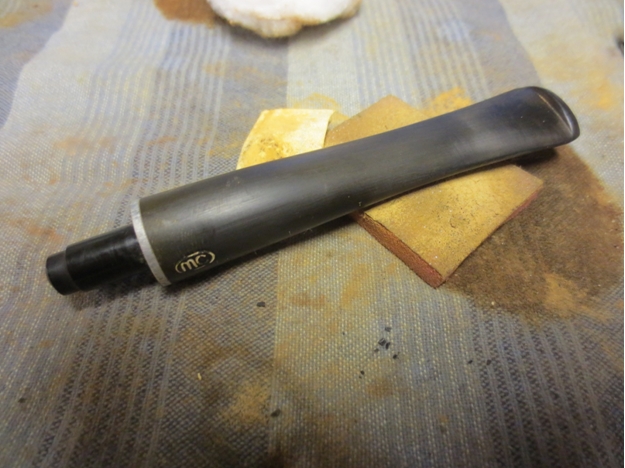
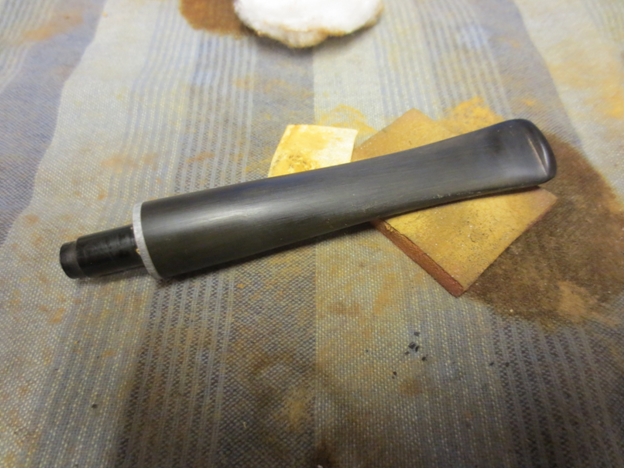
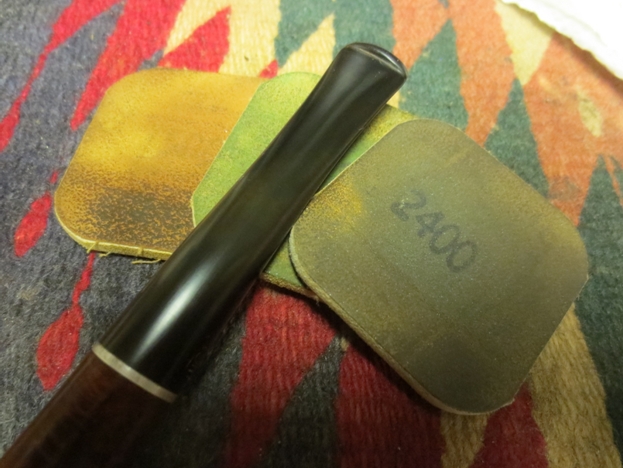
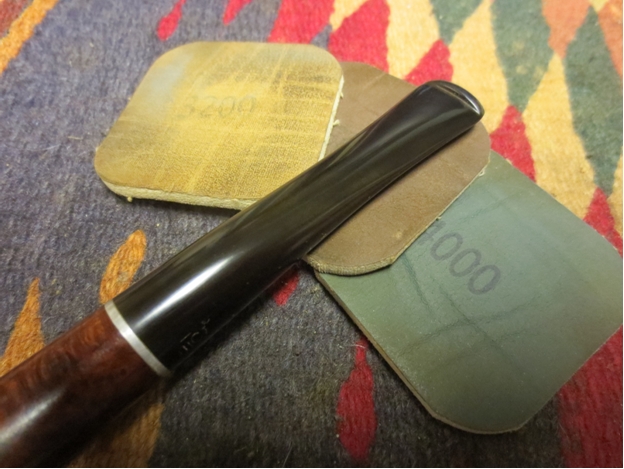
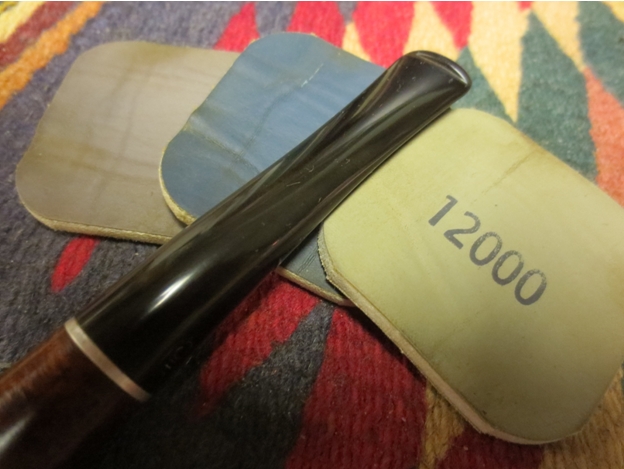
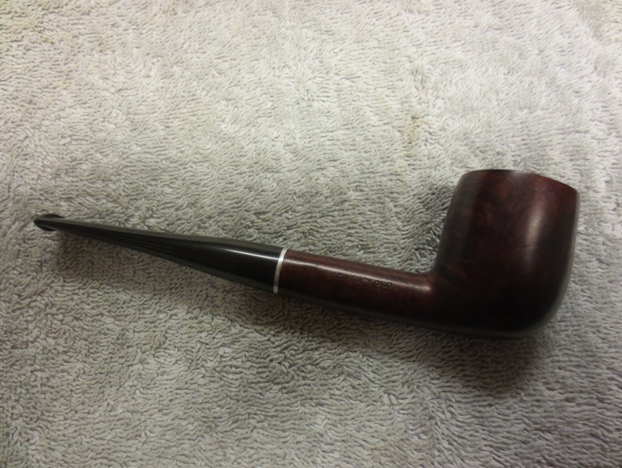
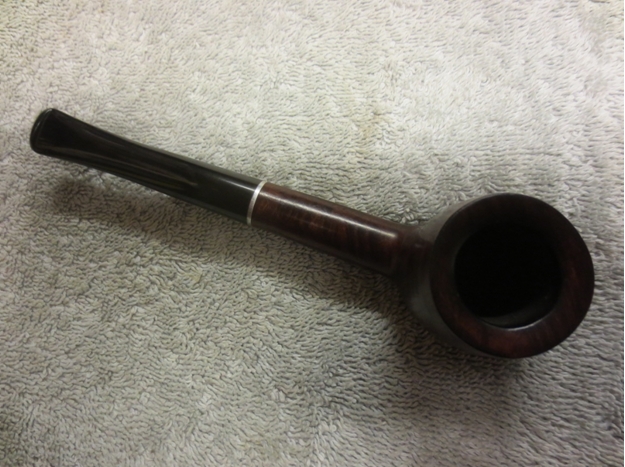
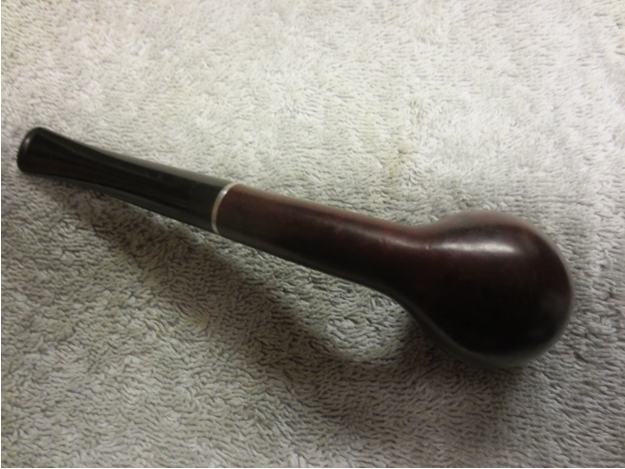
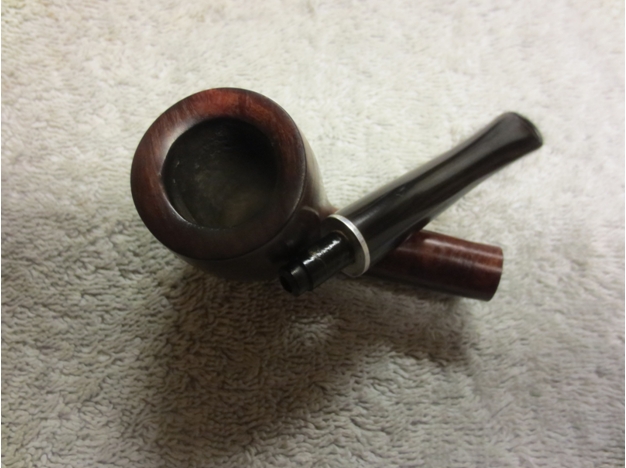
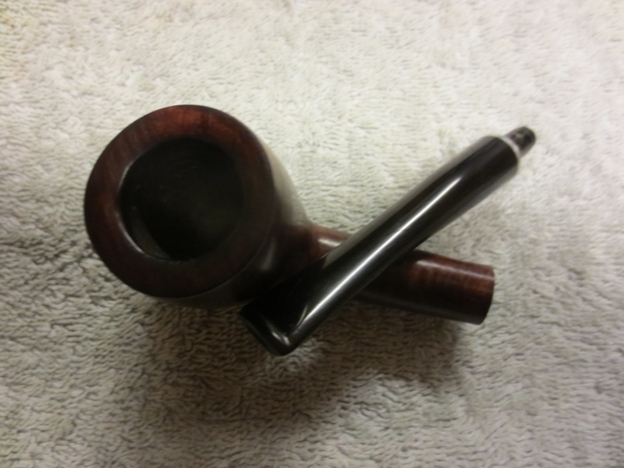
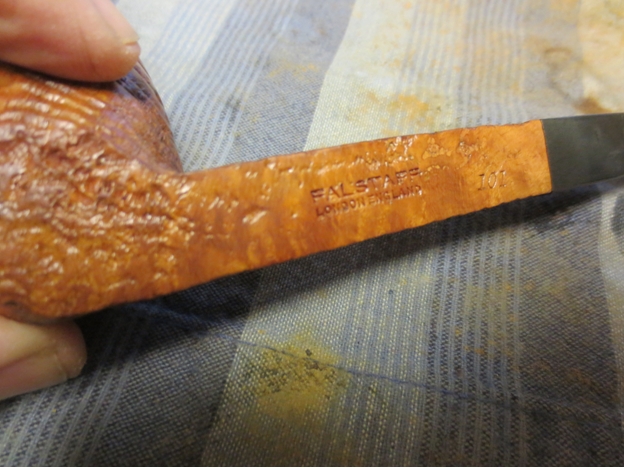
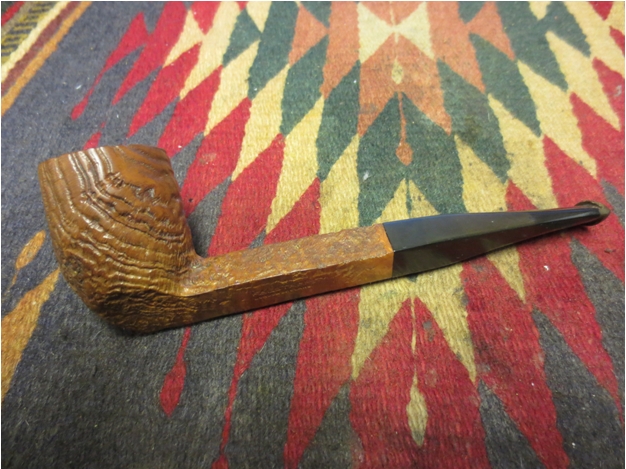
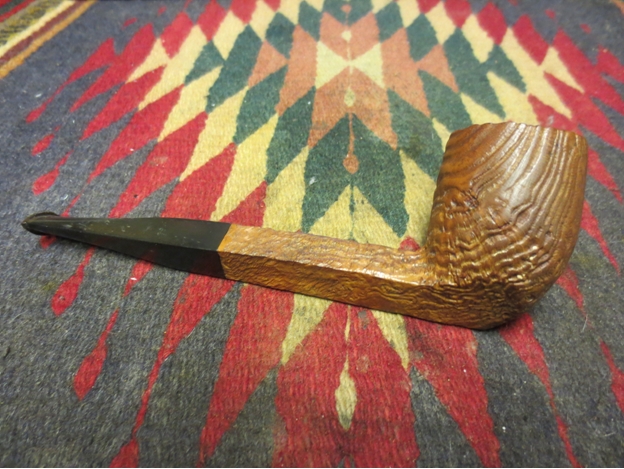
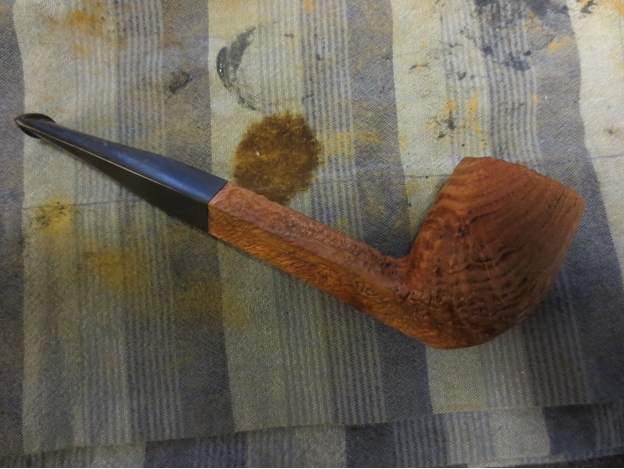
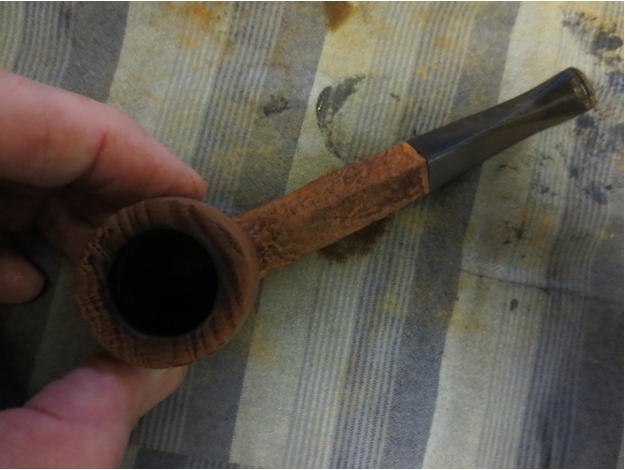
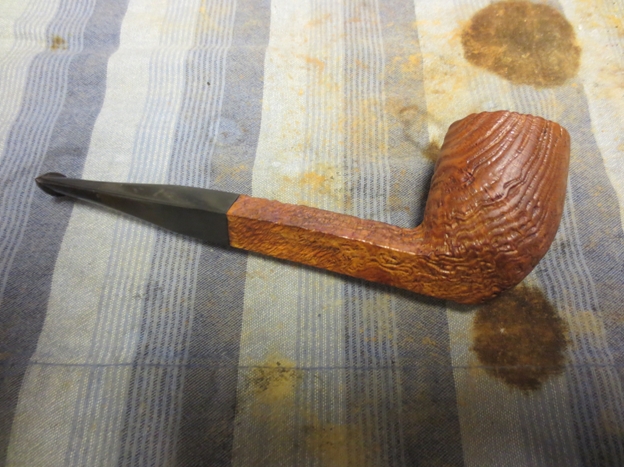
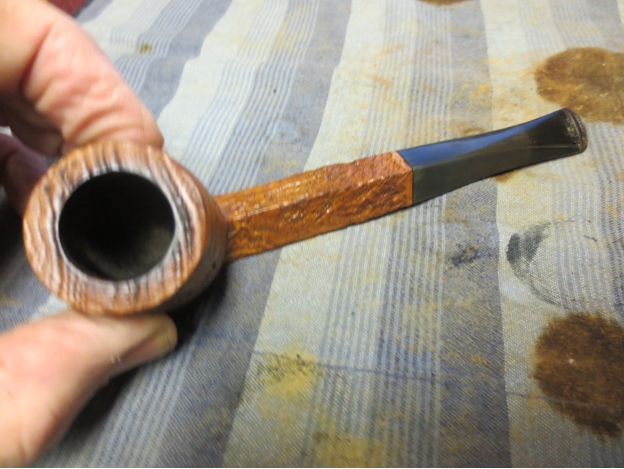
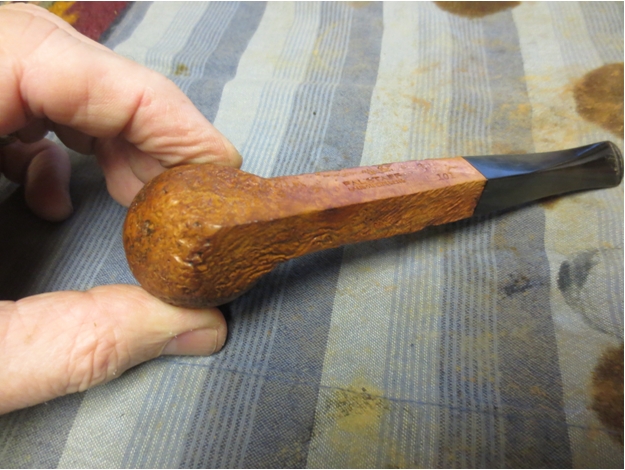
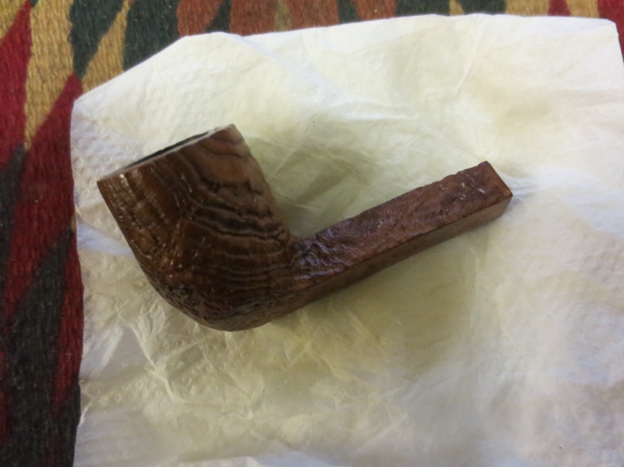
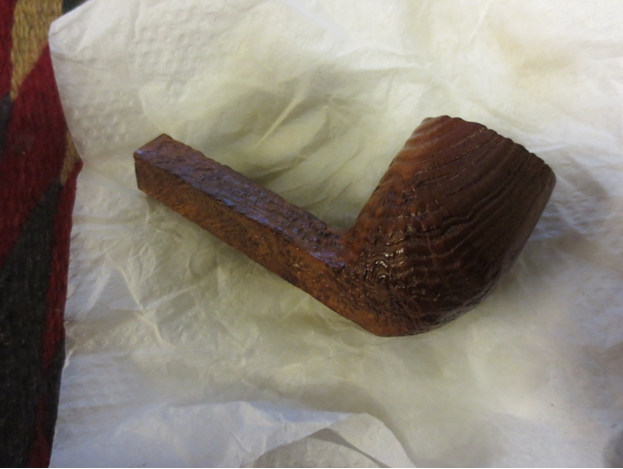
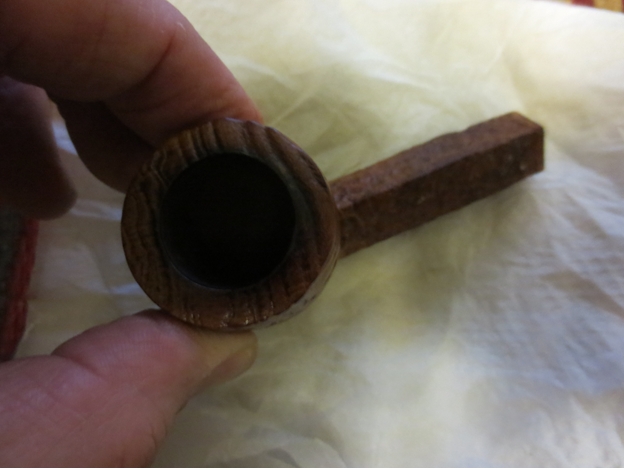
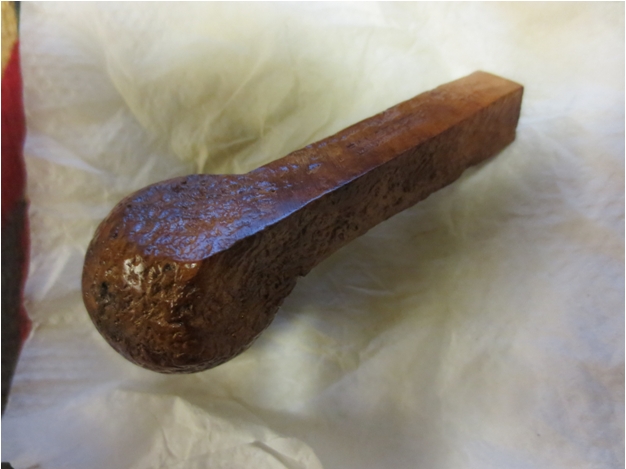
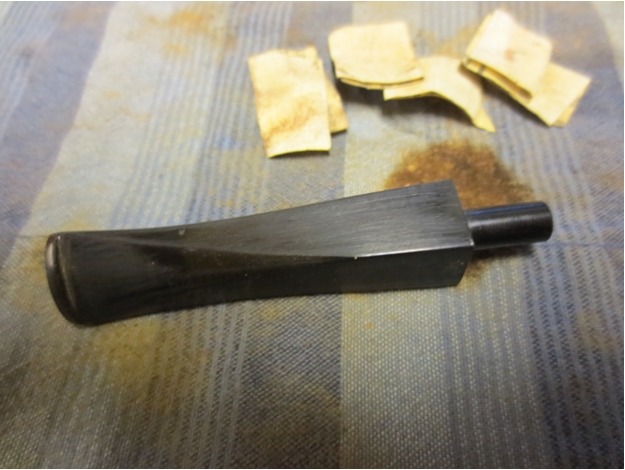
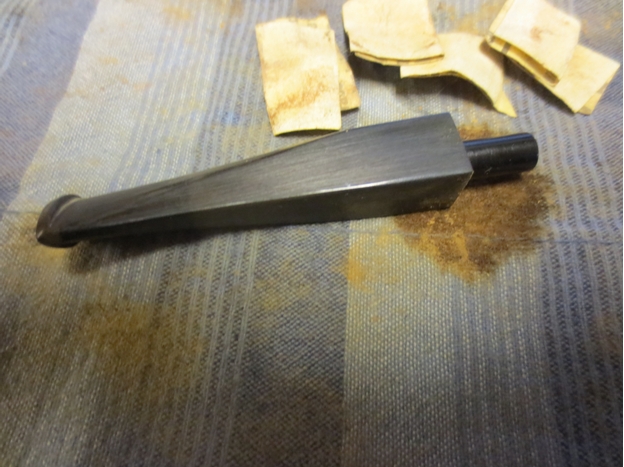
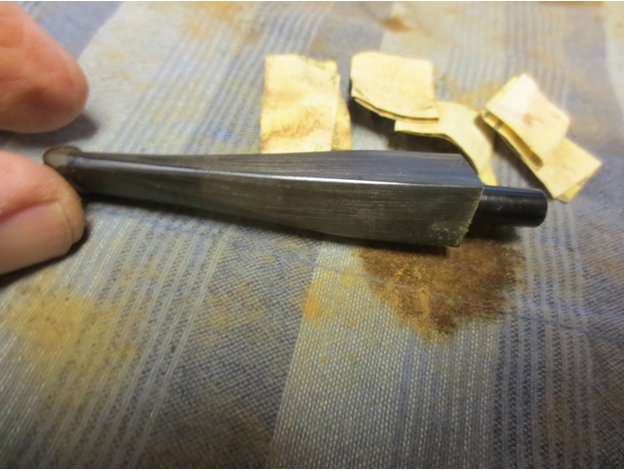
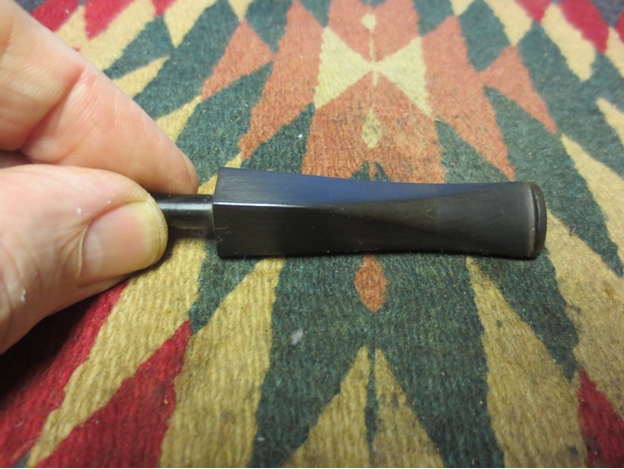
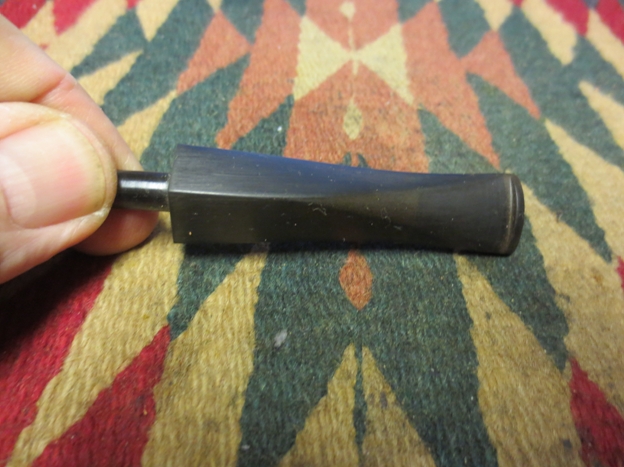
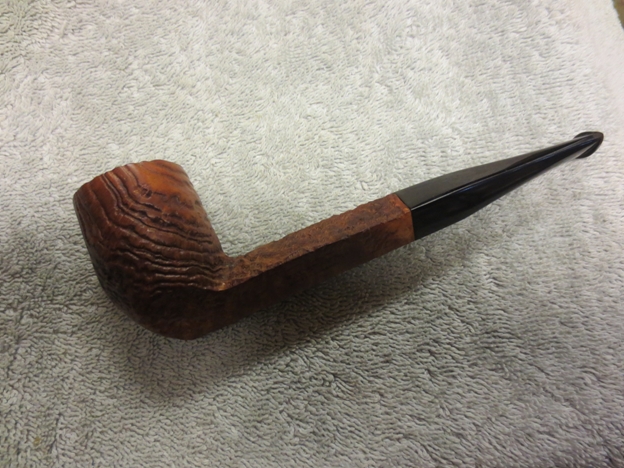
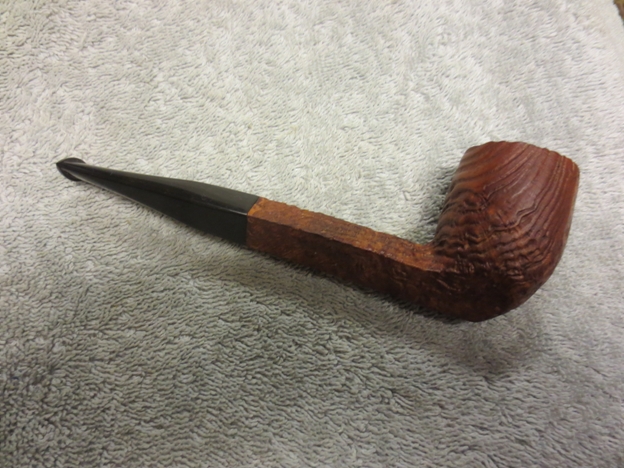
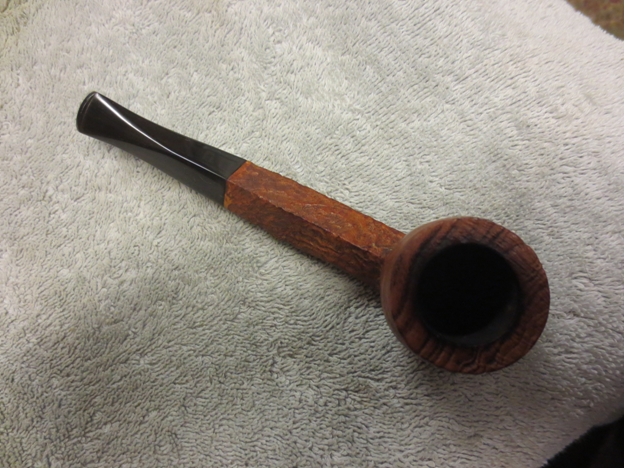
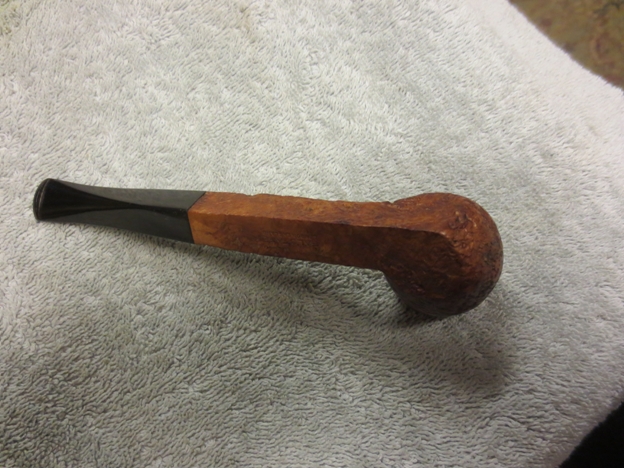
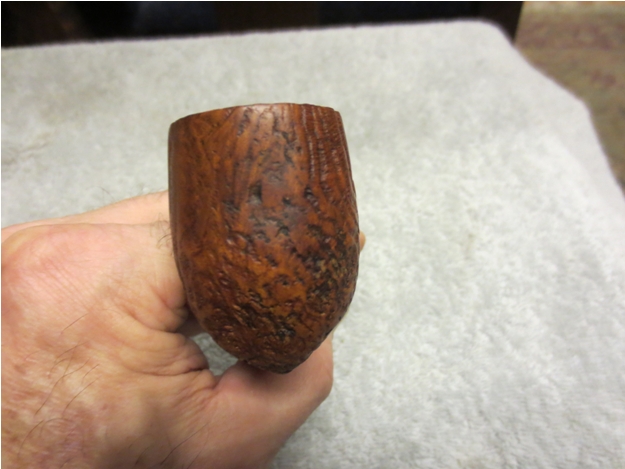
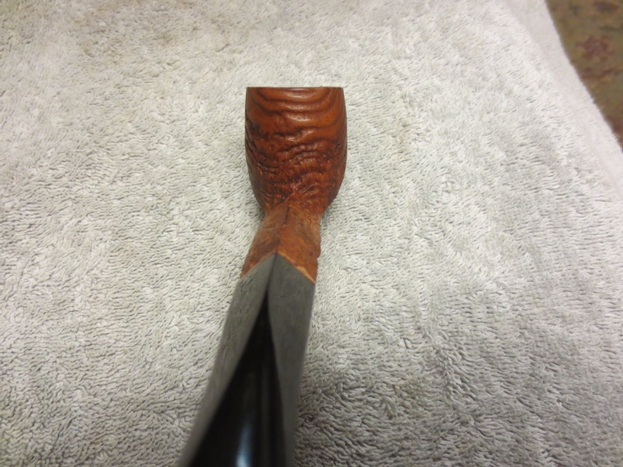
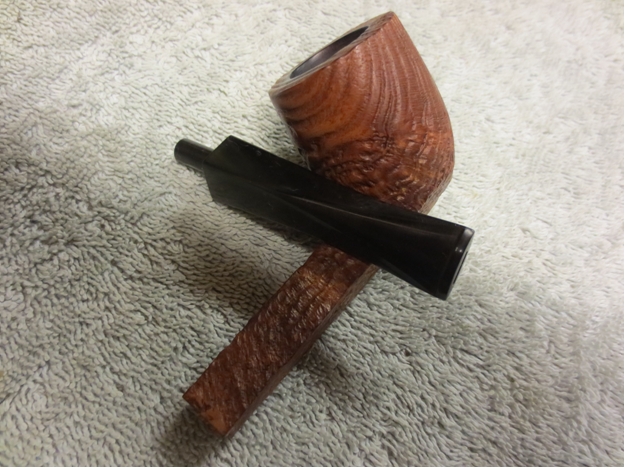
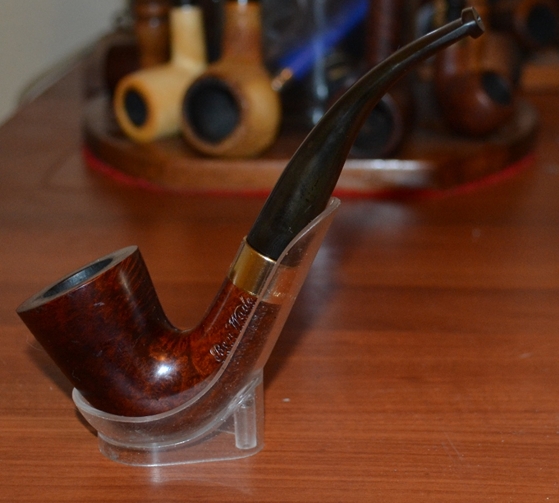
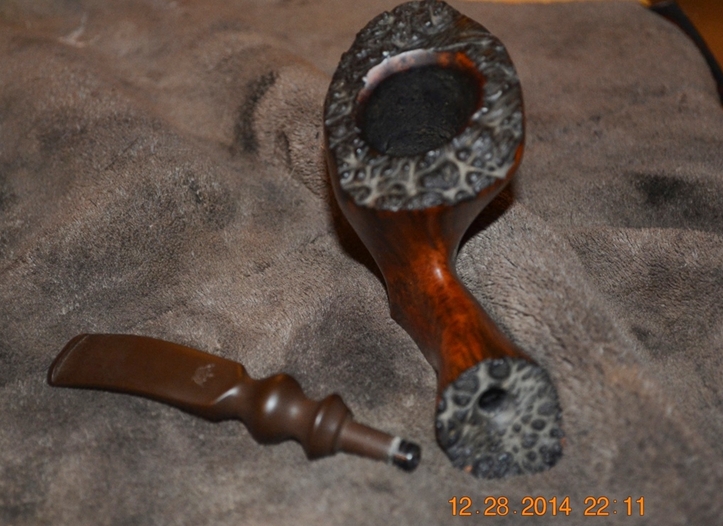
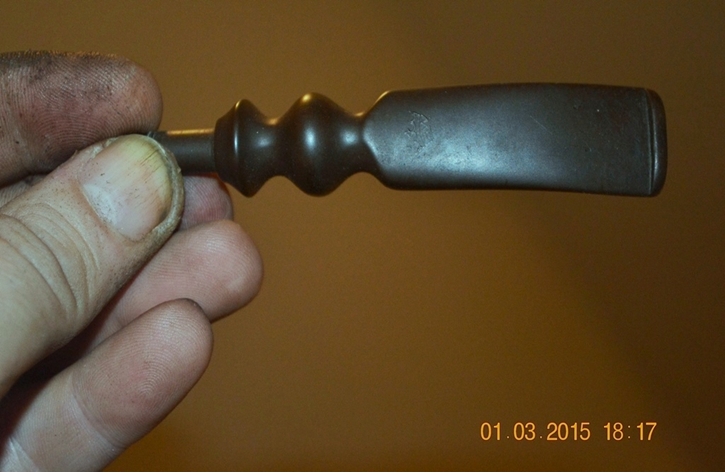
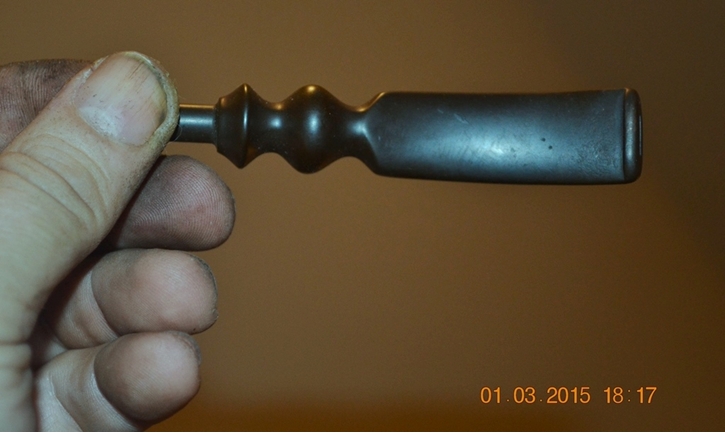
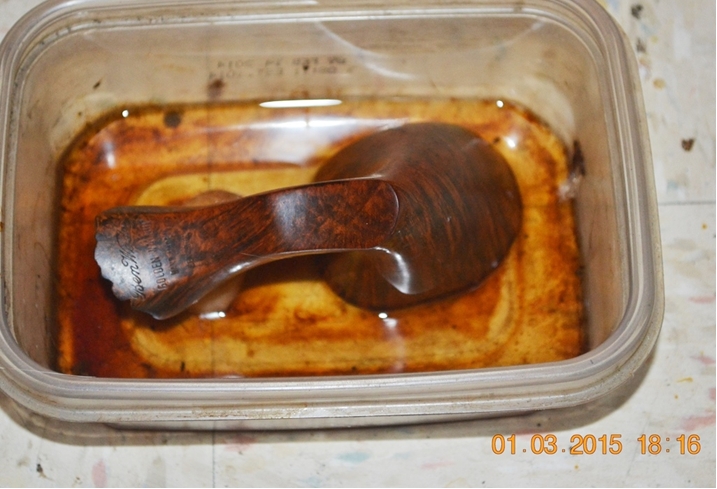
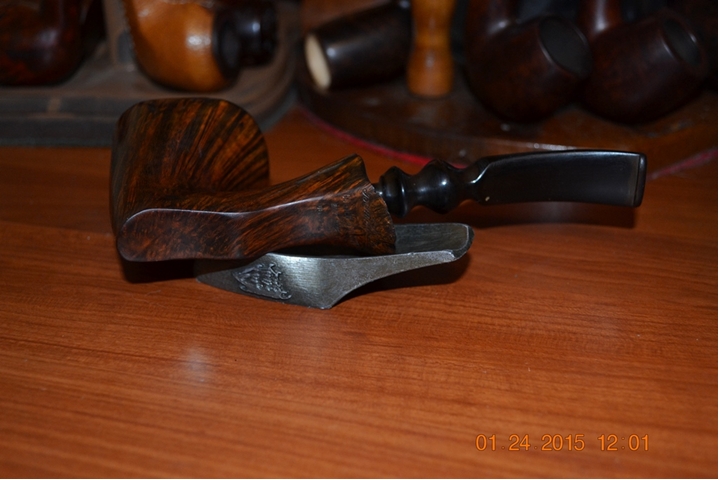
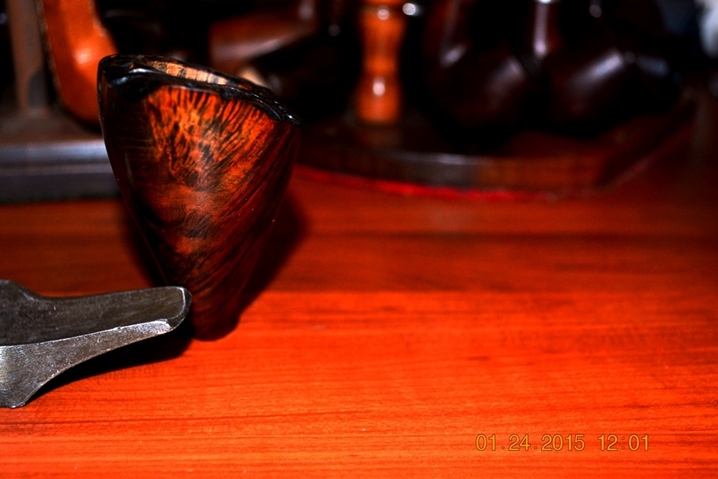
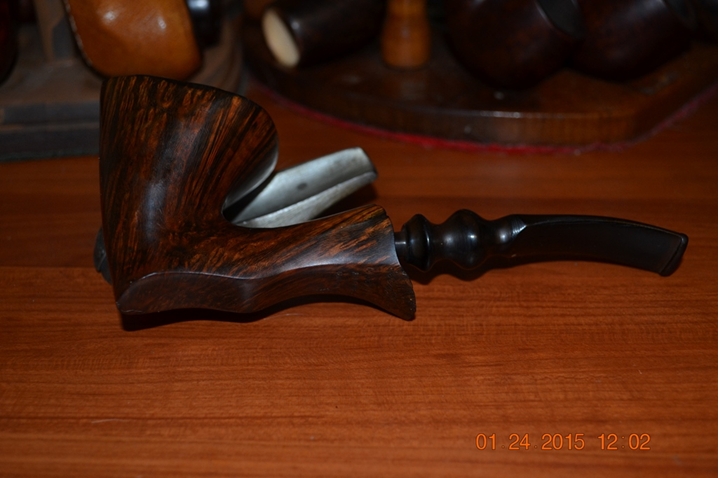
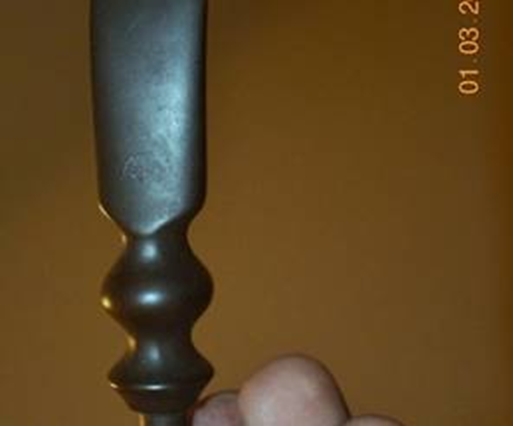
I restored this old horn stem on June 9, 2012 and fit it to an old horn-shaped bowl I had in my box. The bowl is stamped The Regent arched around a star. I wrote about the restoration of the stem and the bowl previously in this post: https://rebornpipes.com/2012/06/09/refurb-on-an-old-the-regent-fit-a-horn-stem-7/ I love the translucence of the horn material. I trimmed off excess horn material to fit the end of the shank. The first photo shows the stem when I started.Regent1 The next three photos show the stem after I had trimmed it to match the diameter of the shank band.Regent2

Regent3

Regent4 This holiday season I find that I am out of pipes to restore – I have finished the last of the ones in my box. So during the doldrums of no pipes to refurbish I spent time looking through my collection. I took on the horn stem pipes to look at. I posted on PSU – Pipe Smokers Unlimited – Forum about horn stem pipes. I have quite a few in my collection as I really like the look and feel of a well restored horn stem. I posted the above photos and really did not like the overall look of the stem. It did not seem to flow with the lines of the bowl. In those days I was just starting out on restoring horn stems and I was fearful of ruining the old stem so I did not shape it as aggressively as I do now. I don’t know if it fearlessness or just stupidity but I still am not careless in the work.

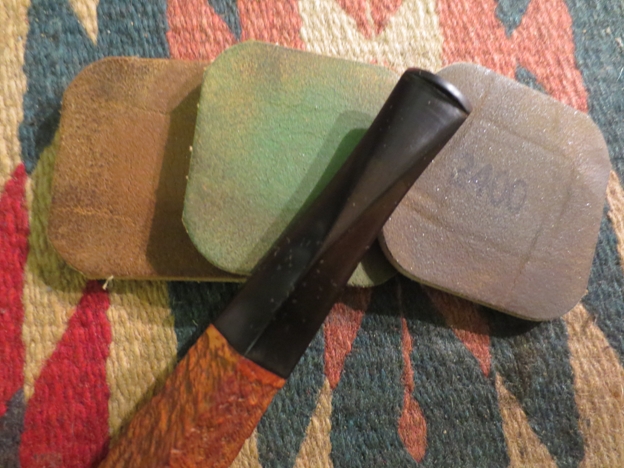
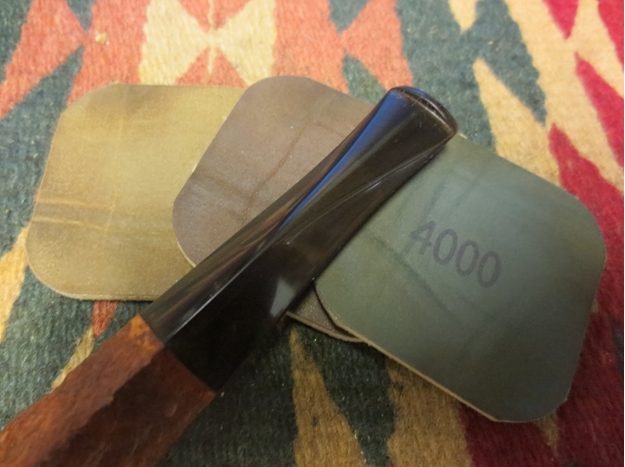
I took the pipe out of the cupboard and reworked the stem. I sanded the stem with 220 grit sandpaper to match the angle of the shank – top and sides. I wanted to take out the bulging look, the pinch at the shank stem union. I took off quite a bit more material until the flow looked better and the bulge was gone. I worked to also straighten the sides of the stem from that junction to the button on the end of the stem. I sanded it with medium and fine grit sanding sponges and a fine grit sanding block to flatten angles from shank to button. I finished by wet sanding with 1200-3200 grit sanding pads and then buffed the stem with White Diamond. I took it back to the work table and dry sanded it with 3600-12,000 grit micromesh sanding blocks. I rubbed it down with Obsidian Oil and then gave the bowl and pipe several coats of carnauba wax. I finished by buffing it with a soft flannel buff until it shone.

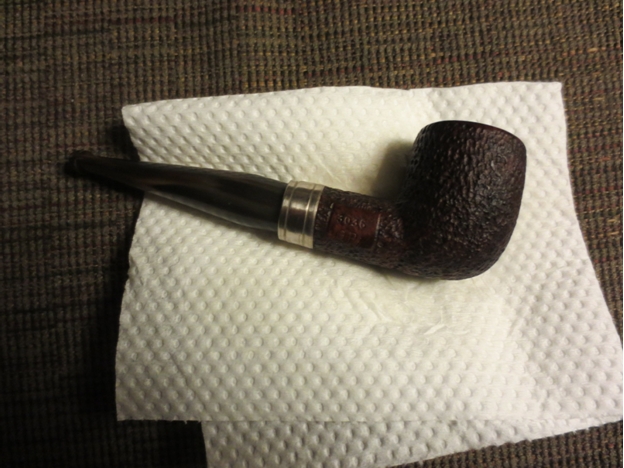
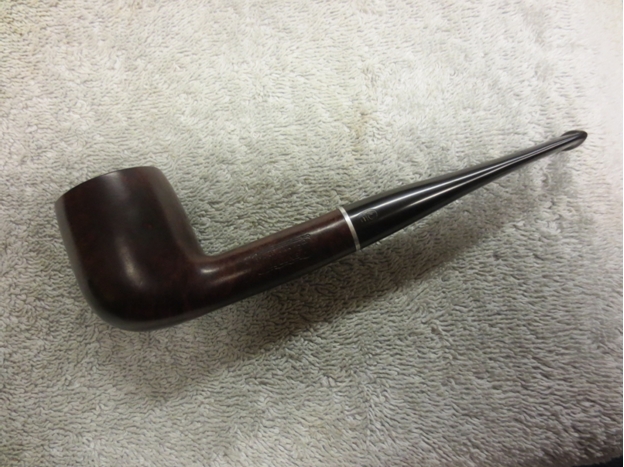
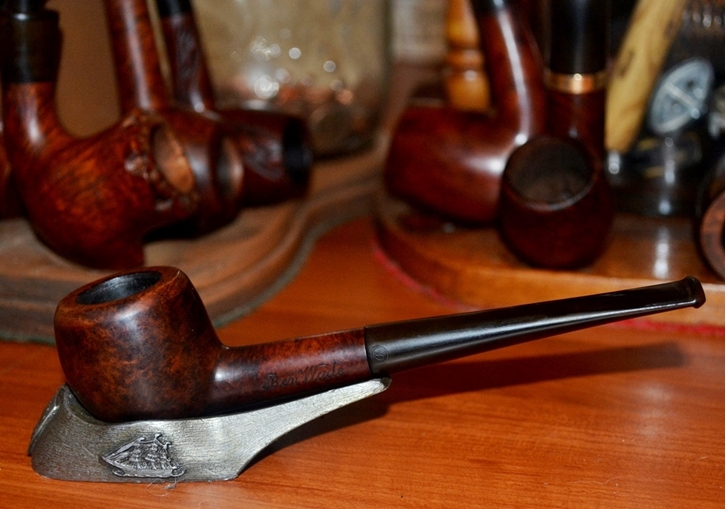
The finished pipe is shown below. I like the new look of the stem far better than the previous fitting. The pipe is sitting on my desk now and will be in my rotation for this weekend.Regent5

Regent6

Regent7

Regent8

The Little Champion 057 Horn Reborn


Blog by Steve Laug

When I saw this old timer it reminded me of a Dunhill shape that I had seen though that one had had a taper stem. The seller was from Germany and the only photo included is the one below. The stem was badly oxidized in the photos and the finish on the bowl that showed was worn. I had no idea what the rim or the rest of the pipe looked like. The seller did not include any information on the stamping on the pipe so it was a bit of a blind bid. I decided to go for it and put in a low bid and won the pipe.Horn The pipe arrived this week and I was nervous when I saw the package that the postie delivered. It was totally smashed with the corners blown out on two sides. Someone had reconstructed the box with strapping tape but the crushed box was not repaired. I cut the tape and opened the box with fear and trembling. I was wondering if the pipe inside would be in pieces of if it would be unscathed. Inside the box were many crumpled newspaper pages. I dug through the pages and in the very middle was a bubble wrapped object. The stem was still in the shank of the pipe and looking through the bubble wrap it appeared unbroken. I cut the tape on the wrapping and took out the pipe. What I found is shown in the next four photos below.Champ1

Champ2

Champ3

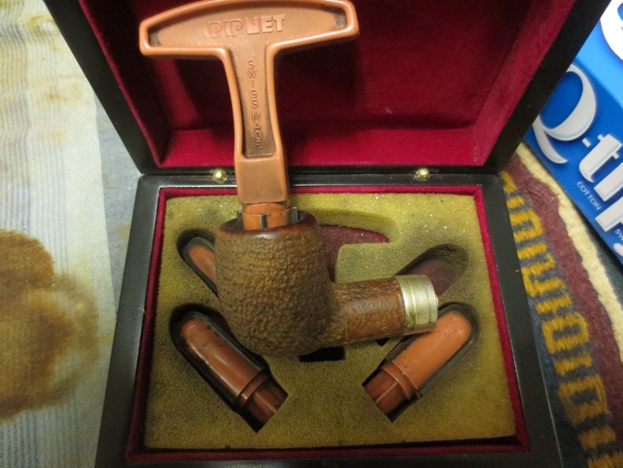
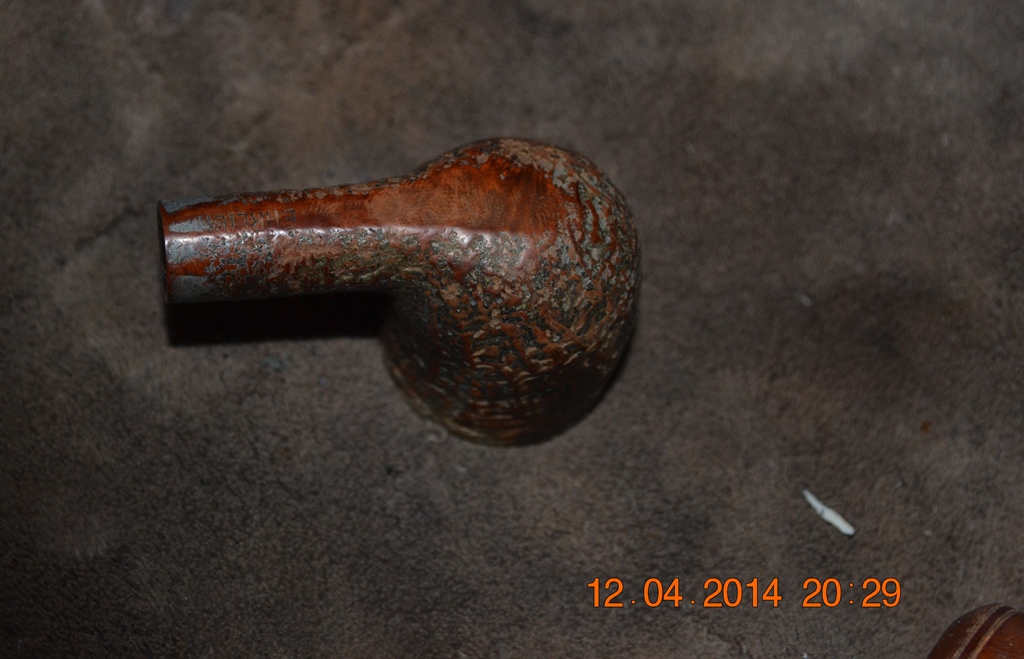
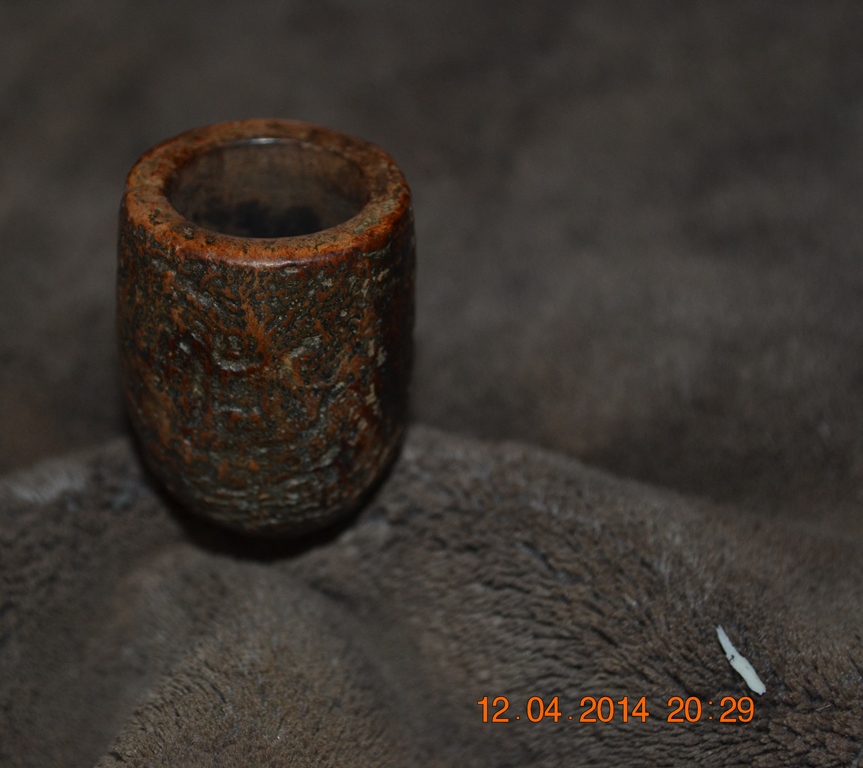
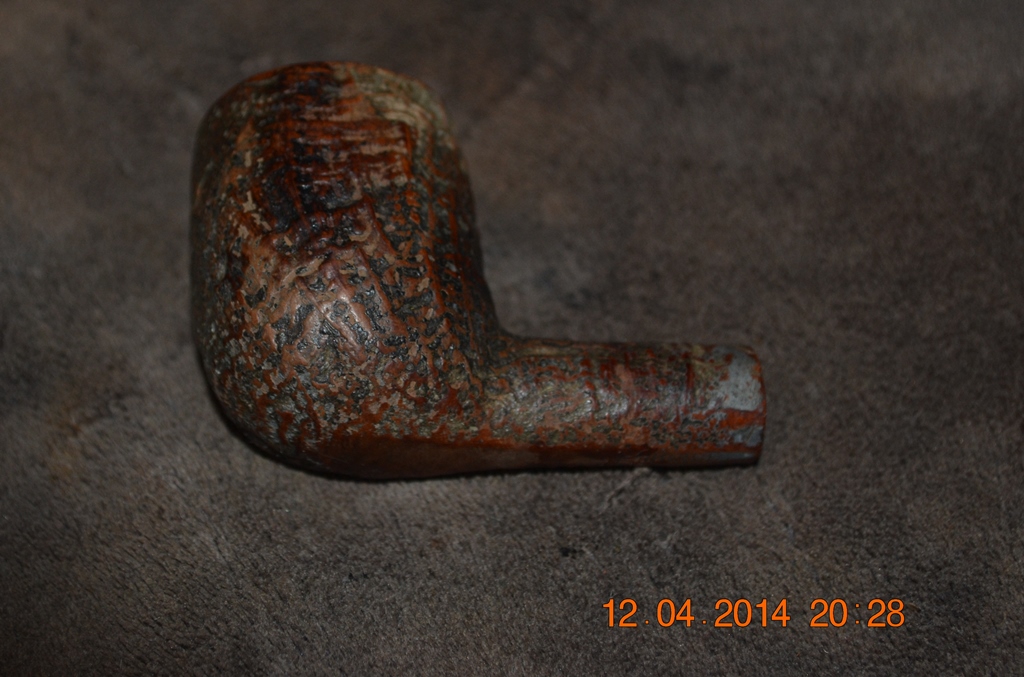
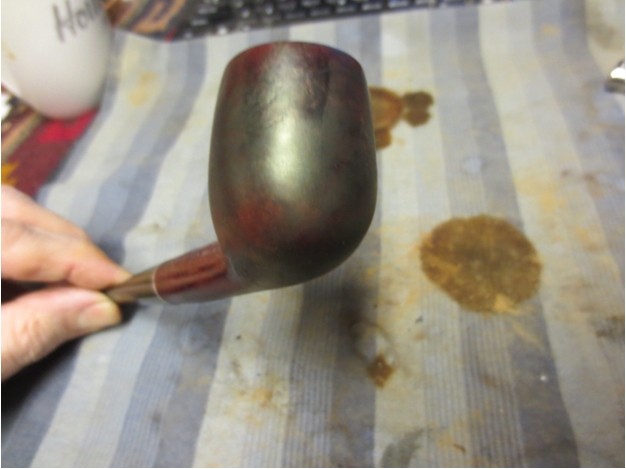
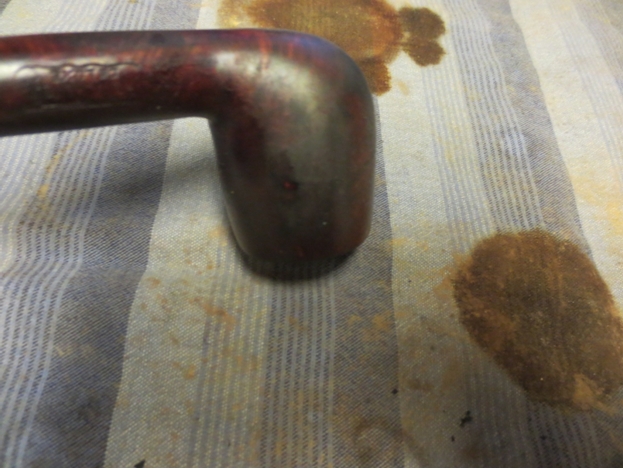
Champ4 The finish was much worn with much of the black overstain worn off. Someone had put a coat of varnish over the worn finish so it was very shiny. There was very little of the sandblast that was not worn. The odd thing was that the blast was still quite rugged and not flattened in the worn portions. The stem was oxidized and dirty. There was a faint logo on the stem of the pipe – a rising sun over a wavy line like a sun over water. On the bottom of the shank it was stamped “The Little Champion”. The bowl had some remnants of broken cake in the V shaped bowl. The rim had a build up tars and oils that had filled in the blast. The rim was slightly slanted inward and gave a dapper look to the old pipe.Champ5 I reamed the bowl with a PipNet reamer. For the upper portion of the bowl I used the second cutting head in the set and the smallest cutting head for the lower portion of the bowl. I evened out the section where the two cutting heads over lapped with a small pen knife.Champ6 Once the bowl was reamed I put the stem in jar of oxyclean to soak and the bowl in an alcohol bath to soak. I wanted to loosen the oils on the rim top and also see if the alcohol would begin to remove the varnish coat.Champ7
Champ8 Later in the day, after the bowl had soaked in the bath for several hours I took it out of the bath and dried it off with a cotton cloth. I used a soft bristled brass tire brush to scrub the rim and loosen the buildup.Champ9

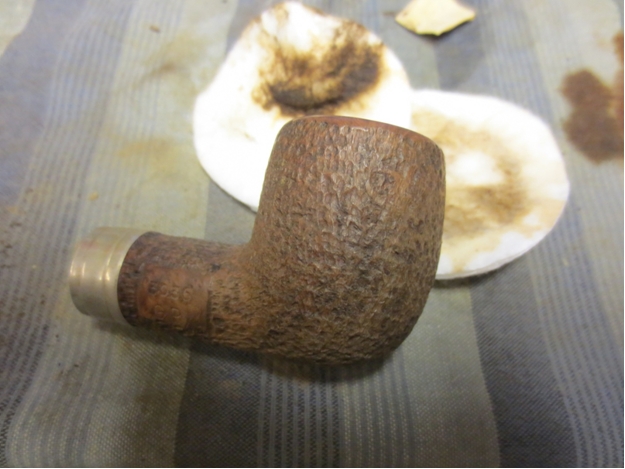
Champ10 I wiped down the bowl with acetone on cotton pads to further remove the varnish. Using the acetone I was able to take of the varnish coat and prep the bowl for restaining.Champ11

Champ12

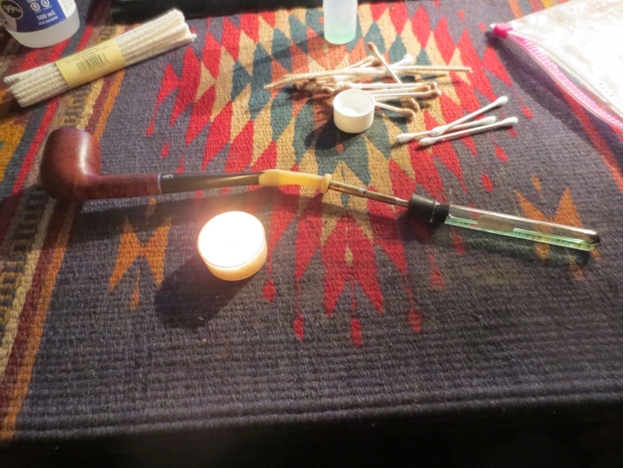
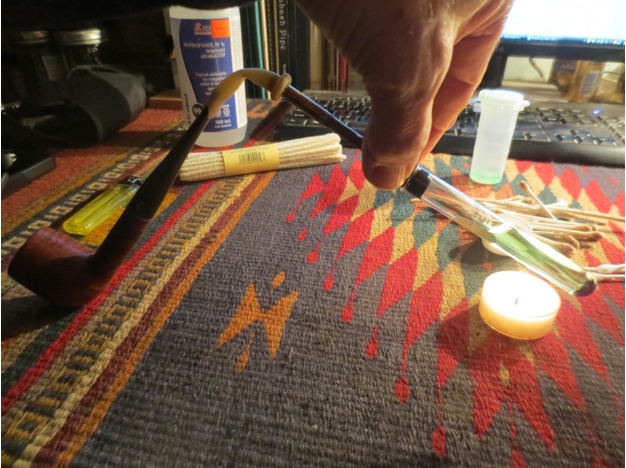
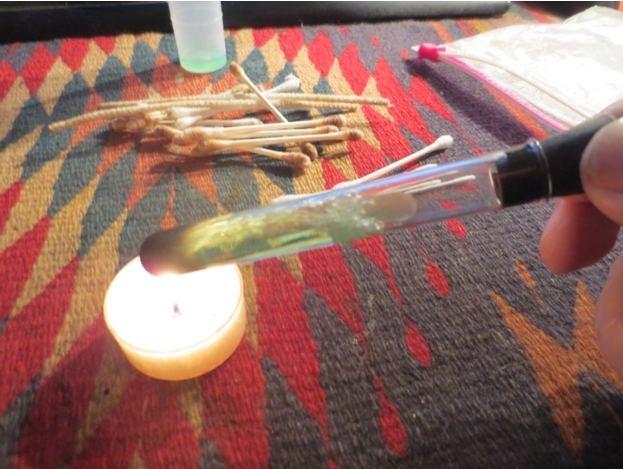
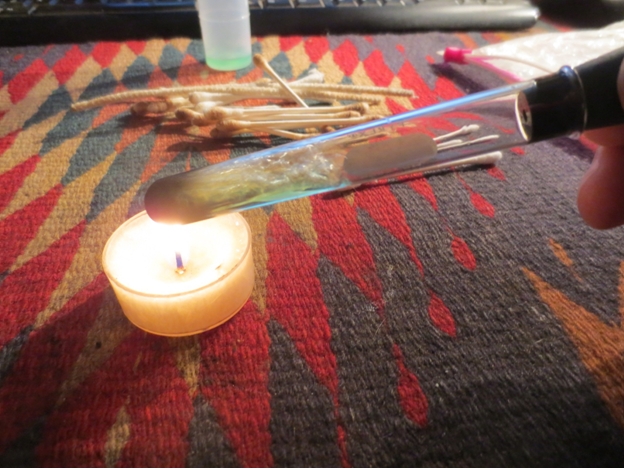
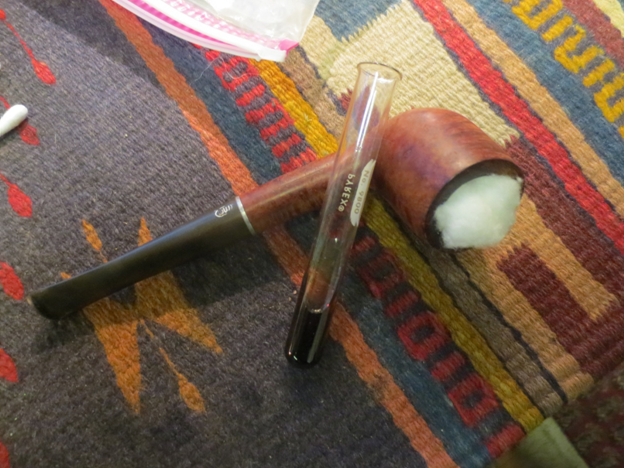
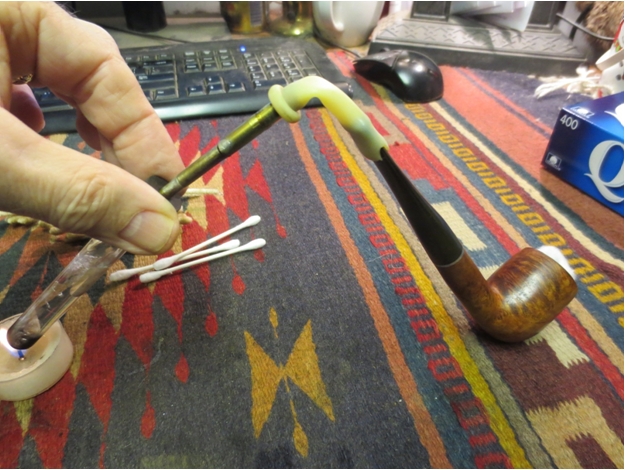
Champ13 I took the stem out of the oxyclean and dried it off. I put it back on the bowl and then set up a pipe retort to boil out the shank and stem. I put a cotton ball in the bowl and the surgical tube over the mouth piece. I heated the alcohol with a tea light candle.Champ14 The first boil through came out brown. The photo below shows the colour of the alcohol after the first tube boiled through. I dumped the alcohol out of the test tube and refilled it and repeated the process.Champ15

Champ16 I removed the stem and cleaned out the shank and stem with alcohol, pipe cleaners and cotton swabs. It took very little time to clean out what remained. I put a plastic washer in place between the shank and the stem and then sanded it lightly with 220 grit sandpaper to loosen the oxidation. I followed that by sanding with a medium and a fine grit sanding sponge.Champ17 I wet sanded the stem with 1500-2400 grit micromesh sanding pads and rubbed it down with Obsidian Oil when finished. I dry sanded with 3200-4000 grit pads and again rubbed it down with Obsidian Oil. I buffed the stem with red Tripoli and then finished sanding with 600-12,000 grit micromesh pads. I rubbed the stem down a final time with Obsidian Oil and then when dry buffed it lightly with White Diamond.Champ18

Champ19

Champ20 I stained the bowl with a mix of 50/50 alcohol and dark brown aniline stain. I applied it with a cotton swab, flamed it and then wiped it down with a cotton pad. The dark brown stain settled deeply into the blast. Some of the higher spots remained a lighter brown. The contrast came out looking quite nice.Champ21

Champ22

Champ23

Champ24 Once the stain had dried I buffed the bowl and stem lightly with White Diamond. I then gave both the stem and the bowl several coats of Halcyon II wax and buffed it with a shoe brush to raise the shine. The finished pipe is shown below. The pipe is ready to load and enjoy. I am planning on loading it up on Christmas morning with a bowl of Pilgrim’s Muse from the Country Squire shop in Jackson.Champ25

Champ26

Champ27

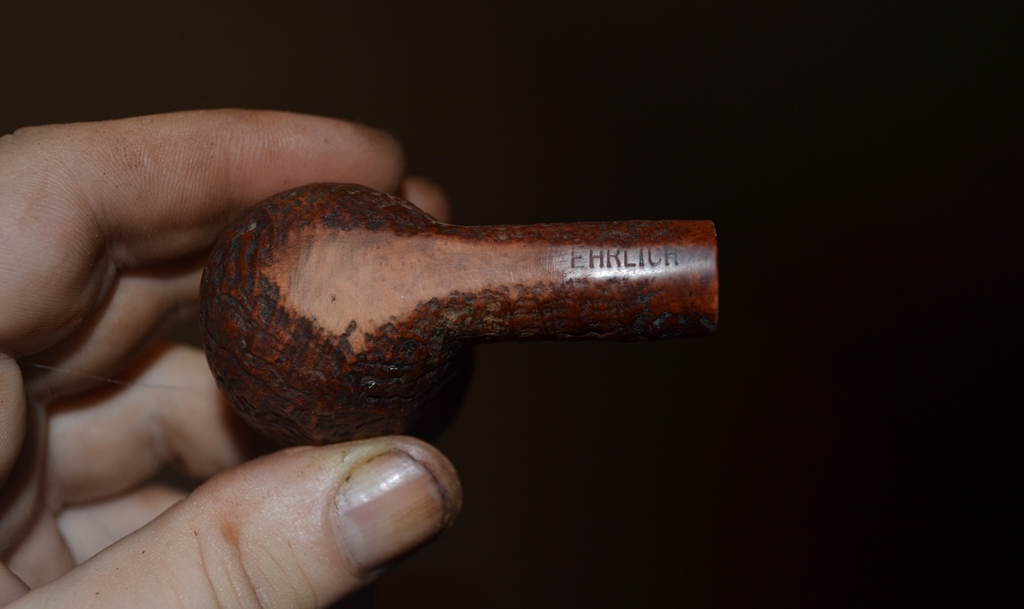
Champ28 The final photo shows the bottom of the shank and the stamping is very readable. Anyone with information on the brand please let us know in the comment section below and I will add it to the blog. Thanks ahead of time.Champ29

UPDATE:
Yohanan sent me a note that he had found the same logo on PipePhil’s Logo site http://www.pipephil.eu/logos/en/logo-e3.html and once I checked it out it matches the stem logo exactly. Here is a photo.Noname

We Three Ashfords (Sasieni Four Dot)


Blog by Al Jones

At the beginning of 2014, I had an empty slot on my “Holy Grail” shape list for the Sasieni Ashford.  During the year, I was thrilled to find both a Ruff Root and Rustic finish Ashfords.  As the year closes out, I was able to find yet another, my first smooth Ashford, in the Walnut finish.    Like my others, this one is a pre-Transition pipe which was made between 1946 and 1979.   So, in the spirit of the Christmas season, I present “We Three Ashford”.

The pipe didn’t need to be restored as the Ebay seller (passionforpipes) had already done an excellent job.  There was a small crease on the side of the bowl on the dot side.  A few minutes with an iron and a wet cloth almost completely removed that mark.  After steaming out the mark, the color was brought back with some White Diamond rouge and then several coats of Carnuba wax.  The nomenclature was in very good condition, so I was careful to stay away from those areas which was waxed by hand with Halycon wax and a cloth.

Sasieni_Ashford_Walnut_eBay_bowl_dent Sasieni_Ashford_Walnut (8)

There was just a hint of oxidation around stem junction and near the button.  I removed that with some 1000>1500 and 2000 grit wet paper followed by 8000 and 12000 grade micromesh.  Then a light buff with white diamond.  Sasieni and Comoys stems respond well to the super-fine Red Jewelers rouge, so that is the final buff used.  You do need to stay away from the stem logos as the red color will transfer

I’m very pleased to add the final Ashford to my collection. My wife had now secreted the pipe away to be wrapped, so I won’t see it until Christmas Day and hopefully enjoyed later on.

Sasieni_Ashford_Walnut_Gallery Sasieni_Ashford_Walnut (6) Sasieni_Ashford_Walnut (2) Sasieni_Ashford_Walnut (9) Sasieni_Ashford_Walnut (1) Sasieni_Ashford_Walnut (3) Sasieni_Ashford_Walnut (7)

Below are all three of my Ashford Shapes.  Walnut, Ruff Root and Rustic.

Sasieni_Ashford_Trio (3)


A Merry Christmas and Blessed New Year from rebornpipes


santa4
Blog by Steve Laug

It has been a great year for rebornpipes. The readership has grown with over 181,000 visits this year and the contributor list has also grown. The vision that I had when I began rebornpipes is becoming a reality. Many of you are not only reading the blogs but are working on pipes and then contributing to the blog what you are learning in the process. I just want to take this opportunity to thank each of you who have contributed to rebornpipes for your willingness to record your work on the pipes you have refurbished, new methods you have used and just for your love of returning old pipes back to a clean and usable condition. I also want to thank each of the readers of rebornpipes for you faithful following of the posts and blogs that are contributed. It would be great to hear from more of you in the year ahead. Why not take some photos of the pipes you are refurbishing and do a write up of your work. Send it to me at slaug@uniserve.com and I will make sure to get it online for you.

I also want to wish each of you in both groups a Merry Christmas and a Blessed New Year. Hope you take some time in the midst of the busyness of the season to remember why we do it and to slow down enough to enjoy a few bowlfuls of your favourite tobacco in a pipe of your choice.Santa

My First Solo Pipe Restoration – A Hand Made Preben Holm IIS – PART 1


Blog by John Ferguson

My friend John Ferguson, who I wrote regarding our pipe hunt and his learning to clean up estates, sent me an email a few days ago. In it he included some photos of a pipe that he picked up and was working on currently. He asked about the brand of the pipe so I did a bit of research on the pipe and found out that it was a Preben Holm pipe – the IIS stamping identifies it as such. Later he sent me a piece that he wrote about the find and his restoration work. Here are his words on this first restoration. It is great to have you posting regarding this pipe on rebornpipes John. Keep up the good work.

Ever since my friend, Steve, showed me how to restore my first estate pipe that I found in a batch of pipes at an antique store in Bellingham, WA, I’ve been itching to do some more hunting for pipes that would intrigue me.

I had the opportunity to do so on a recent trip to Texas to visit my family. One beautiful afternoon towards the end of November, my mother and I headed out to some antique stores to spend some time together. And of course, hunt for some pipes.

I found this pipe that intrigued me.
John1

John2

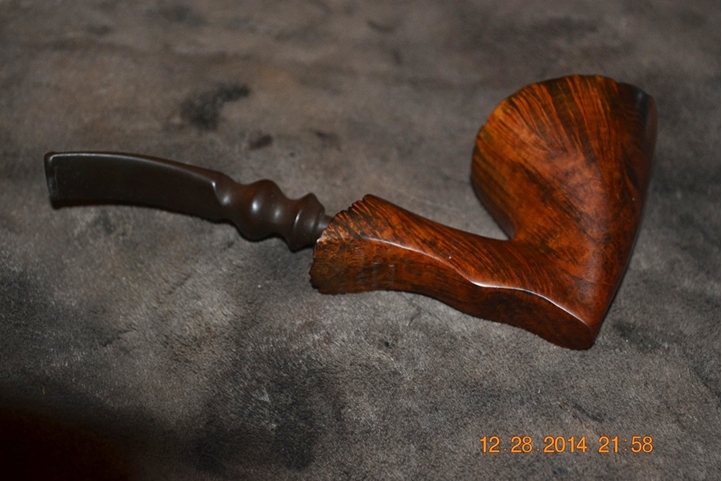
John3 It was stamped with the words, “Handmade in Denmark” with a “IIS” below it. I did a quick search on my smart phone, but couldn’t find any info quickly. With some help from Steve, we discovered that this was a Preben Holm Pipe.

It was only $10, and since my 19 year old son loves all things Scandinavian, and since it looked like something out of Lord of the Rings (another favourite of his), I decided to get it and restore it, and to give it to him as a Christmas gift this year.

It definitely needed some help. The stem had tooth marks plus calcification.John4

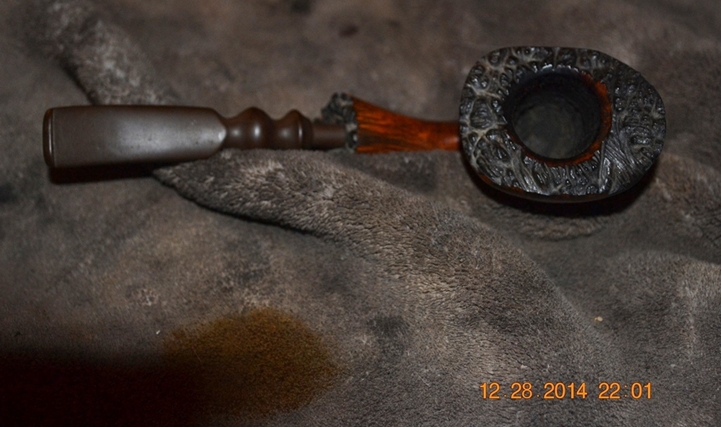
John5 And the bowl had what looked like paint chips embedded in the texture.John6

John7 There was a lot of cake built up on the inside of the bowl, so I took my grandfather’s pocket knife and began to ream it. Gently. I was careful not to damage the bowl.John8

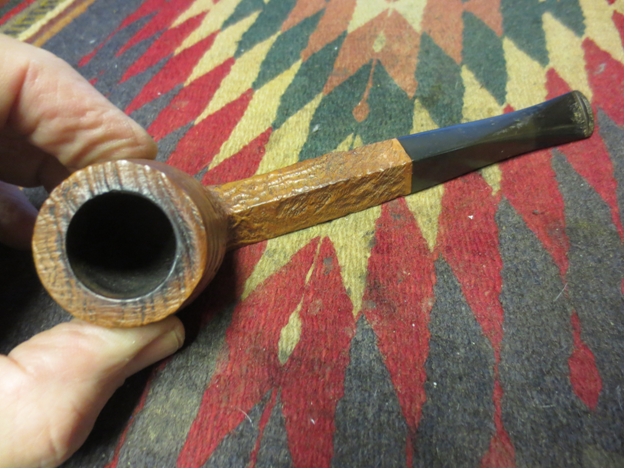
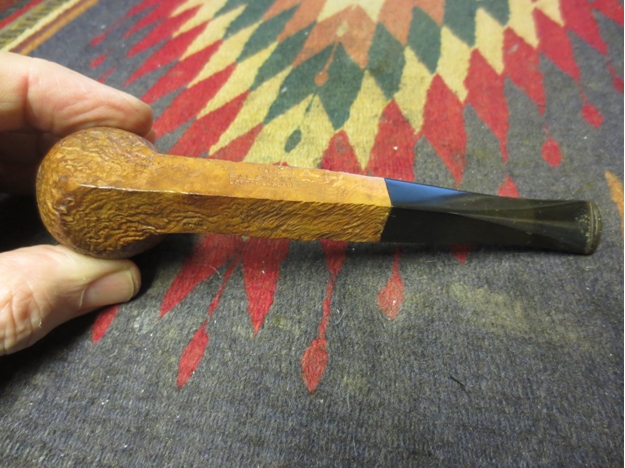
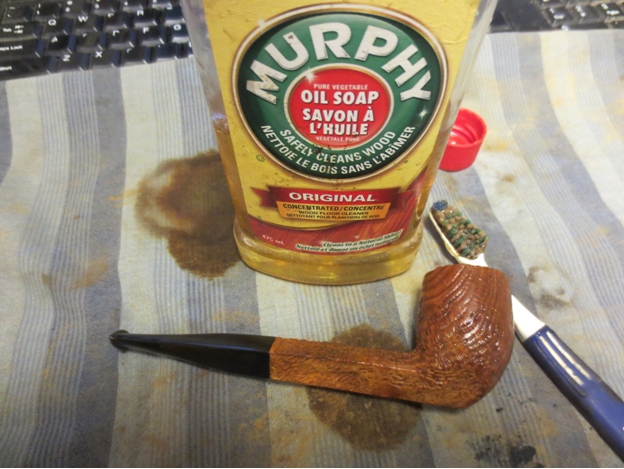
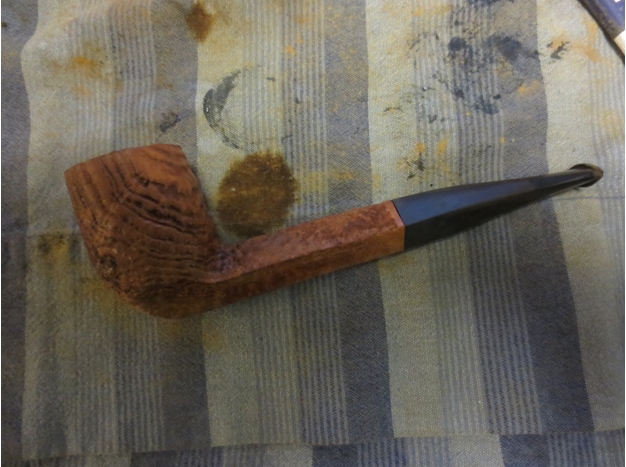
John9 I followed that up with pipe cleaners and alcohol to clean the shank. I used regular pipe cleaners, bristled pipe cleaners, and a pipe cleaning brush and worked until no more gunk came out and the pipe cleaners came out clean.John10 The next step was to clean the pipe with Murphy’s Oil Soap and an old toothbrush. I took several rounds of scrubbing to get most of the ‘paint flecks’ off of it, and what the brush didn’t get the tip of my pocket knife did. I think it turned out beautifully.John11

John12

John13

John14 Next came the cotton ball soak with alcohol on the inside of the bowl.John15 Then I turned to work on the stem. I began working on smoothing out the bite mark and removing the calcification by using 240 grit paper, followed by 180 grit. Then I began using micromesh pads working from the 1500 pad to the fine 12000 pad. After about an hour of work, I had a brand new looking stem.John16

John17

John18

John19 Stay tuned for Part 2!

The Wonderful World of Heritage Briars


Andrew Selking posted a refurbishment of a Heritage Heirloom Canadian and posted a copy of this brochure in his article. I wanted to also post the brochure separately for those who might be hunting for information on this remarkable brand from Kaywoodie. Thanks Andrew for finding this copy of the Heritage brochure. (Courtesy Kaywoodiemyfreeforum)

heritage1_zps888f5f2b

heritage2_zps0d4dc760

heritage3_zpsef2358c6

heritage4_zpsdc6295ef

Refurbishing a Heritage Heirloom


Blog by Andrew Selking

I recently stumbled across the Heritage line of pipes. These pipes were made in the Kaywoodie factory, but on a completely separate line. Heritage pipes were Kaywoodie’s answer to Dunhill. According to one of their brochures, Heritage pipes were made from “briar burls seasoned and cured for up to 8 months,” with only “one briar bowl in over 300 selected to bear the Heritage name.” “Heritage stems are custom fitted with the finest hand finished Para Rubber stems. Mouthpieces are wafer thin and concave.”

The Heritage line began in the early 1960’s, with the trademark issued in 1964. The line was started at the request of Stephen Ogdon, (who worked for Kaywoodie in 1962). Mr. Ogdon had previous experience working for Dunhill, either running the New York store or working for Dunhill North America. Mr. Ogden was made President of Heritage Pi pes, Inc., Kaywoodie Tobacco Co.,Inc. and Kaywoodie Products Inc. as well as a Vice President of S.M. Frank & Co. Heritage Pipes were produced from 1964 until 1970 (Source Kaywoodie.myfreeforum.org).

Here is a copy of the Heritage brochure. (Courtesy Kaywoodiemyfreeforum) heritage1_zps888f5f2b heritage2_zps0d4dc760 heritage3_zpsef2358c6 The pipe I found was the number 72 Medium Canadian, oval shank. Interestingly, the one thing the Heritage line shared with Kaywoodie was the size and shape numbers. Unlike Kaywoodies, the Heritage pipes are normal push tenons.

When the pipe arrived, it had some tar build up on the rim and a thick layer of cake.Andrew1

Andrew2 The stem had some oxidation, but minimal chatter.Andrew3

Andrew4

Andrew5 The finish was in nice condition, so I decided to forgo the alcohol bath and attempt to keep the original finish.Andrew6

Andrew7 The first thing I did was ream the bowl. I used my Castleford reamer and was delighted to find that the cake was very loose, mostly old tobacco, and it easily cleaned back to the wood.Andrew8 Next I decided to find out how the bad the rim was under the tar build up.Andrew9 After a light buffing with 0000 steel wool, the tar was gone and I could see a pristine rim.Andrew10 Since I was on a roll, I decided to re-tort the shank.Andrew11 I normally show pictures of a brush loaded with gunk, but in this case the brush came clean on the first pass. I proceeded to use some q-tips and fuzzy sticks on the shank. Most of the tar came off with the first couple of q-tips, after that it was just a matter of a few more and the shank was clean.Andrew12 Since I didn’t soak the bowl in alcohol, I decided to soak it with some alcohol soaked cotton balls.Andrew13 While the bowl soaked, I retorted the stem.Andrew14 It was just as clean as the shank (this was the first fuzzy stick I passed through after the retort).Andrew15This was the cleanest “dirty” pipe I’ve ever had. Since the stem was so clean inside, I skipped the Oxyclean bath and tackled the oxidation. I used my normal progression of 400 grit wet/dry sandpaper with water, followed by 1500-2400 grit micro mesh pads with water.Andrew16 The finish seemed really dark, probably the result of oil from the previous owner’s hands, so I used some 0000 steel wool and acetone to clean the outside of the bowl and shank.Andrew17 The steel wool worked well on the bowl, so I skipped the 1500-2400 grit micro mesh and started at 3200. I used a progression of 3200-12,000 grit micro mesh for the bowl and stem in preparation for the buffing wheel.Andrew18 After an uneventful spin on the buffer, here is the finished pipe.Andrew19

Andrew20

Andrew21

Andrew22

Andrew23 This line of pipes might be one of the best kept secrets out there. I find that the quality of the stem compares to Dunhills and the wood is spectacular. I highly recommend these pipes.heritage4_zpsdc6295ef

Cutting back a broken stem – rescuing a potential cast off


Blog by Steve Laug

When I recut the button on a recent Peterson Shamrock stem I thought I would use the opportunity to go into more detail on how I cut back the stem and shape a new button on the end of the cut off. The photo below shows the state of the stem when I received it. While I had other options in terms of repair of the stem I decided to cut it back.Shamrock7 I have a Dremel that is my go to tool for cutting off a stem. Others use a saw – coping or hack saw, but I use the Dremel. The photo below shows the sanding drum that I use. It is pretty coarse sandpaper and makes short work of trimming back the vulcanite or Lucite of a stem. The trick is to hold the stem and the Dremel steady while you work the end of the stem against the sandpaper.F2DF829HZI92Z2B.MEDIUM Over time I have learned to hold it steady and work the cutting line straight. I take off all of the damaged material so that I have some thickness on the top and bottom of the stem that will accommodate a new button without making the stem too thin in the process. In this case I removed the funneled portion of the airway in the button and what remained was the round airway that would need to be reshaped. The line across the stem is pretty straight considering I do it by eyeballing it rather than using a straight edge.Shamrock13

Shamrock14

Shamrock15 The next step in the procedure is to cut a straight line equidistance on the top and the bottom of the stem that will be the sharp edge of the button. The outer edge is slightly rough in the photos but that does not matter as that edge will be bevelled toward the airway in the shaping process. I use a flat blade needle file with a square edge for this initial cut.Shamrock16

Shamrock17 Before I put the flat blade needle file away I use it to shave some of the material that is directly ahead of the sharp line of the button and begin the tapering process. I follow that up with an emery board to get a feel for the look of the stem and to assess how much material I will remove in the process.Shamrock18

Shamrock19 The next step in the process is to shave more of the material away and adjust the angles of the stem to the button. I use a needle file with a knife shaped blade and draw it across the stem toward the button edge. As I draw the file toward the button it peels the material away. I work it from the point on the stem that I have picked as the place where the new taper will begin. I lightly draw it across the upper portion and deepen the cuts the further I go down the stem. I clean up the sharp edge with the straight file once again. I cut a groove in the material next to the button edge that sets the depth of the bottom of the taper. I work the stem angles until they taper directly into the button and the groove disappears. I used 220 grit sandpaper to clean up the file marks and smooth out the transition of the angles to the button. At this point the definition of the button is finished. All that remains is to shape the button and clean up the marks on the material.Shamrock20

Shamrock21 I used the oval needle file to open and flare the edges of the airway to open the airways. Once I have the funnel cut I use a folded piece of sandpaper to clean up the file marks in the slot and smooth out the end of the button. I also use the sandpaper to shape the button and taper and round the edges to make the button oval and smooth.Shamrock22

IMG_3126 I worked the curve of the underside of the stem to make a smooth and clean angle that matched the curve of the bottom of the bowl of the pipe. I used 220 grit sandpaper, medium and fine grit sanding sponges to reshape the curve. The next two photos show the curve and the shape of the button on the cut off stem.Noname

IMG_3073 Once the shaping was finished I sanded the stem with micromesh sanding pads. I sanded the blade and the button and slot area of the stem at the same time. I wet sanded with 1500-2400 grit sanding pads and dry sanded with 3200-12,000 grit pads. I polished the stem with red Tripoli and White Diamond on the wheel and then gave the stem multiple coats of carnauba to polish and raise the shine.Shamrock31

Shamrock34

Shamrock33

Shamrock32 The finished stem is shown below. The goal in the process is to return the stem as near as possible to its original shape and condition. The button shape is determined by photos or by the remnant of the stem prior to being cut off. The buffed and polished stem should look as close as possible to a factory cut stem. While I have done many of these I still feel like I am in the process of learning. The key to the whole thing is to move slowly, carefully and methodically until the stem is finished. Then sand some more and polish some more… I can’t tell you how many times I have gone back after several months of smoking the pipe and doing a bit more reworking until I am happy with the feel in the mouth.IMG_3091

IMG_3092

Carrying on the story of a 1905 Imperial ITC Bent Billiard


Blog by Steve Laug

The seller had marked this little pipe an Imperial ITC Silver Mount Birmingham 1934. Something about the gentle bend of the stem and shank, the shape and wear on the bowl made me want to have this diminutive pipe as my own. I bid on it and was the only bidder picking it up for about $22 Canadian. I think the seller wet down the stem and bowl for the photos because it is far too shiny looking. When I see an old pipe like this I immediately begin to wonder about the gent who owned the pipe. What was he like? What did he smoke in it? When did he purchase it and what did he smoke in it? Many of those questions can of course be answered by the pipe itself. The date in this case was suspect and would be formalized once I had it here. The vulcanite stem appeared to have an older rounded button that let me to surmise that it has an orifice button – a single round hole in the end of the button rather than a flared airway. The bowl was obviously well smoked telling me that it was a good smoking pipe. The stem unchewed telling me that the owner had cared for it well. Other than that I was left wondering about the last owner, was he the purchaser? How had the seller come into possession of the pipe? Questions for which I will not have an answer.Imperial ITC When the pipe arrived I opened the box and excitedly cut through the layers of tape that held the pipe captive in the bubble wrap that protected it. I was proven correct in my assumption regarding the state of the pipe. The finish was indeed wetted for the photos of the seller as the pipe did not glisten like the photos. The bowl was in decent shape, the finish worn and tired. The rim was shot with built up tars and damage from tapping the bowl out. The silver had multitudes of dents and pock marks in it that showed its carriage in a coat or vest pocket and was tarnished. The stem was clean a lightly oxidized but showed no tooth damage. The bowl was caked with a thick build up of carbons but did not have a sweet or smokey smell so it was likely a Virginia pipe. The curve of the stem matched the curve of the bowl. The stamping was clear and readable – Imperial in script at an angle with ITC underneath the underline of Imperial. There was no other stamping on the briar.Imp1

Imp2

Imp3

Imp4 I wanted to check out the date given by the seller as I suspected it was somewhat earlier than the 1934 date given by the seller. The stem and button shape and the threaded bone tenon all pointed to an earlier date in my opinion. The hallmarks on the silver band would allow me to do that with some precision as they were not badly worn. I wiped down the band with a silver polishing cloth to remove the tarnish enough that I could read the stamping. To the naked eye it appeared to have a W.H. in an oval followed by an anchor, a lion and a lower case k.Imp5 I brought home a magnifying glass from work that had a built in light. I put the pipe under the lens and turned on the light. I lifted it to get the clearest magnification I could get on the silver hallmarks and what I had seen was indeed correct. It was a WH in two interlocking circles and the three hallmarks were correct.Imp6

Imp7 I took this information to one of my favourite websites to process the information and gather what I could from the stamping http://www.silvercollection.it/englishsilverhallmarks.html. There I found the following data. The anchor stamp told me that the pipe or at least the silver band came from Birmingham, England. The lion told me I was dealing with sterling silver. And the k told me the date – 1905 not 1934. The pipe was significantly older than the seller had noted. That excited me as I love these older briar pipes.Imp8 I also wanted to know what the W.H. in the oval could tell me about the pipe. I dug a little deeper on the English silver marks page and found more information.Imp9 The maker of the silver band was a William Harrison who was active in London. Various copies of Harrison’s marks in Chester Assay Office were registered by Imperial Tobacco Co between 1907 and 1916. The mark above shows a Birmingham 1908 hallmark. From that information I gathered that the W.H. was William Harrison and that the Birmingham Assay Office had stamped the band in 1905.

I unscrewed the stem from the shank in order to work on the bowl. The cake was thick and crumbling in the bowl so I reamed it back to bare wood with a PipNet reamer.Imp10

Imp11

Imp12 The rim would take some serious work to get it back to workable condition. I set up a topping board and carefully worked the top of the bowl against the sandpaper. The surface of the rim was not even so this took some care so as not to angle the rim. I sanded the rim until the surface was flat and the damage was removed. There was still some darkening to the briar but I chose to leave that rather than to remove more of the briar from the rim.Imp13

Imp14 To remove the spotty and damaged finish on the bowl I wiped it down with acetone on cotton pads and was able to take it back to the unfinished briar. The brown patina of the briar was not removed in the process and once finished would clean up well and still show some age.Imp15 I wanted to take photos of the stem and tenon so that you could see the age and shape it was in. It was a bone tenon, threaded to match the threads in the shank. The end of the tenon has a funnel or tube that is part of the tenon to capture the smoke and bring it into the airway. The other end of the stem is the rounded orific button that I have come to expect on pipes from this time period.Imp16

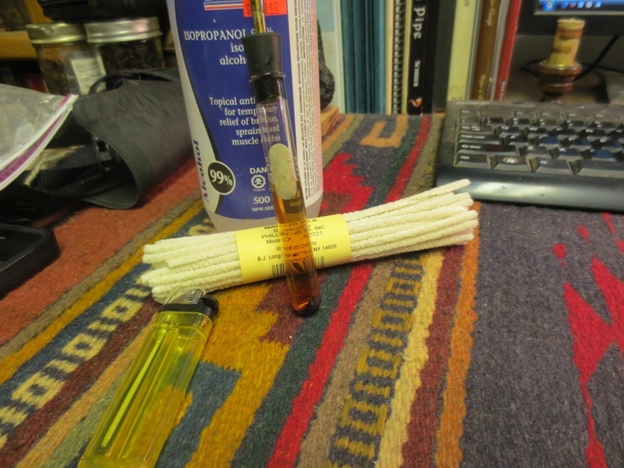
Imp17 Once the exterior surfaces were clean it was time to work on the interior of the shank and stem. I put the pipe back together and set up a retort. I filled the test tube with 99% isopropyl alcohol and put the stopper and apparatus in place. I stuffed a cotton ball in the bowl to keep the alcohol that was boiled through the pipe in the pipe and not all over the desk top. I use a small tea light candle to heat the alcohol and boil it through the pipe. I repeat the process twice, changing the alcohol between procedures to remove the tars and oils from the shank and stem. Once I removed the retort I cleaned out the shank and stem with pipe cleaners, cotton swabs and isopropyl alcohol. It takes far less pipe cleaners once the retort has finished its work.Imp18

Imp19 I decided to stain the briar using the stain pens instead of the usual aniline stains. I wiped down the surface of the bowl with alcohol and then used the stain the medium brown stain pen to stain the bowl. When applied the stain is streaked but that is easily taken care of with a quick buff with a cotton cloth. I also cleaned the silver with a silver polish and a jeweler’s polishing cloth to remove the tarnish and bring up the shine.Imp20 I removed the stem and sanded it with a medium and a fine grit sanding sponge to address the light oxidation. I then sanded it with micromesh sanding pads – wet sanding with 1500-2400 grit pads and dry sanding with 3200-12000 grit pads. I rubbed down the stem between each set of three pads with Obsidian Oil. When I finished sanding with the 12000 grit pad I also gave it a final coat of Obsidian Oil and when dry took it to the buffer and buffed it with White Diamond and then carnauba wax to protect the stem.Imp21

Imp22

Imp23

Imp24 I decided to rub down the bowl with a light coat of olive oil. I find that on these older pipes it brings out the patina nicely. I put some oil on a paper towel and then rub down the pipe, wipe off the excess and repeat the process until it shines.Imp25

Imp26

Imp27

Imp28 When the olive oil was absorbed and the bowl was dry to touch I took the pipe to the buffer and lightly buffed it with White Diamond. I gave the entire pipe several coats of carnauba wax, buffing the silver with a very light touch so as not to damage the hallmarks and stamping. I finished by buffing it lightly with a soft flannel buffing pad to raise the shine. The finished pipe is shown below. It is ready to go back into service. I intend to enjoy it for many more years. I always enjoy smoking these old timers and only wish they could tell their stories. It is amazing to be able to load a bowl and smoke a pipe that is almost 110 years old. Speak to me, I am listening I want to hear your stories… and add my own to the saga you could tell.Imp29

Imp30

Imp31

Imp32