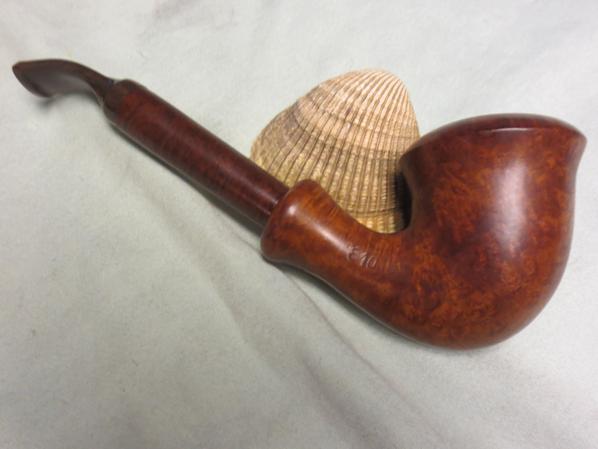
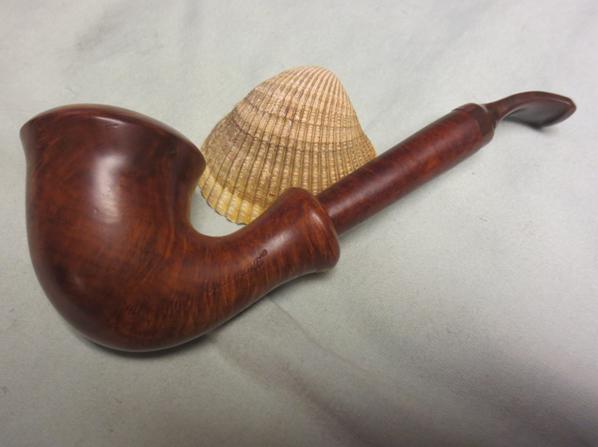
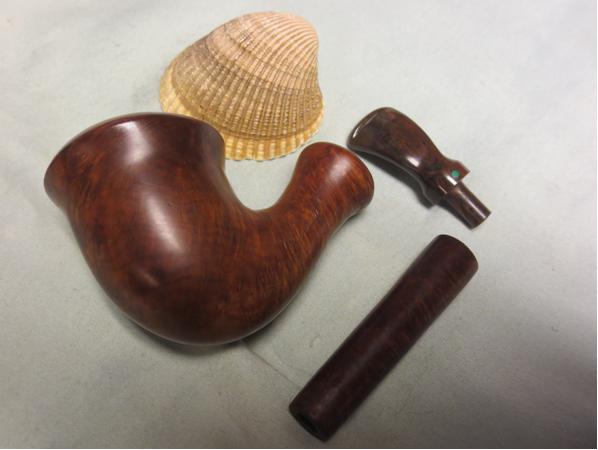
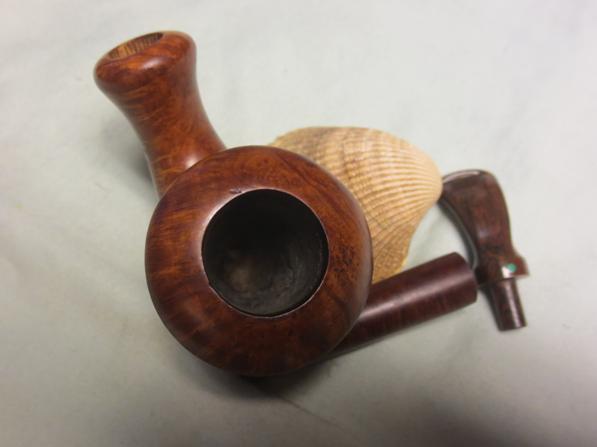
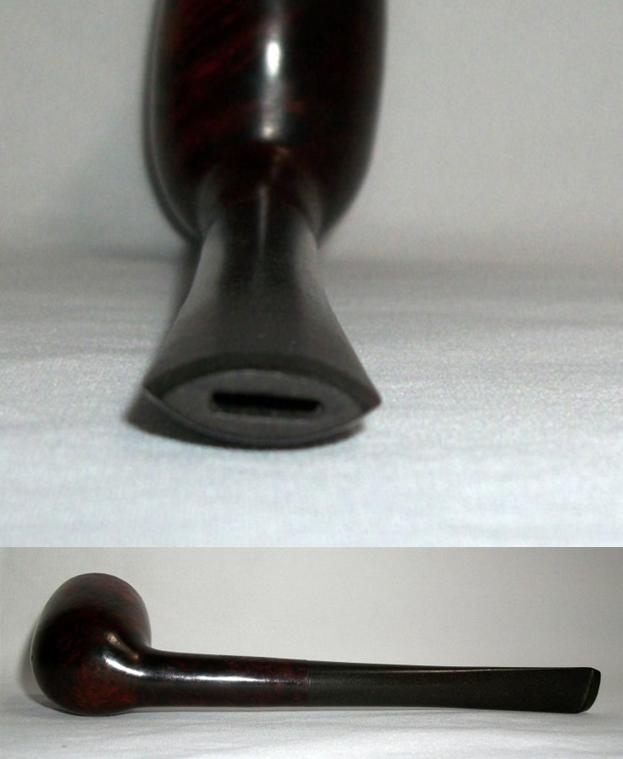
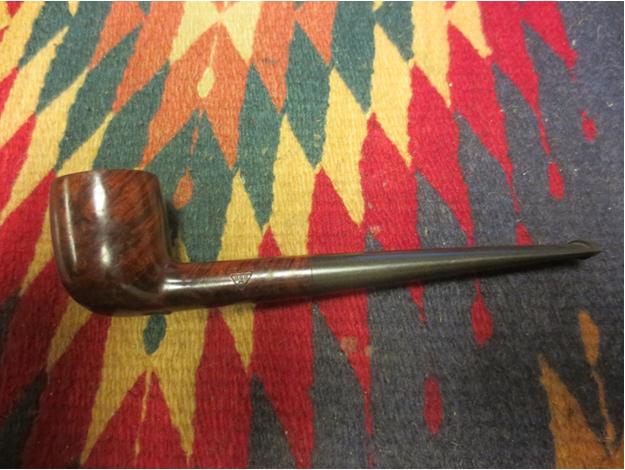
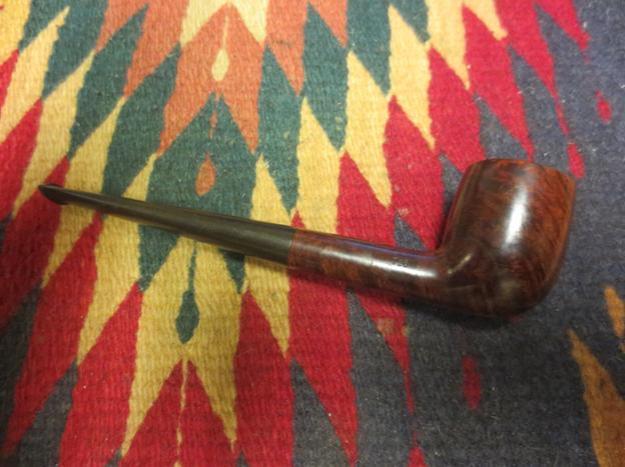
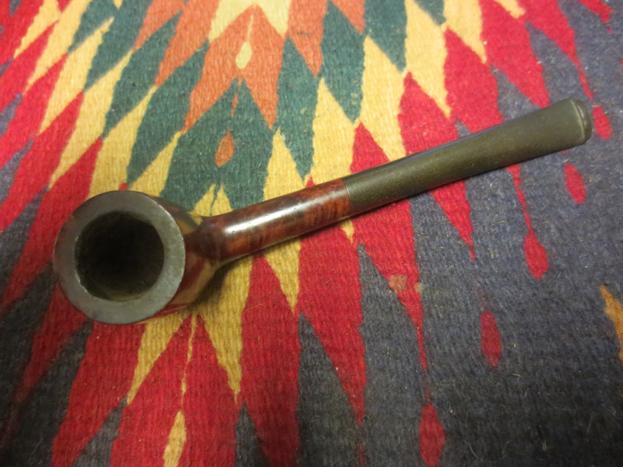
A New Look for an Unknown Billiard


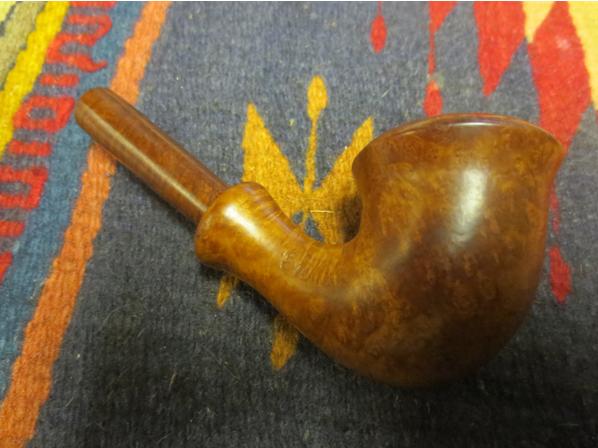
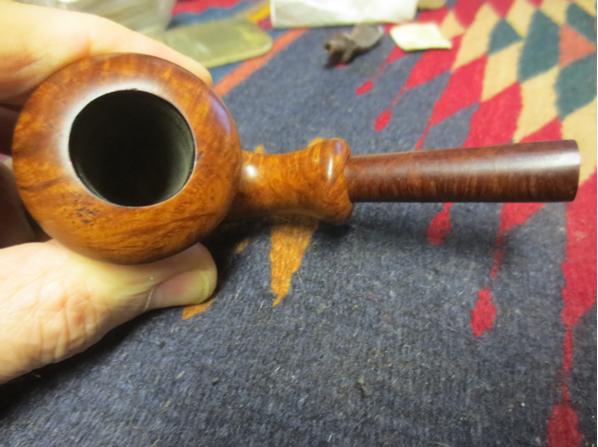
Great transformation on this one. Creative solutions to several challenges

Charles Lemon's avatar

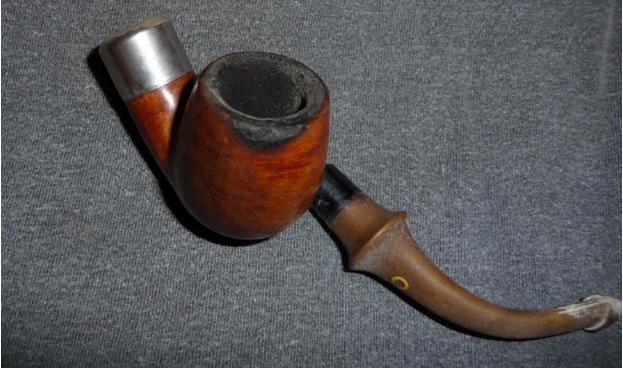
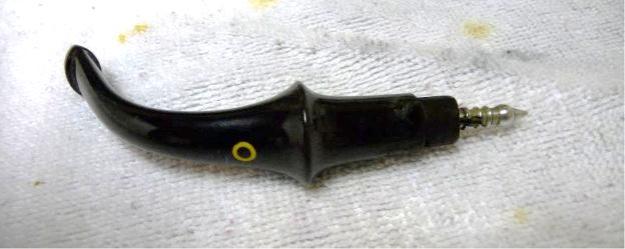
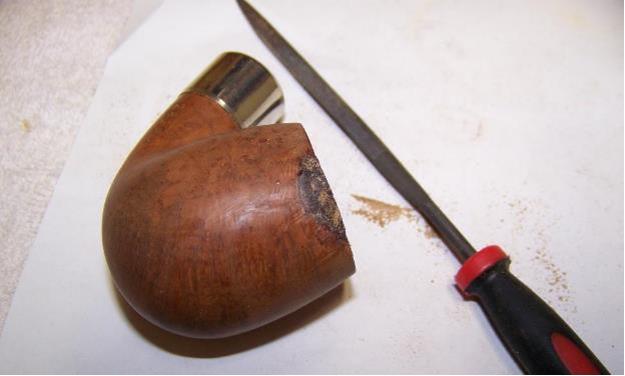
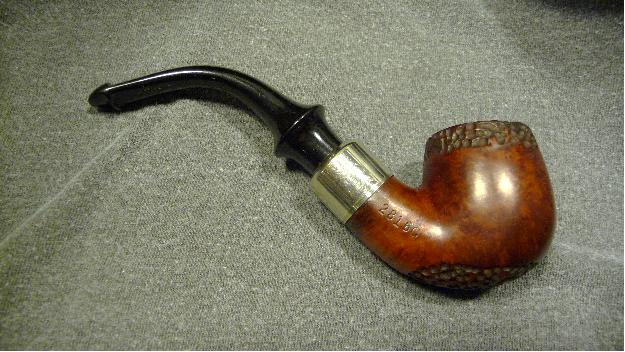
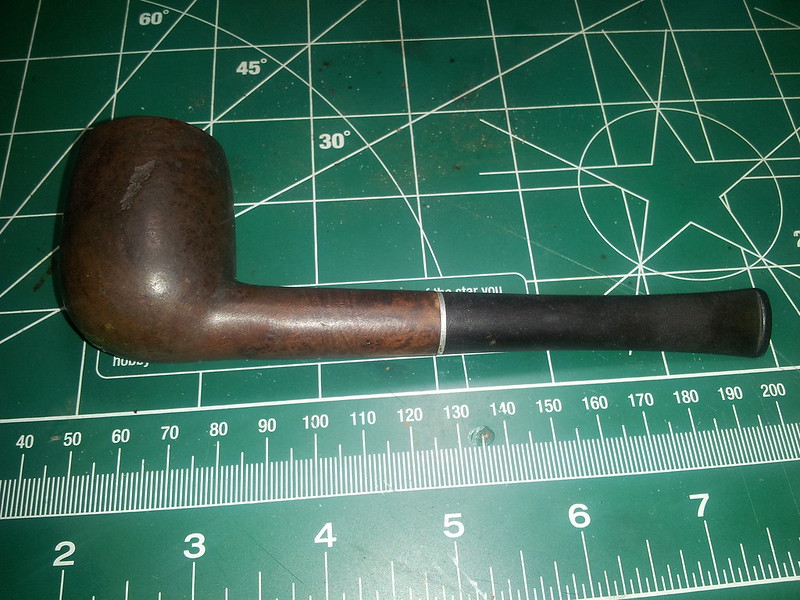
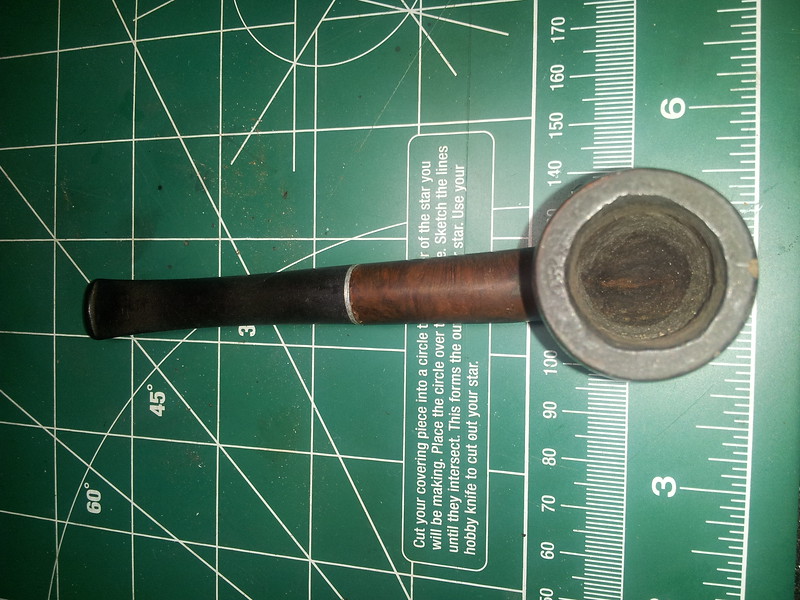
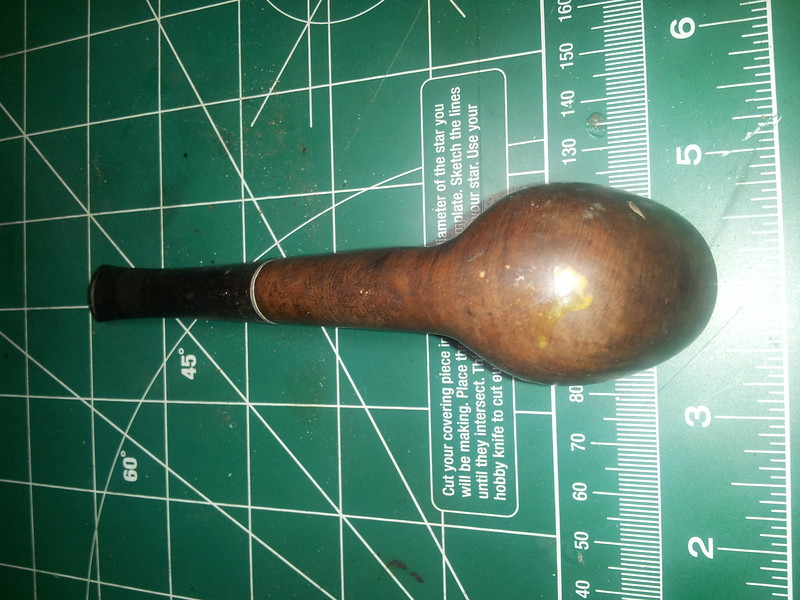
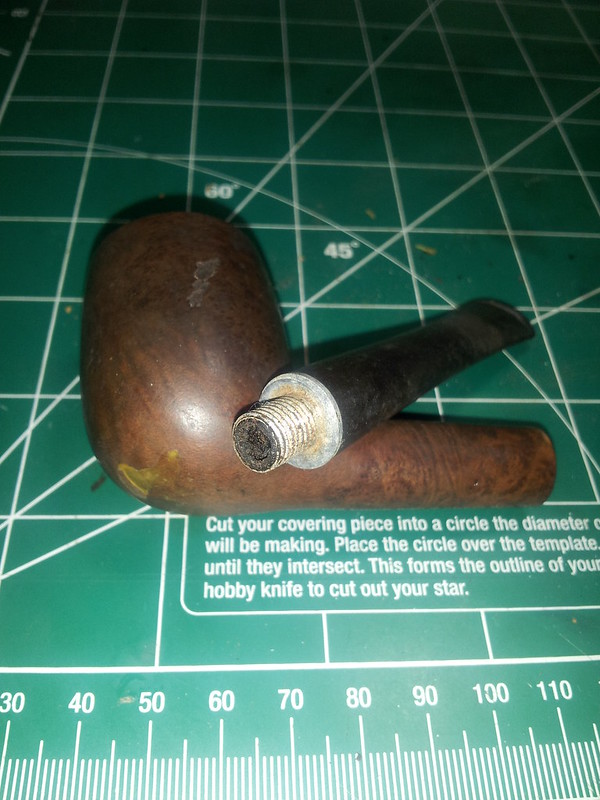
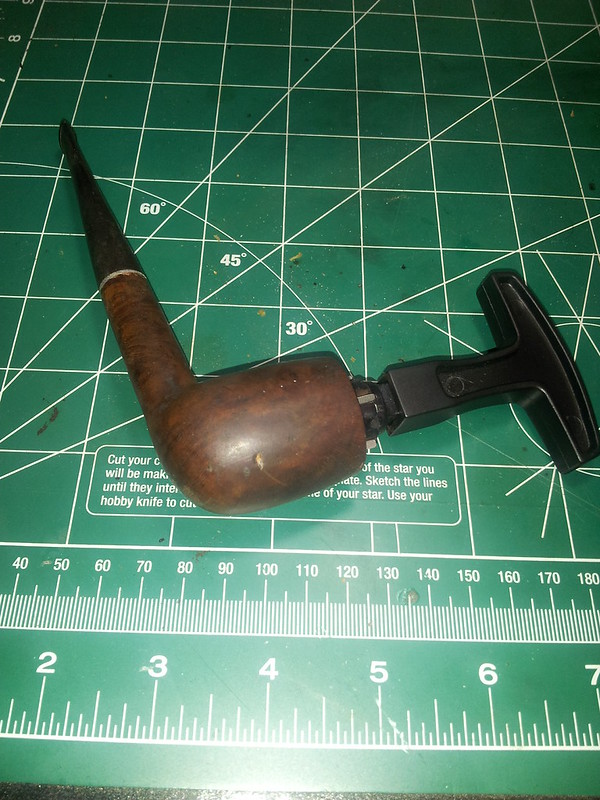
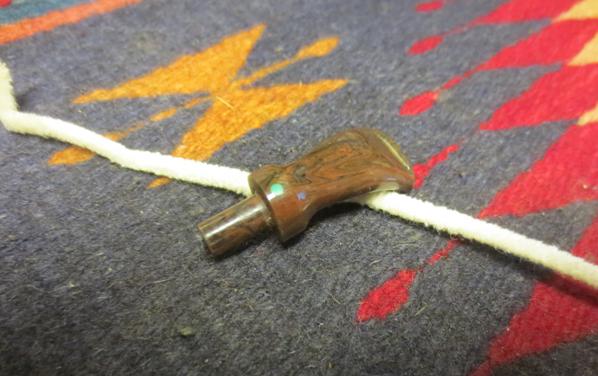
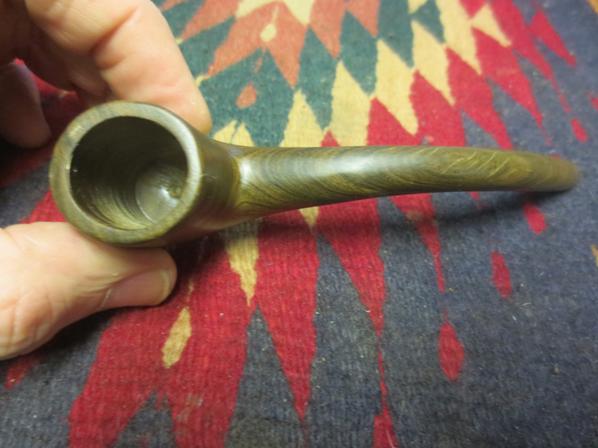
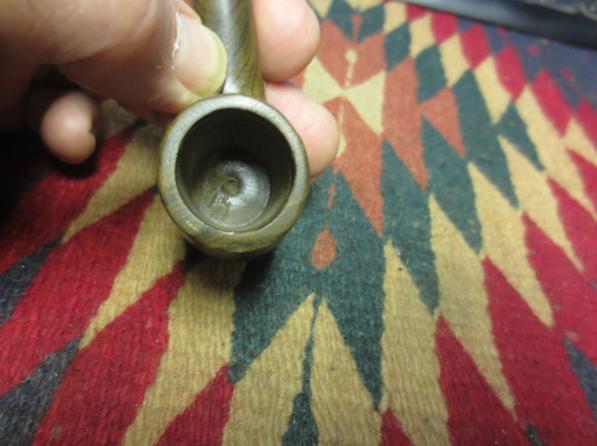
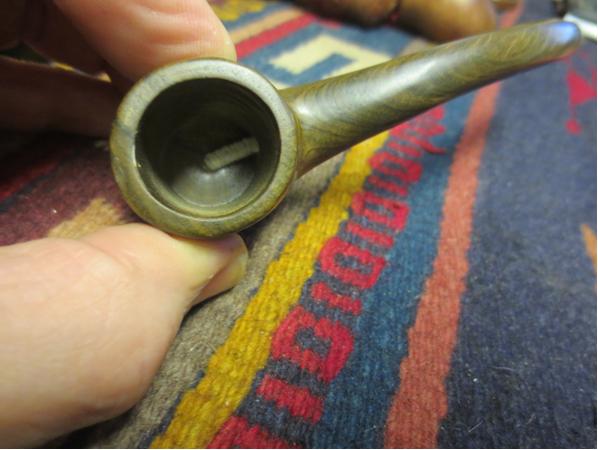
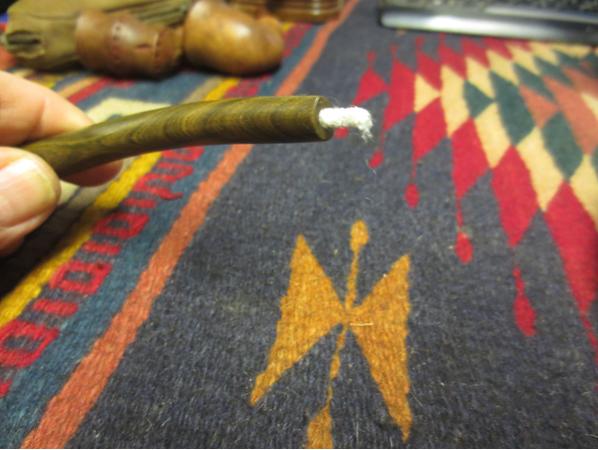
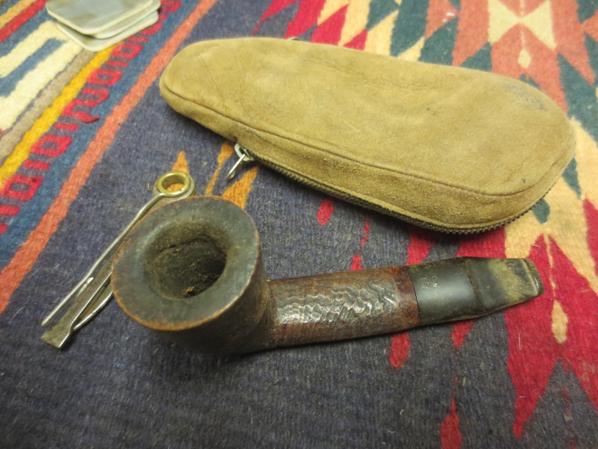
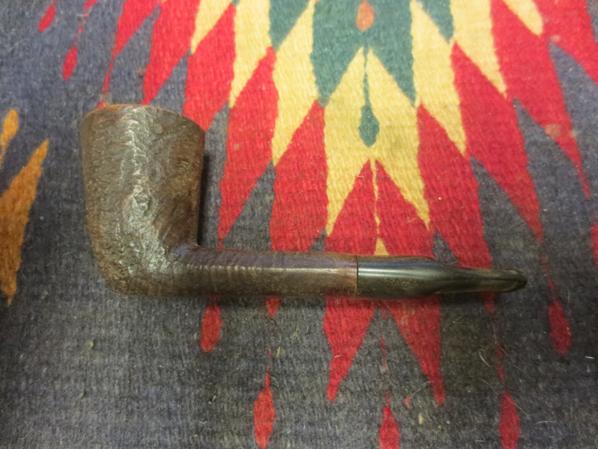
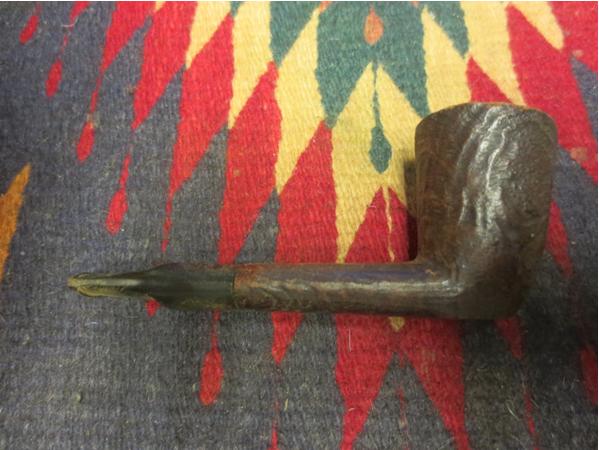
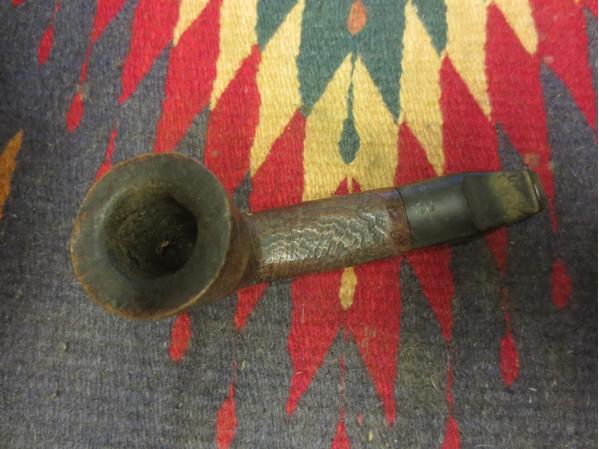
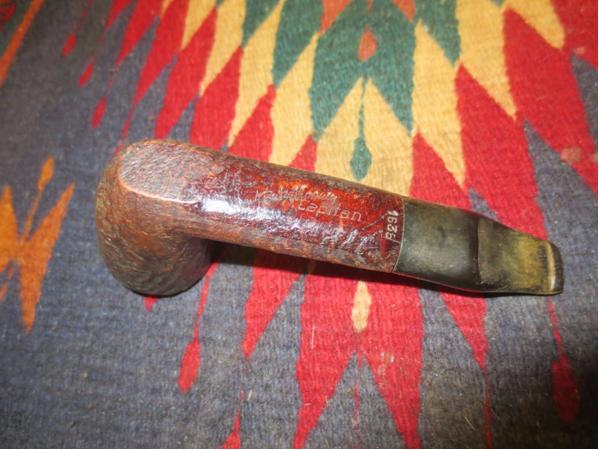
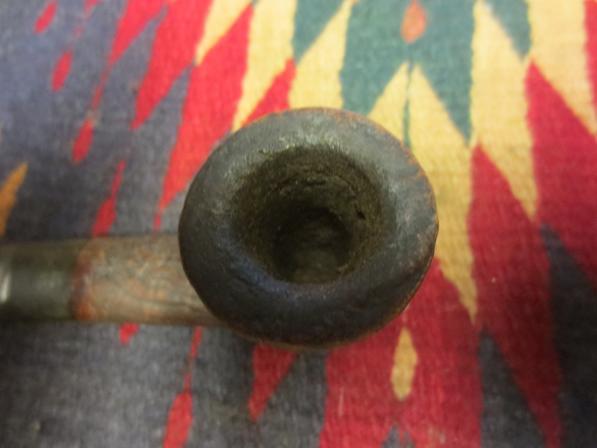
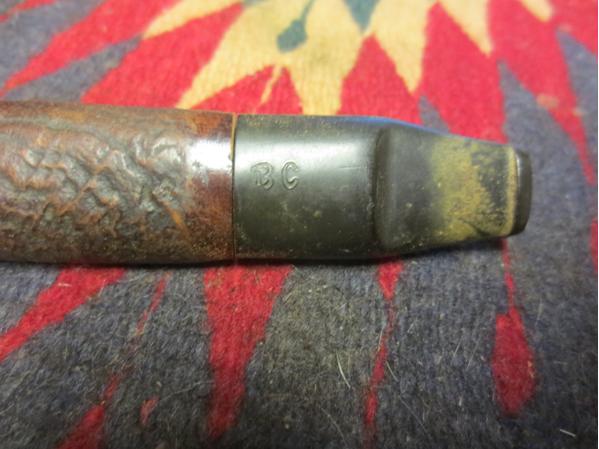
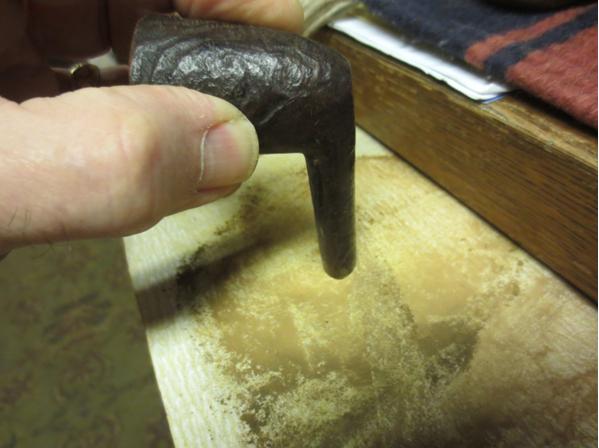
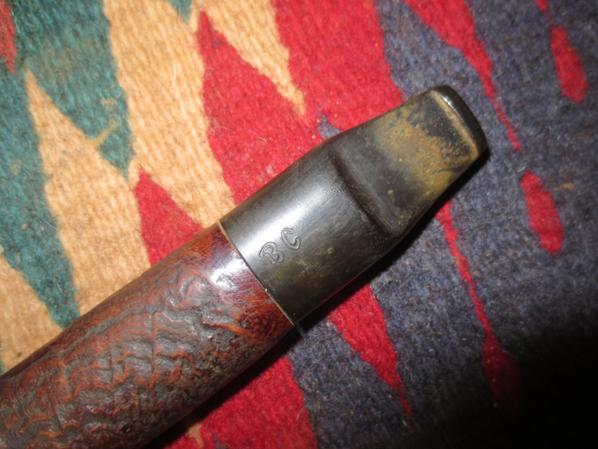
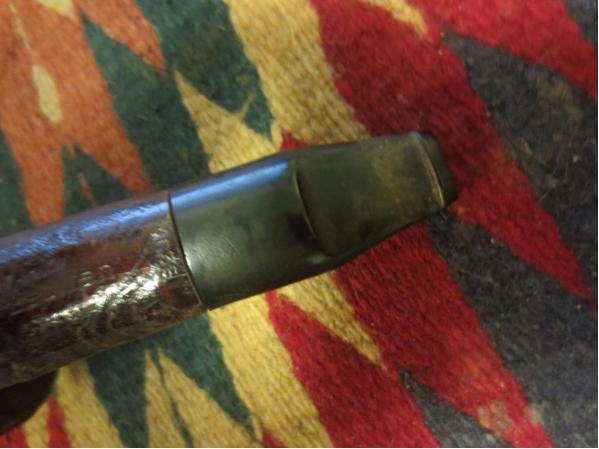
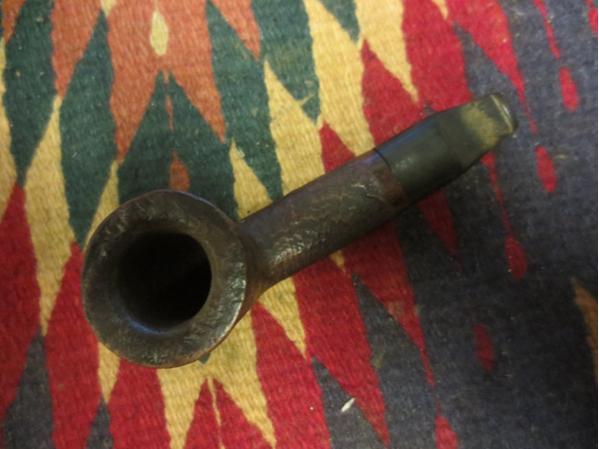
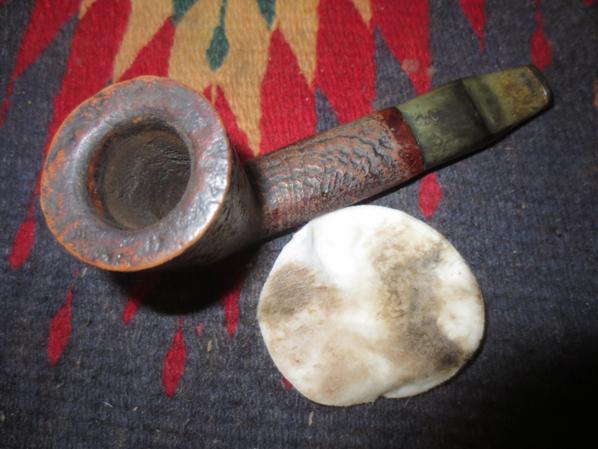
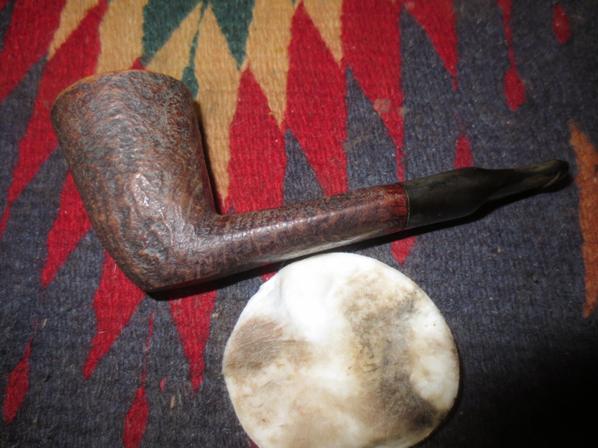
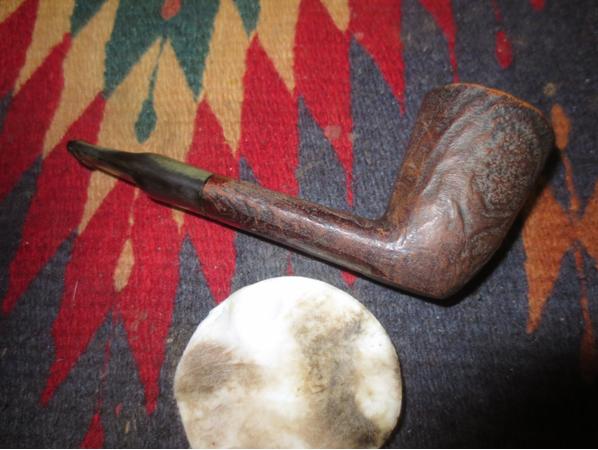
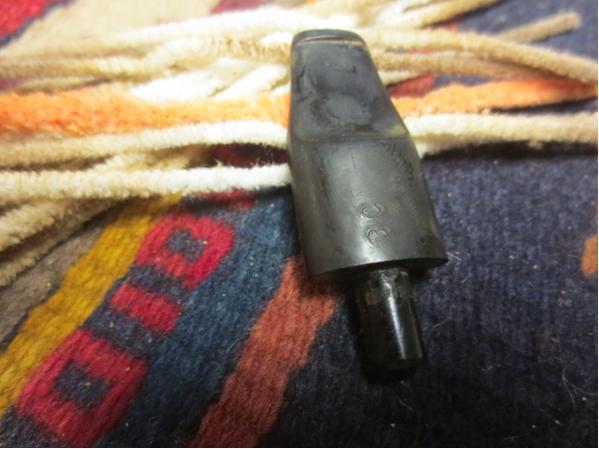
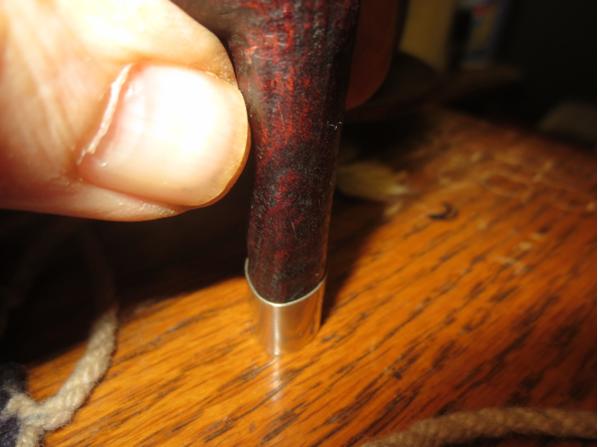
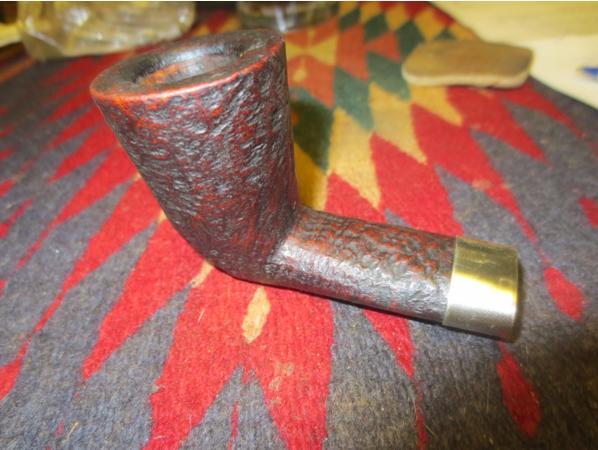
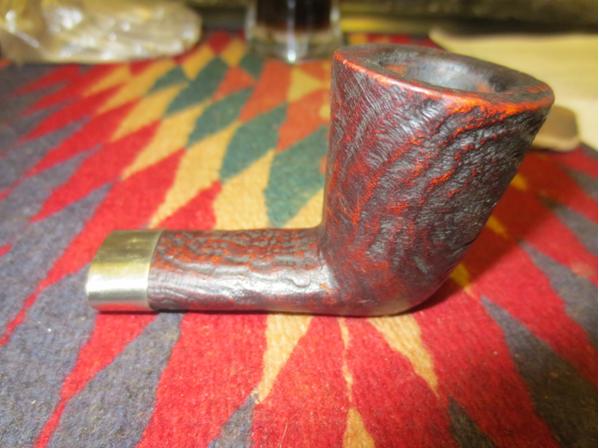
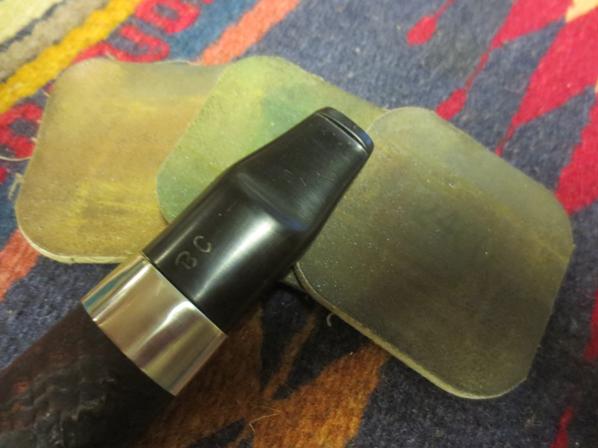
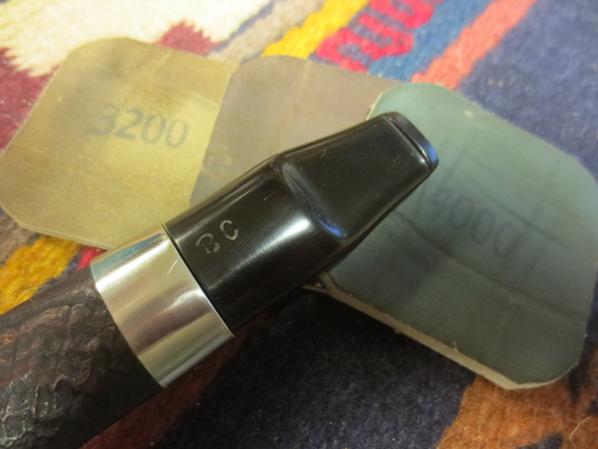
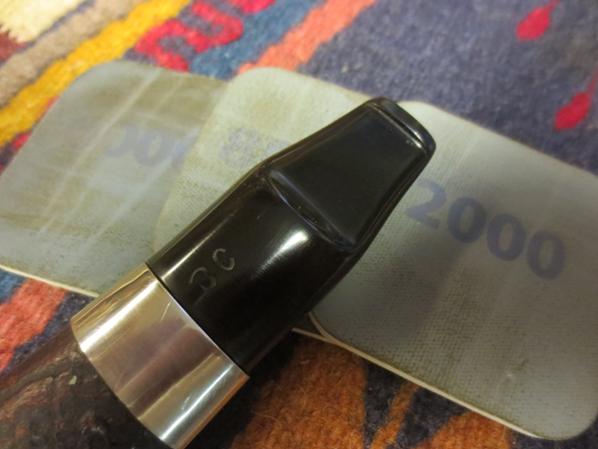
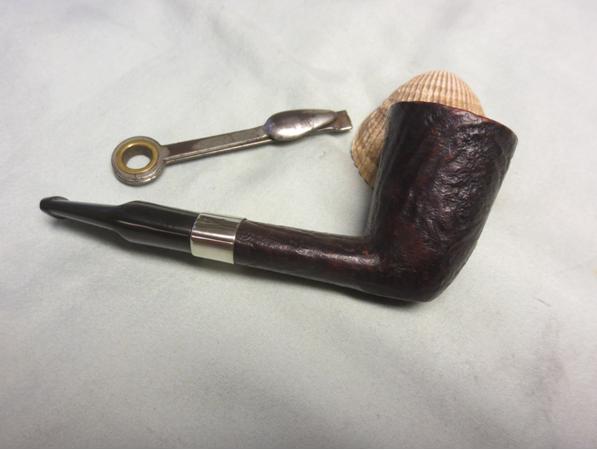
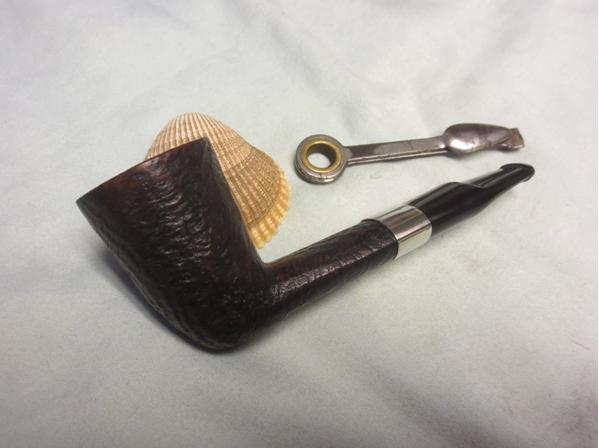
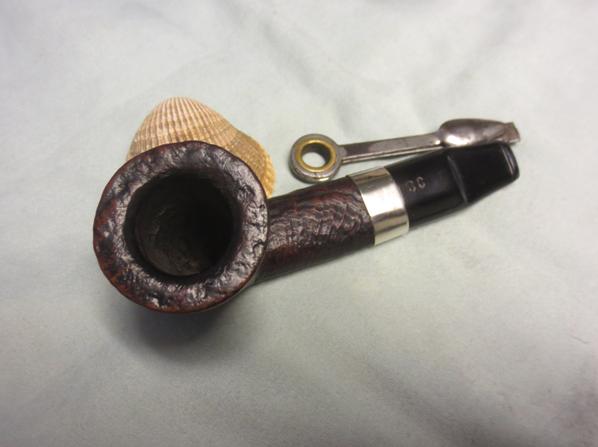
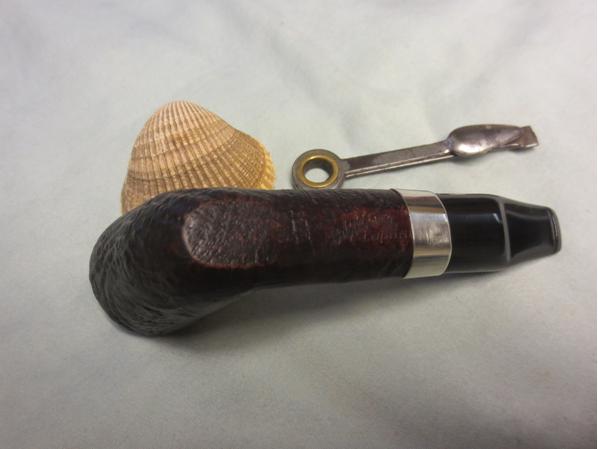
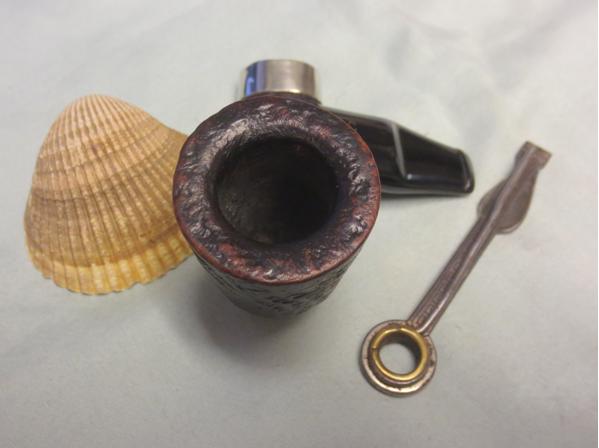
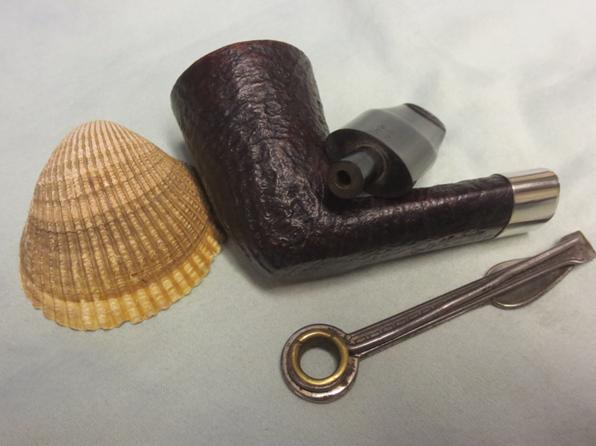
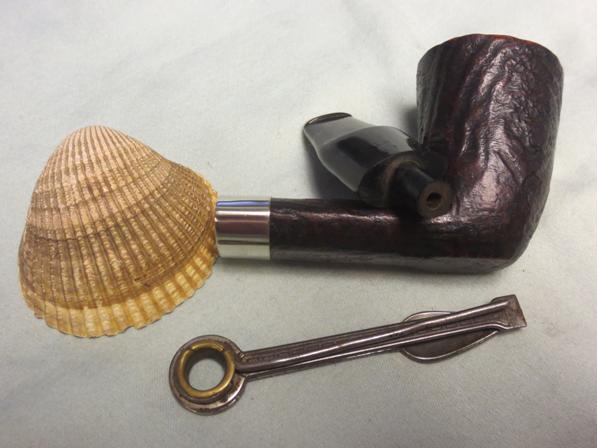
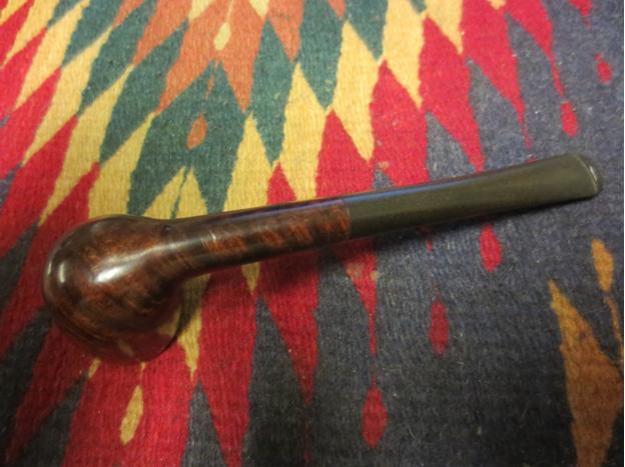
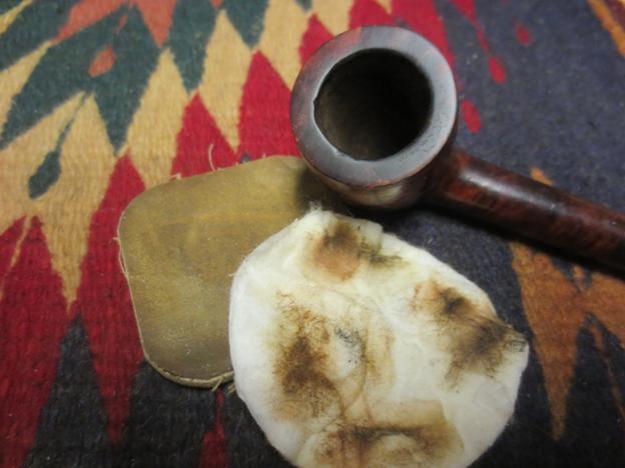
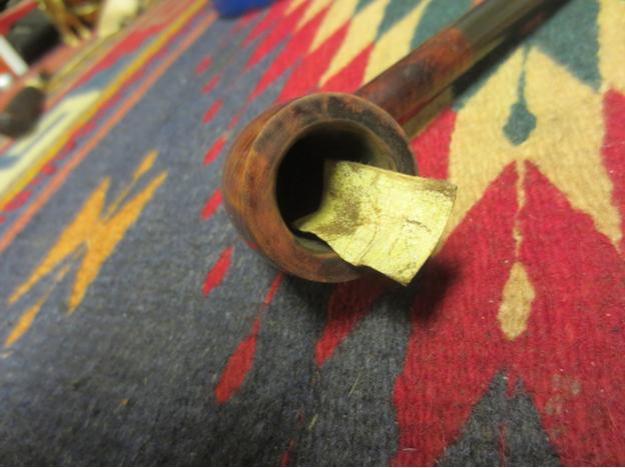
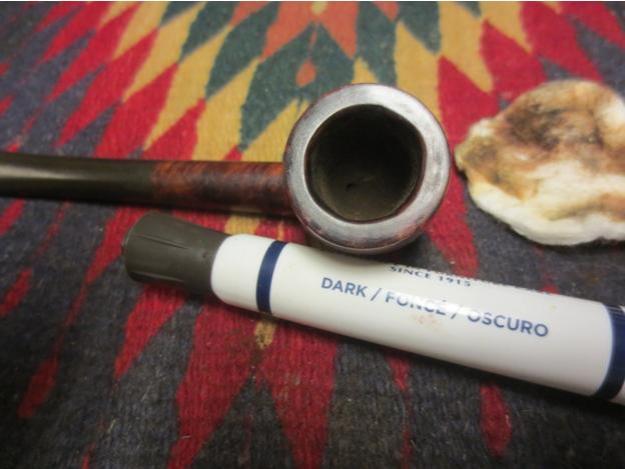
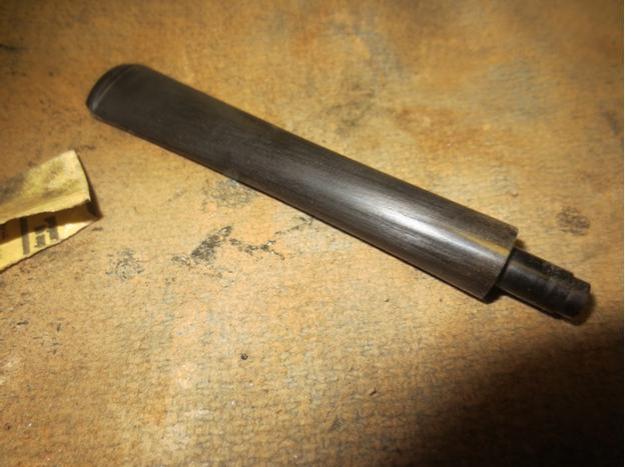
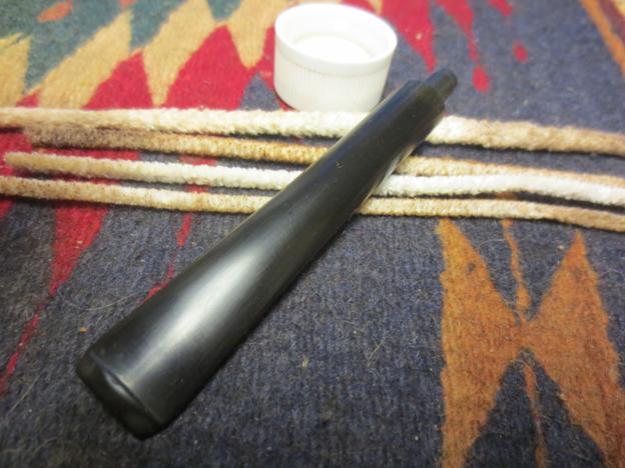
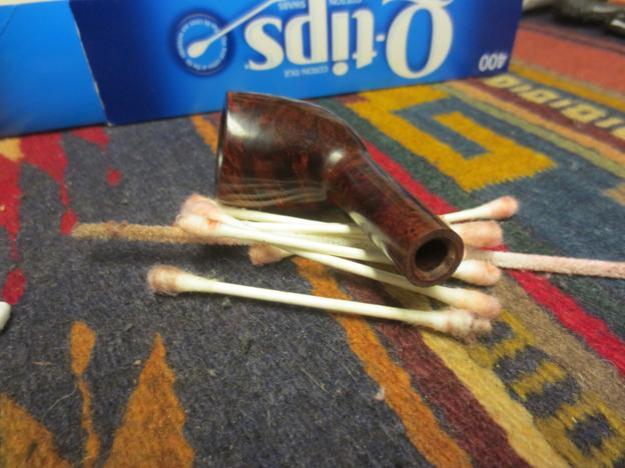
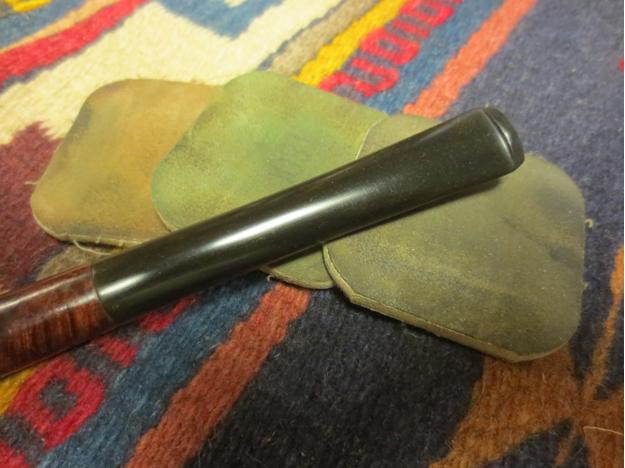
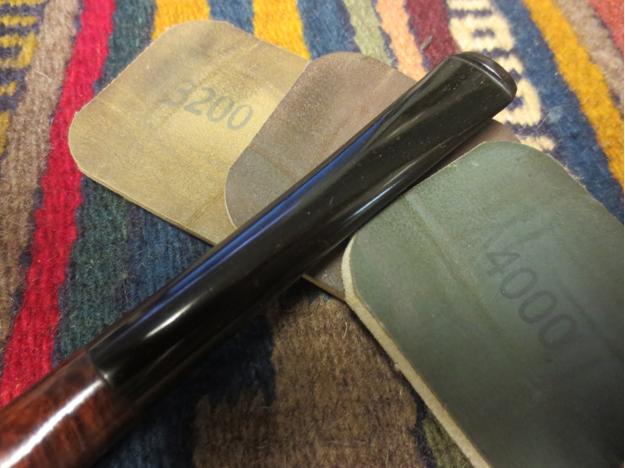
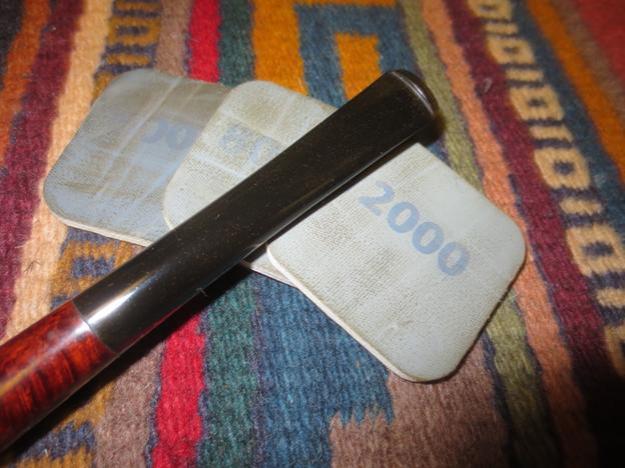
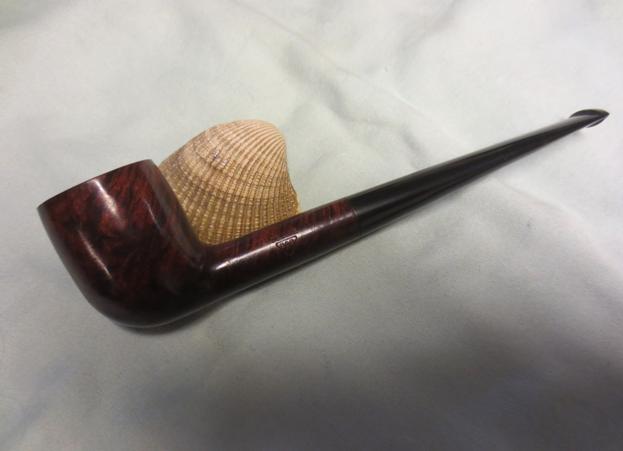
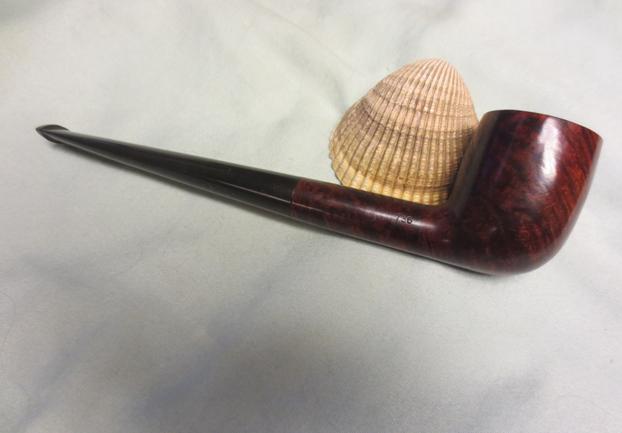
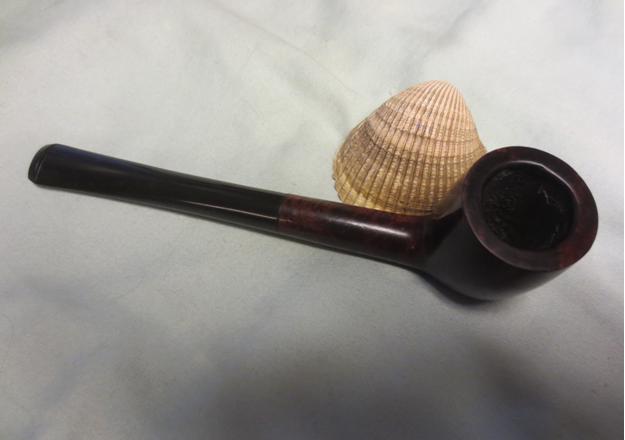
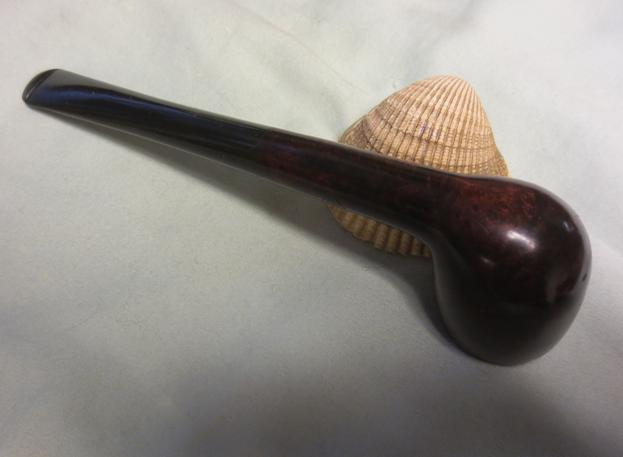
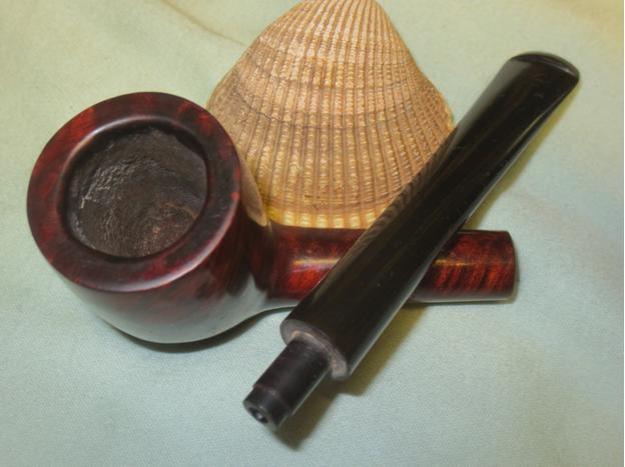
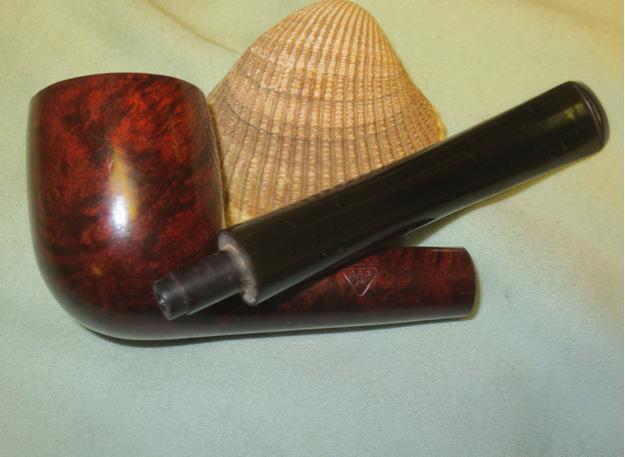
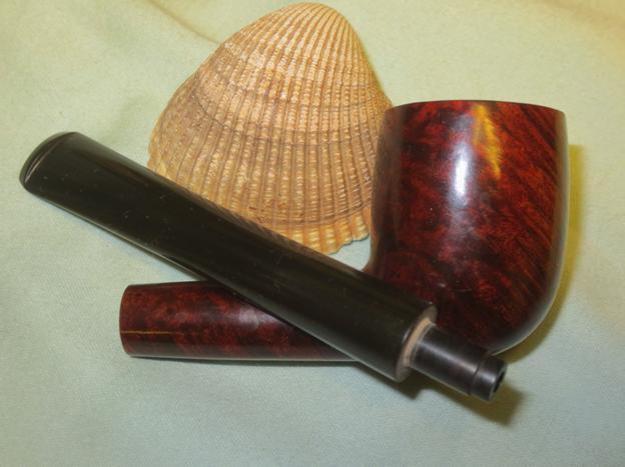
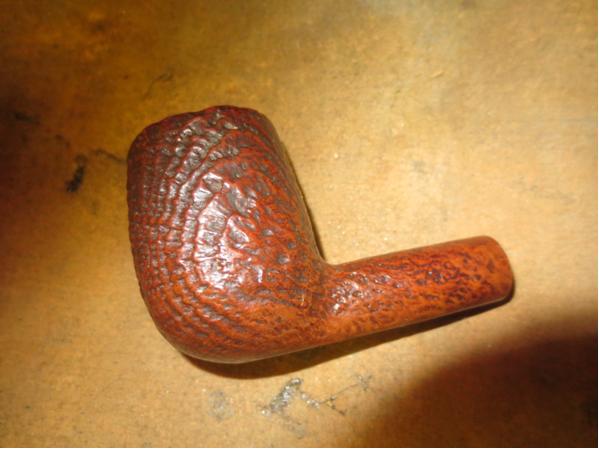
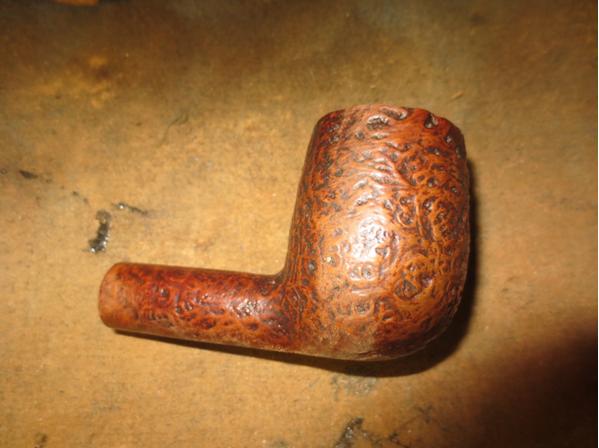
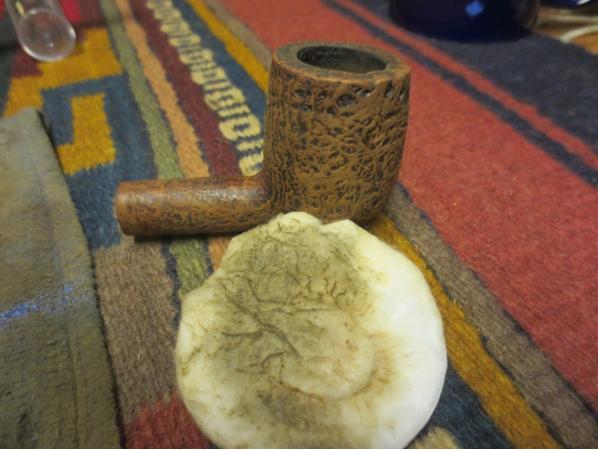
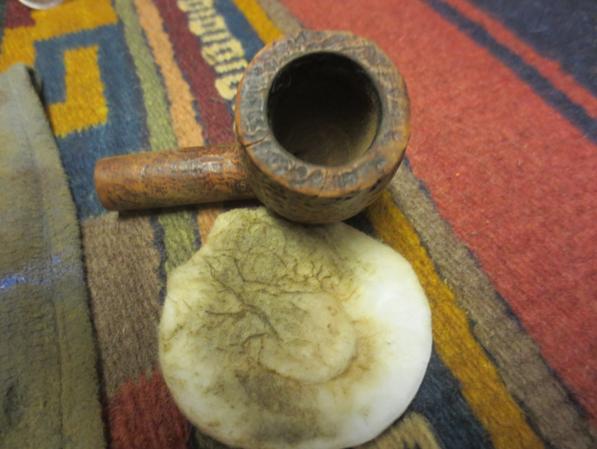
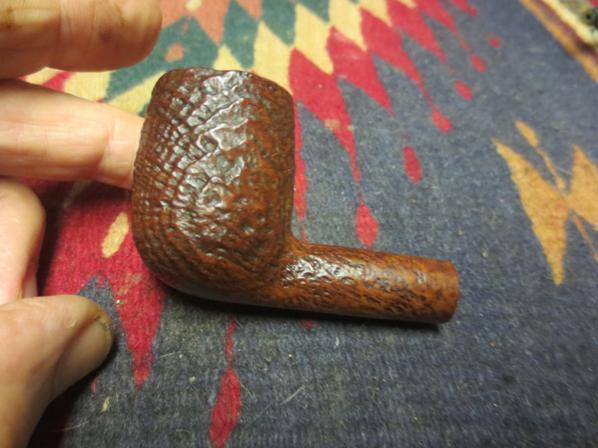
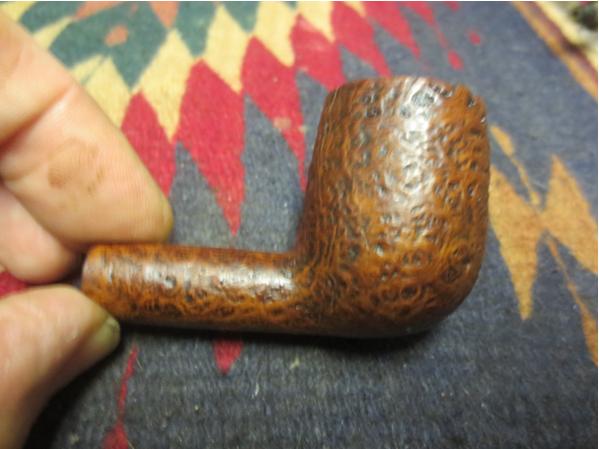
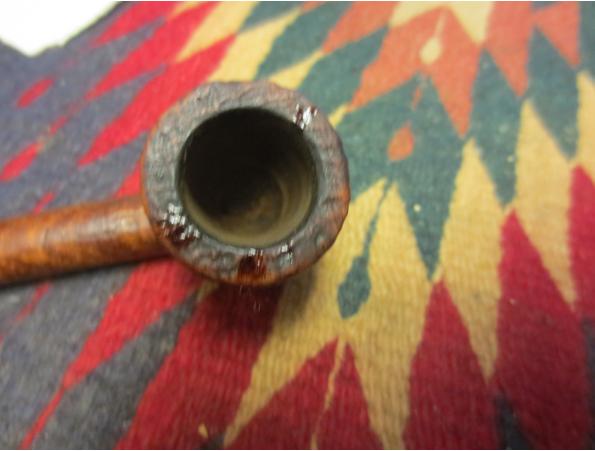
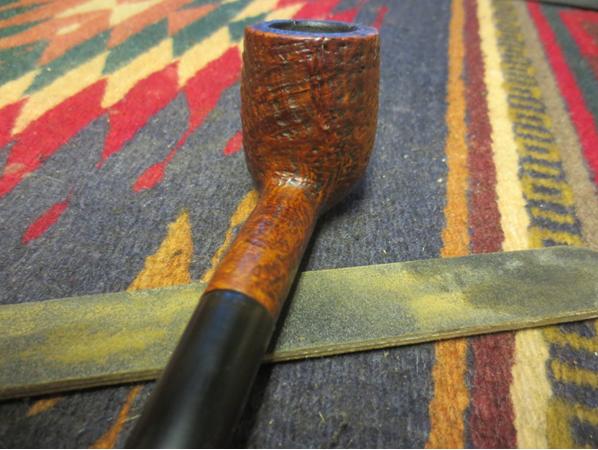
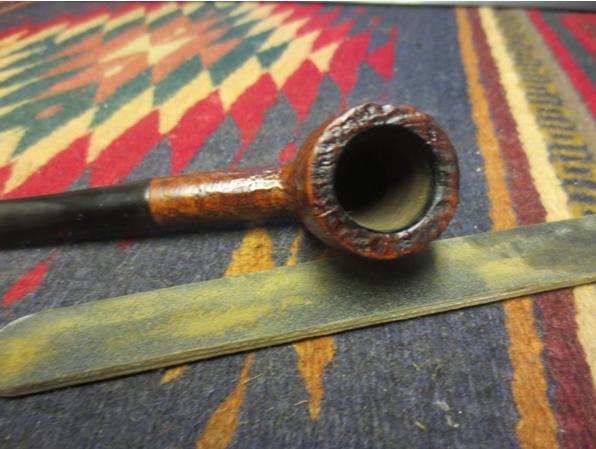
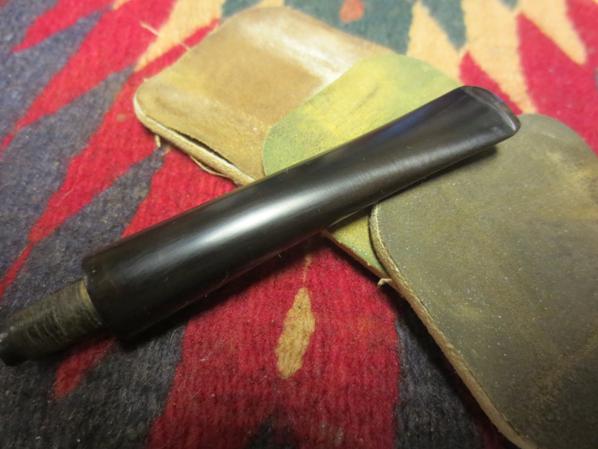
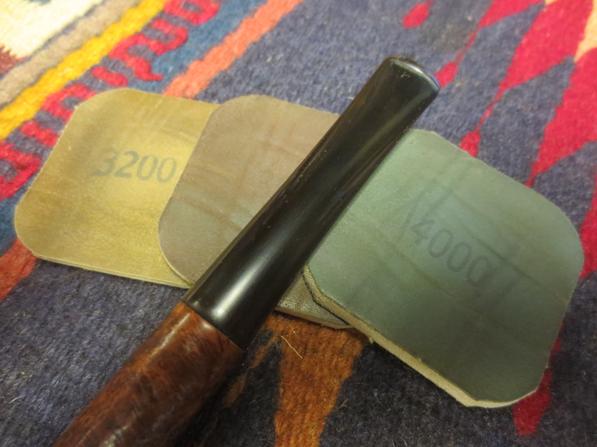
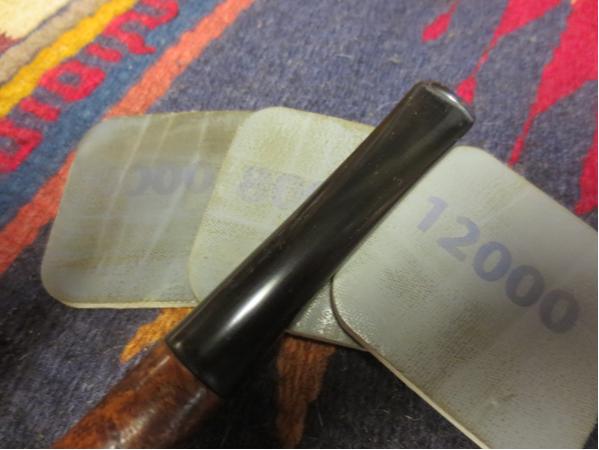
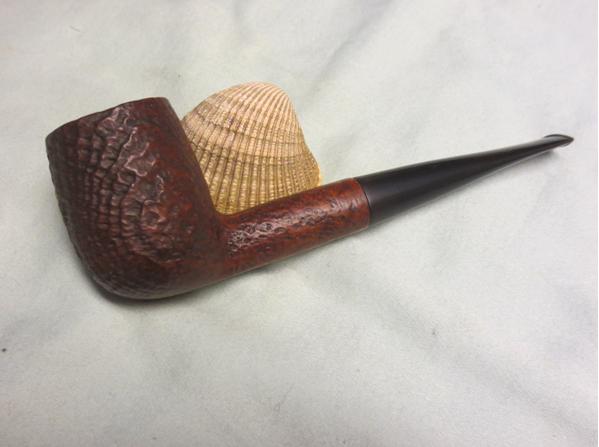
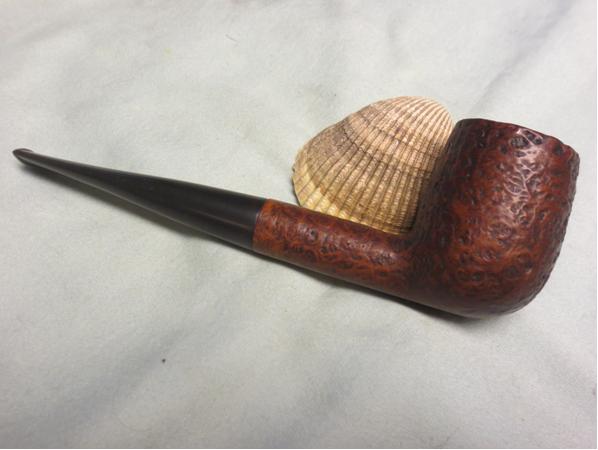
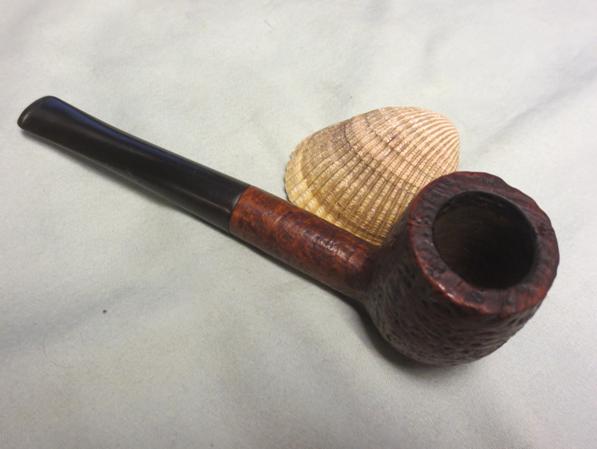
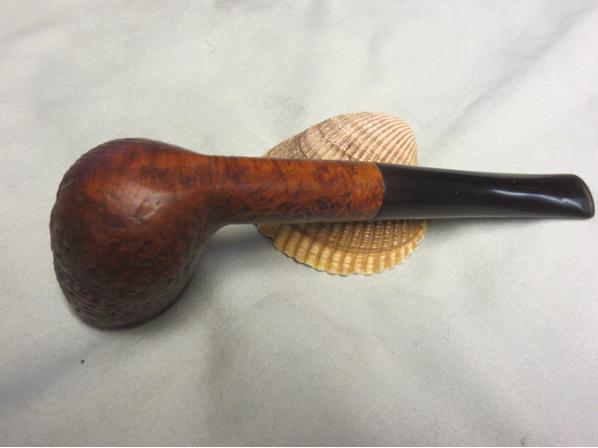
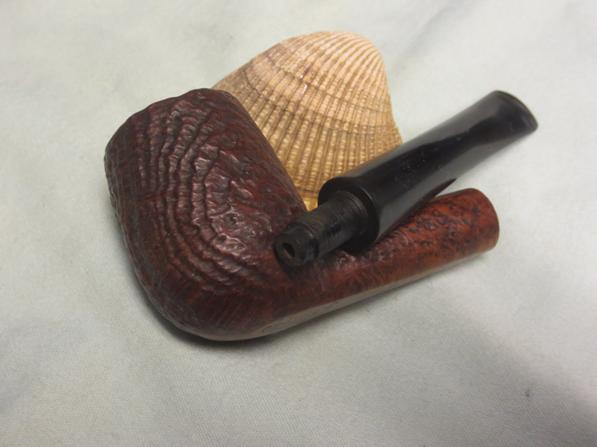
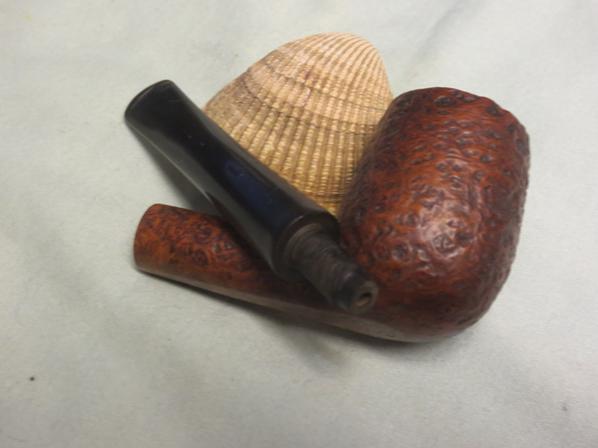
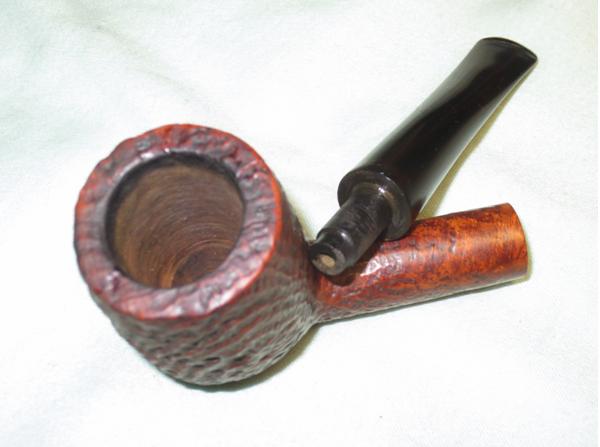
I picked up this old billiard pipe at a local antique market. The stampings were so far gone as to be unreadable, but the pipe seemed to be in decent shape otherwise. The stem was overclocked, and there were a few fills that would need replacing. The pipe was dirty overall, with a cake buildup in the bowl and a LOT of tars and other crud nearly filling the screw-on stem. This is what happens when you smoke a filter pipe without the filter in place. Ick.

20160110_192231
20160110_192251
20160110_192256
20160110_192946

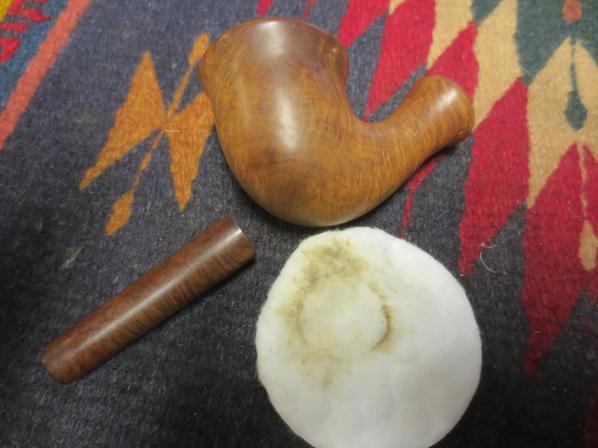
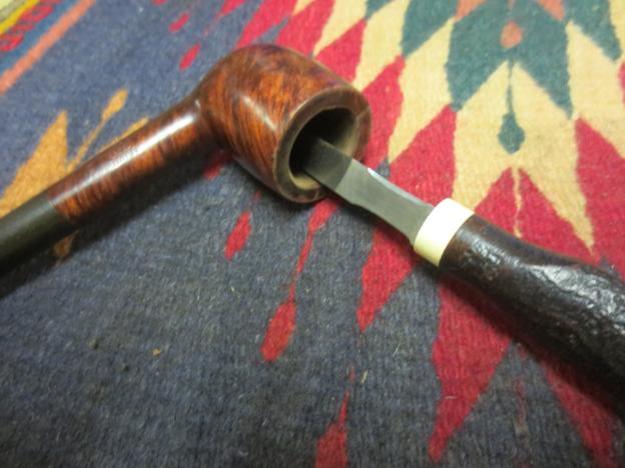
I started things off by reaming out the bowl and checking the tobacco chamber for damage. So far so good – no burnouts or cracks!

20160110_193623

Knowing I had fills to deal with, I dropped the reamed stummel into an overnight alcohol soak. The alcohol softens the pink putty fills, making them easy to pick out of the briar. The soak also dissolves the…

View original post 732 more words

A Challenging Yello-Bole Chesterfield


Blog by Aaron Henson

Although this is a standalone write up, it is also part 2 of an adventure I started with the rustication of a bent billiard about a month ago.

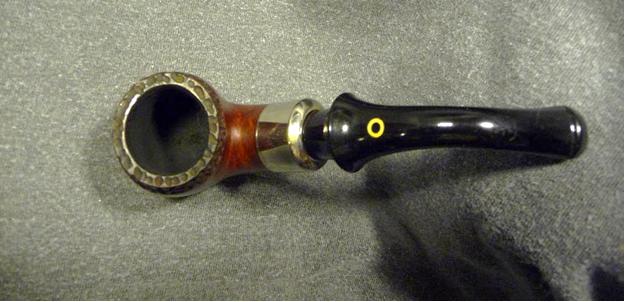
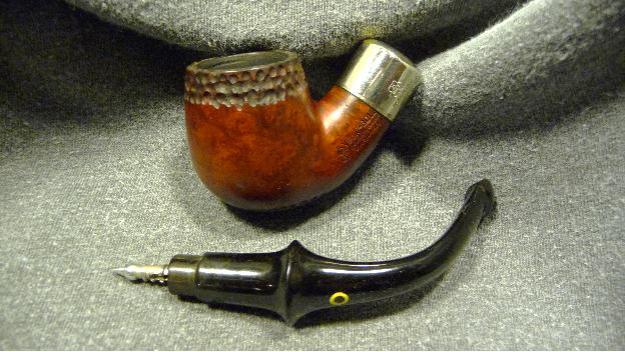
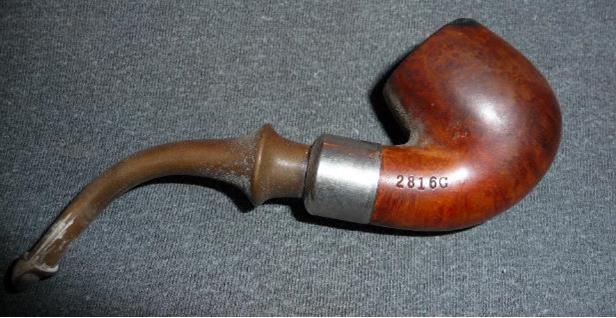
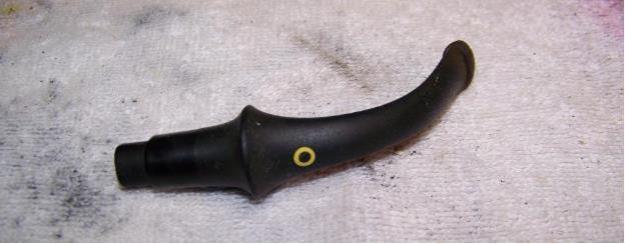
I found this Yello-Bole Chesterfield at a local flea market in town. It was part of a large estate collection, most of which were unsmoked uniquely carved pipes. My eye, however, was immediately attracted to the Peterson-like shape with military bit and P-lip stem and I was surprised to see that it was a Yello-Bole. The pipe was a bit grimy and oxidized with burn marks but after some talking we agreed on a price and I took it home.Chesterfield1The stampings on the bowl were very clear and deep, some of the nicest I have seen on an estate pipe that is as well used as this one. The left side shank read YELLO-BOLE over HONEY CURED BRIAR over CHESTERFIELD with the KBB inside the clover leaf on the left. The band was stamped with KB&B inside the clover leaf over NICKEL PLATED. The right side shank was stamped with shape number 2816C. The stem had the Yello-Bole yellow circle inset in the top and SOLID RUBBER stamped deep into the underside of the stem.
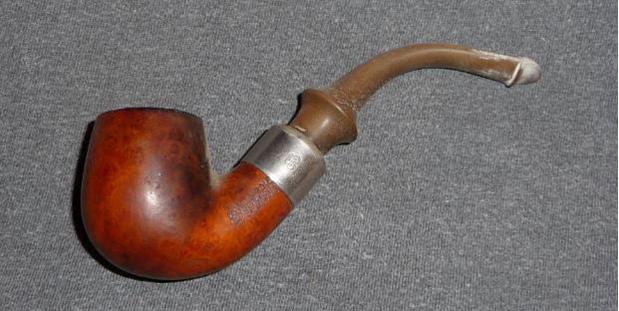
A quick search online and I was able to use the markings to date the pipe to the 1933-1936 time manufacturing period.

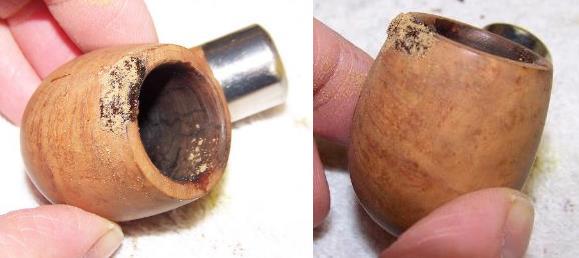
The briar was in great shape with beautiful bird’s eye pattern. The pipe was dusty and grimy and after wiping down with an alcohol soaked cotton pad I continued with my assessment. The rim was coated with a heavy crust of tar and there was a deep burn mark on the outside of the rim (major issue number 1). The bowl did not have a large amount of cake so I had to assume that the previous owner had reamed out at some point. And perhaps it had been over reamed, because the air hole entered the bowl about 2/3 the way down the chamber wall. This would lead to a mouth full of hot ash when you were half way through the bowl (major issue number 2). There were some minor bumps and scratches in the surface of the bowl but nothing that could not be buffed out.Chesterfield2 Chesterfield3The stem was in great shape. It was heavily oxidized with some minor tooth chatter but the airway was clear and the stinger was intact and in great condition.Chesterfield4I set the stem to soak in a Oxiclean solution and turned to the stummel. First I reamed the chamber back to bare wood. Next, I tried to clean the rim with Oxiclean on a wet green pad but the tar was just too stubborn so I resorted to a topping board and lightly sand away the tar build up. This is where I made my first mistake: I scuffed off a bit of the nickel plating when topping the bowl (I still don’t have a fix for this!). I have thought about taking the ring off and having it re-plated but several attempts to remove the ring with heat have not been successful.
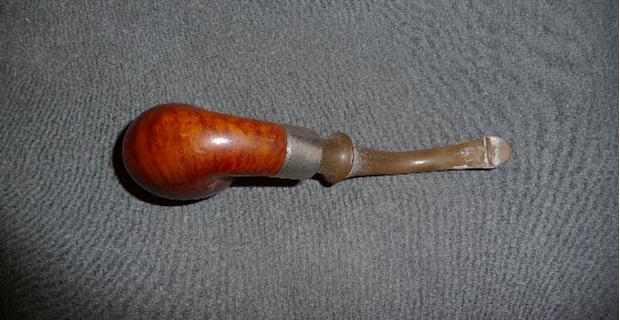
To address the burn mark on the rim I used a worn piece of 220 grit sand paper I removed the burned wood trying not to remove any of the sound briar under the burn. I was surprised to see how deep the burn went and was at a bit of a loss on how to address it. As you can see below, a significant amount of wood as damaged.Chesterfield5I figured I had two options: 1) replace the burned material with glue/briar dust or 2) sand the rest of the rim to match and change the shape of the pipe. In either case I was going to need to refinish the briar so I wiped it down with acetone to remove as much of the finish as I could while I decided what I was going to do.
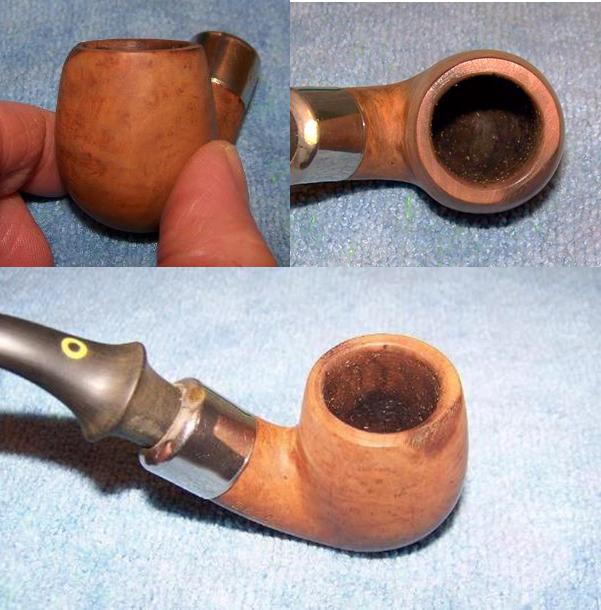
Looking into the chamber again, I listed out my options for addressing the air way issue. Again I came up with two options; 1) fill in the bottom 1/3 of the bowl with pipe mud, or 2) drill a new airway that comes out at the bottom of the chamber. I didn’t like either option. The first would have been a very large fill and volume change for the pipe and the second was fraught with potential problems – chiefly aligning the drill bit to come out at just the right point in the bottom of the bowl

So I figured it was time for some consultation. I outlined the issue in an email and included some picture and sent them off to Steve – our worthy “Professor of Pipe-ology” and blog host.

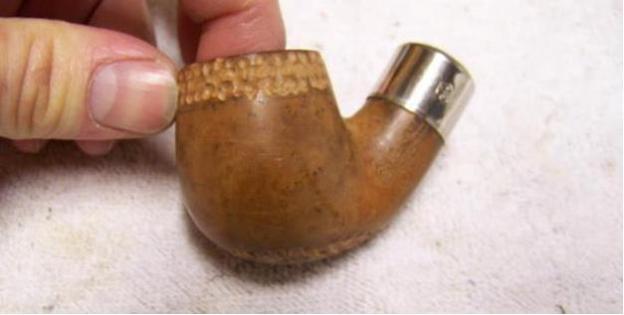
While I waited for Steve’s response I cleaned the inside of the shank and with alcohol soaked cotton swabs and pipe cleaners until then came out as clean as they went in. I also took the stem from the Oxiclean bath and removed the loose oxidation with a magic eraser. I cleaned the internals of the stem then polished it with micromesh pads 1500 – 12000. I used mineral oil every three pads to freshen the vulcanite and give the pads some traction. There was only one minor tooth mark that didn’t raise with heat and I filled it with a dab of black super glue and sanded it smooth with the 1500 mirco-mesh pad.Chesterfield6 Chesterfield7Steve responded with the recommendation of building up the burn spot with super glue and briar dust confirmed that I had the right idea. I was hoping that he had another trick up his sleeve because I knew that the repair would have to be covered up with either a very dark stain or rusticated. I applied three separate layers of clear super glue and briar dust to build up the rim then carefully sanded the repair to blend it into the shape of the rim. Chesterfield8 Chesterfield9I came across and older post where Kirk Fitzgerald rusticated a Peterson that looked very similar to my Chesterfield. Taking some note, I decided to try a similar type rustication. I lightly mark a ½” band around the top of the bowl with a pencil and corresponding area on the bottom of the bowl to balance the appearance. Using the 1/8” carving tool on a Dremel I added a dimpled texture in offset rows. I was glad I had tried using this tool on the previous project because the carving tool did have a tendency to skip on the harder grain. Chesterfield10The final texture hid the repair and was not so extensive as to hide the grain. I sanded the outside of the bowl with micro mesh pads 1500 – 3600 to smooth out the scratches.
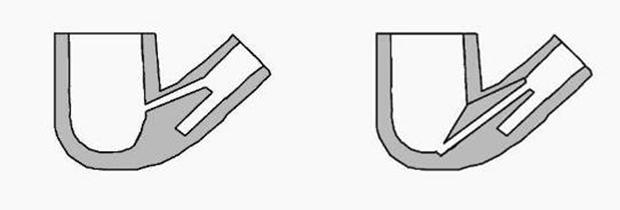
Instead of drilling a new airway, which posed the risk of additional misalignment, Steve recommended using a needle file to elongate the opening so it extended to the bottom of the bowl. The excess space could then be filled with plaster creating a new airway. This proved to be tedious work. Below are two rough cross-section of the pipe. On the left is the airway as it was and on the right is the revised airway (in theory).Chesterfield11Filing was a slow process and it took some effort to keep the elongated hole from drifting off course. I went slow and checked the progress often. Once the hole was about where I thought it should be I used the stick of a cotton swab as the place holder for the new airway. It was the rolled paper type stick that could be bent to match the curve of the bowl. Holding stick in place with a rubber band around the rim I mixed a batch of thick plaster and pushed it into the elongated hole with my finger. When plaster came out the top of the hole I removed the excess from inside the bowl and set it aside to dry for 24 hours. Chesterfield12In my first attempt at this repair, I did not have plaster so I used pipe mud (a slurry of cigar ash and water). This did not work at all. It is great for filling in the bottom of a bowl but it was too loose to stand on its own as a fill/patch. I removed the pipe mud and started over with the plaster.
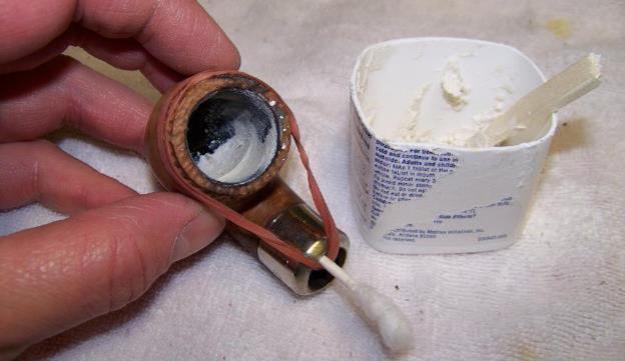
The next evening, I used 100 grit sand paper wrapped around a ¼” dowel to remove the excess plaster and smooth out the repair. I carefully twisted the swab stick and it came free without damage to the patch. The next time I do this I will coat the stick with wax before securing it in place. The wax should help the stick pull free without bonding to the plaster.

It was time to finish the bowl. I chose to use straight Fiebing’s dark brown stain on the rusticated areas and then wiped it down with alcohol pad. Chesterfield13Next I applied straight light brown to the rest of the bowl. After setting the color with heat I wiped the entire bowl with an alcohol pad to blend the colors. Happy with the results I took the pipe to the buffing station. I buffed the stem and stummel separately so I could get to all the area a little more easily. I started with white buffing compound then finished with multiple coats of carnauba wax.
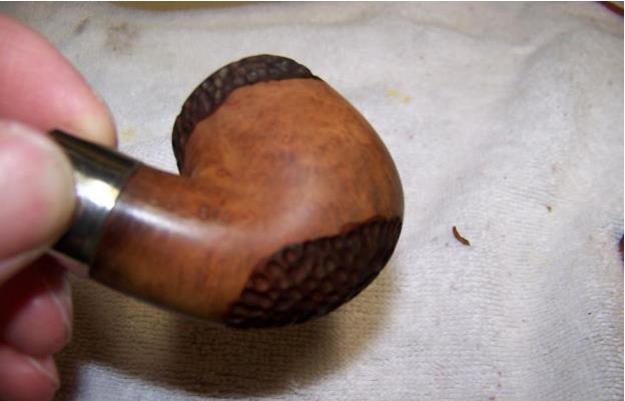
With the outside of the pipe complete I wanted to cover up the plaster patch inside the bowl so I applied a bowl coating. Using my finger I spread a thin coat of maple syrup evenly over the inside of the bowl then poured in the contents of a dietary charcoal capsule. I put my palm over the top of the pipe and shook the pipe so the charcoal powder covered the inside of the bowl. I set the pipe aside to dry for 5 days before emptying out the loose powder.

I want to say “Thank you” to Steve for his advice on this one… and thank you for reading.Chesterfield14 Chesterfield15 Chesterfield16 Chesterfield17 Chesterfield18
Refreshing a Beautiful and Unusual Clairmont Pipe


Blog by Steve Laug

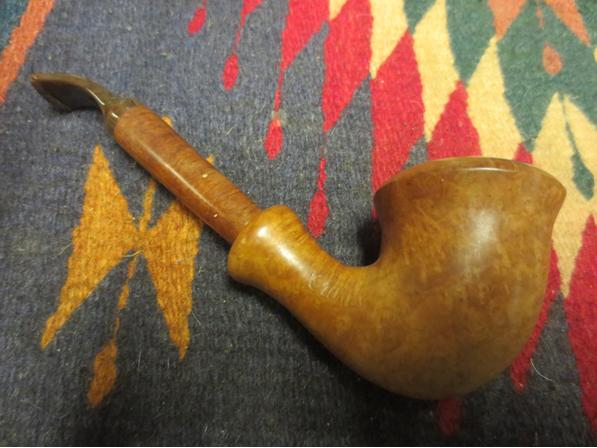
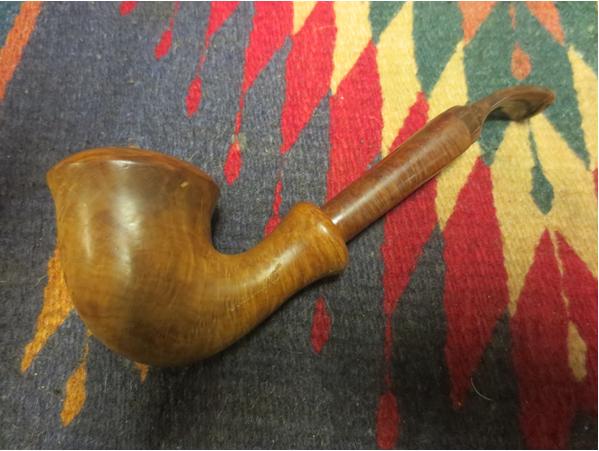
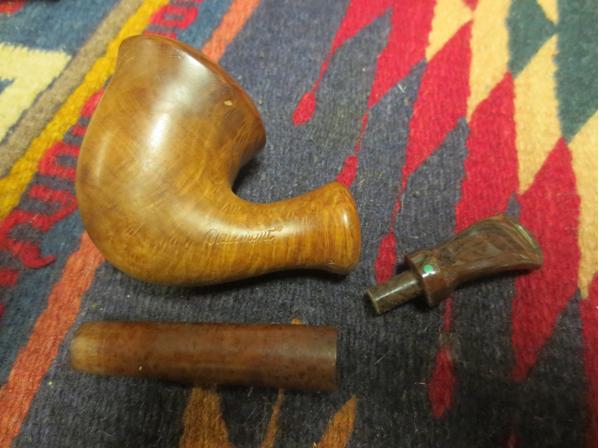
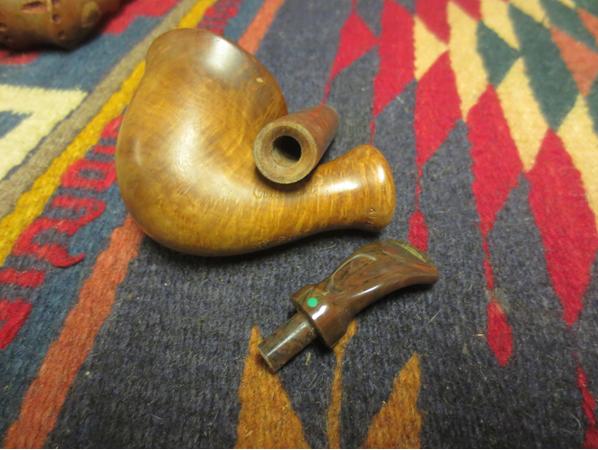
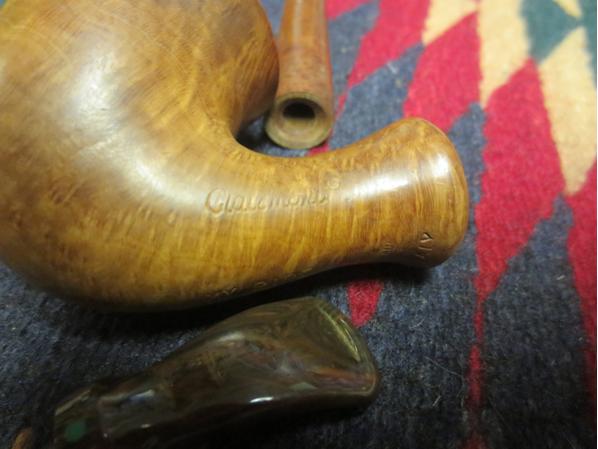
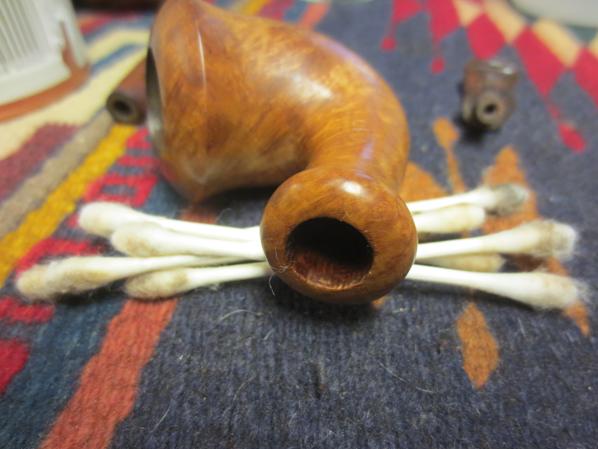
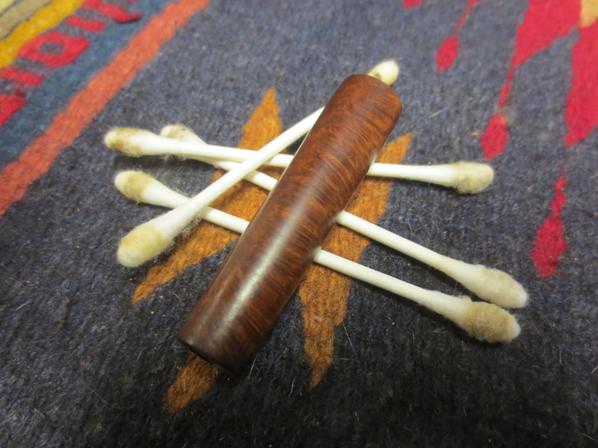
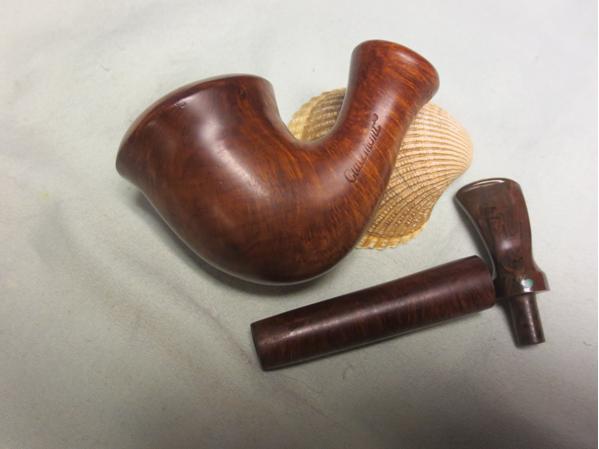
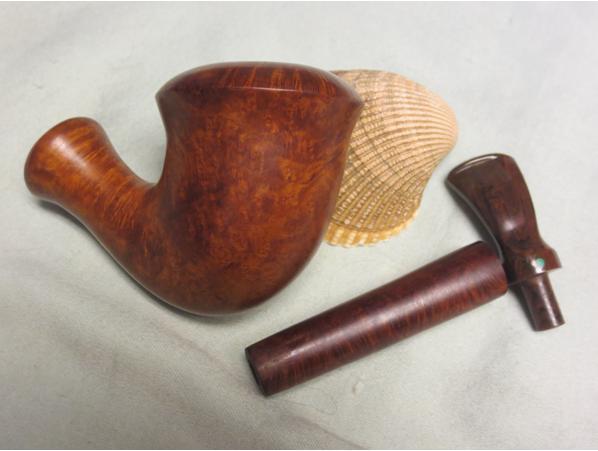
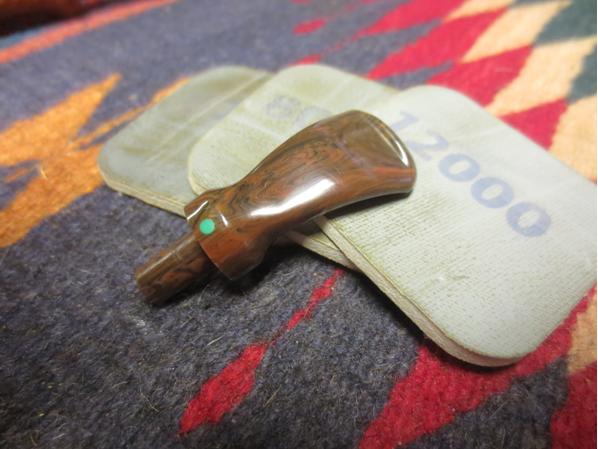
Once again my brother Jeff scored a beautiful and unusual pipe. It is stamped Clairmont on the left side of the shank. On the underside it is stamped MY PIPE and Handmade Italy. On the right side it bears the stamping 810 (it appears to be double stamped). The briar is naturally finished with no stain. There are some small fills on the shank extension and one on the left side of the bowl on the underside of the outer rim lip. They are small but visible at this point. The bowl had a slight cake in it that was uneven and there were some tobacco remnants on the bottom of the bowl. The top of the rim was dirty as was the rest of the finish. The Cumberland stem was in good shape but there were some light tooth marks on the top and underside next to the button edge. The slot in the end of the stem was rough and uneven. There was some red (maybe Tripoli) in the edges of the slot.Spanu1 Spanu2 Spanu3 Spanu4I took the pipe apart and photographed the parts. The shank insert is pressure fit in the mortise of the bowl. It is a good snug fit with no looseness. The stem fit in the other end is also very snug and clean. The green dot on the Cumberland stem looks good. The tenon on the stem is integral to the stem. The finish on the stem is dull.Spanu5 Spanu6 Spanu7While I really liked the looks of the pipe and knew it was Italian handmade I had no idea who made the brand. The stamping MY PIPE on the underside still has me mystified. I don’t know if the maker stamped it that way or if the first owner had it stamped that way. I will probably never know that but I wanted to know who made this pip as I had never seen this brand. Like always I begin the hunt for information at one of my favourite websites Pipephil’s Logos and Stamping site. It did not take long and I found the information at this link: http://www.pipephil.eu/logos/en/logo-c5.html.

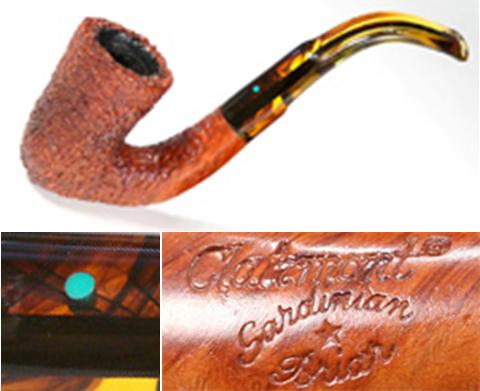
The site showed a nice looking full bent pipe with a Lucite stem that had the green dot on the top side just as the stem I had did. The stamping was the same in terms of the script Clairmont. The Sardinian Briar * stamp was not present on mine. I found out that the brand was created by Alberto Paronelli in the 1970’s. I found that the pipes were usually crafted by Tom Spanu. Both of those names were familiar to me so that help. I have one of Tom’s Olivewood pipes and love it. The link gave information on the name. It turns out that “Clairmont” is a Francization of “Chiaramonti” which is the birthplace of Tom Spanu.Spanu8Now I knew that I was dealing with a 1970’s era pipe made by Tom Spanu and named after his birthplace. For me this solidified the connection to Spanu. It was time to work on his pipe. As I worked on it I wondered if the MY PIPE stamp on the bottom was stamped by Tom and this was one of his own pipes. I cleaned up the internals of the pipe, reaming the bowl with the Savinelli Pipe Knife and scrubbing out the airways from button to bowl with alcohol, pipe cleaners and cotton swabs. Spanu9 Spanu10 Spanu11 Spanu12I scrubbed down the exterior of the bowl with acetone on cotton pads to remove the grime and oils that were dirtying the natural finish of the bowl and shank extension. I was able to get quite a bit of the rim darkening off this way. The crowned rim top is beautiful.Span14 Spanu13I thought it was fitting to rub down an Italian natural finish pipe with a light coat of olive oil. I rubbed down each of the briar parts of the pipe and put it back together. The olive oil brought life back to the briar and the grain began to shine through. This is a beautiful piece of briar.Spanu14 Spanu15 Spanu16 Spanu17I set the bowl and shank aside and worked on the stem. I sanded the surface of the stem with 220 grit sandpaper to remove the tooth marks and smooth out the flat surfaces.Spanu18 Spanu19I sanded the end of the button to clean up some of the nicks and damage there. I also used a needle file to clean up the inside of the slot and smooth out the lines.Spanu20I wet sanded the stem with 1500-2400 grit micromesh sanding pads to smooth out the scratches. I dry sanded with 3200-12000 grit micromesh pads to progressively polish the stem and bring the depth of the Cumberland back to life.Spanu21 Spanu22 Spanu23I buffed the pipe and stem with Blue Diamond on the wheel and then gave the entire pipe several coats of carnauba wax. I buffed it with a clean buffing pad to raise the shine. I hand buffed it with a microfibre cloth to add depth to the shine. The finished pipe is shown in the photos below. I like this one a lot so I think it will probably stay in my collection. Thanks for looking!Spanu24 Spanu25 Spanu26 Spanu27 Spanu28 Spanu29 Spanu30 Spanu31

A Unique Handmade Single Piece Black Walnut Pipe


Blog by Steve Laug

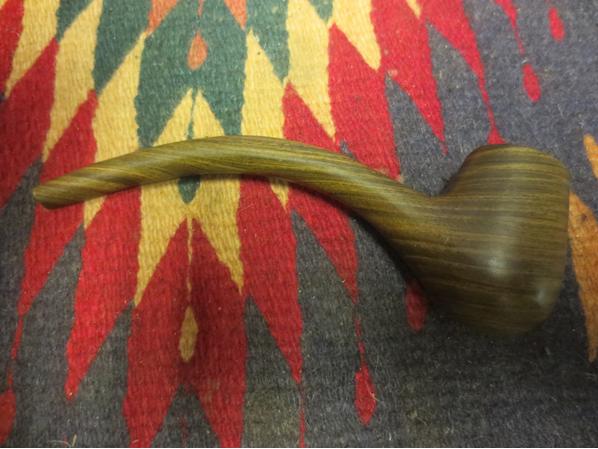
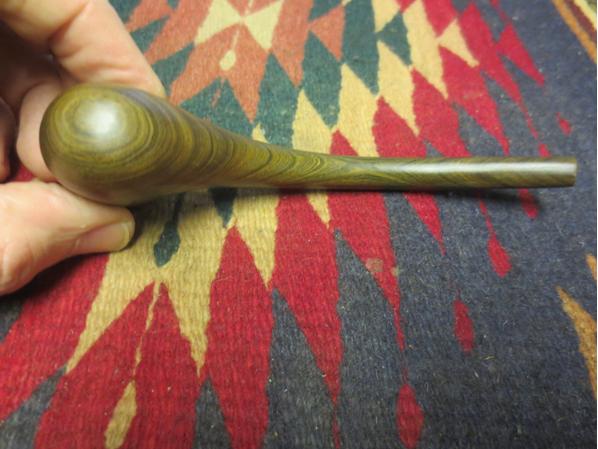
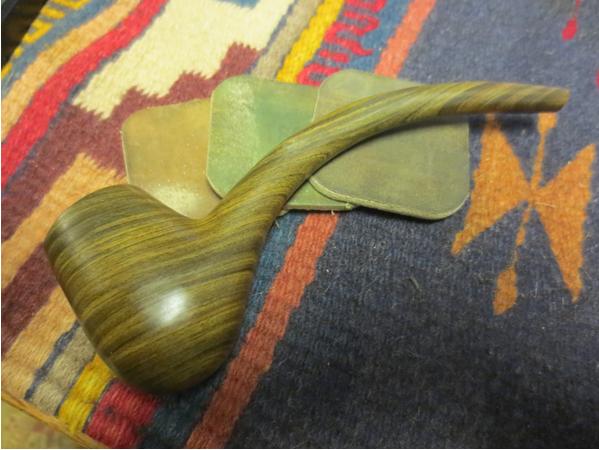
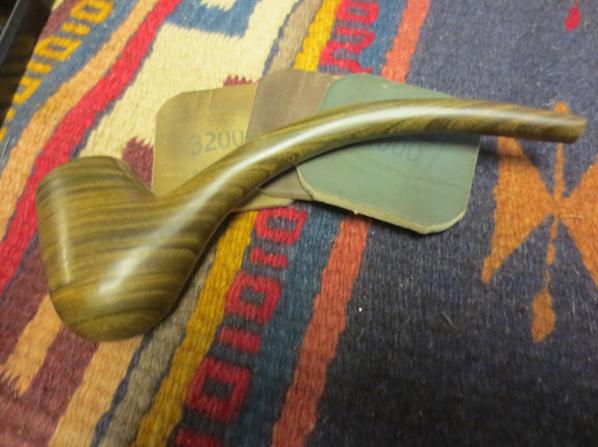
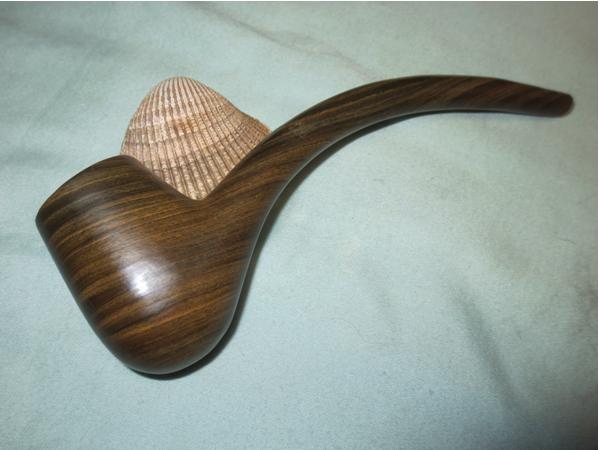
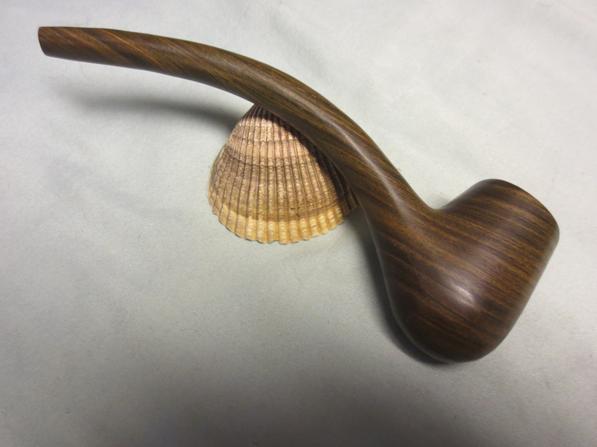
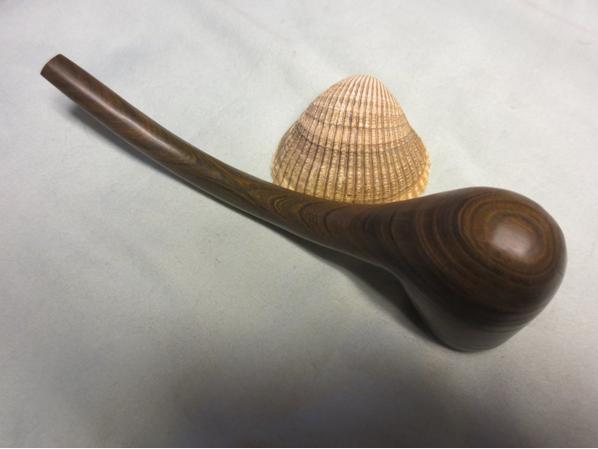
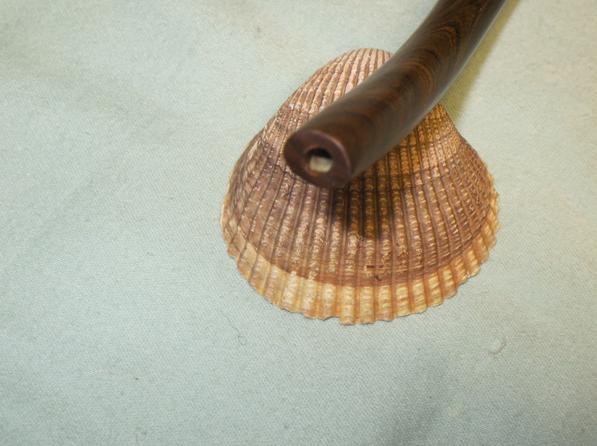
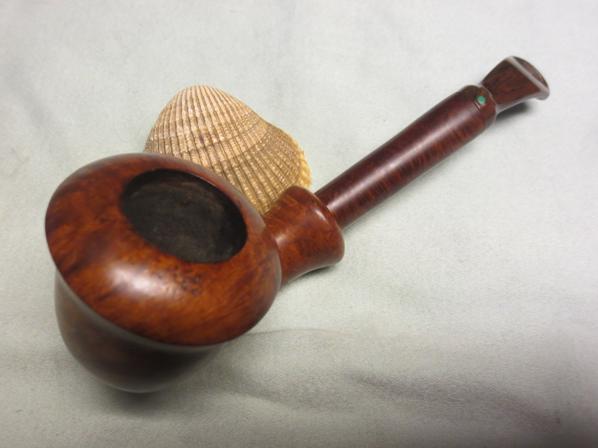
My brother Jeff found this handmade Black Walnut pipe on one of his eBay shopping forays. He loves the hunt for pipes and has a habit of finding some unique pieces for me. One of the beauties of having him picking up pipes for me is that he always finds stuff that I would never even look at. This was one of those that I would not even have looked at. But I am glad that he did. It is actually a beautifully made pipe that is a single unit – the stem is integral to the body of the pipe. walnut1 Walnut2 Walnut3The delicate curves of the bowl and shank make maxim use of the grain pattern in the wood. The bowl is drilled lower than the entrance of the airway into the shank and obviously the carver used a regular wood drill bit as there is a pilot hole at the bottom of the bowl. The drilling of the airway follows the curve of the stem and shank into the bowl. It enters the bowl about 1/8 inch above the bowl bottom. Walnut4 Walnut5A pipe cleaner passes easily through the stem/shank to the bowl. The draw is very easy and it is quite open. There is not a button cut on the end of the stem, rather it comes to a sharp end and a round opening in the end. The top of the bowl is also really well done and for a hand shaped pipe it is quite round. The bowl walls are quite thin. The pipe remains unsmoked.Walnut6 Walnut7I sanded the natural finish with micromesh sanding pads from 1500-4000 grit. I cleaned up some of the sanding marks that remained on the finish.Walnut8 Walnut9I gave the bowl multiple coats of carnauba wax and buffed it with a clean buffing pad on the wheel. The grain began to pop even more with the shine and the curves of the pipe followed the grain in an amazing way. The anonymous pipe carver did an amazing job carving this one and using the best lay of the piece of wood. The finished pipe is shown in the photos below. I did a bit of hunting on the web and I am pretty sure that the pipe is walnut. Do any of you have any other ideas what it is made of? Thanks for looking.Walnut10 Walnut11 Walnut12 Walnut13 Walnut14 Walnut15

Unzipped an old Pouch and found a Butz Choquin Oval Shank Capitan 1635


Blog by Steve Laug

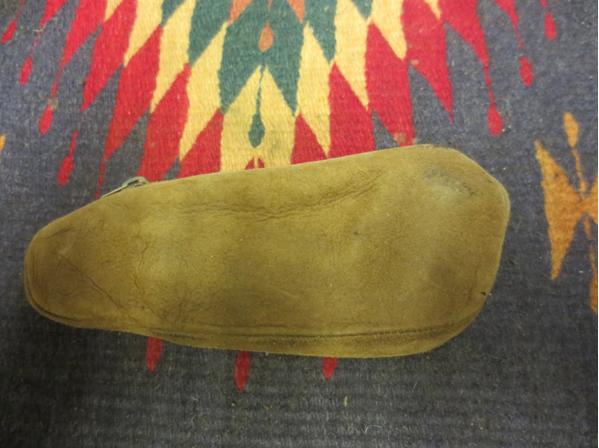
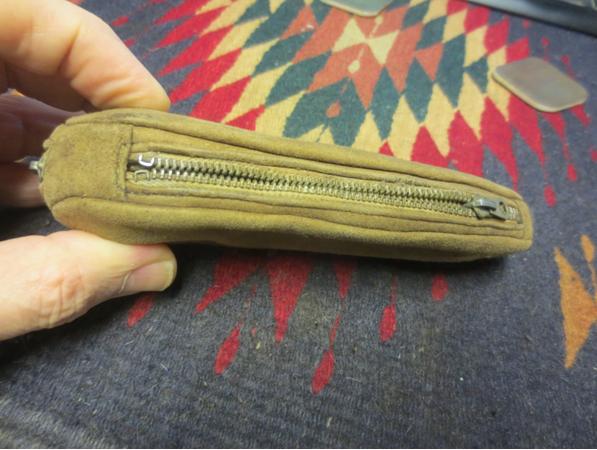
My brother sent me another box of pipes that he had picked up on eBay and in different shops. Included in this lot was a suede leather pipe pouch. It was dried out and worn with a zipper on the top and a zipper on the bottom. I unzipped the top area and found that it was canvas lined and had an old 3 way pipe tool inside. I unzipped the bottom and found a small compact Dublin pipe. It was a mess and looked well smoked and poorly cared for. The finish was worn and dirty but had an interesting sandblast poking through. The rim was caked with lava and it was hard to see any of the blast on the surface. The bowl had a very thick, hard cake inside that would need to go. The pipe was stamped Butz Choquin over Capitan on the underside of the shank. At the stem shank union it had the shape number 1635. The mouthpiece did not sit against the shank. There was a gap on both sides with the stem touching in the middle. When held up the light this gap was angled and large. It was also wider on the underside of the stem than the topside. The stem was oxidized and dirty. The slot in the button was closed to the size of a small thumb tack.Butz1 Butz2 Butz3I took some pictures of the pipe before I started working on it (I remembered to do that once again!). You can see the issues that I pointed out above as you look at the photos.Butz4 Butz5 Butz6 Butz7I took some close up photos of the rim/bowl and the stem to try to capture how dirty this pipe was when I removed it from the pouch. In the photo of the stem you can see the gap I mentioned at the stem shank union.Butz8 Butz9I decided to try a variety of methods to try to tighten up the fit of the stem. I started by carefully facing the shank on a topping board. I have had success in the past with this and was hoping that it would solve the issue.Butz10I also used a sharp knife to bevel the end of the mortise thinking that it would better accommodate the rise around the tenon.Butz11But none of these measures solved the issue of the fit against the shank. The fit was better but the gap remained. I would need to come up with another solution.Butz12 Butz13I laid that issue aside and reamed the bowl with a PipNet reamer.Butz14 Butz15After reaming I used a brass brush to clean off the buildup on the rim. I was able to get rid of the thick tars and reveal the sandblast that was underneath.Butz16I scrubbed the finish on the bowl with acetone and cotton pads to remove the grime and grit in the crevices of the blast.Butz17 Butz18 Butz19 Butz20The more I looked at the pipe the more I wondered if someone had not cut off the end of the shank to shorten it or to remove damaged areas. The number stamping was really close to the stem even before I faced it. I worked on the stem to clean it up. I used a dental pick to open the slot on the end and then used pipe cleaners and alcohol to clean out the tars and oils.Butz21I cleaned out the shank at the same time with pipe cleaners, cotton swabs and alcohol. While I was at it I thought a band might look good on the pipe and give me a clean edge to fit the stem against. I went through my box of bands and found a round one that was the correct diameter. I squashed it to the shape of the shank and heated it with a lighter. I pressed it onto the shank. It covered the shape number but did not affect the rest of the stamping.Butz22I liked the classic look of the nickel band on the shank of the Dublin and figured that once I had polished it and the stem I would have a good looking pipe.Butz23 Butz24I sanded the stem with 220 grit sandpaper to clean up the bite marks, the tooth chatter and the build up around the button. It also loosened the oxidation. I wet sanded it with 1500-2400 grit micromesh sanding pads and gave it a rub down with Obsidian Oil. I dry sanded it with 3200-4000 grit micromesh pads and then gave it another coat of oil. I finished sanding it with 6000-12000 grit pads and gave it a final coat of oil. I let the oil dry.Butz25 Butz26 Butz27I buffed the pipe with Blue Diamond on the buffing wheel to raise the shine on the stem and the band. I lightly buffed the bowl so as not to damage the sandblast. I gave the bowl a light coat of carnauba wax and the stem several coats of wax. I buffed it with a clean buffing pad and then by hand with a microfibre cloth to deepen the shine. The finished pipe is shown in the photos below. I think the band gave this particular pipe a touch of class. The pipe is a beautiful example of this shape. Thanks for looking.Butz28 Butz29 Butz30 Butz31 Butz32 Butz33 Butz34

GBD 508 International


By Al Jones

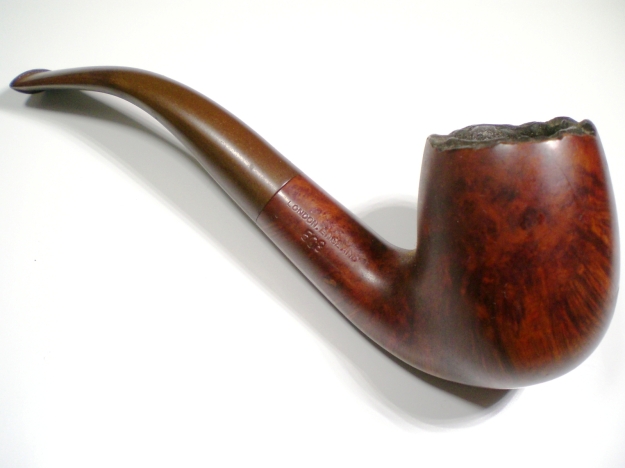
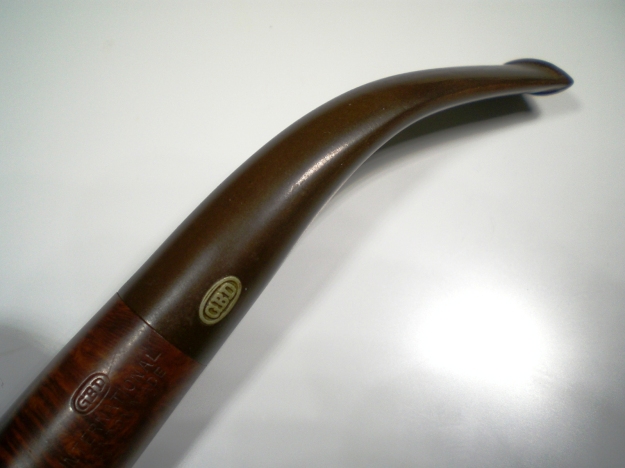
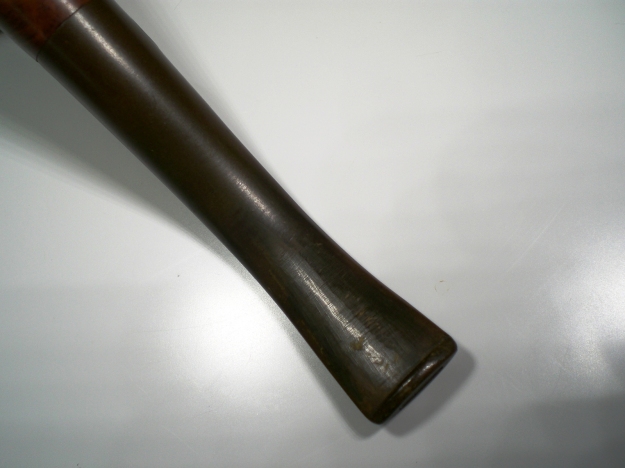
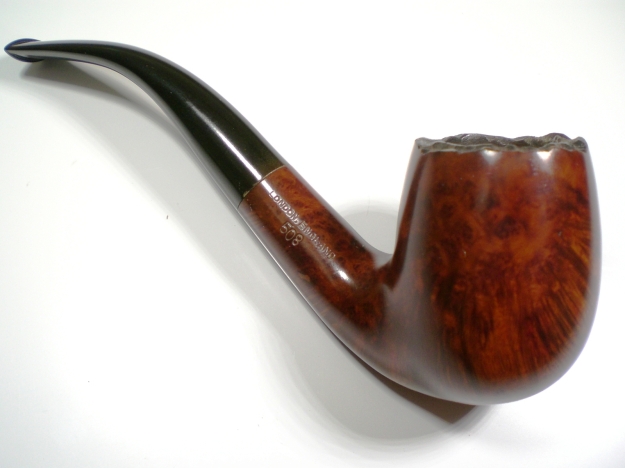
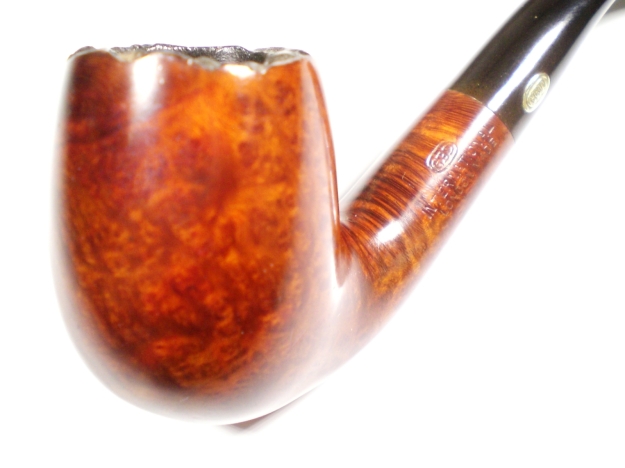
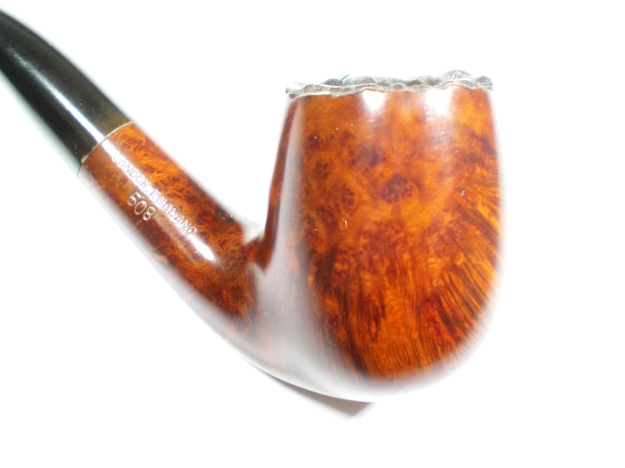
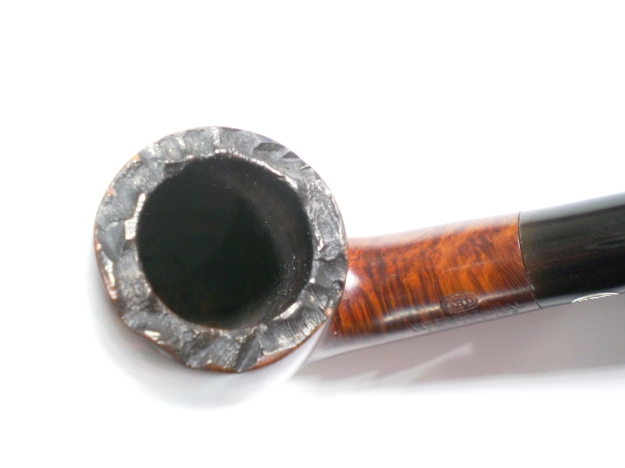
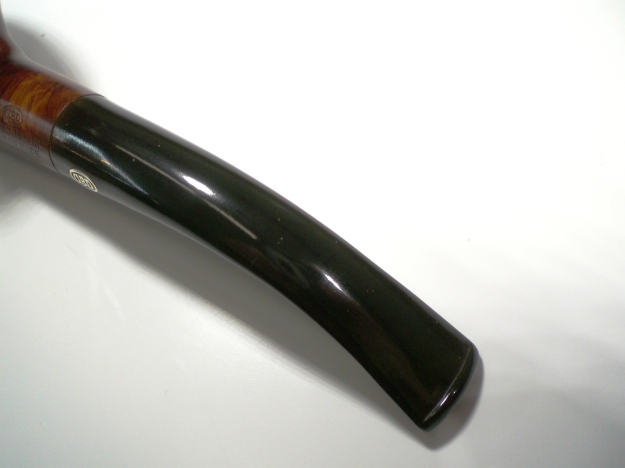
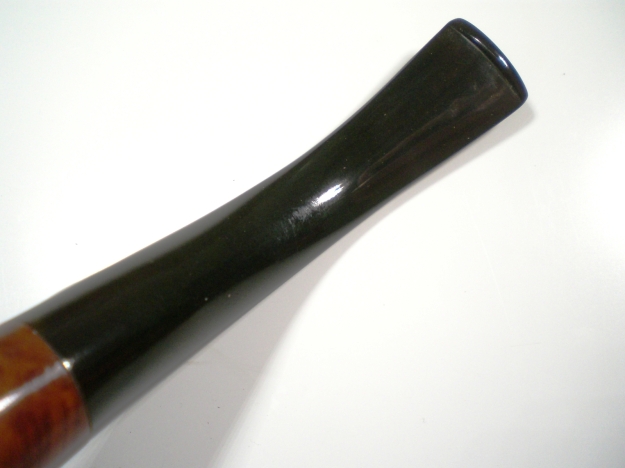
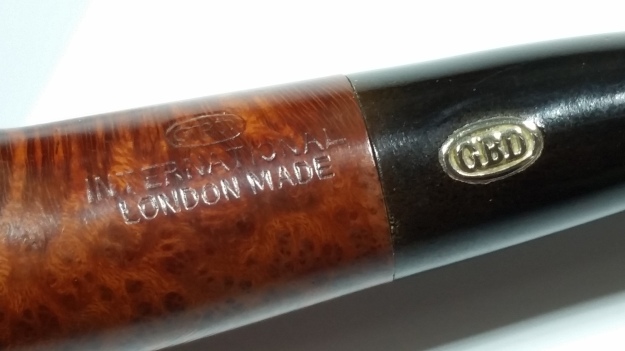
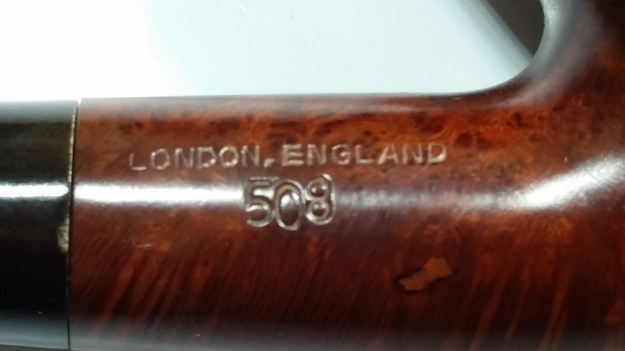
This GBD 508 “International” was a relatively simple restoration. The stem was heavily oxidized and it had a few teeth ripples, but the bowl interior and shank were very clean. International grade pipes all appear to have black, plateau tops.

GBD_508_International_Before (1)

GBD_508_International_Before (4)

GBD_508_International_Before (3)

GBD_508_International_Before (5)

There was only a slight cake in the bowl, it was reamed and soaked with alcohol and sea salt. I put a dab of grease on the brass stem rondell and soaked it in a mild Oxy-Clean solution for several hours. Using a lighter flame, I was able to raise the tooth indentions. The stem was then sanded with 800 grit paper to remove the heavy oxidation. I didn’t take it all off at the stem junction, as I didn’t want to change the fitment. That was followed by 1500, 2000 grit paper and 8000 and 12000 grade micromesh sheets. The stem was then buffed with White diamond and Meguiars Plastic Polish.

The bowl was buffed lightly with White Diamond and several coats of Carnuba wax.

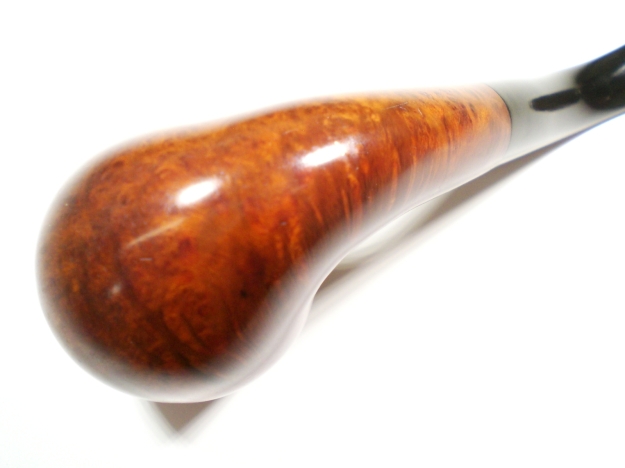
Below is the finished pipe.

GBD_International_508_Finish (1)

GBD_International_508_Finish (3)

GBD_International_508_Finish (2)

GBD_International_508_Finish (4)

GBD_International_508_Finish (8)

GBD_International_508_Finish (7)

GBD_International_508_Finish (5)

GBD_International_508_Finish (6)

GBD_International_508_Finish (9)

GBD_International_508_Finish (10)

GBD_International_508_Finish (1)

Freshening up an old BBM 736 Billiard


Blog by Steve Laug

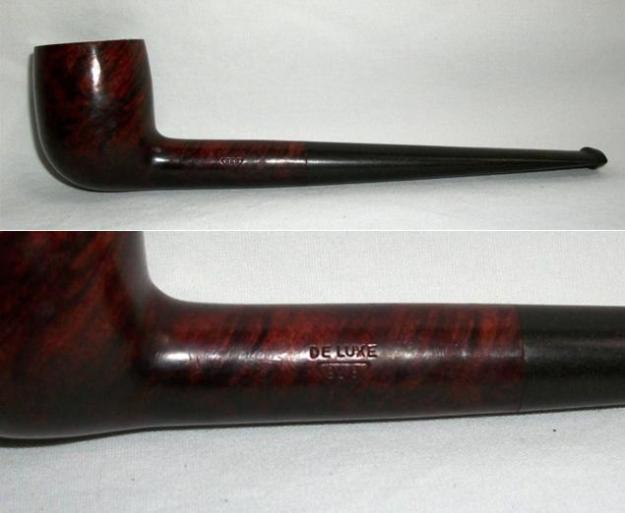
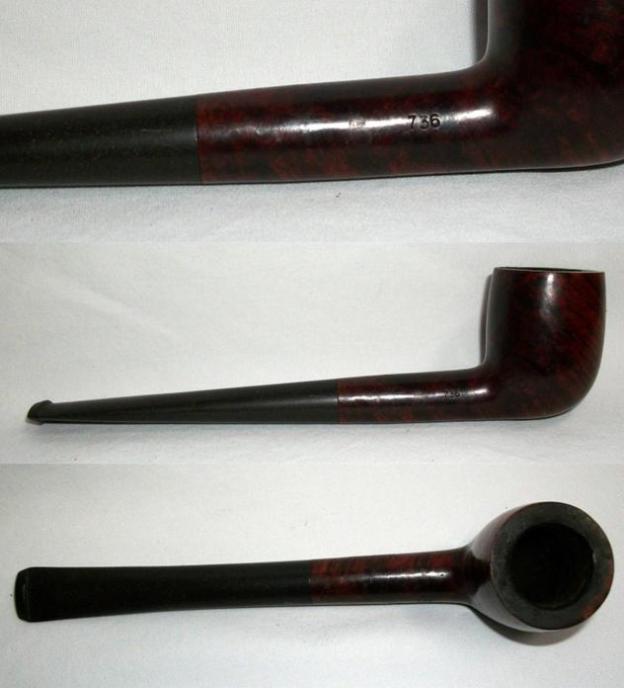
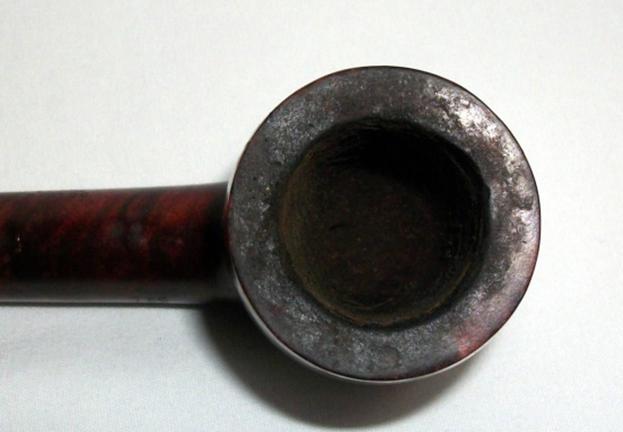
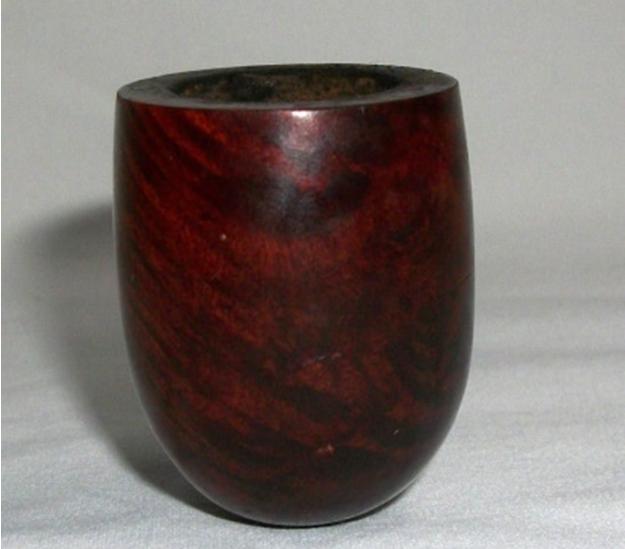
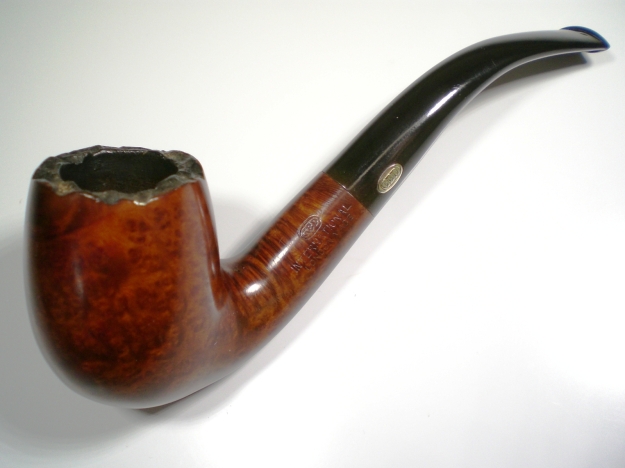
This one came to me through my brother. It seems like he is on a roll finding some nice old pipes. This one is in really good shape. I will need to clean it up and remove some tars on the rim but the finish is in great shape. The inner rim edge has some damage at the front. There are some small scratches and wear on the bowl but nothing significant. The bowl is dirty and lightly caked but otherwise in good shape. The stem is lightly oxidized but should clean up pretty easily. The stamping on the shank is clear. On the left side it reads De Luxe over BB&M in a triangle. On the right side it reads 736 which is the shape number. I can find nothing on any of my usual web sources or Who Made That Pipe or Lopes that gives me any information on the brand. So it is another unknown brand to me. Any help would be greatly appreciated. The photos below were included in the eBay ad and were taken by the seller. They show the state of the pipe very well and when it arrived there were no surprises.BBM1 BBM2 bbm3 bbm4 bbm5When I got it to the work table I took my usual pre-work photos. They were probably not necessary but I am working on keeping the habit so that I do not forget to document the work I am doing on pipe restoration.bbm6 bbm7 bbm8 bbm9I worked on the rim of the pipe with saliva and cotton pads and a 1500 grit micromesh sanding pad. I was able to remove the build up on the rim. The damage on the inner edge at the front is very visible.bbm10I lightly topped the bowl with micromesh pads. I then used my new Savinelli Pipe Knife to ream the bowl and clean out the buildup.bbm11I worked on the inside of the rim edge with a folded piece of 220 grit sandpaper and beveled edge inward.bbm12Even though the stain on the bowl was a dark oxblood colour it also had some dark brown overtones. I used a dark brown stain pen to touch up the rim top and edges. I buffed the rim with Blue Diamond to blend the stain into the rest of the briar.bbm13I sanded the stem with 220 grit sandpaper to remove the oxidation and also the slight pitting on the surface of the vulcanite. bbm14I cleaned out the stem with alcohol and pipe cleaners to remove the tars and oils. I also cleaned out the shank and mortise with alcohol, pipe cleaners and cotton swabs. I was surprised to see that what came out was the red stain. It appears that the pipe may well have been dipped in stain. It took quite a few cotton swabs to remove the stain.bbm15 bbm16I wet sanded the stem with 1500-2400 micromesh sanding pads to smooth out the pitting on the surface and to remove the oxidation. I rubbed it down with Obsidian Oil and then dry sanded it with 3200-4000 grit pads and gave it another coat of oil. I continued to sand it with 6000-12000 grit pads and gave it a final coat of oil. I let it dry.bbm17 bbm18 bbm19I buffed the pipe with Blue Diamond on the buffing wheel and then gave it multiple coats of carnauba wax. I buffed it with a clean buffing pad and then by hand with a microfibre cloth to raise the shine. The finished pipe is shown in the photos below. It is a beauty with a long stem – almost a Bing Crosby style pipe. The grain is beautiful and it was great to have an easy pipe to work on for once. Thanks for looking.bbm20 bbm21 bbm22 bbm23 bbm24 bbm25 bbm26

Got a New Pipe Reamer – A Savinelli Pipe Knife


Blog by Steve Laug

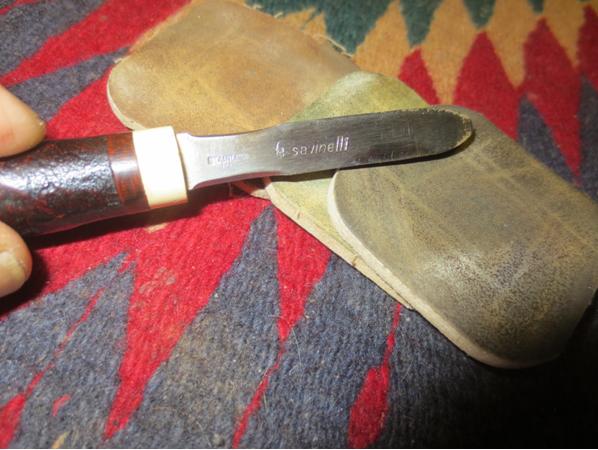
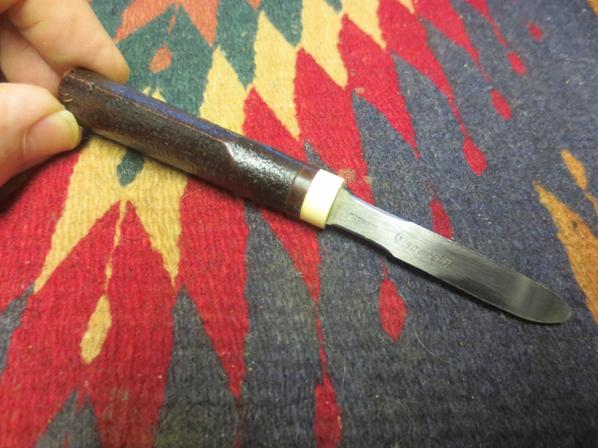
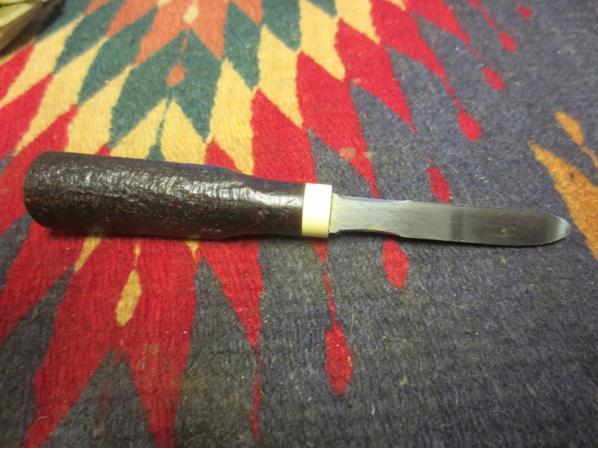
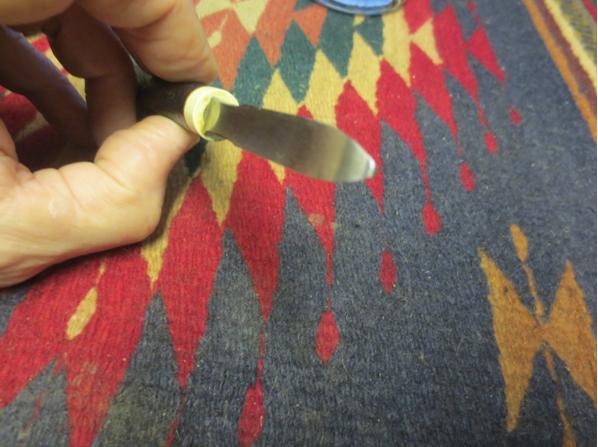
I don’t know how long I have been looking for a Savinelli Pipe Knife but I have had an eye out for one for quite a while. Not too long ago I found this one on eBay and asked my brother to put a bid in on it for me. He won the knife. It came in the mail today. I unpacked the box of pipes he sent and in the lot was this beauty. It has a triangular stainless steel blade that is sharp on three edges. The point is slightly angled inward and neatly fits the bottom a bowl. The blade was dirty with some dried oils and carbon. It did not take too much to clean it up and freshen the cutting edges on the blade. The blade is stamped Savinelli with the Shield logo next to the name. Next to the handle it is stamped stainless steel. I lightly sanded the blade with 1500-2400 grit micromesh to polish the steel and also to clean up the edges as there were small nicks in the blade. Sav1The handle on the knife is round where the blade enters it. There is a small round piece of acrylic that separates the blade from the briar handle. The body of the handle is sand blasted briar and is oval and fits neatly in my hand. There is a smooth round band of briar next to the acrylic end so the contrast is really quite beautiful.Sav2 Sav3 Sav4 Sav5I am looking forward to putting this knife to good use on the next pipes I work on. I can’t wait to see if it is as good to work with as many have said. But you know what? Even if it isn’t it is still a beautiful looking, well made tool.

Restemming a Comoy’s Sandblast Goldenbark 6 Billiard


Blog by Steve Laug

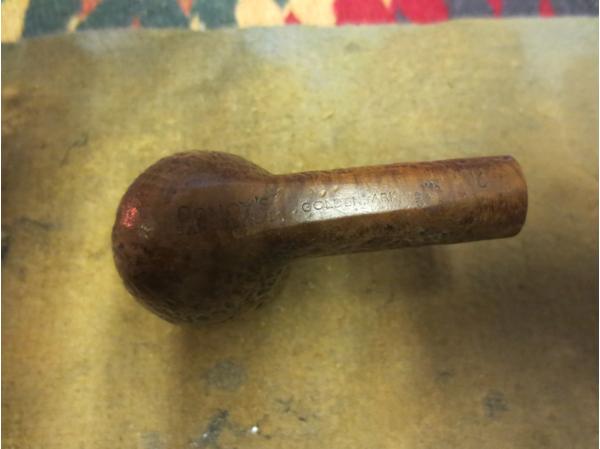
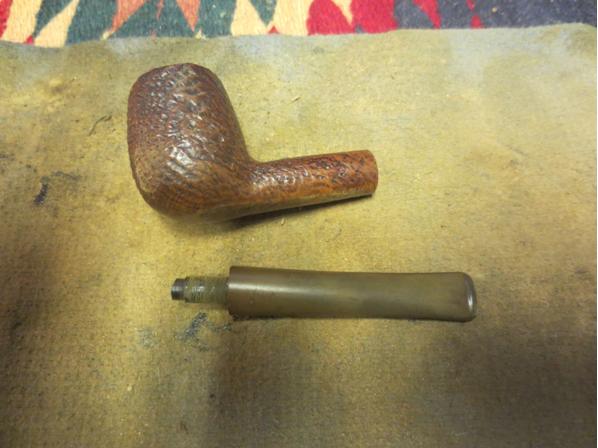
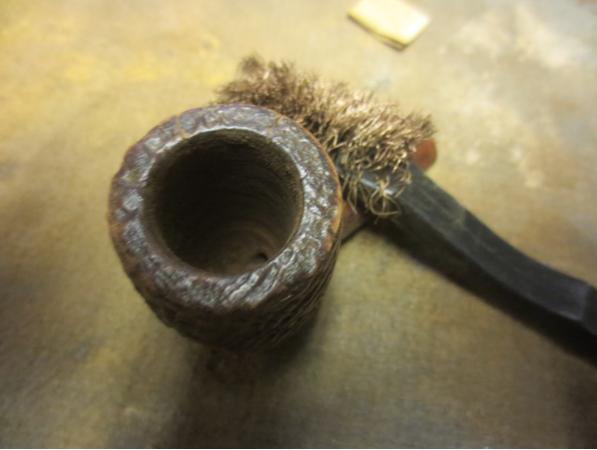
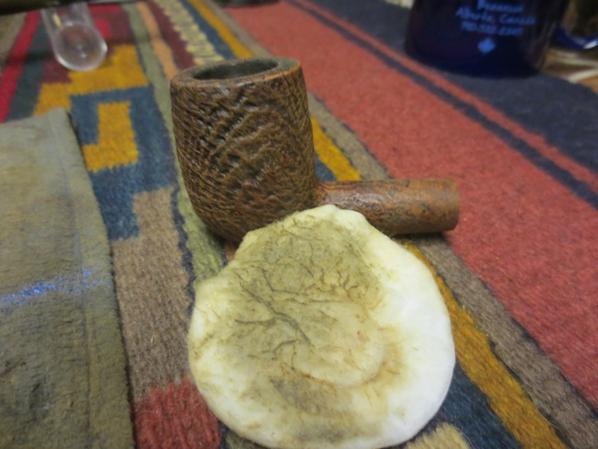
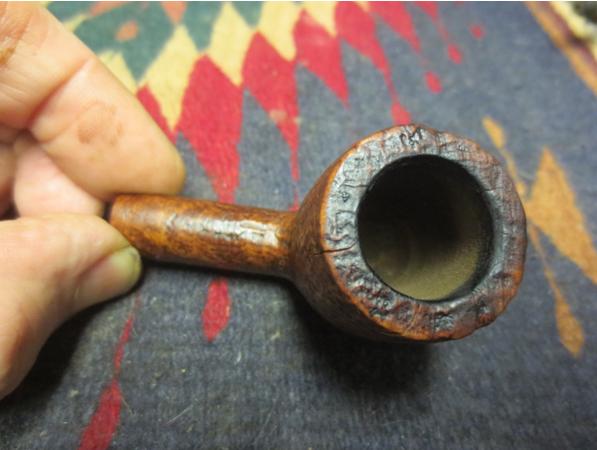
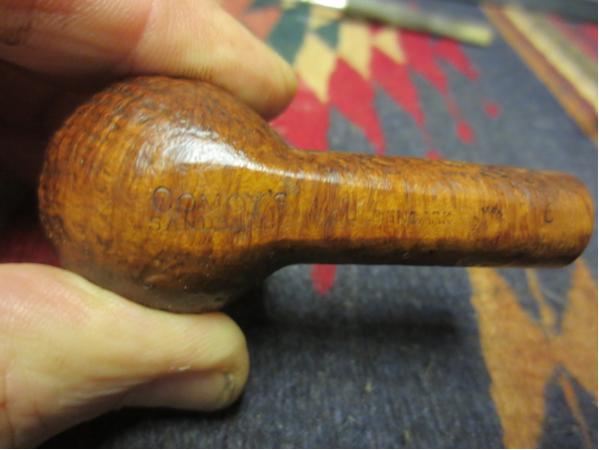
This sandblast bowl came to me in a lot of pipes from eBay. When I saw it I was pretty excited about refurbishing it. It had a great blast and really appeared to be a decent looking pipe. With a little bit of elbow grease it would be a beauty. It is stamped on the on the underside of the shank in a smooth flat base. It reads COMOY’S over SANDBLAST on the bottom of the bowl. Next to that is stamped GOLDENBARK followed by the Com Stamp – a circle composed of MADE ENGLAND with IN stamped in the middle of the circle. Following that it is stamped with the number 6. The finish was dirty but underneath there was some great grain showing through the blast. Someone had reamed the bowl before I got it so it was really quite clean. Once the grime was cleaned out of the swirls and ridges in the blast it would look really sharp. I would need to fit a stem to the shank to complete this pipe but it had a lot of promise.Comoy1 Comoy2 Comoy3 Comoy4I went through my can of stems and found this one. It took very little sanding on the tenon to get a snug fit in the shank.Comoy5 Comoy6I scrubbed the top of the rim with a brass bristle brush to remove the tars and grit in the sandblast in that area. The blast looked really good under the grit. So far so good!Comoy7I scrubbed the finish with acetone on cotton pads to remove the finish and the grit.Comoy8 Comoy9 Comoy10With the grime cleaned off the rim I found three disturbing looking cracks on the rim. One of them was small and was on the top with minimal cracking down the side of the bowl. One of them was cracked down the inside of the bowl about ½ of an inch and the third was cracked down the outside of the bowl almost an inch. This was a huge disappointment. I figured I had a nice example of a Comoy’s Sandblast and while it was the cracks gave me serious pause. This one would clean up and be good basket pipe but never one that is stellar. It would probably last longer than me but I was choked.

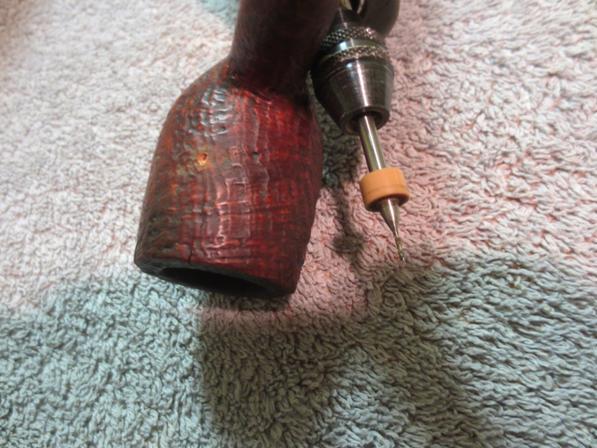
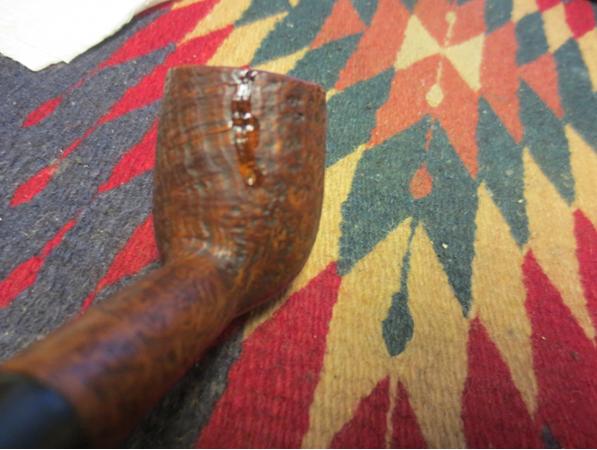
I almost stopped working on it at this point and pitched it back in the refurb box but I decided since I was so close to finishing it I would complete the task. I rubbed the bowl down with a light coat of olive oil and dried it off. I buffed the bowl with a shoe brush.Comoy11 Comoy12The photo below of the top of the rim shows the crack toward the back of the bowl that ran down the back side for almost an inch. I would need to drill the end of the crack and repair it. The other cracks are not as visible but they are at about 10 and 4 if the front of the bowl is 12.Comoy13 Comoy14I used a micro drill bit on the Dremel to drill a small hole at the bottom end of the largest crack. The crack on the inside of the bowl was irreparable at this point and I drilled a small hole at the end of the small crack as well. Comoy15I used a tooth pick to push super glue into the holes and then pushed super glue into the cracks on the bowl sides. At the top of the rim I also used the tooth pick and pressed the glue down into the cracks.Comoy16 Comoy17Once the glue had dried I used a sanding stick to gently sand the glue that was on the surface of the rim and in the cracks on the bowl sides to remove the excess.Comoy18 Comoy19The repairs to the cracks were as complete as I could make them so I set the bowl aside and worked on the stem. I have to tell you the pleasure of fitting this stem and making it shine had pretty much dissipated. This is one of the frustrating things about pipe restoration. You find what appears to be a great pipe only to run into unforeseen issues in the restoration. For me this one had move from a pleasure to a “get it done” pipe! I wet sanded the stem with 1500-2400 grit micromesh sanding pads and then rubbed it down with Obsidian Oil. I dry sanded with 3200-4000 and gave it another coat of oil. I finished with 6000-12000 grit pads and gave it a final coat of oil. I set it aside to dry.Comoy20 Comoy21 Comoy22I buffed the pipe with Blue Diamond on the buffing wheel – careful to have a light touch on the bowl. I then gave the pipe several light coats of carnauba wax. I buffed the pipe with a clean buffing pad to raise the shine. I then buffed it by hand with a microfibre cloth. The look of the blast is quite beautiful it is only a shame that the bowl had the cracks in it. The repairs are quite invisible but I know that they are there and to me it diminishes the beauty of the pipe. It will likely smoke well and last longer than me. One day I will likely gift it to a friend. Until then it will reside in my collection. The photos below show the finished pipe. Thanks for looking.Comoy23 Comoy24 Comoy25 Comoy26 Comoy27 Comoy28 Comoy29

Restoring a William Demuth Co. Wellington


Blog by Alan DP

I was going through files on my computer the other evening and came across an article I picked up somewhere on the web back in October 2008. Alan DP wrote this and posted it February 25, 2008 for one of the Pipe Forums or online pipe communities. I have always liked WDC pipes and have had many over the years that I kept for my own collection or repaired and restored for others. The vast array of styles, shapes and designs may contribute to my like of the brand. I have older ones from the late 1800’s and later ones as well. When I came across this post of Alan’s I read with interest his work on the Wellington and his helpful information and thought I would share it here. Alan if you happen to read this thank you for your post. It is a great read. Here are Alan’s own words.
–Steve

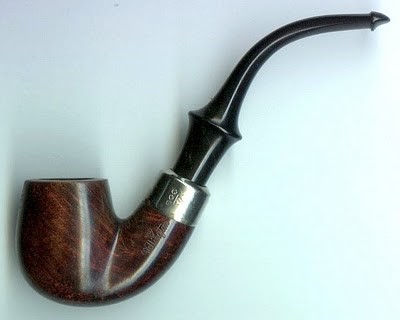
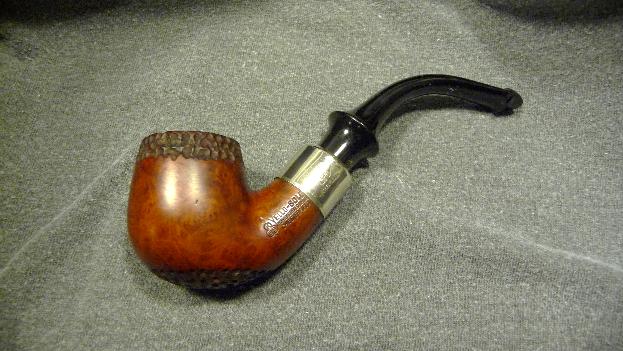
Here’s a scannergraph of the old Wellington not long after I brought it back from the brink of oblivion. It was part of an eBay lot and I immediately decided it was a keeper, because I had no other pipe like it.WDC1

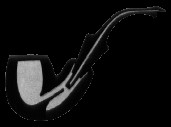
The Wellington is the WDC copy of the Peterson System pipe. Here’s a cutaway diagram that I snagged from Pipe & Pouch to help explain this pipe’s design.WDC2

The bit, rather than connecting directly to the bowl via the shank, fits into a sort of pocket or reservoir where the air sort of swirls around as it goes into the bowl. The upper air passage goes on into the bowl, and the bottom reservoir collects moisture. This looks like another odd gimmick, but in my opinion, this one works very well. Of course, it requires additional attention when cleaning. I use a cotton swab to clean out the reservoir, and pipe cleaners as usual to clean the air passage.
WDC3

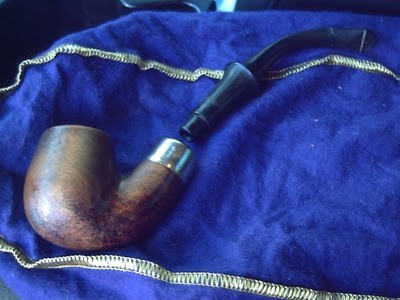
Another thing about the Wellington (and other Peterson copies) is the military bit. Rather than the traditional tenon/mortise arrangement, the bit simply tapers down slightly and wedges into the shank, remaining in place from the pressure of insertion. This design makes it safe to remove the bit while the pipe is still warm–something that is not a good thing with a tenon/mortise design.
A third thing that sets the Wellington/Peterson pipes apart is the button on the bit. Go back and look at the first photo as well as the cutaway graphic and pay attention to the end of the bit. This is a bit design created by Peterson and is called the P-lip. The hole is on top of the button rather than in the very end, and is angled upward to direct smoke toward the roof of the mouth rather than straight into the tongue. Also, the curved underside of the bottom helps to prevent the tongue from touching the opening of the air passage. The upward-pointing opening is supposed to help prevent tongue-bite, and the curved “tongue shield” helps keep saliva from getting into the stem by being touched with the tongue (something that is a troublesome unconscious reflex for some pipe smokers).

Some people hate the P-lip because it feels different. I have no special preference nor objection to it, at all. To me it’s just another bit. The P-lip bit does have a more rounded shape than most bits, and it does feel somewhat different, but it’s nothing that anyone shouldn’t be able to get used to.

This old Wellington has become one of my favorite pipes. Its size and deep bend gives it an impressive appearance and a comfortably low center of gravity. As you can see in the second photo, I have managed to wear off some of the finish since it came into my hands, and I will eventually be refinishing this one. Meanwhile, this is one of my regular truck pipes and I often smoke it on the long commute home in the afternoon. If I manage to come across any more of these pipes in my eBay adventures, I will probably keep them all–at least until I build up a good week’s worth of pipes for rotation.

FYI, Kaywoodie also had a copy of the Peterson System pipe, called the Chesterfield. Unfortunately, I haven’t been able to acquire one of those yet.