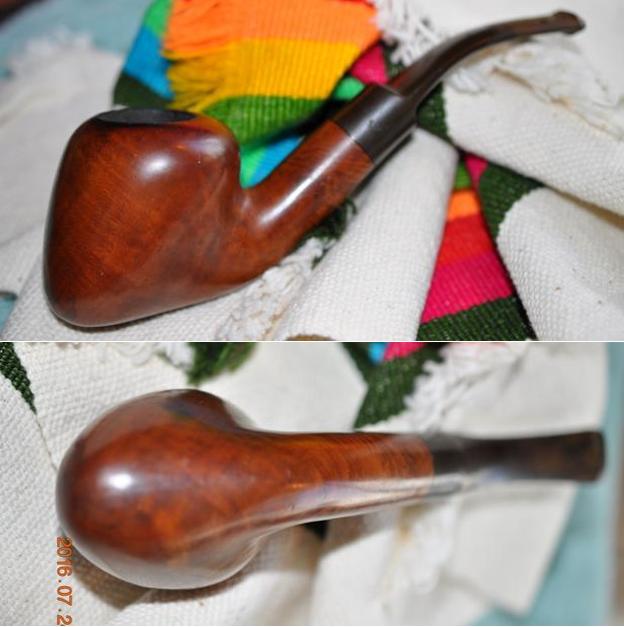
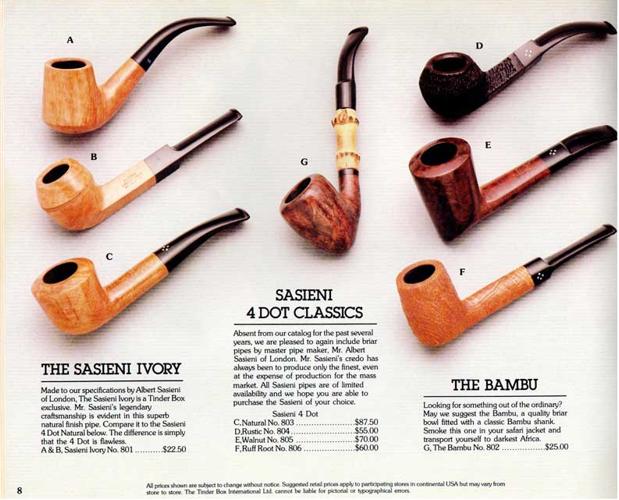
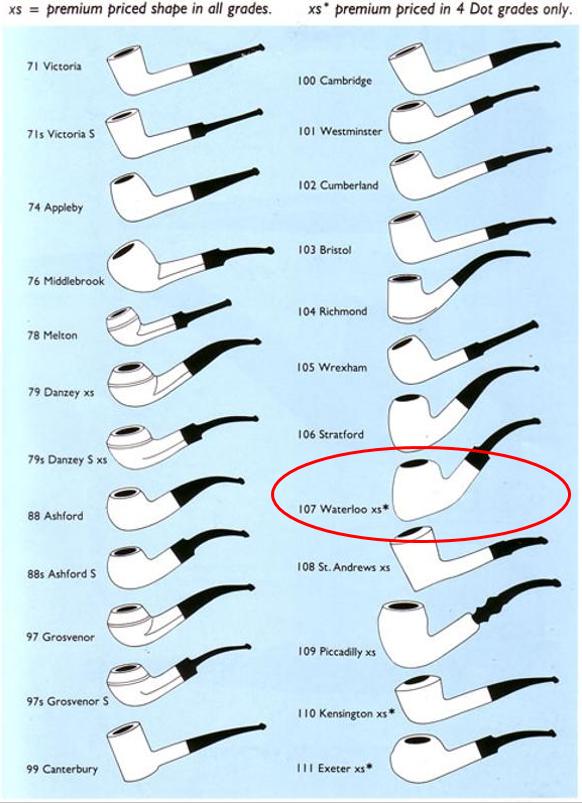
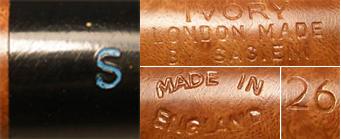
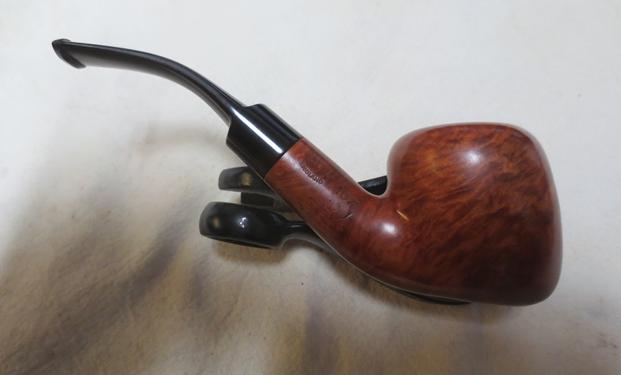
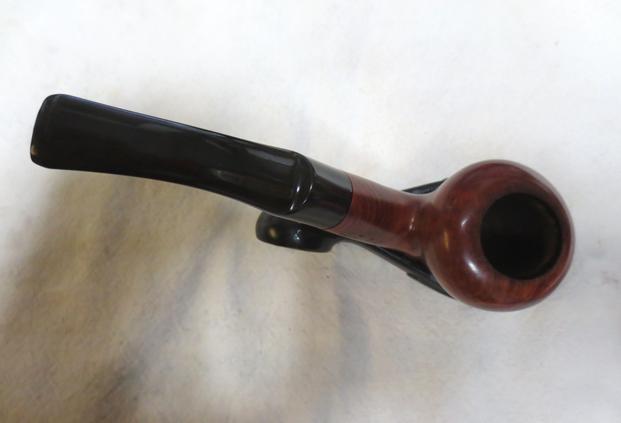
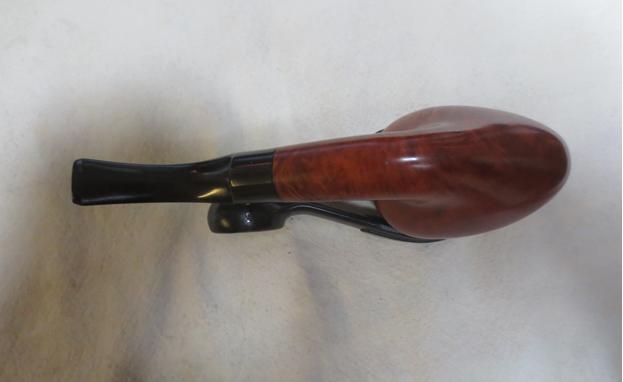
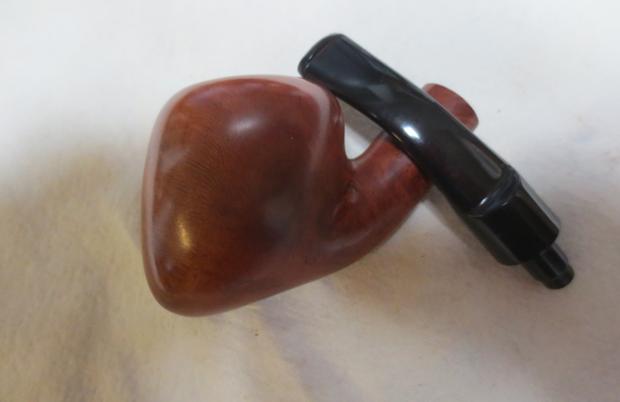
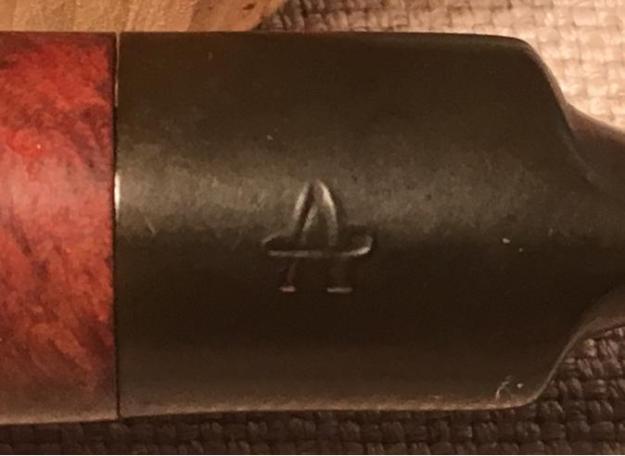
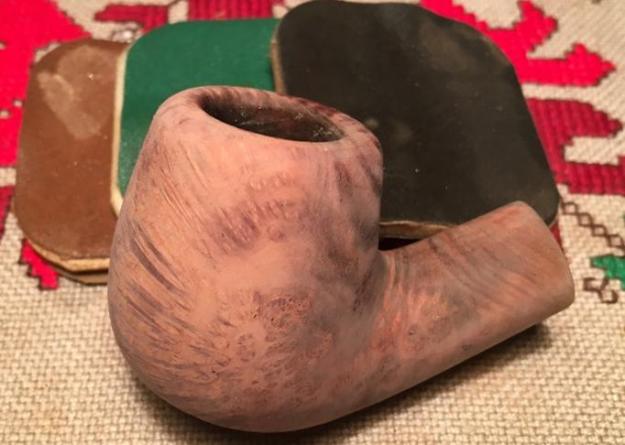
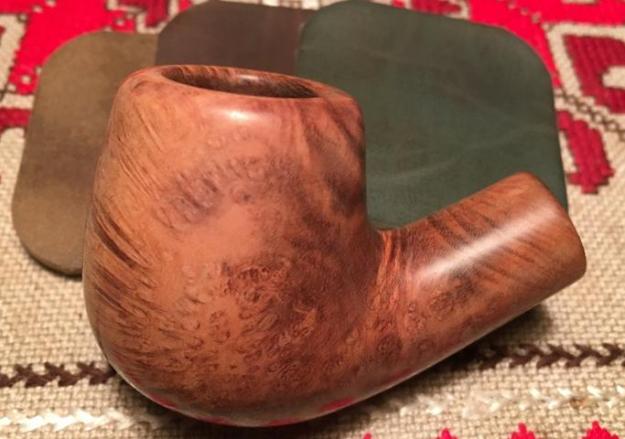
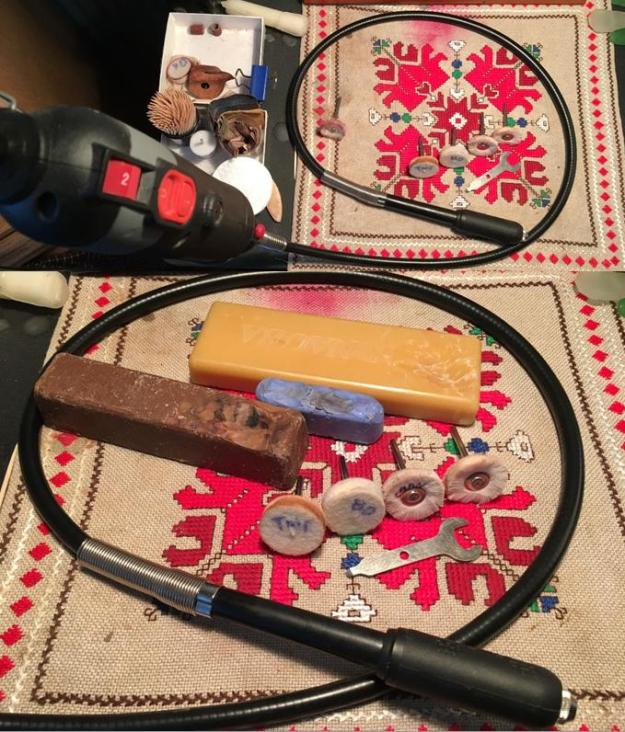
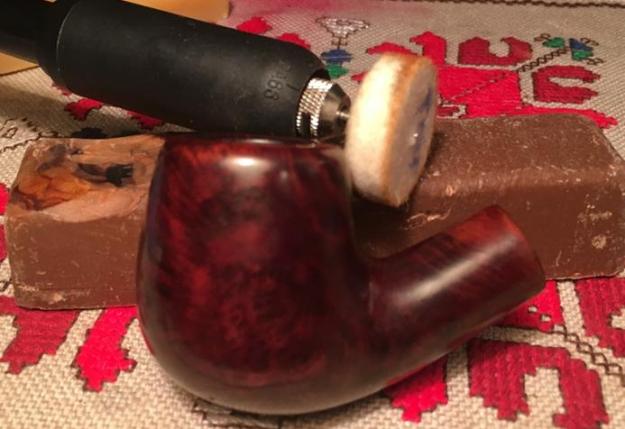
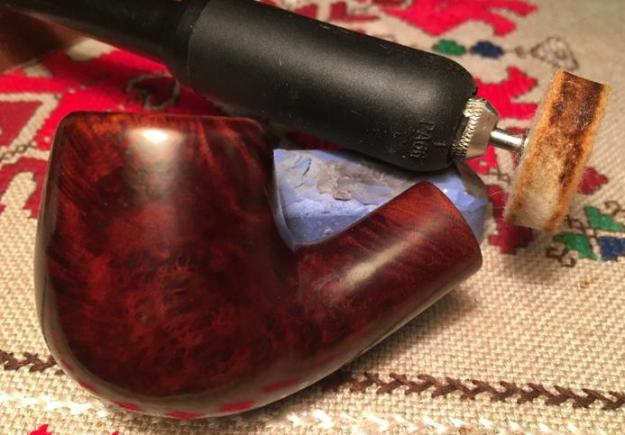
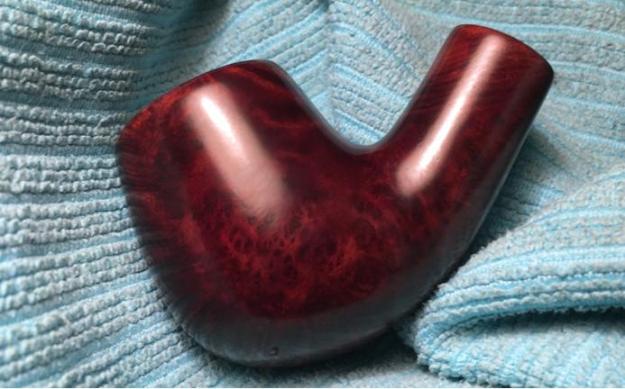
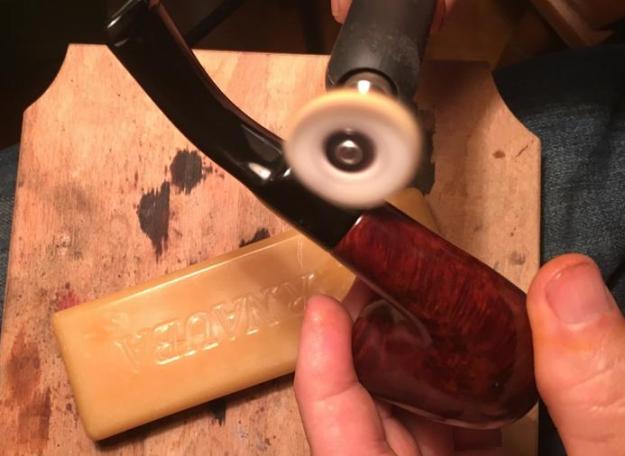
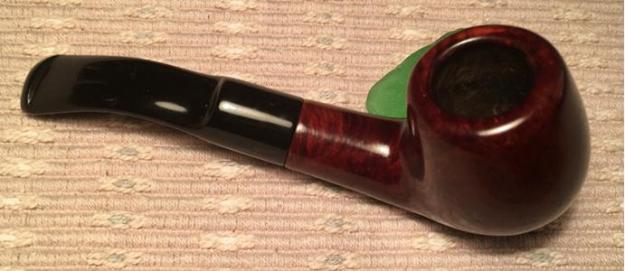
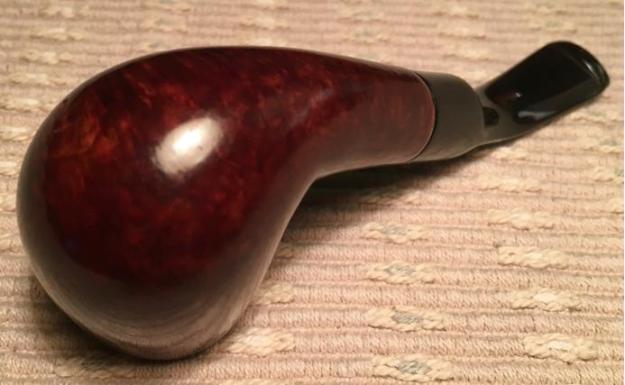
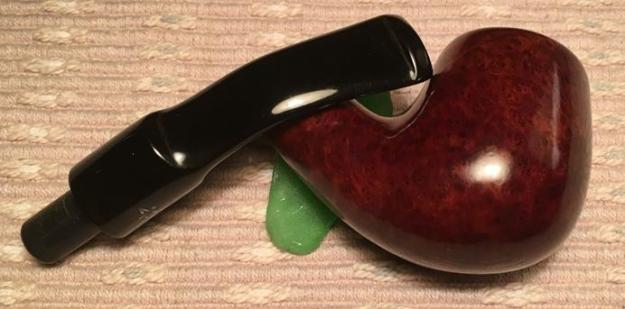
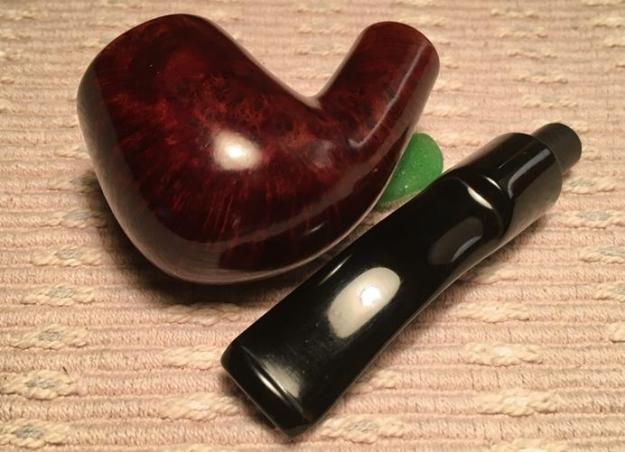
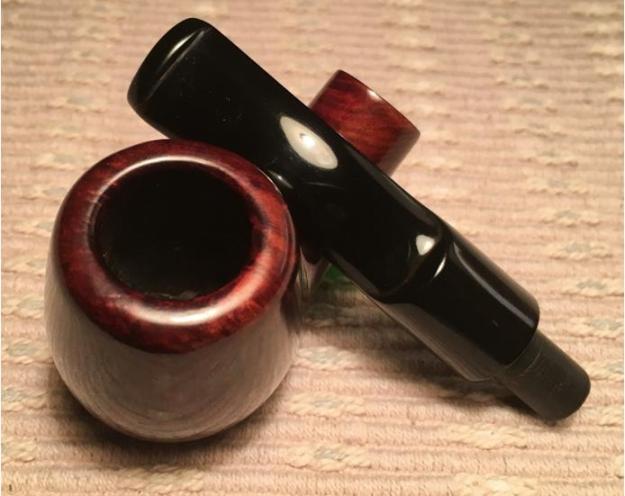
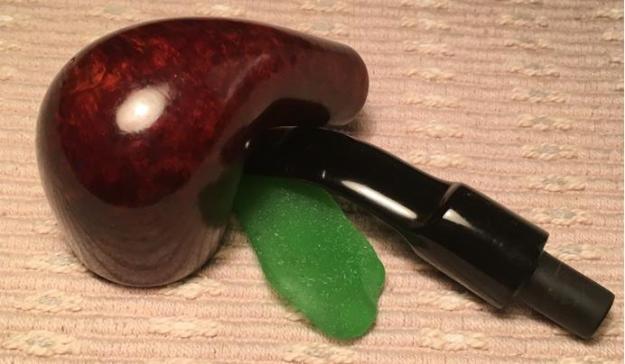
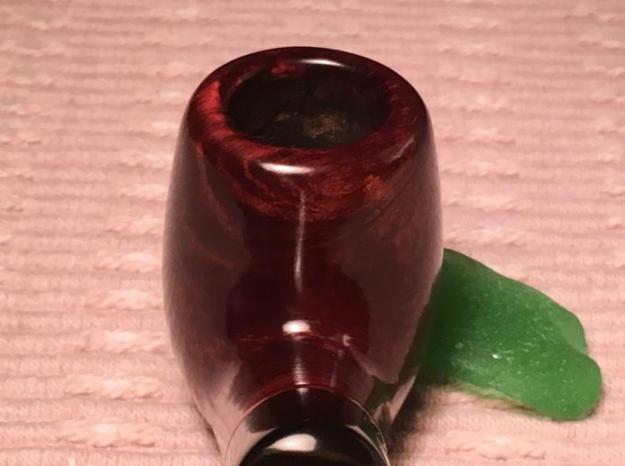
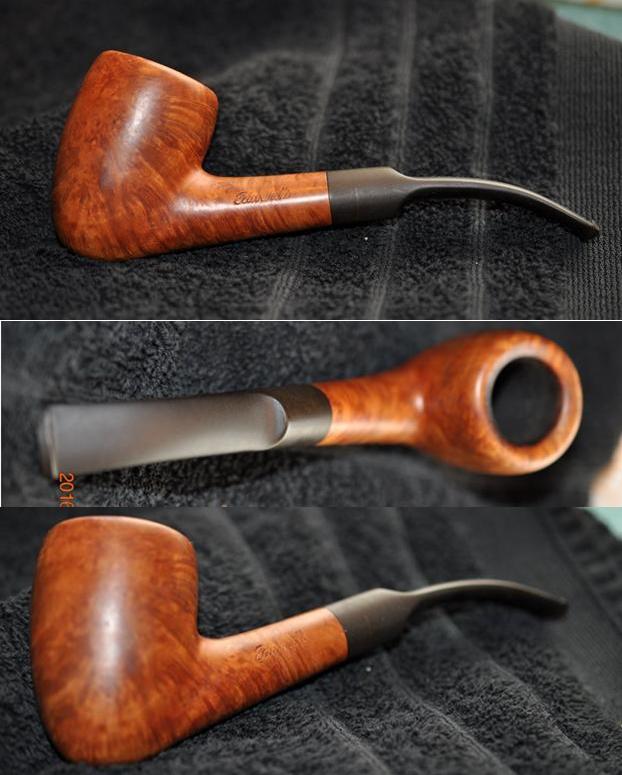
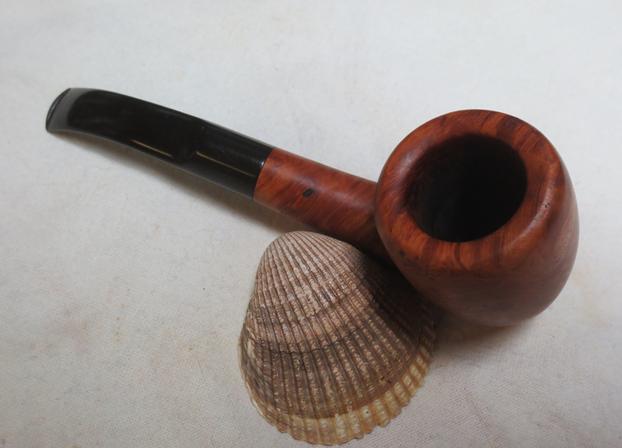
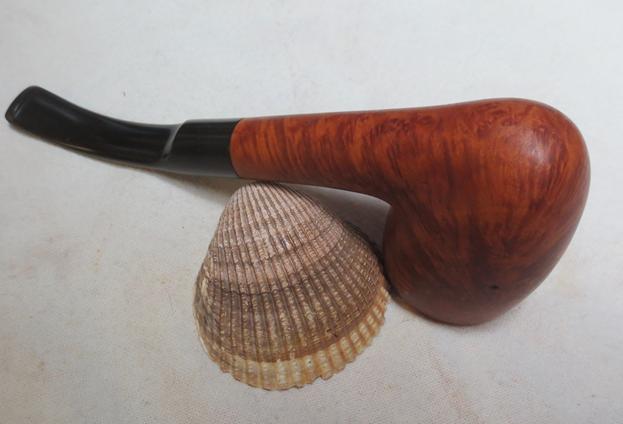
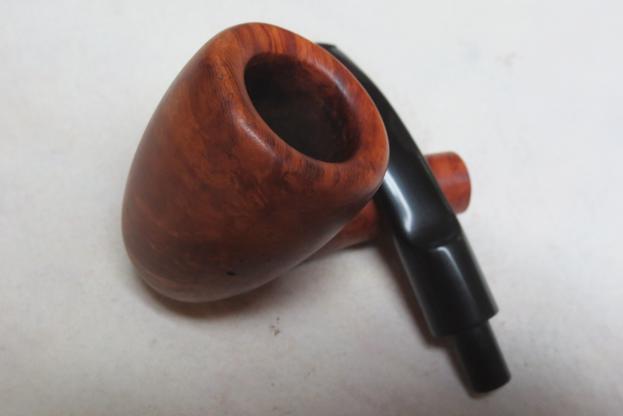
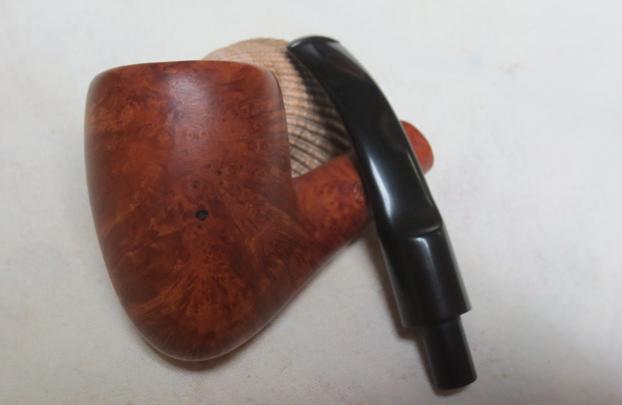
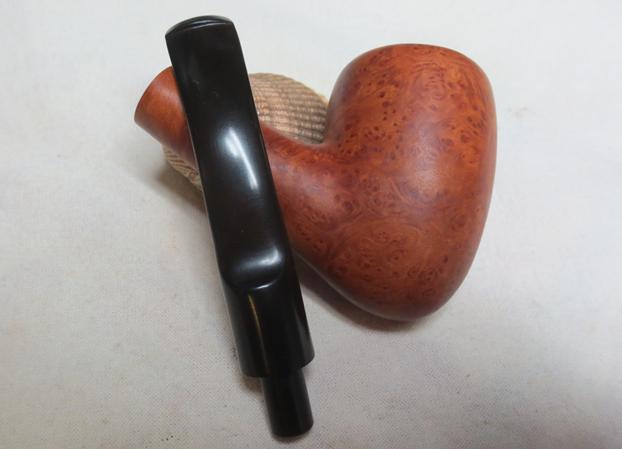
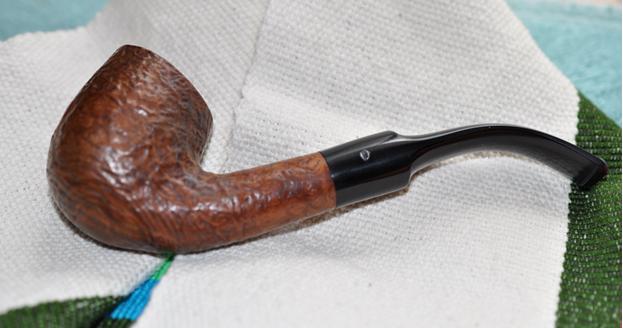
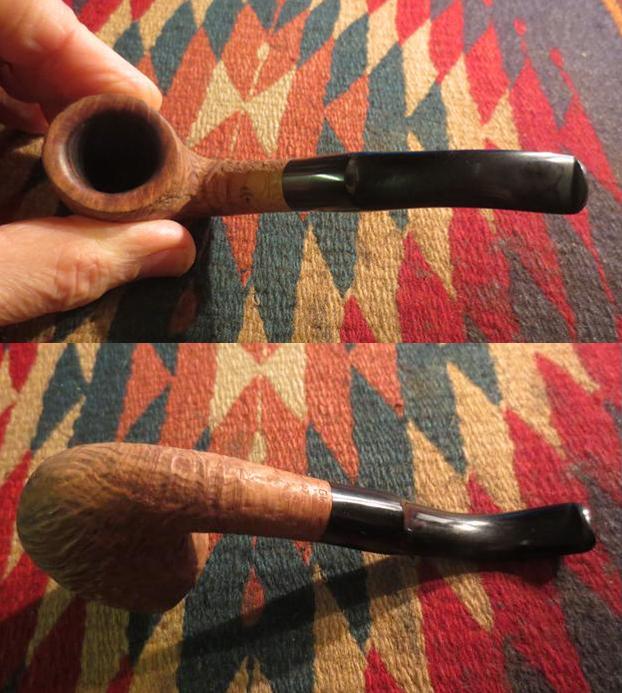
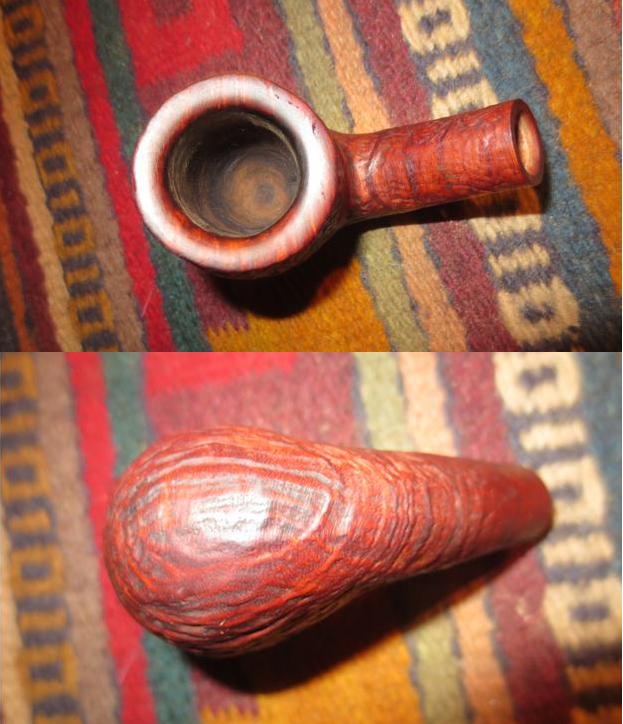
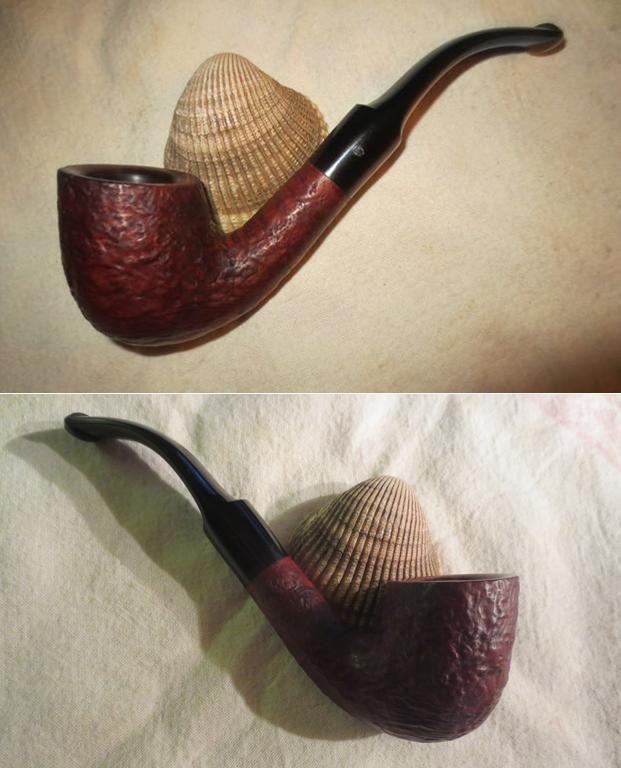
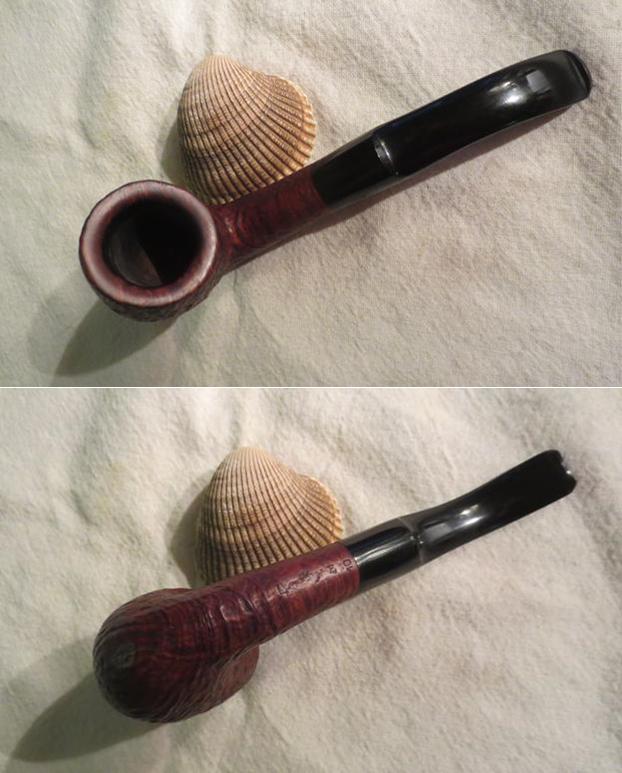
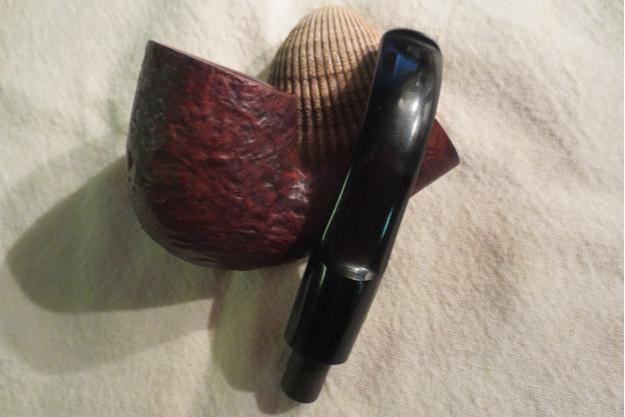
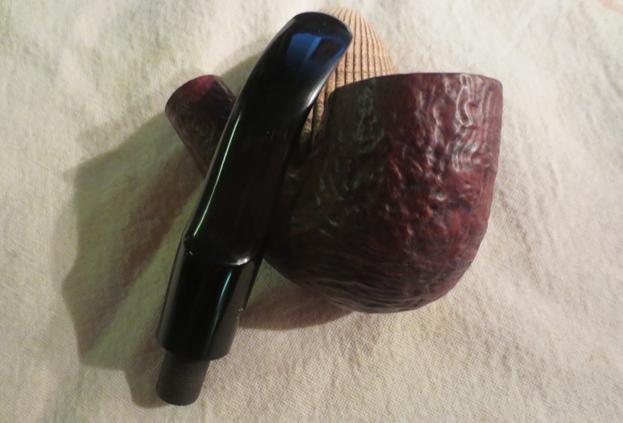
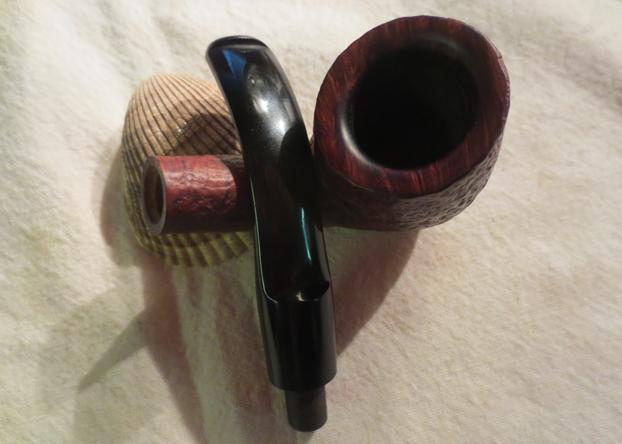
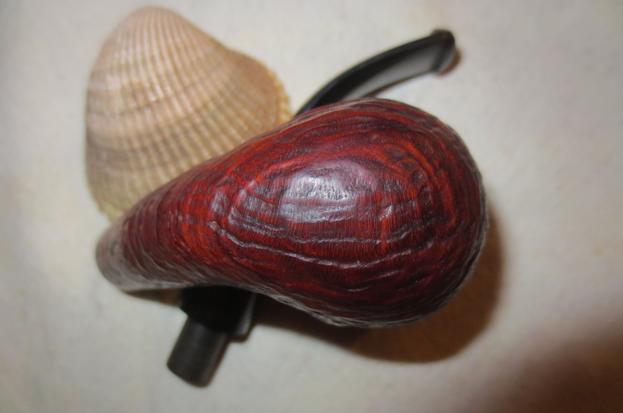
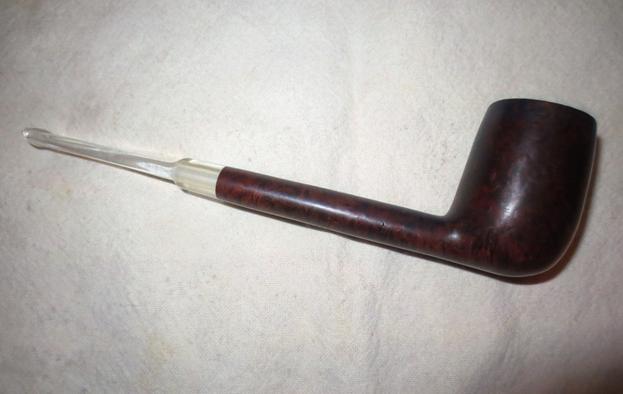
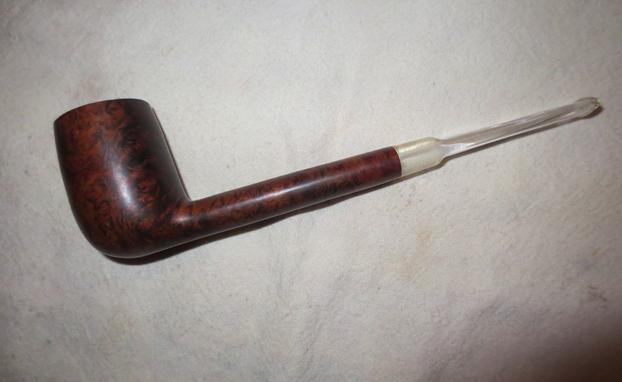
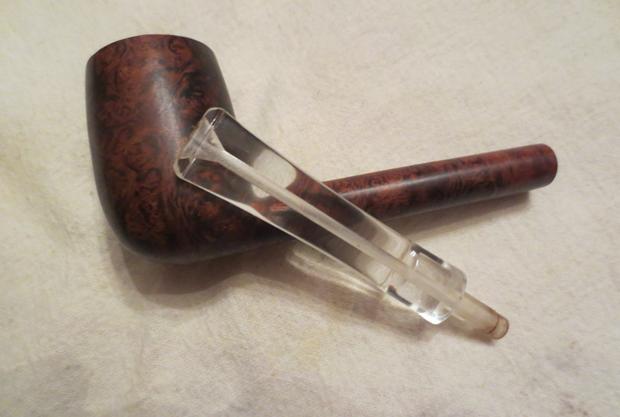
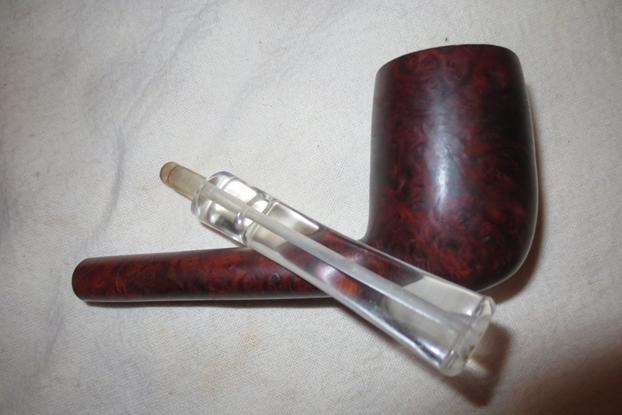
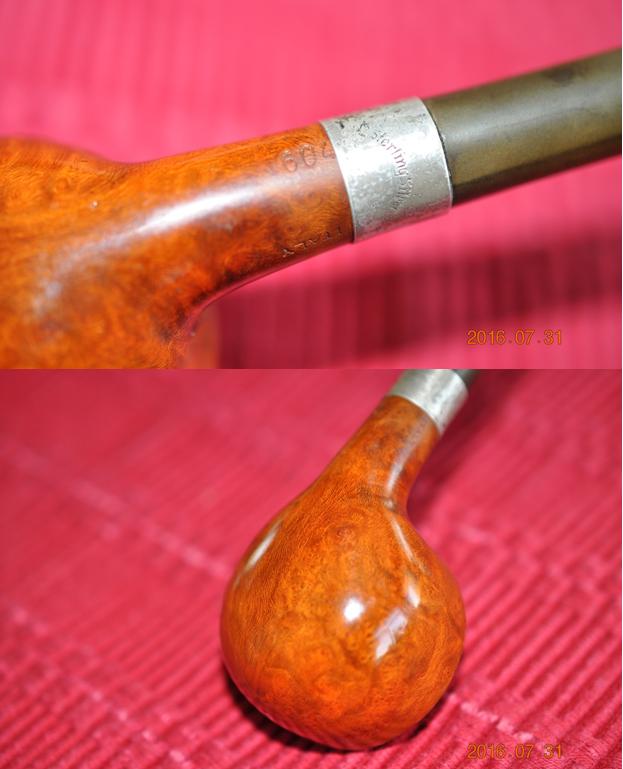
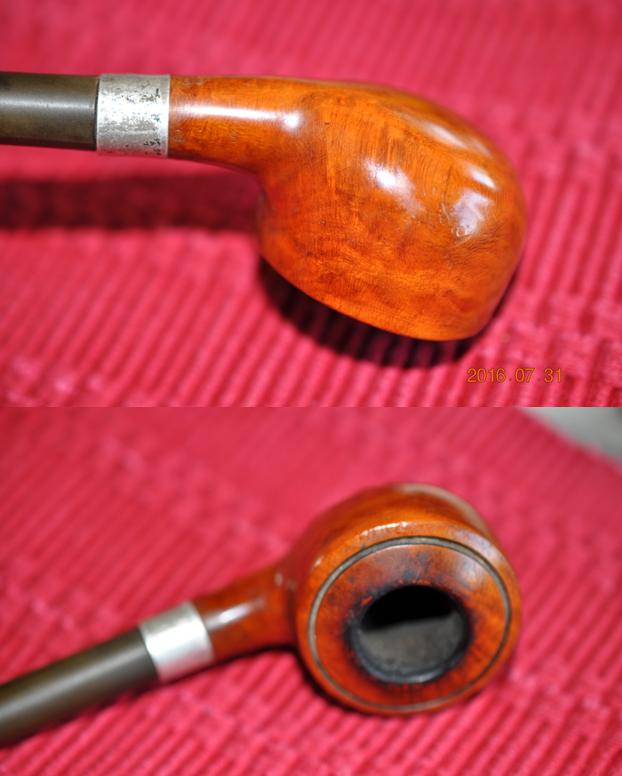
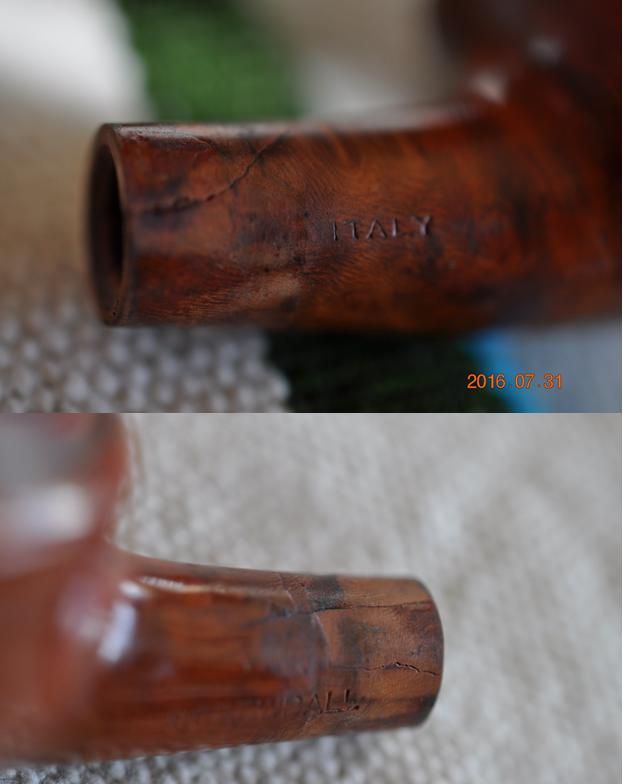
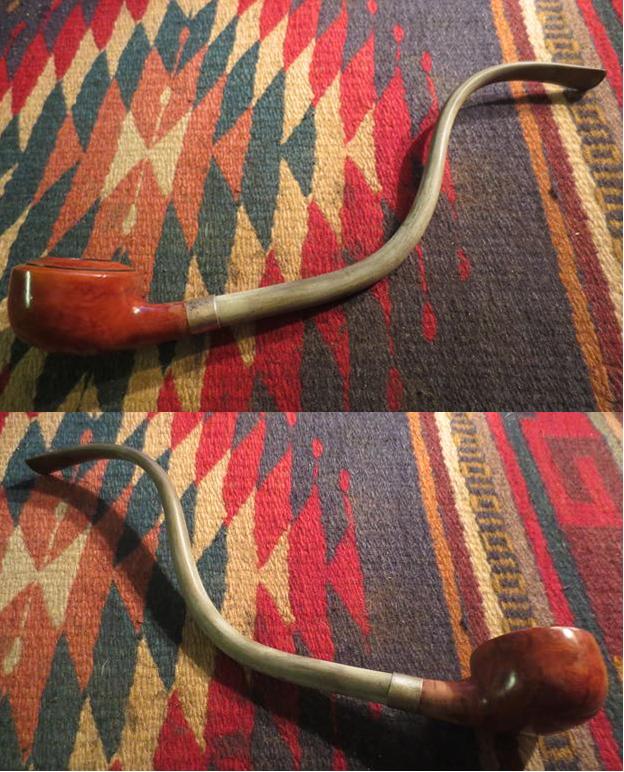
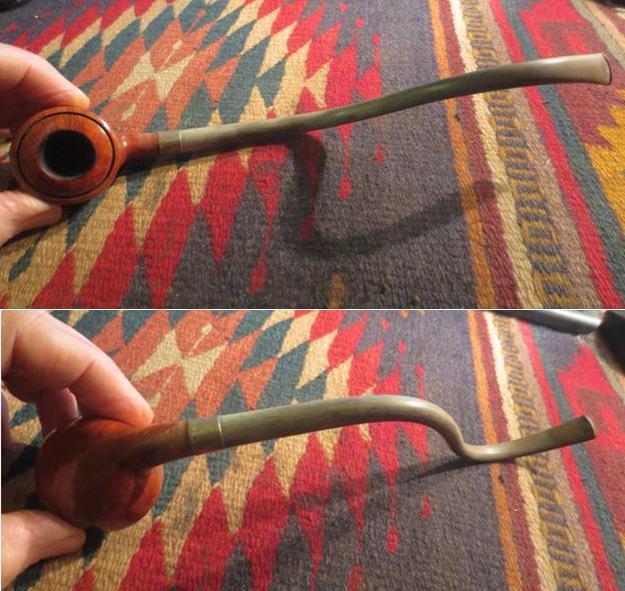
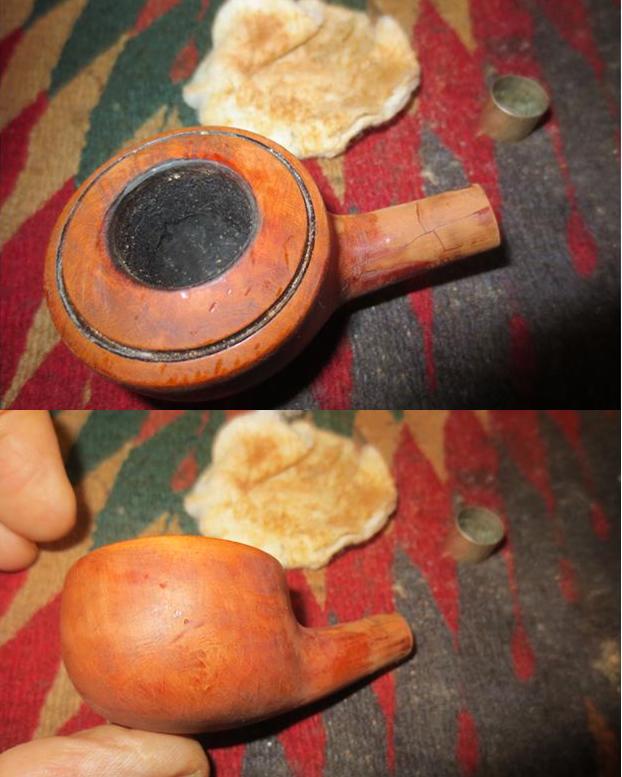
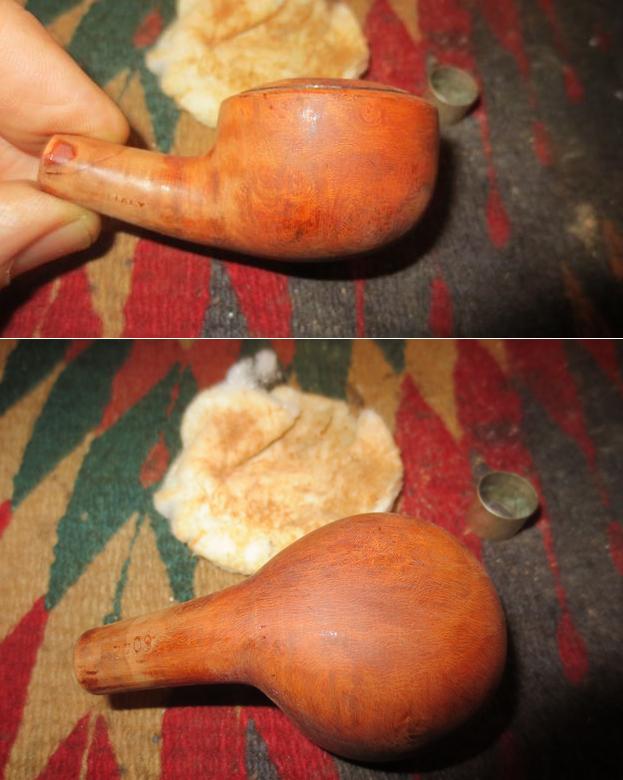
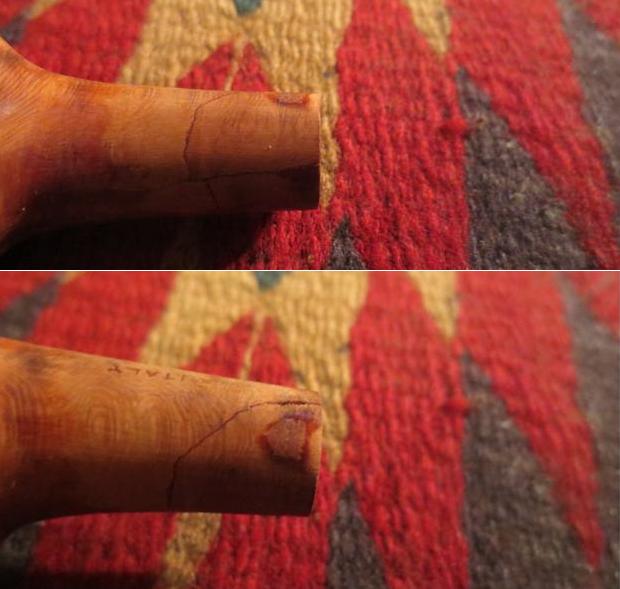
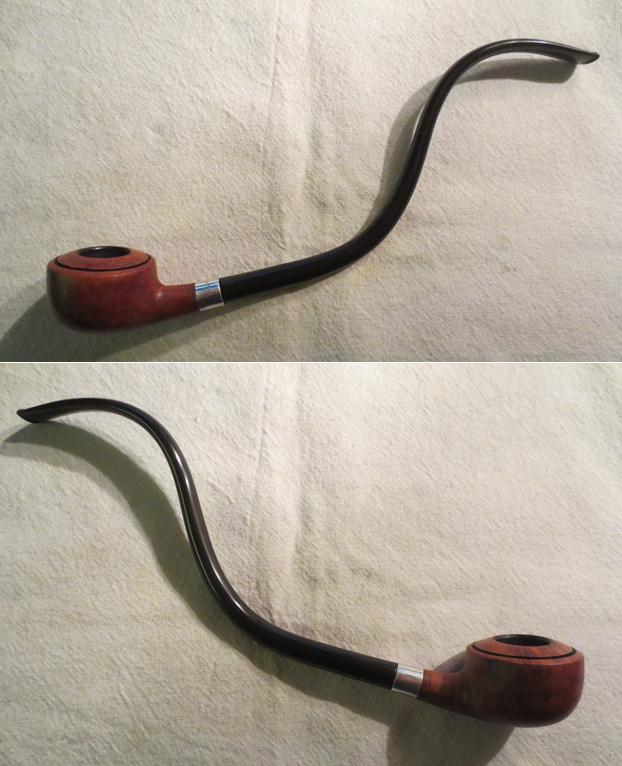
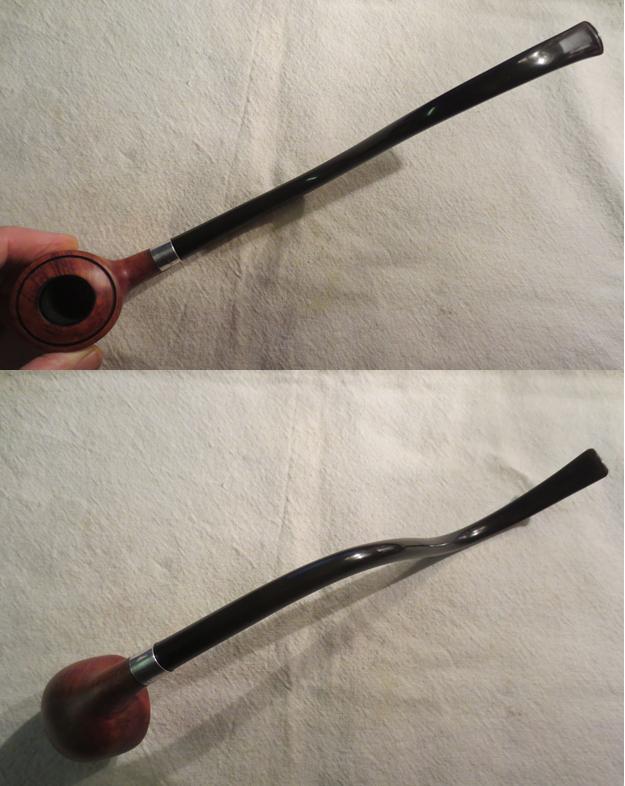
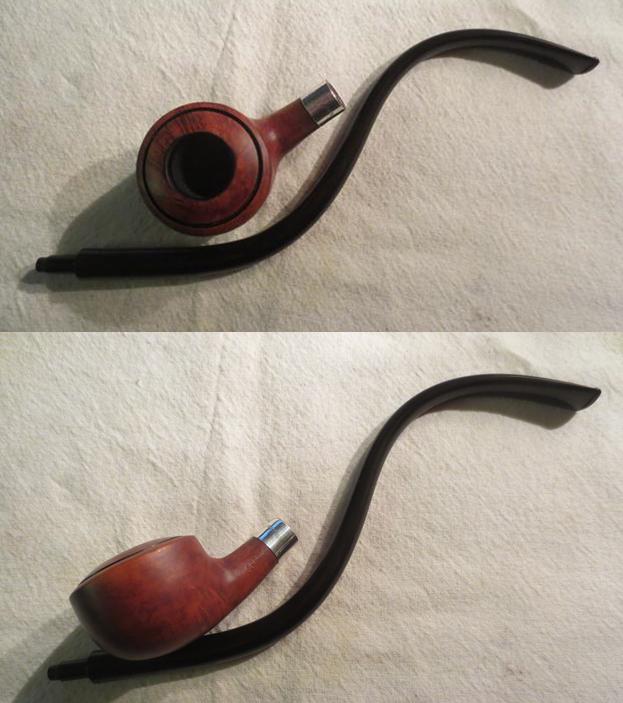
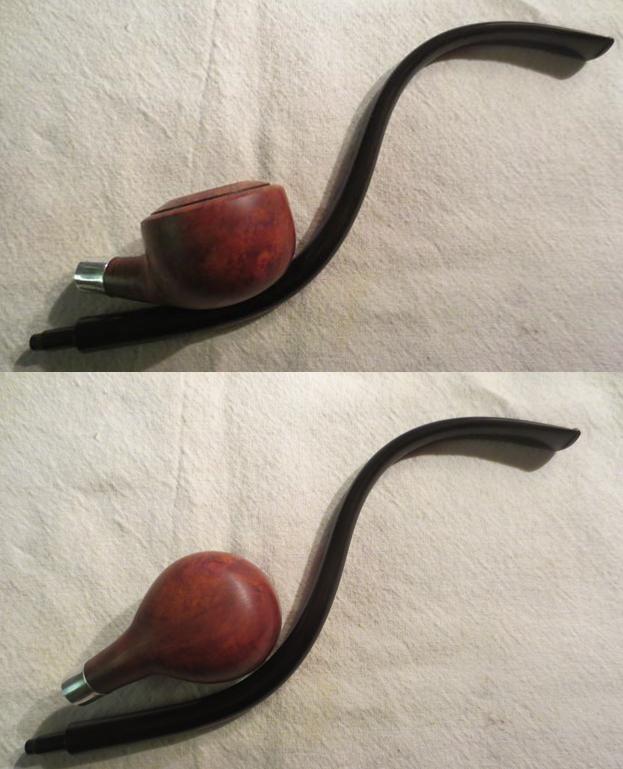
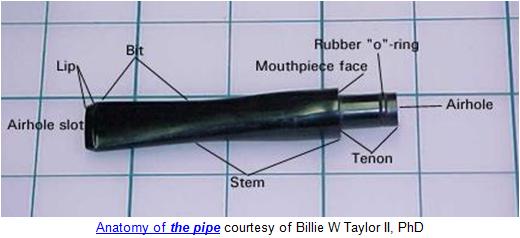
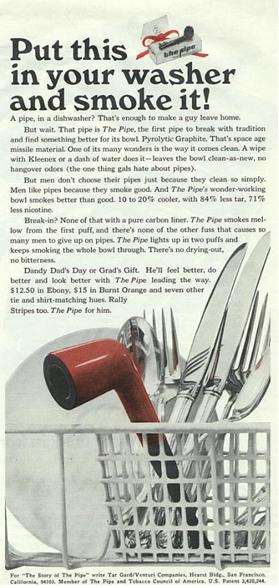
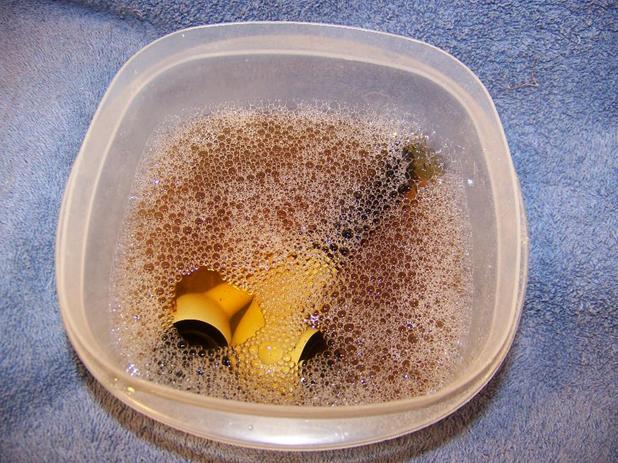
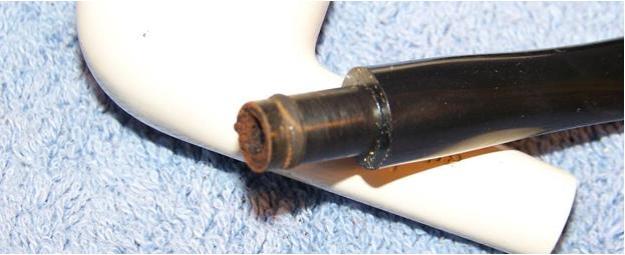
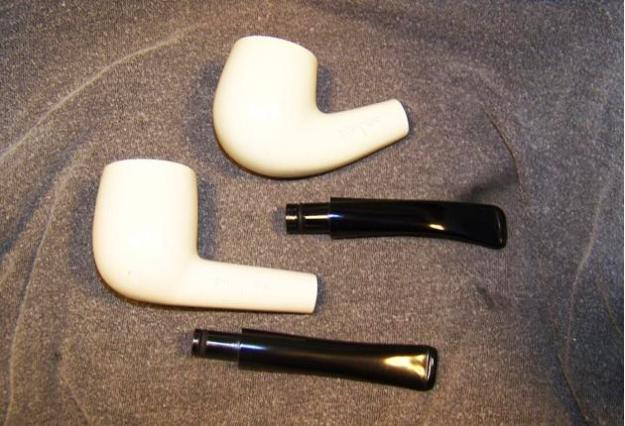
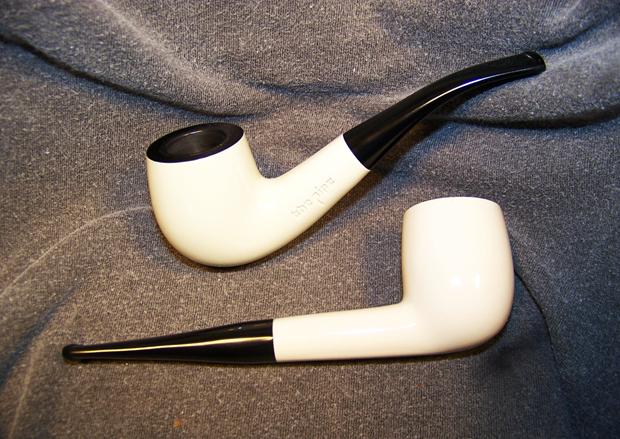
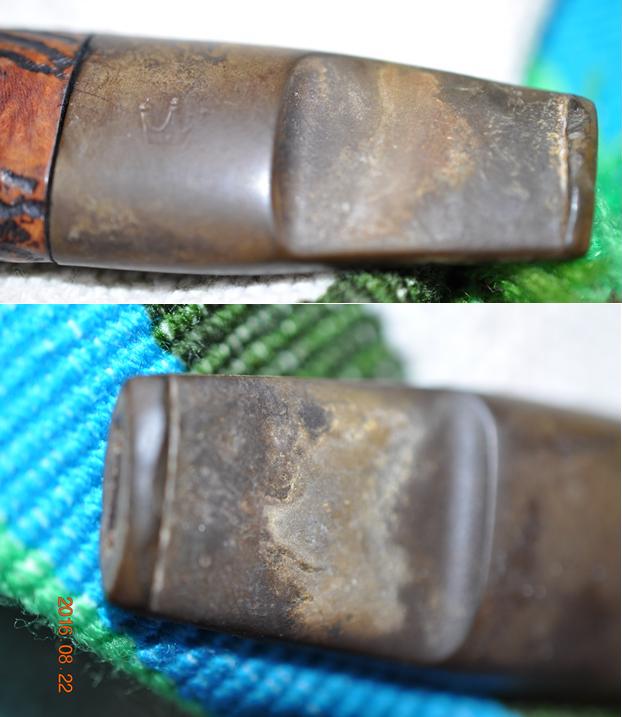
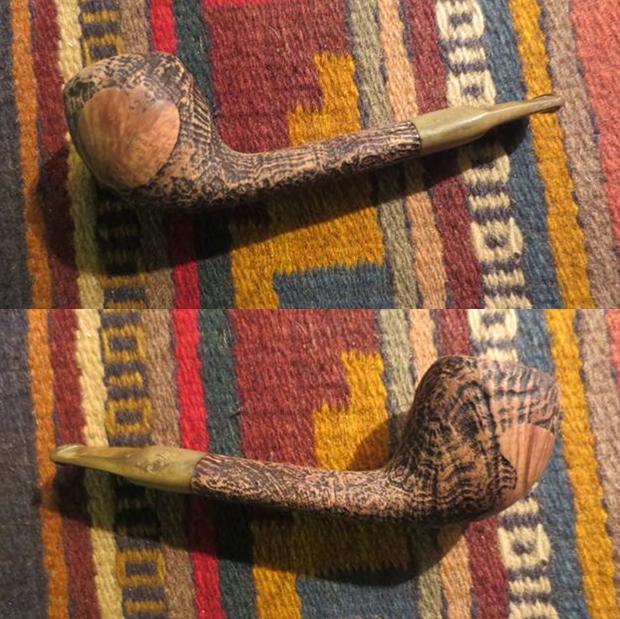
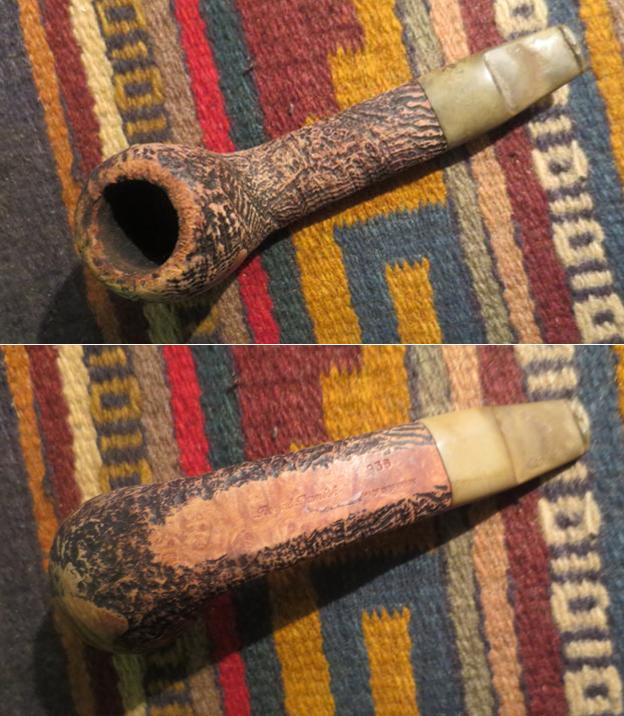
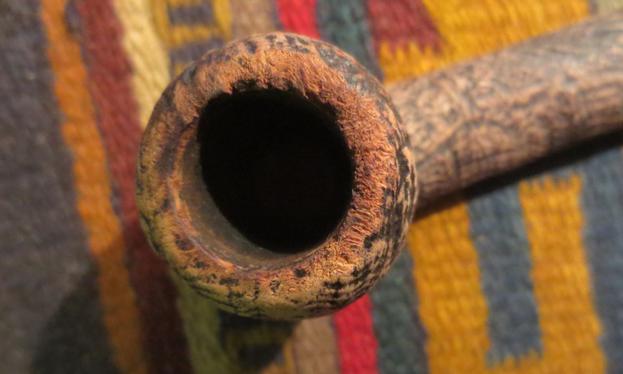
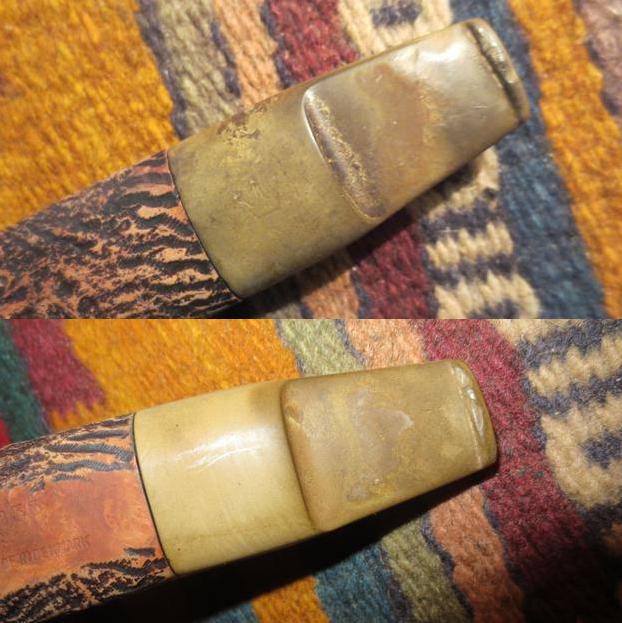
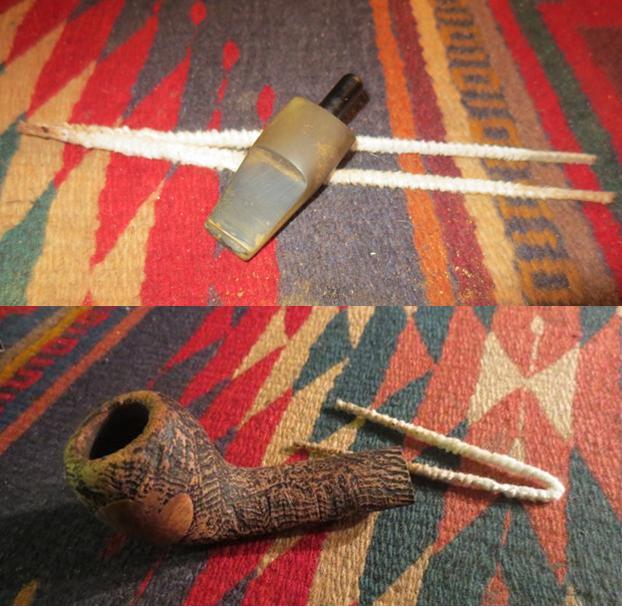
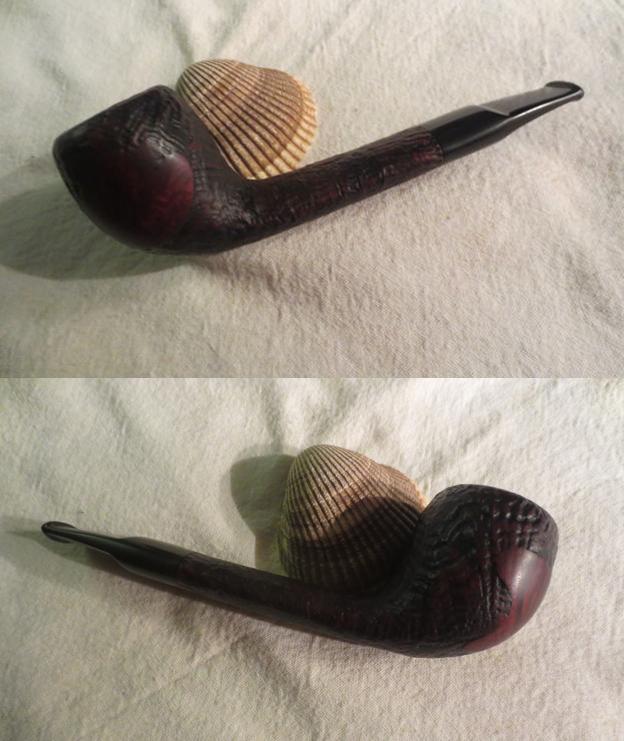
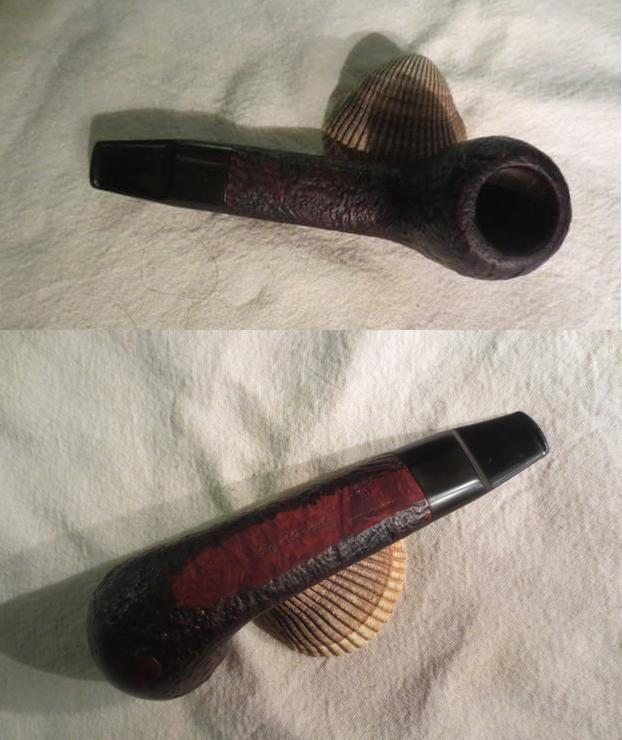
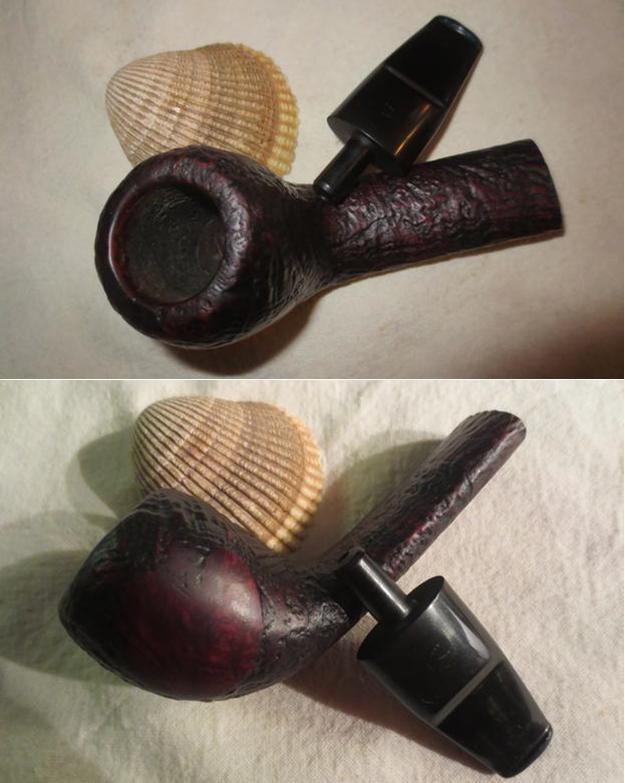
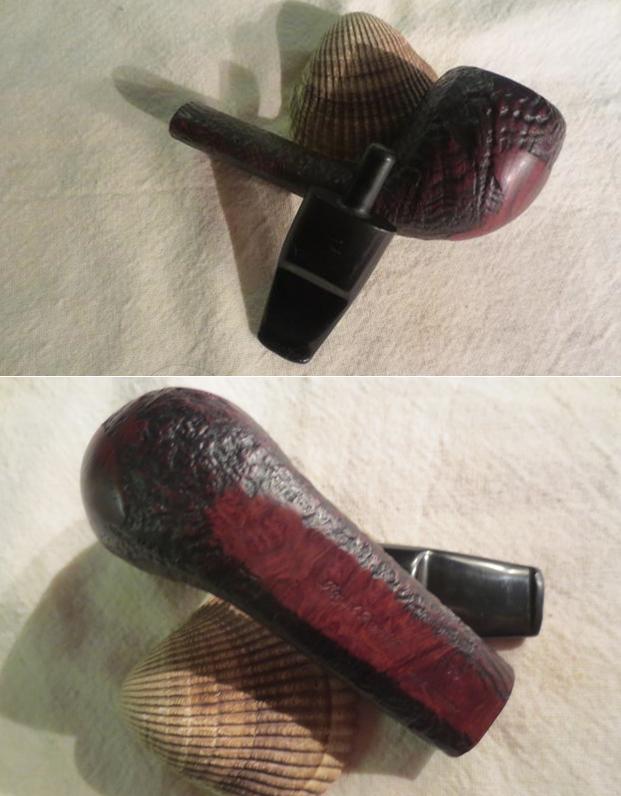
A Heibe Filter Bruyere Extra 1132 Churchwarden Made in West Germany


Blog by Steve Laug

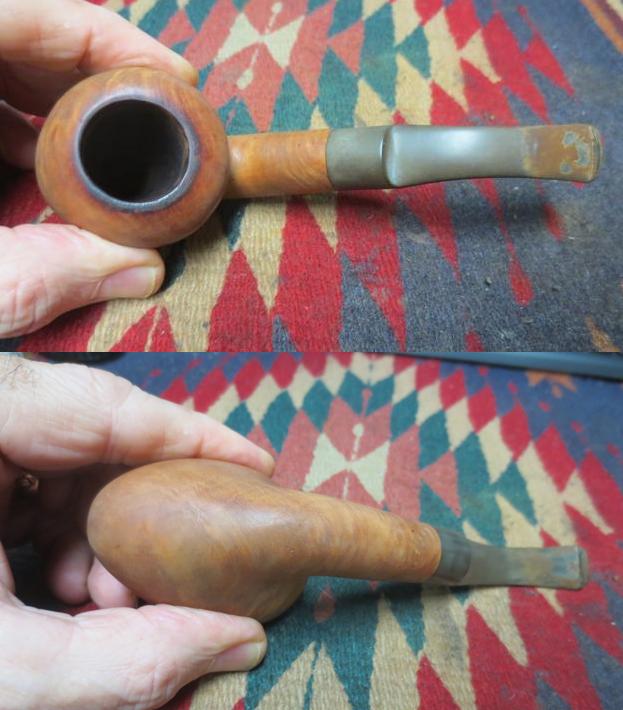
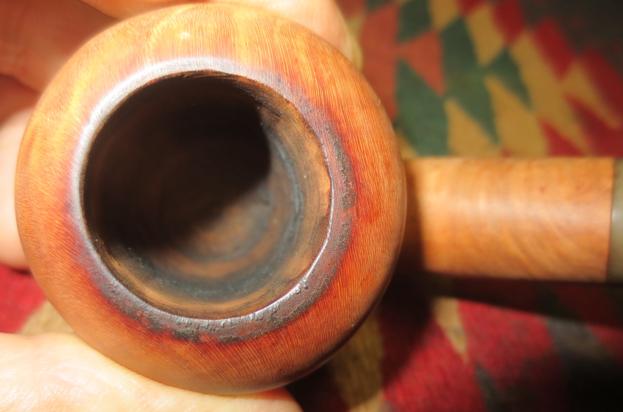
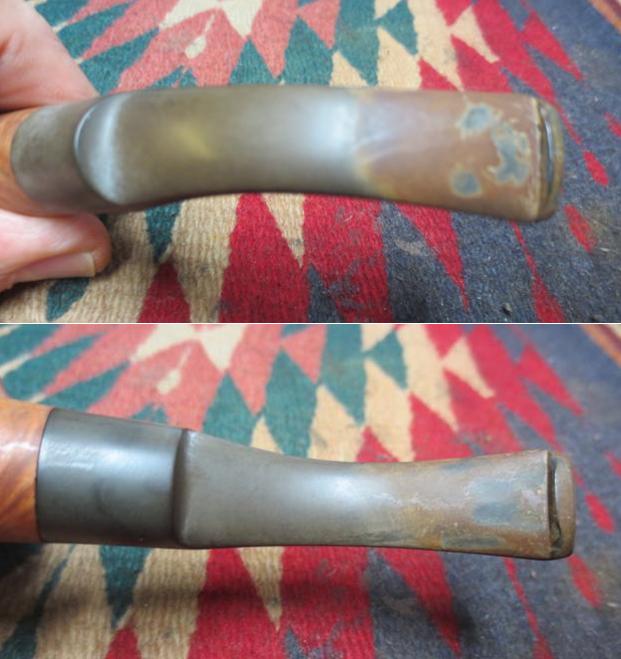
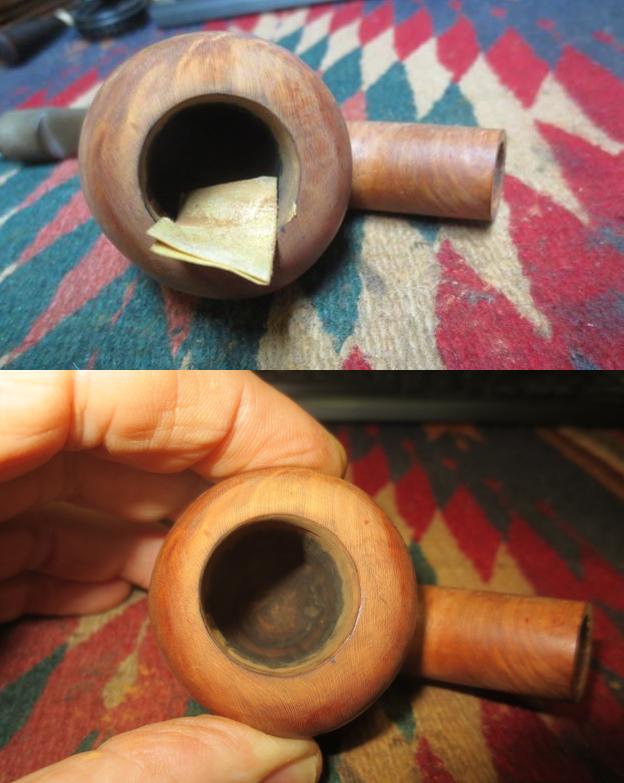
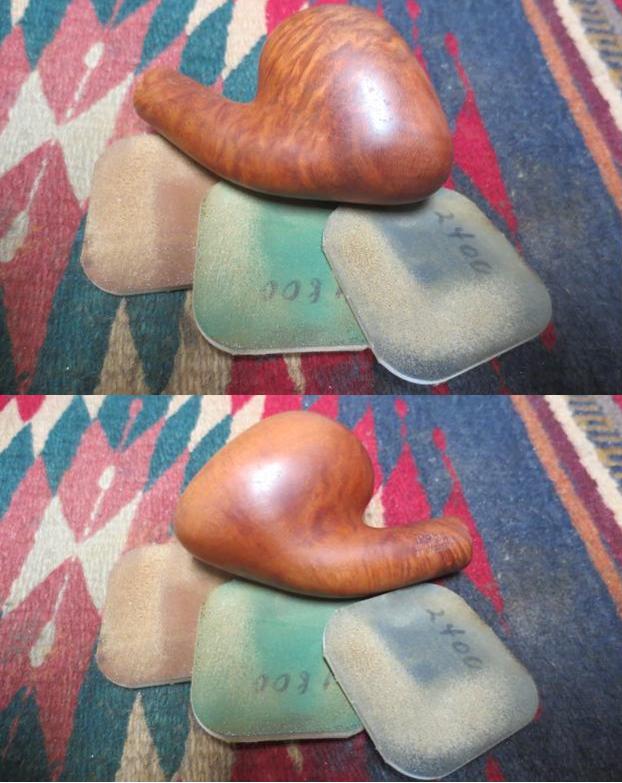
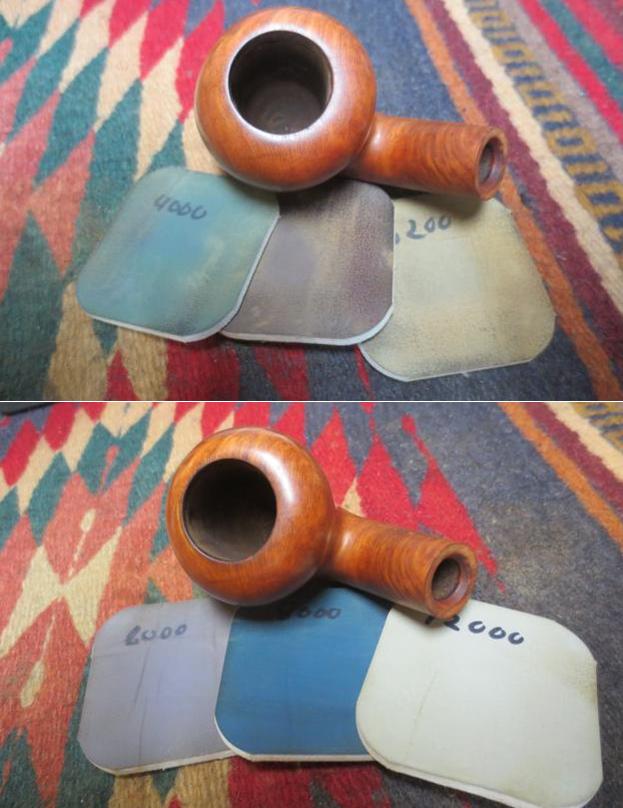
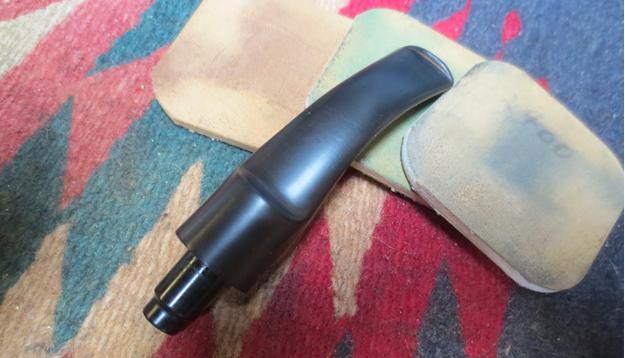
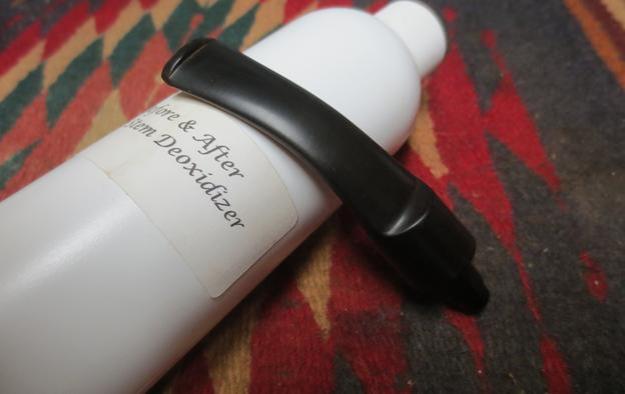
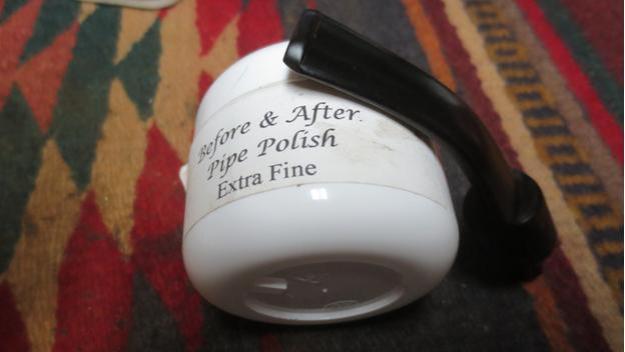
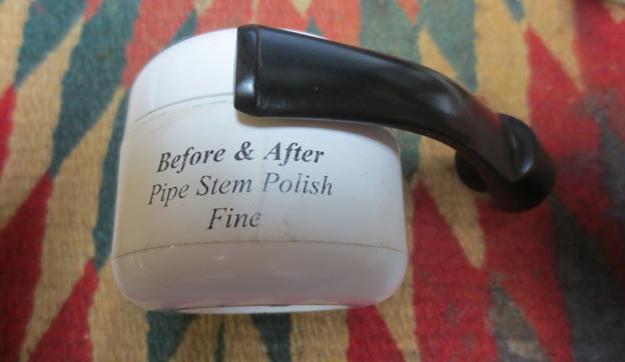
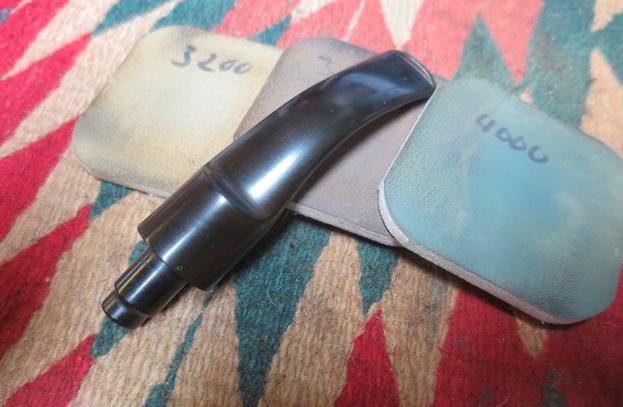
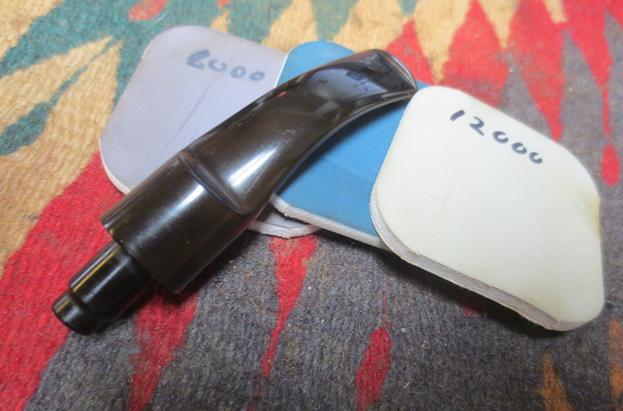
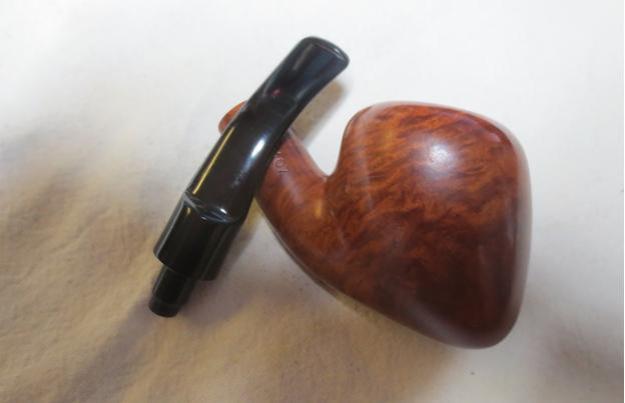
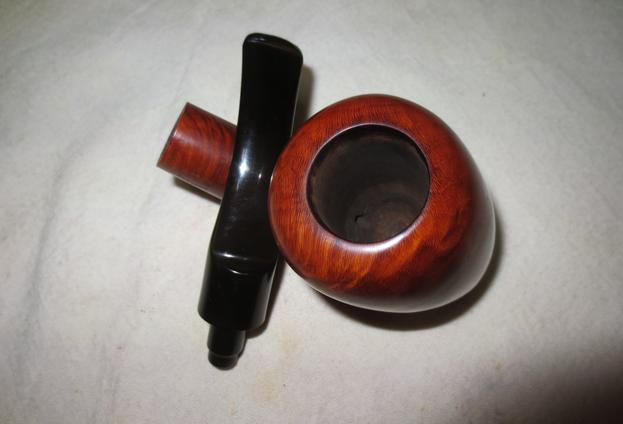
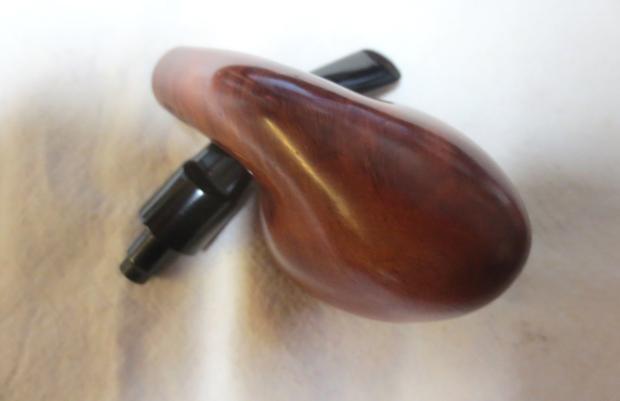
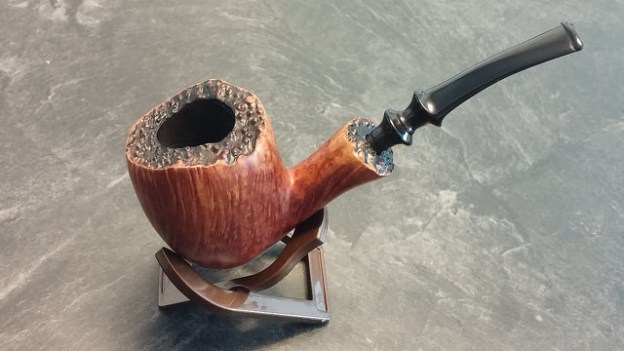
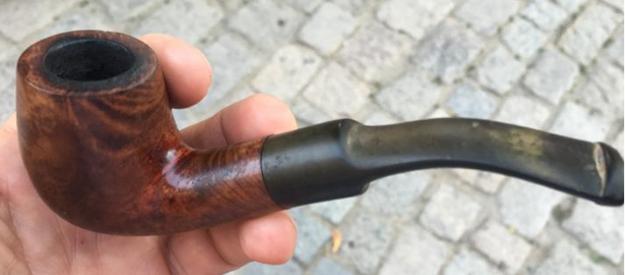
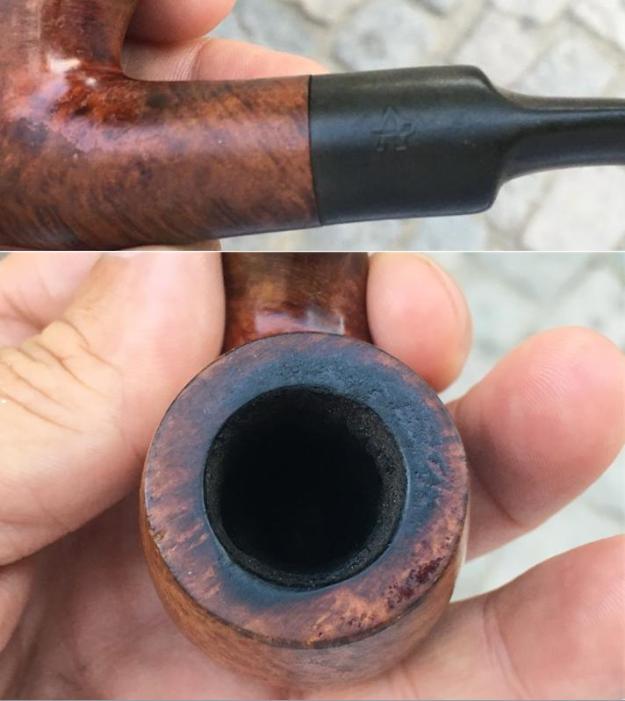
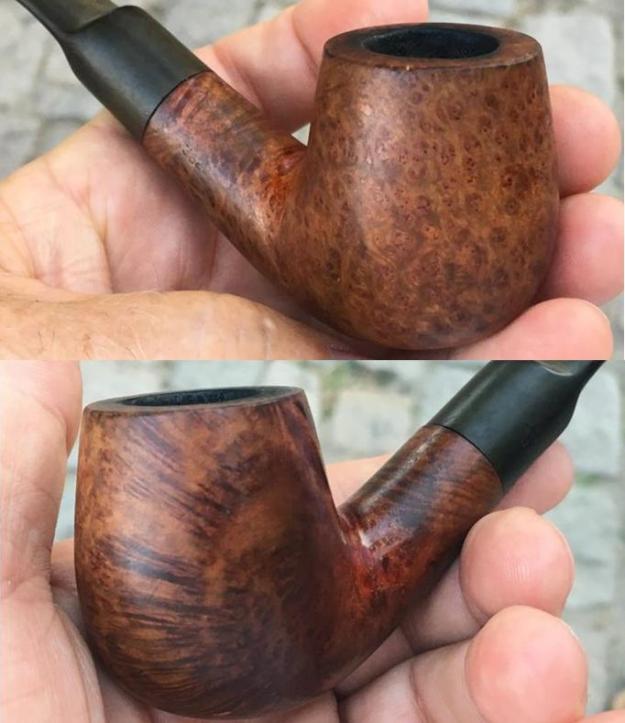
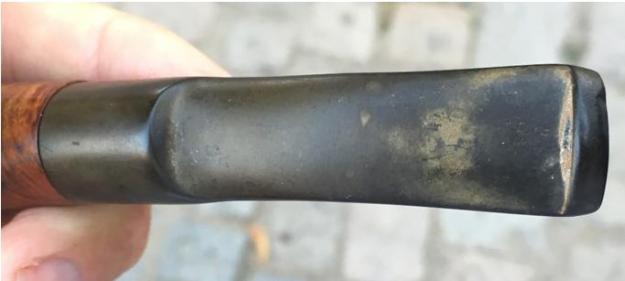
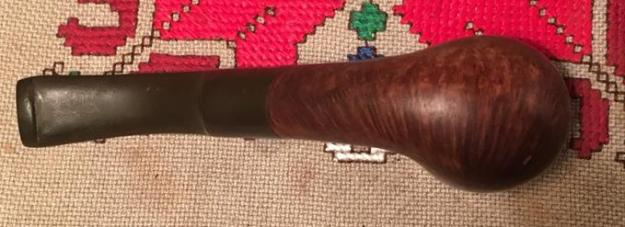
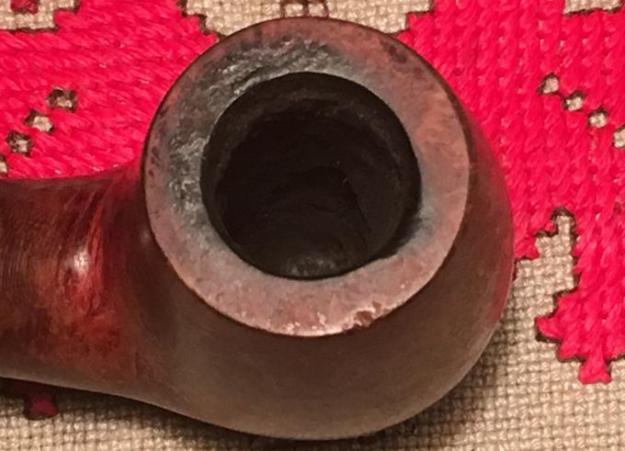
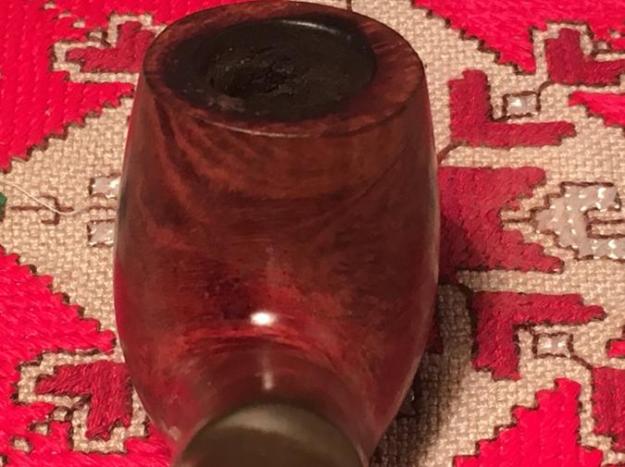
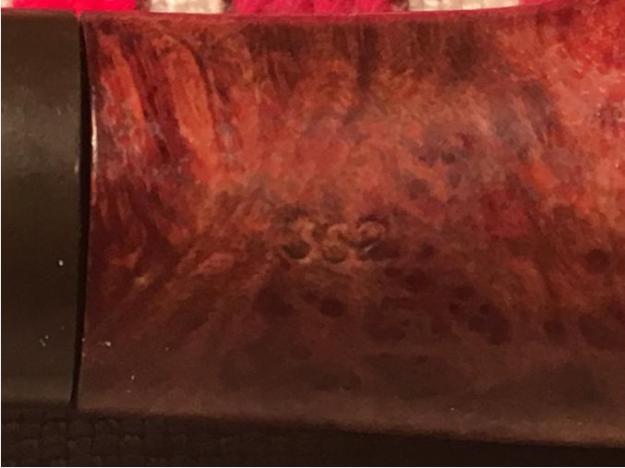
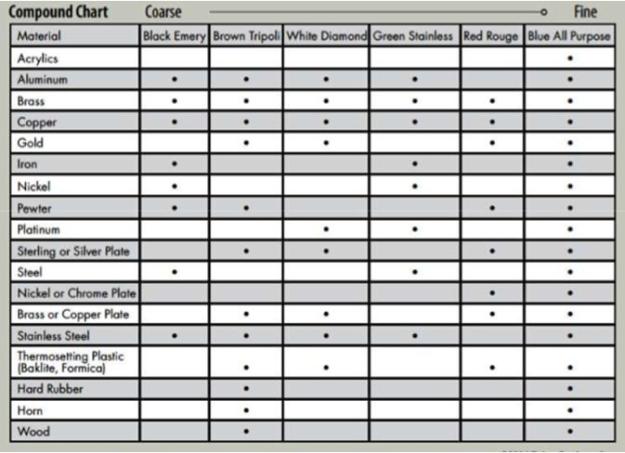
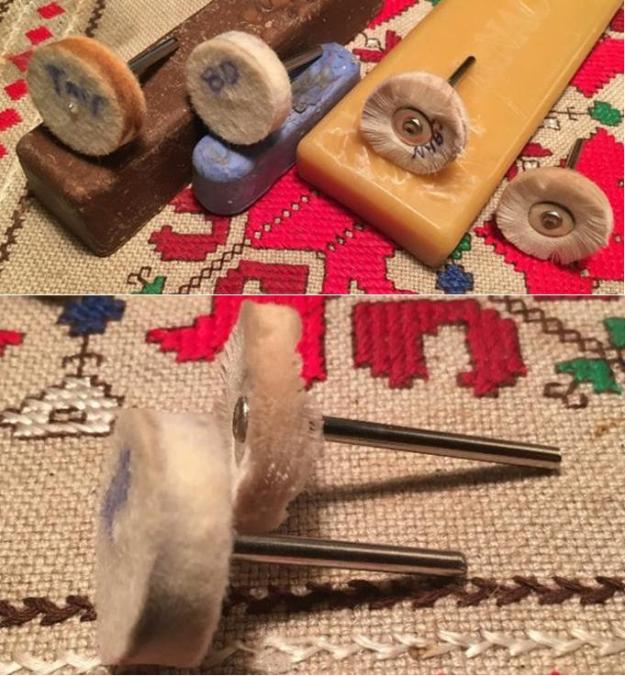
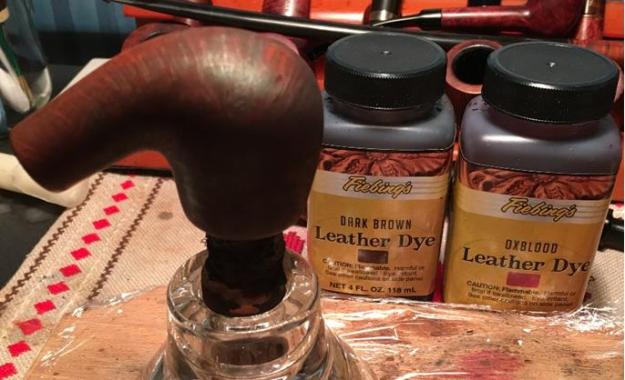
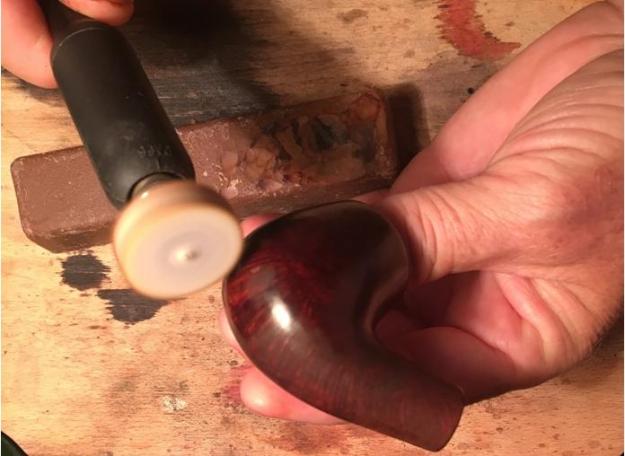
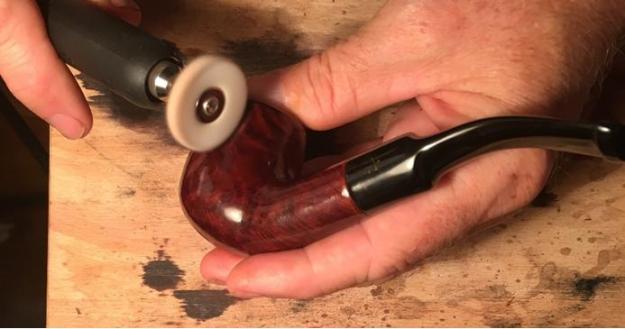
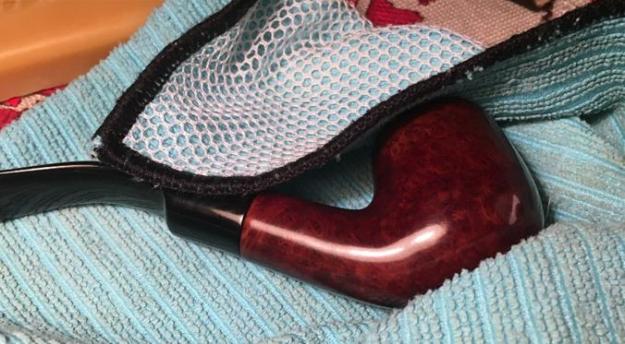
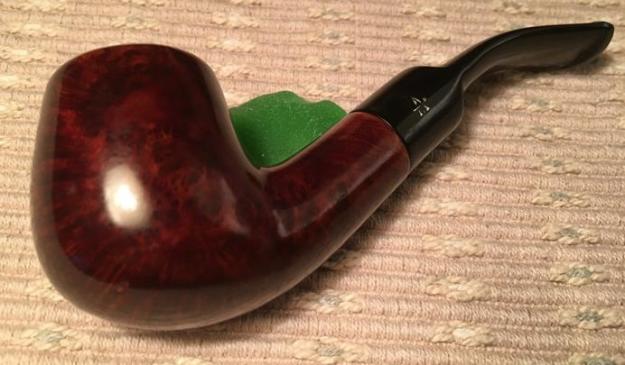
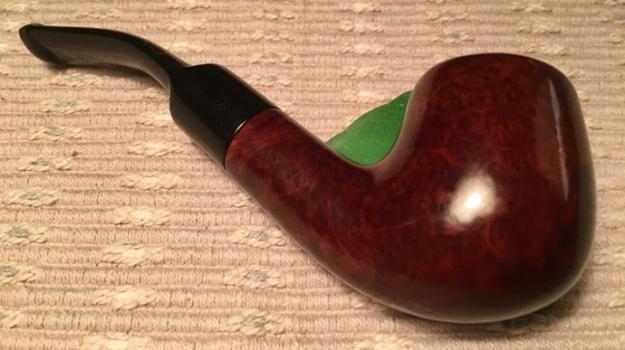
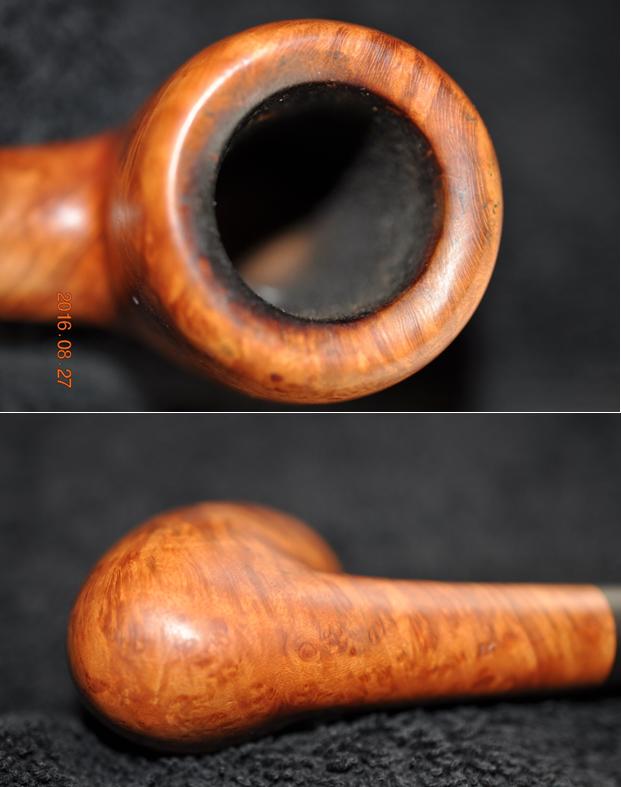
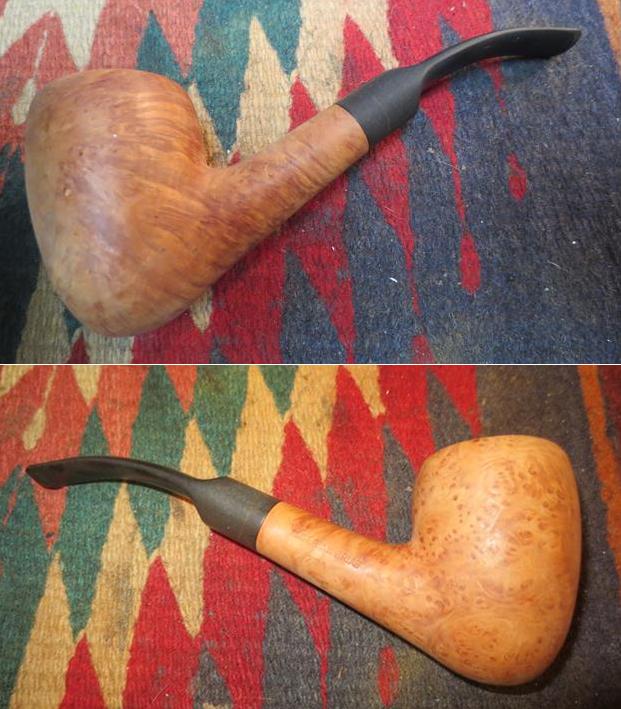
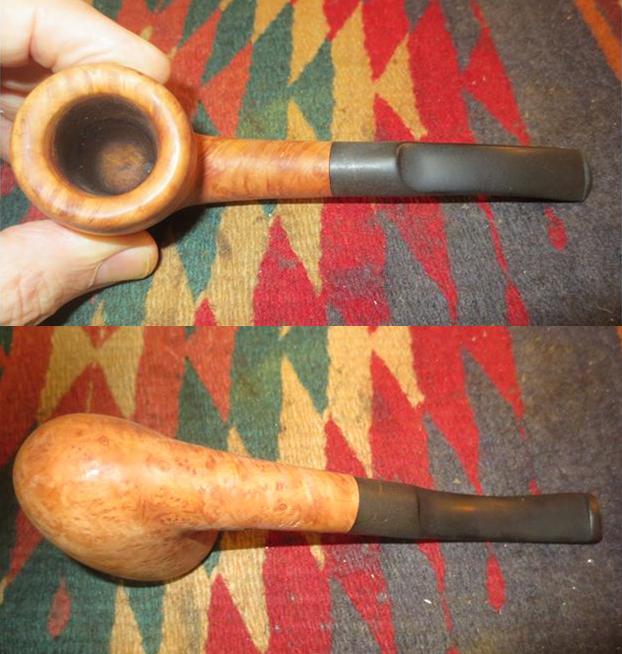
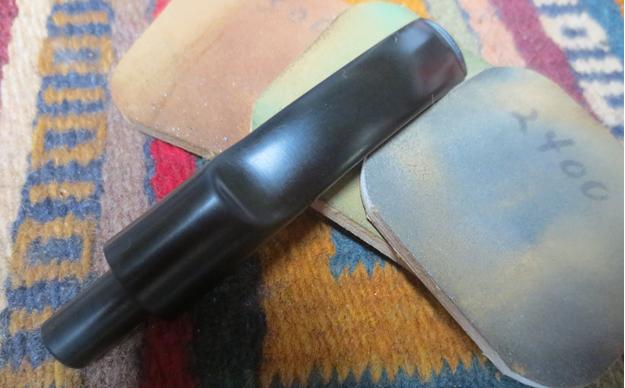
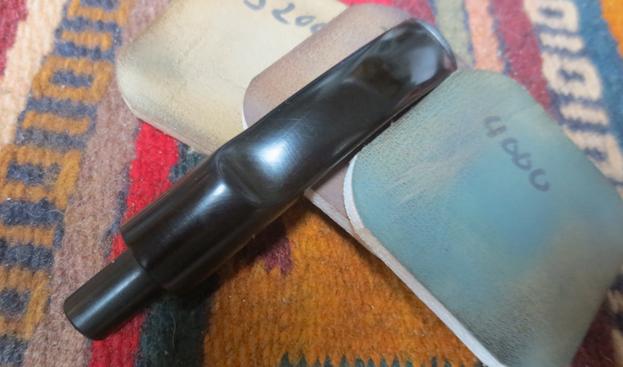
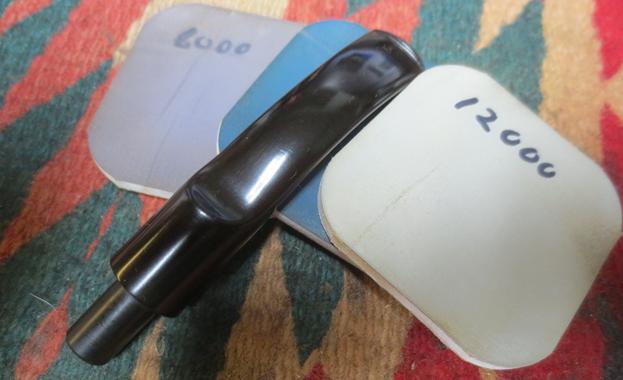
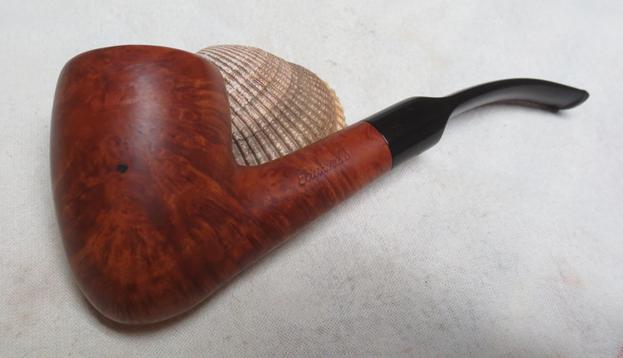
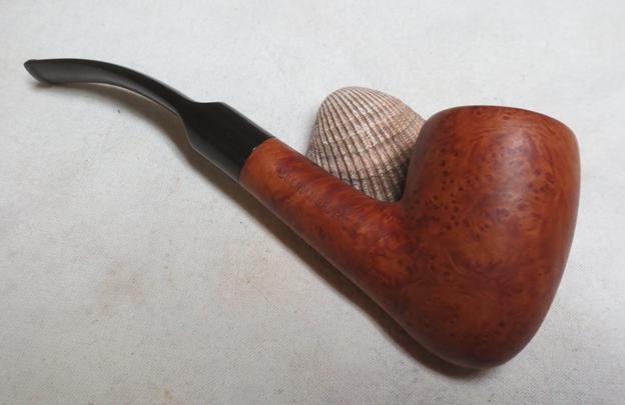
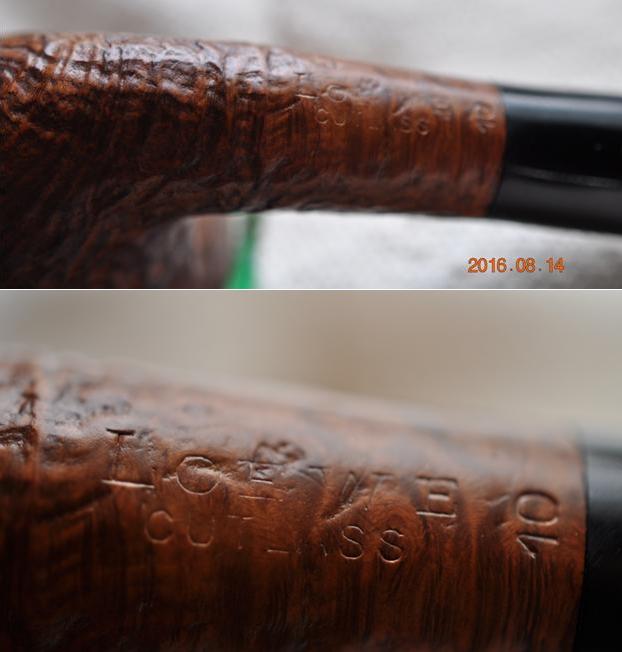
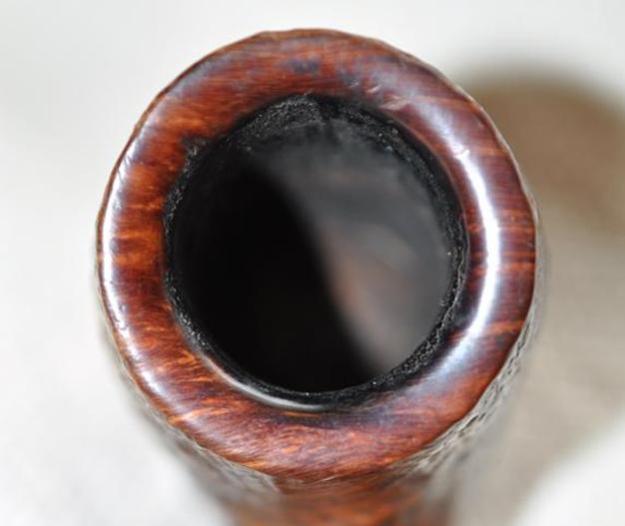
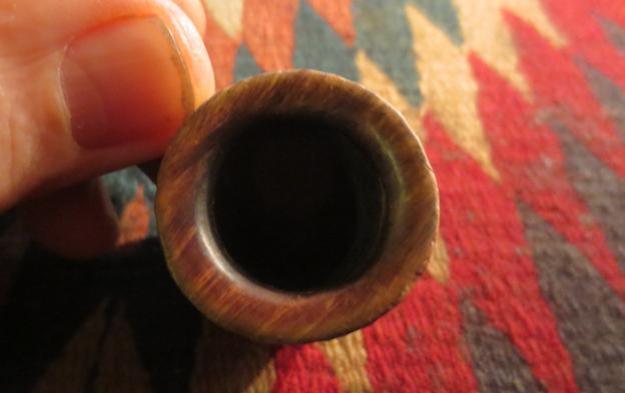
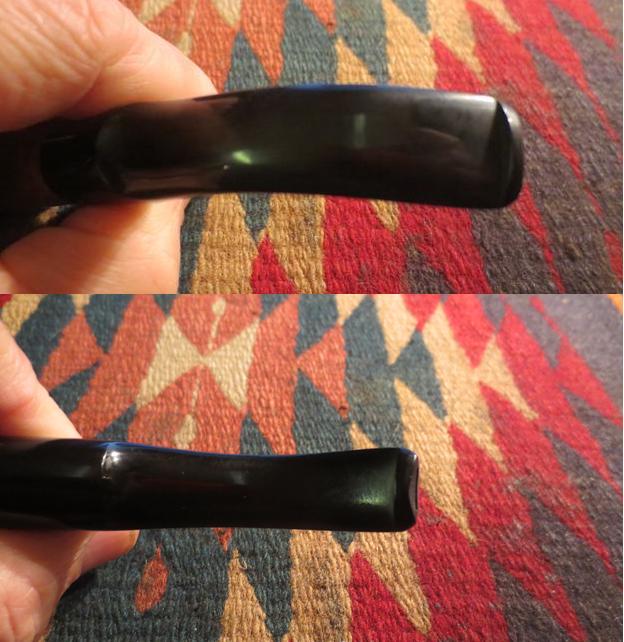
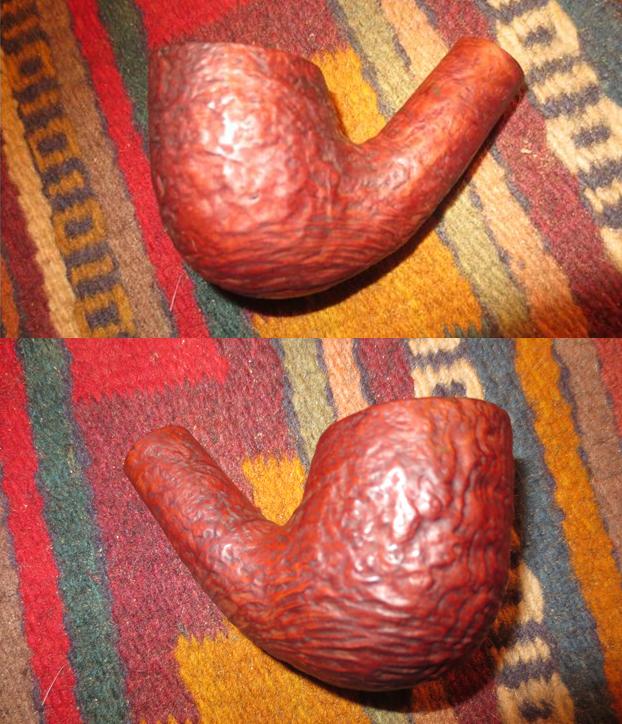
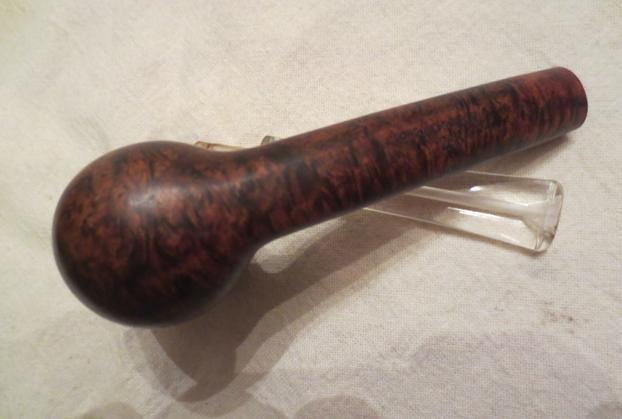
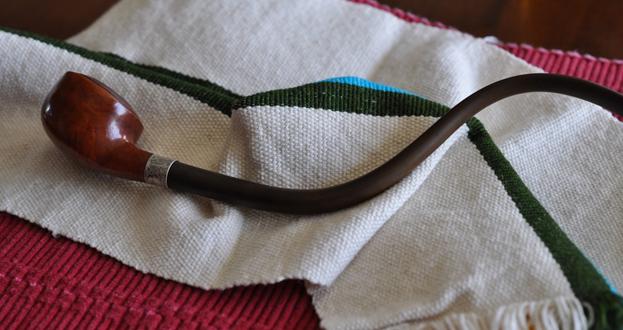
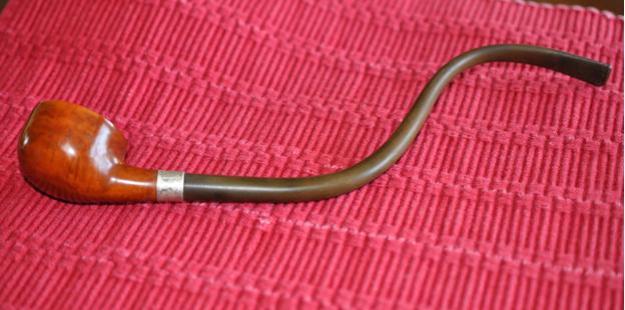
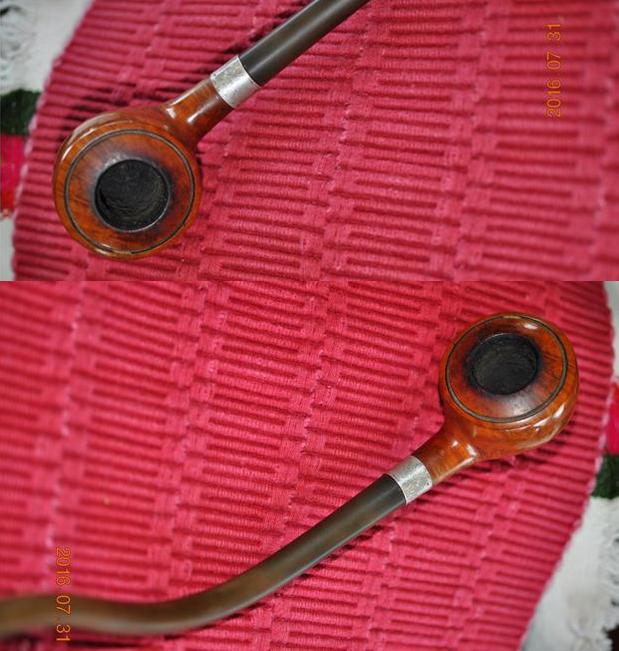
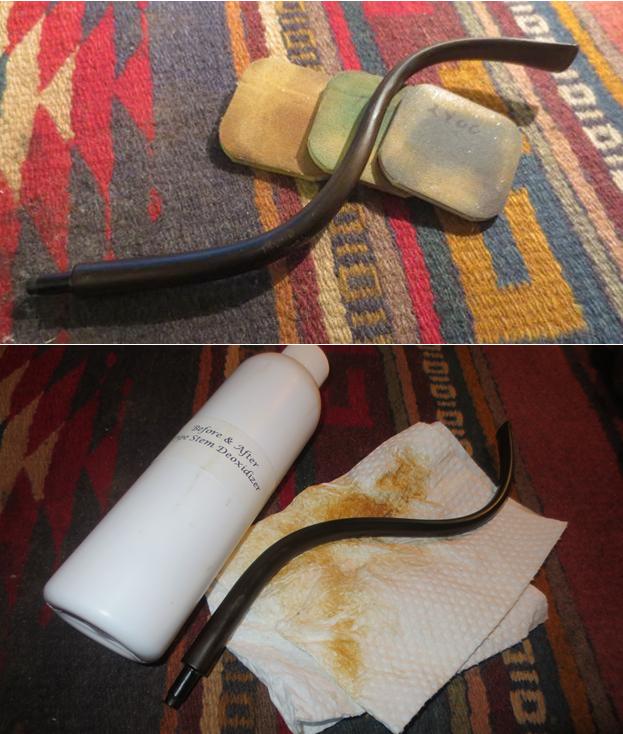
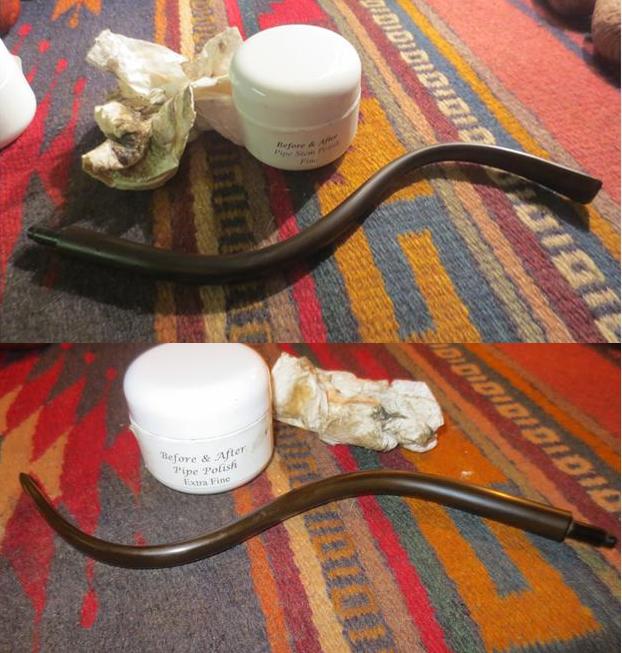
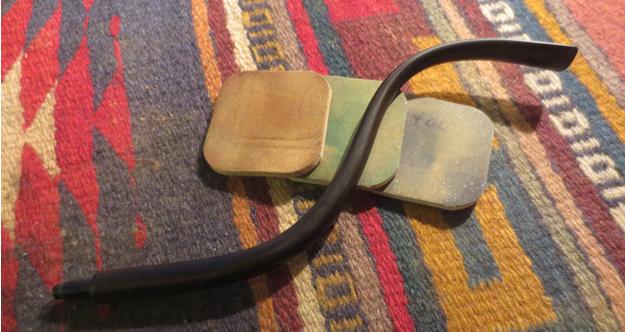
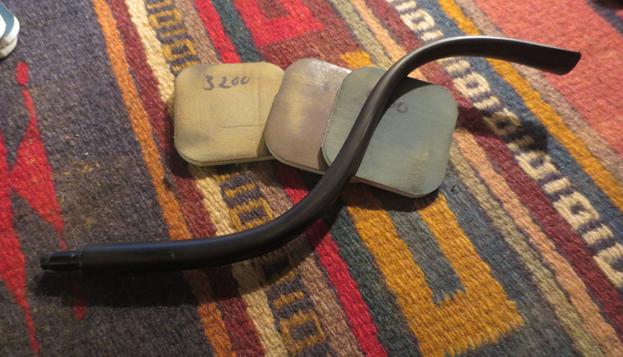
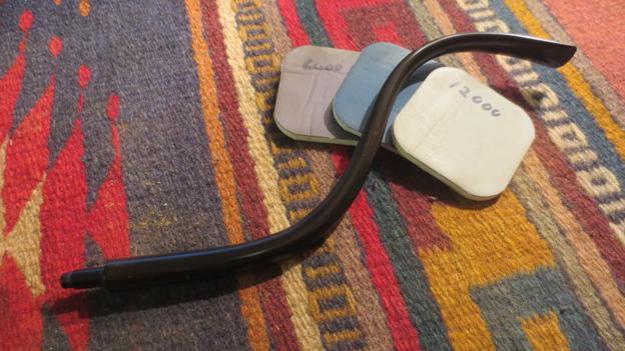
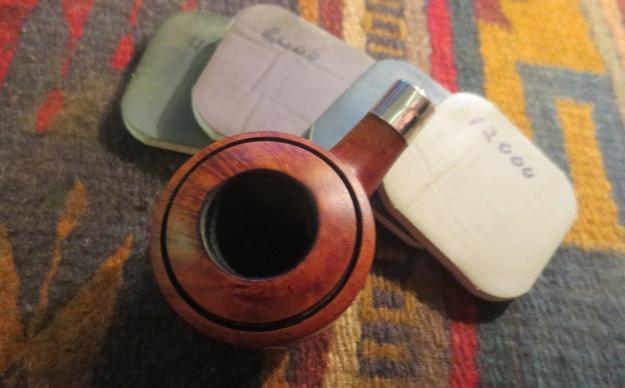
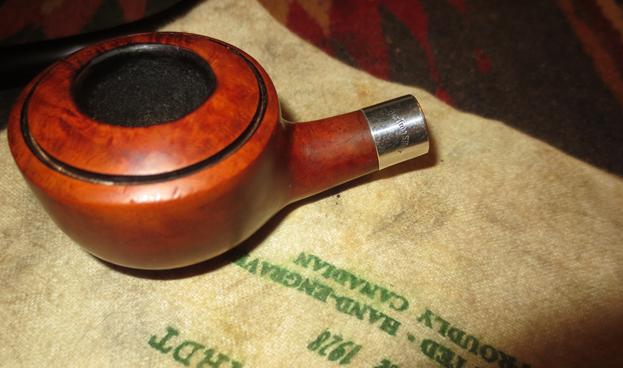
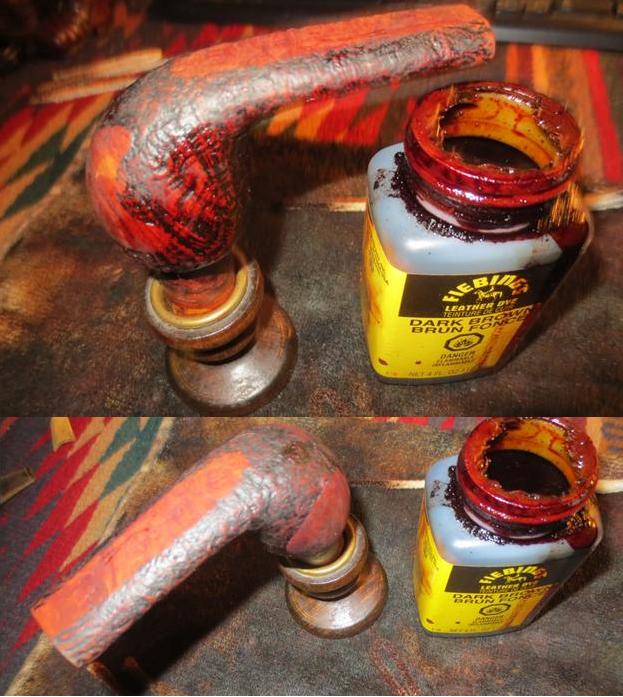
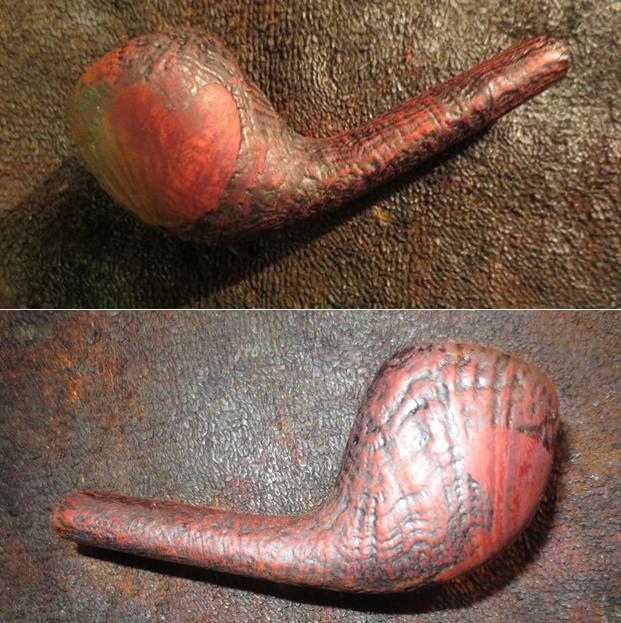
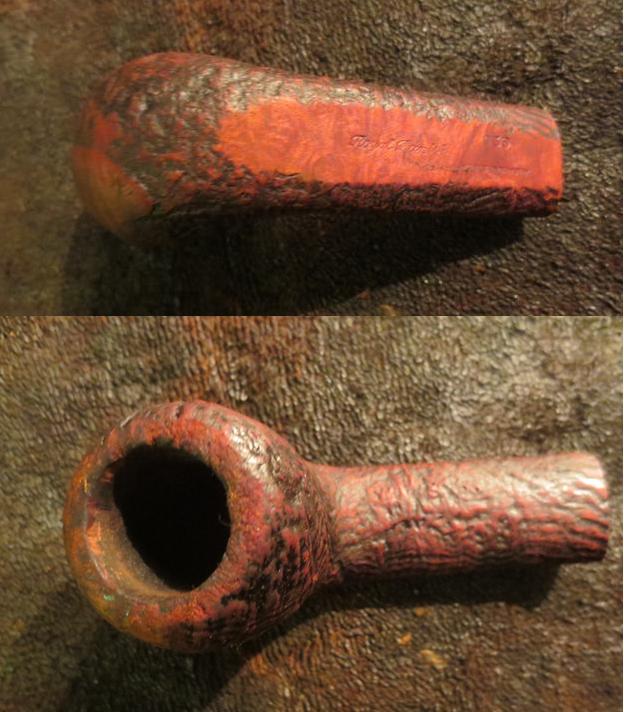
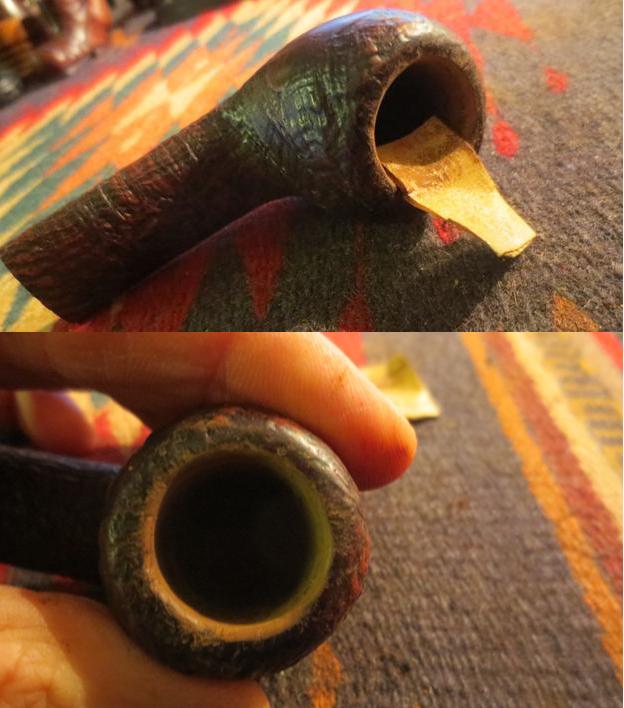
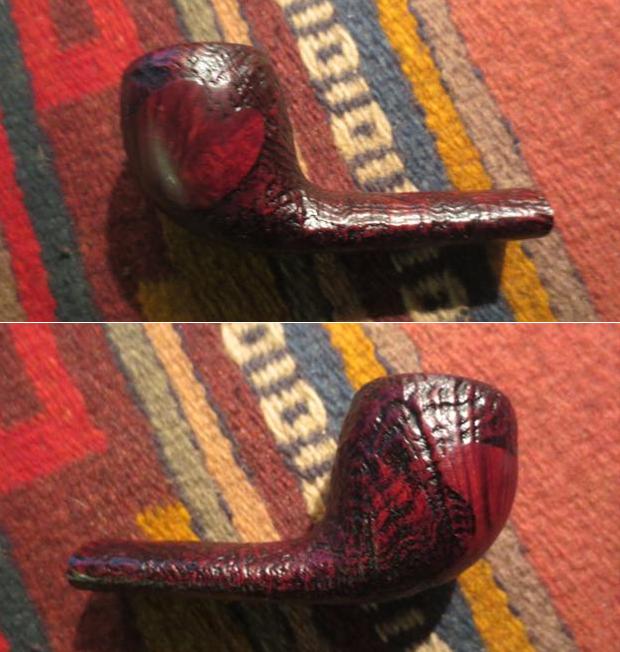
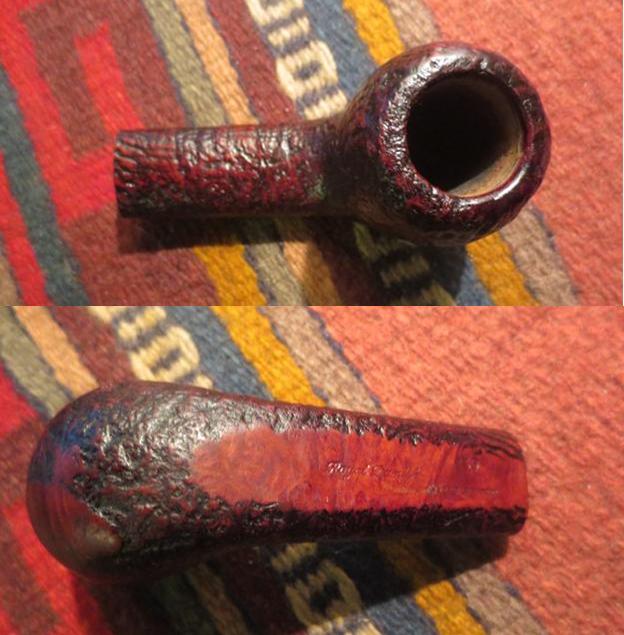
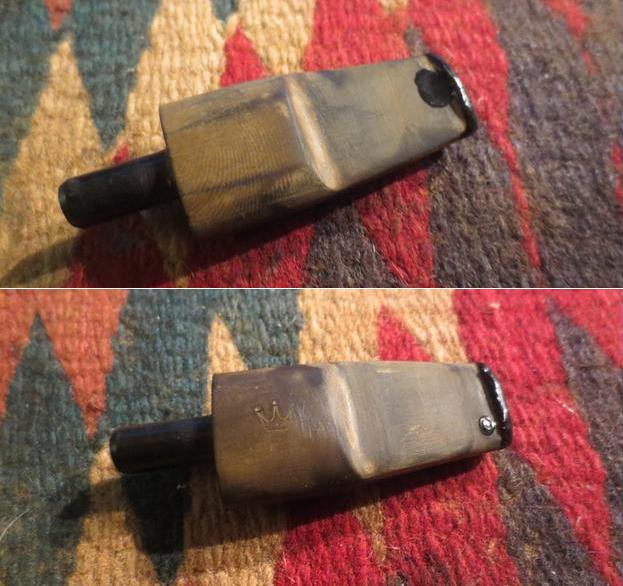
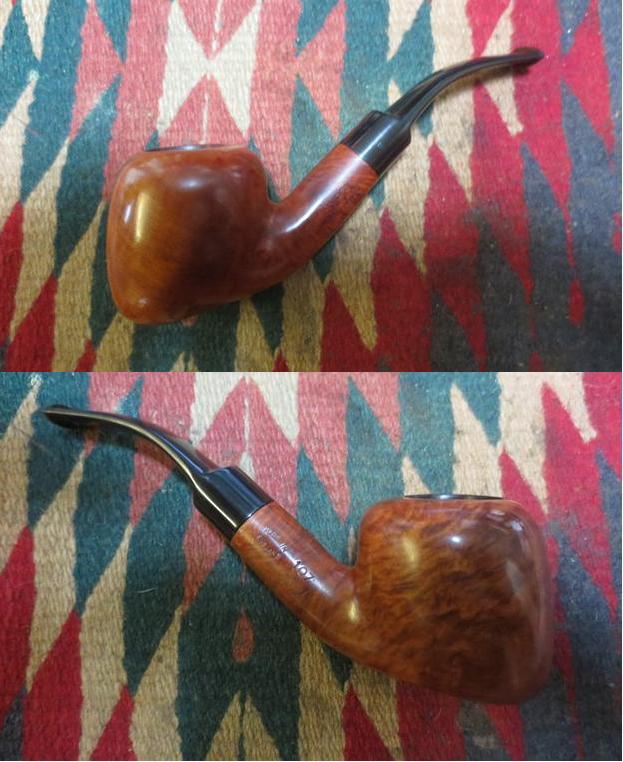
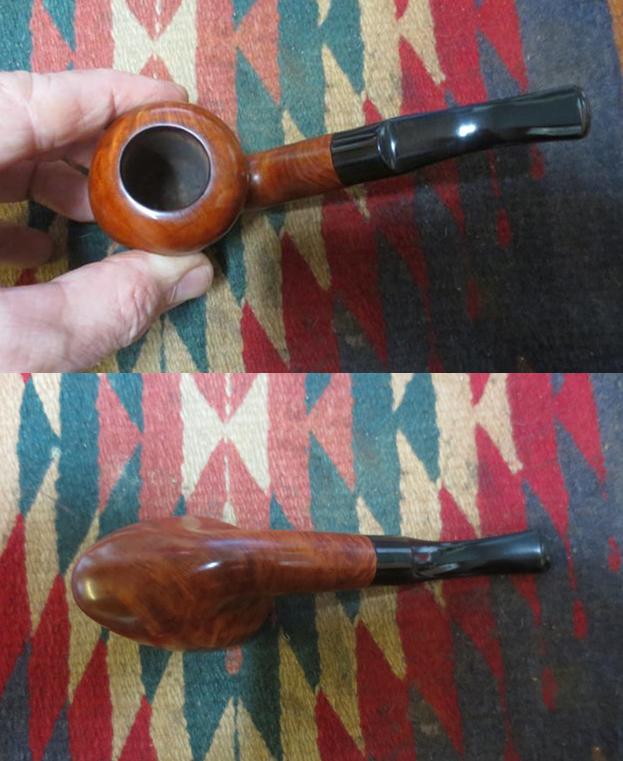
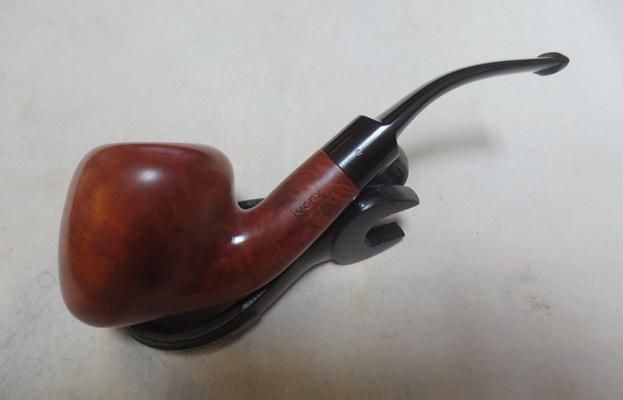
Looking at the stamping on this older churchwarden pipe I can distinguish HEI__ on the left side of the shank over FILTER. From what I can see looking at it under a bright light with a lens it looks to me like the stamping is HEIBE. On the right side of the shank it is stamped Bruyere over Extra. On the underside of the shank it is stamped Made in West Germany followed by the number 1132. The pipe is 10 ½ inches long and the bowl is 2 inches tall. The diameter of the chamber is 5/8 inches. The finish was in decent shape with some scratching and the pipe is dirty. The rim was damaged and the bowl had a burn mark on the inside edge of the inner rim. The bowl was out of round and the top of the bowl was also damaged. The stem was oxidized and the pipe smelled foul. The next series of photos with the granite/marble counter top were taken by the eBay seller and show the overall state of the pipe.h1According to Pipedia, Heibe pipes were made by the company of the same name, owned in turn by Erich Heikaus, KG, in Bergneustadt, Germany. The trademark for the Heibe name was first filed on March 9, 1966 and registered on January 14, 1967. The sole trademarked line name of Heibe is the Heibe Goldpoint, which was applied for in 1970 and granted on May 31, 1972. Pipes have been seen stamped both “Germany” and “West Germany”, showing that the Heibe Company continued to make pipes after 1990, but these pipes appear to no longer be in production. https://pipedia.org/wiki/Heibe h2 h3The next photos are close ups of the pipe. They show the condition of the rim and the grain around the sides of the bowl.h4 h5My brother reamed the bowl cleaned up and scrubbed the exterior of the bowl and stem. He took some photos of the pipe after he cleaned it. h6The next photos show the stamping on the pipe. The first one shows the underside of the shank with the shape number and West Germany. The left side shows the brand over the word Filter. The right side shows the name Bruyere Extra.h7 h8 h9The next two photos show the beautiful grain on this pipe. The spots and streak on the second photo were just grime on the pipe. When I received it those were gone.h10 h11The next photo shows the damage to the rim top. There outer edge shows damage and the inner edge bevel is rough and looks like it did not belong originally. There is clearly a burn mark at the back side of the inner rim. There are a lot of dings and dents on the rim edge.h12When the pipe arrived in Vancouver I took the next four photos to show what it looked like before I started on it. My brother did a great job cleaning up the surface of the bowl. He was able to scrub off the finish and the grain just pops.h13 h14The next photo shows the rim after my brother cleaned it up. The dents and dings on the out edge are visible. The burn mark at the back of the inner rim is very clear. It is not deep but it is present. The bowl will need to be topped.h15I topped the bowl on the topping board with 220 grit sandpaper. It took some time to remove the inner rim damage. I sanded and checked constantly to make sure I did not sand too far. The second photo shows the topped bowl and the cleaned rim edge.h17I sanded the inside of the bowl with the rolled sandpaper to smooth out the inner edge of the bowl. The second photo below shows the fresh edge of the bowl.h18I sanded the rim top with 1500-4000 grit micromesh sanding disks until the scratches were gone. I restained the rim with a dark brown stain pen to blend it into the colour of the bowl. h19I cleaned out the mortise and airway in the shank with cotton swabs, pipe cleaners and alcohol. It appears that the bowl was dip stained as the cotton swabs came out with a red stain and no tars or oils. I cleaned the stem with pipe cleaners with and alcohol.h20I used my new micromesh sanding pads on the stem and it made short work of removing the oxidation. I forget how quickly new micromesh pads remove oxidation and polish the vulcanite. I sanded it with 1500-12000 grit sanding pads – wet sanding with 1500-2400 and dry sanding with 3200-12000 grit pads. I rubbed the stem down with Obsidian Oil after each set of three pads. I set the stem aside to dry after the last rub down.h21 h22 h23I buffed the bowl and stem with Blue Diamond on the buffing wheel to polish the scratches. It always amazes me how much different the pipe looks after buffing. I buffed it with several coats of carnauba wax to protect the vulcanite and bowl. I buffed it with a clean buffing pad to raise the shine and then by hand with a microfibre cloth to add depth. The photos below show the new restored German Churchwarden. It is a beauty. Thanks for looking.h24 h25 h26 h27 h28 h29 h30

Annals of Pipe Crimes: The 42-Minute Meerschaum Job


Robert M. Boughton

Member, International Society of Codgers
Member, North American Society of Pipe Collectors
Member, Facebook Gentlemen’s Pipe Smoking Society
http://www.roadrunnerpipes21.biz (under construction)
http://about.me/boughtonrobert

Photos © the Author except as noted

Wisely and slow. They stumble that run fast.
— William Shakespeare (1564-1616), English playwright and poet, in Romeo and Juliet, Act. 2, Sc. 3

INTRODUCTION
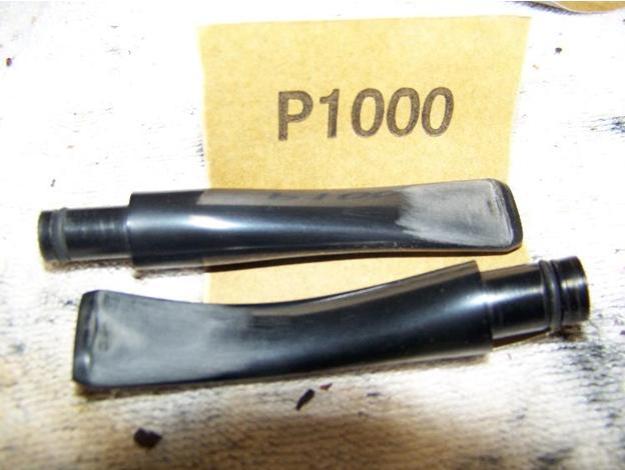
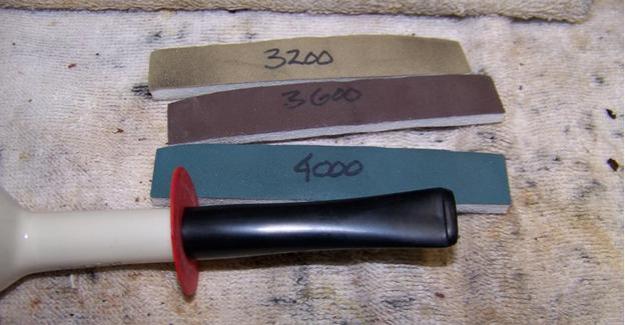
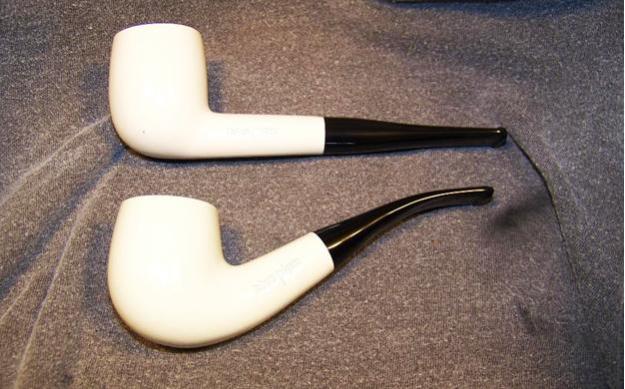
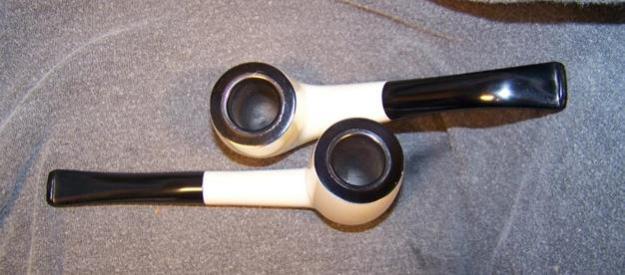
Let me begin by apologizing in advance for the end results of this over-fast cleaning job I insisted on undertaking, at no charge, for a schizophrenic friend.  Now, having admitted I was a party to the injustice perpetrated against a certain meerschaum pipe with potential for a far more beautiful future, I must beg mitigating circumstances that in this case call for an affirmative defense, which shall be made apparent.

My friend, Fred (not his real name), who can by no means be described as an aficionado of pipes, on several occasions remarked that his father used to collect them.  I noted the past tense in my mind while keeping my mouth shut, as my own father often urged me to do.  A couple of months ago I sold Fred a Guildhall London Pipe straight pot (a Comoy’s second) for $10.  He was so excited by my box of restored pipes, the way a kid looks through a store window at a shiny toy he wants, that I could not help myself.  I also happened to need gas or I might have had to walk home.  But the deal was not all about money; I had a nice no-name that would have left my challenged friend, and almost anyone else, just as happy.

Still, to my perception, the Guildhall suited him better, and when he asked for my advice I replied in good faith.  I put considerable work into making that vintage pipe shine again.  Looking back at the two-year-old blog, I see where I now could remove the tooth chatter altogether.  Still, compared to the horror with which I started, the straight pot was like new.meera meerbAnd so, the stories I started hearing from my guileless friend were disturbing.  You see, the anti-psychotic cocktail some head-shrinker prescribed to Fred caused permanent tics and muscle spasms, as well as other occasional unpleasant side effects.

That easy observation explained, at least to me, Fred’s blunt disclosure one day that he bit off the mouthpiece.  Despite my sincere offer to seek out a replacement for the bitten bit, Fred declined with vehemence, insisting that it worked just fine even though he had some trouble keeping it between his lips.  With that mental image, I confess to having some difficulty keeping a straight face.  Somehow I managed to sit back and return his wide-eyed gaze with a clinical stare any psychoanalyst would envy (irony intended).

Then, not long after the bite reflex account, Fred blurted to me that he had lost the remainder of the bit.  It had just disappeared while he was vacuuming and was nowhere to be found.  He said he looked everywhere for the gnawed scrap of Vulcanite – my description, not his – and that it had vanished without a trace.  When I asked if he checked the vacuum bag, the look on his face was unnerving, but my considerable first-hand experience dealing with schizophrenics, some in my own family, served me well once more.  Fred’s eyes narrowed, perhaps seeking to discern if I were as crazy as he or only joking.  My relief when he at last grinned, his entire expression returning to its normal manic happy face, was intense.  He never answered my question.

And so I pressed on, bent on sparking a connection between two or more of his synapses, by asking if he remembered where he was when he last saw the pipe whole, meaning more or less.

“It was right there,” he said as his arm pointed off into thin air, having an apparent vision of the place he meant that I was sure I would never share.  But he continued, thank God.  Part of me needed to know.  This, no doubt, is where the offhand claim that insanity is contagious comes from.  “It was right there, on the shelf, where I always put it.  I remember I took the stem out and put both parts there on the shelf, in case one of them fell or something, they wouldn’t both get broke.”

I had to give a genuine nod of my head to that logic.  My senses returning, I assured Fred the bit had to be there, somewhere, that it didn’t get up and walk out the door.  He gave me a good smile at that.   I advised Fred to keep looking everywhere the bit could not possibly be.  I even tried to explain the famous Sherlock Holmes maxim from “The Sign of Four” and suggested a few possibilities, including the refrigerator and freezer.  When that look started to reappear, I changed the subject, as I will do again now.

The long and short of it is that Fred’s dad did have an impressive collection of pipes, until he passed away at an advanced age of non-tobacco-related reasons.  At that point, the collection was distributed according to the man’s final wishes.  Fred’s share included three and a half very nice pieces: an uncommon rustic Dublin Everyman stummel, being another Comoy’s second related to Fred’s Guildhall; a Thompson cherry wood, both the shape and material, from the Elbert Gubbels stable; an easy bent Author, stamped on the bottom of the shank Made in London above England, and after at least an hour of scrutiny through my jeweler’s magnifier lenses, the shape number 140; and the amazing meerschaum to which this account will soon come.  [I was sure the unknown #140 was another Comoy’s until I sniffed it out online, listed as a Masta Author.  Masta was an English maker founded about 1900 that was bought by Parker-Hardcastle in 1967.]

And now I will explain the slight problem.  Fred was happy to let me take the Everyman stummel, Thompson and Masta the night he showed them to me, with my promise to pay him an amount upon which we agreed.  He was, however, obdurate, as only someone with schizophrenia can be, in his apparent lack of trust in my able care to take the meerschaum pipe home with me where I could give it the attention it so needed.  His mind was set like the steel trap my own used to be.  He was in earnest, would not equivocate or retreat a single inch, to paraphrase the American abolitionist William Lloyd Garrison.  If only I could have explained that quote to Fred, I might have made him understand the extreme hard place he put me in.

Fred, to make it clear, did not care if I left the pipe in the filthy, scratched condition it was in.  It was the single gift from his beloved father that he had – with very good taste and judgment – chosen to keep for his own, and he was not about to let it out of his sight.  As a result, my only option was to perform a half-assed crash job on the meerschaum, with its ample smoothness, spare but intricate carving and lovely patina, right there at the club (not for pipe smokers but also not against them) where we sat beside each other.  And he had a bus to catch in a little more than an hour.  I fixed that by offering him a ride home.

Here is the elegant meerschaum as I first saw it.meer1 meer2 meer3 meer4 meer5 meer6 meer7RESTORATION
Note the grime, extensive scratches, rim burn, dirty chamber with tobacco of an unknown vintage still inside, and of course the bit that was in utter ruin.  I even had an almost identical replacement that I could use for it, but not without refitting.  And then there was the fresh coat of beeswax I would have liked to add for the perfect completion of the proper repair.  But as Fred would have none of that, and time was of the essence as he had important business to conduct – watching TV back in his tiny studio apartment – before I might never see the pipe again, I was lucky to have a box with my primary implements of restoration with me in the trunk of my Ford SDX.

I began with the vigorous applications of purified water on the stummel, using small cotton gun cleaning squares to remove layers of ancient dirt, and then resorted to a very small amount of diluted Everclear.  The second photo below shows the need for the alcohol.meer8meer9Superfine “0000” steel wool on the rim did much but not enough there.  A progression of 150-, 180- and 320-grit sandpaper cleared out the excess char in the chamber and made it smooth.meer10Again, with cotton balls soaked in more purified water, I scoured the outer stummel, and used pipe cleaners and freshener to clear out as much of the crud and filth inside the shank.meer11Other than spot buffing with the “0000” again, that was all I could do for the meerschaum.  I took the awful bit in hand and used the full wet micro mesh treatment on it from 1500-12000.meer12 meer13 meer14I coated the bit with a dab of Halcyon II wax, let it sit, and worked it in with a thick cotton cloth.  As for the weird obelisk-like piece of meerschaum marked Hirsch, I doubted at the time that it was part of the pipe but knew it could be a crazy lid of some sort.  Steve supported my hunch of the likelihood that it was not part of the pipe.  He surmised it might have been used with cork around it as a fancy wine bottle stopper or to plug something else.  I buy that!  But I took the last two shots before I received Steve’s sage input, and by then, the pipe was forever out of my control.

I found the actual Kirsch brand records online with last-minute research.  The Trademark was first recorded on January 1, 1907 and is now owned by Newell Window Furnishings Inc., a subsidiary of Newell Rubbermaid Inc.  The business suppliers fine home design goods using an assortment of exotic materials, including meerschaum.

For better or worse, here is the result.  I based the time spent on this rush-job at 42 minutes from the date and time stamps on photo number 8, showing the beginning of the cleaning with purified water at 18:07, to photo number 14, with the bit finished at 18:49.

meer15 meer16 meer17 meer18 meer19 meer20 meer21 meer22CONCLUSION
The last time I saw Fred was when I dropped him off at his apartment, the precious meerschaum wrapped in a piece of terry cloth and stowed in a box tucked with great protection in the crook of an arm.  Earlier that night, he was rushing about the club, sweating, his blood pressure elevated even to the average observer, anxious and agitated, and seeming to have some trouble swallowing.  All of these are signs of serious adverse effects to anti-psychotics.  I have not seen him since then and am, for good reason, somewhat worried.

Every time Fred speaks of his father, it is with a sadness that is far greater than that which he feels for the man’s passing.  As the former long-time caregiver to another friend, who was also my roommate for a month short of 15 years, I saw the tension that the mental illness of a family member causes.  Families, in particular the parents, will alienate one of their own who is infirm in a physical or mental way.  Like other, so-called lower forms of animals, they push from the nest those who are born with any weakness, for many reasons: fear, shame, powerlessness to correct the problem, to name a few, but more than anything else, an unbearable sense of guilt.

But the true bearer of these feelings is the blameless victim of whatever handicap befell him.  The worst part of this age-old denial of the basic humanity of those who are sick, however their diseases may be manifested, is the belief that is instilled in them from birth that they are somehow bad for reasons they do not understand, guilty in ways they are unable to comprehend, and more or less worthless.  As in Fred’s case, they try to hide the self-loathing that consumes them with “inappropriate” outbursts such as laughing or trying to joke in an attempt to alleviate the unhappiness they sense in those who are dearest to them.

All of this is the cause of the true sadness I sense in Fred.  I’m sure he never had a chance to make peace with his father; to say goodbye, even to visit him in the hospital or the home in which he was raised.

Instead of these memories, I try to recall the utter joy on Fred’s face when I had snapped the final shots of the improved meerschaum and handed it to him by the less-than-perfect bit.  I told him he should try to avoid handling the porous meerschaum with his bare hands, grasping instead the bit where it pushed into the shank with a firm fit, or using a handkerchief maybe on the bottom of the bowl.

Fred nodded his head up and down in wondrous agreement, taking in little of what I said, I’m sure.  His eyes were wide open with the appreciation all humans have for works of art.

SOURCES
https://rebornpipes.com/2014/10/09/the-guildhall-london-pipe-large-pot-an-account-of-extreme-abuse-robert-m-boughton/
https://trademarks.justia.com/715/83/kirsch-71583153.html

I love Savinelli Tortuga Pipes & the Tortoise Shell Lucite Stem


Blog by Steve Laug

The Savinelli Tortuga line is an interesting looking line of pipes. It comes with a tortoise shell Lucite stem that has an amber looking stem. The mottled browns, golds and yellows of the stem shimmer in the light when they are polished. The pipes are aptly named for the look of an animal they convey. Tortuga is the Spanish or Catalan word for Tortoise and it shows in the design of these striking pipes. The pipe that I am working on at the moment is one of those beauties. It is stamped Savinelli over Tortuga on the left side of the shank and on the right it is stamped with a Savinelli Shield followed by the shape number 114KS over Italy. In the photos from the eBay seller the pipe appeared to be in decent shape. The finish was darkened with grime and the rim had some darkening and tars on the top but the inner and outer edges of the bowl appeared to be in great shape. There was a light cake in the bowl. The stem looked good as well (what could be seen in the photos as they were cut off at the button). There appeared to be a stamp of some sort on top of the stem. I assumed that it was the standard Savinelli S shield. From the pictures it appeared that the tenon was white. Over all, the pipe looked to be in decent shape and since the pipes are now discontinued they are no longer available.tort1Each briar of this series sported not only a tortoiseshell-patterned stem, but also a domed, shell-like cap with a foam-rubber stopper. The purpose of the stopper was to preserve an unfinished smoke which one wishes to pick up again to finish later The domed lid on this bowl had long since disappeared with this pipe. In fact I have never seen one over the many I have cleaned up that came with the matching lid. I found a picture on the web that showed the pipe with a lid on the bowl.tort2My brother cleaned up the externals and did a light cleaning on the internals of the pipe. He was able to remove the grime in the finish and broke through the light varnish coat on the bowl. When it arrived in Vancouver it was in decent shape. The finish appeared a bit mottled from the cleaning but the rim was very clean. The bowl had been reamed and cleaned. The stem looked good but had some light tooth chatter at the button on the top and underside. The Savinelli logo of the S within the shield was stamped on the top of the saddle stem in gold. It was in great shape. When I removed the stem I saw that it was set up the Savinelli unique 6mm filter system. In the shank/stem a bore of 6mm was drilled to hold a triangular piece of balsa wood. This lightweight piece of wood is extremely porous and absorbs tar and nicotine from the smoke. The tenon was white Delrin. The tenon was stained, but otherwise clean.tort3 tort4I took some close up photos of the rim and the stem to show the condition. This pipe was in excellent shape other than wear and tear to the finish. The stem shows the light tooth chatter in the photos below.tort5I started my work by removing the rest of the varnish coat and the spotty top finish on the bowl. I wiped it down with acetone on cotton pads and was able to smooth out the finish. The nice oxblood stain looked more even once the pipe had been wiped down. Once it was polished the finish would look great.tort6 tort7After I wiped it down I took some photos of the stamping on the shank. You can see the name on the left side of the shank. It is very clearly stamped and there are no issues with the stamping there. On the right side the stamp is very readable however, the Italy stamping is faint at the beginning of the word and the middle of the shape number is lighter than the rest of the stamping.tort8Because of the wide diameter of the mortise I used a dental spatula to scrape out the hardened tars in that area. I cleaned the mortise and the airway in the shank and stem with alcohol, cotton swabs and pipe cleaners. I cleaned out the 6mm tenon with cotton swabs and alcohol and scrubbed the stained area on the end.tort9The tooth chatter was not deep so I decided to work on it with the micromesh sanding pads. I wet sanded it with 1500-2400 grit pads and was able to remove the chatter. I polished it with 3200-12000 grit pads to get the shine back on the stem.tort10 tort11 tort12I rubbed the bowl down with a light coat of olive oil and let it dry. I buffed the pipe with Blue Diamond on the buffing wheel and worked on some of the remaining scratches on the stem edges. I was able to polish those out. I buffed the bowl and worked on the rim edges and top to smooth out any marks that remained in those spots. There were a few small nicks in the bowl and most of them disappeared in the buffing. I gave the pipe multiple coats of carnauba wax and buffed it with a clean buffing pad to raise the shine. It is important to take this step in the buffing process as it really adds to the shine of the pipe. I finished by hand buffing it with a microfibre cloth. The finished pipe is shown in the photos below. This one will also end up on the rebornpipes store when I get a chance. I will include a 6mm balsa wood filter for it. It is a beautiful pipe that would make a nice addition to any pipe man’s rack. If you are interested contact me via email at slaug@uniserve.com or through messenger on Facebook. Thanks for looking.tort13 tort14 tort15 tort16 tort17 tort18 tort19 tort20


 An easy restore on a smooth Jobey Extra Underslung Pipe


Blog by Steve Laug

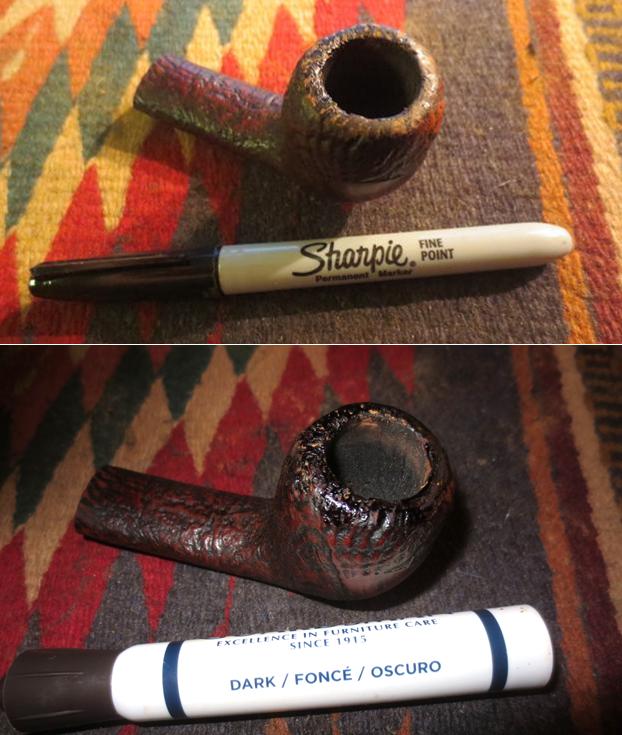
I think that the shape of this one is what caught my brother’s eye when he saw this Jobey. He has introduced me to some neat looking Jobey’s that have great grain, shape and stem work. The Jobey Link tenon system is a breeze to replace and repair as it screws into the shank and is pressure fit into the stem. This one has some great grain on it all the way around – birdseye on the sides and cross grain on the front, back and the top and bottom of the shank. It was in decent shape with just a few dings in the left side of the bowl. The rim was lightly tarred and the cake in the bowl was not very thick. The finish was faded in spots. The stem was in great shape other than the usual tooth chatter on the top and underside near the button. There were no deep tooth marks. The link system was undamaged.  extra1 extra2The next two close up photos show the stamping and the condition of the rim. The stamping is simply Jobey in script over Extra. The E on Extra is faint. The Jobey medallion on the stem is in great shape. The inner edge of the rim shows some buildup of tars and oils.extra3As usual my brother cleaned up the pipe before sending it to me. I am getting spoiled as he is doing a lot of the hard clean up. He reamed the bowl with the PipNet reamer and scrubbed the exterior with Murphy’s Oil Soap and a soft tooth brush. He rinsed of the soap with running water. He cleaned out the airway in the stem and the shank and the mortise with cotton swabs, pipe cleaners and alcohol. When it arrived in Vancouver I took the following photos.extra4 extra5The next photo shows the bowl and the rim after he had cleaned it up. It was in excellent shape.extra6The next two photos show the tooth chatter on the stem and a light oxidation that was over the surface of the stem.extra7I tried to steam the dents out of the side of the bowl with a damp cloth and a hot knife and was able to lift quite a few. There were three of them with rough edges that I lifted some but was not able to smooth them out with steam. I used some drops of clear super glue to fill in the spots on the bowl side. Once the glue dried I sanded it with 220 grit sandpaper and then with 1500-4000 grit micromesh sanding pads.extra8I restained the areas on the bowl that had lightened from sanding with a combination of light, medium and dark stain pens and a little bit of black Sharpie pen. I gave the entire bowl several coats of dark brown aniline stain mixed 50/50 with isopropyl alcohol. I flamed it and repeated the process until I had an even coverage. I set the bowl aside to dry. I was sure that I would need to do some more touch ups to blend the stain well but I wanted the stain to set.extra9 extra11 extra12I sanded the tooth chatter off the stem with 220 grit sandpaper and was able to smooth out all of the tooth marks.extra10I polished the stem with micromesh sanding pads – wet sanding with 1500-2400 grit pads and dry sanding with 3200-12000 grit pads. I rubbed the stem down with Obsidian Oil after each set of three pads. After the final rub down I let the stem dry.extra13 extra14 extra15I buffed the pipe with Blue Diamond after the stain had cured and gave it multiple coats of carnauba wax. I buffed it with a clean buffing pad to raise the shine and then by hand with a microfiber cloth to deepen the shine. The pipe is really a beauty and the stain and shine make the grain stand out. This one will also be going on the store so if you are interested in adding it to your collection let me know via email, message or a comment on the blog. Thanks for looking.extra16 extra17 extra18 extra19 extra20 extra21 extra22 extra23

A Concise History of the Gubbels Pipe Business from Arno van Goor, the Dutch Pipe Smoker


Steve, here is the Arno van Goor blog that describes so well the evolution of the great Dutch pipe family business known today as E. Gubbels B.V. in the Netherlands.  Dhr. van Goor’s sources are friends of his who know the Gubbels family and business, members of the Gubbels family itself, including Elbert Jr., as well as employees.  The information in the following blog, therefore, is culled from direct interviews and other contacts.  There is also the fact that Arno is Dutch and therefore closer to the action, as it were!  He was gracious enough to provide permission to re-publish the fascinating living history in this forum, although at first I thought it would be excerpts from another, longer blog that had the same basic info.  I have been careful to copy and paste the material as close as possible to the format set out by Arno in the original on his website, The Dutch Pipesmoker, at https://dutchpipesmoker.wordpress.com/.  However, most of the hyperlinks have been removed, and also the photos below were consistently wrapped in the original text paragraphs alternating from the left to right sides.  Perhaps you can fix that!  I want to take this opportunity to express my extreme gratitude to Arno for his invaluable wellspring of data on the Gubbels family and business.  It gives the most illuminating picture I have found.

— Robert M. Boughton

The following is © 2015 by Arno van Goor.  Used by permission.

2015 PRF-pipe made by Big Ben
by arno665

Dre unveiling the new forum year-pipe

Dre unveiling the new forum year-pipe

In my Hospitable Heukelum 2014 blogpost I revealed that the 2015 PRF forum year-pipe was going to be made by Dutch pipe-brand Big Ben.  Like I told before, normally Shaun arranges the whole project but sadly he had been very ill this year.  Despite his sickness he managed to reach out for help and Dre answered his call.  Dre (Andre) has very good connections with the Gubbels family from the Big Ben and Hilson pipe factory and regularly visits the place.  So he asked if they could mean anything for the PRF [the Dutch/Belgian Pipe Smokers Forum, abbreviated PRF from the Dutch Pijprokers Forum] pipe project.  Unfortunately Big Ben only fire up their machines for a minimum of 500 pipes and the forum can never reach that number.  BUT they had an alternative solution.

2015 PRF forum year-pipes

2015 PRF forum year-pipes

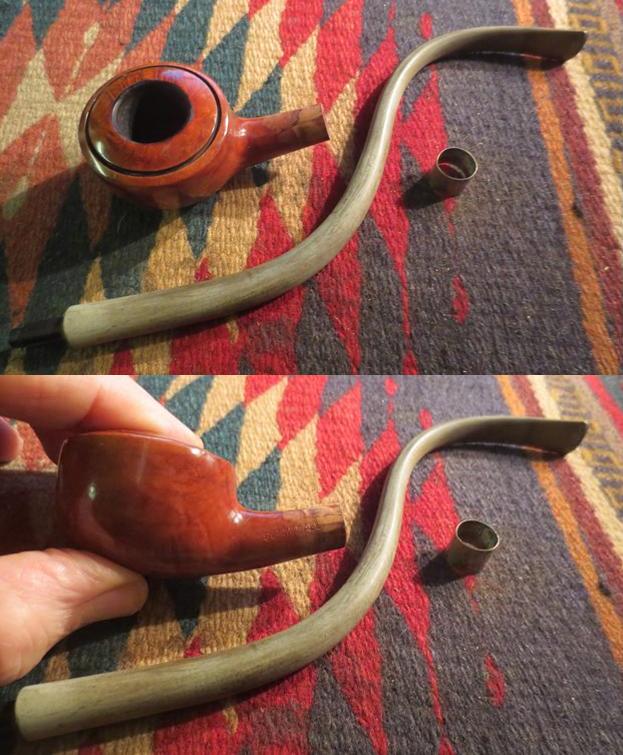
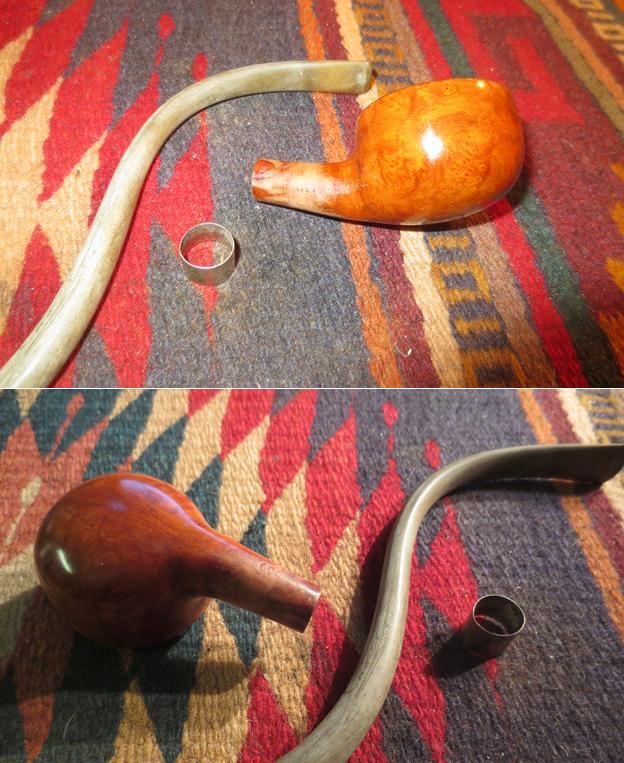
Throughout the years Gubbels kept pipe-bowls from their Barbados range behind with an exceptional grain and we could have those! Plus they added a metal ring on top of the bowl which made the pipe look even better. Then there was another problem, one can’t buy directly from the Gubbels factory. Luckily Primera Wouters in Weert were prepared to distribute the pipes. When Shaun and Dre told this and showed the pipe they got a very well deserved applause. Just over 60 pipes were available and when forum-members could order them they all were gone in no time! To be perfectly honest, I did not apply for one. I simply did not like the shape, but came to regret it later.

My first proper pipe: a Hilson Event

My first proper pipe: a Hilson Event

When I wanted to begin with pipe-smoking I knew nothing except that a Big Ben was a good pipe to start with. However, I preferred a model that was made by Hilson, a Hilson Event. The store owner explained to me that Hilson was made in the same factory as Big Ben. “Ok, I’ll take it!” I said and bought my first pipe. Later I bought a Big Ben which roughly had the same model as the Hilson Event because I simply liked that shape back then. Both pipes I do not have any more, I gave them away when my tastes began to develop and change.

Johannes Henricus Gubbels & Anna Maria Gubbels

Johannes Henricus Gubbels & Anna Maria Gubbels

The histories from Big Ben and Hilson have a lot of similarities and from a point in time even intertwine. It all started for the Gubbels family in 1873 with the shop of Johannes Henricus Gubbels in the Dutch city of Roermond. There he sold things like newspapers, walking sticks, umbrellas, toys and last but not least, smoking accessories. One of the suppliers of those was a German man called Jean Knödgen who had started to make clay pipes in 1846 in the Belgian city of Bree. For a long time Johannes ran his business together with his wife, Dijmphna Hubertina. After her death in 1896 he got married again to Anna Maria in 1899. She bore him two children and when Johannes died in 1911 she continued the business. In 1924 her 2 children, Antonia and Elbert Gubbels, established the “A & H Gubbels” company which specialized in the wholesale trading of smoking accessories.

ben5Meanwhile in Belgium the Bree pipe factory had a new owner. Jean Hillen, the son-in-law of Knödgen, had bought the company at the end of the 19th century. He had also made contact with French pipe-makers in the area of Saint-Claude who supplied him with briar wood and Jean would finish them off. Thus, alongside the traditional clay pipes, he was able to offer more modern pipes. Around 1924 Hillen was perfectly capable of creating briar pipes on his own.

Elbert Gubbels Sr.

Elbert Gubbels Sr.

Up to WWII Elbert Gubbels extended his business, mainly getting his supplies from France and England. Unfortunately The Netherlands were invaded by German troops in 1940 so the family fled north where they tried to make a living by buying and selling what little there was available. In 1945 at the end of the war they returned home to continue the business. A difficult task as material was lacking and importing stuff was almost impossible. In that period Elbert Gubbels, now the sole owner of the business, decided to follow in Jean Hillen’s footsteps. He became totally independent and produced everything himself. The factory began with 2 machines and 3 French artisans in a small workshop.  In Bree a factory already existed and the sons of Hillen also worked there. Jos was in charge of sales and Albert production. The brand name of the pipes that were sold abroad was simple: Hilson, to be precise, Hillen and Sons.

ben7Gubbels had no brand name yet, he just had the name “EGRO” which stood for “Elbert Gubbels Roermond”. The number of machines, personnel, working space and quality of product were increased which resulted in a higher output. That made it necessary to expand the market experience and the wholesale network were no longer sufficient. A brand name was needed in order to increase sales, especially abroad. At that time another Dutch company, “De Rijk & Zonen” from Amsterdam, was doing badly. It was not a large company and to be honest, not so interesting. But it did sell British-made pipes with a sought-after, glamorous brand name well-known in many countries: Big Ben. So in 1956 Gubbels bought the whole De Rijk company. As a result exports soared in Europe, the USA, Canada and many other countries.

Big Ben Pipo

Big Ben Pipo

Meanwhile the business Hilson was flourishing, producing a wide range of well-crafted and creative pipes. These were selling well in Europe and elsewhere thanks to their excellent reputation and good value for money. On the other hand the production of Gubbels was more traditional in style: natural or black briar models, straight or bent, just classic pipe design. Well, one exception. In that period the Pipo pipe appeared, a very small “nose-burner” designed by Alfons Gubbels, the son of Elbert, who had by that time joined the business together with his brother Jos. Alfons was in charge of production and Jos sales. The unorthodox Pipo pipe was highly successful, selling world-wide, including the USA. At the end of 1972 the company moved into a bigger factory. Also the much coveted title “Royal”, in the name of Queen Juliana, was granted. Thus the company name became “Elbert Gubbels en Zonen – Koninklijke Fabriek van Tabakspijpen” (“Elbert Gubbels and Sons – Royal Dutch Pipe Factory”).

ben9At the end of the 1970’s there were only two pipe factories left in the Benelux countries, those of Gubbels and Hillen. Two different but also complementary enterprises. Gubbels sold well in America with their Big Ben pipes while Hilson was a popular pipe-brand on the German market. However, both companies produced high-quality workmanship. So in 1980 Gubbels bought Hillen, who sadly was experiencing serious financial difficulties. It was decided that all machines, material and experts were to be moved to the Gubbels factory.

Alfons Sr. and Elbert Jr.

Alfons Sr. and Elbert Jr.

At first the two brands had some difficulty in co-existing. For example, some Big Ben pipes of that period could be confused with Hilsons and vice-versa. All by all that period of adjustment was positive, characterized by a high output. However, something was changing in the world of pipes and the market crisis meant that quite a few things had to be re-considered. It was not enough to increase quality in order to compensate for the drop in quantity. Greater investments had to match high-performance products. In 1989 Alfons (Fons) junior (technical production and design) and Elbert junior (sales) took over from their father Alfons senior and uncle Jos and the family tradition was carried on.

ben11Since then the company has striven for excellence in every aspect of their production and above all in their mission: offering an increasingly discerning clientèle unique pipes. So since 2008 Rainer Barbi, the late famous German pipe maker, has been contributing to production and had the task of remodeling the Hilson brand until his unfortunate death. Also another great pipe maker, Former, has recently decided to offer Gubbels his creative sensitivity, art and some of his time. Besides manufacturing Big Ben, Hilson and other more minor brands Gubbels has also worked in partnership with other companies to create or refine unique models, such as Porsche Design (from 2005 to 2013) and currently Bentley. Unfortunately the financial crisis hit Gubbels in 2012 and the banks no longer wanted to finance the company. Who smokes these days?? So bankruptcy was a logical consequence, an unpleasant period. But the Gubbels family pulled through with capital of their own and had a new start. There was a change of direction with 20 instead of 28 employees and despite the difficult market the export is growing. The Gubbels company is on the rise once again.

ben12Back to the forum-pipe, I really wanted to see the process in the factory so with thanks to Dre and Fred I could phone Elbert Jr. for an appointment. He already knew my name, I could pay a visit, see the process, take pictures, ask questions, no problem at all. I knew a bit what to expect because I had been before at the new factory with a group of the PRF-forum just before the financial crisis hit Gubbels back in 2011. So on a morning I drove to Herten (municipality of Roermond) dressed to impress because eeyz, you can’t arrive in jeans and a sweater at the only pipe-factory left in The Netherlands right? Because of the crisis the Gubbels offices had moved in the big building used by several companies so I happily announced myself at the wrong desk. Luckily the friendly secretary of the neighbouring enterprise pointed me in the correct direction. After a good ring at the doorbell of Gubbels one of the employees let me in, guided me to the visitor room and went to get Elbert Jr. Before he walked in I was able to quickly snap some pictures of the displayed pipes.

Assembly hall

Assembly hall

Just like on the phone Elbert jr. is a very nice man to talk to, clearly someone with a passion for his company and the products made there. We chatted away for a while until he got a call from his brother that he was ready for me. Elbert Jr. guided me to the big assembly hall where all pipes are made and Fons Jr. was waiting for my arrival. For the outside world Elbert Jr. is the face of Gubbels but inside the factory Fons Jr. reigns supreme. At this moment he is the only one there who knows and is able to perform all the necessary steps in the creation of a pipe. The other employees just know a few steps of the process. Which worries him sometimes, I mean, what if he becomes ill? But they are working on that.

Fons Jr. and a colleague had prepared (as far as they could) the steps in the finishing of the forum-pipe so I could take pictures of it. Remember, all the bowls and mouthpieces were already roughly made. Below you can see all 10 steps of the process:

1. Mounting the mouthpiece.
2. Sanding the pipe from coarse to fine with different sizes of sanding discs.
3. Staining the pipe (3 layers of stain are applied in total) where the first layer of stain is set aflame to fixate it.
4. Removing excess stain.
5. Sanding off more of the stain to make the grain better visible.
6. Milling out space for the metal top-ring.
7. Spraying a lacquer finish on the pipe.
8. Buffing the pipe to make it extra shiny.
9. Putting on the metal top-ring.
10. Tadaaa!! The finished product.

[GO TO THE ORIGINAL BLOG AT https://dutchpipesmoker.wordpress.com/2014/12/16/2015-prf-pipe-made-by-big-ben/ TO VIEW THE PHOTO COLLAGES AND VIDEOS THAT BEGIN AT THIS POINT.]

Fons Jr. adjusting the Lamberthod machine

Fons Jr. adjusting the Lamberthod machine

After explaining all the steps of the process Fons jr. guided me further around the factory. In the back there was a smaller hall with a big basket stacked full with briar and equipment to shape the bowls including a big modernized version of the Lamberthod machine. Of course the precise operation of everything was demonstrated. Seeing the immense Lamberthod device in action was very impressive, especially because Fons Jr. had left the hood open so I could make some pictures. Afterwards he had to laugh when he looked at me, because my classy black suit was totally covered in the sawdust that came out of the machine. “You will still find it in your clothes when you go to sleep tonight” he said with a big grin.

Warehouse

Warehouse

I also was led through the immense warehouse where you can find lots of pipes, pipes and ehrr. Pipes! Uncountable boxes, drawers and crates stacked on to each other filled with unfinished pipe bowls, stems in all shapes and colours, (metal) rings etc. An impressive sight! There was only a small pallet with ebonite mouthpieces, Gubbels does not really use them because acrylic is more durable. Last but not least we went to a part of the warehouse where a couple of friendly ladies were packing orders.

ben16When the tour was finished Fons jr. and I sat together so he could explain the forum-pipe process to me once more and I could write down the steps. We talked a bit more and then it was time for me to leave and for him to go back to the assembly hall. I must say, my respect for Gubbels and especially for Fons jr. had really grown. If you just look at the new Bentley pipes and know how much difficult handwork is needed for the creation of those.

OLYMPUS DIGITAL CAMERAAnyway, I wish all people who have ordered the 2015 PRF forum year-pipe lots of smoking pleasure with it! It is an extraordinary pipe with stunning grain for a very, very good price and I really regret I did not order one now. Thanks go out to Dre, Shaun, Fred, Elbert Jr., Fons Jr., Fons Sr. and the employees at Gubbels for making the forum pipe and this blogpost possible!

[GO TO THE ORIGINAL BLOG AT https://dutchpipesmoker.wordpress.com/2014/12/16/2015-prf-pipe-made-by-big-ben/ TO VIEW THE PHOTO COLLAGES AND VIDEOS THAT BEGIN AT THIS POINT.]

Spotlight: Ladies Pipes, Part 6/7, an Albertson Baby Bent Brandy


Robert M. Boughton

Member, International Society of Codgers
Member, North American Society of Pipe Collectors
Member, Facebook Gentlemen’s Pipe Smoking Society
https://www.facebook.com/roadrunnerpipes/
http://about.me/boughtonrobert
Photos © the Author except as noted

Pipe: a primary masculine symbol with authoritarian overtones but also indicative of reliability and contentment.
— The Dictionary of Visual Language, 1980, by Philip Thompson and Peter Davenport

INTRODUCTION
Never before or since has a definition been more right in both parts yet presupposed in the one as that stated above.  Nobody who enjoys and defends the pleasures derived from placing tobaccos into instruments known as pipes, igniting the leafy concoctions and drawing the resulting flavorful smoke into the mouth to taste, contemplate and above all savor, in most cases without inhaling, would deny the latter point.  But the former – which should be noted uses the strict adjective primary, meaning before all else in importance, rather than the more lenient adverb primarily, or for the most part – affirms the societal perception that no normal woman should want to partake of the same practice.  After all, why on God’s green earth would any decent _________ (insert little lady, gal, chick, babe, bird, girl, lass or whatever term comes to mind and makes most women grit their teeth) want to trespass on what might be the last bastion of manly domination on the planet?

The source of the definition – printed once in hardback and then again, in 1983, in softcover, both times by British publishers – is an excellent collection of iconic symbols assembled with scientific soundness.  Its authors called it “The Dictionary of Graphic Clichés,” a far more apt title than that which they were compelled to choose by the original publisher, under the false notion that the book should have a more agreeable name.  This decision may very well be the reason the astute study has been out of print for 33 years.  Nevertheless, used hardbacks still start at $469 and paperbacks at $96 on Amazon, suggesting a work of genuine and lasting significance.  But the likelihood of many takers at those prices is more doubtful than that the book would still be generating far more royalties if it continued to be available in general circulation at a reasonable cost to the average consumer.

The truth is thalbert1at many more women than may ever be known are as devoted to pipes and the blissful indulgence of those wonderful devices’ every facet: the astonishing variety of makers, shapes, styles, materials and sizes; the like availability of diverse tobaccos for every taste, and tobacciana.  Women are just as prone as men to the same acquisition compulsion in these categories.  Female artisans craft pipes, for their own use or sale.  The owner of my favorite local tobacconist is a woman.  Clubs and other associations exclusive to females devoted to the overall shared and altogether personal experience of pipes can be found in every corner of the world.

Indeed, searching online for this last aspect of pipe equality yields the greatest proof of the ubiquitous presence of female connoisseurs, who seem to avoid the male-dominated and likewise -biased haunts of the mainstream pipe establishment, and for good reason.   Only one woman is a member of my pipe club.  I know of but a single woman on the membership roster of the Smokers Forums UK, although old-timers recall in a vague way a past when there were “some more.”   And Jeff Knoll of the North American Society of Pipe Collectors reported, as I recall, that of the 1000+ members of the NASPC, only 10 are not men.  That’s about one percent, a woeful ratio.

I embarked upon my seven-part series of blogs last May 4.  My specific intentions were two-fold: to reveal and give recognition to the far greater number of women pipe smokers than is acknowledged by most of those who are, and no one disputes in all probability will remain, in the majority, and to promote acceptance of the formidable minority.  My more general desires were to foster an exploration and discussion of the contributions women make to the relaxing activity/hobby; to open a dialog between the segregated camps.  A side story that crossed my perhaps naïve mind was the idea of discovering possible differences in approach to pipes between their male and female devotees that might be of interest to all involved in the activity that is, after all, a love affair of sorts.  With one installment after this left before the series is complete, I believe I have gone still further than I expected but hope to wrap up some loose pieces before the end, whether most of my readers, or lack thereof, like it or not.

The sixth installment will show the refurbishing of a small Albertson easy bent sandblasted brandy from Belgium.  Hard information on the Albertson line is difficult to come by to an inordinate degree.  Through an incredible stroke of good fortune, I happened upon a font of factual information on the pipe’s real origin.  First I had to navigate past Pipephil and Pipedia, whose sketchy claims proved to have little substance and were parroted throughout the cyber world.

Pipephil describes Albertson as a brand “made at Hilson’s Factory,” then in the Hilson description refers readers to Albertson as a second.  About Hilson, Pipephil’s entry is muddled but notes its genesis was in 1846, when a German pipe crafter named Jean Knödgen started producing clay pipes in the town of Bree, Belgium.  As it turns out, that limited intel is about all that is accurate.  Jean Hillen, Knödgen’s son-in-law, bought and ran the business until his two sons took over.   After World War II, when briar was scarce, Albert Hillen, the brother in charge of production, created Hilson (a combination of Hillen and son).  Although I anticipate the exact time period in which Albertson pipes were made, from the one person who would know beyond a doubt, I do not expect it to arrive any time soon.  I suspected its name also was formed from a combination, of Albert and son, and later confirmed the guess.  With the Hilson brand, Hillen became independent of other countries, taking full control of pipe production.

Here’s the scoop, based upon the singular knowledge and much appreciated contribution of Arno van Goor, a Dutch pipe smoker and historian.**  The patriarch of the family-run pipe giant known today as E. Gubbels B.V., Johannes Henricus Gubbels, began in 1870 with a modest mercantile business in Roermond, a town in the southeastern area of the Netherlands.  Gubbels’ first products were diverse and included umbrellas, walking canes, toys and smoking accessories.  Knödgen was one of Gubbels’ suppliers of the last category.

Johannes Gubbels died in 1911, and his second wife carried on the business until 1924, when their two children, Antonia and Elbert, established A&H Gubbels, a wholesale trader specializing in pipe accessories.  After World War II, as the sole owner of the family business and because of the scarcity of supplies as well as the impossibility of importing them, Elbert did as Hillen had before him, going independent in every respect.

With the informal name EGRO (for Elbert Gubbels Roermond), Gubbels had no brand name.  Then, in 1956, when Gubbels bought De Rijk & Zonen of Amsterdam – a small company that was floundering – Gubbels not only acquired a brand but more machines than the two he had and more employees than the three.  But the most significant changes were his decision to convert from a wholesale to an export business with a very popular brand of pipes at the time, known as Big Ben.  The Big Ben pipes had been made in England and sold by De Rijk, and Gubbels began producing them as his own brand.  The result was an exponential increase of sales in Europe, the USA and Canada.

At the same time, Hillen’s Hilson brand faced severe financial problems despite its high reputation and value as far as the cost to consumers was concerned. When Gubbels bought Hilson, he was able to move into a bigger factory. To the Hilson and Big Ben lines was added a very small nose-burner called the Pipo, designed by one of Elbert’s two sons named Alfons who was then in charge of production. The Pipo, although an unknown style of pipe at the time, was highly successful and sold worldwide. By 1972, Queen Juliana of the Netherlands bestowed upon Gubbels the honored title “Royal,” and the house of Gubbels became Elbert Gubbels en Zonen – Koninklijke Fabriek van Tabakspijpen (Elbert Gubbels and Sons – Royal Dutch Pipe Factory).

After increasing its production and sales at a steady rate through the 1970s, the demand for the “luxury items” fell, and so did Gubbels’ Royal Dutch Pipe Factory (RDPF) as investors backed out.  One of the biggest misconceptions online and elsewhere is that Gubbels and the RDPF were separate entities.  On March 3, 2012, De Limburger daily newspaper in Maastricht, Netherlands reported the bankruptcy of that name, and the “news” that the last pipe-maker in the Netherlands was out of business echoed on pipesmagazine.com, and thence round the world.

It seems the rumors of the death of the venerable pipe-maker were greatly exaggerated.  Yes, the Gubbels-RDPF name was gone, but the family persevered with capital of its own, reducing the company staff from 28 to 20 employees.  Today, and not just according to the masthead of the History page of its own website, “E. Gubbels B.V. in the Netherlands, established in 1870, is a globally acclaimed and leading manufacturer of fully hand-made briar-root tobacco pipes.”

RESTORATIONalbert3 albert4 albert5 albert6 albert7The little brandy could have been touched up and cleaned much faster if I had felt like leaving well enough alone.  Of course, I did not.  A close look at the photos above shows two minor scrapes, one on the middle front of the bowl and the other near the bottom, that cut to the wood and gave me an idea.  The refurbish therefore began with a long soak, about five hours, in Everclear.  I have some black sandblast and rustic pipes that I love the way they are, but for the most part, in restoring at least, I prefer to end up with some of the natural rusty color of the briar showing, but not because of dings and whatnot.albert8When the initial stripping was finished, I was not surprised to see much of the black stain still holding tight.  I rubbed off the alcohol and some more of the blackness with some small cotton gun cleaner squares and swabbed the chamber with more, then went at the surface of the stummel with 150- and 220-grit sandpaper.  While I was at it, I ran an alcohol-soaked cleaner through the bit, which shows how well-used was the dainty pipe.  Even after that, a second Everclear soak was in order.albert9 albert10 albert11 albert12Repeating the aftermath of the previous alcohol strip, except for using super fine “0000” steel wool instead of paper, I eliminated more of the old black stain.  The next pictures don’t show the focused work I did on the crevices.albert13 albert14 albert15A few choice turns of the Senior Reamer in the chamber followed by 220-grit paper made the retort easy after the two soaks in Everclear, the more serious paper work in the chamber and several regular cleaners as well as the wire brush type through the shank.albert16albert17To re-stain the stummel, I used Lincoln Marine Cordovan, or dark maroon, alcohol-based boot conditioner.  You know I flicked my Bic to flame out the alcohol.  Afterward I buffed the residual char off with a micro mesh pad of some high number and used the steel wool to take off the excess stain to the point where I was happy. albert18 albert19 albert20 albert21While the Halcyon II wax soaked in, I considered the bit with its peculiar stinger that seemed to be designed for extra use as a tobacco pick. The peculiarity is the same as those in Dunhill pipes – it is an inner tube. This was often used in pipes by Gubbels. The tube extended into the bottom of the bowl the longer side sat in the bowl bottom and the angled shorter side faced upward. I went over the bit with wet micro mesh from 1500-12000.albert22 albert23 albert24Using red and White Tripoli and White Diamond on the bit with the electric buffer and just the clean buffer on the wood, the Albertson brandy was finished.albert25 albert26 albert27 albert28Photos taken on the front case at Stag Tobacconist

CONCLUSION
Anyone who doubts the high standing of the Gubbels name, consider this.  Some left-over Big Ben Barbados natural bent Dublin pipes with exquisite grain, crowned for the occasion with special metal rim fittings, were the 2015 Year Pipes of the Dutch/Belgian Pipe Smokers Forum (PRF, for Pijprokers Forum, the Dutch translation of something that should be obvious).  Dhr. van Goor, the fortuitous source of all of my factual information concerning Gubbels and a member of PRF, wrote in the second blog below: “Just over 60 pipes were available and when forum-members could order them they all were gone in no time!  To be perfectly honest, I did not apply for one.   I simply did not like the shape, but came to regret it later.”albert2And for some of the ladies, there are these Big Ben Pipes, averaging 5” long and very stylish.albert29On the other hand, if you prefer something of still smaller proportions, there is the Albertson brandy described above, which is the smallest conventional tobacco pipe I have ever owned.  It measures 4¼” long; the bowl is 1½” high; the rim is 1” across, and the chamber diameter is ¾” x 1⅞”.  In other words, perfect for the female pipe aficionado who prefers a petite and light yet elegant pipe.  And it’s for sale on my new webstore noted above!

SOURCES
http://www.eyemagazine.com/feature/article/the-dictionary-of-visual-language
https://www.amazon.com/The-Dictionary-of-Visual-Language/dp/0140511172
http://www.pipephil.eu/logos/en/logo-a3.html
http://www.pipephil.eu/logos/en/logo-h3.html#hilson
https://pipedia.org/wiki/Albertson
http://www.gubbelspipes.com/
http://pipesmagazine.com/blog/pipe-news/maker-of-big-ben-porsche-hilson-pipes-declares-bankruptcy/
**https://dutchpipesmoker.wordpress.com/tag/gubbels/
**https://dutchpipesmoker.wordpress.com/2014/12/16/2015-prf-pipe-made-by-big-ben/

A Bleak Looking Royal Danish with an indistinguishable shape number


Blog by Steve Laug

My brother Jeff found this old pipe either on eBay or in his travels and picked it up. He sent me photos of the pipe when he received it. It looked pretty bleak to me but there was some promise in the interesting shape of the pipe and the grain that was visible in the photos. There were also some dark spots on the sides of the bowl that I wondered about as I looked at the photos. The finish was very dirty and underneath the grime it was gone. There were some burn marks around the top of the bowl. The bowl was lightly caked but very dirty. The stem was lightly pitted and oxidized but there were no tooth marks or chatter on the stem.dan1 dan2My brother cleaned the pipe really well and the grime and remnants of the finish were all gone by the time I received the pipe. I took some photos of the pipe before I started to work on it. The dark spots on the sides of the bowl are visible in the photos below. The damage to the rim is also visible. There are some nicks in the top of the bowl and some burned areas that will need to be addressed. He cleaned out the airway in the shank and the stem as well as the mortise area. I noticed however that there was a slight ledge in the mortise that was hard and made me wonder what was happening there.dan3 dan4I took a close up photo of the bowl to show the extent of the damage to the inner edge of the rim and the rim top. The bowl was quite out of round and the burn marks though not deep were prevalent in the briar. I took some close up photos of the stem as well to show the condition they were in when I started the clean up.dan5I topped the bowl on the topping board with 220 grit sandpaper until all of the damage was removed.dan6I sanded the inside of the bowl and the inner edge of the rim with a tube of sandpaper until the edge was smooth and round.dan7I sanded the top of the rim with micromesh sanding pads – wet sanding with 1500-2400 grit pads and dry sanding with 3200-12000 grit pads. The rim took on a shine.dan10I wiped the bowl down with acetone on a cotton pad to remove the remaining debris and worked on the dark areas. The dark areas turned out to be fills and the darkening occurred around the edges of the fills.dan8 dan9I warmed the briar and then stained it with a dark brown aniline stain mixed 50/50 with isopropyl alcohol. I flamed the stain to set it in the briar and then repeated the process until the coverage on the bowl was good.dan11I hand buffed the bowl with a microfiber cloth to see what the coverage looked like particularly over the filled areas. The photos below show the pipe at this point in the process. The putty spots are visible in the first two photos. I have circled them in red to make them clear. Both fills were solid and tight but had a red overtone that stood out.dan12The top of the rim came out looking really good. The burned spots and damage to the rim top and inner edge have been minimized.dan13I recleaned the interior of the shank using the dental spatula to scrape away the hardened tars and oils. I scrubbed it with pipe cleaners, cotton swabs and alcohol until it was clean. I cleaned up the airway in the stem with bristle cleaners and was able to remove the last of the tars.dan14The stem fit against the shank with a slight gap on the right side. I heated the tenon with a Bic lighter and while it was still soft held it straight in the shank until it cooled.dan15On the underside of the shank next to the stem there was a chipped area where the briar was missing from the shank. I cleaned out that area and filled it in with clear super glue and briar dust. Once it dried I sanded it smooth with 220 grit sandpaper and then polished it with 1500-4000 grit micromesh sanding pads. I used a dark brown stain pen to touch up the sanded area.dan16I sanded the stem with 220 grit sandpaper to smooth out the pits and roughness. I polished it with micromesh sanding pads. I wet sanded it with 1500-2400 grit pads and dry sanded it with 3200-12000 grit pads. I rubbed the stem down with Obsidian Oil between each set of three pads. After the final rubdown I let the stem dry.dan17 dan17a dan18I used a black Sharpie Pen to draw “grain” lines through the fills and used the dark brown stain pen to blend the pen lines into the body of the pipe. I buffed the pipe and stem with Blue Diamond polish on the buffing wheel to finish cleaning up the small remnants of oxidation. I gave it several coats of carnauba wax and buffed it with a clean buffing pad. I hand buffed it with a microfibre cloth. The finished pipe is shown in the photos below. Thanks for looking.dan19 dan20 dan21 dan22 dan23 dan24 dan25 dan26
 

A Birthday Pipe and a Pirate Curse


Great work on that Charles. Well done. That was the largest black stain I have seen. I too have used the bleach treatment and it does work. It is labour intensive however. Good job sticking it with it and conquering the mess.
Charles Lemon's avatar

“Step up, lad,” cried Silver. “I won’t eat you. Hand it over, lubber. I know the rules, I do; I won’t hurt a depytation.”
Thus encouraged, the buccaneer stepped forth more briskly, and having passed something to Silver, from hand to hand, slipped yet more smartly back again to his companions.

The sea-cook looked at what had been given him.

“The black spot! I thought so.”

– Robert Louis Stevenson, Treasure Island

Stevenson’s Black Spot was the last thing a pirate captain wished to receive. I loved reading the story as a kid, but I never thought I’d have to deal with a dreaded Black Spot of my own restoring pipes.

This pipe belongs to a fellow pipe club member who contacted me to ask for help. He had been given a rather handsome Vauen Natura pipe as a gift for his 60th birthday and was in the process…

View original post 969 more words

Comoy’s 409 Tradition Restored


By Al Jones

Here’s another pre-Cadogan (or merger if you prefer) Comoy’s. The 409 shape is Comoy’s traditional bent bulldog, so it is surprising that I didn’t have one in my collection. This one arrived in favorable condition and looked like a simple clean up. The stem was oxidized and some light teeth marks, but no dents. The bowl had a few dings that would have to be steamed out.

comoys_409_tradition_before-1

comoys_409_tradition_before-4

comoys_409_tradition_before-3

comoys_409_tradition_before-2

I used a solution of Oxy-Clean on a cloth to remove the build-up on the bowl top. After reaming, the bowl was then soaked with alcohol and sea salt. The stem was also soaked in this solution overnight, with a dab of grease on the C-logo. The interior of the bowl was in great shape.  There were a few dents on the bowl top, but they steamed out nicely with an iron set on “high” and a wet cloth folded double.

I used 800, 1000 and 2000 grit paper to remove the oxidation from the stem. I wrap it around a popsicle stick to keep the edges sharp. I then used 8000 grit micromesh, followed by buffing with White Diamond and Meguiars Plastic polish.

The bowl was polished with White Diamond and then several coats of Carnuba wax.

Below is the finished pipe.

comoys_409_tradition_finish

comoys_409_tradition_finish-2

comoys_409_tradition_finish-3

comoys_409_tradition_finish-4

comoys_409_tradition_finish-5

comoys_tradition_409_finish-7

comoys_409_tradition_finish-6

comoys_409_tradition_finish-7

comoys_tradition_finish-8

comoys_tradition_finish-10

comoys_409_tradition_finish

Comoy’s Golden Grain 215 Restoration


By Al Jones

Despite the heavy build-up of tars on the bowl top, this Comoy’s Golden Grain shape 215 looked like a good candidate for restoration. The stem was in good shape, but heavily oxidized. The 3 piece “C” stem logo was also in excellent shape.

In searching for information about the Golden Grain finish, I found this in an old eBay ad posted by Tony Soderman (aka Mr. Can). This was the first Golden Grain to cross my work bench.

Exactly when the “GOLDEN GRAIN” was first introduced is not clear, but it became one of COMOY’s most popular lines. By 1977 it was the Company’s third highest grade beneath the “Designer” and “London Pride” and ranked ahead of other favorites including the “Royal Comoy,” “Guildhall,” “Everyman” and so on! The GOLDEN GRAIN was offered as a “new look” with what COMOY called an “antique patina” and later called a “golden hue.” It was advertised as “finished in golden hues to highlight the gorgeous grains in the ‘Classical’ Comoy’s of London tradition.” As you can see, there is some truth to their claim that the GOLDEN GRAIN’s “warm seductive beauty will win your heart.” The GOLDEN GRAIN was dropped from the COMOY line in 1980

Below are pictures of the pipe as it was received.

comys_215_golden_grain-before-1

comys_215_golden_grain-before-2

comys_215_golden_grain-before-3

comys_215_golden_grain-before-4

I used a mild solution of Oxy-clean and a towel to rub off the build-up on the bowl top. A lovely, beveled edge was hiding underneath the grim. I then reamed the bowl and soaked it with sea-salt and alcohol. While the bowl was soaking, I put a dab of grease on the “C” stem log and soaked it in Oxy-clean to loosen the oxidation.

Following the soak, I cleaned the shank of the bowl with several brushes and alcohol. The bowl interior was in very good condition.

There was one tooth mark on the bottom of the stem. I was able to lift it slightly using flame from a lighter. I mounted the stem and removed the oxidation first with 800 grit paper, followed by 1000, 1500 and 2000 grades. Next up was 8000 grade micromesh. The stem was then buffed with White Diamond and Meguiars Plastic polish.

The bowl was buffed with White Diamond and several coats of Carnuba wax.

Below is the finished pipe. My photography skills don’t do justice to the bowl finish and stem, they both look beautiful.

comoys_215_golden_grain_finish-1

comoys_215_golden_grain_finish-3

comoys_215_golden_grain_finish-2

comoys_215_golden_grain_finish-4
comoys_215_golden_grain_finish-5

comoys_215_golden_grain_finish-10

comoys_215_golden_grain_finish-6

comoys_215_golden_grain_finish-7

?

?

?

?


comoys_215_golden_grain_finish-1