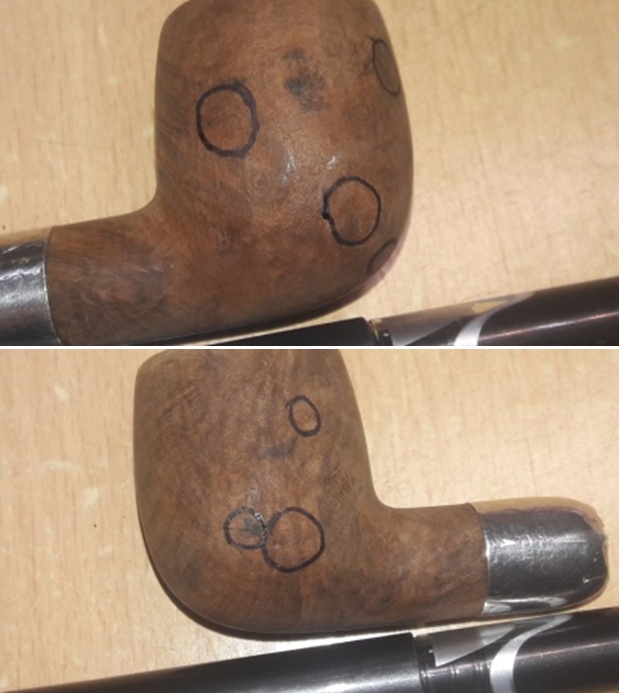
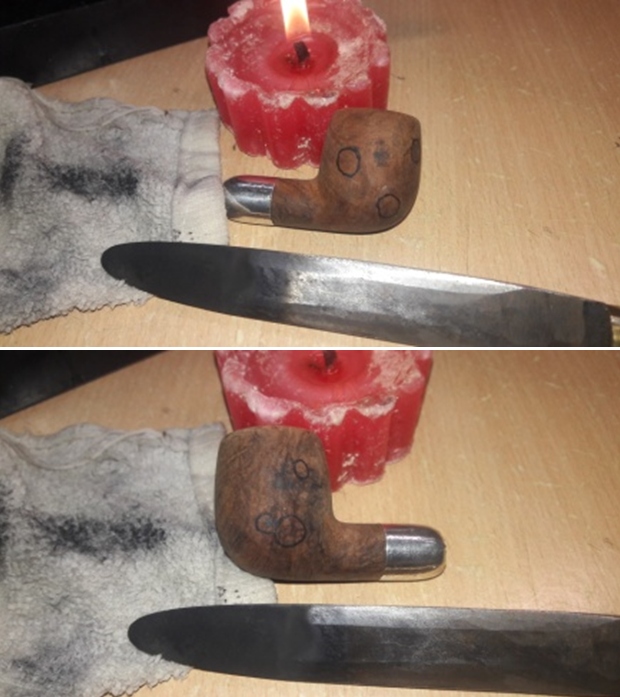
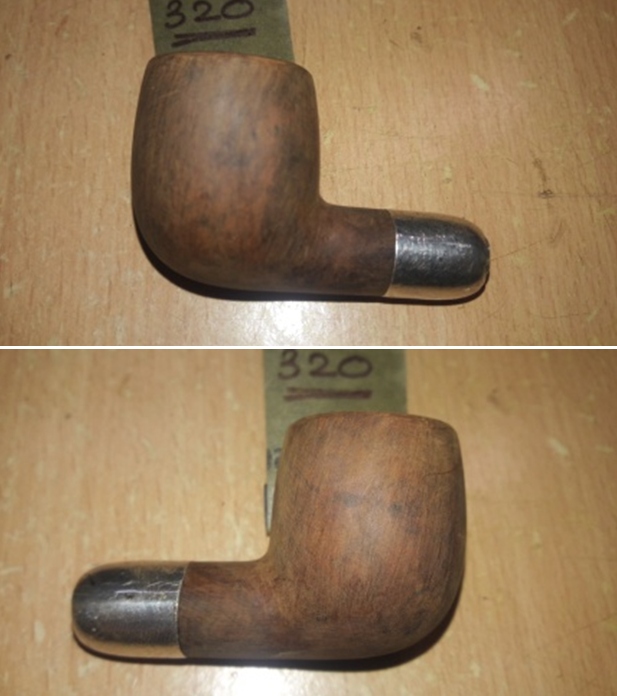
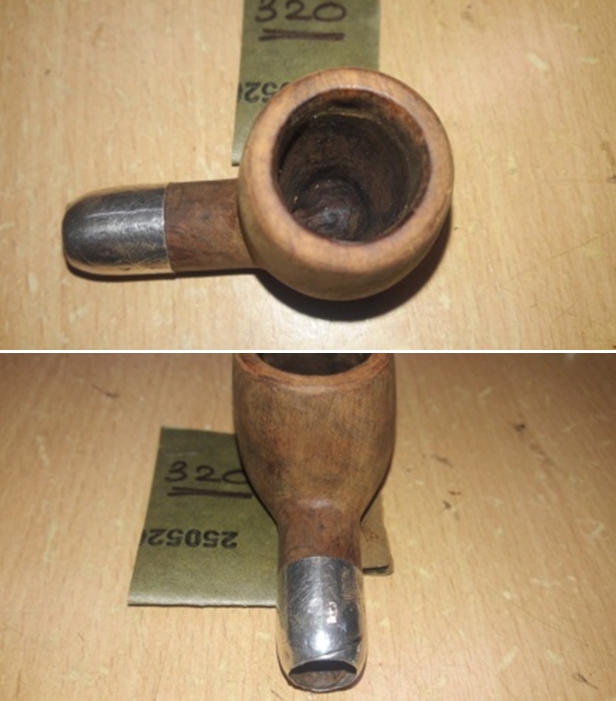
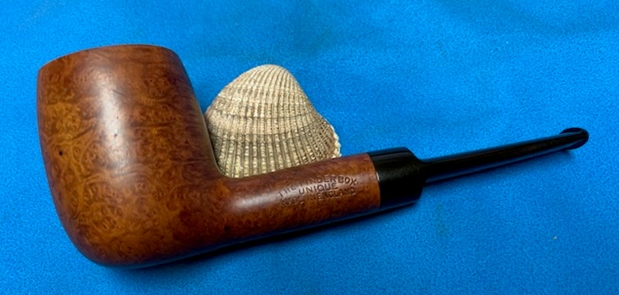
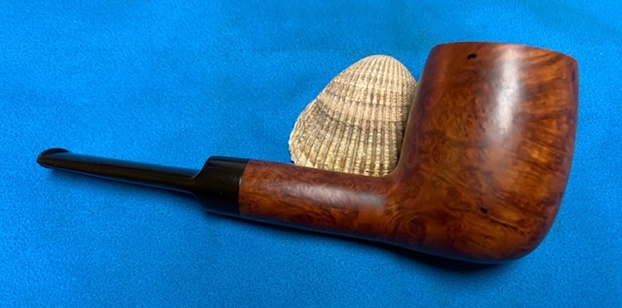
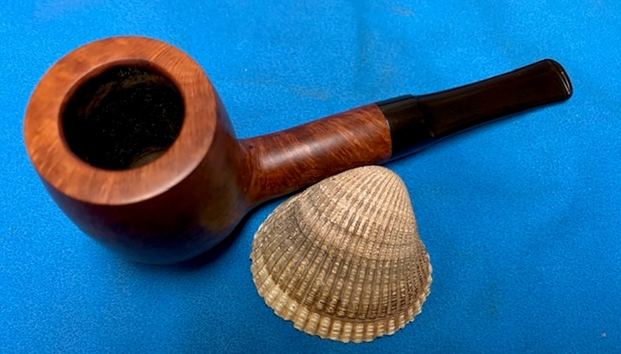
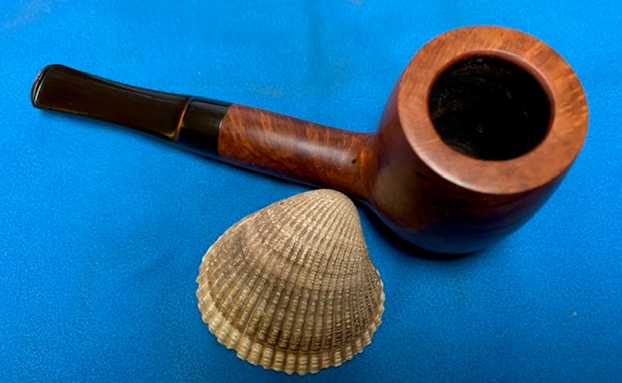
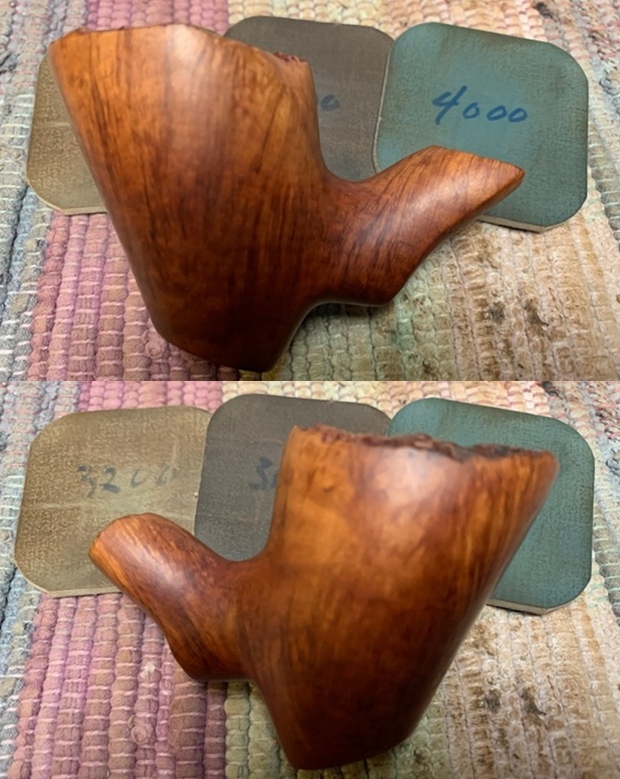
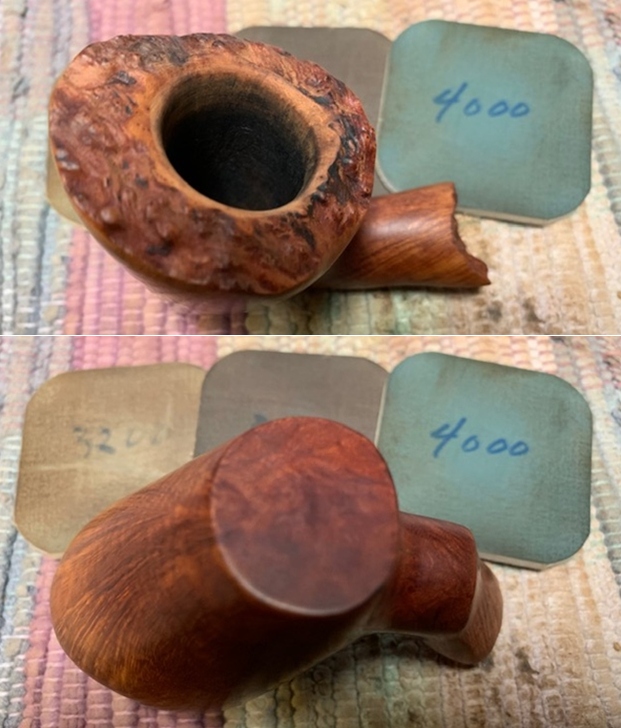
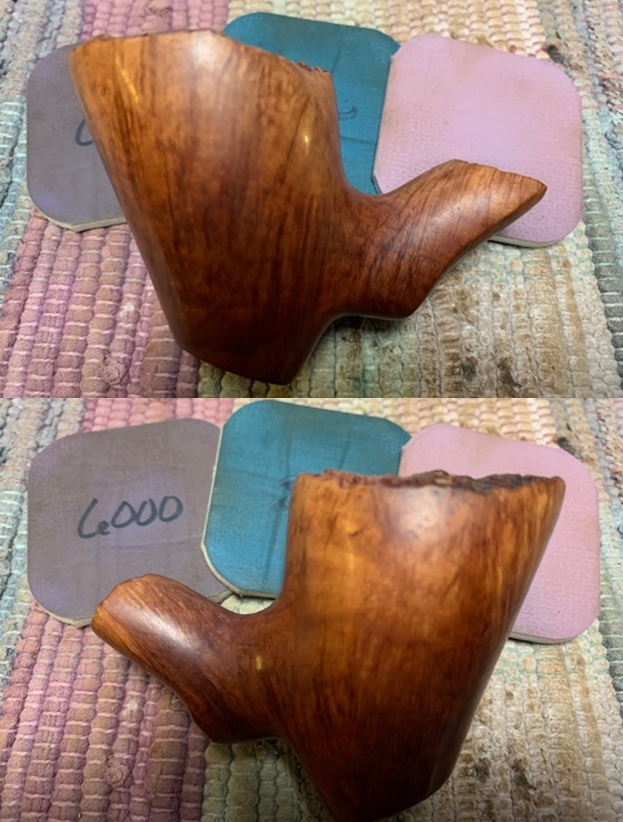
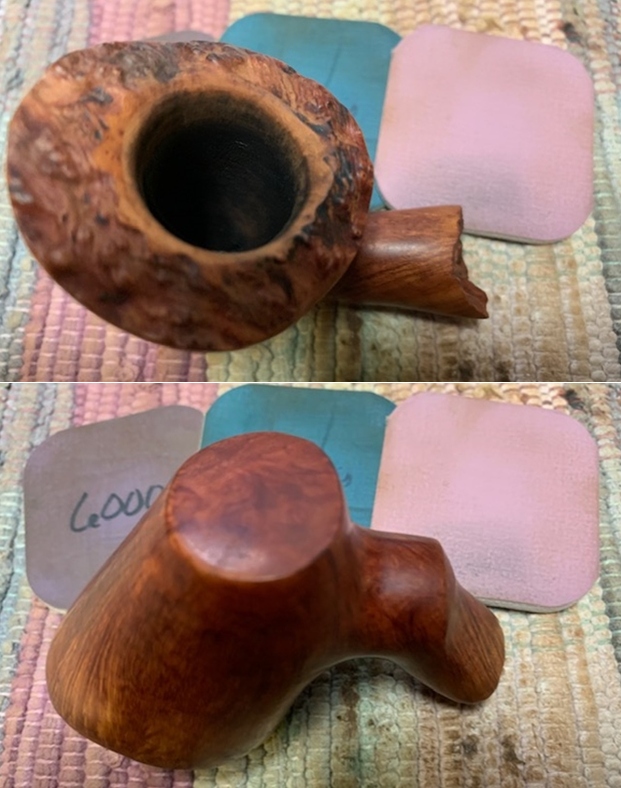
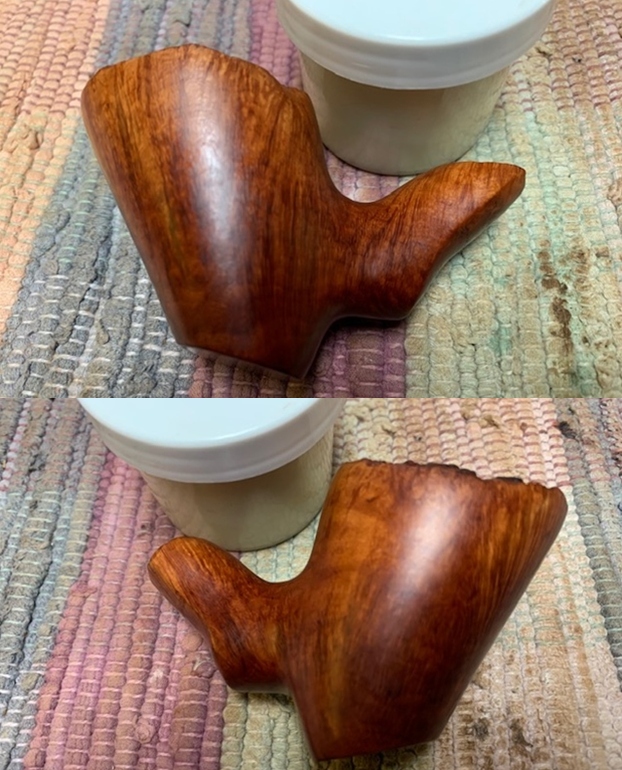
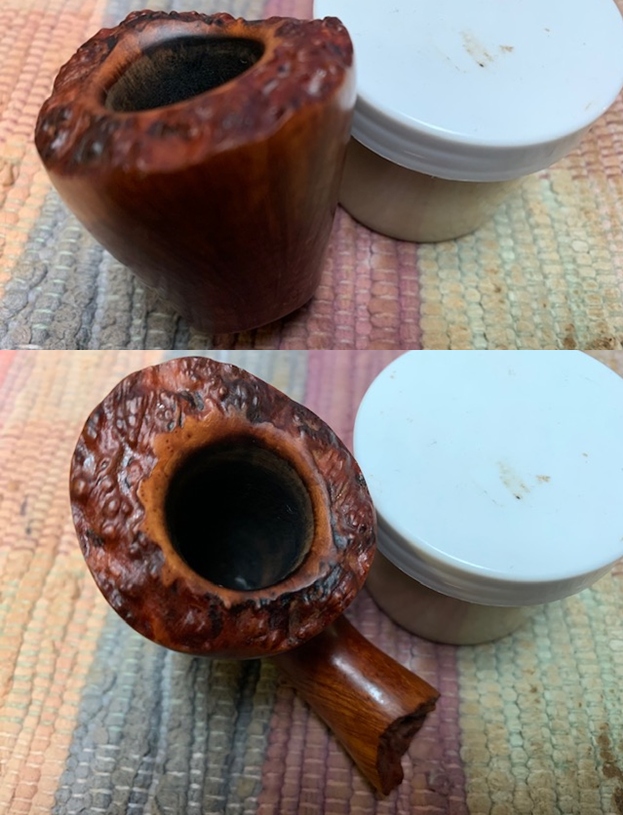
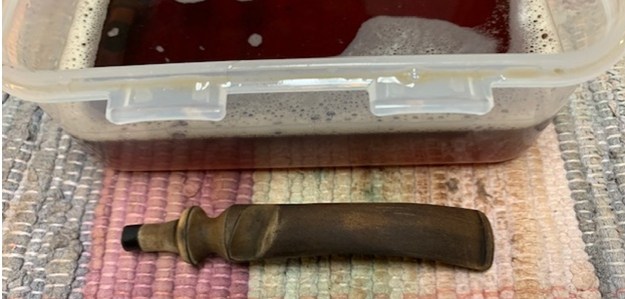
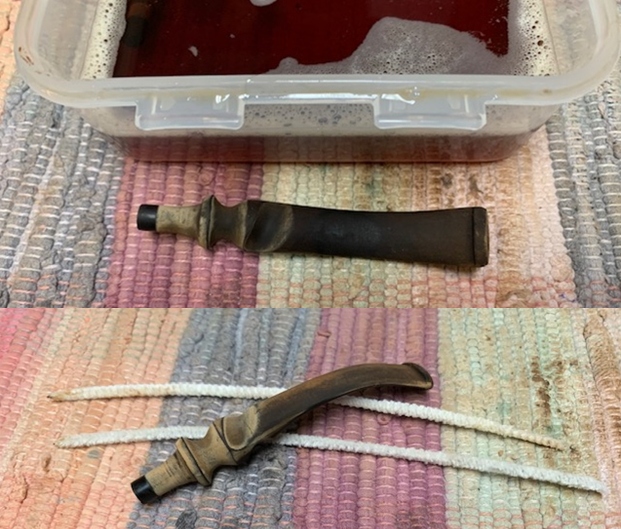
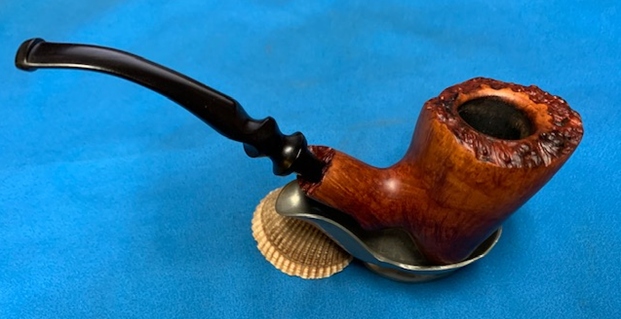
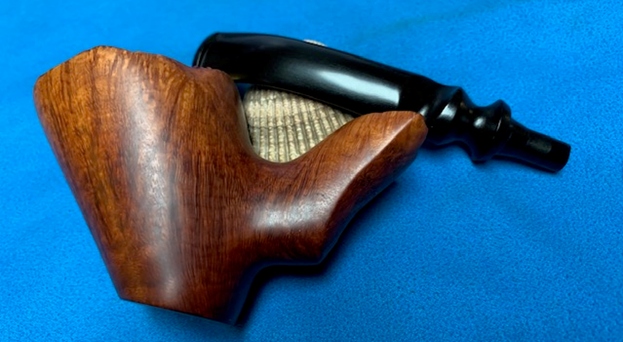
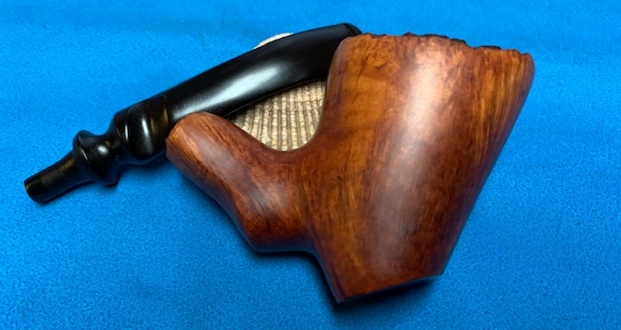
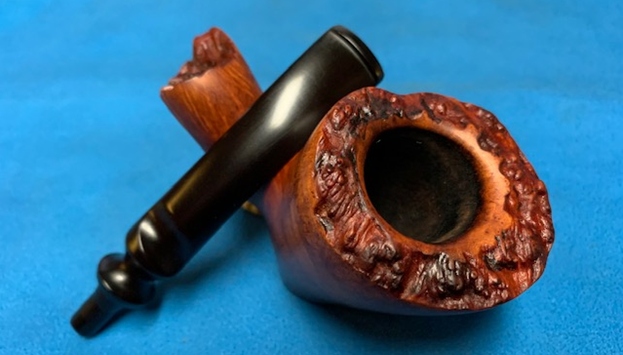
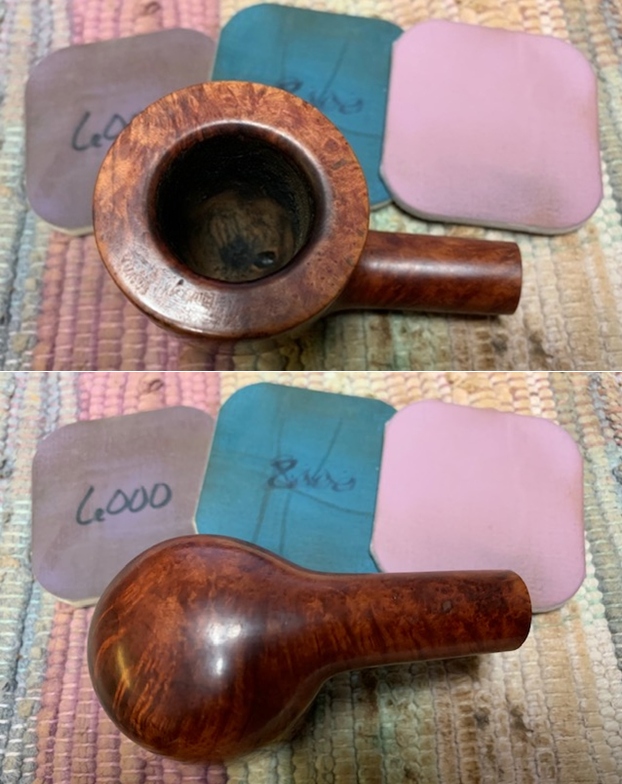
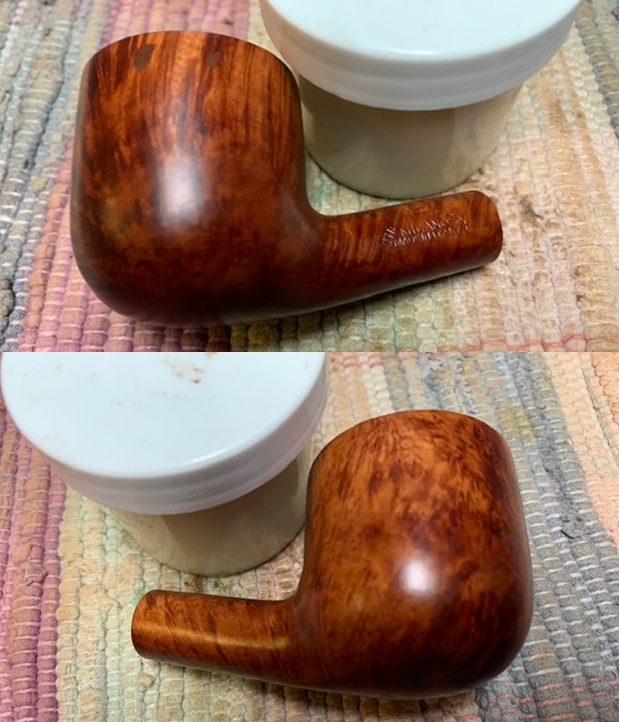
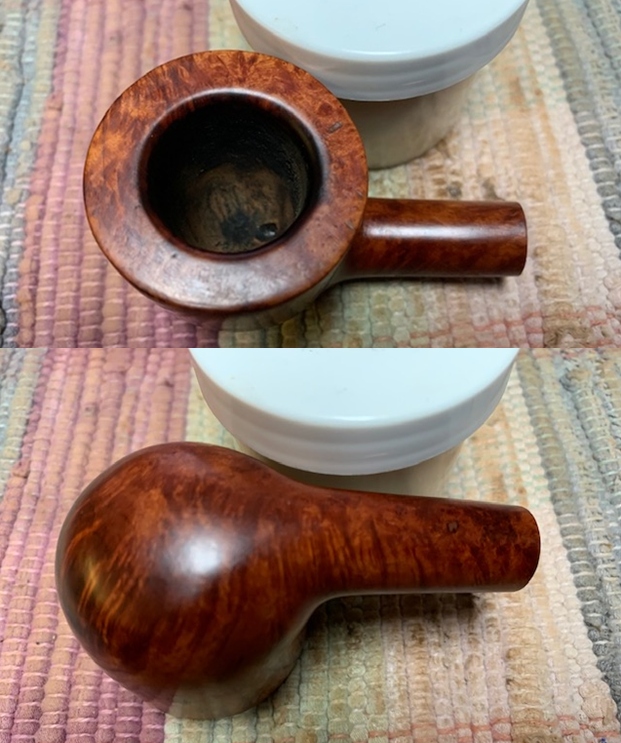
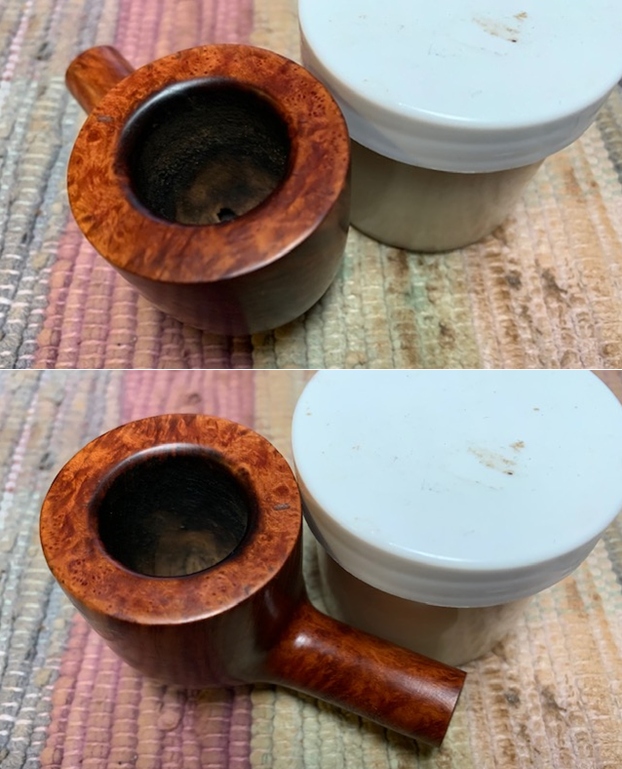
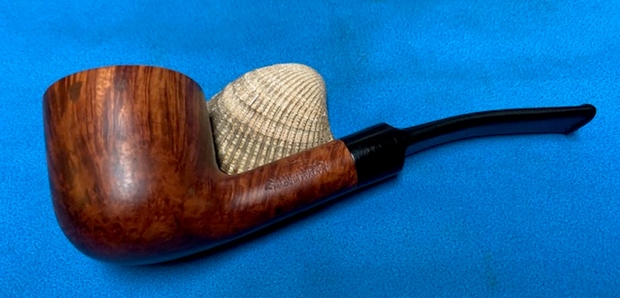
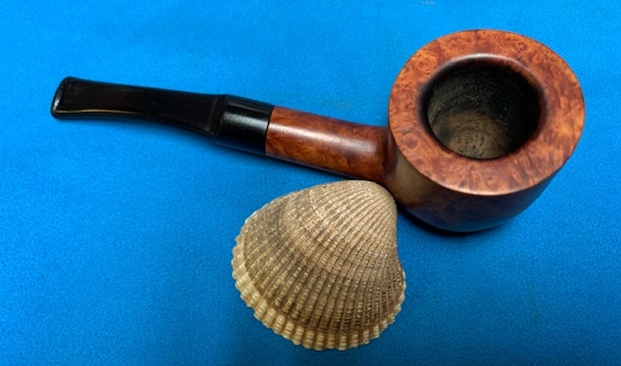
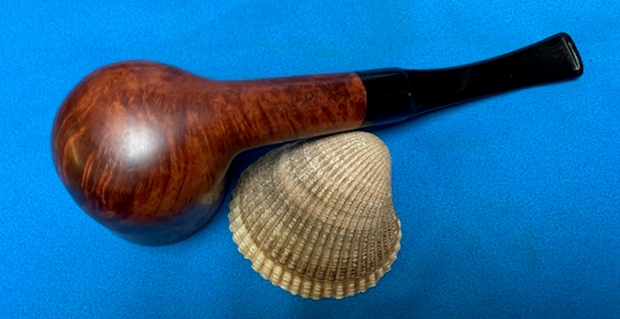
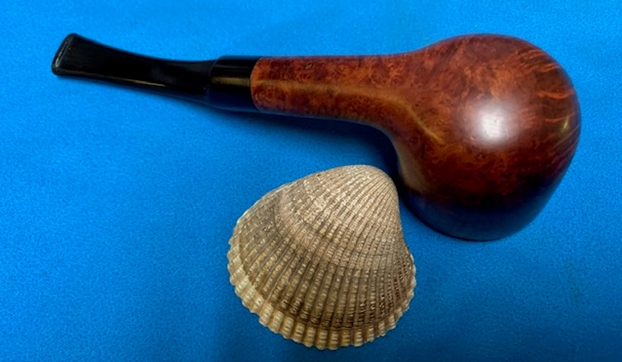
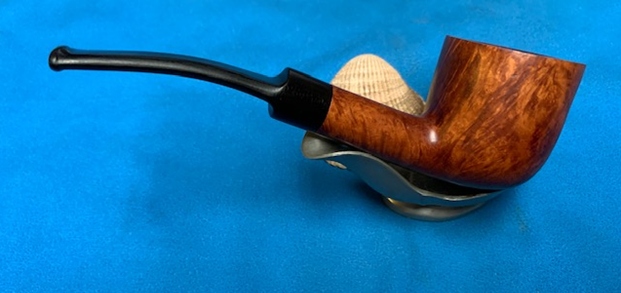
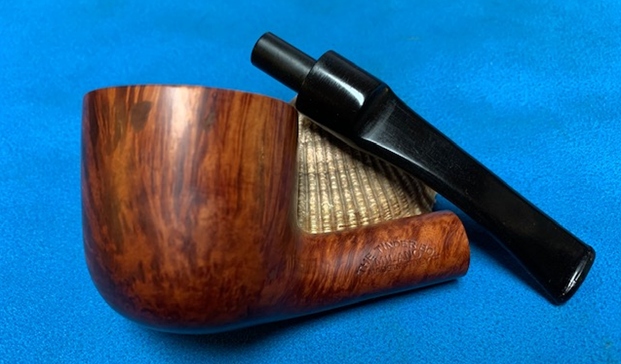
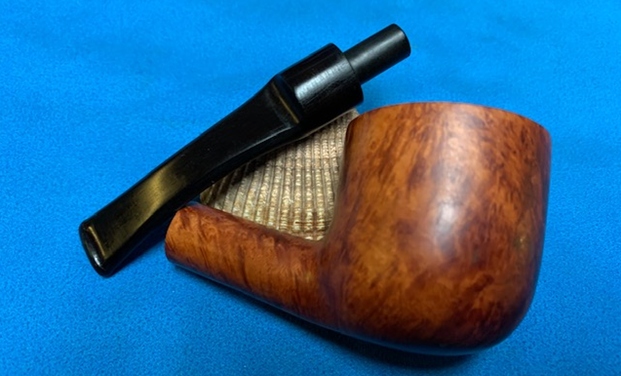
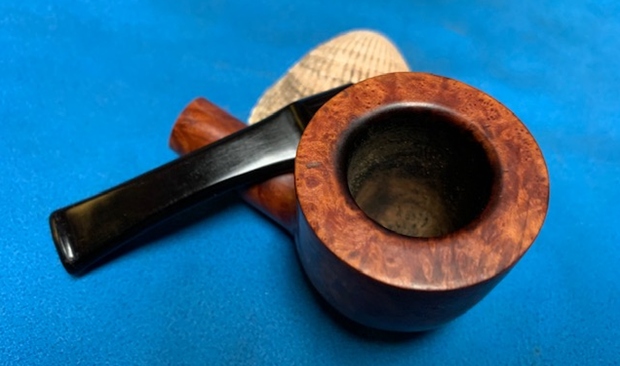
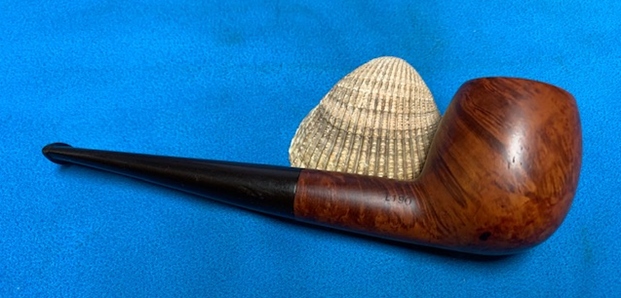
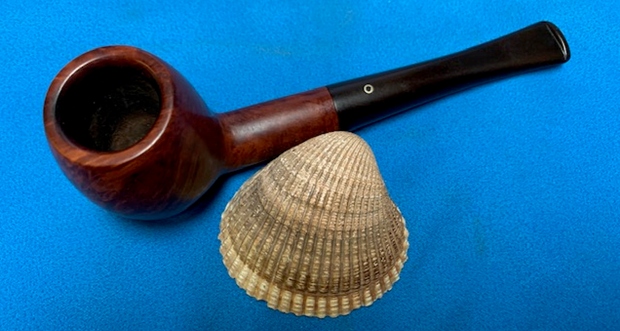
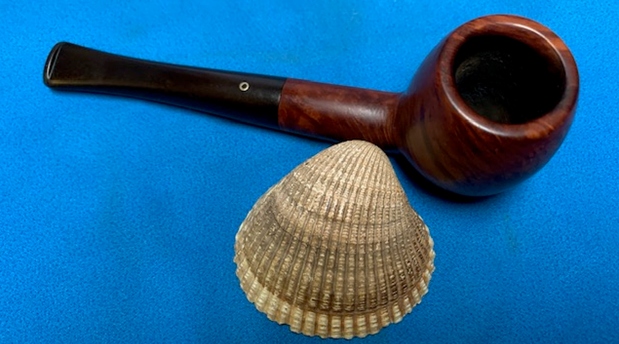
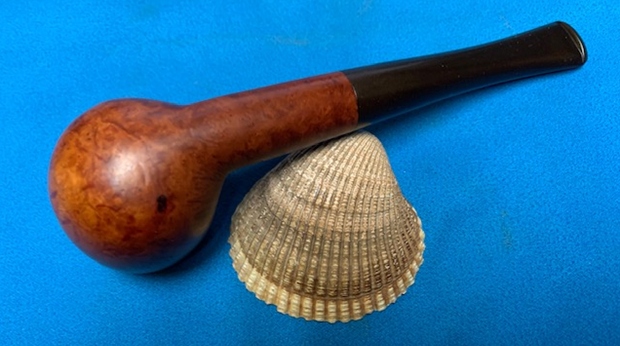
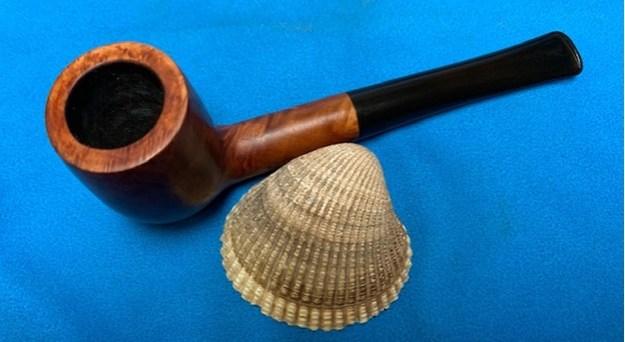
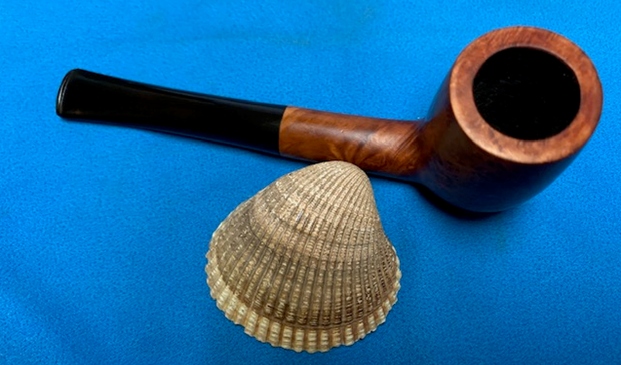
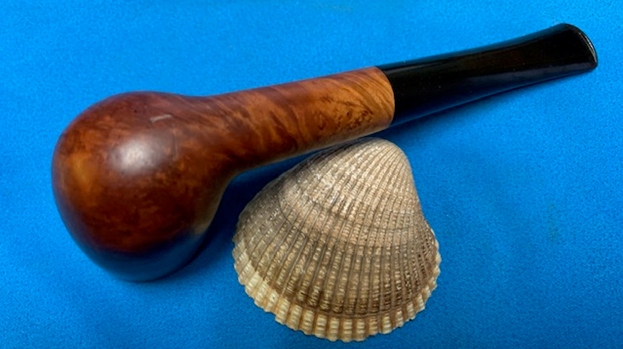
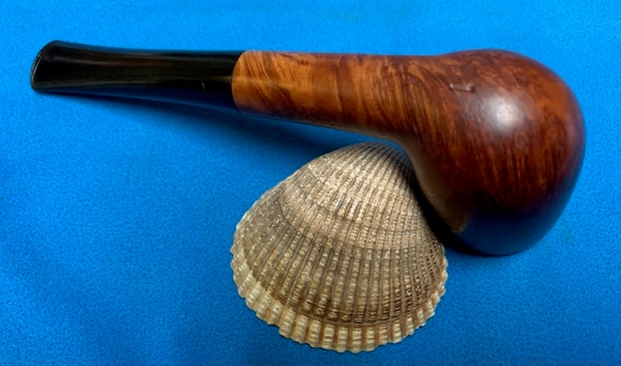
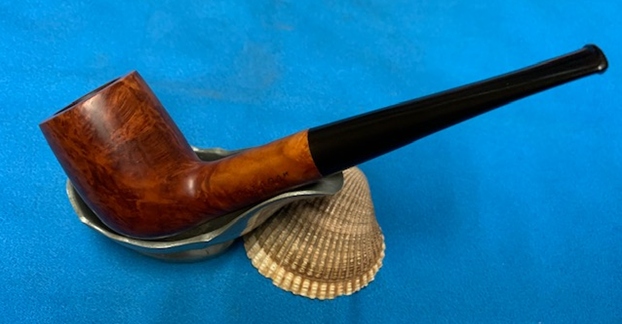
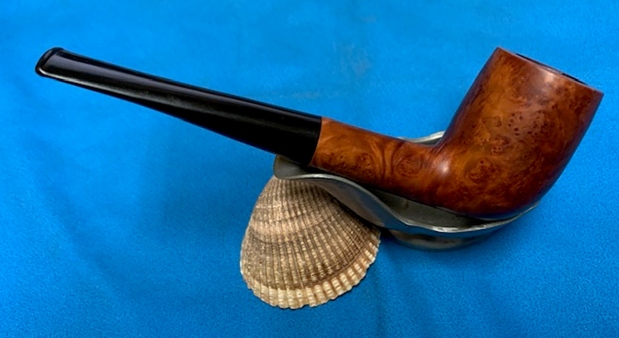
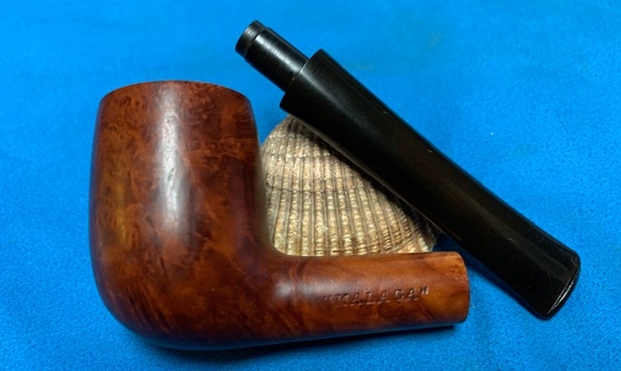
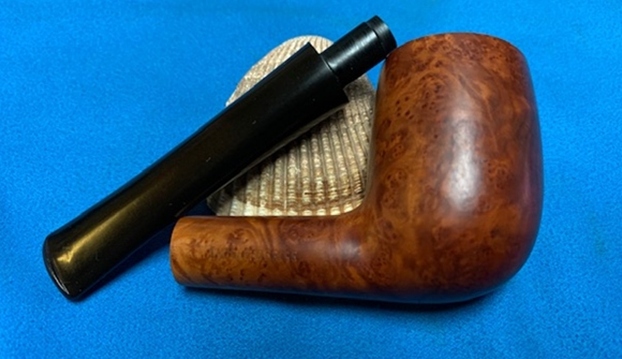
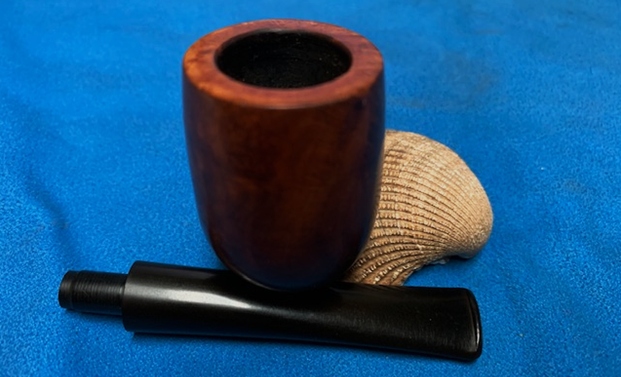
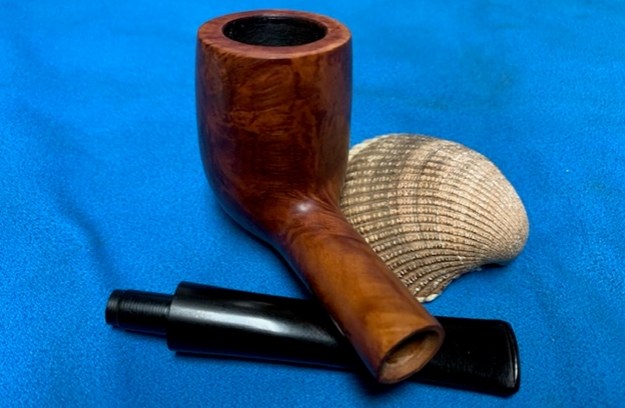
Breathing Life into The Tinder Box Unique Saddle Stem English Billiard


Blog by Steve Laug

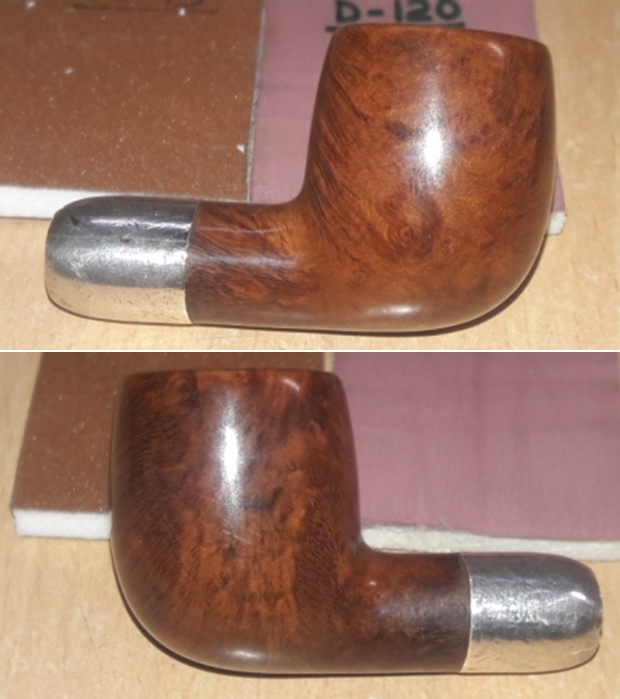
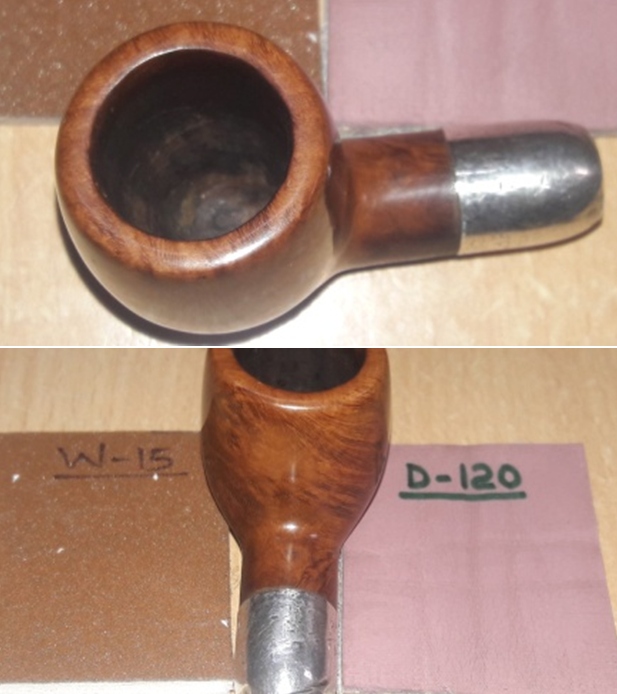
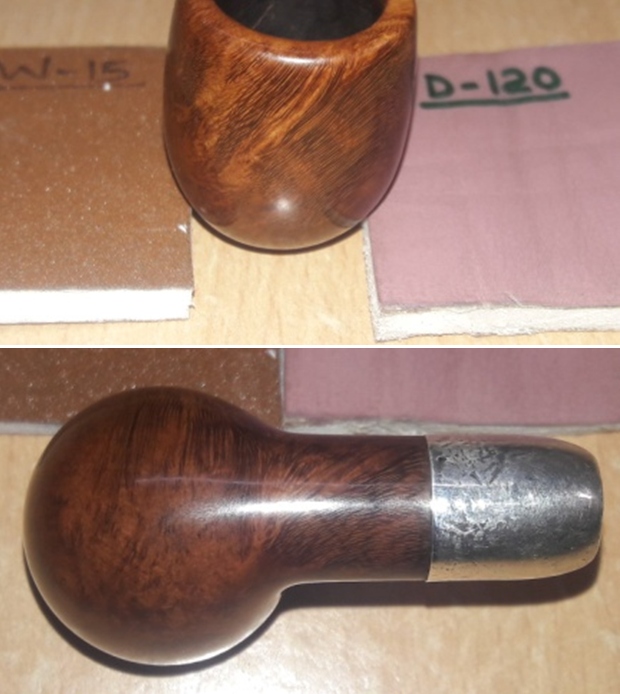
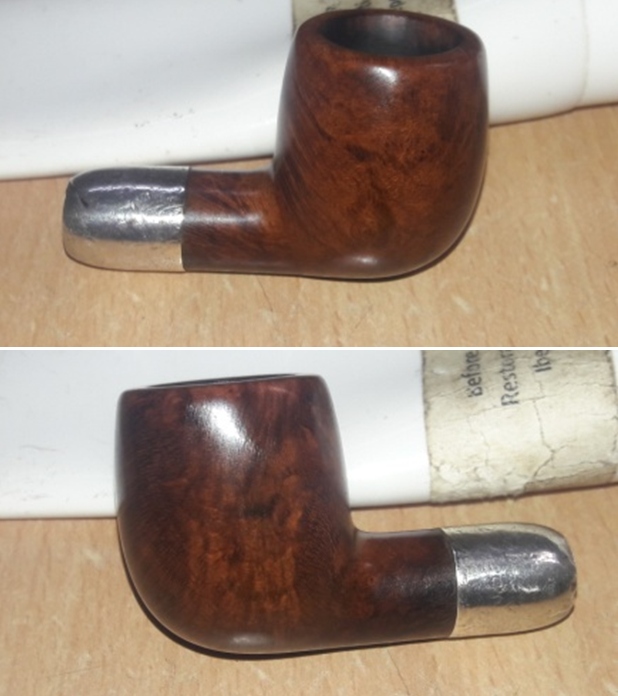
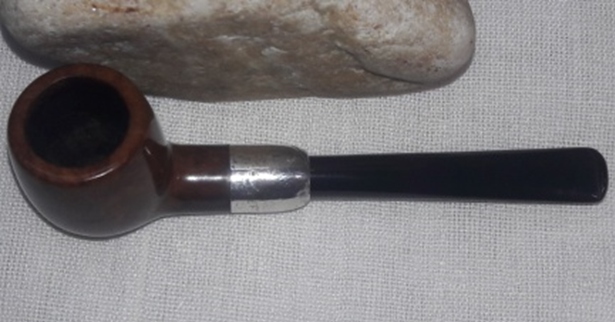
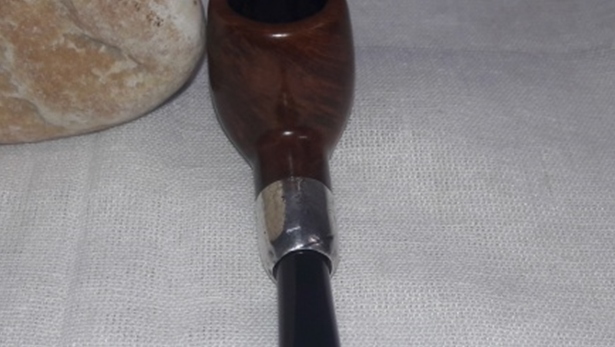
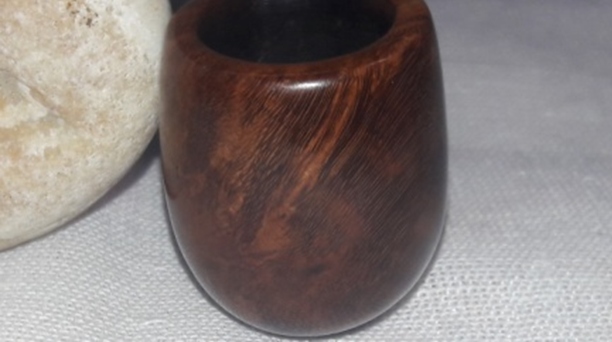
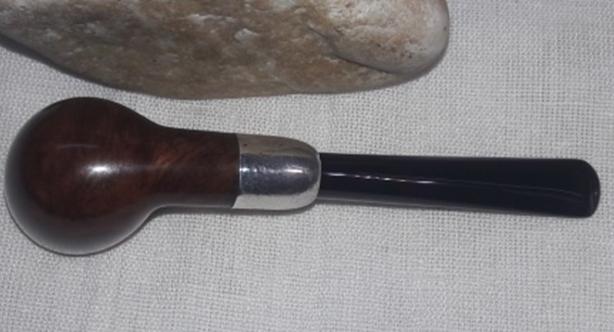
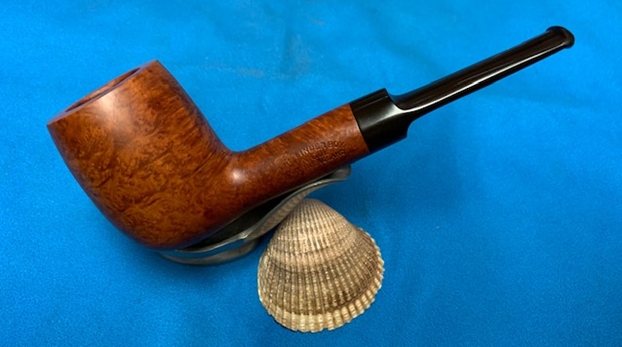
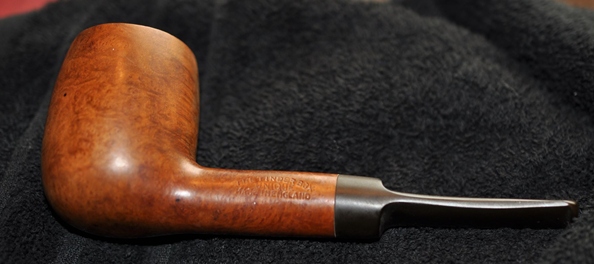
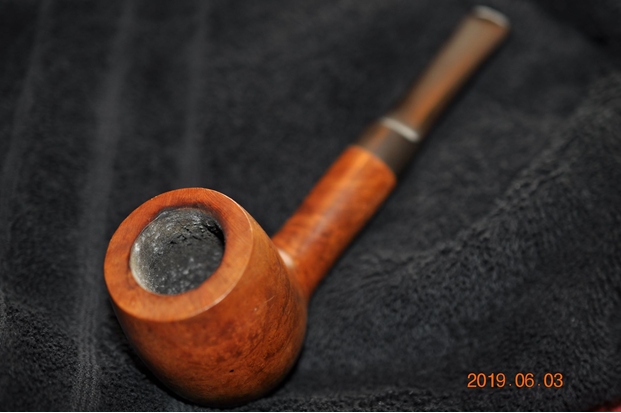
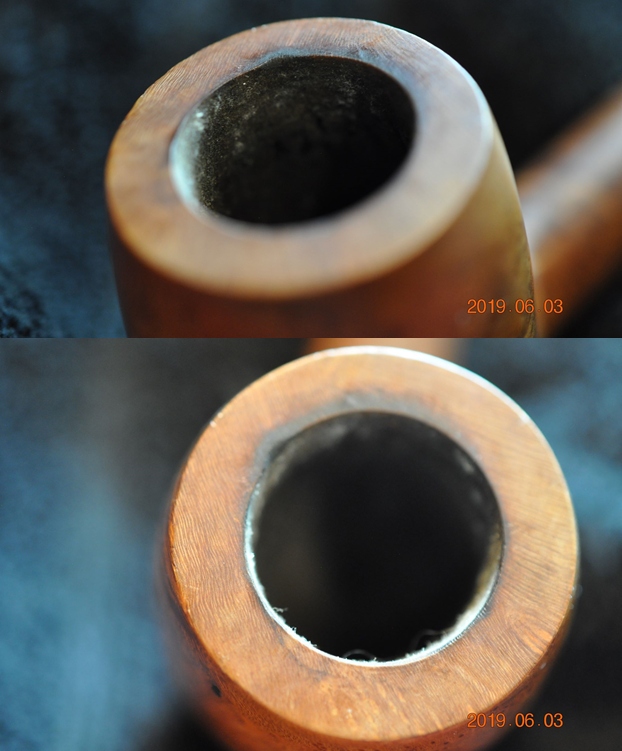
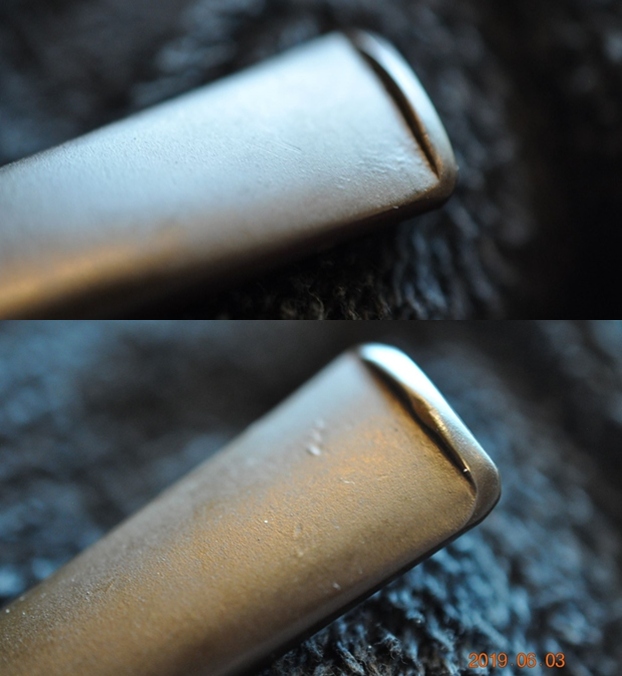
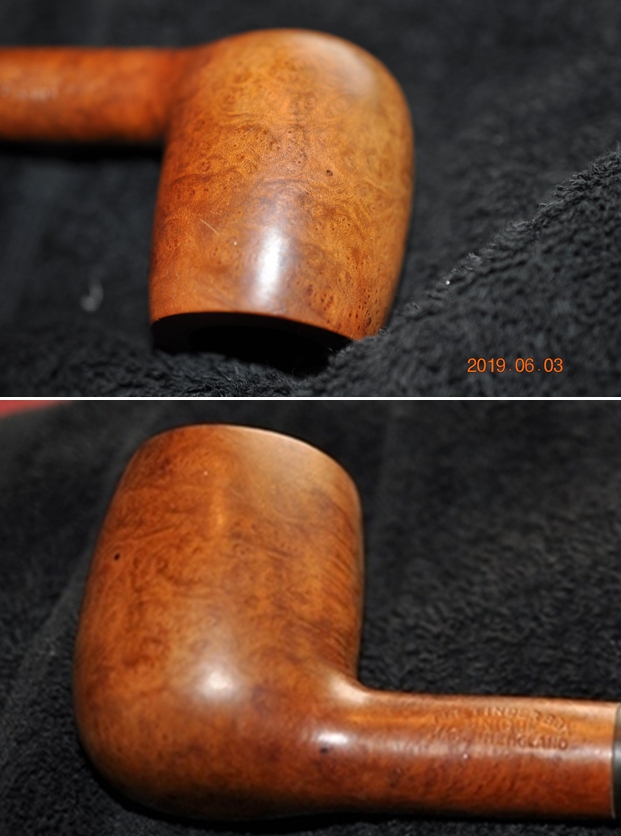
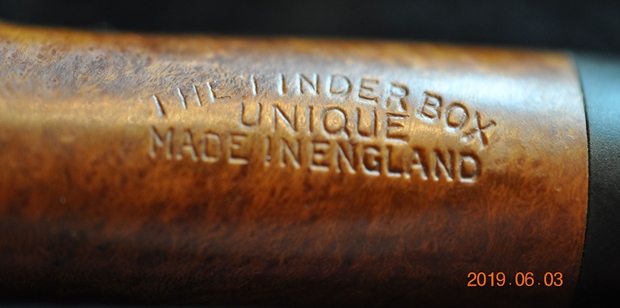
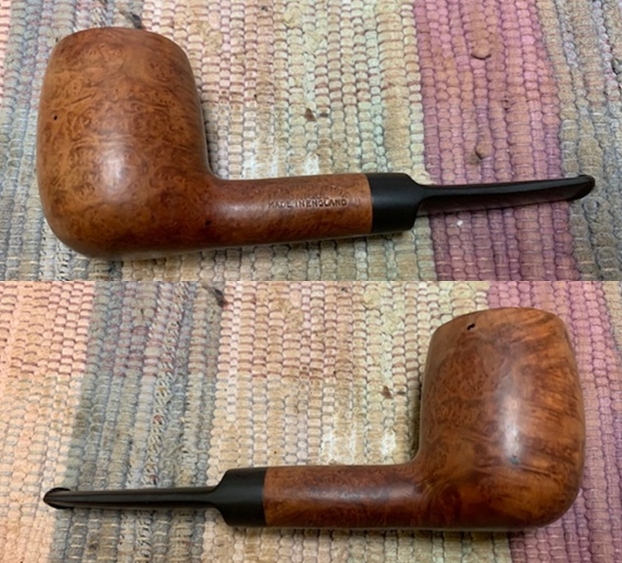
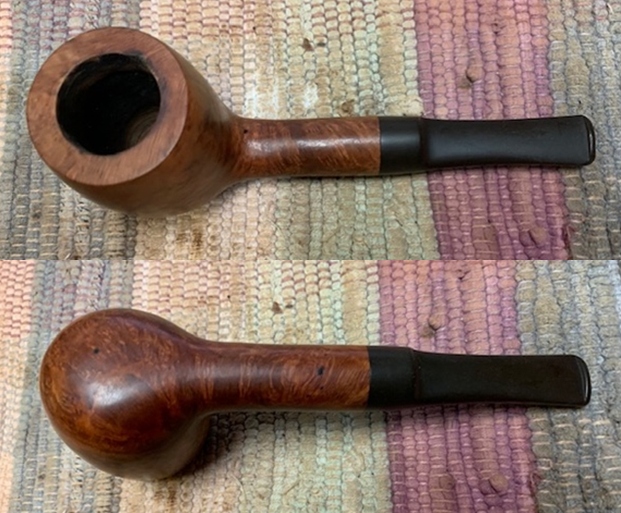
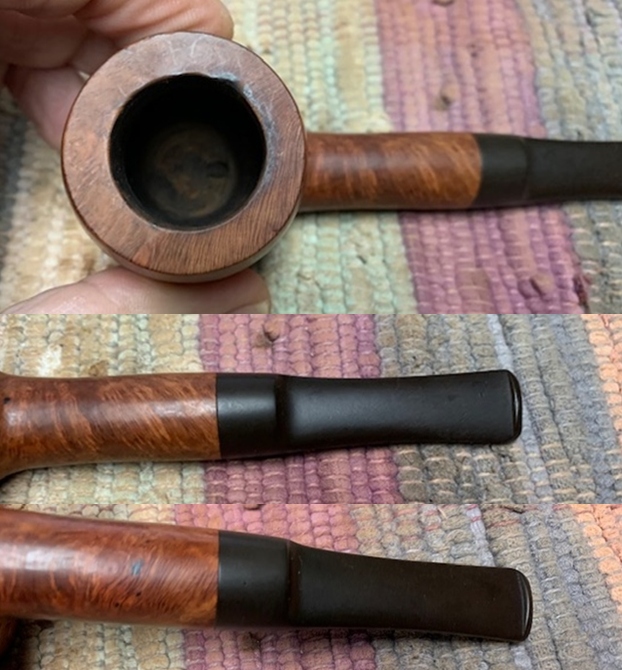
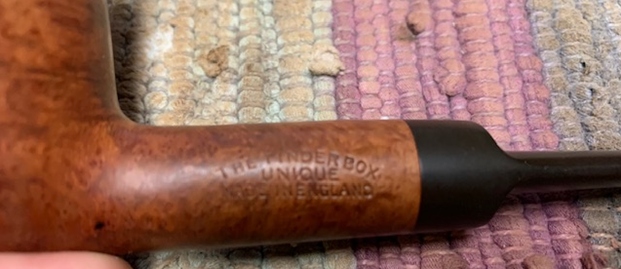
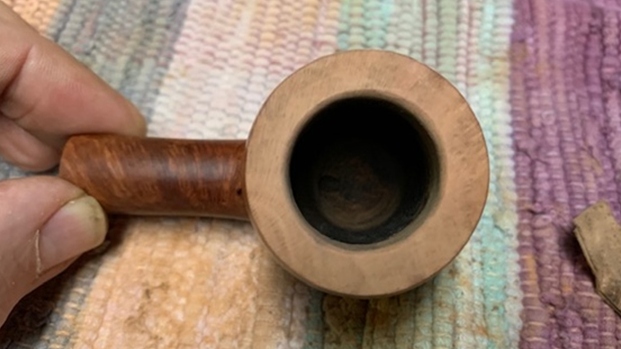
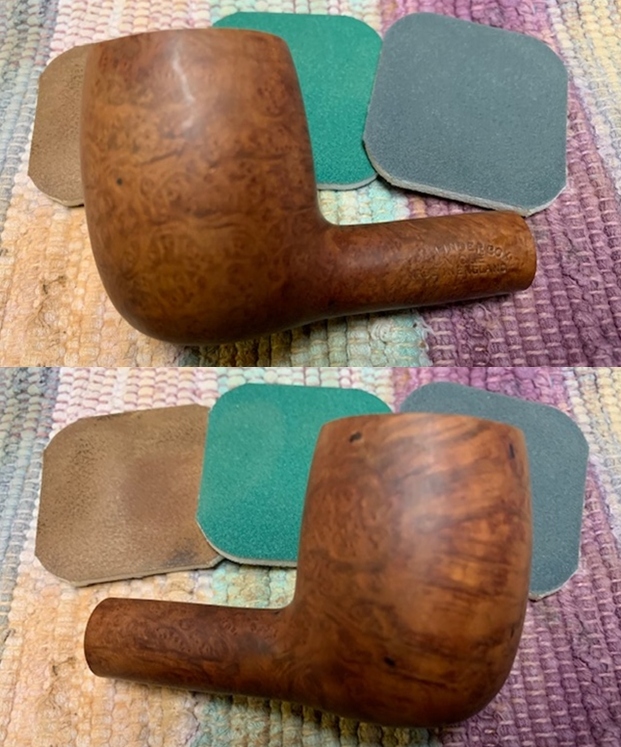
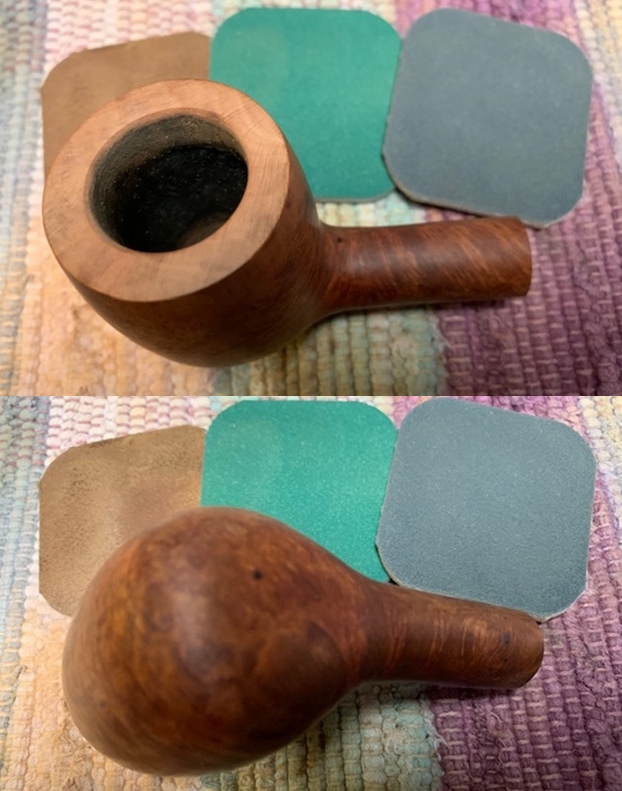
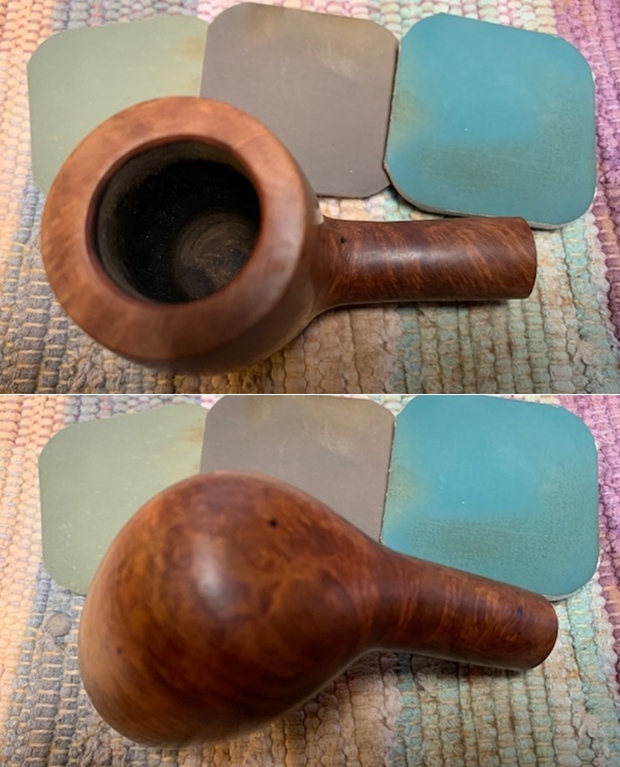
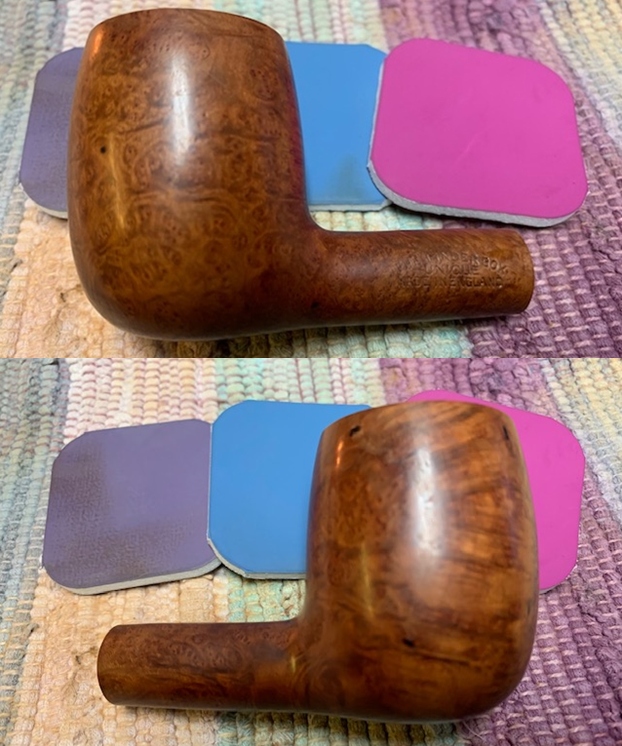
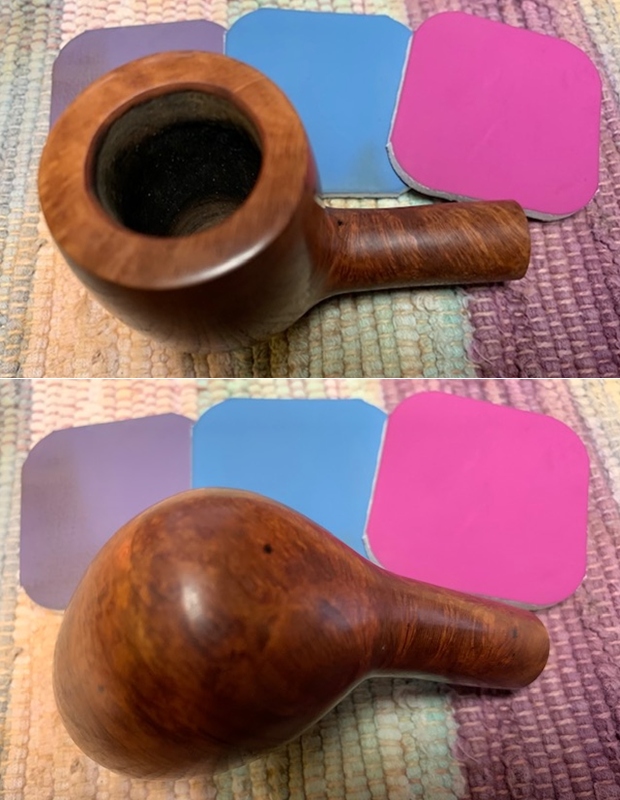
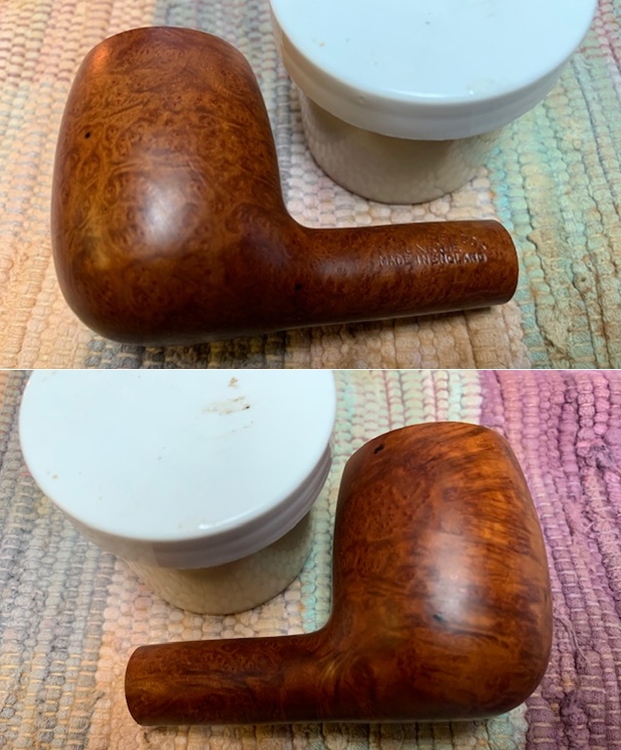
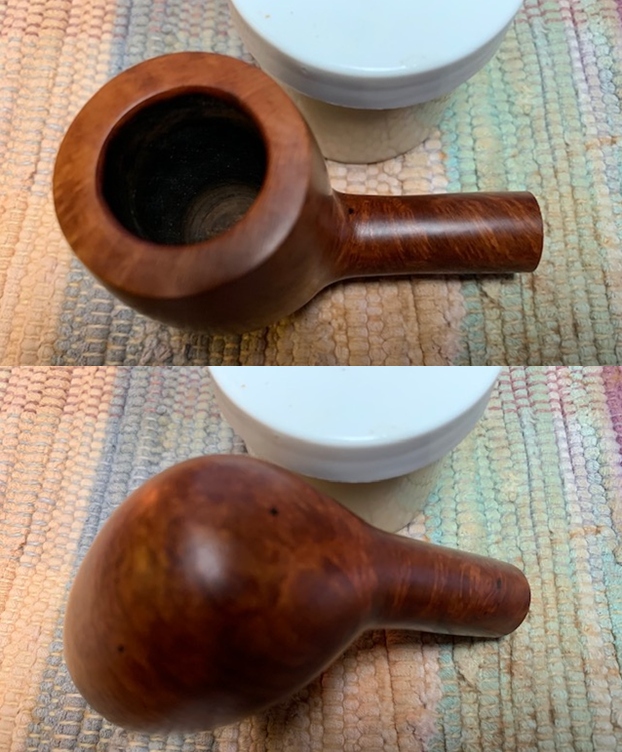
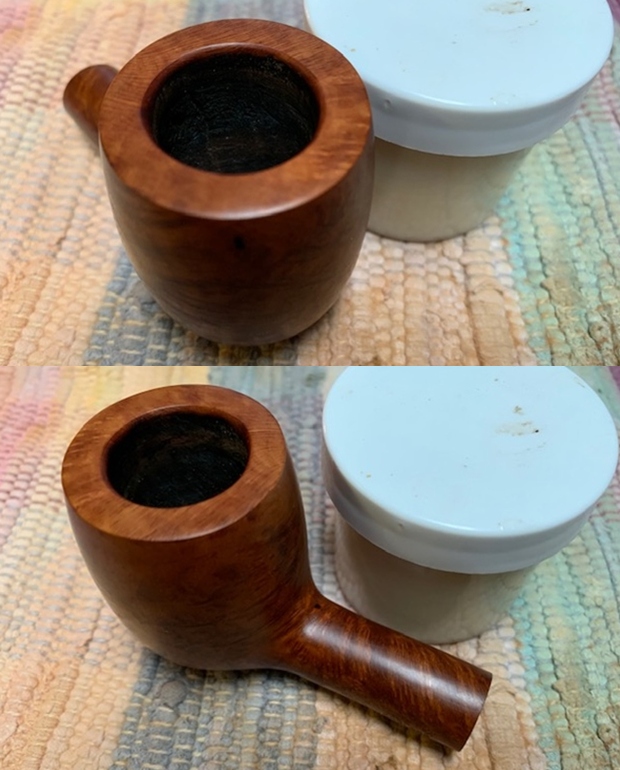
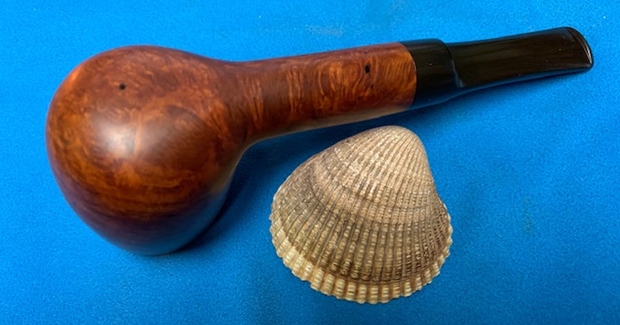
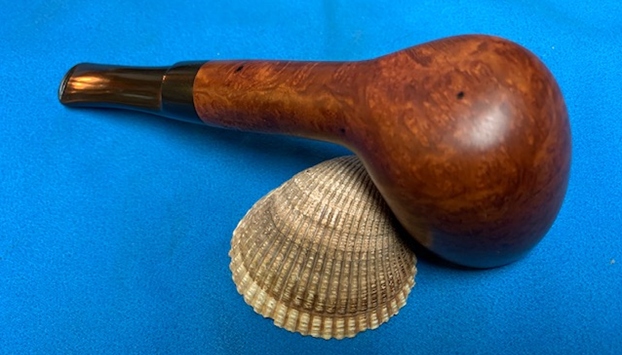
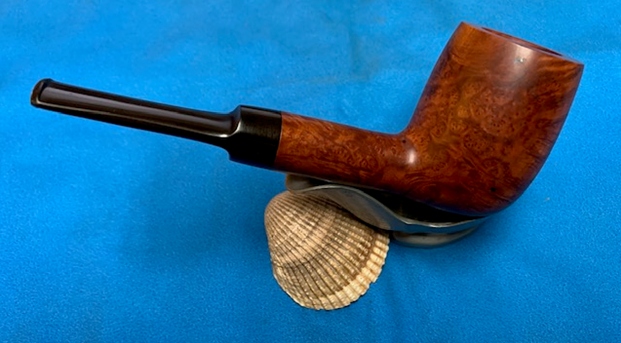
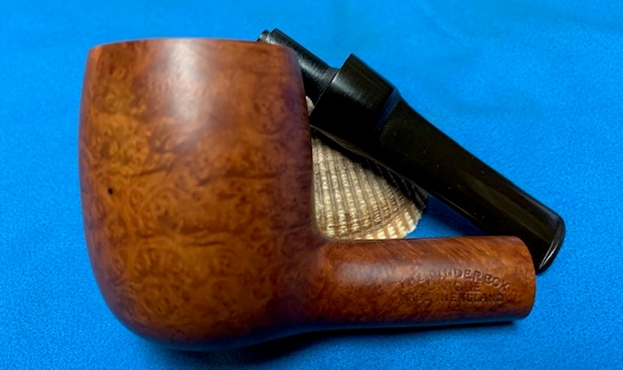
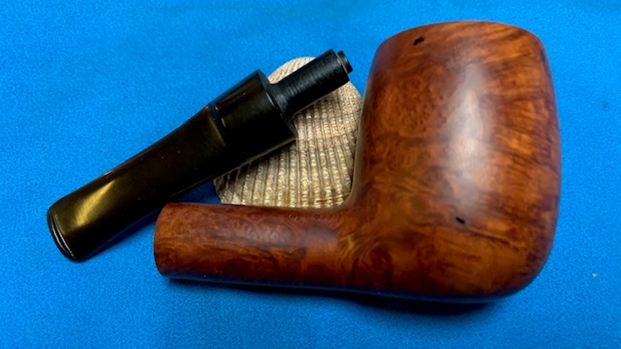
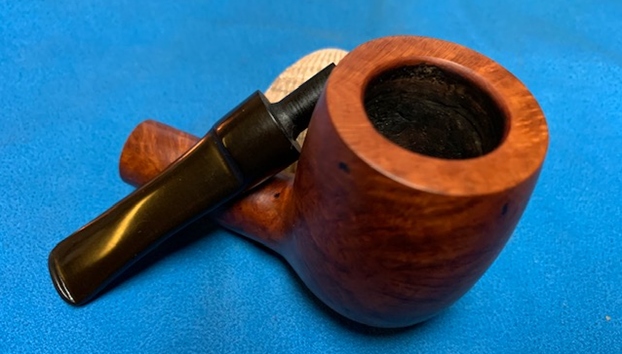
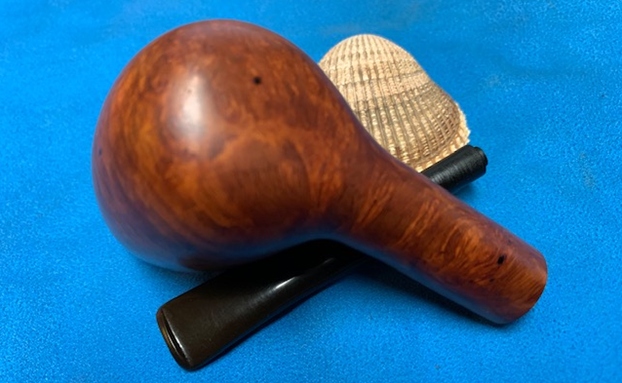
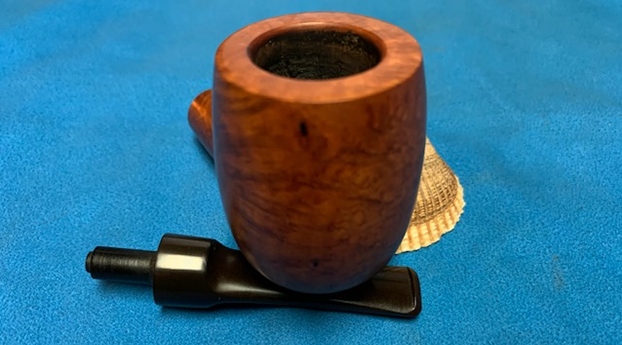
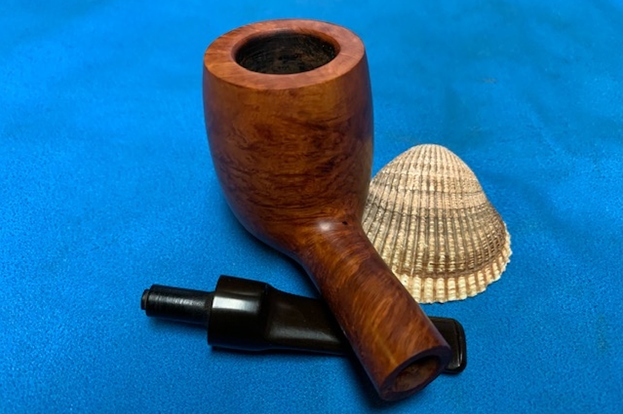
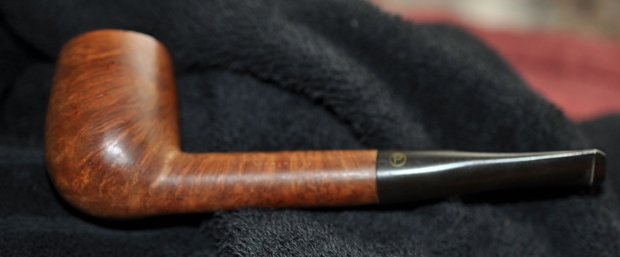
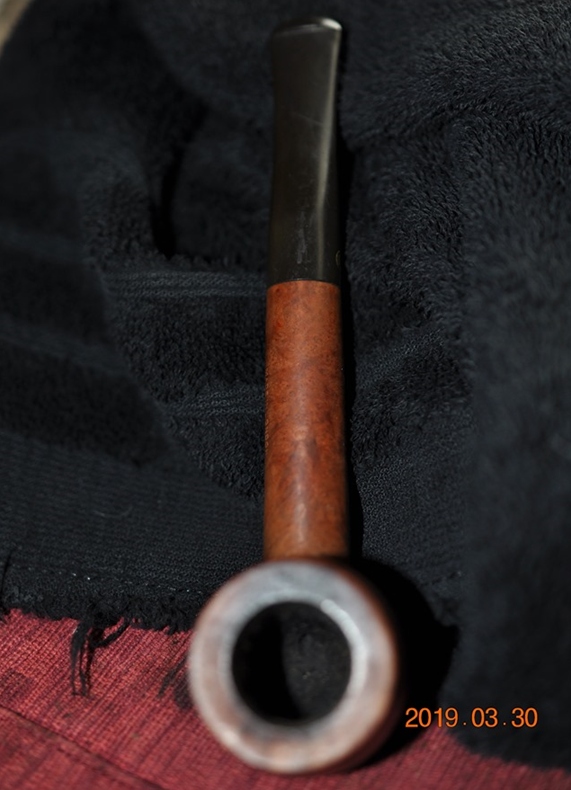
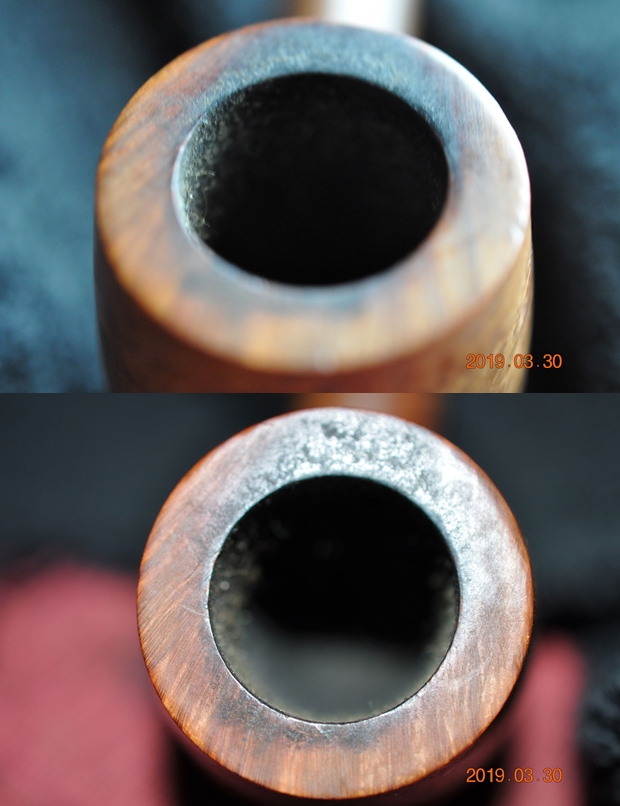
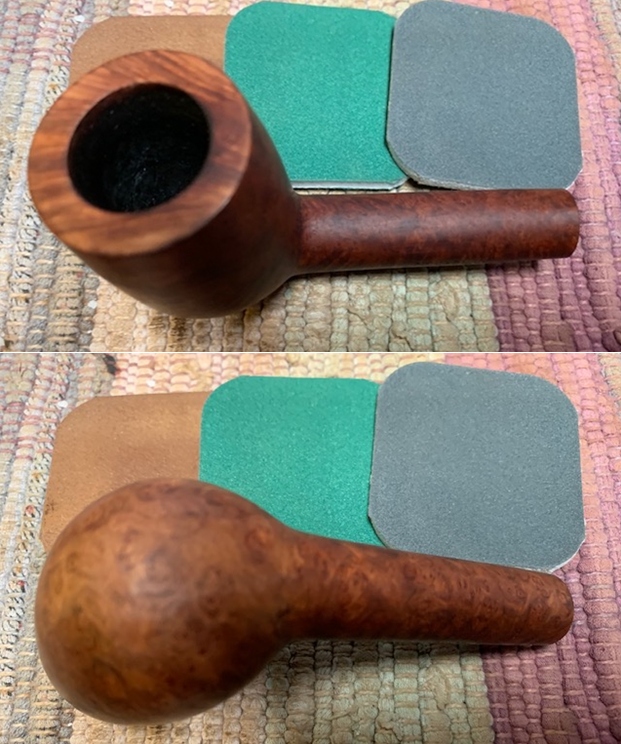
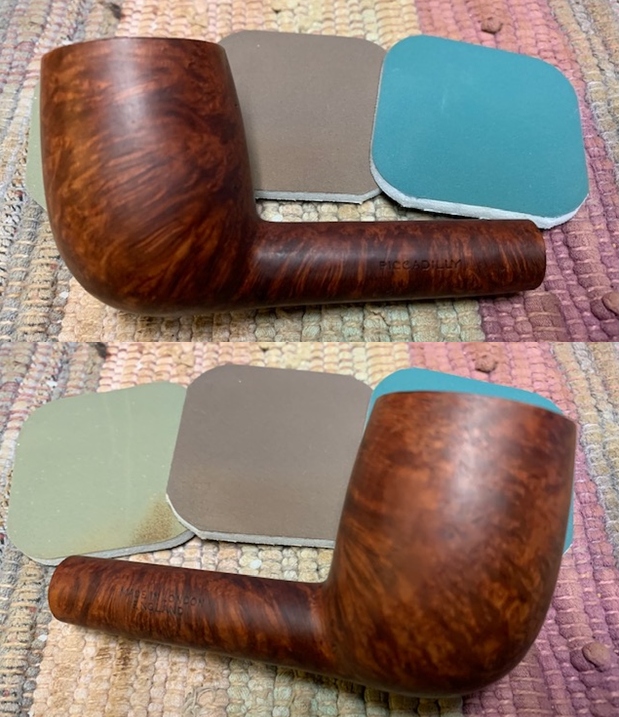
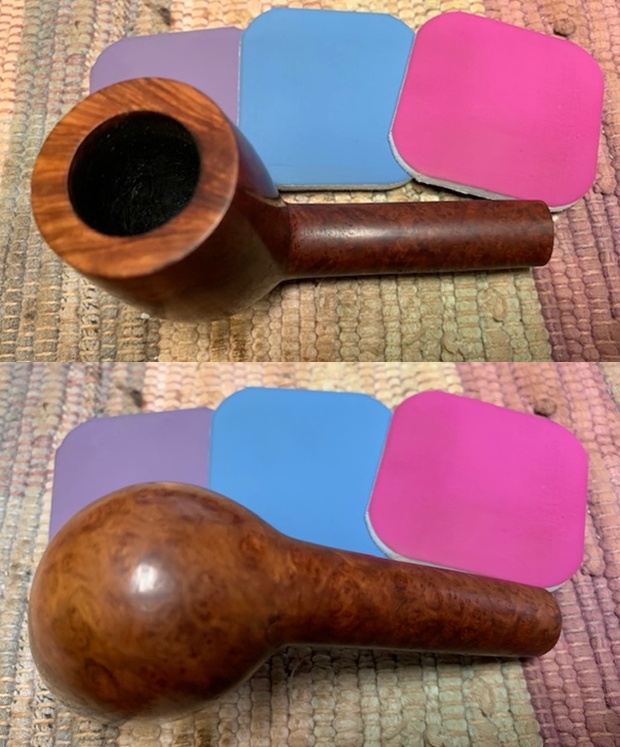
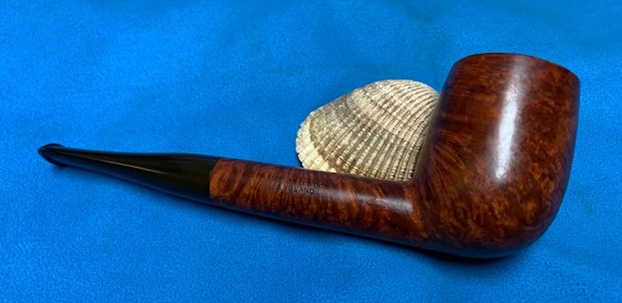
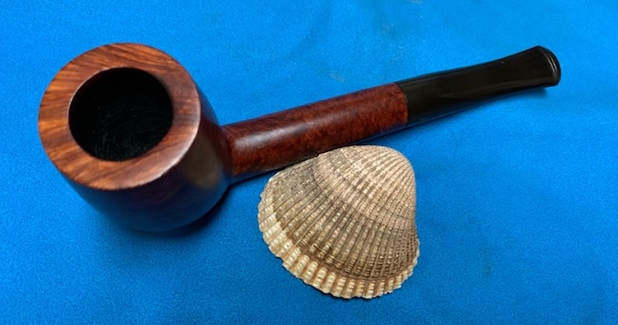
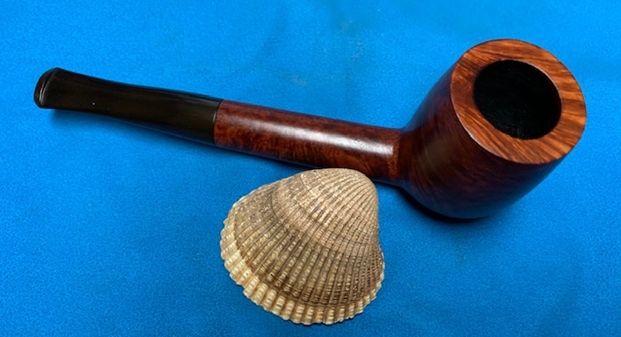
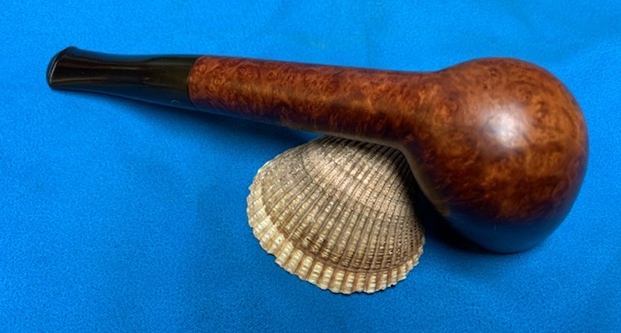
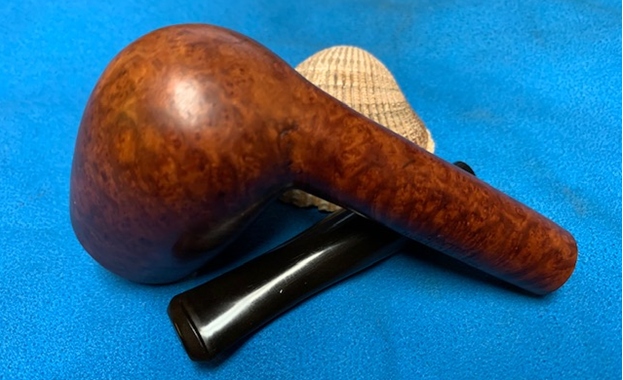
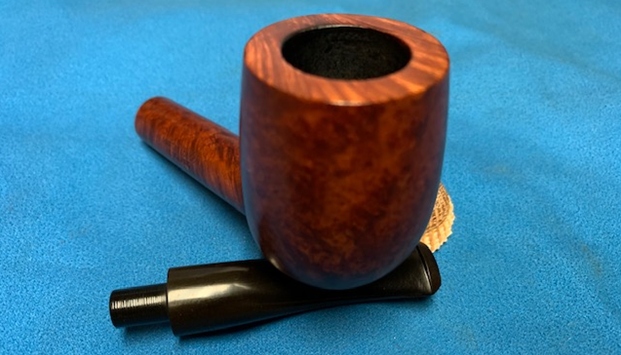
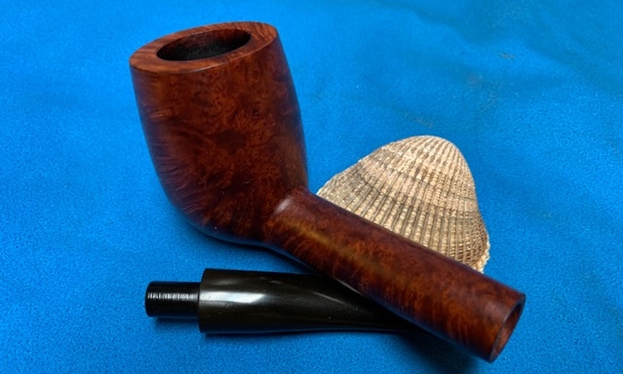
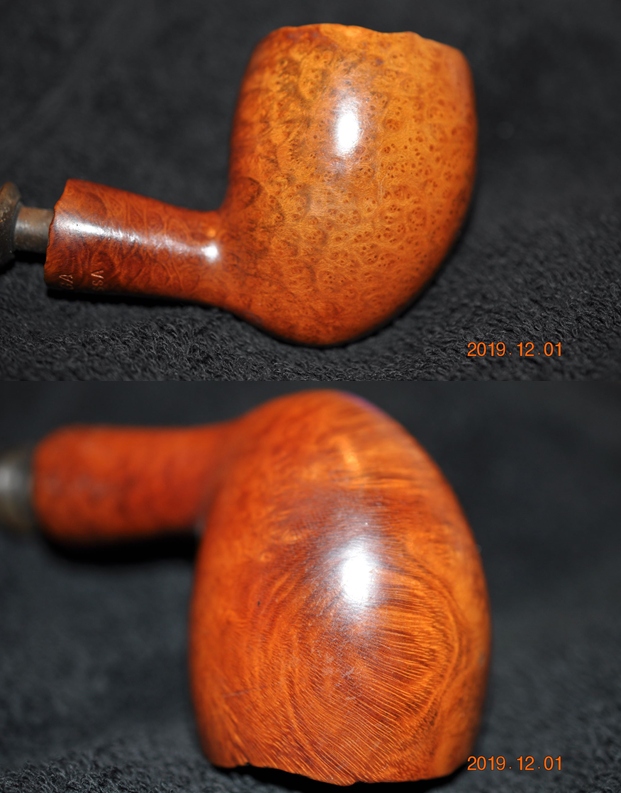
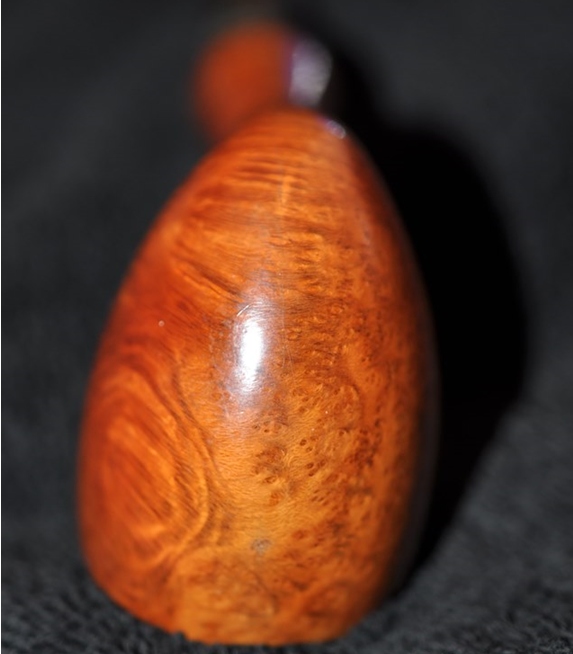
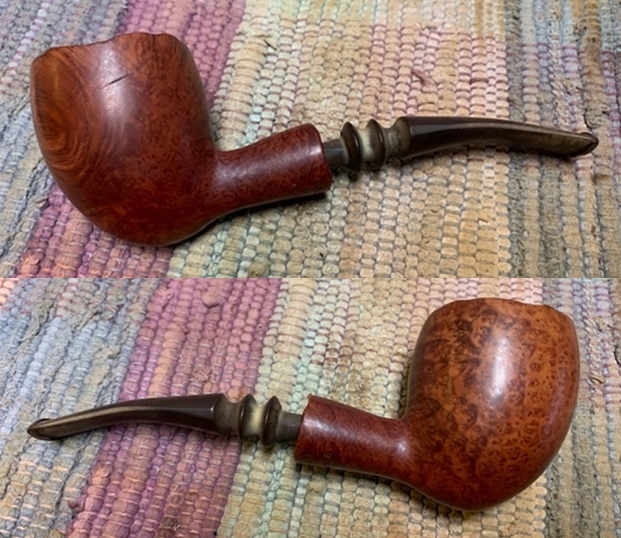
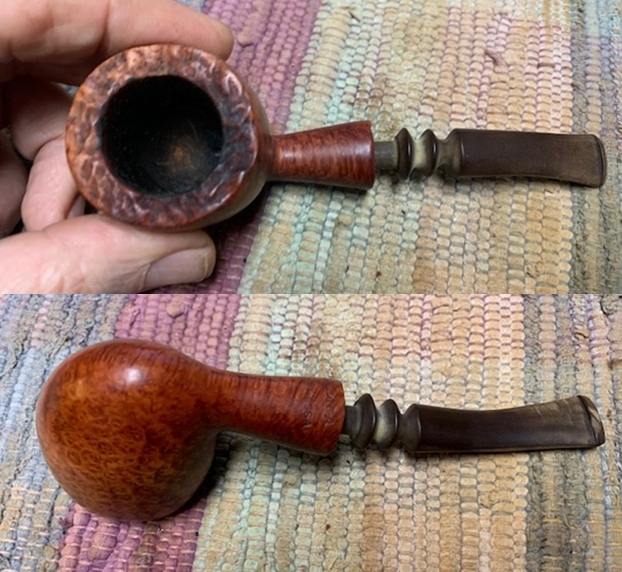
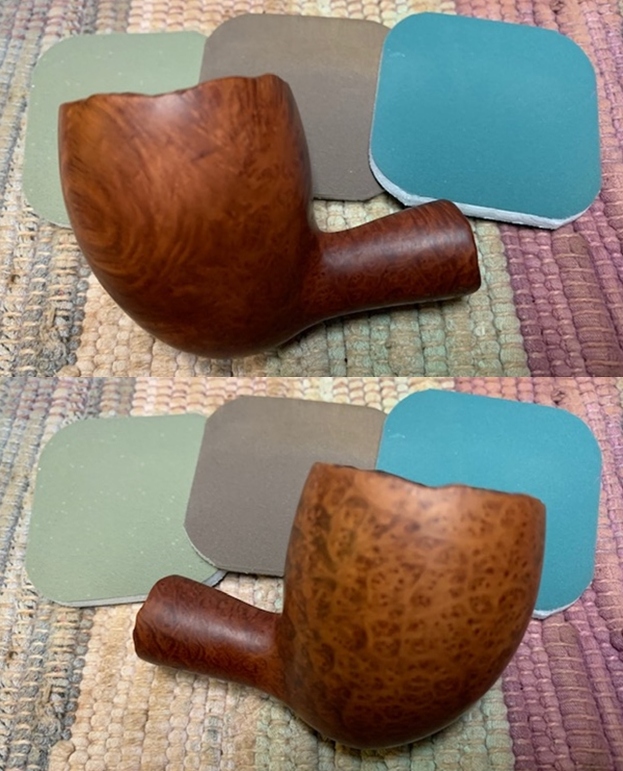
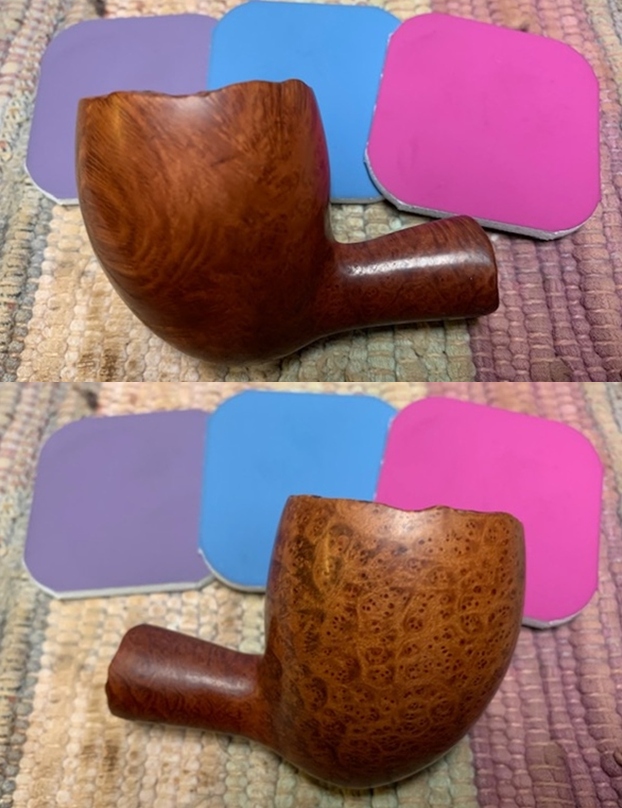
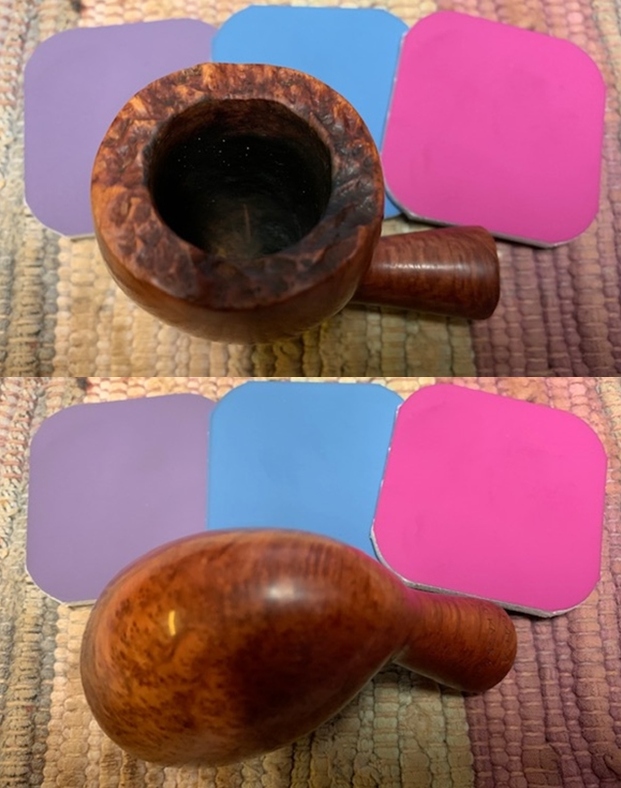
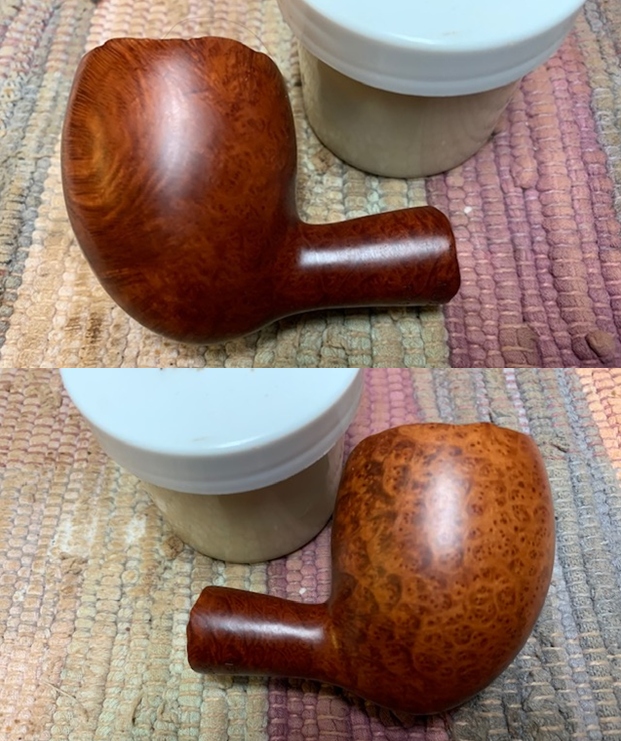
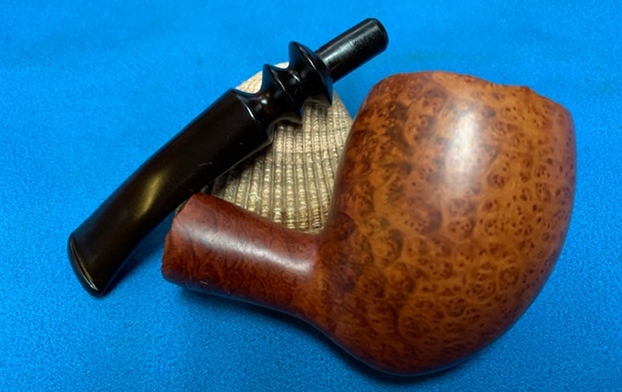
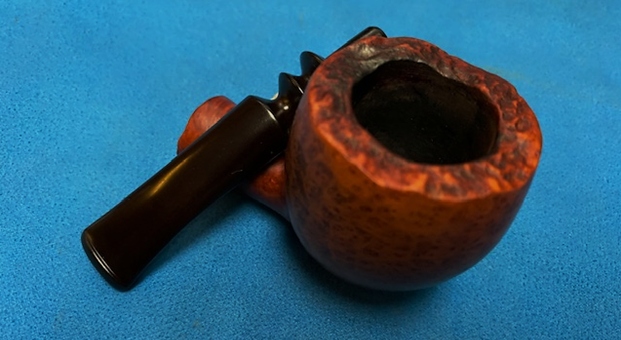
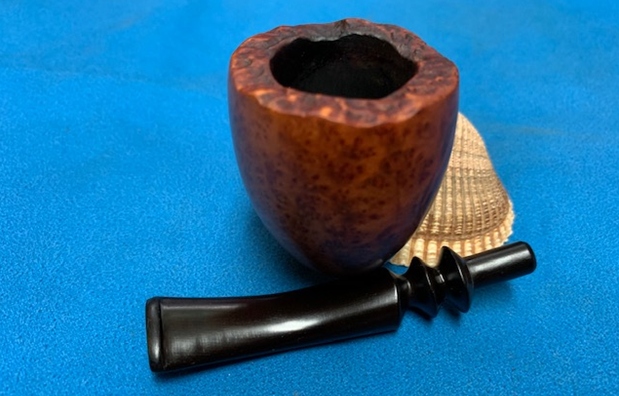
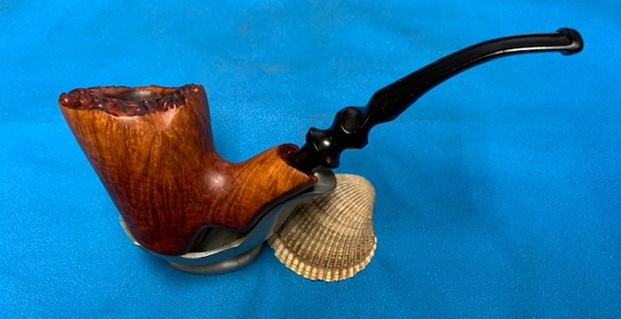
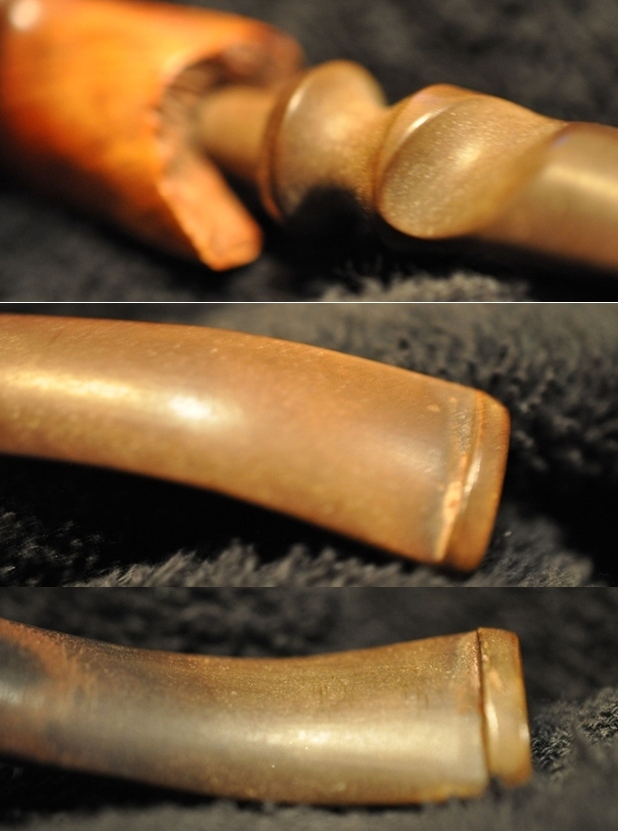
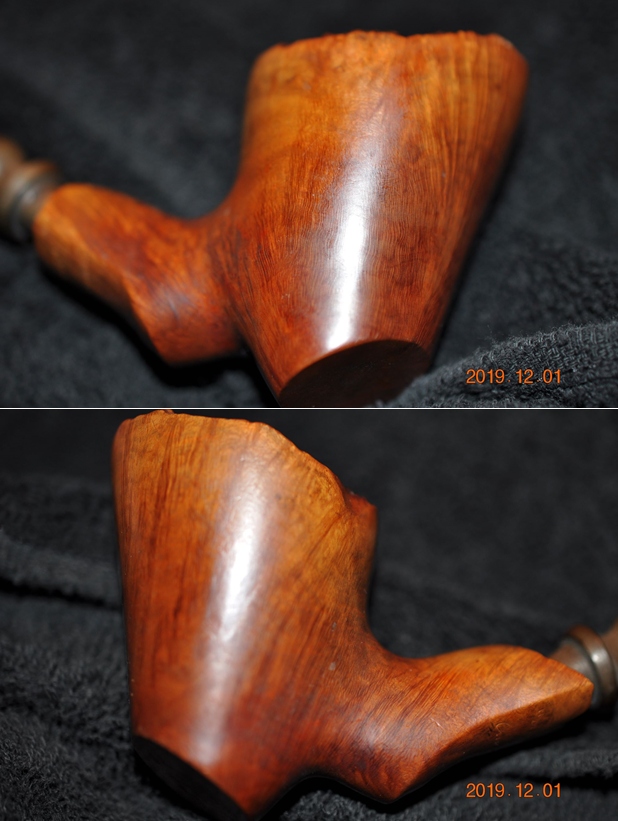
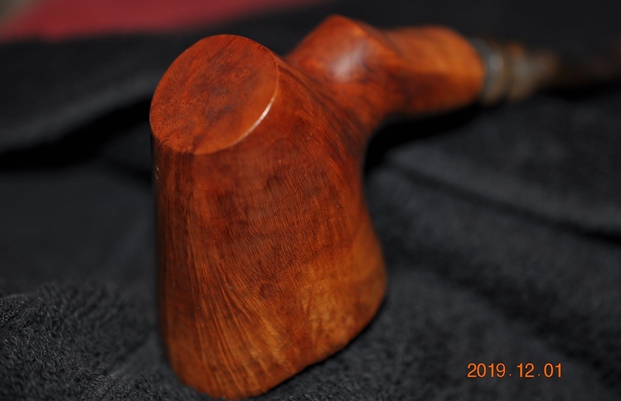
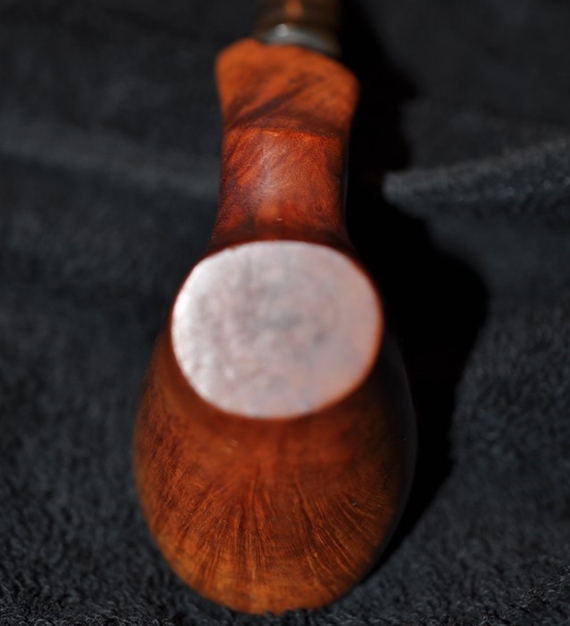
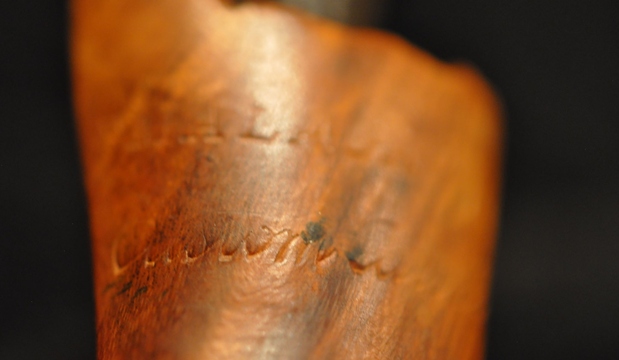
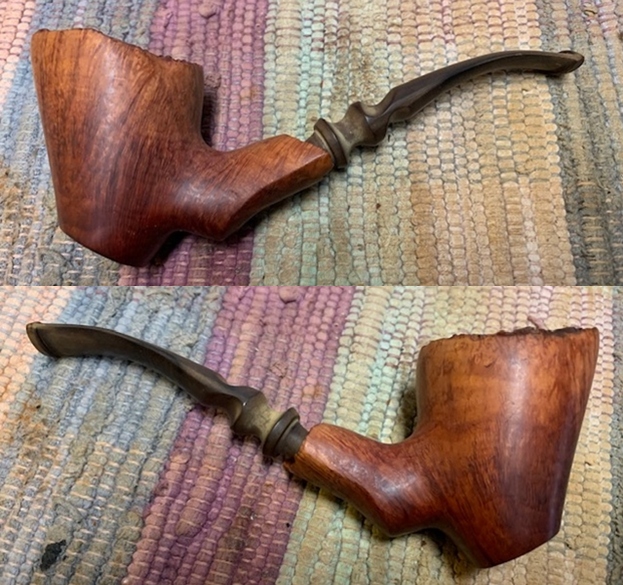
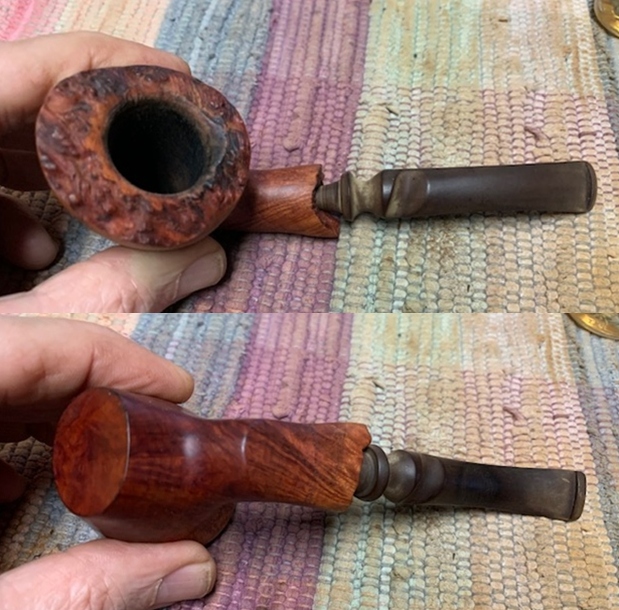
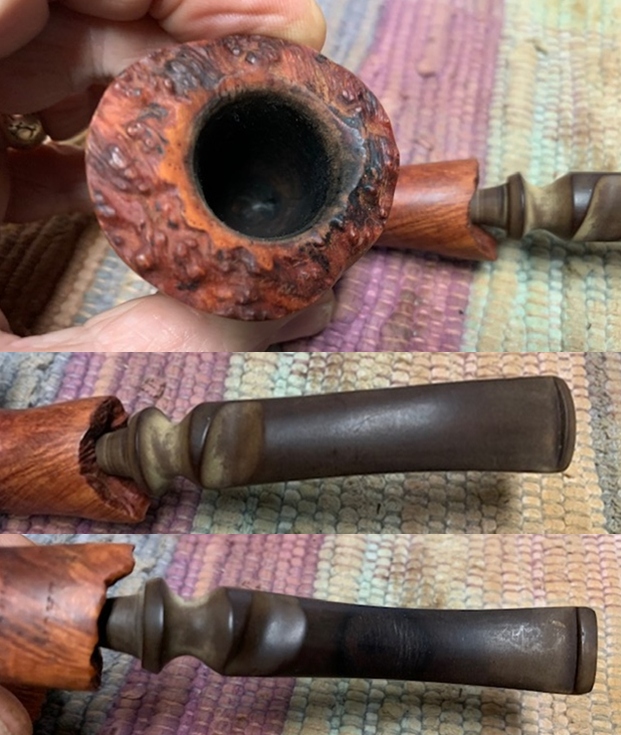
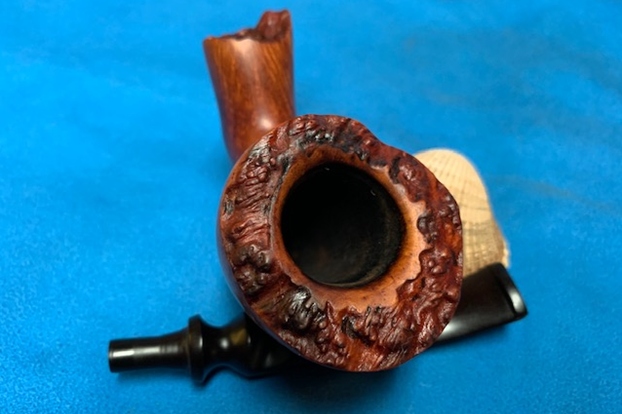
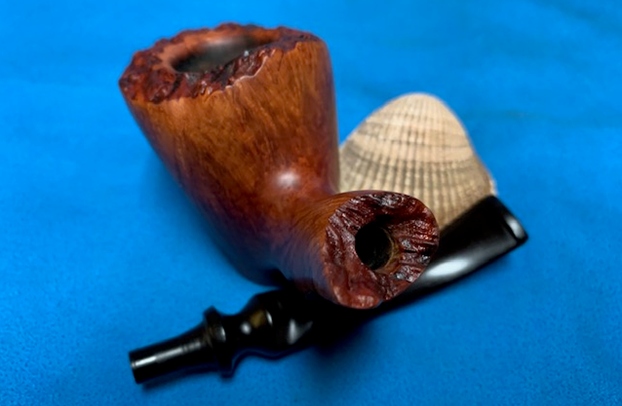
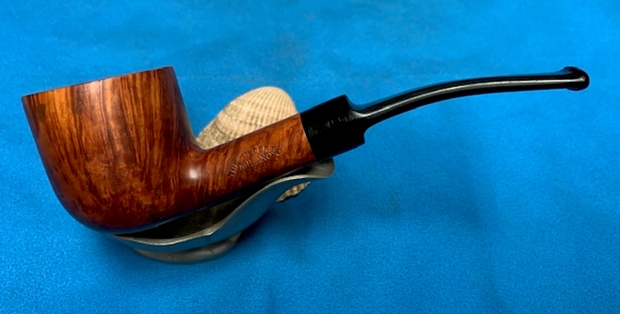
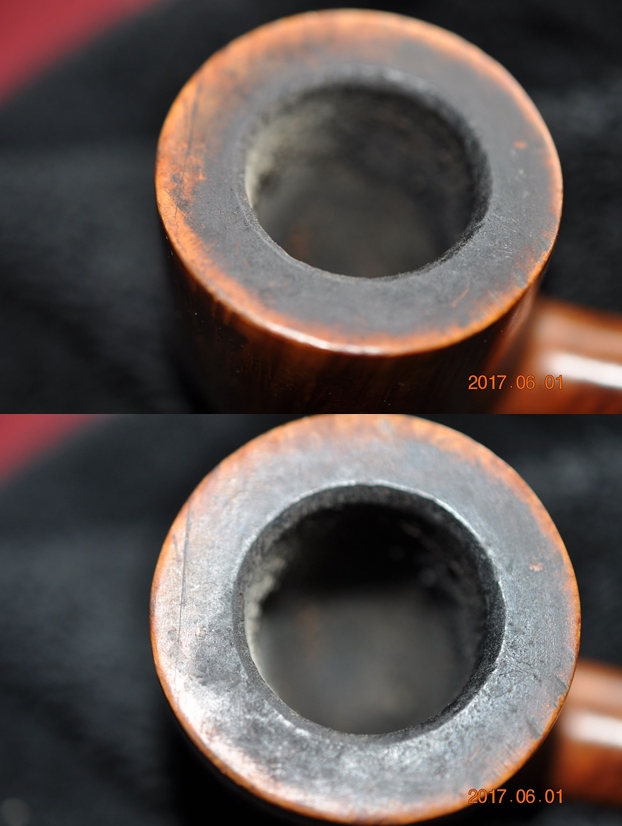
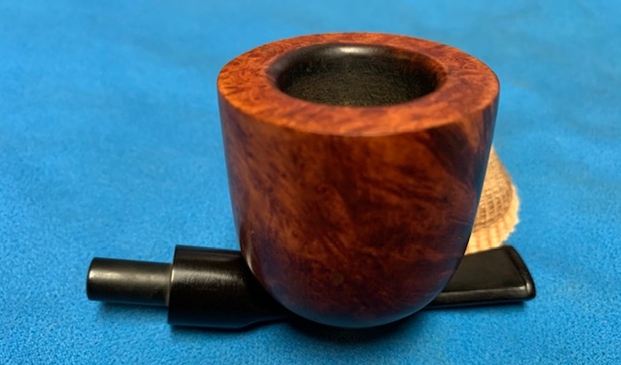
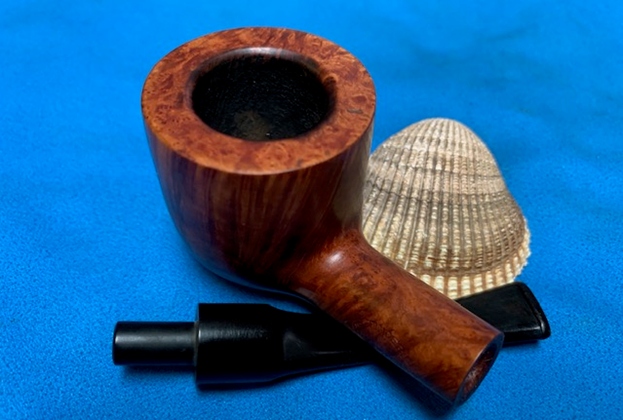
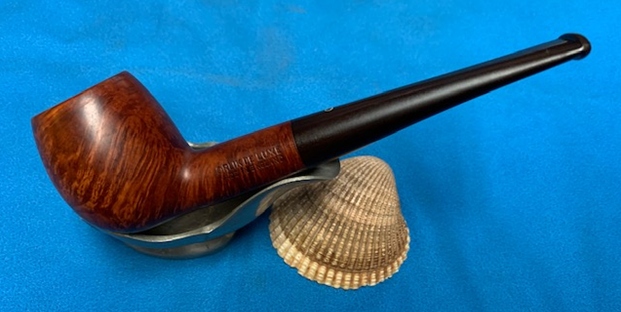
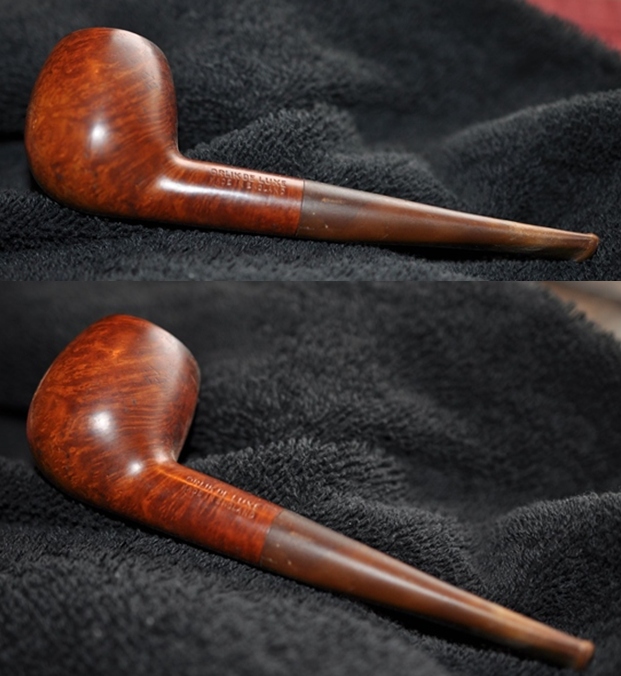
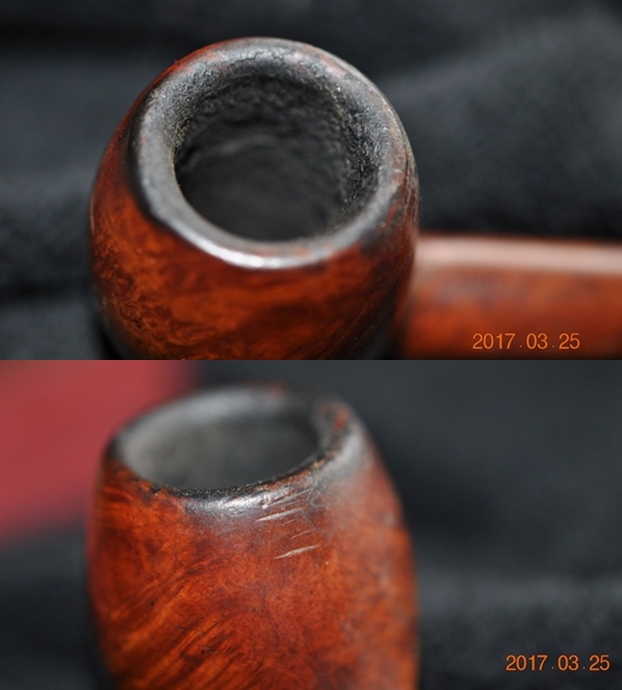
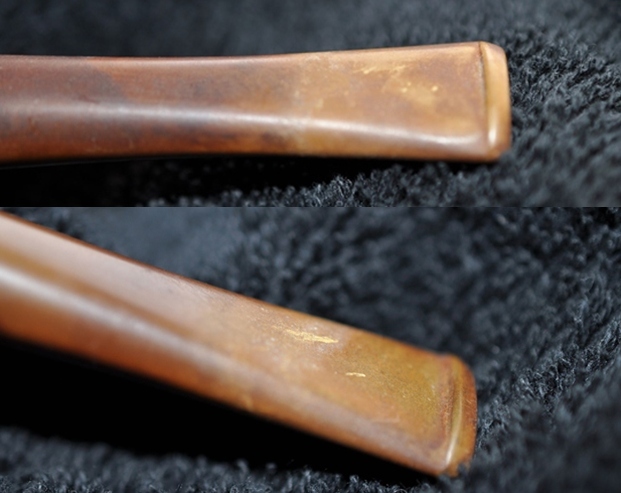
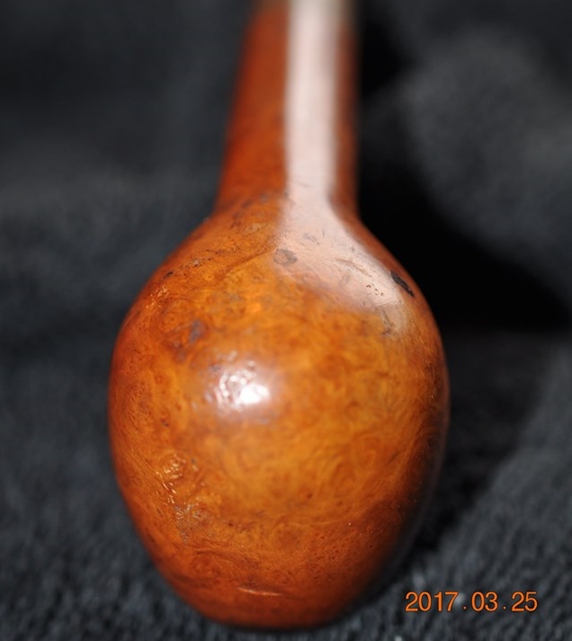
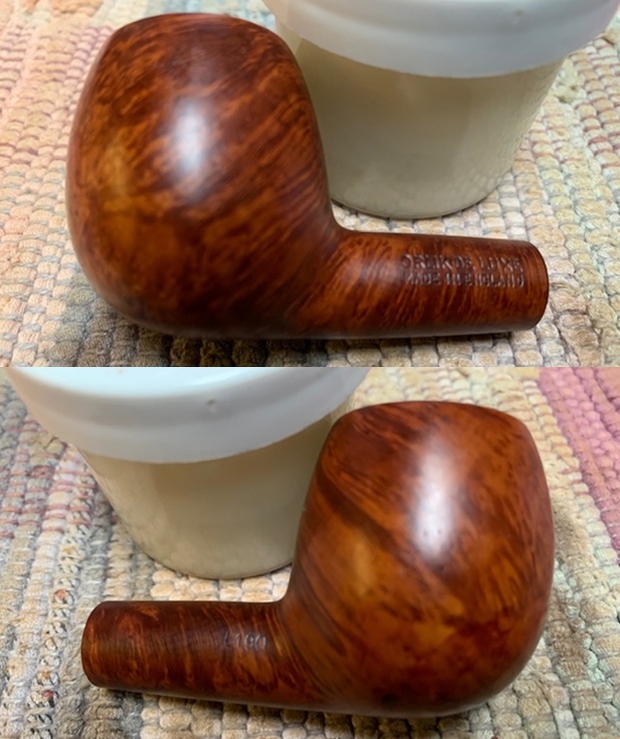
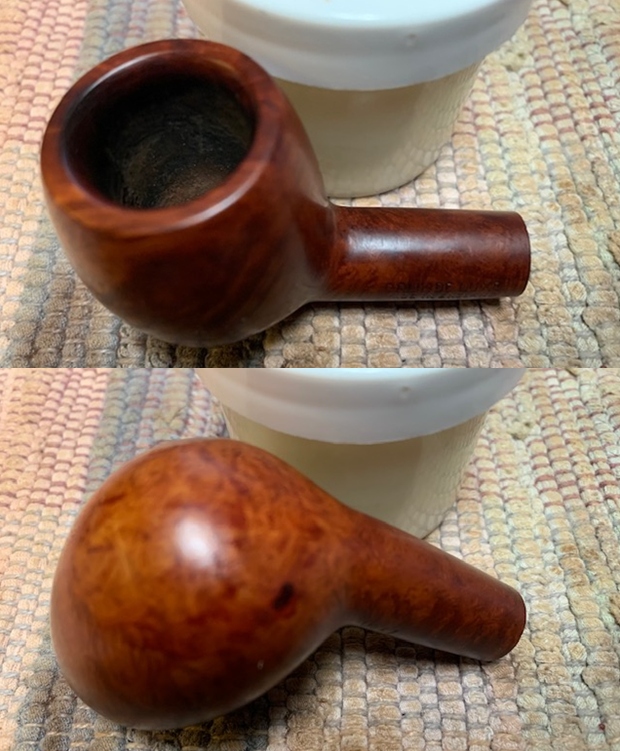
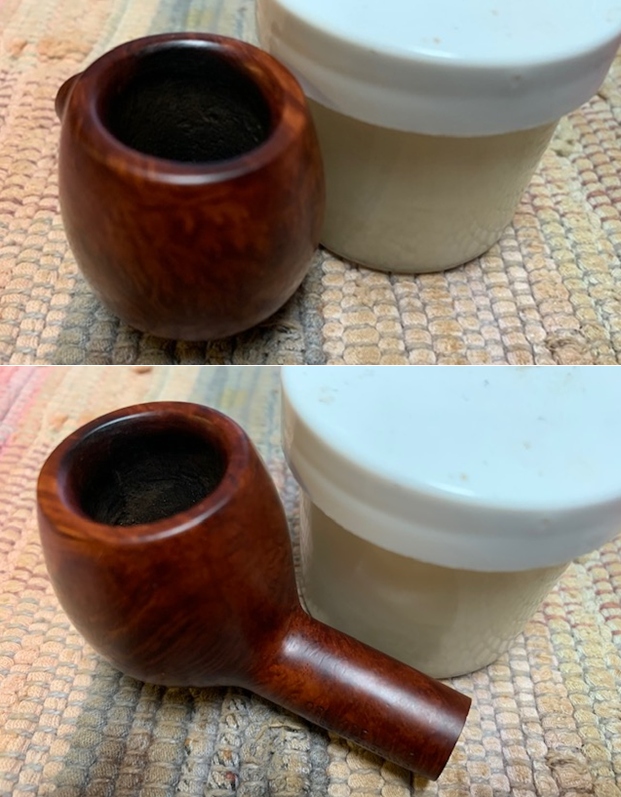
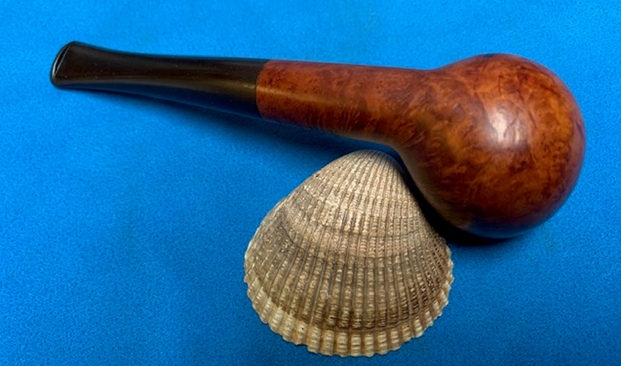
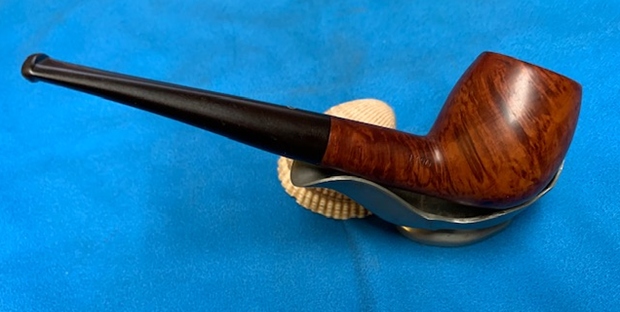
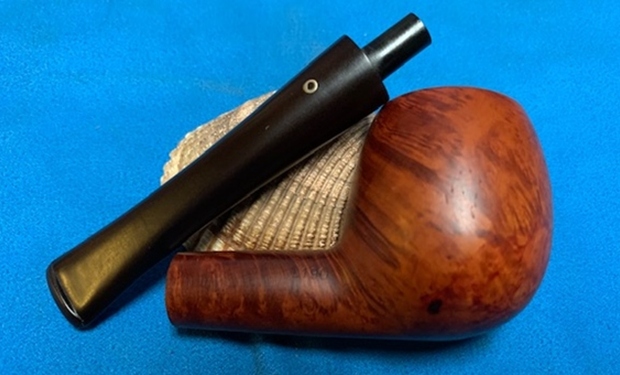
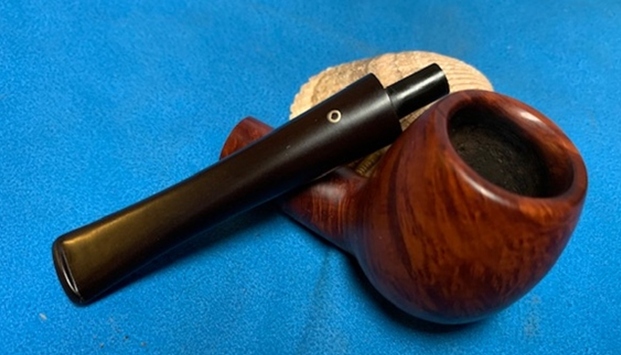
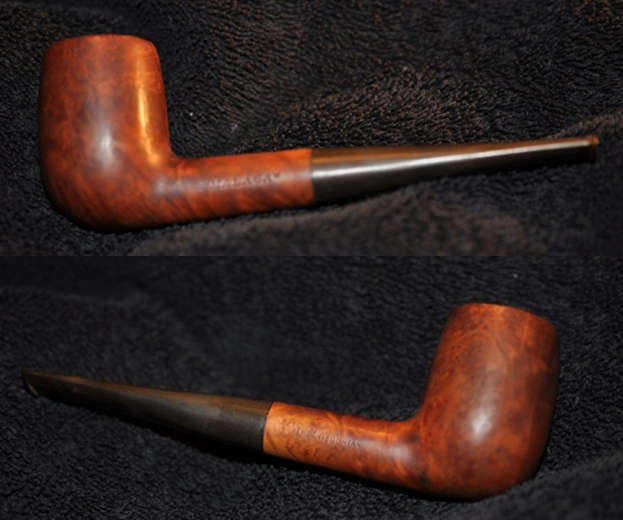
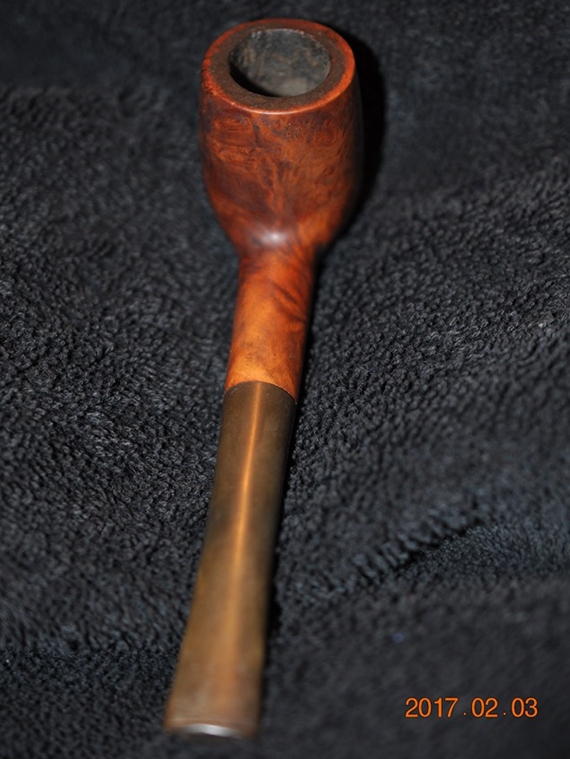
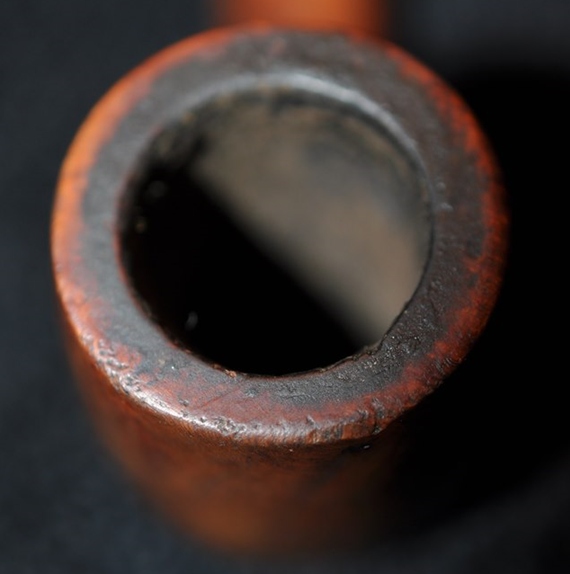
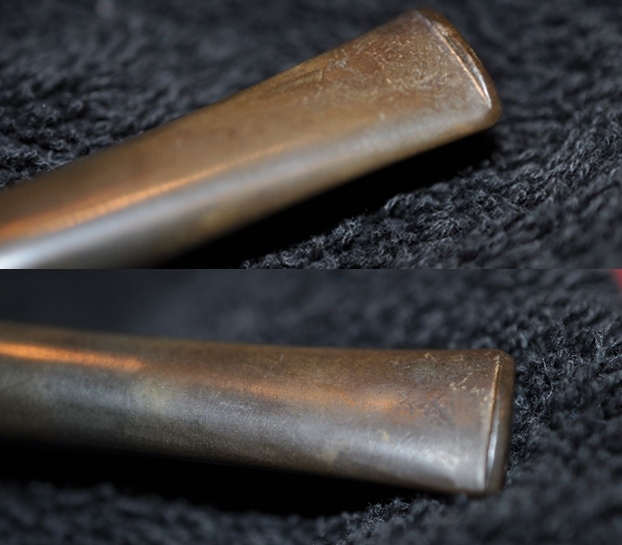
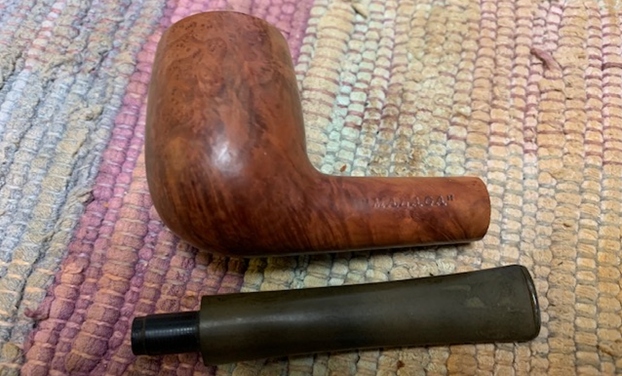
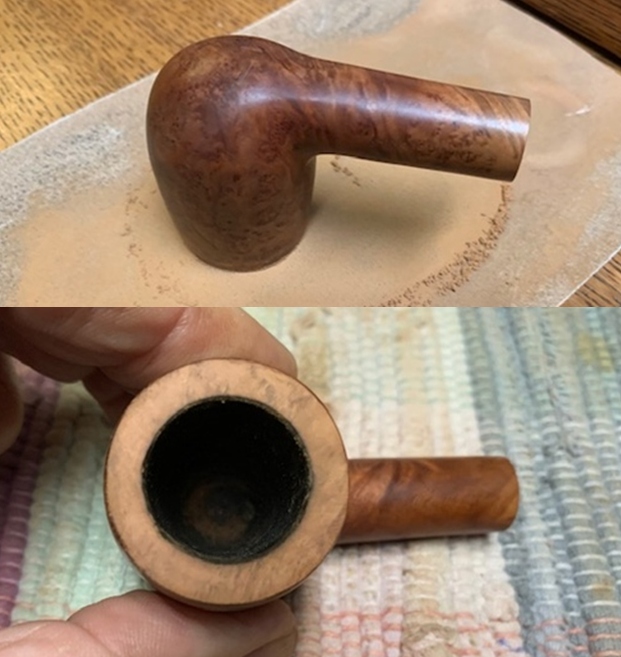
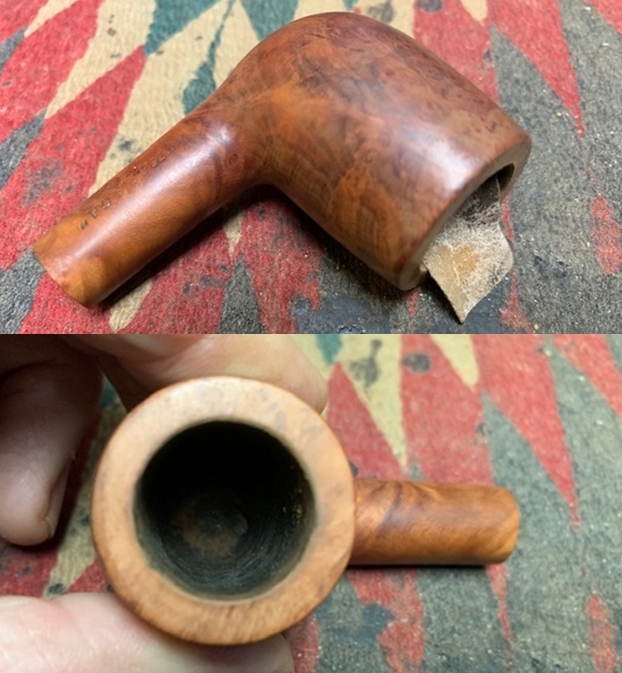
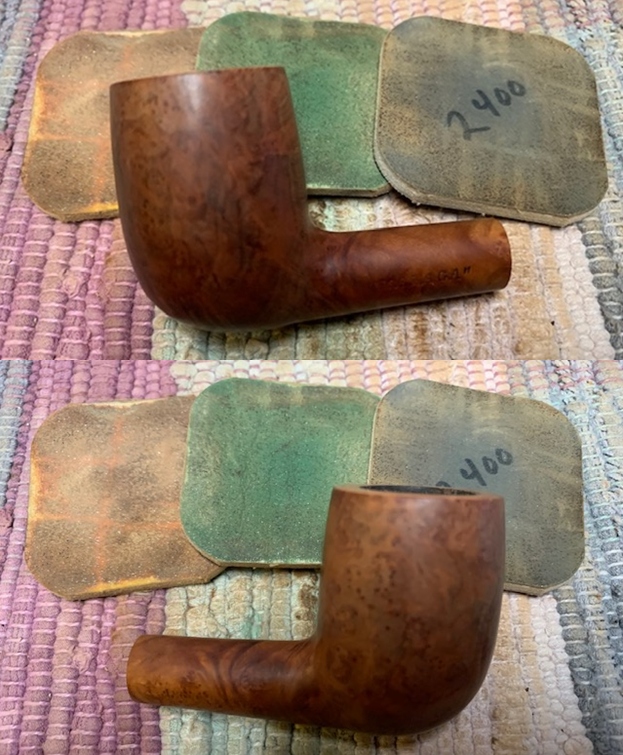
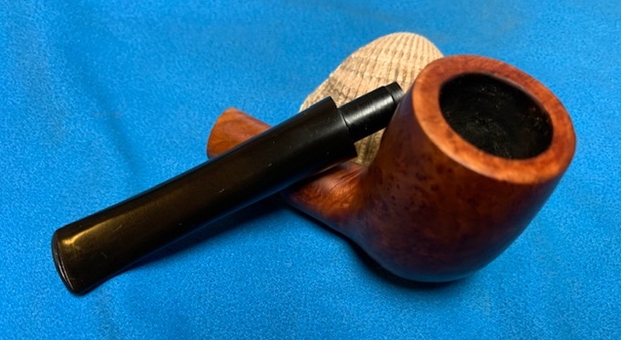
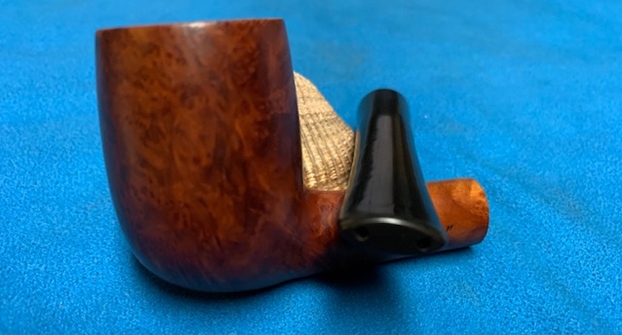
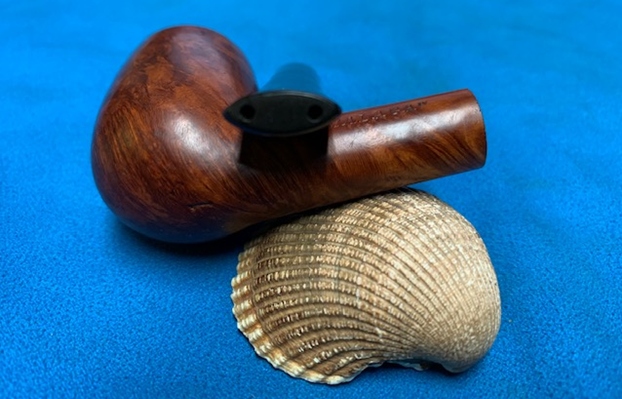
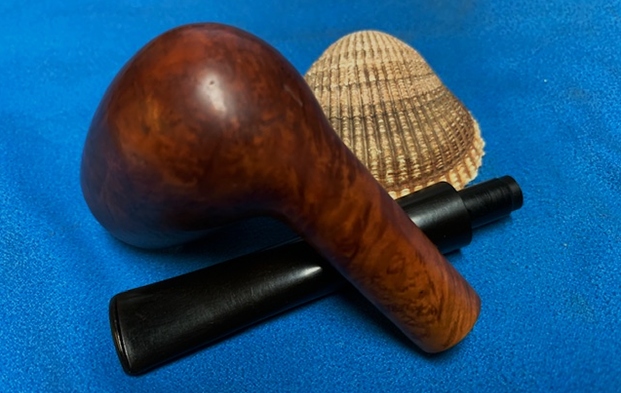
The next pipe on the work table came to us from the large estate purchase of pipes that Jeff and I bought in 2019.  It has been around for over a year waiting to be worked on. Jeff did the original photographs of the pipe in March 2019. It is a beautifully grained large saddle stem billiard that is really quite nice. The shape of the bowl and pipe reminds me of Charatan’s Make billiards that I have worked on in the past. The pipe has cross grain and birdseye grain around the sides of the bowl and shank. The stamping is the readable. It is stamped on the left side of the shank and reads The Tinder Box arched over Unique [over] Made in England. The smooth finish had a lot of grime ground into the bowl and some darkening around the sides of the bowl. The bowl was heavily caked and had some darkening and damage to the inner edge of the bowl and the top of the rim. Overall it appeared that the rim top and inner edge of the bowl looked to be in good shape other than a burned area on the back right edge of the rim. The vulcanite saddle stem was lightly oxidized and had light tooth chatter on the top and underside. The pipe had promise but it was very dirty. Jeff took photos of the pipe before he started his cleanup work. He took photos of the rim top and bowl to give a clear picture of the thickness of the cake and the light overflow of lava on the rim top. He also took photos of the top and underside of the stem to show the oxidation and light chatter and tooth marks on the surface. Jeff took photos of the sides and heel of the bowl to give a picture of what the briar around the pipe looked like. There is some interesting grain under the grime.      He took a photo of the stamping on the left side of the shank. It read as noted above.   To learn about the brand I turned to Pipephil’s website ( http://www.pipephil.eu/logos/en/logo-t6.html). I did a screen capture of the information on the site and it appears that The Tinder Box had pipes made in Italy and England. The one I am working on is a Unique and it is not listed. To me it looks like a Charatan made pipe. This is going to take some more work.I turned to Pipedia (https://pipedia.org/wiki/The_Tinder_Box) for more information. I quote in full the brief article below:

The Tinder Box was the chain of tobacco stores started by Edward Kolpin, Sr., who carved Ed’s Hand Made pipes. The store, eventually sold to a Canadian conglomerate, eventually reached 200 retail outlets by 2007, and in the 40 years it operated on a large scale a great number of pipes were made for The Tinder Box by well respected makers. A few include the Tinder Box Unique, made by Charatan, Christmas Pipes by Ascorti, and the Tinder Box Noble and Exotica, made by Shalom Pipe Factory, Mauro Armellini did make the Verona and Napoli lines.

The article confirms a large number of different pipemakers who made pipes for the Tinder Box. The interesting thing is that Charatan did make the Unique for them. My eye was right – I was dealing with a Charatan Make Unique. Now it was time to work on the pipe.

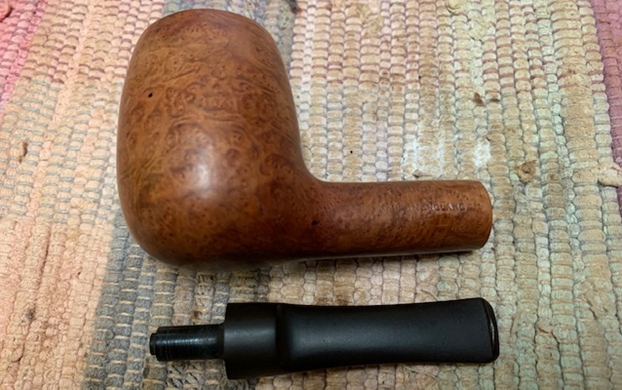
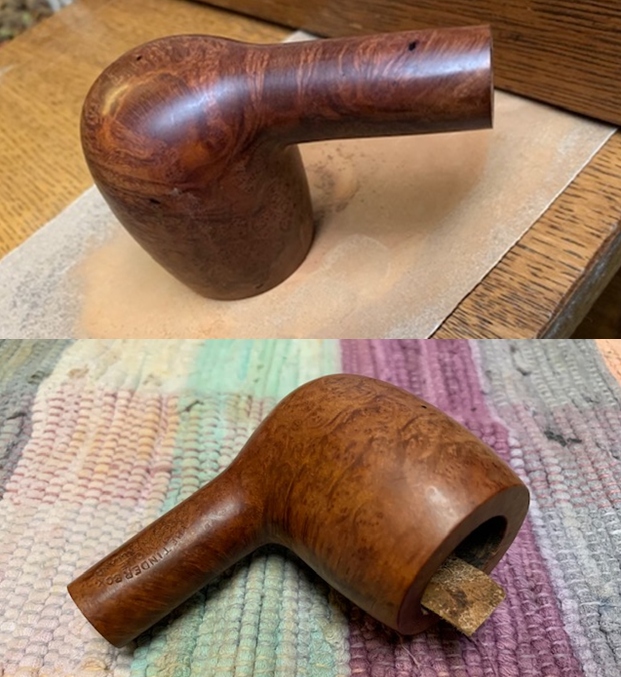
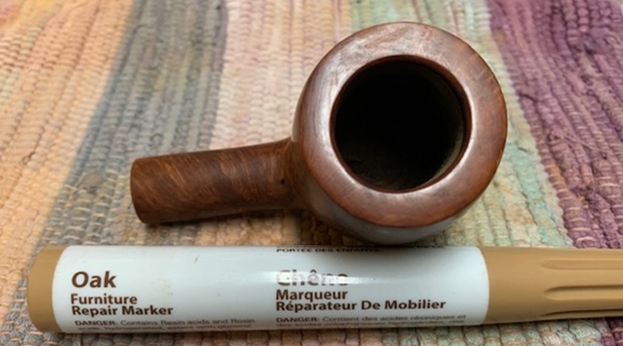
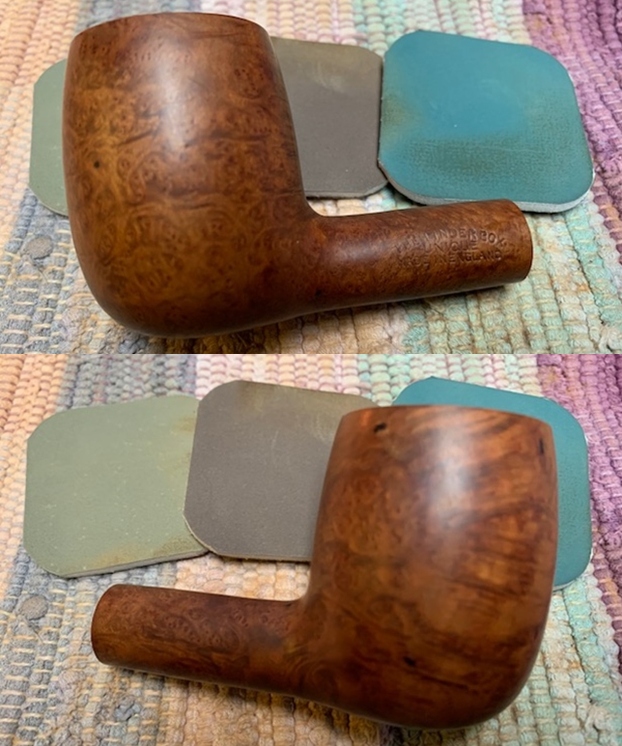
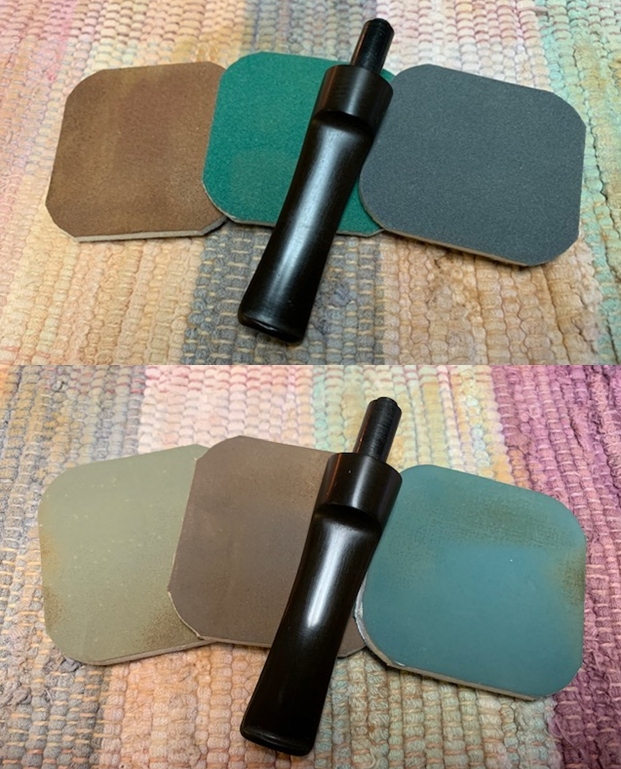
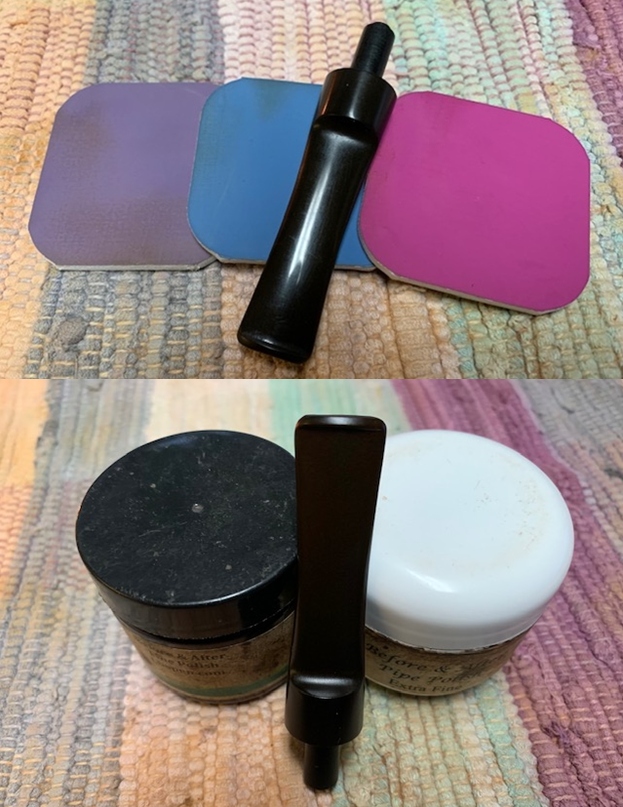
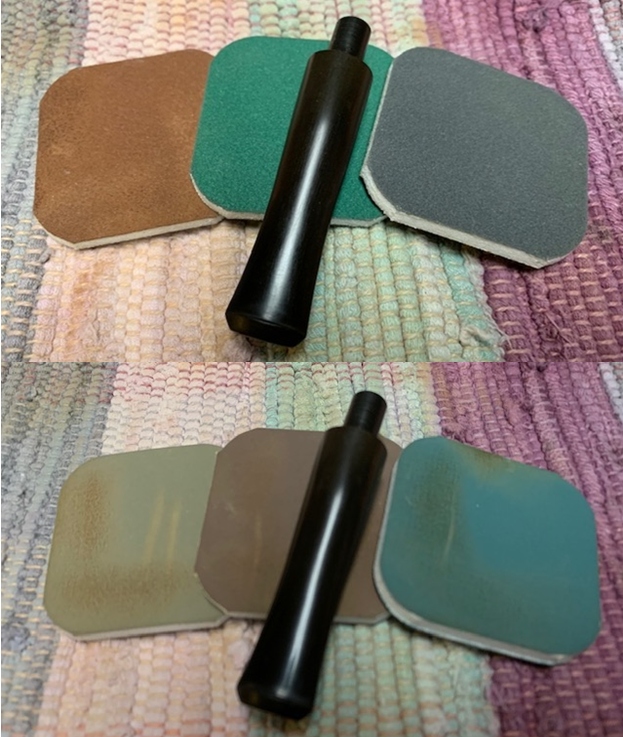
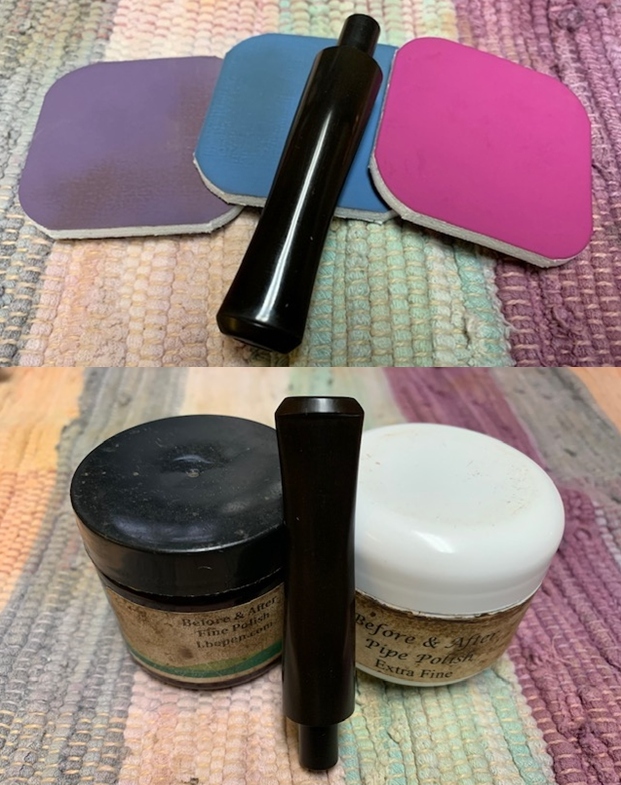
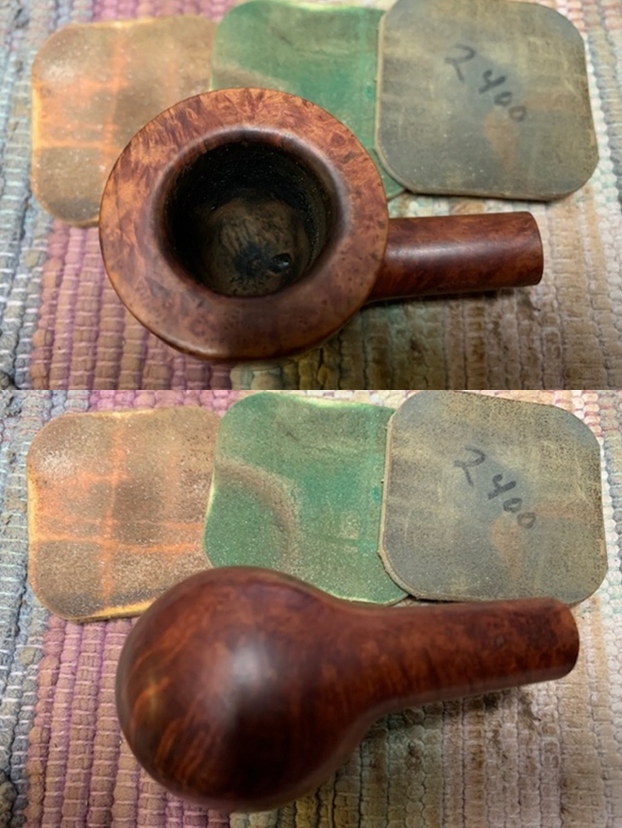
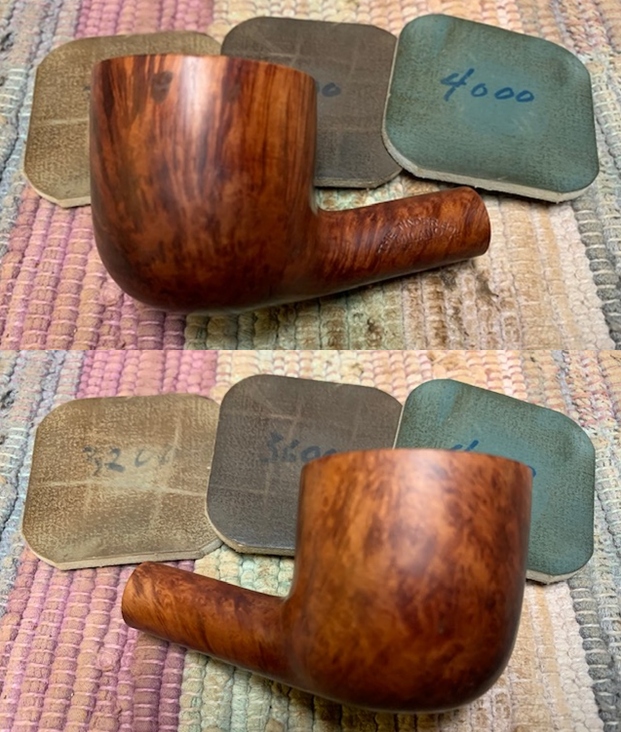
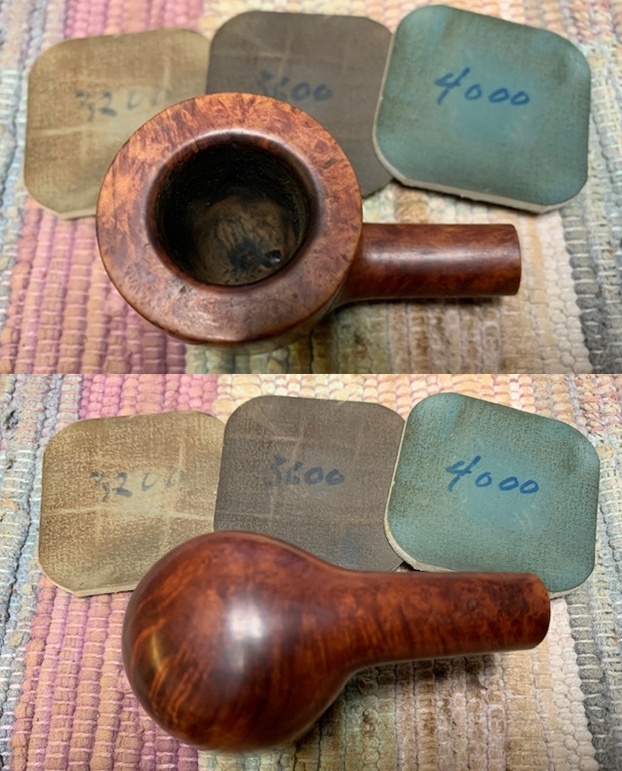
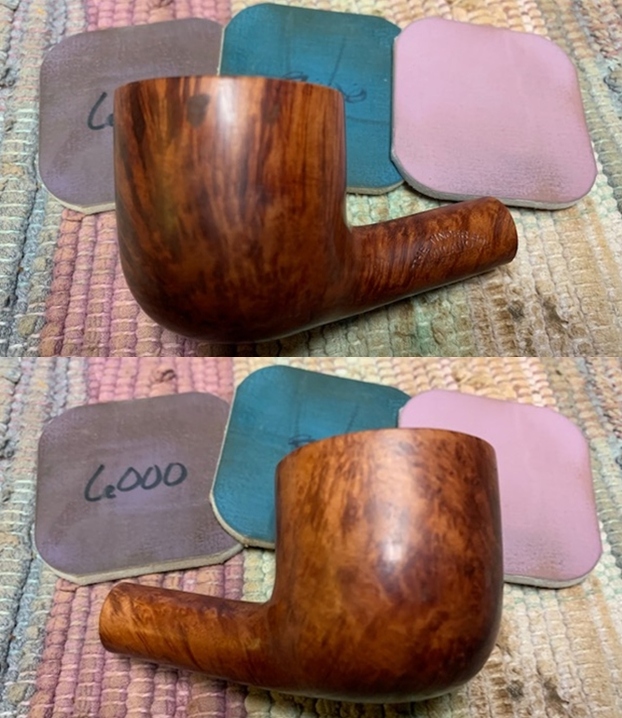
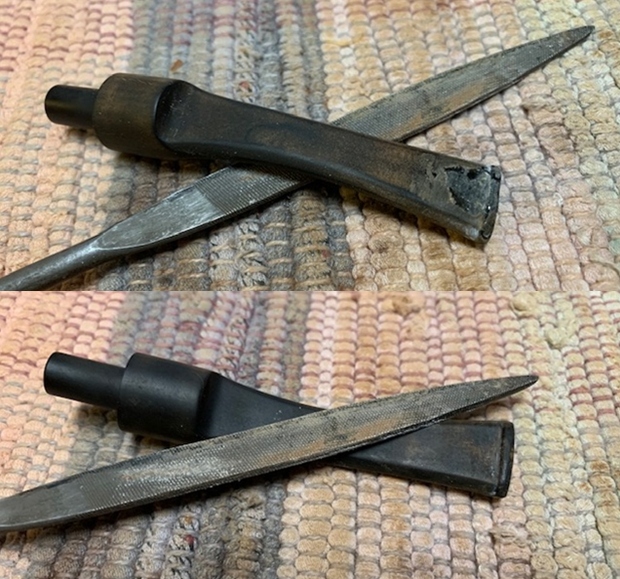
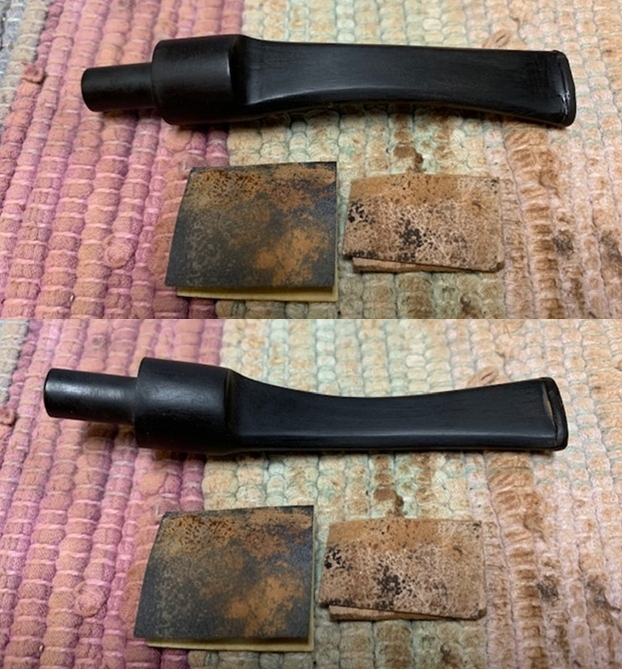
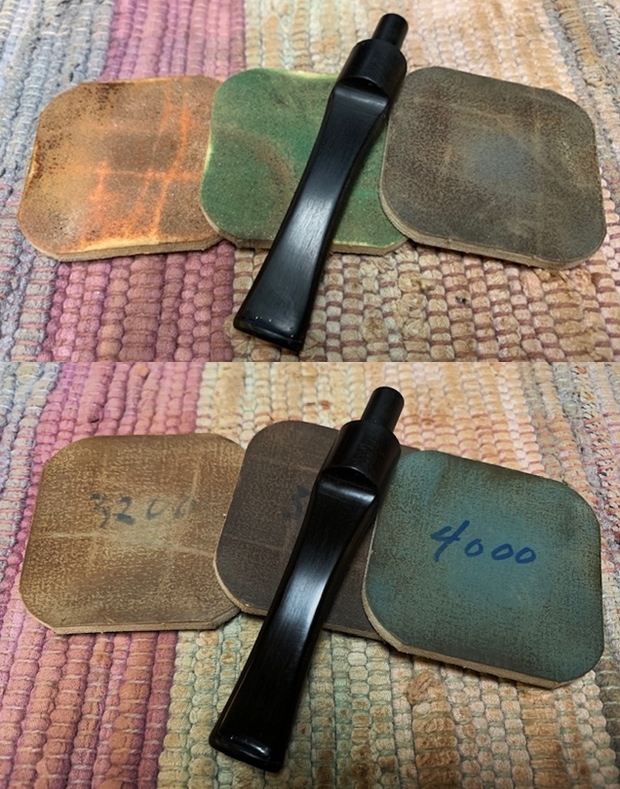
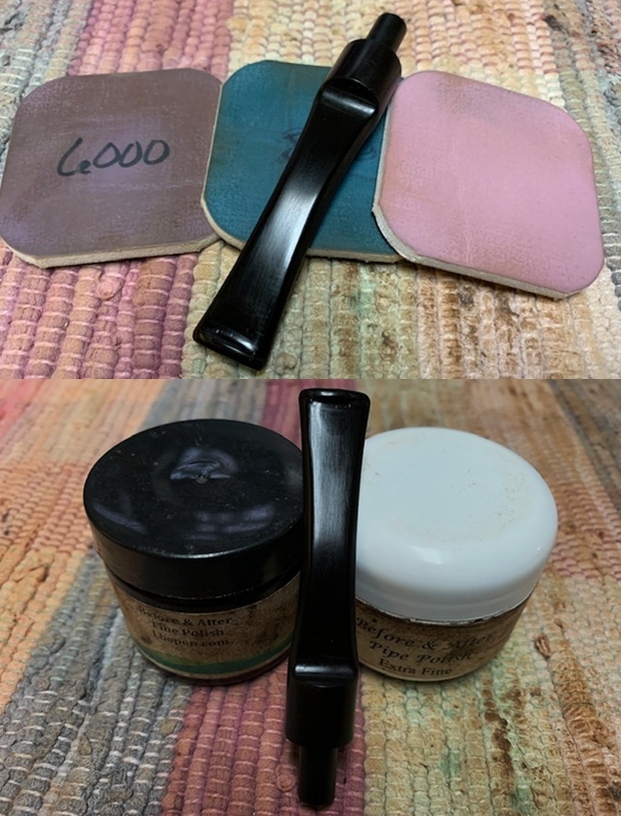
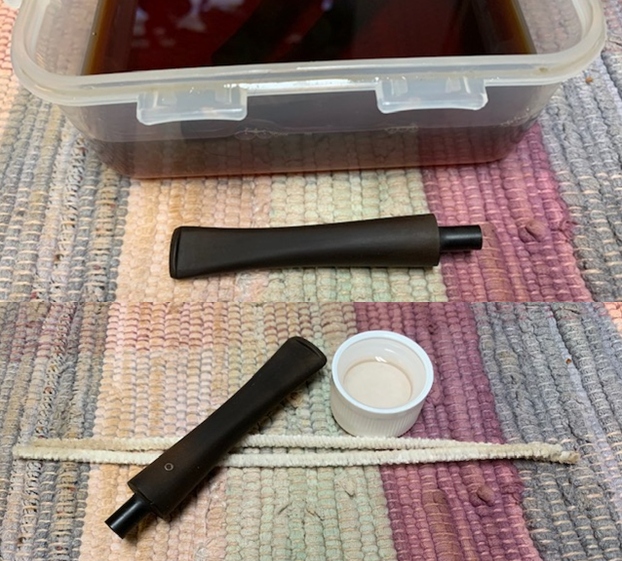
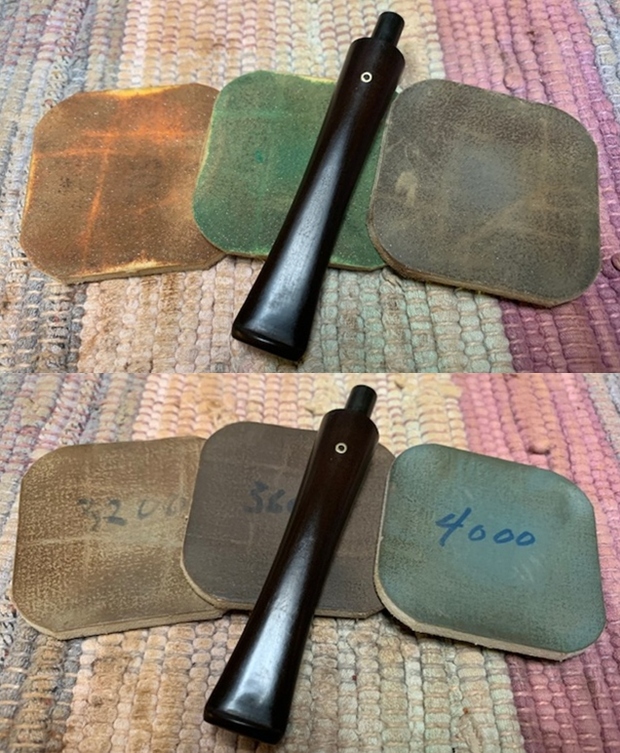
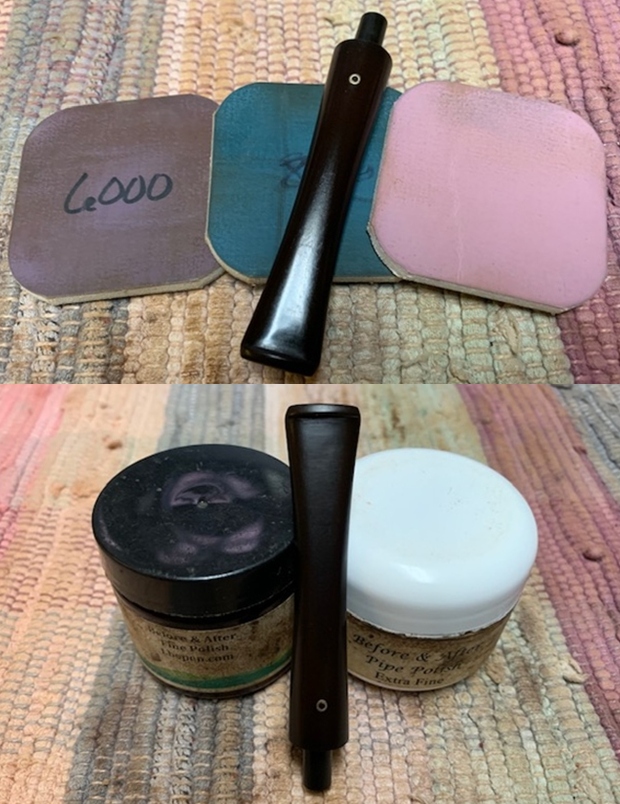
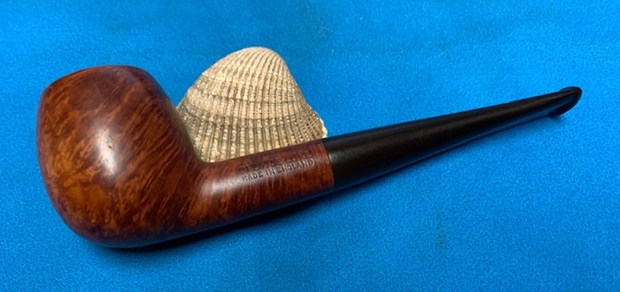
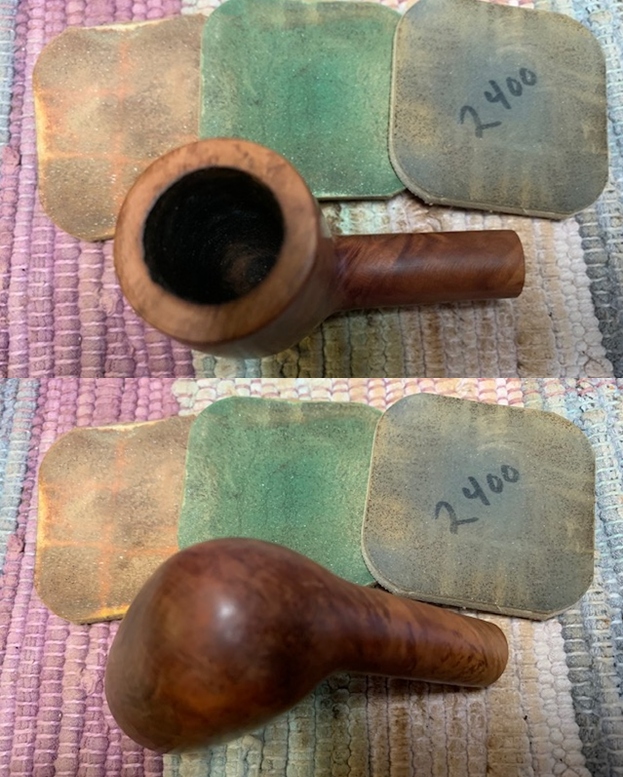
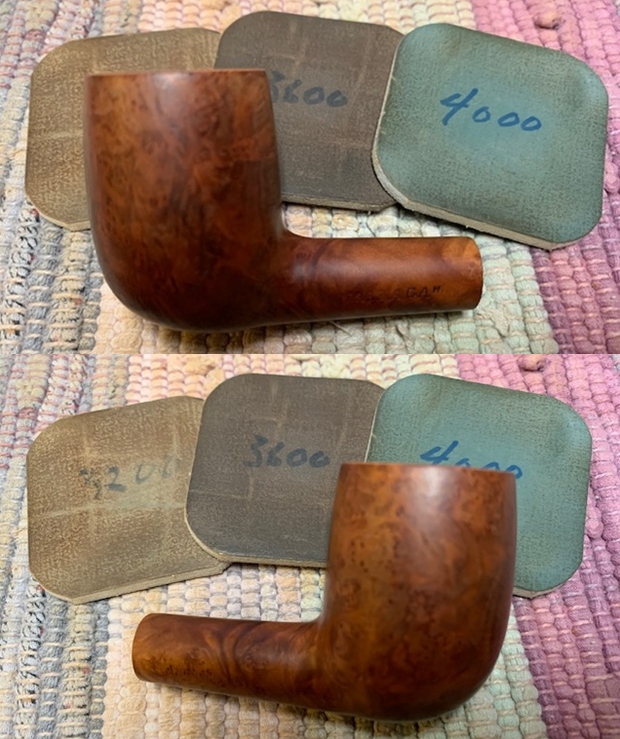
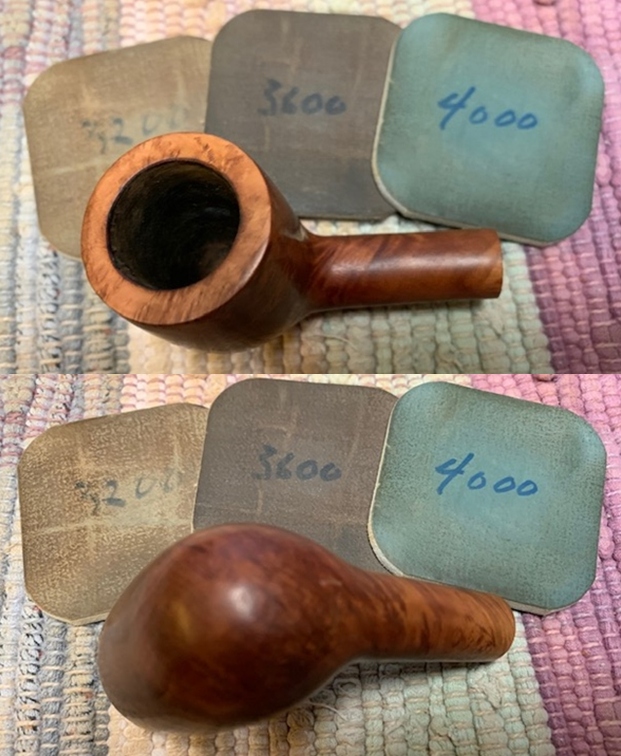
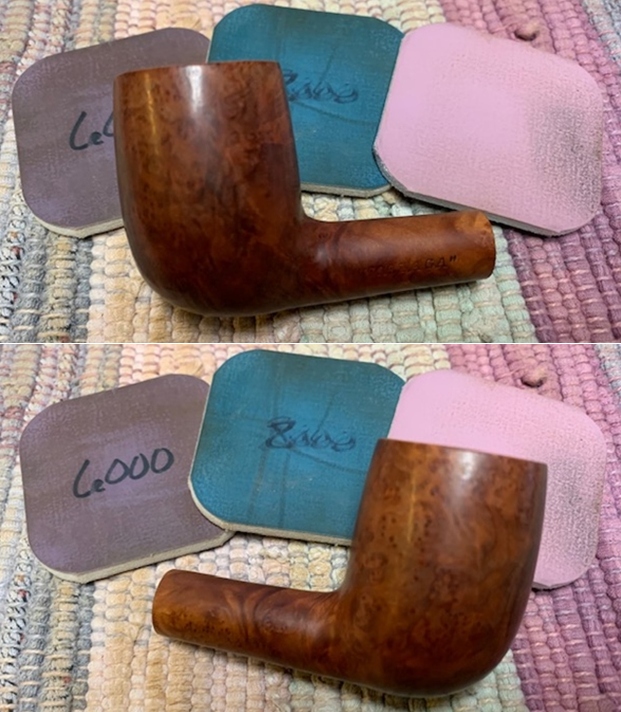
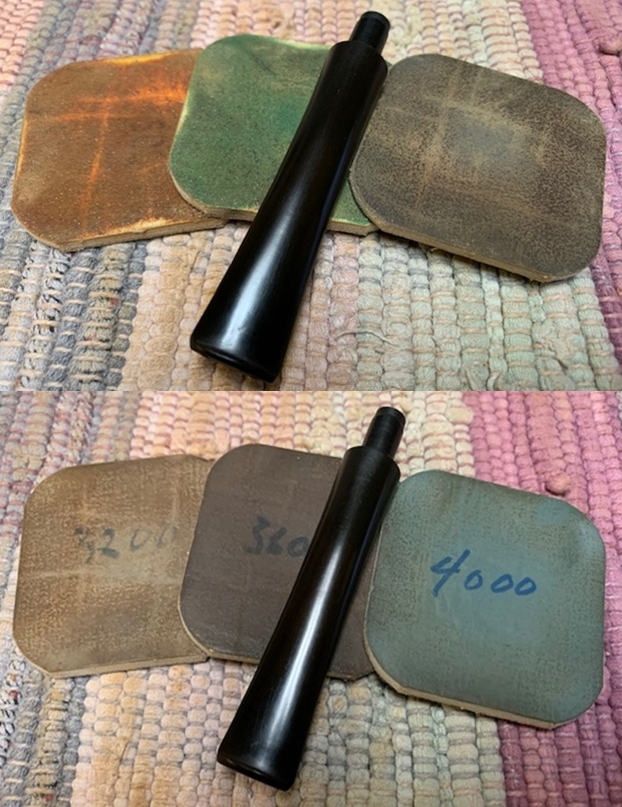
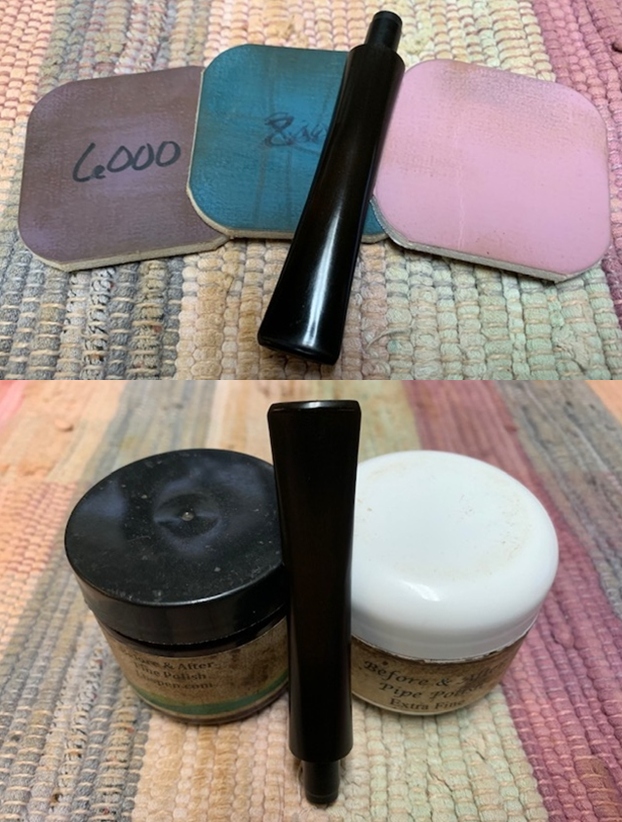
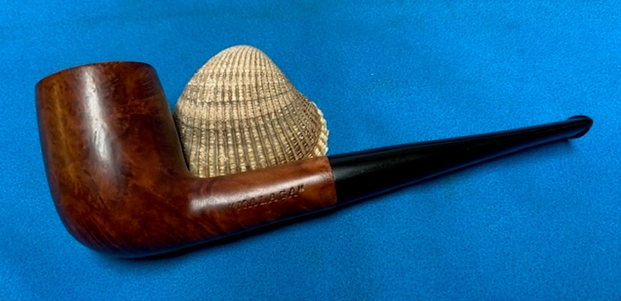
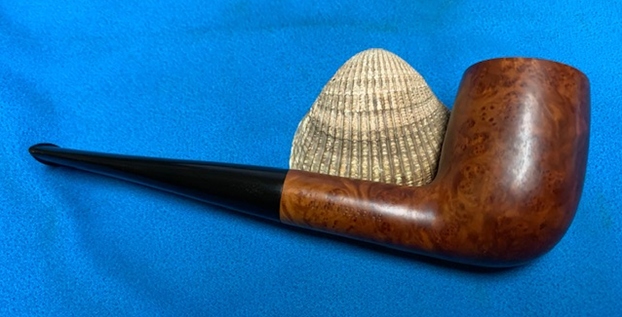
Since Jeff follows the same pattern of work in his cleanup we do not include photos but rather just a simple summary. Jeff reamed the bowl with a PipNet pipe reamer and followed up with a Savinelli Fitsall pipe knife to remove the cake. He scrubbed out the mortise and the airway in the shank and the stem with alcohol, cotton swabs and pipe cleaners. He scrubbed the exterior of the bowl, rim, shank and stem with a tooth brush and Murphy’s Oil Soap to remove the oils and tars on the rim and the grime on the finish of the bowl. He rinsed it under running water. He dried it off with a soft cloth. He was able to remove the lava build up on the rim top and you could see the damages to the top and edges of the rim. I think this pipe may well been before we worked with Mark Hoover’s Before & After Deoxidizer so he cleaned the internals and externals. The stem was clean but lightly oxidized. I took photos of what the pipe looked like when I brought to my worktable.   The rim top cleaned up really well. The lava coat was removed and there was some darkening and burn damage left behind on the back side of the rim top. Other than that the edges were in good condition. The stem surface looked very good with some light tooth chatter and marks on both sides ahead of the button. I took photos of the stamping on the left side of the shank. The stamping was clear and readable.I removed the stem and took a photo of the pipe to give a sense of the well shaped saddle stem billiard. To remove the damage on the rim top and the inner edge of the rim I began by topping the bowl on a topping board with 220 grit sandpaper. I used a folded piece of sandpaper to give the inner edge of the bowl a slight bevel to remove the damaged area.     I polished the bowl and the rim top, sides and shank with micromesh sanding pads – wet sanding with 1500-12000 grit pads and wiping it down after each pad with a damp cloth. I carefully avoided the stamping on the top and underside of the shank so as not to damage the already faint stamping. I paused after the 2400 grit sanding pad and used an Oak Stain Pen to touch up the rim top to match the rest of the bowl. I finished sanding with the rest of the pads -3200-12000 grit pads.  I rubbed the bowl and shank down with Before & After Restoration Balm. I worked it into the surface of the bowl sides and shank with my fingertips to clean, enliven and protect the briar. I let the balm sit for a little while and then buffed with a cotton cloth to raise the shine.    I set the bowl aside and turned my attention to the stem. It was in very good condition so I did not have to do any repairs or preliminary sanding. I began by working with micromesh sanding pads – 1500-12000 grit pads. I wiped the stem down with Obsidian Oil after each sanding pad. I used Before & After Pipe Polish – both Fine and Extra Fine to further polish the stem.     This well made, classic Chartan Made The Tinder Box Unique Saddle Stem Billiard is a great looking pipe now that it has been restored. The rich brown finish that was used came alive with the polishing and waxing. The small sandpit/fills are virtually invisible. I put the stem back on the bowl and carefully buffed the pipe with Blue Diamond on the buffing wheel using a light touch on the briar. I gave the bowl and the stem multiple coats of carnauba wax on the buffing wheel and followed that by buffing the entire pipe with a clean buffing pad. I hand buffed the pipe with a microfiber cloth to deepen the shine. The finished Unique Billiard is a beauty with combination of great grain and rich stain. It fits nicely in the hand and looks very good. Give the finished pipe a look in the photos below. The dimensions of the pipe are Length: 5 ½ inches, Height: 2 inches, Outside diameter of the bowl: 1 ½ inches, Chamber diameter: 7/8 of an inch. If you are interested in adding this pipe to your collection send me a message or an email. Thanks for reading this blog and my reflections on the pipe while I worked on it. There are many more to come!


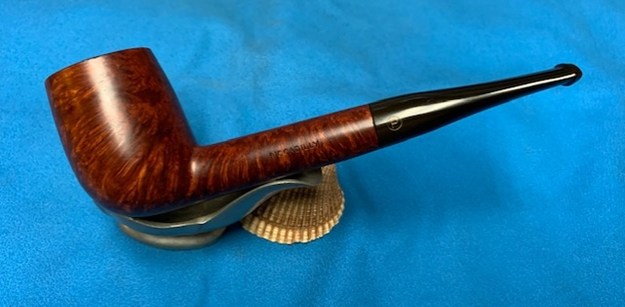
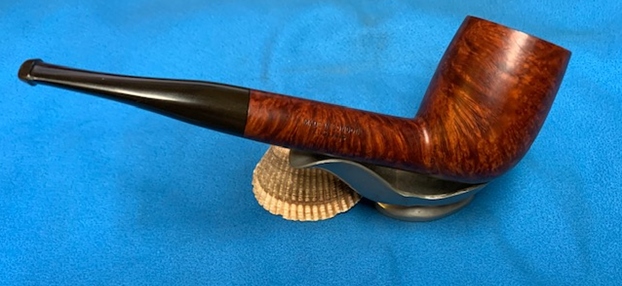
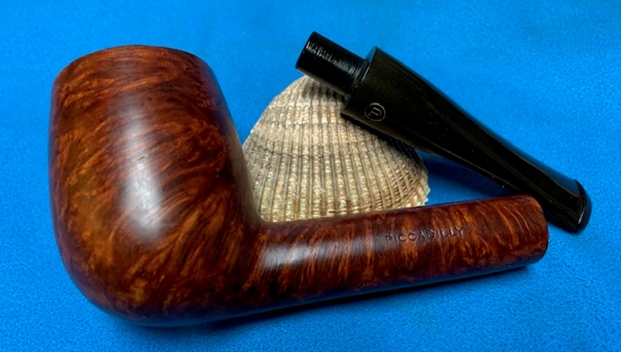
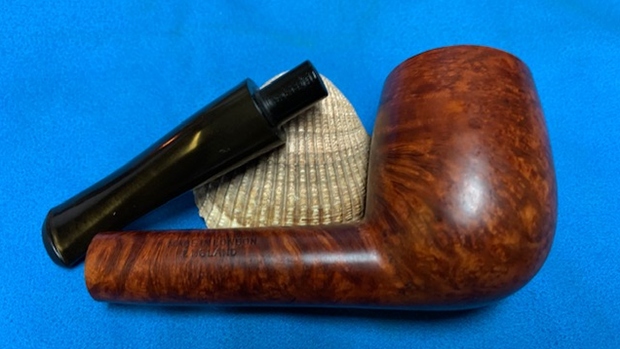
New Beginnings for a Piccadilly Liverpool


Blog by Steve Laug

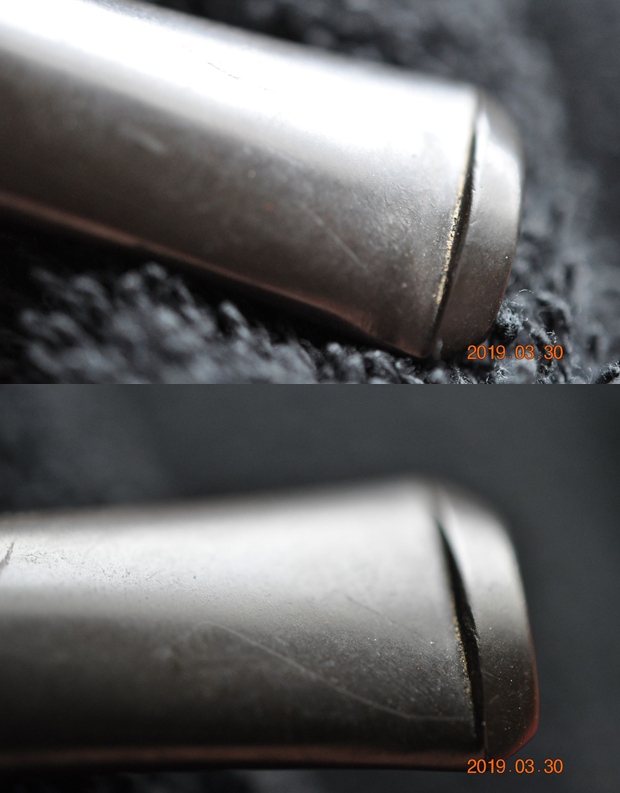
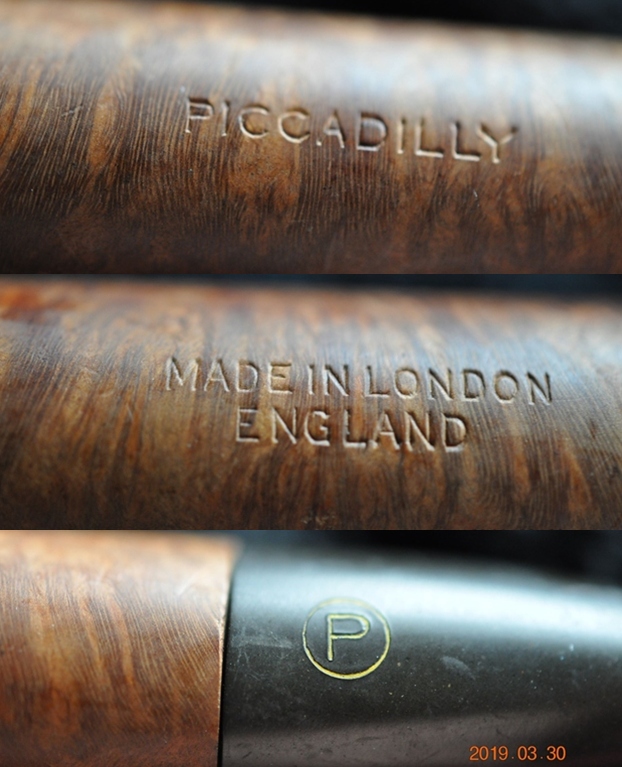
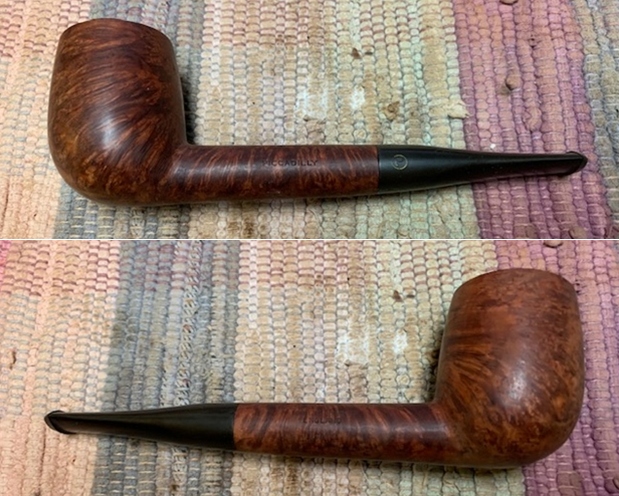
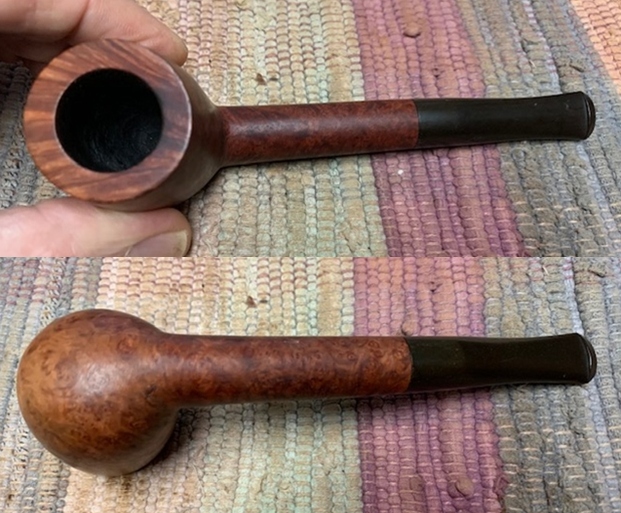
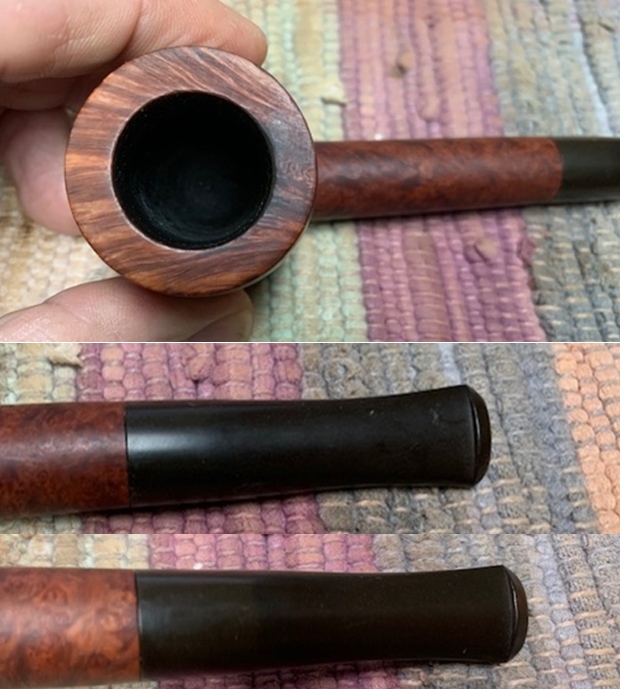
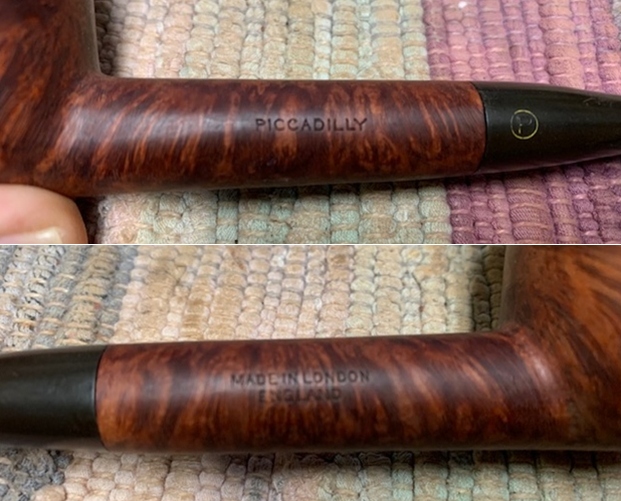
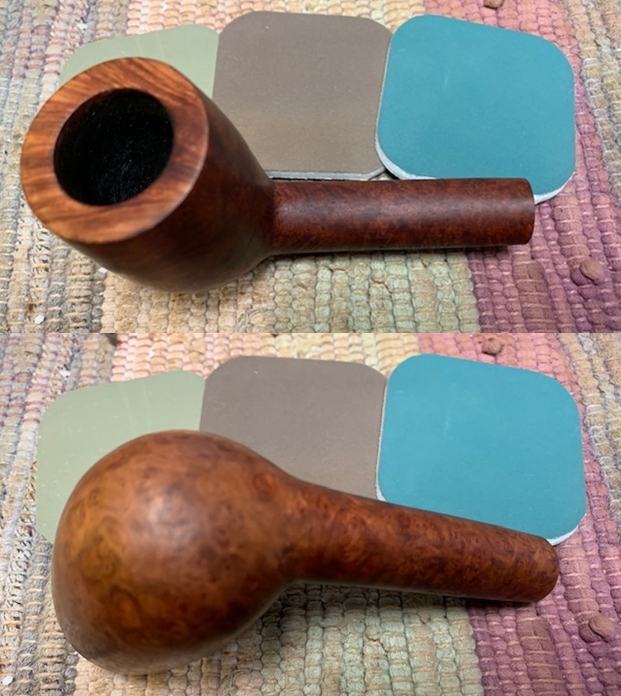
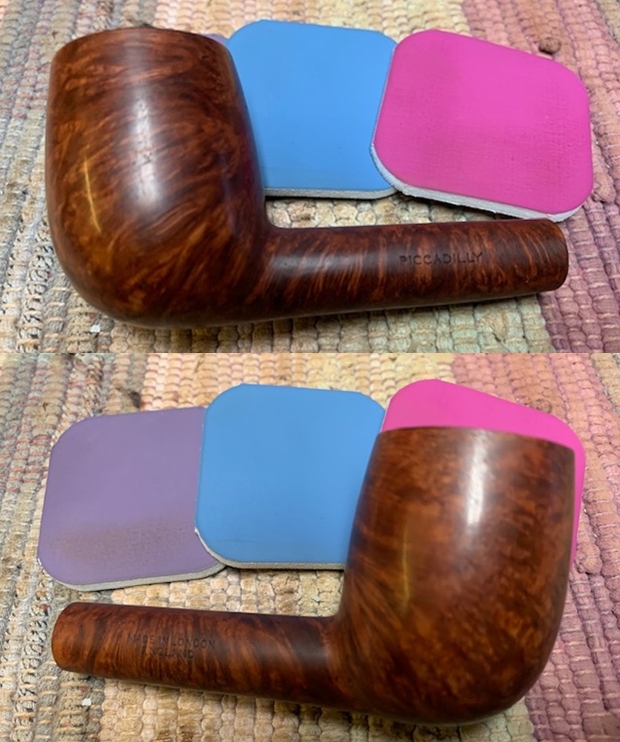
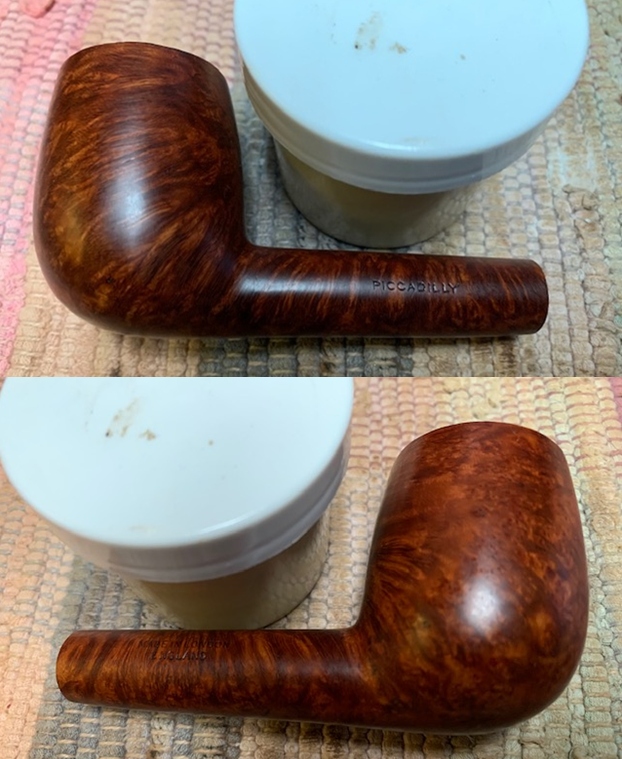
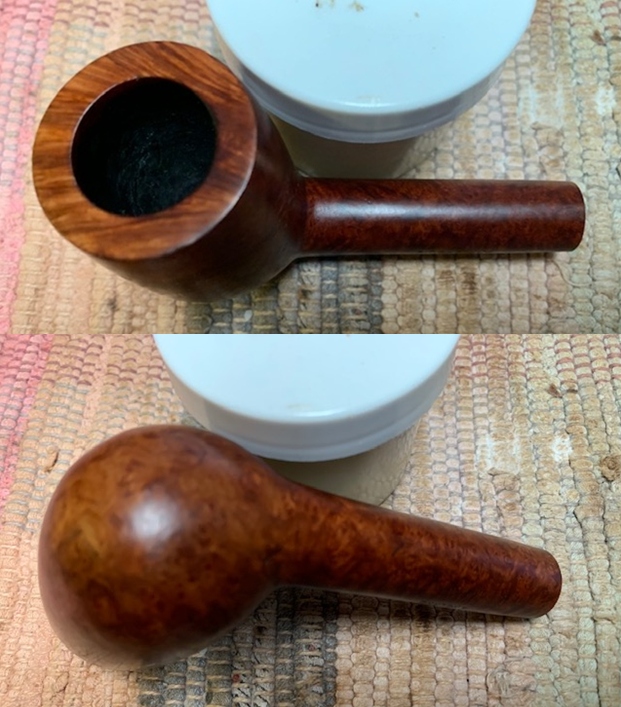
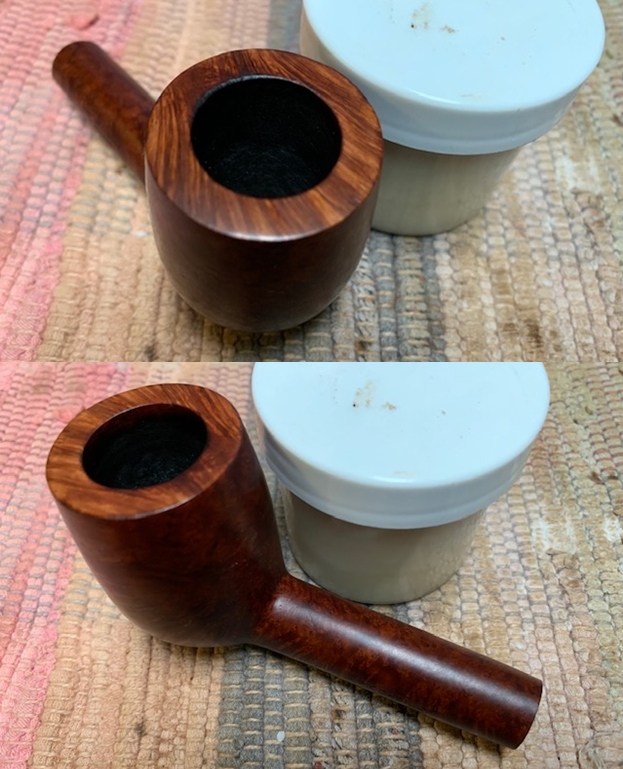
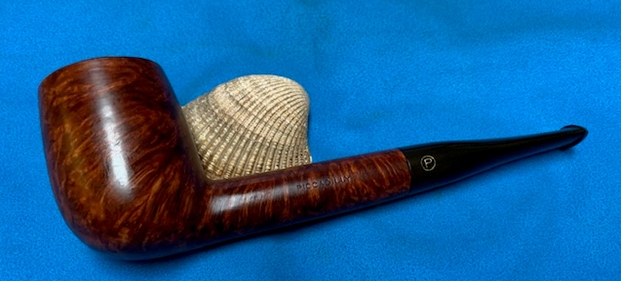
The next pipe on the work table came to me from the large estate purchase of Bertrams and assorted other pipes that included several Piccadilly pipes. It has been around for a while waiting to be worked on. Jeff did the original photographs of the pipe in March 2019. It is a beautifully grained large Liverpool that is really quite nice. The pipe has cross grain on the sides and shank and birdseye grain on the front and back of the bowl. The stamping is the readable. It is stamped on the left side of the shank and reads the PICCADILLY. On the right side it reads Made in London England. The smooth finish had a lot of grime ground into the bowl and some darkening around the sides of the bowl. The bowl was heavily caked and had a light overflow of lava on the top of the rim. Overall it appeared that the rim top and inner edge of the bowl looked to be in good shape under the grime. The vulcanite taper stem was lightly oxidized and had light tooth chatter on the top and underside. The pipe had promise but it was very dirty. Jeff took photos of the pipe before he started his cleanup work. He took photos of the rim top and bowl to give a clear picture of the thickness of the cake and the overflow of lava on the rim top. He also took photos of the top and underside of the stem to show the oxidation and light chatter on the surface.   Jeff took photos of the sides and heel of the bowl to give a picture of what the briar around the pipe looked like. There is some interesting grain under the grime.       He took photos of the stamping on the underside of the shank. They read as noted above.    To learn about the brand I turned to Pipephil’s website (http://www.pipephil.eu/logos/en/logo-p3.html). I did a screen capture of the information on the site and it appears that the pipe was made either in the US by Weber or in England by Baron & Co. This is going to take some more work.I turned to Pipedia and there were no listings on the brand name. I also checked under Baron and Company and found nothing listed there either. This is a bit of a mystery brand. Some of the pipes that we picked up bore the Piccadilly stamp as well as the Peretti stamp from the historic Boston Tobacconist. I wonder if there is a link between the Pipe Shop and the brand. Furthermore the Circle P stamp on the stem is the same stamp on Peretti pipes! To me this adds to the connection.

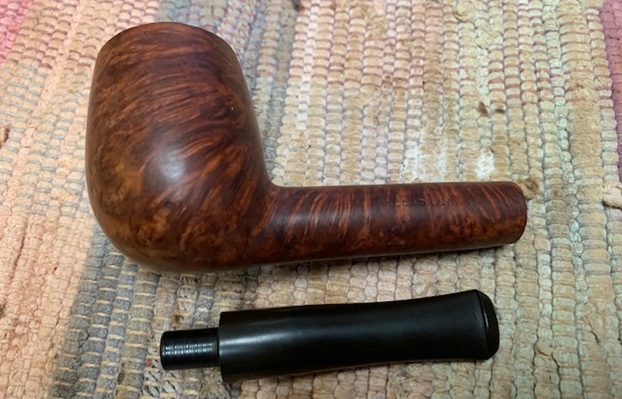
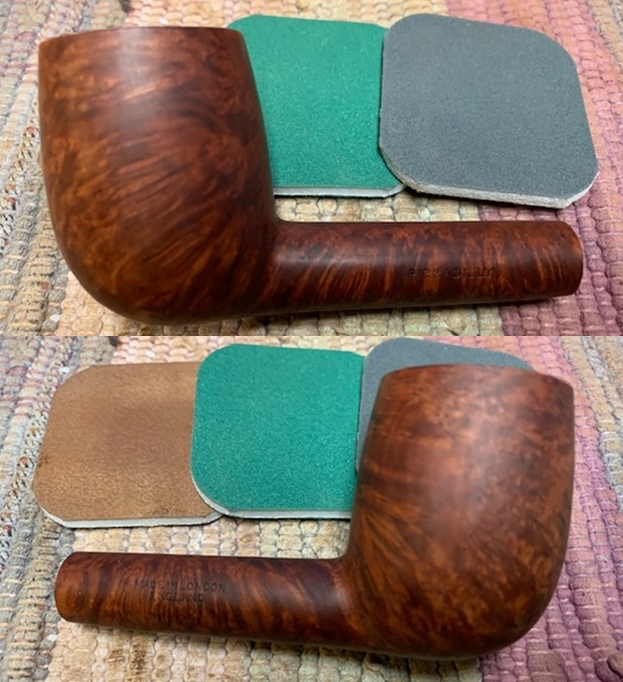
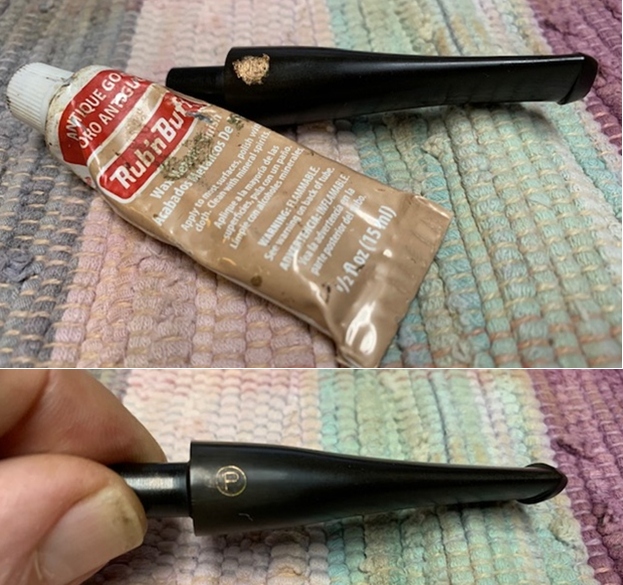
Since Jeff follows the same pattern of work in his cleanup we do not include photos but rather just a simple summary. Jeff reamed the bowl with a PipNet pipe reamer and followed up with a Savinelli Fitsall pipe knife to remove the cake. He scrubbed out the mortise and the airway in the shank and the stem with alcohol, cotton swabs and pipe cleaners. He scrubbed the exterior of the bowl, rim, shank and stem with a tooth brush and Murphy’s Oil Soap to remove the oils and tars on the rim and the grime on the finish of the bowl. He rinsed it under running water. He dried it off with a soft cloth. He was able to remove the lava build up on the rim top and you could see the damages to the top and edges of the rim. I think this pipe may well been before we worked with Mark Hoover’s Before & After Deoxidizer so he cleaned the internals and externals. The stem was clean but lightly oxidized. I took photos of what the pipe looked like when I brought to my worktable.   The rim top and shank end cleaned up really well. The lava coat was removed and some darkening left behind on the back side of the rim top. The edges were in good condition. The stem surface looked very good with some light tooth chatter and marks on both sides ahead of the button.        I took photos of the stamping on both sides of the shank. The stamping was clear and readable. The left side of the taper stem had a Circle P  logo with gold stamping.I removed the stem and took a photo of the pipe to give a sense of the well shaped Liverpool. I polished the bowl and the rim top, sides and shank with micromesh sanding pads – wet sanding with 1500-12000 grit pads and wiping it down after each pad with a damp cloth. I carefully avoided the stamping on the sides of the shank so as not to damage the stamping.       I rubbed the bowl and shank down with Before & After Restoration Balm. I worked it into the surface of the bowl sides, plateau top and shank end with my fingertips and a horse hair shoe brush to clean, enliven and protect the briar. I let the balm sit for a little while and then buffed with a cotton cloth to raise the shine.    I set the bowl aside and turned my attention to the stem. It was in very good condition so I did not have to do any repairs or preliminary sanding. I began by working with micromesh sanding pads – 1500-12000 grit pads. I wiped the stem down with Obsidian Oil after each sanding pad. I used Before & After Pipe Polish – both Fine and Extra Fine to further polish the stem. I used Rub’n Buff Antique Gold to touch up the gold circle P on the left side o f the stem. I rubbed it on and rubbed off the excess to leave behind a clear stamp.This well made, classic Piccadilly Liverpool with a taper vulcanite stem is a great looking pipe now that it has been restored. The rich brown finish that was used came alive with the polishing and waxing. I put the stem back on the bowl and carefully buffed the pipe with Blue Diamond on the buffing wheel using a light touch on the briar. I gave the bowl and the stem multiple coats of carnauba wax on the buffing wheel and followed that by buffing the entire pipe with a clean buffing pad. I hand buffed the pipe with a microfiber cloth to deepen the shine. The finished Liverpool is a beauty with combination of great grain and rich stain. It fits nicely in the hand and looks very good. Give the finished pipe a look in the photos below. The dimensions of the pipe are Length: 6 ¼ inches, Height: 2 inches, Outside diameter of the bowl: 1 ½ inches, Chamber diameter: ¾ of an inch. If you are interested in adding this pipe to your collection send me a message or an email. Thanks for reading this blog and my reflections on the pipe while I worked on it. There are many more to come!


A Simple Clean Up of a Double Walled GoedeWaagen Apple Bowl Pipe


Blog by Paresh

About two months ago, I had worked on a battered and abused, but well loved meerschaum line Orlik Bent Brandy pipe from an estate lot of 40 pipes that I had acquired about eight/ nine months ago. That was the third pipe from the lot that I had refurbished, the first being a huge Real Cherry wood pipe and the second was a Corn Cob with a long Albatross wing bone. Here is the link to the three write ups which will provide background information as to how I came to acquire this lot and the condition of the pipes that I had received;

https://rebornpipes.com/2020/03/08/refurbishing-a-real-cherry-foreign-pipe-from-estate-lot-of-40/

https://rebornpipes.com/2020/05/10/refurbishing-a-vintage-corn-cob-pipe-with-an-albatross-wing-bone/

https://rebornpipes.com/2020/06/11/a-second-inning-for-a-meerschaum-lined-orlik-bent-brandy/

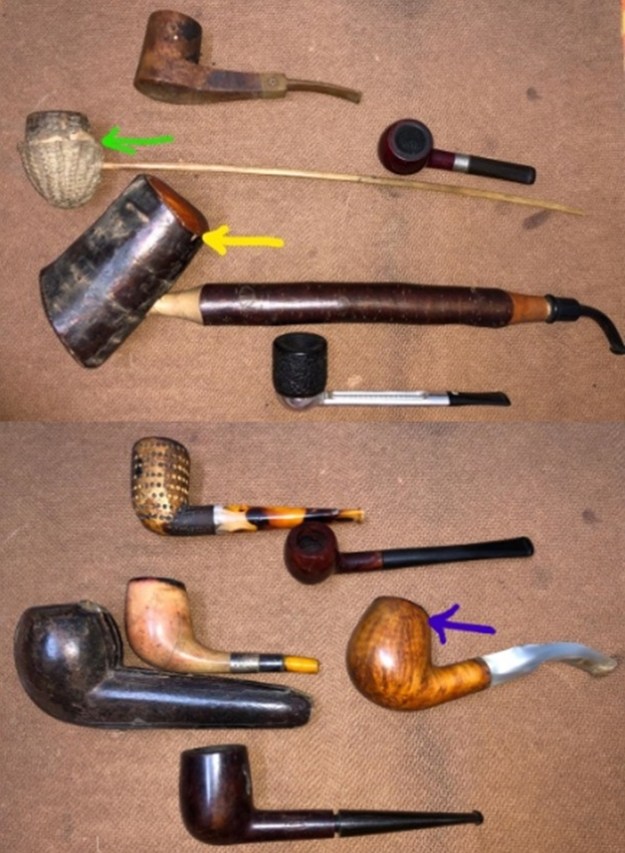
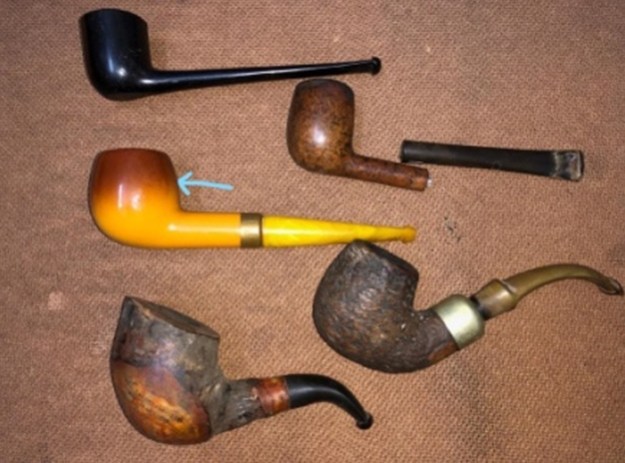
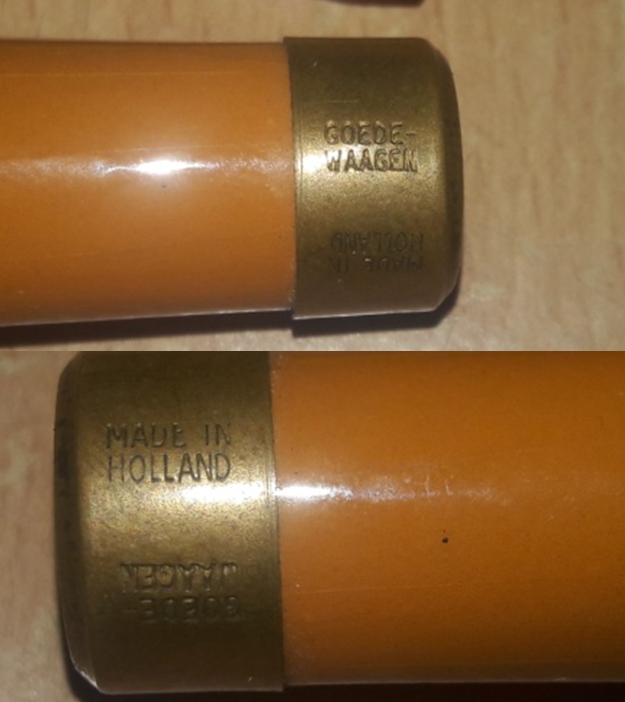
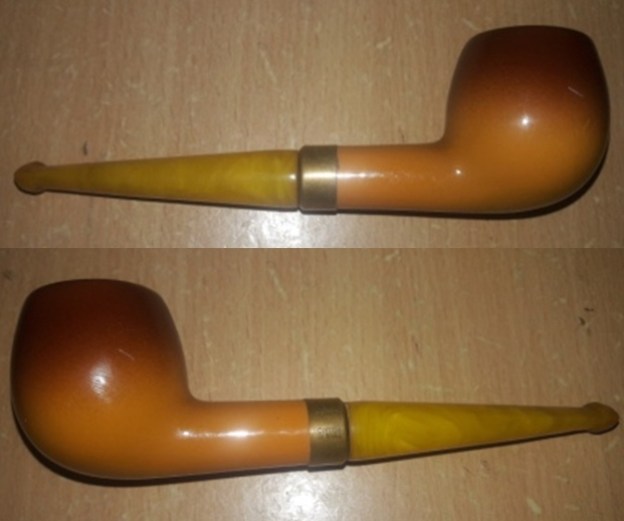
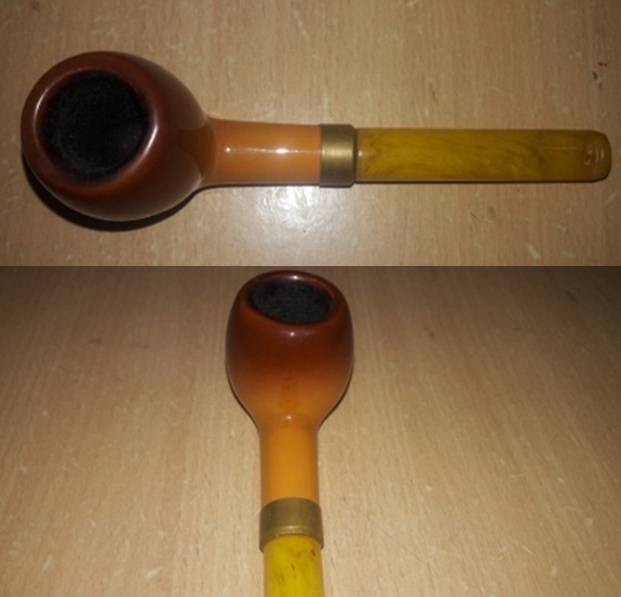
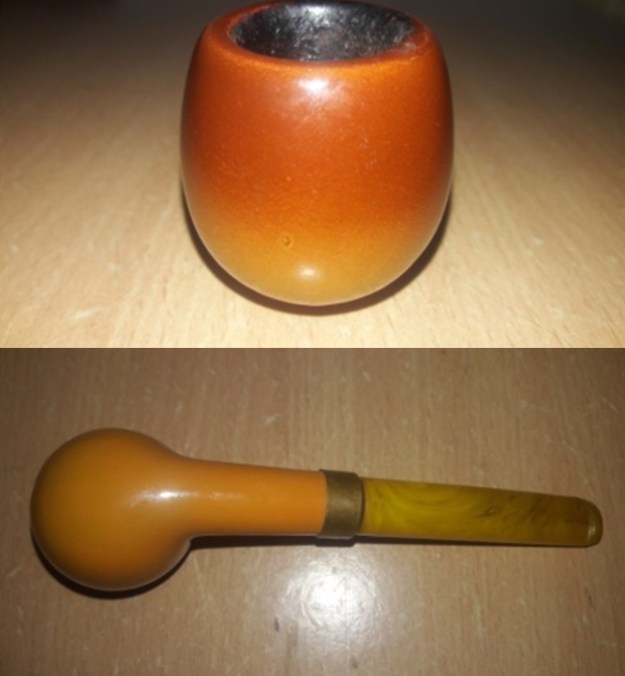
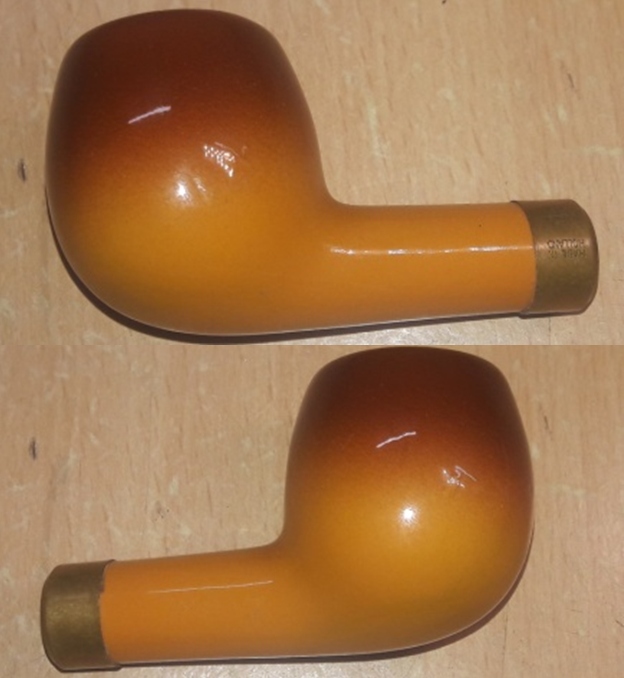
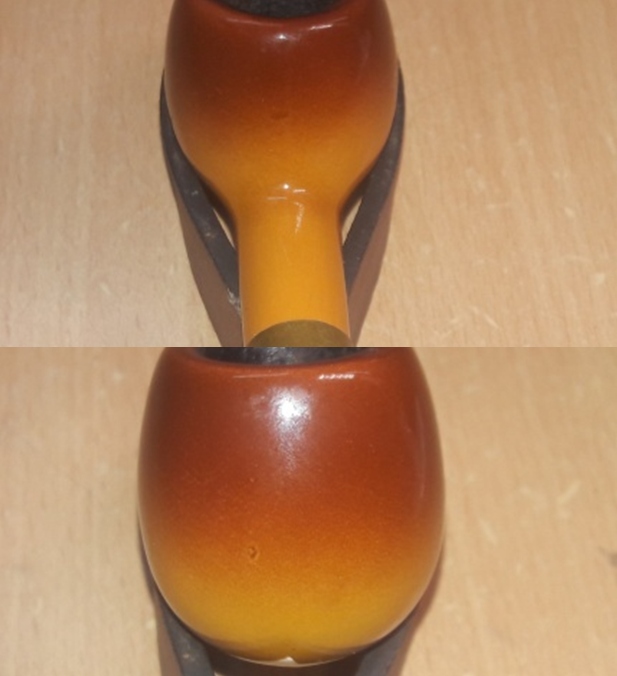
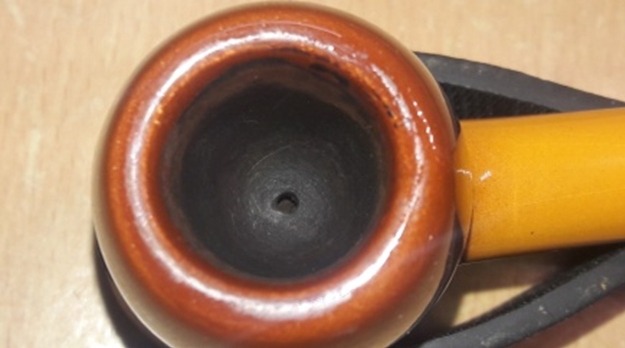
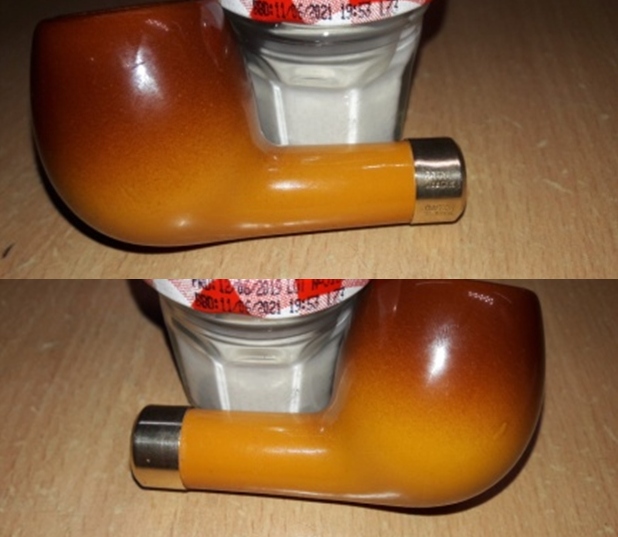
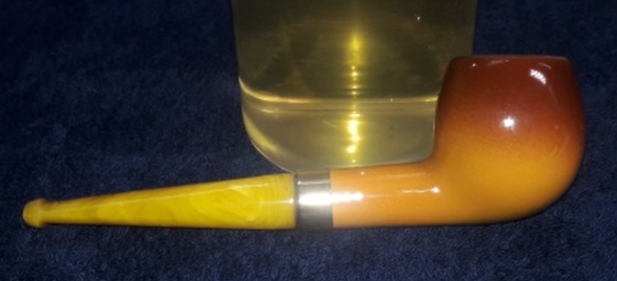
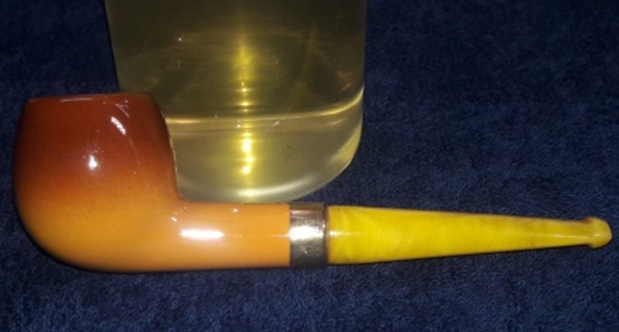
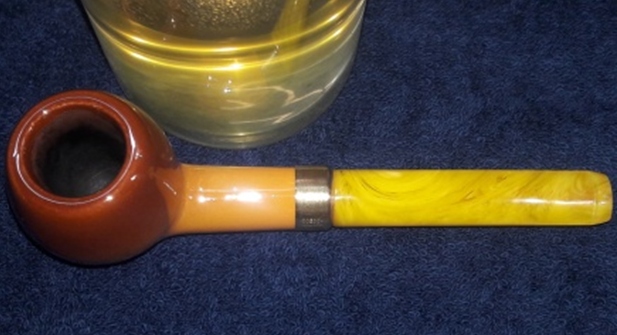
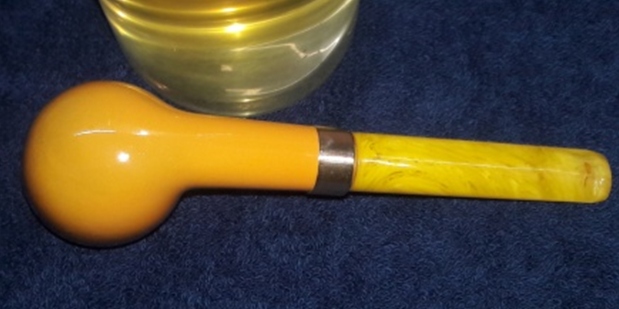
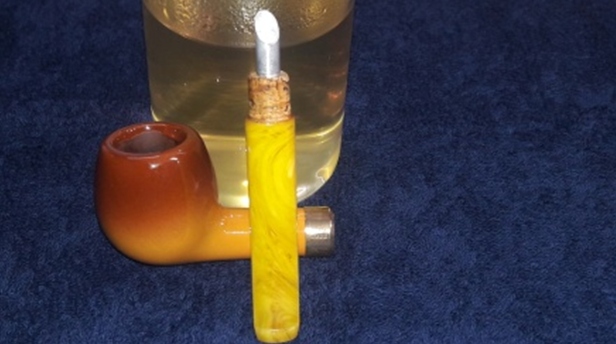
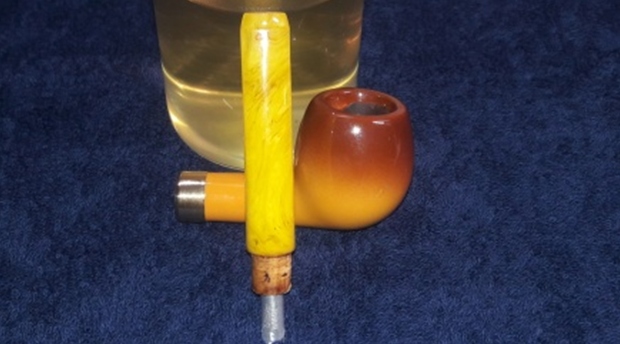
The fourth pipe from this lot and currently on my work table is beautiful brightly colored straight Apple with a tapered yellow variegated stem with swirls of black. The first three pipes that I had worked on are marked with yellow, green and indigo arrows while the fourth pipe that is currently on my work table is shown in the third picture marked in pastel blue colored arrow. The eye catching candy colored attractively Apple shaped pipe screams “PARTY” and feels ultra light in hand. The shank end is adorned with a brass band. It is stamped on the brass band as “GOEDEWAAGEN” over “MADE IN HOLLAND”. There is no shape code or stamping on either the stummel or the acrylic stem.   The stamping on the brass band gave me a definitive direction to my quest to know about this brand. I turned to my favorite site, rebornpipes.com, to know more about the brand and sure enough, Steve had worked on a couple of GoedeWaagen pipes and researched it in detail. Given below is the link for the readers who are interested in knowing about this pipe from Holland.

https://rebornpipes.com/2017/10/21/cleaning-up-a-pair-of-goedewaagen-delft-ceramic-pipes/

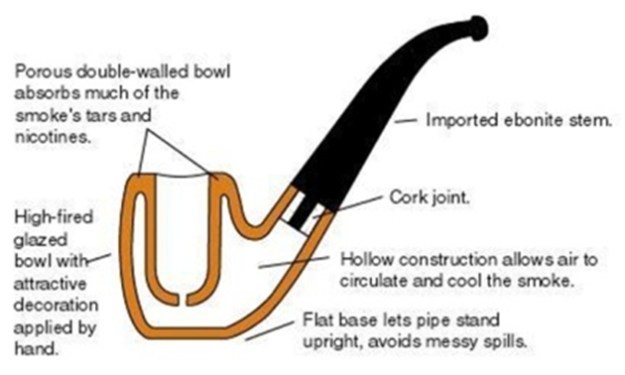
Steve has included a picture of these pipes that gives out the construction and functioning of the pipe which I have reproduced below.I searched pipedia.org for more information on the Maker and brand of GoedeWaagen. I have reproduced the information contained on the site and also the link to the webpage.  https://pipedia.org/wiki/GoedeWaagen

Dirck GoedeWaagen became a master pipemaker on January 1, 1779 and took on his first assistant the following month. Soon after Dirck’s grandson fell in love with and married a girl from the illustrious De Jong family, legendary in the ceramic pipemakers guild in Gouda. He built a workshop in the Keizerstraat in Gouda, which continued for two generations until his grandson Abraham GoedeWaagen moved the company to a new location.

In 1853, Pieter Goedewaagen purchased his father-in-law’s factory “De Star”, which becomes the basis of the modern GoedeWaagen Company. In approximately 1880, Abraham’s grandson Aart GoedeWaagen persuaded his father Pieter to expand the business with an eye towards more models of pipes, and P. GoedeWaagen & Sons was founded in response. Within ten years the firm had hundreds of models and P. GoedeWaagen & Son was exporting pipes around the globe.

GoedeWaagen continued to make pipes, but also began acquiring other ceramics firms, including ‘De Distel’ in 1923, and in so doing acquiring the expertise to make decorated ceramics other than clay pipes. It is at this time that the company is granted a Royal charter and by the 1930’s Royal Goedewaagen is one of the top names in Dutch ceramics.

While Goedewaagen pipes were originally traditional and figural clays, after the invention of the double walled clay pipe by Zenith, also a Gouda company, Goedewaagen began producing pipes in that commonly seen style, which they marketed as The Baronite Pipe, advertised for its clean smoking and health benefits. Since the company’s bankruptcy in 1982, however, they have made only the occasional souvenir pipe, including a line commemorating Holland’s monarchs.

There is a mention of “Zenith” pipes and visited the page that contained information on this brand related to GoedeWaagen pipes. The article makes for an interesting read.  https://pipedia.org/wiki/Zenith

Correlating the above two, it can be safely established that the pipe is from in between the period 1920s when the double walled ceramic pipes were invented by Zenith to 1982 when GoedeWagen filed bankruptcy.

With the provenance of the pipe established and firm in my knowledge and understanding of the GoedeWaagen Brand, I move ahead with my initial visual inspection.

Initial Visual Inspection
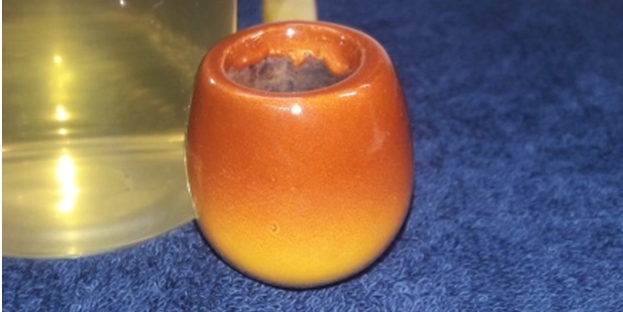
The pipe, as it appears, is shown in the pictures below. The pipe must have hardly been smoked as the layer of cake in the chamber is very thin with very minor traces of overflow of lava over the rim top surface. The stummel is covered in clear glaze and is covered in dust and fingerprints. The stem airway is dark with dried oils and tars. Heavy tooth chatter and deep bite marks in the bite zone and button edges on either surface can be seen on the stem surface. All in all, this is a lovely pipe and should stand out in any gathering once cleaned and polished. Detailed Inspection
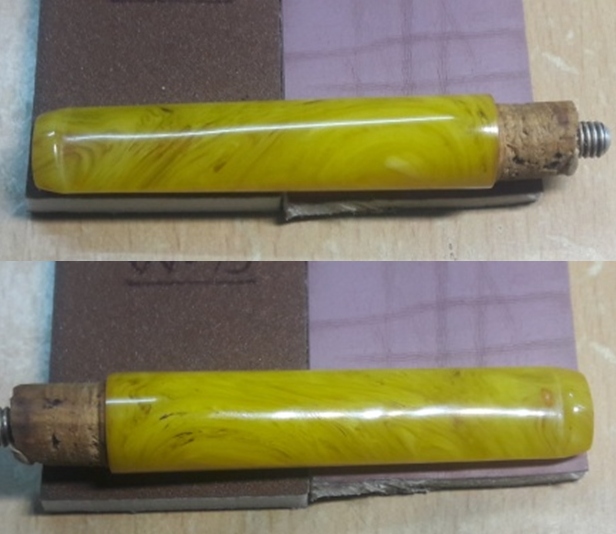
The chamber has an even layer of hard cake. There are traces of old oils, tars and grime that can be seen over the inner rim edge. The cake masks the condition of the chamber walls and condition of chamber walls will be determined only once the cake and lava overflow has been cleaned up. The rim top surface is in pristine condition with no dents or dings or chipped areas. The smells from the chamber are very strong. This issue of old smells will have to be addressed. A simple reaming and cleaning should make this chamber as good as new, unless we have a cracked wall or any such surprise underneath the cake.   The clear glazed double walled ceramic stummel is covered in dust and oily fingerprints and appears dull. There are no cracks, dents/ dings on the stummel surface… Not even a scratch!! The mortise is nice and clean with no traces of accumulated gunk. A simple wash and polish should get the stummel nice and shining like new.   The yellow acrylic variegated stem with dark swirls perfectly matches the candy color of the stummel and rather elevates it further. The tenon end has a cork stopper that helps in snug fit of the tenon in to the mortise. The cork stopper has a small piece that has broken off and the cork itself appears dry. The bite zone is peppered with deep tooth chatter and heavy tooth indentations over the button edges on either surface. The tenon and the air way is covered and clogged with gunk. Air way over the surface appears darkened and flow through the stem is not full and clear. The stem surface and internal first needs to be cleaned. The tooth chatter will be sanded out with 220 grit sandpaper and filled with glue. The button edges on either surface needs re-building using clear CA superglue.   The Process
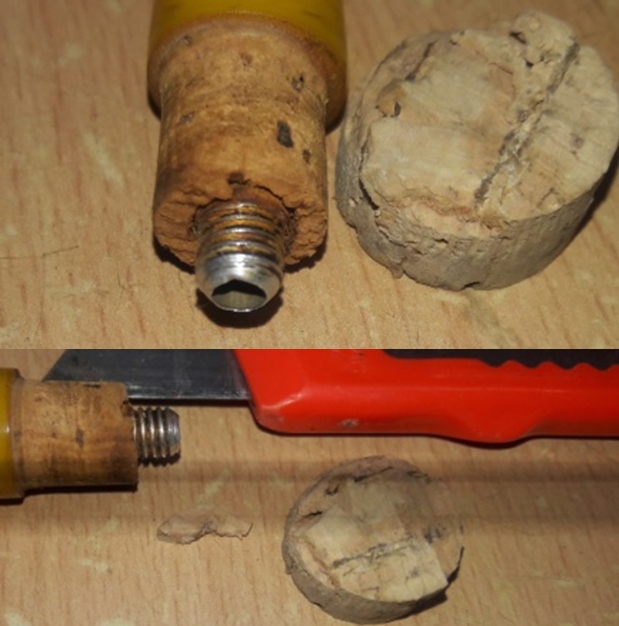
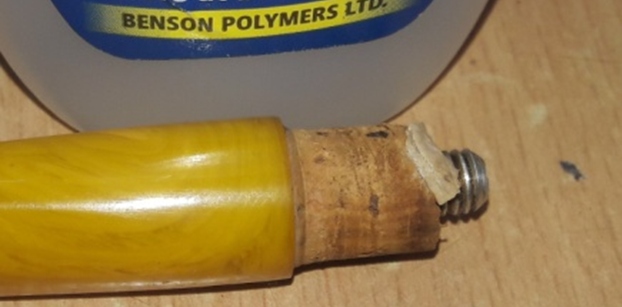
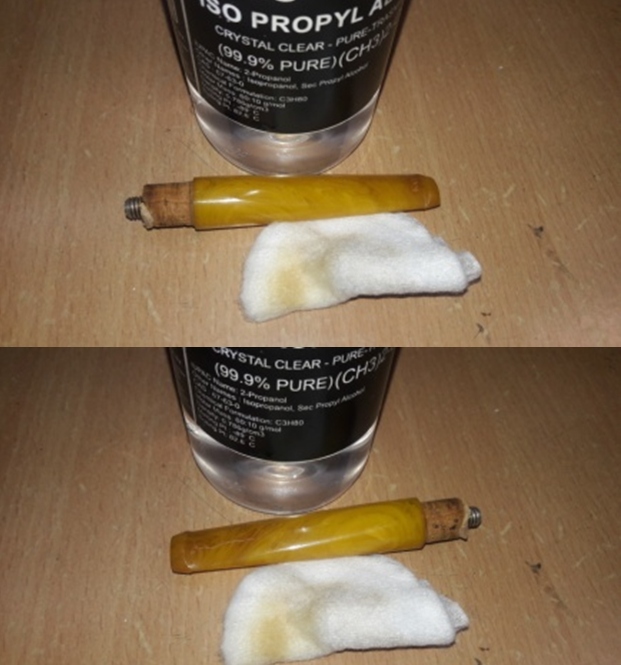
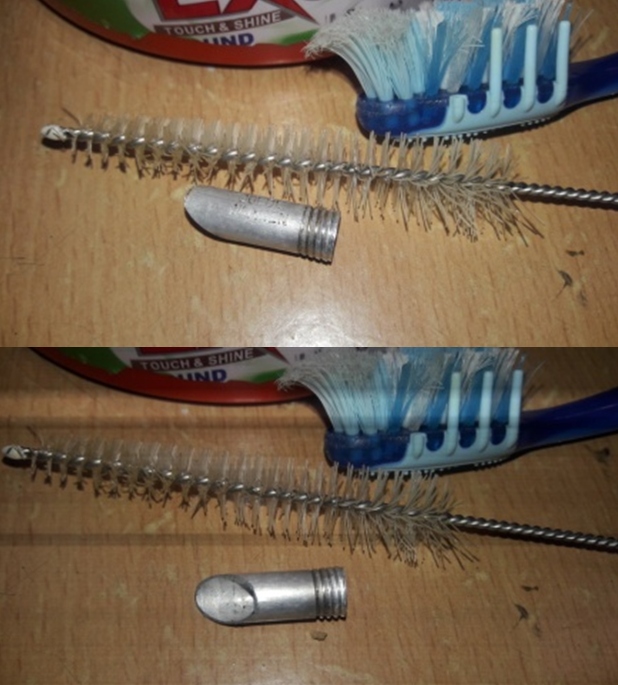
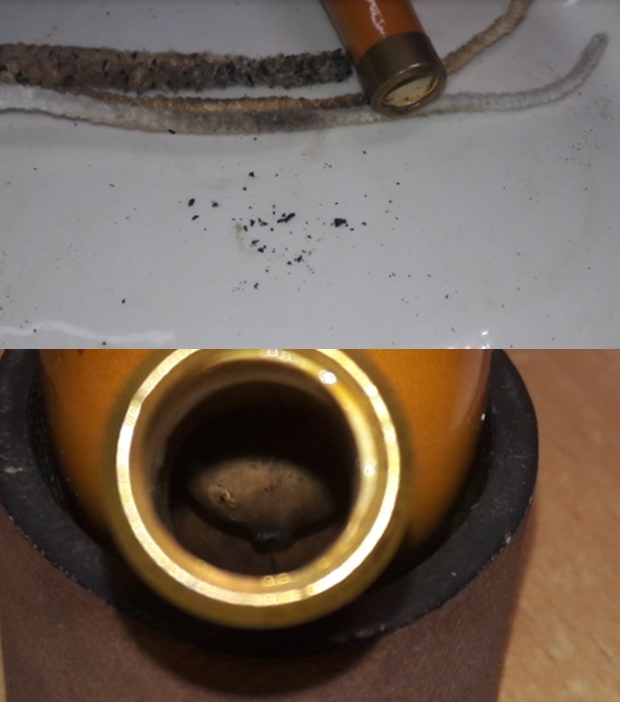
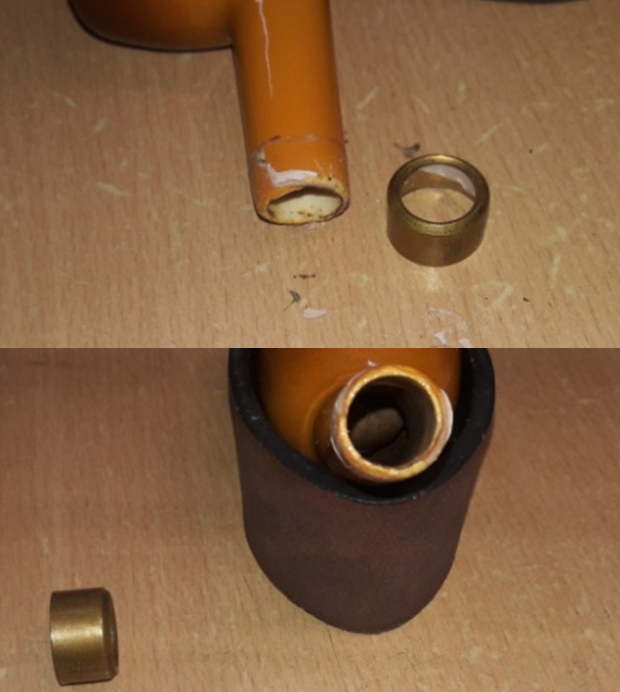
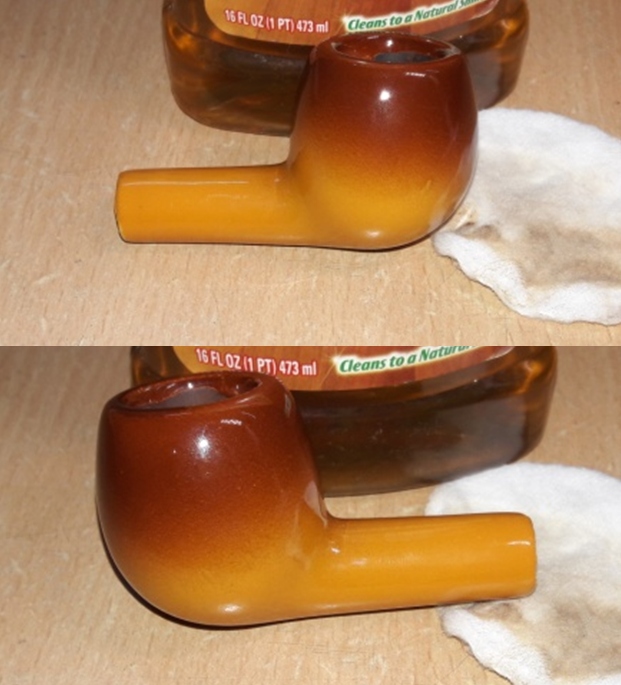
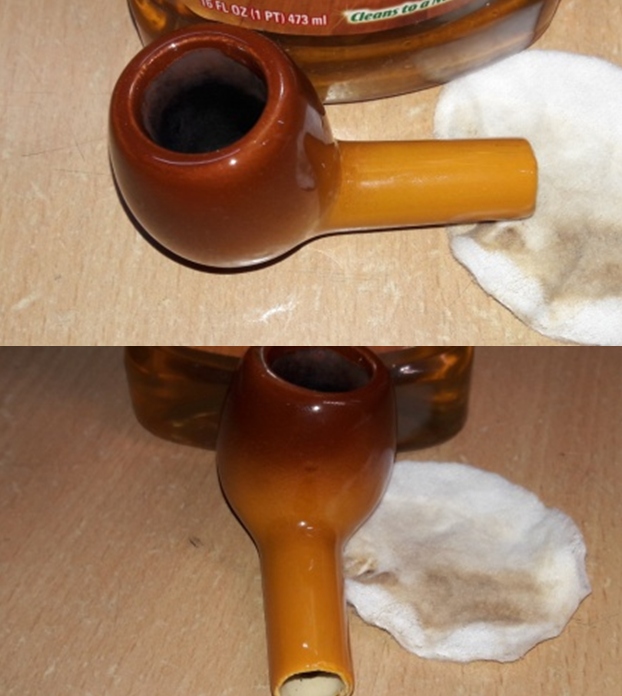
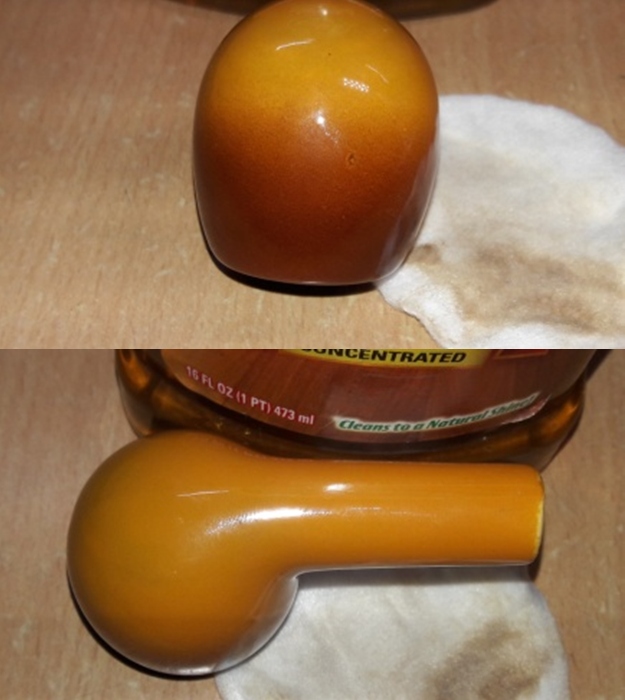
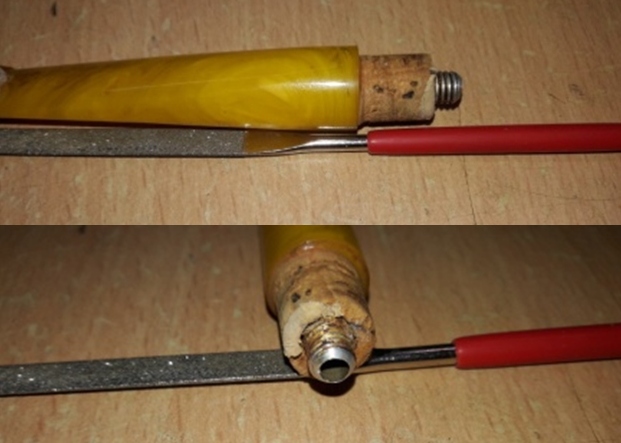
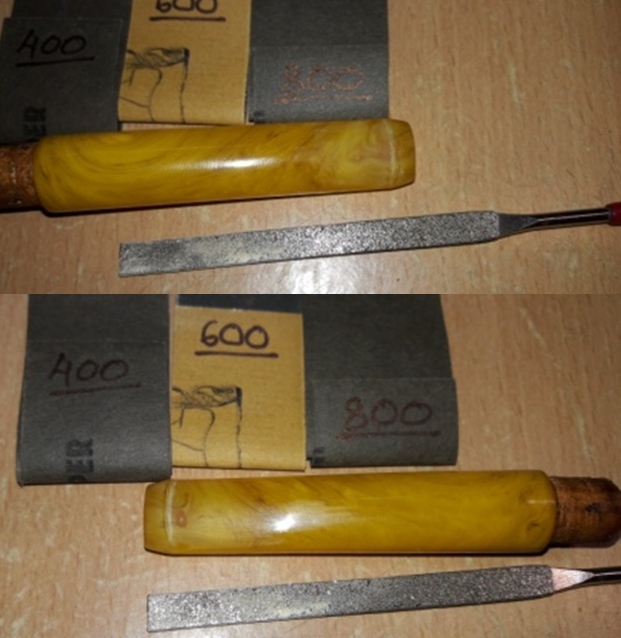
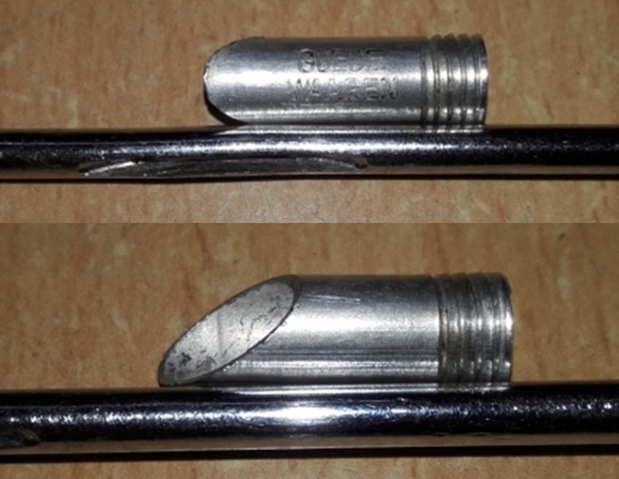
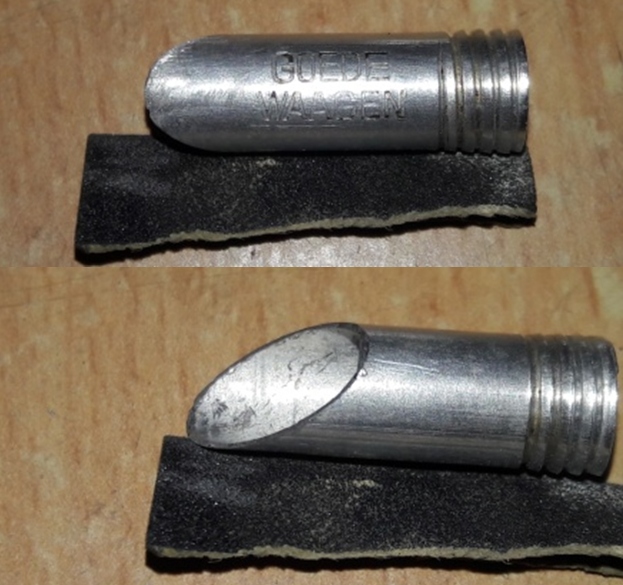
I began the process of refurbishing this pipe first by working on the stem. As I was handling the stem, I realized that the tenon turned in my hand. I completely unscrewed and realized that what I thought to be a tenon was in fact a tenon extension that was screwed on to the threaded tenon. The threaded tenon and the tenon extension were covered in dried gunk and grime. The front edges of the tenon extension are up turned and sharp and I shall address them subsequently.The threaded tenon and the tenon extension were cleaned with soft brass wired brush and cotton swabs wetted with alcohol. I cleaned the stem internals with a small shank brush and liquid dish soap. I have realized that using small shank brush and liquid soap reduces consumption of pipe cleaners by about 75%. This is considerable savings considering that I pay thrice the cost of pipe cleaners on cost of shipping!! Next, I ran a couple of dry pipe cleaners through the stem to clean and dry it out. I avoid using isopropyl alcohol in cleaning stem air way just to guard it against crazing (call it my paranoia to use alcohol on an acrylic or Perspex stem!!). The tenon end, slot and the air way is now clean. I cleaned the external surface of the stem with a Scotch Brite gauze and liquid dish washing soap. Next I addressed the issue of broken cork piece. I cut a piece of wine cork and roughly shaped it to match the missing cork piece. I stuck the new piece in place with clear CA superglue taking care that I did not foul up the threads on the tenon. I set the repairs aside for the glue to harden.  I wiped the stem with a cotton pad and alcohol. Thereafter, I applied clear CA superglue over the button edges and filled the deep tooth indentations and the minor tooth chatter in the bite zone. I set the stem aside for the fill to cure.   I had completely forgotten about the tenon extension amidst the other processes. The tenon extension was covered in oils and tars that had dried out and set hard over the surface. I cleaned it with shank brush, hard bristled toothbrush and dish washing soap. Once the tenon extension was cleaned, I observed that the tenon extension also bears the stamp “GoedeWaagen”. I still have to address the up turned and sharp front edges in the tenon extension.    Next, I reamed the chamber with my fabricated knife to take the cake down to the ceramic walls. Truth be told, the use of the knife was restricted only to scraping the surface in an attempt to dislodge the cake as I did not want to subject the ceramic to excessive force of a reamer head. With a 150 grit sand paper, the walls of the chamber were rid of all the remnants of the cake. I further wiped the chamber with a cotton swab wetted with alcohol to remove the carbon dust that remained. I wiped the traces of lava overflow from the rim edges with cotton swab and alcohol. The chamber walls are pristine with no damage and the rim top also cleaned up nicely.  I cleaned the shank internals first with hard and regular pipe cleaners dipped in alcohol. Thereafter, I rinsed the areas between the double walled chamber and the shank with warm water. The shank internals are now clean and fresh.    As I was wiping the stummel after the internal wash of the shank, the brass band came loose. The thick white ceramic paste that held the brass band over the shank end had dried up completely. I scraped the dried ceramic paste from the shank end surface and also from the insides of the brass band.   With the stummel internals clean and fresh, I moved ahead with cleaning the external surface of the stummel. I wiped the stummel surface with Murphy’s Oils soap on a cotton swab. I rinsed the stummel under warm running water and wiped it dry with a soft cotton cloth.   I cleaned the brass band with an all purpose liquid polish and worked up a nice shine to the brass band.   The cork repair had cured completely. With a flat head needle file, I sand the excess cork to match the rest of the cork surface. I further sand the cork to achieve a perfect match.  Next I worked the stem. The stem fills had cured nicely. Using a flat head needle file, I sand the fills to achieve a rough match with the rest of the stem surface and also reshaped the buttons on both the surfaces. I further fine tuned the match and sand the entire stem with 400, 600 and 800 grit sandpapers. I polished the stem surface with micromesh pads, wet sanding with 1500 to 12000 pads. I wiped the surface with a soft cloth at the end of the micromesh cycle. I applied a little Extra Virgin Olive oil to the stem, though it does not help much, and set it aside. Though I am not a big fan of acrylic stems, I am happy with the way the stem appears at this stage.   With the stem repairs and polishing completed, I turn my attention back to the stummel. I stuck the brass band to the shank end with all purpose glue and set it aside for the glue to set completely.    I evened out the sharp and up turned edges of the tenon extension by rolling them out with the middle round potion of a screw driver. I further smooth out the edges by sanding it down with a piece of 180 grit sandpaper. To bring a nice shine to the tenon extension, I polish it further by dry sanding it with 12000 grit micromesh pad. All through the process, I was careful to preserve the stamping on the surface of the tenon extension.   I rubbed a small quantity of “Before and After Restoration Balm” in to the stummel and let it rest for a few minutes. The balm almost immediately works its magic and the stummel now has a nice vibrant appearance. I further buff it with a horse hair shoe brush. Though the balm works best over the briar wood, it has been my experience that it works nicely on other stummel surfaces like Meerschaums and now ceramic. The balm imparts a nice sheen over this alternative stummel material which is as good as that over briar wood.    I applied a generous quantity of petroleum jelly over the cork stopper to rejuvenate and moisten the cork.    To apply the finishing touches, I mount a cotton cloth buffing wheel on to my hand held rotary tool and apply a coat of Blue Diamond to the stummel and the stem to polish out the minor scratches. With a cotton buffing wheel that I use for carnauba wax, I apply a coat of carnauba wax to the stummel and stem and continued to work on it till the complete coat of wax had been polished out. I mount a clean cotton cloth buffing wheel and gave the entire pipe a once over buff. I finished the restoration by giving the entire pipe a rigorous hand buffing using a microfiber cloth to deepen the shine further. The finished pipe is shown below. The yellow variegated stem with dark swirls elevates the fun quotient of the pipe and is very appealing to the eye. P.S. The next time once this pandemic is over and things return to normal, I shall take this attractive pipe to one of the gatherings, just to check out the reactions of the gathered people.

Appreciate all the efforts of readers who have had the patience to read this write up thus far!

Praying for the safety and well being of all the readers and their loved ones in these troubled times…


New Beginnings for a Malaga Ras Kassa Freehand


Blog by Steve Laug

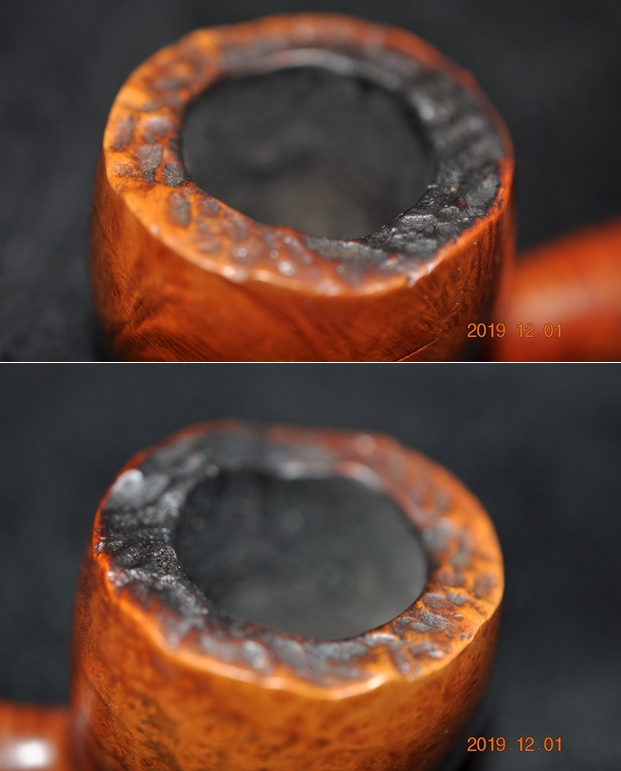
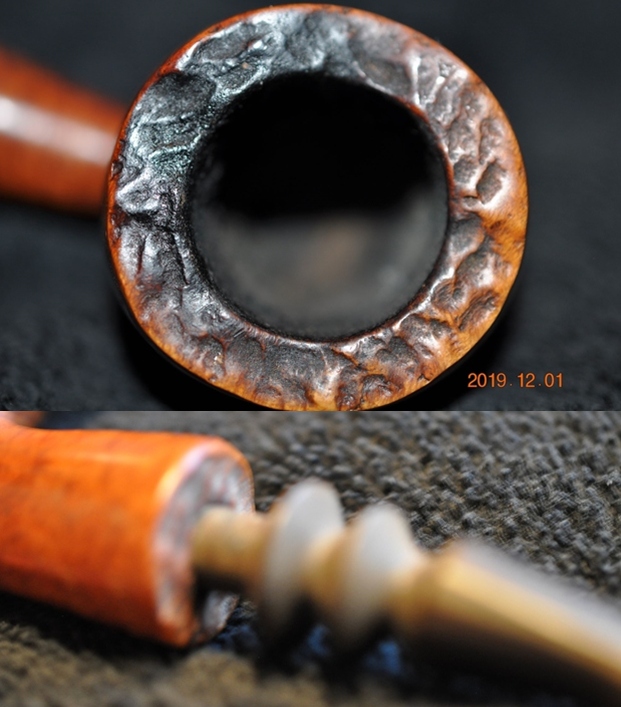
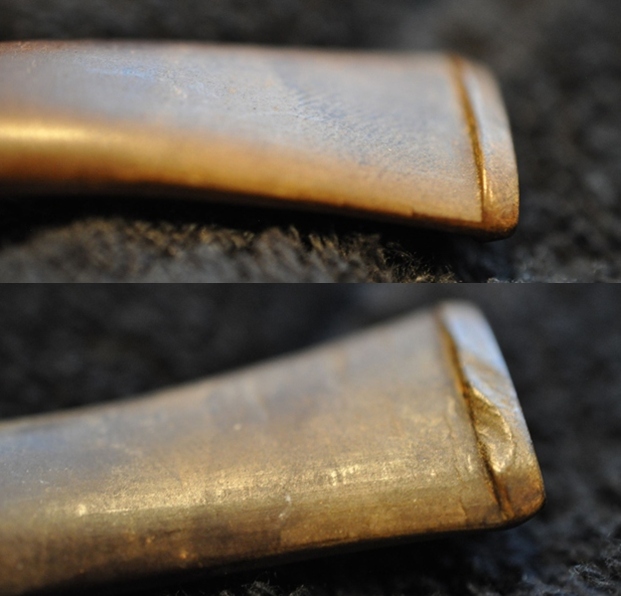
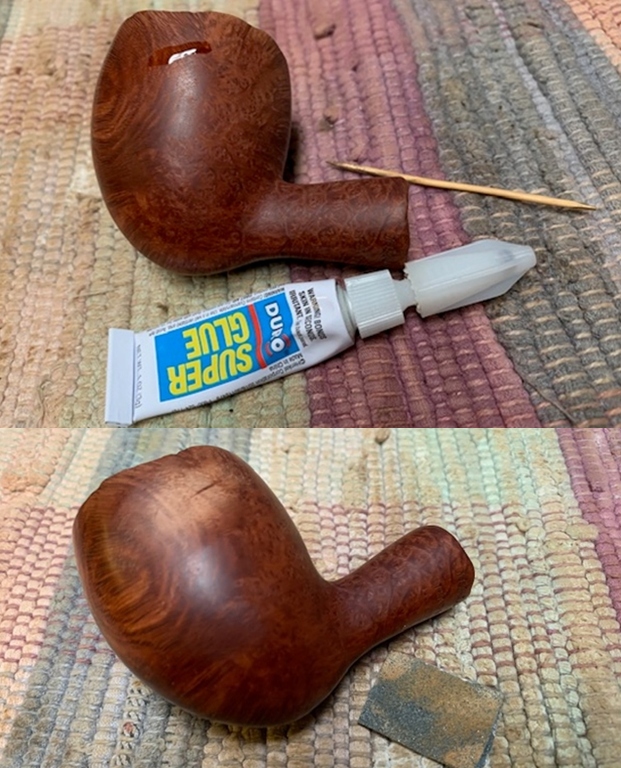
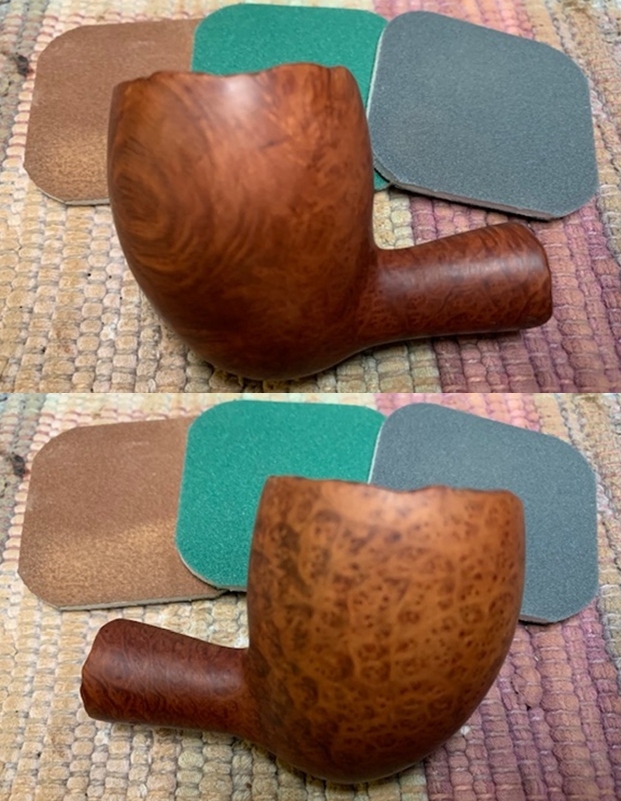
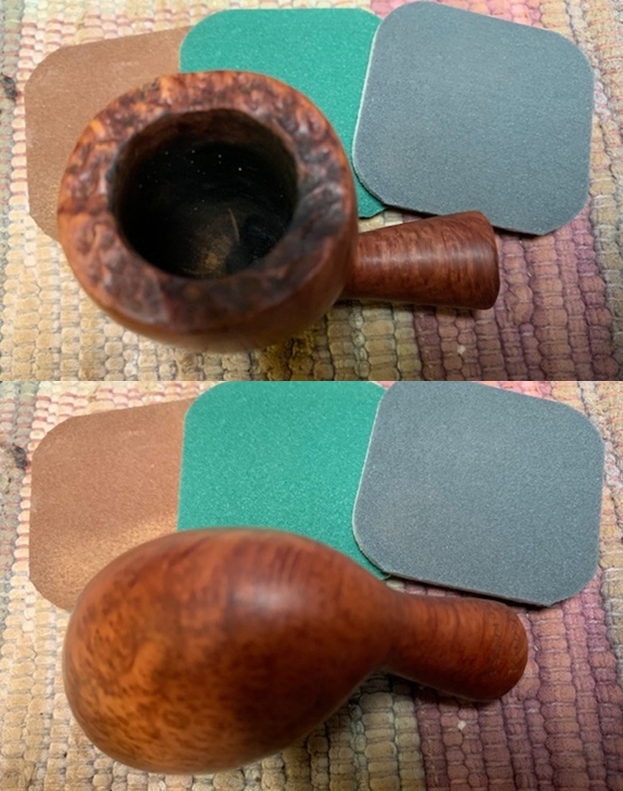
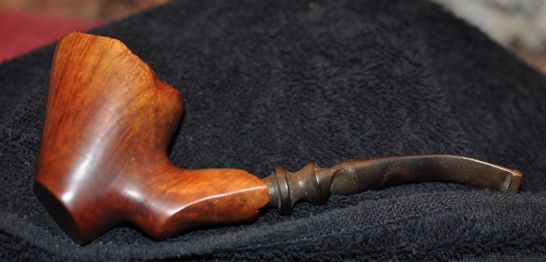
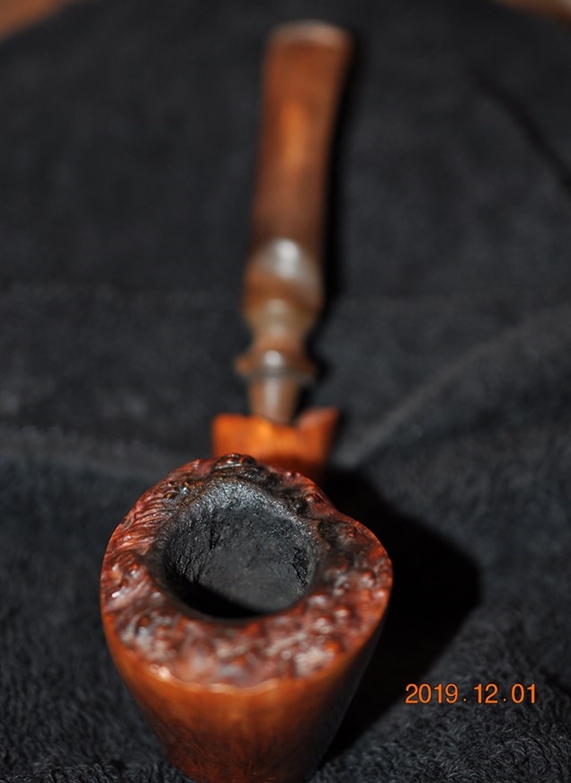
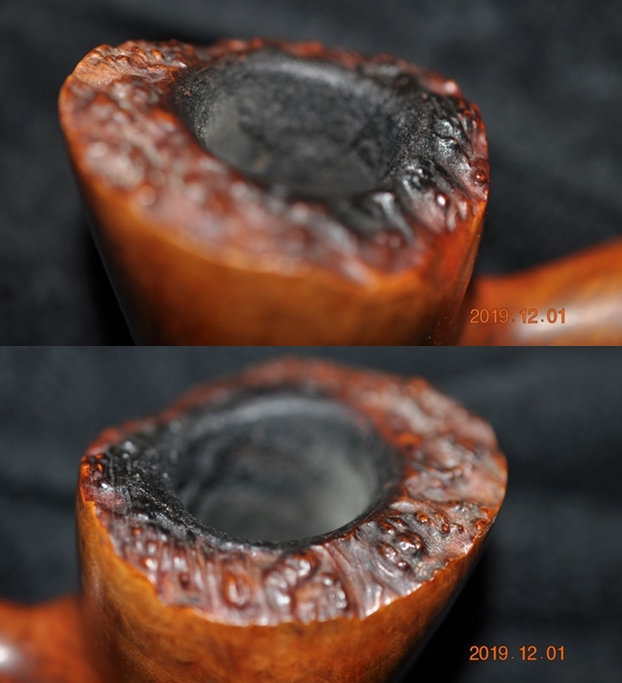
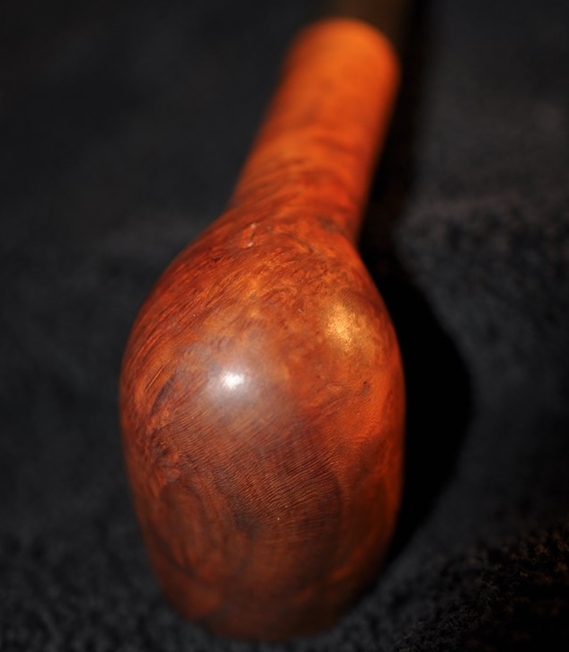
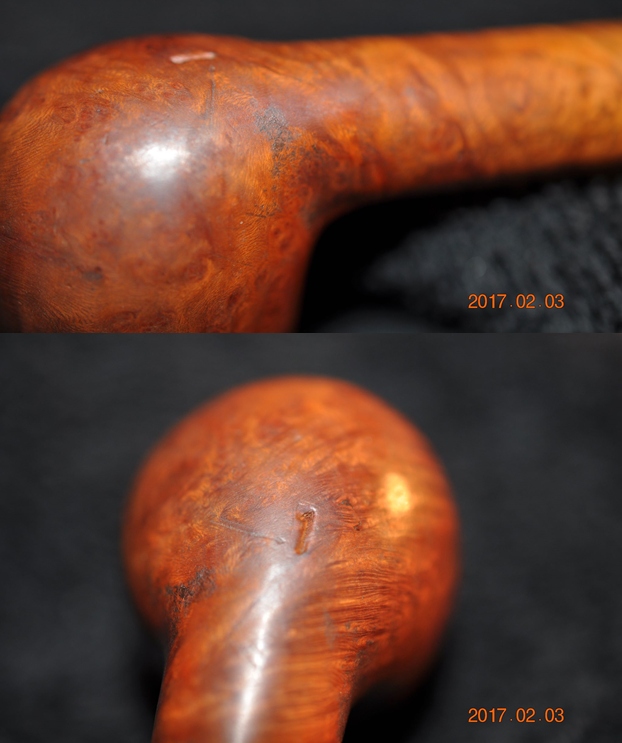
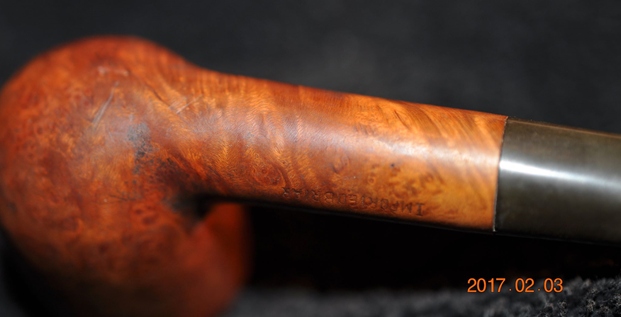
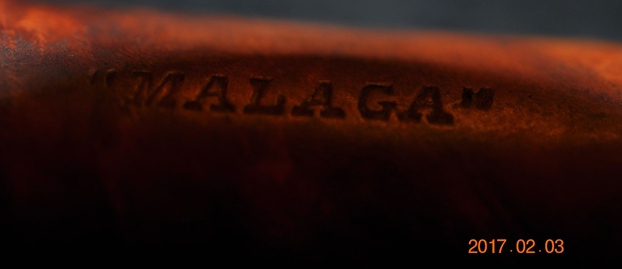
The next pipe on the work table came to me from another of our estate purchases. It has been around for a while waiting to be worked on. Jeff did the original photographs of the pipe in December 2019. It is a beautifully grained Malaga Ras Kassa Freehand that is really quite nice. The Ras Kassa is the top of the line for Malaga pipes and very few receive that premium stamping. The grain on this one is unique on the left and amazing birdseye on the right. The stamping is the readable. It is stamped on the underside of the shank and reads the Malaga [over] Ras Kassa. The Malaga Oil finish had a lot of grime ground into the bowl and some darkening around the sides of the bowl. There was a cut in the left side of the bowl toward the top. The bowl was heavily caked and had an overflow of lava on the top of the rim. It was hard to know what the rim top and inner edge of the bowl looked like under the grime. The rim top and shank end are carved plateau like finishes and had a lot of grime ground into them. The fancy turned Freehand stem was calcified, oxidized and had light tooth chatter and marks on the top and underside particularly on the button surface. The pipe had promise but it was very dirty. Jeff took photos of the pipe before he started his cleanup work. He took photos of the rim top and bowl to give a clear picture of the thickness of the cake and the overflow of lava on the rim top. It is hard to know what the rim edge looks like under the lava coat. He also took photos of the fancy turned portion of the stem as well as the top and underside of the stem to show the oxidation, calcification, light chatter and tooth marks and damage on the underside of the button.   Jeff took photos of the sides and heel of the bowl to give a picture of what the briar around the pipe looked like. There is some interesting grain under the grime.   He took photos of the stamping on the underside of the shank. They read as noted above. I am also including the link to a blog that I wrote that gives some of the history of the Malaga brand and the Malaga Pipe Shop in Royal Oak, Michigan in the USA. I have written an earlier blog to give a little history of the Malaga Brand and the pipemaker, George Khoubesser. Here is the link – https://rebornpipes.com/tag/malaga-pipes/. That blog also includes links to a catalogue and the history of the pipemaker George Khoubesser. Follow the link to get a feel for the brand and the pipemaker.

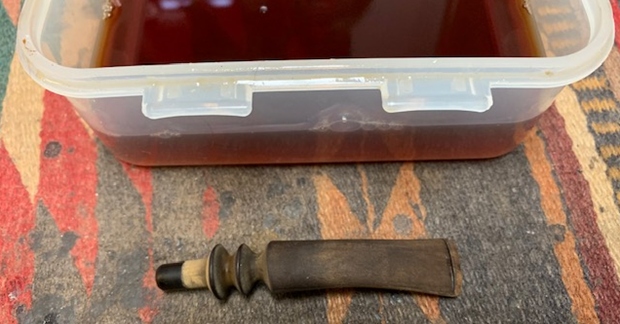
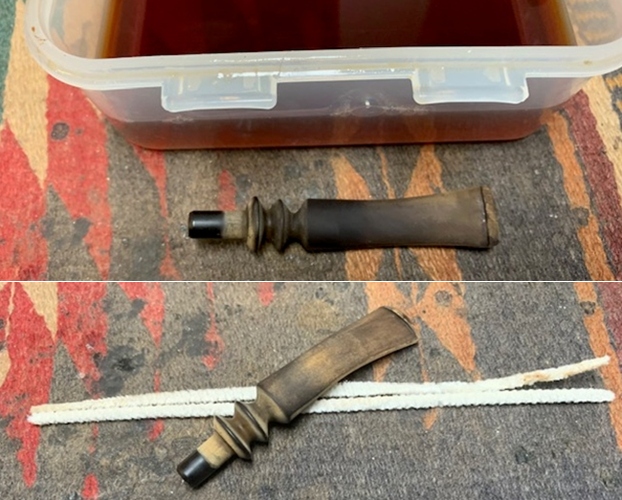
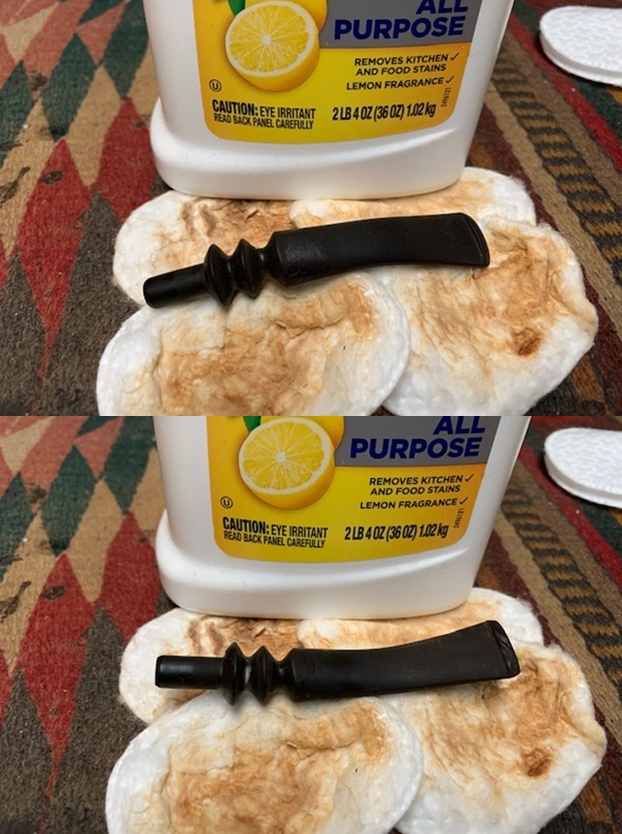
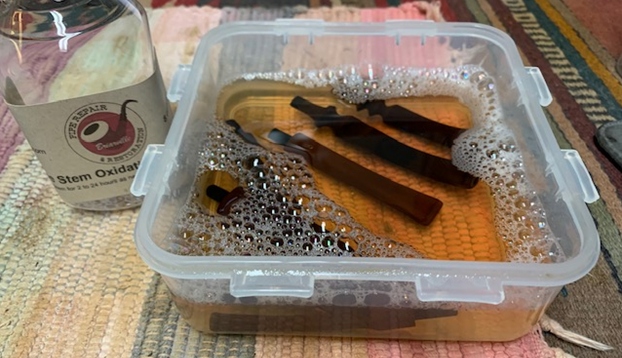
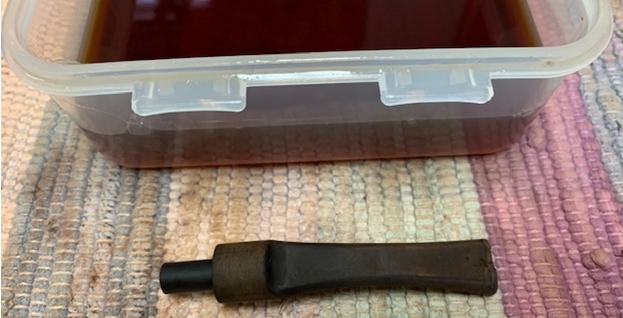
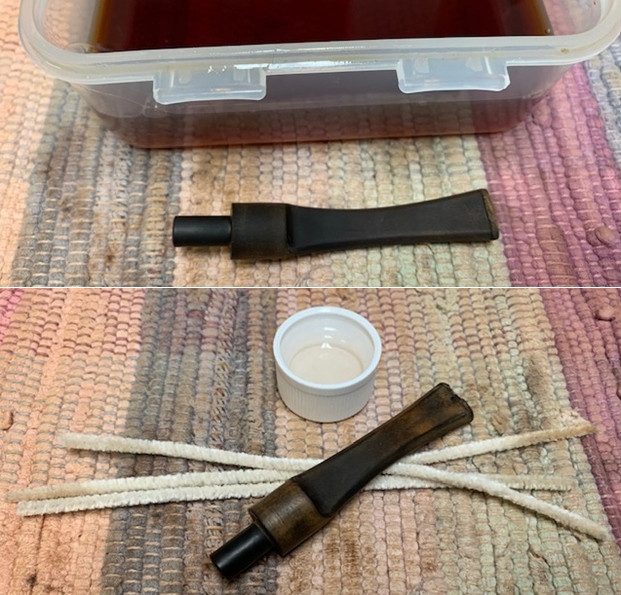
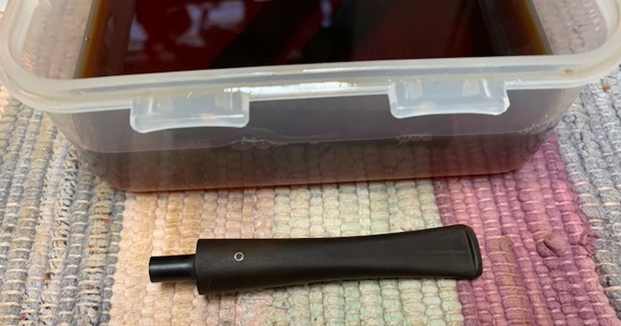
Since Jeff follows the same pattern of work in his cleanup we do not include photos but rather just a simple summary. Jeff reamed the bowl with a PipNet pipe reamer and followed up with a Savinelli Fitsall pipe knife to remove the cake. He scrubbed out the mortise and the airway in the shank and the stem with alcohol, cotton swabs and pipe cleaners. He scrubbed the exterior of the bowl, rim, shank and stem with a tooth brush and Murphy’s Oil Soap to remove the oils and tars on the rim and the grime on the finish of the bowl. He rinsed it under running water. He dried it off with a soft cloth. He was able to remove the lava build up on the rim top and you could see the damages to the top and edges of the rim. I think this pipe may well been before we worked with Mark Hoover’s Before & After Deoxidizer so he cleaned the internals and externals. The stem was clean but lightly oxidized. I took photos of what the pipe looked like when I brought to my worktable.    The carved plateau style rim top and shank end cleaned up really well. The lava coat was removed and some darkening left behind on the back side of the rim top. The edges were in good condition. The stem surface looked very good with heavy oxidation remaining and some light tooth chatter and marks on both sides ahead of the button.  You can also see the damage to the button on the underside of the stem.      I removed the stem and took a photo of the pipe to give a sense of the well shaped Freehand. Now it was time to do my work on the pipe. The slice in the briar on the left side needed to be repaired. It was not deep but it would not raise with steam. I filled it  in with clear super glue applied to the slice with a tooth pick.  Once the repair cured I sanded it with 340 grit sandpaper to blend it into the rest of the surface.I polished the bowl and the rim top, sides and shank with micromesh sanding pads – wet sanding with 1500-12000 grit pads and wiping it down after each pad with a damp cloth. I carefully avoided the stamping on the top and underside of the shank so as not to damage the already faint stamping.     I rubbed the bowl and shank down with Before & After Restoration Balm. I worked it into the surface of the bowl sides, plateau top and shank end with my fingertips and a horse hair shoe brush to clean, enliven and protect the briar. I let the balm sit for a little while and then buffed with a cotton cloth to raise the shine. While I was working on the bowl the stem was soaking in a new product I received from Briarville Pipe Repair – Pipe Stem Oxidation Remover. It is a liquid of about the same consistency as apple juice. The stem sat in the mixture for 2 ½ -3 hours. I removed the stem from the bath, scrubbed lightly with a tooth brush and dried if off with a paper towel. I was surprised that it was quite clean. Just some light oxidation on the top of the saddle remaining. The bath was dark with the removed oxidation of the seven stems. I cleaned out the inside of the stem with alcohol and pipe cleaners.  I scrubbed the stem surface with Soft Scrub All Purpose cleanser to remove the remaining oxidation. The oxidation was strongest in the twists and turns of the lower portion of the stem. It took quite a bit of elbow grease to remove the oxidation but when I was finished it looked very good.     I rebuilt the button edge on the underside to smooth out the finish and remove the tooth damage. Once the repair cured I smooth it out and blended it into the surface of the  vulcanite with 220 grit sandpaper. I started the polishing with 400 grit wet dry sandpaper. (I forgot to take photos of this.)I polished the vulcanite stem with micromesh sanding pads – 1500-12000 grit pads. I wiped it down with a damp cloth after each sanding pad. I used Before & After Pipe Polish – both Fine and Extra Fine to further polish the stem.   This well made, classic Malaga Ras Kassa Freehand with a fancy turned vulcanite stem is a great looking pipe now that it has been restored. The rich oil finish that Malaga used came alive with the polishing and waxing. I put the stem back on the bowl and carefully buffed the pipe with Blue Diamond on the buffing wheel using a light touch on the briar. I gave the bowl and the stem multiple coats of carnauba wax on the buffing wheel and followed that by buffing the entire pipe with a clean buffing pad. I hand buffed the pipe with a microfiber cloth to deepen the shine. The finished Malaga Ras Kassa is a beauty with combination of smooth and plateau rim and shank end. It fits nicely in the hand and looks very good. Give the finished pipe a look in the photos below. The dimensions of the pipe are Length: 6 ¼ inches, Height: 2 ½ inches, Outside diameter of the bowl: 1 ¾ inches, Chamber diameter: ¾ of an inch. If you are interested in adding this pipe to your collection send me a message or an email. Thanks for reading this blog and my reflections on the pipe while I worked on it. There are many more to come!

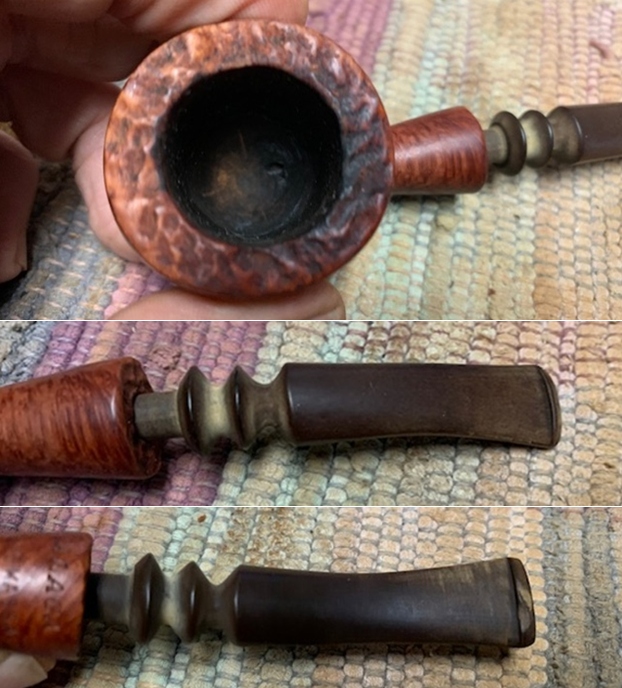
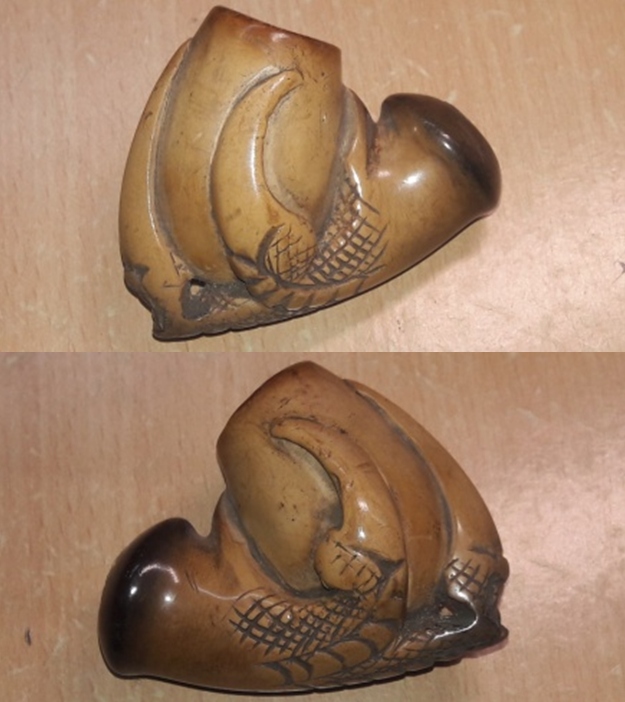
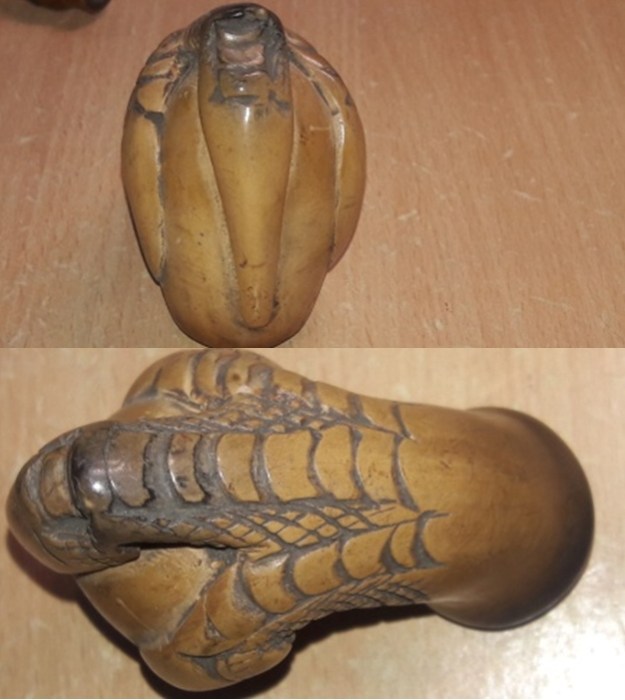
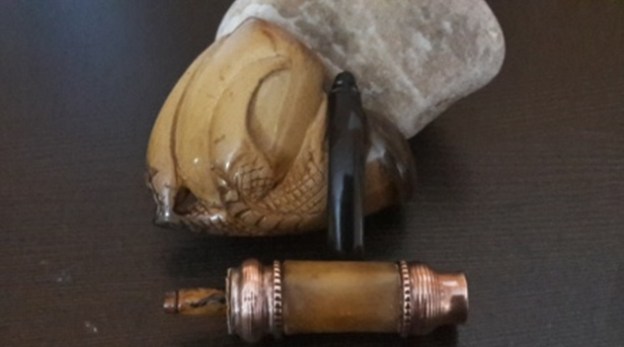
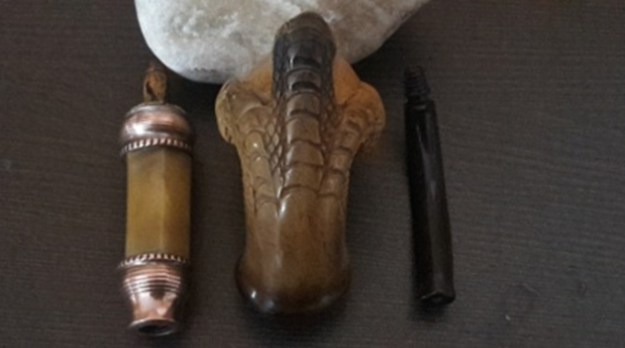
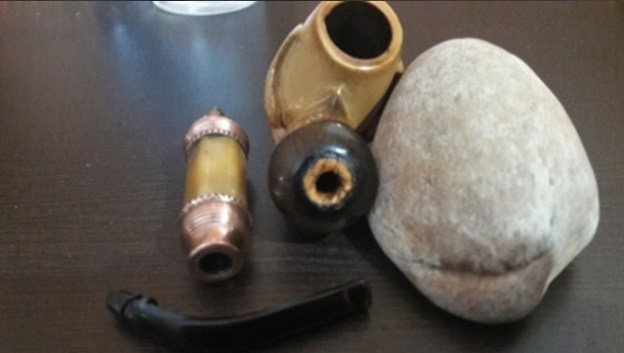
Refurbishing an Intricately Carved Old Meerschaum Eagle Claw Holding an Egg


Blog by Paresh

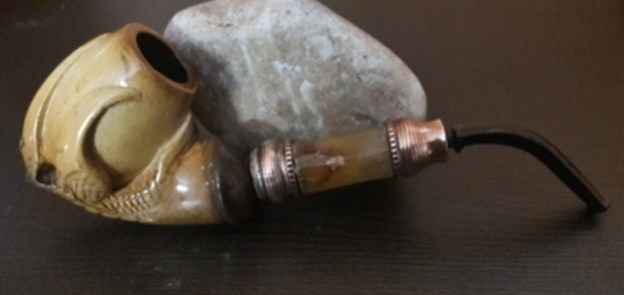
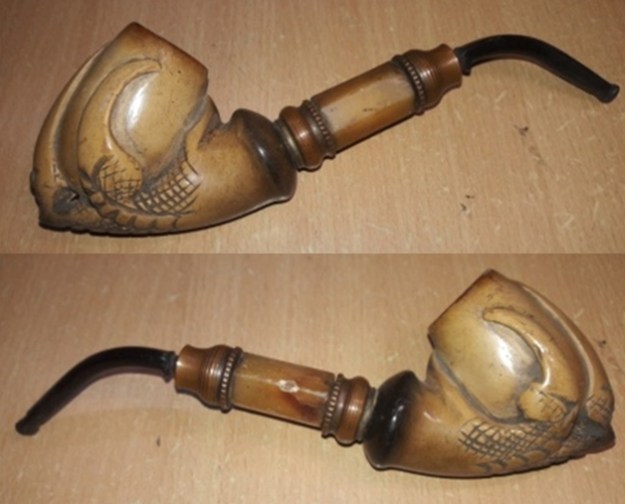
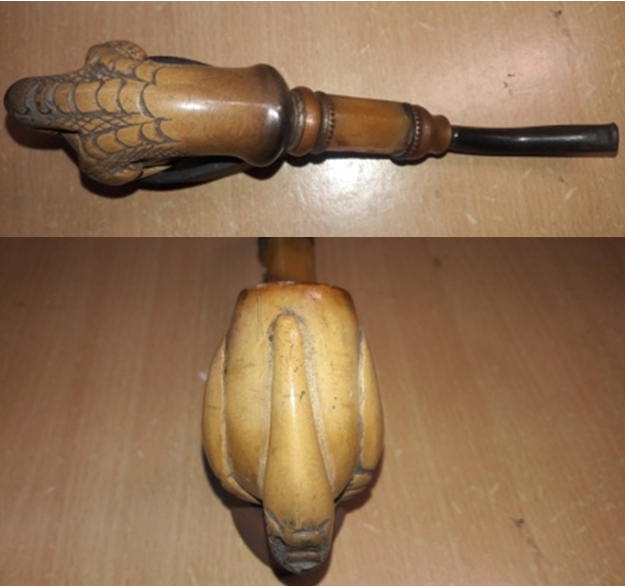
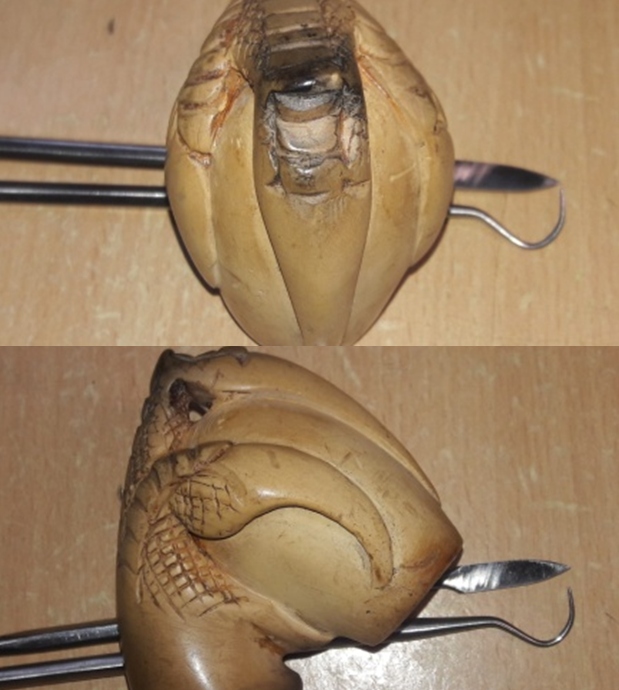
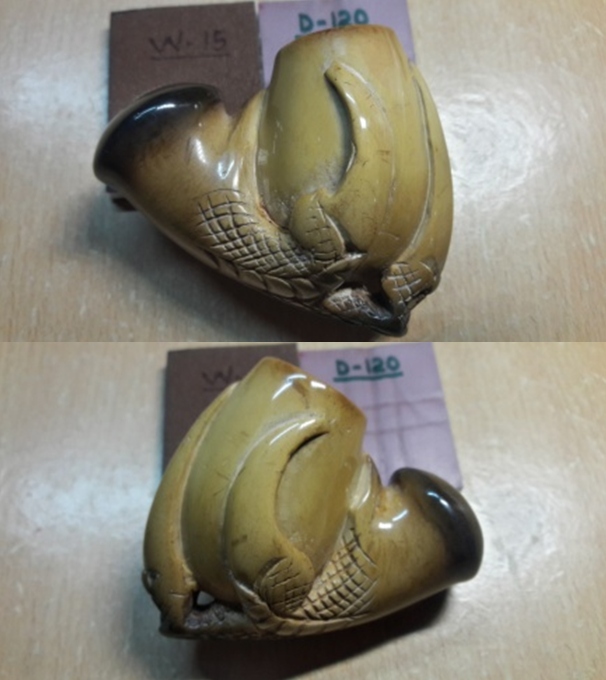
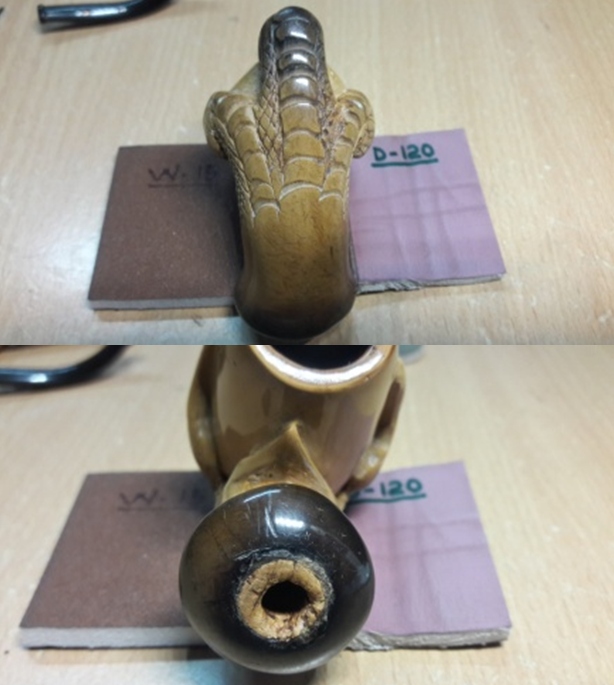
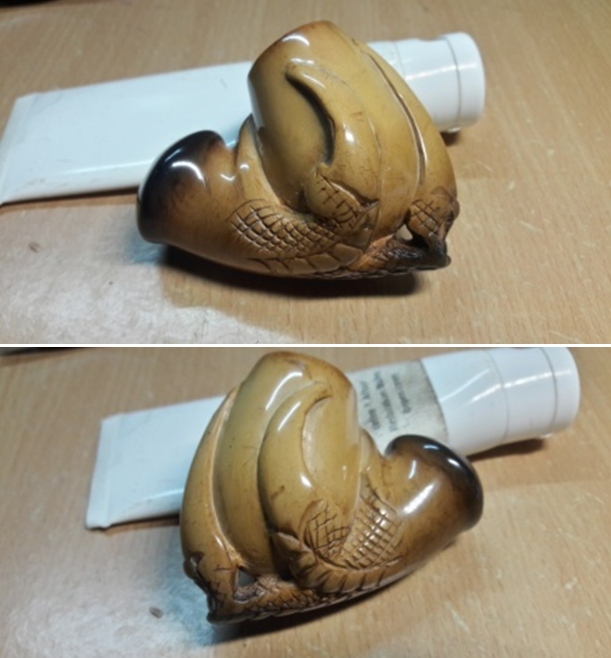
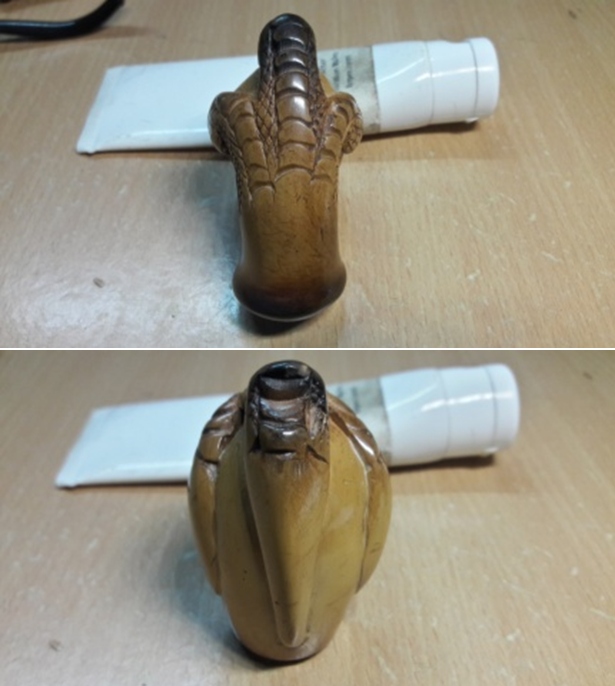
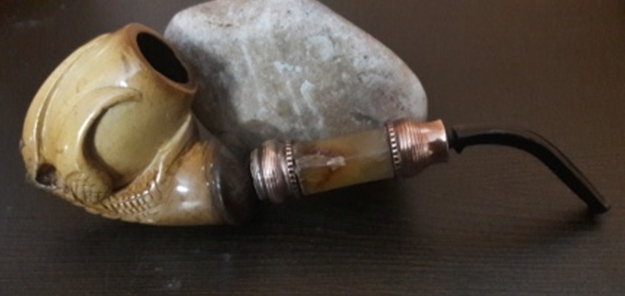
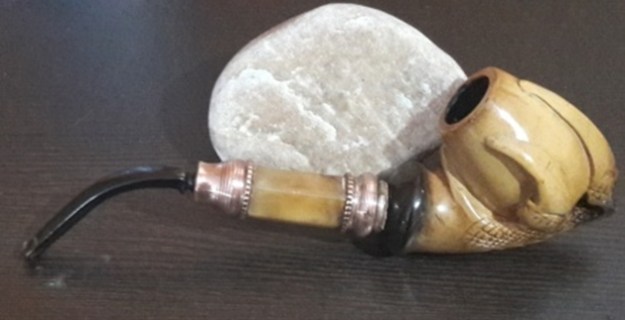
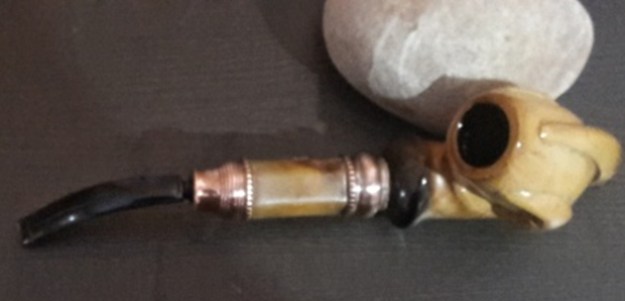
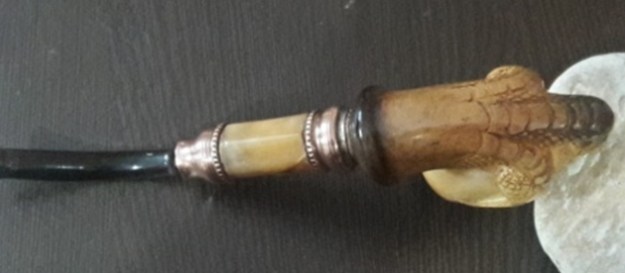
The next pipe on my work table is an old intricately carved meerschaum Eagle claw holding an egg in its talons. The stummel has an intricately carved shape of an eagle claw complete with perfectly carved scales and claw knuckles. The shank extension is a beautiful colored amber hexagonal block with copper end adornments. The delicate thin horn stem has a threaded bone tenon with orifice slot. There is no stamping whatsoever anywhere on this pipe. The lack of stamping makes it impossible to establish the origins of this pipe. However, the intricate carvings and eye for details on this pipe makes me believe this pipe to be Vienna made. Here is the pipe as it sits on my work table. Initial Visual Inspection
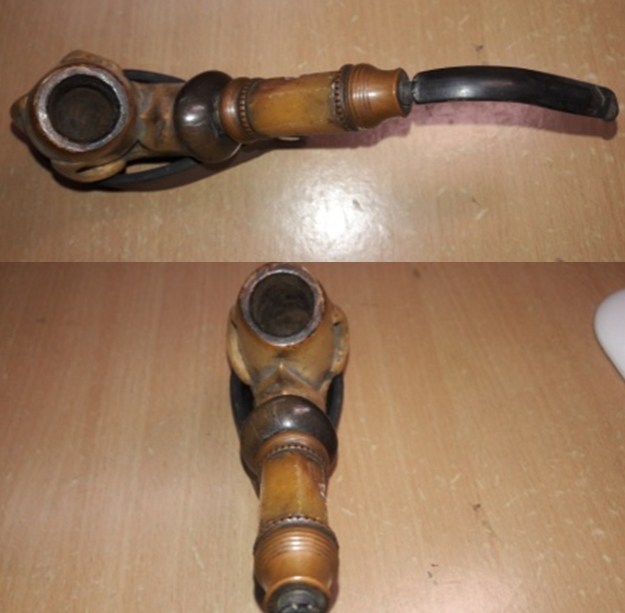
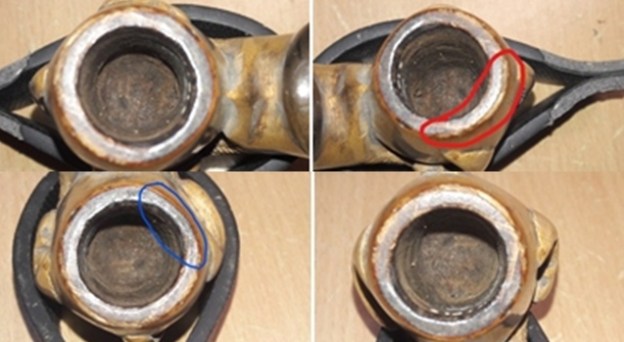
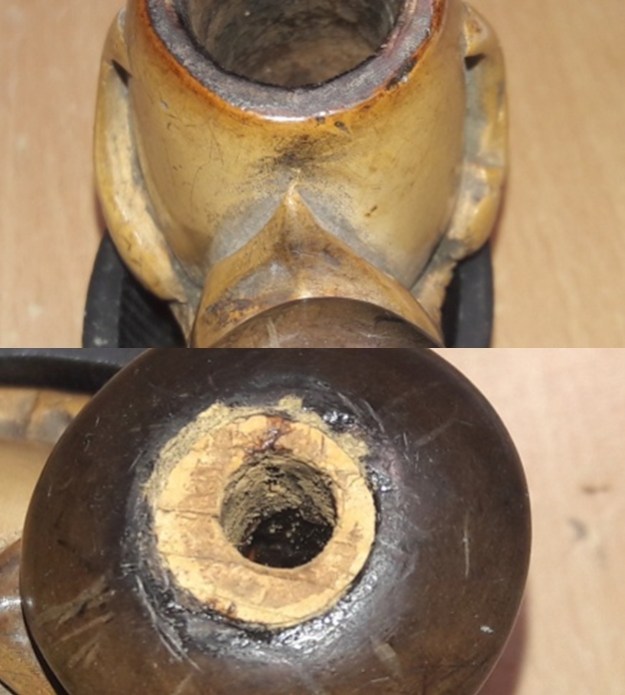
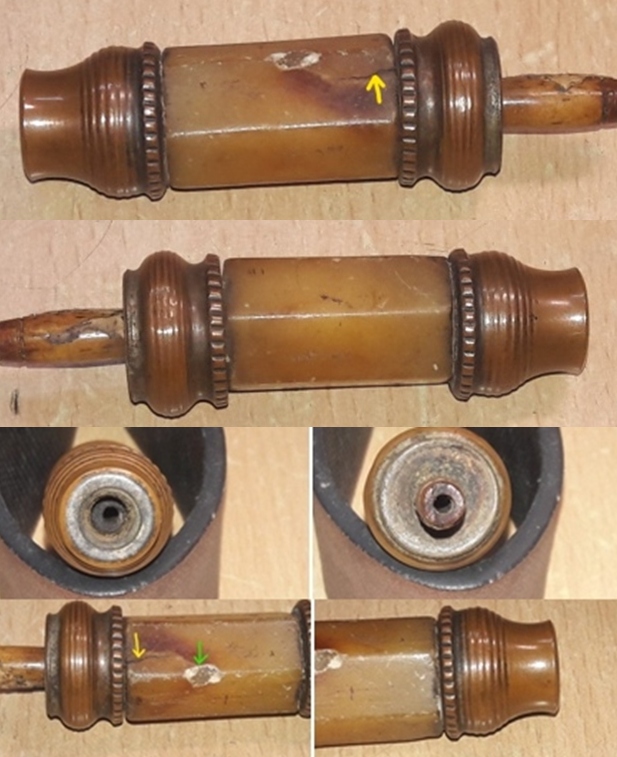
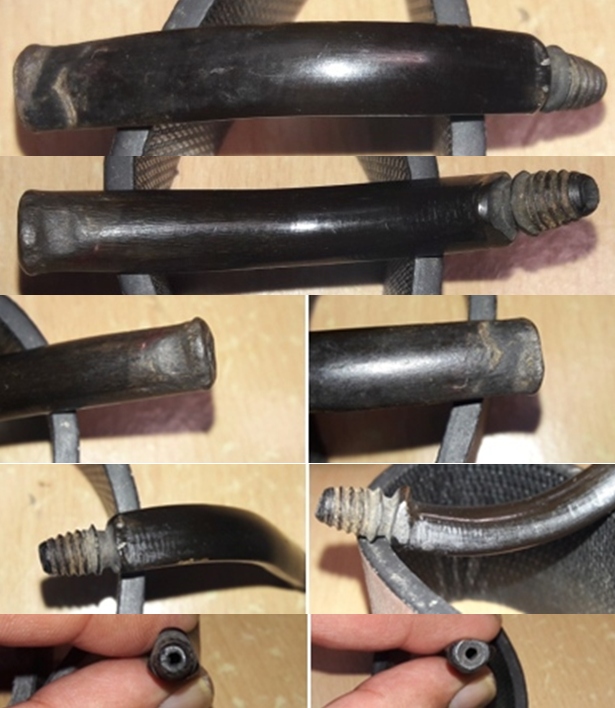
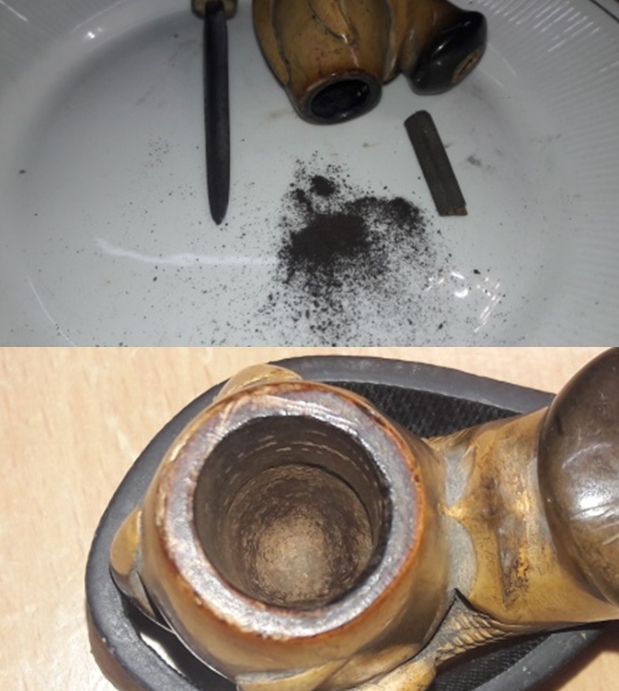
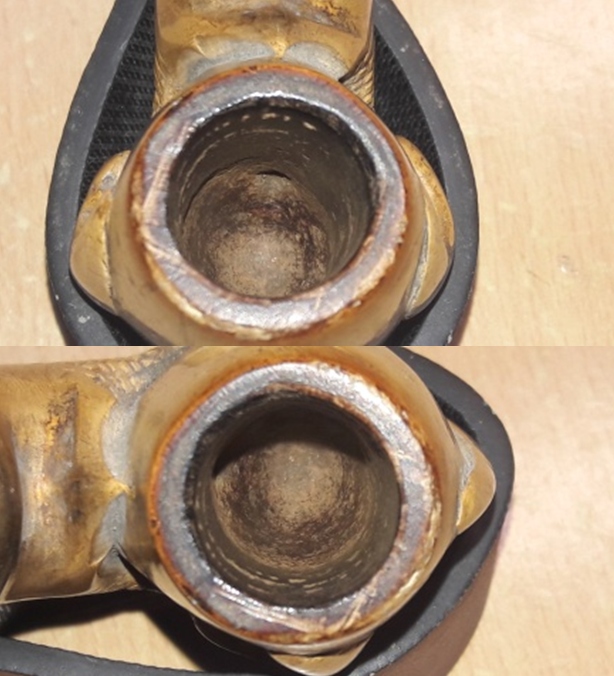
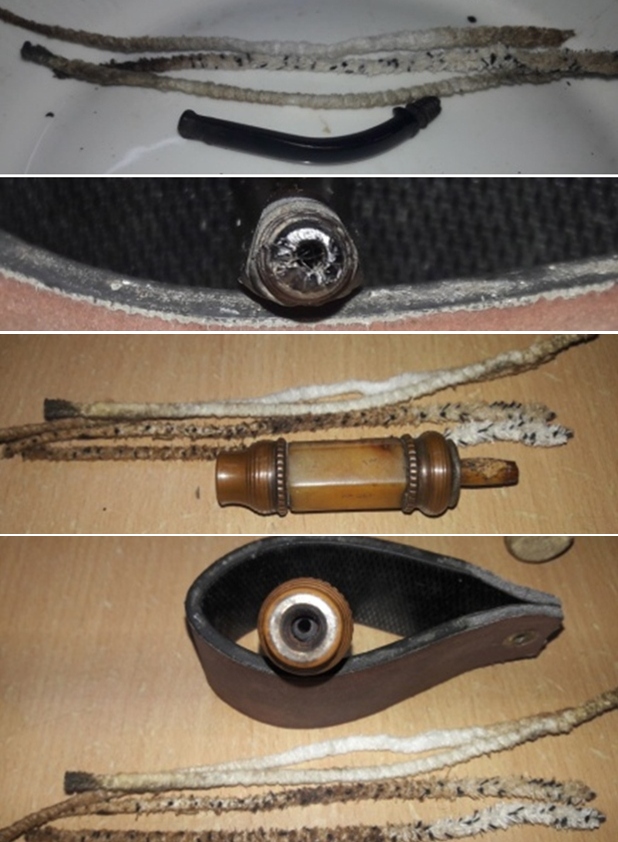
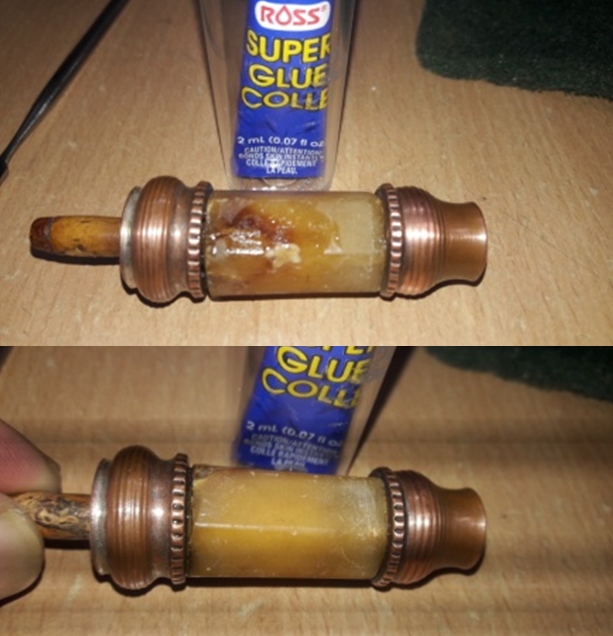
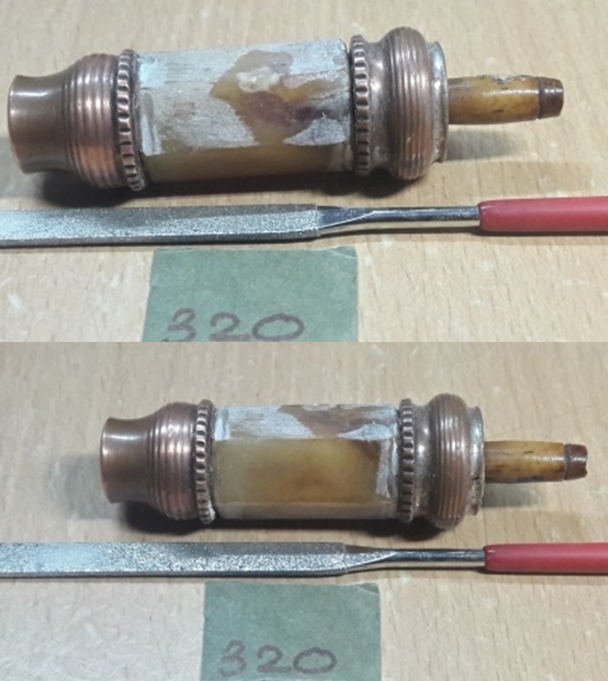
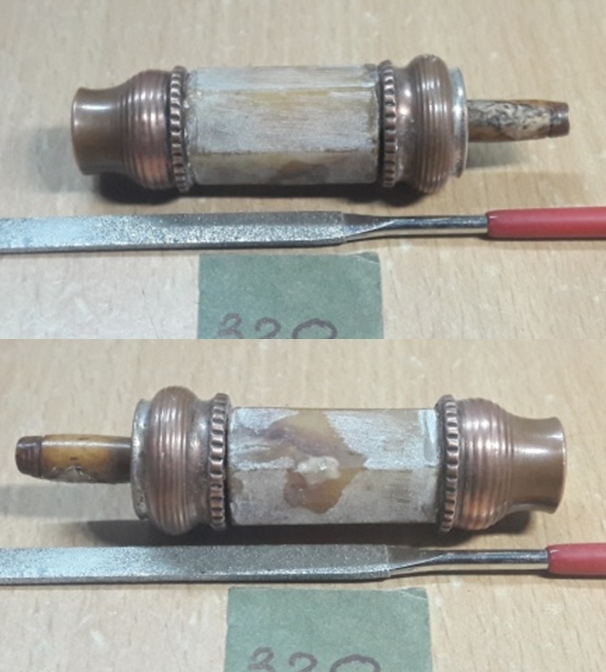
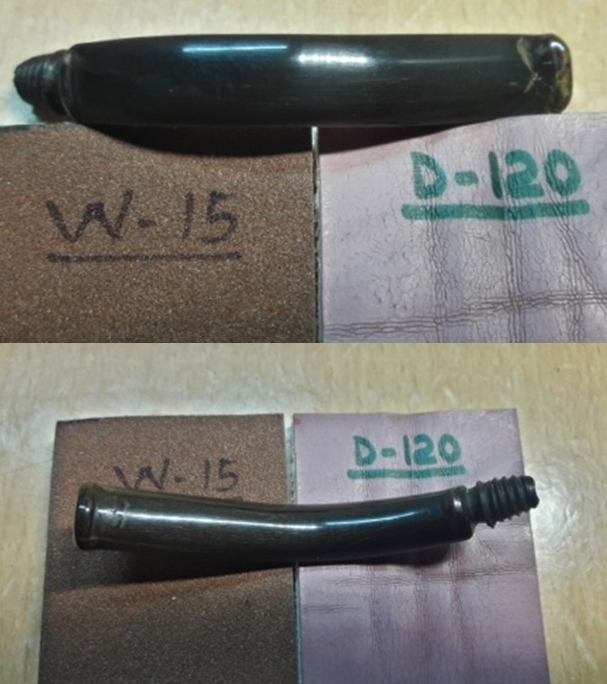
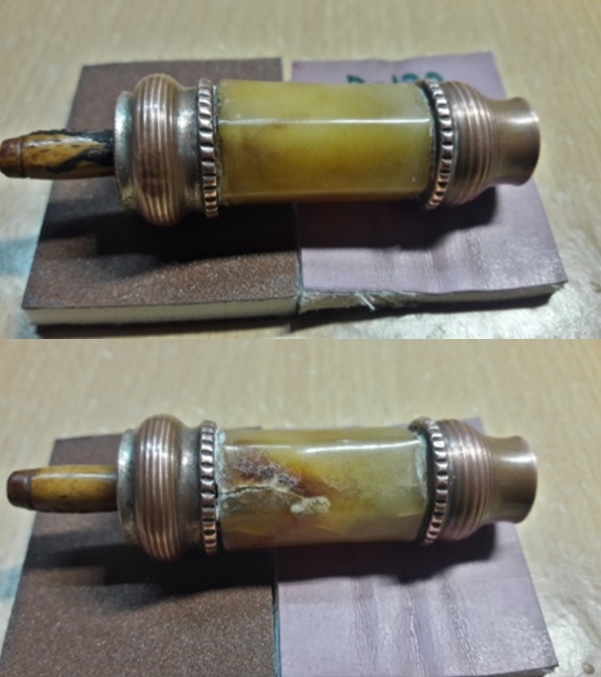
The pipe comes apart in three sections. The first is the meerschaum stummel carved to resemble an eagle’s claw that holds an egg; the second is a block of beautifully colored amber with six chiseled sides. The shank end and the stem end of this hexagonal amber block are adorned with decorated copper end adornments. The airway through the amber shank extension appears to be made of bone which extends out and seats into the mortise. Lastly is the delicate thin bent horn stem with matching threaded tenon end face and the orifice slot end face and appears akin to the triangular head of a grasshopper.There is a light build up of cake in the chamber that has dried and is crumbly due to prolonged storage. The condition of the inner walls of the chamber can be ascertained only after the cake has been removed completely. No apparent cracks or damage to the stummel surface is seen from the outside. The rim top has darkened due to overflow of lava and burn marks. There are a large number of dings and chips to the rim top which are visible through the lava overflow. The right side of the outer edge of the rim is severely damaged (enclosed in red), the result of striking the edge against a hard surface to remove dottle, presenting lop sided appearance to the rim on to the right. The inner edge of the rim on the left side appears thin in 8 o’clock direction (enclosed in blue) and combined with the damaged left outer edge gives the appearance of out of round chamber. The inner rim edge is dented and chipped in few places. Topping the rim surface and creating bevels should address these issues satisfactorily. The stummel is exquisitely carved with intricate details of the scales and knuckles replicated real like!! The four talons are all intact and perfectly shaped. The stummel had developed a nice patina from years of usage. Every nook and cranny of the carvings is filled with dirt and dust from years of uncared for storage giving a very dull and dirty appearance to the stummel. The short shank is a flared round and flumed and there are a few scratches on the surface. The mortise is lined with cork and is intact all around. The mortise has strong odors akin to some sort of soap smell (?), a smell that I have not come across as yet. Cleaning of the stummel to dislodge all the grime and dust from the carving will have to be a deliberate effort. Preserving the old cork lining at the shank end while cleaning the shank and mortise will be a challenge as the cork is susceptible to easy crumbling.   The hexagonal large block of Amber shank extension has developed a crack towards the tenon end (indicated with yellow arrow). This crack is deep but thankfully has not progressed all the way down to the airway. The amber is also chipped (indicated with green arrow) in one place just above the crack. The decorative copper end pieces are decoratively cast and serve the dual purpose of protecting the amber end face while adding a very classic bling to the appearance of the pipe. The copper adornments and the block amber piece are joined by a hollow bone that extends out as tenon. The amber is loose with gap in between the copper adornments and would need to be fixed. The threaded stem end copper adornment is full of old oils and tar accumulations. The tenon end of the copper adornment appears to have had some sort of packing/ separator between the metal and meerschaum shank end that has now worn out and disintegrated.  The horn stem is very delicate and thin that is full bent. The profile of the stem lends the entire pipe a tapered profile that is both delicate and attractive. The peculiarity of this stem is that the tenon end and the slot are identical in shape and size. The bite zone on either surface of the stem has been chewed up and with the horn fibers exposed. The thin delicate buttons on upper and lower stem surface have deep tooth indentations. The tenon end of the stem is heavily scratched. The threaded bone tenon is covered in oils and tars. One of the challenges in this project would be to match the tenon end and orifice slot end profile.The Process
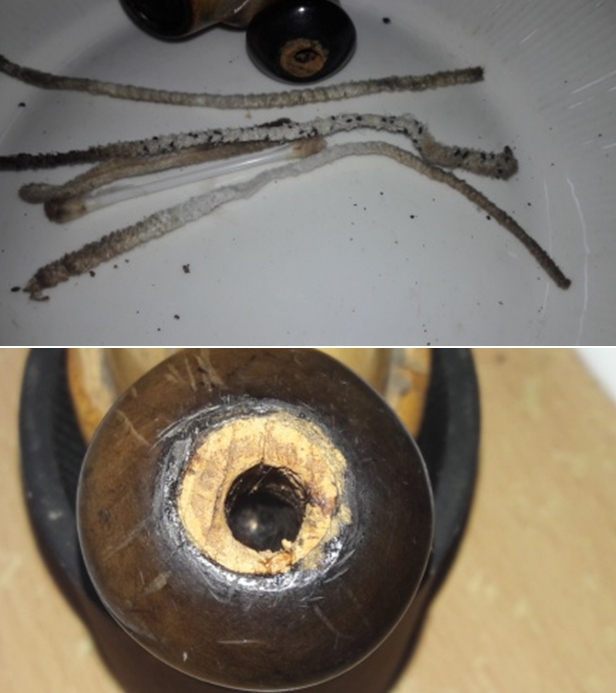
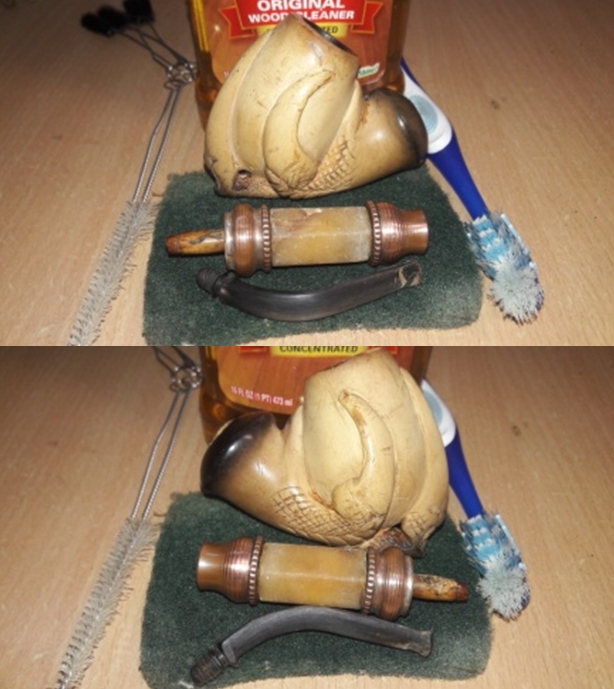
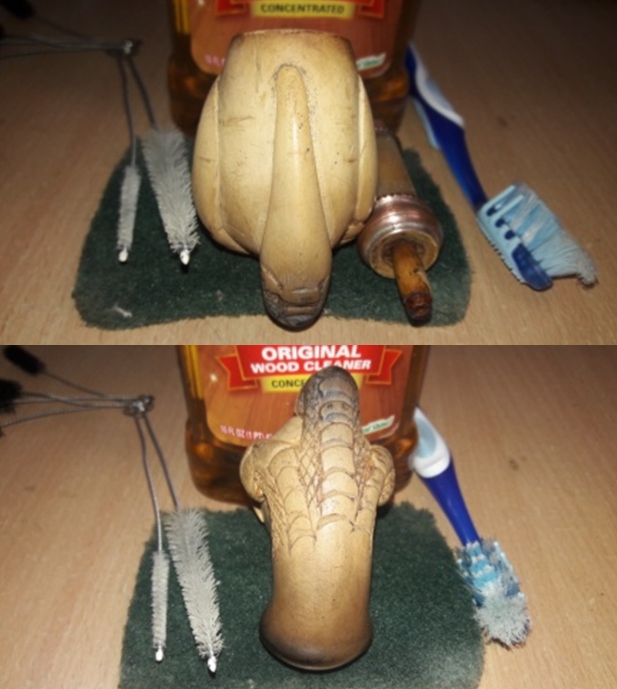
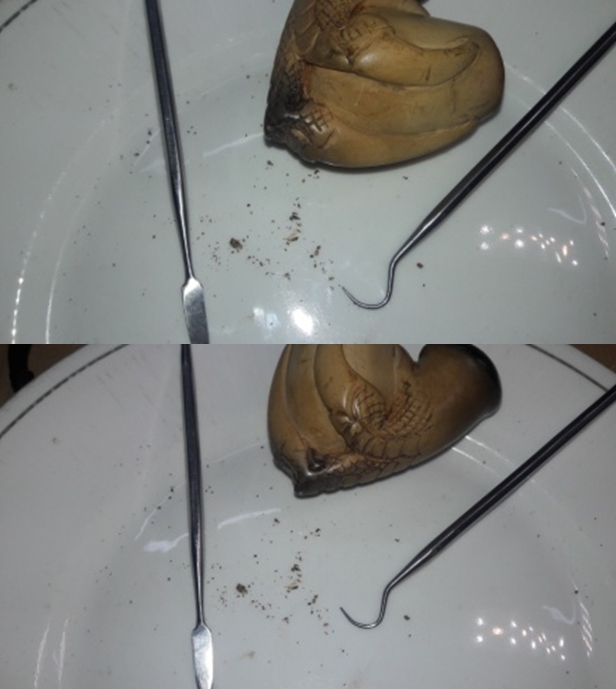
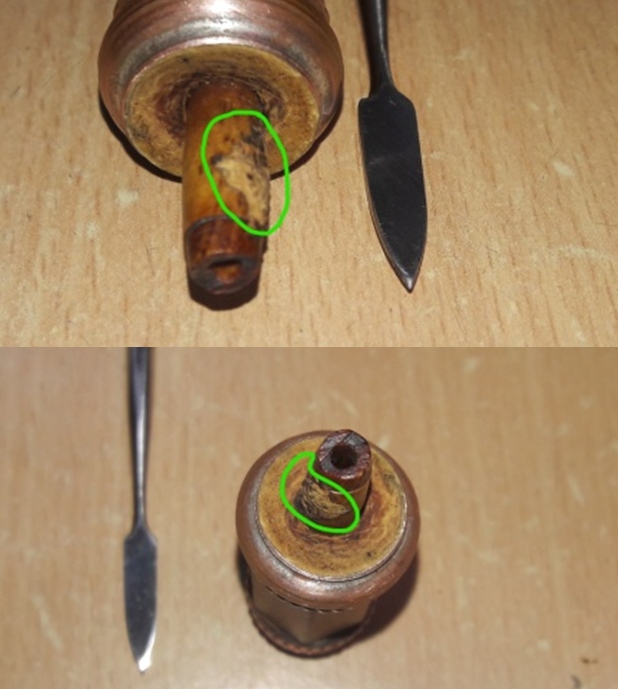
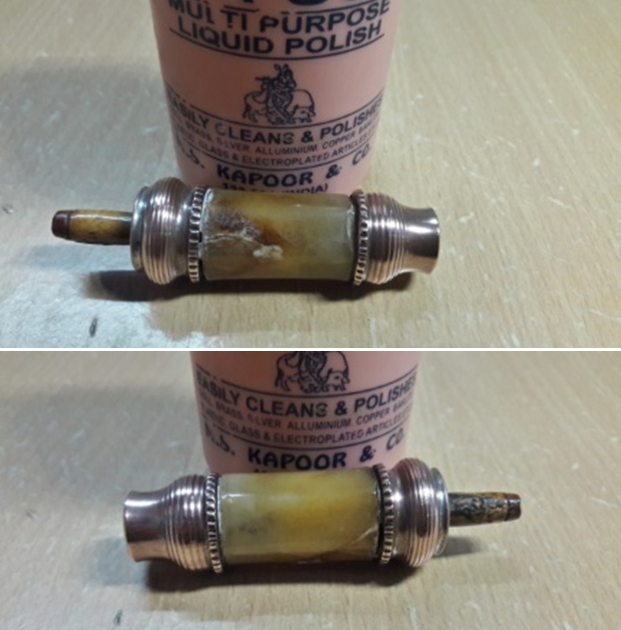
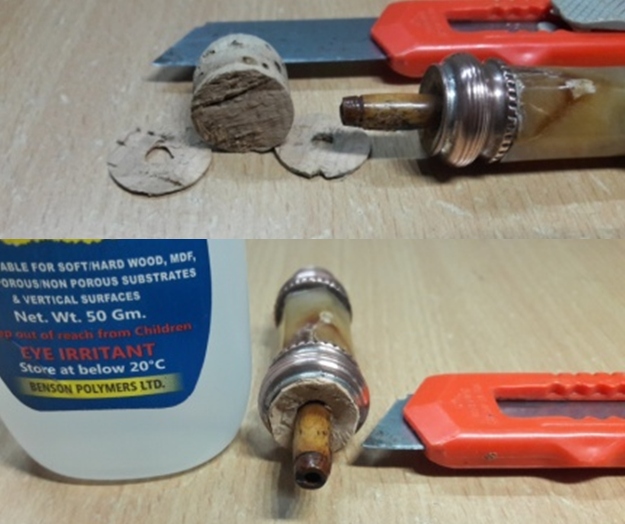
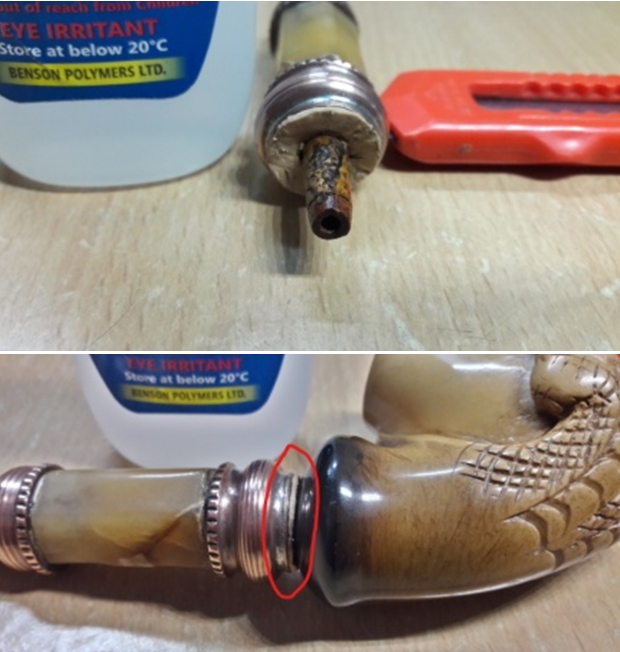
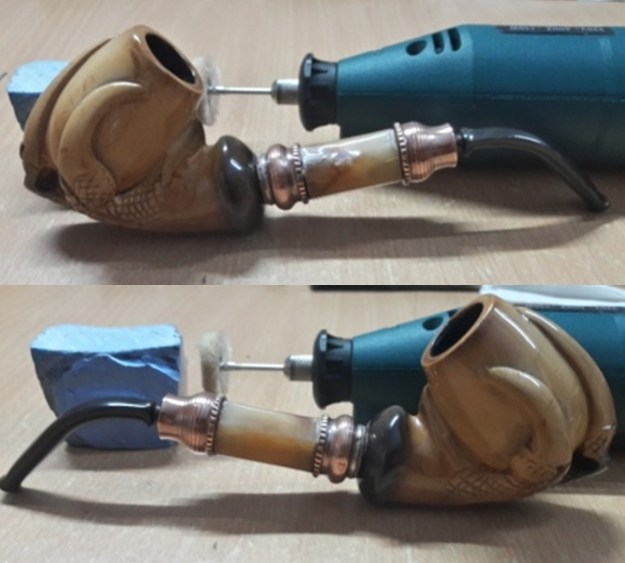
I started this project by reaming the chamber with my smaller fabricated knife and scraped out all the carbon from chamber. I used a 220 grit sand paper, pinched between my thumb and forefinger, to sand the inner walls of the chamber of the pipe. Once I had reached the bare walls, I wiped the chamber with a cotton pad dipped in isopropyl alcohol. This removed all the residual carbon dust and also rid the chamber of all ghost smells. The walls of the chamber are nice and solid with no signs of cracks. Using a sharp knife, I gently scraped out the overflow of lava from the rim top. The dents and chips on the rim surface are now clearly visible and so is the extent of damage to the outer edge of the rim. The inner rim edge too shows a few chipped spots along the edge. I followed up the reaming of the chamber with cleaning of the mortise and air way of the pipe using hard bristled and regular pipe cleaners, q-tips dipped in alcohol. The mortise and the draught hole were given a final clean with shank brushes dipped in alcohol. The shank internals and the draught hole are now nice and clean with an open and full draw. This was easier said than done. The pipe cleaners would not pass through the draught hole for the love of money!! A great deal of poking and prodding with a straightened paper clip got me there.Next I cleaned the internals of the stem and shank extension with pipe cleaners and alcohol. I followed up the internal cleaning of the stummel, shank extension and the stem with external cleaning. I cleaned the external surface of all the three parts with Murphy’s Oil soap and hard bristled tooth brush/ shank brush. The stummel surface cleaned up nicely. The scratches and dents and dings over the stummel and shank extension surface are now clearly visible. The crack in the block amber in the shank extension is wider and deeper than I had anticipated since the dirt and grime which was embedded in the crack has now been cleaned. The external cleaning was followed by carefully removing old and now moistened wax and gunk that remained embedded in the many nooks and crannies of the intricate carvings over the stummel surface using sharp dental tools. The stummel is now truly cleaned and prepared for the next step in restoration.   I scraped off the old remnants of the packing from the tenon end of the shank extension. This would provide a fresh and clean surface for a new packing between the shank extension and the shank end to protect and provide an airtight seal between the shank end cork lining and the copper adornment at the shank extension end. I intend to use a leather gasket (if I can find one!) to seal the joint between the shank extension and the shank end. It was at this stage that while cleaning the tenon of the shank extension that realization dawned on me that the tenon is not bone as I had appreciated but WOOD!! The wood tenon even has part of the old bark covering the tenon (encircled in green). I decided to let the piece of bark remain on the tenon to preserve the originality of the pipe. Next, I decided to address the crack, chipped surface in the amber and also the gaps between the amber block and copper adornments. I filled the crack, chipped portion and the gaps with clear superglue and set the amber shank extension aside for the glue to cure.  With the amber shank extension set aside to cure, I addressed the bit marks on the horn stem. I start by sanding the bite zone with a piece of 180 grit sand paper. I filled the bite marks on both lower and upper surfaces of the horn stem with clear superglue. Once the glue had set, I layered superglue over the button in the bite zone as well as over the tenon end and set the stem aside for the glue to completely cure. Once the glue at the either ends of the stem has cured, I shall sand the fill to match the button in the bite zone and at the tenon end.   Now that the amber shank extension and horn stem had been set aside for the superglue fill to cure, I turned my attention to address the stummel issues. To address the darkened and out-of-round rim as well as the dings to the rim edges,, I first top the rim surface on a folded piece of 180 grit sand paper. Once the darkened areas were addressed, with a folded piece of worn out 180 grit sandpaper pinched between my forefinger and thumb, I create a slight bevel over the inner and outer rim edges till all the dings were removed and the out of round issue was reduced to a large extent.   I set the stummel aside and checked the stem fills. The glue had hardened completely. With a flat head needle file, I sand the fills on upper and lower surface and reconstruct the button edges at either ends of the horn stem. With a folded piece of 320 grit sandpaper, I sand the entire stem surface, including the button edges, to blend and smooth out the repaired surfaces. I rubbed a generous amount of EVO in to the stem to rehydrate it and set the stem aside for the oil to be absorbed.    All the while that I was working on the stummel and the stem, the repairs to the amber shank extension were curing nicely. Once the glue had completely hardened, with a flat needle file, I sand off the excess fill to achieve a rough match with the surrounding amber surface. I further blend in the repairs by sanding the entire amber block with a folded piece of 320 grit sandpaper. Now moving on to the most tedious and time consuming process of polishing the three parts of the pipe with micromesh pads. I wet sand the entire stem and the block amber shank extension with 1500 to 12000 grit micromesh pads. I wiped these parts with a moist cloth to note the progress being made. Once I was done polishing with all the pads, I rubbed a small quantity of EVO in to the stem to rehydrate it. I am happy with the progress being made thus far.    I polished the top of the bowl and rim edges with micromesh pads to remove the dark surface that still remained on the surface. I wet sand the entire stummel with 1500-12000 grit pads. I diligently worked around the intricately carved scales and knuckles of the claw to polish these carvings. I wiped the bowl down with a damp cloth to remove the dust that was left behind by the sanding. I wanted to minimize the scratching but not necessarily remove them. These lacerations and dings must have had a history and I wanted to preserve it.   I rubbed a small quantity of “Before and After Restoration Balm” in to the meerschaum stummel. I rubbed this balm deep in to the nooks and crannies of the carvings with my fingers and let it rest for a few minutes. Though I use the balm on briars, I have seen Steve use it on meerschaums as well and it really helps to bring out the patina that has developed on the meerschaum!! I am very pleased with the way the meer bowl appears at this stage.   Next, I polish the copper adornments at either ends of the block amber shank extension with a multi-purpose polishing liquid. I wiped it clean with a soft cotton cloth and gave a final polish with a jeweler’s cloth. Wow!! These copper adornments are now looking fantabulous and add a very chic and classy look to the appearance of the pipe.The only aspect, and functional aspect at that, to remain unaddressed was the gasket at the tenon end of the shank extension. I had thought of using a soft leather gasket as it is easy to shape and would provide an air tight seal. However, I could not lay my hands on one and neither could fabricate one. I discussed this with Abha, my wife, about the non availability of leather gasket. Always the problem solver, she promptly suggested using cork!! This solution was both practical and most likely original to the pipe. I selected a piece of cork that comes from wine bottle/ whiskey cap. With a sharp paper cutter, I carefully cut a couple of very thin round rings. I cut a hole of the size of tenon in the middle and stuck it to the end of the tenon end face of the copper adornment with superglue. I tried the seating of the tenon in to the mortise. It was snug and a perfect fit.   To complete the restoration of this pipe, I mount a cotton cloth buffing wheel on to my hand held rotary tool and applied White Diamond compound to each of the three pipe parts. I wiped/ buffed the pipe with a soft cotton cloth to clear it of any leftover compound dust.   I then mounted another cotton cloth wheel on to the polishing machine and applied several coats of carnauba wax over the stummel, amber shank extension and the stem. I finished the restoration by giving the pipe a rigorous hand buffing using a microfiber cloth to raise the shine further. Admiring the pipe, it made me wonder, did he really have a spirit which kept him ticking after having suffered the kind of abuse which was evident from all the lacerations, dents and dings and chips. But he has survived his past nonetheless and will continue on his warpath with me…Cheers!! P.S. I wish to thank all the esteemed readers for being a part of my journey as I walked through this project.

Praying for you and your loved ones in these troubled pandemic spread. Stay Home and Stay Safe!!

New Beginnings for a Malaga Custom Carved Freehand


Blog by Steve Laug

The next pipe on the work table came to me from another of our estate purchases. It has been around for a while waiting to be worked on. Jeff did the original photographs of the pipe in December 2019. It is a beautifully grained Malaga Freehand that is really quite nice. The stamping is the faint but readable. It is stamped on the underside of the shank and reads the Malaga [over] Custom Carved. The Malaga Oil finish had a lot of grime ground into the bowl and some darkening around the sides of the bowl. The bowl was heavily caked and had an overflow of lava on the top of the rim. It was hard to know what the rim top and inner edge of the bowl looked like under the grime. The rim top and shank end is plateau finished and had a lot of grime ground into them. The fancy turned Freehand stem was calcified, oxidized and had light tooth chatter and marks on the top and underside. There were also some wrinkles from when the stem was bent on the underside in the bend itself. The surface of the button was surprisingly free of damage. The pipe had promise but it was very dirty. Jeff took photos of the pipe before he started his cleanup work. He took photos of the rim top and bowl to give a clear picture of the thickness of the cake and the overflow of lava on the rim top. It is hard to know what the rim edge looks like under the lava coat. He also took photos of the fancy turned portion of the stem as well as the top and underside of the stem to show the oxidation, calcification, light chatter and tooth marks.   Jeff took photos of the sides and heel of the bowl to give a picture of what the briar around the pipe looked like. There is some interesting grain under the grime. He took photos of the stamping on the underside of the shank. They read as noted above. I am also including the link to a blog that I wrote that gives some of the history of the Malaga brand and the Malaga Pipe Shop in Royal Oak, Michigan in the USA. I have written an earlier blog to give a little history of the Malaga Brand and the pipemaker, George Khoubesser. Here is the link – https://rebornpipes.com/tag/malaga-pipes/. That blog also includes links to a catalogue and the history of the pipemaker George Khoubesser. Follow the link to get a feel for the brand and the pipemaker.

Since Jeff follows the same pattern of work in his cleanup we do not include photos but rather just a simple summary. Jeff reamed the bowl with a PipNet pipe reamer and followed up with a Savinelli Fitsall pipe knife to remove the cake. He scrubbed out the mortise and the airway in the shank and the stem with alcohol, cotton swabs and pipe cleaners. He scrubbed the exterior of the bowl, rim, shank and stem with a tooth brush and Murphy’s Oil Soap to remove the oils and tars on the rim and the grime on the finish of the bowl. He rinsed it under running water. He dried it off with a soft cloth. He was able to remove the lava build up on the rim top and you could see the damages to the top and edges of the rim. I think this pipe may well been before we worked with Mark Hoover’s Before & After Deoxidizer so he cleaned the internals and externals. The stem was clean but lightly oxidized. I took photos of what the pipe looked like when I brought to my worktable.    The plateau rim top cleaned up really well with the lava coat removed. The rim top, inner and out edges of the rim showed some darkening. There is some burn damage on the back beveled edge. The stem surface looked very good with heavy oxidation remaining and some light tooth chatter and marks on both sides ahead of the button.  You can also see the wrinkles in the vulcanite on the underside of the stem that occurred when the stem was bent.      I removed the stem and took a photo of the pipe to give a sense of the well shaped Freehand. Now it was time to do my work on the pipe. To remove the damage to the rim top and the inner edges of the bowl I worked them over with a folded piece of 220 grit sandpaper. I was able to clean up the smooth bevel and smooth out the damages.I polished the bowl and the rim top, sides and shank with micromesh sanding pads – wet sanding with 1500-12000 grit pads and wiping it down after each pad with a damp cloth. I carefully avoided the stamping on the top and underside of the shank so as not to damage the already faint stamping.   I rubbed the bowl and shank down with Before & After Restoration Balm. I worked it into the surface of the bowl sides, plateau top and shank end with my fingertips and a horse hair shoe brush to clean, enliven and protect the briar. I let the balm sit for a little while and then buffed with a cotton cloth to raise the shine.   While I was working on the bowl the stem was soaking in a new product I received from Briarville Pipe Repair – Pipe Stem Oxidation Remover. It is a liquid of about the same consistency as apple juice. The stem sat in the mixture for 2 ½ -3 hours. I removed the stem from the bath, scrubbed lightly with a tooth brush and dried if off with a paper towel. I was surprised that it was quite clean. Just some light oxidation on the top of the saddle remaining. The bath was dark with the removed oxidation of the seven stems. I cleaned out the inside of the stem with alcohol and pipe cleaners.  I scrubbed the stem surface with Soft Scrub All Purpose cleanser to remove the remaining oxidation. The oxidation was strongest in the twists and turns of the lower portion of the stem. It took quite a bit of elbow grease to remove the oxidation but when I was finished it looked very good.     I polished the vulcanite stem with micromesh sanding pads – 1500-12000 grit pads. I wiped it down with a damp cloth after each sanding pad. I used Before & After Pipe Polish – both Fine and Extra Fine to further polish the stem.   This well made, classic Malaga Custom Carved Freehand with a fancy turned vulcanite stem is a great looking pipe now that it has been restored. The rich oil finish that Malaga used came alive with the polishing and waxing. I put the stem back on the bowl and carefully buffed the pipe with Blue Diamond on the buffing wheel using a light touch on the briar. I gave the bowl and the stem multiple coats of carnauba wax on the buffing wheel and followed that by buffing the entire pipe with a clean buffing pad. I hand buffed the pipe with a microfiber cloth to deepen the shine. The finished Malaga Custom Carved is a beauty with combination of smooth and plateau rim and shank end. It fits nicely in the hand and looks very good. Give the finished pipe a look in the photos below. The dimensions of the pipe are Length: 6 ¼ inches, Height: 2 ½ inches, Outside diameter of the bowl: 1 ¾ inches, Chamber diameter: ¾ of an inch. If you are interested in adding this pipe to your collection send me a message or an email. Thanks for reading this blog and my reflections on the pipe while I worked on it. There are many more to come!

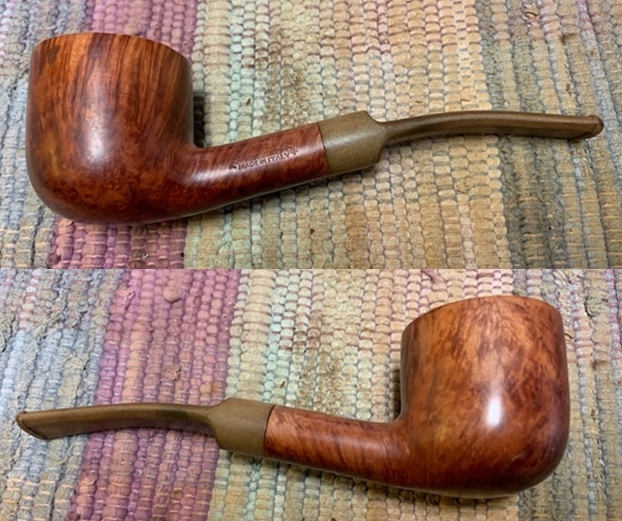
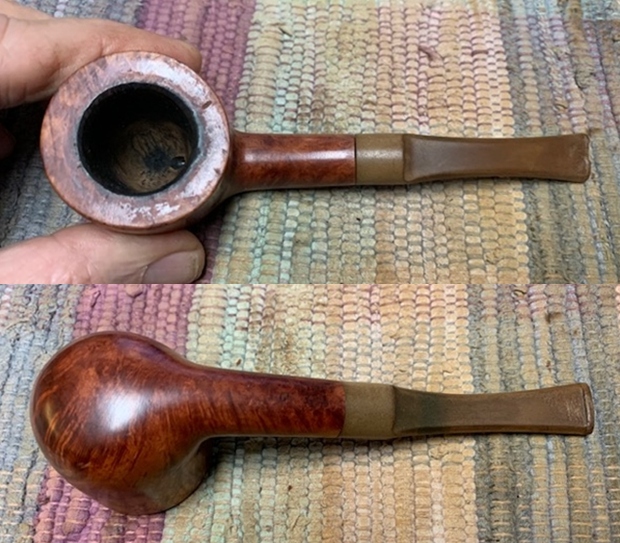
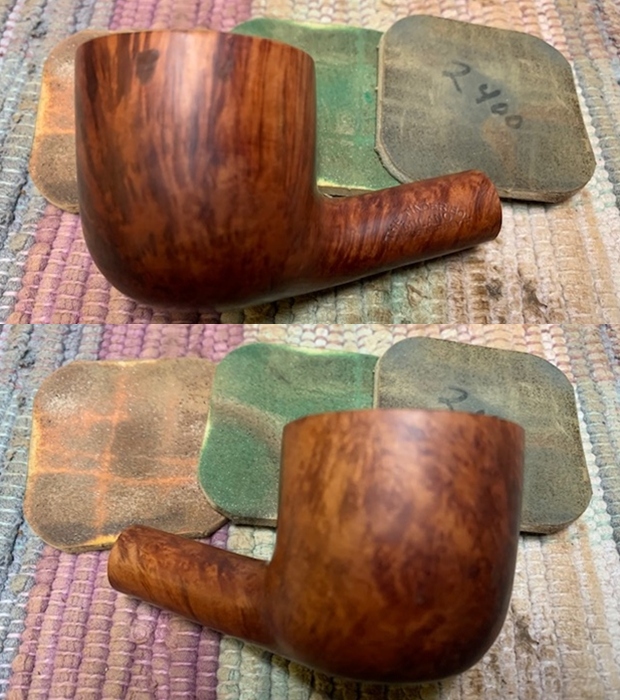
Restoring The Tinder Box Milano Pot Made by Savinelli


Blog by Steve Laug

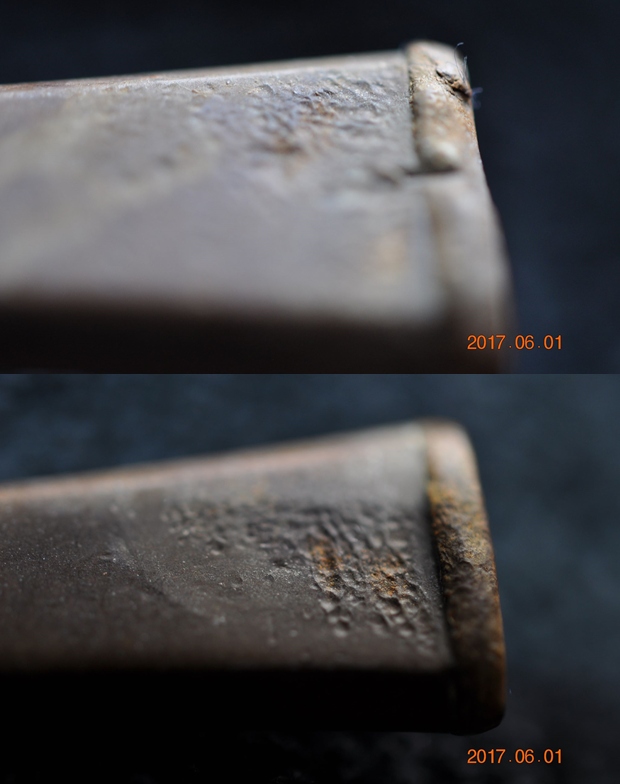
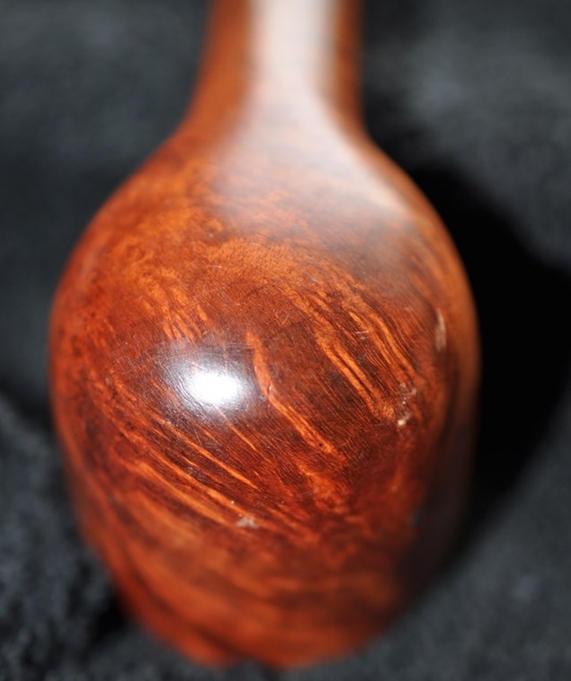
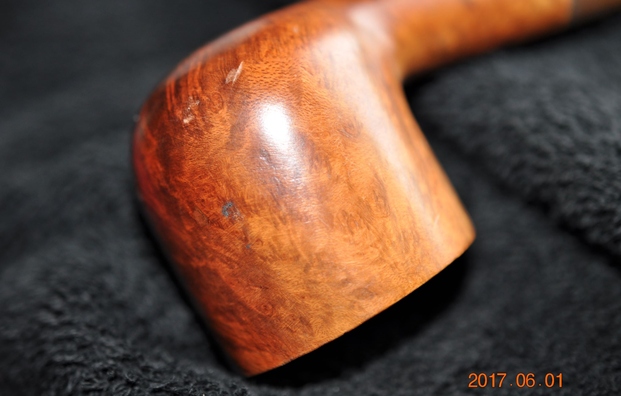
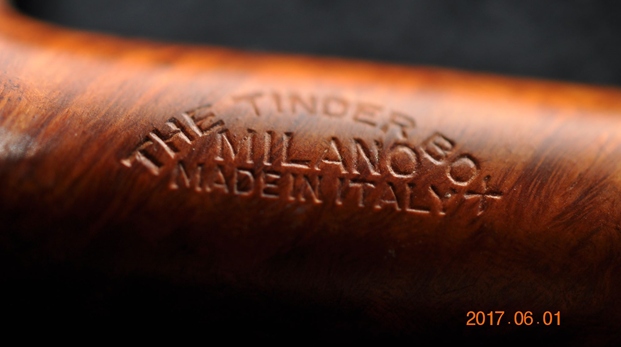
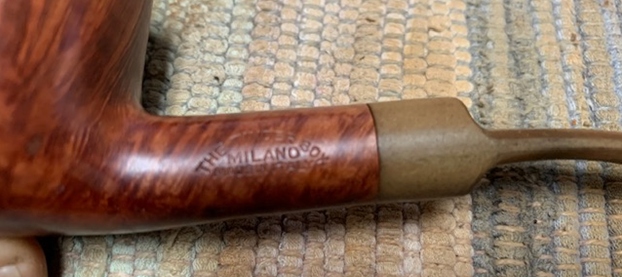
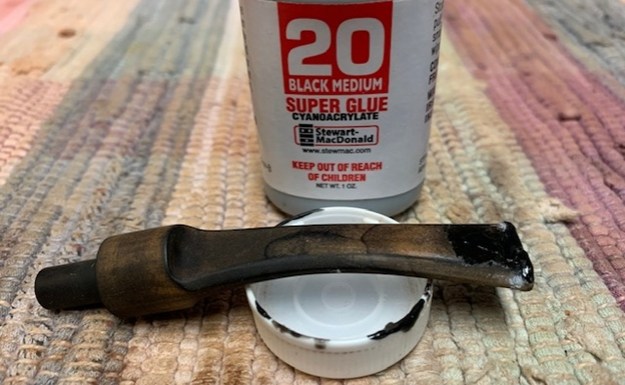
The next pipe on the work table came to me from another of our estate purchases. It has been around for a while waiting to be worked on. Jeff did the original photographs of the pipe in June of 2017. It is a beautifully grained Savinelli Made Pot that is really quite nice. The stamping is the clear and readable. It is stamped on the left side of the shank and reads The Tinder Box in an arch [over] Milano [over] Made in Italy. There is not a shape number stamped on either side of the pipe. The smooth finish had a lot of grime and dirt ground into the briar. The bowl was heavily caked and had an overflow of lava on the top of the rim. It was hard to know what the rim top and beveled inner edge of the bowl looked like under the grime. The vulcanite saddle stem and was calcified, oxidized and had light tooth chatter and marks on the top and underside but the surface of the button. There was a deep trough bitten into the top of the button but it did not go through the button. There was not any logo on the stem. The grain on the bowl of the pipe was gorgeous with even the few small fills well blended into the finish. The pipe certainly had promise but it was very dirty. Jeff took photos of the pipe before he started his cleanup work. He took photos of the rim top and bowl to give a clear picture of the thickness of the cake and the overflow of lava on the rim top. The inner bevel on the rim does not look too bad and the outer edge looks good. He also took photos of the top and underside of the stem to show the oxidation, calcification, light chatter and tooth marks as well as the damage to the top of the button. Jeff took photos of the sides and heel of the bowl to give a picture of what the briar around the pipe looked like. There is some interesting grain under the grime. Jeff took a photo of the stamping on the sides of the shank and the top of the stem. It reads as noted above. Since Jeff follows the same pattern of work in his cleanup we do not include photos but rather just a simple summary. Jeff reamed the bowl with a PipNet pipe reamer and followed up with a Savinelli Fitsall pipe knife to remove the cake. He scrubbed out the mortise and the airway in the shank and the stem with alcohol, cotton swabs and pipe cleaners. He scrubbed the exterior of the bowl, rim, shank and stem with a tooth brush and Murphy’s Oil Soap to remove the oils and tars on the rim and the grime on the finish of the bowl. He rinsed it under running water. He dried it off with a soft cloth. He was able to remove the lava build up on the rim top and you could see the damages to the top and edges of the rim. I think this pipe may well been before we worked with Mark Hoover’s Before & After Deoxidizer so he cleaned the internals and externals. The stem was clean but oxidized. I took photos of what the pipe looked like when I brought to my worktable. The rim top cleaned up really well with the lava coat removed. The rim top and inner edges of the rim showed some damage. The stem surface showed heavy oxidation remaining and some tooth chatter and marks on both sides ahead of the button. The worst damage was to the top of the button where there was a crease in the vulcanite.      I took a photo of the stamping on the left side if the shank. It reads as noted above.  Now it was time to do my work on the pipe. To remove the damage to the rim top and the edges of the bowl I topped it on a topping board with 220 grit sandpaper. I also worked over the inner edge of the bowl with a folded piece of 220 grit sandpaper to smooth out the damages there.    I polished the bowl and the rim top, sides and shank with micromesh sanding pads – wet sanding with 1500-12000 grit pads and wiping it down after each pad with a damp cloth. I carefully avoided the stamping on the top and underside of the shank so as not to damage the already faint stamping.     I rubbed the bowl and shank down with Before & After Restoration Balm. I worked it into the surface of the bowl sides and shank with my fingertips to clean, enliven and protect the briar. I let the balm sit for a little while and then buffed with a cotton cloth to raise the shine.  It helped to blend the stain into the rest of the bowl.      While I was working on the bowl the stem was soaking in a new product I received from Briarville Pipe Repair – Pipe Stem Oxidation Remover. It is a liquid of about the same consistency as apple juice. The stem sat in the mixture for 2 ½ -3 hours. I removed the stem from the bath, scrubbed lightly with a tooth brush and dried if off with a paper towel. I was surprised that it was quite clean. Just some light oxidation on the top of the stem remained. The bath was dark with the removed oxidation of the seven stems. I cleaned out the inside of the stem with alcohol and pipe cleaners. I filled in the tooth marks on the top of the stem and rebuilt the button surface with black superglue. Once the glue cured I used a needle file to reshape the button and flatten the repairs. I sanded out the repairs with 220 grit sandpaper to blend it into the surface of the stem. I started the polishing with 400 grit wet dry sandpaper.  I polished the vulcanite stem with micromesh sanding pads – 1500-12000 grit pads. I wiped it down with a damp cloth after each sanding pad. I used Before & After Pipe Polish – both Fine and Extra Fine to further polish the stem.      This well made, classic Italian Made Tinder Box Milano Pot with a vulcanite saddle stem is a great looking pipe now that it has been restored. The rich finish that Milano used came alive with the polishing and waxing. I put the stem back on the bowl and carefully buffed the pipe with Blue Diamond on the buffing wheel using a light touch on the briar. I gave the bowl and the stem multiple coats of carnauba wax on the buffing wheel and followed that by buffing the entire pipe with a clean buffing pad. I hand buffed the pipe with a microfiber cloth to deepen the shine. The finished Milano Pot is a beauty and fits nicely in the hand and looks very good. Give the finished pipe a look in the photos below. The dimensions of the pipe are Length: 5 ¾ inches, Height: 1 ¾ inches, Outside diameter of the bowl: 1 ¾ inches, Chamber diameter: 1 inch. If you are interested in adding this pipe to your collection send me a message or an email. Thanks for reading this blog and my reflections on the pipe while I worked on it. There are many more to come!

Breathing Life into an Orlik De Luxe L190 Apple with a Taper Stem


Blog by Steve Laug

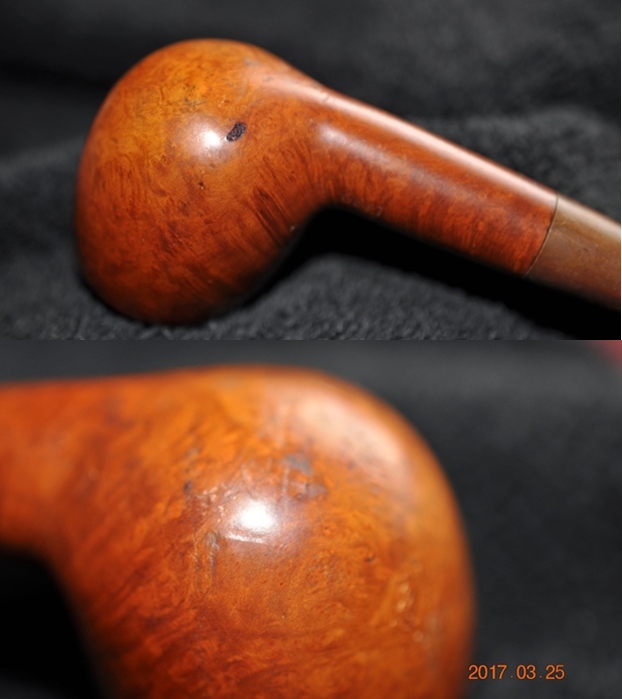
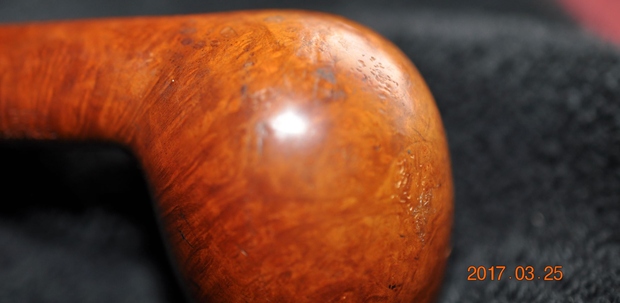
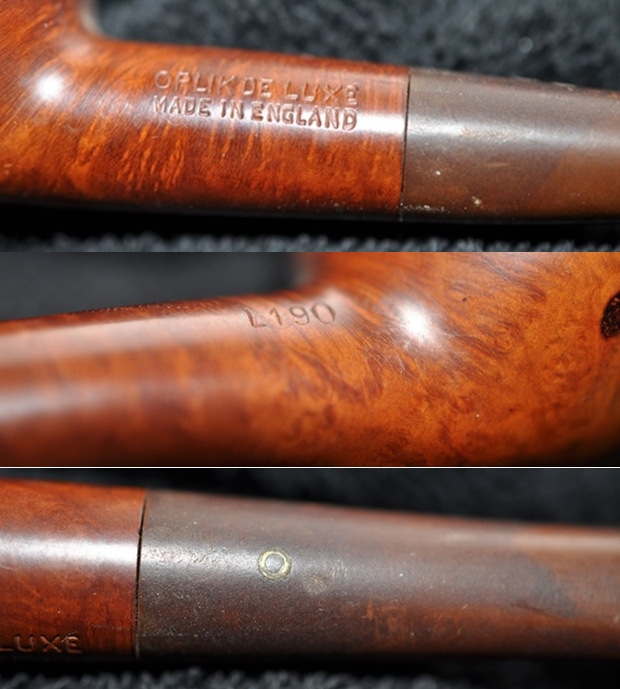
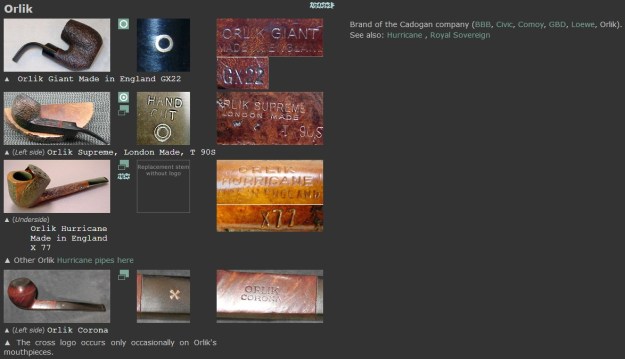
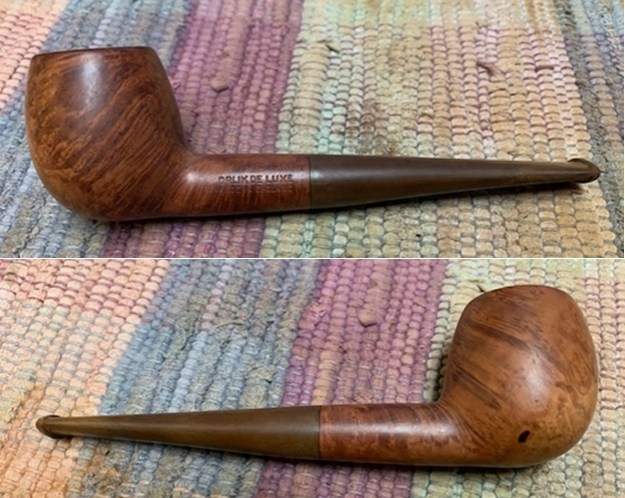
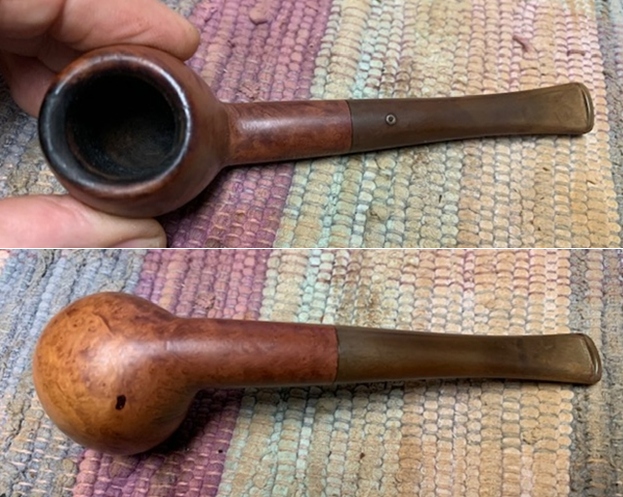
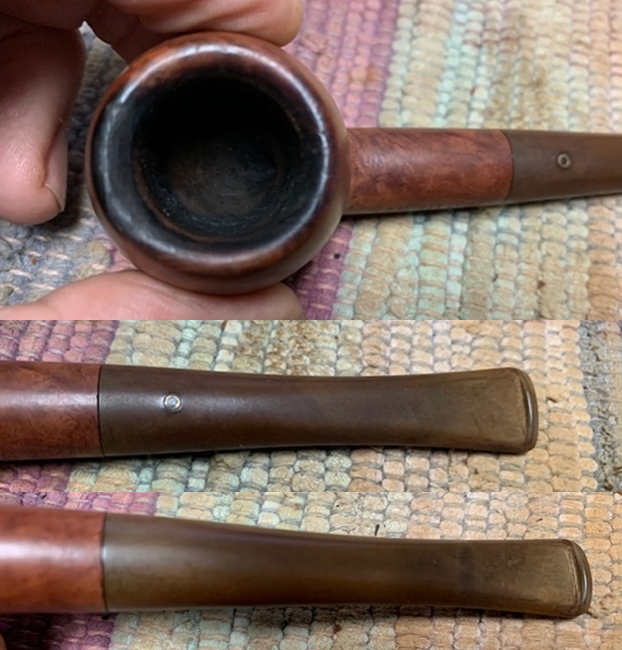
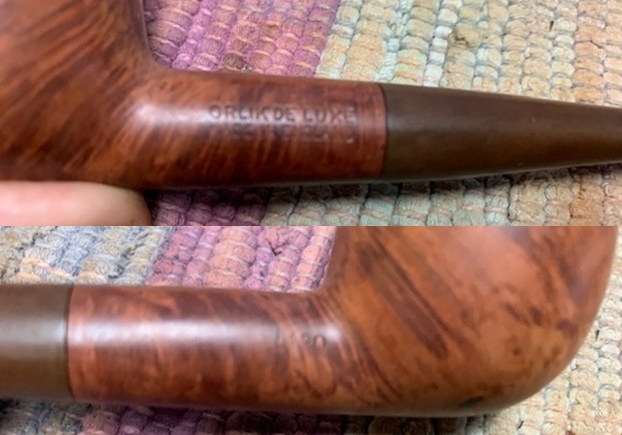
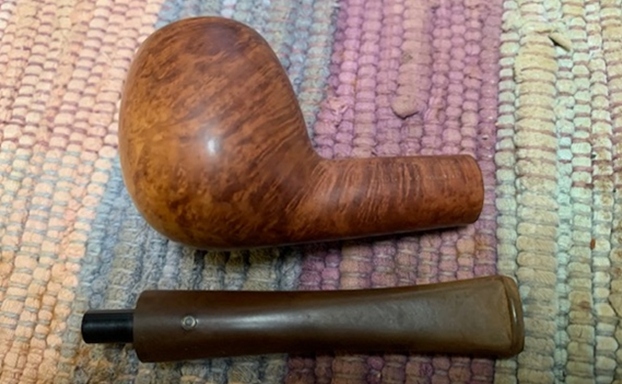
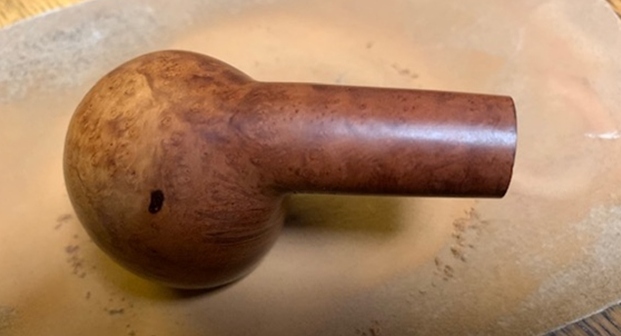
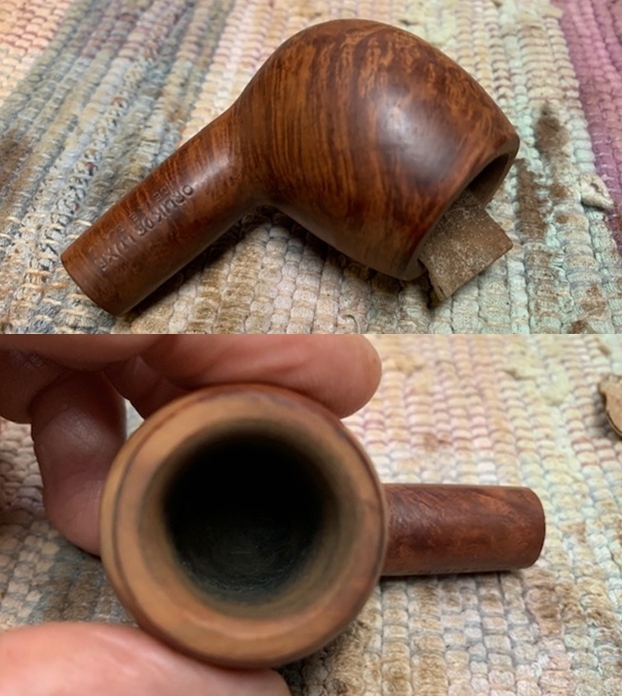
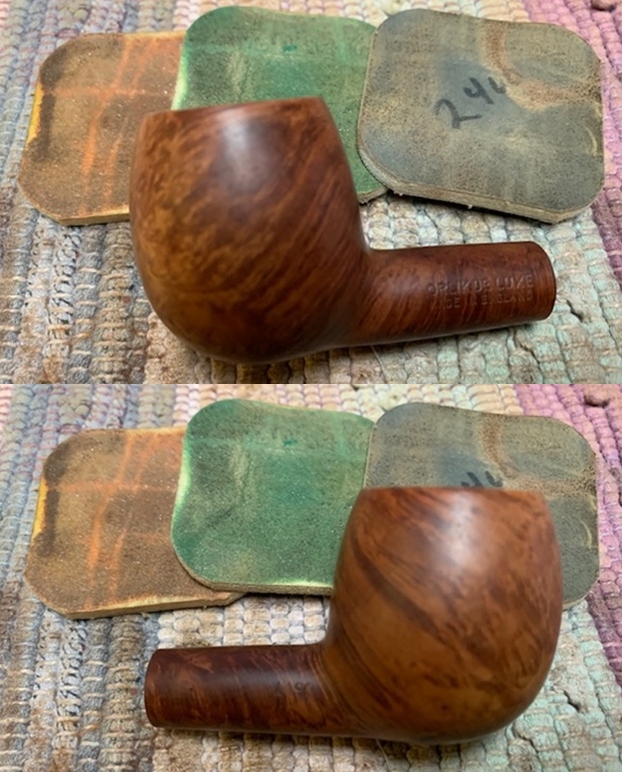
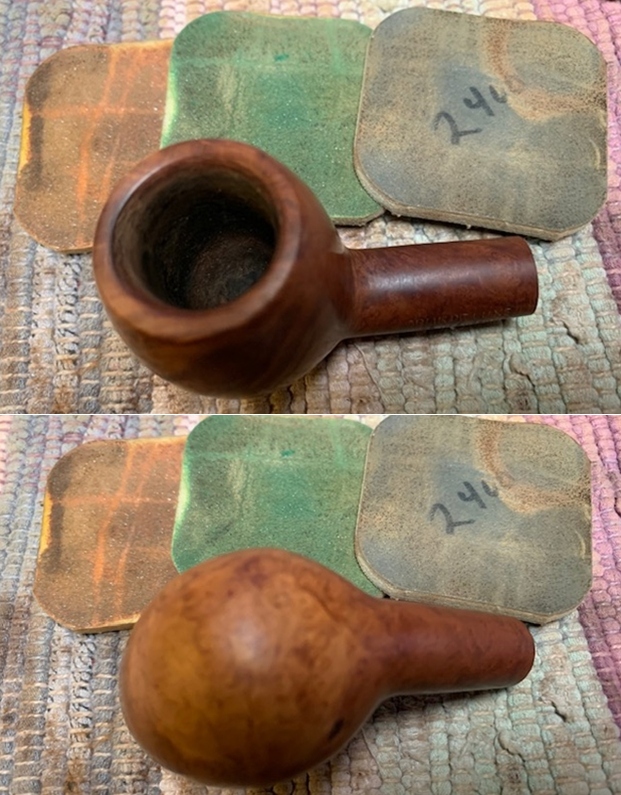
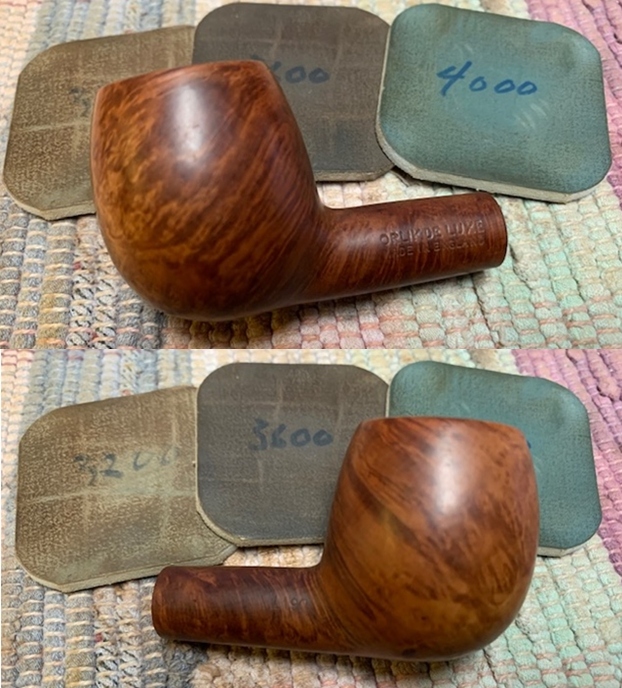
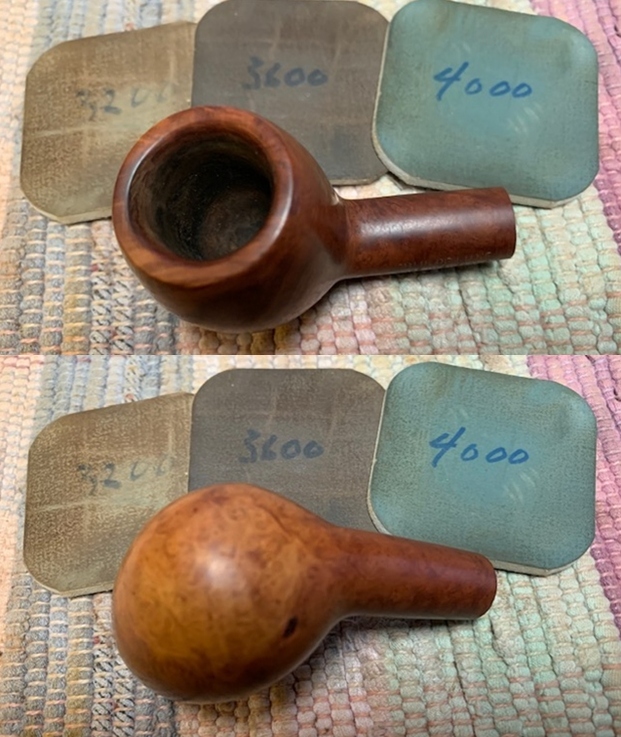
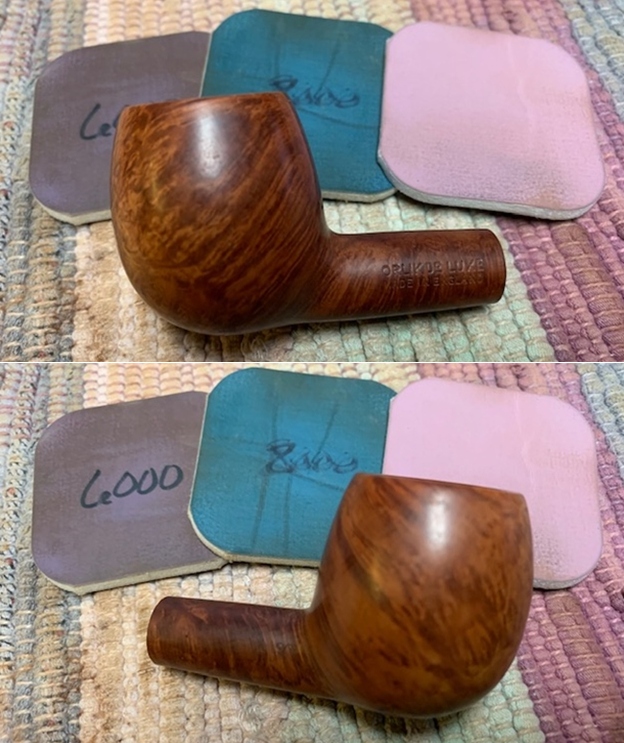
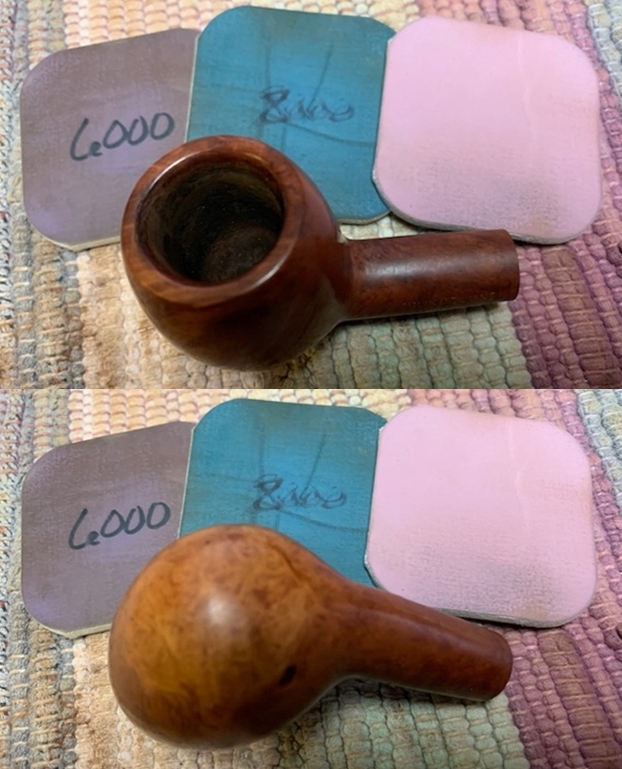
The next pipe on the work table came to me from another of our estate purchases. It has been around for a while waiting to be worked on. Jeff did the original photographs of the pipe in March of 2017. It is a beautifully grained Orlik De Luxe Apple that is really quite nice. The stamping is the clear and readable. It is stamped on the left side of the shank and reads the Orlik De Luxe [over] Made in England. The shape number is stamp on the right side of the shank near the bowl and reads L190. The smooth finish had a lot of grime ground into the bowl and some darkening around the sides of the bowl. There was a burn mark on the front rim top and bowl front. The bowl was heavily caked and had an overflow of lava on the top of the rim. It was hard to know what the rim top and inner edge of the bowl looked like under the grime. The vulcanite taper stem and was calcified, oxidized and had light tooth chatter and marks on the top and underside but the surface of the button was surprisingly free of damage. The stem also had the brass O logo on the top of the stem. The pipe had promise but it was very dirty. Jeff took photos of the pipe before he started his cleanup work. He took photos of the rim top and bowl to give a clear picture of the thickness of the cake and the overflow of lava on the rim top. You can see the damage on both the outer and the inner edge of the bowl. He also took photos of the top and underside of the stem to show the oxidation, calcification, light chatter and tooth marks. Jeff took photos of the sides and heel of the bowl to give a picture of what the briar around the pipe looked like. There is some interesting grain under the grime. Jeff took a photo of the stamping on the sides of the shank and the top of the stem. It reads as noted above.I turned to the listing on Pipephil on Orlik pipes hoping to find a similar pipe to the one I am working on (http://www.pipephil.eu/logos/en/logo-o2.html). Unfortunately there was not a pipe like the De Luxe I am working on. It is also not listed in the section I included below.I turned next to a previous blog I had written on Orlik pipes. It contained a lot of information that I had worked through in identifying the Double Bore pipe that I was restoring at that point. There was a lot of crossover information (https://rebornpipes.com/2020/05/31/restoring-an-orlik-double-bore-long-shank-saddle-stem-billiard/). I quote that blog below.

I turned to Pipedia to gather a more detailed history of the brand and see if I could find any information on this particular pipe (https://pipedia.org/wiki/Orlik). Once again there was nothing on the particular line. The history of the brand is concise and pointed. I quote that below.

In 1899, a pipe manufacturer was founded in London, Bond Street, by Louis Orlik. L. Orlik Ltd. started to produce high quality pipes for a relatively low price but high service and soon became quite popular. By 1907 they used the name L & A Orlik, which apparently added Louis’s brother, Alfred to the company name. In the first quarter of 1900 they also established in Birmingham. This can be verified by silver hallmarks. In 1980 the company was acquired by Cadogan. Like many of London’s other pipe manufacturers they moved to a new built factory in Southend-on-Sea. As all current brands in the Cadogan group, Orlik was being produced in those factories.

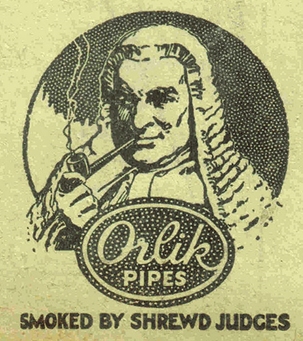
Orlik used the slogan “Smoked by all shrewd judges” “(who are also loved by his hard judge)” with a portrait of a judge wearing a wig. The picture is still used in Denmark for manufacturing of Orlik cigarettes.

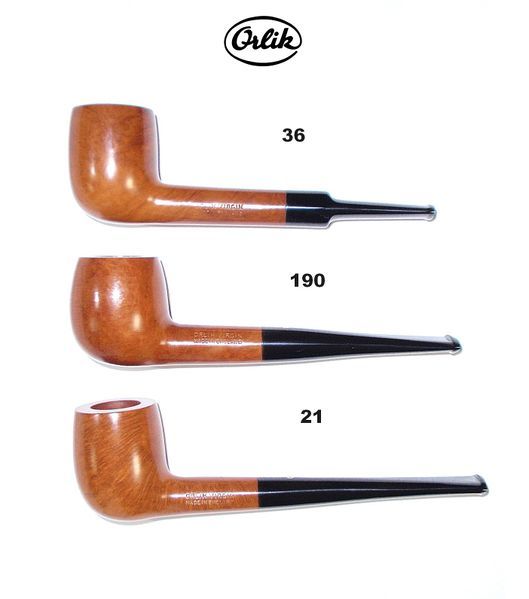
The article also had a catalogue of the various pages. I am including a copy of the page that shows the shape 190. In this case the shape matches but it does not have the “L” preceding the 190 shape number. There was also some helpful information on the dating of the brand. The pipe I am working on is Pre-Cadogan era as is proven by the stamping on the shank as below.

In the Pre-Cadogan era of the Orlik, the name is ORLIK in a straight line, capital block letters. Also the MADE IN ENGLAND is in a straight line, capital block letters. However, there are a konwn model (ORLIK NATURAL T 1155) stamped with MADE IN ENGLAND in a straight line, capital serif letters. Date is unknown. The mouthpieces have the Orlik logo, a circular O as a brass inlay. After joining Cadogan the same origin stamp as other Cadogan brands like Comoy´s etc. was used, MADE IN LONDON in circular an below ENGLAND in straight.

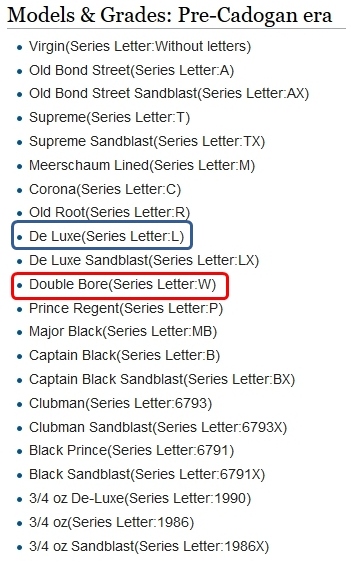
I also am including a list of the various lines of Orlik pipes sold. I have included a screen capture of the list below. I have drawn a blue box around the De Luxe Pipes. The L is the designation for the De Luxe Series of pipes.It is definitely another interesting piece of pipe history. This Pre-Cadogan Orlik was made before 1980 when Cadogan bought the brand.  Armed with the brand information and some parameters for the age of the pipe I turned to work on it.

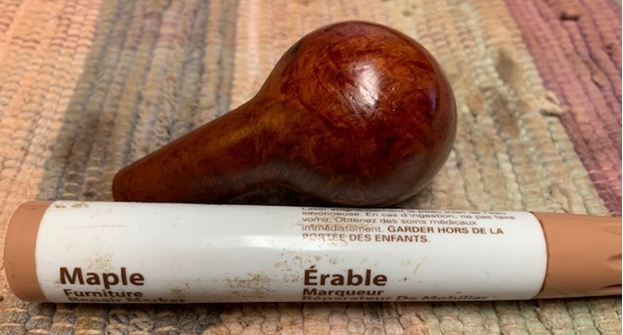
Since Jeff follows the same pattern of work in his cleanup we do not include photos but rather just a simple summary. Jeff reamed the bowl with a PipNet pipe reamer and followed up with a Savinelli Fitsall pipe knife to remove the cake. He scrubbed out the mortise and the airway in the shank and the stem with alcohol, cotton swabs and pipe cleaners. He scrubbed the exterior of the bowl, rim, shank and stem with a tooth brush and Murphy’s Oil Soap to remove the oils and tars on the rim and the grime on the finish of the bowl. He rinsed it under running water. He dried it off with a soft cloth. He was able to remove the lava build up on the rim top and you could see the damages to the top and edges of the rim. I think this pipe may well been before we worked with Mark Hoover’s Before & After Deoxidizer so he cleaned the internals and externals. The stem was clean but lightly oxidized. I took photos of what the pipe looked like when I brought to my worktable.    The rim top cleaned up really well with the lava coat removed. The rim top, inner and out edges of the rim showed some damage. There were burn marks on the front and back of the bowl and rim top. The stem surface looked very good with heavy oxidation remaining and some light tooth chatter and marks on both sides ahead of the button. I took photos of the stamping on the sides if the shank. It reads as noted above.     I removed the stem and took a photo of the pipe to give a sense of the whole. It is a well shaped apple with great grain. Now it was time to do my work on the pipe. To remove the damage to the rim top and the edges of the bowl I topped it on a topping board with 220 grit sandpaper. I also worked over the inner edge of the bowl with a folded piece of 220 grit sandpaper to smooth out the damages there. I polished the bowl and the rim top, sides and shank with micromesh sanding pads – wet sanding with 1500-12000 grit pads and wiping it down after each pad with a damp cloth. I carefully avoided the stamping on the top and underside of the shank so as not to damage the already faint stamping.   The heel of the bowl was washed out and did not match the rest of the stain around the pipe. I touched up the washed out areas on the bowl with a Maple stain pen. The match was perfect.I rubbed the bowl and shank down with Before & After Restoration Balm. I worked it into the surface of the bowl sides and shank with my fingertips to clean, enliven and protect the briar. I let the balm sit for a little while and then buffed with a cotton cloth to raise the shine.  It helped to blend the stain into the rest of the bowl.   While I was working on the bowl the stem was soaking in a new product I received from Briarville Pipe Repair – Pipe Stem Oxidation Remover. It is a liquid of about the same consistency as apple juice. The stem sat in the mixture for 2 ½ -3 hours. I removed the stem from the bath, scrubbed lightly with a tooth brush and dried if off with a paper towel. I was surprised that it was quite clean. Just some light oxidation on the top of the stem remained. The bath was dark with the removed oxidation of the seven stems. I cleaned out the inside of the stem with alcohol and pipe cleaners.  I polished the vulcanite stem with micromesh sanding pads – 1500-12000 grit pads. I wiped it down with a damp cloth after each sanding pad. I used Before & After Pipe Polish – both Fine and Extra Fine to further polish the stem.    This well made, classic Orlik De Luxe L90 Apple with a vulcanite taper stem is a great looking pipe now that it has been restored. The rich finish that Orlik used came alive with the polishing and waxing. I put the stem back on the bowl and carefully buffed the pipe with Blue Diamond on the buffing wheel using a light touch on the briar. I gave the bowl and the stem multiple coats of carnauba wax on the buffing wheel and followed that by buffing the entire pipe with a clean buffing pad. I hand buffed the pipe with a microfiber cloth to deepen the shine. The finished Orlik Apple is a beauty and fits nicely in the hand and looks very good. Give the finished pipe a look in the photos below. The dimensions of the pipe are Length: 5 ½ inches, Height: 1 ¾ inches, Outside diameter of the bowl: 1 ¼ inches, Chamber diameter: ¾ of an inch. If you are interested in adding this pipe to your collection send me a message or an email. Thanks for reading this blog and my reflections on the pipe while I worked on it. There are many more to come!

Life for a “Malaga” 1 Imported Briar Billiard with a Twin Bore Stem


Blog by Steve Laug

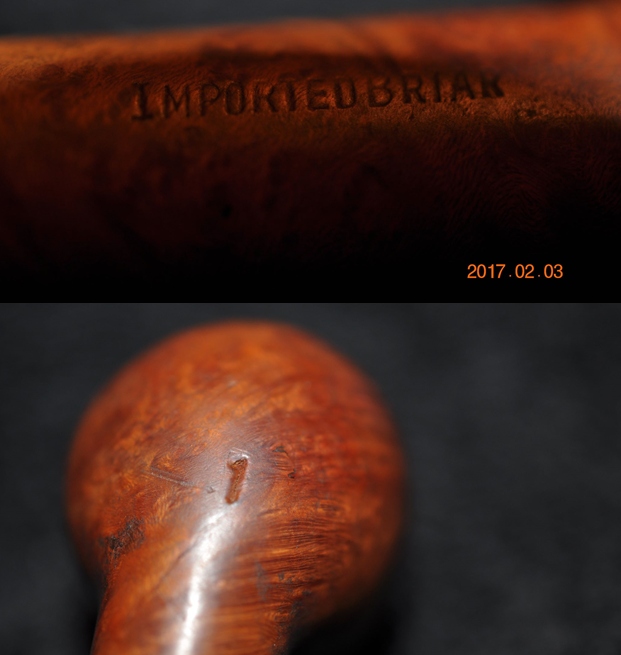
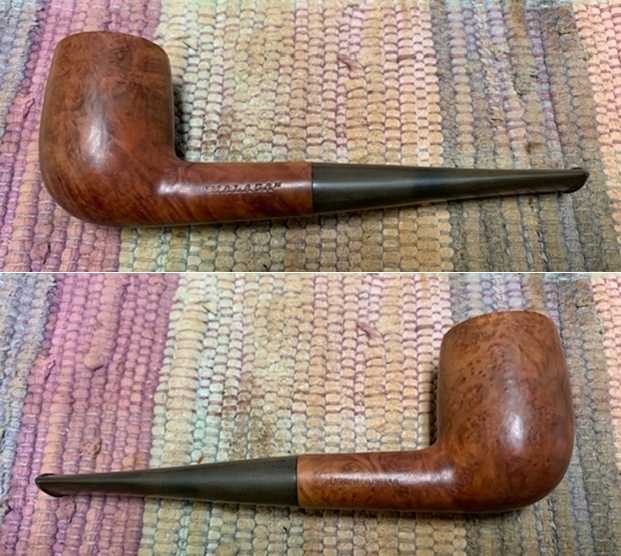
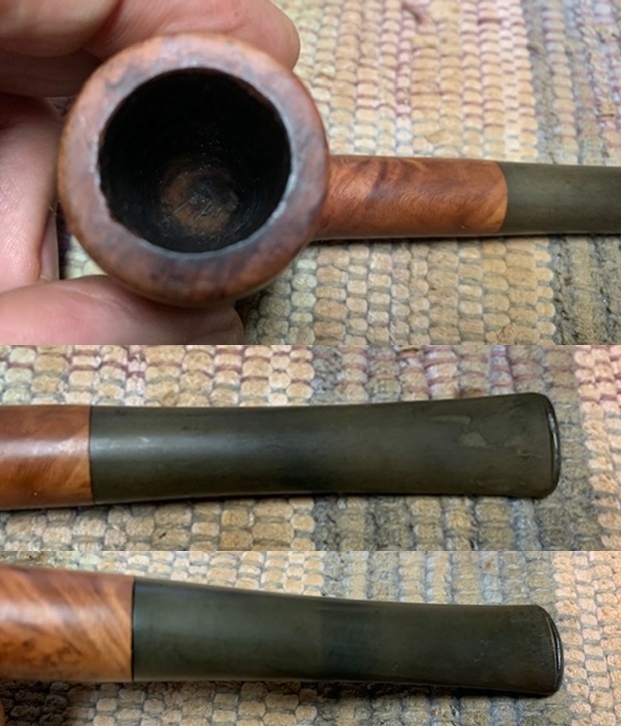
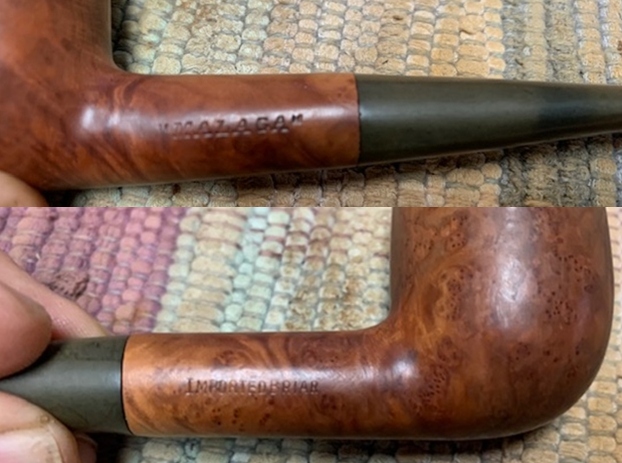
The next pipe on the work table came to me from another of our estate purchases. It has been around for a while waiting to be worked on. Jeff did the original photographs of the pipe in February of 2017. It is a beautifully grained “Malaga” Billiard that really quite nice. The stamping is the clear and readable. It is stamped on the left side of the shank and reads the “Malaga”. The stamping on the right side of the shank reads Imported Briar. On the underside of the bowl it is stamped with the number 1. The Malaga Oil finish had a lot of grime ground into the bowl and some darkening around the sides of the bowl. The bowl was heavily caked and had an overflow of lava on the top of the rim. It was hard to know what the rim top and inner edge of the bowl looked like under the grime. The Twin Bore taper stem and was calcified, oxidized and had light tooth chatter and marks on the top and underside but the surface of the button was surprisingly free of damage. The pipe had promise but it was very dirty. Jeff took photos of the pipe before he started his cleanup work. He took photos of the rim top and bowl to give a clear picture of the thickness of the cake and the overflow of lava on the rim top. You can see the damage on both the outer and the inner edge of the bowl. He also took photos of the top and underside of the stem to show the oxidation, calcification, light chatter and tooth marks.   Jeff took photos of the sides and heel of the bowl to give a picture of what the briar around the pipe looked like. There is some interesting grain under the grime.     He took photos of the stamping on the sides of the shank and the heel of the bowl. They read as noted above. I am also including the link to a blog that I wrote that gives some of the history of the Malaga brand and the Malaga Pipe Shop in Royal Oak, Michigan in the USA. I have written an earlier blog to give a little history of the Malaga Brand and the pipemaker, George Khoubesser. Here is the link – https://rebornpipes.com/tag/malaga-pipes/. That blog also includes links to a catalogue and the history of the pipemaker George Khoubesser. Follow the link to get a feel for the brand and the pipemaker.

Since Jeff follows the same pattern of work in his cleanup we do not include photos but rather just a simple summary. Jeff reamed the bowl with a PipNet pipe reamer and followed up with a Savinelli Fitsall pipe knife to remove the cake. He scrubbed out the mortise and the airway in the shank and the stem with alcohol, cotton swabs and pipe cleaners. He scrubbed the exterior of the bowl, rim, shank and stem with a tooth brush and Murphy’s Oil Soap to remove the oils and tars on the rim and the grime on the finish of the bowl. He rinsed it under running water. He dried it off with a soft cloth. He was able to remove the lava build up on the rim top and you could see the damages to the top and edges of the rim. I think this pipe may well been before we worked with Mark Hoover’s Before & After Deoxidizer so he cleaned the internals and externals. The stem was clean but lightly oxidized. I took photos of what the pipe looked like when I brought to my worktable.    The rim top cleaned up really well with the lava coat removed. The rim top, inner and out edges of the rim showed some damage. The stem surface looked very good with heavy oxidation remaining and some light tooth chatter and marks on both sides ahead of the button. I took photos of the stamping on the sides if the shank. It reads as noted above.     I removed the stem and took a photo of the pipe to give a sense of the whole. It is a well shaped billiard. Now it was time to do my work on the pipe. To remove the damage to the rim top and the edges of the bowl I topped it on a topping board with 220 grit sandpaper. I also worked over the inner edge of the bowl with a folded piece of 220 grit sandpaper to smooth out the damages there. I polished the bowl and the rim top, sides and shank with micromesh sanding pads – wet sanding with 1500-12000 grit pads and wiping it down after each pad with a damp cloth. I carefully avoided the stamping on the top and underside of the shank so as not to damage the already faint stamping.   I rubbed the bowl and shank down with Before & After Restoration Balm. I worked it into the surface of the bowl sides and shank with my fingertips to clean, enliven and protect the briar. I let the balm sit for a little while and then buffed with a cotton cloth to raise the shine. While I was working on the bowl the stem was soaking in a new product I received from Briarville Pipe Repair – Pipe Stem Oxidation Remover. It is a liquid of about the same consistency as apple juice. The stem sat in the mixture for 2 ½ -3 hours. I removed the stem from the bath, scrubbed lightly with a tooth brush and dried if off with a paper towel. I was surprised that it was quite clean. Just some light oxidation on the top of the saddle remaining. The bath was dark with the removed oxidation of the seven stems. I cleaned out the inside of the stem with alcohol and pipe cleaners.  I polished the vulcanite stem with micromesh sanding pads – 1500-12000 grit pads. I wiped it down with a damp cloth after each sanding pad. I used Before & After Pipe Polish – both Fine and Extra Fine to further polish the stem.    This well made, classic “Malaga” Imported Briar “1” Billiard with a vulcanite taper Twin Bore stem is a great looking pipe now that it has been restored. The rich oil finish that Malaga used came alive with the polishing and waxing. I put the stem back on the bowl and carefully buffed the pipe with Blue Diamond on the buffing wheel using a light touch on the briar. I gave the bowl and the stem multiple coats of carnauba wax on the buffing wheel and followed that by buffing the entire pipe with a clean buffing pad. I hand buffed the pipe with a microfiber cloth to deepen the shine. The finished “Malaga” Billiard is a beauty and fits nicely in the hand and looks very good. Give the finished pipe a look in the photos below. The dimensions of the pipe are Length: 5 ¼ inches, Height: 1 ¾ inches, Outside diameter of the bowl: 1 ¼ inches, Chamber diameter: ¾ of an inch. If you are interested in adding this pipe to your collection send me a message or an email. Thanks for reading this blog and my reflections on the pipe while I worked on it. There are many more to come!

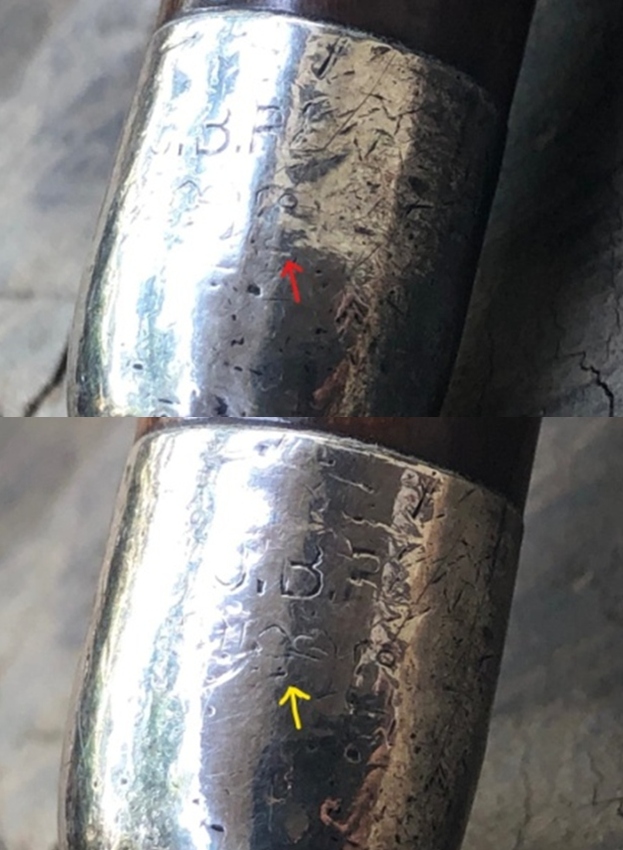
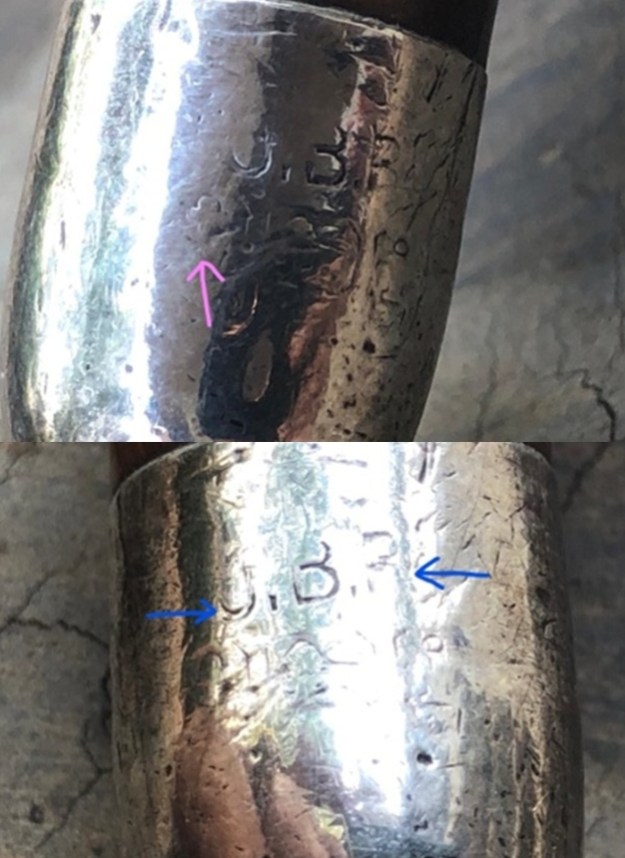
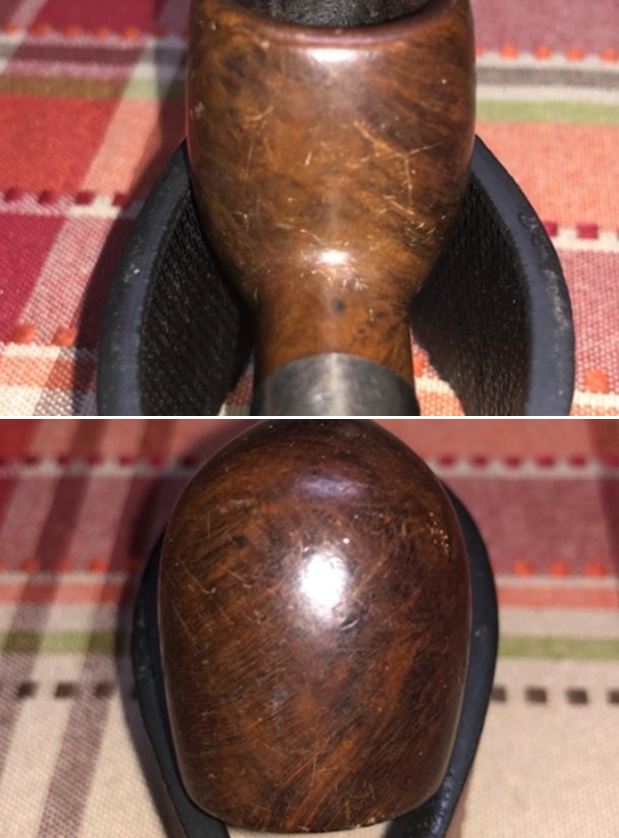
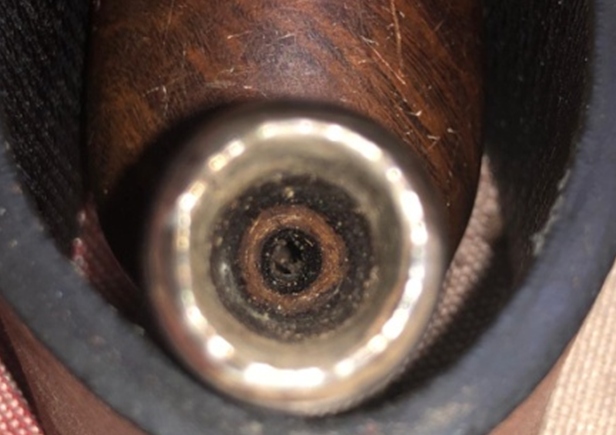
Breathing Life into an Old Battered “JBB” Billiard With Military Mount Stem


Blog by Paresh

This petite small pipe had attracted my attention since the time I had received three huge boxfuls of pipe that once belonged to my Grandfather. But over the period of years, there were always other interesting and larger bowl sized pipes that piqued my interest and these kept moving up the ladder in line for restoration, relegating this beauty further down in the pile. Abha, my wife, knew that I had liked this pipe the first time I had seen it and she worked her magic in cleaning it up for me to work further. After she had done the initial cleaning up, this pipe languished at the bottom of the pile of around 50 plus pipes that she had cleaned up. And it was during the period of my stay at home on compulsory leave due to the countrywide lockdown to contain the spread of CORONA VIRUS (COVID-19), that this pipe came up for restoration.

The pipe with its petite classic billiard shape and a military mount vulcanite stem has a delicate feel and look to it. It has beautiful dark coloration with some astonishing grain patterns that are seen over the stummel surface. The shank end is adorned with a sterling silver ferrule that adds a touch of classy bling to the appearance of the pipe. It is stamped on the left side of the shank in capital letters as “JBB” in an oval. The sterling silver ferrule is stamped as “J.B.B” without any frame in capital letters over three sterling silver hallmarks. From left to right the first cartouche stamping is completely buffed out (indicated in pastel pink arrow) with only a cross with upward projections on either sides of the horizontal arm that can be made out. This is followed by a cartouche with a LION PASSANT (indicated with yellow arrow) certifying silver quality and the last cartouche with date code letter “i” (indicated with red arrow). The vulcanite stem is without any logo. The stamping on this pipe are all worn out and can be faintly made out under 5X magnification. The lack of COM stamp may pose difficulties in identifying and researching of this brand.    JBB…again an unknown brand for me, a third one on the trot!! A visit to my favored site, rebornpipes, drew a blank and I decided to trace the brand through the Maker’s mark on the sterling silver ferrule. I have identified http://www.silvercollection.it as my favored site to date and identify mounter’s/ makers for all things that are silver hallmarked. Sure enough, I found what I was searching for. The pipe currently on my work table is from Joseph B Brown, a tobacconist from Hull, England registered with Chester Assay office.
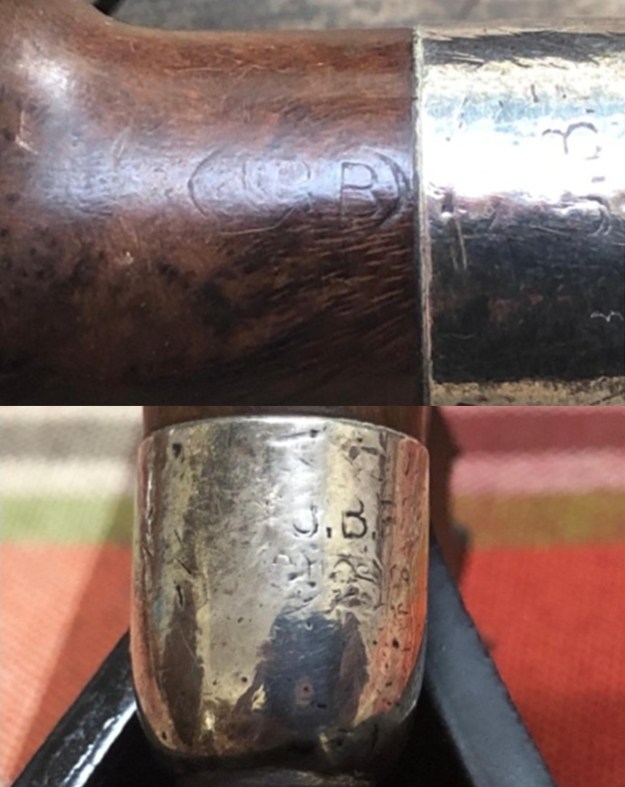
http://www.silvercollection.it/DICTIONARYTOBACCONISTJ.html  With the maker’s mark identified and established to my satisfaction, I move ahead to date this pipe on the same site. I searched for Chester Assay office date chart and came across the date code letter that had the closest resemblance to the date code letter on the ferrule. The letter code identified it as being assayed in 1872!! Here is the link to the Chester dating chart and below is the image of the relevant section with the year marked in red box.

http://www.silvercollection.it/englishsilverhallmarksCHE.html

Since the date code letter on the ferrule is faded and worn out, I wanted to be sure of the correctness of the year of this ferrule being assayed. I searched pipedia.org for more information on this brand and have reproduced the relevant information below along with the link to the article (https://pipedia.org/wiki/J.B.B.).

J.B.B. is the initials found on pipes manufactured and distributed by Joseph B. Brown of Kingston upon Hull, England from the early 1870s until sometime in the 1920s. Hull is located in East Yorkshire. Brown billed his company as a “Hull Importer of Tobacconists Goods,” and apparently produced various lines of meerschaum and briar pipes as well as cheroot and cigar holders. His business was located on Brook Street.

Joseph Brown was born in Ashbourne, Derbyshire about 1844. His early years were spent as a traveller (i.e. salesman) in the jewelry trade. By 1871 he had moved to the Hull area in Yorkshire, and on February 17, 1875 he married there. His wife was named Alice Fourster (this spelling is almost certainly a transcription error), who was born in Newcastle, Northumberland about 1850.

By 1876 Joseph was associated with the pipe trade; in that year he received a patent for “mounts for tobacco pipes”. In subsequent censuses he is clearly identified as an importer of fancy goods. For many years the business was located at 41 Brook Street in Hull, while the family maintained a residence some 18 miles away in Withernsea.

Joseph and Alice had four children: Joseph (b. 1881), Walter H. (b. 1882), Rachel (b. 1884), and James (b. 1887). Of the boys, at least Joseph and James were involved in their father’s business. Joseph lived until at least 1911, and the business was in existence at least as late as 1922. The directory in the latter year fails to show Alice or two Josephs, lending some credence to an assumption that the eldest son had by that time taken over operations.

J.B.B. creations often have silver banding as part of their design. In the Hull region, all silver was assayed and hallmarked by the Chester Assay Office, a city located in Cheshire, England. A well established dating schema exists for this office, and makes it possible for the collector to accurately date the production of J.B.B. sterling outfitted tobacciana.

Now, this is where the confusion arises.

(a) Joseph Brown was associated with tobacco trade from early 1870s until sometime in 1920s. This fits in with the above appreciated dating of this pipe.

(b) By 1876 Joseph was associated with the pipe trade; in that year he received a patent for “mounts for tobacco pipes”. However, the pipe currently on my work table dates to 1872 as per the date code letter of Chester Assay office i.e. 4 years prior to receiving the patent.

Well, the J.B.B stamp on the shank surface and on the silver ferrule establishes beyond doubts the authenticity of this pipe. The faded and worn out hallmarks, including the date code letter, raises some doubts. It is also quite possible that there could be an anomaly in the collated information. Thus, unless proven otherwise, I would rather stick to my findings and date this pipe to 1872.  

Initial Visual Inspection
As I have mentioned above, this pipe was initially handled by Abha and she is not in a habit of taking many pictures as she works on each piece of briar. There are not many pictures to give the readers an idea about the condition of the pipe before she had worked her magic and presented me with a nice clean canvas to carry forward my repair and refurbishing tasks. I have included a description of the initial condition of the pipe as documented by her. This pipe has a rather small bowl in a classic Billiard shape and has a chamber depth of about 1.1 inches. The chamber had an even layer of hard cake which is not very thick. The condition of the inner walls of the chamber can be commented upon after the cake has been taken down to the bare briar. The rim top surface is relatively clean but is peppered with numerous minor dents/ dings and nicks. The rounded inner rim edge is sans any damage however, the outer edge shows numerous small dings notably to the front edge and in between 12 o’clock and 3 o’clock direction. The draught hole is clogged and restricts the free flow of air through it. The ghost smells in the chamber are very strong.    The smooth stummel surface has some very beautiful grain patterns and has taken on a lovely dark patina. The stummel shows signs of vintage in the form of many scratches, dents and dings that it has acquired over the last century and a half!! The briar has accumulated a lot of grime and dust imparting the stummel a lifeless and bone dry appearance.    The shank end is where the maximum damage is on this pipe. A chunk of briar is missing from two places at the shank end; one on the left hand side (enclosed in green) with a crack that extends towards the stummel and the other on the right side (enclosed in yellow). The mortise is completely clogged with a restricted draw. In case I am able to separate the silver ferrule from the shank end, I shall reconstruct the missing chunks from the shank end using briar dust and superglue while stabilizing the crack by drilling counter holes.    The sterling silver ferrule has numerous dents and dings that obscure the stampings that are already worn out and faded. The tenon end of the ferrule has some sharp edges and is severely dented. The ferrule is securely glued on to the shank end to stabilize the crack/ damage and hold it together. There is nothing much that I can do about the dents and dings to the ferrule other than clean it up and polish it to a nice shine. These dents and dings are and shall remain a part of the pipes journey thus far.The high quality vulcanite military mount stem was deeply oxidized. Some deep tooth chatter and tooth indentations are seen on both the upper and lower stem surfaces in the bite zone and at the bottom of the button edge. The tenon end had accumulated ash and oils/ tars that had dried out on the inside as well as on the outside. The orifice has scratch marks and dried gunk embedded in to it which will have to be addressed.The Process
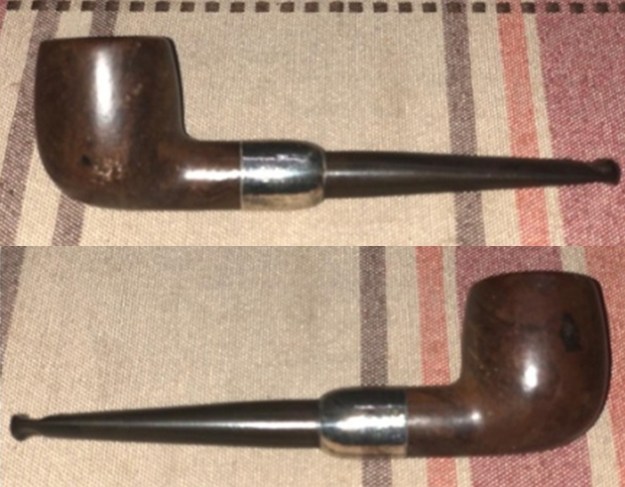
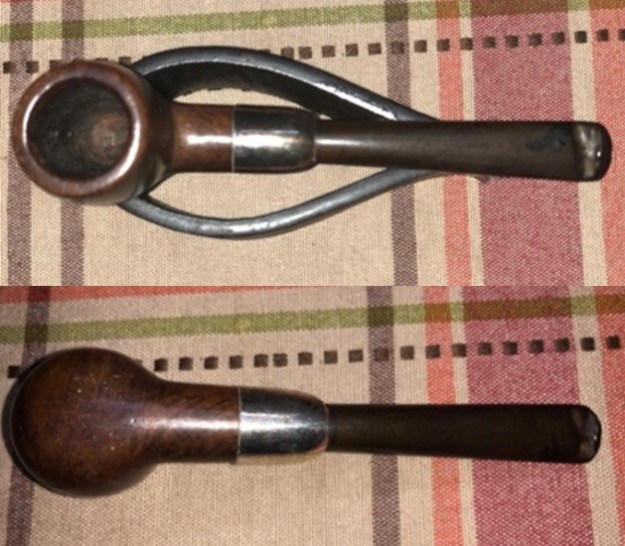
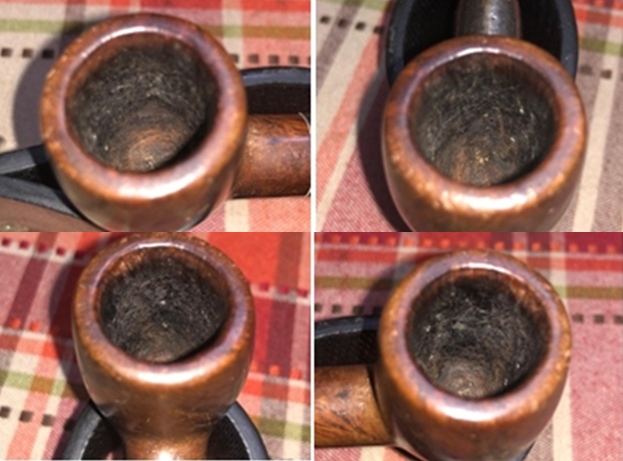
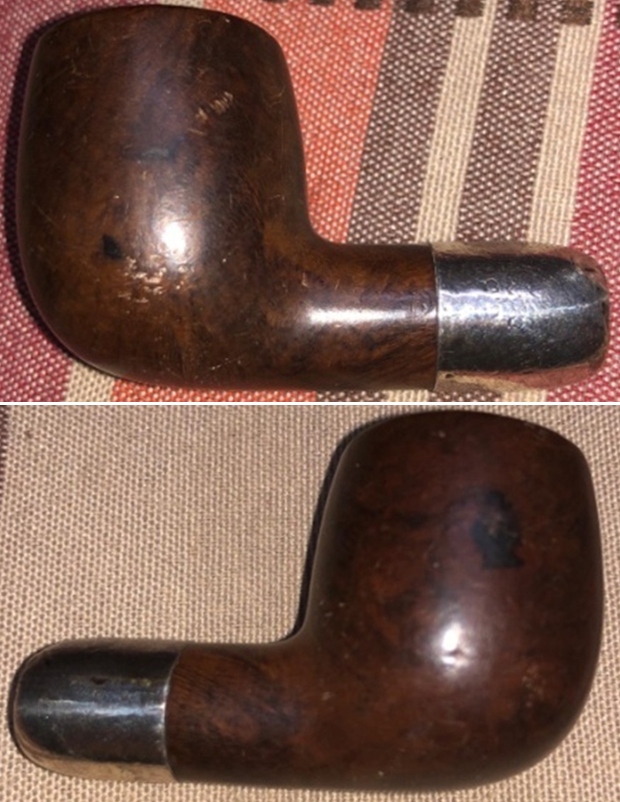
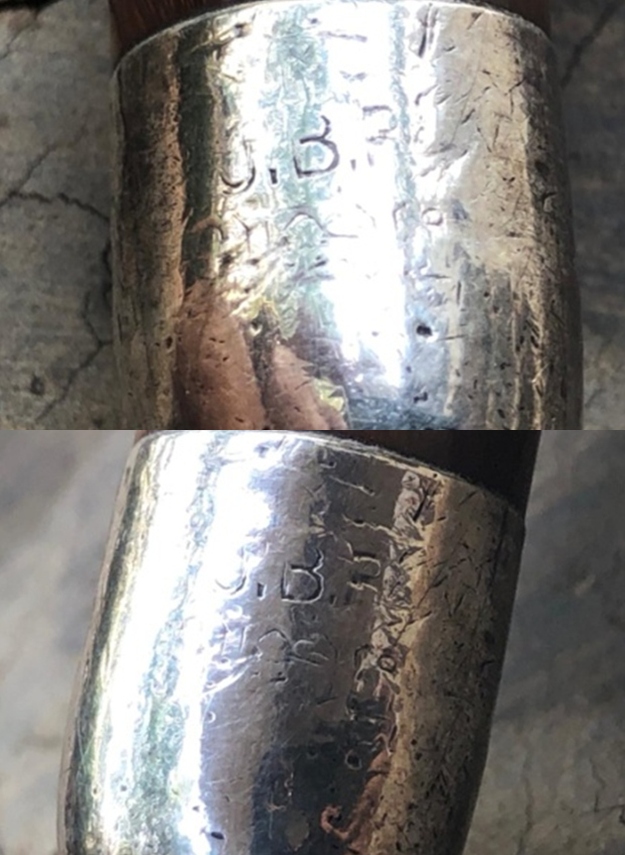
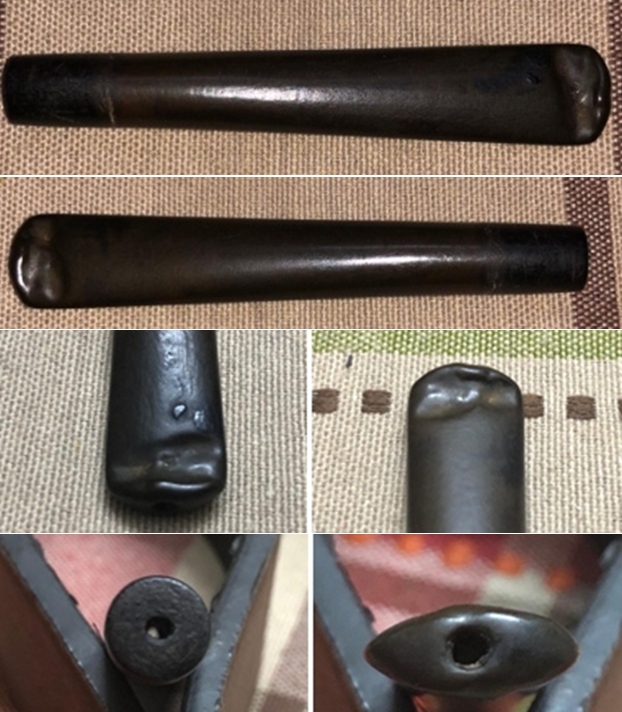
The shank end damage/ crack were something that would essentially require materials and equipment that are available to me at my work place; therefore, I had no option but to relegate the stummel repairs and restoration to a later date. Abha and I decided that we should complete the stem repairs and polishing while I was home as that would reduce the time that I would otherwise spend in stem restoration.

Abha cleaned out the internals of the stem air way and immersed it in “Before and After Deoxidizer” solution along with the stem of other pipes in line for restoration. Once the stem had soaked overnight, she cleaned the stem under running warm water and scrubbed the raised oxidation from the stem surface using Scotch Brite pad. She further removed the oxidation by scrubbing the stem with 0000 grade steel wool and applied a little olive oil to rehydrate the stem. Once the stem was internally and externally cleaned, I start with addressing the deep tooth indentations and chatter on either surface in the bite zone. Since rubber has a property to expand and regain its original shape when heated, I heat the bite zone with a candle flame to raise the bit marks and tooth chatter to the surface. I sand the stem surface with a folded piece of 220 grit sand paper. This helps to remove any raised residual oxidation and also smooths out the raised tooth indentations. The deeper bite marks were filled with a mix of CA superglue and activated charcoal and set aside to cure.   Once the fills had cured, using a flat head needle file, I reshaped the button and roughly matched the fills with the rest of the stem surface. I further fine tuned the match by sanding the filled area with a folded piece of 220 grit sand paper pinched between my thumb and forefinger. I followed it up by sanding the entire stem surface using 600 grit sand paper and finally with a piece of 0000 grade steel wool. This serves to remove the deep seated oxidation and also reduces the sanding marks of the more abrasive sand papers. I also sharpened the button edges while sanding. I wiped the stem with a cotton swab and alcohol to remove all the oxidation and sanding dust from the surface. I applied a little Extra Virgin Olive oil over the stem and set it aside to be absorbed by the vulcanite.To bring a deep shine to the vulcanite stem, Abha polished it by wet sanding with 1500 to 2000 grit sandpapers followed by further wet sanding with 3200 to 12000 grit pads. She wiped the stem with a moist cloth after each pad and rubbed it down with Extra Virgin Olive oil to rejuvenate the vulcanite. The finished stem is shown below.  Further repair and refurbishing work would have to be put on hold till I rejoin my work place.
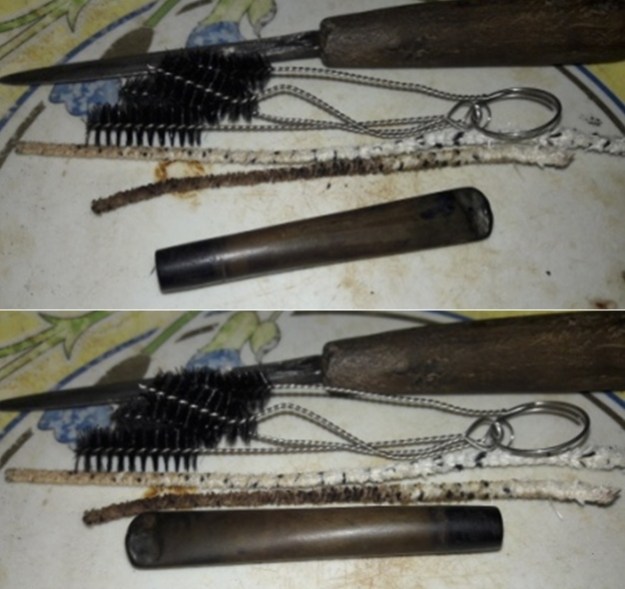
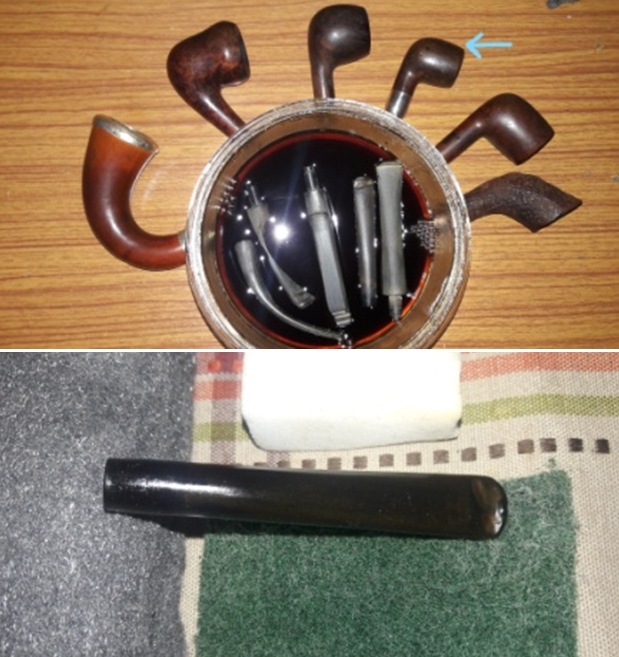
Part II
Finally back at my work place…… After enjoying a compulsorily extended leave of three months with family and having honed my culinary and domestic chores skill set, I was happy to rejoin my duty and get back to completing the pending pipe restorations.

I started further restoration work on this pipe by reaming out complete cake with size 1 head of the PipNet pipe reamer and further smooth out the chamber walls with a folded piece of 220 grit sandpaper. The chamber walls are solid and in pristine condition.I further cleaned out the internals of the shank with pipe cleaners and alcohol and cotton buds. I scraped out the dried oils and tars from the shank walls with a dental tool. The ghosting is still strong and would need more invasive method to completely eliminate these smells.To completely eliminate the ghost smells, I subjected the chamber to a cotton and alcohol soak. The alcohol draws out all the deep oils and tars from the chamber and mortise walls which is thereafter trapped by the cotton balls. The next day, the soak had done its intended task and the pipe now smells nice clean and fresh. Once the cotton balls were removed, I ran a couple of bristled pipe cleaners dipped in alcohol to remove the loosened oils and tars from the mortise.  Before proceeding with further repairs, I decided to separate the sterling silver ferrule from the shank end as it would give me free access to rebuild the chipped shank end and stabilize the crack. I first tried to heat the ferrule with my heat gun but to no avail. Next trick that I tried was to soak the shank end in pure acetone. Acetone eats away at the glue and loosens the ferrule. I stuffed a cotton ball wetted in acetone in to the shank end and set it aside for the acetone to loosen the glue. However, this too failed and the ferrule remained firmly stuck to the shank end. I conferred with Steve about this rebuild and he suggested that I should try and rebuild the shank end with clear superglue from the inside. That is exactly what I would do to repair the damage.   Next, I thoroughly cleaned the rim top and the stummel surface using Murphy’s Oil soap and a hard bristled tooth brush. The stummel and the rim top have cleaned up nicely.    I decided to address the dents and dings on the stummel surface and on the rim outer edge. Using a marker pen, I marked all the major areas with dents and dings as I had decided to leave the minor ones as they were. I heated my fabricated knife over the flame of a candle, placed a wet Turkish hand towel over the marked areas and steamed out the dents by placing the heated knife over the towel. Though some dents were still observed, these were greatly reduced when compared to before steaming.   To even out and match the raised dings over the stummel surface, I sand the entire stummel with a folded piece of 320 grit sand paper.   Next I decided to address the damage to the shank end. As discussed with Steve, I filled the crack and chipped shank end on the left side with clear superglue. Once the glue had set, I applied another layer over it, repeating this process till I had a good coverage of superglue over the damaged area. I repeated this process over the right side after the superglue on the left side had set. Once the damaged surfaces were filled with superglue, I set the stummel aside for the fill to cure completely.     By the next afternoon when I got back to working on this pipe, the superglue fill had cured and hardened completely. With a semi circular needle file, I sand the fill to a smooth surface frequently checking for the seating of the stem in to the mortise. Once I had achieved a rough match, I worked the fills sanding it down with 320, 600, 800 and 1000 grit sand papers till I had a perfectly smooth shank wall and a snug seating of the stem in to the mortise. With the internal repairs to the shank end completed, I addressed the issue of sharp and uneven edges of the sterling silver ferrule. I lightly topped the sharp edges of the ferrule over a piece of 180 grit sand paper giving it only a few turns till I had a nice even edge surface. Using a round needle file, I filed at the rough and sharp edges till smooth. The silver ferrule edge is now even and smooth with no sharp edges and the seating of the stem in to the mortise is also snug and perfect.    I had reached the stage where I had to decide if I wanted to completely eliminate all the dents and chips by further sanding with various grit sand papers and loose the patina which has developed on the surface or maintain the old sheen and make peace with a few minor dings. I decided on keeping the old sheen and went straight for the micromesh cycle. The old patina and the minor dents and dings would add to the vintage look of the pipe, which it was. I dry sand the entire stummel with 1500 to 12000 grit micromesh pads. I love all the pipes that I have restored or bought and are in my collection, but this piece has evoked the feeling of “DESIRE” in my heart, it’s such a beautiful pipe.    Next, I rubbed a small quantity of “Before and After Restoration Balm” deep in to the briar with my finger tips and let it rest for few minutes. The balm almost immediately works its magic and the briar now has a nice vibrant appearance with the beautiful grain patterns displayed in their complete splendor. I further buffed it with a horse hair brush. The dark browns of the of the grain contrasts beautifully with the rest of the lighter brown stummel and makes for a visual treat. It really is a nice piece of briar.  To put the finishing touches, I mount a cotton cloth buffing wheel on to my hand held rotary tool and polished the entire pipe with Blue Diamond compound. This compound helps to remove the minor scratch marks that remain from the sanding. Next, I mount another cotton buffing wheel that I have earmarked for carnauba wax and applied several coats of the wax. I finished the restoration by giving the entire pipe a rigorous hand buffing using a microfiber cloth to raise the shine further. Lastly, I polish the sterling silver ferrule with a jeweler’s cloth to a nice and radiant shine.  The grain patterns on this finished pipe looks amazingly beautiful and coupled with the vintage, shape and the contrast that the sterling silver ferrule imparts, makes it quite a desirable pipe. This pipe shall be joining my small collection of English pipes to be admired and be happy that I have restored it, to the extent possible, to its former beauty and functionality. I wish to thank each one for sparing their valuable time to read through this write up and each one is in my prayers. Stay home…stay safe!!