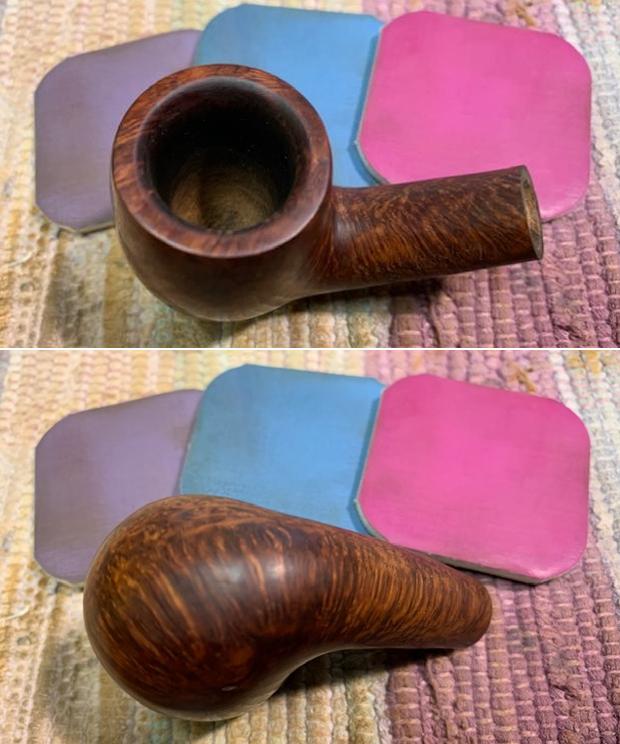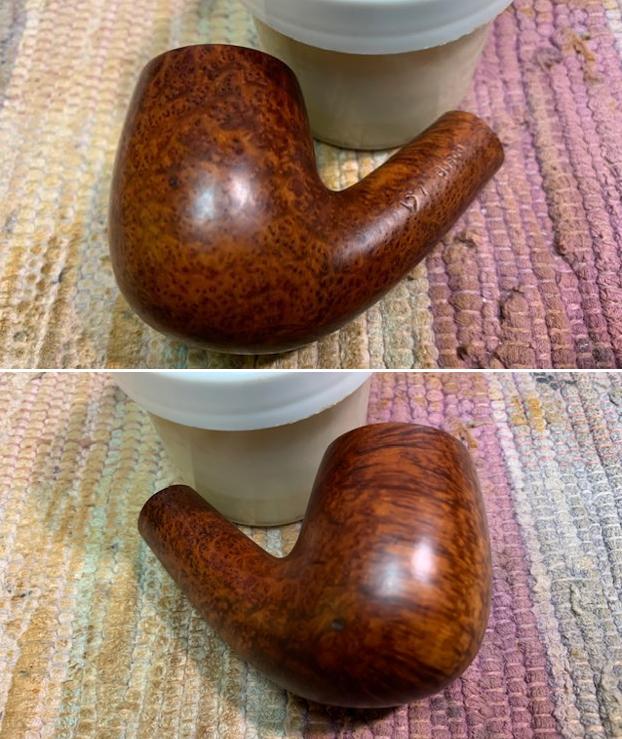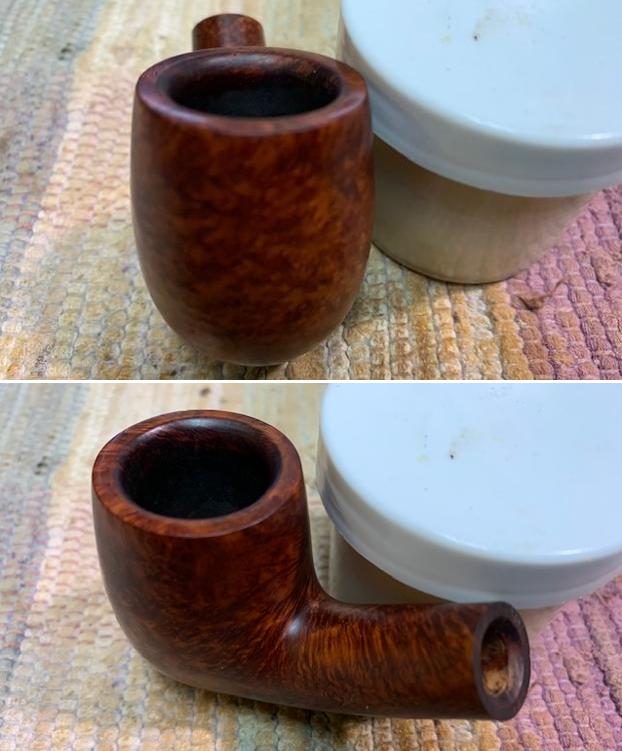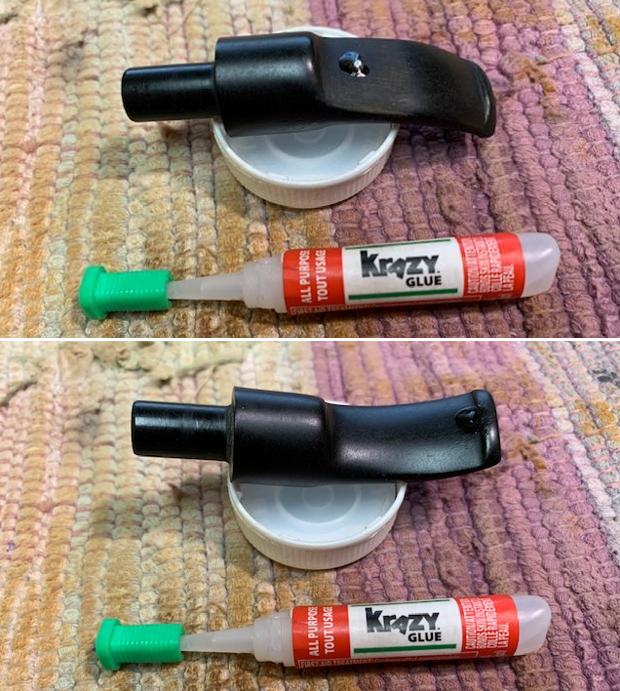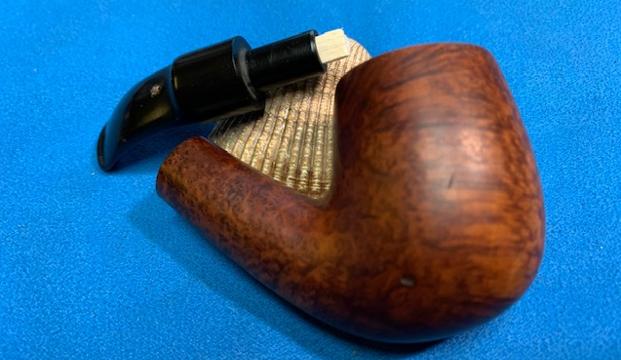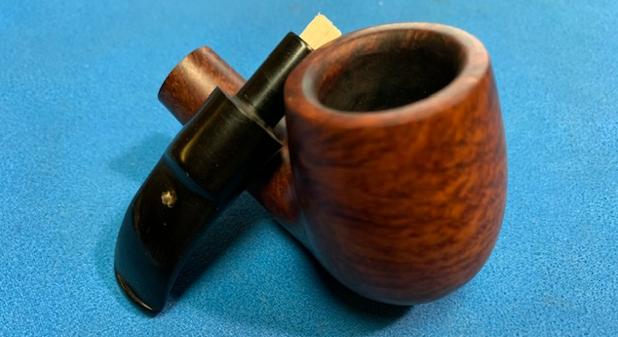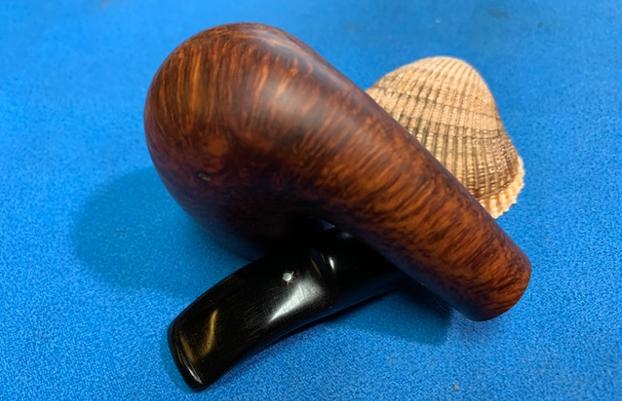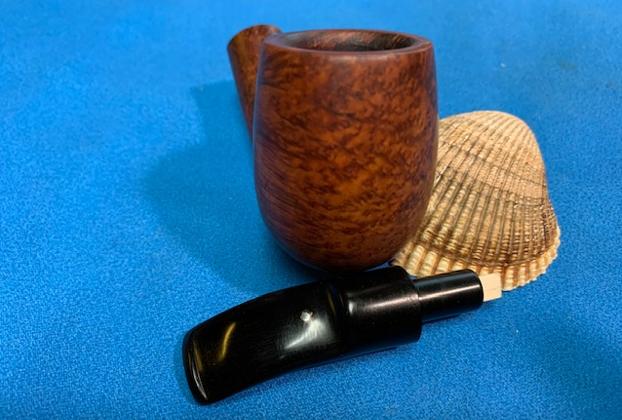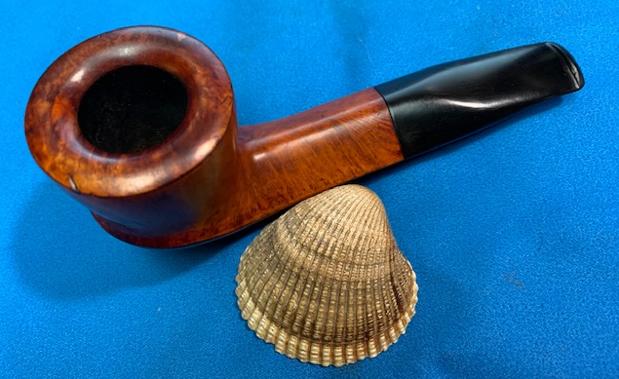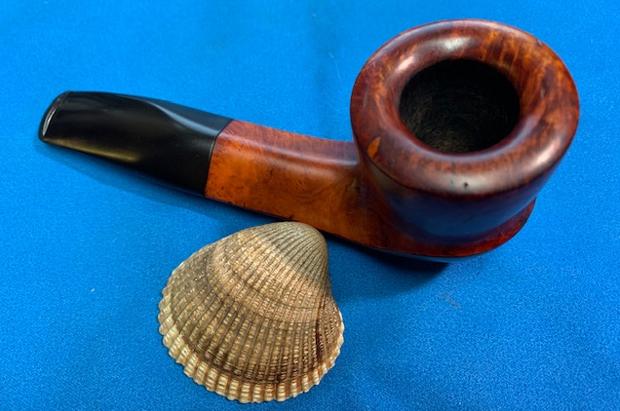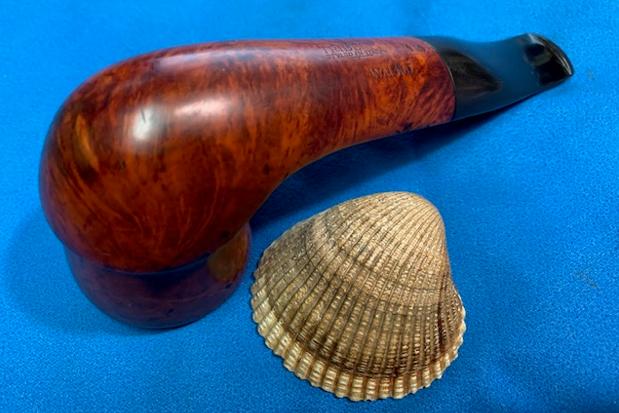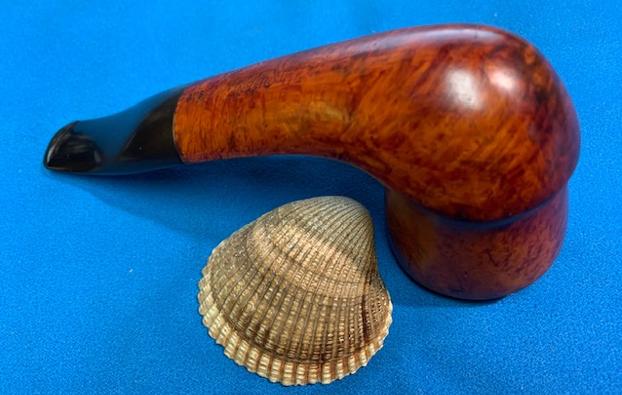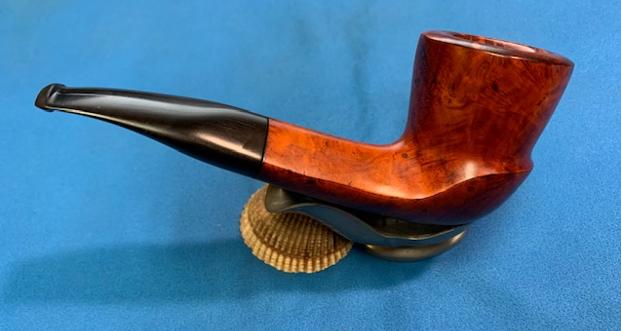
This Beat up Yves St. Claude Interlude 96 Pocket Pipe Needs an Interlude


Blog by Steve Laug

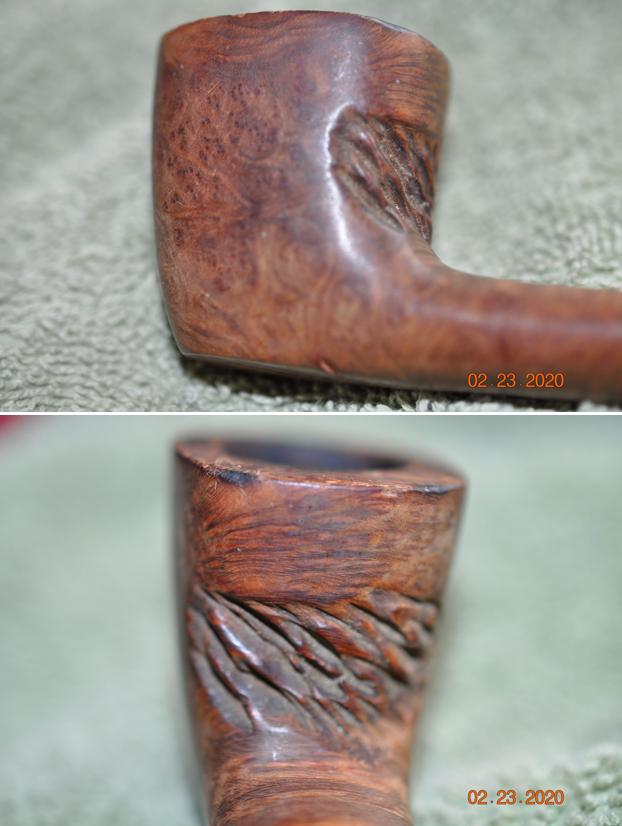
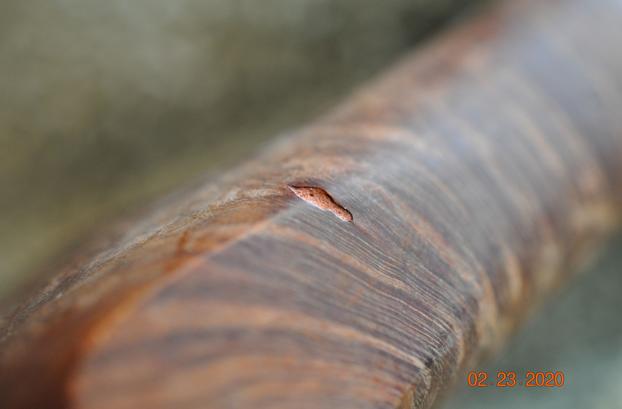
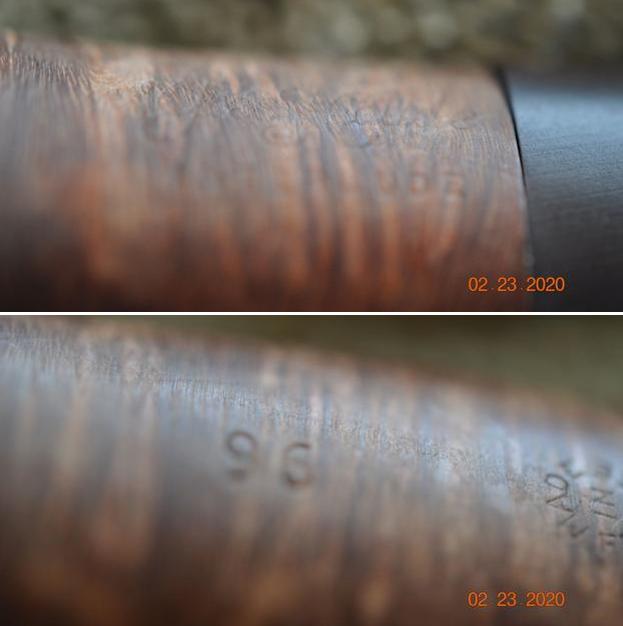
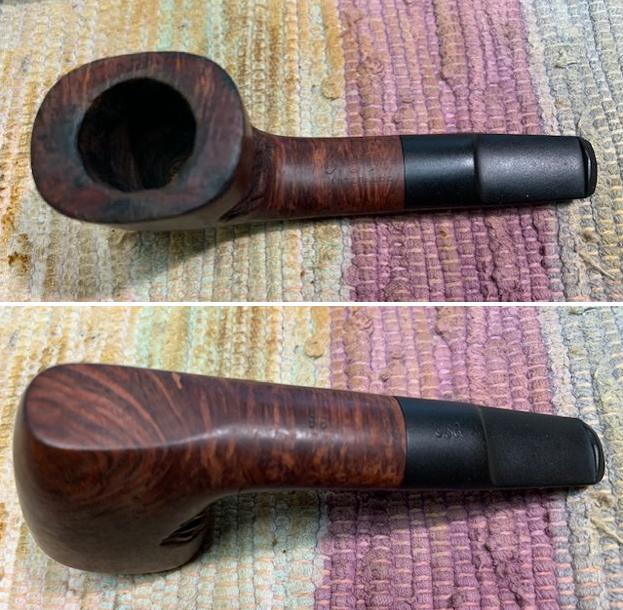
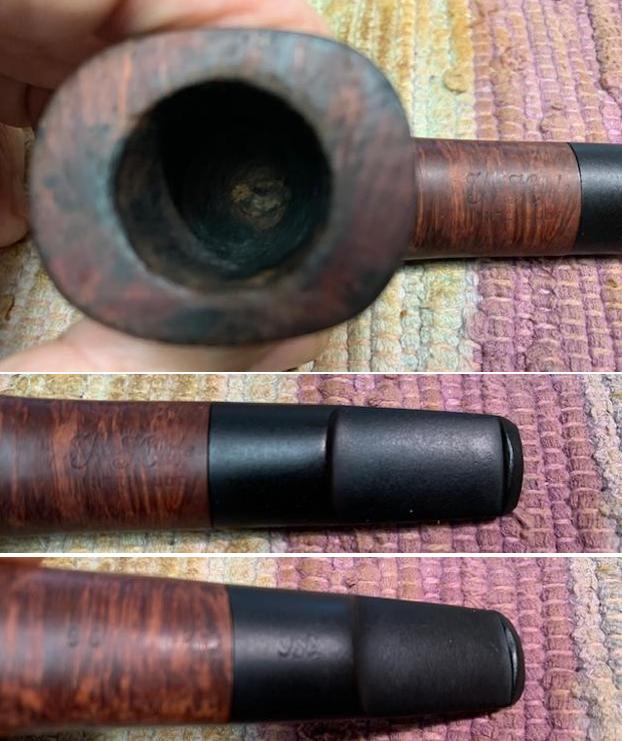
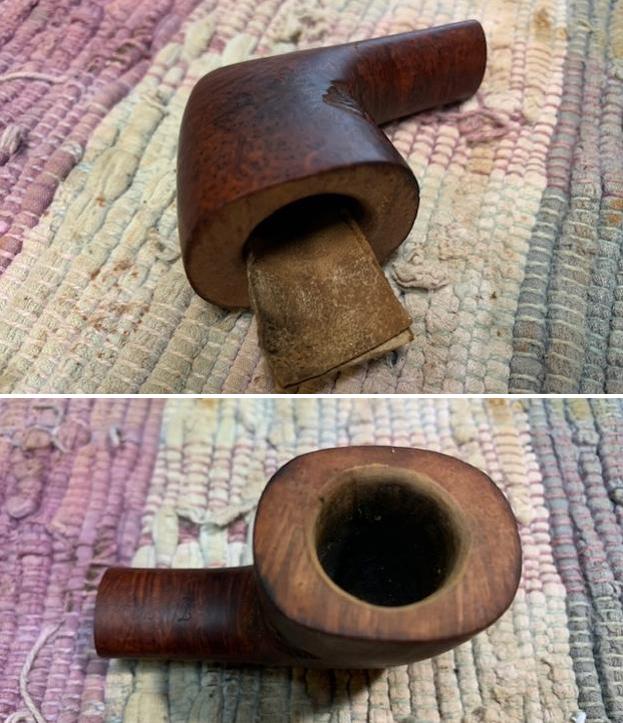
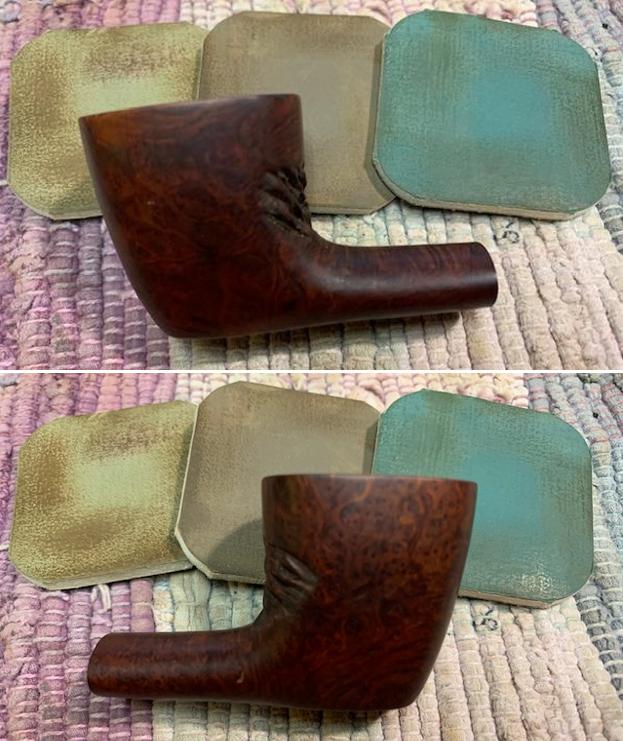
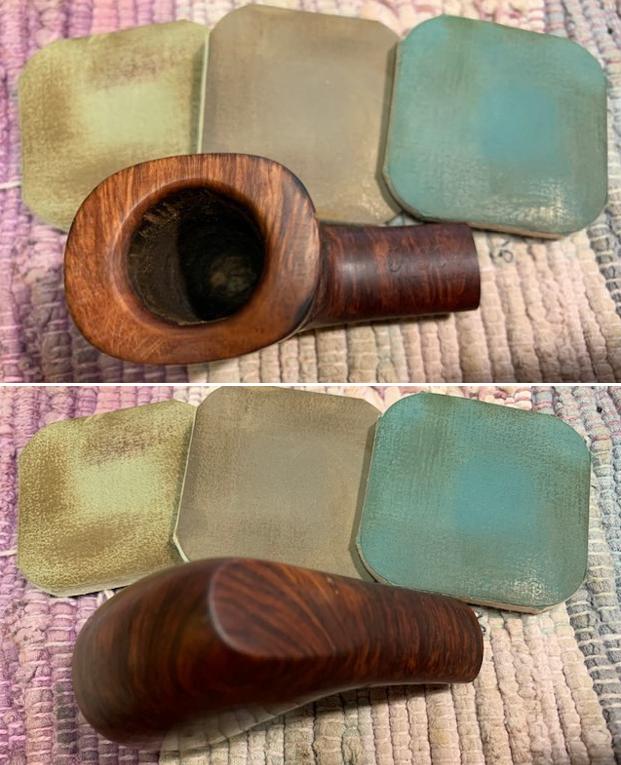
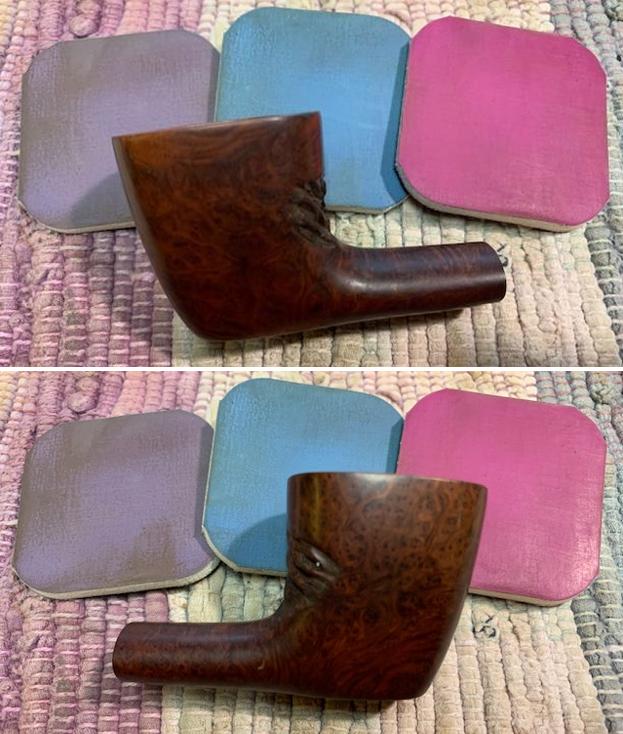
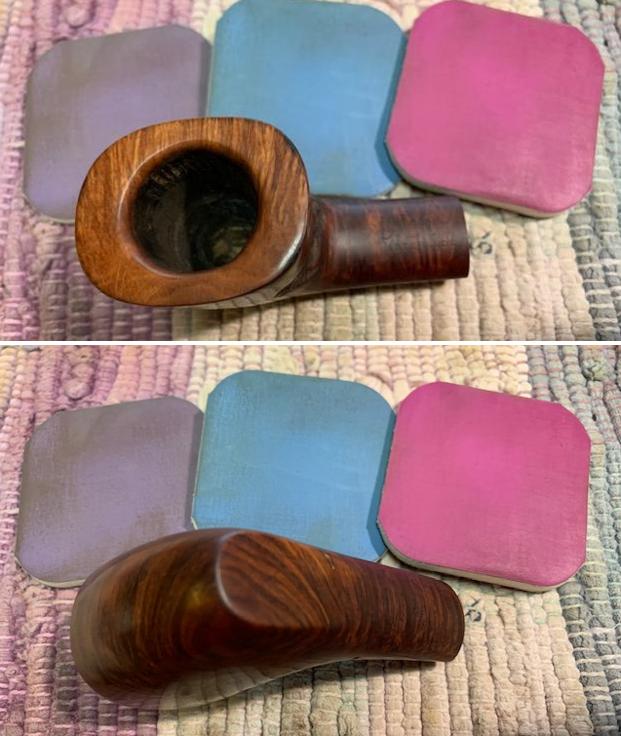
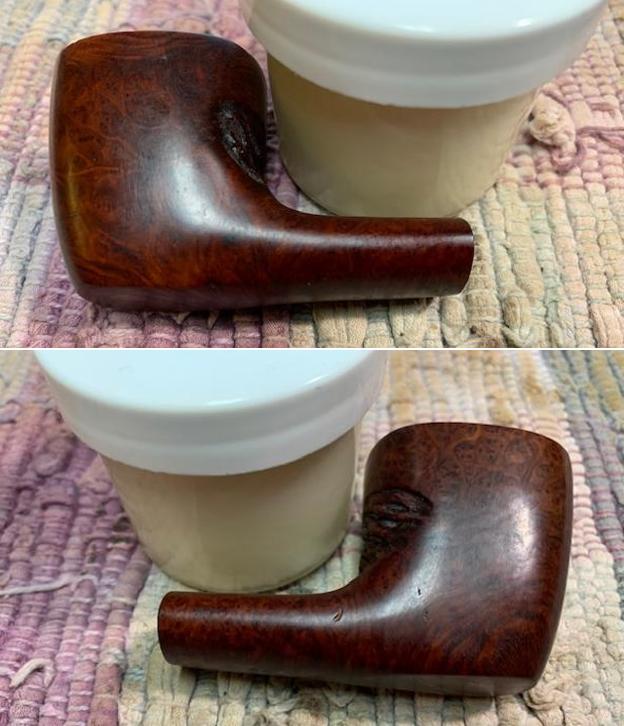
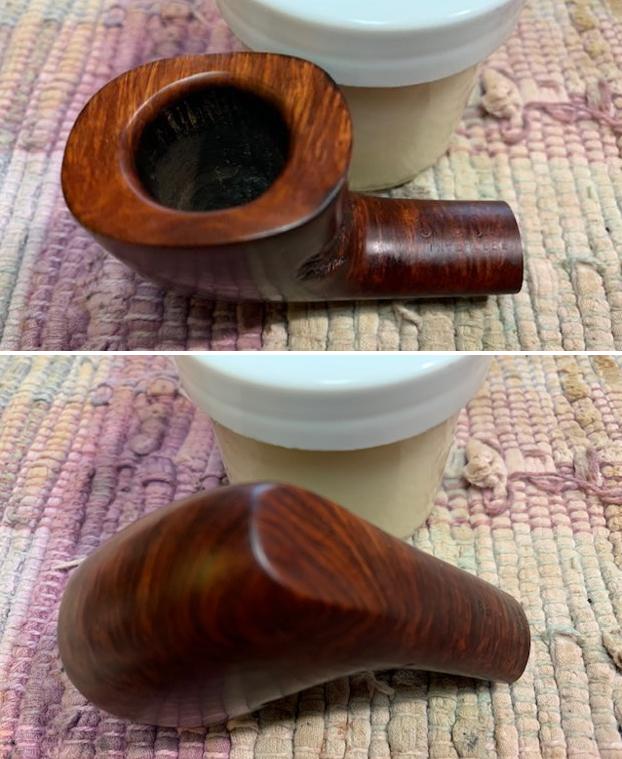
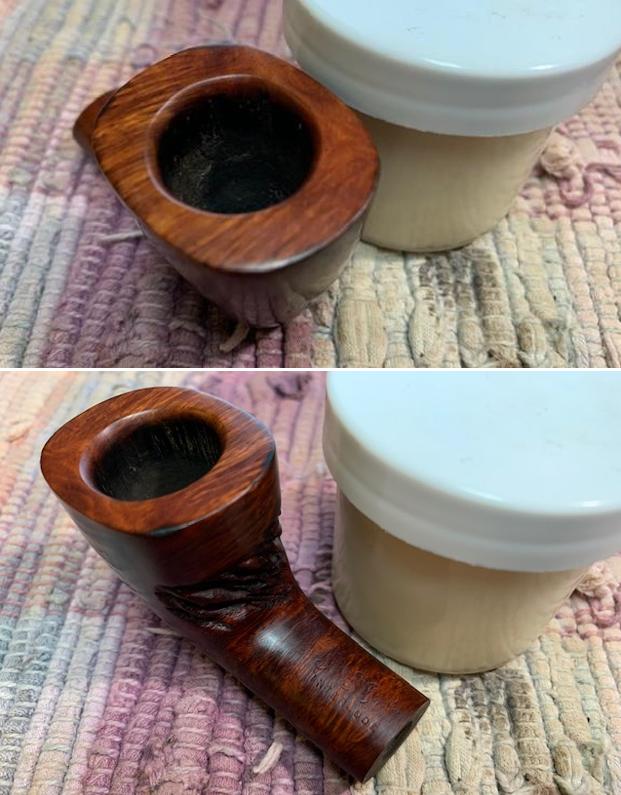
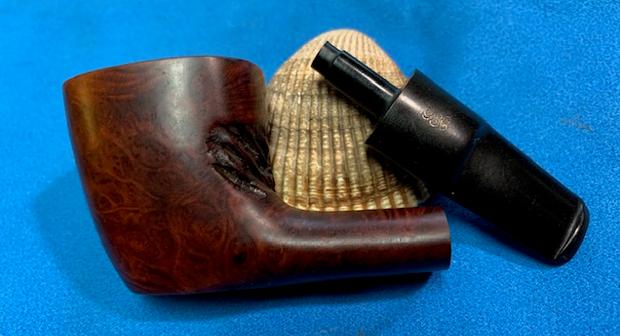
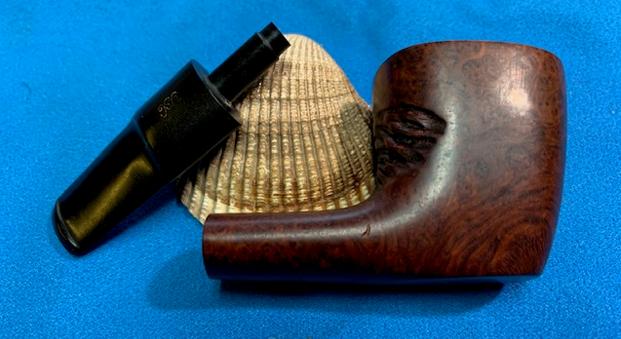
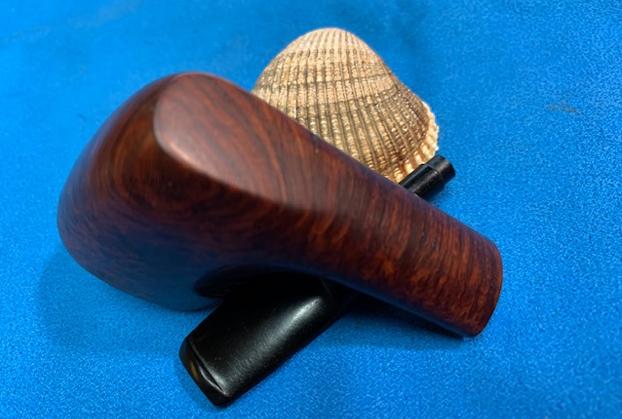
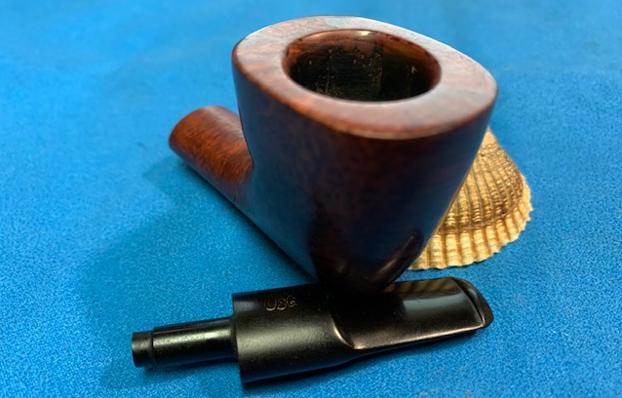
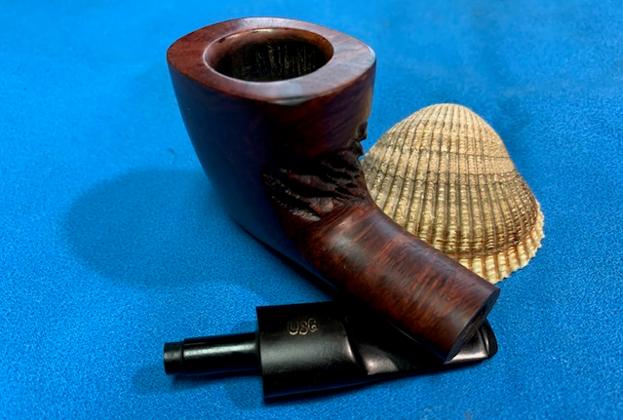
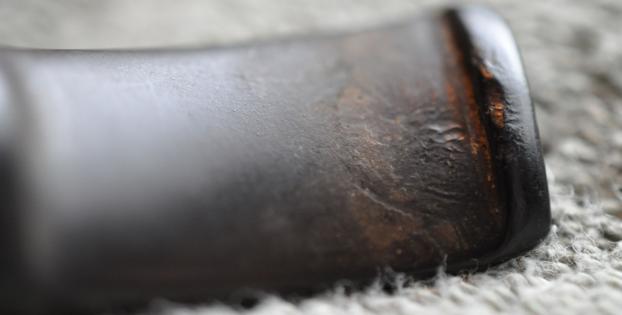
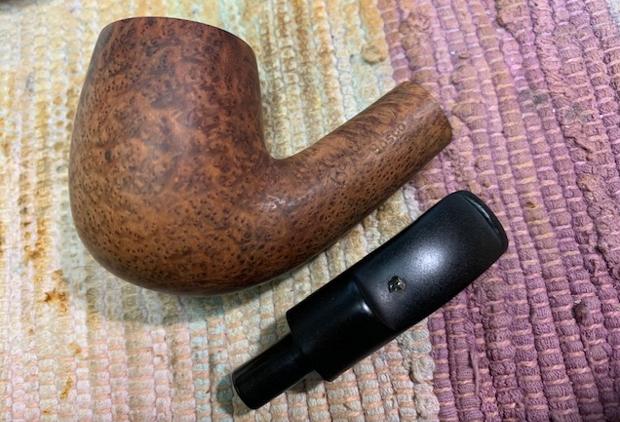
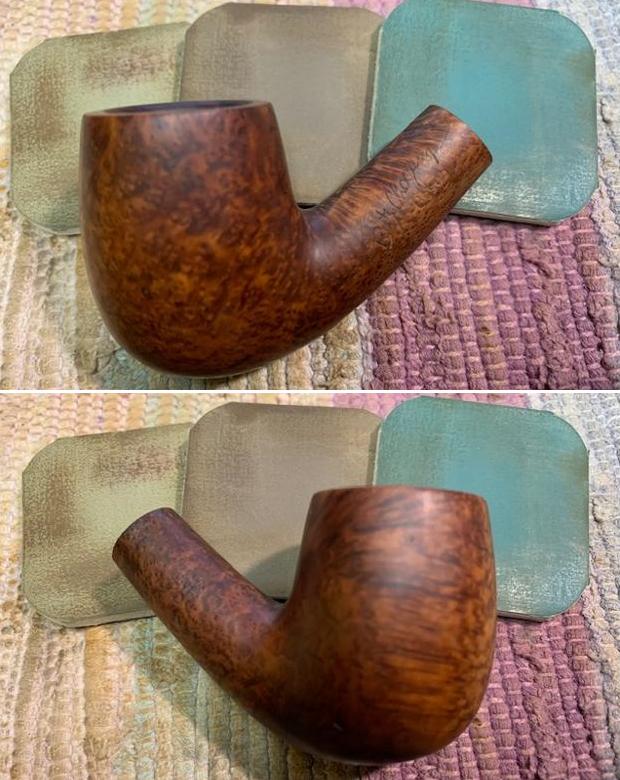
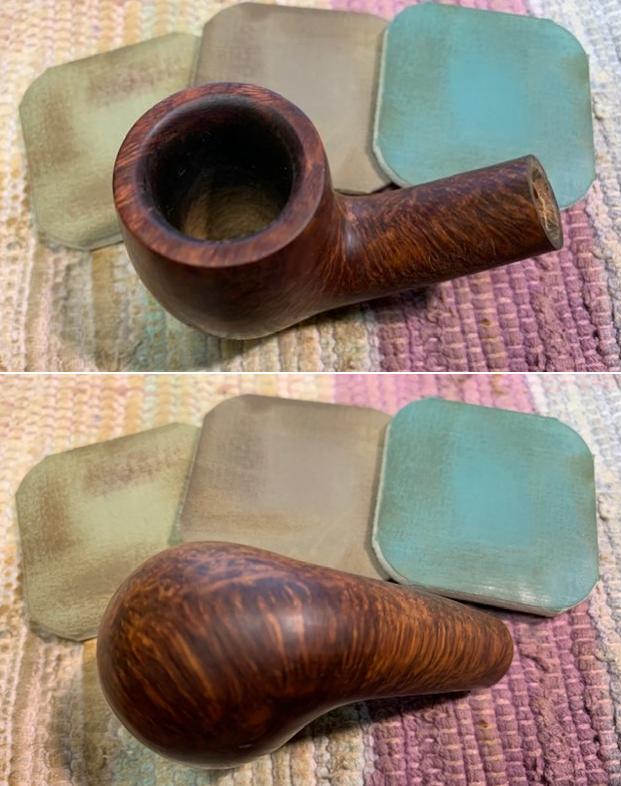
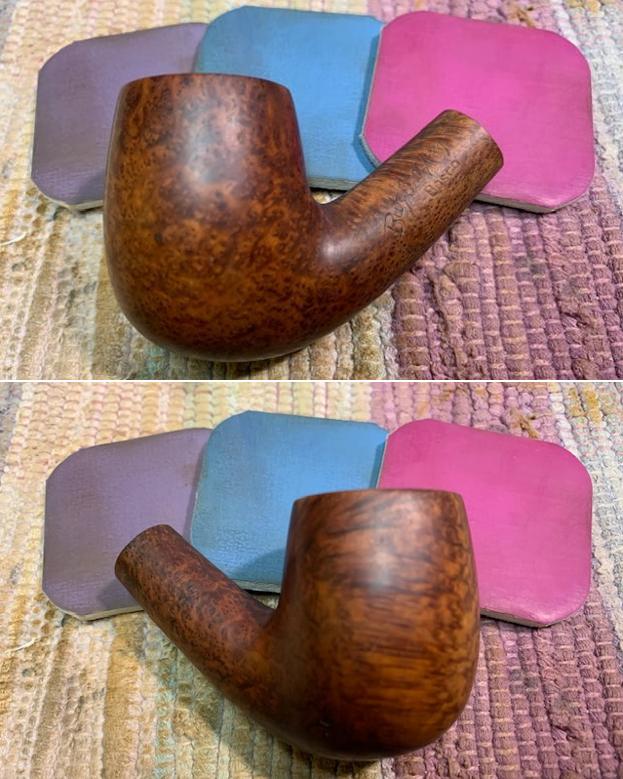
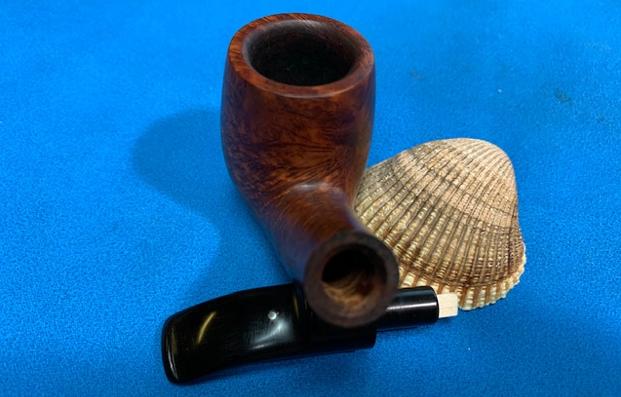
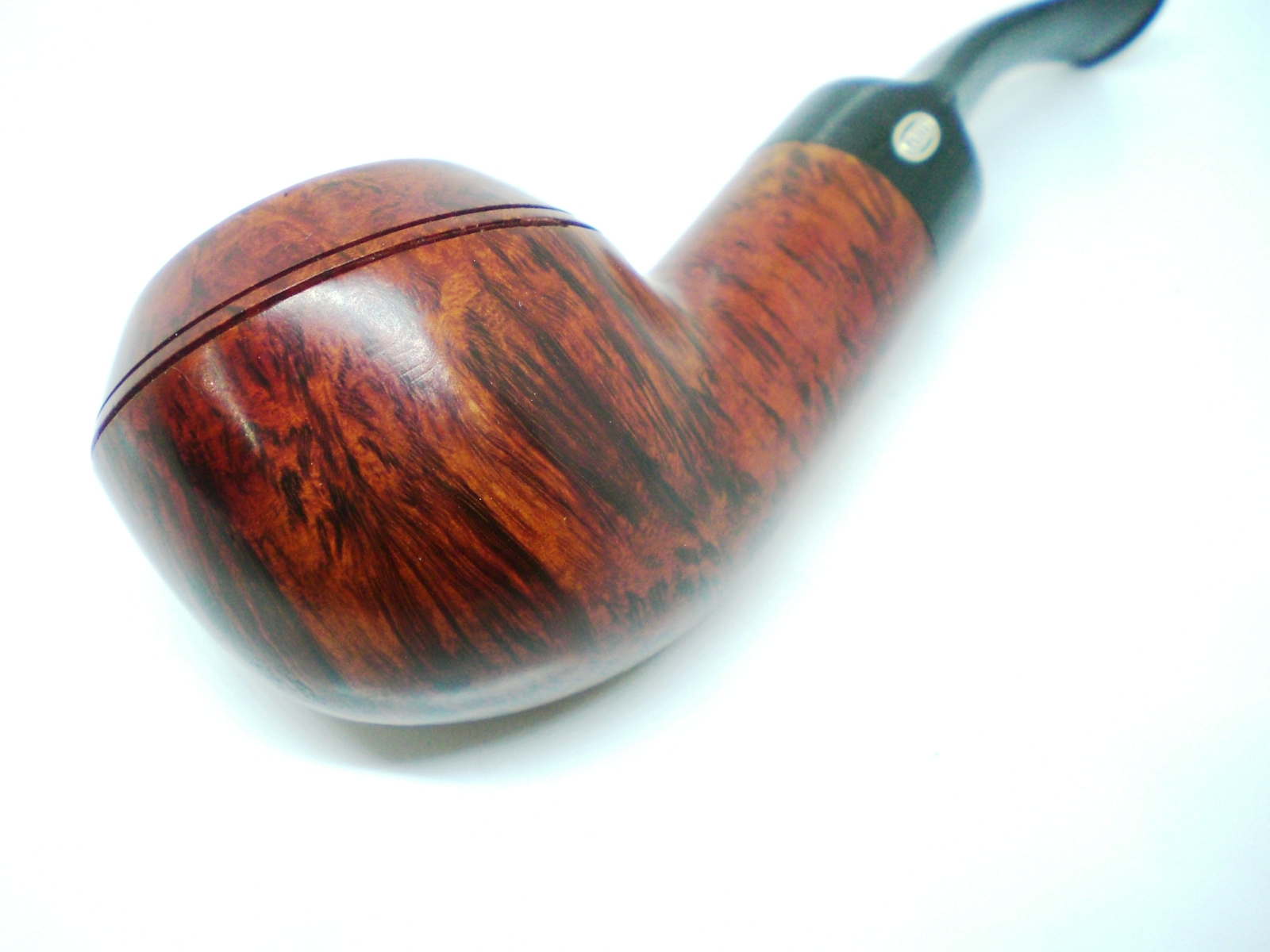
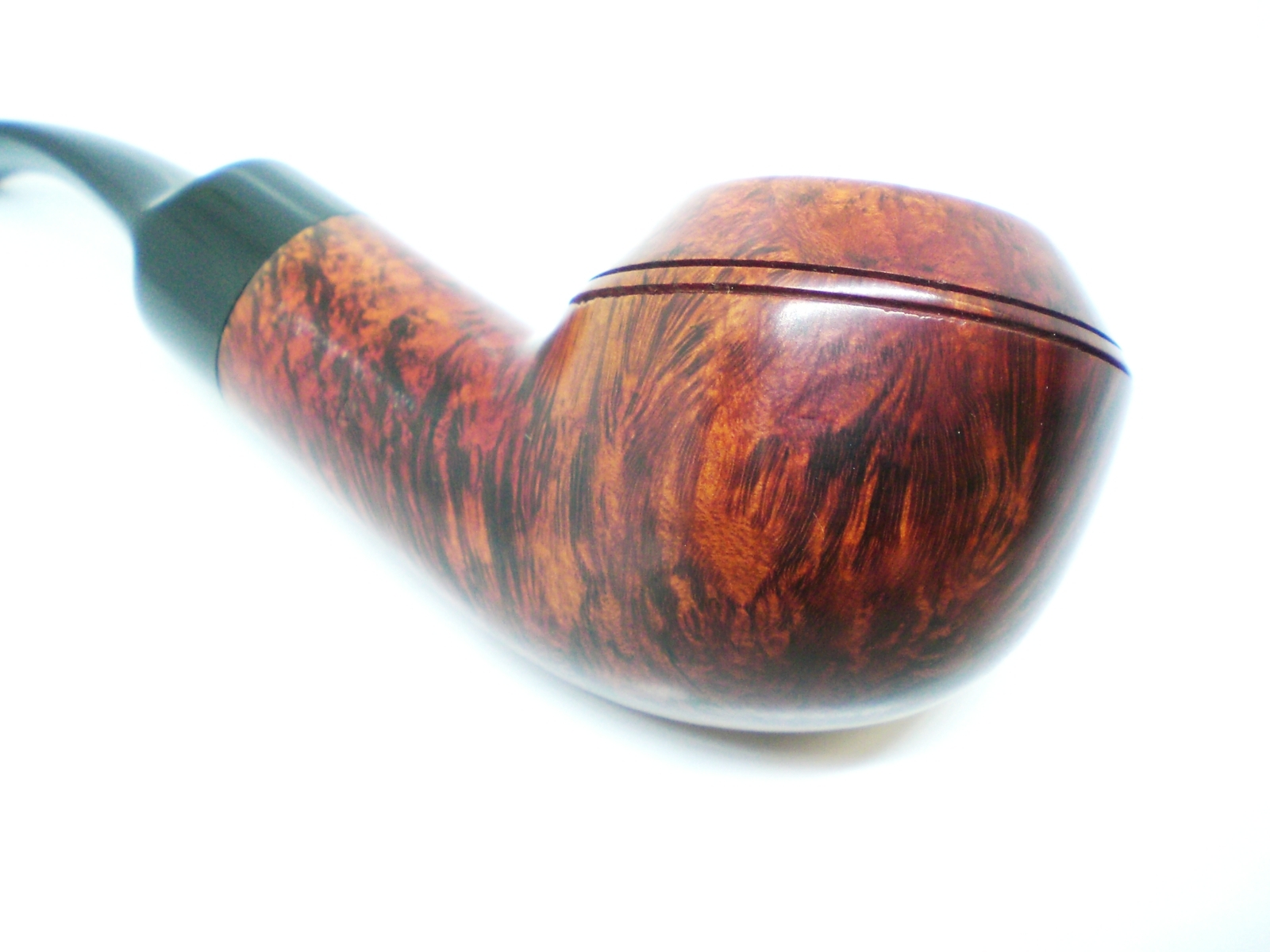
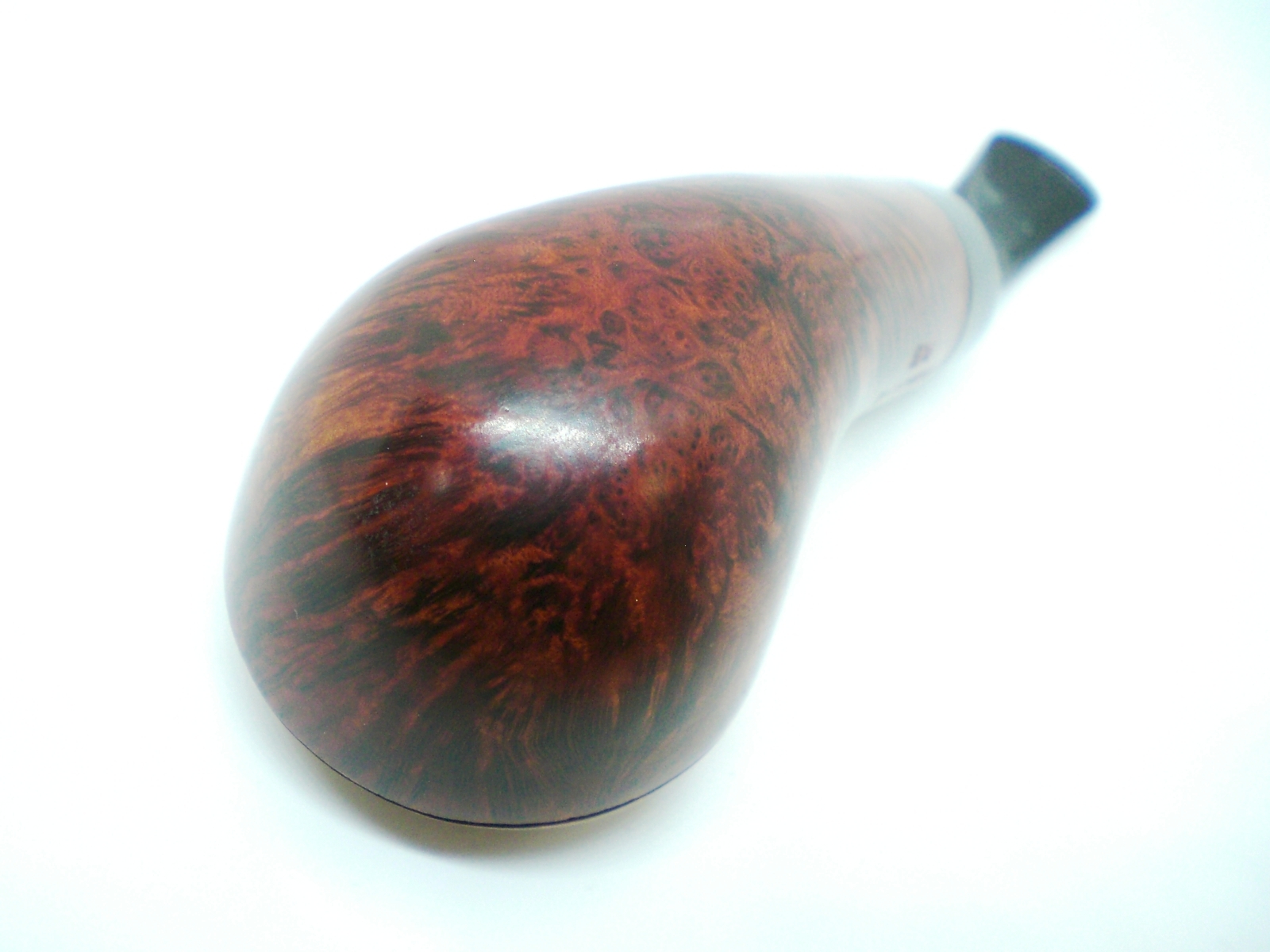
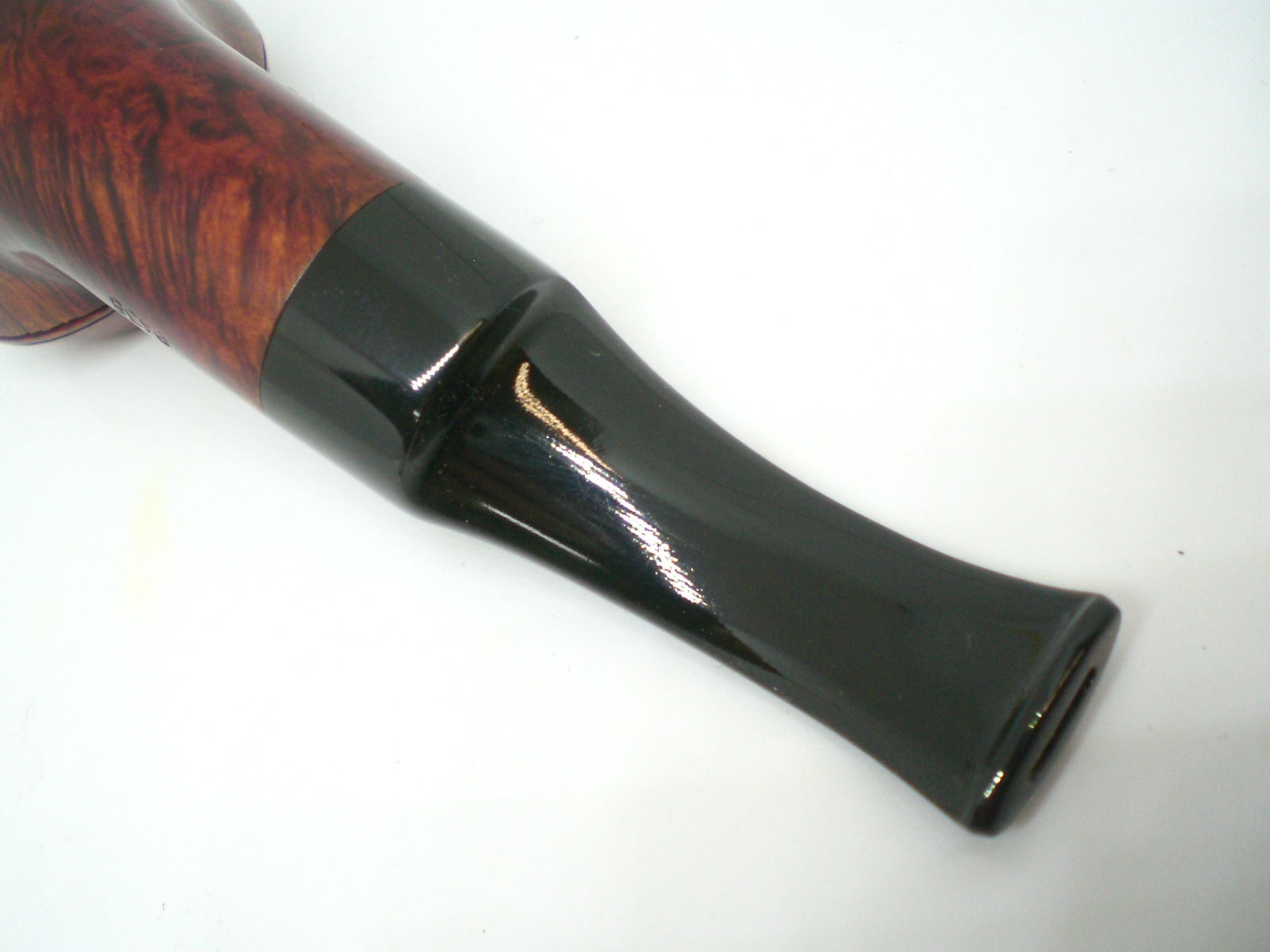
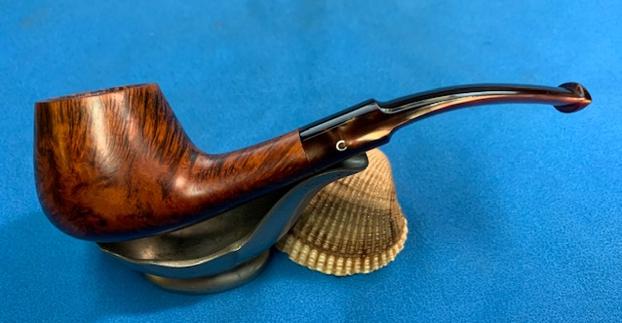
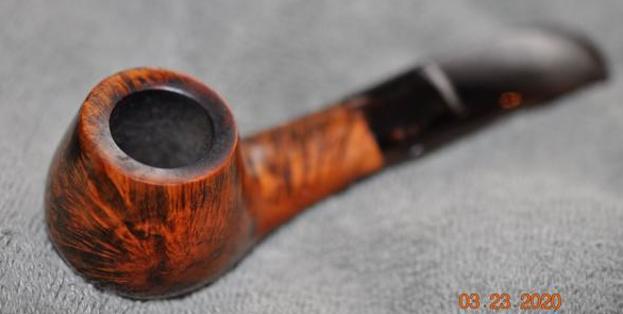
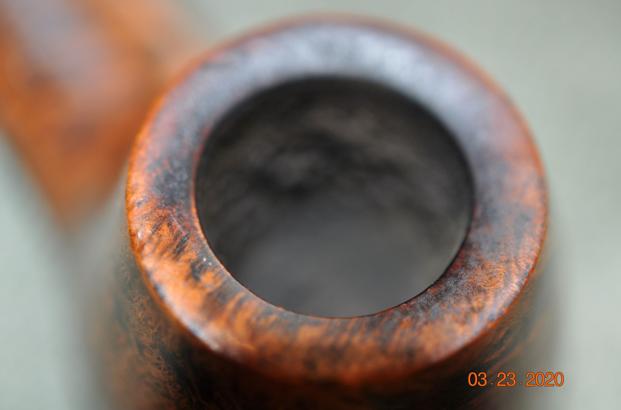
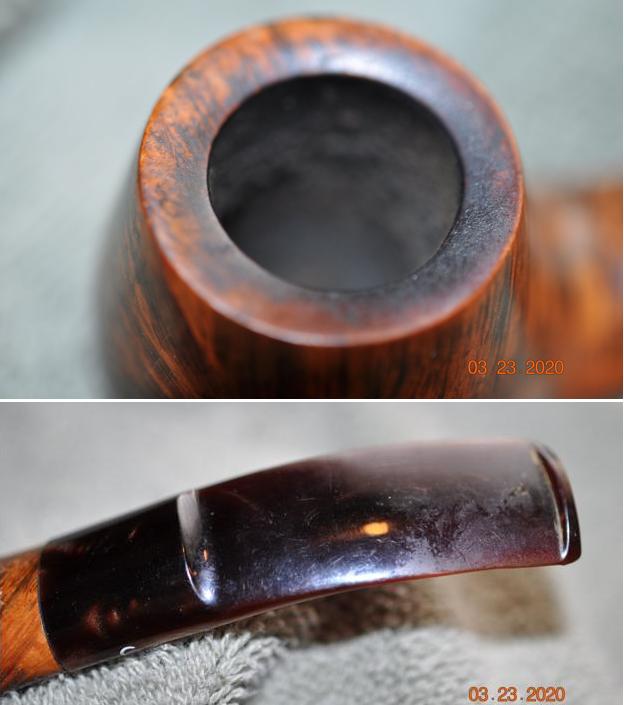
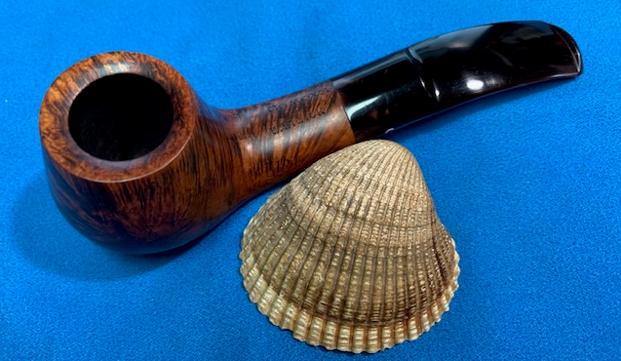
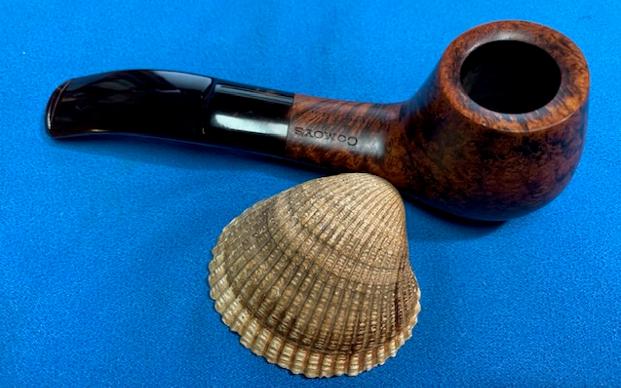
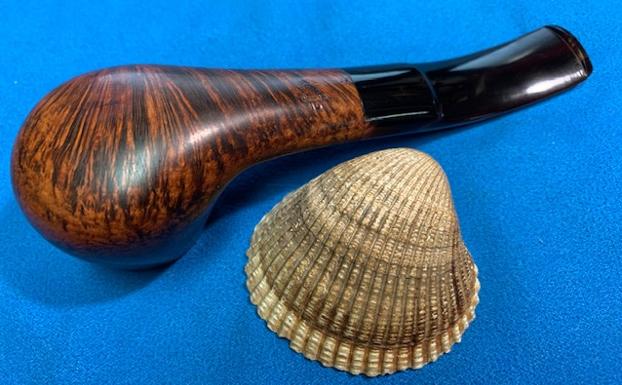
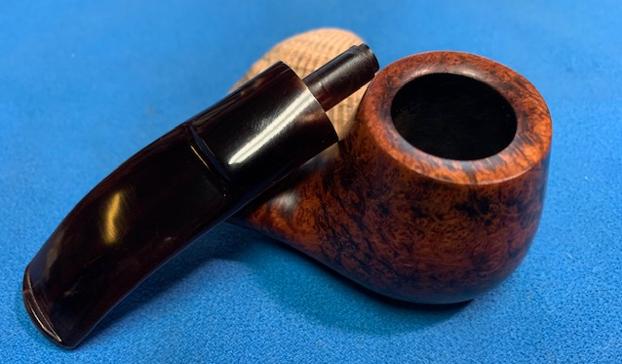
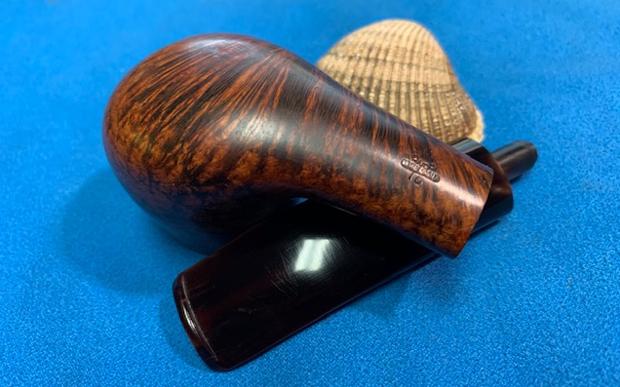
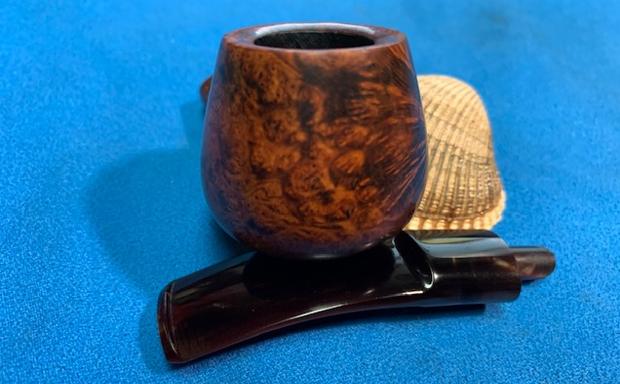
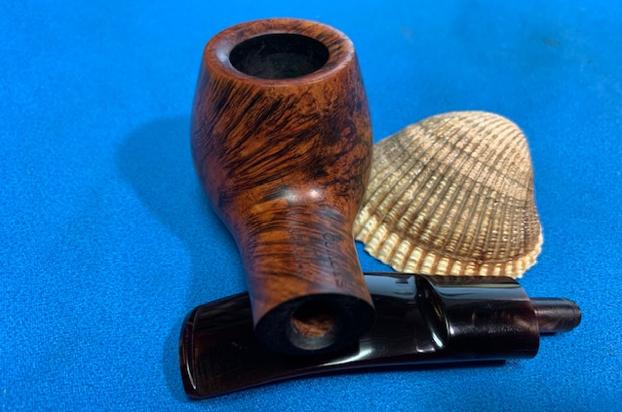
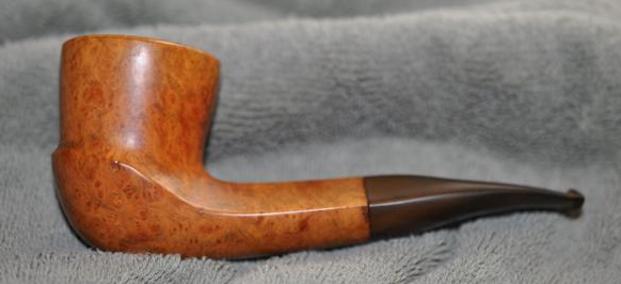
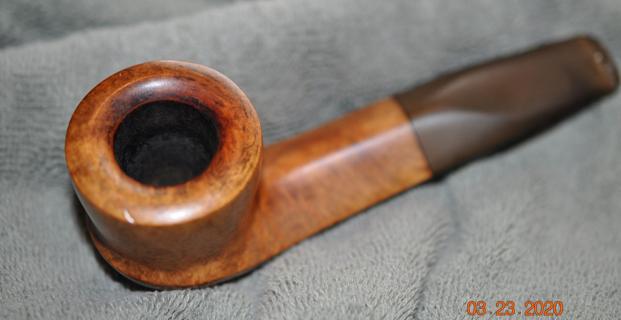
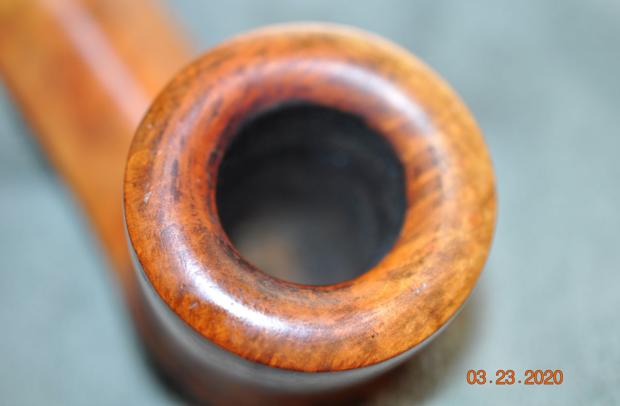
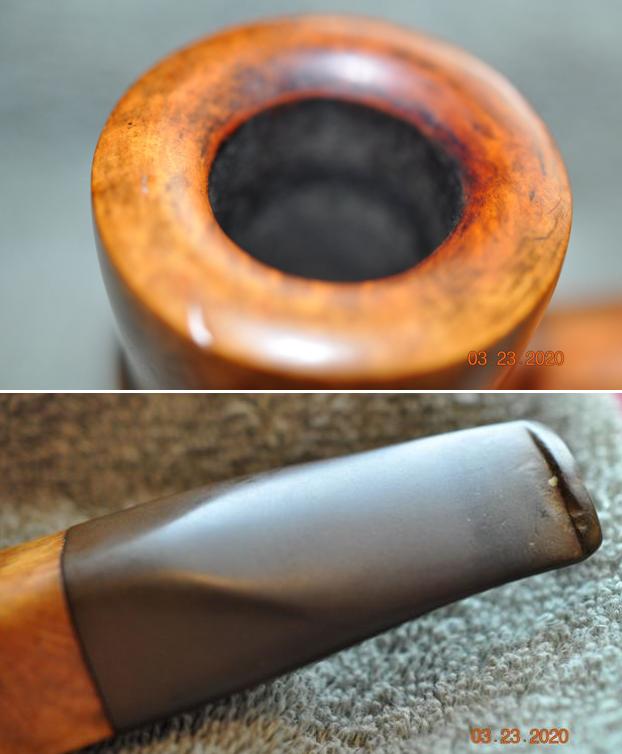
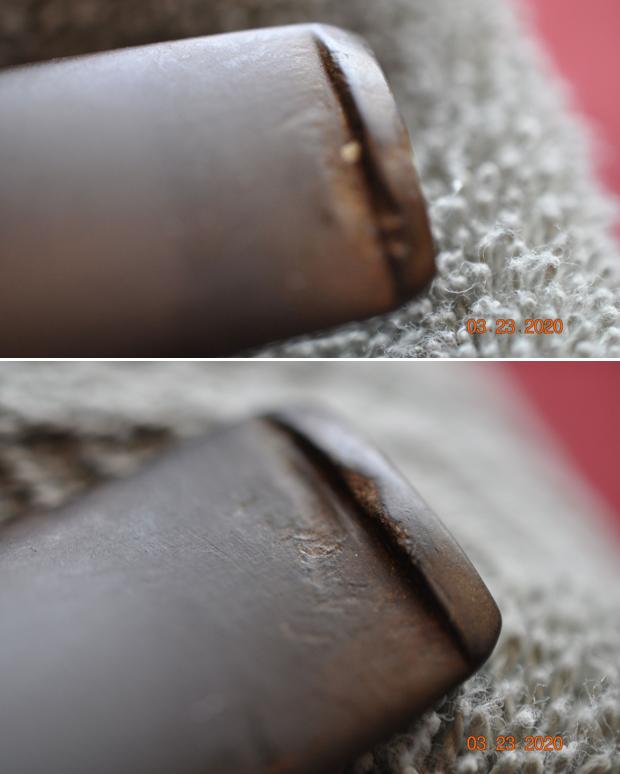
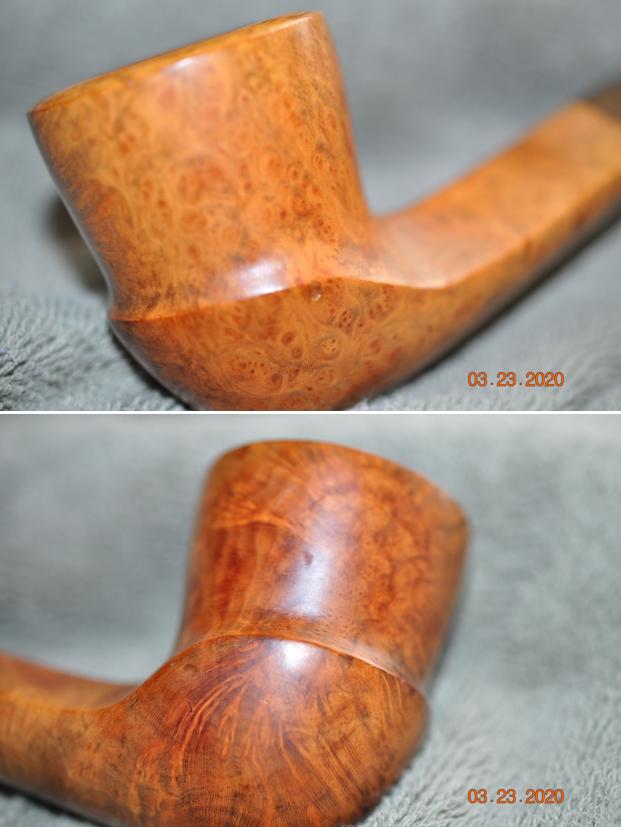
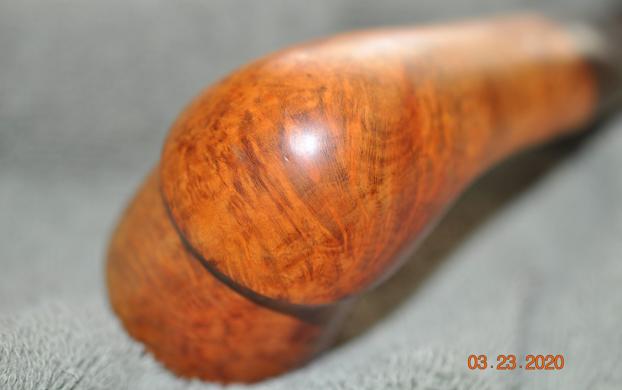
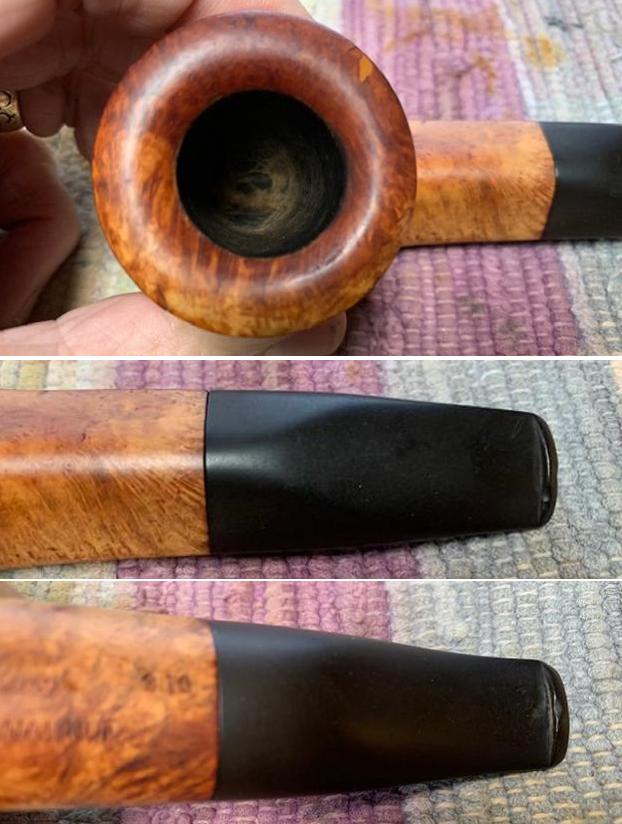
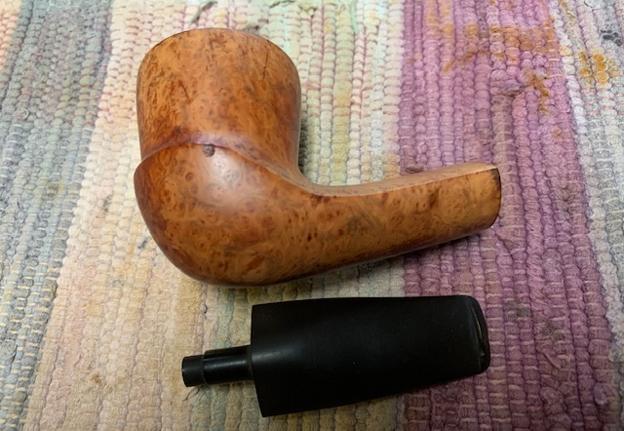
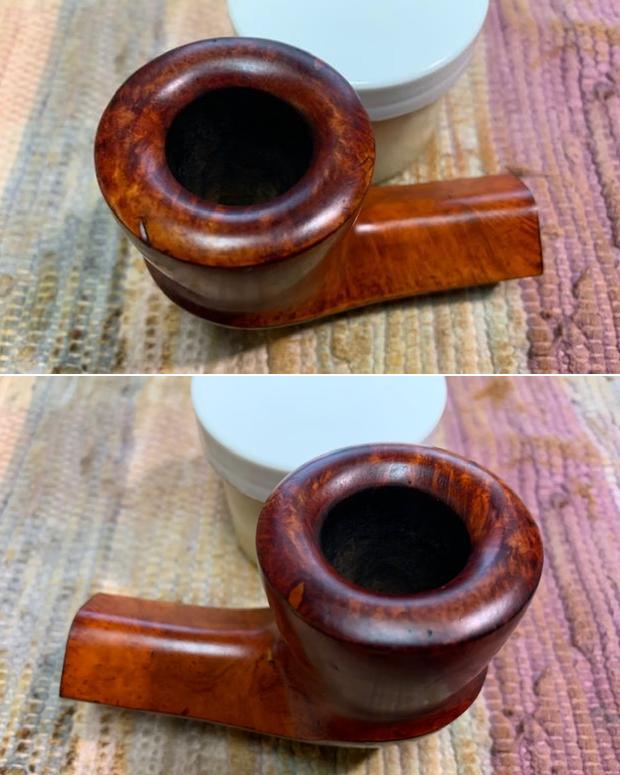
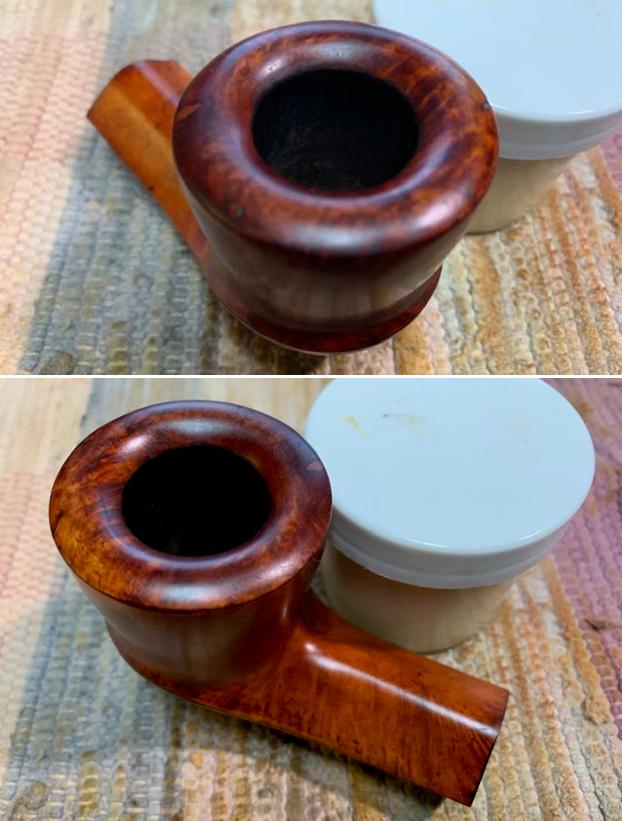
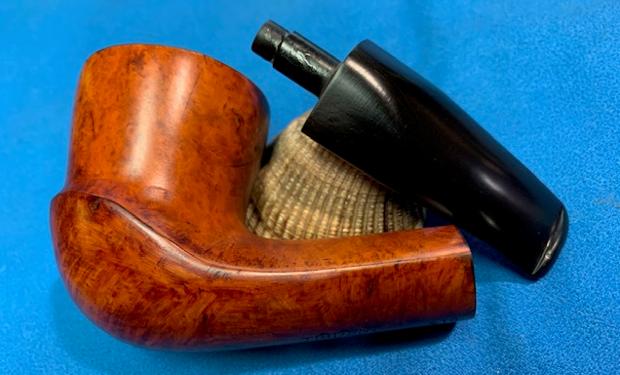
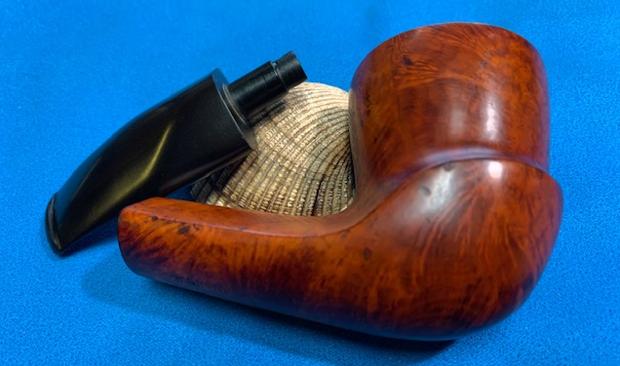
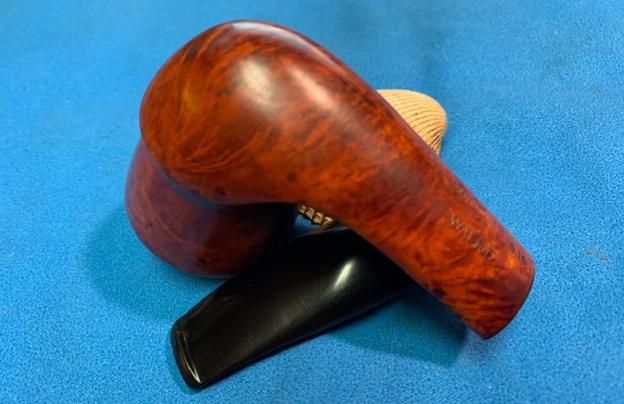
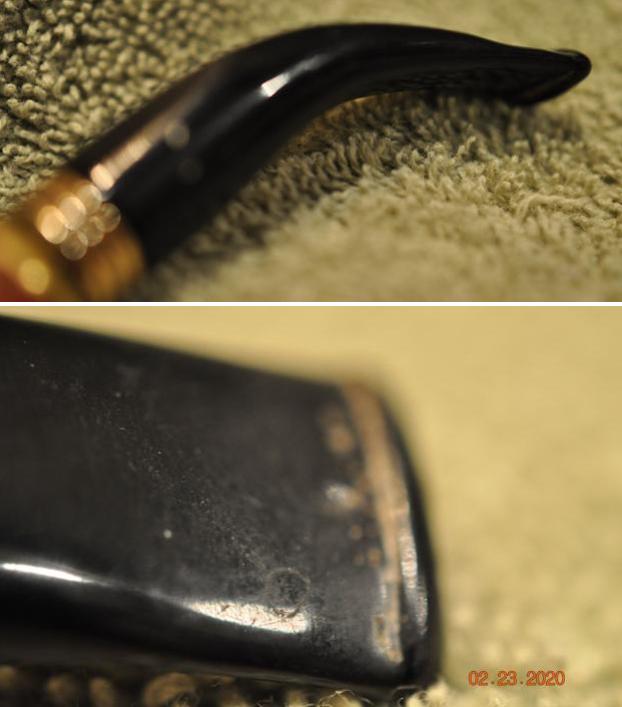
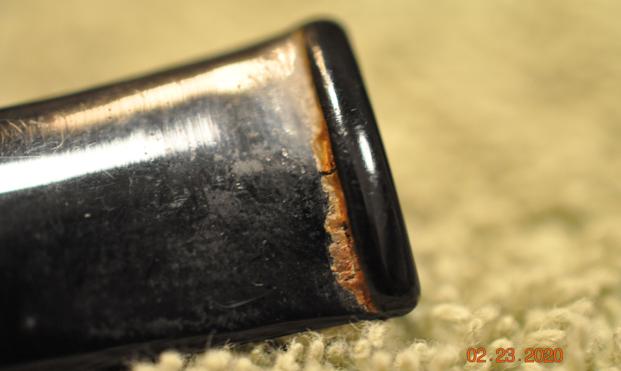
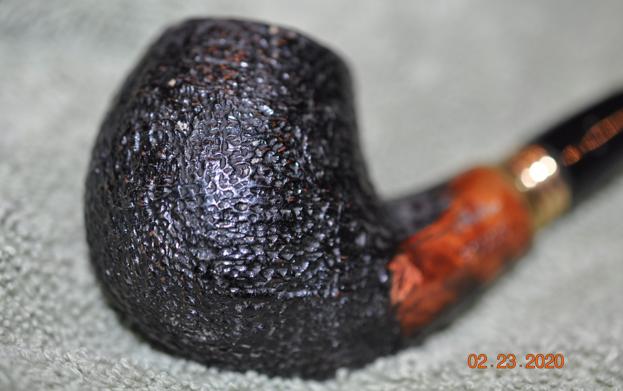
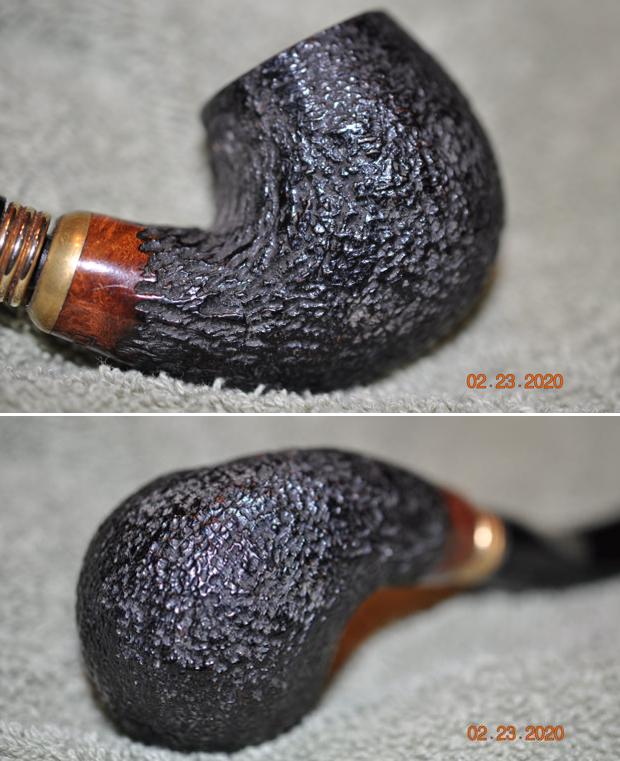
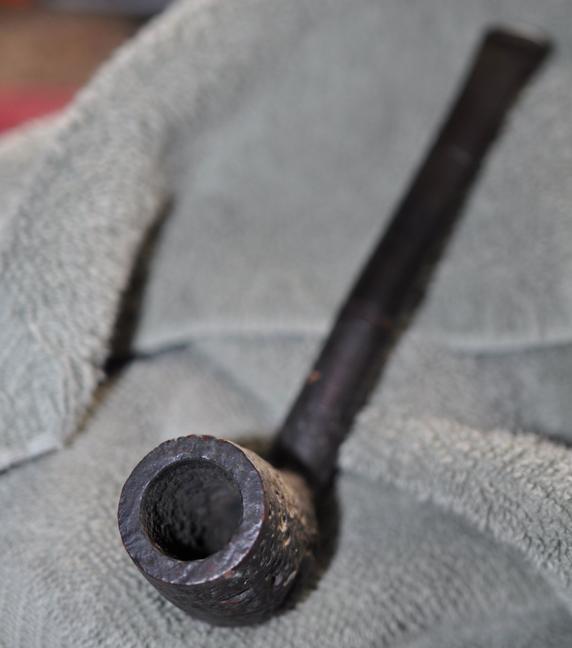
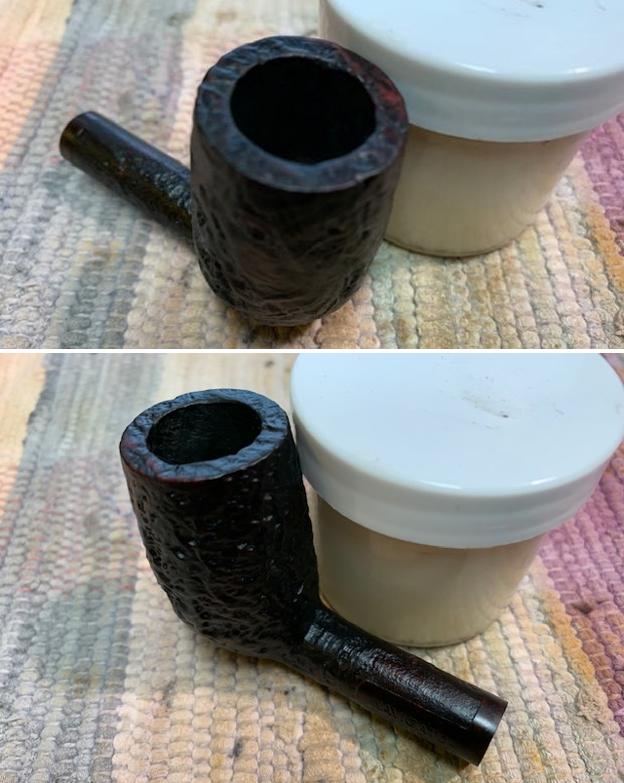
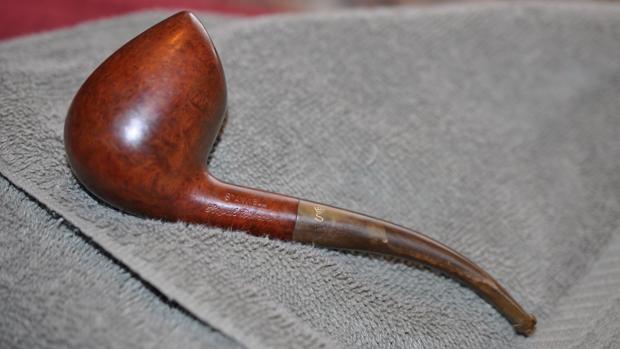
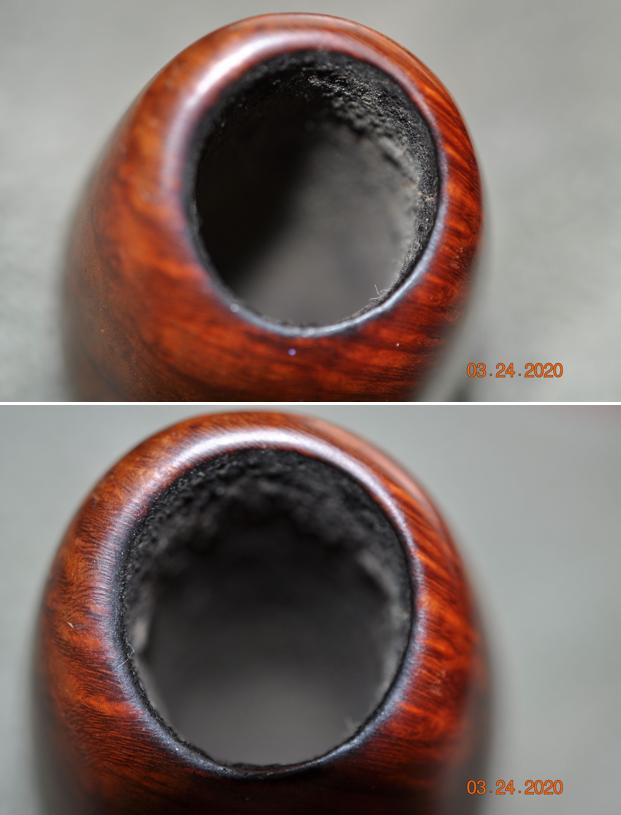
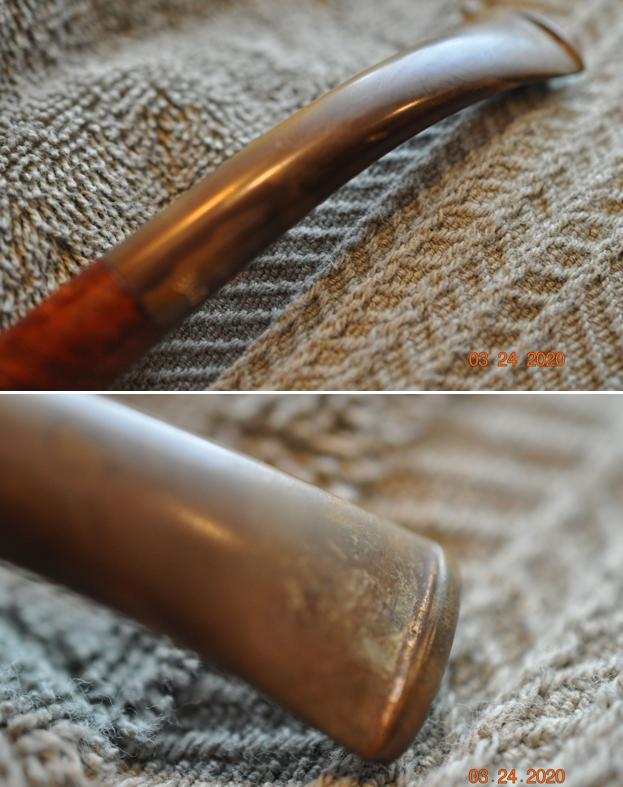
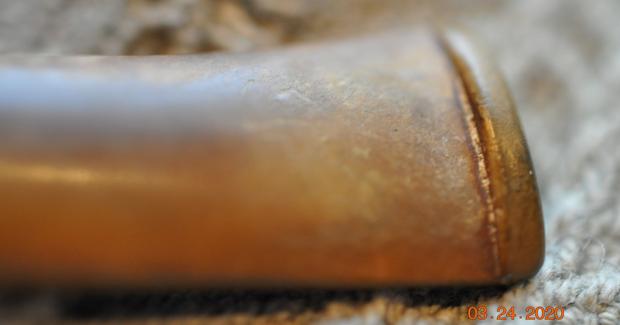
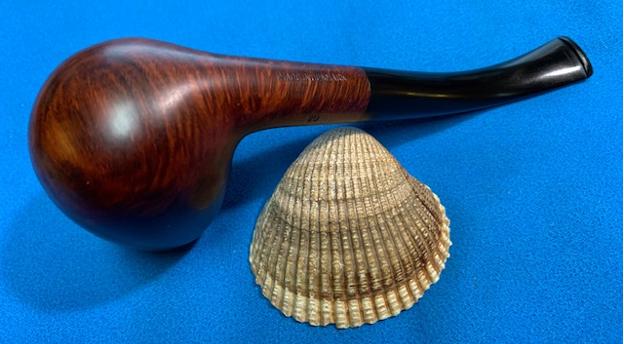
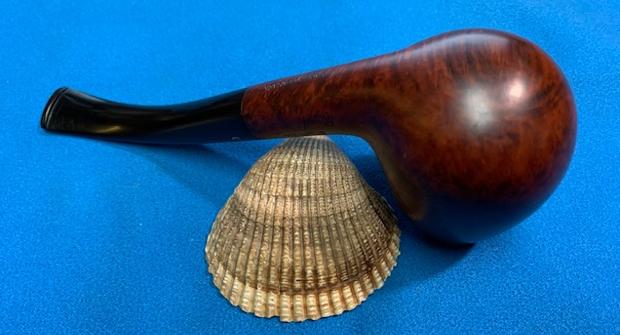
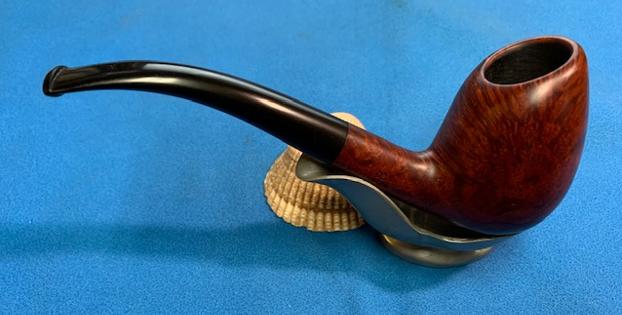
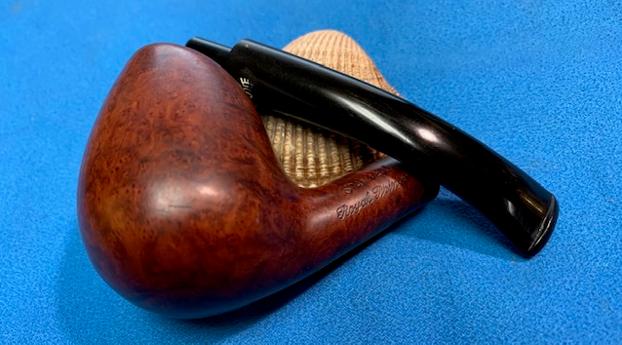
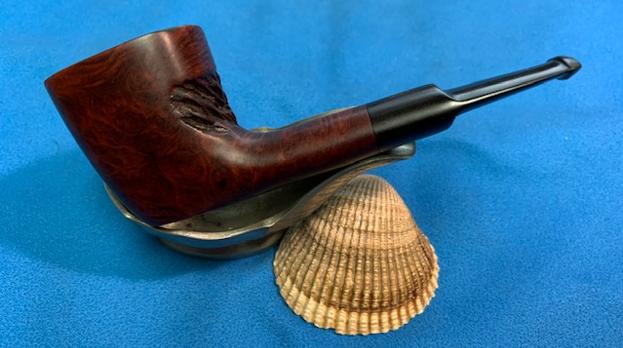
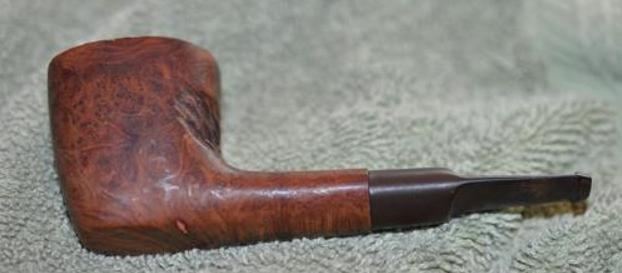
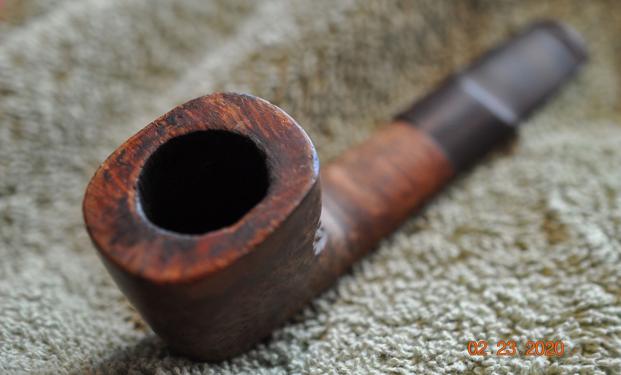
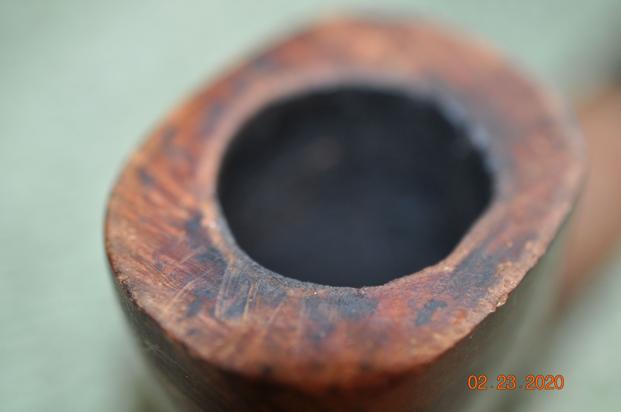
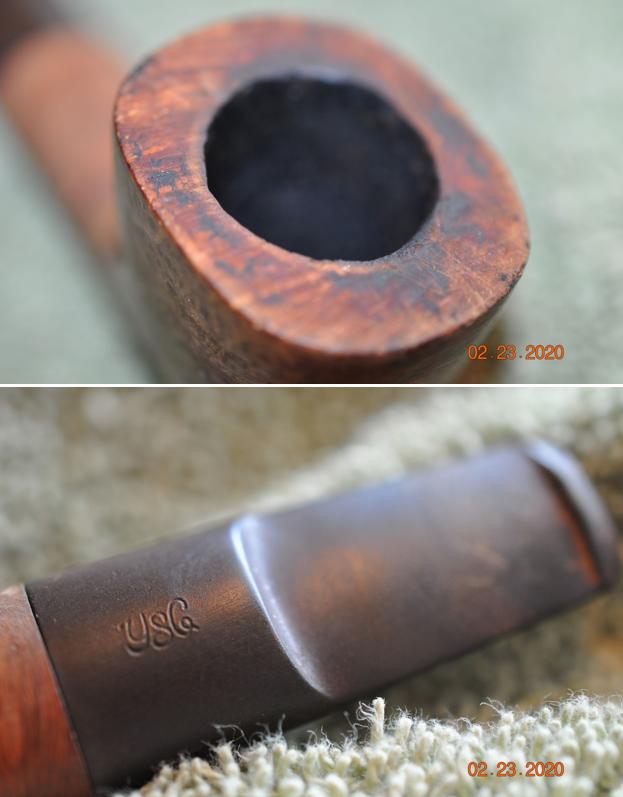
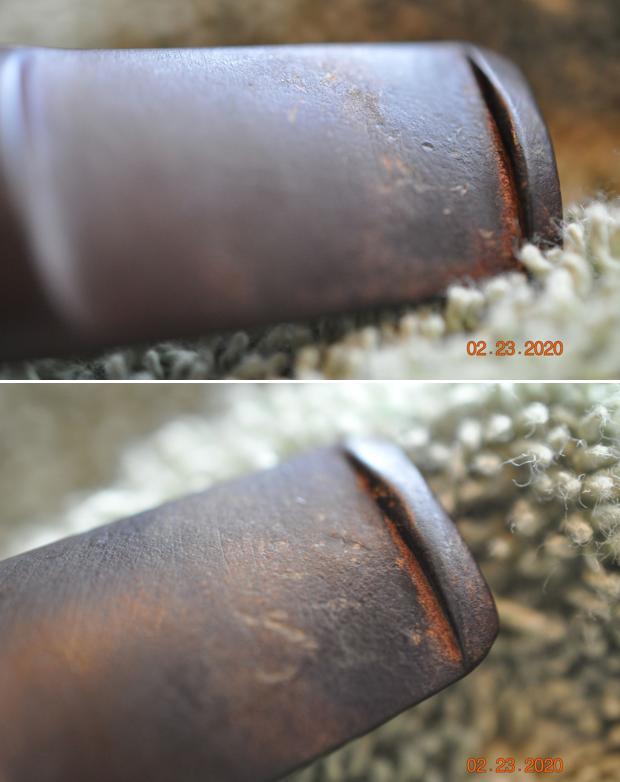
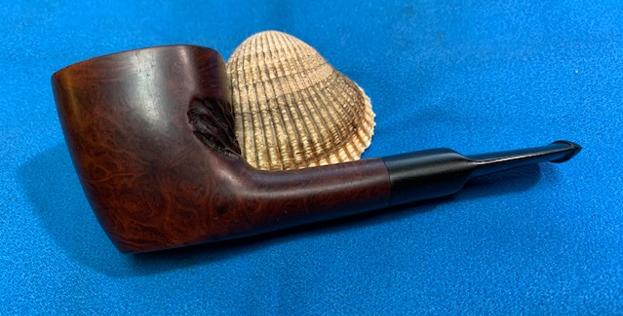
The next pipe on the work table came to us from a fellow in Brazil, Indiana, USA earlier this year. It is a small pocket pipe with flat sides and an oval shank. There is some nice grain on the bowl and there is carved pattern on the back side of the bowl. The rim top is pretty beat up and has some ground in grime and lava build up. The inner edge of the rim is in rough shape and there is damage and burn marks on the outer edge as well. The finish on the bowl is very worn and dirty but there is still something intriguing about the pipe even with the grime on the surface of the briar. There is a large shrunken fill on the left side of the heel of the bowl. This pipe is stamped on the topside of the shank and reads Yves St. Claude [over] Interlude. On the underside of shank it has the shape number 96 followed by the Made in France circular COM stamp. There was a stylized YSC stamped on the top of the oval saddle stem. The pipe is heavily smoked with a moderate cake in the bowl that has been poorly reamed. There were some tooth marks and chatter on both sides of the stem near the button. The pipe is in a condition that is a challenge to bring back to life. Jeff took photos of the pipe before he started his cleanup. He took photos of the rim top to show the condition of the top and edges of the bowl. It is a heavily smoked and well worn older pipe that must have been someone’s favourite. The stem had tooth marks and chatter on both sides ahead of the button.He took photos of the sides and heel of the bowl to show the interesting grain around the bowl and the condition of the pipe. He also captured the carving on the back of the bowl. It is a unique looking pipe. He took a photo of the shrunken fill on the left side of the heel of the bowl. It was a large fill that had chipped and left a pit.He took photos of the stamping on the sides of the shank. It is clear and readable as noted above. He also took photos of the YSC stamp on the left side and Hand Cut on the right side of the taper stem.   I turned first to a blog I had written on the restoration of previous YSC pipe that I received (https://rebornpipes.com/2020/04/23/next-on-the-table-an-yves-st-claude-marbre-75-bulldog/).
In the previous blog that I cited above I had found several references to Yves Grenard, trained in Comoy’s England factory, purchasing the Chacom plant in St. Claude. He managed the factory and it passed on to his son afterward. The shape of this Yves St. Claude pipe makes me believe that it may have been made by Chacom in France with the stamping bearing Yves name.

I turned back to Pipephil’s site to have a look at what was listed there and did a screen capture of the section (http://www.pipephil.eu/logos/en/logo-y.html).I turned to Pipedia and in the listing of French Brands and Maker I found a connection of the brand to Chapuis-Comoy and that the YSC brand was made primarily for Tinder Box (https://pipedia.org/wiki/French_Pipe_Brands_%26_Makers_U_-_Z). I followed that up by turning to the Chapuis-Comoy article from Pipedia (https://pipedia.org/wiki/Chapuis-Comoy).

French factory, in St. Claude. It began with Francois Comoy who, in 1825, was making pipes in boxwood and other types, as well as in clay, for the armies of Napoleon. In 1856, the Comoy factory was the first to produce briar bowls at St. Claude. In 1870, Francois’s grandson, Henri Comoy (1850-1924) was taken prisoner in Switzerland whilst serving in the French army during the Franco-Prussian war, where he found his cousins, the Chapuis. This meeting produced the idea of an association, which only became a reality in 1922, with the creation of Chapuis-Comoy. After Henri’s death, his sons Paul and Adrien, took over the company with the support of their cousins, Emile and Louis Chapuis Sr., and in 1928 they created the Chacom brand.

In 1932, due to the economic crisis at Saint-Claude, the factory merged with La Bruyère, adopting that name, and becoming one of the biggest pipe companies in the world, with 450 workers. Louis Chapuis Jr., joined the company in 1938 and Pierre Comoy in 1947. The name Chapuis-Comoy returned in 1957 (125 workers), due to the success of the Chacom brand in France. In 1971, the London factory (see Comoy’s) became independent, and Yves Grenard, second cousin to Pierre, took over Saint-Claude, and is still running it. Between 1987 and 2001, the factory, which employed over 40 people, joined the Cuty-Fort Enterprises SA holding and, in 1994, included the Ropp brand it its catalog.

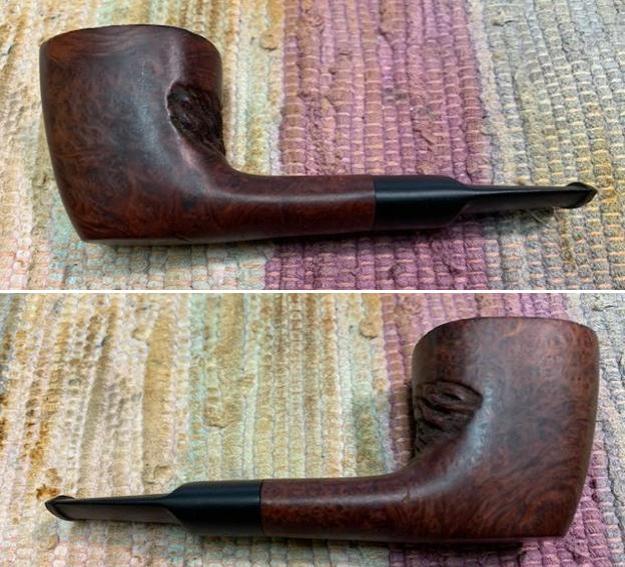
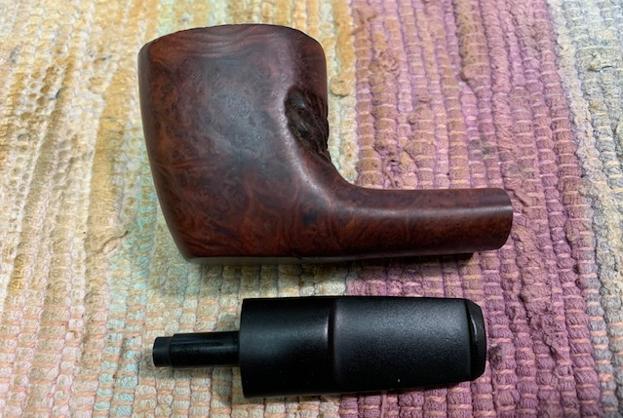
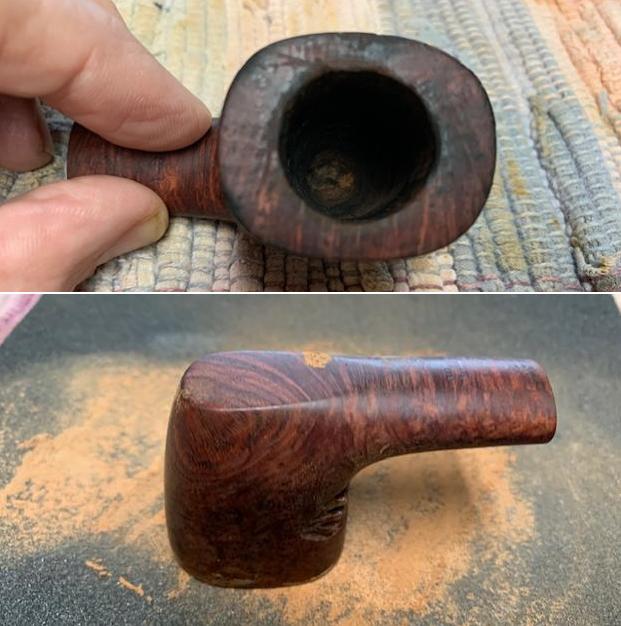
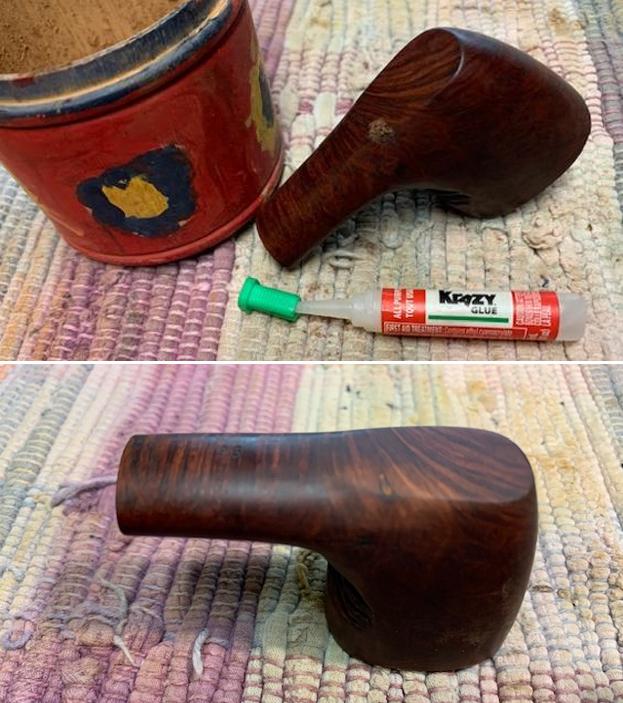
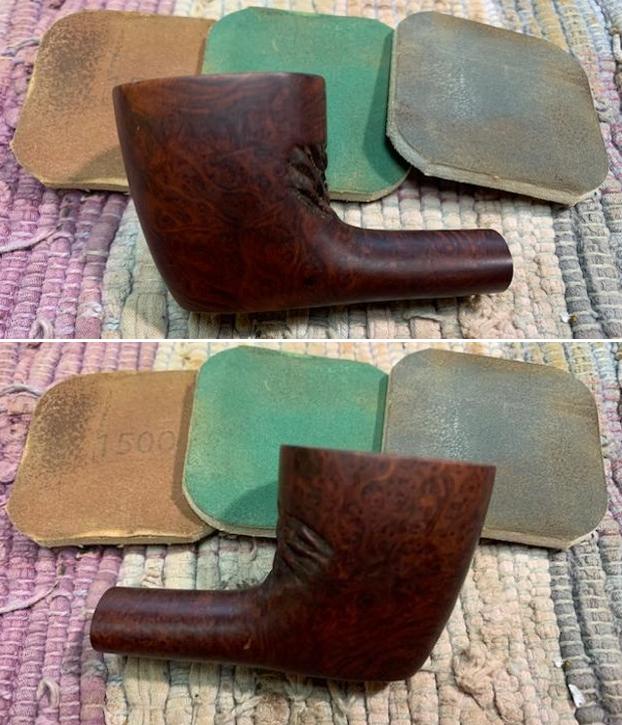
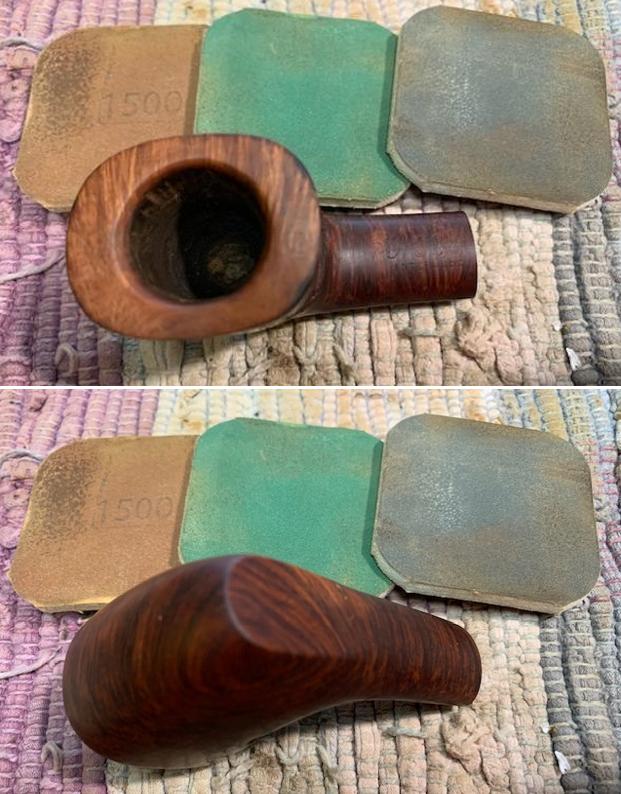
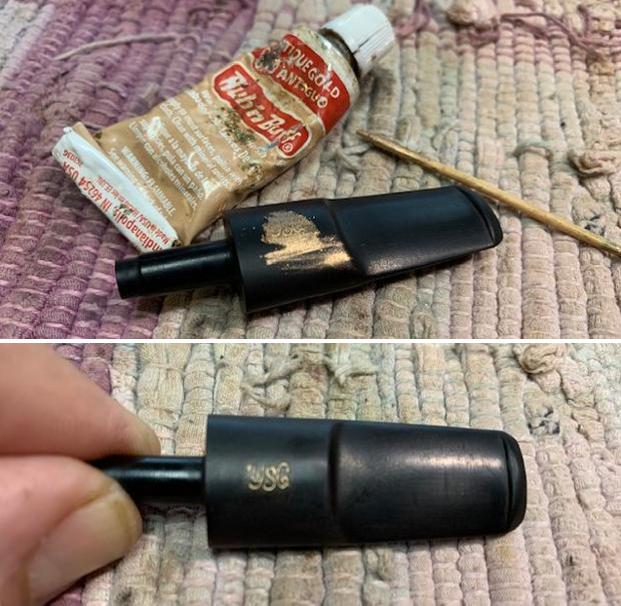
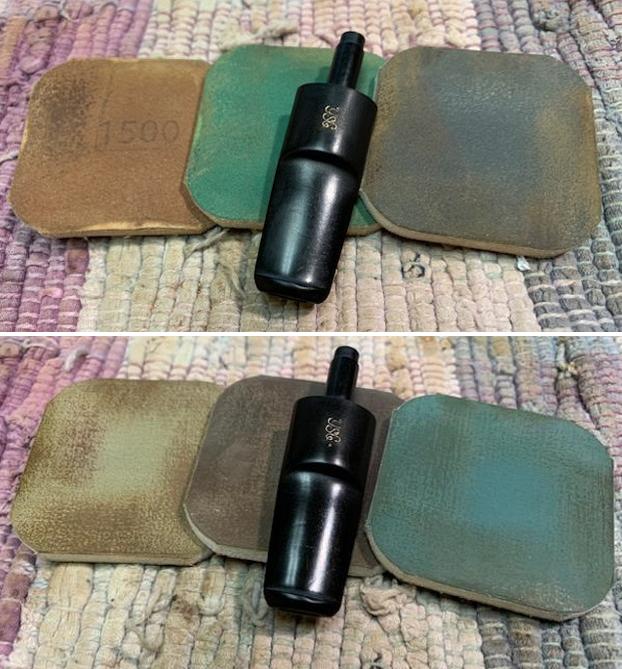
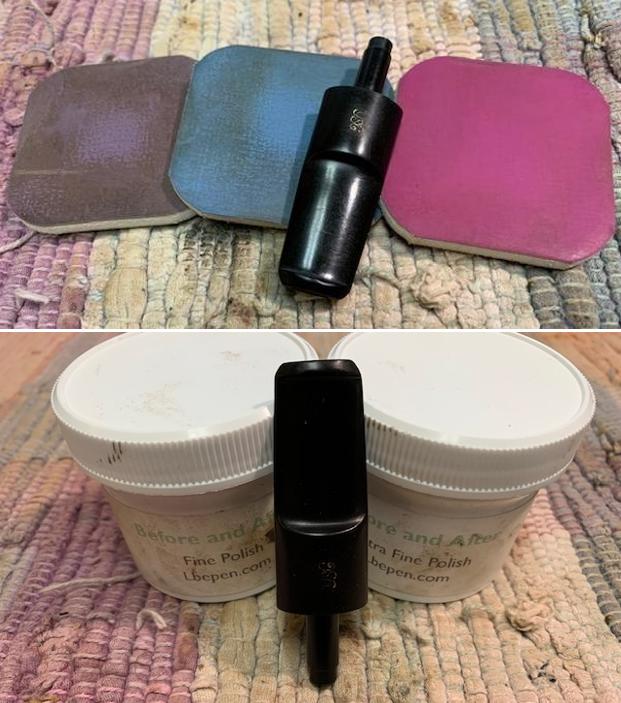
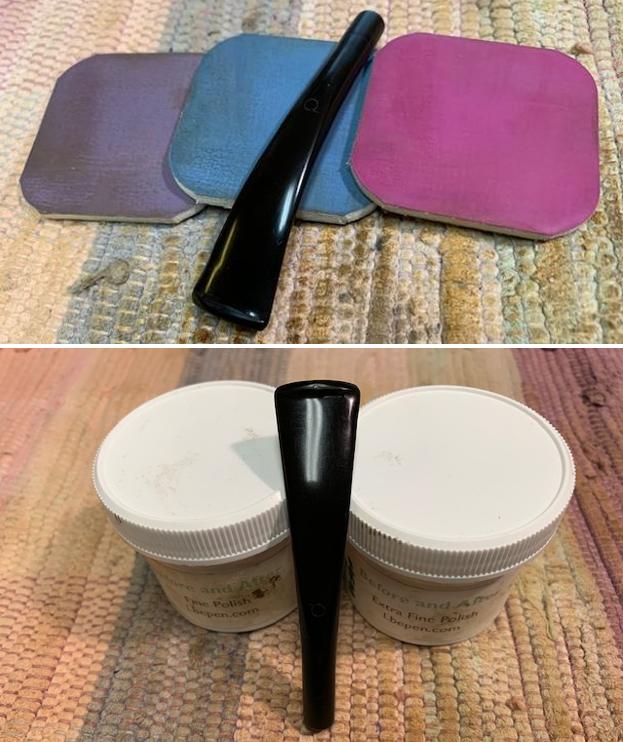
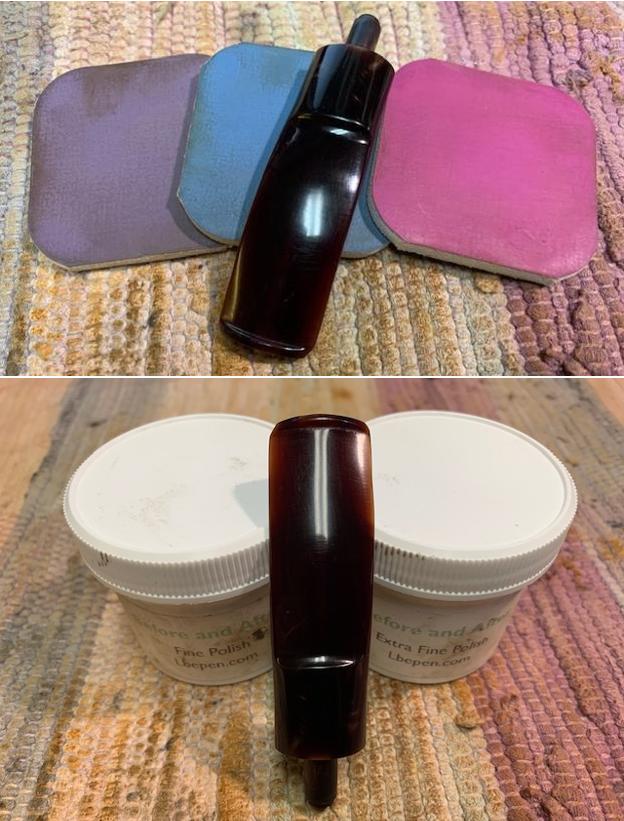
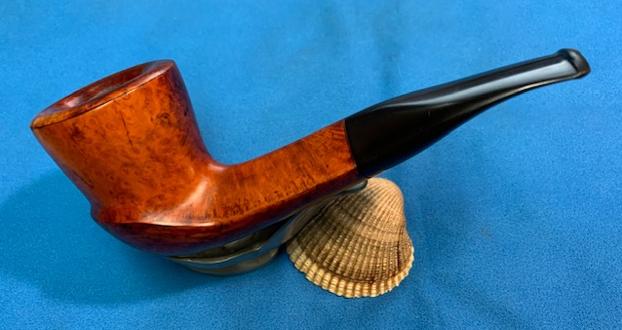
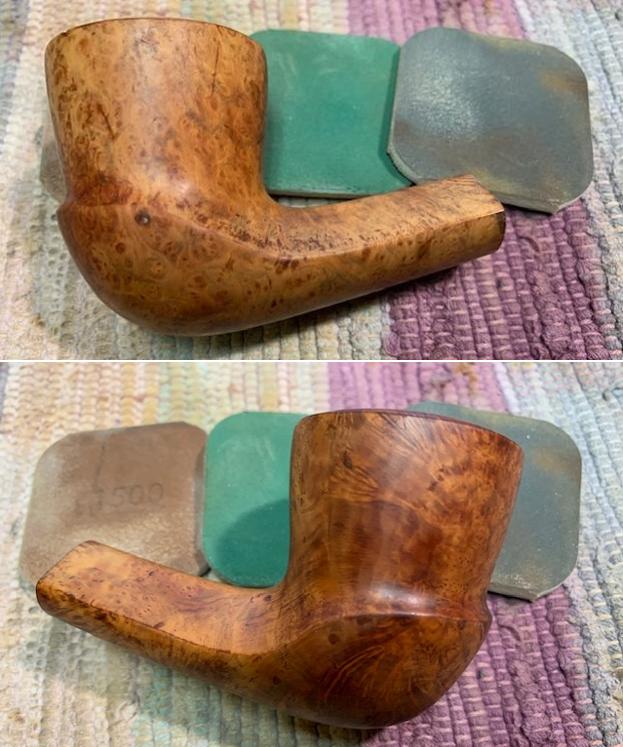
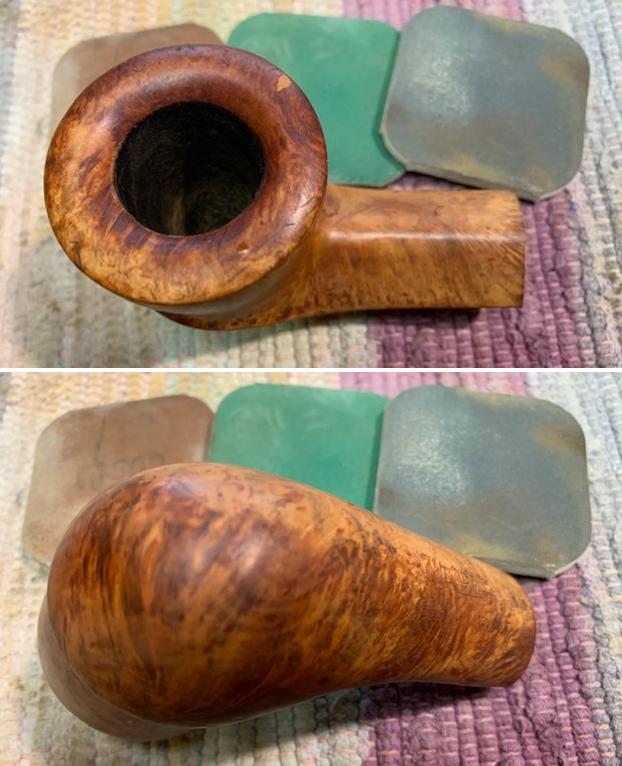
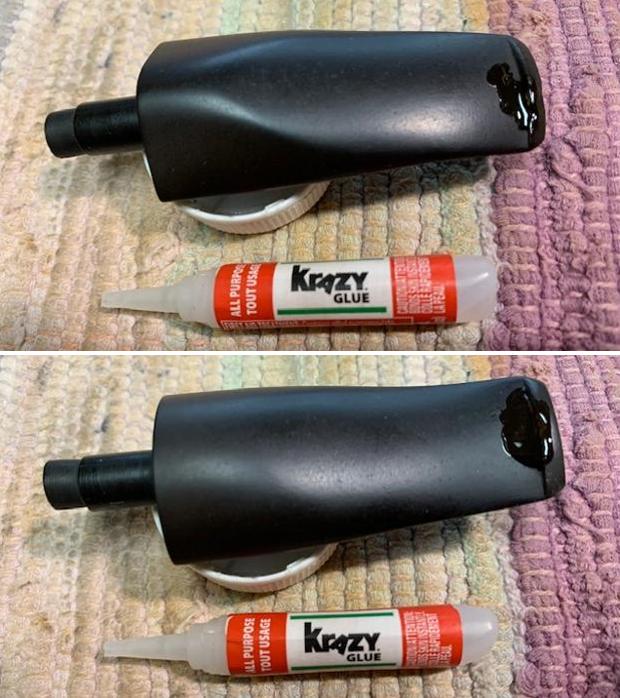
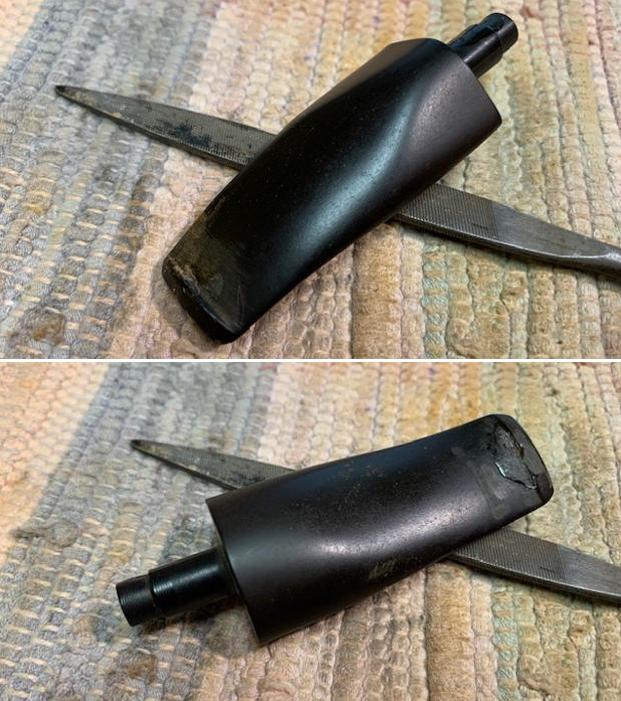
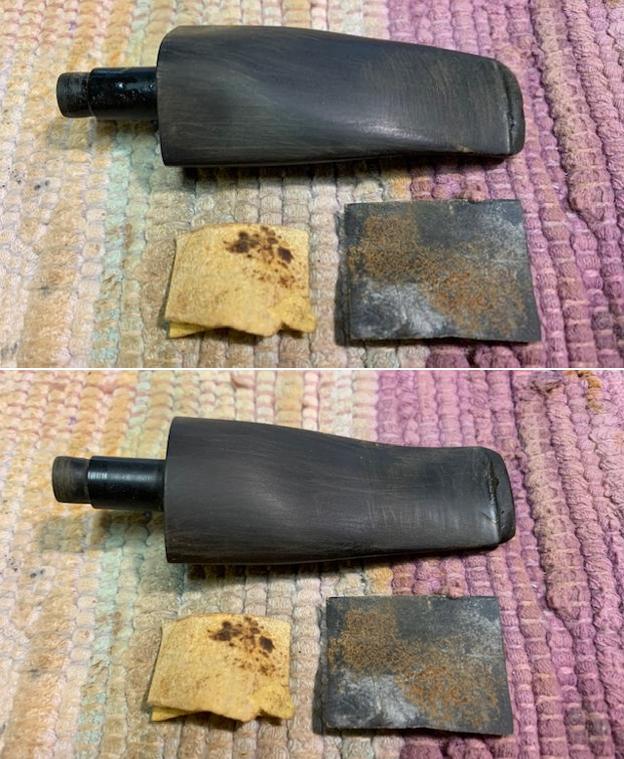
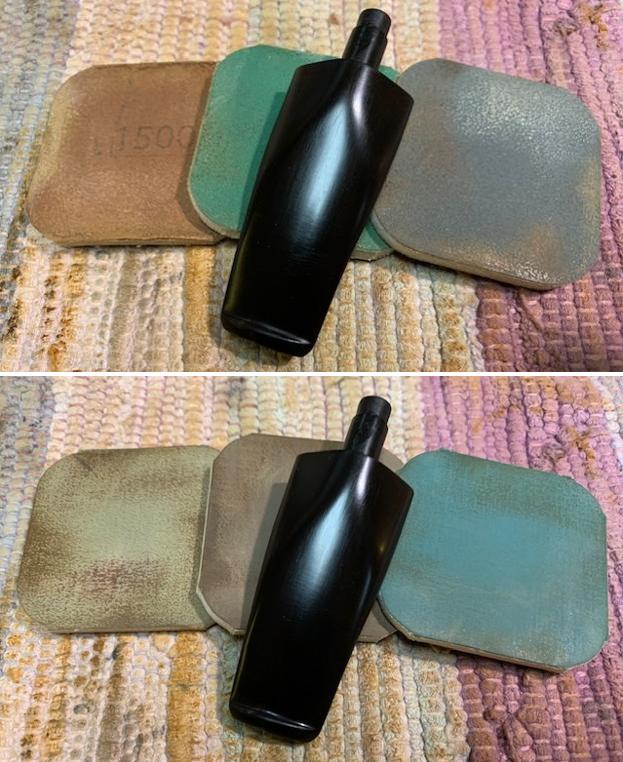
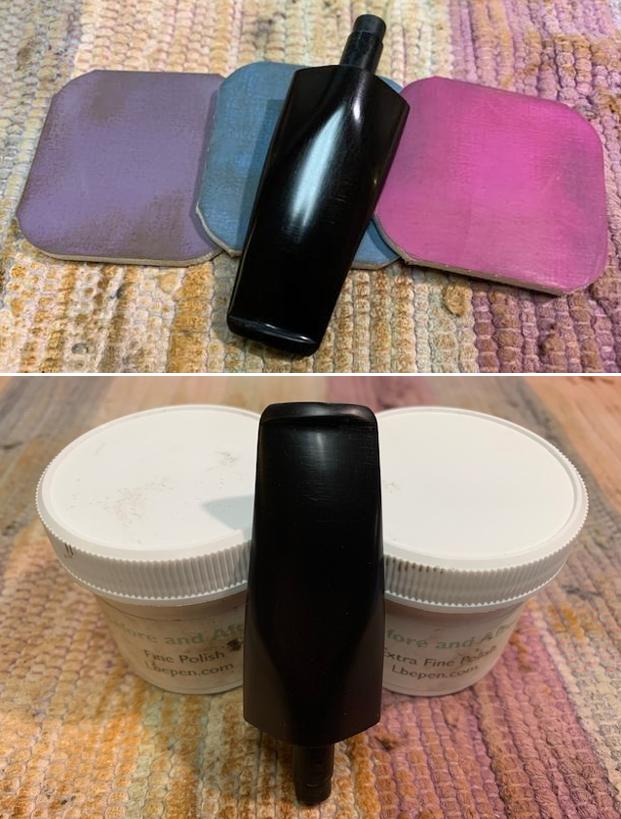
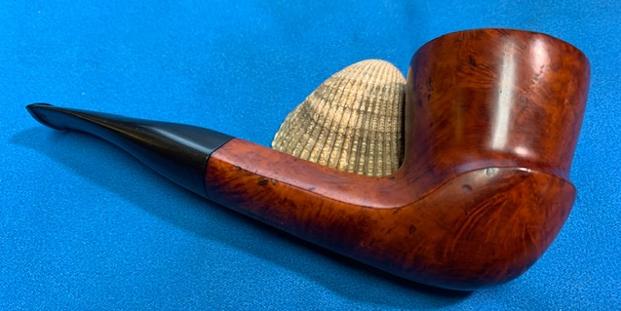
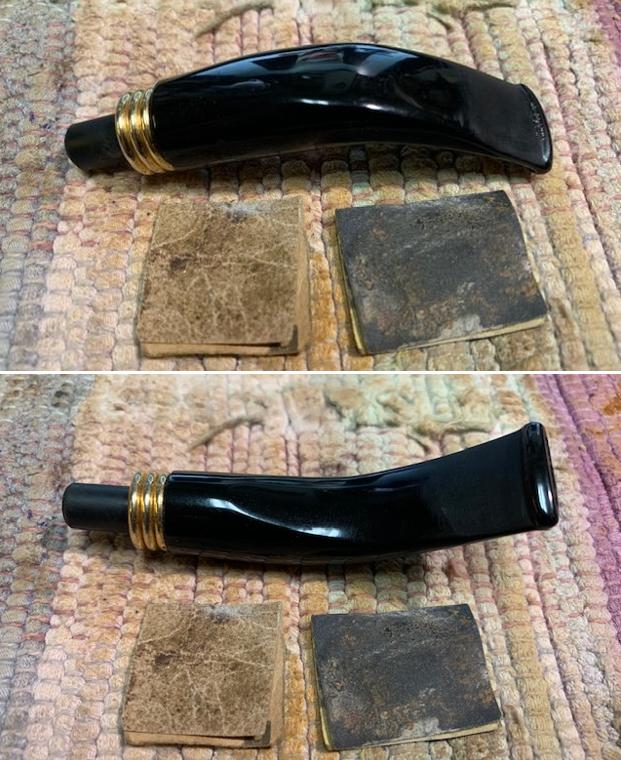
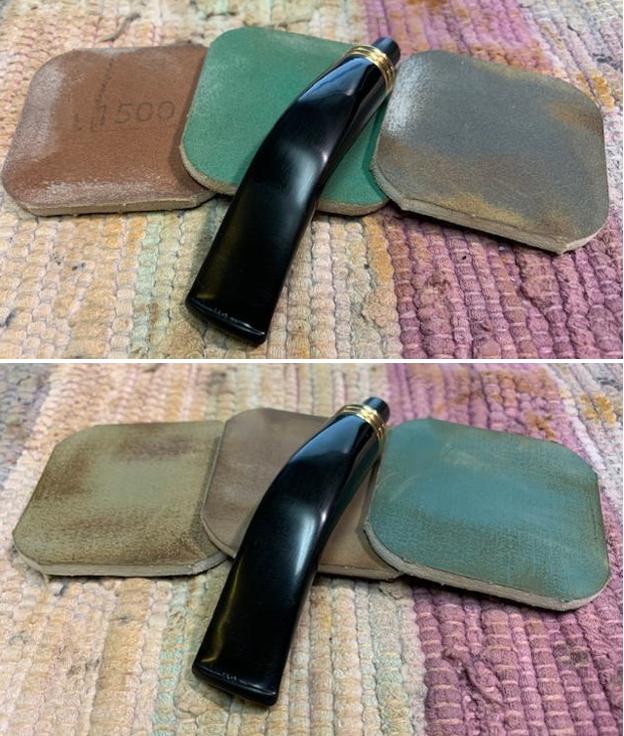
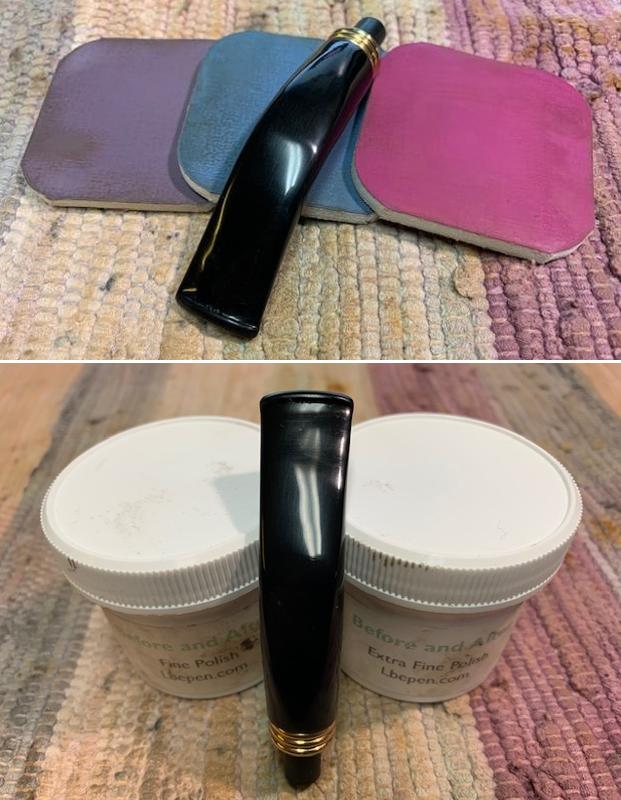
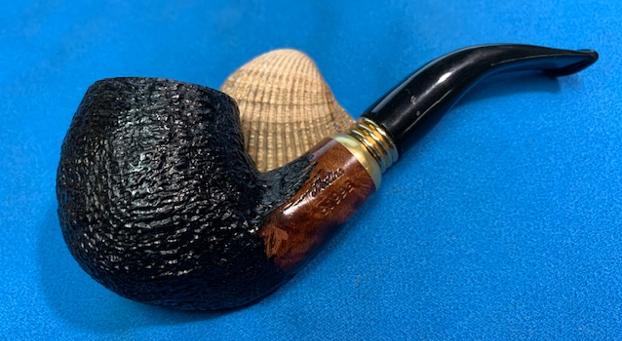
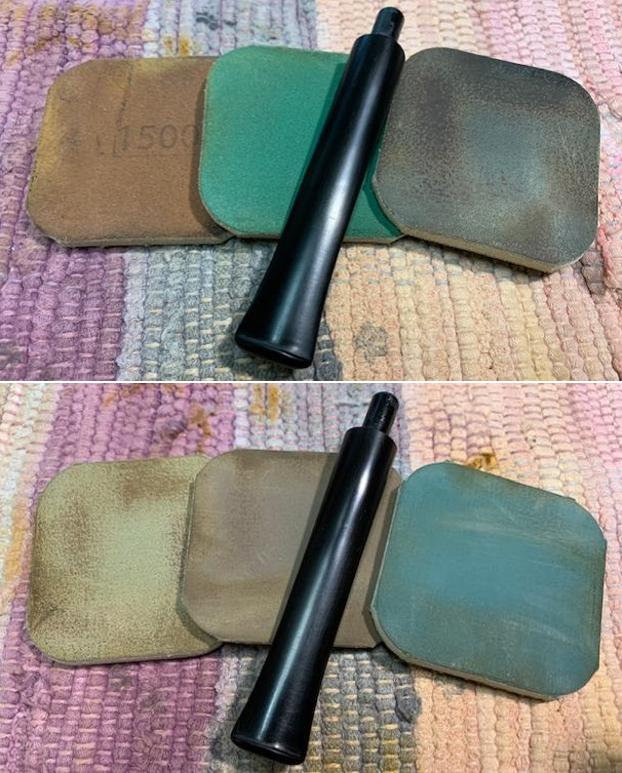
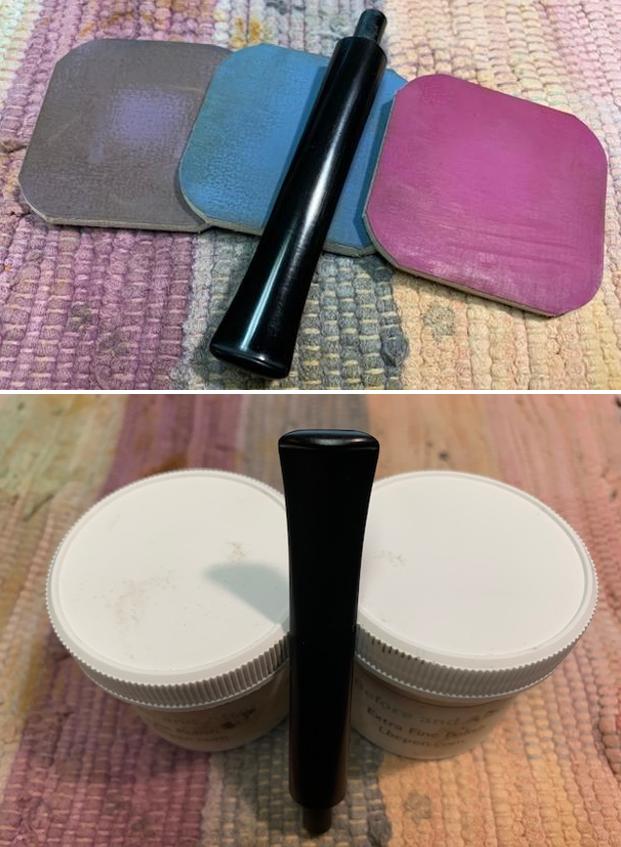
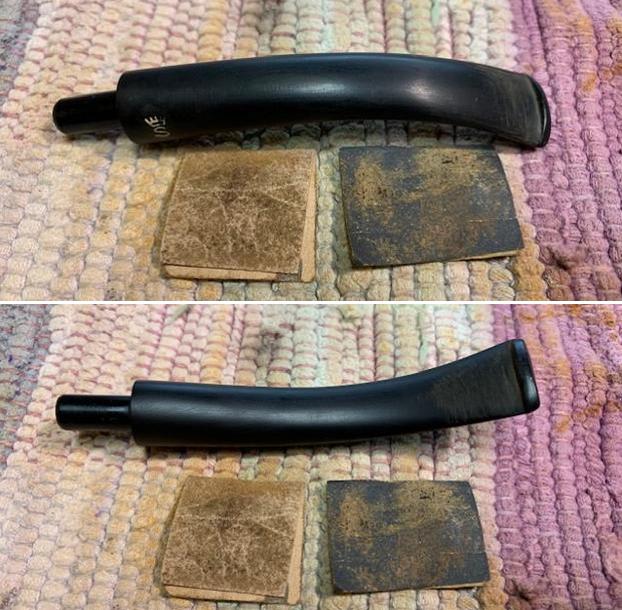
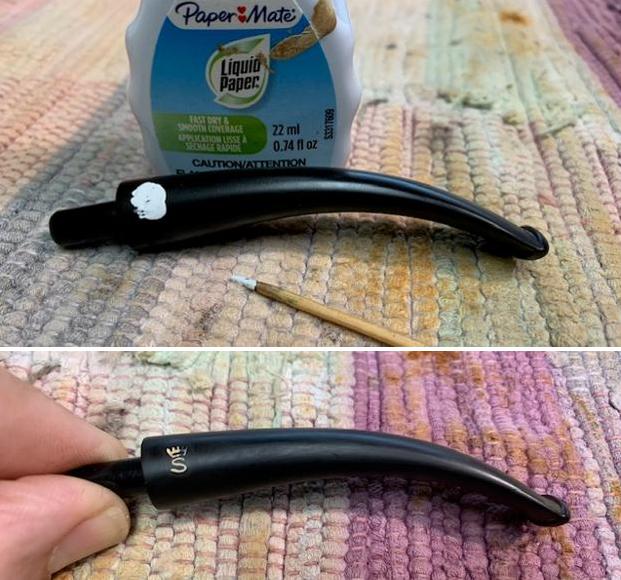
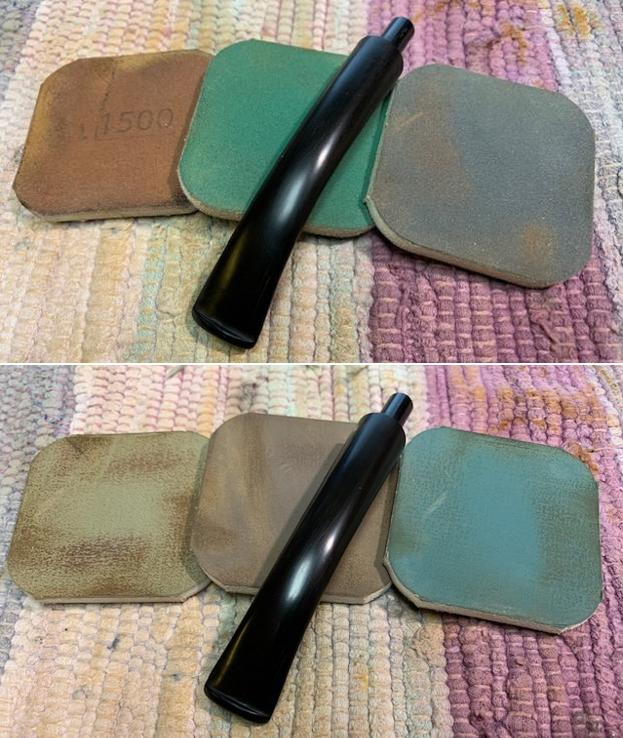
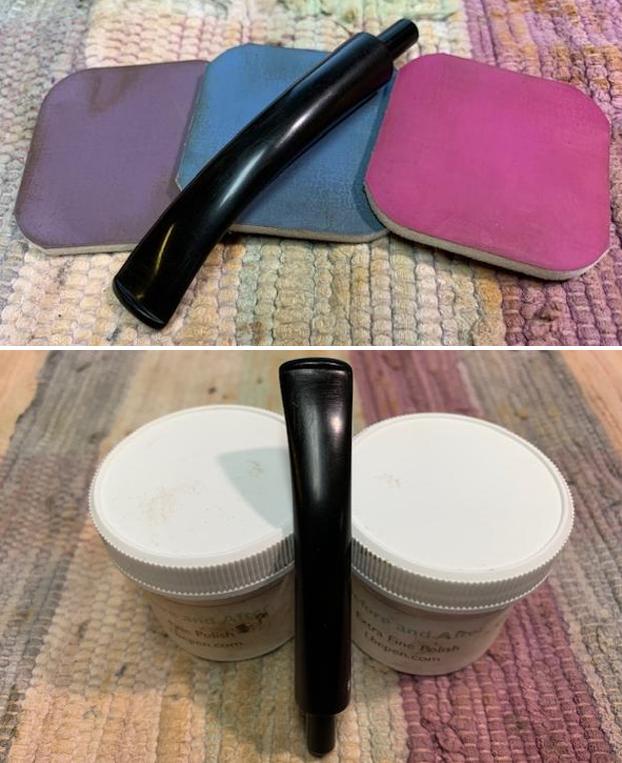
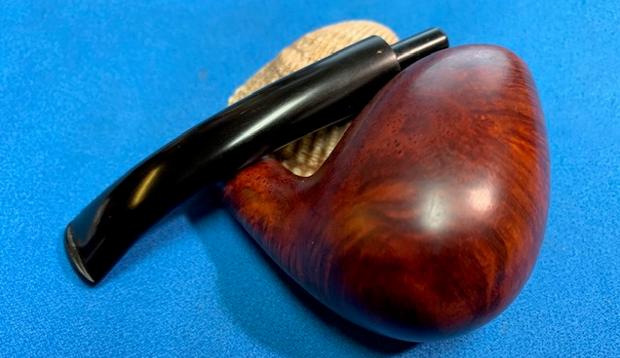
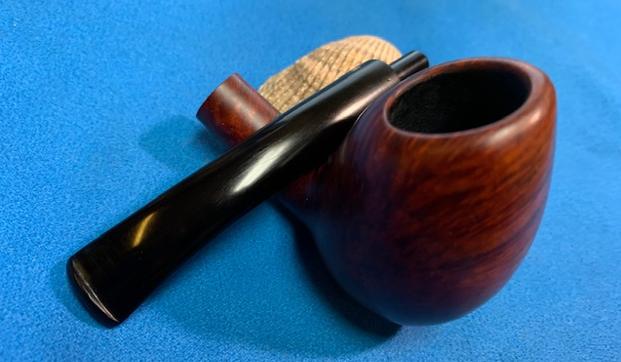
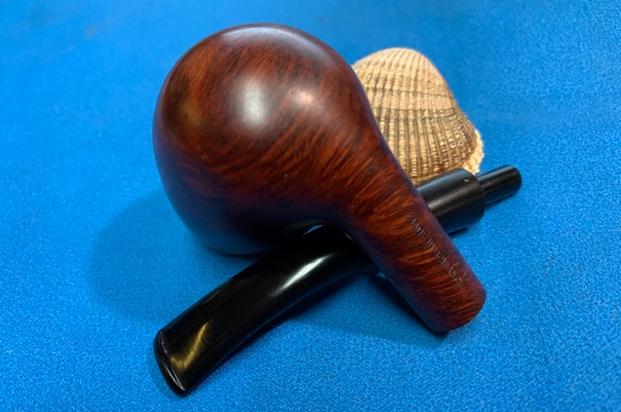
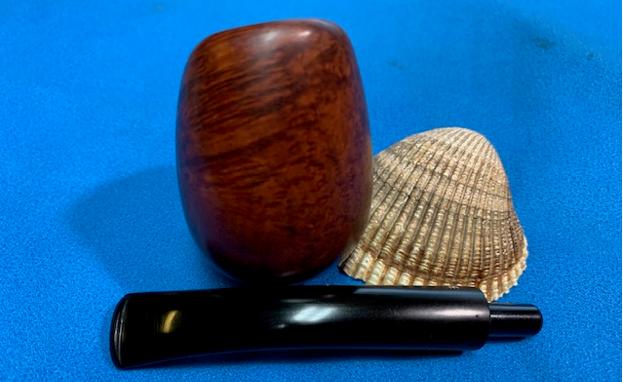
Reminded about the Chacom connection for the YSC brand it was now time to turn to the pipe itself and do my part of the work. As usual Jeff had done a thorough cleanup on the pipe. He reamed the bowl with a PipNet pipe reamer and followed up with a Savinelli Fitsall pipe knife to remove the cake. He scrubbed out the mortise and the airway in the shank and the stem with alcohol, cotton swabs and pipe cleaners. He scrubbed the exterior of the bowl, rim, shank and stem with a tooth brush and Murphy’s Oil Soap to remove the oils and tars on the rim and the grime on the finish of the bowl. He rinsed it under running water. One of the benefits of this scrub is that it also tends to lift some of the scratches and nicks in the surface of the briar. He dried it off with a soft cloth. He cleaned the internals and externals of the stem with alcohol, pipe cleaners and cotton swabs. He soaked the stem in Briarville’s Pipe Stem Deoxidizer and rinsed it off with warm water and cleaned out the airway in the stem with alcohol. Other than the damaged rim top and edges the pipe looked good. Strangely, I did not notice I had put the stem on upside down until I looked through these pictures. I have the YSC stamp on the underside of the stem rather than the top! Oops. I will fix that.I took a photo of the rim top and stem to show the condition (though it is a little blurry it is clear enough to see the damage). The edges of the bowl are in rough condition. The oval vulcanite saddle stem had tooth chatter and marks on both sides ahead of the button and on the edges. The stamping on the sides of the shank is faint but readable as noted above.       I removed the stem from the shank and took a photo of the pipe to give a sense of the whole. It is unique looking pipe that is carved with a notch for the thumb of either hand when it is wrapped around the bowl. I started working on the pipe by topping the damaged rim top on a topping board with 180 grit wet dry sandpaper. I wanted to minimize the damage to the rim top and the inner and outer edges as much as possible. I used a folded piece of 180 grit sandpaper to clean up the inner edge and give it a slight bevel. I repaired the flaw on the left side of the heel of the bowl with briar dust and super glue. Once it dried I sanded it smooth with 220 grit sandpaper to blend it into the surrounding briar.  I sanded it with micromesh sanding pads, wet sanding with 1500-12000 grit sanding pads and wiping it down with an alcohol dampened pad after each sanding pad. I rubbed the bowl and shank down with Before & After Restoration Balm. I worked it into the surface of the bowl sides and shank with my fingertips to clean, enliven and protect the briar. I let the balm sit for a little while and then buffed with a cotton cloth to raise the shine. The Balm did its magic and the grain stood out.   I set the bowl aside and worked on the stem. I touched up the YSC stamp on the top of the saddle stem with Antique Gold Rub’n Buff working it into the stamp with a tooth pick. I buffed it off with a soft cloth.   I polished the vulcanite stem with micromesh sanding pads – 1500-12000 grit pads. I wiped it down with Obsidian Oil after each sanding pad. I used Before & After Pipe Polish – both Fine and Extra Fine to further polish the stem. The photo below shows the polished stem. This nice smooth finished Yves St. Claude Interlude 96 Pocket Pipe with a vulcanite saddle stem is a great looking pipe. The rich medium brown finish and the black stem work really well together. The briar is clean and really came alive. The rich medium brown stain gave the grain a sense of depth with the polishing and waxing. The grain really popped. I put the stem back on the bowl and carefully buffed the pipe with Blue Diamond on the buffing wheel using a light touch on the briar. I gave the bowl and the stem multiple coats of carnauba wax on the buffing wheel. I buffed the pipe with a clean buffing pad to raise the shine. I hand buffed the pipe with a microfiber cloth to deepen the shine. The finished YSC Interlude Pocket Pipe is a beauty and feels great in the hand and looks very good. Give the finished pipe a look in the photos below. The dimensions of the pipe are Length: 4 ½ inches, Height: 1 ¾ inches, Outside diameter of the bowl: 1 ¼ inches wide x 1 ½ inches long, Chamber diameter: ¾ of an inch. The weight of the pipe is 36 grams/1.27 ounces. If you are interested in adding it to your collection let me know. I will be adding to the French Pipe Makers section of the rebornpipes store shortly. Thanks for reading this blog and my reflections on the pipe while I worked on it.

Splinting a Broken Stem for a Castello Sea Rock


I have often done replacement tenons on breaks like this one but here Charles does an inner tube repair. Give the blog a read. Well done.

Charles Lemon's avatar

As I’ve mentioned before, a broken tenon is by far the most common pipe repair, and for good reason. The stem tenon is the smallest structural part of a pipe and is subjected to a disproportionate amount of stressors as the pipe smoker removes and reinserts the stem in the shank. An overly-enthusiastic twist with a bit of sideways torque can snap the tenon in two, possibly inflicting damage to the shank in the process. A fall off a counter or table onto a hard floor can also be enough to snap a tenon.

Thankfully, replacing a tenon on most pipes is a straightforward process; where it gets a bit tricky, however, is when there is no clear demarcation between tenon and stem. Such is the case with today’s repair patient, a rather nice Castello Sea Rock KK with a faux Army mount stem. I suspect an accidental fall caused…

View original post 920 more words

What an Odd Little Butz Choquin Bosco 1040 Snub Nose Bent Billiard


Blog by Steve Laug

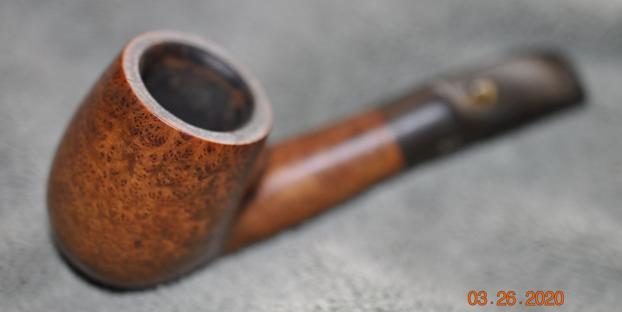
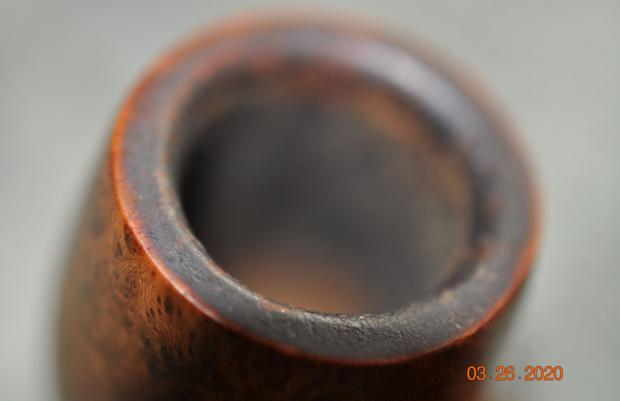
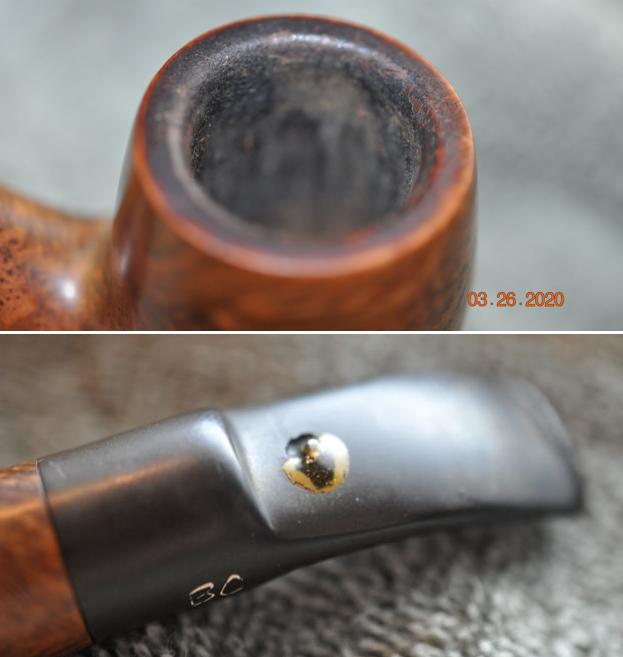
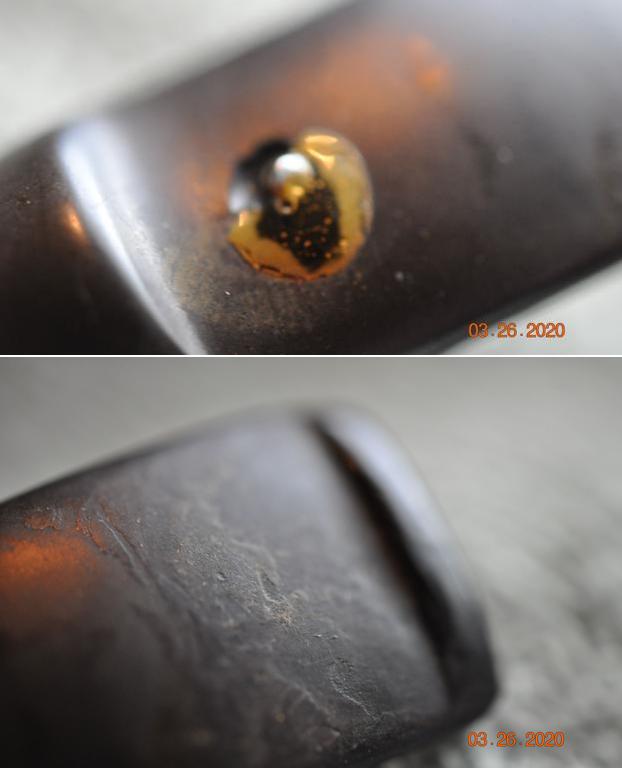
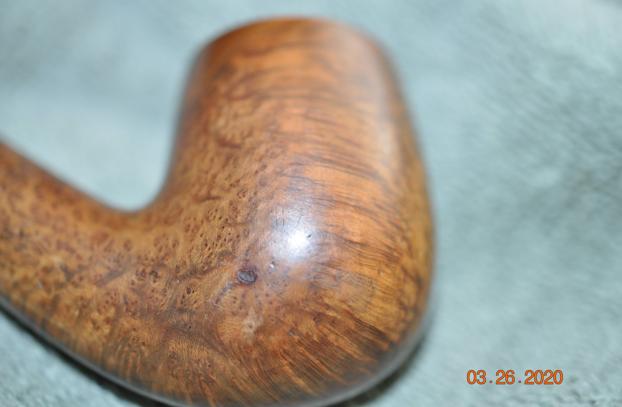
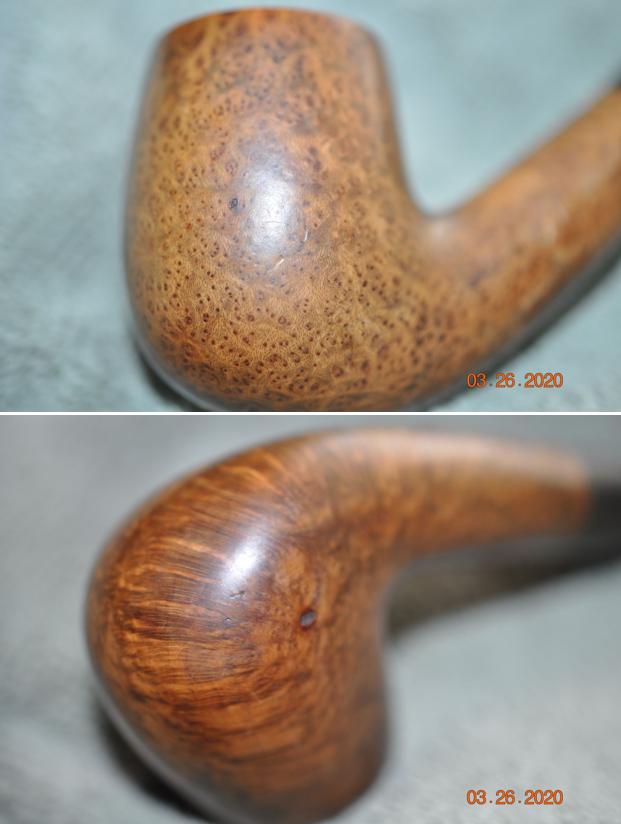
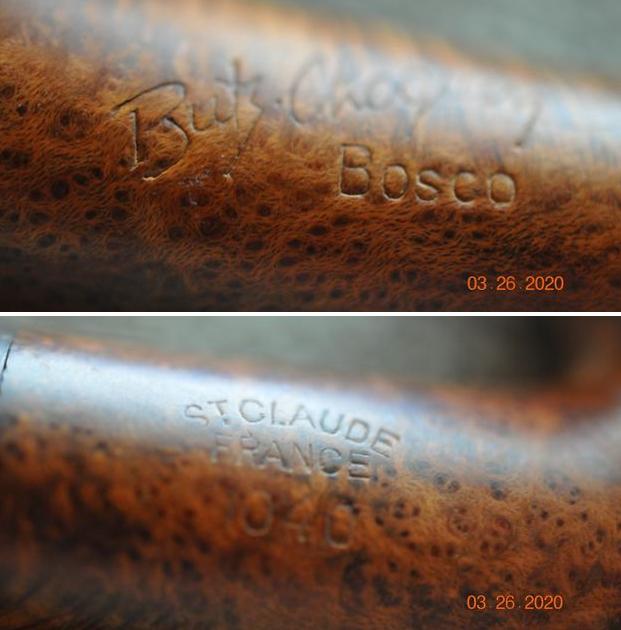
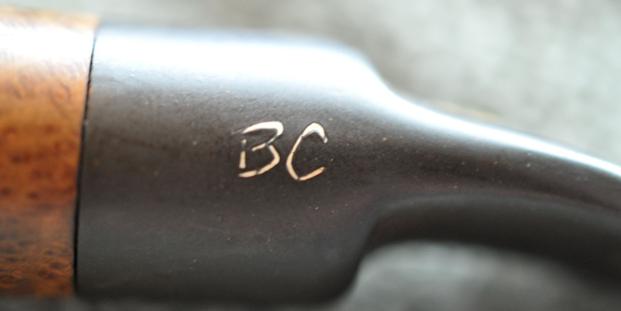
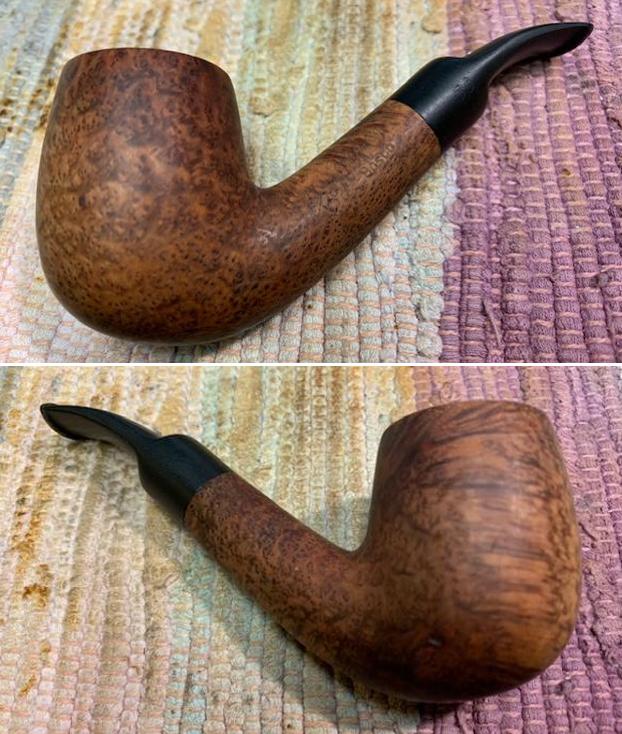
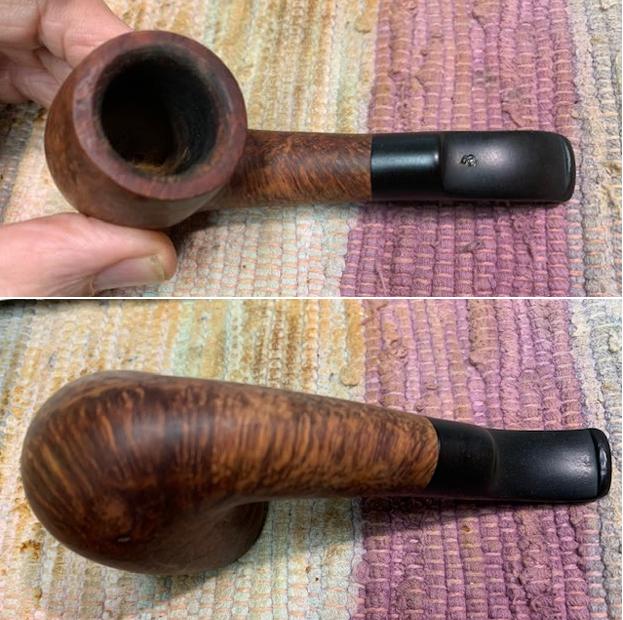
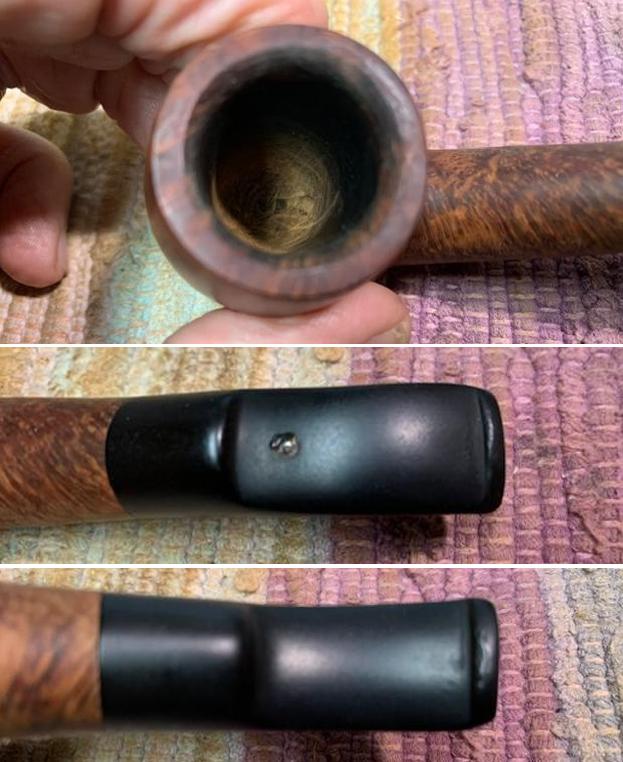
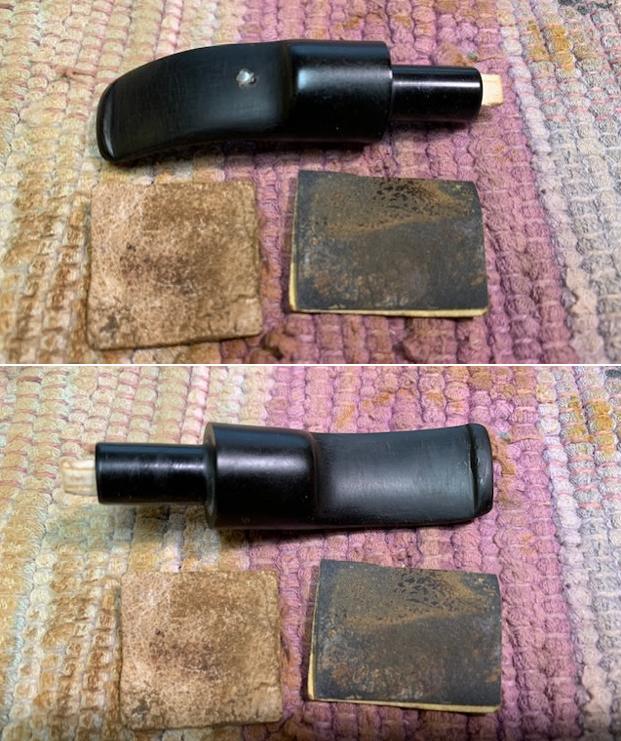
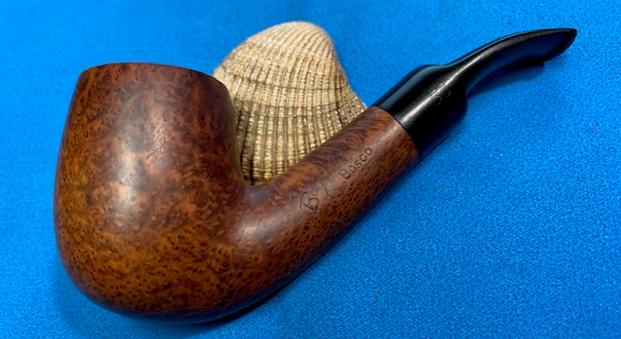
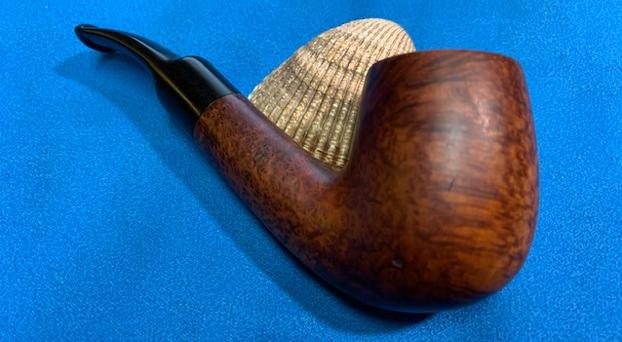
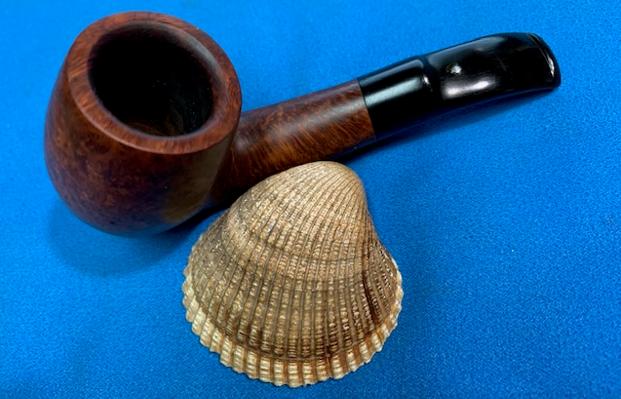
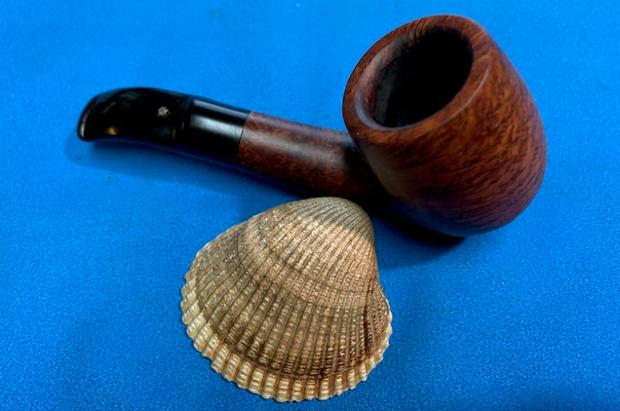
The next pipe on the work table came to us from an antique mall in Logan, Utah, USA early in 2020. It is a unique snub nose bent Billiard with cross grain and birdseye grain and has a short saddle vulcanite stem. The bowl has a rich medium brown colour combination that highlights grain. The pipe has some grime ground into the surface of the briar. It really has some stunning grain on the bowl and shank. This pipe is stamped on the sides of the shank. On the left it reads Butz Choquin [over] Bosco. On the right it read St. Claude [over] France [over] the shape number 1040. There is a moderate cake in the bowl and a thick overflow of lava on the rim top and edges. The rim top looks good but it is hard to be certain with the lava coat. The saddle stem has BC stamped on the left side. There is also a strange metal pin in the top below the saddle stem. It had been filled in with a clear/golden epoxy that was chipped and broken. I have no idea if this is original or some previous pipe owner’s addition. There were some tooth marks and chatter on both sides of the vulcanite stem near the button. The pipe looks to be in good condition under the grime. Jeff took photos of the pipe before he started his cleanup. He took photos of the rim top to show the thick cake and the thick lava coat. It is hard to know what the condition of the rim top and edges is like under that thick lava. It is an incredibly dirty pipe but obviously one that was a great smoker. The stem is another strange part of the pipe. It is short and stubby but is original. It has that odd pin and gold epoxy on the top of the stem. The stem also has tooth marks and chatter on both sides ahead of the button. The stem was made for a 6mm filter.He took photos of the sides and heel of the bowl to show the beautiful grain around the bowl and the condition of the pipe. You can see the grime ground into the surface of the briar as well as the sandpits. He took a photo of the stamping on the sides of the shank. It is clear and readable as noted above. He also captured the BC stamp on the saddle stem. I wondered about the name of the pipe and did a quick Google search on the word as a name. the search turned up the following:
Italian: topographic name for someone living or working in a wood, from Late Latin boscus ‘shrub’, ‘undergrowth’ (of Gallic or Germanic origin), or a habitational name from a place named with this word.

It turns out to be a fitting name for a pipe made of the shrub Briar! I like the connection but I am not certain that it is what is referred to… but it could be right?

I turned then to Pipephil’s site to look at the Butz Choquin write up there and see if I could learn anything about the line (http://www.pipephil.eu/logos/en/logo-butzchoquin.html). There was a nothing listed for the Bosco pipe but there was a short history of the brand that is worth a read.

I looked up the Parker brand on Pipedia to see if I could find the Butz-Choquin Bosco Line (https://pipedia.org/wiki/Butz-Choquin). There was nothing that tied directly to the line I am working on. There is a detailed history of the brand there that is a good read.

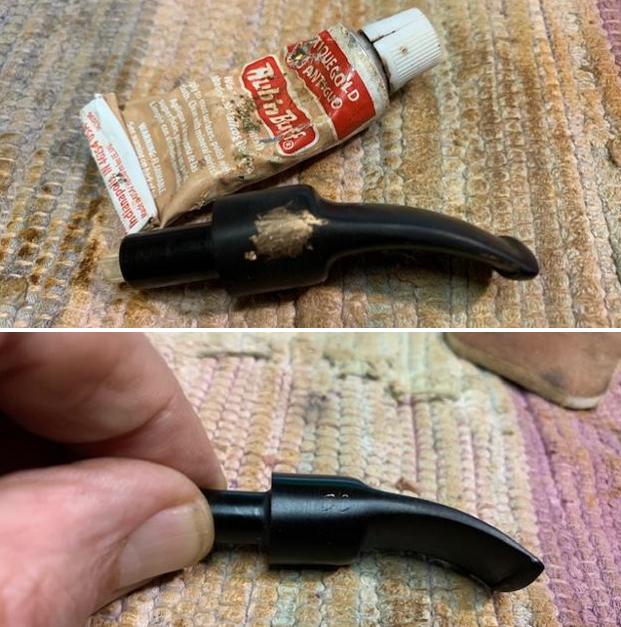
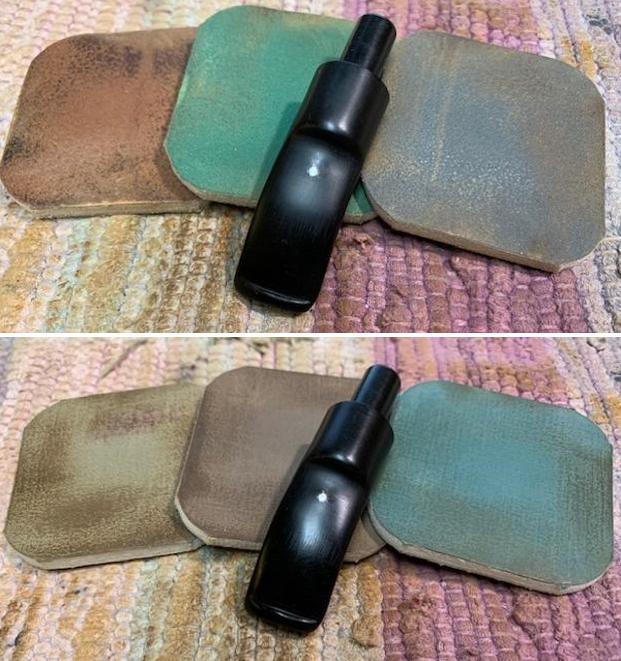
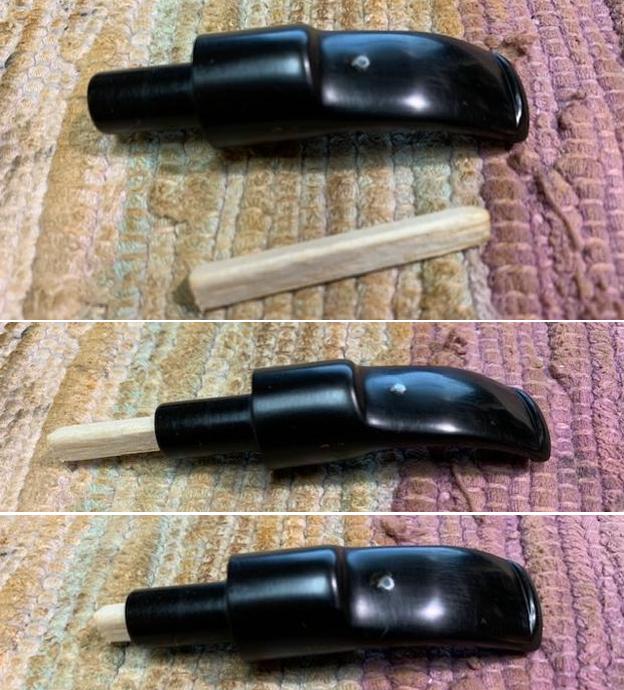
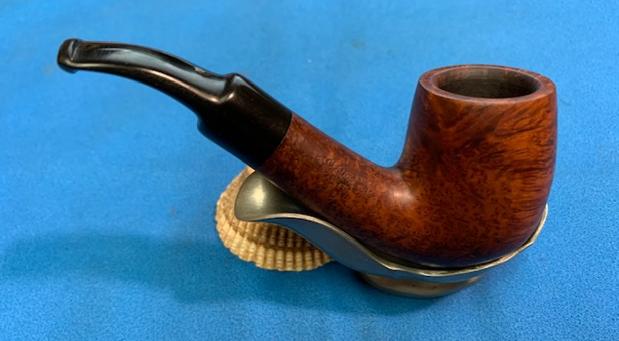
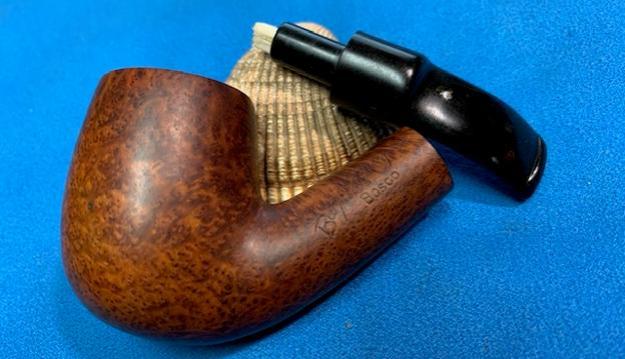
It was time to work on the pipe. As usual Jeff had done a thorough cleanup on the pipe. He reamed the bowl with a PipNet pipe reamer and followed up with a Savinelli Fitsall pipe knife to remove the cake. He scrubbed out the mortise and the airway in the shank and the stem with alcohol, cotton swabs and pipe cleaners. He scrubbed the exterior of the bowl, rim, shank and stem with a tooth brush and Murphy’s Oil Soap to remove the oils and tars on the rim and the grime on the finish of the bowl. He rinsed it under running water. One of the benefits of this scrub is that it also tends to lift some of the scratches and nicks in the surface of the briar. He dried it off with a soft cloth. He cleaned the internals and externals of the stem with alcohol, pipe cleaners and cotton swabs. He soaked the stem in Briarville’s Pipe Stem Deoxidizer and rinsed it off with warm water and cleaned out the airway in the stem with alcohol. This odd little pipe actually was quite stunning! I took a photo of the rim top and stem to show the condition. The rim top looked very good. The rim top and the inner edge of the bowl had darkening and the varnish coat had peeled. The vulcanite saddle stem had light tooth chatter and marks on both sides ahead of the button and on the button edges.I removed the stem and the extension from the shank and took a photo of the pipe to give a sense of the whole. It is a nice Straight Grain Billiard that should clean up very well.   I polished the briar with micromesh sanding pads – wet sanding with 1500-12000 grit pads and wiped down the bowl after each sanding pad.    I rubbed the bowl and shank down with Before & After Restoration Balm. I worked it into the surface of the bowl sides and shank with my fingertips to clean, enliven and protect the briar. I let the balm sit for a little while and then buffed with a cotton cloth to raise the shine. The Balm did its magic and the grain stood out.     I set the bowl aside and turned my attention to the stem. I filled in the tooth marks near the button and the pitting around the pin in the top of the stem. Once the repairs cured I used a small file to flatten out the repairs and start to blend them into the stem surface. I sanded the repairs with 220 grit sandpaper and started the polishing process with 400 grit wet dry sandpaper. I used Rub’n Buff Antique Gold to fill in the BC stamp on the left side of the saddle stem. I rubbed it on with a cotton swab and buffed it off with a cotton pad. The stamp is faint but readable.   I polished the vulcanite stem with micromesh sanding pads – 1500-12000 grit pads. I wiped it down with Obsidian Oil after each sanding pad. I used Before & After Pipe Polish – both Fine and Extra Fine to further polish the stem. The photo below shows the polished stem.     While working on the stem I decided to see what would fit in the wide open tenon. It was obviously drilled for a 6mm filter. I did not have any, but I did have a Savinelli 6mm Balsa wood filter. Some how a pipe with the name Bosco (shrub/wood) just matched that style of filter. I fit it in place. Then it dawned on me that the pin on the top of the stem was made to keep the filter from going to deep in the stem. It worked well.   This nicely grained Butz Choquin Bosco 1040 Bent Billiard Nosewarmer with a vulcanite saddle stem is a great looking pipe now that it has been restored. The briar is clean and really came alive. The rich brown stains gave the grain a sense of depth with the polishing and waxing. The grain really popped. I put the vulcanite stem back on the bowl and carefully buffed the pipe with Blue Diamond on the buffing wheel using a light touch on the briar. I gave the bowl and the stem multiple coats of carnauba wax on the buffing wheel. I buffed the pipe with a clean buffing pad to raise the shine. I hand buffed the pipe with a microfiber cloth to deepen the shine. The finished Short Butz Choquin Bent Billiard is a beauty and feels great in the hand and looks very good. Give the finished pipe a look in the photos below. The dimensions of the pipe are Length: 4 ¼ inches, Height: 2 inches, Outside diameter of the bowl: 1 ¼ inches, Chamber diameter: ¾ of an inch. The weight of the pipe is 41grams/1.45oz. The pipe will be going on the rebornpipes store soon. It will be in the section on French Pipe Makes if you would like to add it to your collection.Thanks for reading this blog and my reflections on the pipe while I worked on it. There are many more to come!

This Mixed Finish Danmore 3094 Acorn is a Unique Piece


Blog by Steve Laug

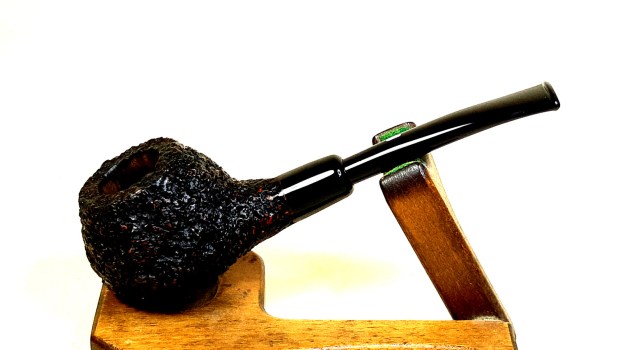
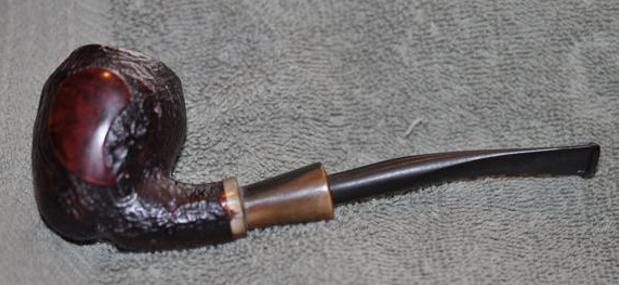
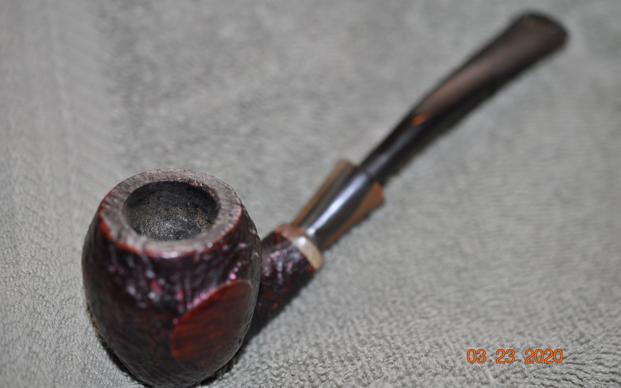
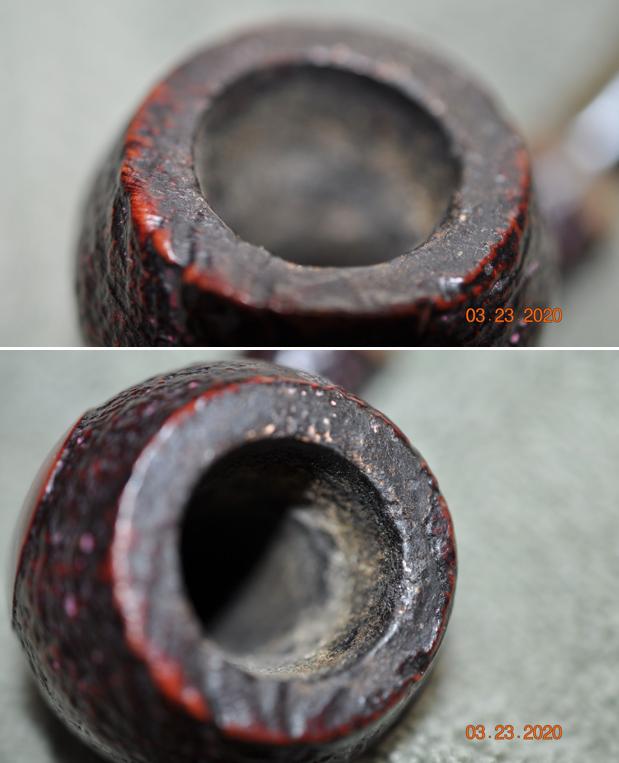
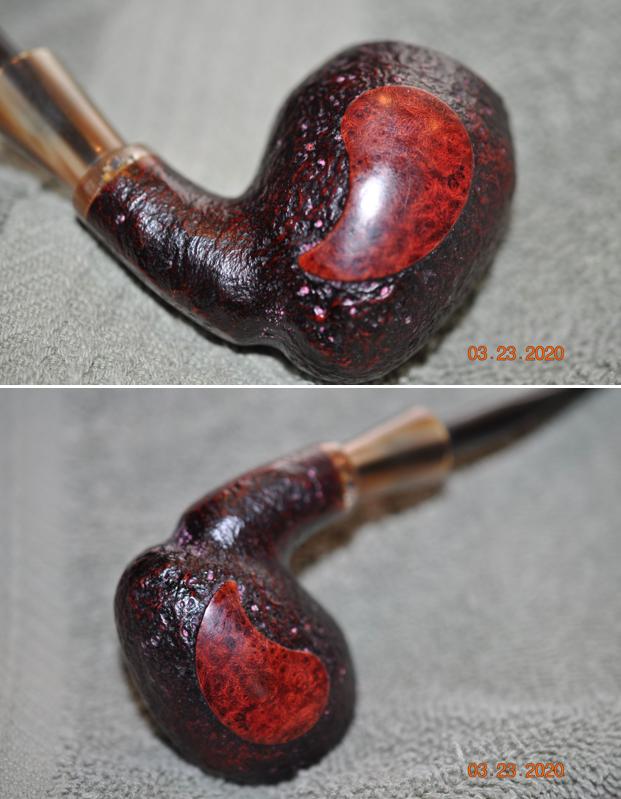
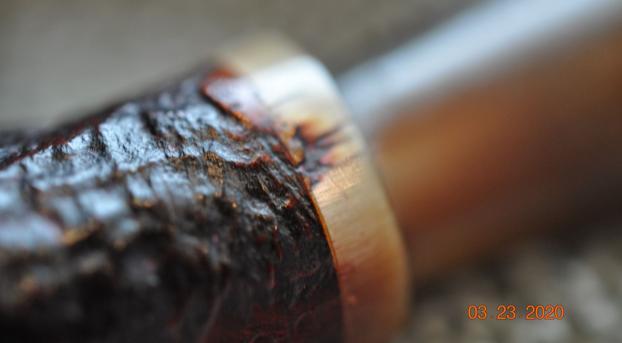
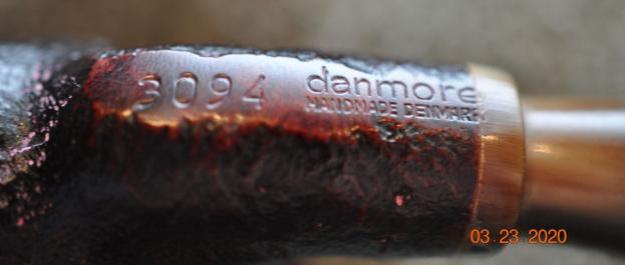
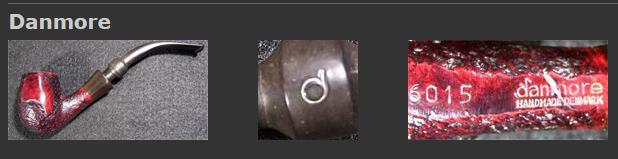
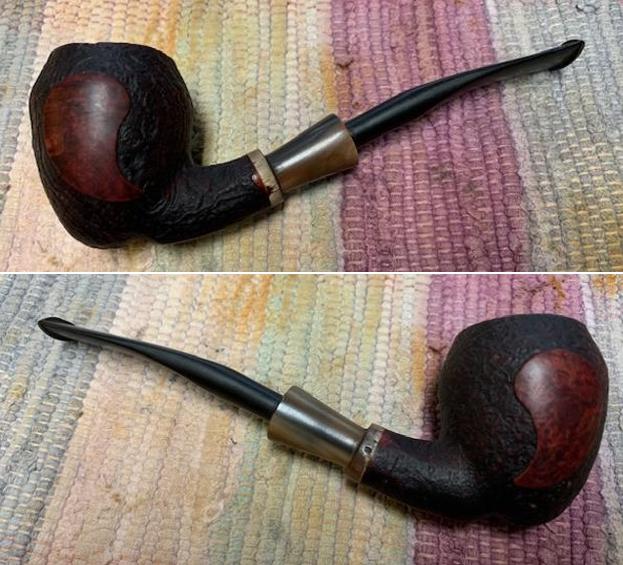
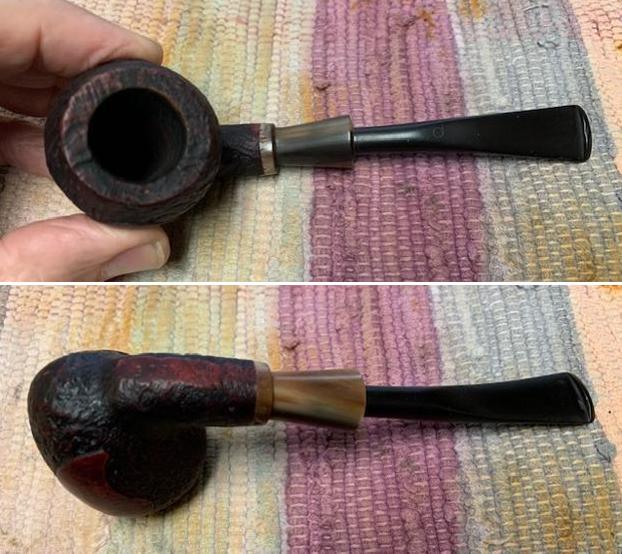
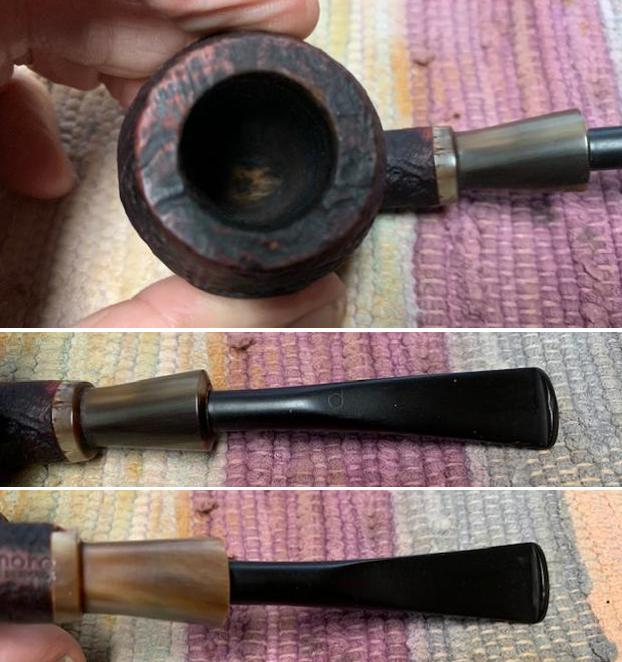
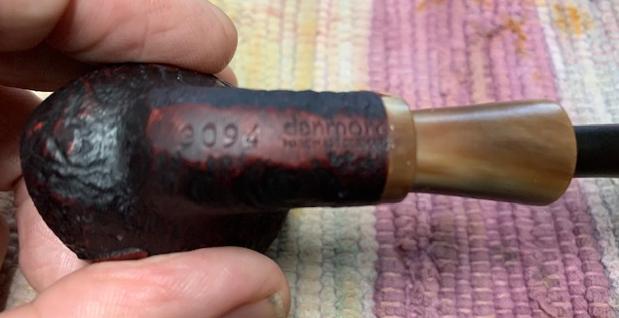
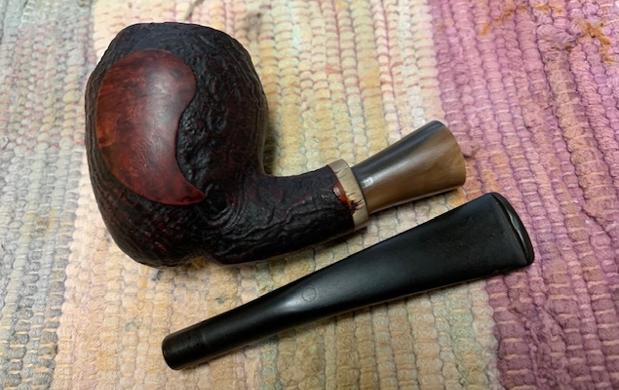
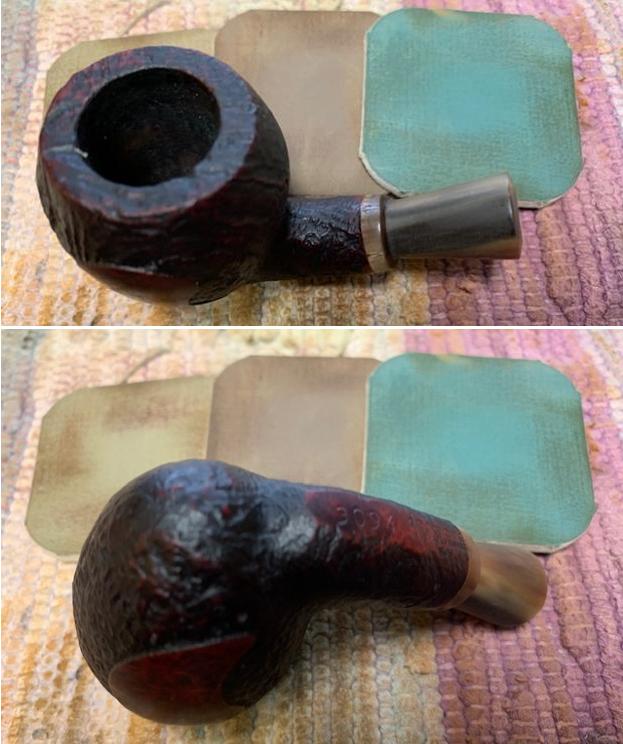
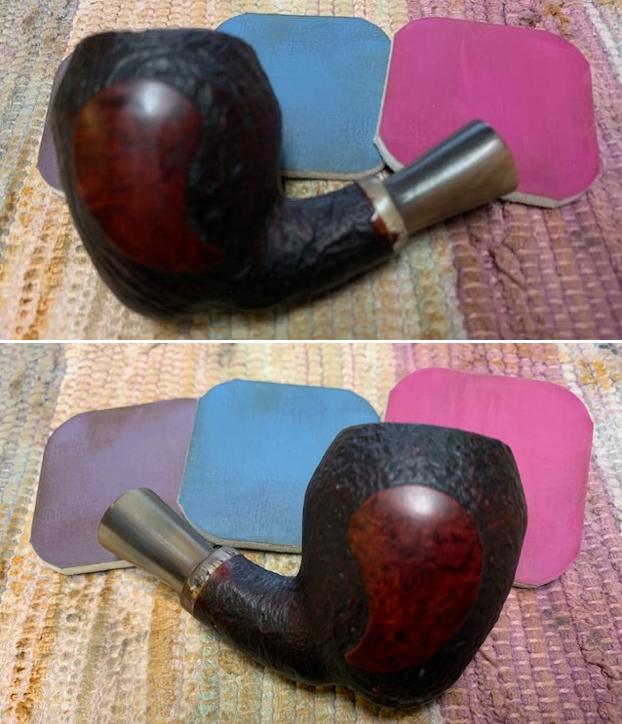
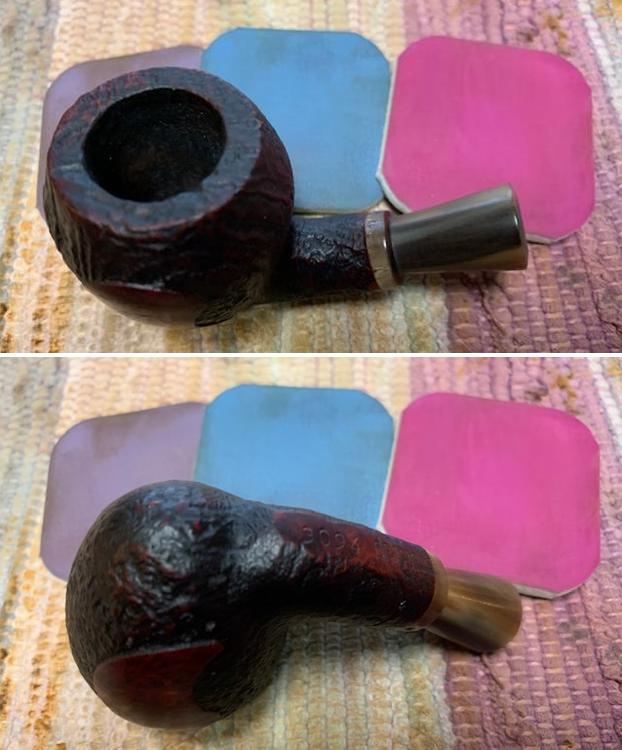
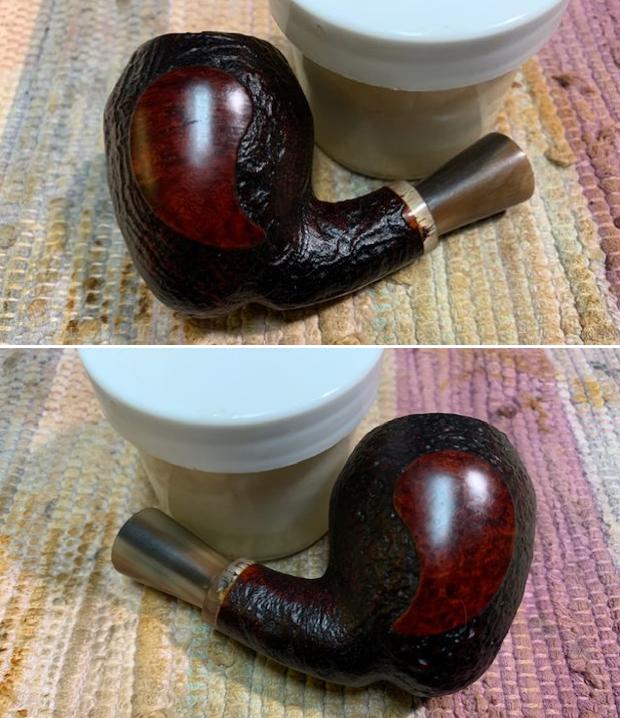
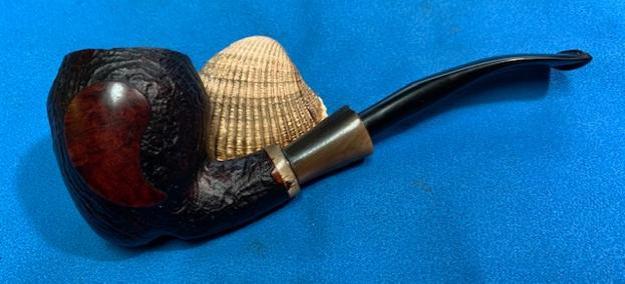
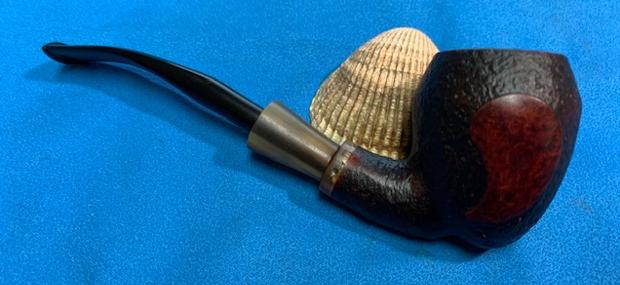
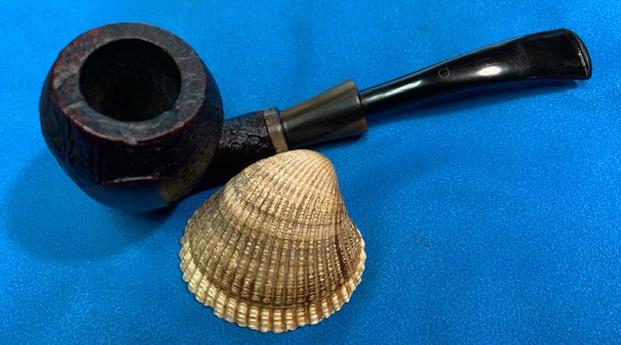
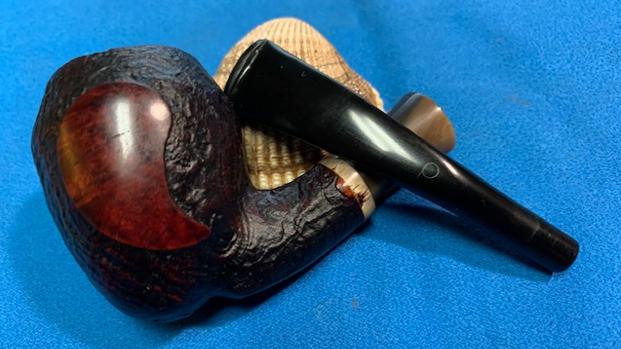
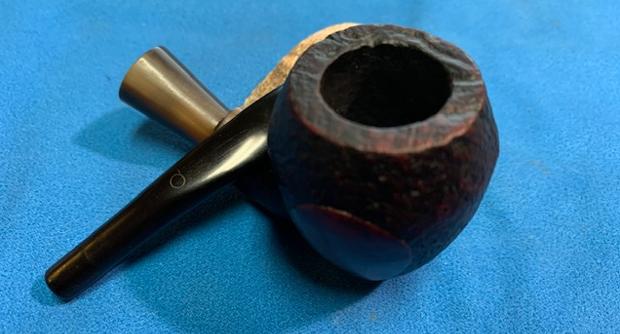
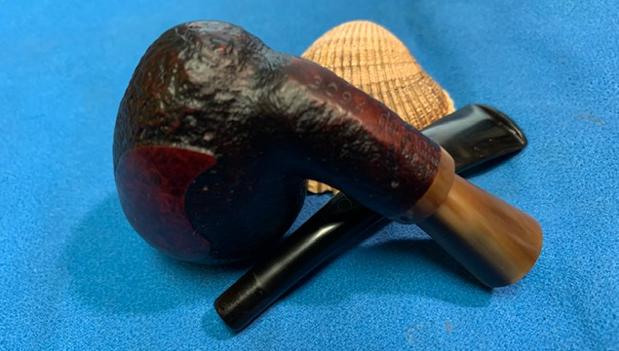
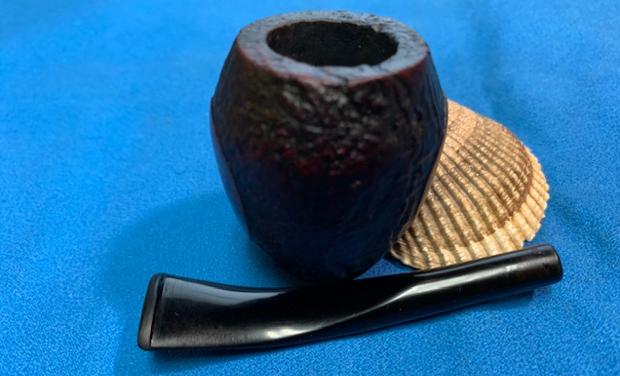
I am enjoying an evening free to work on a few pipes. The next pipe on the table came from an antique mall in Logan, Utah, USA in March of 2021. Even though the finish was a dirty and worn it had an interesting mixed finished bowl with smooth patches on the sides of the bowl and a nice sandblast showing through the grit and grime of the years. On the underside of the shank it was stamped with the shape number 3094 followed by Danmore [over] Hand Made in Denmark. The pipe is an acorn shaped bowl with a horn shank extension. The finish is filthy with grime and oil ground into the briar of the bowl and shank sides. The bowl had a thick cake and there was an overflow of lava on the top and edges of the rim. The horn shank extension had some nicks and chips in the band next to the sandblast. The stem was a vulcanite military bit stem that fit snugly in the horn shank extension. There was the faint remnant of stamping on the topside of the stem. The vulcanite was oxidized, calcified and had tooth marks and chatter on both sides ahead of the button. The bend in the stem had also straightened over time. Jeff took some photos of the pipe to show its overall condition before he started his cleanup work. He took photos of the rim top and bowl to give a clear picture of the thickness of the cake and the lava and dust ground into the finish of the rim top and edges. There is dust and debris stuck to the walls of the bowl clearly visible in the photos. He also took photos of the top and underside of the stem to show the oxidation, chatter and tooth marks.Jeff took photos of the sides and heel of the bowl to give a picture of what the briar around the pipe looked like. There was some definite wear on the red and brown stains on the pipe as well as scratches and marks on the smooth portions. There is a nice sandblast grain under the grime and thick debris. The horn ring around the shank end had been sand blasted along with the briar and had some marks showing the blast in the horn.He took a photo of the stamping on the side of the shank. It clearly reads as noted above.I turned to Pipephil to learn who made Danmore pipes (http://www.pipephil.eu/logos/en/logo-d2.html). I have included a screen capture of the pertinent section on the site. It links the pipe to Kriswill. The pipe pictured below is a similar in style to the one that I am working on. The stem and horn shank extension are different but the stamping is very similar. I turned to Pipedia (https://pipedia.org/wiki/Danmore) for further information about the brand. I quote the article in full below.
Danmore was founded by Hans Sørensen in the early 1970s, and produced pipes from that time until the early 1980s, at one point having up to 30 employees. The pipes were sold in the first Dan Pipe catalog. In the early 1980’s, however, production ceased in Denmark due to labor costs, and the company’s production was outsourced to Italy and Spain, and they began to also make pipecleaners and smokers articles.

Sørensen focused on the pipecleaner side of the concern, and eventually bought a share in the factory in the Far East making them. Today the company, owned by Hans’ sons Jesper and Lars Sørensen, no longer makes pipes, and instead makes only pipe cleaners under the name Danmore Hobby Aps, selling only to hobby and craftshops in Denmark and Scandinavia.

Hans Sørensen passed away in 2012. The Sørensen family continues to own the trademarks for the use of the Danmore name in relation to pipes, matches, and tobacco.

I knew that I was working on a pipe made by Hans Sørensen between early 1970s and the early 1980s.Production ceased in Denmark at that time and moved to Italy and Spain. The pipe I am working on is stamped Hand Made in Denmark that leads me to that conclusion. Now it was time to work on the pipe.

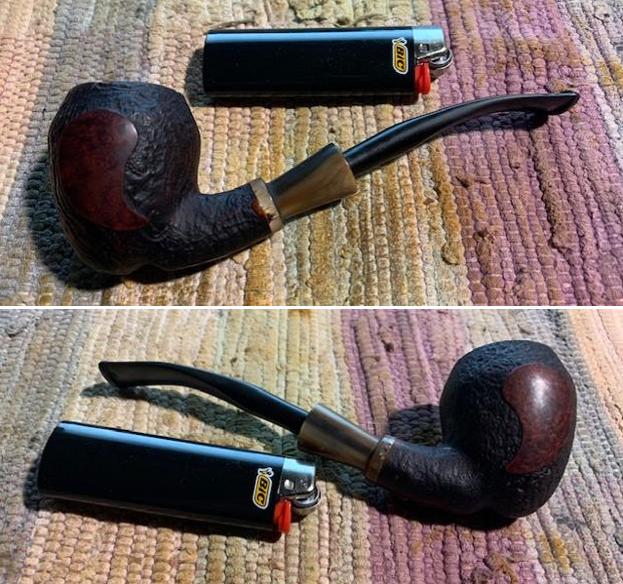
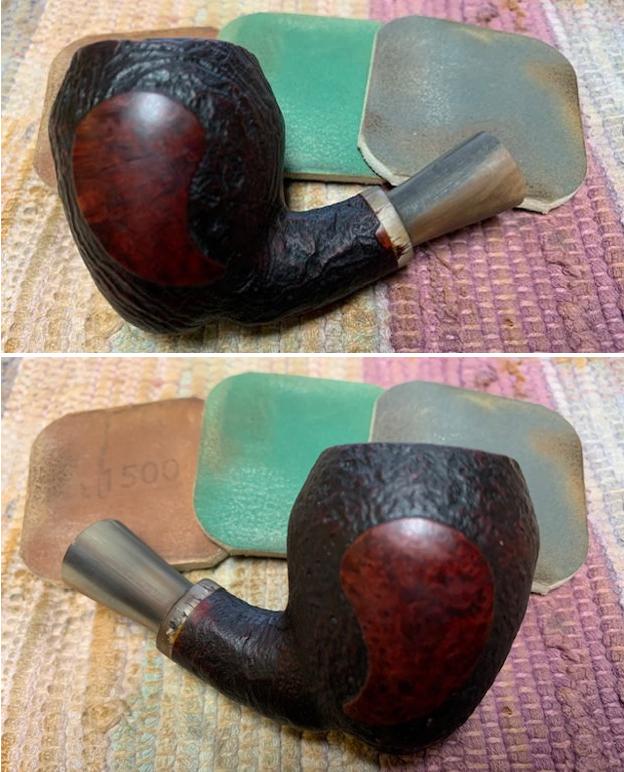
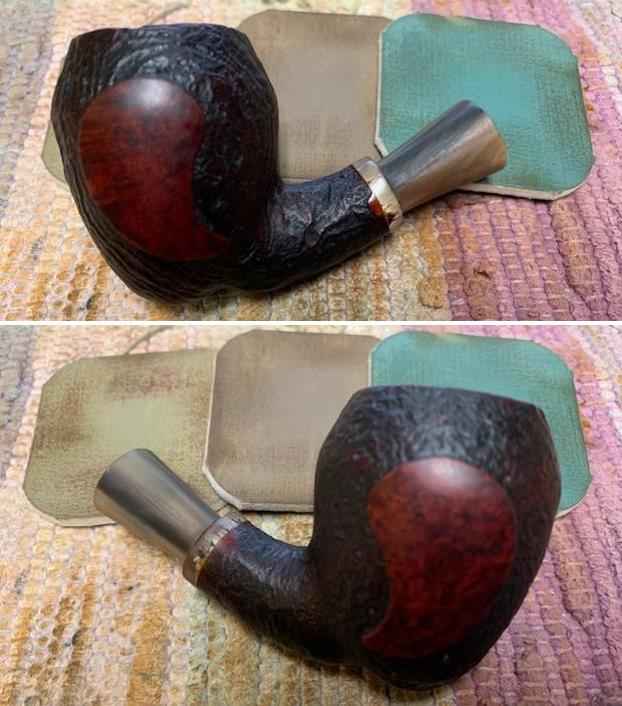
Jeff had reamed the bowl with a PipNet Pipe Reamer and cleaned up the remnants with a Savinelli Fitsall Pipe Knife. He scrubbed the exterior of the bowl with undiluted Murphy’s Oil Soap with a tooth brush. He worked over the debris on the rim top and was able to remove it. He rinsed it under running warm water to remove the soap and grime. He scrubbed the horn shank extension at the same time. He cleaned out the inside of the shank and the airway in the stem with alcohol, cotton swabs and pipe cleaners. He soaked the stem in Briarville’s Pipe Stem Deoxidizer and rinsed it off with warm water. He scrubbed the stem with Soft Scrub and cotton pads to remove remaining oxidation on the stem. He rinsed it with warm water and dried it off. I took photos of the pipe once I received it. It really looked good and the bowl was in excellent condition.    The rim top and the inner edge of the rim looked very good. The stem had a few tooth marks and chatter on both sides near the button.I took a photo of the stamping on the underside of the shank. It was clear and read as noted above. I removed the stem and took a photo of the pipe to give a sense of the whole. I “painted” the stem with the flame of a Bic lighter to soften the vulcanite and give the stem a bend that matched the flow of the bowl. It looked much better once I had given it a slight bend.I polished the smooth panels on the bowl sides and the horn shank extension and band with micromesh sanding pads. Dry sanding it with 1500-12000 grit pads and wiping it down after each pad with Obsidian Oil. I rubbed the bowl and shank down with Before & After Restoration Balm. I worked it into the surface of the bowl sides and shank with my fingertips. The product works to clean, enliven and protect the briar. I let the balm sit for 15 minutes and then buffed with a cotton cloth to raise the shine.I filled in the deep tooth marks on the stem surface with clear CA glue and set it aside to cure. Once it had hardened I sanded the surface smooth with 220 grit sandpaper and started polishing the stem with 400 grit wet dry sandpaper. I polished the vulcanite stem with micromesh sanding pads – 1500-12000 grit pads. I wiped it down with a damp cloth after each sanding pad. I used Before & After Pipe Polish – both Fine and Extra Fine to further polish the stem. This beautiful Mixed Finish – Sandblast/Smooth panel Danmore 3094 Acorn with a horn shank extension and a military vulcanite stem is a great looking pipe now that it has been restored. I put the stem back on the bowl and carefully buffed the pipe with Blue Diamond on the buffing wheel using a light touch on the briar. I gave the bowl and the stem multiple coats of carnauba wax on the buffing wheel and followed that by buffing the entire pipe with a clean buffing pad. I hand buffed the pipe with a microfiber cloth to deepen the shine. The finished Danmore 3094 Acorn fits nicely in the hand and the tactile finish feels great. Give the finished pipe a look in the photos below. The dimensions of the pipe are Length: 6 inches, Height: 2 inches, Outside diameter of the bowl: 1 ¼ inches, Chamber diameter: ¾ of an inch. The weight of the pipe is 45grams/1.59oz. I will be adding it to the rebornpipes store shortly in the Danish Pipe Makers Section. Thanks for reading this blog and my reflections on the pipe while I worked on it. There are many more to come!
GBD 9438 New Era Restoration & Addition


By Al Jones

Most of the pipes I buy these days are purely for the enjoyment of restoring them and for resale. I rarely add a pipe to my collection, unless it is something special. GBD 9438’s always catch my attention and this one happened to be a New Era grade, which was currently missing from my collection of 9438’s.

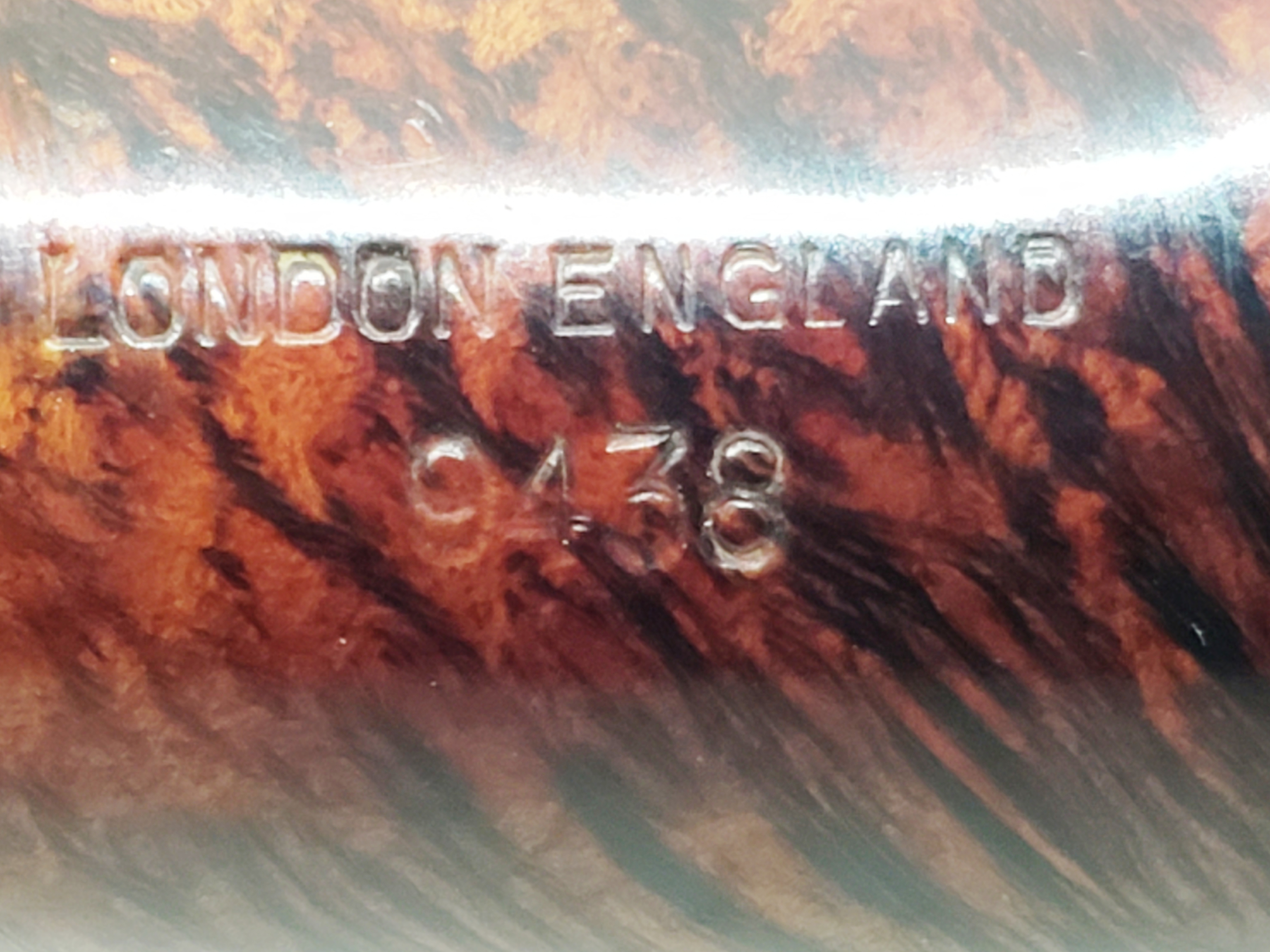
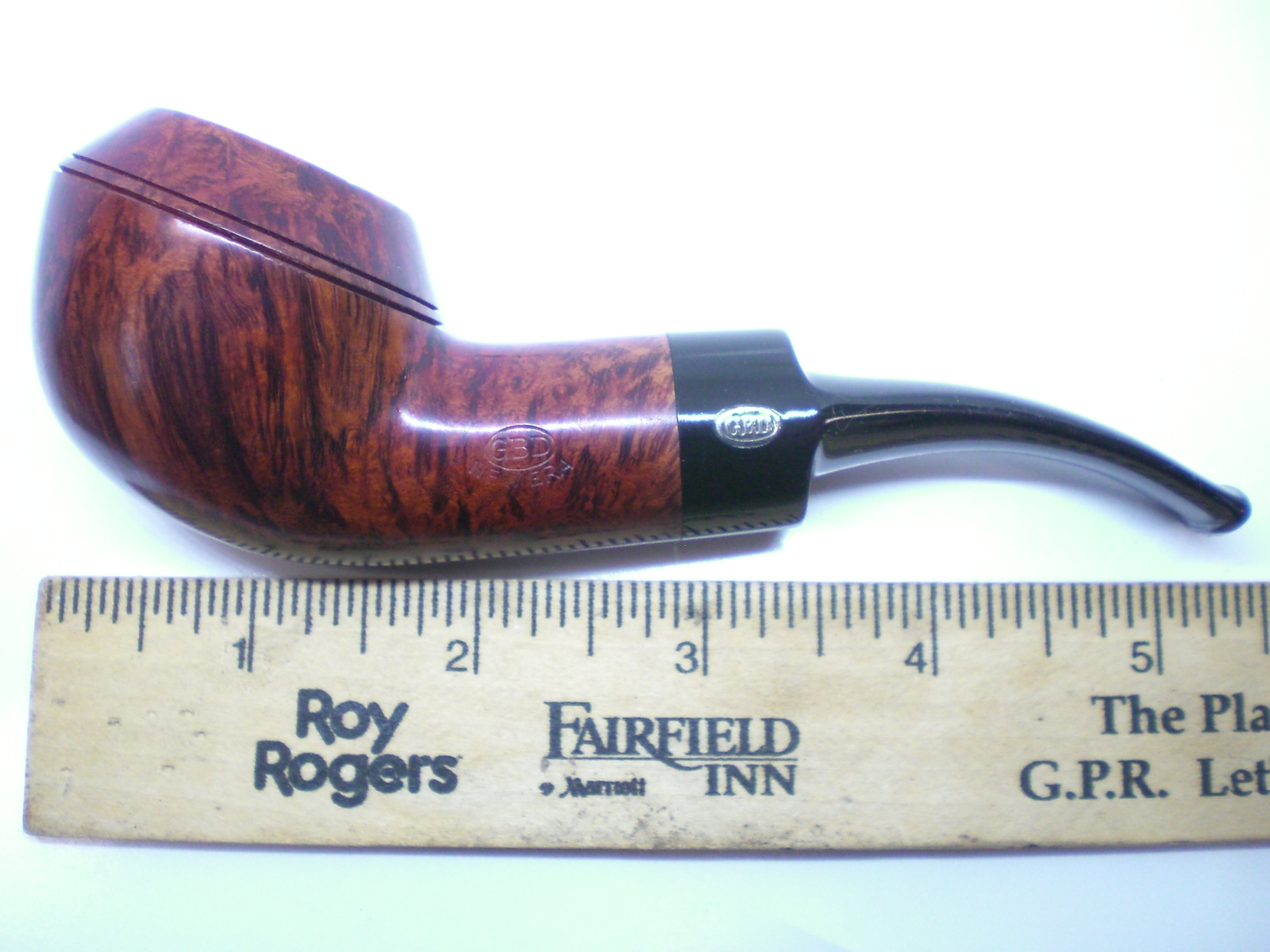
I’ve owned and restored over 20 different 9438’s in the past ten years. The 9438 is the famous “chubby rhodesian” shape by GBD and a favorite of mine. A few years ago, GBD collector MIke Hagley told me that GBD’s with the full-width stem were Cadogan era pipes, even if they had the brass rondell and “London, England” stamp. I prefer the “wasp-waist” tapered width stems like on this one and eventually, sold all of my full-width stemmed GBD’s.

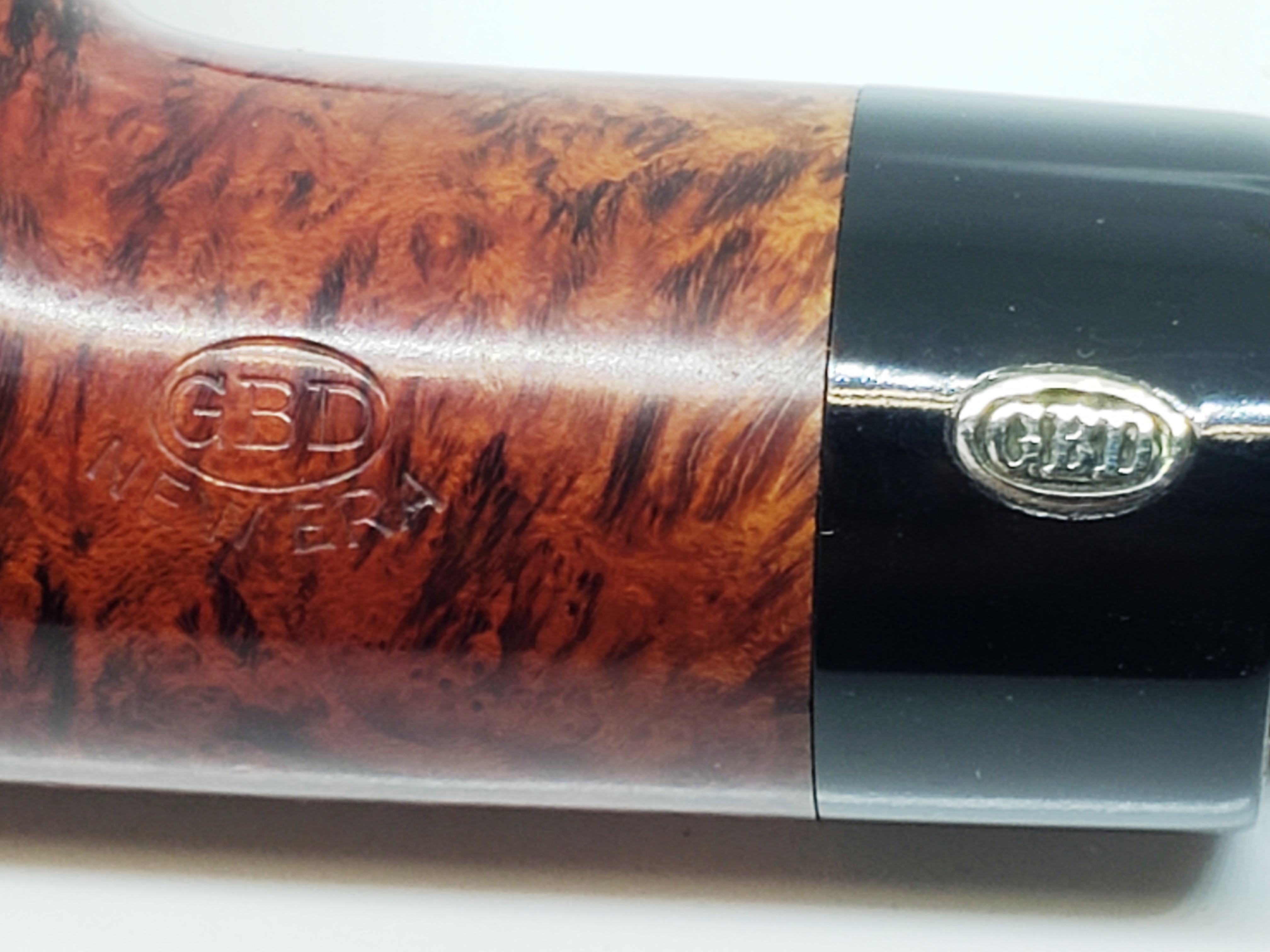
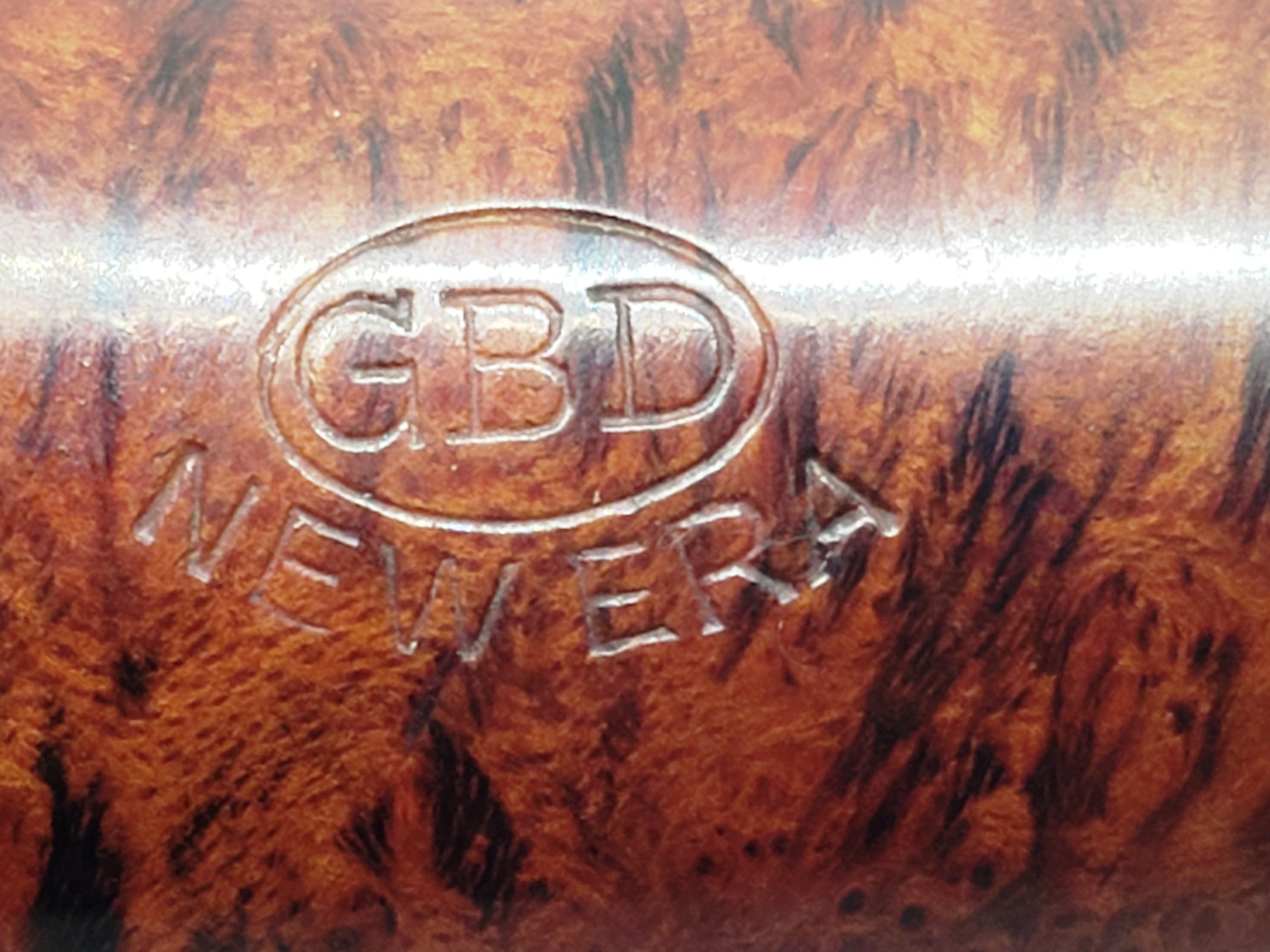
The “New Era” finish came in two different finishes, “Rich Ruby Finish” or a “Warm Brown, two-tone finish”. This particular New Era has the ruby finish that I prefer and it appears to also have the two-tone finish. Below is a catalog page showing the grade and that finish. Also of interest is the description of the “hand cut stem”. This pipes tenon is the “bullet style” that is on all stems that are stamped “Hand Cut”. This stem does not have that stamp, but the button finish looked hand cut to me. So it appears that not all hand-cut stems were stamped that way.

The pipe was in very good shape as delivered. It has some darkening on the bowl top and the top of the bowl appeared to have some fading from the sun. The stem was in great shape – with just minor teeth abrasions. There were some scuffs and dings on the briar, but I thought they would steam out. The stem fitment was excellent as was the nomenclature. Below is the pipe as it was received.

I removed the mild cake and used some worn micromesh to clean the bowl top. I used a wet cloth and an electric iron to steam out some of the dings. I mixed up some Fieblings Medium Brown and Oxblood stain to smooth out the stain color on the bowl top, which worked perfectly. The briar was later buffed with White Diamond and several coats of Carnuba wax. The bowl was soaked with sea salt and alchohol and the shank thoroughly cleaned with a bristle brush.

With the stem mounted, I used 800, 1,000, 1,500 and 2,000 grade wet sandpaper to remove the oxidation and teeth abrasions. One tiny tooth mark remains near the button. The stem was buffed with White Diamond and Meguiars Plastic Polish.

Below is the finished pipe, I’m very happy to add this one to my collection.

Refreshing a Cadogan Era Comoy’s Warwick Brandy


Blog by Steve Laug

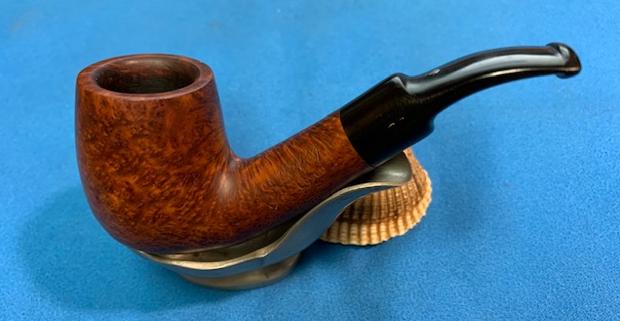
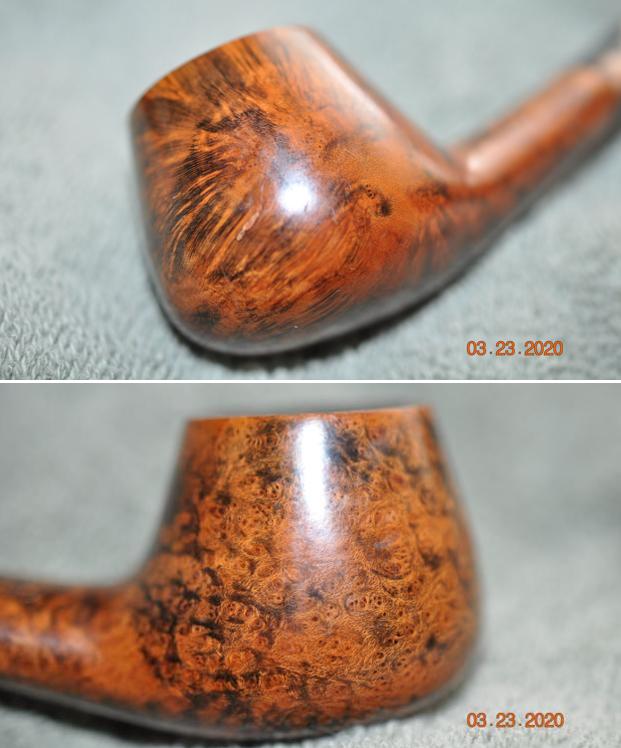
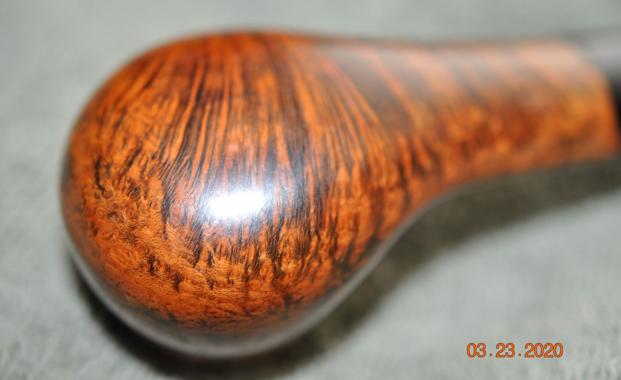
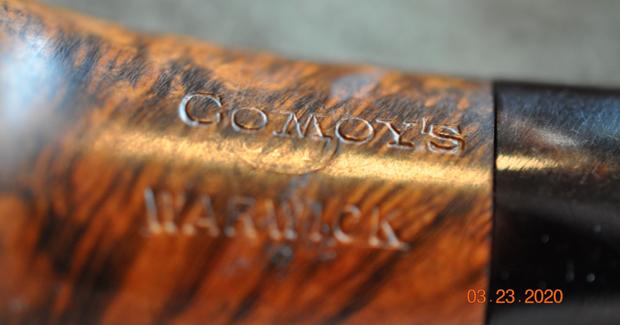
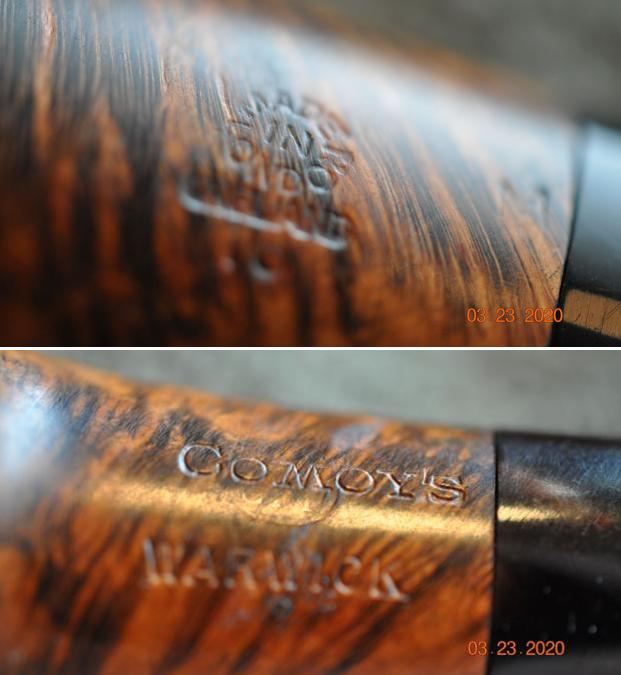
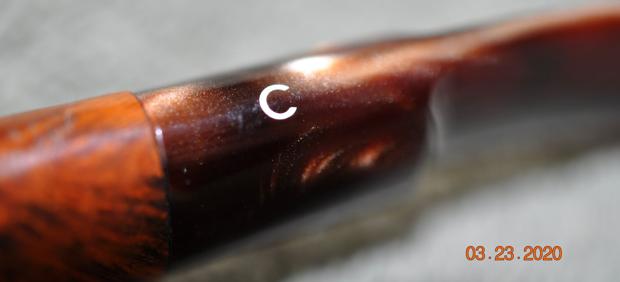
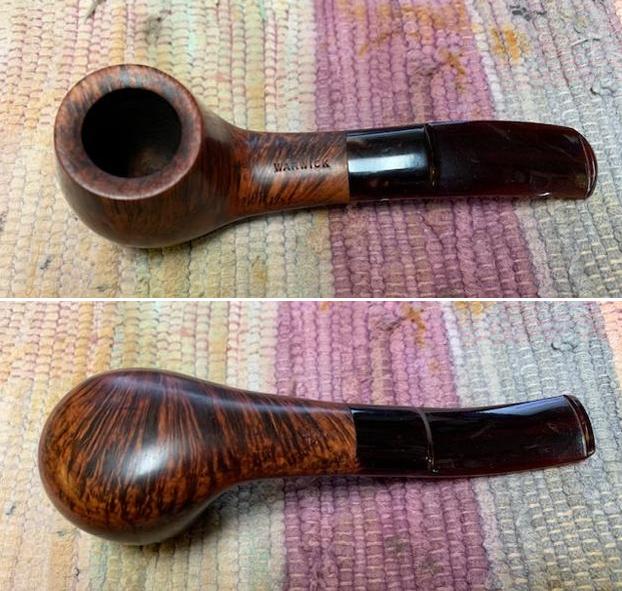
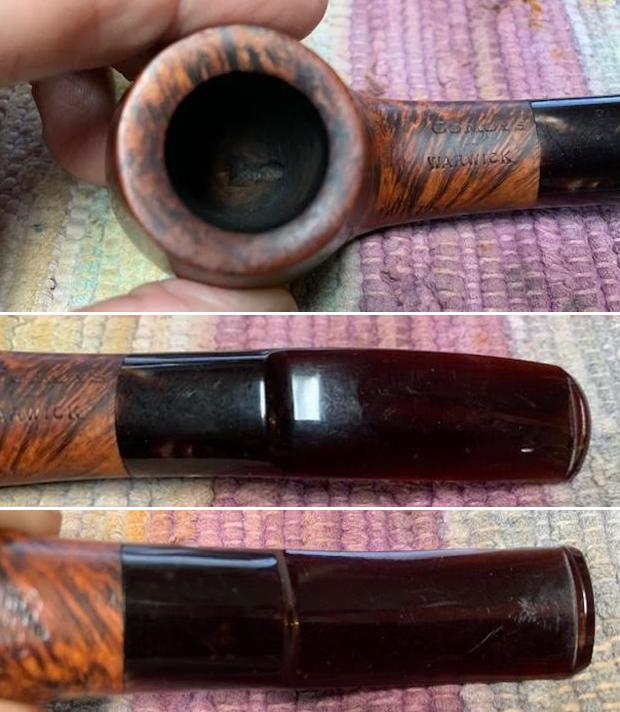
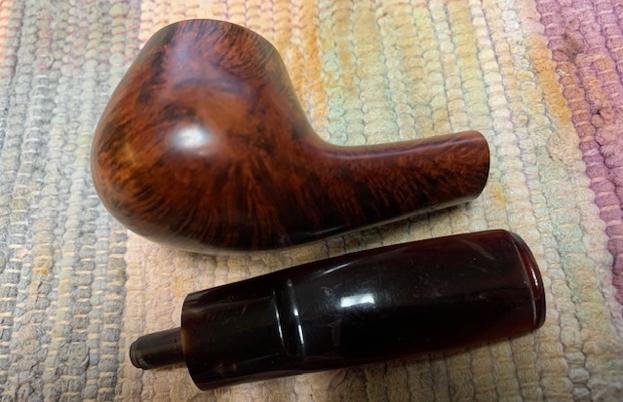
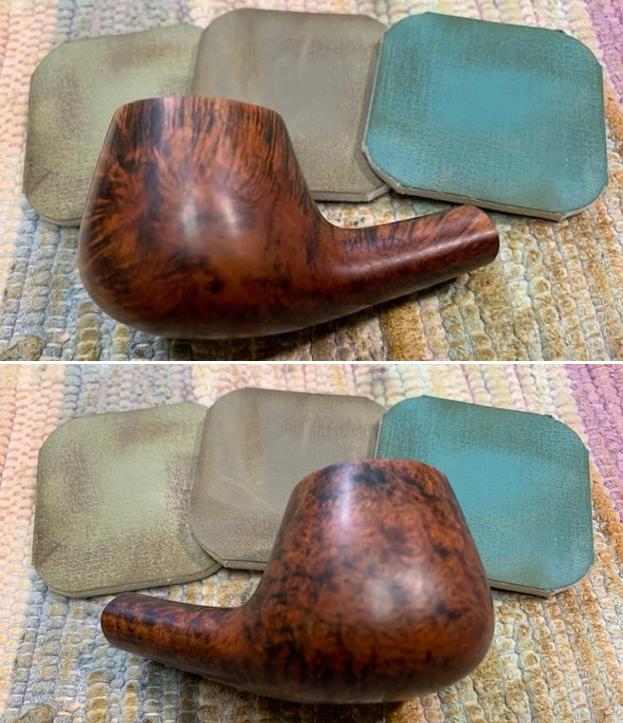
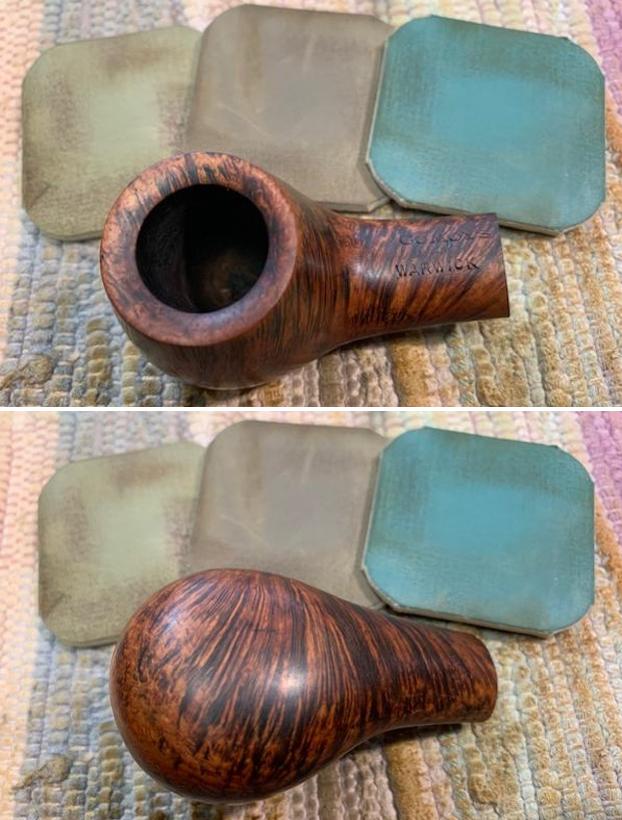
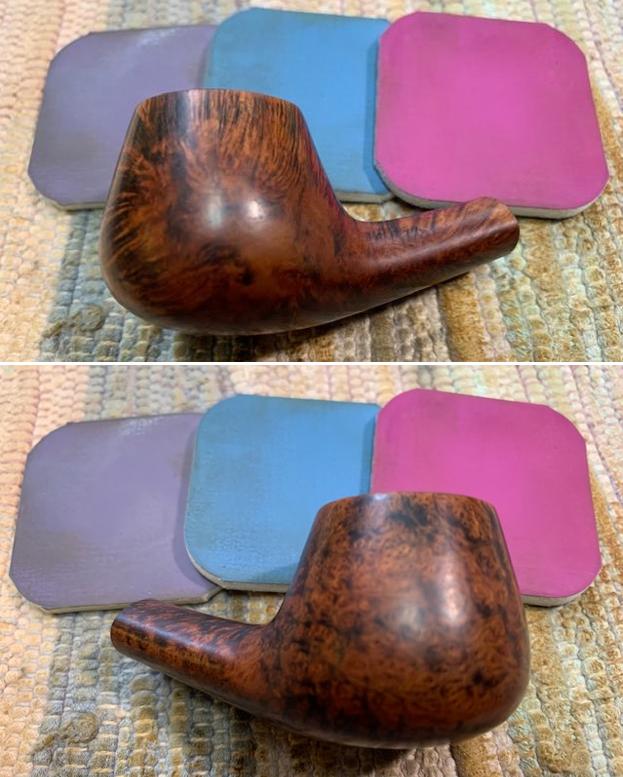
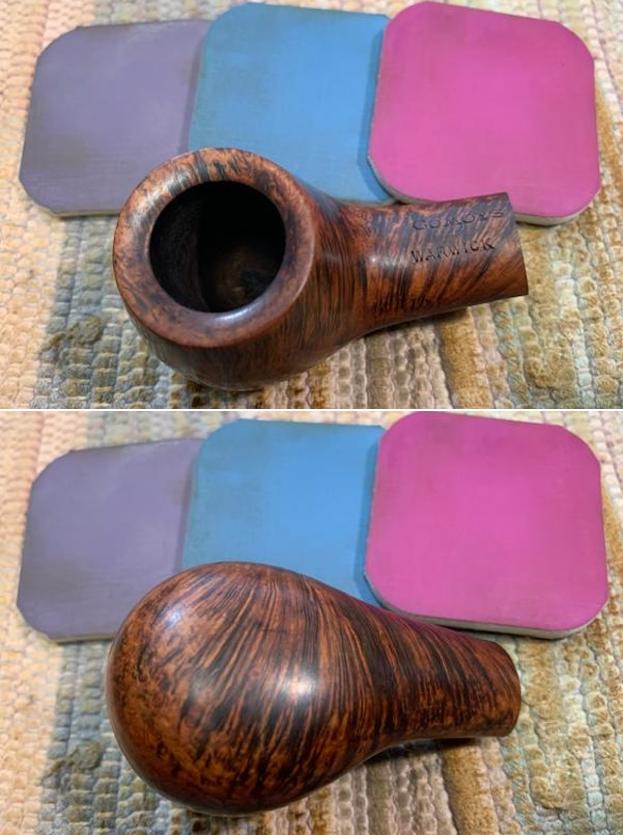
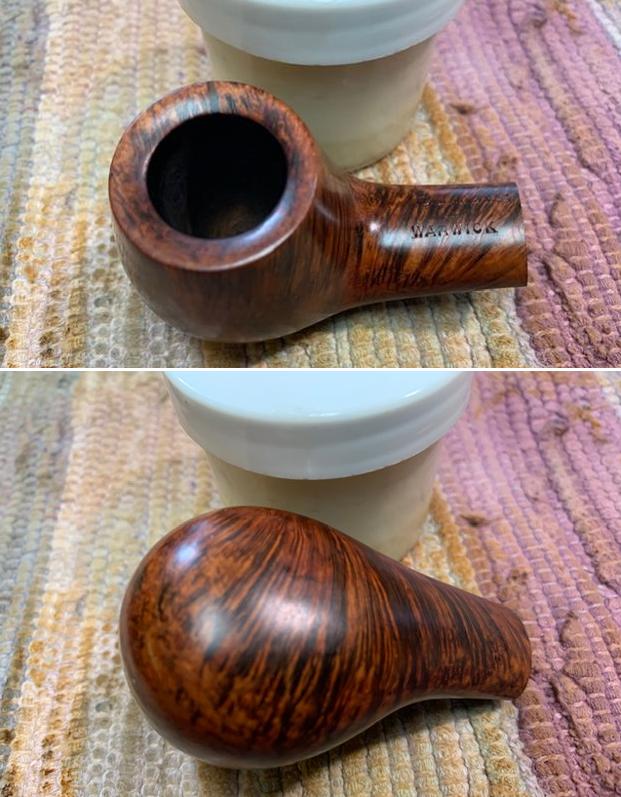
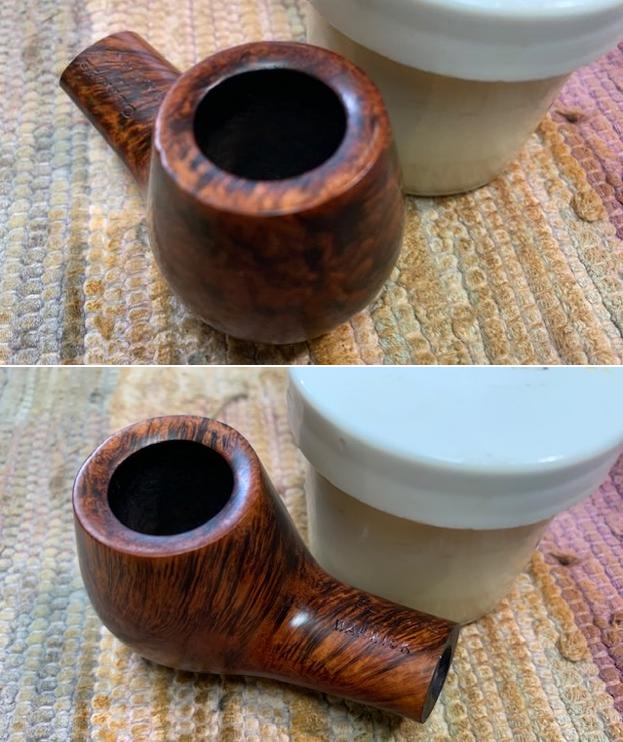
I am enjoying day with some time free to work on a few pipes. The next pipe on the table was purchased on 03/17/21 from a fellow in Brazil, Indiana, USA. It is a Brandy shaped Comoy’s  pipe that that has some nice grain on the bowl sides. On the topside of the shank it was stamped Comoy’s [over] Warwick. On the underside it is stamped Made in London in a circle [over] England [over] shape number 16. There is also an M stamped on the end of the shank at the junction of the stem and shank. The finish is filthy with grime and oil ground into the briar of the bowl and shank sides. The bowl was moderately caked and there was some darkening and light lava on the top and edges of the rim. The shank was oval and the Lucite saddle stem followed that shape. There was a Comoy’s C on the left side of the saddle that was one piece rather than the older three piece C. The stem was dirty and had tooth marks and chatter on both sides ahead of and on the surface of the button. Jeff took some photos of the pipe to show its overall condition before he started his cleanup work. He took photos of the rim top and bowl to give a clear picture of the condition of the bowl and rim top. There is dust and debris stuck to the walls of the bowl clearly visible in the photos. He also took photos of the top and underside of the stem to show the oxidation, chatter and tooth marks. Jeff took photos of the sides and heel of the bowl to give a picture of what the briar around the pipe looked like. There is an interesting grain patterns under the grime and thick debris.     Jeff took photos of the stamping on the top and underside of the shank. It clearly reads as noted above. I turned first to Pipephil’s site to get a quick summary of the background of this particular line of Comoy’s pipes. It is stamped Warwick and there was nothing listed on the site for that line. I also turned to Pipedia to see what else I could learn about the brand and again did not find the brand listed there.

I knew that I was working on a Cadogan era Comoy’s pipe because of the style of the C on the stem side and the fact of an acrylic stem. Now it was time to work on the pipe.

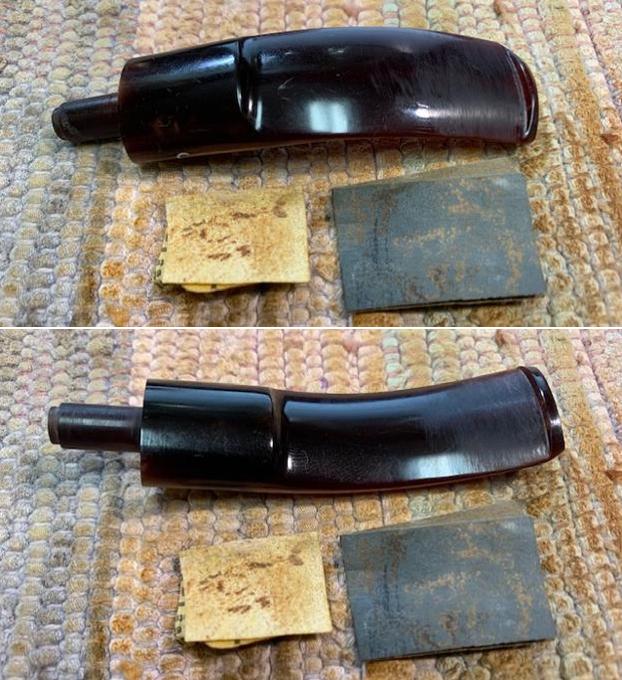
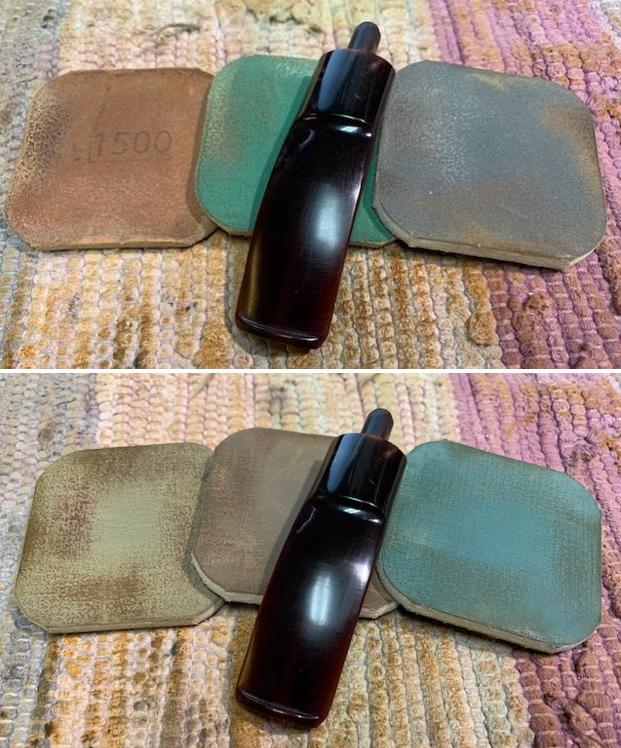
Jeff had reamed the bowl with a PipNet Pipe Reamer and cleaned up the remnants with a Savinelli Fitsall Pipe Knife. He scrubbed the exterior of the bowl with undiluted Murphy’s Oil Soap with a tooth brush. He worked over the debris on the rim top and was able to remove it. He rinsed it under running warm water to remove the soap and grime. He cleaned out the inside of the shank and the airway in the stem with alcohol, cotton swabs and pipe cleaners. He soaked the stem in Briarville’s Pipe Stem Deoxidizer and rinsed it off with warm water. He scrubbed the stem with Soft Scrub and cotton pads to remove remaining oxidation on the stem. He rinsed it with warm water and dried it off. I took photos of the pipe once I received it. Other than the burned area on the rim top and edge it really looked good and the bowl itself was in excellent condition. The rim top and the inner edge look very good. The stem had a few tooth marks and chatter on both sides near the button.   I took a photo of the stamping on the top and underside of the shank. It was clear and read as noted. I removed the stem and took a photo of the pipe to give a sense of the whole. I decided to start my work on this pipe by polishing the briar with micromesh sanding pads – wet sanding with 1500-12000 grit pads to remove the scratching and polishing the fills on the bowl sides and rim top.   I rubbed the bowl and shank down with Before & After Restoration Balm. I worked it into the surface of the bowl sides and shank with my fingertips. The product works to clean, enliven and protect the briar. I let the balm sit for 15 minutes and then buffed with a cotton cloth to raise the shine. I set the bowl aside and turned my attention to the stem. I sanded the tooth marks and chatter smooth with 220 grit sandpaper and started polishing the stem with 400 grit wet dry sandpaper. I polished the stem with micromesh sanding pads – wet sanding with 1500-12000 grit pads. I wiped it down with a damp cloth after each sanding pad. I used Before & After Pipe Polish – both Fine and Extra Fine to further polish the stem.   This beautiful Comoy’s Warwick 16 Brandy with a Lucite saddle stem is a great looking pipe now that it has been restored. I put the stem back on the bowl and carefully buffed the pipe with Blue Diamond on the buffing wheel using a light touch on the briar. I gave the bowl and the stem multiple coats of carnauba wax on the buffing wheel and followed that by buffing the entire pipe with a clean buffing pad. I hand buffed the pipe with a microfiber cloth to deepen the shine. The finished Comoy’s Warwick Brandy fits nicely in the hand and feels great. Give the finished pipe a look in the photos below. The dimensions of the pipe are Length: 6 inches, Height: 2 ½ inches, Outside diameter of the bowl: 1 ¾ inches, Chamber diameter: 7/8 of an inch. The weight of the pipe is 75grams/2.65oz. I will be adding it to the rebornpipes store shortly in the British Pipe Makers Section. Thanks for reading this blog and my reflections on the pipe while I worked on it. There are many more to come!
A British Connection for an Italian Made Trident Walnut 910 Cup and Saucer


Blog by Steve Laug

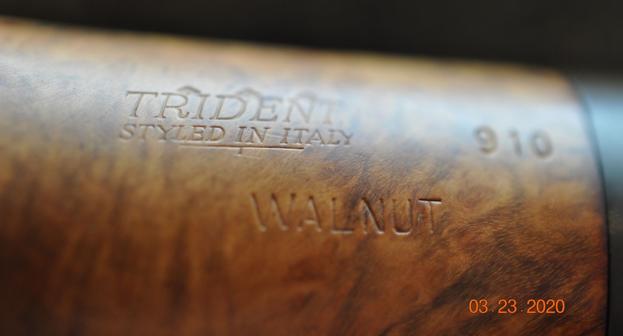
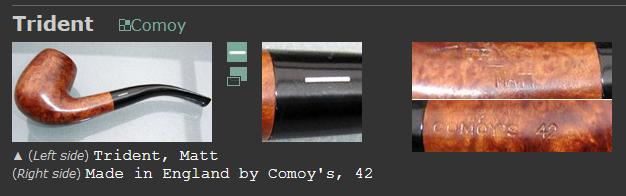
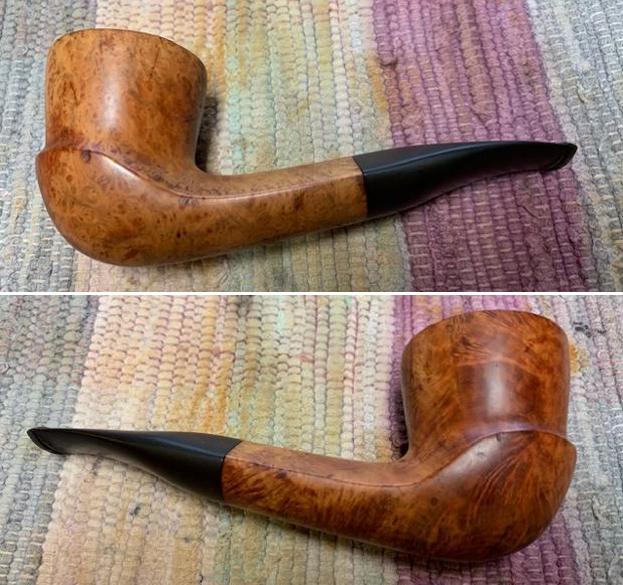
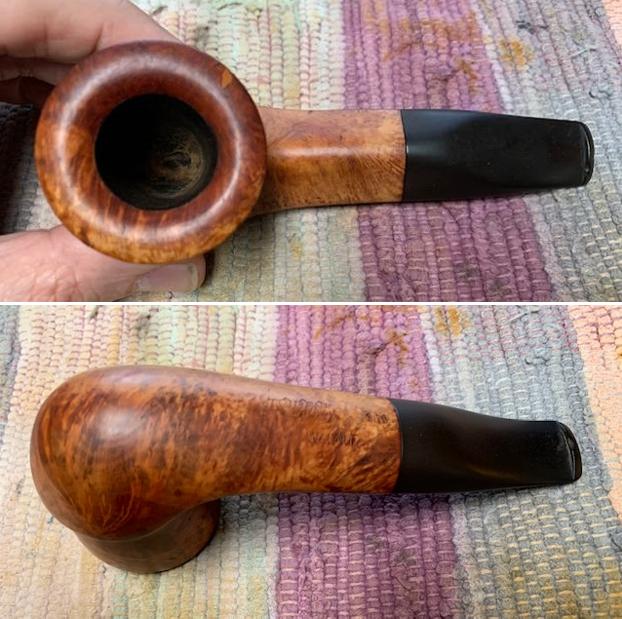
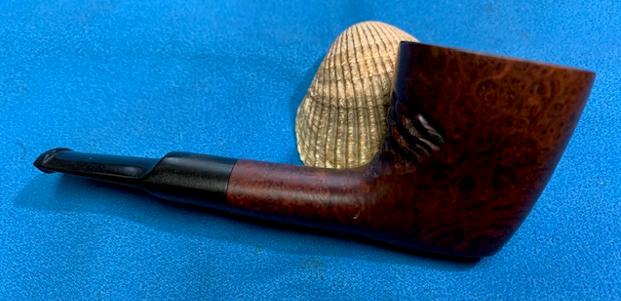
I am enjoying an evening free to work on a few pipes. The next pipe on the table came from an antique mall on 03/05/21 in Logan, Utah, USA. It is a uniquely shaped Italian made pipe that reminds me of a Lorenzo made pipe. The shape and style are much the same as those pipes. This large pipe has a smooth finish on an Italian take on a classic cup and saucer shape. On the underside of the shank it was stamped Trident [over] Styled in Italy [over] Walnut. That is followed by the shape number 910. The finish is filthy with grime and oil ground into the briar of the bowl and shank sides. The bowl was lightly caked and there was some darkening and light lava on the top and edges of the rim. The shank was triangular and the tapered stem followed that shape. There was no stamping or logo on the stem surface. The stem was oxidized and had tooth marks and chatter on both sides ahead of and on the surface of the button. Jeff took some photos of the pipe to show its overall condition before he started his cleanup work. He took photos of the rim top and bowl to give a clear picture of the condition of the bowl and rim top. There is dust and debris stuck to the walls of the bowl clearly visible in the photos. He also took photos of the top and underside of the stem to show the oxidation, chatter and tooth marks. Jeff took photos of the sides and heel of the bowl to give a picture of what the briar around the pipe looked like. There is an interesting grain patterns under the grime and thick debris.    Jeff took photos of the stamping on the left and underside of the shank. It clearly reads as noted above. I turned first to Pipephil’s site to get a quick summary of the background of the Trident pipe. (http://pipephil.eu/logos/en/logo-t8.html). This is fascinating to me as the pipe I have is stamped with the same Trident stamp but is also stamped Styled in Italy. It also had the same matte finish. I vaguely remember a connection between Comoy’s and Lorenzo pipes in Italy. This pipe really has the look of a Lorenzo. Now to dig a bit more deeply.

I turned to Pipedia to see what else I could learn about the brand and found a brief but fascinating article on the brand (https://pipedia.org/wiki/Lorenzo). I quote a part of the article that gives the link to Comoy’s that I had remembered.

In 1983 Lorenzo Tagliabue came to bitter grief: his little daughter, the only child, died of cancer. He lost all interest in the business and retired still in 1983, leaving no heirs who wished to continue the business. Lorenzo Pipes was licensed for and continued for a shorter period by Comoy’s of London (Cadogan / Oppenheimer Group). Then Lorenzo Pipes almost disappeared and Lorenzo Tagliabue passed away in 1987.

But this wasn’t the end. In 1988 Riccardo Aliverti and his wife Gabriella purchased all rights to the Lorenzo trademark from the Tagliabue family and production of the renown Lorenzo Pipes resumed.

The Aliverti family is involved in pipemaking since Romolo Aliverti, the father of the current owners, joined the Lana Brothers in 1920. He later reached the rank of technical director. No wonder that his son Riccardo showed an interest in pipe making. Riccardo began learning the pipemaking trade in 1954 at the age of fourteen under his father’s watchful eyes and succeeded him as technical director upon his father’s retirement in 1973.

Today the third generation of the Aliverti family is working for the company. Massimo Aliverti, Riccardo’s son, has been with the company as sales director since 1991. He works closely with his father and knows all phases of production. Massimo has established a broad customer base for Lorenzo around the world.

I knew that I was working on a Lorenzo made pipe from the period of time (1983) when Comoy’s (Cadogan) managed the brand for them. Now it was time to work on the pipe.

Jeff had reamed the bowl with a PipNet Pipe Reamer and cleaned up the remnants with a Savinelli Fitsall Pipe Knife. He scrubbed the exterior of the bowl with undiluted Murphy’s Oil Soap with a tooth brush. He worked over the debris on the rim top and was able to remove it. He rinsed it under running warm water to remove the soap and grime. He cleaned out the inside of the shank and the airway in the stem with alcohol, cotton swabs and pipe cleaners. He soaked the stem in Briarville’s Pipe Stem Deoxidizer and rinsed it off with warm water. He scrubbed the stem with Soft Scrub and cotton pads to remove remaining oxidation on the stem. He rinsed it with warm water and dried it off. I took photos of the pipe once I received it. Other than the burned area on the rim top and edge it really looked good and the bowl itself was in excellent condition. The rim top and the inner edge look very good. There is a large solid fill on the right side of the rim top near the back of the bowl. The stem had a few tooth marks and chatter on both sides near the button.I took a photo of the stamping on the underside of the shank. It was clear and read as noted.   I removed the stem and took a photo of the pipe to give a sense of the whole. I decided to start my work on this pipe by polishing the briar with micromesh sanding pads – wet sanding with 1500-12000 grit pads to remove the scratching and polishing the fills on the bowl sides and rim top.I stained the briar with a light brown aniline stain and flamed it to set it in the grain. I repeated the process until the coverage was acceptable.I wiped off the excess stain with alcohol on a cotton pad to even out the colour. When it was the way I wanted I rubbed the bowl and shank down with Before & After Restoration Balm. I worked it into the surface of the bowl sides and shank with my fingertips and a horsehair shoe brush to get into the nooks and crannies of the rustication. The product works to clean, enliven and protect the briar. I let the balm sit for 15 minutes and then buffed with a cotton cloth to raise the shine.I set the bowl aside and turned my attention to the stem. I filled in the deep tooth marks on both sides with clear CA glue. Once the repair cured I reshaped the button and flattened the surface of the stem with a small file. I sanded the repairs smooth with 220 grit sandpaper and started polishing the stem with 400 grit wet dry sandpaper. I polished the stem with micromesh sanding pads – wet sanding with 1500-12000 grit pads. I wiped it down with a damp cloth after each sanding pad. I used Before & After Pipe Polish – both Fine and Extra Fine to further polish the stem.   This Trident Walnut 910 Italian Design Tea Cup with a taper vulcanite stem is a great looking pipe now that it has been restored. I put the stem back on the bowl and carefully buffed the pipe with Blue Diamond on the buffing wheel using a light touch on the briar. I gave the bowl and the stem multiple coats of carnauba wax on the buffing wheel and followed that by buffing the entire pipe with a clean buffing pad. I hand buffed the pipe with a microfiber cloth to deepen the shine. The finished Trident Walnut Tea Cup fits nicely in the hand and feels great. Give the finished pipe a look in the photos below. The dimensions of the pipe are Length: 6 inches, Height: 2 ½ inches, Outside diameter of the bowl: 1 ¾ inches, Chamber diameter: 7/8 of an inch. The weight of the pipe is 75grams/2.65oz. I will be adding it to the rebornpipes store shortly in the Italian Pipe Makers Section. Thanks for reading this blog and my reflections on the pipe while I worked on it. There are many more to come!

A Fascinating Piece of Italian Pipe History – A Molina 80993 Bent Apple


Blog by Steve Laug

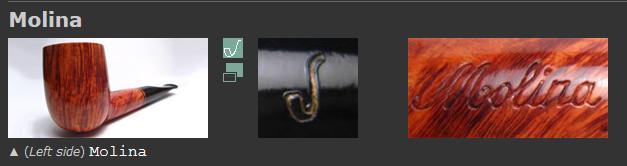
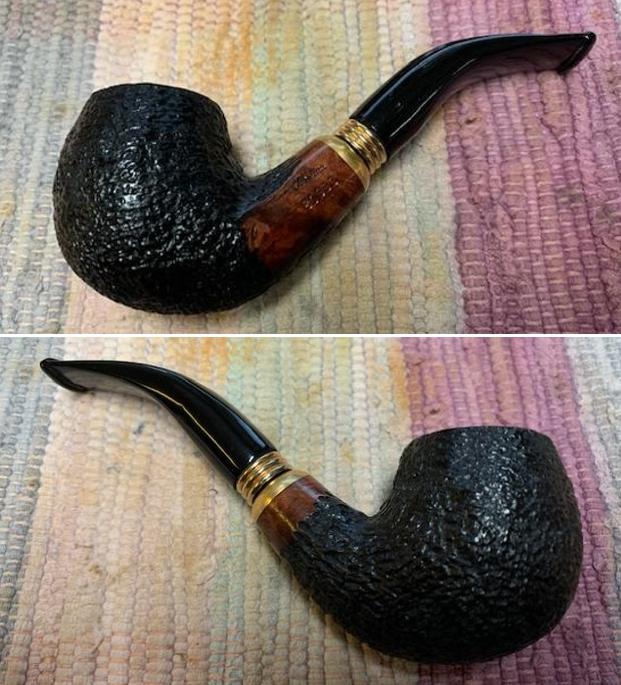
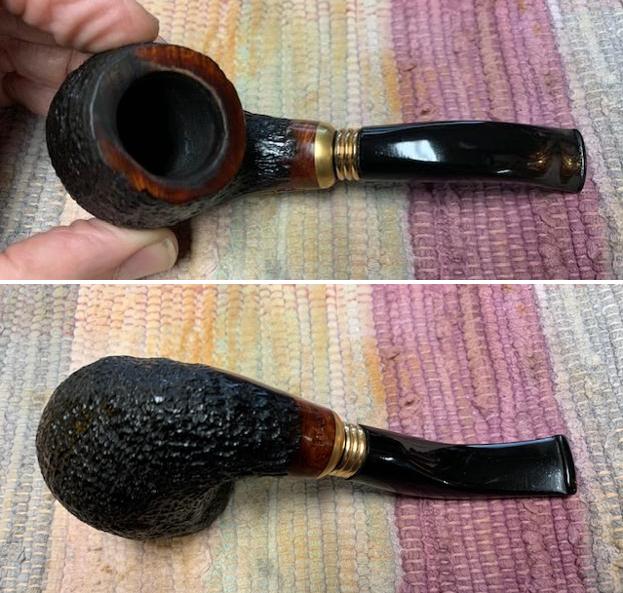
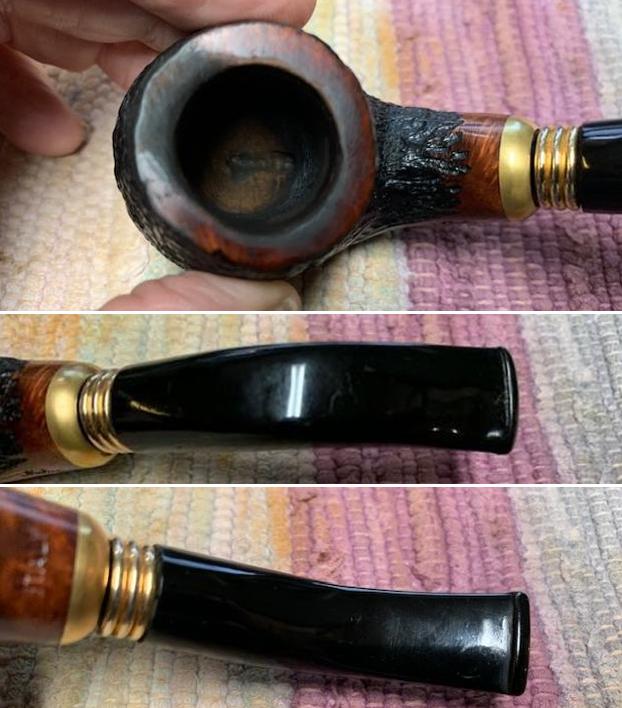
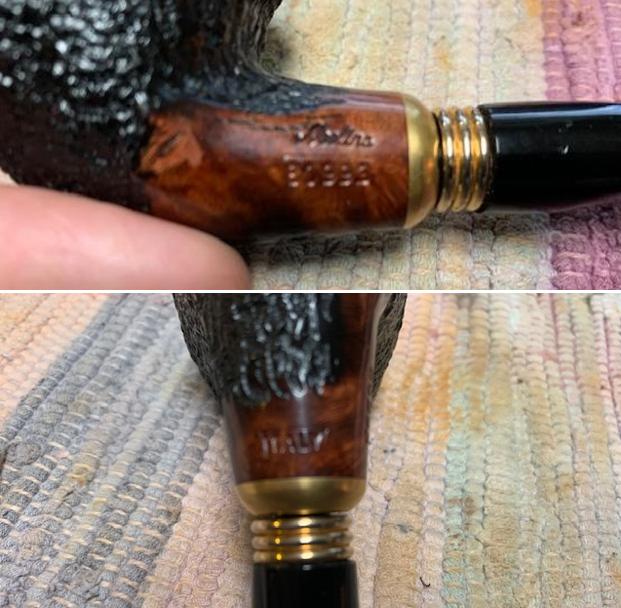
I am enjoying an evening free to work on a few pipes. The next pipe on the table came from an antique auction gallery on 05/22/20 in Mebane, North Carolina, USA. It is a uniquely rusticated Italian made pipe with a smooth rim top and shank end that is capped with a brass ferrule. On the left side of the shank it was stamped Molina [over] the shape number 80993. On the underside of the shank it is stamped Italy. It is a brand I have heard of but know little about so I am glad to learn about it. The pipe is a bent apple that is nicely shape. The finish is filthy with grime and oil ground into the briar of the bowl and shank sides. The bowl was thickly caked and there was an overflow of lava on the top and edges of the rim. The front inner edge and rim top appeared to have burn damage that looked like it had been lit repeatedly with a torch lighter. The stem was a fancy Lucite taper stem that fit snugly in the shank and had brass band that was made to look like three rings. There also appeared to be the remnants of a faint stamp on the left side of the stem. The stem was dirty, calcified and had tooth marks and chatter on both sides ahead of the button. Jeff took some photos of the pipe to show its overall condition before he started his cleanup work. He took photos of the rim top and bowl to give a clear picture of the thickness of the cake and the lava and dust ground into the finish of the rim top and edges. There is dust and debris stuck to the walls of the bowl clearly visible in the photos. You can also see the damage on the inner edge of the bowl on the front. He also took photos of the top and underside of the stem to show the oxidation, chatter and tooth marks.Jeff took photos of the sides and heel of the bowl to give a picture of what the briar around the pipe looked like. There is an interesting rustication under the grime and thick debris. Jeff took photos of the stamping on the left and underside of the shank. It clearly reads as noted above.I turned first to Pipephil’s site to get a quick summary of the background of the Molina pipe. (http://pipephil.eu/logos/en/logo-m6.html). I have included a screen capture of the pertinent section on the site.In the sidebar it included the following information that I have included below.

Artisan: Giovanni Carollo, a former employee of the Rossi factory. Machine crafted mass production. Pipes mainly aimed for German and US market.

I turned to Pipedia to see what else I could learn about the brand and found a brief but fascinating article on the brand (https://pipedia.org/wiki/Molina_Pipe). I quote it in its entirety below.

Molina pipes has it’s origins in Barasso in Lombardy. It was born from what was left of the old Rossi pipes factory, that started in the early 1900s. Molina’s inheritance from Rossi pipes does not only consist of the factory but also the machinery and methods of production. The name Molina refers to a district where you could find mills powered by water.

I followed the trail there to the Molina Pipe website (https://www.molinapipe.it/). It had a great summary of the history.

Molina still lies in part on the antique Rossi factory, a peculiar but not a casual circumstance. it represents an excellent example of industrial archeology. its working environment is enriched with the modernized charm of the past.

Molina’s inheritance from Rossi pipes does not only consist of the factory but also of ancient machinery and methods of production, antique ”secrets” ,antique recipes and production procedures used over 100 years ago.

The name molina has even a longer history, it is up to today used to refer to a district where you could find mills powered by a rush of water.

I knew that I was working on a Molina pipe from the remnants of the old Rossi pipe factory and that the pipes were made mainly for the US and German market. Now it was time to work on the pipe.

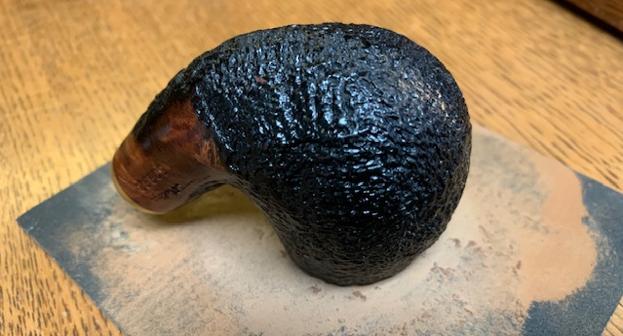
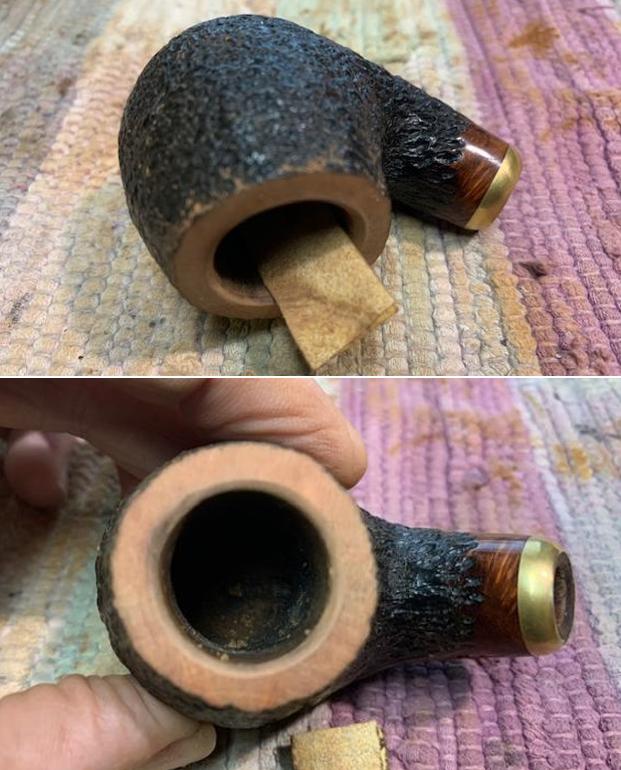
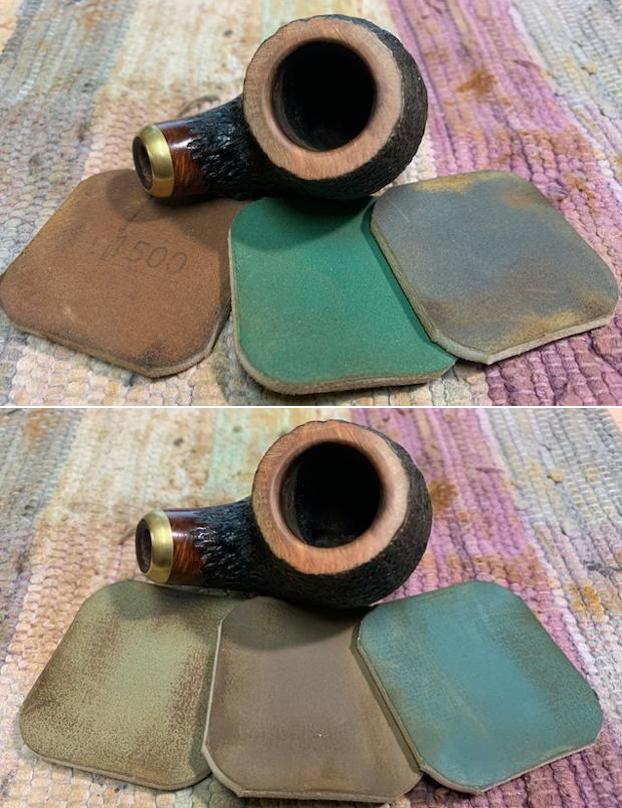
Jeff had reamed the bowl with a PipNet Pipe Reamer and cleaned up the remnants with a Savinelli Fitsall Pipe Knife. He scrubbed the exterior of the bowl with undiluted Murphy’s Oil Soap with a tooth brush. He worked over the debris on the rim top and was able to remove it. The burned area was very clear once he had cleaned it off. He rinsed it under running warm water to remove the soap and grime. He cleaned out the inside of the shank and the airway in the stem with alcohol, cotton swabs and pipe cleaners. He soaked the stem in Briarville’s Pipe Stem Deoxidizer and rinsed it off with warm water. He scrubbed the stem with Soft Scrub and cotton pads to remove remaining oxidation on the ferrule and the stem. He rinsed it with warm water and dried it off. I took photos of the pipe once I received it. Other than the burned area on the rim top and edge it really looked good and the bowl itself was in excellent condition. The rim top and the inner edge had serious burn damage all around but the heaviest damage was on the front of the bowl. It really looked to be the victim of repeated assault by a torch lighter. If you have one keep it away from your pipe. The stem had a few tooth marks and chatter on both sides near the button.I took photos of the stamping on the sides of the shank. It was clear and read as noted above. I removed the stem and took a photo of the pipe to give a sense of the whole. The tenon is Delrin. I decided to start my work on this pipe by addressing the damage to the rim top and inner edge of the bowl. I topped the bowl on a board with 180 grit sandpaper. I chose a lower grit sandpaper because the damage was quite deep. Once I had topped the damaged areas and found solid briar I used a folded piece of 220 grit sandpaper to reshape and rework the inner edge of the rim. It took a bit of work but the rim top looked much better. I polished the rim top and edge with micromesh sanding pads – wet sanding with 1500-12000 grit pads to remove the scratching and polish the smooth briar.    I restained the rim top and edges with a Walnut stain pen to match the other smooth portions of the bowl and shank.I rubbed the bowl and shank down with Before & After Restoration Balm. I worked it into the surface of the bowl sides and shank with my fingertips and a horsehair shoe brush to get into the nooks and crannies of the rustication. The product works to clean, enliven and protect the briar. I let the balm sit for 15 minutes and then buffed with a cotton cloth to raise the shine.    I set the bowl aside and turned my attention to the stem. I filled in the deep tooth marks on both sides with clear CA glue. Once the repair cured I sanded them smooth with 220 grit sandpaper and started polishing the stem with 400 grit wet dry sandpaper.      I polished the stem with micromesh sanding pads – wet sanding with 1500-12000 grit pads. I wiped it down with a damp cloth after each sanding pad. I used Before & After Pipe Polish – both Fine and Extra Fine to further polish the stem. This beautiful Rusticated Molina 80993 Bent Apple with a taper acrylic stem is a great looking pipe now that it has been restored. I put the stem back on the bowl and carefully buffed the pipe with Blue Diamond on the buffing wheel using a light touch on the briar. I gave the bowl multiple coats of Conservator’s Wax and the stem multiple coats of carnauba wax on the buffing wheel and followed that by buffing the entire pipe with a clean buffing pad. I hand buffed the pipe with a microfiber cloth to deepen the shine. The finished Molina Bent Apple fits nicely in the hand and the tactile finish feels great. Give the finished pipe a look in the photos below. The dimensions of the pipe are Length: 5 inches, Height: 1 ¾ inches, Outside diameter of the bowl: 1 ¼ inches, Chamber diameter: ¾ of an inch. The weight of the pipe is 57grams/2.01oz. I will be adding it to the rebornpipes store shortly in the Italian Pipe Makers Section. Thanks for reading this blog and my reflections on the pipe while I worked on it. There are many more to come!
Look at the Deep Sandblast on this Navigator Stack


Blog by Steve Laug

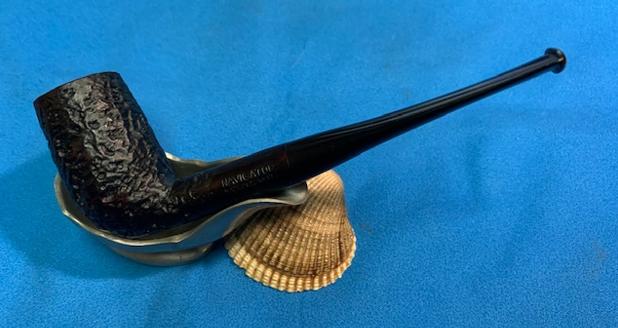
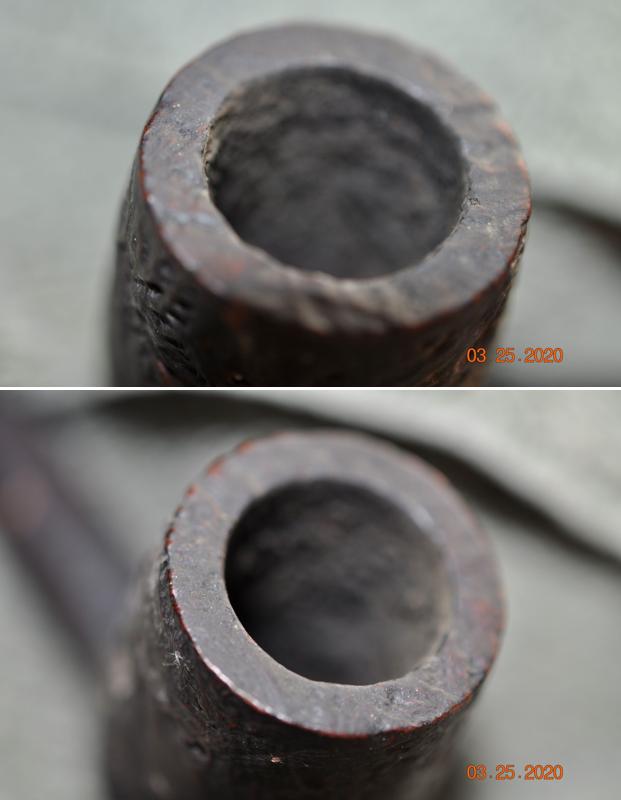
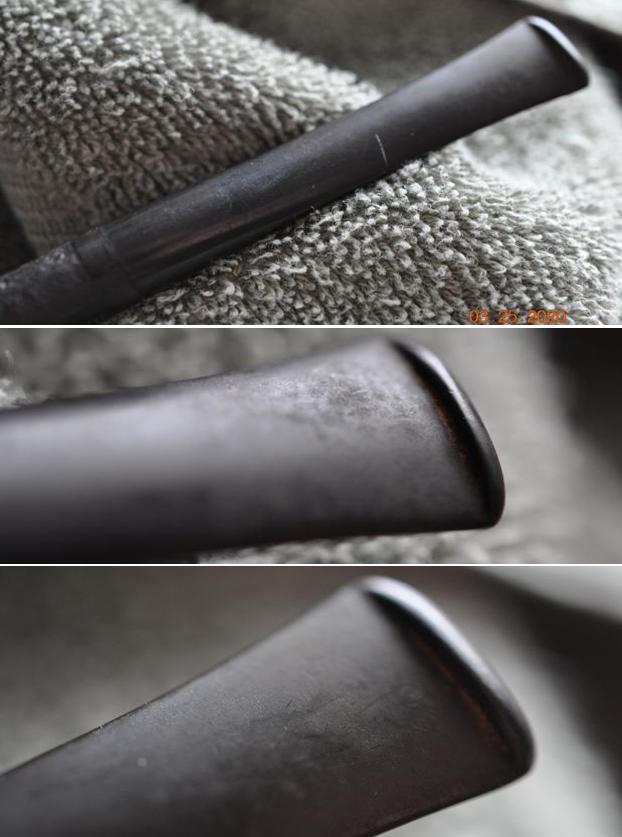
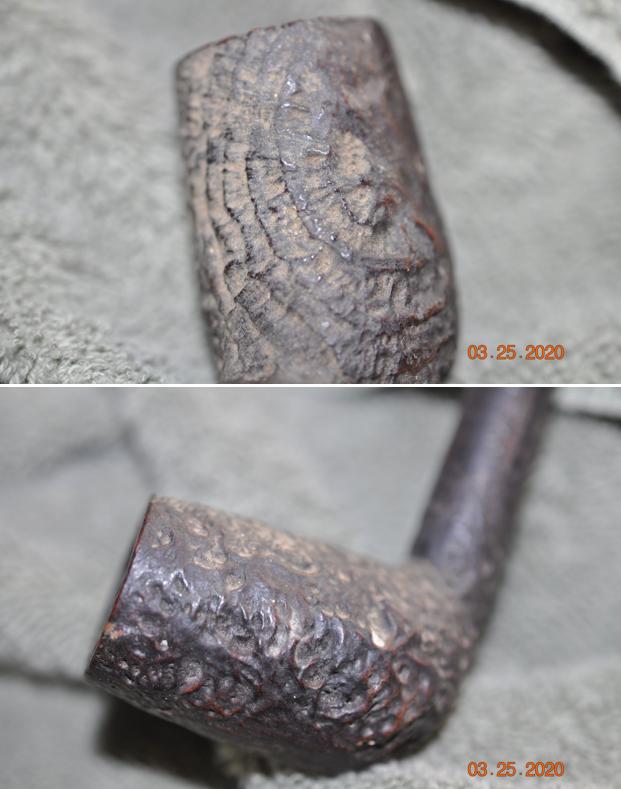
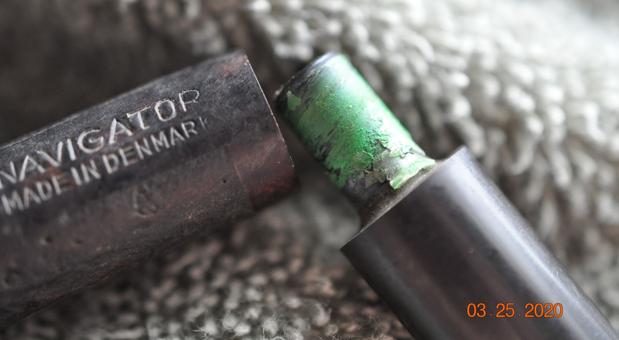
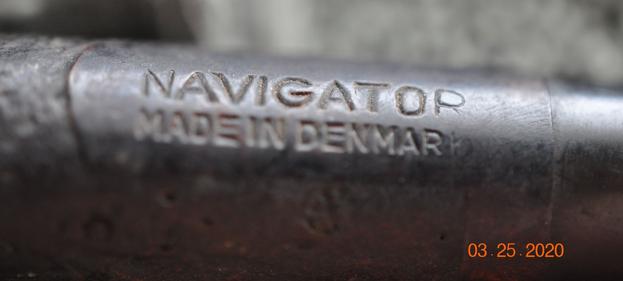
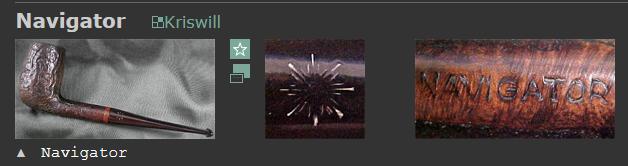
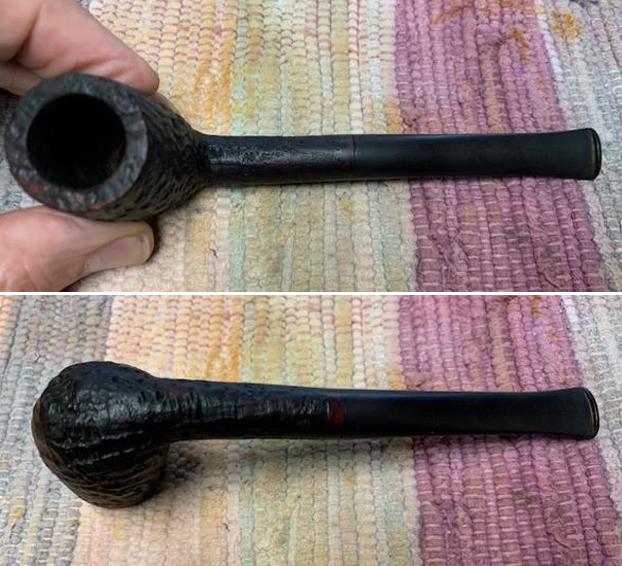
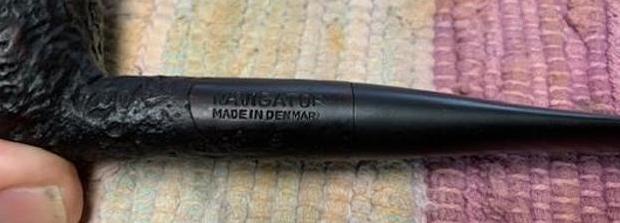
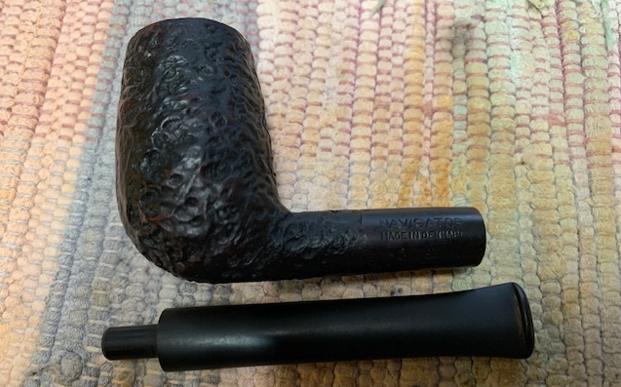
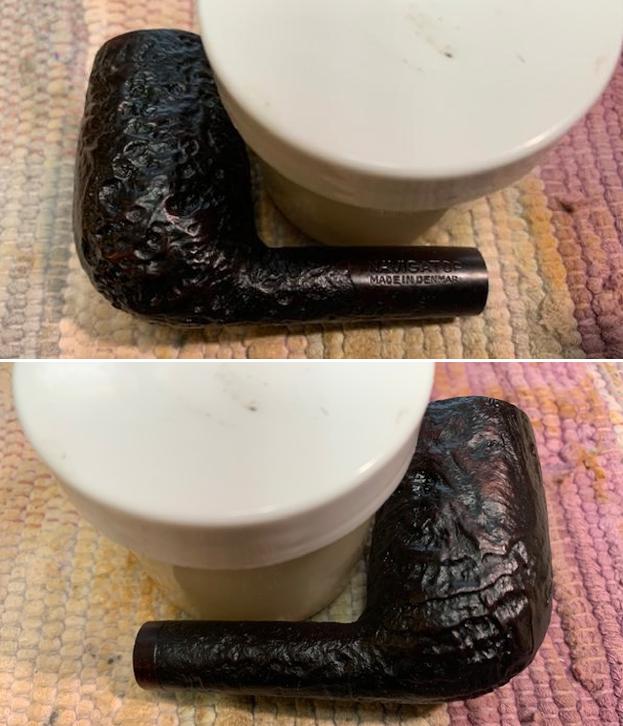
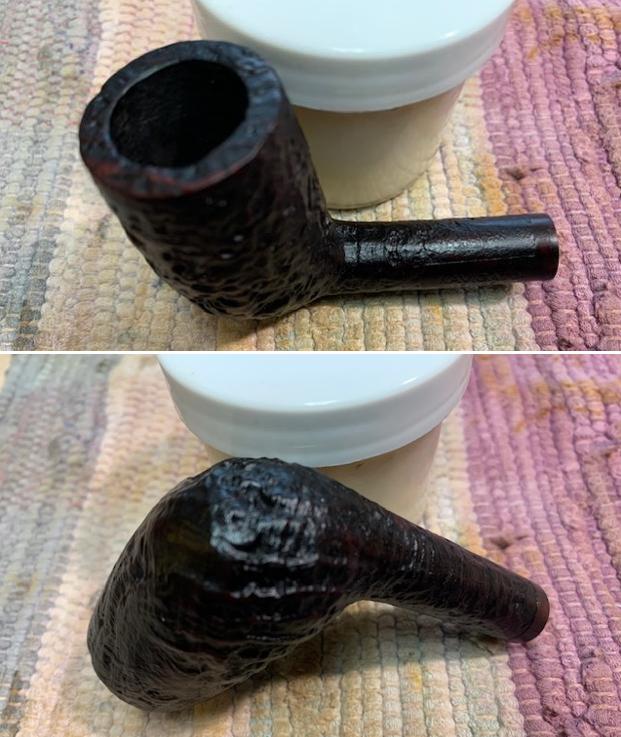
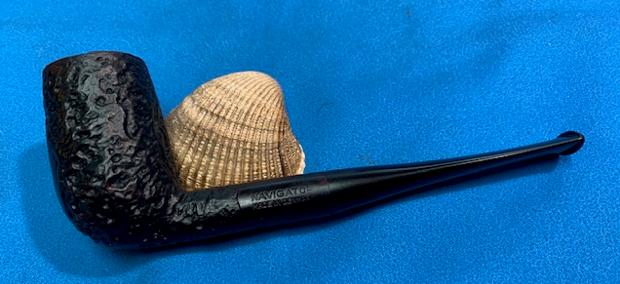
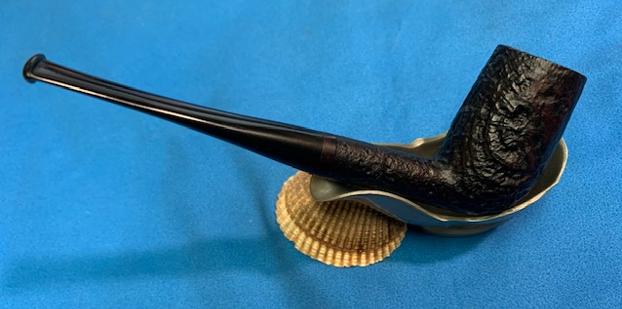
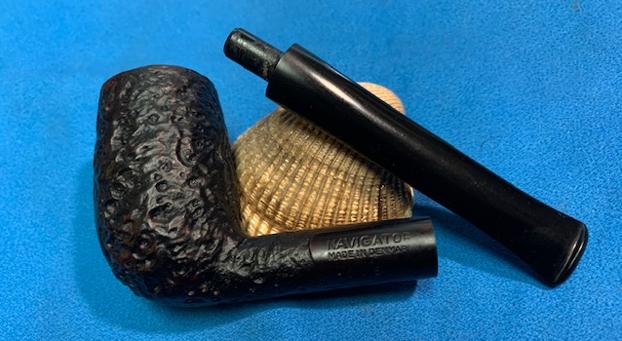
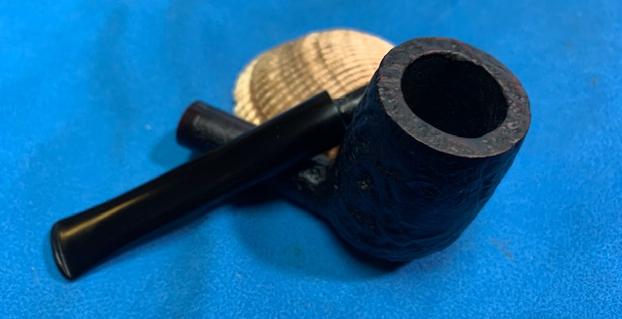
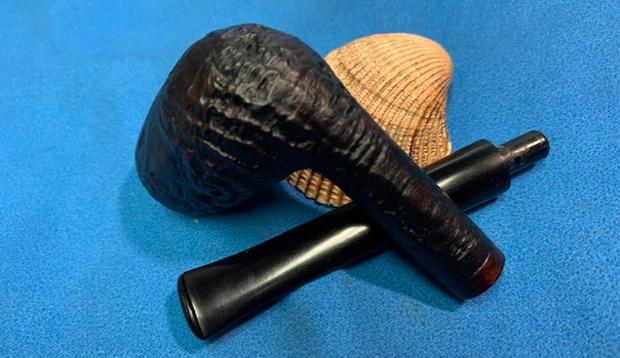
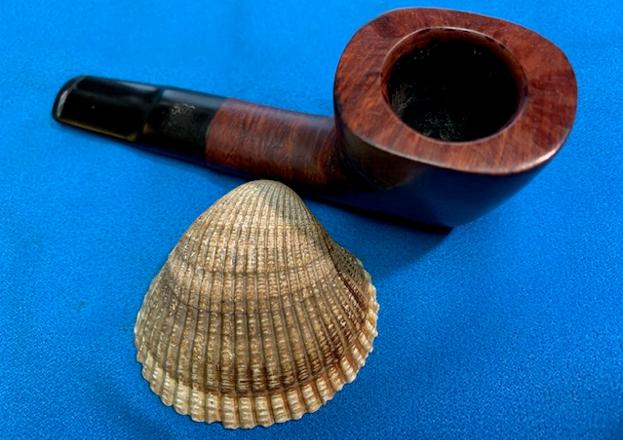
I am enjoying an evening free to work on a few pipes. The next pipe on the table came from a fellow in Brazil, Indiana, USA in March of 2020.. Even though the finish was a dirty and worn it had a deep and rugged sandblast showing through the grit and grime of the years. On the left side of the shank it was stamped Navigator [over] Made in Denmark. The pipe is a stack, or what some would call a tall billiard. The finish is filthy with grime and oil ground into the briar of the bowl and shank sides. The bowl had a moderate cake and there was an overflow of lava on the top and edges of the rim. The stem was a vulcanite taper stem that fit snugly in the shank but seemed to have been held in place by a worn out piece of green painter’s tape. There did not appear to be any stamping on the sides of the stem. The vulcanite was oxidized, calcified and had tooth marks and chatter on both sides ahead of the button. Jeff took some photos of the pipe to show its overall condition before he started his cleanup work. He took photos of the rim top and bowl to give a clear picture of the thickness of the cake and the lava and dust ground into the finish of the rim top and edges. There is dust and debris stuck to the walls of the bowl clearly visible in the photos. He also took photos of the top and underside of the stem to show the oxidation, chatter and tooth marks. Jeff took photos of the sides and heel of the bowl to give a picture of what the briar around the pipe looked like. There is a rugged sandblast grain under the grime and thick debris. Jeff removed the stem from the shank and took a photo to show the wrap of green painter’s tape that held the stem in place in the shank.He took a photo of the stamping on the side of the shank. It clearly reads as noted above. I turned first to Pipephil’s site to get a quick idea of who made the Navigator pipe. I had a hunch it was Kriswill but I wanted to confirm that (http://www.pipephil.eu/logos/en/logo-n1.html). I have included a screen capture of the pertinent section on the site. It links the pipe to Kriswill. The pipe pictured below is a lot like the one that I am working on. The stem does not have the logo on it though it is the same shape. I followed the link to the Kriswill brand on the site (http://www.pipephil.eu/logos/en/logo-k3.html#kriswill). The side bar there included some helpful information that I have included below.

Kriswill is a brand of Kriswork Briar Trading, in Kolding (Denmark) established about 1955. Some of Kriswill pipes were designed by Sigvard Bernadotte, Swedish prince and brother to the late Queen Ingrid of Denmark. He collaborated with his Danish partner Acton Bjørn. When the company went bankrupt in the late 1970s it was on a level with Stanwell. Dan Pipe Cigar & Company (Hafenstrasse 30 D-21481 Lauenburg/Elbe, Ge) bought the rights to use the name and it is Holmer Knudsen and/or Poul Winsløw who make the Kriswill line. Nørding, on its side, bought the plant and introduced a Kriswell line. Kriswill’s seconds: Danish Crown, Navigator. Kriswill’s sub-brand (for a short time): Lillehammer.

Pipedia confirmed the status of the brand as a second made by Kriswill but really did not add further information.

I knew that I was working on a Kriswill second labeled Navigator. Judging from the blast on the bowl it is hard to imagine why this is a second. Now it was time to work on the pipe.

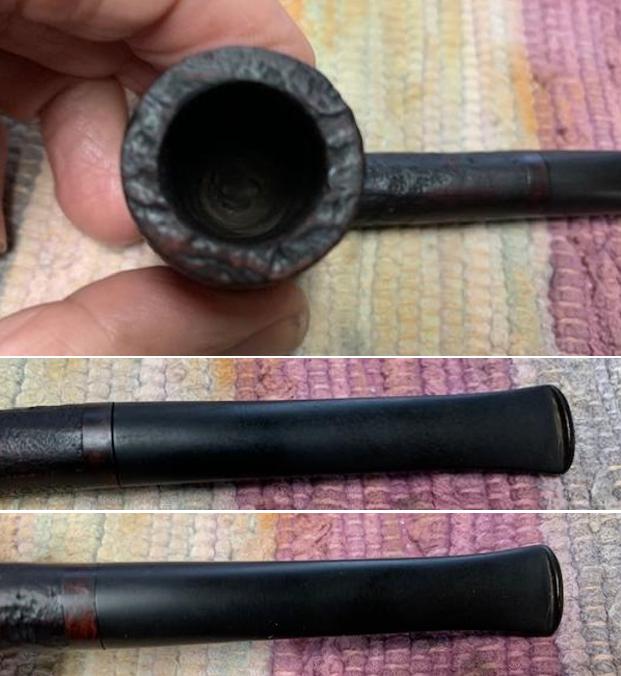
Jeff had reamed the bowl with a PipNet Pipe Reamer and cleaned up the remnants with a Savinelli Fitsall Pipe Knife. He scrubbed the exterior of the bowl with undiluted Murphy’s Oil Soap with a tooth brush. He worked over the debris on the rim top and was able to remove it. He rinsed it under running warm water to remove the soap and grime. He cleaned out the inside of the shank and the airway in the stem with alcohol, cotton swabs and pipe cleaners. He soaked the stem in Briarville’s Pipe Stem Deoxidizer and rinsed it off with warm water. He scrubbed the stem with Soft Scrub and cotton pads to remove remaining oxidation on the stem. He rinsed it with warm water and dried it off. I took photos of the pipe once I received it. It really looked good and the bowl was in excellent condition.    The rim top and the inner edge of the rim looked very good. The stem had a few light tooth marks and chatter on both sides near the button.I took photos of the stamping on the sides of the shank. It was clear and read as noted above. I removed the stem and took a photo of the pipe to give a sense of the whole. The pipe was in such good condition when it got here that I did not need to do any further cleaning. I rubbed the bowl and shank down with Before & After Restoration Balm. I worked it into the surface of the bowl sides and shank with my fingertips. The product works to clean, enliven and protect the briar. I let the balm sit for 15 minutes and then buffed with a cotton cloth to raise the shine. I set the bowl aside and turned my attention to the stem. I polished the tooth marks and chatter out of the vulcanite stem with micromesh sanding pads – 1500-12000 grit pads. I wiped it down with a damp cloth after each sanding pad. I used Before & After Pipe Polish – both Fine and Extra Fine to further polish the stem.  This beautiful Sandblast Kriswill Navigator Stack with a taper vulcanite stem is a great looking pipe now that it has been restored. I put the stem back on the bowl and carefully buffed the pipe with Blue Diamond on the buffing wheel using a light touch on the briar. I gave the bowl multiple coats of Conservator’s Wax and the stem multiple coats of carnauba wax on the buffing wheel and followed that by buffing the entire pipe with a clean buffing pad. I hand buffed the pipe with a microfiber cloth to deepen the shine. The finished Kriswill Navigator Stack fits nicely in the hand and the tactile finish feels great. Give the finished pipe a look in the photos below. The dimensions of the pipe are Length: 5 ½ inches, Height: 2 inches, Outside diameter of the bowl: 1 inches, Chamber diameter: 5/8 of an inch. The weight of the pipe is 32grams/1.09oz. I will be adding it to the rebornpipes store shortly in the Danish Pipe Makers Section. Thanks for reading this blog and my reflections on the pipe while I worked on it. There are many more to come!
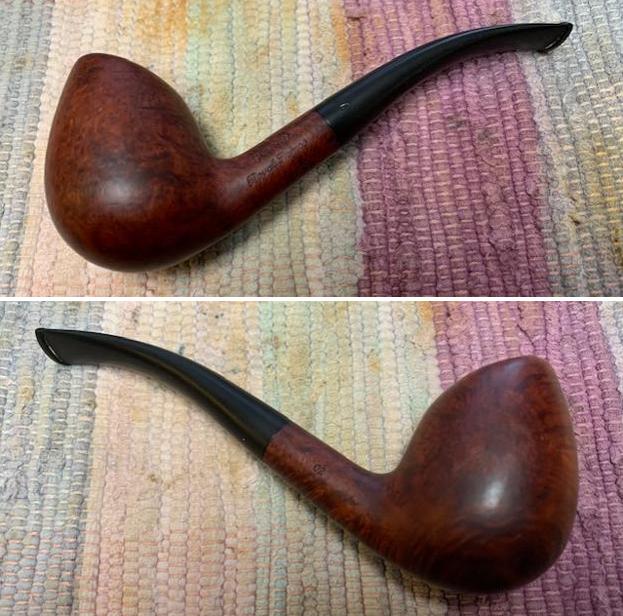
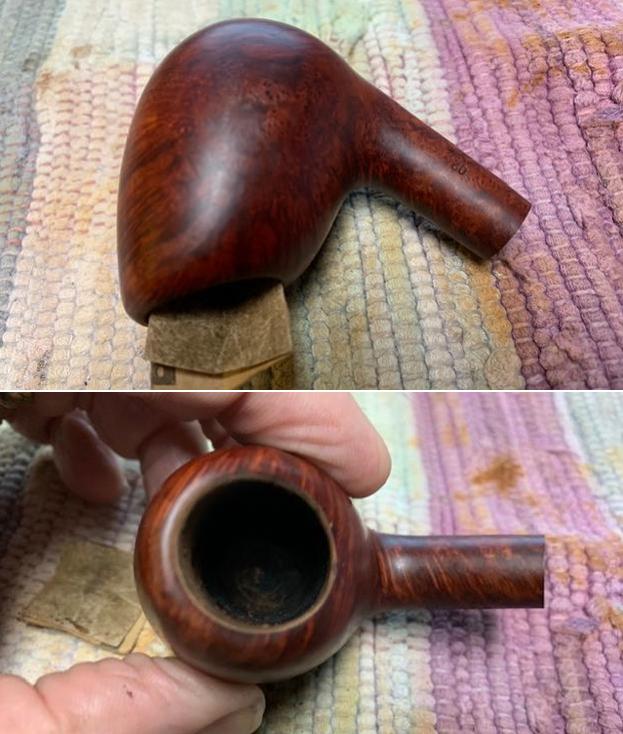
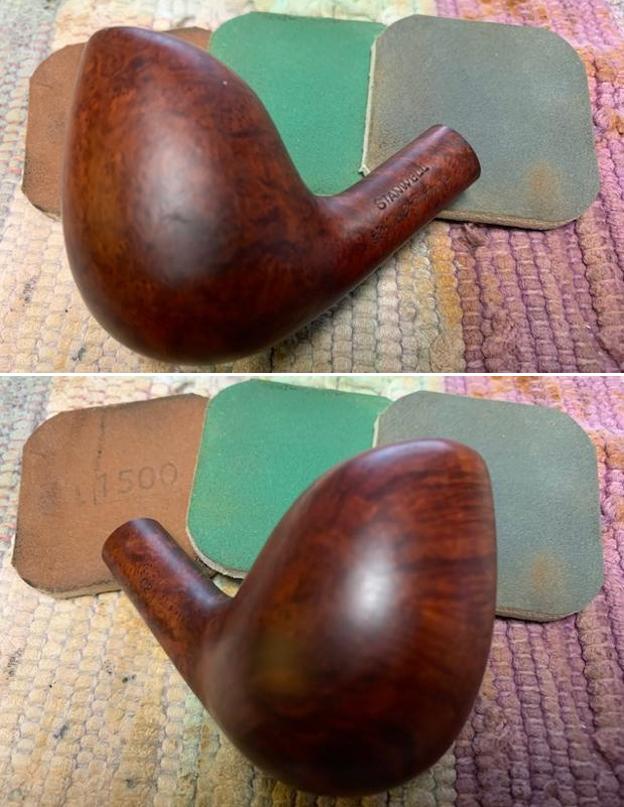
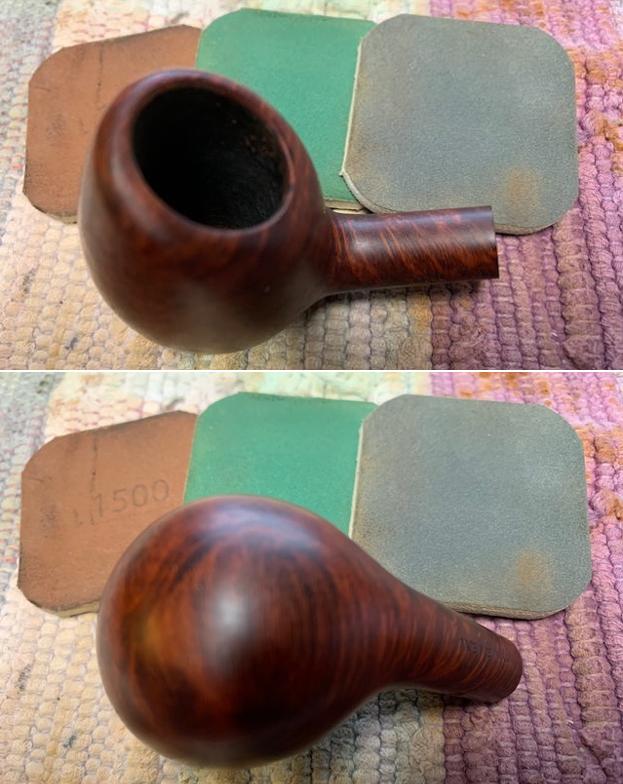
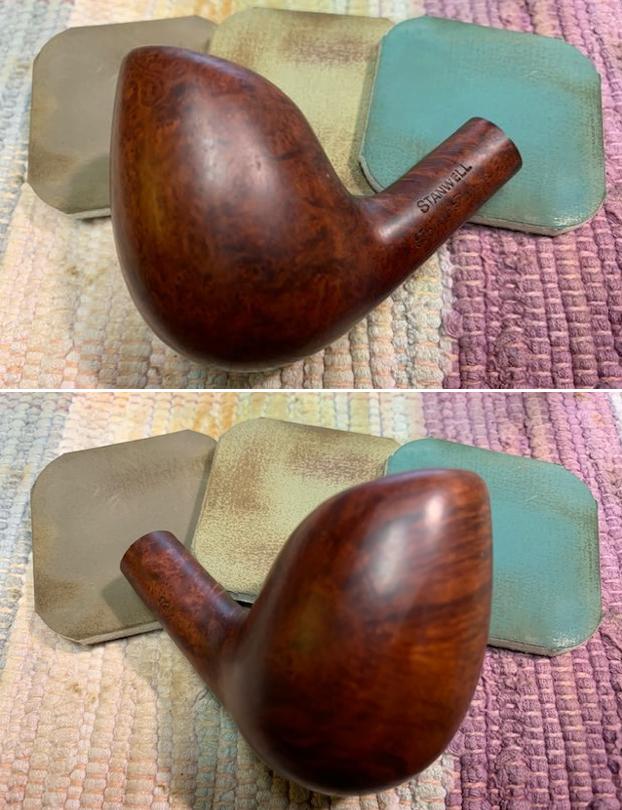
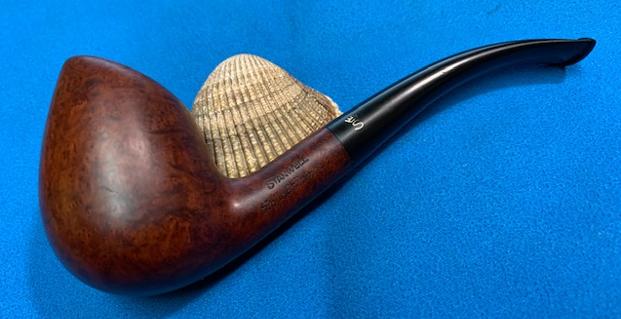
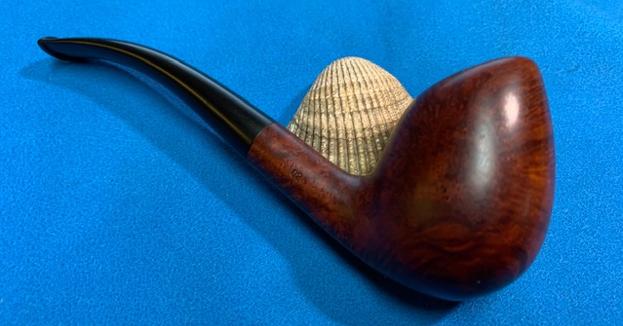
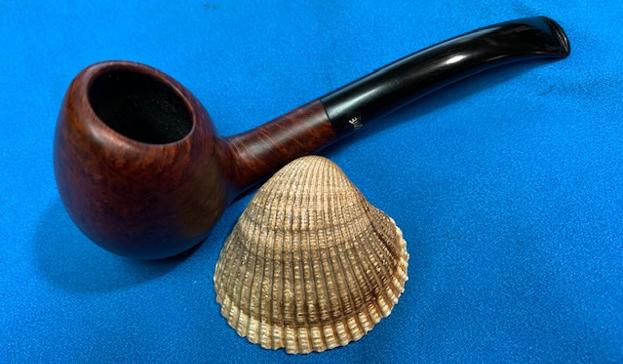
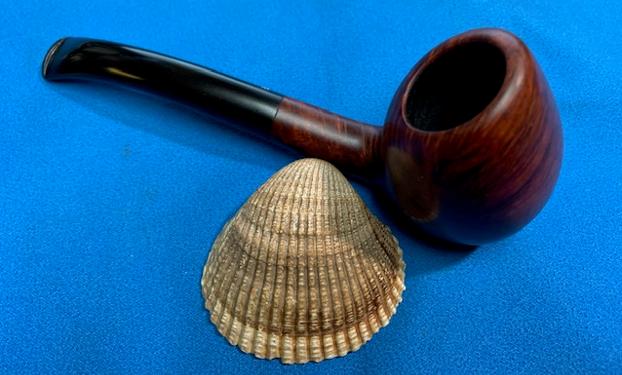
Look at the Birdseye Grain on this Stanwell Royal Prince 02 Bent Egg


Blog by Steve Laug

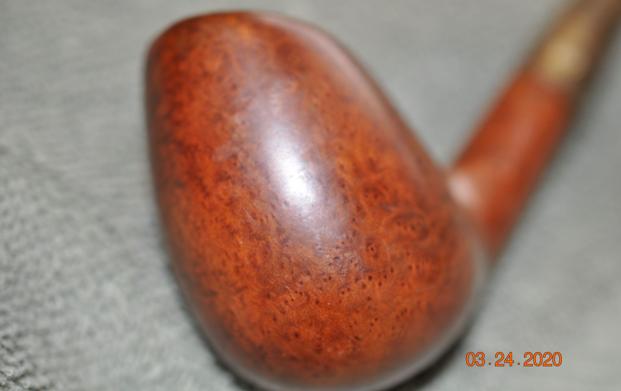
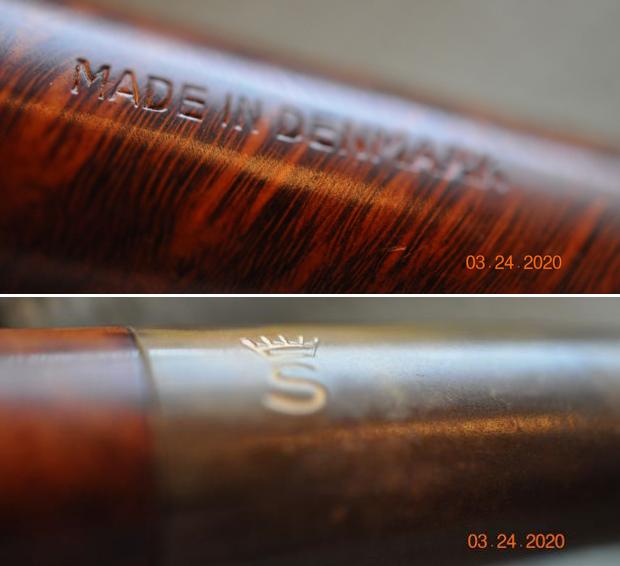
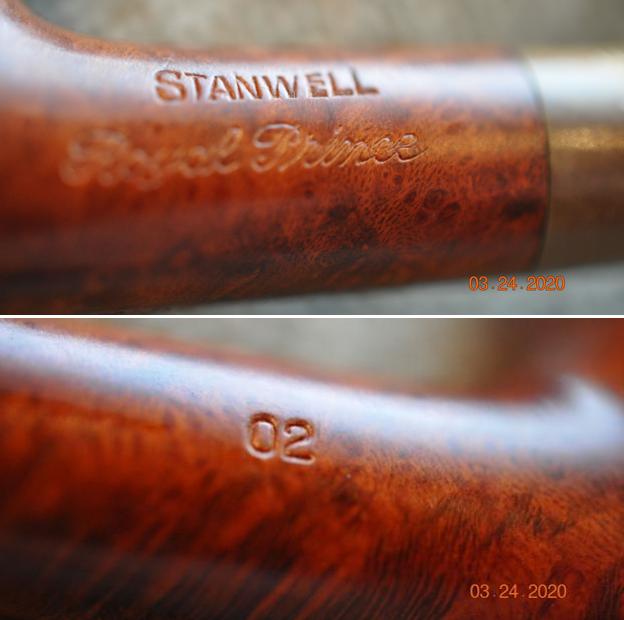
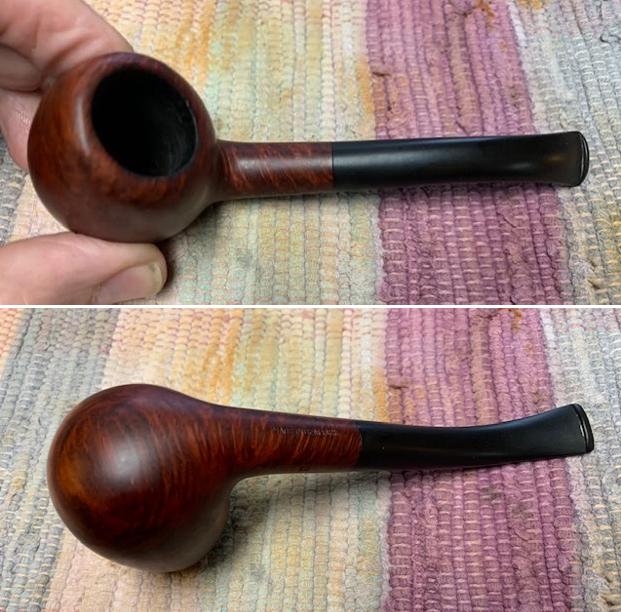
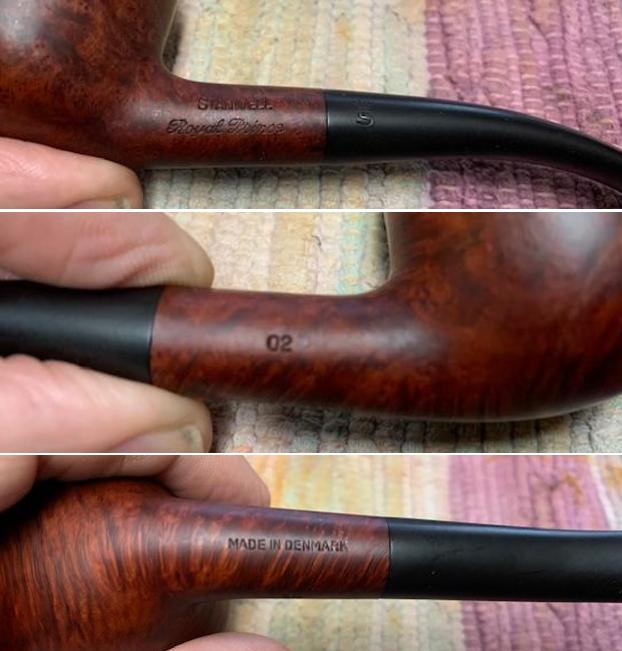
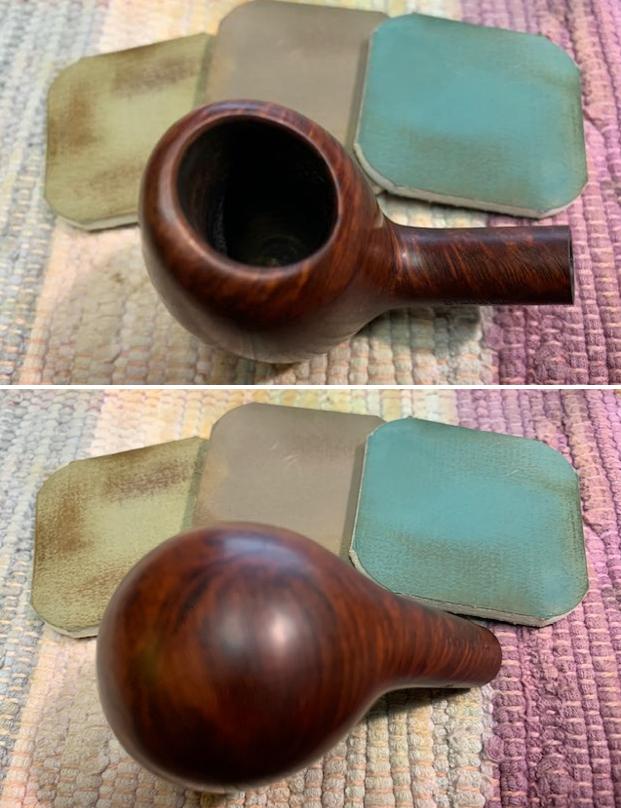
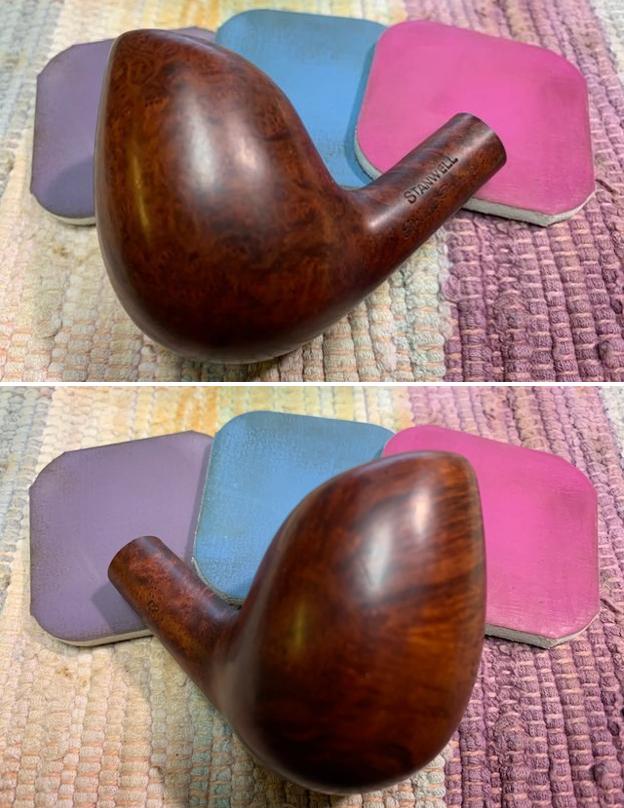
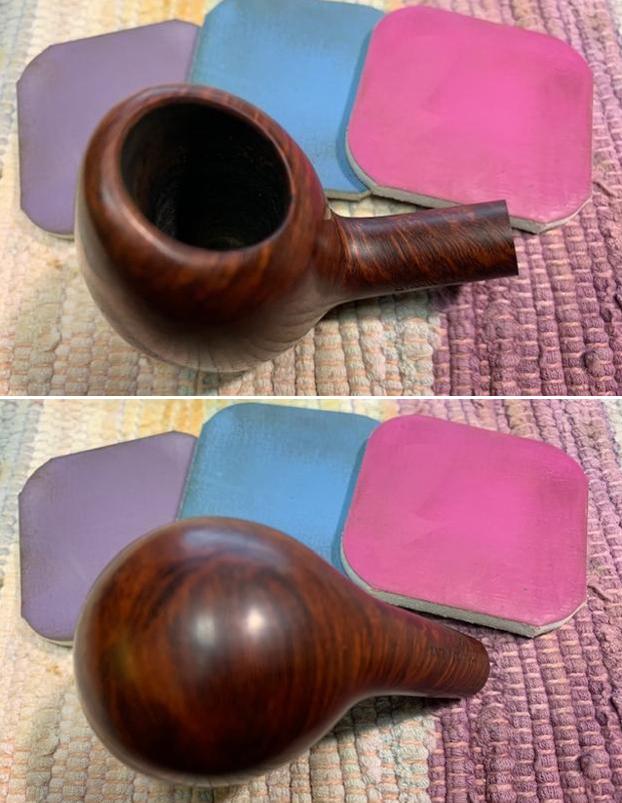
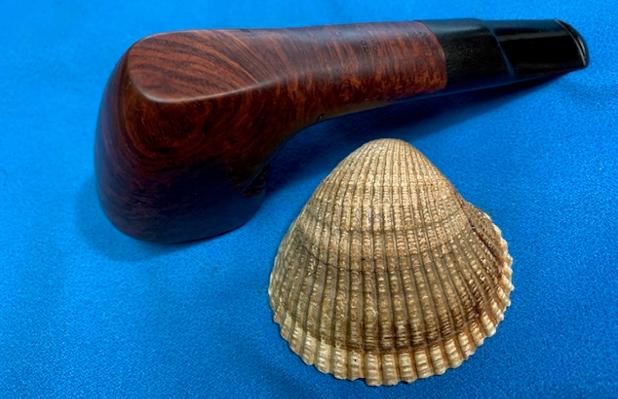
I am enjoying an evening free to work on a few pipes. The next pipe on the table came from an online auction on 02/18/21 in Upland, California, USA. Even though the finish was a dirty and worn it had some amazing grain showing through the grit and grime of the years. On the left side of the shank it was stamped Stanwell [over] Royal Prince. On the right side it is stamped with the shape number 02. On the underside it is stamped Made in Denmark. The pipe is a bent egg and as the shape number identifies. The finish is filthy with grime and oil ground into the briar of the bowl and shank sides. The bowl had a thick cake and there was an overflow of lava on the inner edge of the rim. The stem was a bent vulcanite taper stem that fit snugly in the shank. It had the Stanwell Crown S faintly stamped on the left side of the stem. The vulcanite was oxidized, calcified and had tooth marks and chatter on both sides ahead of the button. Jeff took some photos of the pipe to show its overall condition before he started his cleanup work. He took photos of the rim top and bowl to give a clear picture of the thickness of the cake and the lava and dust ground into the finish of the rim top and edges. There is dust and debris stuck to the walls of the bowl clearly visible in the photos. He also took photos of the top and underside of the stem to show the oxidation, chatter and tooth marks. Jeff took photos of the sides and heel of the bowl to give a picture of what the briar around the pipe looked like. There is some stunning grain under the grime.He took photos of the stamping on the sides of the shank. It read as noted above and is clear and readable. I turned first to Pipephil’s site to get a quick idea of when this pipe line was made and where it stood in the Stanwell hierarchy. I found nothing (http://www.pipephil.eu/logos/en/logo-stanwell.html).

I also turned to Pipedia’s article on Stanwell but it did not add any further information. It is a great read in terms of the history of the brand (https://pipedia.org/wiki/Stanwell).

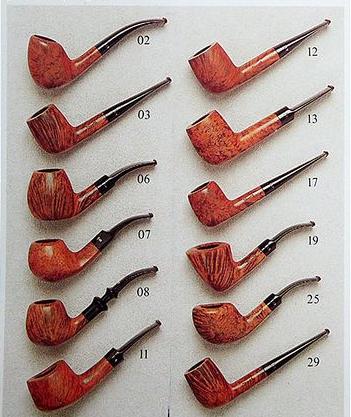
I turned to the section on Stanwell shapes and numbers on Pipedia to see if I could identify the designer (https://pipedia.org/wiki/Stanwell_Shape_Numbers_and_Designers). Finally I found a bit of help there. It stated that the shape number 02 came in two versions – a Freehand, oval bowl and stem designed by Sixteen Ivarsson and a Bent Egg Shaped Bowl sloping top and full mouthpiece. Now I knew that I was dealing with the second. There was also a catalogue photo that I have included below that shows the shape 02 at the top left of the photo.

With that information in hand I knew what I was dealing with in terms of the shape of the pipe. I am pretty sure it is a pipe that was made in the 80s or 90s. I was not certain but that is my educated guess. Now it was time to work on the pipe.

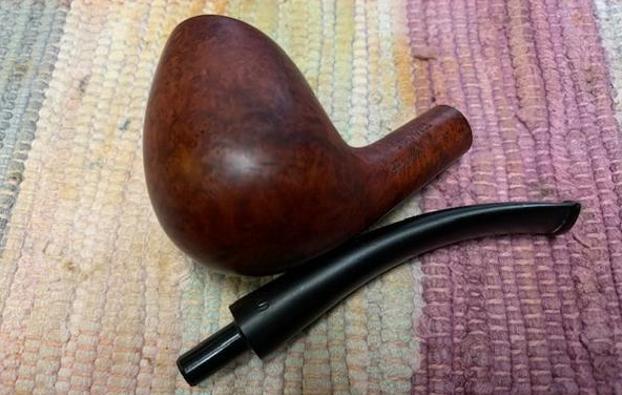
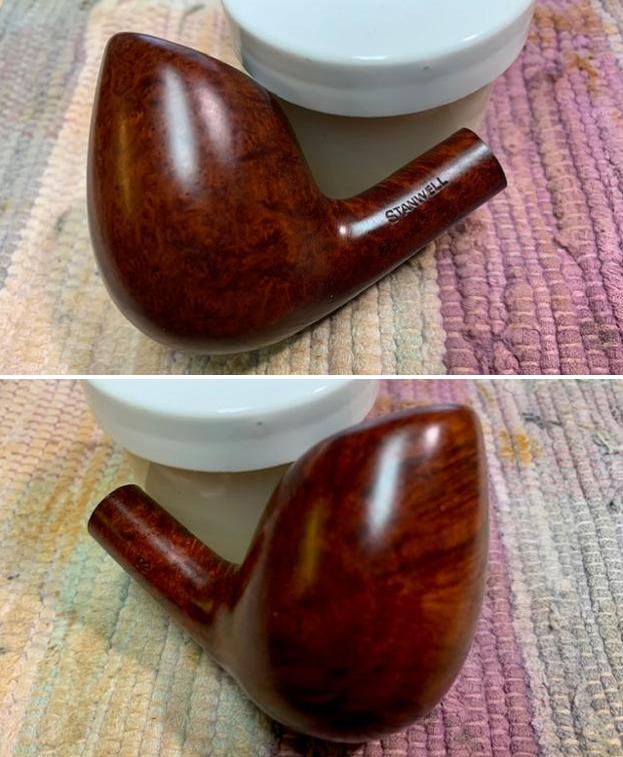
Jeff had reamed the bowl with a PipNet Pipe Reamer and cleaned up the remnants with a Savinelli Fitsall Pipe Knife. He scrubbed the exterior of the bowl with undiluted Murphy’s Oil Soap with a tooth brush. He worked over the debris on the rim top and was able to remove it. He rinsed it under running warm water to remove the soap and grime. He cleaned out the inside of the shank and the airway in the stem with alcohol, cotton swabs and pipe cleaners. He soaked the stem in Briarville’s Pipe Stem Deoxidizer and rinsed it off with warm water. He scrubbed the stem with Soft Scrub and cotton pads to remove remaining oxidation on the ferrule and the stem. He rinsed it with warm water and dried it off. I took photos of the pipe once I received it. It really looked good. The rim top and the inner edge of the rim showed some nicks and marks after the cleaning. The stem had a few small tooth marks and chatter on both sides near the button. I took photos of the stamping on the sides of the shank. It was clear and read as noted above.I removed the stem and took a photo of the pipe to give a sense of the whole. I decided to address the damage to the inner edge of the bowl first. I used a folded piece of 220 grit sandpaper to smooth out the damage and clean up the edge. I was pleased with the reshaped rim top and edge. I polished the briar with micromesh sanding pads – dry sanding with 1500-12000 grit pads and wiping it down after each pad with a damp cloth. I rubbed the bowl and shank down with Before & After Restoration Balm. I worked it into the surface of the bowl sides and shank with my fingertips. The product works to clean, enliven and protect the briar. I let the balm sit for 15 minutes and then buffed with a cotton cloth to raise the shine.I “painted” the stem surface on both sides with the flame of a lighter to lift the tooth marks. I was able to lift all of them on the underside of the stem but one of them on the topside remained. I filled it in with clear super glue. Once the repair cured I smoothed it out and also the tooth chatter on the underside with 220 grit sand paper. I started the polishing with 400 grit wet dry sandpaper.I touched up the stamping on the top of the stem. It was a Stanwell Crown S logo. Parts of it were faint but I was able to get some of the stamping to show up with the Paper Mate Liquid Paper White.I polished the vulcanite stem with micromesh sanding pads – 1500-12000 grit pads. I wiped it down with a damp cloth after each sanding pad. I used Before & After Pipe Polish – both Fine and Extra Fine to further polish the stem. This beautiful Stanwell Royal Prince Sloped Bent Egg with a taper vulcanite stem is a great looking pipe now that it has been restored. I put the stem back on the bowl and carefully buffed the pipe with Blue Diamond on the buffing wheel using a light touch on the briar. I gave the bowl and the stem multiple coats of carnauba wax on the buffing wheel and followed that by buffing the entire pipe with a clean buffing pad. I hand buffed the pipe with a microfiber cloth to deepen the shine. The finished Stanwell Royal Prince Bent Egg fits nicely in the hand and feels great. Give the finished pipe a look in the photos below. The dimensions of the pipe are Length: 6 inches, Height: 2 inches, Outside diameter of the bowl: 1 ¼ inches, Chamber diameter: ¾ of an inch. The weight of the pipe is 46grams/1.62oz. I will be adding it to the rebornpipes store shortly in the Danish Pipe Makers Section. Thanks for reading this blog and my reflections on the pipe while I worked on it. There are many more to come!