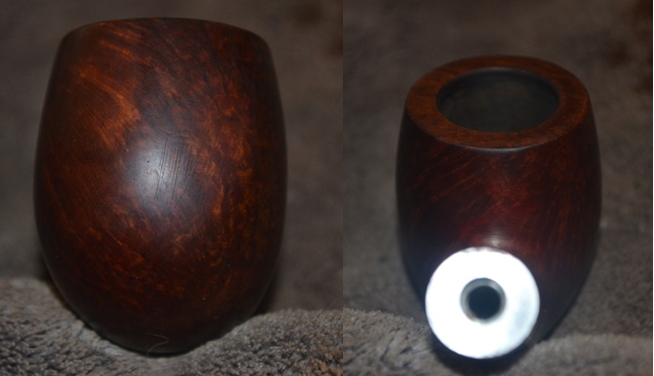
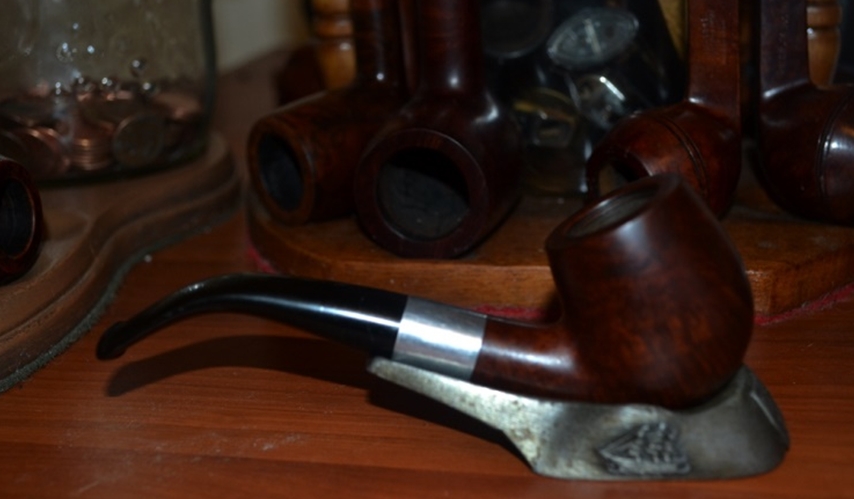
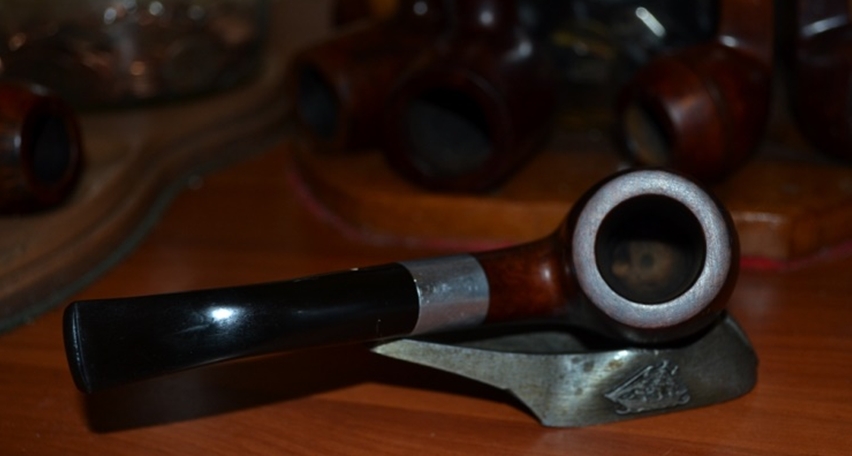
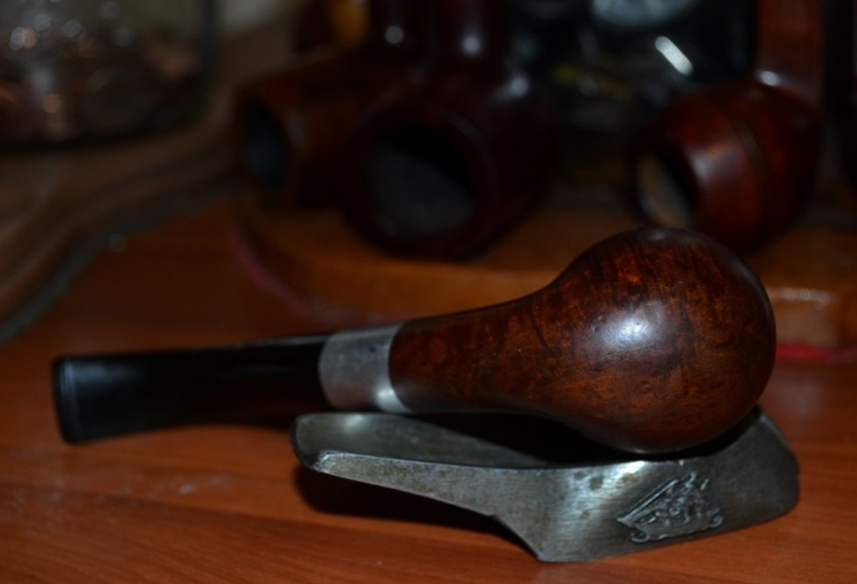
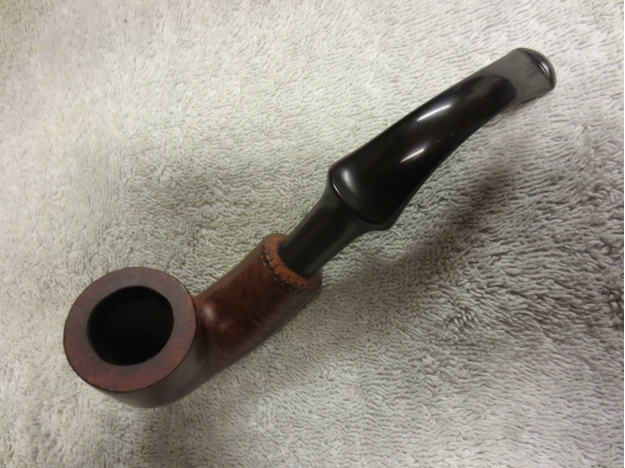
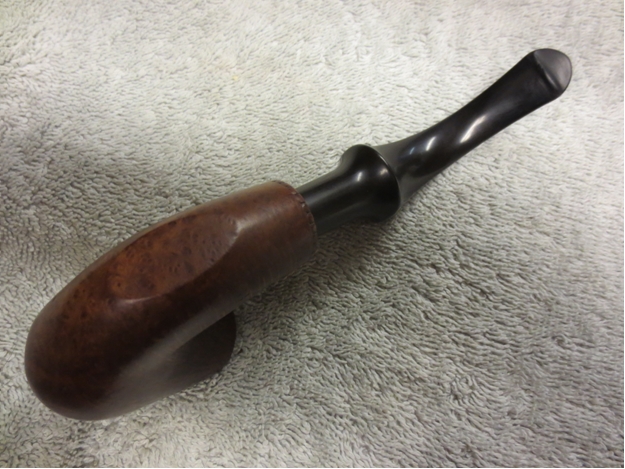
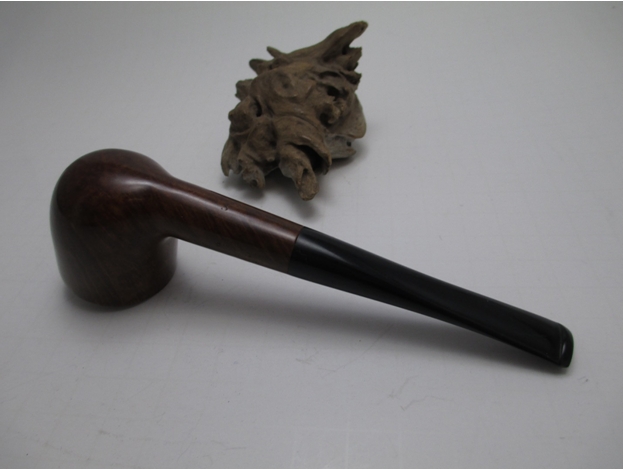
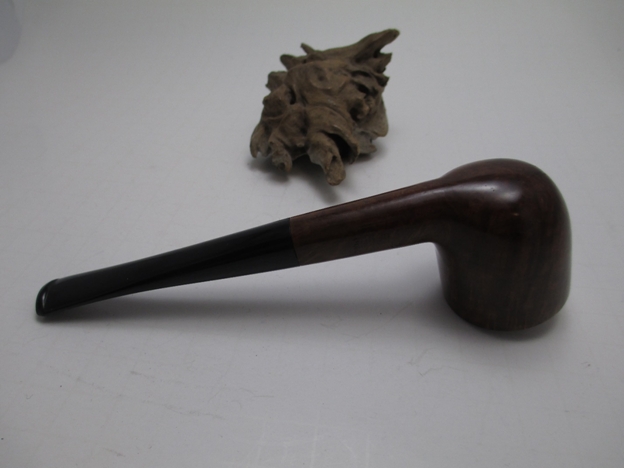
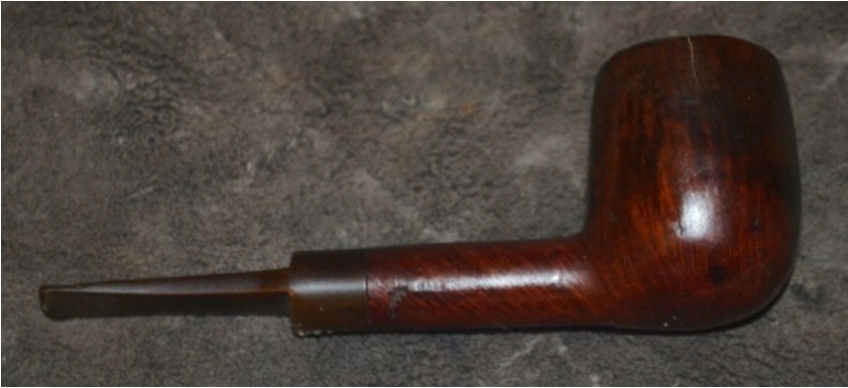
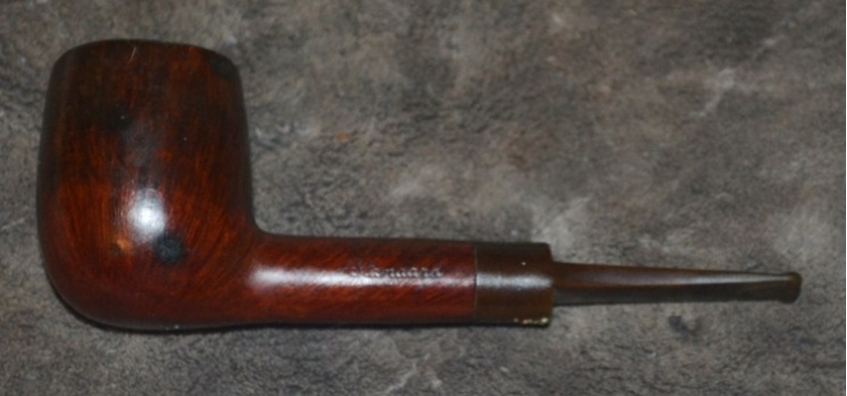
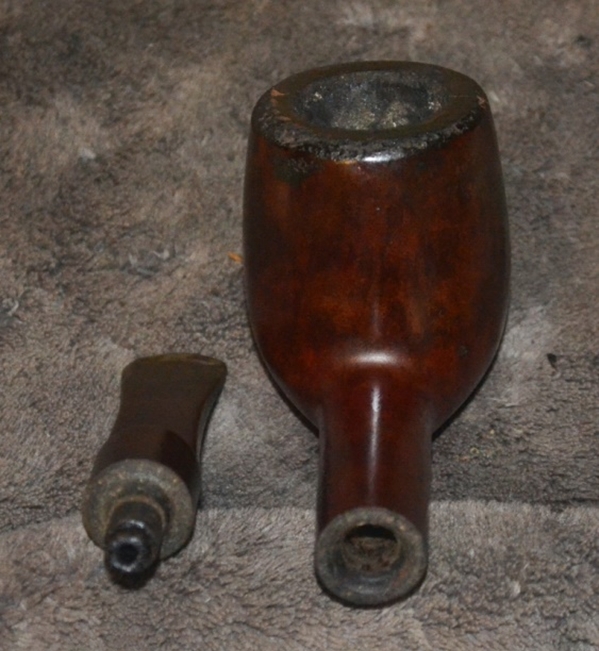
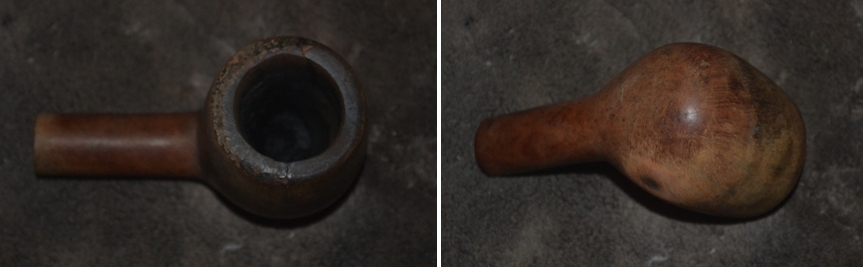
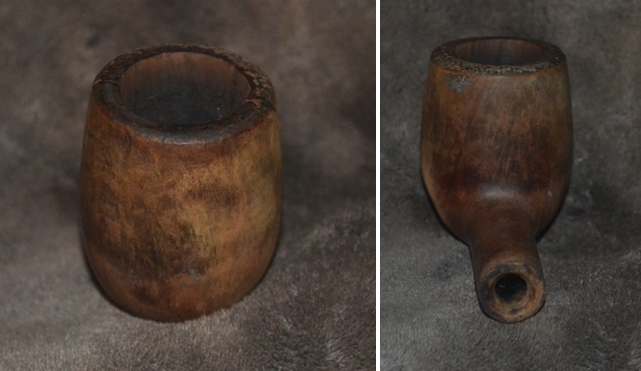
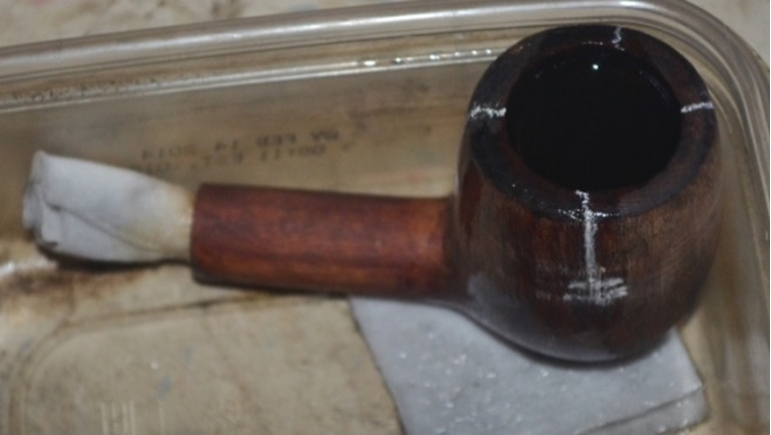
Author Archives: rebornpipes

Reviving a Peterson Dunmore 79 with my Son in Law


Blog by Steve Laug

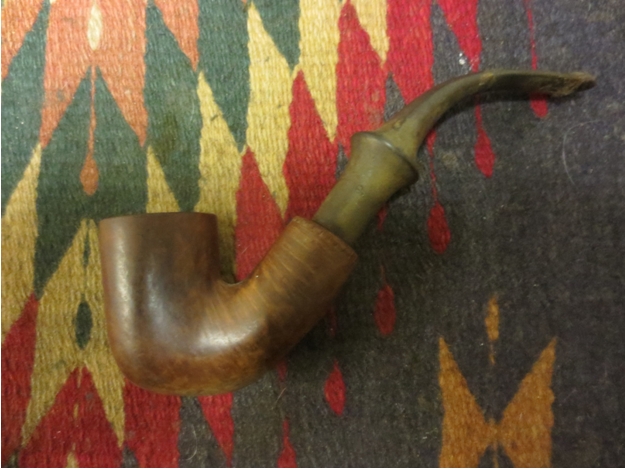
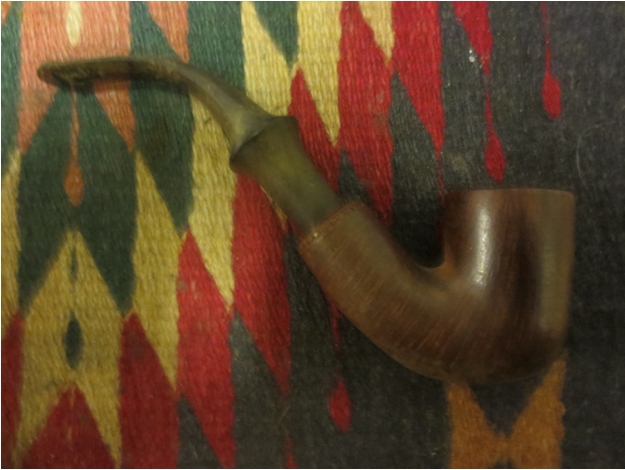
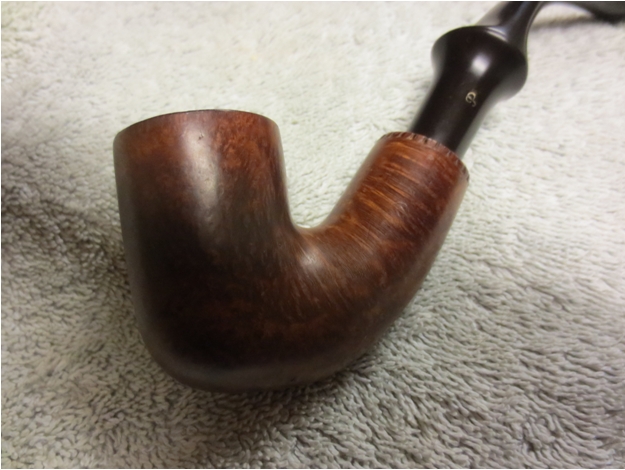
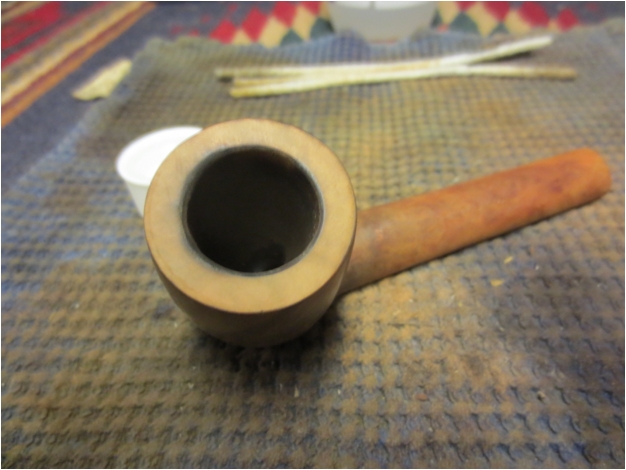
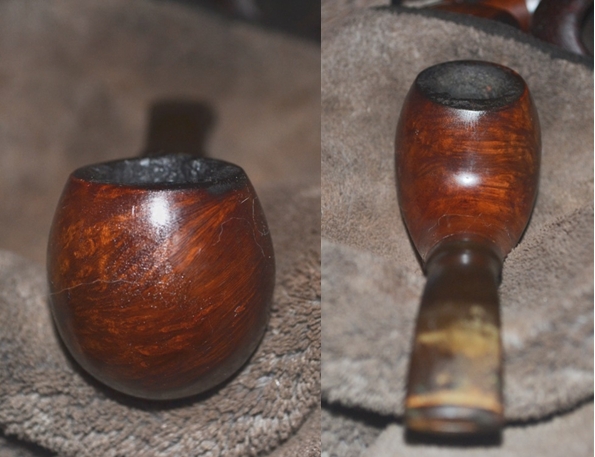
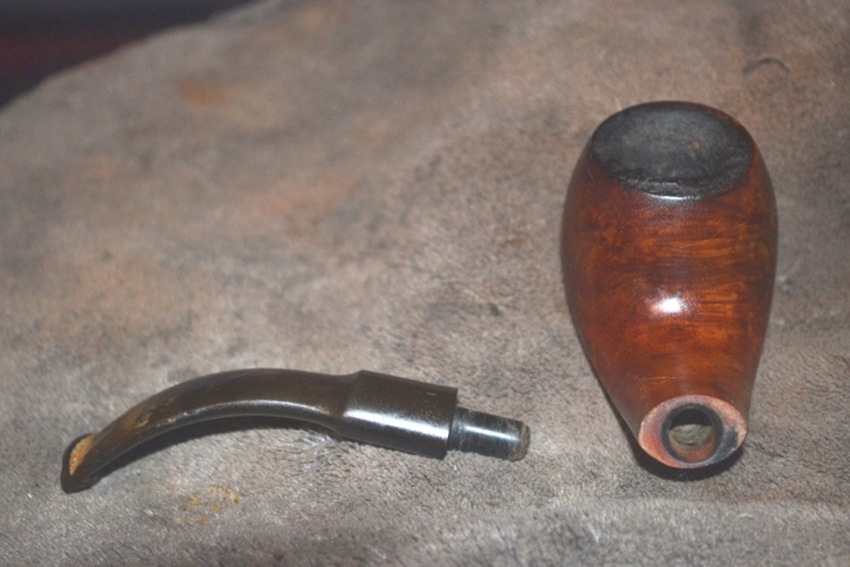
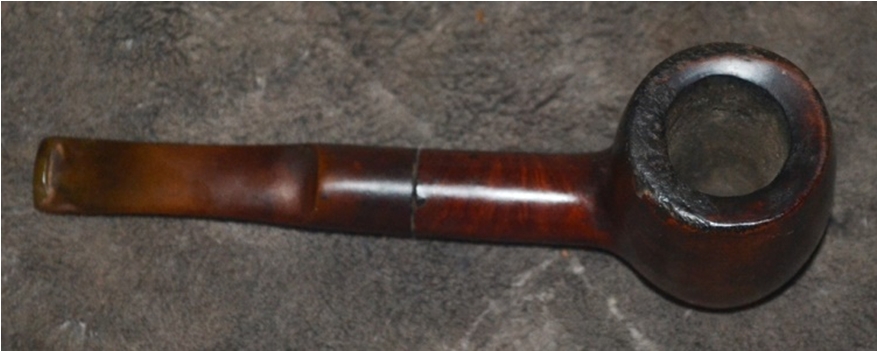
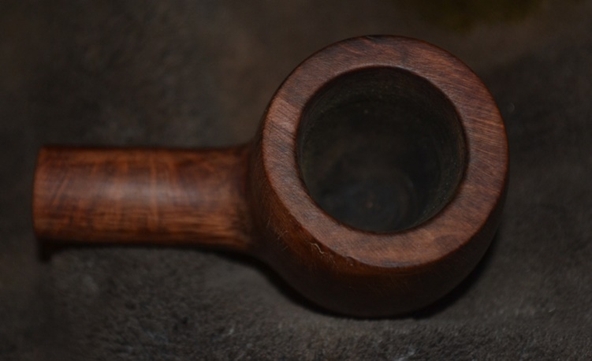
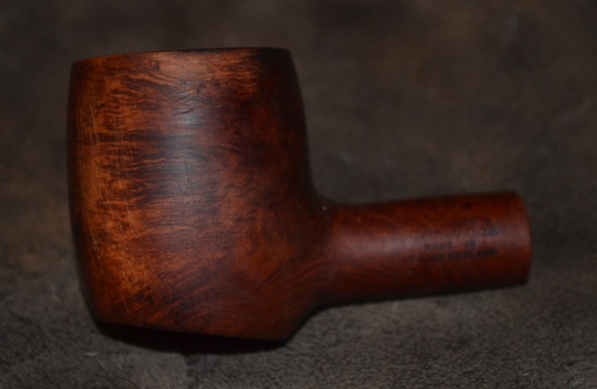
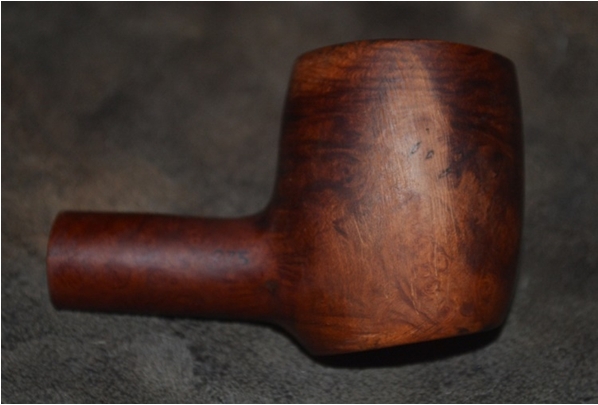
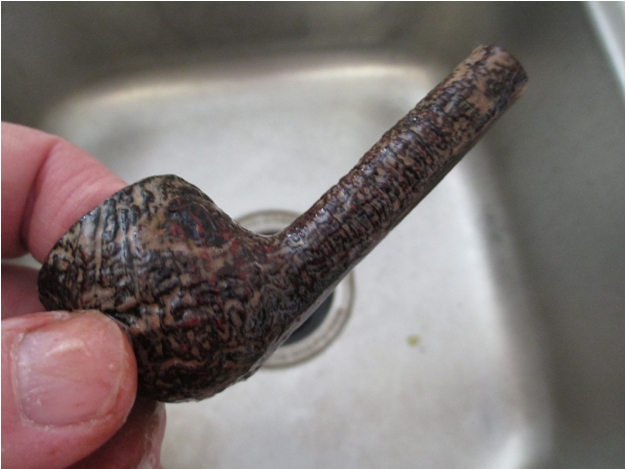
This past weekend my son in law came over with the Peterson Dunmore pipe that he had purchased on a recent pipe hunt in the US. He picked it up for $15USD so it was a good purchase. We finally got around to working on it. In a previous post on the Dunmore line I had found that the line from Peterson really is a stripped down pipe. The one that we worked on this weekend was in essence a system pipe. The lack of a ferrule is made up for by a stylized carving around the shank end. The stem sits snugly against the end of the shank but is not flush with the diameter of the shank. The saddle on the stem has a slightly different flair than a regular Peterson pipe. It had a Plip stem. It bore the stamping Peterson’s over “Dunmore” on the left side of the shank and Made in the Republic of Ireland and the number 79 on the right side of the shank.Dun1

Dun2

Dun3

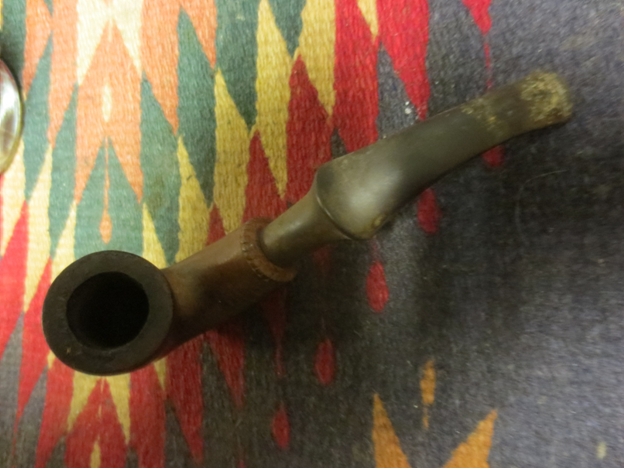
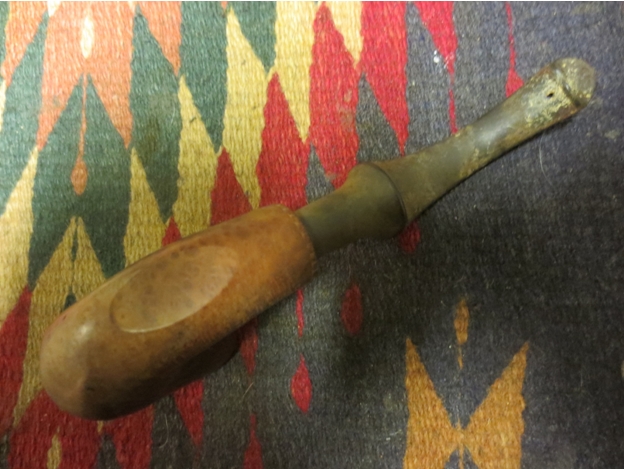
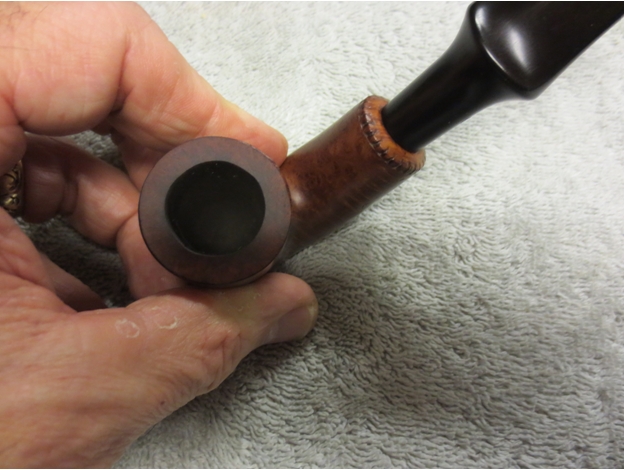
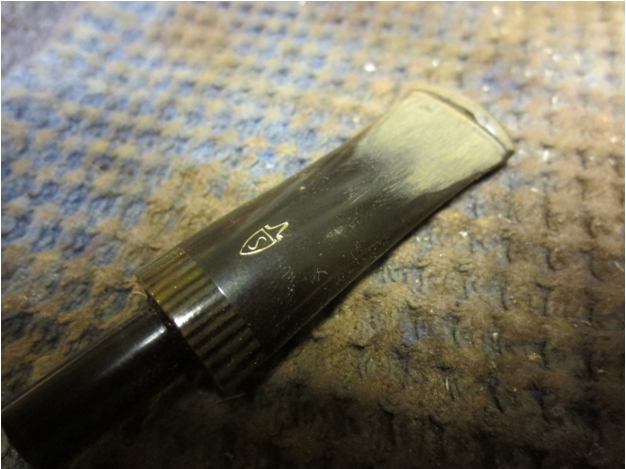
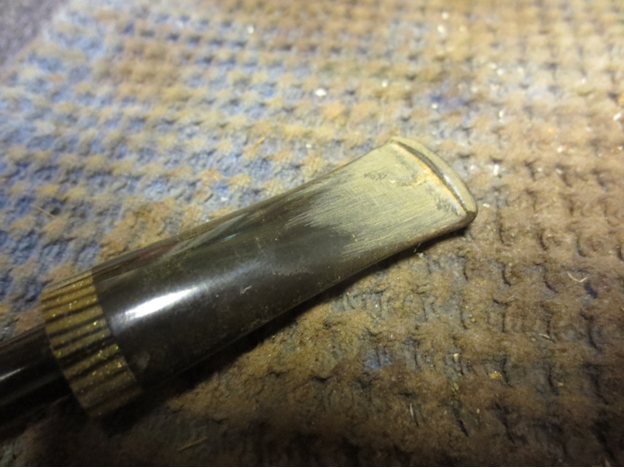
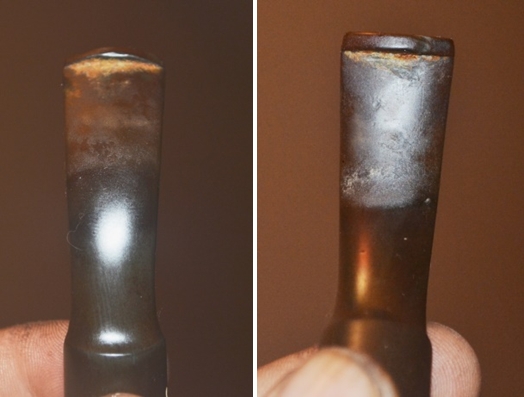
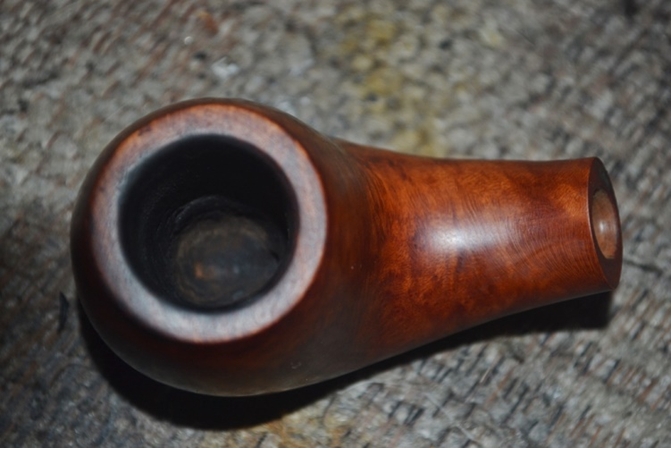
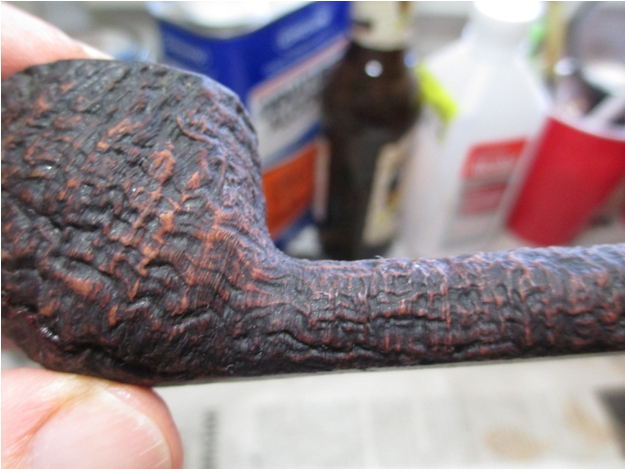
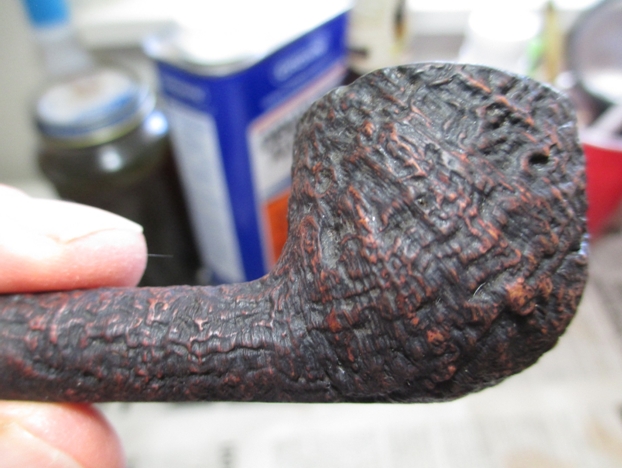
Dun4 The pipe was in pretty decent shape under the grime and tars on the bowl and rim. It had some beautiful birdseye grain under the grime that would really stand out with a bit of work. The rim was damaged along the back outer edge with small nicks. The build up on the rim was hard and uneven. The bowl itself was out of round and would need to be adjusted. The stem was oxidized but under the oxidation on the saddle it bore the stylized P stamp. The top of the stem near the button had a few small bite marks and some tooth chatter. The underside of the stem near the button had a pin hole in it that would need to be patched.Dun5

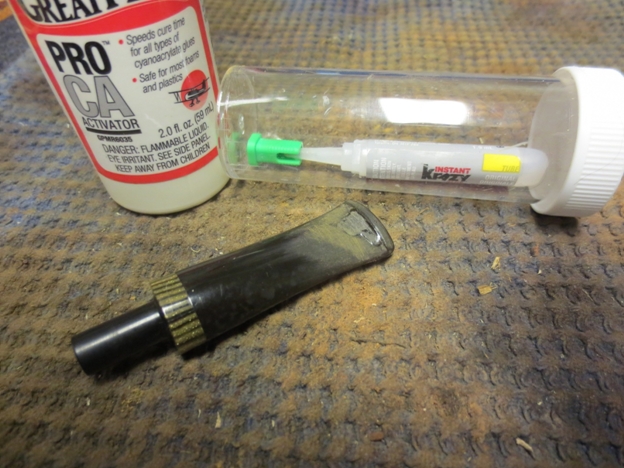
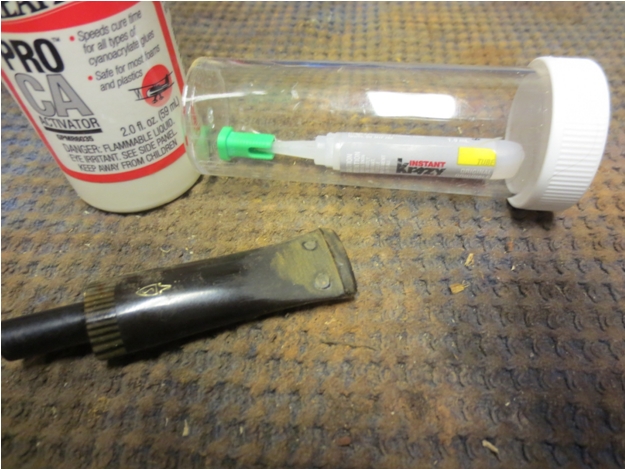
Dun6 While my son in law, Lance worked on the bowl scrubbing and cleaning it I worked on the stem. I sanded it with 220 grit sandpaper to clean up the tooth marks. I wiped it down with alcohol to clean the areas around the hole. I daubed Vaseline on a pipe cleaner and inserted it from the tenon end of the stem and then used black superglue to repair the hole. I gave it several coats of glue to build up the repair, sprayed it with accelerator and let it dry between applications. Once I had the patch solidly in place I set it aside and let it cure. After curing for about 30 minutes I sanded the patch with 220 grit sandpaper to blend it into the surface of the stem. I sanded it with a medium and a fine grit sanding sponge to remove the scratches and further blend it. Dun7

Dun8

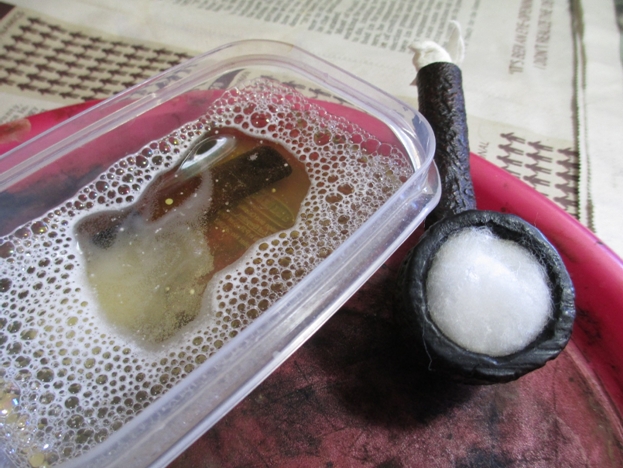
Dun9 Lance worked on the bowl while this was going on. He washed down the bowl with acetone on cotton pads to remove the grime and the remaining finish on the pipe. He softened the buildup on the rim surface and then lightly topped the bowl to remove the damage and the buildup. Once it was smooth, he sanded it with a fine grit sanding sponge and then wiped the bowl down with another wash of acetone.Dun10 We gave the bowl a coat of medium walnut stain mixed with Danish Oil and rubbed it onto the bowl and off again with a soft cotton pad. The bowl looked good when I had finished wiping it down and buffing it with a shoe brush. The grain is quite stunning.Dun11

Dun12

Dun13 I buffed the stem with red Tripoli and White Diamond to remove more of the oxidation. I rubbed it down with some Obsidian Oil and set it aside for the pictures below. At this point in the refurbishing the stem is looking quite good. I still need to sand with micromesh pads and then reapply the gold in the P stamp on the left side of the stem.Dun14

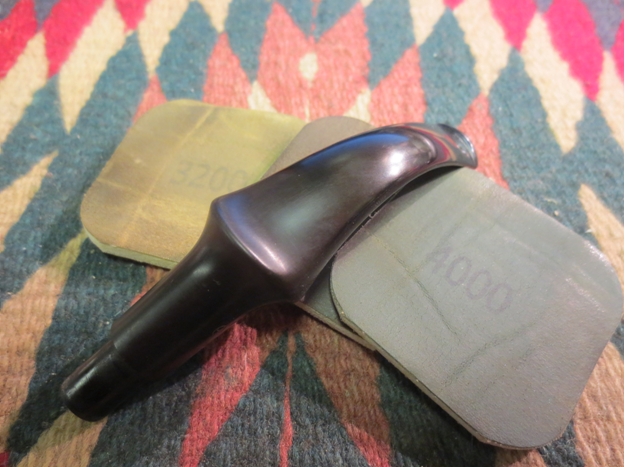
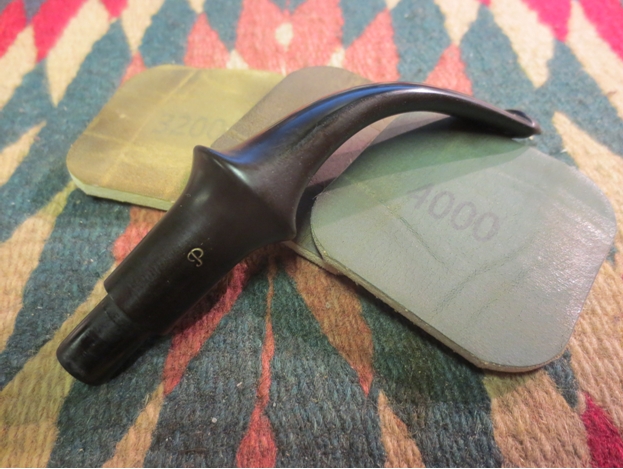
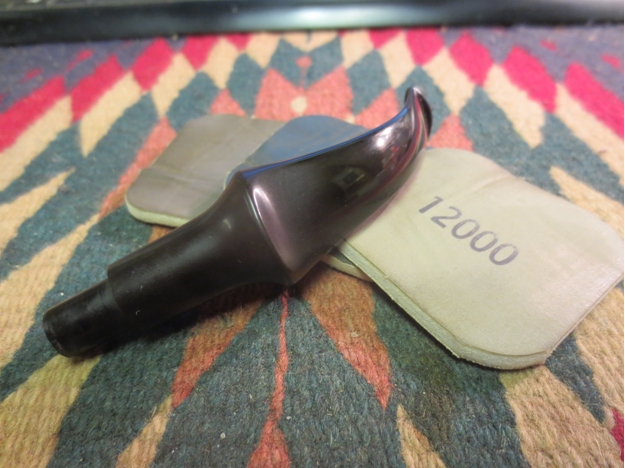
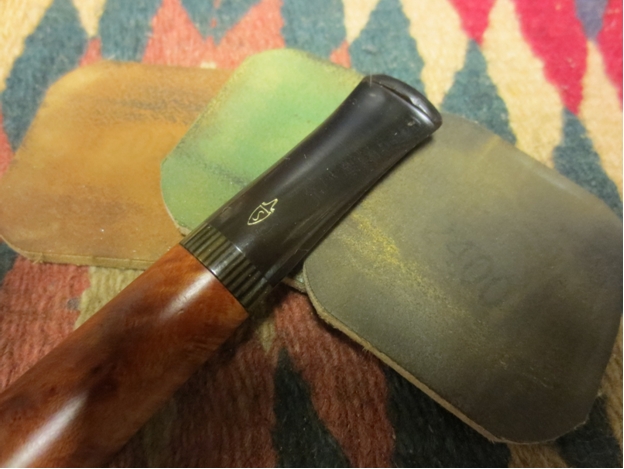
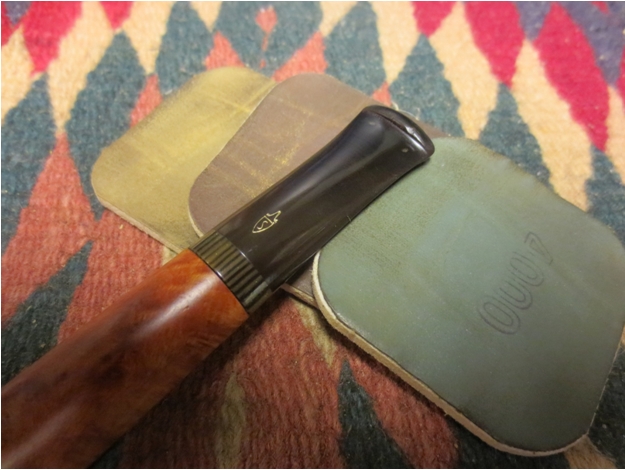
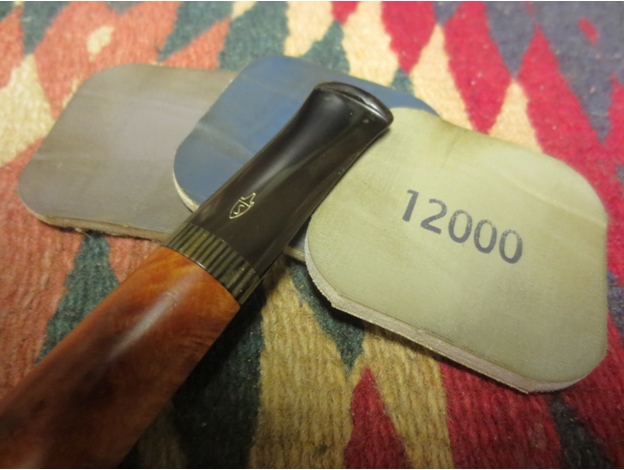
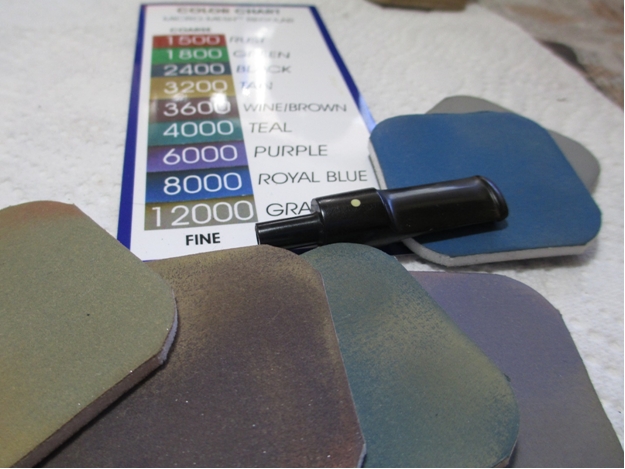
Dun15 I wet sanded the stem with 1500-2400 grit micromesh pads and then dry sanded with 3200-12,000 grit pads. In between each set of three pads I wiped the stem down with Obsidian Oil. I finished by buffing the stem with White Diamond and then gave it multiple coats of carnauba wax and buffed it with a soft flannel buffing pad.Dun16

Dun17

Dun18 After sanding it with 3200-4000 grit pads I used a gold paint and applied it to the P logo on the stem and then sanded it again with the same three grits of pad.Dun19

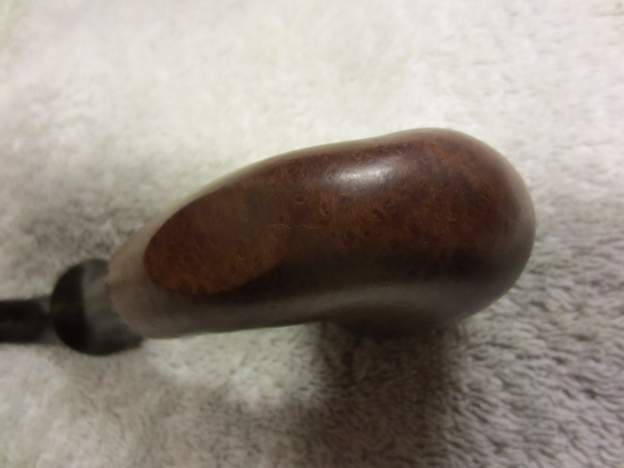
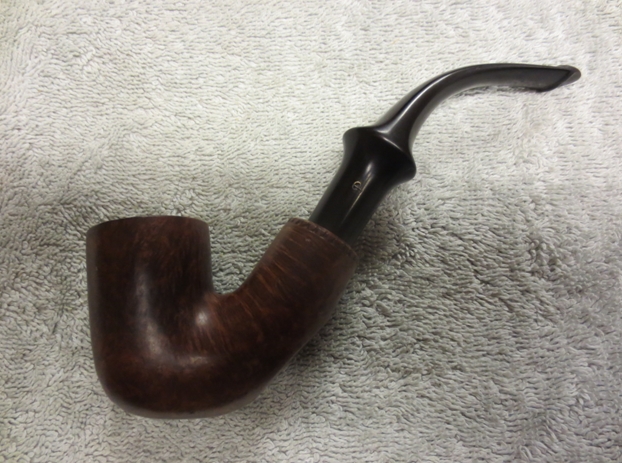
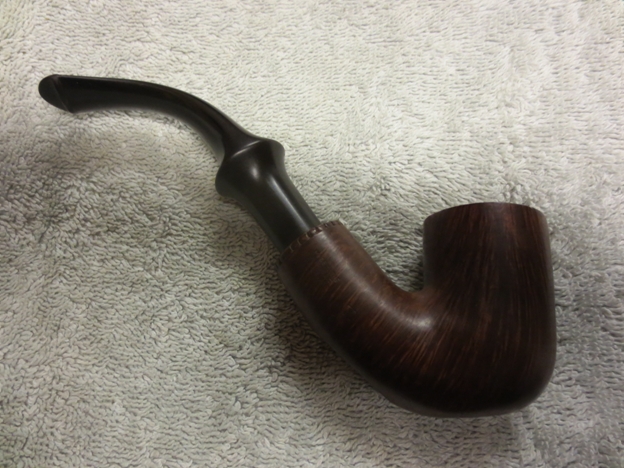
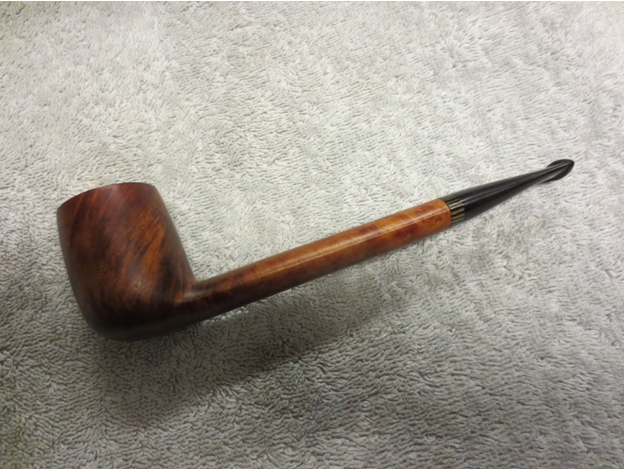
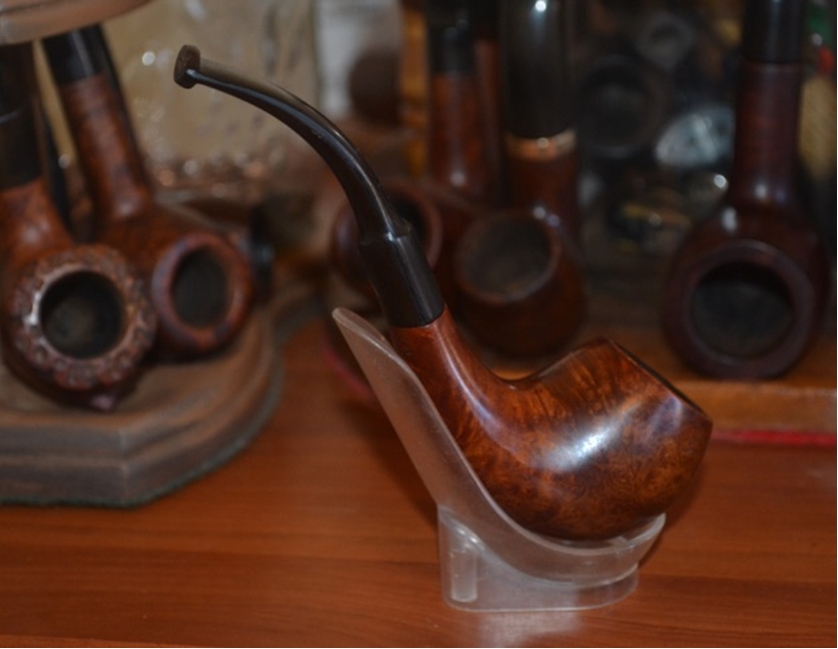
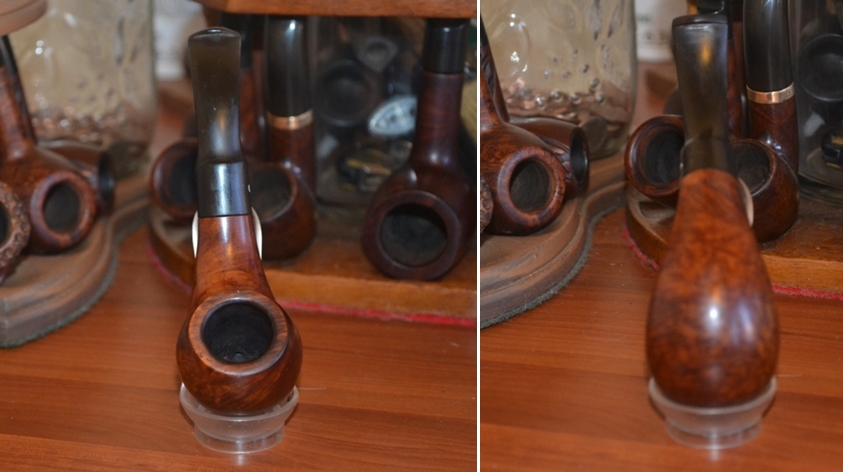
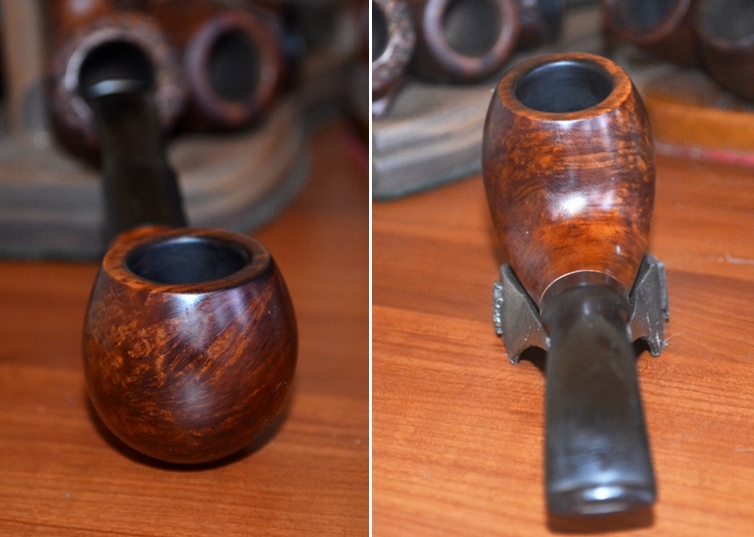
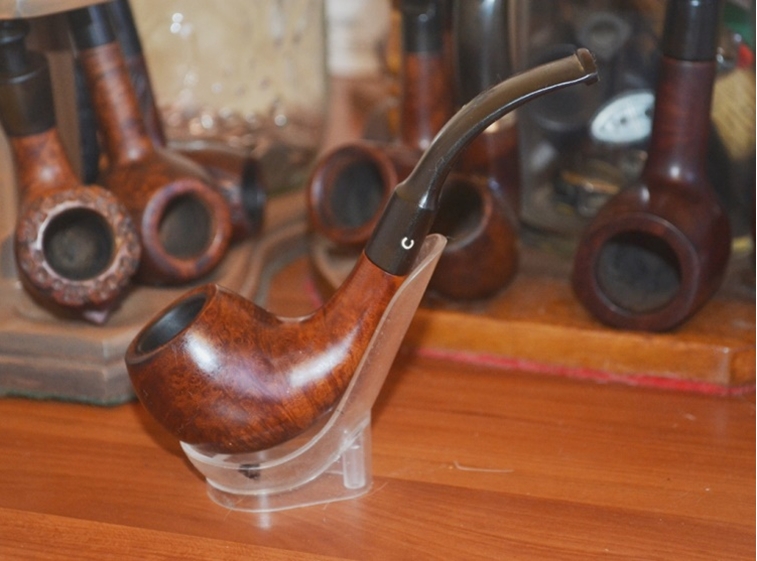
Dun20 I put the stem back in the shank and buffed the entire pipe with carnauba wax and with a soft flannel buffing pad. The finished pipe is shown below. The first four photos give a close up look at the bowl so that you can appreciate the beautiful grain on the pipe. The last four photos show the pipe in its entirety. It is truly a stunning piece of briar with no fills or pits. It is ready for its inaugural smoke by my son in law. It looks as good as new and the stunning birdseye grain gives the pipe a rich look. I look forward to hearing what he thinks of his restored pipe and even more what he thinks once he has smoked it.Dun21

Dun22

Dun23

Dun24

Dun25

Dun26

Dun27

Dun28

A Review – A Larry Roush Bent Apple


Blog by Steve Laug

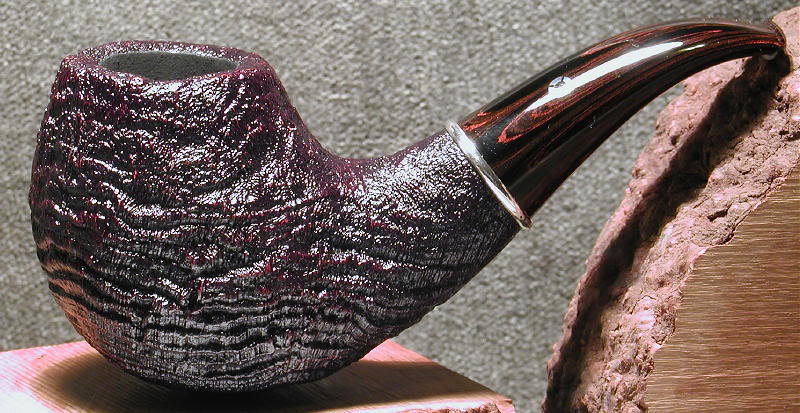
roushlogo For a lot of years I wanted a Roush pipe. The chunky style and look of Larry’s pipes is instantly recognizable. There is no one who makes a pipe like his. His take on classic shapes always goes a different direction and to me there was always something about them that made me want to own one. Quite a few years ago now, I was in Chicago for the Chicago Pipe Show and was talking with a fellow pipe who had a Roush that he was selling. It was lightly smoked and was in great shape. We struck a deal and the pipe was mine. The previous owner had smoke Virginias in the pipe – good aged Virginias that he collected as a hobby. He gave me a bowl of Balkan Sobranie Virginia No. 10 for my inaugural smoke in the pipe. I sat and enjoyed that bowl for a good long time while sipping some dark roast Costa Rican coffee. From that moment I fell in love with that pipe. It delivered an amazing smoke. The first two photos of the pipe come from Larry’s site.OLYMPUS DIGITAL CAMERA I enjoy learning a bit about the carver and his philosophy of pipe making of my handmade pipes. I find that learning this background information gives me a feel for the pipe that adds another dimension to the smoking experience. In terms of information on Larry’s pipes, I turned to his website and was pleased to find a well written article regarding his pipes. I have included the following from Larry’s site that set the stage for me in terms of enjoying this pipe. The link to the page itself is: http://roushpipes.com/About.aspx
larryroush Larry writes the following:

“The following words are those of a pipe maker of course, but in essence they are those of an artist – myself. I think most pipe makers view themselves as artists akin to those who sculpt in stone or wood, but confining their work to a single subject: pipes.”

“For myself, what I’m interested in, and what I think other skilled pipe maker are interested in, is quality wood. The reason is quite simple – I am searching for the two primary qualities in a pipe: beauty and smokability. My primary source for Briar at the present time is Italy, and I am very pleased with its esthetic value and smoking qualities. Of course different wood from different growing areas appear different insomuch as grain is concerned. Regardless of the source, when briar is aged and air cured properly the smoking qualities will be the same.”

“Every pipe maker sets his own standards and I have to look at the piece of briar to determine whether it will be a smooth pipe or not. Just because it is clean (without pits) doesn’t mean it will become a smooth ROUSH. For a carved pipe, I select a block that will support the size pipe I want to make, position the template and draw the outline. In contrast, the crafting of a smooth pipe is unique in character and requires a substantial amount of time. Grain is a primary consideration, and the point beyond shape is where the eye of the artist is critical. I don’t tell the briar block what I want, the block tells me. It’s the grain that determines the shape not the template. I have always done all my own Gold and Silver work and use only solid Silver and 14k Gold. I really like the combination of wood with silver and gold. I think it gives a very unique touch. Sometimes I use fossilized Walrus tusk or Mammoth tusk for inlays. This comes predominantly from Alaska and is found as a by-product of mining operations there.”

“I have always been demanding when it came to the pipes I smoked personally. As a result it took many years to perfect my finishing, curing, and carving techniques. I keep that in mind when I make a piece. If the finished pipe is not one I would keep for myself then it is just not good enough for sale. Being my own worst critic, not wanting to settle for less, has always been the most difficult part of pipe making.”

“As a pipe maker I make every effort to turn out a quality pipe, regardless of shape or finish. This often involves painstaking and meticulous work, unknown to the buyer, but incorporates features (see link below on expectations from a Roush pipe) that make the ROUSH pipes what they are today. Mike Butera and I once had a discussion on this very topic and determined that these many things we do relating to fit and finish, and attention to detail are simply the standards we set to make quality pipes. To short cut or deviate from these standard would not only be cheating the smoker and collector, but cheating ourselves. On a personal note, I feel fortunate to have this gift, this ability to see deeper than the surface of a fine piece of briar and respond by creating pipes that are shared and appreciated by others. I’m eternally grateful for three things: the insight to recognize in myself a talent and the courage to develop it; secondly, for the assistance and direction of Mike Butera, and third for the opportunity to take an idea, a simple thought, and turn it into something beautiful and useful. It is my hope and wish that you enjoy smoking and owning my pipes every bit as much as I enjoy making them. –Larry Roush” OLYMPUS DIGITAL CAMERA

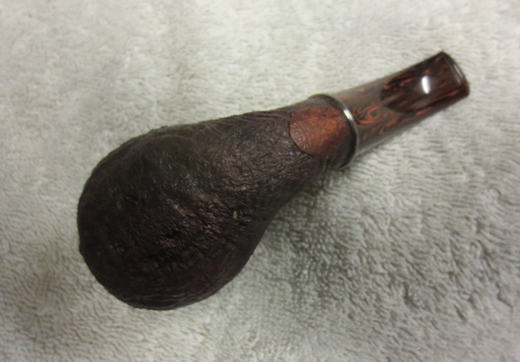
larryroush1aMy initial impressions of the pipe really include what drew me to this piece of pipe art enough to want to add it to my collection and make it a part of my pipe journey. It is a short, squat 5 inches long and 2 inches tall. The tobacco chamber is 1 1/2 inches deep and 3/4 inches in diameter. The silver band is smooth, narrow, handmade ring that adds a simple contrast to the dark oxblood sandblast. It is integrated into the shank. The stem is handmade from Cumberland and its short taper has a typical Roush look. On the left side of the top of the stem there is a silver Roush logo inlay.

When I picked up the pipe it was an impressive piece. The workmanship of the pipe and colour and feel of it in my hand captured me. I remember sliding the pipe out of the sleeve and enjoying the look and feel of this pipe. It was and is beautiful. It had the faint aromas of the Virginias that its previous owner had smoked, yet it was clean and ready for me. The sandblast is deep and rugged giving the bowl a tactile feel in the hand. It is a tight ring pattern that travels horizontally around the bowl with sandblasted birdseye on the top of the rim and the shank. Examining it up close it is obvious that it is blasted with a master-hand.

There is a smooth, oval medallion of briar on the bottom of the shank next to the silver band that provides a spot for the stamping. It is stamped S2 over an arched Roush. Under that is the stamp 1154 over Hand Made over U.S.A. The final stamp in the oval is 2006. The overall flow of the bowl and shank is brilliant and the colours are beautifully matched from rim to the end of the shank. There appears to be a black stain under the oxblood that adds contrast in the rings of the blast. Combined with the swirls of black and red in the Cumberland matches the colour of the stain on the bowl and gives the pipe a dressy look. The silver band on the shank not only separates the texture of the bowl and stem but gives focal point that draws the eye to take in the taper of the stem and the texture of the bowl.Rousha The inner mechanics of the pipe are perfect. The drilling is perfectly executed from the shank and into the bowl – coming out exactly centre in the bottom of the bowl. The airway from the bowl into the mortise is centered. It is smooth in its entrance to the mortise and the mortise itself is also smooth with no rough spot left by drill bit. The end of the shank is sanded smooth and is finished. There is a bevel in the shank end to accommodate the tenon and provide a smooth fit against the shank. The bowl itself is U shaped and smooth from sides to bottom. The air way enters the bowl and is smooth and clean. The draught on the bowl is wide open and effortless.Roushb

Roushc Looking at the stem one is struck by the very typical Roush look. Larry’s stem are easily recognized from a distance. The shaping and flow are typical. It is hand cut out of a Cumberland. It is well tapered with good even angles top and bottom progressing from the shank to the button. The portion of the stem that is put in the mouth is thicker than I normally like but it is still very comfortable. Larry did a great job shaping the stem and capturing a shape that really works with this pipe. The tenon is Delrin that has been inserted into the stem for durability and ease of use. The airway is funneled slightly for a smooth transition from the mortise when it is in place. There is a very minimal gap between the end of the tenon and the base of the mortise. Roushd

Roushe

Roushf The transition where the Delrin meets the Cumberland of the stem is seamless. There is no lip or rough spot at that junction. The draught of the stem is unrestricted and open. When the pipe is put together the draught is effortless. The fit of the stem to the shank is very well done. The button is cut to my liking with a good sharp inner edge and tapered to the tip. It is a thin button compared to most of my pipes but is enough to provide and edge that fits behind the teeth. The slot is oval and funneled to deliver a uniform airway from bowl to button. The inside of the slot is sanded smooth and polished. The airway is absolutely smooth from slot to tenon.Roushg The overall construction of this pipe is very well done. It is light in the hand and in the mouth. It is well balanced and has a great tactile feel when it is cool and as it warms up during the smoking of a bowl. I have smoked the pipe a lot since I got it and enjoyed the fact that it had previously been a Virginia pipe and had been well broken in. That fact made it a very simple pipe to make my own. The shape of the bowl has kept this a good Virginia smoking pipe in my rotation. It delivered a good smoke from the first smoke and continues to do so. It draws well; the lighting has never been a problem and continues to be an effortless smoke. Thanks Larry for delivering a beautiful, well-made pipe that remains a very good smoking pipe to this day. If you can acquire a pipe made by Roush it will not disappoint you and you will find that it will become a favourite in your rack. The craftsmanship of his pipes will make this pipe continue its journey well beyond the years that it is my companion.
Re-stemming a Hardcastle Pot – Andrew Selking


Blog by Andrew Selking

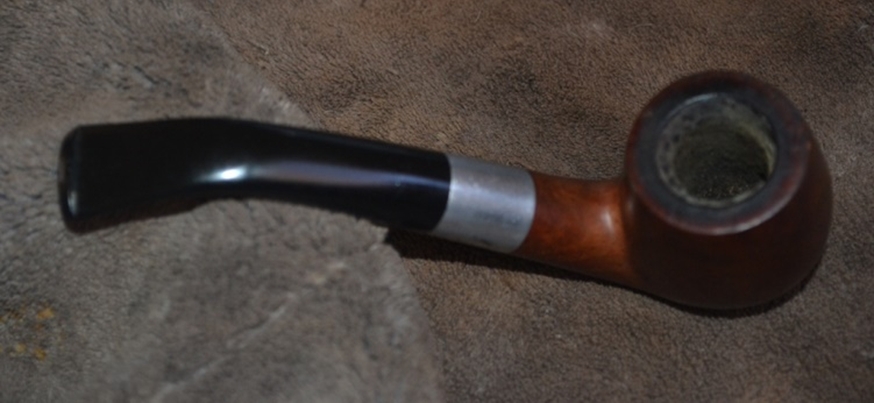
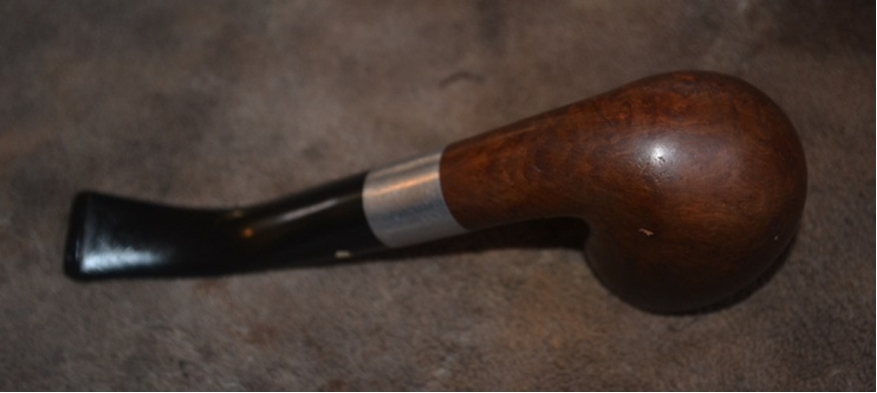
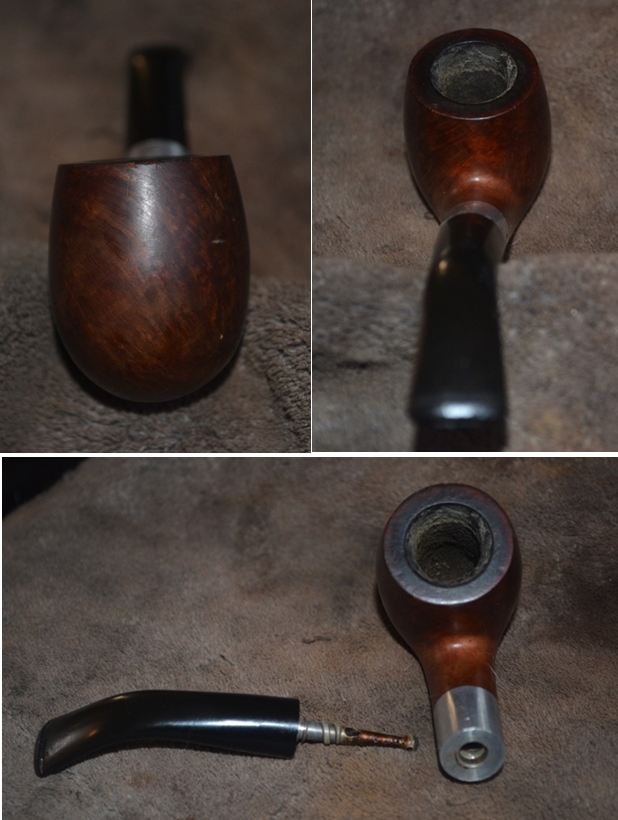
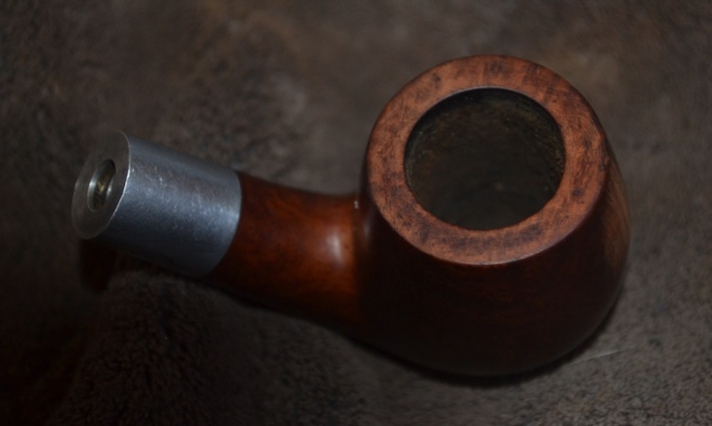
I picked up this nice looking Hardcastle pot, but when it arrived I realized that it did not have the proper stem.Hardcastle1

Hardcastle2 Fortunately Steve bailed me out and sent a couple of likely replacements. The stem that I settled on had a slightly smaller tenon diameter and the outside diameter was noticeably bigger. This was going to be a fun challenge. I covered the shank with painter’s tape and started reshaping the stem with 100 grit sand-paper.Hardcastle3 Here is a shot after getting to about 80% completion.Hardcastle4 Next, I took the painter’s tape off and replaced it with Scotch tape (since it is thinner) at the end of the shank. At this point I was using 400 grit wet/dry without water.Hardcastle5 Once I completed that step, I took a rubber washer and placed it on the tenon to protect the end of the stem and shank. I used 400 grit to finish the last little bit, frequently taking the washer out to check the fit.Hardcastle This is what the pipe looked like once I had the stem sanded to fit.Hardcastle6

Hardcastle7

Hardcastle8

Hardcastle9Next I turned my attention to the bowl. I used the largest reamer to get almost to the bottom and finished it with the next smaller one.Hardcastle10 I used OOOO grade steel wool to remove the tar from the rim.Hardcastle11 Once the bowl was clean, I used my retort to clean the shank.Hardcastle12 This is why I am a firm believer in the retort, pipe cleaners dipped in alcohol came clean, but all this gunk was still inside.Hardcastle13 I used the retort on the stem. Although this picture does not show it, always plug the end of the stem to prevent the retort from boiling over and spitting nasty tobacco juice everywhere (ask me how I know this).Hardcastle14 After the stem was cleaned, I worked on polishing it. I started with 400 grit, then moved to 1500 through 2400 grit micro mesh with water.Hardcastle15 I used the 1500 grit through 2400 grit without water on the bowl, then finished both with a progression through 12,000 grit.Hardcastle16 Now the pipe was ready for stain. This time I used an aniline dye (light walnut) from Pimo Pipe Supply. I diluted the dye by 50% with denatured alcohol, applied it with a cotton ball, flamed it with a lighter, and repeated until I had the coverage I wanted.

After an uneventful trip to the buffer, where I used white diamond and carnauba wax on both the stem and bowl, this is the result. I am really happy how this turned out. Thanks again to Steve for his generosity in providing the donor stem.Hardcastle17

Hardcastle18

Hardcastle19

Hardcastle20

Hardcastle21

Radical Surgery, Amputation Extend Ben Wade’s Life


Patient in Operating Room for 14 Days
by ROBERT M. BOUGHTON
RP Blogger

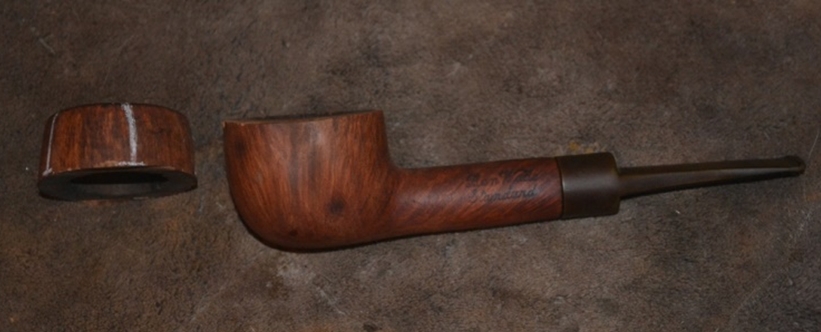
(Albuquerque, NM, USA) Two weeks after entering a restorer’s shop for a routine checkup, a tall billiard was released following emergency surgery to amputate more than half of its upper bowl and perform cosmetic adjustments, the restorer announced Wednesday.

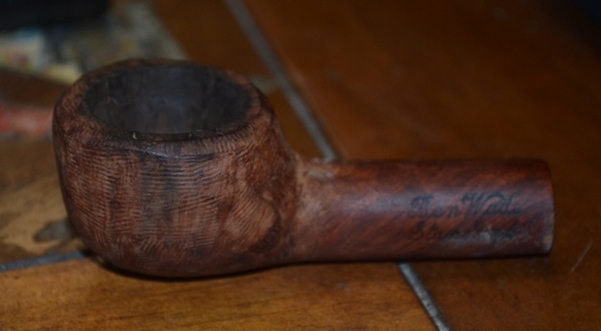
Claiming the likely sole previous owner of the victim, a Ben Wade Standard, was suspected of chronic abuse of the English-born pipe for an unspecified number of years, the restorer, who wished to remain anonymous, said the identity of the perpetrator remained unknown.

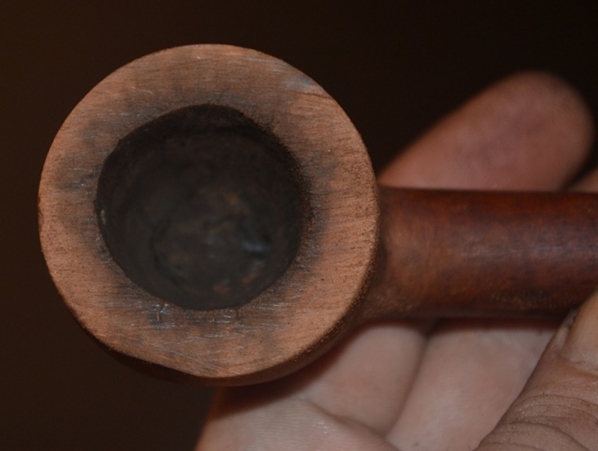
“This is the worst, most depraved example of tobacco pipe abuse I have ever encountered,” the restorer said. “The briar pipe presented with first-degree burns on the rim and a chamber stuffed with carbon cake as well as acute scratches, pits, gouges and grime covering the outside of its body, and other mayhem of the stem.”

New Mexico law defines mayhem as the “malicious intent to maim or disfigure” any part of a body by means including cutting, mutilating or otherwise disabling.

Further examination revealed an almost fatal crack through the chamber to the outside of the bowl extending almost an inch downward from the right side of the rim, the restorer said, and added that was the wound requiring amputation of about half of the victim’s main body.

“Never before have I seen such a horrific case of compound commutated fracture,” the restorer said, showing photographs taken at the time of the initial examination.Rob1

Rob2

Rob3

Rob4

Rob5

Rob6

Rob7 “After the first look, the prognosis for this unfortunate former billiard was terminal,” the restorer said.“However, upon consulting some of my colleagues, we agreed that a combination of amputation, which was unavoidable if the pipe’s vital functions were to continue at all, and radical reconstructive surgery was the only viable course of action.”

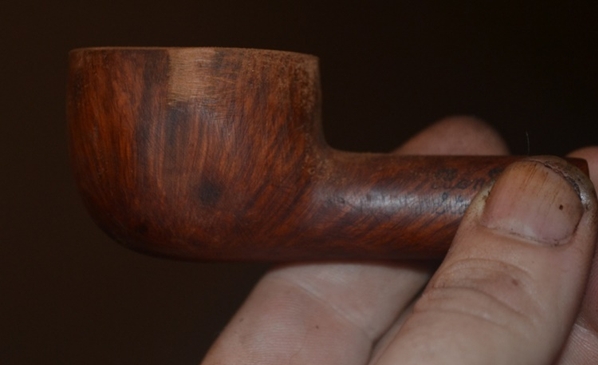
Calling the complex work involved “a Hail Mary toss,” the restorer described the plan to remove half of the bowl and reshape the stump into a “squat pot.” Preliminary measures to determine the pipe’s structural ability to survive this highly invasive operation – including a thorough cleansing, soaking the chamber and shank with 190-proof alcohol and the beginning of a rigorous course of sanding the outside and the “mangled guts” – began immediately.Rob8

Rob9

Rob10 According to the restorer, the possibility that the pipe would reject the amputation and reconstruction was serious.

“Imagine if one day you awoke to find your head flattened to less than half its original size, but the rest of your body proportional to the way you had been,” the restorer said.“The shock of it could be devastating, dare I say catastrophic, not to mention the way you would stand out in public and the resulting open pointing, name-calling and general ridicule.”

The restorer said the ultimate decision to proceed with the surgery was his alone and based on a desire to save the pipe’s life if possible.

“Before I soaked the chamber and shank with alcohol, I drew incision lines downward at intervals around the rim, to the highest point of the bowl possible and yet still clear of the long scar of the crack, to guide me,” the restorer said.Rob11 Choosing a hacksaw for the amputation phase, the restorer said no anæsthesia was used as the pipe was unconscious.Rob12

Rob13

Rob14 “Lopping off the dome of that tall, proud billiard was the most extreme measure I hope I ever have to take in the name of restoration,” the restorer said. “But the removal was clean, and the deed done, it was easy to see the problems I still faced to reshape the resulting bowl, from something that could not even be called a short billiard, into at least a passable pot.”

The restorer added that sanding down the shank until it was proportionate to the bowl was possible only by erasing Ben Wade’s identity, and therefore was never seriously considered.

“No, our friend Ben Wade will just have to learn to adjust to his new body,” the restorer, who was drenched in sweat and appeared haggard, said. “I have done everything possible, although there were complications.”

Using an electric Dremel for the first time, with a smooth sander bit and set at the lowest speed, the restorer began the process of increasing the curve of the bowl. He said he applied the least pressure possible to the wood but still noticed the tendency of the tool to remove uneven layers of briar.

When the restorer had made his first full circle of the bowl and observed the jagged beginning of the reshaping into what would become a very short pot due to the amount of wood on which he could work, he said he switched to a rasp for a fast initial leveling of the bowl’s underside to make it a “sitter.” Rob15

Rob16

Rob17

Rob18 To finish the basic reshaping, the restorer said, he returned to the Dremel for a “touch-up of the rougher spots” before taking the rasp and using it with smooth, upward strokes from the bottom of the bowl to the top to make the shape still more curved.

“At the end of this phase, I was left with a very rough surface that I knew could be smoothed with sandpaper and micromesh pads,” the restorer said. “But the rim was uneven and required careful leveling. The hardest aspect of this part of the cosmetic work was moving the rasp in the correct direction to make the thickness of the rim uniform all around.”

The chamber was still coated with what the restorer called “never-ending cake.” He said he took a chance with the Dremel again and used it to loosen some of the carbon buildup.

“This was successful, but also revealed the beginning of another crack that in time was certain to work its way all the way through the bowl,” the restorer said and sighed. “This was when I knew the best I could do was to extend the life of the once whole and healthy pipe. Only God can say how long that life will be.” Rob19 The restorer then sanded the remaining scratches from the bowl and made the chamber as smooth and free of the old cake as he could before starting what he thought would be the finishing touches: buffing the outer pipe with several grades of micromesh, re-staining the wood a dark red color and polishing the pipe with four kinds of wax.

“It’s funny how sometimes going all the way through the regular steps of restoration will reveal new problems,” the restorer said. “In this case, two blemishes in the forms of gashes showed up.”

The restorer explained how he used a black marker over the damaged areas to simulate the grain color and then applied small amounts of Super Glue, which he let dry.Rob20 Once the glue dried and hardened, the restorer added, he rubbed it away with three grades of micromesh. The tenon of the replacement stem that was on the pipe when it arrived, despite the restorer’s attempts to fix it with Black Super Glue, no longer fit the shank.

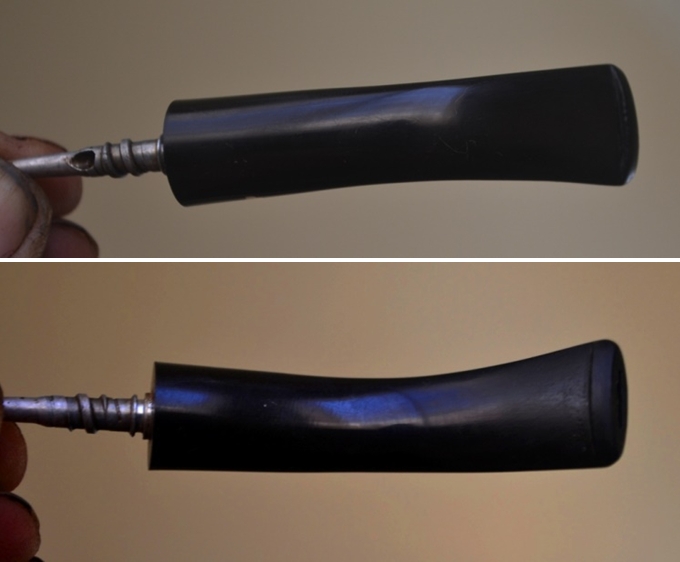
“It was way too small, and I hated the idea of using beeswax to force it to fit,” the restorer said. “It is my belief that the previous owner, instead of cleaning the pipe regularly if ever, let the crud in the shank accrete until the stem became stuck and then sanded down the tenon to fit the goop. I guess it takes all kinds.” Rob21 Finding a good Lucite replacement stem that fit the shank as if it were made for it, the restorer said he only needed to remove some minor scratches with high-grade micromesh and buff it with some waxes before re-finishing the bowl and shank. Rob22

Rob23

Rob24

Rob25 “I decided to adopt the Ben Wade and care for it however long it has to live,” the restorer said with a hopeful smile. “But of course I wouldn’t dream of having its name legally changed to mine.”

http://www.naspc.org
http://www.roadrunnerpipes.com
http://about.me/boughtonrobert
Photos © the Author

A New Pipe for me – a Diebel’s K.C. Canadian


Blog by Steve Laug

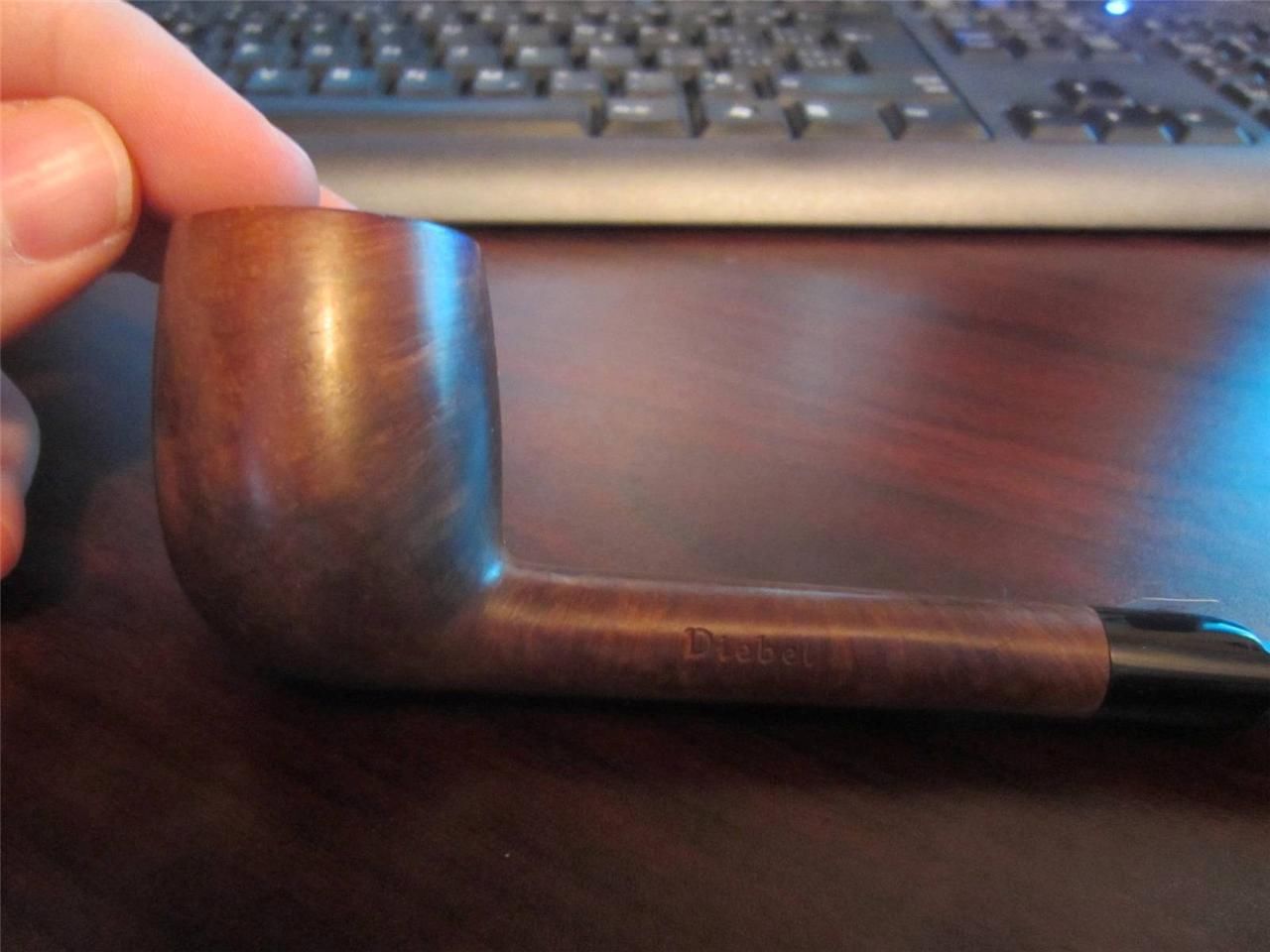
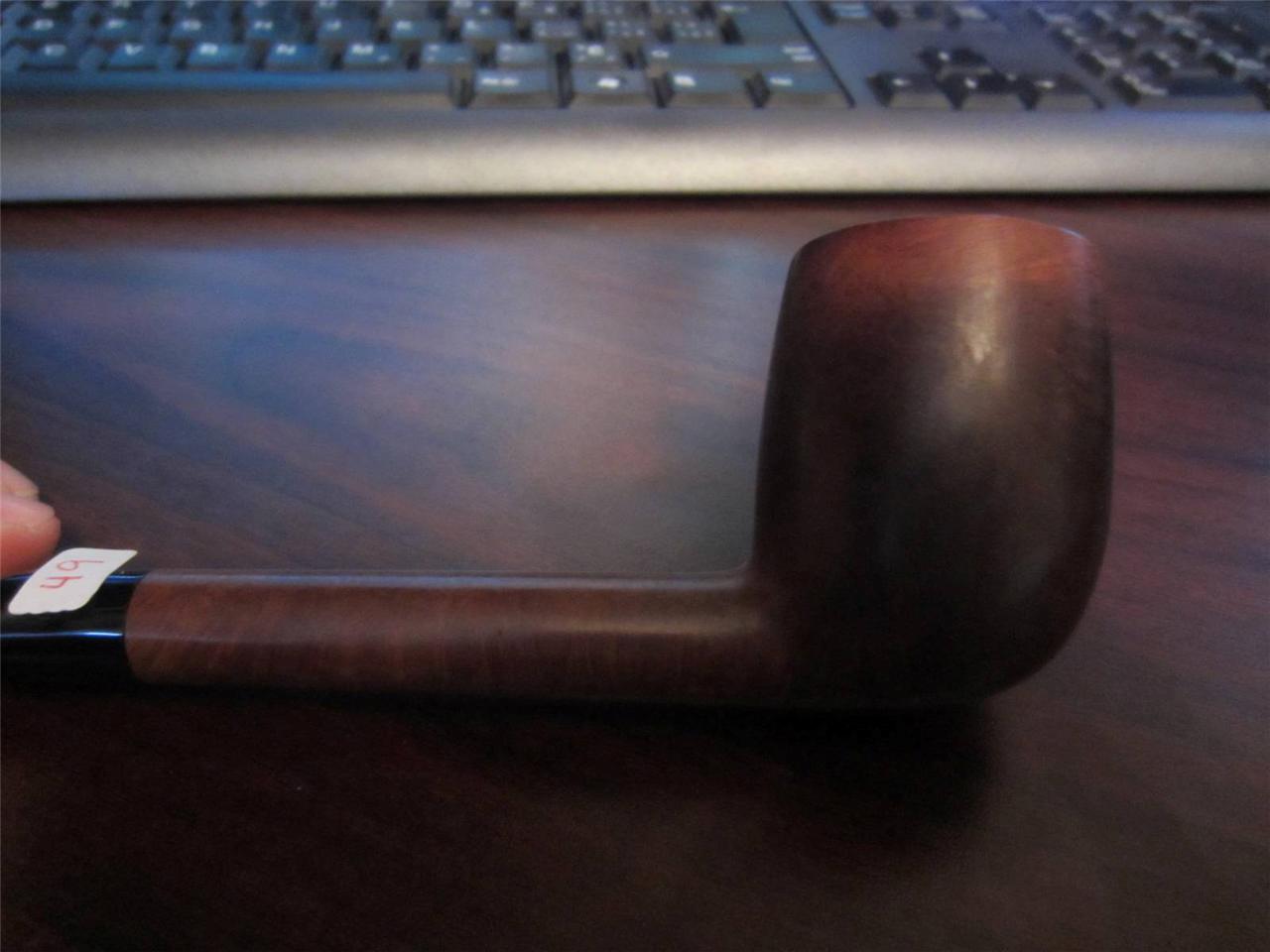
NonameThere is a bit of a back story to this pipe. For as long as I can remember (you have to remember that may not be that long when you reach a certain age. Memory plays tricks on you) I have had two copies of Carl Ehwa Jr.’s The Book of Pipes and Tobaccos. One I am saving is pristine and one that graces my shelf. The other is for lending out and referring to when I am looking for information. It is a book I have read and reread and never tire of in the process. In a recent thread on Smoker’s Forums Ken posted to a thread on a review of the book some interesting information tying the book to a Diebel pipe that he had in his possession. He posted the pipe and then the information that Carl Ehwa Jr. was formerly a Master Blender at Diebels Tobacco and founder of McClelland Tobacco. He received several responses – one from Chris noting that the book’s dedication reads, “For my grandfather, Dr. W. C. McClelland…” I remember meeting Mary McNeil and sharing a limo back to the airport after the Chicago Show. In our conversation I found out that she was married to Ehwa when they started McClellands. He passed away and she married Mike McNeil who has always been a part of things there I believe.

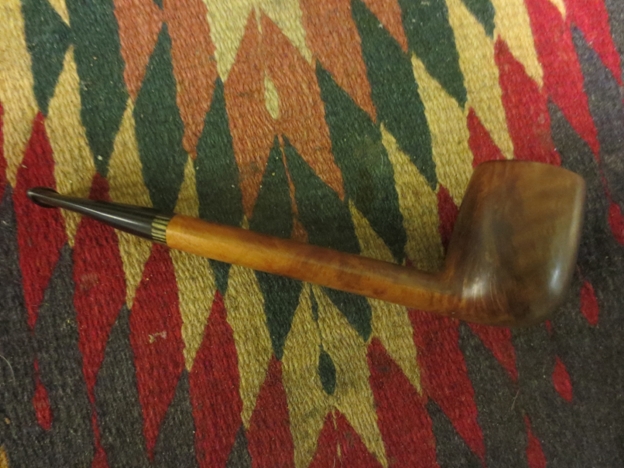
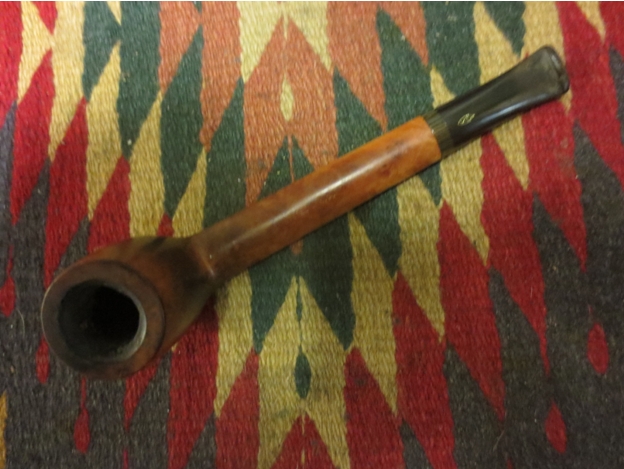
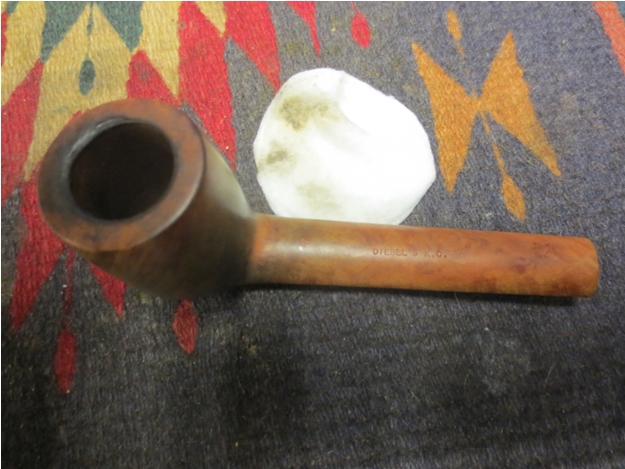
Thanks to Ken I was given the impetus to try to find a Diebel’s pipe. I searched on Ebay and found one – a Diebel’s Canadian – to add to the collection. It should arrive very soon and when it does I will load a bowl of Christmas Cheer and read Ehwa’s book yet again. Adding a pipe to the read will be just one more dimension to the experience.Diebel Canadian

Diebel canadian2

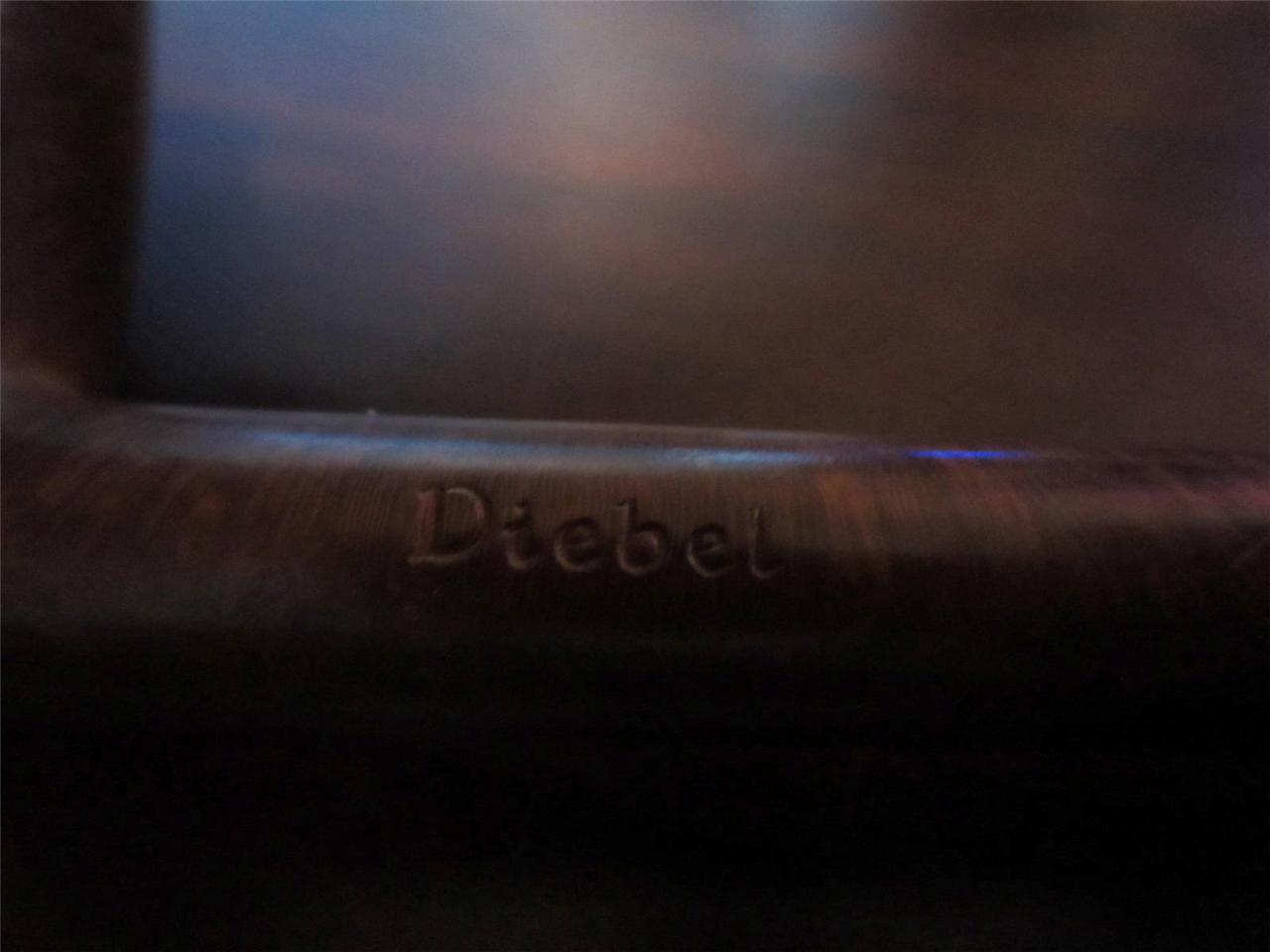
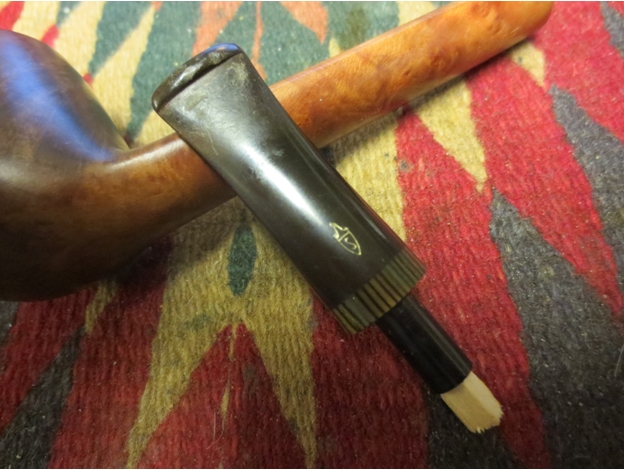
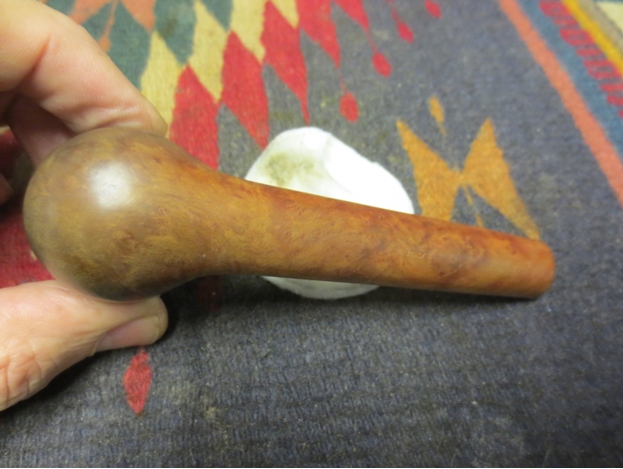
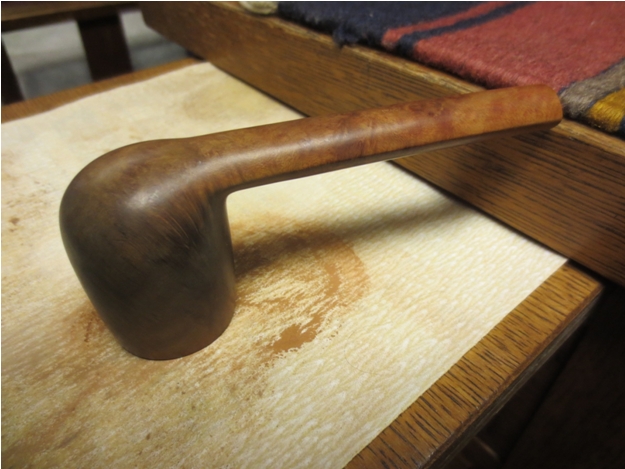
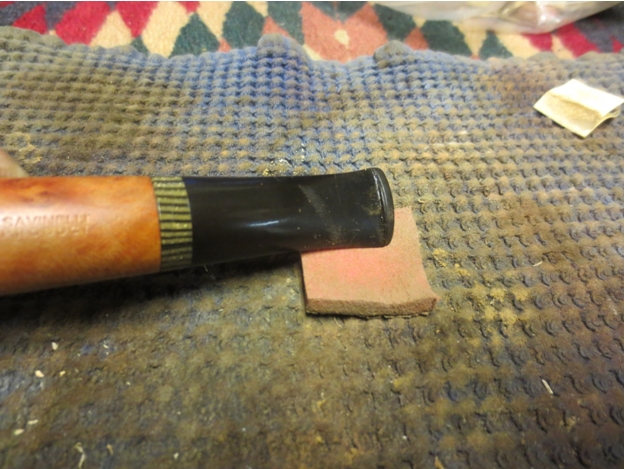
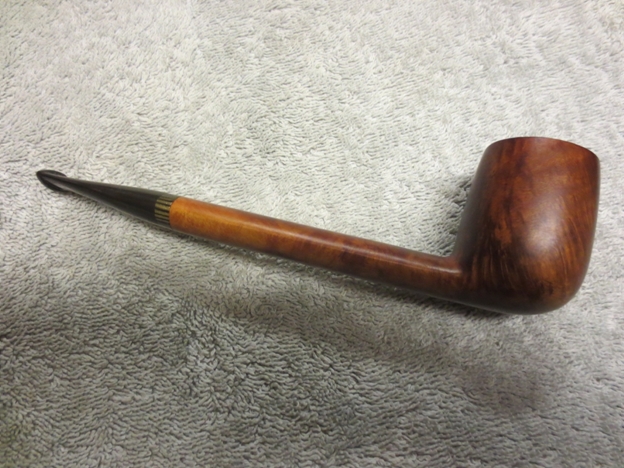
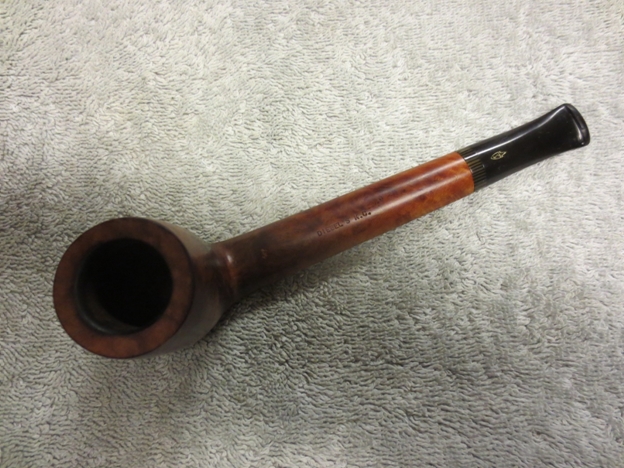
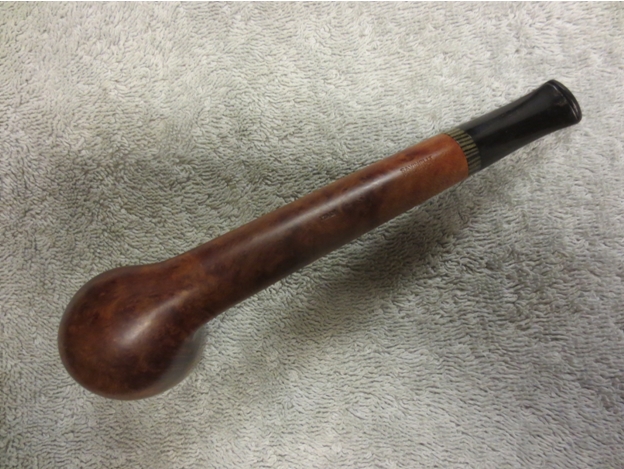
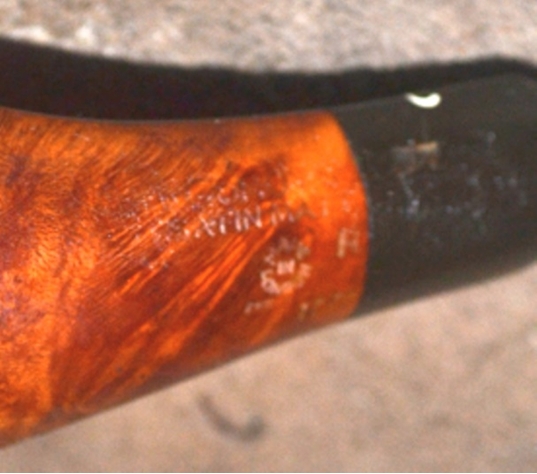
Diebel Canadian3 I was excited to receive the Diebel pipe in the mail so when it arrived I opened the box expecting to see the pipe above. I expected it to be a normal length Canadian with simply the Diebel stamping. When I unwrapped it I found a Diebel pipe but a different one than the one I had purchased. It was stamped DIEBEL’S K.C. on the top of the shank and had a Savinelli shield on the stem. It had a band of gold as part of the stem. On the underside of the shank it is stamped Italy and Savinelli Product. There were no shape numbers on the pipe but it was the long shank Canadian that is common with Savinelli. It measures 7 inches long. The briar was dirty and stained on the sides and the back of the bowl with oils. It was quite dark. It appeared to have a matte finish. The rim was darkened with tars and some scratches on the top front of the rim. The inner edge was darkened and had some burning.Diebel1

Diebel2

Diebel3

Diebel4The bowl had a thick cake that was rock hard. It significantly reduced the diameter of the bowl. The stem had two tooth marks on the top near the button and on the underside was a deep bite mark. I removed the stem and inside it had been drilled to receive the Savinelli balsa filter. There was a new filter in the tenon.Diebel5

Diebel6

Diebel7

Diebel8 Examining the old Diebel’s stamped Savinelli left me with questions that needed answering. I wanted to know more about the Diebel’s pipe shop. I wanted to know if Savinelli made all of their pipes or if some were actually carved in the shop itself. I wanted to know if the other pipe, the one I had actually ordered was made by Savinelli as well or if it may possibly have had a different manufacturer. You can see that the pipe left me with many questions that would require some research to find answers.

I did some digging and found the Diebels web site. On the site was a section on company history. The link follows: http://diebelsg.com/stores/company-history/

In reading through that section on the history of the company I learned that Fred Diebel learned pipe making from a local pipemaker, Fred Metz. He carved in house pipe made the way he had learned to make them from Fred. He also imported Savinelli and English made pipes. I am including a short section from that portion of the company history.

“When Fred Diebel returned from his World War II duty as a U.S. Navy pilot of lighter than air craft (blimps), he knew he wanted to own his own business. Diebel, who earned a degree in mathematics from Kansas City University (now UMKC), saved for his life’s ambition while working successively for two venerable retailers in Kansas City: Rothschild’s and Montgomery Ward.”

“In 1950, Diebel capitalized on his first entrepreneurial opportunity, buying into Afflick & Co., a tobacco shop located at 11th and Walnut in downtown Kansas City. The company was re-named Afflick & Diebel. There, Diebel became an avid pipe smoker and developed an interest in the arcane craft of pipemaking. He sought a noted local pipemaker, Fred Metz, to teach him the craft. Initially, the elderly German native refused. But eventually, Diebel’s persistence paid off and Mr. Metz consented, saying, “Young man, I will teach you to make pipes on these conditions. You buy the proper equipment and you promise to do it my way, the right way.””

“In 1954, Diebel determined it was time to strike out on his own. He saw the Country Club Plaza as a shopping and business district on the rise. So with a bankroll of $1,000, he purchased two display cases for $100 each, tools, tobacco product, and signed a lease. Fred Diebel, Pipemaker, Tobacconist was born at 4625 Wornall, across from Putchs’s Cafeteria (now Houston’s) and next to Renner’s Shoe Repair. The enterprise was successful from the beginning, though not in the way Diebel expected. He underestimated the strong demand for pipe repair and found little time for the pipe making work necessary to supply his retail pipe business. In order to manage the growth demand for new pipes, he began importing pipes from England.”

“For more than a decade, Diebel specialized exclusively in pipes, pipe repair, and pipe tobacco. Customers requesting cigars or cigarettes were politely but firmly referred elsewhere. Mr. Diebel’s philosophy may have been guided more by personal disdain for any smoking related product that did not involve a pipe than by visionary marketing theory. Nonetheless, he became one of the early niche retailing pioneers…”

“…The company also began manufacturing pipe tobacco. Conditioning, cutting, casing, blending, pressing and packing operations occurred in a warehouse located in the caves at Bannister and Holmes. Manufacturing continued through the early 1980’s. The business continued to grow as a family business, with Diebel’s wife plus his two sons and daughter working in the shops and manufacturing facilities during their teen and young adult years.”

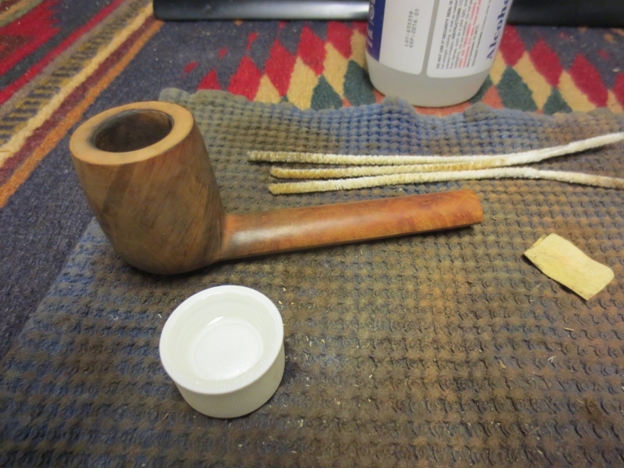
I love learning the history of a brand. Further reading on other sites led me to the information that Savinelli made Diebel’s pipes. With that information I went on to clean up the pipe. I reamed it with a PipNet reamer, starting with the smallest cutting head and working up to the second head. I reamed the cake back to bare wood. The cake and bowl smelled of a heavily cased aromatic. The inside of the shank and stem was black with tars.Diebel9

Diebel10 I wiped the bowl down with acetone on cotton pads to remove the grime and the finish. The black grime came off easily with repeated scrubbing.Diebel11

Diebel12 Once I had cleaned the grime and tars off the rim I could see the darkened damaged area of the top of the rim and the inner edge of the bowl. Though it is hard to see there were some deep scratches on the top of the rim on the right front side. They were quite deep gouges. The bowl would need to be topped to remove the damage and minimize the burn marks.Diebel13

Diebel14 I set up a topping board with 220 grit sandpaper on top of it. I turned the top of the bowl into the sandpaper in a circular motion, clockwise until the damaged area of the gouges and burned area was gone. I sanded the rim with a medium and a fine grit sanding sponge to remove the scratches left behind by the sandpaper. I used a folded piece of sandpaper to remove the burn damage on the inner edge of the rim. I sanded the bowl with the medium and fine grit sanding sponges to clean up the remaining dark areas. I wiped it down a final time with acetone on cotton pads.Diebel15

Diebel16

Diebel17 With the bowl cleaned and ready to finish I set it aside and worked on the stem. I sanded the tooth marks with 220 grit sandpaper to smooth out the damage of the tooth marks.Diebel18

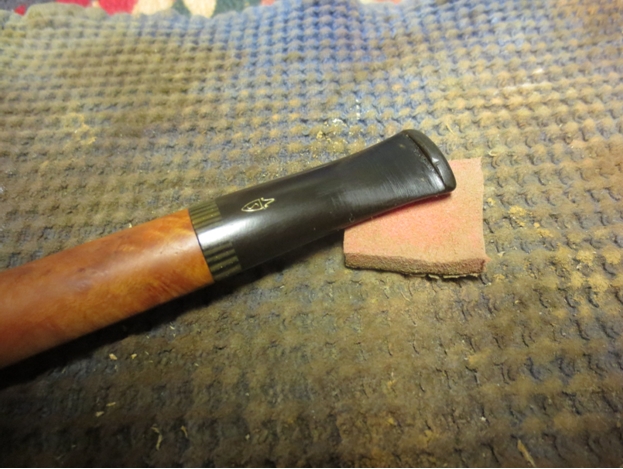
Diebel19 The tooth marks on the top of the stem cleaned up nicely, leaving behind two small divots that I needed to repair with super glue. The damage on the underside was much worse – the dent was deep and needed a large fill. The first photo below shows the repaired underside tooth mark. The second photo shows the repairs of the marks on the topside. I used clear super glue and an accelerator to harden it. Some might ask why I used clear super glue instead of black super glue and to be honest I am not sure why, I picked up the tube of clear glue and used it as it was closest to pipe at hand. Both work equally well for me.Diebel20

Diebel21 I sanded the glue patches with 220 grit sandpaper and then with medium and fine grit sanding sponges. I sanded until the surface of the patch was blended in with the surface of the stem. You can see from the photos that the clear glue worked well.Diebel22

Diebel23 At this point in the process I gave the pipe a coat of medium walnut Danish Oil stain. I set the pipe on a cork to dry while I went to work for the day.Diebel24 When I came home I buffed the bowl and shank with White Diamond and then worked on the stem with micromesh sanding pads. I wet sanded the stem with 1500-2400 grit micromesh pads and then dry sanded with 3200-12,000 grit pads. I buffed the stem with White Diamond and then rubbed it down with Obsidian Oil. Once it was dry I gave the bowl and stem several coats of carnauba wax and buffed it with a soft flannel buffing pad to raise a shine.Diebel25

Diebel26

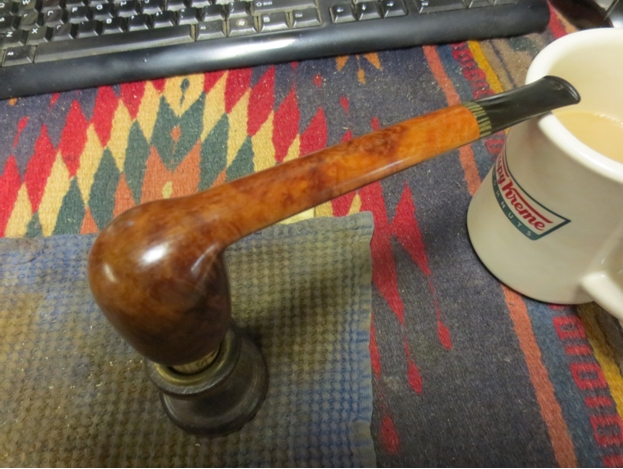
Diebel27 The finished pipe is shown below. It is cleaned and ready to smoke. The overall look of the pipe is clearly a Savinelli to me. It is distinctively Italian. The taper of the stem, the sharper edges on the sides of the shank and the bowl shape all say Italian. The band on the stem is various sizes of gold stripes that encircle the stem at the shank union. The walnut stain gives the pipe a contrast look and makes the grain stand out. The finish is warm an earthy in tone and the smooth feel in the hand is comfortable. I am looking forward to loading up a bowl and enjoying an inaugural smoke.Diebel28

Diebel29

Diebel30

Diebel31 Now I am waiting for the arrival of the original pipe I purchased from the seller in Eastern Canada. I look forward to seeing if it is one of Fred Diebel’s own hand-made pipes. The look in the first trio of photos above is certainly different from the look of the Savinelli. When it arrives I will clean it up and do a write up on it and a comparison with the Sav.

Comoy’s Satin Matte Bent Christmas Pipe, In Four-Part Harmony – Robert M. Boughton


Guest Blog by Robert M. Boughton
Member, North American Society of Pipe Collectors
http://www.naspc.org
http://www.roadrunnerpipes.com
http://about.me/boughtonrobert
Photos © the Author

This blog is dedicated to my older uncle, Frank Lee Grannis (1945-2014), who was maybe Arlo Guthrie’s biggest fan. Frank once snapped a black and white photo of a teenaged Arlo, at an outdoor music festival somewhere in the countryside, smiling and signing an autograph for another fan who was about Arlo’s age. I lost the photo in my younger, wilder days, or I would include it here, but the image will always be in my memory.

Let’s get Santa Clause ’cause:
Santa Clause has a red suit
He’s a communist
And a beard, and long hair
Must be a pacifist
What’s in the pipe that he’s smoking?
—Arlo Guthrie, U.S. singer-songwriter-musician, in “The Pause of Mr. Claus” (1968)

INTRODUCTION
Now friends, tonight we’re gonna sing you a song, a Christmas carol in four-part harmony. The song…the Christmas carol is part of an album called “Arlo.” That’s my name. Some of you right about now might be thinking, thinking in your private thoughts there in your heads, well, this Arlo fella must have a pretty big ego. I mean, to go and name an album after himself, he must have let all that fame and fortune go to his head. I don’t know about the fame and fortune part, because all that doesn’t last long, but my head, my head is really sort of small. We’ve never actually met. All of you out there and me, that is.But that’s not what I came to talk about. Came to talk about a pipe. Remember the pipe? This is a story about a pipe.And I’ll get to it. In time, and four-part harmony.

So there I was, sitting on a bench, looking for a song to start with. I didn’t find it. I’m not proud…or tired.Out of all the songs I wrote, there I was, on the bench trying to pull just one verse from my head, but nothing would come.I knew right then and there I had to get ahold of Steve Laug, he’s a good friend of mine. We’ve never actually met. But we write emails back and forth to each other all the time. Now friends, if you ask me, that’s one hell of a way for folks to talk. Sort of like writing a story, in four-part harmony.

And then it hits me that it would be a friendly gesture to sing a Christmas carol about the guy who started it all. A guy in a red coat who has a beard, and all he does is give presents…for free…to all the rest of us. Must be something deranged about a guy like that.Living in Canada…living at the North Pole, it’ll do that to a guy.

Now, Steve and me, we never exactly said anything about any quote. All we talked about was the pipe. Remember the pipe? Anyway, I sent him a picture with the email, an eight-by-ten color glossy with all the details written down, and I said I thought it was what’s called a brandy shape, and Steve, he says it’s like a BBB he has that’s the same shape, only it’s a Christmas pipe. Well, I never heard of any Christmas pipe shape, but Steve knows more than I do. And later on he wrote back and sent a picture of his BBB, an eight-by-ten color glossy with all the details. And the two eight-by-ten color glossies with all the details were almost the same.

And the good news is, that’s when I remembered this Christmas carol I wrote, in four-part harmony, because it was about Santa Claus, even though it’s spelled with an “e” in the song. Don’t ask me why, you can figure it out. Now, everyone knows old Santa is all about Christmas. So that’s about how that story goes.

Now I’ll get on with the other story, about the pipe. Remember the pipe?

I got mixed up online with some poor fella who was selling seven pipes all together and didn’t have a clue what all was in there. ’Cause my eye went straight to one with a white C on the stem and even I knew what that meant. The listing, in micro-mini small print at the bottom of the page, that you’re not supposed to read, called it a “Como’s Bent Billiard,” but I took a closer look and made out the blurry Y after Como. So there I was, still sitting on the bench and having a good old time knowing how nobody else knew the Como pipe was in there with all the others, and that’s why the price was so low with time running out.Rob2 I’d like to dedicate this Christmas carol to all the pipe-abusing S.O.B.s out there who have been bad little boys and girls and ought to keep that in mind this coming Christmas. It’s called “The Pause of Mr. Como.” Now here’s how the song goes.

RESTORATION
Meanwhile, back to myself again after a brief diversion, I will describe the pipe as I received it. Although there were bad cake buildup in the chamber, rim burning, ubiquitous scratches on all sides of the bowl and a stem in dire need of work and polishing, the allure of this excellent Comoy’s example was almost intoxicating, and I haven’t tasted alcohol in 26 years – not that you could tell after reading my Introduction.Rob3

Rob4

Rob5

Rob6

Rob7

Rob8

Rob9 I like to start on a rim with super fine steel wool, as I did with this pipe. In general, this approach takes off most or all of the char and leaves the wood beneath without a single new scratch and often even shiny. This time I got nowhere with the regular method, and so I switched to 400-grit paper, which removed the char as well as dings and scratches I uncovered. Of course, the sandpaper also took off the old stain.

With the rim clean and smooth, showing the fine grain, I found my old Senior Reamer in its box and took on the chamber.This time, the reamer worked as it should. Almost all of the buildup was reduced to dust. A little quick sanding with 120-grit paper was needed before smoothing with 400.Rob10 Now, as I described earlier, the outer wood was scratched almost everywhere. I very much wanted to avoid ruining the good, light stain of the original. Having learned that micromesh can go a long way, from advice of my mentor, Chuck Richards, as well as our host and several previous readers, I put the theory to a tougher test than I had before.

And you know what? I think they’re on to something! Starting with 800-grade, I was able to eliminate all but the most insignificant scratches. I then worked my way up from 1000 to 1500 to 2400 and ending with 3200, leaving the briar– well, leaving the briar as smooth as it must have been the day it left the Comoy’s shop.

Taking on the stem only required heavy sanding and buffing with 1500, 2400 and 3200 micromesh.

Cleaning the pipe turned out to be the hardest part. I just kept dipping the bristly cleaners in Everclear one half at a time and scrubbing away until they came out of the shank and stem clear.Rob11

Rob12

Rob13

Rob14 CONCLUSION
If I had kept this fine example of Comoy’s craftsmanship, I would prize it as the best as compared to the two I own. However, as fate would have it, the pipe sold almost as soon as I posted it on my restored pipes Website. My only consolation is that I have reason to believe it is in adoring hands.

A Sweet KBB Yello-Bole Honey Cured Bulldog – Robert M. Boughton


Guest Blog by Robert M. Boughton
Member, North American Society of Pipe Collectors
http://www.naspc.org
http://www.roadrunnerpipes.com
http://about.me/boughtonrobert
Photos © the Author

You can’t stop us on the road to freedom
You can’t stop us ’cause our eyes can see
Men with insight, men in granite
Knights in armor intent on chivalry
She’s as sweet as Tupelo honey
She’s an angel of the first degree
She’s as sweet as Tupelo honey

Just like honey, baby, from the bee — Van Morrison, Northern Irish singer-songwriter-musician, “Tupelo Honey” (1971)

INTRODUCTION
As my good friend and mentor, Chuck Richards, commented at a recent gathering of local enjoyers of the fair tobacco pipe in general, Kaufman Brothers & Bondy created the Yello-Bole line in 1932 as a less expensive alternative to its regular stable of Kaywoodie, Reiss-Premier and of course KB&B pipes.

Now the name Yello-Bole is synonymous with the terms second-rate and, worse still, just cheap, as though the measure of a good smoke were ever determined by its price. [See, for example, Peterson’s late great and noble attempt in years gone by to make pipes affordable to the Everyman.]

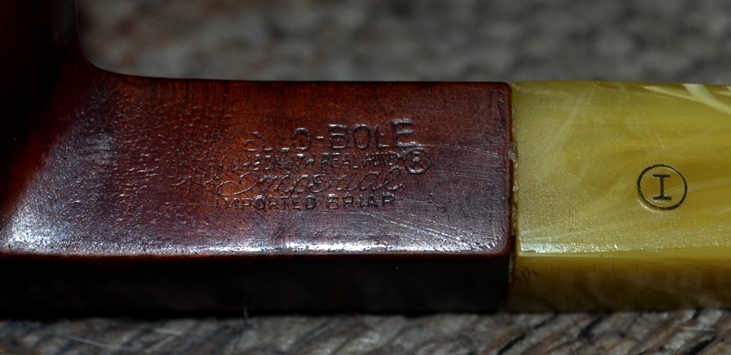
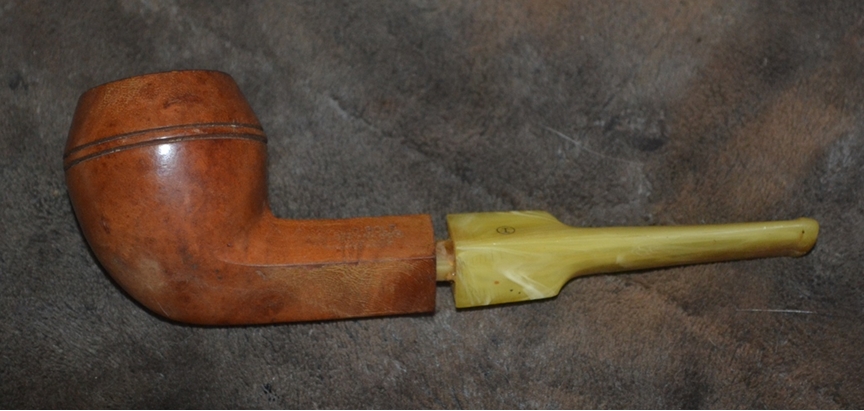
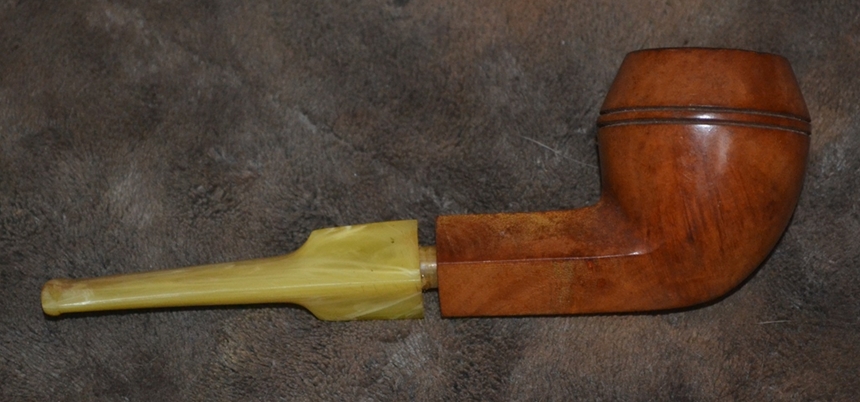
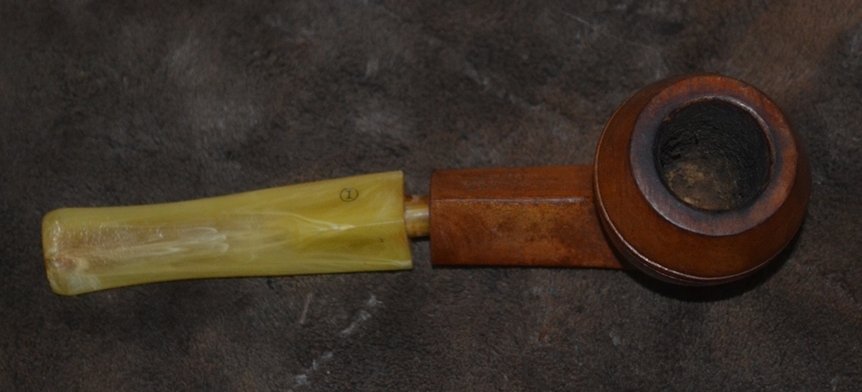
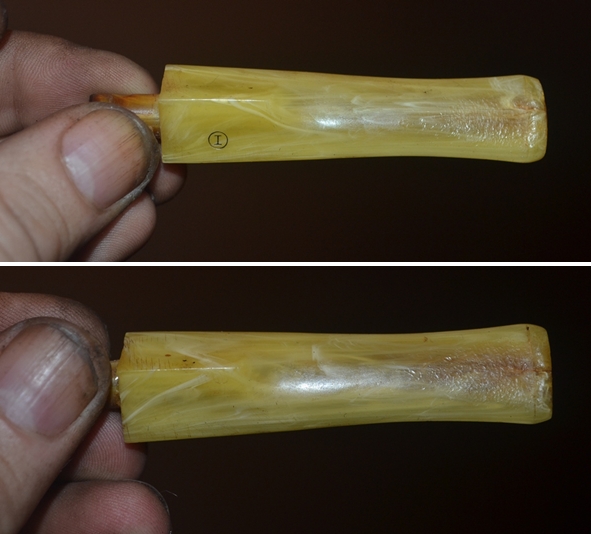
But its older products, such as the KBB Yello-Bole Imperial Bulldog of this discourse, “Cured with Real Honey” and with the KBB in a clover, as well as a tell-tale encircled “I” on the stem (might it be ambera?) – although crafted with briar deemed unsuitable for the older brothers of the family – nevertheless was still made from higher quality pieces of that fine wood than is, in general if ever, available today.

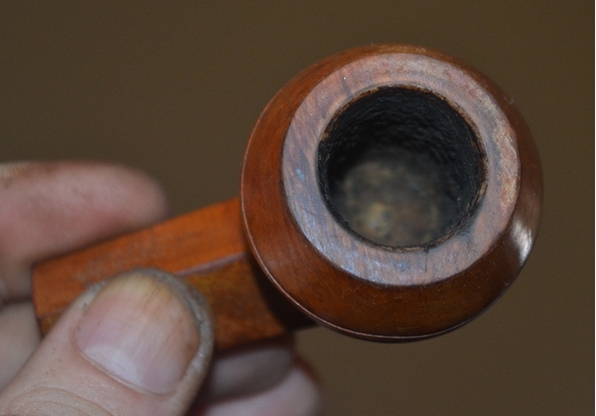
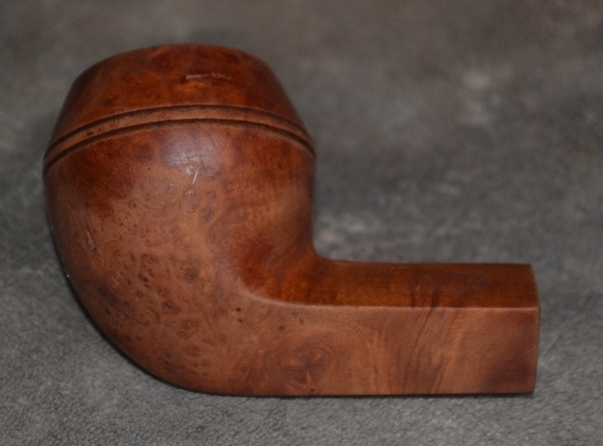
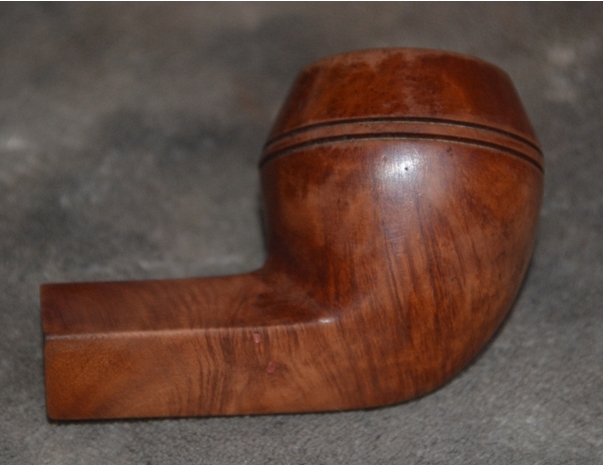
Also, the KBB Yello-Bole Imperial Bulldog is a definite vintage specimen (another present day determinant of value), based on the four key signs contained on the pipe, which date it to anywhere from the 1930s to the 1950s.Rob1

Rob2

Rob3

Rob4

Rob5

Rob6

Rob7

Rob8

Rob9 Beginning with the rim, I removed most of the blackening with a quick rub of purified water, and the rest except for one small, pernicious burn with a light touch of super fine steel wool that left no new scratches but also made clear the blemishes that were already present. Rob10 I sanded the rim with 400-grit paper and micro-meshed with 1500, 2400 and 3600 grades. I later succeeded in removing the one remaining burn mark shown below.Rob11 Moving on to the chamber, I was startled when most of the cake crumbled from the walls with a couple of turns of the reamer. Still more shocking was the sudden appearance of a thin coat of the original yellow product of honey curing. I knew I had a rare find and wondered at the short-term but intense enjoyment of the pipe that could have led to more than average cake but left the prominent yellowing intact. The rest of the cake came clean with gentle 400-grit sanding.

Staying with the 400-grit paper to remove scratches and dings on the beautiful briar, I lightened the color still more and found a few fills and other grain flaws that accounted for why this finely shaped bulldog didn’t end up with, say, a Kaywoodie stamp.Rob12

Rob13

Rob14

Rob15 Using micromesh at an escalation from 1500 to 2400 and 3600 grades eliminated the remaining scratches.

The cleaning of this pipe was achieved with refreshing ease and the expenditure of few bristly cleaners soaked in Everclear.

In a difficult choice, I decided to re-stain the briar with a medium as opposed to the original light brown color. I applied Lincoln boot stain and flamed the alcohol out before removing the char with 2400 micromesh and smoothing it out using 3600.

To polish the prepped pipe, I used red and white Tripoli, White Diamond and carnauba, and after rubbing the wood with a cotton rag saw it needed another round on all of the buffers except the red Tripoli.

I finished the stem with red and white Tripoli before White Diamond.Rob16

Rob17

Rob18

Rob19

Rob20 CONCLUSION
This was a very pleasant and relaxing restoration, in particular following my Ben Wade and the Chamber of Horrors brush with terror.

Tonight and tomorrow (Wednesday and Thursday), before the monthly official meeting of my pipe club at the local Moose Lodge, I will attempt to power through as many of the easier prospects as possible from my recent online purchase spree. The highlights include what I believe is a Comoy’s Smooth Bent Satin Matt Short Brandy #1770 (Made in London in a circle); a Kaywoodie Silhouette Bent Rusticated Squat Apple; a Kaywoodie Smooth Bent Signet Billiard; an Ehrlich Rusticated Straight Billiard; a LHS Park Lane Smooth Straight Poker; a Reinhard’s Smooth Straight Billiard; an Amadeus Greek Bent Billiard; a Parker Tall Tan Straight Poker; a unique small Town and Country Round-Bottom Straight Squat Rhodesian; a no-name Gourd Calabash Meerschaum Lined; a trio of old Missouri Meerschaum corncobs…and another KBB Yello-Bole, this one a Straight Four-Panel, also with the KBB in a clover but a yellow circle on the stem.

The first person to post a response challenging my ability to pull off the restorations/refurbishes of the above pipes before tomorrow night, and willing to bet a free pipe from the loser to the winner, is on for the bet. I will post before and after shots in a blog on my business Website, noted at the top of this submission, by 9:00 p.m. MDT (U.S.) tomorrow.

Our host, I trust, will vouch for my honesty in this type of wager.

Ben Wade and the Chamber of Horrors – Robert M. Boughton


Guest Blog by Robert M. Boughton
Member, North American Society of Pipe Collectors
http://www.naspc.org
http://www.roadrunnerpipes.com
http://about.me/boughtonrobert
Photos © the Author

“It is our choices, Harry, that show what we truly are, far more than our abilities.” —J.K. Rowling, “Harry Potter and the Chamber of Secrets” (1998 U.K.)

INTRODUCTION
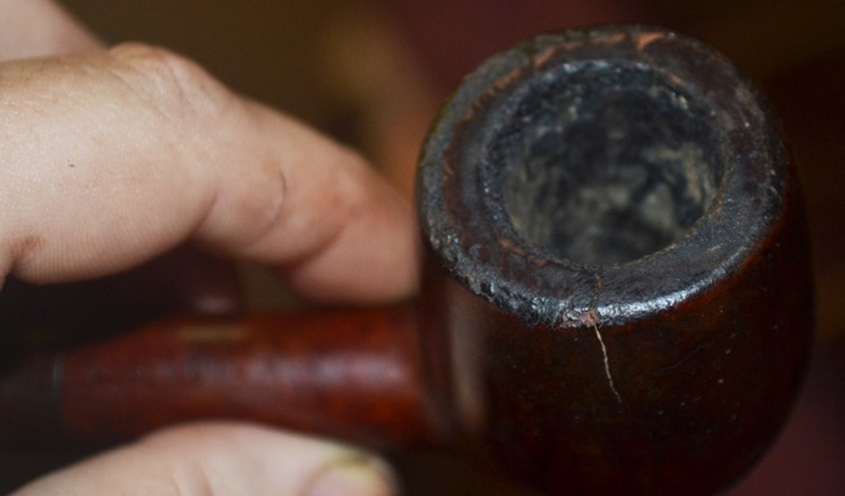
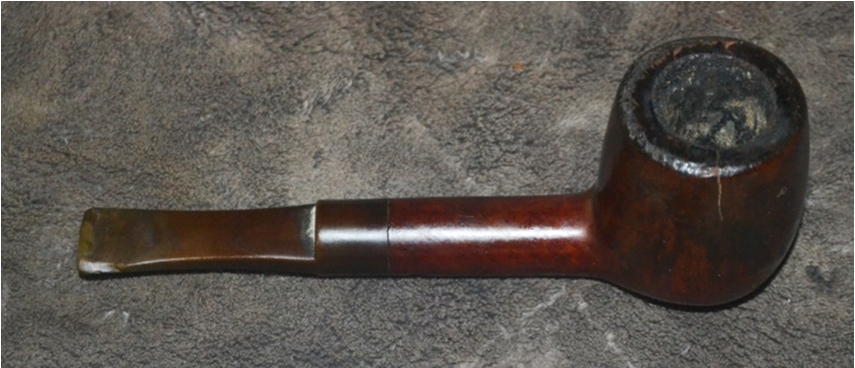
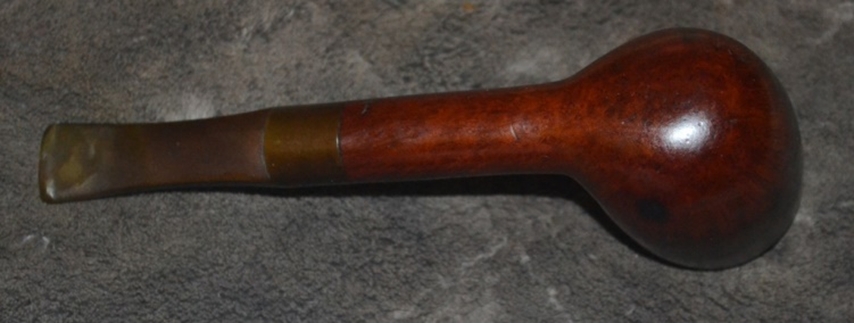
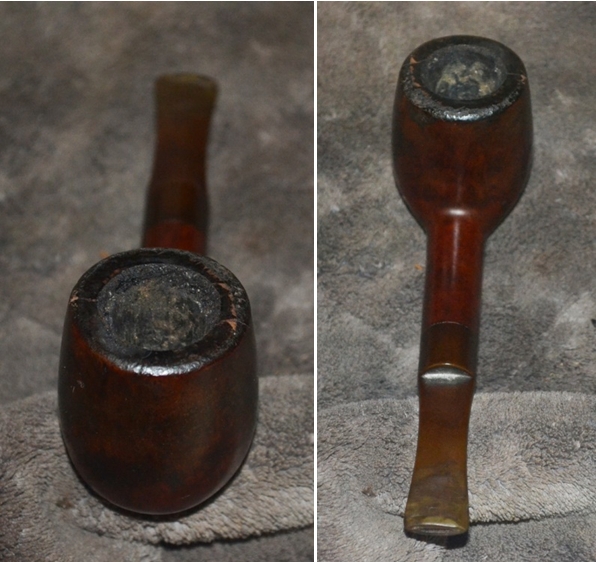
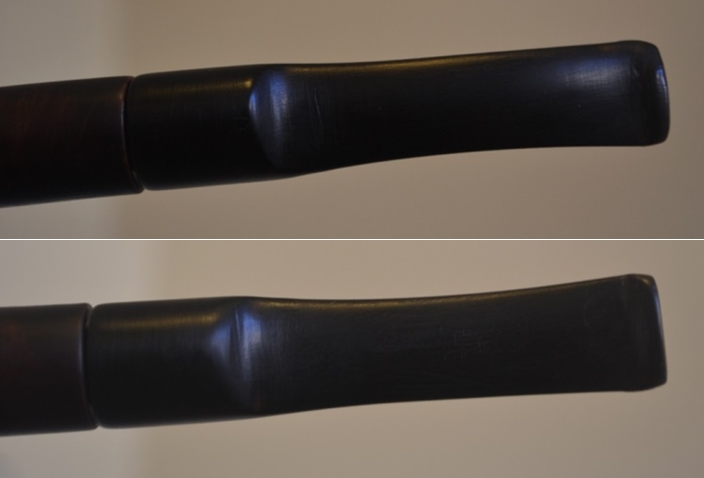
Never has one of the quotes with which I like to begin my blogs spoken with more directness to the heart of the matter at hand than the words of J.K. Rowling above. At the risk of kicking a dead horse, I must point out how the choices of the prior owner of the Ben Wade Tall Poker (Made in London England) effected this description of its harrowing restoration. I am sure the individual lacked not in ability, only decision-making. But where do I begin? Ah, the stem pops into mind.Rob1 Just try to take in the scope of the mauling the perp inflicted on the bit and downward, from these photos alone: the complete gnashing away of the bottom lip and the gash in the upper side as shown on the left, and the chips in the top of the bit and great flat plain below it on the right. The only true cure for this degree of chewing, like a single piranha in frenzy that has been chased away by a bigger fish with no interest in pipes, is total replacement.

I believe someone even re-stemmed this pipe at some point during the old owner’s possession of it, as the bottom of the bowl is flat with ample room to stabilize it in a canted position yet the stem’s weight topples it. But that probability only serves to compound the undeserving person’s culpability. After all, imagine the debasement the original stem must have suffered. However, with another replacement in mind for the future, for now I took the mayhem as a challenge for some serious Black Super Glue practice.

Then there was the liberal, to use a kind adjective, distribution of deep pits and scratches covering the bowl and shank.Rob2

Rob3

Rob4

Rob5

Rob6

Rob7 And at last, I come to the reason for the name of this blog: the chamber and rim.Rob8 When I first saw this angle on the site where I ordered a three-pipe lot of Ben Wades (one of which, when it arrived, was a tall billiard with a huge crack extending down the side of the bowl that required amputation and is therefore now undergoing the trauma of drastic re-shaping, and the other a small apple, which I restored with success and already blogged), I thought the rim would be the biggest challenge of the project.

Although the rim did indeed present considerable obstacles to overcome, the greatest battle proved to be with the chamber of horrors itself, from which I emerged, torn and bleeding, but victorious – if there can be any genuine victory in war.

REFURBISH
Following my initial structural inspection with a couple of bristly cleaners soaked in Everclear 190-proof that I ran through the stem and shank, I concluded the pipe somehow was intact but filthy almost to the point of total clogging with black resinous goop. In fact, when I looked at the shank opening as shown in the second to last photo above and then tried to blow through it only to meet extreme resistance, I got my first clue that many sturdy cleaners would make the ultimate sacrifice before this BW was fit to enjoy.

I proceeded with the part of the restoration that has always been my first step: reaming the chamber. But this time, after about an hour of sweaty, hand- and arm-weakening cranking, I only prevailed, with repeated efforts applying the reamer at different levels and angles of attack, in dislodging multiple layers of cake that slowly made a pile of fine carbon amounting to more than half a dozen bowls. Even sanding with 80-grit paper only added another few bowls of carbon to the growing heap. It’s too bad all the pipe cake out there waiting to be converted to powder by folks of my persuasion isn’t recyclable as tobacco, but then again, there seem to be plenty of another kind of folk who enjoy the taste of massive congestion from carbon and other nasty accretions.

Deciding, based on the horrible pocks and craters remaining in the chamber, that the hallowed space would take work throughout the restoration process, I launched a concerted offensive on the rim, at first believing with reason based on experience that I would be able to salvage the nice inward curve of the briar there. However, after another considerable chunk of time flew away with each level of char I banished, all that I had done was reveal wounds so deep and close-spaced along the inside curve of the rim and several bad wounds at the top of the bowl that I knew I would have to level the rim.
Drastic situations call for equal measures, and so, not having a power sander, I chose the best weapon I possessed, said tool being a metal rasp. Thus began another arduous labor removing the once elegant curve of the rim, with heavy mental protest. I was filled with sadness as I applied the rough edge of the rasp with slow care to the rim and watched the slope disappear more and more over time.

That stage finished and the rim flat, I sanded the well-grained wood with 220-grit paper followed by 400 and then micro-meshed using 600, then 800, 1000, 1500, 2400 and ending with 3600.Rob9 Even this view does not reveal the insidious nature of the cake buildup inside the chamber from hell. The ongoing task of removing all of the cake, every time I thought I achieved smoothness all around, only uncovered still more hidden holes, similar to microcosmic pits and craters on the moon, only black.

I decided the time had come to remove all of the dings and other rough spots in the bowl and shank and used 220 paper again for the worst areas, then 2400 micromesh followed by 3600.Rob10

Rob11

Rob12

Rob13 Seeing the nice, lighter wood that lay beneath, but suspecting the dark stain was used for a reason (e.g., hiding fills), I nevertheless embarked on a removal of the original stain by hand using 400-grit paper.Rob14

Rob15

Rob16

Rob17 I know, I know! I see here and noted at the time the scratches left by my removal method, but careful, even sanding and then buffing with several levels of micromesh took them off quite well. Two important goals were accomplished by this roughness. One, I satisfied my curiosity about the potential for fills. Yes, as you can see, they are present, but nowhere near to the extent that I anticipated. Two, I removed the dings, divots, dents and most of the other defects. Of course, some might reverse the order of significance of these resolved issues.

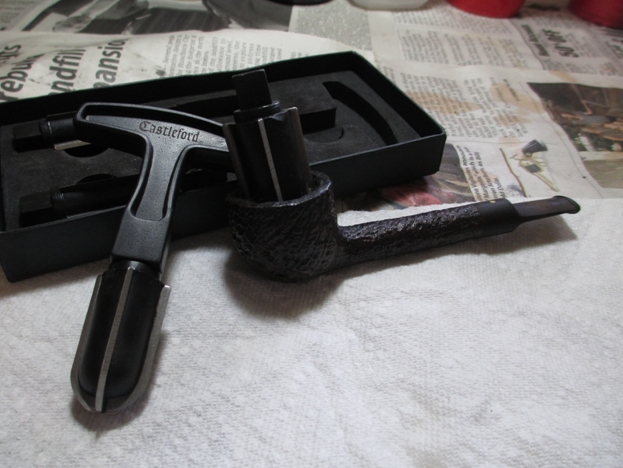
At this juncture, I became resolved to eradicate the stubborn, troublesome cake no matter what it might take. The determination was born not only of my own obdurate nature that exceeds that of any piece of wood, but from the fact that the Ben Wade Chamber of Horrors had managed to destroy my Senior Reamer – no joke. Not wanting to discard the fallen reamer, which had been so faithful to me until it met The Chamber That Must Not Be Named, by such callous means as tossing it in the garbage, I chose rather to retire it to a place of honor on my bench. But now I had to avenge my defeated brother in restoration, not to mention buy a replacement. I already ordered a new-in-box Castleford Five-Piece Multi-Fit Reamer Kit and a full set of micromesh pads (no more paper for me) online for just more than $30, postage included.

With no small sense of retribution fuelling me, I girded myself with an entire large sheet of the coarsest sandpaper I had and cut off a few small strips before bending one into the right shape to begin the ugly but necessary task with a vengeance. Unbelievable amounts of carbon spilling from the demon chamber every time I emptied it, and my fingers blackened with soot, I kept at it with gusto, thinking I must have made progress. My left index finger was developing scrapes and calluses.

Still, the evil chamber walls in spots felt like the bowels of a volcano. In desperation, I turned to a Dremel I borrowed for the amputated Ben Wade Billiard’s re-shaping. I changed the Dremel bit to a small, fine rounded piece of sandpaper and, at the slowest speed, began making circular turns around the chamber walls.

As some of you with more experience might imagine, this approach almost led to disaster, but instead turned the tables in my favor. Granted, the Dremel (not I) left several new chinked spots where none existed before. But these occurring after the power tool caught a scent of the pure briar, the cake crisis was solved with a bit more rapid sanding that also repaired the new nicks.

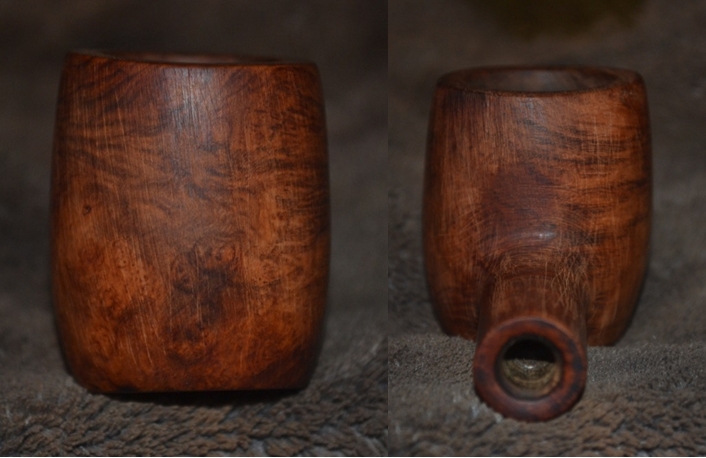
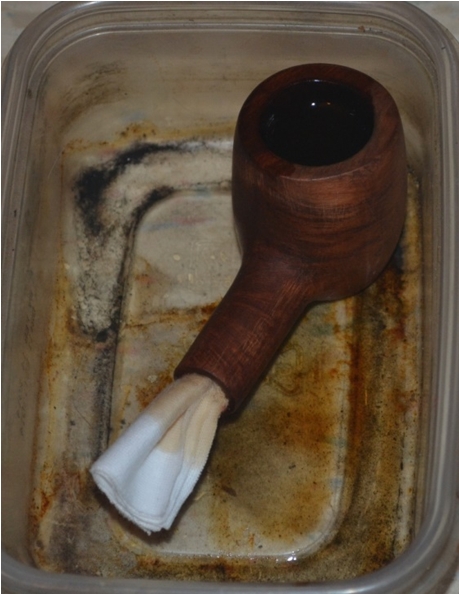
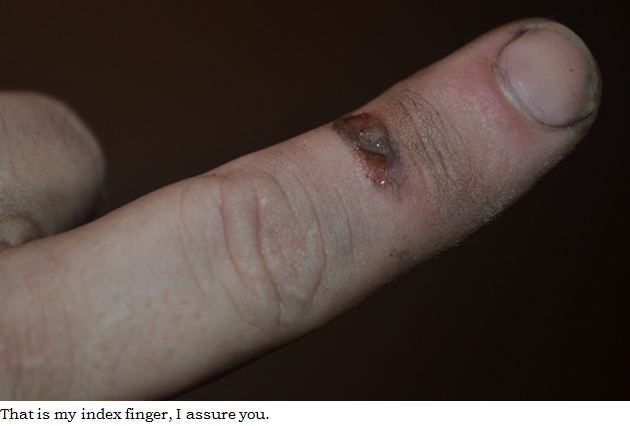
With the chamber vanquished of the dreadful cake as well as it ever would be, and the hollow area covered in blackness, and the shank still needing to be purged of its mess, I plugged the shank opening with several small squares of cotton and flooded the chamber with Everclear. I set the big chunk of briar aside for about 20 minutes.Rob18 In the meantime, I felt a keen sting in my right index finger and noticed that under the True Coat of soot there appeared to be some blood and loose skin. I thought it wise to scrub my hands forthwith, with soap and water as hot as I could stand, and this ordeal ended up lasting about 15 minutes. When I was done, I realized I had no hydrogen peroxide to sterilize the cut caused by so much sanding of the wicked chamber.

But I did have Everclear, the pouring of which onto my already burning sore did not excite me. Better safe than sorry, I just got it over with.

Oh, my gosh, did it burn!Rob19 I pulled the cotton plug from the shank and let the remaining coal-black liquid ooze from it like a suppurating wound, and began the still serious business of running both ends of so many bristly cleaners dipped in alcohol through the shank that I lost count. While the darker part of my brain, made meaner by the frequent sting of more Everclear running onto my exposed wound, whispered that the little hole would never come clean, the rational side assured me that before I knew it the job would be done.

But it wasn’t happening fast enough, and so I resorted to digging through my growing and a bit disordered supplies for the wire bristle brush I knew was there. At last I found it buried in the bottom of a drawer and at once started the repetitious but effective process of wetting it with alcohol, scrubbing the inner shank, rinsing it in a shallow bowl of alcohol that grew fouler each time, squeezing the bristles clean and dry, and repeating all of these steps over and over. Of course, my reward did come when I switched back to a normal cleaner soaked in alcohol and it came out clean.

Somewhere along the line, I finished the stem work by sanding down the excess Black Super Glue and smoothing the Vulcanite with vigorous rubbings of three grades of micromesh.

After inspecting the briar for any missed flaws I could fix and finding none, I gave the bowl and shank a final purified water bath, which proved to be necessary from all of the black powder that had transferred from my formerly dirty fingers.

Ready for the final countdown, I opened a brand-new bottle of burgundy-colored Lincoln boot stain and coated the entire outer area of wood using the small, damp applicator. As fast as I could manage, I flamed it all over with my Bic, reveling in the great poofs of blue flame that rose and dissipated as the alcohol in the stain burned off.

I rubbed off the char with a piece of 2400 micromesh until I could see the good grain through the fresh, dark red stain and then put on my magnifier glasses to do the finish work with 3600. It looked good to me, so I put it aside with the stem on a thick cotton cloth for about a half-hour.

That was all I could stand before taking the pieces to my bedroom/office/shop and focusing on the two buffing wheels I use to bring out the ever-anticipated shine. Taking a deep breath to steady myself for the always risky business of touching anything fragile to the high speed wheels, I turned them both on.

Starting with the stem, I turned it with all due respect and care first on the red Tripoli wheel and looked it over as I rubbed it with the cotton cloth, then the white Tripoli wheel on the other machine, and back to the first for the final coat of White Diamond. Much better, I thought and set it aside.Rob20 To the wood I applied quick, thorough coats of white Tripoli, White Diamond and carnauba.I looked it over, noticed a spot that was duller than the rest and repeated the process there.Rob21

Rob22

Rob23

Rob24

Rob25 CONCLUSION
Fixing this pipe took me the greater part of a week, by far the longest I have spent on a project since my first real restoration two years ago. That is the reason why the concept of being finished with the Ben Wade Tall Poker is still taking time to sink in. After all the time I have spent with the BW – before the project began to make a plan of action I ended up throwing out the window, during the circuitous restoration itself and now afterward, writing about the experience – I have grown attached to the curious example of pipe craft. I would like to keep it to myself, to add it to my growing collection of Ben Wades. I have no doubt it will smoke at least as well as the others.
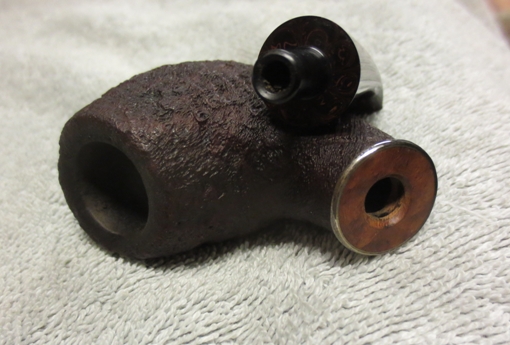
But I have decided to let someone else discover the accuracy of that prediction.

Restoring a 1935 Dunhill Shell – Andrew Selking


Blog by Andrew Selking

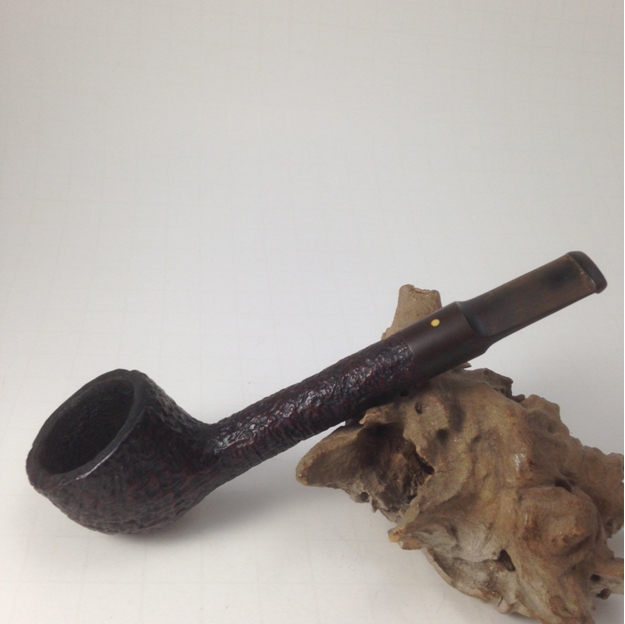
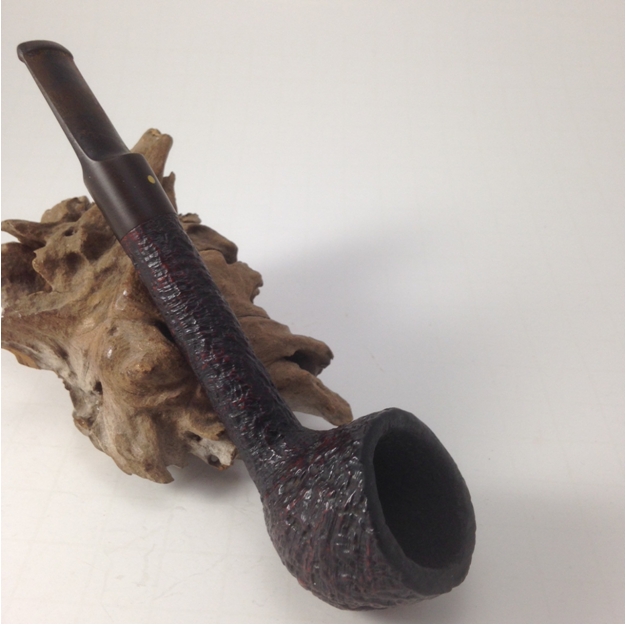
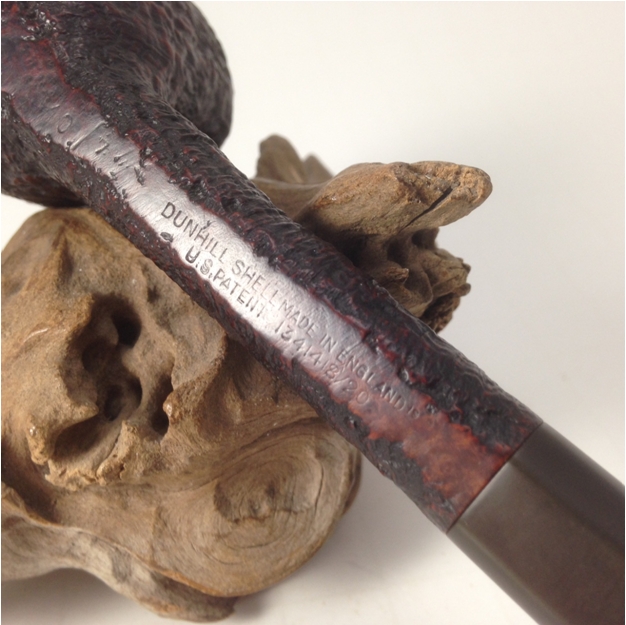
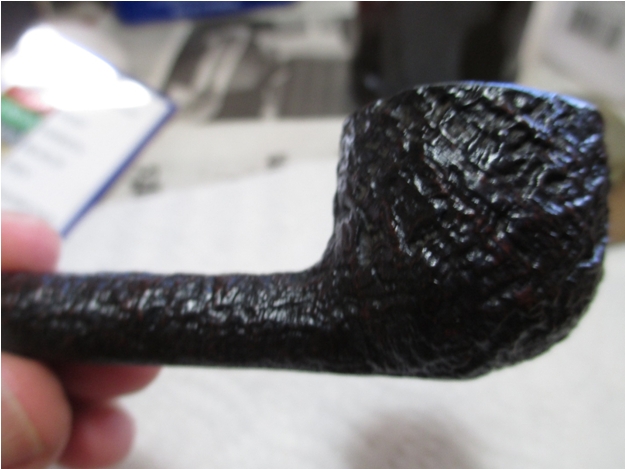
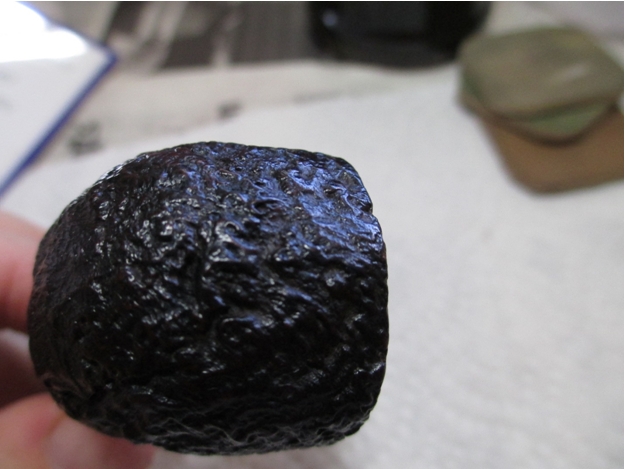
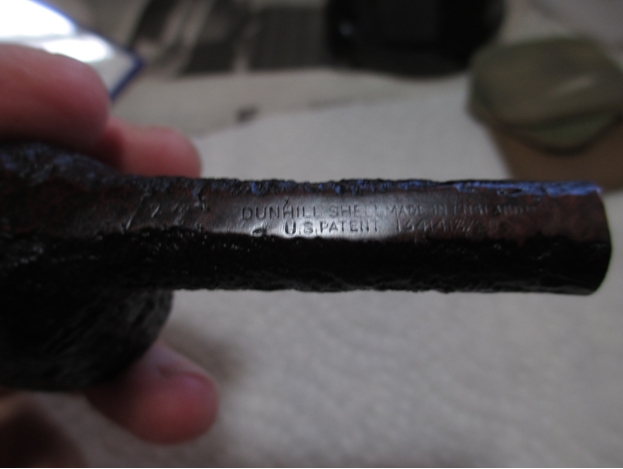
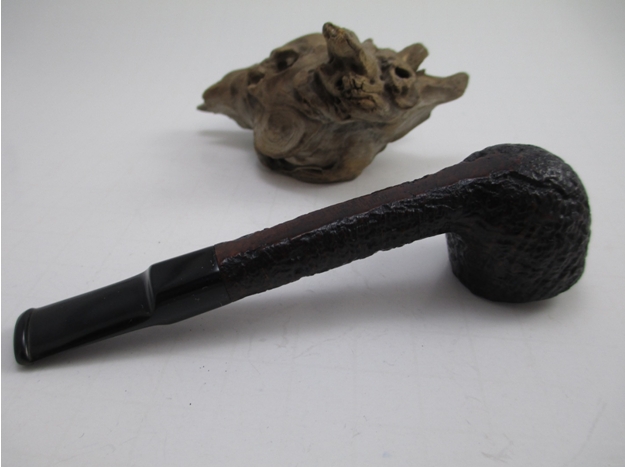
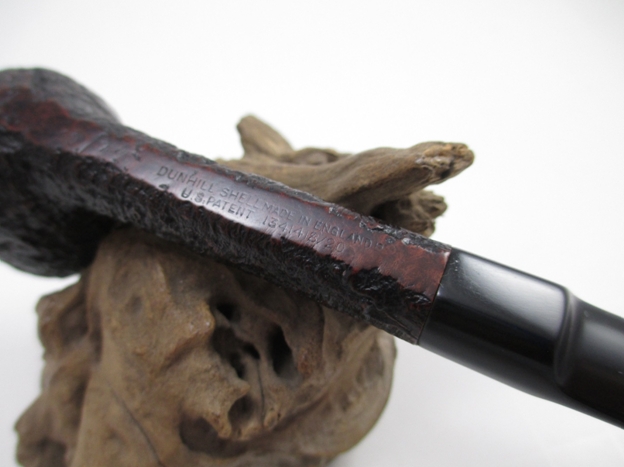
This is my second Dunhill Shell, but like everything it has been a learning experience. I saw this orphan about to expire on eBay without a single bid. As they say, a little knowledge can be a dangerous thing. I knew that it was a desirable patent-era Shell and from the markings it was made in 1935. I should have taken the time to look at a Dunhill shape chart, this pipe had been seriously topped. The good news is, I didn’t pay too much for it and it’s a handy little pipe, 4 15/16 inches long and .7 of an ounce! No wonder the stem didn’t have any tooth marks.

So here’s what the pipe looked like before the restoration.Dun1

Dun2

Dun3 The one thing that I really like about the Dunhill Shell pipes is the finish. The combination of deep reddish brown and darker brown/black is very pleasing to look at. That is why I treat rough finish pipes (rusticated, blast, fine line) differently than smooth finish pipes. I took a tip from Steve and use Murphy’s Oil Soap, which is made from vegetable oils and specifically formulated for wood. I took a small amount of the soap and applied it directly with a toothbrush.Dun4

Dun5 As you can see the Murphy’s Oil Soap did remove some of the finish, but not nearly as much as the alcohol bath would have. The soap also removed the decades of accumulated grime. If you don’t take care to clean the outside of the pipe no amount of wax will make it shine.Dun6

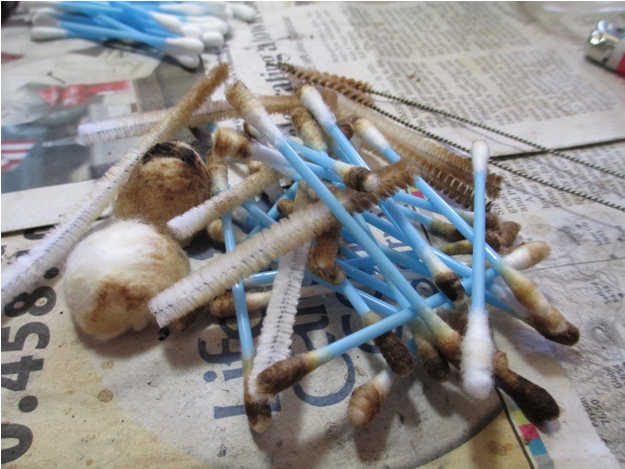
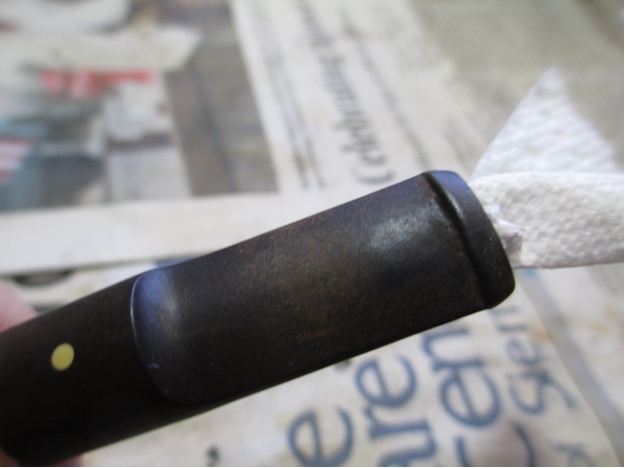
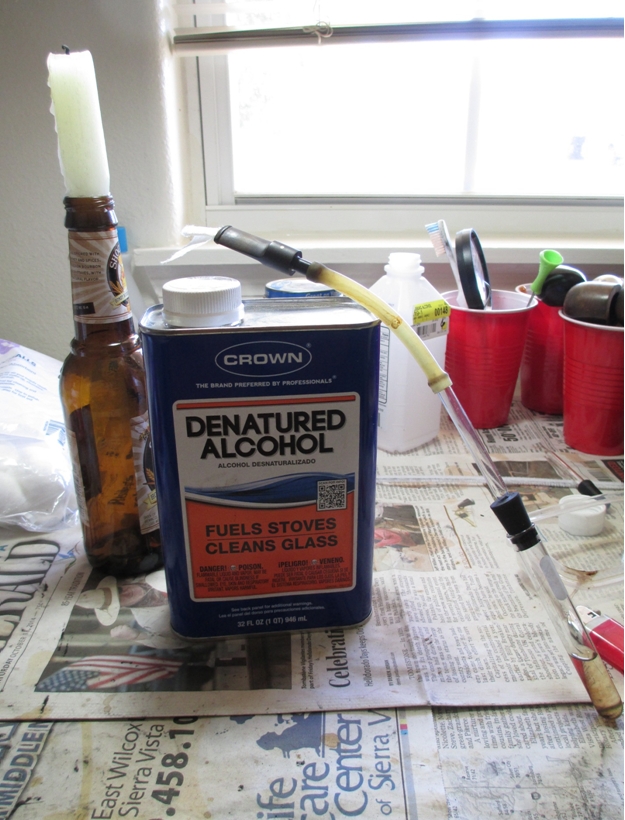
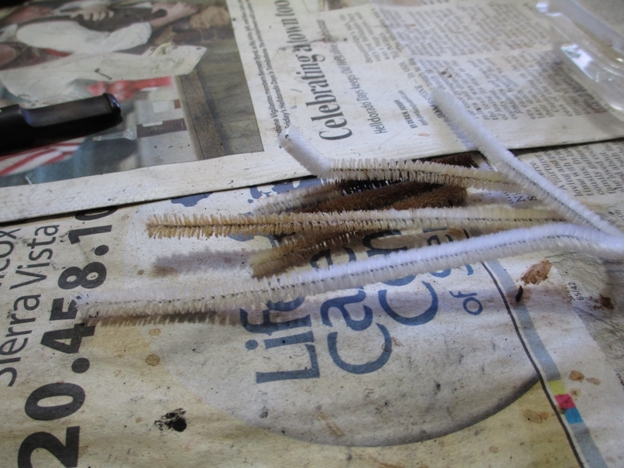
Dun7 My next step was to start the stem soaking in Oxyclean and soak the bowl with denatured alcohol. I packed the bowl with cotton balls, plugged the shank with some rolled up paper towel, and used an eye dropper to soak the cotton.Dun8 After the cake loosened up, I reamed the bowl. This bowl is huge, I used my two largest reaming heads to clean it out.Instead of doing the retort multiple times, I used q-tips dipped in denatured alcohol followed by pipe cleaners. (I don’t technically use pipe cleaners. I use “fuzzy sticks”. That’s the innocuous name given to pipe cleaners used for crafts.) To maximize each cleaner, I used scissors to cut the dirty section off. As you can see I ended up with a decent size pile of q-tips and fuzzy sticks.Dun12 Next I turned my attention to the stem. I did the retort first, then used pipe cleaners to finish the job. Fortunately since the stem is so short, it didn’t take long to clean. You will notice that I packed some paper towel into the end of the stem. Occasionally when you use the retort, the alcohol will boil over and spray everywhere. That does not endear you or your eccentric hobbies to your significant other, especially when the resulting mess makes the wall look like a Jackson Pollock painting.Dun13

Dun14

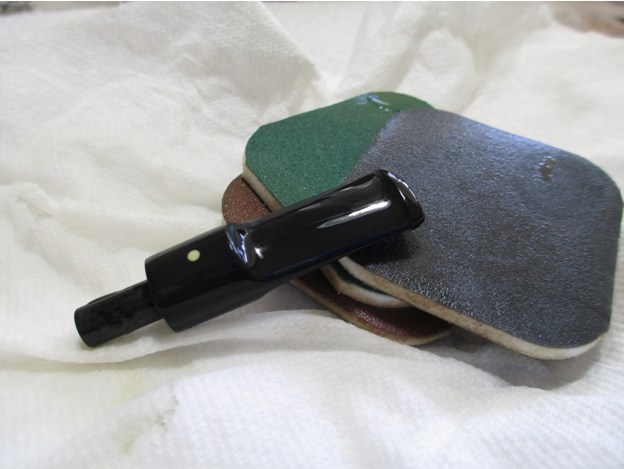
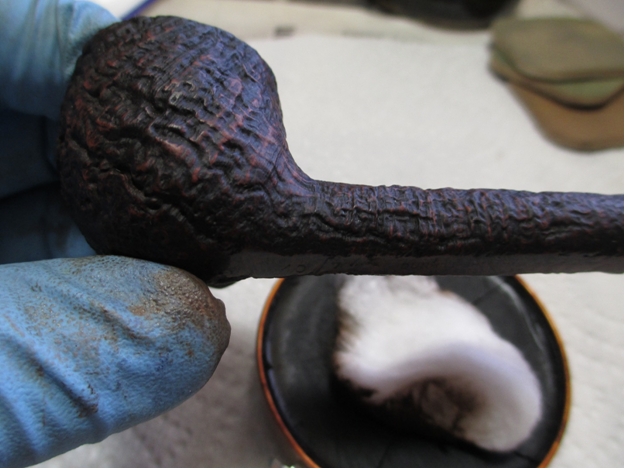
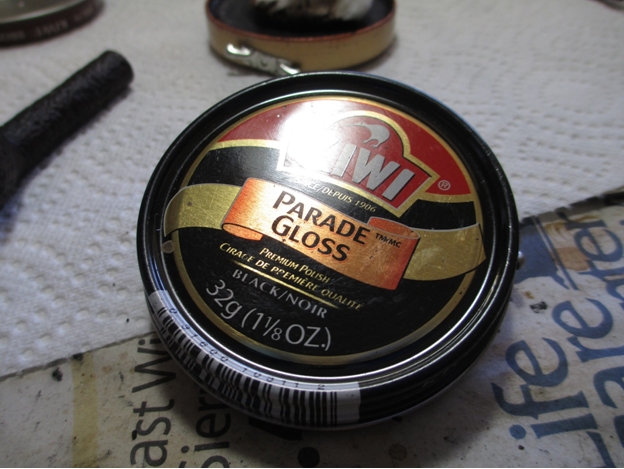
Dun15 I usually take extra time on stems as nice as this one. Instead of using 400 grit wet/dry I started out with 1000 grit wet/dry and water. It takes longer, but the last thing I want to do is change the profile of the stem or damage any of the details by using a lower grit sand paper. After the 1000 grit I used 1500-2400 grit micro mesh pads with water.Dun16 While the stem dried, I began the staining/waxing process. In an attempt to replicate the Dunhill finish, I used the brown shoe polish followed by a thin layer of black shoe polish. The heat gun helps melt the wax so that it gets into all of the crevices and the brush brings out a nice shine.Dun17

Dun18

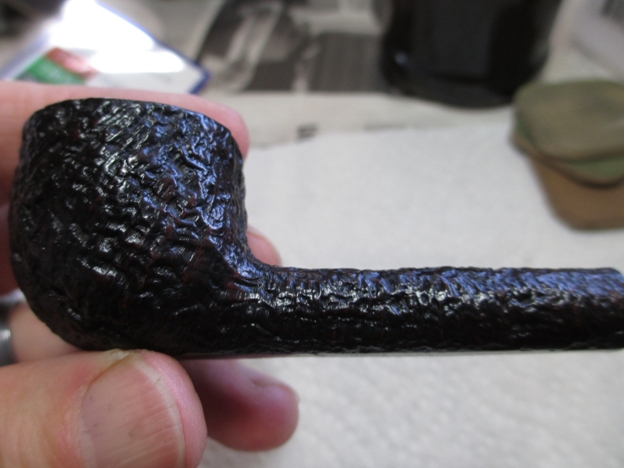
Dun19 Here is what the bowl looked like after the application of the second coat of wax and buffing with the brush.Dun20

Dun21

Dun22

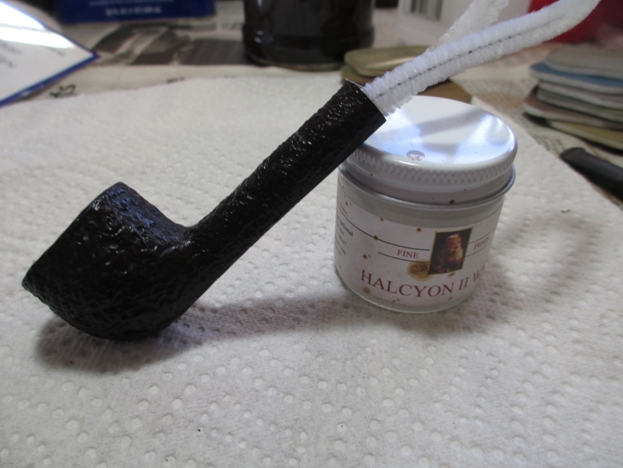
Dun23 Since shoe polish is a soft wax, I protect all of my rough finish pips with Halcyon II wax. I applied the wax with my finger tip (a little goes a long way) and let it dry for about 10 minutes. After the wax dried, I buffed it out with a soft cloth and applied a second coat. (The pipe cleaner is so I can hang the bowl up to dry.)Dun24 Finally I finished sanding the stem, using a progression of micro mesh pads from 3200-12000 grit followed by a quick spin on the buffing wheel with some carnauba wax.Dun25 Here is the finished pipe.Dun26

Dun27

Dun28

Dun29

Dun30

Dun31

Converting an Old Briar Bowl to fit a Kirsten


Blog by Steve Laug

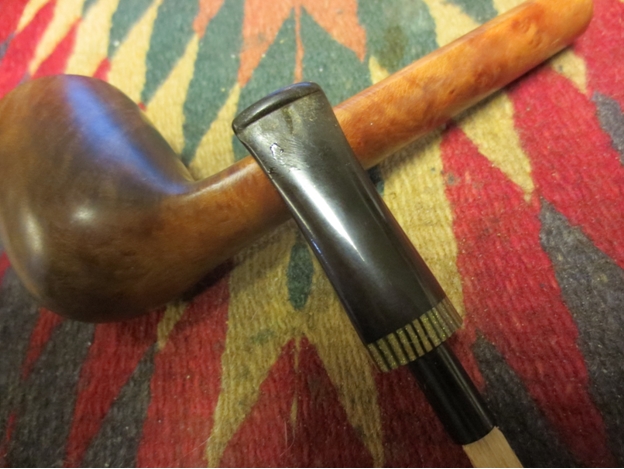
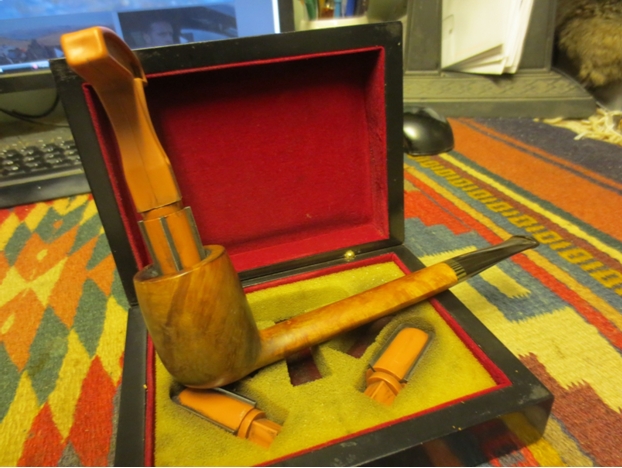
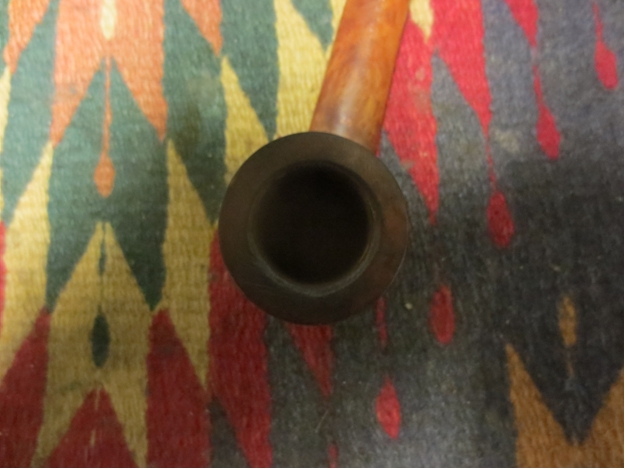
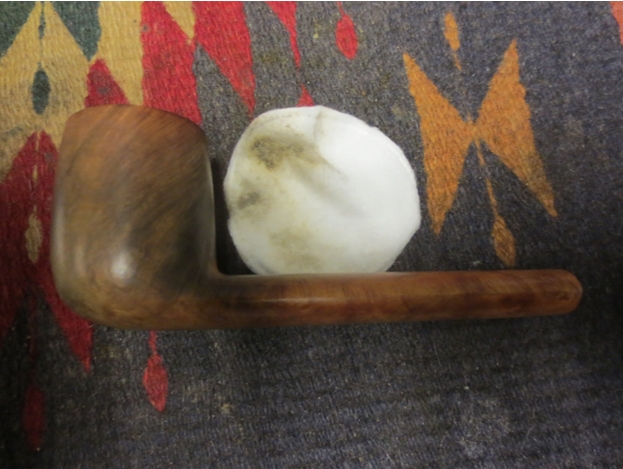
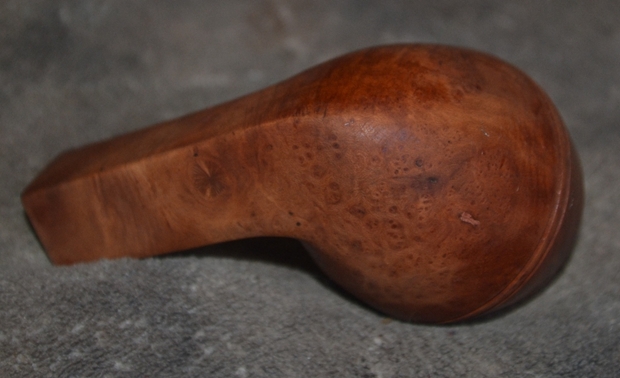
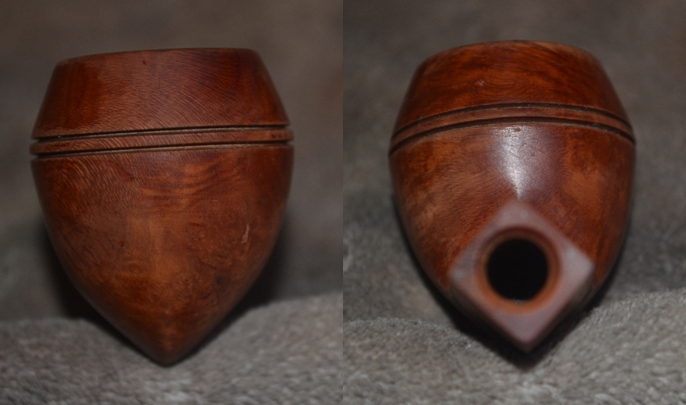
After I finished fitting the old Maplewood bowl for my son-in-law’s Kirsten I took another bowl from my pipe parts box. This was another old bowl with the airway drilled on the bottom of the bowl and having a nipple fitting. This bowl came from part of an old hookah type set up. I had picked it up in the same bag of parts as the maple bowl. It had a rubber fitting that the bowl sat in and a glass pipette that extended from the bottom of the fitting. I removed the bowl from the rubber and then stripped it with acetone on a cotton pad and wiped it down until the finish was gone. I sanded the surface of the bowl with 220 grit sandpaper to remove the remnants of the finish.Kir1 There were also fills in the bowl on two sides. Some of them had shrunken and needed to be refilled. I sanded the surface to clean up around the fills. I filled them with super glue and briar dust and sanded them flush against the surface of the bowl.Kir2

Kir3 The underside of the bowl also had several fills. The nipple actually was not part of the briar bowl but was made out of maple. It was inserted in the bottom of the bowl. I wiped it clean to show the connections. I also topped the bowl on a topping board with 220 grit sandpaper to smooth out the surface.Kir4

Kir5

Kir6 I used a hacksaw to cut the nipple off the bottom of the bowl. Once I had the wood portion of the nipple cut all the way through it came off the bowl. In the middle was a brass tube that ran the length of the nipple and went into the bottom of the bowl where it was flared against the inside bottom. I used a small hammer to drive the tube into the bowl.Kir7

Kir8 When I had removed the tube I sanded the bottom of the bowl to smooth out the surface. Once it was clean I could see that the maple was inset into the bottom of the bowl. It is distinguishable in that it is white in the photos below. On one side of the white maple insert were two flaws in the briar that had originally been filled. One of the fills fell out of the bowl bottom when I drove out the metal tube.Kir9 I drilled the airway in the bottom of the bowl larger with a drill bit the same size as the metal bottom cap that is part of the Kirsten bowl system. The cap would sit in the hole and a drilled screw would be inserted into the cap from inside the bowl. When I drilled out the hole the maple insert came out of the bottom. It left an inset area on the bottom that would be removed when I sanded the bottom of the bowl for the cap to sit flush against the bottom.Kir10 I used super glue and briar dust to repair the two flaws in the bottom of the bowl. I dripped the glue into the holes and then pushed super glue into the flaws with a dental pick.Kir11 I sanded the bottom of the bowl with a Dremel and sanding drum to shape the bottom edges of the bowl to fit on the Kirsten shank. I sanded the bottom edges of the bowl at a sharper angle to give it a more defined shape.Kir12

Kir13 I used the Dremel and sanding drum to deepen the bottom of the bowl and give the internal screw a flat surface to seat against. I also used a PipNet reamer with the largest cutting head to flatten out the bottom of the bowl and smooth out the surface. Once it was smooth I inserted the screw into the bowl bottom and threaded it onto the bottom cap. Once I had the cap inserted and tightened with a Philips screwdriver I screwed it onto the Kirsten shank. The next four photos show the newly shaped cauldron bowl on the Kirsten.Kir14

Kir15

Kir16

Kir17 I took the cap and screw off the bowl and wiped it down a final time before staining it with a dark brown aniline stain. I applied the stain and then flamed it to set it in the briar. I restained and reflamed it until the coverage was even.Kir18
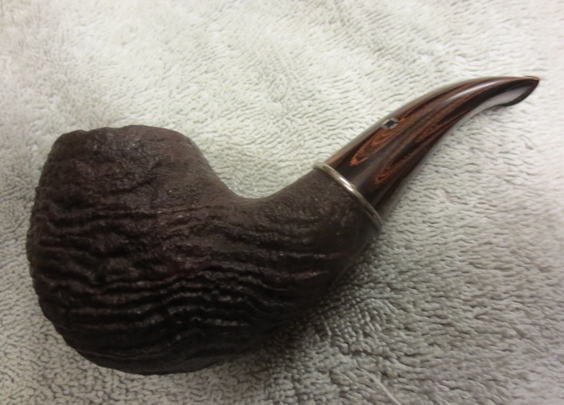
Kir19

Kir20 I buffed the bowl with red Tripoli and White Diamond to polish the stain and give it a shine. In doing so the fills were highlighted. I used a permanent marker to cover the fills and then gave the bowl multiple coats of carnauba wax and buffed it with a soft flannel buff. I put the cap and screw in place and tightened it down. The photos below show the finished bowl.Kir21
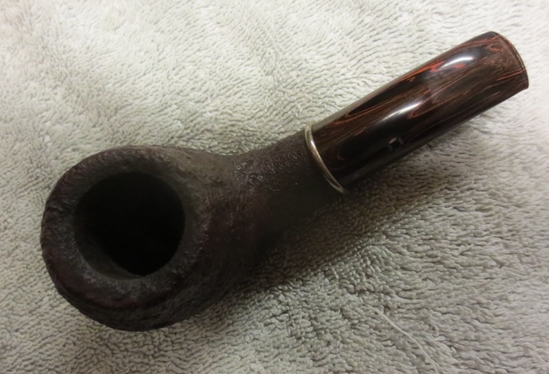
Kir22

Kir23

Kir24

Kir25

Kir26 I buffed the bowl with several new coats of carnauba wax and polished it to a shine with a soft flannel buffing pad. The finished cauldron bowl is shown in place on the pipe below. It looks really good on the Kirsten stem. It provides a second bowl for one of my other Kirsten pipes. I like the overall look of the piece and it is great to have a repurposed bowl to use. I look forward to loading it up and giving it an inaugural smoke.Kir27
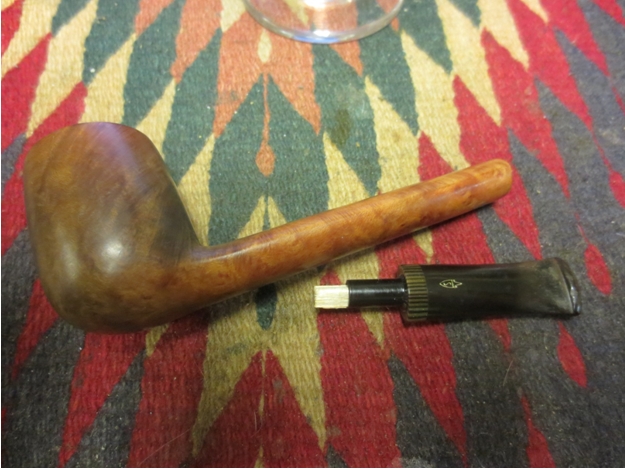
Kir28

Kir29

Kir30

Kir31

Kir32