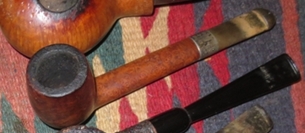
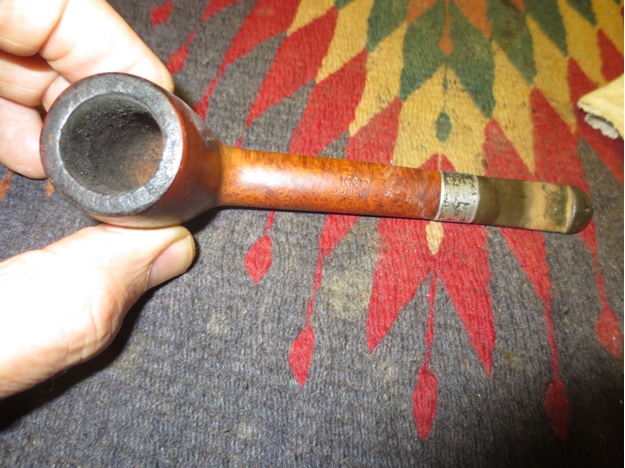
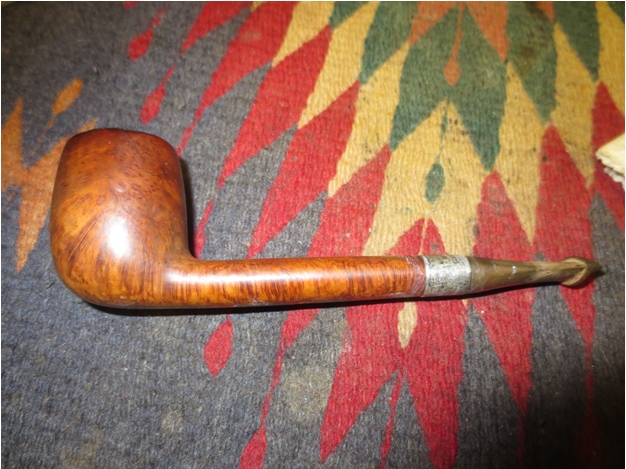
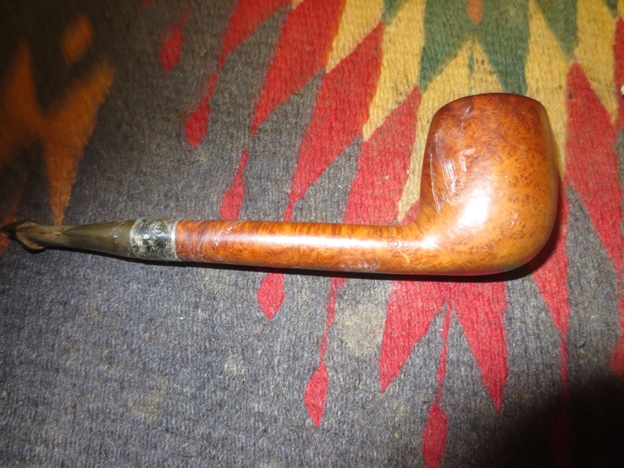
Author Archives: rebornpipes

Saving a Pipe – Restoring a Royal Danish 33 Bulldog that had seen better days.


Blog by Steve Laug

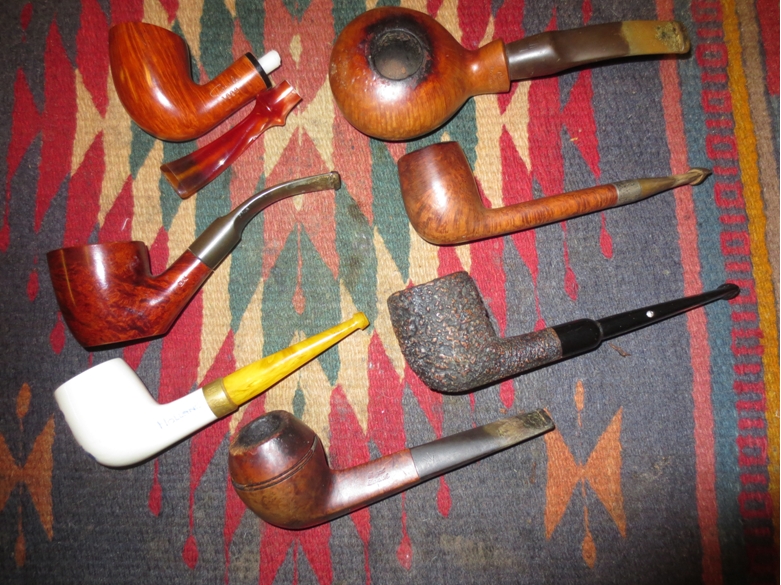
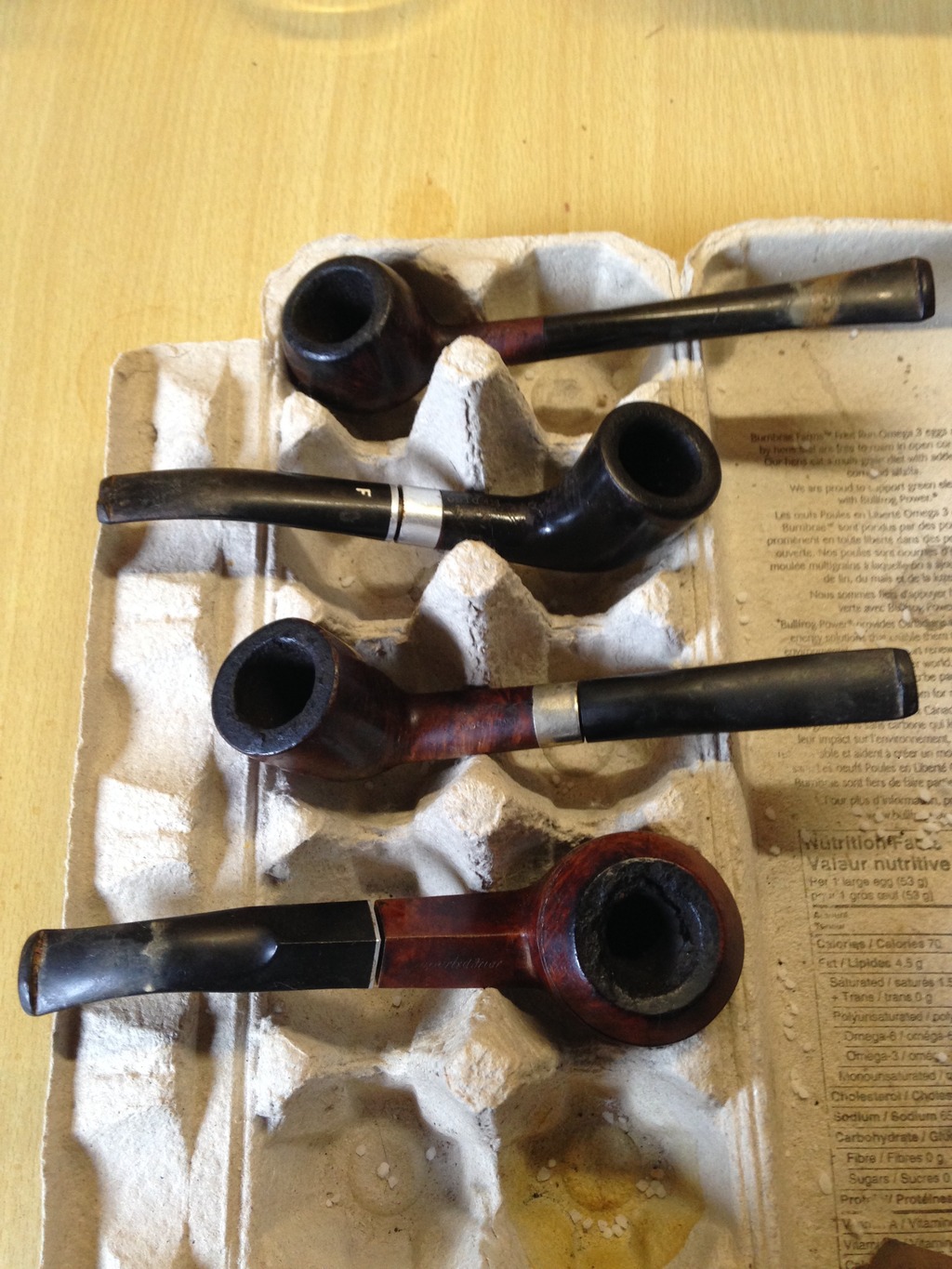
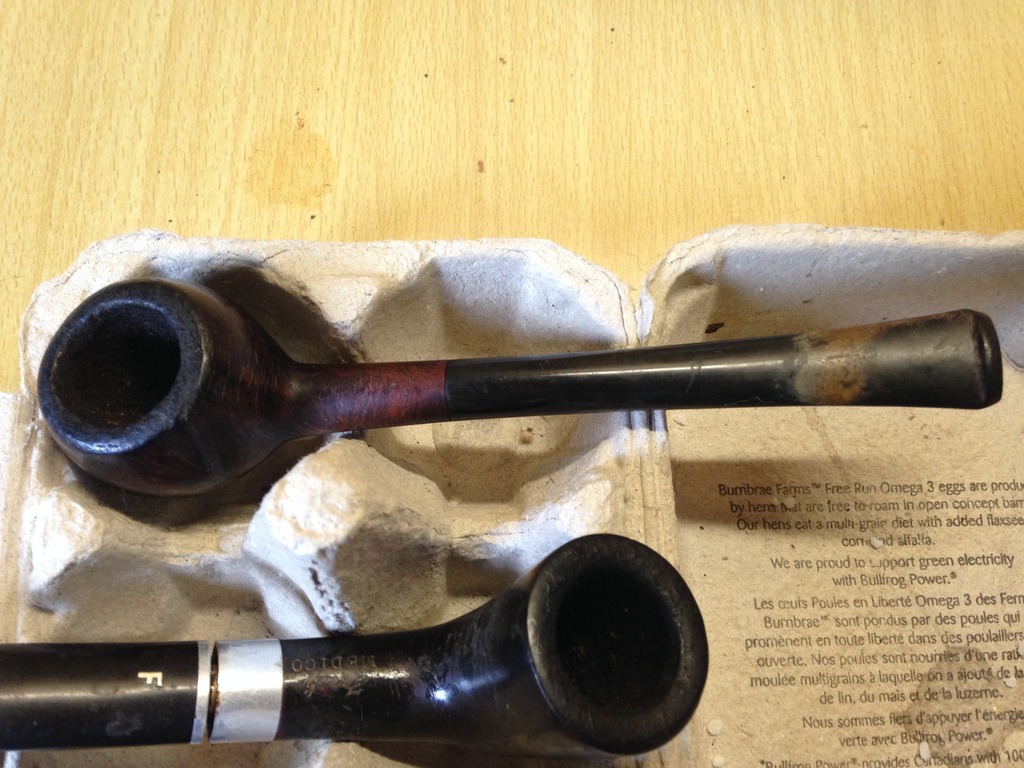
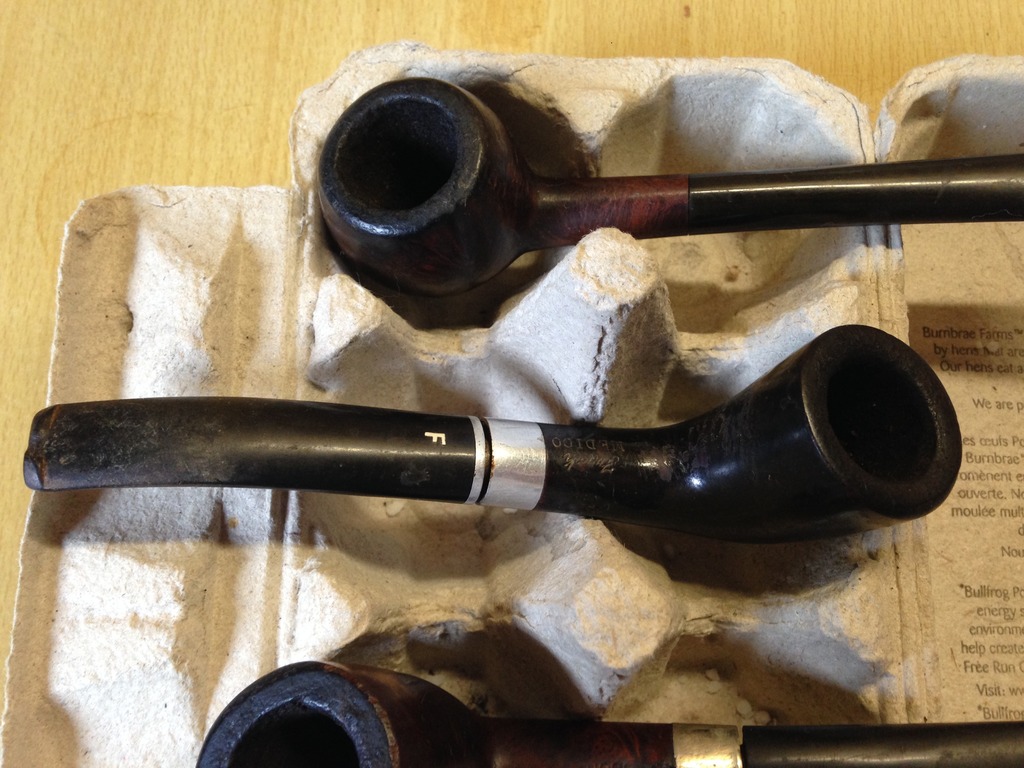
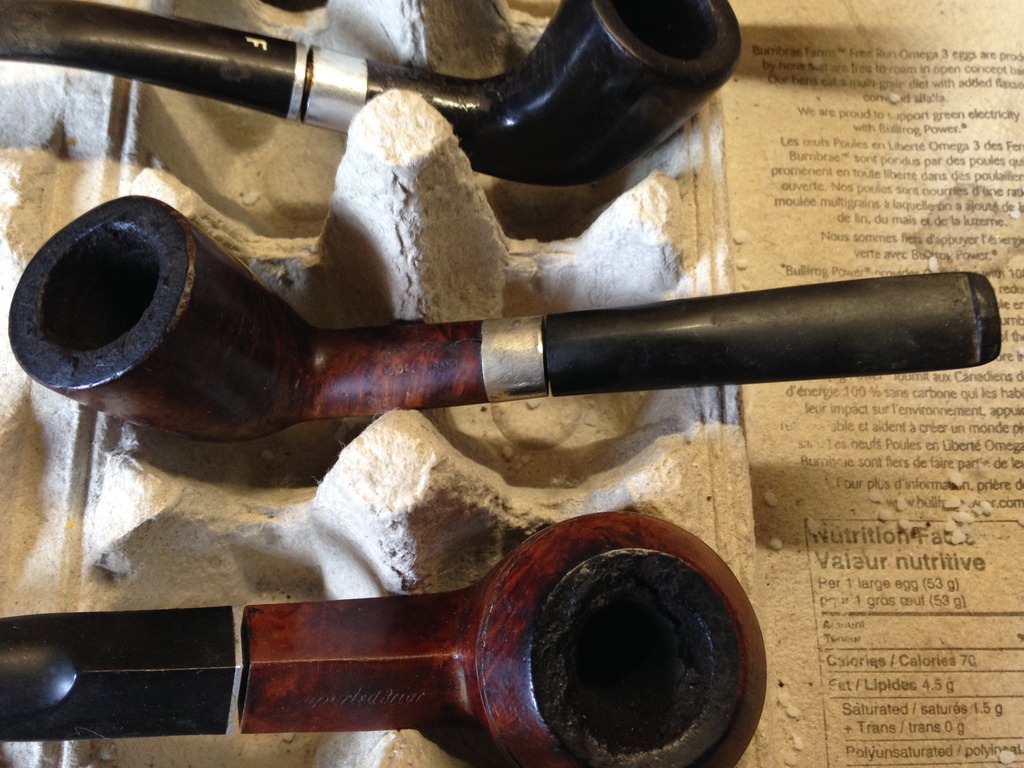
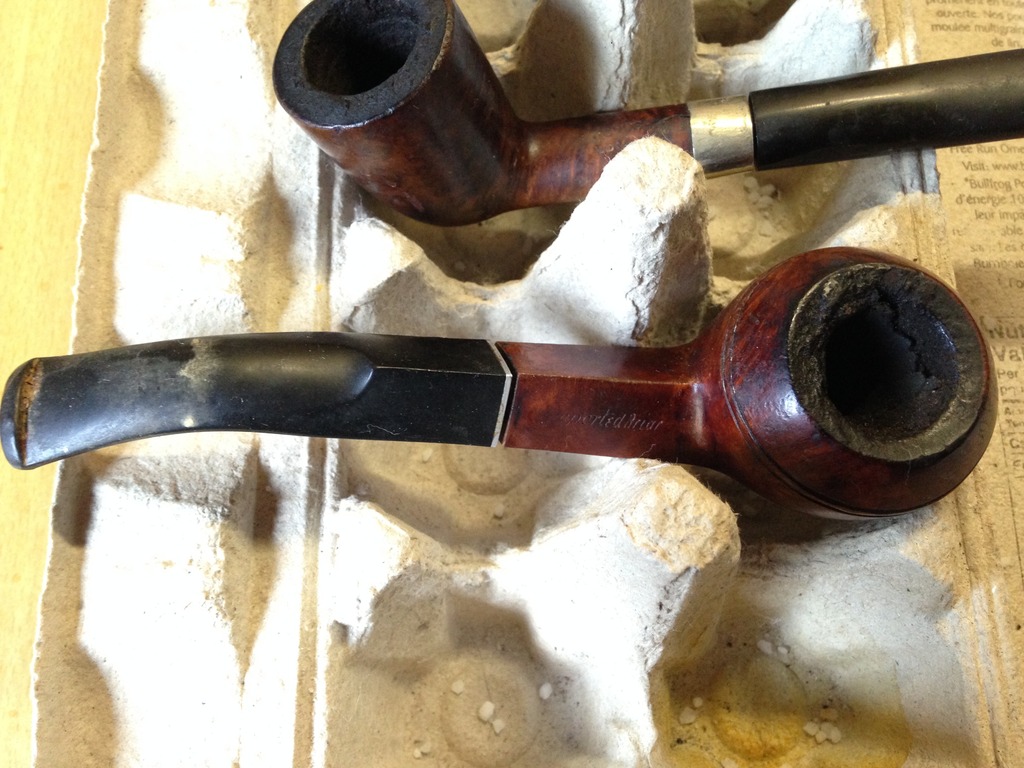
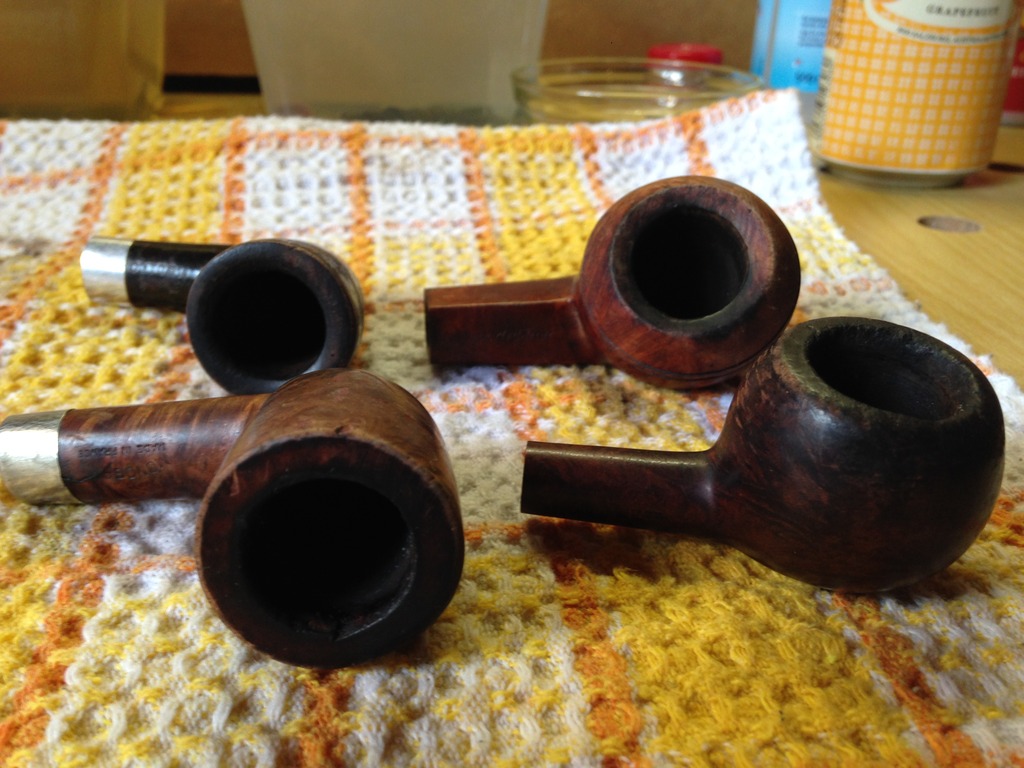
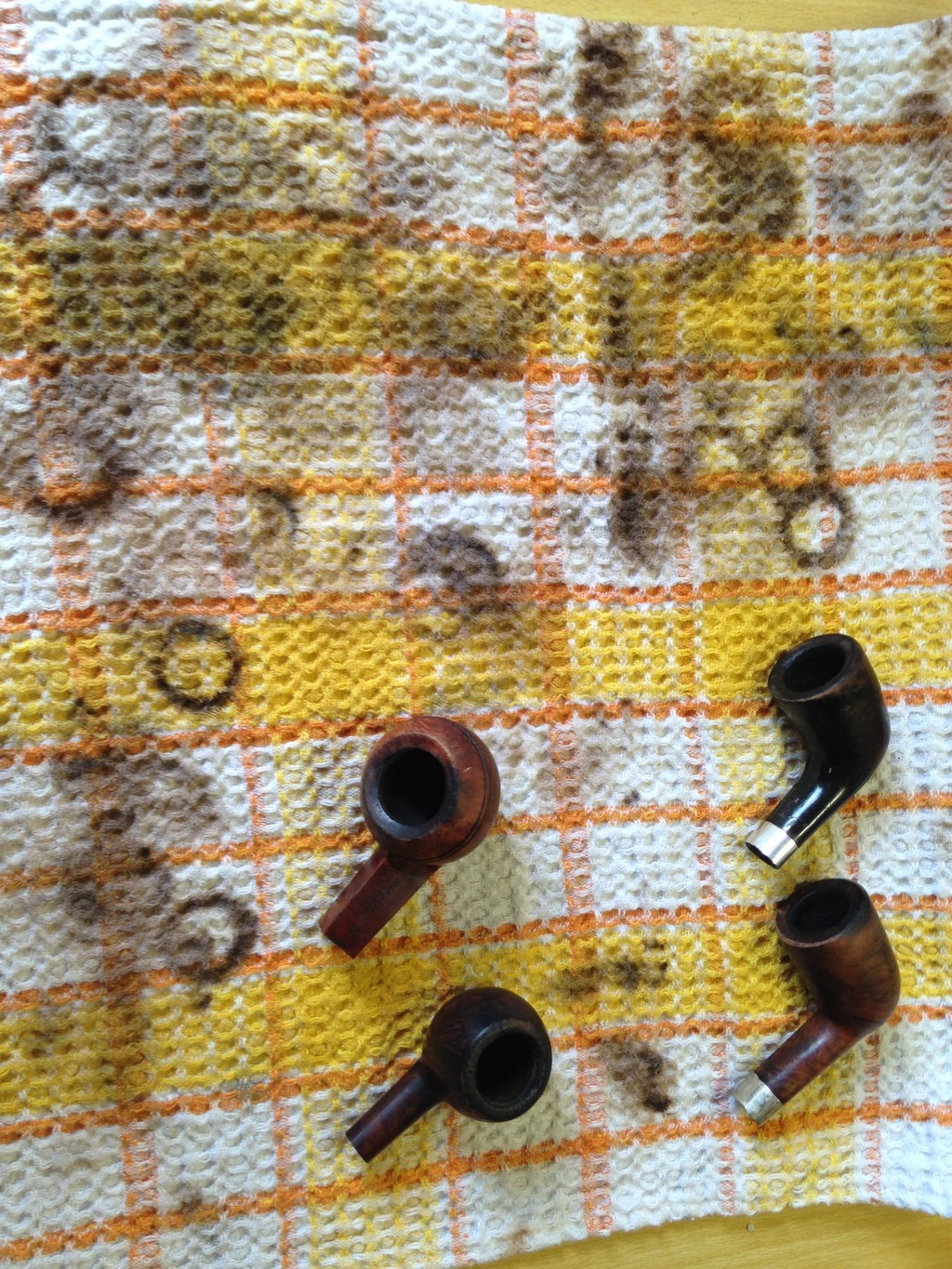
I am in the midst of a particularly labour intensive restoration of a Royal Danish 33 Bulldog. It was in very rough shape but having met the old timer who it originally belonged to I decided to make the extra effort to bring it back to life. It was obviously a favourite pipe of his and he as much as said so. I think it was the only one of the lot that he felt bad about letting go of when he sold me the lot. Often I will take time to read some of my favourite blogs during lunch break at work or even when I come home to help me unwind from a long day. I read before I pick up a pipe to work on or restore and find that it helps focus my attention. Yesterday at lunch I came across an article by Alan Chestnutt on his blog on his website Reborn Briar Estate Pipes that really resonated with what I was feeling as I worked on the particular pipe. He called the work he does as a pipe restorer – “saving the pipes”. I think that is a particularly poignant description of the work on this Royal Danish 33 Bulldog that I picked up in the lot from craigslist. It is shown in the first photo below at the bottom middle of the photo. In the second photo it is in the right hand column at the bottom of the photo.craig5

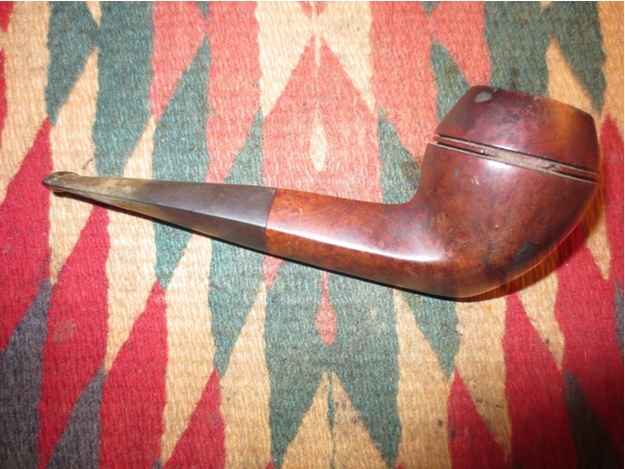
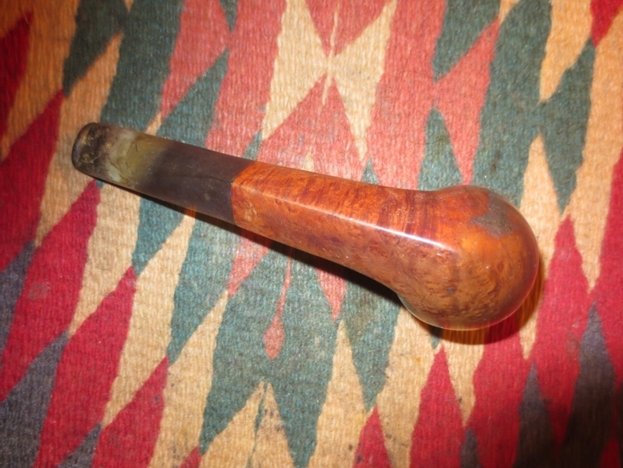
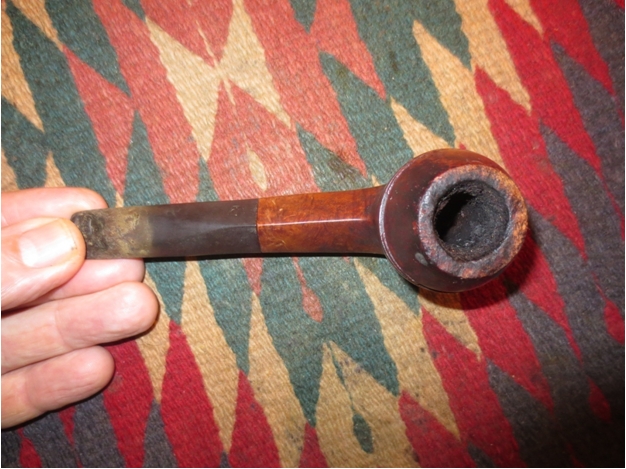
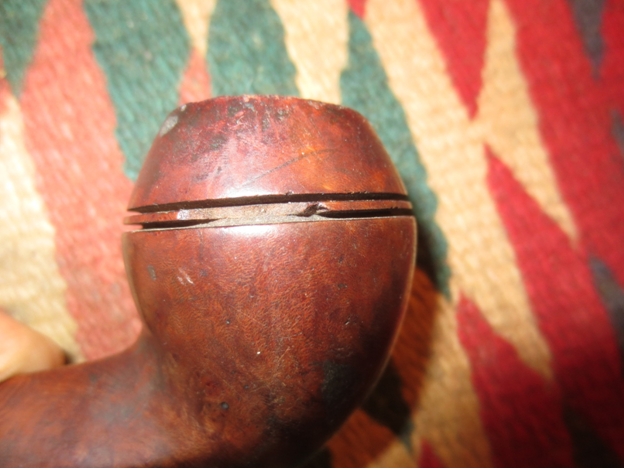
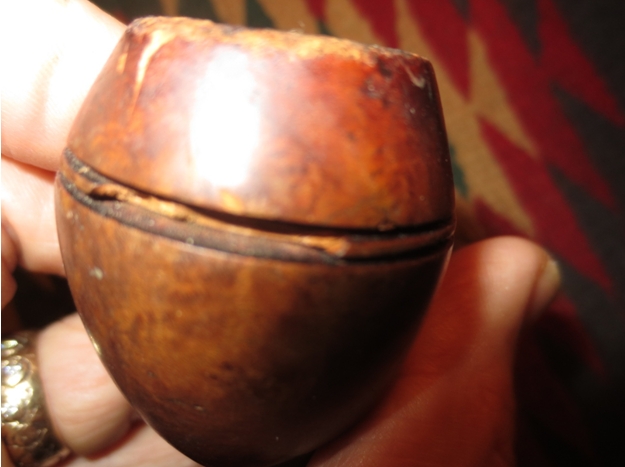
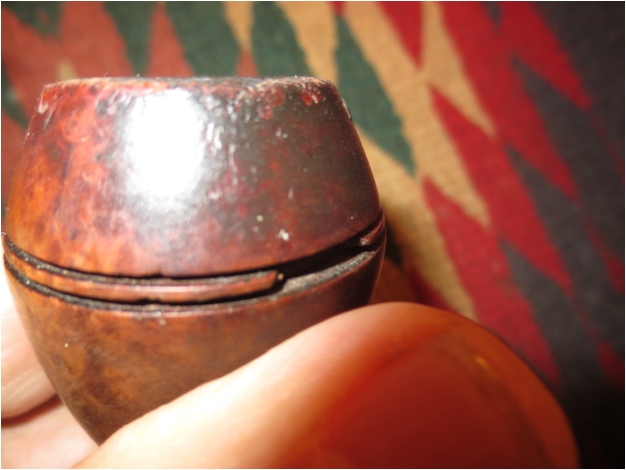
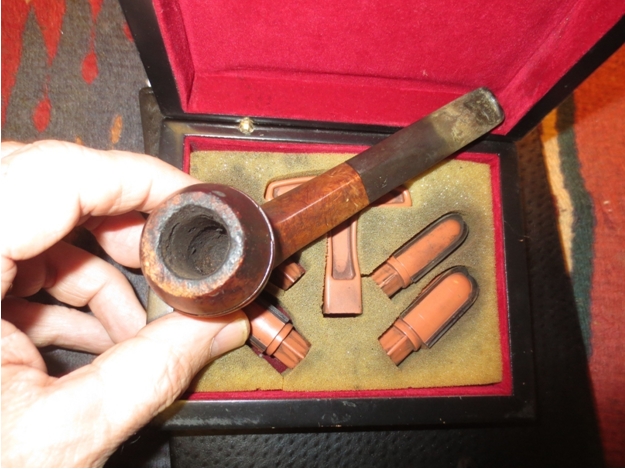
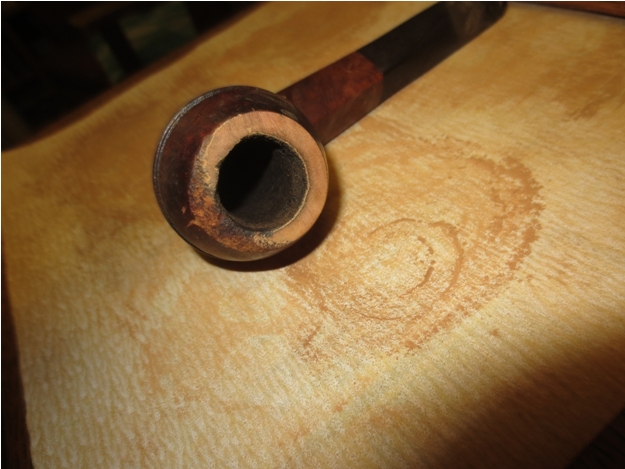
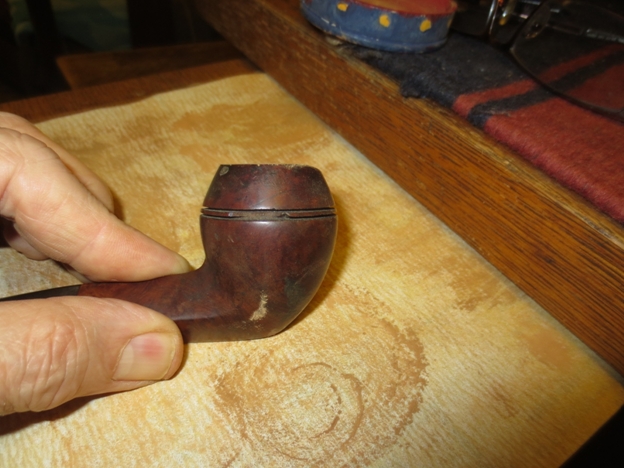
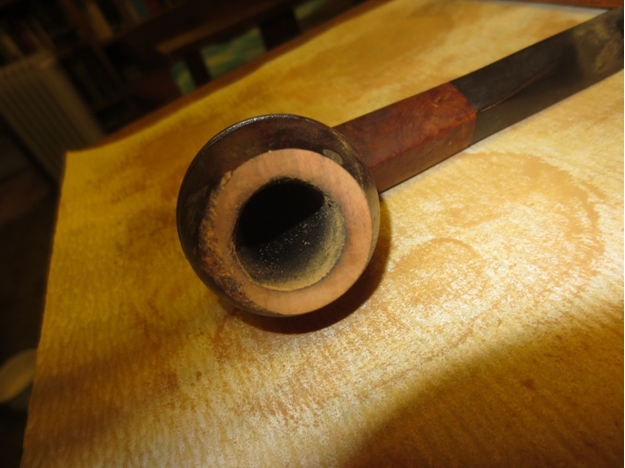
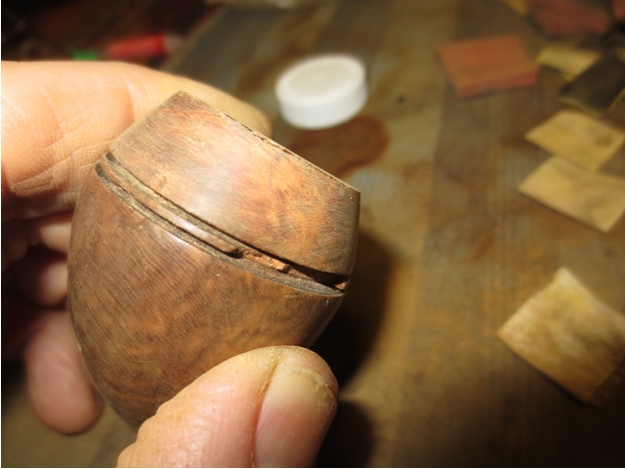
craig6 The old timer was a well loved pipe and obviously a good smoking pipe. It was in rough shape. In fact it was in the roughest shape of the lot. The photos below show the state of the pipe when I brought it to the work table. The finish was rough and dirty with lots of scratches and dents in it. The rim was shot. The front side was worn down from beating out dottle when the smoke was finished. The drop from the height at the back of the bowl to the height at the front was over ¼ inch and the surface was chewed up. The outer edge of the bowl on the front was obliterated. The rim surface was beat up as well. There were thick marks of tar or oil on the sides of the bowl and rim that were sticky. The bowl was heavily caked. The double ring around the bowl was damaged. Over ½ of the briar between the rings was broken and missing. The stem was oxidized and chewed. The topside of the stem had deep dents near the button that went up almost a half an inch. On the underside the tooth marks were even deeper and there was a hole in the stem where it had been gnawed through. Around the stem was calcification that is common pipes that have had a softie bit on the stem. I think the old timer who had this pipe slipped the softie bit over the damage so he could keep smoking his favourite pipe.Dan1

Dan2

Dan3

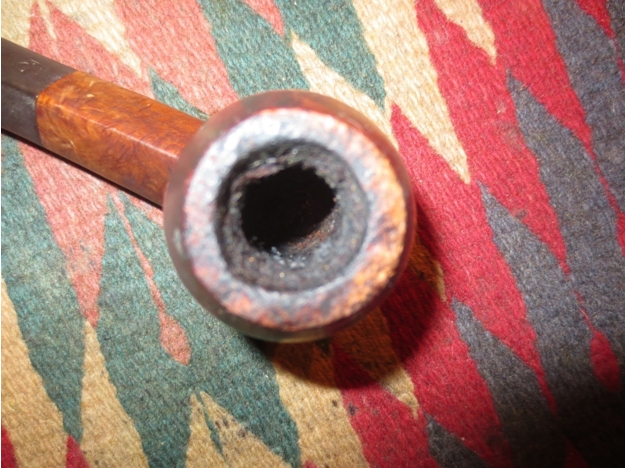
Dan4 The next series of photos show the thickness of the cake, the extent of the damage to the rim and the missing pieces of the briar between the double rings around the cap of the bowl.Dan5

Dan6

Dan7

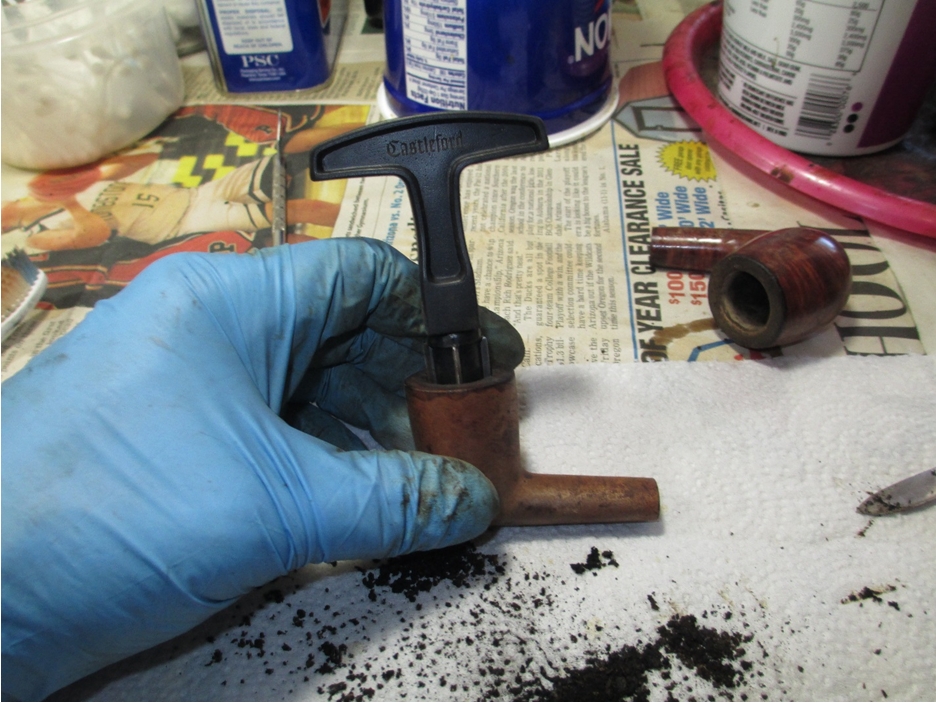
Dan8 I reamed the bowl with a PipNet reamer starting with the smallest cutting head and working up to a head that was almost the same diameter as the bowl. I took the cake back to a very thin layer on the bowl.Dan9

Dan10 I decided to sacrifice some of the height of the bowl to give back some dignity to the tired bowl. I topped the bowl in stages on a topping board. The back side of the rim was significantly higher than the front of the bowl so I started by leveling out the bowl height all the way around the bowl. I brought the back side down to the same height as the damaged portion.Dan11

Dan12

Dan13 Once the height was even all the way around the bowl it was time to work on the front edge damage. At this point in the topping process I pressed the bowl down on the topping board with even pressure front and back and moved it on the sand paper in a circular motion.Dan14 I continued sanding until the damage on the front top of the rim was minimized. There was still damage on the front of the bowl that would need to be addressed to smooth out the damage to the bowl. I wiped the bowl down with acetone on a cotton pad to remove the sticky oils and tars spots on the bowl sides. I also cleaned up the damaged area on the front of the bowl so that I could repair it.Dan15

Dan16

Dan17 I dripped some super glue into the damaged surface and then pressed briar dust into the glue. I then gave it a top coat of super glue as well. In the photo below you can see the repaired edge and the repair to the gouges and damage on the bowl front. Dan18 I sanded the repaired area with 220 grit sandpaper and then with a medium and a fine grit sanding sponge to blend the repair into the surface of the briar. The next photo shows the same spot on the bowl after sanding the repair. The second photo below shows the top view of the rim repair. The dark/shiny edge at the bottom of the photo is the super glue repair.Dan19

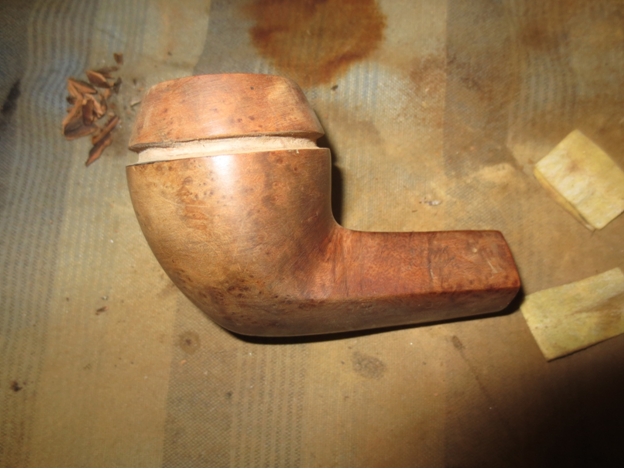
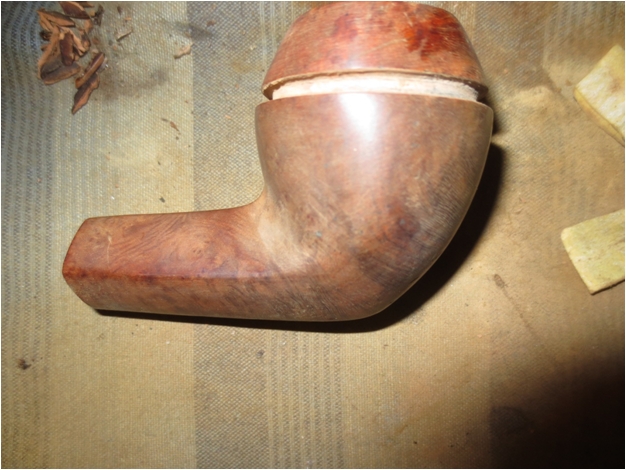
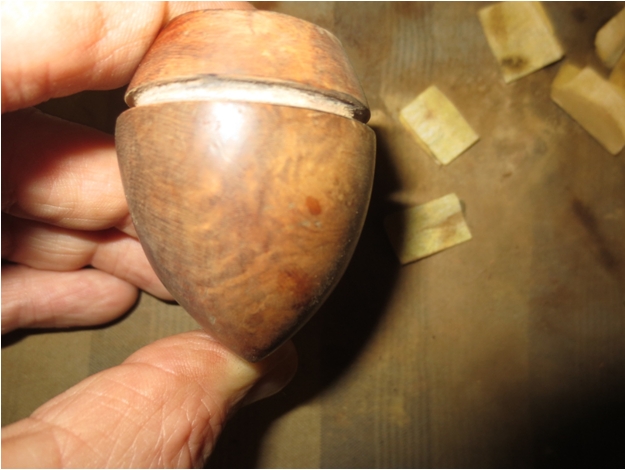
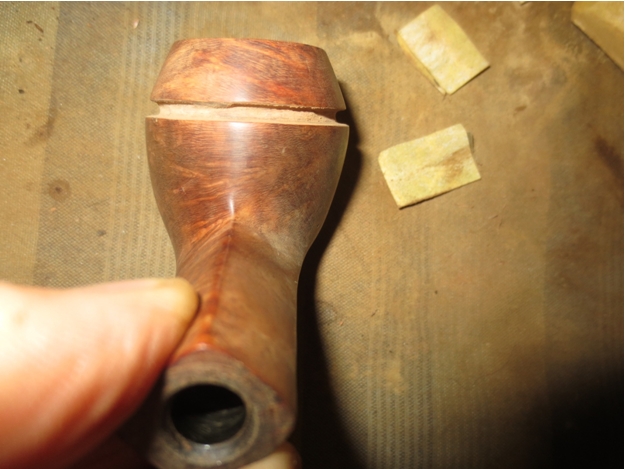
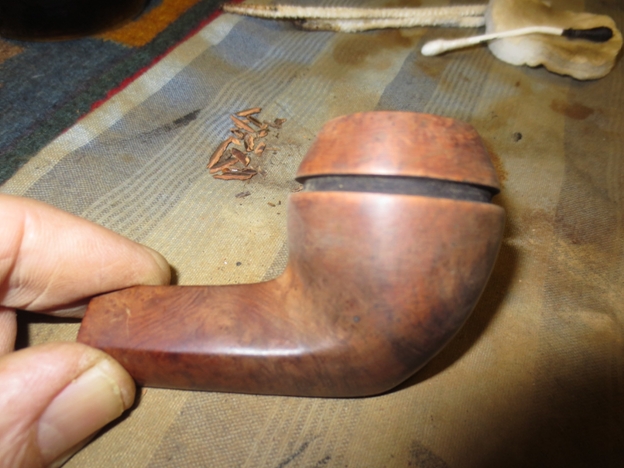
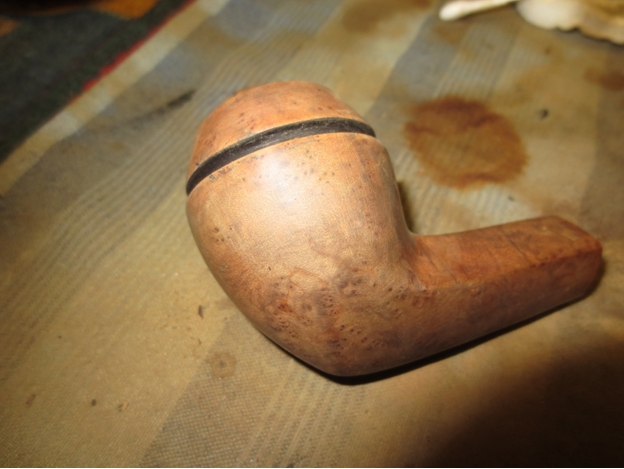
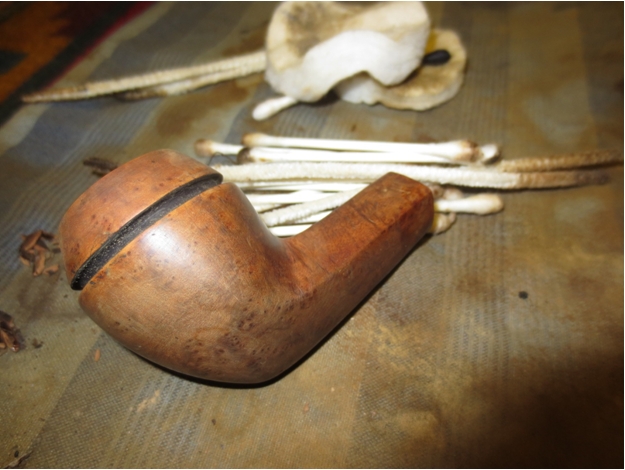
Dan20 I tried to fill in the damaged briar between the double rings around the bowl. I filled in the areas with briar dust and super glue but when I tried to re-score the two lines the fills fell out of the ring. After several failed attempts to build up the centre I finally decided to remove the centre from between the two rings. I used a sharp knife to lift out the centre portion all the way around the bowl. With that gone I used a folded piece of 220 grit sandpaper to sand the surface smooth in the groove. I also sanded it with the sanding sponges to remove the scratching.Dan21

Dan22

Dan23

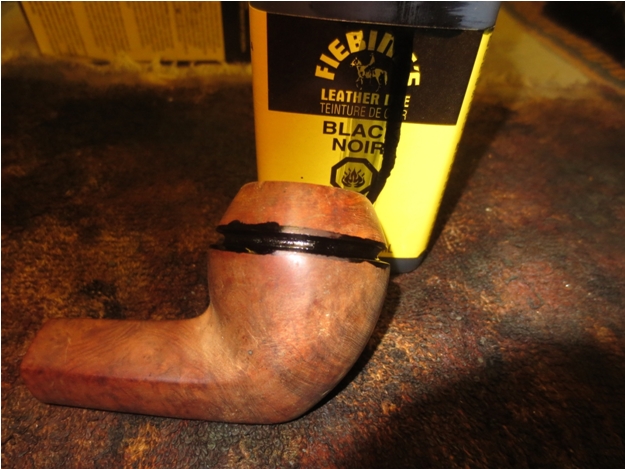
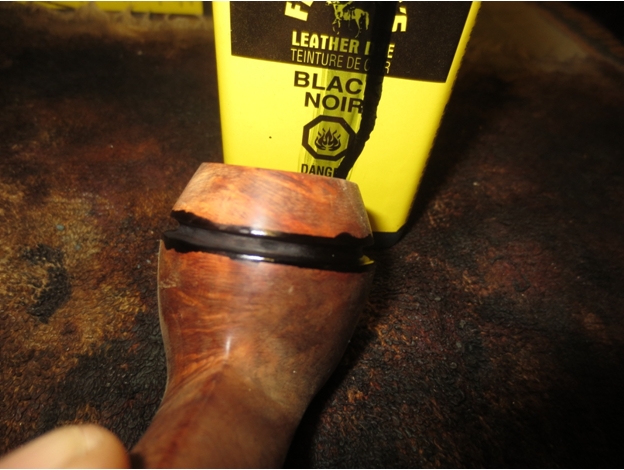
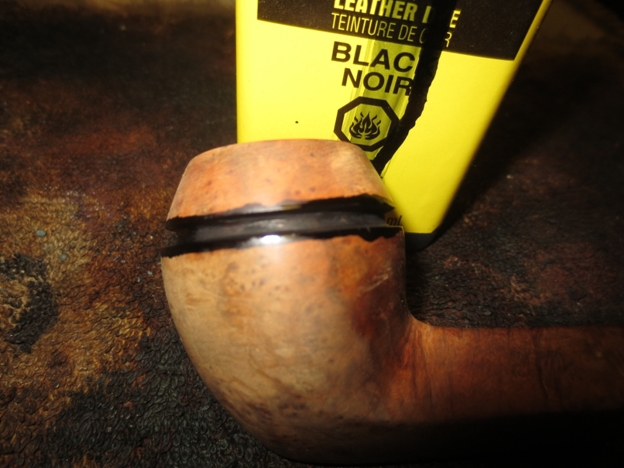
Dan24 I decided to stain the groove to highlight it rather than hide it. I used a black aniline stain and applied it, flamed it and repeated the process until I had the coverage in the groove that I wanted.Dan25

Dan26

Dan27 I sanded the bowl sides around the groove to remove the spillage of the stain. I worked on the bowl until the black was confined to the groove and the top and bottom edges. The more I sanded the bowl the more I liked the grain that I was seeing come through. There was some great flame grain, birdseye and mixed grain on the bowl and shank.Dan28

Dan29

Dan30

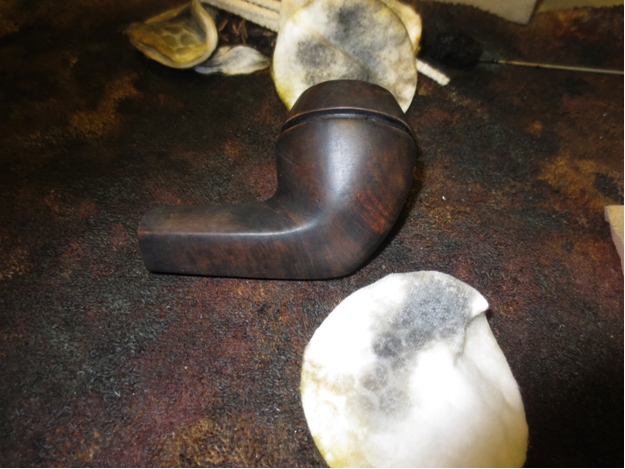
Dan31 I decided to do a contrast stain on the rest of the bowl to highlight the grain and contrast with the black stain in the groove. I heated the briar and stained it with a black aniline stain. I applied it and flamed it, and repeated it a second time. Once it was dry to touch I wiped the bowl down with alcohol and then with acetone on cotton pads to remove the black stain from the surface of the briar and leave it in the grain.Dan32

Dan33

Dan34

Dan35 I set the bowl aside to dry for awhile so I could work on the damage to the stem. I sanded the stem with 220 grit sandpaper to remove the oxidation and to clean up the calcification around the damaged areas of the top and underside of the stem.Dan36

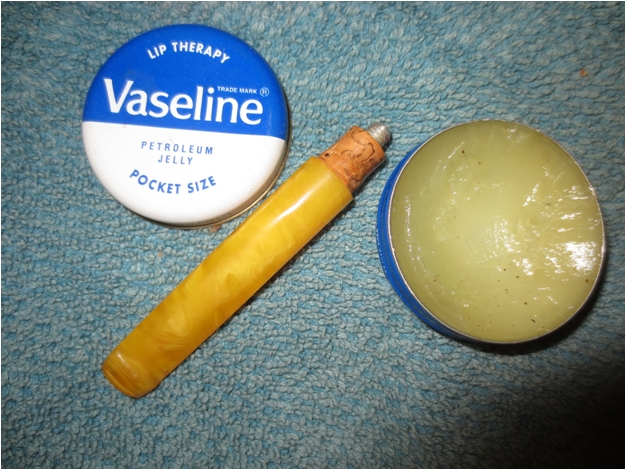
Dan37 I wiped the stem down with alcohol to clean the surface of the stem so I could apply the superglue patch. I used a dental pick to remove debris and damage vulcanite. I greased a pipe cleaner with Vaseline and inserted it in the button underneath the hole in the stem. I built up the area around the hole with black super glue. I sprayed it with an accelerator to allow me to add a second and third coat to the repair to the hole. I then flipped the stem and repaired the deep tooth marks on the top of the stem. I filled them and also sprayed them with the accelerator.Dan38

Dan39 Once the stem patch was dry to touch I put the stem back in place on the bowl and sanded the bowl with a medium and a fine grit sanding sponge to remove more of the black stain. I also used a fine grit sanding block. The next four photos show the bowl with the black removed and the grain patterns highlighted.Dan40

Dan41

Dan42

Dan43 I set the pipe aside for the night and let the stem repairs cure over night. In the morning I sanded the patched areas with 220 grit sandpaper and with a medium and fine grit sanding sponge. I rubbed the bowl down with a light coat of olive oil to see what contrast would look like. I really liked the overall look of the bowl with the contrast. Seeing this I knew what contrast stain colour I would use on the next stain coat.Dan44

Dan45

Dan46

Dan47 There were still small pits in the patches on the top and bottom repairs. I find that when I use an accelerator the spray causes these bubbles that once dry pop and leave pits in the surface of the finish. I sanded the stem surface some more with 220 grit sandpaper to smooth it out and then added another coat of black super glue. When it dried I sanded it again to bring it smooth. In the next two photos you can still see some small pits in the finish.Dan48

Dan49 I repeated the process of filling in the pits and then finished by using some clear super glue which dries more quickly and brushing it over the pitted areas on the stem. Once I had that done I sanded the stem with micromesh sanding pads. I wet sanded with 1500-2400 grit pads. The surface was significantly smoother but the patches still showed through the finish.Dan50

Dan51 I dry sanded with 3200-4000 grit micromesh pads and rubbed the stem down with Obsidian Oil. Once it dried I repeated the sanding with the same pads. The patches are still visible but are gradually blending into the surface of the vulcanite.Dan52

Dan53 I buffed the stem with red Tripoli to remove the scratches in the rubber and to further blend the patches. I then took it back to the work table and dry sanded it with 6000, 8000 and 12,000 grit micromesh pads. I rubbed it down with another coat of Obsidian Oil and set it aside until it was absorbed.Dan54 I rubbed the stem down with Scratch X2.0 to polish the scratches. It is a plastic polish and blemish remover that is used on acrylic/plastic headlamps. It worked wonders in removing the remaining scratches in rubber stem material. I then buffed the stem with Blue Diamond on the buffing wheel and gave it several coats of carnauba wax. I buffed it with a clean flannel buff to raise the shine shown in the next two photos.Dan55

Dan56 After finishing the stem it was time to give the bowl its contrast coat of stain. I used an oxblood aniline stain. I applied it with a folded pipe cleaner to keep it out of the groove around the bowl. I flamed it, reapplied it to the briar and flamed it again.Dan57

Dan58

Dan59

Dan60 I buffed the stem and bowl with Blue Diamond and then gave the entire pipe several more coats of carnauba wax. I buffed the pipe with a clean flannel buff. The finished pipe is shown below. I think that Alan Chestnutt’s definition of the restoration process as Saving the Pipe accurately describes the work that went into restoring this beauty. The finished pipe ready to fire up and be enjoyed for many more years to come.Dan61

Dan62

Dan63

Dan64

Dan65

Saving the Pipes


Blog by Alan Chestnutt

I often spend a bit of time several days a week reading some of my favourite blogs during my lunch break at work. I regularly check Alan Chestnutt’s Reborn Briar Estate Pipe website and read some of his articles. I always find some food for thought and often come across kindred ideas that have been rattling around in my head. This was the case yesterday when I went through older articles that Alan had posted. It captured very clearly something I was thinking about as I worked on a particular pipe that I had bought from a pipeman who was a stroke survivor. It obviously had been his favourite pipe and I wanted to bring it back to life. The phrase that Alan used that caught my attention as I read was a simple phrase he used to describe the work he does as a pipe restorer – “Saving the pipes”. I am reblogging this here on rebornpipes as for me it captures the heart of why I work on old briar. Without further introduction here is Alan’s article. Thanks Alan.

The first time I heard the phrase “Saving The Pipes” was on a YouTube video made by TPC (Tobacco Pipe Collectors). This phrase has stuck in my mind ever since. As a pipe restorer, I feel that I am doing exactly that “Saving The Pipes” – but why is this such a vital role in the pipe smoking hobby?

An estate pipe is one that has been used and cherished by a previous pipe smoker. They may not always have been maintained to a standard that we come to expect today, but a little love and TLC can restore it to its former glory. Many estate pipes did not receive a high level of care and attention because in the heyday of pipe smoking, the pipe collection of a smoker may have been limited to one!

I remember my father with his one Falcon pipe. When the smoke was finished, the ash was knocked out and the pipe was refilled an hour later for the next smoke. Sometimes the ash wasn’t even emptied out and fresh tobacco was just loaded on top of it.

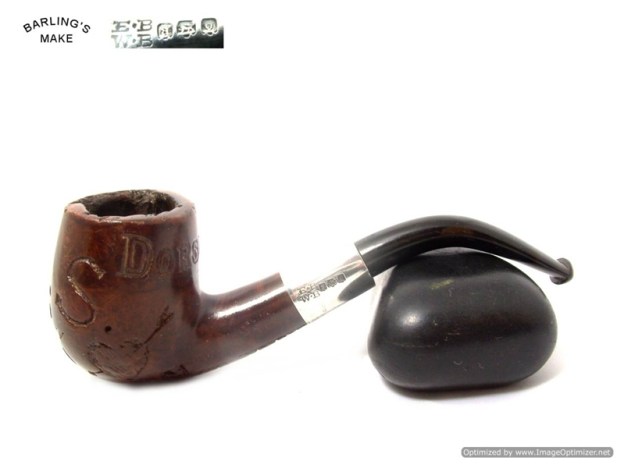
Anyone today who is a non-smoker finding a pipe like that may well throw it in the trash can and that would be a crying shame. These old pipes have a history, a story to tell. I have a pipe I am about to restore at the minute. It is a 1st World War officer’s pipe which has had the walls carved by the soldier during the war.Some might say these carvings have ruined a good Barling’s Make pipe, but I disagree. From the carvings, I have been able to establish the regiment of the soldier, where he was trained and where he fought. I am sure that pipe could tell some tales if it could talk. And despite the carvings, the bowl of the pipe is in solid condition – so now we have a smokeable Barling’s Make pipe which were considered at that time to be the best smoking pipes in the world, with a tremendous history attached to boot.Alan There is no question that the craftsmanship, and the quality of the briar, is celebrated as superior in the first half of the twentieth century. Many people will look at these old pipes and consider them junk. It is my role to take someone else’s junk and restore it to as like new condition as possible. This creates a pipe that can be passed on to a new smoker. A pipe with a history, a pipe with many stories to tell, a pipe with well dried out and cured briar that will smoke dry and a pipe from the heyday of manufacture for this great hobby.

When you buy an estate pipe, you will probably spend less than on a new pipe, so there are savings to be made. Take this pipe and have a quiet conversation with yourself. Imagine the hand of the owner that held it before you. Where did he live, what did he do for a living, what stories could he tell you? Fill the pipe with tobacco, light it, sit back and think of former owners. Raise a bowl in their honour and savour the smoke. An old estate pipe will have outlived its previous owner, and when well restored and looked after, may well outlive you also, to be passed into someone else’s hands who will be thinking about your life.

So for a value for money, good quality pipe with a story to tell, why not consider adding a few estate pipes to your collection. You will be glad you did, and I can continue to “Save The Pipes”.

Here is the link for the article above article. Be sure to wander around the site as Alan and his son Adam do stellar work. http://estatepipes.co.uk/shop/saving-the-pipes

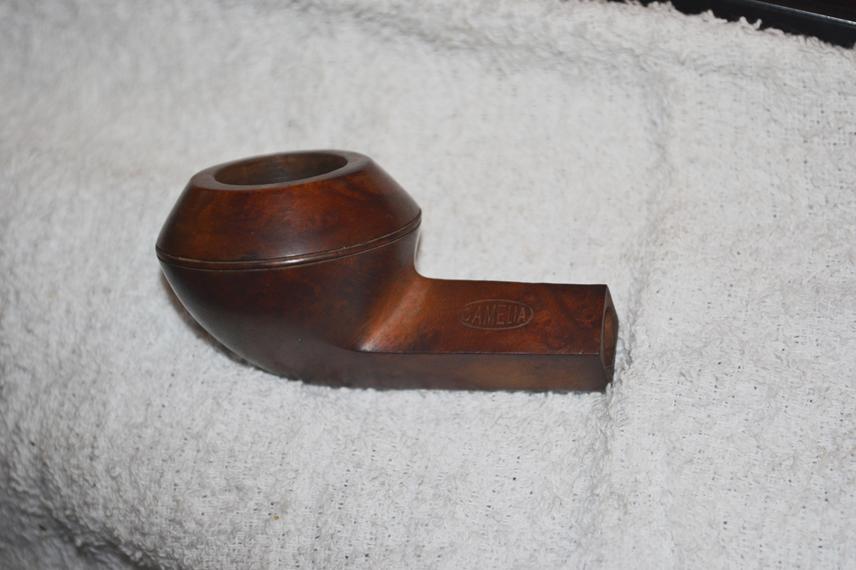
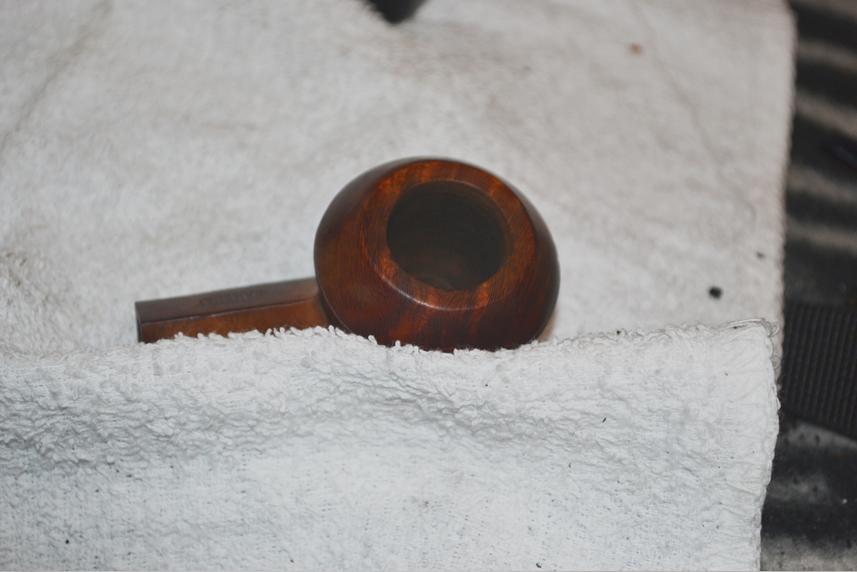
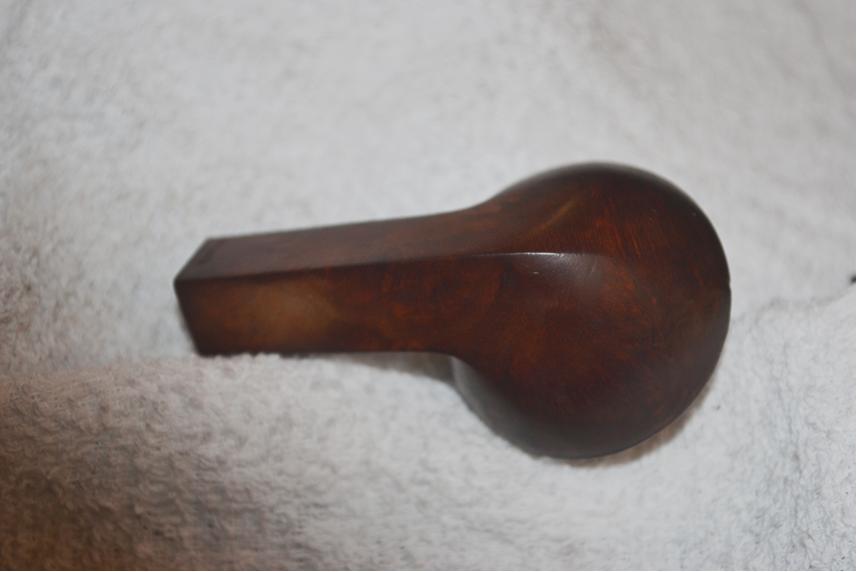
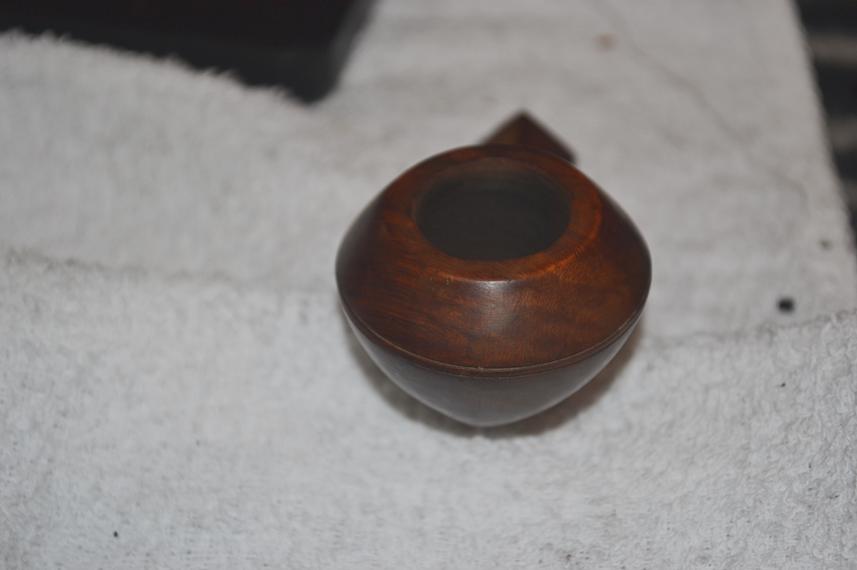
A Bachelor’s Soliloquy for a Lovely French Camelia Bulldog


Guest Blog by Robert M. Boughton
Member, North American Society of Pipe Collectors
http://www.naspc.org
http://www.roadrunnerpipes.com
http://about.me/boughtonrobert
Photos © the Author

My oldest pipe, my dearest girl,
Alas! Which shall it be?
For she has said that I must choose,
Betwixt herself and thee.

Farewell, old pipe; for many years
You’ve been my closest friend,
And ever ready at my side
Thy solace sweet to lend.

No more from out thy weedy bowl,
When fades the twilight’s glow,
Will visions fair and sweet arise
Or fragrant fancies flow.

No more by flick’ring candlelight
Thy spirit I’ll invoke,
To build my castles in the air
With wreaths of wav’ring smoke.

And so farewell, a long farewell–
Until the wedding’s o’er,
And then I’ll go on smoking thee,
Just as I did before.

― Edmond Day, “A Bachelor’s Soliloquy,” in Bain Jr., John, ed., “Tobacco in Song & Story,” 1896

INTRODUCTION
Aware of my sometimes peculiar use of quotes to lead into blogs, I ask that you try to follow this reasoning behind the above description of a somewhat disingenuous if humorous plan. As a recovered alcoholic (which is not to say cured), I have not found it necessary to return to the certainty of the lifestyle I led until my last drink of the life-deadening liquid, for persons of my nature, 27 years and a few months ago. Still, I remember with a cringe the oft-quoted “Lips that touch wine shall never touch mine,” a slight adjustment of the popular slogan of the Temperance Movement in the late 19th and early 20th centuries, that I used to hear with frequency in certain circles.

I always recoiled from the notion as being too Puritanical for my liking. Likewise, as a bachelor, I still (or perhaps more so now, given the socio-political incorrectness of enjoying tobacco, even a pipe) encounter the ultimatum of choosing my great, sundry pleasures derived from these marvelous instruments of relaxation and contemplation, or someone with whom to share my life. Being somewhat obdurate when push comes to shove, so to speak, I have no trouble saying fare thee well to all who spur the ominous prognostication of the inevitable disaster of any proposed relationship founded upon such Draconian conditions.

Thus, coming upon the quote in an old collection devoted to the comforting qualities of fine tobaccos, I made a mental connection with the habits of many former drinkers to eschew even those who are able to enjoy liquor socially and responsibly, and their cohorts in the dating war who substitute tobacco use as the evil enemy. People of these sorts are deluded by their recruiters. And while, again, I do not condone the deceptive behavior suggested by the English-speaking but now apparently almost forgotten poet, I do understand his hunger to enjoy all of life’s appetites, and I find it somehow French in attitude, and by association à propos to my sentiments for this lovely example of the elegant Camelia straight smooth bulldog #699, originating in France of excellent lineage, being, according to Pipedia, an obsolete line of pipes once made by GBD.

[There is, by the way, an anonymous, very funny spoof on Hamlet’s famous soliloquy, called “The Bachelor’s Soliloquy,” available at http://www. monologuearchive.com/a/anonymous_001. html.]

THE RESTORATION

Cam1

Cam2

Cam3

Cam4

Cam5

Cam6

Cam7 While the stem sloughed off its inner and outer impurities in an OxiClean soak, I turned to the briar. The rim burn was removed with greater than usual ease using super fine steel wool, and the chamber cake crumbled almost as fast with a few turns of a 17mm reamer followed by 150-grit sandpaper, then 320.

I removed the stem from its soak and rinsed it before wiping off the residue and cleaning the air hole with a soft, thick cleaner. The resulting evidence made clear that a large area, on both sides below the bit, required more work before applying the micromesh.Cam8

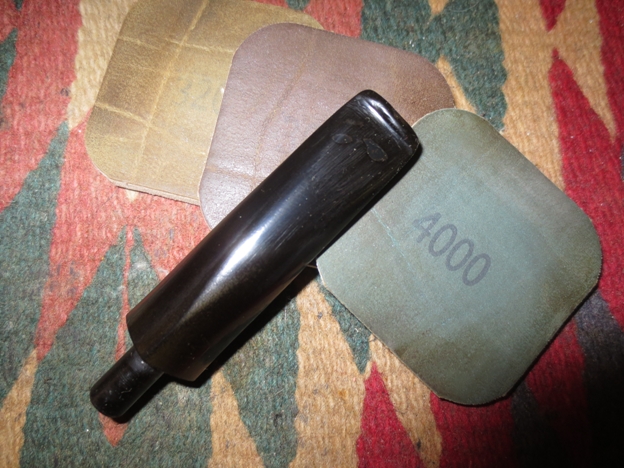
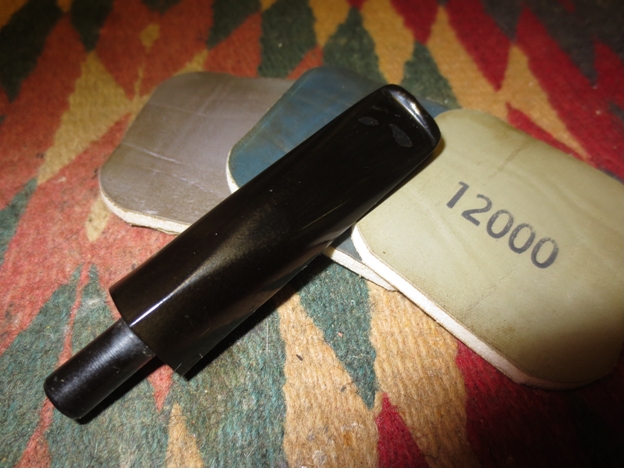
Cam9 And so I reattached the stem to the shank and retorted the pipe before finishing the stem with light work using 320-grit paper on the scratched areas before a four-stage micromesh progression from 1500-4000.

I gave the briar a bath and saw no major scratches or other blemishes. My next step of micro-meshing the wood the same way I did the stem turned out to be a waste of a few minutes, but what the heck.Cam10

Cam11

Cam12

Cam13

Cam14

Cam15 Granted, based on the original color of the pipe, it was already prepared for polishing with the buffers. But I seem to draw over-dark-stained pipes with unnatural frequency. I don’t think I’m alone in appreciating as much of the good grain every pipe has to offer. Therefore, I got out a small piece of the super fine steel wool to ease away a shade or two of the stain. Of course, when I could see the result I wanted, I had to re-micromesh the whole outer briar again and apply a light brown stain to the shank and lower bowl up to the bulldog line and inward curve of the top. Flaming that part and letting it cool before using 3600 micromesh to remove the film of char, I applied burgundy stain to the curved top and rim of the bowl and flamed it, and after the cool-down period I wiped it gently with the micromesh also. The effect produced was subtle but still there for the discerning eye.

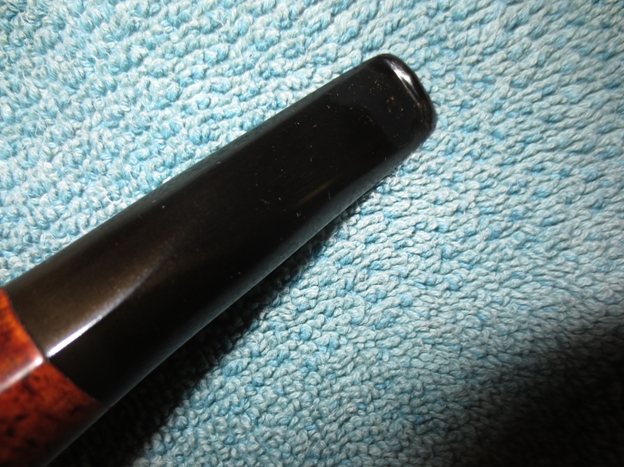
Ready for the electric buffers, I took the two pieces of the Camelia from my living room work substation to the bedroom/workroom proper. For the stem, I followed my former practice of buffing with white and red Tripoli followed by White Diamond, one after the other, as I incorrectly understood they were to be applied. Then I buffed the briar with the same compounds and wax except for the red Tripoli, and including a double carnauba wax. The Camelia straight, smooth bulldog was the last pipe I worked on with this procedure because of a comment by my friend and mentor, Chuck, when I showed him the pipe. He had been asked by another member of our pipe club why my pipes appeared duller than his when compared side by side on the same table. Chuck’s close inspection of the Camelia then revealed streaking of the finishes, and he was able to deduce the reason.

Armed with my new understanding of how to run the stem and briar over a clean buffer on the wheel between coats, I returned home later and began by putting both parts to an unused replacement pad to clear off the excess previous waxes and repeated the series of buffs, using the clean pad after each. After the re-buffs, I filled in the Camelia brand mark on the stem with a white china marker.Cam16

Cam17

Cam18

Cam19

Cam20

Cam21 CONCLUSION
The entire pipe, from bowl to bit, glowed with a far brighter and unyielding finish. Showing Chuck the new and improved completed Camelia, he smiled after the quick look-over that is necessary when nothing is wrong, and asked with obvious excitement, “Was I right? Doesn’t that simple step make all the difference in the world?”

Yes, Chuck, you were right. And the world is a little bit better as a result.

An Unsmoked Goedewaagen Double Walled Ceramic Billiard


Blog by Steve Laug

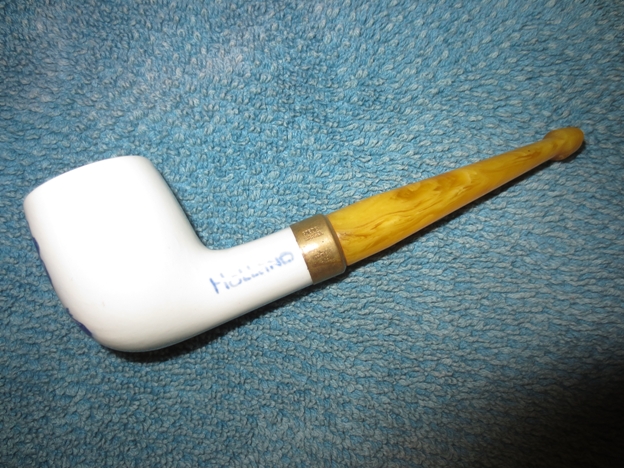
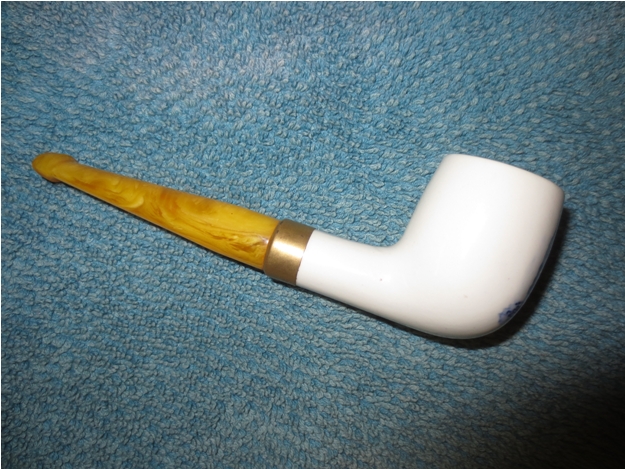
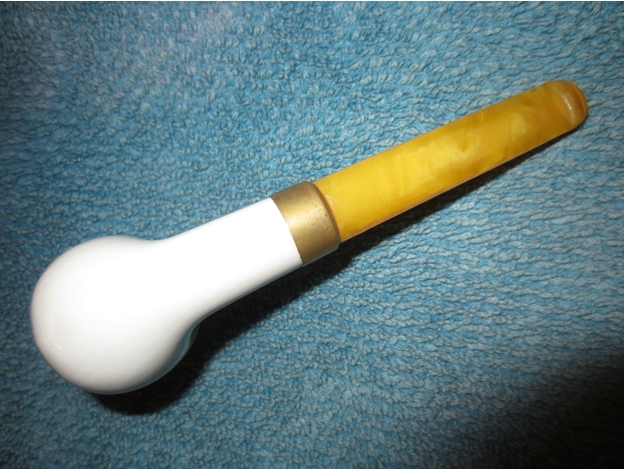
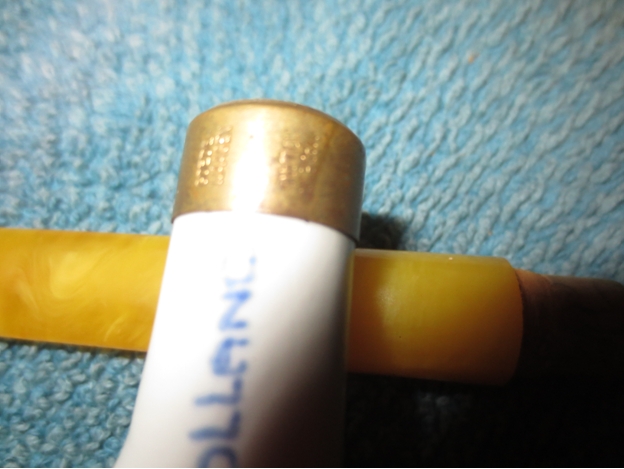
Having restored several older Goedewaagen Double Walled Ceramic pipes in the past when I found that I had an unsmoked billiard in the craigslist lot I was excited to see how it looked “new”. It is shown at the bottom of the left column in the photo below.craig5 The pipe is white ceramic with a blue Delft style look to it painted and cured into the ceramic on the side of the shank and on the front of the bowl. The bowl front has a painting of a man in the stocks and people standing in front of him mocking him during his suffering. On the left side of the shank it reads Holland. The brass end cap is stamped Goedewaagen and Made in Holland. The stem is acrylic and looks a lot like some of the older ones that I have the have amber stems.

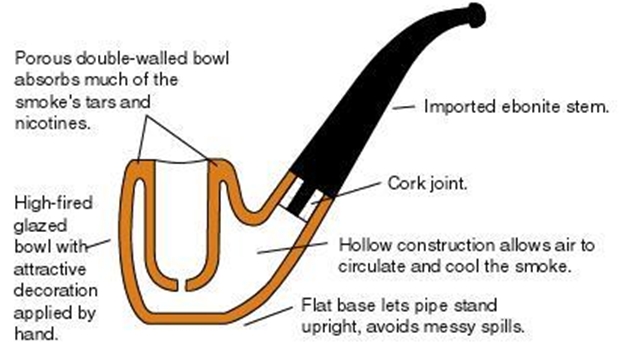
The pipe was made by an old Dutch pipe making house. Here is the link to their website. Have a look at the history page on the site. It gives detailed background on the pipe. The link is in Dutch but can be translated through Google Translate. http://www.goedewaagen.nl/goedewaagen/. I have a cutaway diagram of the double walled ceramic that helps give and idea of how it looks.Go01 I took a few photos of the unsmoked pipe to keep a record of an unsmoked version of the double walled ceramic pipe.Go1

Go2

Go3

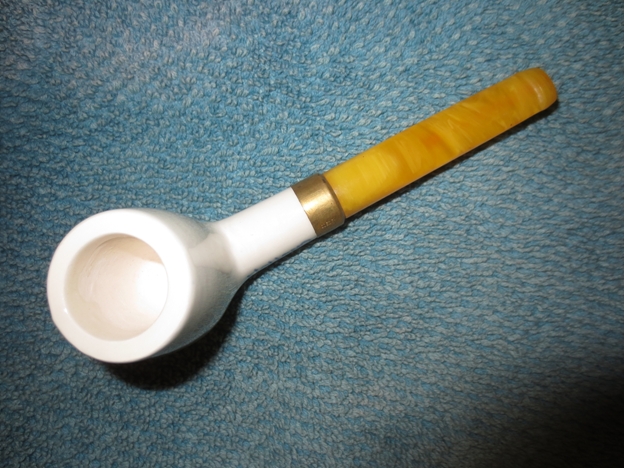
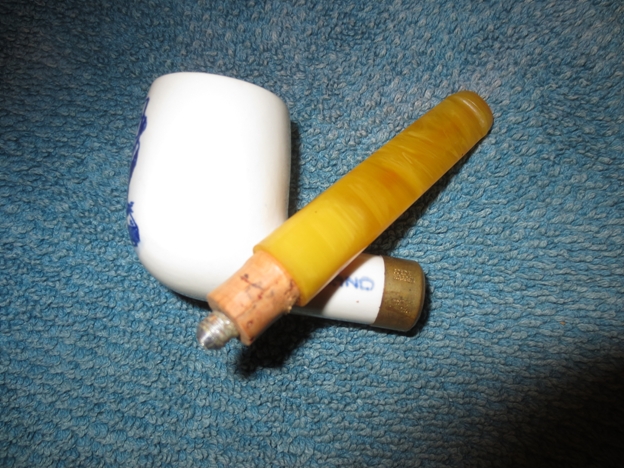
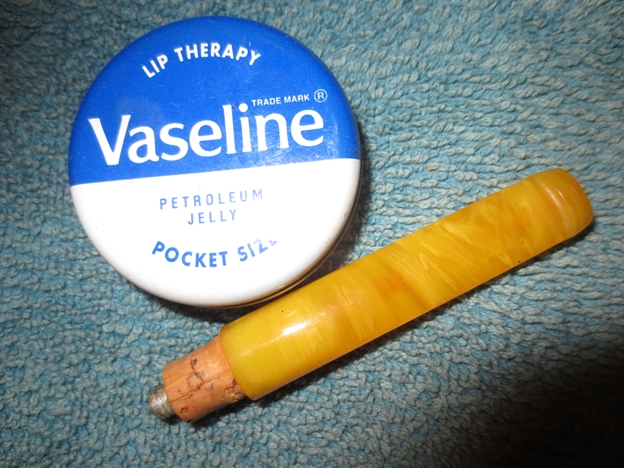
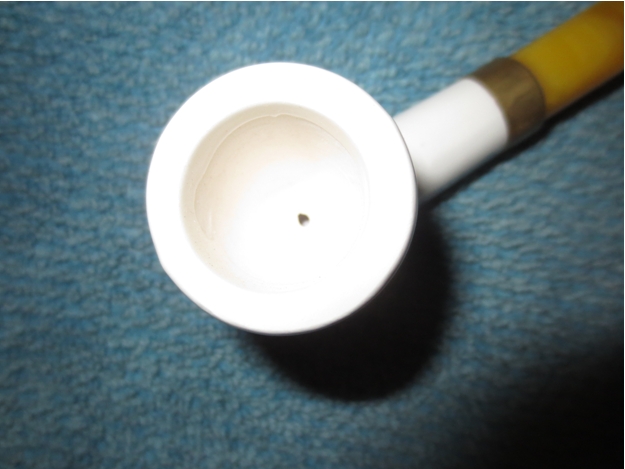
Go4 I took a close up of the bowl so that the air hole in the bottom of the bowl is clearly visible.Go5 I also took a photo of the cork gasket on the tenon of the stem. It was quite dry so I rejuvenated it with a rub down of Vaseline. Once the Vaseline was absorbed it fit smoothly into the shank. The cork was soft and springy again as it was when it was freshly cut.Go6

Go7

Go8

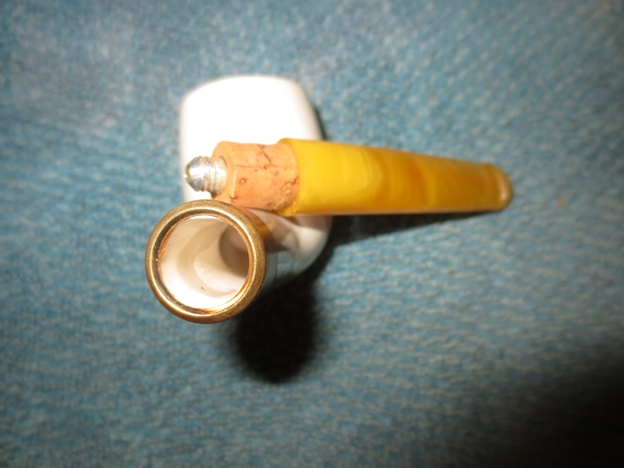
Go9 The end cap is brass and is stamped “Goedewaagen” over “Made in Holland”.Go10 One day I will load up a bowl and smoke it for the first time but for now it will sit in my pipe rack as an unsmoked example of the Goedewaagen pipe.

Another Pre-War Yello Bole


Blog by Andrew Selking

In my quest to corner the market on pre-war Yello Bole pipes, I snagged this nice little oval shank Dublin. It’s between a group one and group two size, my smallest reamer head only fits about half way into the bowl. The best part is the pipe had not suffered serious abuse. It had some tar on the rim, along with a few nicks and a small tooth mark on the back of the stem. Here is what it looked like when I got it.Andrew1 You will notice the varnish, in a lot of cases a finish like that is to cover up imperfections in the briar. So it was with a little trepidation that I dropped the bowl into the alcohol bath.Andrew2 While the bowl marinated, I soaked the stem in Oxyclean. Next I reamed the bowl. As I mentioned earlier the reamer head didn’t fit all the way down, so I carefully removed the remaining cake with a small pen knife (which you can see in the corner of the picture) and a dental pick.Andrew3 Next up the retort. Judging from the stinger I didn’t expect a dirty pipe.Andrew4

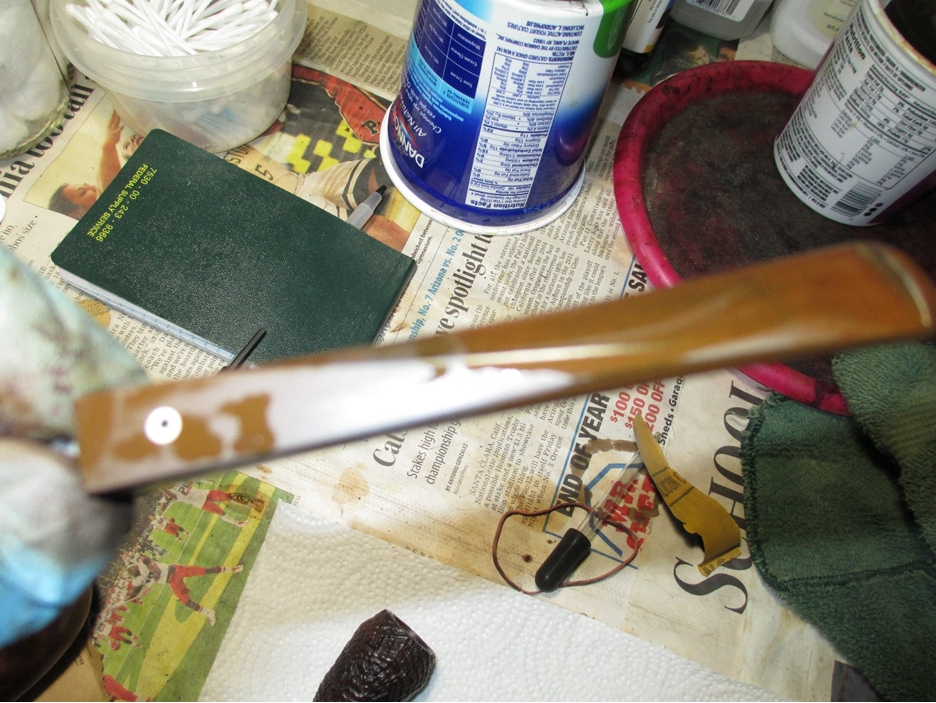
Andrew5

Andrew6 The stem was a little dirtier, but a second retort cleared it up nicely.Andrew7

Andrew8

Andrew9 With the internals sorted, I could now see what lurked under the varnish. I used 0000 grit steel wool and acetone to remove the tar on the rim and the varnish.Andrew10 I was pleased to only find a single fill.Andrew11 It was the pink putty though, and I hate pink putty, so it had to go.Andrew12 I’ve tried as many different techniques for fixing fills as I can think of. My current technique is to use a push pin to spread a small amount of CA glue into the hole, next I pack it full of briar dust, followed by a drop of CA, followed by a drop of accelerator. The nice thing about using accelerator is you can work the repair right after drying off any remaining accelerator. Here is what the repair looked like before sanding.Andrew13 Next I tackled the oxidation on the stem. I used 400 grit wet/dry with water followed by 1500, 1800, and 2400 grit micro mesh pads with water. I always hold a washer over the tenon to prevent rounding the shoulders of the stem. Here is the stem after removing oxidation.Andrew14 I still had the tooth mark on the bottom of the stem to fix, so I mixed up some clear CA and finely ground charcoal dust and applied it with my push pin. You may notice the yogurt container, I use that to mix the glue and charcoal. When it gets too dirty I throw it away and get a new one.Andrew15 I used 400 grit sand paper to shape the fill, followed by 1500-2400 grit micro mesh. I usually don’t use water when sanding down fills. I removed the top coat of finish on the bowl with a progression of 1500 to 2400 grit micro mesh pads. Next I used 3200 to 12,000 grit micro mesh pads to polish the entire pipe. You will again notice the washer on the stem. Here is the pipe ready for final polish.Andrew16 I used my rotary tool with white diamond and carnauba wax on the stem.Andrew17 I took the bowl to the buffer and used white diamond and carnauba wax on it as well. Just a word of caution when using a buffer, hold onto whatever you’re buffing with both hands.

Here is the final result. Thanks for looking.Andrew18

Andrew19

Andrew20

Andrew21

Andrew22

Restoring an old Peterson Canadian – the old pipe in the craigslist lot


Blog by Steve Laug

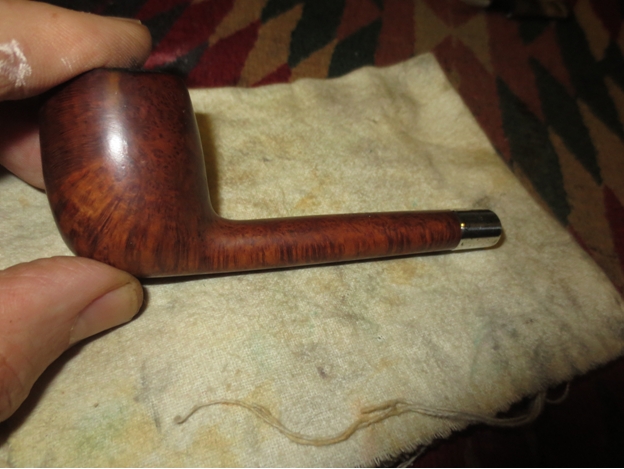
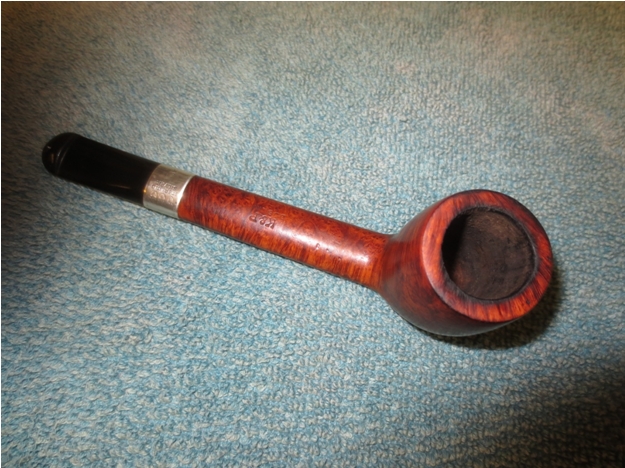
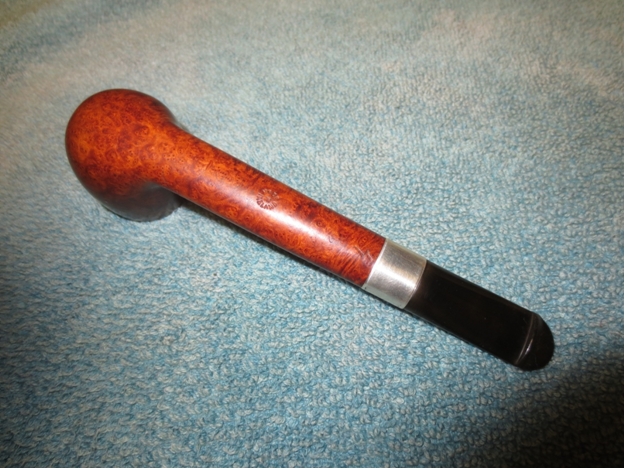
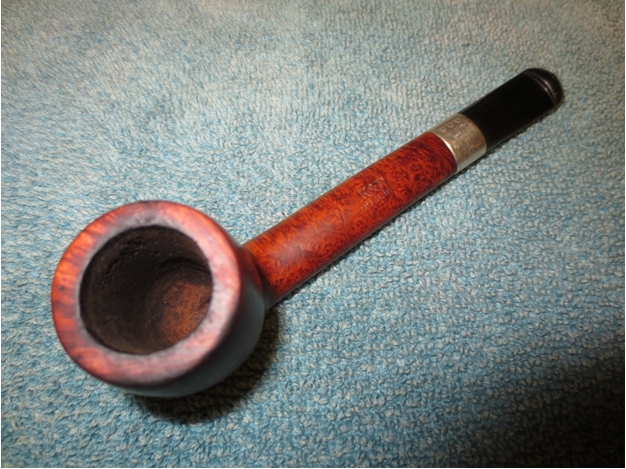
The fourth pipe I took on for repair from the craigslist lot was a small Peterson Canadian with a silver band and p-lip stem. It is the second pipe down on the right side of the photo below.craig5 The stamping on this old Peterson was unique enough that I wanted more information. It was different from any of the other Petersons that I have worked on. When I need specific information on a Pete I drop an email to Mark Irwin and he never fails to give the details I need. I sent him the following email:

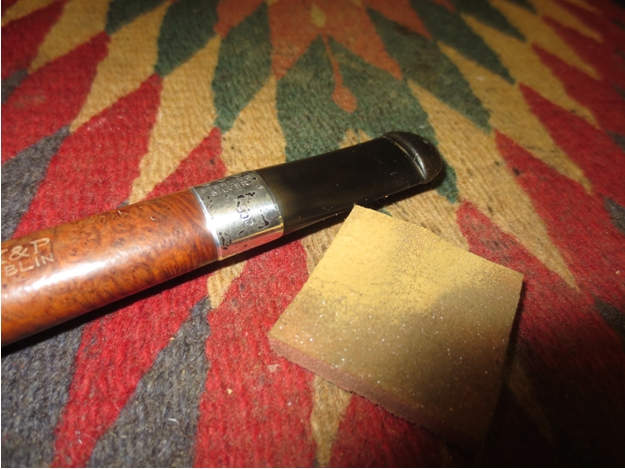
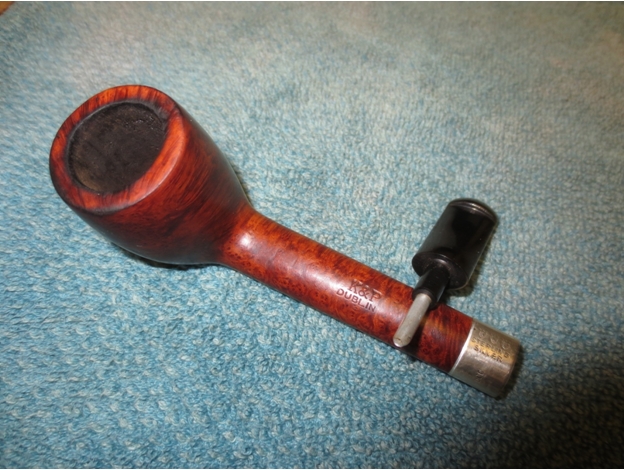
“Mark, the Peterson that I need information on is a Canadian shape with a silver band. It has the p-lip stem in quite remarkable shape under the oxidation. The stamping on the pipe is interesting. On the top of the shank it is stamped K&P over DUBLIN and on the underside of the shank it is stamped Made in Ireland in a circle with the “in” in the centre of the circle. The silver band was black with oxidation but after a light cleaning I can see that it is stamped STERLING SILVER horizontally to the shank. Over that are the K & P in three shields. Underneath there are hallmarks stamped vertically to the shank. It looks to be the typical stamping. The first two shields are worn but seem to have the Ireland figure, the 925 silver stamp and a third that looks to be a P. Any information would help. Thanks Mark.” Pete1 Mark got back to me fairly quickly with this response:

“Peterson made a number of Canadian shapes back in the day, although the standard is now the 264. The Made in Ireland in a circle suggests tells us it what made before 1949, the lack of a hallmark (aside from the K&P in 3 shields) means it was made after 1938, as they quit hallmarking from 1938-1968. No shape number stamp would seem to confirm the 1938-1949. As they made very few pipes from 1942-1945, it probably fell on either side of 42-45. If you’ll measure the length of the pipe and bowl height and width for me, I’ll check it against the 1937 catalog, which featured full scale illustrations. The ‘37 catalog doesn’t list all the Canadian shapes, however, just the more popular ones. If you want to remove the band, you might find a number scratched in the wood—we think this has to do with the band, however, and not the shape number. GT&C were Peterson’s sole importer in Canada from about 1910-1960, and after the war, they primarily carried unbanded Petes. They also had their own shape numbers stamped by Peterson—the System pipes always carry a “1” in front of the Peterson numbers—“1307,” etc. Almost every Peterson System estate for sale from Canada on eBay will have that “1” on the Systems.”

I sent Mark some photos of the unrestored pipe so he could see the stampings and the marking on it and assess its date. He responded with the following email: “Okay, what you’ve got is a Kapet, the line between the DeLuxe and the lower K line. It’s a Kapet because of the Sterling. It’s not a DeLuxe because of the “special aluminum inner tube for easy cleaning” (1937 catalog, p. 1). The K also had the inner tube, but would not have the sterling mount. The bowl itself is the same size as the current 264, although the shank is a bit shorter than the current 264. I am surprised there is no Kapet stamp on the pipe, as the ‘37 catalog engravings plainly show line stamps. But it’s a pipe, and of course subject to the vagaries of production.”

When I saw the pipe I was not too excited about it because I had not cleaned it up at all or looked at it. It was in rough shape. The finish was worn and it had dents and dings. The rim was dirty and caked with tars and oils – the lava of use. The bowl was dirty and had a light cake and a raw briar bottom of the bowl. It had not been smoked to the bottom of the bowl. The band was dark and oxidized and unreadable. The stem was oxidized and had evidently sported a softie bit like all the other pipes in this collection. I cleaned up the band enough to send Mark the information. I was more excited by the pipe once I knew its potential age. His initial response put it before 1949 and after 1938. After seeing the photos of the pipe his dating changed to potentially 1937. Thus it was the oldest pipe in the craigslist lot. It was a decent piece of briar with mixed grain and no visible fills.Pete01

Pete02 After cleaning up the silver a bit I took the following photos. These are the ones that I sent Mark to help date the pipe and give me as much information as he could.Pete2

Pete3

Pete4

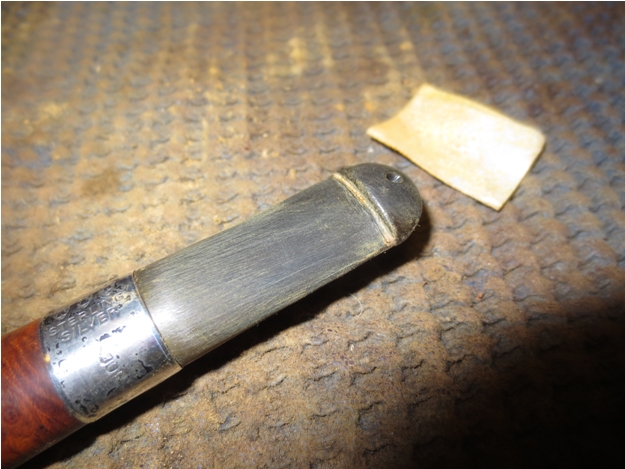
Pete5 I took some close up photos of the stem to show the inner tube more clearly as well as the state of the stem. As can be seen from these photos, under the oxidation the stem is in great shape with no tooth marks or chatter that needed to be address. The P-Lip was in great shape with no tooth damage to it either. The stem should clean up very well.Pete6

Pete7 I used a silver polishing cloth and silver polish to further remove the oxidation from the band. I also scrubbed it with some cigar ash and found that it worked extremely well to remove the tarnish on the sterling silver band.Pete8

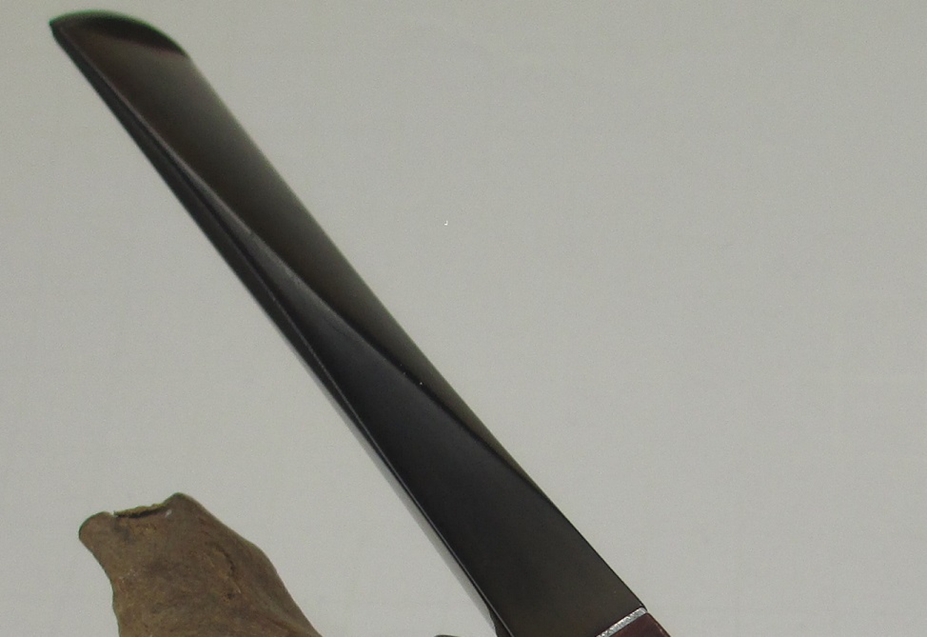
Pete9 I sanded the oxidation and calcification off the stem with 220 grit sandpaper. I then sanded the stem with a medium and a fine grit sanding sponge.Pete10
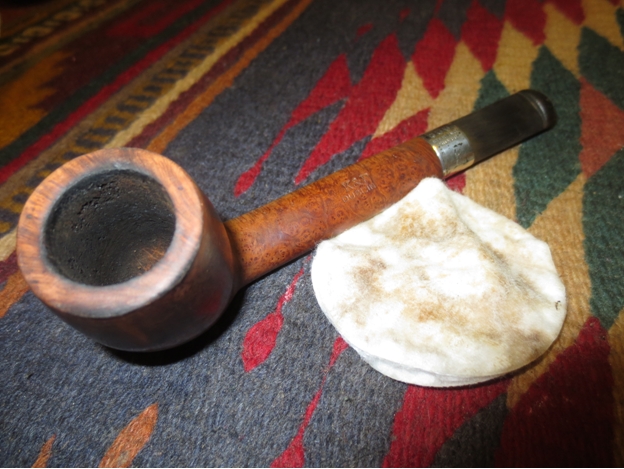
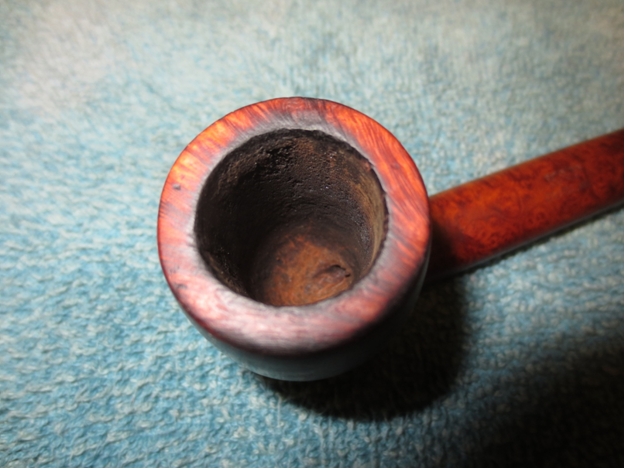
Pete11 I reamed the bowl with a PipNet reamer and took it back to a very thin cake. I also scrubbed the rim with isopropyl alcohol to remove the tarry buildup that had accumulated there. It took a lot of elbow grease and hard scrubbing but it all came off. There was some darkening on the inner and outer edge of the rim. I also scrubbed the bowl down with the alcohol on cotton pads to remove the grime and dirt on the finish.Pete12

Pete13

Pete14

Pete15 I scrubbed out the shank and the stem with pipe cleaners, cotton swabs and isopropyl alcohol until it was clean. The pipe even smelled fresh!Pete16 I sanded the stem with micromesh sanding pads – wet sanding with 1500-2400 grit pads and dry sanding with 3200-12,000 grit pads. I rubbed the stem down with Obsidian Oil as usual between each set of three pads. Once it was finished I buffed the stem with Red Tripoli to get some of the stubborn oxidation off at the tenon end and the Blue Diamond. I took it back to the work table and repeated the dry sanding with 4000-12,000 grit pads.Pete17

Pete18

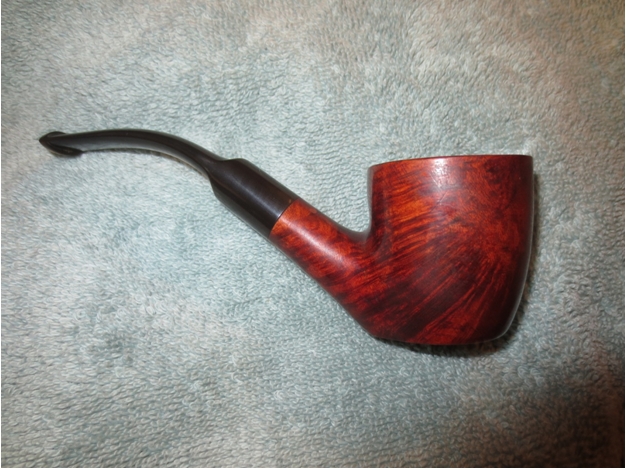
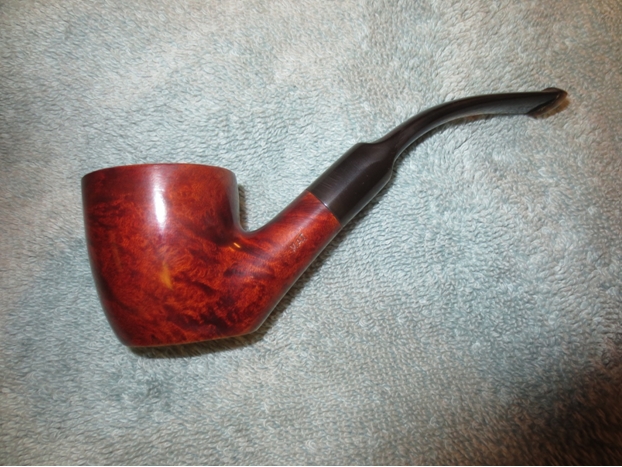
Pete19 I buffed the finished pipe with Blue Diamond and then gave the stem and bowl several coats of carnauba wax to protect the finish and stem and give it a shine. I then buffed it with a clean soft flannel buff to raise the shine. The finished pipe is shown below. It is ready to load with a bowl of my favourite Virginia and be reintroduced to what it was made for.Pete20
Pete21

Pete22

Pete23

Pete24

Pete25

Pete26

ADDENDUMI find I need to correct this post. Instead of rewriting it and changing it I decided to add this to the end of the story.

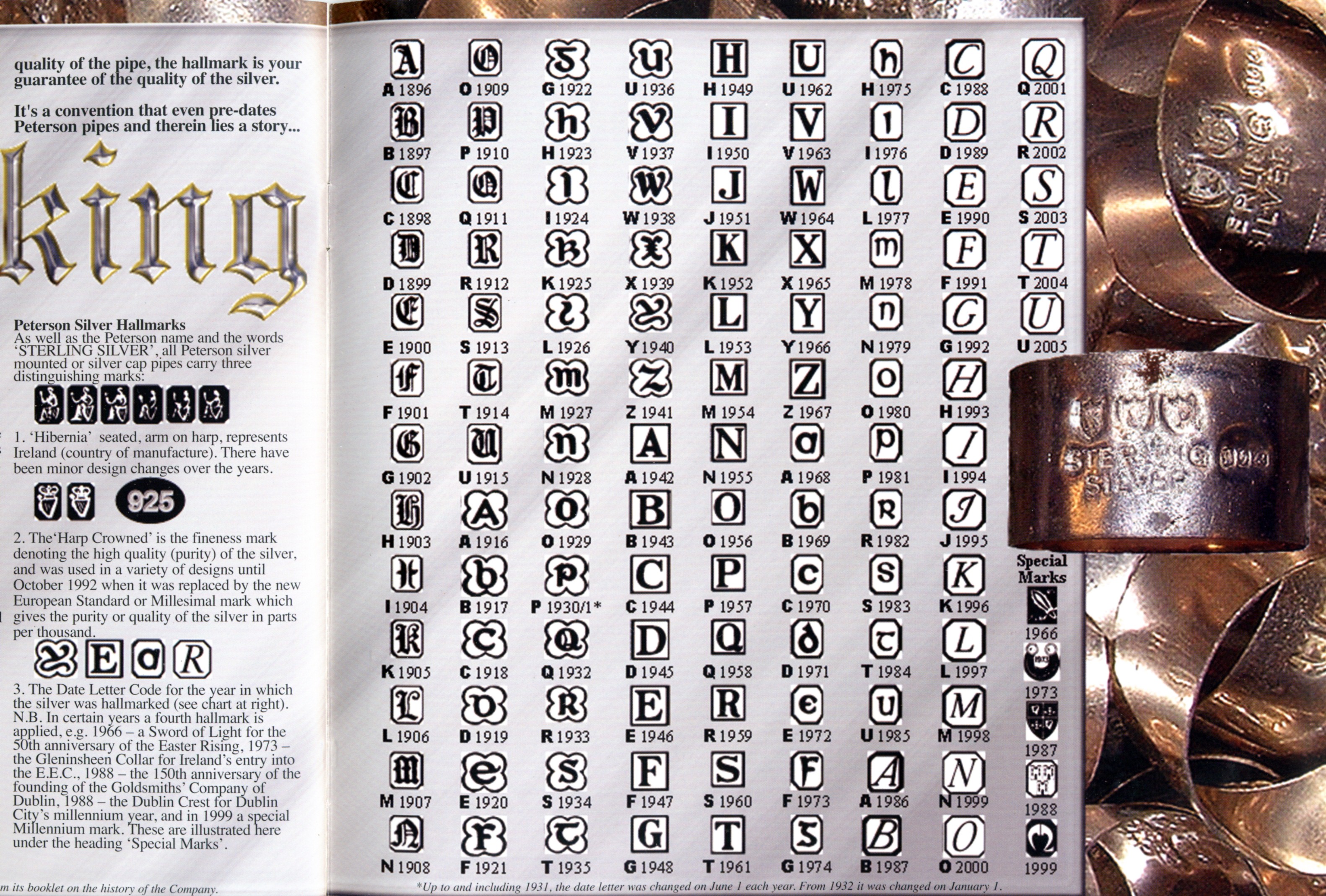
After doing a bit more research and receiving another email from Mark I took the pipe out into bright light and used a jeweler’s loop to see if I could read the faint hallmarks on the band. Mark sent along an older Peterson Hallmark chart and I compared the faint stampings to the chart. I could see a cartouche with a P in it that led me to amend my original post – the pipe is not a 30s era Pete but rather a Pete from 1981. Ah well. The thrill of having an old one lasted for at least a day…Peterson Hallmark Chart

Using a Rotary Tool to Buff Stems


Blog by Andrew Selking

I have been looking for a better way to make my pipe stems look good for a very long time. I started out just using high grit sandpaper, next I got a buffing attachment for my drill, after that I moved up to an actual buffer. I added micro mesh sanding pads, white diamond rouge, and carnauba wax, but still had problems with getting a consistent shine. Of course the other problem with buffing stems, especially stems with sharp edges, is the tendency for the buffer to catch the edge and fling the stem across the room. How could I ever improve my stem work?

Fortunately one of the pipe restoration gurus who does this for a living let something slip on a discussion board. He mentioned that he uses a variable speed buffer. My first thought was, “that sounds expensive,” but after giving it some thought I realized that I had a variable speed rotary tool (that’s what you call a Dremel knock off). I paid $19.99 from Harbor Freight tools and it even came with a large selection of attachments.

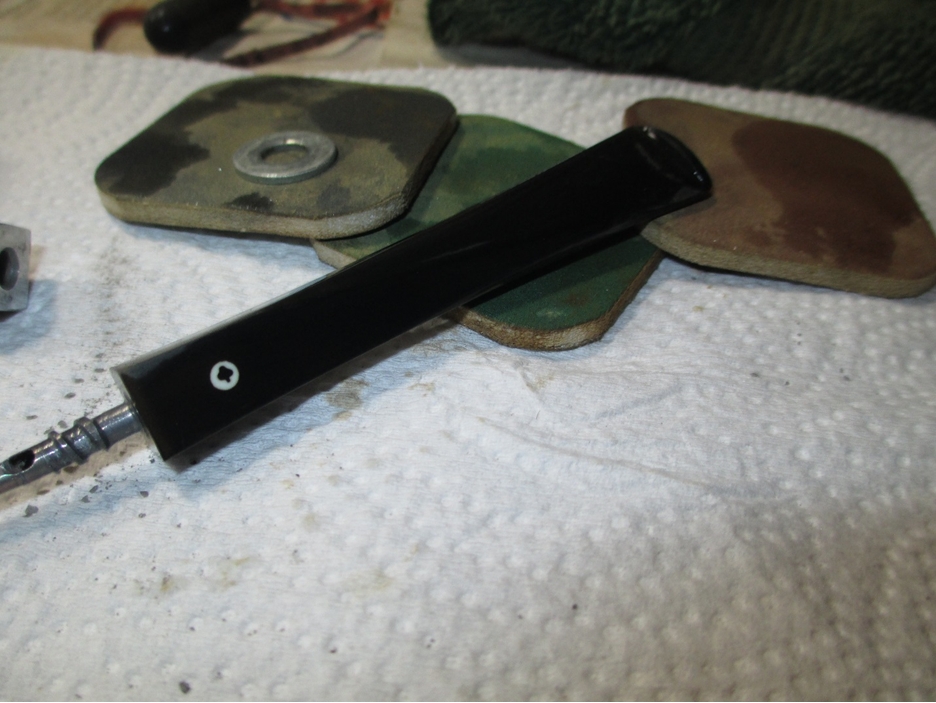
Here is a recent example of a stem I did using this tool. The previous owner did take care of the pipe, it was well waxed and clean inside, but if you look closely you can see the telltale signs of oxidation.Andrew1 I gave the stem my usual soak in Oxyclean, which revealed the full scope of oxidation to be dealt with. (Sorry the pictures are a bit blurry).Andrew2

Andrew3 Some people have asked me why use Oxyclean if it makes the stem look so bad. The answer is, the oxidation is present regardless whether you choose to address it or not. If you polish over the oxidation you will eventually end up with a shiny brown stem.

To remove the oxidation I use 400 grit wet/dry sand paper with water. Since the water makes the stem artificially shine, I dry it to make sure I get all the oxidation. Another trick I learned from one of the articles on Steve’s blog was to use a washer at the end of the stem to prevent rounding the shoulders. It’s well worth the effort. Since this stem had so many flat surfaces, I use a small plastic kitchen scraper as a sanding block with the 400 grit.

After the 400 grit I use 1500, 1800, and 2400 grit micro mesh pads with water. Here is the stem after that treatment.Andrew4 While I waited for the stem to dry I retorted the pipe and cleaned the shank. I didn’t take pictures of the process since the pipe was basically new. Once the stem was dry I used a progression of micro mesh pads from 3200 to 12,000 grit to polish the stem. In my opinion polishing with the micro mesh pads is the real key to a nice looking stem. As you progress to a finer level, you’re removing the scratch pattern from the previous one.
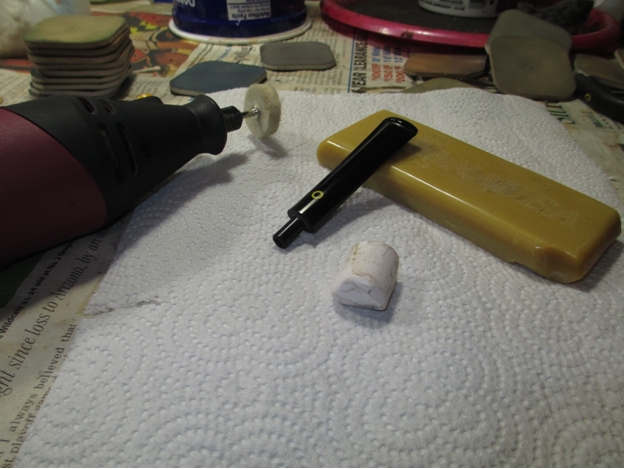
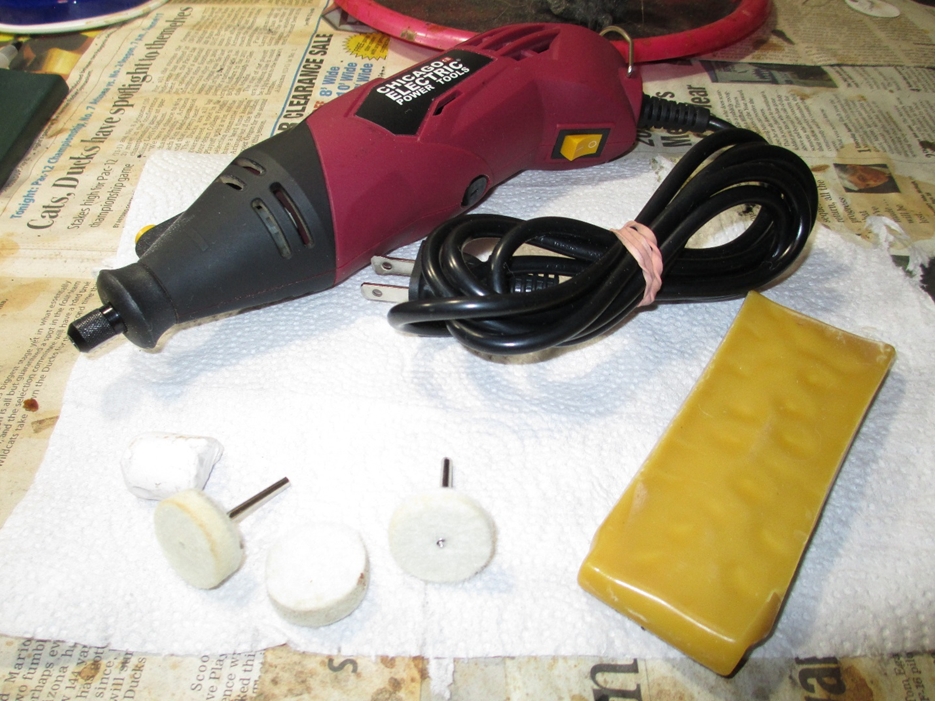
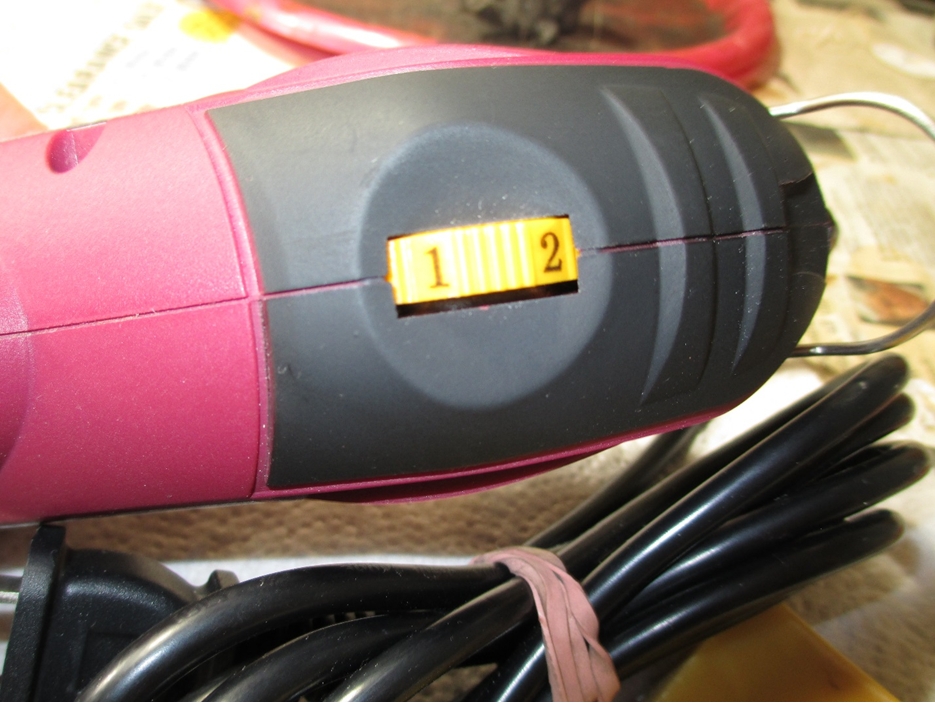
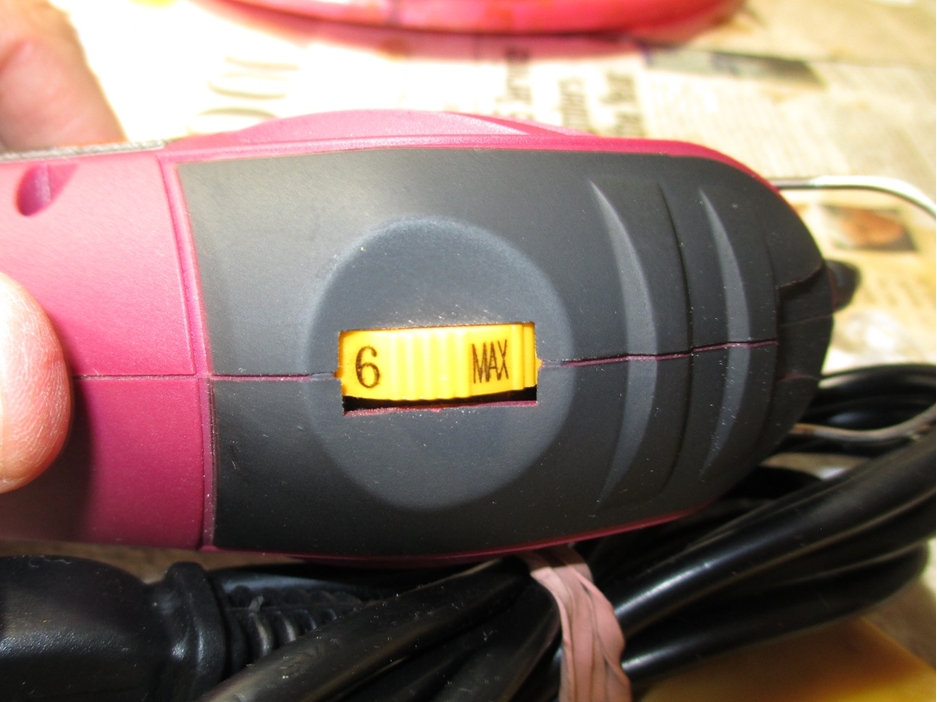
Now comes the fun part, making it shine! This is what my set up looks like. The rotary tool, white diamond, carnauba wax, and the felt pads for polishing.Andrew5 Notice the speed adjustments.Andrew6

Andrew7 To buff the stem, I set the speed to 1 and load the felt pad with white diamond. I hold the stem in one hand and apply the pad with the other. It is important to keep the pad moving, if you leave it in one place too long it will start to dig into the vulcanite. This isn’t a fast process, but I find I can get a lot better control and consistency with the shine. Once the stem is buffed to a high luster, I switch out buffing pads, turn the speed to 2, and proceed with the carnauba wax. As you can see the stem turned out pretty well.Andrew8

Andrew9 Here are some gratuitous pictures of a dead sexy pipe. Thanks for looking.Andrew10

Andrew11

Andrew12

Andrew13

Andrew14

You Got To Know When To Hold ‘Em – Pap’s Pipes


Blog by Patrick Russell

“On a warm summer’s eve, on a train bound for nowhere, I met up with a gambler; we were both too tired to sleep…” – All italicized quotes are from the Gambler by Kenny Rogers (used without permission).

Last summer I was presented with a wonderful challenge by my good friend Dave. Dave, like me, is a younger pipe man. Okay, he’s almost ten years younger than me… but who’s counting. Dave pulled me aside during a pipe club meeting and said, “Pat, can you do something with these?” Dave put four pipes into my hands, “These are my grand-dad’s pipes. He always had one of them in his mouth. Pap loved these pipes.” Like lots of you folks who clean up estate pipes, I often do resto work for free for friends. More often than not, the friend will dash me a tin of ‘baccy or will send me a tip on an estate lot. But that’s not why I do it. I do free resto work for friends for the same reason you do, because you like the person, and they asked for help. My only rule with this kind of work is that the friend has to be on no timeline. When your wife is pregnant, or you have a seven month old, this is an important rule.

Dave put those pipes into my hand last July, before we had our beautiful baby girl, and before I fell out of the pipe cave and into the blue eyes of my daughter. But I digress. The pipes…

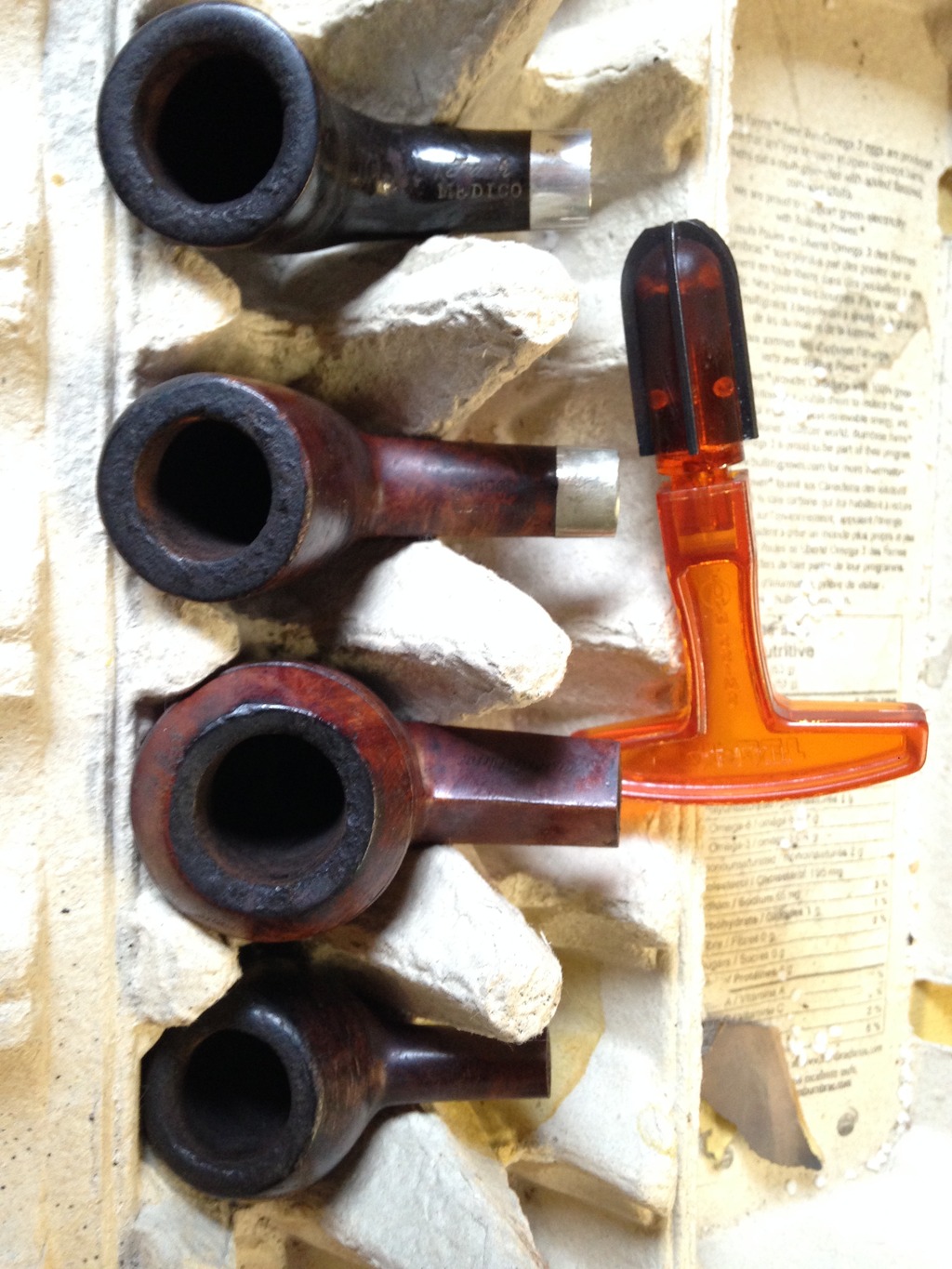
Pap loved those pipes. He really, really, loved those pipes. Dave said that Pap was a stuff ’em and puff ’em guy and a cursory look at the pipes backed up the story. All four airways blocked. Cake thick enough to require the smallest reamer head. There was enough oil on the outside of the pipes that grain was impossible to find, and I’m pretty sure that most of the pipes started with a button. “I’ll do it,” I said.Pat1

Pat2

Pat3

Pat4

Pat5 Dave loved his Pap, and really wanted these pipes in good working order. I really wanted to be the guy to make that happen for Dave.

“He said, ‘Son I’ve made a life out of readin’ people’s faces, knowin’ what the cards were by the way they held their eyes…”

Estate pipes tell you a lot about what can, and can’t, be done to them if you know where and how to look. The first thing I do when I’m cleaning up a pipe is to soak the stems in an Oxyclean bath while I ream the tobacco chamber and then do a surface clean of the rim and stummel. This, generally, lets me investigate the pipe well enough to know what kind of work the resto of it is going to need to get the pipe back into a smoking rotation. I have limits to my skill, some of which I’ll press so I can learn new skills, but never will I do this with pipes that aren’t mine. I sure as hell wasn’t going to go beyond my skill level with Pap’s pipes.Pat6

Pat7

Pat8

Pat9

Pat10

Pat11

Pat12

Pat13“And the night got deathly quiet, and his face lost all expression. He said, ‘If you’re gonna play the game boy, you gotta learn to play it right…”

Did you see what I saw when I was cleaning those pipes? Let me give you a closer look…

Reamed out of round, with a nasty gouge. That wasn’t me… that looks to me like a pocket knife. Rim badly gouged from knocking out on… life. And the coup de grace… a bad split on the top of the shank.Pat14

Pat15 Rim charring doesn’t cover it, this is rim charred. Any more smokes without the cake that I’d just removed and this prince was going to be a cinder.Pat16 Fills the size of Manhattan… I know, they are cosmetic only, but look closely at what lies in the fill on the second pic.Pat17

Pat18 Um… Yep. That’s a burnout, with the Grand Canyon in the middle of it.Pat19

“Every gambler knows that the secret to survivin’ is knowing what to throw away, and knowin’ what to keep…”

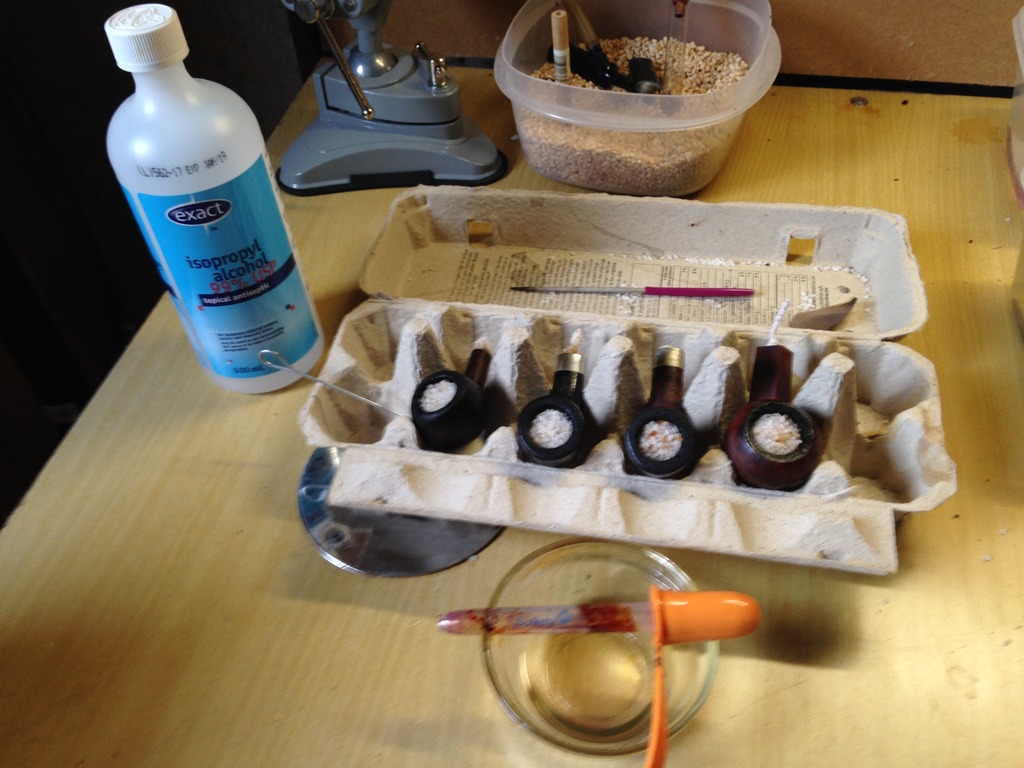
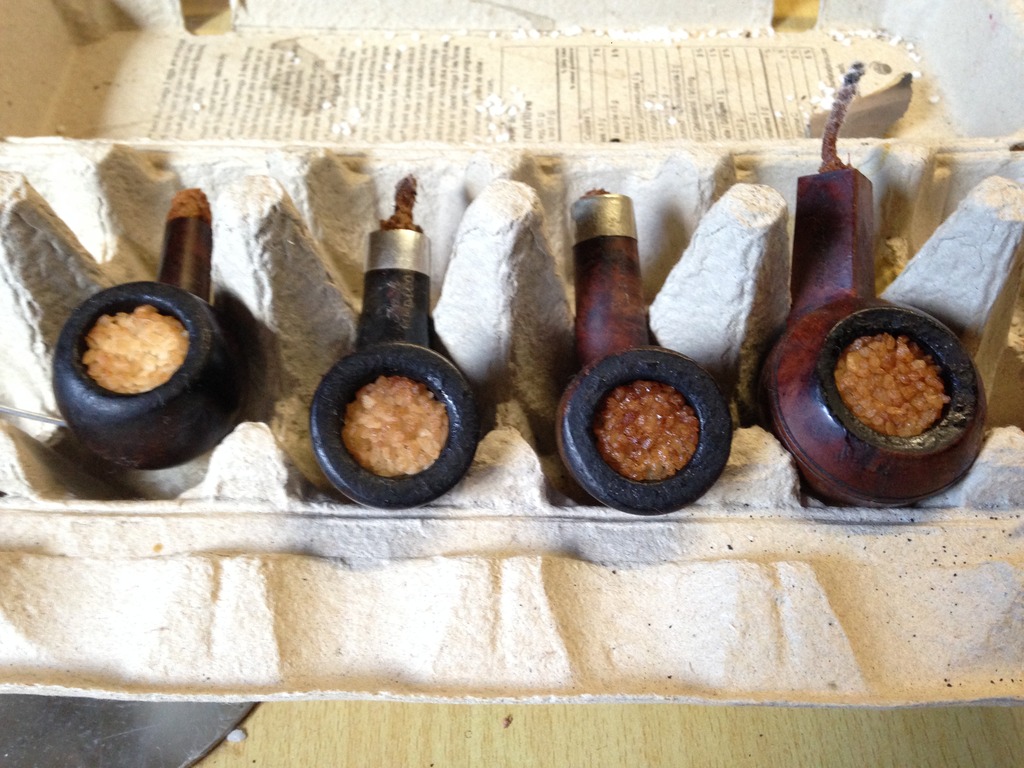
I had to stop. I had cleaned the tars off the surface of the pipes. I had cleared the airways and sanitized the stems. I had reamed the tobacco chambers and done three salt and alcohol treatments… and I still hadn’t broken through the collected dottle and juice which had petrified in the draught holes of the stummels. But if I did any more work on these pipes there was every likelihood that Dave wouldn’t have Pap’s pipes anymore.

“And somewhere in the darkness, the gambler he broke even, but in his final words I found an ace that I could keep.”

I returned Pap’s pipes to Dave last month at our pipe club night. Was he disappointed? He would have loved to have smoked them, but I think he’s happiest to still have them.