Author Archives: rebornpipes

A Book Review – The Pipe by Georges Herment


Blog by Steve Laug

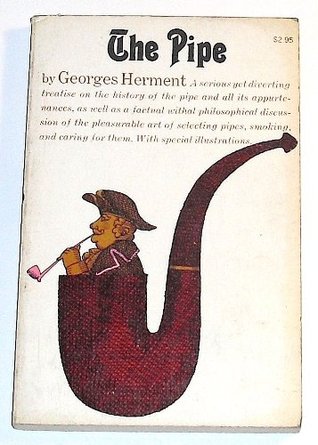
1433852Beyond its simple cover, this book has a subtitle that is very 19th century— “a serious yet diverting treatise on the history of the pipe and all its appurtenances, as well as a factual withal philosophical discussion of the pleasure art of selecting pipes, smoking, and caring for them.”

I picked this older copy of Herment’s book up in a thrift shop in the US on a trip to visit family and friends in the late 1990’s. It was one of the first pipe books that I found and started me on the hunt for other books to add to my tobacciana collection of books. This one was printed by Simon and Schuster in 1972. It was a reprint of the original print in 1954, 1955. It was originally sold for $2.95 and when I bought it used it cost me $4.95

Herment’s Introduction, originally written in 1954 gives a sense of what he wished to achieve in his writing of this book. It also gives a sense of the spirit in which it is to be read. I quote his Introduction in full:

“At the risk of disappointing the reader on the very threshold of this book, we feel it our duty to warn him that it has been written in the manner of a poem, by a flash of happy inspiration.” p.xi.

“As may well be the case with a poem, twenty years of meditation and brooding have scarcely been sufficient incubation to produce these few pages. In the light of these observations it will be easier to grasp what follows:” p.xi.

“Treated in a purely technical style, a subject such as ours could not have failed to rebuff the simple amateur. On the other hand the veteran or professional smoker would have considered it too superficial to satisfy his requirements, not full enough to fulfill his desires.” p.xi.TOC1

“Thanks to a complete and exhaustive knowledge of the subject, after year of experience and research, we have been able to conceive this work in its fullest scope and present it to the reader just as the spirit came to us – current calamo. Such has been our aim. Have we attained it? The reader, be he veteran or amateur, must be the judge. – G.H.” p.xi.

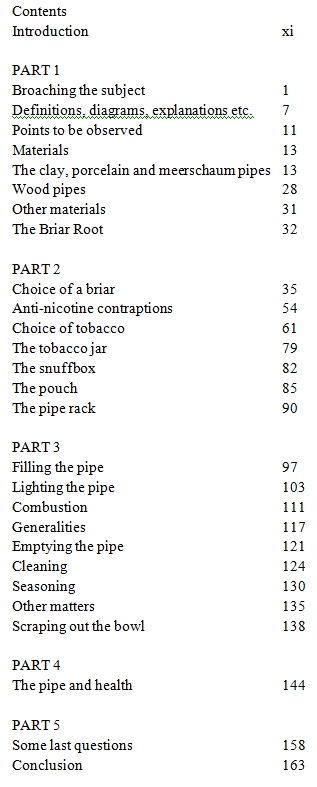
As I have done in previous reviews I have included a copy of the Table of Contents to the left. I always read that when I am beginning a book to understand the logic of the book. In this case Herment has given us a good view of the way he treats the topic of the pipe. He divides his book into 5 parts with each pipe covering a different aspect of the pipe. The book is also illustrated with line drawings throughout.

PART 1 starts where most of the pipe books that I have read start – with the history and manufacture of the pipe. The difference is that it does not begin with the discovery and bringing of tobacco back to Europe. It does not go into the growing or manufacture of pipe tobacco. It merely looks at the pipe itself. He includes 8 short chapters that cover the topic at hand.

Herment begins with a chapter on definitions and diagrams and explanations before going into the rest of the section. The diagrams and definitions set the playing field for a common discussion of the author with the readers. He points out key points that he will unpack in the rest of the book.

From there he works through the various materials used in making pipes. He discusses clay, porcelain, meerschaum, wood (rosewood, cherrywood), other materials such as bone and Moorish copper tubing with wooden bowls before finally discussing briar. He singles out briar for special attention because of it being the focus of the book he is writing. The author’s style of writing is refreshingly crisp and quick. He moves rapidly, yet thoroughly through the topics he has chosen to discuss.

Each short chapter in PART 1 gives not only a description of the pipe but details on how the materials are fashioned and worked to become the object that we now call a pipe. It is a concise description that gives details of construction, shaping and manufacture of pipes.

PART 2 is dedicated to the pipe and all of the necessary and tangential accessories that have been manufactured for the pipe smoker. He presents the material in seven chapters that detail the topic at hand. He looks at the briar itself and describes the different pipe shapes that have been manufactured. He includes a shape chart and names for each shape. He also looks at the drilling and shape of the bowls, the materials used for the stems and how those stems were inserted in the shank of the pipe. He gives a really well written description on the parts and function of the pipe.
The second chapter in this part is dedicated to anti-nicotine contraptions. This chapter is by far one of the most interesting as it spells out some of the creative means that were developed to minimize the nicotine from the tobacco.

The remainder of the chapters, other than the one on snuffboxes, explores the various accoutrements of pipesmoking beginning with the tobacco that is smoked in the pipe and ending with the rack to hold the pipe.

PART 3 is all about smoking and caring for a pipe. This part is composed of nine chapters that take the reader from the proper packing of a pipe, lighting it, smoking it, emptying it out, cleaning the bowl and stem (each smoke, thorough cleaning and disassembling the pipe and cleaning), seasoning the pipe and finally reaming it. Herment has some really interesting concepts in each of these sections. Some of them have long since ceased to be used but are fascinating to read about. For instance in the chapter on lighting the pipe he uses a method that I had not seen until I read it here. A piece of paper is put on top of the bowl and filled with tobacco and pressed into the bowl. The paper is twisted at the top forming a fuse and that is lit. As the paper burns the tobacco is evenly lit – or at least it is according to Herment.

Part 4 covers the issues of the Pipe and Health. In this chapter the author shows that the opinions on tobacco are evenly divided between those who see it as a health risk and those who see moderate use as inconsequential or giving stress relief. It is an interesting read to see how far our culture has departed from this kind of even presentation of the facts. He also gives anecdotal accounts of how tobacco was used for relieving constipation (enema) and to act as a vermifuge. It is a fascinating read.

Part 5 is the final part and includes some final questions and a conclusion. The final questions were not what I expected when I turned to this chapter. What the chapter covers is the longevity of the pipe – will it be with us forever. Herment says that yes. Here is the direct quote at the conclusion of his discussion:

“We have said that the pipe is eternal. Its outward shape may change, may evolve, may possibly modernize, but the principle of the bowl-mouthpiece remains forever immutable.” p.162
And another quote

“But while virgin, the pipe remains a Sleeping Beauty. It is not until the first whiff of smoke has risen from the bowl that its true life begins. So let us awaken it – and when awake may it prove to be the true Pipe of Peace, reminding us that we are all brothers.” p.162.

To me that would have been a great end to the book but the author adds a Conclusion. To me the final sentences are typical of the style that is found throughout the book. I quote it here to close this review.

“One would think less of drowning a dog than of throwing a pipe in the dustbin – but then a dead dog cannot be awakened, but there will always be found men everywhere who will awaken the pipe.” p.164.

I heartily recommend this book. I have read it many times over the years since I bought. It is amusing, entertaining and thoroughly enjoyable. I learn, laugh and reflect on the turns of phrase that Herment seems to have captured. He knows the pipe and when I have read his book I feel like I know him.

Amazon.com lists copies of the book for sale as does Google books. Purchase one and I don’t think you will be disappointed.

Mixing an Organic Bowl Coating for a Repaired Pipe


Blog by Steve Laug

I have used a homemade bowl coating on the inside of pipe bowls that have had varying degrees of damage. This bowl lining is a way of adding a layer of protection to the briar until a natural cake is formed to insulate the walls of the pipe. I remember getting the recipe for this mixture from a pipemaker friend of mine. I have since modified it slightly to make it work better for me.

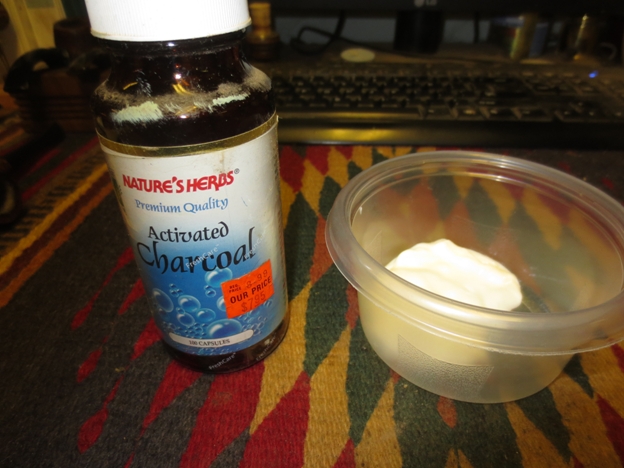
The mixture has two basic components – sour cream and activated charcoal. You can also substitute plain unsweetened yoghurt for the sour cream. I know that sounds utterly disgusting to you who are reading this and you have visions of it spoiling and stinking up your pipe permanently. You must be thinking the same thing I did when I heard about the combination. I remember thinking, “Forget about worrying about ghosting your pipe from tobacco, now you are asking me to put dairy products in my pipe”. I can tell you from quite a few years of using the recipe that you do not need worry about that. The amount of the mixture that you are putting in the bowl of your pipe is negligible and when it dries/cures it creates an almost rubber bowl coating that leaves no residual taste in the bowl.

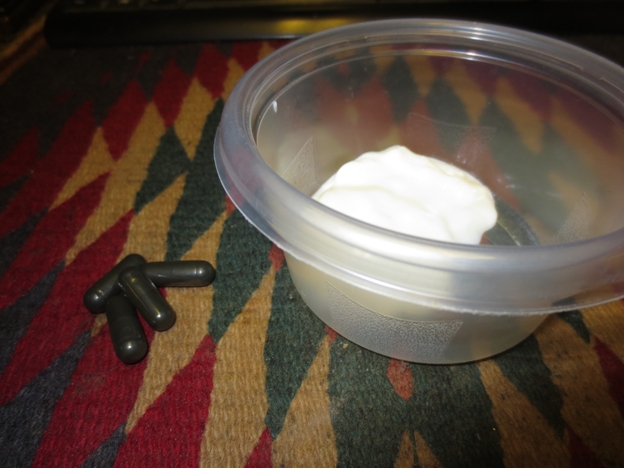
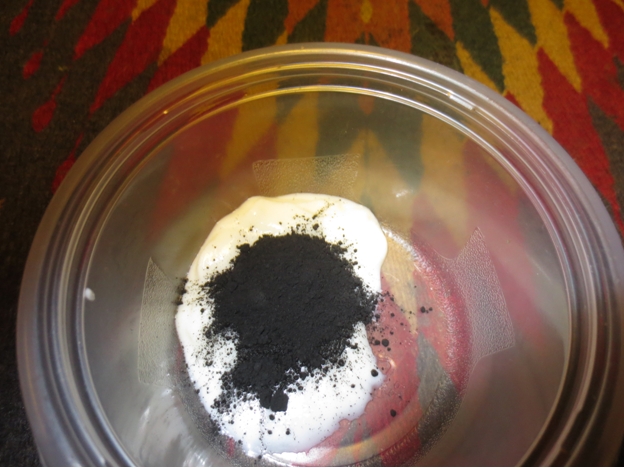
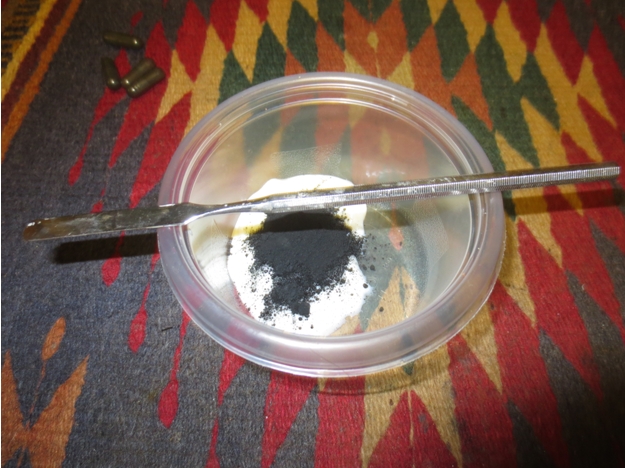
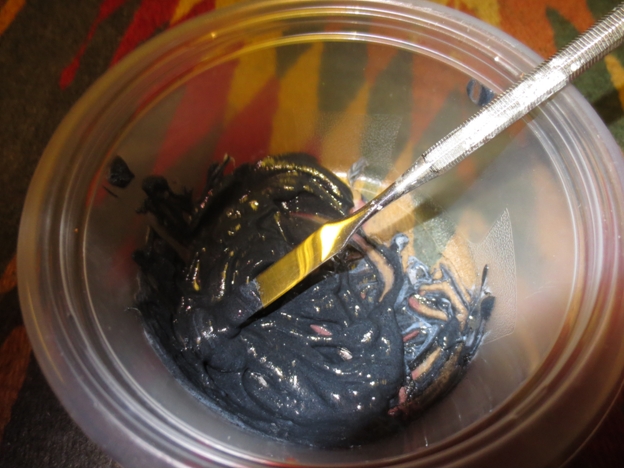
My pipe maker friend used a charcoal for aquarium filters that he bought at Walmart and then ground it with a mortar and pestle to a powder before using it. That was too much of a mess to my liking and added yet another thing to clean up after the work. So I buy activated charcoal capsules from the health food section of a local pharmacy and use those instead. Not only is it cleaner but I also find that the food grade charcoal is ground much finer than I can grind the aquarium grade. I have had a jar of capsules that I have been using for over 10 years and still have lots left for future mixtures.Jack46 I generally mix the charcoal from four capsules with two table spoons of sour cream. I have yet to get the exact amount of mix that I need per bowl but I often will coat several bowls at a time so very little goes to waste.Jack47 I open the charcoal capsules and shake out the contents on top of the sour cream. I choose a bowl that is large enough to allow me to stir the parts together easily.Jack48 I have a dentist’s spatula that I got as a gift from holymolar for the mixing tool.Jack49I stir in the charcoal until the mixture is evenly blended and no white sour cream is showing. The paste that is created is a dark grey/black in colour and is thick enough that it will stick to the walls of the pipe bowl.Jack50 I use the spatula to apply it to the walls of the bowl. I spread it on fairly thick and don’t worry about it clumping or bunching up. I am more concerned with getting the mix on the walls at this point in the process than I am in spreading it out evenly throughout the bowl.Jack51

Jack52Once it is in the bowl I use a folded pipe cleaner to spread it around evenly on the sides and bottom of the bowl. I always put a pipe cleaner in the airway to keep the mixture out of the airway at the bowl bottom. I work the paste until it is evenly spread out and the entire bowl surface is covered.Jack53

Jack54 I then set the bowl upright on a pipe rest to dry and cure. In 24 hours the surface is dry to touch. In 48 hours it is ready to smoke. I load a bowl carefully and when I am smoking it I am careful to not scratch the surface with my tamper for the first few bowls. When I tap out the dottle at the end of the smoke I am careful to not damage the bowl coating until I have run at least 6-9 bowls through it. At that point it is hardened sufficiently and the new cake has begun to form on top of the coating.Jack66 Even the finely ground charcoal powder leaves a rough surface on the side of the bowl. I have found that the rough surface is what facilitates the building of a good cake in the bowl.Jack69 I used this bowl coating for quite a few years now with no ill effect. It works well to protect the bowl of damaged pipes and give them time to build up a cake that protects the briar from burn out. If there is any residual taste (and honestly I can’t taste one) it is short lived as the tobacco is burned in the bowl. It has worked well from me and I thought I would pass it on. If it works for you that is great. If you choose to not use it that too is fine.

Restoring a Heritage Heirloom 98S Bulldog


Blog by Andrew Selking

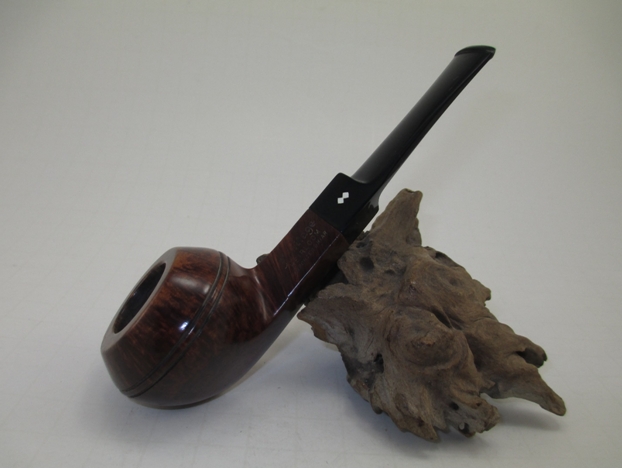
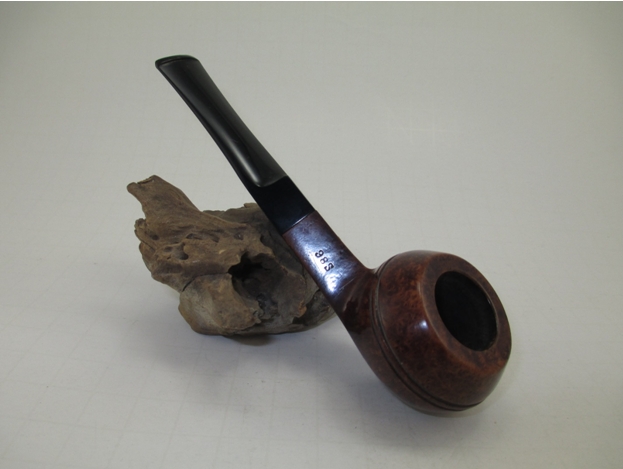
I am always on the lookout for high quality American pipes that have yet to gain the popularity of some of the more well-known European makes. Heritage pipes appeal to my sense of American pride, craftsmanship, and value. These pipes were made in the Kaywoodie factory, but on a completely separate line. Heritage pipes were Kaywoodie’s answer to Dunhill. According to one of their brochures, Heritage pipes were made from “briar burls seasoned and cured for up to 8 months,” with only “one briar bowl in over 300 selected to bear the Heritage name.” “Heritage stems are custom fitted with the finest hand finished Para-Rubber stems. Mouthpieces are wafer thin and concave.”

The Heritage line began in the early 1960’s, with the trademark issued in 1964. The line was started at the request of Stephen Ogdon, (who worked for Kaywoodie in 1962). Mr. Ogdon had previous experience working for Dunhill, either running the New York store or working for Dunhill North America. Mr. Ogden was made President of Heritage Pi pes, Inc., Kaywoodie Tobacco Co.,Inc. and Kaywoodie Products Inc. as well as a Vice President of S.M. Frank & Co. Heritage Pipes were produced from 1964 until 1970 (Source Kaywoodie.myfreeforum.org).

Here is a link to a Heritage brochure:

The Wonderful World of Heritage Briars

The best part about Heritage pipes is, for the most part other collectors have yet to discover them and you can still find one for a reasonable price. I found this fantastic bulldog in a lot of pipes otherwise unremarkable pipes. It had a good bit of cake, some tooth marks, and what looked like mold on the stem.Andrew1

Andrew2

Andrew3

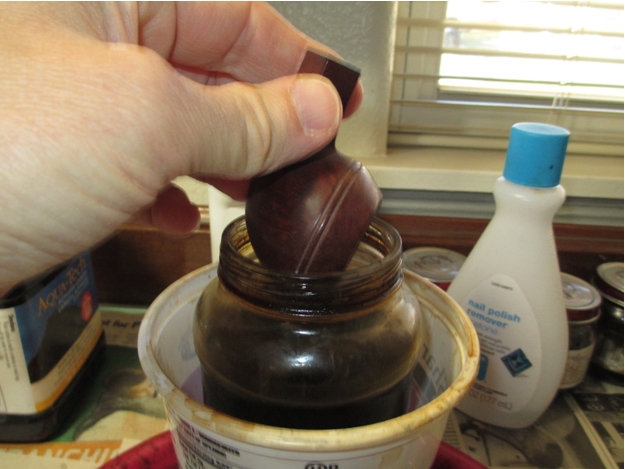
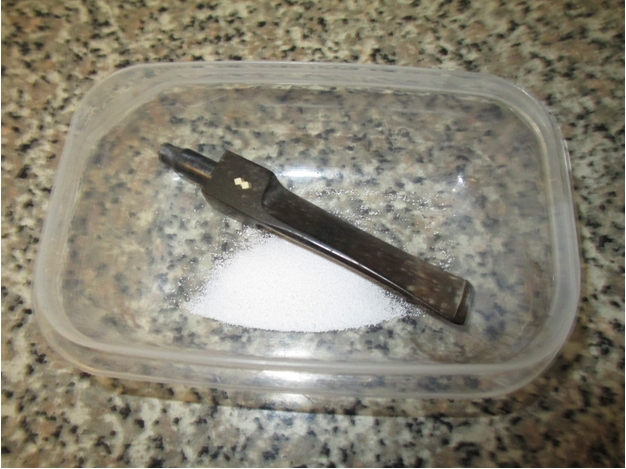
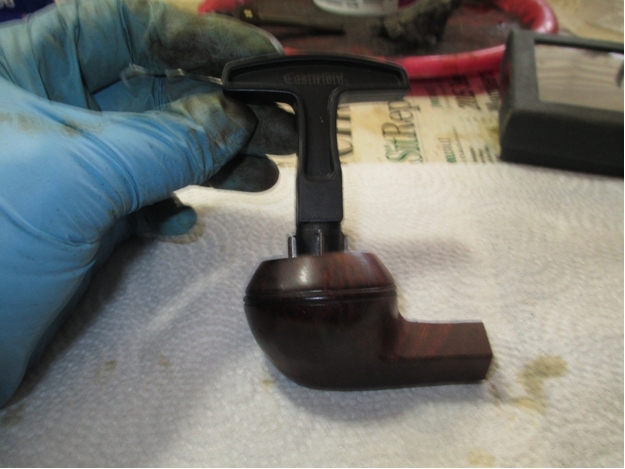
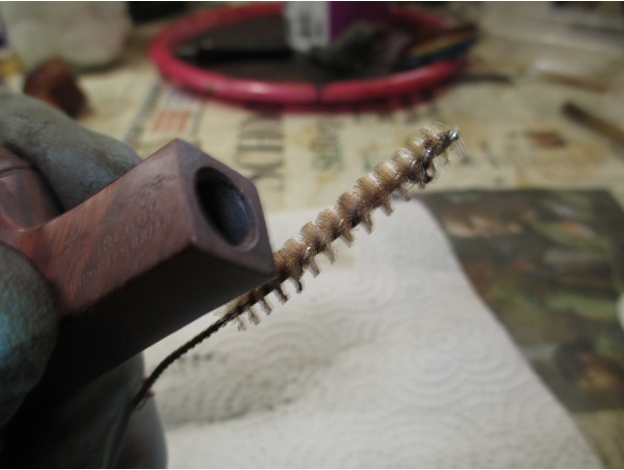
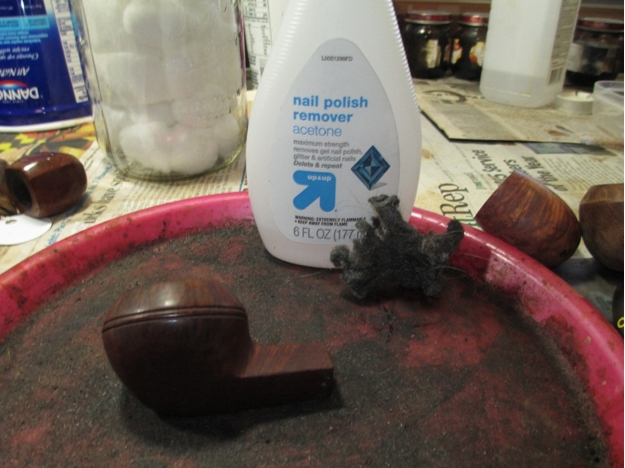
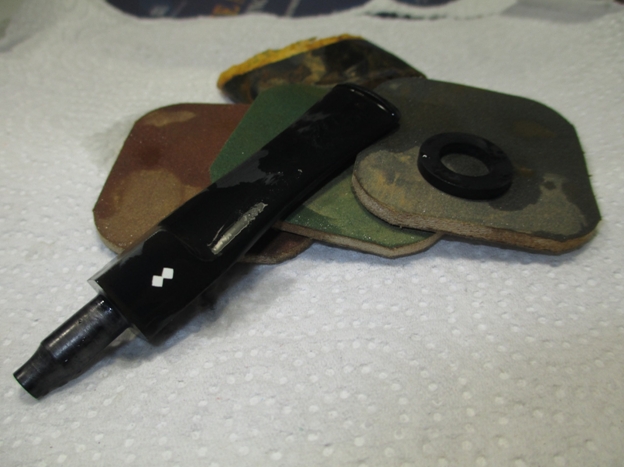
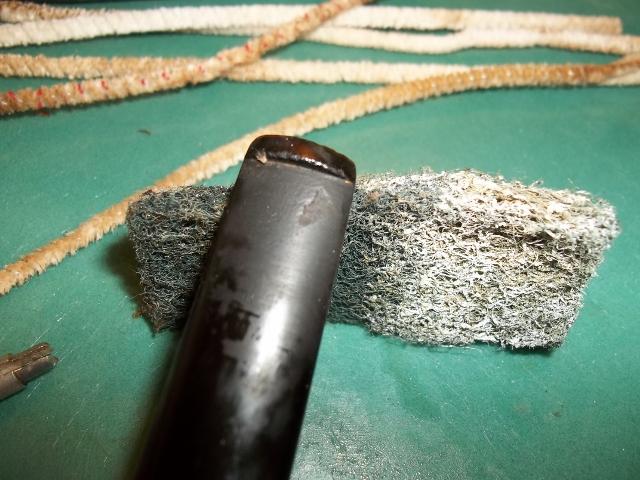
Andrew4 With concerns about cleanliness in mind, I dropped the bowl into the alcohol bath.Andrew5 I also soaked the stem in Oxyclean.Andrew6 After soaking overnight, I used my Castelford reamer to clean the cake.Andrew7 I checked the cleanliness of the shank with a brush and was pleasantly surprised.Andrew8 I retorted the shank, sorry no pictures this time, and after a few q-tips and fuzzy sticks the shank was clean.Andrew9 Next I retorted the stem.Andrew10 It was also relatively clean; this was a fuzzy stick dipped in alcohol right after the retort.Andrew11 I used two fuzzy sticks dipped in alcohol just to make sure.Andrew12 I wanted to tackle the grime on the bowl and tar on the rim, so I used 0000 steel wool and acetone.Andrew13 Next I turned my attention to the stem. I used 400 grit wet/dry sand paper with water, followed by 1500-2400 grit micro mesh pads with water.Andrew14 Since the stem had some tooth marks, I mixed up some clear CA glue and ground charcoal. I applied the glue with a straight pin and added accelerator to dry it. I used a small flat file to shape the repairs followed by sanding with 400 grit and micro mesh pads.

The bowl had some scratches and was darker than I preferred, so I used a progression of 1500-12,000 grit micro mesh pads to get it ready for polishing. I buffed the bowl on the wheel and used the rotary tool on the stem. Here is the final result.Andrew15

Andrew16

Andrew17

Andrew18

Andrew19 Thanks for looking.

A Bit of an Experiment – Restoring a Broken Bowl on a Hardcastles Jack o’ London Billiard


Blog by Steve Laug

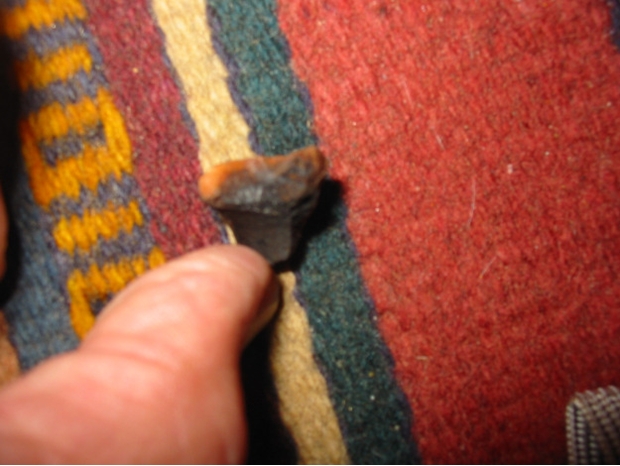
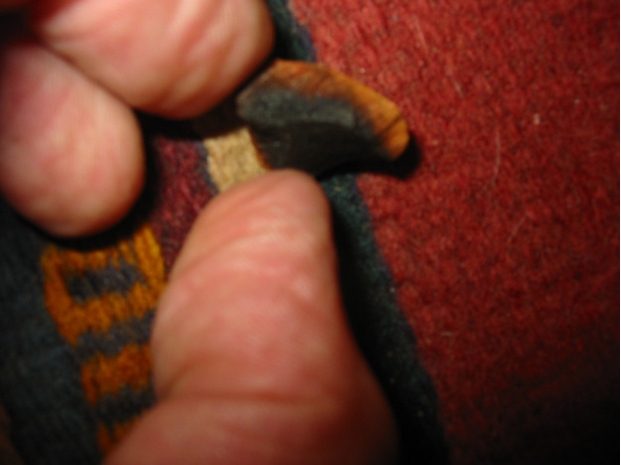
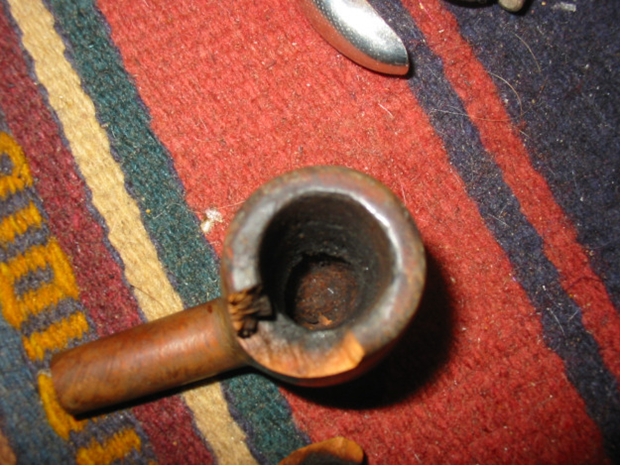
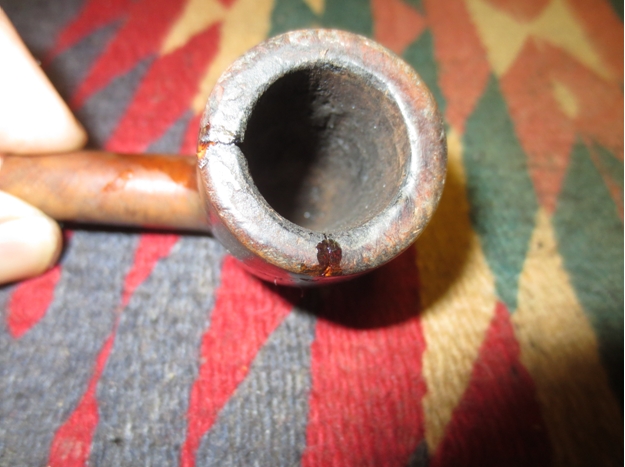
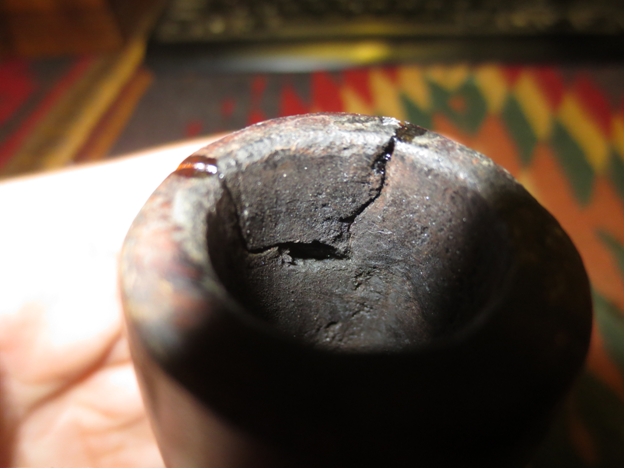
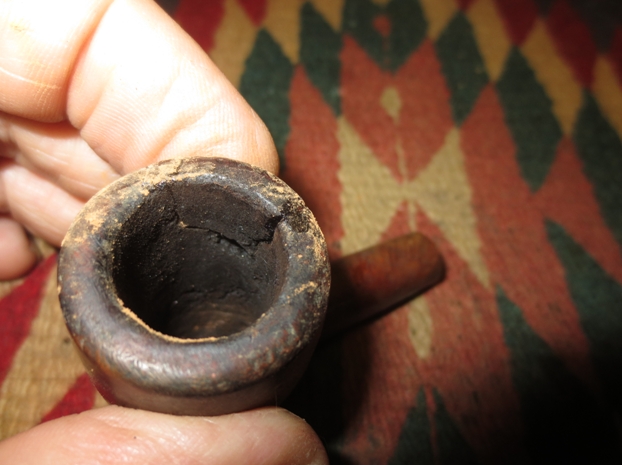
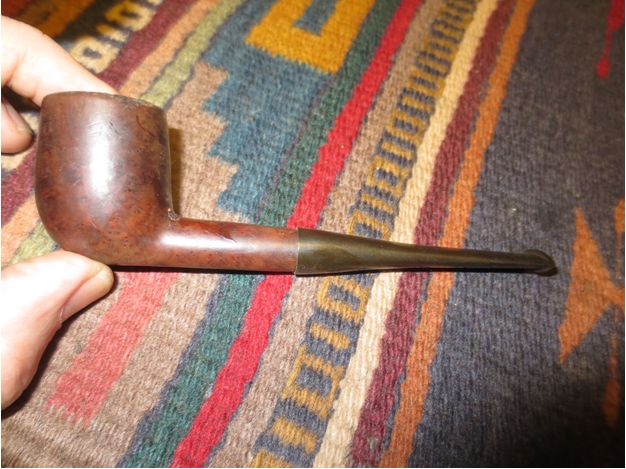
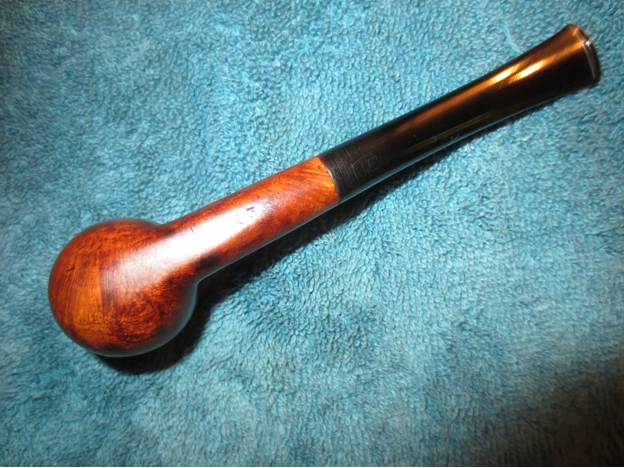
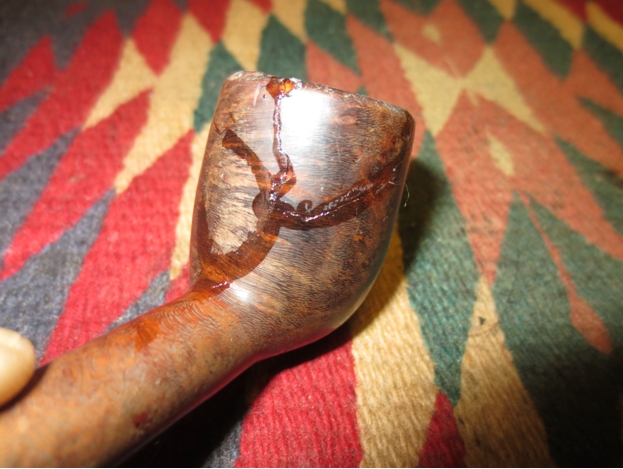
Having had a long week at work with nary a break in the busyness I needed a bit of a diversion on the weekend. I had an old Hardcastle’s Jack o’ London billiard in the cupboard that I probably should have thrown away but did not. I picked up the nice little billiard on one of my pipe hunts months ago. When I reamed it after I brought it home the bowl cracked and a large piece fell out of the right back side of the bowl. Up on examination it was on its way to being a burn out as the interior wall on the crack was charred and damaged. I took pictures of the bowl to show the damage at that time. For some reason I did not throw it away but rather put it in the cupboard and figured I could use the briar for other repairs.

But this weekend I took it out and decided to experiment with it and see what I could do with the damaged bowl. I debated whether to cannibalize it and save the parts or to rework it. I had already scavenged the stem and reused it on another Hardcastle’s pipe bowl that I restored so I only had the bowl. If the repair worked I would have to fit a new stem on the pipe before I could smoke it.

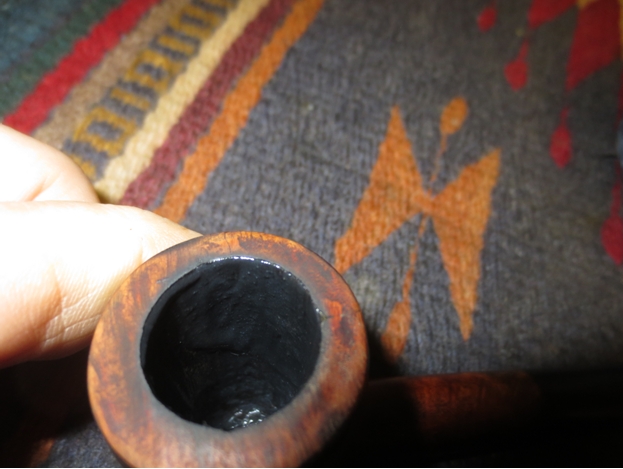
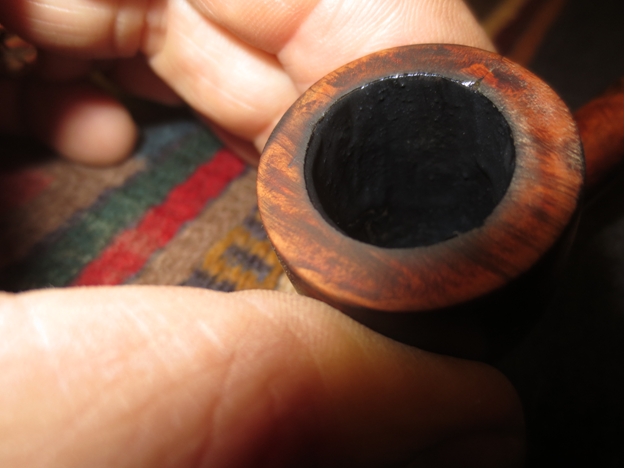
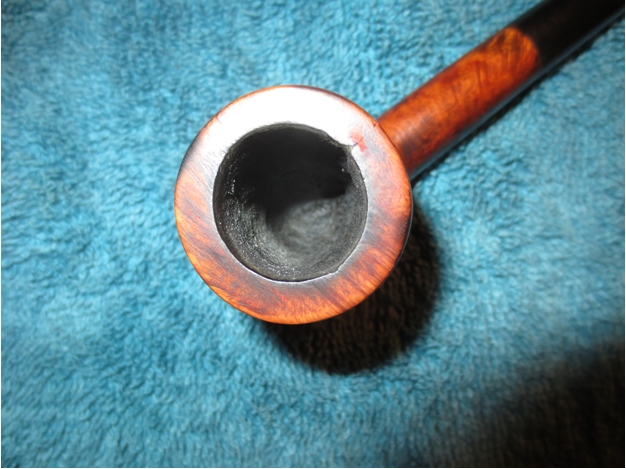
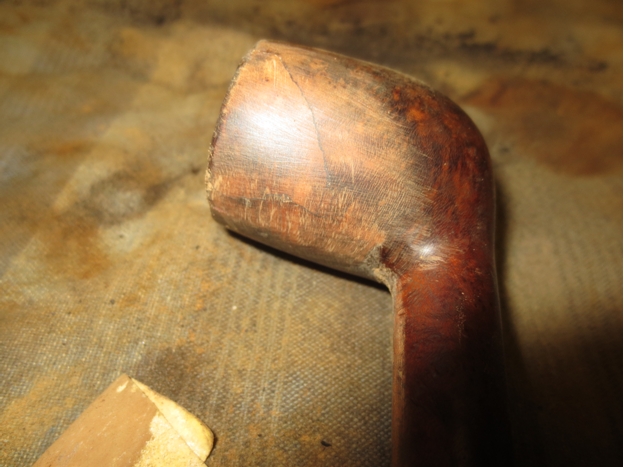
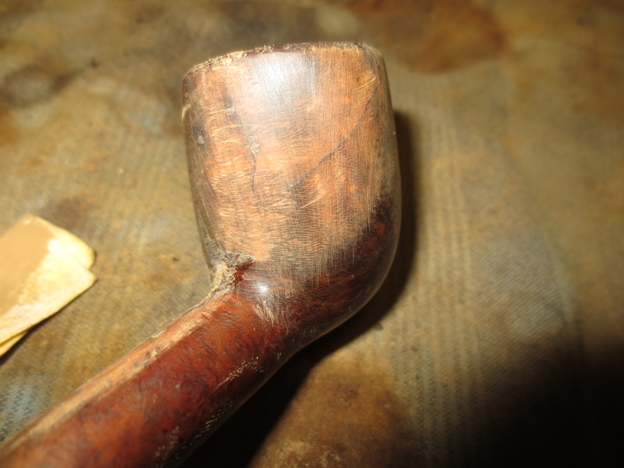
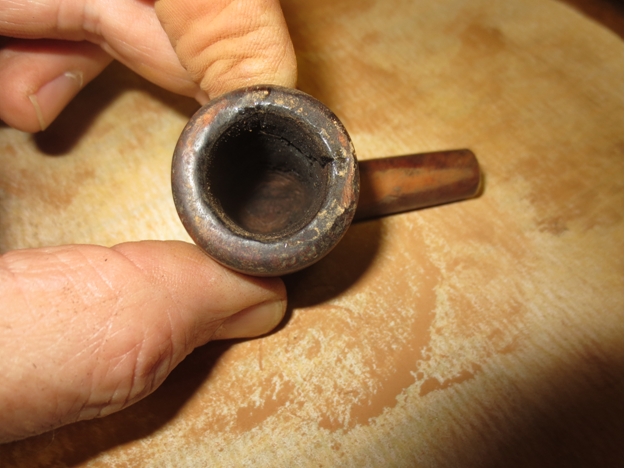
Here are some photos I took when the bowl cracked during the initial reaming. I took quite a few because I had not had that happen before in my experience. Looking at the photos you can clearly see the damage to both the remaining bowl and the chunk of briar that fell out. It was seriously damaged and one that I seriously considered throwing away that day. The rim was a mess as well besides being cracked and broken and the inner edge was out of round and the top beaten around the outer edge. The bowl was heavily caked and it looked to have been a good smoking pipe for the previous pipeman. There were even some fragments of unsmoked tobacco in the bottom of the bowl.Jack1

Jack2

Jack3

Jack4

Jack5

Jack6 Out of boredom and the need for something to keep my hands busy while my dog was being groomed I decided to experiment with repairs on the bowl. I cleaned up the broken pieces of the briar both the edges on the bowl and broken pieces with alcohol and cotton swabs and picked out any remaining loose pieces of briar or charred pieces of briar. I knew that I could easily patch the external side of the bowl and make it look acceptable but I was not sure what I would do with the internal side. I used a pen knife to scrape out the remaining cake in the bowl and to make sure there was no loose carbon that would get in the way of the repair before gluing in the piece. I applied clear super glue to both the bowl and the chunk of briar being careful to keep it out of the interior of the bowl and pressed the piece in place. In the photos below you can see how the glue ran down the exterior of the back side of the bowl but not on the inside.Jack7

Jack8 I applied some more glue to the cracks on the outside of the bowl so that I could push briar dust into any spaces or chips in the briar between the pieces.Jack9

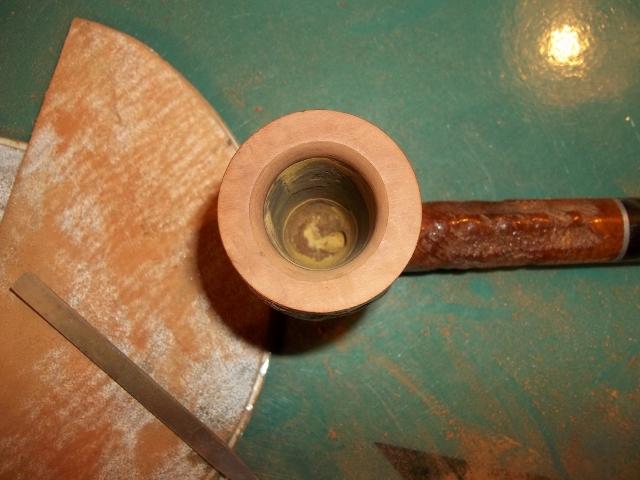
Jack10 With the chunk of briar glued in place and the external cracks patched it was time to look at the damage on the inside of the bowl and determine what to do. I know that in the past I have used J.B. Weld and Greg and others have used fireplace cement to repair the inside surfaces of the bowl but I had in mind a different experiment. Both the J.B. Weld and the fireplace cement dry and are neutral after curing. They are both impervious to heat or moisture but I wanted to see if I could use all natural substances and work a repair that would hold up. I knew that only time would tell if it actually worked but I figured that I had nothing to lose with this old pipe. If it did not work it would go back to the scrap yard and come back to life in repairs on other pipes. But if it did work I would have a useable yard pipe that I could smoke while working with little concern of damaging or ruining it in the process. Too me it was worth a try.

The next series of two photos show the inside of the bowl. The cracks and damage to the inside of the bowl was quite extensive. But it was still worth trying a repair.Jack11

Jack12 I fit a stem on the shank from my can of stems with minimal sanding of the tenon for a good fit in the shank. The diameter of the stem would need to be adjusted but that would not be too much of a problem.Jack13

Jack14

Jack15 The next two photos show the variation in diameter of the shank and the stem.Jack16

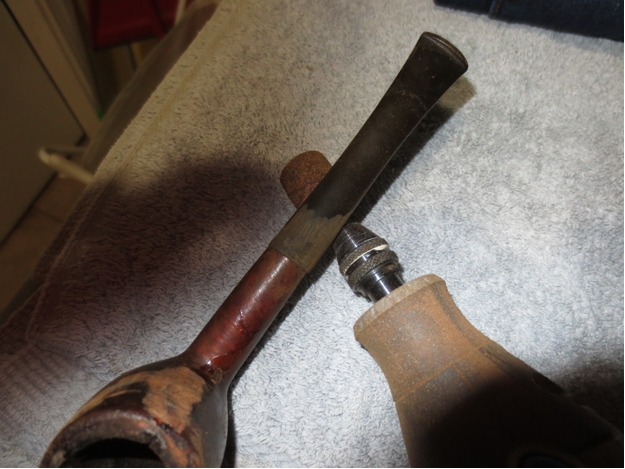
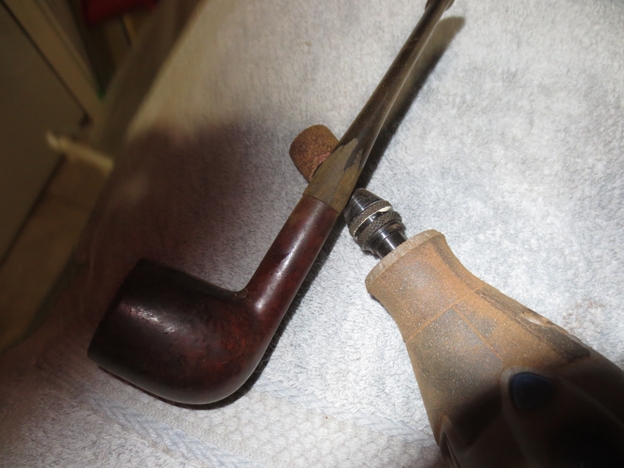
Jack17 I use a Dremel and sanding drum to take down the excess material as close to the shank as possible without damaging the shank. I also decided to use the Dremel and sanding drum on the overflow of super glue and briar dust on the outside of the bowl as I planned on sanding the bowl anyway.Jack18

Jack19

Jack20

Jack21 Once I had the fit of the stem close and the majority of the glue and briar dust patch smoothed out I took it back to the work table and sanded both the bowl and the stem with 220 grit sandpaper to smooth out the scratches in the briar and the vulcanite.Jack22

Jack23 The rim needed to be topped to smooth out the damage to the top and the outer edges. I set up the topping board with 220 grit sandpaper and pressed the bowl flat against the sandpaper. I sanded it in a circular motion until I had removed the damaged rim surface and the damaged out edge.Jack24

Jack25

Jack26 I forgot to take a photo of the rim at this point but you can see in the photos of the staining that it is sharp and clean on the outer edge. I sanded the briar with a medium and a fine grit sanding sponge to minimize the scratches even more and then heated the bowl before I applied a dark brown aniline stain. I applied the stain, flamed it and repeated the process until I had good even coverage on the bowl.Jack27

Jack28 The dark brown stain was quite opaque so I wiped down the bowl with isopropyl alcohol on cotton pads to remove and thin down the stain coat.Jack29

Jack30 The top of the rim can be seen in the next photo. The damage to the rim top has been minimized and the surface is smooth. There is still some damage on the inner edge but that will be addressed when I do the internal repairs to the bowl walls.Jack31 I buffed the bowl with Red Tripoli and then wiped it down again with alcohol. The colour was just what I was looking for at this point in the process. It was a rich brown stain that allowed the grain – birdseye and mixed to show through the finish. It also did a decent job covering the repair to the other side of the bowl.Jack32

Jack33

Jack34

Jack35 I buffed it again with White Diamond to raise the shine. The stem still needed some fine tuning for a better fit against the shank and some sanding to remove the oxidation and scratches but the pipe was beginning to look good.Jack36

Jack37

Jack38

Jack39 I took the next close up photos to show the work that still needed to be done on the rim and the look of the repairs on the right side of the bowl. The bowl surface and rim surface was very smooth but still needed to be sanded with micromesh pads to take out the scratches and polish the briar to a deep shine.Jack40

Jack41 With exterior at a good place to take a break it was time to address the inside of the bowl. I mixed a batch of pipe mud using cigar ash and water. I mixed it to a thicker than usual consistency so that I could press it into the damaged area of the bowl wall. I did not want it runny or soupy but I still wanted it wet enough that the mud was well mixed and would stick. I painted it on the wall in the damaged area with a folded pipe cleaner and pressed it into the cracks with the spoon end of a pipe nail. I also pressed it in with the end of my finger. I repeated the application of the mud until the surface of the wall was smooth and showed no pits or divots. I set the bowl aside to dry over night as I wanted the mud to harden and also wanted to see if it was solidly stuck in the damaged areas.Jack42

Jack43 In the morning, after curing over night I inspected the patch on the inside of the bowl. I used my dental pick to make sure that the patch was well set in the divots in the wall of the bowl and then smooth out the surface with a pen knife.Jack44

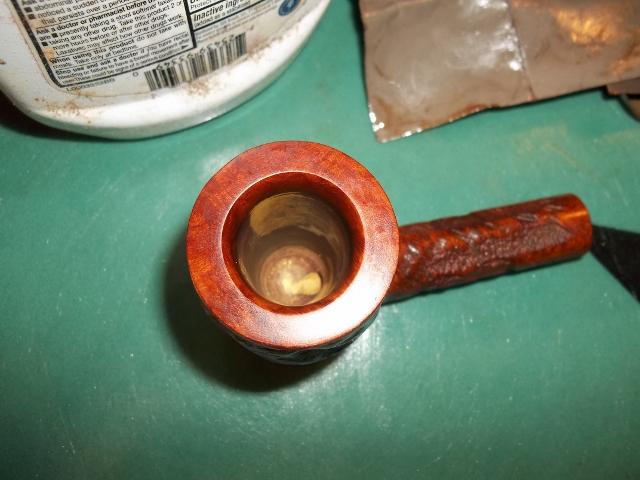
Jack45 I let it dry for about four more hours while I did other things and then decided to mix a batch of bowl coating to paint the bowl interior. I mix a batch of bowl coating using sour cream and activated charcoal powder. I use a finely ground powder that comes in capsules.Jack46

Jack47 I take apart the capsules and dump the charcoal powder into the sour cream.Jack48 I use a dental spatula to mix the charcoal and sour cream into a black paste. I work the paste until all the sour cream and charcoal are combined.Jack49

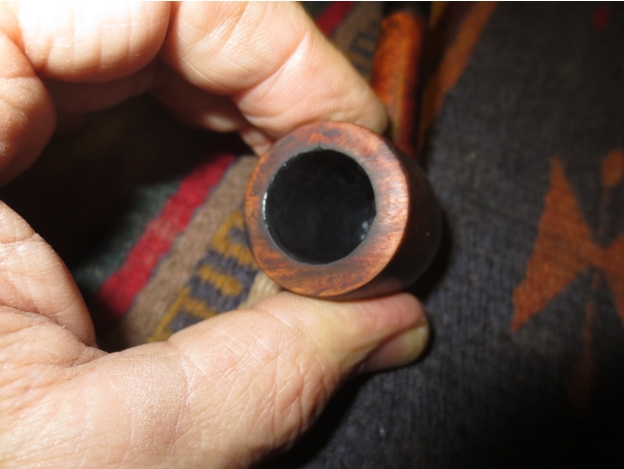
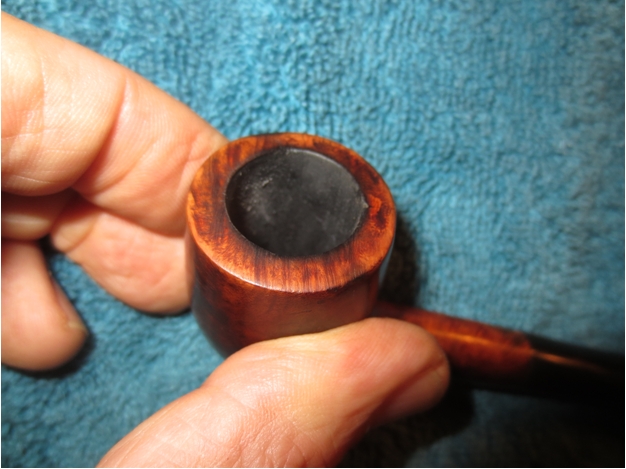
Jack50 I used the spatula to apply the paste to the walls of the pipe and then smoothed it out using a folded pipe cleaner.Jack51 The entire bowl is coated with the paste and after smoothing it out with the pipe cleaner looks like a dark grey almost black coating around the sides and bottom of the bowl. I put a pipe cleaner in the airway so that I would not get the paste in the airway when smoothing it out.Jack52

Jack53

Jack54 I wiped down the top of the rim with a bit of saliva on a cotton pad and then set the bowl aside to let the coating cure. Once the coating cured it would provide a protective layer over the bowl interior and facilitate the buildup of a new cake.

While the bowl coating was drying I worked on the stem. I sanded it with 220 grit sandpaper with a plastic washer between the shank and stem to smooth out the transition between the two. When I had finished sanding the stem with the 220 grit sandpaper I sanded it with a medium and a fine grit sanding sponge.
Jack55

Jack56

Jack57

Jack58 I wet sanded the stem with 1500-2400 grit micromesh sanding pads to minimize the scratches.Jack59 I dry sanded the stem with 3200-4000 grit micromesh sanding pads and then buffed the stem with Red Tripoli to further polish the stem.Jack60 I brought it back to the work table and dry sanded it with 6000-12,000 grit sanding pads. I buffed the stem with Blue Diamond on the wheel and then rubbed it down with Obsidian Oil and let it soak in.Jack61 I sanded the bowl and shank with micromesh sanding pads – wet sanding 1500-2400 grit pads and dry sanding with 3200-12,000 grit pads. I buffed the bowl with Blue Diamond to polish the briar. There are some fine scratches that seem to be around the junction of the shank and stem. I buffed it with Red Tripoli again and with White Diamond and then with Blue Diamond. I polished the stem and bowl with carnauba wax and buffed it to a shine with a clean buffing pad to raise the shine. The finished pipe is shown in the photos below.Jack62

Jack63

Jack64

Jack65 The next photos are close up pictures of the repair. They also that the carbon/sour cream bowl coating has dried and is a dark grey colour. The cracks on the exterior are smooth to touch and do not feel like cracks. The repairs to the top of the rim still show as a red coloured spot at the back of the rim. The stain took to the patch a little lighter than the rest of the bowl. It is smooth to the touch but still shows. The internal bowl coating has dried to the touch and gives a nice coat that is cover the repairs on the bowl wall. The carbon bowl coating has small particles of carbon in the finish. These will provide something for the new cake to bind to when it is smoked. All that remains is to let the coating cure for a few days and then load a bowl and smoke it.Jack66

Jack67

Jack68

Jack69

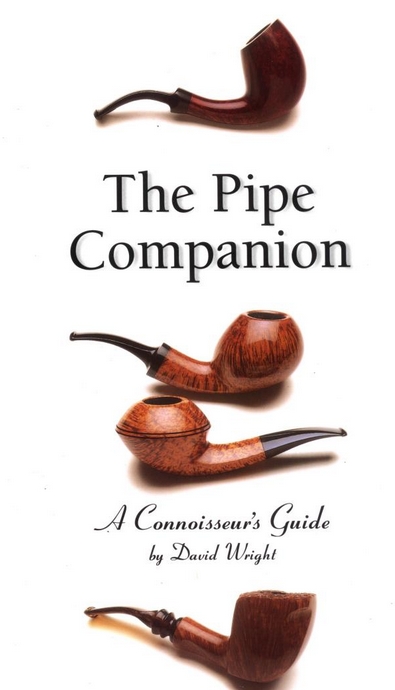
A Book Review – The Pipe Companion: A Connoisseur’s Guide by David Wright


Blog by Steve Laug

494194Several things about this book caught my attention when I first saw it. The first of course was the magnificent photography that graces the pages. It is literally packed with more than 125 full colour plates of pipes. The age of some of the pipes made me read the fly-leaf of the cover to know more about the author. That is when the second thing caught my attention, The Pipe Companion was written by David Wright who is the Curator of the Museum of Tobacco Art & History in Nashville, Tennessee, USA. What was interesting about that was the wealth of tobacciana that was available to the author at his work place. I was already hooked before I even read any of the text.

When I did read the fly-leaf on the cover it only solidified my commitment to purchase the book. I quote from there:

“Smoking a pipe is a refined, relaxing ritual. More than a tool for reflection, a well-crafted pipe is a work of art to be admired and appreciated. Whether made of clay, briar, or meerschaum, every pipe’s personality and history is evident I the beauty of its bowl and the style of its stem.”
“Profiling more than 50 master carvers from around the world and their elegant, yet functional creations, The Pipe Companion is the essential guide to the world of pipes. Within these pages you’ll explore the exquisite artistry of pipe making and enjoy a behind-the-scenes tour of carving styles and manufacturing techniques. You’ll also learn about the history of the pipe – from its North American origins to its spread throughout Europe and the Middle East to the wide variety of classical and freehand styles popular today (2000). Finally you’ll discover modern pipe-smoking customs and practices, as well as learn how to select, smoke, and care for your pipes.”

“Perfect for both pipe enthusiasts and anyone with a penchant for the occasional puff, The Pipe Companion provides practical advice along with a wealth of information. So lean back, fire up your pipe, and enjoy.”

As with previous reviews I have written I include the table of contents to give an idea of how the author proceeds to do what is promised in the quotations from the preface or in this case the fly-leaf of the book’s cover. It is arranged in three parts with subsections underneath each part. It concludes with a glossary, a suggested reading list, pipe makers contact information and then ends with notes.TOC PART 1: A Brief History of the Pipe – this first section of the book uniquely presents the standard pipe history that has been repeated in a variety of descriptive ways since Alfred Dunhill’s Pipe Book. However, what makes this presentation unique among the others is the beautiful photographs of the pipes from the early periods of history. He looks at the origins of the pipe from Native American pipes to those developed later in Europe when tobacco was brought there.

After giving a very brief description of the origins with photos the author turns to the different types of material that have been used for making pipes. Again this section is graced with beautiful photographs illustrating the pipes made of each material. There are paragraphs on Clay Pipes, Wood Pipes, Porcelain Pipes, Meerschaum Pipes, and Briar Pipes. This section ends with an inserted article on Pipe Production. The interest in artisans who made these pipes sets the stage for the later PART THREE which looks at Pipe Makers.

The author’s style is engaging and enjoyable to read. You are carried forward through the chapter as he unfolds the history, interjecting stories and incidents among the photos of the pipes that illustrate his points. It is well written and flowing in style.

PART 2: The Art of Pipe Making – the second section covers pipe making from the perspective of one person shops to medium-sized factories. Again this PART 2 sets the stage for PART 3 on Pipe Makers. It does this with reference to the fact that before looking at the variety of pipe makers that it is important to understand how block meerschaum and briar are carved from their natural state into functional and artistic pipes.

The first chapter is on the materials that pipes are made from. The first section in this chapter is on meerschaum. It looks at the history of meerschaum and how it is mined and then refined and carved into pipes. There are pictures in the section that show raw meerschaum and ornate figural and design pipes carved from meer.

This is followed by a section on briar. There again the author looks at the agriculture of briar and where it grows and how it is harvested. Then the section looks at the seasoning/curing of the briar and finally how the blocks are cut and then carved into pipes.

The next section covers carving in all of its aspects. There are beautiful photos of figural pipes, carving and then finally of bending the stems that were used. Even machine-made pipes are discussed. It is interesting to note that the author says that even machine-made pipes involve a lot of hand work – sanding, shaping, finishing etc. are all done by hand.

The second chapter describes how to select a pipe. The author likens buying a pipe to buying a car. He discusses the materials that go into making a pipe, the finish and compares machine-made to handmade pipes and closes the chapter by discussing the features of a pipe. He states that the most important feature is free air passage from the bowl to your mouth – mechanics.

The third chapter discusses the how to of smoking a pipe. Truly this section should be called breaking in a new pipe and interestingly the author gives a sub-title part way through the text where he gives it that title. He discusses bowl coatings, various methods of loading a pipe including the Frank method with a brief segue into choice of tobacco. Then he moves to talking about lighting the pipe, tamping the tobacco and concludes with after smoking care and cleaning of the pipe.

PART 2 is a well written concise exposition of the pipe – materials, selection and smoking. It is written in an engaging way but always with the awareness of what is ahead in PART 3 of the book. There is a building excitement in the chapters about the various pipe makers that will be discussed ahead.

PART 3: The Pipe Makers Directory – The remainder, and by far the largest part of the book is the present one. The author has arranged his list of hand-picked pipe makers by country for ease of reference. Quoting from Wright’s introduction to this part of the book:

“As you examine the different carvers around the world and their unique interpretations, you’ll notice similarities and schools of art. The oldest briar school, for example, is centered in Saint-Claude, France. Italy has two distinct schools of carving, while the other Scandinavian countries have a look all their own. Then, there are the United States and Japan. The variety of styles and techniques in the United States reflect America as the proverbial melting pot. In Japan, styling can by very Japanese or exhibit a combination of Japanese and Danish features.” Page 57

“Modern briar and meerschaum pipe styles can be divided into two broad categories: classic and freehand. The classic style has its origins in early French and English pipes. The proportions of the bowl and the stem: length, height, and diameter are standardized in these pipes. Many of the names of classic pipe shapes and styles were chosen many generations ago and reflect the shape or appearance of the pipe… Freehand was a term coined for the “wild” or “organic” designs of Danish pipes that first appeared in the late 1950s. Freehand implies that the pipe carved at the whim of the carver. A truer definition is that the pipe design is governed by the grain of the wood. No two freehand pipes are carved alike, nor do they conform to any one style.” Page 58

Following the short introduction, from which the two quotes above are taken, the author proceeds to move through the various countries he has chosen. In each country he has chosen pipe makers to highlight and includes photographs of their work. This catalogue of pipe makers is the highlight of the book to me and a section I turn to repeatedly. I will list each country as the author has organized them and then give a list of the pipe makers he covers in each one. I don’t know what your thoughts will be but I was surprised by the listings and found there were several I had not heard of previously.

Canada: J. Calich (p.59-61), Julius Vesz (p.62-63).

Corsica: L.J. Georges (p.64-66).

Denmark: Bang’s Pibemageri (p.68-69), Jess Chonowitsch (p.70-72), Lars Ivarsson (p.72-74), Jorn (p.74-75), Anne Julie (p.75-77), W.O. Larsen (p.77-79), Nording (p.79-80), Stanwell (p.81).

France: Butz-Choquin (p.82-83).

Germany: Holger Frickert (p.84-86), Karl-Heinz Joura (p.86-88), Manuel Shaabi (p.88-90).

Great Britain: Ashton (p.91-94), Castleford (p.94-95), Dunhill (p.95-98), Ferndown (p. 98-99).

Ireland: Peterson (p.100-101).

Italy: Ardor (p.103-104), Paolo Becker and Becker & Musico (p.104-106), Brebbia (p.106-108), Castello (p.108-110), Il Ceppo (p.110-111), Mastro de Paja (p.111-113), Radice (p.113-115), Savinelli (p.115-118), Ser Jacopo (p.118-119).

Japan: Shizuo Arita (p. 120-121), Jun’ichiro Higuchi (p.121-122), Tsuge Pipe Company (p.123-124).

Spain: Joan Saladich y Garriga (p.123-127).

Sweden: Bo Nordh (p.128-130).

Turkey: Ismet Bekler (p.132), Yunas Ege (p.133), Sevket Gezer (p.134), Huseyin and Mustafa Sekircioglu (p.133-134), Salim Sener (p.134), Sadik Yanik (p.135).

United States: E. Andrew, Briars (p.136-138), Alfred Baier (p.138-140), Boswell’s Pipe & Tobacco (p.140-142), J.T. & D. Cooke (p.142-144), Cristom (p.144-147), Jody Davis Princeton Pipes (p.147-149), Dr. Grabow (p.149-151), Fairchild Pipes (p.151-153), David Jones Briar Pipes (p.153-155), Kaywoodie (p.155-157), Kirsten Pipe Company, Inc. (p.157-159), Sam Learned (p.159-161), Lucille Ledone (p.161-162), Andrew Marks (p.163-165), Mr. Groum Pipes (p.165-167), Clarence Mickles (p.167-168), Elliott Nachwalter Pipestudio (p.168-170), Denny Souers (p.170-172), Trever Talbert (p.173-174), Mark Tinsky American Smoking Pipe Company (p.175-176) Von Erck’s Pipes & Repairs (p.176-178), Roy Roger Webb (p.178-180), Steve Weiner (p.181-182), Tim West (p.182-186), Randy Wiley (p.186-187)

From the above information it is obvious that the largest portion of the pipe makers included is from the United States. I am assuming that this is because of the author’s location. However, within each section there is a concise biographical note on the pipe maker and a description of the style and where they fit within the classic/freehand division that introduced PART 3. The photos in this section are absolutely stunning and give a good idea of the style, quality and craftsmanship of the makers. I will continue to use this book as a reference to the works of the makers covered and as a wish book of pipes I want to add to the collection.

The book ends with some sections that could easily be skipped to the detriment of the reader. The Glossary gives excellent definitions of the terminology of pipe making. These definitions are concise and helpful. The Suggested Reading bibliography is a great resource and one that I use as a checklist of published materials on pipes and tobaccos – both books and periodicals. The Pipe Makers Contact Information is worth a look as well if you want to contact any of the above makers for a commission or just write them a thank you note for a great pipe you are smoking. The book ends with Notes that really are endnotes for the chapters in the book giving bibliographical notes for information used from other references.

I can heartily recommend The Pipe Companion – a Connoisseur’s Guide by David Wright to every pipe collector and collector of books and information on pipes. It is a resource that is well written, well illustrated and unusually thorough in the kind of information that is resourced in the book. It is an ongoing pleasure to read repeatedly or to just thumb through and enjoy the pipe photography that graces the pages from the beginning to the end. If you have not picked this one up you really owe it to yourself to get a copy before it too goes out of print.

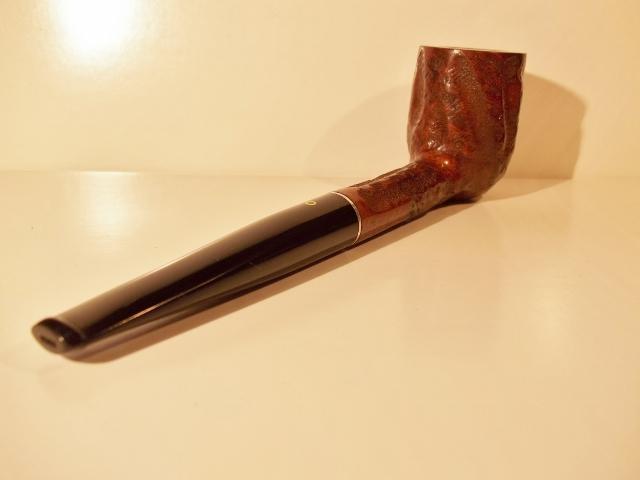
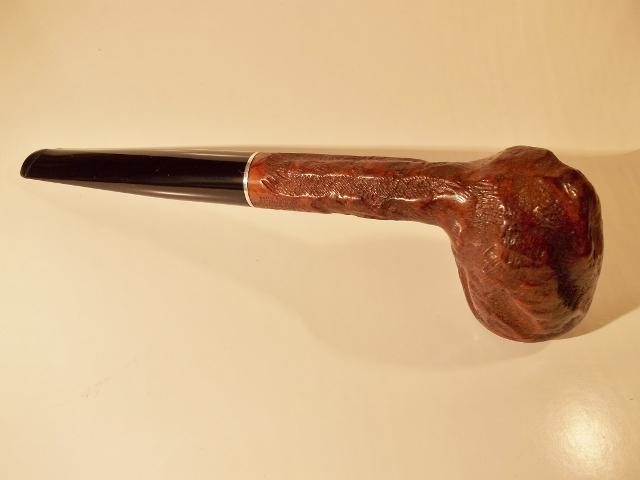
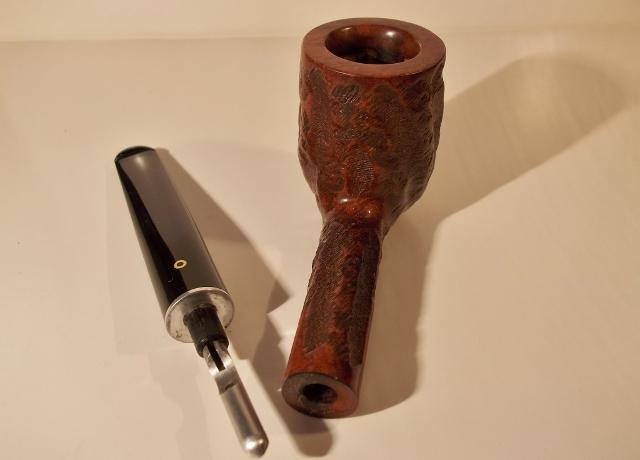
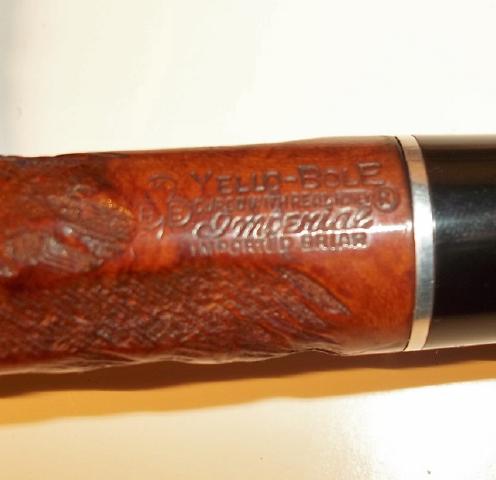
Restoring a Monster KBB Yello Bole Imperial Rusticated Billiard


Blog by Troy Wilburn

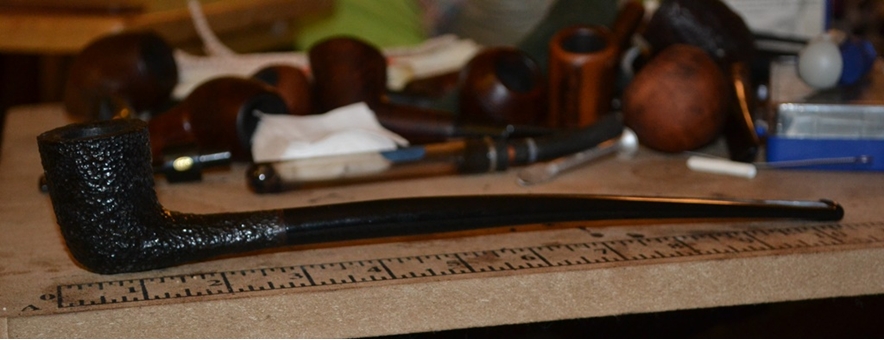
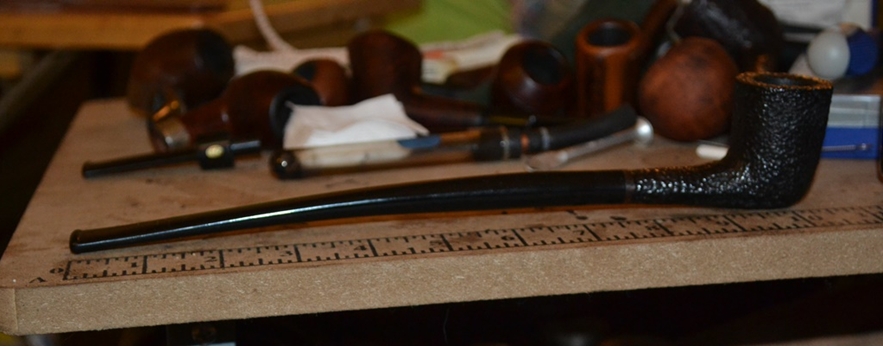
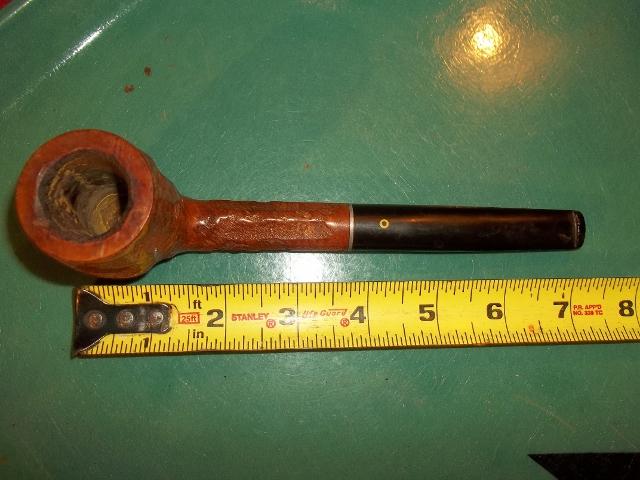
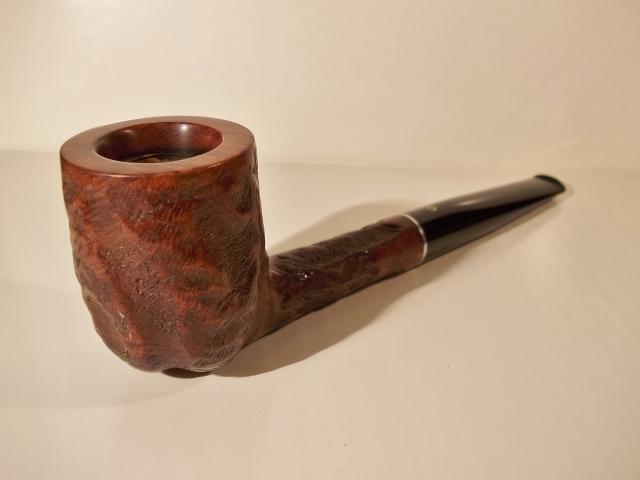
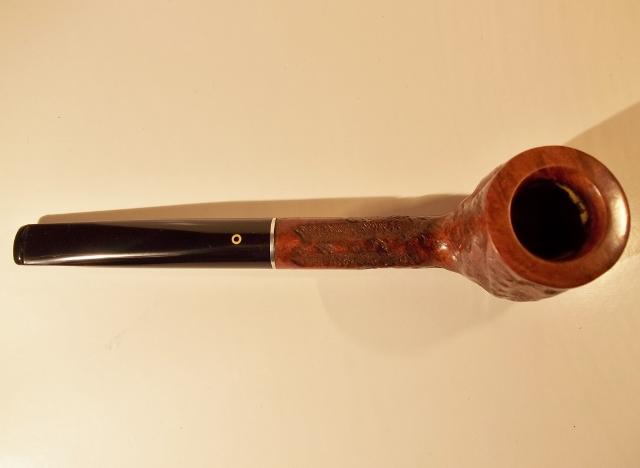
I picked up this huge pipe from a friend of mine on the Dr. Grabow Collectors Forum. This pipe isn’t a magnum it’s a howitzer! It is 7 ½ inches long and has an almost 2 ½ inch tall bowl. The pipe was nice but had some issues. The top of the rim and the inner edge had been hacked up. The stem also has some heavy nicks and dings in it. It was really clean though and I had very little to do as far as getting the inside clean.

Here are some photos of the pipe before I worked on it.Troy1

Troy2

Troy3

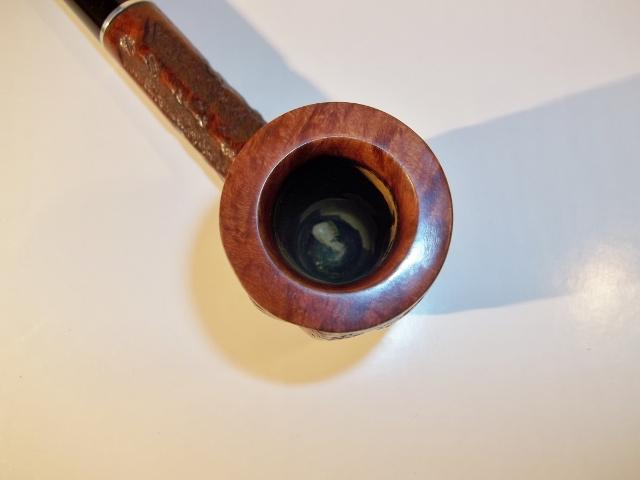
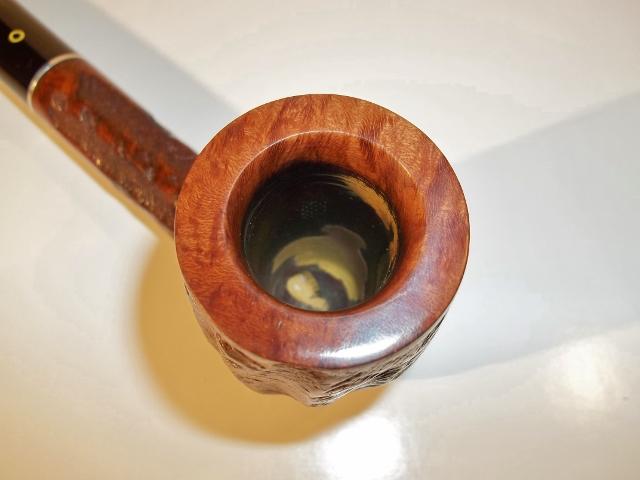
Troy4 As I stated above the top of the rim and the inner edge were badly hacked.Troy5 I began by working on the rim. I topped it and made a large concave inner rim. I don’t know if it came like this from the factory or not but it has one now. I took it down with 80 grit sandpaper and then a lot of sanding with 120 grit sandpaper.Troy6

Troy7 After I had finished rough shaping the rim I did LOTS and LOTS more sanding from 400 grit sandpaper all the way up to 2000 grit sandpaper. I used mineral oil as a lubricant for the sandpaper and also to bring out the colour of the natural wood. Troy8

Troy9

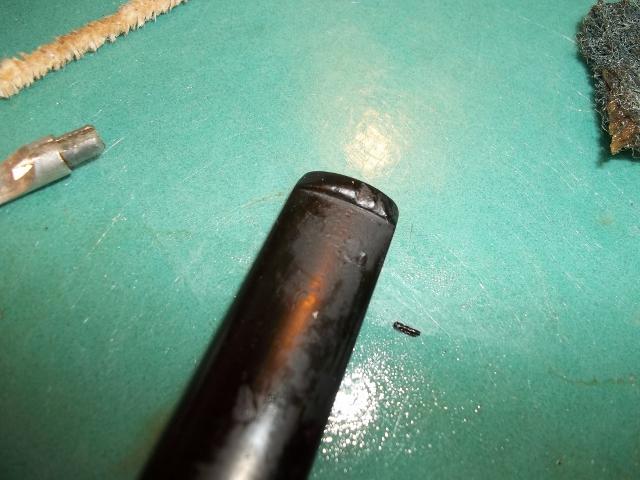
Troy10 I soaked the stem in alcohol and then scrubbed it with a green scouring pad. I cleaned it out with pipe cleaners.Troy11 The stem had several tooth marks and gouges on the top and the bottom side next to the button.Troy12

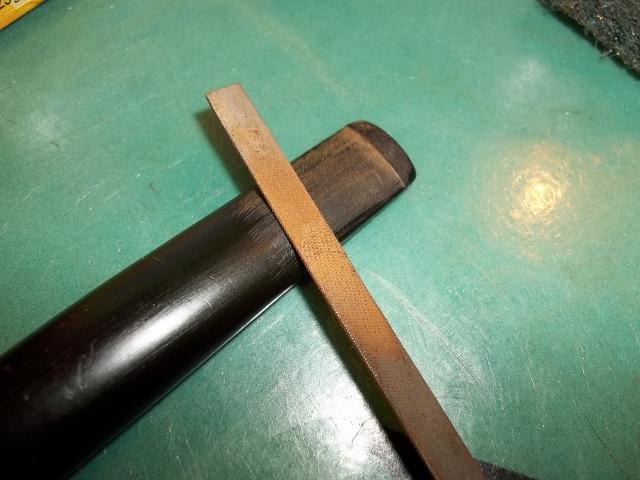
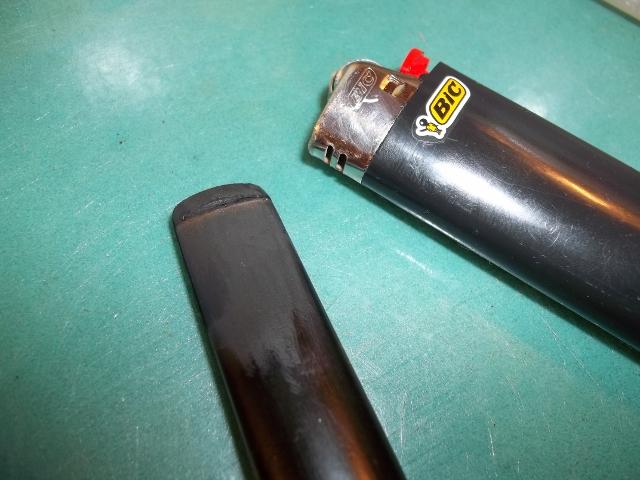
Troy13 I filed out the tooth marks and reshaped the button.Troy14 Here is a little trick that some of you may know, but I came up with it in working on the last few pipes. I thought I would share it here. After filing the stem I take a lighter and work the flame back and forth across the file marks. The heat from the lighter helps to blend in the file marks and makes it easier to sand them out.

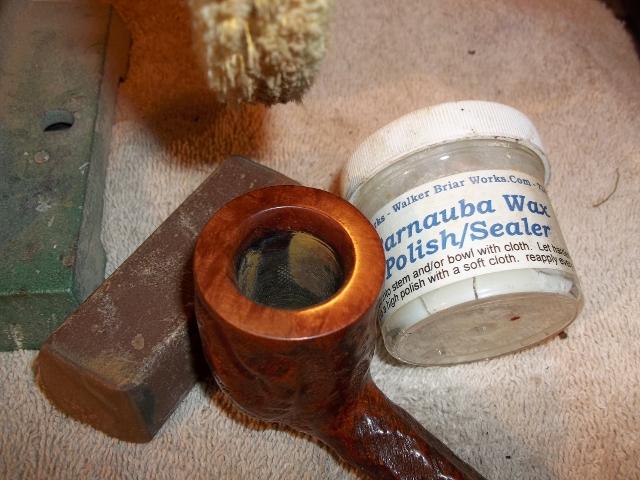
Here is a photo of the stem before I used the lighter.Troy15 Here is a photo of the stem after using the lighter.Troy16 I buffed the rim with Brown Tripoli a few times to get rid of the fine sanding marks. I could not get the pads into the concave inner rim so I waxed it by hand with paste wax several times.Troy17 With the initial sanding and cleaning of the stem done, I still had a lot more sanding to do. There were lots of scratches and dings in it. I began sanding with 400 grit sandpaper and worked my way up to 2500 grit sandpaper.Troy18 I put the stem back on the bowl and got it ready for the final buffing and waxing.Troy19 Here are photos of the pipe after it had been buffed and polished.Troy20

Troy21

Troy22

Troy23

Troy24

Troy25

Troy26

Troy27

Troy28

Troy29

Troy30

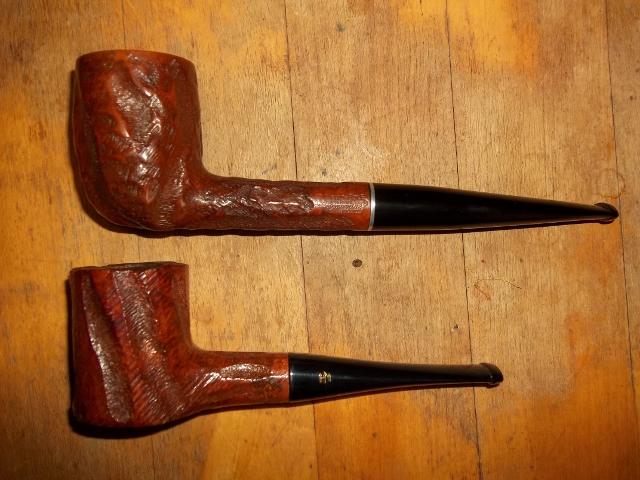
Troy31 To give an idea of the size of this pipe and put it in perspective here is a photo of it next to a Yello Bole Hand Made Poker I have. As most of you would know, a Hand Made is not a small pipe by any means. This billiard almost dwarfs it.Troy32

A Book Review – Pipes & Tobacco. A Bright and Interesting Discourse on Smokers by J. W. Cundall


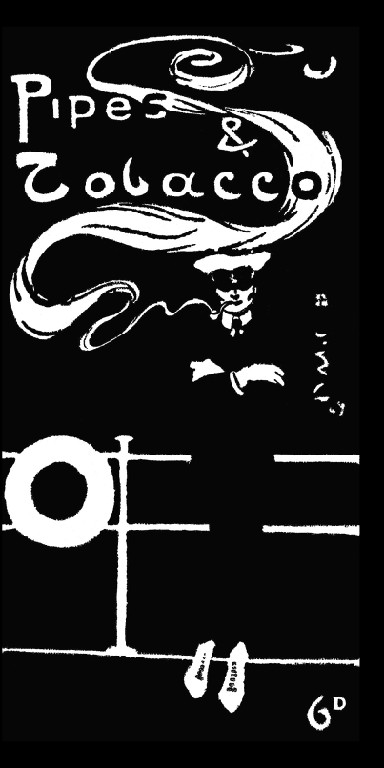
Pipes and Tobacco CoverWhat attracted me to this book when I saw it on Briar Books Press was the press release that Gary Schrier posted on his website. It is a rather long opening to this review but I find that it is a great piece of writing and a simple summary of the book itself. There he wrote the following:

“What they were saying in 1901 about “Pipes and Tobacco. A Bright and Interesting Discourse on Smokers” by J. W. Cundall.Long 8vo. Cloth, 6d.”

“To-day. – Mr. J. W. Cundall has written a little volume which all lovers of the fragrant weed will read with interest and amusement. In addition to an account of the history of tobacco, and the science of it growing and blending, many entertaining anecdotes are related of famous smokers, and a large amount of odd information of use to smokers imparted. For a modest outlay of sixpence, at which price it is published, no devotee of ‘My Lady Nicotine’ need lack this latest appreciation of his goddess.”

“My how times have changed! That’s inflation for you. No longer sixpence, but then who other than Briar Books Press discovers such unusual, worthwhile, and most importantly, such entertaining literature for the pipe-smoking man. Hidden for over a century, this delightful gem is a look into our collective past for all the reasons smoking is such good medicine for the soul. Historical yet in many ways contemporary, Pipes and Tobacco is the smoking man’s guide to everything which is important to him. Author Cundall spins an entertaining read for the Englishman on so many of the topics of interest to him at the turn of the last century. From tobacco as a luxury and aid to meditation, to social smoking and as a medicinal aid, to soldiers and smoking, to poetry, to juvenile and royal smokers and smoking in parliament, to Smokiana and the Brotherhood of Smokedom, Cundall covers the subject concisely yet comprehensively. Peppered with quaint tobacco and briar-pipe advertisements, Pipes and Tobacco includes a never-before-divulged statement attesting to the origin of J. M. Barrie’s secret Arcadia mixture as written in his 1890’s novel My Lady Nicotine. A delightful and informative read that will leave you wanting for more.”

Who could resist that press bite and all for only $20USD. I ordered my copy and when it arrived sat down and read the short 103 pages with great interest.
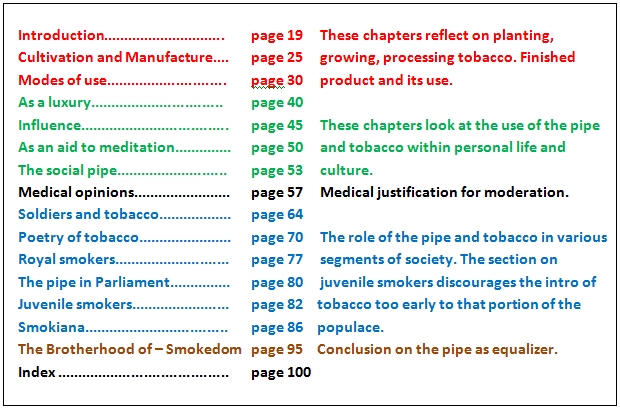
As I often do with these reproductions of older books I turned through the pages to enjoy the layout and design before giving it a read. In this case the book is filled with lots of period advertisements for books and all assortments of items from that time. It also has great illustrations that are well worth the price of purchase in my mind. I am including a copy of the Table of Contents as I also read through that before proceeding with a general read of the book. I have grouped the topics of the chapters into related sections even though the author did not. Even before reading through a book in total I try to organize the flow of the book with a quick scan of the chapters. I look for the logic of the book and then section of the book to get an idea of the author’s direction and intent for his book. Below is a chart showing my grouping of chapters.Chapters The style of this book is very readable and timeless. Cundall’s use of language is clean and forthright and simple to read. It has some of the marks of its age such as punctuation and long sentences but the content flows very well. The design as a pocket-book full of advertisements from the time it was written give it a flavour of nostalgia that for me is refreshing and speaks to a time when things moved more slowly. I can easily see this book carried in a pipeman’s pocket and read on the train or in the evening over a pipe and drink in front of the fire. Schrier has done a great job in reprinting this old classic of pipedom.

I thought it would be helpful to a potential reader to give a quick summary of the sections that I noted above. I don’t do this to spoil the read as much as to give an idea of what you can look forward to when you pick up the book and read it for yourself.

FIRST SECTION (noted in red in the chart)

The author starts as many pipe books before and after him have started. He gives a quick overview of the history, cultivation and how the harvested tobacco is processed and delivered to smokers for use. There is nothing truly new or unique to this section but the style of writing makes it a quick overview or refresher for those who want to jog their memories of the early years and development of tobacco.

SECTION TWO (noted in green in the chart)

Cundall takes a slightly different tack than other writers on the subject have done. He acknowledges that tobacco is a luxury but one that is well worth spending your hard-earned money to procure. It provides enjoyment and community in a way that is out of proportion to its expense. To load a bowl of tobacco and enjoy a smoke enables one to be meditative and contemplative on the one hand but also invites the smoker into a society of smokers that is convivial and erudite. I include two quotes below that give an idea of his style of writing.

“All tobacco is good, only be careful to have only the best.” Page 44

“The pipe draws wisdom from the lips of the philosopher and shuts up the mouth of the foolish. It generates a style of conversation – contemplative, thoughtful, benevolent and unaffected.” Page 53

SECTION THREE (noted in black in the chart)

Cundall begins with the fact that there will always be opponents to pipes and tobacco. While it is vocal and comes from a broad spectrum of society it is contrary to the facts. While abuse and overuse of tobacco can cause physical ailments the facts are there that moderate tobacco use is beneficial. I find that this chapter sets the stage for the further sections of his book. It provides the justification of the remaining sections where he explores the use of tobacco within many settings by many different kinds of people. The quotes from medical and scientific authorities provides the rational base for his advocacy of moderate enjoyment of the pipe.

SECTION FOUR (noted in blue in the chart)

This section explores the spectrum of pipe smoking in the world of Cundall’s day. It could easily be developed by someone to include the use of the pipe in the world of our day. It covers the use of tobacco among the military, authors and poets, the politicians and royalty of his day. One of the charming features is his inclusion of a description of the Smoking Room in the House of Commons in Britain. He includes a chapter which advocates for withholding tobacco from youth until they come of age (when that is does not appear clear to me). However, it is an interesting read nonetheless. The section closes with a collection of quote regarding smoking from clergy, academics, doctors, scientists, politicians and writers that is intriguing. Each quote is singularly worth reading and reflecting on. He entitles it Smokiana – a phrase that he seems to have coined for his use.

CONCLUSION (noted in brown in the chart)

The chapter is entitled “The Brotherhood of Smokedom” and to me serves as the conclusion of the entire book. It is a concise statement of the pipe as an equalizer. Regardless of status or strata of society the pipe takes the smoker to the same place of enjoyment and satisfaction. It provides uncensored enjoyment to all who lift the bowl and sip the smoke. The quote below captures the focus of the chapter.

“When contented are not all men equal, and who can be other than contented with his pipe between his teeth and the tobacco glowing redly in the, whither it be Bird’s-eye or Returns, Shag of the mixture of Arcady.” Page 97

If you enjoy reading about your pipe and tobacco and the relaxation and pleasure that it gives then this is a book you should purchase. It is not a long book but it is one that can be best savoured with a pipe in hand, a favourite drink at your side. Sip the pipe and drink and savour the well written prose of this little book in the quiet of the zone that the pipe opens to you. I recommend that you contact Briar Books Press and order a copy for your own reading as soon as you are able. Who knows when it will once again be out of print.

Restoring Two Older Bonus Walnut Pipe Stands


Blog by Steve Laug

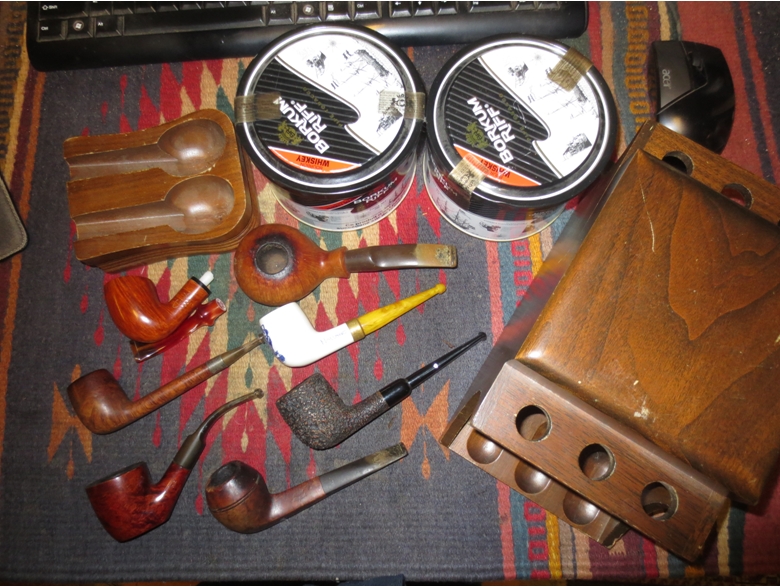
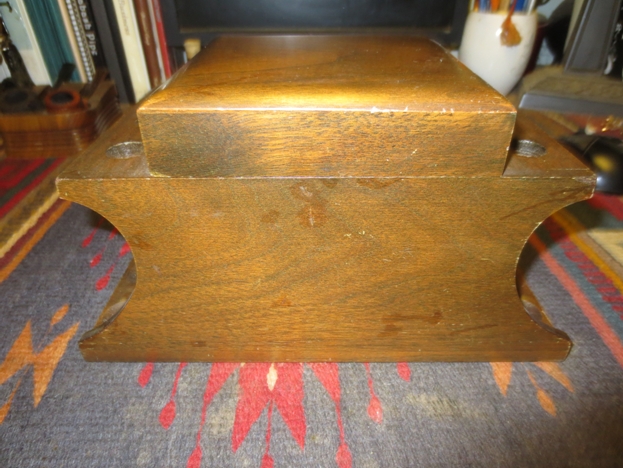
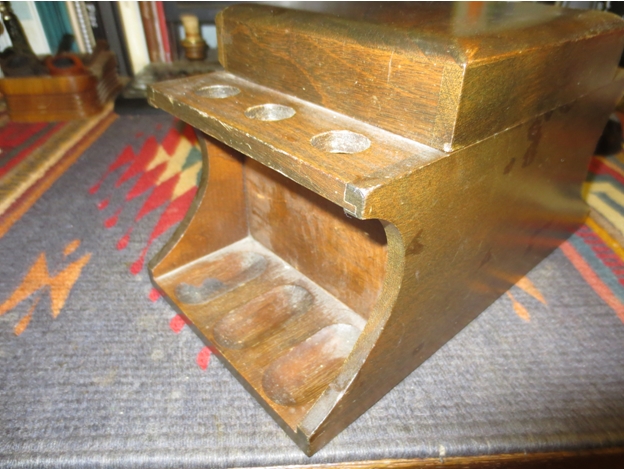
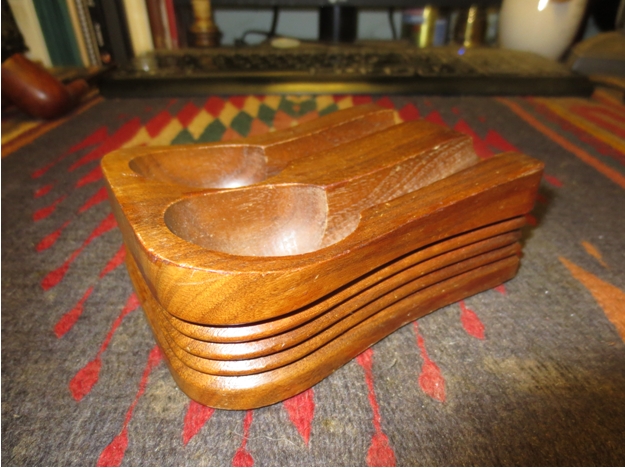
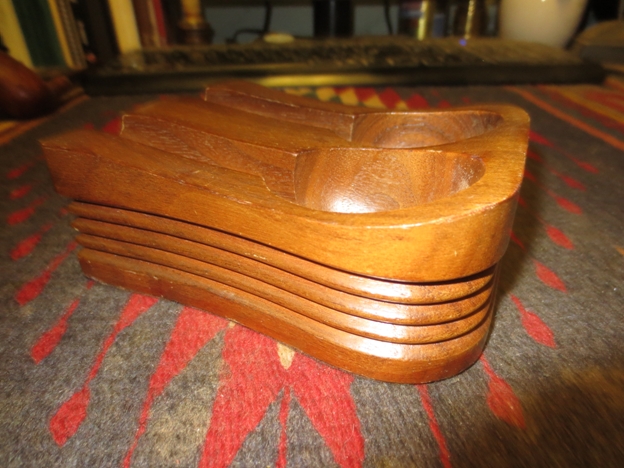
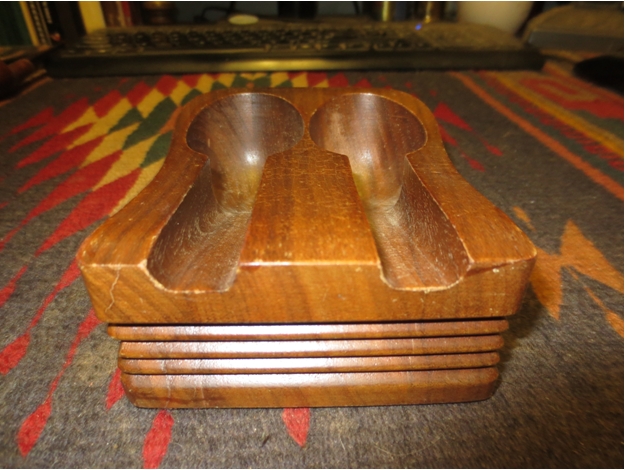
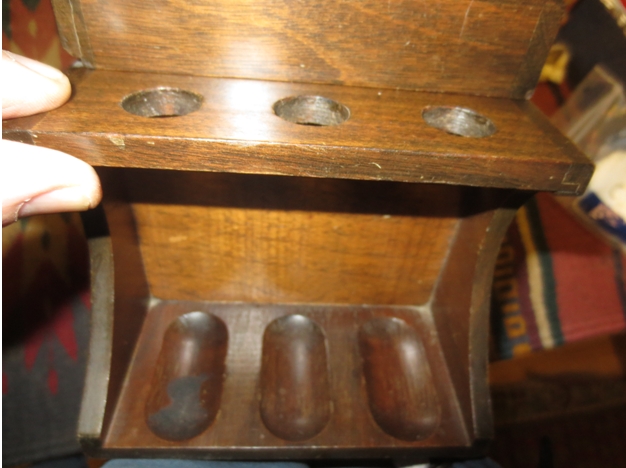
One of the perks I picked up in the recent lot of pipes I bought off of craigslist was a walnut pipe rest and a walnut 6 pipe rack/humidor. Both of them were in decent shape. They were scuffed and worn in spots and dusty from disuse. But they were still very functional. I have wanted a two pipe rack like the one on the left of the photo for a while now to use on my desk at the office. The other six pipe rack with the humidor now resides beside my chair in the living room. I have had pipe laying in an ash tray and tins stacked next to them. I was able to put the pipes into the rack and the tins in the humidor so it was a great addition.craig4 I took a few photos of each piece before I cleaned them up to show that they were in relatively good shape for pieces this age.rack1

rack2

rack3

rack4

rack5

rack6

rack7

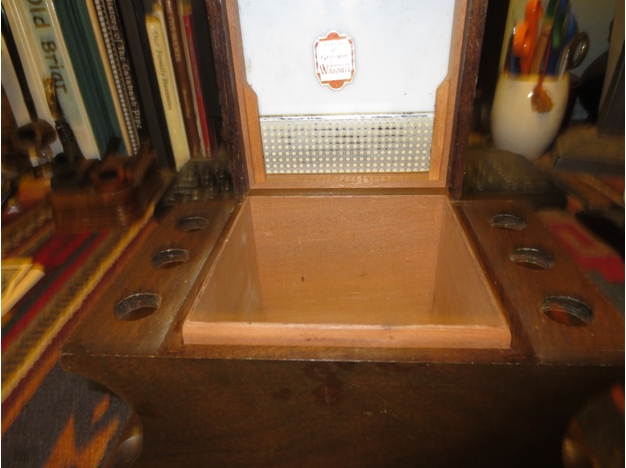
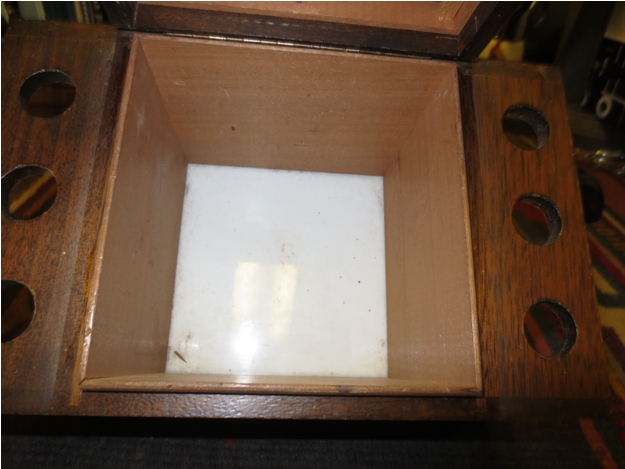
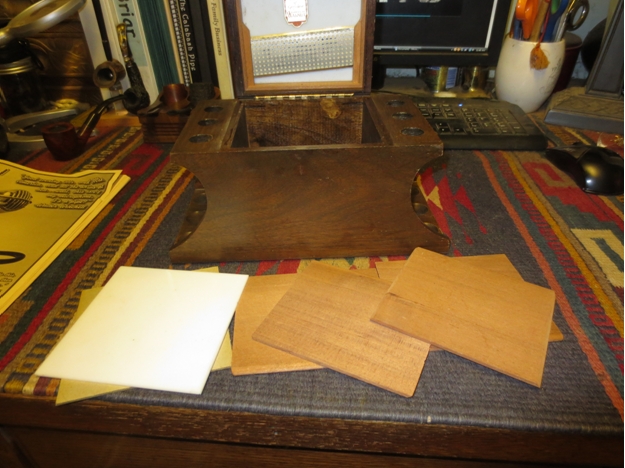
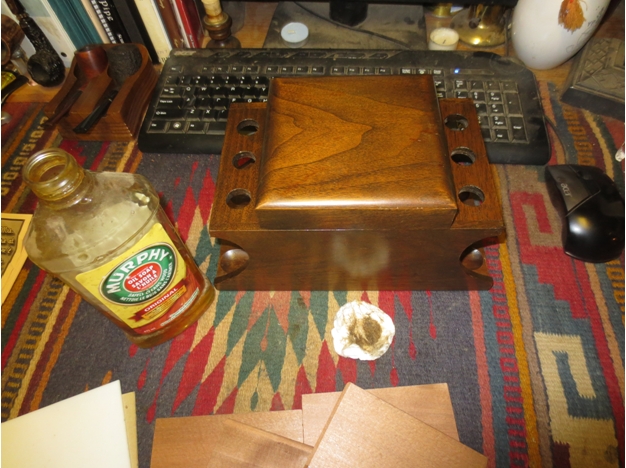
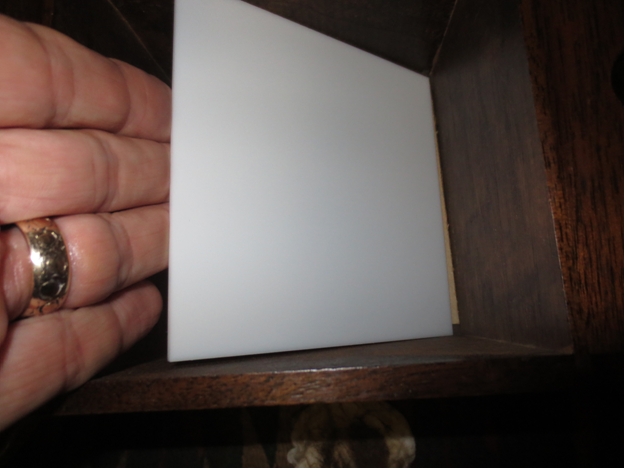
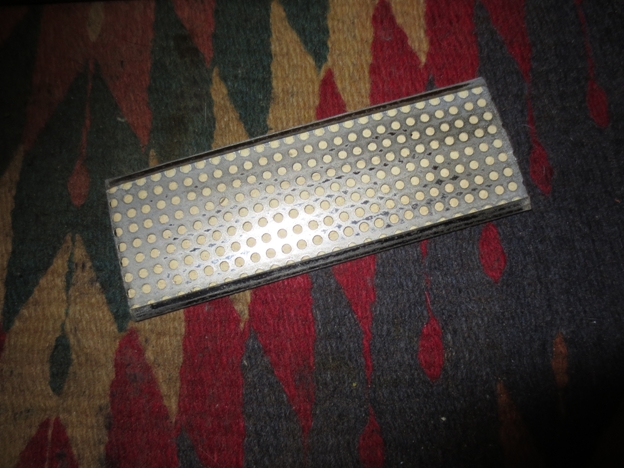
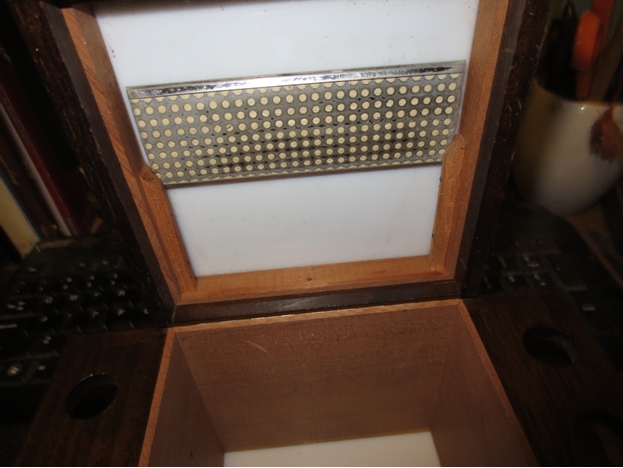
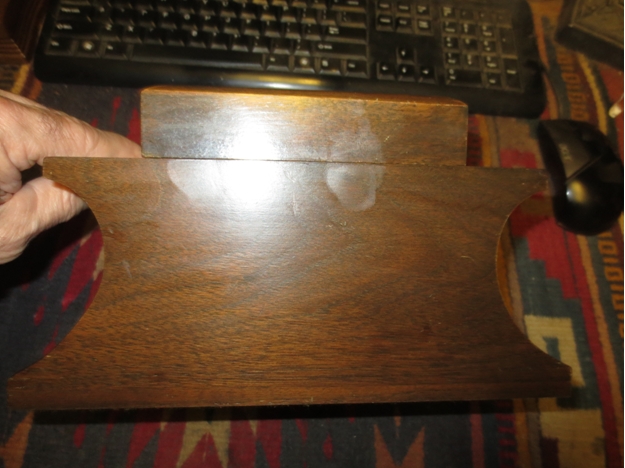
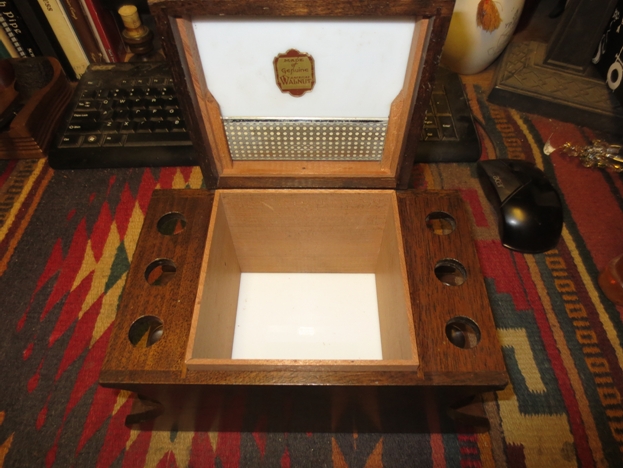
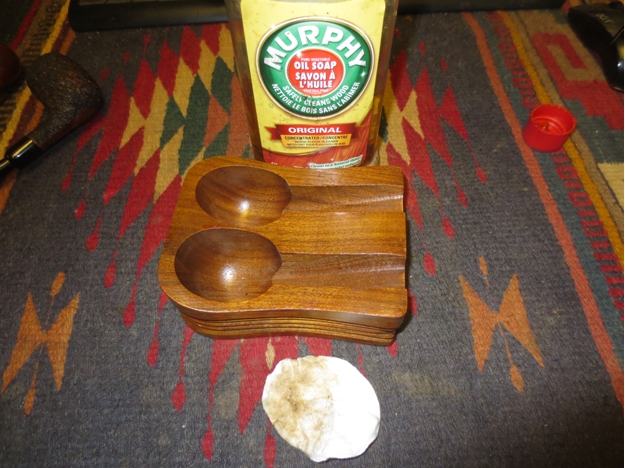
rack8 I worked on eth humidor/rack first. I took it apart to clean up the pieces. The sides of the humidor had removable cedar panels on the sides of the box. The bottom and top of the humidor were milk glass and both were in great shape. There as a sliding metal plate perforated with holes that held absorbent material inside that could be wetted to keep the humidor living.rack9 I scrubbed the glass on the top and the bottom with soapy water and rinsed them before drying them. The walnut rack and case I scrubbed down with Murphy’s Oil Soap and then hand buffed with a soft cotton cloth. The wood was quite soiled as can be seen from the cotton scrubbing pads in the next two photos. I was able to remove all of the grime from the wood and bring some warmth back to the finish.rack10

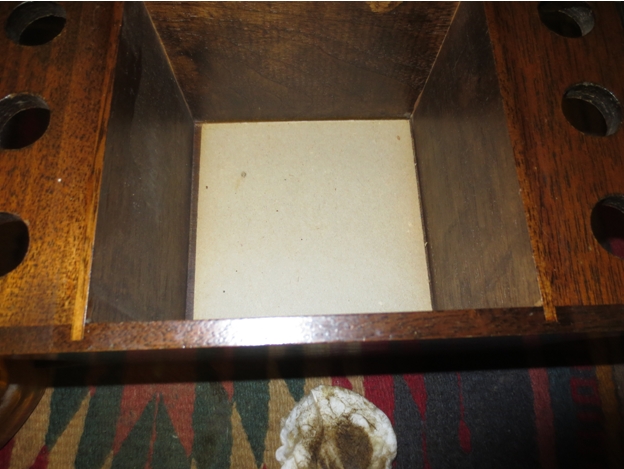
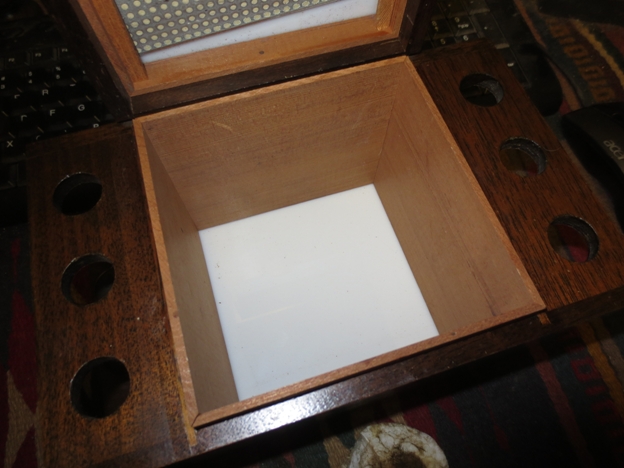
rack11 I put the interior of the humidor back together. There was a cardboard piece that sat between the milk glass and the wooden bottom of the box that went in first. Then the cedar pieces that went on the sides went in next. These were beveled on the bottom and sides to make for a smooth fit with no gaps. They were well cut and fit tightly together with no gaps.rack12

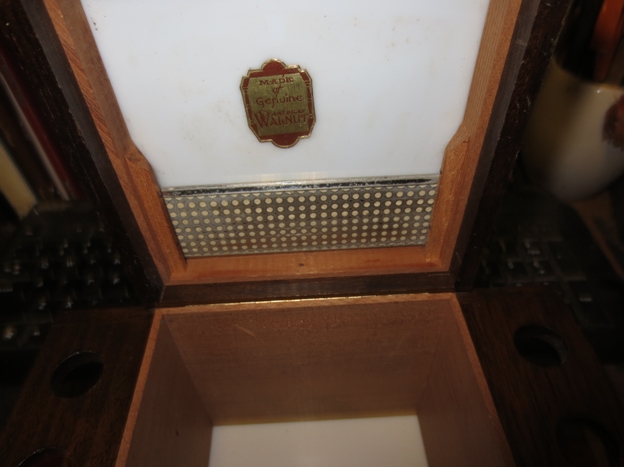
rack13 I slid the metal plate out of the track in the lid and scrubbed it with a damp cloth to remove the dust and tobacco bits from the surface of the metal. I buffed it with a soft cloth to bring back some shine. After I had dried it out I slid it back into place on the lid. There is a gold label on inside of the lid that reads “Made of Genuine American Walnut”.rack14

rack15

rack16 I buffed the rack and humidor by hand and took the next series of photos.rack17

rack18

rack19

rack20 I scrubbed the two pipe rest with Murphy’s Oil Soap and hand buffed it with a soft cloth. The finished pipe rest is shown in the photo below. It looks like new and has a deep warm glow to the finish again.rack21

Rejuvenating an Italian Sitter stamped MAT


Blog by Steve Laug

I am finally working on the last of the pipes that I picked up on craigslist – a sitter that is stamped MAT and Italy. It was my least favourite shape in the lot. I left it to the very end to work on. It is shown in the photo below in the middle of the left column.craig5 It was a bit of a mess. The stem was stuck in the shank and was oxidized. It also had some tooth chatter. Once again there was the calcification on the stem that comes when a softie is left in place on the stem. The bowl had a shiny varnish finish but that was dulled with a lot of tars and oils. The rim was caked with a very hard, thick coat of tars and oil – lava over flow from the bowl. The bowl itself was caked. There were quite a few fills in the bowl on bottom and on the back side of the bowl near the shank. There was also an area of fills on the top of the rim and a small crack that had been filled on the back side of the bowl near the rim.Mat1

Mat2

Mat3

Mat4

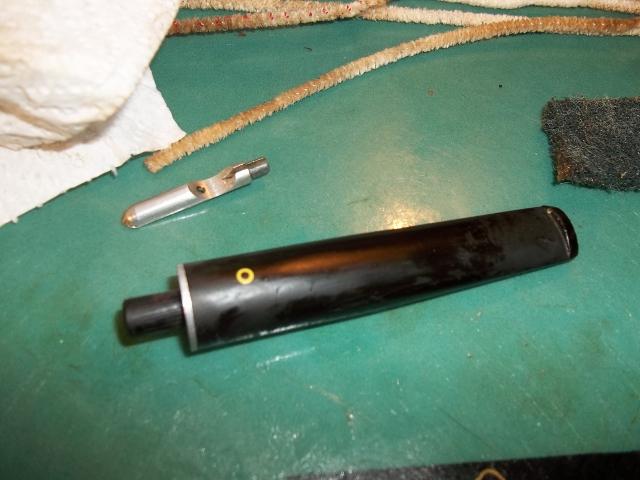
Mat5 I put the pipe in the freezer for an hour to loosen the stem. After an hour of cooling I was able to twist the stem out of the shank. I was a little surprised to find a very short – ½ inch stinger in the end of the tenon.Mat6

Mat7 I heated the stinger with a lighter and then twisted it out of the tenon with a pair of pliers on which I had wrapped tape around the jaws. This tape prevented the jaws from damaging the aluminum stinger.Mat8 I set the stem aside and reamed the bowl with a PipNet reamer. I used three of the four cutting heads to remove the cake from the bowl. With the small crack on the back edge of the bowl I wanted to expose the interior of the bowl and check out the interior for cracks.Mat9

Mat10 To remove the hard lava from the rim I used a sharp blade pressed flat against the rim to scrape away the buildup. I scraped and then wiped it down with alcohol to soften the tars. I continue until I had removed the cake. In doing so I found that just above the crack on the back of the bowl was an area of several small fills that were on the rim.Mat11 I scrubbed the surface of the bowl with acetone on cotton pads to remove the varnish that was on the finish. I wanted to get underneath that finish so that I could do a repair on the small crack and also get to the surface of the briar. I personally do not like the thick varnish coats that are on some pipes.Mat12

Mat13

Mat14

Mat15

Mat16 I cleaned out the small crack with a dental pick and alcohol. I drilled a tiny hole at the bottom of the crack to stop it from spreading. Once it was clean I stuffed briar dust into the crack and then dripped some super glue on to the rim and the side of the bowl to fill in the crack.Mat17

Mat18 I sanded the rim and the repaired area with 220 grit sandpaper and then with a medium and a fine grit sanding sponge to smooth out the surface. I cleaned out the shank and the stem with pipe cleaners, cotton swabs and alcohol.Mat19

Mat20 I sanded the stem with 220 grit sandpaper to remove the tooth chatter and light tooth marks. I also sanded it to remove the oxidation. I followed that by sanding with a medium and a fine grit sanding sponge.Mat21

Mat22 I buffed the stem with red Tripoli to break through the oxidation. I sanded the stem with micromesh sanding pads – wet sanding with 1500-2400 grit pads.Mat23 I rubbed the stem down with Obsidian Oil and then buffed it a second time. I dry sanded with 3200-12,000 grit micromesh sanding pads.Mat24

Mat25 I used some dark cherry stain that I had on hand – this stain is a water based stain and matched the colour of the original bowl. I applied the stain with a folded pipe cleaner and once I had covered the bowl I let it sit for a few moments before wiping it off.Mat26

Mat27

Mat28

Mat29

Mat30 I wiped down the pipe with a cotton cloth to remove the excess stain and give it a light hand buff.Mat31

Mat32

Mat33

Mat34

Mat35

Mat36

Mat37

Mat38 I buffed the pipe and stem on the buffing wheel using pads charged with red Tripoli and with Blue Diamond. I gave the pipe multiple coats of carnauba wax and then buffed it with a clean flannel buffing pad to give it a shine. The finished pipe is shown below.Mat39

Mat40

Mat41

Mat42