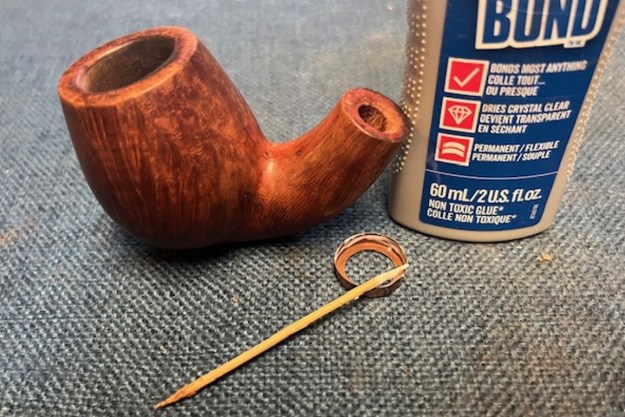
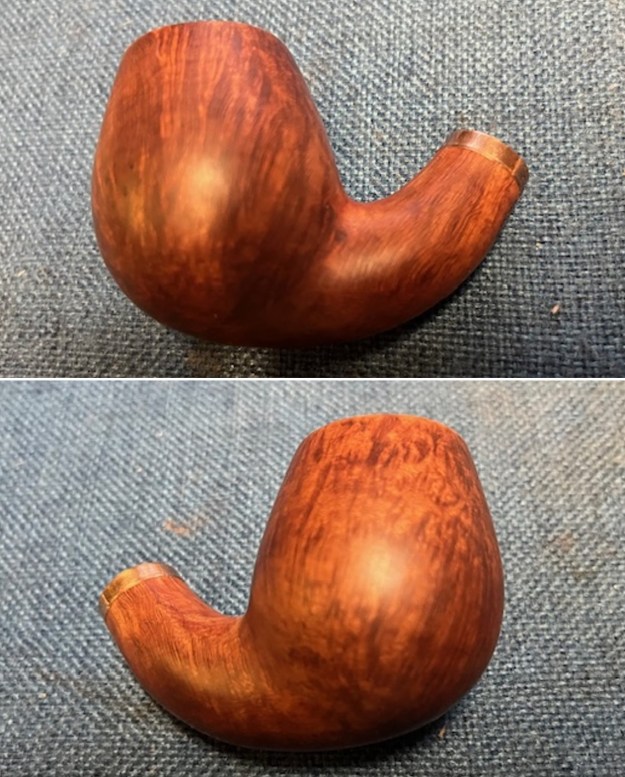
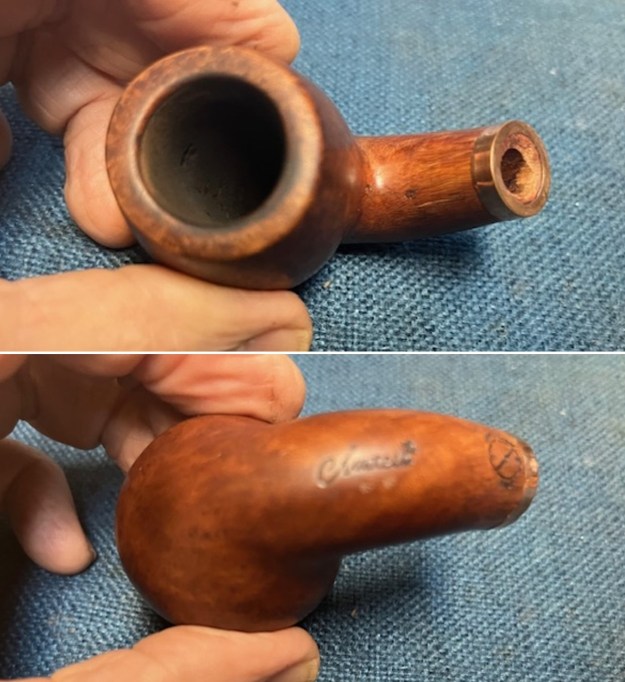
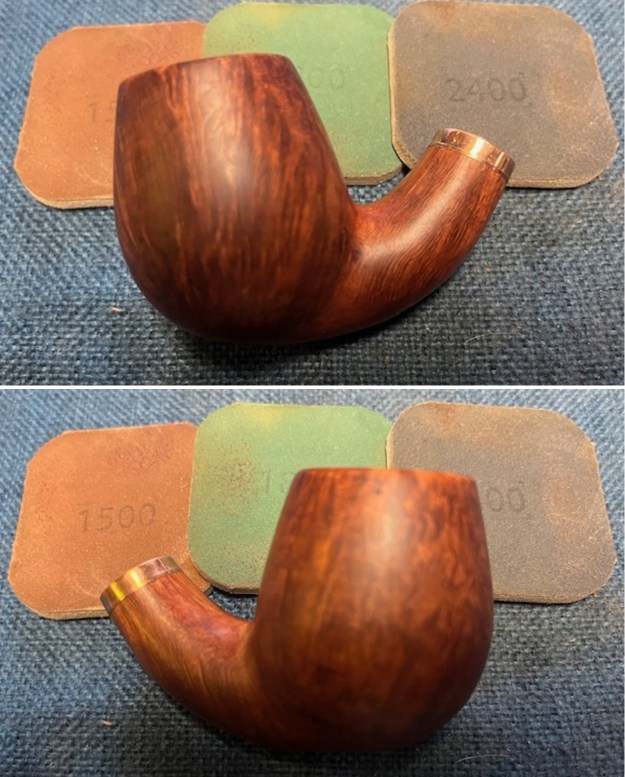
Author Archives: rebornpipes

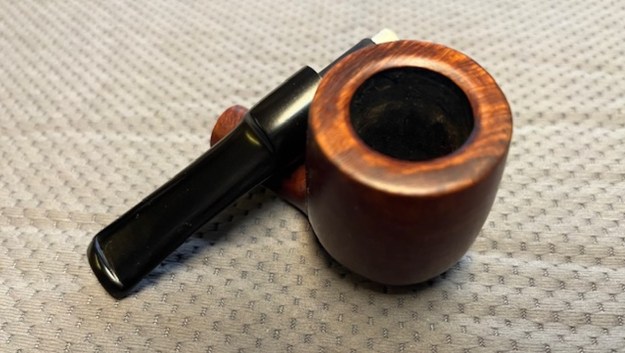
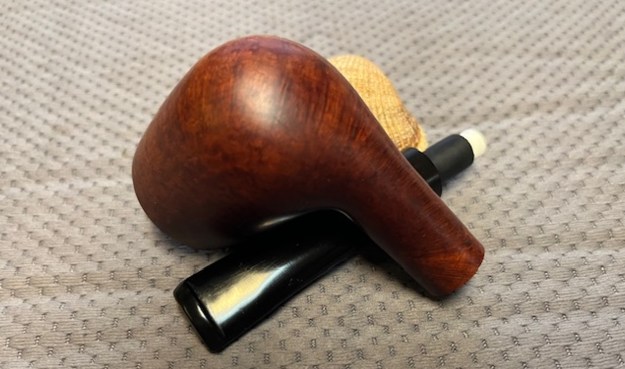
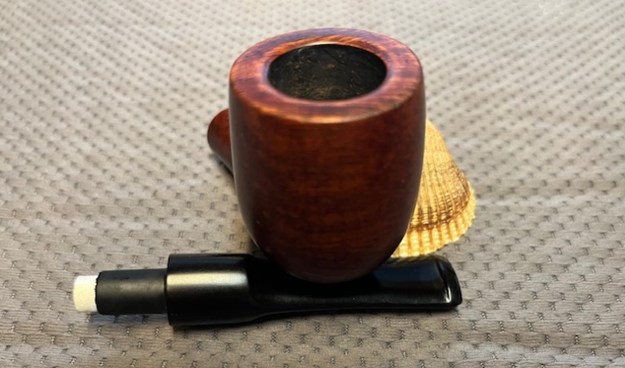
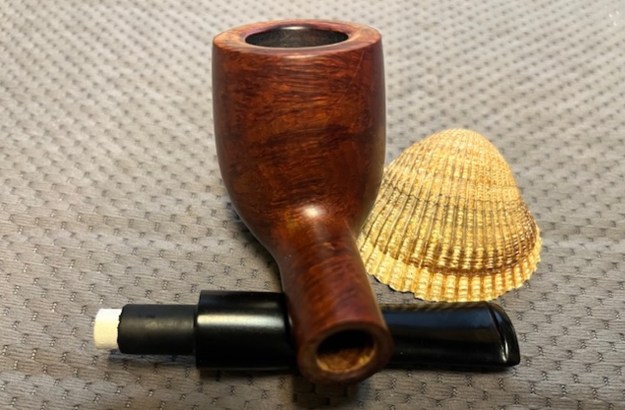
Restoring “A Peterson’s Product” Made in the Rep. of Ireland Shamrock 268 Zulu


by Steve Laug

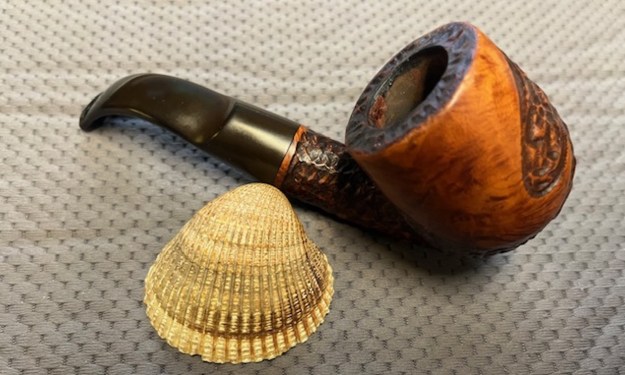
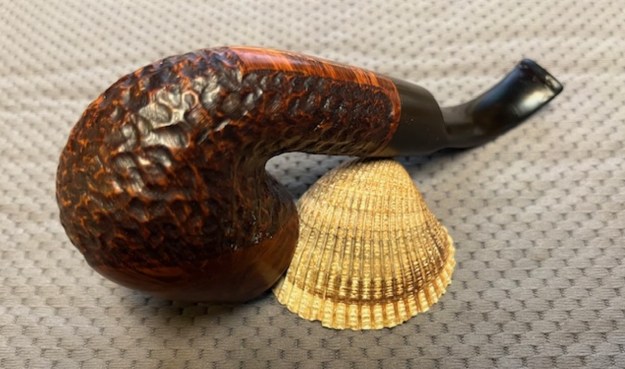
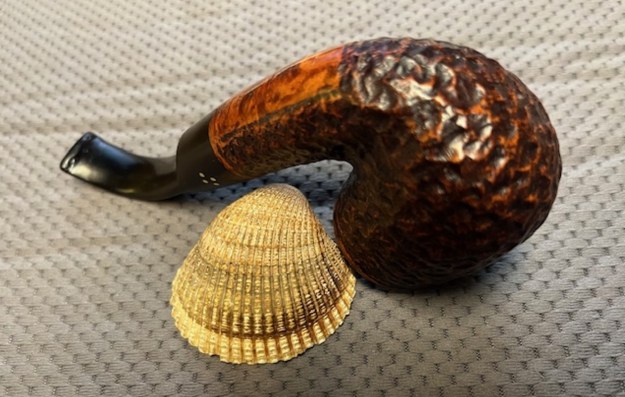
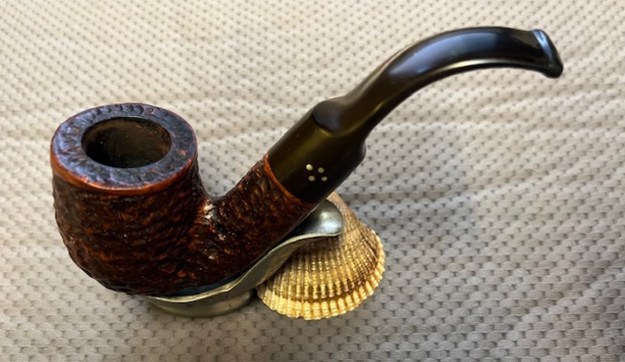
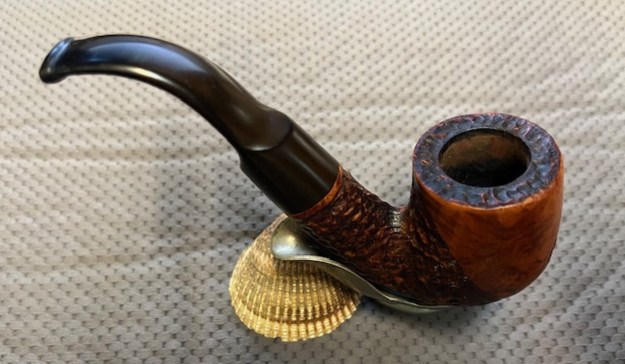
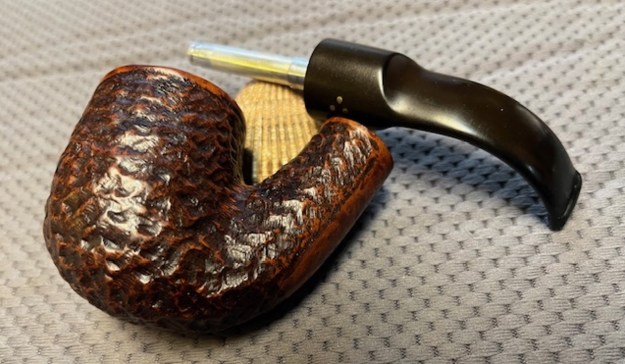
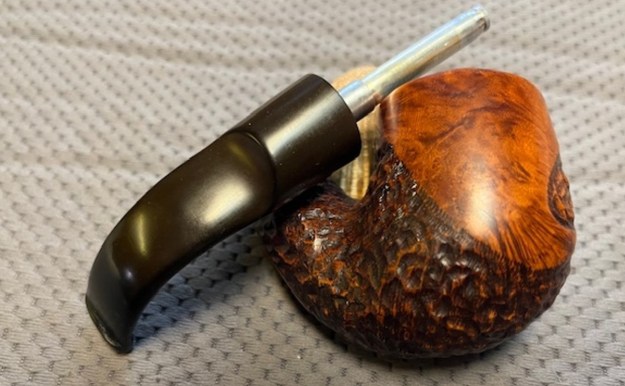
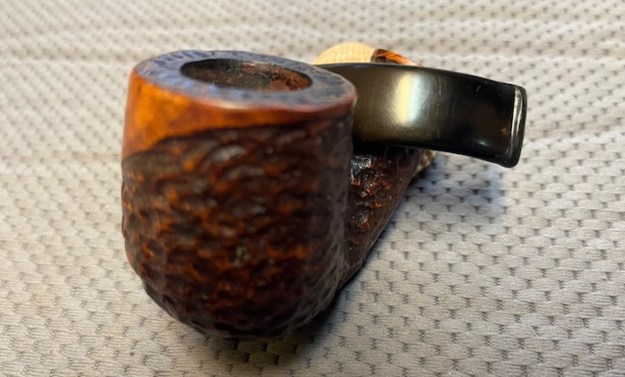
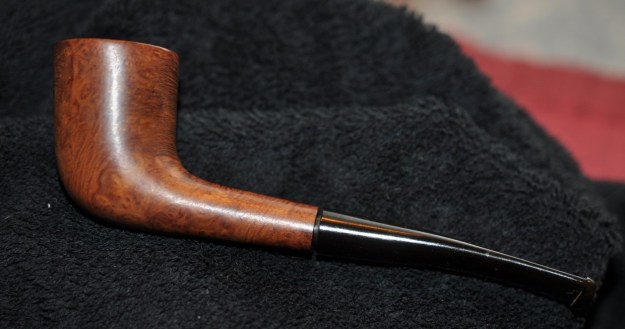
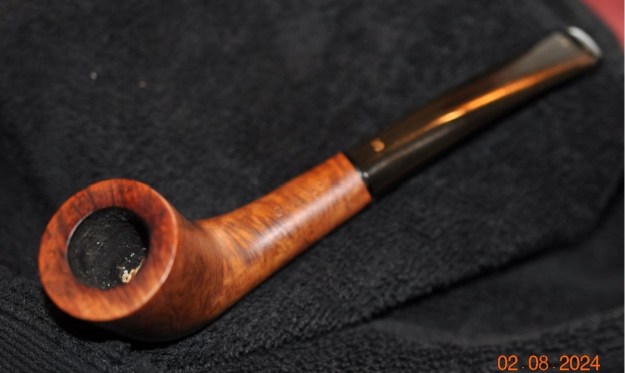
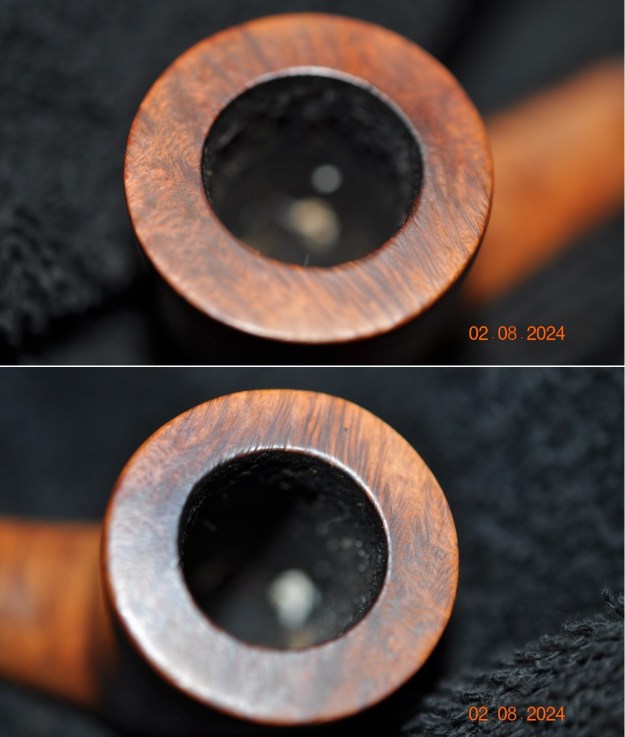
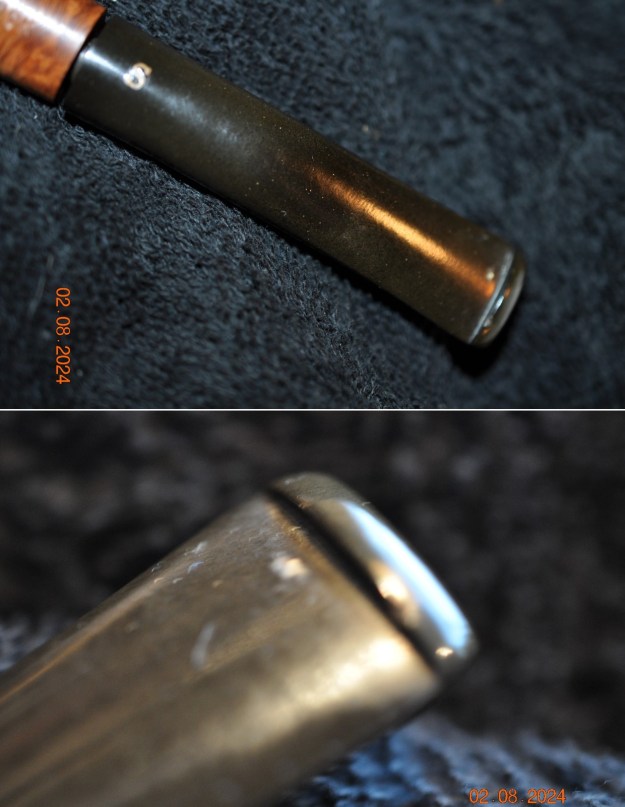
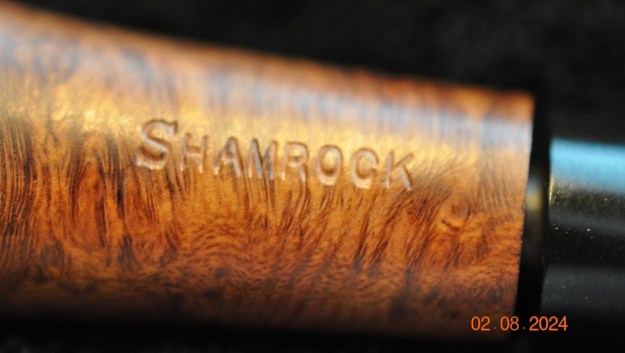
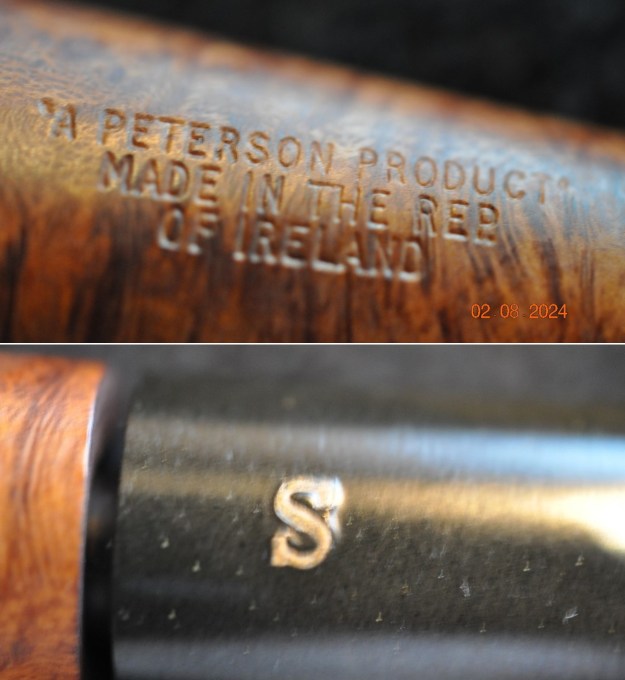
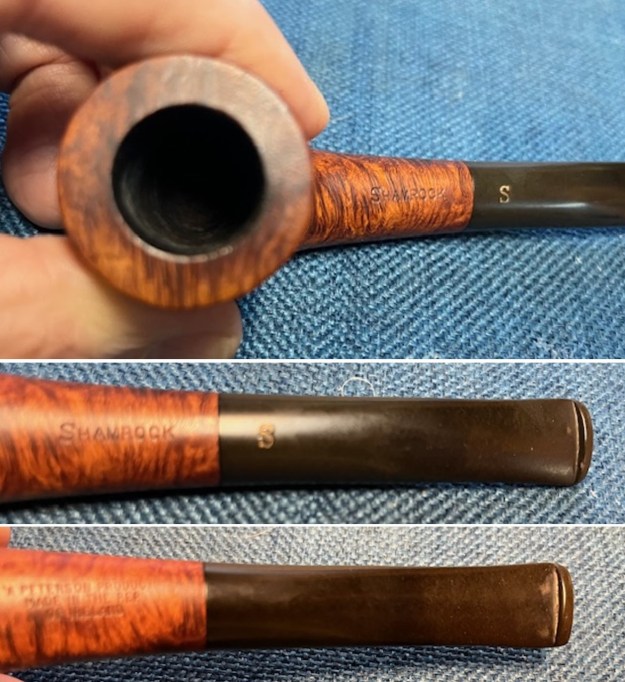
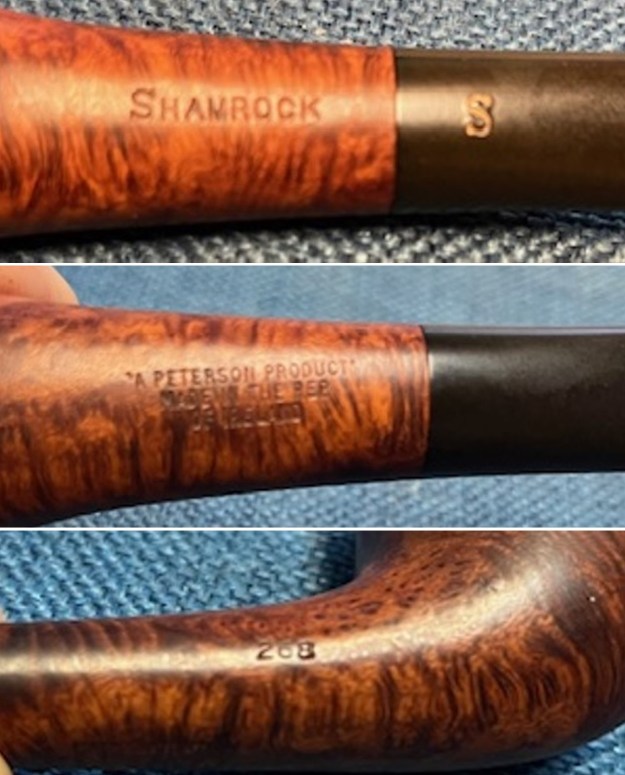
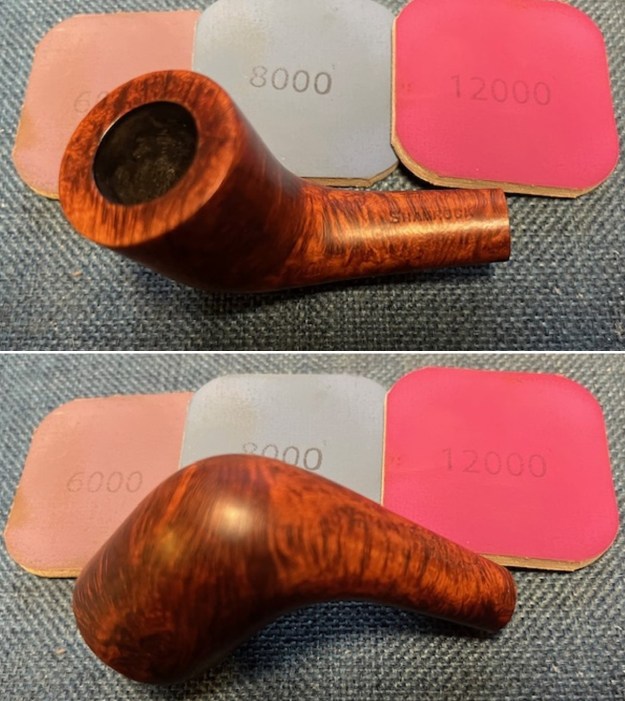
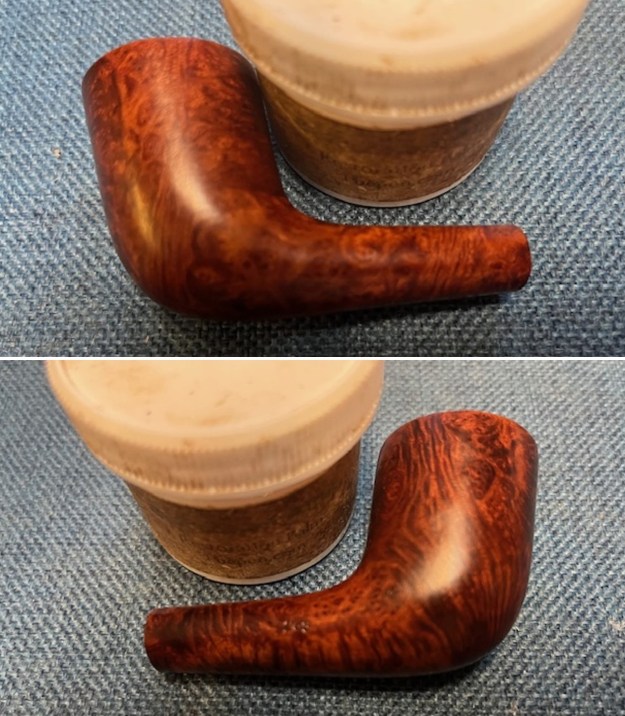
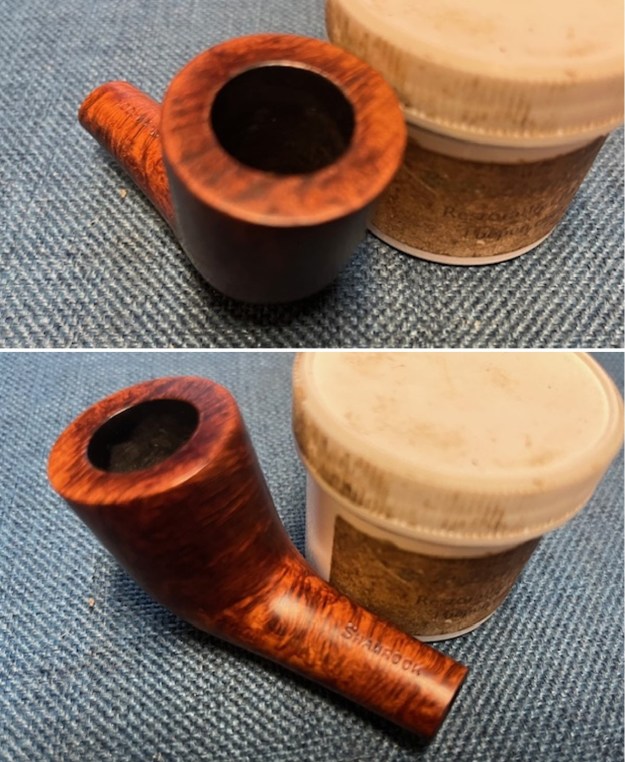
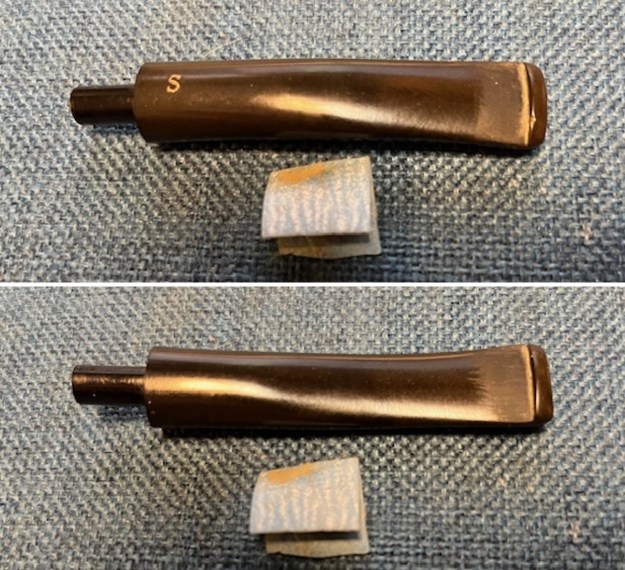
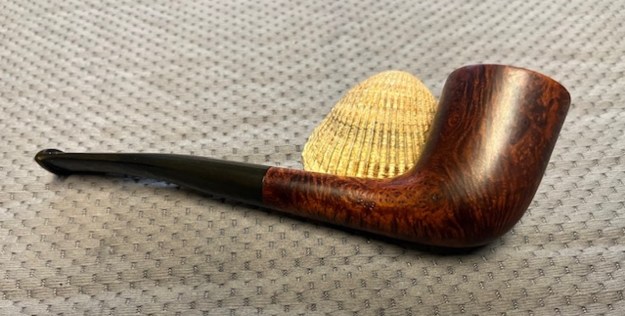
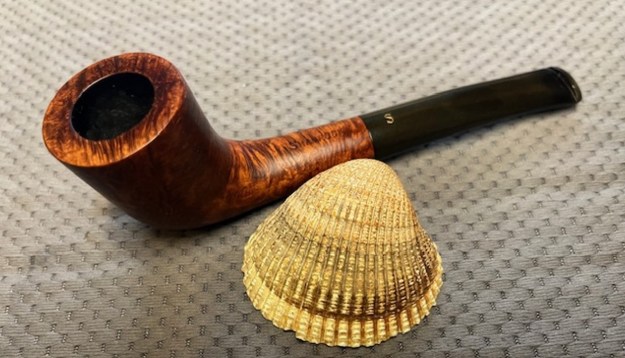
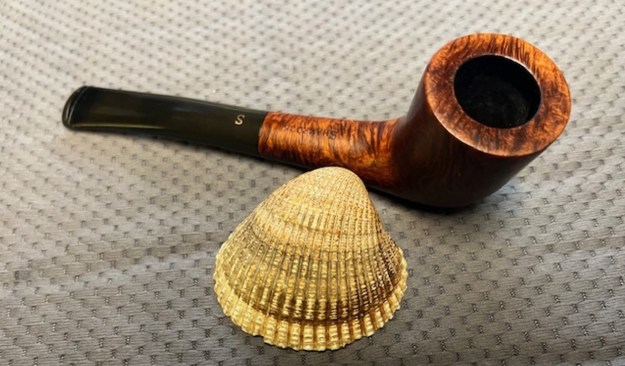
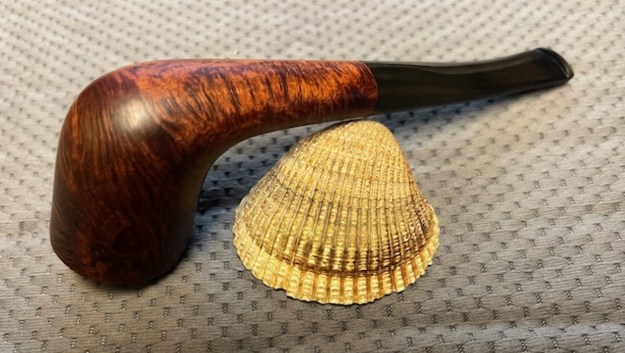
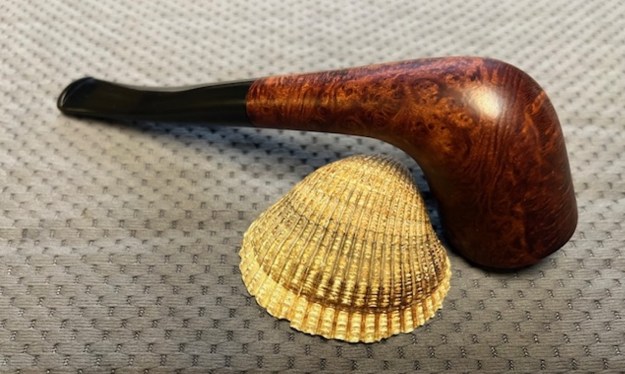
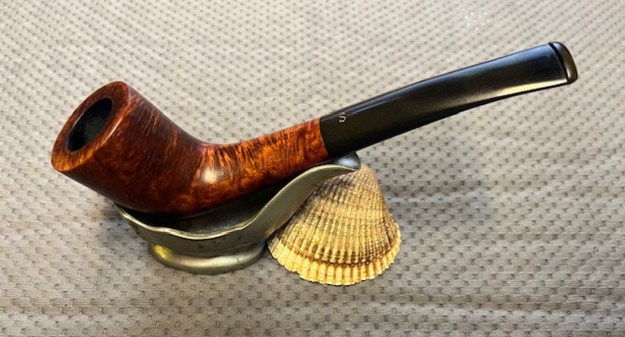
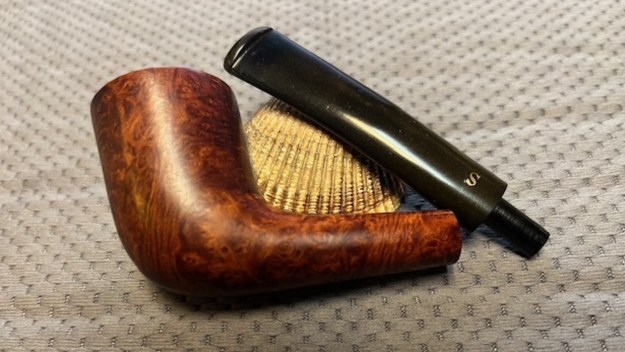
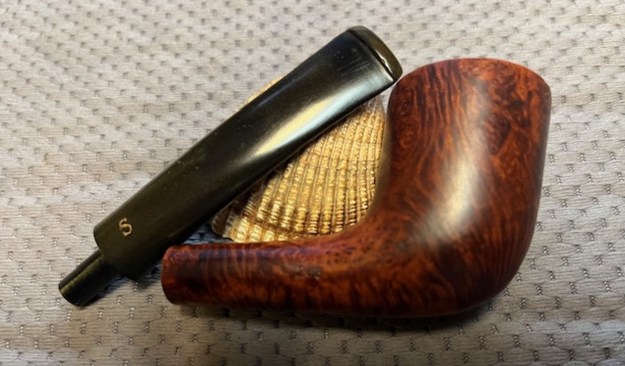
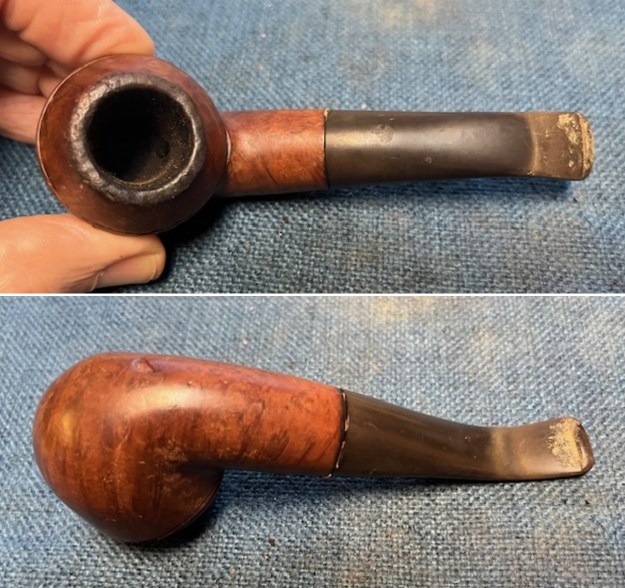
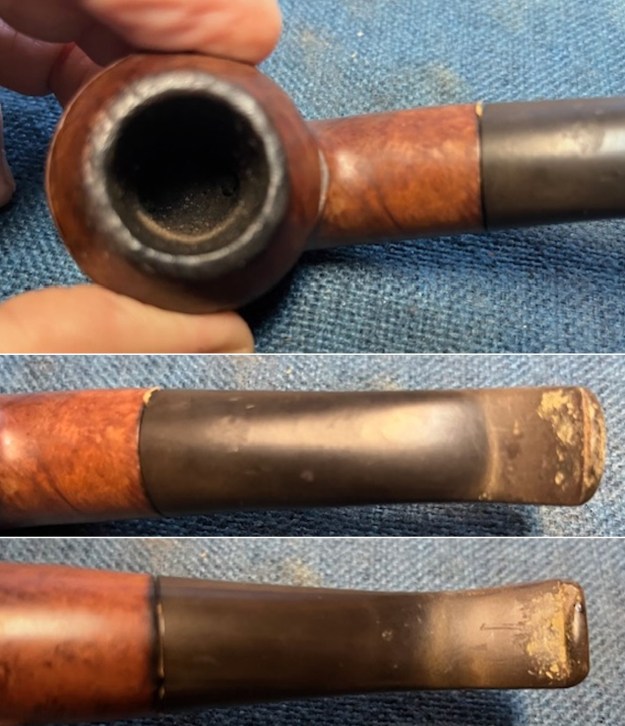
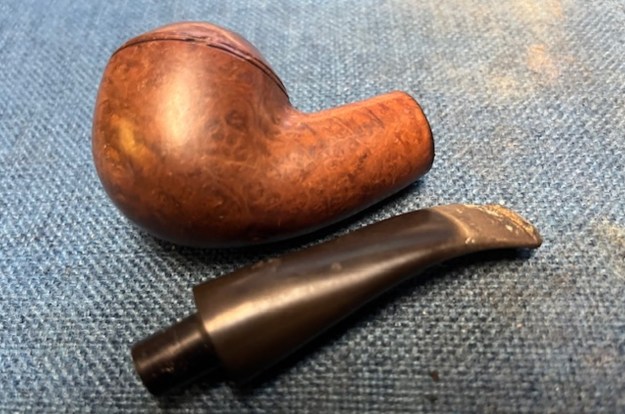
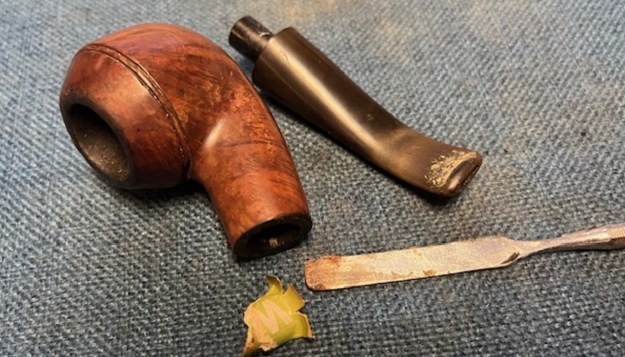
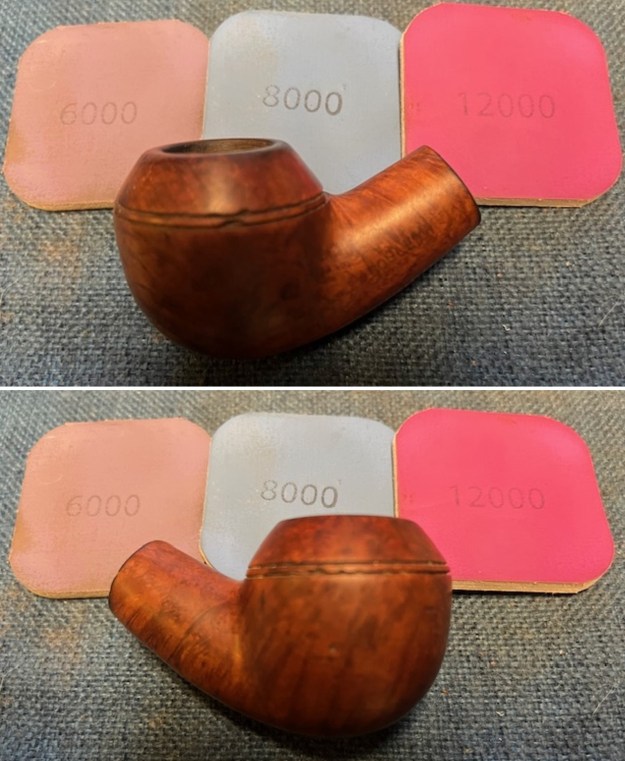
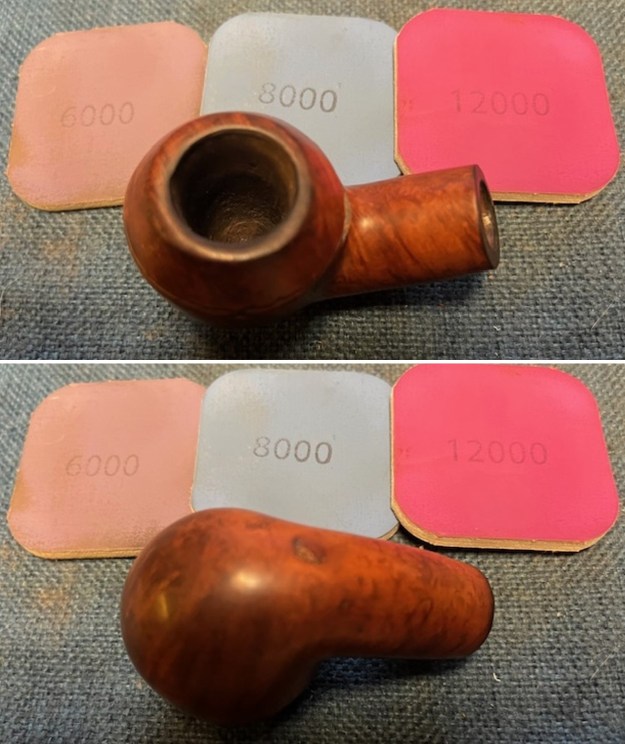
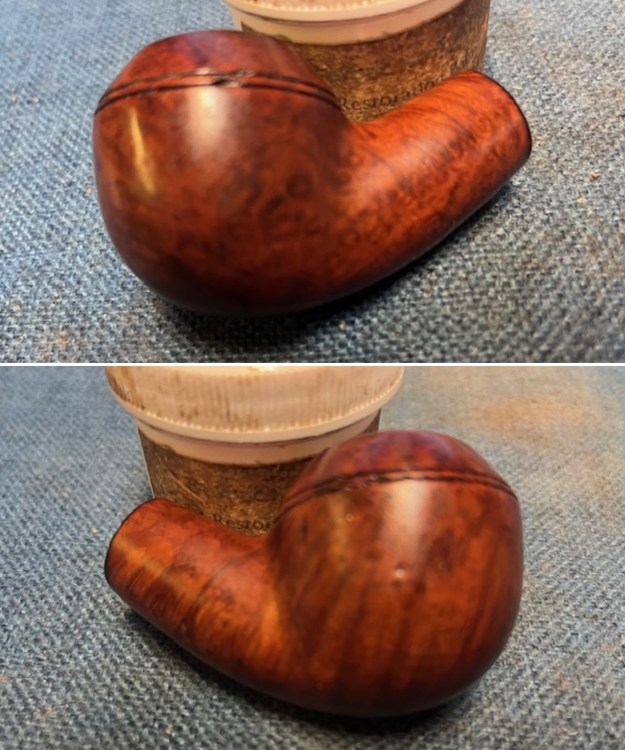
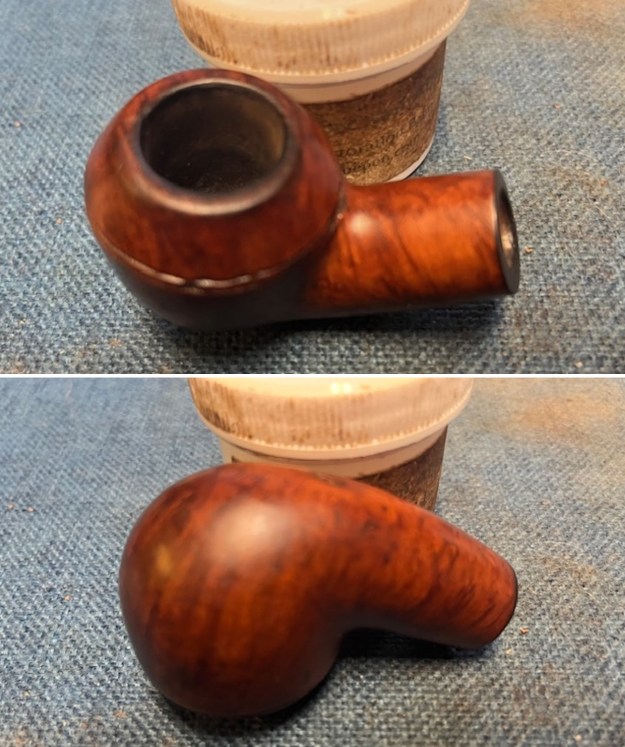
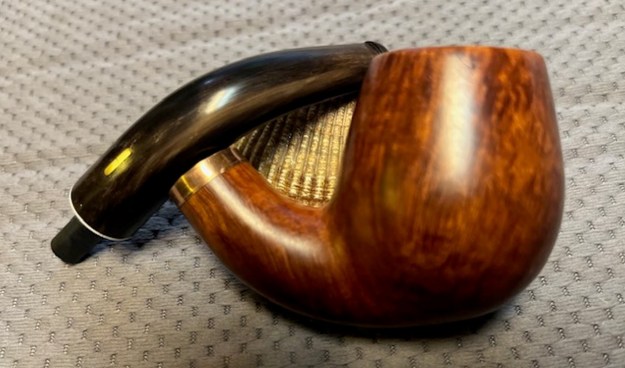
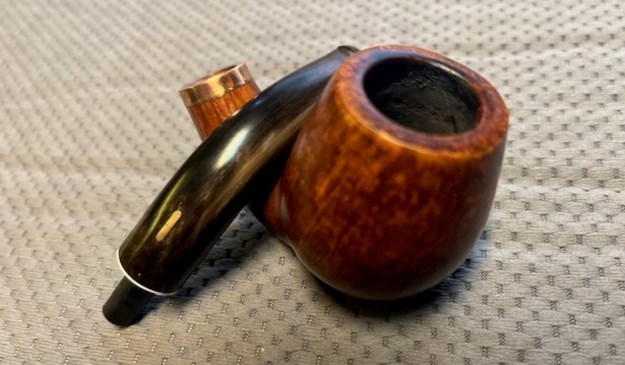
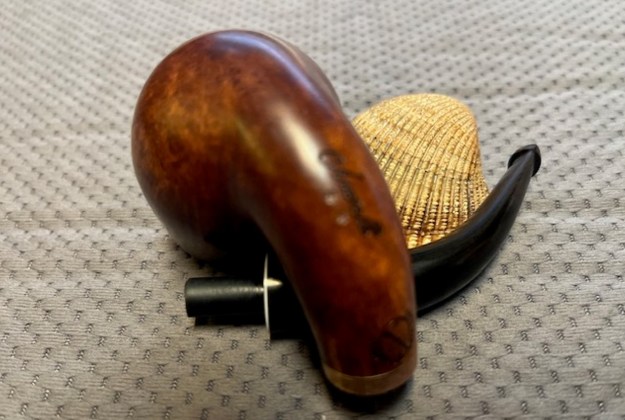
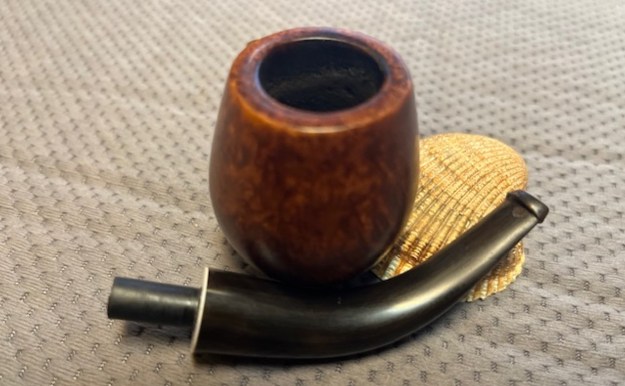
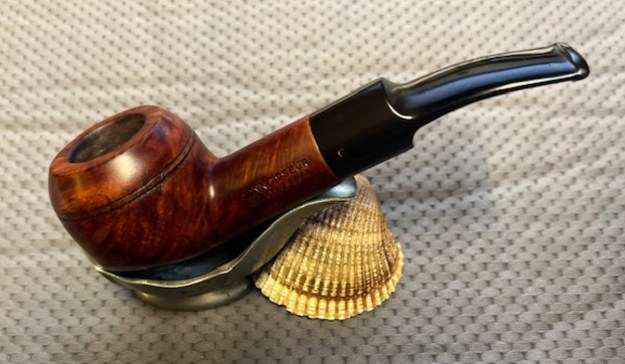
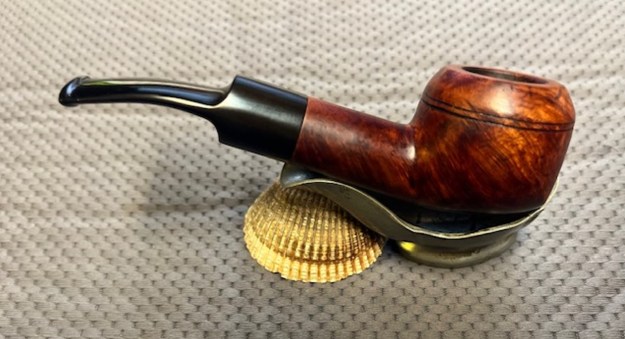
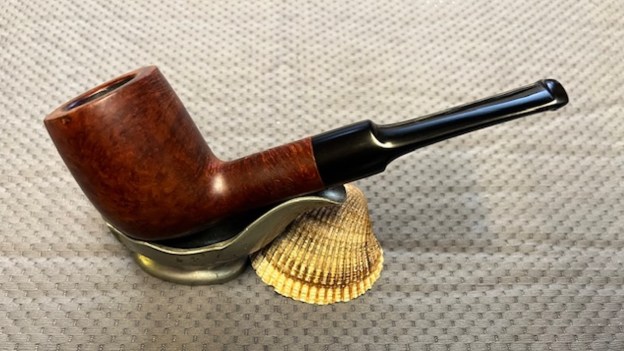
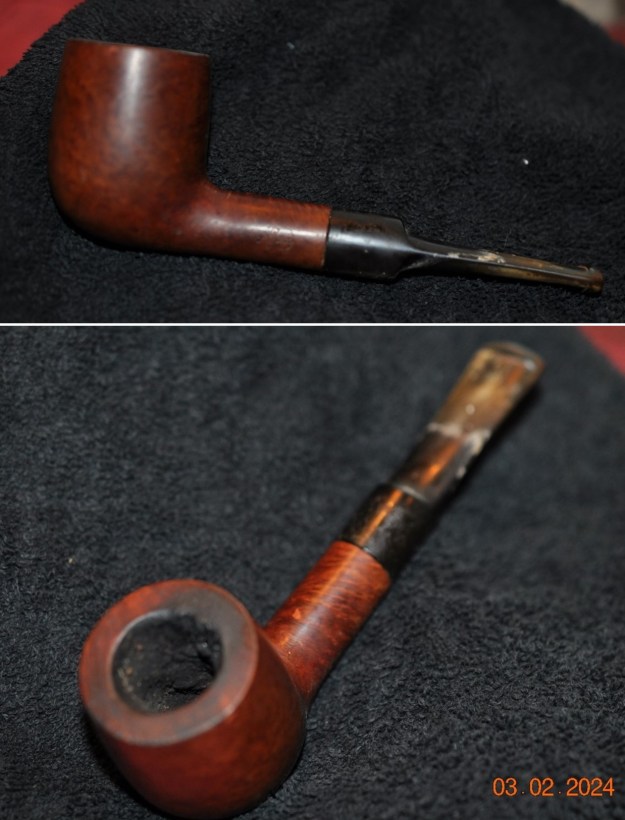
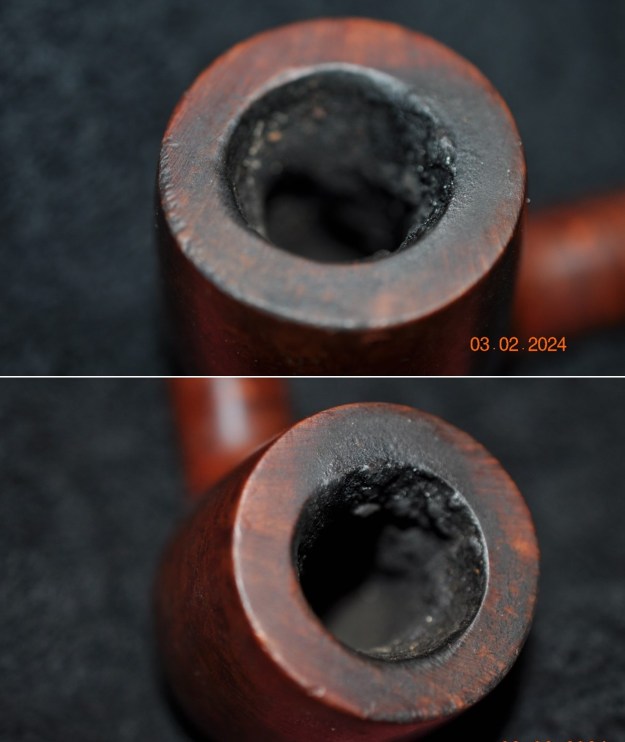
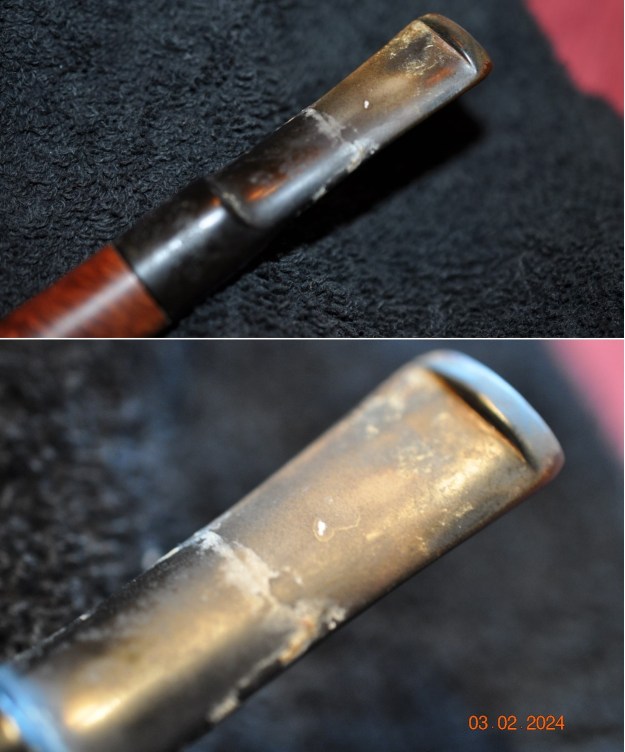
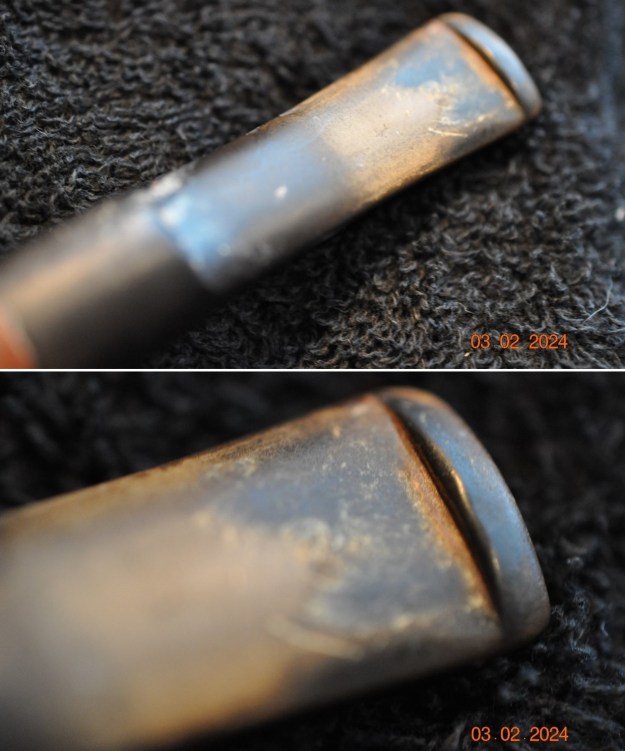
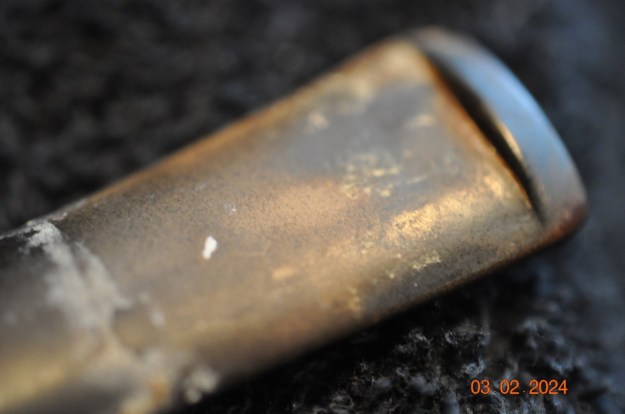
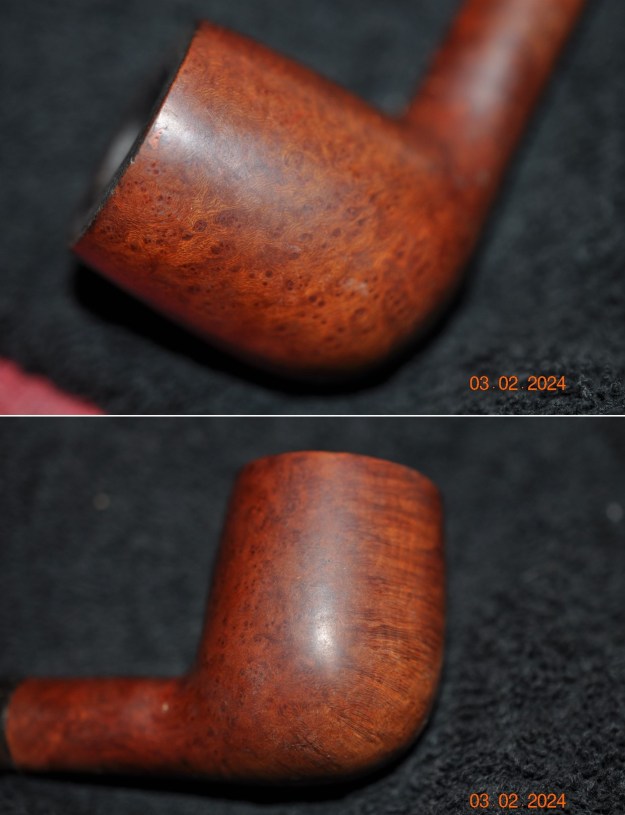
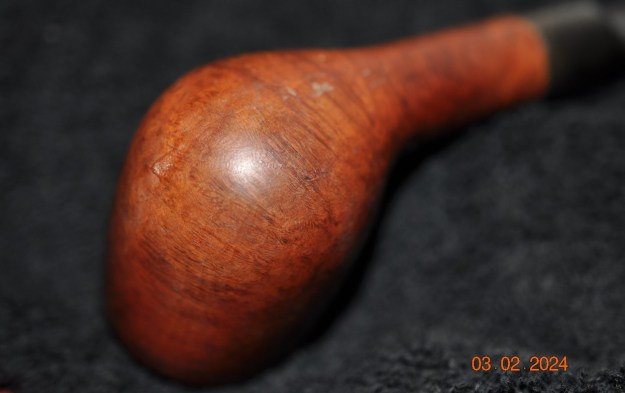
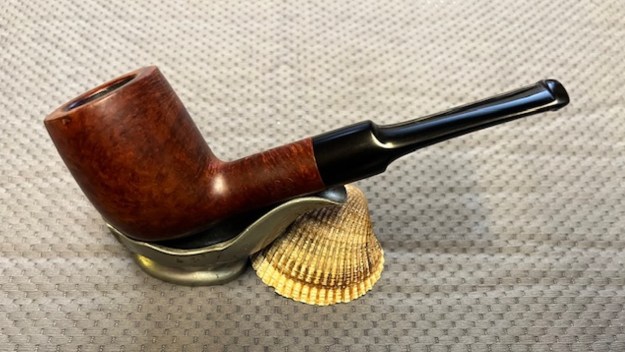
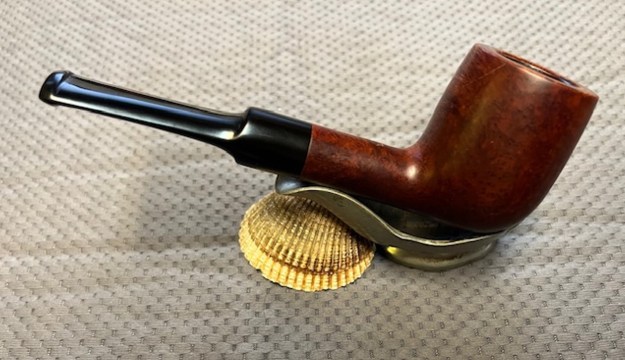
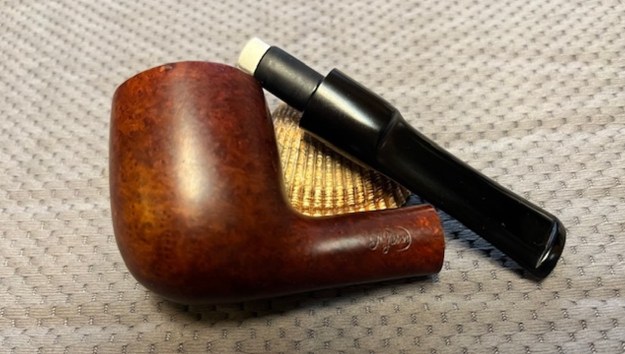
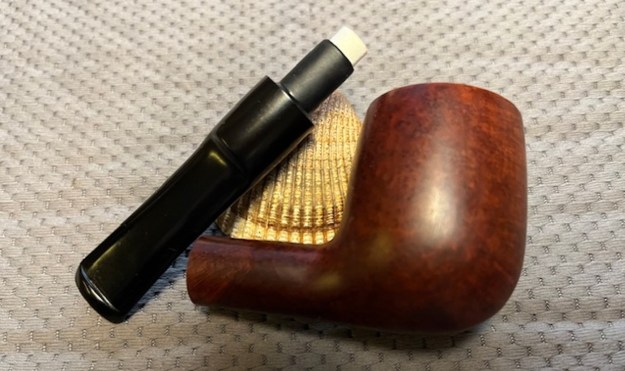
The next pipe was a pipe that was in surprisingly good condition. The finish on the bowl and rim top looked very good other than being dirty. This old pipe is a smooth Zulu that has a rich coloured finish around the bowl sides and shank under the grit and grime of years. It was purchased from our contact in Copenhagen, Denmark on 01/08/2024. It was stamped on the top side of the shank and read SHAMROCK. It was stamped to the underside of the shank and reads “A Peterson’s Product” [over] Made in the Rep. [over] of Ireland. The shape number 268 was on the right side of the shank next to the bowl. It was dirty when Jeff brought it to the table. There was a thick cake in the bowl and the inner edge but there was no lava on the rim top. The taper fishtail vulcanite stem was lightly oxidized and there was tooth chatter ahead of the button. There was also a Shamrock “S” logo on the topside of the stem. Jeff took photos of the pipe before his cleanup work. Jeff took photos of the rim top and stem to show the general condition of the pipe. The bowl is heavily caked so it is hard to know the condition of the edges under the lava overflow. The stem looked surprisingly good. Jeff took photos of the bowl sides and heel to show the grain that was around this bowl. You can see the grime but the grain around the bowl is beautiful. Even so, it is a nice looking pipe. He took photos of the top and underside of the shank to show the stamping. The stamping is clear and readable in the photos below as noted above. He did not capture the shape number stamp on the right side of the shank. The “S” logo on the top of the stem looks very good. I am including the link to the Pipedia’s article on Peterson pipes. It is a great read in terms of the history of the brand (https://pipedia.org/wiki/Peterson).

I turned to “The Peterson Pipe” by Mark Irwin and Gary Malmberg to get some background on the Peterson’s Shamrock Pipe. On page 312 it had the following information.

Shamrock (c1941-2009) Originally stamped SHAMROCK with no brand name, an inexpensive line first described in George Yale (New York) mail order booklet in 1941, imported by Rogers Import. The line was actively promoted beginning in ’45, aggressively promoted in US by Rogers from early ‘50s when they registered the Shamrock logo with US Patent Office, claiming propriety since ’38. Over the years offered with P-lip or fishtail mouthpiece, with or without nickel band, with or without Shamrock logo on the band, with or without S stamped in white or later in gold on mouthpiece. Appearing in 2008 as unstained smooth and rustic, fishtail mouthpiece with gold impressed P on the stem. COMS of MADE IN over IRELAND (C1945-1965), MADE IN IRELAND forming a circle (c1945-1965), “A PETERSON’S PRODUCT” over MADE IN IRELAND (c1945-1965), MADE IN THE over REPUBLIC over OF IRELAND (c1948-1998). Model is always difficult or impossible to date.

Judging from the description above, the pipe I am working on is stamped with the stamp noted in red above. The stamping Made in the Rep. of Ireland narrows the date to approximately 1948-1998. It is just stamped SHAMROCK with no brand name and the S stamping on the stem.

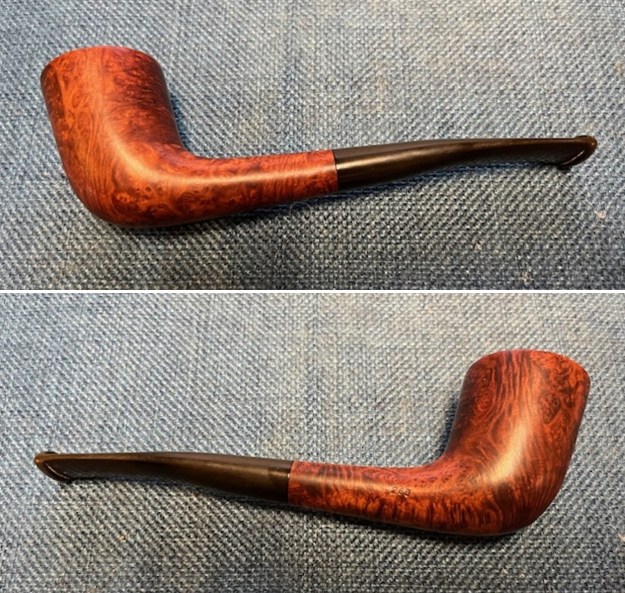
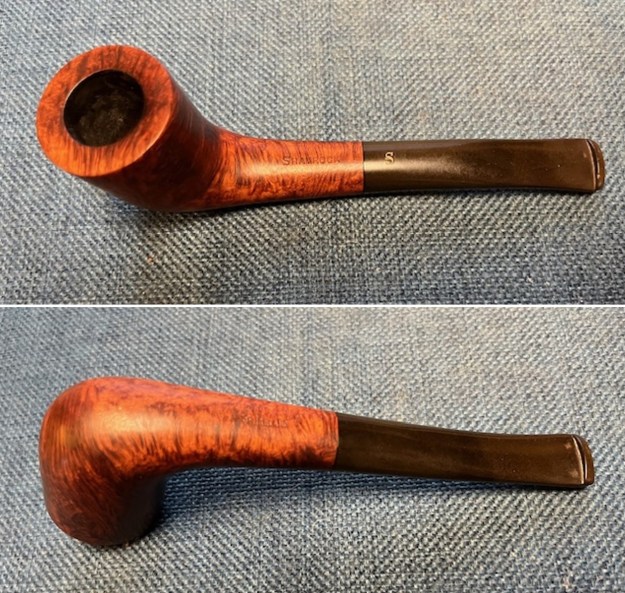
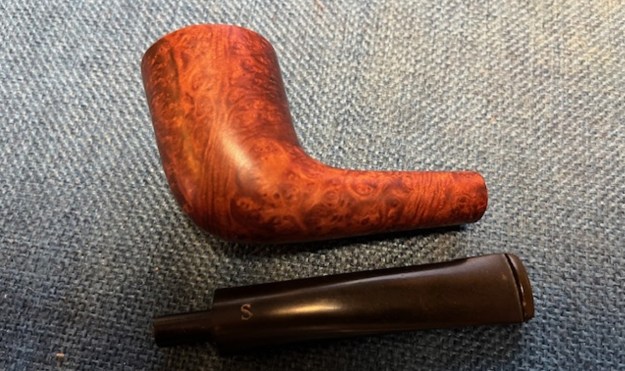
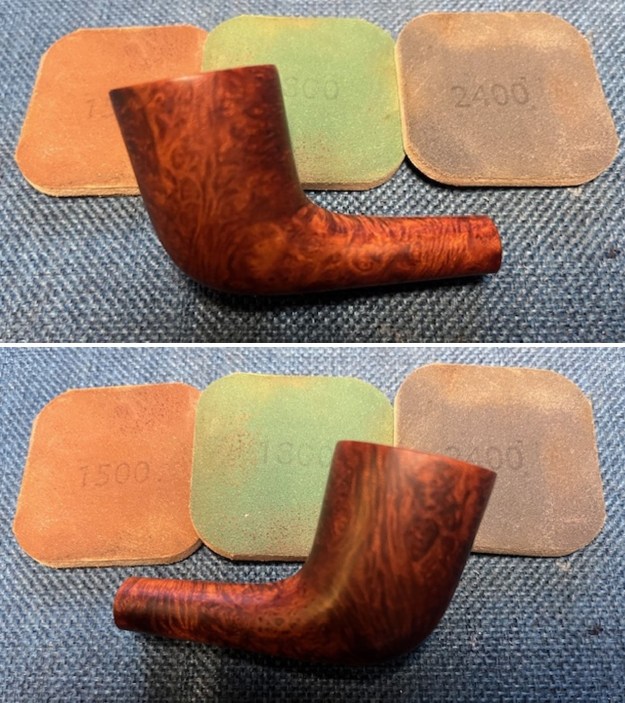
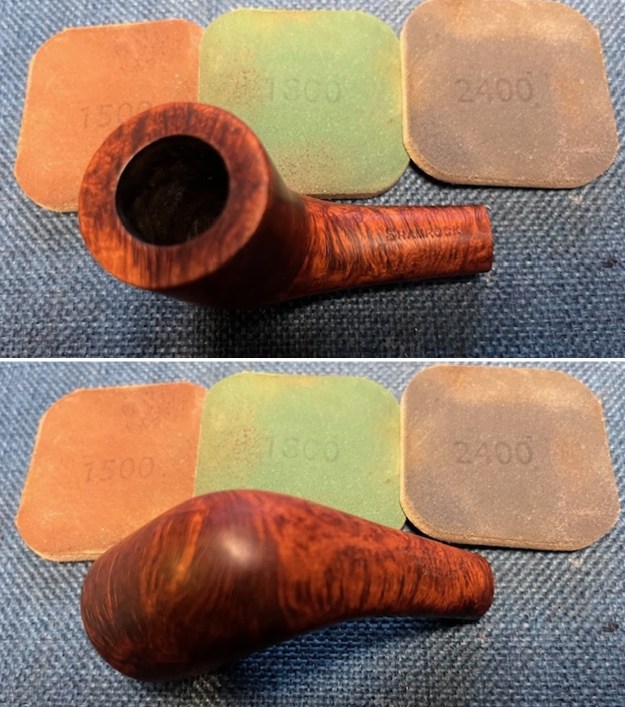
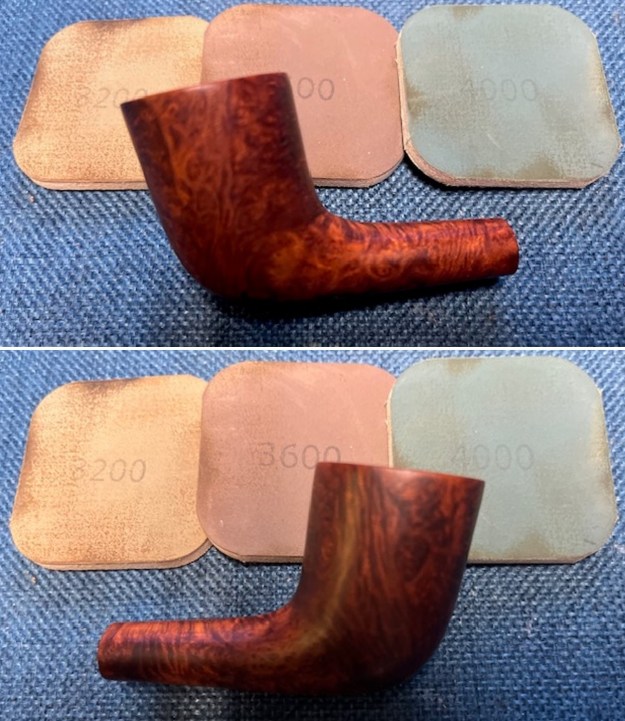
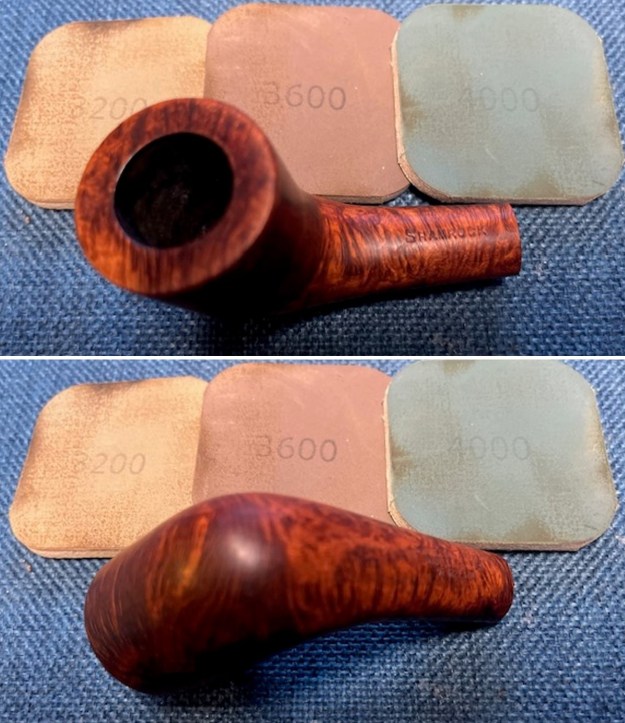
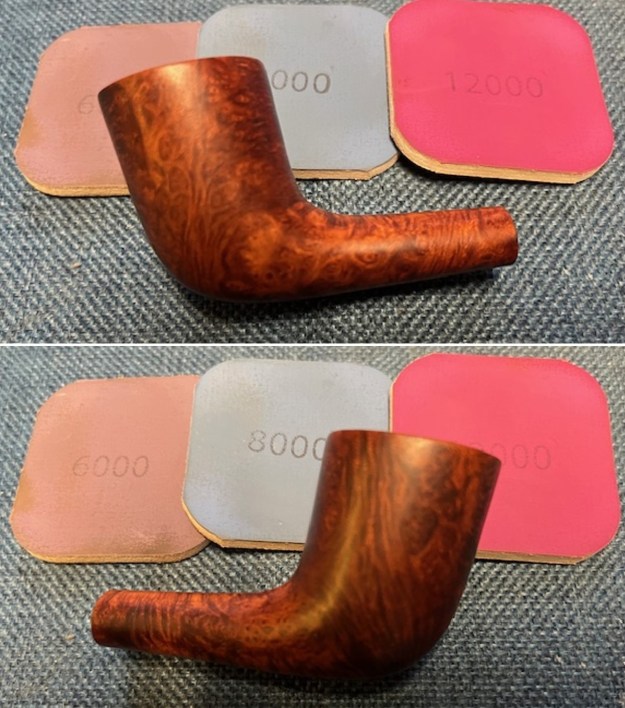
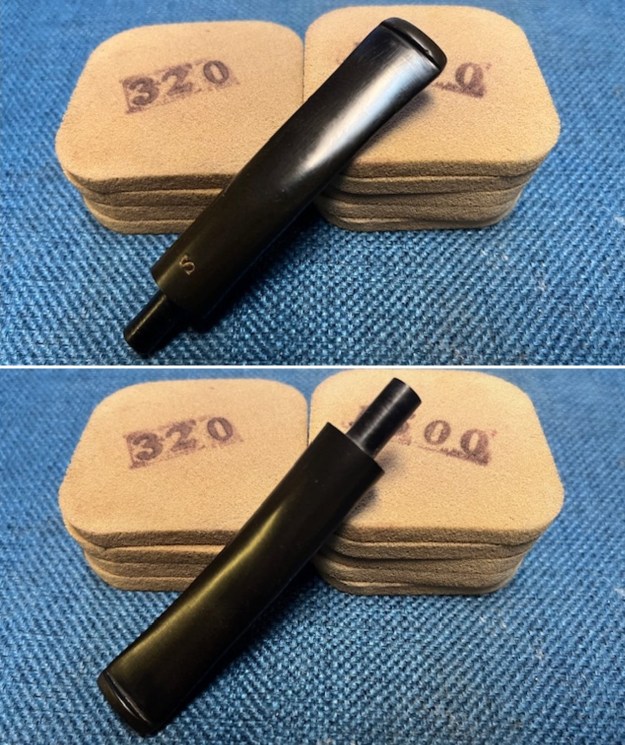
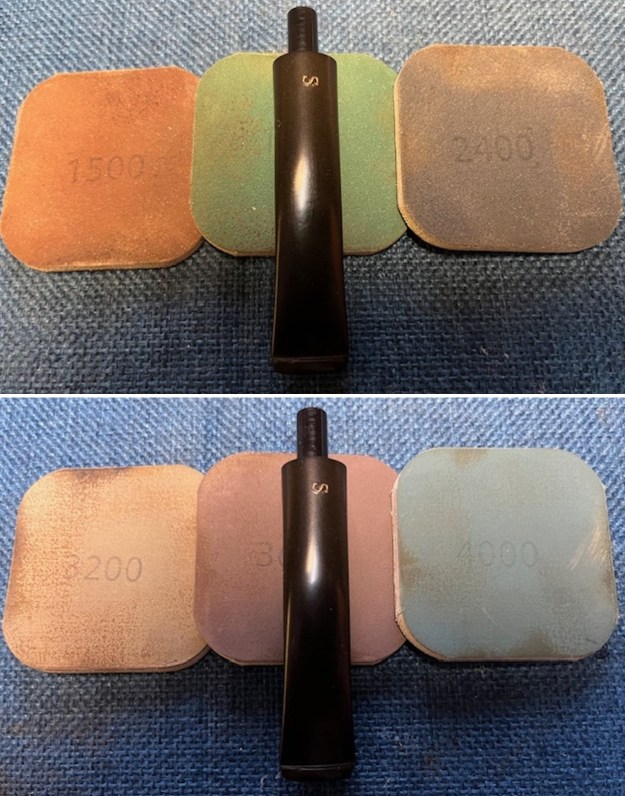
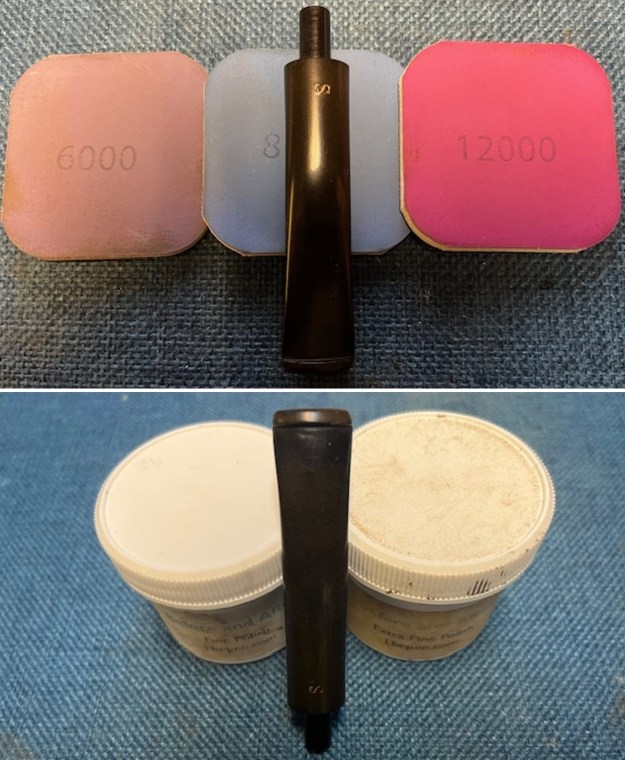
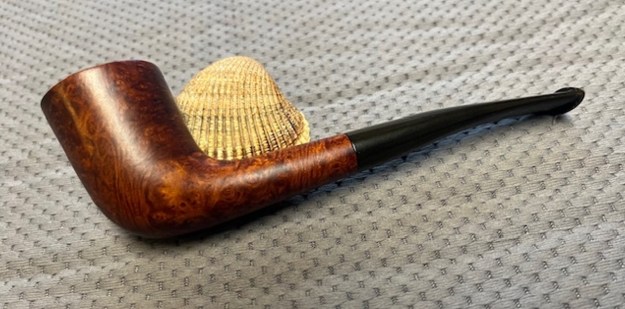
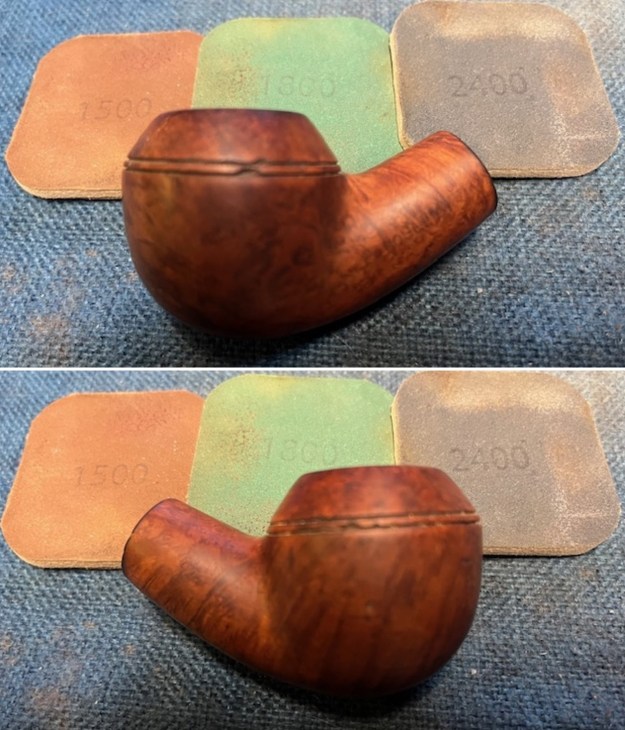
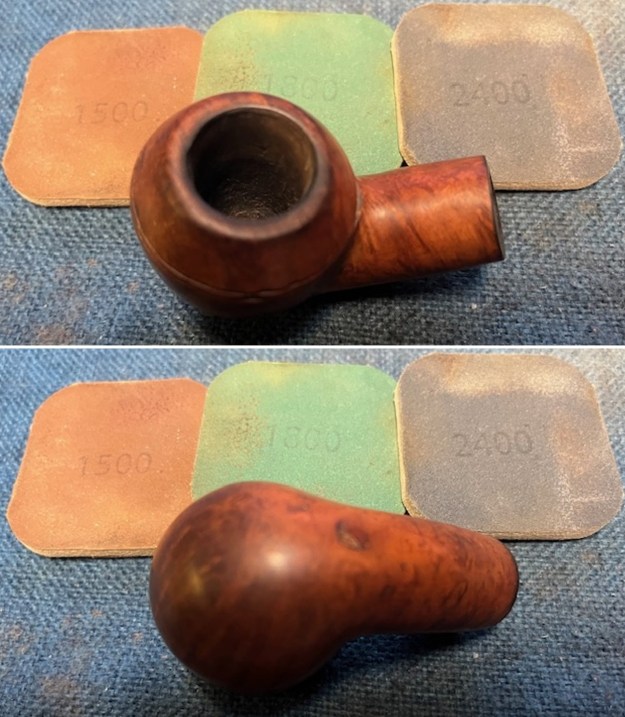
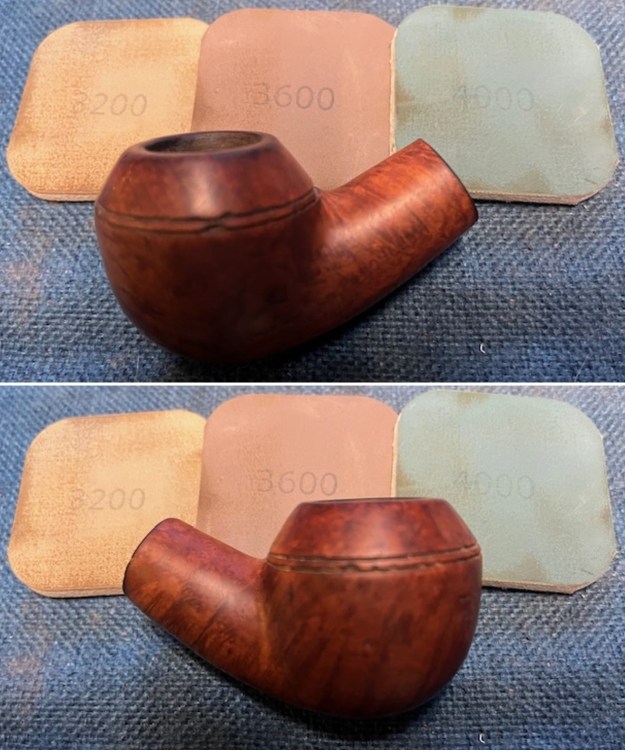
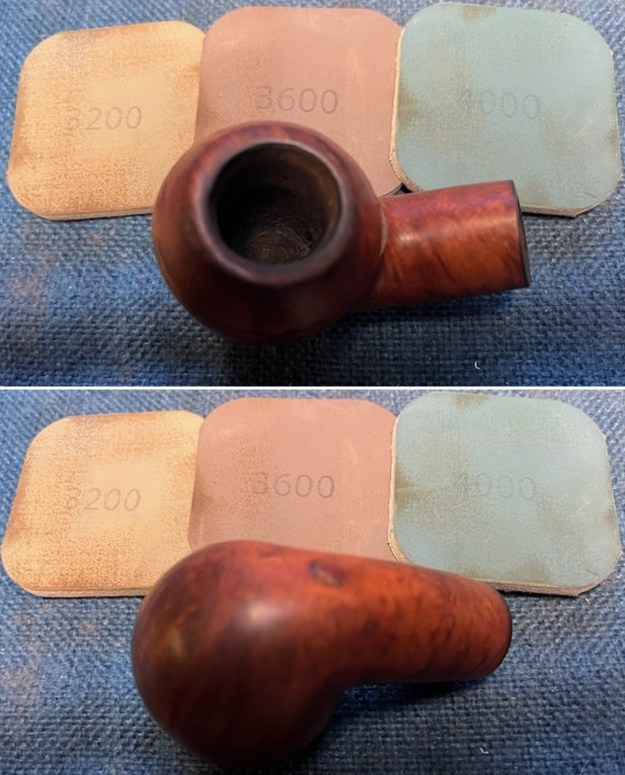
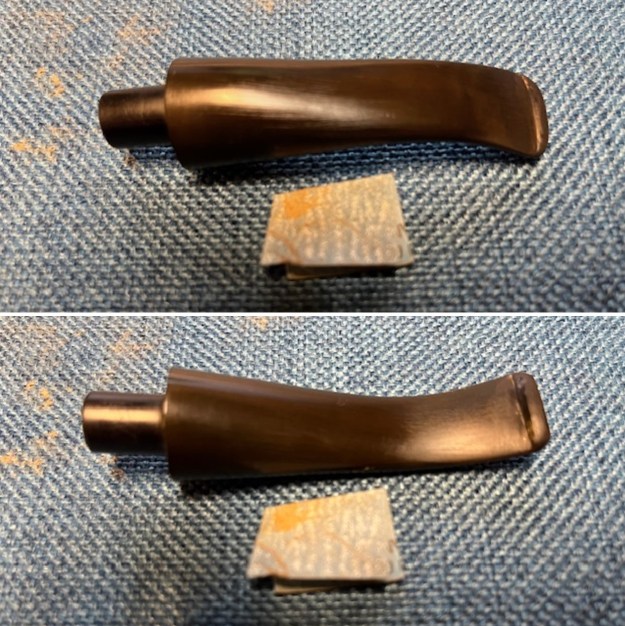
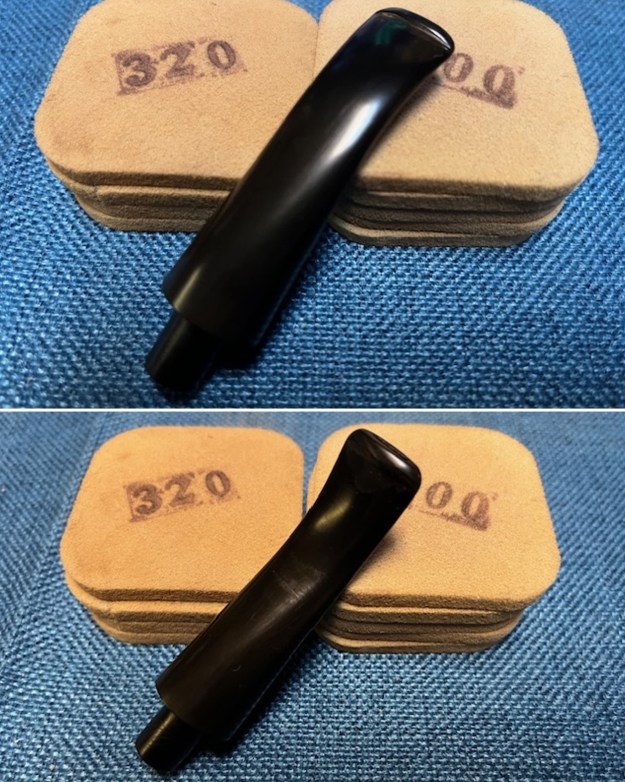
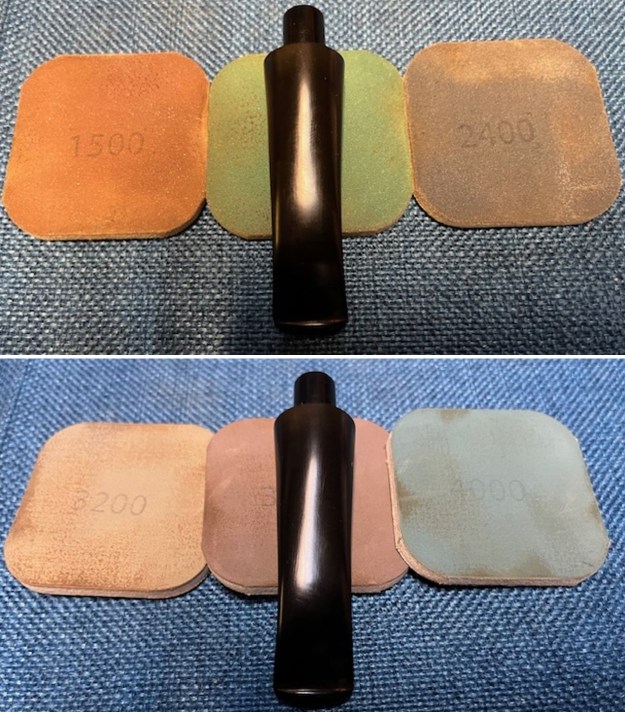
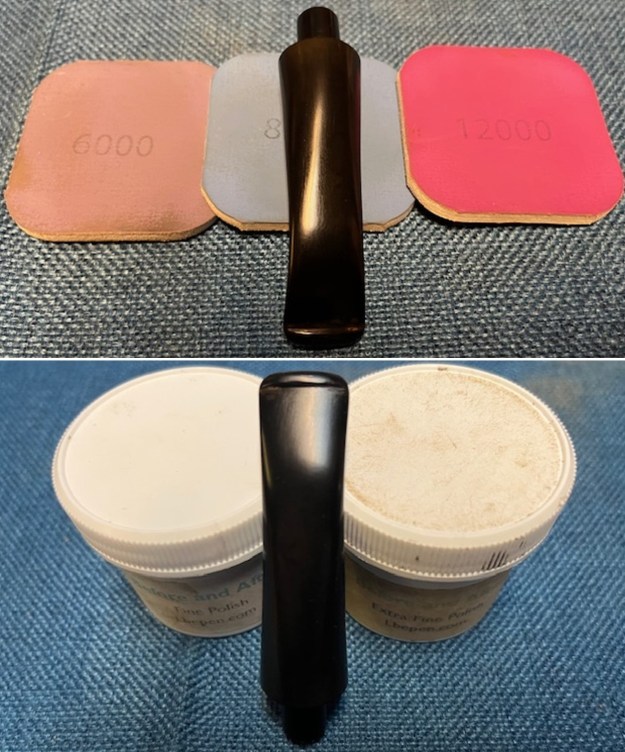
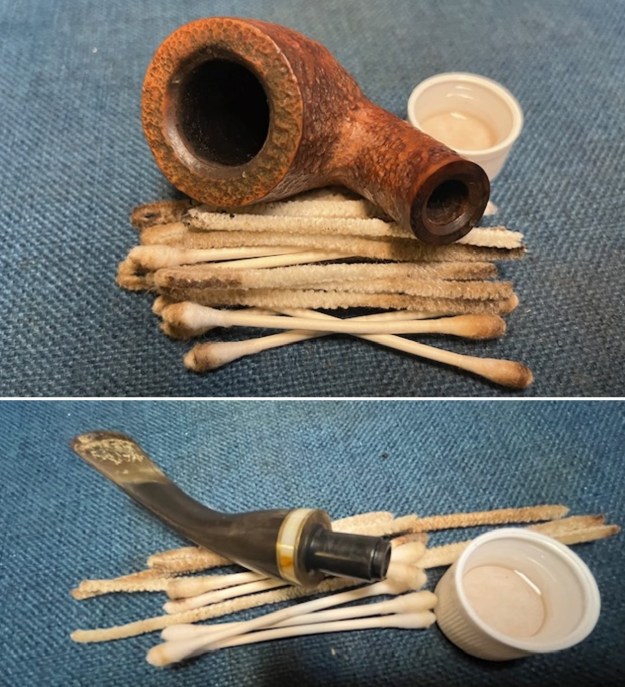
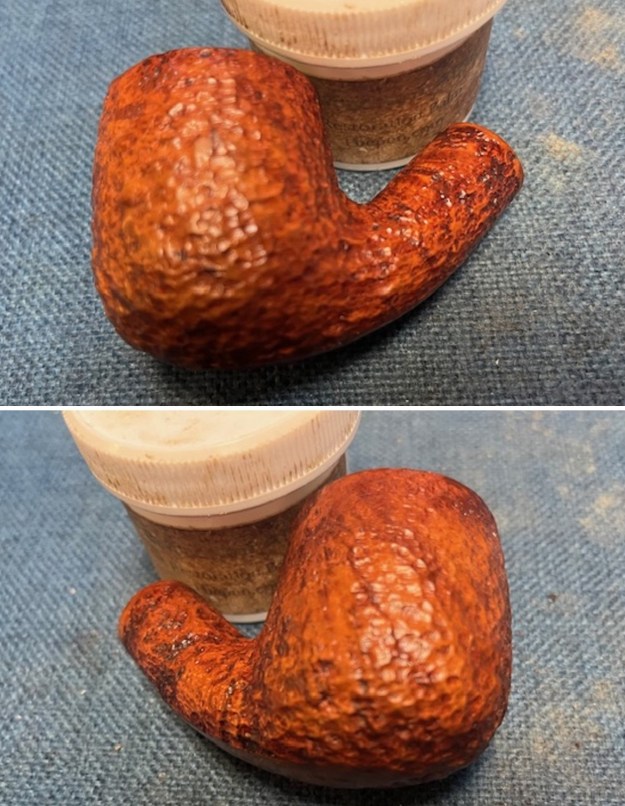
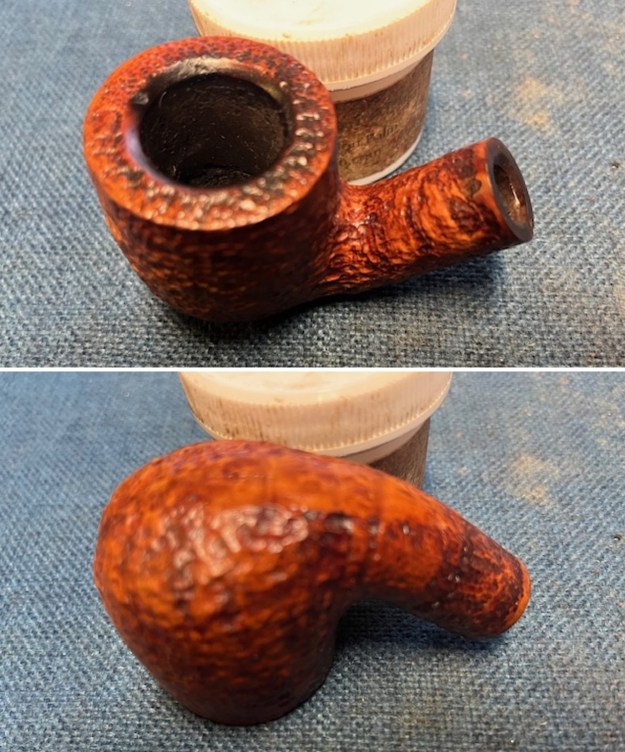
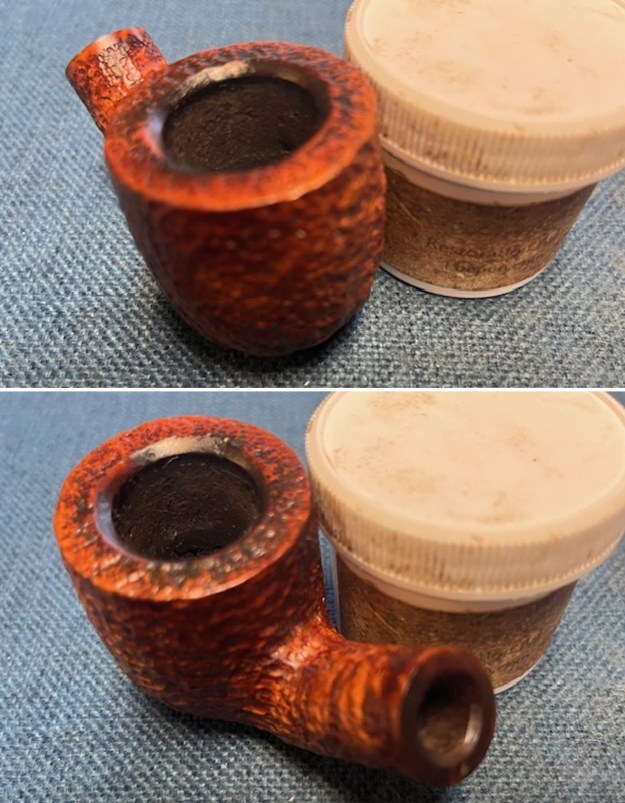
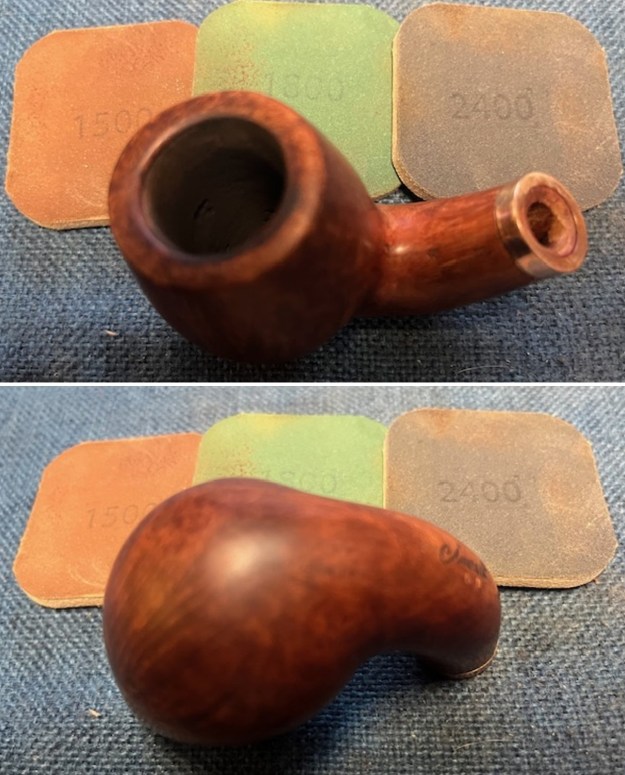
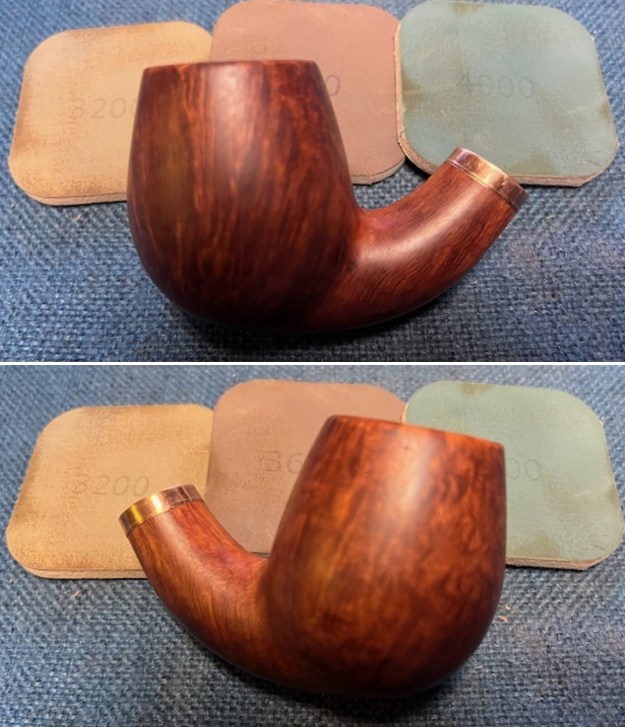
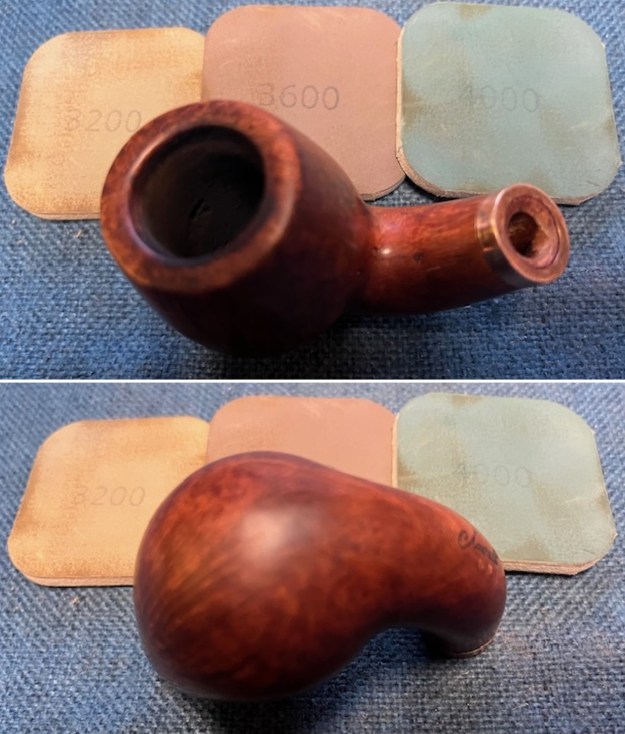
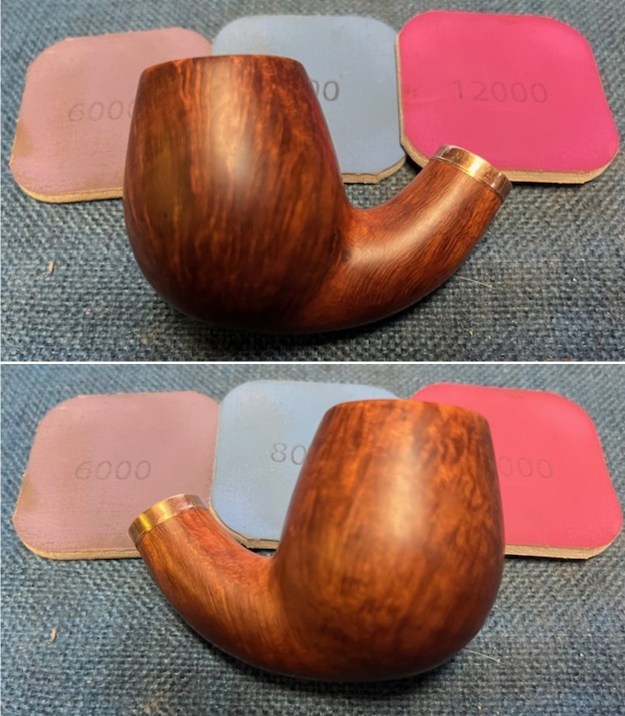
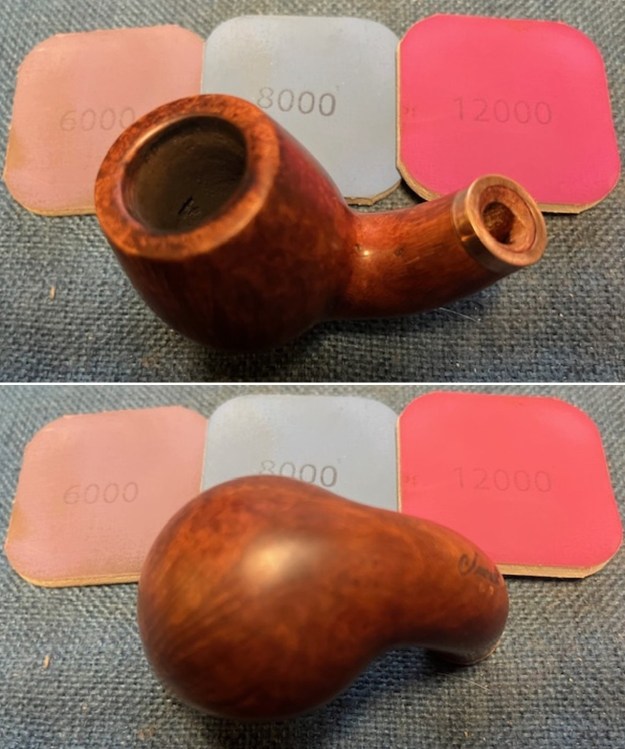
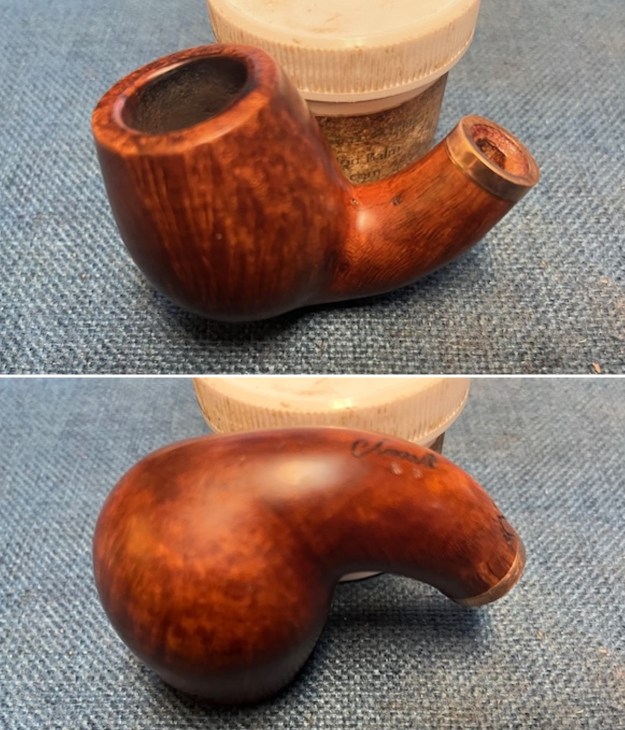
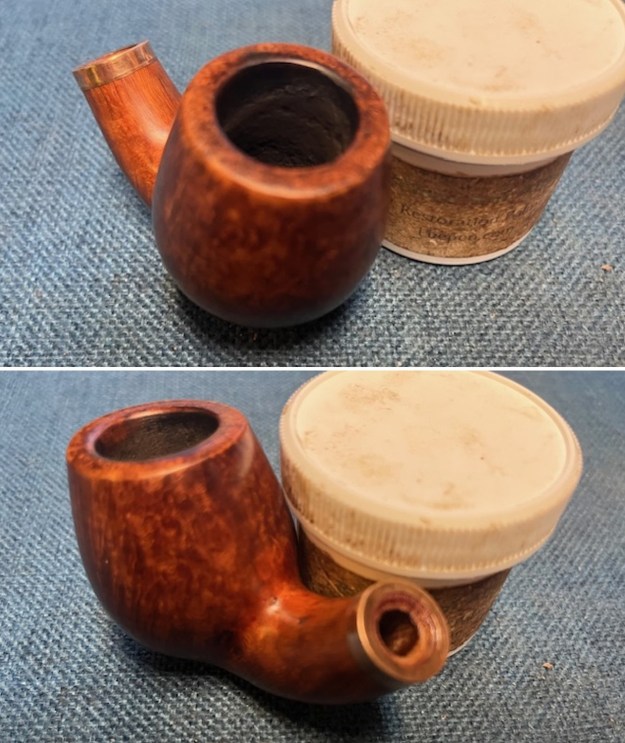
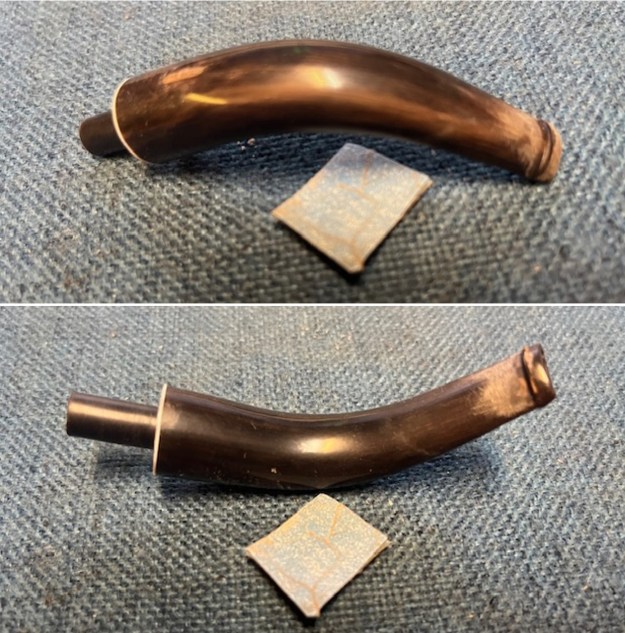
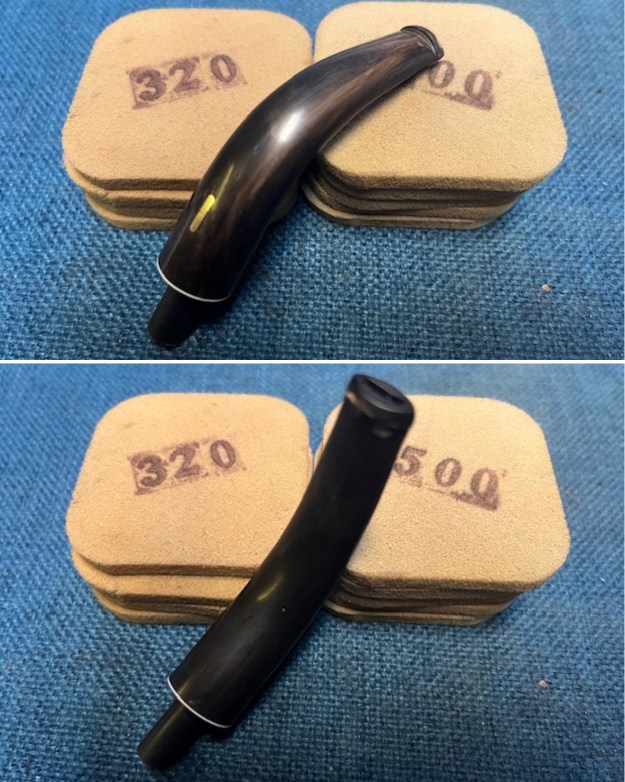
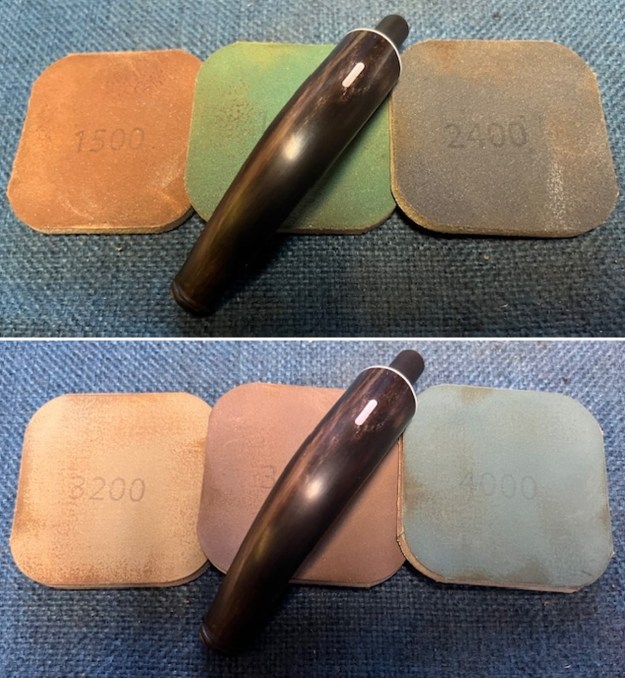
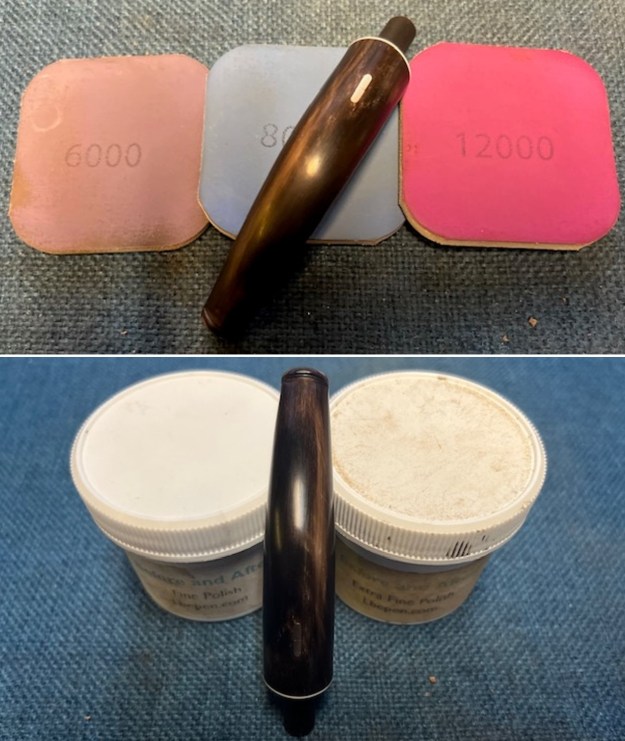
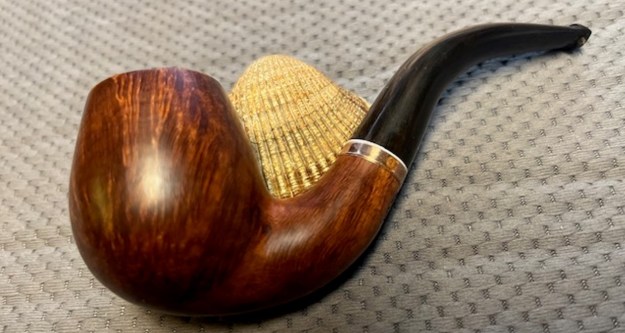
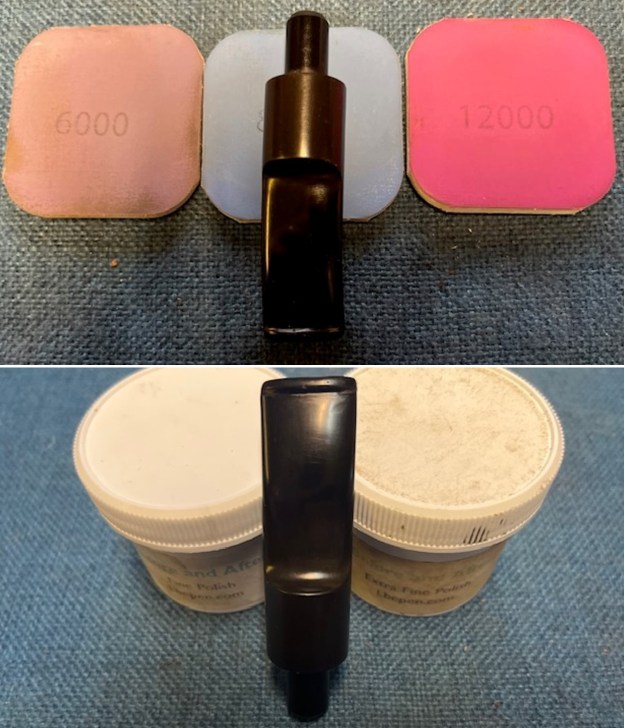
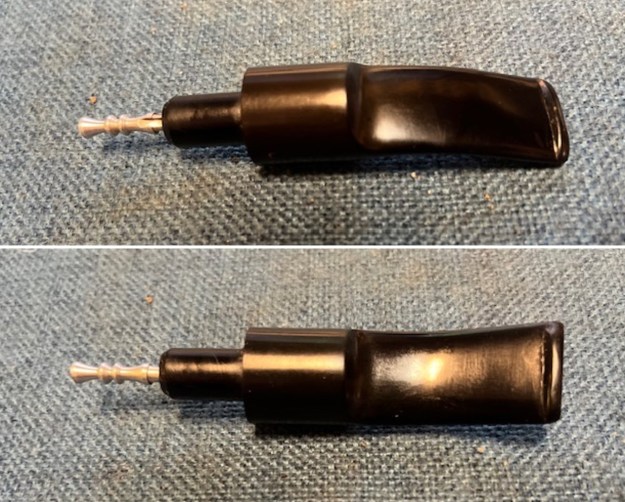
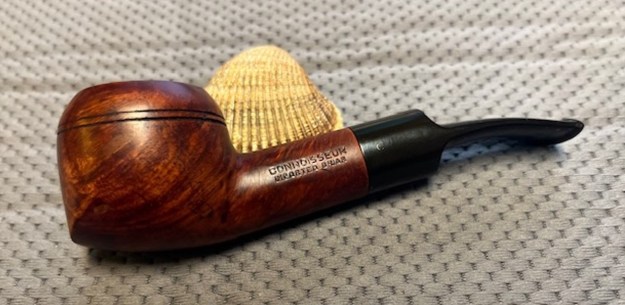
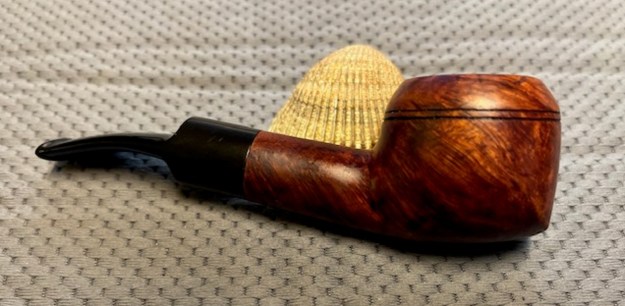
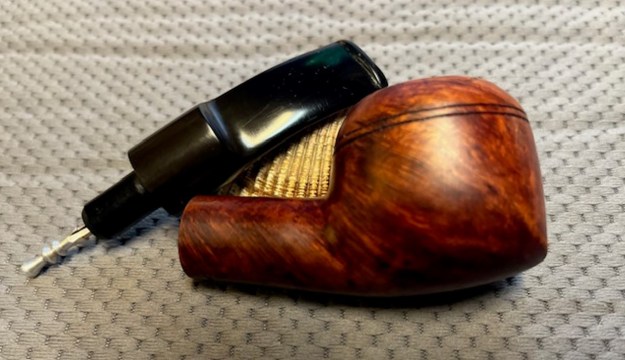
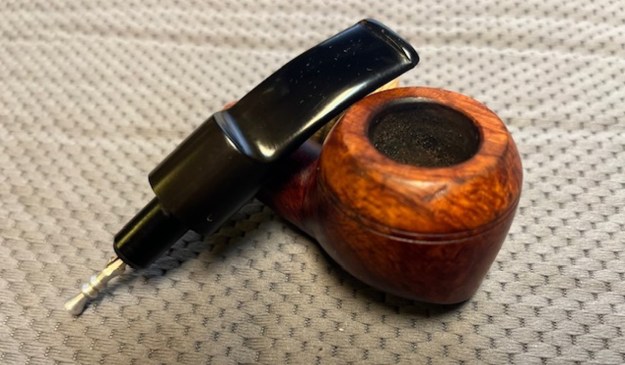
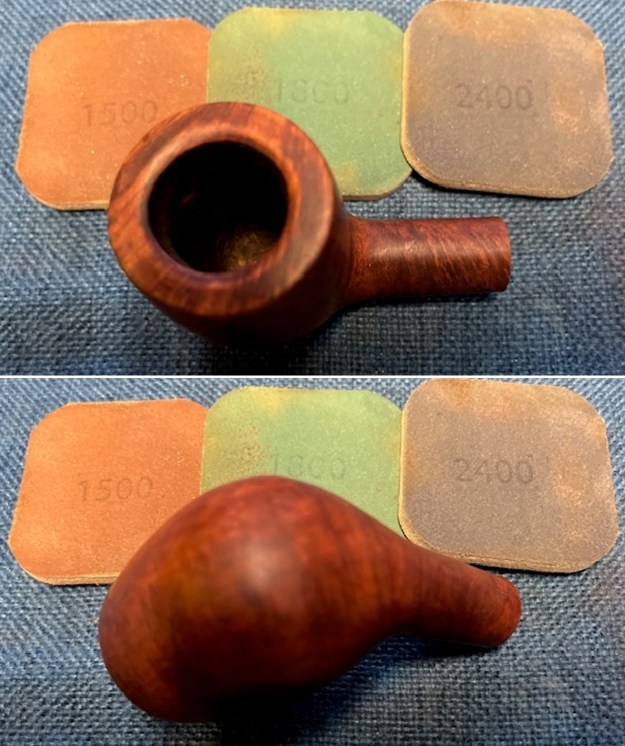
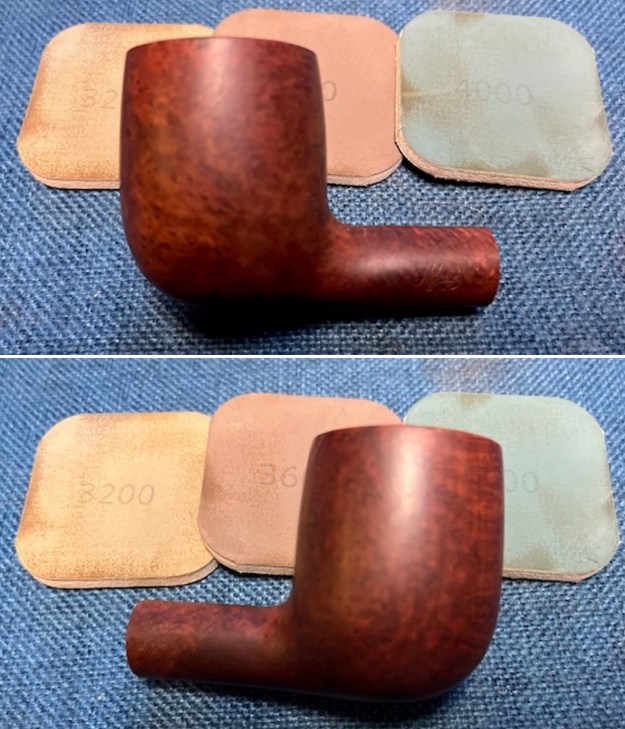
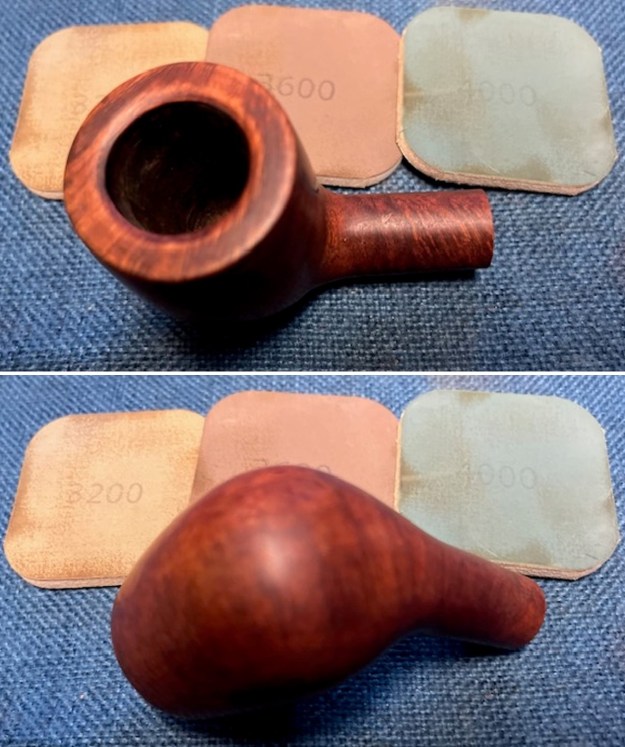
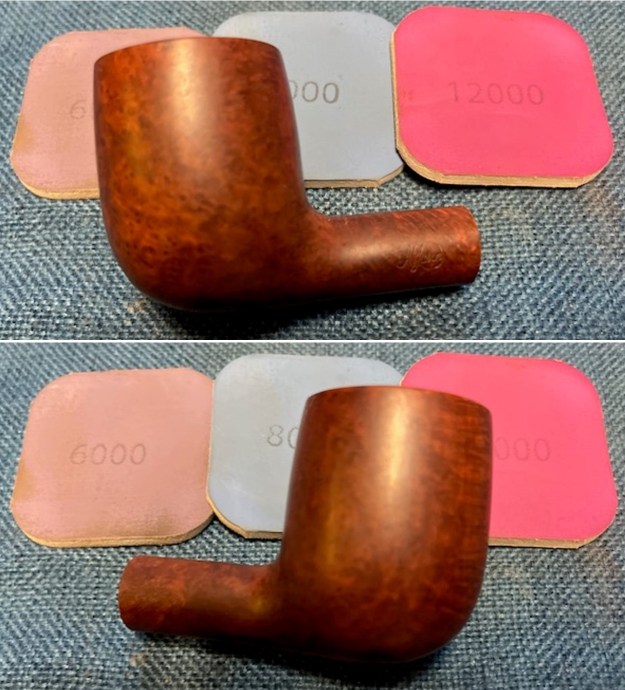
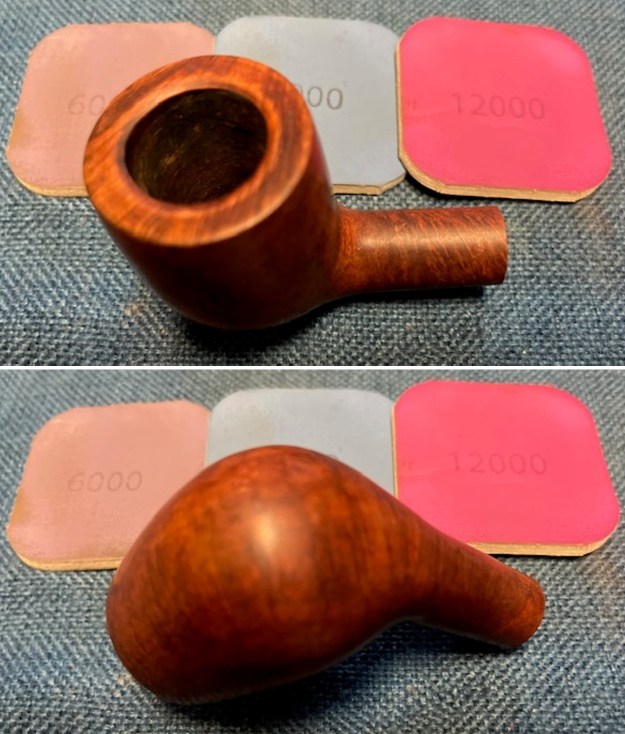
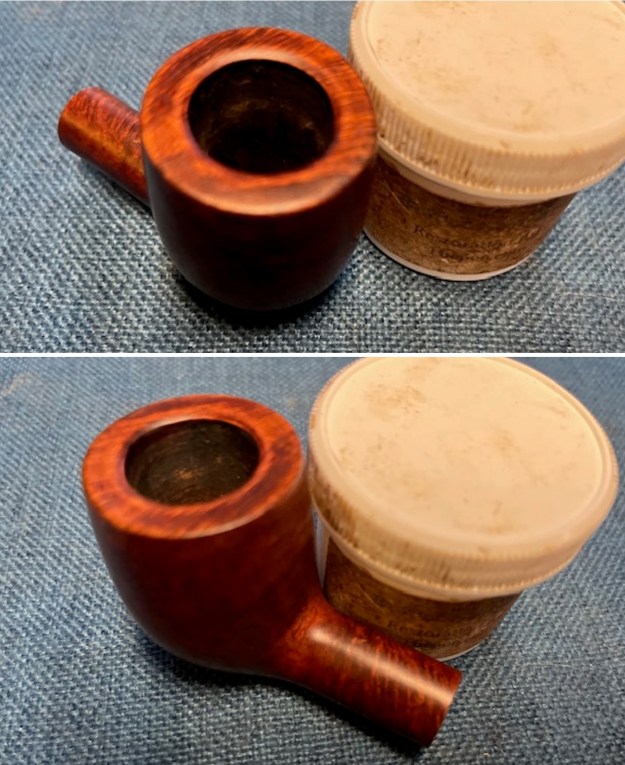
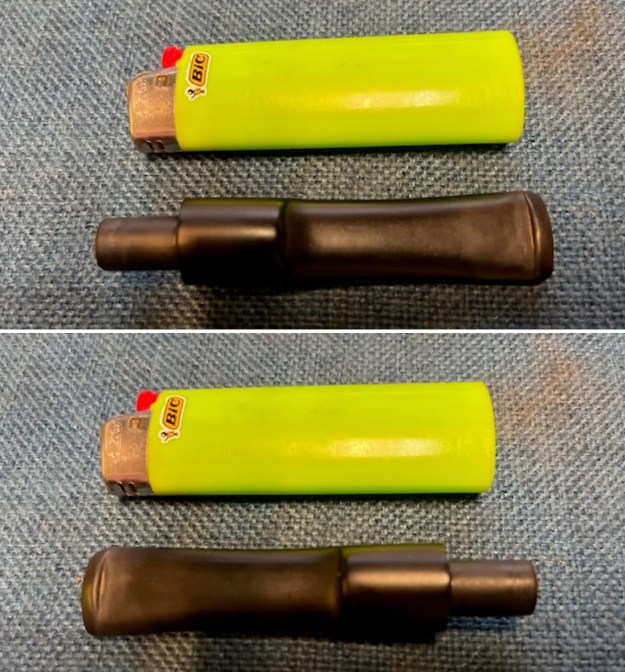
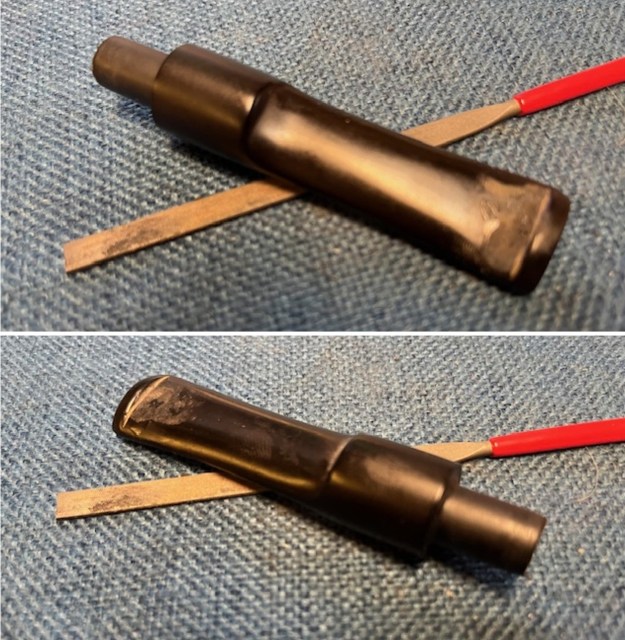
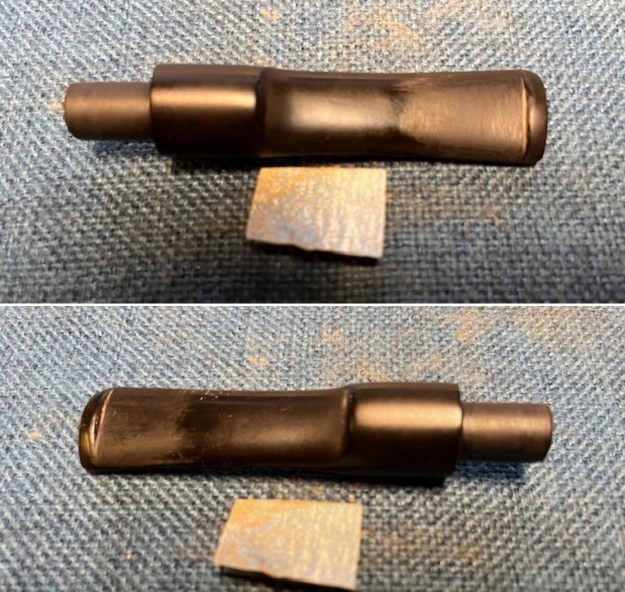
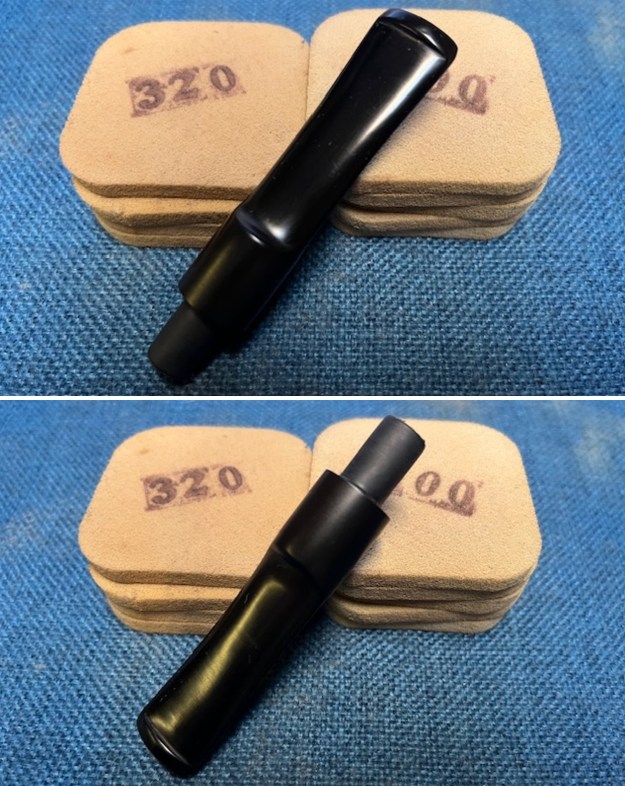
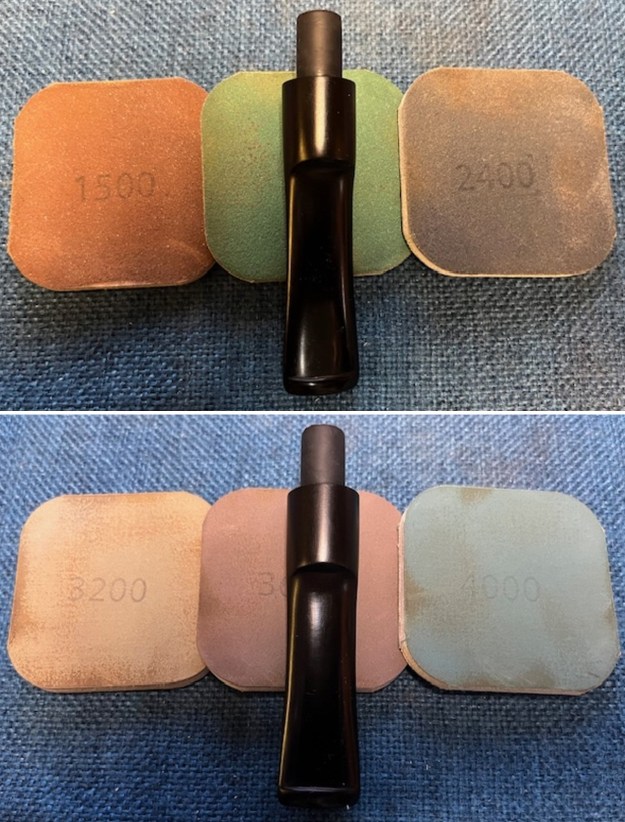
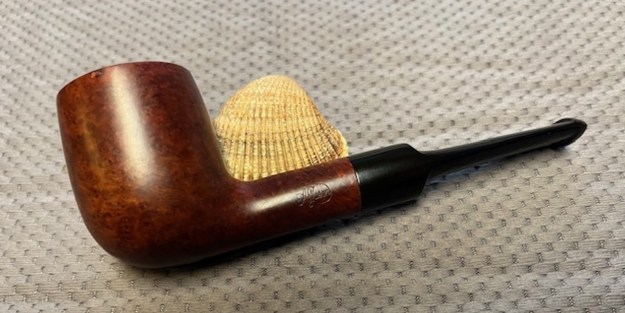
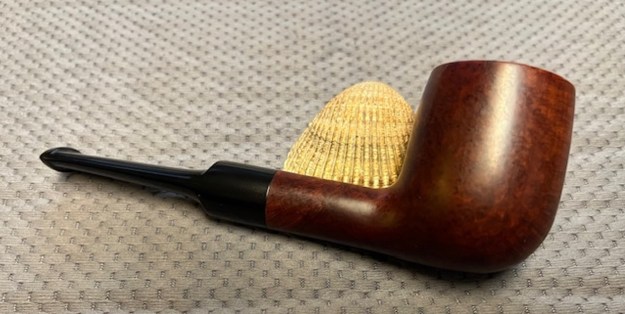
Jeff had done a great job cleaning up the pipe as usual. He reamed the pipe with a PipNet reamer and cut back the cake back to the bare briar. He cleaned up the walls with a Savinelli Fitsall Pipe Knife. Surprisingly the walls looked unscathed from the heavy cake. He scrubbed the interior of the bowl and shank with pipe cleaners, cotton swabs and alcohol to remove the tars and oils. He scrubbed the exterior of the pipe with Murphy’s Oil Soap and a tooth brush to remove the grime from the finish. He scrubbed the inside of the stem with alcohol and pipe cleaners. He scrubbed the exterior of the stem with Soft Scrub and then soaked it in Briarville’s Deoxidizer. He washed it off with warm water to remove the Deoxidizer. When I examined the stem, it looked very good. The pipe looked far better when it arrived. I took some close up photos of the rim top and edges to show how well it had cleaned up and the edges around the bowl. I also took close up photos of the stem to show the light tooth chatter on the surface ahead of the button on both sides. I took photos of the stamping on the sides of the shank. It is clear and readable as noted above. I removed the stem and took a photo of the pipe to have a look at the parts and overall look. I polished the briar with micromesh sanding pads – dry sanding with 1500-12000 grit sanding pads. I wiped the bowl down with a damp cloth after each sanding pad. The grain really began to sing. I worked some Before & After Restoration Balm into the surface of the briar with my fingertips to clean, enliven and protect the briar. I let the balm sit for 15 minutes and then buffed with a cotton cloth to raise the shine. The photos show the bowl at this point in the restoration process. I set the bowl aside and sanded out the chatter on both sides of the stem ahead of the button with 220 grit sandpaper.I sanded the stem surface with 320-3500 grit sanding pads. The chatter was gone on both sides ahead of the button looked very good. The stem began to shine.I polished the stem with micromesh sanding pads – dry sanding with 1500-12000 grit sanding pads. I wiped it down after each sanding pad with Obsidian Oil. I polished it with Before & After Pipe Stem Polish – both Fine and Extra Fine. I am excited to finish this “Peterson’s Product” Made in the Rep. of Ireland Shamrock 268 Zulu. I put the pipe back together and buffed it with Blue Diamond on the buffing wheel. I gave the bowl and the stem multiple coats of carnauba wax. I hand buffed the pipe with a clean buffing pad to raise the shine. It is fun to see what the polished bowl looks like with beautiful mixed grain all around it, looks great with the polished black vulcanite stem. This smooth Classic Shamrock 268 Zulu is great looking and the pipe feels great in my hand. It is light and well balanced. Have a look at it with the photos below. The dimensions are Length: 5 ½ inches, Height: 1 ¾ inches, Outside diameter of the bowl: 1 ¼ inches, Chamber diameter: ¾ of an inch. The weight of the pipe is 32 grams/1.13 ounces. It turned out to be a beautiful pipe. I will be putting on the rebornpipes store in the Irish Pipe Makers Section. Let me know if you are interested in adding it to your collection. Thanks for your time as I walked through the restoration.

Restoring the fourth and final of six pipes for a Vancouver Pipeman – A Brigham 4244 Full Bent


by Steve Laug

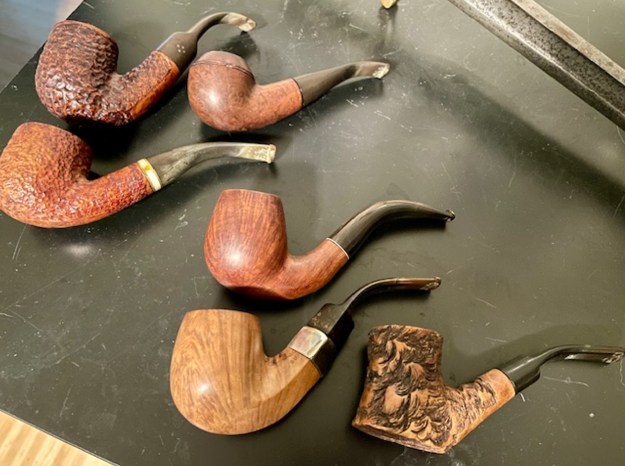
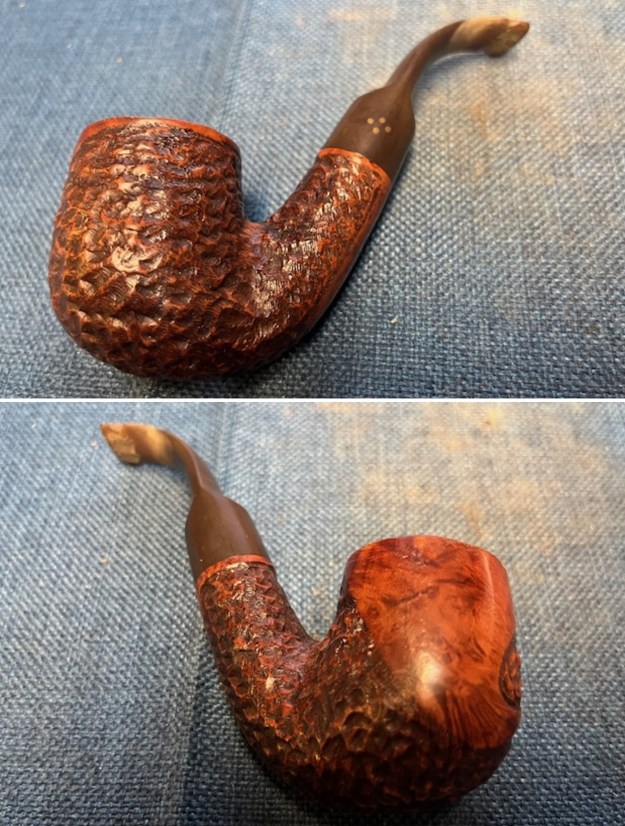
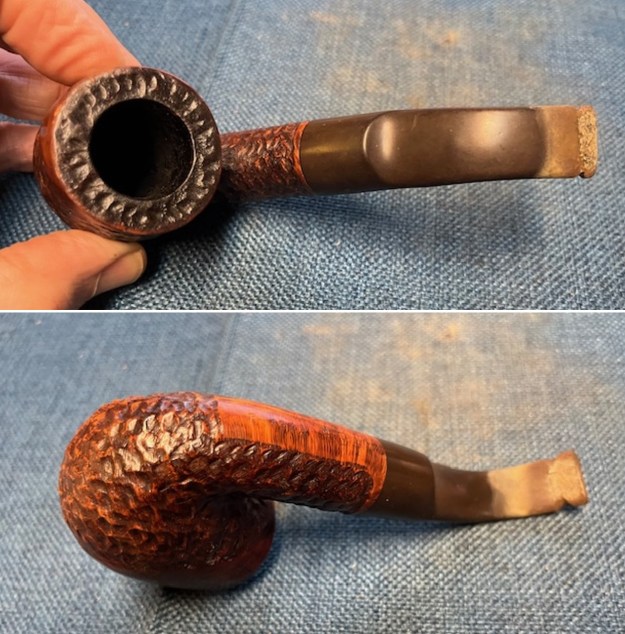
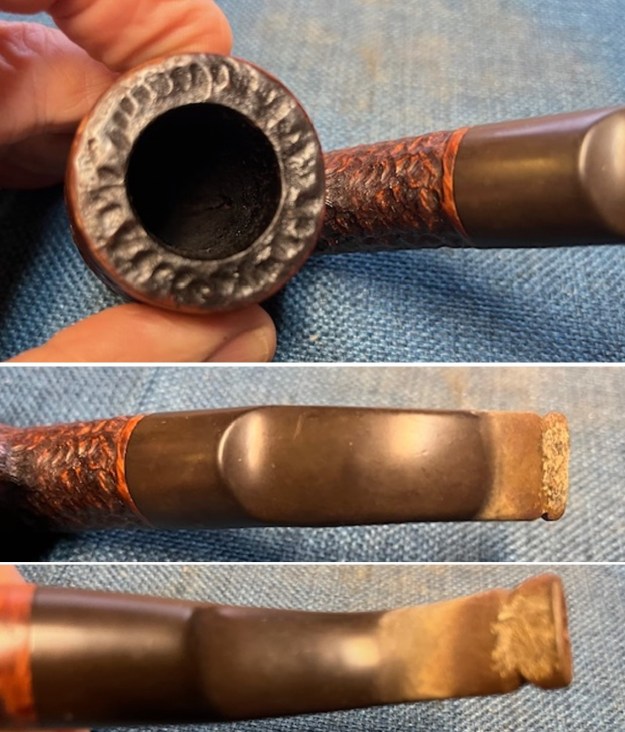
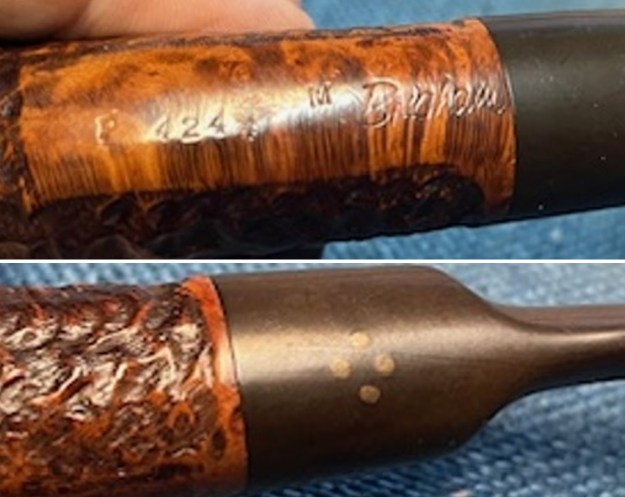
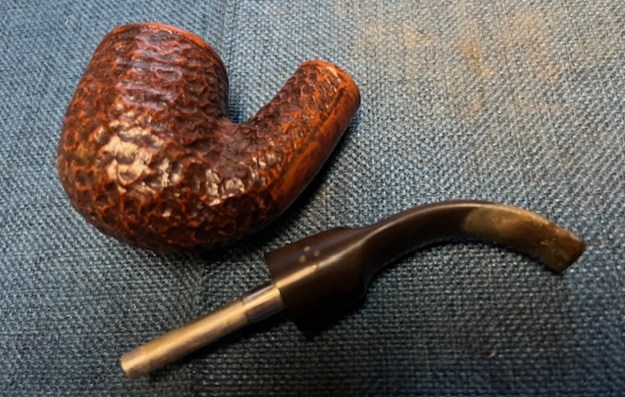
Last week I received an email from Steffen regarding a few more pipe projects that he had for me to work on. He dropped them off here yesterday for me to work on. There were six pipes in the lot. Two were his that I had worked on a few years ago – a Mayfair 1005 rusticated tree stump and a Jost Supreme. Both were favourite pipes of his. One was a Savinelli Bent Billiard that he purchased on a trip to Italy. The final three were pipes that belonged to his father who would soon be visiting him in Vancouver – a Brigham full bent four dot 4244, a Savinelli Portofino Bent Pot and a Bent Rhodesian with no name stamped on the shank sides. Steffen texted me this photo of the pipes before he sent them.I decided to work on the two pipes at the bottom before addressing the final pipe of Stephen’s Dad’s pipes. This involved stem tightening on two of Stephen’s pipes that are really straight forward. I did not write a blog on them. It is now time to work on the final one of Steffen’s father’s pipes. It is a rusticated Full Bent Pipe. It is a beautiful rusticated piece of briar that I fully appreciate why his Dad chose it. The pipe is stamped on the underside of the shank. It reads P 4244 M followed by Brigham. There is no Canada stamp on it. The stem bears 4 dots on the left side of the saddle. The briar is dirty from use with a moderate cake in the bowl and some chipping and dents in the rim top on the outer edge of the bowl. The stem was oxidized, calcified and had some tooth marks and chatter on the top and underside of the stem ahead of a hand carved button that his father carved in the stem end. I took photos of the pipe before I started my work and included them below. I took a photo of the stem surfaces and the bowl and rim to give a sense of condition of the pipe. You can see the cake in bowl and the lava overflow and the heavy nicking and denting on the edges and rim top of the bowl. The stem surface is very dirty and you can see the tooth marks and chatter on both sides ahead of the button. There is also a paper wash inserted in the mortise of the pipe to tighten the fit of the stem.I took photos of the stamping on the underside of the shank to show its clarity. It read as noted above. I also removed the stem from the shank of the pipe and took a photo of the parts to show the flow of the pipe. It has some great grain. For the needed background I am including the information from Pipedia on Brigham pipes. It is a great read in terms of the history of the brand (https://pipedia.org/wiki/Brigham_Pipes). Charles Lemon (Dadspipes) is currently working on a book on the history of the brand. Until that is complete this article is a good summary. I have included it below.
Roy Brigham, after serving an apprenticeship under an Austrian pipesmith, started his own pipe repair shop in Toronto, in 1906. By 1918 the business had grown to include five other craftsmen and had developed a reputation across Canada for the high quality of workmanship. After repairing many different brands of pipes over the years, Roy noted certain recurring complaints by pipe smokers, the most common referred to as “tongue bite”. Tongue bite is a burning sensation on the smoker’s tongue, previously thought to be due to the heat of the smoke (i.e. a “hot smoking pipe”).

He soon began manufacturing his own pipes, which were lightweight, yet featured a more rugged construction, strengthening the weak points observed in other pipes. The problem of tongue bite intrigued him, and he decided to make overcoming it a future goal.

About 1938, Roy’s son Herb joined him to assist in the business. The business barely survived the great depression because pipes were considered to be a luxury, not a necessity, and selling pipes was difficult indeed. In approximately 1937 [1], after some experimentation, Roy and Herb discovered that tongue bite was in fact a form of mild chemical burn to the tongue, caused by tars and acids in the smoke. They found that by filtering the smoke, it was possible to retain the flavour of the tobacco and yet remove these impurities and thereby stop the tongue bite.

Just as Thomas Edison had searched far and wide for the perfect material from which to make the first electric light bulb filaments, Roy & Herb began experimenting with many materials, both common and exotic, in the quest for the perfect pipe filter. Results varied wildly. Most of the materials didn’t work at all and some actually imparted their own flavour into the smoke. They eventually found just two materials that were satisfactory in pipes: bamboo and rock maple. As bamboo was obviously not as readily available, rock maple then became the logical choice.

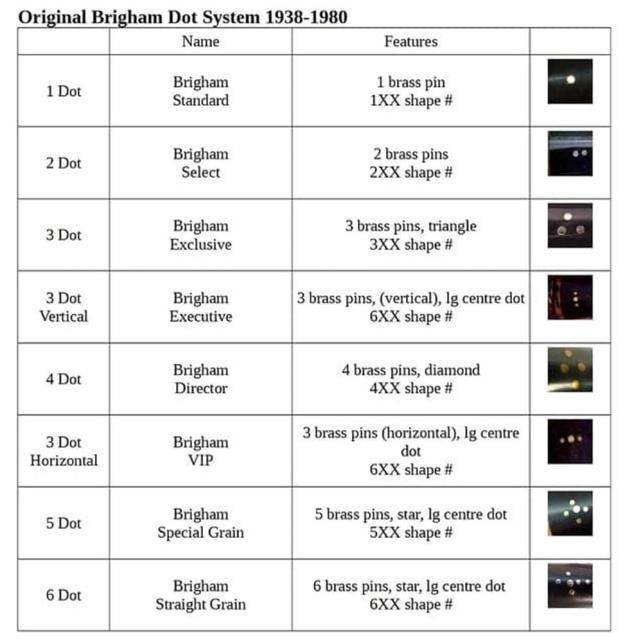
They were able to manufacture a replaceable hollow wooden tube made from rock maple dowelling, which when inserted into a specially made pipe, caused absolutely no restriction to the draw of the pipe, yet extracted many of the impurities which had caused tongue bite. The result was indeed a truly better smoking pipe…With the information from Charles’ article and the chart above that he included I knew what I was dealing with in terms of the stamping and the age of this pipe. I learned that this 4244 (the 4XX shape number) is a Brigham Director (4-Dot) Full Bent. Now it was time to work on the pipe.
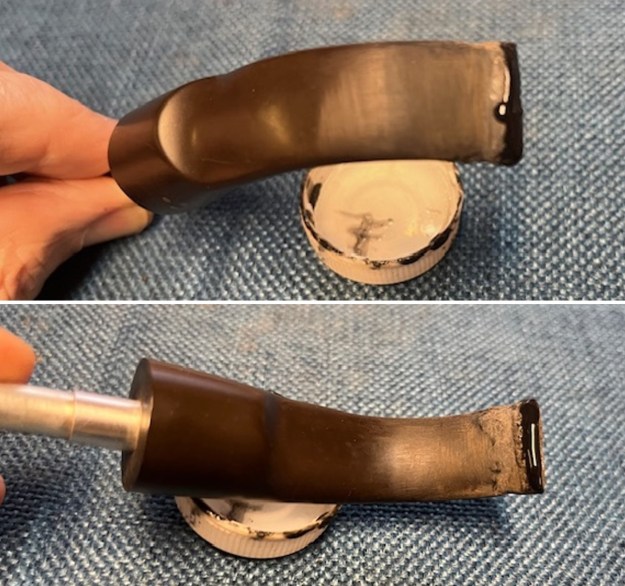
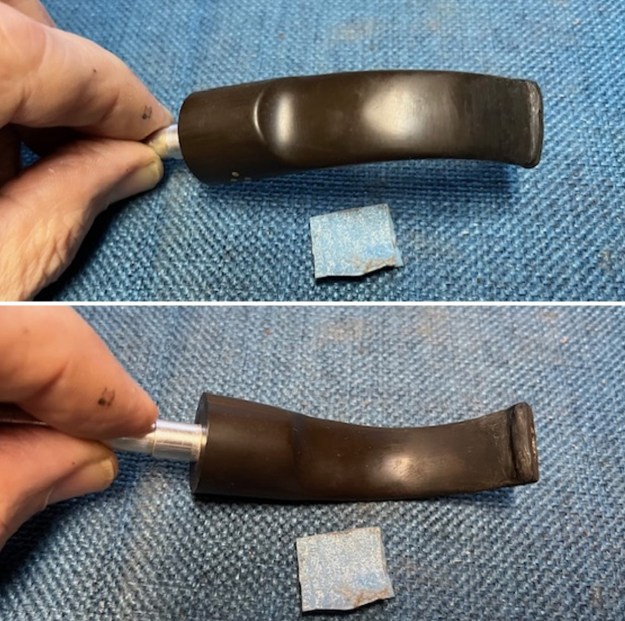
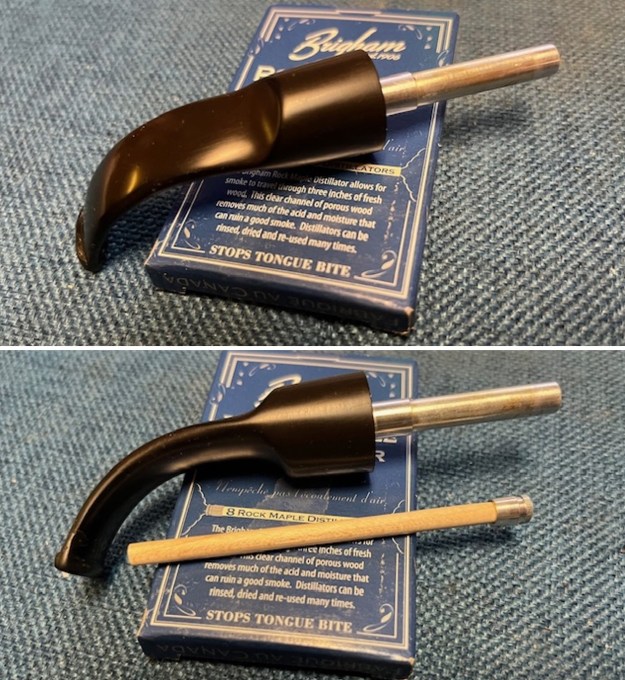
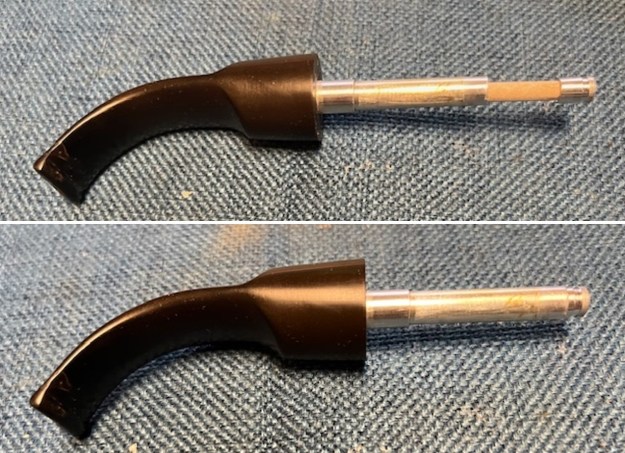
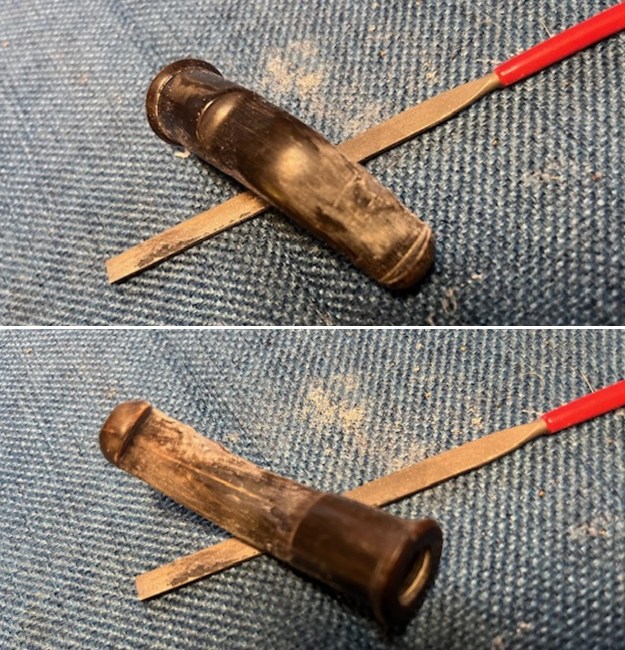
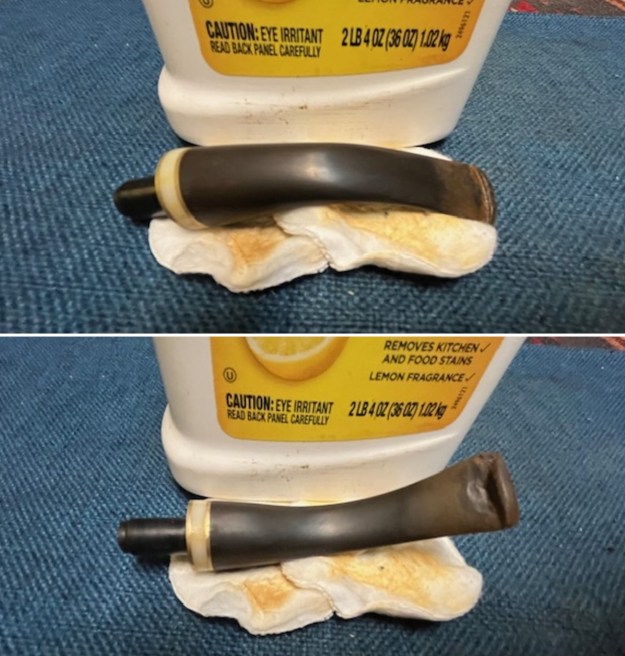
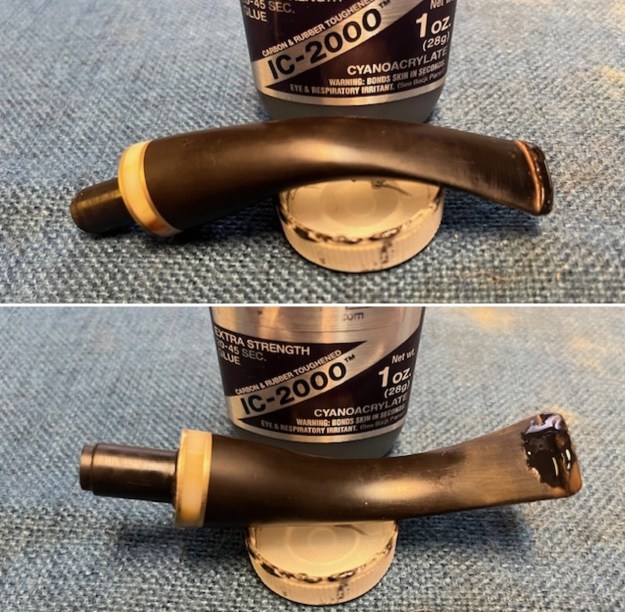
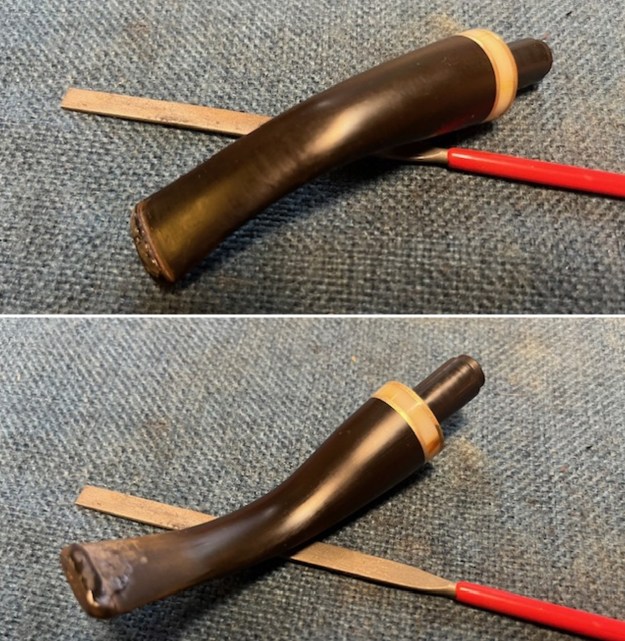
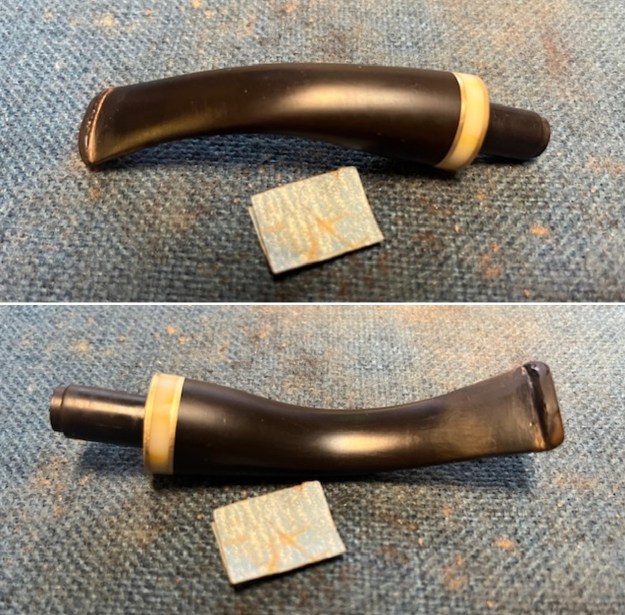
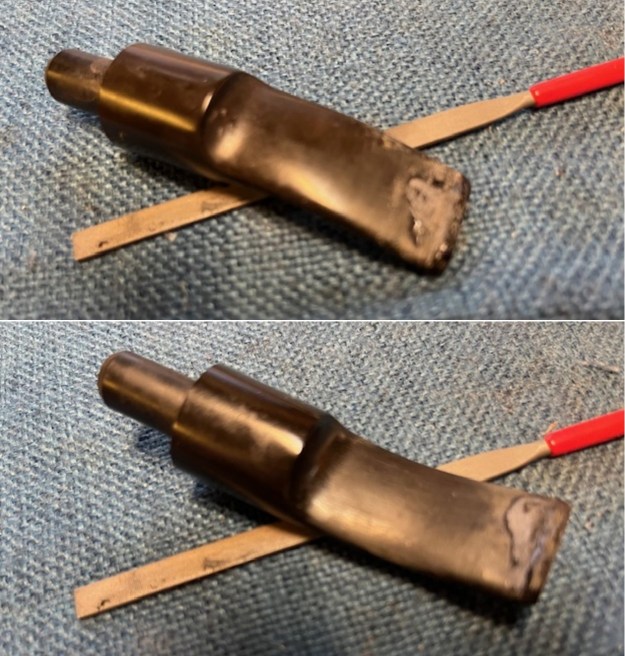
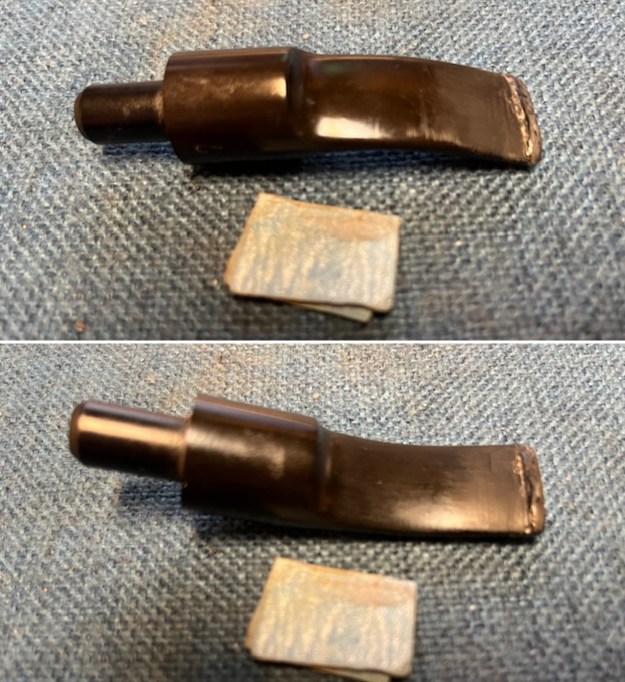
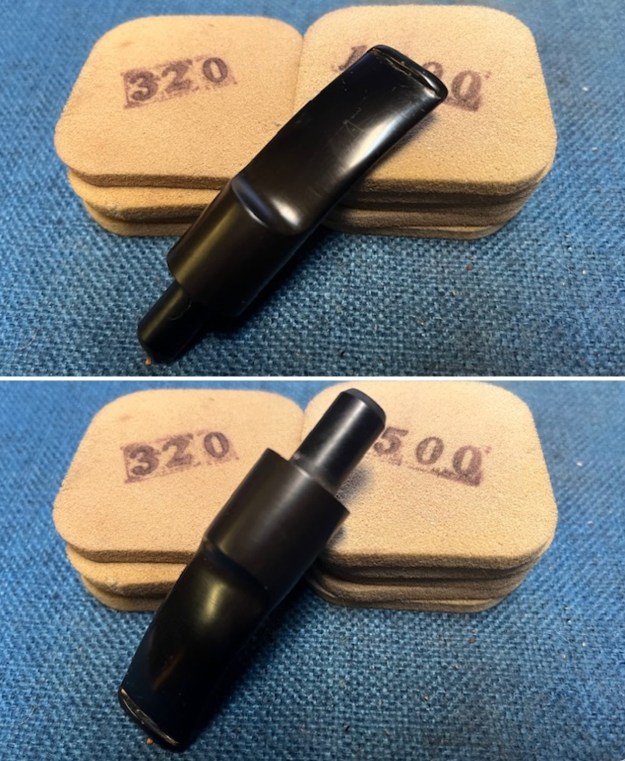
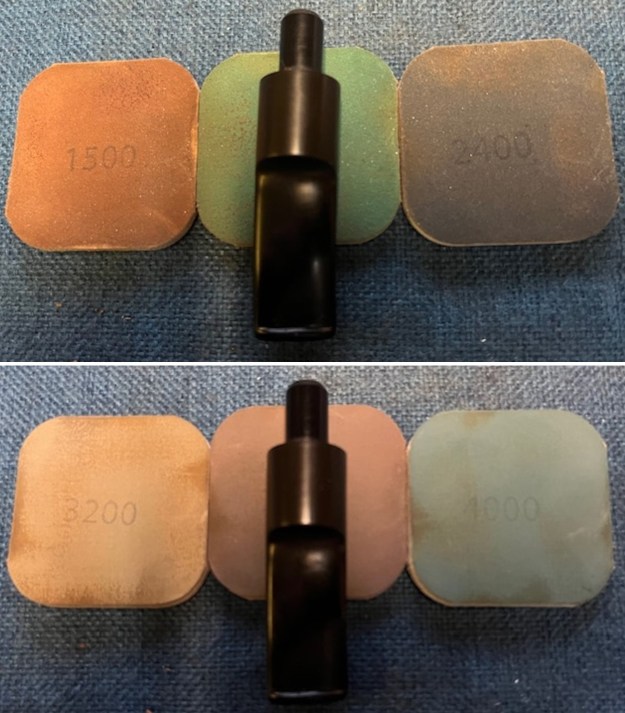
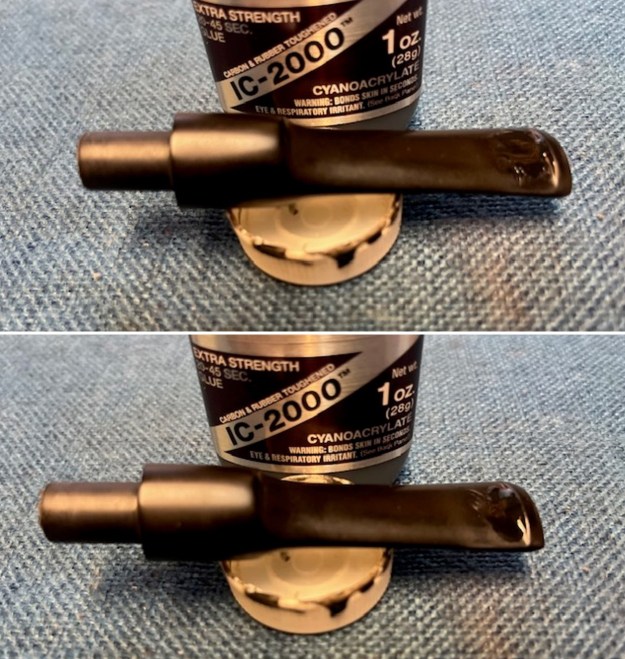
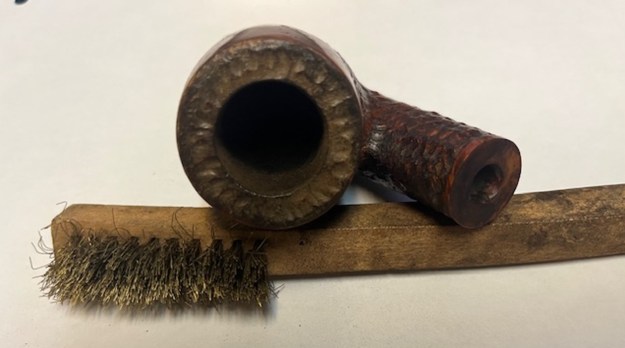
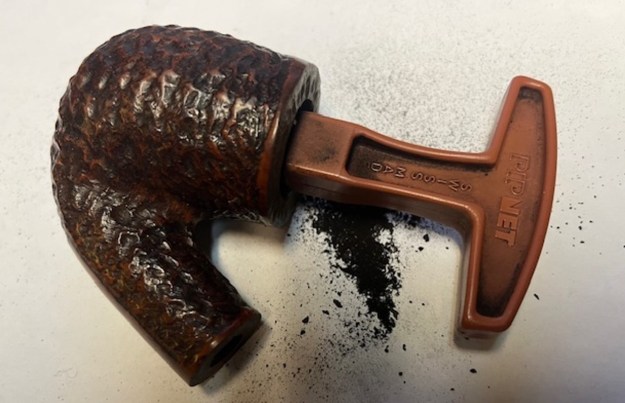
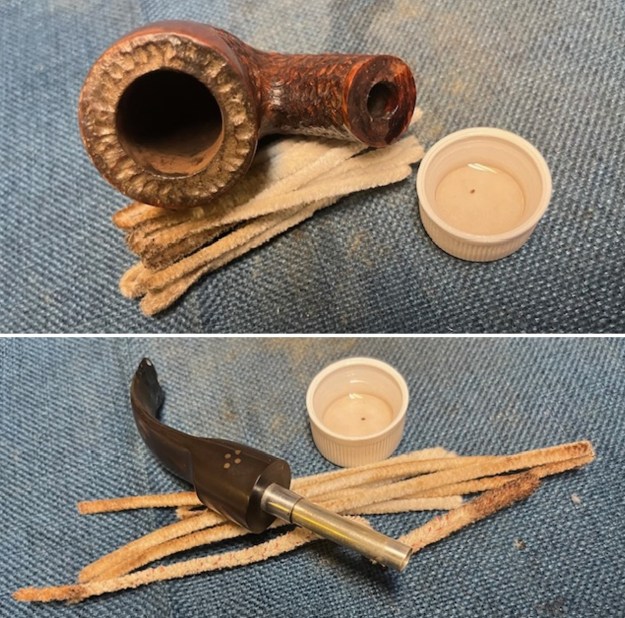
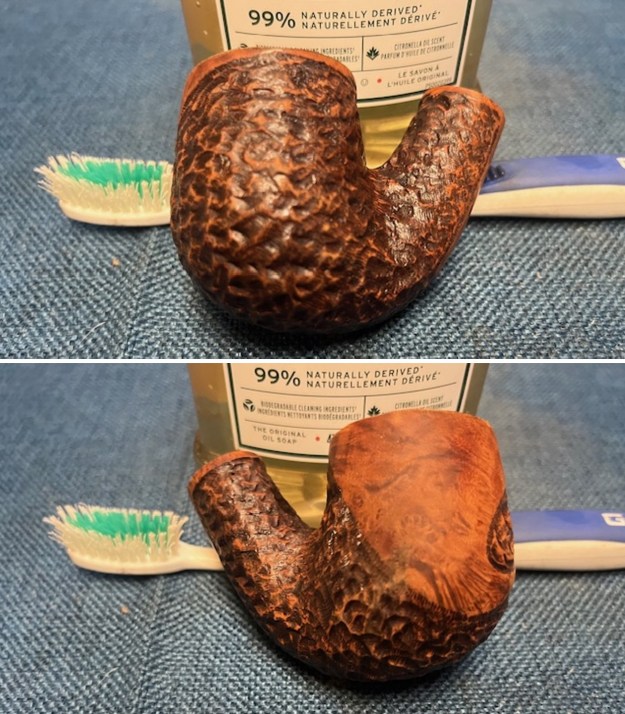
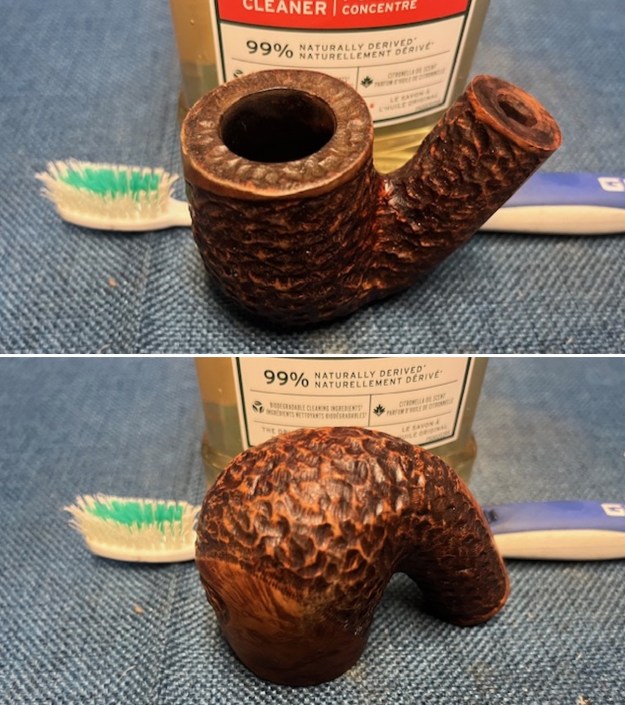
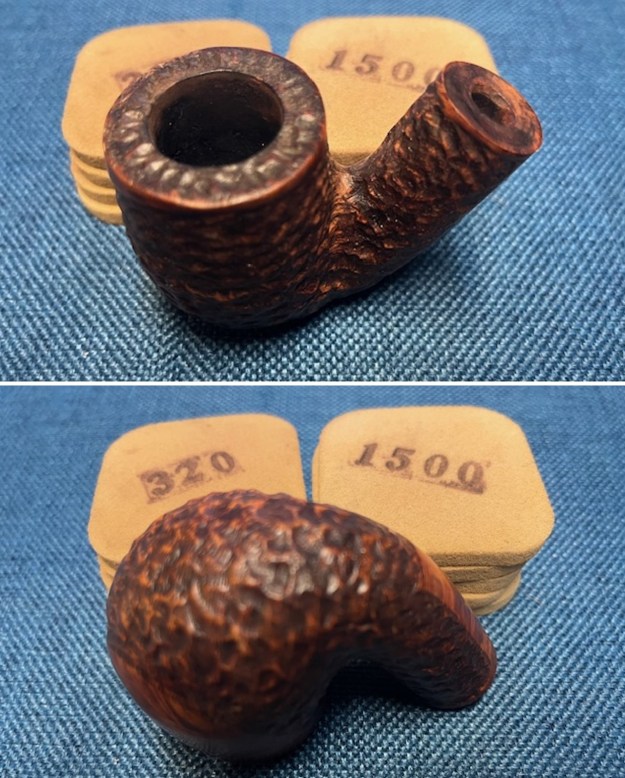
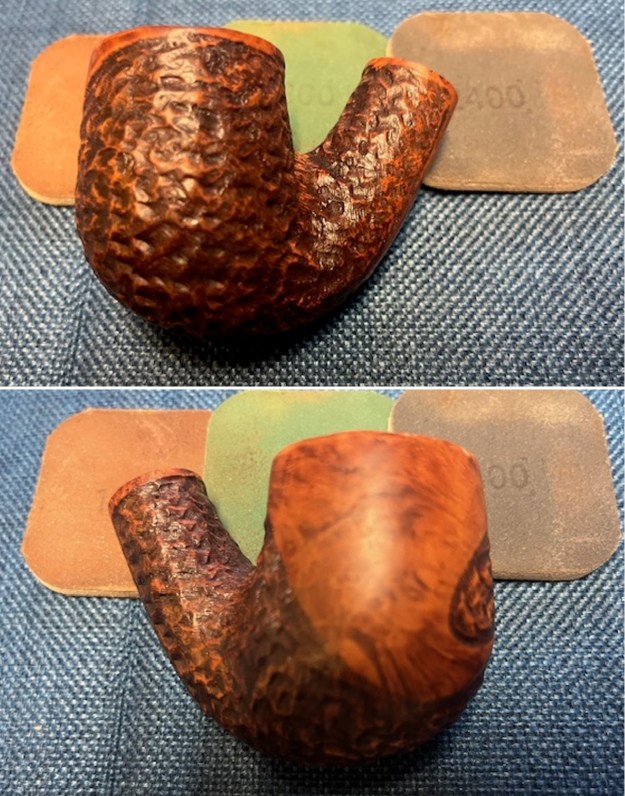
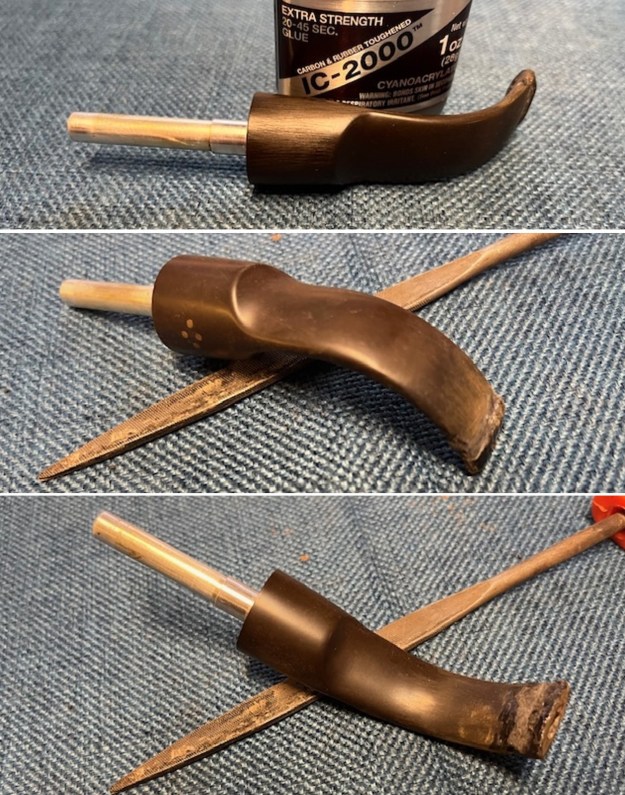
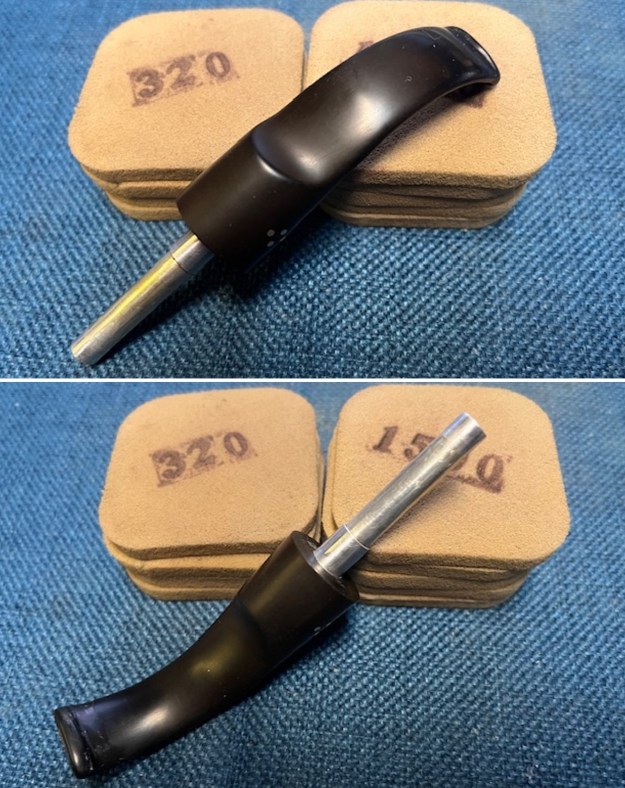
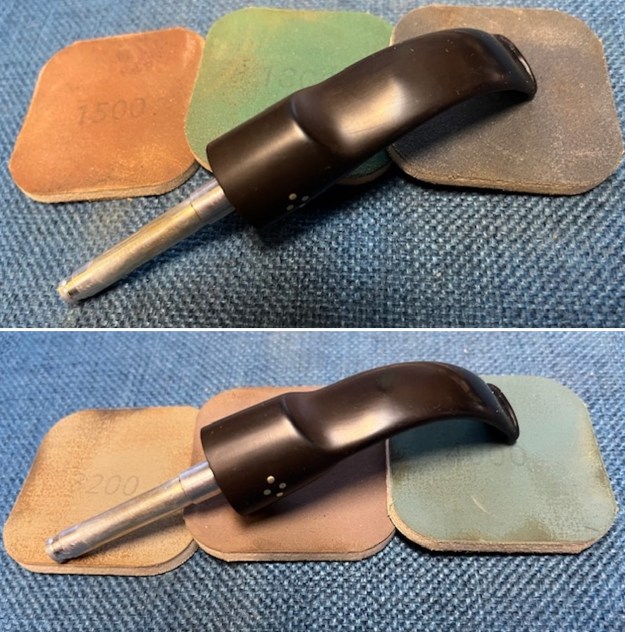
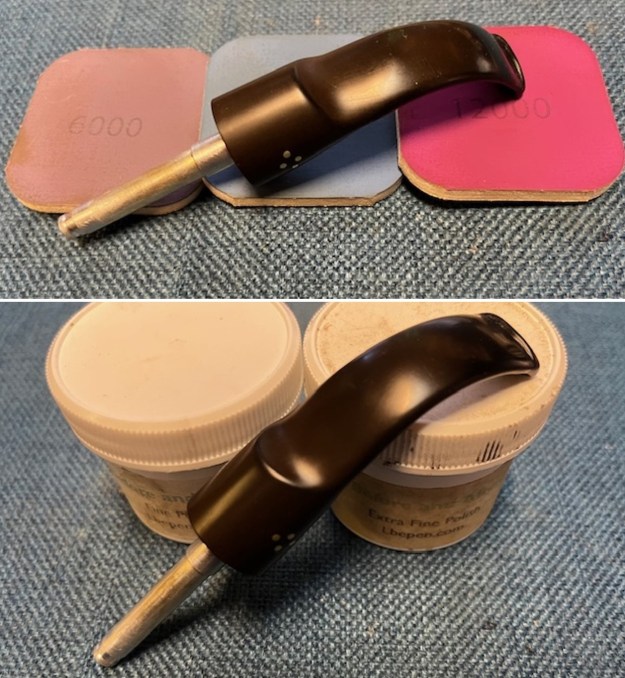
I used a brass bristle wire brush to clean up the debris on the bowl top. The small rusticated patterns were quite filled in with lava and dirt. I reamed the bowl with a PipNet pipe reamer using the second and third cutting head to trim the cake back. I used a Savinelli Fitsall Pipe knife to clean up the remnants leaving bare briar. I sanded the bowl walls with 220 grit sandpaper wrapped around a piece of dowel. The bowl was undamaged under the cake and was now significantly cleaner. I cleaned out the airway in the shank and mortise as well as the stem with cotton swabs, pipe cleaners and isopropyl alcohol. It was dirty but it cleaned up very well. I scrubbed the surface of the briar with undiluted Murphy’s Oil Soap and a tooth brush. I rinsed it with warm running water and repeated the process until the pipe was clean. It looked much better. I sanded the smooth panel on the right side of the bowl and the smooth ring around the rim top and shank end with 320-3500 grit sanding pads. I wiped the bowl down after each sanding pad with a damp cloth to remove the sanding debris. I polished the smooth portions of the briar with 1500-12000 micromesh sanding pads – dry sanding the bowl with the pads and wiping it down after each sanding pad to remove the sanding debris. It is looking much better. I left the nicks on the outer edge as they are a part of the pipe’s journey. I rubbed the bowl down with Before & After Restoration Balm. I worked it into the surface of the briar with my fingertips and a shoe brush to work it into the rustication. The product works to clean, restore and preserve the briar. I let it do its magic for 15 minutes then buffed it off with a cotton cloth. The pipe looks very good at this point in the process. I set the bowl aside and turned my attention to the vulcanite saddle stem. I cleaned the stem area around where Stephen’s father had cut off the damaged button and notched the side of the stem. I used alcohol and cotton swabs. I rebuilt the button on both sides of the stem with black CA glue. I also filled in the notches with the glue. I layered it on multiple times to build up the button surface. The glue I use has both rubber and carbon in the mix that harden as it dries but does not become brittle. Once it cured I flattened the repairs and reshaped the button edge with a flat needle file. I gave the button top and bottom as well as the notches another layer or two of black CA glue. Once it cured I continued the process of reshaping and then sanded the stem with a folded piece of 220 grit sandpaper. I sanded the stem with 320-3500 grit sanding pads. I wiped the stem down after each sanding pad to remove the sanding debris and dust. The stem looked very good. I polished the stem with micromesh sanding pads – 1500-12000 grit pads. I wiped it down with an Obsidian Oil cloth after each sanding pad.  I finished polishing it with Before & After Pipe Stem Polish – both Fine and Extra Fine and buffed it off with a cotton cloth. I gave it a coat of Obsidian Oil to preserve and protect the stem. I fitted the tenon system with a Brigham Hard Rock Maple Filter. It fit well and the pipe is ready to smoke with it in place. This Brigham 4244 Full Bent Four Dot Director is a great looking pipe now that it has been restored. The mix of brown stains really highlight the grain and the polished finish has depth. The nicks on the outer edge give a bit of character and history to the pipe. I put the vulcanite stem with the rebuilt button back on the bowl and carefully buffed the pipe with Blue Diamond on the buffing wheel. I gave the bowl and the stem multiple coats of carnauba wax on the buffing wheel and followed that by buffing the entire pipe with a clean buffing pad. I hand buffed the pipe with a microfiber cloth to deepen the shine. The finished Brigham 4244 Full Bent Four Dot Director fits nicely in the hand and feels great. Give the finished pipe a look in the photos below. The dimensions of the pipe are Length: 5 ½ inches, Height: 2 inches, Outside diameter of the bowl: 1 ½ inches, Chamber diameter: 7/8 of an inch. The weight of the pipe is 66 grams /2.33 ounces. I had finished the stem tightening on two of Stephen’s personal pipes and cleaned them up. This is the last of the other four of Stephen’s pipes that needed to be worked on and restored. I will give him a call in the week ahead and get them back to him to enjoy with his father.
As always, I encourage your questions and comments as you read the blog. Thanks to each of you who are reading this blog. Remember we are not pipe owners; we are pipe men and women who hold our pipes in trust until they pass on into the trust of those who follow us.

Fitting a Shank and Stem to a well Patinaed Meerschaum


by Steve Laug

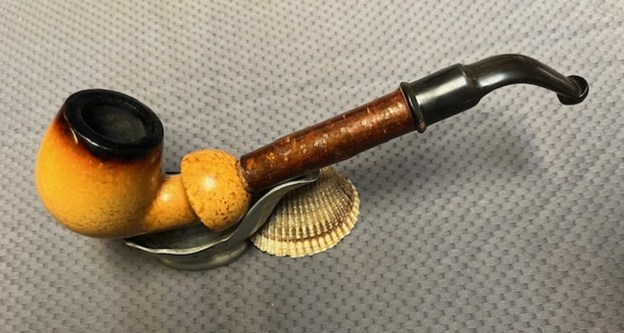
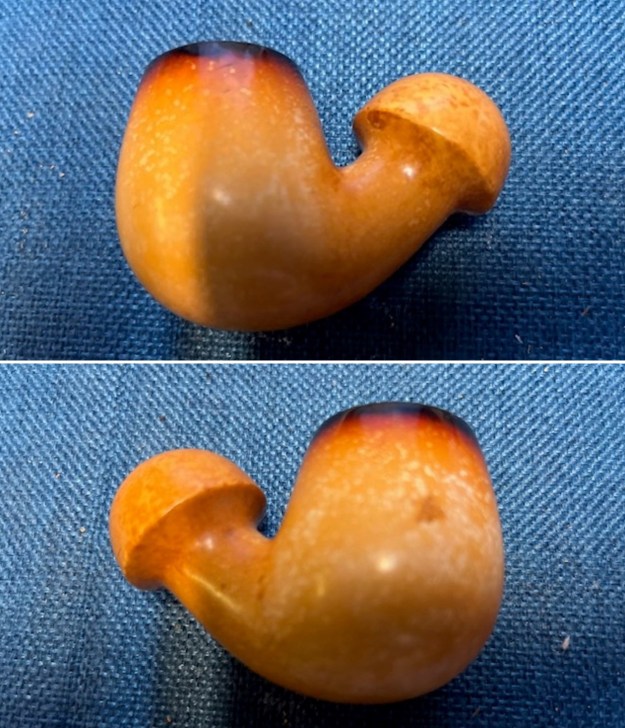
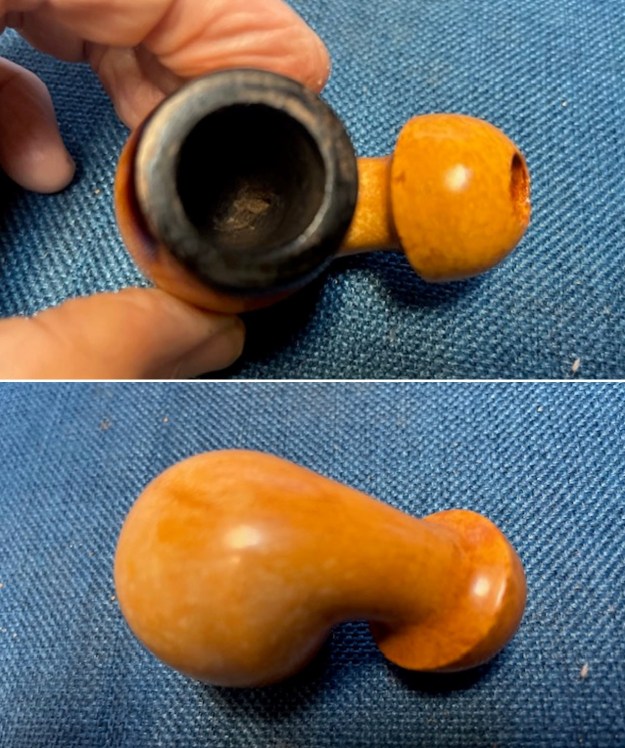
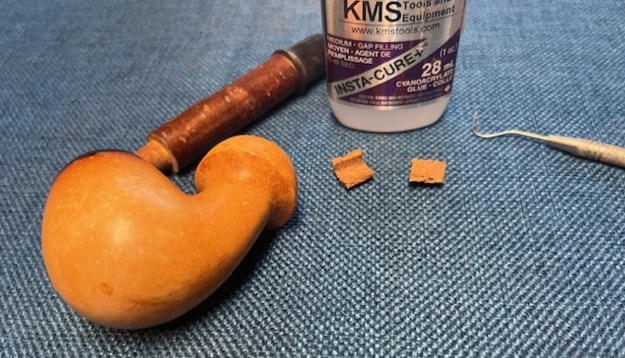
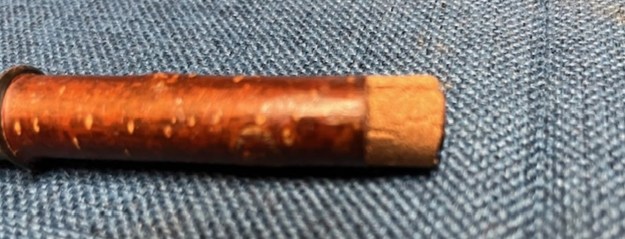
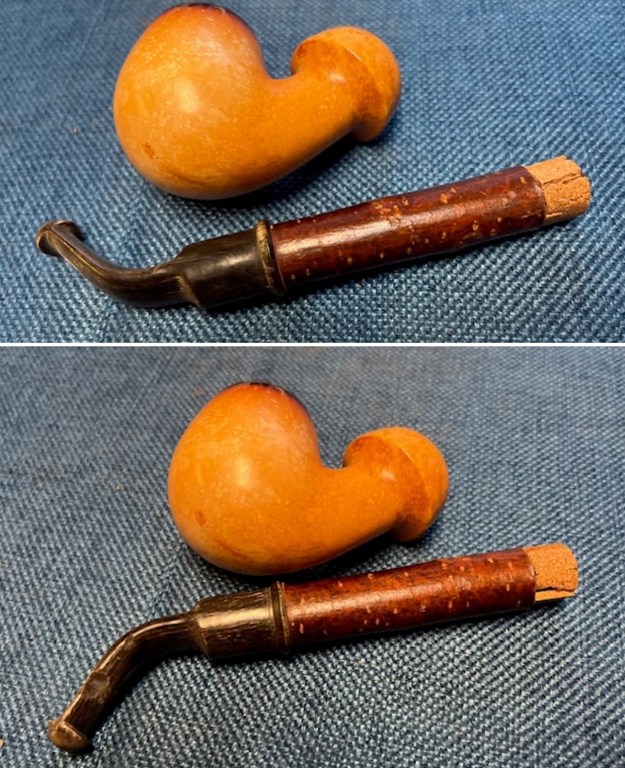
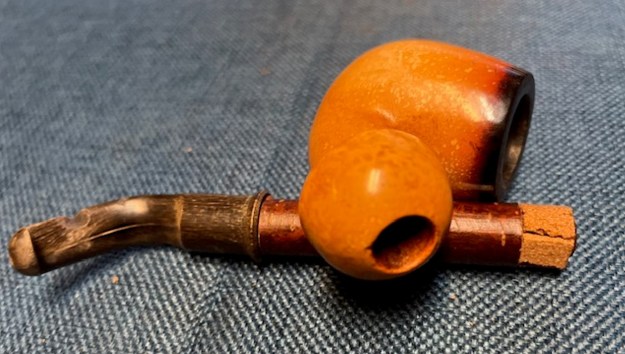
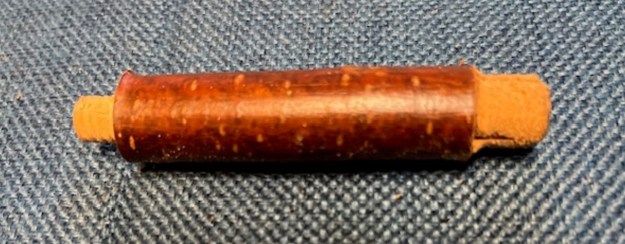
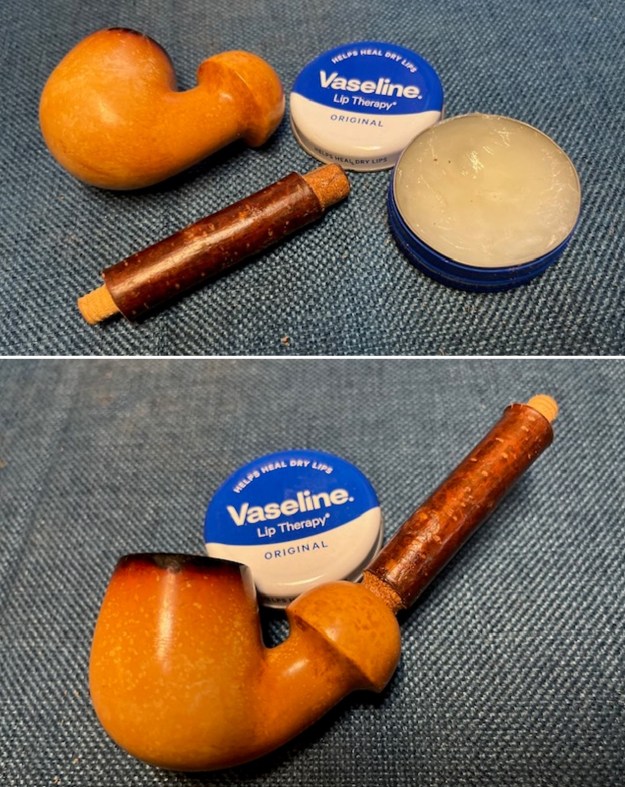
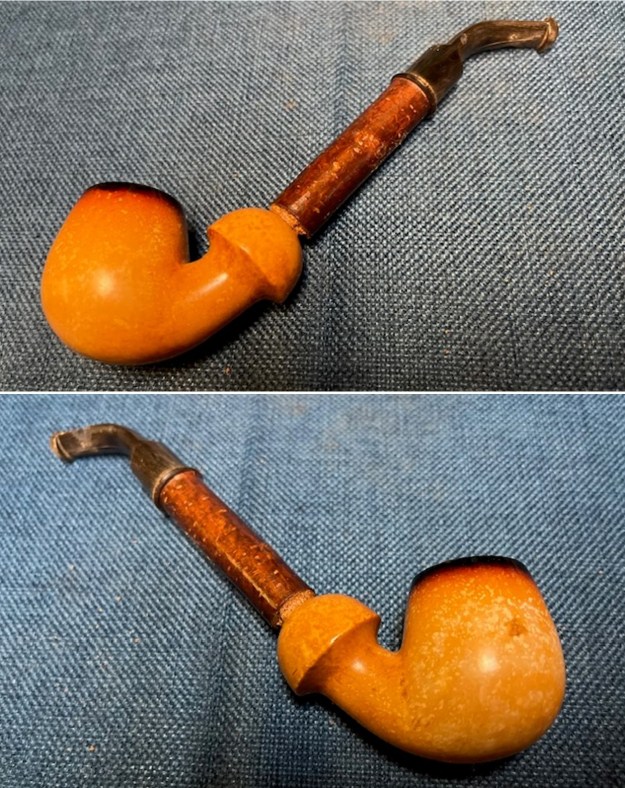
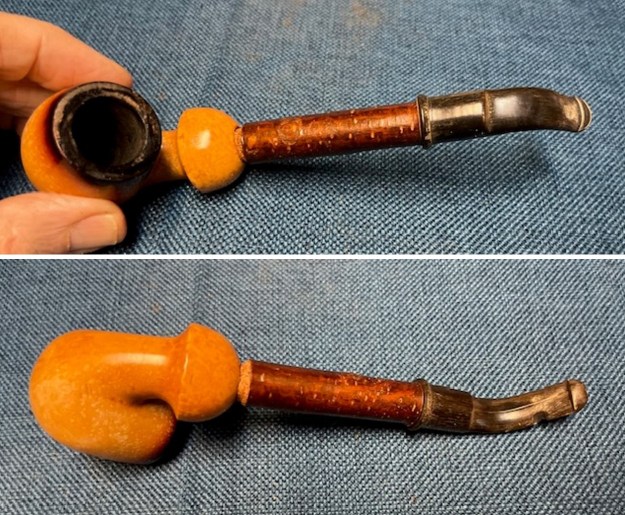
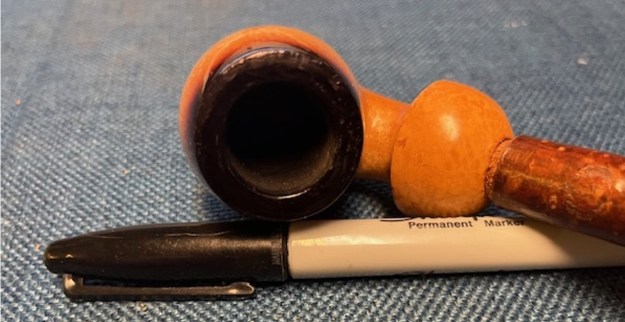
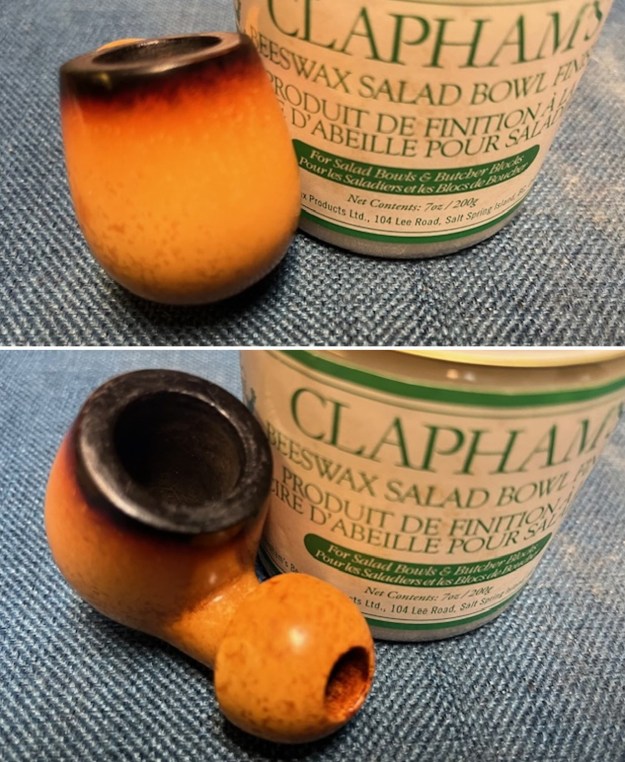
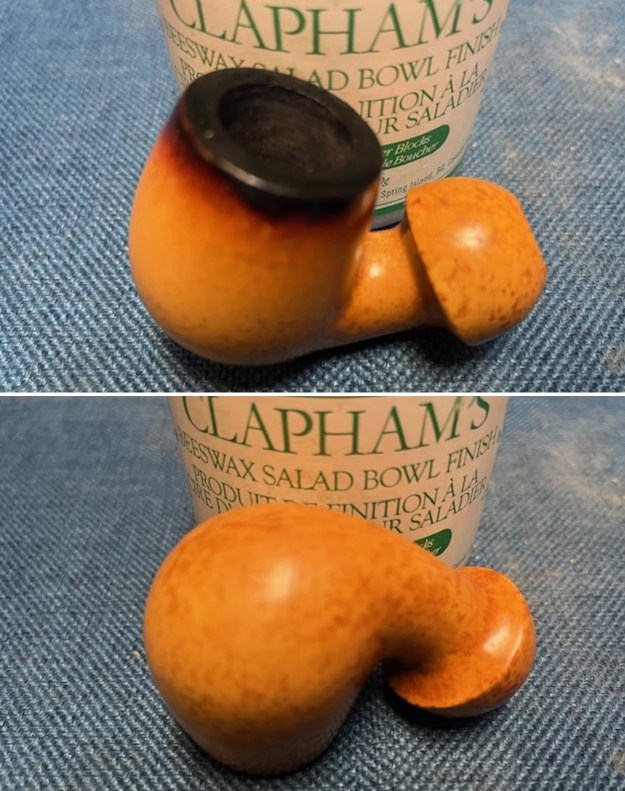
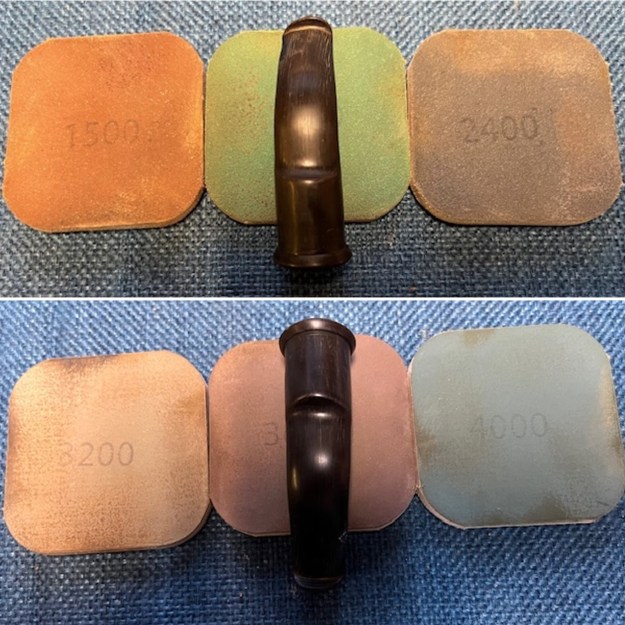
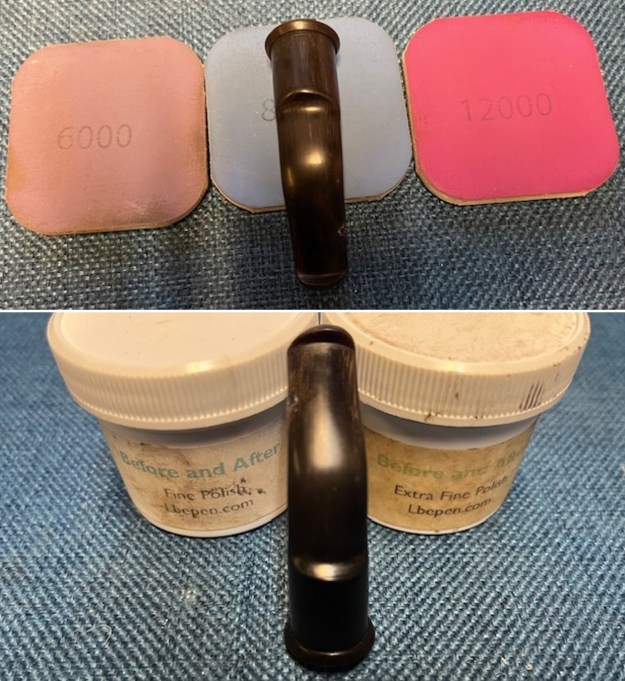
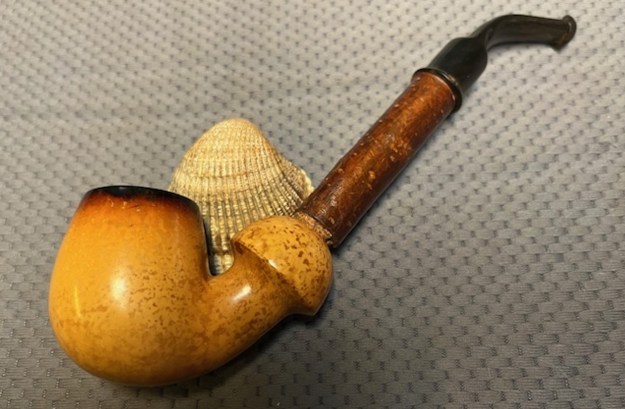
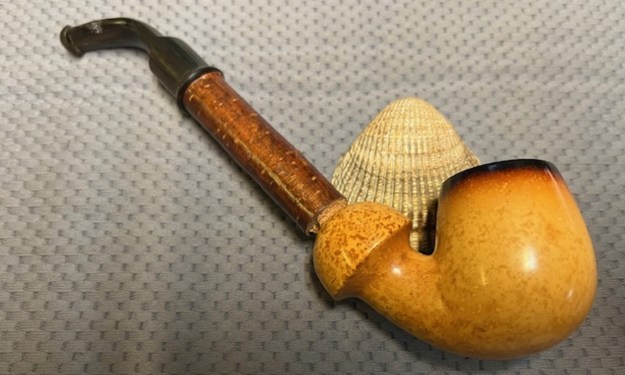
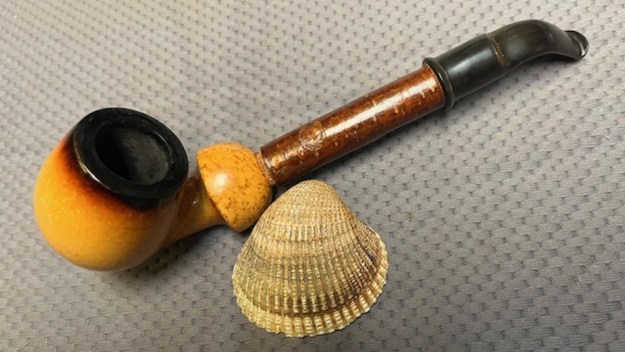
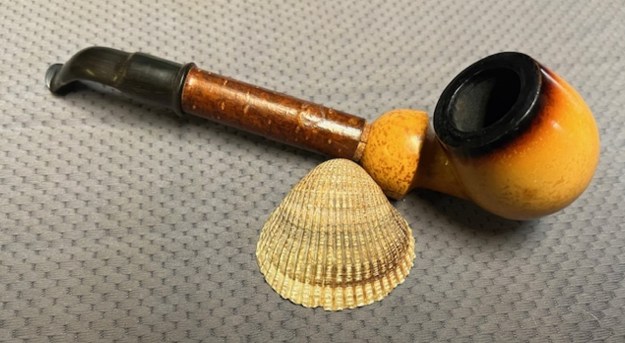
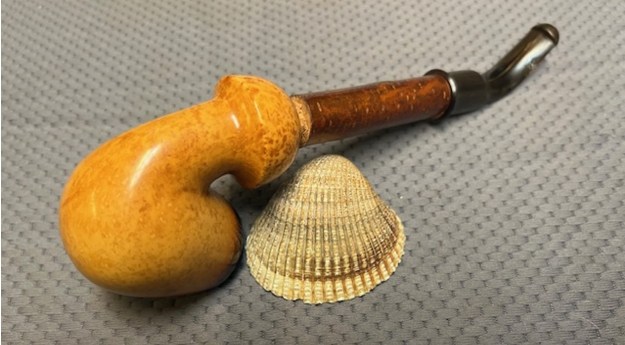
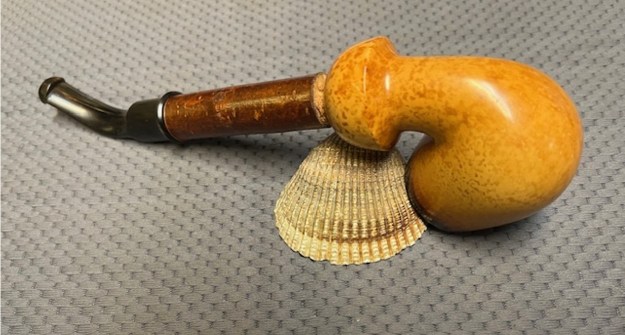
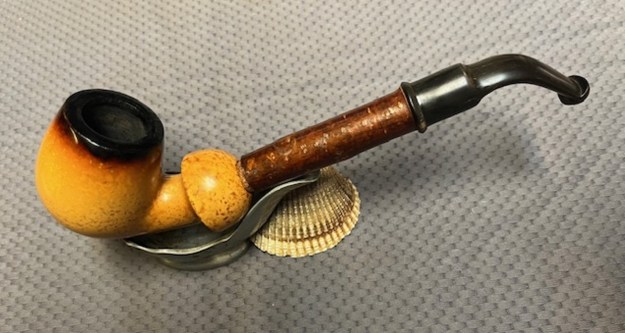
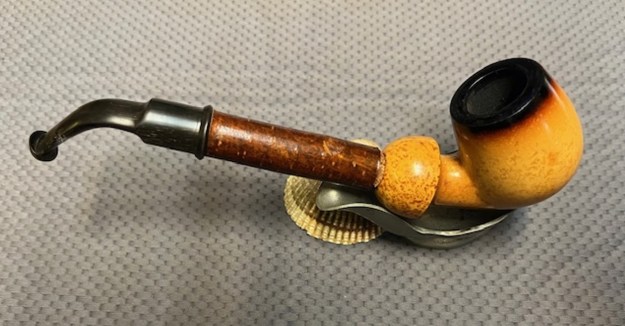
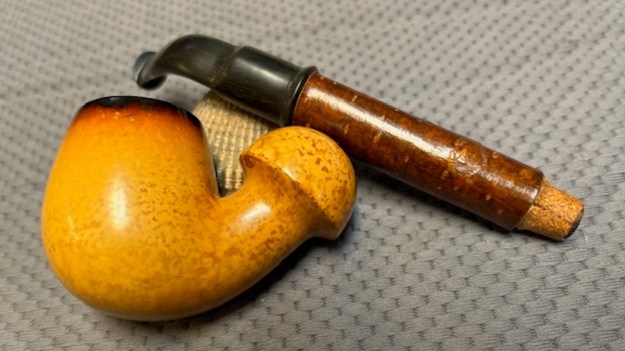
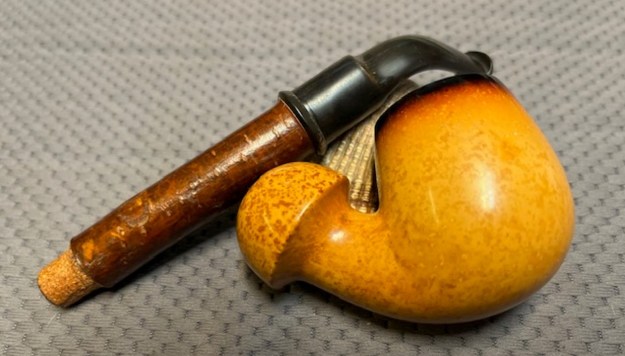
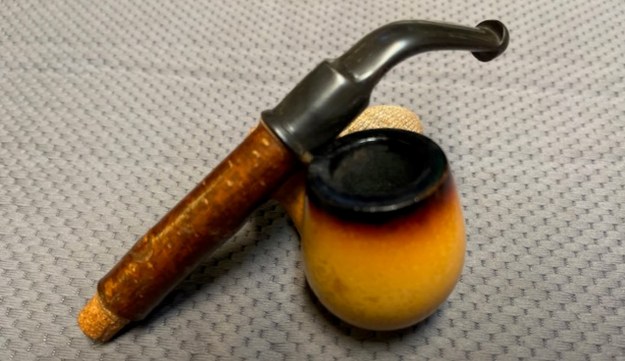
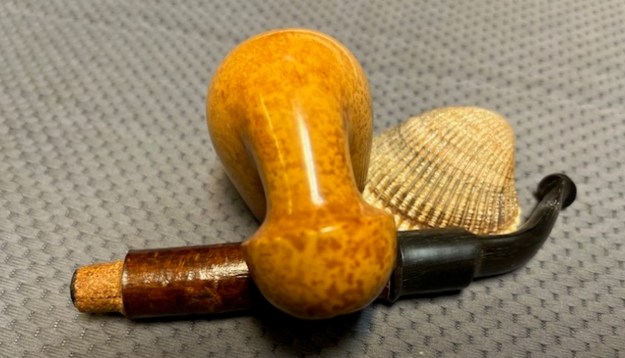
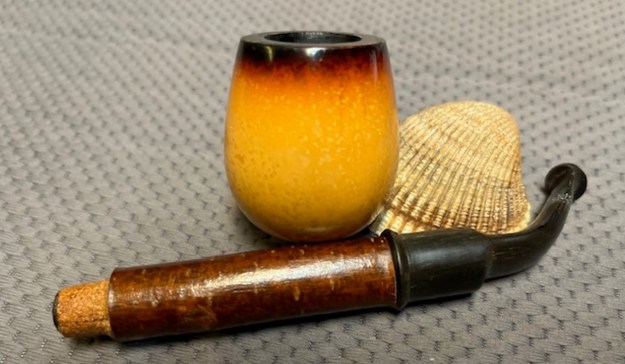
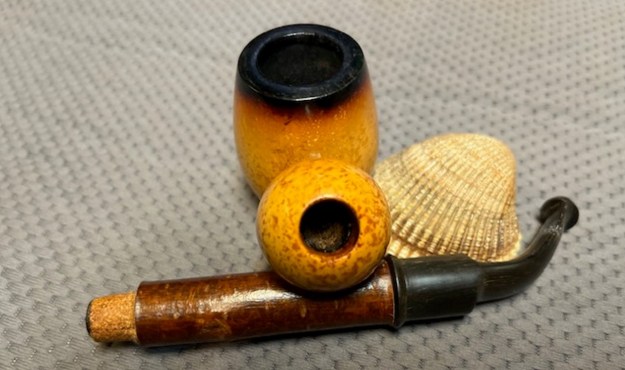
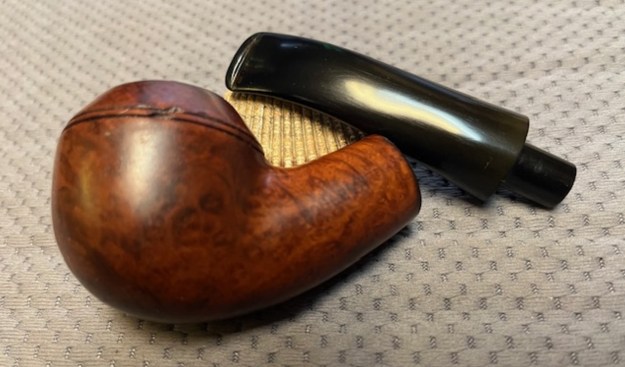
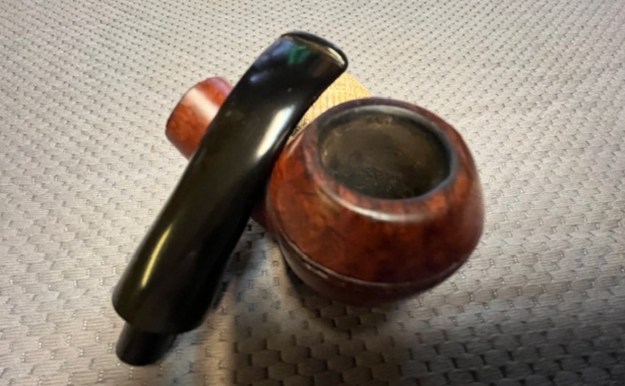
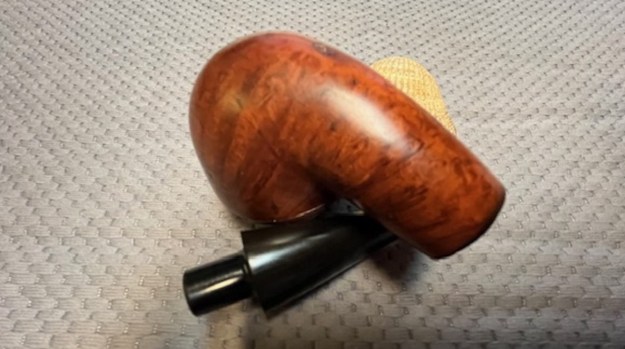
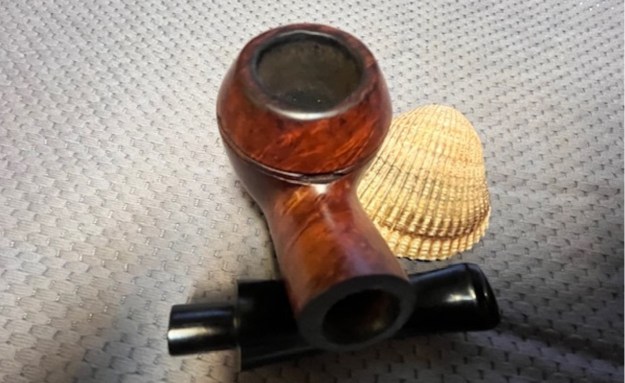
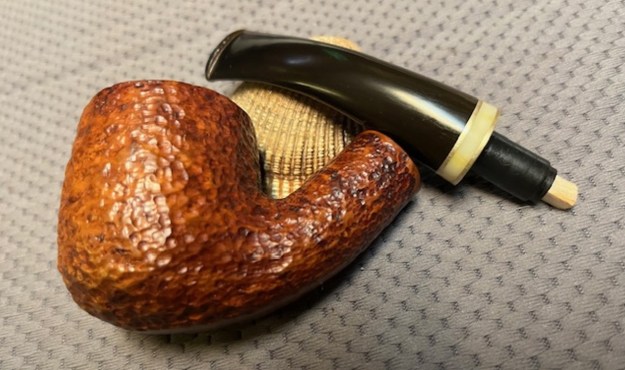
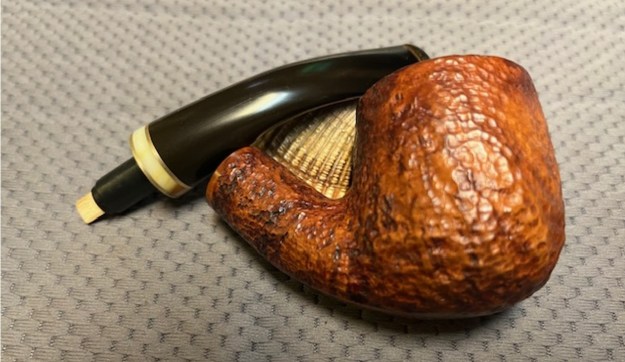
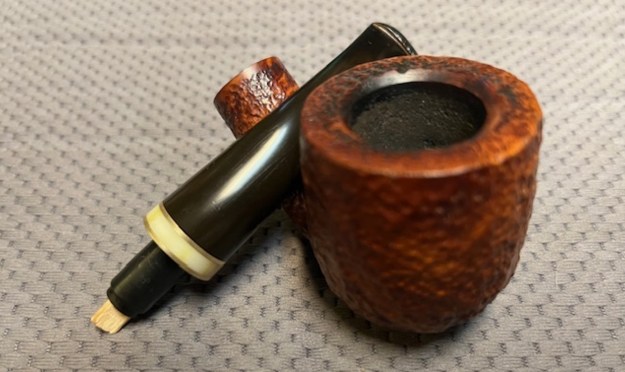
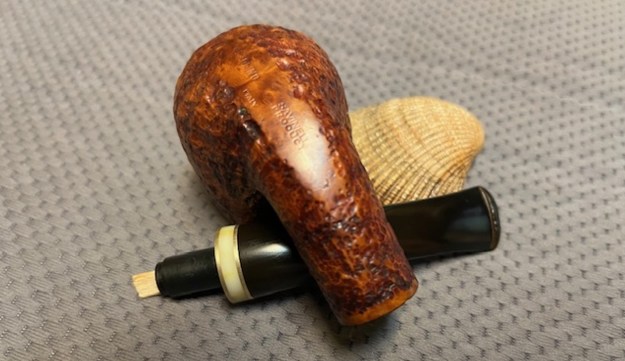
I have had this older meerschaum bowl in my box of pipes to restem for a long time. I have no idea where we picked it up but this older style bowl always catches my attention. The mushroom shaped shank, the patina on the meer and the darkened, or flumed, edge of the bowl all catch my eye. I have worked on quite a few of these in the past and most had cherrywood shanks and horn stems. I was going through my box of bowls the other evening and once again this one really caught my eye. The finish is clean with a very nice patina. The bowl is very clean with no cake build up and appears to have been well maintained. The rim top is clear of debris and lava and the fluming is faded in spots around the top. The shank is also clean and appears to have been cleaned before we set it aside. I don’t know about you all but when you have a lot of pipes to work on sometimes it is easy to forget what has been done on the pipes in boxes. I took some photos of the pipe to give a sense of what it looked like when I removed it from the box. I went through my stems and found a cherrywood shank and horn stem that would work well with the pipe. I would need to glue some cork on the tenon of the stem (normal for this style of shank). The cherrywood was in excellent condition but the stem had some worm damage on the sides and a small split in the underside that would need to be repaired.I gave the cork a coat of clear CA glue and pressed it in place on the shank end. I love working with this glue as it cures quickly and holds very well.I took some photos of the parts of the pipe to show the general proportion of the pipe. You can also see the seams in the cork gasket.  But no worries. I still need to sand down the gasket for a fit in the shank and grease it which will bring the seams together. You can also see the worm damage on the horn stem in the second and third photos below. I used my Dremel and sanding drum to reduce the diameter of the cork gasket until it fit well in the shank ed of the bowl.I used some Vaseline petroleum Jelly to soften and preserve the cork gasket. I worked it into the cork with my finger tips and let it sit. I repeated the process and once finished the cork was soft and pliable. It fit well in the shank and was snug and solid.I screwed the stem on the shank to give a sense of what the pipe would look like once finished. I like the look and feel of this one. I touched up the black flume to the rim top with a black Sharpie Pen. I coloured in the edge and the spots on the rim top and inner edge until it was blended in.I gave the bowl multiple coats of Clapham’s Beeswax/Carnauba wax. I applied it by hand and let it cure then buffed it off with a soft cloth to raise a shine. I removed the stem from the cherrywood shank and set the bowl and shank aside. It was time to address the worm damage in the horn stem. I have circled the damaged areas in red in the photos below. I filled in the split on the underside of the stem and the worm damage spots on each side with clear CA glue. I layered it into he damaged areas until it was smooth. Once the repair cured I shaped and flattened the repairs with a small file. I worked over the shape with a folded piece of 220 grit sandpaper. I wanted the edges and surfaces to be smooth. I sanded the stem with 320-3500 grit sanding pads. I wiped the stem down after each sanding pad to remove the sanding debris and dust. The stem looked very good. I polished the stem with micromesh sanding pads – 1500-12000 grit pads. I wiped it down with an Obsidian Oil cloth after each sanding pad.  I finished polishing it with Before & After Pipe Stem Polish – both Fine and Extra Fine and buffed it off with a cotton cloth. I gave it a coat of Obsidian Oil to preserve and protect the stem. This Old Apple Meerschaum with its new Cherrywood and Horn Stem is a great looking pipe now that it has been restored. The patina on the waxed meerschaum gives a sense of depth to the pipe. The flume on the rim and down the outer edge of the bowl is a nice touch. The Cherrywood shank and the rebuilt horn stem go well with this older classic bowl. I carefully buffed the parts of the pipe with Blue Diamond on the buffing wheel. I gave the bowl and the stem multiple coats of Clapham’s Beeswax carefully buffed the entire pipe with a clean buffing pad. I hand buffed the pipe with a microfiber cloth to deepen the shine. The finished Old Apple Meerschaum with its new Cherrywood and Horn Stem fits nicely in the hand and feels great. Give the finished pipe a look in the photos below. The dimensions of the pipe are Length: 7 inches, Height: 1 ¾ inches, Outside diameter of the bowl: 1 ¼ inches, Chamber diameter: ¾ of an inch. The weight of the pipe is 57 grams /1.98 ounces. I will be adding it to the rebornpipes online store in the Meerschaum Pipe Section shortly. Send me an email or a message if you wish to add it to your collection.

As always, I encourage your questions and comments as you read the blog. Thanks to each of you who are reading this blog. Remember we are not pipe owners; we are pipe men and women who hold our pipes in trust until they pass on into the trust of those who follow us.

A SAMHARA Pipe Restoration


I am a sucker for the strange and unique pipes that are a part of the hunt for the cool dry smoke. John did a great job researching the brand and restoring the pipe. Thanks John.

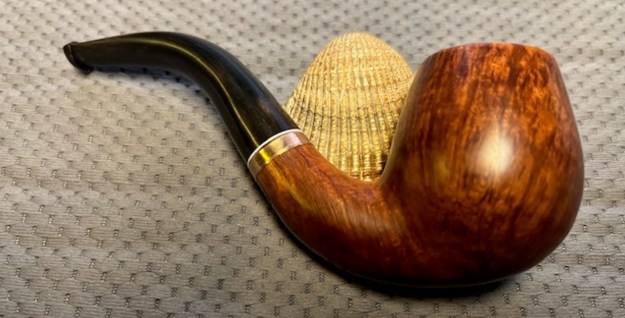
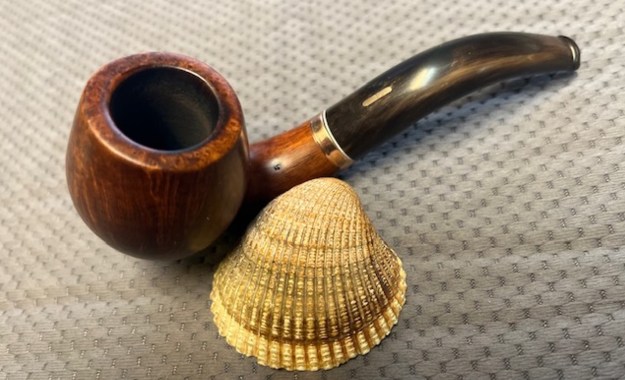
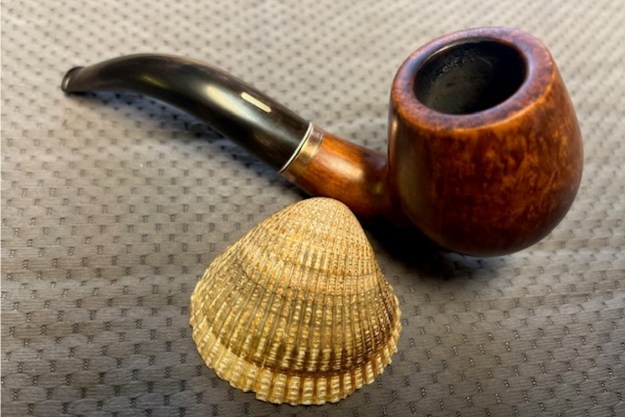
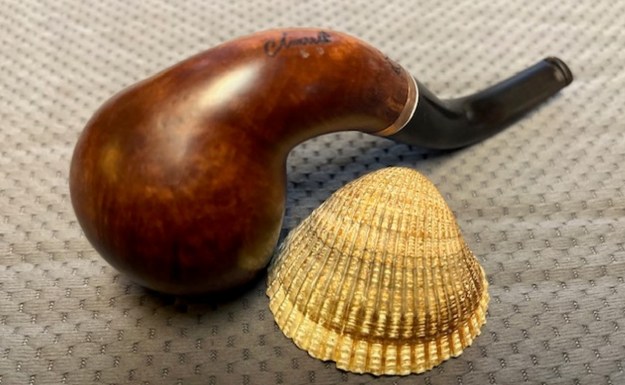
Photographed and written by John M. Young I am strangely attracted to pipes that I call curiosities.  Pipes with potentially innovative designs …

A SAMHARA Pipe Restoration

Restoring the third of six pipes for a Vancouver Pipeman – No Name Bent Rhodesian


by Steve Laug

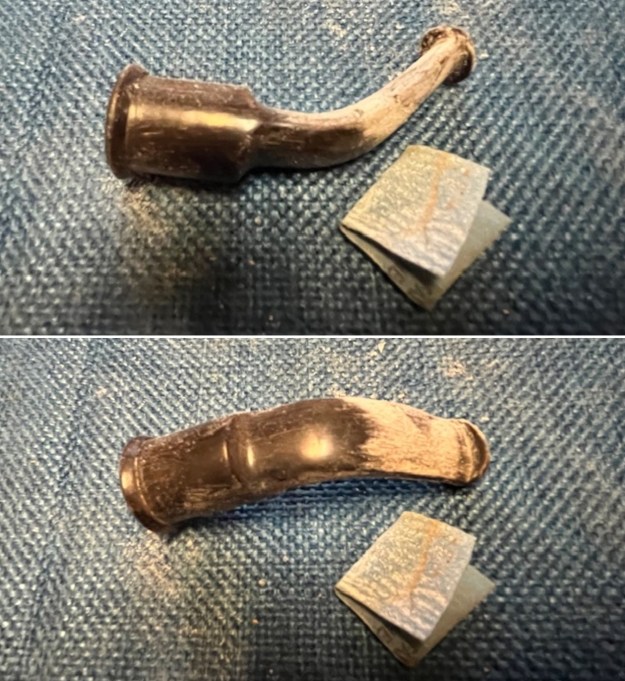
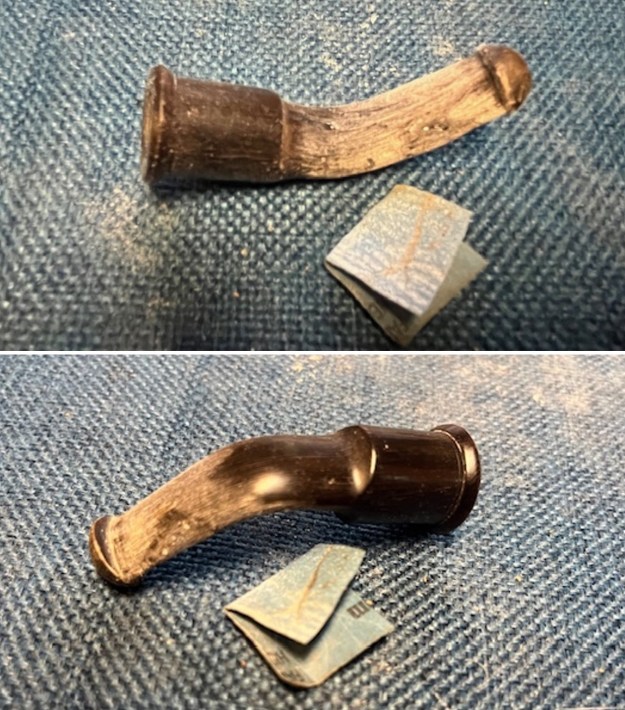
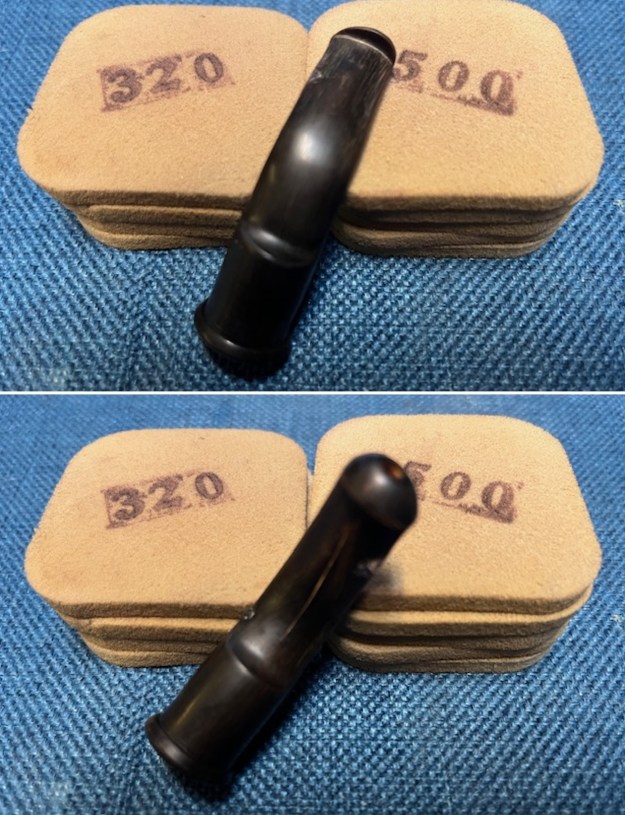
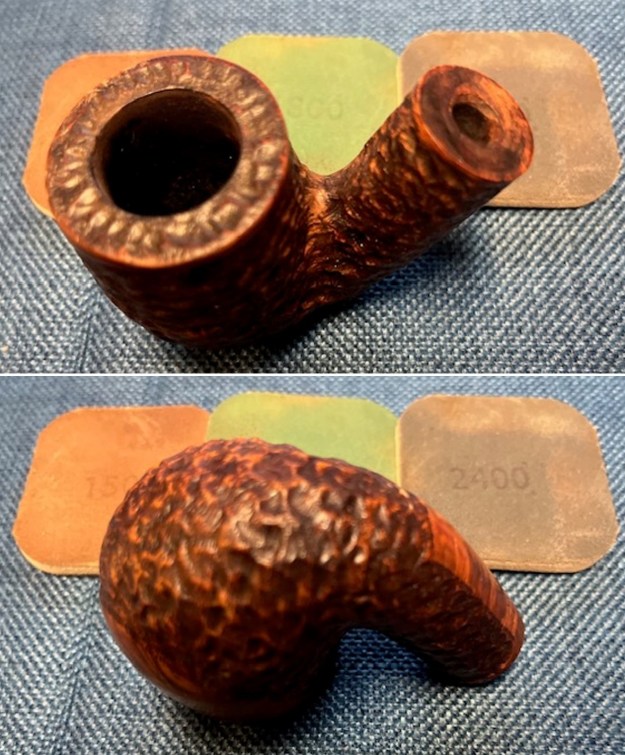
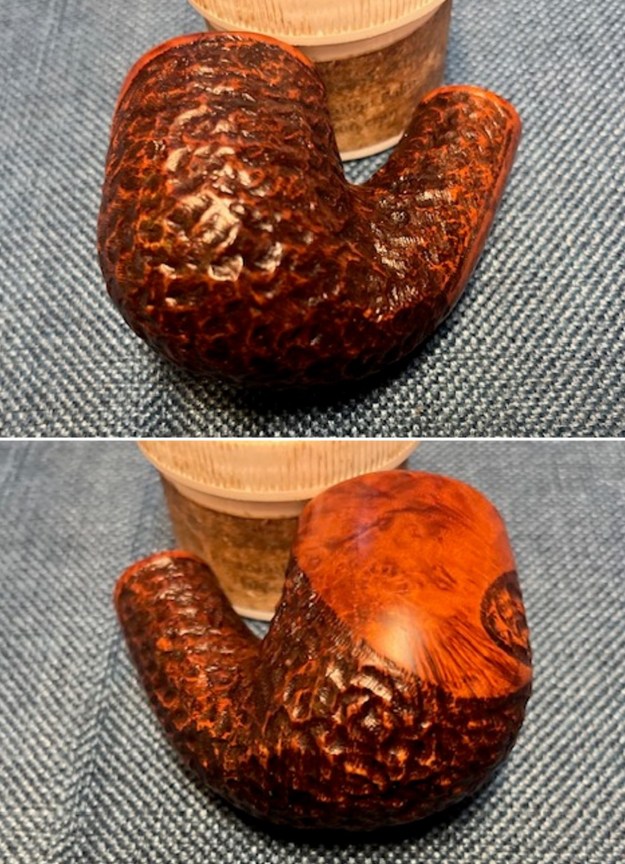
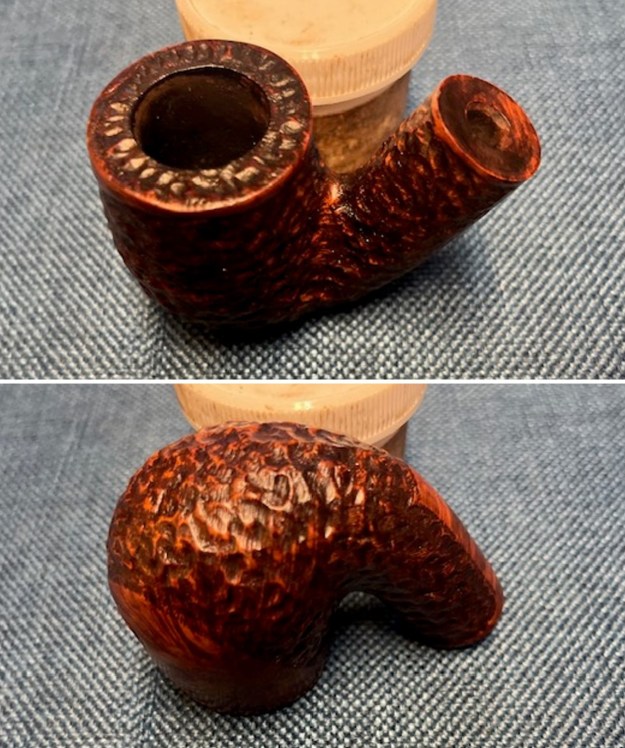
Earlier this week I received an email from Stephen regarding a few more pipe projects that he had for me to work on. He dropped them off here yesterday for me to work on. There were six pipes in the lot. Two were his that I had worked on a few years ago – a Mayfair 1005 rusticated tree stump and a Jost Supreme. Both were favourite pipes of his. One was a Savinelli Bent Billiard that he purchased on a trip to Italy. The final three were pipes that belonged to his father who would soon be visiting him in Vancouver – a Brigham full bent four dot 4244, a Savinelli Portofino Bent Pot and a Bent Rhodesian with no name stamped on the shank sides. Stephen texted me this photo of the pipes before he sent them.I decided to work on the second of Stephen’s father’s pipes. It is a smooth Bent Rhodesian. It is a beautiful grained piece of briar that I can appreciate why he chose it. The pipe is unstamped and does not appear to have even the remnants of any stamping. The briar is dirty from use with a moderate cake in the bowl and a lot of chipping and dents in the rim top and the twin rings on Bullcap on the bowl. The stem was oxidized, calcified and had some tooth marks and chatter on the top and underside of the stem ahead of and on the surface of the button. There is no stamping on the side of the stem as it was unmarked. I took photos of the pipe before I started my work and included them below. I took a photo of the stem surfaces and the bowl and rim to give a sense of condition of the pipe. You can see the cake in bowl and the lava overflow and the heavy nicking and denting on the edges and rim top of the bowl. The stem surface is very dirty and you can see the tooth marks and chatter on both sides ahead of the button. There is also a paper wash inserted in the mortise of the pipe to tighten the fit of the stem.I removed the stem from the shank of the pipe and took a photo of the parts to show the flow of the pipe. It has some great grain.I used a dental spatula to scrape out the paper washer from the inside of the shank. It had been glued to the right side of the shank to thicken the wall of the right side. It was not an effective way as the shank was not drilled evenly. It was straight but the shank was not round. The stem turned the same way the stem was.To address the damage on the rim top I topped it with 220 grit sandpaper on a topping board. I took off the rim damage and smoothed out the top of the rim. It looked much better. I reamed the bowl with a PipNet pipe reamer using the second and third cutting head to trim the cake back. I used a Savinelli Fitsall Pipe knife to clean up the remnants leaving bare briar. I sanded the bowl walls with 220 grit sandpaper wrapped around a piece of dowel. The bowl was significantly cleaner. I cleaned out the airway in the shank and mortise as well as the stem with cotton swabs, pipe cleaners and isopropyl alcohol. It was dirty but it cleaned up very well. I cleaned the surface of the briar with a cotton pad and acetone to remove the grime and the remnants of the finish on the briar. It looked much better.There was a large divot on the bottom of the bowl that I decided to repair. I filled it in with some clear CA glue and pressed briar dust into the glue. I repeated the process until the damaged area was filled in. Once the repair cured I sanded it flat to blend it into the surrounding surface of the briar. It looked much better when I was finished. I sanded the bowl with 320-3500 grit sanding pads. I wiped the bowl down after each sanding pad with a damp cloth to remove the sanding debris. I polished the briar with 1500-12000 micromesh sanding pads – dry sanding the bowl with the pads and wiping it down after each sanding pad to remove the sanding debris. It is looking much better. I left the nicks on the twin rings around the top of the Bullcap as they are a part of the pipe’s journey. I rubbed the bowl down with Before & After Restoration Balm. I worked it into the surface of the briar with my fingertips and a shoe brush to work it into the rings around the Bullcap. The product works to clean, restore and preserve the briar. I let it do its magic for 15 minutes then buffed it off with a cotton cloth. The pipe looks very good at this point in the process. I set the bowl aside and turned my attention to the vulcanite taper stem. I scrubbed the surface of the stem with Soft Scrub to break through the oxidation, calcification and clean up the tooth marks.I filled in the tooth marks on the stem surface and on the surface of the button on both sides with black CA glue. The glue I use has both rubber and carbon in the mix that harden as it dries but does not become brittle. Once it cured I flattened the repairs and reshaped the button edge with a flat needle file. I cleaned up the repaired areas with 220 grit sandpaper. I sanded the stem with 320-3500 grit sanding pads. I wiped the stem down after each sanding pad to remove the sanding debris and dust. The stem looked very good. I polished the stem with micromesh sanding pads – 1500-12000 grit pads. I wiped it down with an Obsidian Oil cloth after each sanding pad.  I finished polishing it with Before & After Pipe Stem Polish – both Fine and Extra Fine and buffed it off with a cotton cloth. I gave it a coat of Obsidian Oil to preserve and protect the stem. This No Name Bent Rhodesian is a great looking pipe now that it has been restored. The mix of brown stains really highlight the grain and the polished finish has depth. The nicks in the rings give a bit of character and history to the pipe. I put the vulcanite stem back on the bowl and carefully buffed the pipe with Blue Diamond on the buffing wheel. I gave the bowl and the stem multiple coats of carnauba wax on the buffing wheel and followed that by buffing the entire pipe with a clean buffing pad. I hand buffed the pipe with a microfiber cloth to deepen the shine. The finished Bent Rhodesian fits nicely in the hand and feels great. Give the finished pipe a look in the photos below. The dimensions of the pipe are Length: 5 inches, Height: 1 ½ inches, Outside diameter of the bowl: 1 inch, Chamber diameter: ¾ of an inch. The weight of the pipe is 48 grams /1.69 ounces. I have three more of Stephen’s pipes to work on. Once I have finished I will get them back to him to enjoy with his father. Thanks for reading this blog and my reflections on the pipe while I worked on it.
As always, I encourage your questions and comments as you read the blog. Thanks to each of you who are reading this blog. Remember we are not pipe owners; we are pipe men and women who hold our pipes in trust until they pass on into the trust of those who follow us.

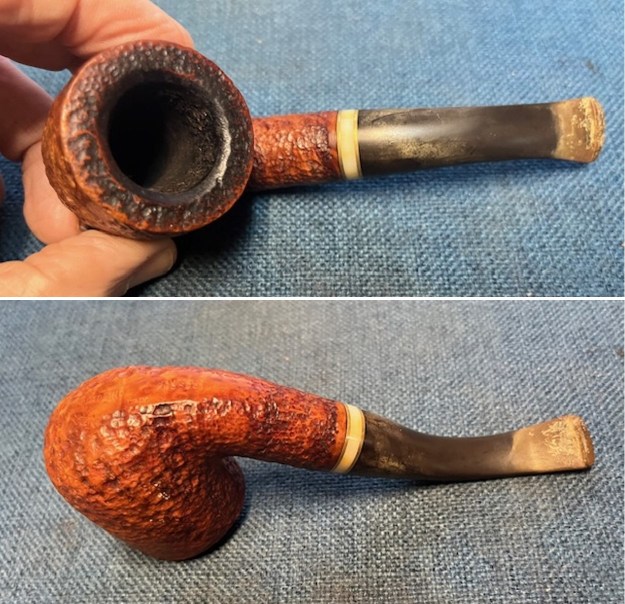
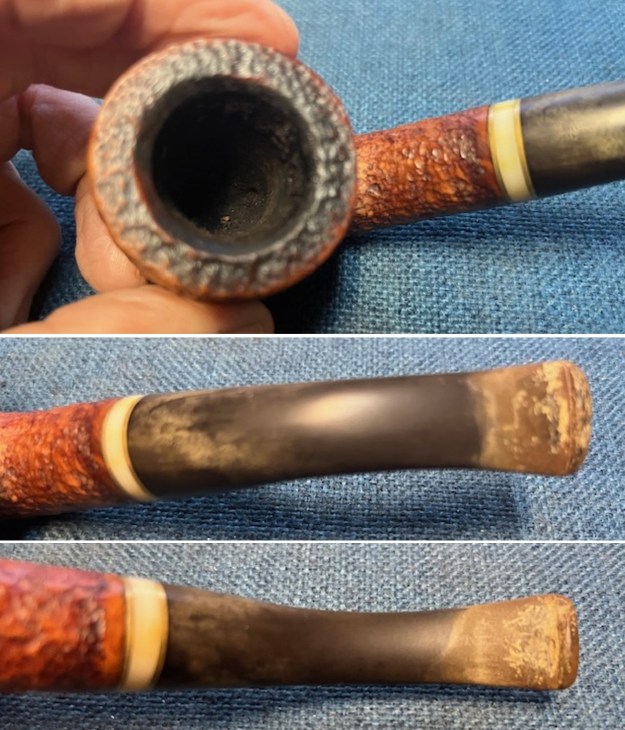
Restoring the second of six pipes for a Vancouver Pipeman – Savinelli Portofino Rusticated Pot


by Steve Laug

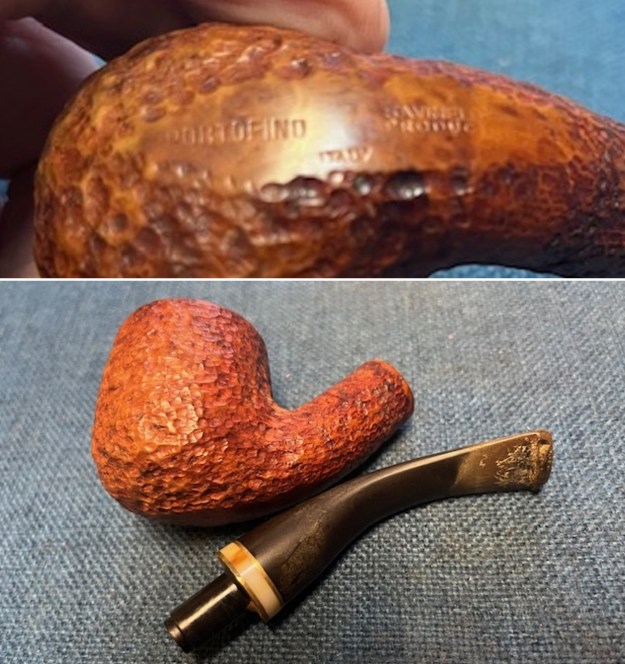
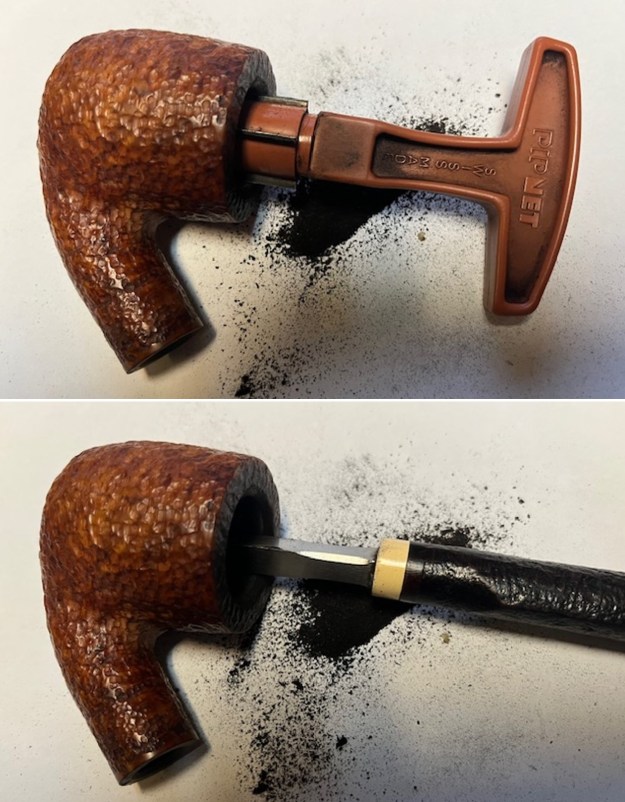
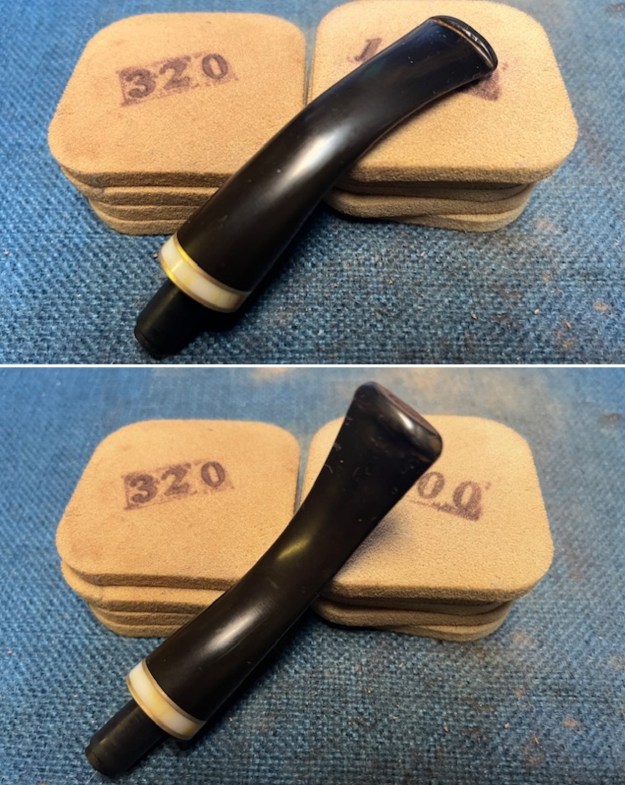
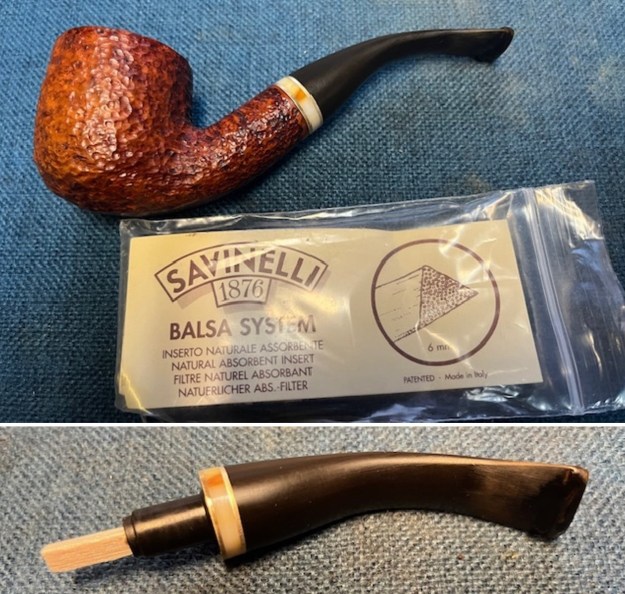
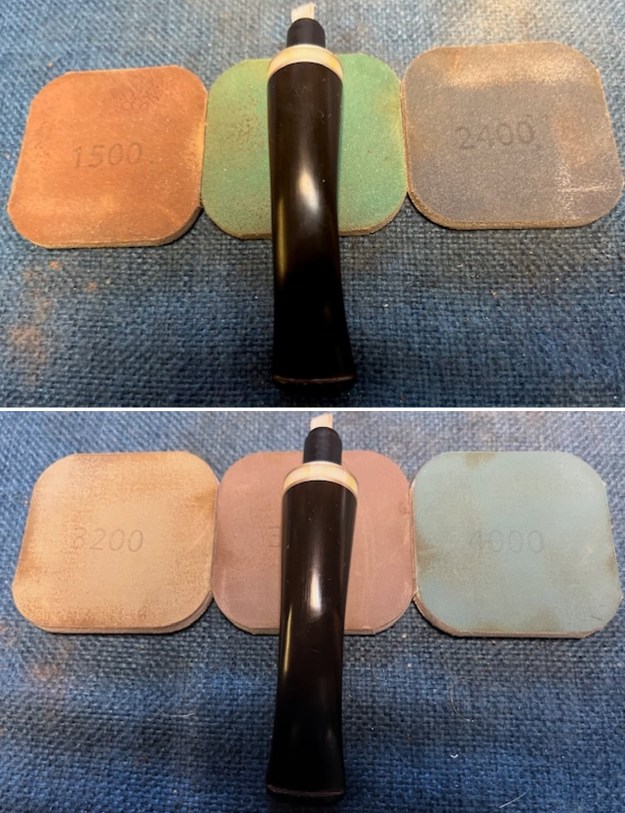
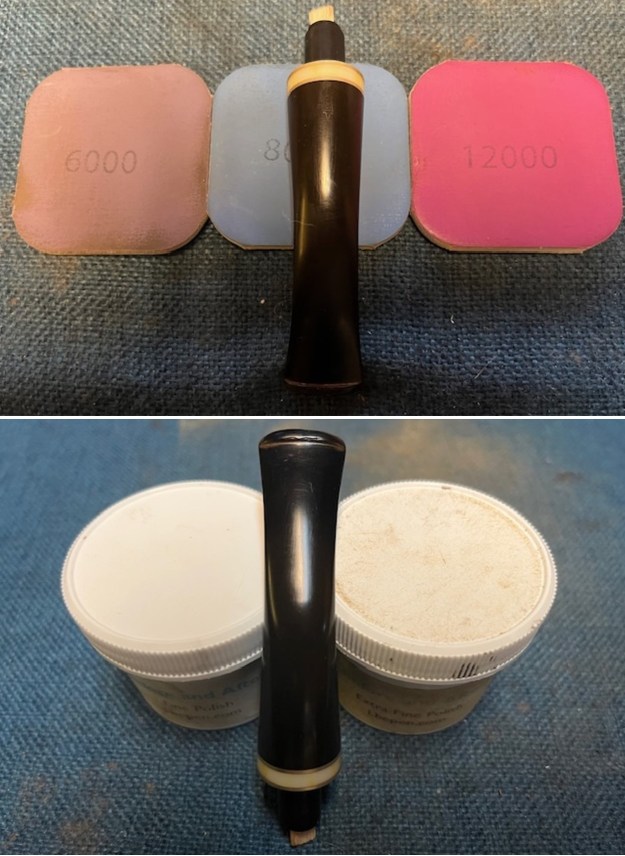
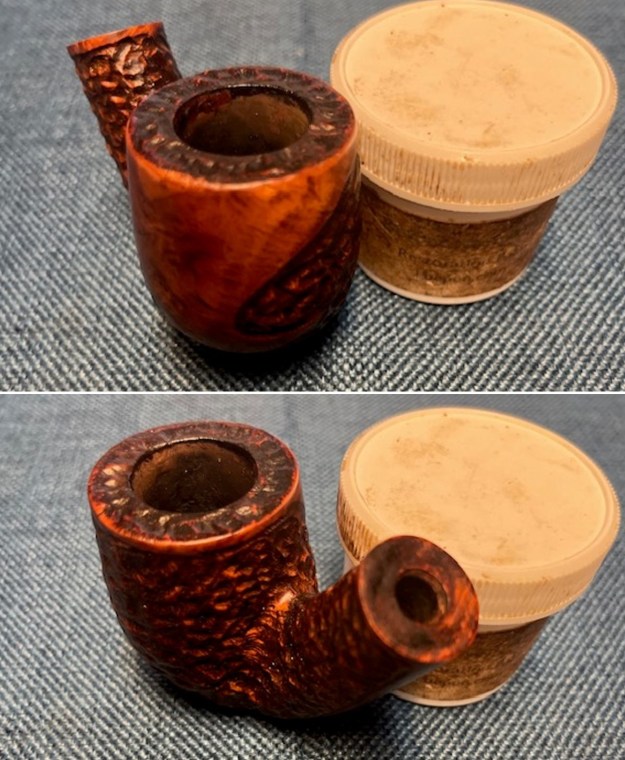
Earlier this week I received an email from Steffen regarding a few more pipe projects that he had for me to work on. He dropped them off here yesterday for me to work on. There were six pipes in the lot. Two were his that I had worked on a few years ago – a Mayfair 1005 rusticated tree stump and a Jost Supreme. Both were favourite pipes of his. One was a Savinelli Bent Billiard that he purchased on a trip to Italy. The final three were pipes that belonged to his father who would soon be visiting him in Vancouver – a Brigham full bent four dot 4244, a Savinelli Portofino Bent Pot and a Bent Rhodesian with no name stamped on the shank sides. Steffen texted me this photo of the pipes before he sent them.This afternoon I decided to work on the first of Steffen’s father’s pipes. It is a rusticated Bent Pot. It is a beautiful grained piece of briar that I can appreciate why he chose it. There is a mother of pearl acrylic disc sandwiched between two brass bands on the end of the stem that provides a separation between the bowl and the vulcanite taper stem. The pipe is stamped on the underside of the shank and heel of the bowl and reads Portofino [followed by] Italy below and to the right [followed by] Savinelli [over] Product. The briar is dirty from use with a moderate cake in the bowl and an overflow of lava on the rusticated rim top. The stem was oxidized, calcified and had some tooth marks and chatter on the top and underside of the stem ahead of the button. There is no stamping on the side of the stem as it was unmarked. It also looked to have been made for a Savinelli Balsa Filter. I took photos of the pipe before I started my work on it. I have included them below. I took a photo of the stem surfaces and the bowl and rim to give a sense of condition of the pipe. You can see the cake in bowl and the lava overflow on the edges and rim top of the bowl. The stem surface is very dirty and you can see the tooth marks and chatter on both sides ahead of the button.I took a photo of the stamping on the sides of the shank. It is clear and readable as noted above. I also took a photo of the bowl with the stem removed. It is a great looking pipe.I cannot find any specific information on the Savinelli Product Portofino Rusticated Pot online. I found pipes for sale on Worthpoint and other sites that were both smooth and rusticated so the name does not imply rusticated pipes. Portofino is a village in NW Italy, SE of Genoa: tourist resort. The brand is thus part of a collection of pipes made by Savinelli named after villages in Italy. I have included a photo of the village from a tourist site.Now it was time to start working on the pipe itself. I reamed it with a PipNet pipe reamer using the second and third cutting head to trim the cake back. I used a Savinelli Fitsall Pipe knife to clean up the remnants leaving bare briar. I sanded the bowl walls with 220 grit sandpaper wrapped around a piece of dowel. The bowl was significantly cleaner. I scrubbed the externals of the bowl with a tooth brush and some undiluted Muprhy’s Oil Soap.  I rinsed the bowl down with warm water to remove the debris and dust. The bowl looked muc better. I worked on the rim top with a brass bristle wire brush to clean up the debris on the rim top. It looked significantly better.I cleaned out the airway in the shank and mortise as well as the stem with cotton swabs, pipe cleaners and isopropyl alcohol. It was dirty but it cleaned up very well.   I rubbed the bowl down with Before & After Restoration Balm. I worked it into the surface of the briar with my fingertips. It works to clean, restore and preserve the briar. I let it do its magic for 15 minutes then buffed it off with a cotton cloth. The pipe looks very good at this point in the process. I set the bowl aside and turned my attention to the vulcanite taper stem. I scrubbed the surface of the stem with Soft Scrub to break through the oxidation, calcification and clean up the tooth marks.I filled in the tooth marks on the stem surface and on the surface of the button on both sides with black CA glue. The glue I use has both rubber and carbon in the mix that harden as it dries but does not become brittle. Once it cured I flattened the repairs and reshaped the button edge with a flat needle file. I cleaned up the repaired areas with 220 grit sandpaper. I sanded the stem with 320-3500 grit sanding pads. I wiped the stem down after each sanding pad to remove the sanding debris and dust. The stem looked very good. The stem was drilled to fit a Savinelli Balsa System filter. I removed a new filter from the package of Balsa filters and fit one in the tenon of the stem. It fit well and looked good.I polished the stem with micromesh sanding pads – 1500-12000 grit pads. I wiped it down with an Obsidian Oil cloth after each sanding pad. I finished polishing it with Before & After Pipe Stem Polish – both Fine and Extra Fine and buffed it off with a cotton cloth. I gave it a coat of Obsidian Oil to preserve and protect the stem. This Savinelli Product Portofino Rusticated Pot is a great looking pipe now that it has been restored. The mix of brown stains really highlight the grain under the rustication and the polished finish has depth. I put the vulcanite stem back on the bowl and carefully buffed the pipe with Blue Diamond on the buffing wheel. I gave the bowl and the stem multiple coats of carnauba wax on the buffing wheel and followed that by buffing the entire pipe with a clean buffing pad. I hand buffed the pipe with a microfiber cloth to deepen the shine. The finished Savinelli Product Portofino Pot fits nicely in the hand and feels great. Give the finished pipe a look in the photos below. The dimensions of the pipe are Length: 5 ½ inches, Height: 1 ¾ inches, Outside diameter of the bowl: 1 ½ inches, Chamber diameter: 1 inch. The weight of the pipe is 67 grams /2.33 ounces. I have five more of Stephen’s pipes to work on. Once I have finished I will get them back to him to enjoy with his father. Thanks for reading this blog and my reflections on the pipe while I worked on it.
As always, I encourage your questions and comments as you read the blog. Thanks to each of you who are reading this blog. Remember we are not pipe owners; we are pipe men and women who hold our pipes in trust until they pass on into the trust of those who follow us.
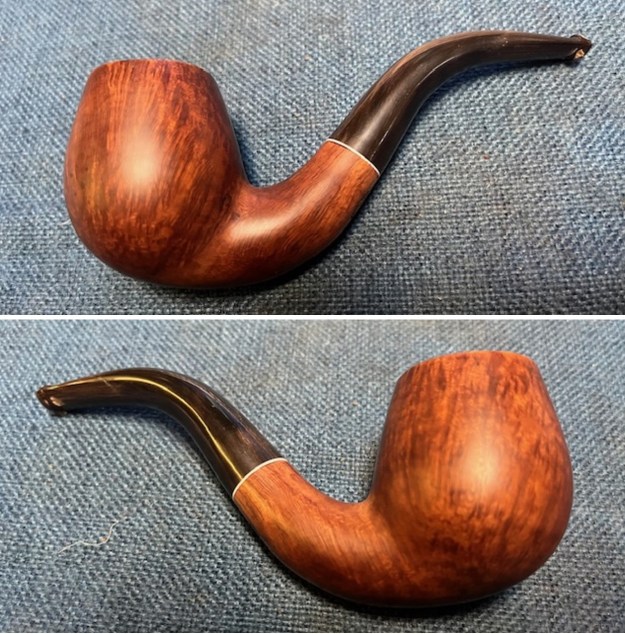
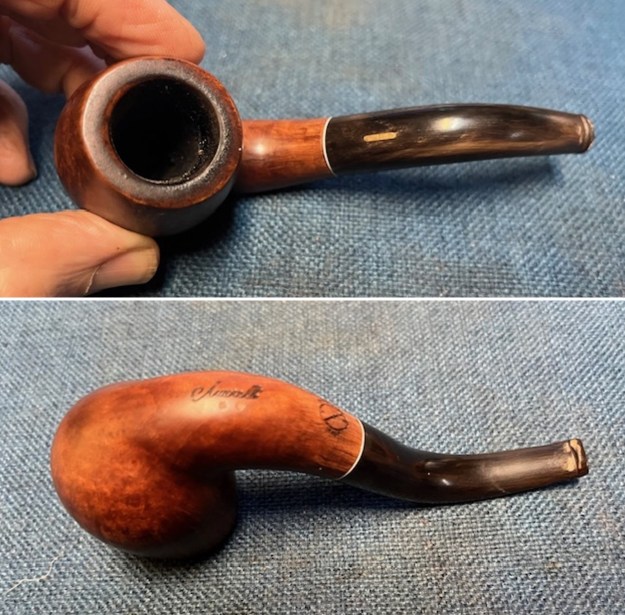
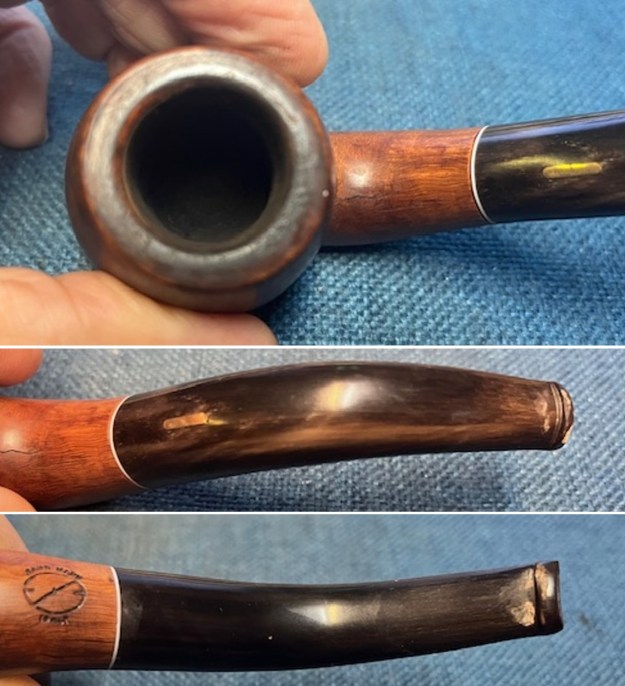
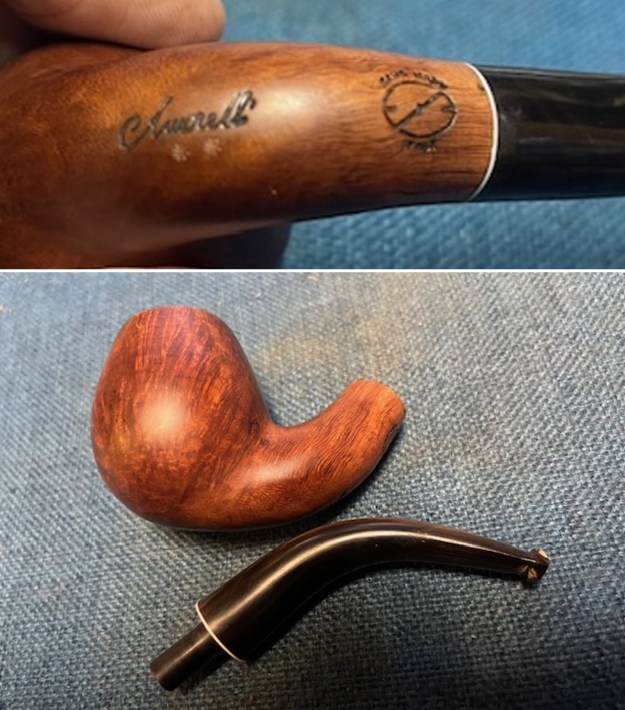
Restoring the first of six pipes for a Vancouver Pipeman – An Amorelli ** Hand Made Bent Egg


by Steve Laug

Earlier this week I received an email from Stephen regarding a few more pipe projects that he had for me to work on. He dropped them off here yesterday for me to work on. There were six pipes in the lot. Two were his that I had worked on a few years ago – a Mayfair 1005 rusticated tree stump and a Jost Supreme. Both were favourite pipes of his. One was a Amorelli Bent Billiard that he purchased on a trip to Italy. The final three were pipes that belonged to his father who would soon be visiting him in Vancouver – a Brigham full bent four dot 4244, a Savinelli Portofino Bent Pot and a Bent Rhodesian with no name stamped on the shank sides. Stephen texted me this photo of the pipes before he sent them.This morning I decided to work on the pipe that Stephen brought home with him from Italy. It is a unique looking Bent Egg or Billiard. It is a beautiful grained piece of briar that I can appreciate why he chose it. There is a white acrylic disc on the end of the stem that provides a separation between the bowl and the horn stem. The pipe is stamped on the underside of the and reads Amorelli ** [followed by] Hand Made [over] what looks like a clock stamp [over] Italy. The clock appears to read 7:05 or 20 minutes to 2. I have no idea what that means at this point in the process. The briar is dirty from use with a moderate cake in the bowl and an overflow of lava on the rim top. The top of the shank had developed a series of small cracks that ran from just behind the bowl junction to almost the shank end. The horn stem appeared to be older and had some tooth marks and chatter on the top and underside of the stem ahead of the button. It is beautiful striated with dark and lighter strips running the length of the stem. It is narrowly tapered backward to the button. There an inset brass (gold??) bar logo in the top of the stem. It reminds me of horn stems from the past in terms of the shape of the stem and button and the slot. I took photos of the pipe before I started my work on it. I have included them below. I took a photo of the stem surfaces and the bowl and rim to give a sense of condition of the pipe. You can see the cake in bowl and the lava overflow on the edges and rim top of the bowl. The horn stem surface is very dirty and you can see the tooth marks and chatter on both sides ahead of the button.I took a photo of the stamping on the sides of the shank. It is clear and readable as noted above. I also took a photo of the bowl with the stem removed. It is a great looking pipe.I could not find any information on the Savinelli ** Hand Carved online so I wrote an email to Savinelli to see if I could gather any information. They responded and pointed me in the right direction. The pipe is actually an Amorelli ** Hand Carved Italy pipe. I have edited the blog to reflect that new information.

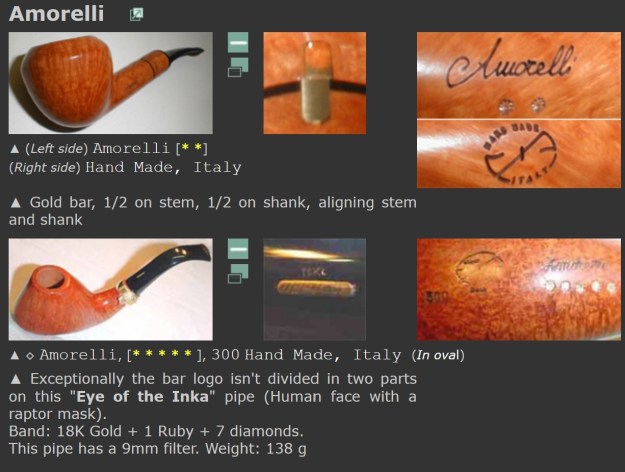
I turned first to Pipephil’s site for a short introduction to the brand and was not disappointed by what a I found (http://www.pipephil.eu/logos/en/logo-a5.html). I have included the screen capture below as well as the side bar information on the grading of the pipes.
Artisan: Salvatore Amorelli
Grading (ascending): 1 to 5 stars. 5 stars pipes may be differentiated by some golden stars:
(* * * * * or * * * * *)

I turned to Pipedia to see what I could learn about the Amorelli brand (https://pipedia.org/wiki/Amorelli). There was a short article full of information. I quote from it below.

An Amorelli pipe is recognized by an unmistakable logo: an 18k Gold bar, placed in the centre of the junction of the shank and mouthpiece, and which allows a perfect positioning. Projecting and making with a scrupulous rigour, Amorelli refers to the most exigent pipe connoisseur who will be able to recognize a very high smoking quality and prize a processing of the highest level, rich in refined details. It climaxes in a delicate process of finishing, where esteemed Brazilian bee waxes are used to feed and exalt the fibre of the wood, allowing the pipe to breathe.

25 years have passed since Totò Amorelli entered the scene with his creations, inimitable still today: busbee, frac, lyra, fish-tail, nayl, unicum, interpretaions of a new point of view and to realize a pipe. The 18k Gold logo, only sicilian and selected briar, 5 years seasoned and interpreted piece by piece…

What will the near future hold? A new line of pipes for everyone: “La Siciliana”, together with Amorelli pipes, made from the best briar collected from Sicilian Mountains overlooking Taormina, cut, boiled and seasoned directly in the new workshop of Caltanissetta, everything overseen by Totò. 

The pipe I was working on was an Amorelli made of Sicilian Briar! It was a 2 star grade pipe which fits the great grain on this particular pipe. Now what Stephen had told me about his visit to Sicily came together.

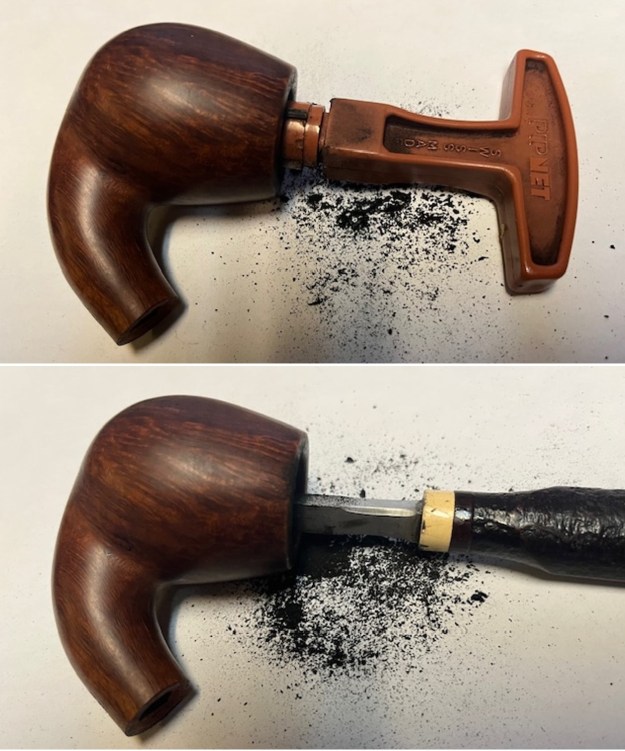
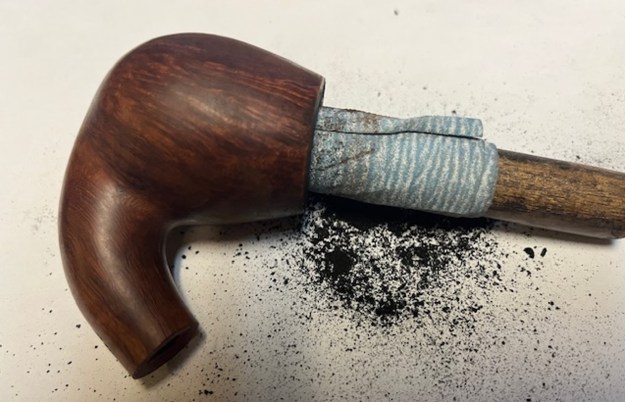
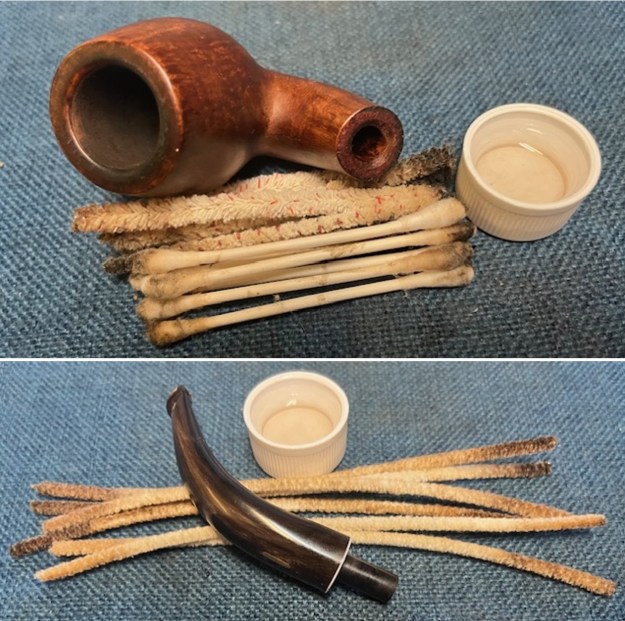
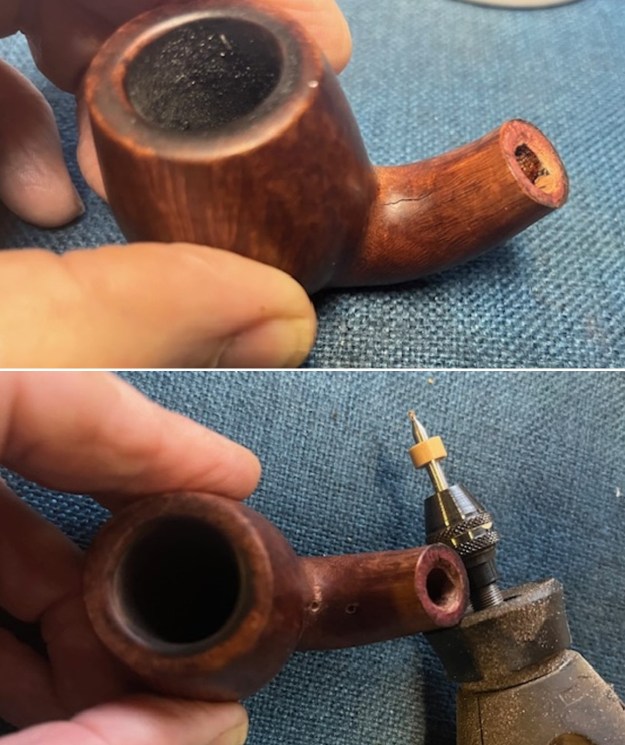
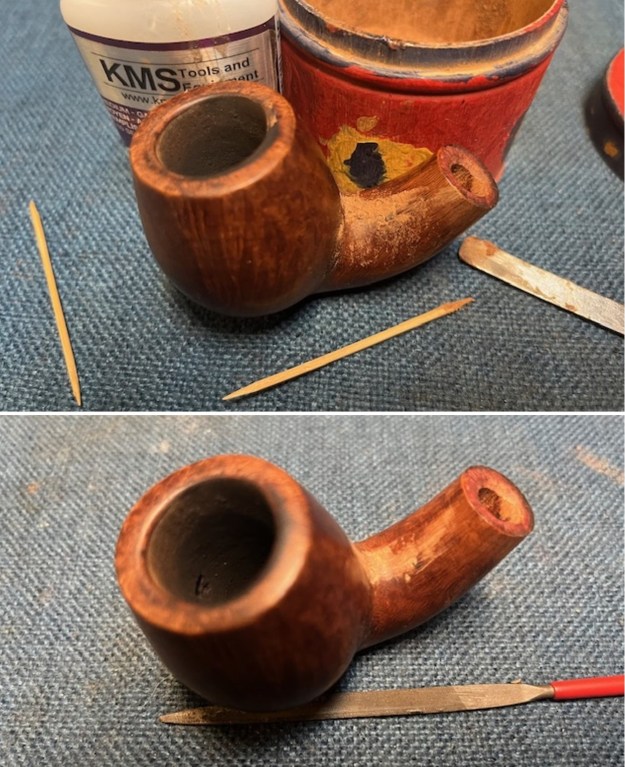
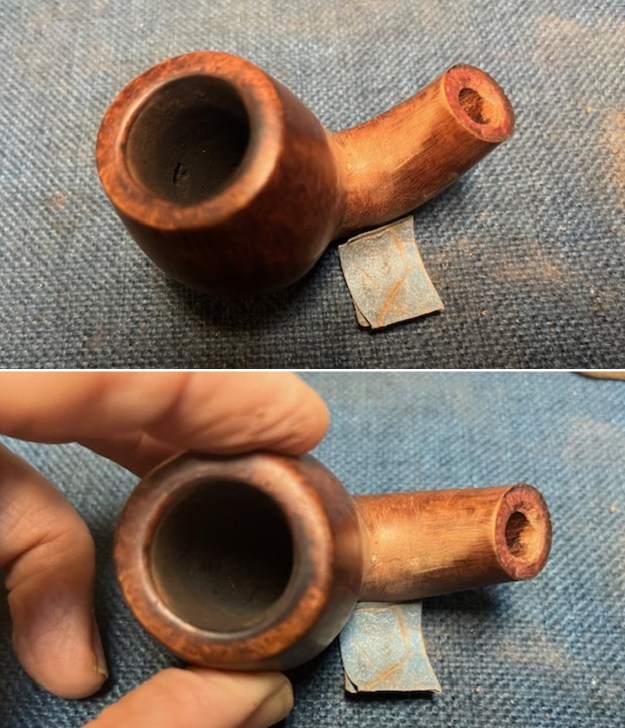
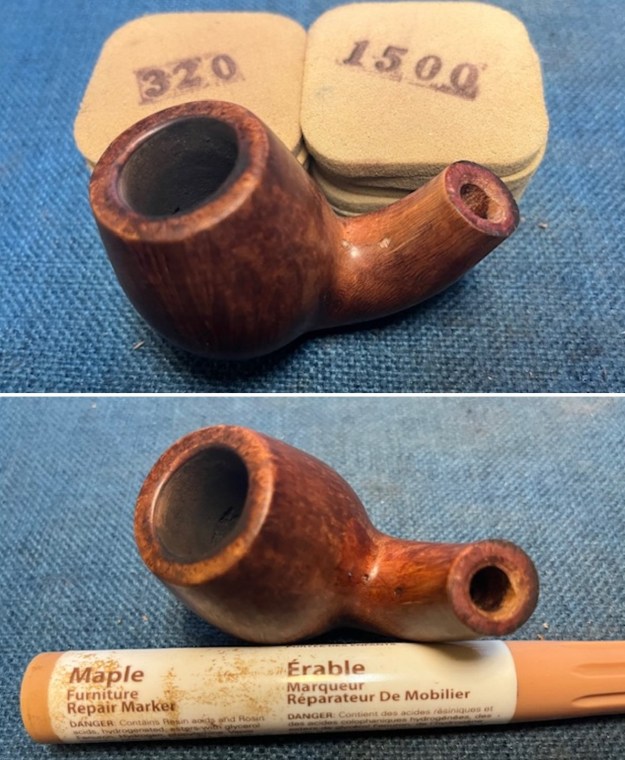
Now it was time to start working on the pipe itself. The bowl was moderately caked and I wanted to clean it up before I repaired the crack in the shank. I reamed it with a PipNet pipe reamer using the second and third cutting head to trim the cake back. I used a Savinelli Fitsall Pipe knife to clean up the remnants leaving bare briar. I sanded the bowl walls with 220 grit sandpaper wrapped around a piece of dowel. The bowl was significantly cleaner. I scraped the heavy lava coat on the rim top with the edge of the Fitsall knife. I cleaned out the airway in the shank and mortise as well as the stem with cotton swabs, pipe cleaners and isopropyl alcohol. It was dirty but it cleaned up very well. Now it was time to tackle the crack in the shank. I took a photo of it to capture the issue in the pipe before I cleaned it up. I used a Dremel and a microdrill bit to drill a pilot hole at each end of the crack in the shank. I used a tooth pick and CA glue to fill in the crack and the pilot holes in the shank. I pressed some briar dust into the glue to build them up. I flattened the repair with a small half round file and a folded piece of 220 grit sandpaper to blend them in. It is starting to look better. I sanded the repair area with 320-3500 grit sanding pads to smooth out the area. I used a Maple stain pen to blend it into the surrounding briar.With the cracks repaired I moved on to pressure fit a thin brass band on the shank end. I used a tooth pick to spread glue around the inside of the band. Once it was ready I pressed the band onto the shank end. I wiped down the excess glue with a damp cloth. I took photos of the newly banded shank and it looked very good. I polished the briar with 1500-12000 grit micromesh sanding pads – dry sanding with each pad and wiping it down with a damp cloth between pads. It took on a rich shine. I rubbed the bowl down with Before & After Restoration Balm. I worked it into the surface of the briar with my fingertips. It works to clean, restore and preserve the briar. I let it do its magic for 15 minutes then buffed it off with a cotton cloth. The pipe looks incredibly good at this point in the process. I set the bowl aside and turned my attention to the horn stem. I sanded out the tooth marks and chatter with 220 grit sandpaper.I sanded the stem with 320-3500 grit sanding pads. I wiped the stem down after each sanding pad to remove the sanding debris and dust. The stem looked very good. I polished the stem with micromesh sanding pads – 1500-12000 grit pads. I wiped it down with a damp cloth after each sanding pad. I finished polishing it with Before & After Pipe Stem Polish – both Fine and Extra Fine and buffed it off with a cotton cloth. I gave it a coat of Obsidian Oil to preserve and protect the stem. This Amorelli ** Hand Made Italy Bent Egg is a great looking pipe now that it has been repaired and restored. The brown stains really highlight the grain and the polished finish is stunning. I put the horn stem back on the bowl and carefully buffed the pipe with Blue Diamond on the buffing wheel. I gave the bowl and the stem multiple coats of carnauba wax on the buffing wheel and followed that by buffing the entire pipe with a clean buffing pad. I hand buffed the pipe with a microfiber cloth to deepen the shine. The finished Amorelli ** Hand Made Bent Egg fits nicely in the hand and feels great. Give the finished pipe a look in the photos below. The dimensions of the pipe are Length: 5 inches, Height: 1 ¾ inches, Outside diameter of the bowl: 1 ¼ inches, Chamber diameter: ¾ of an inch. The weight of the pipe is 50 grams /1.76 ounces. I have five more of Stephen’s pipes to work on. Once I have finished I will get them back to him to enjoy with his father. Thanks for reading this blog and my reflections on the pipe while I worked on it.

As always, I encourage your questions and comments as you read the blog. Thanks to each of you who are reading this blog. Remember we are not pipe owners; we are pipe men and women who hold our pipes in trust until they pass on into the trust of those who follow us.

Really a Disappointing Mess… or was it?


by Steve Laug

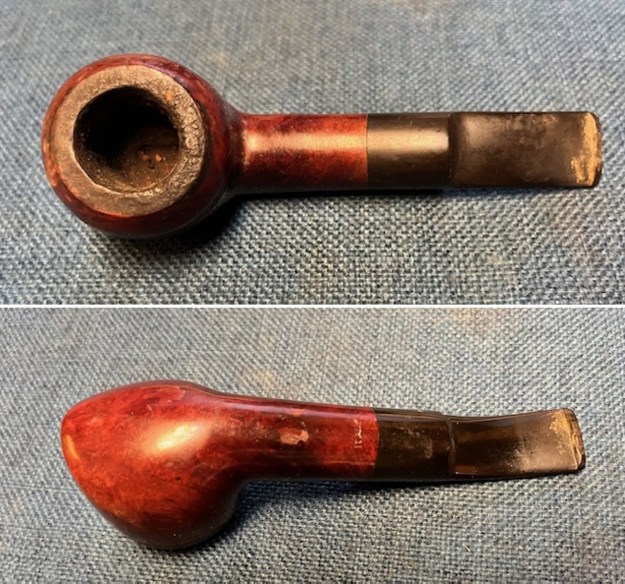
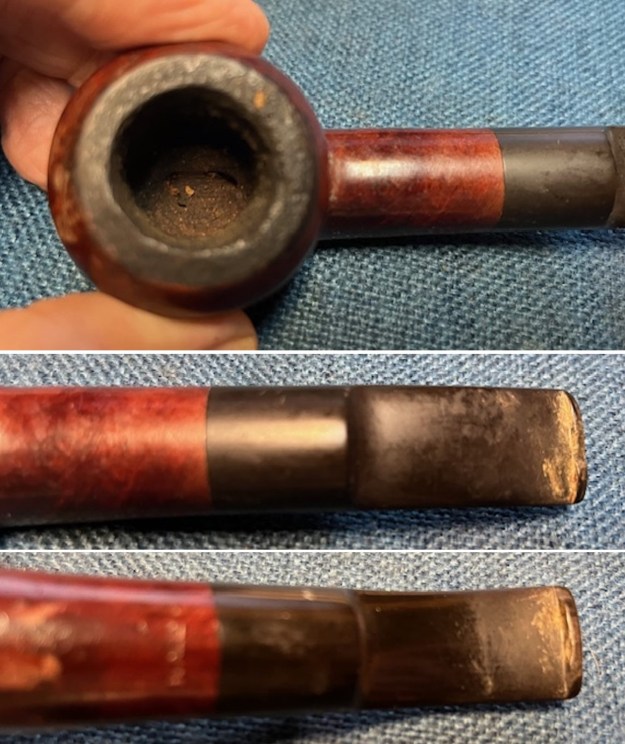
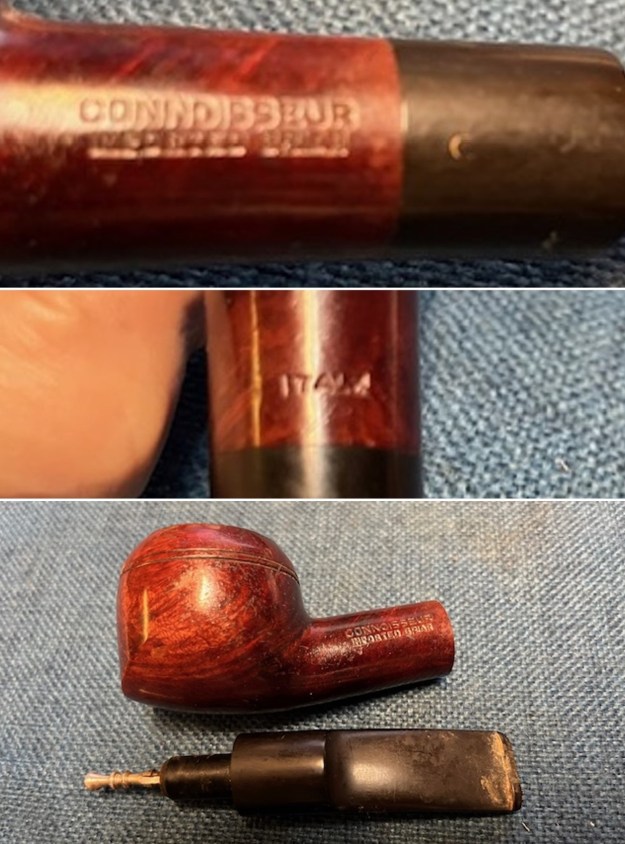
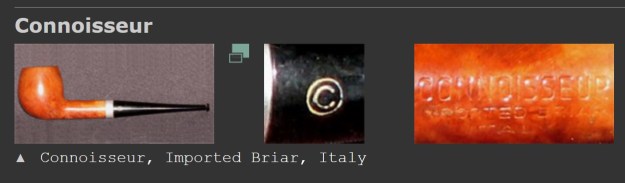
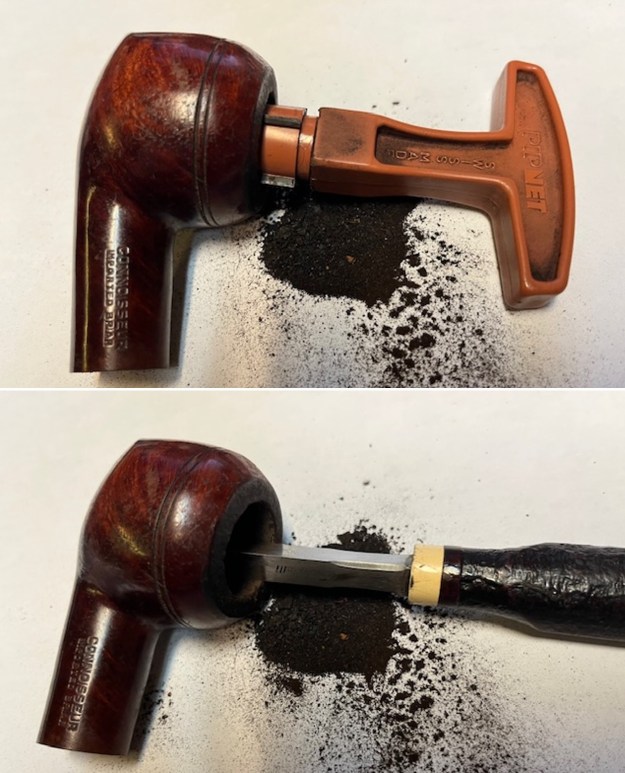
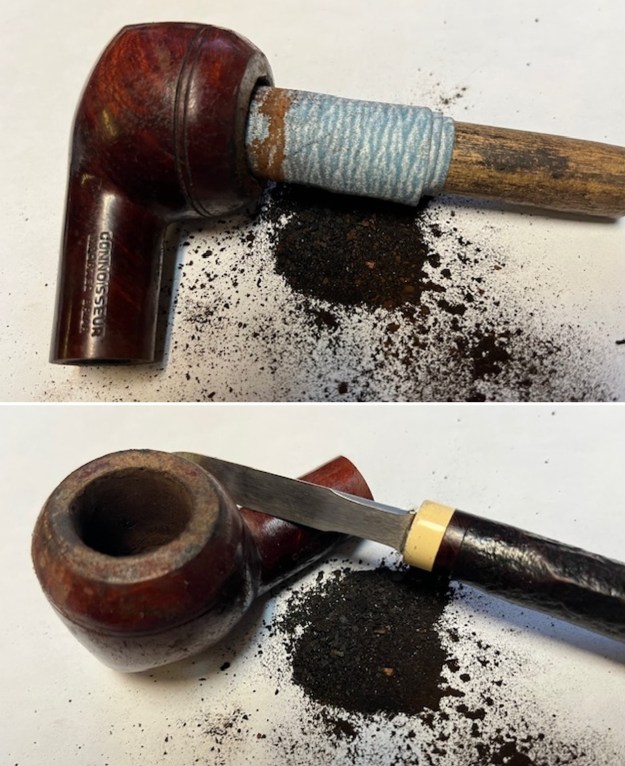
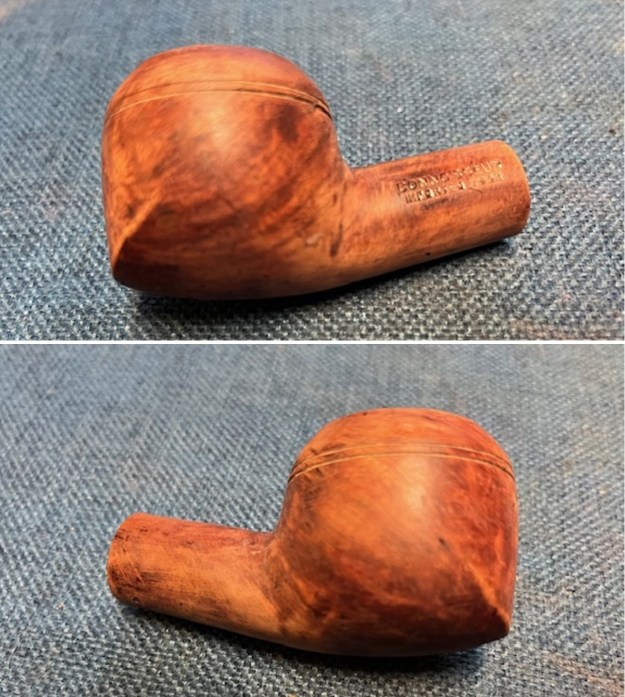
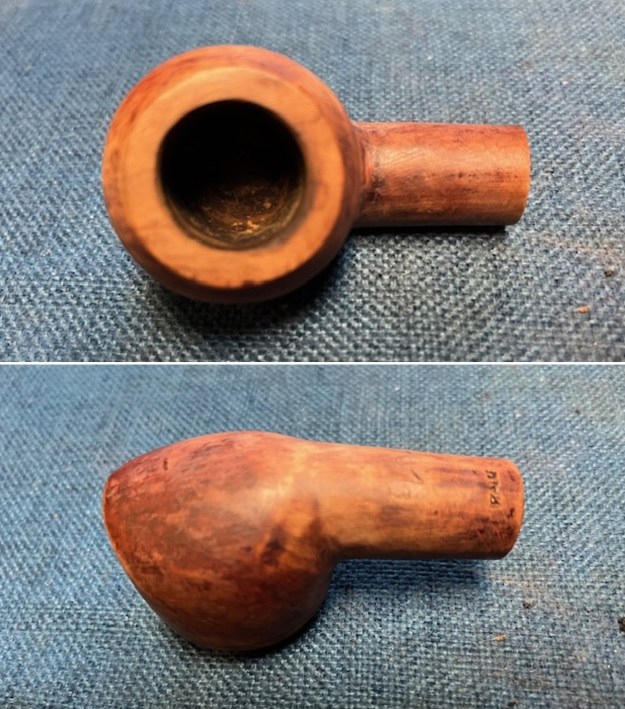
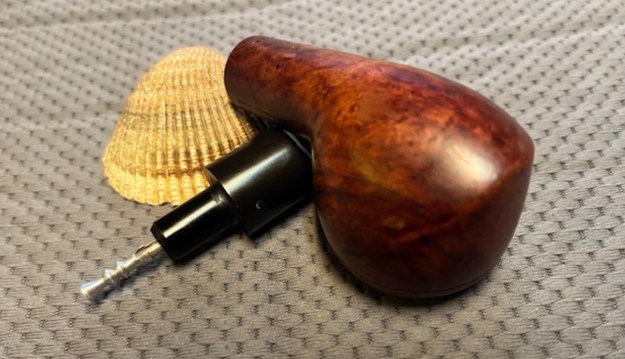
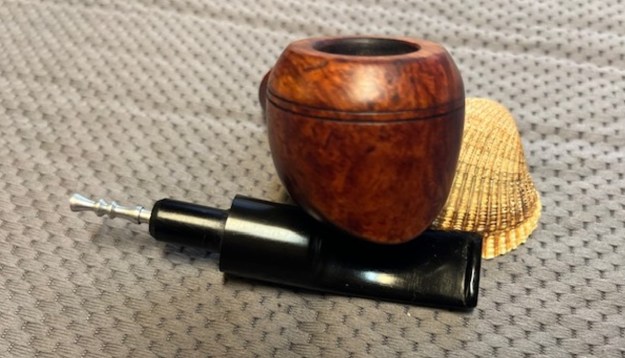
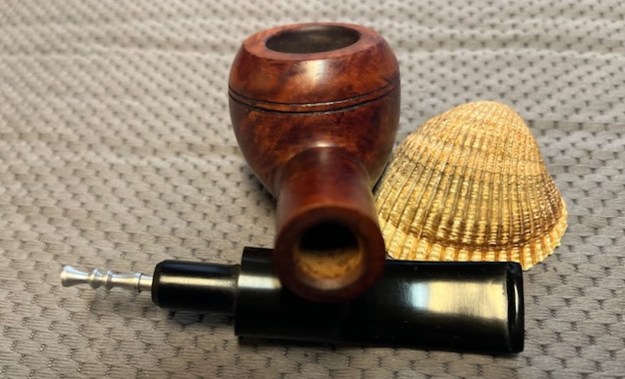
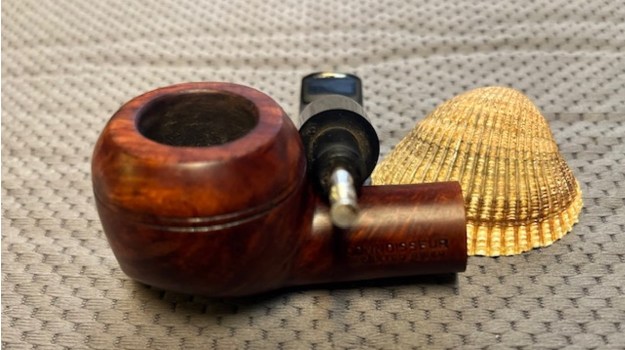
I entitled this blog “A Disappointing Mess…” because when I saw the stamp Connoisseur the brain dropped out and my wish was that this was an Ed Burak made pipe! Of course, it is not one of Ed’s pipes nor does it even look like one. However, in the heat of a pipe hunt it is easy to let the thrill of a find eclipse rational thought processes. It certainly did this time. When I got home and looked at the stamping on the pipe I knew I was probably dealing with an Italian made pipe for import to the USA. It really has all the marks of that including the Imported Briar stamp under the name. On the left side of the shank it is stamped Connoisseur [over] Imported Briar. On the underside of the shank at the shank/stem junction it is stamped Italy. The pipe really was a wreck and if I had been paying attention I probably would have left it in the antique mall where we stumbled across it. The finish on the bowl was a spotty, peeling varnish or perhaps worse and there were nicks and fills in the briar. The bowl had a heavy cake and the rim top was covered in lava. The outer edges of the bowl were a bit beat up and the inner edge was a mystery under the lava. The stem was dirty, oxidized and calcified and had deep tooth marks and chatter on the button surface and ahead of the button on both sides. Here are some photos I took before I started the cleanup. I took a photo of the stem surfaces and the bowl and rim to give a sense of condition of the pipe. You can see the thick cake in bowl and the lava overflow on the edges and rim top of the bowl. It is hard to know if there is any damage as the cake and lava is quite thick. The stem surface is very dirty and you can see the deep tooth marks and chatter covered by the dirt and debris.I took photos of the stamping on the sides of the shank. It is clear and readable on all the shank sides as noted above. It also seems that there is a remnant of the C stamp on the side of the stem. It is not deep in vulcanite surface. I also took a photo of the bowl with the stem removed. It is a great looking pipe.I turned to Pipephil’s site to look for a Connoisseur that was not connected to Ed Burak. I found one that bears the same stamping on the shank sides and was made in Italy. The photo showed the C logo on the stem. The one I am working on is not to clear. I have included a screen capture of the pertinent information below (http://www.pipephil.eu/logos/en/logo-c6.html). I have also included some information from the side bar below the photo below.Probably a brand of Hall & Fitzgerald. The “Connoisseur” name has also been used by Lorenzo or Kaywoodie for their pipe lines.

From there I did a Google search on Hall & Fitzgerald. I came across a link on vkpipes to a pipe made by them. There is no specific connection in the notes to the Connoisseur. It is interesting to note that they had quite a few brands in their stable (https://vkpipes.com/pipeline/hall-fitzgerald-straight-grain/). It is at least a very likely connection.

Hall & Fitzgerald is first mentioned in an 1878 Directory of Bristol as a ‘Fancy Goods Warehouse’. Within a few years the company is in the partnership of William Sydney Hall and Edward Thurston Davies trading as Hall & Fitzgerald, of 147 Temple Street, Bristol, Tobacconists and Fancy Goods Merchants. Silver hallmarks for pipe fittings are registered in London in 1899 and in Chester in 1901. Hall & Fitzgerald is making and selling smoking pipes until liquidation and closing in 1982 (except the World War II years). Known brands: Clifton, Dorchester, Excelsior, Hercules, Oxford, Craftsman and Wessex.

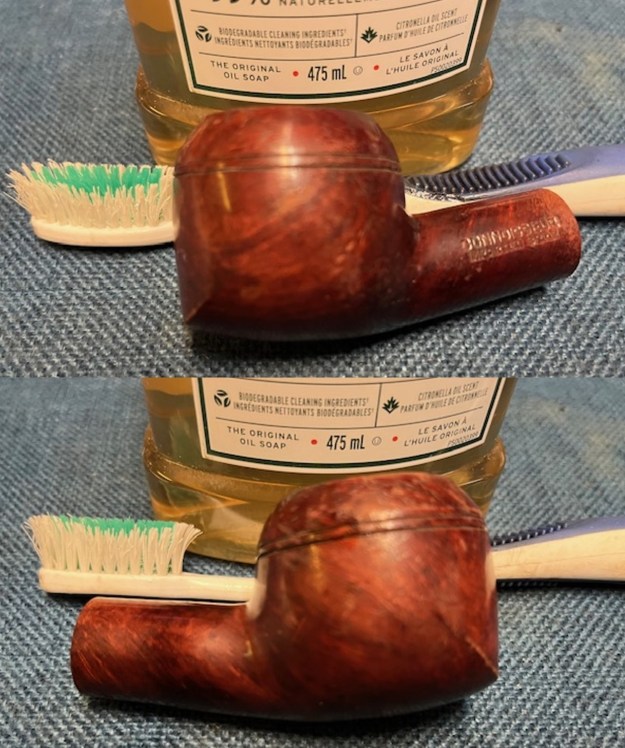
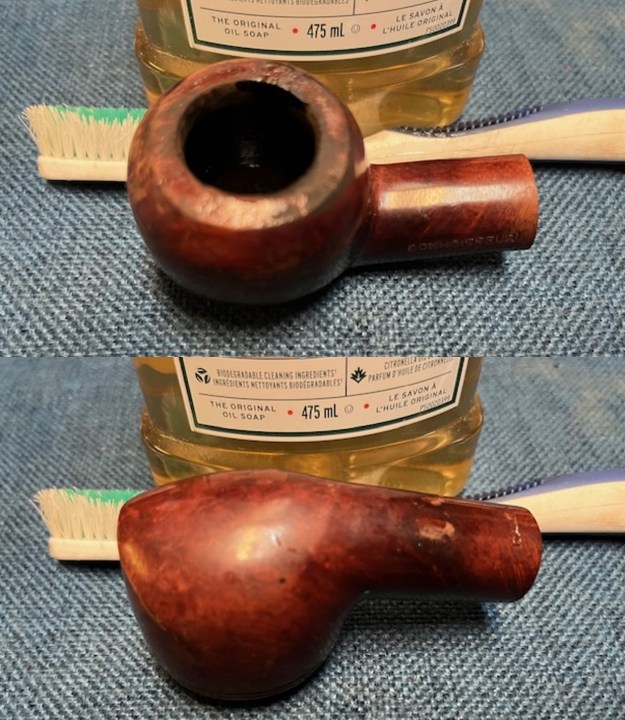
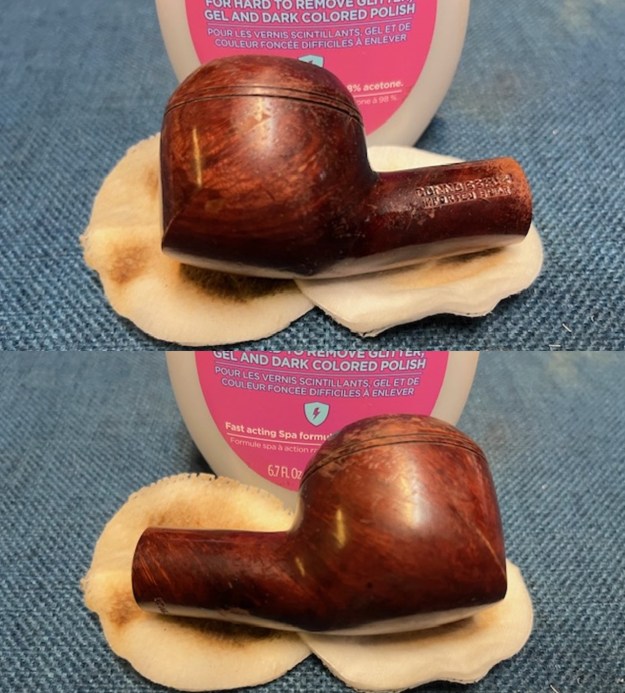
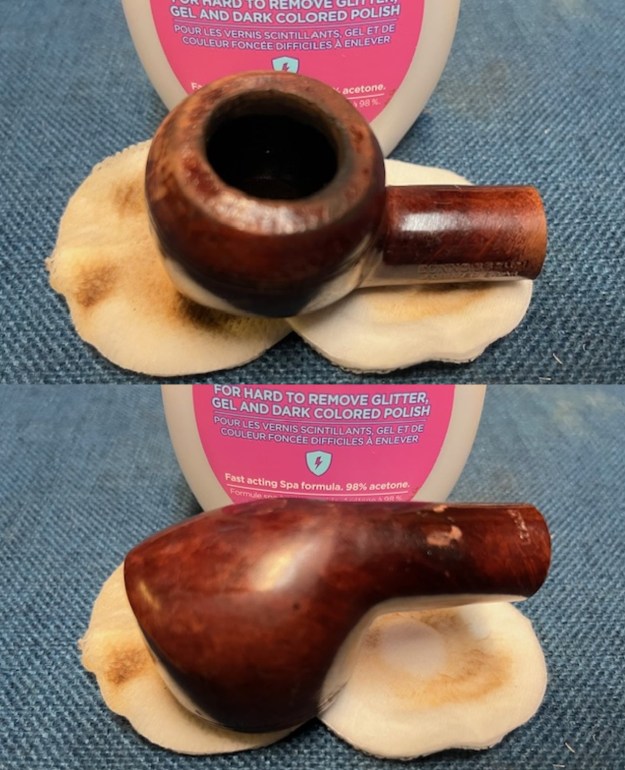
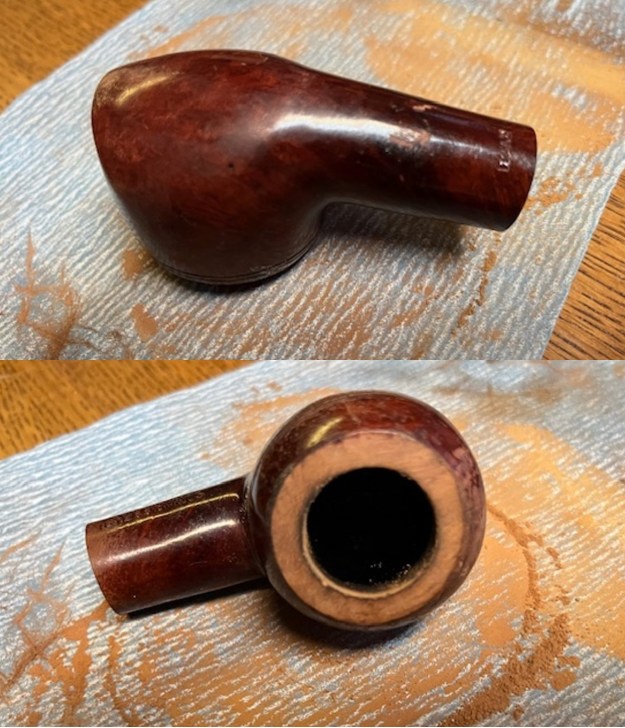
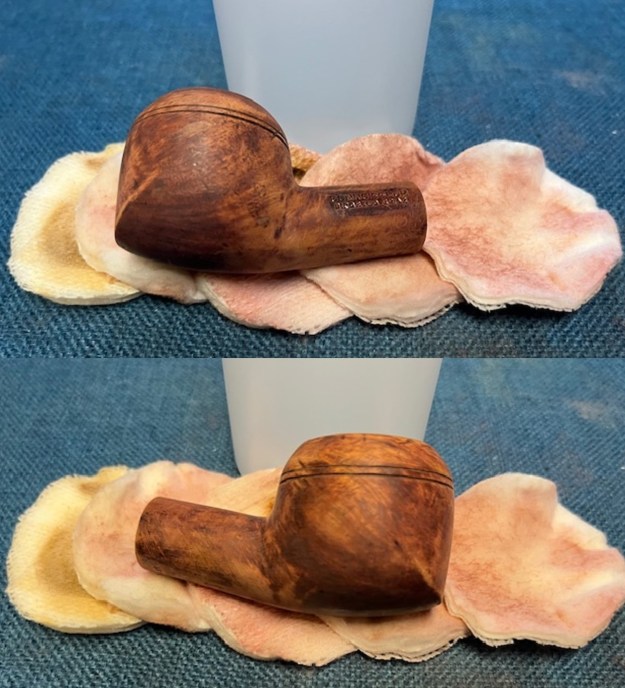
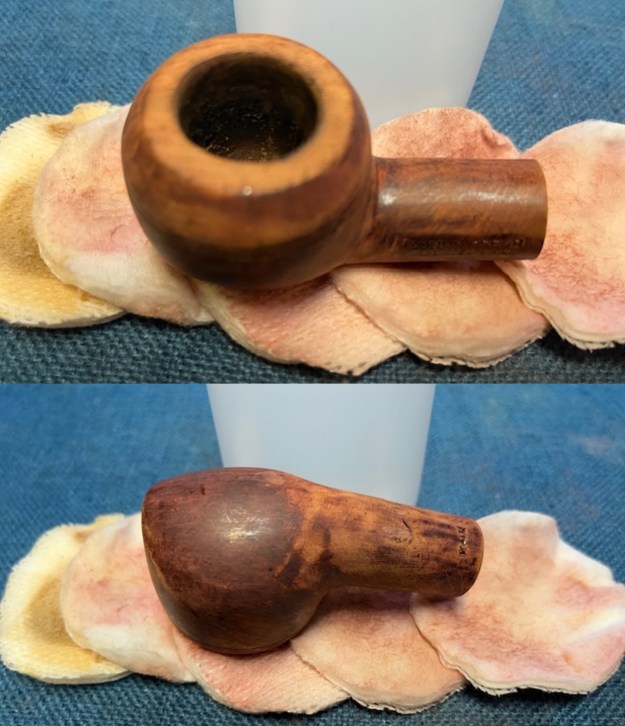
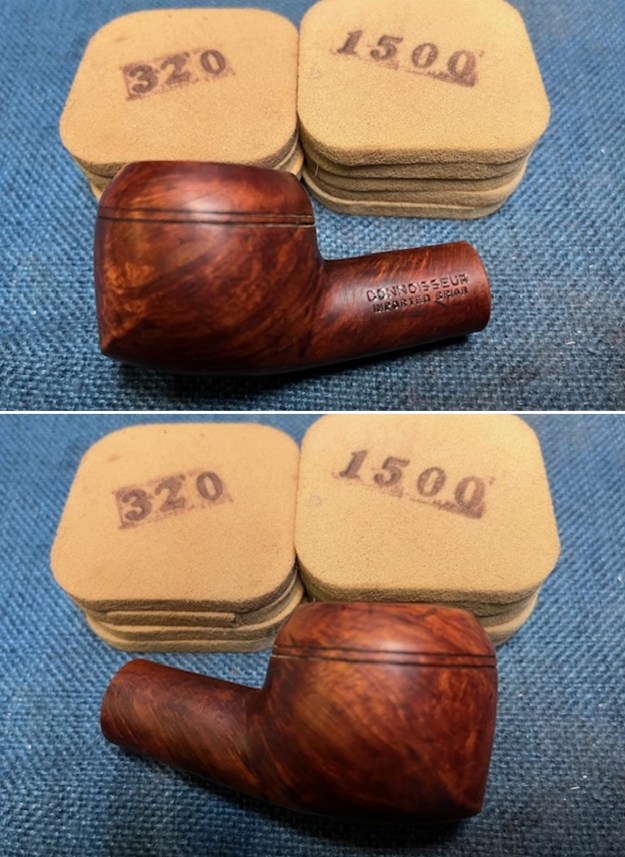
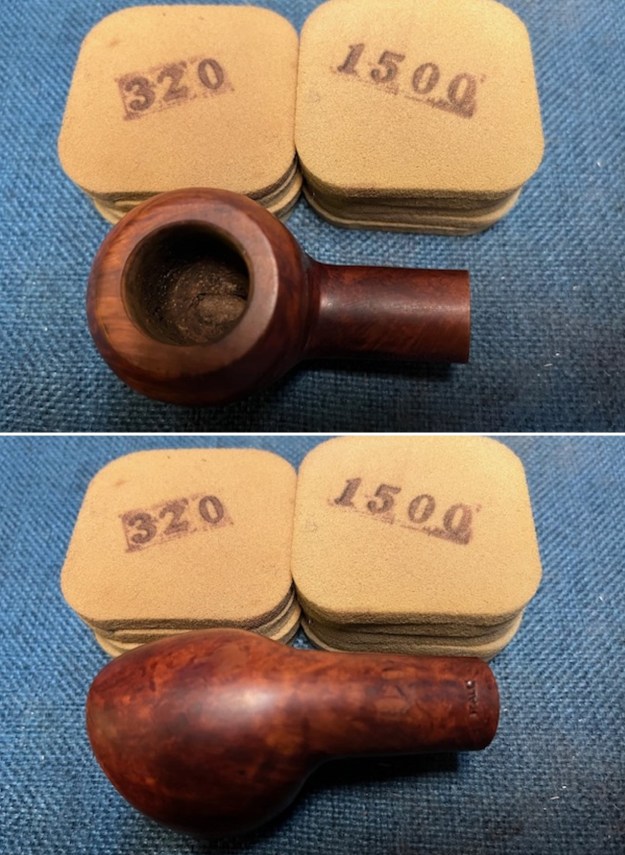
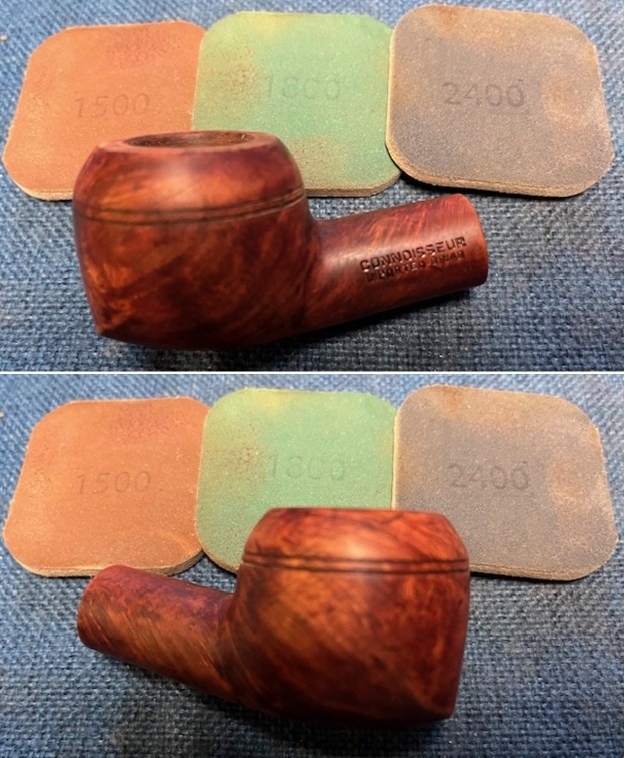
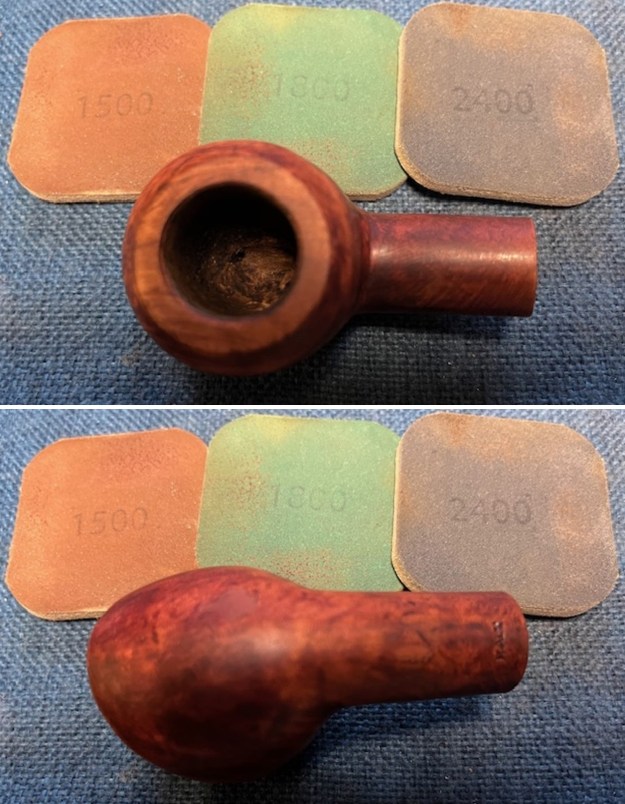
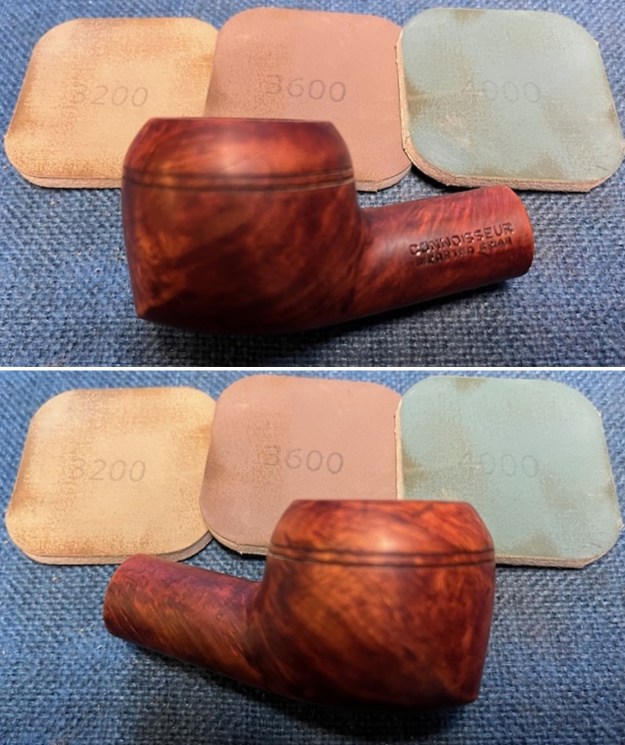
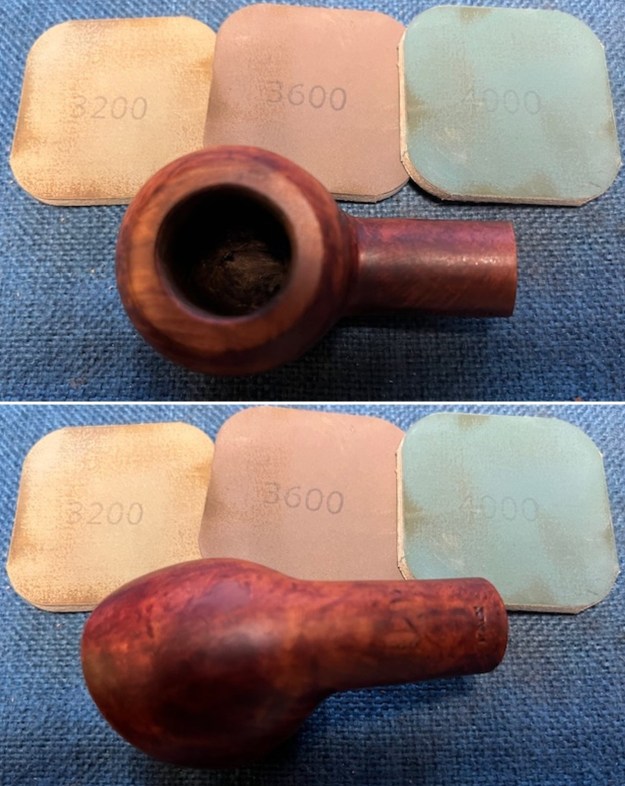
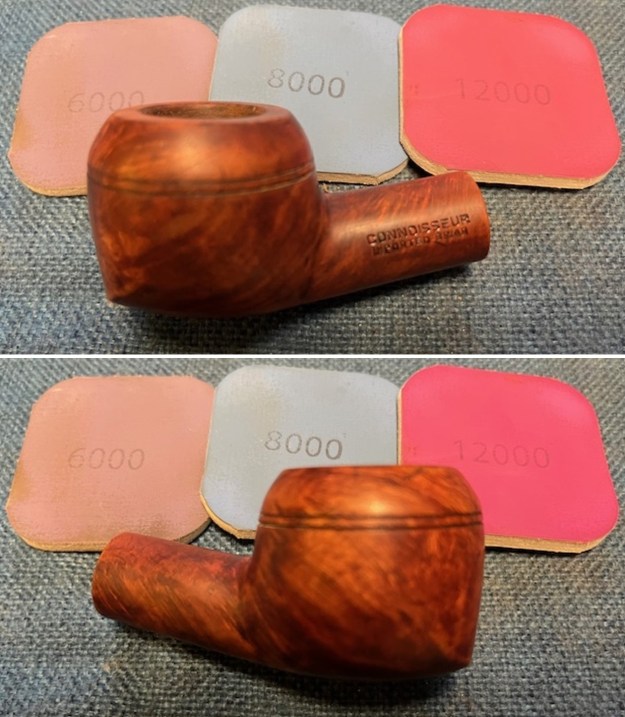
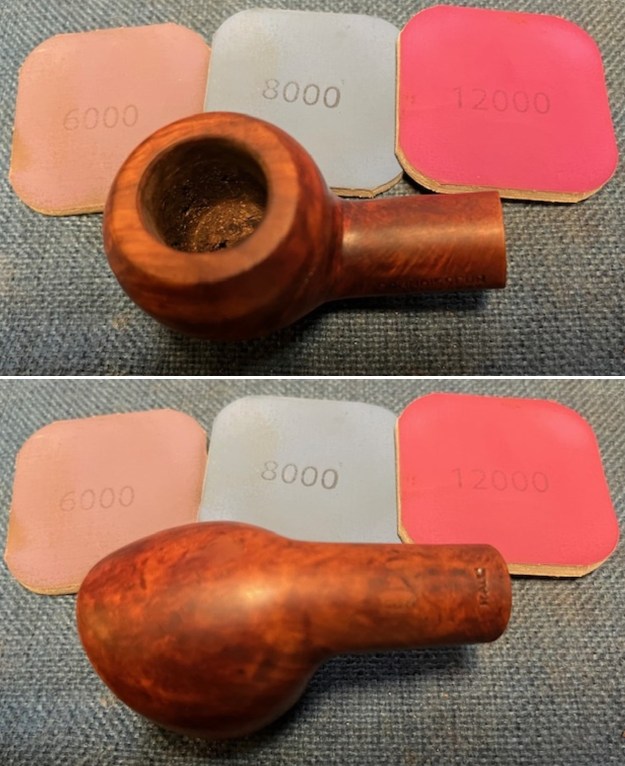
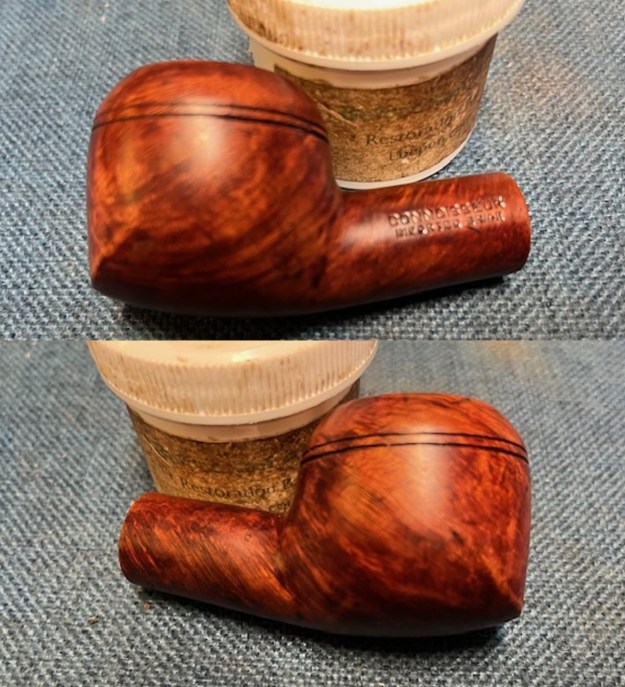
Now it was time to start working on the pipe itself. The bowl was thickly caked so I reamed it with a PipNet pipe reamer using the second and third cutting head to trim the cake back. I used a Savinelli Fitsall Pipe knife to clean up the remnants leaving bare briar. I sanded the bowl walls with 220 grit sandpaper wrapped around a piece of dowel. The bowl was significantly cleaner. I scraped the heavy lava coat on the rim top with the edge of the Fitsall knife. I scrubbed the exterior of the bowl with a tooth brush and undiluted Murphy’s Oil Soap. I scrubbed the bowl and rim with the toothbrush. I rinsed it off with warm running water and dried it with a soft towel. It looked much better and the rim top looked clean. The grain under the heavy varnish coat shone clearly once the grime was removed. I wiped the bowl down with acetone to remove the finish from the bowl. It did not work very well. It made a bit of progress but the coat was very thick. I gently topped the bowl on a topping board with 320 grit sandpaper and worked over the rest of the briar bowl and shank with 320 grit sandpaper to break the varnish surface.I used some straight acetone and cotton pads to wipe the bowl down a second time. This time I had much better success. It removed much of the varnish coat. You can see the varnish and stain on the cotton pads. At this point I dropped the bowl in an alcohol bath that I have here. It is one that I have and refilled for many years. It is straight 99% isopropyl alcohol. I have soaked a lot of pipes in it and over the years it has picked up a bit of patina. I have found that when a bowl soaks in it the alcohol helps remove older varnish coats and also adds some of that rich patina to the raw briar like the rim top in this case.I let it sit in the bath overnight. I removed the bowl from the bath in the morning. I dried it off and took photos of the bowl at this point. Overall it looked much better. The varnish coat was basically gone and the rim top had picked up some patina from the bath. I sanded the briar rim top and bowl with 320-3500 grit sanding pads. I was able to remove the remnants of stain and also varnish on the bowl. I wiped the bowl down after each sanding pad using a paper towel and a drop of olive oil. I really liked the way the briar looked at this point in the process. I polished the briar with 1500-12000 grit micromesh sanding pads – dry sanding with each pad and wiping it down with a damp cloth between pads. It took on a rich shine. I rubbed the bowl down with Before & After Restoration Balm. I worked it into the surface of the briar with my fingertips and a shoe brush to get it into the twin rings around the cap. It works to clean, restore and preserve the briar. I let it do its magic for 15 minutes then buffed it off with a cotton cloth. The pipe looks incredibly good at this point in the process. I had an aha moment and realized I had not cleaned the mortise and shank so I paused in the process to do both the stem and the bowl. I turned the stinger out of the tenon so I could properly clean it. It was pressure fit so it was an easy removal. I cleaned up the metal stinger with a brass bristle wire brush so that the oils and tars were gone. I cleaned out the mortise, the airway in the shank and the stem with pipe cleaners, cotton swabs and isopropyl alcohol. It was not a surprise that it was very dirty. With everything clean I turned my attention to the stem. I filled in the deep marks in the vulcanite stem with black rubberized CA glue. Once it hardened I flattened the repairs out with a small file. I sanded the stem with 220 grit sandpaper to blend them into the rest of the stem. It was beginning to look good. I sanded the stem with 320-3500 grit sanding pads. I wiped the stem down after each sanding pad to remove the sanding debris and dust. The stem looked very good. I polished the stem with micromesh sanding pads – 1500-12000 grit pads. I wiped it down with a damp cloth after each sanding pad.  I finished polishing it with Before & After Pipe Stem Polish – both Fine and Extra Fine and buffed it off with a cotton cloth. I gave it a coat of Obsidian Oil to preserve and protect the stem. I reinserted the aluminum stinger in the tenon of the vulcanite saddle stem. It looks very good. It is easily removable should the new pipe man or woman chooses to remove it.This Connoisseur Imported Briar Bullmoose is a great looking pipe now that it has been restored. The brown stains really highlight the grain and the polished finish is stunning. I put the stem back on the bowl and carefully buffed the pipe with Blue Diamond on the buffing wheel. I gave the bowl and the stem multiple coats of carnauba wax on the buffing wheel and followed that by buffing the entire pipe with a clean buffing pad. I hand buffed the pipe with a microfiber cloth to deepen the shine. The finished Connoisseur Imported Briar Bullmoose fits nicely in the hand and feels great. Give the finished pipe a look in the photos below. The dimensions of the pipe are Length: 5 inches, Height: 1 ½ inches, Outside diameter of the bowl: 1 ¼ inches, Chamber diameter: ¾ of an inch. The weight of the pipe is 50 grams /1.76 ounces. I will be placing it on the rebornpipes store in the Italian Pipemakers Section soon. Thanks for reading this blog and my reflections on the pipe while I worked on it. As always, I encourage your questions and comments as you read the blog. Thanks to each of you who are reading this blog. Remember we are not pipe owners; we are pipe men and women who hold our pipes in trust until they pass on into the trust of those who follow us.
Restoring another of Gene’s pipes – an A. Jason 96 Saddle Filter Stem Billiard


by Steve Laug

In January Jeff found out about an estate sale in Pocatello, Idaho, USA. It turned out that the sale was for a fellow Jeff and I had purchased pipes from in the past, Gene. He had been the owner of Outwest Tobacco in Pocatello (long closed now) and I bought tobacco and other smoking items from him in the past. As I think about it now, it seems that I had known Gene for over 30 years Jeff and I had been to his home and enjoyed coffee and a few pipes together. I have no idea how many pipes we bought on those visits as well as to the antique shop of his daughter. I know that there were many pipes. When we heard that it was Gene’s personal collection that was for sale and that he had passed away we decided for Jeff to go to the house and have a look. He went on January 25, 2024 to scope it out as we had seen his personal collection of pipes and there were definitely some among those well smoked old warriors that would be great to pick up. Perhaps there would even be one that could join my own collection in memory of Gene.

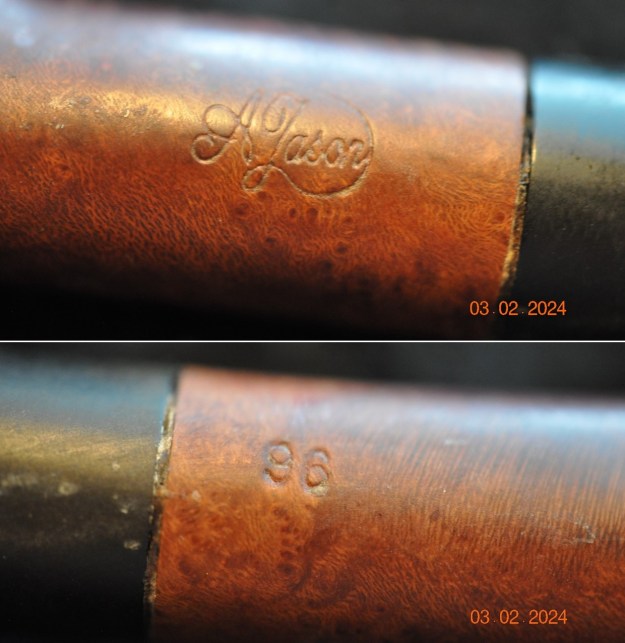
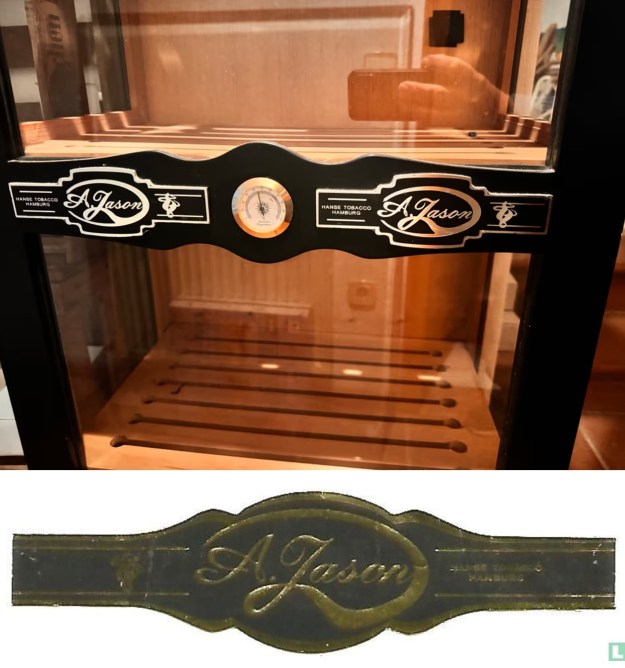
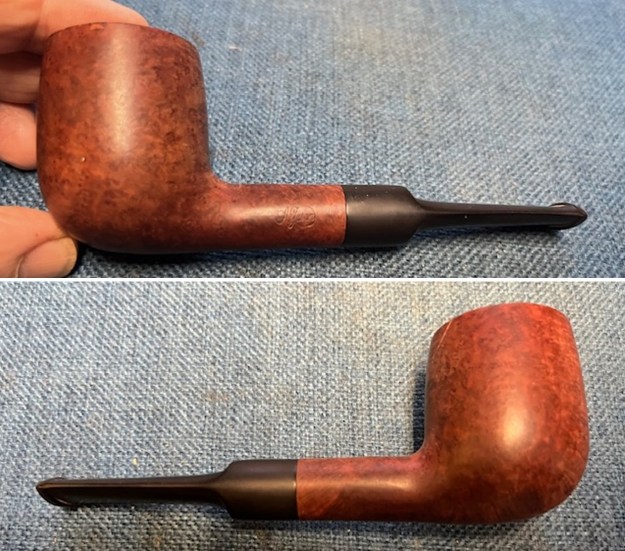
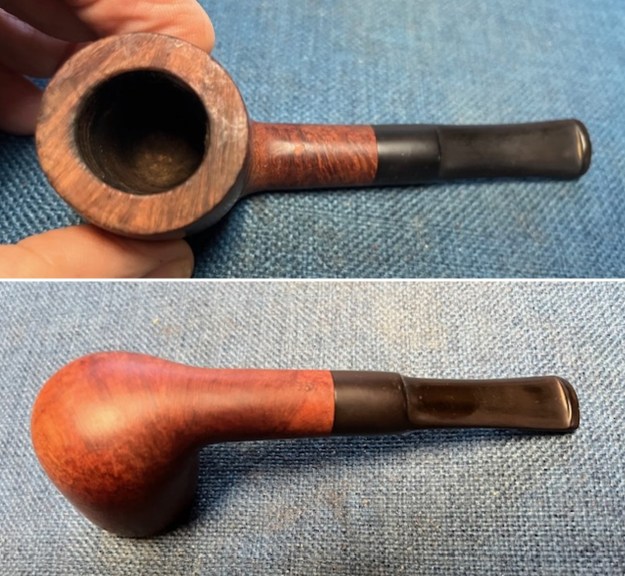
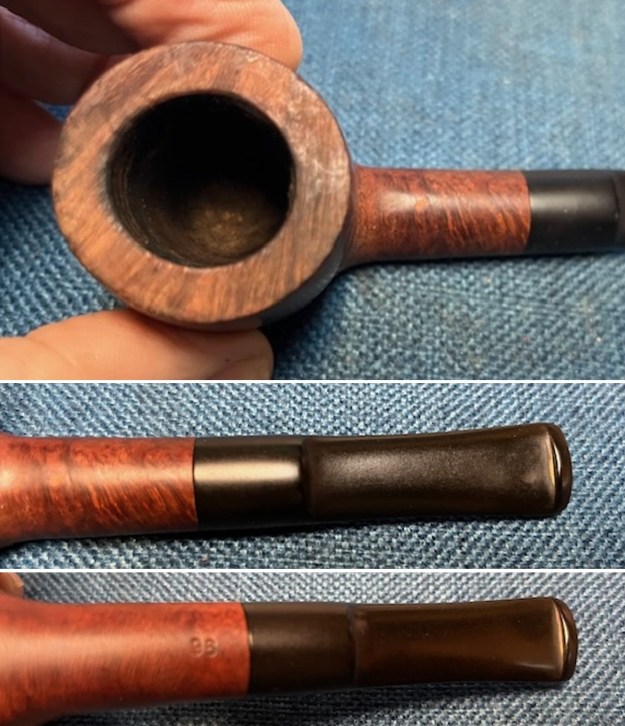
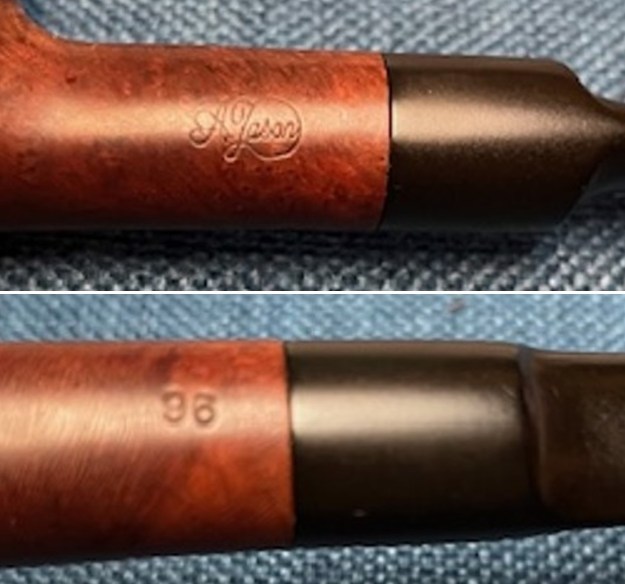
Jeff went to the house and looked through the racks, pipe bags, tobacco both bulk and tinned as well as a variety of pipes. All the pipes were well smoked and needed serious cleaning. Another one of the pipes he picked up was this A. Jason Billiard with a well fitting vulcanite saddle stem. It was very dirty and was a reddish, brown coloured pipe when it started. The smooth finish around the bowl was dirty and had hand oils ground into the grooves. The bowl had a thick cake that overflowed in lava onto the rim edge and top of the bowl. The stem was vulcanite that was very dirty and had the marks of a rubber Softee Bit on the end. It was also a very dirty 9mm filter stem. It had become discoloured and there was a line where the debris from smoking had accumulated along the edge and under the bit protector. The good news was that there were some deep tooth marks and chatter under the calcification and grime. The rest of the stem was dirty and had lost the characteristic shine. The pipe was stamped on the left side of the shank and read A. Jason in script in an oval. On the underside of the shank it is stamped with the shape number 96. Jeff took photos of the pipe so I could have a sense of what it looked like before he started his work on it.Jeff took photos of the stem surfaces and the bowl and rim to give a sense of condition of the pipe. You can see the thick cake in bowl and the lava overflow on the edges and rim top of the bowl. It is hard to know if there is any damage as the cake and lava is quite thick. The stem surface is very dirty and you can see the area on the end of the stem where the Softee Bit had protected it from chewing though there were some previous deep tooth marks covered by the dirt and debris. He also took photos of the sides of the bowl and the heel to show the interesting grain that went around the bowl. The grain is beautiful and you can see the oils and debris in the surface of the briar. He took photos of the stamping on the sides of the shank. It is clear and readable on all the shank sides as noted above.I did some searching on Google and could not find any pipe makers with the name A. I did a search in Washington and Oregon as well as Idaho and Utah all states within reach for Gene to have either visited or ordered a pipe. There was nothing that I could find in terms of a US pipe maker. I did a search on Google for A. Jason tobacco products and came across a cigar label and cigar cutter with the same stamp as the pipe – A. Jason. Further searching took me to a German tobacco supplier called A. Jason-Hanse Hamburg, Germany. They are a small tobacco shop located at Barmbeker Str. 17-19, 22303 Hamburg, Germany that sells cigars, humidors, cigar cutters, pipes and pipe tobacco. They were some pictures of the label on a humidor and a cigar label with the same stamp.I posted a question about the brand on Facebook pipe groups and Sascha Martens answered and did a bit of research on the brand and sent a link to the Hanse Tobacco Company in Hamburg who was a cigar cutter and tobacconist. Thank you for the information Sascha. Here is the link (https://www.northdata.com/Hanse%20Tobacco%20GmbH,%20Hamburg/HRB%20109995). I have included the information from the link below:
Hanse Tobacco GmbH

Heinrich-Hertz-Str. 139 – 139 a, 22083 Hamburg, Germany

Norderstedt, Germany

Corporate purpose – The object of the undertaking is the trade in goods of all kinds, insofar as they are not subject to authorisation, in particular tobacco products and smoking supplies. In addition, the company is engaged in the operation of catering, beverages and restaurants, with the dispersing of alcoholic beverages.

I knew from the above information that I was working on a German made pipe or at least one made for the German market. I also knew that originally it had come from the A Jason-Hanse shop in Hamburg. How it got to Pocatello, Idaho in the US is truly anyone’s guess. Was it a gift from a customer to Gene or did he pick it up on a trip to Europe? I suppose we will never know. Now it was my turn to work on the pipe.

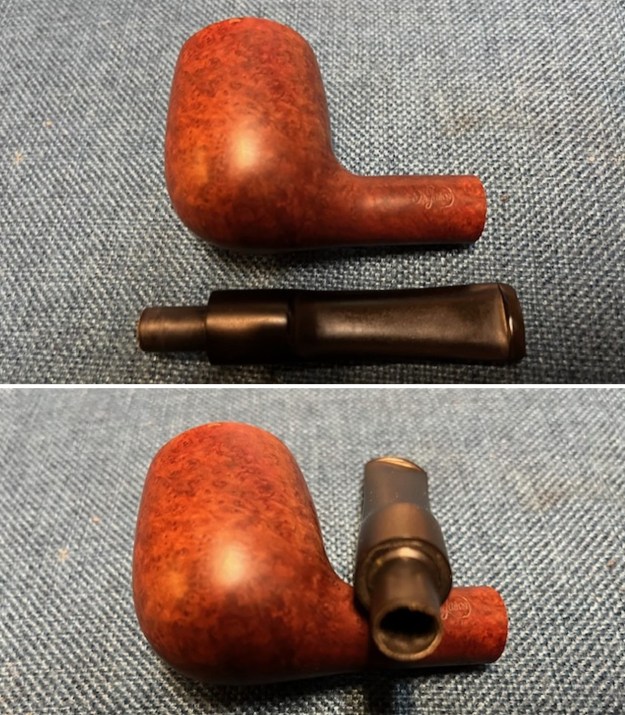
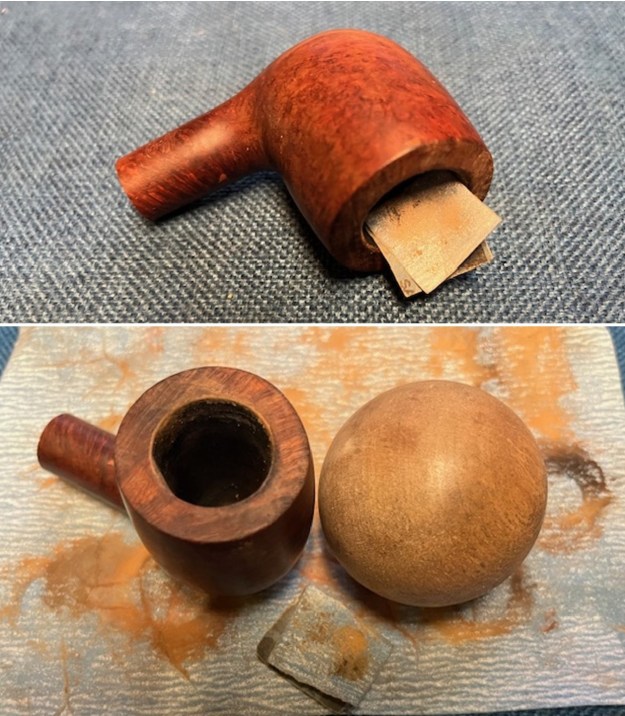
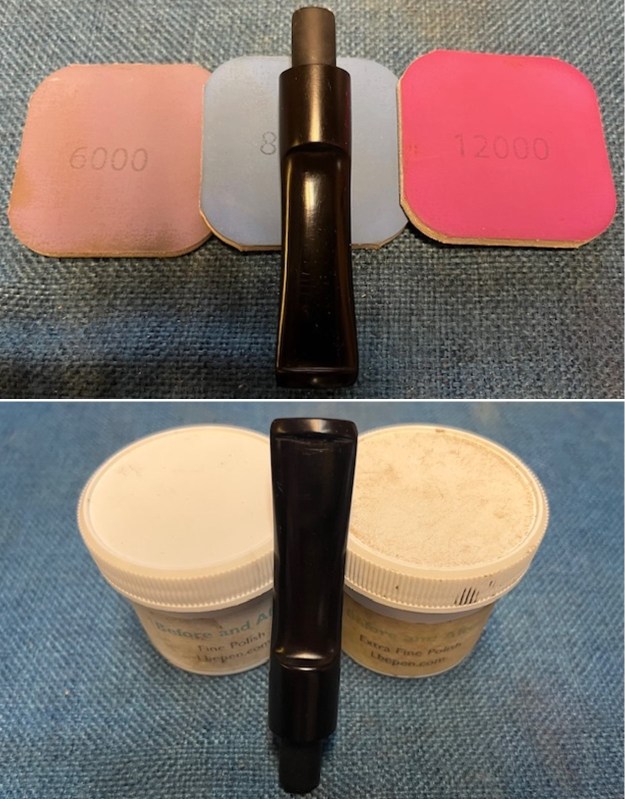
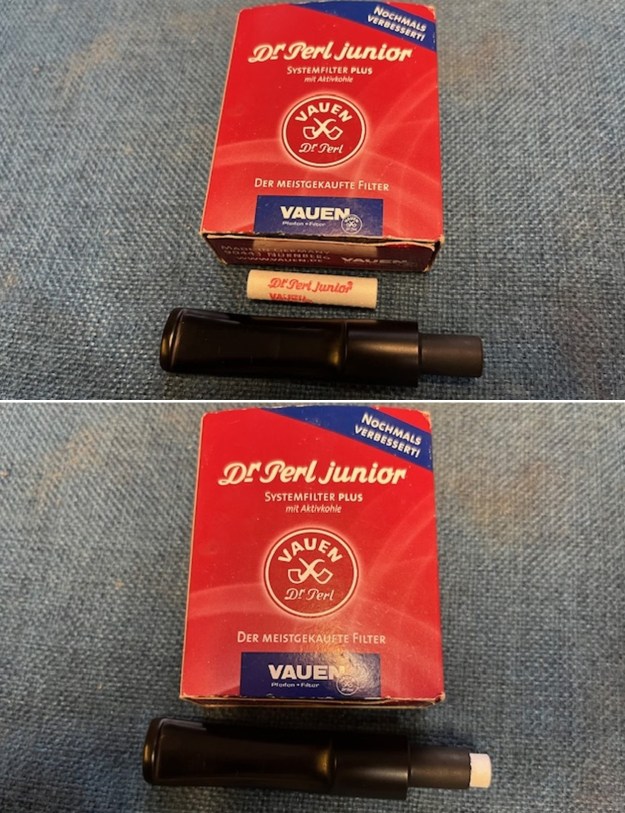
Jeff had done an amazing cleanup of the pipe. He reamed the cake with a PipNet reamer and cleaned up that with a Savinelli Fitsall Pipe Knife. He scrubbed the internals of the bowl and stem with alcohol, cotton swabs, shank brushes and pipe cleaners. He scrubbed the externals with undiluted Murphy’s Oil Soap and rinsed the bowl off with running water. He soaked the stem in Briarville’s Pipe stem Deoxidizer and once it had soaked, rinsed it off with warm water to remove the residual solution. He dried it off and rubbed it down with Soft Scrub to remove any oxidation that was still on the stem. The pipe looked very good when I received it. I took a photo of the rim top to show the condition. You can see the clean bowl. The bowl is in excellent condition and is clean. The rim top and the inner edge had a few issues. The top had some pitting and nicks and the inner edge had some burn damage toward the front of the bowl. The stem came out looking clean. There were some tooth marks and chatter on both sides.I took photos of the stamping on the shank sides. It is clear and readable as noted above. I removed the stem from the shank and took a photo of the pipe parts to show what I was working with. The first is a side view and the second is showing the 9mm filter tenon on the stem. I worked over the rim top and inner edge with a folded piece of 220 grit sandpaper to minimize the damage. I followed that by using a wooden ball and some 220 grit sandpaper to give the inner edge a light bevel to take care of the burn damage on the front inner edge of the bowl. A benefit of the sanding with a sphere is that it also cleaned up the damage on the rim top. The top looked better. The bowl is a little out of round but it is much better. I sanded the surface of the bowl and rim top with 320-3500 grit sanding pads. They well to remove the surface scratches and nicks in the briar. I wiped it down after each sanding pad with a damp cloth. I polished the briar with micromesh sanding pads. I dry sanded it with 1500-12000 grit sanding pads and wiped the bowl down after each pad with a damp cloth. By the final pads the briar really had a shine. I rubbed the briar down with Before & After Restoration Balm. I worked it into the briar with my fingertips. The product works to clean, enliven and preserve the briar. I let it sit for 10 minutes then I buffed it with a cotton cloth to deepen the shine. The briar really comes alive with the balm. I set the bowl aside and turned my attention to the stem. I “painted” the surface of the stem with the flame of a Bic lighter to lift the tooth marks. I was able to lift many of the marks significantly. I filled in what remained with black CA glue (rubberized and carbonized). It is a great product that has some elasticity and cures hard but not brittle. Once it cured I used a flat file to smooth out the repairs. I finished blending them in with 220 grit sandpaper. I moved on to further smooth out the surface of the repairs to the vulcanite. I sanded them smooth with 320-3500 grit sanding pads to further blend them into the surface of the stem.I polished the vulcanite with micromesh sanding pads – 1500-12000 grit pads. I wiped it down with Obsidian Oil after each sanding pad. I used Before & After Pipe Polish – both Fine and Extra Fine to further polish the stem. It really took on a shine and I knew that once it was buffed it would look amazing. I fit the stem with a 9mm filter. I used some Vauen Dr. Perl Junior Filters when I am replacing 9mm filters. The fit was perfect and the draught very good.I put the stem back on the A. Jason Billiard 96 with a vulcanite saddle 9mm filter stem and took it to the buffer. I worked it over with Blue Diamond to polish out the remaining small scratches. I gave the bowl and the stem several coats of carnauba wax and buffed the pipe with a clean buffing pad to raise the shine. I hand buffed it with a microfiber cloth to deepen the shine. The pipe polished up really well and the rim top looked good. I was happy with the look of the finished pipe. The photos below show what the pipe looks like after the restoration. The German made A. Jason Saddle Stem Billiard 96 is a beautiful and unique take on a classic shape. The polished vulcanite saddle stem looks really good with the browns of the briar. The dimensions of the pipe are Length: 5 ½ inches, Height: 1 ¾ inches, Outside diameter of the bowl: 1 ¼ inches, Chamber diameter: ¾ of an inch. The weight of the pipe is 1.80 ounces/52 grams. This is another pipe that I will be putting it on the rebornpipes store in the Pipes from Various Makers Section shortly, if you are interested in adding it to your collection. The pipe looks and feel great in the hand. This one should be a great smoker. Thanks for walking through the restoration with me on this beauty!

Putting together the pieces to Craft a Gourd Calabash with a Maplewood Bowl


by Steve Laug

One of the things I enjoy doing is putting together varied and assorted pipe parts and crafting a pipe. Sometime the pieces are sitting here for a long time waiting for either the inspiration or the proper parts. This old calabash gourd sitting here for a few years now. It was cleaned and did not have either a cork gasket to hold a bowl or stem to fit the briar shank extension on the shank end. It just languished in a box of old bowls that I have here. (They say confession is good for the soul so I will tell you that box is full of probably over 100 bowls. Did I tell you I have a problem throwing pipe parts away?). In this case I did not have any meerschaum or porcelain cups that would fit the size of the gourd and I had not bothered to look through my stems to find one that fit the shank. So the old gourd just sat here waiting. In October I visited a fellow pipe repairer in Vancouver, Washington, USA and he gifted me a lot of pipe parts. Included in the mix were two turned wooden cups for a gourd calabash and one porcelain cup. Yesterday I remembered them and took them out to try. Like Goldilocks in the childhood fairy tale checking out the beds at the tree bears house I tried each one. The “baby bear” porcelain cup was far too small for the gourd and the “papa bear” cup was too large. But like Goldilocks found, the “mama bear” middle wooden cup one fit just right! While I was at it I also pulled an acrylic stem out from my collection of stems that I thought would work with this pipe. Now it was time to put it all together. Here is a picture of the parts. I decided to work on the gourd portion of the pipe first. I cut some cork to fit a gasket in the inset area around the top of the calabash. I used a white all-purpose glue and coated the gourd edge and pressed the cork against it. It took a bit of holding it in place to get the glue to harden. But it worked well. Once the glue cured is used a knife blade to trim the cork flush with the top of the gourd. I smoothed it out with a Dremel and sanding drum to make for a snug fit for the cup to the cork but not too snug and have it pull away.I greased the cork with Vaseline Petroleum Jelly. I worked it into the surface of the cork before I called it a night last evening and then once again this morning. I find that it softens the cork and make it more pliable when the bowl is pressed into place.While the cork/glue was curing I drilled the airway in the bottom of the wooden insert. It was undrilled. I marked the centre and then drilled the airway in the bottom of the cup. I drilled it with a cordless drill and a small bit from the inside of the bowl rather than the outside. I pressed it against a piece of wood and drilled it through. My concern in doing it from the outside was the pressure on the cup and the potential of cracking it.I started sanding the wood cup (which I think is Maple) with 320-3500 grit sanding pads. I wiped the bowl down with a damp cloth after each sanding pad to remove the sanding debris.I polished the bowl with micromesh sanding pads – dry sanding with 1500-12000 grit pads. I wiped the bowl down after each sanding pad with a damp cloth to remove the debris. I worked on the inner edge of the bowl to smooth that out and the slight bevel on the inner edge. It really began to take on a rich glow. With cup polished and the cork gasket set in the gourd I pressed the cup into the gourd calabash and it went in snugly and looked great. I took photos of the fit to show you all. I sanded the gourd with 320-1500 grit sanding pads to smooth out the nicks in the surface and minimize the two dark spots on the curve of the shank. I also sanded the briar shank extension to reveal the grain. It looked better and the rich grain began to shine through. I polished the gourd with micromesh sanding pads – dry sanding with 1500-12000 sanding pads. I wiped the gourd down with a damp cloth after each sanding pad to remove the sanding debris and dust. It really began to take on a shine. I rubbed the gourd and the maple cup down with Before & After Restoration Balm. I worked it into the surface with my fingertips. The product works to clean, enliven and preserve the pipe. I let it sit for 10 minutes then I buffed it with a cotton cloth to deepen the shine. The gourd came alive with the balm. I set the bowl aside and turned my attention to the stem I had chosen. The acrylic orange/amber stem would look good once I finished.The fit of the stem to the shank was quite good. The briar shank extension on the gourd is canted slightly and the shank extension follows the angles. With that the stem fit tight against the left side of the shank but not on the right side. I had an idea of fitting a brass band/cap on the end of the stem to compensate for the angels on the shank end. It fit very well and the band/cap was snug on the stem. I sanded the tooth chatter on both sides of the stem with 320-3500 grit sanding pads to smooth it out and blend it into the surface of the acrylic. I started the polishing of the brass stem cap on the shank end at the same time. It started looking very good.I polished the Lucite with micromesh sanding pads – 1500-12000 grit pads. I wiped it down with a damp cloth after each sanding pad. I used Before & After Pipe Polish – both Fine and Extra Fine to further polish the stem. It really took on a shine and once buffed it would look amazing. I carefully polished the parts – the cup, the gourd and the stem with Blue Diamond on the buffing wheel. I gave each piece of the pipe multiple coats of Carnauba Wax and buffed it with a clean buffing pad. I hand buffed the parts with a microfibre cloth. Once it was finished I put the parts back together. The Maple cup looked beautiful with the darkened gourd calabash. The polished briar shank extension was deeply shined. The brass stem adornment went well with the orange acrylic stem. The large Gourd Calabash with its wooden cup is beautiful. The dimensions of the pipe are Length: 7 inches, Height: 4 ½ inches, Diameter of the cup: 2 ¾ inches, Diameter of the chamber: 1 ½ inches. The weight of the pipe 95 grams/3.35 ounces. It should be a great smoker once it is loaded with a favourite tobacco and fire is put to the blend. It will definitely be a cool dry smoke. Thanks for walking through this reconstruction with me. I appreciate your patience in reading through the steps.