Always look forward to Mark’s write up. I am still hoping for the day he writes and says the Peterson History book is going live!
Sneak-Peak: The Peterson Christmas Pipe 2015.
1 Reply

Always look forward to Mark’s write up. I am still hoping for the day he writes and says the Peterson History book is going live!
Guest Blog by Robert M. Boughton
Member, North American Society of Pipe Collectors
http://www.naspc.org
http://www.roadrunnerpipes.com
http://about.me/boughtonrobert
Photos © the Author
“There is nothing more stimulating than a case where everything goes against you.”
― Sir Arthur Ignatius Conan Doyle (1859-1930), Scottish author, in “The Hound of the Baskervilles,” 1902
INTRODUCTION
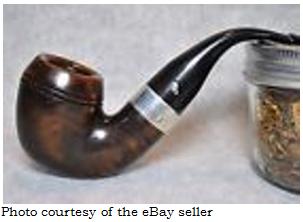
The first time I had occasion to suspect some force was working against me on the subject of this essay, restoring a Peterson’s Sherlock Holmes Baskerville smooth, was my belief that the pipe offered for sale was, in fact, not authentic. The discovery that my fear was misplaced was, of course, a happy relief and led me to purchase the distinctive Hungarian shaped model from an eBay seller. The desired confirmation was the result of an email I sent to Peterson’s of Dublin doubting the legitimacy of the pipe shown due to the absence of the Baskerville name on the nomenclature. In every other respect – its overall appearance, apparent beauty and shape – the pipe seemed right, but these days any online buyer cannot be too careful. I included in my query a link to the eBay listing and soon received the following reply from a gentleman named Glen:
“I can tell you this is a genuine item. It has discoloured due to smoking over the years and there are variations on stampings throughout the years of the lines.”
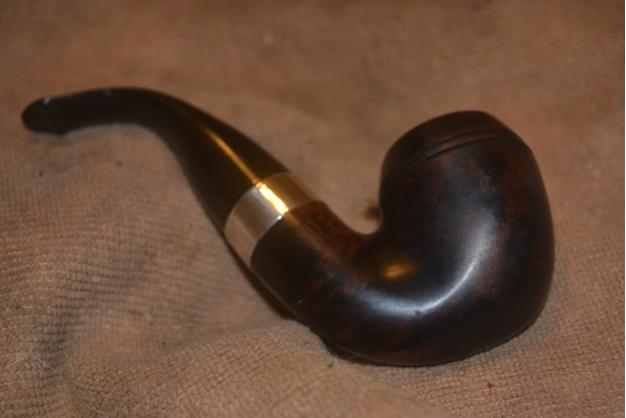
This brings me to my conclusion that the pipe I bought is from the original Sherlock Holmes Collection in 1987. Later issues tend to include the more common stamping of Peterson’s of Dublin/Sherlock Holmes/Baskerville, while mine is abbreviated to Peterson’s/Sherlock Holmes. The newer designs also have the inset sterling band, while the shape of my older Baskerville is smooth and uniform up the shank leading to the bit.
 The other problems I faced with the restoration will be discussed in the order of their occurrences.
The Baskerville makes the second pipe from the several Peterson’s Sherlock Holmes series I have so far acquired. I expect someday to own the entire collection, in all of the other finishes that include the same number of rustics/sandblasts and eight ebony versions, not to mention one variety that really revs my engine. But that can wait. Here is my other SH pipe. A great fan of the riveting published adventures of the brilliant if fictional mystery sleuth, I never tire of re-reading them or watching the various movie and TV adaptations, in particular the BBCs recent modern-day “Sherlock” with Benedict Cumberbatch in the title role. And as I noted in a previous blog, Holmes, despite the myth born of generations of portrayals by many talented if misled actors, did not smoke a gourd calabash or churchwarden. The most common type or shape of pipe mentioned by his loyal chronicler, in fact, is cherry wood (with six references). See https://www.gutenberg.org/files/1661/1661-h/1661-h.htm – or better yet, re-visit the stories themselves – for details.
I came across some curious similarities in the life of the celebrated creator of Mr. Sherlock Holmes of 221B Baker Street in London and the crime solver himself. Despite early stabs at writing, one of which was published, Doyle surprised his family by deciding to pursue a degree in medicine, which he received from the University of Edinburgh in 1881. [http://www.biography.com/people/arthur-conan-doyle-9278600#synopsis]
At least two real persons, both medical doctors contributed to Doyle’s ultimate creation of Sherlock Holmes: one of his professors and mentor, Dr. Joseph Bell, a renowned forensic scientist, had keen powers of observation, and Dr. Henry Littlejohn, a surgeon of police who for almost half a century consulted with Edinburgh police on medical issues related to crimes, both later contributed to Doyle’s unique detective character. [http://www.todayifoundout.com/index.php/2014/04/real-life-sherlock-holmes/]
After Doyle completed his third year of medical school, he signed on a ship’s surgeon for a vessel bound for the arctic circle. This experience gave him a zest for adventure.
And then there is the Watson connection. Not only was Watson a physician, but take a look at this photo of the author himself and compare the likeness. RESTORATION
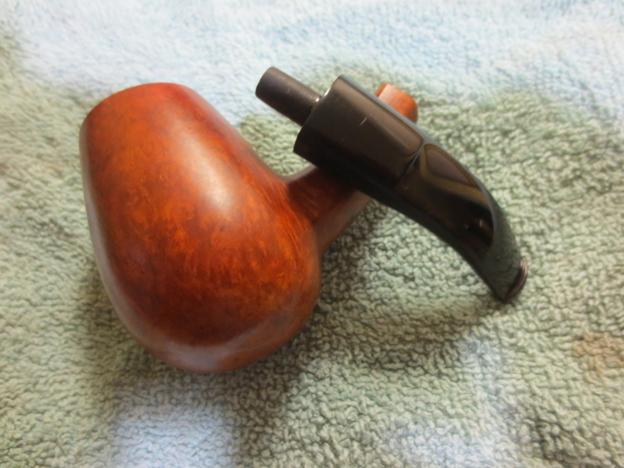
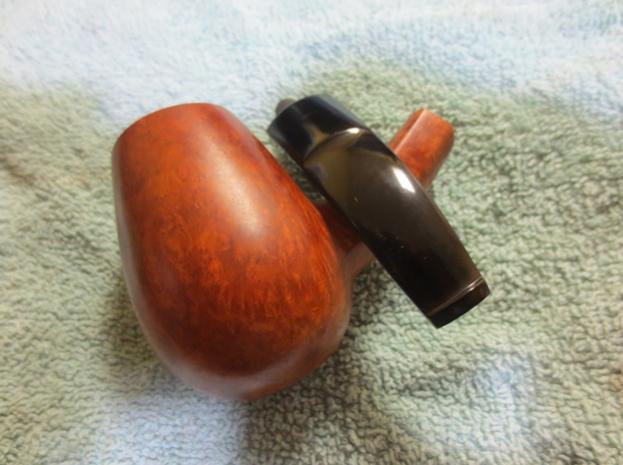
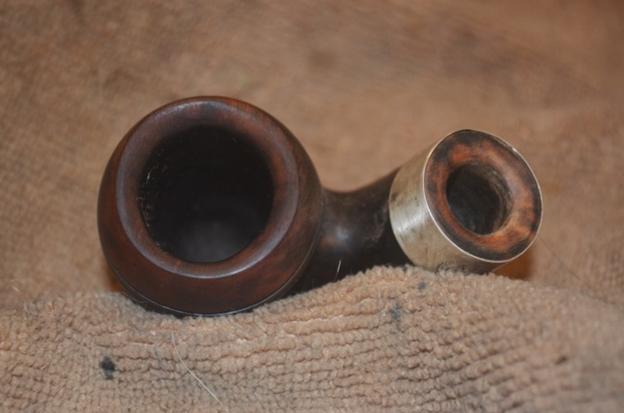
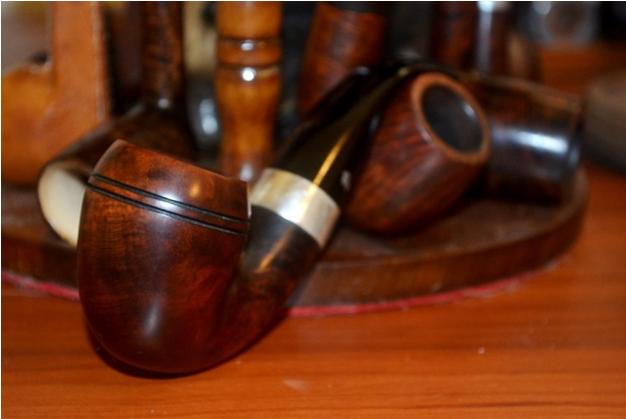
These photos of the Baskerville as I received it show how the picture in the eBay listing was a bit forgiving of the effects of age and smoking on the pipe, as noted by Glen from Peterson’s.
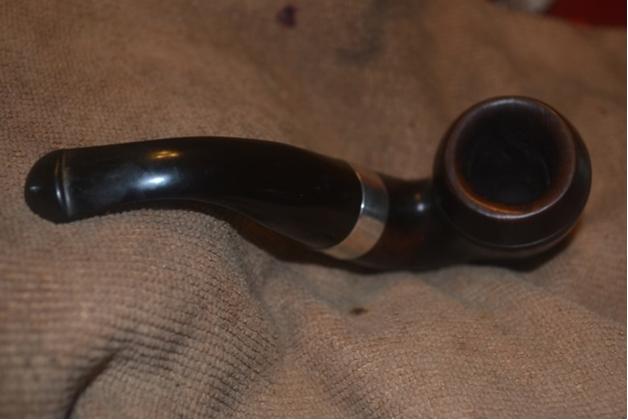
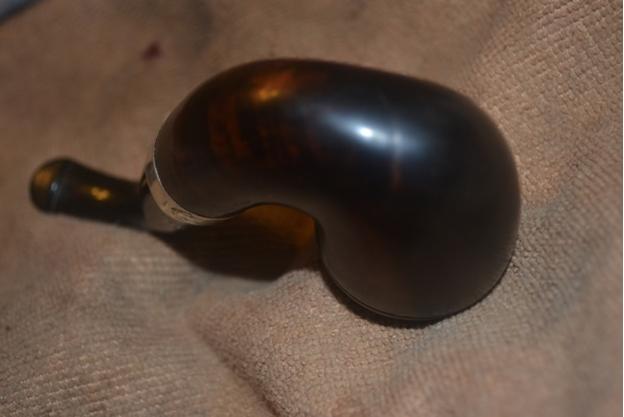
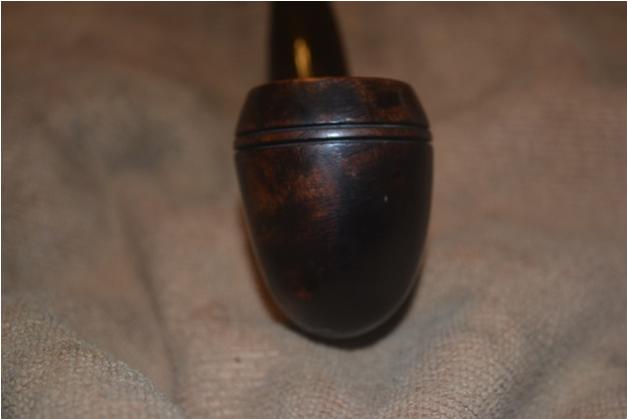
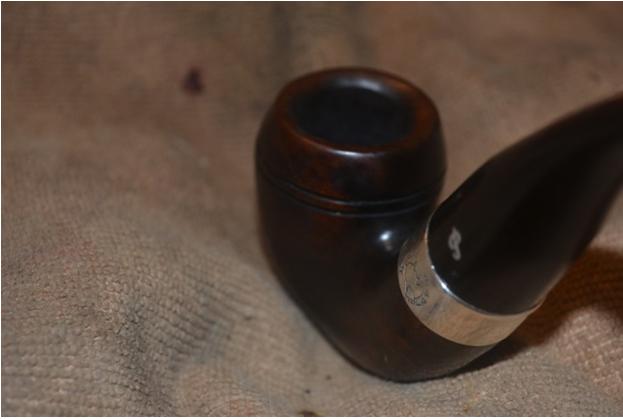

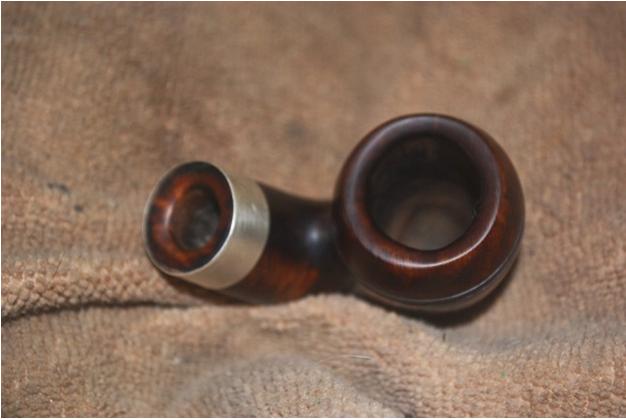
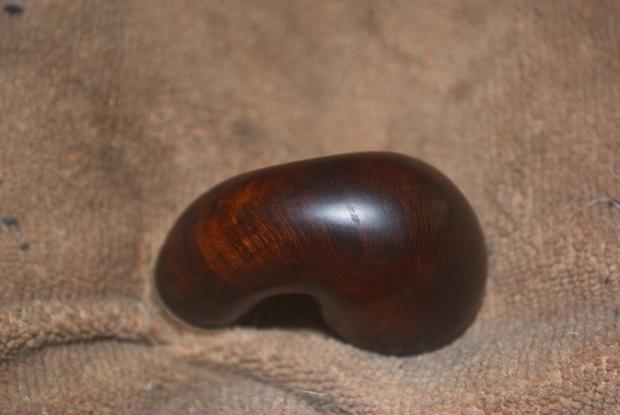
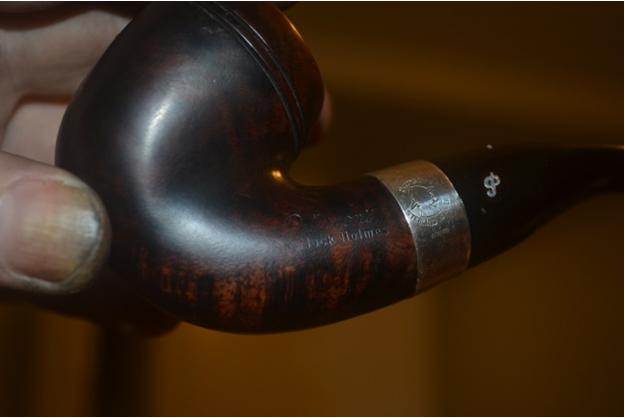 Here, in brief, is where everything truly began to go against me, although I might state the process that unfolded with greater accuracy and brevity as being my own fault, pure and simple. I actually reached the end of a full “restoration” and took what I thought would be the photos of the finished pipe when, upon closer scrutiny, I noted with a sick feeling in my heart and gut that the Baskerville was not up to my standards, even though I knew I was not about to offer this potential beauty for sale. One-dimensional pictures tend to reveal the flaws with unforgiving accuracy. Check out these two angles alone, which are representative of the whole as it was.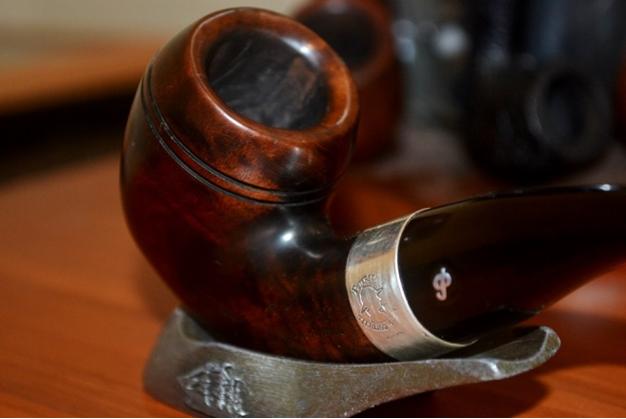
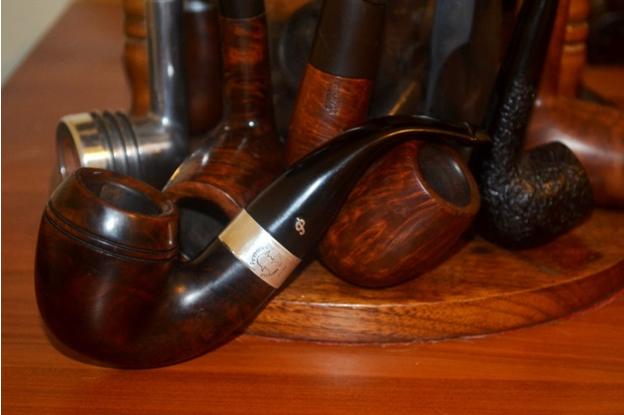 For the most part, I’ll leave the criticism to the readers, but I will point out the most noticeable flaws, including unfixed scratches and other blemishes, not to mention the awful look of the chamber in the first photo above. Most disturbing to me was my failure to remove certain black areas caused, as noted before, by age and use, as well as the general lack of discernible graining I had intended to enhance.
And so, as the traditional children’s song goes, “Finnegan, begin again.”
Removing the newly-applied waxes and stain, this time with 500-grit paper for a slow, gentle approach, proved much easier and faster than the far more laborious work I did the first time around. I only had to focus on the unresolved scratches and black areas. The paper alone was perfect for the small but pervasive scratches and a good deal of the blackened briar.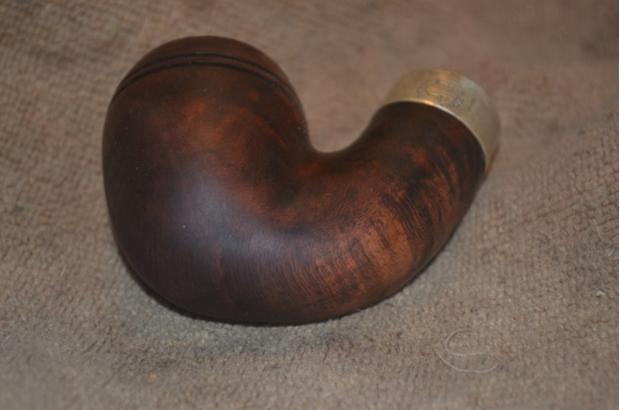
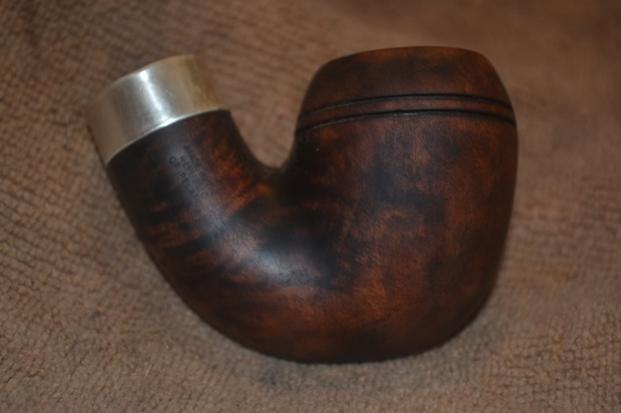
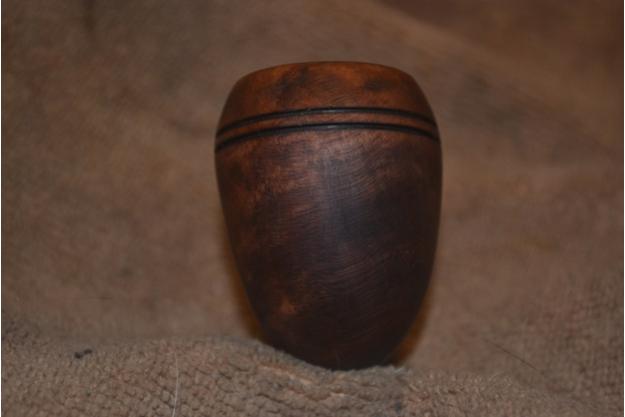
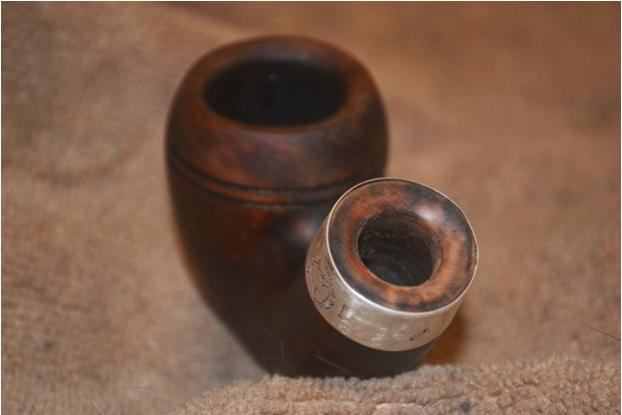
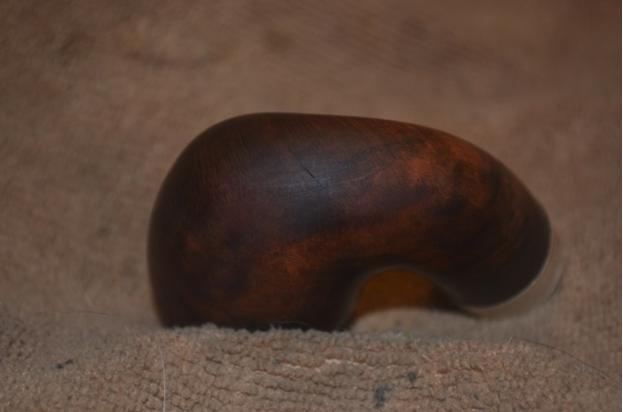
 The dark patches were the most difficult to remove, and when I reached the point where the sandpaper wasn’t up to the task, I finished with the finest grade steel wool. This part required considerable effort around the bottom, front and back of the bowl as well as the shank, but it worked. At last, the wood was the right shade and with no more serious dark spots.
Having enjoyed a few bowls of tobacco in the Baskerville (well, more than a few), I sanded out the small amount of carbon with 320 paper and retorted the pipe once more. Then I stained the outer wood with Fiebing’s Brown and flamed it.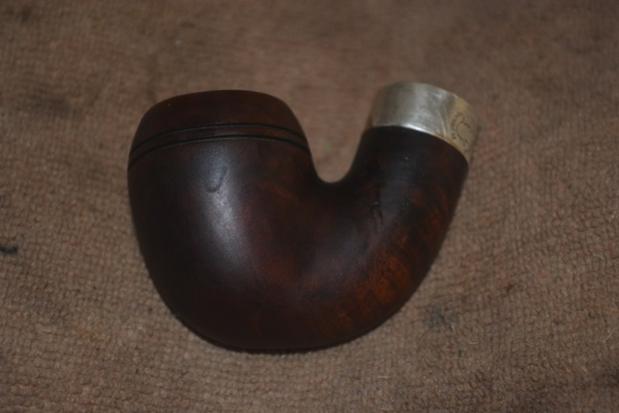 I took off the char with 4000 micromesh and buffed from 1500-4000.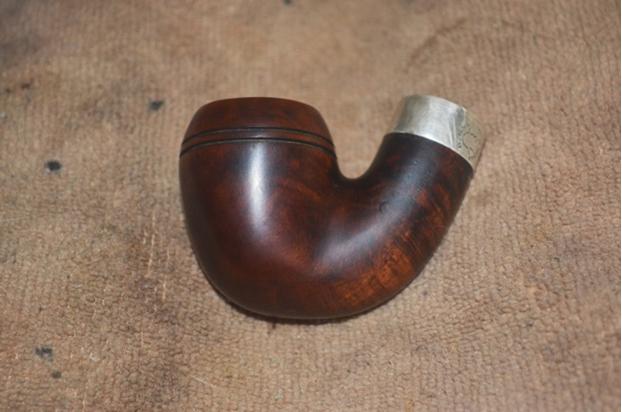
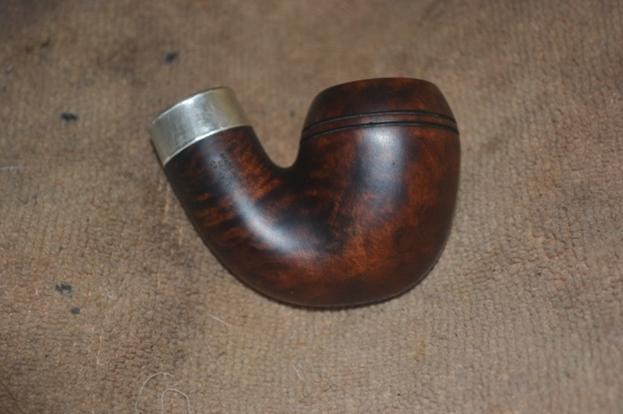

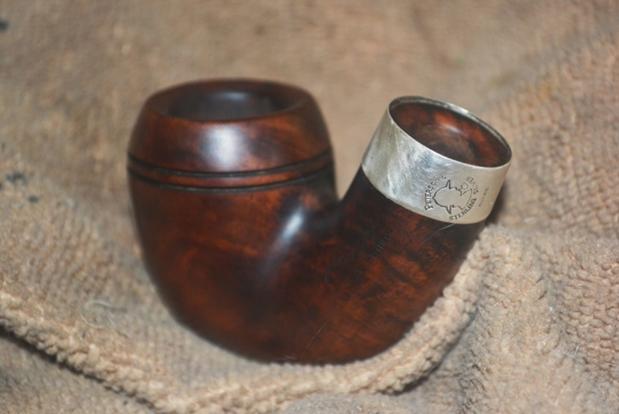 The stem, almost perfect, only wanted gentle micro-meshing in a few spots, with 3200 and 4000. I buffed it with red Tripoli and then again on the clean wheel. I buffed the bowl and shank with white Tripoli, White Diamond and carnauba.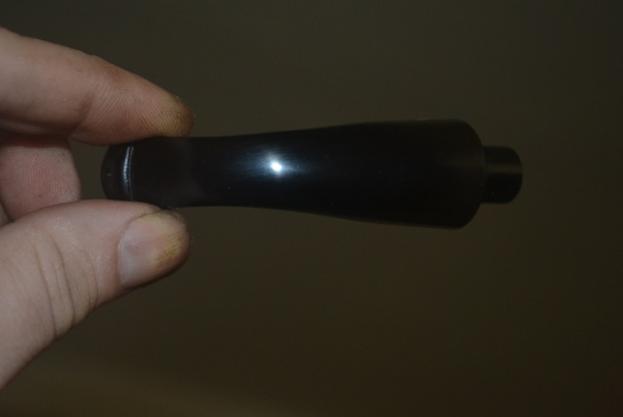

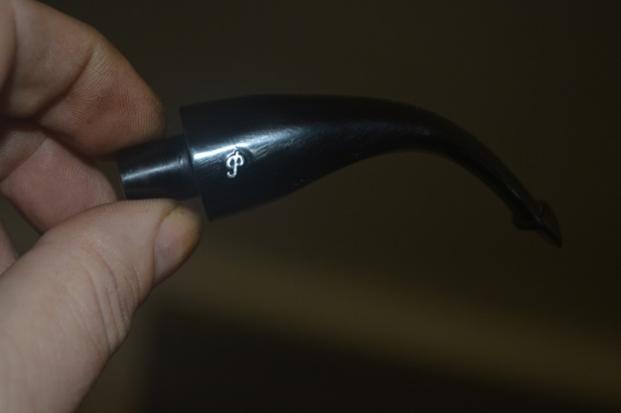
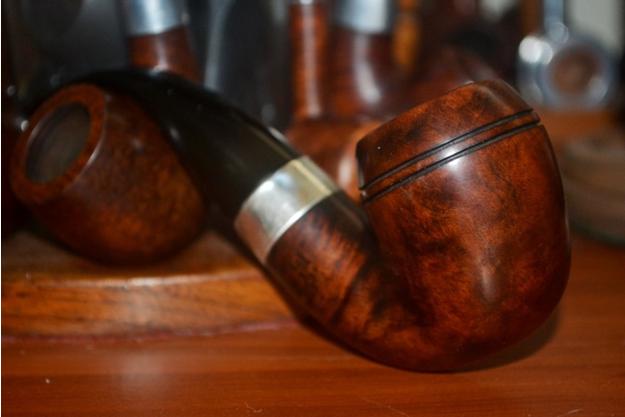
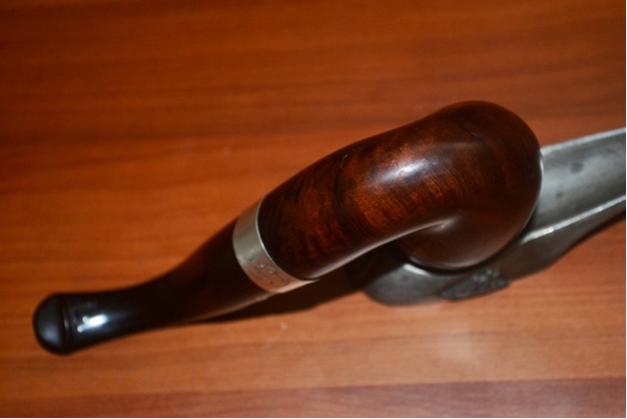
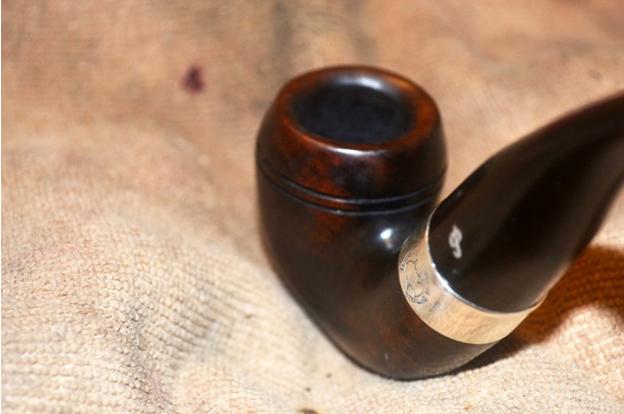

 But remember how I was describing how everything turned against me, only it was really my own fault? Well, then, that brings me to the final error: one I have learned to avoid so often in the past but this time spaced until it was a single stroke too late. In my enthusiastic sanding with the 500-grit paper, I took off a little of the Peterson’s/Sherlock Holmes stamps – not all, but part.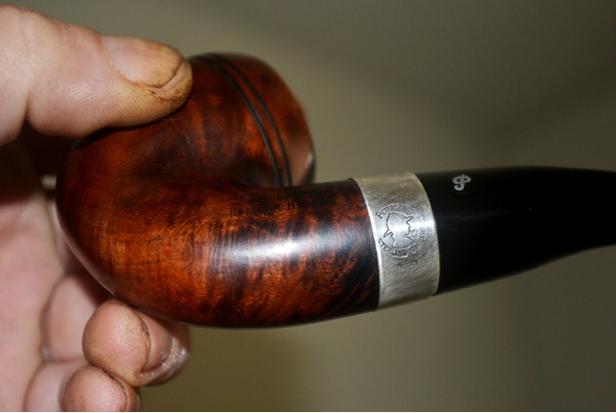
 CONCLUSION
For this blog, I attempted considerable research into the various Peterson’s Sherlock Holmes pipe series. I use the word various because of the three main groups that are commonly known to connoisseurs of the great Irish pipe company established in Dublin in 1865: the Sherlock Holmes Original Collection (with the word Original added only after the decision to add another and then a so-called final series was made), the Return of Sherlock Holmes Collection and the Adventures of Sherlock Holmes Collection. My goal was not only to identify the differences in the several lines’ designs and names but to determine the date(s) of manufacture. Despite my previous knowledge of the incredible difficulty of dating pipes in general and Peterson’s in particular, I thought these tasks would be easier than usual. I have almost never been more mistaken.
Starting at the source, so to speak – in this case, http://www.peterson.ie/CatalogueCOMP.pdf – I found, on pages 10-13 of the catalogue, listings for the first two collections, but nothing concerning the Adventures pipes. And although this catalogue did give the date of the SH Original Collection as “First produced in 1987 to honour the most famous character in fiction, Sherlock Holmes,” the term “first produced in” was vague. Well, for this small amount of help I was grateful, although almost every other website on the subject repeated the same general year. Also, I am sure that no matter how popular Sir Arthur’s brilliant mystery sleuth may be, the notion that Mr. Holmes deserves the high place in all of literature that Peterson’s bestows upon him would be readily accepted by Holmes himself were he real and alive but hotly debated in scholarly circles.
Furthermore, the official Peterson’s catalogue showed only the smooth versions of that series with a note that the series was of seven pipes, one for each day of the wee, with shapes “most favoured by Holmes.” [Again, see my proof of the erroneous nature of this claim above.] Almost as an afterthought, the catalogue reveals that all of the smooth designs shown are also available in rustic, sandblast and ebony versions, and a gold band can be substituted for the sterling silver.
As for the Return of Sherlock Holmes Collection, no date(s) of manufacture is given, and Peterson’s again shows only the smooth versions and notes the availability of gold bands but makes no reference to the same alternative rustic, sandblast and ebony versions. But it does mention and show these a couple of pages down.
The greatest surprises are the absence of the Adventures of Sherlock Holmes Collection altogether but the inclusion of beautiful pure white, sterling banded Sherlock Holmes Meerschaums in the same designs as the Original Collection, but again undated.
Therefore, searching far and wide for a list of the Adventures of SH Collection, I came across another Peterson’s of Dublin site showing the seven newest designs, mixed among smooth, rustic and sandblast. [http://www.peterson.ie/c/164/adventures-of-sherlock-holmes] Again, no date(s).
Finally, as a last measure before finishing this blog, I thought of the obvious and Googled “dating peterson sherlock holmes pipes.” I was rewarded with a site [http://thepetersoncollector.blogspot.com/2010/07/welcome-to-my-new-blog.html] providing almost all of the hard-sought data:
Sherlock Holmes Original Collection 1987-c. 1989
Return of Sherlock Holmes Collection c. 1991
Sherlock Holmes Meerschaums 2006
And so, would anyone out there who knows when the Adventures of Sherlock Holmes Collection came to be please reply to this blog with the coveted information…and if possible, a URL to verify it?
Sure as there be five-leaf clovers, I will sleep better having read the end of the mystery.
Blog by Steve Laug
I have wanted to do some more experimenting and learning new ways of doing things for a while now. That is why I love refurbishing, there is always something new to learn. I was sent some pipes as a gift to either scrap out or clean up. In this lot was an Israeli Anderson freehand pipe. The bowl had been cut off and what was left was not much different from a Falcon base. There was no way it would hold any tobacco that would even make it worth smoking and it was in pretty rough shape. The stem was great the base was solid but the finish was done. I also had a pipe that I had cut the shank off of and repurpose on another project so the bowl was left. It had a lot of large fills on the side that were full of pink putty. I thought maybe with a little imagination I could join the two parts together and get a workable pipe. Let’s see what I can do with the parts.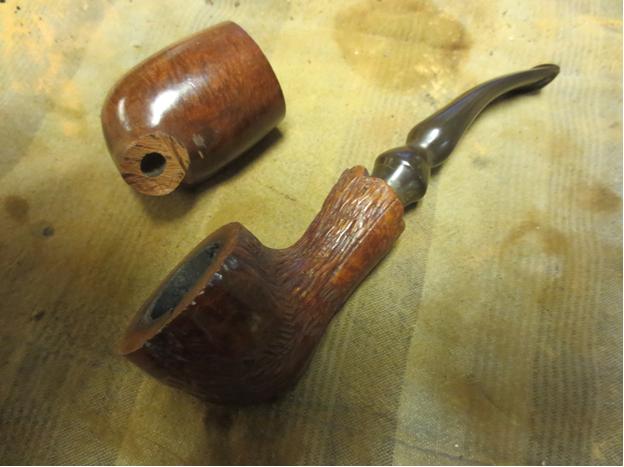
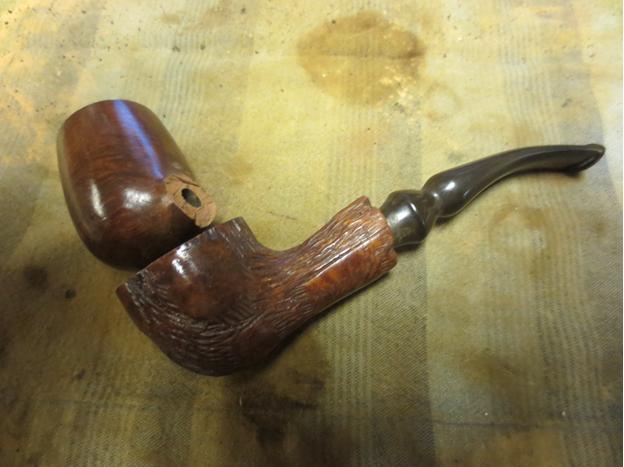 I don’t have a table saw or a band saw so any kind of cutting briar needs to be done by hand. In this case I used a hacksaw to cut the bottom of the bowl off so that I could splice the bowl and the base together. I figured it would work and I might get a half way decent pipe out of the blend.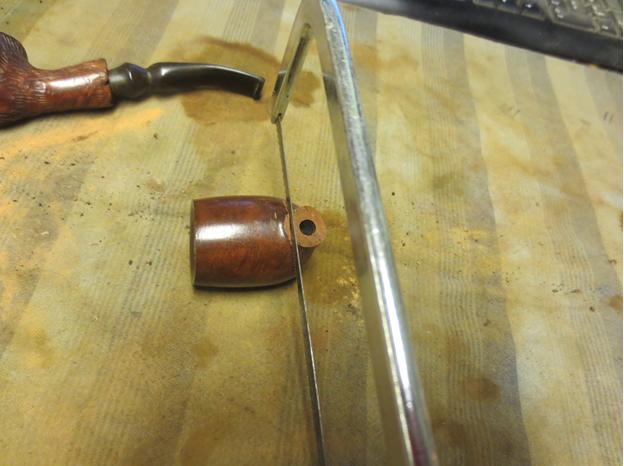
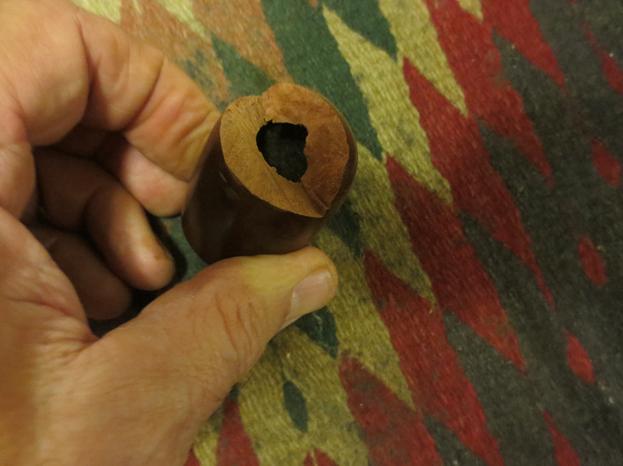
 I used a small drill bit to place six small holes around the base and the bowl. I stabilized the small cracks with wood glue and briar dust. I planned on putting a bowl coating on the interior so I was not too concerned with the walls of the base. I had some small stainless steel pins that I had found that would work well to join the two parts together.
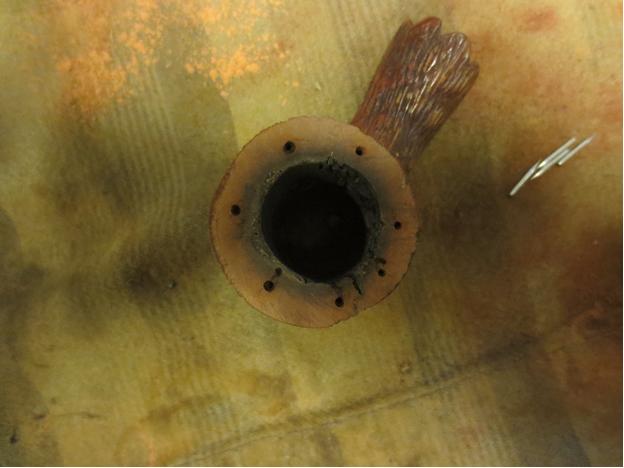 I inserted the pins in the holes in the base and glued them in place. When the glue had set I put glue on the top of the base and the bottom of the bowl portion and set it on the pins as well.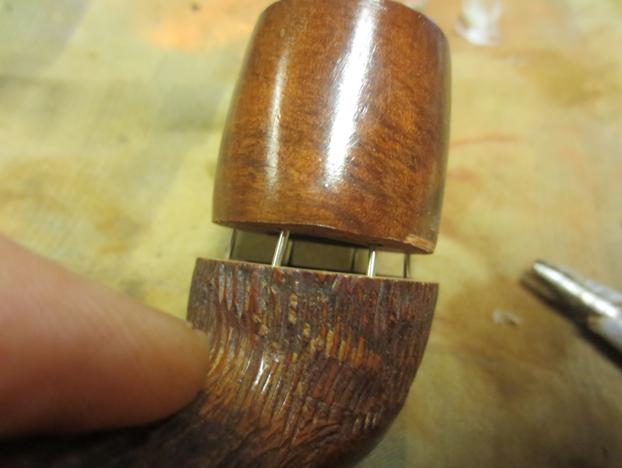
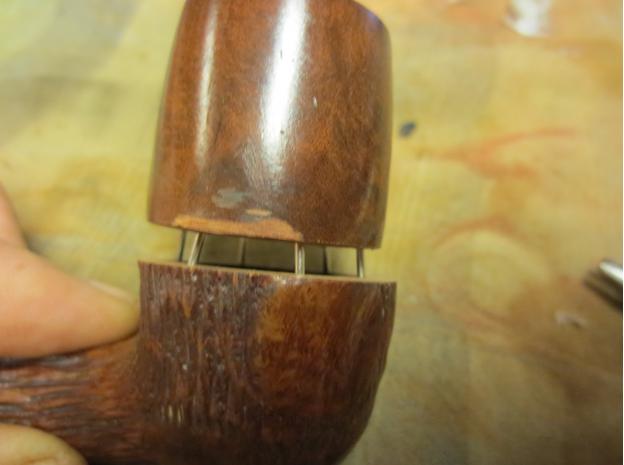 I pressed the bowl onto the pins in the base until the two surfaces connected. I clamped it in place until the glue dried. Once it was dry I put a ring of super glue around the joint on the two and pressed briar dust into the remaining crevices in the joint.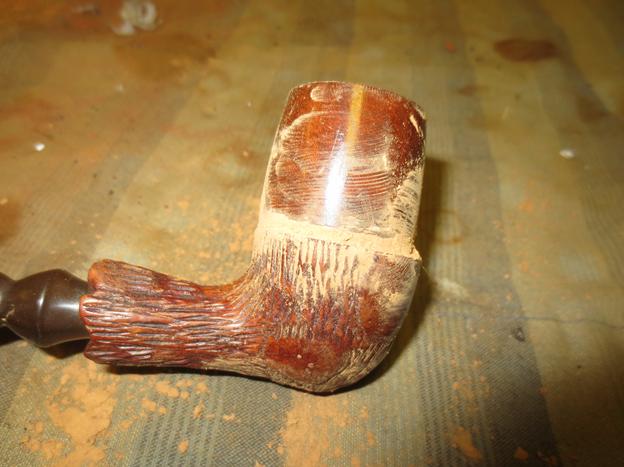
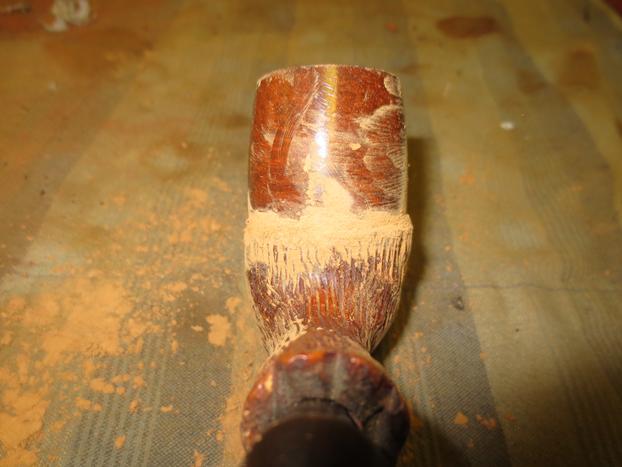

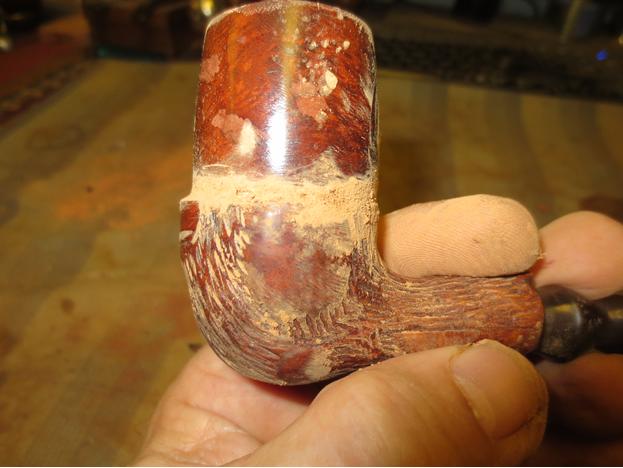 I used a Dremel and sanding drum to remove the excess briar on the front of the base and bring it into alignment with the bowl. I did the same on the sides and back of the bowl.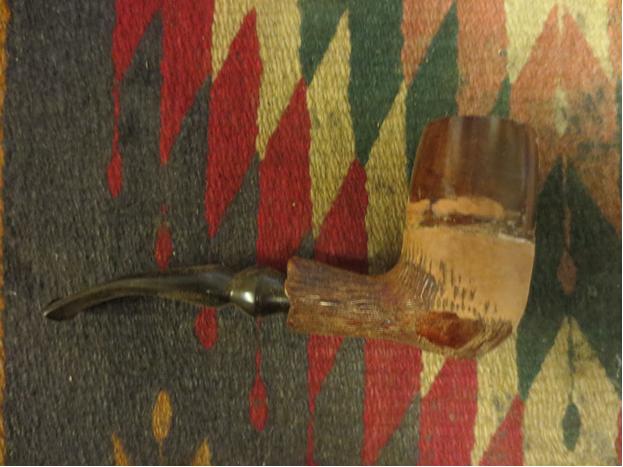
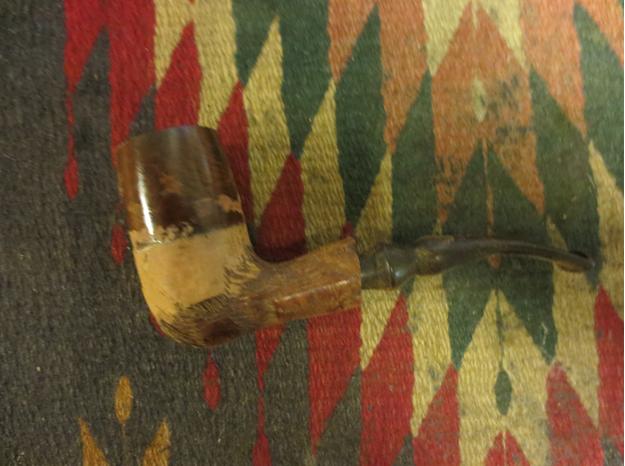
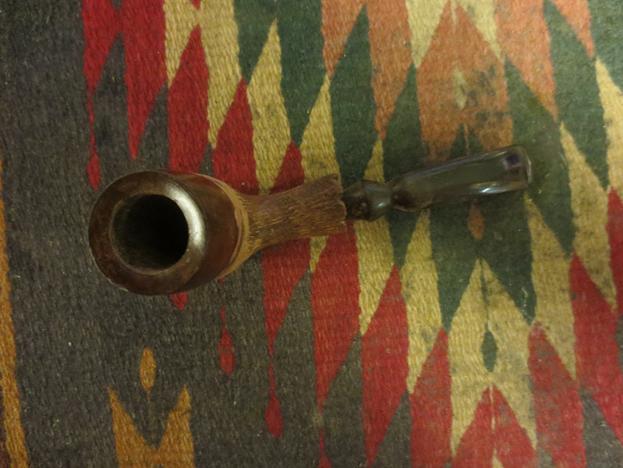
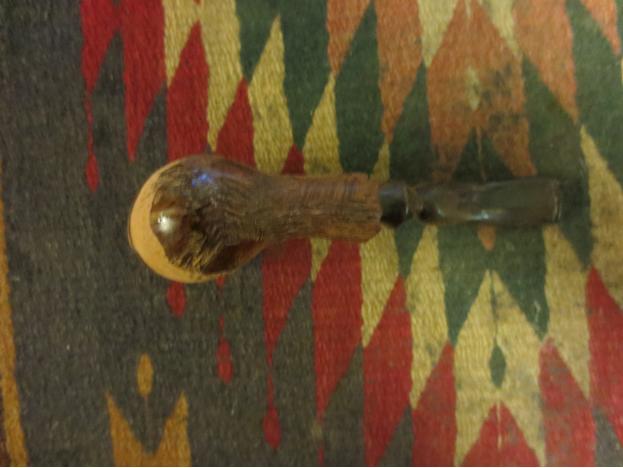 I sanded the bowl and base union with a medium grit emery paper and then with 180 grit sandpaper to smooth out the surface of the two parts and to work on making the junction smooth between the two. I followed that by sanding it with 220 grit sandpaper to further smooth out the walls of the new pipe. The photos below show the new “Stack” that had been fashioned from the two parts – one plus one did in this case render a third.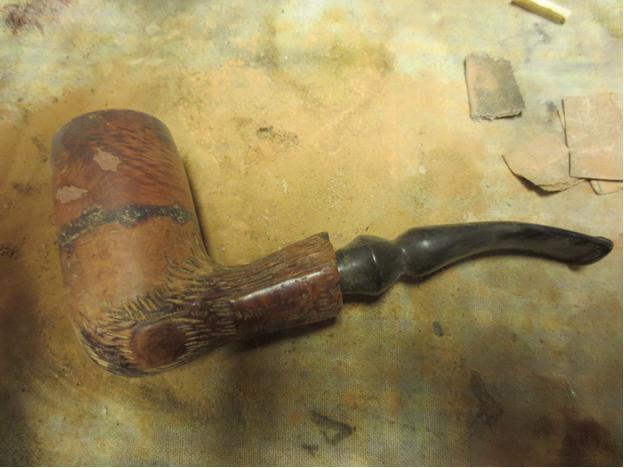
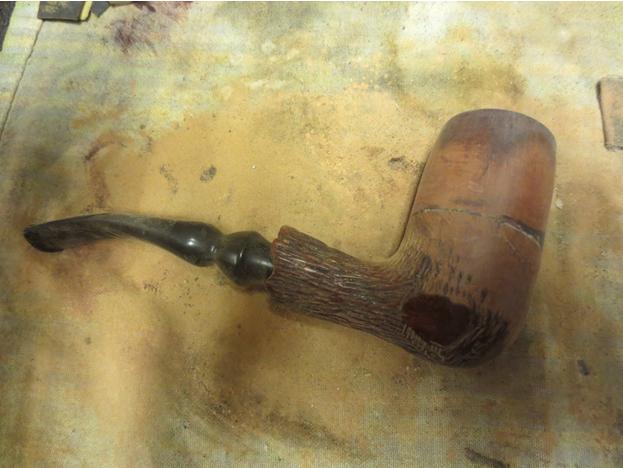

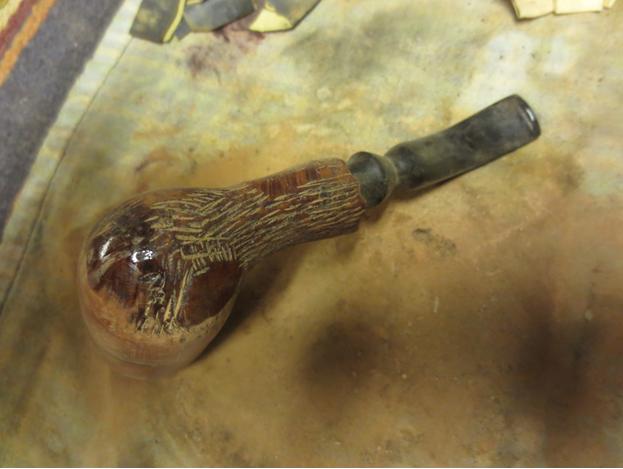 I sanded the exterior of the bowl and base with a coarse grit sanding block and then with a medium grit block. The photos below show the state of the bowl after much sanding with the blocks. The surface of the bowl and base junction is smooth to touch. The large fills on the side of the bowl and the dark ring of the glue and briar dust patch around the middle were going to take some work to make them “disappear”.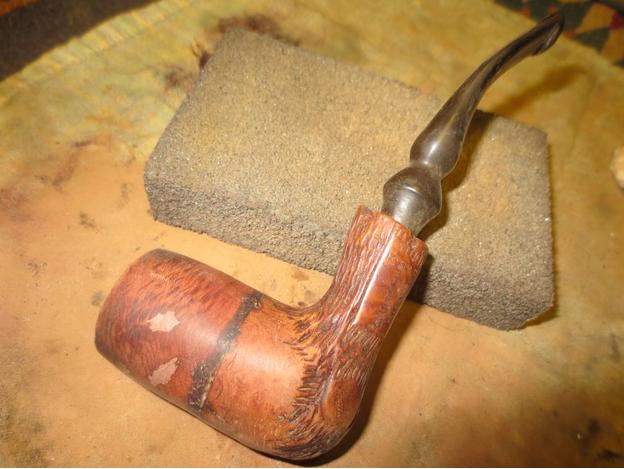
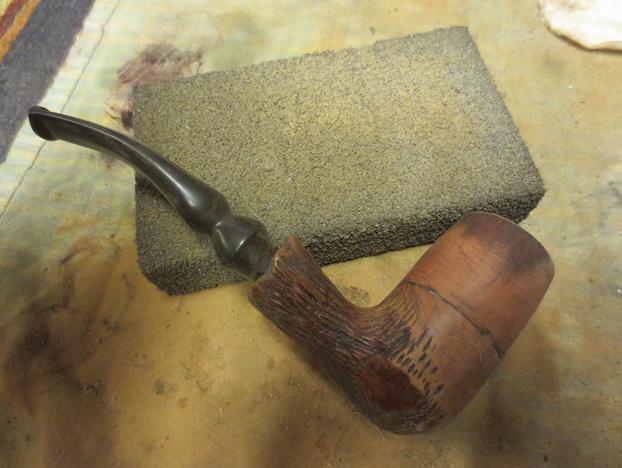
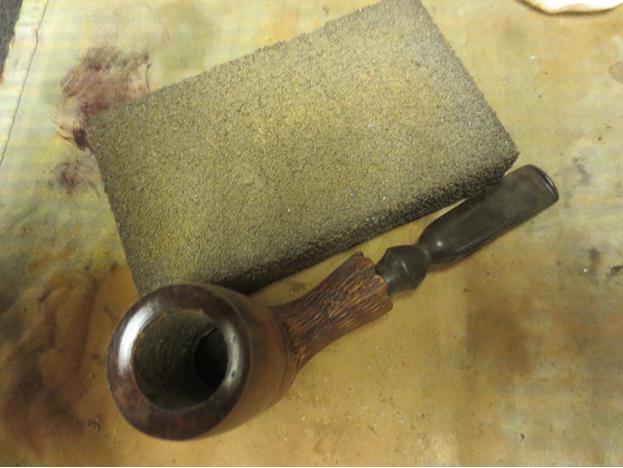
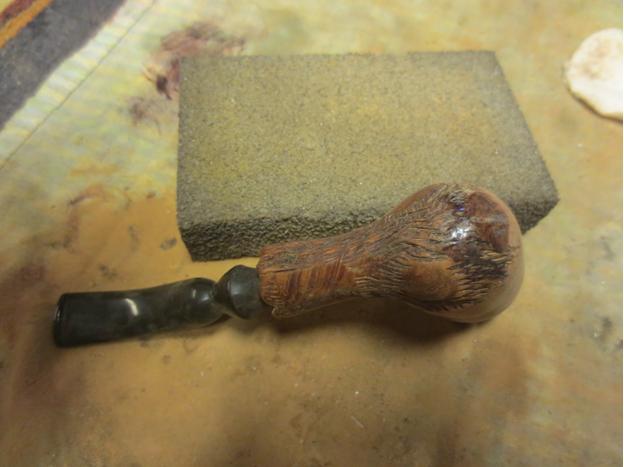 I sanded the bowl with a fine grit sanding sponge to further smooth things out while I decide on how to proceed next with the finish on the bowl.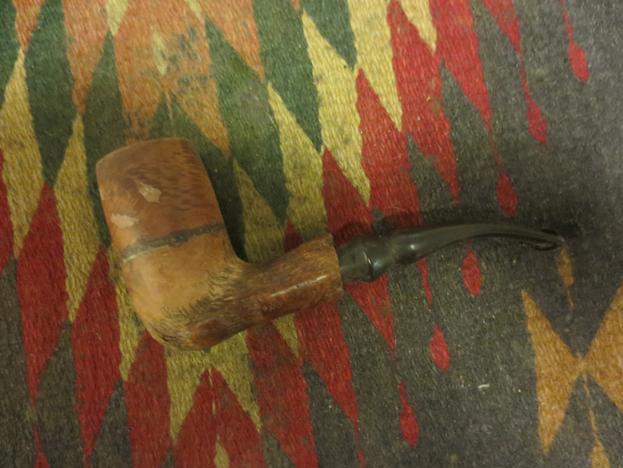
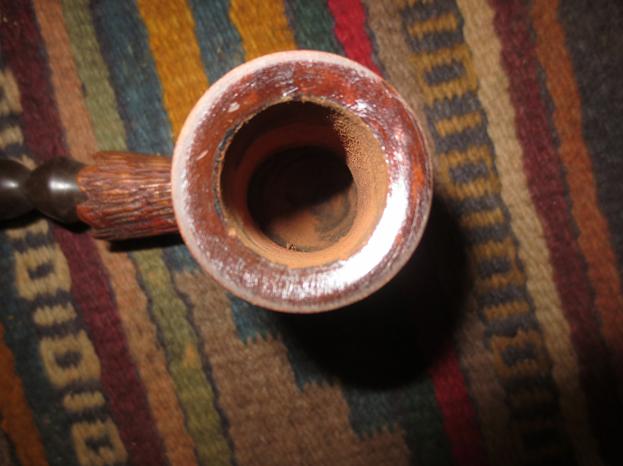
 The internal junction of the bowl and base needed some work as well. The bowl I had used was slightly conical on the base so the internal walls came in at an angle. The base walls were straight. I needed to sand the joint from the inside to smooth out the junction. I used the Dremel and the sanding drum to smooth out the junction. I proceeded slowly and carefully and was able to smooth out the walls. The photo below shows the inside of the bowl after the first work over with the Dremel and sanding drum. More needs to be done but you can see the progress.
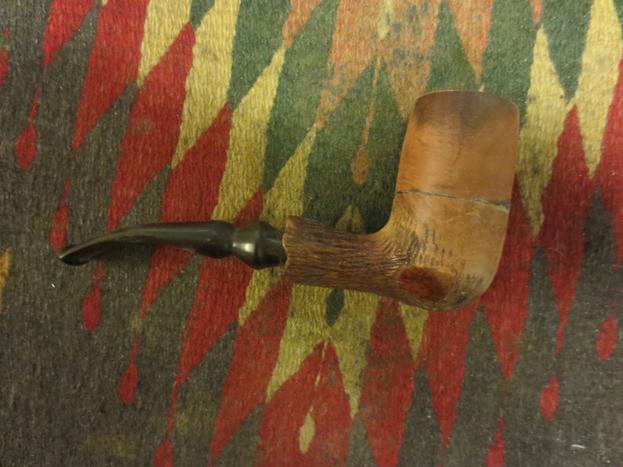
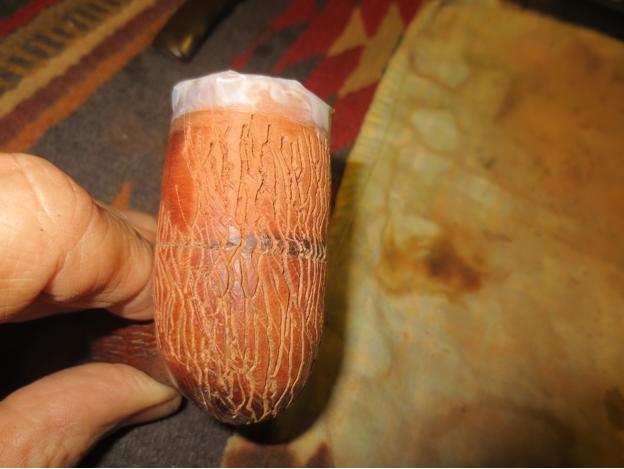
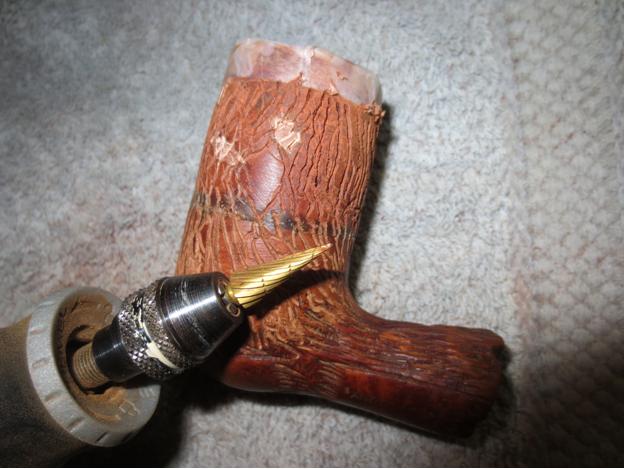
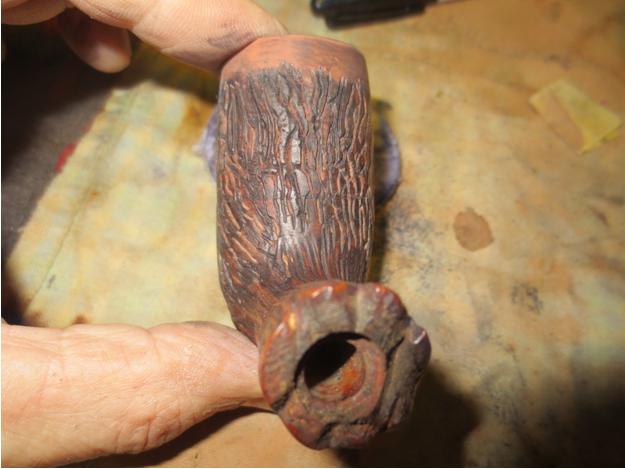
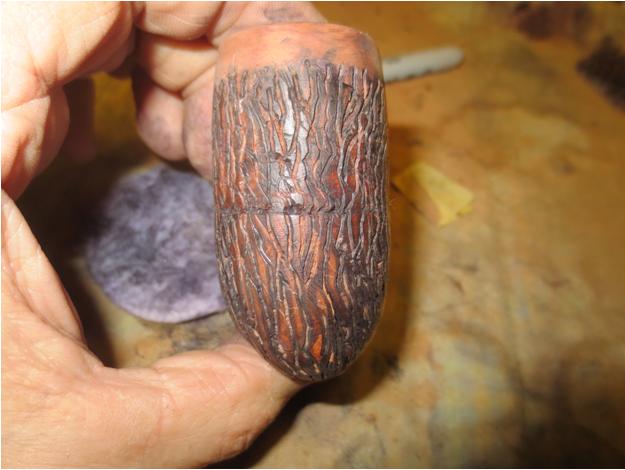
 When I got back from the office I decided to rusticate the new bowl with the same tree bark rustication pattern that the Anderson Freehand had. I used a pointed dental burr with striations through the shape of the cone. I held it like a pencil and worked on the surface of the briar. I followed the pattern on the lower portion of the pipe and worked to match it and continue it to the top of the rim.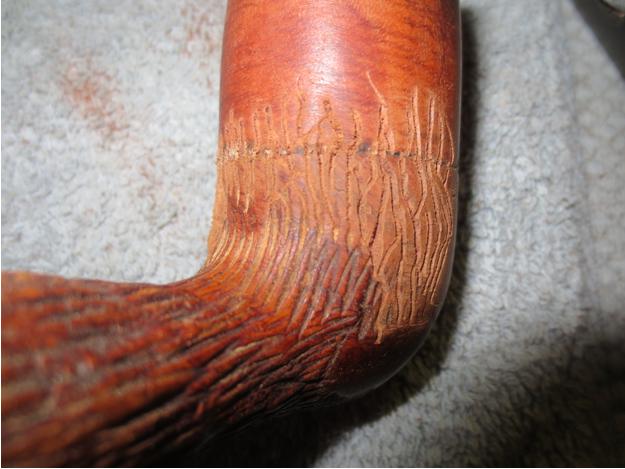
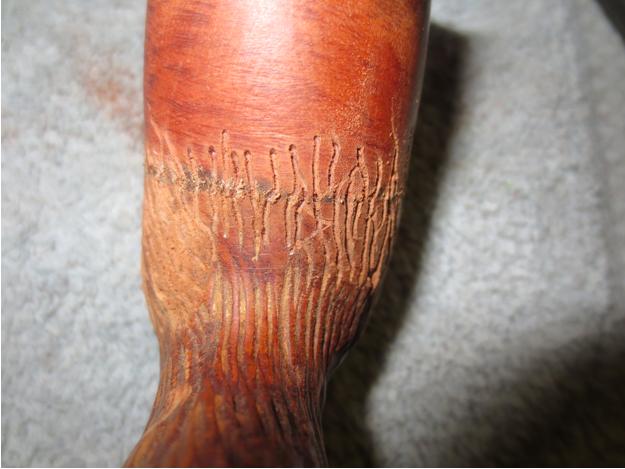
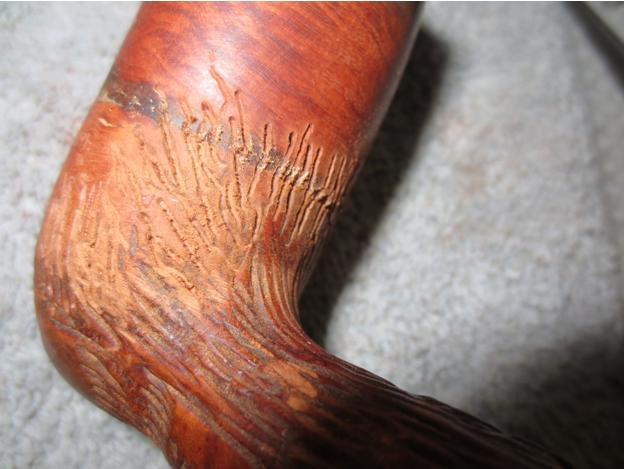 As I got closer to the top of the bowl I wrapped the edge with several layers of cellophane tape and folded it over the rim as well. I continued to use the burr until I had carried the pattern all the way to the edge of the tape. The original bowl also had some smooth spots in the midst of the rustication. These looked like the ends of cut off branches. I put several of them on the sides of the new bowl as well to match the lower portion.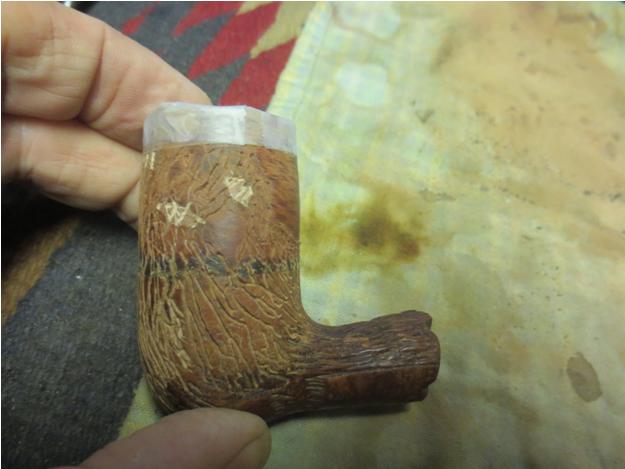
 The next two photos show the conical burr that I used for the rustication pattern.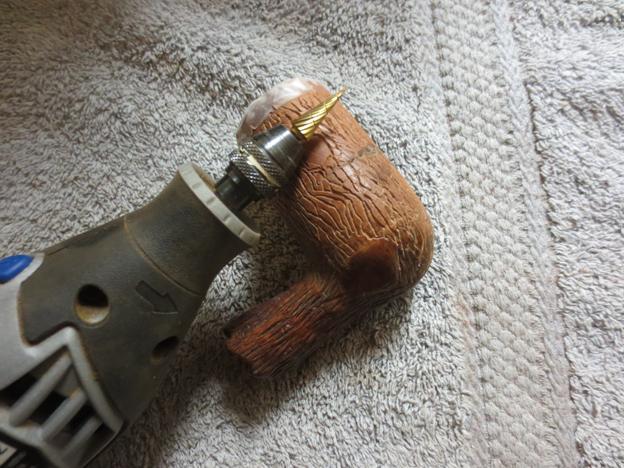
 To highlight the barklike nature of the rustication I used a black Sharpie permanent marker to colour in the trails in the briar.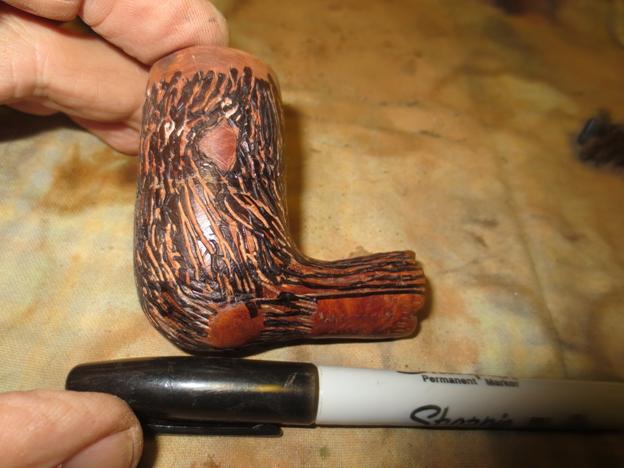
 I wiped the bowl down with alcohol on a cotton pad to even out the black and to set it in the bottoms of the lines.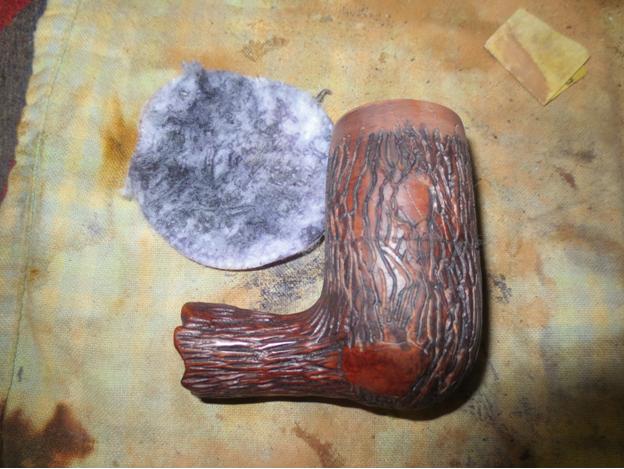
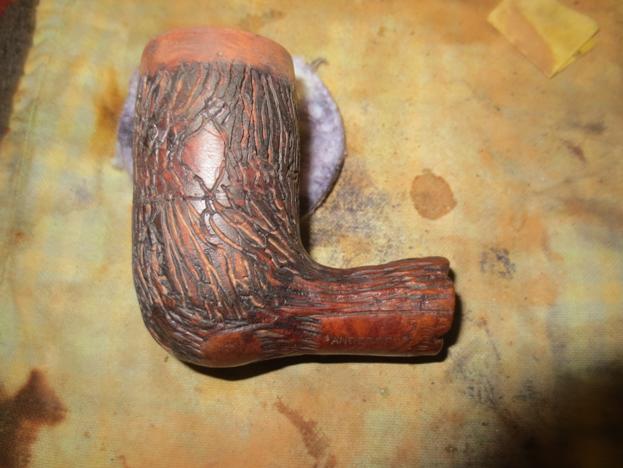
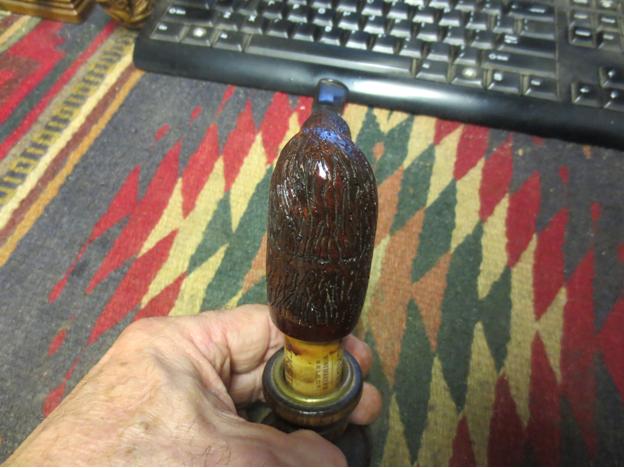
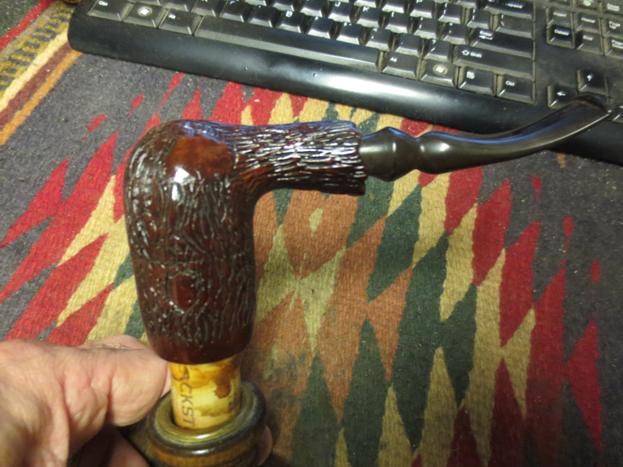
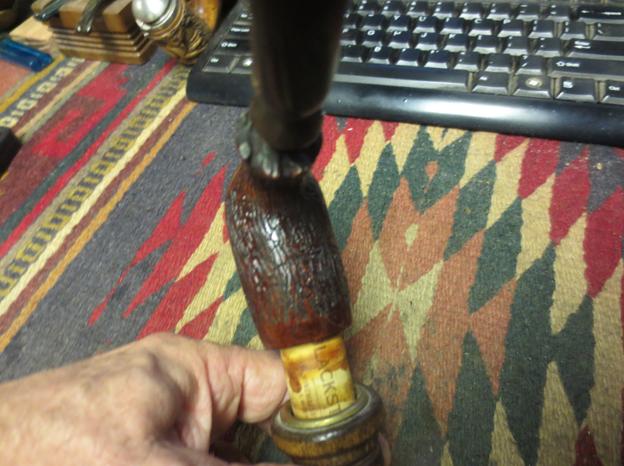
 I stained over the black marker with a dark brown thinned 50% with alcohol. I applied the stain and then flamed it. I repeated the process until the coverage was even.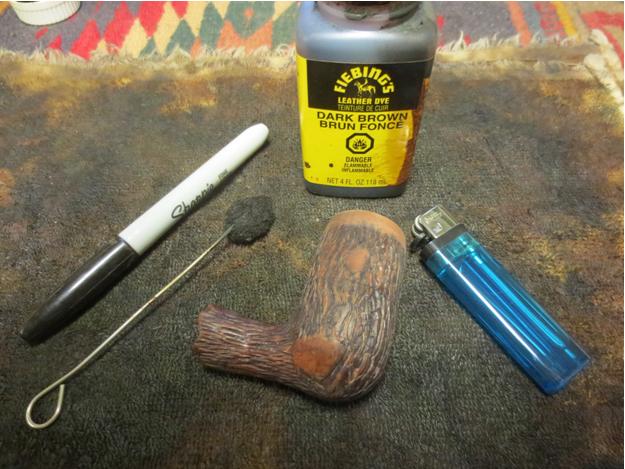

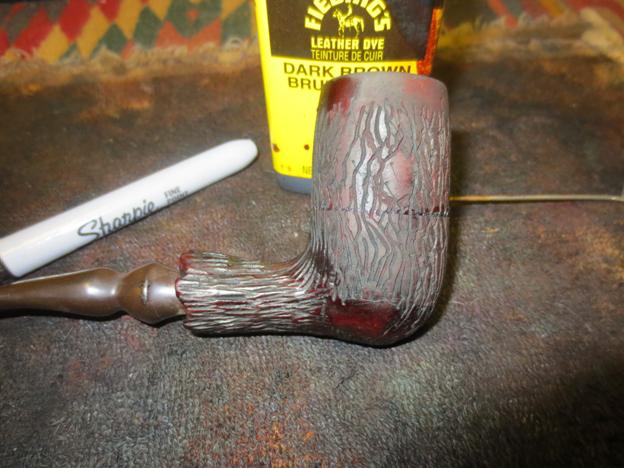 I then gave the bowl a coat of oxblood stain thinned 50/50 with alcohol and set it on the cork stand to dry.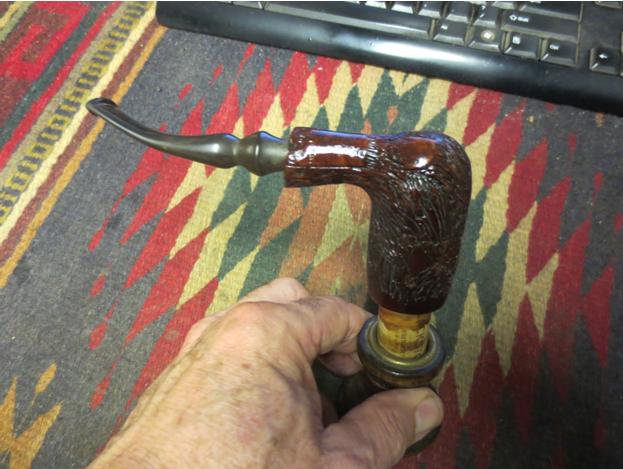
 To protect the newly sanded bowl and the joint between the bowl and the base until a cake had a chance to form I mixed a batch of organic bowl coating that I have used for years. It sounds like it would smell and make things a mess but it does not. I use sour cream and activated charcoal powder. I put a dollop of sour cream in a bowl and empty the contents of three or more charcoal capsules into the sour cream. I mix it until it is a grey pasted. At this point there is very little smell to the mixture.
 I painted the inside of the bowl walls and bottom with a folded pipe cleaner. I want to give the bowl a coating on all sides. I insert a pipe cleaner in the airway so I do not get the mixture in the airway. I put on the coating in several layers letting the one underneath get a little set. I paid special attention to the area around the junction of the two parts.
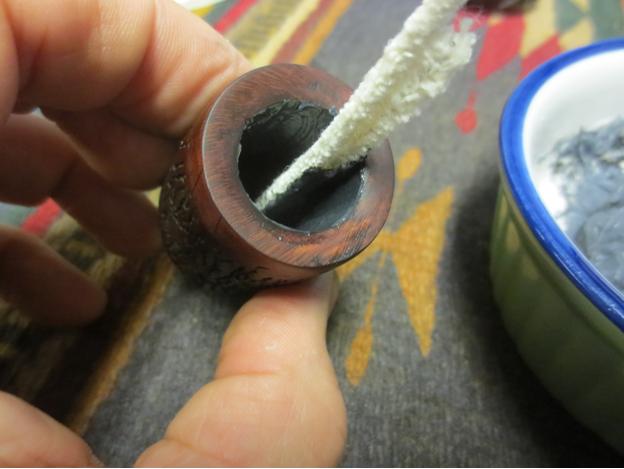 I set the bowl aside to dry. When it dries the coating will be a charcoal black colour and provide a base for the formation of the cake. While it dried I worked on the stem. I sanded it with a medium and a fine grit sanding sponge and then moved on to sanding with micromesh pads. I wet sanded with 1500-2400 grit pads and rubbed the stem down with Obsidian Oil. I dry sanded with 3200-4000 grit pads, rubbed it down with oil again and then dry sanded with 6000-12000 grit pads. I gave it a final coat of Obsidian Oil and when it dried I buffed the stem with Blue Diamond.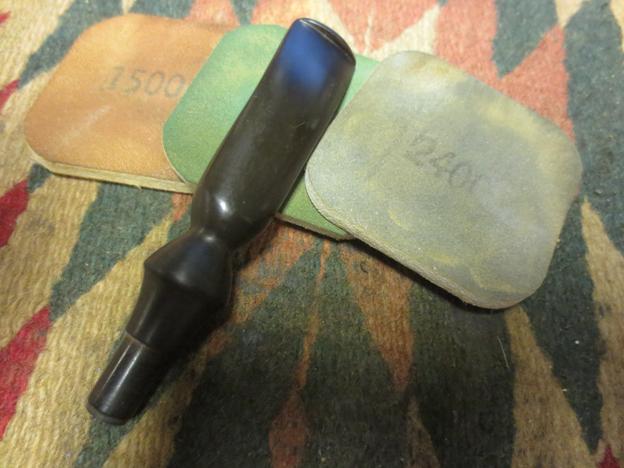

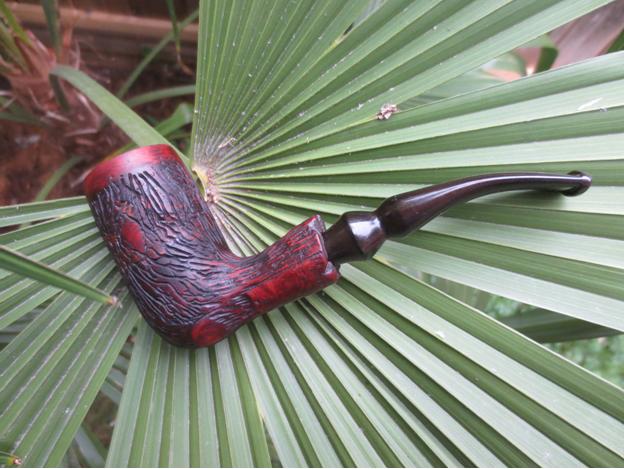
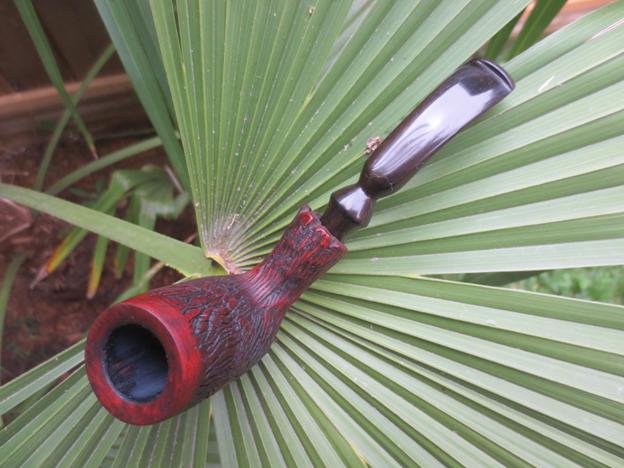
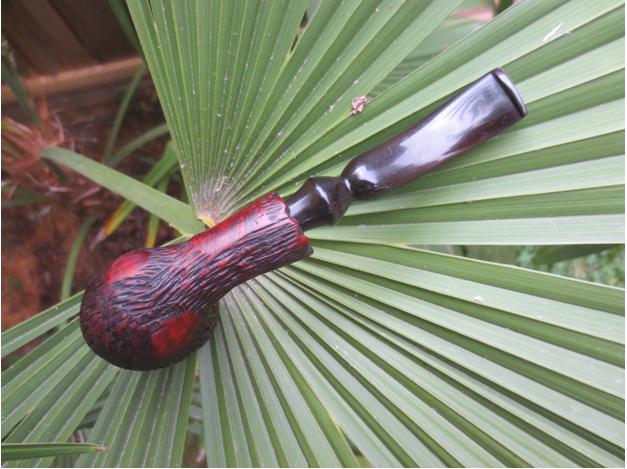
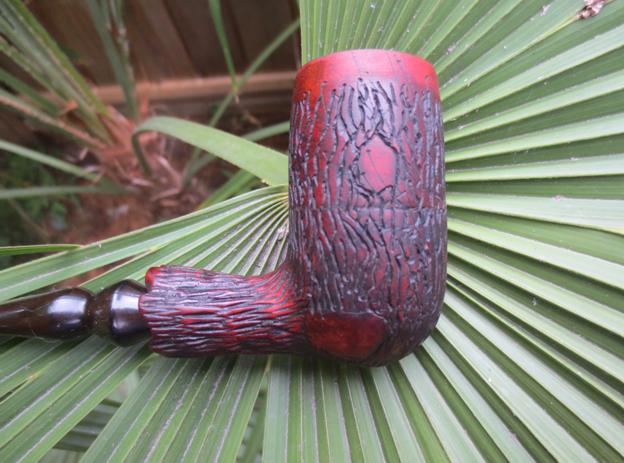
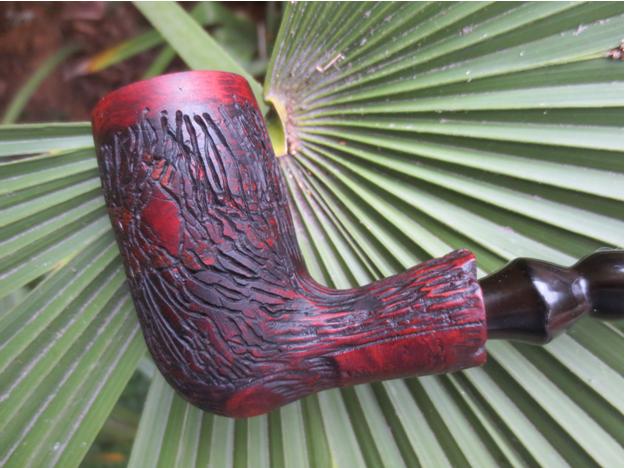
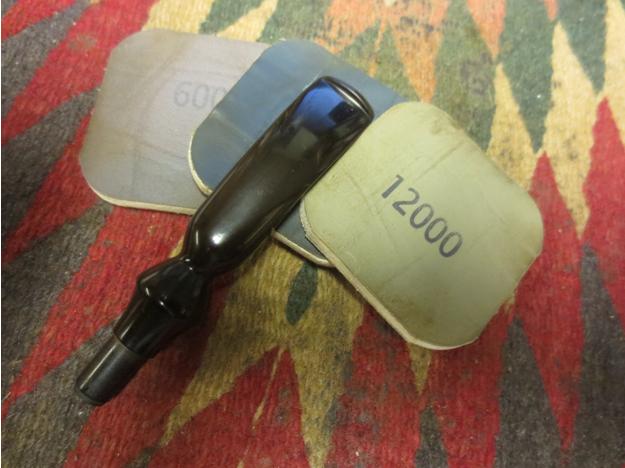 I lightly buffed the stem and the bowl with carnauba – spending more time on the stem than on the bowl. I then took it back to the work table and hand buffed it with a microfiber cloth to raise the shine. I did not want too much of a shine as I think the matte finish looks good on the tree bark rustication. The finished pipe is shown below. Once the bowl coating has dried for several days it will be ready to smoke. I am still mulling over what I will pack it with for the inaugural smoke. Thanks for looking.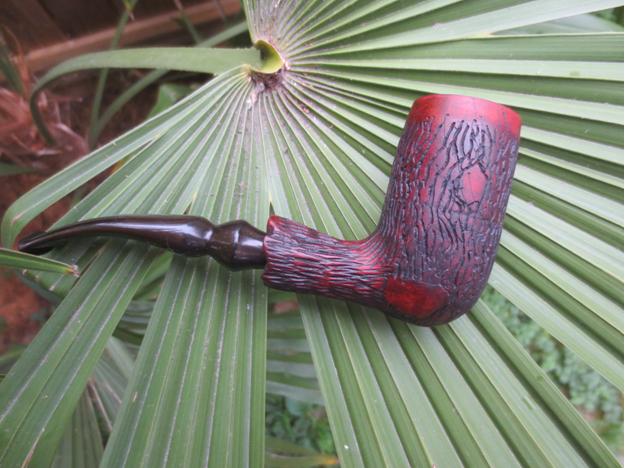

Blog by Troy Wilburn
Troy originally posted this to the Dr. Grabow Collectors Forums. You can read the original post and the responses to his work at the following link: http://drgrabows.myfreeforum.org/sutra129300.php#129300
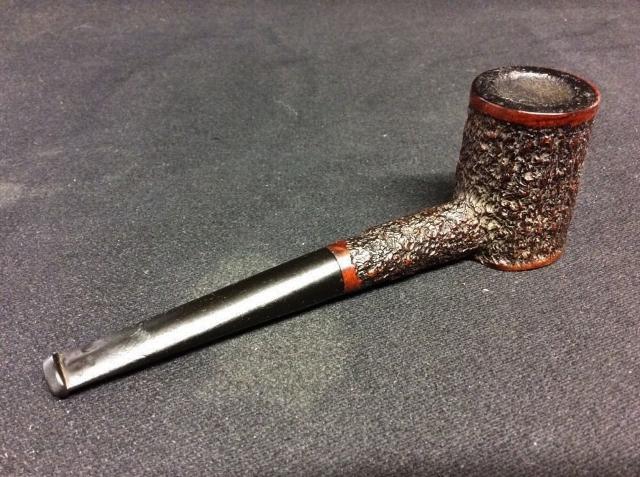
I picked up both of these rare early 20th Century (I would guess just after WW1 to mid-20’s) LHS pokers made for companies to advertise their services and goods. I imagine few of these survived as they were given away to the public and most likely company employees. They were smoked until they were worn out or broken and then thrown away.
The first poker model is one that I have seen before on an old post from 2010 on Tamp and Puff (http://tampandpuff.com/viewtopic.php?f=9&t=1119). I have drooled over that for a couple of years now hoping to find one and I did . Mine is not as nice as that one but happy to have it just the same. I have not found any more pictures of or posting of another before or since. When this one came on EBay I knew I had to have it. Luckily there wasn’t much interest because of the way the seller posted it.
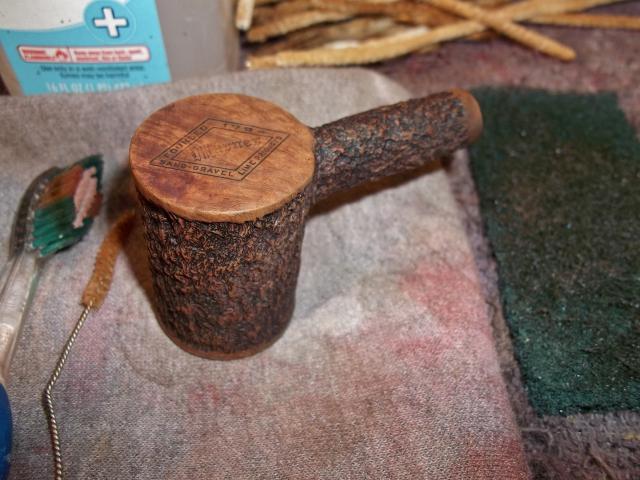
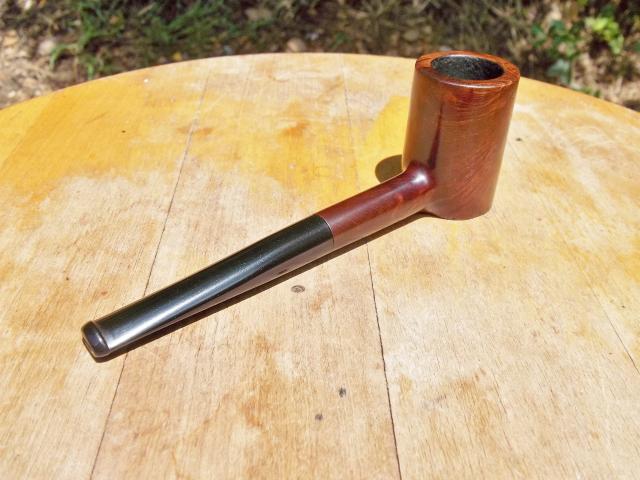
The first poker is marked Warner Sand Gravel Lime Products Est 1794. The shank is stamped Italian Briar (mine is double stamped) with LHS logo.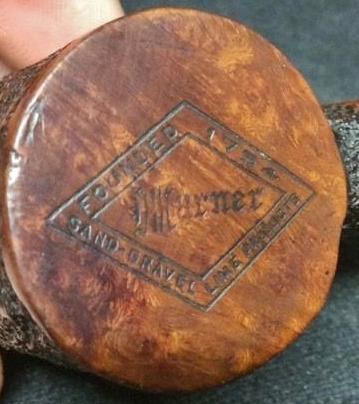
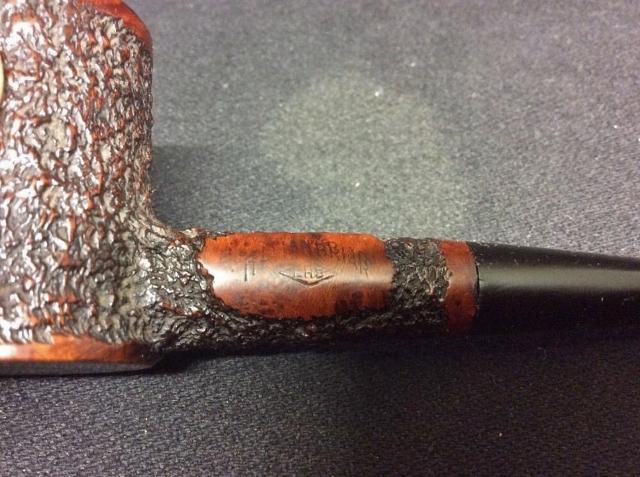 More pics of the pipe as it arrived to me. Worst condition problems of pipe were bad tooth marks on the stem and shank’s stampings are worn. It was also really greasy and dirty but not caked up and in otherwise good shape with no major damage.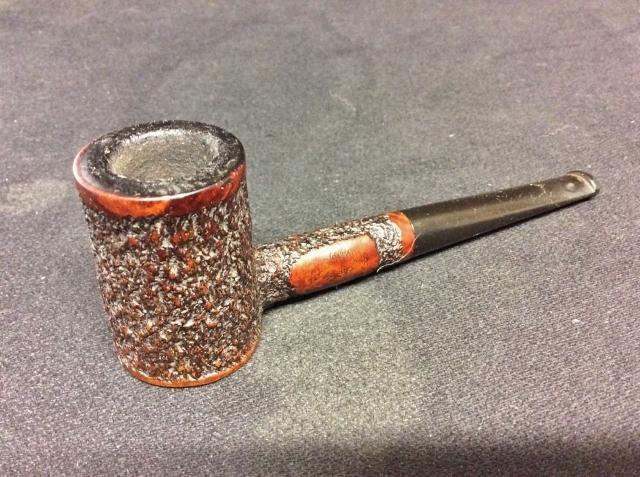
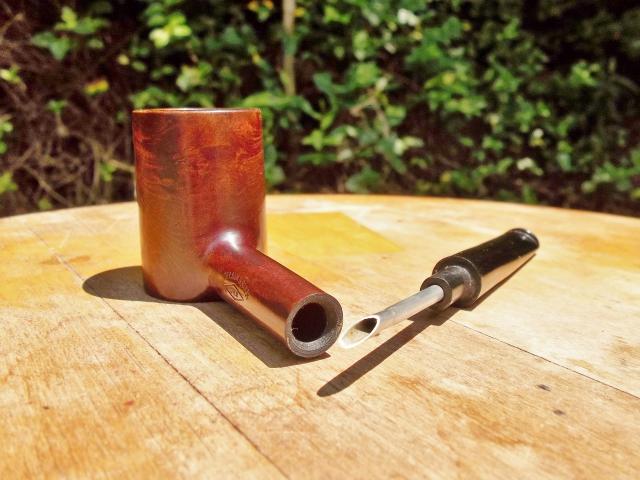
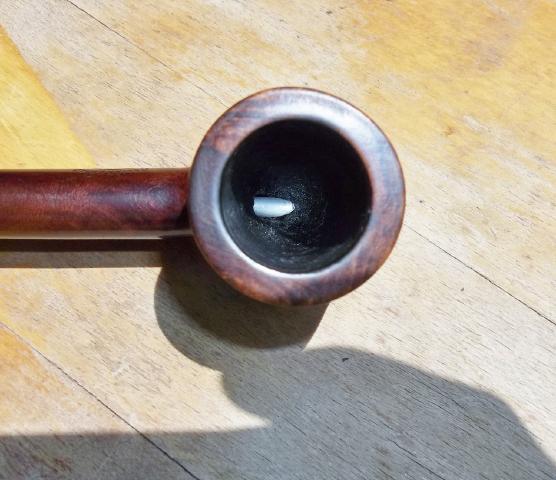
 It’s missing its unique stinger that luckily was still in the other poker I acquired. With the rarity of the pipe I decided to preserve what I had and do little more than just a good cleaning. The pipe really had a lot of grime and greasy feel. I gave it a good cleaning inside and out and removed most of the rim scorching with Oxy Clean and Scotch Brite pad. It could have used a slight topping but I decided not to as I’m preserving the pipe not restoring it. Plus I was afraid it would mess up the symmetry of the pipe rim design. I also gave the rest of the bowl several scrubbings with mild detergent and a soft bristle tooth brush. Wiping it down after with paper towels till the paper towels wiped clean afterwards.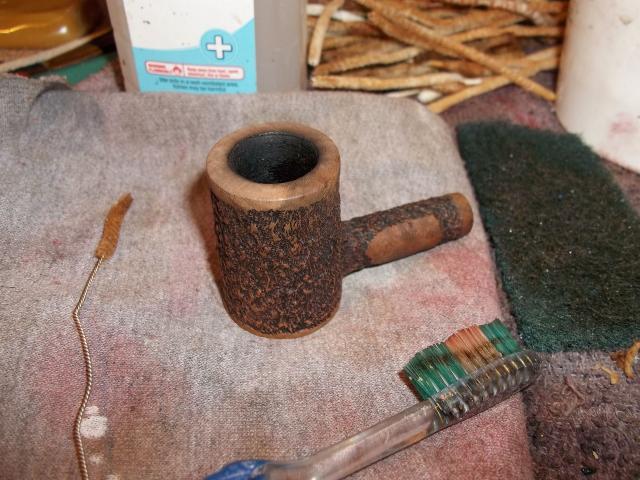
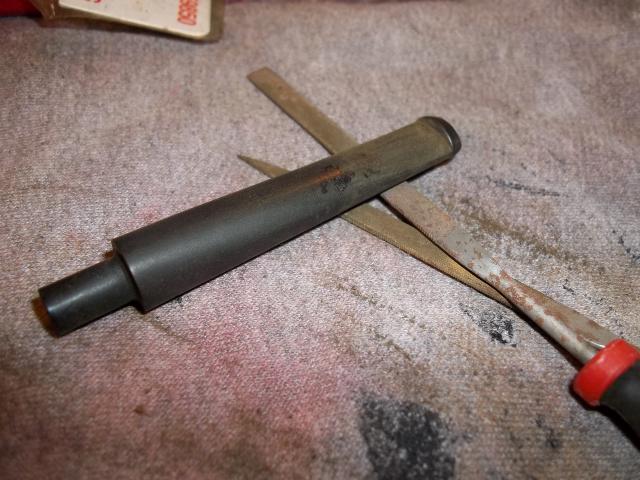
 I gave the stem a good scrubbing as well Oxy Clean and water as I dipped the end of the tenon in alcohol to test it and it acted like it would melt the rubber. After cleaning I dipped the button end of stem in very hot water to raise the tooth marks best I could. I then filed the stem to get rid of almost all the tooth marks without compromising the structure of it.
 After wet sanding stem to sand out file marks I sanded rim and stem with 2500 grit and mineral oil and wiped rest of pipe down with mineral oil as well.
 After some light buffing and wax.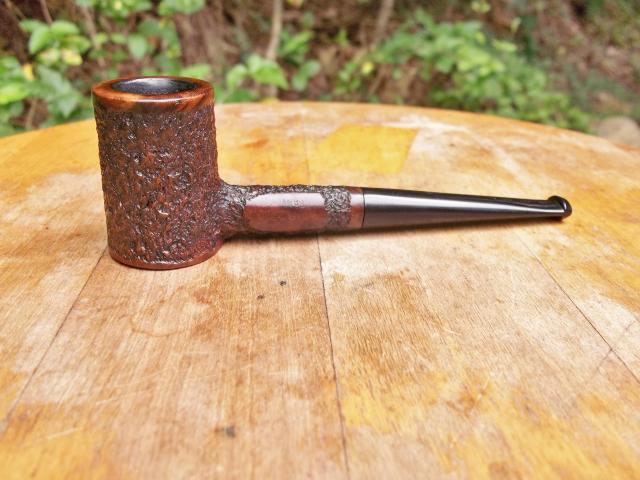
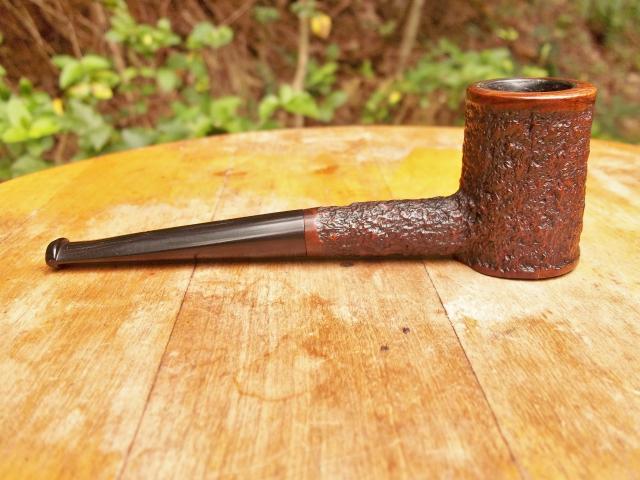

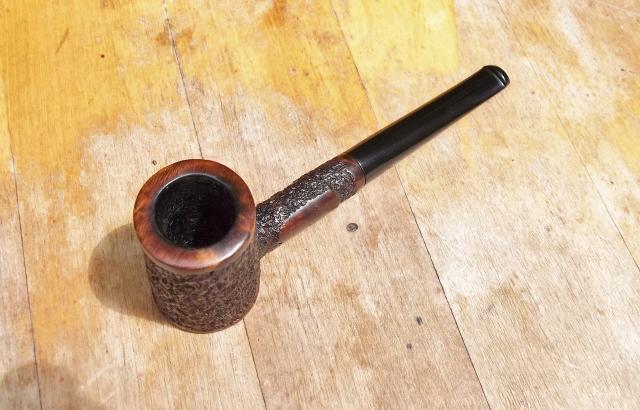

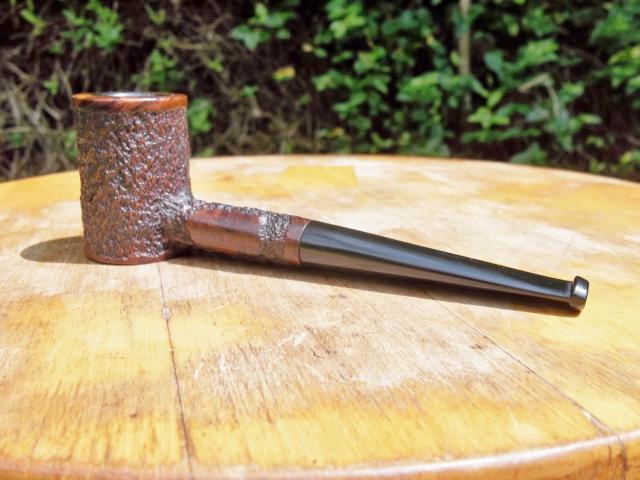
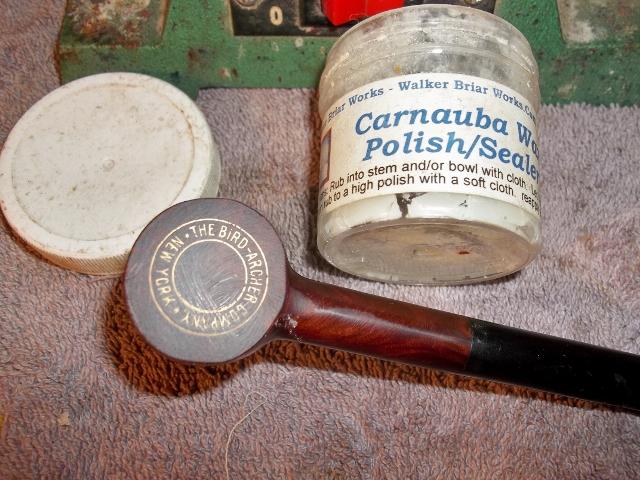
 The second Poker is marked Bird Archer Co. NY. It’s a company that sold chemicals that was used in water for steam locomotives. They were in business from around start of 20th century till end of WW2. Shank stamped same as other – Italian Briar over LHS logo.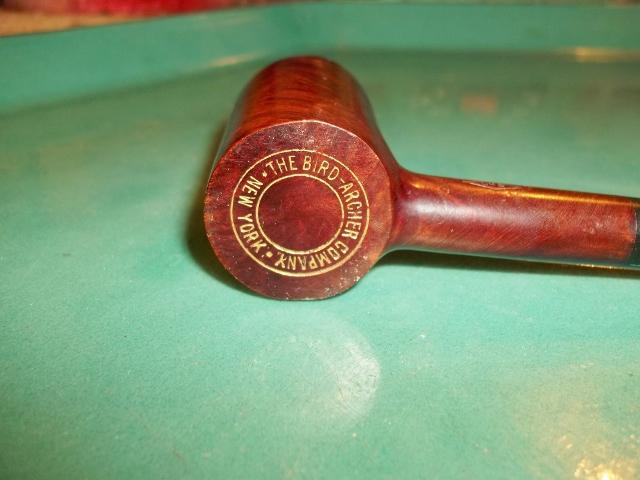

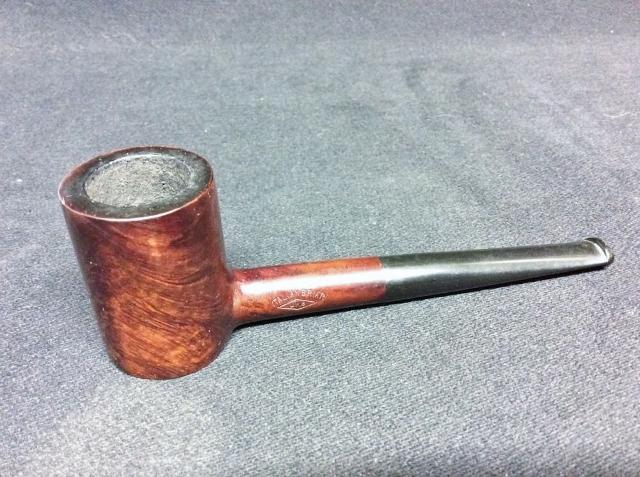 This one has the unique stinger. I can tell you it made cleaning the shank and stem a breeze as most all the tar was in the stinger. It runs from the bottom of the bowl to about center of the stem.
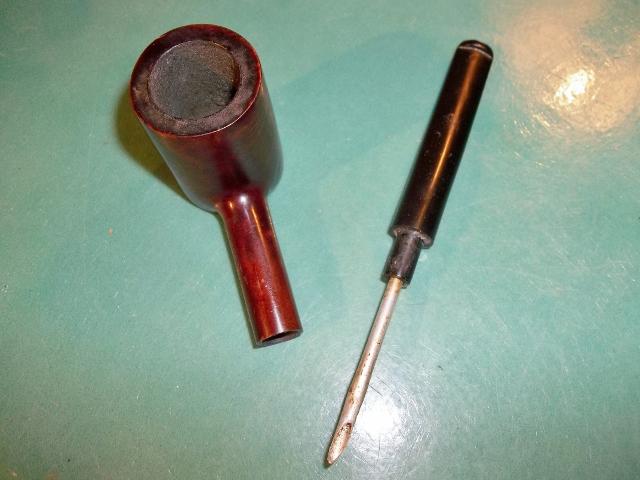 The pipe pretty much got the same cleaning treatment as the above pipe with less work on the stem as there were not bad tooth marks. When I buffed the pipe I did not use the buffer on the embossed stampings but instead hand buffed to avoid causing any damage to them.
 Finished Bird Archer pipe.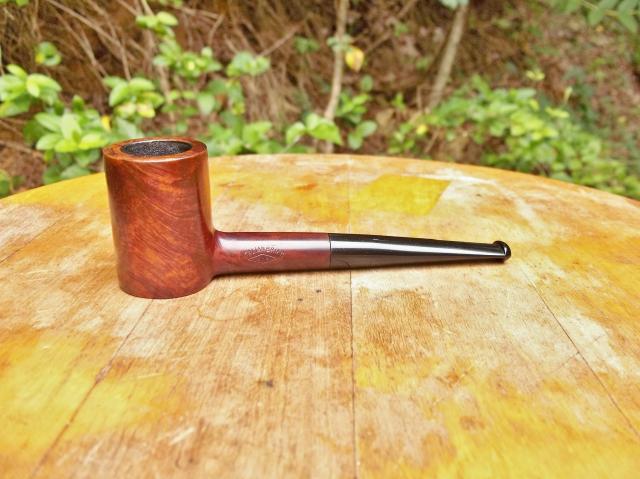
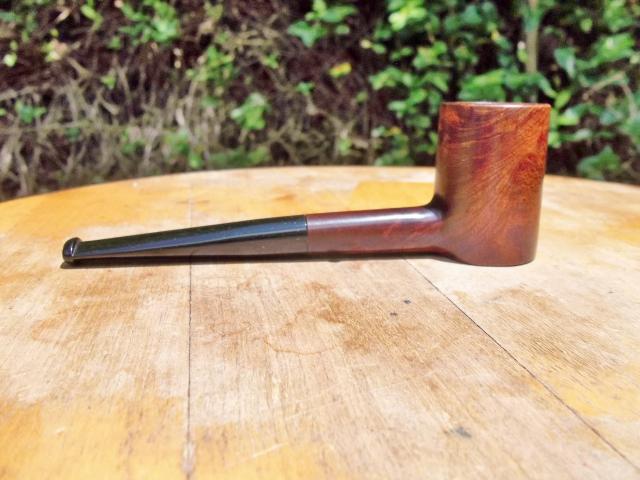

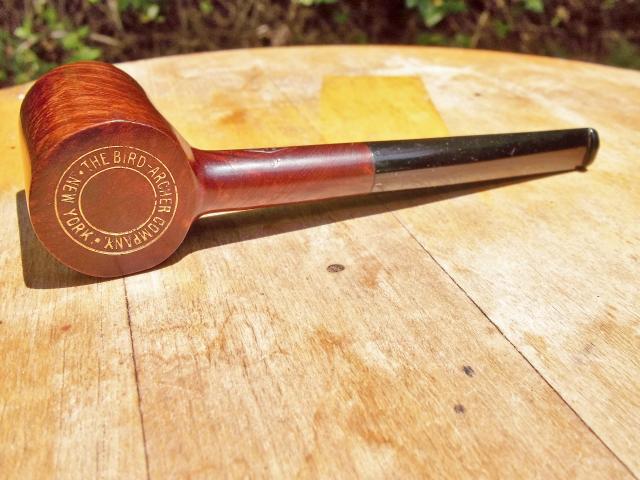
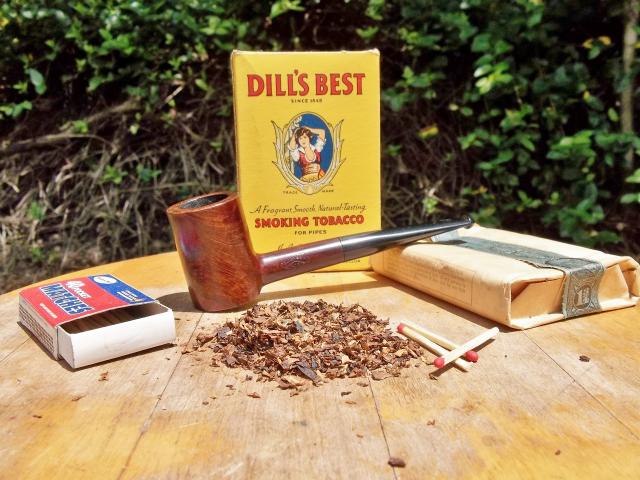 I had been looking for an all original LHS poker for a long time and to find both of these original ones at once was very lucky.
Blog by Steve Laug
This is the fifteenth pipe that I have cleaned up and restored. It is a new addition to the box of pipes that I was gifted by a good friend of mine. He brought several more by the house last week with the same instructed purpose. I was to clean them up and sell them with all of the proceeds going to the aid of earthquake victims in Nepal. So far we have raised over $300 dollars for the Nepal project. All the funds that continue to be raised from the sale of these pipes will go to the SA Foundation, and organization that has worked in Nepal for over 15 years helping provide recovery, housing and job training for women who are victims of sexual exploitation and trafficking. The Nepalese are hard at work restoring their country and there is much to do. The SA Foundation Project there was able to find new housing for the women and help the staff as well. Every dollar raised from the sale of these pipes will go to the work in Nepal.
This one is an Ehrlich Special Grain. I think that when it was originally made it was a tall billiard or a stack. Whoever had it before it came to my friend really did a job messing up the rim and the top ¼ inch to ½ inch of the top of the bowl and rounding it. This would not have been bad if it was done evenly but it was done with what looked like a carving knife. It left the briar hacked and damaged. It was almost as if the owner had tried to round the top edges of the bowl to take care of damage to the rim. The pipe is stamped EHRLICH on the left side of the shank. On the right side it reads IMPORTED BRIAR. Just above that almost on the top of the shank it is stamped SPECIAL GRAIN. The stem was oxidized and also had some file marks in the surface on the top and bottom sides. The slot in the end of the stem was very narrow and hard to get a pipe cleaner through from that end. I had to clean the stem from the tenon end. That would need to be taken care of. The E in the circle that is the Ehrlich logo was in decent shape on the stem.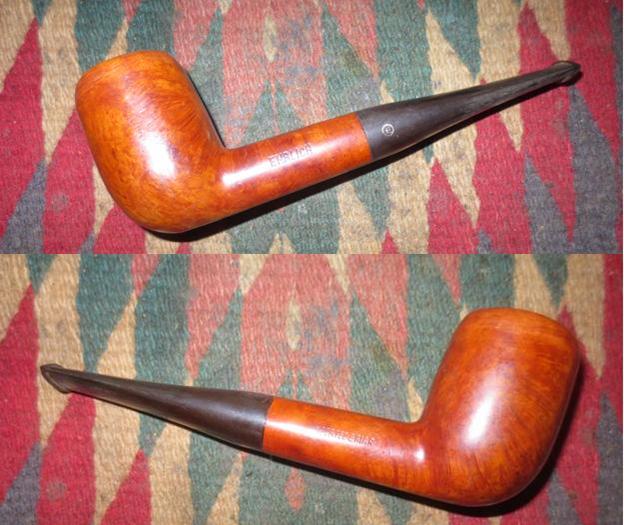 The top of the rim was very rough. The inner edge was no longer round. The flat top was cut and damaged with the carving knife that had been used on the outer edge of the rim to round it out. The underside of the shank was in good shape but the bowl sides and bottom had some dings and dents in it from knocking it about.
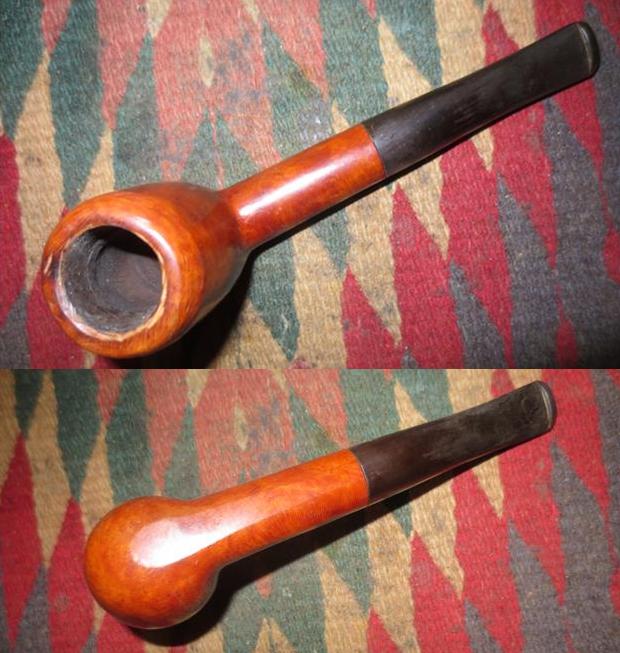 I took a series of close up photos of the rim and the sides of the bowl to show the knife damage that had been done. You can see from the first photo how the inner edge had been beveled with a knife and was quite uneven. The top of the rim was scratched and had deep grooves from where the knife had slipped. The second and third photo shows the sides of the bowl and how the outer edge of the rim had been rounded haphazardly with a knife. The front and back side also was rounded and hacked. It was very poorly done and left the pipe a mess. The finish was worn and had been covered with a coat of varnish that was bubbling.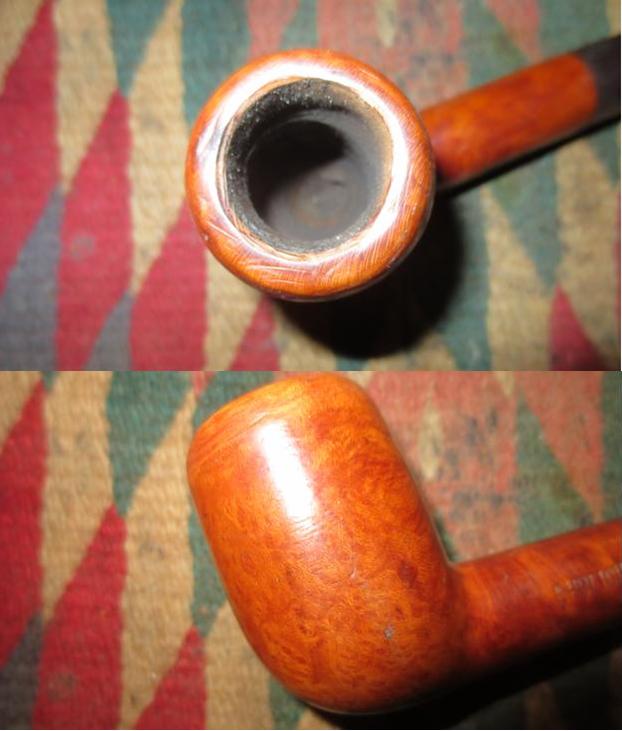
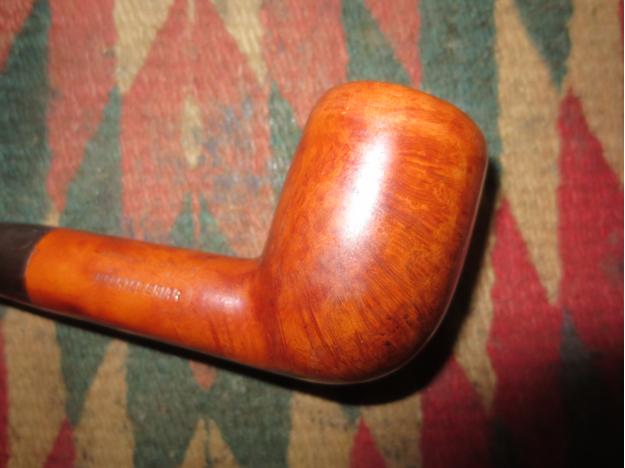 I decided to top the bowl first. It would need to be topped quite a bit to take out the rounded and cut sides of the bowl. The damage was significant and I would need to bring the top down at least a ¼ inch to repair it. I used the topping board and 220 grit sandpaper to remove the damaged wood. It took probably 30 minutes of continuous sanding to bring it down. I had to press the rim against the sandpaper to keep the rim flat and horizontal.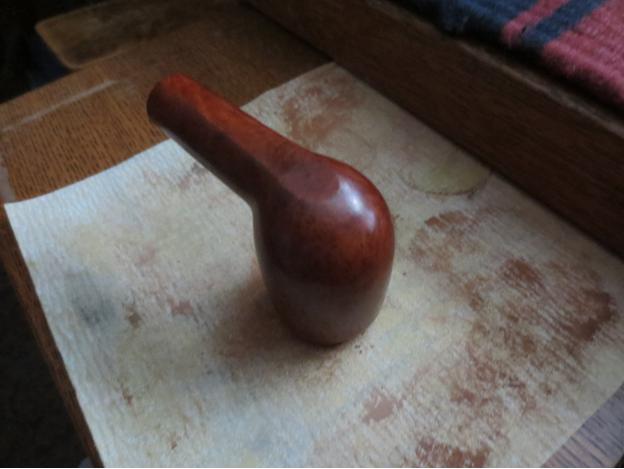
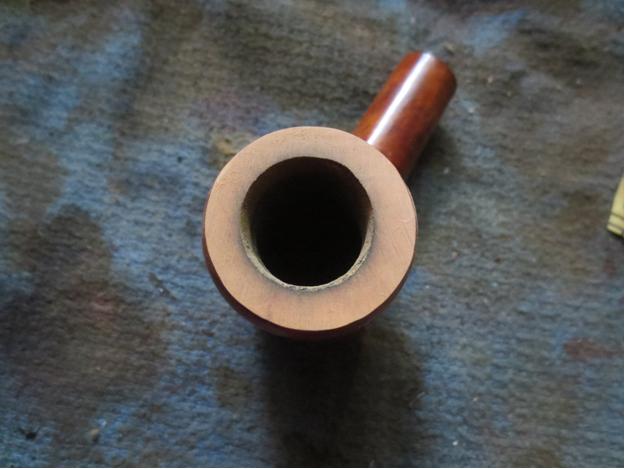 Once the top was flat and most of the damaged outer edge removed I used a folded piece of 220 grit sandpaper to smooth out the taper from the bowl side up to the outer edge of the rim. It took a bit of time to smooth out the transition and remove all of the nicks and dents in the briar.
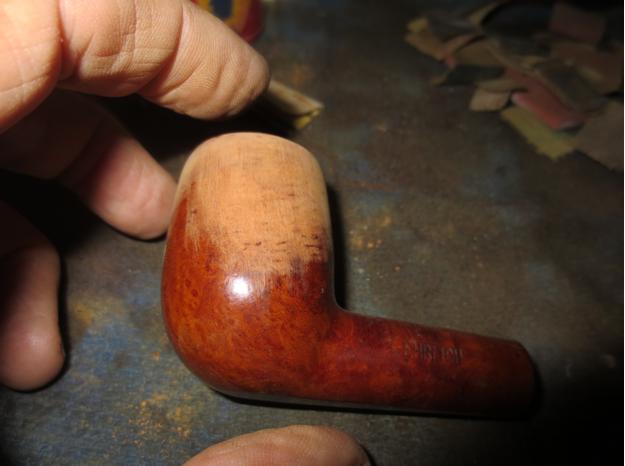
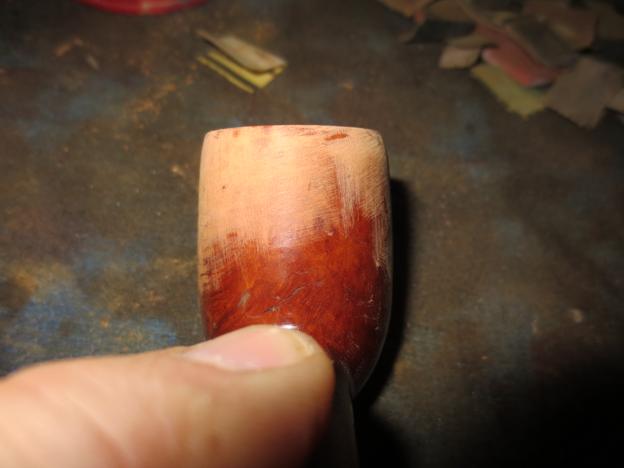
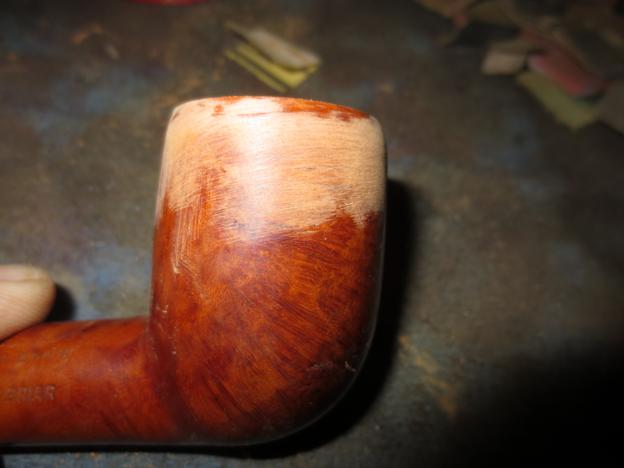
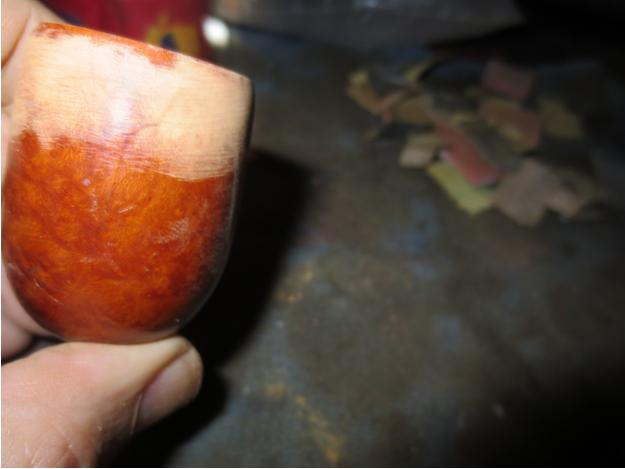 I wiped down the bowl with acetone on cotton pads to remove the finish and sanded the bowl sides until the transition to the rim was smooth.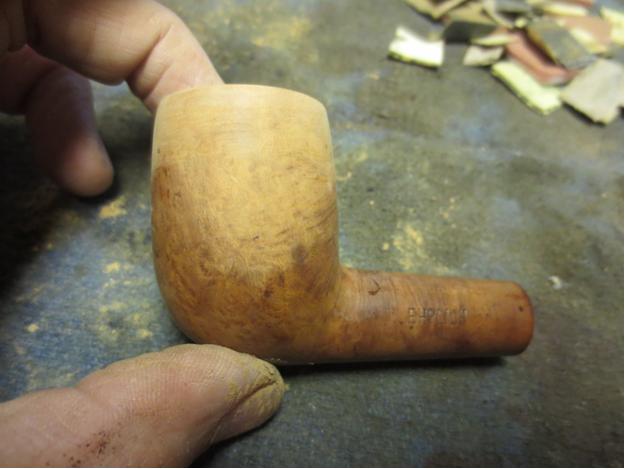
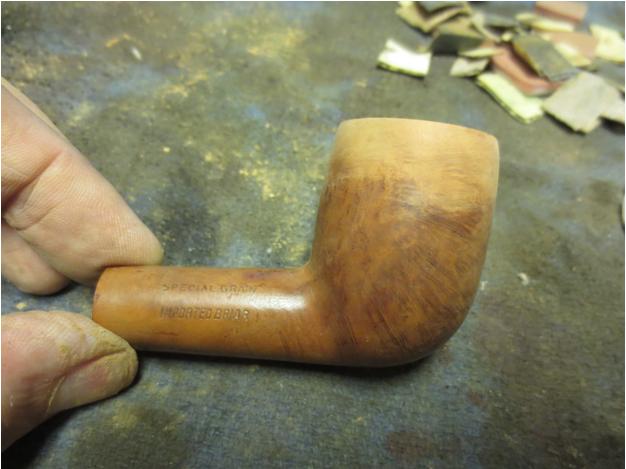
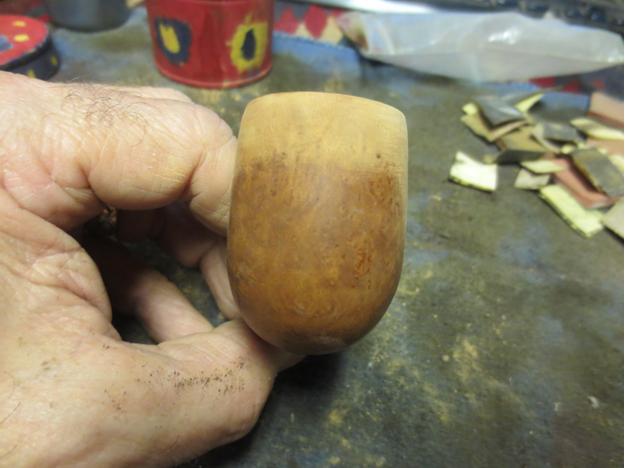
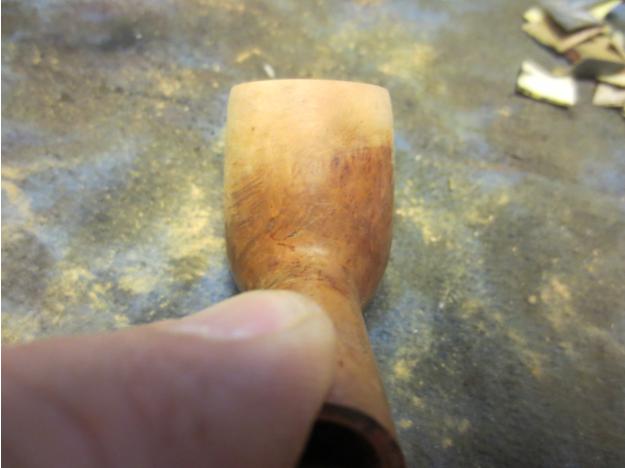
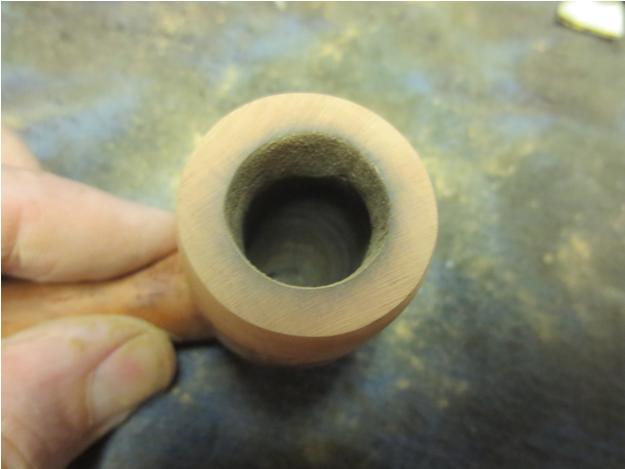 When the transition was smooth and the sides of the bowl flowed evenly to the top I wiped the bowl down with isopropyl alcohol to clean off the remaining finish and the sanding dust. I sanded the bowl with a medium and a fine grit sanding sponge and then took the following four photos to show the new look of the bowl.
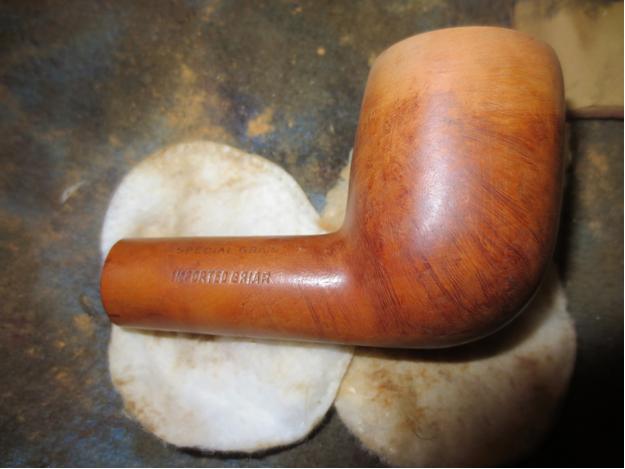

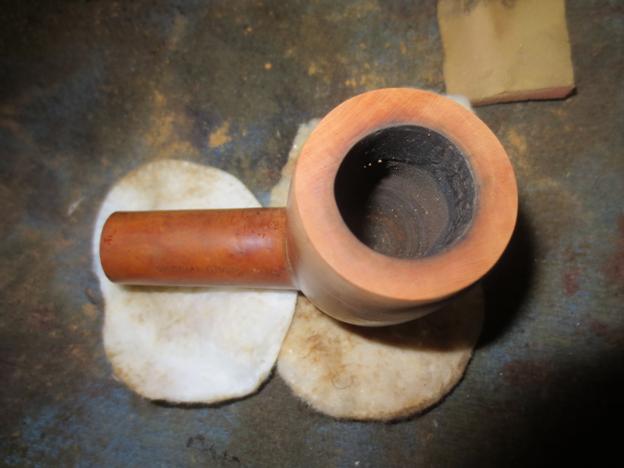 I sanded the bowl and rim with 1500-2400 grit micromesh sanding pads and then prepped it to be stained. I put a cork in the bowl so that I could stand it in the candle holder that I used for drying my stained bowls. I stained the bowl with a 50-50 mixture of alcohol and dark brown aniline stain. I flamed it, repeated the stain and the flame and set it aside to dry.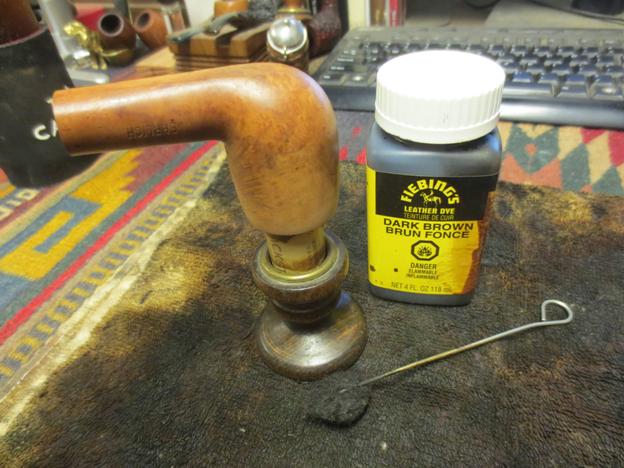
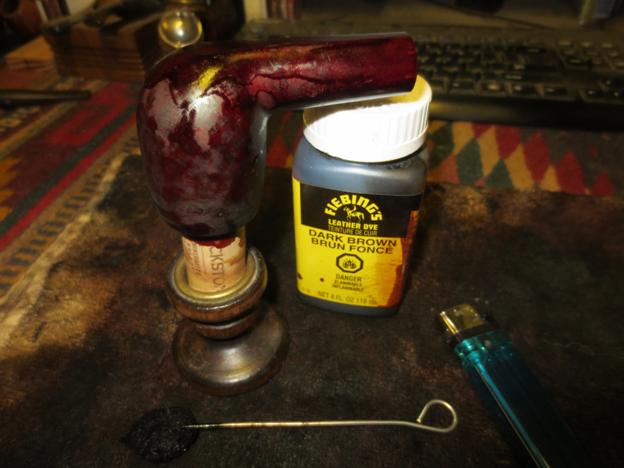 Once it dried enough to pick up I wiped it down with acetone on cotton pads to thin the dark coat and make the grain stand out better.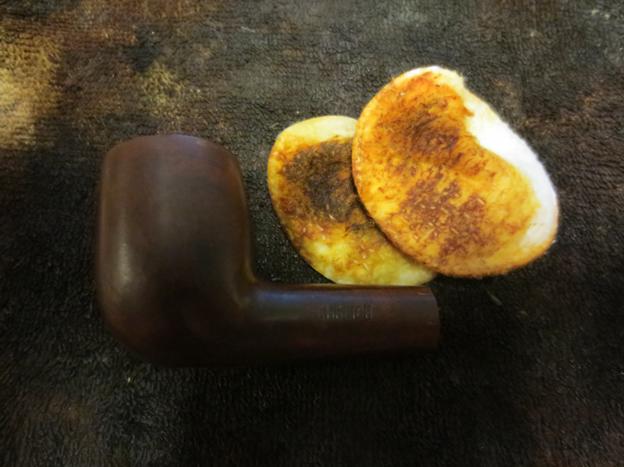

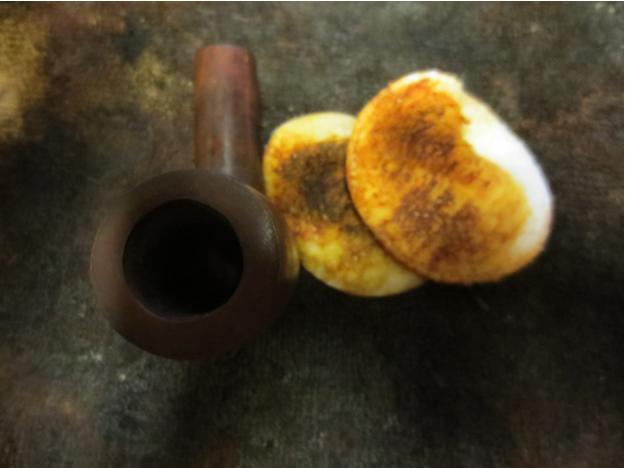
 I cleaned out the shank and stem with alcohol, cotton swabs and pipe cleaners. I lightly reamed the bowl with a pen knife to remove the debris from the sides of the bowl.
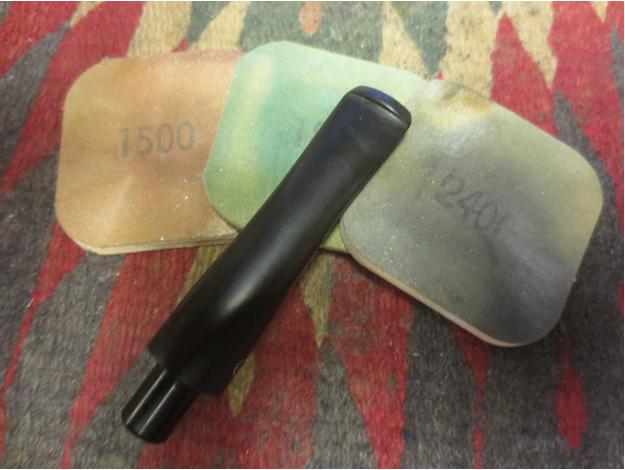
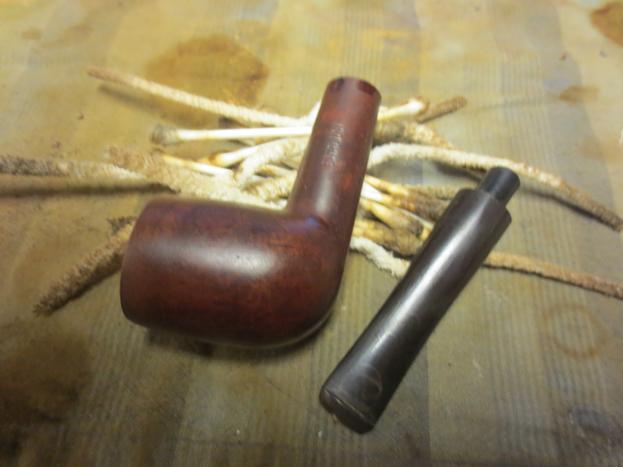 I sanded the stem with medium and fine grit sanding sponges. I followed that by sanding it with micromesh sanding pads – wet sanding with 1500-2400 grit pads and then rubbing it down with Obsidian Oil.
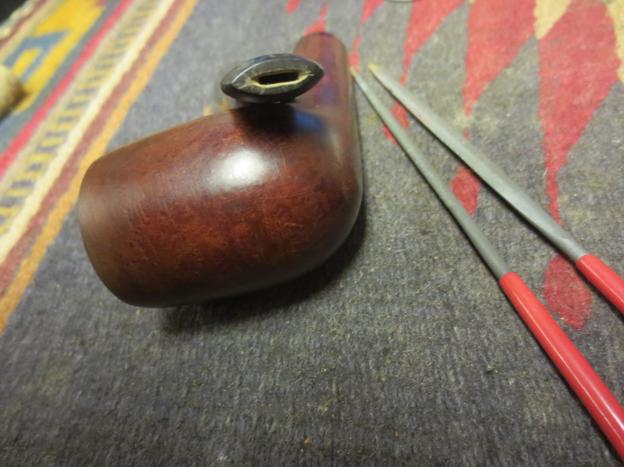
 After the wet sanding I decided to open up the slot to make it easier to clean out the stem and shank with a pipe cleaner. I used a flat oval needle file to start the work and finished it with a thicker oval file. Once I had it opened I used a folded piece of sandpaper to smooth out the opening.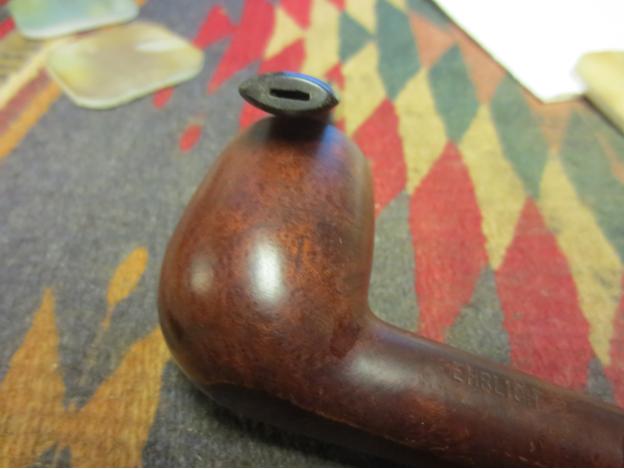
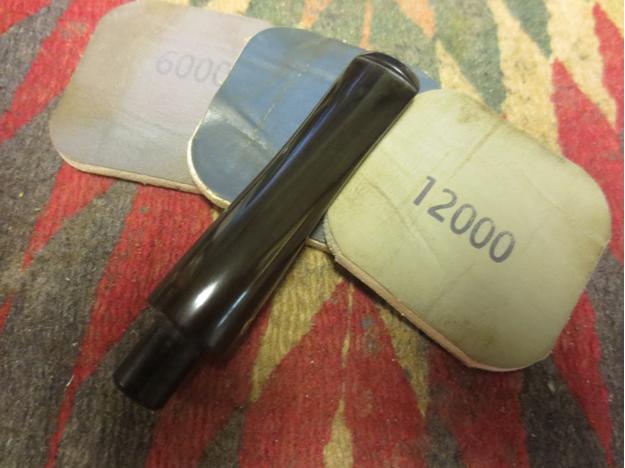
 I dry sanded the stem and the end of the button with 3200-4000 and rubbed it down with oil a second time. I finished with the micromesh pads by sanding with the 6000-12000 grit pads, rubbed it down with Obsidian Oil. Once it dried I buffed it with Blue Diamond on the buffer.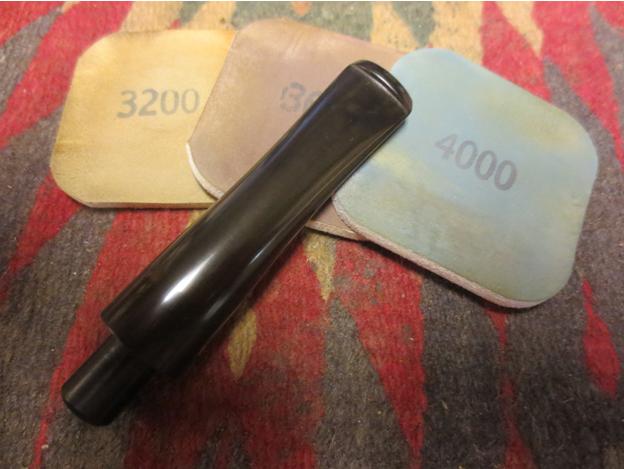
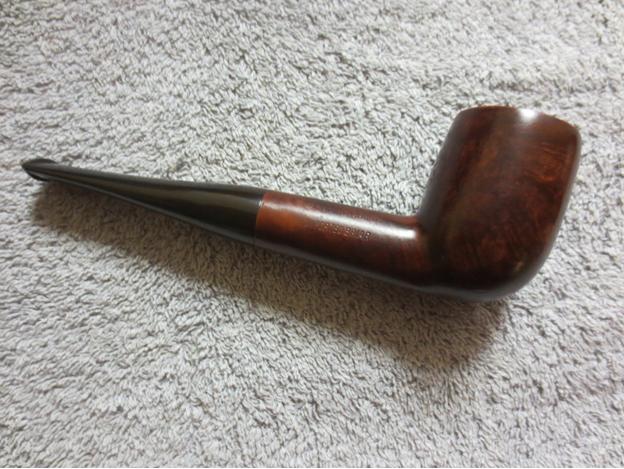
 The reborn Ehrlich Billard is shown in the photos below. I was able to clean up the mess of the bowl and rim and open the stem for a better draw. The bumbled job on the rim and bowl had disappeared and a sharp billiard took its place. The slightly darker colour of the stain adds richness to the billiard that I really like. It is now ready to be sold into the hands of its next owner.

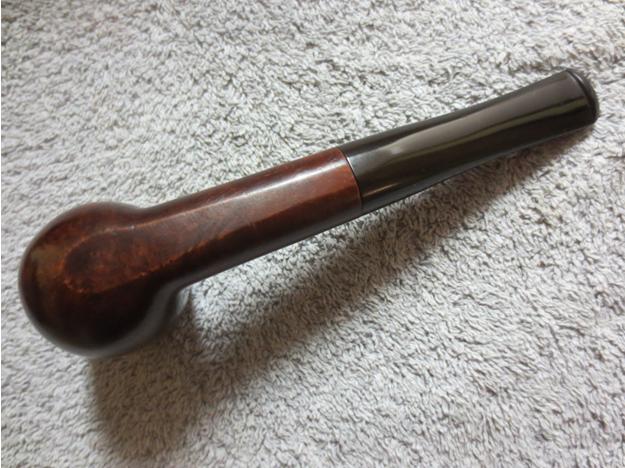 The next three photos give a clear picture of the rim top and sides of the bowl to show the grain.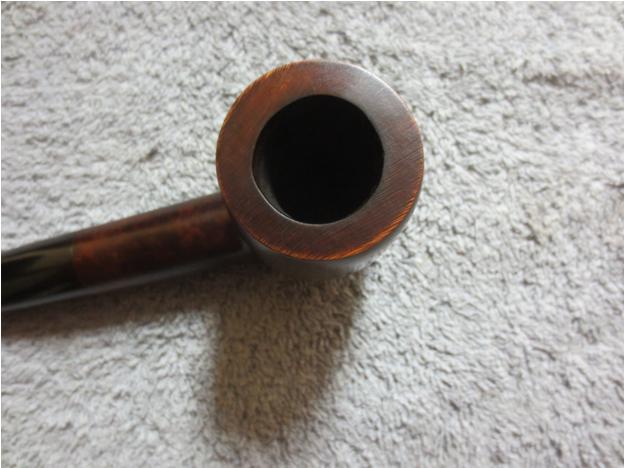
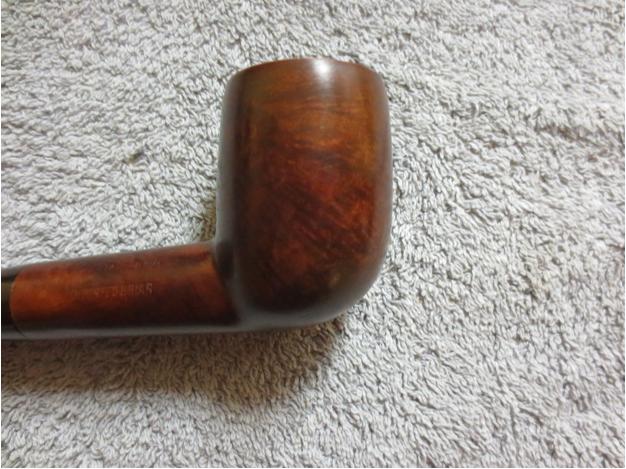
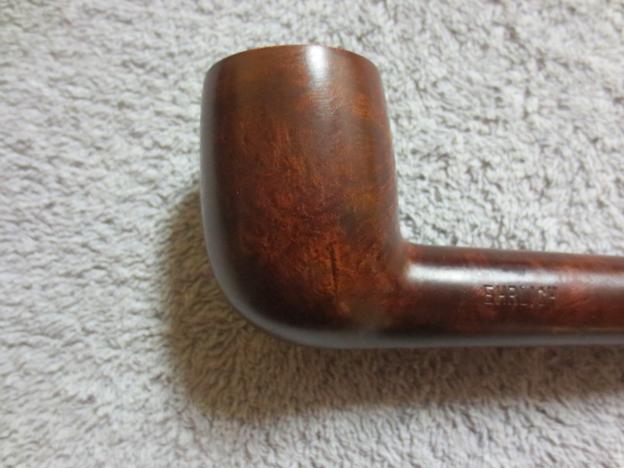 The last two photos show the tenon and slot on the stem.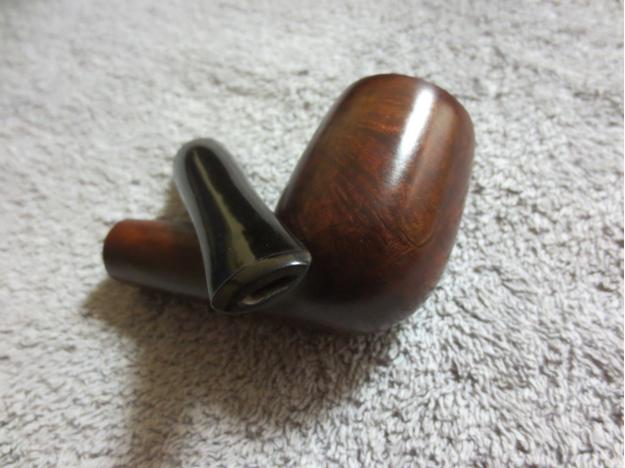
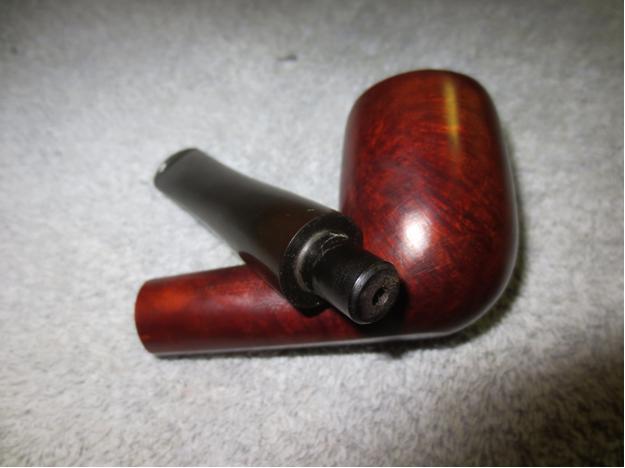 This Ehrlich billiard is a chubby shank larger sized pipe, probably the same size as a Group 4 in Dunhill terms. The grain is quite nice and the thinned dark brown stain allows the grain to show through to its advantage. It should make someone a great addition. If you are interested in this pipe email me with an offer at slaug@uniserve.com and we can discuss it. The entirety of the sale price will go to the Nepal project. I will pay the postage so that does not get taken off the proceeds. If you are interested in reading about the SA Foundation you can look at their website at http://www.safoundation.com.
Thanks for looking.
Blog by Steve Laug
Before I post this review I wanted to let you know that it has been in the works for many months now. Somehow I misplaced this little pipe and only found it this morning. I loaded a bowl and smoked it as I wrote the review. It is a great little pipe. I only wish I had kept it in the rack when it arrived. But, it is kind of like getting a new pipe when you find one that you have misplaced. Without further ado, here is the completed review.
 I want to introduce this pipe review with a little bit of information that is taken from the book From Pipes, Artisans and Trademarks, by José Manuel Lopes. Lopes states that Lannes Johnson was an artisan pipe maker from Texarkana. He was a graduate in Medical Technology, and that was his profession for around thirty years. He began making pipes in 1997, having first bought a kit from Mark Tinsky, and later learned the art from Trever Talbert.
Lannes preferred making traditionally shaped pipes, working with Greek brair and with stems in vulcanite and lucite. He stamped them originally with his name, Lannes Johnson and later used LJ in a heart (“pipes from the heart”), adding the grade, date, origin and handmade. His earlier grading was as follows, in ascending order: L (Legion), T (Tribune), C (Centurion), G (Governor), and E (Emperor), to which he adds the numbers (1 to 5, according to the beauty of the wood and the design of the piece). Later his grading changed as follows, in ascending order as well: one to five hearts. Symbol: LJ (in gold, silver, or white) in a heart.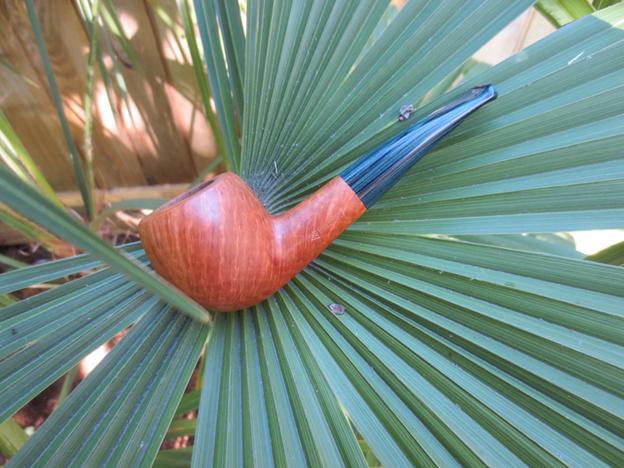 When I purchased the pipe I copied the following information off of Frenchy’s website and from Lannes’ own website. I am certainly glad that I did as it is no longer available. I will let Frenchy himself give you some information on Lannes Johnson.
“LJ Heart pipes are high quality, handmade pipes crafted from 30 year old Grecian and select Corsican Plateaux Briars. The stems are made from the best Vulcanite available (and rarely, Lucite), most feature Delrin tenons. None of the pipes have any fills, so there are no surprises. These pipes will give you a cool, dry smoke from the start without break-in. I really love the green Cumberland stems LJ’s been usin’…”
The following gives you a glimpse of the philosophy he had about making pipes and the way he went about it as he told it on his site.
“… All LJ Pipes are guaranteed for the life of the pipemaker. Pipes will be repaired, or replaced, at the discretion of the pipemaker. Naturally, this guarantee does not apply to pipes abused by the owner… I want you to be happy with your LJ pipes. A tremendous amount of effort has been put forth to insure that you have one of the finest smoking pipes available in every LJ Pipe. If for any reason you are not completely satisfied with the LJ Pipe just simply return the pipe in the condition in which you receive it and your funds will be promptly and cheerfully refunded. No questions asked!”
“Many LJ Pipes are made from 30-year-old Grecian Plateaux Briar. This briar is no longer available at any price, anywhere. I have a large quantity of this briar, enough to easily last me the rest of my life, it is really exceptional and I am so lucky to be able to craft pipes from this quality briar. I have received many compliments concerning the grain, smoke induced taste, and lightness of the briar. The briar is perfect now for pipemaking due to only containing approximately four percent moisture. Recently I have started using some Algerian Plateaux, Corsican, and Select Corsican Plateaux briars in addition to the 30 years old Grecian Plateaux for pipe crafting. Every effort will be made to identify the origin of the briar in the pipe description.”
“No LJ Heart pipes will ever contain fills-ever! No way Jose! I call these shop pipes and they are usually smoked by myself, gifted to smokers, or destroyed. Briar is a naturally occurring product and is subject to contain sand pits, variations in color, and just minor irregularities in general. I will make no efforts to conceal or hide very minor imperfections during the construction of LJ Pipes. Naturally, every effort will be made while shaping the pipes to produce a pipe free of any briar blems. If there are any issues in any LJ Pipe I do guarantee they will be made known to any prospective buyers if I am aware of them. Sometimes, even the pipemaker is unaware of their presence in briar until the pipe is in the hands of the buyer and after the pipe is smoked.”
“All pipes will be stamped with a custom stamp to identify the pipe as a LJ Handmade. The custom stamp will be a heart with the initials LJ inside the heart. Pipes may be stamped with additional makers marks such as grading, date, origin, and handmade. I seem to have preference for traditional shaped pipes. I smoke them, I like them the best, and naturally this influences the pipes that I make. I like pipes that I can smoke every day and treat as normal pipes. I like straight pipes and slight bent pipes the best so these are the types of pipes that I am enthusiastic to make and this shows in my crafting…”
“…LJ Handmade pipes are available in several finishes. All LJ Handmade smooth finished are hand sanded to a satin smooth finish, stained, and liberally coated with Carnauba Wax. I use traditional Aniline stains on my pipes in different colors and combinations. Additionally, many times I use LJ Custom Stain that I developed and have used for many years. It is an alcohol based stain but is not an Aniline stain. The stain is light in color and very durable. I like this stain very much and use it often.”
“I like rusticated finished pipes. Rusticated pipes are probably my favorite finish. I use rustication to enhance the aesthetics of pipes that have little to offer in the way of grain. I think that pipes partially smooth/rusticated are very attractive and will sometime make striking aesthetic enhancements to a pipe. Robert Vacher, longtime friend and fellow pipemaker, made my rustication tool and gifted it to me. Thus, all pipes that I rusticate will be labeled as having Vacher Rustication. I love it and it is the only rustication that I have ever used.”
“LJ Handmade Pipes are constructed by hand. Lathes are used in the drilling of stummels for air holes and tobacco chambers. Tobacco chambers are available in three popular sizes, 3/4″ Custom Taper, 13/16″ Custom Taper and 7/8″ Custom Taper. 13/16″ is my favorite size to smoke so look for many pipes drilled in this size. You will find the custom design of the tobacco chambers in LJ Handmade Pipes will enhance the airflow of the pipe while insuring combustion and smooth burning of tobacco in the chamber. Tenons will be made from Delrin, ported, and used whenever possible in all LJ Handmade Pipes. I love Delrin because of its durability, self-lubricating properties, and it just about eliminates any tenon problems found in pipes. Not all pipe designs, or various stem shapes, allow the use of Delrin but every effort will be made to use Delrin whenever possible.”
“Pipes will be graded in a series of 1 thru 5 and the pipes will be correspondingly stamped with a custom 3/32″ LJ Custom Heart Stamp. One heart being the lowest grade and 5 hearts being the highest grade pipe. Any grading is highly subjective but it does relate the pipemakers overall opinion of the briar graining etc., construction, and general feeling about the pipe.”
“I have found that it usually takes about 6 smokes to get a pipe to break-in. I realize this is a highly debatable issue but this reflects my feelings. When you get your new pipe the briar in the pipe is very dry and needs to be hydrated slightly before use. Many methods have been used to do just this. Before the first smoke just wipe the interior of the tobacco bowl with some tap water, saliva on finger, etc. to put just a small amount of moisture in the bowl. This will help hydrate the briar. The hydration of the briar is necessary before the first smoke only. Subsequent applications of moisture to the tobacco chamber are not necessary but will not damage the pipe either. I recommend that you not get the pipe really warm, or hot, for the first six smokes. You need to season the briar a bit. If you are an aggressive puffer just put the pipe down an allow it to cool before relighting. Fill the bowl full of tobacco during the break-in period. The pipe will smoke better and much cooler and give a more pleasant break-in smoke. After the first six smokes, smoke the pipe as you normally would. With just a little care on your part this pipe will provide you with several lifetimes of quality smoking.”
“Thanks for your faith and patronage of LJ Handmade Pipes. They are the best pipes that I am capable of making. I really feel they are “Pipes From The Heart”, my heart to you.”
I had learned about Lannes Johnson on Frenchy’s website and had followed his pipe making there for quite a few years. Later I chatted with him on Smoker’s Forums an online pipe forum and shared stories and even enjoyed some tobacco he sent me. Then one day I decided to have him make me a pipe so I commissioned a straight apple pipe from him around the fall of 2008. I have had it since then and continue to enjoy it. I had put it in a cupboard and just found it recently. It is once again in my current rotation.
It is a beautiful little straight apple sporting a hand cut green Cumberland stem. It is stamped with his signature LJ in a Heart and Handmade next to it. On the underside of the shank it is stamped with two hearts which is how he graded the pipes that he made. It was cut from well cured Greek briar that had been in LJ’s shop for a while getting acclimated. The briar has two small flaws in it – the first is on the bottom of the bowl toward the front and the second is on the right side near the top of the bowl. Lannes never filled the flaws but left them as they gave character to the briar. The weight of the pipe is 1.60 ounces or 45.4 grams so it is light in the hand and the mouth. But the measurements are as follows. The tobacco chamber is drilled ¾ inches by 1-7/16 inches deep. The pipe itself is 1 1/2 inches wide and 1 3/4 inches tall. The overall length of the pipe 4 ¾ inches. I took it out today and took some outside photos of the pipe against a palm tree in my backyard. The green of the palm really highlights the green Cumberland stem.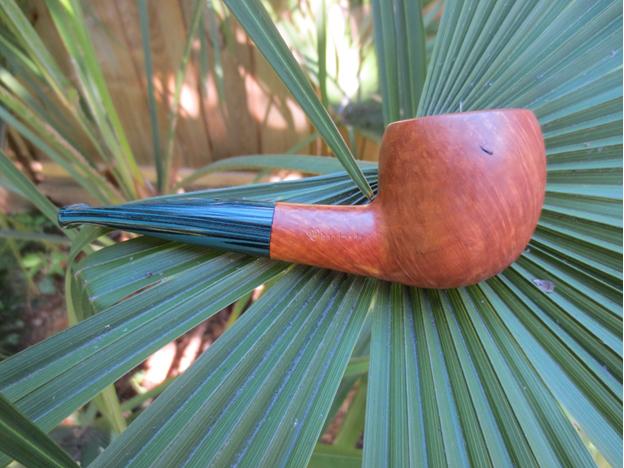 Lannes did an amazing job fitting the shape of the pipe to the grain of the briar. The grain runs diagonal across the sides of the bowl coming from the front and ending toward the back of the bowl. The bottom of the bowl has birdseye on the rim as does the rim and the top and bottom of the shank. LJ hand sanded the briar to a satin smooth finish, stained, and liberally coated with carnauba wax. He used an LJ Custom Stain that he spoke of above. It is an alcohol based stain but is not an Aniline stain. The stain is light in color and very durable. The bowl is round and an apple shape and the shank is at a slight angle giving the stem a canted look. The combination of the natural finish and the green Cumberland stem give the pipe a very clean look.
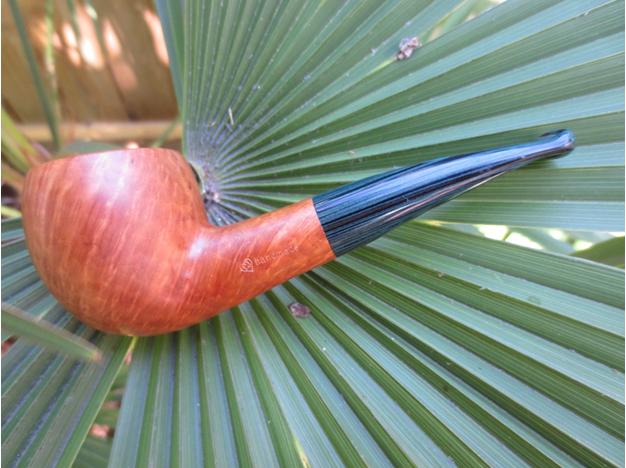 The stem is a hand cut green Cumberland taper that angles back to a thin button where it flares to the same width as the shank junction. It gives the pipe a stubby look like a nose warmer even though the pipe is five inches long. The Cumberland is a good grade of material and has not oxidized in the years I have had it. The tenon is Delrin and is inserted into the stem material. It is perfectly centered in the circle of the stem face. The airway in the end is chamfered inward to form a dished end that is well-polished.
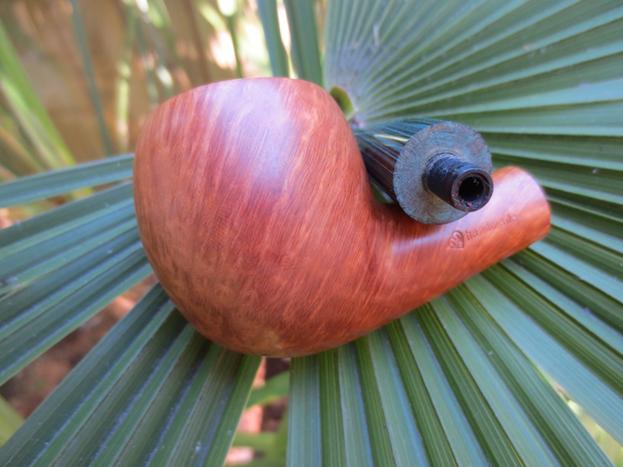 The button is on the small size and does not have a well-defined lip or edge. The shape does work for me but one day I may have to give it a little more definition. Looking at the button from the end it is a fat oval that curves at the edges flattens out on the top and bottom surfaces. The end is also flattened and the slot is shallow and Y shaped into the airway. LJ made the slot oval shaped, but different from the oval of the button. Where it was flattened and rounded, the slot is more curved and shaped like an eye. The airway is like a pupil in the middle of the eye. It is a comfortable and well executed pipe. A pipe cleaner passes easily through the pipe with no obstruction.
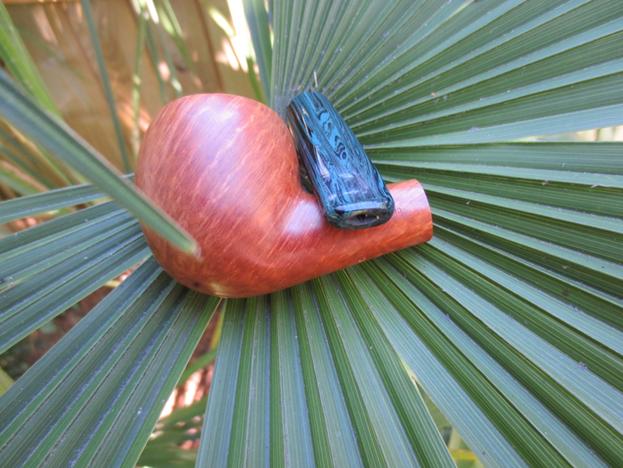 Lannes is as good as his word in crafting the airflow dynamics in his pipes. The draught is clean and easy with no whistling or tightness. The draw makes smoking it a pleasure. The bowl chamber is drilled to 3/4 of an inch diameter with a rounded bowl bottom. Lannes left the tobacco chamber uncoated but sanded smooth. I smoked it several times when I got it but because I misplaced it the cake has not really begun to form. The draught hole is centered perfectly above the bottom of the bowl and seems to have a slight funnel leading into the shank and stem. The fit of the stem to the shank is excellent – smooth and snug with no light showing at the joint. The tenon fits well in the mortise and is almost against the bottom. The airway is in the center of the mortise and aligns perfectly with the airway in the tenon. The edges of the tenon have been polished and rounded and the airhole countersunk so that it meets the airway in the mortise. Looking at the airways with a flashlight it is clear to see that they are smooth and polished with no rough edges. The interior of the pipe is smooth and polished from the button to the bottom of the bowl.
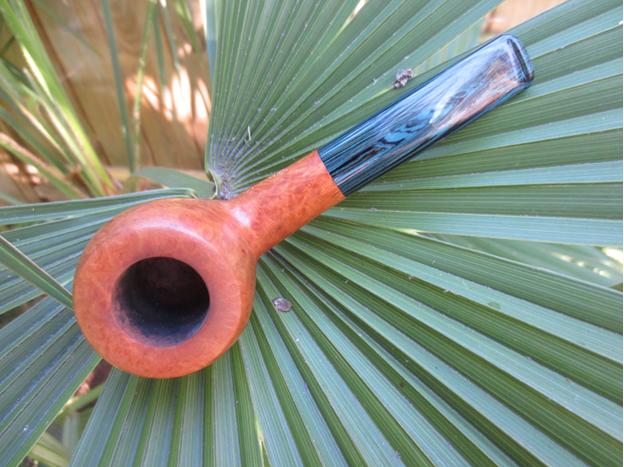 When the pipe arrived I loaded it with some aged McClellands 5100. I wanted to make it a dedicated Virginia pipe because of the shape and size of the bowl. Those first smokes were very good and confirmed my decision about keeping it a dedicated Virginia pipe. It smoked cool and dry and delivered good flavor with the Virginias that I choose to smoke in it. After finding it again today I have loaded it once more with some aged McClelland Dark Navy Flake (2035) and am not disappointed with the great smoke it delivered. I intend to enjoy it throughout the weekend ahead and move it into rotation in my rack.
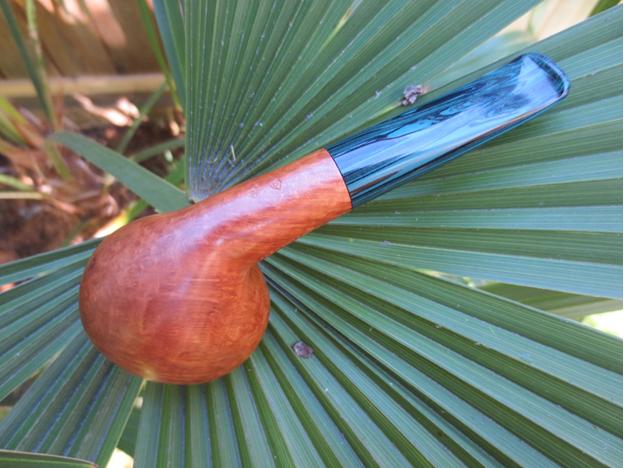 I am glad I found this pipe once more and reacquainted myself with it. I was quite pleased with the craftsmanship of Lannes work when it arrived and after seven years of not seeing the pipe I am still pleased with it. Lannes Johnson provided me with a beautiful little smoking pipe. It is light weight and comfortable in the hand. I am not sure if Lannes is still living. I have looked for him on the web and have come up empty handed. I want to let him know that I have and will continue to enjoy the pipe that he made for me. While he may no longer be making any more pipes there are many of his showing up on the web as estate pipe. I would definitely recommend that you give them a try. I don’t think that you will be disappointed.
Blog by Steve Laug
A few evenings ago my friend John stopped by to drop off some pipes for repair and to visit. We loaded up our pipes and sat on my porch while we chatted. He pulled a pipe out of his pocket and said it was a gift to me. It was a nice Brandy shaped pipe that was stamped Gasparini MGM on the left side of the shank and Elegante on the right side. On the underside it is stamped Briar 1912 and Italy. John had purchased the pipe and smoked it for awhile. He wanted to pass it on to me. I am honoured to have received his gift. Being an obsessive refurbisher I decided to clean it up and make a few modifications that I thought would make it look even better. I don’t know why I think like that but it is what goes through my eye every time I look at a pipe. It is like a small voice says, “hmmmm I could change that and tweak that and…. When I am done it will be better. Sometimes that voice gets me into trouble and sometimes it works.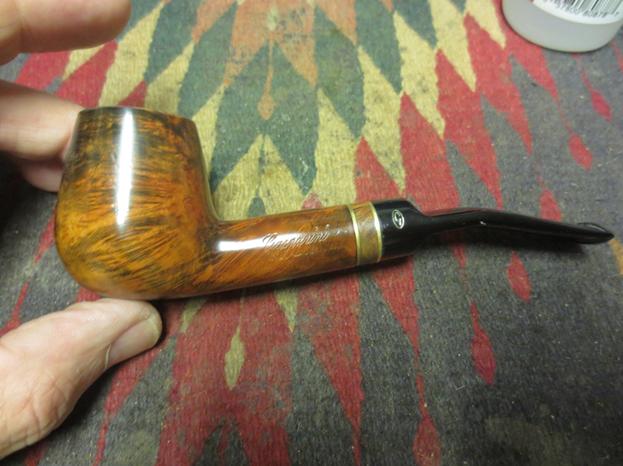 When John gave me the pipe these are some of the things that I saw. The bend in the stem was too sharp of an angle. It needed to be gentler in its curve. The rim was slightly out of round and the inner edge was damaged on the back right side and the right front it had some nicks in the edge. The stain on the rim had worn off and it no long had a shine. It did not match the rest of the bowl. There was a thick urethane finish on the bowl. Other than those few small things it was a nice looking pipe. It had a lot of promise. I really liked the contrast stain on it and the mix of birdseye grain and cross grain.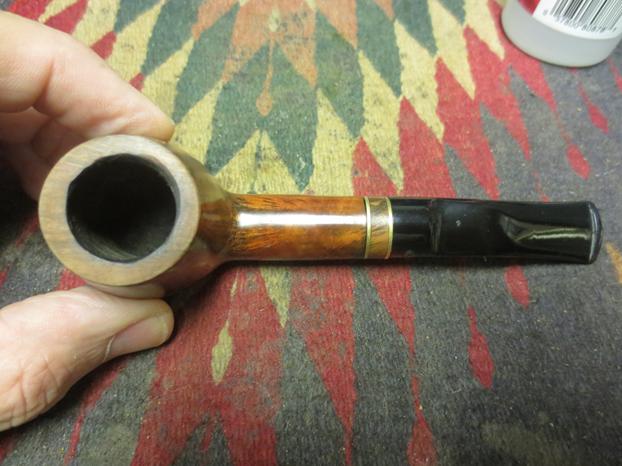
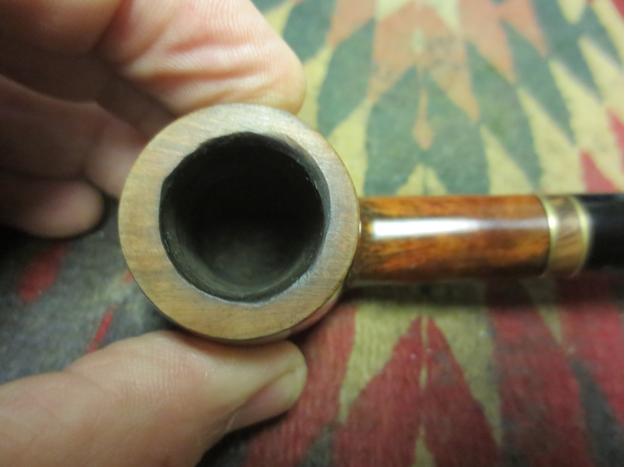

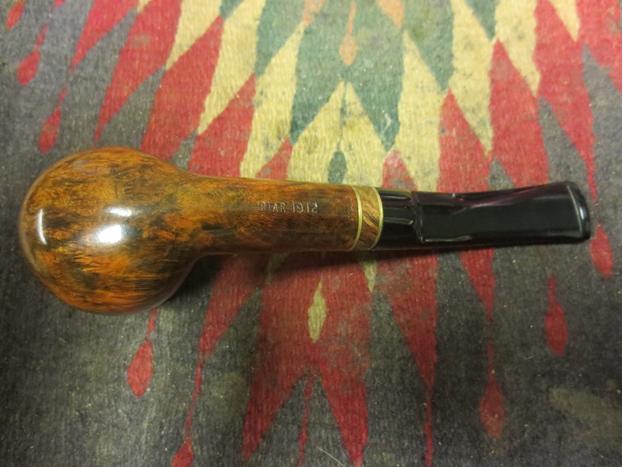 I decided to address the rim damage first. It would not take long and a light topping of the bowl would take care of the damage. I set up the topping board and some 220 grit sandpaper to do the job. I twisted the bowl against the sandpaper and removed the damaged part of the rim. It did not take long and the rim was flat and looked clean.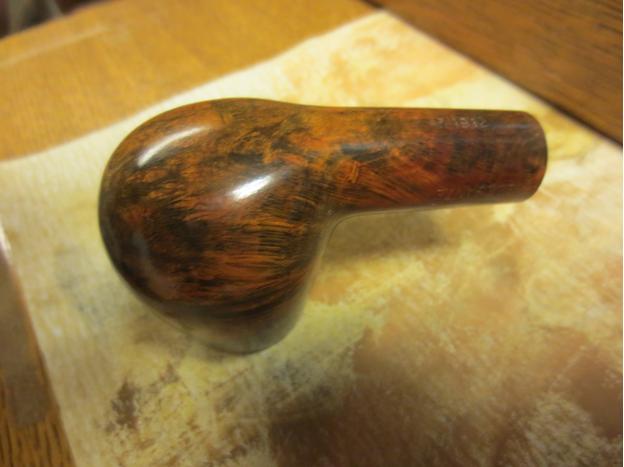
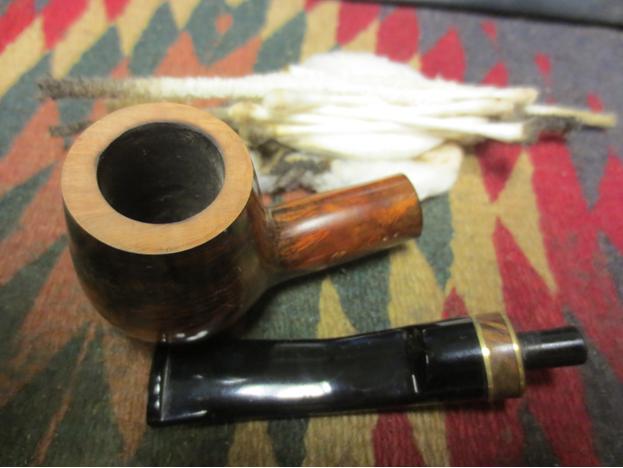 I sanded the newly topped bowl with a medium and a fine grit sanding sponge and then with 1500-2400 micromesh sanding pads to remove the scratches from the briar. I coloured the top with a black permanent marker to get the black undertones, wiped it down with acetone and then used two different stain pens – a medium and a dark brown – to match the bowl colour.
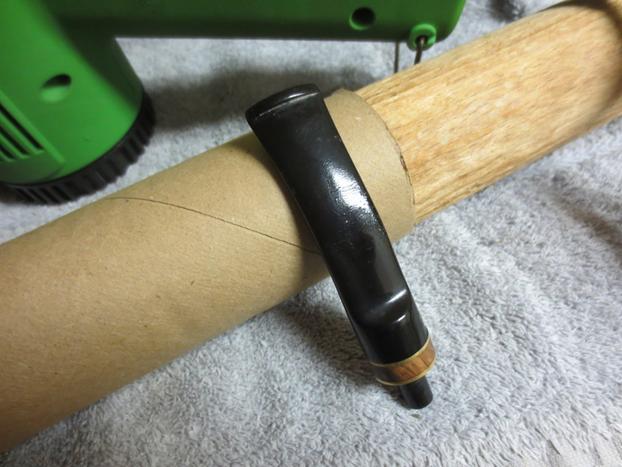
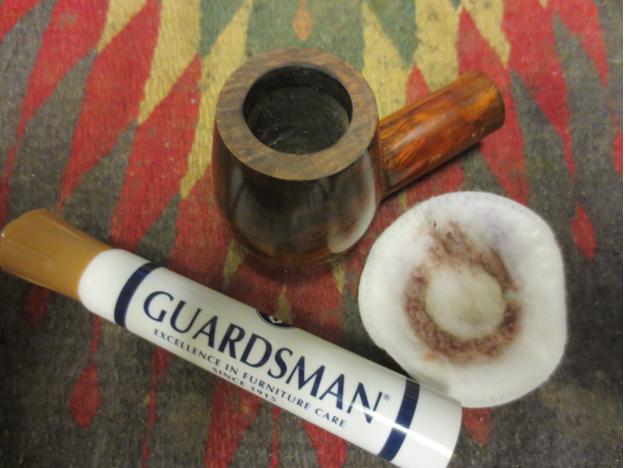 With the bowl cleaned, repaired and restained I set it aside to work on the stem. I would buff the whole pipe once I finished the stem work. I set up the heat gun and straightened the bend in the stem first. Once it was straight I would then heat it a bit more and bend it over a rolling pin to get a gentle curve.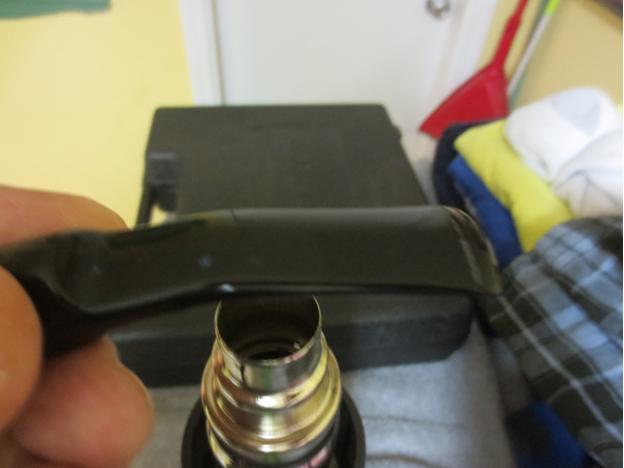
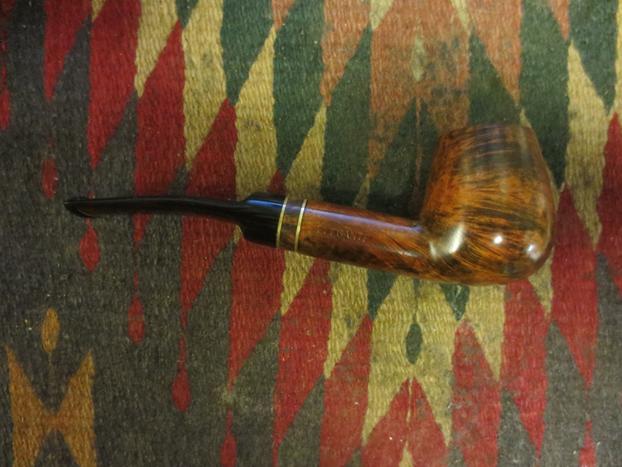
 I put the newly bent stem into the shank and took a few photos to see the new look of the pipe.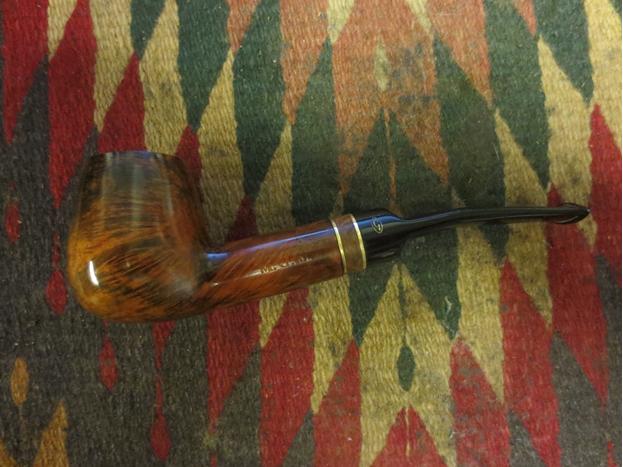
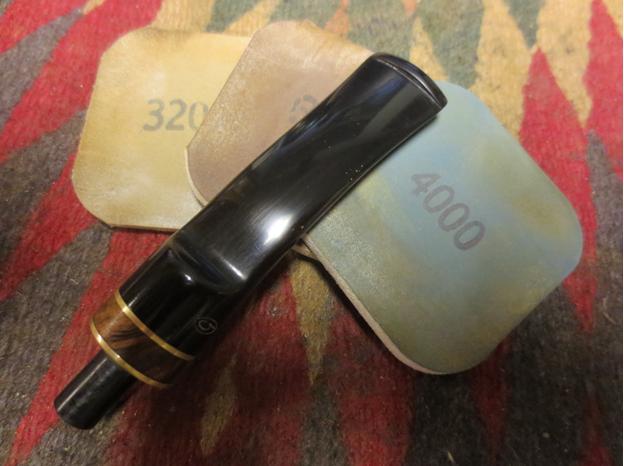
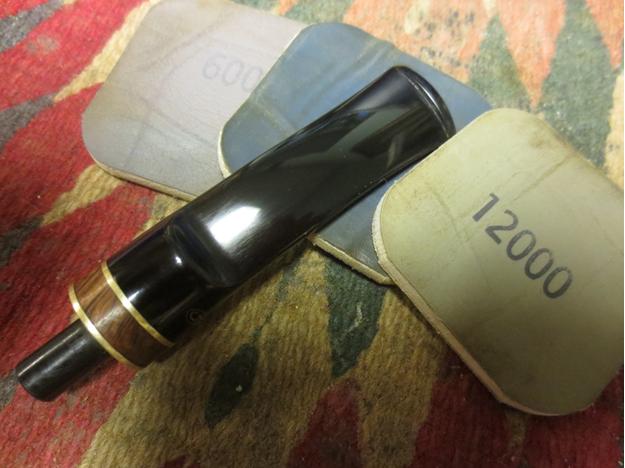
 With the bend done it was time to polish the stem. Even with the stem held 6 inches above the heat gun there was some slight bubbling in the surface of the Lucite. I sanded it with 220 grit sandpaper and then with a medium and a fine grit sanding sponge to remove the bubbling and smooth out the surface of the stem. Once the bubbling and rippling were removed I went on to polish the stem with micromesh sanding pads. I wet sanded with 1500-2400 grit pads and then dry sanded with 3200-12,000 grit pads to return it to its original shine.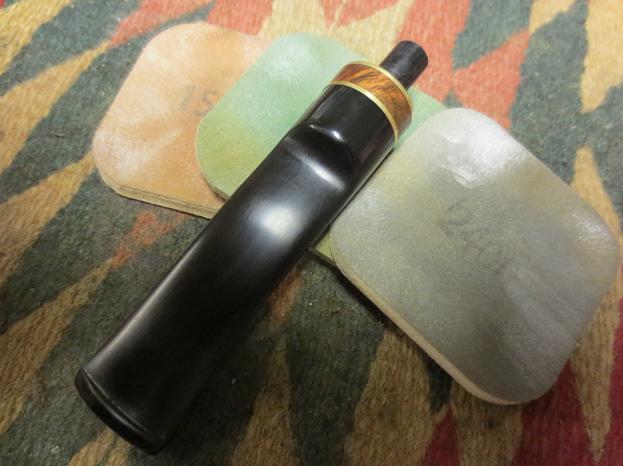
 I buffed the bowl and stem with Blue Diamond Plastic Polish on the buffer and then gave them both a few coats of wax. I buffed it with a clean flannel buff and then with a microfibre cloth to raise a good shine. I was unable to permeate the urethane finish and since it was in decent shape I left it alone. The finished pipe is shown in the photos below. It is cleaned and ready to be loaded and smoked. I hope to do that later today. Thanks for the “new pipe” John. I know I am going to really like this one.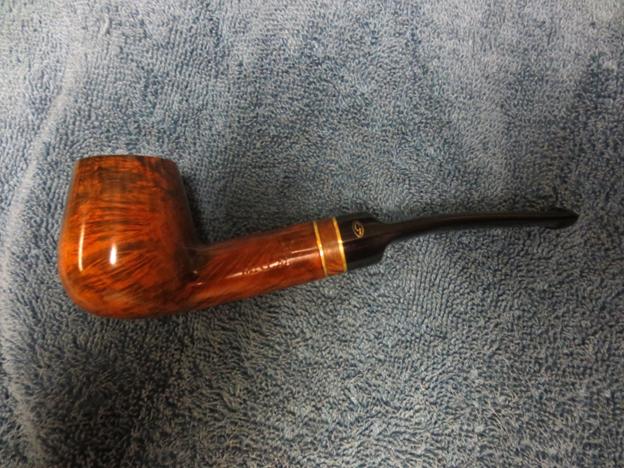
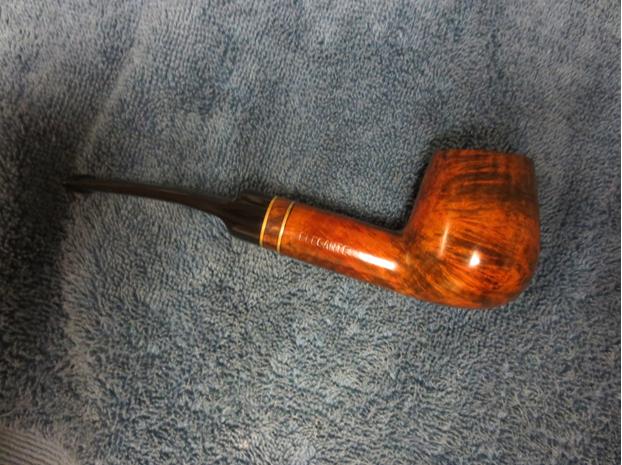
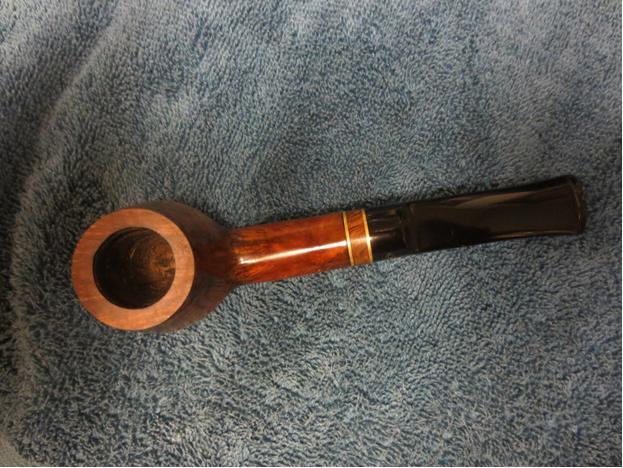
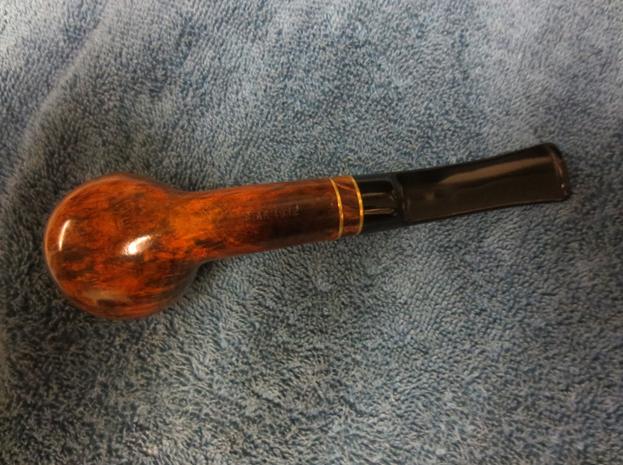
Blog by Steve Laug
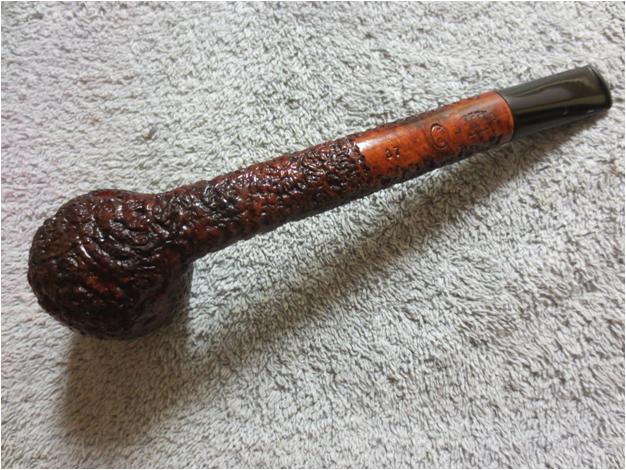
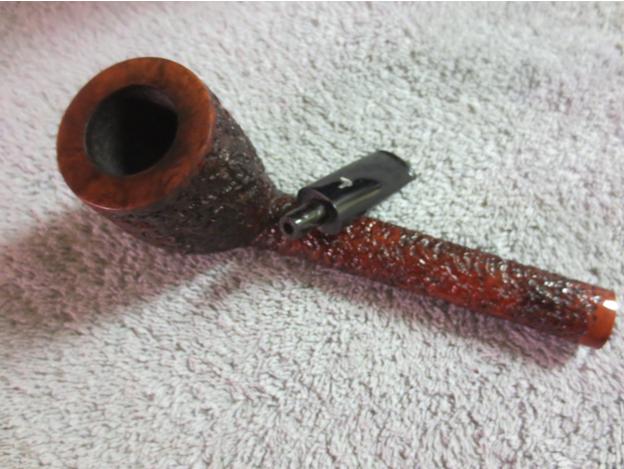
A good friend of mine stopped by for a bowl the other day and to drop off some pipes he was donating to the Nepal Pipe Project. He has given quite a few already and some of you have benefited from his generosity. This time he had a couple of surprises with him as well. He had two of his favourite pipes with him that needed some attention. The first was a handmade Gepetto Canadian made by Ser Jacopo. It was a shape #37 and had a rusticated finish. It was a beautiful pipe. He had been twisting the stem out of the shank and it was stuck. One little twist too much and the tenon snapped in the shank. It broke off quite deep in the shank and was solidly stuck in place. I would need to pull the tenon, drill out the stem and insert a new tenon.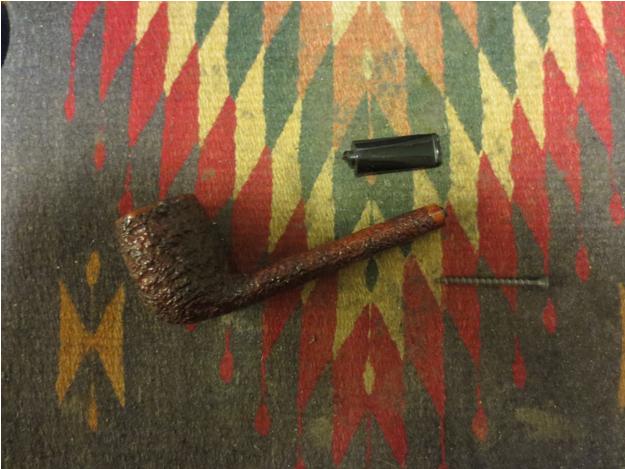
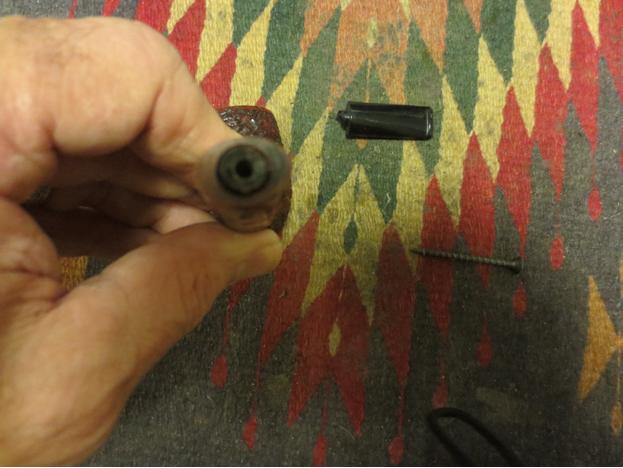 I used my drywall screw and twisted it into the airway of the broken tenon until it caught hold and then wiggled it loose. With careful wiggling and pulling the broken tenon came free of the shank.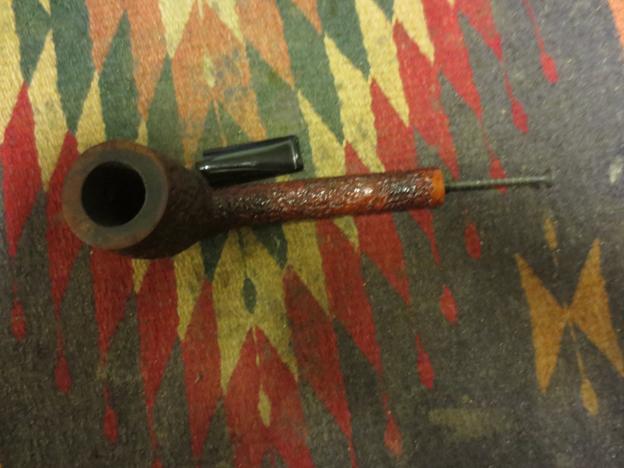
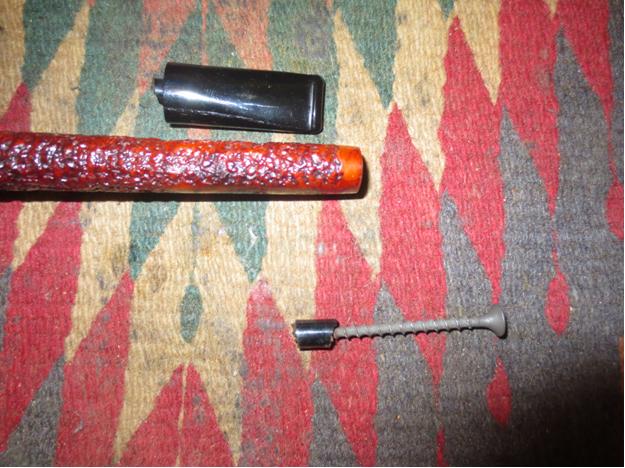 I used the Dremel and sanding drum to take off the majority of the remaining broken tenon on the stem itself. I faced it on the topping board with 220 grit sandpaper until it was flat against the rest of the stem face.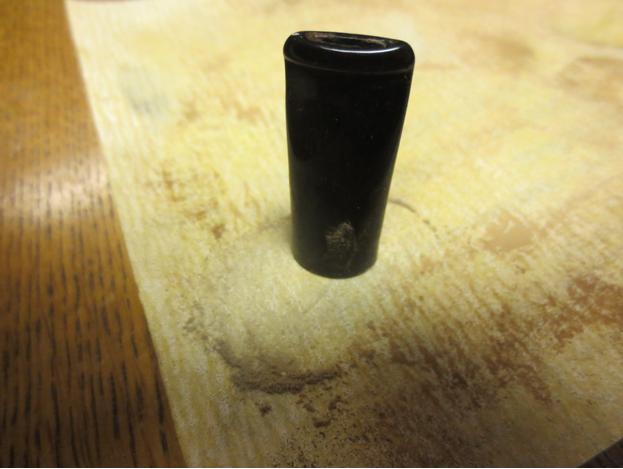
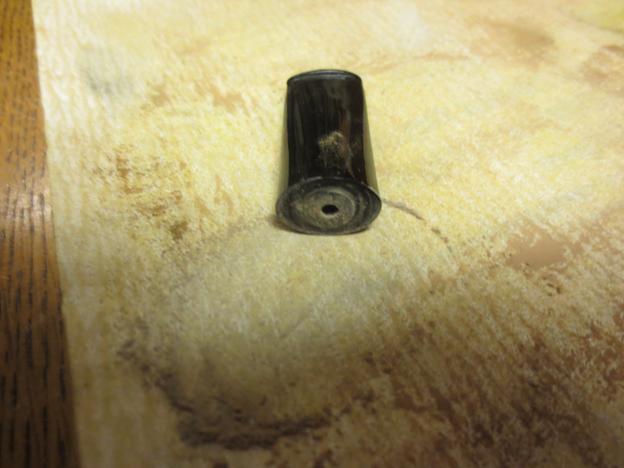 The stem is Lucite and the original tenon was an integral part of the stem. I did not have any Lucite tenon and also no Delrin tenons. So once again I decided to do some improvisation. I turned down the tenon on an old thin vulcanite stem that I had in my stem can until it was a snug fit in the mortise of the shank. I wanted it to sit as deeply as the previous tenon so I turned it down accordingly with the Dremel and sanding drum. When the fit was correct I left it in place in the shank and carefully cut off the stem with a hacksaw. I left enough of the new tenon to sit in the hole I would drill in the stem face.
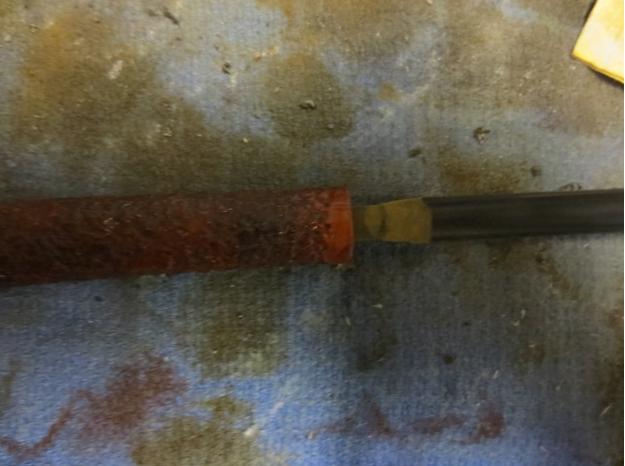 I set up a drill and turned the stem onto the drill bit by hand until it was deep enough to hold the new tenon but not too deep because of the sharp taper of the stem. If it was too deep it would have broken through the top and bottom side of the taper. I measured the depth I had to work with and drilled only that depth in the stem. I started out using a drill bit slightly larger than the airway in the stem and worked my way up to a ¼ inch bit. I used a round needle file to clean up the inside edges of the drilled out stem. I turned the end of the tenon down until it slid snugly into the hole. Once I had a good fit I coated the end of the tenon with super glue and pressed it into the hole. I did this carefully to keep the tenon straight both horizontally and vertically.
 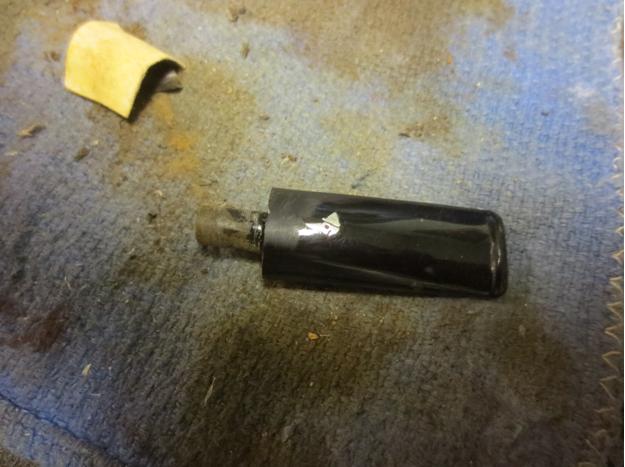 Once the glue set on the new tenon I cleaned it up with some sandpaper and then pushed it into the mortise of the pipe. The fit was good and the taper lined up correctly on the top, sides and bottom of the shank. The stem needed to be sanded to clean it up and polish it. I sanded it with 220 grit sandpaper to smooth out the edges and around the button.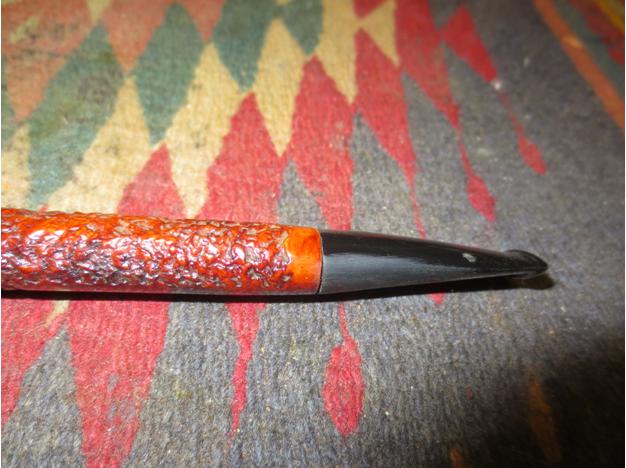

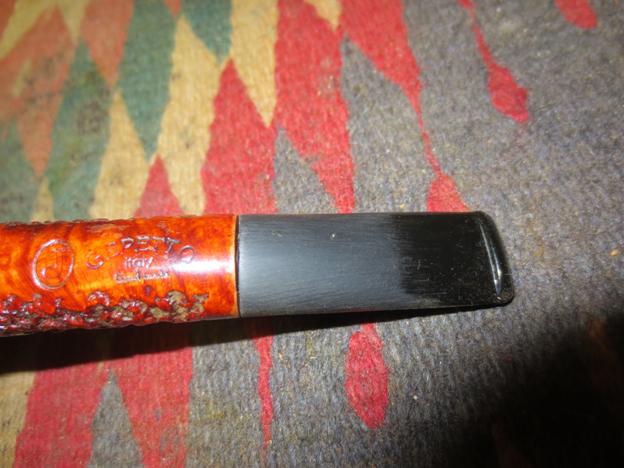
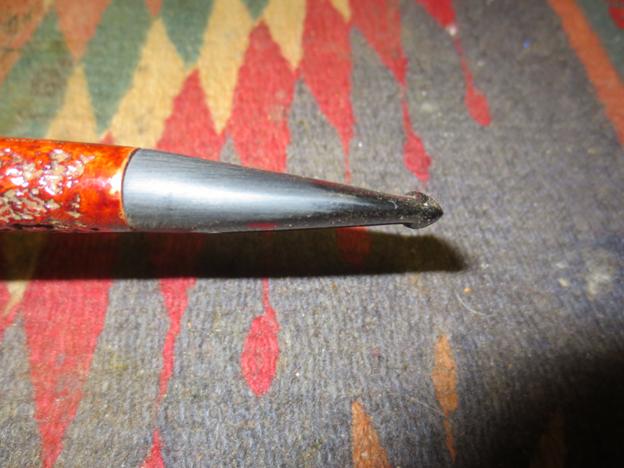 I continued to sand it with a medium and a fine grit sanding sponge. The fit against shank on the underside had a slight gap so I needed to do some adjustments. I heated the tenon and then pushed it in place and held it against the shank until it cooled and set. The fit was better.
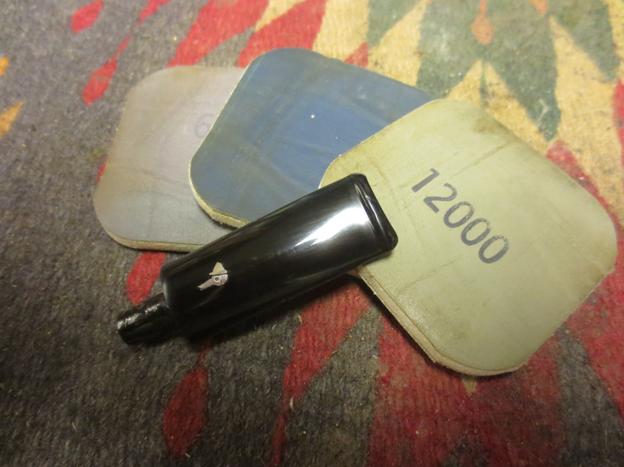
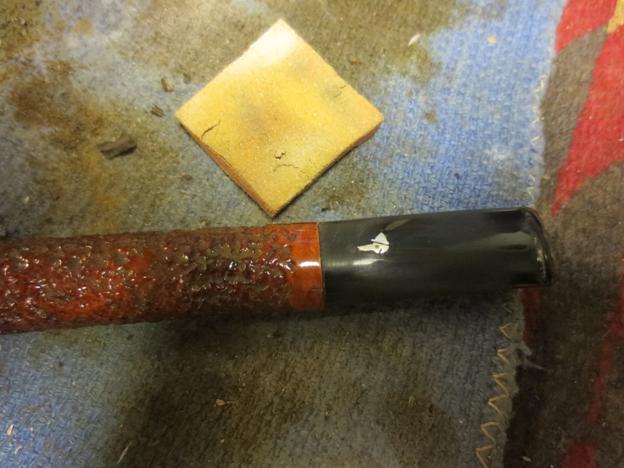 I wet sanded the stem with 1500-2400 grit micromesh pads and then used some mineral oil to give the next grits of micromesh some bite. I then dry sanded with 3200-4000 grit pads and repeated the oil and then finished with 6000-12000 grit pads. I put the stem on the pipe and buffed it with Blue Diamond.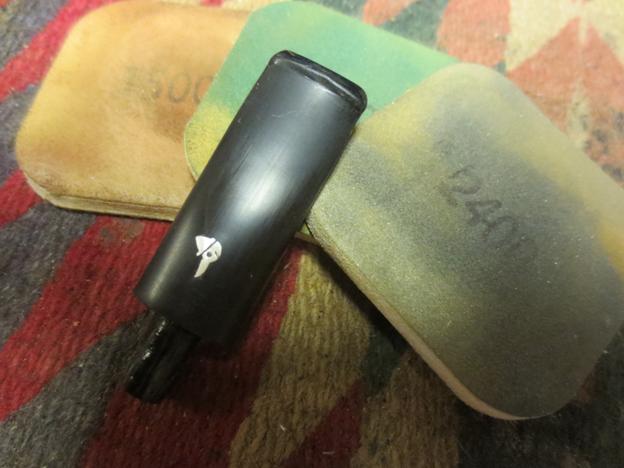

 The rim had some build up of tars on the back top edge so I cleaned that off and then buffed the rim the rim to polish it. I lightly buffed the entire bowl. I used carnauba wax on the rim and the smooth portions of the pipe as well as the stem. I buffed it with a clean flannel buff and then buffed it by hand with a microfibre cloth. The finished pipe is shown below. It should be back in my friend’s hands soon and he can enjoy it once again. Thanks for looking.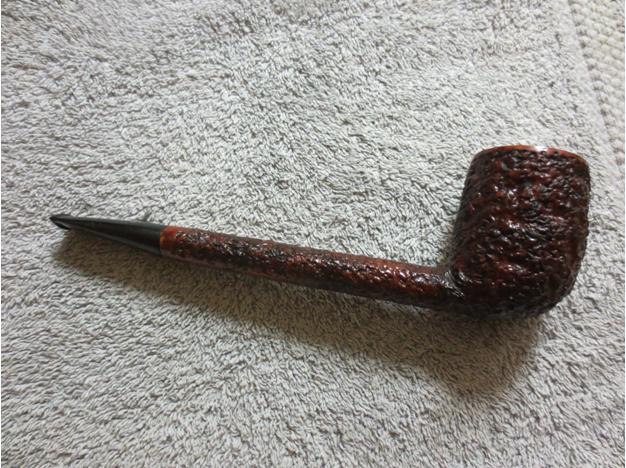



Blog by Steve Laug
Many years ago, when I picked up the pipe again after leaving it aside for a time, I purchased a Medico billiard. I remember that I bought it from a 7-Eleven Convenience Store on the morning my oldest daughter was born in 1982. To me it was a thing of beauty, long and slender and light weight. It had a shine and it felt smooth in the hand. It was made out of Brylon – a mixture of briar and resin and had a nylon/plastic stem. I had no idea of what Brylon meant and how it would smoke but I did not care. I was ecstatic over the birth of my daughter and wanted a pipe to celebrate the event. It smoked hot for the longest time but eventually built a cake that cooled things down a lot. It was the only pipe I had and I never even thought of rotating pipes. I smoked Borkum Riff Whiskey flavoured tobacco as well as Captain Black Blue. I used pipe cleaners because somewhere along the way I had learned that they were necessary but I never let the pipe rest before loading it again and smoking a few more bowls. The only time it rested was when I did! I still have that old pipe – 33 years later. I have restemmed it with a churchwarden stem and still smoke it on occasion.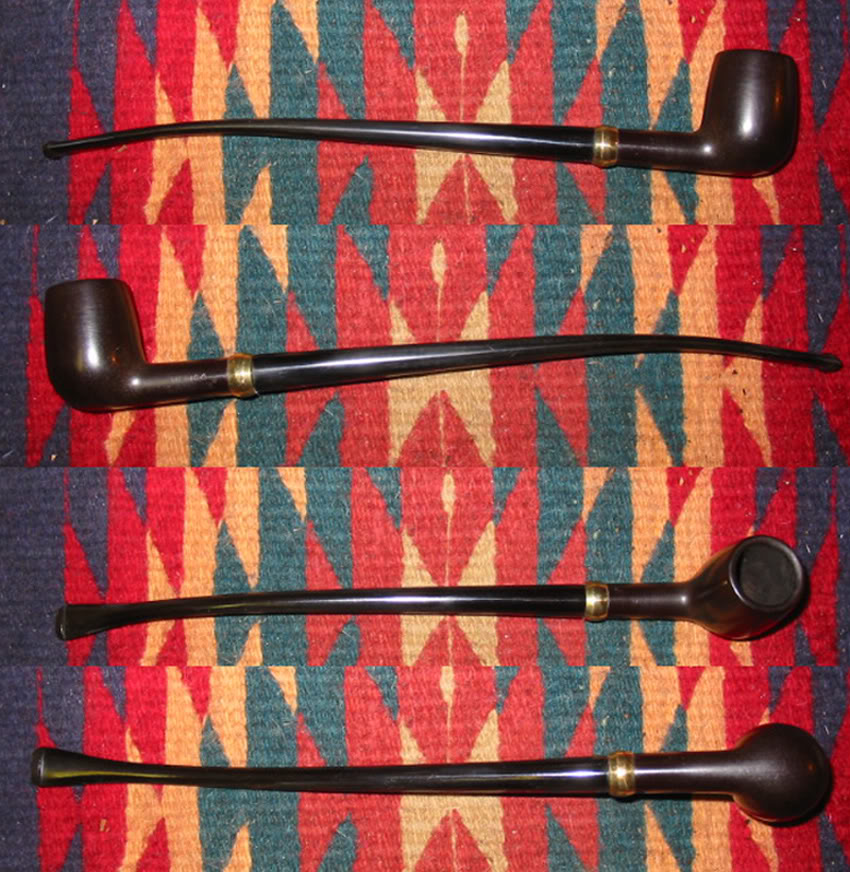 I can tell you when I changed my habits and bought more pipes and some better grade tobacco. I can’t tell you the date of that momentous event but I can tell you the story behind it. I visited a small tobacco shop near where I worked in Vista, California to pick up some more pipe cleaners and some tobacco. When I went into the shop there was an older gent was sitting behind the counter smoking an interesting pipe and the tobacco he was smoking smelled great. We got to talking and I showed him the pipe I had – the old Brylon. I have to give him credit because he did not laugh at or mock me. He just said that he thought I needed to think about picking up another pipe or two so that I could give this one a rest. He was very gentle with me, knowing full well just how green I was to pipe smoking. He asked me what kind of budget I had to work with and like all young fathers my response was a laugh and a question. “Budget?” I asked. He chuckled and did a midstream adjustment in his path to take me to the estate pipe rack.
From the many pipes on the rack he chose two pipes for me that he thought would work well for me. They would give me some variety as well as value for the money. They were very differnet from my Medico. The first was an Alpha Comfit in a modified Prince shape. It was smooth briar and dark and rich looking made in Israel. It had thick walls, a thin saddle stem (with a comfit dental bit) and was clean and ready to smoke. I immediately fell in love with the hand feel and the shape of this pipe. That was my second pipe. The Medico had a rack mate. At that point I had no inkling of the difference a briar pipe would make to smoking when compared with Brylon. It was all about how they looked – their shape and feel – to me. The old gent did not mock me but shook his head approvingly. He truly had my number.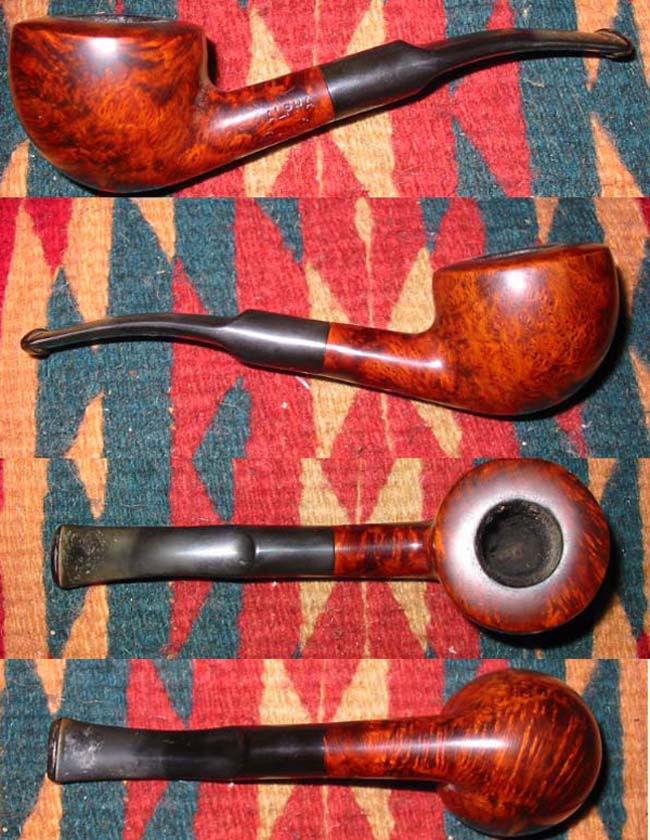 The second pipe he chose for me was a sandblast Ben Wade Preben Holm made freehand. It was a piece of art to my eyes – almost what I have come to know as a Dublin shape, but had no idea of that then. The body of the pipe was a beautiful sandblasted briar. Then end of the shank and the rim were what he described as plateaux but to me just looked rough and craggy. It was very light weight. The stem was thin as well. I held the pipe and knew that I had to have this one as well. It too felt amazing in the hand.
I told him I would take them both. Now, understand I had no idea what they cost or if I could afford them. I was in “love” with them and had to have them. He laughed when he saw the “teenage boy in love” look in my eyes. He gave me a price that fit well into what I could afford. I have no idea what I paid for those two pipes but looking back I know he gave me a very good deal. He led me over to the tobacco bar and handpicked two tobaccos for me – not packaged drugstore tobaccos but two of his own blends – I don’t remember the names and the shop is long gone now but I do remember that one was a Virginia and the other was an aromatic that he said smelled like plum pudding. He gave me 2 ounces of each blend to go with the pipes. He cleaned each pipe with a pipe cleaner and wiped them down with a cloth and put them in a pipe sock that he had for them – a no name felt sock. He put some pipe cleaners in the bag along with the tobacco and the pipes.
Then to my surprise he asked if I wanted to smoke one of them before I left the shop. He would guide me in the packing and lighting to make sure I had it right so I would get the most out of my `new` pipes. I remember choosing the Ben Wade and packing it up. He checked my load and then added a bit more. He had me feel the springiness and then showed me how to light it with a match. Then he relit his own pipe and we smoked a bowl together. I will never forget that old gent and the first two good pipes I purchased. The pipe smoked like a dream.
I put away the old Medico and smoked those two pipes for quite a few years. I frequented that shop for as long as I lived and worked in Vista. I went back to see if it was still there a few years ago but it was gone. However, it still lives in my memory. I still have those two pipes. I still smoke them, 33+ years later and I still relive the story with every good smoke that they deliver. The Ben Wade looks tiny now in comparison to the newer freehands that are on the market. The old Alpha has been restemmed by none other than Lee von Erck many years ago now. Both will continue with me through my life.
That was my introduction into estate pipes. Is it any wonder that I still have far more estate pipes than pipes I have purchased new? Somehow, that initial experience set the bar for me to be on the lookout for estate pipes and to add them to my collection. Today not only do they make up the majority of my collection but I have added to that the hobby of restoring and refurbishing estate pipes. I have been doing that for over 15 years now and love the feel of old briar and bringing it back to a life of usefulness. At this point in my life I don’t think my love of estate pipes will ever die. The hunt for them is a part of every holiday and trip that I take. Even my kids take part in the hunt now.
I read a post on one of the forums on this topic that included a quote from Kris Kristofferson that I remember hearing when I was growing up. It is an apropos way to end this blog. “I’d trade all my tomorrows for one single yesterday.” The author talked about the nostalgia of old briar and what a great addition that is to the value of the pipe. To me though the thing that makes estate pipes even interesting to me are the stories that come attached to the old pipe. Sometimes you can ferret out the stories of the pipe other times you have to use your imagination and create a story that fits the pipe. But in either case the memories that come along with these old pipes (if you can find them) and the ones you add over the years give these estate pipes a patina of dignity that it will take many years for a new pipe to gain. Do you buy estate pipes? Why? What are your reasons for buying estate pipes? If you do not, what keeps you from these dignified old timers?
Blog by Steve Laug
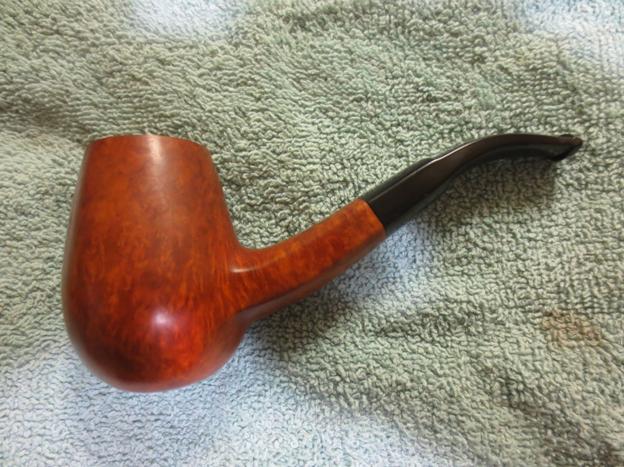
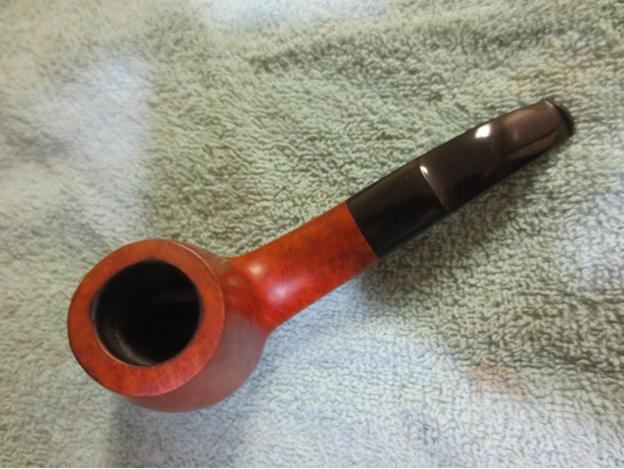
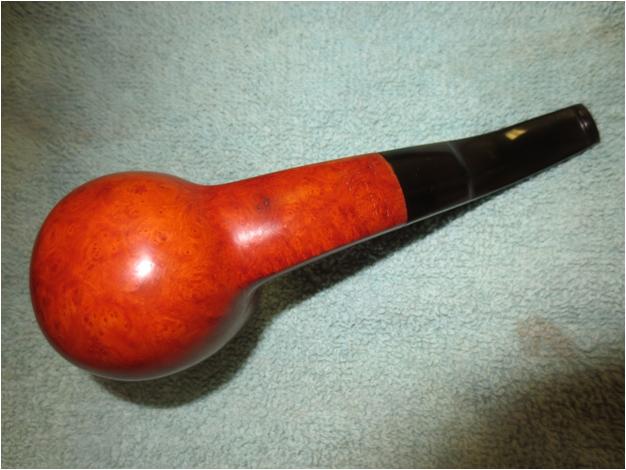
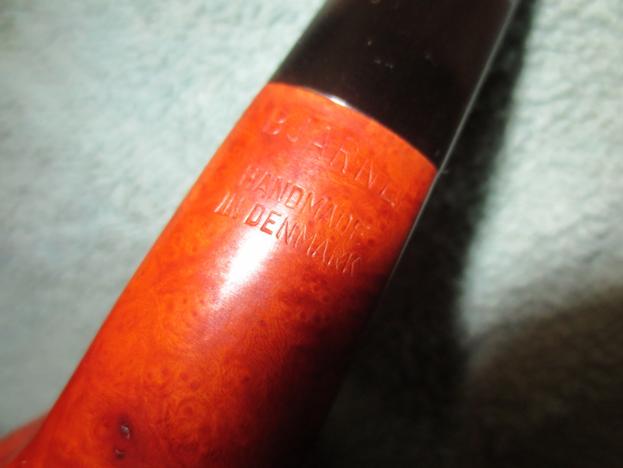
I found this interestingly shape pipe in an antique mall in Idaho Falls. I was attracted to the egg shape, the hanging bottom and the rectangular shank and saddle stem before I even knew who had made it. I was pretty sure that it was a Danish made pipe but did not know who had made it. When the clerk took it out of the display case I saw that it was priced at $15 US – not a bad price these days for estate pipes. I turned it over in my hands and could see that it was well made and barely smoked. The bottom of the bowl still showed unseasoned briar. The stem was oxidized but free of tooth marks and tooth damage. The finish was in decent shape other than some sticky spots where the person selling it had put price tags. On the bottom of the shank it is stamped BJARNE over Handmade in Denmark. That is the only stamping on the shank. It is the pipe circled in the photos below.
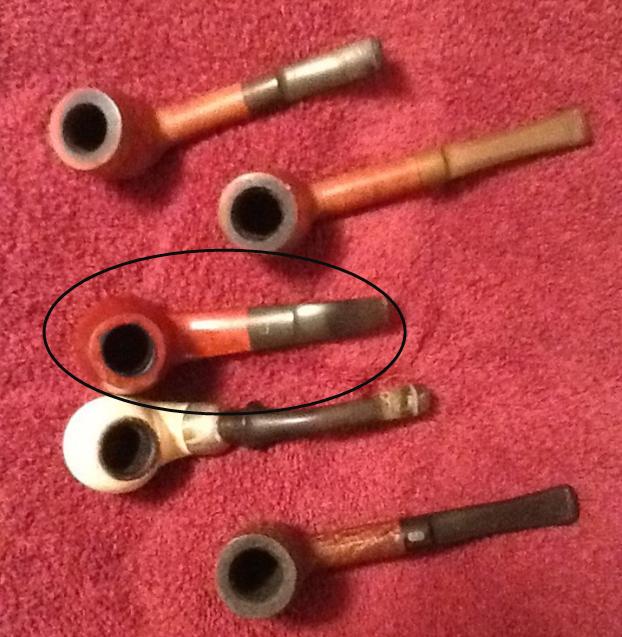 I was excited by this find. I liked the shape and the cleanup would be simple. I purchased it and took it back to my mom and dad’s place. But then the something happened that I have come to dread. I was carrying the bag across their parlour when the bottom fell out of the bag and the pipe bounced off the tile floor. There was a sharp crack and the stem had disappeared. I found it hidden in the pattern of the carpet about three feet from the bowl. I was sick to my stomach. The tenon had snapped off evenly in the shank. The stem and the bowl were undamaged otherwise. This meant that what was originally a simple restoration would now be a bit more complicated. I would need to replace either the tenon or the stem.
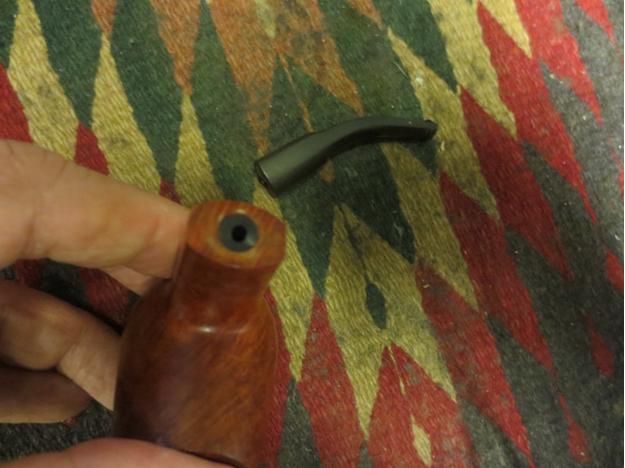 I took some photos of the bowl when I brought it to my work table. The briar was beautiful and not a flaw in the grain on the bowl itself. There was one small sand pit on the bottom side of the shank but it had only darkened from handling and was not that big a deal. The rim had some darkening and burn marks on the top near the back, the right side and the right front. These would have to be dealt with.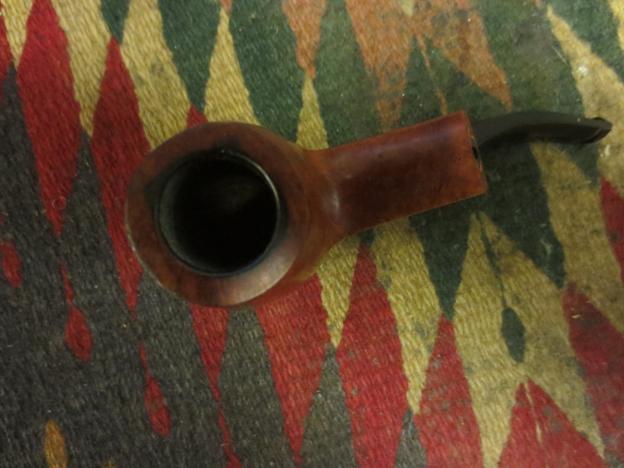
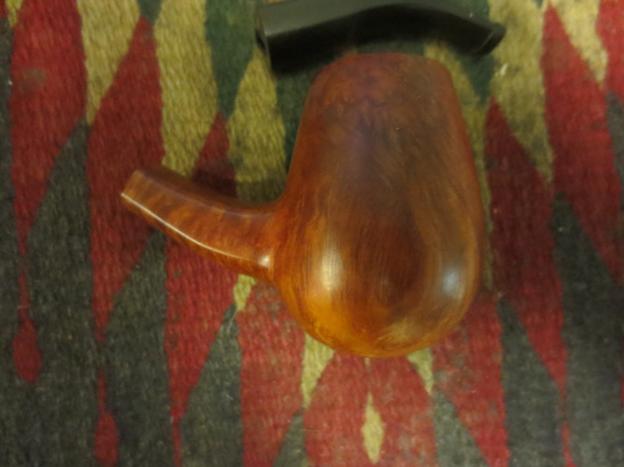
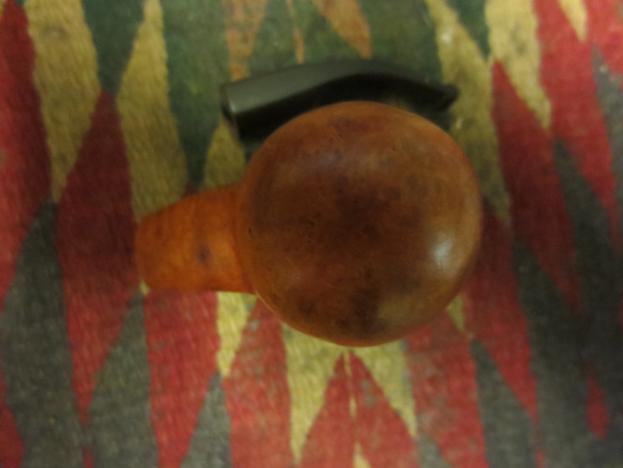 I used my tried and true method for pulling broken tenons. I twisted a drywall screw with wide threads by hand into the airway on the tenon. When it bit, I wiggled the tenon free of the shank. It did not take much to pull it out. If it had I would have put the bowl in the freezer for a half hour and repeated the process.
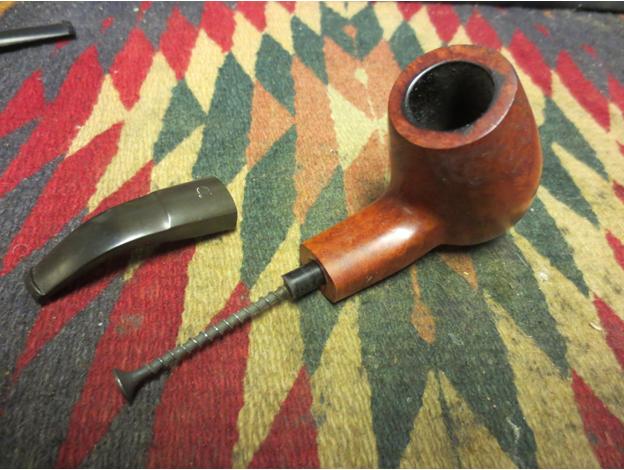 I faced the stem on my topping board to knock off the remnants of the broken tenon and then twisted the stem onto a drill bit slightly larger than the airway in the stem. I don’t use the power feature on the drill as I would rather turn the stem onto the bit by hand. This is critical when working on short saddle stems where it is very easy to over drill the airway and ruin the stem.
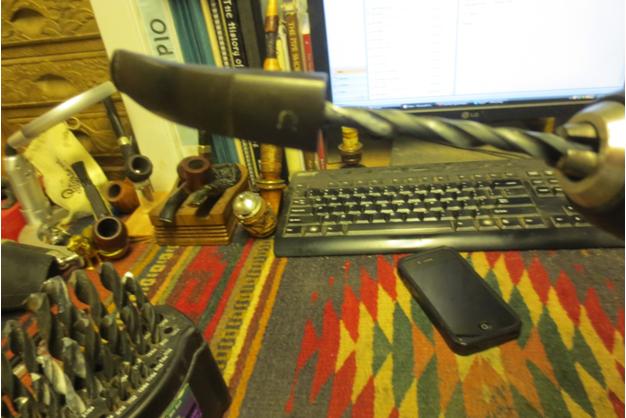 When I had the airway open for a new tenon I improvised by using a junk stem I had in my can of stems. I pressed the tenon on the thin stem into the freshly drilled airway on the stem. The fit was snug and the once I cut back the donor stem I would have a new vulcanite tenon. I glued the new tenon in place with super glue and pressed it until it set. The next three photos give an idea of how the new tenon and the donor stem fit in the stem as a replacement tenon.
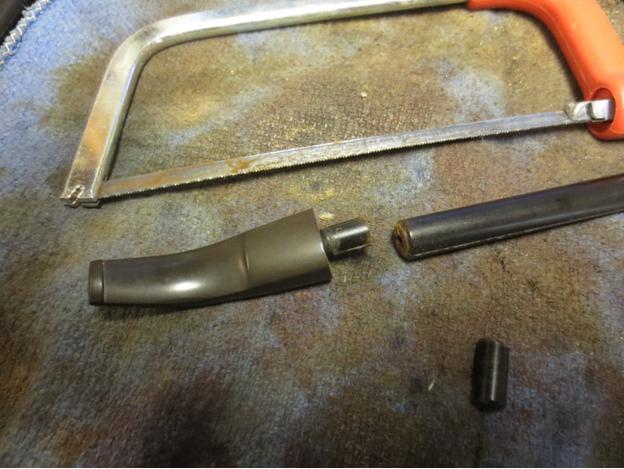
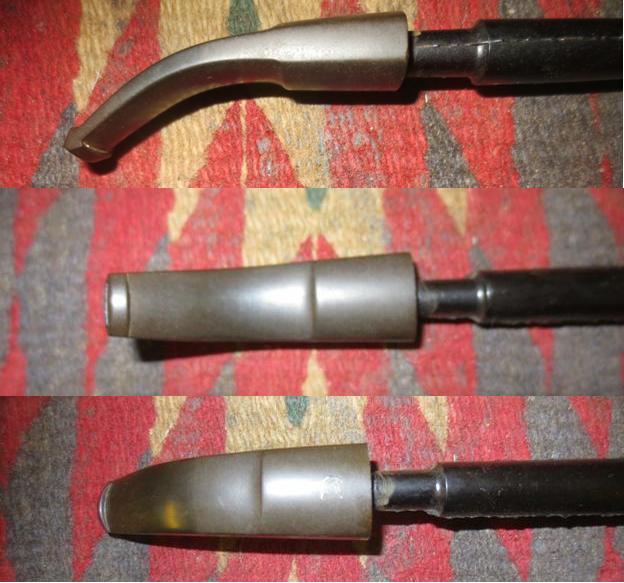 I cut off the stem with a hacksaw. In this case, after measuring the depth of the mortise I knew I could cut of the tenon portion of the donor stem and be left with a tenon the right length for the pipe.
 I turned the diameter of the new tenon down with a sanding drum on my Dremel until it was close to fitting and then finished the fit by hand with 220 grit sandpaper.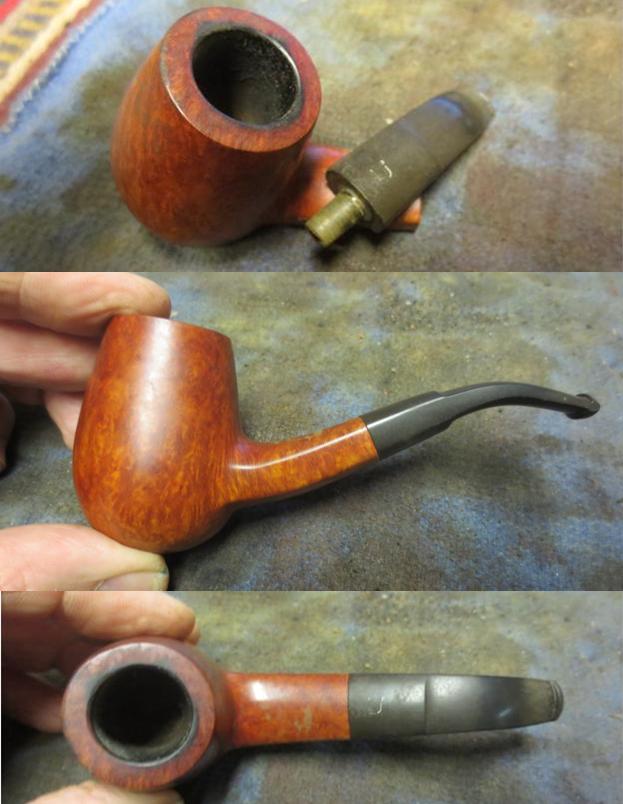
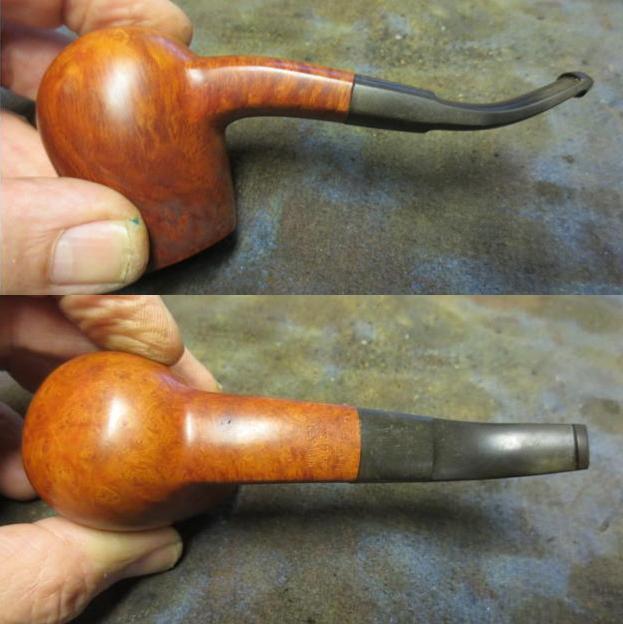 As often happens with a new tenon I had to do a little fine tuning on the shank – not much really but a slight removal of briar on the left side and a little vulcanite on the left. I probably could have left it but I am picky so I sanded it lightly until the transition was smooth. I wiped down the bowl with acetone on a cotton pad to remove the mottled finish and the glue that was on the shank and the bowl from the price tags.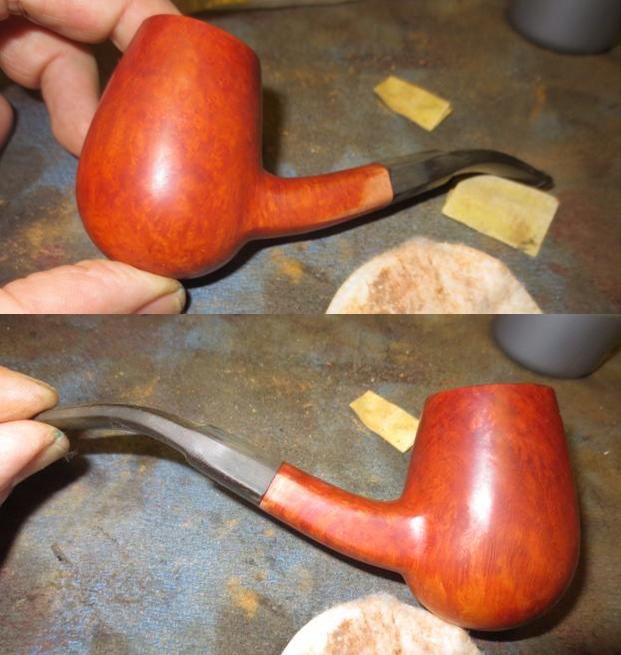
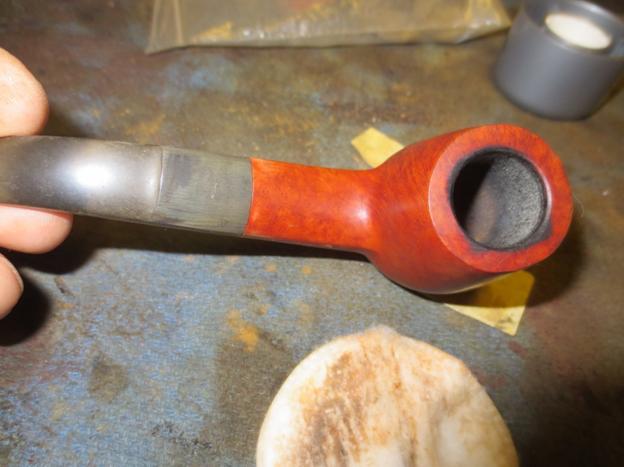 I examined the burns on the rim and to repair/remove them the bowl would have to be lightly topped. I used the topping board and 220 grit sandpaper to take off most of the burn marks and minimize the damage.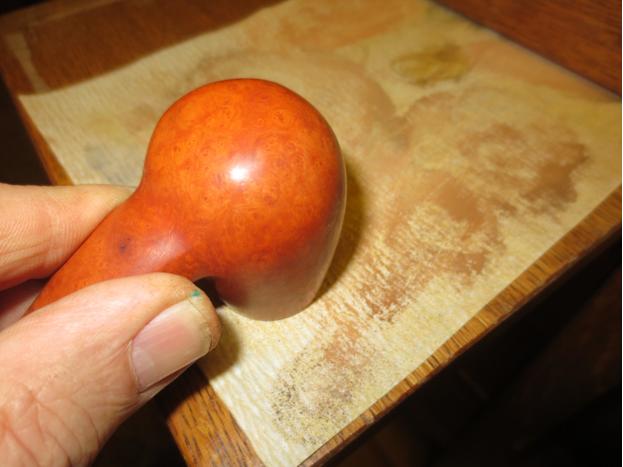
 I sanded the rim with a medium and fine grit sanding sponge and then wiped the bowl down with a cotton pad to remove the sanding dust.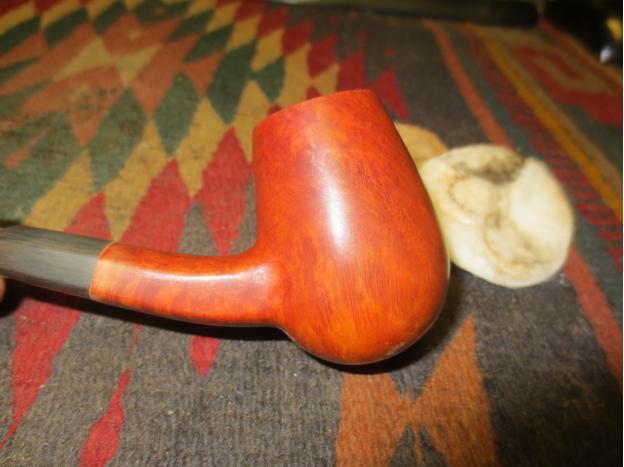
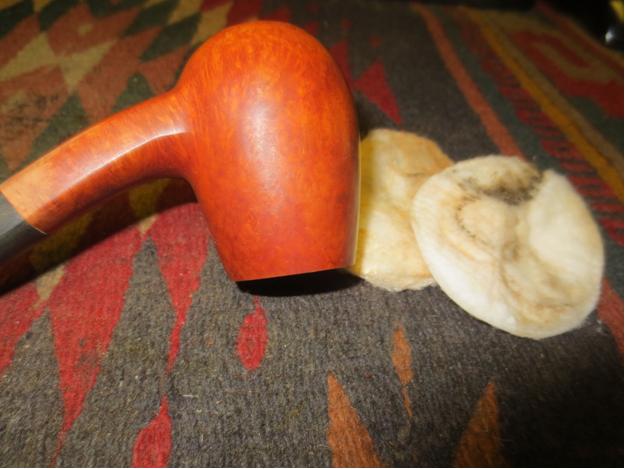
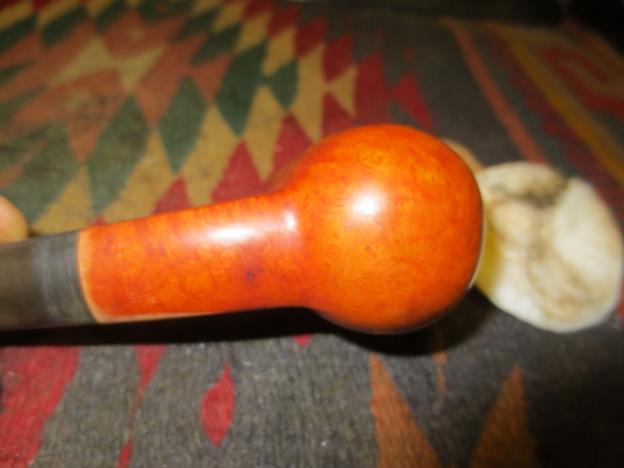 I restained the sanded areas on the shank and the rim with a stain touch up pen using the lightest colour stain. I was able to match the colour of the bowl and not have to restain the whole pipe.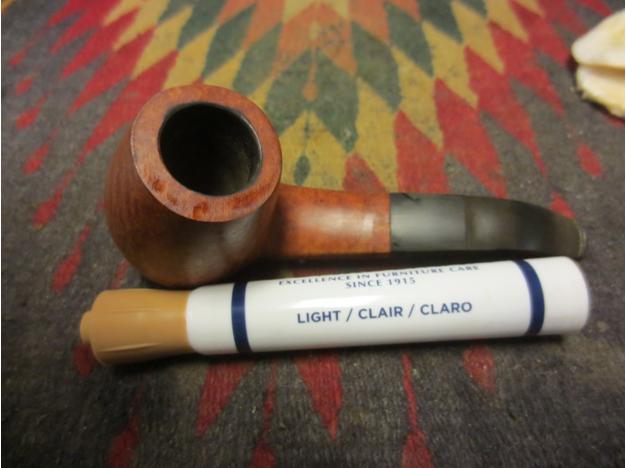
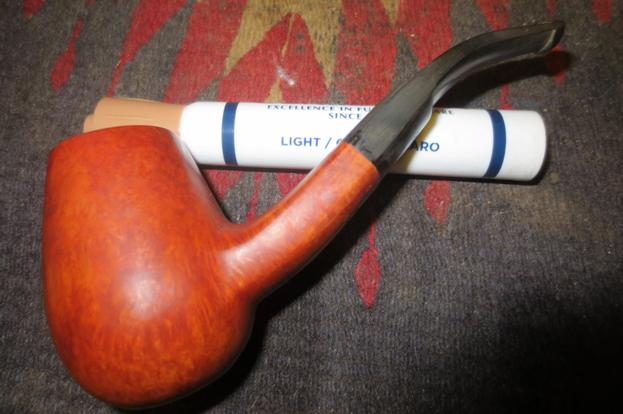
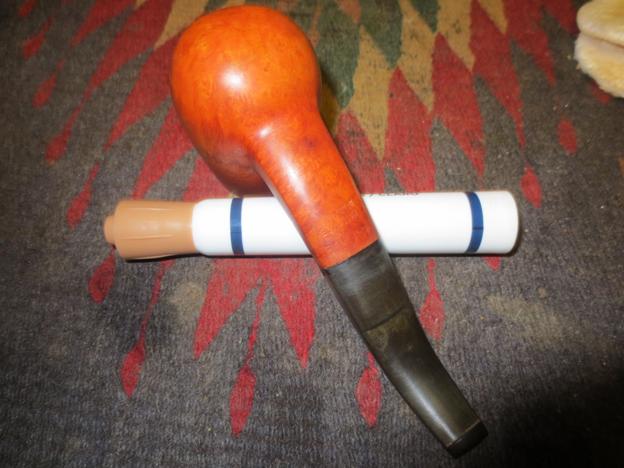 I gave the bowl a quick buff with a coarse cotton rag to blend in the stained areas with the rest of the bowl and feather in the new stain.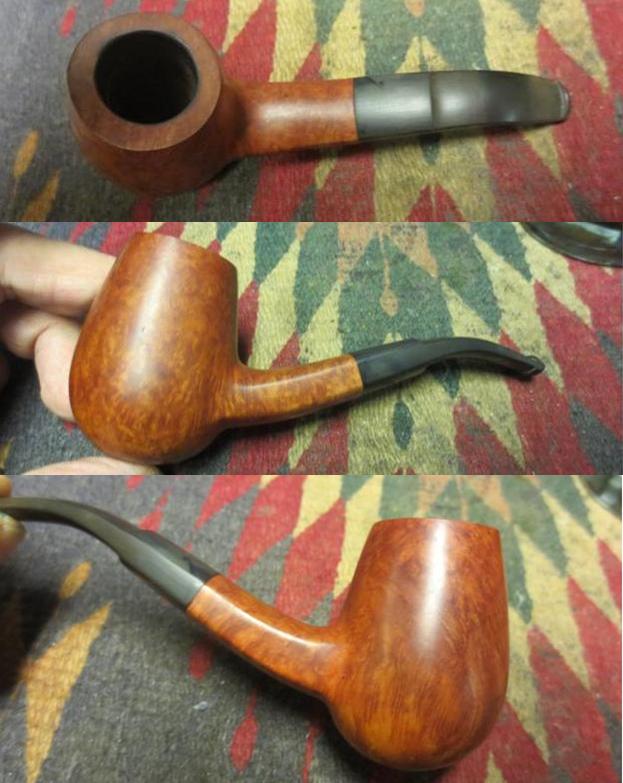
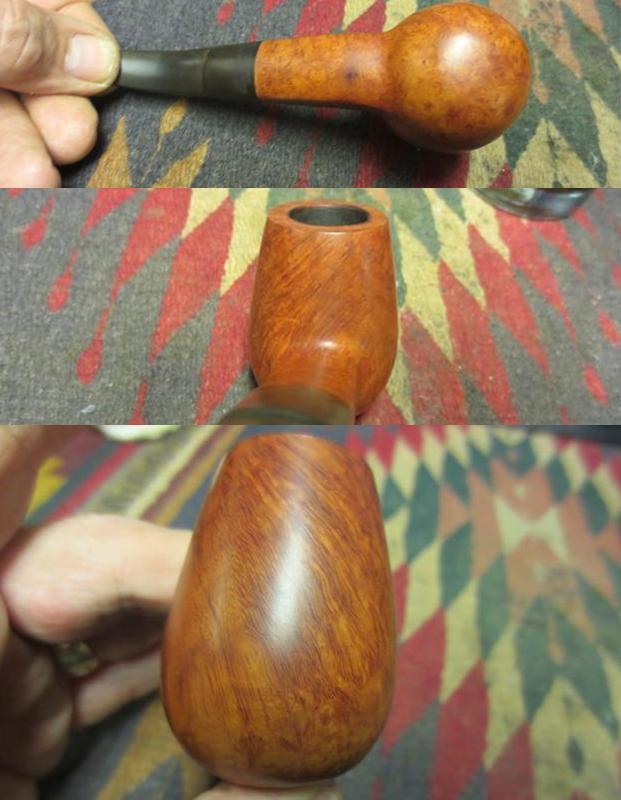 I took the stem off and cleaned out the shank and the stem. It was a pretty clean pipe which lent proof to my earlier assumption of the pipe being lightly smoked.
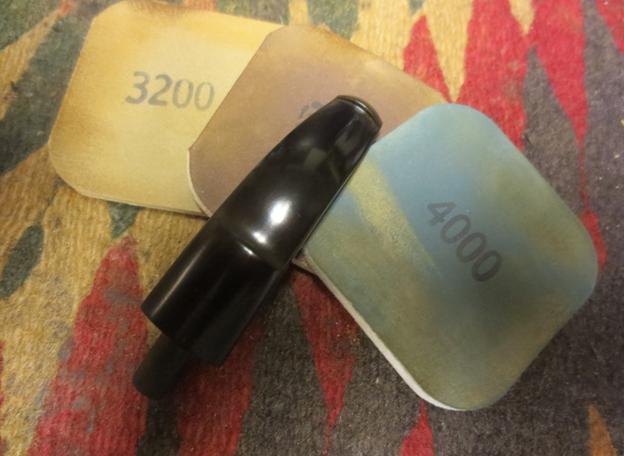
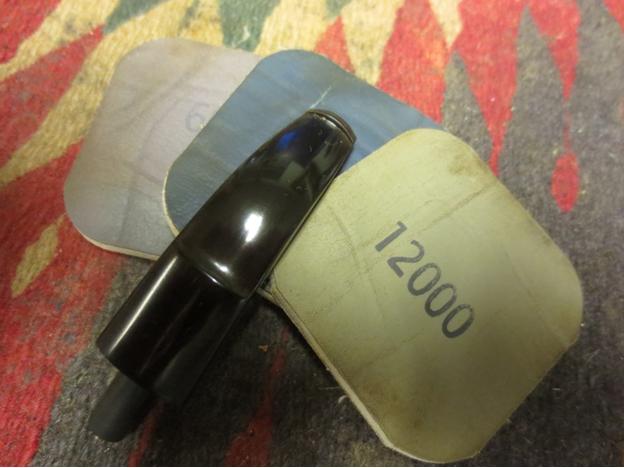
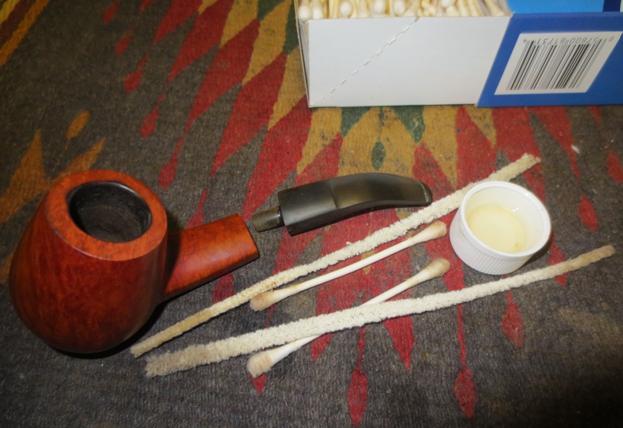 With the tenon replaced, the bowl stained and looking fresh all that remained was to remove the oxidation on the stem. I lightly sanded the stem with medium and fine grit sanding sponges and then went on to sand it with micromesh sanding pads. I wet sanded the stem with 1500-2400 grit pads and rubbed the stem down with Obsidian Oil. I “painted” over the saddle area and the edge of the button with the flame from a Bic lighter to remove the oxidation. I dry sanded with 3200-4000 grit pads, rubbed it down with oil once again and then sanded it with 6000-12000 grit pads. I gave it a final rubdown with Obsidian Oil.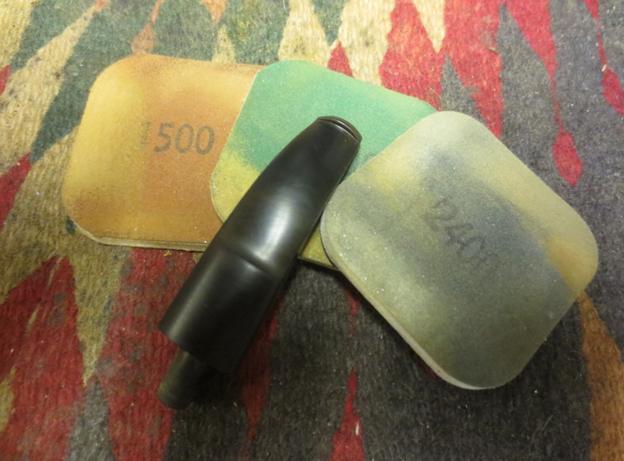
 Once the oil dried I buffed the stem and the bowl with Blue Diamond on the wheel and then gave it multiple coats of carnauba wax. I buffed it with a clean flannel buff to raise the shine. I then used the new addition to my order of things, learned from Dave Gossett and hand buffed the bowl and stem with a microfibre cloth to take the shine to the next level. The finished pipe is shown below. The fit of the stem makes the repair look like it came that way. The final photos of the stem and tenon show how the new tenon looks when it was completed. I am sure glad that the broken tenon did not ruin this old pipe and that once the new tenon was replaced the restoration was quite simple. This pipe should serve me well for years to come. Thanks for looking.