Monthly Archives: March 2026

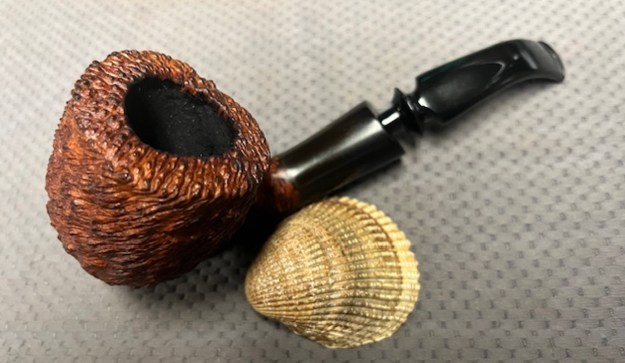
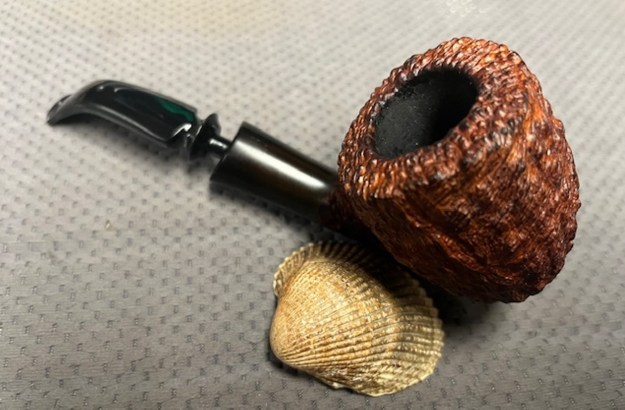
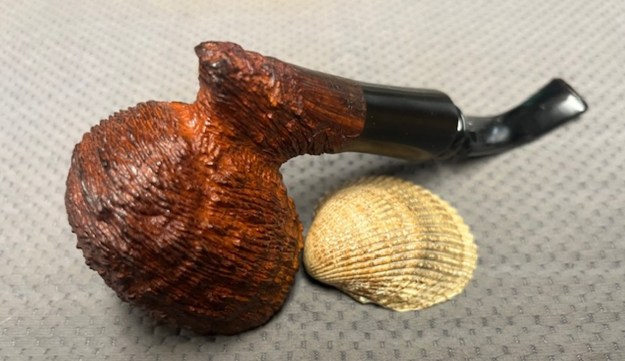
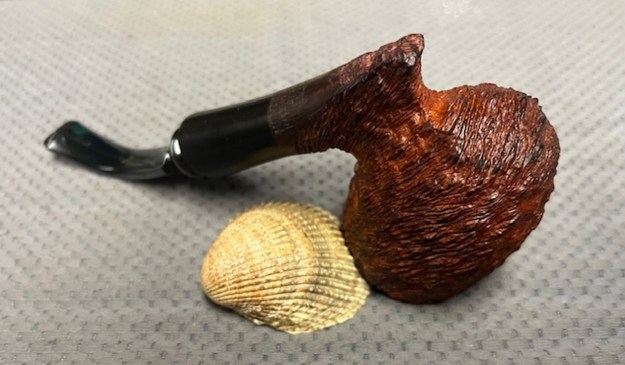
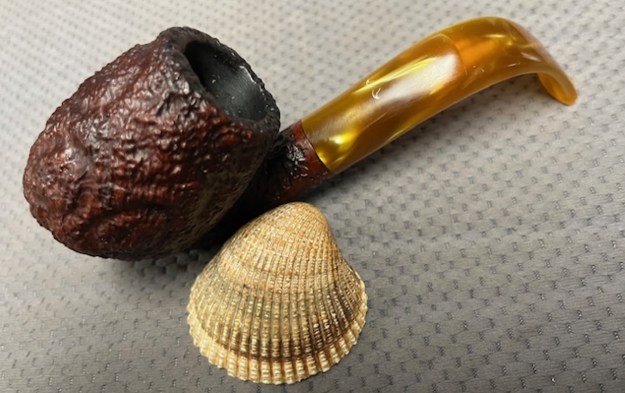
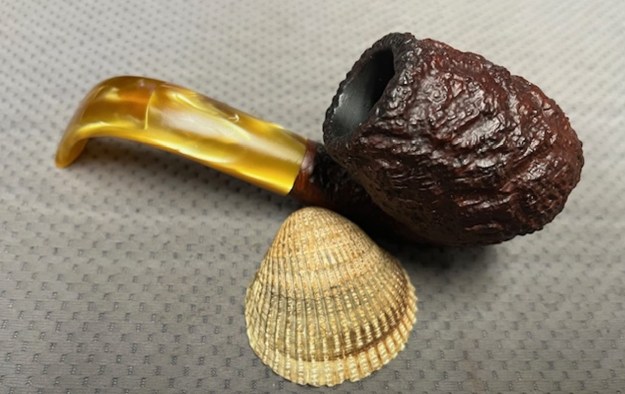
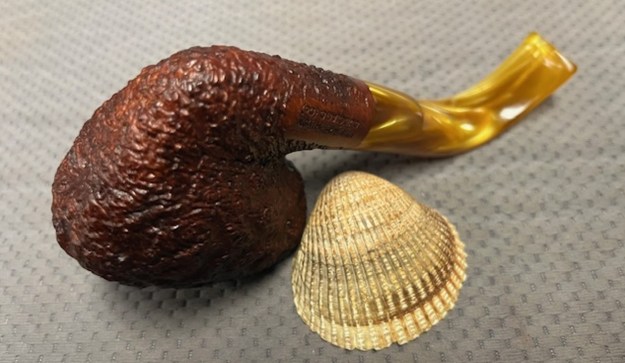
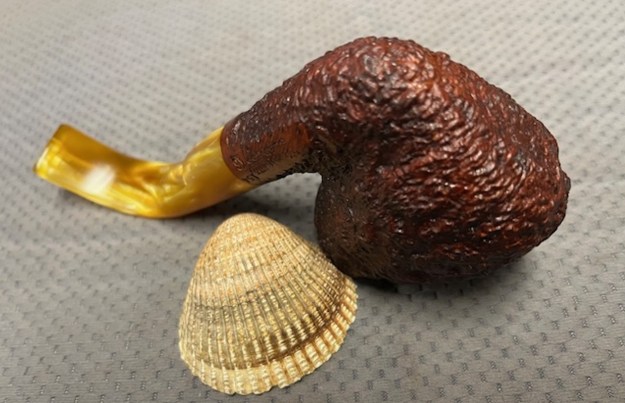
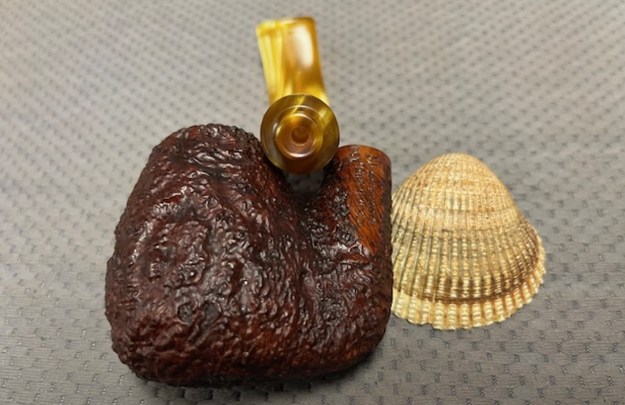
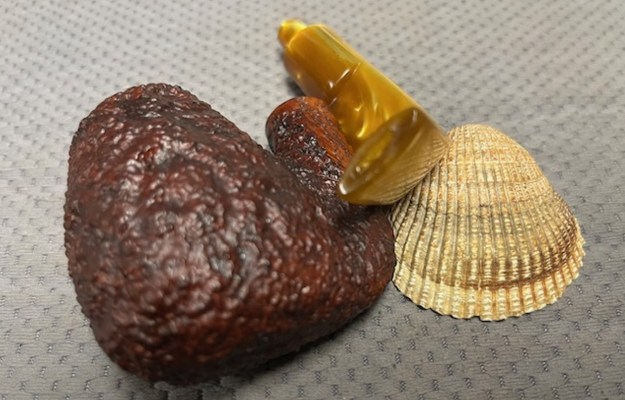
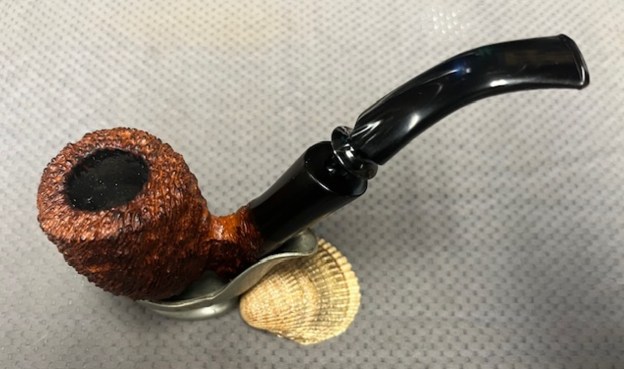
A Lovely Monte Verde Made in Denmark By Hand Golden Tan Rusticated Bent Egg


by Steve Laug

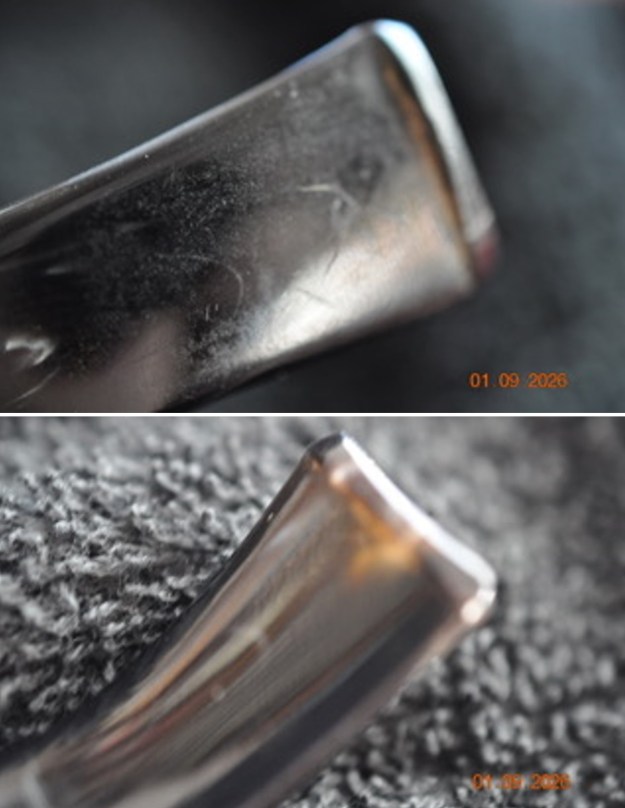
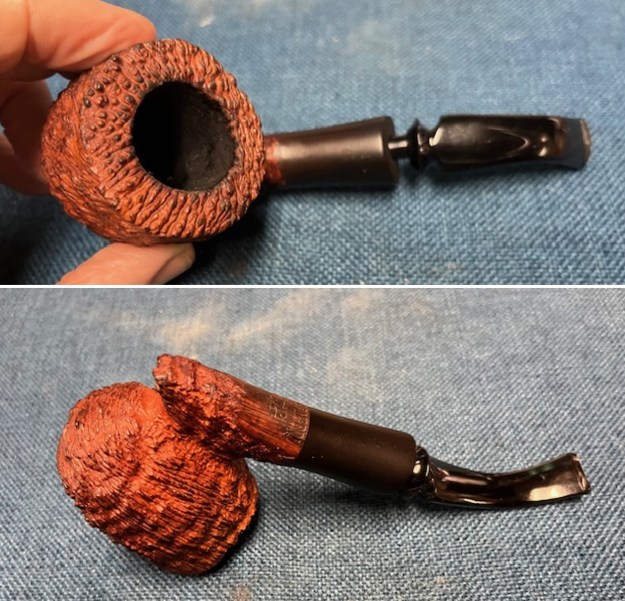
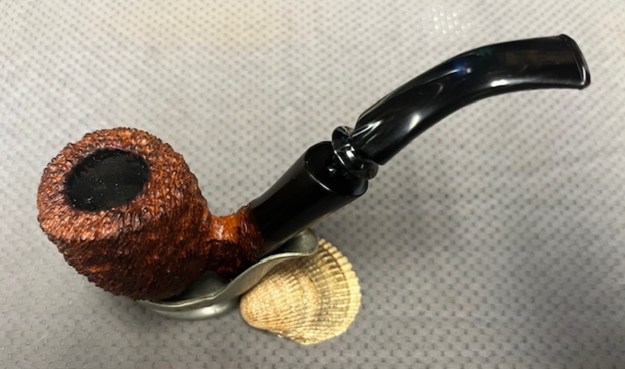
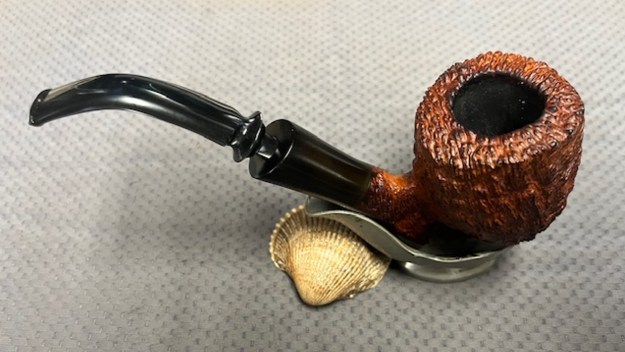
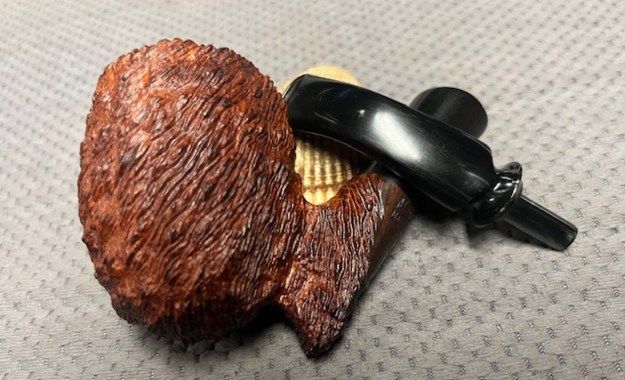
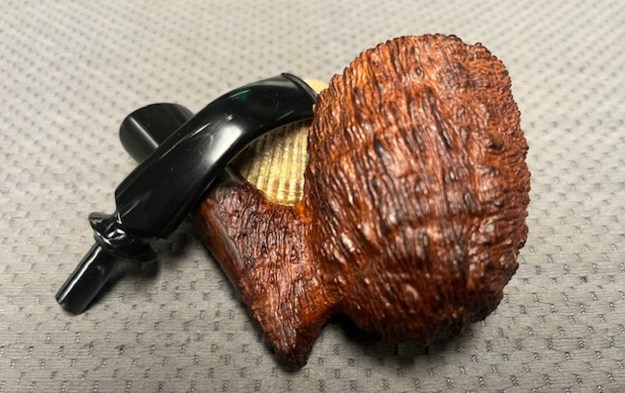
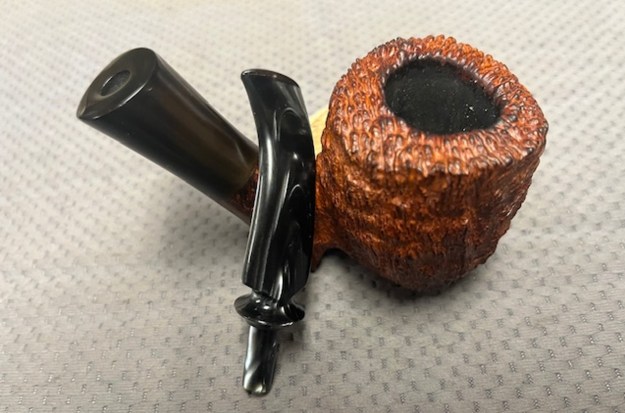
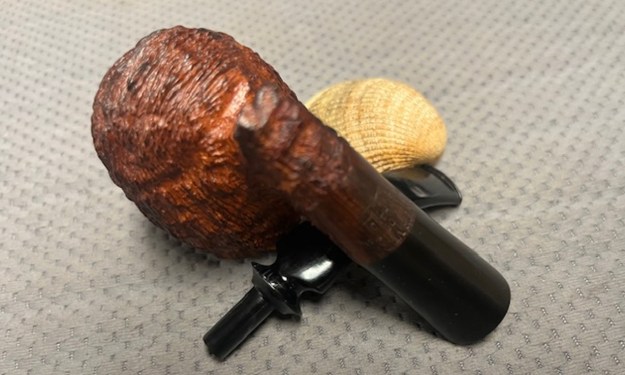
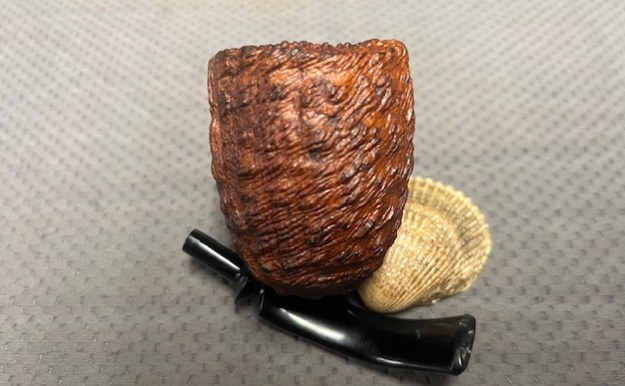
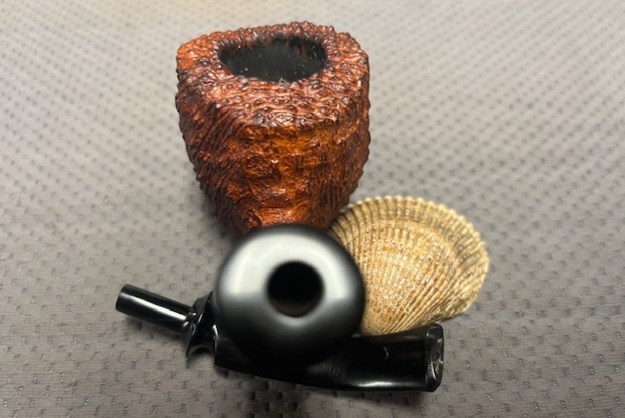
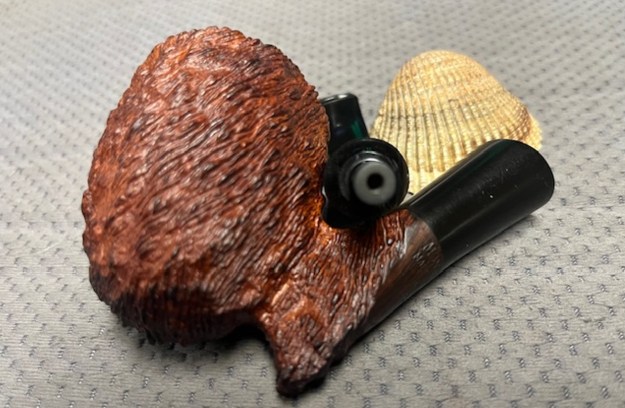
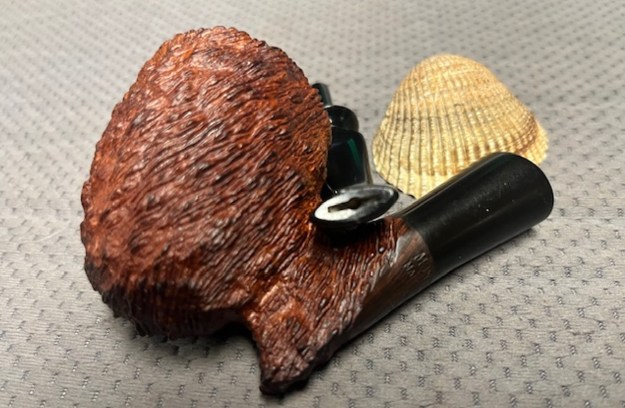
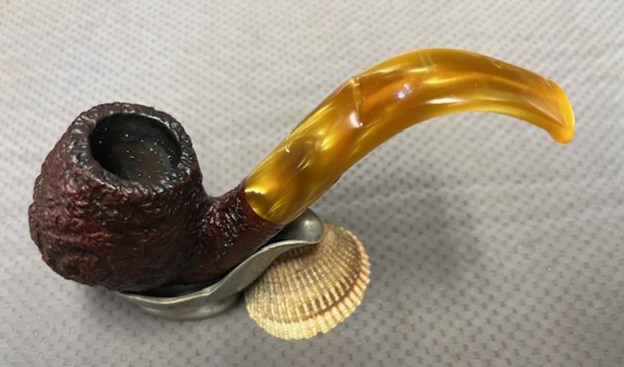
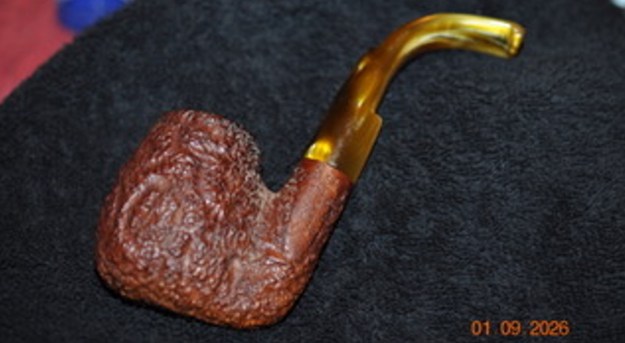
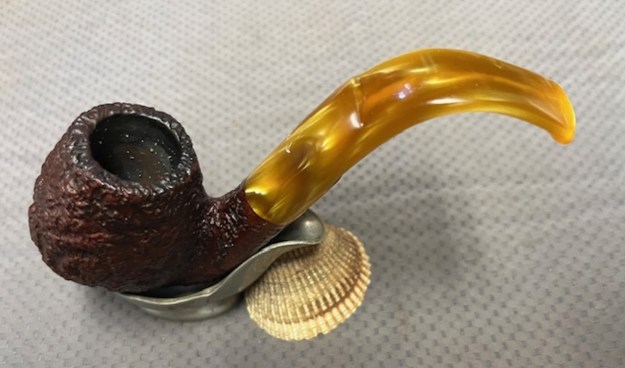
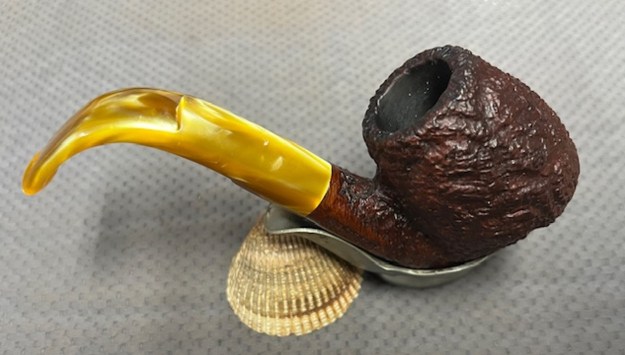
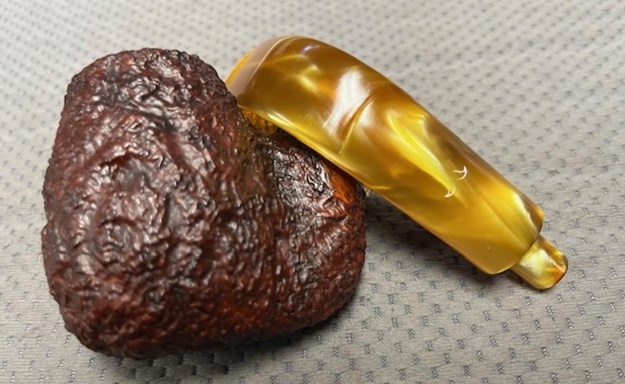
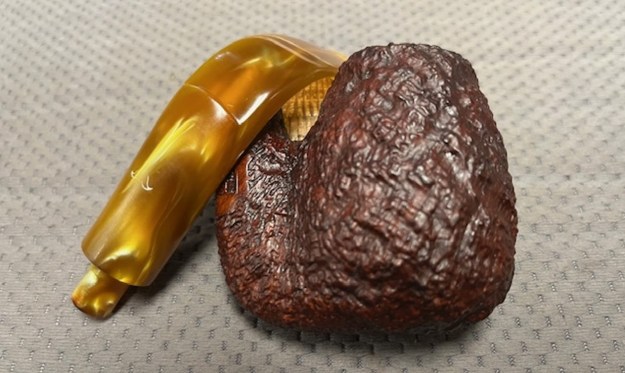
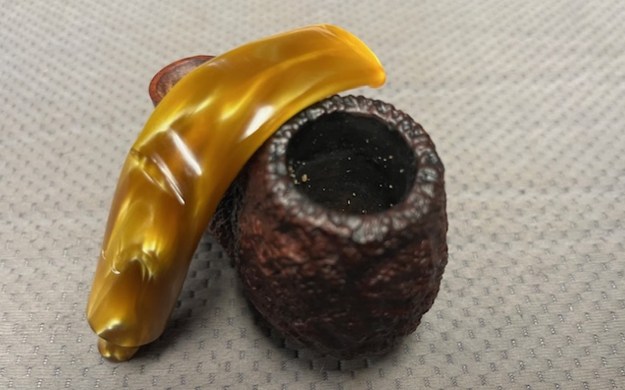
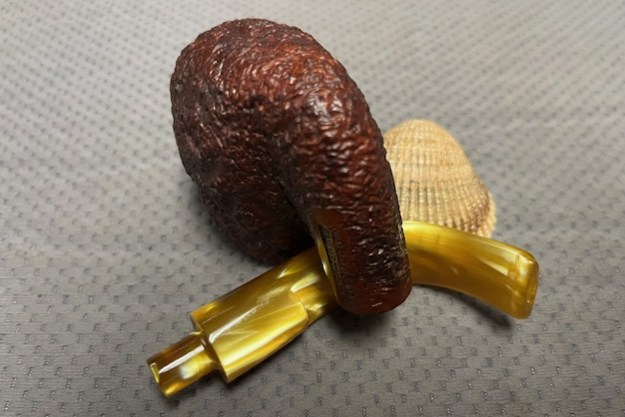
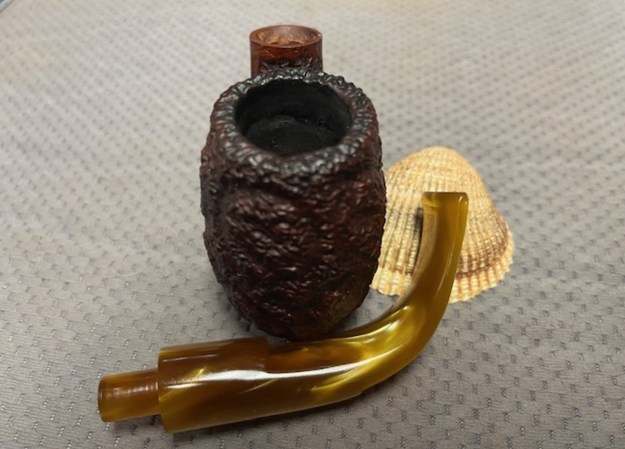
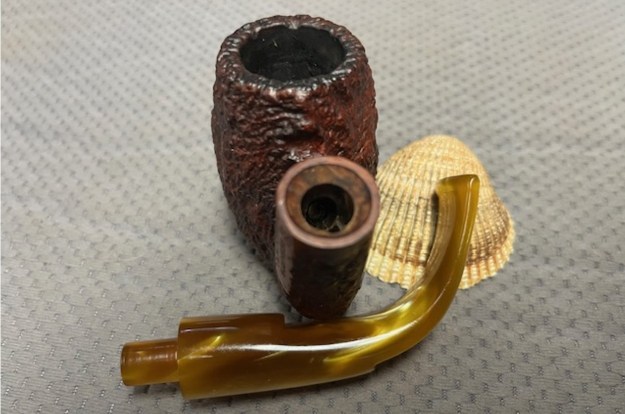
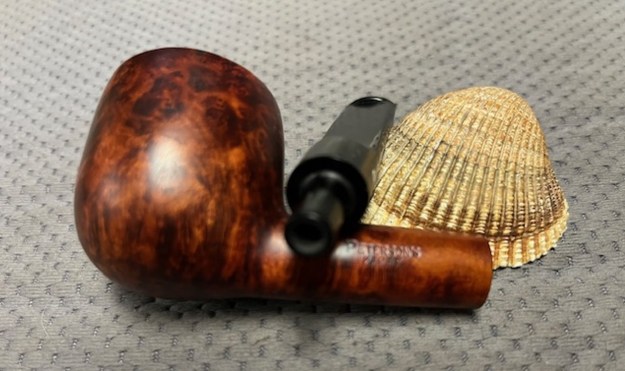
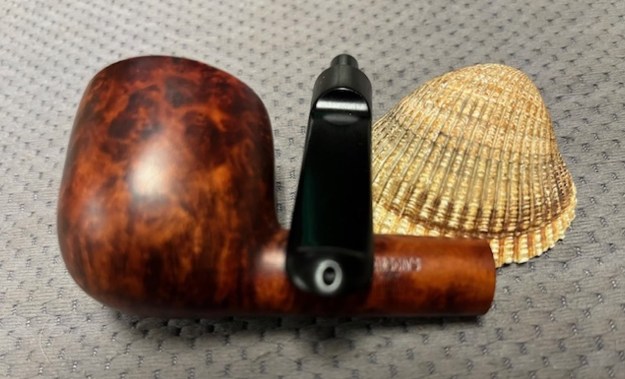
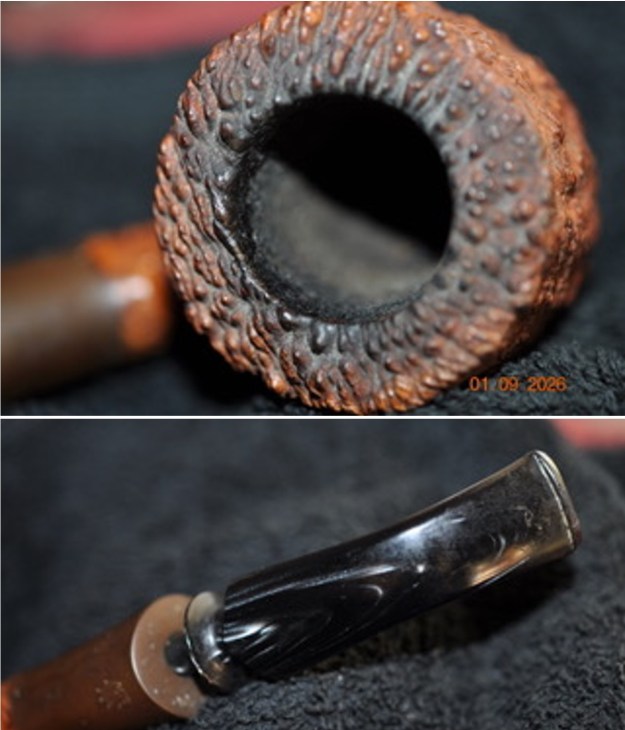
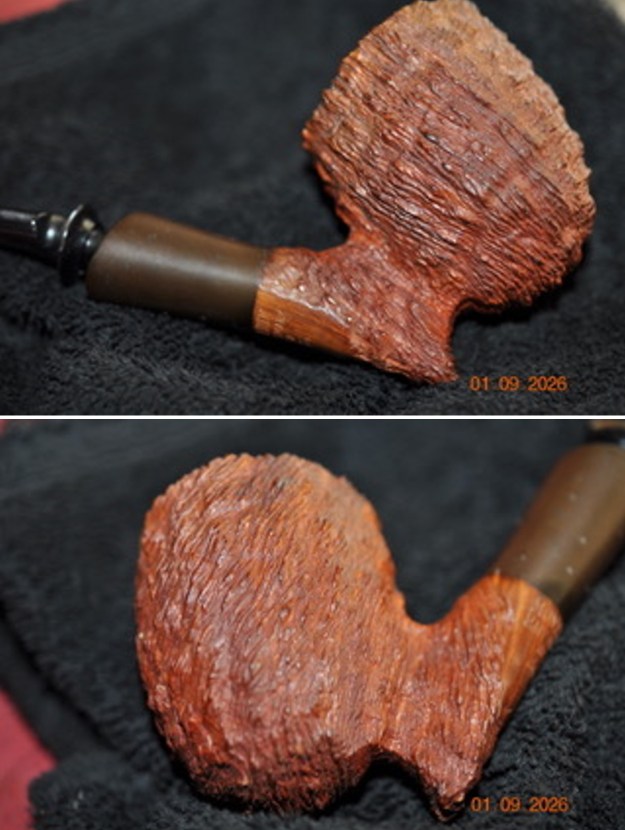
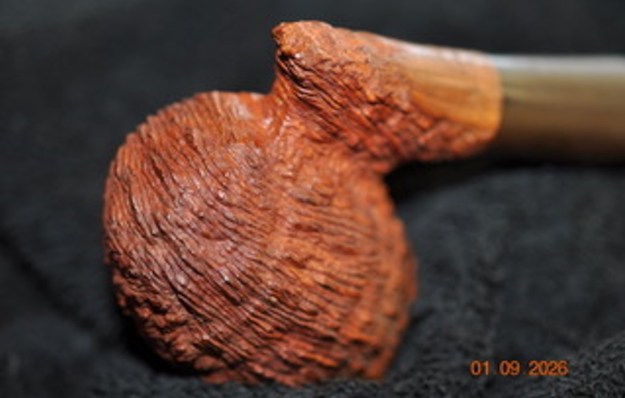
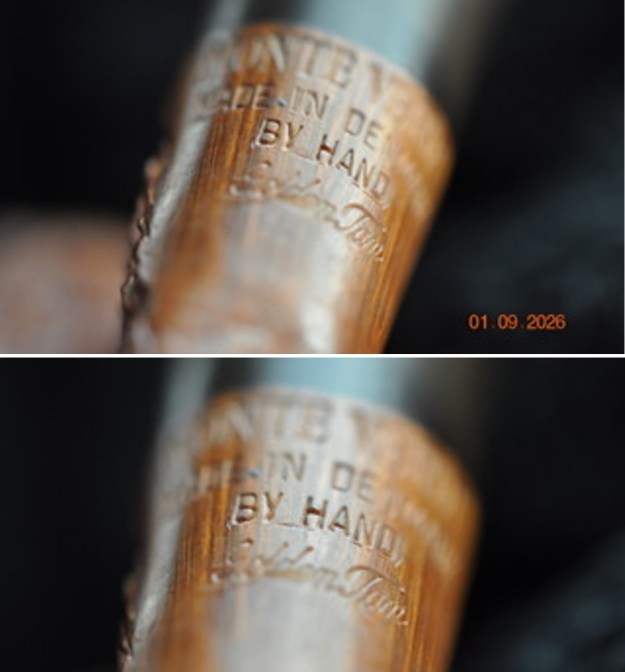
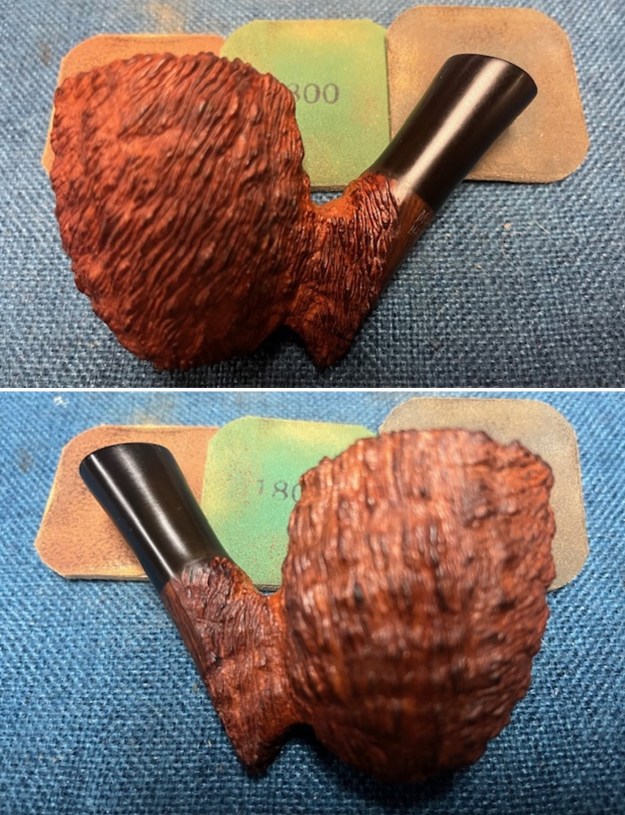
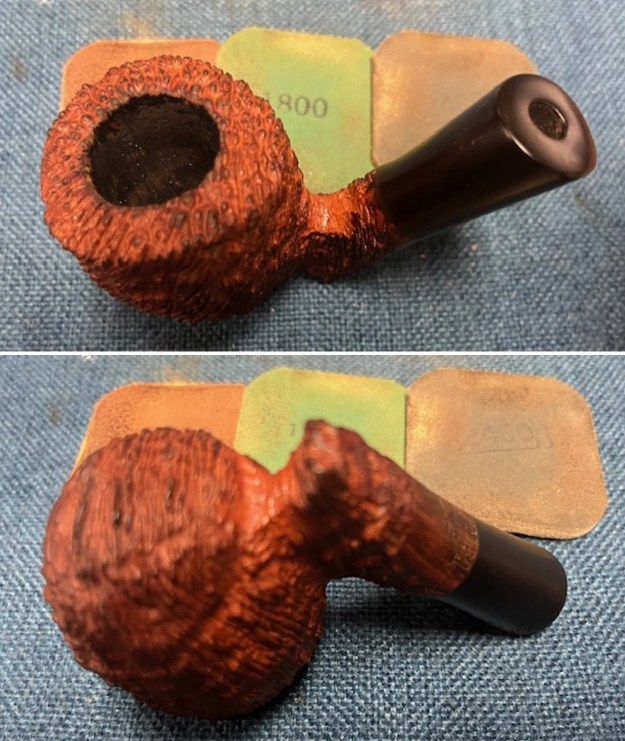
The next pipe on the table was purchased from a seller 08/10/25 from Livingston, New Jersey, USA. It has that verve that I have come to associate with pipe made by Preben Holm as they are always unique and beautiful. The pipe is stamped on a smooth panel on the underside. It reads Monte Verde [over] Made in Denmark [over] by Hand [over] Golden Tan. The shank extension is vulcanite with no stamping but it is oxidized. I have refurbished several Monte Verde pipe so if you are interested in the brand here is a link to one I did back in 2019 that has a similar finish to this one (https://rebornpipes.com/2019/02/09/new-life-for-a-preben-holm-monte-verde-twin-finish-freehand/). This one was quite dirty, like the rest of the pipes we tend to work on. There was a thick cake in the bowl and a lava overflow in the rustication of the rusticated rim top. The inner and outer edges of the bowl looked very good. The black/silver acrylic saddle stem was dirty and had scratches and light tooth marks on the top and underside. Jeff took photos of the pipe before he started his cleanup process. He took close up photos of the bowl and rim top from different angles to show the condition of the rim top. The bowl has a thick cake that lining the walls and overflowing lava and build up on the rim top and flowing over the inner edge of the bowl onto the top. He also took photos of the stem to show the surface of the top and underside of the acrylic stem. You can see the tooth marks and chatter on both sides ahead of the button. He took photos of the sides and heel of the bowl to show the lay of the rustication and grain around the pipe. It is a beautiful piece of briar. It had a very unique double rustication! The green acrylic shank extension works well with it. Jeff took several photos of the stamping on the underside of the shank to capture all of the stamping. It was clear and read as noted above. There was no stamping on the stem surface.I turned to Pipephil’s site to get a read on the brand (http://pipephil.eu/logos/en/logo-m6.html). It confirms that the Monte Verdi line was made by Preben Holm. The pipe in the photo had a very similar rustication to the Monte Verdi I was working on. I did a screen capture of the section on Pipephil. I have included it below.  There were also photos that were included on Pipephil of what this particular pipe looked like when it left Denmark. The rustication around the bowl and shank is very similar. The pipe I have has the same shank extension and finish. The pipe in the photo had a fancy turned vulcanite stem. The stem on the one I have in front of me is missing so I will need to replace it with one similar to the one in the photos below.I also Googled the brand and found a thread on Pipes Magazine about the brand that gave me some more information (http://pipesmagazine.com/forums/topic/monte-verde-pipes). I include that below.
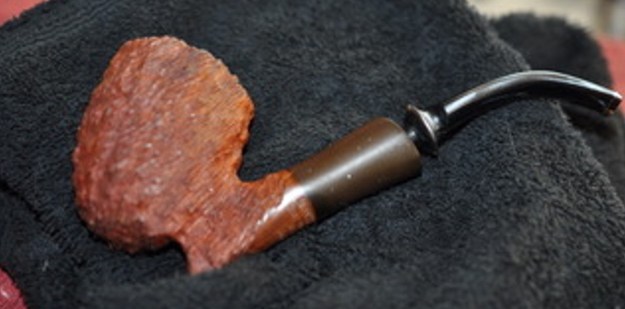
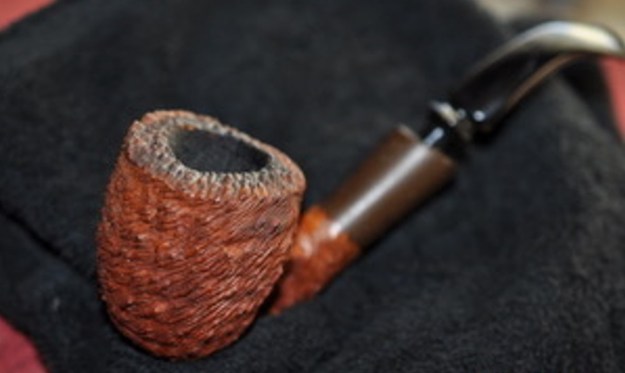
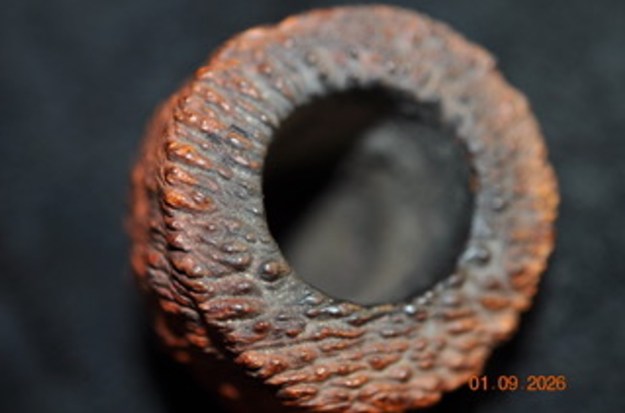
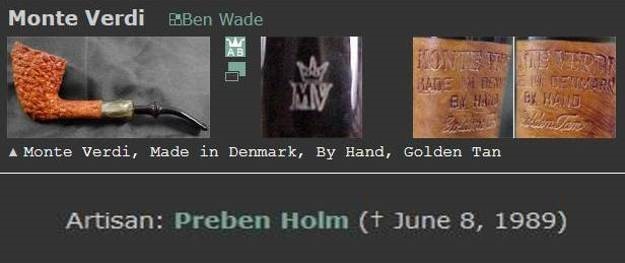
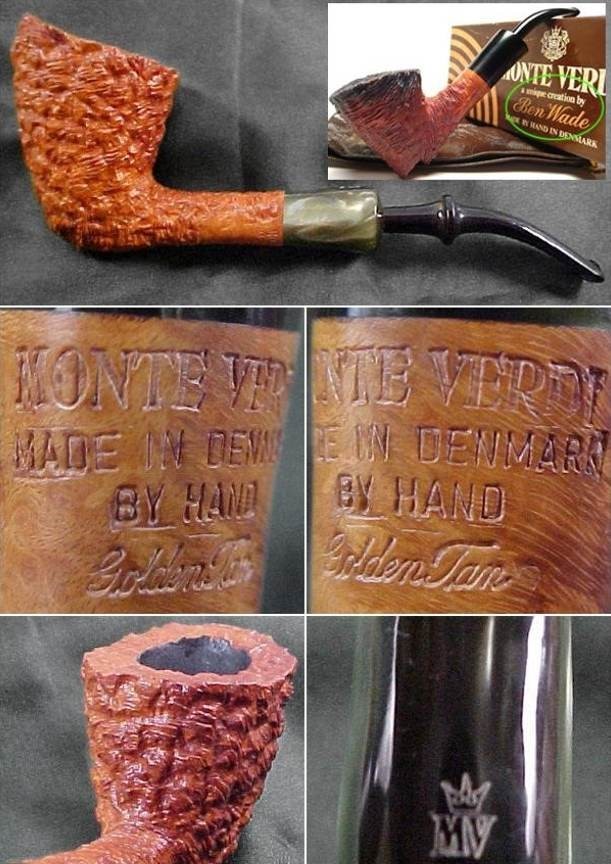
The Monte Verdi line was indeed a pipe style offered by Holm. It usually features heavily blasted and rusticated briar and smaller group sizes than some of his other lines. Some refer to this line as a “second”, but it provided an outlet for briar that had flaws and therefore unsuitable his other lines. Holm marketed many different lines featuring a variety of finishes in both stains and carvings and this is merely one of those. The ones I own are good pipes and smoke well. The blast finish is very interesting to look at and the tactile sensations make it fun to hold.

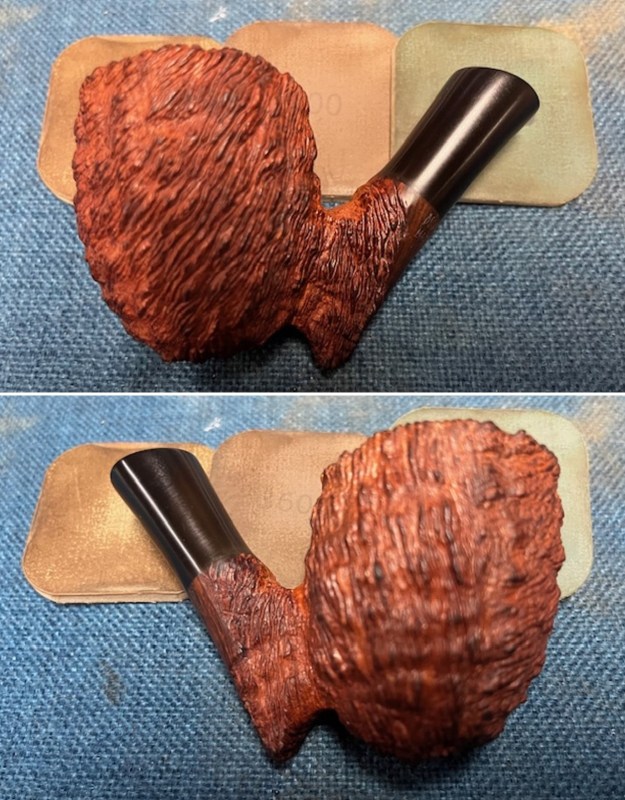
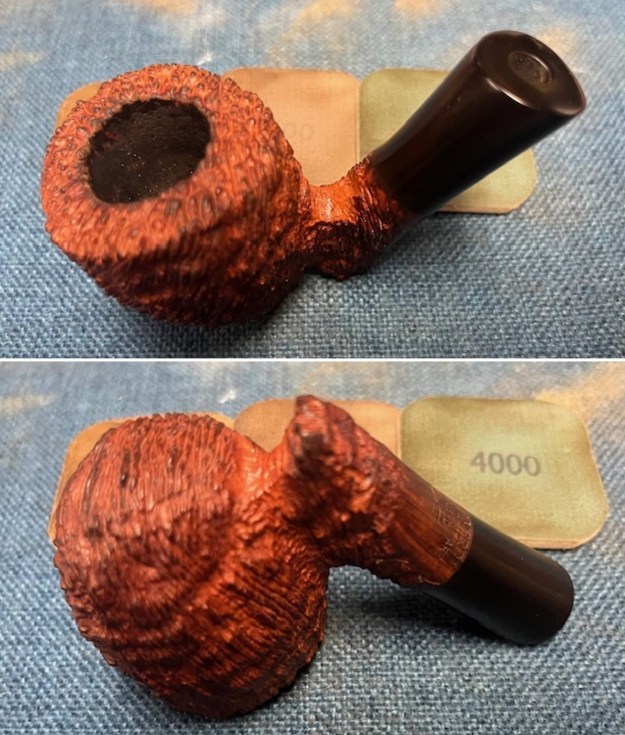
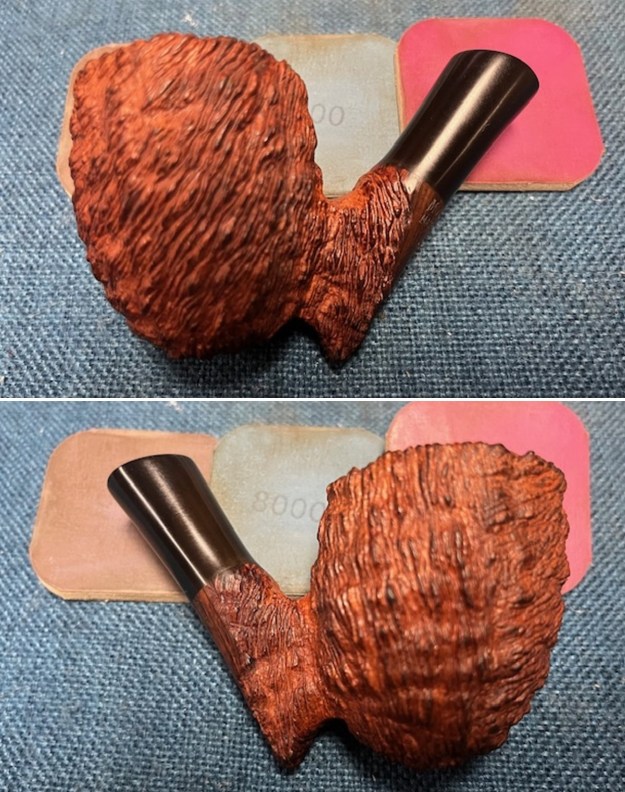
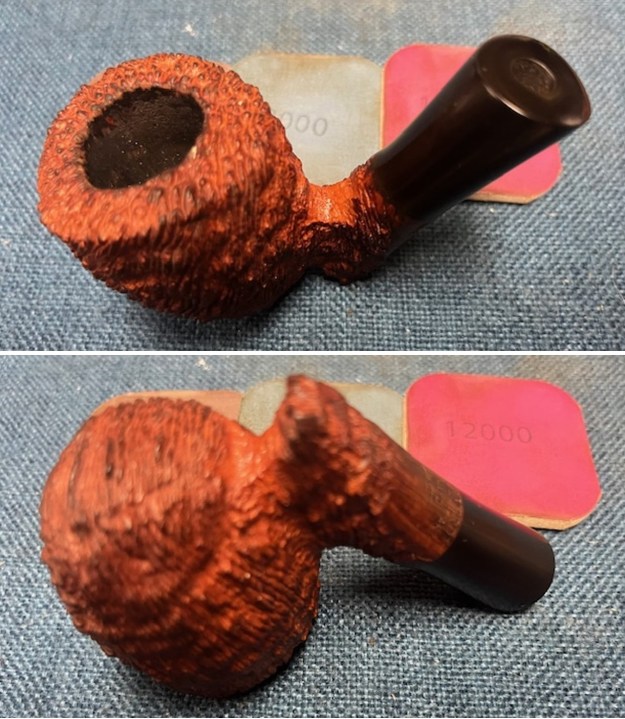
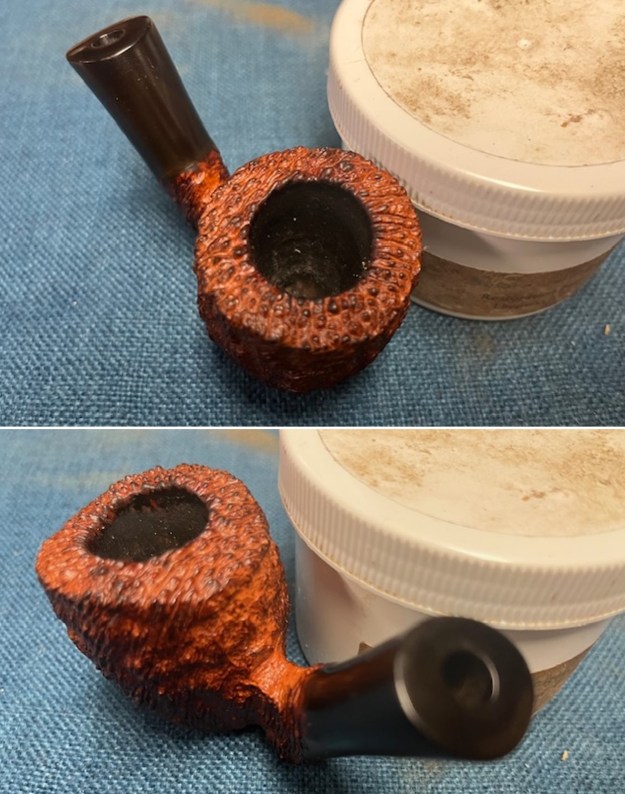
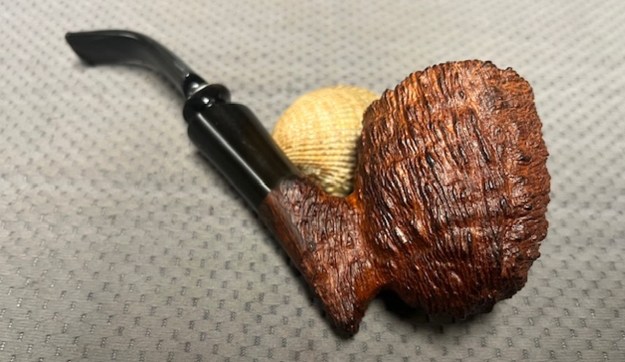
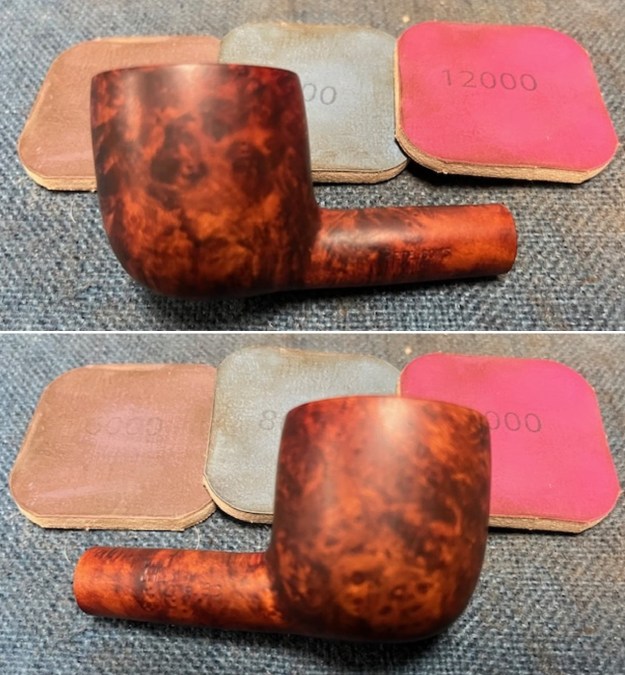
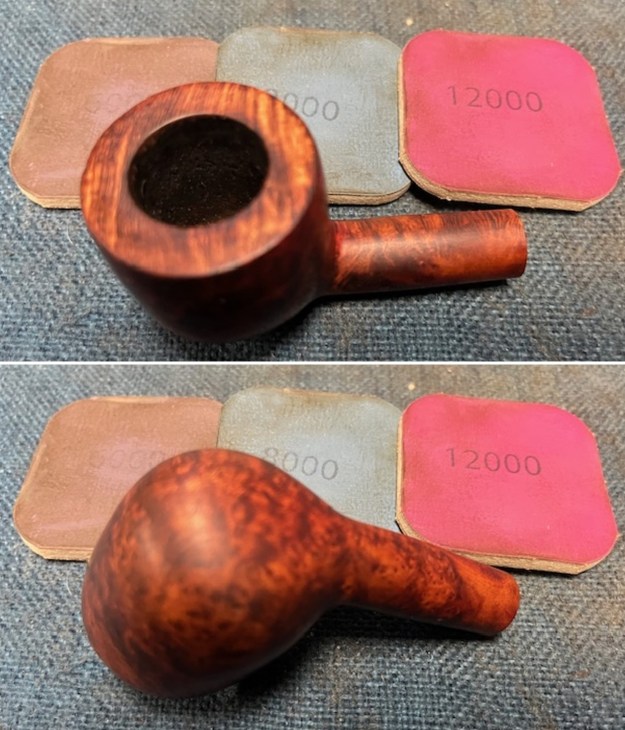
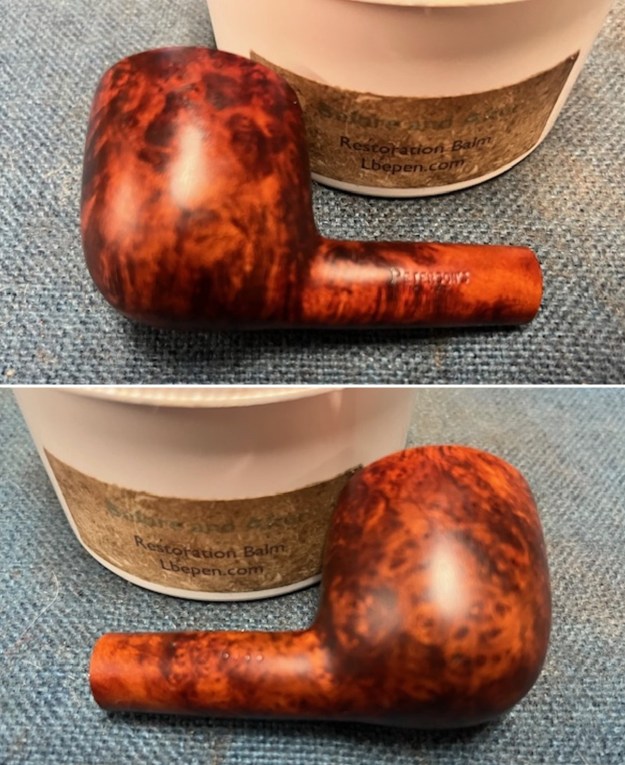
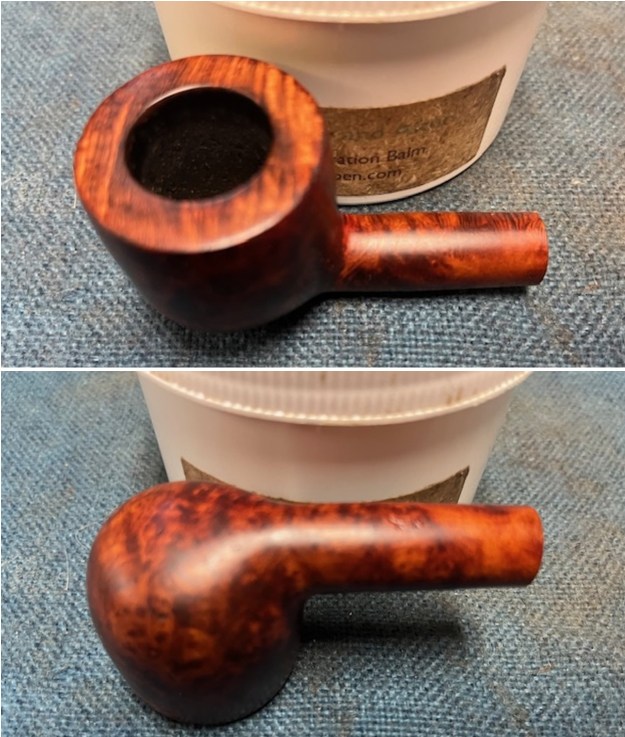
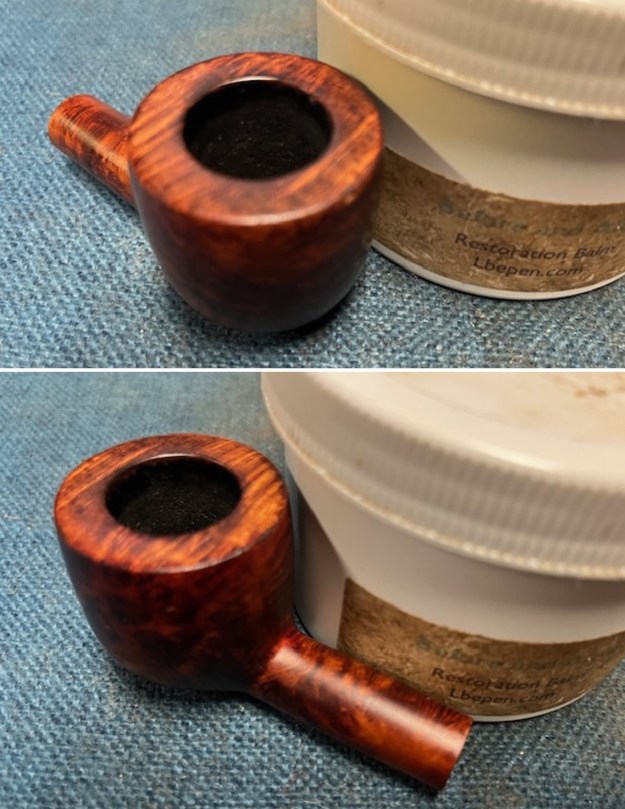
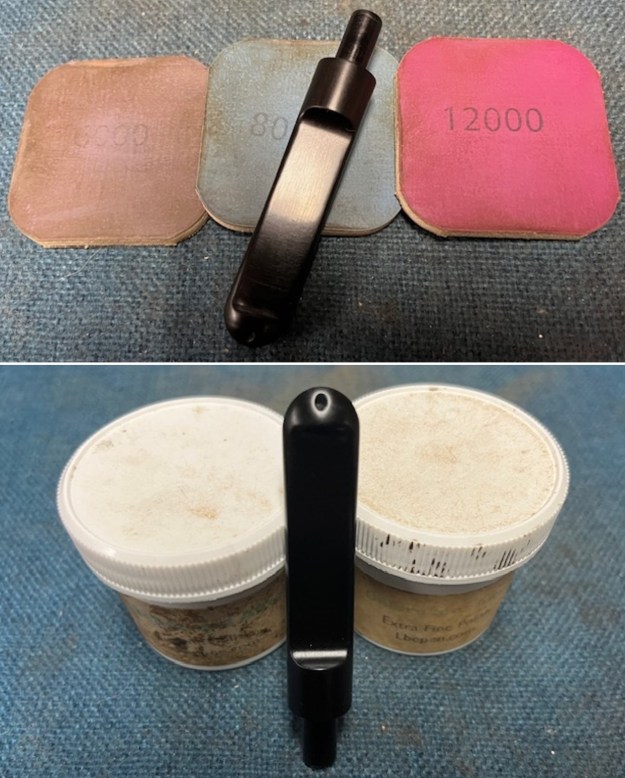
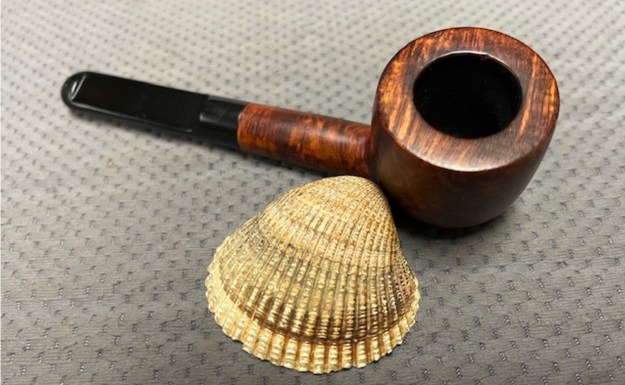
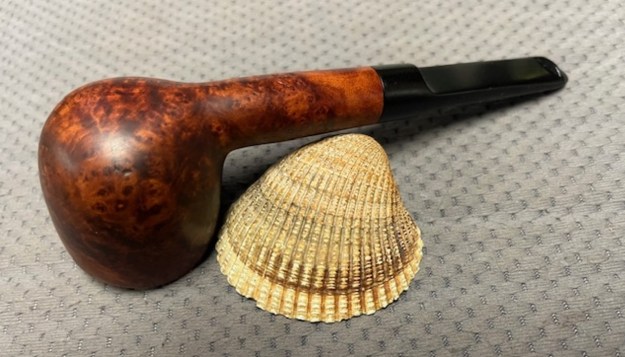
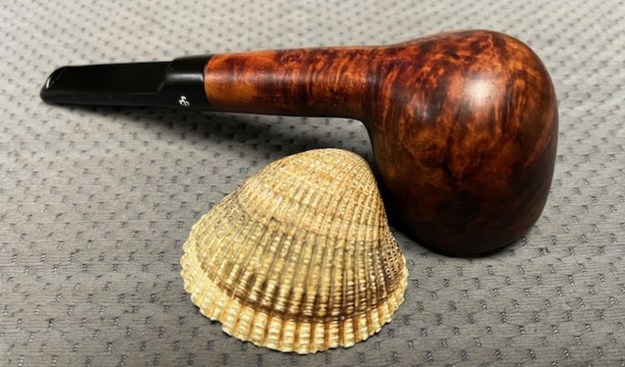
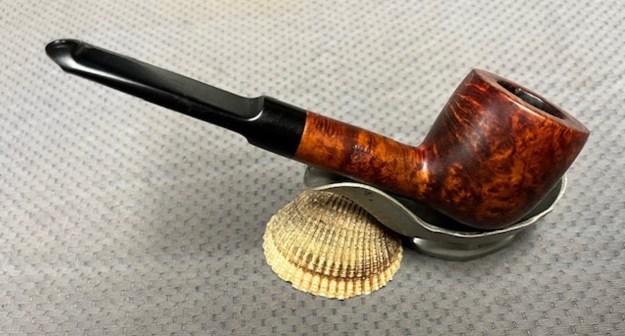
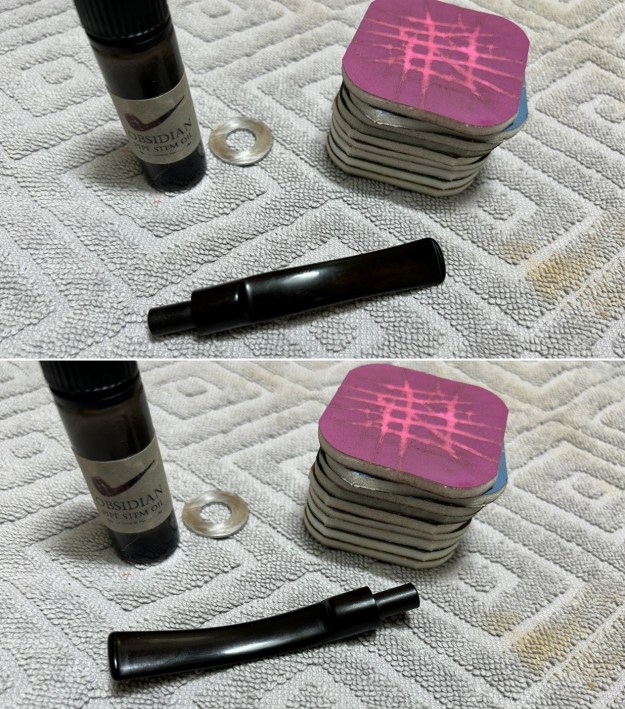
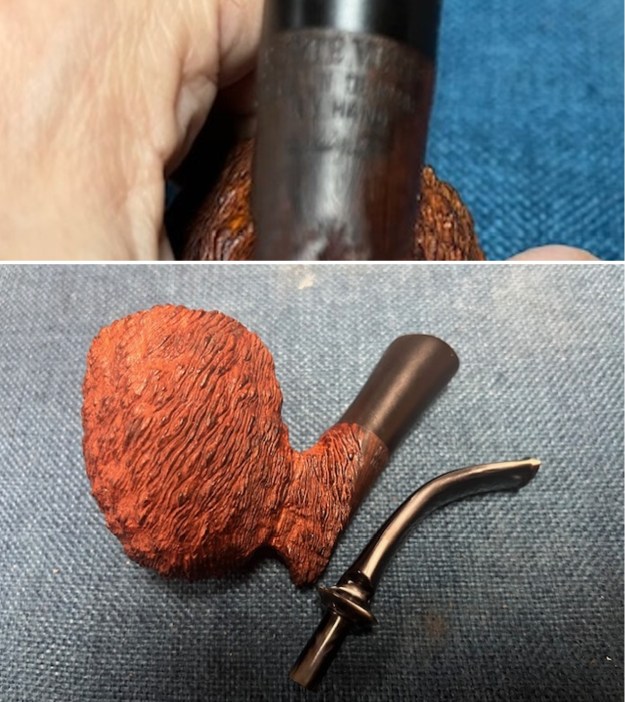
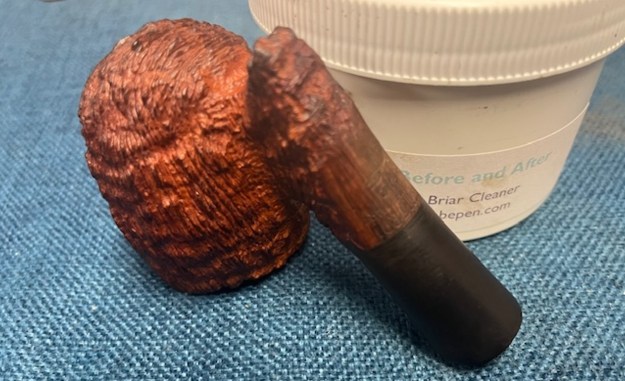
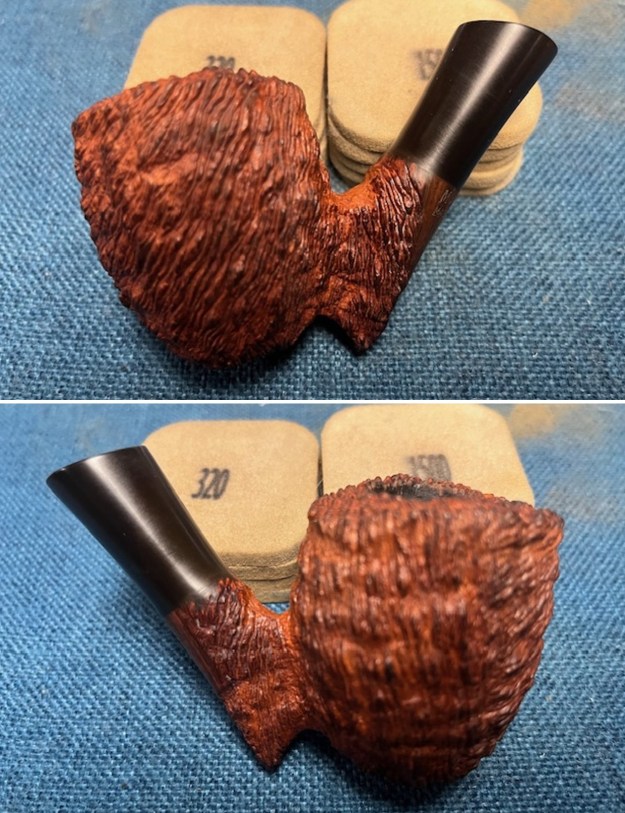
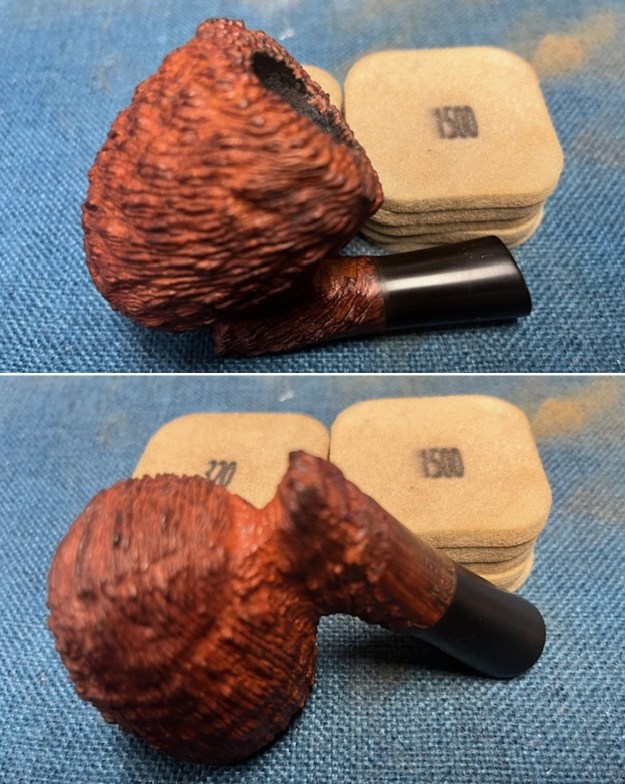
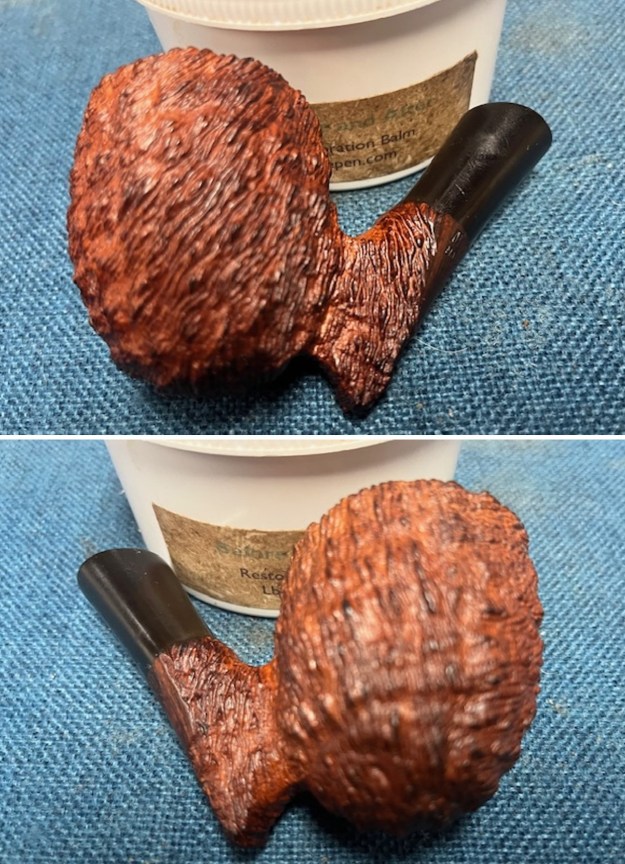
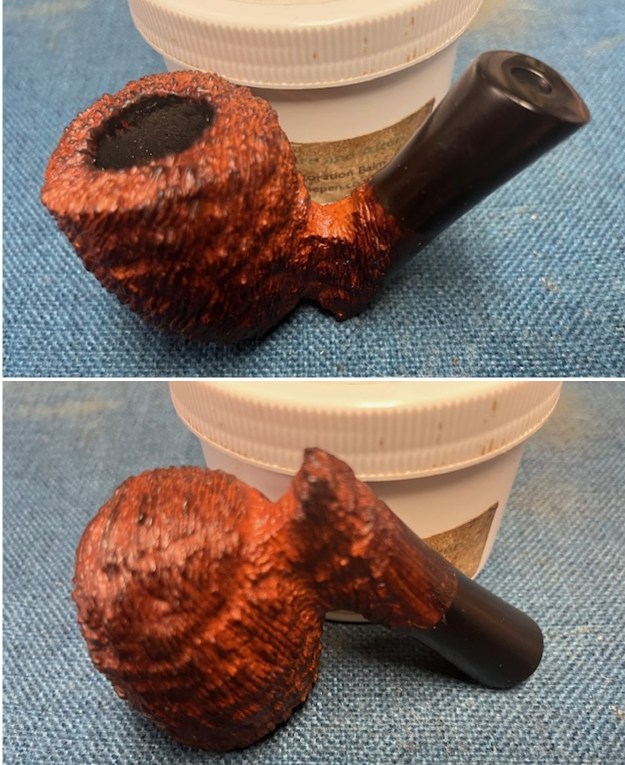
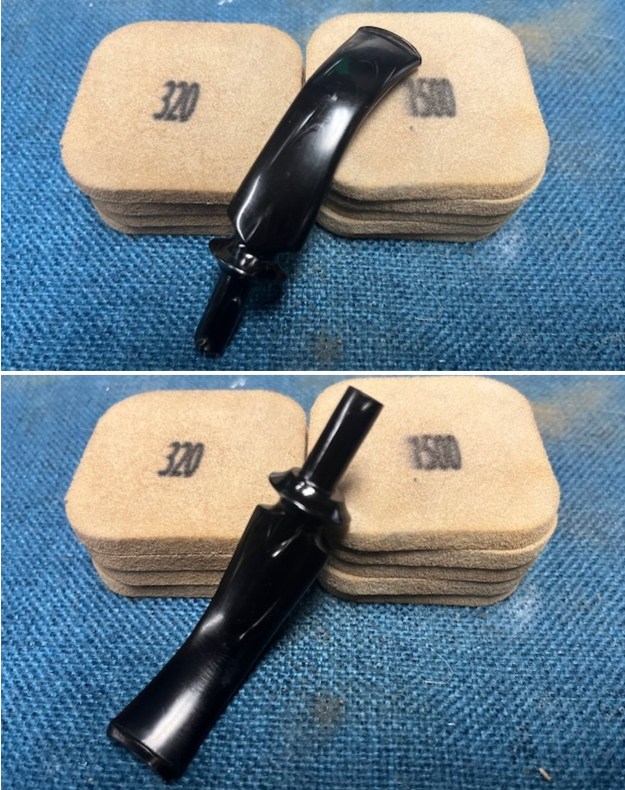
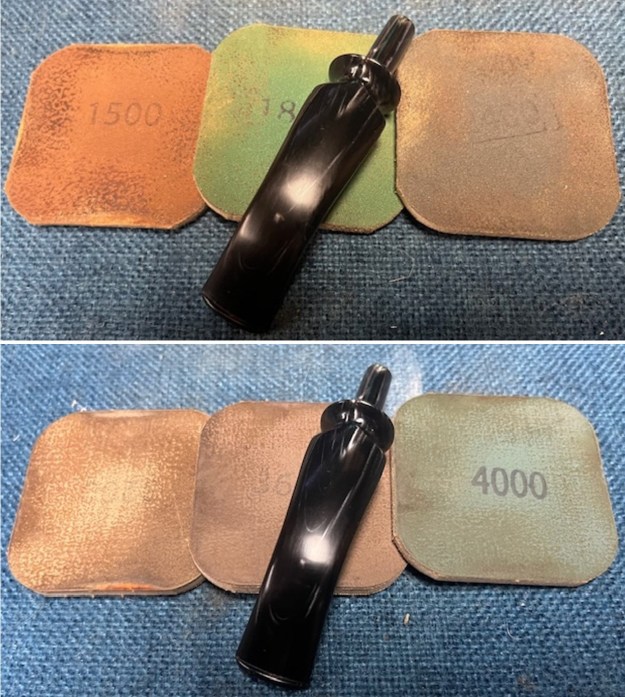
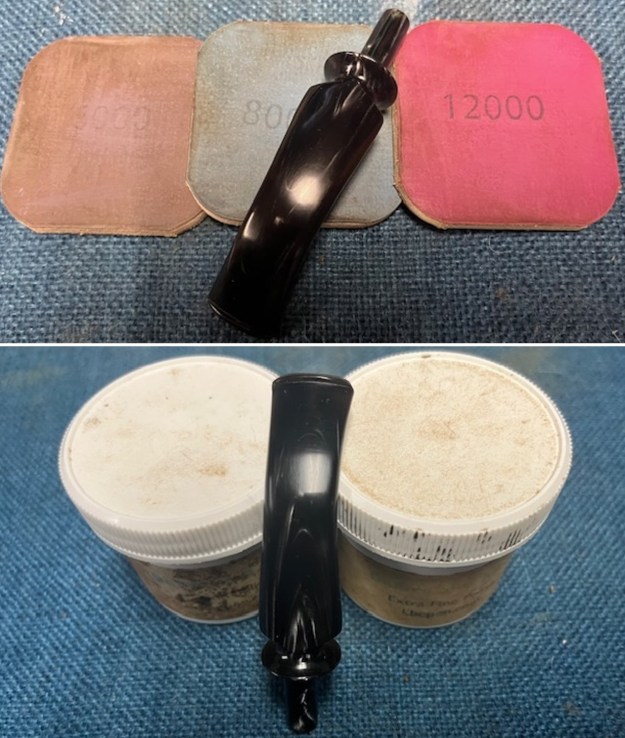
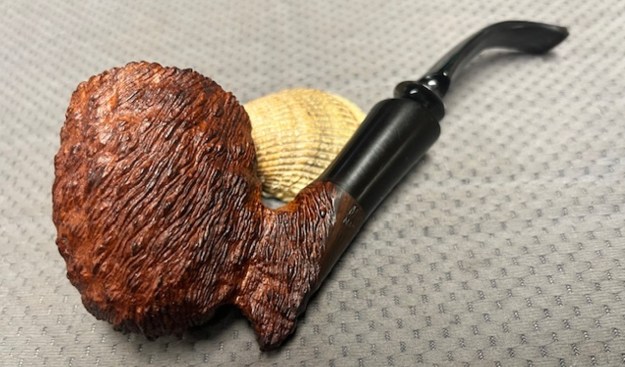
Jeff reamed the bowl with a PipNet pipe reamer and followed up with a Savinelli Fitsall pipe knife to remove the cake. He scrubbed out the mortise and the airway in the shank and the stem with alcohol, cotton swabs and pipe cleaners. He scrubbed the exterior of the bowl, rim, shank and stem with a tooth brush and Murphy’s Oil Soap to remove the oils and tars on the rim and the grime on the finish of the bowl. He rinsed it under running water. He dried it off with a soft cloth. He was able to the lava build up on the rim top and you could see a little darkening in the finish on the top of the bowl. I took photos of the pipe bowl to show its condition before I started my work on it. I took a photo of the rim top and bowl to show the condition of the pipe. I took photo of both sides of the stem to show its condition. Overall the pipe was in great condition.I took a photo of the stamping on the underside of the shank. There was some darkening on the smooth portion but the stamping was clear and readable as noted above. I removed the stem from the shank and took a photo of the pipe to give a sense of the proportions of the bowl and stem.I scrubbed the darkening on the shank with some Before & After Briar Cleaner and a tooth brush. I wiped it off with a soft cloth remove the product. I repeated the process several times.I sanded the oxidized vulcanite shank extension with 320-3500 grit sanding pads. I wiped the shank extension down after each sanding pad with an Obsidian Oil Cloth to remove the debris. It looked significantly better. I polished the vulcanite shank extension with micromesh sanding pads – dry sanding it with 1500-12000 grit sanding pads. I wiped it down after each pad with an Obsidian Oil cloth to remove the debris. It began to have a rich shine. I rubbed the bowl and shank down with Before & After Restoration Balm. I worked it into the surface of the bowl sides and shank with my fingertips and a shoe brush to clean, enliven and protect the briar. I let the balm sit for a little while and then buffed with a cotton cloth to raise the shine. The Balm did its magic and the grain stood out. I set the bowl aside and turned my attention to the stem. I sanded the stem with 320-3500 grit 2×2 inch sanding pads to smooth out the tooth chatter. The pipe stem was looking very good.I polished the stem with micromesh sanding pads – wet sanding with 1500-12000 grit pads and wiped down the stem with some Obsidian Oil after each sanding pad. I finished the polishing with some Before & After Stem Polish – both fine and extra fine. I gave it a final coat of Obsidian Oil and set the stem aside. This beautiful, double rusticated Preben Holm carved Monte Verde Golden Tan Freehand Full Bent Egg is a special looking pipe and it feels amazing in the hand. I polished stem with Blue Diamond polish on the buffing wheel. I gave the bowl multiple coats of Conservator’s Wax and the stem multiple coats of carnauba wax. I buffed the pipe with a clean buffing pad to raise the shine. I hand buffed it with a microfiber cloth to deepen the shine. The pipe polished up pretty nicely. The multi-coloured grain shining through the rustication came alive with the buffing. The rich contrasting brown colour works well with the polished vulcanite shank extension and the black and white Lucite stem. The finished Monte Verde Golden Tan Freehand Full Bent Egg is a beauty and feels great in the hand. Have a look at it with the photos below. The dimensions are Length: 6 ½ inches, Height: 2 ¼ inches, Outside diameter of the bowl: 1 ¾ inches, Chamber diameter: 1 inch. The weight of the pipe is 2.72 ounces/76 grams. I will be putting this Monte Verde by Preben Holm on the Danish Pipe Making Section on the rebornpipes online store soon. It is such an interesting tactile pipe and if you have been looking for a freehand then this might be the one for you. Thanks for walking through the restoration with me on this interestingly shaped Preben Holm Hand Made pipe. 
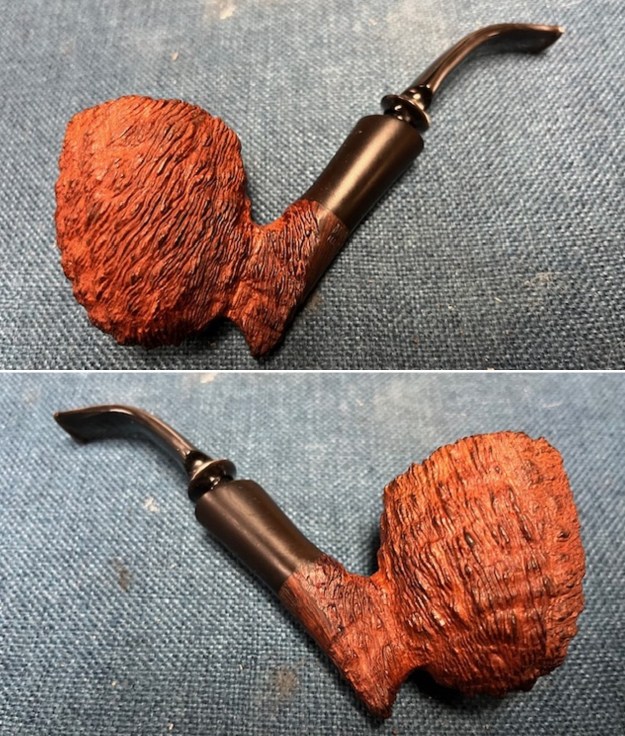
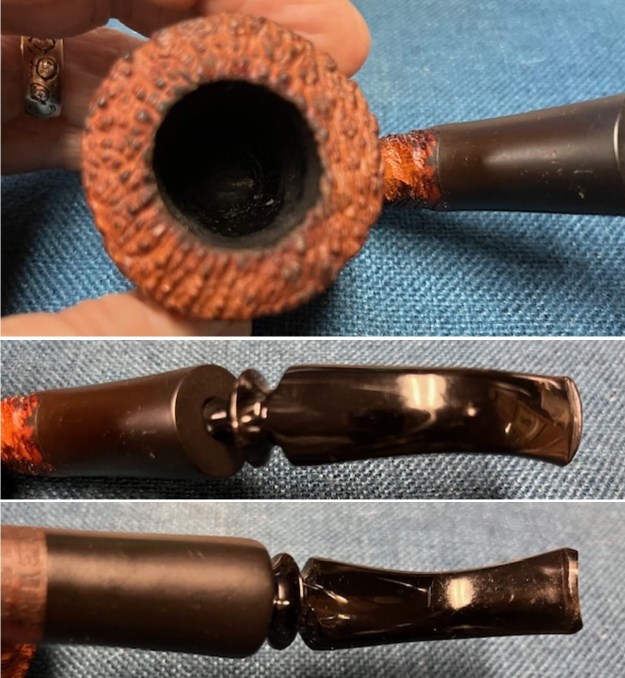
New Life for a Caminetto Business KS 154 Handmade in Italy Cucciago (CO) Full Bent


by Steve Laug

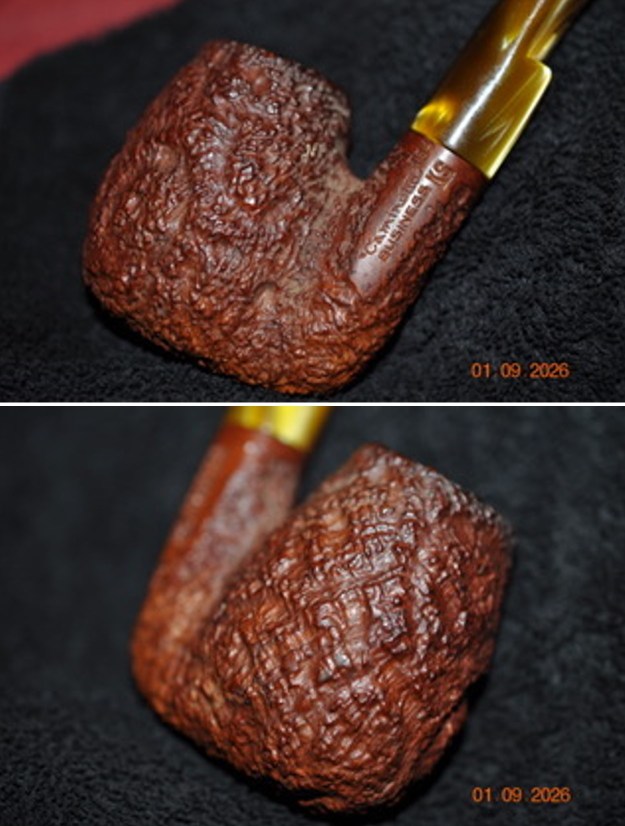
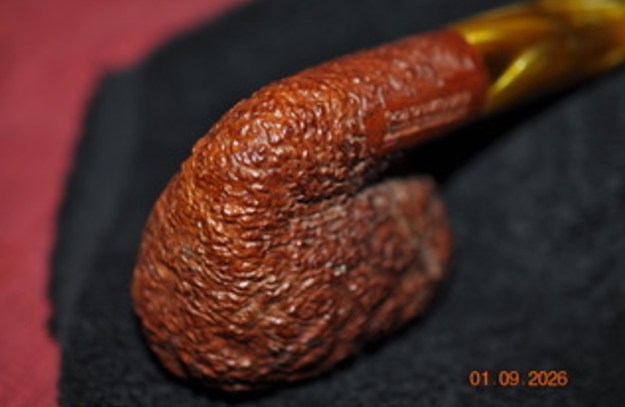
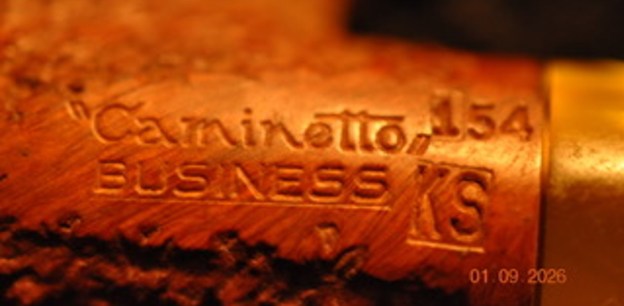
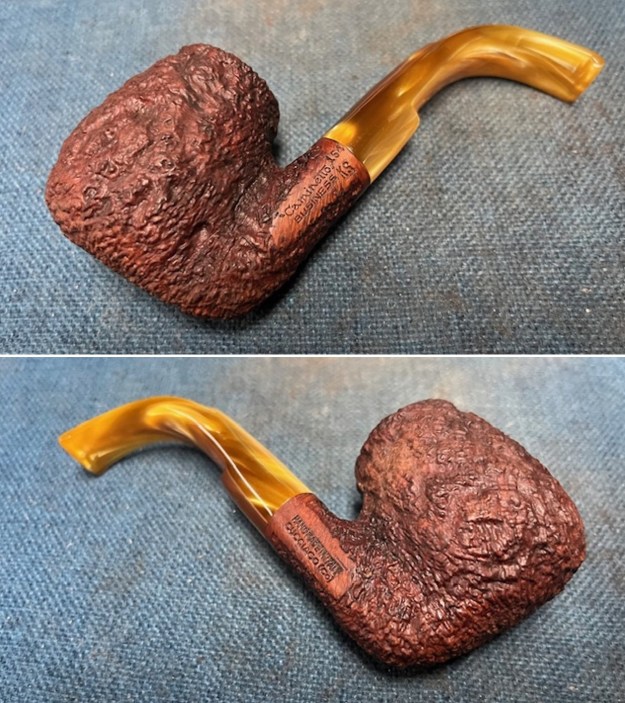
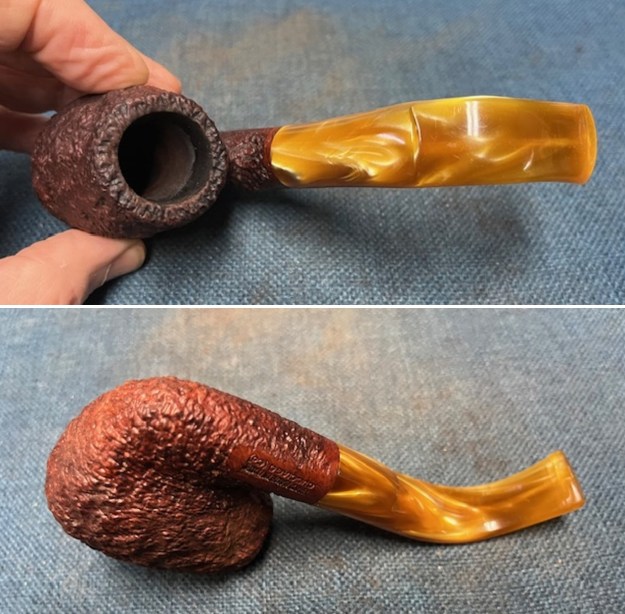
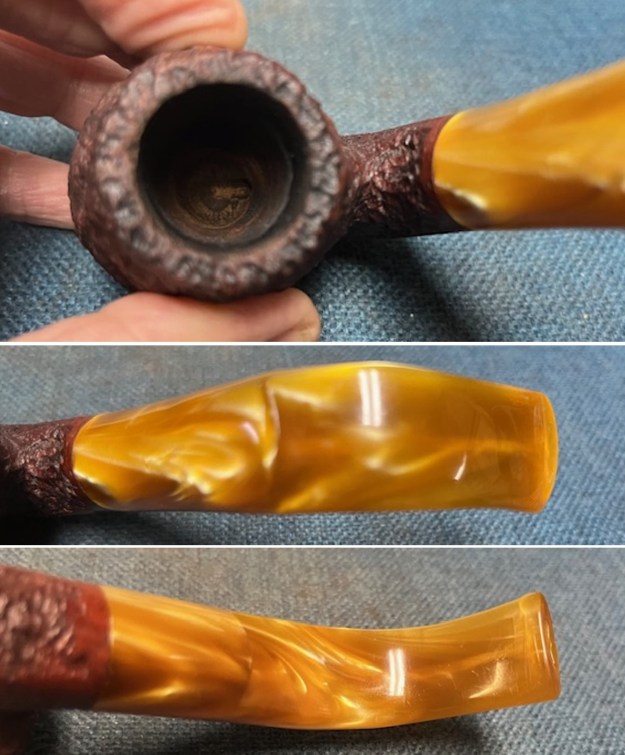
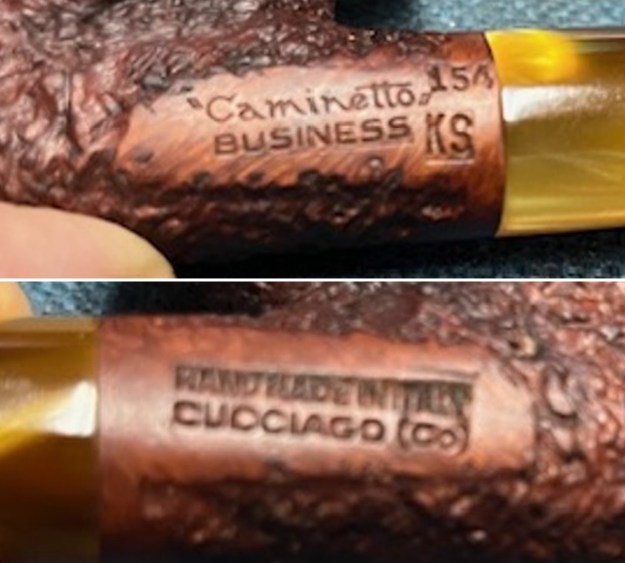
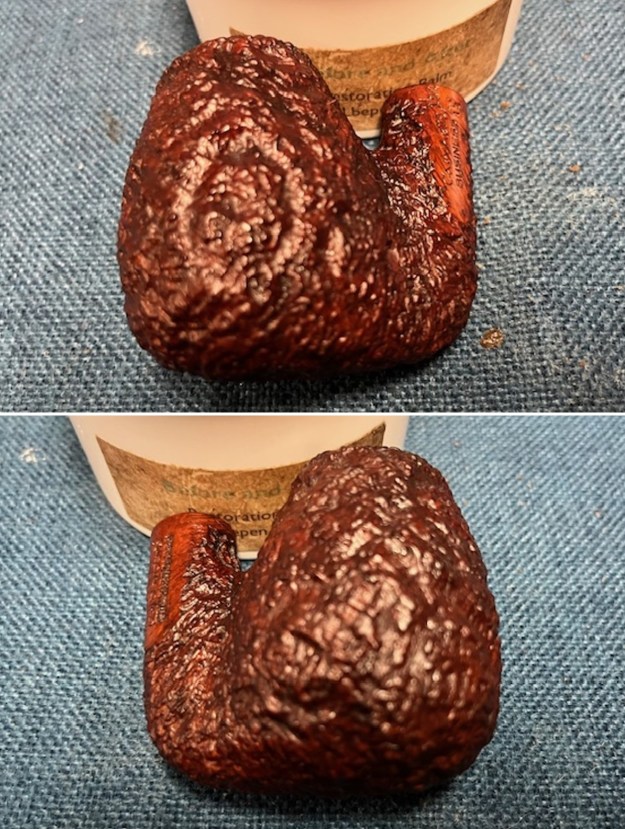
The next pipe on my worktable is another Caminetto Business pipe but different from the others that I have worked on in that it is an Oom Paul (Full Bent). With each one that I have worked on I am increasingly impressed by the craftsmanship. The pipe has a rugged rusticated finish and a stepped variegated gold acrylic saddle stem. It had come to us from a seller in Macon, Georgia, USA. It was a filthy pipe with grime and oils ground into the rusticated finish on the bowl. The pipe had some rustic beauty shining through the dust and debris in the valleys of the rough finish. The rustication covered the rim top, bowl and shank with a smooth panel on each side of the shank. The finish was dull and lifeless and dirty from sitting around. There was a very thick cake in the bowl with lava flowing out of the bowl and over the rim top. The lava had filled in the deeper grooves of the finish on the rim top. The inner edge of the rim appeared to be in good condition under the lava coat but we would know more once it was cleaned. The stamping on the left side of the shank read Caminetto in script over BUSINESS. To the right of that toward the stem was the shape number 154 and below that it read KS. On the right side of the shank it was stamped HANDMADE IN ITALY [over] CUCCIAGO (CO). The saddle stem was variegated gold and had the larger Caminetto Moustache on the top side. The surface was dirty and there was light tooth chatter and marks on both sides near the button. Jeff took the following photos before he started his cleanup work on the pipe. He took close-up photos of the bowl and rim top from various angles to capture the condition of the bowl and rim top edges. You can see the lava overflow and debris in the rustication of the rim top. You can see the cake in the bowl. This was a dirty pipe but it was the finish was in great condition. The stem is also very dirty with light tooth marks and chatter on both sides near the button. He took photos of the sides and heel of the bowl to show the beautiful incredibly deep rustication around the bowl. It is similar to the rough finish on Castello Sea Rock and Savinelli Capri Pipes. You can see the oil, dust and debris in the finish on both sides of the bowl. Jeff took a photo of the stamping on the left side of the shank. It reads as noted above. The stamping is clear and readable. There is no photo of the stamping on the right side of the shank.I have worked on several Caminetto in the past so I turned to one of the restorations on the rebornpipes blog and reread the background information on the brand. I am including that info here with this restoration (https://rebornpipes.com/2020/04/19/pretty-tired-and-dirty-messy-restoration-of-a-caminetto-business-tomahawk-182/).
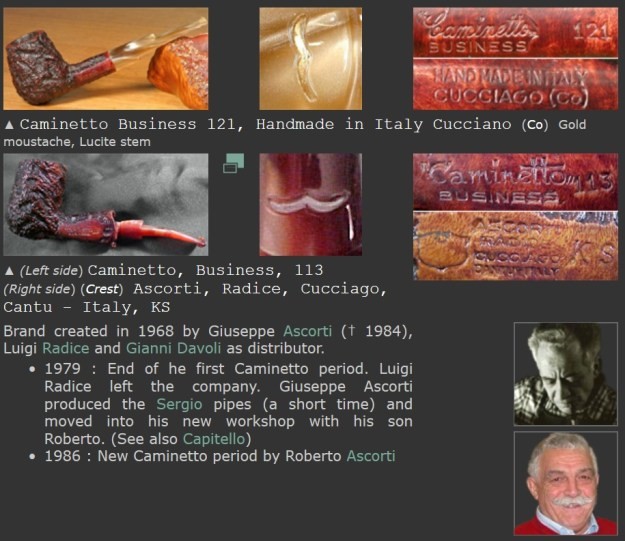
When the pipe arrived I turned to Pipephil (http://www.pipephil.eu/logos/en/logo-c1.html) to see if he included not only information on this Caminetto Business 182. He gave some interesting information about the brand. It was created in 1986 by Guiseppe Ascorti, Luigi Radice and Gianni Davoli as the distributor. It states that in 1979 the first Caminetto period ended with Luigi Radice leaving the company. Guiseppe Ascorti continued making the pipe with his son Roberto. In 1986 the New Caminetto period began by Roberto Ascorti.I turned to Pipedia for more information on the Caminetto and how to date the pipe I had in hand (https://pipedia.org/wiki/The_History_of_Caminetto_(shapes,_stamping,_articles,_etc.). I quote a pertinent paragraph:

Stampings and dating: First off, dating earlier Caminetto’s is nearly impossible. Nevertheless, there were three phases, some in which were much earlier, of development that occurred in the stamping process of Caminetto. Before that though, every pipe had the stamp of Caminetto in one of two ways: Caminetto in script or Caminetto within quotation marks in block letters (I do not know how it was decided which pipe got which stamp, as I have had EARLY Caminetto’s with both)…

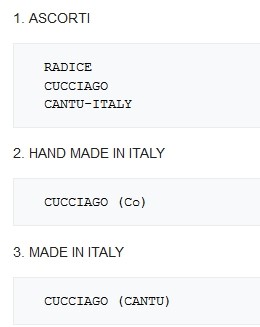
The stampings are shown in the photo to the left. The stamping on this pipe is like #2.

…Now, the question is which stamps are earlier and more likely to have been made by Ascorti and/or Radice. The answer is #1. The differences in #2 and #3 seem to be minute, as Cucciago is simply a suburb of Cantu. Pipes stamped like #1 are the most valuable Caminetto’s as they are the earliest production of the brand, as well as what some would claim the most perfect of Ascorti and Radice’s work. The last tidbit is, of course, debatable…

… There is also another factor in stamping, that is, which series the pipe falls in. The majority of Caminetto’s one sees are those of the “Business” series, which are stamped such with their collective shape (see photo of shapes below). Another stamp that sometimes follows the “Business” one is “KS,” which from what I know means “King-size” (this could be wrong, as there are pipes stamped with KS1, KS2, and KS3).

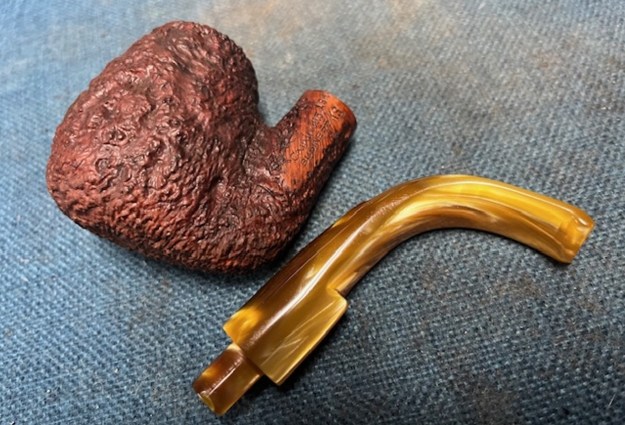
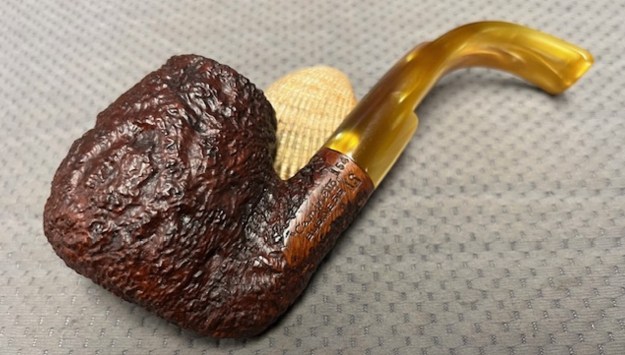
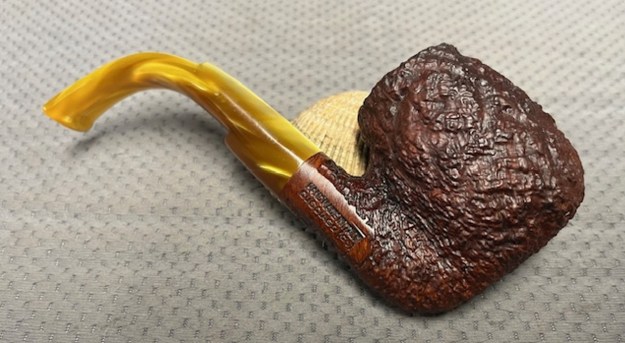
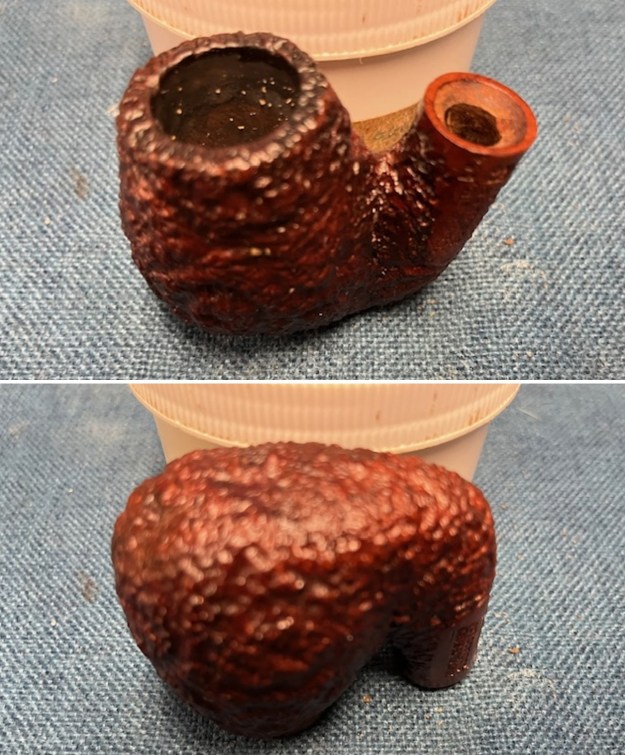
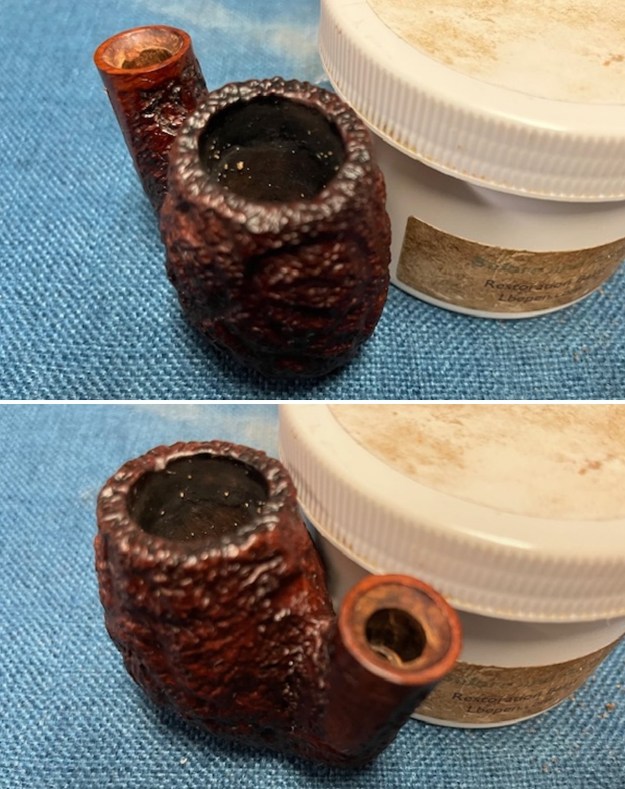
Now it was time to look at it up close and personal. Jeff had done an amazing job in removing all of the cake and the lava on the rim top. He had reamed the bowl with a PipNet Pipe Reamer and cleaned up the remnants with a Savinelli Fitsall Pipe Knife. He took the cake back to bare briar so we could check the walls for damage. He scrubbed the exterior of the bowl with Murphy’s Oil Soap and a tooth brush to remove the grime on the bowl and rim and was able to remove the lava and dirt. He cleaned out the interior of the bowl and shank with pipe cleaners, cotton swabs and alcohol until they came out clean. He cleaned the stem with Soft Scrub to remove the grime on the exterior and cleaned out the airway with alcohol, cotton swabs and pipe cleaners. I took photos of the pipe before I started my part of the restoration. To show how clean the rim top and stem really was I took a close-up photo of the rim and stem. The bowl was clean and cake free. The rim top is very clean with no residual lava in the finish. The inner edges of the bowl look good. The variegated golden acrylic saddle stem cleaned up nicely. The surface had some light tooth marks but the button edge looked really good. I took a photo of the stamping on the smooth panels on each side of the shank. The stamping was clear and readable and reads as noted above. I took the stem off the bowl and took a picture of the pipe to give an idea of the look of the rustication and the stem. It is going to be a pretty pipe. The bowl looked very good so I did not need to do any further work on it. I rubbed the bowl and shank down with Before & After Restoration Balm to deep clean the finish on the bowl and shank. The product works to clean, enliven and protect the briar. I worked it in with my fingers and with a horse hair shoe brush to get it into the nooks and crannies of the deep rustication of the finish on the bowl and shank. I let it sit for about 20 minutes to let it do its magic. I buffed it with a soft cloth. The briar really began to have a rich shine. I took some photos of the bowl at this point to mark the progress in the restoration. The bowl was finished so I set it aside and turned my attention to the stem. I sanded out the tooth marks on the surface ahead of the button with a folded piece of 200 grit sandpaper. It looked significantly better.There was a faint large moustache stamped on the top of the saddle portion of the gold acrylic stem. It was faint but I filled in what remained with some white acrylic. I pressed it into the stamping with a tooth pick. Once it cured I scraped it off and sanded the surface with a 1000 grit sanding pad to remove the excess. It was fain but identifiable.I sanded the stem with 320-23500 grit sanding pads. I wiped it down with an Obsidian Oil cloth after each sanding pad. The stem began to take on a rich shine. This Caminetto Business 154KS Oom Paul with a variegated gold arylic saddle stem is a real beauty and has a lot of life left. I put the bowl and stem back together again and buffed the bowl and the stem with Blue Diamond on the buffing wheel. I used a soft touch on the rusticated bowl so as not to fill it in with the polishing product. I gave the bowl several coats of Conservator’s Wax and the stem several coats of carnauba wax. I carefully buffed the entire pipe with a clean buffing pad to raise the shine. I finished buffing with a microfiber cloth to deepen the shine. The finished pipe looks very good. The rustication is very tactile and feels great in the hand. It is comfortable and light weight. The finished Caminetto Business 154KS Oom Paul is shown in the photos below. The dimensions of the pipe are Length: 6 inches, Height: 2 ¼ inches, Outside diameter of the bowl: 1 ¼ inches, Chamber diameter: 7/8 of an inch. The weight of the pipe is 81 grams/2.86 ounces. This great looking rusticated Caminetto turned out very well. It should be a great pipe. It will be going on the rebornpipes store in the Italian Pipe Makers Section if you are interested in adding it to your collection. Thanks for reading this blog and my reflections on the pipe while I worked on it.
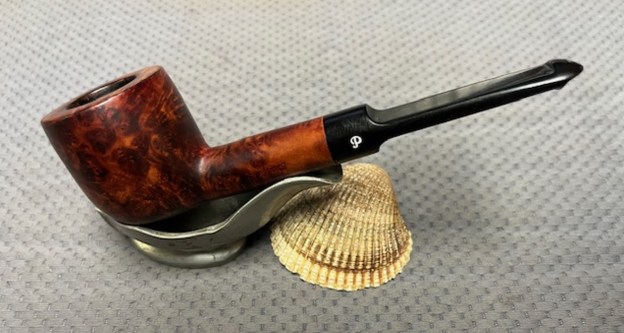
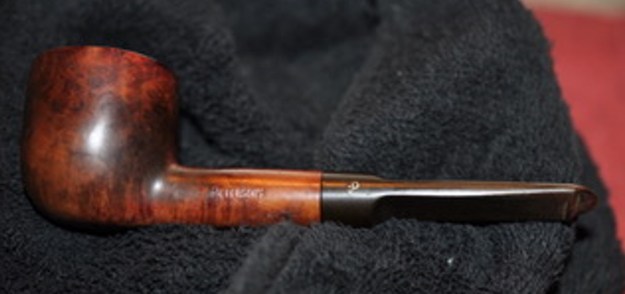
Breathing Life into a Republic Era Peterson’s Kapet 606S Pot


by Steve Laug

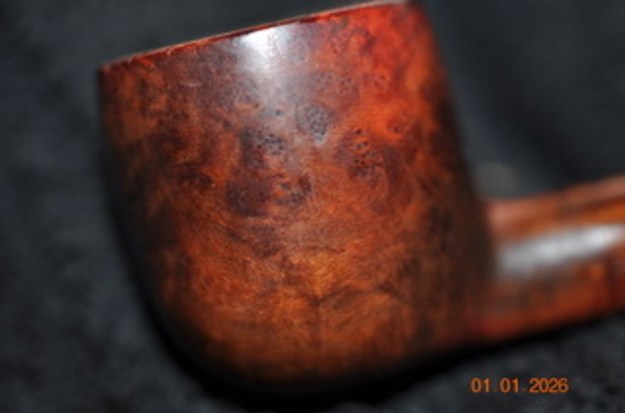
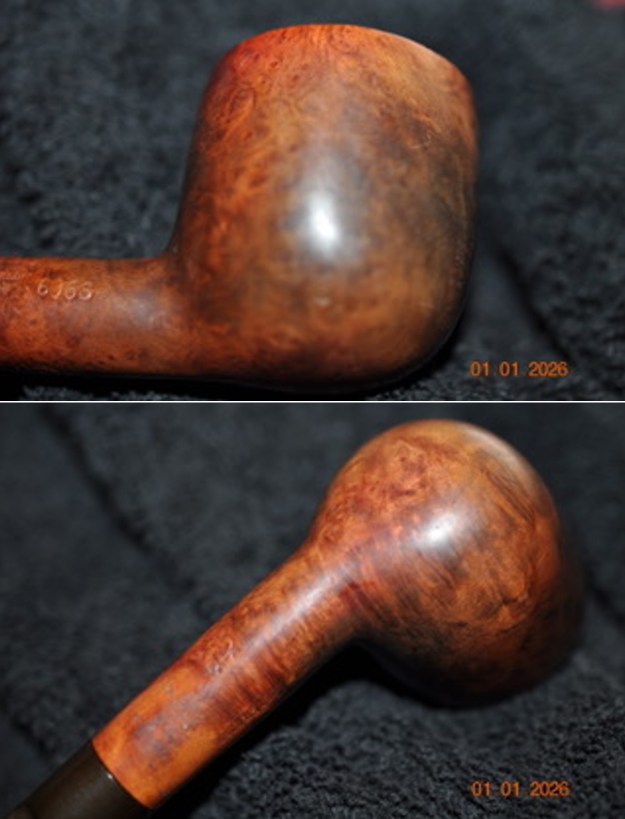
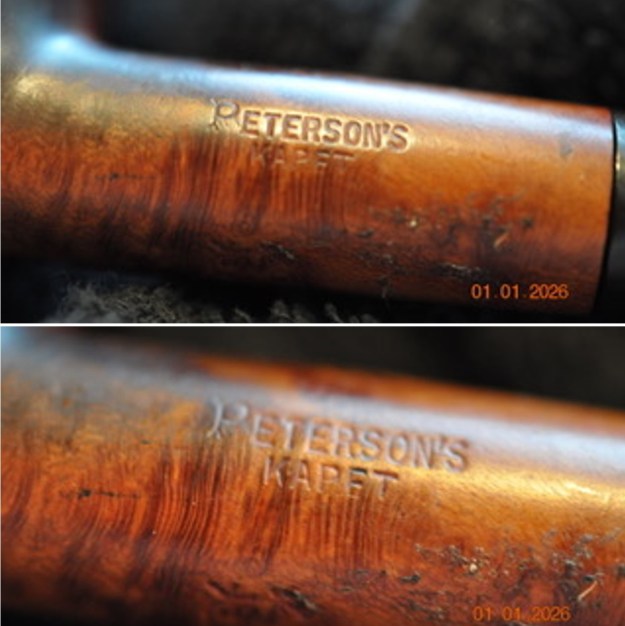
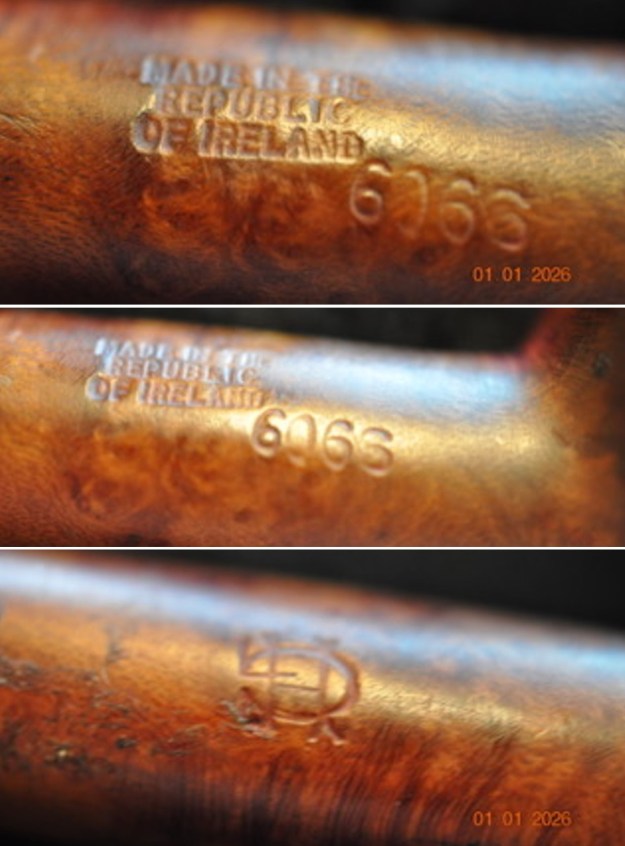
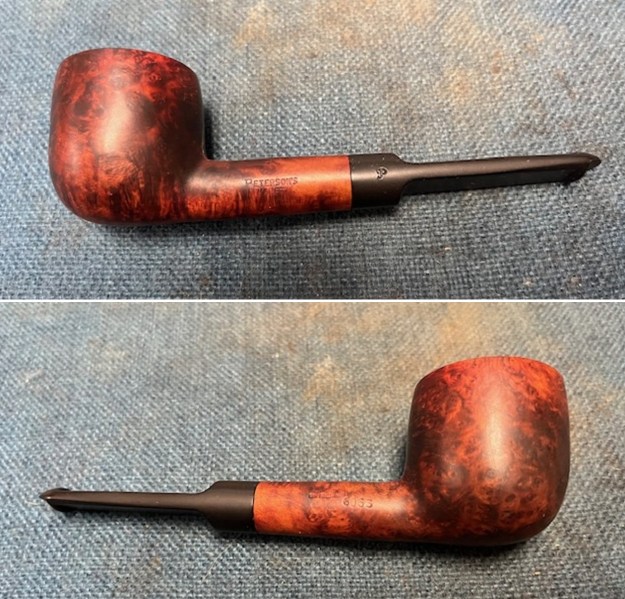
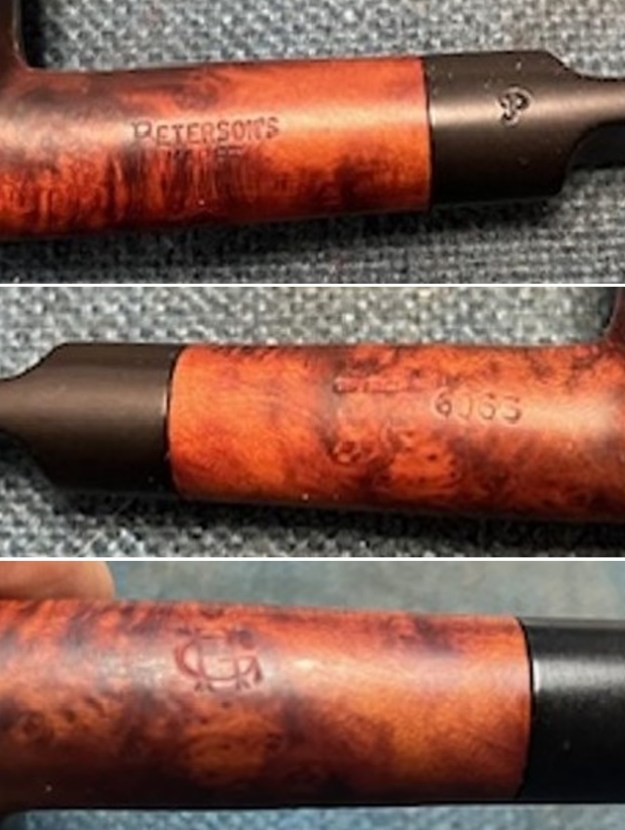
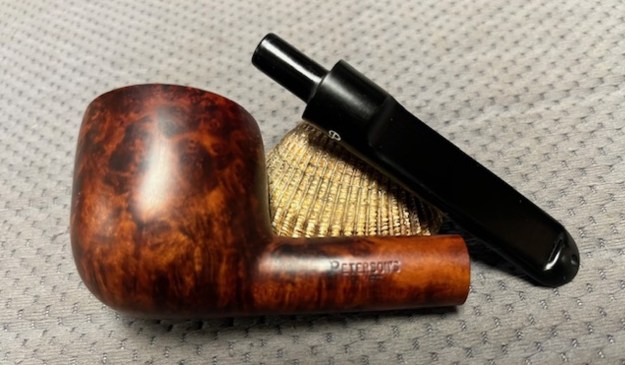
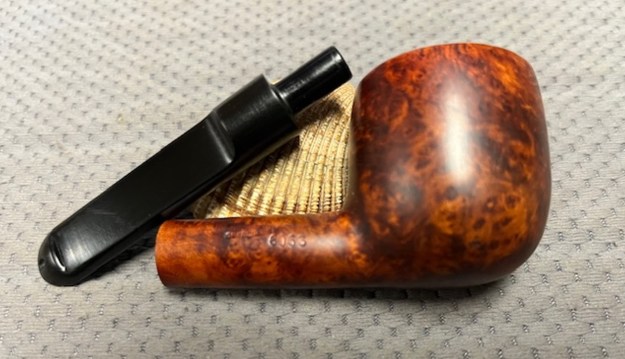
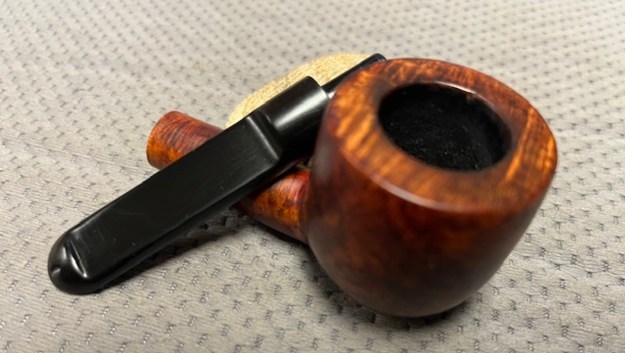
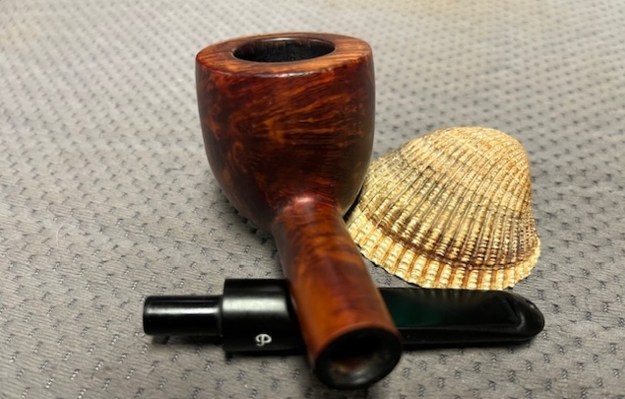
This beautifully grained well used briar pipe was purchased on 04/11/2023 from our contact in Copenhagen, Denmark. It is stamped on the left side of the shank and clearly reads Peterson’s [over] Kapet. On the right side it is stamped Made in the Republic of Ireland [three lines]. The shape number 606S is stamped below and to the right of that next to the bowl/shank junction. The 606 is the shape number for a Pot and the S is for the saddle stem. On the underside it is stamped with a large interlocked HG.  It has a smooth finish around the bowl and shank have oils, debris and grime ground into the finish. The bowl had been recently reamed and was quite clean. There were spots of lava on the rim top and edges. The inner edge had darkening. The smooth finish was dirty with debris and oils. The vulcanite saddle stem has a “P” stamped on the left side of the saddle. It was oxidized, calcified and has tooth marks and chatter on both sides near the button. It was a beautiful looking pipe even through the grime in the finish. Jeff took photos of the pipe before he started cleaning it up. Have a look. Jeff took close up photos of the bowl and rim top to show the condition of the bowl and the rim top. You can also see the light lava on the rim top, inner edge and the relatively clean bowl. He also took close up photos of the stem to show the tooth marks and chatter on both sides of the stem. He took photos of the bowl sides and heel to show the grain around the bowl. The grain is birdseye and mixed. Jeff also took photos of the stamping on the sides of the shank. It is faint in spots but readable as noted above. He did not capture the condition of the P stamp on the stem side. I am including the link to the Pipedia’s article on Peterson pipes. It is a great read in terms of the history of the brand (https://pipedia.org/wiki/Peterson). There was a short note toward the bottom of the page about the series. It is definitely referring to the newer line that came out later. I quote:

I turned to Pipedia (https://pipedia.org/wiki/Peterson) to first pin down a date that the pipe was made. I knew that the Made in Ireland stamp would give me that. I quote:

As usual when trying to get accurate facts in regard to Peterson history, something will jump up and get in the way. They are missing many of their records. The following is the best that we can do for a guide to the myriad markings during the period 1922 – 1949. Prior to 1920 it was rare for a country of origin to be stamped on the pipe, just Peterson’s Dublin on the band. After 1921/22, if it is stamped “MADE IN IRELAND” and the “Made in” is stacked over “Ireland” or “MADE IN EIRE” or several other forms, it was made between 1922 and 1938. A considerable number of Peterson pipes were stamped “Irish Free State”. From about 1930 to 1949, most of the pipes (those which were stamped) were stamped “Made in Ireland”.” If the stamp reads “MADE IN IRELAND” in a circle, the pipe was made between 1939 and 1948. These are all “Pre-Republic” pipes. I can tell you that the mark “Irish Free State” was adopted in 1922; and replaced by “Eire” in 1937 and then by “Republic of Ireland” in 1949.

That gave me a date for the pipe – it was made after 1949 as can be proved by the Made in the Republic of Ireland stamp on the right side of the shank.

I turned to “The Peterson Pipe” by Mark Irwin and Gary Malmberg to get some background on the Peterson’s Kapet Line. On page 305 it had the following information.

Kapet (1925-87) Line first described in 1925 brochure and featured in occasional catalogs through 1987. Early specimens will be stamped IRISH over FREE STATE. Described in 1937 catalog as available in dark plum or natural finish. Featured an aluminum “inner tube” or stinger until 1945.  Mid-century specimens may be stamped Made In over Ireland. Specimens from 1970 on may have mounts with hallmarks.

Judging from the Made in the Republic of Ireland stamp, the pipe I am working on is probably made after 1945 when the stinger or inner tube was removed. Those dates work also for the Kapet information above. The stem has the original P stamp on the saddle side and no stinger.

Finally, on the underside of the shank it is stamped Huber [over] Munchen. From a past restoration I did a lot of work on the stamping (https://rebornpipes.com/2023/10/14/petersons-kildare-special-hg-republic-of-ireland-10-canadian/). Have a look if you are interested.

To learn more about the Huber Munchen stamp I turned to page 300 of “The Peterson’s Pipe” by Mark Irwin and Gary Malmberg as noted by him in the previous blog and found a great paragraph on the stamping. I quote in full.

GH Retailer’s Monogram (c. 1960s) George Huber of Munich, Germany, a Peterson distributor and retailer for decades, stamped their monogram on pipes sold in their store, G overlaid on H. Peterson shared in the 1988 commemoration of Huber’s 125th year in business by producing a special pipe with a sterling rim cap, stamped HUBER over CELEBRATION.

The pipe I have is one that has the GH Retailer’s Monogram (1960s) and does not appear to have ever had the sterling rim cap and was not stamped HUBER over CELEBRATION. The Monogram attaches it to the Huber Tobacco shop in Munich, Germany. With that information I turned my attention to working on the pipe.
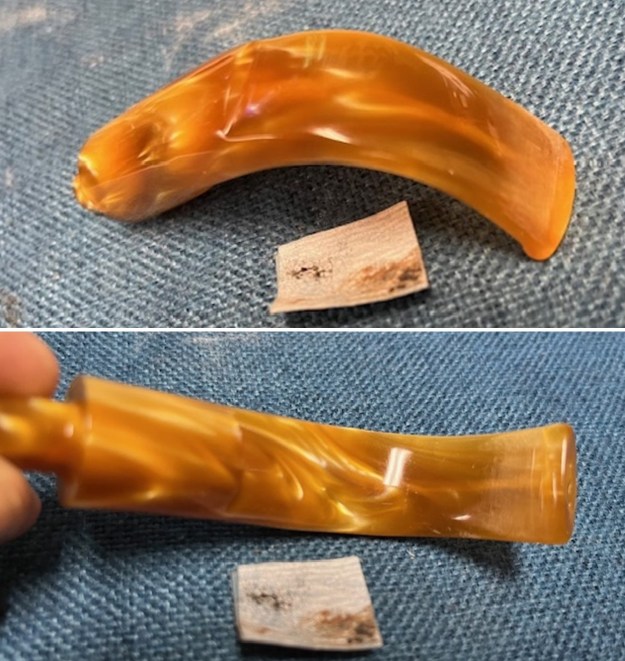
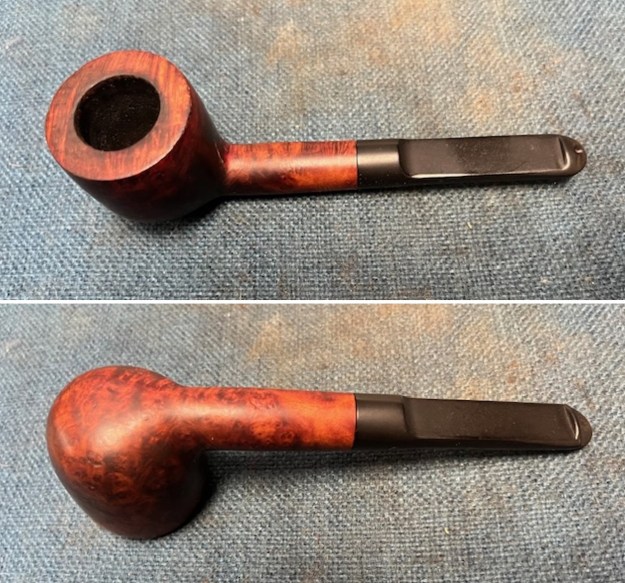
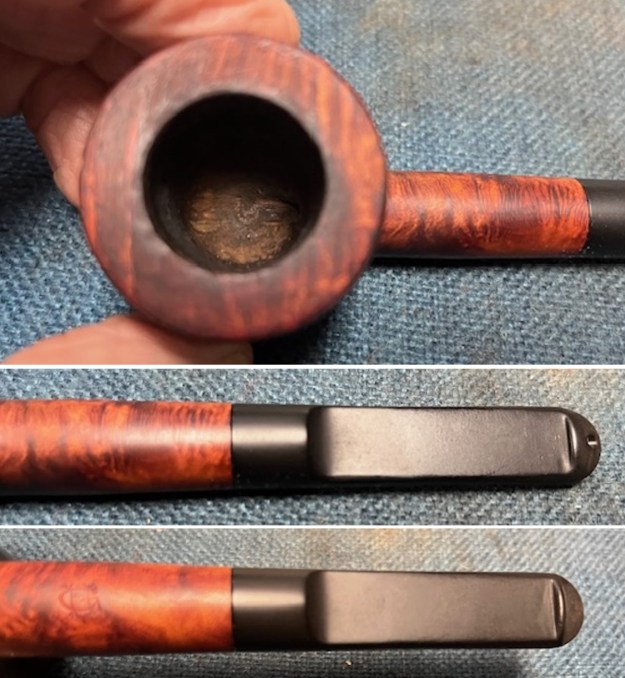
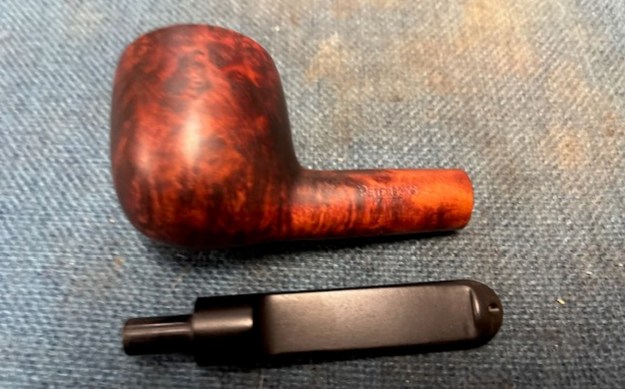
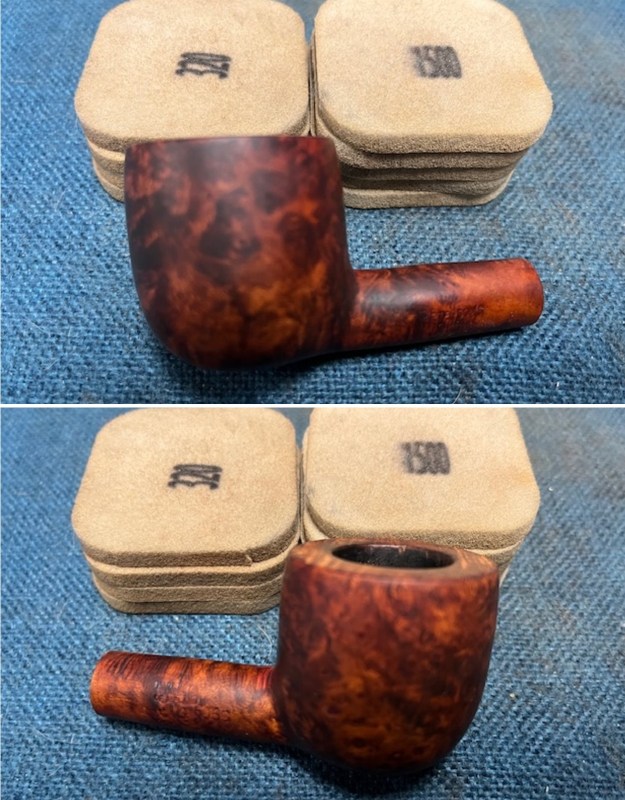
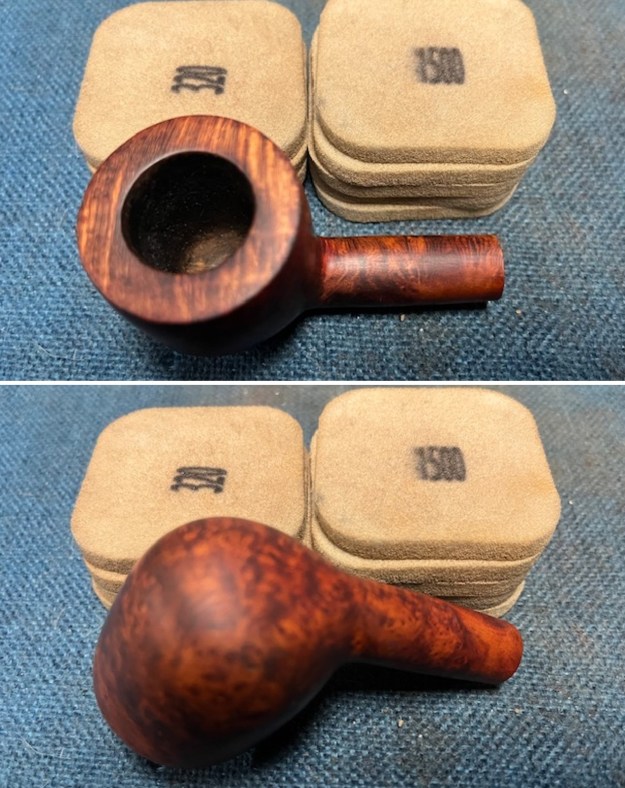
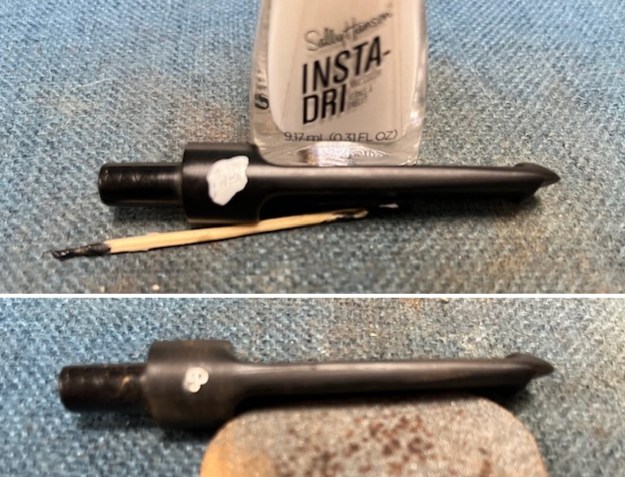
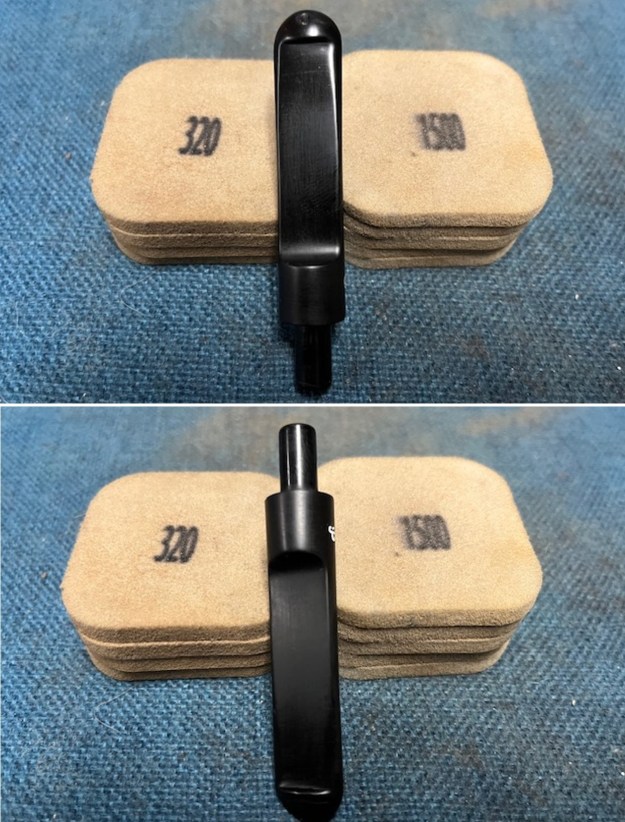
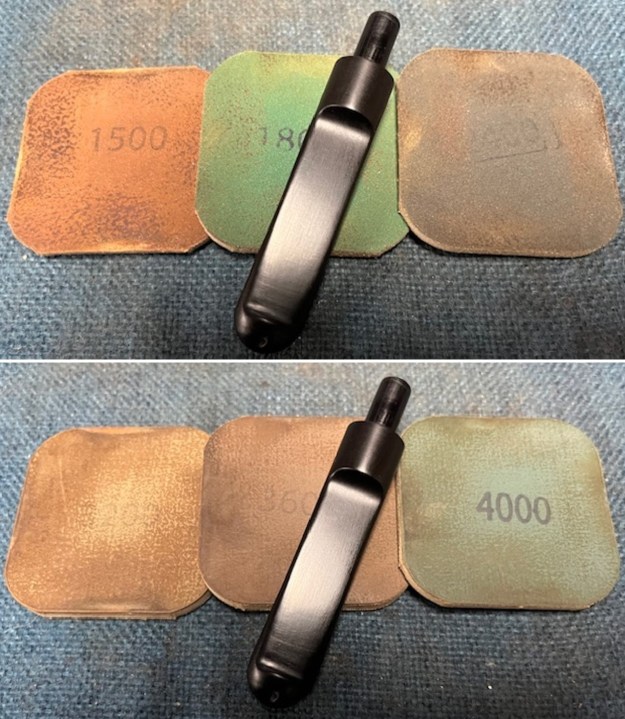
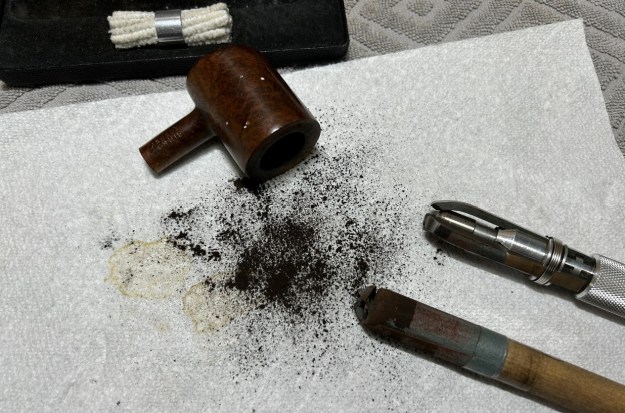
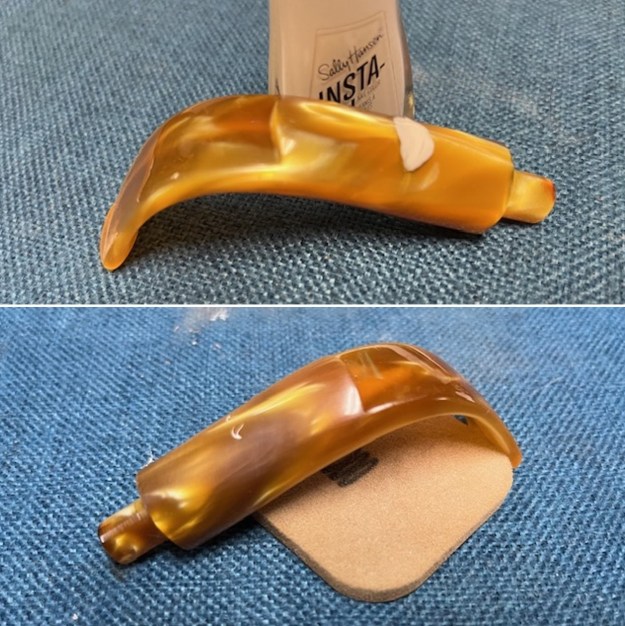
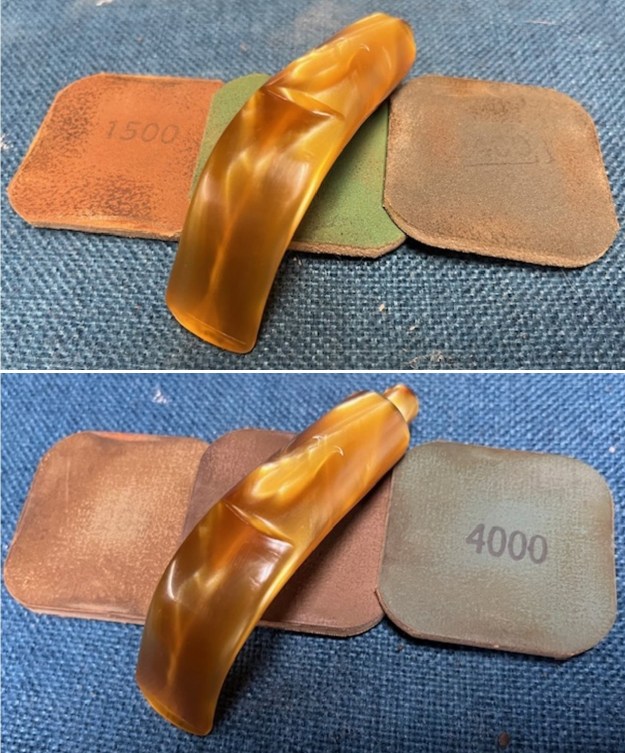
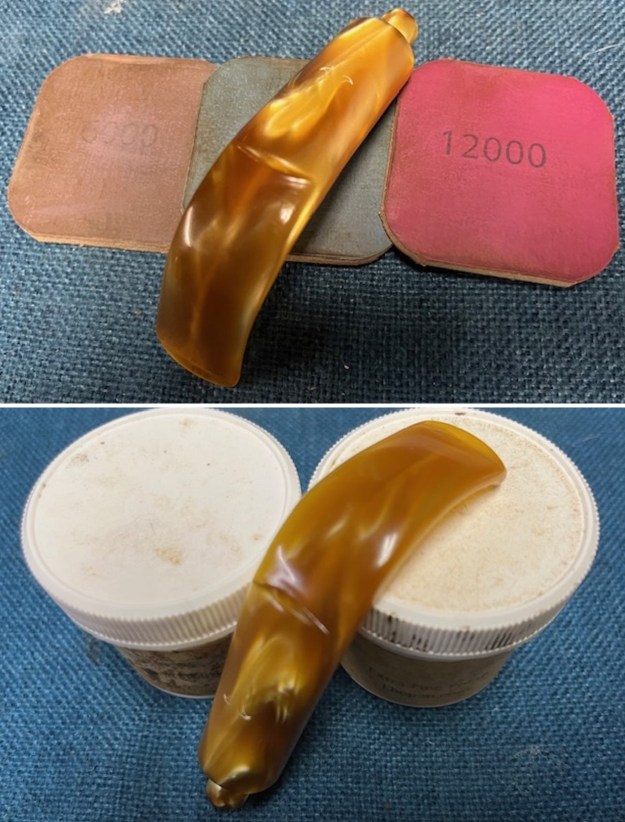
Armed with the information above, I turned my attention to the pipe itself. Jeff had cleaned the pipe with his usual penchant for thoroughness that I really appreciate. He reamed it with a PipNet pipe reamer and cleaned up the reaming with a Savinelli Fitsall Pipe Knife. He scrubbed out the internals with alcohol, pipe cleaners, shank brushes and cotton swabs until the pipe was clean. He scrubbed the exterior of the bowl with Murphy’s Oil Soap and a tooth brush to remove the grime and grit on the briar and the lava on the inner edge of the rim top. The finish looks very good with good looking grain around the bowl and shank. There is some darkening on the sides of the bowl as well. Jeff soaked the stem in Briarville’s Pipe Stem Deoxidizer to remove the oxidation on the vulcanite. When the pipe arrived here in Vancouver for the second stop of its restoration tour it looked very good. I took photos before I started my part of the work. I took close up photos of the bowl, rim top and stem to show how clean the pipe was. The bowl was clean and the rim top and the inner edge look beautiful. The stem was clean and did not show either tooth marks or chatter.I took photos of the stamping on the sides of the shank. It is very clear and readable and read as noted above. I also removed the stem from the shank and took photos of the pipe to show the look of the parts. I sanded the bowl and shank with 320-3550 grit 2×2 inch sanding pads to smooth out the scratches and darkening on the rim top and sides of the bowl. I wiped the bowl down after each sanding pad with a damp cloth to remove the sanding debris. I sanded the exterior of the bowl with 1500-12000 grit micromesh sanding pads. I dry sanded it with each pad and wiped the briar down with a damp cloth to remove the sanding- debris. I worked some Before & After Restoration Balm into the briar with my finger tips. I let it sit on the bowl and shank for 10 minutes and then buffed it off with a paper towel and soft cloth. The product is a great addition to the restoration work. It enlivens, enriches and protects the briar while giving it a deep glow. It is a product I use on every pipe I restore. I set the bowl aside and turned my attention to the stem. I touched up the “P” stamp on the left side of the saddle with some white acrylic nail polish. I let it cure then scraped off the excess and sanded the remnant off with a 1500 grit sanding pad. I sanded the stem and tenon with 320-3500 grit sanding pads. Each successive pad brought smoother shape and definition to the stem. I wiped it down with an Obsidian Oil cloth after each sanding pad and by the end it was starting to look very good.I polished the stem with micromesh sanding pads – dry sanding with 1500-12000 grit pads. Once again, I wiped it down between each pad with Obsidian Oil. I further polished it with Before and After Stem Polish – both Fine and Extra Fine. It looked very good. I am excited to finish this beautifully grained, Peterson’s Kapet 606S Saddle Stem Pot. I put the pipe back together and buffed it with Blue Diamond on the buffing wheel. I gave the bowl and the stem multiple coats of carnauba wax. I hand buffed the pipe with a clean buffing pad to raise the shine. It is fun to see what the polished bowl looks like with beautiful mixed grain all around it. The straight Pot looks great with the black vulcanite saddle stem. This smooth Classic Peterson’s Kapet 606S Pot is great looking and the pipe feels great in my hand. It is light and well balanced. Have a look at it with the photos below. The dimensions are Length: 5 ½ inches, Height: 1 ½ inches, Outside diameter of the bowl: 1 ½ inches, Chamber diameter: ¾ of an inch. The weight of the pipe is 39 grams/1.34 ounces. It turned out to be a beautiful pipe. I will be putting on the rebornpipes store in the Irish Pipe Makers Section. If you would like to add it to your collection let me know. It is a real beauty. Thanks for walking through the restoration as I brought the pipe back to life.
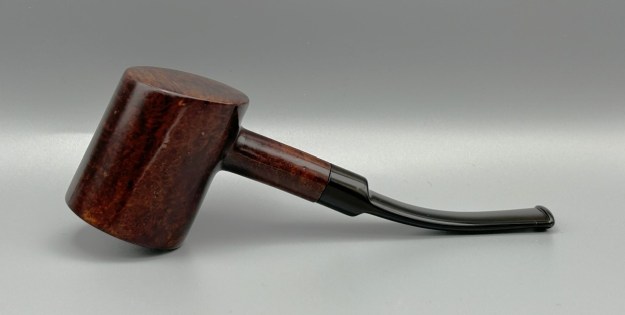
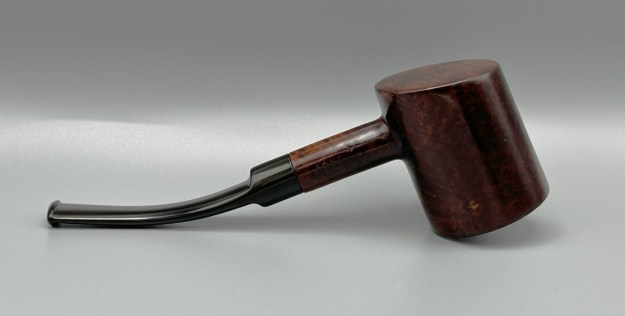
A Birks Regency Poker: Can a Leopard Change its Spots?


by Kenneth Lieblich

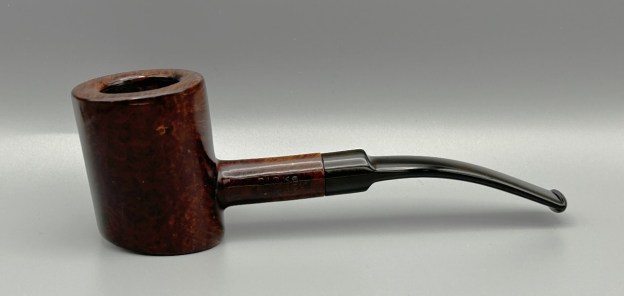
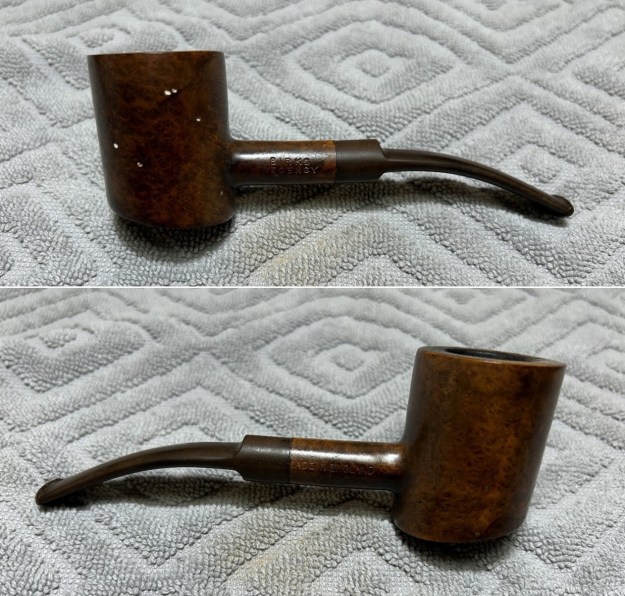
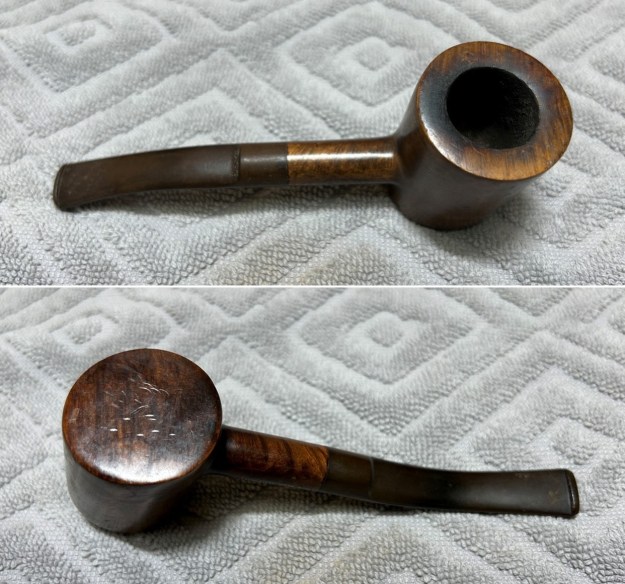
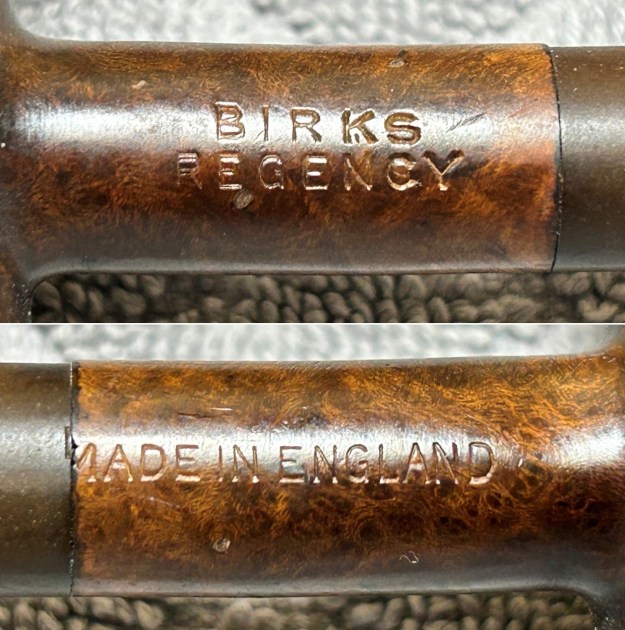
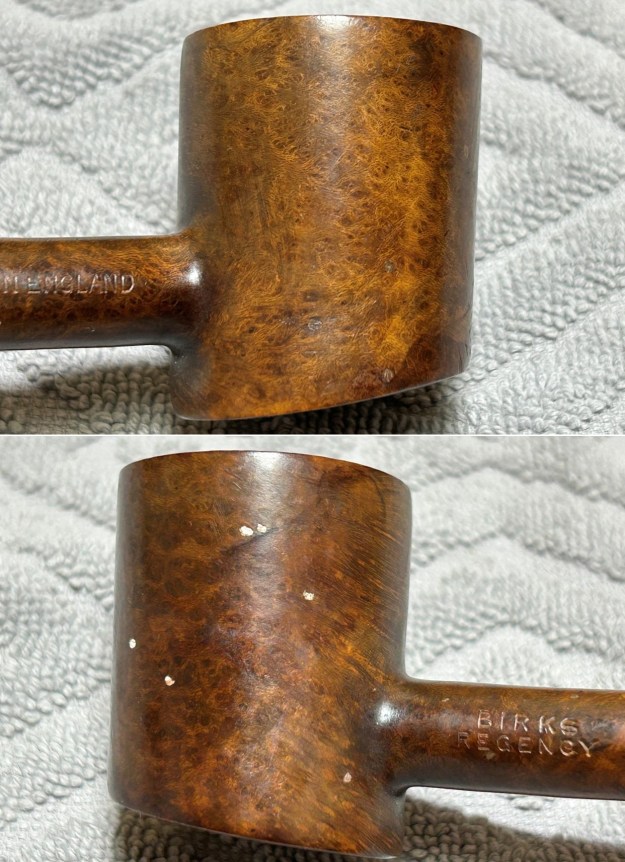
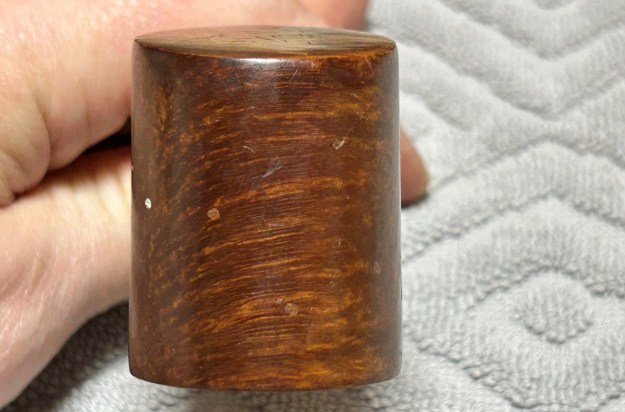
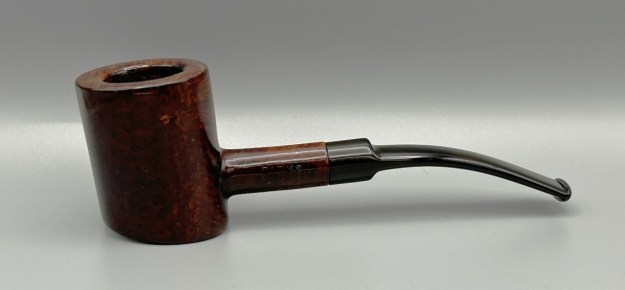
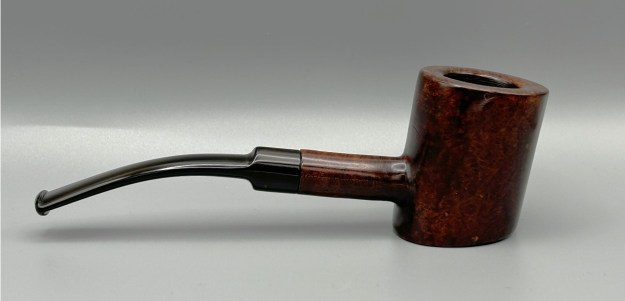
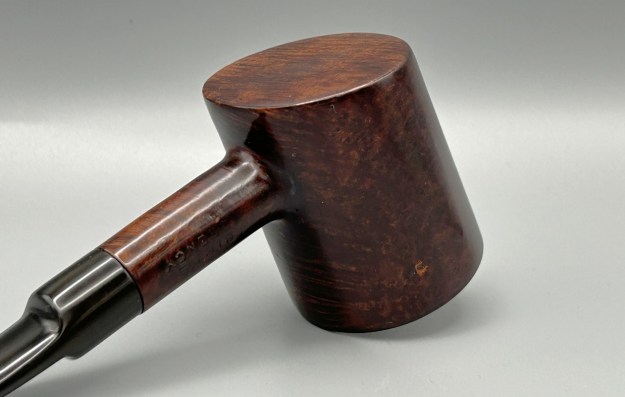
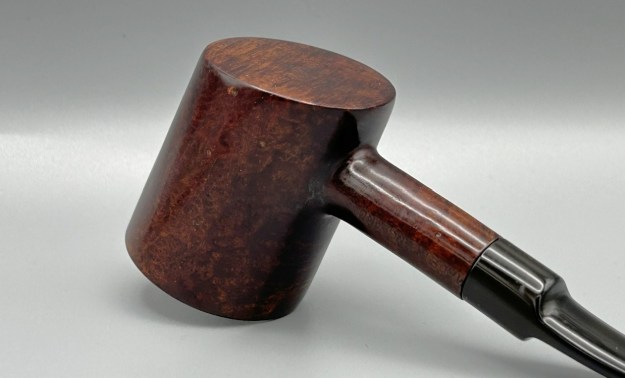
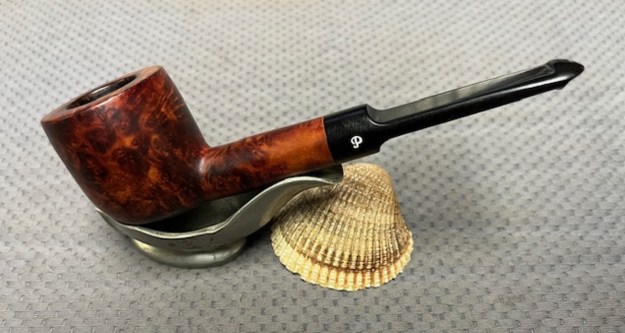
I got this pipe in a group of pipes and I liked its shape immediately. The pipe was rough, to be sure, but I think it will find a home with one of you. The pipe comes with the name of the famous Canadian jewellery house, Birks. I’m interested in this because I have several Birks pipes in my workshop and they’re all a little different. More on that in a moment. This particular pipe is a poker shape – a very handsome one at that. It has quite a few fills (leopard spots), but there is also some lovely grain. It is light and elegant. The markings on the pipe don’t tell us much – but they tell us enough. The markings on the left side of the stummel read Birks [over] Regency. The markings on the right side of the stummel read Made in England. Allow me to explain some of this.Birks refers to Henry Birks & Sons, a venerable and well-known luxury store based in Canada (now known as Maison Birks). It has focused primarily on jewellery throughout its history, but also other luxury items like watches, silverware, etc. There has been some discussion in pipe circles about whether Birks sold pipes or not – and whether Birks actually refers to an English company (as Wilczak and Colwell suggested in Who Made That Pipe?). I can say definitively that Henry Birks & Sons sold pipes. They did not manufacture their own, but had others make them for sale at Birks’ stores. Steve has already restored some Birks-branded pipes made by Savinelli. I have Birks-branded pipes made in England and in Denmark.Two further points about this. First, I wonder if Wilczak and Colwell were thinking of an English razor company (also called Birks) that frequently used a maker’s mark that was in the shape of a pipe (rather unhelpfully). For more on that, click here. Second (as I mentioned earlier), this particular pipe has the word Regency on it. Regency specifically refers to a Henry Birks line of silverware, china, etc. – so that makes sense.
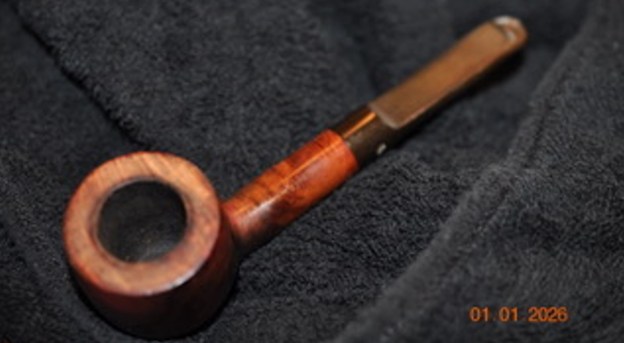
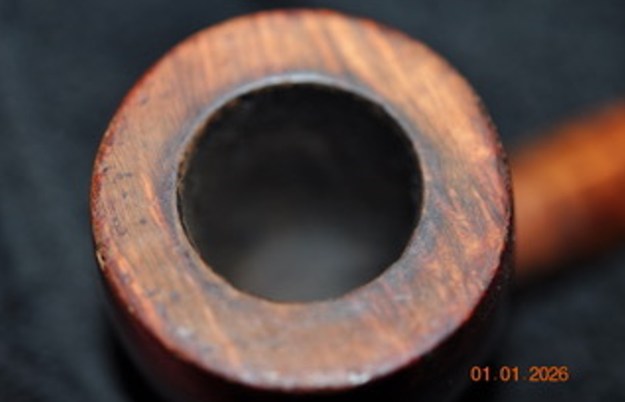
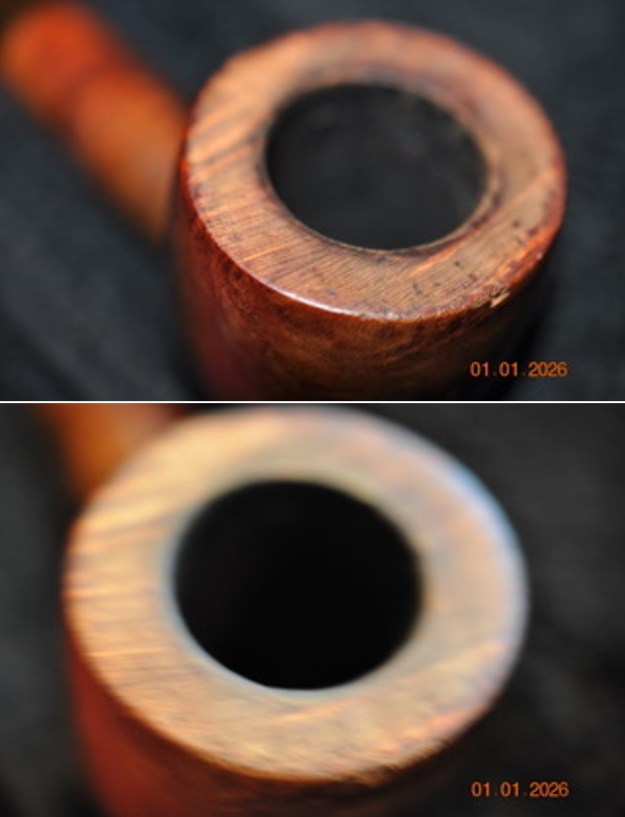
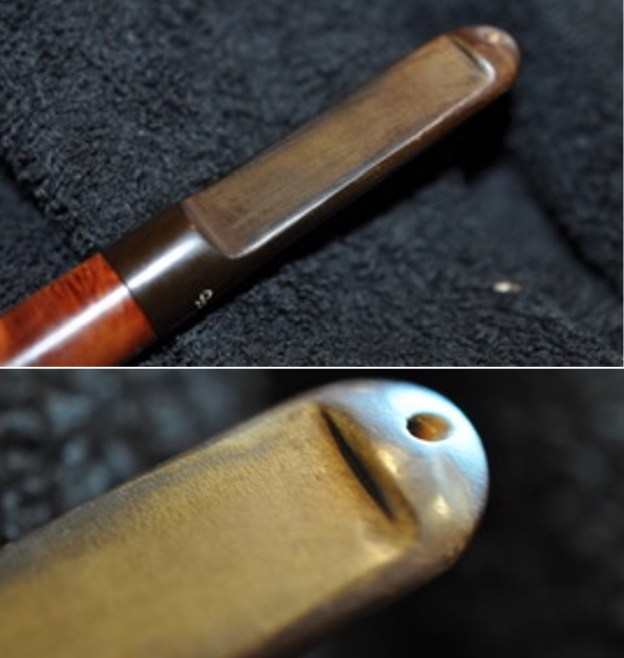
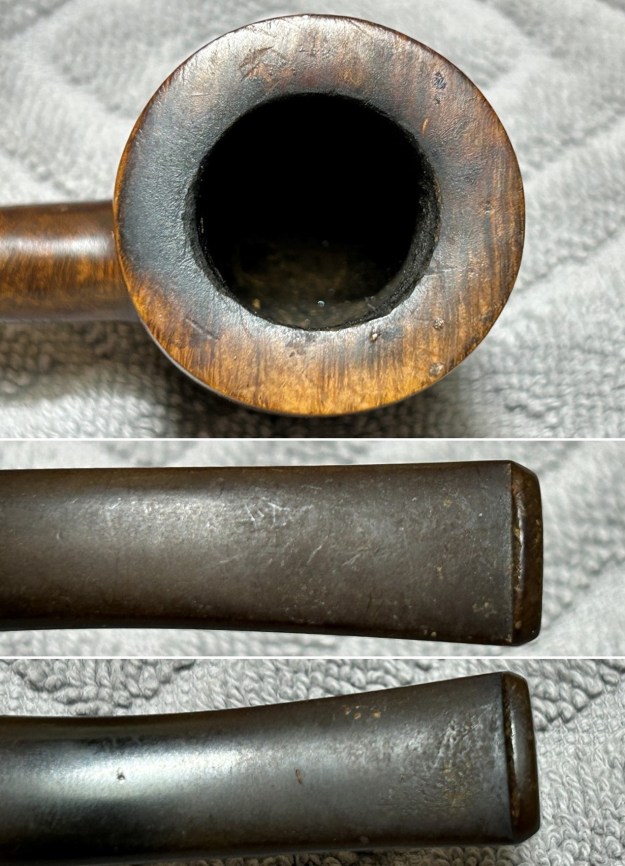
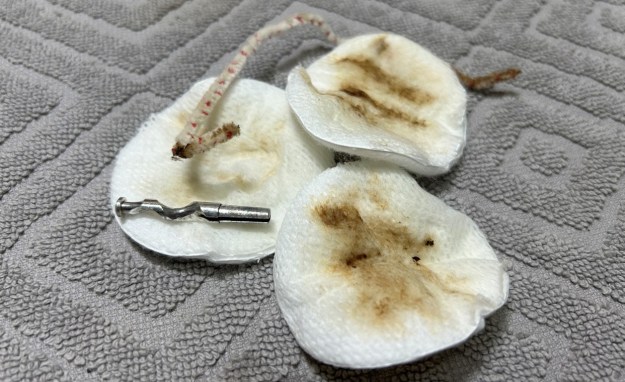
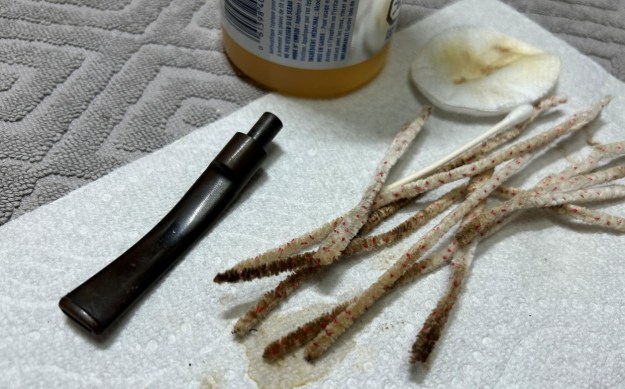
Let’s examine the pipe. The condition is a bit rough, but nothing serious. The stummel is in decent shape, despite a plethora of tiny fills. The rim has a bit of burning, but hopefully that can be resolved. The stem is quite nice. It has a few tooth marks, but nothing significant. A bit of oxidation, but we’ll clean that up. This stem had a stinger in it – and it was being quite stubborn about coming out of the tenon! I opted to warm the stem and stinger with my heat gun and this provided just enough softening of the internal goo to allow me to extract it. It then went for a soak in some lemon-infused 99% isopropyl alcohol. I let it sit for a while and then cleaned it off and it looked much improved.I used isopropyl alcohol on a few cotton rounds and wiped down the stem to provide an initial cleaning of filth before moving on to the next steps. The primary cleaning came next. I disinfected the inside of the stem with both pipe cleaners and cotton swabs dipped in lemon-infused 99% isopropyl alcohol. I scrubbed thoroughly to make sure the interior was very clean.The goal of the next step is the removal (or minimization) of oxidation. Going to my sink, I used cream cleanser, cotton rounds, and a toothbrush, and scoured the stem to remove as much surface oxidation as possible. The result was a hideous, ochre-coloured mess – but better off the stem than on it. I neglected to take a photo of this stem, but take my word for it.
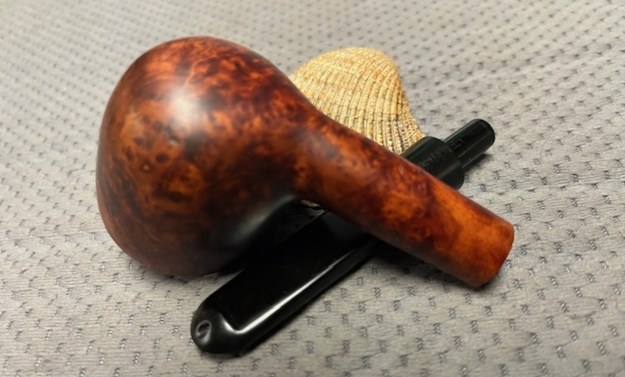
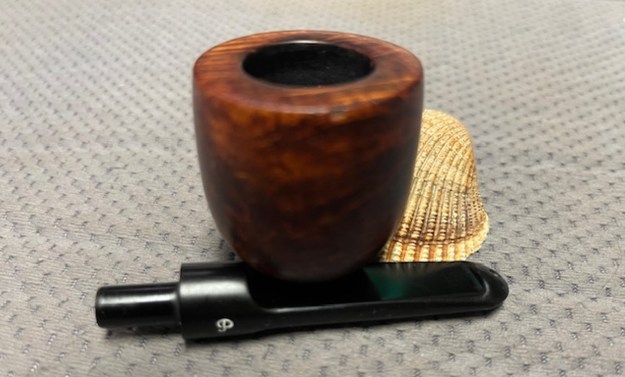
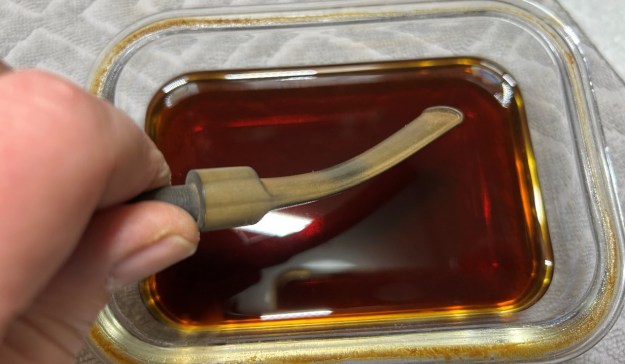
Once the stem was reasonably clean, I soaked it overnight in some Briarville Stem Oxidation Remover. This solution works to draw oxidation in the stem to the surface of the vulcanite. This is a major aid and an important step in ensuring a clean stem. The following day, I drew out the stem from its bath and scrubbed the lingering fluid with a toothbrush.The penultimate step for the stem is sanding. I used all nine of the micromesh sanding pads (1,500 through 12,000 grit) to sand out flaws, even out the vulcanite, and provide gentle polishing of the finished surface. I also applied pipe-stem oil while using the last five micromesh pads. There was a wonderful, deep black shine to the stem when I was done.As the stem was (nearly) complete, I moved on to the stummel. The first step was to ream out the bowl – that is to say, remove all the cake inside the bowl. This accomplished a couple of things. First (and most obviously), it cleaned the bowl and provided a refurbished chamber for future smoking. Second, when the old cake was removed, I could inspect the interior walls of the bowl and determine if there was damage or not. I used a reamer and a piece of sandpaper taped to a wooden dowel. Collectively, these ensured that all the debris was removed.My next step was to remove the lava on the rim. For this, I took a piece of machine steel and gently scraped the lava away. The metal’s edge is sharp enough to remove what I need, but not so sharp that it damages the rim. This work revealed that there was a burn mark to the rim. It would remain, but much less noticeable.

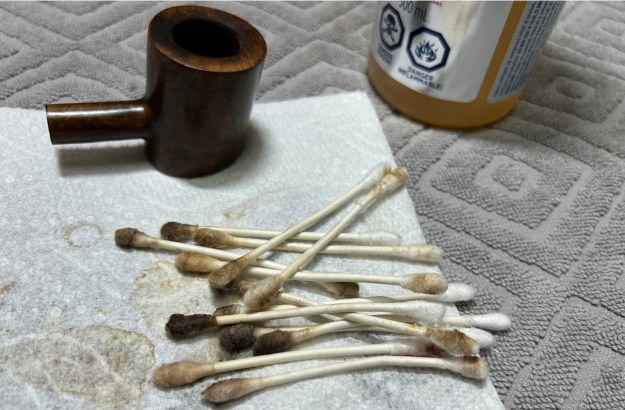
Similar to the stem, I then cleaned the stummel with both pipe cleaners and cotton swabs dipped in lemon-infused 99% isopropyl alcohol. With a pipe this dirty, it took quite a while and much cotton to clean.I then decided to ‘de-ghost’ the pipe – that is to say, exorcize the remaining filth from the briar. I filled the bowl and the shank with cotton balls, then saturated them with 99% isopropyl alcohol. I let the stummel sit overnight. This caused the remaining oils, tars and smells to leach out into the cotton.To tidy up the briar, I wiped down the outside, using a solution of a pH-neutral detergent and some distilled water, with cotton rounds. I also used a toothbrush in the crevices. This did a good job of cleaning any latent dirt on the surface of the briar. The last step of the cleaning process was to scour the inside of the stummel with the same mild detergent and tube brushes. This was the culmination of a lot of hard work in getting the pipe clean.I spent some time tinting the fills with some furniture pens, then filling in all of the fills with clear cyanoacrylate adhesive. This made them smooth and hard.I used all nine micromesh pads (1,500 through 12,000 grit) to sand the outside of the stummel and finish it off. This sanding minimizes flaws in the briar and provides a beautiful smoothness to the wood. In order to help the leopard disguise its spots, I decided to stain the wood with an alcohol-based, aniline dye. I use this type of dye because it is easy to work with, uniform in colour, quite penetrating, and is easily thinned with isopropyl alcohol. For this pipe, I chose a mahogany colour. I spread the dye all over the outside of the stummel with a small dauber and then applied a gentle flame to it. This flame assists in setting the stain by quickly evaporating the isopropyl alcohol. If necessary, the stain can be lightened by wiping the briar with pure alcohol – and, in this case, that is precisely what I did.I rubbed some LBE Before & After Restoration Balm into the briar and let it sit for 30 minutes or so. The balm moisturizes the wood and gives a beautiful depth to the briar. I then buffed the stummel with a microfibre cloth. For the final step, I took the pipe to my bench polisher and carefully buffed it – first with a blue diamond compound, then with three coats of carnauba wax. This procedure makes the pipe look its best – the stummel sings and the stem glows.

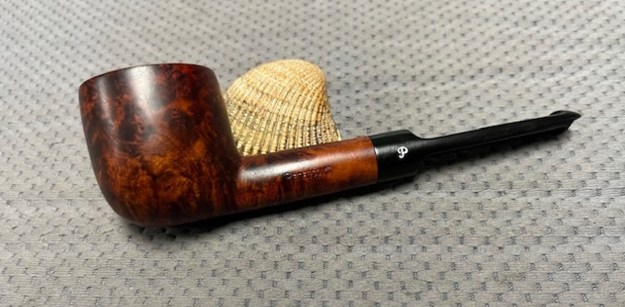
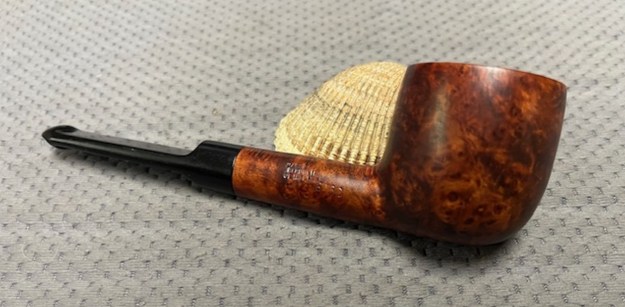
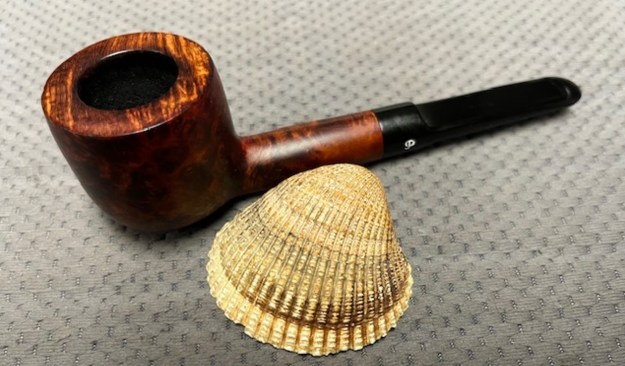
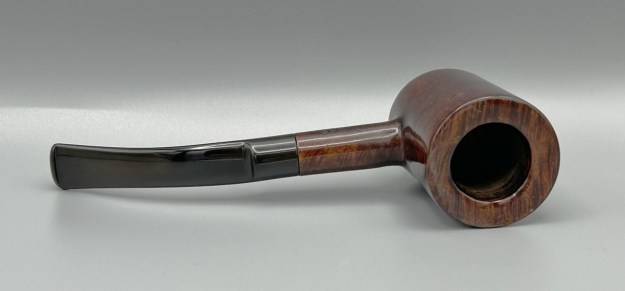
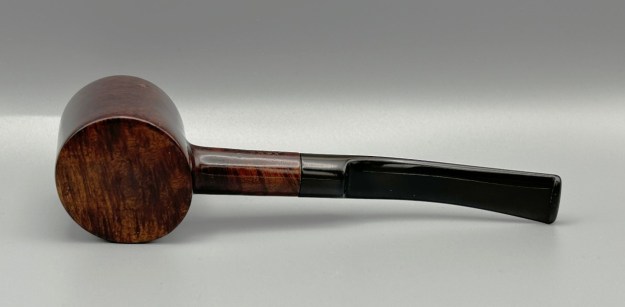
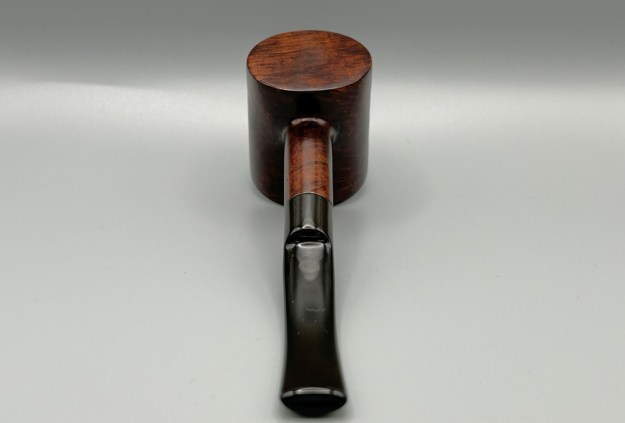
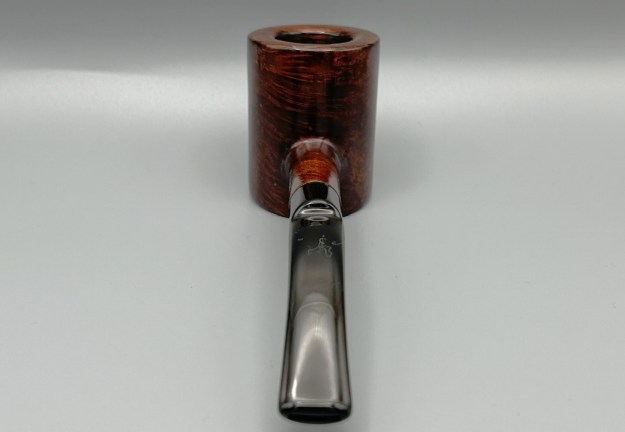
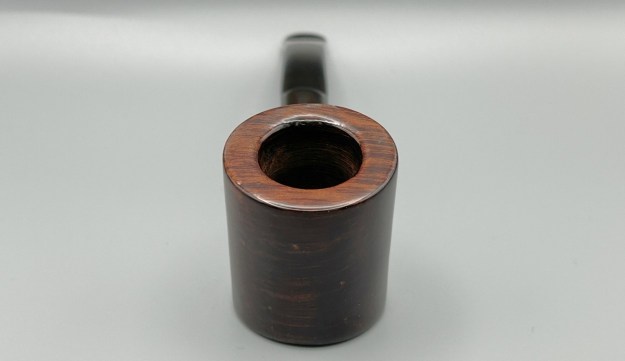
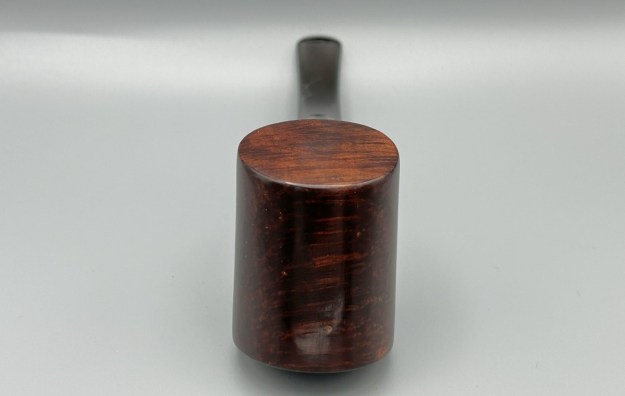
All done! This Birks Regency Poker looks fantastic again and is ready to be enjoyed by its next owner. I am pleased to announce that this pipe is for sale! If you are interested in acquiring it for your collection, please have a look in the ‘English’ section of the store here on Steve’s website. You can also email me directly at kenneth@knightsofthepipe.com. The approximate dimensions of the pipe are as follows: length 5⅜ in. (137 mm); height 1⅞ in. (47 mm); bowl diameter 1⅜ in. (36 mm); chamber diameter ⅞ in. (20 mm). The weight of the pipe is 1 oz. (32 g). I hope you enjoyed reading the story of this pipe’s restoration as much as I enjoyed restoring it. If you are interested in more of my work, please follow me here on Steve’s website or send me an email. Thank you very much for reading and, as always, I welcome and encourage your comments.