Daily Archives: March 5, 2026

Restoring a Republic Era Peterson’s Irish Whiskey 65 Bent Billiard


by Steve Laug

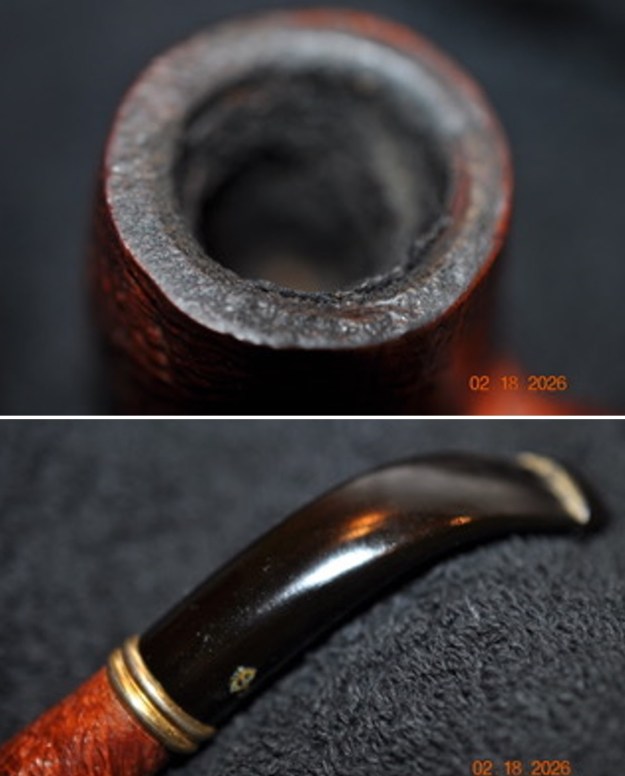
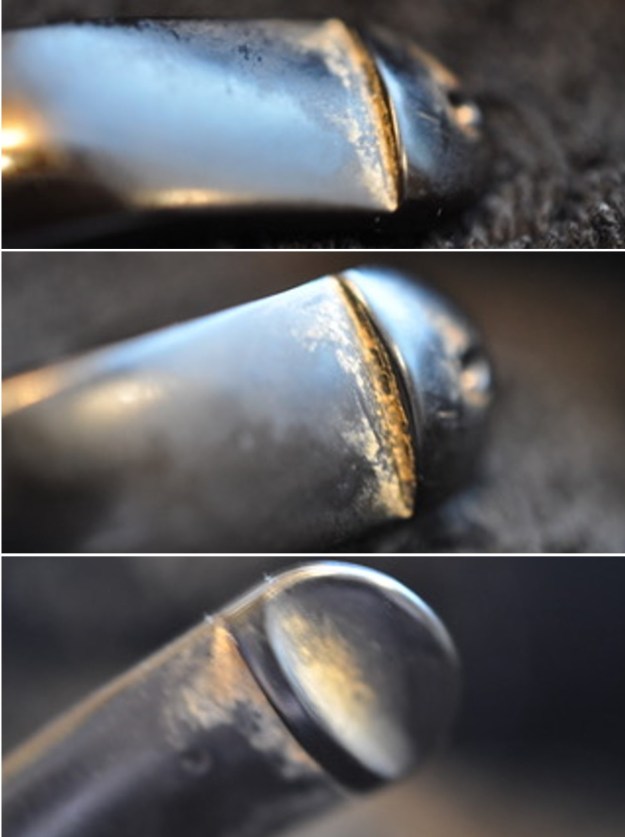
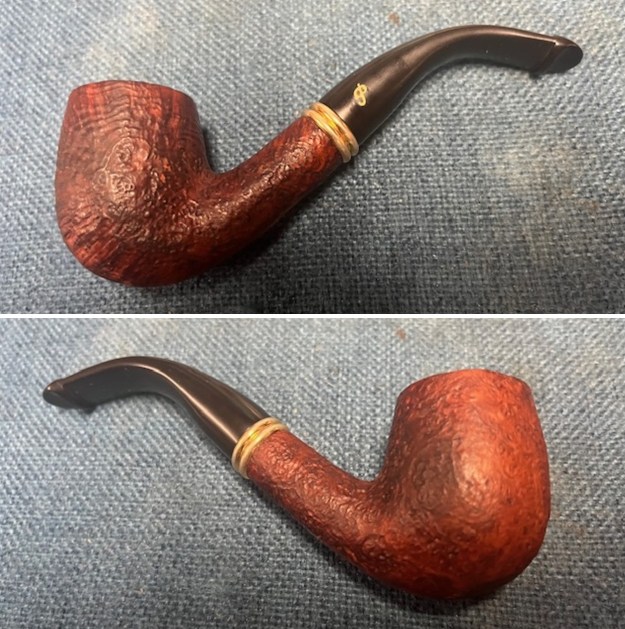
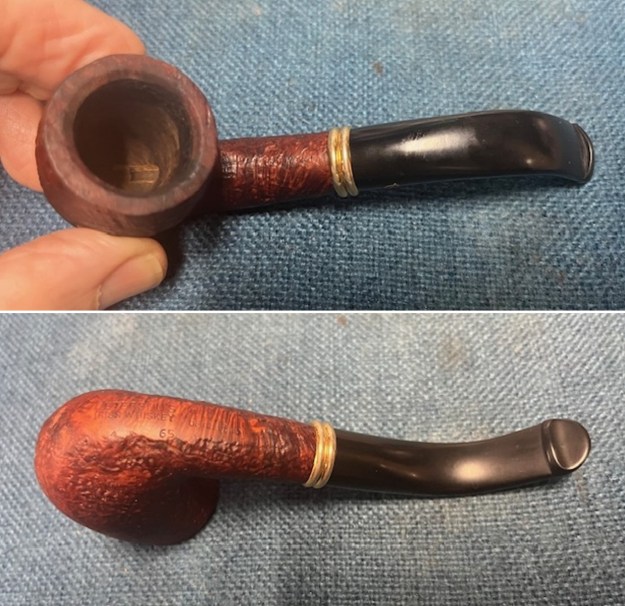
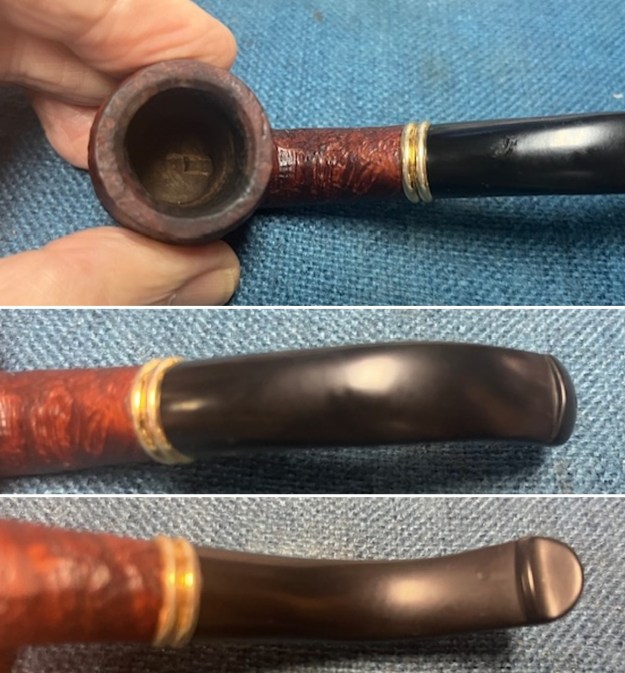
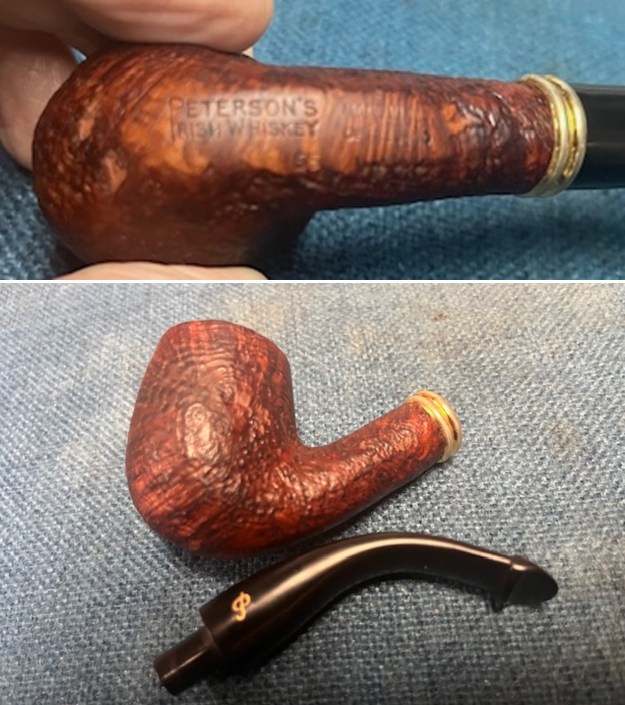
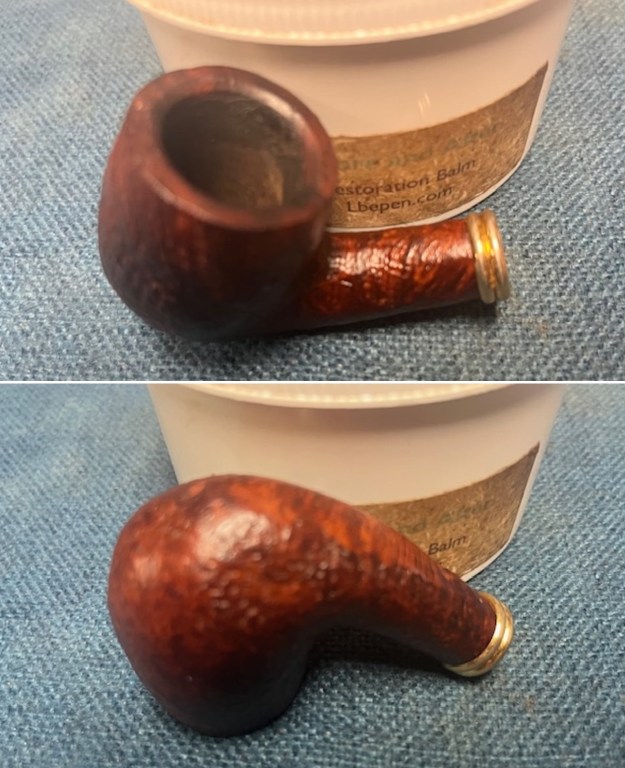
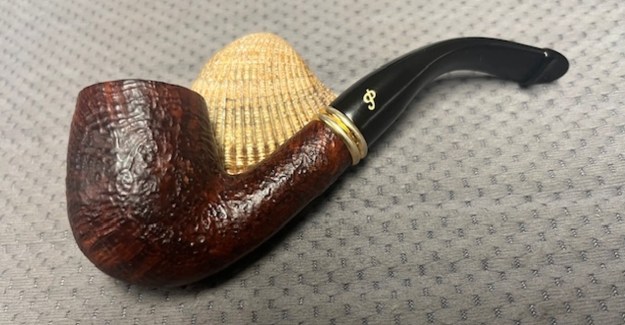
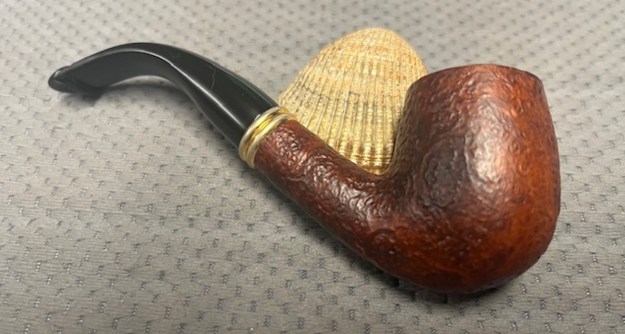
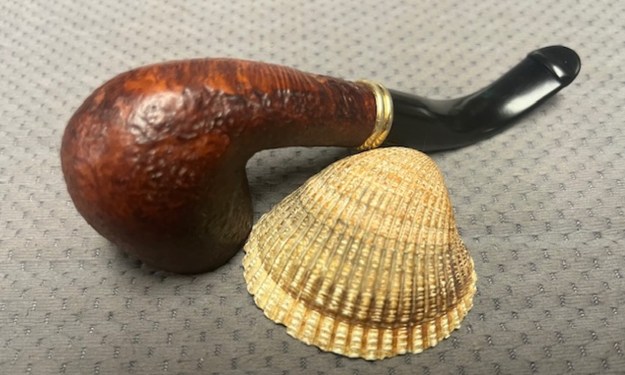
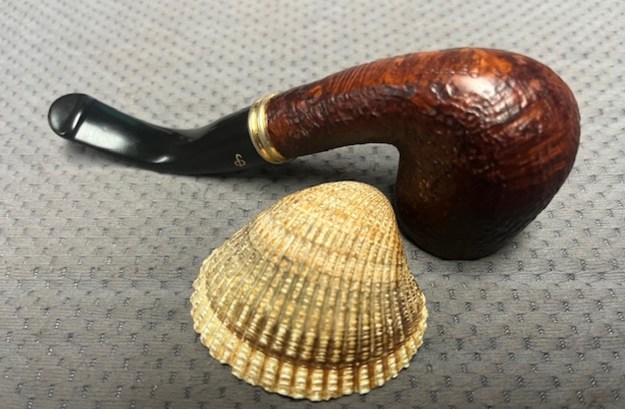
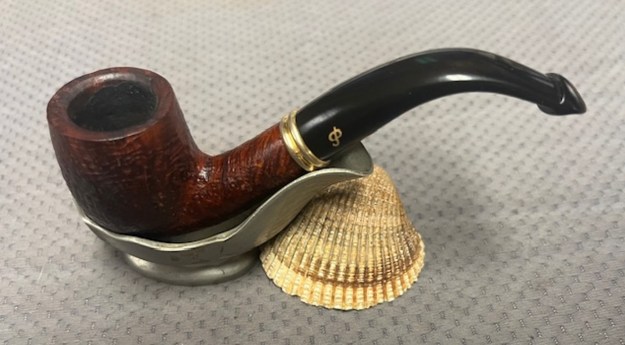
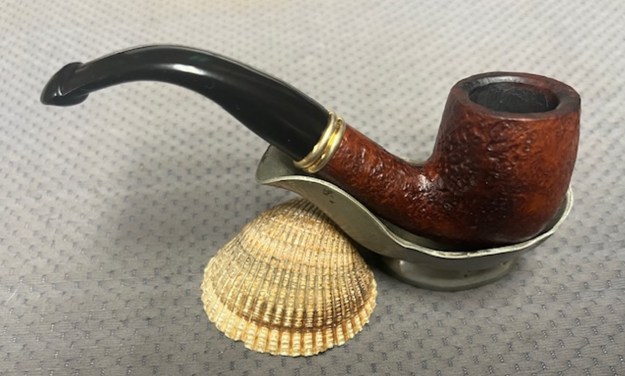
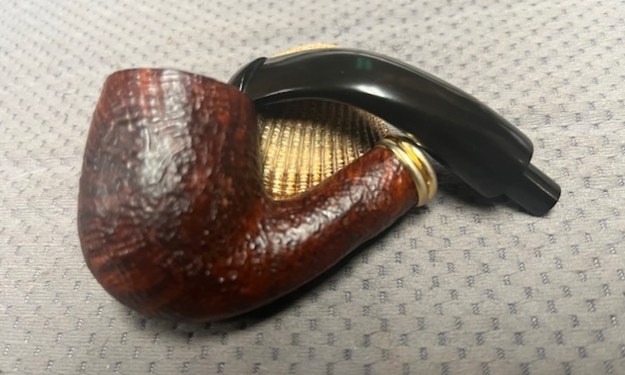
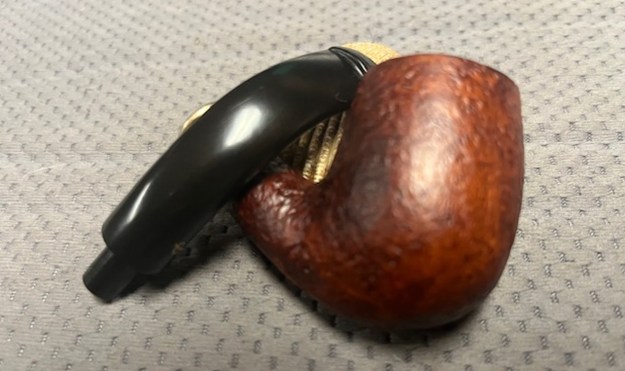
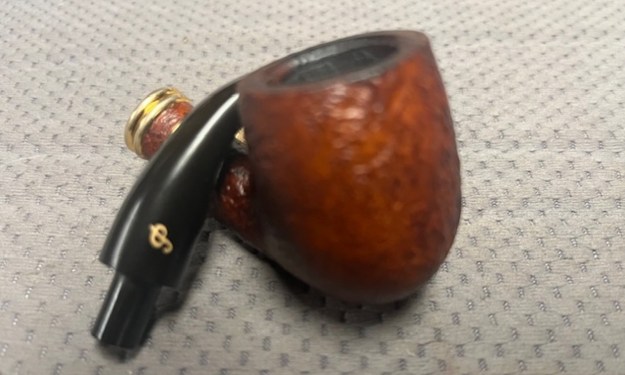
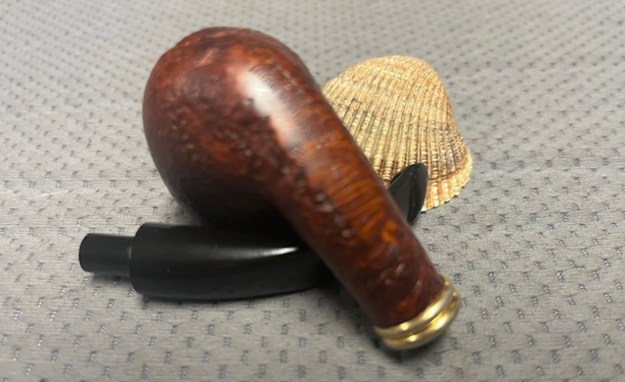
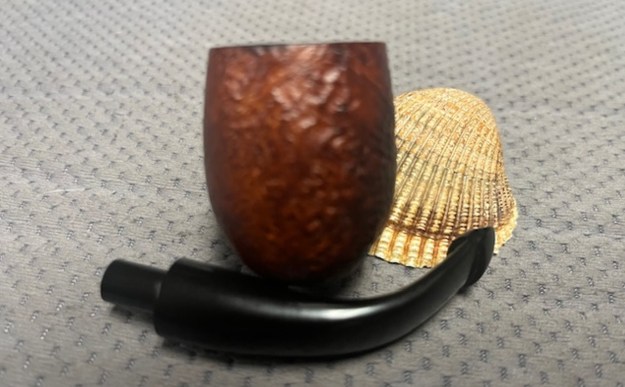
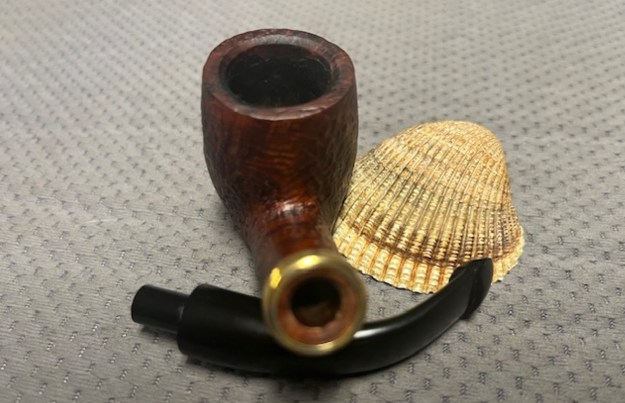
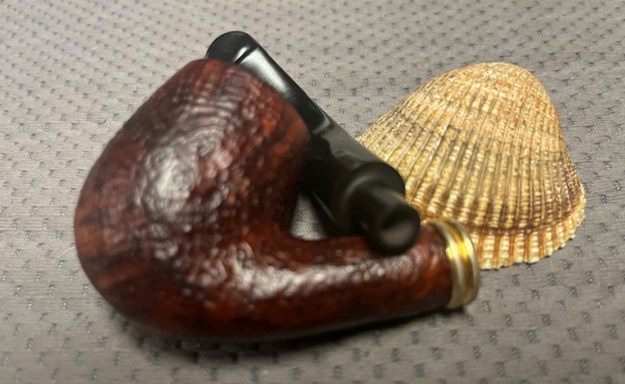
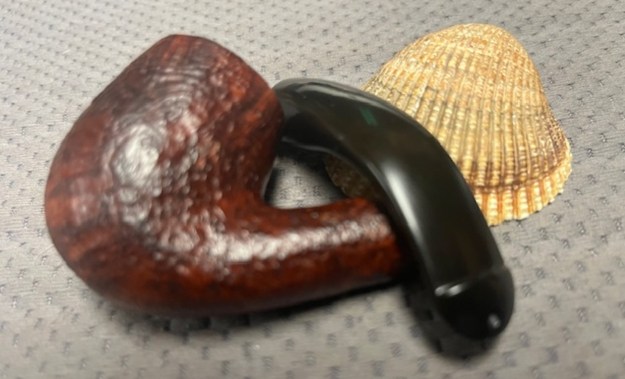
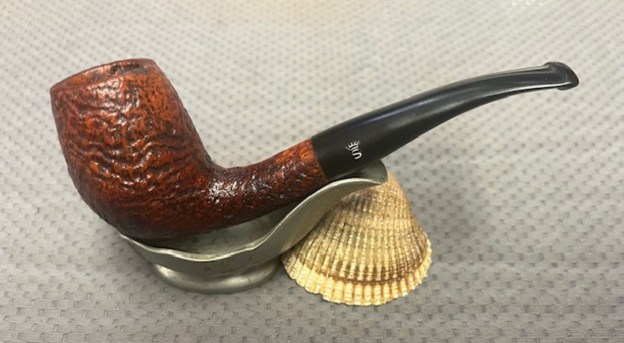
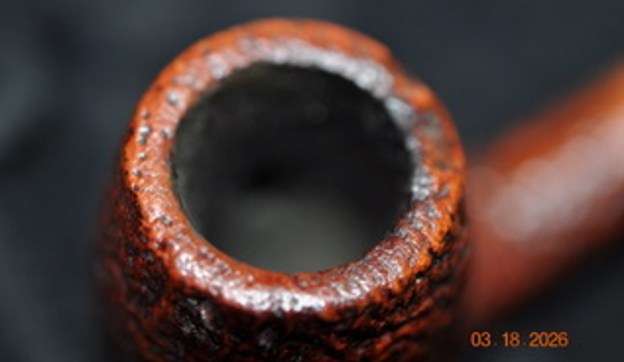
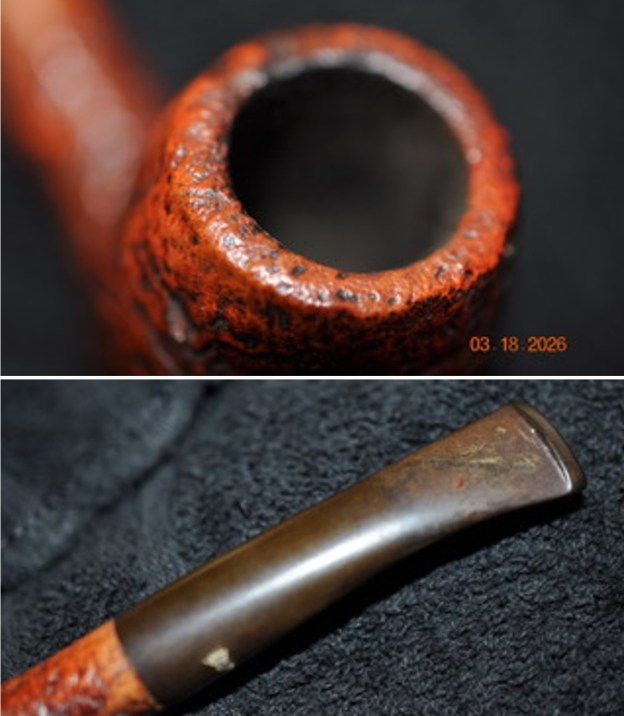
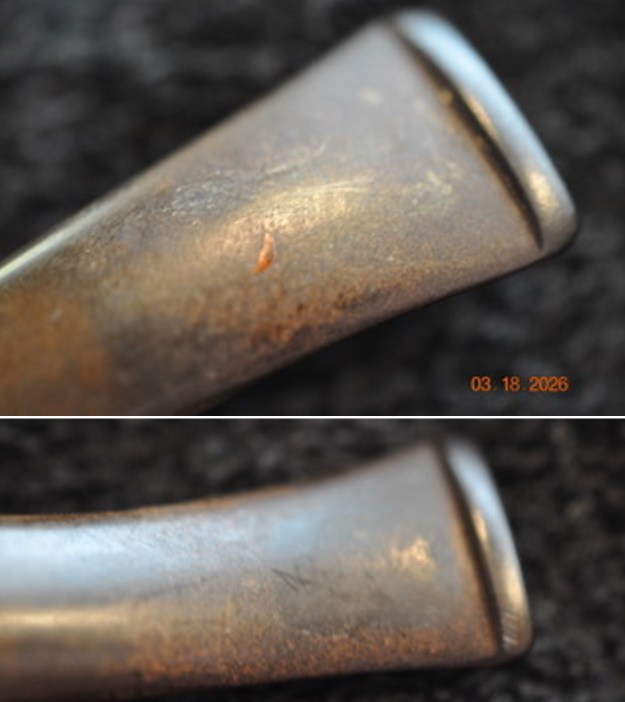
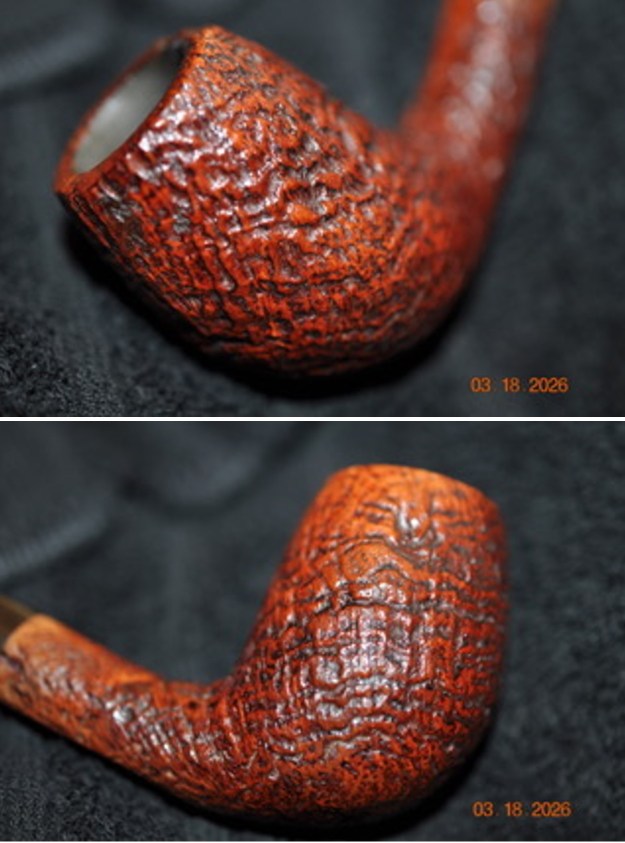
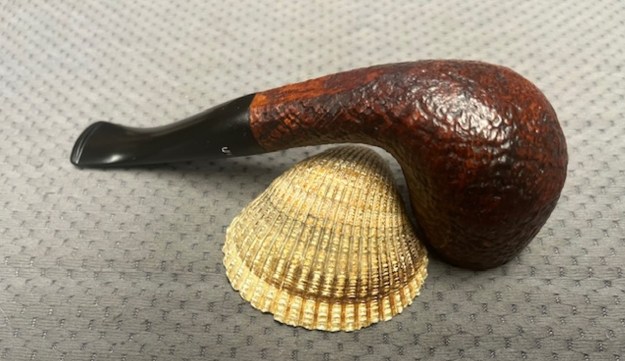
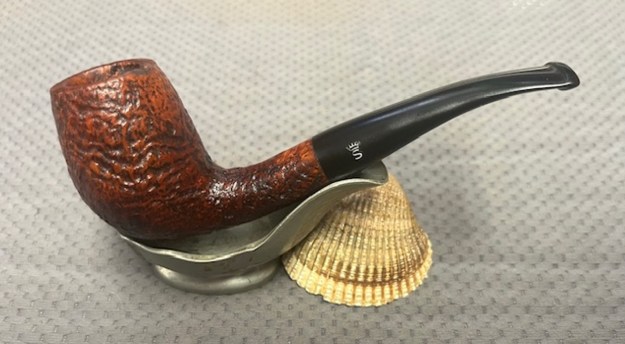
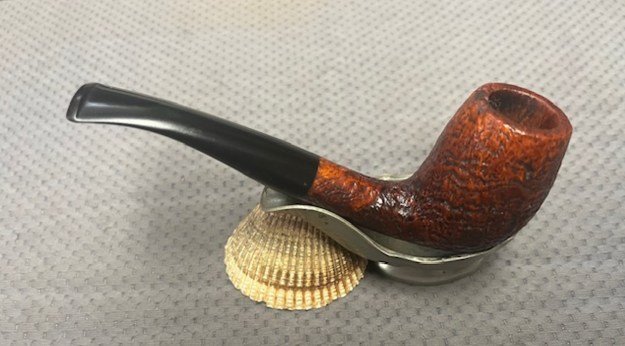
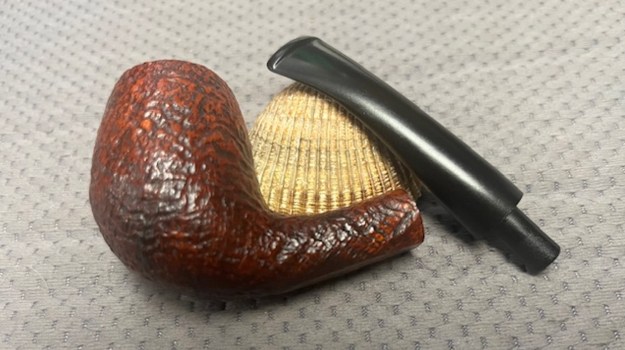
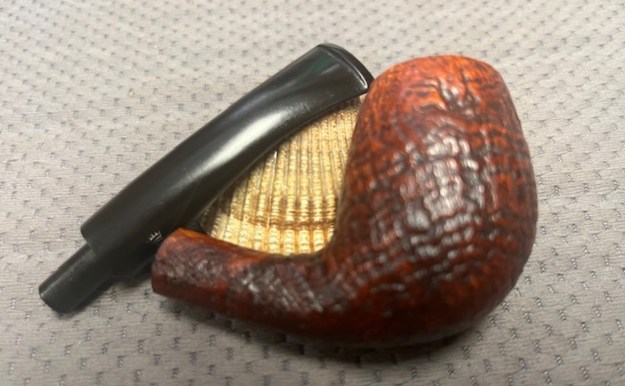
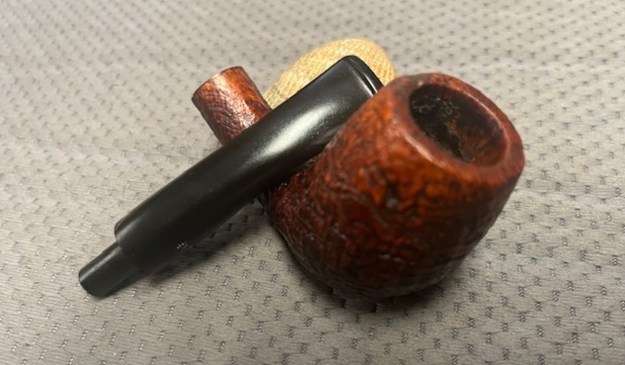
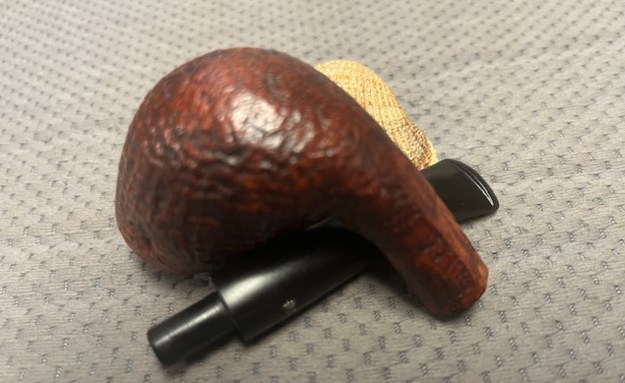
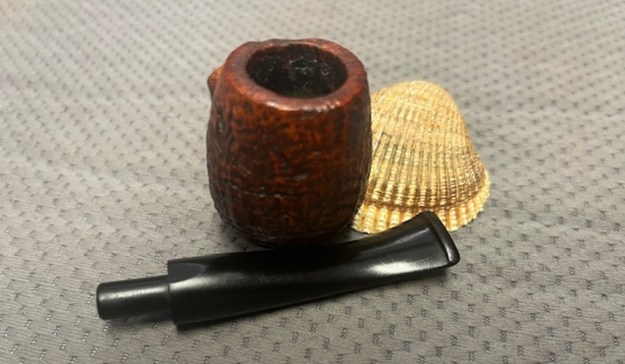
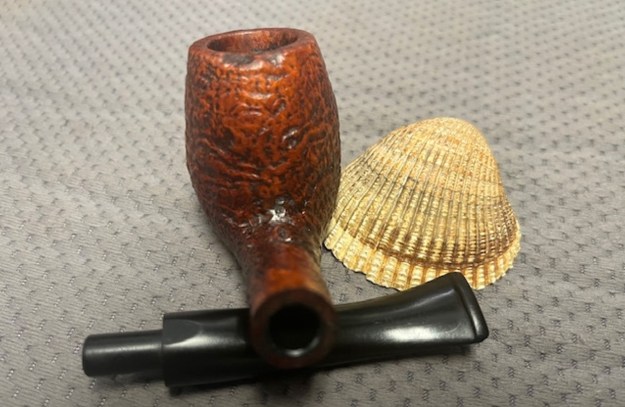
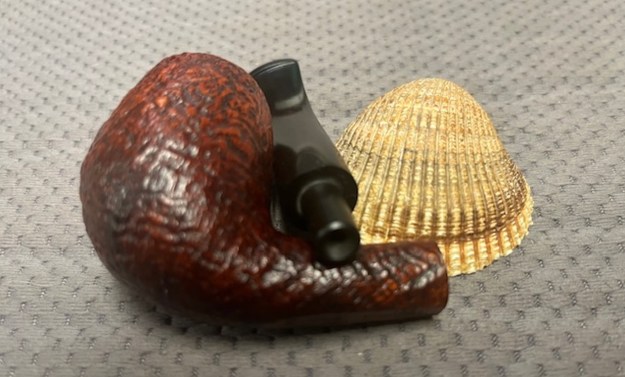
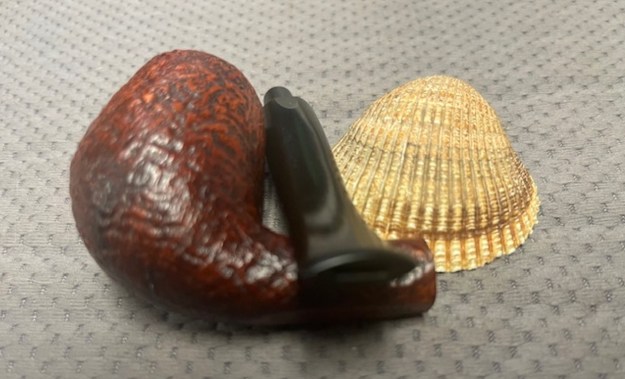
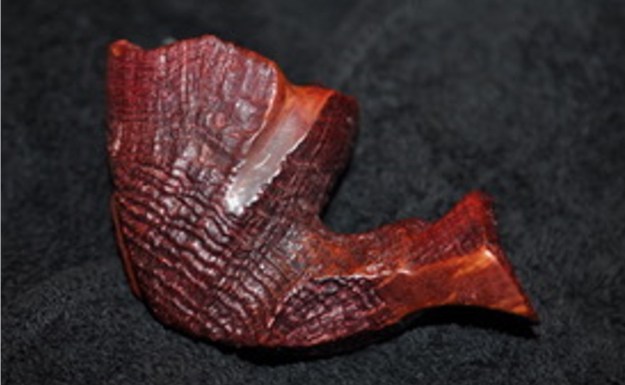
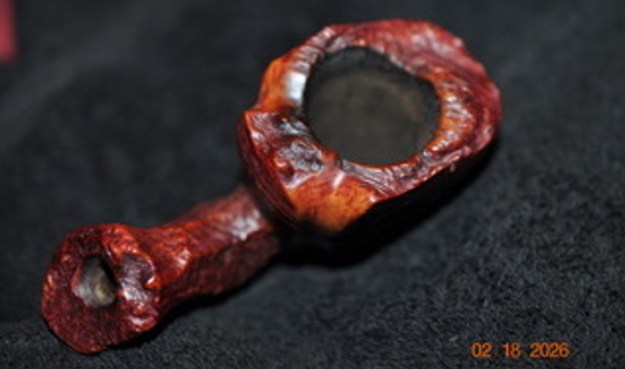
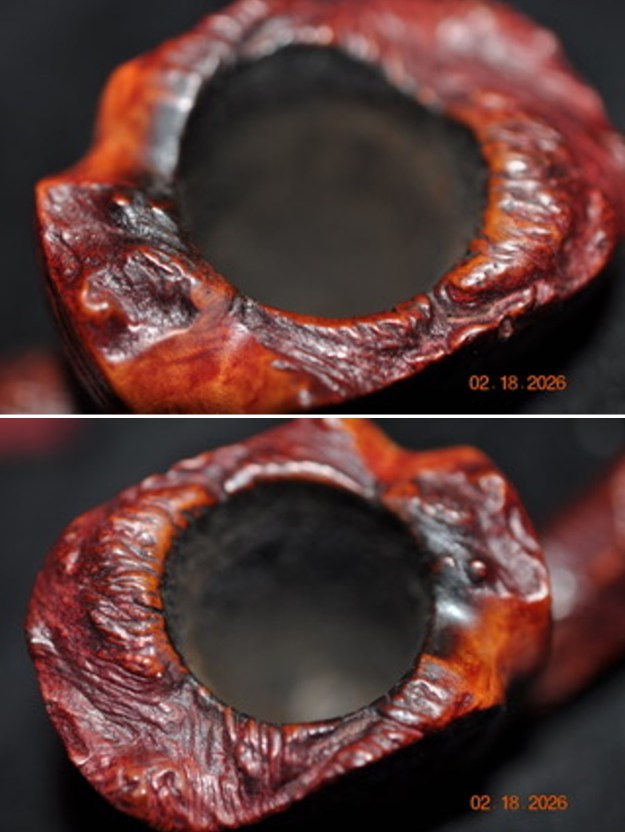
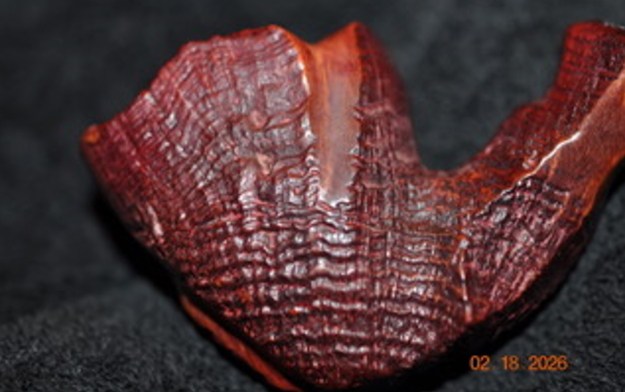
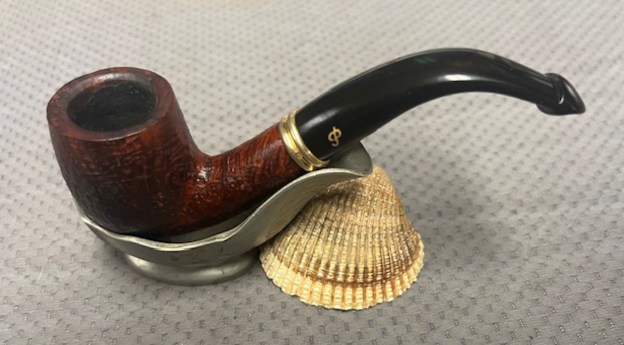
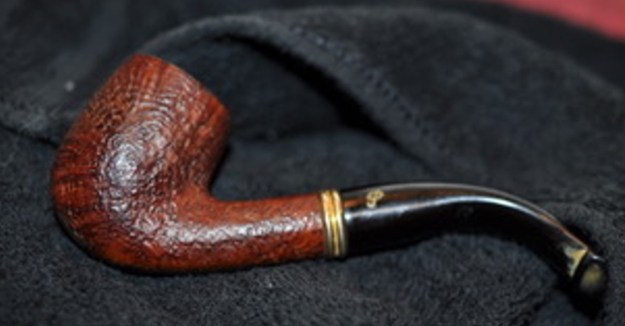
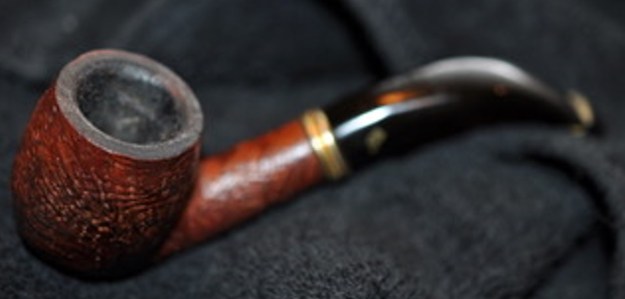
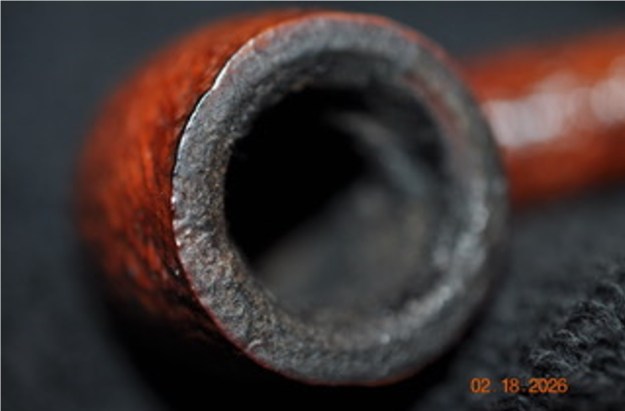
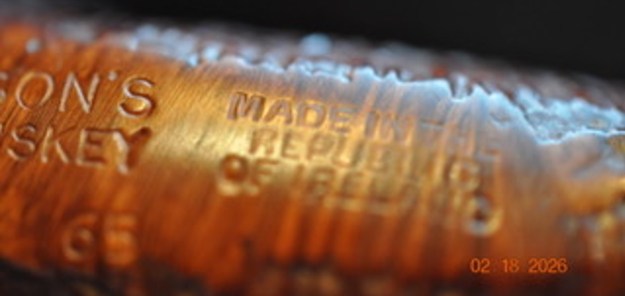
This particular Peterson’s sandblast pipe was purchased on 01/20/2026 from a Facebook seller in Quaker Town, Pennsylvania, USA. It really is another beautiful smaller Bent Billiard with a gentle curve to the shank and stem. The bowl is sandblasted and stained with a contrast of browns. It is stamped on a smooth panel on the underside of the shank and reads Peterson’s [over] Irish Whiskey [over] the shape number 65. That is followed Made in the [over] Republic [over] of Ireland. The bowl had a thick cake and an overflow of thick lava in the sandblast rim top and inner edge of the bowl. There was grime ground into the finish and dust and debris the sandblast. There was a triple ring band on the shank – two brass sandwich a flat yellow band. The vulcanite bent taper stem has the gold “P” logo on the left side. It was oxidized, calcified and had light tooth marks and chatter on both sides of the stem ahead of the button. Jeff took photos of the pipe before he started his work on it. Jeff took photos of the bowl, rim top and the stem to show the condition of the pipe when we received it. You can see the thick cake in the bowl and the thick lava on the sandblast rim top and inner edge. He also captured the condition of the stem showing the oxidation, calcification and tooth chatter and oxidation on the top and underside ahead of the button. Jeff took photos of the sides and heel of the bowl to show the grain in the sandblast. It is a beautiful bowl. It is nice looking bent billiard and one is eye catching. Have a look. The next photos Jeff took show the stamping on a smooth portion on the underside of the shank. The stamping is faint in places but still readable as noted above. I looked in my usual spots on Pipephil’s stamping and logo site as well as Pipedia to see what I could find on the Irish Whiskey line. There was nothing on either of those sites that I could find on the line.
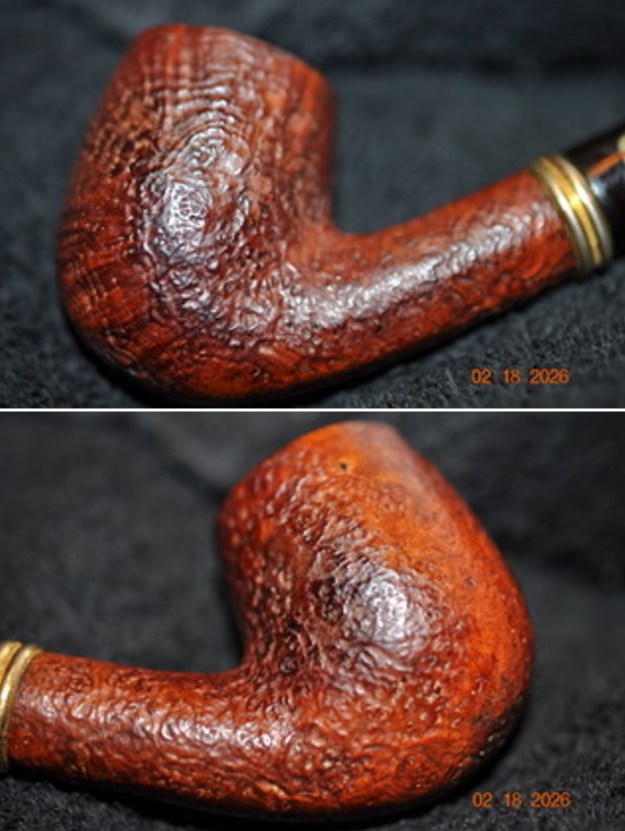
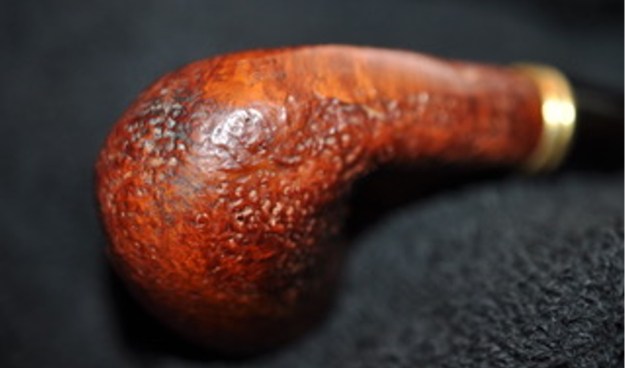
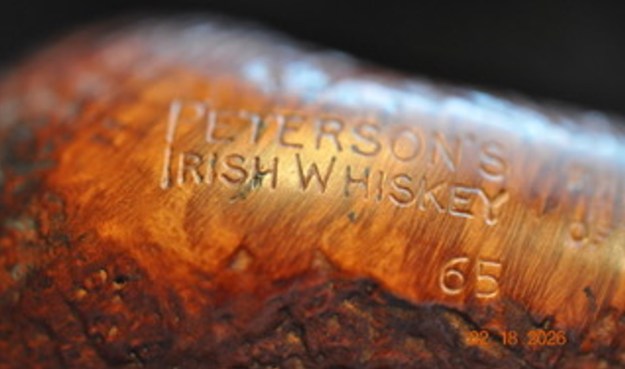
I googled the Peterson’s Irish Whiskey Line and found a link to the line on Mark Irwin’s Peterson’s Pipe Notes site (https://petersonpipenotes.org/sweet-petes-a-2015-gallery/). I turned to that and found the following information. I quote

The Irish Whisky line was available from 1997 to about 2005, and while the smooth finish was nice, the rustic has always popped for me and other Pete Nuts. When I saw not one but two of the rustic P-Lip Chubby 107s within a few weeks, I was amazed. Someday one will come around at the right time!

I then turned to The Peterson Pipe by Mark Irwin and Gary Malmberg. There on page 304 I found this information.

Irish Whiskey (1997-2005) Tan polished finish or sandblast line with brass domed double ring band, P-lip or fishtail mouth piece with brass P.

This gave me information regarding the date of the line. It was available between 1997-2005 and the description fit the pipe I have in hand. It is a sandblast pipe with the bands as described and a taper P-lip with a brass P logo on the left side of the stem.

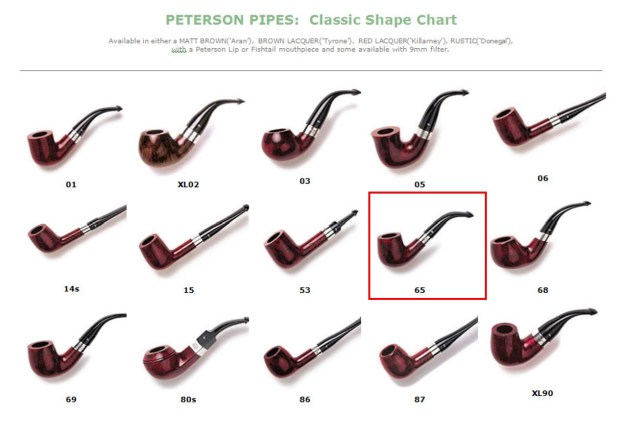
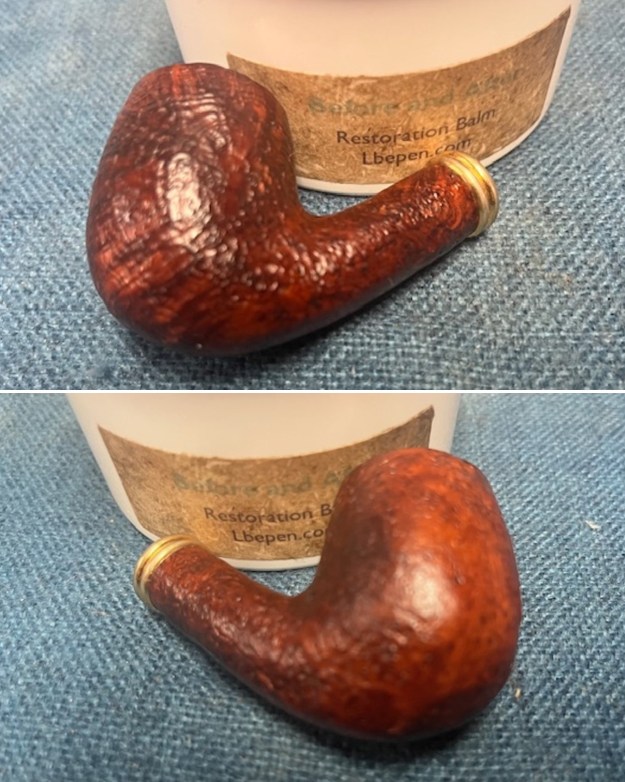
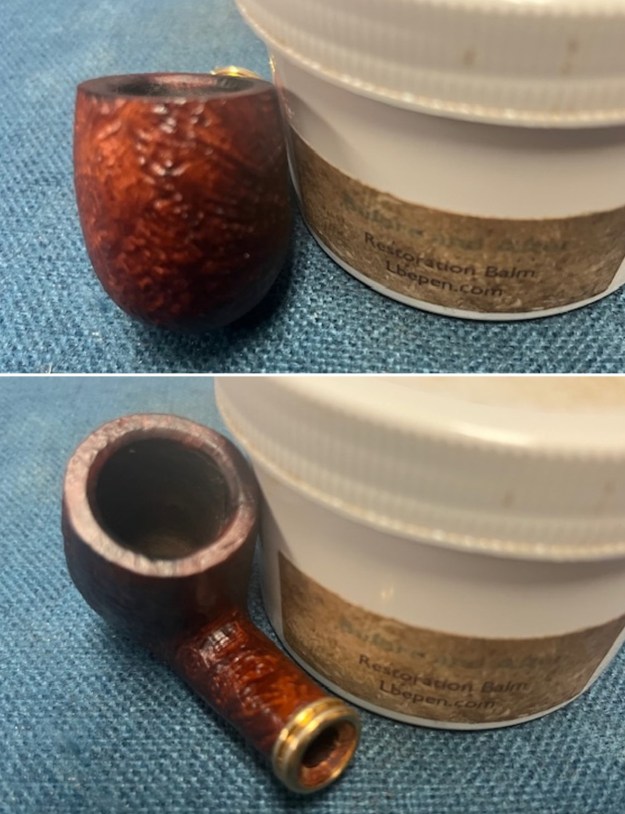
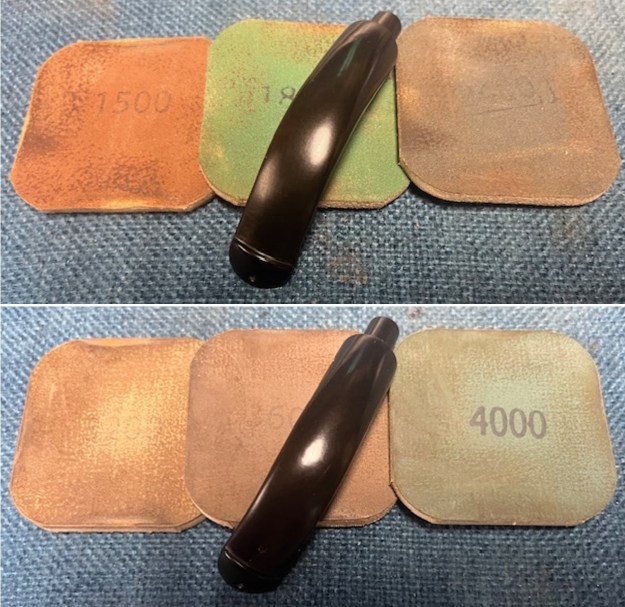
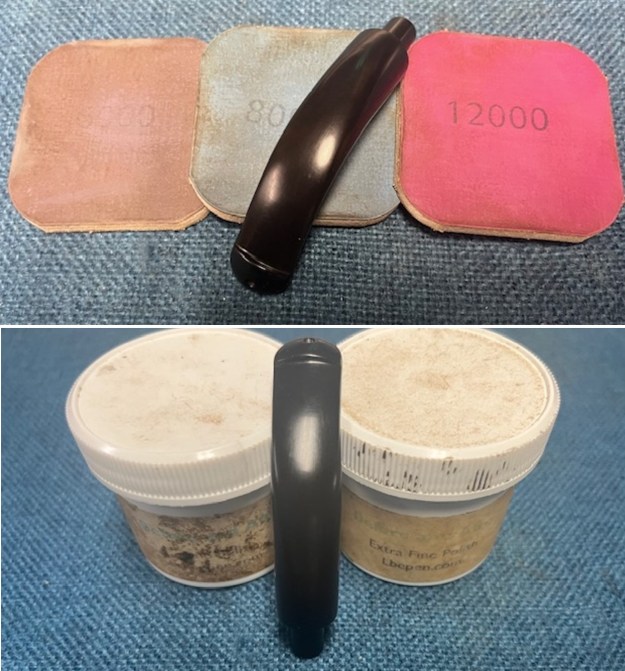
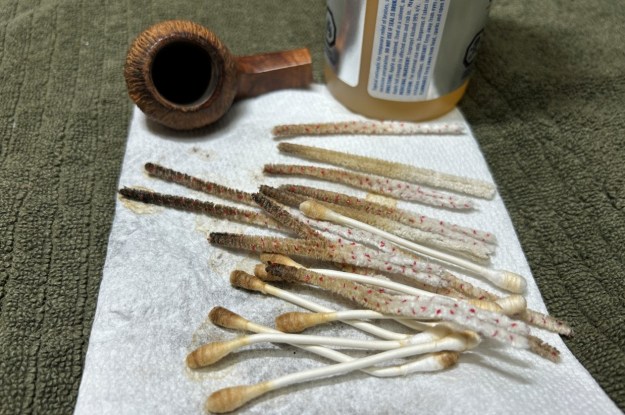
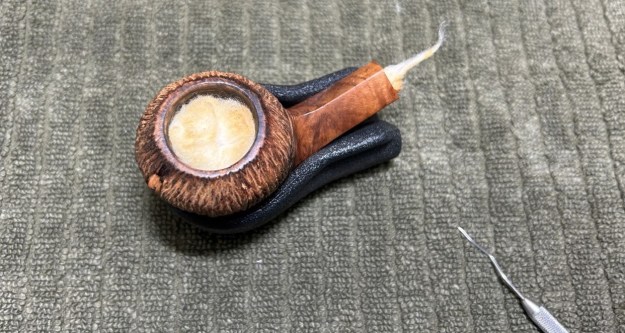
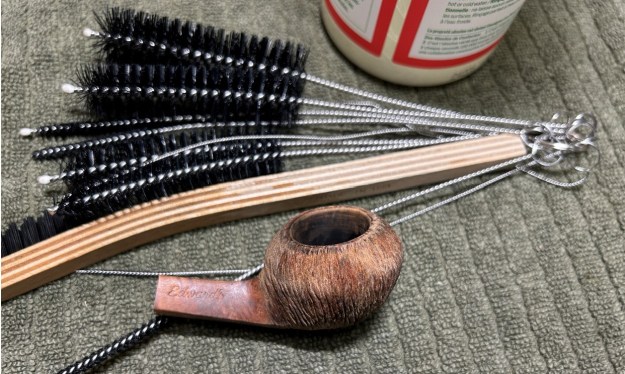
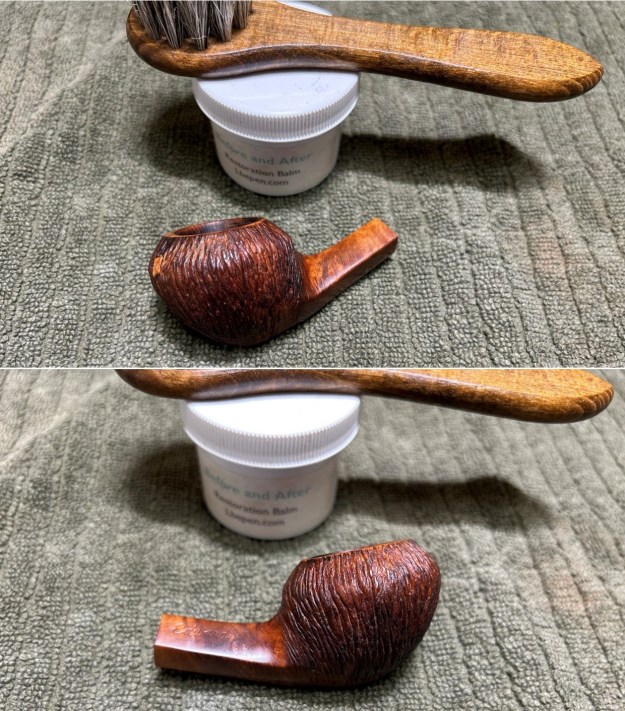
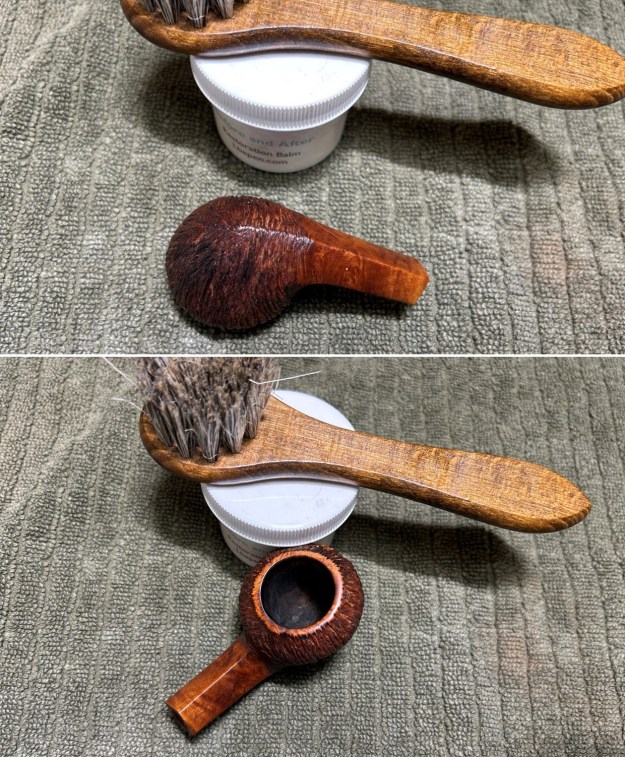
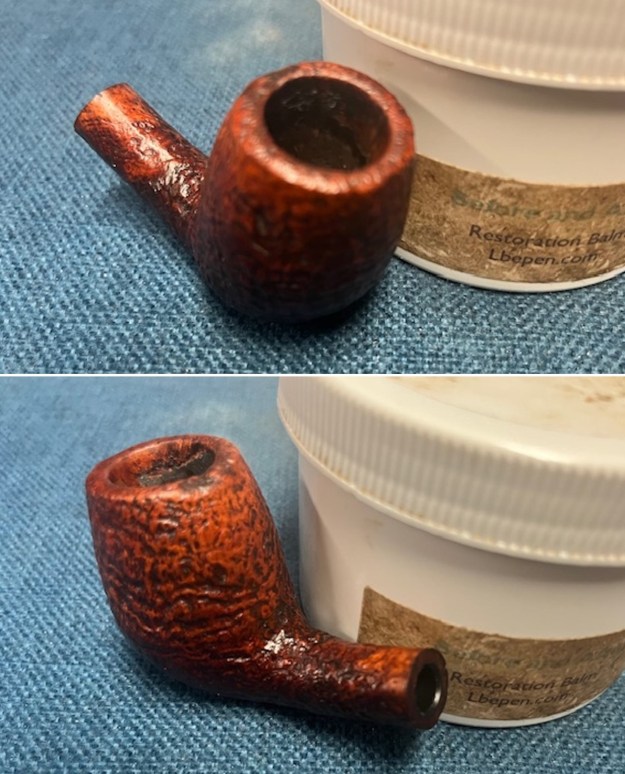
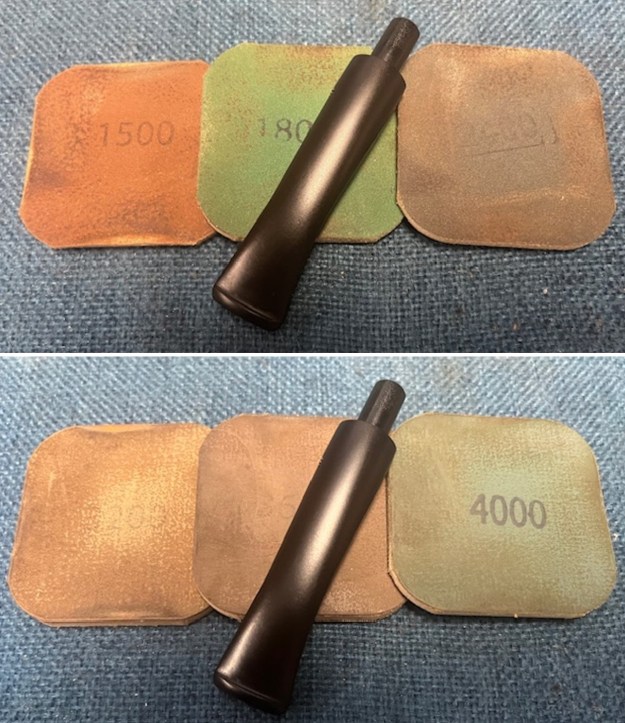
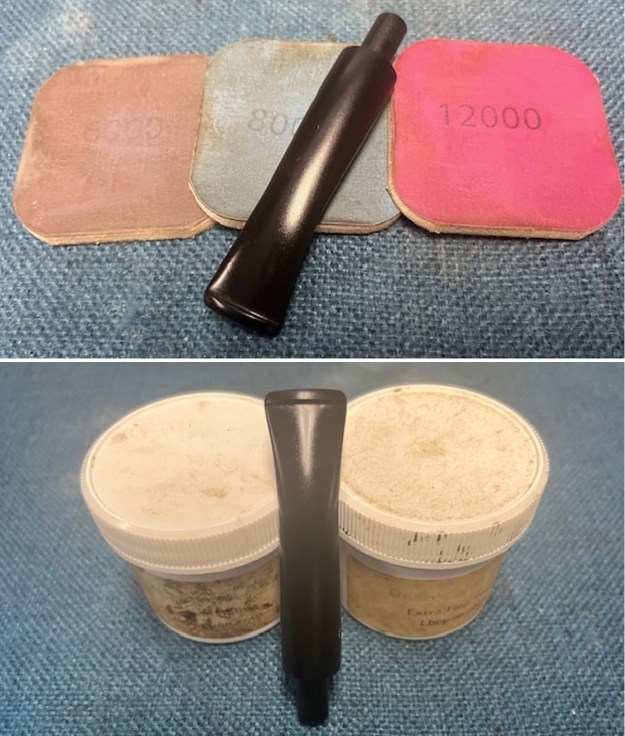
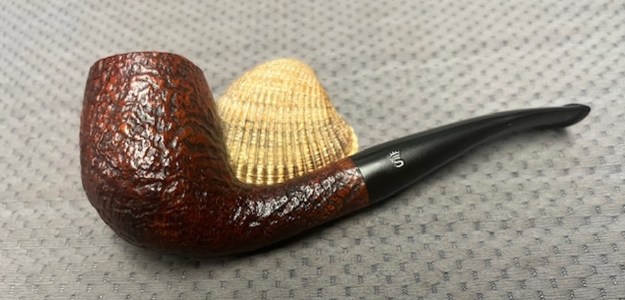
I did find a shape chart on the Pipedia site (https://pipedia.org/wiki/Peterson) that had the shape number 65 shown on it. I have drawn a red box around the shape on the second row of the chart below.Jeff had cleaned up the pipe following his normal cleaning process. In short, he reamed the bowl with a PipNet pipe reamer and took it back to briar. He then cleaned up the reaming with a Savinelli Fitsall Pipe Knife. He scrubbed the bowl with undiluted Murphy’s Oil Soap with a tooth brush. He worked over the lava and debris on the rim top and shank end and was able to remove it. He rinsed it under running warm water to remove the soap and grime. He cleaned out the inside of the shank and the airway in the stem with alcohol, cotton swabs, shank brushes and pipe cleaners. He scrubbed the stem with Soft Scrub and cotton pads to remove the debris and oils on the stem. He soaked it in Briarville’s Pipe Stem Deoxidizer to remove the remaining oxidation. He rinsed it with warm water and dried it off. I took photos of the pipe once I received it. It really looked good. I took close up photos of the stem and the rim top to show both how clean they were. The rim top and bowl look good. I took a photo of the stamping on the underside of the shank. You can see from the photo that it is faint but readable. I took a photo of the parts to give a sense of the beauty of the pipe.The bowl was in such good condition after the clean up that I worked some Before & After Restoration Balm into the surface of the briar with my finger tips and a horse hair shoe brush to get into the crevices of the sandblast. The product is incredible and the way it brings the grain to the fore is unique. It works to clean, protect and invigorate the wood. I polished the stem with micromesh sanding pads – dry sanding it 1500-12000 pads. I wiped it down with Obsidian after each pad to remove the dust and polishing debris. I polished it with Before After Pipe Polish – both Fine and Extra Fine. I gave it another coat of Obsidian Oil. This Republic Era Peterson’s Irish Whiskey 65 Bent Billiard with three rings on the shank and a vulcanite taper stem with a P logo on the left side turned out very nice. The mix of brown stains highlights the grain in the sandblast around the bowl sides and bottom. The rim top and edges look very good. The finish on the pipe is in `excellent condition. I put the stem back on the bowl and carefully buffed the pipe with Blue Diamond on the buffing wheel. I gave the bowl and stem multiple coats of carnauba wax on the buffing wheel and followed that by buffing the entire pipe with a clean buffing pad. I hand buffed the pipe with a microfiber cloth to deepen the shine. The finished Peterson’s Irish Whiskey 65 Bent Billiard is very nice and feels great in the hand. Give the finished pipe a look in the photos below. It is a nice pipe whose dimensions are Length: 5 inches, Height: 1 ½ inches, Outside diameter of the bowl: 1 1/8 inches, Chamber diameter: ¾ of an inch. The weight of the pipe is 38 grams/1.31 ounces. Thanks for walking through the restoration with me as I worked over another beautiful pipe. This one will be going on the rebornpipes store, in the Irish Pipe Makers Section shortly. If you are interested in adding it to your collection let me know by message or by email to slaug@uniserve.com. Thanks for your time.

As always, I encourage your questions and comments as you read the blog. Thanks to each of you who are reading this blog. Remember we are not pipe owners; we are pipe men and women who hold our pipes in trust until they pass on into the trust of those who follow us.

New Life for an Edward’s 20 Algerian Briar Bulldog


by Kenneth Lieblich

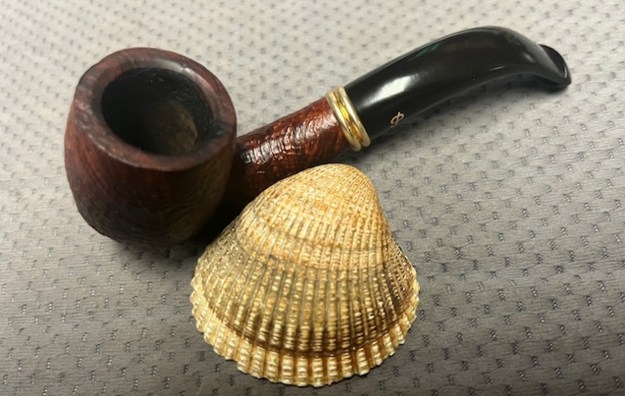
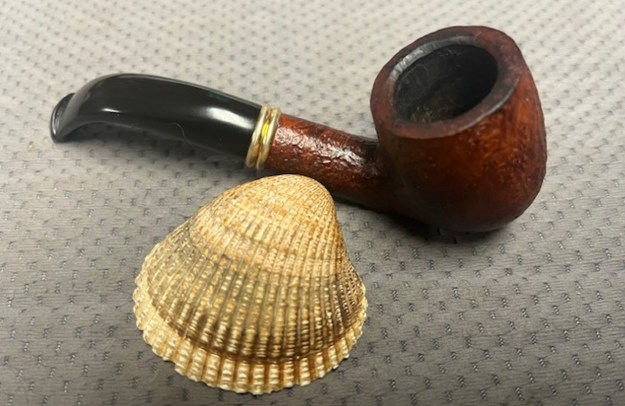
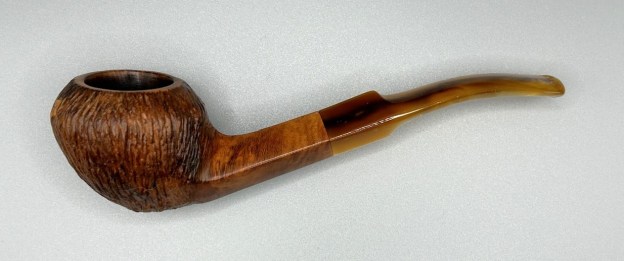
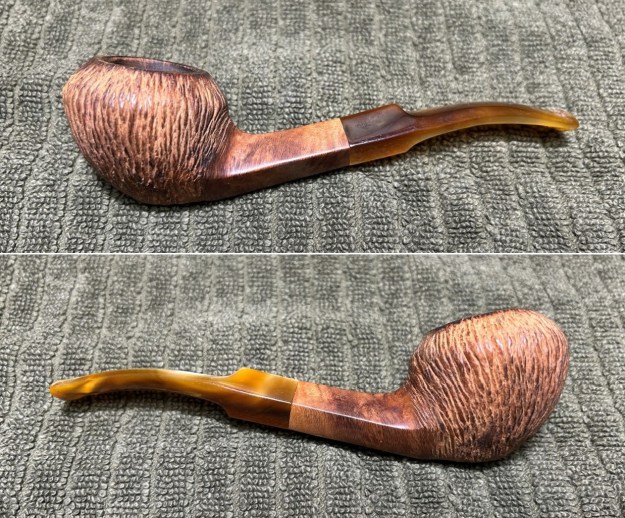
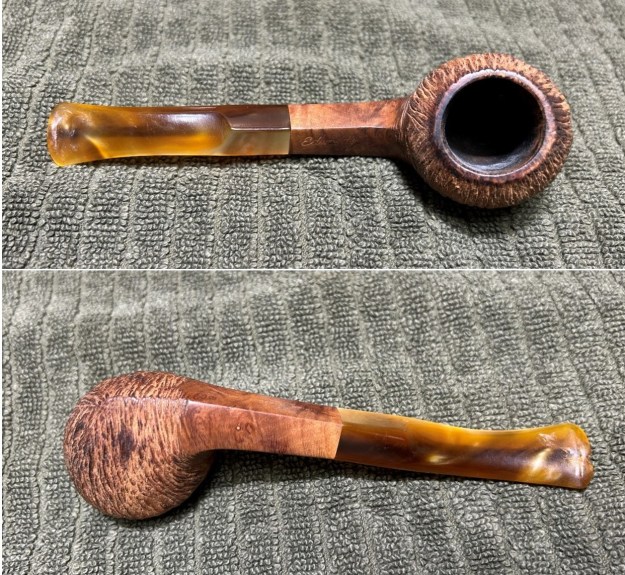
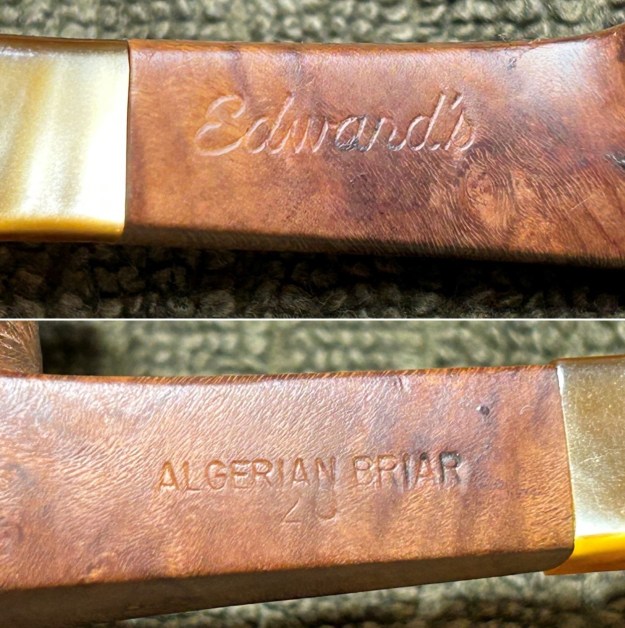
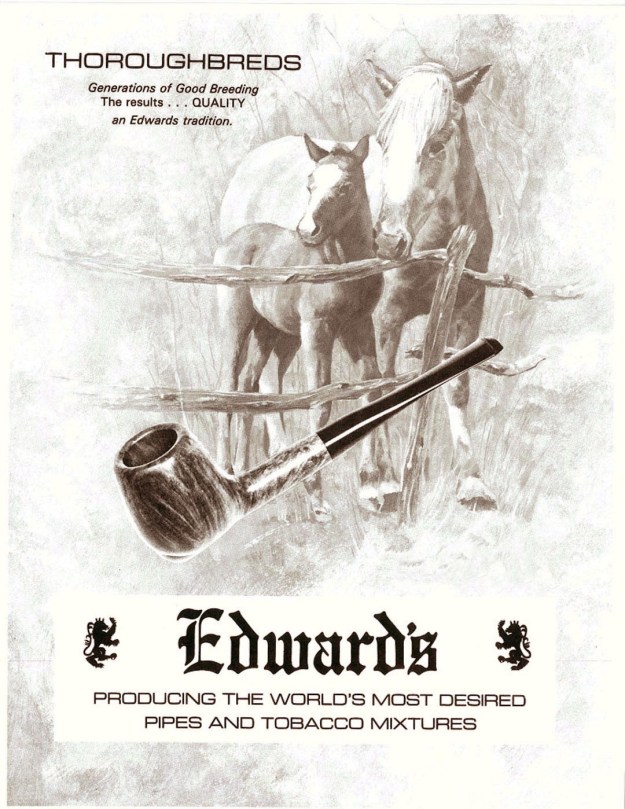
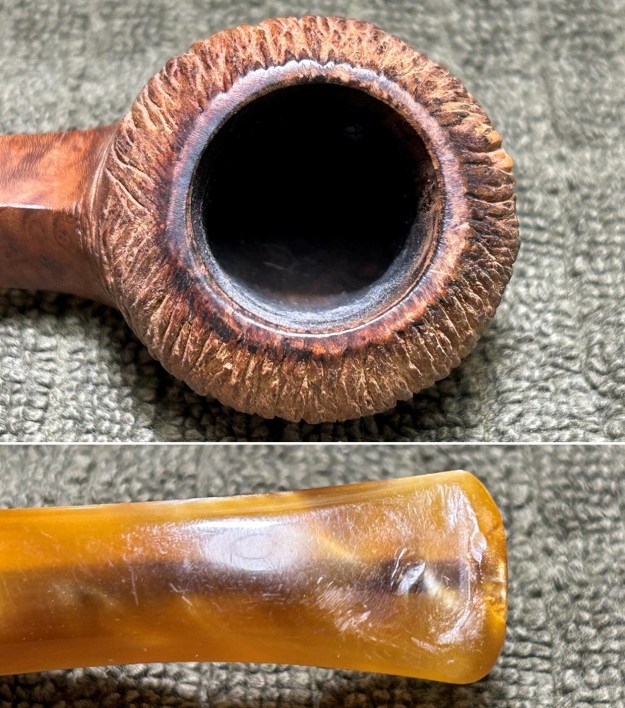
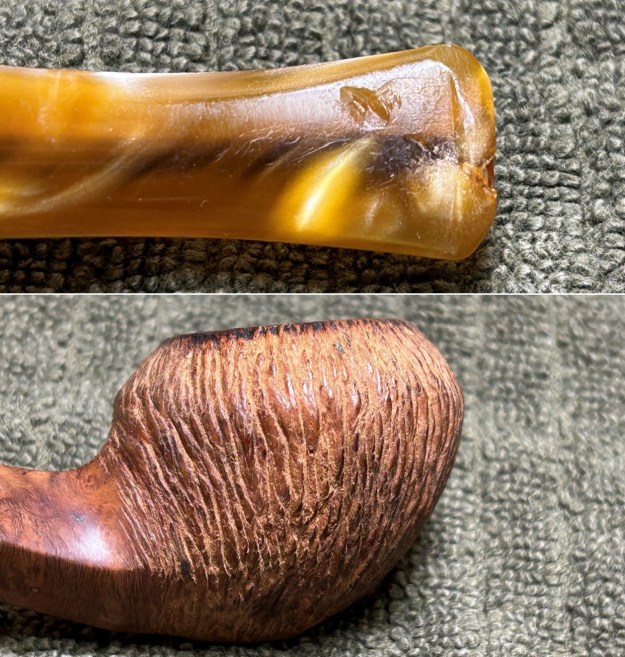
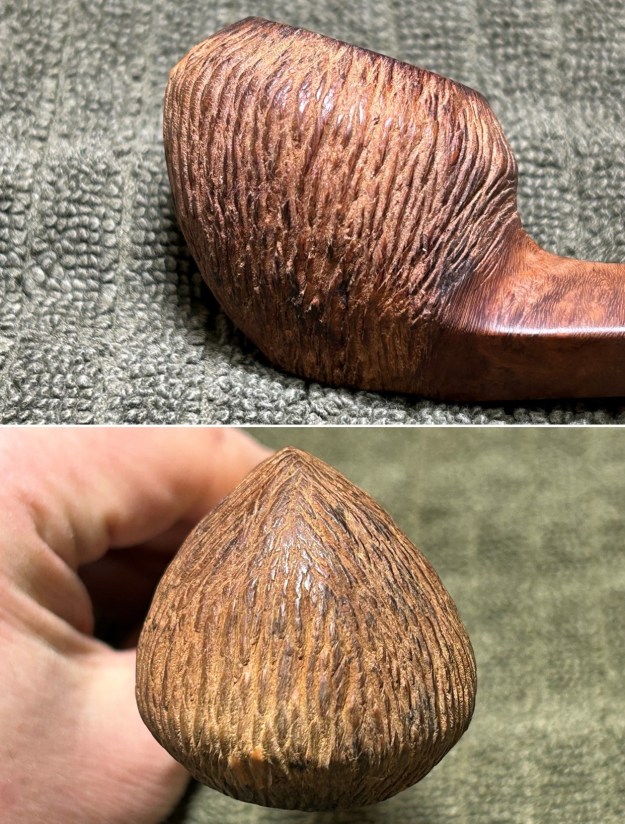
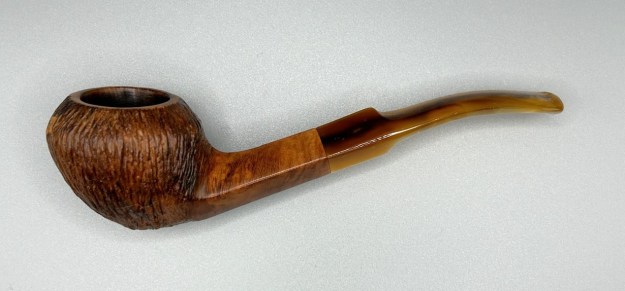
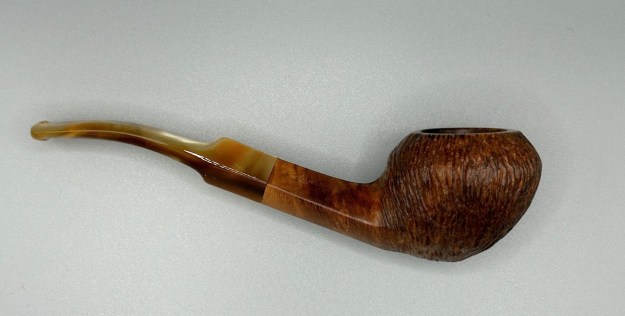
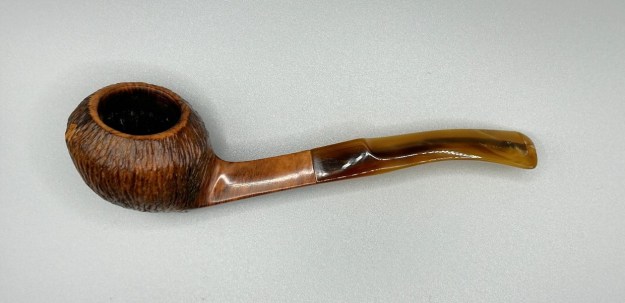
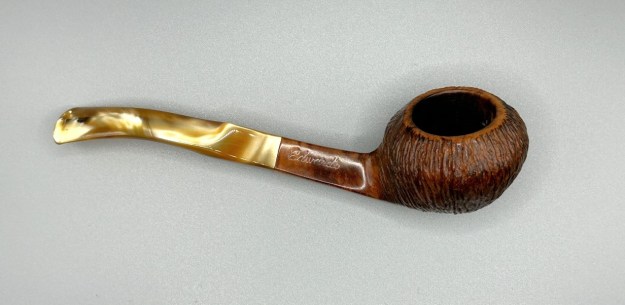
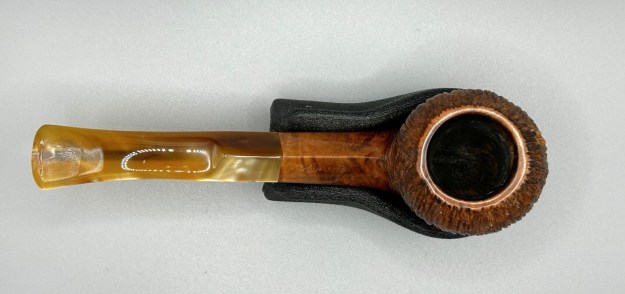
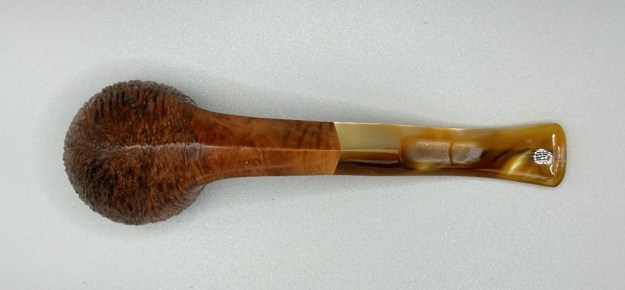
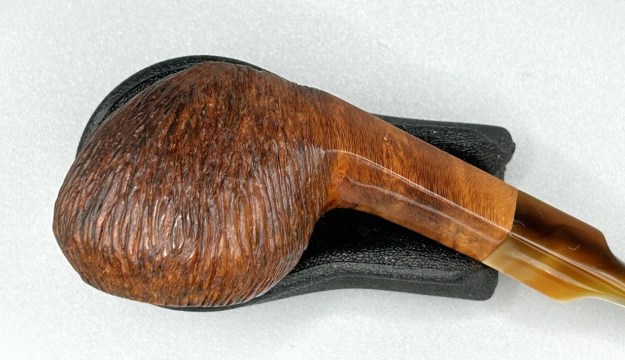
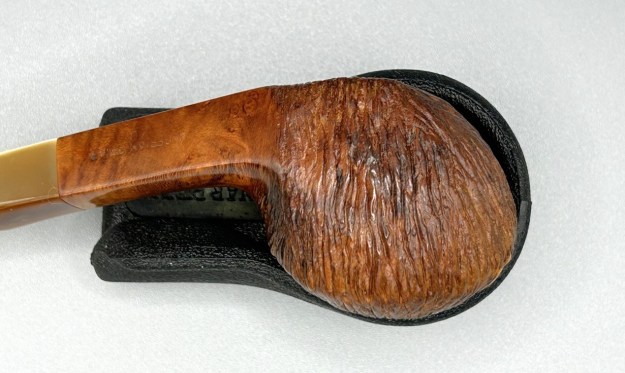
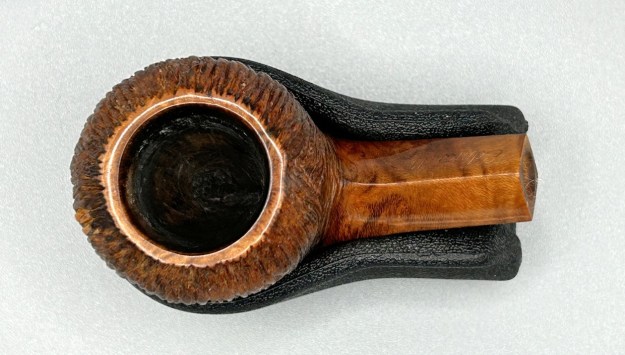
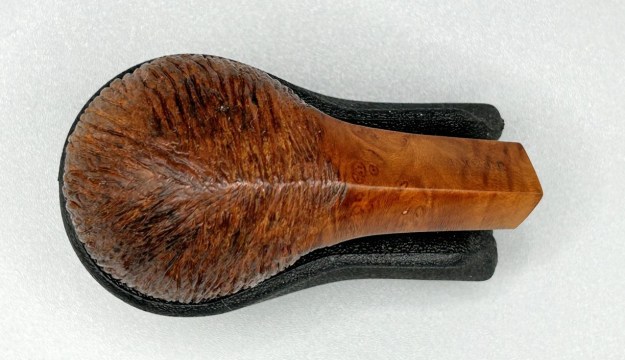
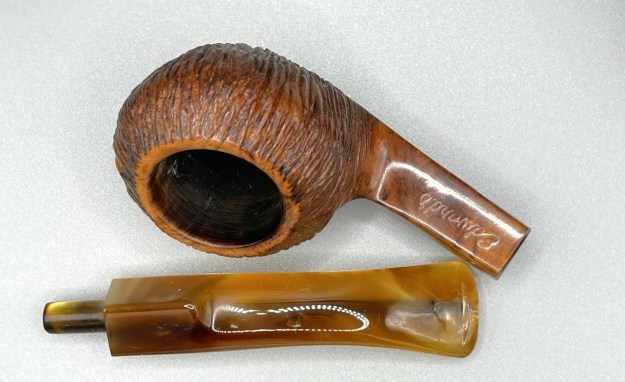
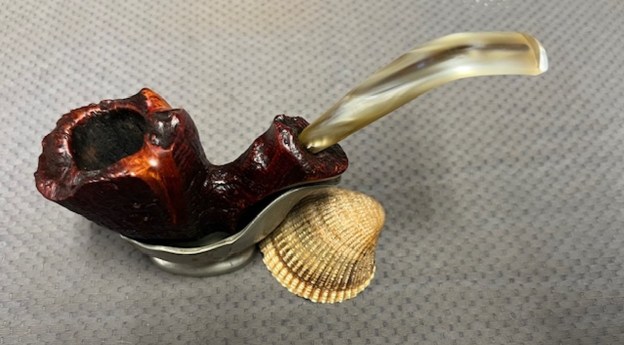
Next on my workbench is a pipe that has been in my boxes for a long, long time. But there comes a time when a pipe calls out and wants to be restored. That’s what happened for this charming bulldog, made by the American pipe house, Edward’s. It has an interesting rustication on the bowl and a variegated acrylic stem which complements the stummel well. I always thought highly of this dapper pipe and I’m sorry to see it go, but happy to give it new life in someone else’s hands. Let’s look at the markings. On the right topside of the shank, we see Edward’s. On the left underside of the shank, we see Algerian Briar [over] 20. I can only assume that the number 20 is a shape number, but wasn’t able to find any official confirmation of that. No markings on the stem.I knew about Edward’s, but thought it was a good idea to refresh my memory. At Pipephil, they provided this tidbit of information:

Edward’s Pipes, headquartered in Tampa, FL, got its start importing pipes from France and continued to do so from 1958 to 1963 when it started producing pipes in Florida from prime Algerian Briar, a practice they continue to this day (2010). Randy Wiley, pipecarver in the USA, got his start at Edward’s.

At Pipedia, they write the following:

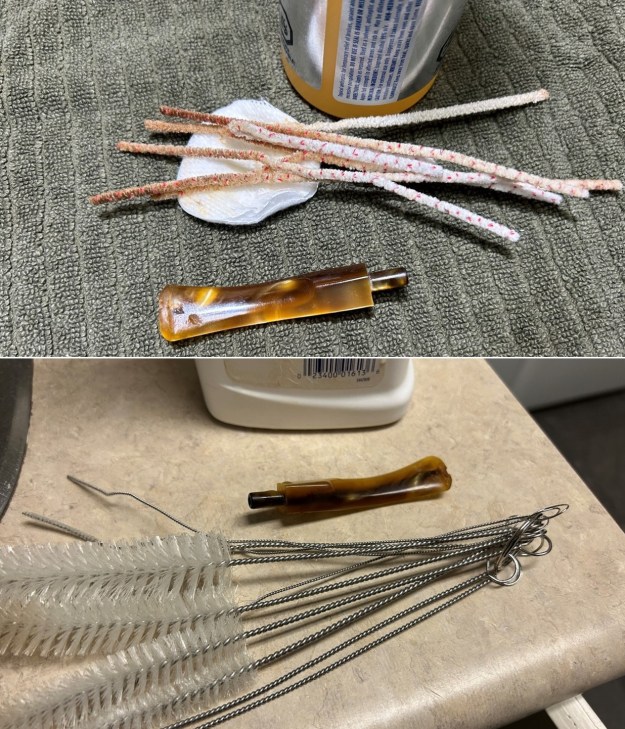
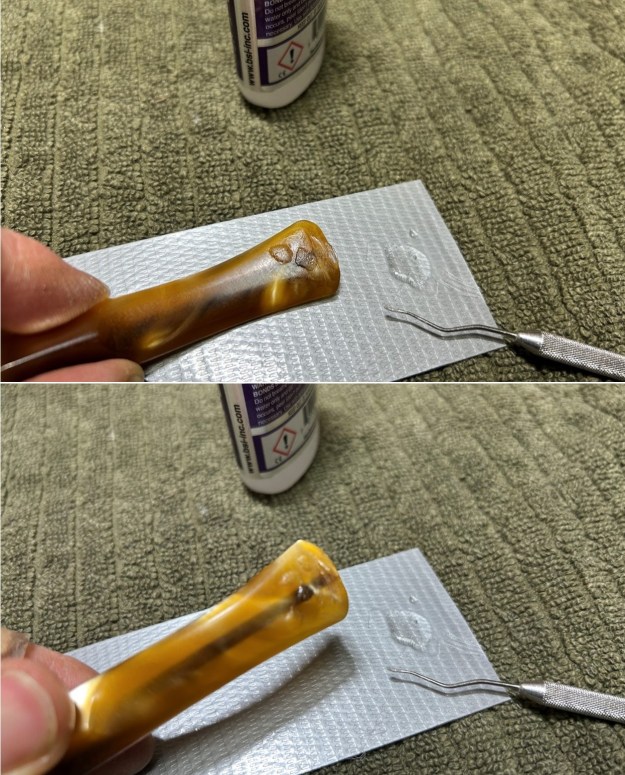
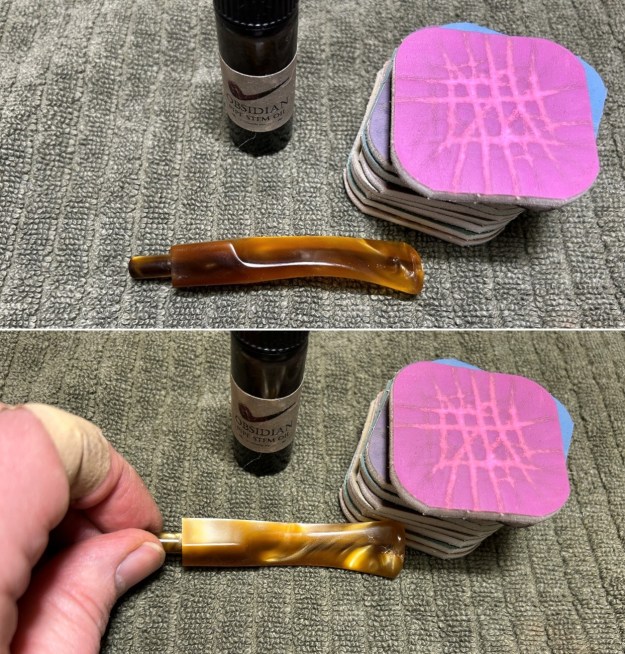
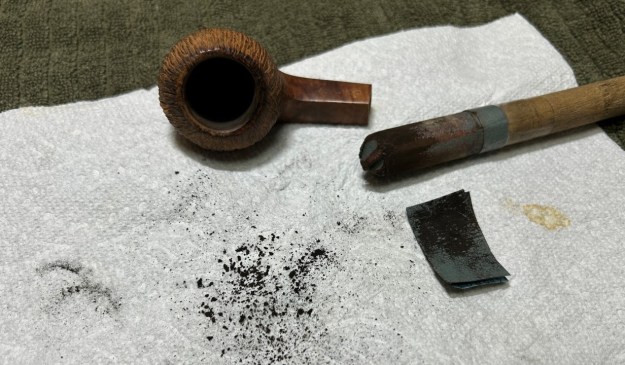
Edward’s pipes were originally produced in Saint-Claude, France when Francais [sic] actually was a world-class pipe maker with longstanding business & political connections to Colonial Algeria that allowed them to obtain the finest briar. During the tumultuous 1960’s, Edward’s created a business model to offer the finest briar available in both Classic and Freehand shapes – all at a fair price. They bought the company & equipment and cornered the market on the finest, choice Algerian Briar just before the supply vanished in political turmoil of Algeria’s independence. Edward’s packed up both machinery and briar-treasure to America, safely caching the essentials to create a new pipe-making dynasty. This was a coup, for the 70’s and 80’s were grim years for pipe smokers as quality briar all but disappeared. Edward’s Design Philosophy is hard to pin down, think of their style as the “American Charatan” with unique & clever twists all their own. Today, they fashion pipes in several locations across the USA. All of Edward’s pipes are Algerian Briar – a fact very few pipe companies can claim, and all are oil-cured utilizing natural finishes – no strange concoctions are used to interfere in your tastebud’s dance with the briar. Algerian, Calabrian, Sardinian, Corsican – take your pick, but Algerian Briar is generally considered the finest smoking briar ever used. When combined with oil-curing, Algerian takes on a magical quality that even Alfred Dunhill recognized as far back as 1918 as the choice for both his Bruyere and Shell.How about the condition? The stummel is in very good condition – the pipe was well maintained. There is a bit of cake in the bowl and lava on the rim, but truly not that much. There is a noticeable fill on the front of the bowl, but I am happy to leave that as it is. The stem is a bit trickier. It’s dirty – although no more than average. However, the previous owner must have been a clencher. There are some serious chomp marks in this stem, but I can resolve that. I used isopropyl alcohol on a few cotton rounds and wiped down the stem to provide an initial cleaning of filth before moving on to the next steps. The primary cleaning came next. I disinfected the inside of the stem with both pipe cleaners and cotton swabs dipped in lemon-infused 99% isopropyl alcohol. I scrubbed thoroughly to make sure the interior was very clean. However, I also used some tube brushes and cream cleanser to really scrub the insides. That helped! Since this stem was made of acrylic, there’s no oxidation and I can skip those steps and go right to repair. I set about fixing the marks and dents in the acrylic – of which there were quite a few. This was done by filling those divots with clear cyanoacrylate adhesive. I left this to cure and moved on.The penultimate step for the stem is sanding. First, with my set of needle files, I reduced the bulk of the cyanoacrylate repairs. I removed the excess adhesive as near to the surface as possible, without cutting into the acrylic. Following that, I used all nine of the micromesh sanding pads (1,500 through 12,000 grit) to sand out flaws, even out the acrylic, and provide gentle polishing of the finished surface. I also applied pipe-stem oil while using the last five micromesh pads. There was a wonderful shine on the stem when I was done.As the stem was (nearly) complete, I moved on to the stummel. The first step was to ream out the bowl – that is to say, remove all the cake inside the bowl. This accomplished a couple of things. First (and most obviously), it cleaned the bowl and provided a refurbished chamber for future smoking. Second, when the old cake was removed, I could inspect the interior walls of the bowl and determine if there was damage or not. This pipe was quite clean and needed very little reaming. I used a pipe knife and a piece of sandpaper taped to a wooden dowel. Collectively, these ensured that all the debris was removed.My next step was to remove the lava on the rim. For this, I took a piece of machine steel and gently scraped the lava away. The metal’s edge is sharp enough to remove what I need, but not so sharp that it damages the rim.

Similar to the stem, I then cleaned the stummel with both pipe cleaners and cotton swabs dipped in lemon-infused 99% isopropyl alcohol.I then decided to ‘de-ghost’ the pipe – that is to say, exorcize the remaining filth from the briar. I filled the bowl and the shank with cotton balls, then saturated them with 99% isopropyl alcohol. I let the stummel sit overnight. This caused the remaining oils, tars and smells to leach out into the cotton.To tidy up the briar, I wiped down the outside, using a solution of a pH-neutral detergent and some distilled water, with cotton rounds. I also used a toothbrush in the crevices. This did a good job of cleaning any latent dirt on the surface of the briar. The last step of the cleaning process was to scour the inside of the stummel with the same mild detergent and tube brushes. This was the culmination of a lot of hard work in getting the pipe clean.I used all nine micromesh pads (1,500 through 12,000 grit) to sand only the smooth (non-rusticated) parts of the stummel and finish it off. This sanding minimizes flaws in the briar and provides a beautiful smoothness to the wood. I rubbed some LBE Before & After Restoration Balm into the briar and let it sit for 30 minutes or so. The balm moisturizes the wood and gives a beautiful depth to the briar. I then buffed the stummel with a microfibre cloth. For the final step, I took the pipe to my bench polisher and carefully buffed it with three coats of conservator’s wax. This procedure makes the pipe look its best – the stummel sings and the stem glows.

All done! This Edward’s 20 Algerian Briar Bulldog looks fantastic again and is ready to be enjoyed by its next owner. I am pleased to announce that this pipe is for sale! If you are interested in acquiring it for your collection, please have a look in the ‘American’ section of the store here on Steve’s website. You can also email me directly at kenneth@knightsofthepipe.com. The approximate dimensions of the pipe are as follows: length 5⅞ in. (148 mm); height 1½ in. (38 mm); bowl diameter 1⅔ in. (42 mm); chamber diameter ⅞ in. (23 mm). The weight of the pipe is 1⅛ oz. (34 g). I hope you enjoyed reading the story of this pipe’s restoration as much as I enjoyed restoring it. If you are interested in more of my work, please follow me here on Steve’s website or send me an email. Thank you very much for reading and, as always, I welcome and encourage your comments.

Restoring a lovely Jess Chonowitsch Designed Stanwell Golden Danish 139


by Steve Laug

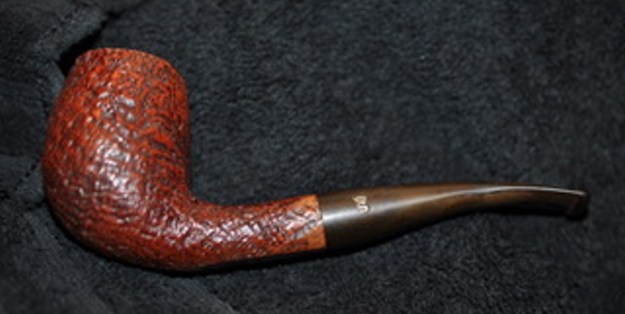
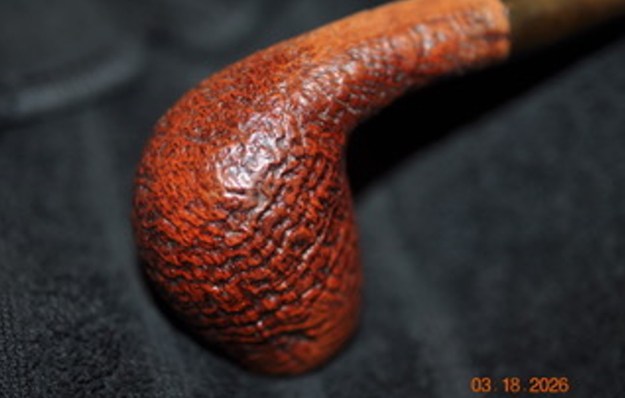
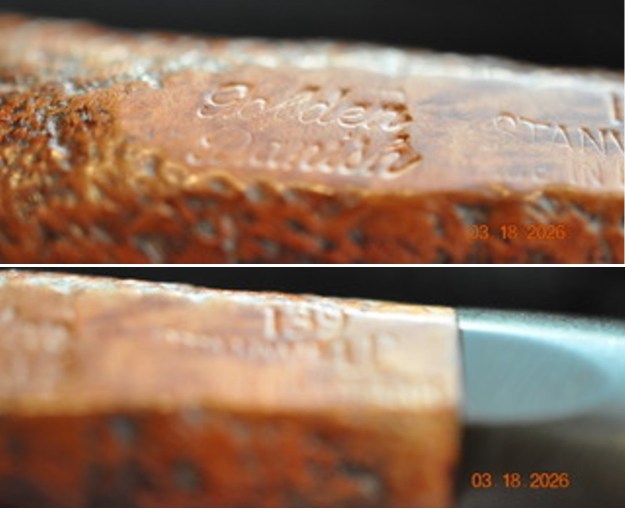
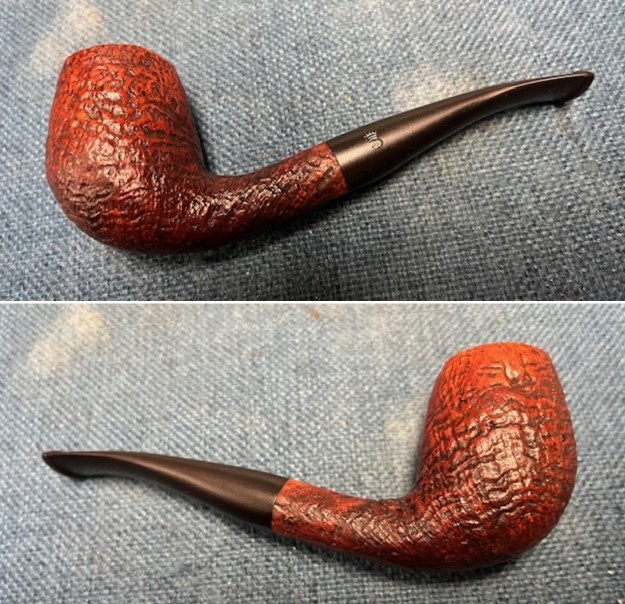
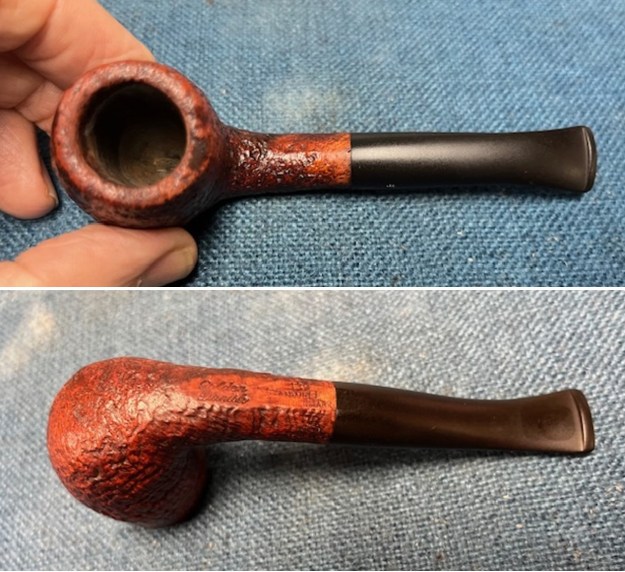
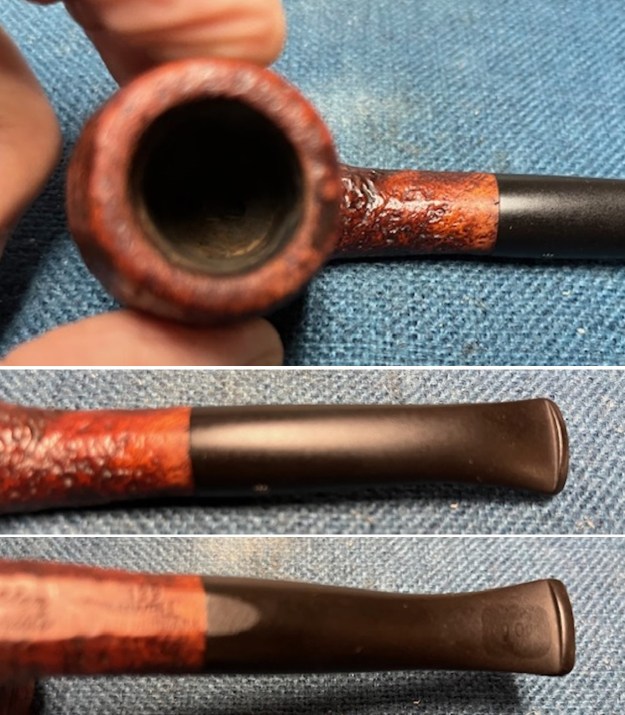
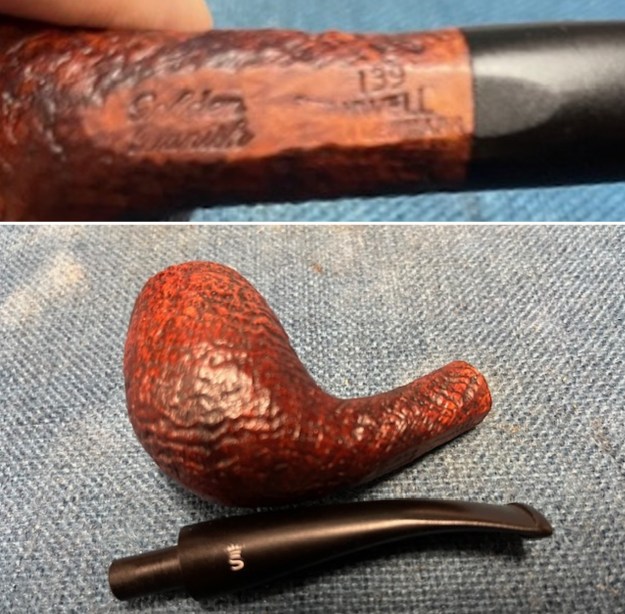
This particular Stanwell sandblast pipe was purchased on 01/20/2026 from a Facebook seller in Quaker Town, Pennsylvania, USA. It really is another beautiful smaller Bent Billiard with a gentle curve to the shank and stem. The bowl is sandblasted and stained with a contrast of browns. It is stamped on a smooth panel on the underside of the shank and reads Golden [over] Danish [followed by] 139 [over] Stanwell [over] Made In Denmark. The bowl had a moderate cake and some spots of lava overflow in the sandblast rim top and inner edge of the bowl. There was grime ground into the finish and dust and debris the sandblast. The vulcanite taper stem has the Stanwell Crown S logo on the left side. It was oxidized, calcified and had light tooth marks and chatter on both sides of the stem ahead of the button. Jeff took photos of the pipe before he started his work on it. Jeff took photos of the bowl, rim top and the stem to show the condition of the pipe when we received it. You can see the cake in the bowl and the spotty lava on the sandblast rim top and inner edge. He also captured the condition of the stem showing the tooth chatter and oxidation. Jeff took photos of the sides and heel of the bowl to show the grain in the sandblast and the smooth portions. It is a beautiful bowl. It is nice looking bent billiard and one is eye catching. Have a look. The next photos Jeff took show the stamping on a smooth portion on the underside of the shank. The stamping is faint in places but still readable as noted above.I read the history of the brand on Pipedia and would recommend that you have a look at it. It is a great read (https://pipedia.org/wiki/Stanwell).

I then turned to an article on Pipedia on the shape numbers and designers by the late Bas Stevens to see if I could find any info on the shape number and the designer of the pipe bearing the number 139 (https://pipedia.org/wiki/Stanwell_Shape_Numbers_and_Designers). I found the shape number there.

  1. 1 Billiard, slightly bent, conical bowl, by Jess Chonowitsch

The pipe is a sandblast slightly bent Billiard that was designed by Jess Chonowitsch. Now it was time to work on the pipe.

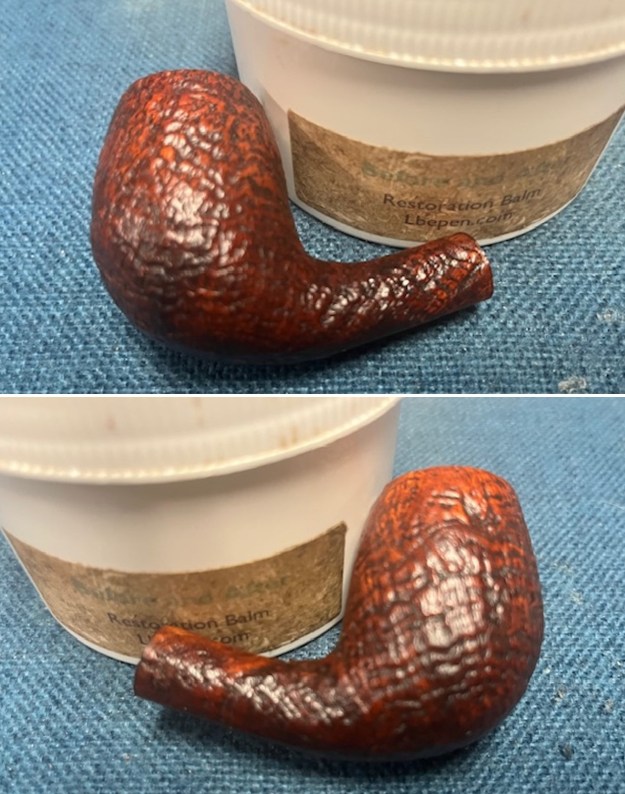
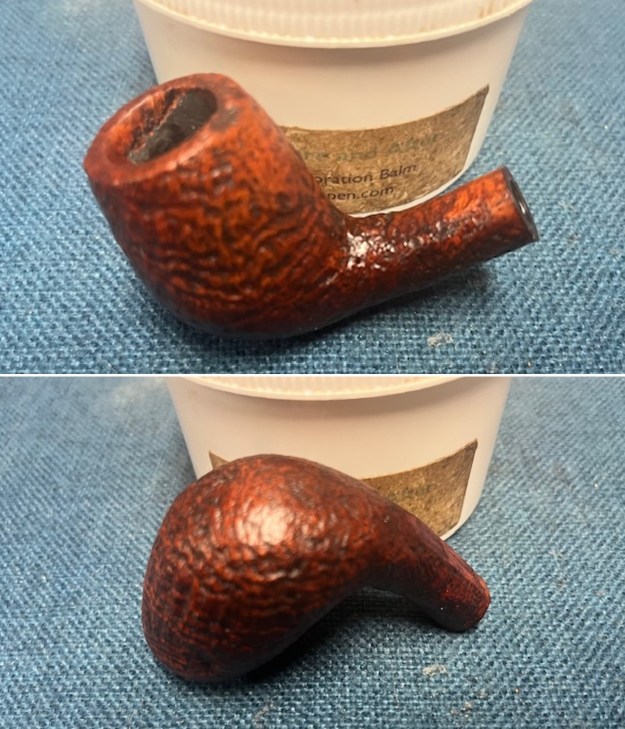
Jeff had cleaned up the pipe following his normal cleaning process. In short, he reamed the bowl and then cleaned up the reaming with a Savinelli Fitsall Pipe Knife. He scrubbed the bowl with undiluted Murphy’s Oil Soap with a tooth brush. He worked over the lava and debris on the rim top and shank end and was able to remove it. He rinsed it under running warm water to remove the soap and grime. He cleaned out the inside of the shank and the airway in the stem with alcohol, cotton swabs, shank brushes and pipe cleaners. He scrubbed the stem with Soft Scrub and cotton pads to remove the debris and oils on the stem. He soaked it in Briarville’s Pipe Stem Deoxidizer to remove the remaining oxidation. He rinsed it with warm water and dried it off. I took photos of the pipe once I received it. It really looked good. I took close up photos of the stem and the rim top to show both how clean they were. The rim top and bowl look good. There is some slight damage in the blasted rim top on the back of the bowl.I took a photo of the stamping on the underside of the shank. You can see from the photo that it is faint but readable. I took a photo of the parts to give a sense of the beauty of the pipe.The bowl was in such good condition after the clean up that I worked some Before & After Restoration Balm into the surface of the briar with my finger tips and a horse hair shoe brush to get into the crevices of the plateau and sandblast portions. The product is incredible and the way it brings the grain to the fore is unique. It works to clean, protect and invigorate the wood. I polished the stem with micromesh sanding pads – dry sanding it 1500-12000 pads. I wiped it down with Obsidian after each pad to remove the dust and polishing debris. I polished it with Before After Pipe Polish – both Fine and Extra Fine. I gave it another coat of Obsidian Oil. This Jess Chonowitsch designed Stanwell Golden Danish 139 Bent Billiard with a vulcanite taper stem turned out very nice. The mix of brown stains highlights the grain around the bowl sides and bottom. The rim top and edges look very good. The finish on the pipe is in `excellent condition. I put the stem back on the bowl and carefully buffed the pipe with Blue Diamond on the buffing wheel. I gave the bowl and stem multiple coats of carnauba wax on the buffing wheel and followed that by buffing the entire pipe with a clean buffing pad. I hand buffed the pipe with a microfiber cloth to deepen the shine. The finished Stanwell Golden Danish 139 is very nice and feels great in the hand. Give the finished pipe a look in the photos below. It is a nice pipe whose dimensions are Length: 5 inches, Height: 1 ¾ inches, Outside diameter of the bowl: 1 inch, Chamber diameter: ¾ of an inch. The weight of the pipe is 36 grams/1.27 ounces. Thanks for walking through the restoration with me as I worked over another beautiful pipe. This one will be going on the rebornpipes store, in the Danish Pipe Makers Section shortly. If you are interested in adding it to your collection let me know by message or by email to slaug@uniserve.com. Thanks for your time.

As always, I encourage your questions and comments as you read the blog. Thanks to each of you who are reading this blog. Remember we are not pipe owners; we are pipe men and women who hold our pipes in trust until they pass on into the trust of those who follow us.

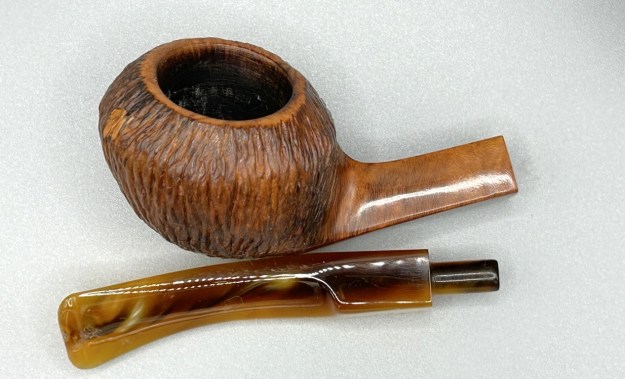
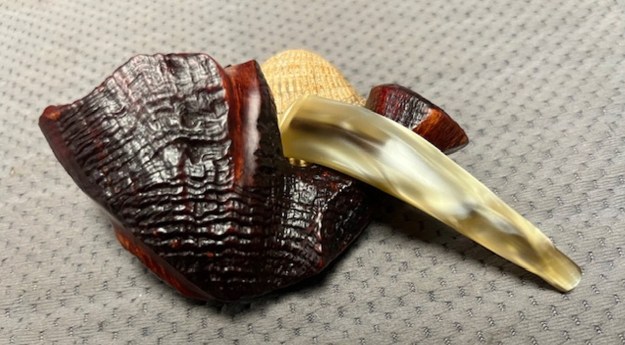
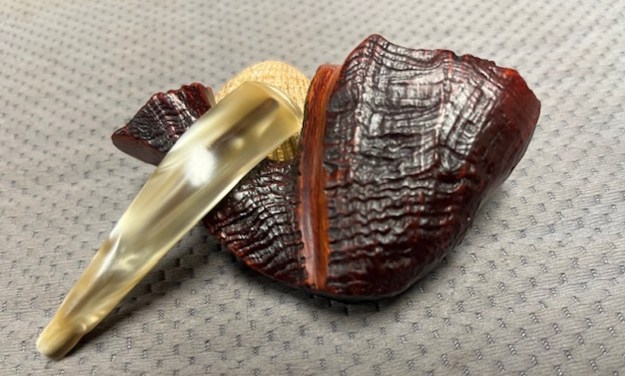
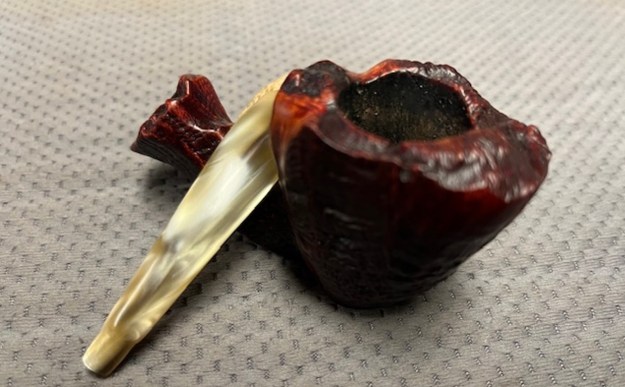
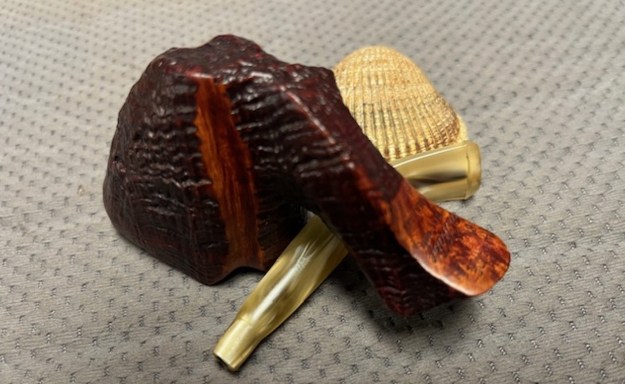
Restemming and Restoring a Danish Pride by Ben Wade Hand Made in Denmark Bowl


by Steve Laug

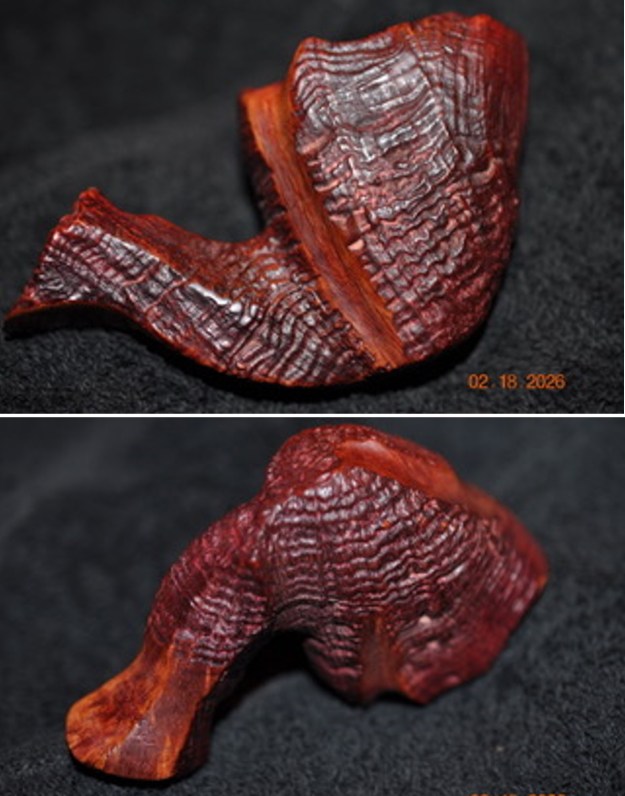
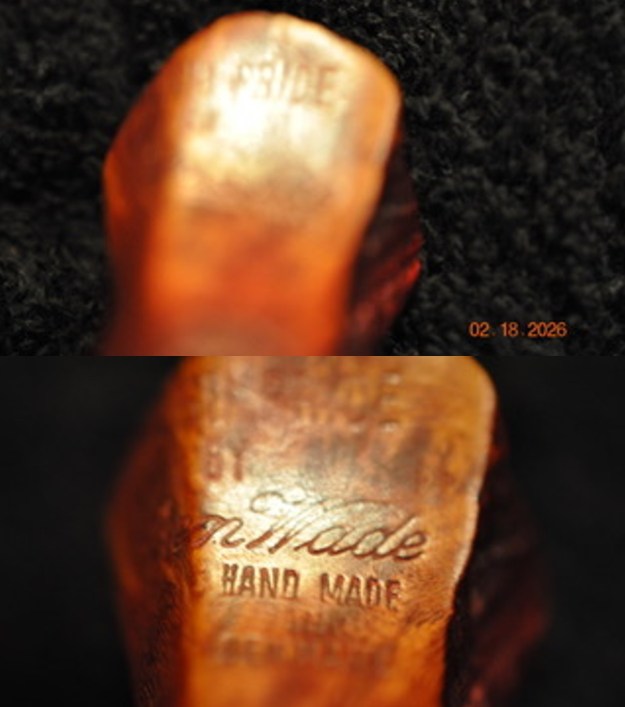
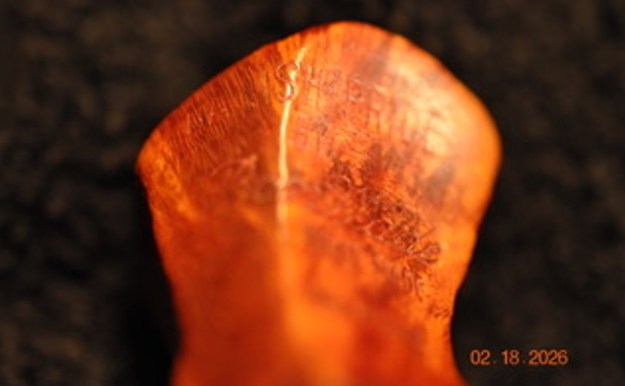
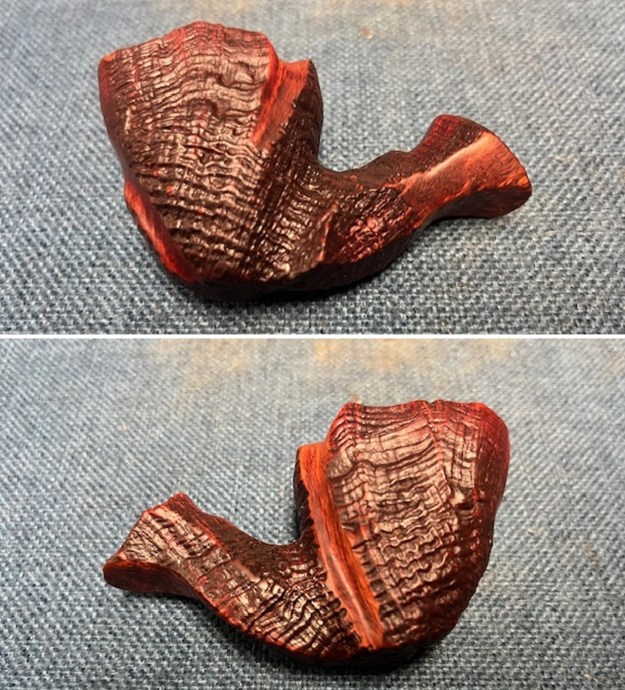
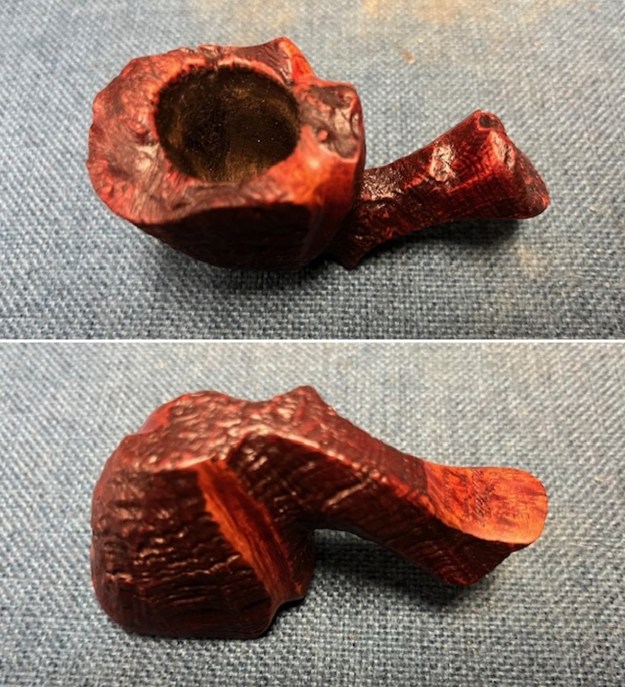
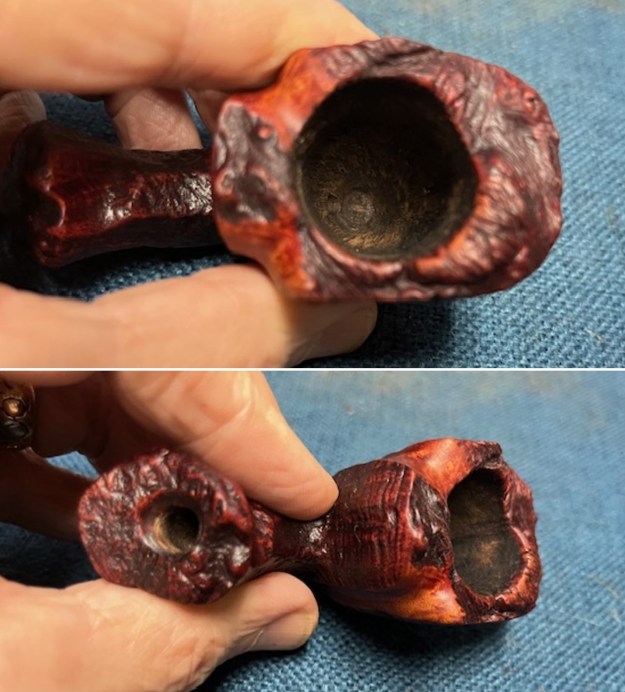
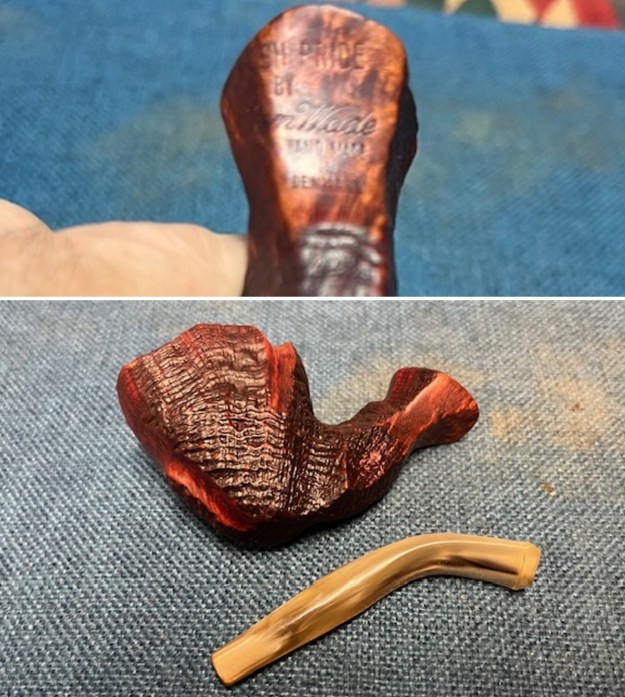
This particular mixed finished Freehand pipe was purchased on 01/20/2026 from a Facebook seller in Quaker Town, Pennsylvania, USA. It really is another beautiful smaller Freehand Bowl that combines a plateau rim top and smooth patches that flow up from the bowl sides. The shank end is sandblasted like the bowl and shank with a spot of plateau. It is stamped on a smooth panel on the left side of the shank and reads Danish Pride [over] by [over] Ben Wade [over] Hand Made [over] In [over] Denmark. The bowl is a mix of sandblast on the majority with some smooth grooves on the front and sides. The shank is also sandblasted with the underside being smooth for the stamping. The bowl had a moderate cake and some spots of lava overflow in the plateau rim top and inner edge of the bowl. There was grime ground into the finish and dust and debris in the plateau valleys on the shank end. The finish was a rich oxblood colour that really highlighted the grain in the sandblast. The stem was missing so I would need to fit a suitable replacement. Jeff took photos of the pipe before he started his work on it. Jeff took photos of the bowl, rim top and the stem to show the condition of the pipe when we received it. You can see the cake in the bowl and the spotty lava on the plateau rim top and inner edge of the bowl. Jeff took photos of the sides and heel of the bowl to show the grain in the sandblast and the smooth portions. It is a beautiful bowl. It is a smaller size freehand and one that catches my eye. Have a look. The next photos Jeff took show the stamping on a smooth portion on the underside of the shank. The stamping is faint in places but still readable as noted above. In a previous blog I had researched the brand quite a bit. I have included it below for information on this pipe (https://rebornpipes.com/2020/10/03/restoring-a-danish-pride-by-ben-wade-mixed-finish-handmade-freehand-sitter/). I quote:
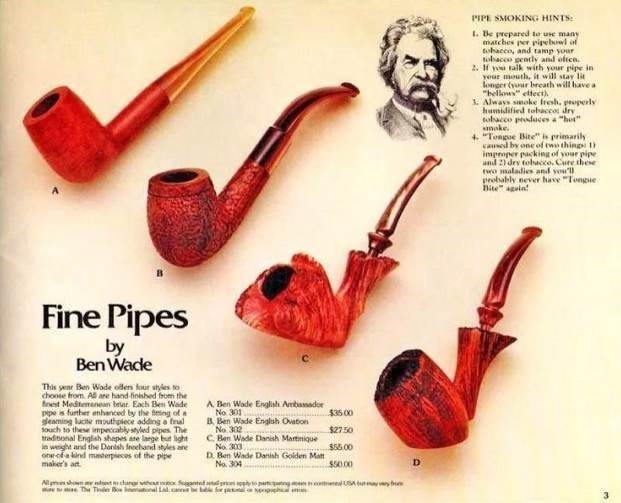
I remembered that the Preben Holm pipes were marketed under the Ben Wade label in the US and imported through Lane Ltd. I turned to Pipedia and read the listing on the brand to refresh my memory and flesh out the knowledge of the brand (https://pipedia.org/wiki/Ben_Wade). I have included a photo from that site that was taken from a Tinderbox advertisement.I quote the portion of the article that summarizes the Danish period of the history of the brand:

Young Copenhagen master pipemaker Preben Holm had made a meteoric career heading a pipe manufacture employing 45 people at the age of 22! But around the turn of 1970/71 he was in major financial difficulties. His US distributor, Snug Harbour Ltd. in New York City, left him in the lurch. Holm had three unpaid invoices on his desk and another large shipment was ready for the USA, when Snug Harbour’s manager told him on the phone that there was no money at all on the account to pay him.

So the Dane went to New York for an almost desperate search for a new distribution partner. He made contacts with Lane Ltd. and met Herman G. Lane in February 1971. Lane Ltd. had no interest in Holm’s serial pipes produced at that time but so much the more in the hand-carved freehands because the hype for Danish freehands and fancies in the States was still on its way to the climax then. The meeting resulted in an agreement to start a cooperation. Lane insisted to improve the quality considerably and in return he assured to be able to sell essentially larger quantities.

Holm went back home to work on new samples with all-new designs and altered finishes for Lane. Both, Lane and Holm, agreed that it would be unwise to sell the pipes under Preben Holm’s name as long as Snug Harbour had a considerable stock of Preben Holm pipes and might sell them pipes at very low prices just to bring in some money.

So on Mr. Lane’s proposal it was determined to use the name Ben Wade belonging to Lane Ltd. Lane spent considerable amounts of money for advertising the new brand in the big magazines– the centerpiece being whole-page ads showing a very exclusive Seven Day’s Set.

The cooperation with Lane Ltd. proved to be an eminent business success for both partners. Within a very short time Ben Wade Handmade Denmark sold in much larger quantities and at higher prices than they had ever dreamed of. And the hype these freehands and fancy pipes caused went on unbroken long after Herman G. Lane deceased. Preben Holm – obviously much more brilliant in pipe making than in pipe business – was in major troubles again in 1986 and had to sack most of his staff. The Ben Wade production was significantly lowered but continued until his untimely death in June of 1989.

Up to now Preben Holm made Ben Wade pipes are cult and highly sought for on the estate markets.

With that information my initial thoughts were confirmed. This pipe was a Preben Holm made Freehand distributed in the US by Lane Ltd under the name Ben Wade. The freehand rage occurred in the late 70s and the pipes were made until Preben’s death in 1989. My guess would be that this pipe was made sometime during that time period and potentially in the late 70s.

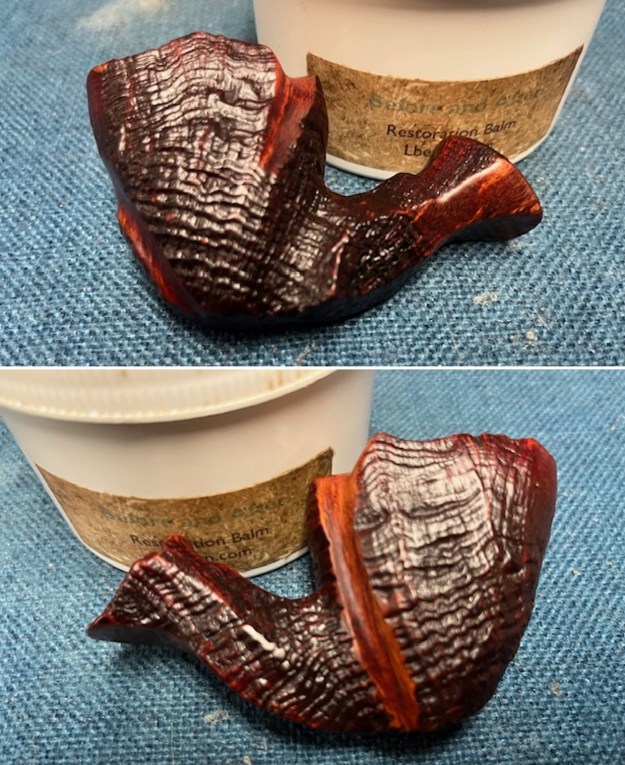
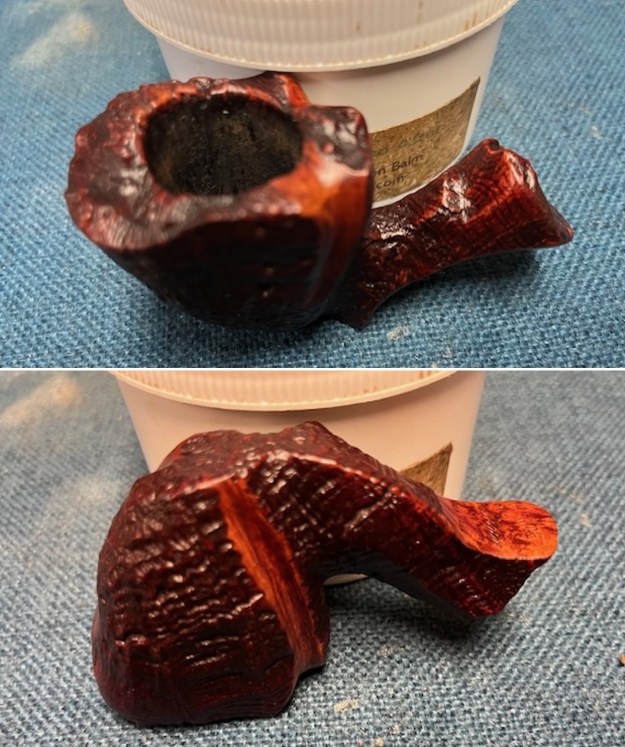
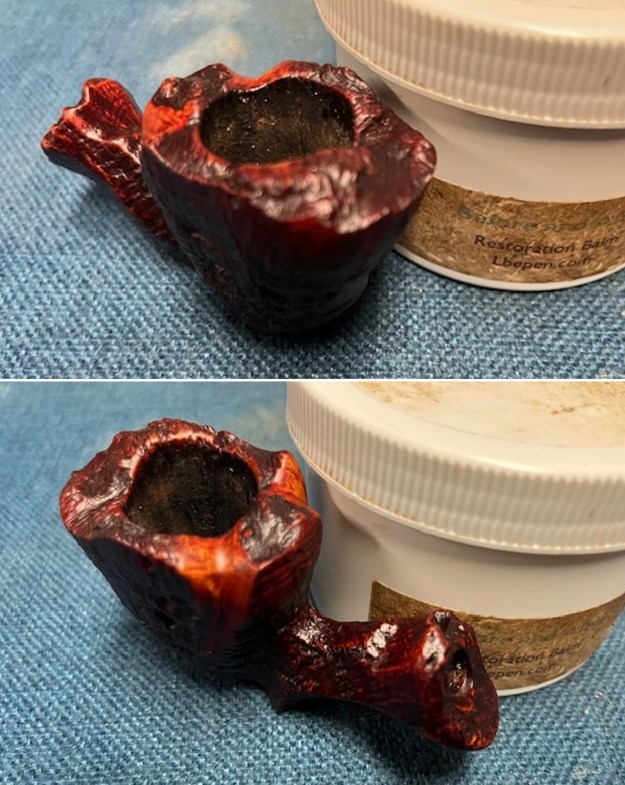
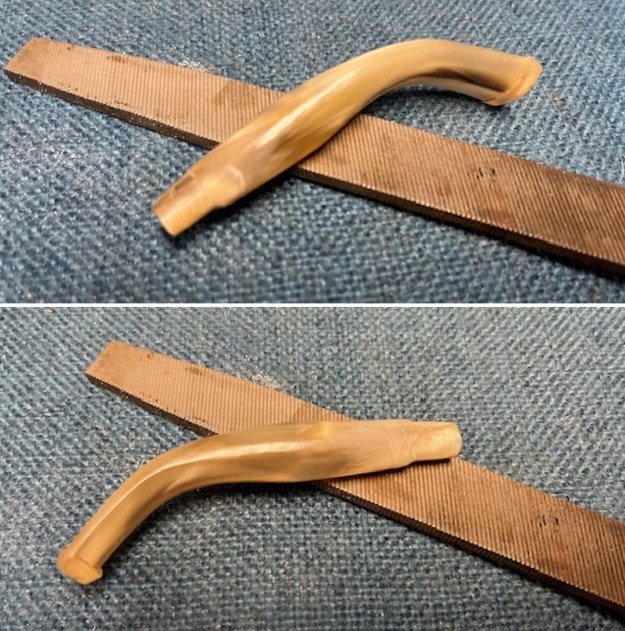
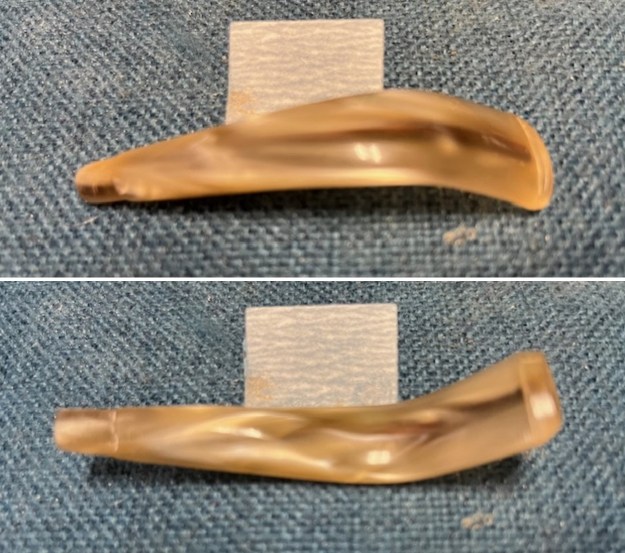
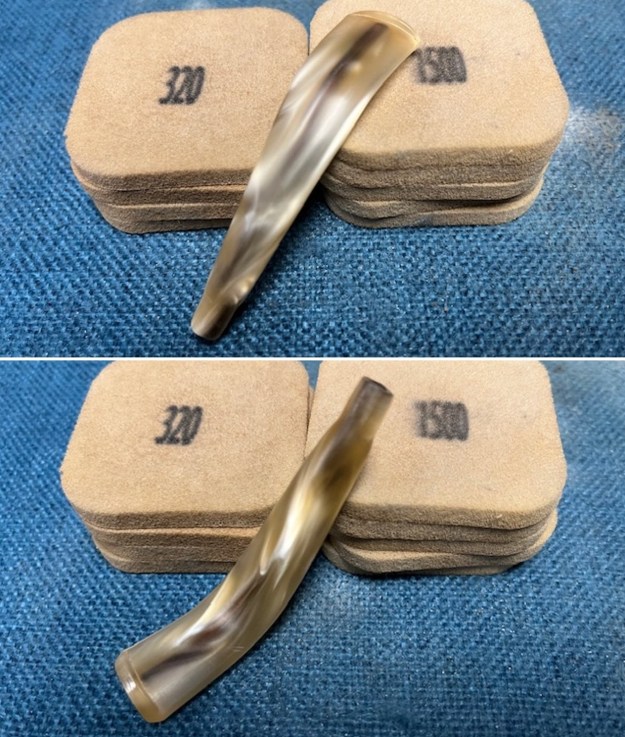
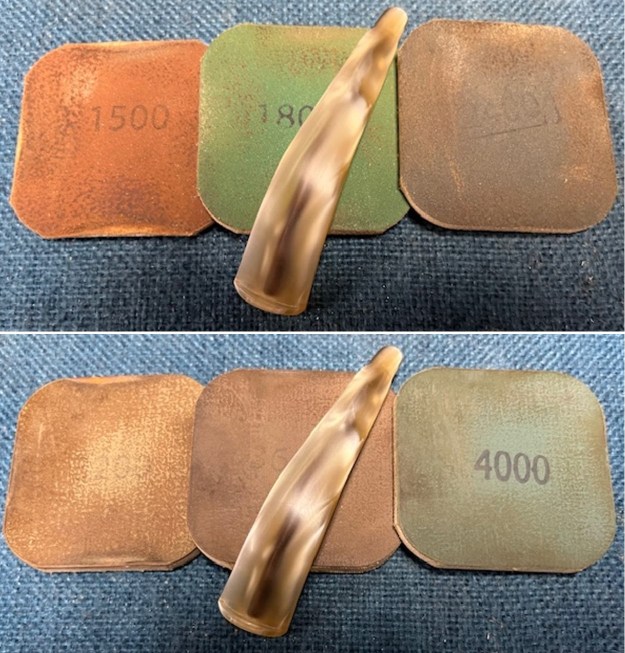
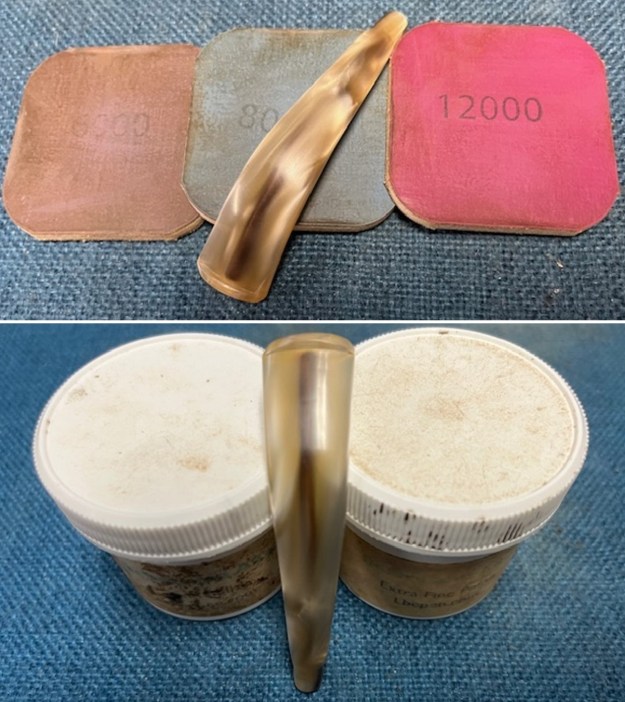
Jeff had cleaned up the pipe following his normal cleaning process. In short, he reamed the bowl and then cleaned up the reaming with a Savinelli Fitsall Pipe Knife. He scrubbed the bowl with undiluted Murphy’s Oil Soap with a tooth brush. He worked over the lava and debris on the plateau rim top and shank end and was able to remove it. He rinsed it under running warm water to remove the soap and grime. He cleaned out the inside of the shank and the airway in the stem with alcohol, cotton swabs, shank brushes and pipe cleaners. He scrubbed the stem with Soft Scrub and cotton pads to remove the debris and oils on the stem. He soaked it in Briarville’s Pipe Stem Deoxidizer to remove the remaining oxidation. He rinsed it with warm water and dried it off. I took photos of the pipe once I received it. It really looked good. I took close up photos of the stem and the rim top to show both how clean they were. The rim top and bowl look good. The shank end was sandblasted and had a spot of plateau on the top right.I took a photo of the stamping on the left side of the shank. You can see from the photo that it is faint but readable. It is clearer on the top half of the stamp than the lower but it is still readable. I went through my stems and found a variegated cream and brown acrylic taper that would work well with the bowl. It would take some work to fit it but I took a photo of the parts to give a sense of the beauty of the pipe. The bowl was in such good condition after the clean up that I worked some Before & After Restoration Balm into the surface of the briar with my finger tips and a horse hair shoe brush to get into the crevices of the plateau and sandblast portions. The product is incredible and the way it brings the grain to the fore is unique. It works to clean, protect and invigorate the wood. I set the bowl aside and started working on the stem. I used a flat file to shape the stem to fit in the shank. It took some work to shape it but it looked much better. I cleaned up the stem work with a piece of 220 grit sandpaper to finish blending it into the surface of the stem. I sanded the stem with 320-3500 grit 2×2-inch sanding pads. I wiped the stem down after each sanding pad with an Obsidian Oil cloth.I polished the stem with micromesh sanding pads – dry sanding it 1500-12000 pads. I wiped it down with Obsidian after each pad to remove the dust and polishing debris. I polished it with Before After Pipe Polish – both Fine and Extra Fine. I gave it another coat of Obsidian Oil. I am happy with the way that this Preben Holm Made Danish Pride by Ben Wade Freehand turned out. It really is a beautiful looking pipe with a great shape and mix of smooth and sandblast finishes around the bowl and shank. The rugged plateau on the rim top and shank end are beautiful. The fancy original vulcanite saddle stem works well with the reddish brown of the stained briar. The pipe really came alive with the buffing. The rich brown stains of the finish gave the pipe a sense of depth with the polishing and waxing. I put the stem back on the bowl and carefully buffed the pipe with Blue Diamond on the buffing wheel using a light touch on the briar. I gave the bowl multiple coats of Conservator’s Wax and the stem multiple coats of carnauba wax on the buffing wheel. I buffed the pipe with a clean buffing pad to raise the shine. I hand buffed the pipe with a microfiber cloth to deepen the shine. The finished Danish Pride by Ben Wade really is a beauty and feels great in the hand and looks very good. Give the finished pipe a look in the photos below. The dimensions of the pipe are Length: 5 ¾ inches, Height: 2  inches, Outside diameter of the bowl: 1 ½ inches wide x 2 inches long, Chamber diameter: 7/8 of an inch. The weight of the pipe is 48 grams/1.69 ounces. The pipe will be staying with me, at least for awhile as I appreciate the craftsmanship. Thanks for reading this blog and my reflections on the pipe while I worked on it. It was a fun one to work on!