Monthly Archives: December 2022

Restoring an Impressive Meerschaum Figural


Blog by Kenneth Lieblich

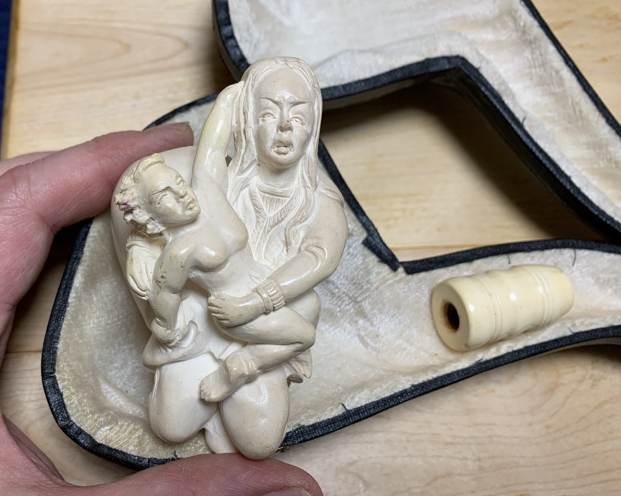
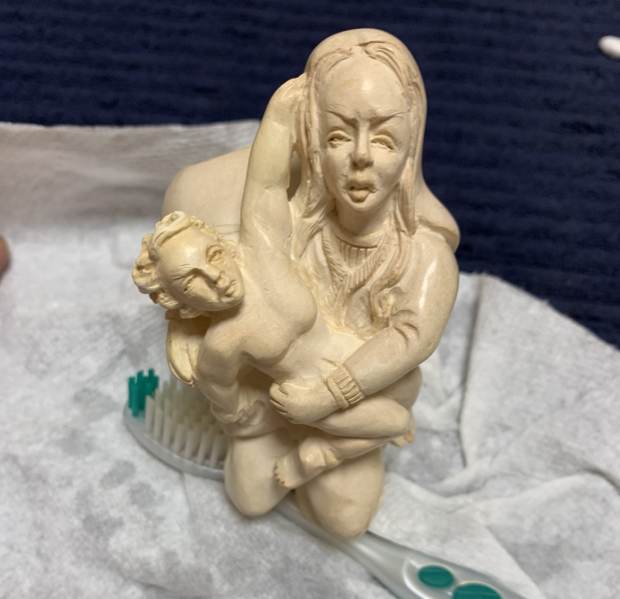
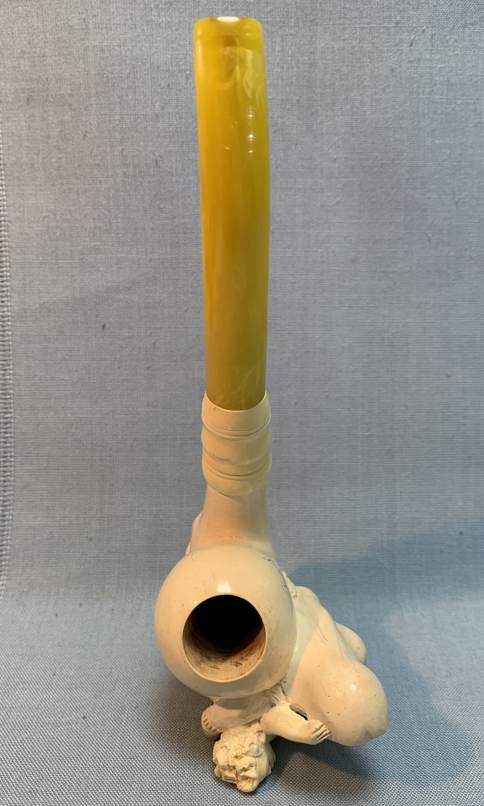
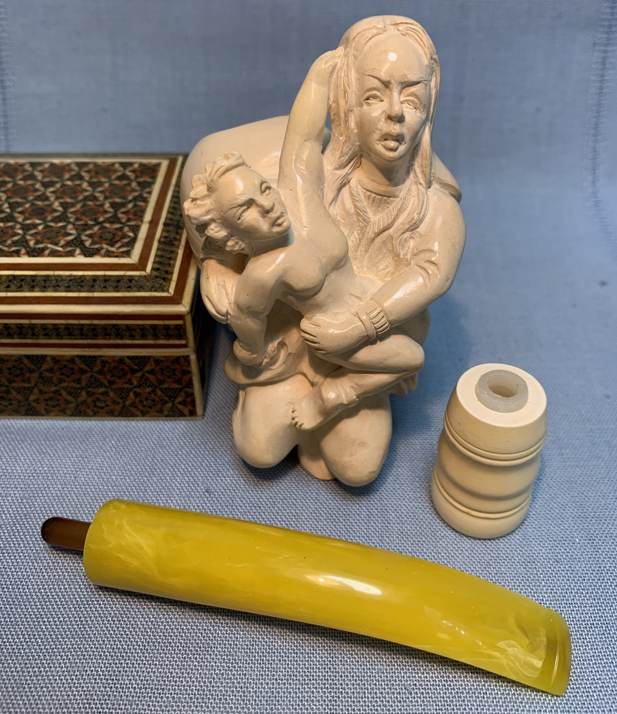
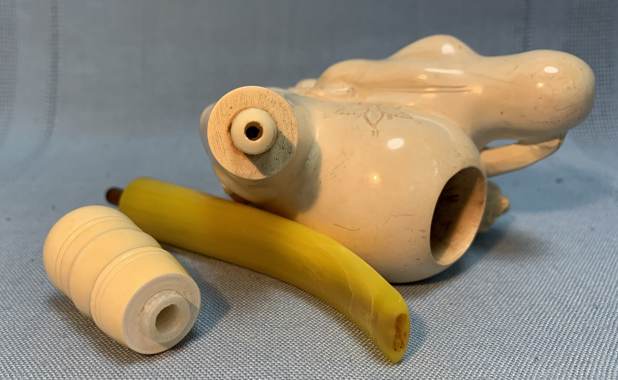
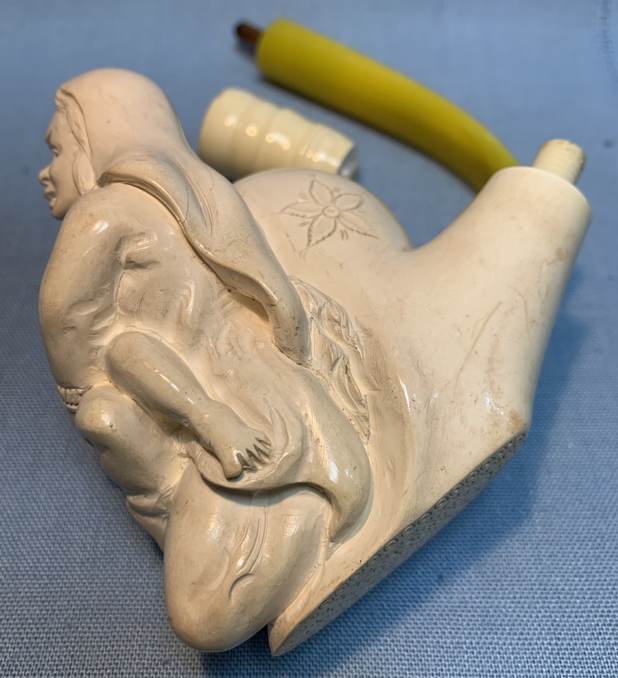
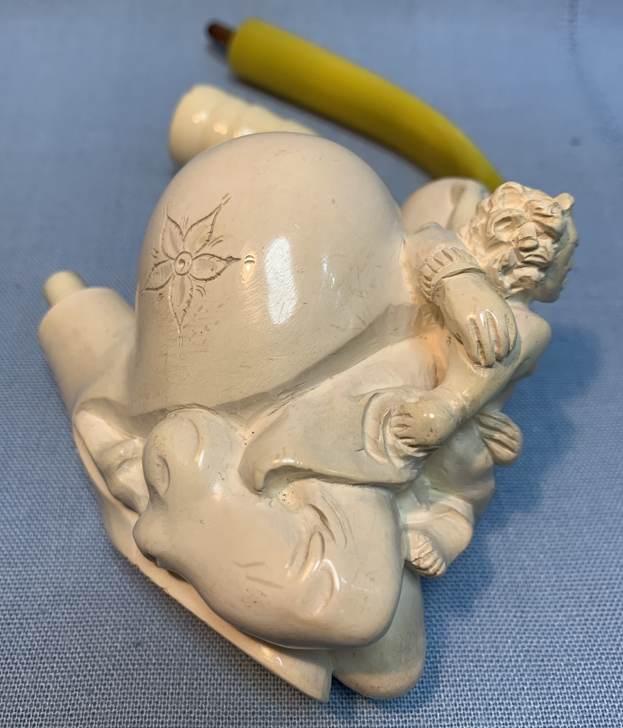
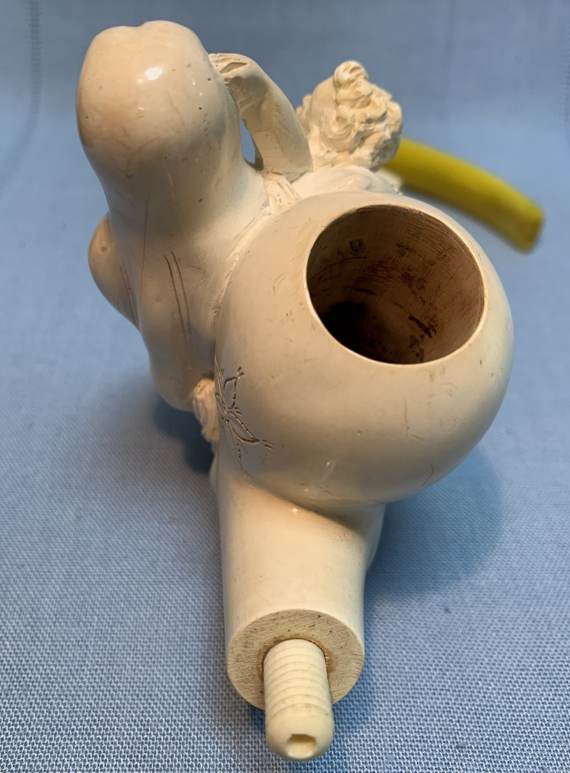
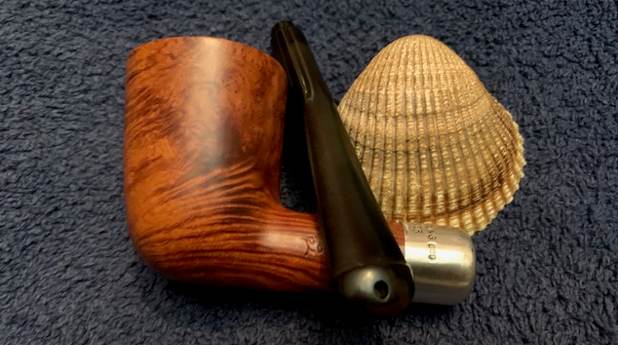
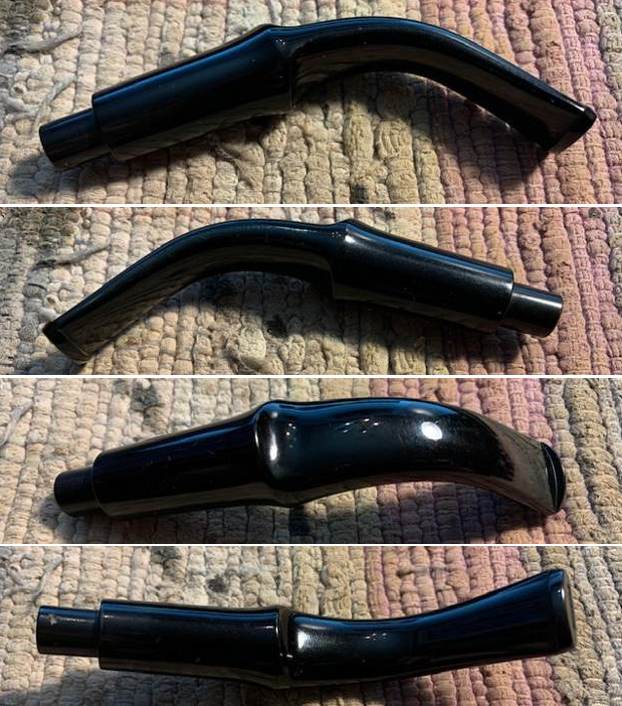
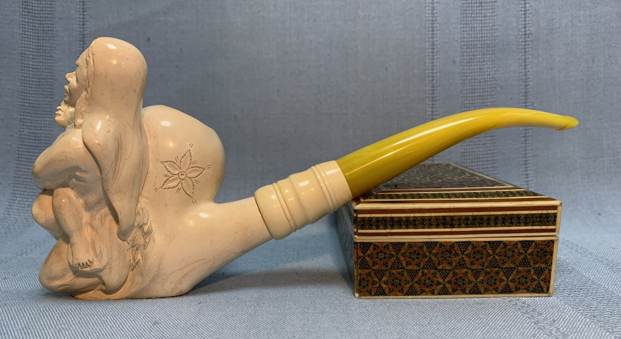
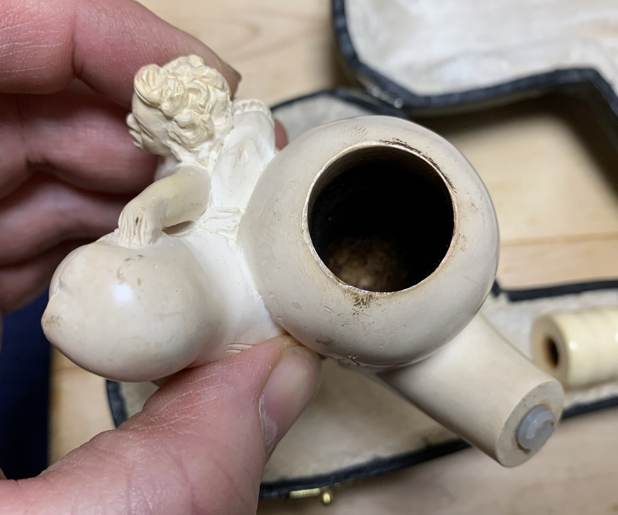
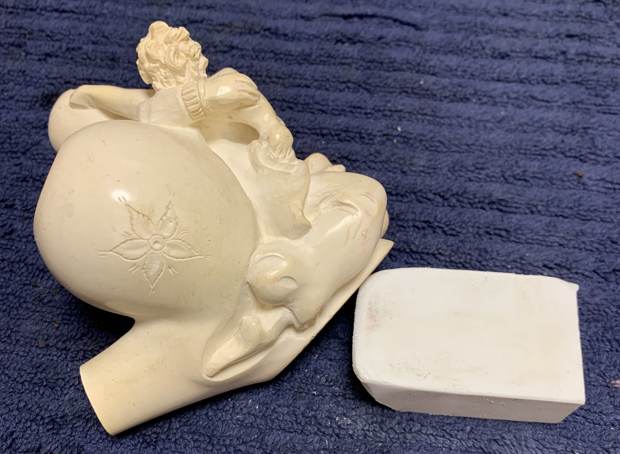
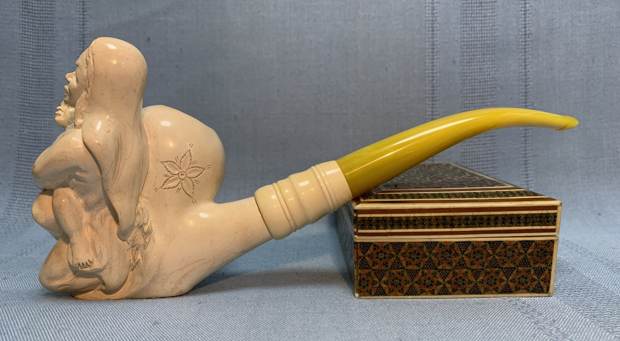
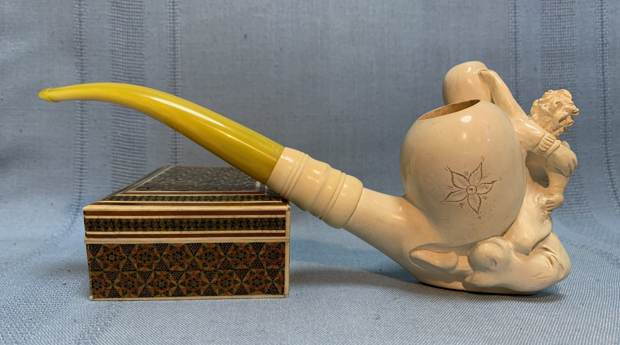
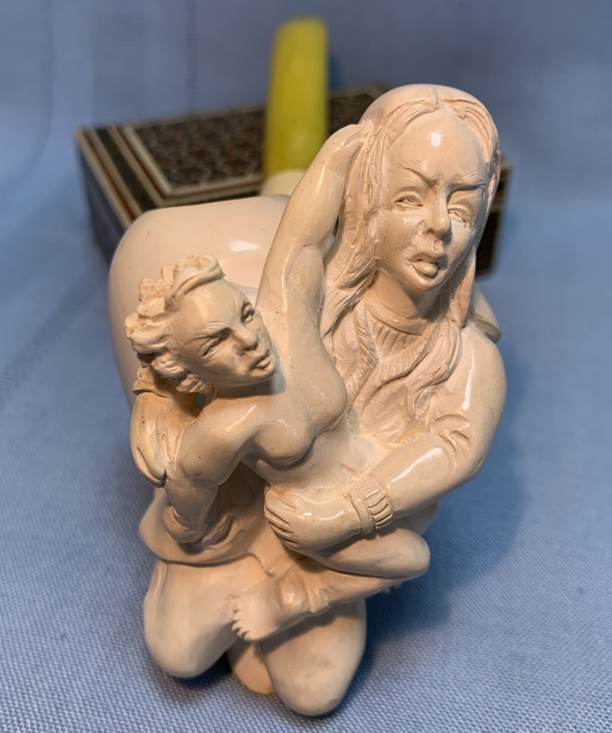
Next on the chopping block, we have a unique and large, carved, meerschaum figural pipe. As I’m sure you know, meerschaum is a German word which literally means “sea foam” (meer = sea and schaum = foam). Incidentally, schaum is also where we get the English word scum from. But where did the Germans get the meerschaum word from? Obviously, meerschaum is so called because it is white and light, but the Oxford Dictionary of Etymology further explains that the term is itself a translation of the Persian word kef-i-daryā – literally meaning “foam of sea”. Now you can impress friends at your next cocktail party. I acquired this pipe in a large lot in the summertime. This meerschaum pipe was notable as its stem had been lost in the mists of time, on its way from Asia Minor. I searched through the lot of pipes that it came in, but there was no sign of it. Fortunately, Steve kindly supplied me with a suitable stem which worked perfectly. The pipe is a large piece of block meerschaum, presumably from Turkey, although it has no markings of any sort. However, it has all the hallmarks of Eskişehir, so I feel confident in saying it’s Turkish. As for the carving, I’m not totally sure what it is meant to be. I can’t tell if it’s intended to be an image of the Virgin and Child, people from an ancient Anatolian myth, or some historical characters with which I am unfamiliar. Steve didn’t recognize them either, so if you have some idea who these people are, please feel free to clear up the mystery with a comment below.
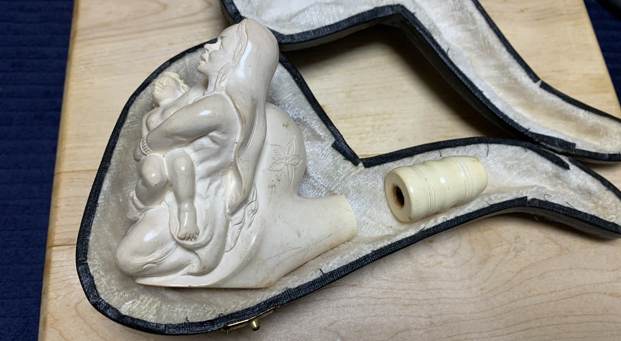
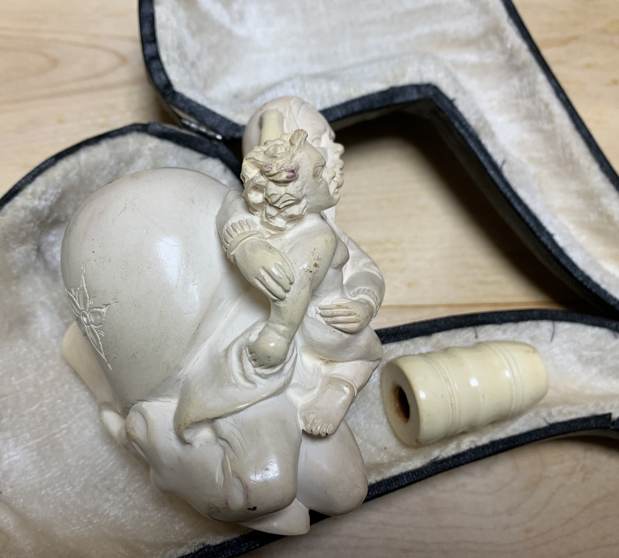
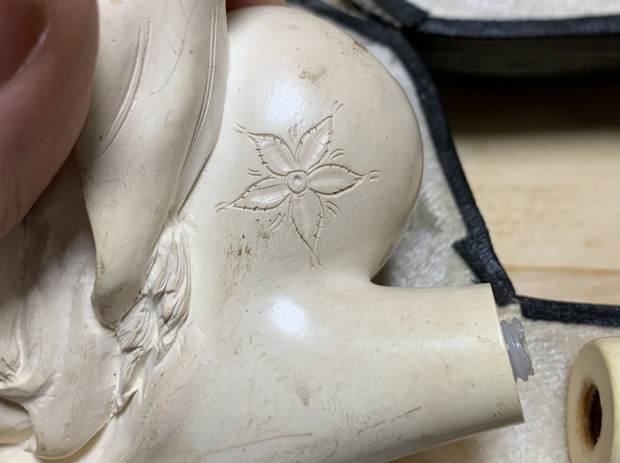
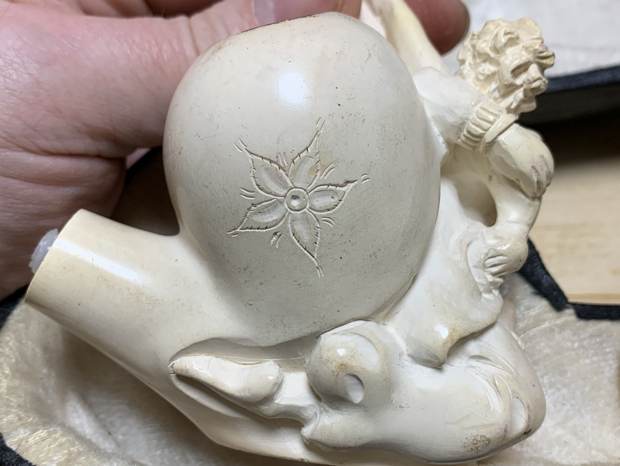
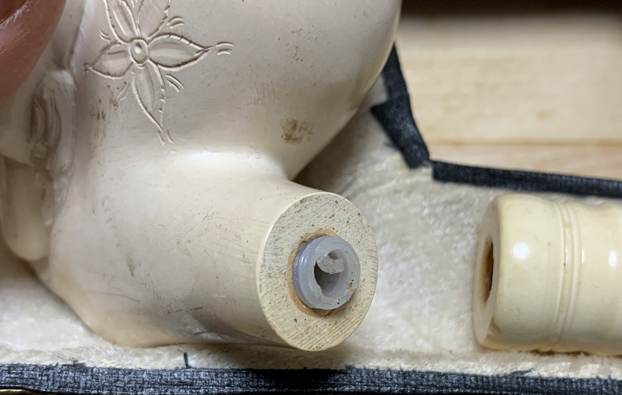
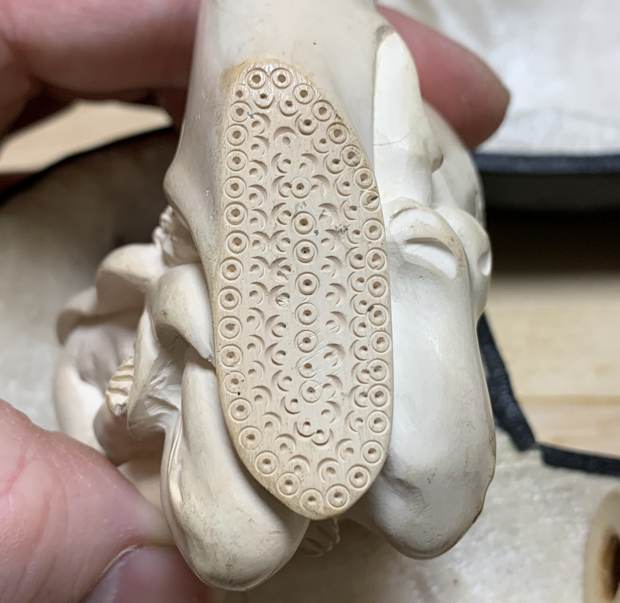
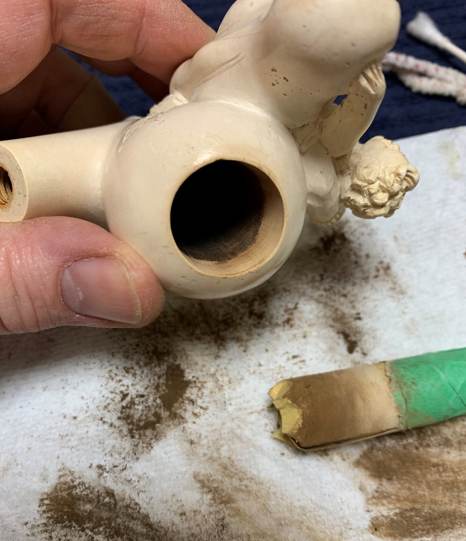
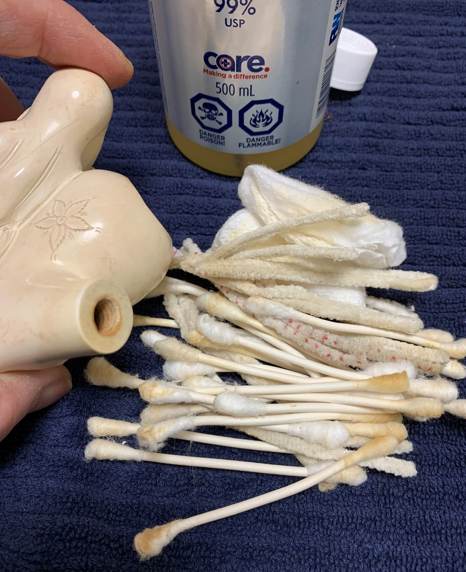
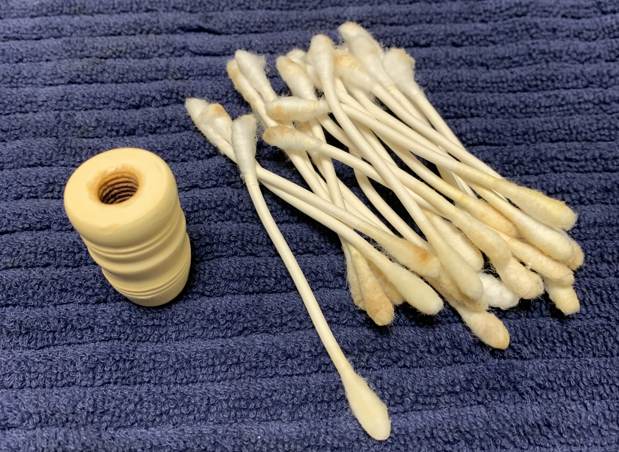
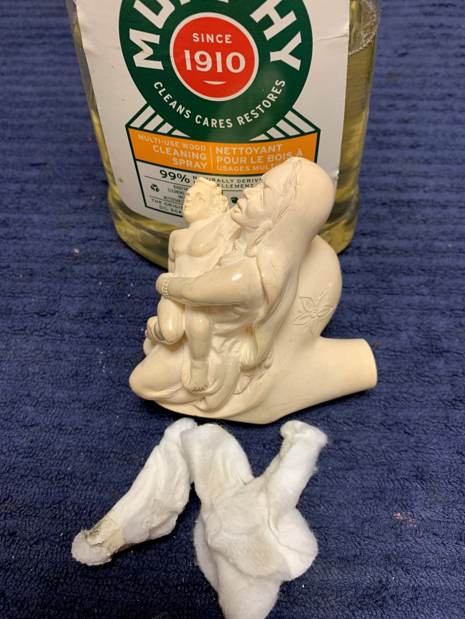
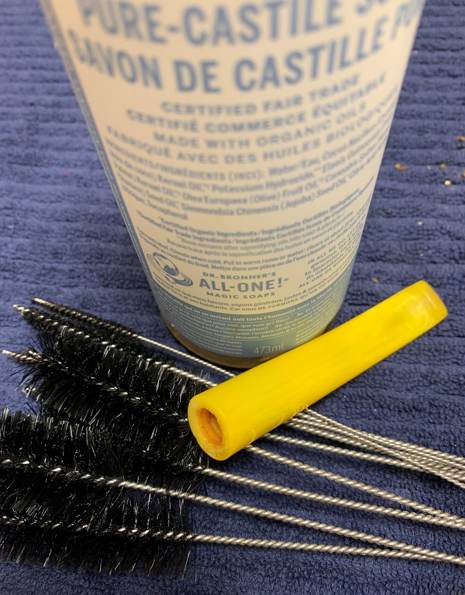
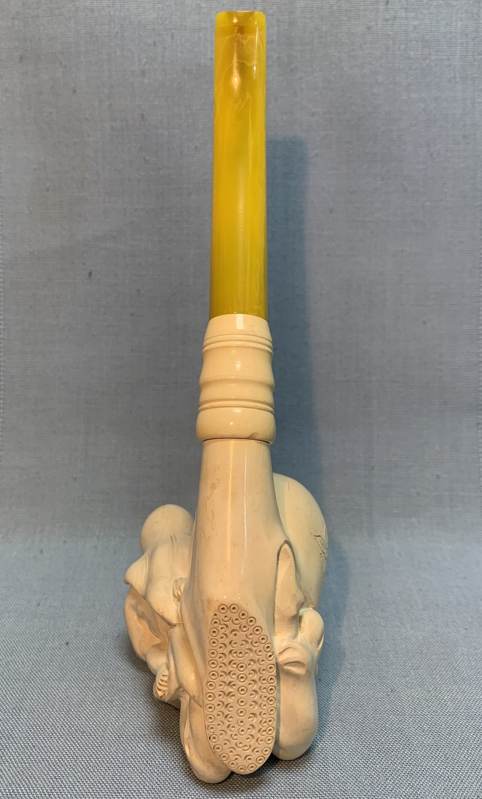
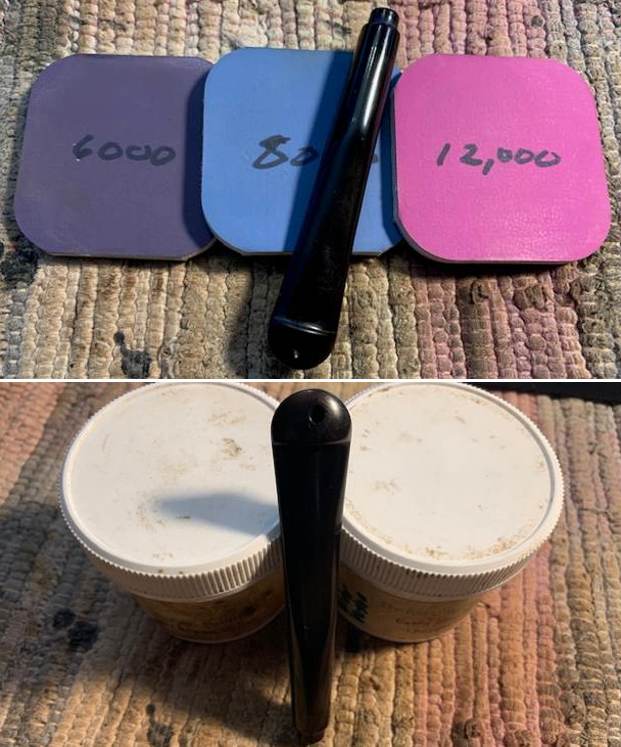
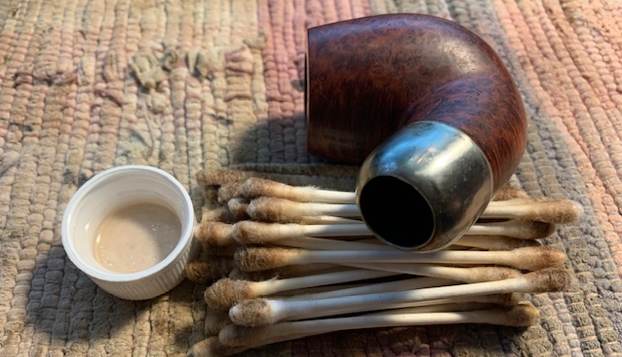
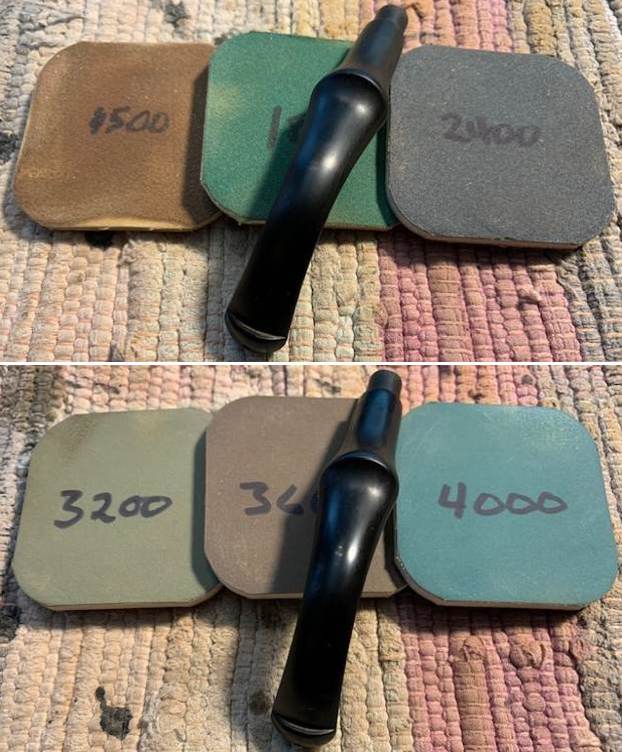
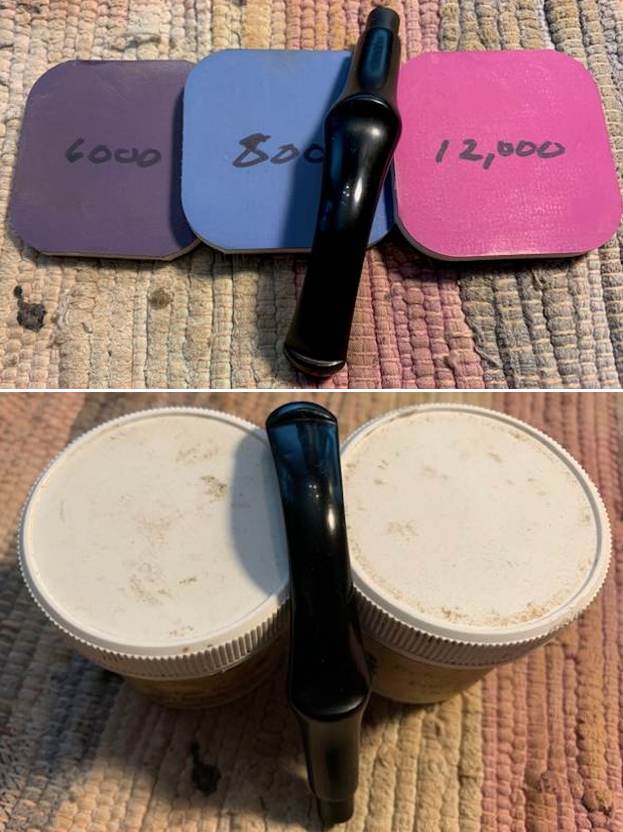
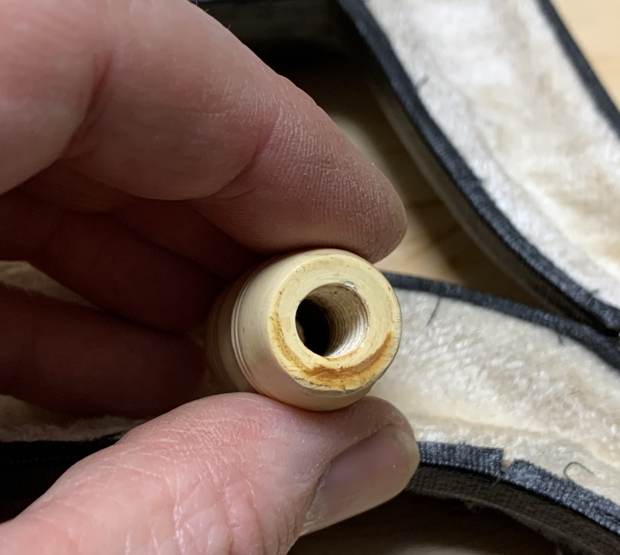
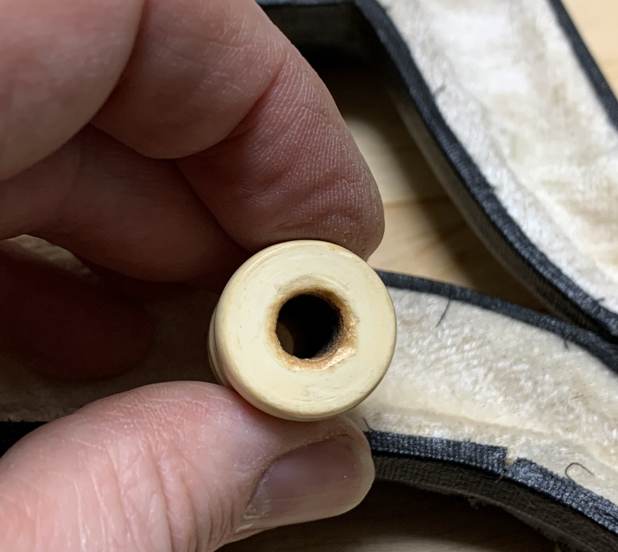
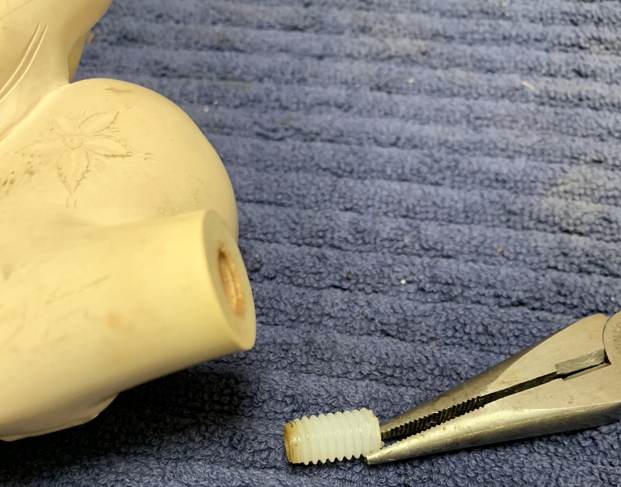
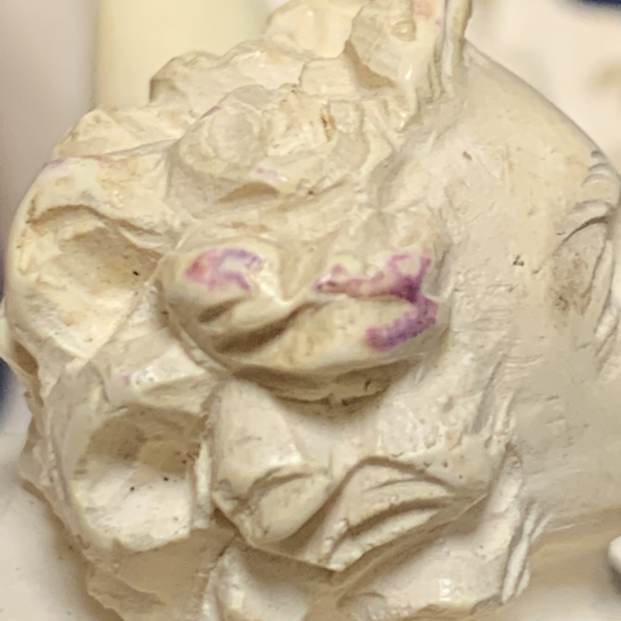
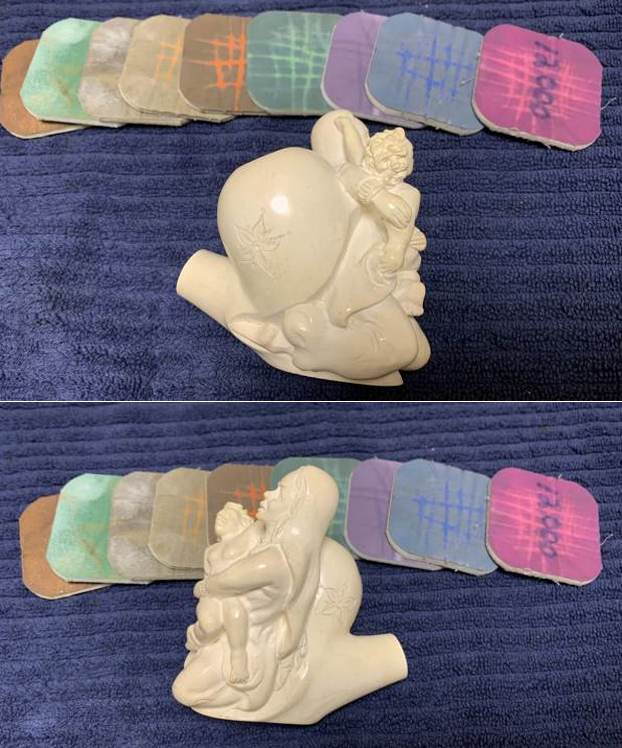
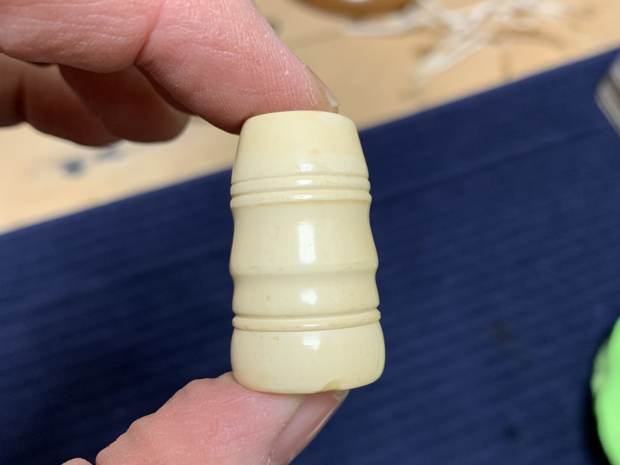
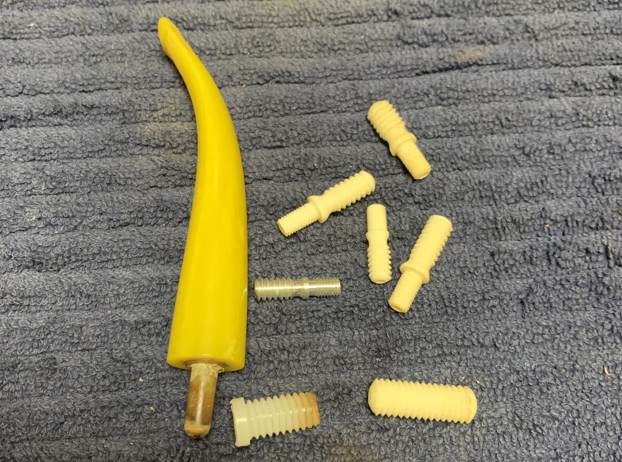
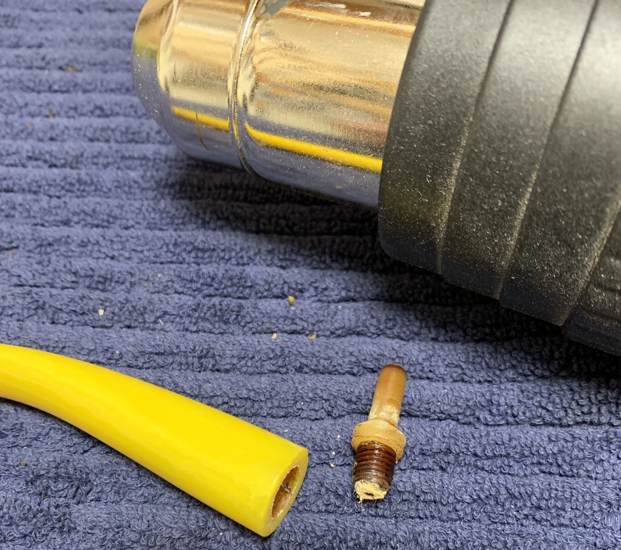
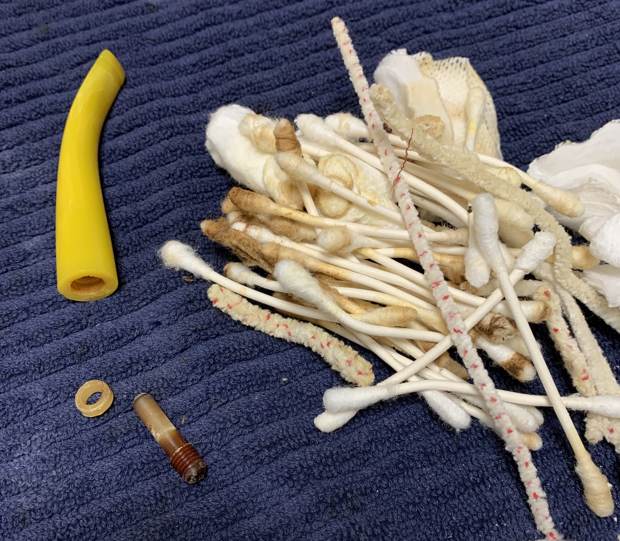
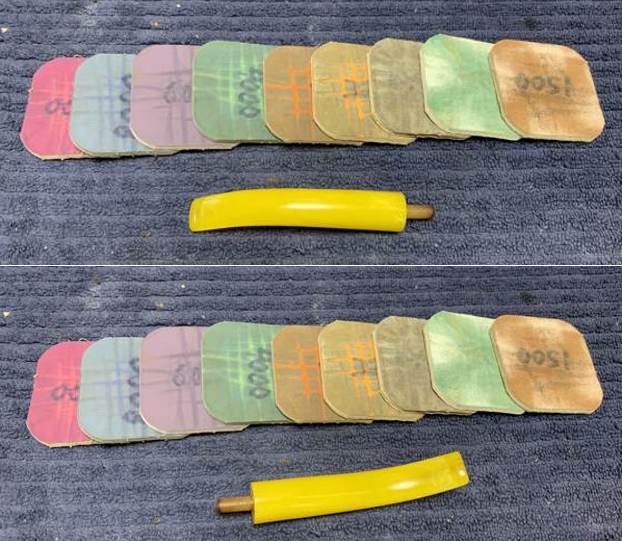
The pipe was in very nice condition, though a bit dirty. There was dust and debris in the grooves and even on the smooth surfaces. It had been smoked, though not heavily. The main part of the pipe was in good condition, without any notable damage. There was a tenon left in the shank that was broken and would need replacement. There was also a meerschaum shank extension which was dirty, but otherwise in good shape too. To work! I began by removing the tenon in the shank with a pair of needle-nose pliers. Meerschaum is too fragile for a proper reamer, so I used 220-grit sandpaper on the end of a wooden dowel to clean out the bowl and it turned out very nicely. I then cleaned the shank with lemon-infused isopropyl alcohol, pipe cleaners and Q-tips. One of the frustrations of cleaning meerschaum is that once smoked, the stains never go away. However, I did what I could and cleaned the shank extension in a similar manner. There were some unusual purple stains on parts of the meerschaum. I don’t know what they were, but I took a good-quality eraser and they came off with ease, fortunately. Then I took Murphy’s Oil Soap on some cotton rounds (and Q-tips) and cleaned the meerschaum. It’s important to be cautious in one’s use of fluids around meerschaum. Allowing it to soak in a liquid causes it to soften. I also used a soft bristle toothbrush with the Murphy’s in some of the nooks and crannies. Now that the figural was all clean, I set about using my MicroMesh sanding pads to polish up the meerschaum. I didn’t use the coarser grits over the entire pipe – only in the areas that required it – as I didn’t want to risk any damage. I neglected to take pictures, but I also rubbed some Clapham’s Beeswax into the meerschaum. In fact, I used Q-tips as well to get it into the nooks and crannies. Then I let it sit for 15-20 minutes, buffed it with a microfiber cloth and then repeated the beeswax process. Worked like a charm! As I mentioned, Steve was kind enough to give me an acrylic stem which came with its own push-tenon. He also gave me a handful of other plastic, bone and metal tenons so I could find the right fit for the pipe in question. The stem was terrific, but it had been used and was plenty dirty.First, I removed the push-tenon by heating it lightly with my heat gun. That allowed it to unscrew without much trouble. I then cleaned out the stem and tenon with the usual lemon-infused isopropyl alcohol, cotton pads, Q-tips etc. Just like meerschaum, acrylic tends to stain after smoking, no matter how dutiful you are with your cleaning. However, I put in a lot of elbow grease to sterilize the stem and tenon as much as I could. I even used some Castile soap and tube brushes. There were a couple of very small nicks on the stem, which I repaired with cyanoacrylate adhesive. However, I forgot to take pictures of that. I then used all nine MicroMesh pads (1,500 through 12,000 grit) and some Obsidian Pipe Stem Oil in between each pad scrubbing. Once that was done, I fitted a new bone tenon for the shank extension and a new mortise for the push-tenon. Finally, as meerschaum pipes don’t do well on a bench-polisher, I buffed the pipe by hand with a microfibre cloth. And that’s that! This big meerschaum looks fantastic and is ready to be enjoyed again by the next owner. I am pleased to announce that this pipe is for sale! If you are interested in acquiring it for your collection, please have a look in the “Meerschaum” section of the store here on Steve’s website. You can also email me directly at kenneth@knightsofthepipe.com. The approximate dimensions of the pipe are as follows: length 7½ in. (190 mm); height 3½ in. (89 mm); bowl diameter 1½ in. (38 mm); chamber diameter ¾ in. (20 mm). The weight of the pipe is 4 oz. (114 g). I hope you enjoyed reading the story of this pipe’s restoration as much as I did restoring it. If you are interested in more of my work, please follow me here on Steve’s website or send me an email. Thank you very much for reading and, as always, I welcome and encourage your comments.
Restoring a Peterson’s System 3 Bent Billiard 3170


Blog by Steve Laug

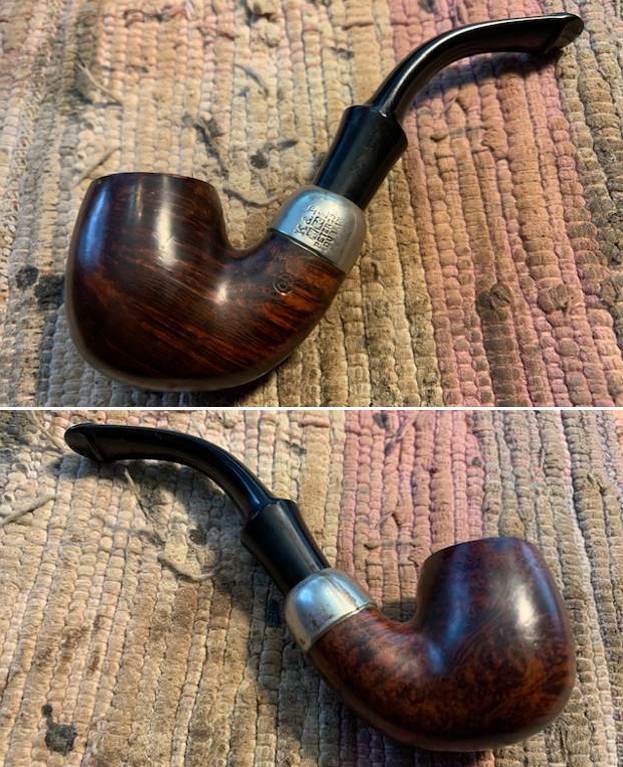
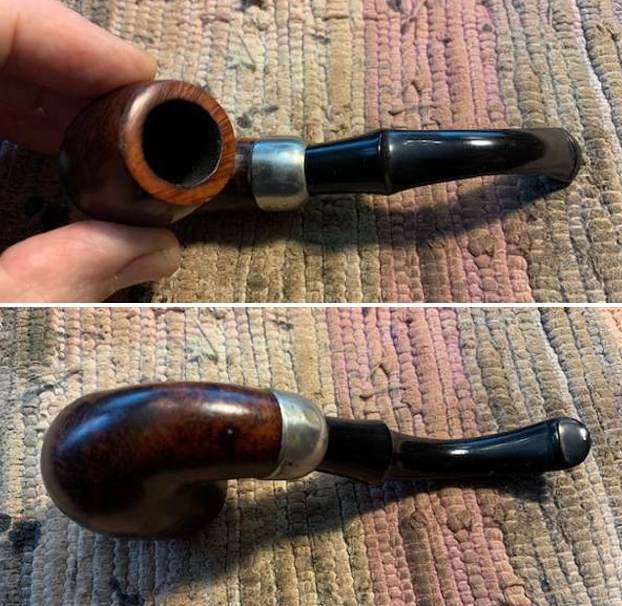
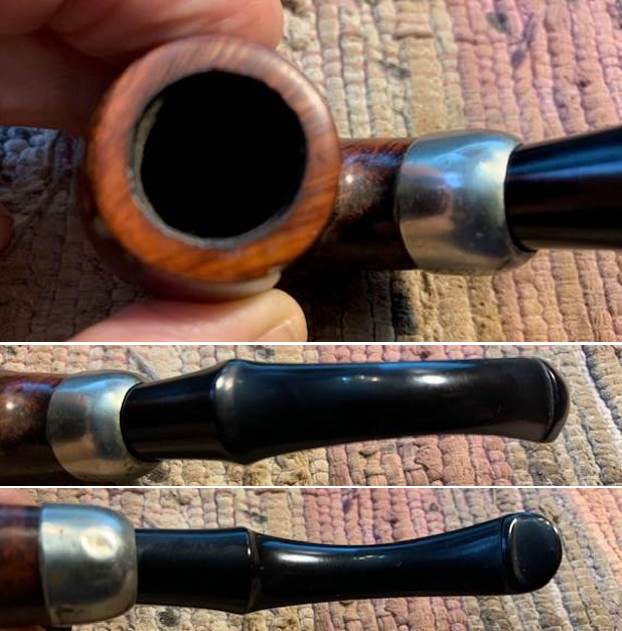
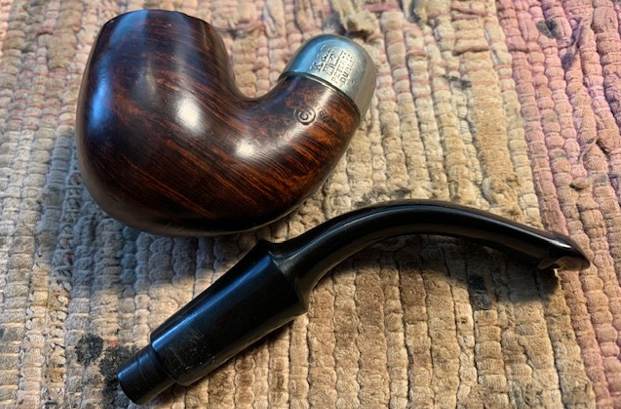
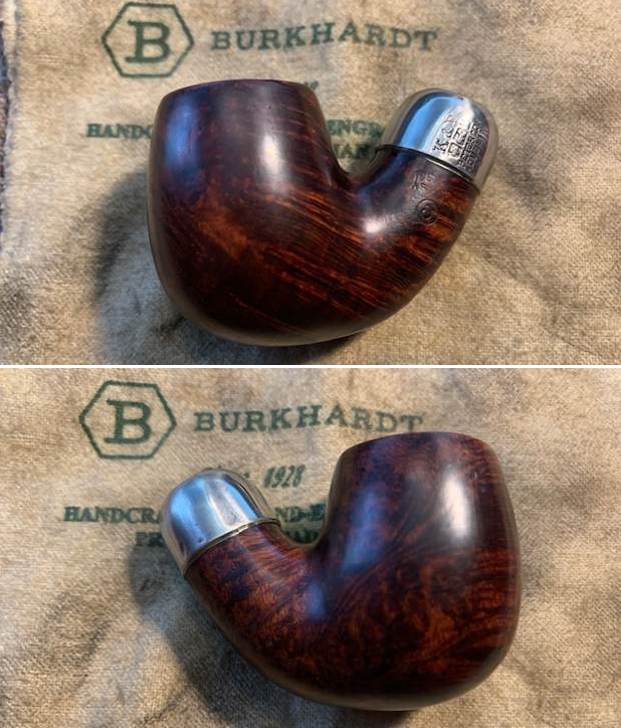
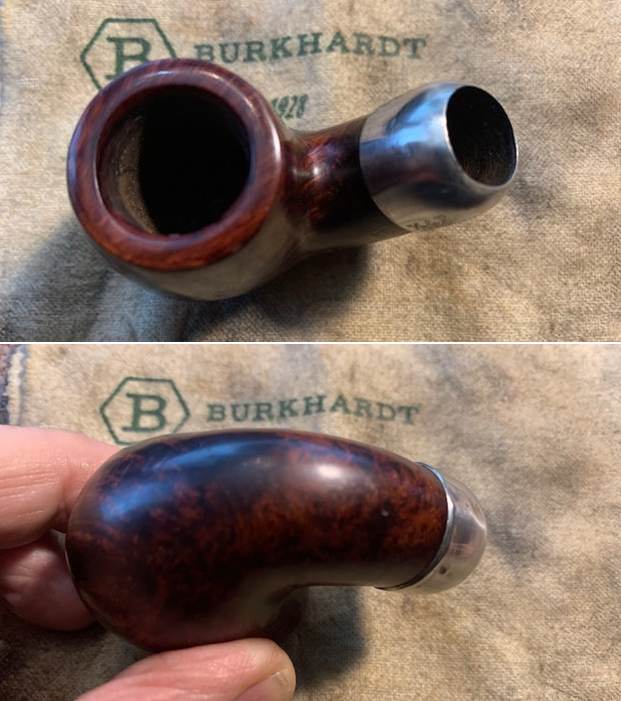
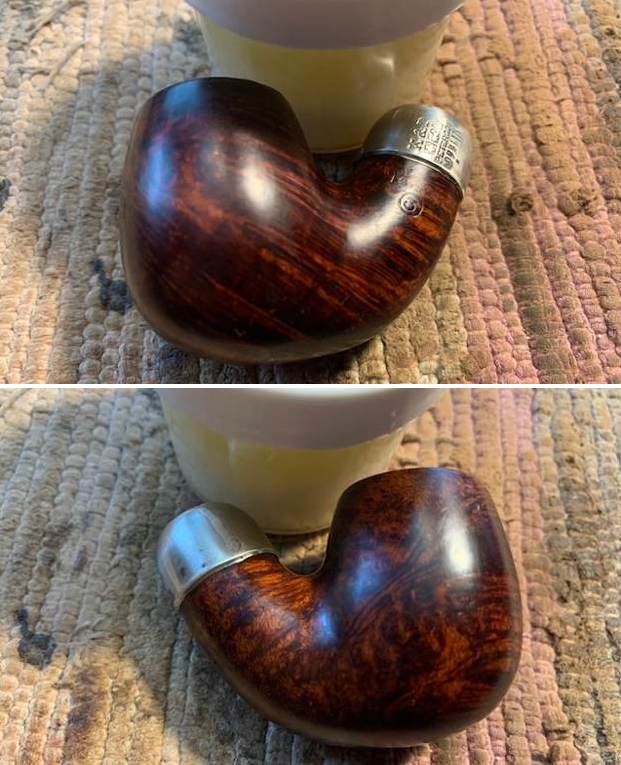
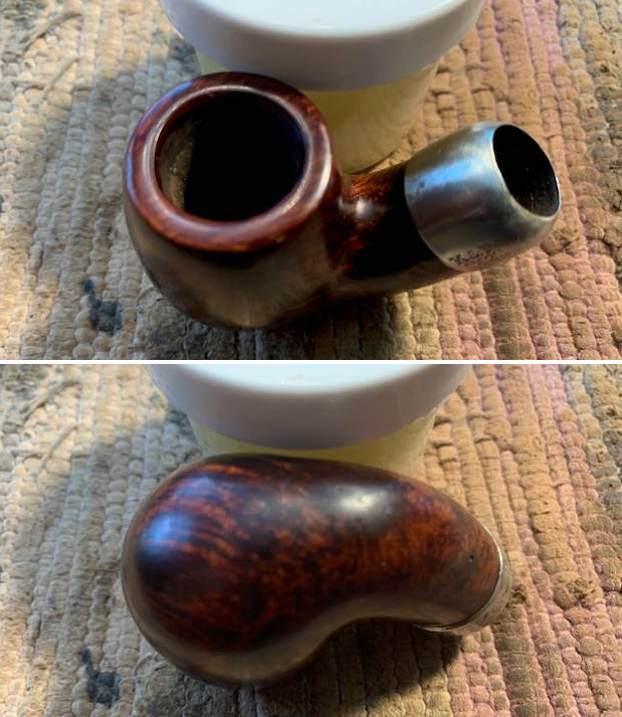
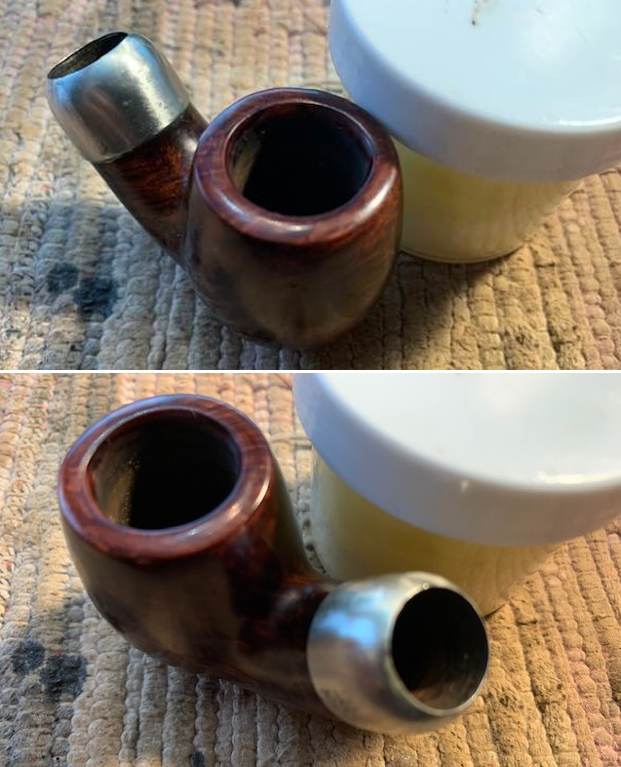
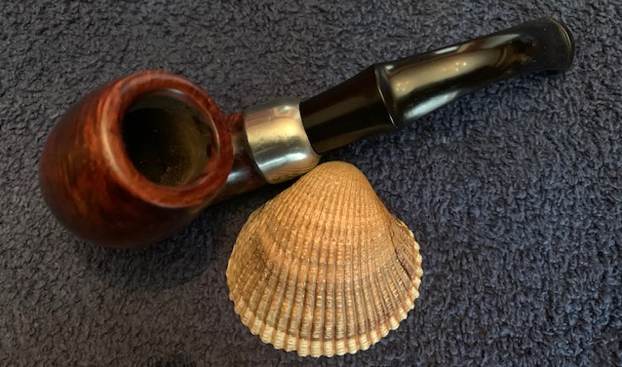
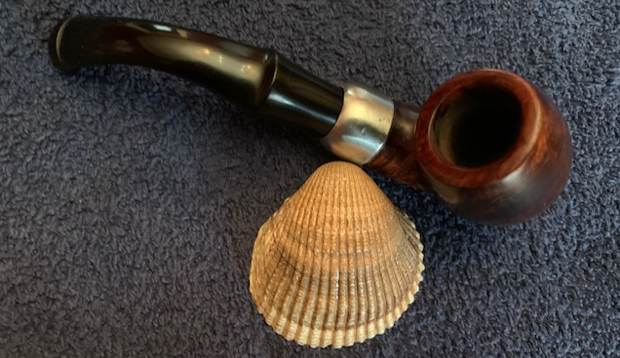
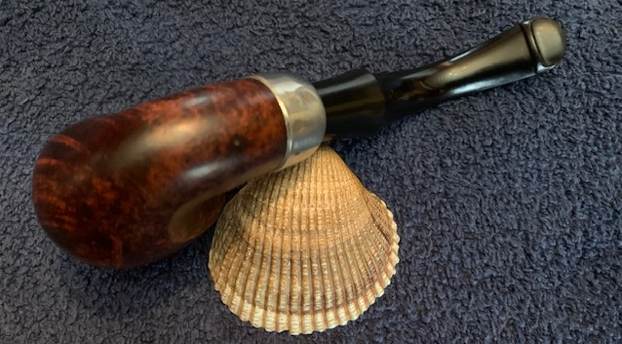
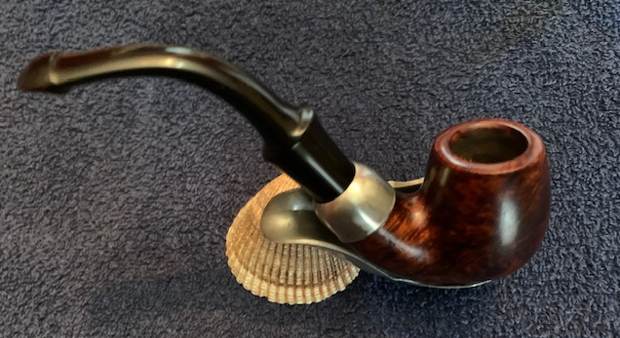
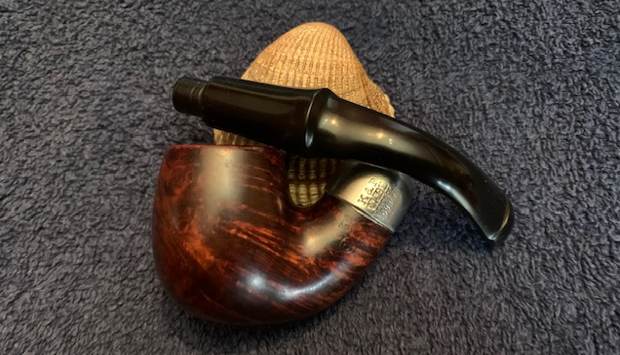
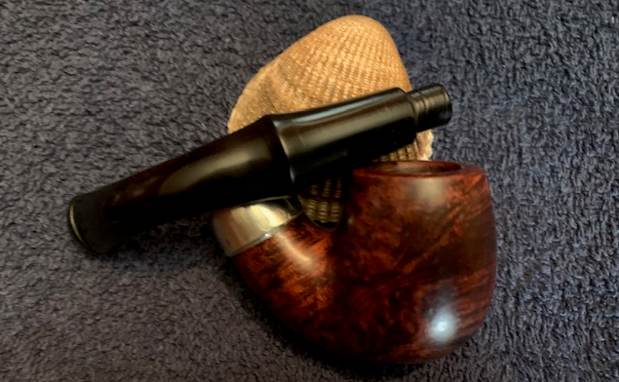
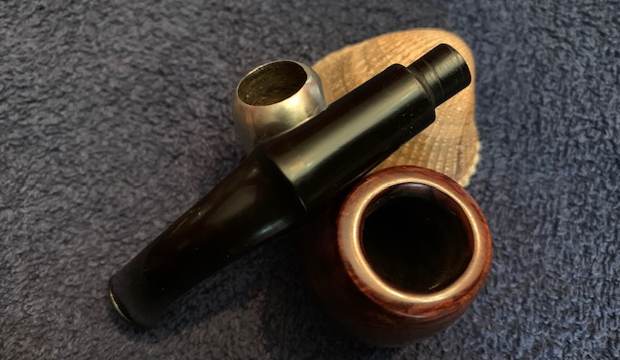
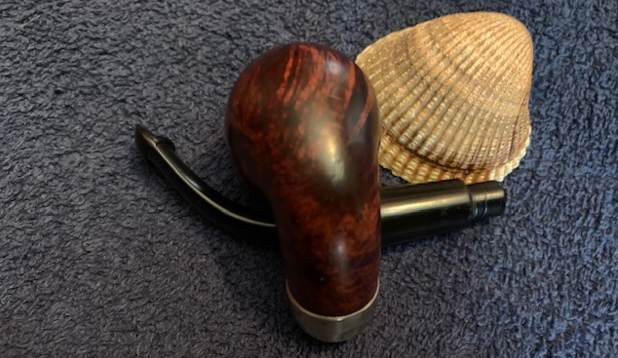
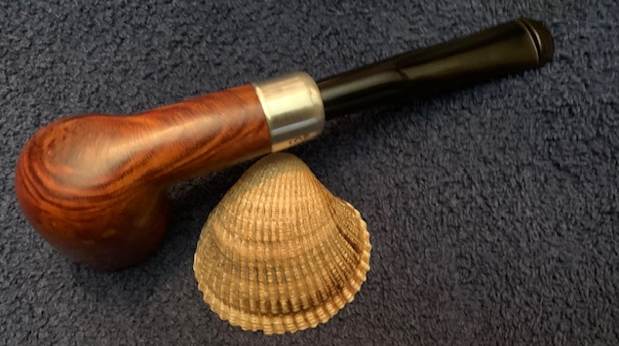
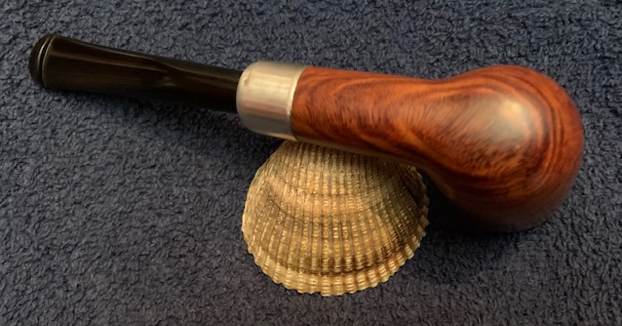
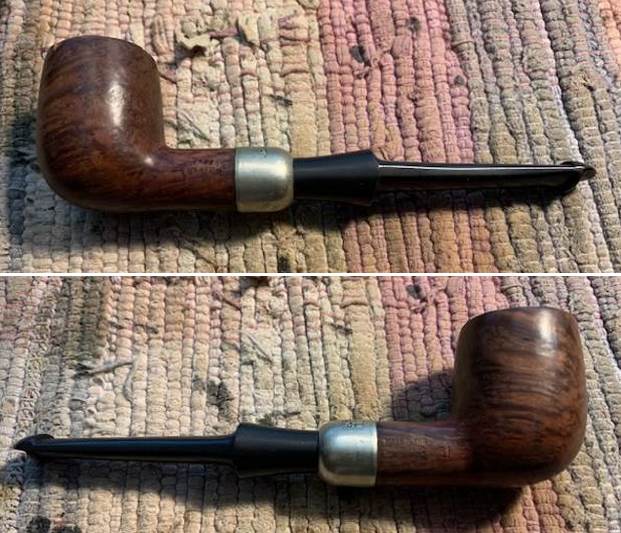
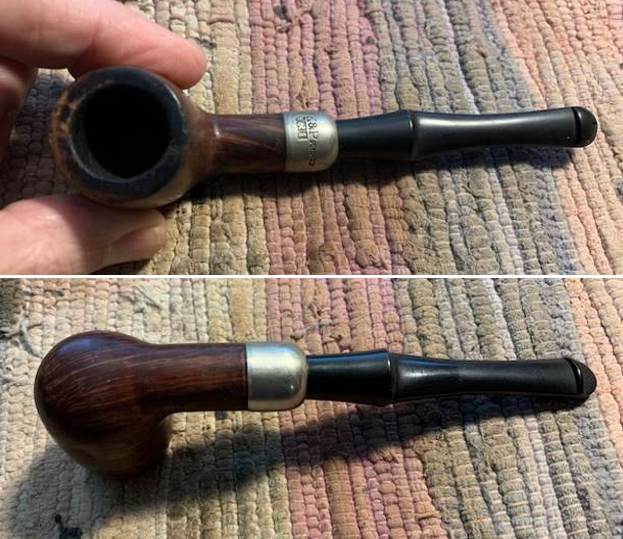
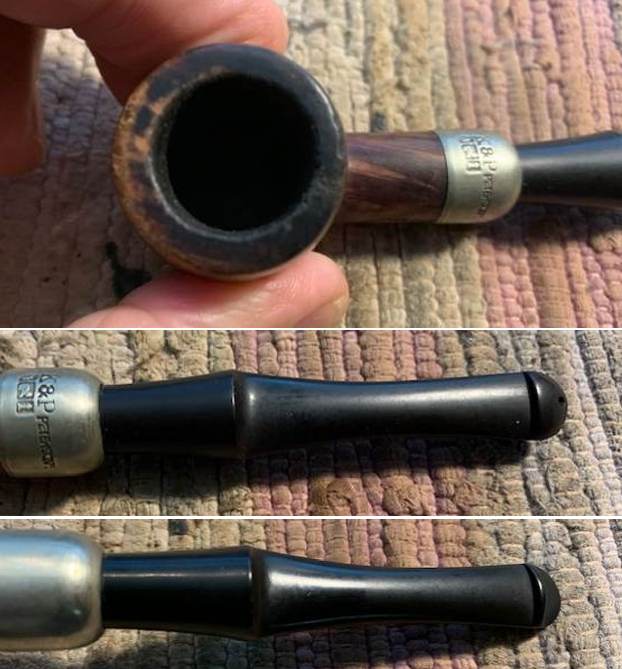
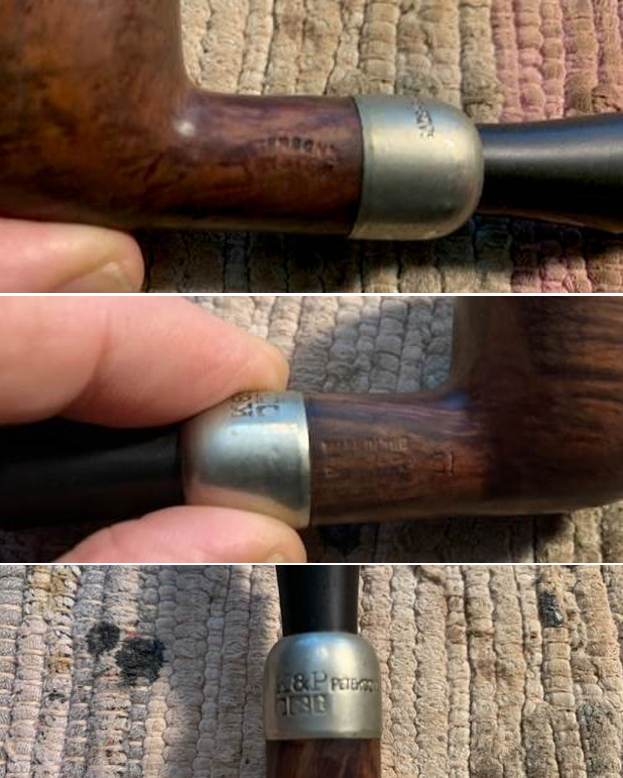
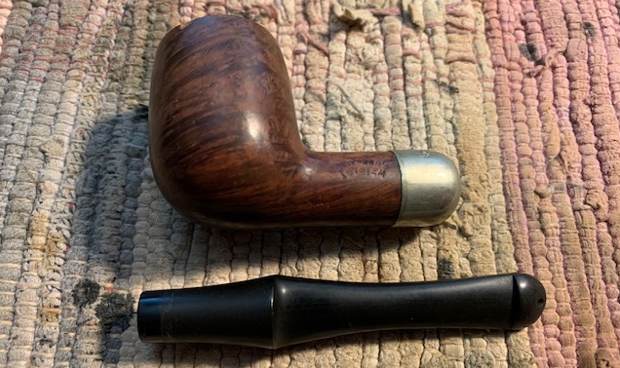
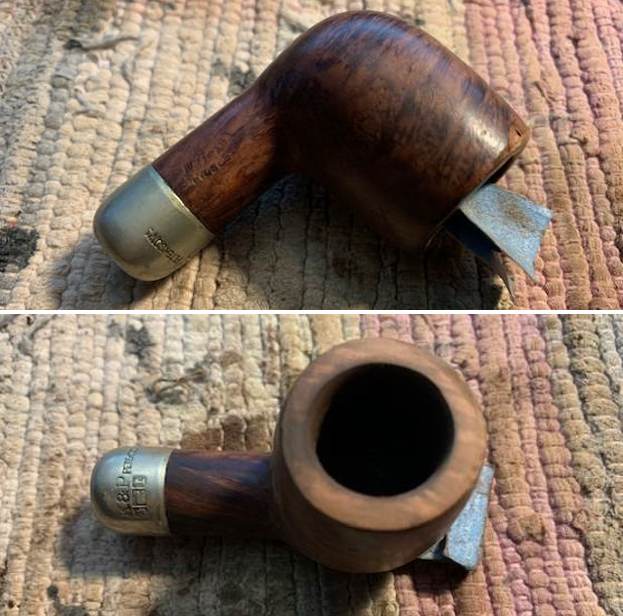
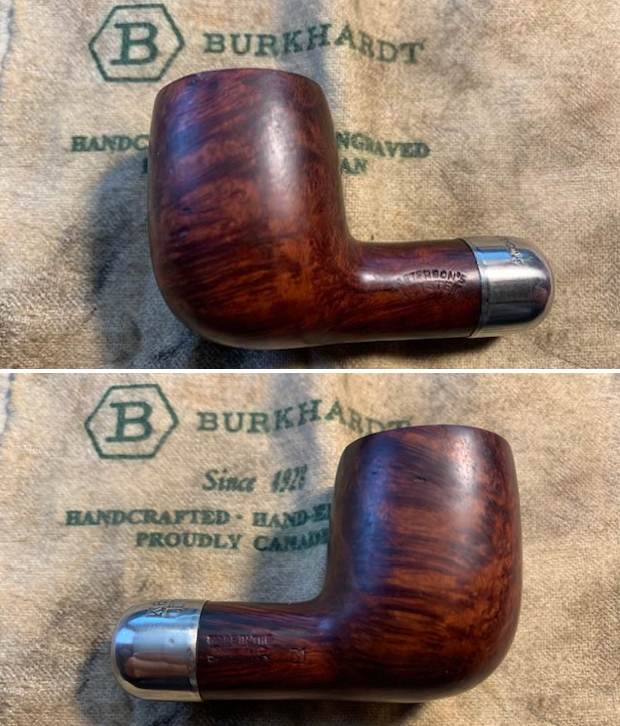
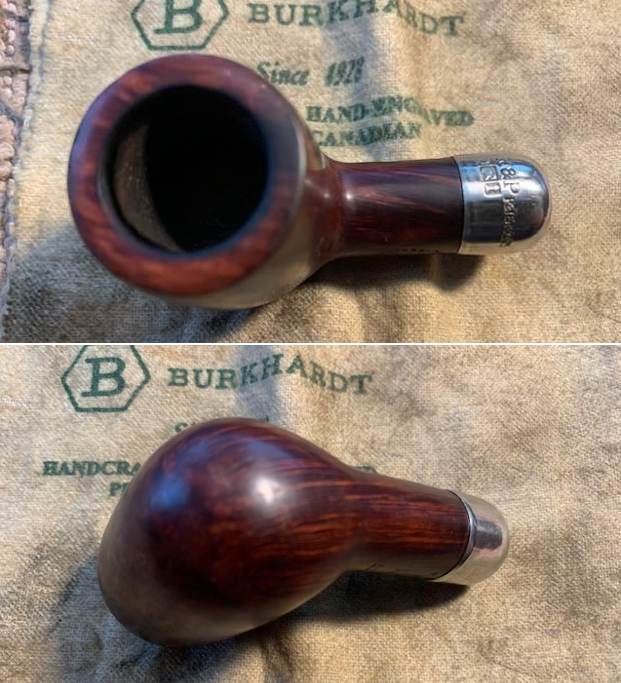
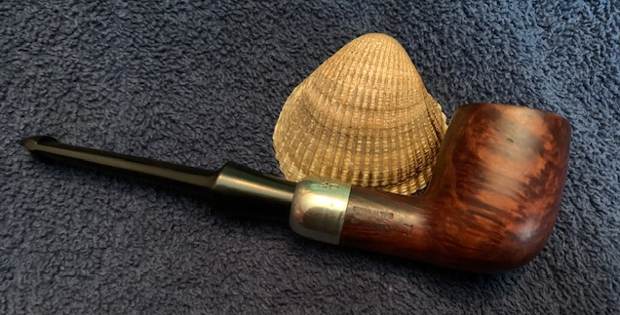
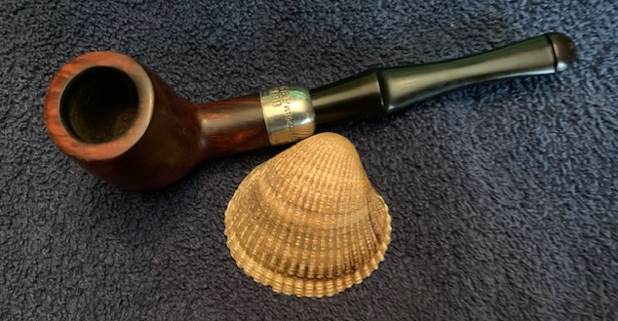
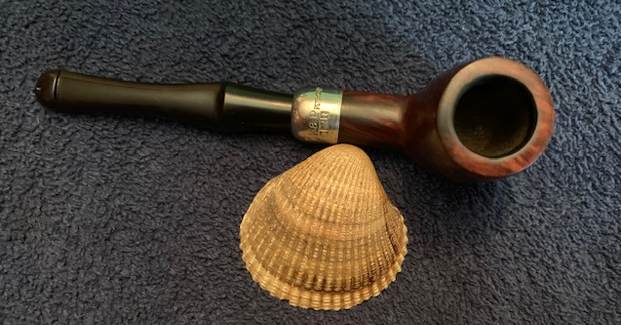
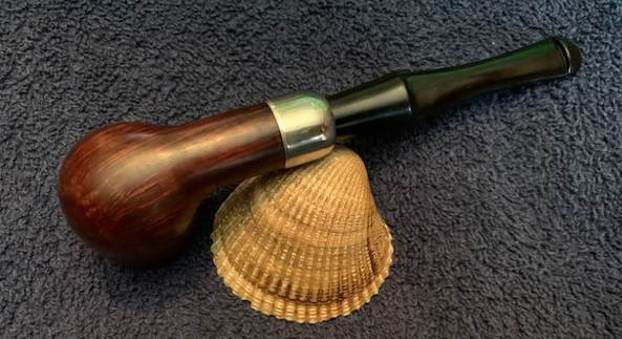
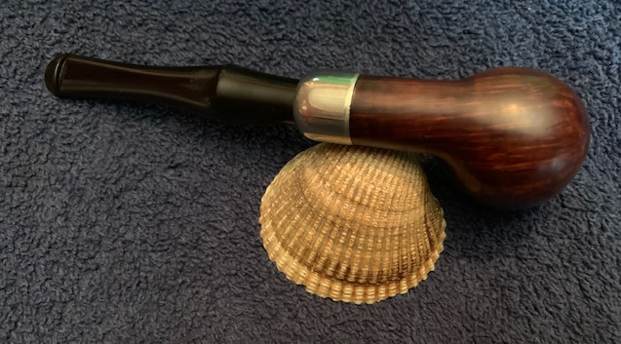
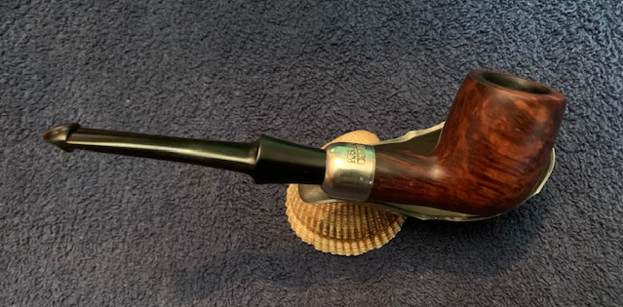
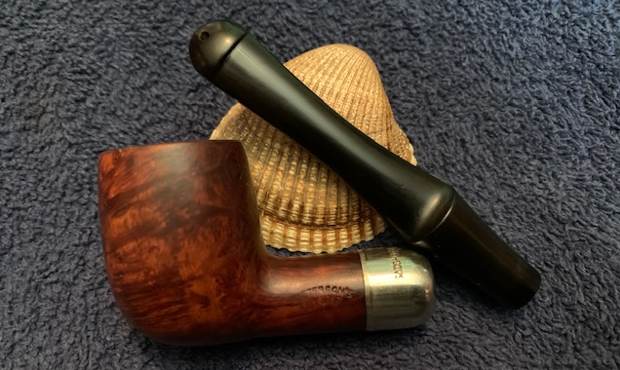
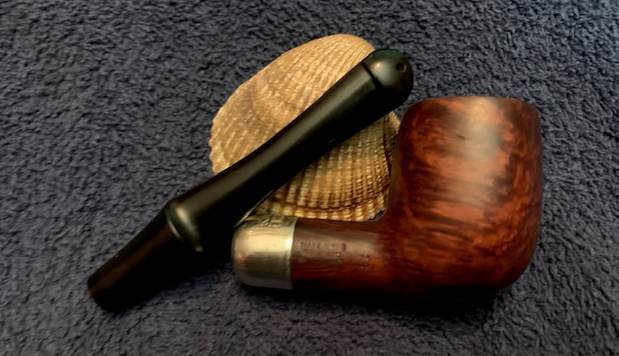
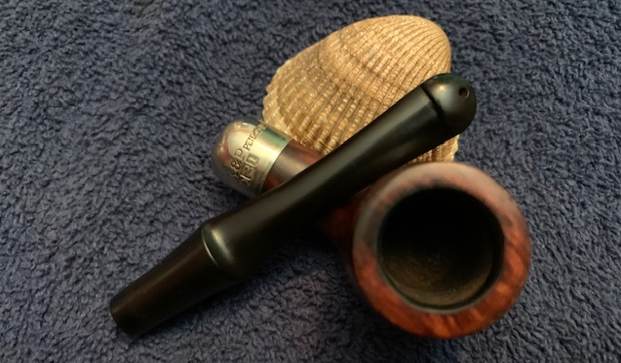
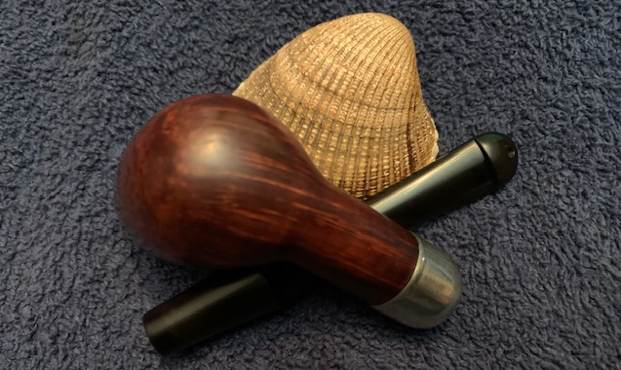
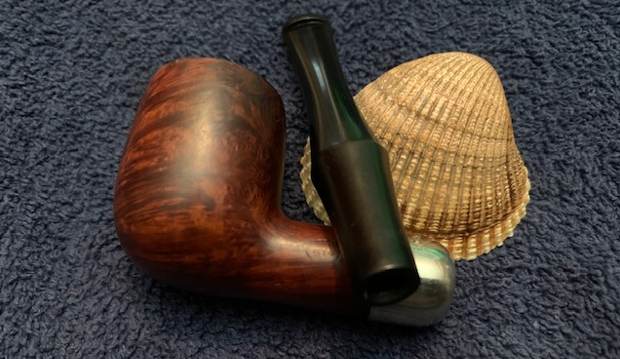
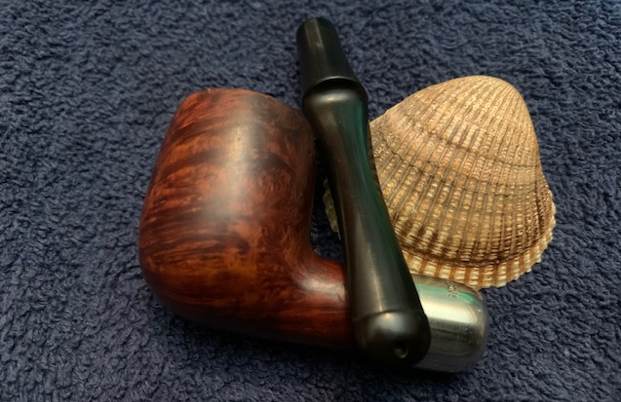
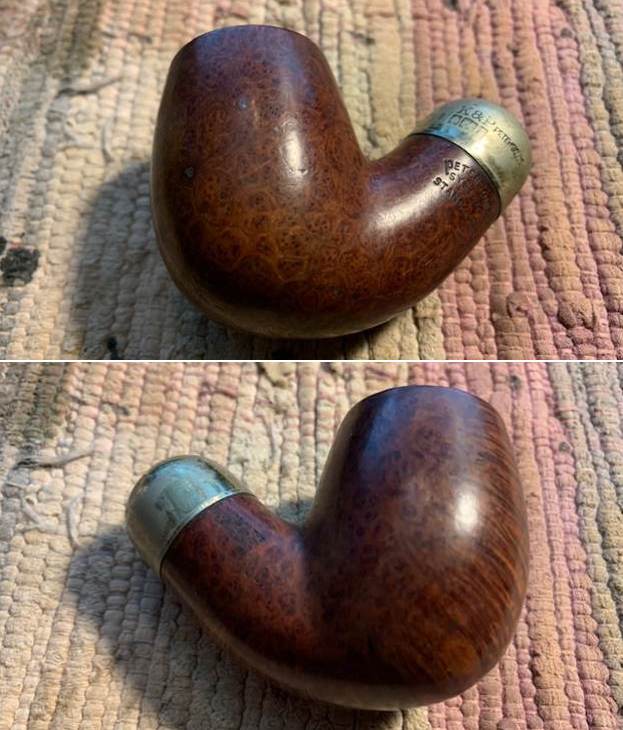
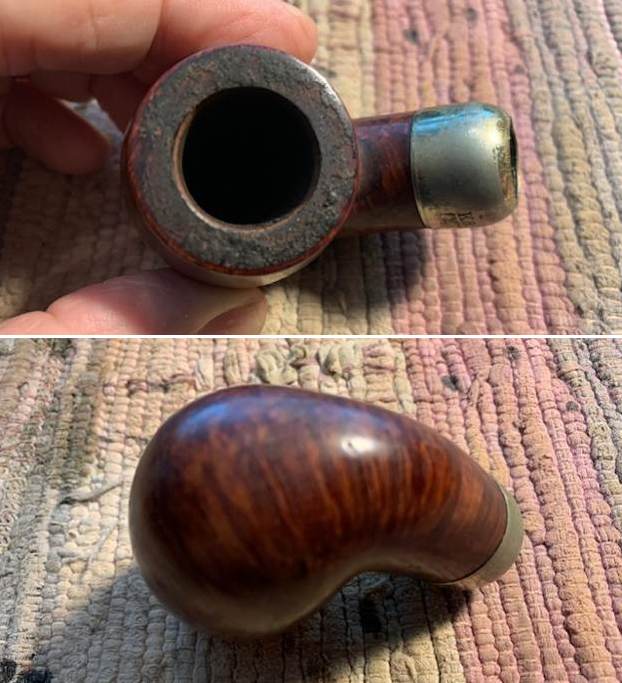
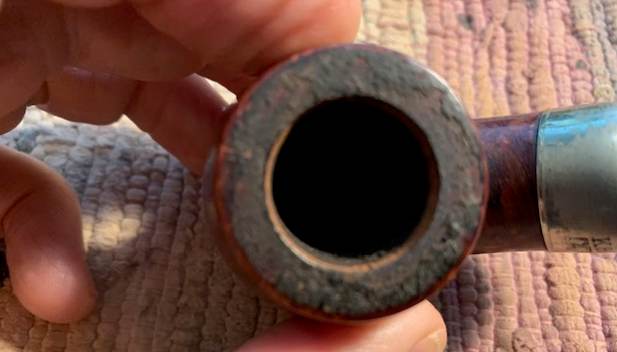
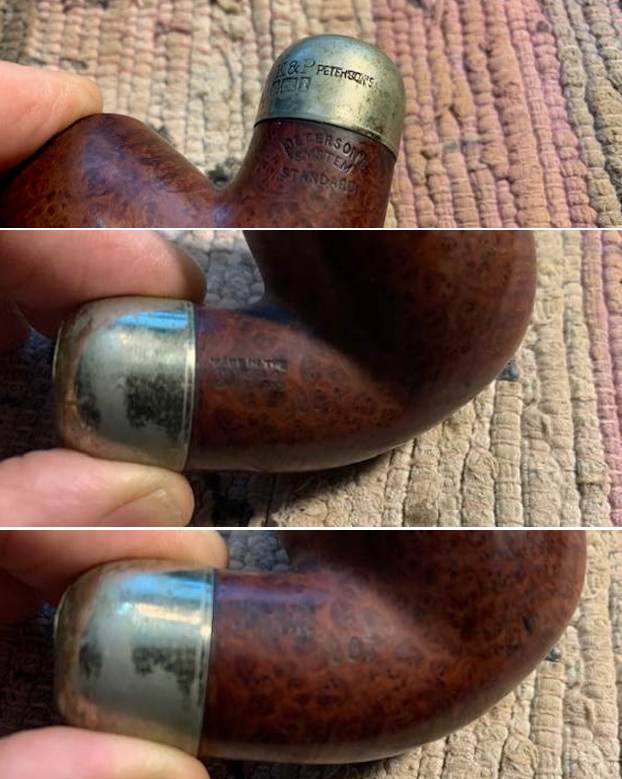
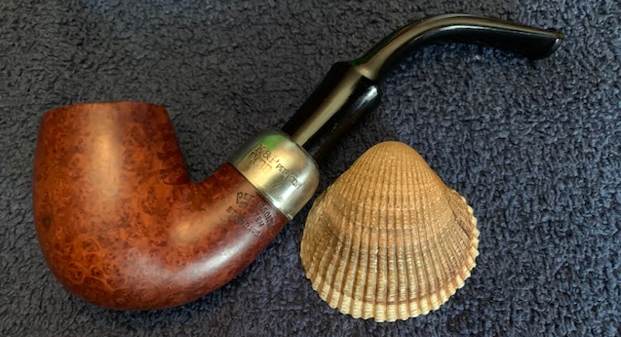
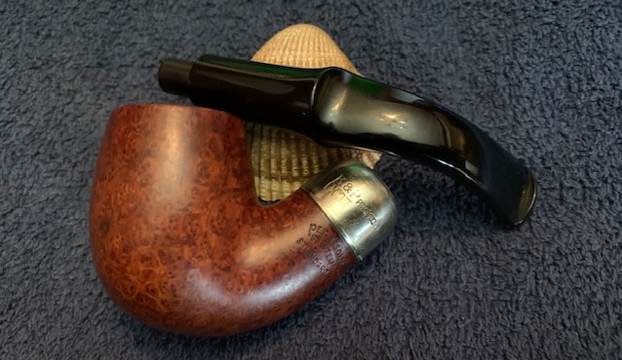
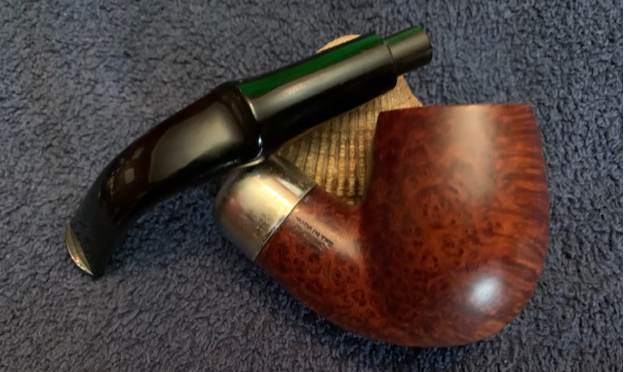
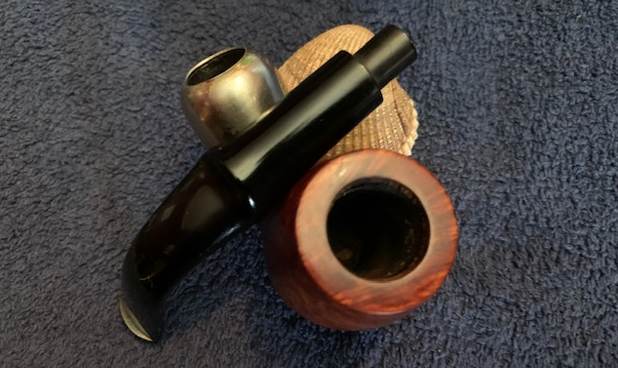
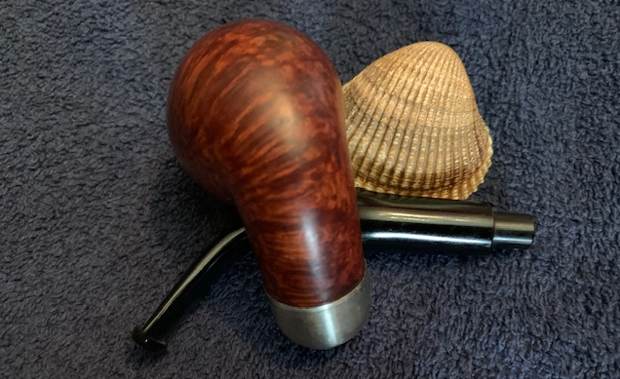
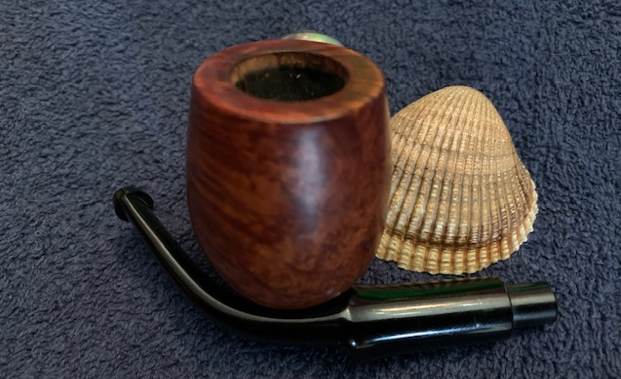
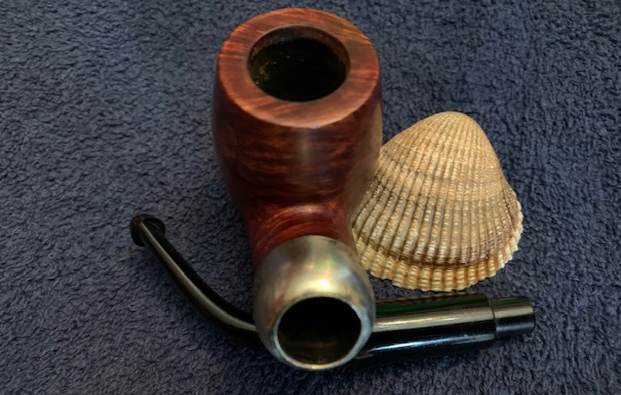
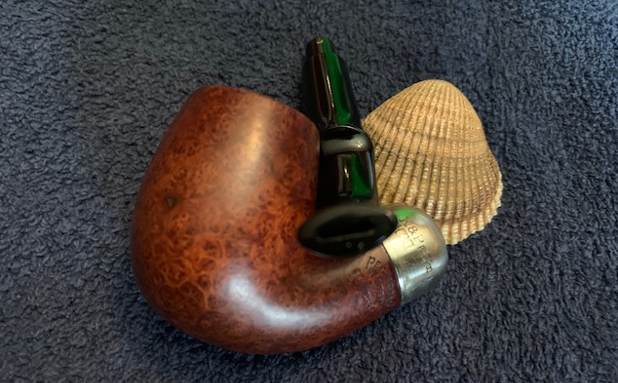
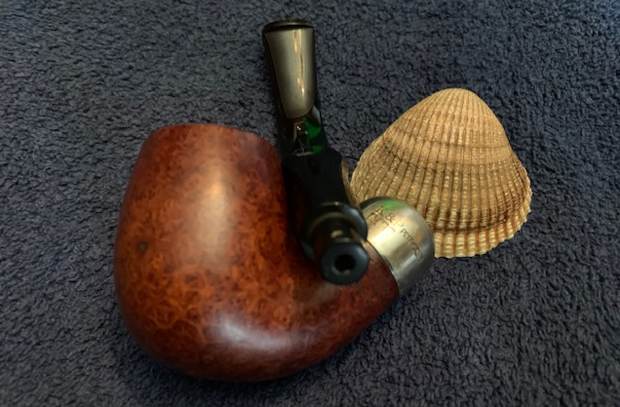
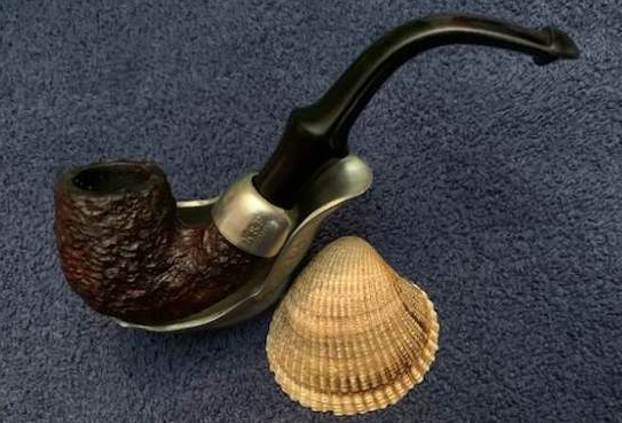
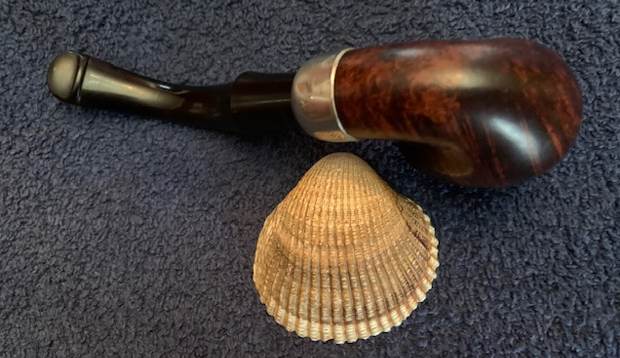
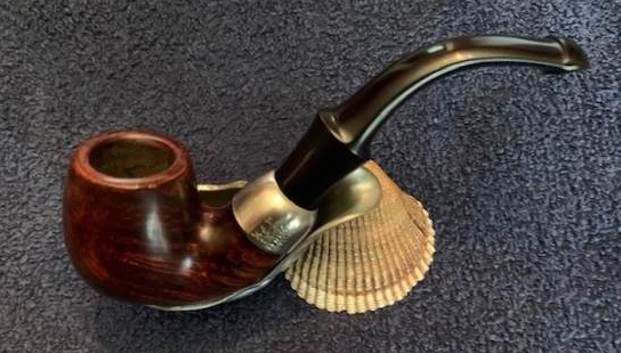
This is a pipe that I have taken out of my personal collection as I just do not use it too much. It is a classic Peterson’s System Bent Billiard shaped pipe with some nice grain around the bowl and a nickel ferrule. It is another pipe that I smoked solely Virginia tobaccos in so it is very clean. The inside of the shank, the system sump and the shank was quite clean. The smooth rim top has some damage on the inside edge of the bowl and is out of round. The smooth finish was very clean but dull and quite lifeless. The grain is mixed but still quite nice around the bowl and shank. The stamping on the shank is clear and readable. The left side is stamped Peterson’s [arched over] System [over] the number 3 in a circle. On the right side it was stamped with the shape number 3170. The nickel ferrule is dull but stamped K&P [over] three faux hallmarks [over] Peterson [over] Dublin. The stem was quite clean with no oxidation or tooth marks. I took some photos of the pipe before I started my work on it. I took close up photos of the bowl and the stem. You can see the light cake in the bowl and the darkening and damage on the inner edge of the rim top. The stem surface was clean and free of tooth marks or chatter on both sides. I took a photo of the stamping on the sides of the bowl and shank. It is clear and readable as noted above. I removed the stem from the shank and took a photo to give a sense of the proportions of the pipe. It is really quite nice looking. I turned to Pipedia (https://pipedia.org/wiki/Peterson) and read through the article there. It was a great reminder of the history of the brand.
I turned to “The Peterson Pipe” by Mark Irwin and Gary Malmberg to get some background on the Peterson’s System 0 Made in Ireland stamp. On page 301 of the book I found a listing on System pipes that referred to the 0-3 stamps. I quote:

System Pipes (1937-59) The 1937 catalog only slightly changed the grading hierarchy for System pipes. The De Luxe model, described as “the finished possible quality obtainable” would be assigned no grading subscript, but neither would the First Quality. Below these were 0 Grade, 2nd Grade and 3rd Grade, all stamped with numbers and PETERSON’S over SYSTEM or PETERSON’S over DUBLIN. Grades 0 and 2nd were fitted with sterling mounts, 3rd grade with nickel. Each of these grades were sometimes stamped below and sometimes to the right of the model name. Sometimes these numbers were circled, sometimes not. The location of the number and whether it was circled or not was rather random from the onset of its use until discontinued in 1959, and by itself only indicates that a given pipe was made between ’37 and ’59.  

On page 302 there was a listing on the nickel mounted markings. I quote:

Nickel-Mount Markings. Often called faux hallmarks or faux marks by Peterson collectors, this set of three little images of a shamrock, an Irish wolfhound and a round tower appear within rectangular shapes as decorations on nickel mountings. Very early nickel mounts (1891-c. 1920) had no such decorations, only the same stamps used on sterling but without the hallmarks. As a stamp, the set of decorations began to appear at the beginning of the Irish Free State era, sometimes alone but often under K&P and over block lettered PETERSON over DUBLIN, although the  three emblems appeared on K&P’s Irish Carving Shamrocks pipes since 1896. The stamp was used until about 1963, when hand soldered nickel bands and ferrules were replaced by pressed ferrules and premade bands…The shamrock is the emblem of Ireland; the Irish wolfhound has long been used for both hunting and protection, and is an emblem of strength; the round tower a symbol of Ireland’s early religious power. These decorations were stamped at the factory on non-sterling mounts only, and the assay office has nothing to do with…

The information was very helpful. I have highlighted the pertinent reference to regarding the stamping, the circle 3 number and the faux hallmarks above. I knew that I was dealing with a pipe made between 1937 and 1959.

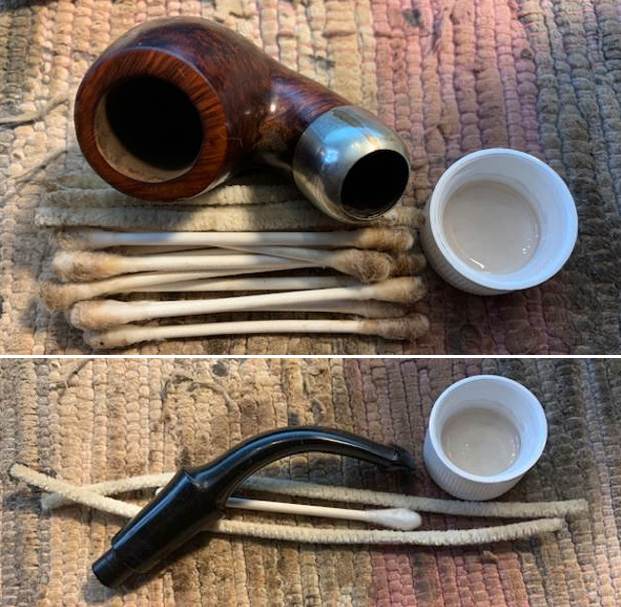
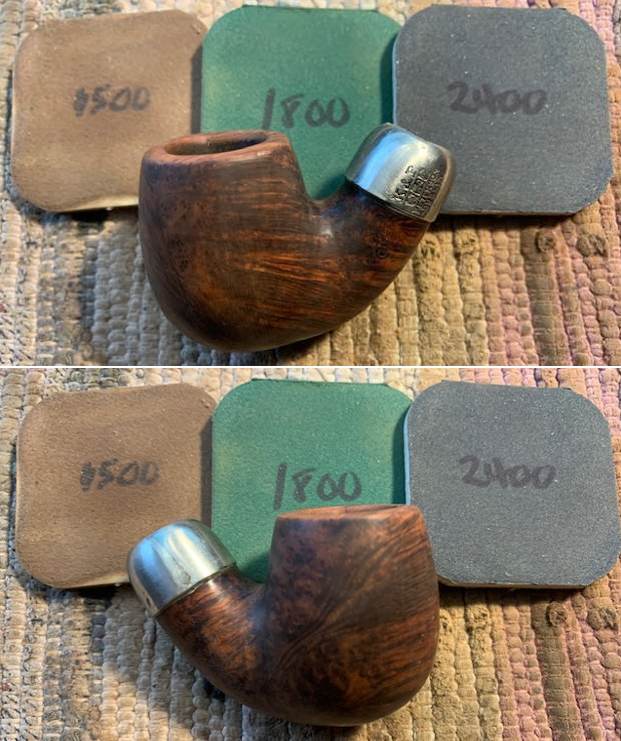
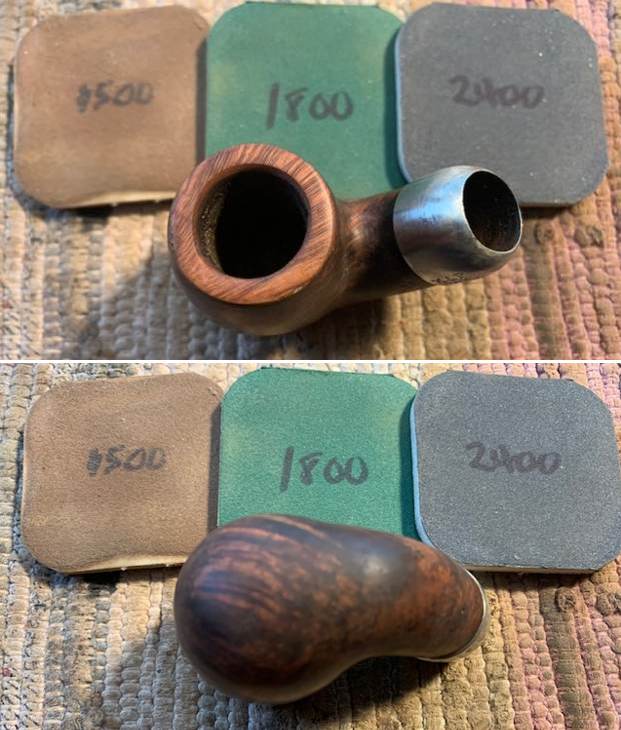
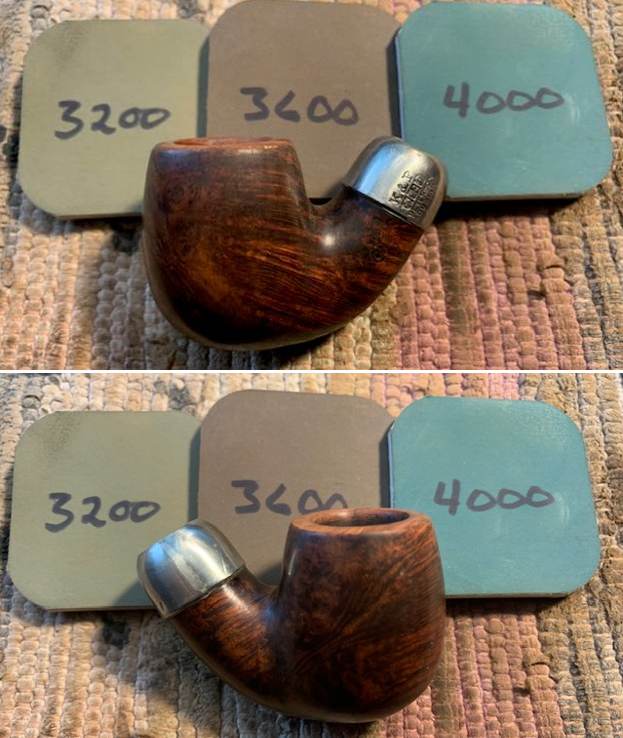
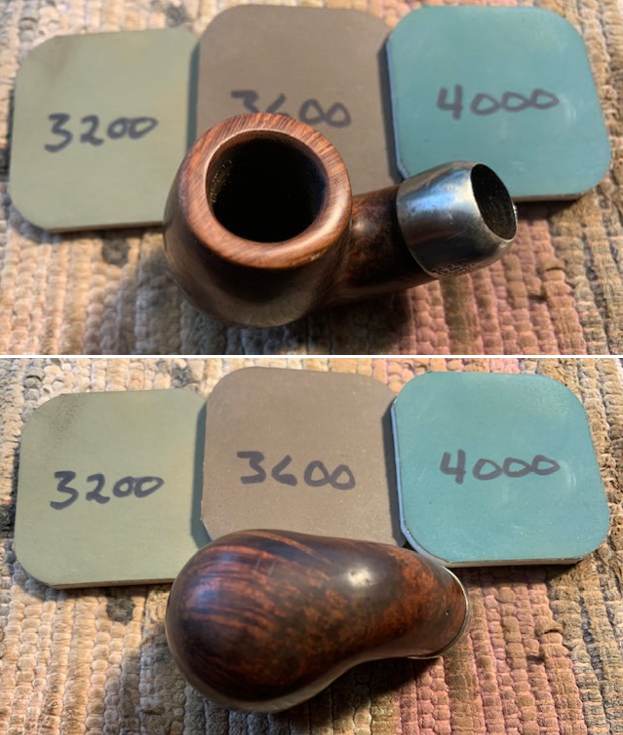
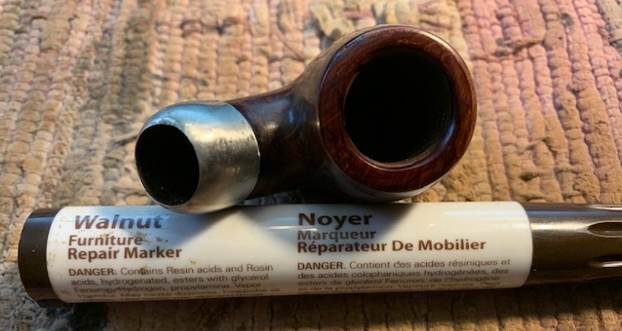
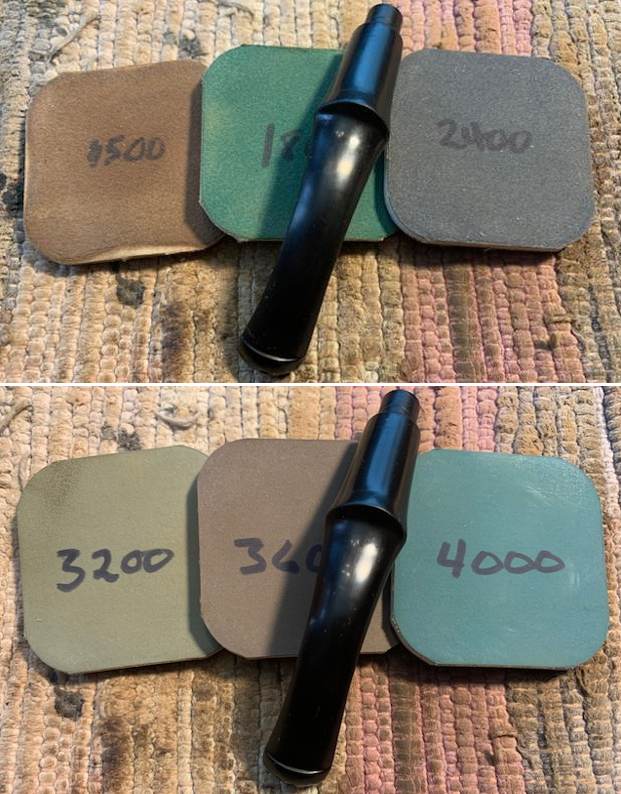
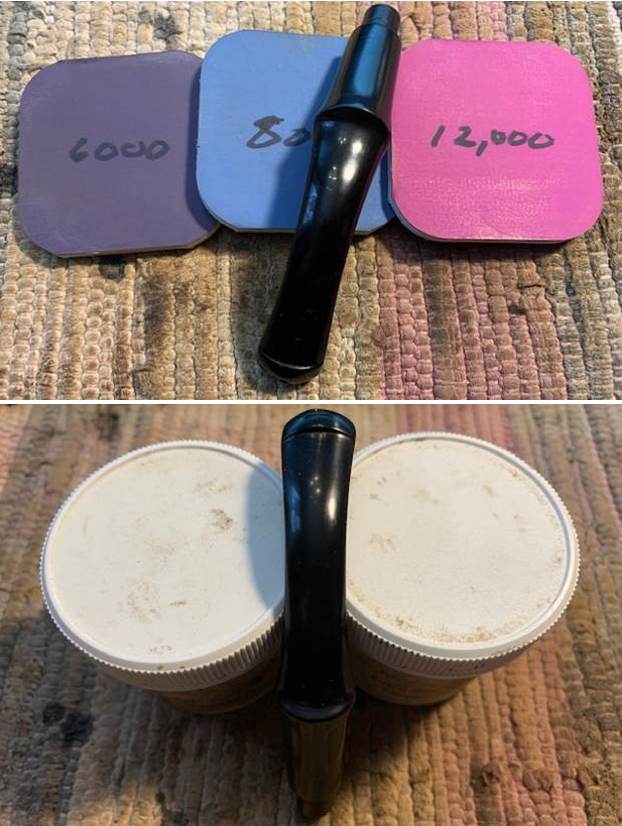
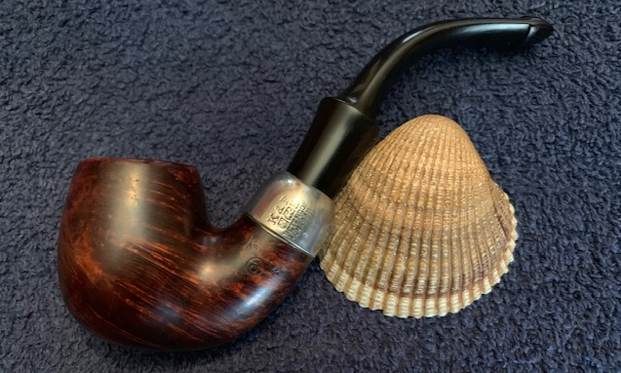
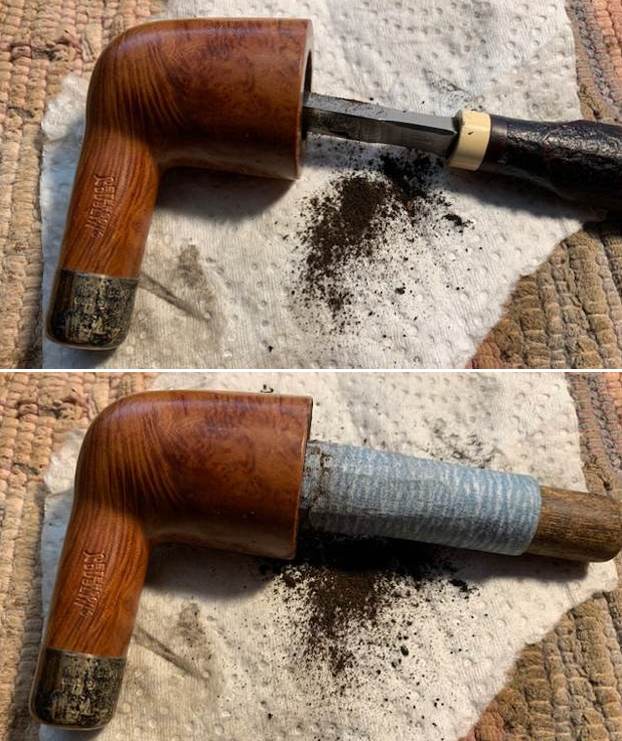
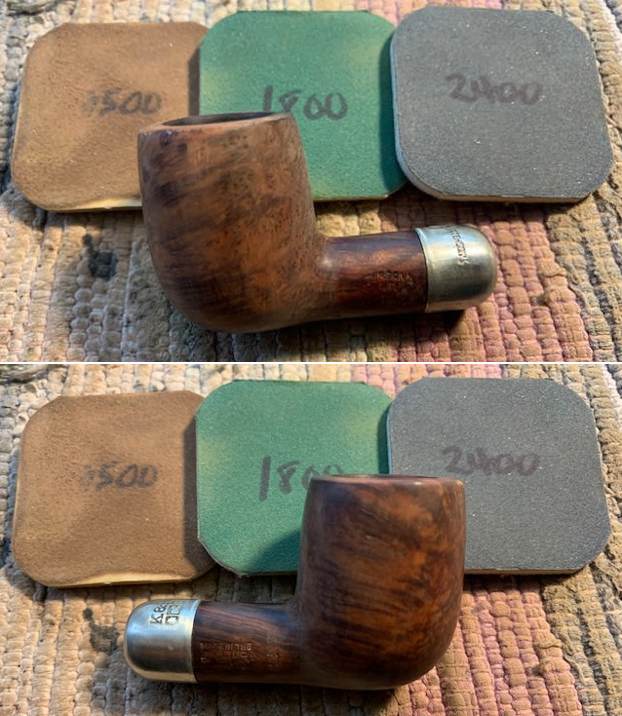
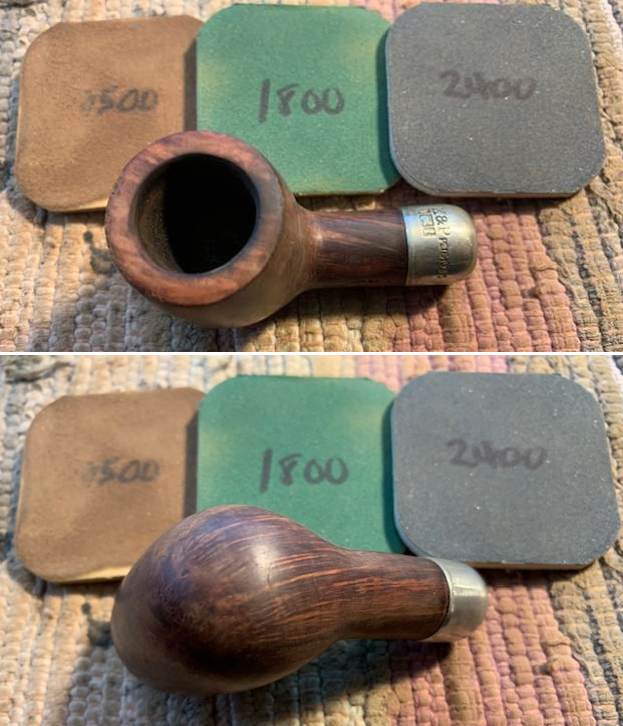
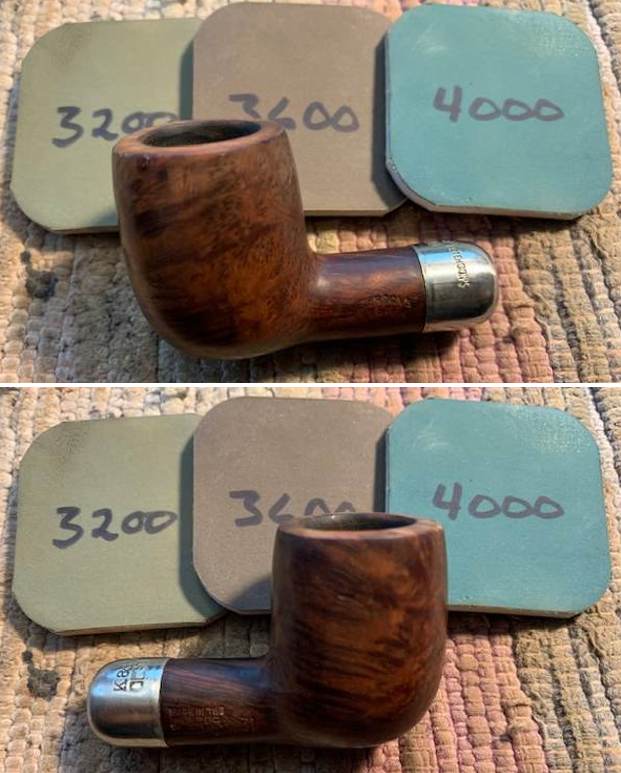
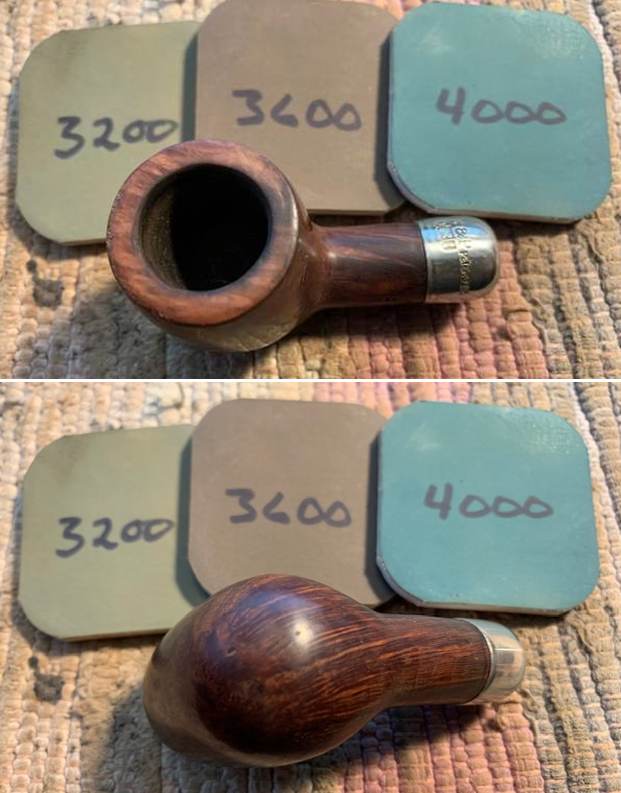
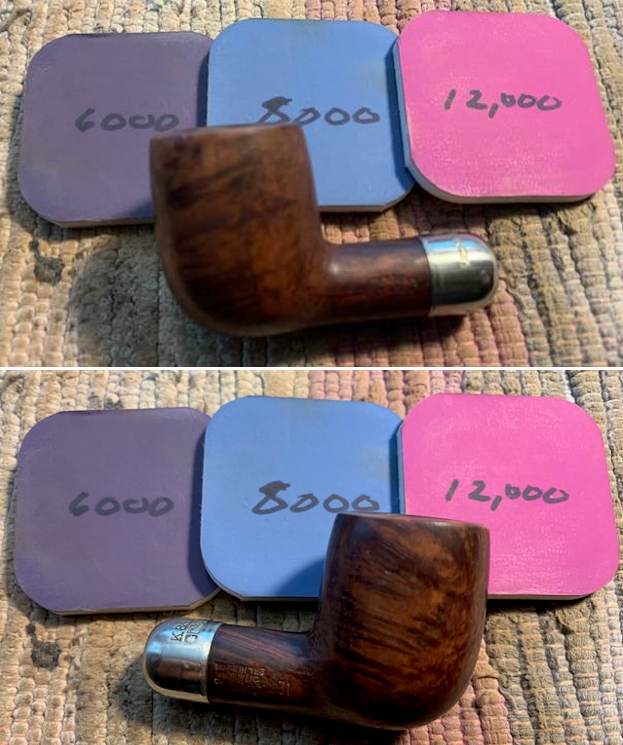
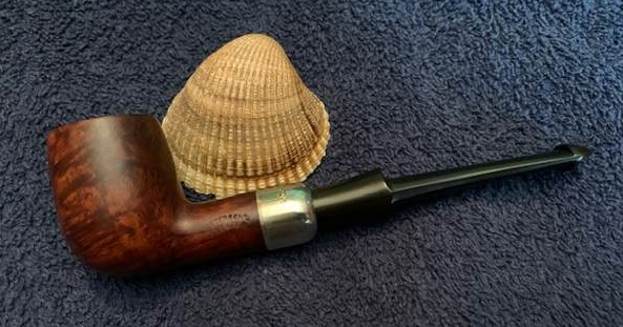
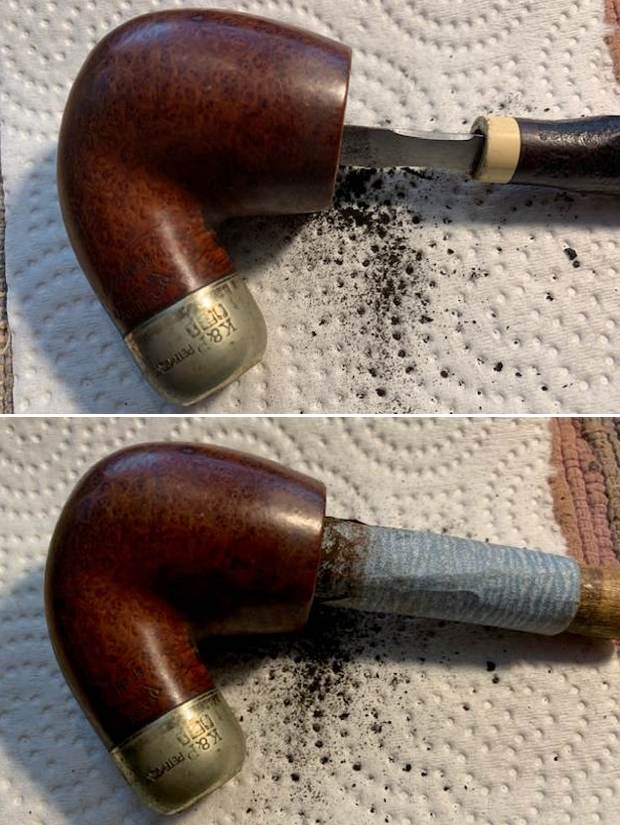
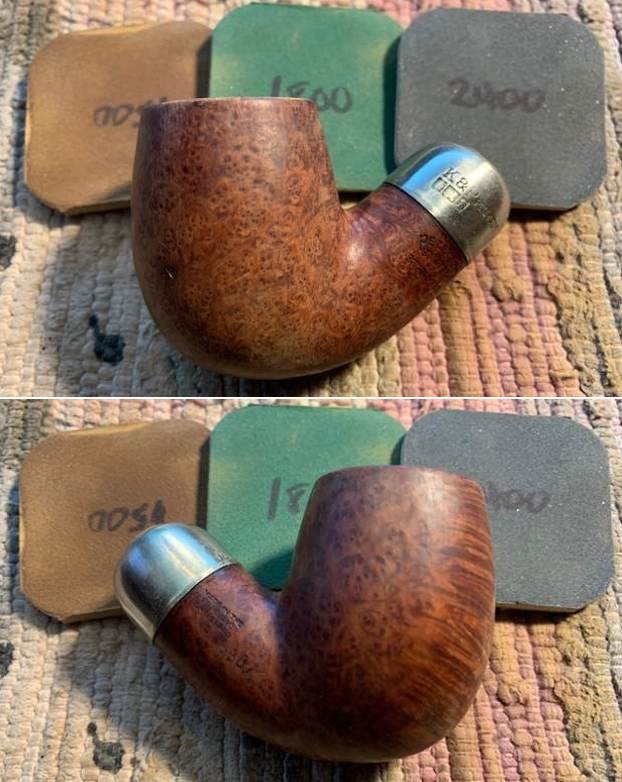
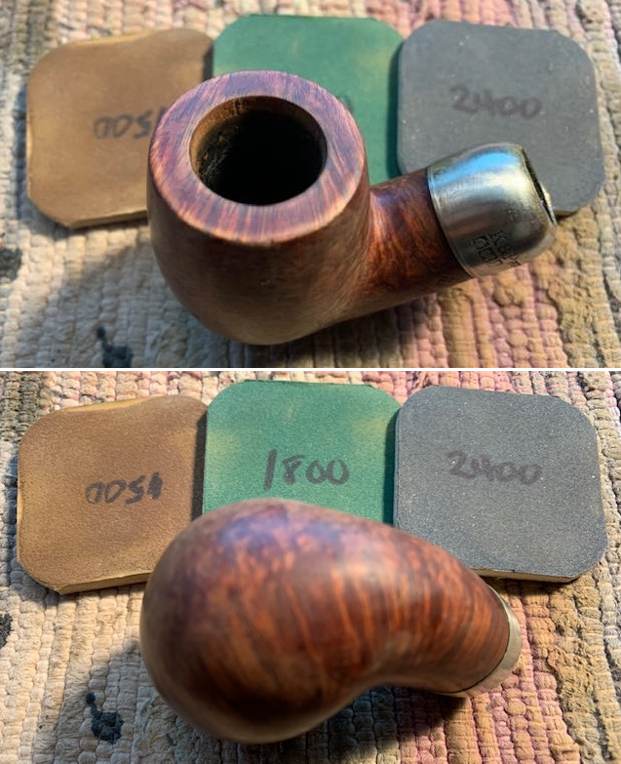
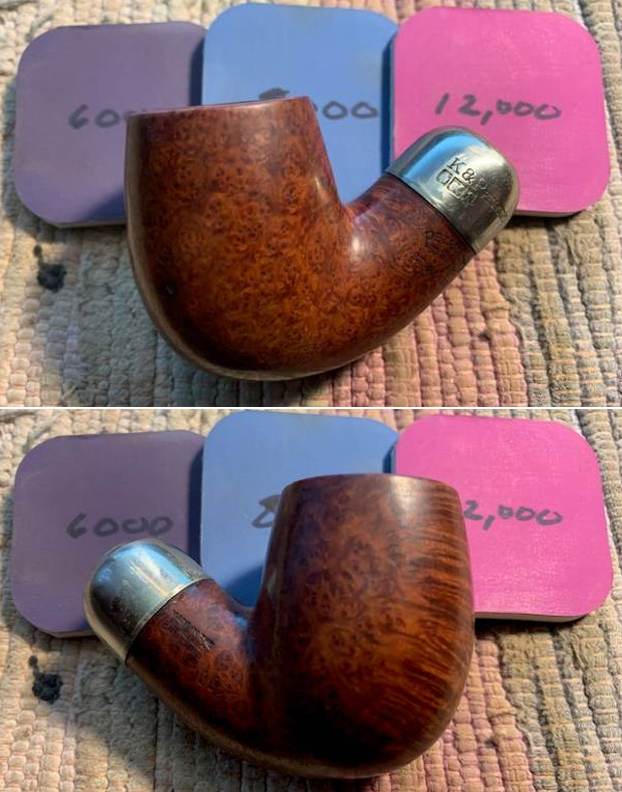
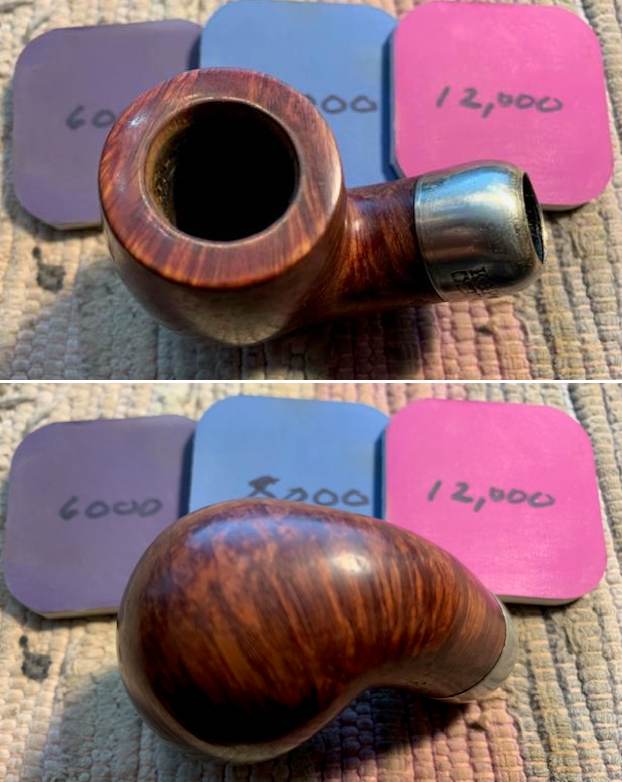
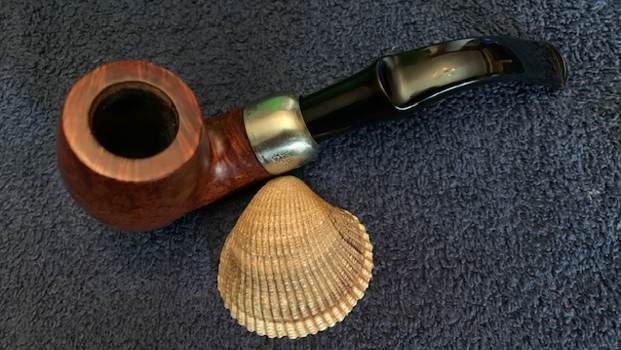
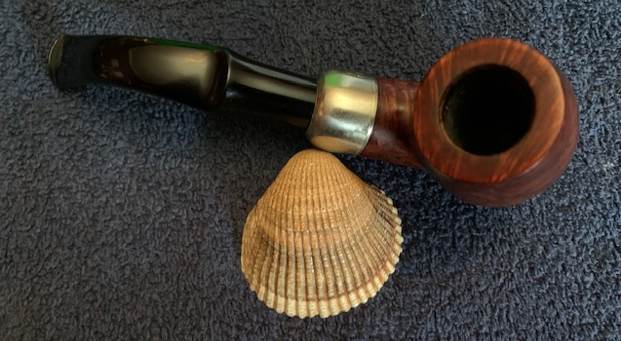
I reamed the bowl with a Savinelli Fitsall Pipe Knife. I sanded the walls on the bowl with a piece of 220 grit sandpaper wrapped around a piece of dowel to take the walls back to smooth once again. I worked on the pipe with a folded piece of 220 grit sandpaper to remove the damage on the rim top and edges of the bowl. It looked better but would need a bit more work.I cleaned out the sump, the shank and the airway in the stem and shank with pipe cleaners, cotton swabs and isopropyl alcohol. The pipe was clean and it smelled significantly better.I polished the rim top and edges with micromesh sanding pads – dry sanding with 1500-12000 grit pads to raise a shine. I wiped it down with a damp cotton pad to wipe off the debris after each sanding pad. I touched up the rim top and inner edge of the bowl with a Walnut stain pen to match it to the rest of the of the bowl. It blends in very well.I polished the nickel ferrule with a  jeweler’s cloth. The cloth is impregnated with polish that not only raises a shine but protects the metal. I worked some Before & After Restoration Balm into the surface of the briar with my fingertips. It works to clean, enliven and protect the briar. I let it sit for 15 minutes then buffed it off with a soft cloth and raised the shine. The bowl looks great at this point.   I polished the stem with micromesh sanding pads – dry sanding it with 1500-12000 grit pads. I wiped the stem down with Obsidian Oil after each pad. I polished it with Before & After Pipe Polish – both Fine and Extra Fine and gave it a final coat and set it aside to dry.  I put the stem back on the Peterson’s System 3 Bent Billiard 3170 and buffed the pipe with Blue Diamond on the buffing wheel. I polished the briar and the vulcanite of the stem until there was a rich shine. This classic Peterson’s shape and finish really highlights a proportionally well carved pipe. Once I buffed the pipe the briar came alive and popped with polishing. The black vulcanite stem has a rich glow. This Peterson’s System 3 Bent Billiard fits well in the hand and sits right in the mouth. Have a look at it with the photos below. The dimensions are Length: 5 inches, Height: 1 ½ inches, Outside diameter of the bowl: 1 inch, Chamber diameter: ¾ of and inch. The weight of the pipe is 1.48 ounces/42 grams. It was one I chose for my own collection and enjoyed, but I am happy to pass it on to the next pipe man or woman. This beauty will be going on the rebornpipes online store in the Irish Pipemakers Section. If you are interested let me know. Thanks for walking through the restoration with me as it was a pleasure to work on.

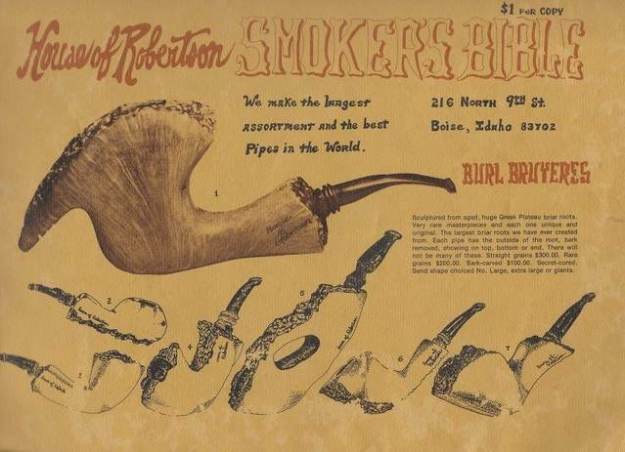
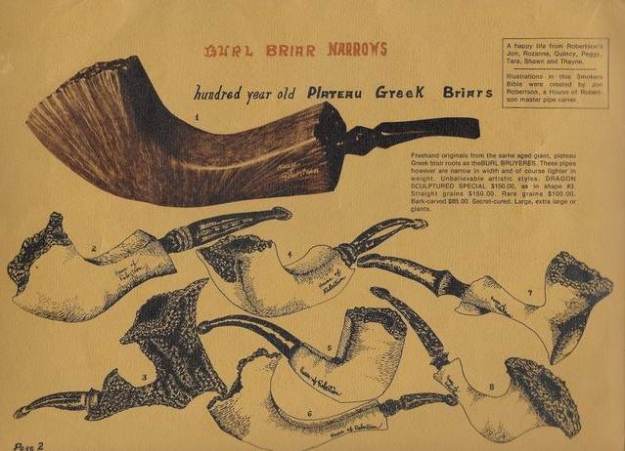
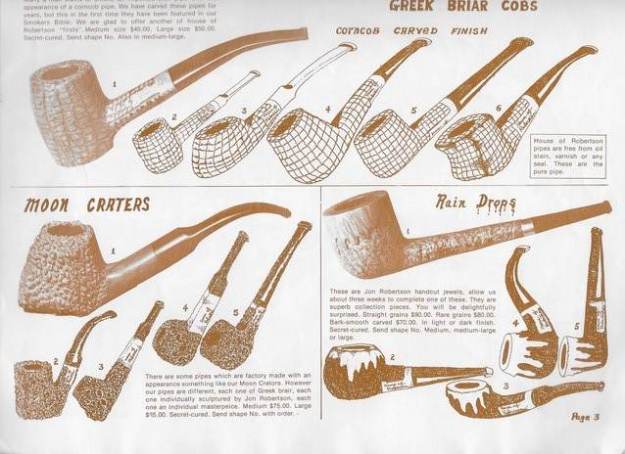
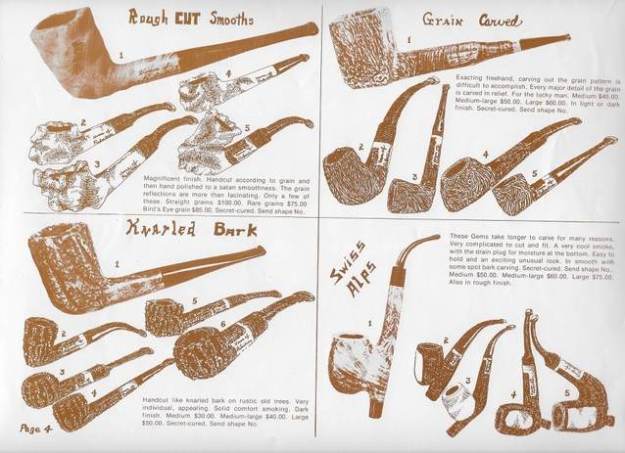
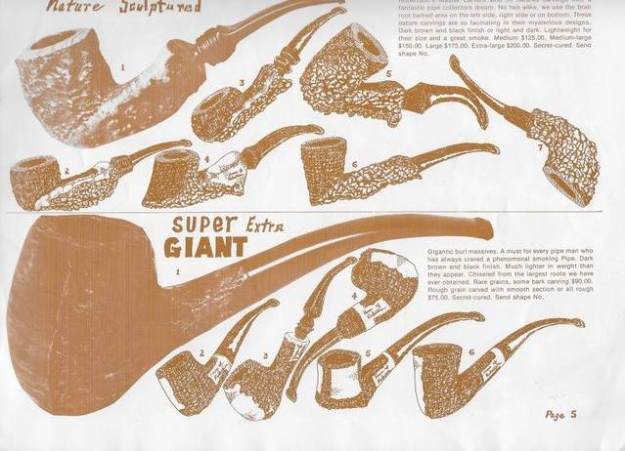
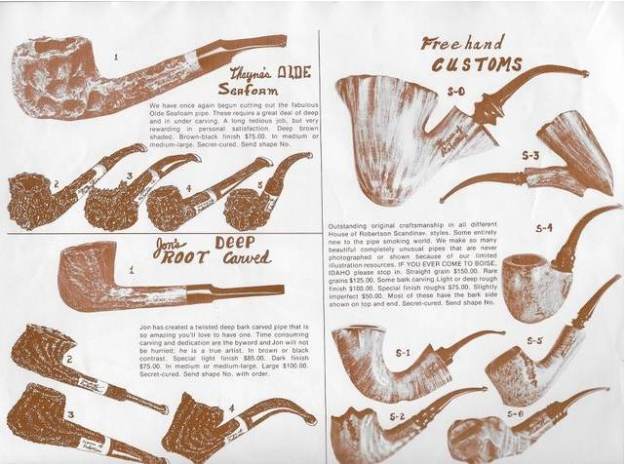
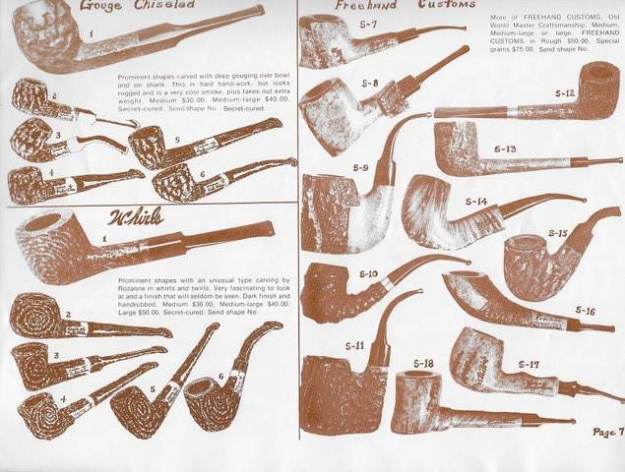
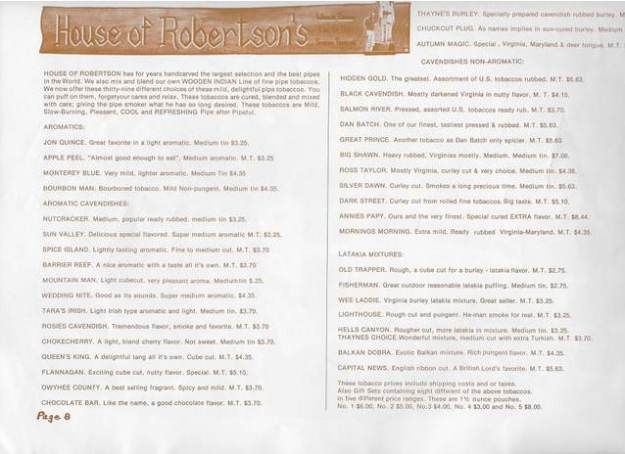
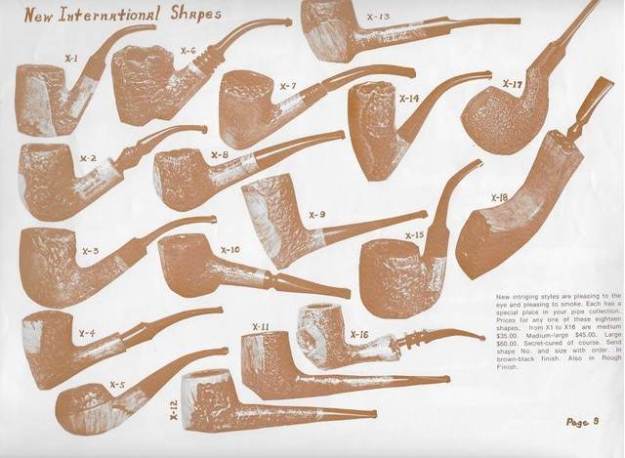
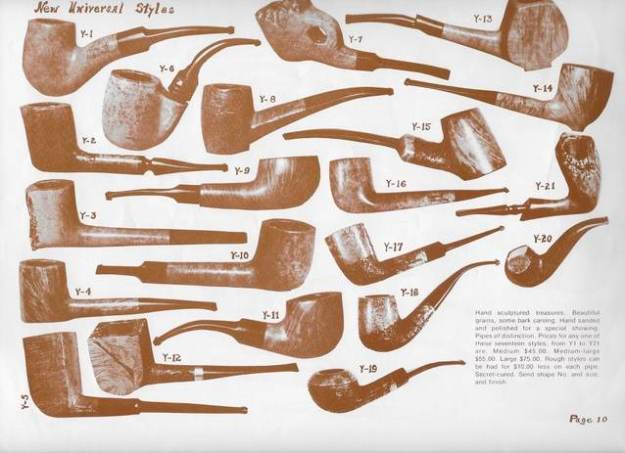
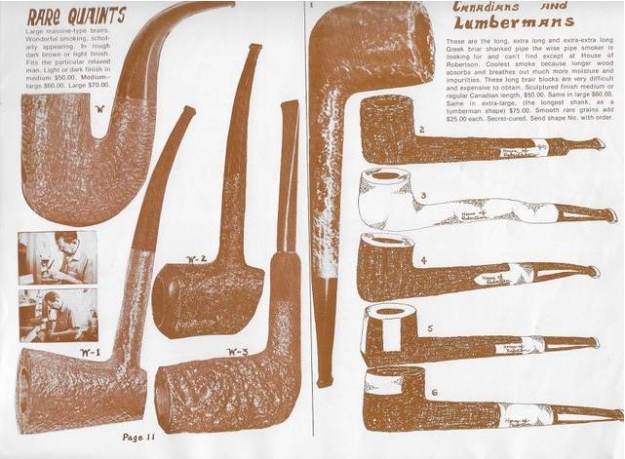
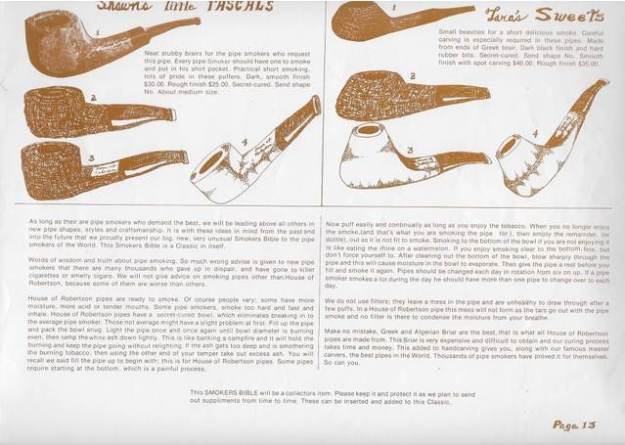
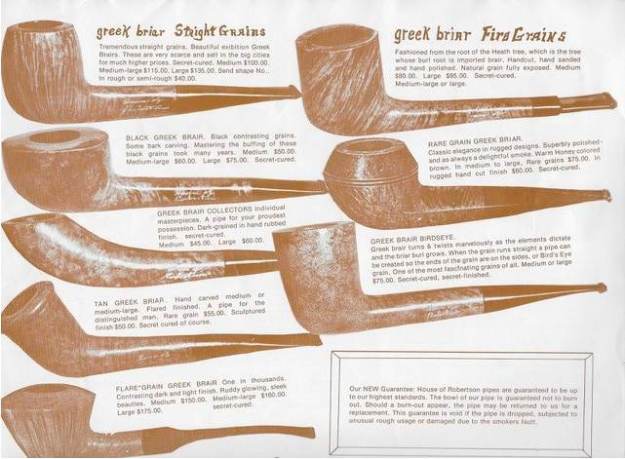
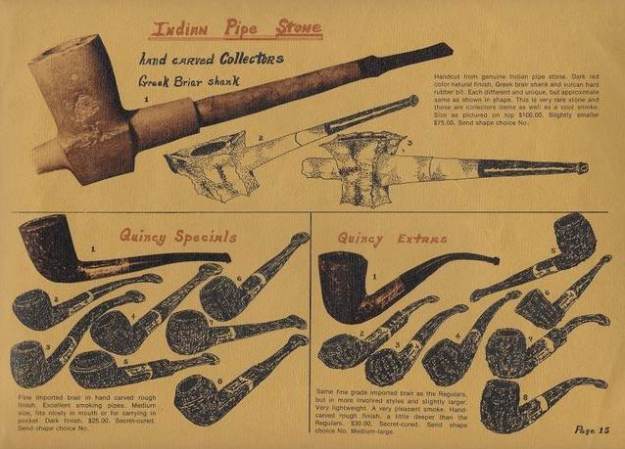
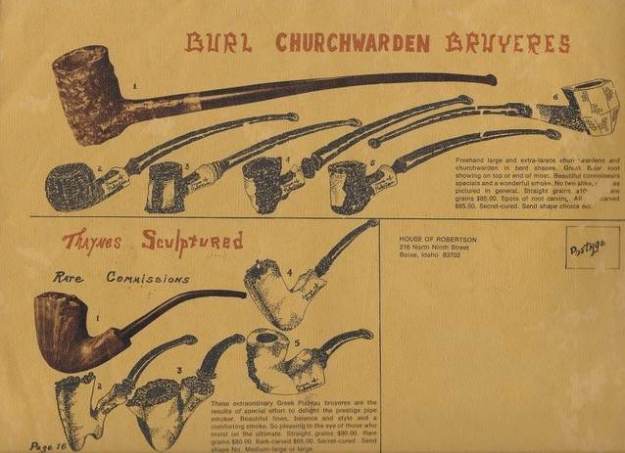
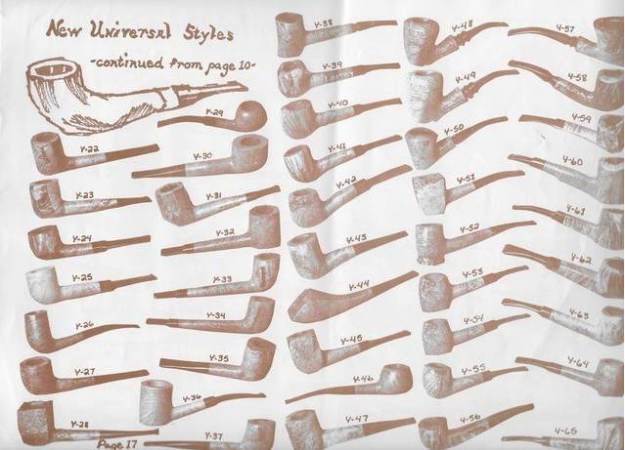
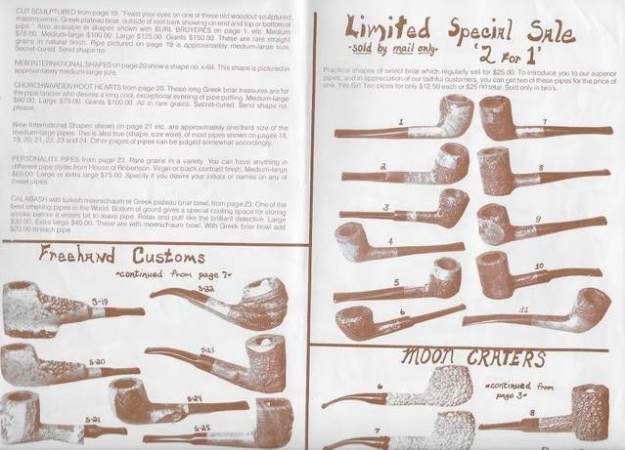
A House of Robertson Catalogue Filled with Great Examples of Thayne Robertson’s Work


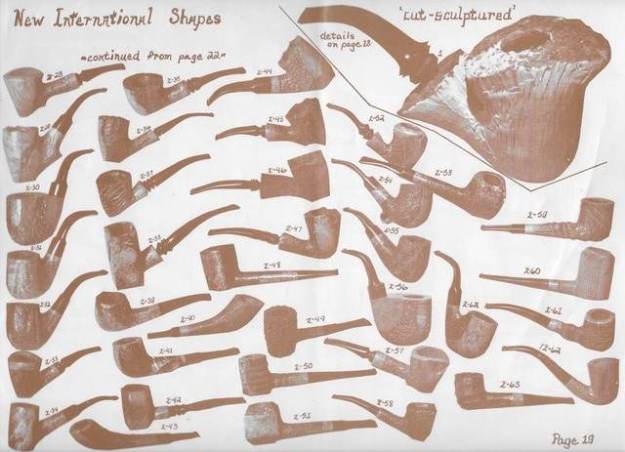
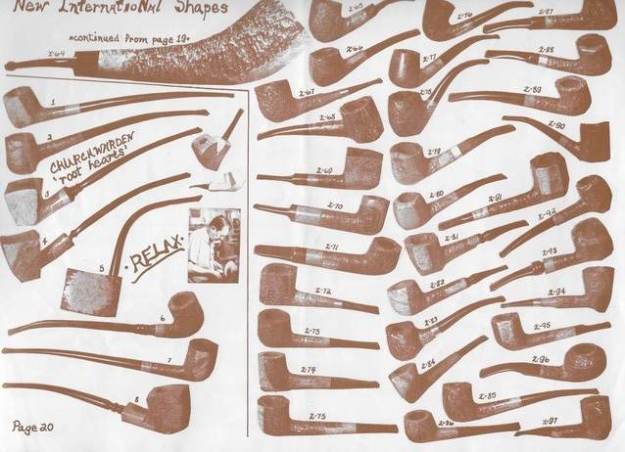
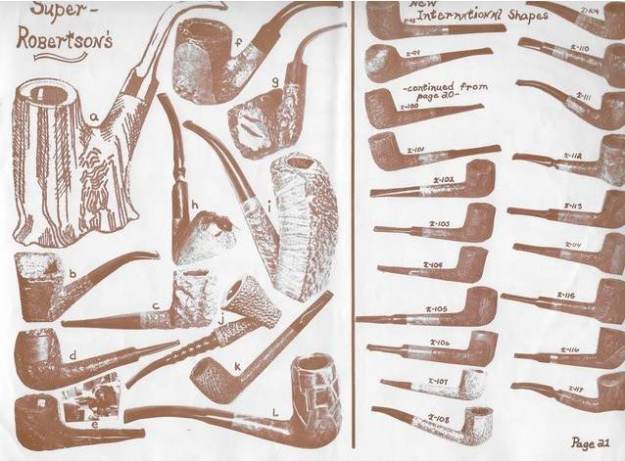
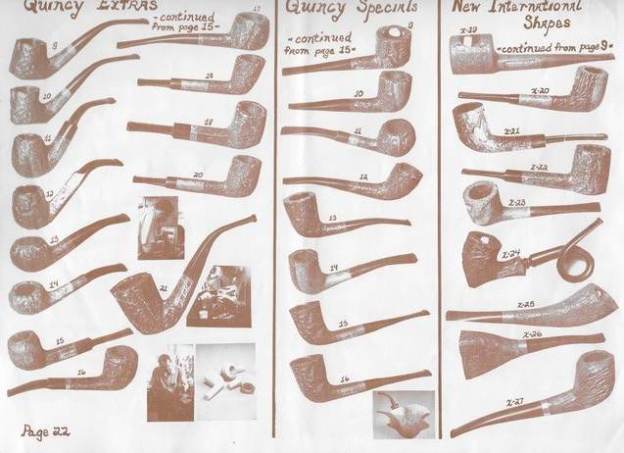
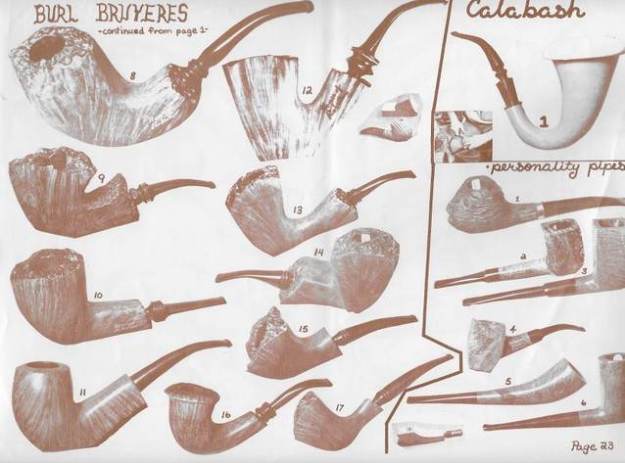
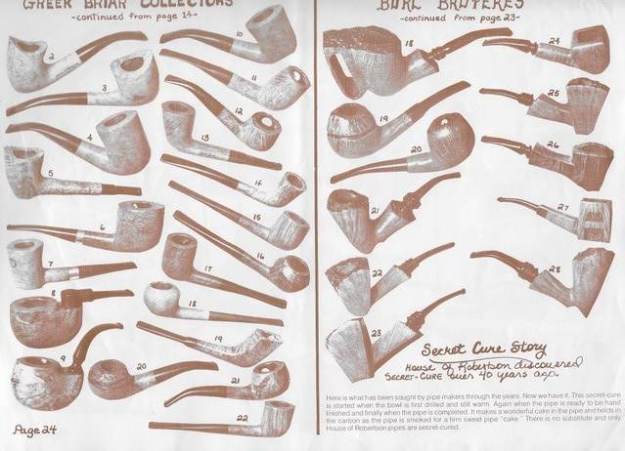
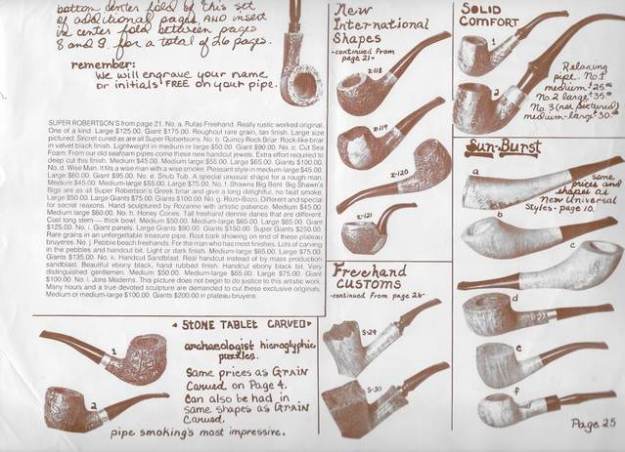
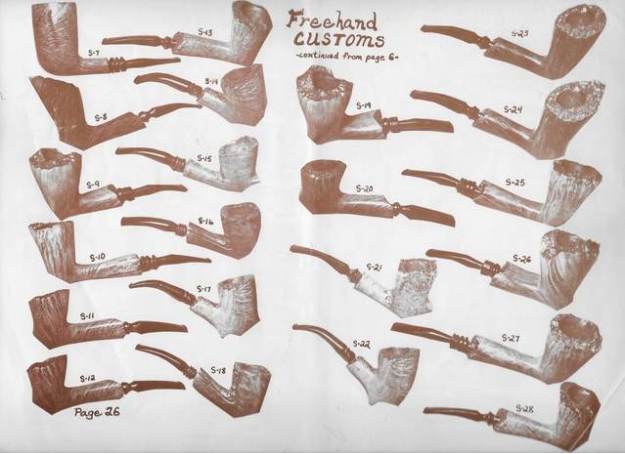
A friend pointed out this catalogue on Ebay recently so we bid on it and won. It is a great catalogue with lots of information about the Boise, Idaho pipemaker and  pipeshop owner, Thayne Robertson. It is quite a wishbook full of pipes with a broad range of styles that capture the imagination of a pipe man or woman.  Jeff and I have worked on quite a few House of Robertson pipes over the years and have come to appreciate the craftsmanship of the pipemaker. Have a look at the catalogue below.

Restoring a Republic Era Peterson’s System 120 Dublin


Blog by Steve Laug

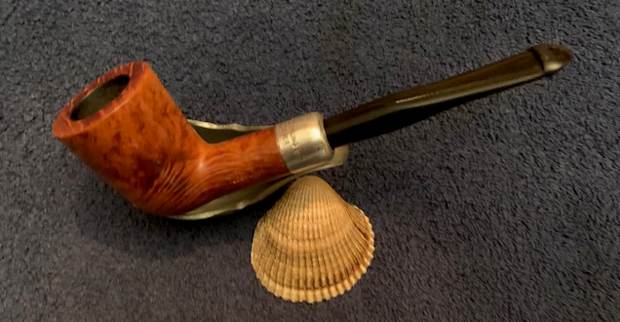
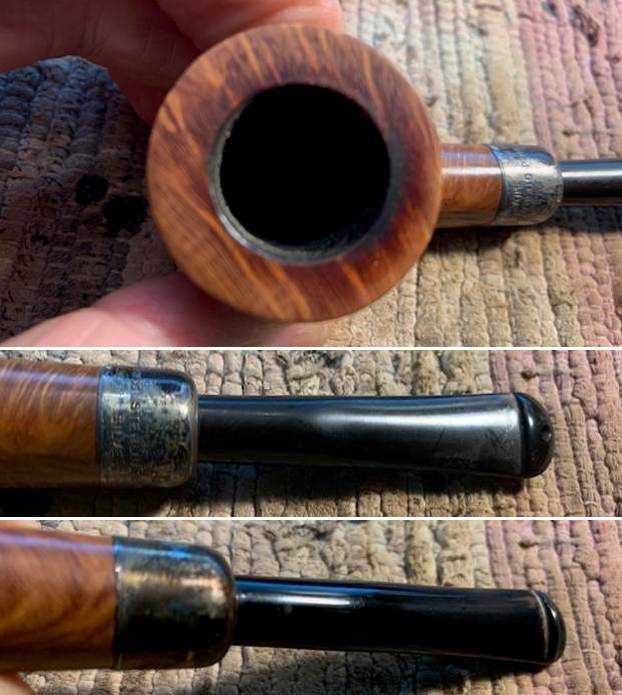
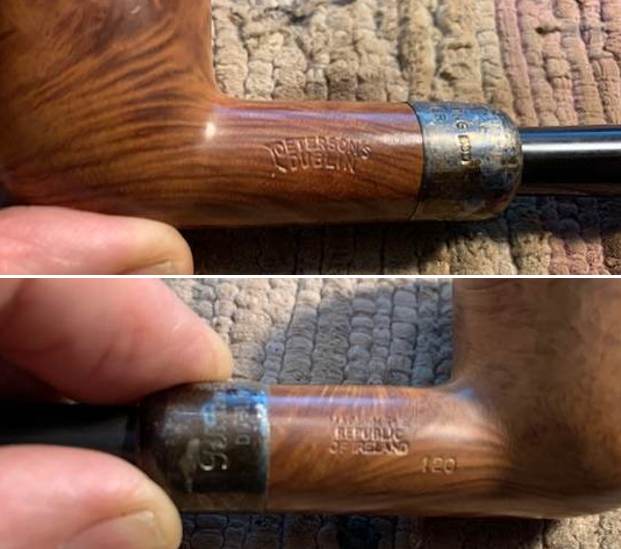
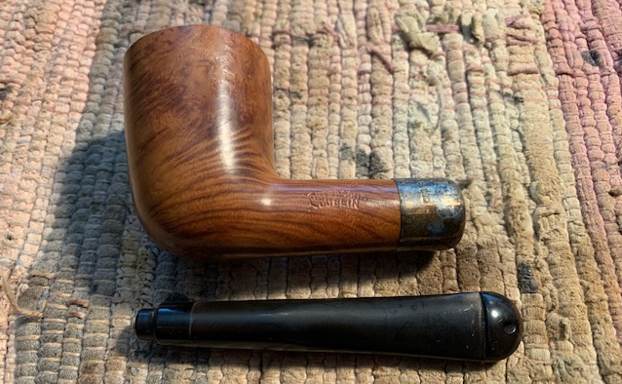
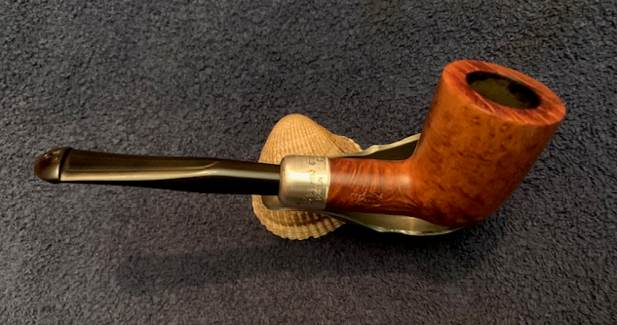
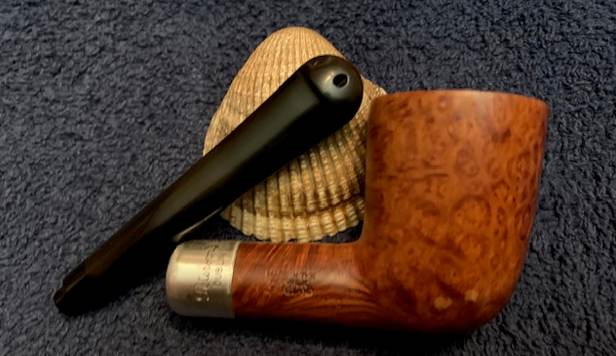
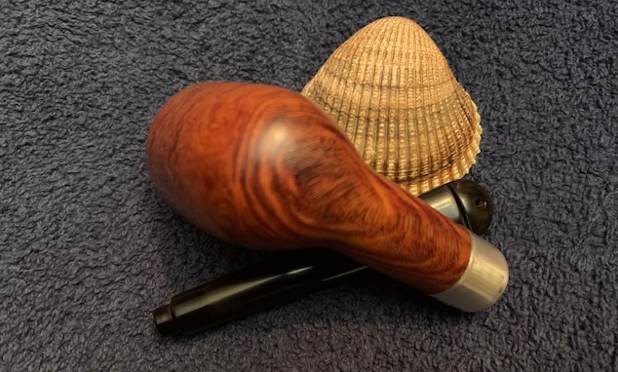
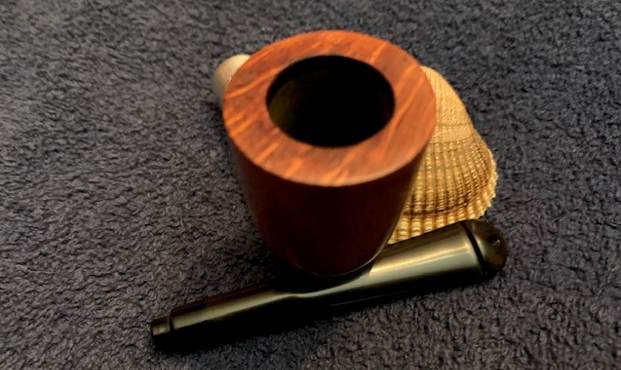
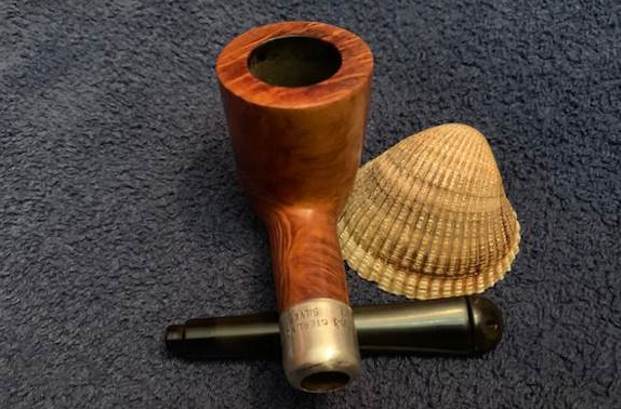
This is a pipe that I have taken out of my personal collection as I just do not use it too much. It is a nice looking Dublin shaped pipe with some nice grain around the bowl and a Sterling Silver ferrule. I smoked solely Virginia tobaccos in it so it is very clean. The inside of the shank, the system sump and the shank was quite clean. The smooth rim top had some darkening on the back top and inner edge. The smooth finish was very clean but dull and quite lifeless. The grain runs horizontal on the left side of the bowl and shank. The stamping on the shank is clear and readable. The left side is stamped Peterson’s [arched over] Dublin. On the right side it was stamped Made in the Republic of Ireland (3 lines). To the right of that stamp is the shape number 120. The Sterling Silver ferrule is oxidized and dull but it has the Peterson’s [over] Dublin. Next to that it was stamped Sterling [over] Silver followed by three hallmarks – a Seated Woman (Hibernia), Harp and the cursive letter J. The stem was quite clean, with minimal oxidation near the button. It is free of tooth marks and chatter on both sides. I took some photos of the pipe before I started my work on it. I took close up photos of the bowl and the stem. You can see the reamed bowl and the darkening and damage on the rim top. The stem surface was clean and free of tooth marks or chatter on both sides. I took a photo of the stamping on the sides of the bowl and shank. It is clear and readable as noted above. I removed the stem from the shank and took a photo to give a sense of the proportions of the pipe. It is really quite nice looking.I am including the information from Pipedia’s article on Peterson pipes. It is a great read in terms of the history of the brand (https://pipedia.org/wiki/Peterson). I have included a bit of the pertinent history here.

1950 – 1989 The Republic Era  – From 1950 to the present time, the stamp for this era is “Made in the Republic of Ireland” in a block format generally in three lines but two lines have been used with or without Republic being abbreviated.

During the 1950’s and 60’s the Kapp & Peterson Company was still in the ownership of the Kapp family. However 1964 saw the retiral of the company Managing Director Frederick Henry(Harry) Kapp.

I turned to Mark Irwin’s Peterson Pipenotes site for information on the shape 120 Dublin. I quote the information below (https://petersonpipenotes.org/tag/peterson-120/).

Shape 120 Patent Lip Straight Dublin.

Years of production: 1906 – present.
Average Measurements:
Length: 6.16 in./156.46 mm.
Weight: 1.40 oz./39.69 g.
Bowl Height: 1.94 in./49.28 mm.
Chamber Depth: 1.63 in./41.40 mm.
Chamber Diameter: 0.83 in./21.08 mm.
Outside Diameter: 1.38 in./35.05 mm.
P-Lip: Yes

There was also this great cutaway of the 120 System pipe to show the system details.

A late 1950s 120 Demonstrator – This demonstrator from the 1950s shows how the pipes were drilled. What it doesn’t show, since it is missing the stem, is the extended bone tenon that would have screwed into the vulcanite P-Lip and extended to just below the airway into the chamber.The IFS-Era added two new straight Dublins to the 120, 121, and 122: the 120F (“Flat” or oval shank) and slender 417. The System straights seem to have disappeared by this time. The 120 “Flat” is a natural thought in Peterson’s design language, which always comes back to comfort and practicality, and I can imagine someone in bowl-turning or even a customer thinking how great it would be to set his straight Dublin down in order to emphasize a point over a pint or a cuppa.

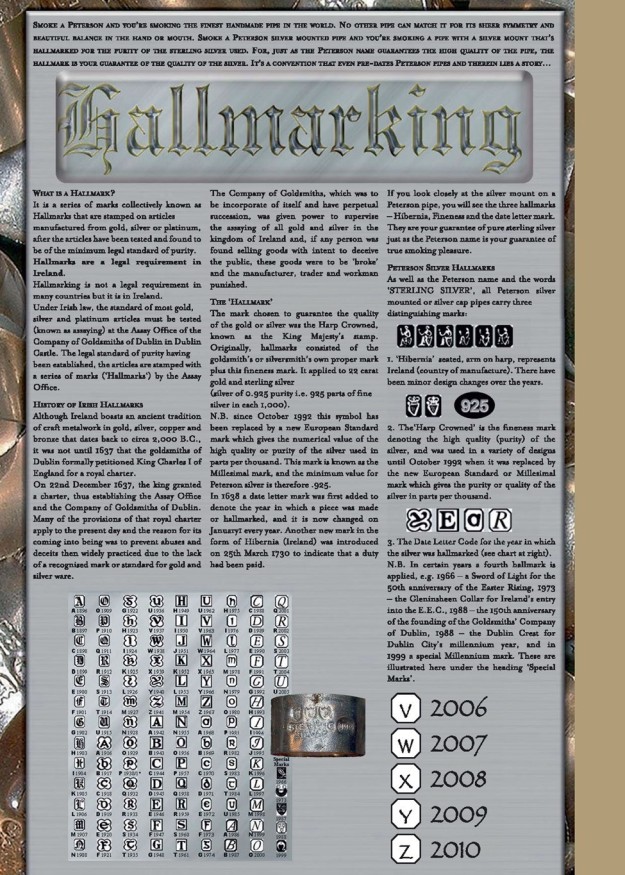
I always like to date the year a pipe was made while I am working on it. In the process of working on a pipe if I can pin down a date that it was made that it adds another dimension to the restoration process. Once I have identified the hallmarks on the pipe then I use a Hallmark chart to pin the date down. In the case of Peterson’s pipe with a silver band I use a hallmarking chart that Peterson included in their catalogs and on their website

I have a copy of the hallmark charts in one of the Peterson catalogs that I have uploaded to the blog on rebornpipes. I turned to that chart to lock down the date letter for the Sterling Silver System Dublin that I am working on. Here is the link to the blog on the silver ferrule (https://rebornpipes.com/tag/identifying-hallmarks-on-a-sterling-silver-ferrule/).

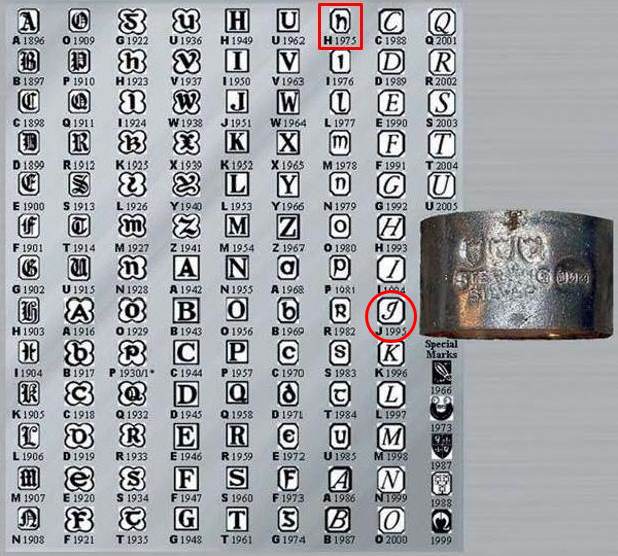
To the left there is a great description of the stamping on the silver ferrule. The one I am working on has the same three stamps as those to the left. It has the seated woman (Hibernia) representing the country of manufacture – Ireland. The Harp crowned is a stamp of the purity of the silver. The third mark is a cursive J that identifies the age of the pipe.

I am including a chart below that helps to identify the date with the J stamp. That stamp dates the pipe as being made in 1995.I have drawn a circle around the date letter below. It identifies the date of this Peterson’s pipe to 1995. I turned to “The Peterson Pipe” by Mark Irwin and Gary Malmberg to get some background on the Peterson’s Dublin. On page 298 it had the following information.

Dublin (1906-2003) Although DUBLIN appears under PETERSON’S  on many pipe over the decades, it has served mostly as part of the brand name. The word first appeared on pipes hallmarked 1906-11, stamped PETERSON’S over PATENT over DUBLIN. The simpler PETERSON’S over DUBLIN first appeared on pipes hallmarked 1912 after the expiration of the patent. Illustrations of pipes in the ’37 catalog show a random dispersion of the stamp PETERSON’S over OF DUBLIN together with the ordinary PETERSON’S over DUBLIN on every model offered. Specimens of the former will bear either and Irish COM or LONDON MADE over ENGLAND COM and almost certainly date from 1945-62. It was first mentioned as part of a model name in the ’68 price list, as K&P DUBLIN, in ’92 for a Danish market line and in 2017 (see below).

“Dublin” (1992-2003) An orange-brown smooth line with a brass-nickel-brass sandwich band, vulcanite fishtail mouthpiece, consisting mostly of D shapes released for the Danish market. Stamped PETERSON’S in script over “DUBLIN”. A tenth anniversary pipe for the line was produced with a sterling band stamped 2001. Market demand fell shortly thereafter and several pipes stamped “DUBLIN” were released in ’03 for the Fourth of July commemorative for the US market.

Now I knew that I was dealing with a Republic Era pipe made between 1950 and the present. The Peterson’s Sterling Silver ferrule has three hallmarks with a J date stamp that identifies it as being made in 1995.  It was a smooth Straight Dublin with a unique shape and chamber beneath the bottom of the bowl. The finish was stained with a combination of rich lighter brown stains. Now it was time to work on the pipe.

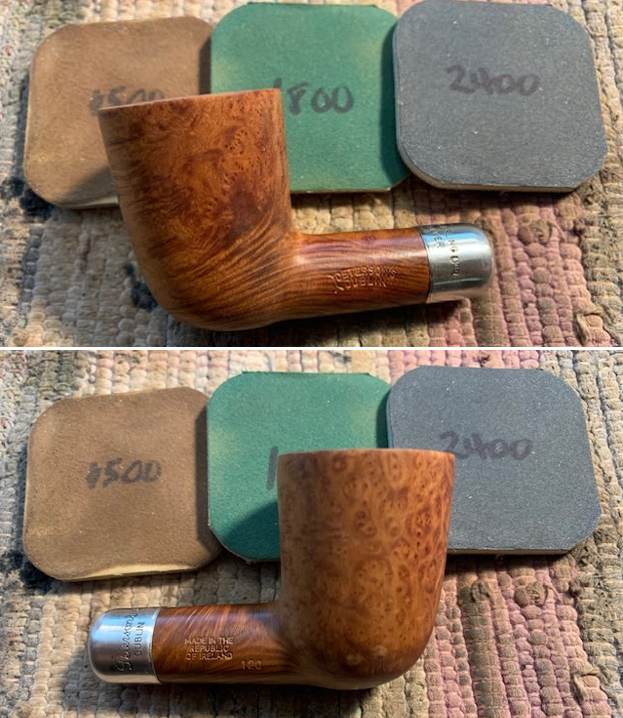
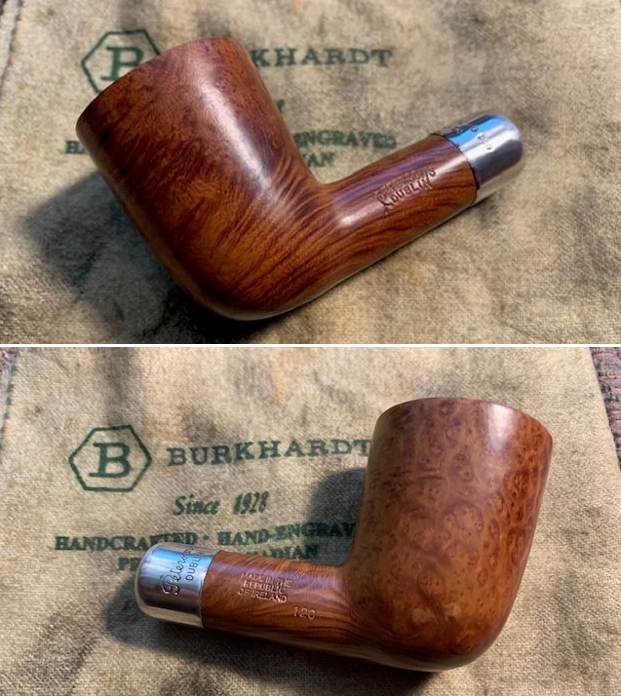
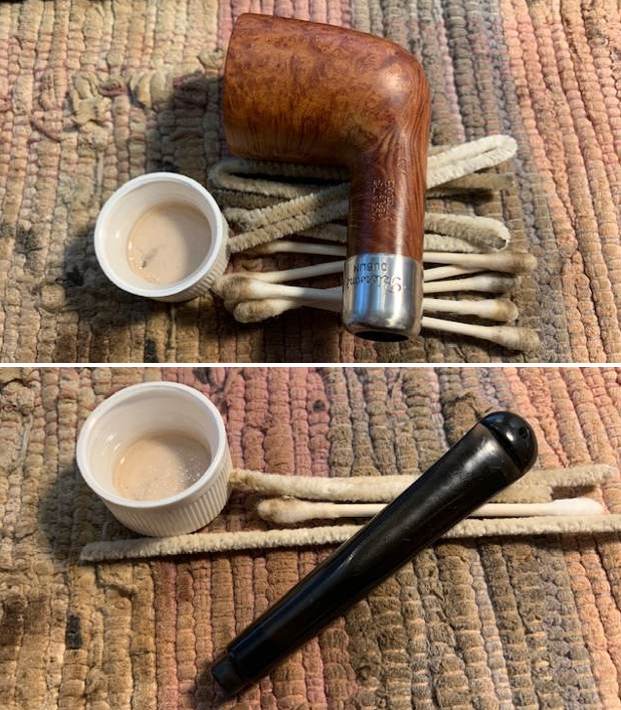
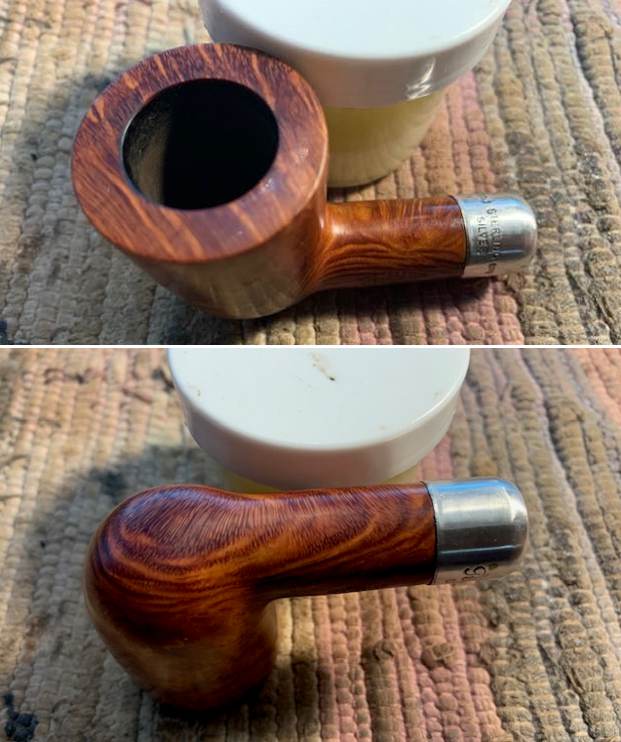
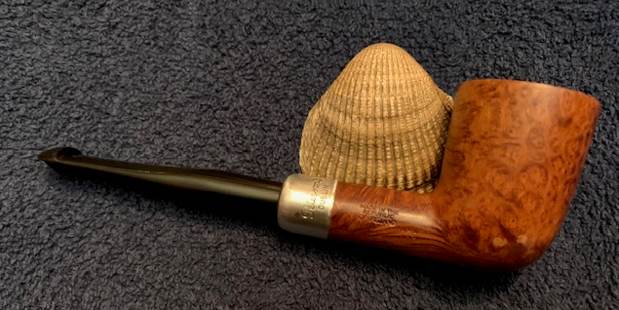
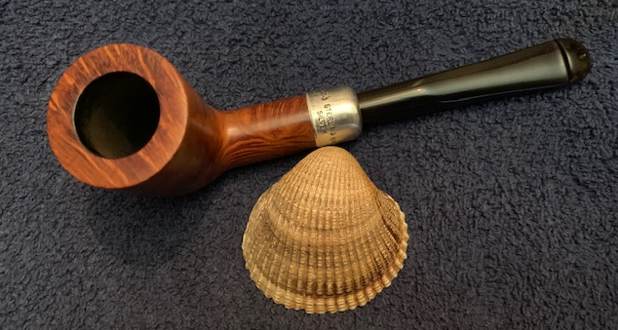
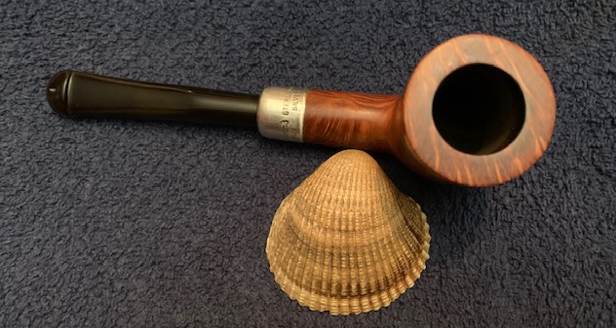
I reamed the bowl with a Savinelli Fitsall Pipe Knife. I sanded the walls on the bowl with a piece of 220 grit sandpaper wrapped around a piece of dowel to take the walls back to smooth once again. I worked on the pipe with a folded piece of 220 grit sandpaper to remove the damage on the rim top and edges of the bowl. It looked better but would need a bit more work.I polished the rim top and edges with micromesh sanding pads – dry sanding with 1500-12000 grit pads to raise a shine. I wiped it down with a damp cotton pad to wipe off the debris after each sanding pad.   I polished the silver ferrule with a  jeweler’s cloth. The cloth is impregnated with polish that not only raises a shine but protects the metal. I cleaned out the shank and sump below the bowl and the airway in the shank and stem with pipe cleaners, cotton swabs and isopropyl. It was clean and smelled better.I worked some Before & After Restoration Balm into the surface of the briar with my fingertips. It works to clean, enliven and protect the briar. I let it sit for 15 minutes then buffed it off with a soft cloth and raised the shine. The bowl looks great at this point.   I set the bowl aside and turned my attention to the stem. I sanded out the oxidation and tooth marks next to the button with 220 grit sandpaper. Once the surface was smooth I started polishing it with 400 grit wet dry sandpaper.I polished the stem with micromesh sanding pads – dry sanding it with 1500-12000 grit pads. I wiped the stem down with Obsidian Oil after each pad. I polished it with Before & After Pipe Polish – both Fine and Extra Fine and gave it a final coat and set it aside to dry.  I put the stem back on the Peterson’s System 120 Straight Dublin and buffed the pipe with Blue Diamond on the buffing wheel. I polished the briar and the vulcanite of the stem until there was a rich shine. This classic Peterson’s shape and finish really highlights a proportionally well carved pipe. Once I buffed the pipe the briar came alive and popped with polishing. The black vulcanite stem has a rich glow. This Peterson’s System Straight Dublin fits well in the hand and sits right in the mouth. Have a look at it with the photos below. The dimensions are Length: 5 ½ inches, Height: 1 ¾ inches, Outside diameter of the bowl: 1 ¼ inches, Chamber diameter: ¾ of and inch. The weight of the pipe is 1.20 ounces/34 grams. It was one I chose for my own collection and enjoyed, but I am happy to pass it on to the next pipe man or woman. This beauty will be going on the rebornpipes online store in the Irish Pipemakers Section. If you are interested let me know. Thanks for walking through the restoration with me as it was a pleasure to work on.

An Unbelievable Transformation of a 1937-’55 KBB Yello-Bole Cured With Real Honey Apple


The KBB Yello-Bole Apple now on the worktable brings with it a bucket full of nostalgia for me.  It was November 7, 2016, and my wife and I were in …

An Unbelievable Transformation of a 1937-’55 KBB Yello-Bole Cured With Real Honey Apple

Dal had some unique solutions to stem issues on this older Yello-bole prince. Fascinating repairs

Restoring a Republic Era Peterson’s System 31 Billiard


Blog by Steve Laug

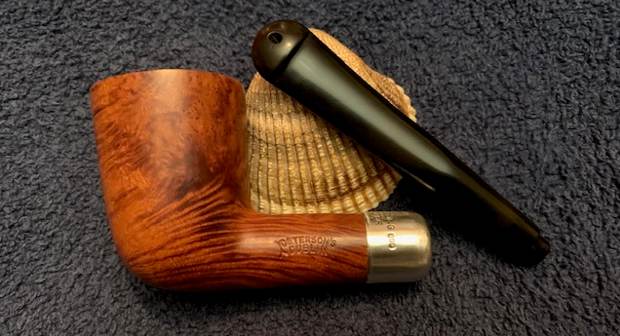
This is another one of those pipes that has been here for a long time and I have no memory where it came from. It had been cleaned and reamed. The inside of the shank, the system sump and the shank was quite clean. The smooth rim top was damaged and had some darkening. The edges – both inner and outer had some damages by burning and the bowl was out of round. The smooth finish was very clean from Jeff’s scrubbing. The stamping on the shank is clear and readable. The left side is stamped Peterson’s [arched over] System. On the right side it was stamped Made in the Republic of Ireland (3 lines). To the right of that stamp is the shape number 31. The nickel ferrule is oxidized and dull but it has the K & P stamp over three symbols. Next to that it was stamped Peterson’s. The stem was quite clean and free of tooth marks and chatter on both sides. I took some photos of the pipe before I started my work on it. I took close up photos of the bowl and the stem. You can see the reamed bowl and the darkening and damage on the rim top. The stem surface was clean and free of tooth marks or chatter on both sides. I took a photo of the stamping on the sides of the bowl and shank. It is clear and readable as noted above. I removed the stem from the shank and took a photo to give a sense of the proportions of the pipe. It is really quite nice looking.I am including the information from Pipedia’s article on Peterson pipes. It is a great read in terms of the history of the brand (https://pipedia.org/wiki/Peterson). I have included a bit of the pertinent history here.

1950 – 1989 The Republic Era  – From 1950 to the present time, the stamp for this era is “Made in the Republic of Ireland” in a block format generally in three lines but two lines have been used with or without Republic being abbreviated.

During the 1950’s and 60’s the Kapp & Peterson Company was still in the ownership of the Kapp family. However 1964 saw the retiral of the company Managing Director Frederick Henry(Harry) Kapp.

I found a great description of the System 31 shape on smokingpipes.com (https://www.smokingpipes.com/pipes/new/peterson/moreinfo.cfm?product_id=192182). I am including a portion of that below.

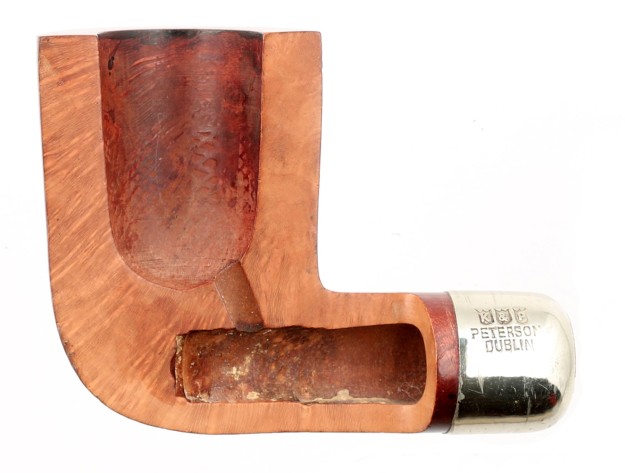
Peterson’s “31” shape is the only straight pipe featured in the System Standard line, yet it still features system drilling. Featuring a push-style tenon and a long, tapering metal tube, it houses a condensation chamber just under the bowl itself — providing the same gurgle free smoke you’d expect of a bent System configuration.

Paresh had worked on System 31 pipe so I went back and reread his work on that smooth pipe. It was very helpful for the background information included (https://rebornpipes.com/tag/peterson-system-31-pipe/).

I knew that I was dealing with a Republic Era pipe made between 1950-1989. The K&P mark on the nickel band ties to Kapp & Peterson brings the date to the time between 1950-1964. It was a smooth Straight billiard with a unique shape and chamber beneath the bottom of the bowl. The finish was stained with a combination of rich reddish brown stains. Now it was time to work on the pipe.

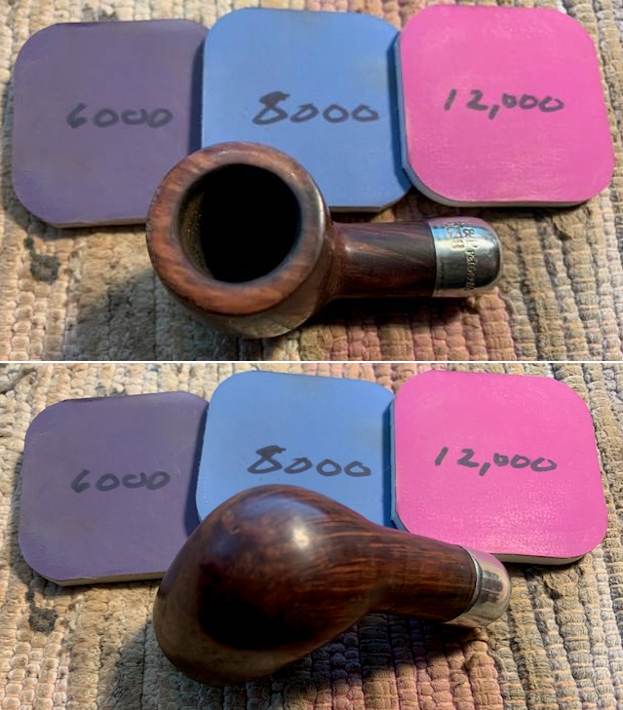
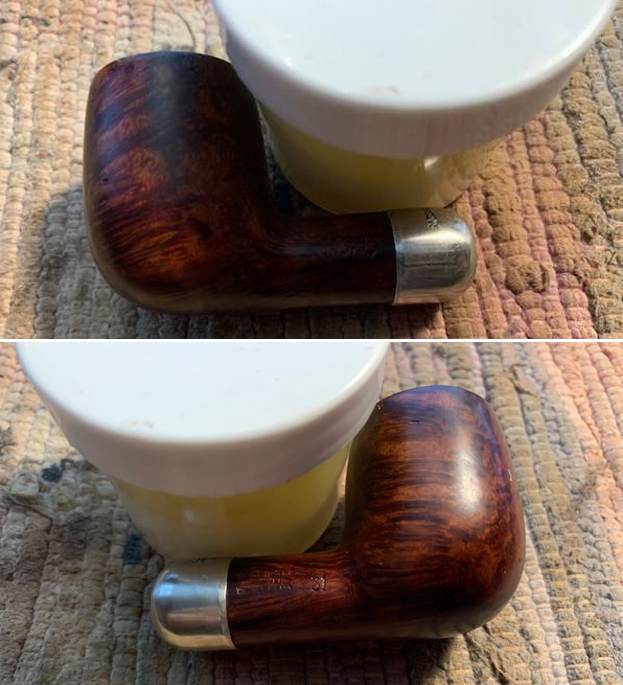
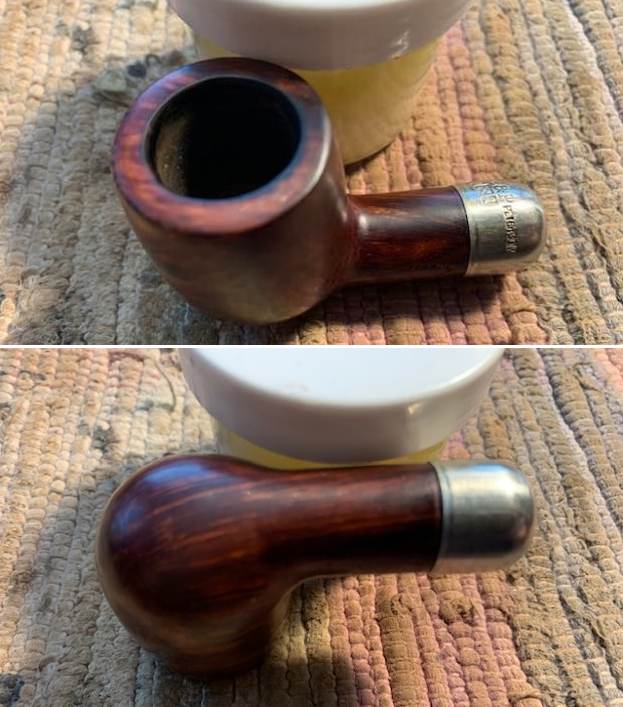
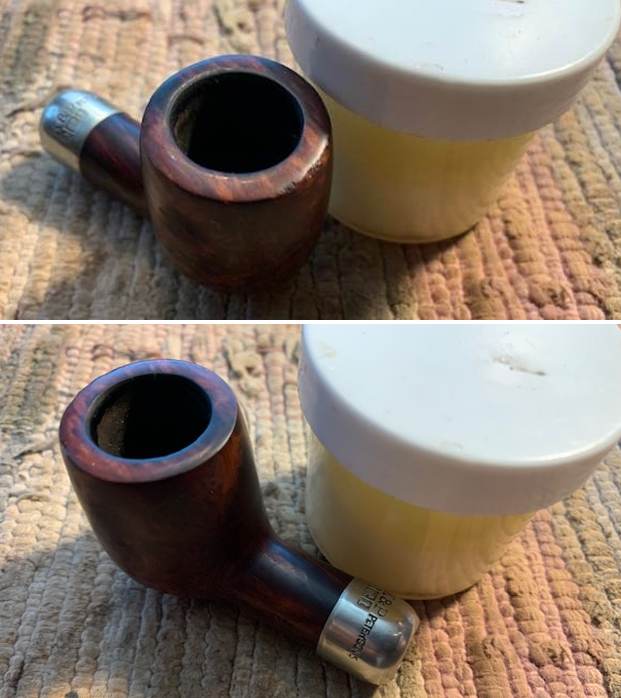
The bowl had been reamed and cleaned. I started working on the pipe by topping the damaged rim top on a topping board with 220 grit sandpaper to remove the damage on the rim top and edges of the bowl. I used a folded piece of 220 grit sandpaper to smooth out the inner edge of the bowl. I gave the inner edge of the bowl a slight bevel. I polished the rim top and edges with micromesh sanding pads – dry sanding with 1500-12000 grit pads to raise a shine. I wiped it down with a damp cotton pad to wipe off the debris after each sanding pad. I worked some Before & After Restoration Balm into the surface of the briar with my fingertips. It works to clean, enliven and protect the briar. I let it sit for 15 minutes then buffed it off with a soft cloth and raised the shine. The bowl looks great at this point.   I polished the nickel ferrule with a  jeweler’s cloth. The cloth is impregnated with polish that not only raises a shine but protects the metal.   I polished the stem with micromesh sanding pads – dry sanding it with 1500-12000 grit pads. I wiped the stem down with Obsidian Oil after each pad. I polished it with Before & After Pipe Polish – both Fine and Extra Fine and gave it a final coat and set it aside to dry.  I put the stem back on the Peterson’s System 31 Straight Billiard and buffed the pipe with Blue Diamond on the buffing wheel. I polished the briar and the vulcanite of the stem until there was a rich shine. This classic Peterson’s shape and finish really highlights a proportionally well carved pipe. Once I buffed the pipe the briar came alive and popped with polishing. The black vulcanite stem has a rich glow. This Peterson’s System Straight Billiard fits well in the hand and sits right in the mouth. Have a look at it with the photos below. The dimensions are Length: 5 ½ inches, Height: 1 ½ inches, Outside diameter of the bowl: 1 1/8 inches, Chamber diameter: ¾ of and inch. The weight of the pipe is 1.20 ounces/34 grams. This beauty will be going on the rebornpipes online store in the Irish Pipemakers Section. If you are interested let me know. Thanks for walking through the restoration with me as it was a pleasure to work on.

Restoring and Restemming a Republic Era Peterson’s System Standard 307


Blog by Steve Laug

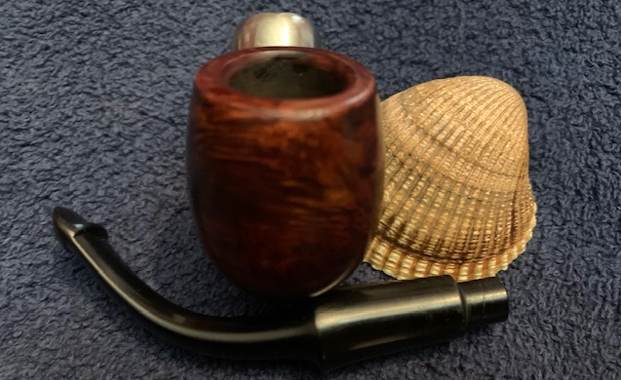
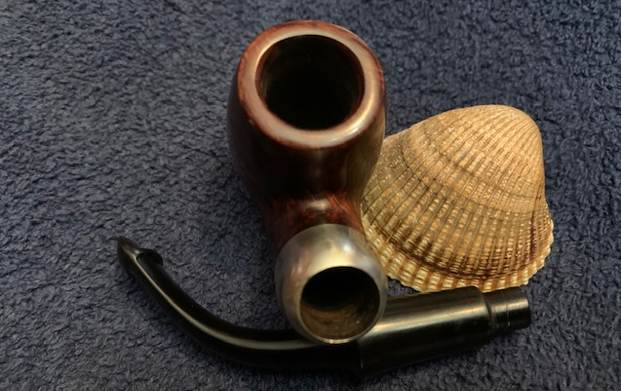
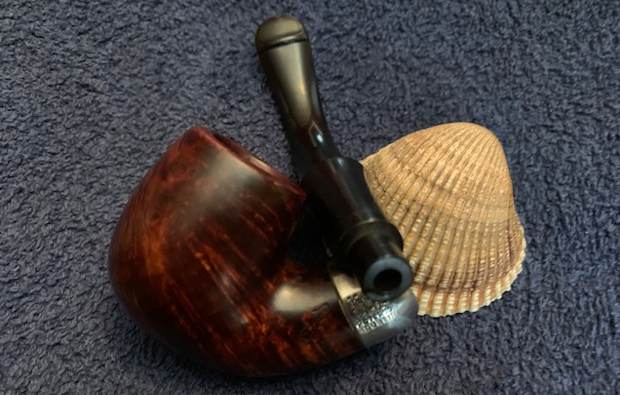
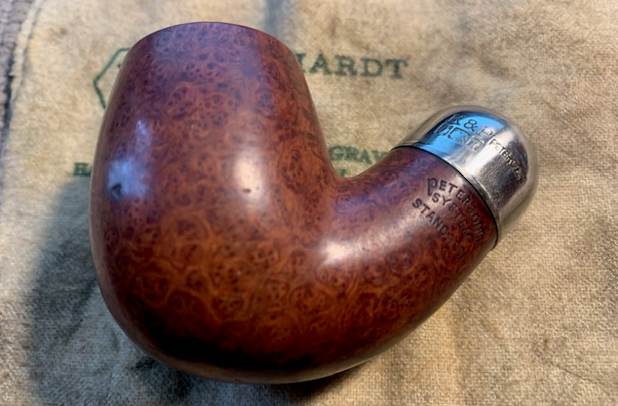
Jeff and I often purchase pipe bowl/stummels of brands that we like and want to restore. These have included a lot of different bowls. If you have followed us for long you know that some of these have included Peterson’s, Dunhill’s, and a wide range of Danish and English pipes. The next pipe I chose to work on is another Peterson’s System Standard. It is stamped on the left side of the shank and reads Peterson’s [arched over] System [arched over] Standard. On the right side of the shank it is a Made in the Republic of Ireland (in 3 lines) [over] the shape number 307. The nickel ferrule is stamped K&P [over] three faux hallmarks. That is followed by the stamping Peterson’s. The bowl was a dirty with some light cake and an overflow of lava on the rim top. The inside edge of the bowl was in good condition but I would know more once I remove the cake and lava. It did not have a stem so I would go through my stock and find one that would fit. The nickel ferrule was lightly oxidized but otherwise looked pretty good. I took a close up photo of the rim top and bowl. I wanted to show how the thickness of the cake in the bowl and the lava on the rim top. You can see that somewhere recently it had been reamed and then resmoked enough to start building a new cake in the bowl. The inner edge was in good condition as was the outer edge. I took photos of the stamping on the sides of the shank. It is readable as noted above.  I took some photos of the stem that I had chosen for the bowl. It is a properly shaped new Peterson’s Fishtail stem that looks great on the bowl.I am including the link to the Pipedia’s article on Peterson pipes. It is a great read in terms of the history of the brand (https://pipedia.org/wiki/Peterson).

I turned to “The Peterson Pipe” by Mark Irwin and Gary Malmberg to get some background on the Peterson’s System Line. On page 314 it had the following information.

Peterson’s over System – Pipes stamped Peterson’s System have been documented as early as 1920. A ’20 brochure is the earliest printed reference to the Peterson System. The pipe came in three quality grades (no mark, 2, or 3) until 1959, thereafter as De Luxe (no mark), Premier (the old 2) and Standard (the old 3).

Peterson’s over System over Standard (c1945-)

From this I learned that I was dealing with a late Republic Era System Standard 307 that because of the stamping was made between 1945 and the present. Now it was time to work on the pipe.

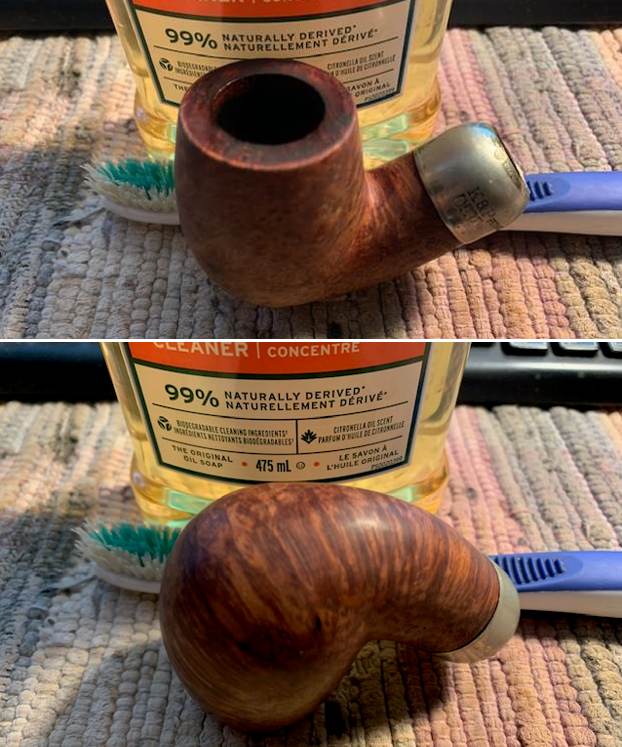
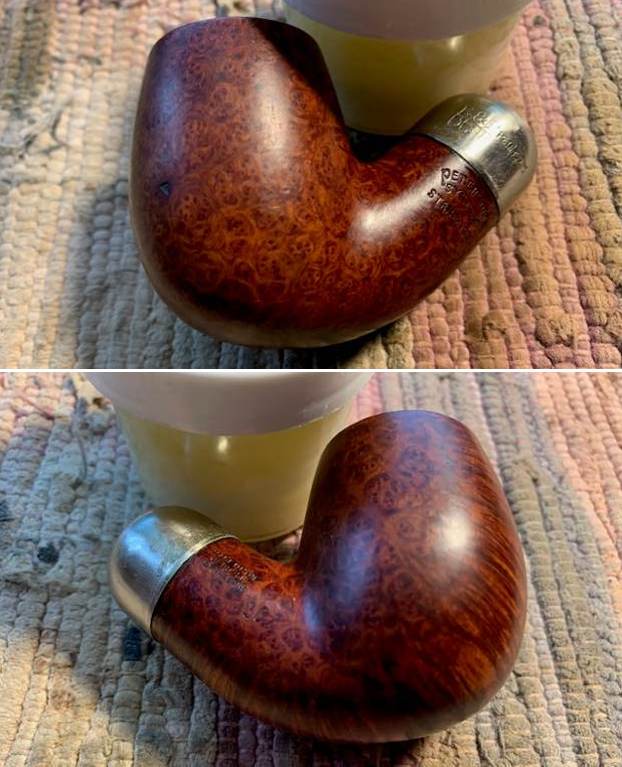
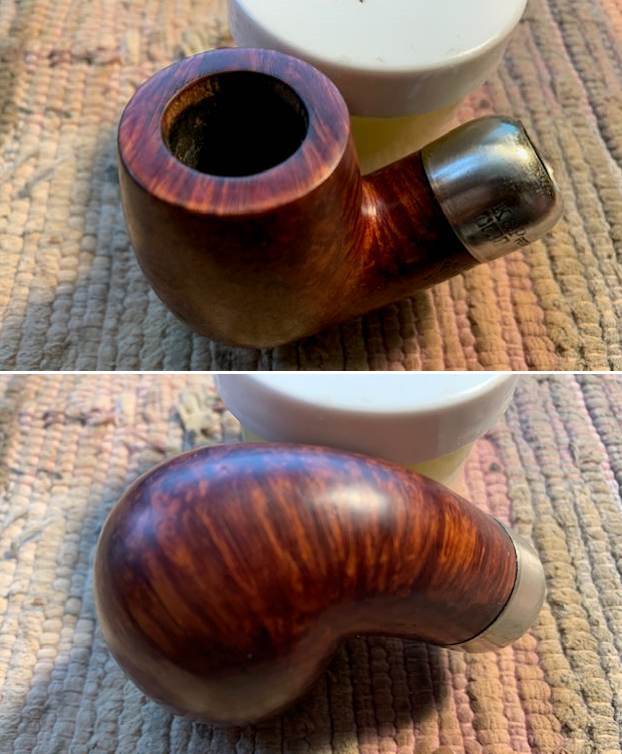
I set the stem aside as it was in perfect condition and turned to work on the bowl. I decided to clean up the bowl first. I reamed it with a Savinelli Fitsall Pipe Knife and then sanded the bowl walls with 220 grit sandpaper wrapped around a piece of dowel.I scrubbed the bowl with Murphy’s Oil Soap and a tooth brush to remove the grime around the bowl sides and top. I rinsed it off with warm water and dried if off with a towel. I used a folded piece of 220 grit sandpaper to remove the lava on the rim top and smooth out the inner edge of the bowl.I polished the briar with micromesh sanding pads – dry sanding with 1500-12000 grit sanding pads. I wiped the bowl down with a damp cloth after each sanding pad. There was a dark spot on the top of the shank toward the bowl that appears to be a deep stain rather than a burn mark. It is solid and makes me wonder if the was just a spot on the briar that took the dark understain more deeply than the rest. At this point it suddenly dawned on me that I had not cleaned out the shank and sump on the bowl. Sometimes when I get captivated by the way the grain is coming alive and the pipe is coming together this can happen. Oh well! I backed up and cleaned the shank and sump with pipe cleaners,  cotton swabs and isopropyl alcohol. I worked on them until the cleaners showed no more tars or oils and the pipe smelled clean. I polished the nickel ferrule with a jeweler’s cloth to raise the shine and to protect the metal. The shine of the metal is a great contrast between the black of the stem and the rich browns of the briar.I worked some Before & After Restoration Balm into the surface of the briar with my fingertips to clean, enliven and protect the briar. I let the balm sit for 15 minutes and then buffed with a cotton cloth to raise the shine. The photos show the bowl at this point in the restoration process. Since the stem was new condition the pipe was basically finished. I am excited to put the final touches on this Made in the Republic of Ireland Peterson’s System Standard 307 Bent Billiard with a Fishtail Stem. I put the pipe back together and buffed it with Blue Diamond on the buffing wheel. I gave the bowl and the stem multiple coats of carnauba wax. I hand buffed the pipe with a clean buffing pad to raise the shine. It is fun to see what the polished bowl looks like with beautiful mixed grain all around it. Added to that the polished black vulcanite stem combined with the bowl and made a stunning pipe. This smooth Classic Peterson’s System Standard 307 is great looking and the pipe feels great in my hand. It is light and well balanced. Have a look at it with the photos below. The dimensions are Length: 6 inches, Height: 1 ¾ inches, Outside diameter of the bowl: 1 ½ inches, Chamber diameter: 7/8 of an inch. The weight of the pipe is 55 grams/1.94 ounces. It is a beautiful pipe that I will soon be putting on the rebornpipes store in the Irish Pipe Makers section. If you are interested in adding it to your collection send me an email or a message. Thanks for walking through the restoration with me as I worked over this pipe. Thanks to each of you who are reading this blog.

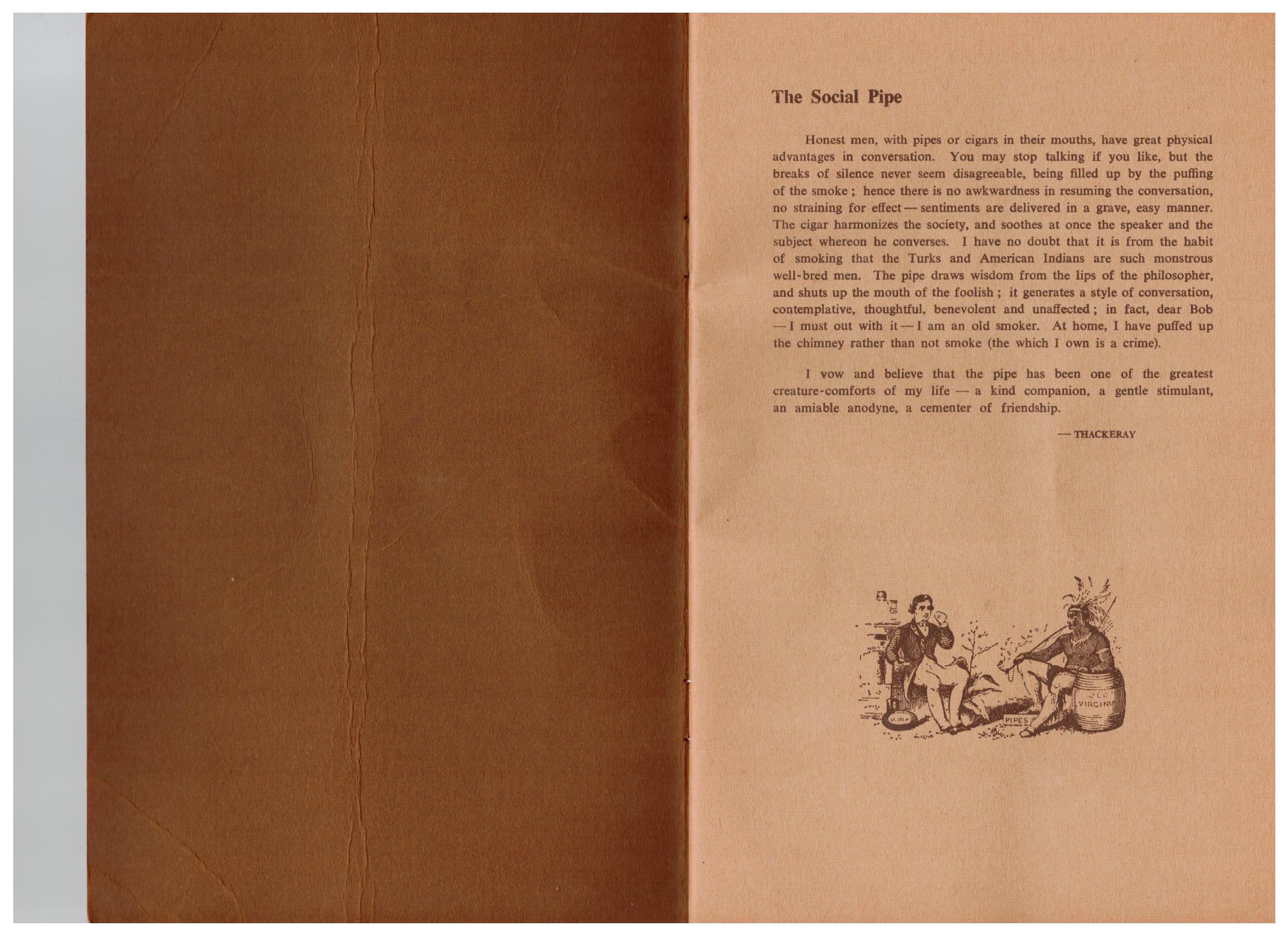
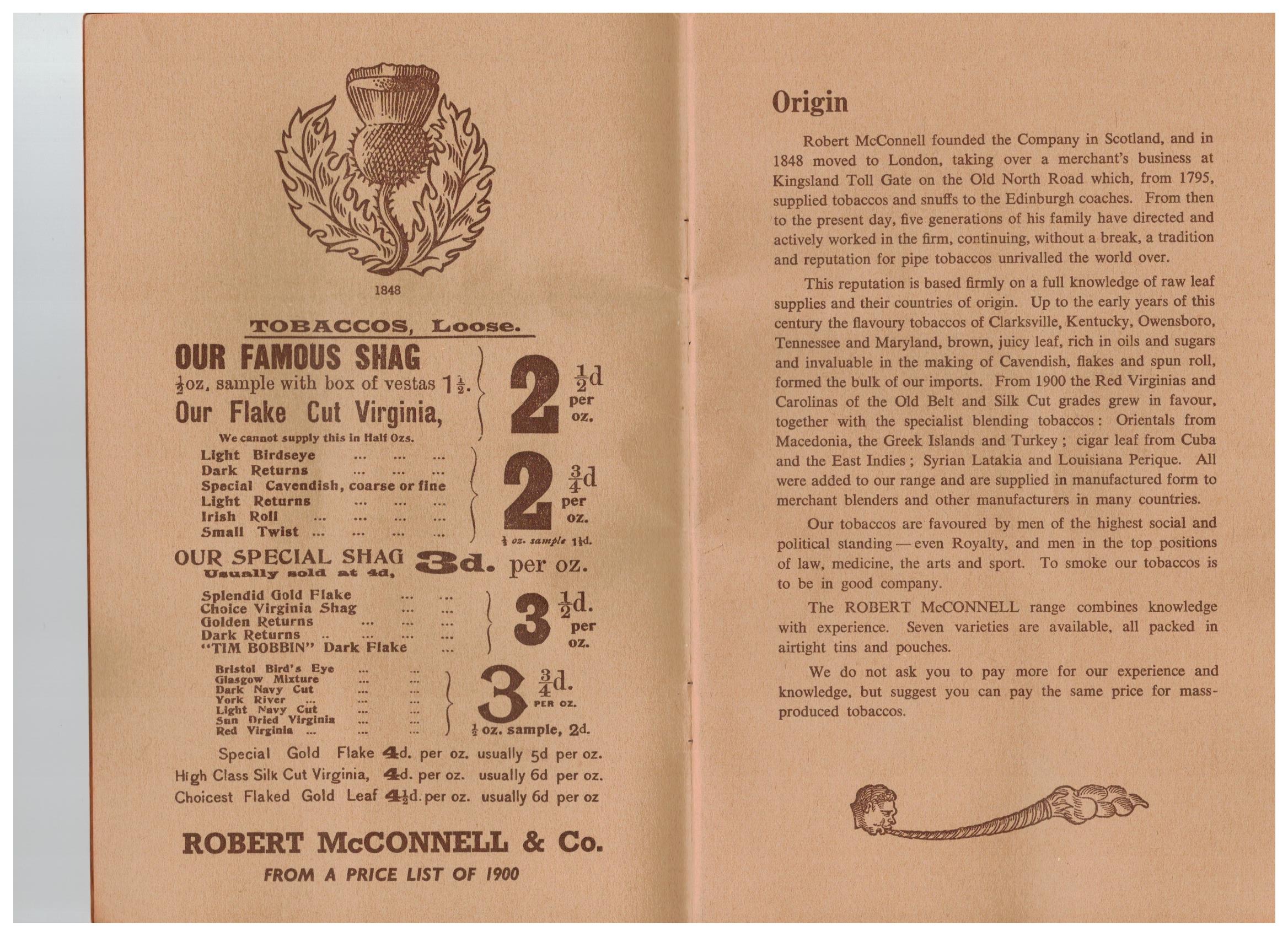
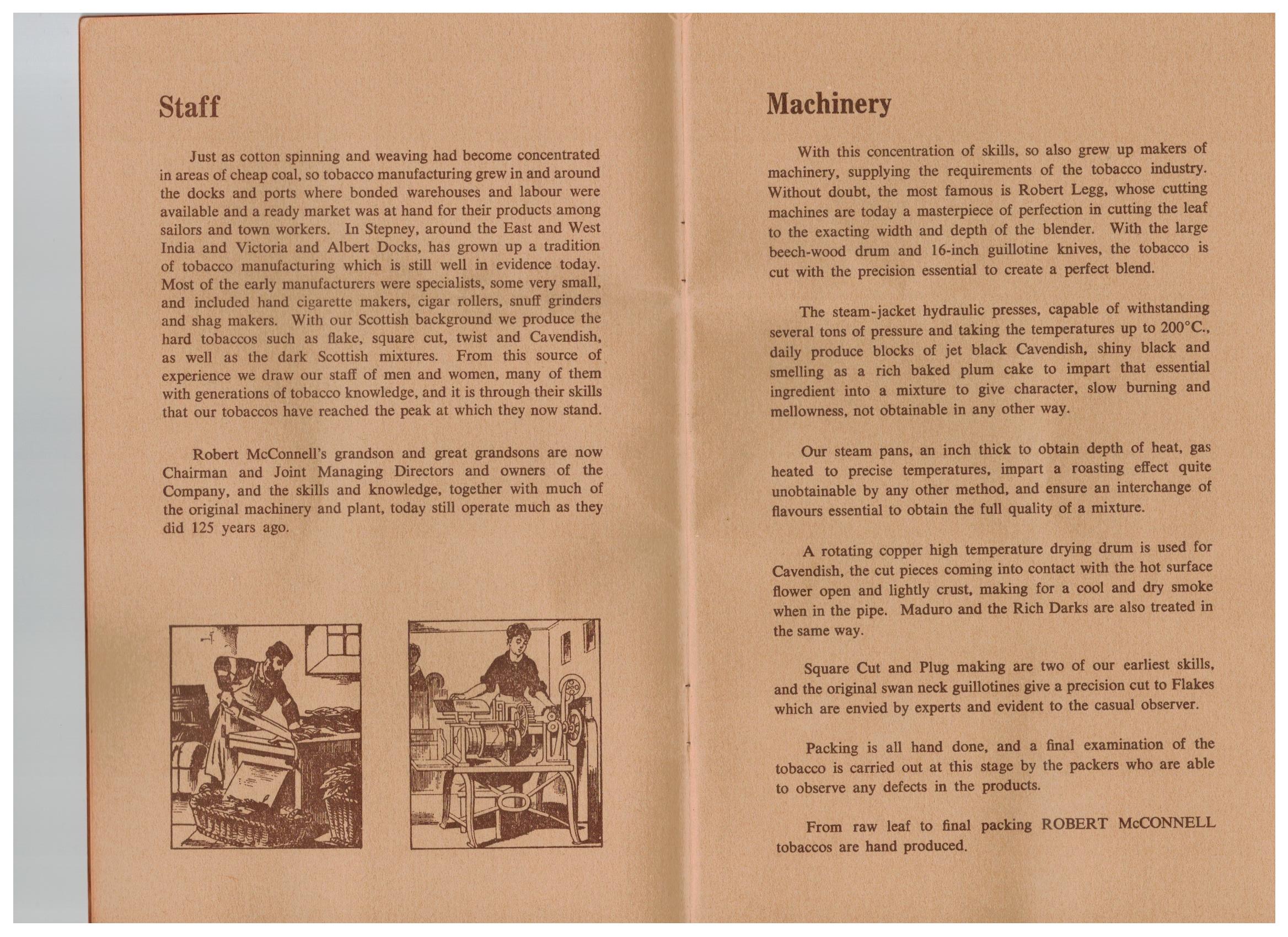
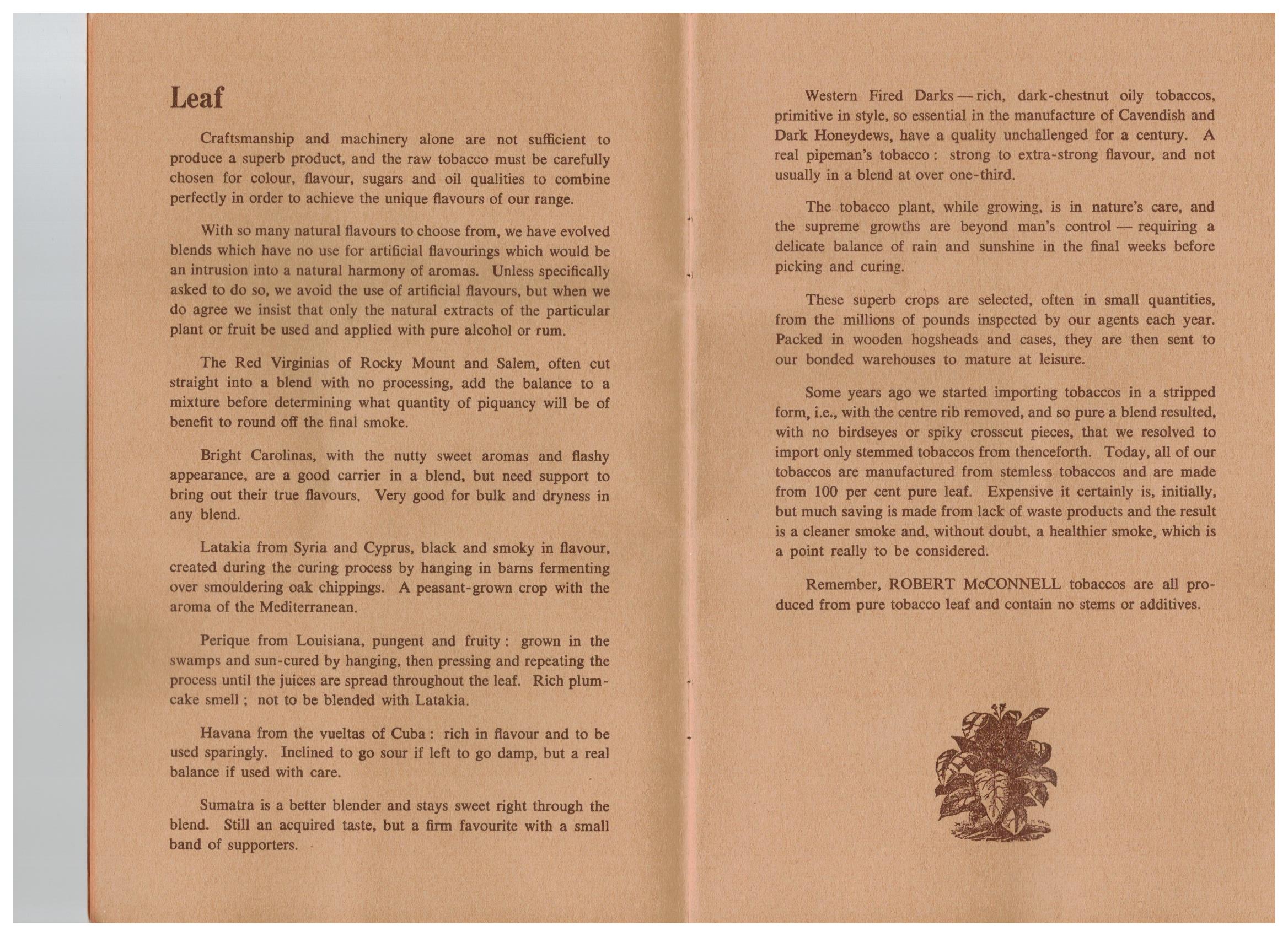
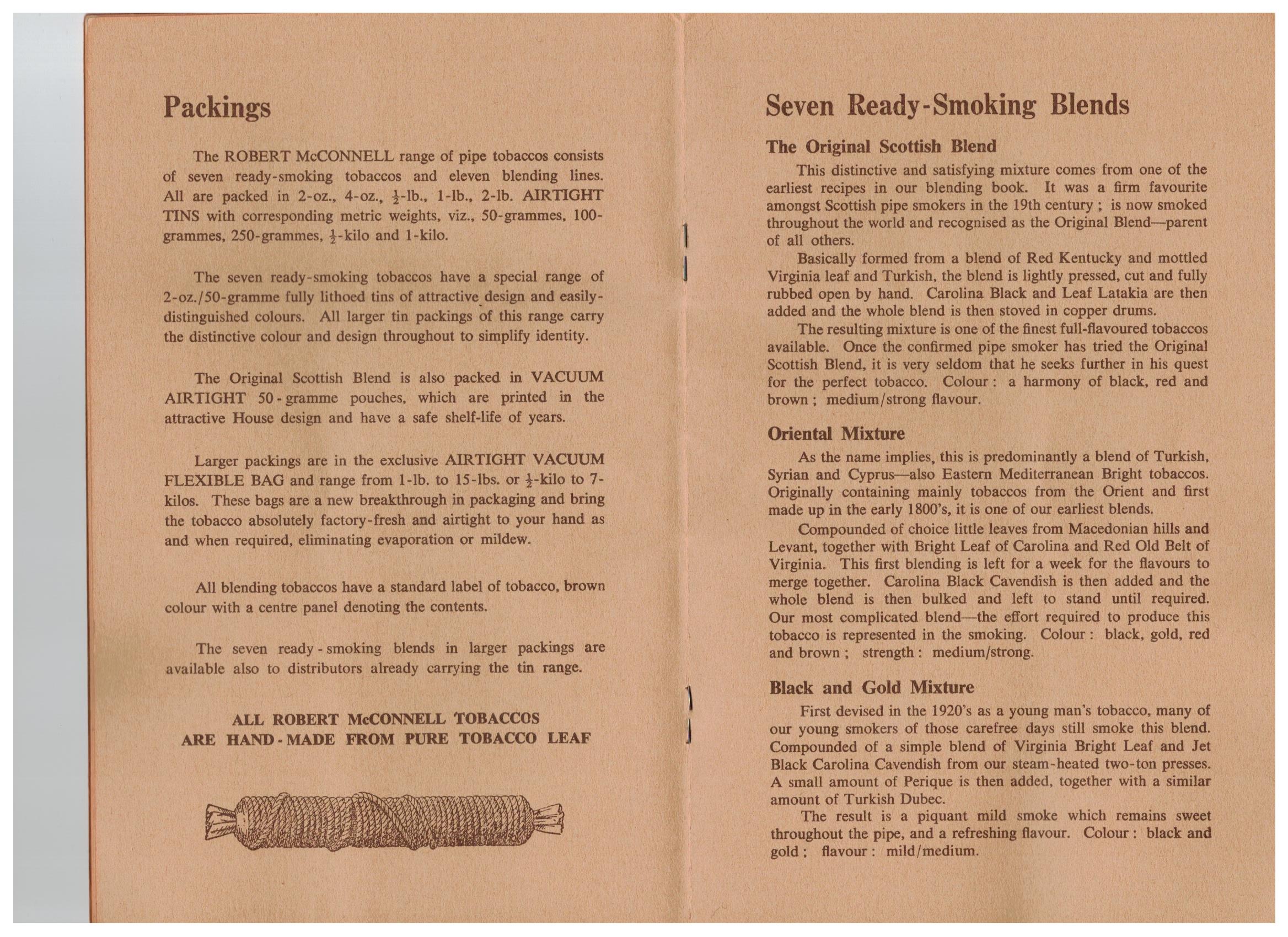
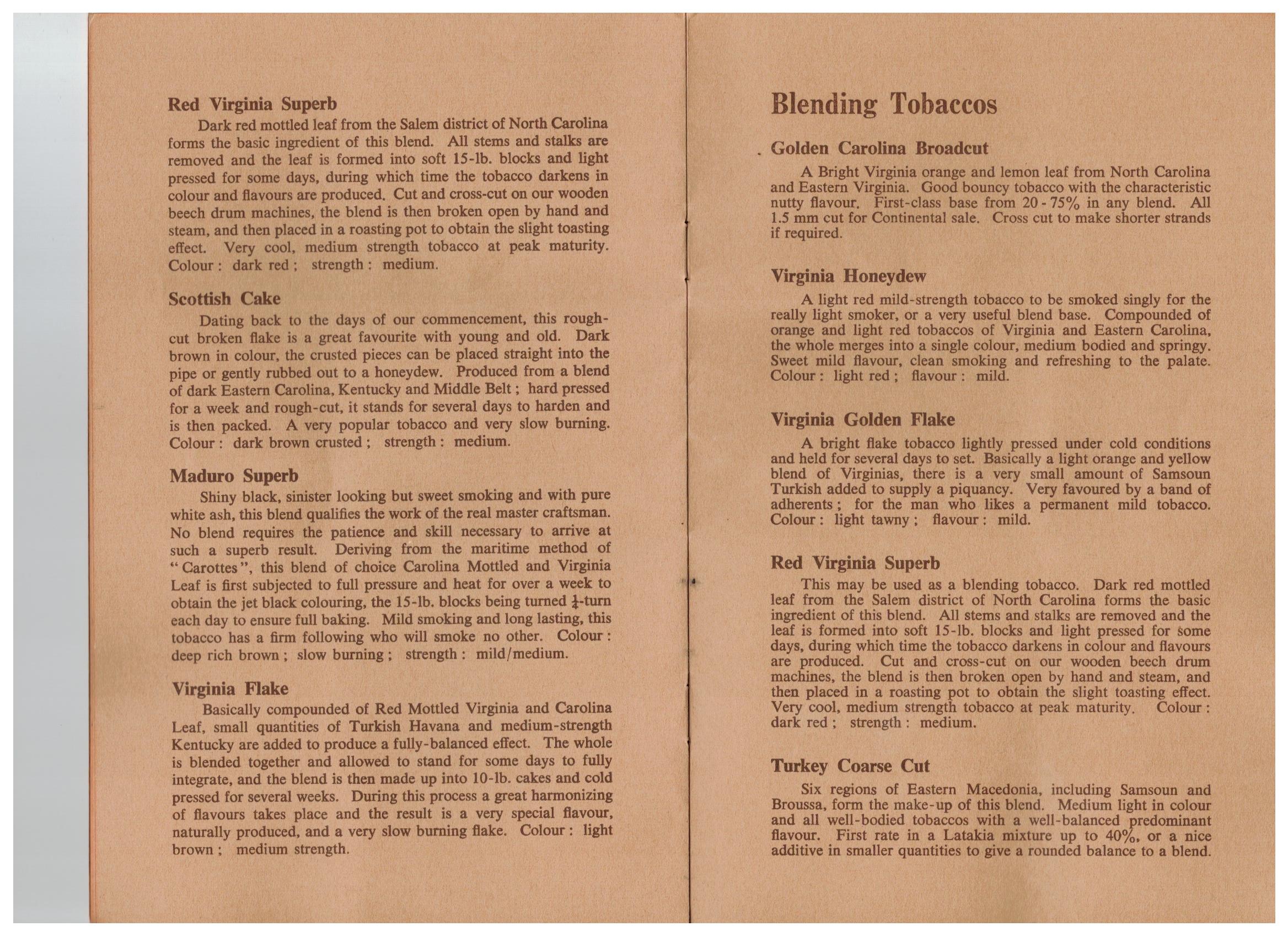
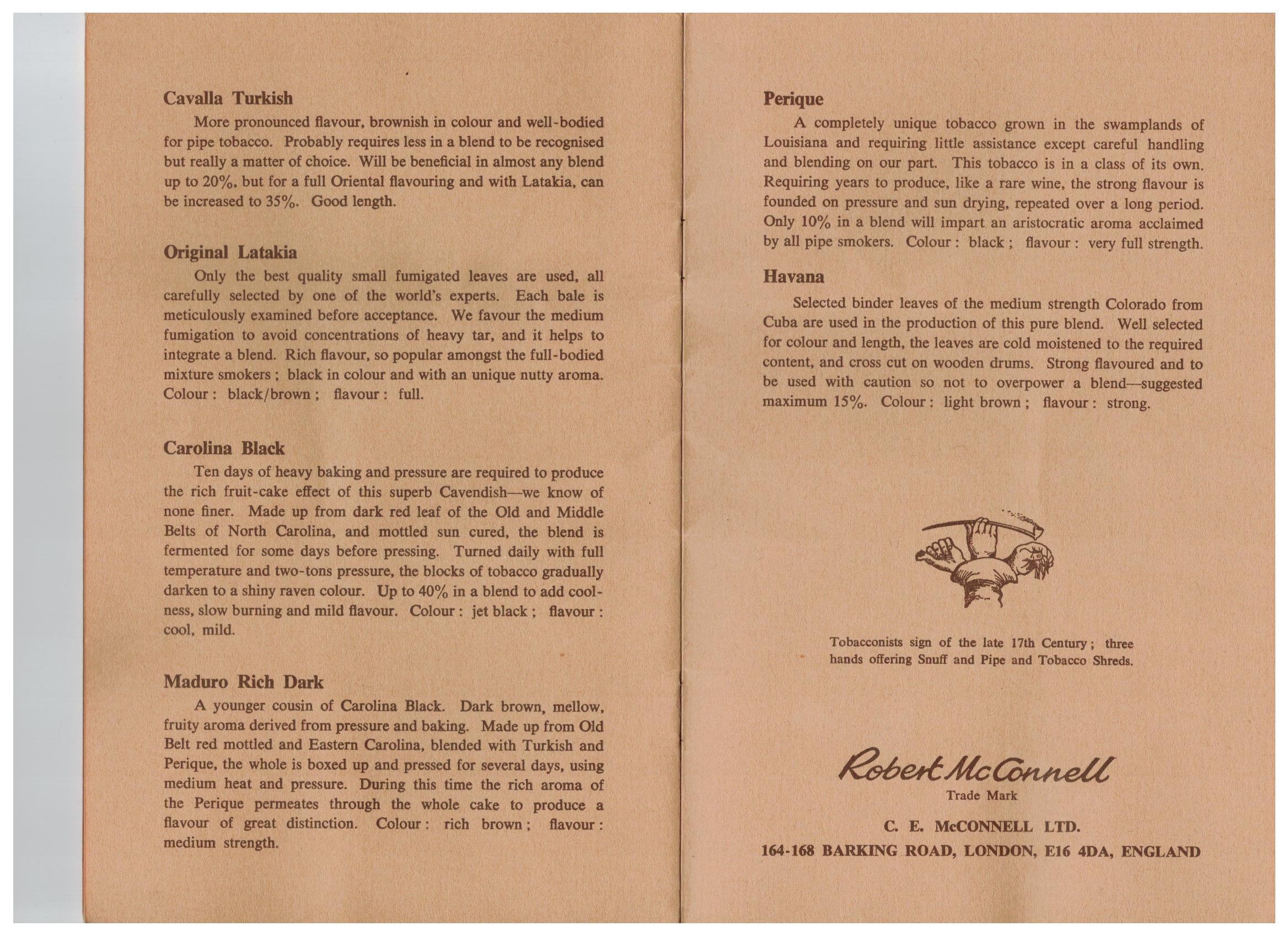
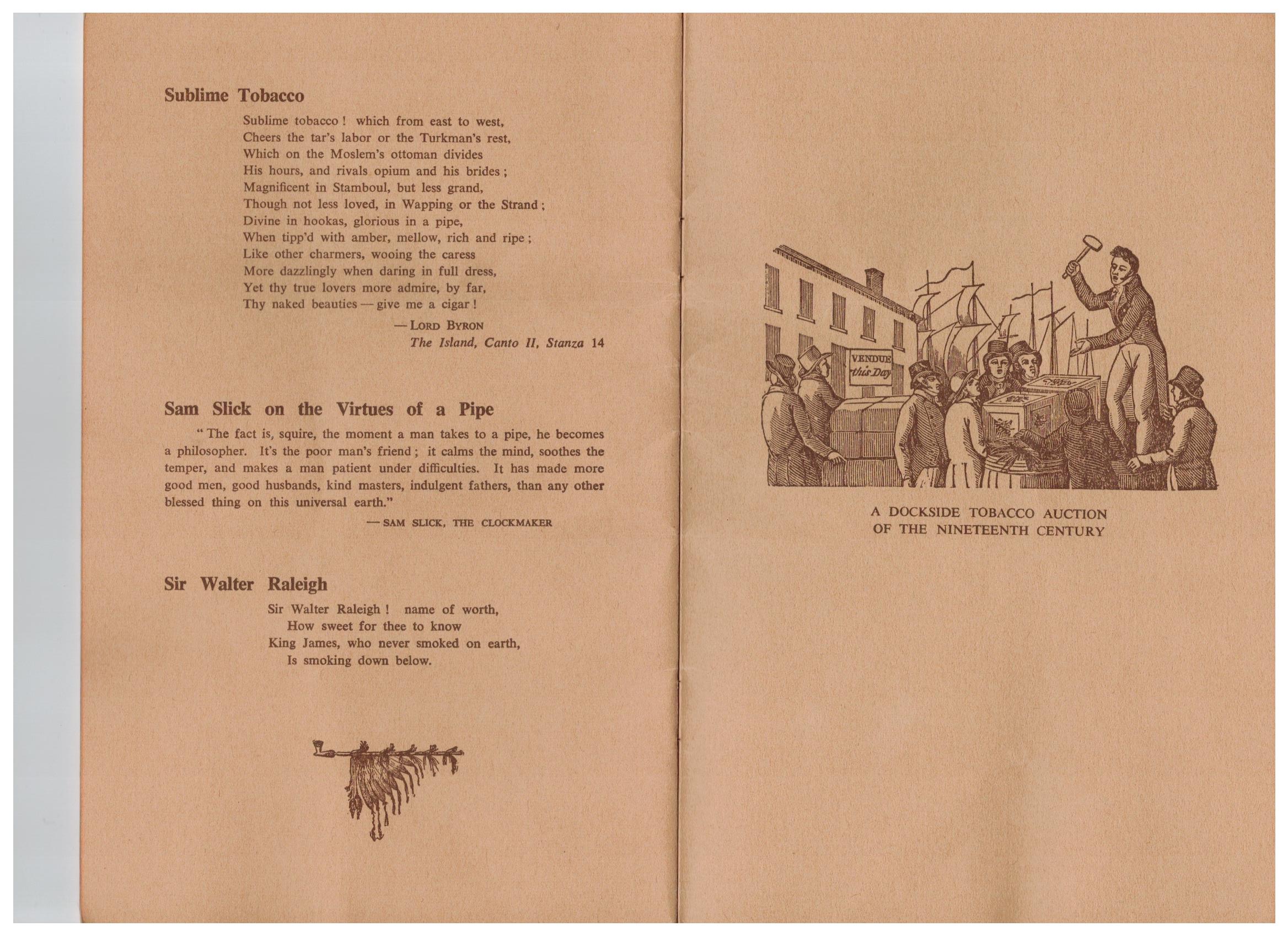
Robert McConnell Tobacco Manufacturer Booklet


A friend gave me this booklet from Robert McConnell Tobacco Manufacturer recently. It is a great little booklet with lots of helpful information on various tobaccos manufactured by them as well as some other insights on tobacco preparation and enjoyment. It is a fun little booklet to read. I invite you to give it a read. Thanks.

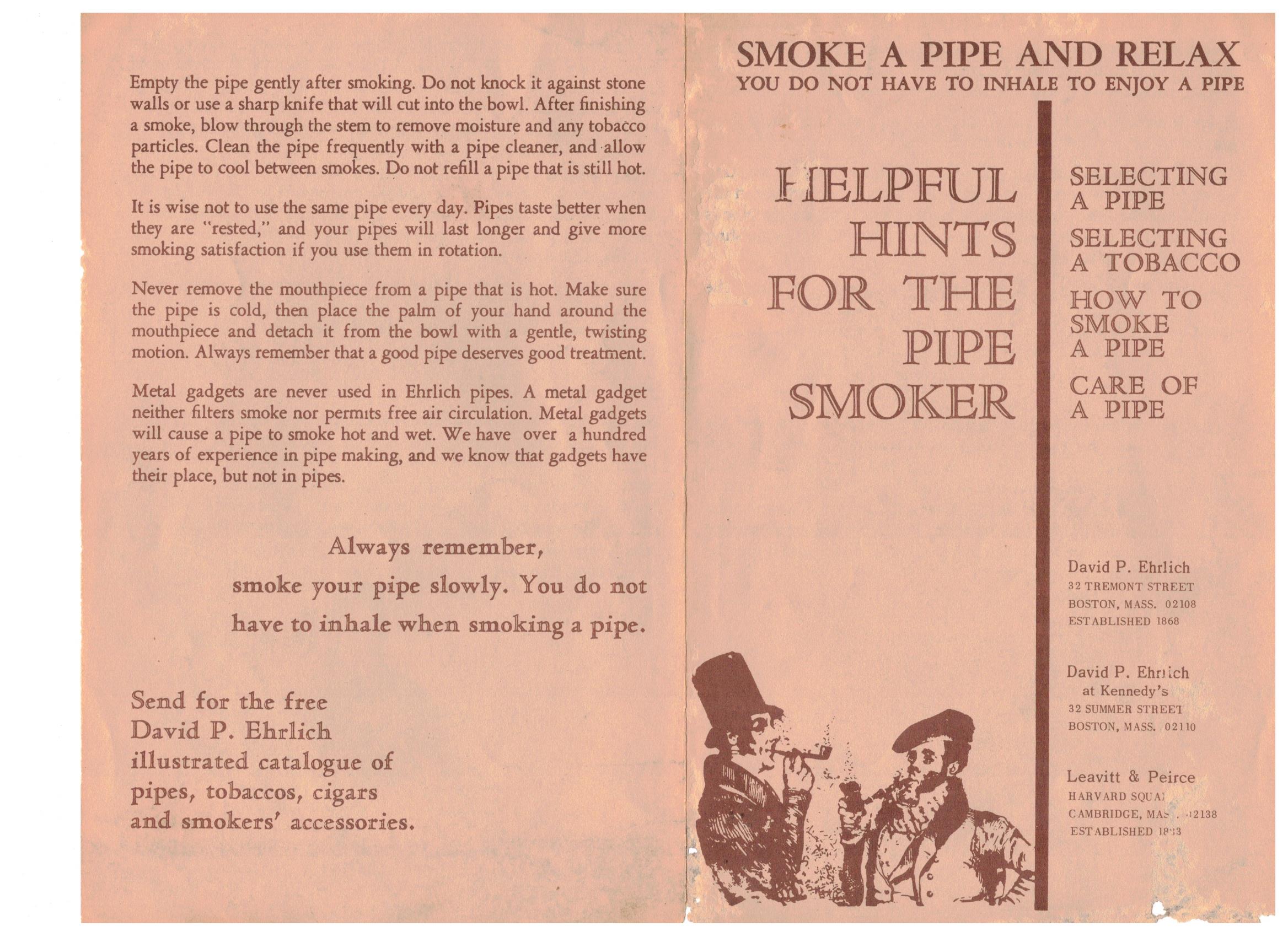
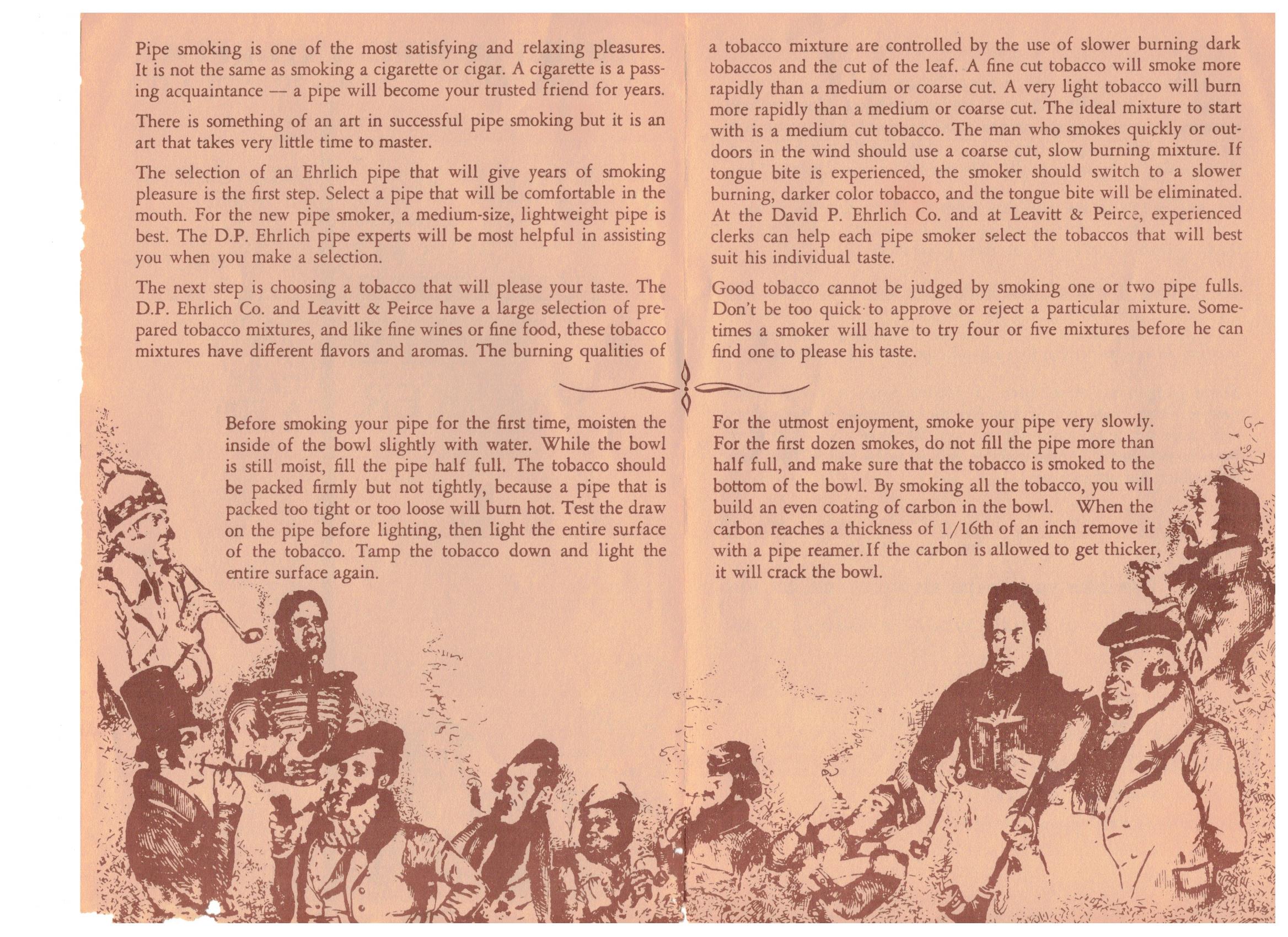
A Helpful little brochure from David P. Ehrlich of Boston


I picked up this “Smoke A Pipe and Relax” brochure somewhere along the way. It has some damage on the bottom edge but it is a nice piece with “Helpful Hints for the Pipe Smoker”. Give it a read. Thanks

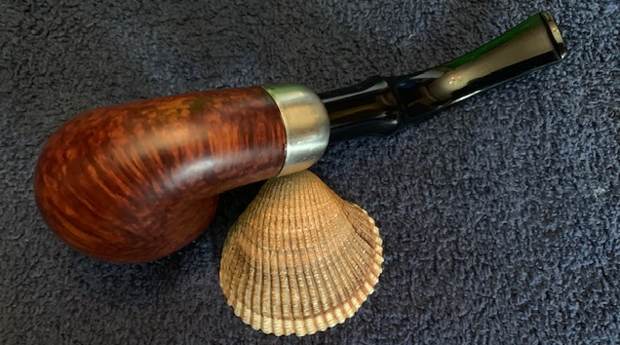
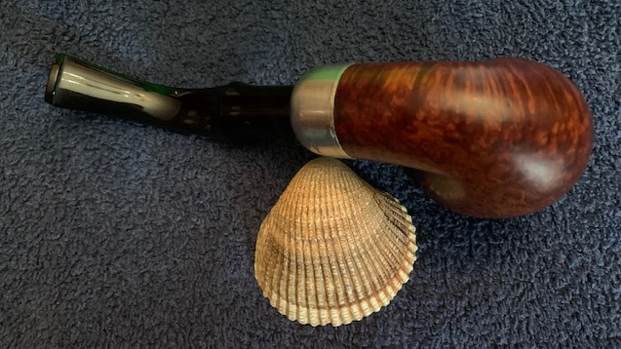
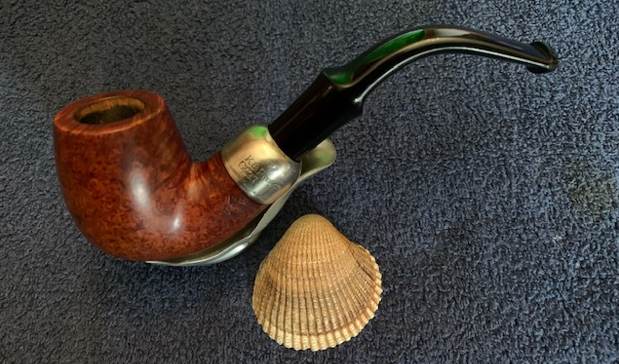
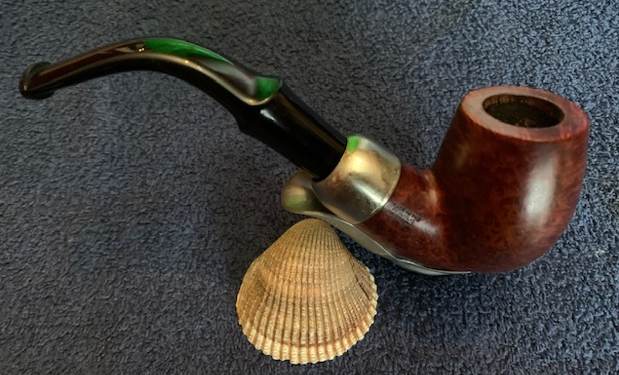
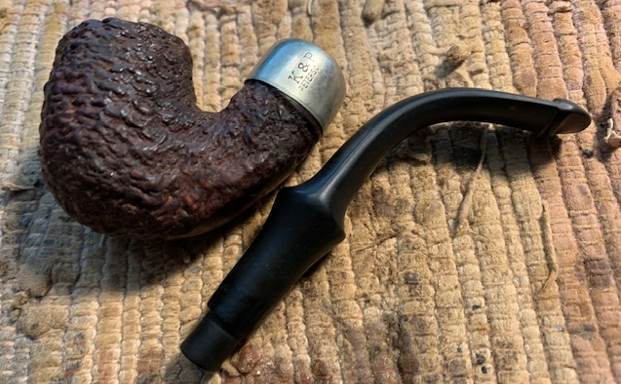
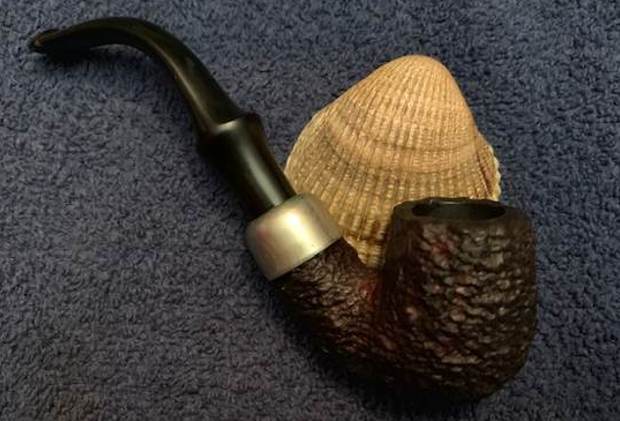
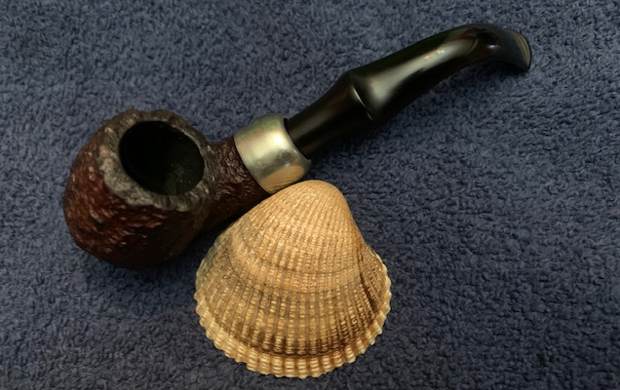
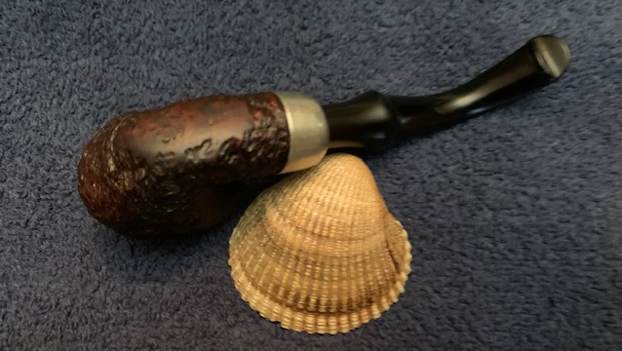
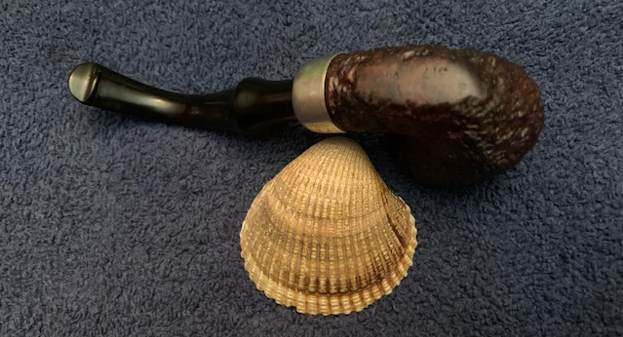
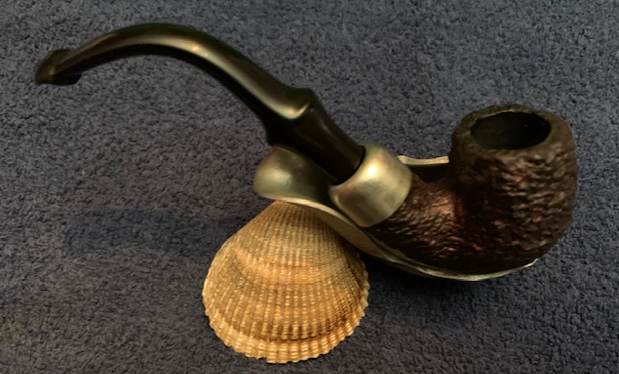
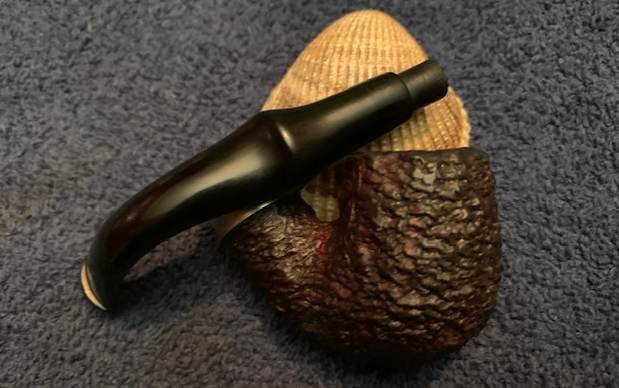
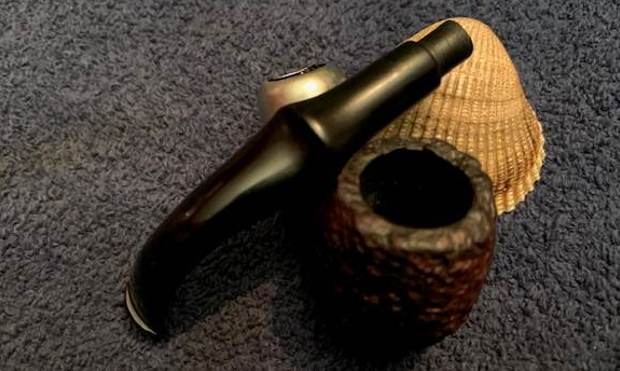
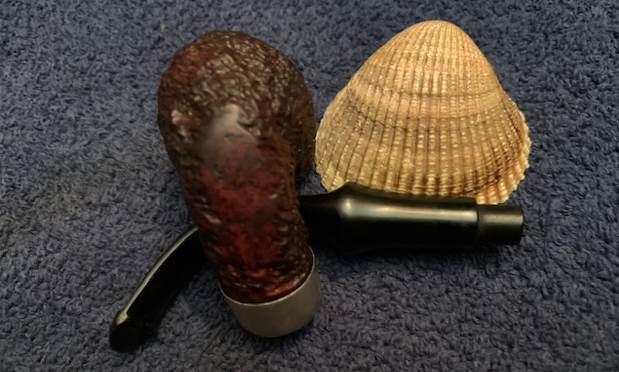
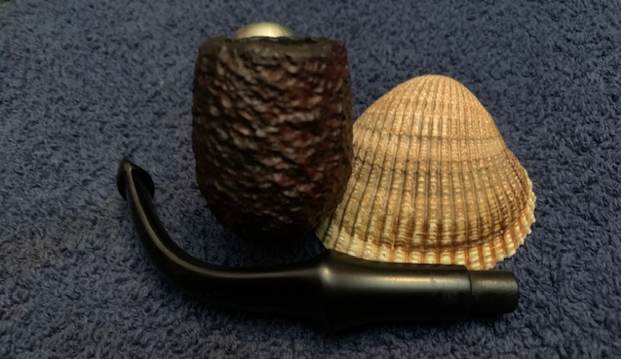
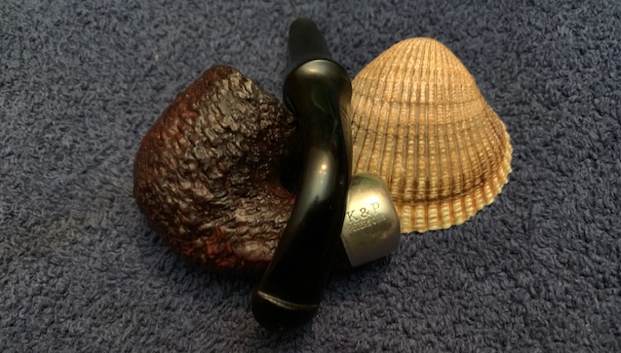
Restoring a Republic Era Peterson System Standard 317


Blog by Steve Laug

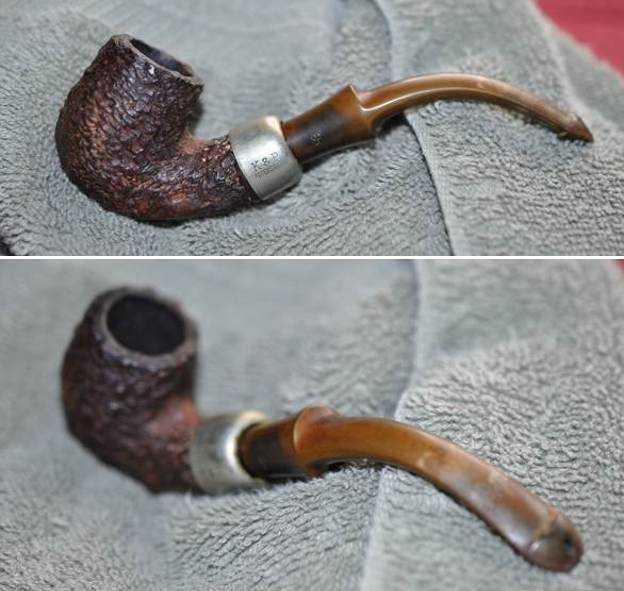
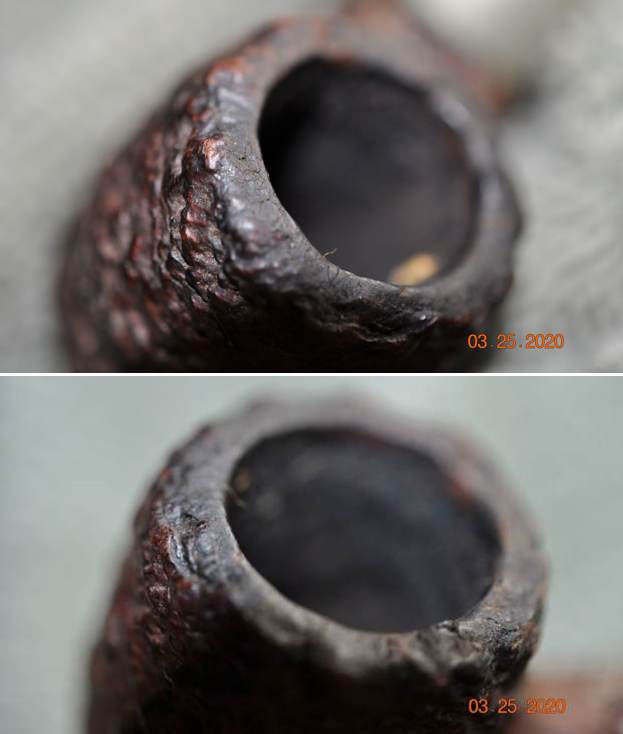
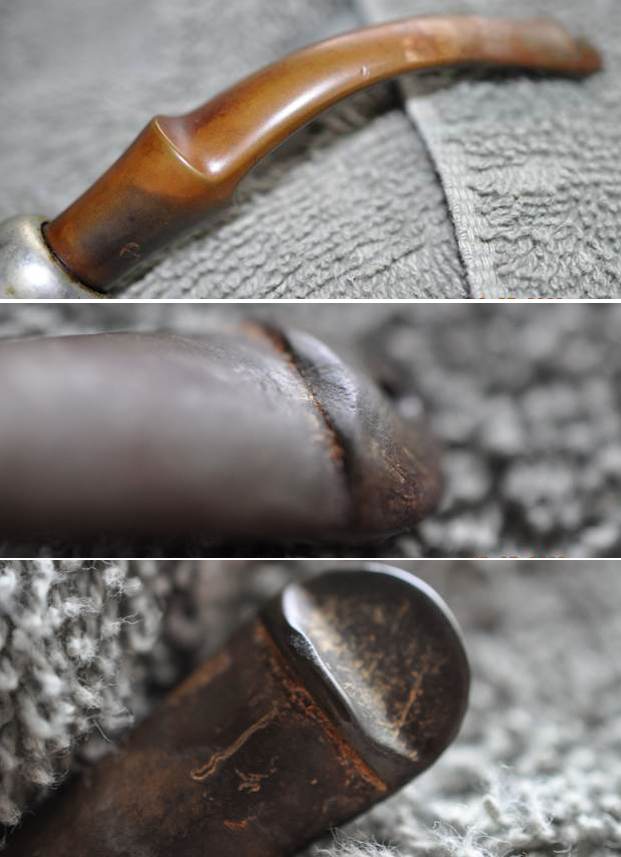
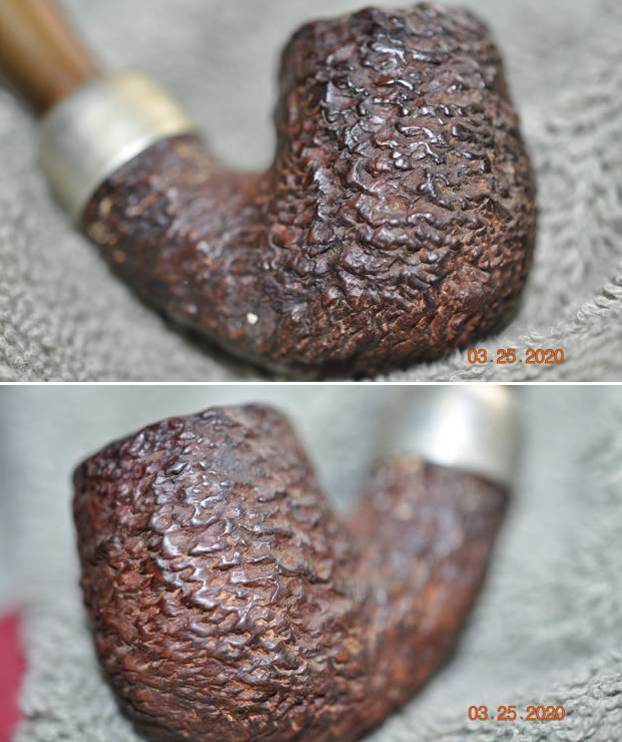
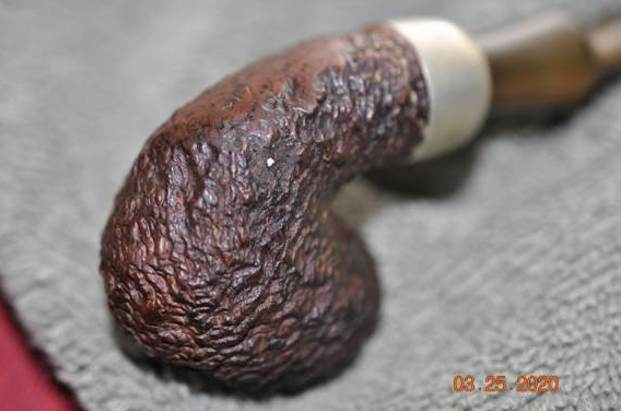
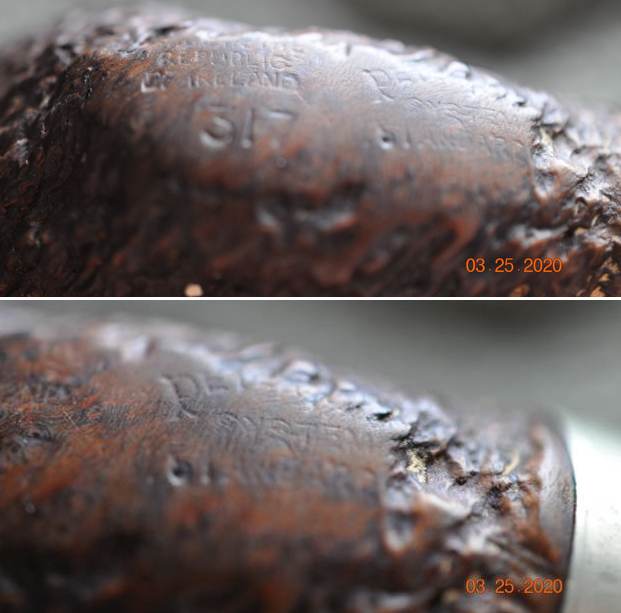
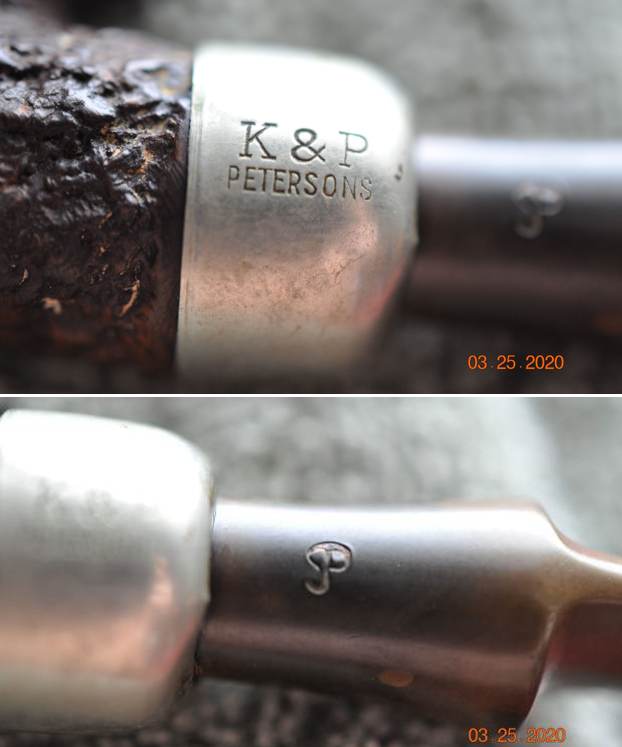
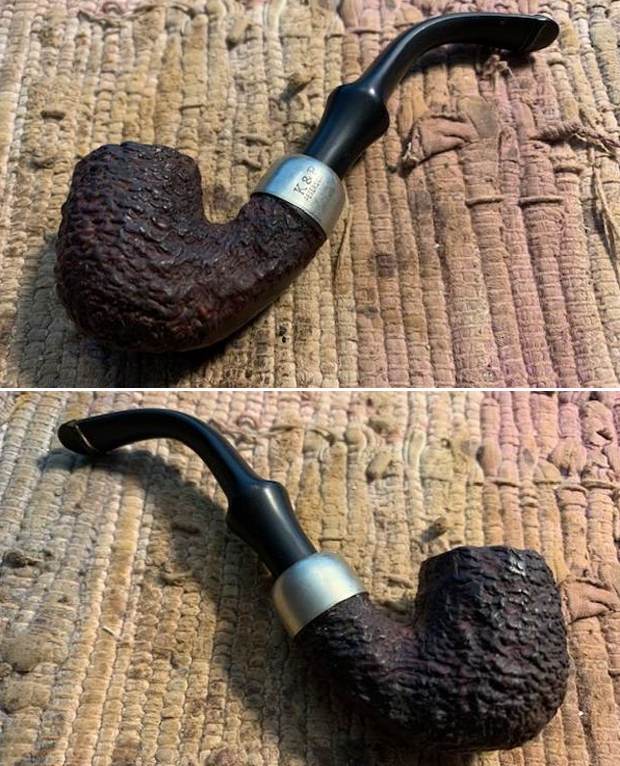
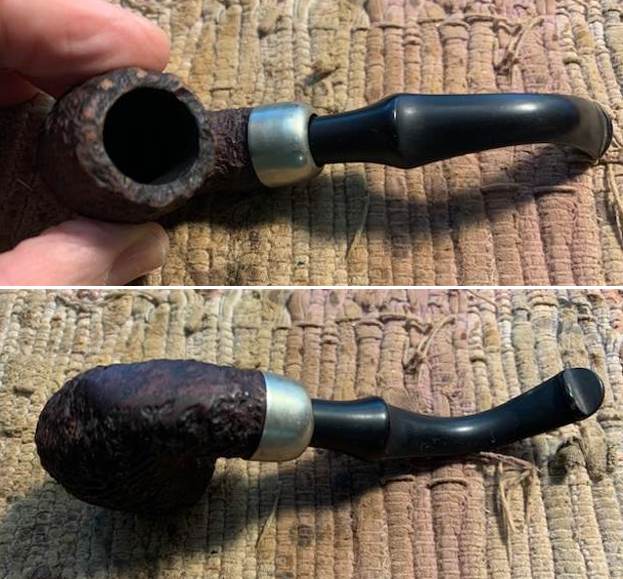
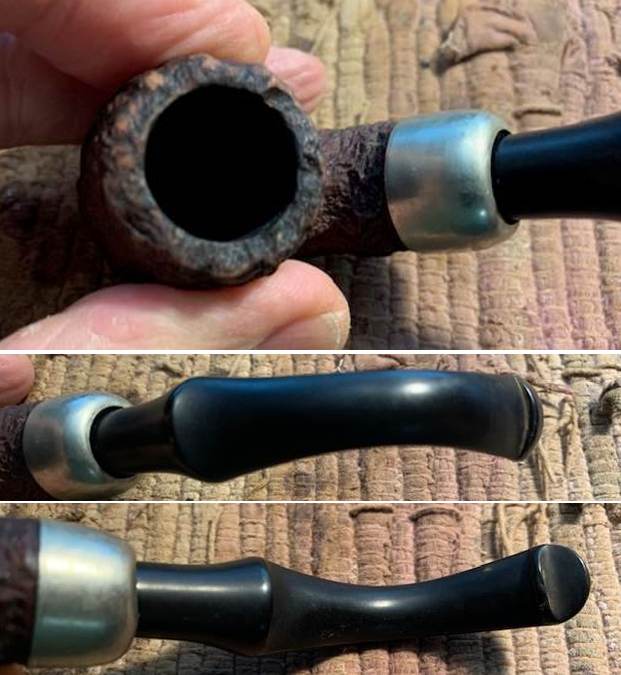
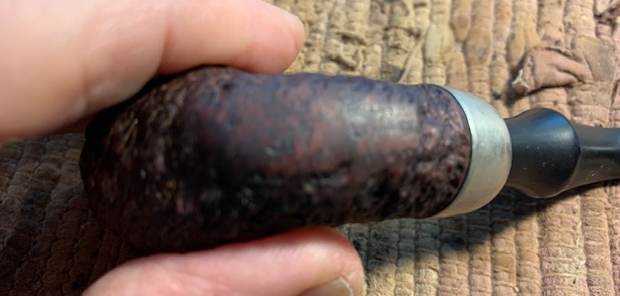
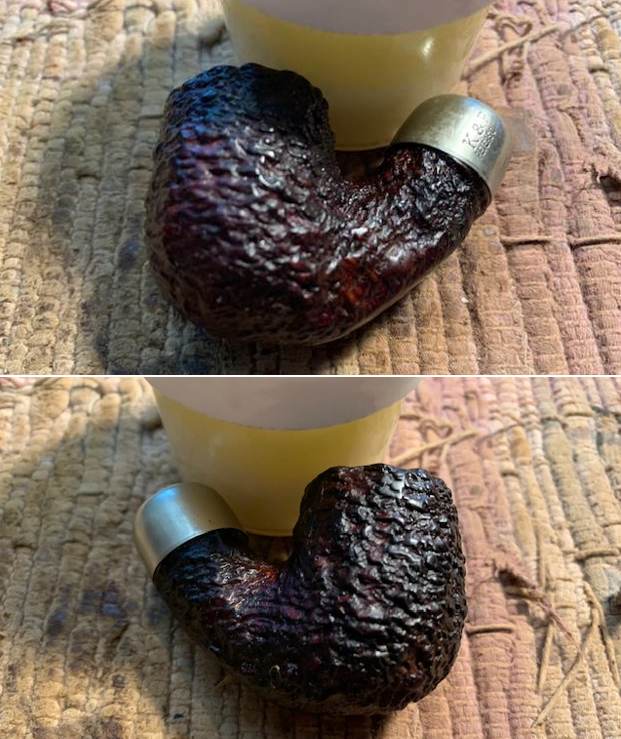
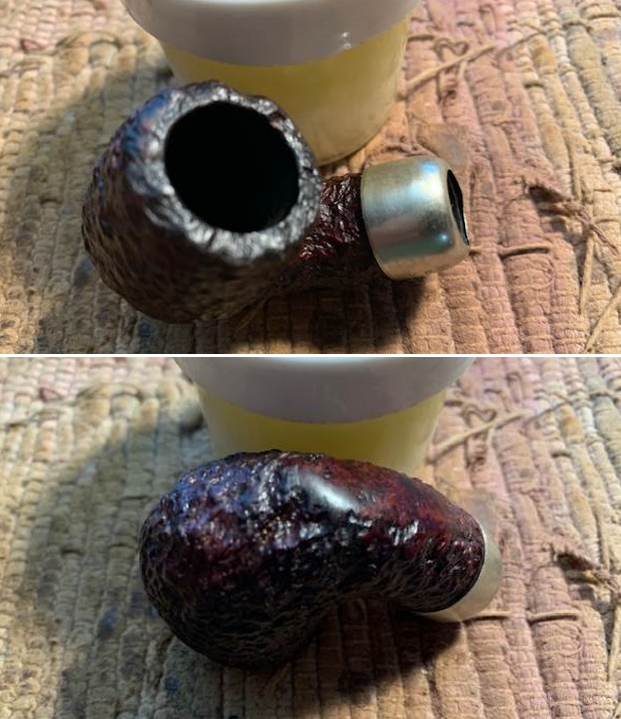
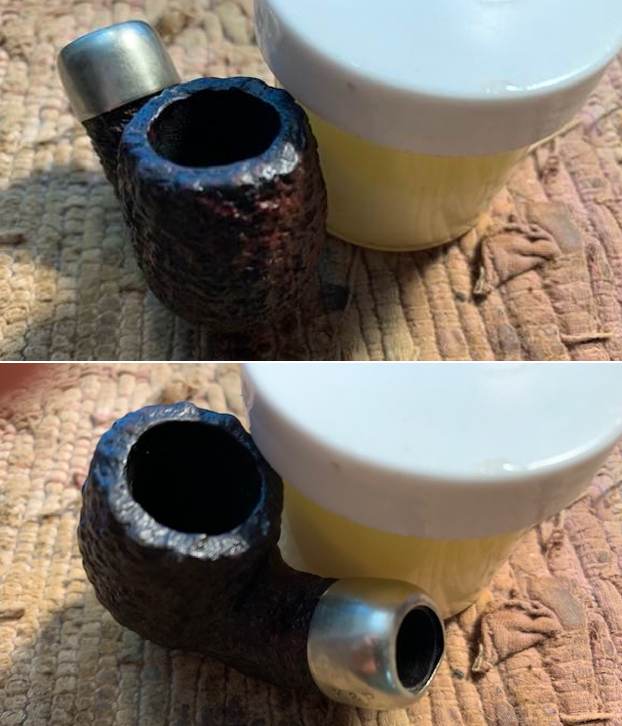
I am finally getting close to the bottom of the drawer full of Peterson’s pipes that I have had languishing here for a long time. It is seriously crazy how many pipes I have to work on and the serious lack of time I have to do so! However, I have time for another one this evening. This Peterson rusticated System pipe was purchased from an antique mall on 08/21/2019 in Ogden, Utah, USA. It is stamped on the underside of the shank and reads Made in the Republic of Ireland (3 lines) [over] the shape number 317. That is followed by Peterson [arched over] System [over] Standard. That is followed by. The Peterson System Standard 317 bent billiard pipe is a small and light weight bent billiard offered in the “300 editions” of Peterson pipes. The pipe was very dirty with dust and debris in the crevices of the rustication. The bowl had a thick cake that overflowed in thick lava, filling in the rustication of the rim top. There was some wear on the outer edge of the bowl at the front from where the pipe had been knocked out repeated. The stamping was faint but readable as noted above. The stem was badly oxidized and calcified with tooth marks on both sides and on the button. There was a short split in the underside of the stem that was a problem and would most probably require a new stem. Jeff took the following photos of the pipe before he started his clean up so you can see the difference before and after.Jeff took photos of the rim top and bowl to give a sense of the condition. You can see the cake, the lava and the outer edge damage on the front of the bowl in the rim top photos. He also captured the condition and the look of the stem. In the photo of the underside you can see the line that appears to be a short crack. He took photos of the bowl sides and heel to show the rugged rustication around the bowl and also the amount of debris that was ground into the crevices of the finish. There is something ruggedly charming about this old timer that grabbed our attention. He took photos of the stamping on the underside of the shank. It was faint but was still readable and read as noted above. He also captured the stamping on the nickel ferrule as the P logo on the damaged stem. I am including the information from Pipedia’s article on Peterson pipes. It is a great read in terms of the history of the brand (https://pipedia.org/wiki/Peterson). I have included a bit of the pertinent history here.

1950 – 1989 The Republic Era  – From 1950 to the present time, the stamp for this era is “Made in the Republic of Ireland” in a block format generally in three lines but two lines have been used with or without Republic being abbreviated.

During the 1950’s and 60’s the Kapp & Peterson company was still in the ownership of the Kapp family. However 1964 saw the retiral of the company Managing Director Frederick Henry(Harry) Kapp.

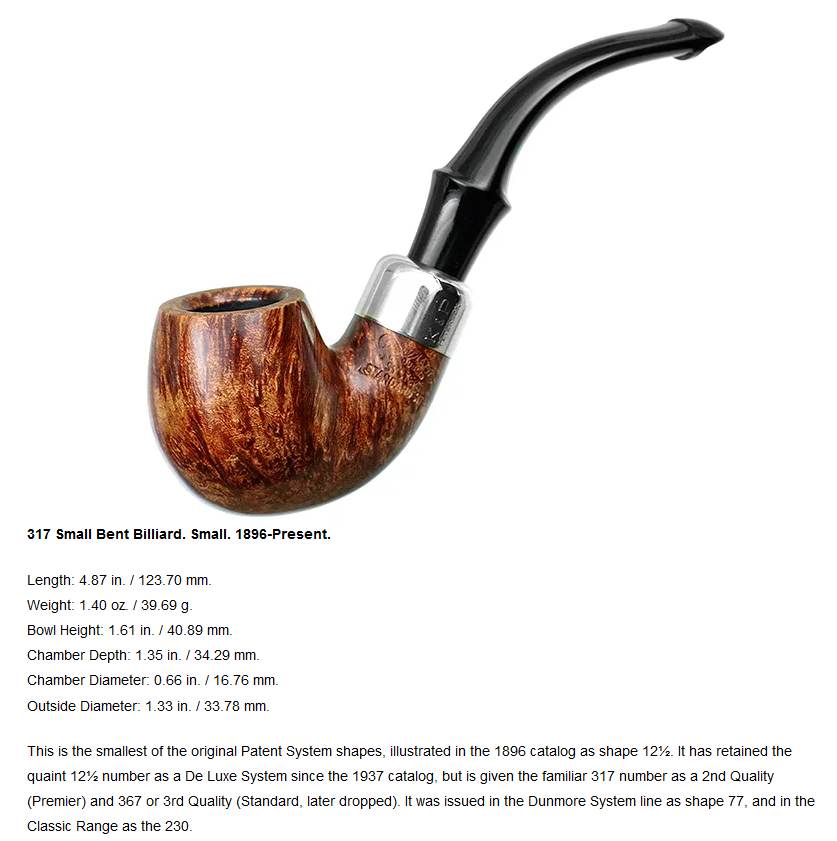
I turned to Mark Irwin’s site to an article that he wrote on the System shapes from 1896-2019 (part 1) and found the shape I am working on there. I did a screen capture of the pipe shape and the details as shown in the photo below (https://petersonpipenotes.org/2019/09/03/146-a-guide-to-system-shapes-1896-2019-part-1-the-300-shape-group/).With that information in hand I knew what I was dealing with in terms of the stamping and the age of this pipe. I knew from the information that the pipe was made during the Late Republic Era between 1950 and 1989. Pipedia qualifies the dating as follows: From 1950 to the present time, the stamp for this era is “Made in the Republic of Ireland”. Now it was time to work on the pipe.

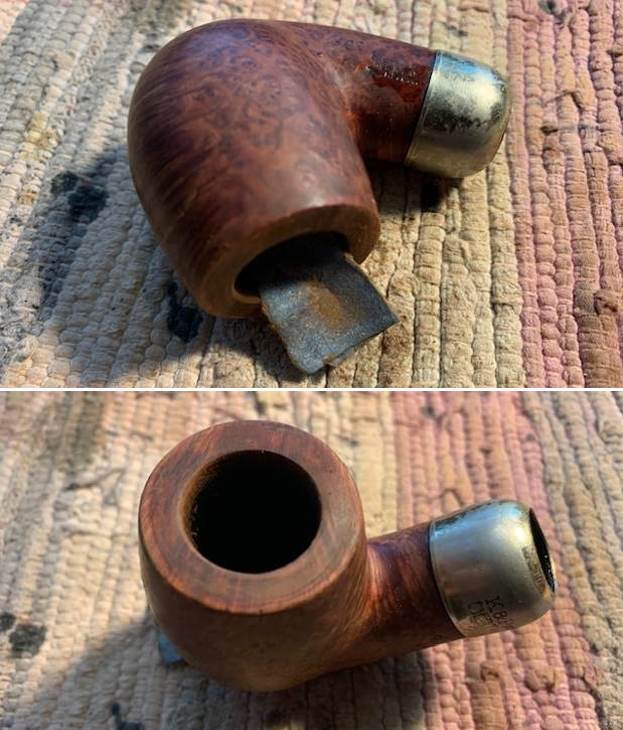
Armed with that information I turned to work on the pipe itself. Jeff had done a great job cleaning up the pipe as usual. He reamed the pipe with a PipNet reamer and cut back the cake back to the bare briar. He cleaned up the walls with a Savinelli Fitsall Pipe Knife. He scrubbed the interior of the bowl and shank with pipe cleaners, cotton swabs and alcohol to remove the tars and oils. He scrubbed the exterior of the pipe with Murphy’s Oil Soap and a tooth brush to remove the grime from the finish. He scrubbed the inside of the stem with alcohol and pipe cleaners. He cleaned the nickel ferrule with Soft Scrub and buffed it off with a soft pad. Somewhere along the journey from Idaho to Vancouver I had replaced the damaged stem with the one in the photos. It is an identically shaped and sized stem and with it in place the pipe looks good. I took photos of the pipe before I started working on it. I took photos of the bowl and rim top to show how clean it was. There is some wear on the finish around the outer edge and the rim top is roughened. The replacement stem looks clean of oxidation and there is light tooth chatter on both sides of the stem. The stamping on the underside of the shank was faint but still readable as noted above.I took a photo of the pipe with the stem removed to show the overall look of stem, tenon and profile of the pipe. It is a great looking pipe.Since the bowl looked so good I decided to rub the briar down with Before & After Restoration Balm. I worked it into the briar with my fingertips to get it into the deep briar. The product works to clean, enliven and preserve the briar. I let it sit for 10 minutes while I worked on the stem. After the time passed I buffed it with a cotton cloth to deepen the shine. The rustication came alive with the balm. Even the areas on the rim top and outer edges looked good. The new stem was in great condition so I polished it with micromesh sanding pads – 1500-12000 grit pads. I wiped it down with Obsidian Oil after each sanding pad. I used Before & After Pipe Polish – both Fine and Extra Fine to further polish the stem. This Republic Era Peterson’s System Standard 317 Rusticated Bent Billiard is a nice looking pipe. The combination of reds and brown stains really gives depth to the rustication around the bowl sides and shank. The finish on the pipe is in excellent condition and the contrasting stains work well to give some contrast to the pipe. The polished black vulcanite P-lip taper stem and polished nickel ferrule add to the mix. I put the stem back on the bowl and buffed the pipe lightly with Blue Diamond on the buffing wheel, carefully avoiding the stamping on the shank. I gave the bowl multiple coats of Conservator’s Wax and stem multiple coats of carnauba wax on the buffing wheel and followed that by buffing it with a clean buffing pad. I hand buffed the pipe with a microfiber cloth to deepen the shine. The finished Peterson’s 317 System Bent Billiard is quite nice and feels great in the hand. Give the finished pipe a look in the photos below. The dimensions of the pipe are Length: 5 inches, Height: 1 ½ inches, Outside diameter of the bowl: 1 inch, Chamber diameter: 5/8 of an inch. The weight of the pipe is 1.09 ounces/ 31 grams. Thanks for walking through the restoration with me as I worked over another interesting pipe. I will soon add the pipe to the Irish Pipe Makers Section of the rebornpipes store. If you want to add it to your collection send me an email or a message! Thanks for your time.