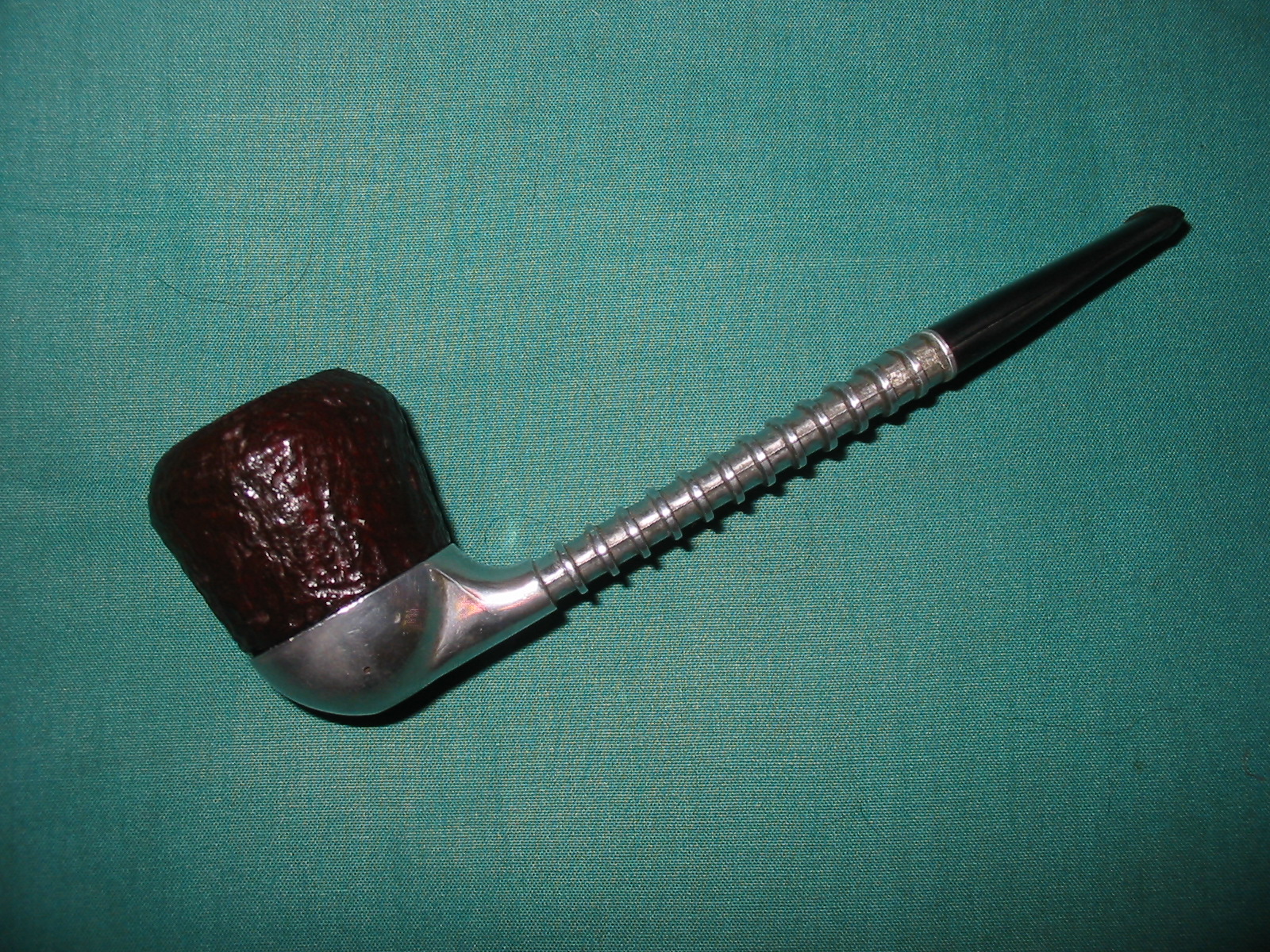
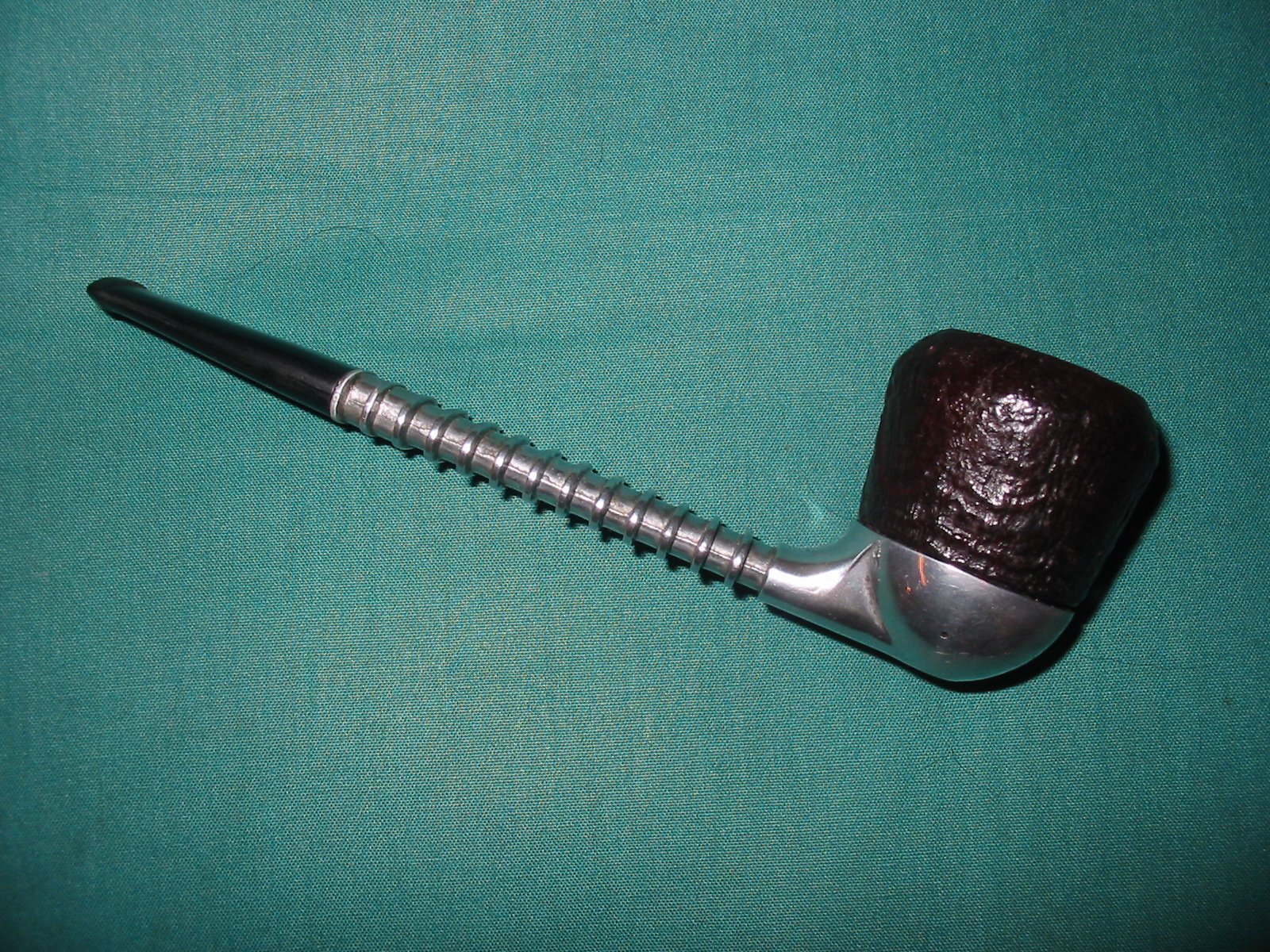
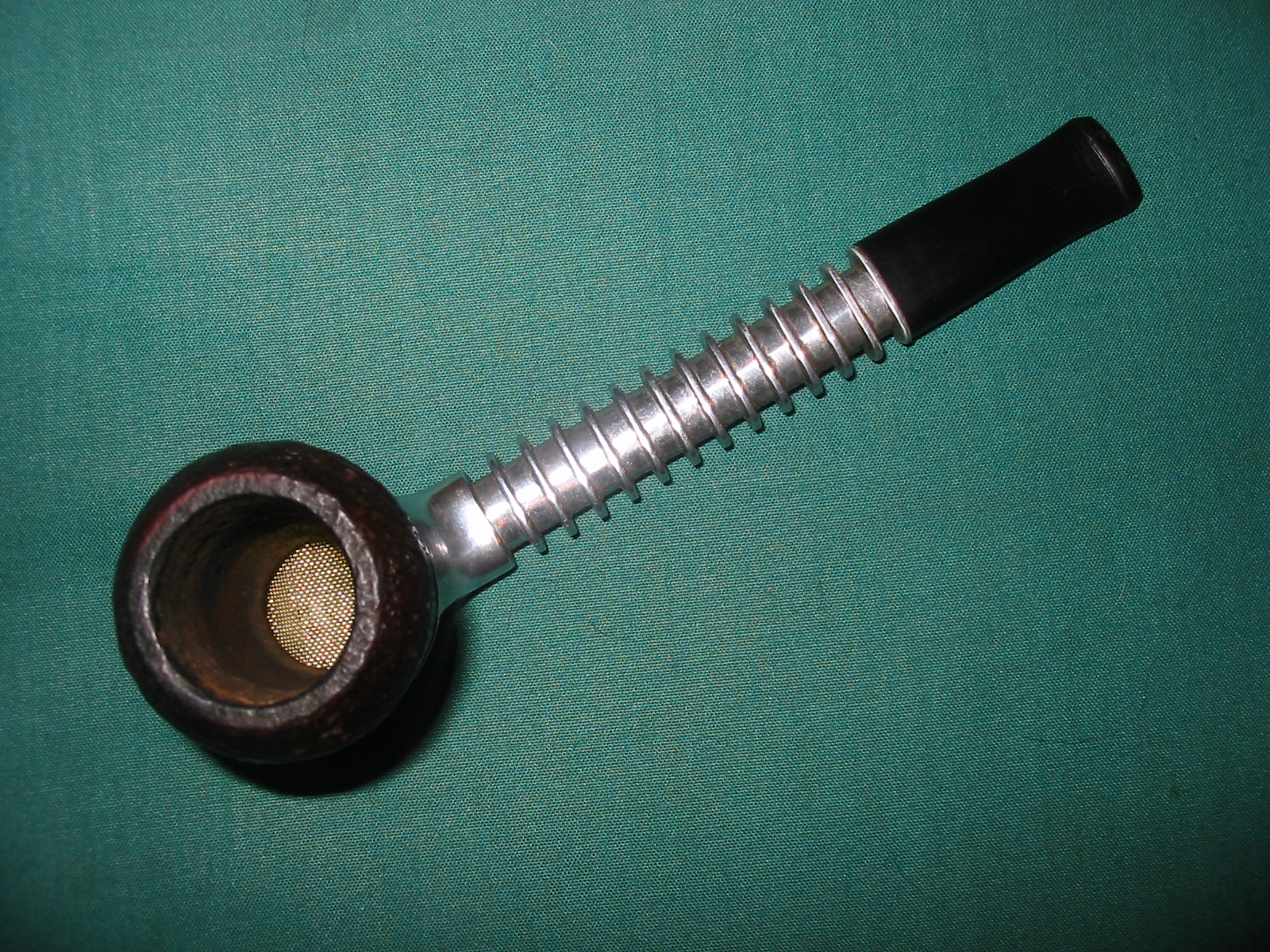
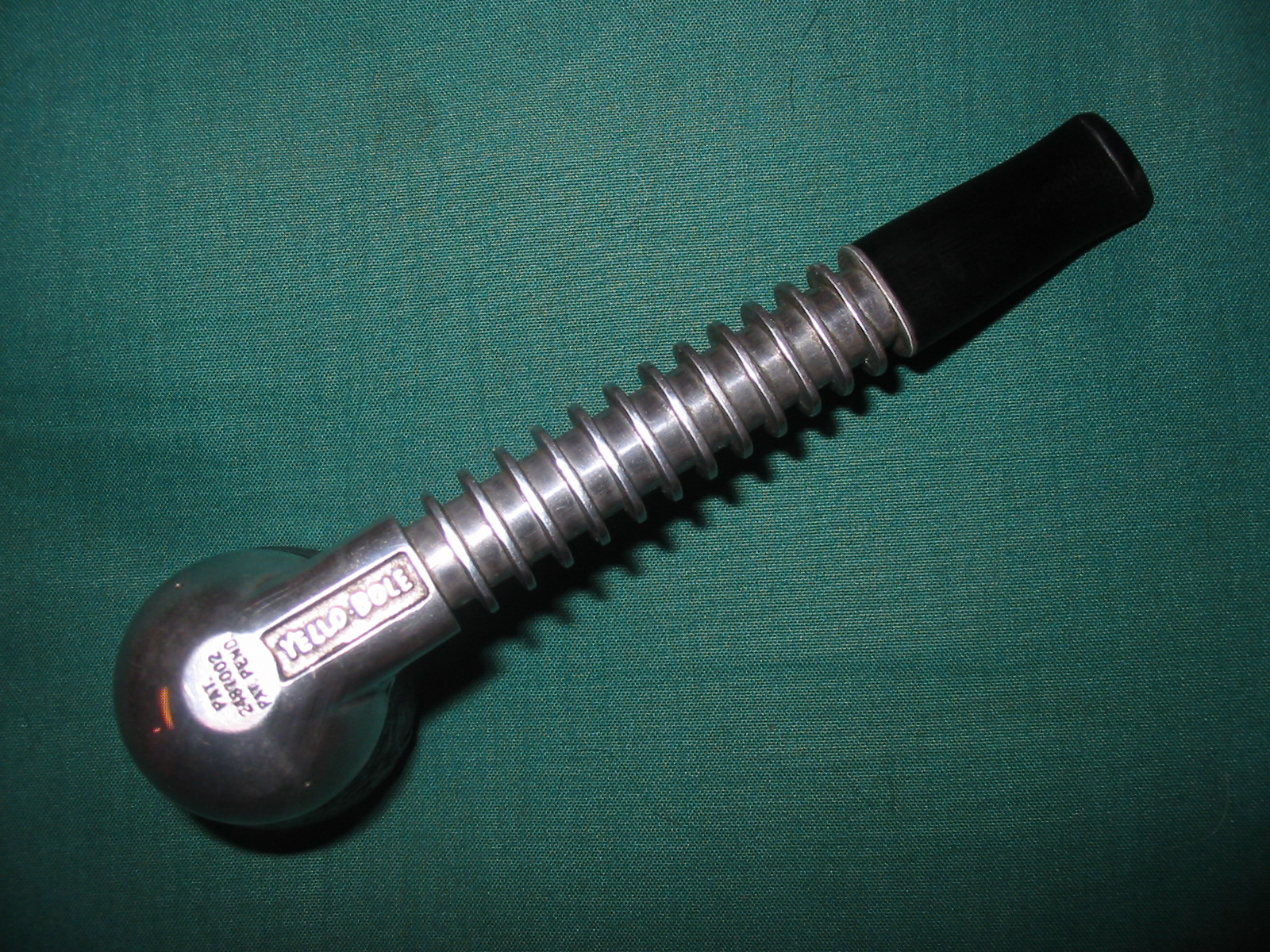
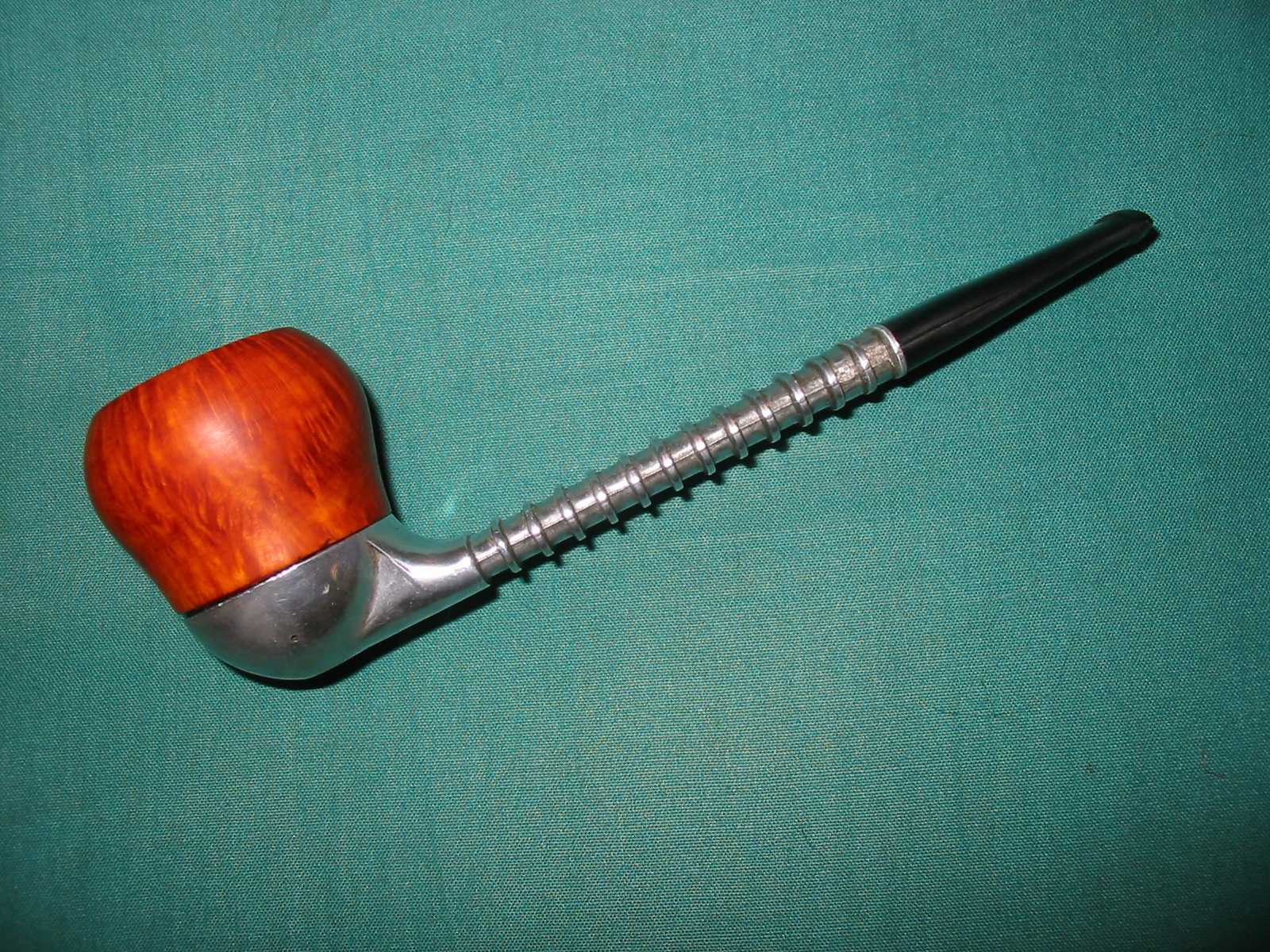
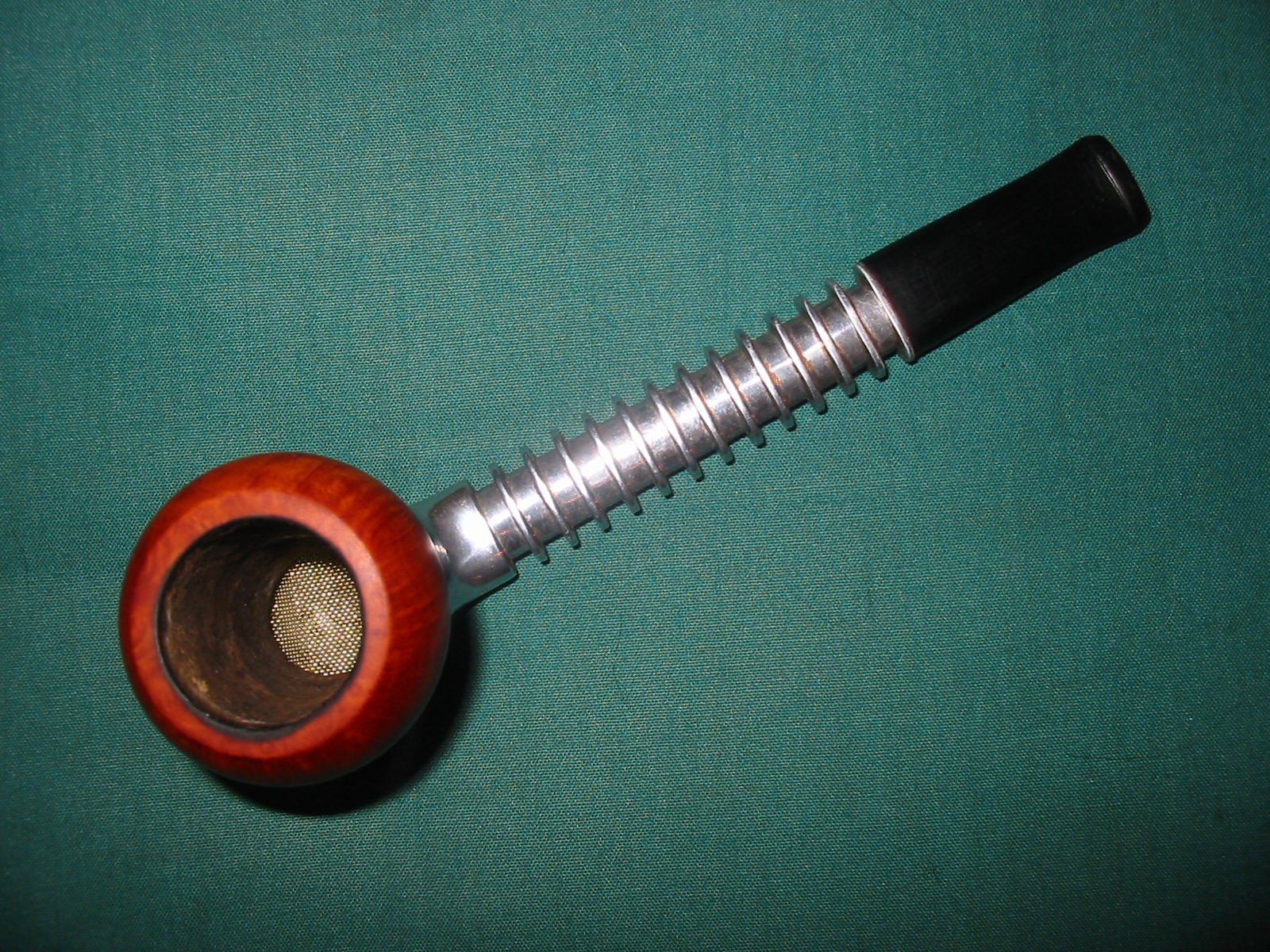
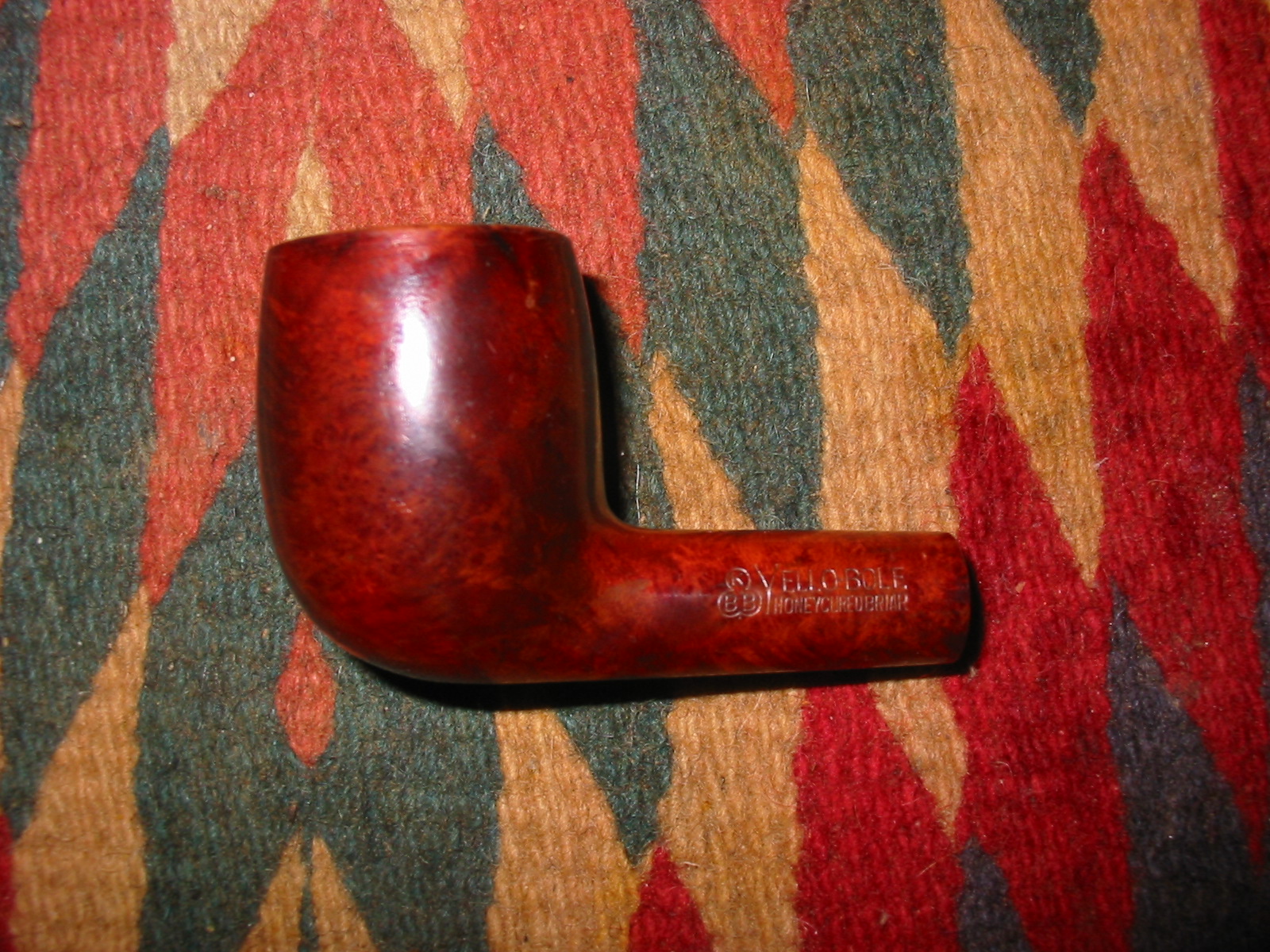
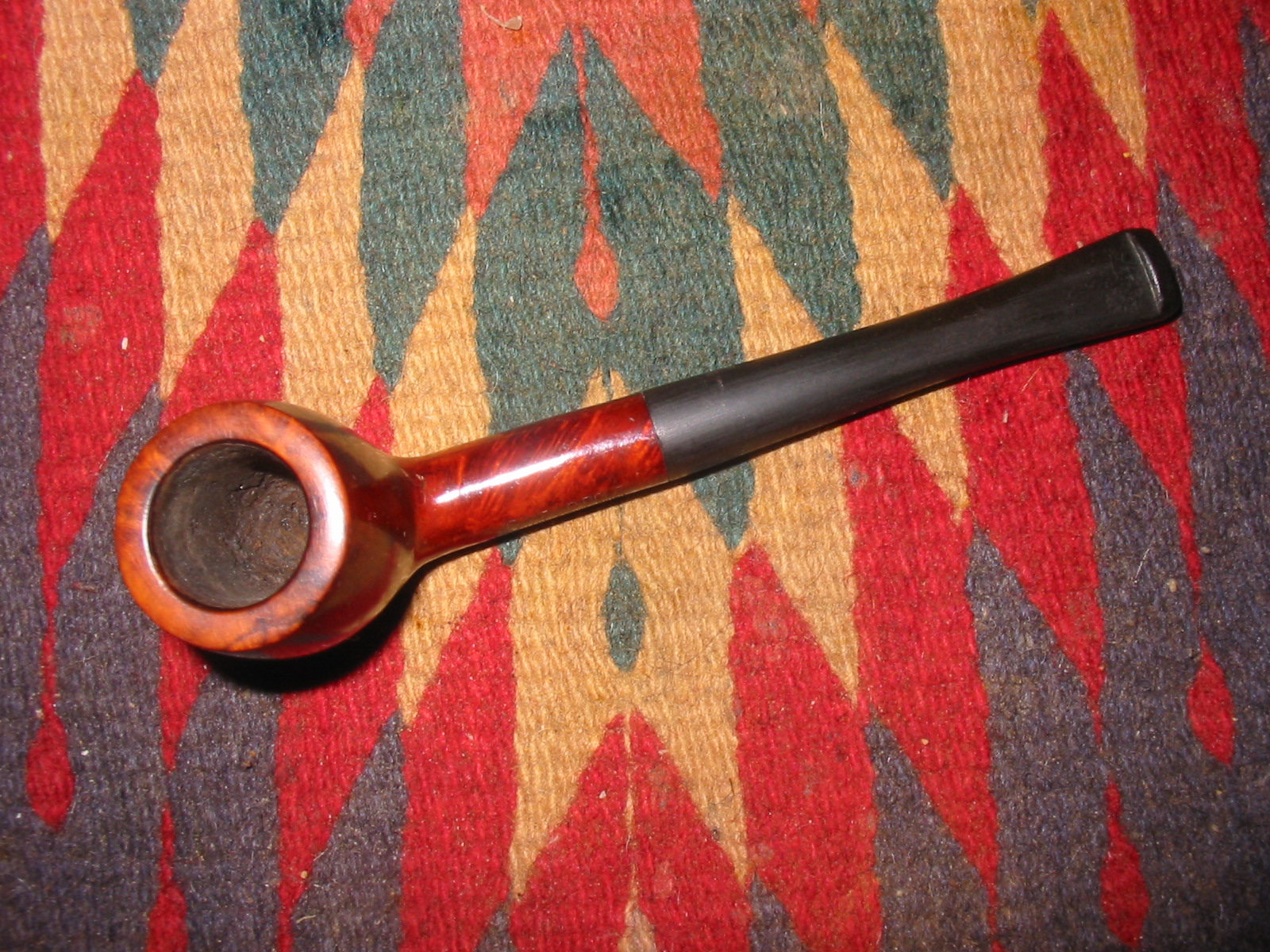
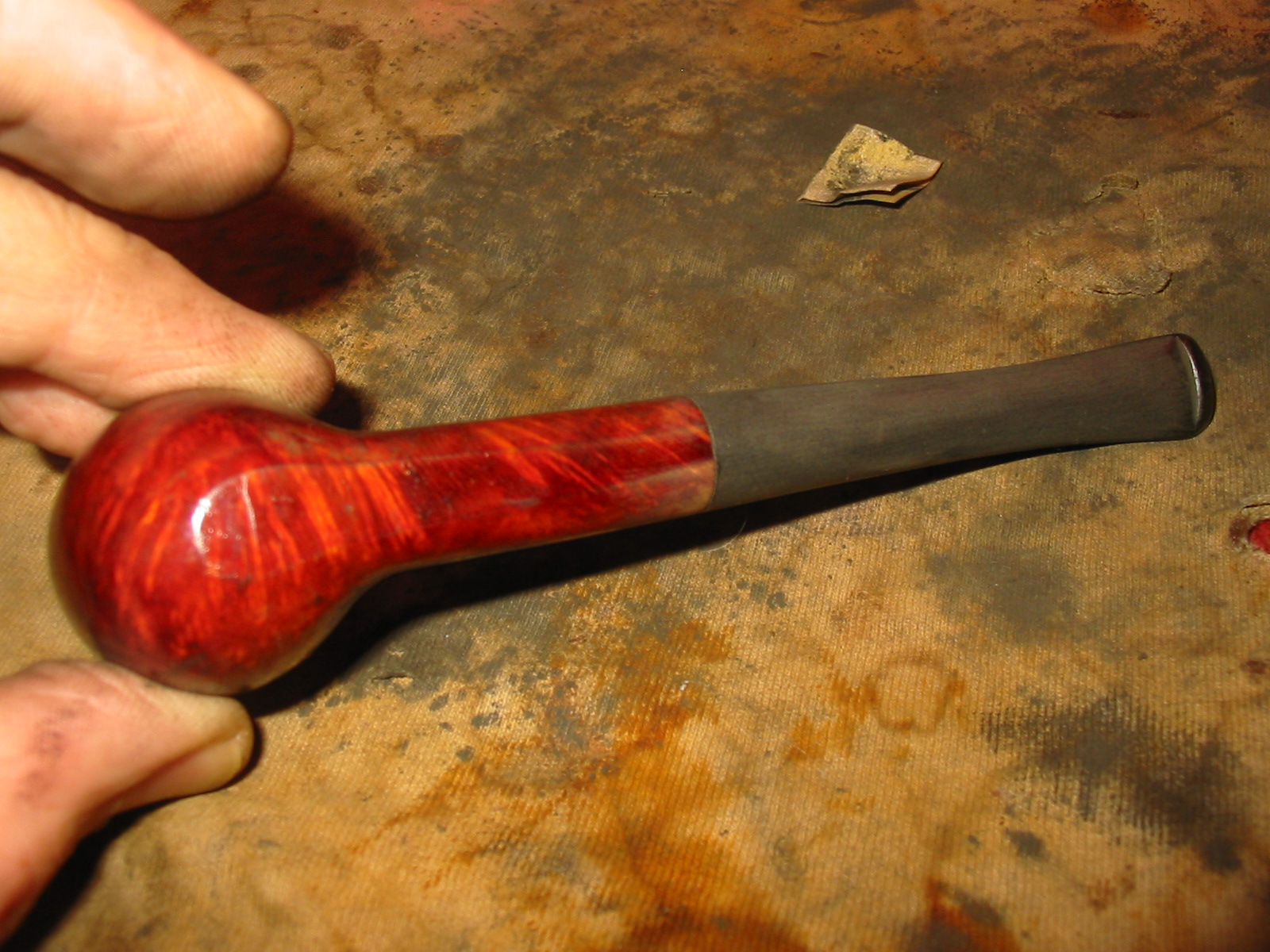
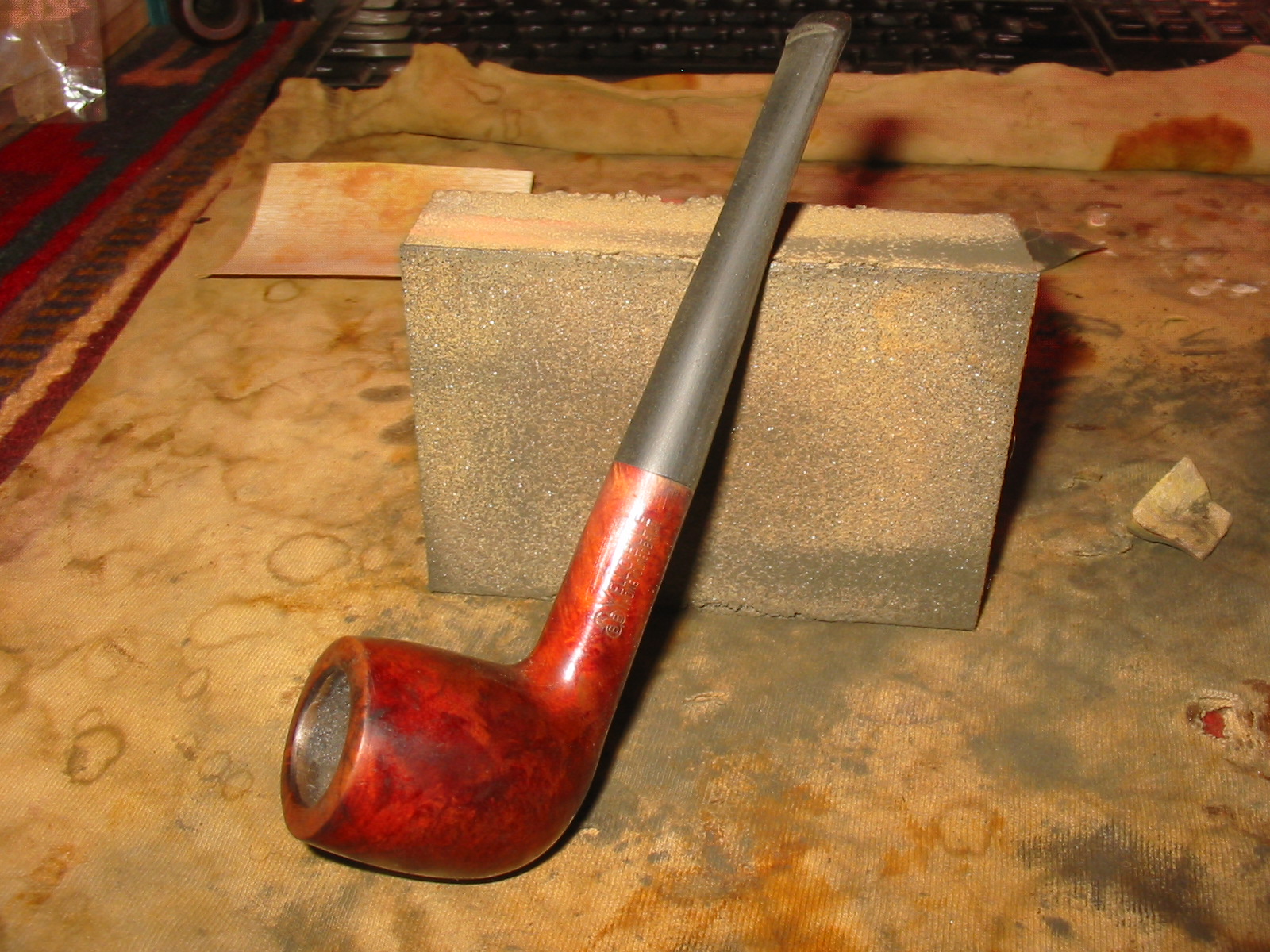
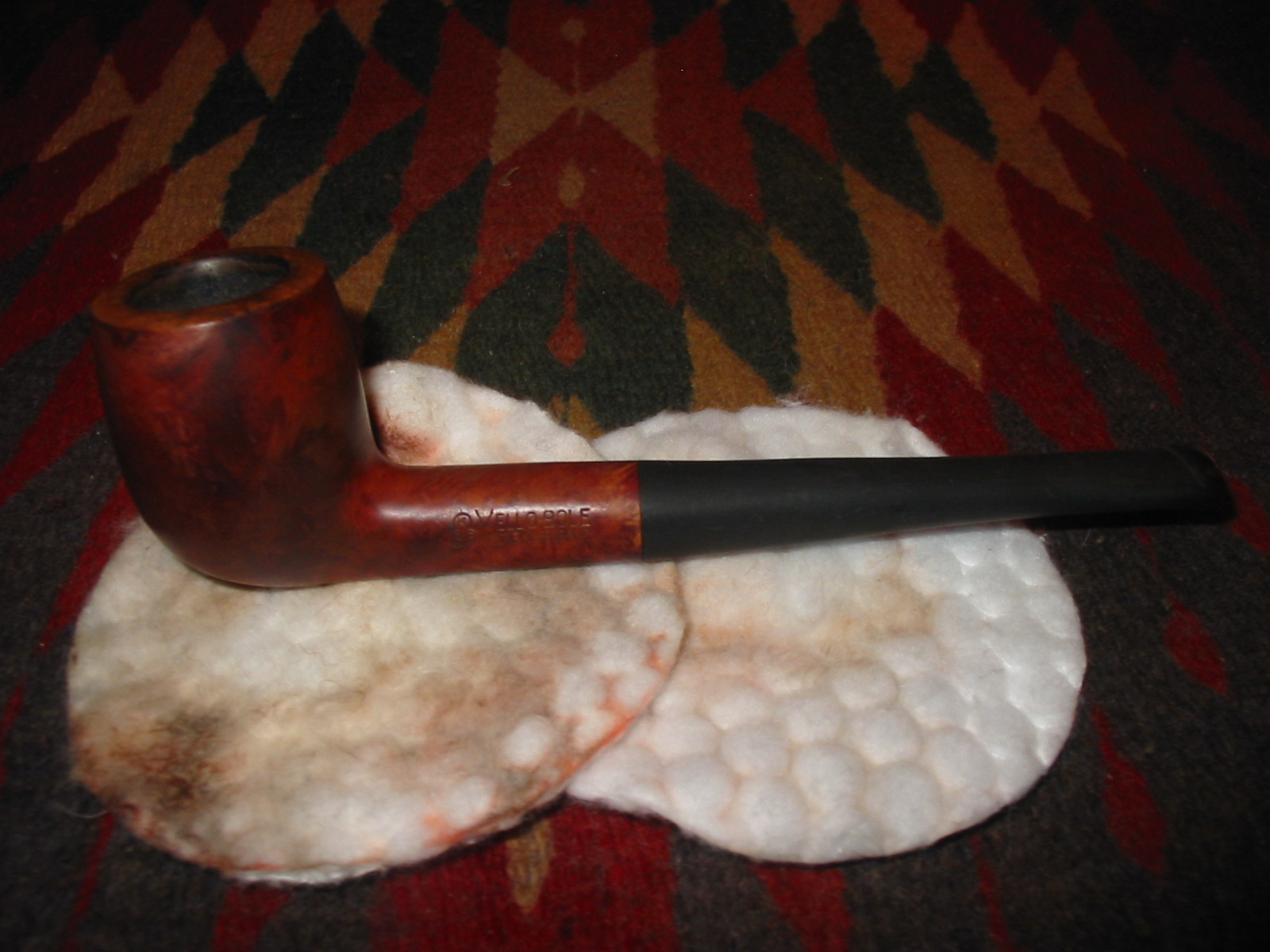
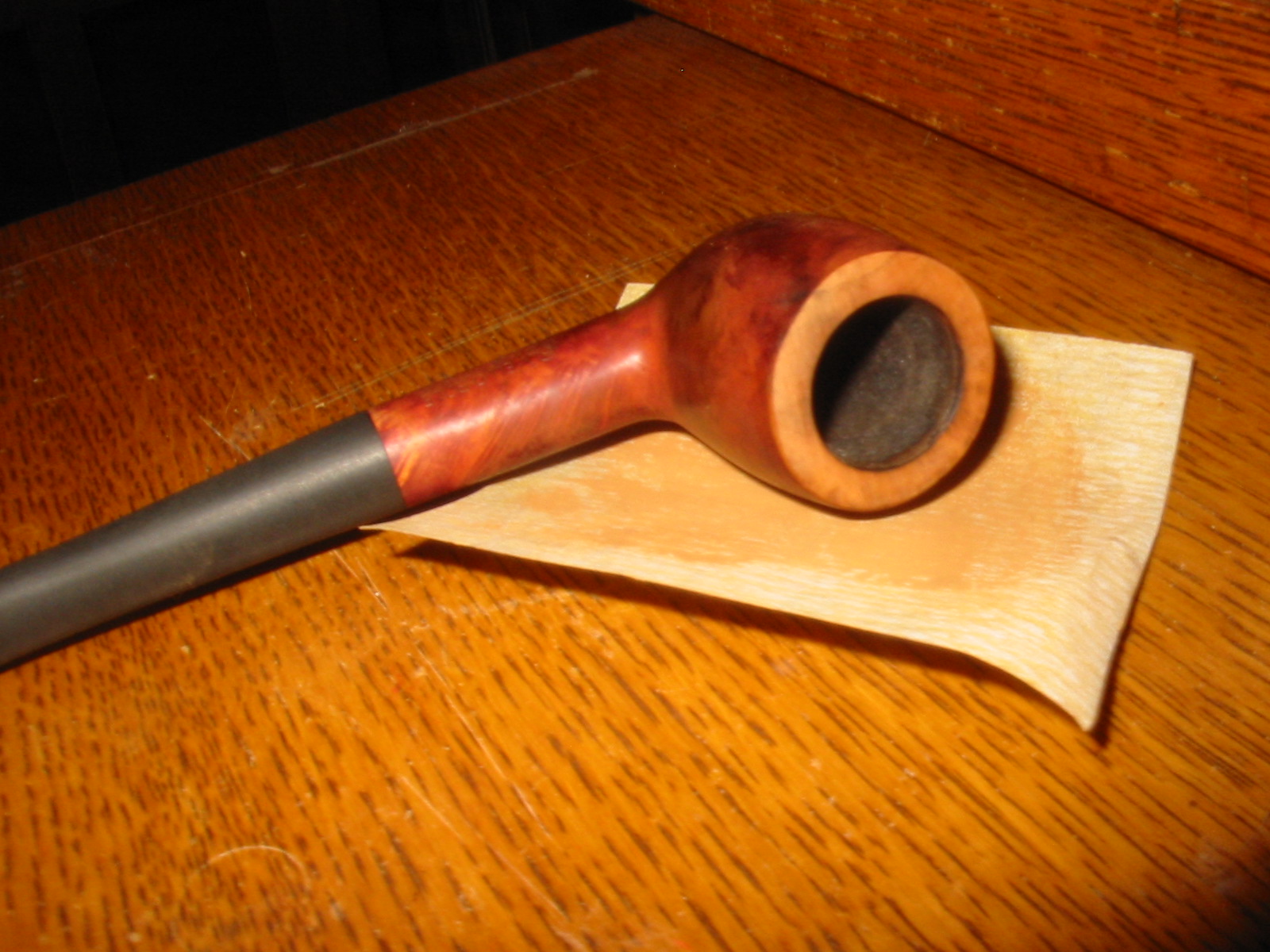
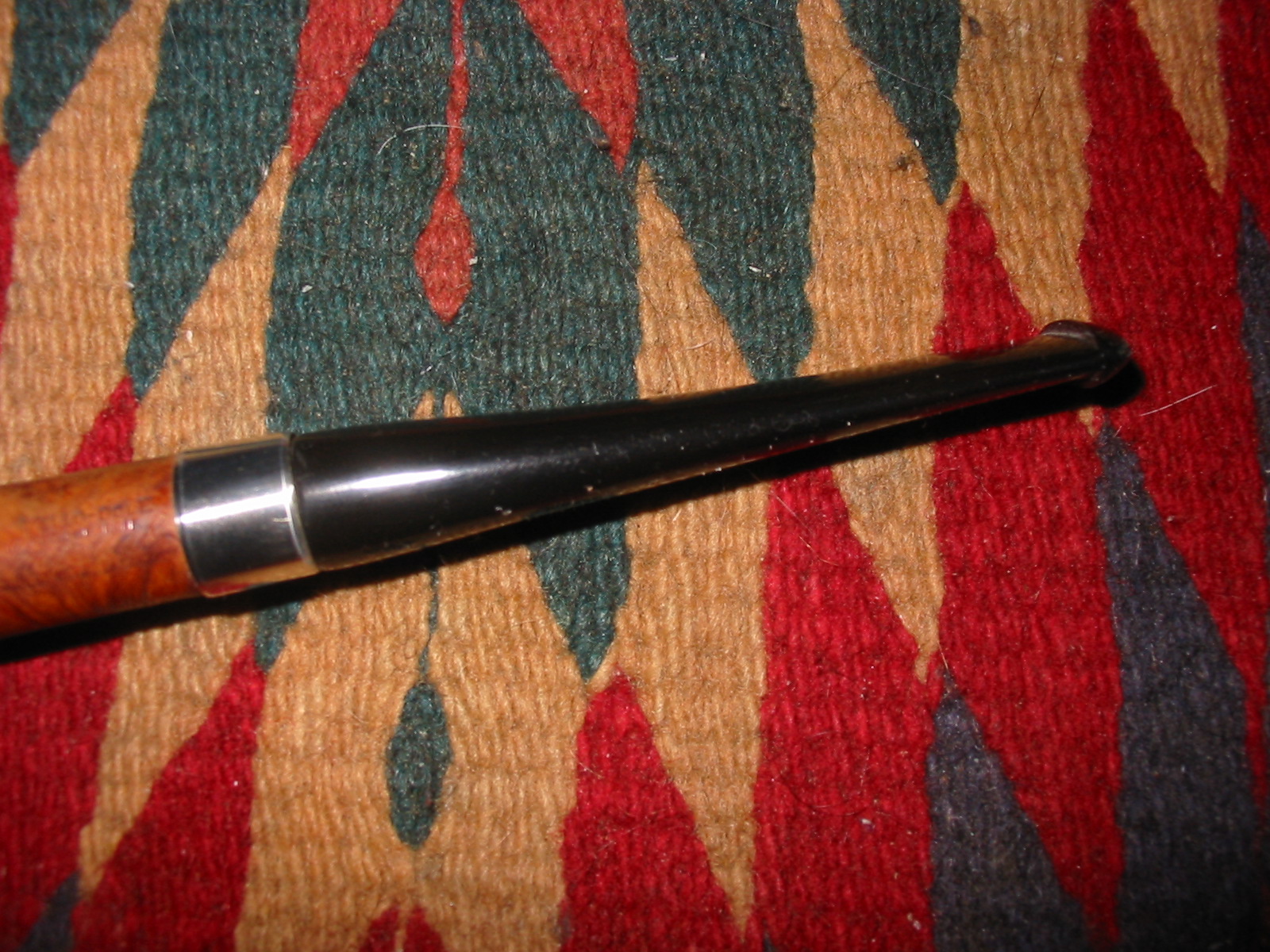
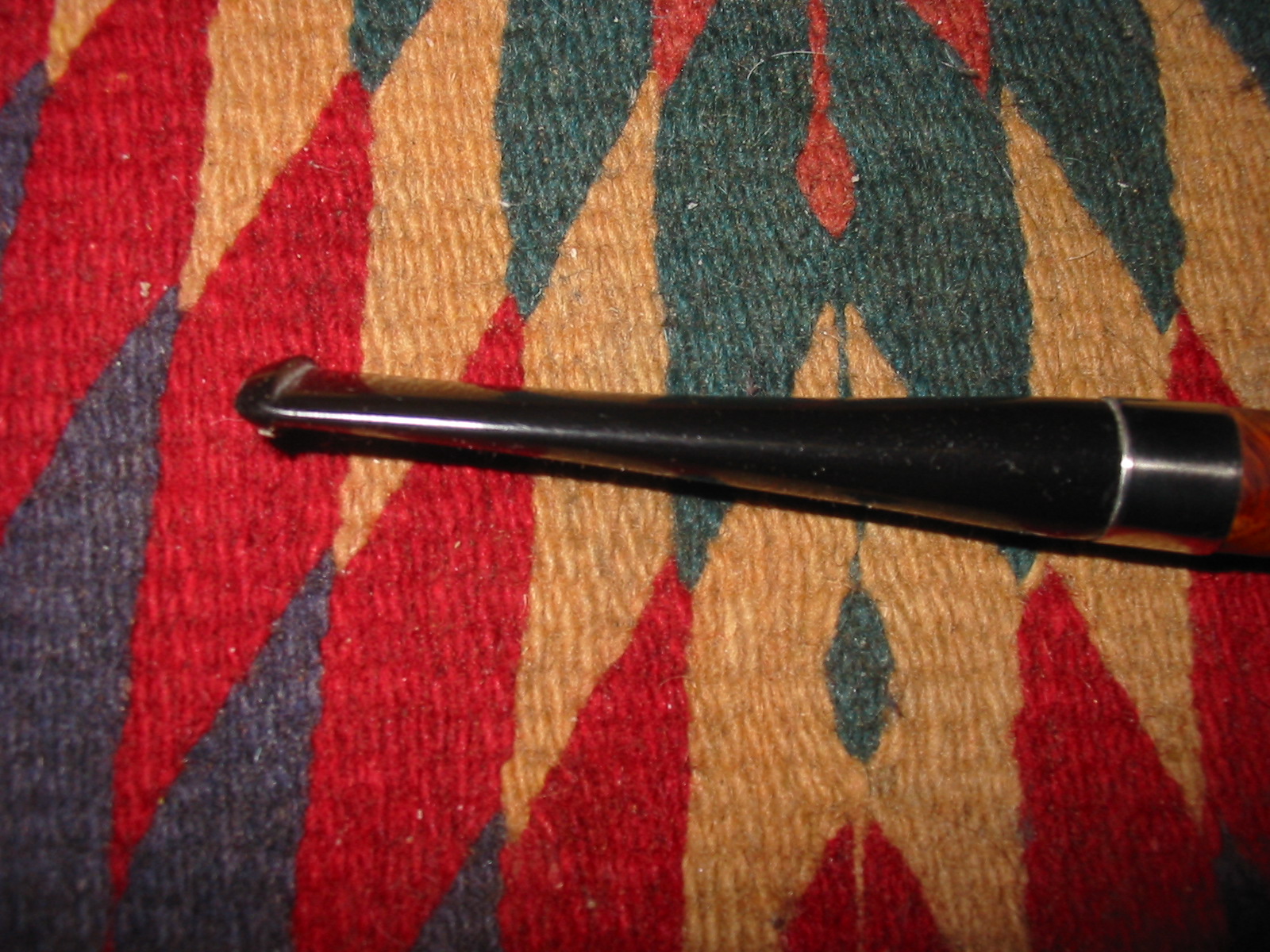
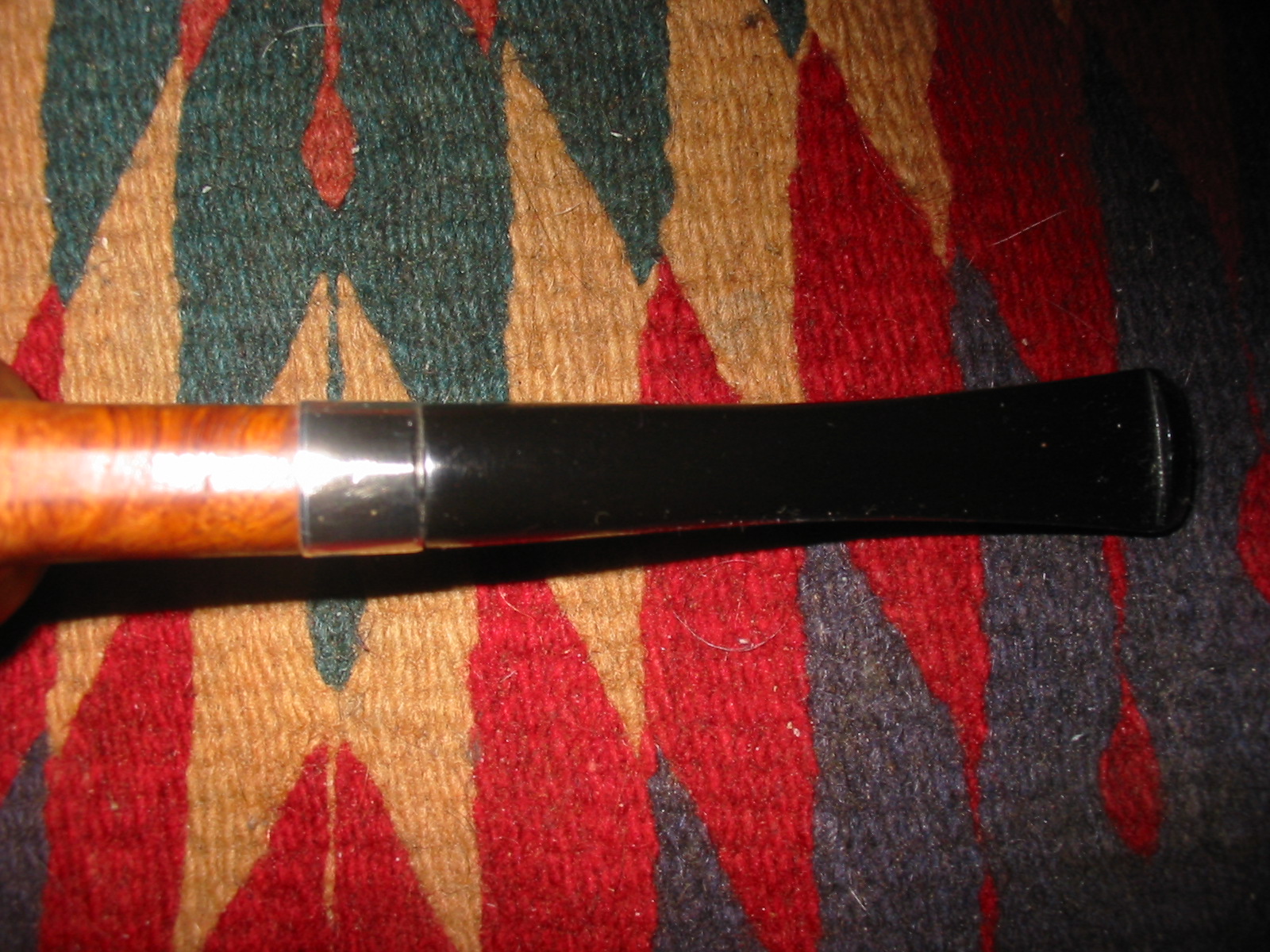
Tag Archives: Yello Bole pipes

Bringing a Yello Bole Pot back to Life


Blog by Andrew Selking

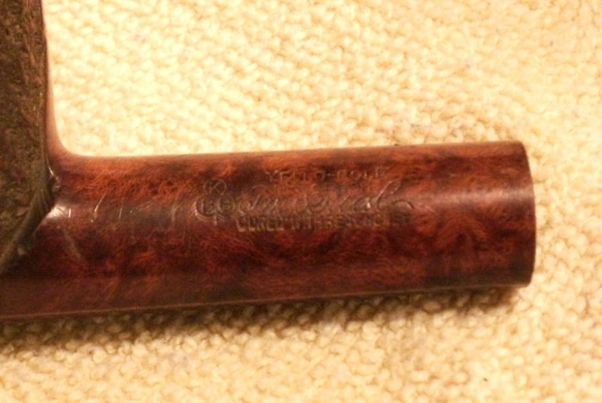
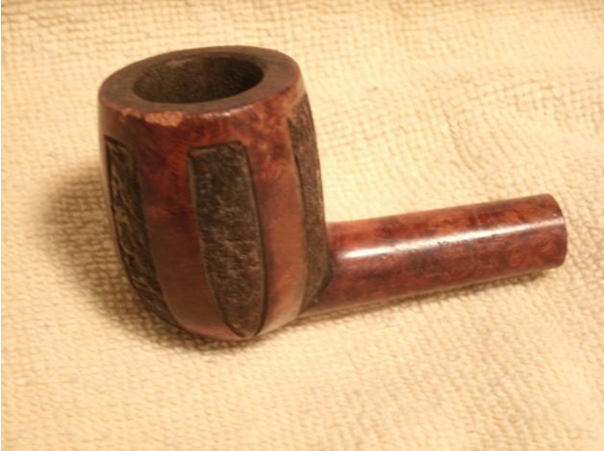
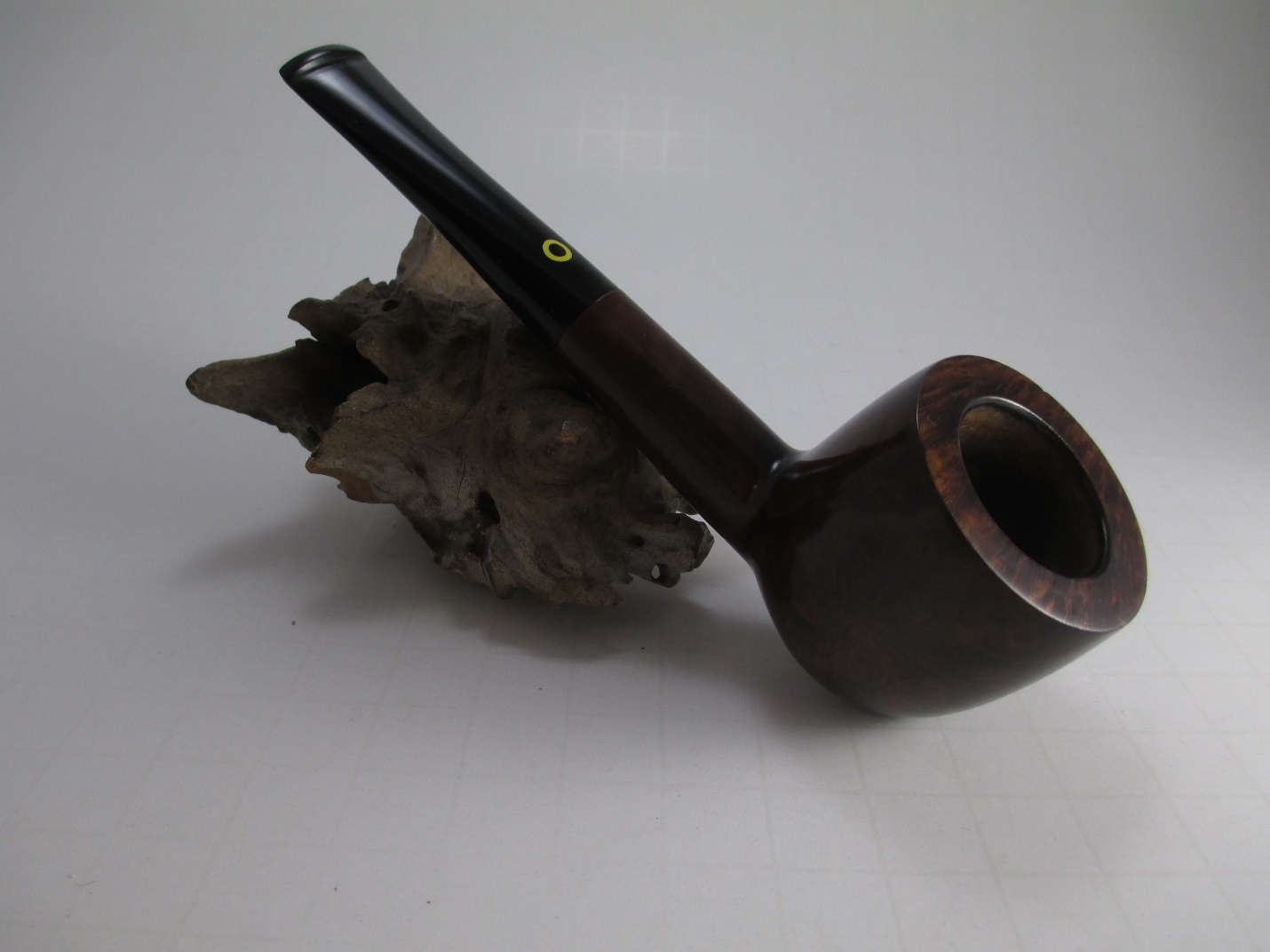
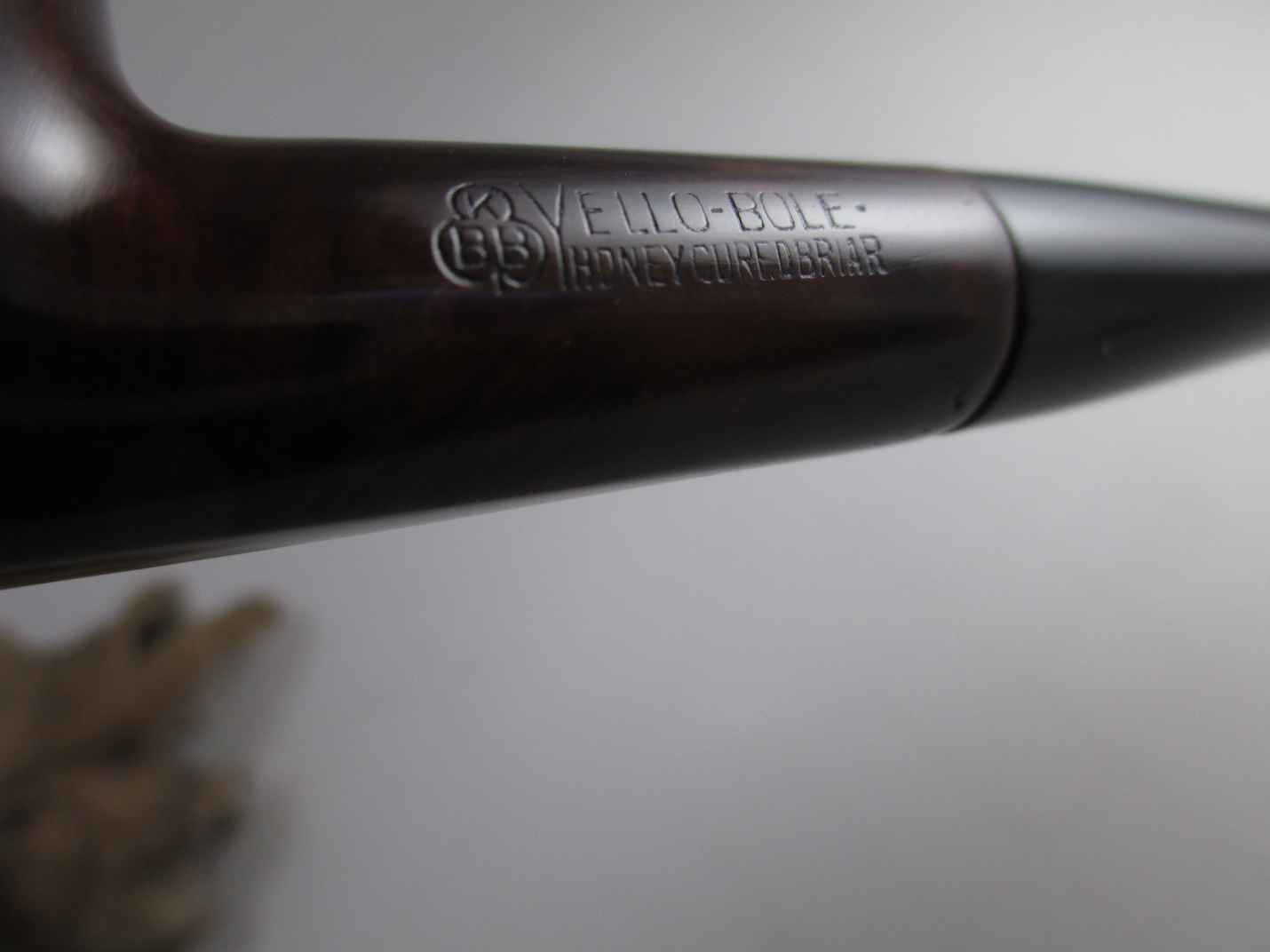
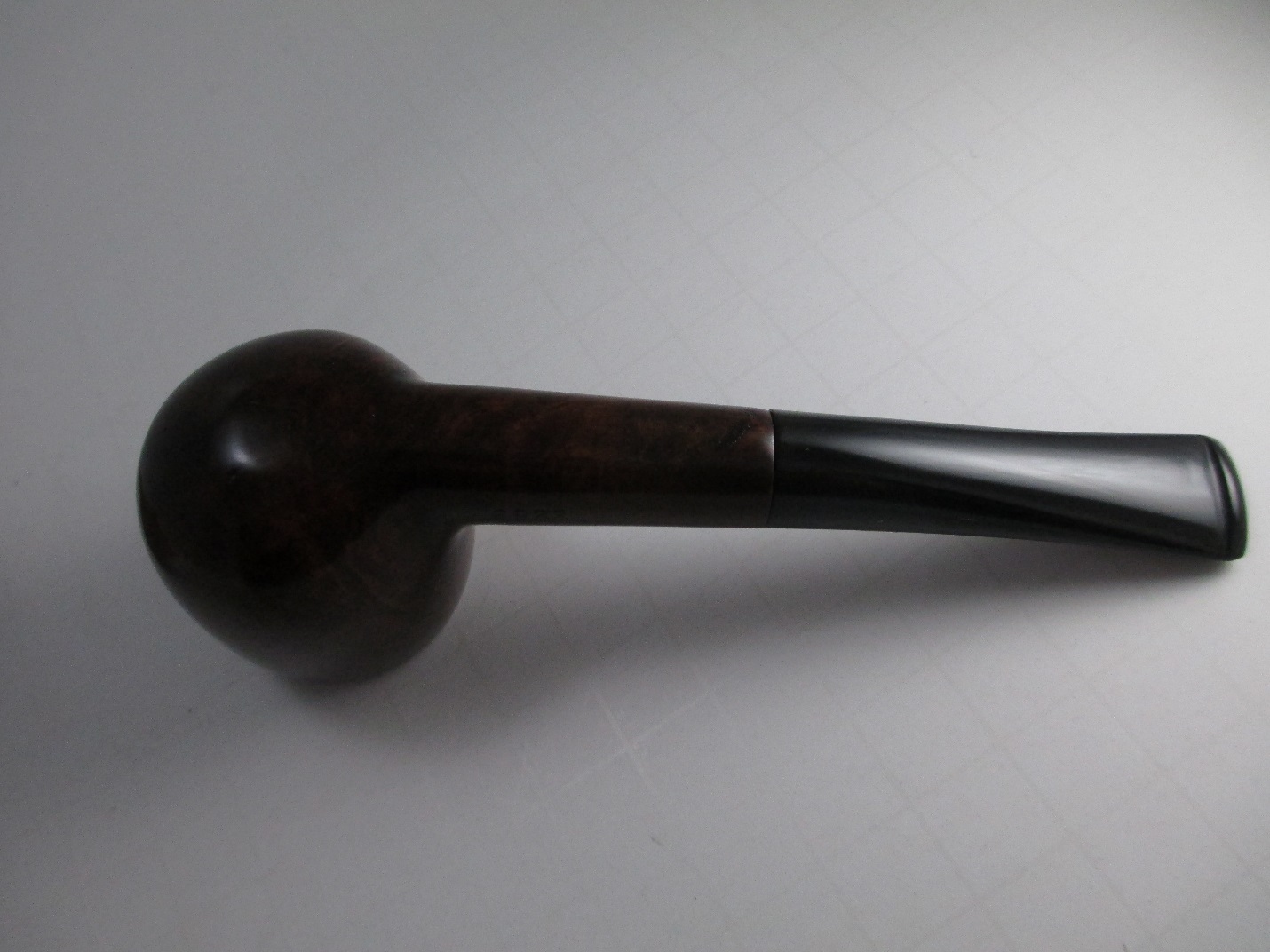
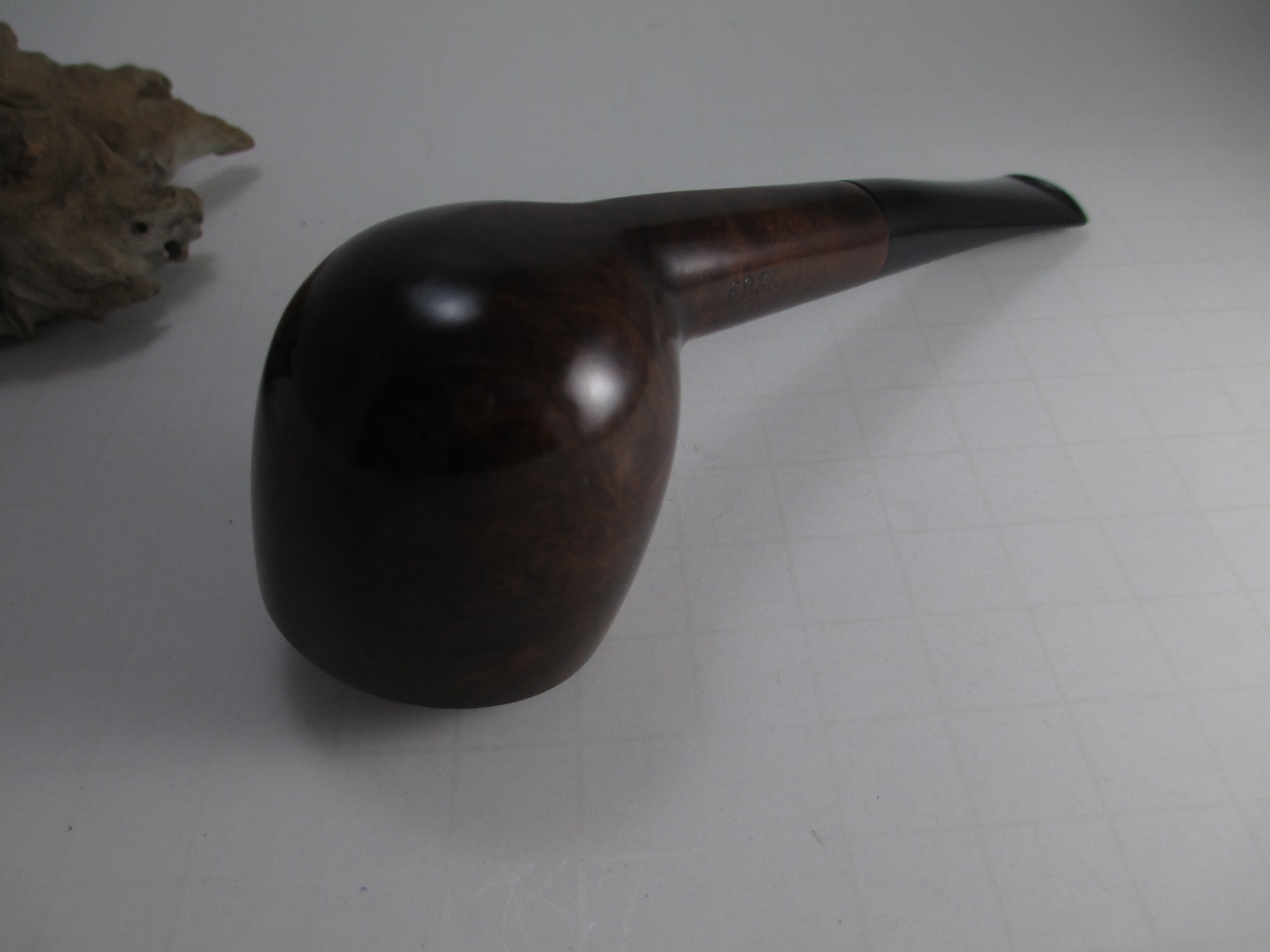
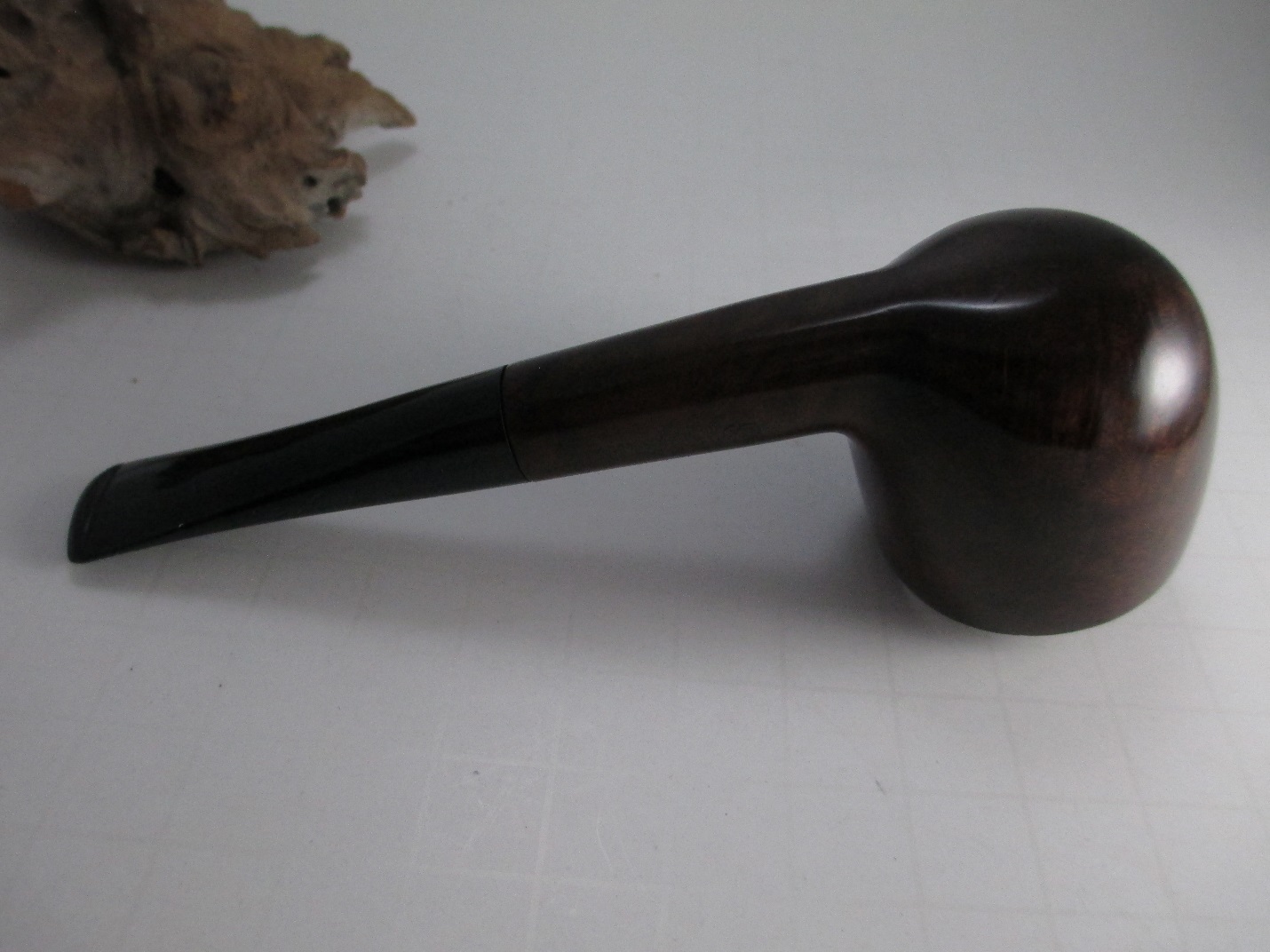
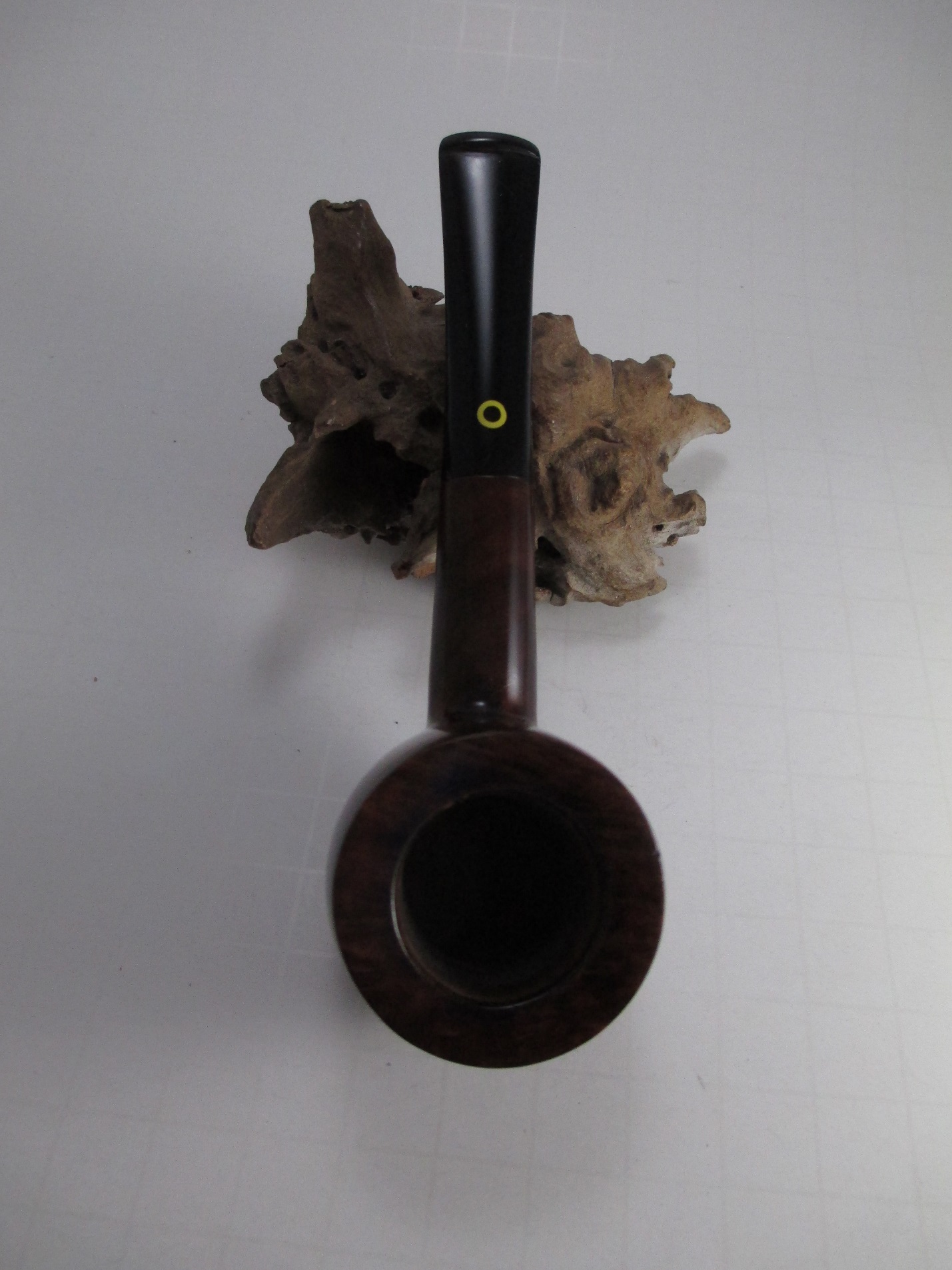
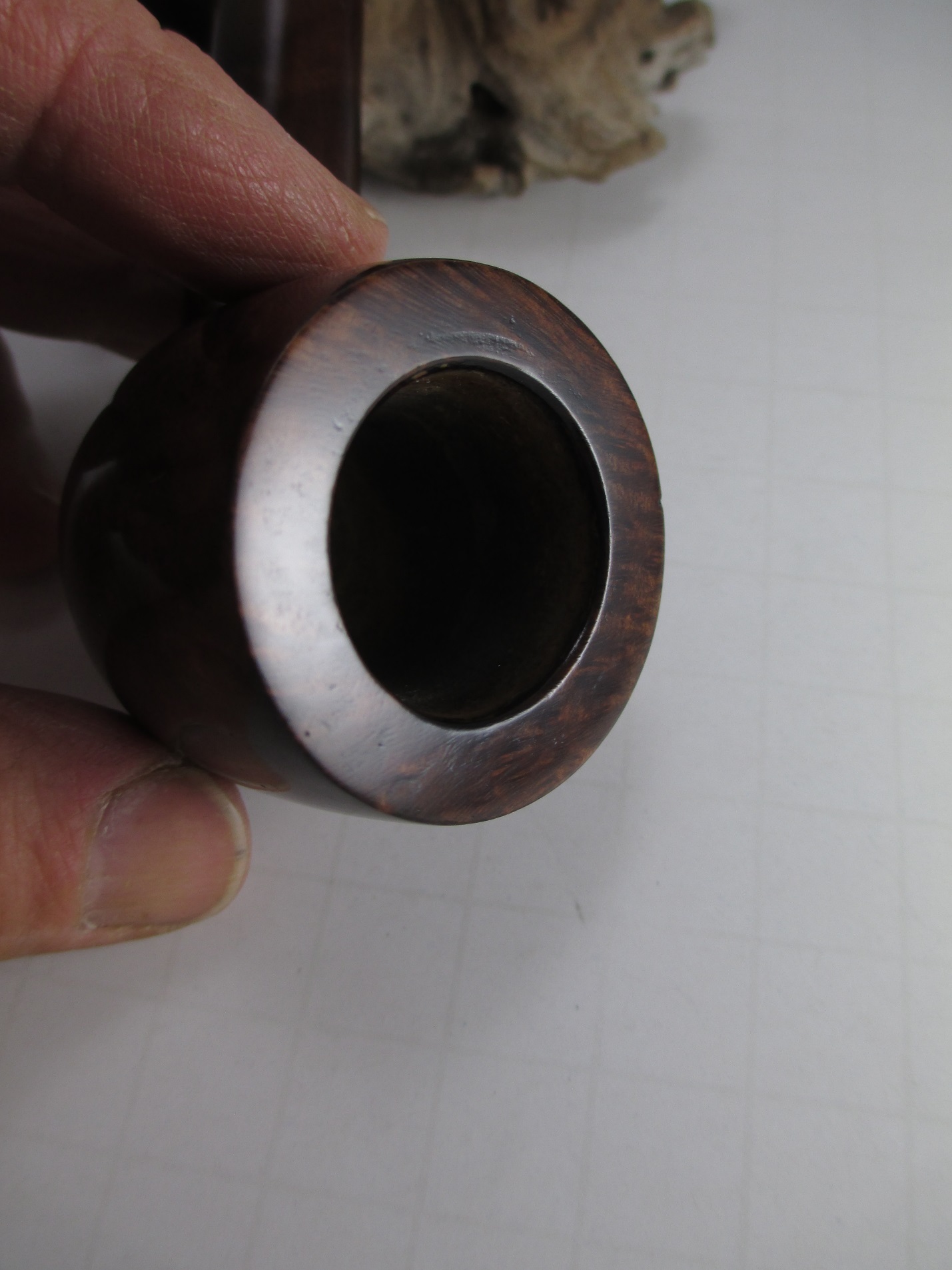
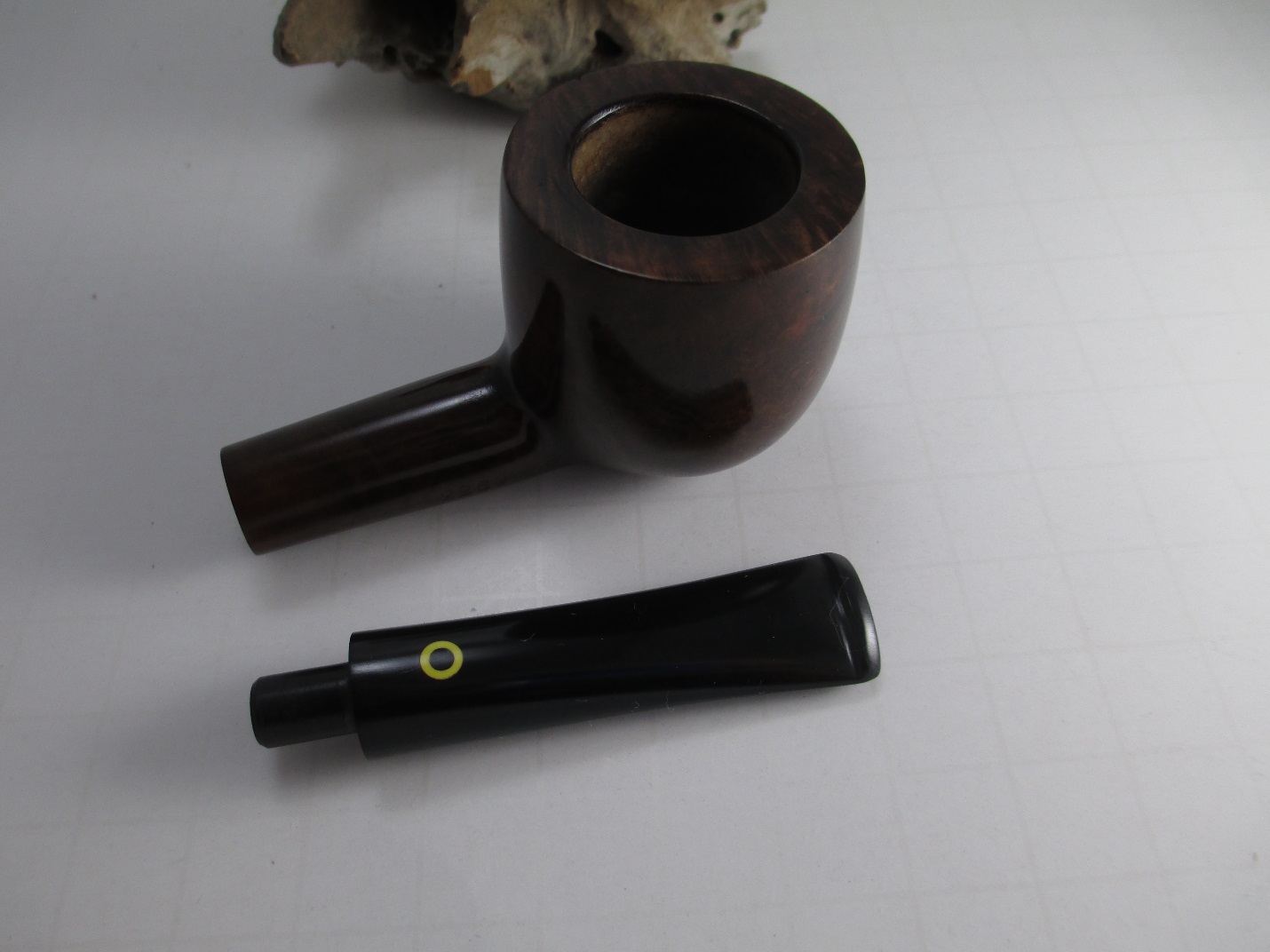
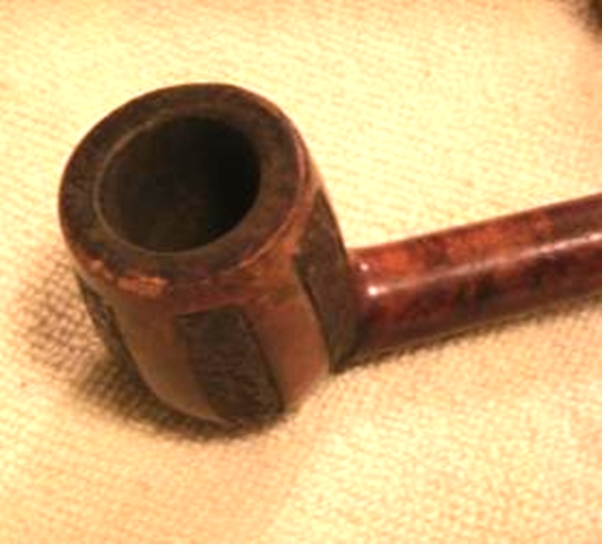
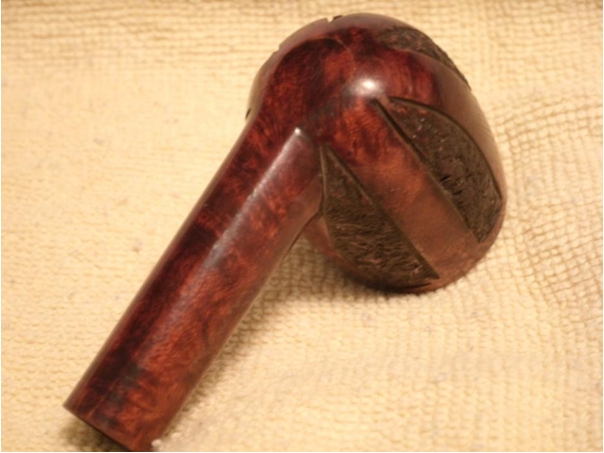
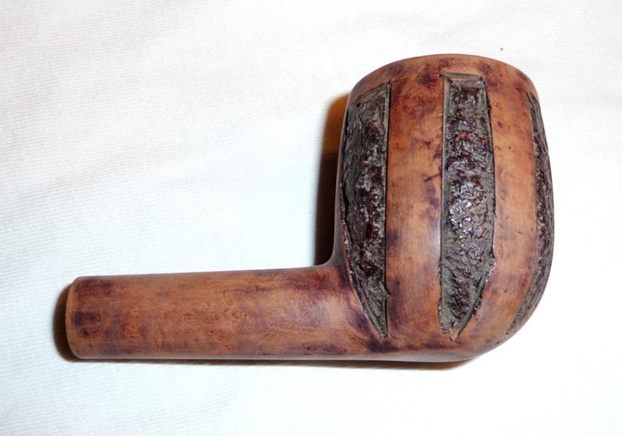
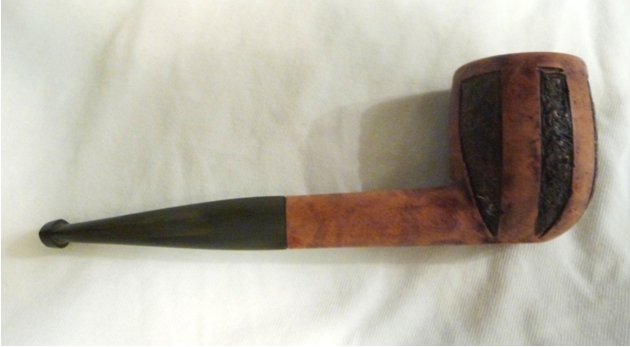
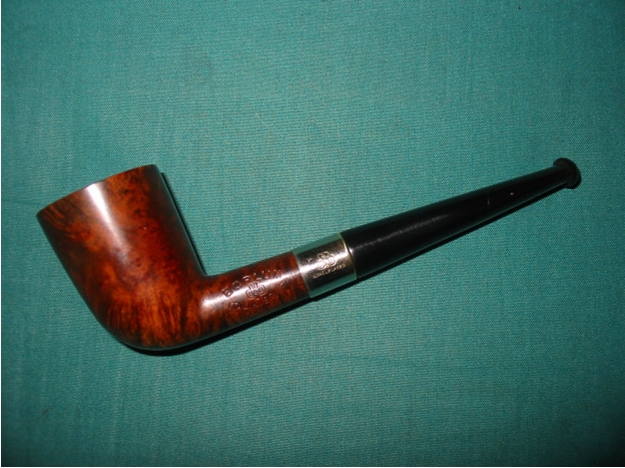
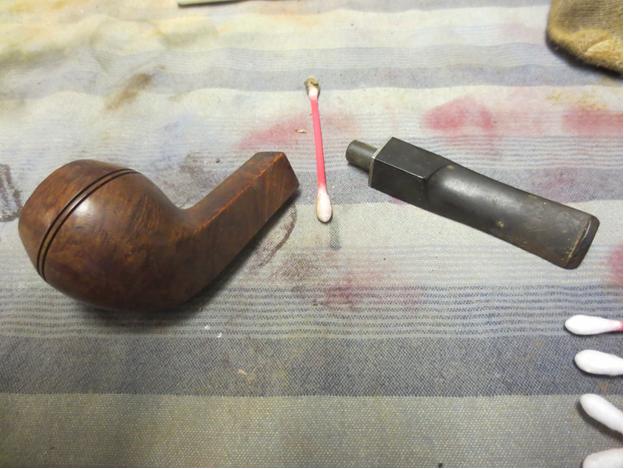
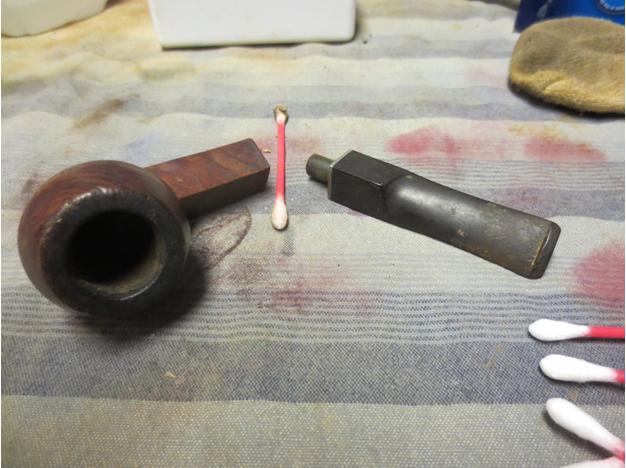
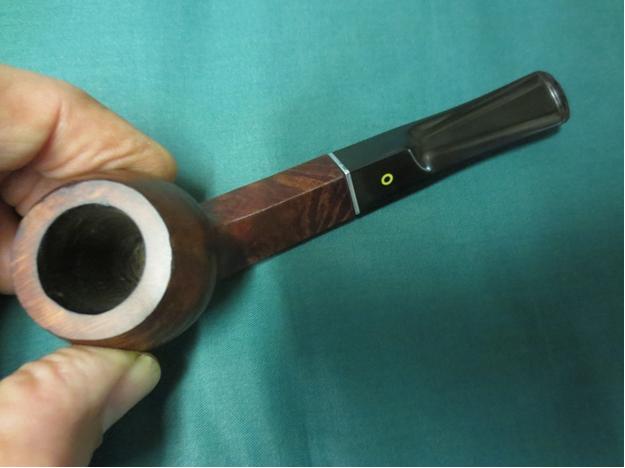
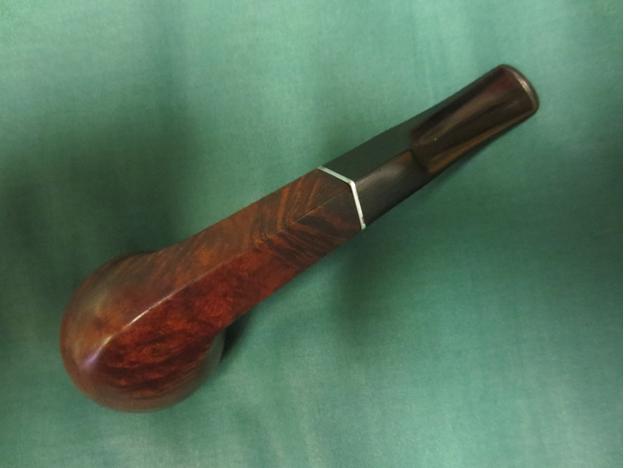
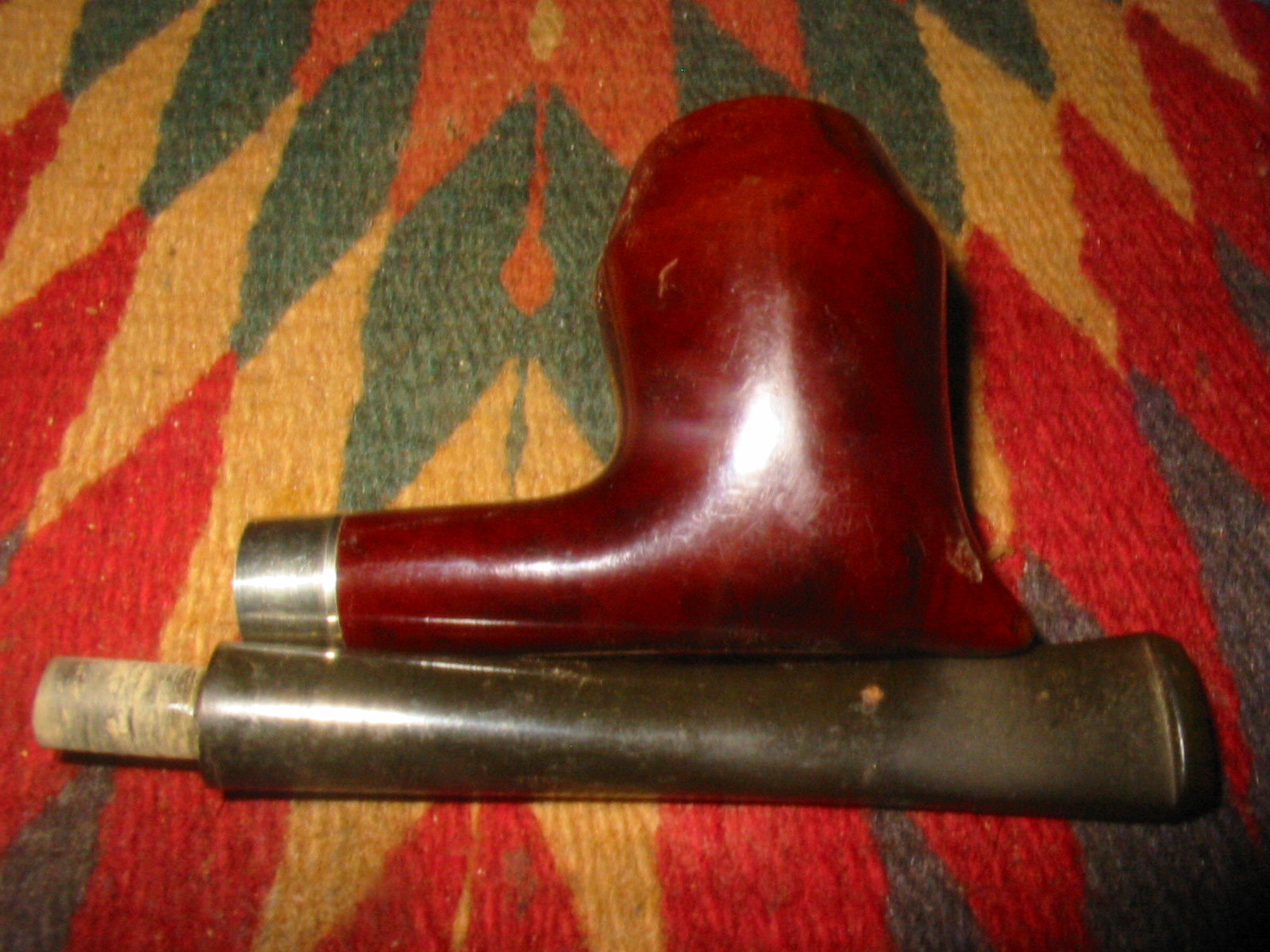
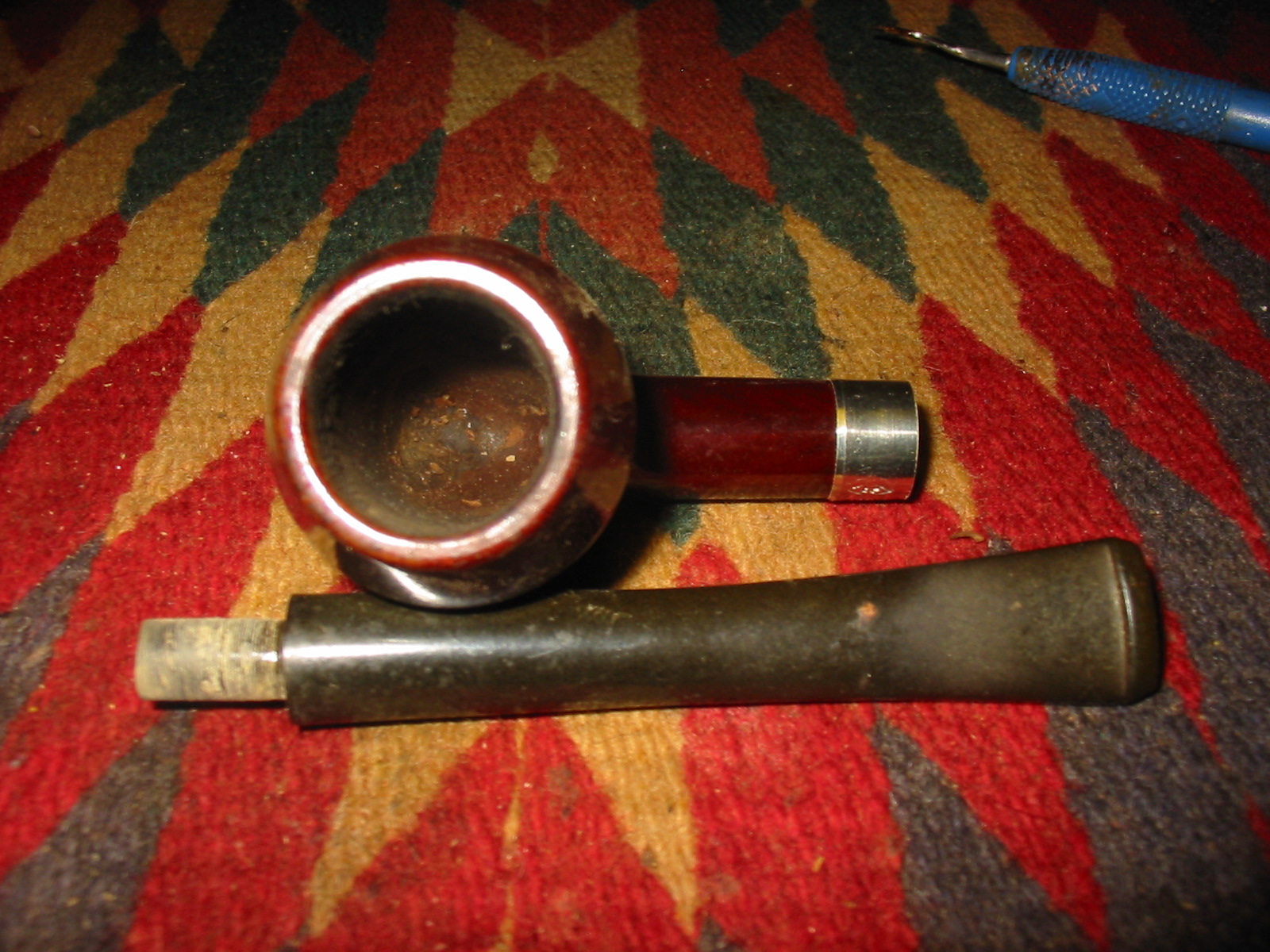
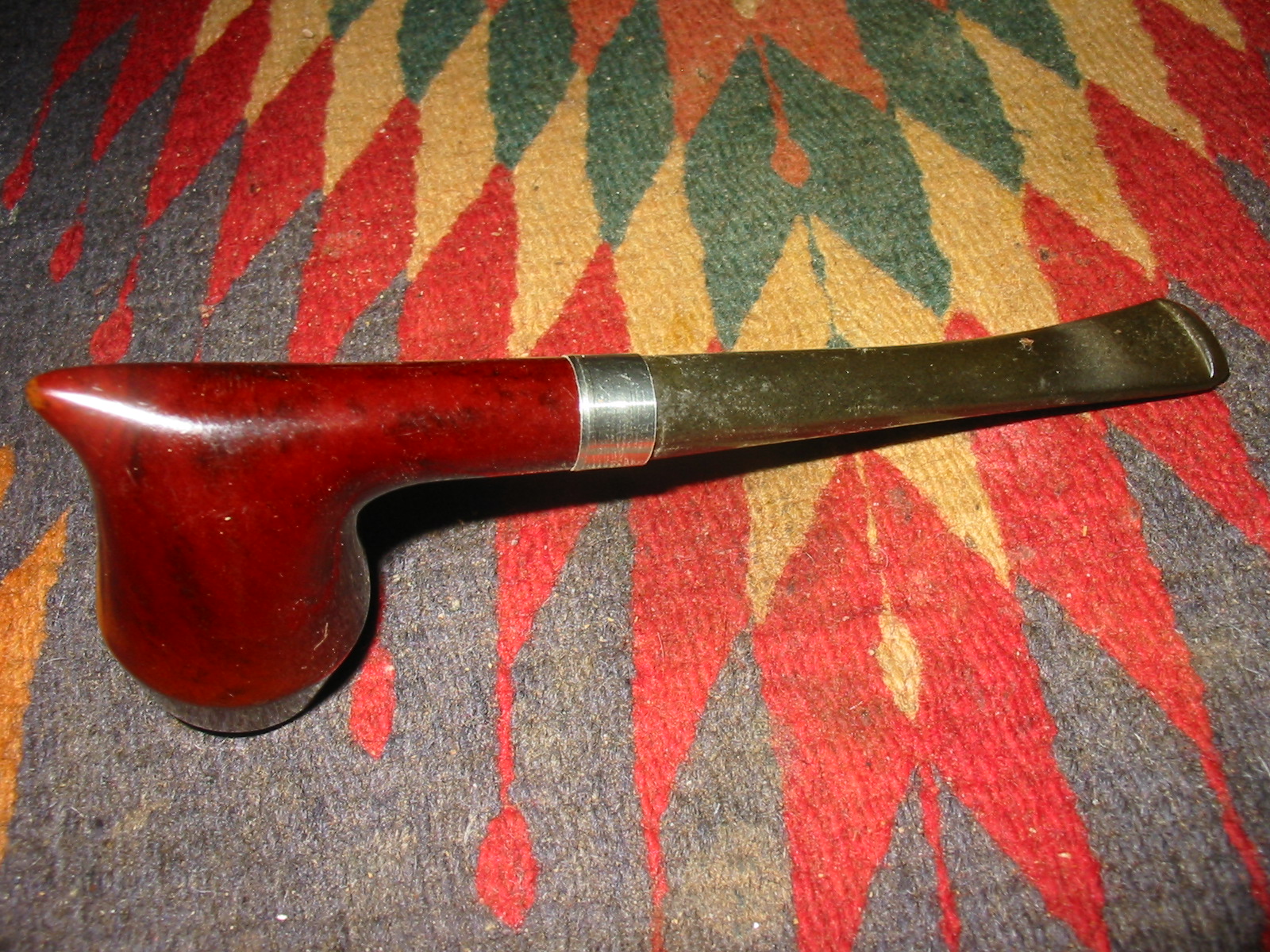
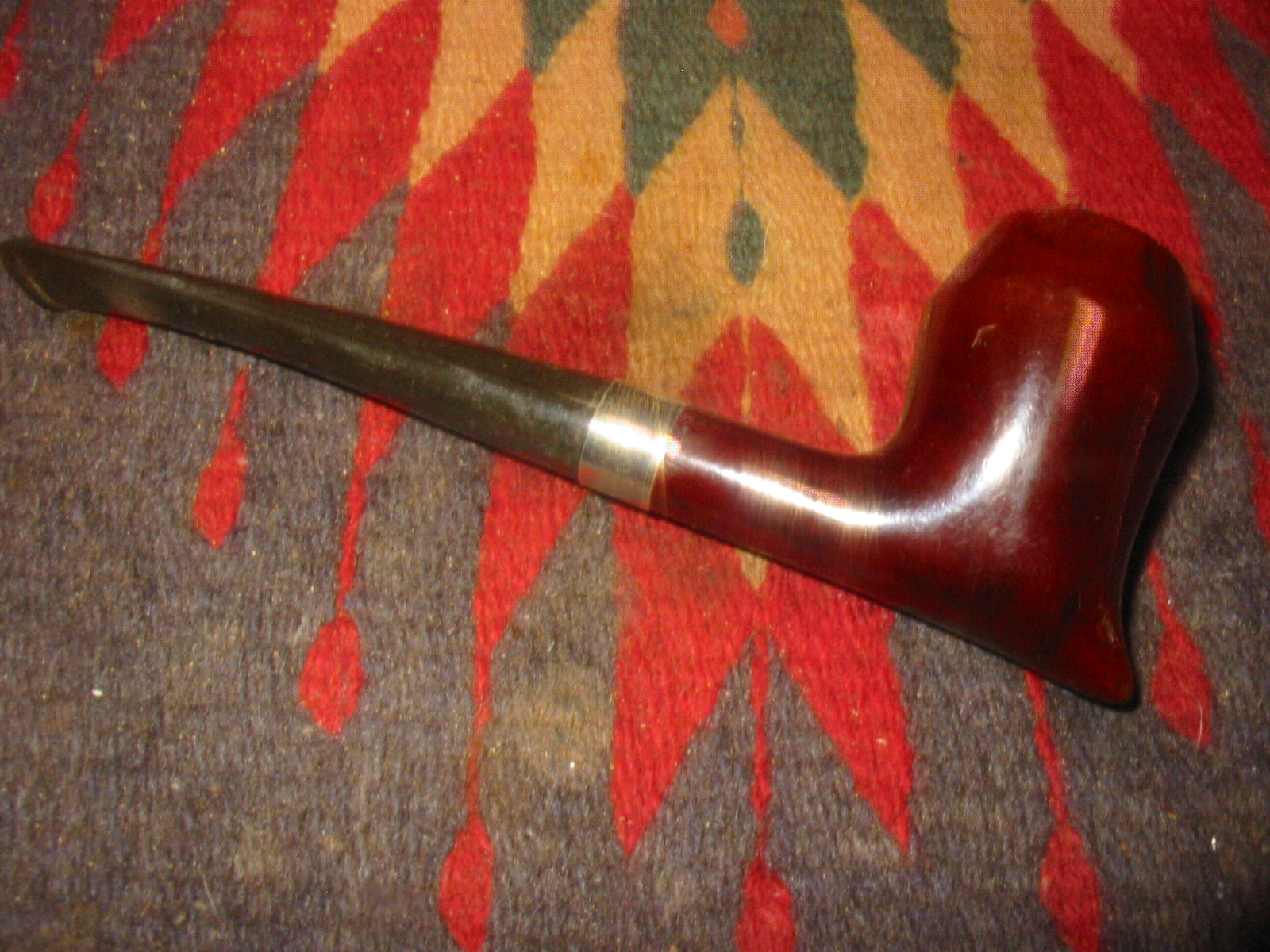
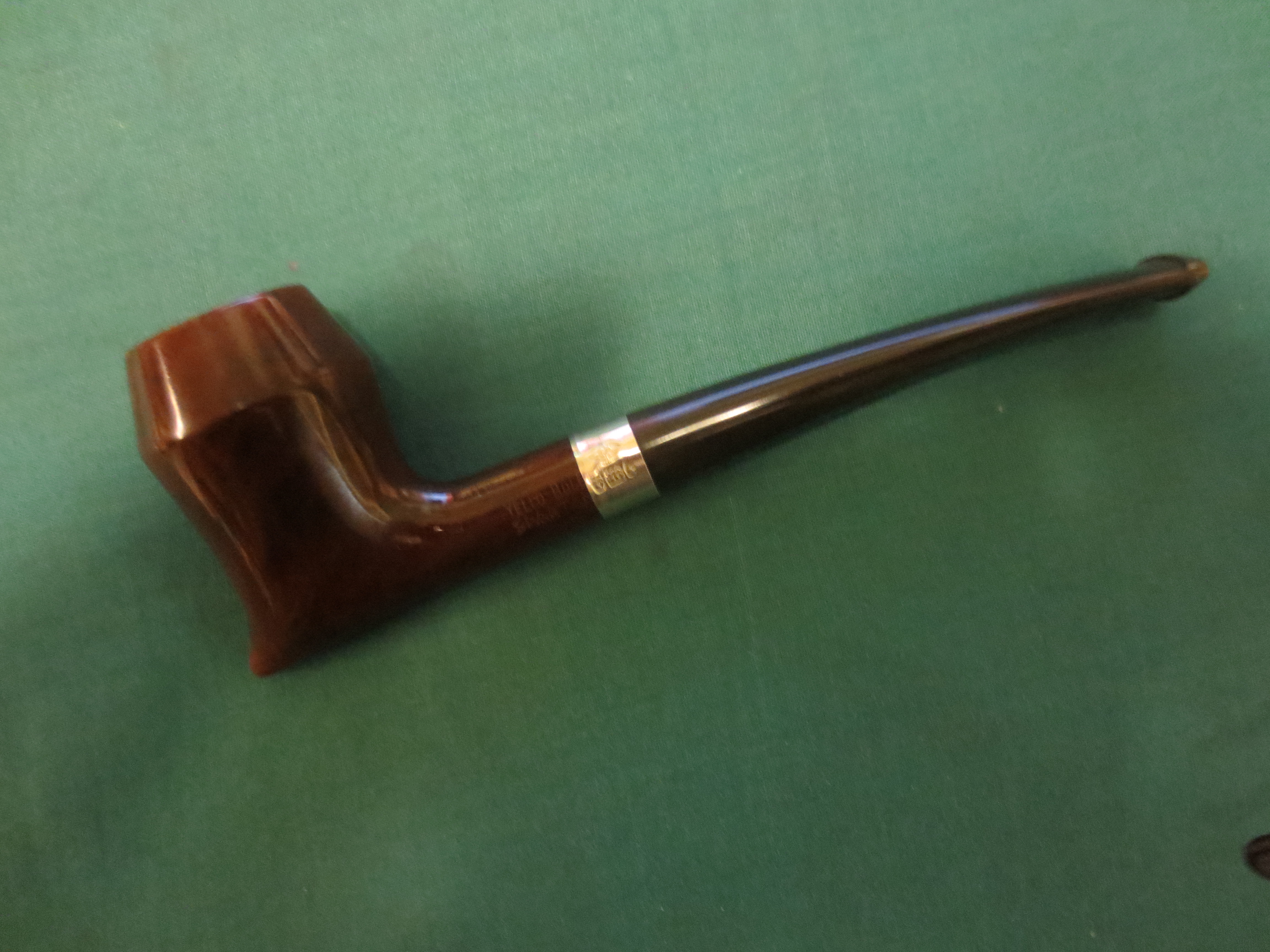
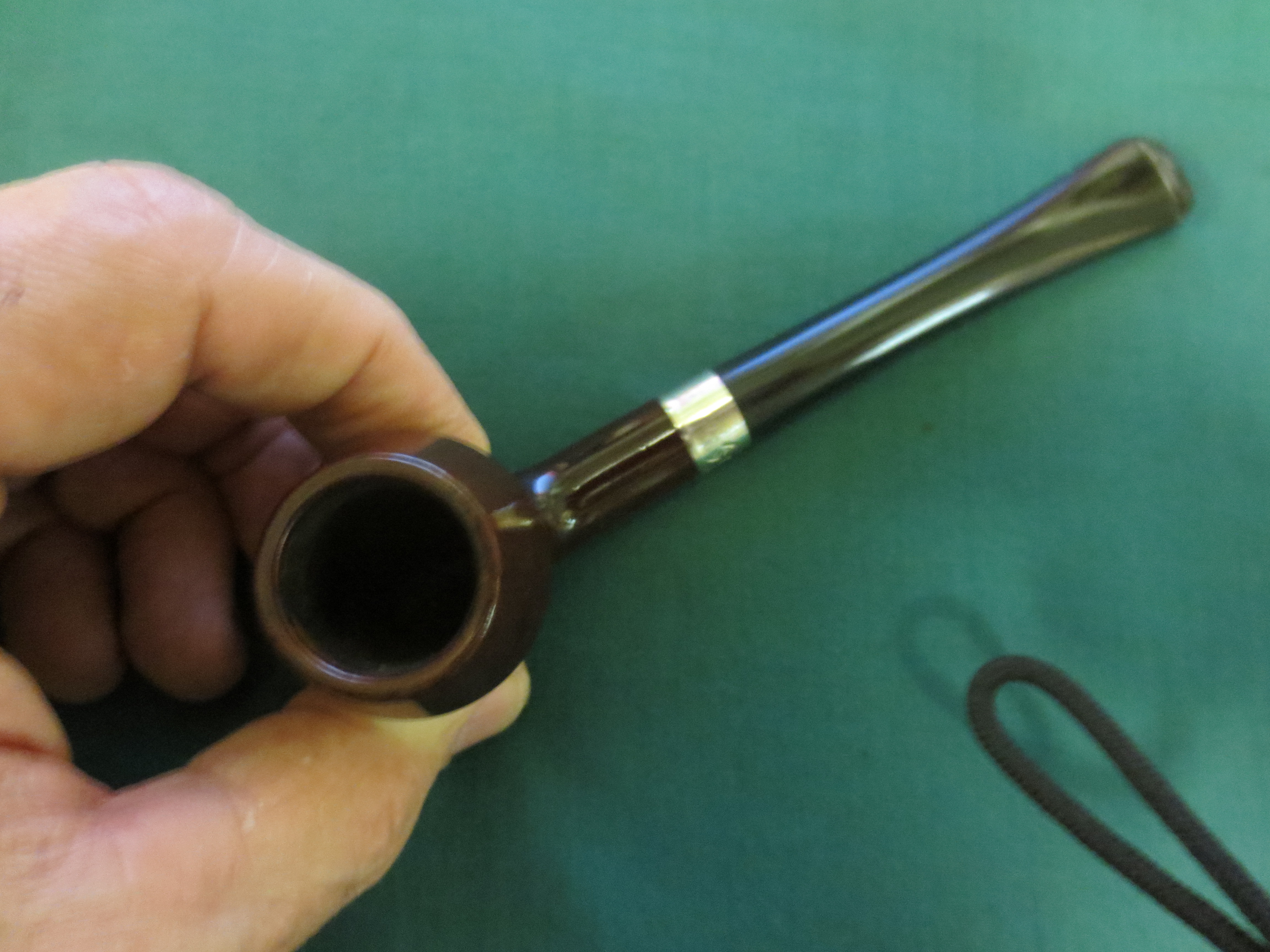
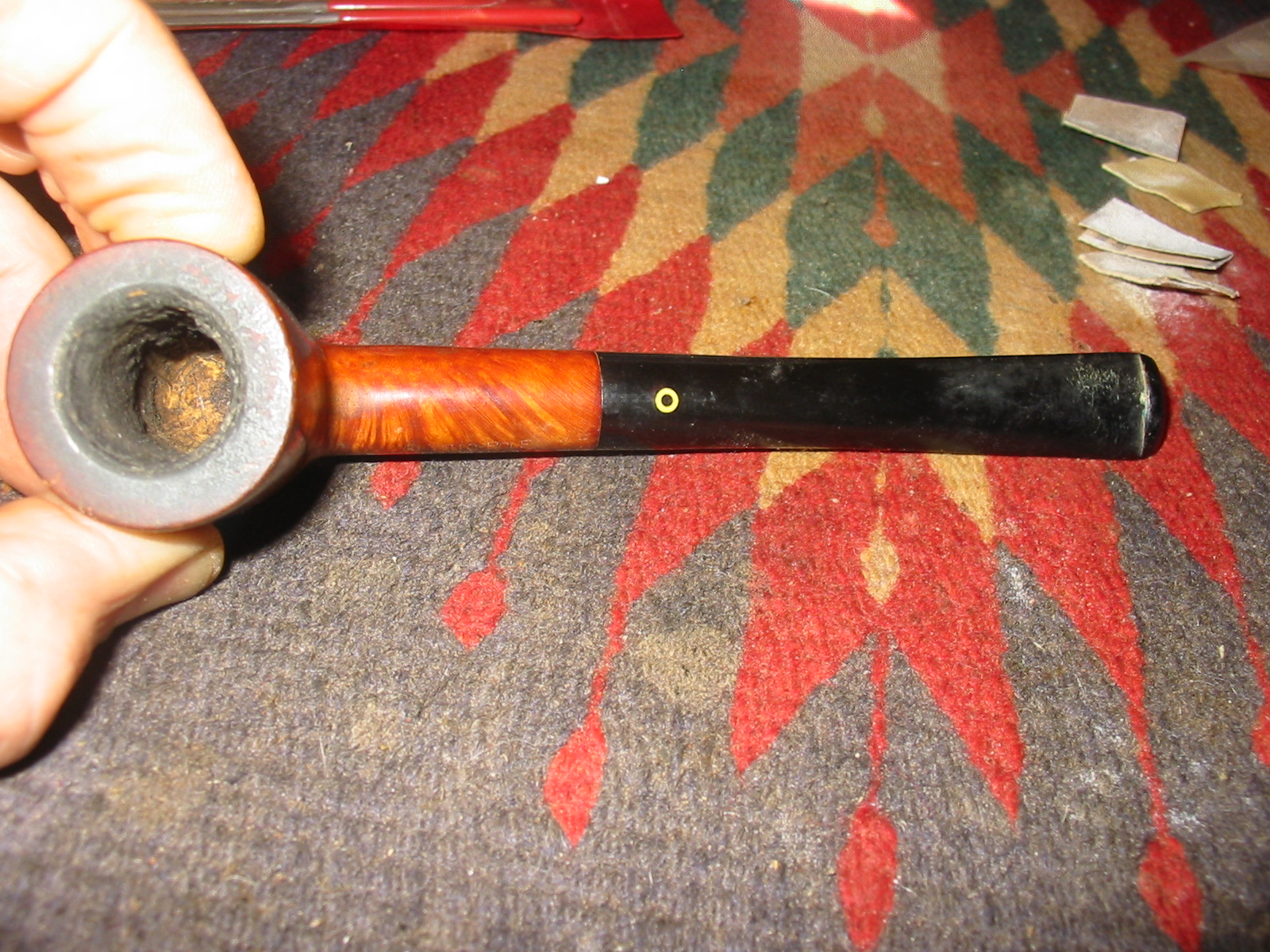
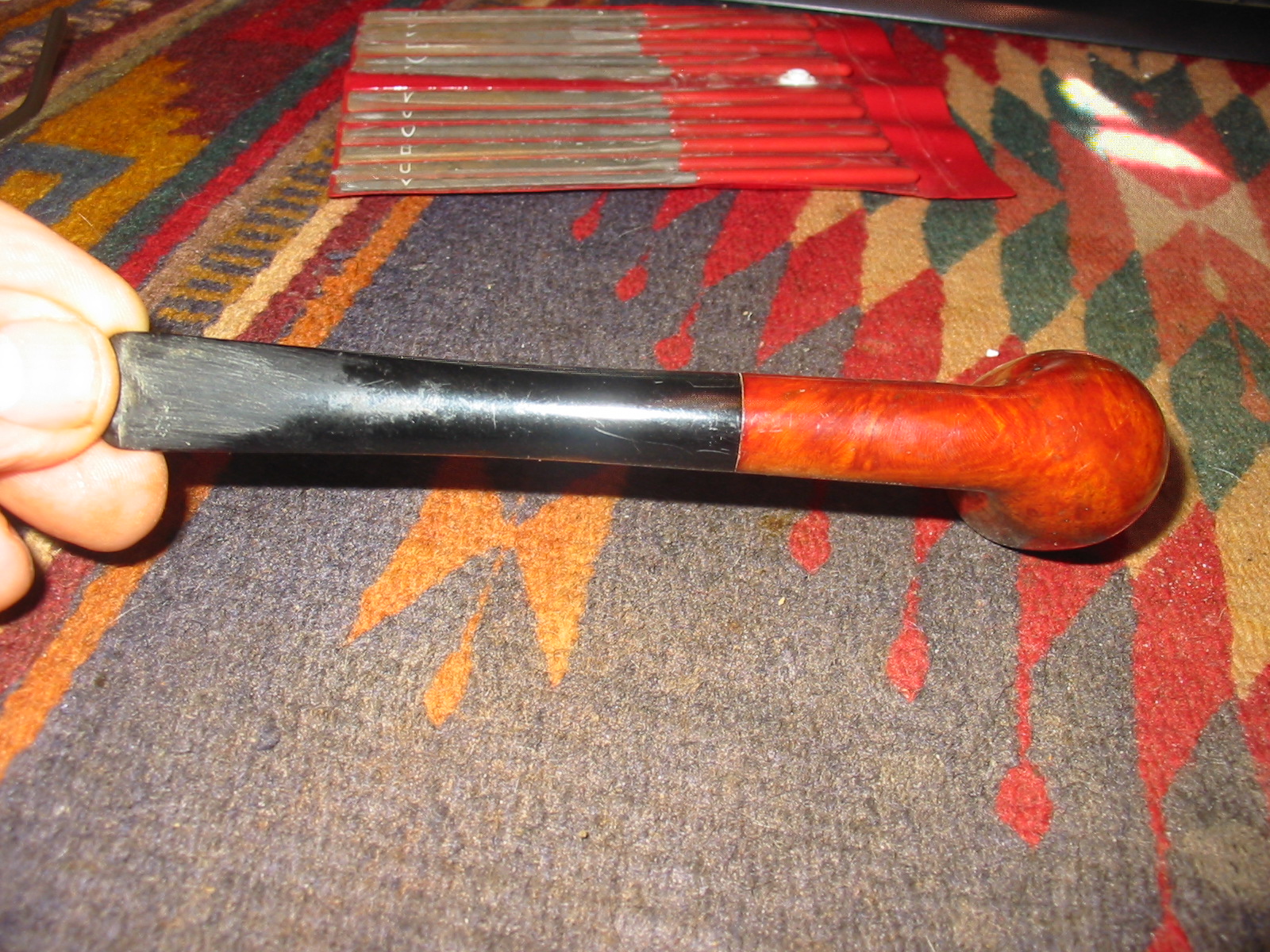
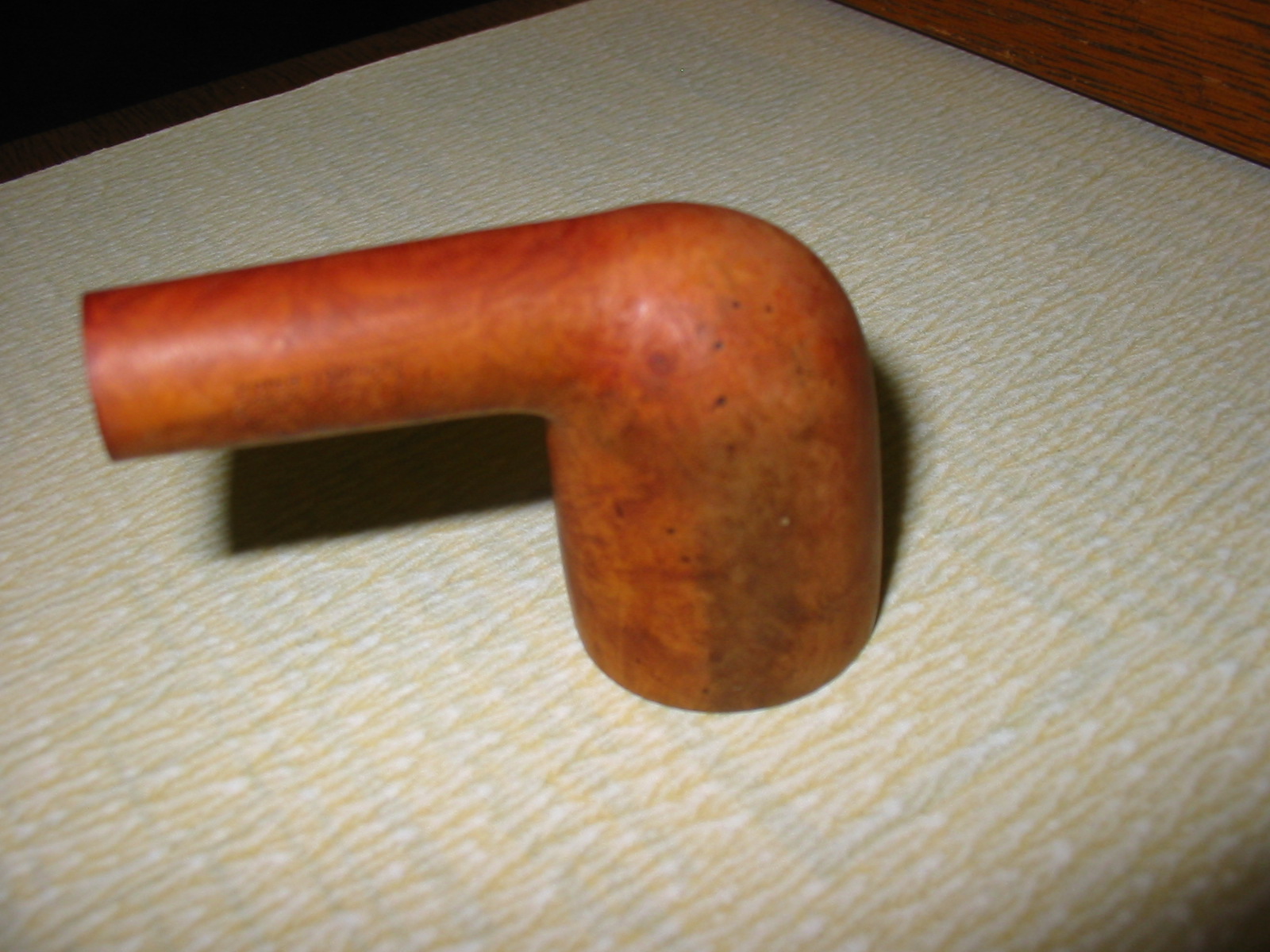
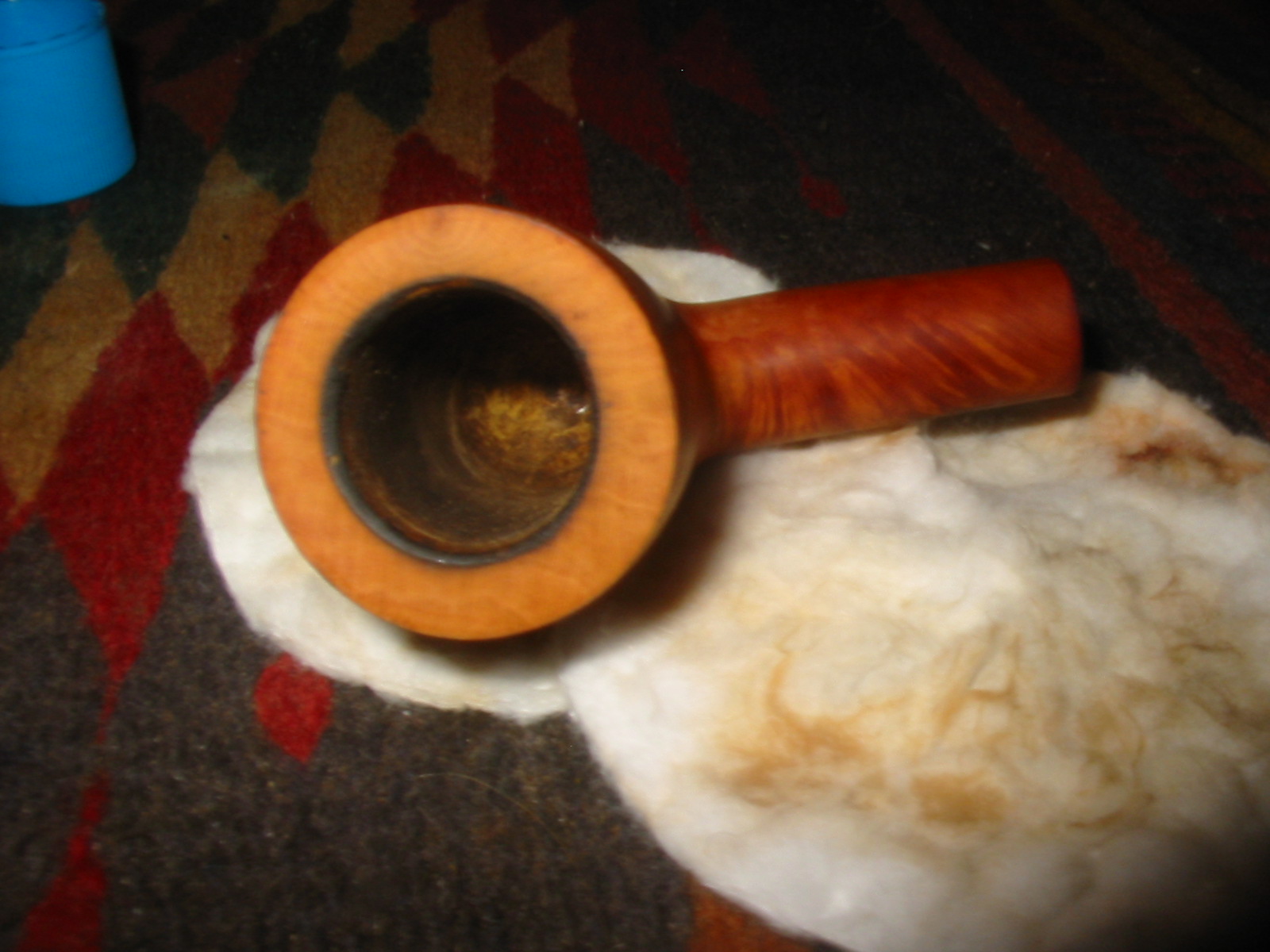
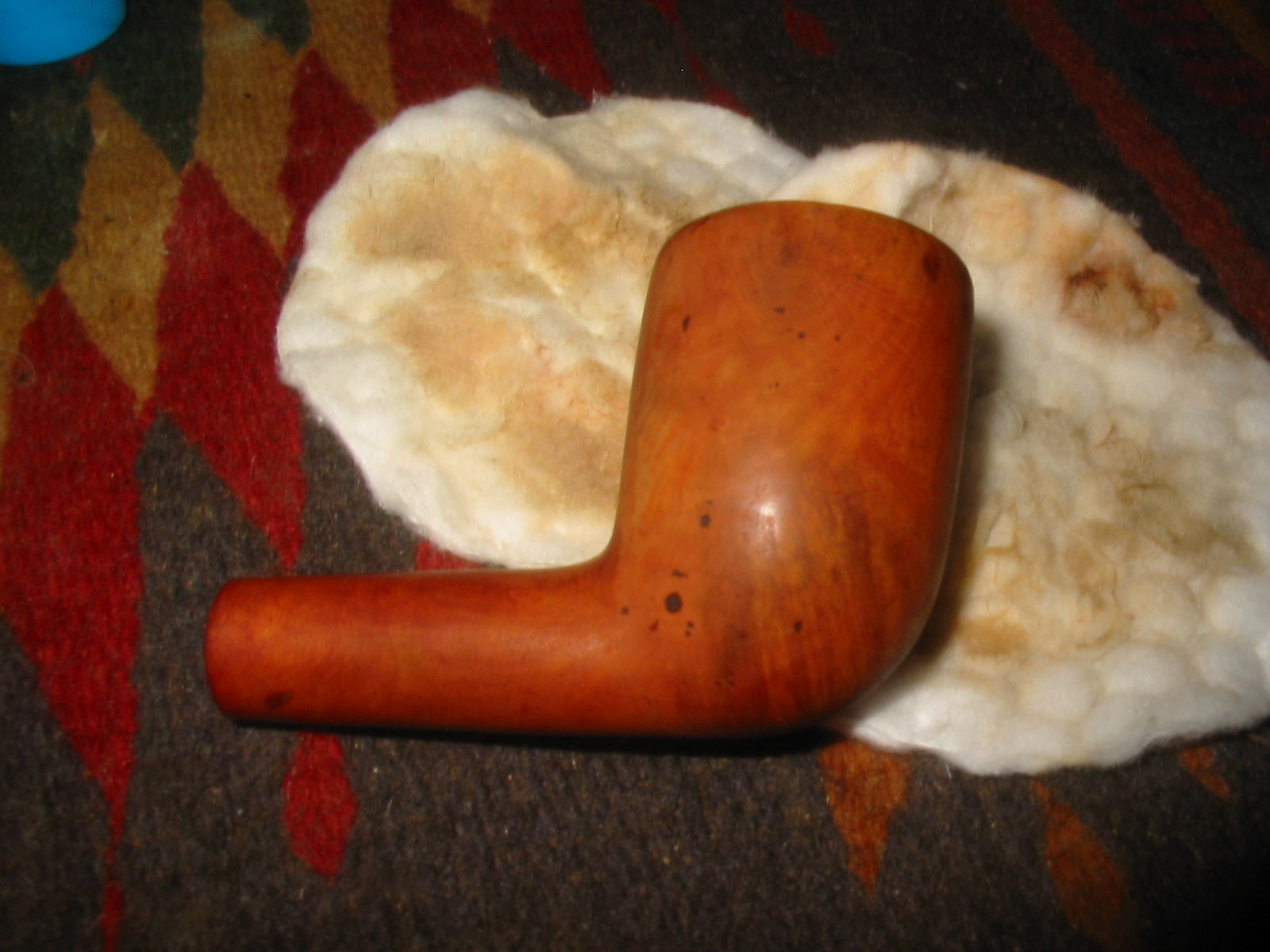
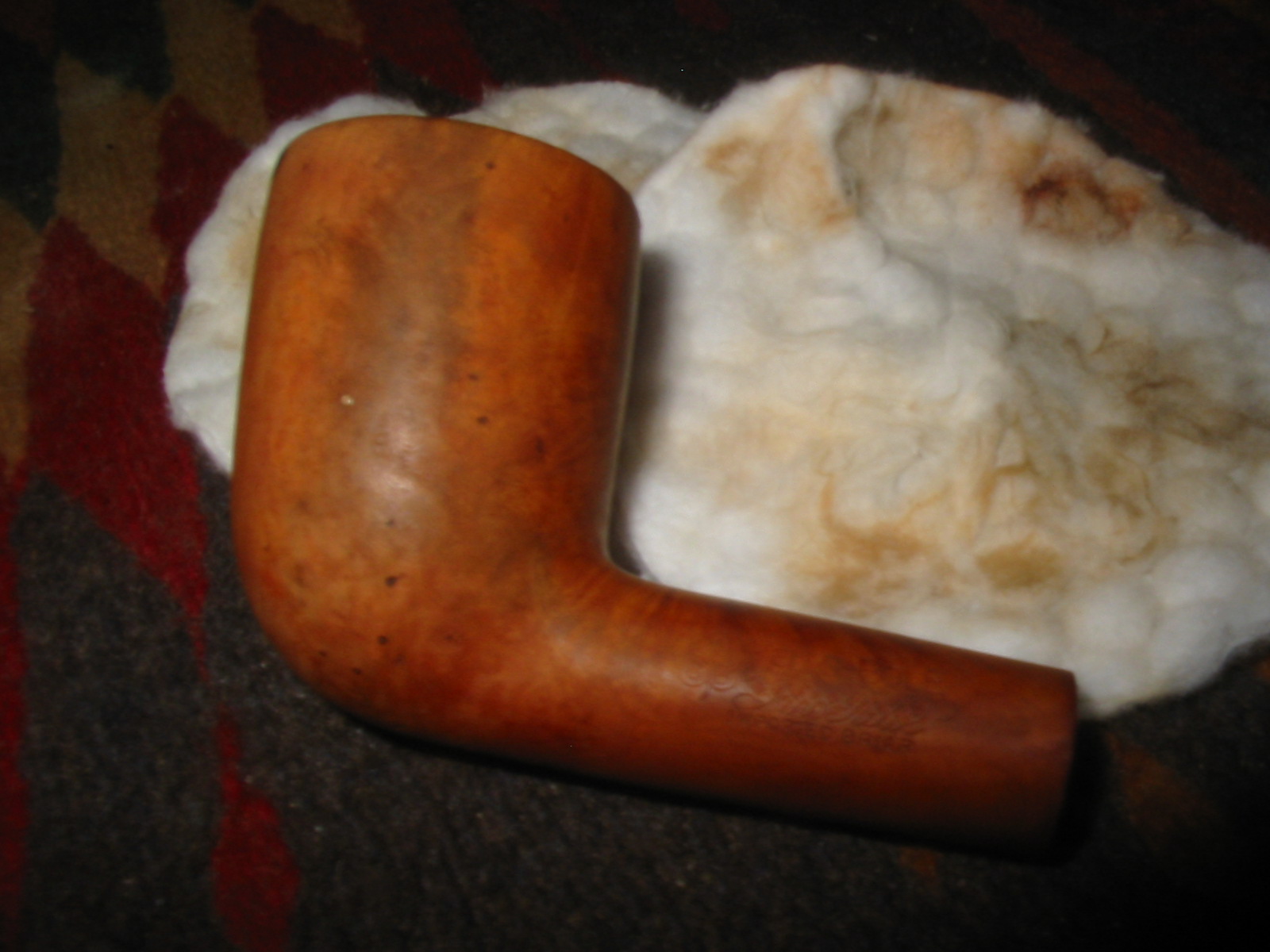
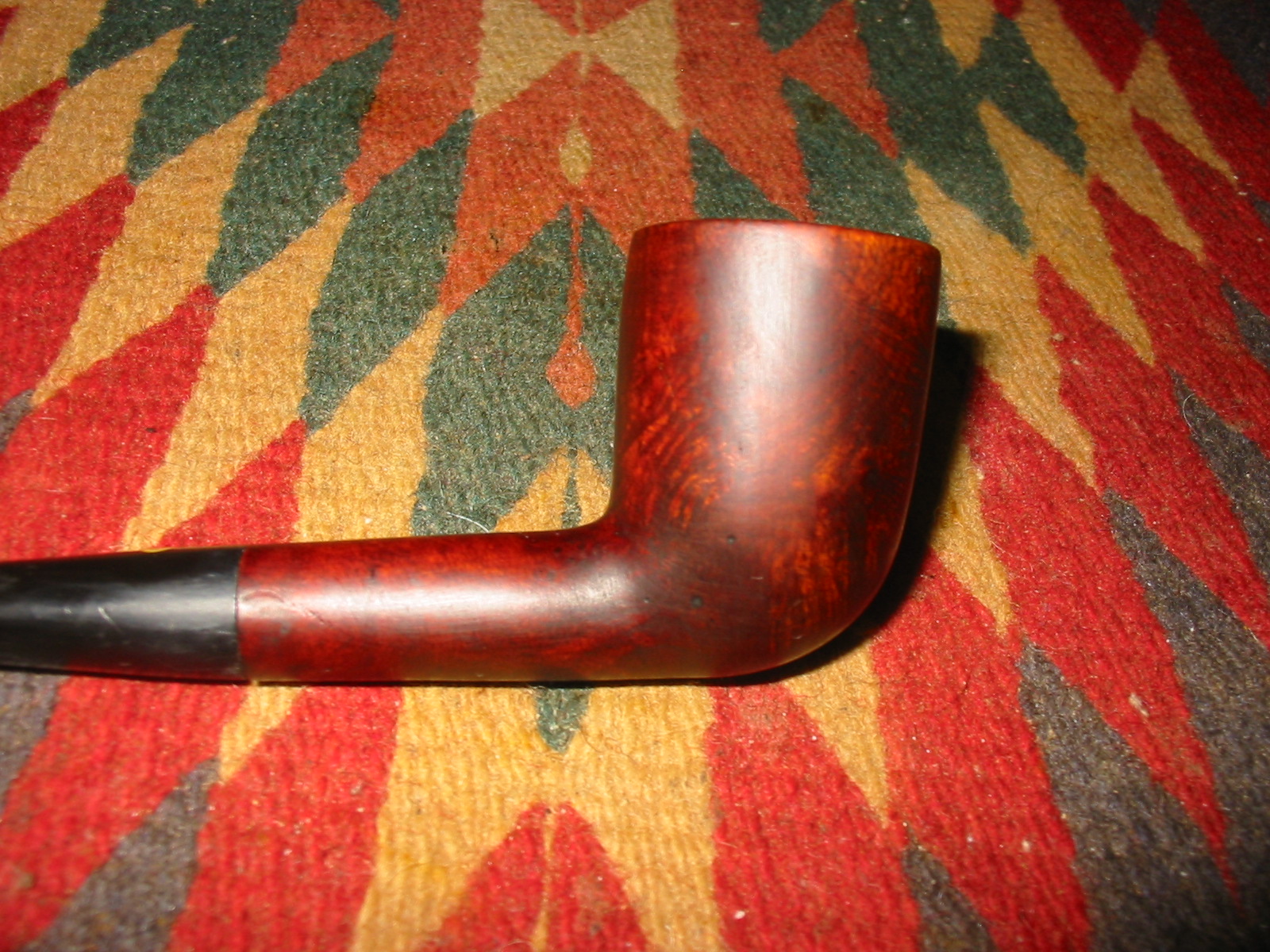
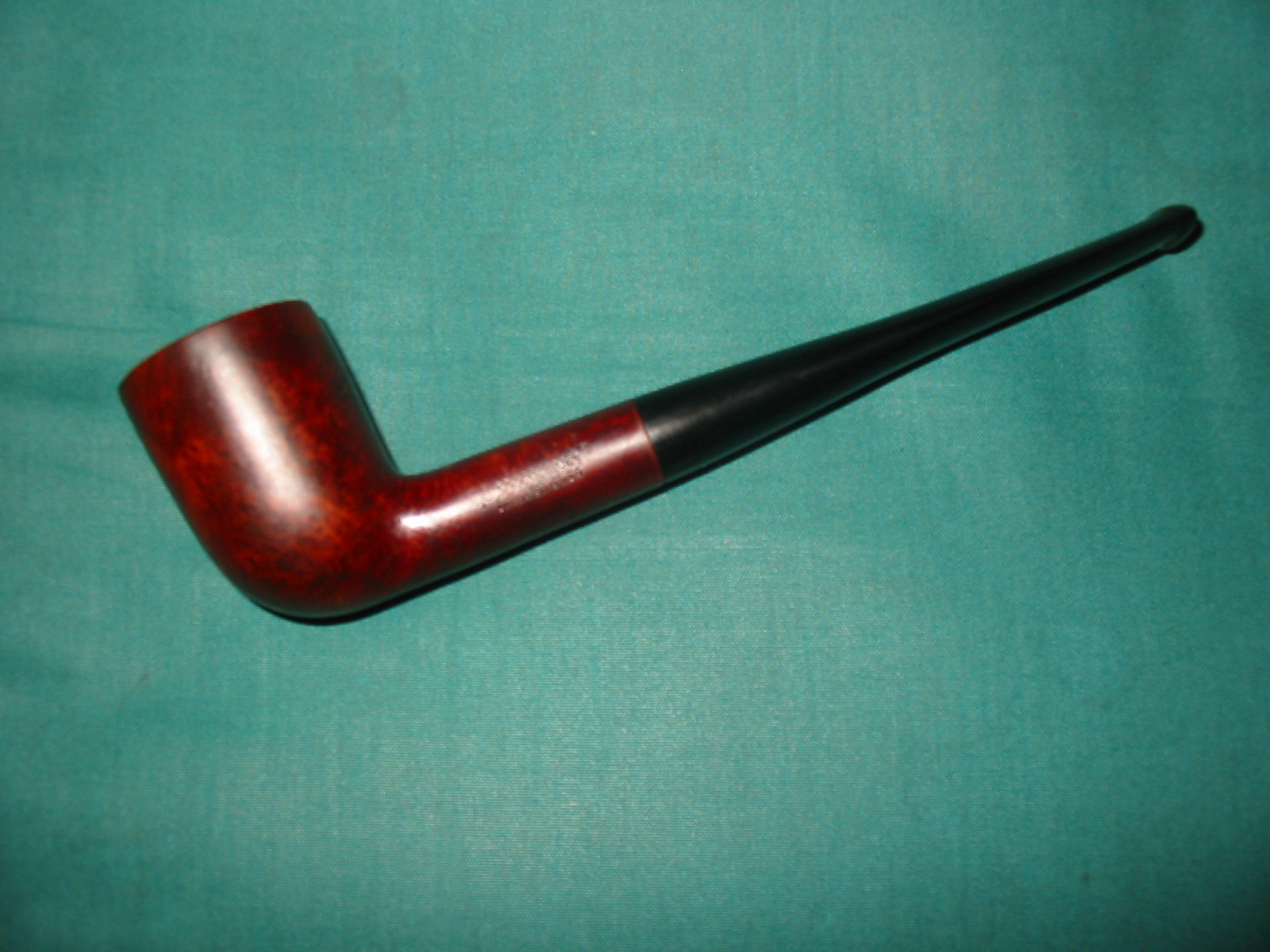
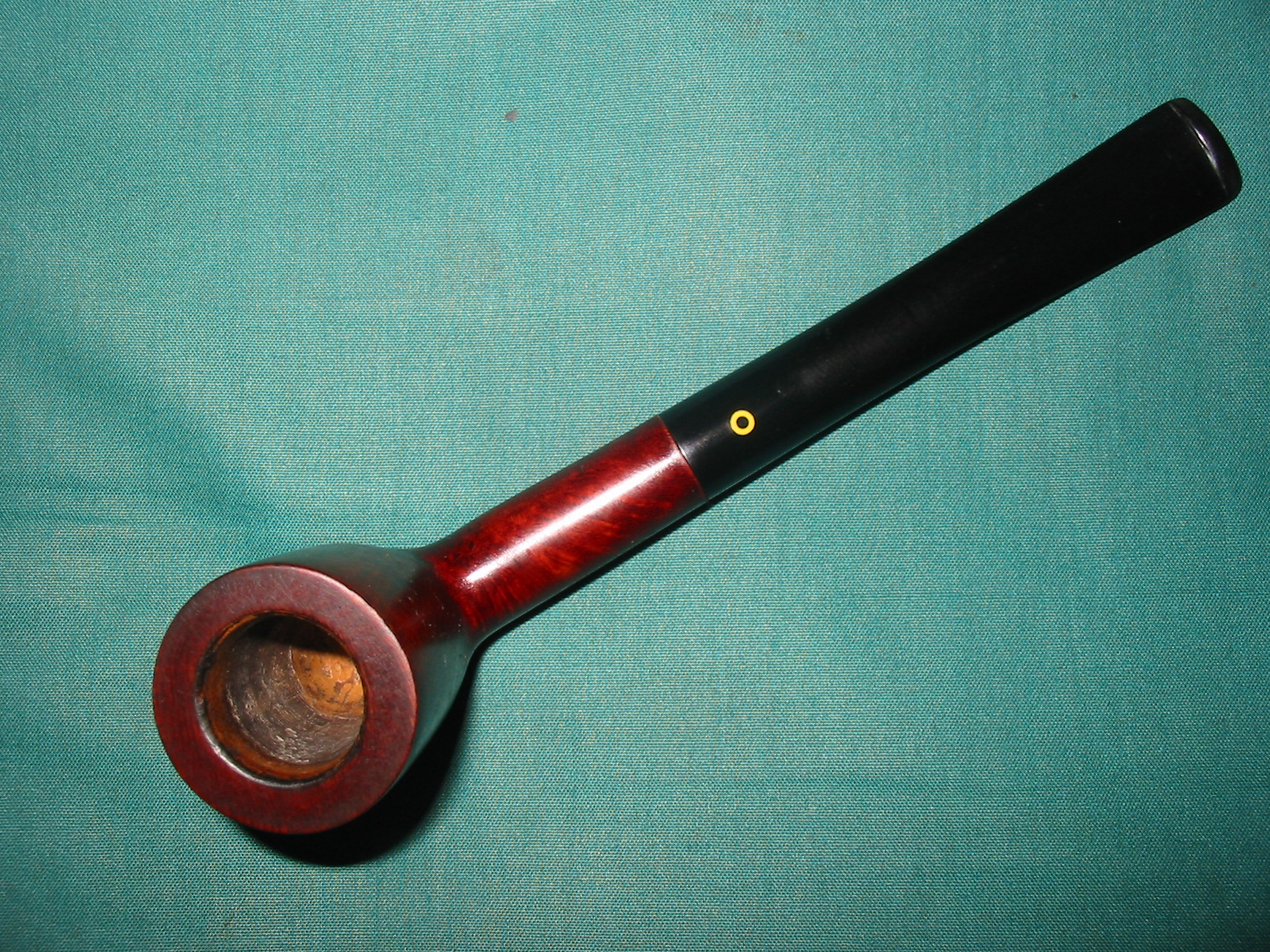
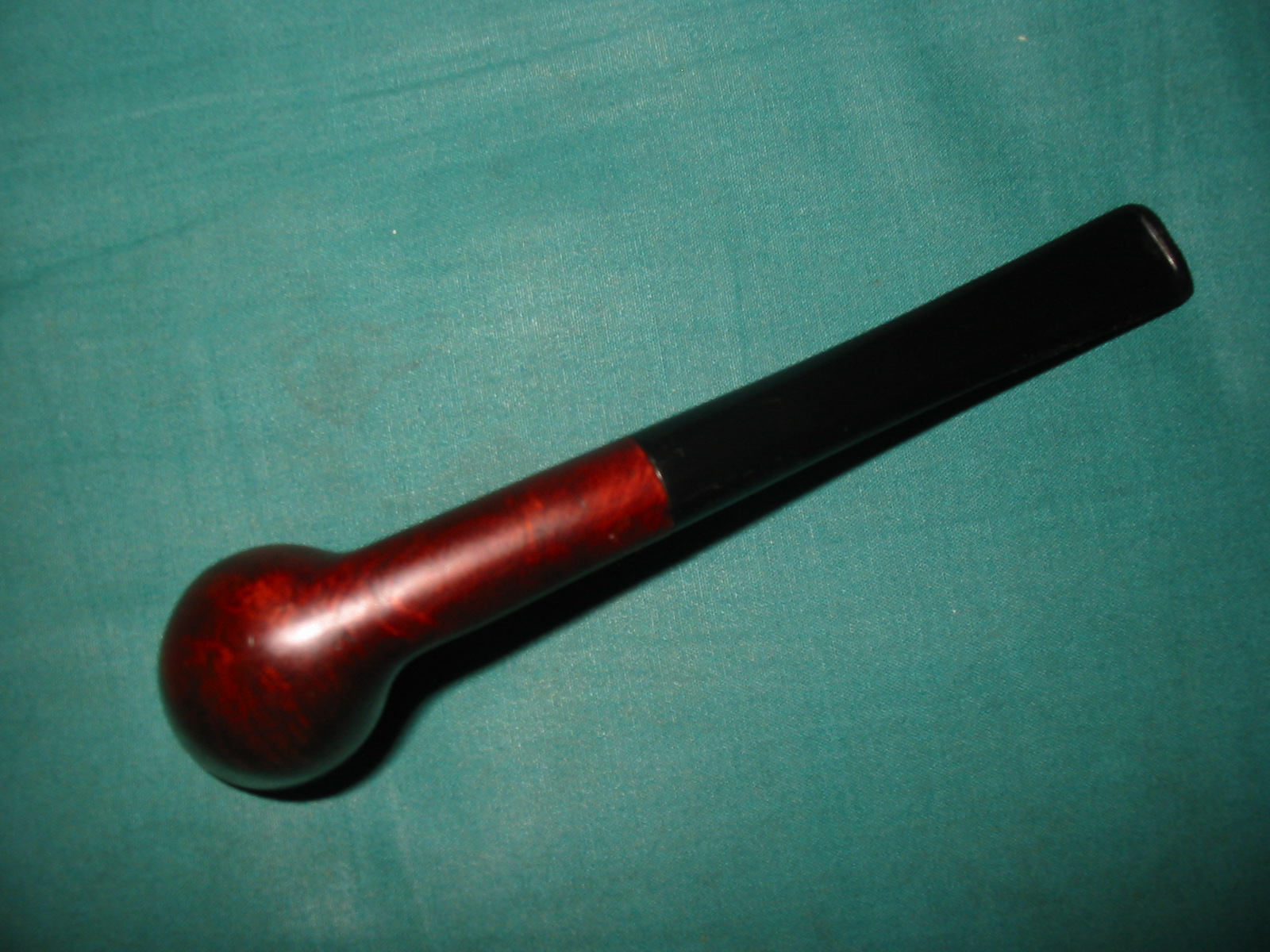
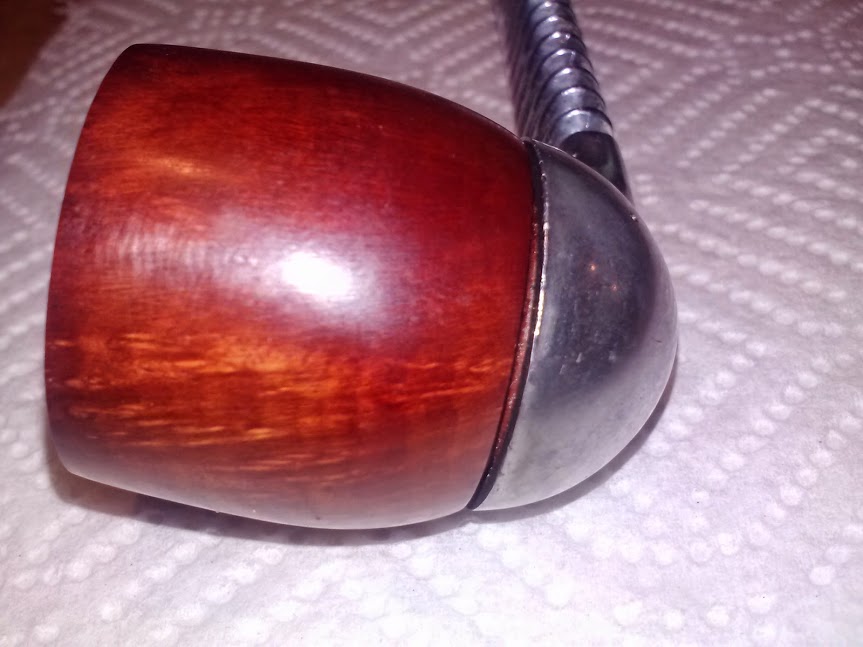
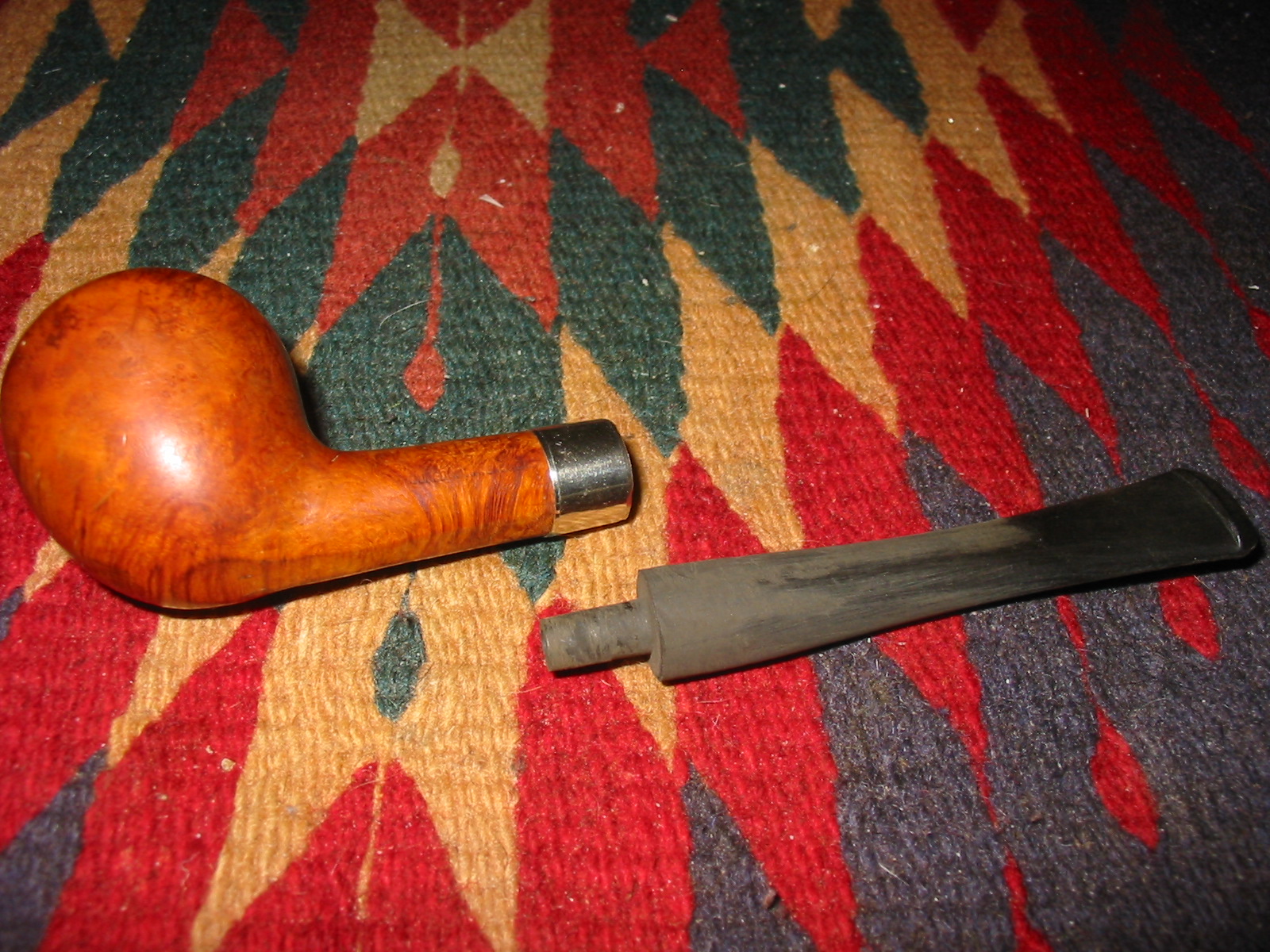
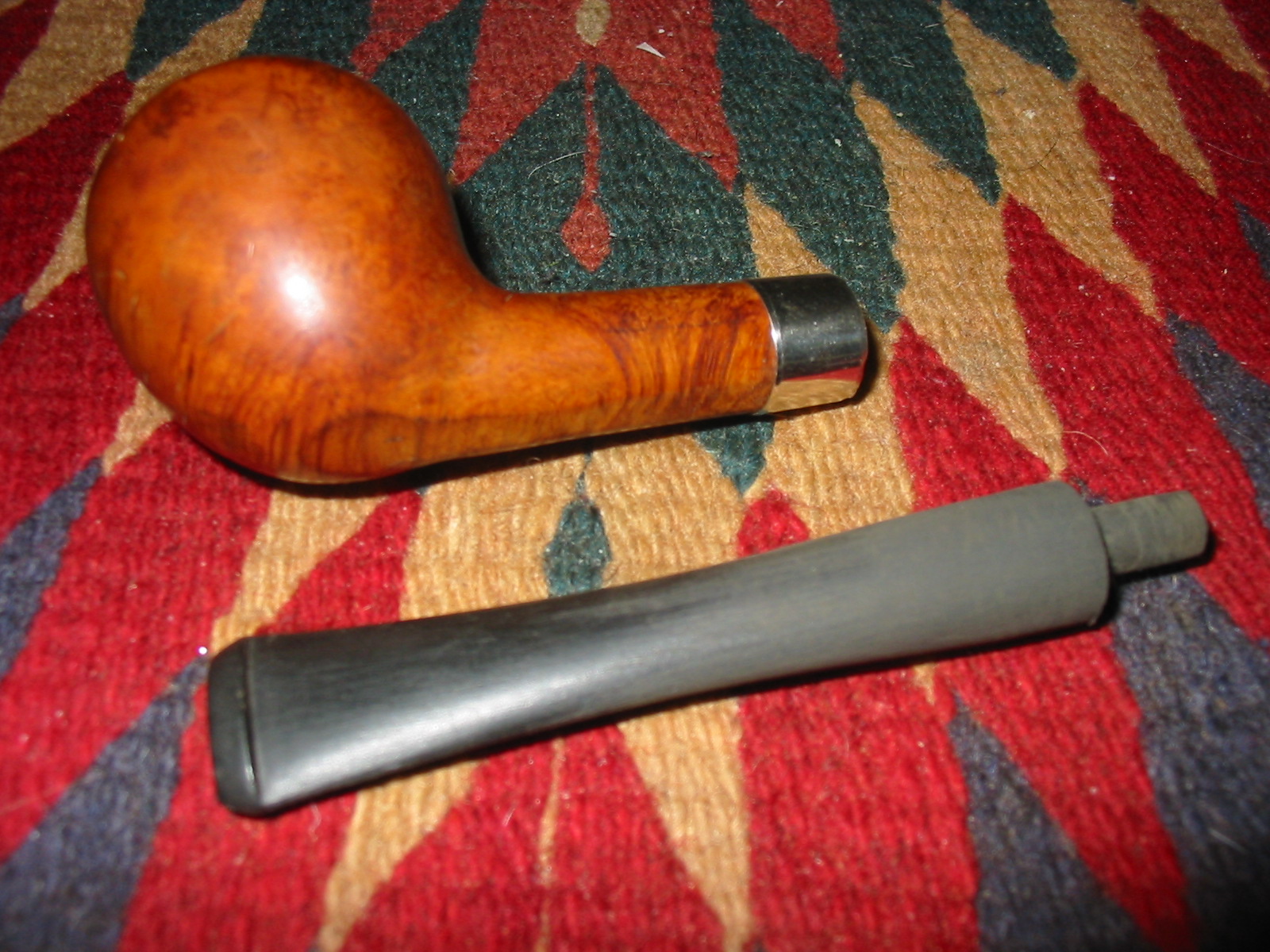
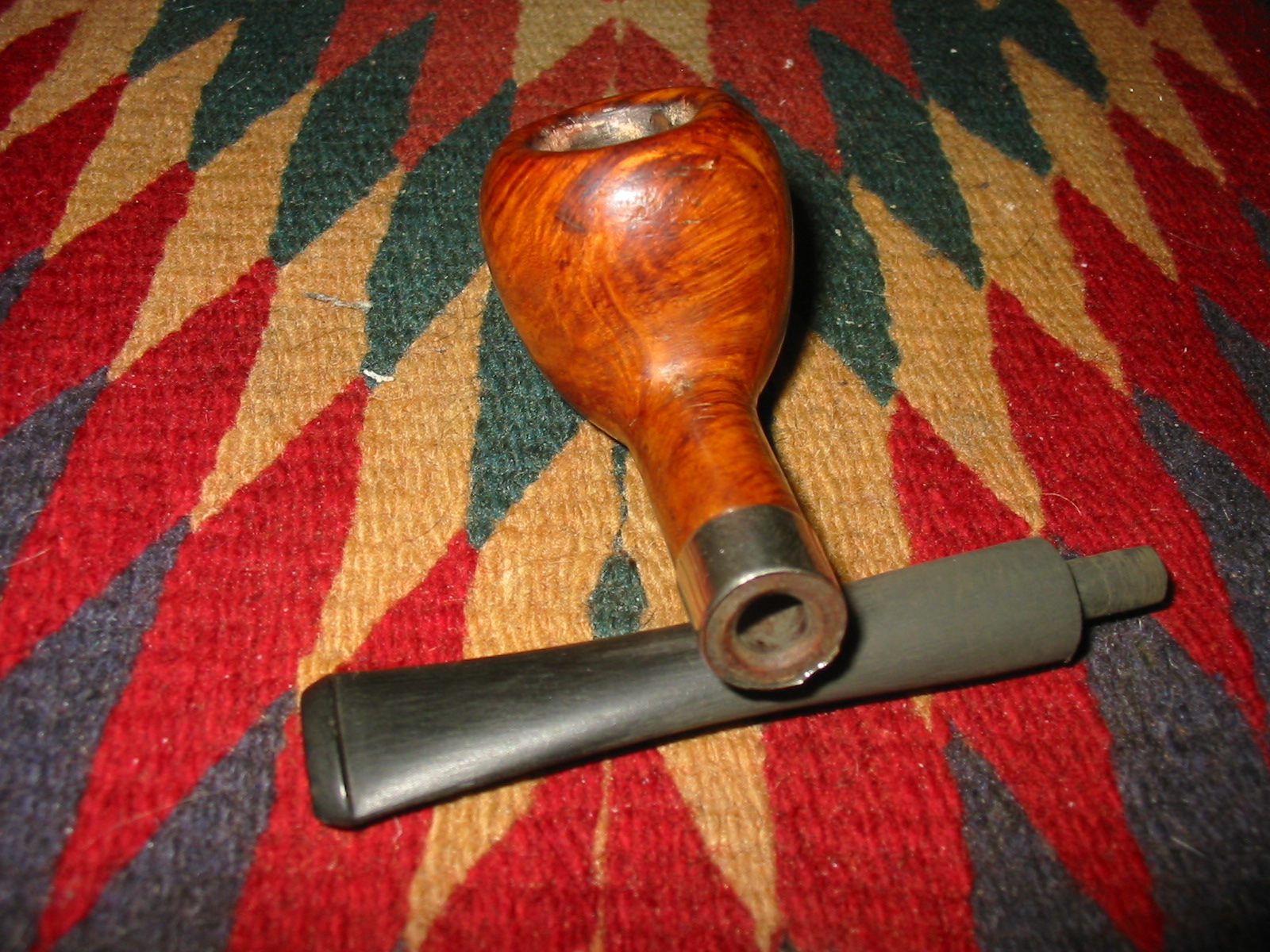
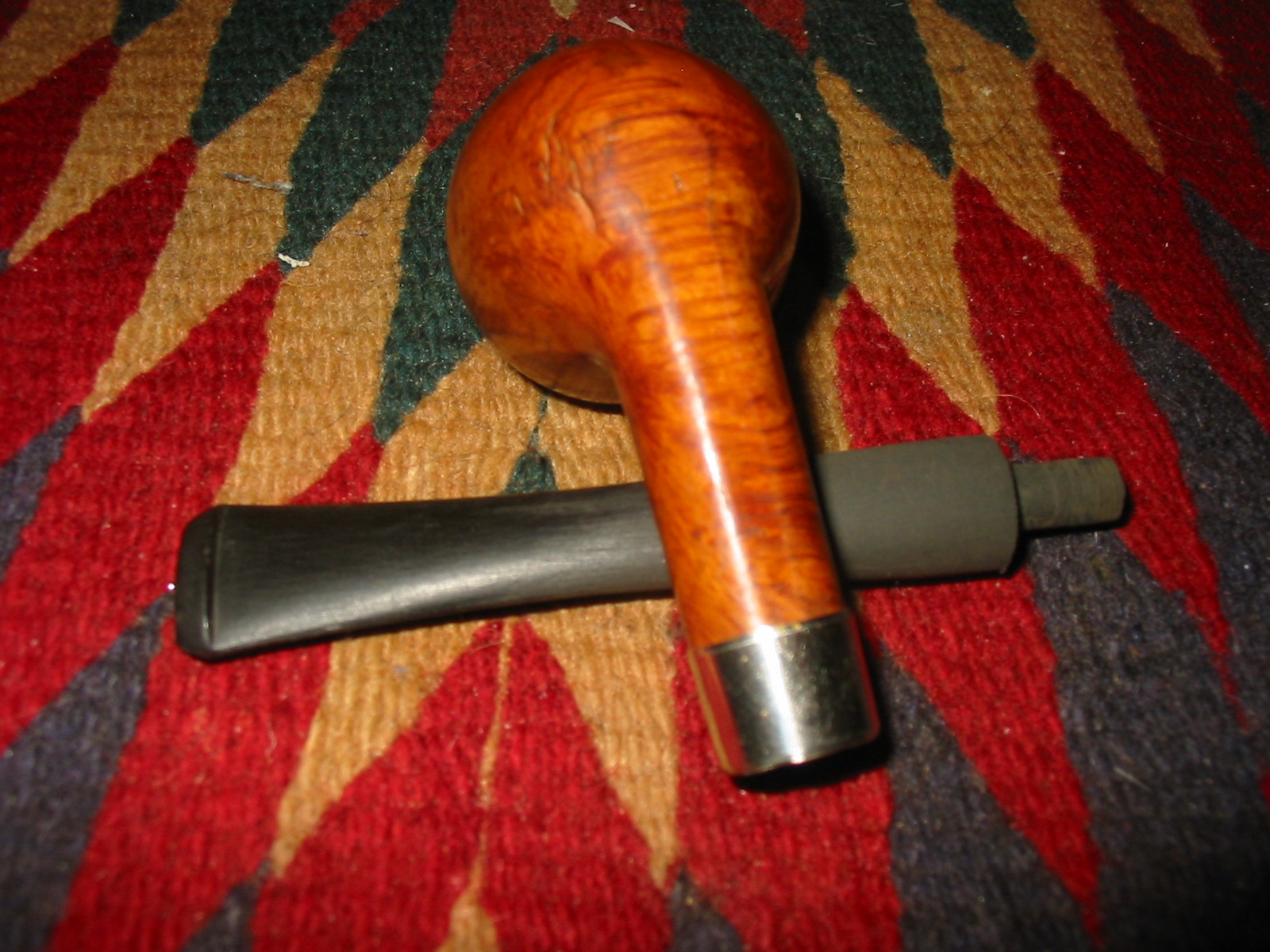
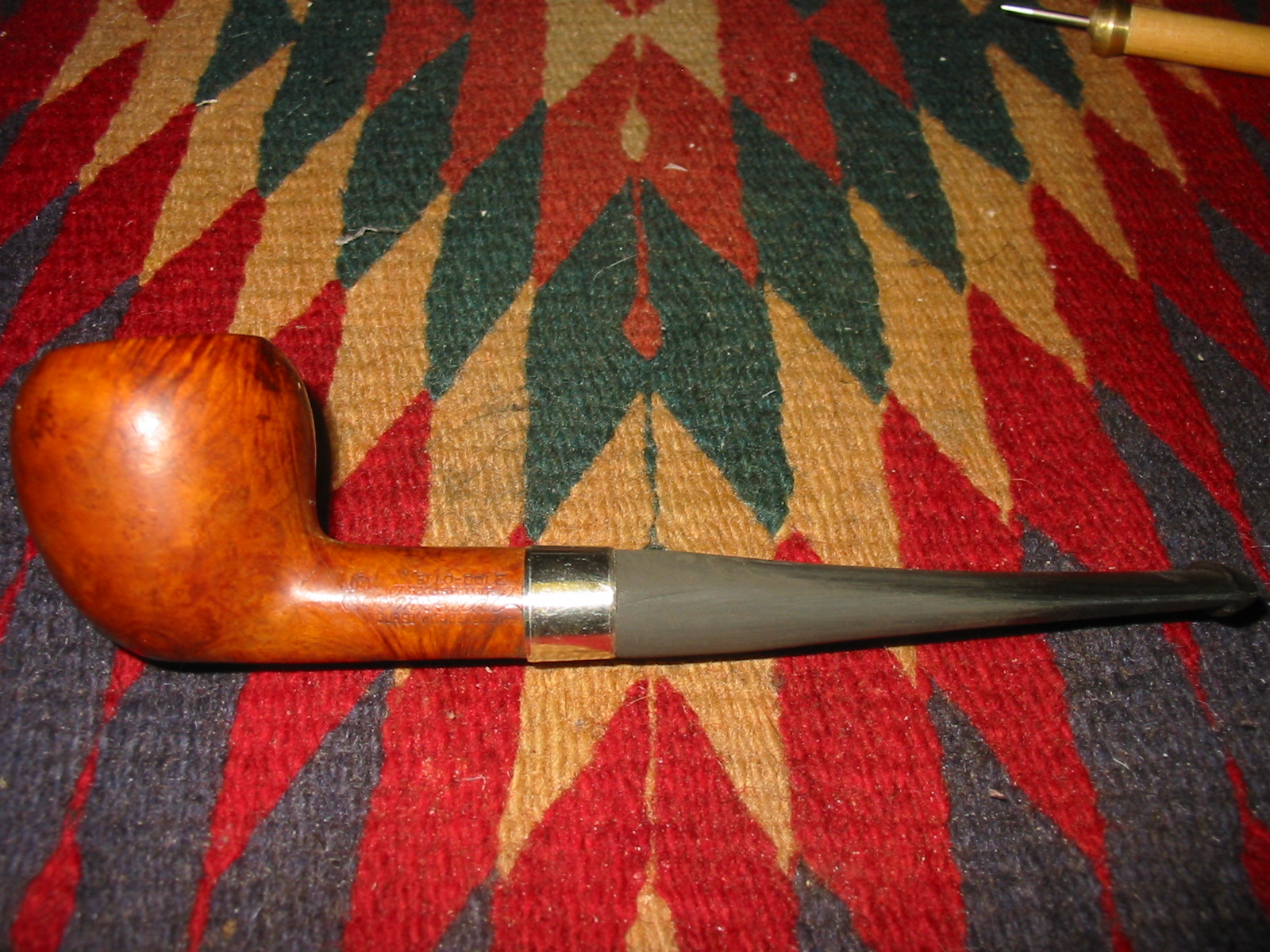
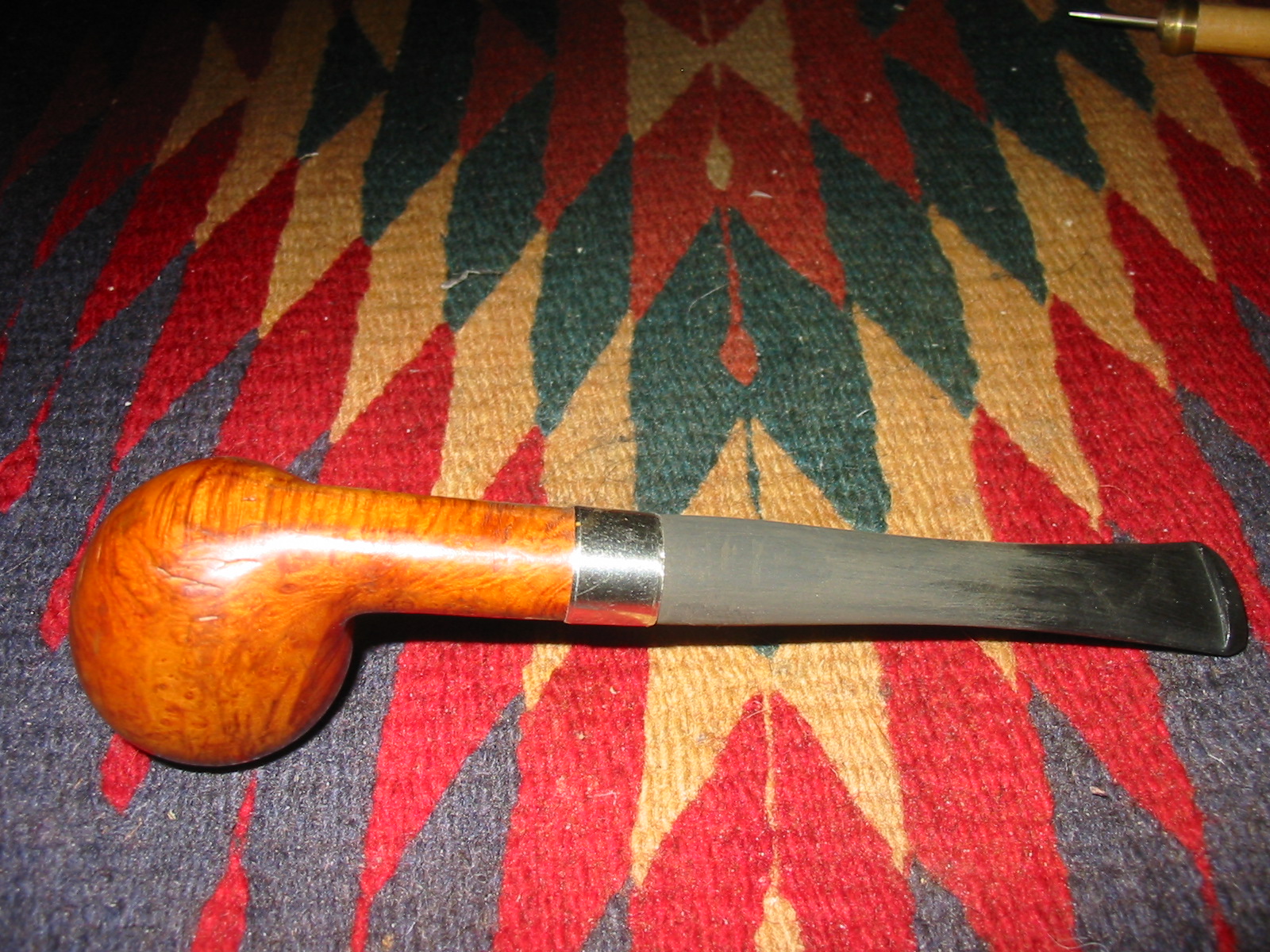
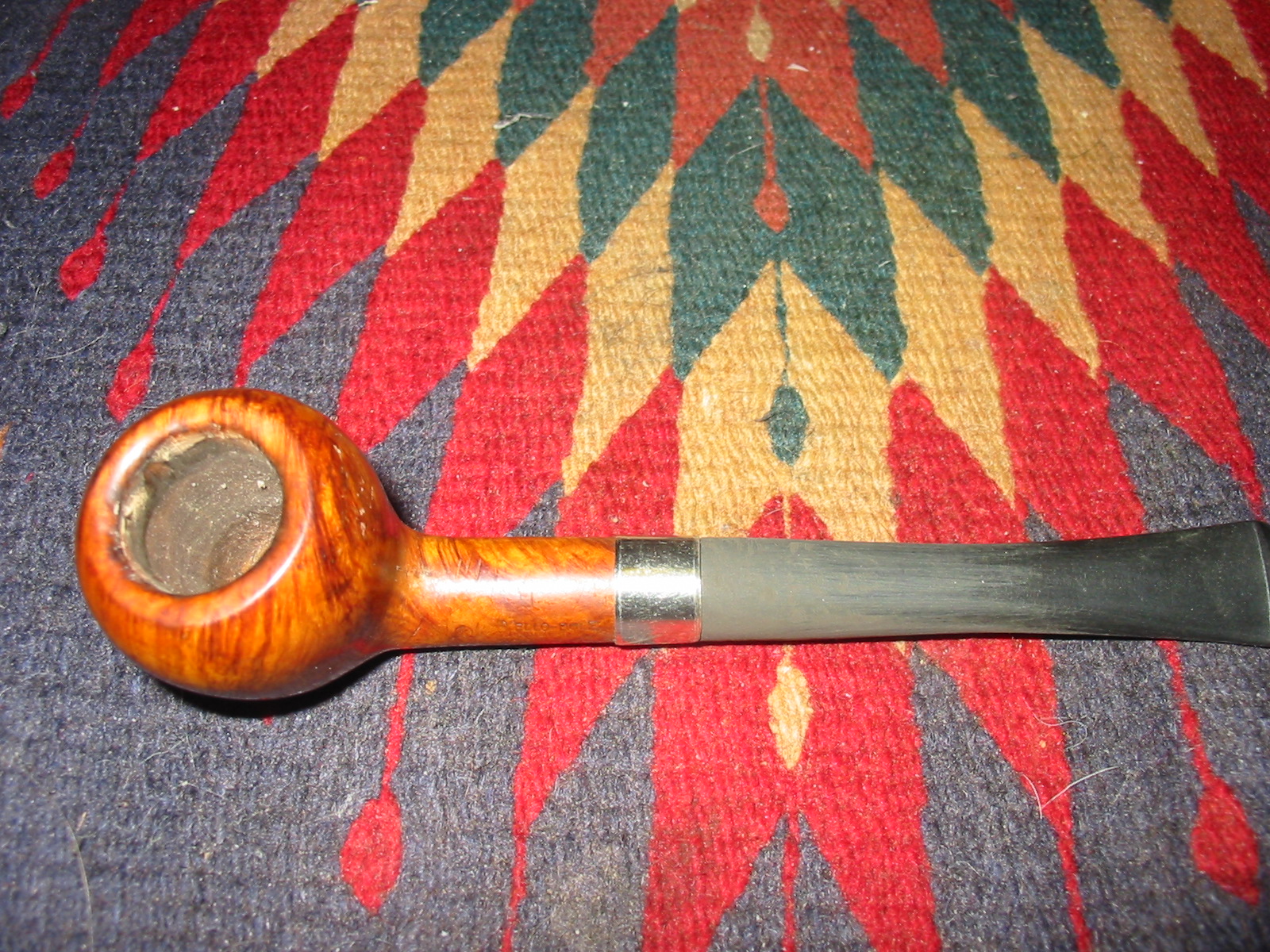
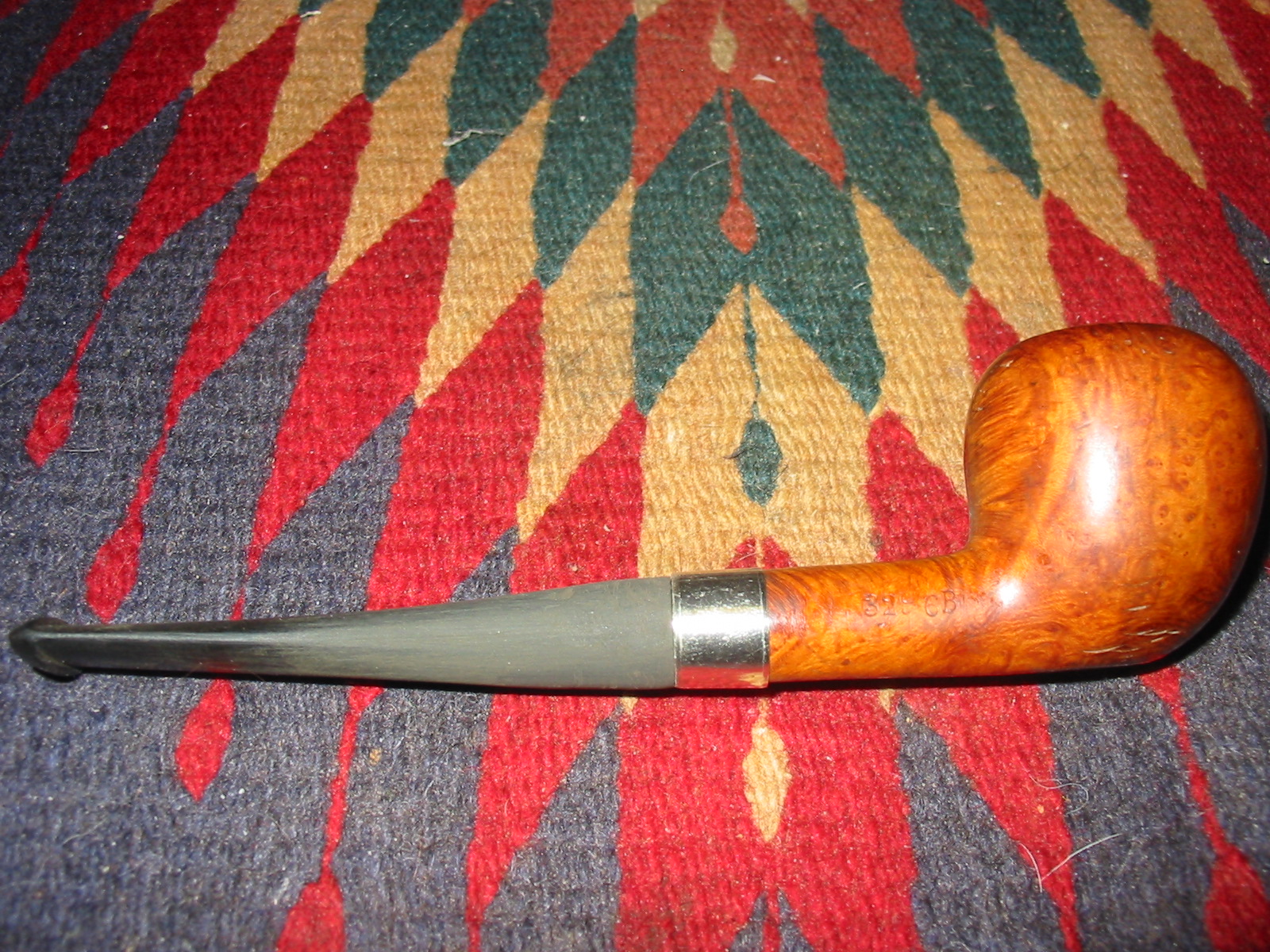
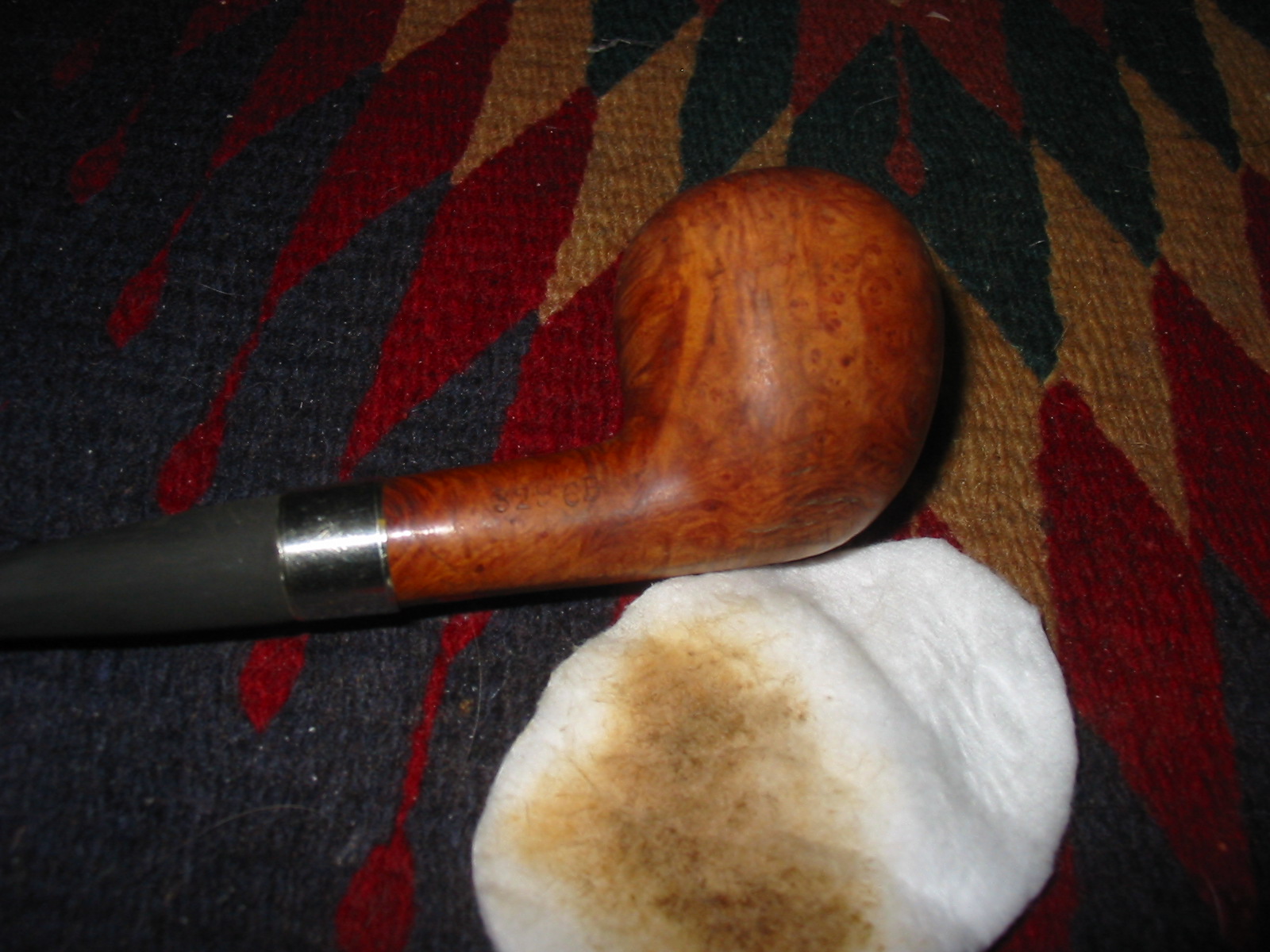
Anyone who reads my previous postings know that I have a fondness for early KB&B pipes. Since the briar used in Yello Bole pipes was generally inferior to those used in Kaywoodies, most Yello Bole pipes are smaller. This was a work around for defects found in the briar. I saw this Yello Bole pot and was intrigued. It’s a full size pipe. Here is the seller’s picture.YB1 When the pipe arrived, the stem was nearly perfect with the original stinger intact (not that I planned to leave it there). The bowl looked decent with a minimal amount of tar on the rim and very light cake. I dropped the bowl into the alcohol bath and soaked the stem in Oxyclean.

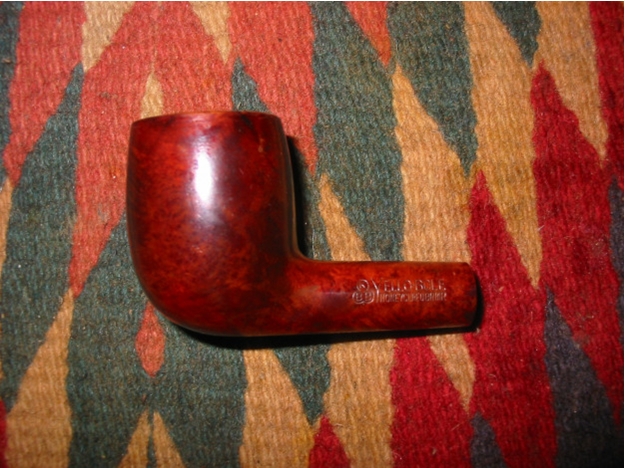
I noticed the first indication of trouble when I pulled the bowl out for reaming: it had a heavy varnish coating. That’s usually a sign that the pipe maker wanted to hide imperfections in the wood.

YB2

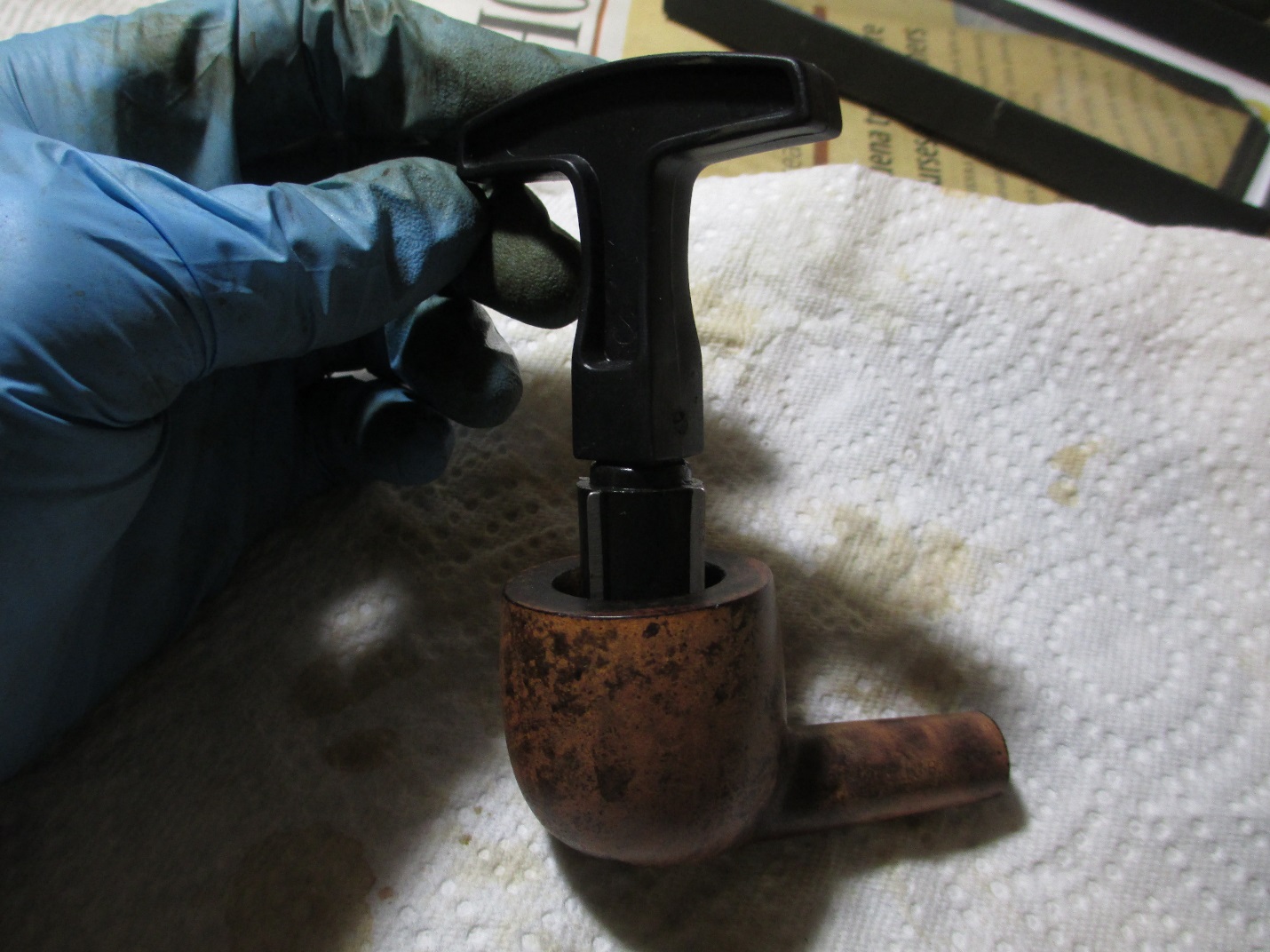
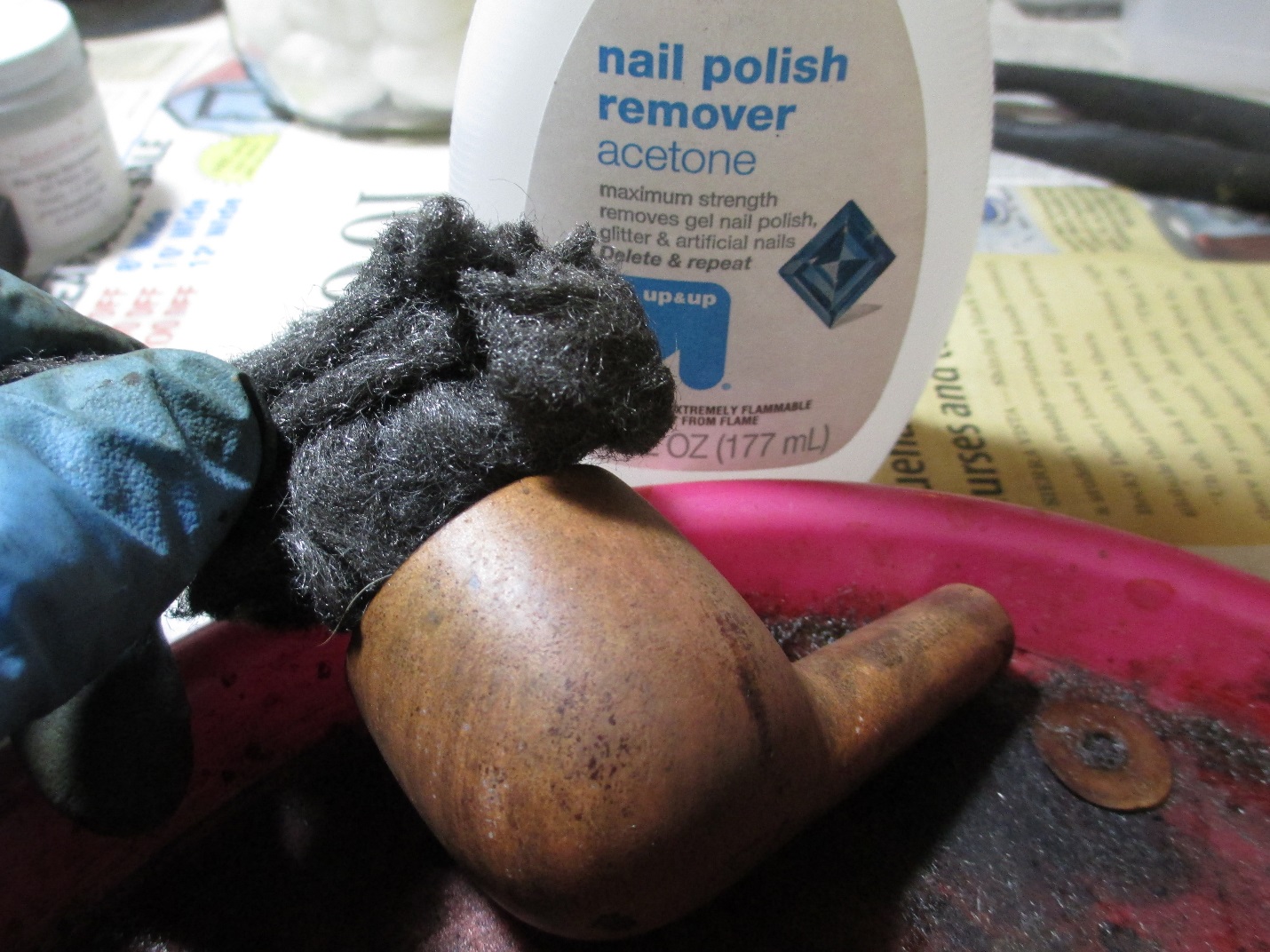
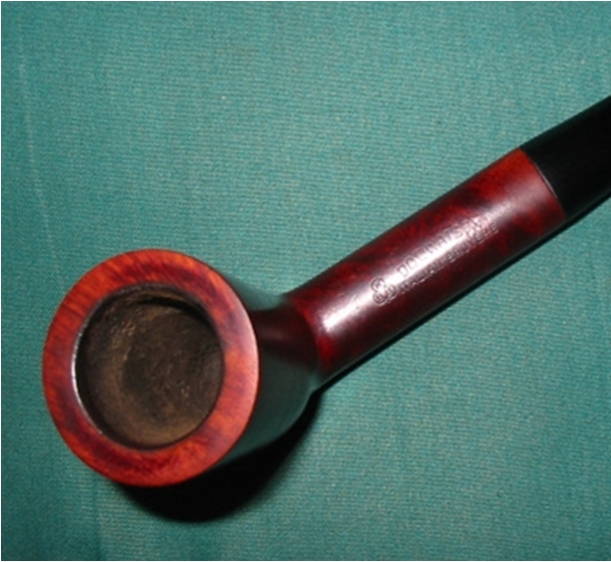
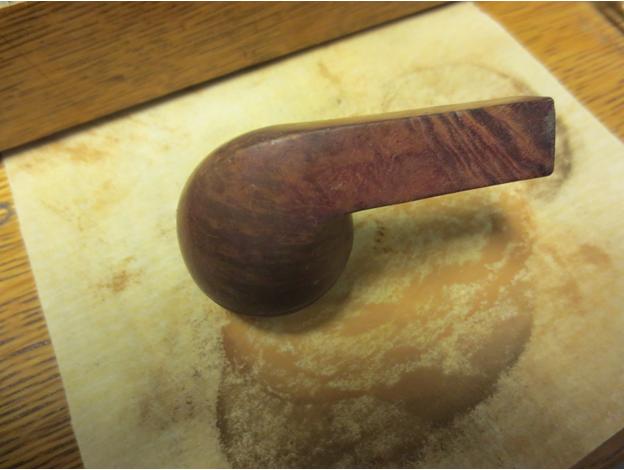
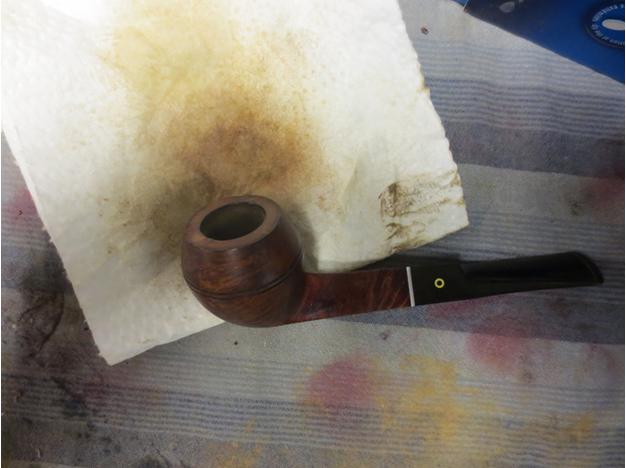
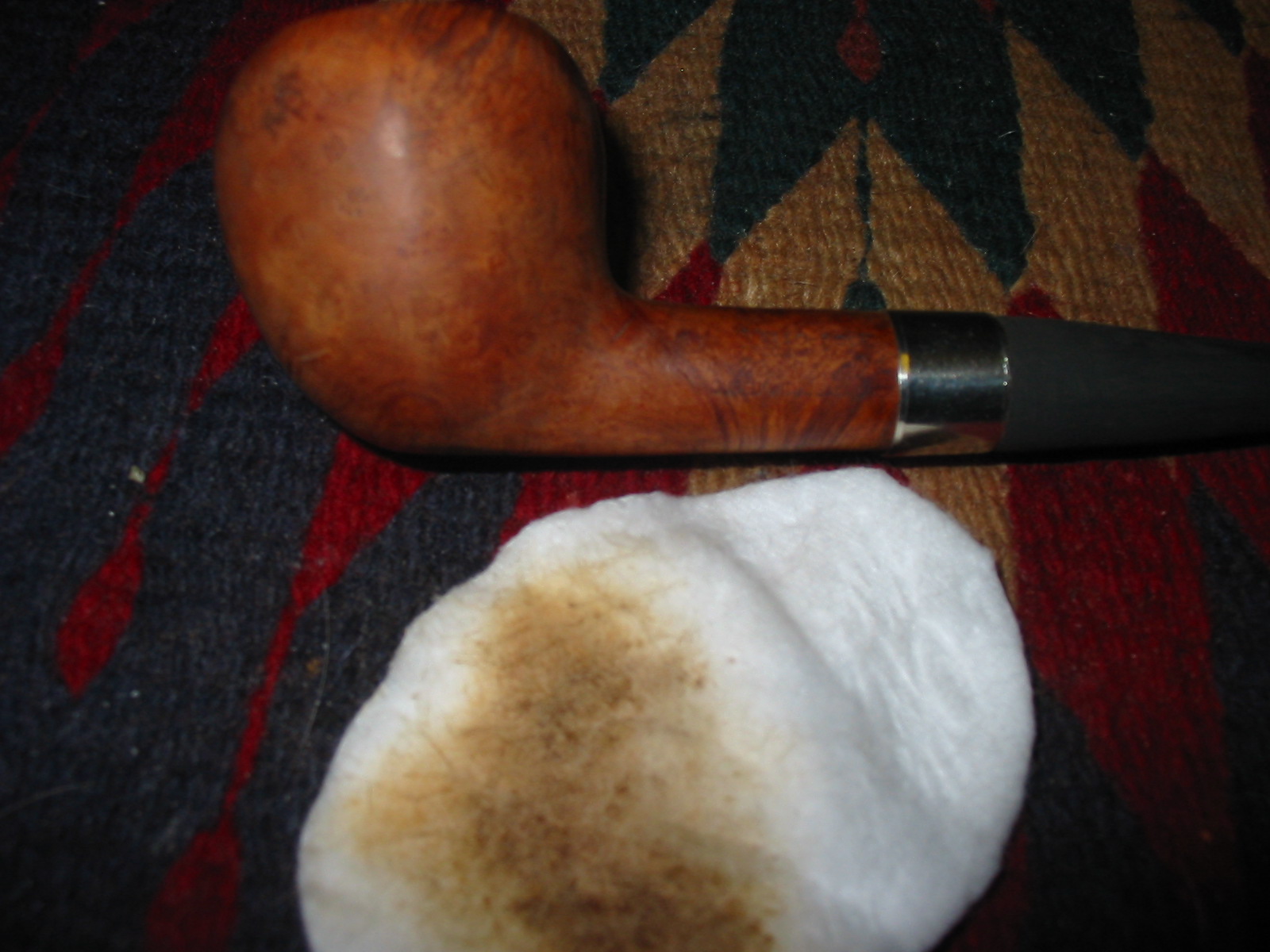
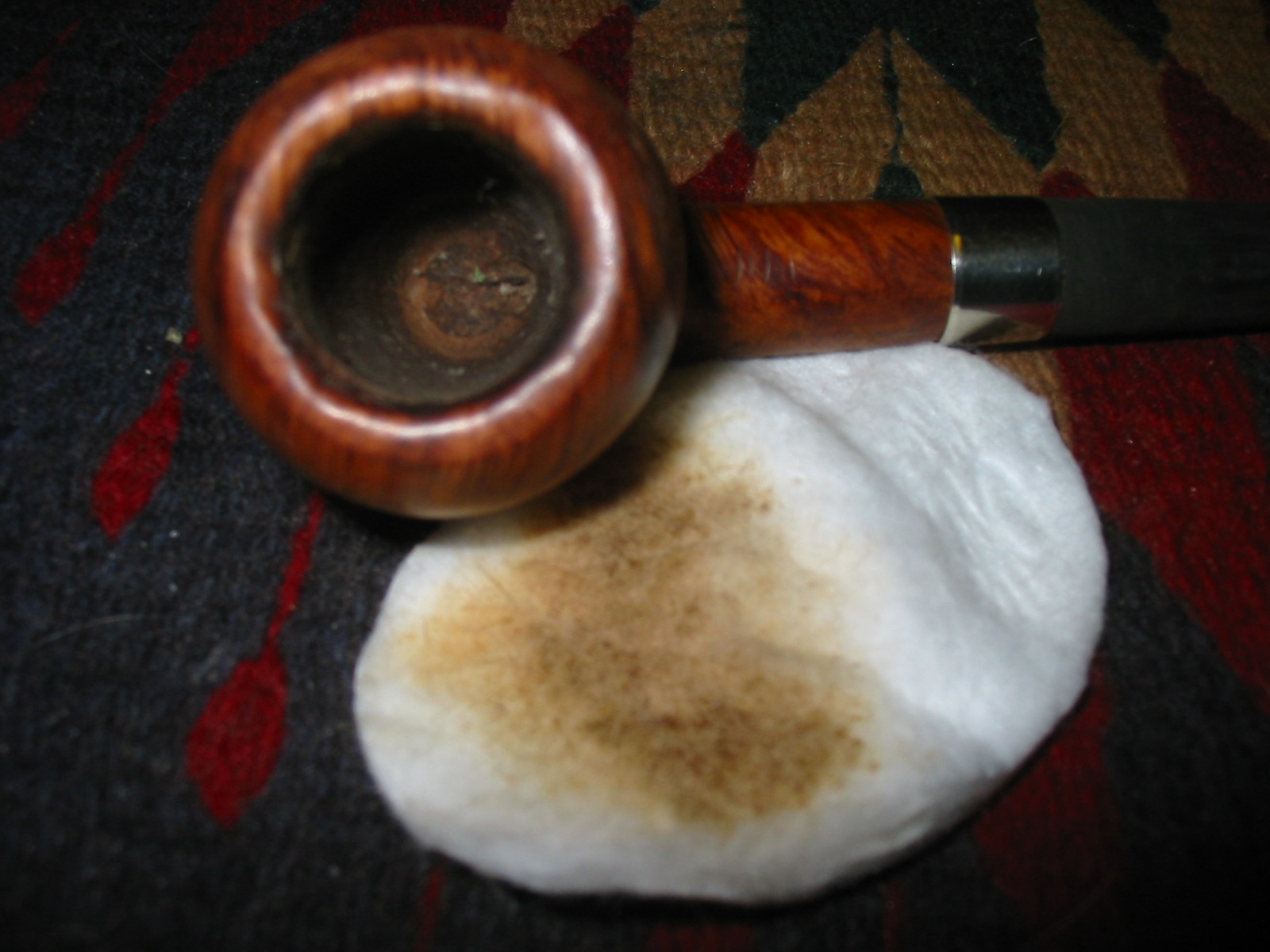
I quickly reamed the bowl then broke out the 0000 steel wool and acetone to remove the varnish.

YB3

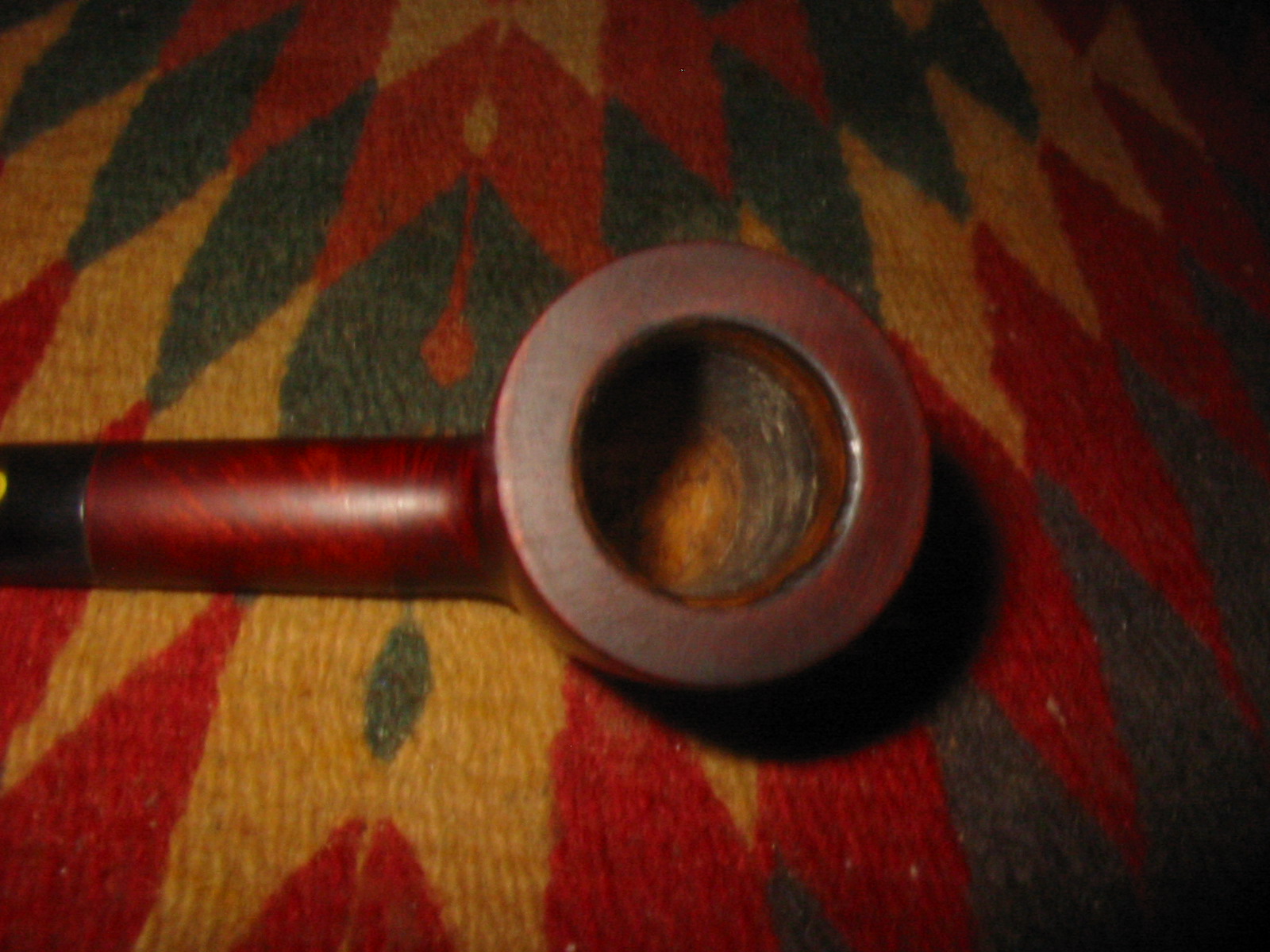
I’ve seen some pits in briar before, but this is the first time I’ve encountered a pit so deep that I gave it a name. I named it the pit of despair. Here’s the picture before I removed the pink putty.

YB4

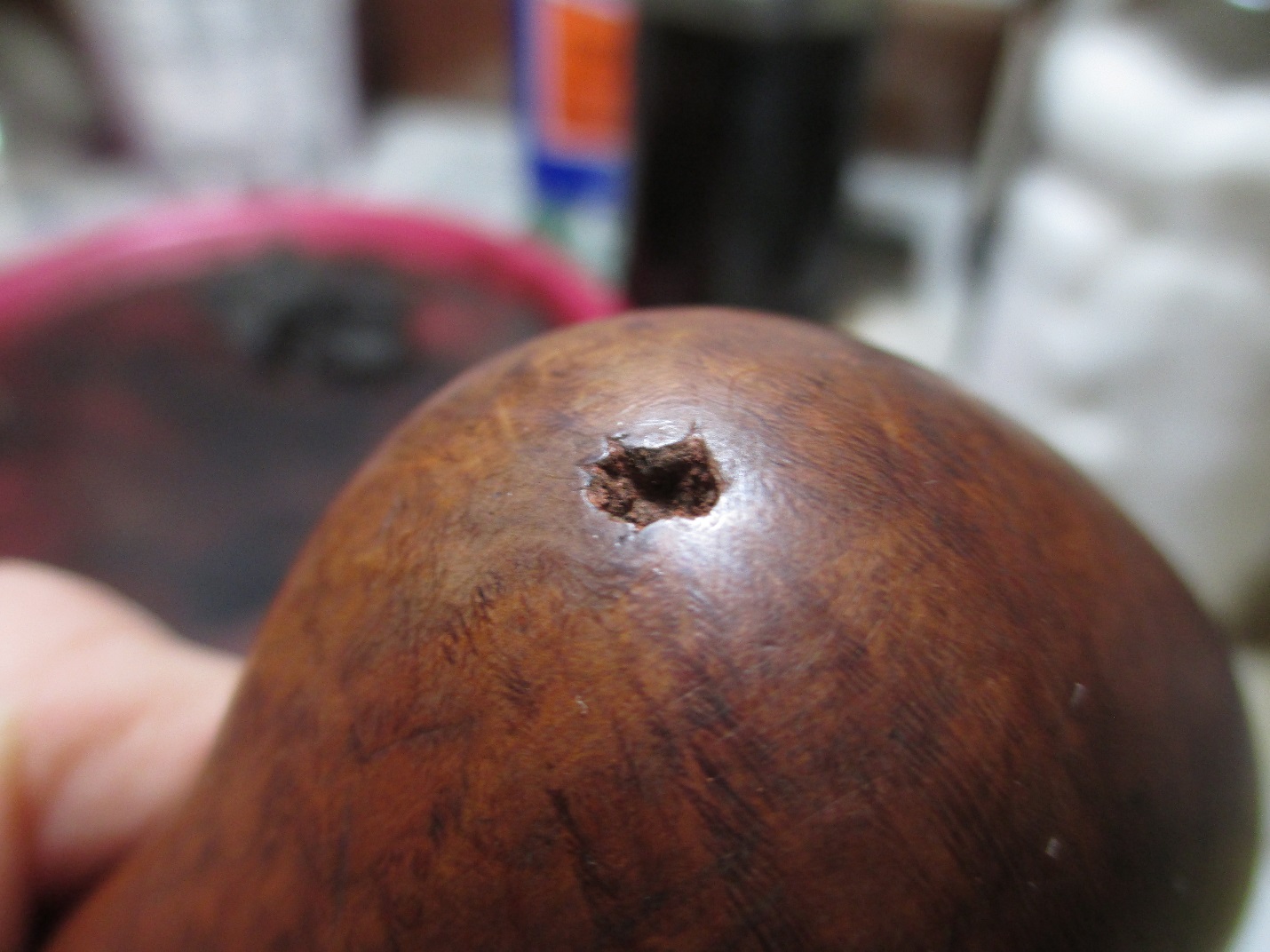
Here’s the pit of despair fully revealed. My dental pick had a good ¼ of an inch of room to explore.

YB5

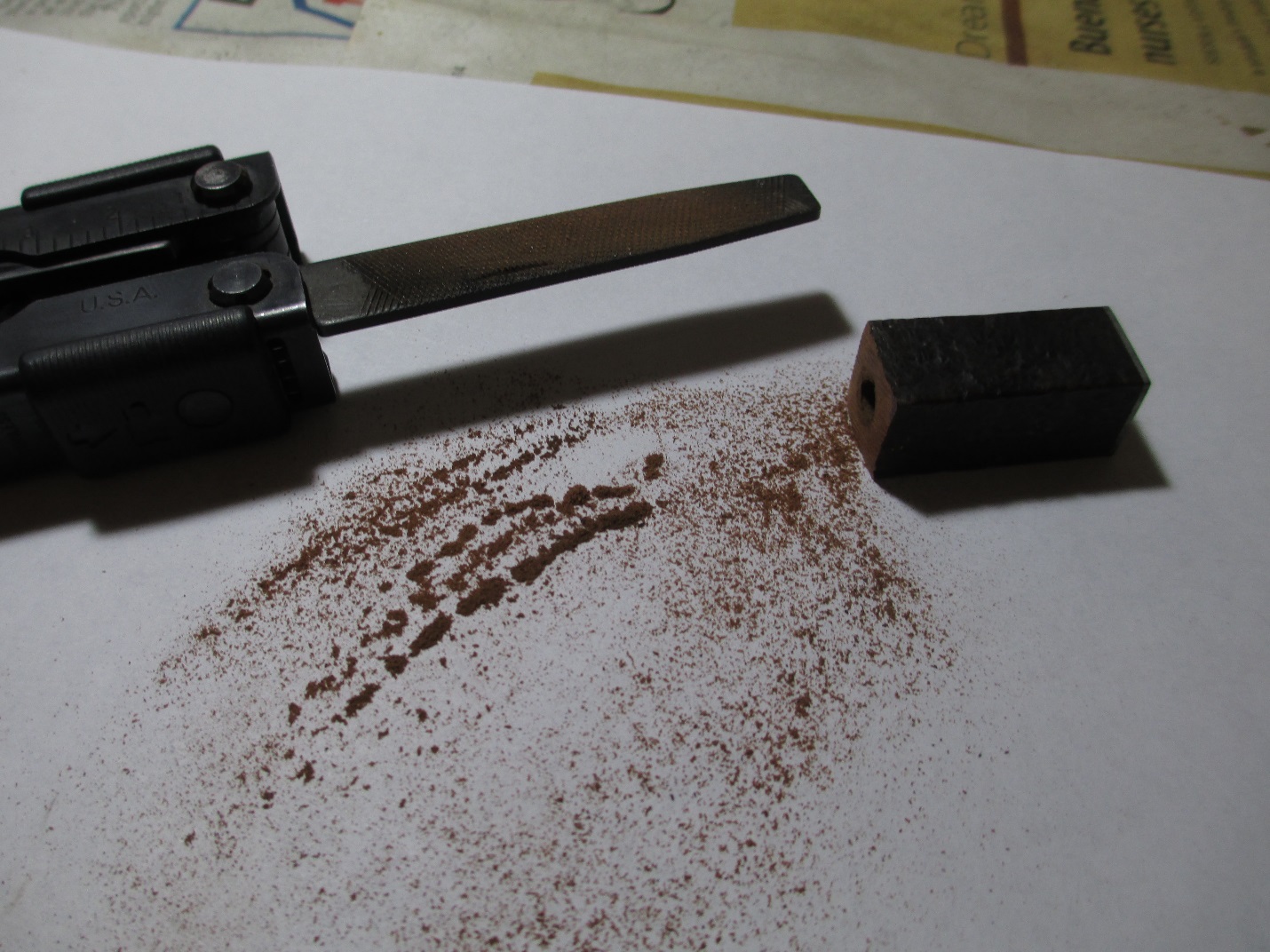
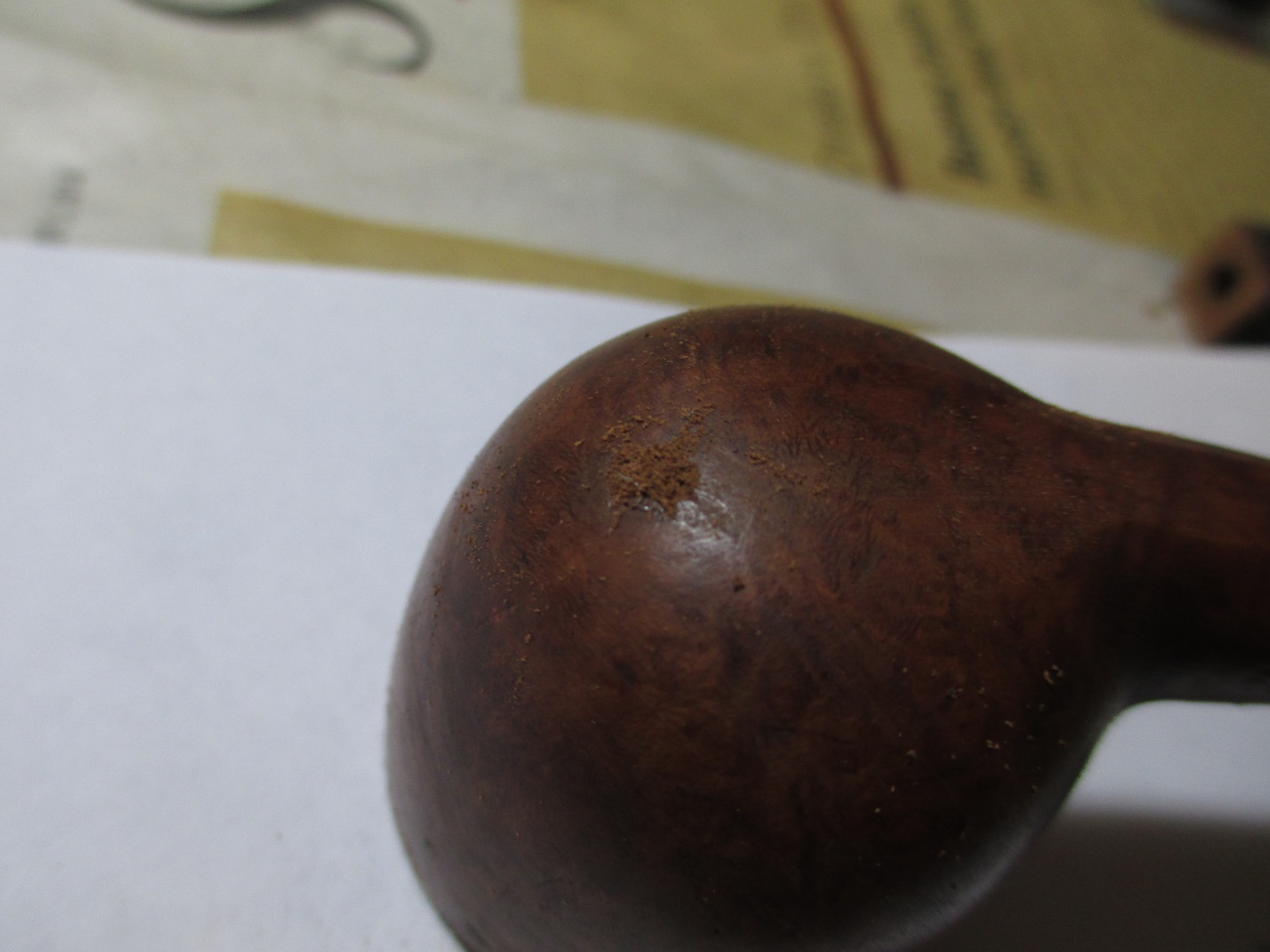
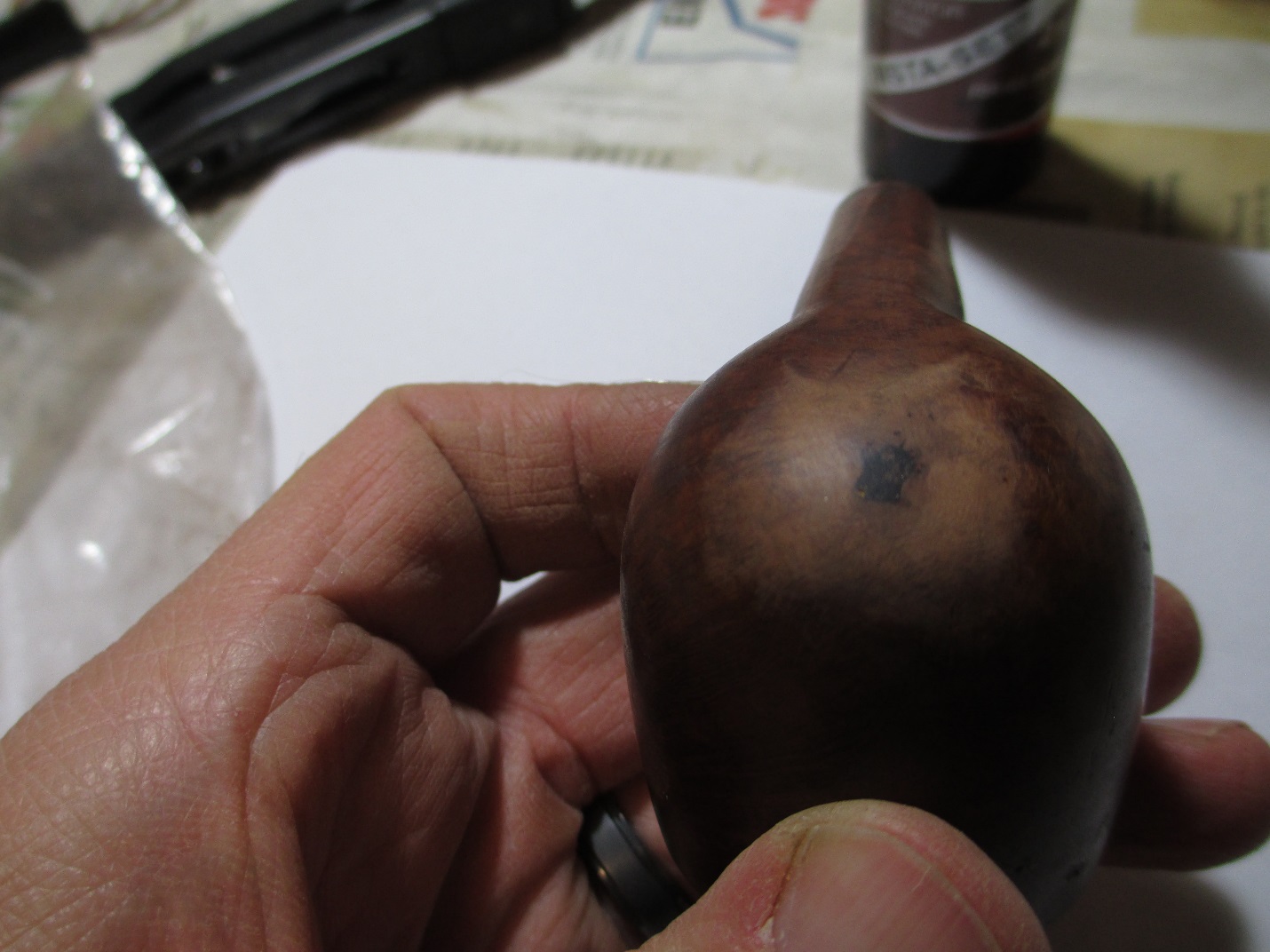
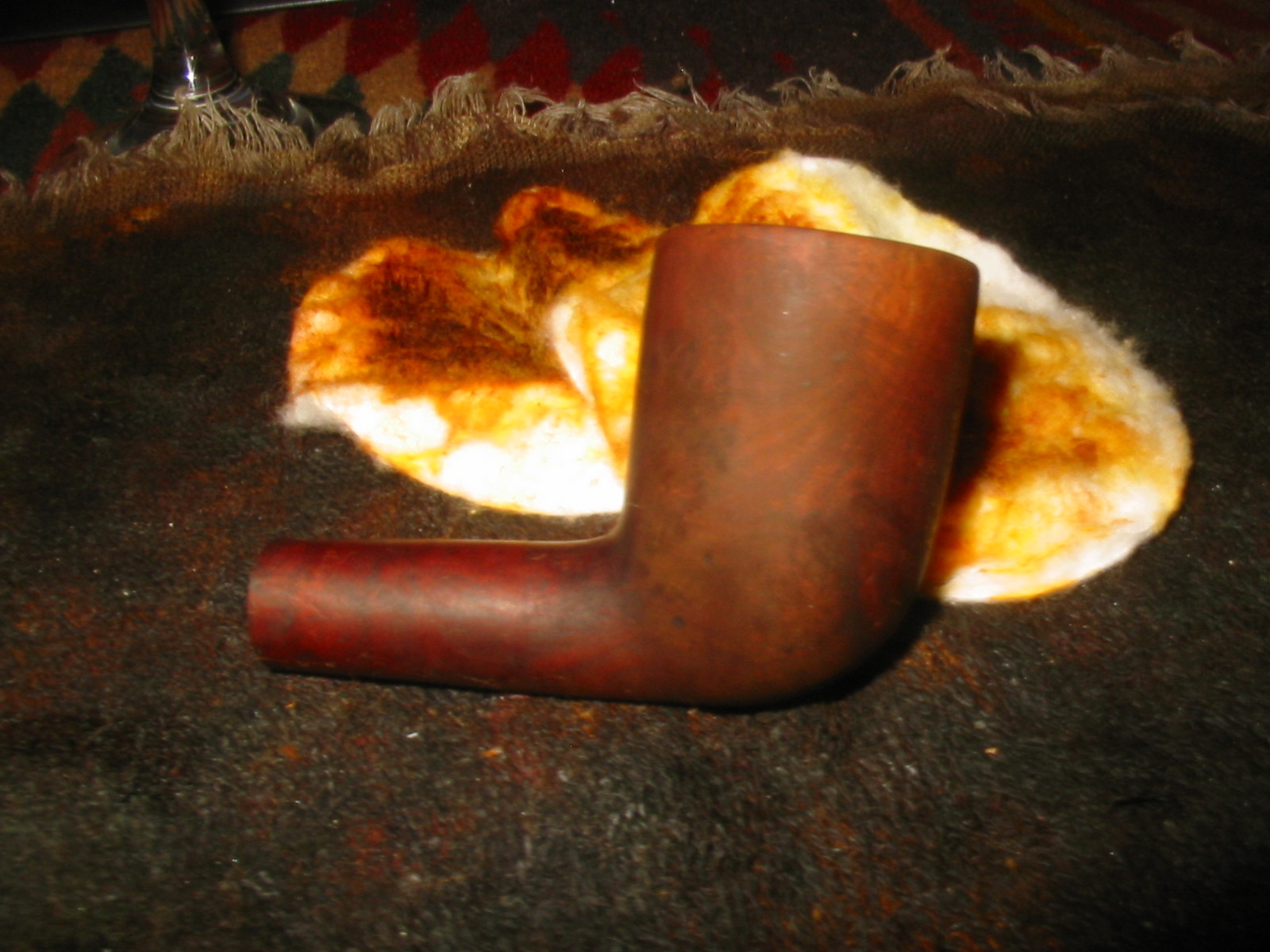
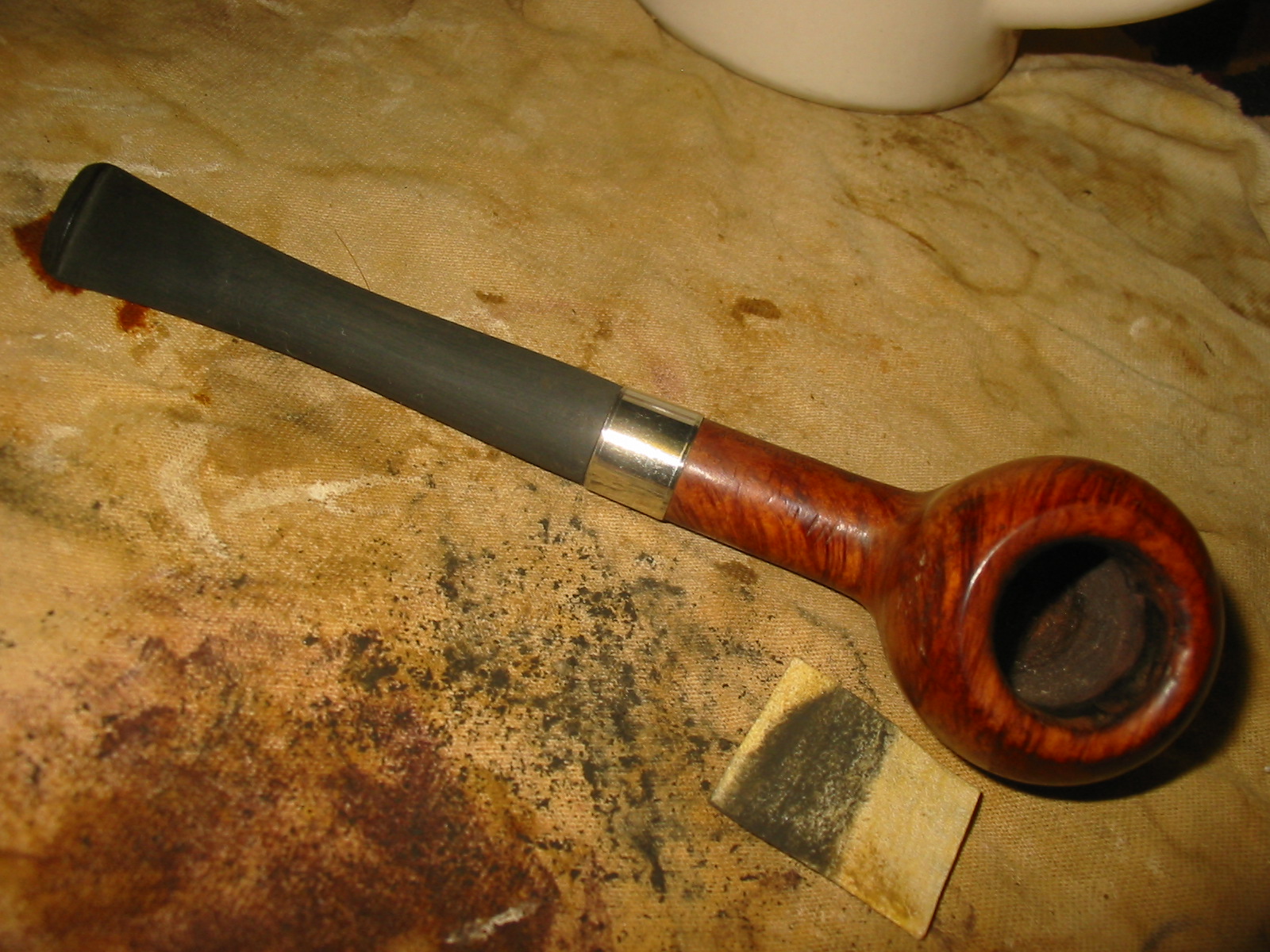
Even with the pit I still liked the pipe and decided to fix it anyway. I filed a good amount of briar dust from a broken shank onto a piece of paper. The paper makes it easier to collect the briar dust. Or you could do like Steve and just have a big jar of briar dust.YB6 I packed the pit and added super glue followed by accelerator.YB7 After applying the super glue and accelerator, I had to add briar dust two more times. This was the final result.YB8 In addition to the pit of despair, there were three minor pits on the front of the bowl and two deep pits on the bottom of the shank near the juncture of the stem. I finally got the exterior of the pipe sorted out and turned my attention to the insides.
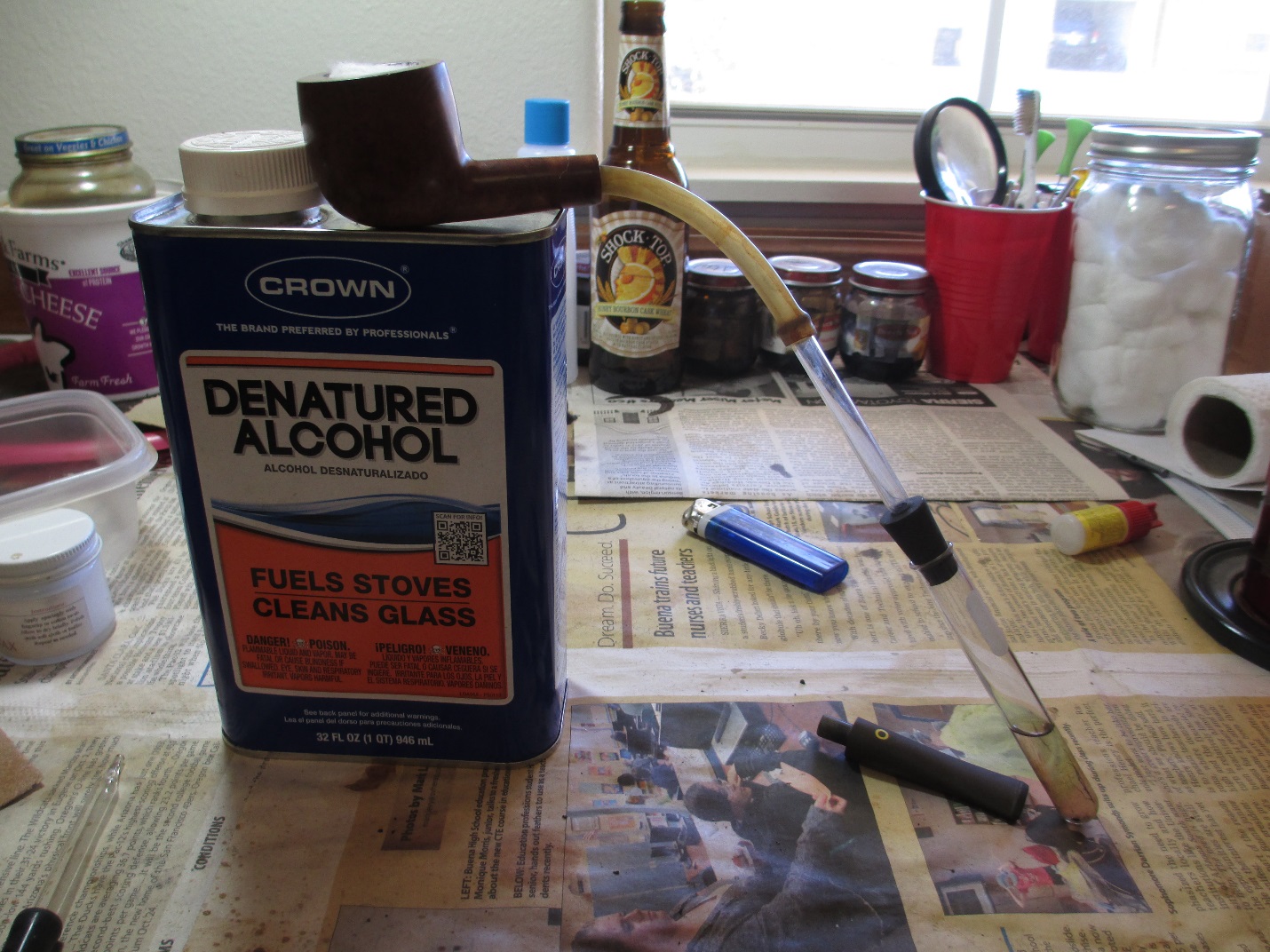
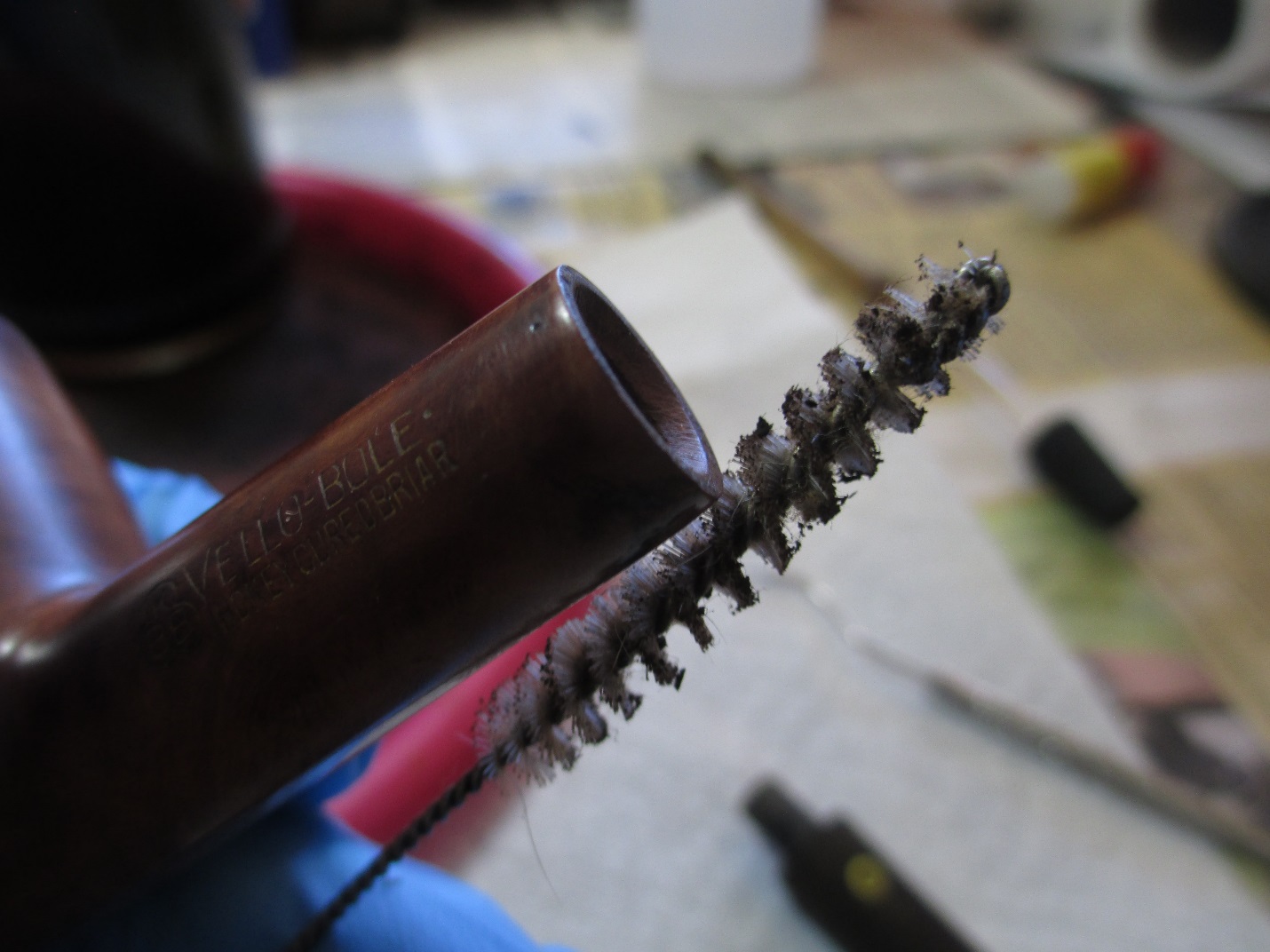
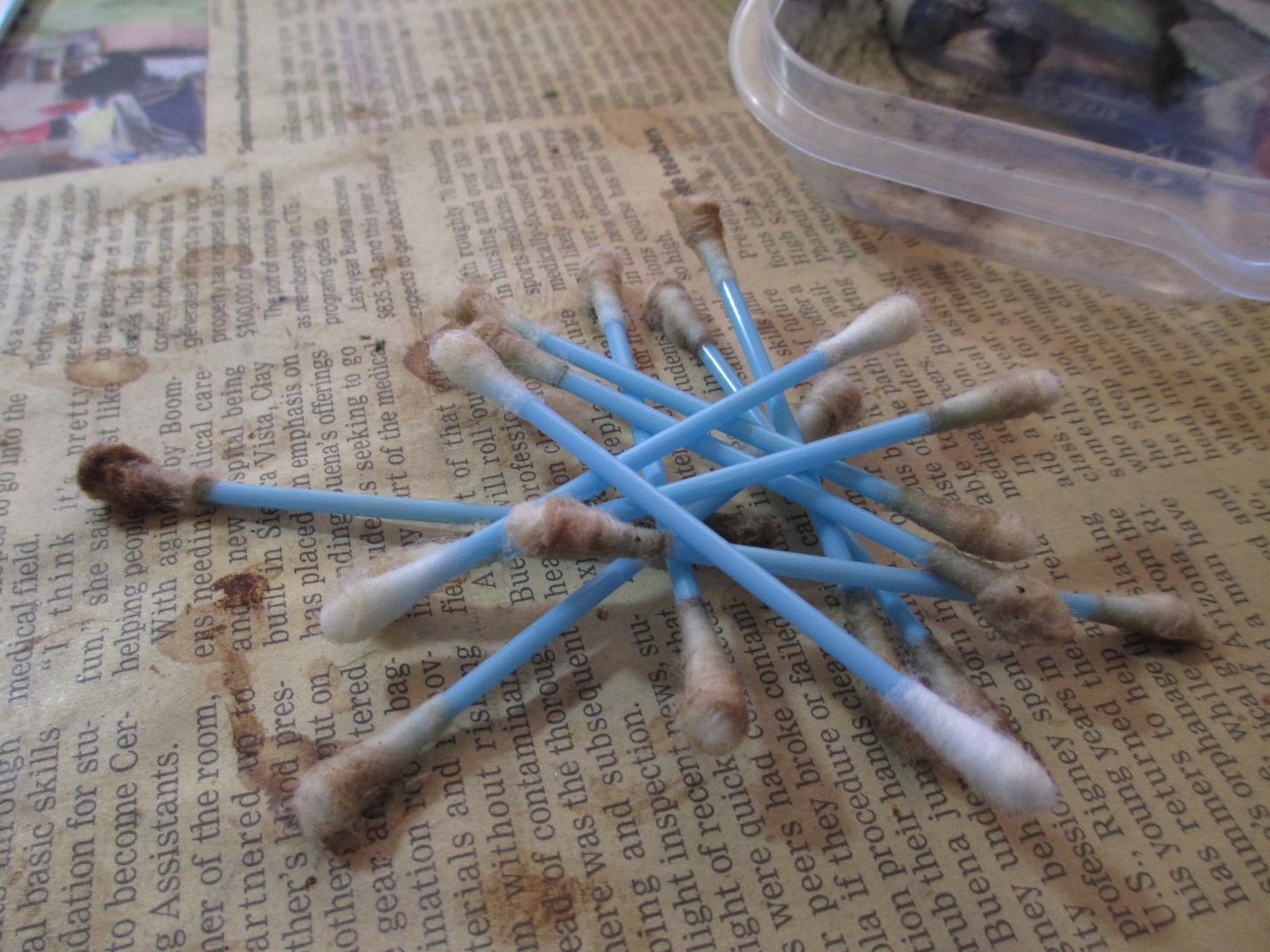
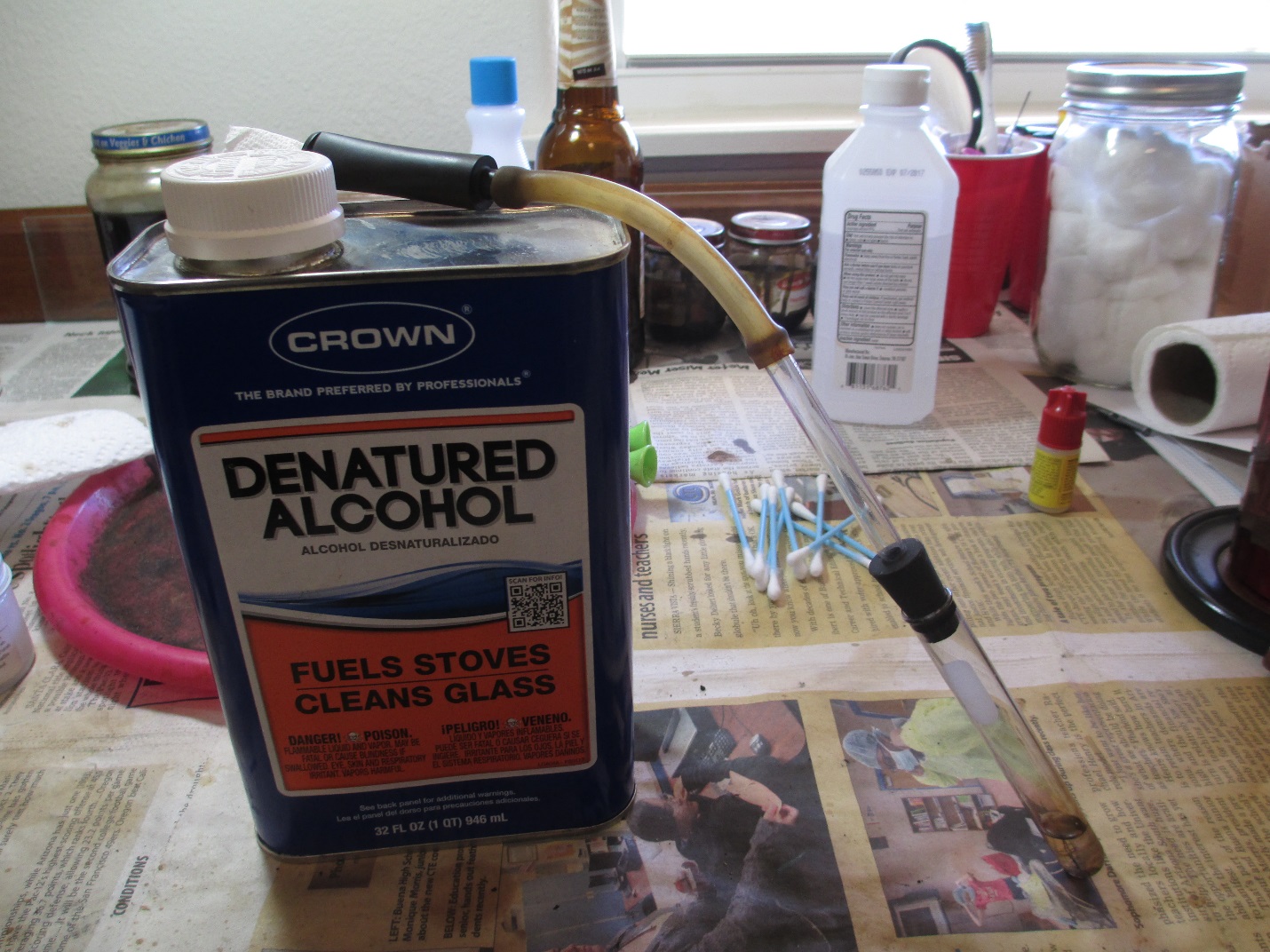
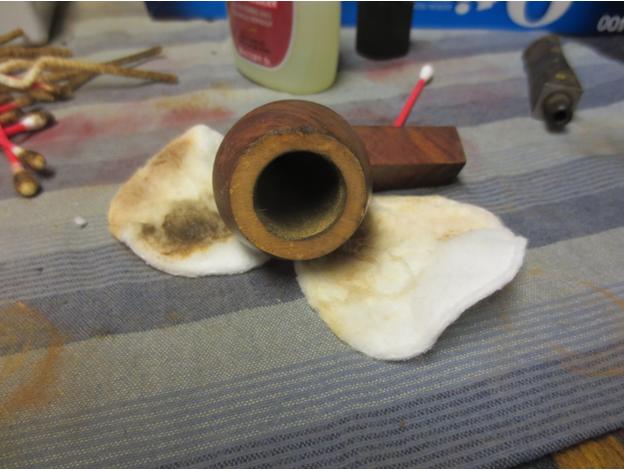
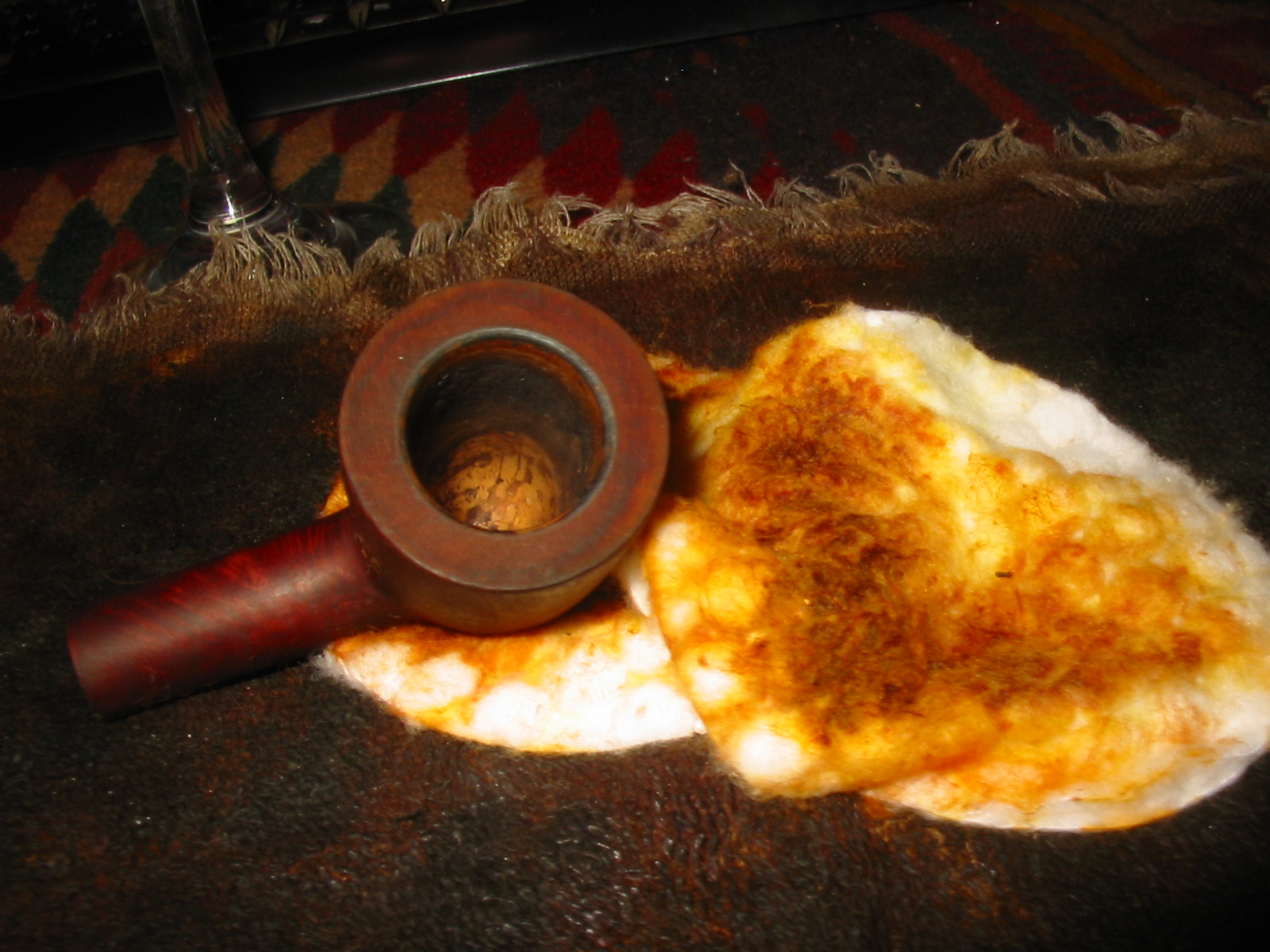
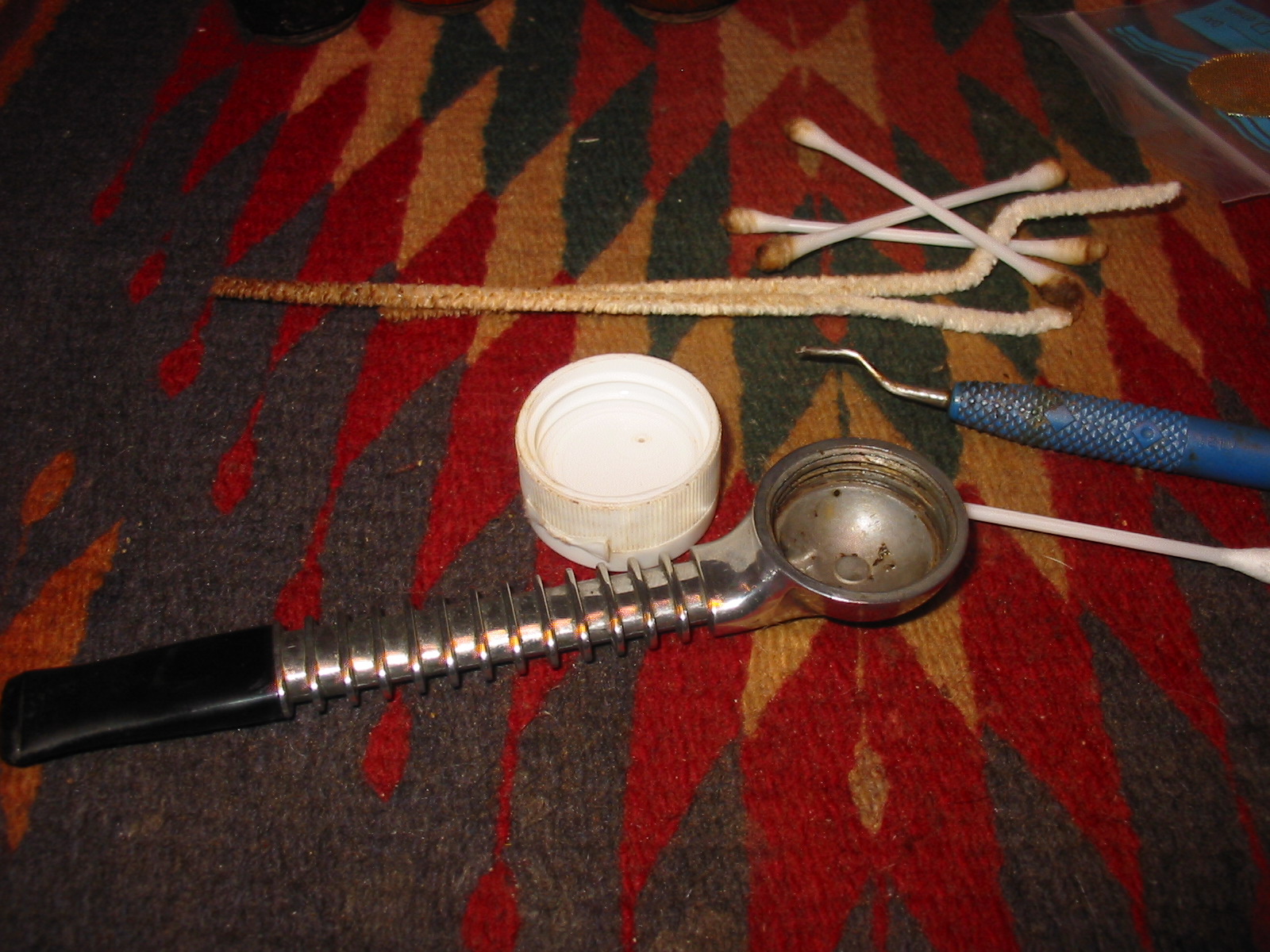
I did my retort on the bowl.YB9 There was some gunk on the brush, but the stinger did a decent job keeping the shank clean.YB10 After a few passes with the brush dipped in alcohol, I moved on to q-tips. Not a terribly dirty pipe.YB11 Next I retorted the stem. I anticipated it would be dirty, since stingers tend to make pipes smoke wet. I retorted it three times to be safe and had an easy time cleaning the remaining tar.YB12

YB13

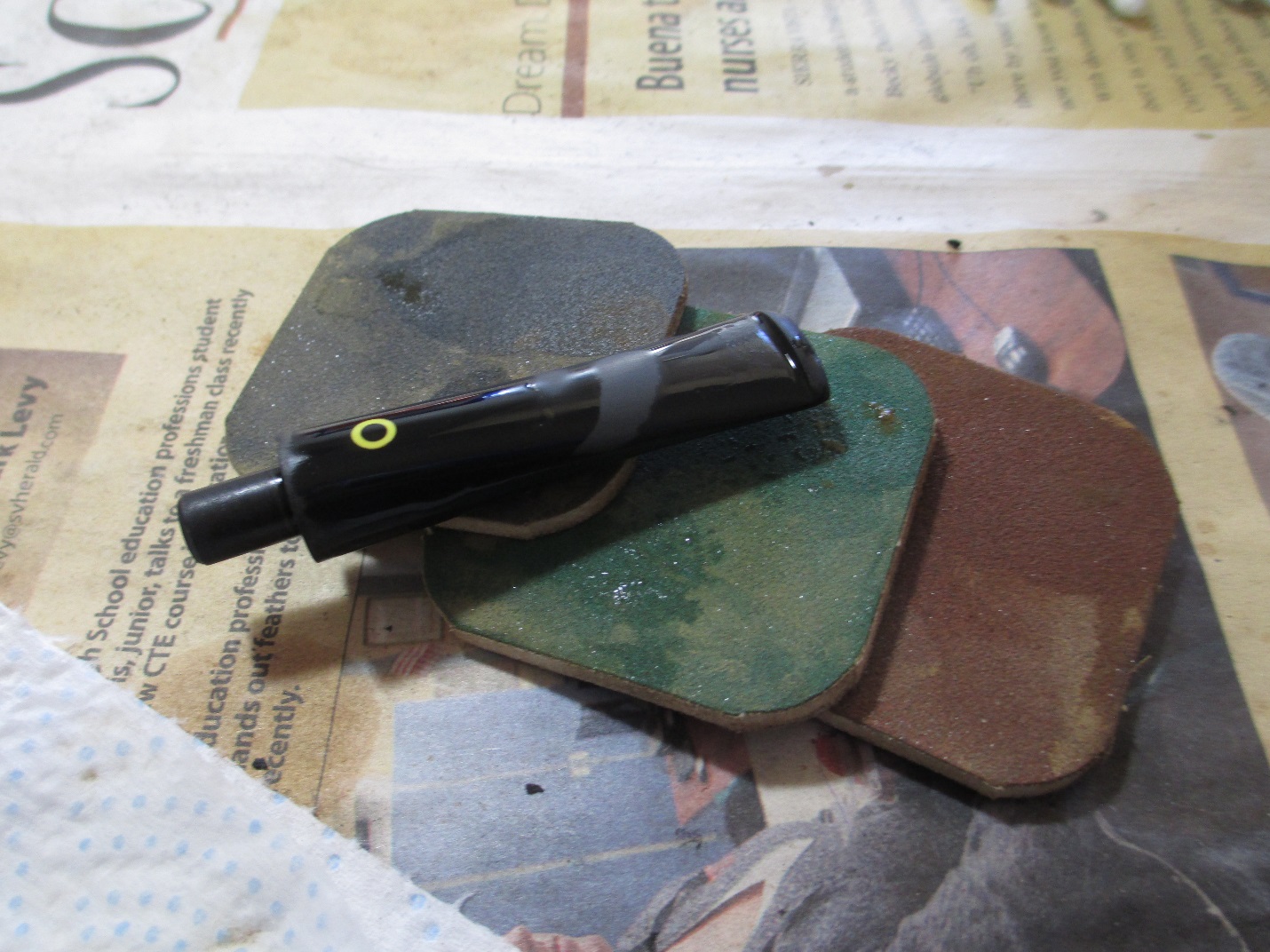
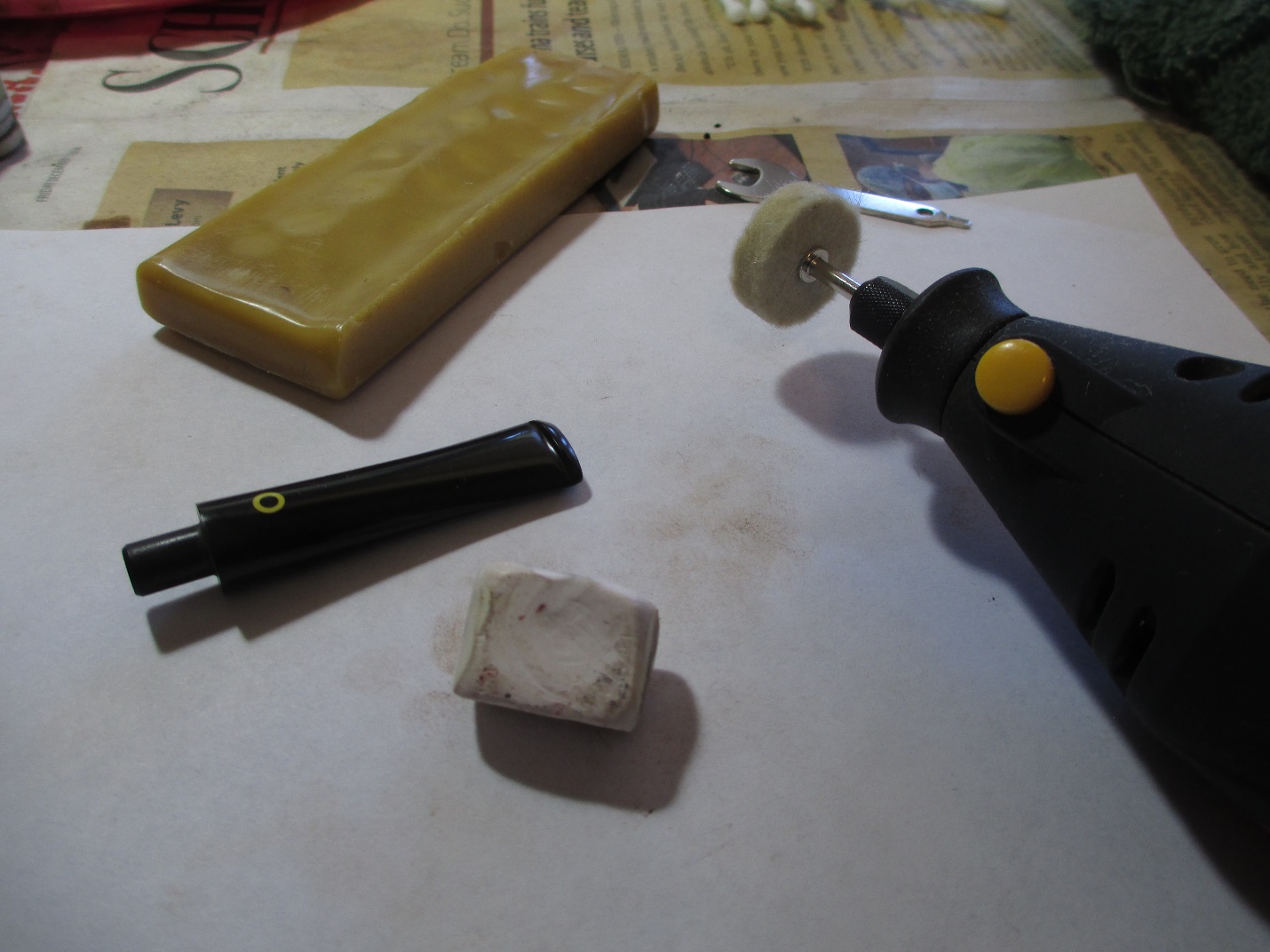
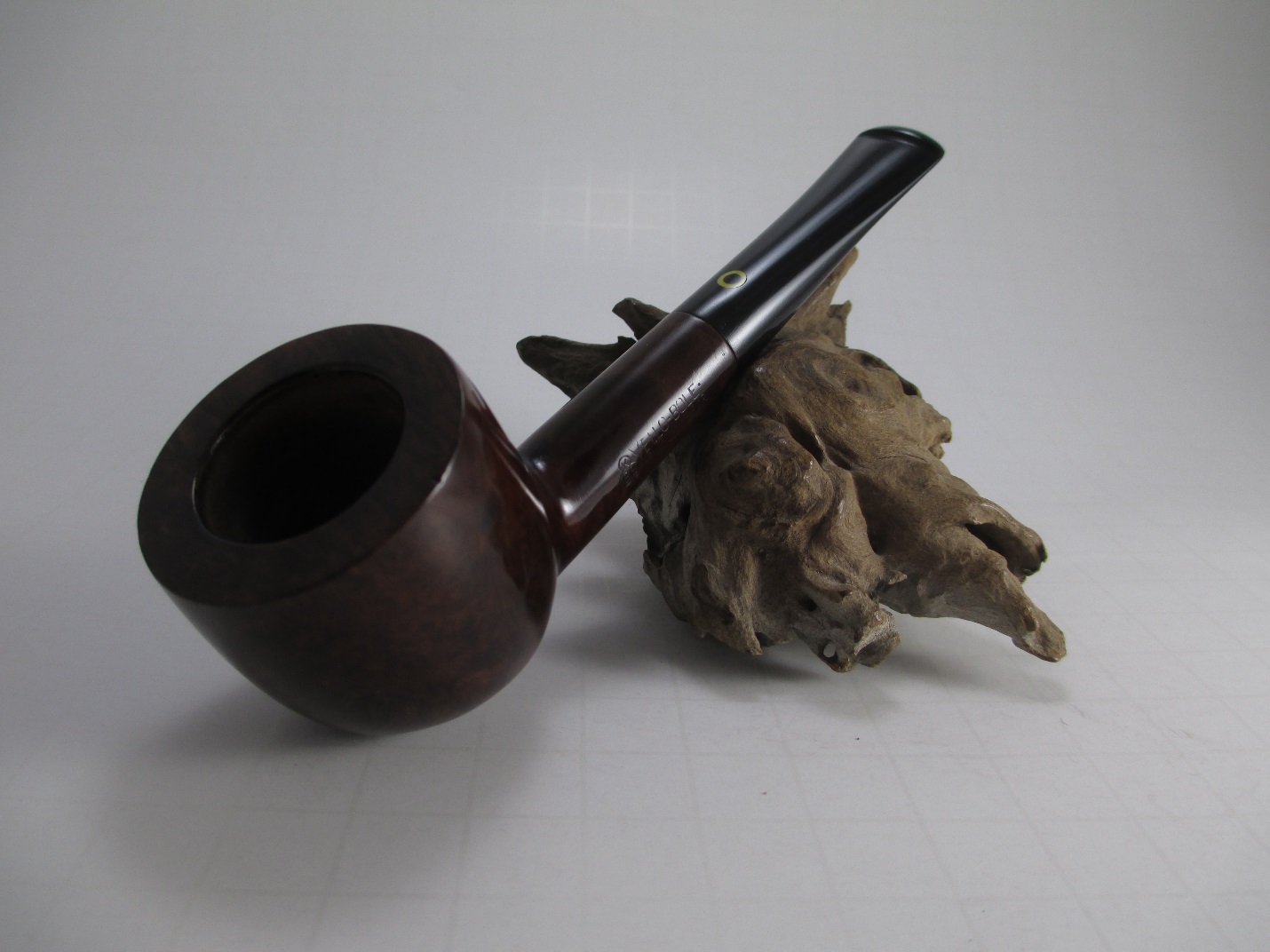
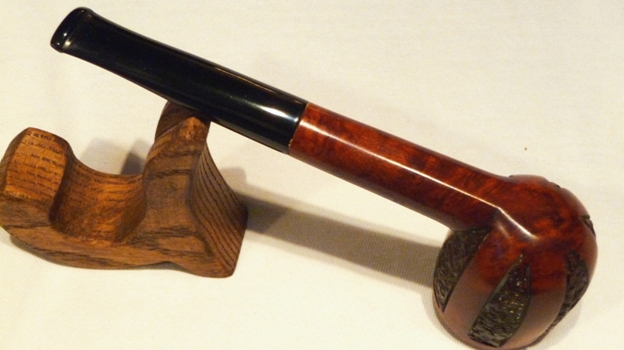
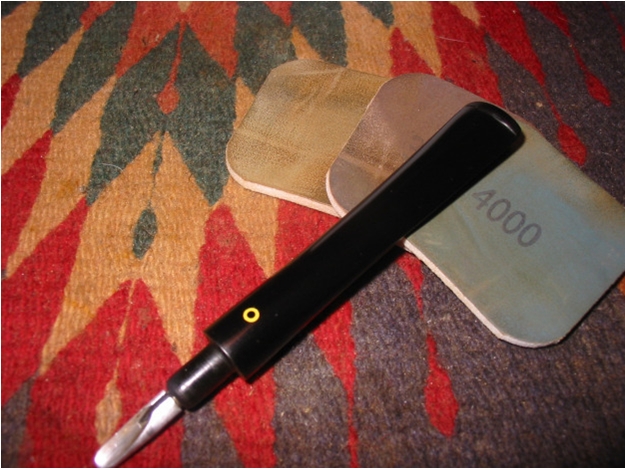
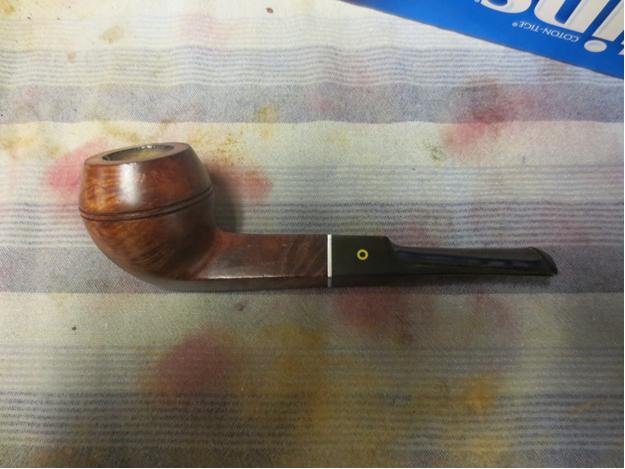
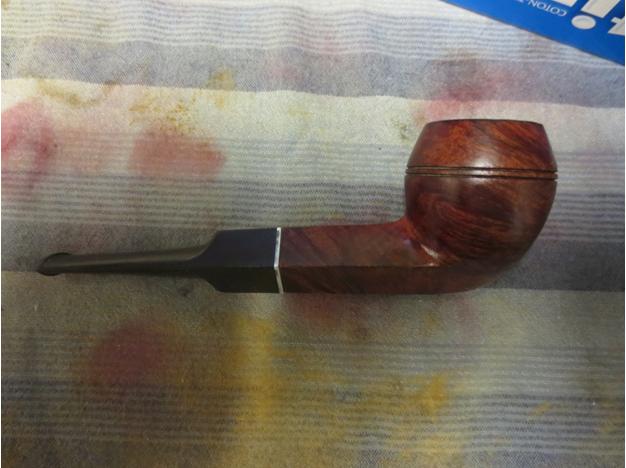
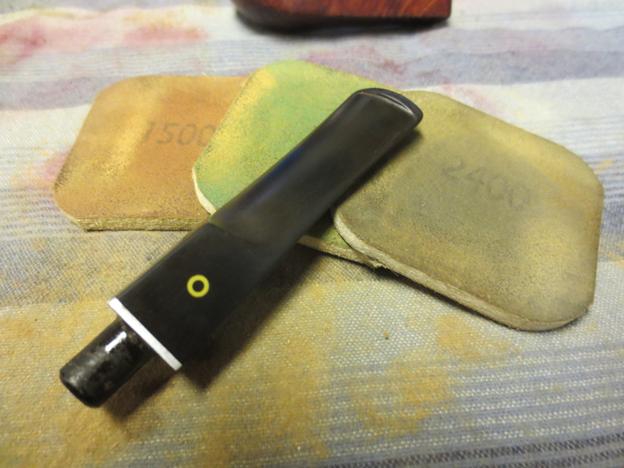
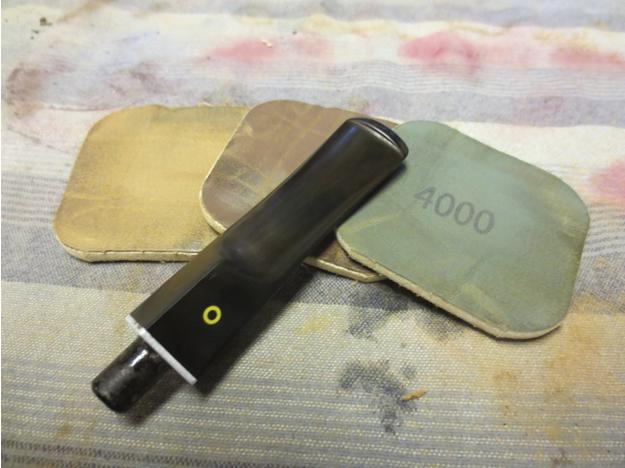
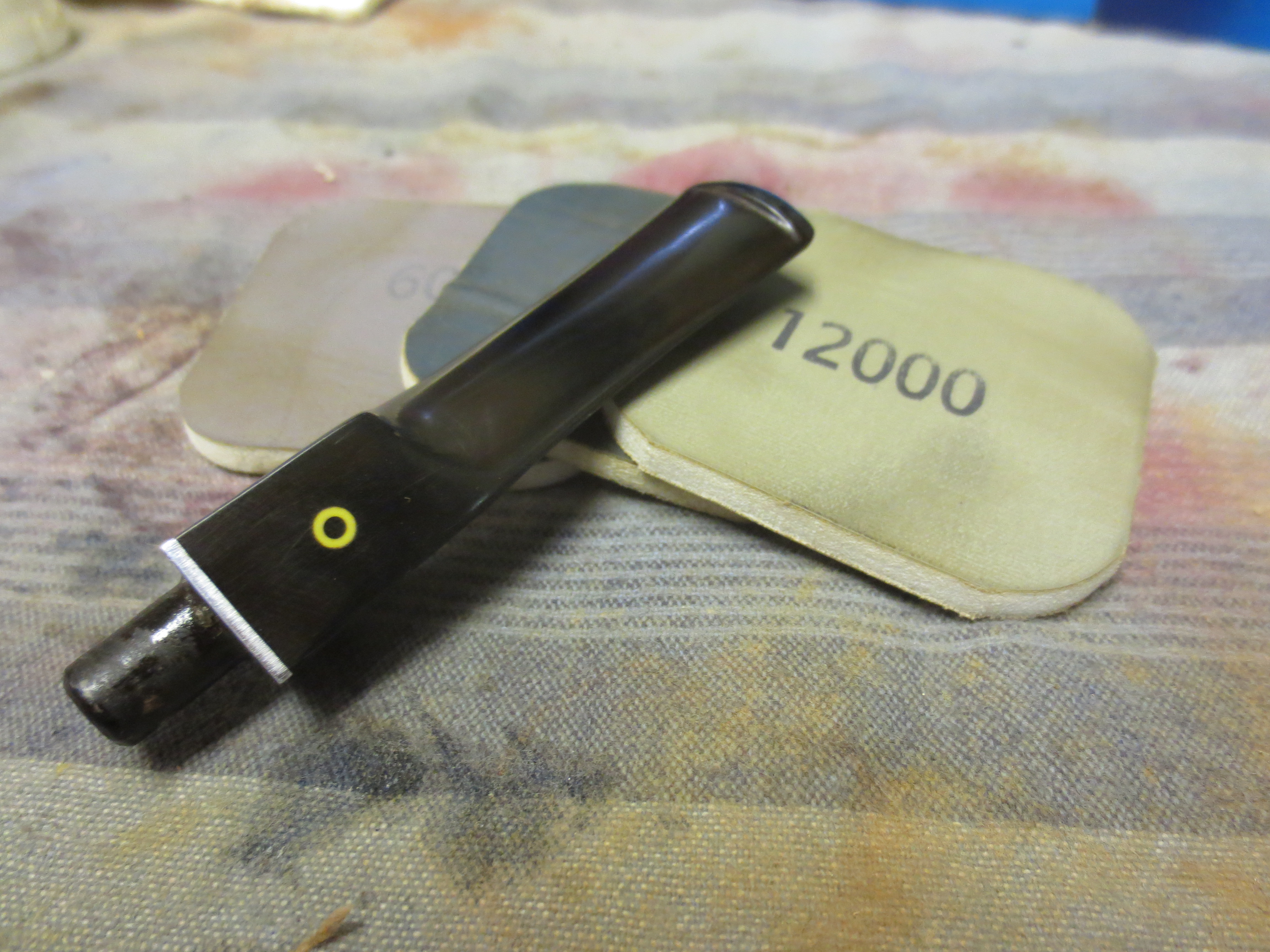
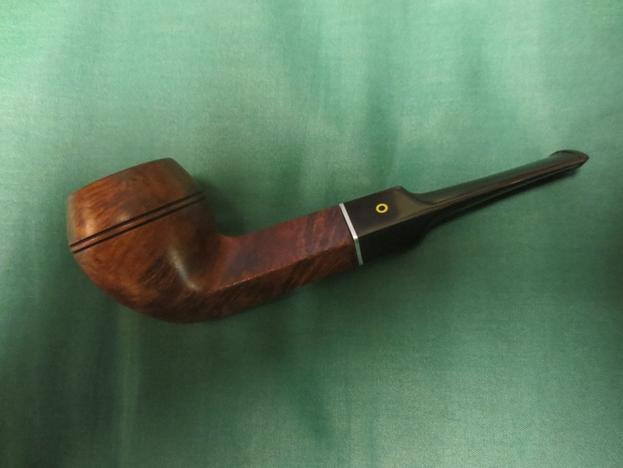
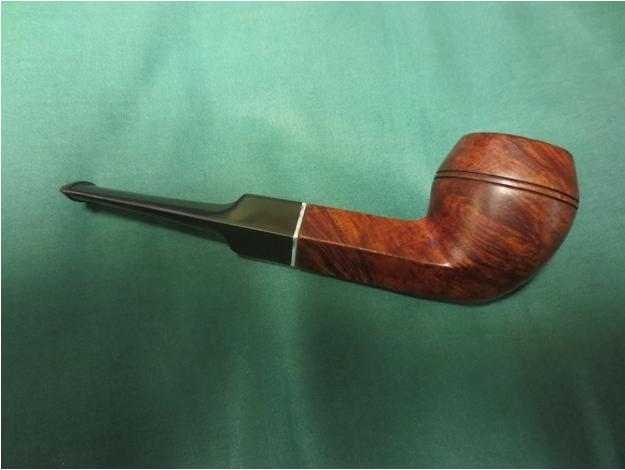
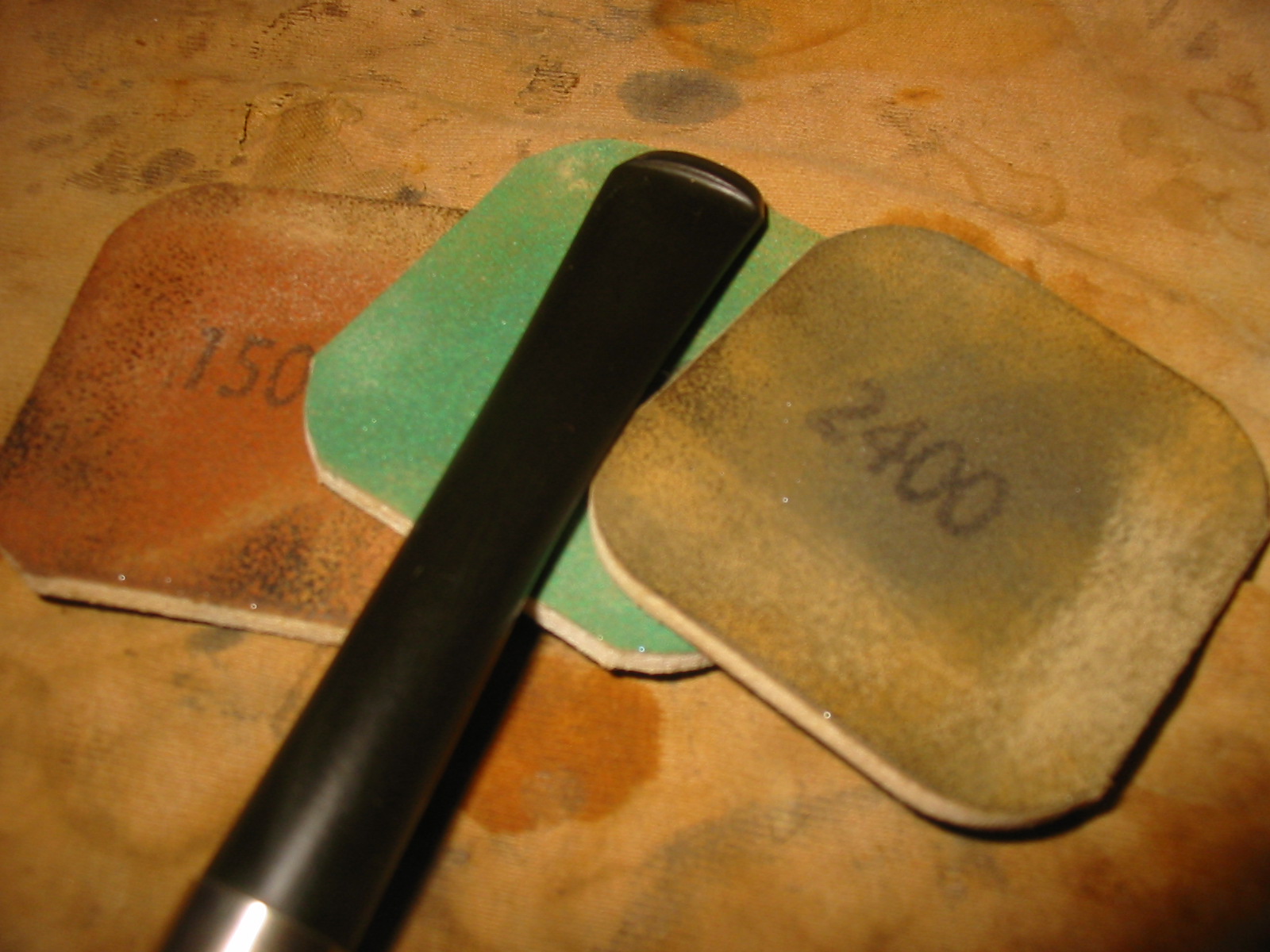
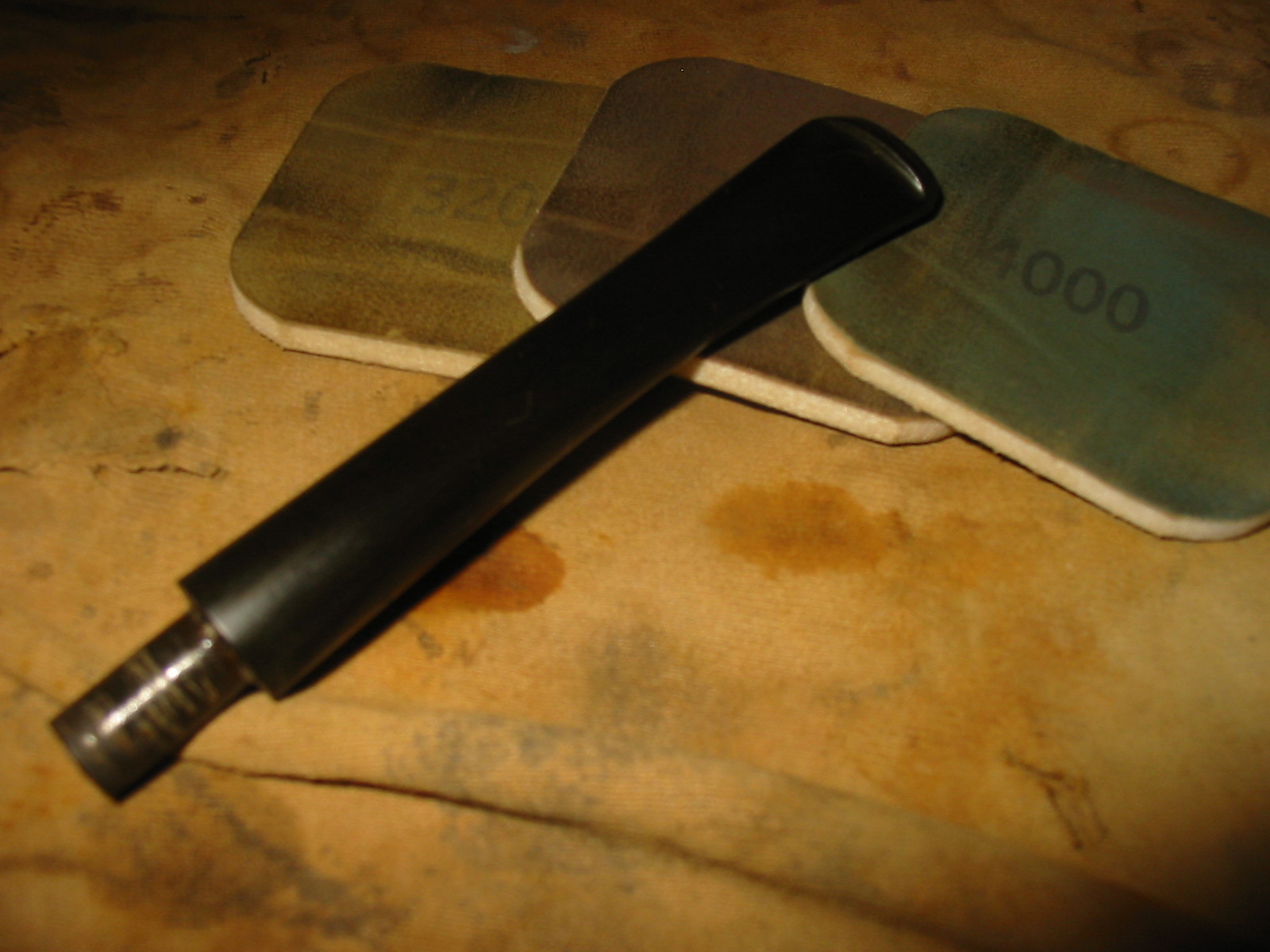
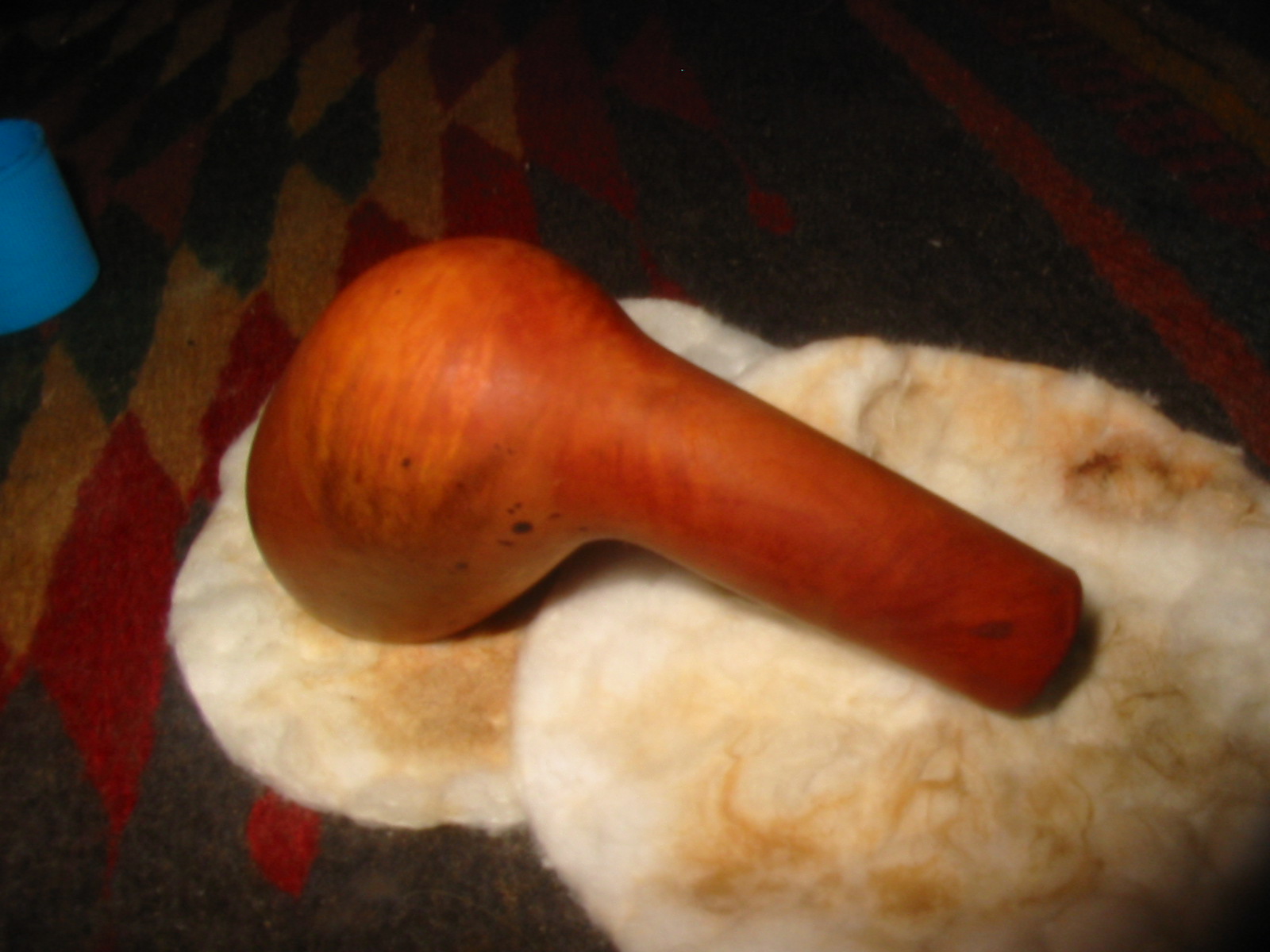
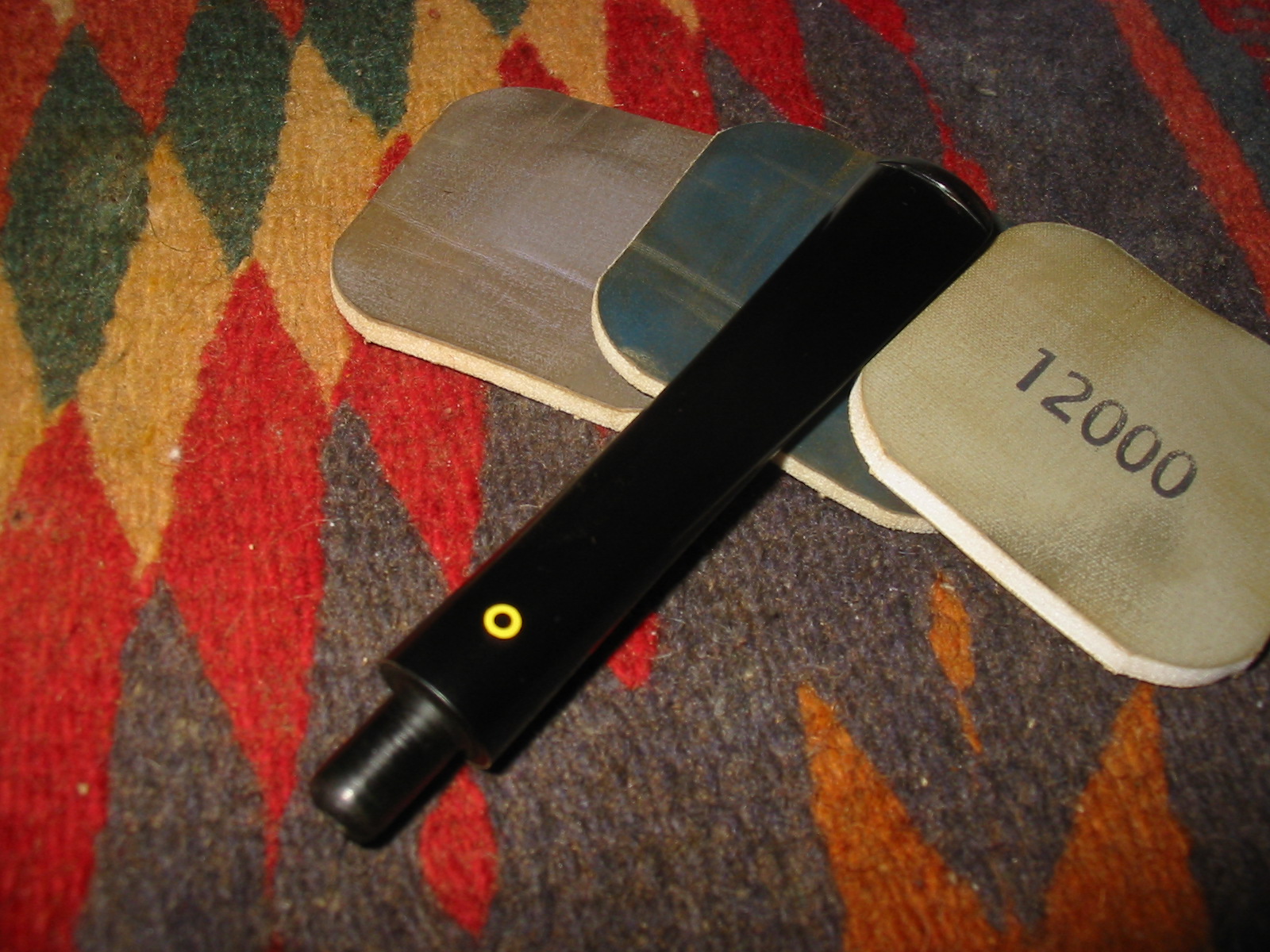
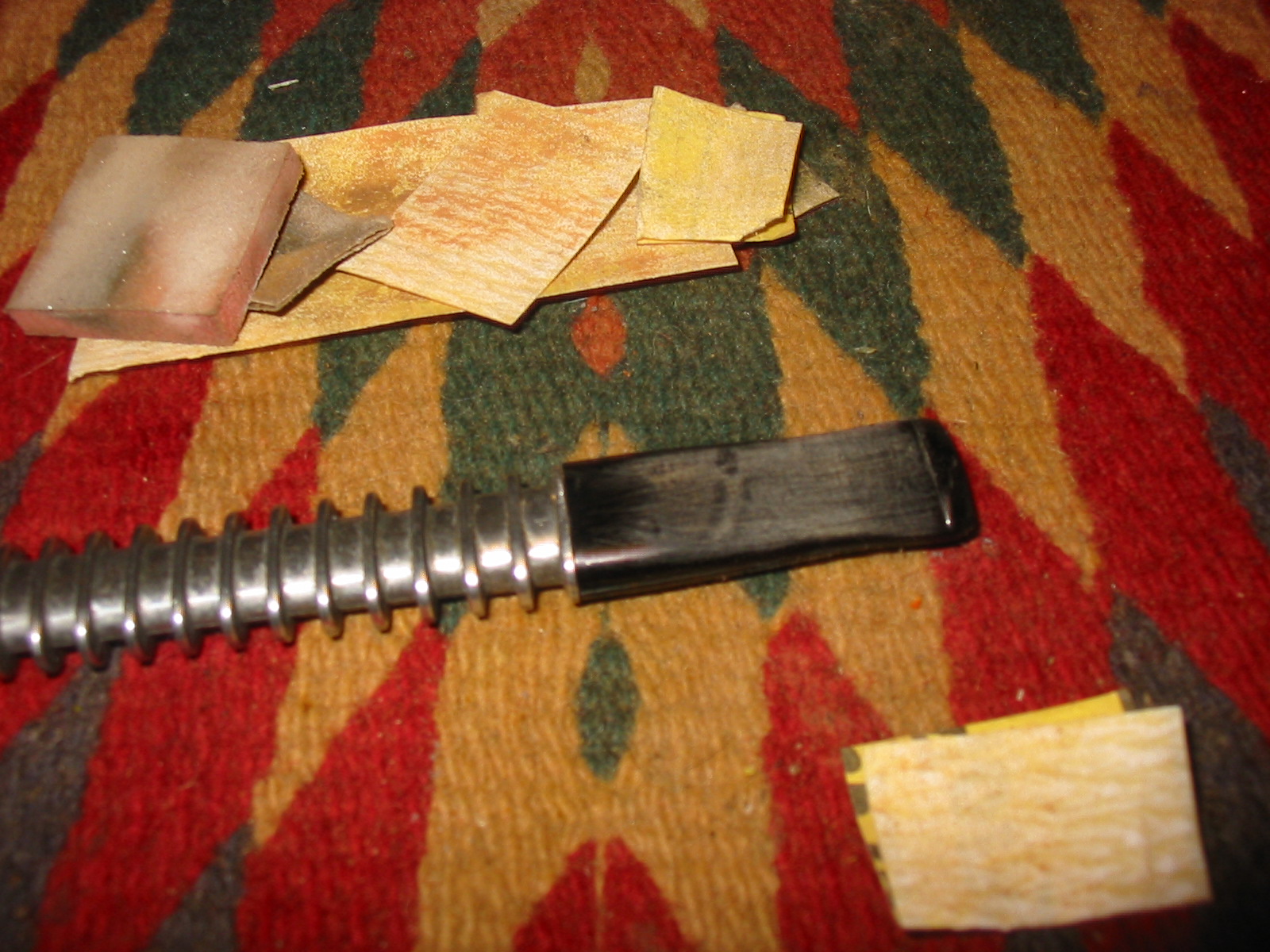
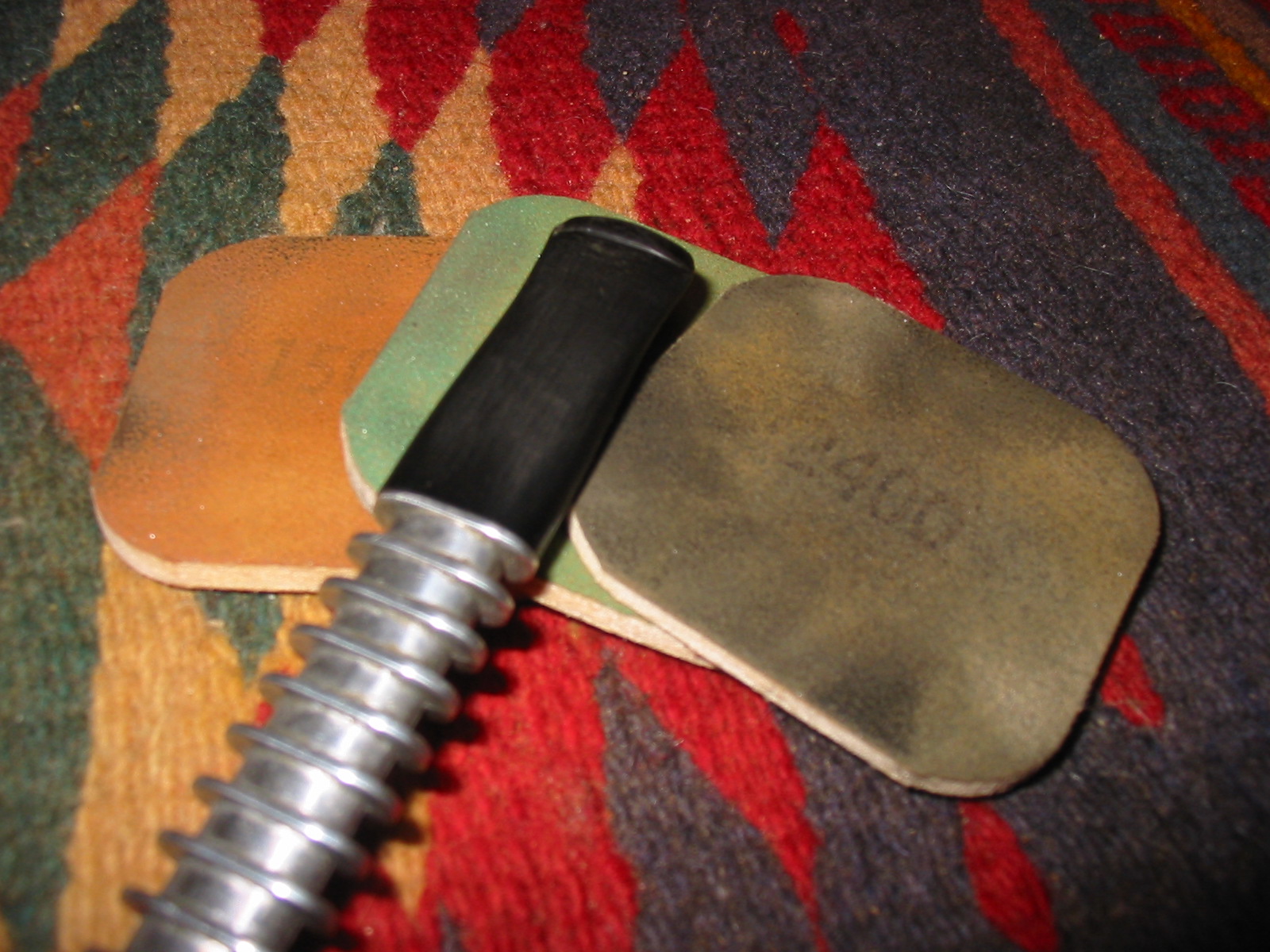
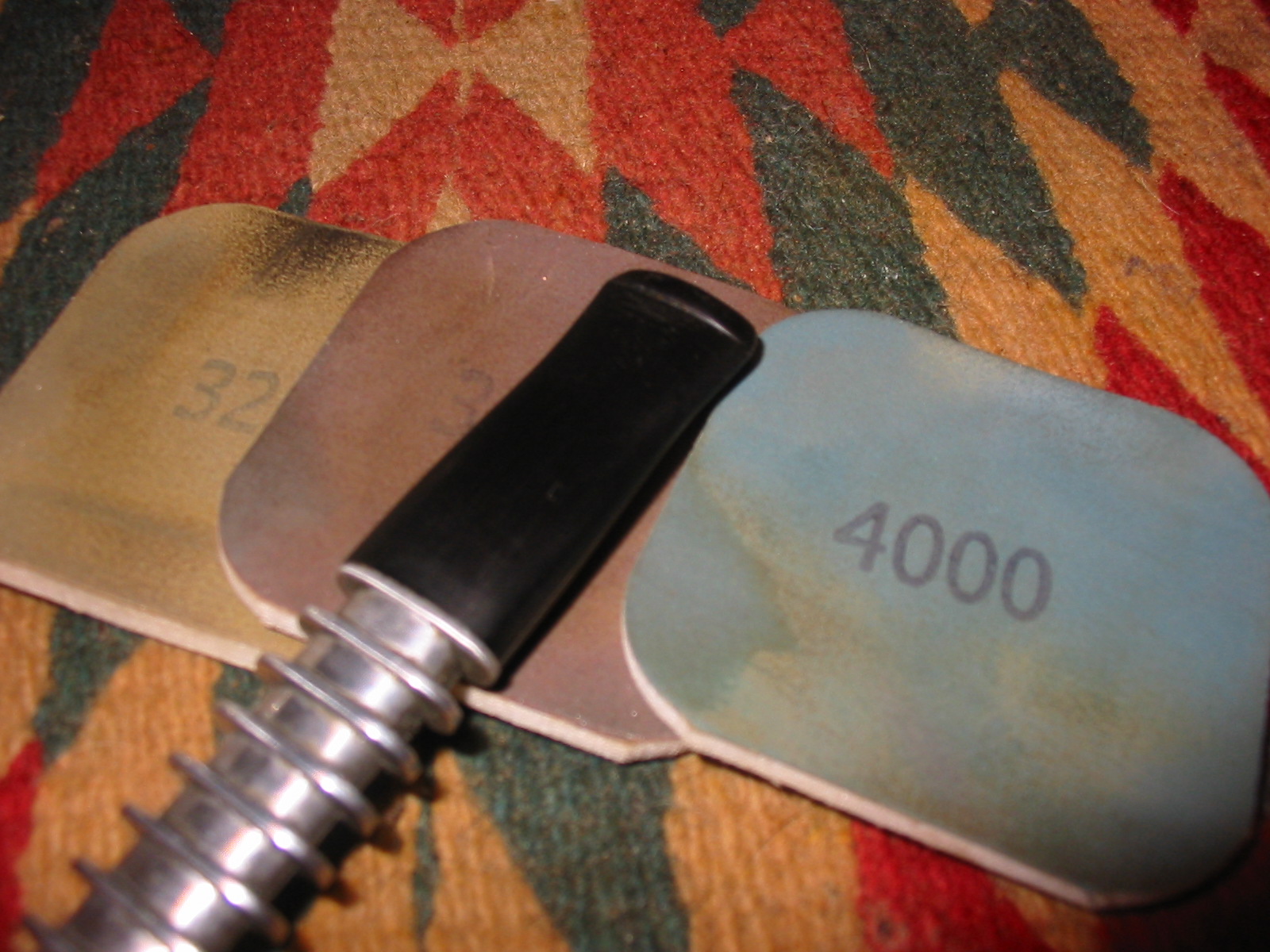
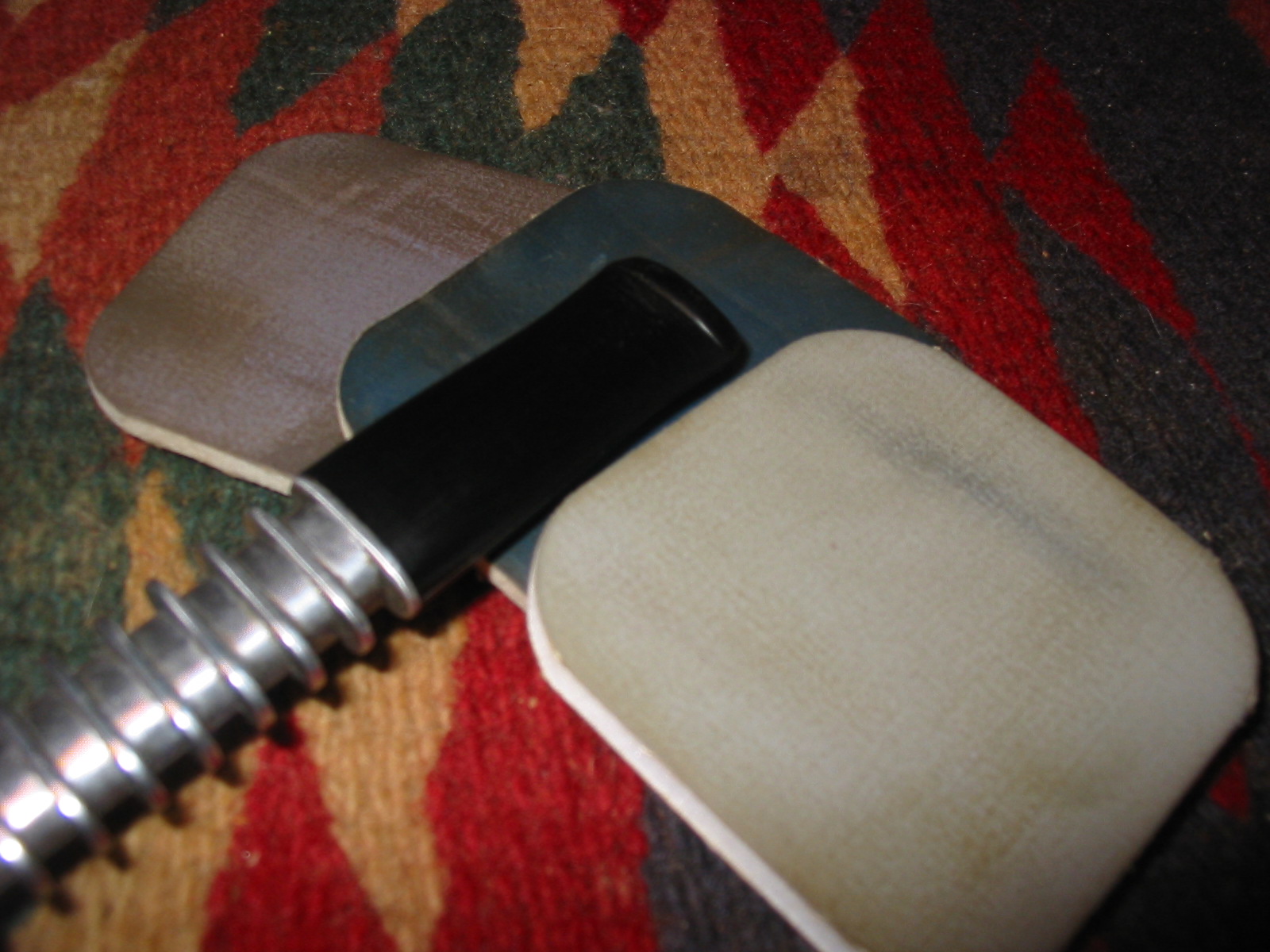
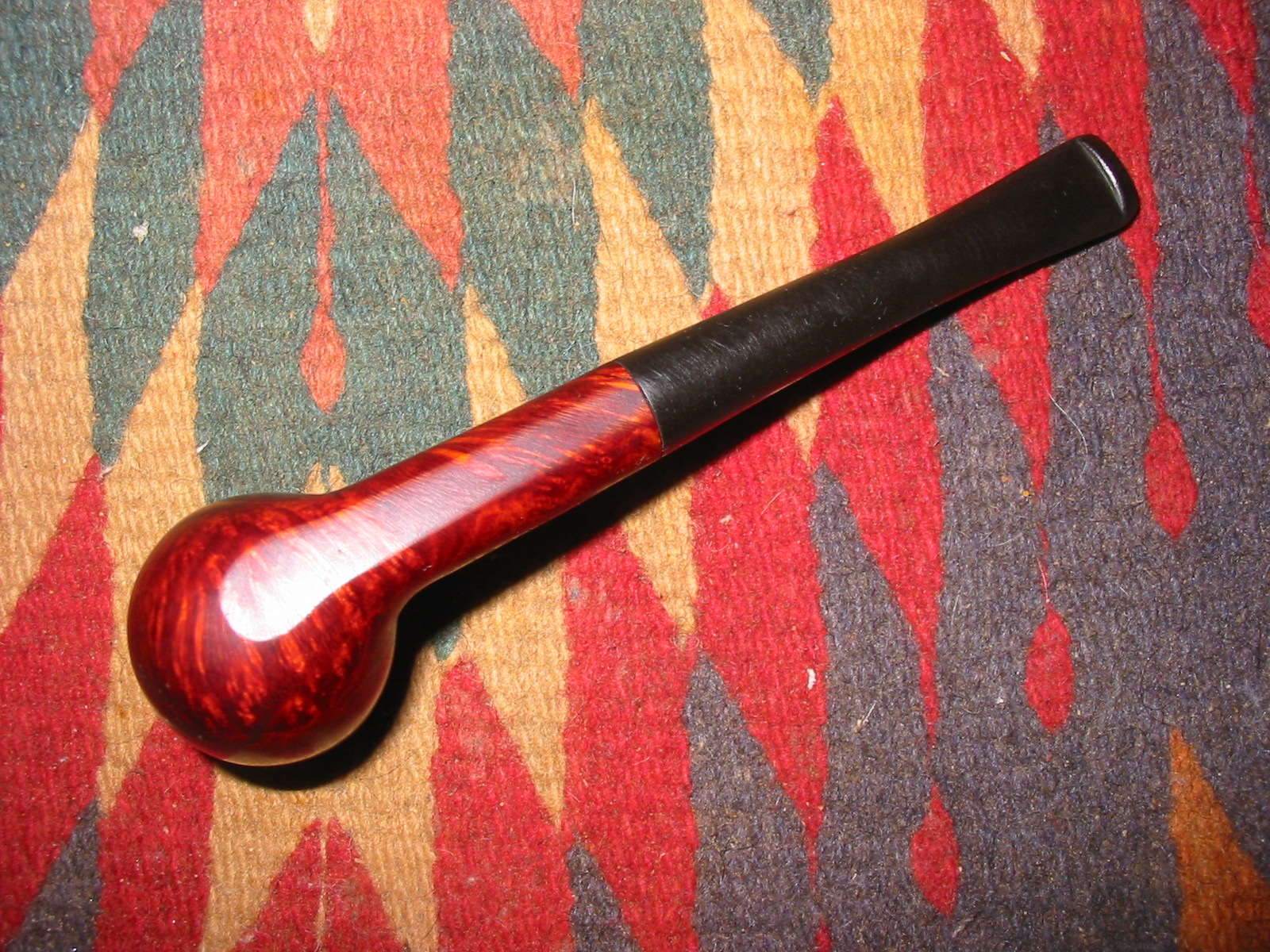
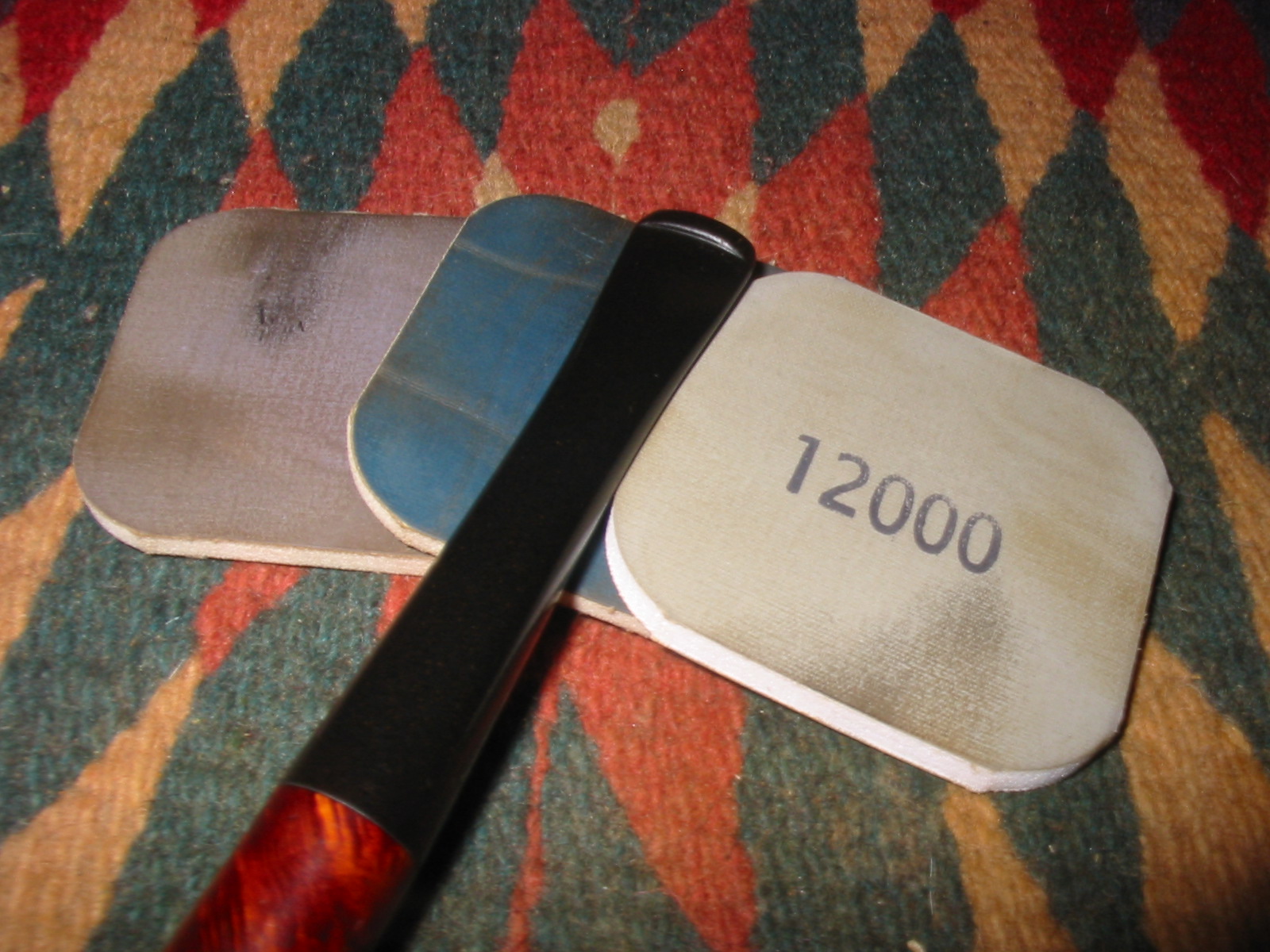
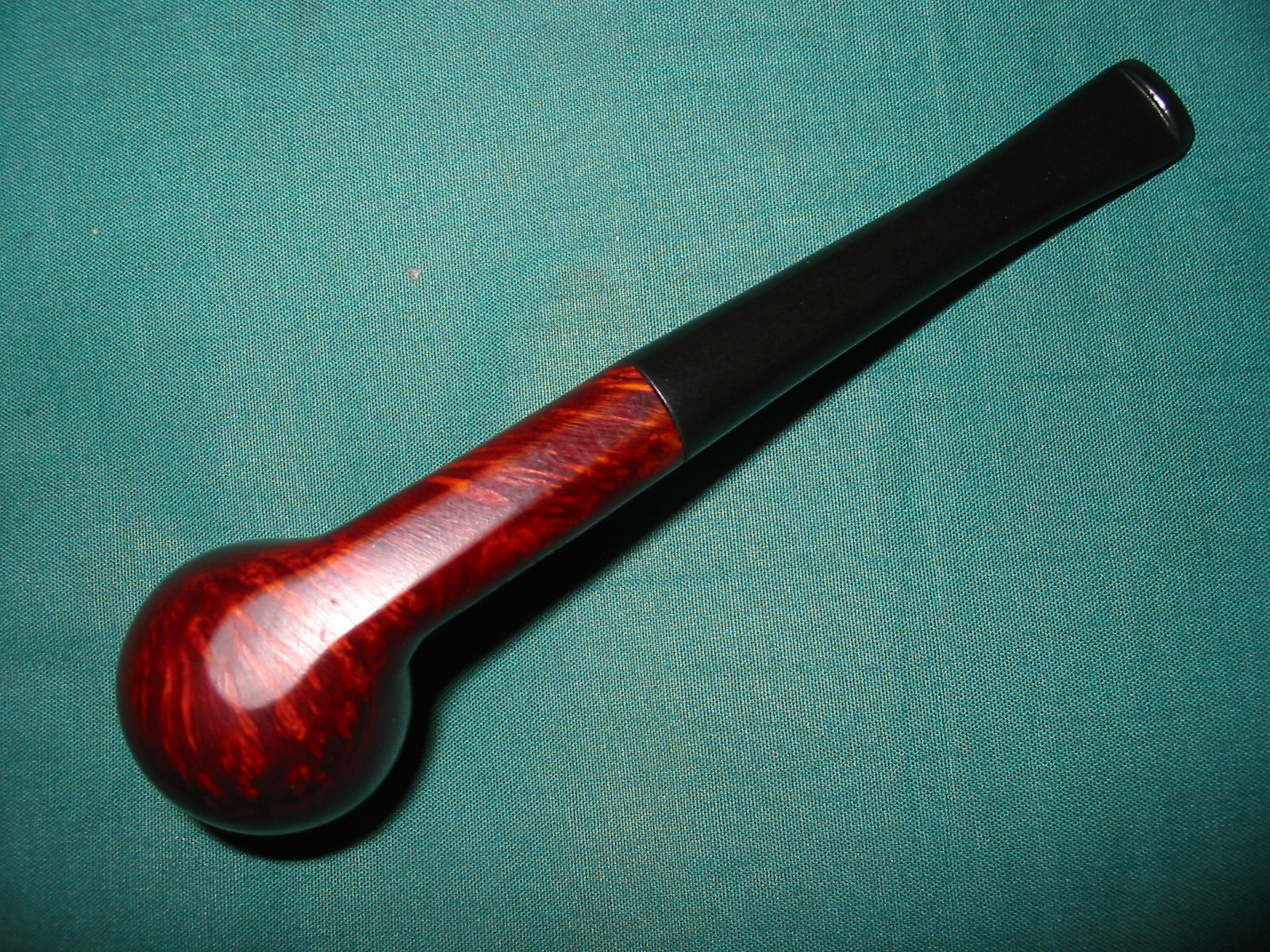
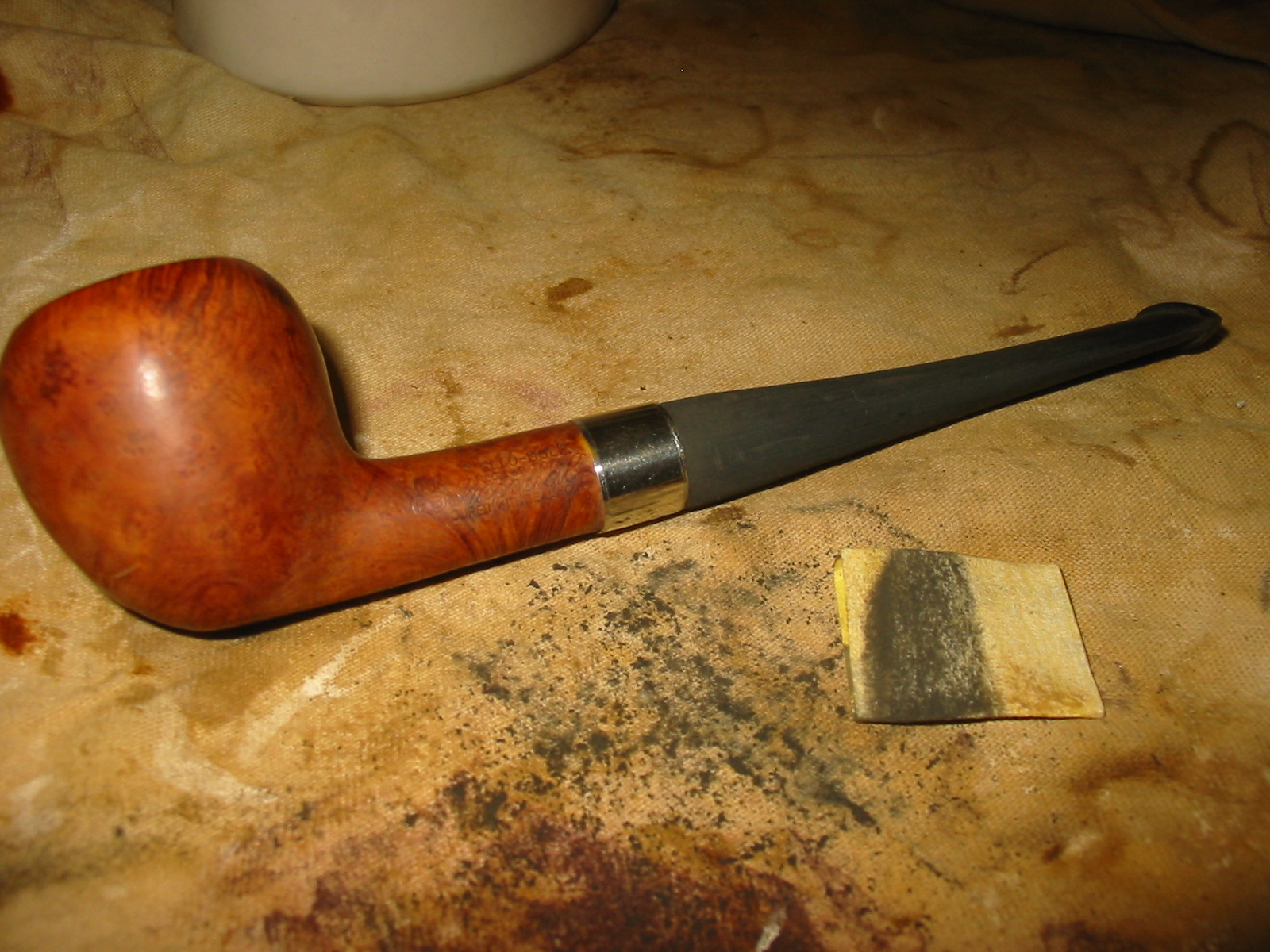
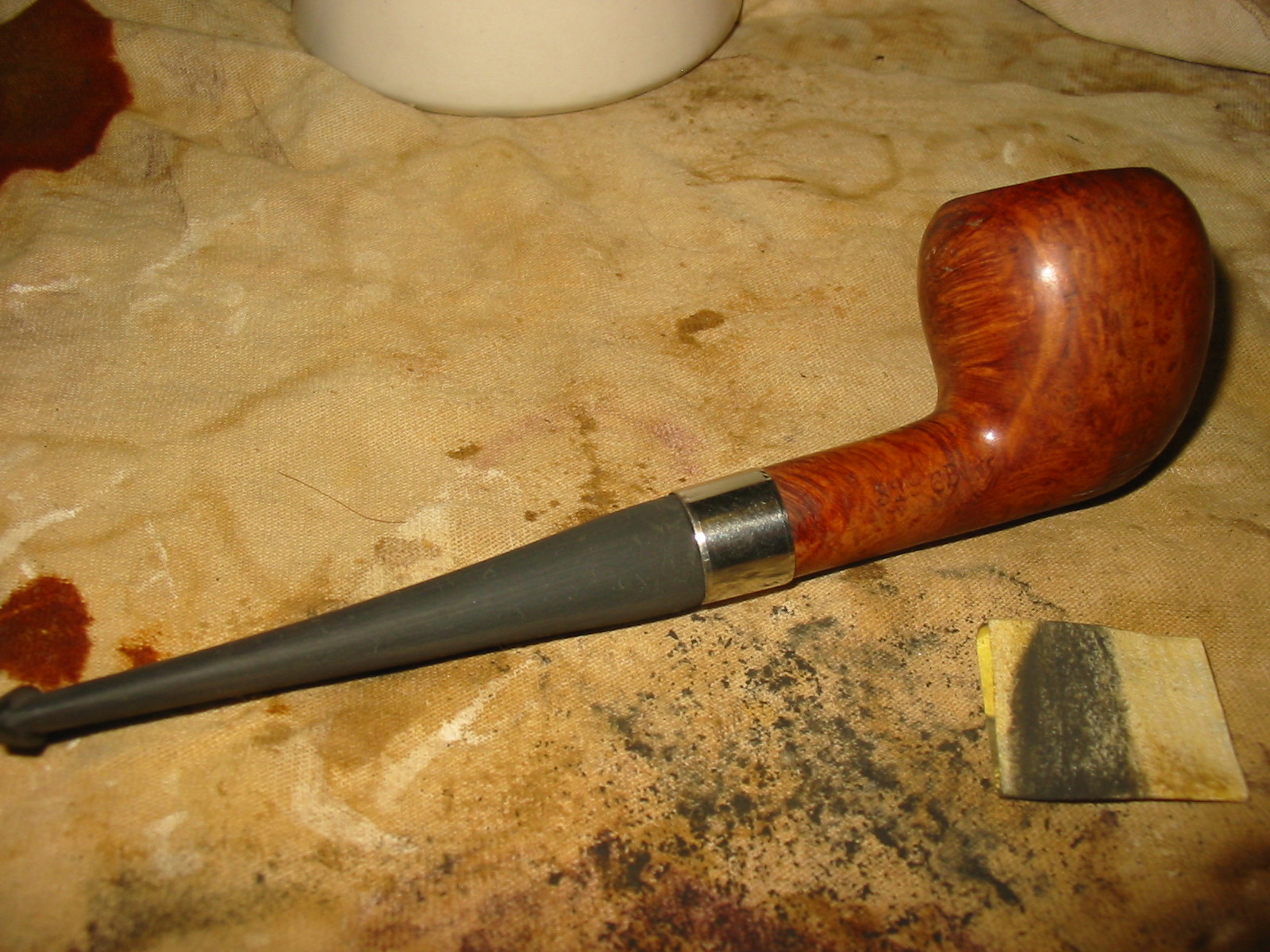
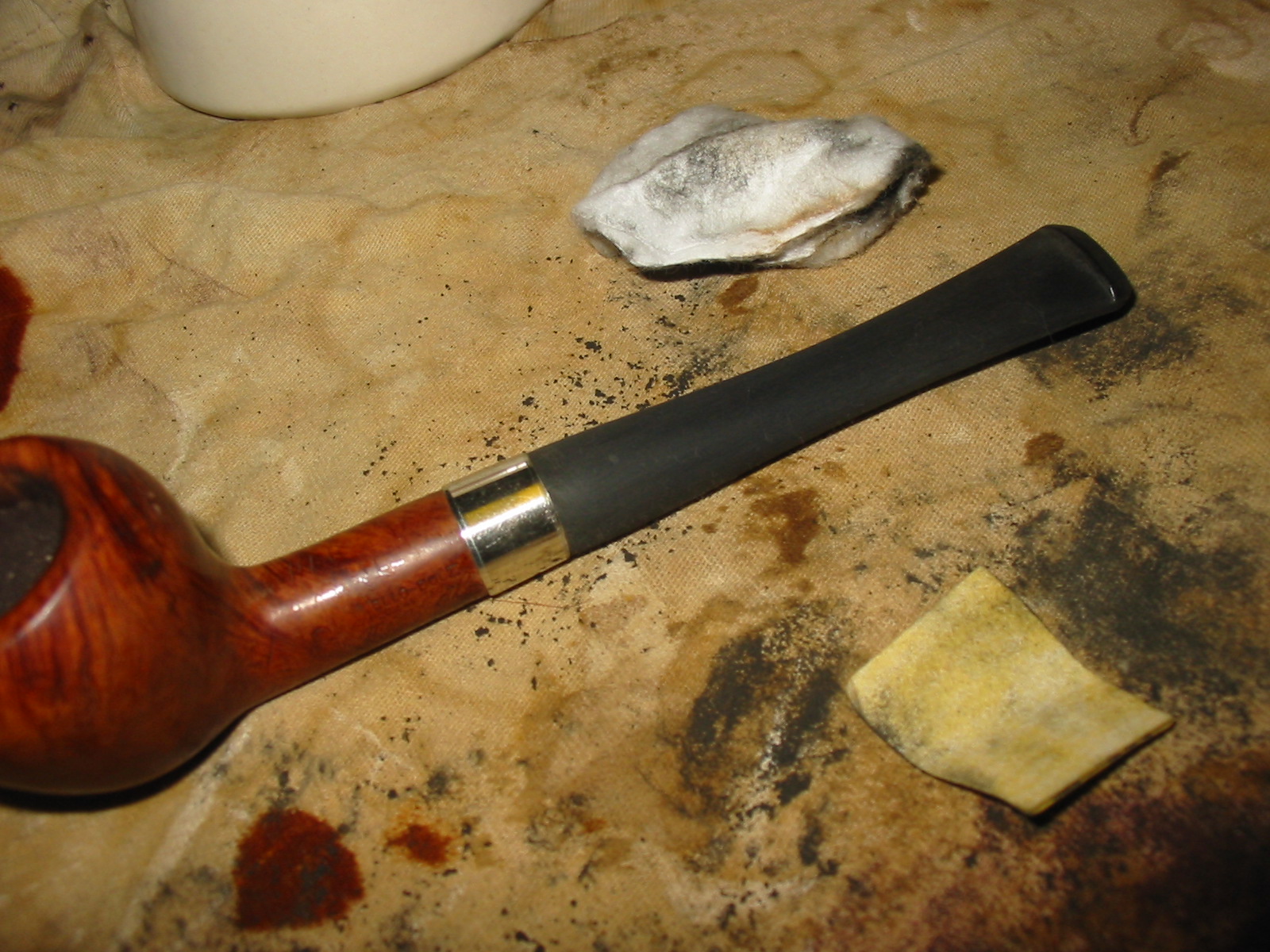
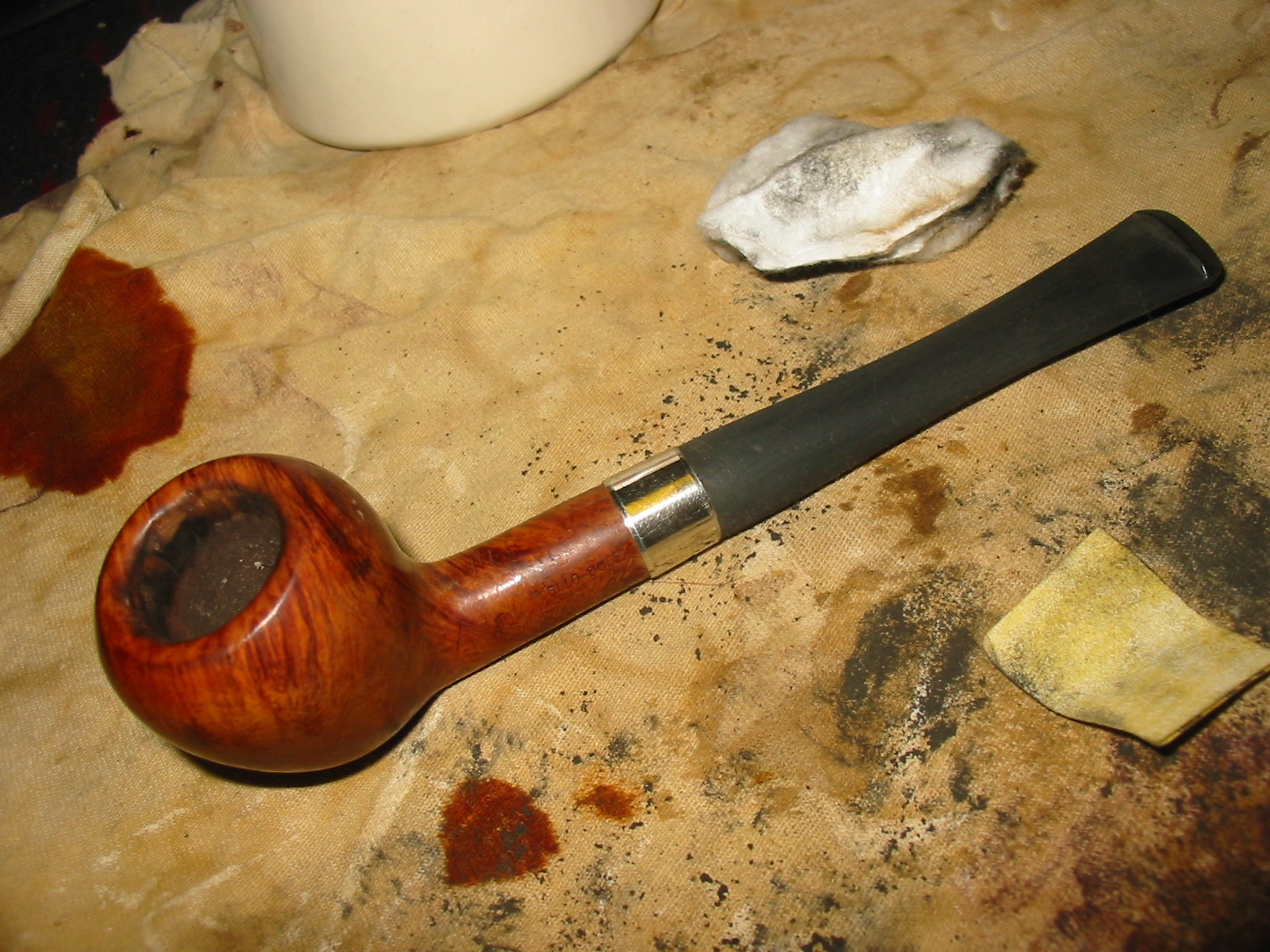
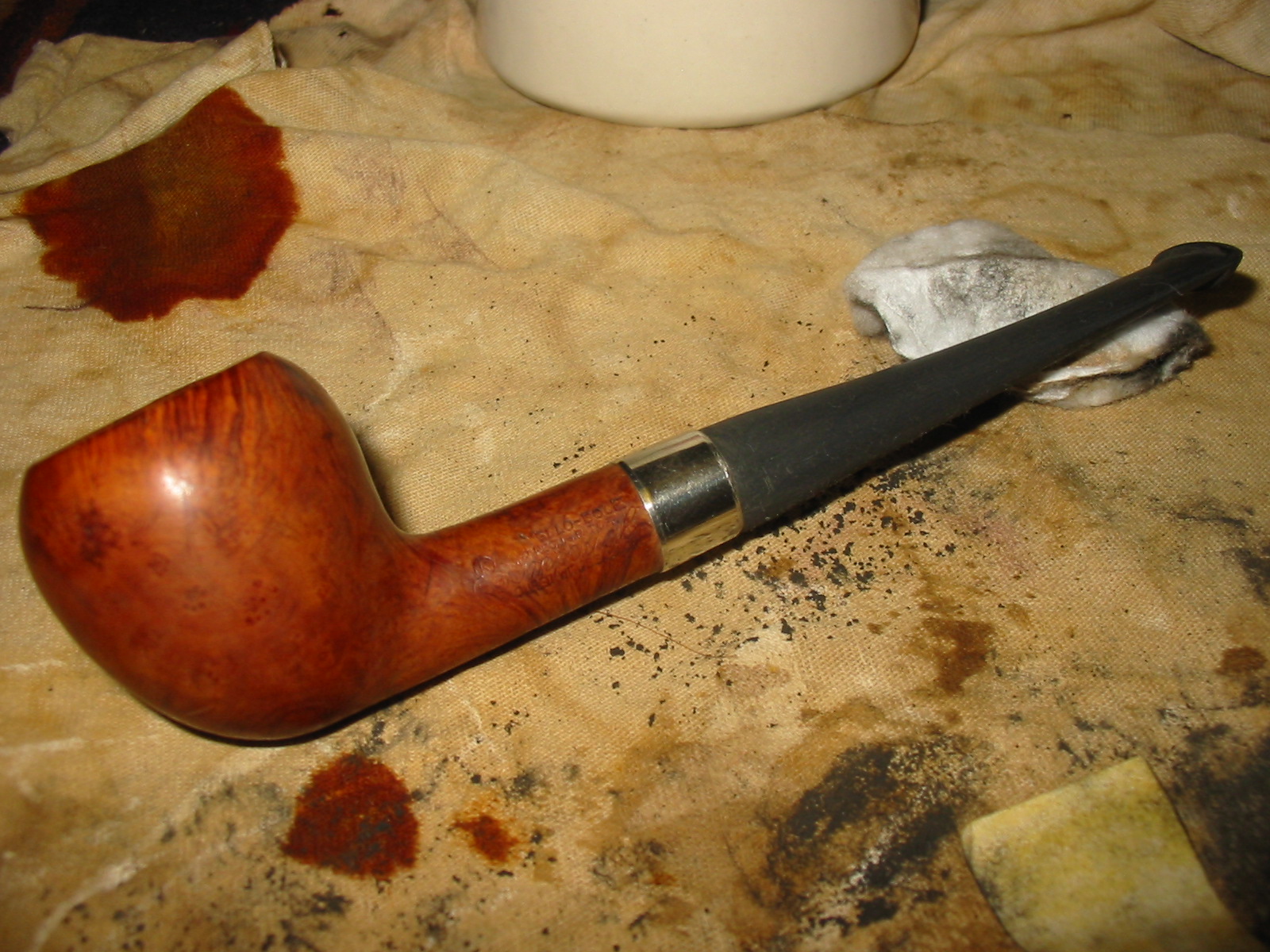
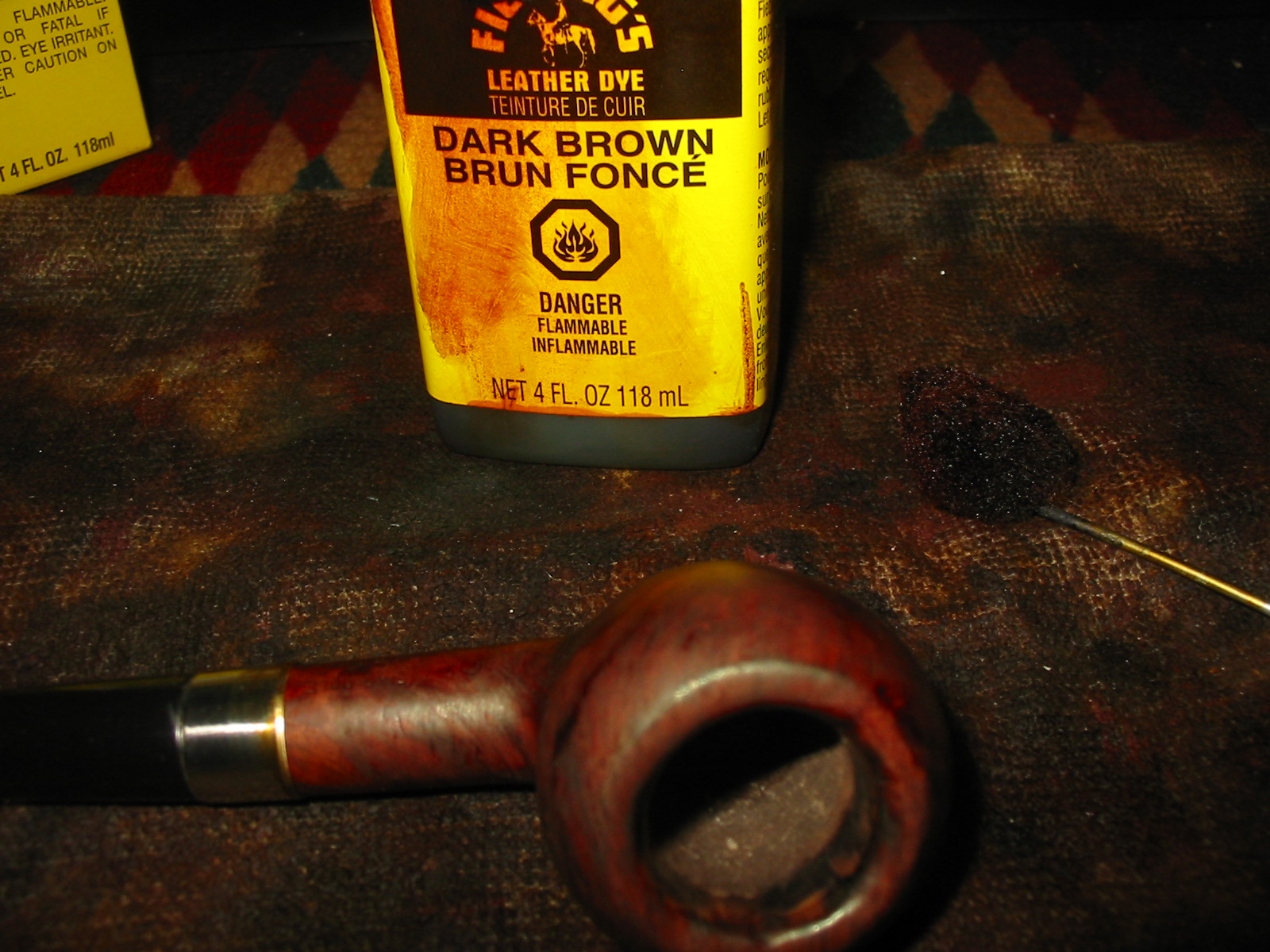
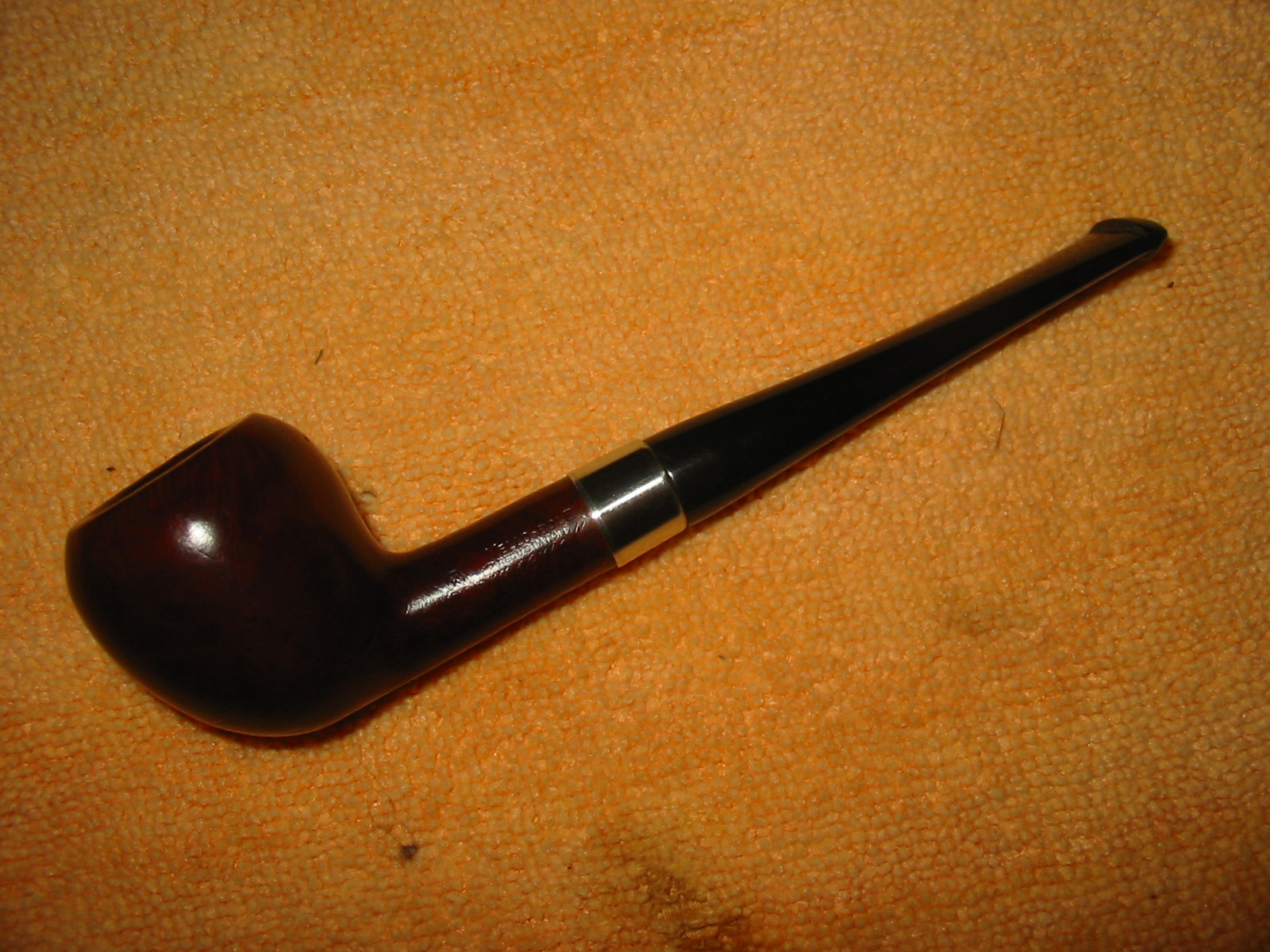
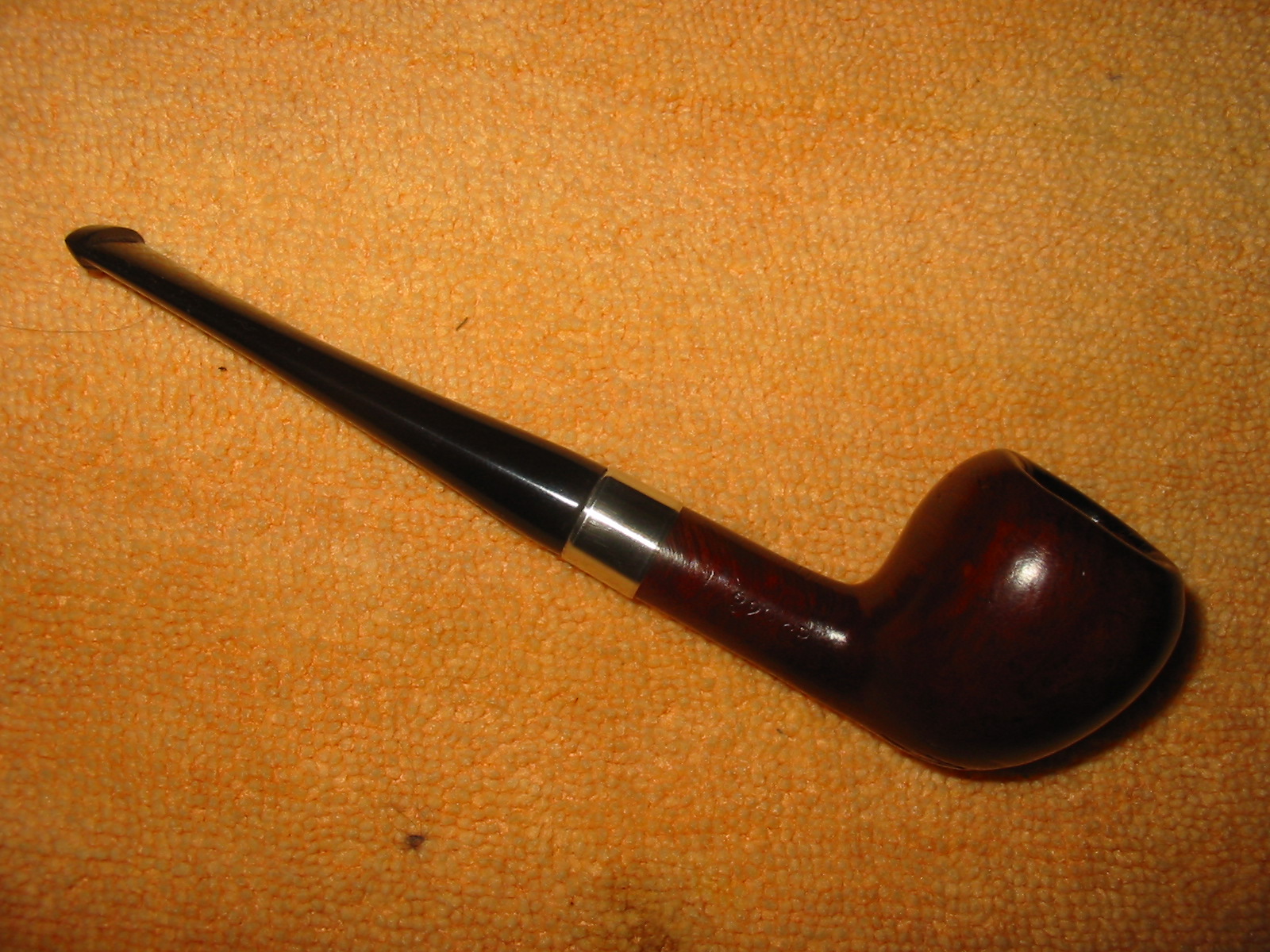
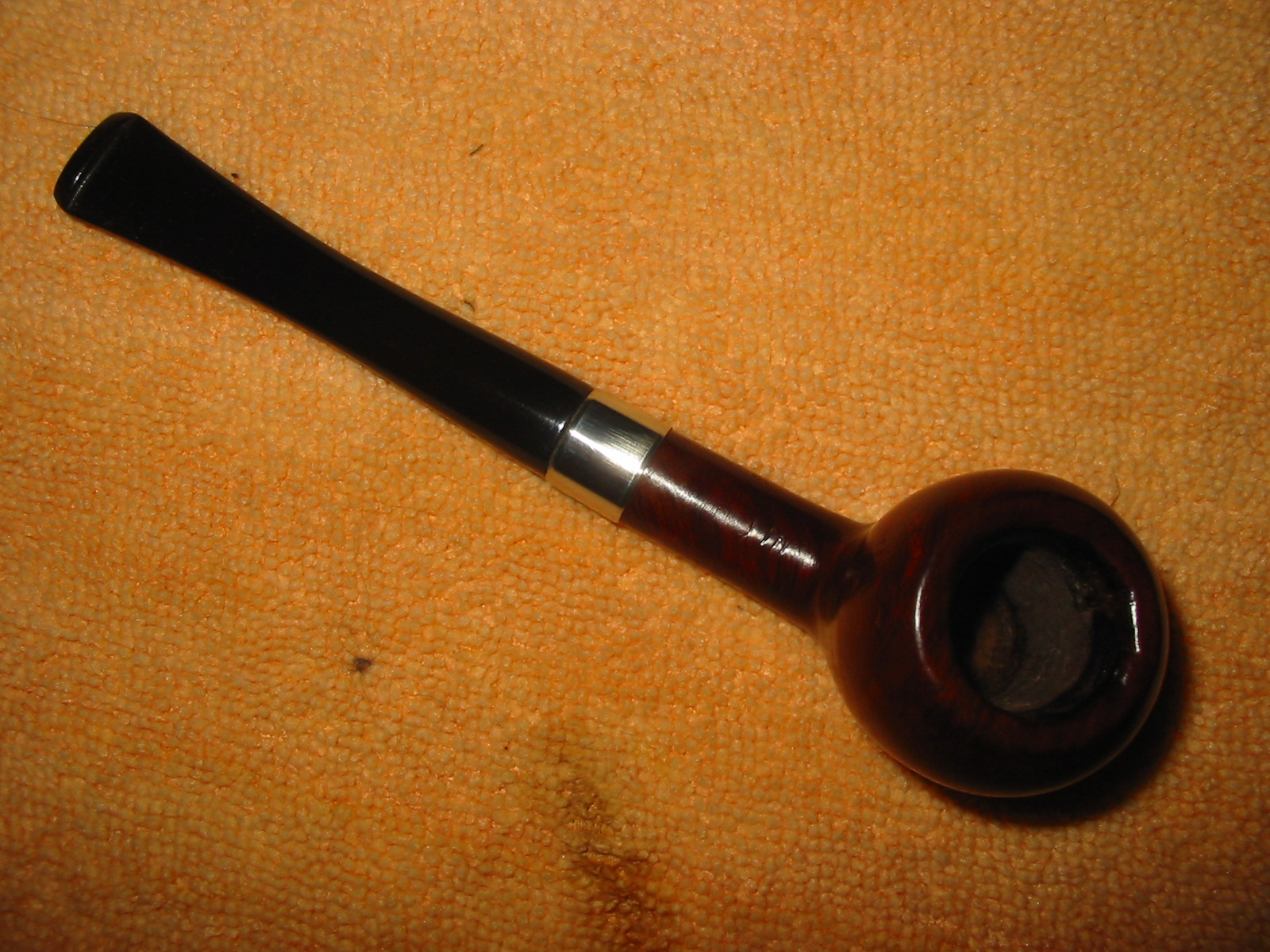
YB14I next turned my attention to removing the oxidization from the stem. I used 400 wet/dry with water and my sanding wedge, followed by 1500-2400 grit micro mesh pads with water.YB15 I polished both the bowl and stem with a progression of micro mesh pads, 1500-12,000 in preparation for final finish. I used my rotary tool with white diamond, followed by carnauba wax on the stem. I have to say this will be the new standard from now on.YB16 I decided to use Pimo Pipe Supply’s dark walnut stain on the bowl. This would give me a fighting chance to cover the pit repairs while still allowing the grain to show. It turned out better than I expected. I now have a very classy looking short pot. I also had the chance to try extreme pit repair. Even though this pipe had several pits, the briar still had nice grain. This one is a keeper.YB17

YB18

YB19

YB20

YB21

YB22

YB23

YB24

YB25

YB26

Trash to Treasure – Restoring a KBB Yello-Bole Billiard


Blog by Aaron Henson

Last evening I received an email from Aaron to which he attached this writeup on his restemming of an older KBB Yello-Bole. It is great to have the various readers of the blog submit articles to the blog to share with others. The dream of rebornpipes when I started it was just that – to provide a platform where those of us engaged in refurbishing tobacco pipes could share our methods, successes and failures. This community would provide ongoing education for anyone who wanted to try their hand at restoring estate pipes. With that background here is Aaron’s restoration and the explanation of his process. Welcome to rebornpipes Aaron.

By way of introduction, let me begin by saying that I am relatively new to pipe restoration. This write up details my third restoration and I thought I would submit it for two reasons; 1) I have gotten so much help from the regulars posting here at rebornpipes and from forums elsewhere I felt that I would like to share my experience for others to glean from, and 2) although it is not very different from some of the other restorations that Steve has catalog for us here, some of my tools and techniques may be a little different. I also hope to get some feedback on ways to improve my process.

I was at local second-hand shop with my family around Thanksgiving and was looking for pipes when my son found a stemless KBB Yello-Bole stummel. After looking it over for cracks in the bowl and stem I realized that the briar was in relatively good condition. I noted a few chips on the edge of the rim and some blackening of the rim but no fills and not much cake in the bowl. The stem was clearly stamped with the KBB logo in a clover leaf just to the left of:YB

YB1 I did not know much about the Yello-Bole brand but I thought I should be able to find a stem easily enough (aren’t they somewhat universal in size?). Besides, with a $4 price tag I figured I would not be out anything if it didn’t work out.YB2

YB3

YB4 I jumped on my computer as soon as I got home and found some interesting history on the Yello-Bole brand. I won’t go into it here because Steve has done a nice job summarizing it in one of his posts: Narrowing Down a Date for Kaufman Brothers & Bondy’s KBB and KB&B Pipes. From the data available I had to guess that this pipe was form the late 1950’s or 60’s.

After reading up on the history of the pipe I began looking online for a new stem. I quickly learned that not all pipe stems are created equal, nor are they interchangeable. For a while, I considered sending the stummel to someone to have a stem made but that kind of defeated the whole spirit of restoring the pipe myself.

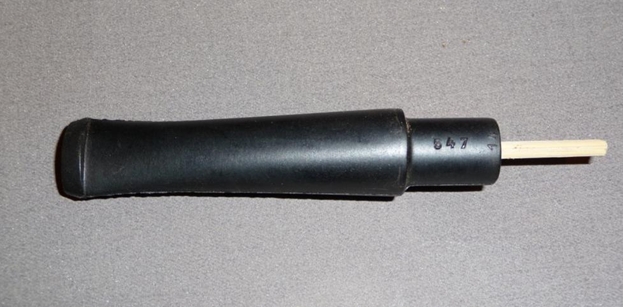
It took a while to find a stem that I thought would look right on the pipe. I settled on a stem from Vermont Freehand (ebay vt_freehand), a 2½” tapered stem – No. 547. I ordered 3 of them, figuring that I would need at least one for practice.

While I waited for the stems to arrive I began working on the stummel. There was not a lot of cake in the bowl so I started there – low hanging fruit. Now, I don’t own a reamer, but I have found that a ½” dowel wrapped with 60 grit sandpaper answers very well. What cake there was came out cleanly.

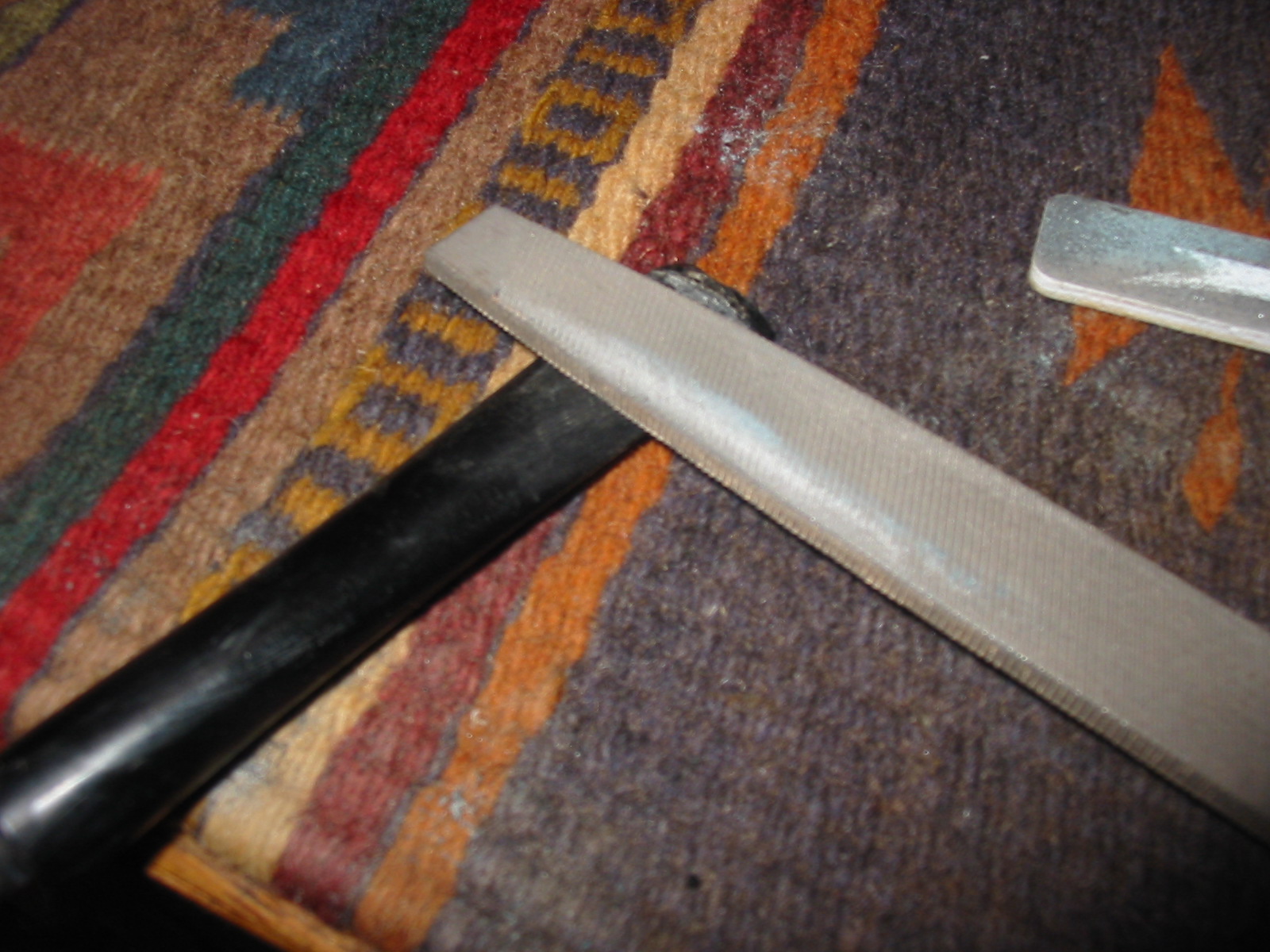
Besides the chip there was some charring on the rim. The chip was not very deep so I thought I would take care of both issues by taking the top of the bowl down to clean briar. Using 120 grit sand paper mounted on a flat surface, I carefully worked the bowl in a circular motion trying to keep it level. I didn’t want to take off too much of the top so I gave the outside lip of the bowl a slight chamfer to remove the bottom part of the chip.YB5 I then gave the stummel a soak in a 91% isopropyl alcohol bath. This was for the dual purpose of removing the existing finish and loosening the crud in the shank. I removed the stummel after about 24 hours and wiped off the existing stain. I then cleaned the shank with a bristled brush, bristled cleaners and cotton swabs. I wanted to make sure the mortise was thoroughly cleaned before I began to size the tenon on the new stem.YB6 When the stems arrived, I realized that I probably could have been a little more attentive to the size I purchased. I was going to have to remove a lot of material to get the tenon to fit the mortise as well as flushing the stem to the shank. The best way to shape a stem is on a lathe, but not having a lathe I turned to my drill press.YB7 I found that a bamboo skewer fit very snugly into the air hole of the stem.YB8 Leaving about 1 inch of the skewer protruding out of the air hole, I chucked the stem into my drill press.YB9 I started out a little timidly, removing material with 120 grit sand paper but the vulcanite is so soft that it gums up the paper very quickly. I switched to 60 grit and still was not seeing much progress. I tried a metal file next and when that did not answer I rummaged around the tool box and found a rasp. A bit aggressive I admit, and I would not recommend it unless you are removing a lot of material, and I was.
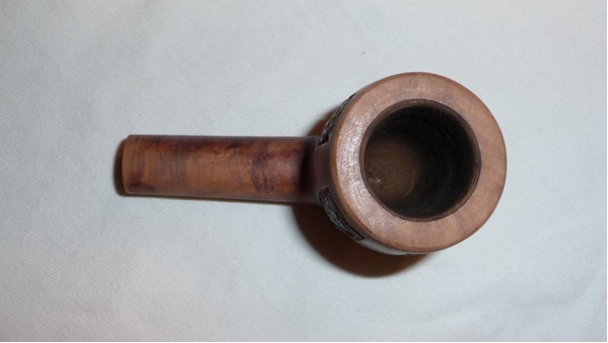
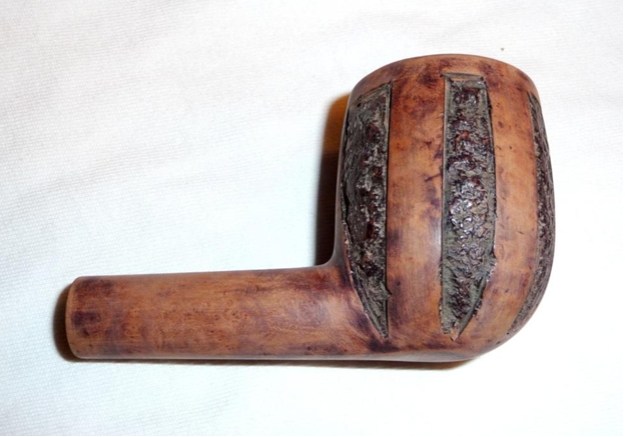
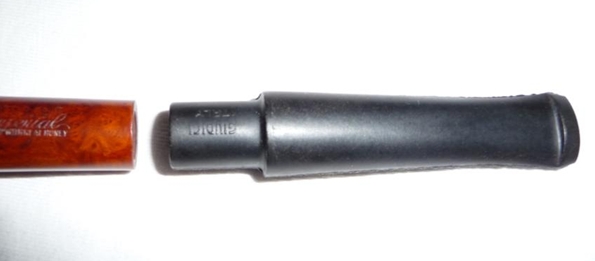
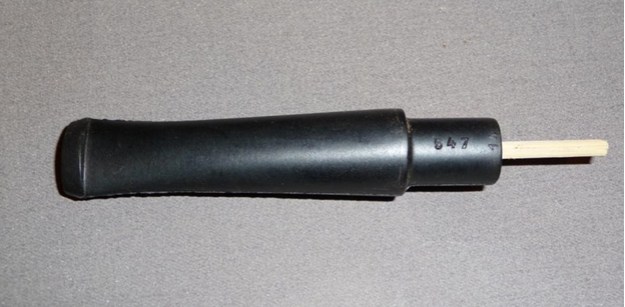
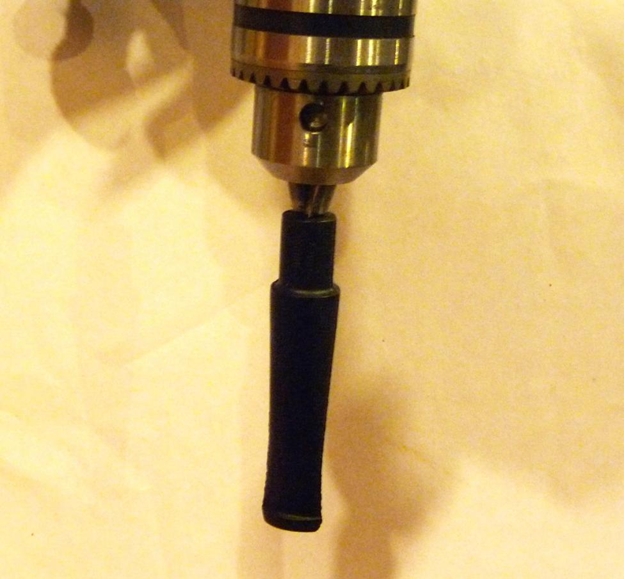
The drill press method worked great but was not without its problems. Pressing too hard with the file or rasp would cause the stem to slip on the skewer. The stem would then have to be reseated before I could resume. The other problem happened about half way through the rough shaping; the skewer broke off flush with the end of the tenon. I admit I panicked a little when I could not get a hold of the skewer with my needle nose pliers. But using a small drill bit I was able to carefully drill out the wedged skewer.

Back on track I, stopped often to check the fit. As I neared the correct size I switched back to the file then to the sand paper again. I finished the tenon with 320 grit sand paper.YB10 I thought fitting the tenon to the mortise was going to be the hard part but shaping the stem to get that perfect flush fit with the shank turned out to be the big challenge. You can see in the picture above that I have a ways to go to get the taper from the shank to the button. I have also started to get a bit of a wave about a quarter of the way from the tenon.
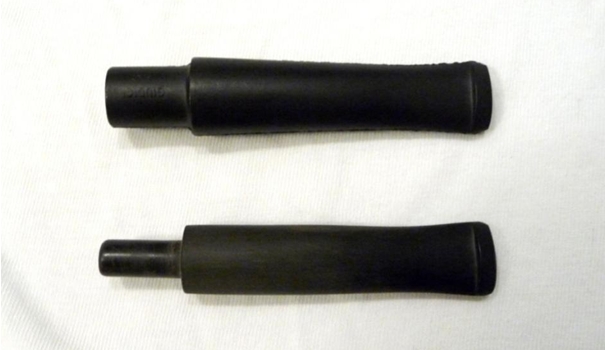
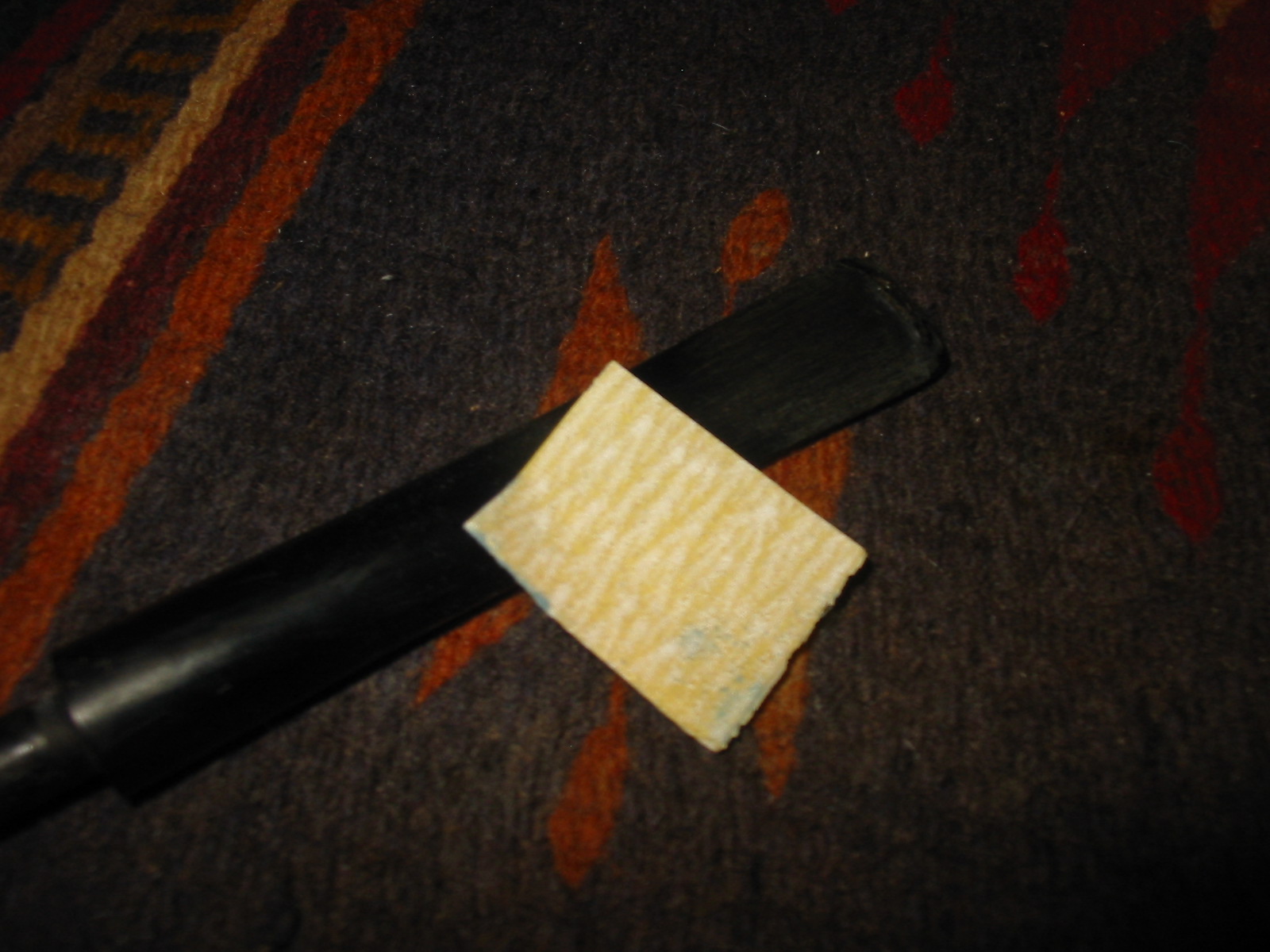
To fix this I stapled a piece of 240 grit paper to a 3” sanding block and went to town. The sanding block kept the contact surface flat and helped to eliminate the wave. It took about an hour of work stopping often for fit checks. In the end I was rewarded with nice taper. Somehow I had rounded over the shoulder of the stem ever so slightly. This formed a little groove at the stem/shank connection. It was not terrible and I felt could live with it for now.

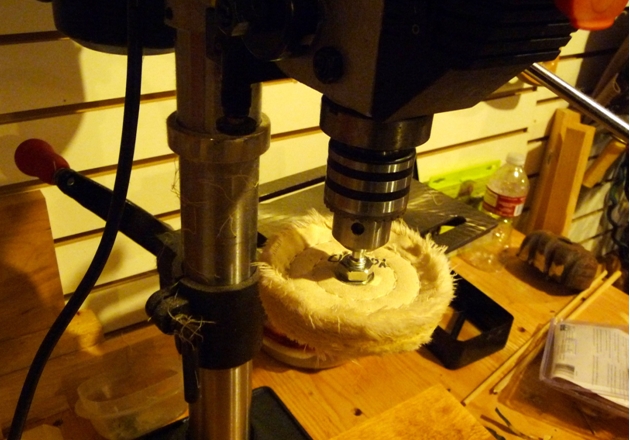
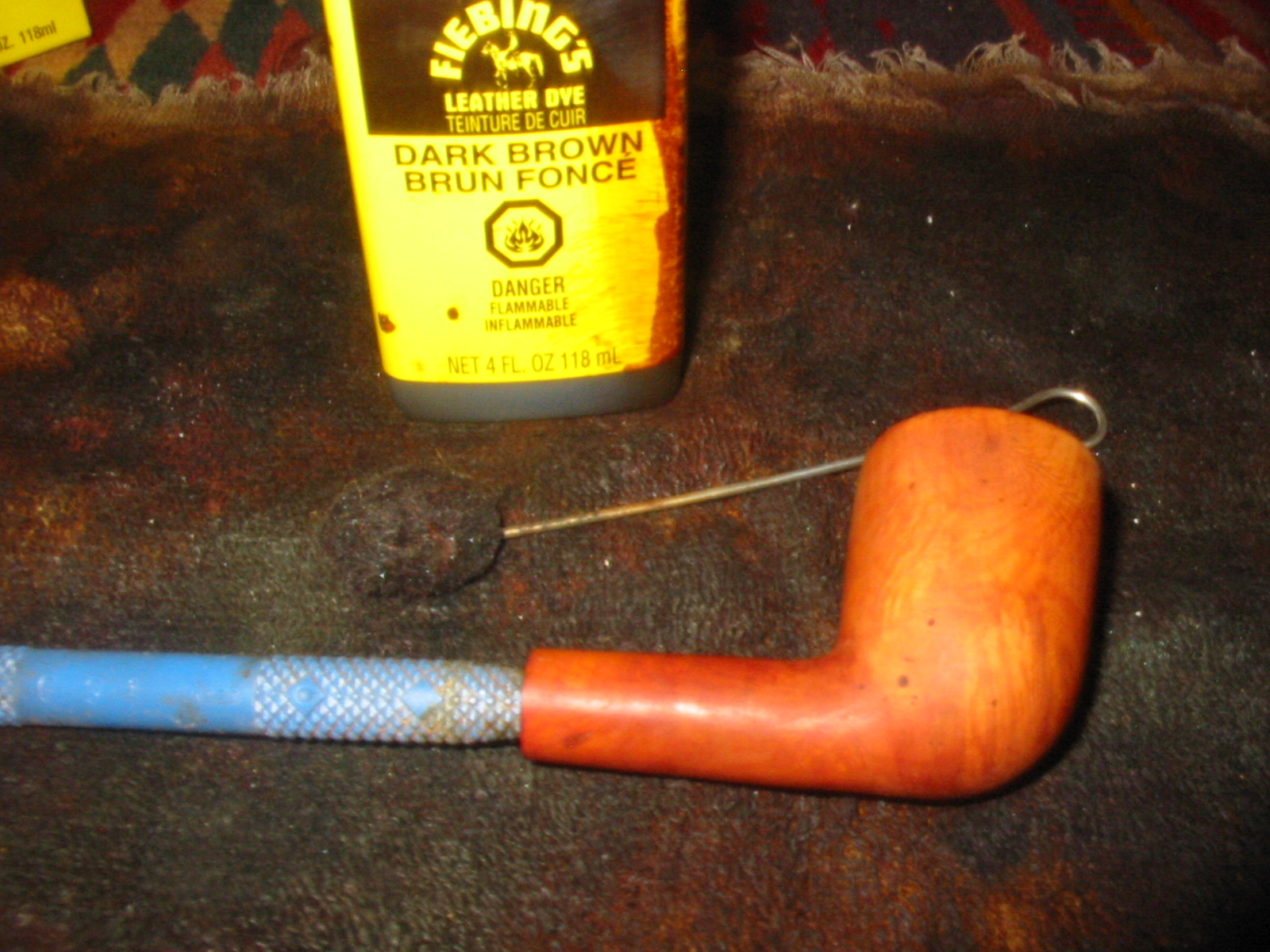
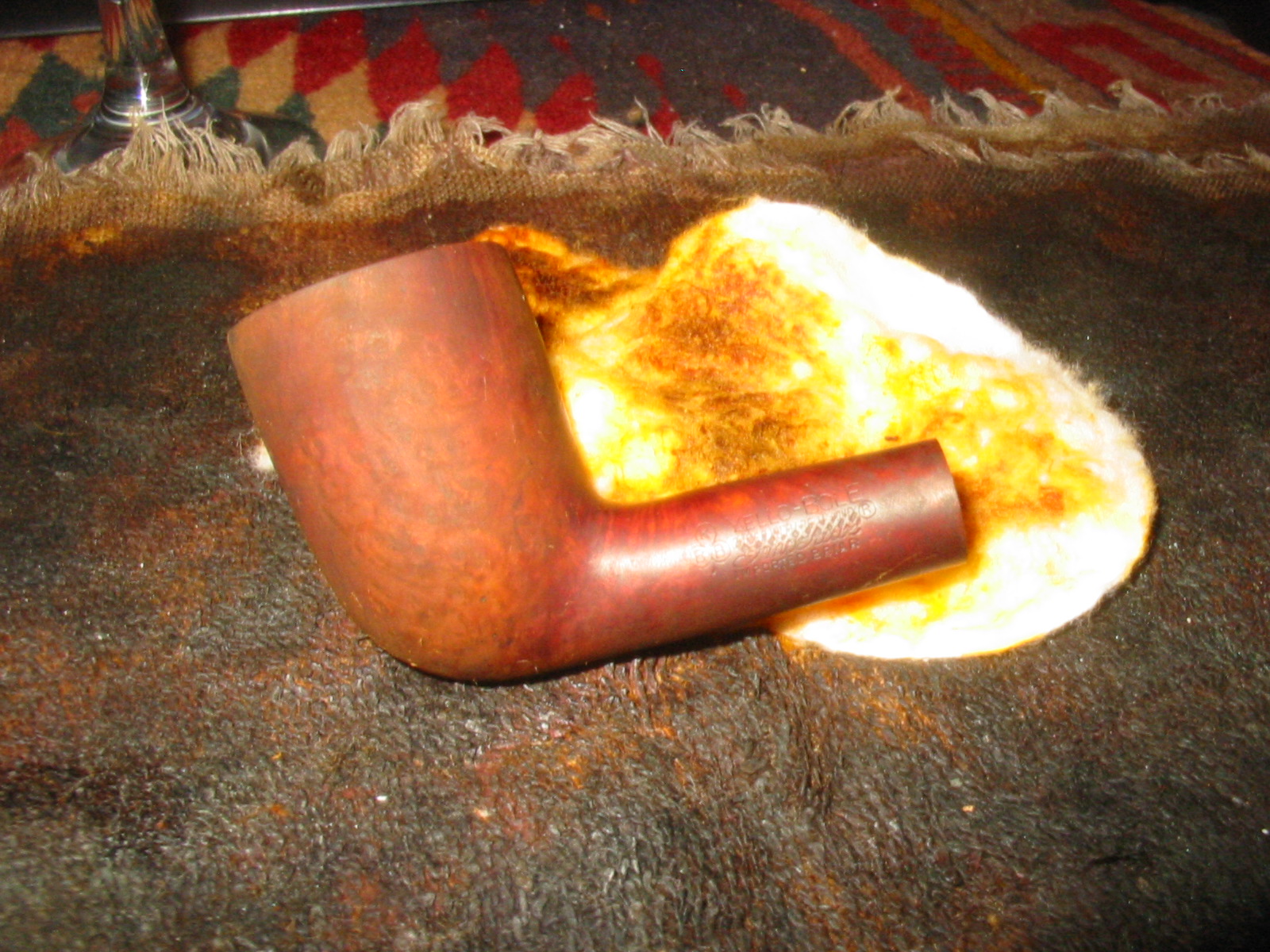
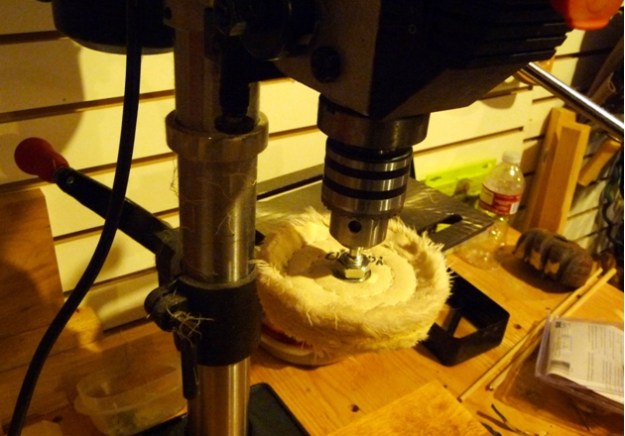
I finished the stem with 600, 1000, 2000, 4000, 6000 grit sand paper. Then set it aside to buff with the stummel once it was complete.YB11 I stained the stummel using one part Fiebing’s light brown diluted with 2 parts isopropyl alcohol. I applied two coats, flaming each coat. Once dry, I wiped it down with a clean cloth and attached with stem.YB12 I set my drill press up with an inexpensive Sears buffing system and started with the white buffing compound. I found on previous projects that gearing down the drill speed to 1200 rpms was important to maintain control of the pipe and not overheat the pipe.YB13 I finished with two coats of carnauba wax and buff with a soft cloth.YB14
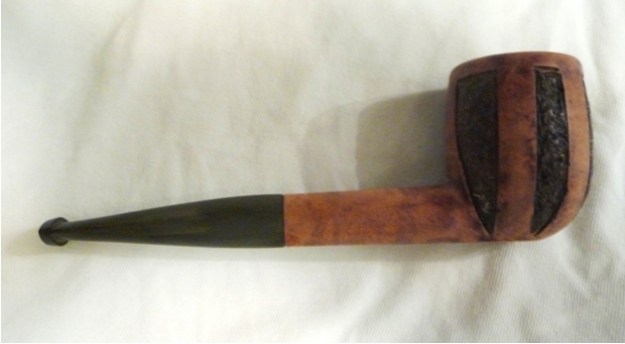
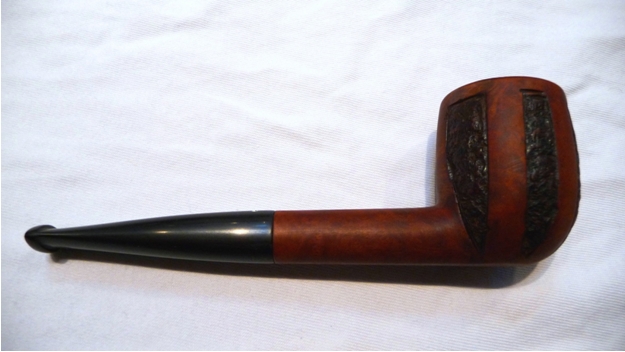
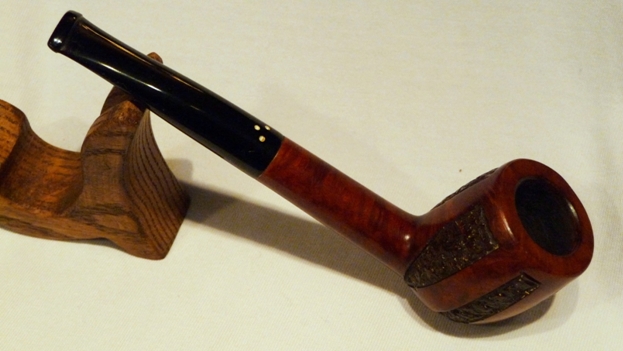
YB15 I needed a tooth pick to remove some of the wax from the sand blasted areas. And that little groove between the stem and shank collected some wax too. Overall I am very happy with the outcome of this restoration. I am looking forward to smoking my first bowl in it.

Looking back, I am glad that I tried shaping my own stem. It was not without its challenges but the result was very rewarding. I now have two spare stems in my tool box, so I will be keeping an eye out for another stemless billiard.

Narrowing Down a Date for Kaufman Brothers & Bondy’s KBB and KB&B Pipes


Blog by Steve Laug

Over the years I have refurbished many older KBB and KB&B pipes. I have kept many of them and others I have passed on to other pipemen and women. The KBB and KB&B stamping on these old timers are stamped in a cloverleaf on the side or top of the shank of the briar pipes. In more recent years the KBB and KB&B stamping is no longer present. Kaufmann Brothers and Bondy was the oldest pipe company in the USA, established in 1851. The Club Logo predated Kaywoodie with the “KB&B” lettering stamped within the Club, and a multitude of KB&B lines were in production long before “Kaywoodie” first appeared in 1919. I have several of these old timers including a Borlum that was made before Kaywoodie became the flagship name for pipes from Kaufman Brothers & Bondy (KB&B). It was made before the Kaywoodie invention of the “Stinger” was added, and even before shank logos, model stamps and other features invented by Kaywoodie came to be standards of the pipe making industry. It comes from the time when names like Ambassador, Heatherby, Melrose, Suez, Rivoli, Cadillac and Kamello dominated the pre-Kaywoodie scene. Borlum is one of those vintage names. That information helps date pre-1919 KB&B pipes. There is still a long history following that for which I wanted further information.KB1 I was left wondering about the variations in the stampings on the Kaufmann Brothers and Bondy pipes. I had seen a pattern in that the Yello-Bole pipes made by Kaufmann Brothers and Bondy that were stamped without the ampersand (KBB) and other pipes made by them that had the ampersand (KB&B) and wondered about whether I had stumbled upon something. I had no idea why there was a variation in stamping. I decided to do some digging online to see if I could get more information regarding this variation. The purpose of this article is to collate what I found in order to provide some guidelines on dating the older pipes and to differentiate between the two stampings.KB2

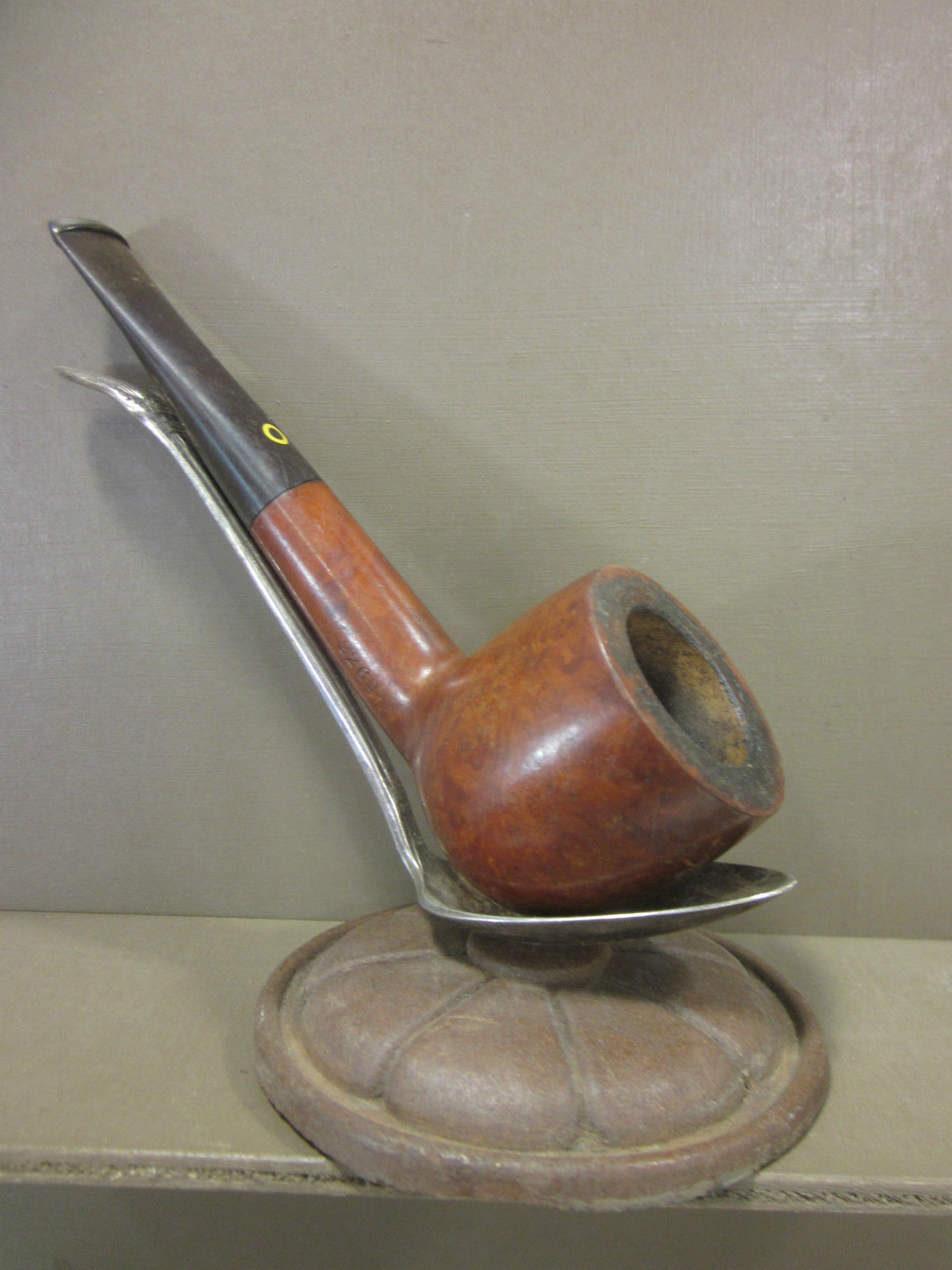
KB3 In the past when I had questions about KB&B pipes, Yello-Bole pipes and KW pipes I have found that the Kaywoodie Forum http://kaywoodie.myfreeforum.org/ftopic13-0-asc-0.php has been an invaluable source of information on the brand. The information found there on the KBB and KB&B pipes is very useful. Dave Whitney has an article on the topic of KBB pipes. I will summarize what I have found there to help with my search. I have several older Yello-Bole pipes with the shovel drinkless mechanism and the KBB-in-a-clover logo on the left side of the shank (not KB&B). These also have the yellow circle on the stem.KB4 From what I can ascertain from Dave’s information, pipes with this configuration seem to have been produced between the years of 1938-42. The lack of the aluminum stem ring and the drinkless mechanism that came out in the later period of KBB history 1945-50 (World War II) point to the earlier period. The shape/style of the drinkless mechanism helps to date the pipe. Let’s summarize what we know so far. The Kaywoodie stamp appeared in 1919 thus any pipes with the KB&B in a cloverleaf stamped on the shank pointed to a pre-1919 pipe. From 1919-1938 the combination of the KBB stamping and the shovel mechanism in the tenon help date those pipes. The metal drinkless attachment came out in 1945 and following. I have KB&B pipes and KBB Yello-Bole pipes from this early era.

Reading further led me to ascertain that the KBB in a cloverleaf stamp dates a pipe back to the ’30’s. I also learned that the 4 digit shape numbers stamped on the right side of the shank are older than 2 digit ones. The pipes with the logo inlaid on top of the stem are older than ones that have it on the side. I learned that in the past, Kaufman Brothers and Bondy would sort shipments of briar and send the culls to be used for Yello-Boles, meaning they got some quality briar. One fellow on the web believes that is why Yello-Bole pipes tend to be smaller over all, working around flaws. He also said that he thinks calling these pipes Kaywoodie seconds is a bit of a misnomer, being that Kaywoodie was one of the largest briar purchasers in the world at the time (’20’s-50’s) and got some fantastic wood.

Armed with this bit of information on the brand I did some more research and came across the SM Frank website http://www.smfrankcoinc.com/home/?page_id=2. There I found a wealth of historical information on Kaywoodies, Yello-Boles and the merger between KBB and SM Frank and later Demuth. It was a great read and I would encourage others to give the website a read. The information in the next paragraph was condensed from that site. I found confirmation for the statement above that the Yello-Bole line was an outlet for lower grade briar not used in Kaywoodie production. Yello-Bole’s were introduced in 1932 and manufactured by Penacook, New Hampshire subsidiary, The New England Briar Pipe Company. Advertising from the 1940′s, pictures the Yello-Bole “Honey Girl” and urges the pipe smoker to smoke the pipe with “a little honey in every bowl.” Honey was an ingredient of the material used to line the inside of the bowl. It was said to provide a faster, sweeter break-in of the pipe.

I went hunting further to see if I could find information on establishing dates for Yello-Bole pipes and found that there was not a lot of information other than what I had found above. Then I came across this link to the Kaywoodie Forum: http://kaywoodie.myfreeforum.org/archive/dating-yello-bole-pipes__o_t__t_86.html I quote the information I found there as it gives the only information that I found in my hunt to this point.
“OK so there isn’t a lot of dating information for Yello-Bole pipes but here is what I have learned so far.
– If it has the KBB stamped in the clover leaf it was made 1955 or earlier as they stopped the stamping after being acquired by S.M. Frank.
– From 1933-1936 they were stamped Honey Cured Briar.
– Pipes stems stamped with the propeller logo they were made in the 30s or 40s no propellers were used after the 40s.
– Yello-Bole also used a 4 digit code stamped on the pipe in the 30s.
– If the pipe had the Yello-Bole circle stamped on the shank it was made in the 30s this stopped after 1939.
– If the pipe was stamped BRUYERE rather than briar it was made in the 30s.

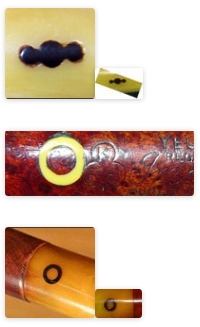
YB LogosThe pipes with propeller logos appear to be made in the 1930’s or 1940’s. The pipe with the yellow circle logo imprinted into the shank of the briar was made in the 1930’s. Those with the brass O seem also to have been made in the 1930’s.
One further item was also found on that site. It was just a passing comment in the midst of some information on Kaywoodie pipes. I quote: “The pre-Kaywoodie KB&B pipes were marked on the shank with a cloverleaf around KB&B. Some early Kaywoodies had this same marking on the shank, but the practice was dropped sometime prior to 1936. Yello-Boles also had KBB in the leaf on the shanks, but did not have the ampersand found on Kaywoodies.” (Highlighting is mine)

That is all the information I have gathered to date. I don’t have anything on the multitude of stem stampings or any other age indicators. In summary, it seems that the stem logos, the stamping on the shanks of KBB and KB&B, the type of stinger apparatus in the tenon as well as aluminum decorative trim all are a part of dating the KBB and KB&B pipes. From the final paragraph above I have the answer to my question on the difference in the ampersand or lack of it – until 1936 the KBB and KB&B in a cloverleaf were stamped on the shanks of pipes made by Kaufman Brothers and Bondy. After 1936 that stamping disappeared and was replaced with the various Yello-Bole and Kaywoodie designation stampings. If anyone has more definitive information or other methods of determining date please feel free to post it in the comments below and I will add them to this piece.

If you would like to have a look at the KBB pipes that I have restored do a search on the blog for Kaufmann Brothers & Bondy, KBB, Yello-Bole and Kaywoodie pipes. The search will bring up quite a few of the pipes that I and other contributors to the blog have posted here.

ADDENDUM
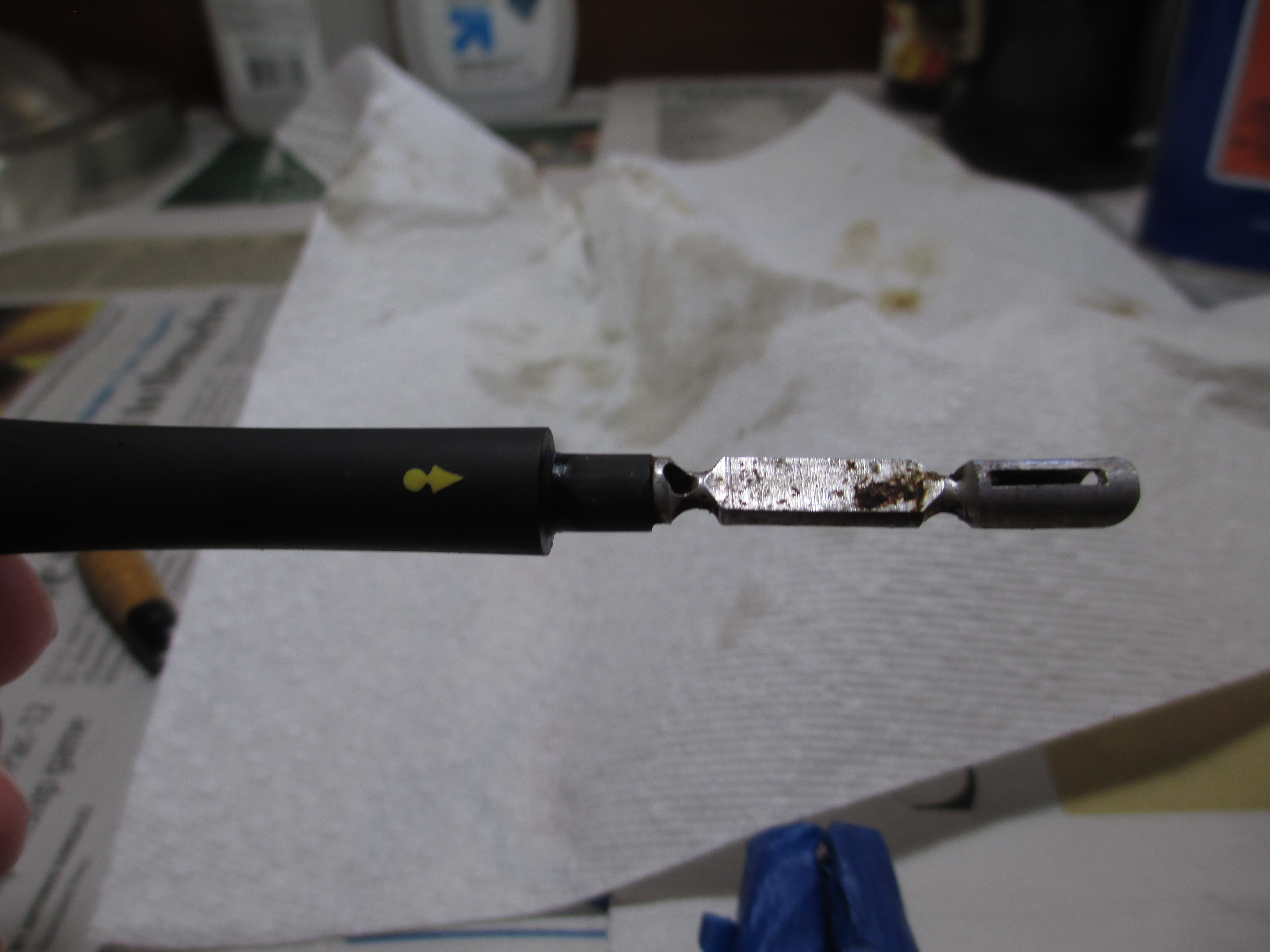
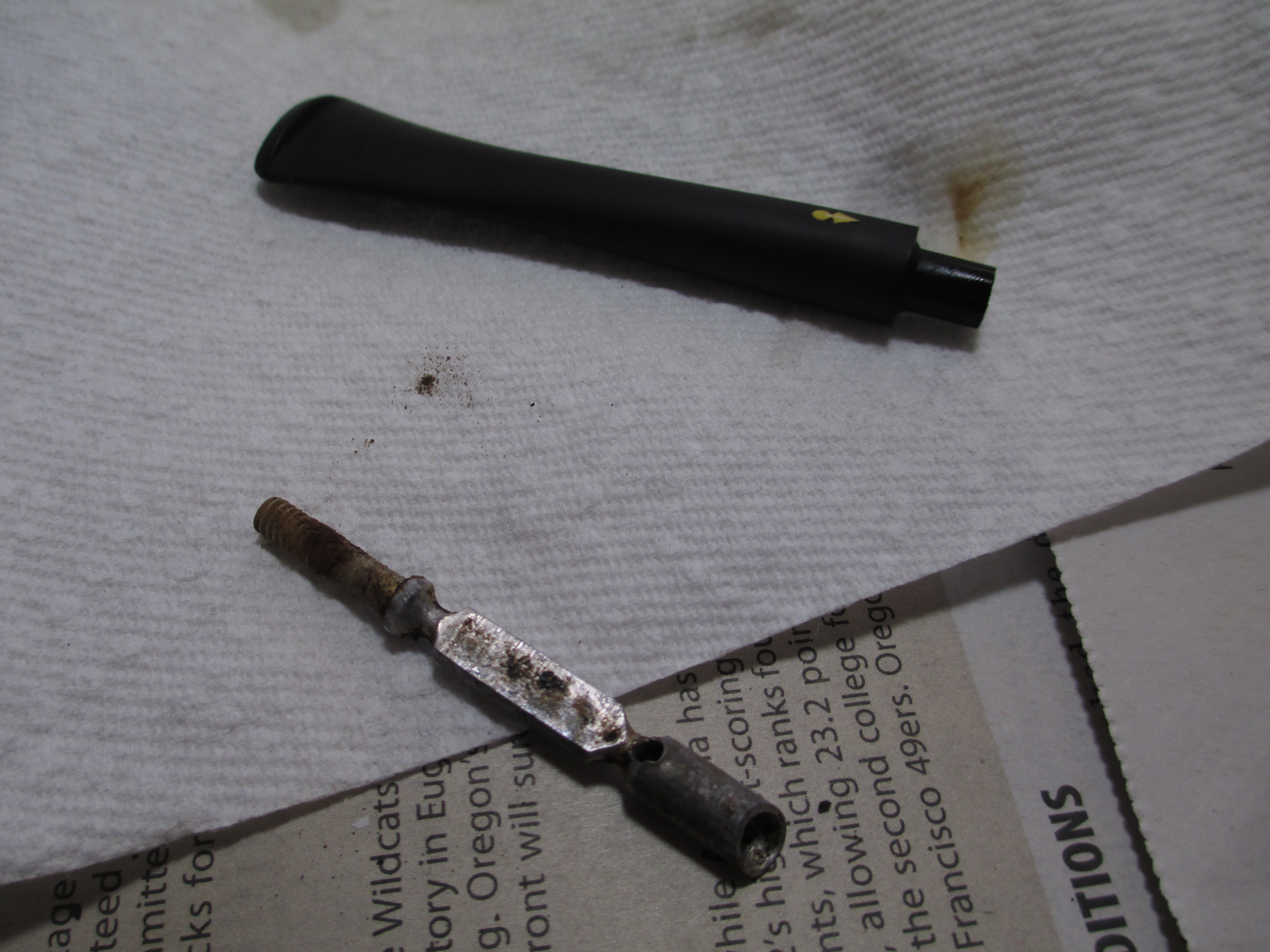
I received two photos of the stinger apparatus that Andrew Selking removed from the KBB Doc Watson that he wrote about here. I am including them here. We both think that they predate the shovel like apparatus that I picture above.KB (1)

KB (2)

Restoring a Yello-Bole Imperial Bulldog for John


Blog by Steve Laug

The last of John’s pipes that I worked on while he was working on the Danish Sovereign Peewit was a beautiful old Yello-Bole Bulldog. It was stamped KBB in a cloverleaf on the left side of the shank next to four lines of stamping. The first read Yello-Bole and underneath that was stamped Cured with Real Honey and an R in a circle. The third line read Imperial in script and the fourth read Imported Briar. The stem had a push tenon and had the yellow circle inset in the vulcanite. It is shown in the photo below – it is the last pipe in the column on the left side of the photo.IMG_2050 This pipe actually was one of the free ones that came with the pipe rack that John purchased. It was sitting on the rack without a stem. The stem was inside the humidor jar. I had seen it before and had assumed that the tenon was broken but it was not. It was just very loose and would not stay in the shank. The metal spacer that separates the shank and stem was attached to the stem and not to the bowl. The bowl itself was very dirty and caked. The finish was not too bad and there were no deep dents of scratches in the briar just some ground in grime. The rim was caked with a thick buildup of tars and oils that had almost fossilized. The stem was in good shape other than being oxidized. There was tooth chatter on the top and underside of the stem.

I used cotton swabs, pipe cleaners and isopropyl alcohol to clean out the bowl, shank and the inside of the stem. I worked them until them came out white. I scrubbed the aluminum space with alcohol and then with a metal polishing cloth to bring back the original shine.IMG_2088 IMG_2089 IMG_2090 IMG_2091 I wiped down the briar with acetone on cotton pads to remove the grime from the finish of the bowl and the grain underneath really popped.IMG_2092 IMG_2093 The rim buildup was so hard that I used the topping board and sandpaper to remove it and lightly sand the rim surface itself to remove the pitting. I sanded the outer edge with a folded piece of sandpaper to minimize the rough spots on the edge.IMG_2094 IMG_2095 I sanded the rim with a medium and a fine grit sanding sponge and then wet sanded it with 1500-2400 grit micromesh sanding pads. I touched up the rim with the stain pens until it matched the stain colour on the bowl. I then wiped down the pipe with some olive oil on a paper towel and let it soak into the finish.IMG_2098 IMG_2096 IMG_2097 I sanded the stem with 220 sandpaper to remove the tooth chatter and oxidation and then with a medium and fine grit sanding sponge. I wet sanded the stem with 1500-2400 grit micromesh sanding pads and dry sanded it with 3200-12,000 grit sanding pads. I rubbed it down with Obsidian Oil after each set of three pads. When I had finished with the sanding I buffed the stem with White Diamond. To make the stem snug in the shank I used a cotton swab and water to wet the mortise in the shank to swell the briar. This helped a lot and the stem was much tighter. It was still too loose to my liking so I ran clear superglue around the tenon and lightly sanded it to obtain a snug fit on the stem.IMG_2099 IMG_2100 IMG_2101I put the pipe together and buffed it with White Diamond. I gave it multiple coats of carnauba wax to seal and protect the stem and bowl. I buffed it with a soft flannel buff to get the shine. The finished pipe is shown below and is yet another clean and ready pipe for John to load and smoke. I look forward to hearing what he thinks of the smoking characteristics of this old timer. It turned out to be a beautiful pipe with nice looking mixed grain. The old vulcanite was interesting to me in that it had pieces of metal that were part of the casting of the stem. I remember reading somewhere that these occurred in stems that were made during the war years when rubber was at a premium. To my thinking that helps to date this bulldog to the late 1940s or early 1950s. Enjoy your “new” pipe John and be sure to let us know how it smokes for you.IMG_2102 IMG_2103 IMG_2104 IMG_2105

Yello-Bole Spartan – A Brylon Pipe Restemmed and Restored


Blog by Steve Laug

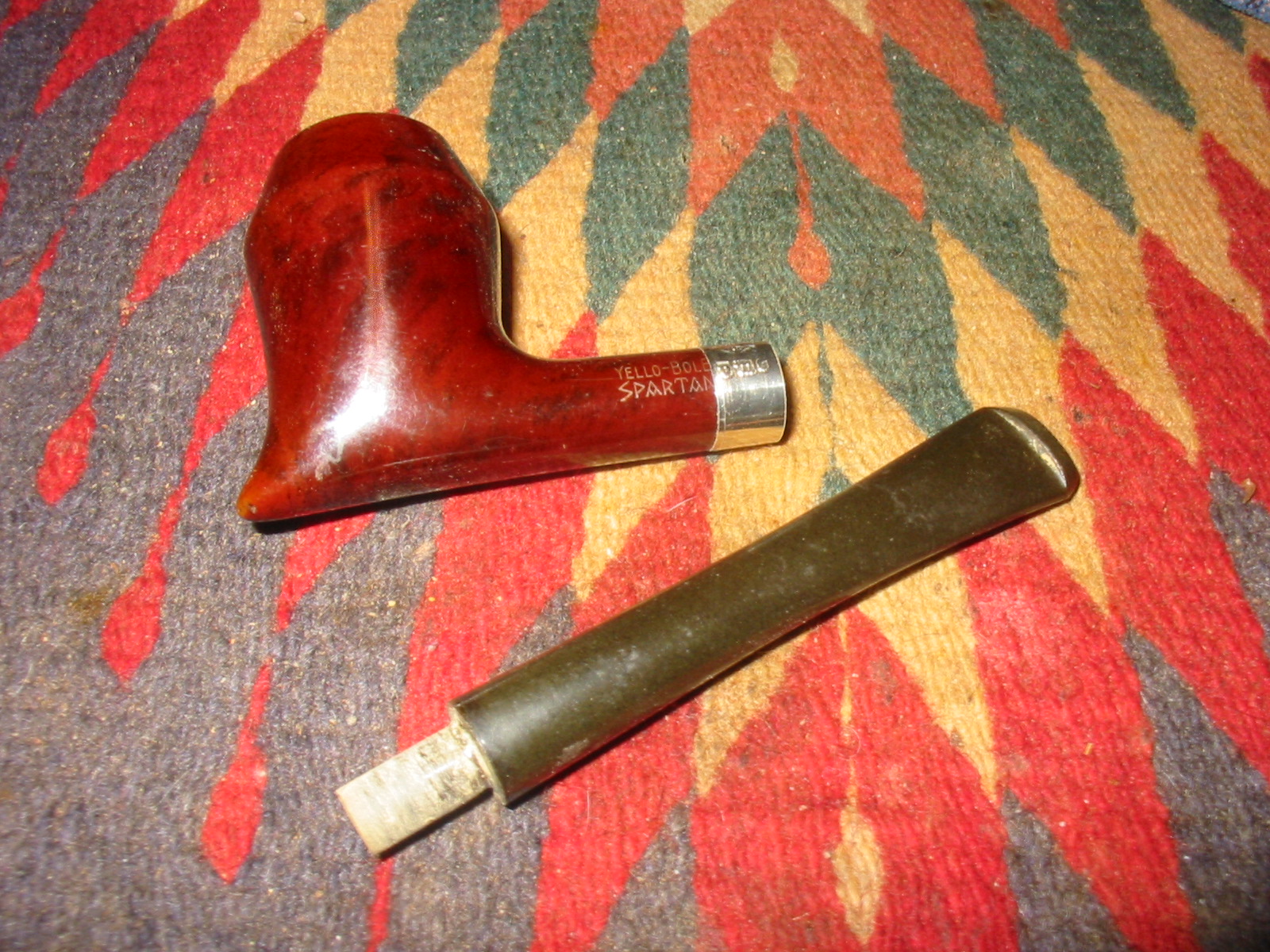
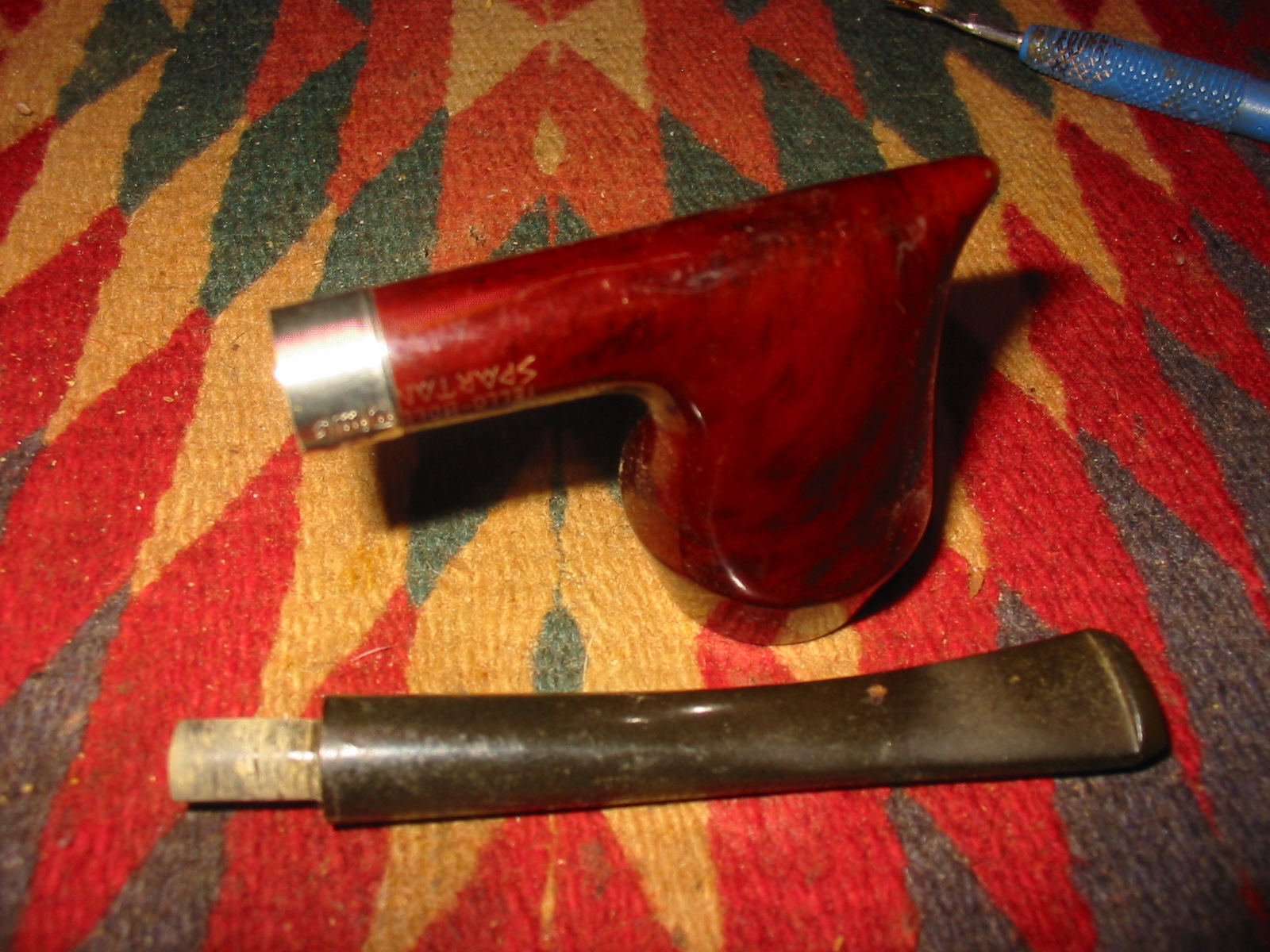
I was gifted a box of pipe bowls and stems from Jim Wagner on Smoker’s Forums. It is a great to have this box of interesting old pipes. Jim, I sure appreciate the gift box and am enjoying looking at it and choosing what to do next. The first one that caught my eye was a Yello-Bole Spartan. From reading about them the Spartan was originally a briar pipe but this one was definitely not briar. It was synthetic for sure and brown like some of the older Bakelite pipes that I have picked up over the years. I knew though from the feel of it that I was dealing with a Brylon pipe. Many folks hate them because they say the burn hotter and are heavier than briar pipes. While that may well be true I still have an older Medico I picked up 32 years ago when my first daughter was born and have smoked it a lot since that time. Several years ago I put a long Church Warden stem on it and a brass ferrule and made it into a good-looking long pipe. I have smoked it long enough that it even has developed a cake and now smokes quite well. If I am mindful to not puff hard it stays relatively cool.

Knowing that it was a Brylon pipe made me want to do a bit of digging into the history of the material. I looked on the S.M. Frank website (http://www.smfrankcoinc.com/home/?page_id=2) and found the following information:

“In 1966, S. M. Frank developed a synthetic material called Brylon as a cheaper alternative to briar. The material, a high temperature resin mixed with wood flour, was cheaper than briar, more resistant to cracking, chipping, charring and burnouts. However to some there are some drawbacks, heavier in the mouth, hotter when smoked quickly, and also simply put, “wasn’t briar.” Millions of these pipes have been sold in the 3 decades since and continue to be part of the Yello-Bole and Medico lines. Two Brylon lines in Kaywoodie, Marmont and Impulse, were briefly tried and abandoned in the late 80′s.”

I know that Brylon has a bad name among pipemen and gets a lot of disparaging comments whenever it is brought up on the pipe forums. However, pipes are still being made and sold so there must be some enduing quality. Maybe it is the indestructibility of the pipe. Perhaps we will never know what attracts folks to them. But I have one in my hand that needs work and I am loath to pass up the opportunity to learn from the process of rejuvenating this old pipe.

As usual reading the history of the material helped to give me a clearer picture of the pipe that I was working on this time. It also gave me some background on another Brylon pipe that I have in my collection. I bought that Brylon new at a 7-Eleven convenience store along with a pouch of Borkum Riff the day my oldest daughter was born. It was a delicate billiard and attracted me that early morning in 1982. I have smoked it enough that it has developed a good cake and finally smokes very cool. A few years back I restemmed it with a long Church Warden Stem and banded it with a brass ferrule to liven it up a bit. The finish was worn to I polished it. I still smoke that old Brylon and enjoy it.

However, back to the Brylon pipe at hand. This bowl was an unusual shape and one that I had not seen before. It was smoked but clean. There was the beginning of a cake in the bowl so it would soon be a cool smoker as well. It was without a stem so I found one in my stem can with a slight bend that had the same diameter as the shank and sanded the tenon by hand with 220 grit sandpaper until it was a snug fit in the shank. It looked good on the pipe but there was still something missing when I sat back and looked at the pipe. I thought maybe a bit of bling would do the trick so I went through my nickel bands and found one that was the perfect size to press on the shank and not cover the stamping on the left side.

I heated the band with a lighter and then pressed it into place on the shank. Heating the band causes it to expand and slide on to the shank while it is still hot. Once the band cools it contracts and the fit is tight unmovable. I used a sharp knife to bevel the inside edge of the mortise to accommodate the new stem solidly against the end of the shank. IMG_8222 IMG_8226 IMG_8225 IMG_8223 The stem was one that I repurposed from another pipe and it looked like it belonged on the Spartan in my opinion. The slight bend looked good with the shape of this Brylon Spartan. The stem was oxidized and dirty but did not have any tooth marks of gouges. Once I had the pipe banded I pushed the stem into place and took the photos below. IMG_8228 IMG_8231 IMG_8230 IMG_8229 I removed the stem and sanded it with 220 grit sandpaper followed by a medium and a fine grit sanding sponge. For me this step always cleans up the stem and allows me to deal with subtle reshaping of the stem. In this case the reshaping was minimal but I did some work on the underside to give it more of an arc than originally was present. I sanded until the scratches and oxidation was removed from the stem. It was clean and the flow and angles were what I was looking for. Then I sanded with micromesh sanding pads – wet sanding with 1500-2400 grit pads and dry sanding with 3200-12,000 grit pads. I rubbed the stem down with Obsidian Oil between each set of three micromesh pads. Since Brylon is plastic like I decided to also sand the Brylon bowl to remove some of the scratches and smooth out one small nick in the surface of the bowl. Each successive grit of micromesh gave the finish a deeper shine and the contrasts in the Brylon surface began to stand out. IMG_8240 IMG_8243 IMG_8241 When I had finished sanding the bowl and the stem I buffed them with White Diamond and then gave the pipe several coats of carnauba wax. I polished it with a soft flannel buff to give a shine. In retrospect, I think that Brylon must be pretty indestructible and I figure I could have just thrown the pipe in the dishwasher to sanitize it. I am sure it would not have caused the least bit of damage. The finished pipe is shown below. It is cleaned, has a light cake and is ready to be fired up with an inaugural smoke. Who knows I might even like it enough to keep it around as a yard pipe. IMG_1677 IMG_1683 IMG_1682 IMG_1678

Restoring an older KBB Yello-Bole Imperial Dublin


Blog by Steve Laug

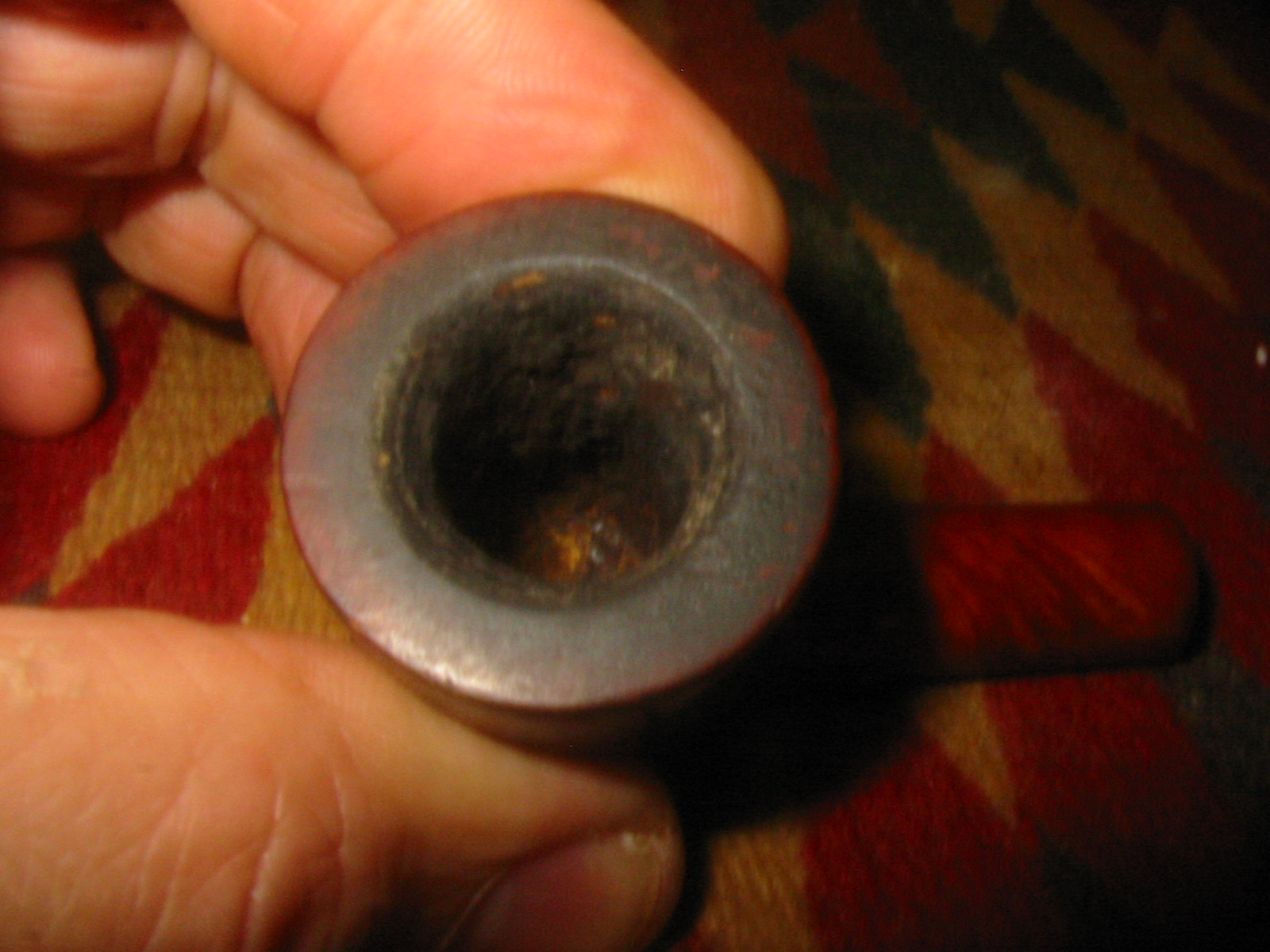
This is the last of the pipes I picked up when I was down in Washington State with my wife for 38th Anniversary. It is an older KBB (no ampersand between the two B’s). It had no shape numbers on the right side of the shank, but on the left side it had the KBB in the cloverleaf/club and next to it was stamped Yello-Bole over Imperial over Imported Briar. The Imperial stamping had been over-stamped with a cross hatch pattern. The bowl was in decent shape. The finish had dark soiling and oils on both sides of the bowl. There were also some dark spots on the sides of the bowl. There was a heavy coat of varnish over the bowl except for the worn spots where the oils and darkening was. The rim was heavily caked with tars and oils. The bowl was caked from the top half way down the bowl, though the yellow honey coating was still visible on the bottom half of the bowl. There were some burn marks along the outer edge and top of the rim.

Again since Yello-Bole is one of my favourite older US brands I did some more reading online to see if I could narrow down when this one was made. I have come to understand that these older Yello-Boles are great smoking pipes and underrated. I turned to one of my go to sources of information on all things KBB and Kaywoodie – the Kaywoodie forum http://kaywoodie.myfreeforum.org/ftopic13-0-asc-0.php. There I found a very helpful article by Dave Whitney that helped narrow down the date. The pipe I have has the shovel drinkless mechanism, the KBB-in-a-clover logo on the left side of the shank and the yellow circle on the stem. From what I can ascertain from Dave’s information it seems to have been produced between the years of 1938-42. I am fairly certain that it did not come from the later period of 1945-50 (World War II) since it did not have the aluminum stem ring and the aluminum drinkless mechanism which came out during those years.

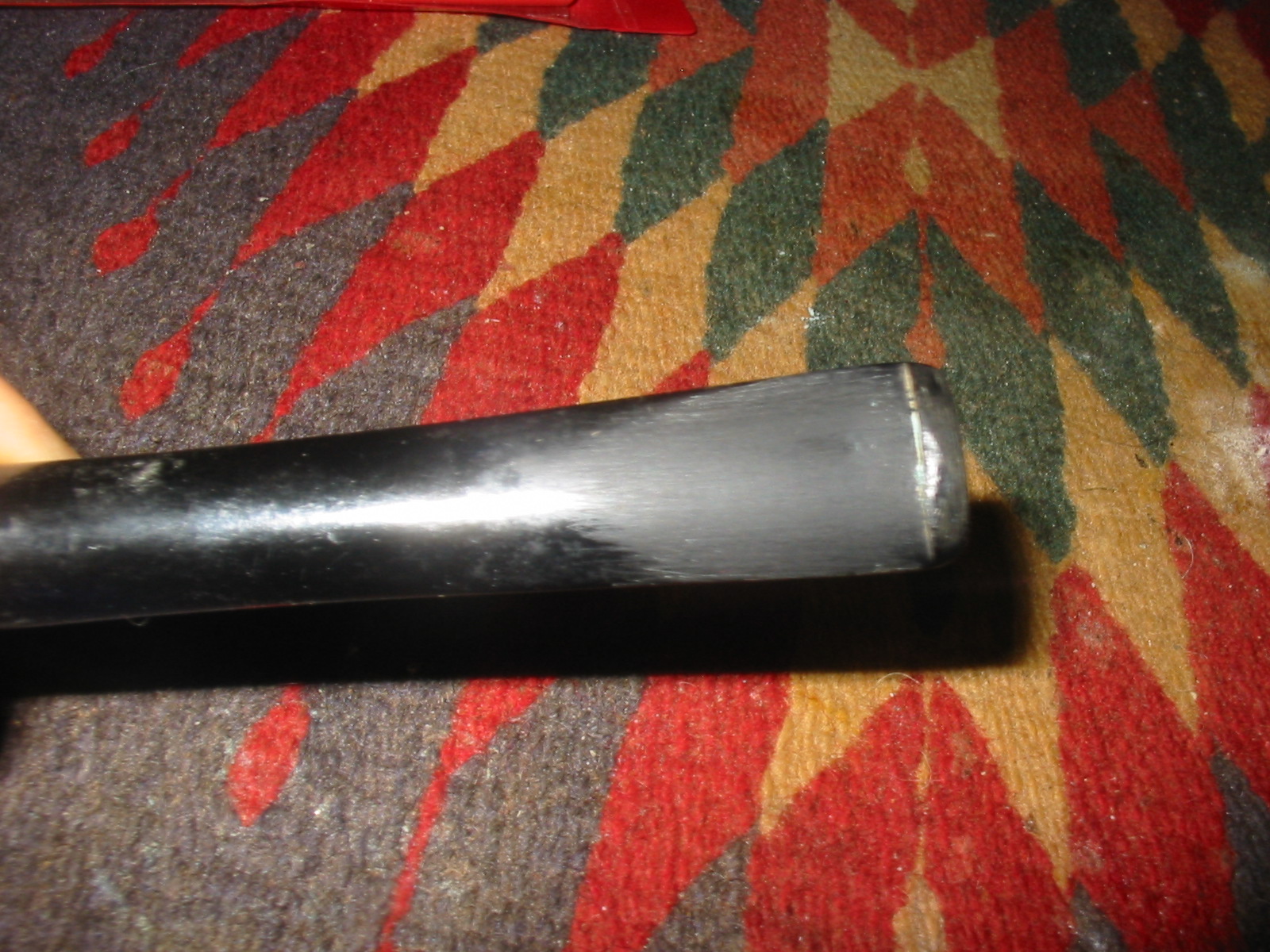
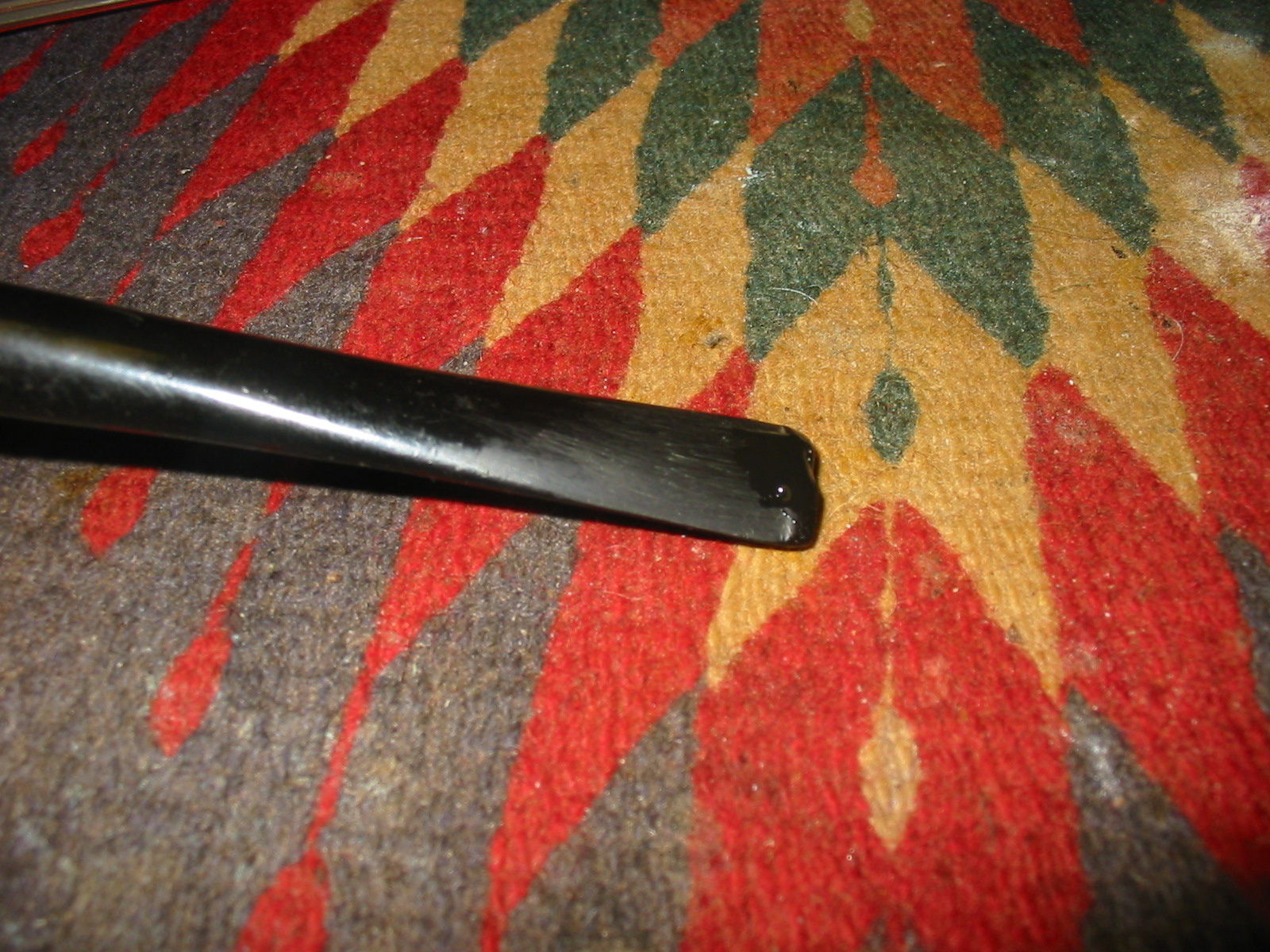
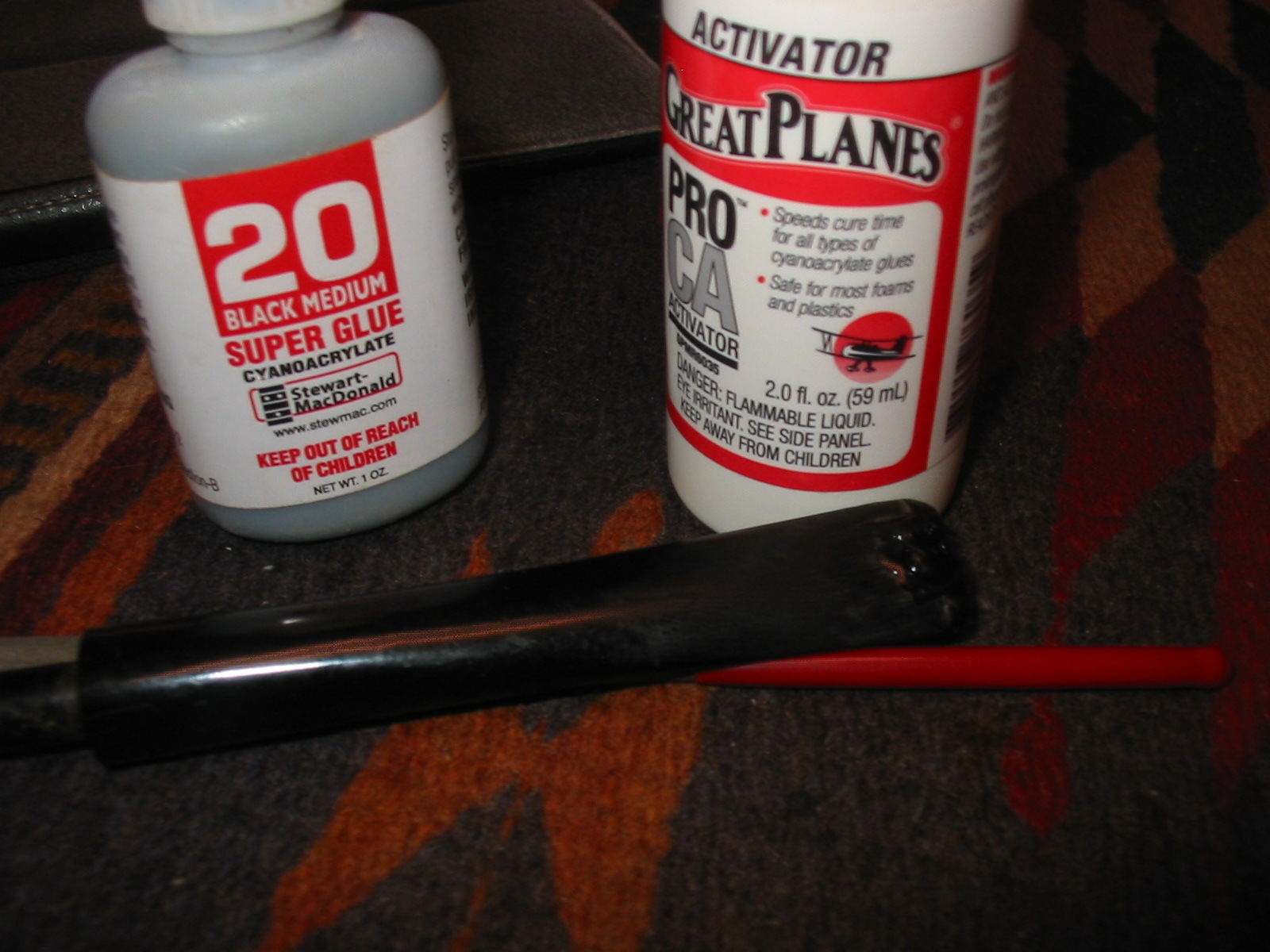
The photos below show the pipe as it was when I found it in the antique shop. IMG_7924 IMG_7926 IMG_7923 IMG_7927 The stem is made of nylon rather than vulcanite. It has the yellow circle inset in the top near the shank of the pipe. The button area was chewed and dented. There was a shallow dent on top of the stem and deeper ones on the underside of the stem next to the button. The button had been chewed down and had deep dents on the underside while the slot had been dented in so that it was not longer straight. IMG_7920 IMG_7922 I sanded the stem down and was able to remove the dents on the topside. The underside tooth mark was too deep to sand or even heat and raise. IMG_7929 I sanded it with 220 grit sandpaper to clean up the chatter further up the stem and then picked the area clean around the large dent with a dental pick. I wiped the stem down with alcohol to clean off the dust and then filled it with black super glue that I purchased from Stewmac online. I filled it the first time and sprayed it with an accelerator. Once it dried it had shrunken and left a divot in the stem surface. I refilled it with the glue and then sprayed it again with the accelerator. I set it aside overnight to cure and worked on the bowl. IMG_7928 IMG_7942 The bowl and rim were caked with an uneven cake so I reamed it with a PipNet pipe reamer to take it back to the briar. The cake was soft and once I removed it from the middle portion of the bowl I could see the yellow coating on the bottom half and partway down from the rim. The only portion that was darkened was in the centre of the bowl. IMG_7930 IMG_7931 I set up my topping board to remove the hard tars on the rim and also the burn damage. Fortunately the burn damage did not go too deep but merely sat on the surface under the tar coat. IMG_7932 I wiped down the bowl with acetone on cotton pads to remove the finish and as much of the dark staining on the side of the bowl as possible. The dark spots were deep in the finish of briar so I was not sure I would be able to remove them. IMG_7937 IMG_7934 IMG_7936 IMG_7939 Even after wiping down the bowl repeatedly the dark stains on the sides remained, lighter though still present. The dark spots appeared to be ink stains and they too remained. I decided to let the bowl soak in an alcohol bath overnight and address it again in the morning. IMG_7941 The next morning I removed the bowl from the alcohol bath and found that it had done its magic. The stains were gone and the ink stains were significantly lighter. I cleaned out the shank with cotton swabs, pipe cleaners and alcohol. I kept cleaning until the pipe cleaners and swabs came out clean. IMG_7946 I stained the bowl with Fiebings Dark Brown aniline stain. I applied the stain and then flamed and repeated the process until the coverage was even. IMG_7947 IMG_7948 I wiped it down with alcohol on cotton pads to remove some of the opaque colour of the stain and to make the grain more visible. IMG_7949 IMG_7950 IMG_7951 I buffed the bowl with White Diamond. The next three photos show the bowl at this point in the process. IMG_7953 IMG_7954 IMG_7957 Once I had finished the work on the bowl to this point I decided to work on the stem. I used a coarse grit sanding stick to cut the sharp edge of the button. While it worked relatively well I could see that the hardened super glue needed something with more teeth to cut into the repair. I used a file to take off the overfill on the repair and then followed that with the sanding stick and 220 grit sandpaper. IMG_7963 IMG_7964
IMG_7965 I sanded the stem further with the 220 grit sandpaper and then with medium and fine grit sanding sponges to remove the scratches in the surface. I wet sanded with 1500-2400 grit micromesh sanding pads and dry sanded with 3200-12,000 grit pads. Between each grit of micromesh I wiped the stem down with olive oil. I have found that the olive oil allows the micromesh sanding pads to really cut into the surface of the nylon stem. I cleaned up the stinger with alcohol and cotton pads and then 0000 steel wool. IMG_7972 IMG_7979 IMG_7983 I gave the bowl a coat of walnut stain and boiled linseed oil to bring out a shine. I wanted the pipe to have a similar shine to what it originally had when it left the factory but did not want to use a varnish coat. I wiped it on the bowl with a cotton pad and then set it aside to air dry. IMG_7975 Once the finish had dried I buffed the pipe with White Diamond and then gave it several coats of carnauba wax and buffed to a shine with a soft flannel buff. I hand waxed the stem with Paragon Wax as I find that the nylon stems are hard to buff. Without a light touch the wheel can do irreparable damage to the nylon stem. The heat generated by the buffer will actually cause the stem to melt. The final photos below show the finished pipe cleaned, polished and ready to enter into the next years of its life. I think that this one will outlive me if properly cared for by the next pipeman after me. IMG_7986 IMG_7987 IMG_8003 IMG_8008

Thanks to Father Tom I have a Base for the Yello-Bole Airograte Bowls


Blog by Steve Laug

Those of you who have followed the blog for a long time will get the irony of the title. I have written quite a few Father Tom stories over the years and have had them on the blog. I am hoping that a book of these stories will be published in the near future. Anyway on the Pipe Smokers Unlimited Forum I posted that I was looking for a base unit/stem for some Yello-Bole Airograte pipe bowls that I had been gifted. I had refurbished the bowls and written of them here on the blog: https://rebornpipes.com/2014/07/17/restoring-a-couple-of-yello-bole-airograte-bowls/ Father Tom sent me a private message saying that he had one and would be glad to send it to me. We exchanged a few messages and settled on a trade. Last evening when I got home from work I was greeted by a package from him. The pipe had arrived. He had put a Grabow Viking bowl on the stem just for traveling and when I opened the box and removed the pipe from the wrappings I was excited to get to work on it. I removed the Grabow bowl and went to work cleaning the stem. I used pipe cleaners, cotton swabs and isopropyl alcohol to remove the buildup from the bottom of the base and the dental pick to clean out the threads.
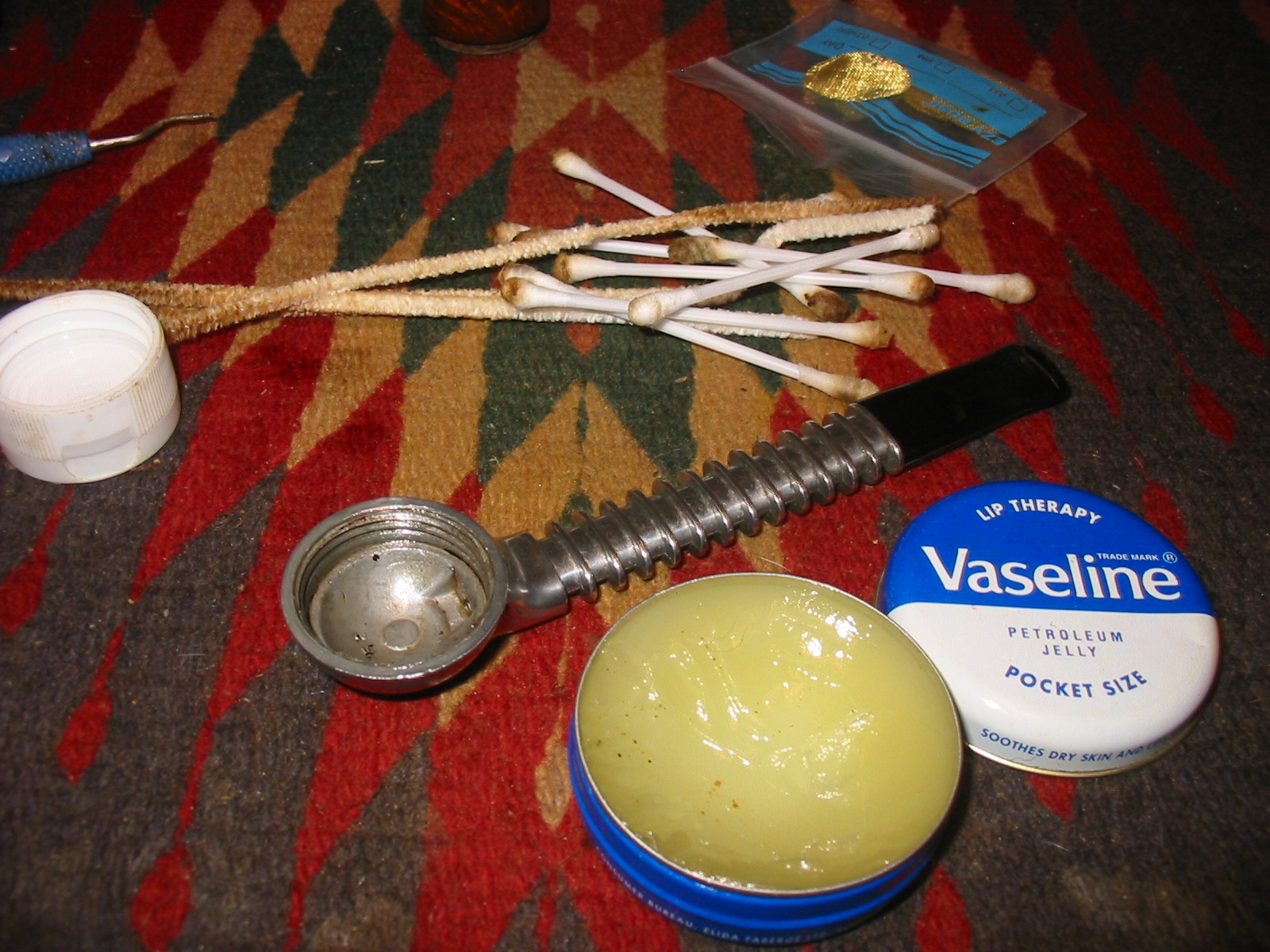
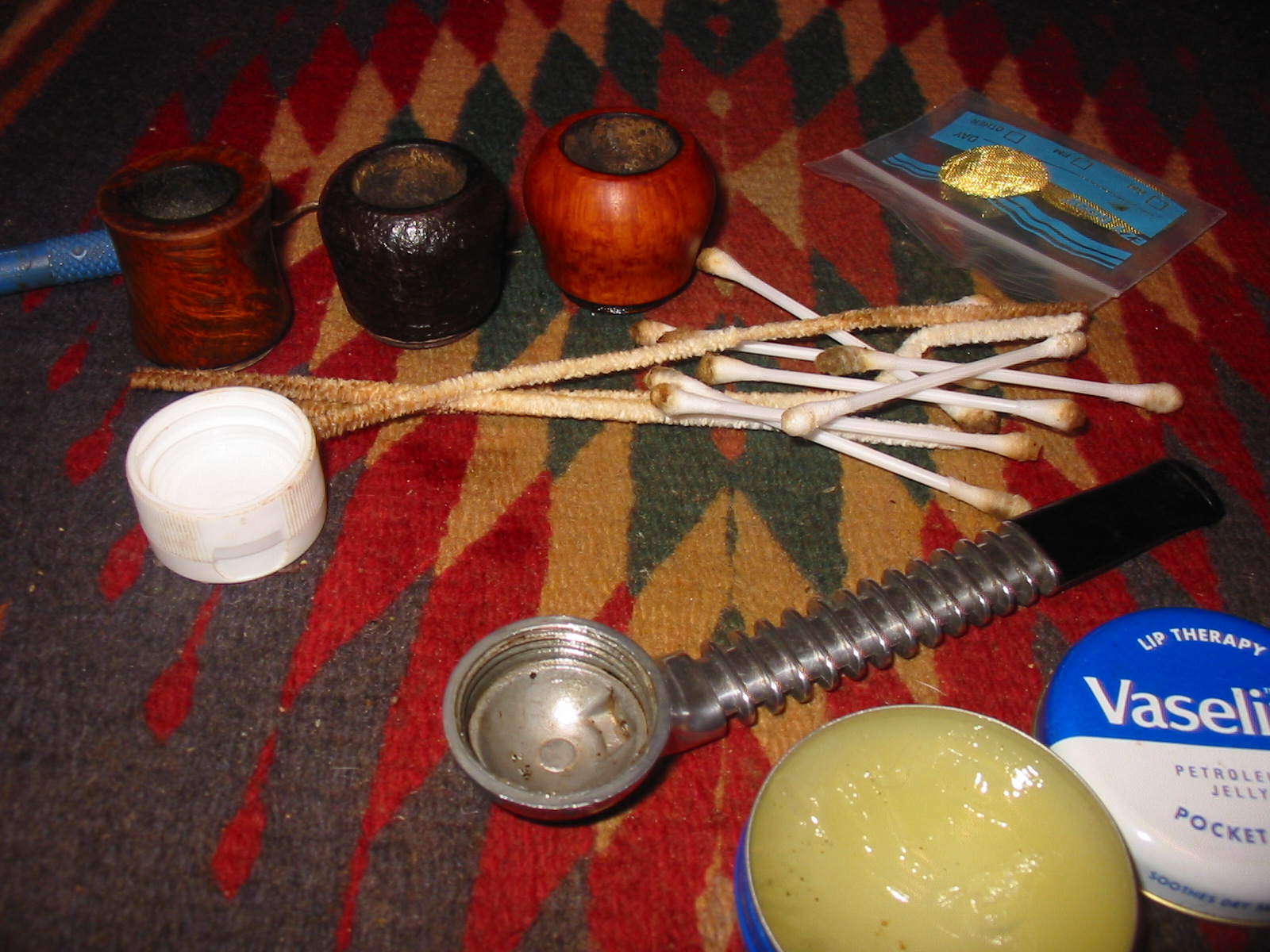
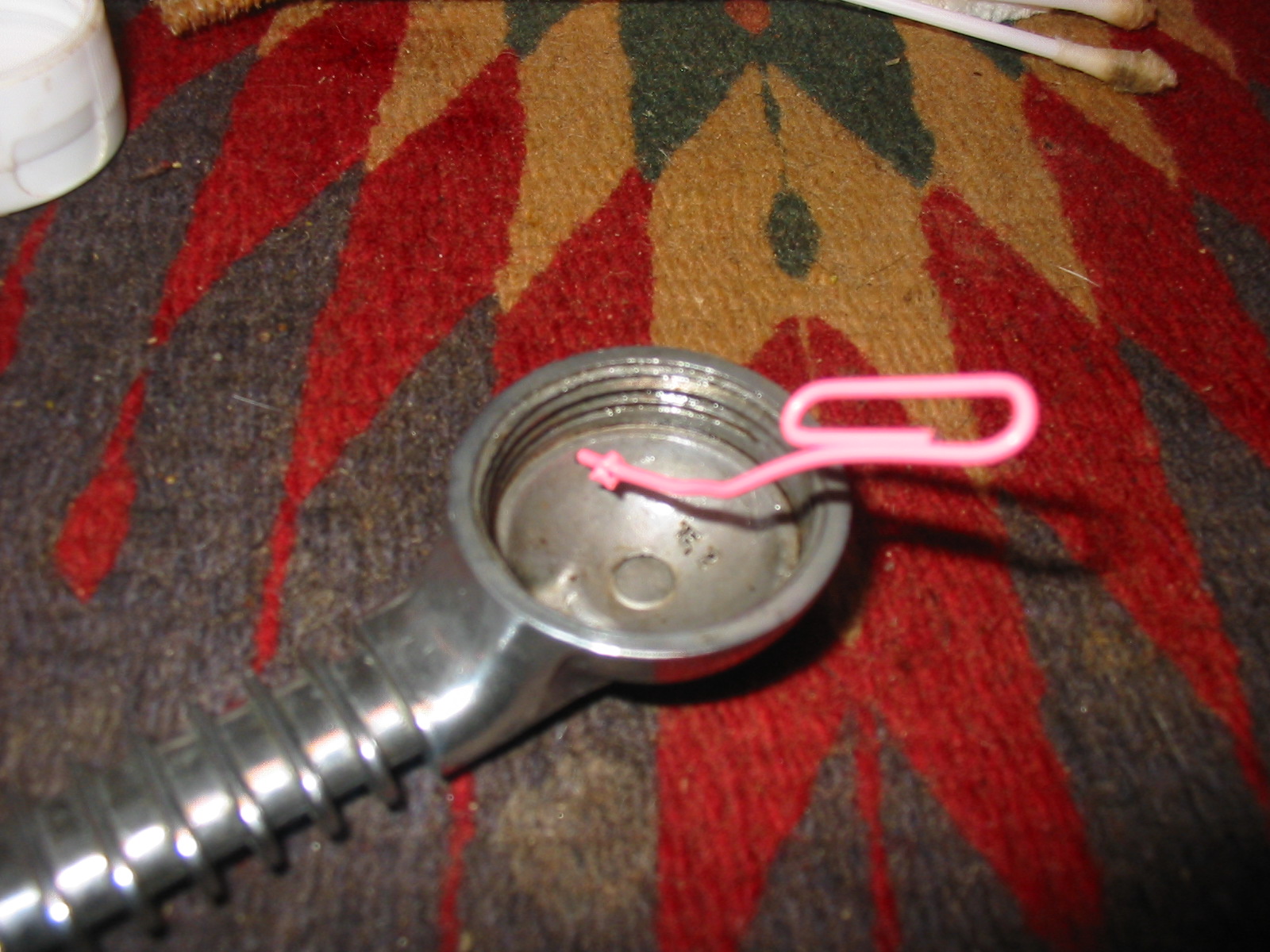
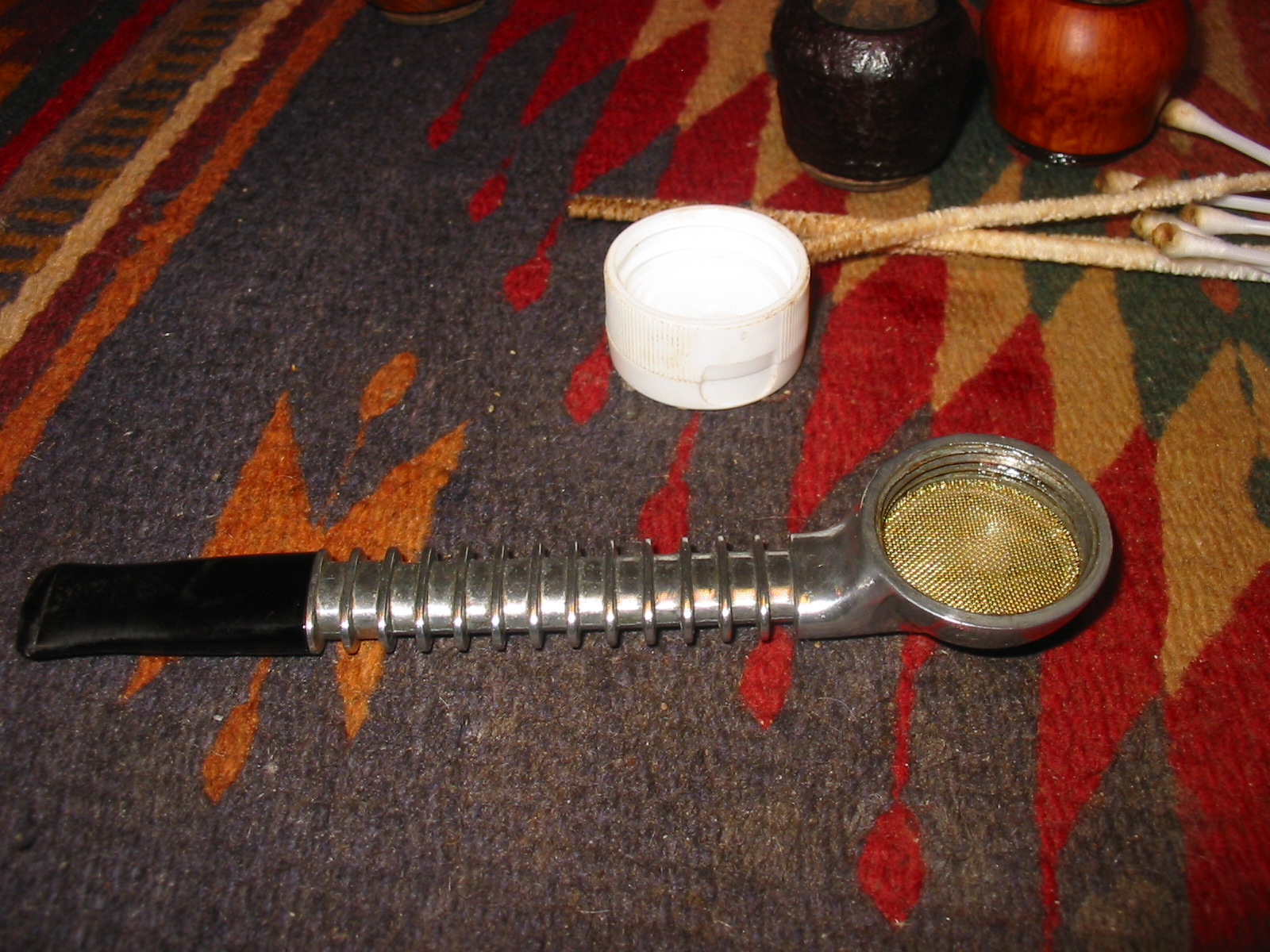
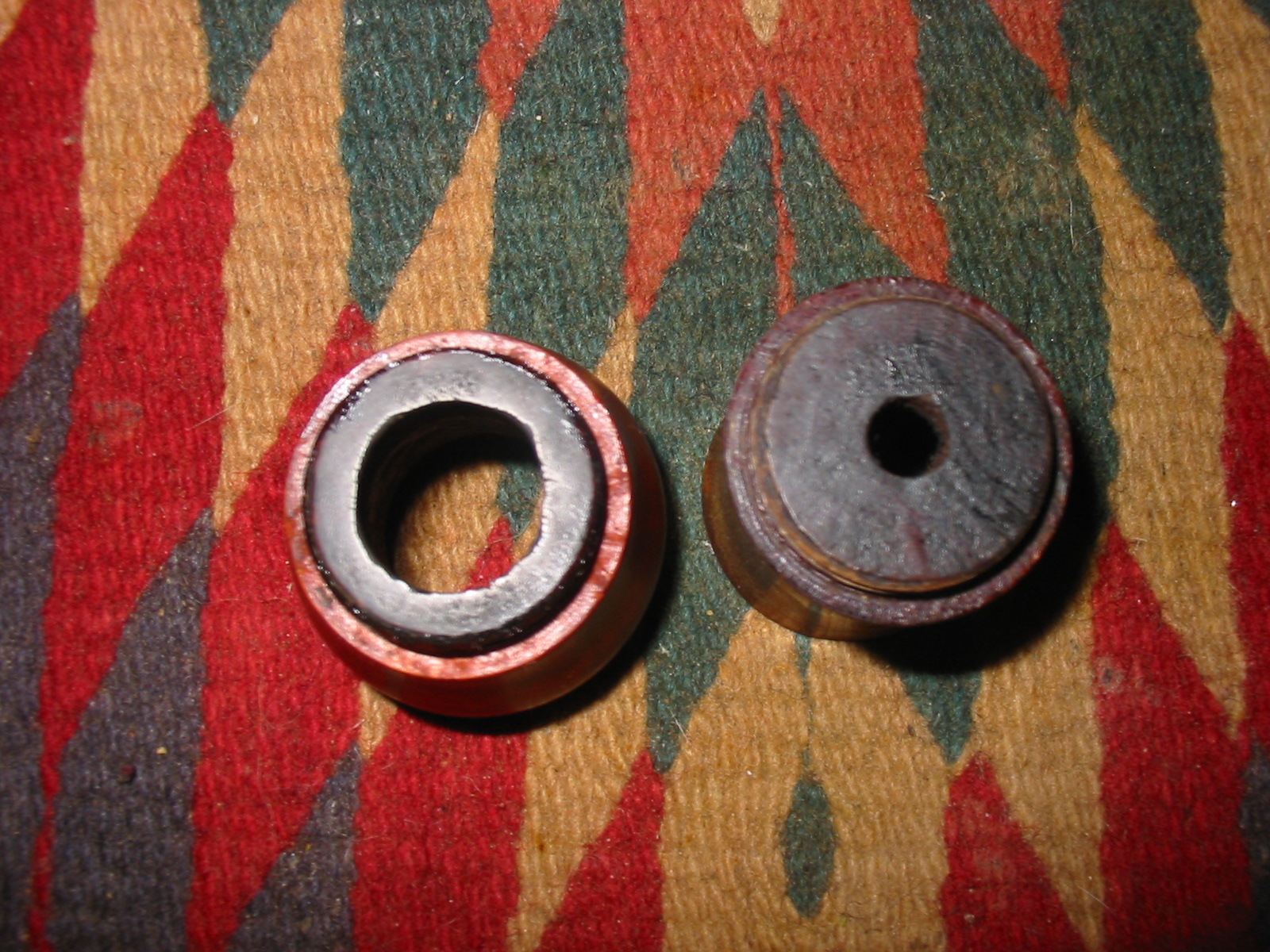
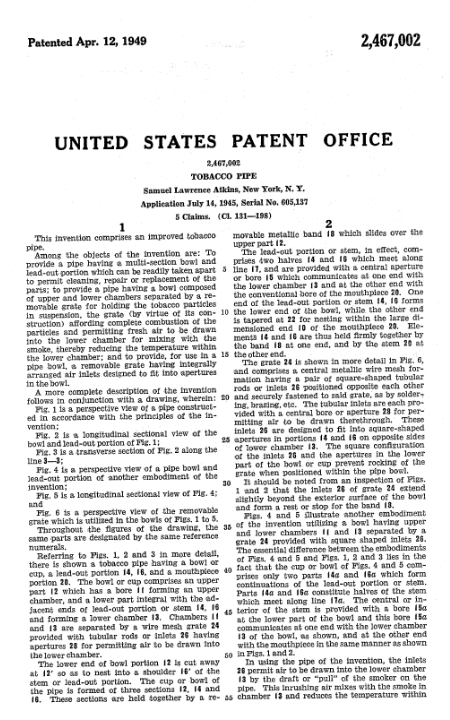
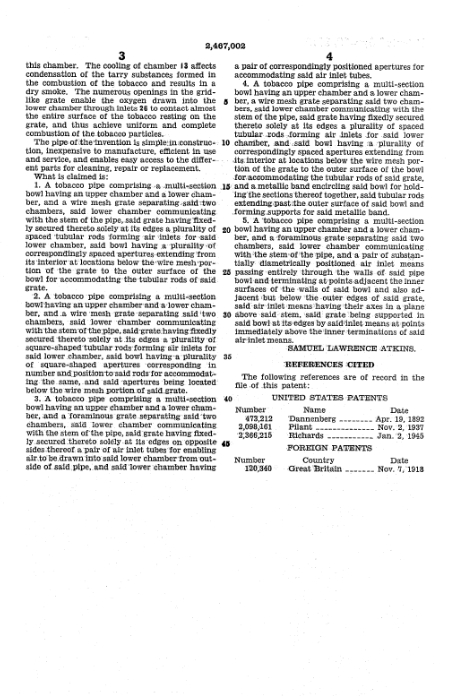
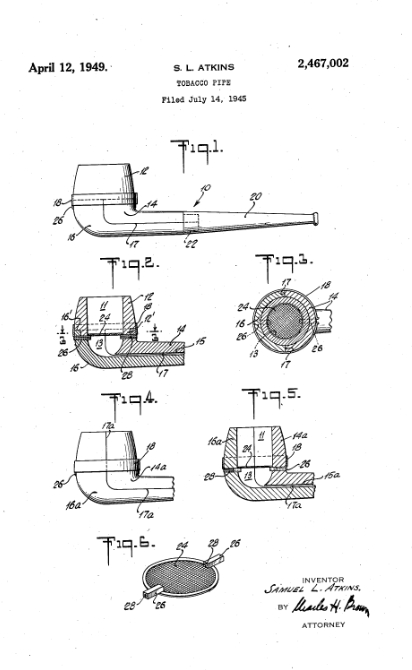
IMG_7647 Once it was clean I used Vaseline to lubricate the threads so that the bowls would turn easily into the base. I applied it with cotton swabs to get it into the threads. In the background are some brass screens that Tom sent along that go in the base between the bottom and the bowls. The open bottom on the bowls sit against this screen. Tom has found that these brass screens work far better than the original metal plate with holes that originally formed the grate for the bottom of the bowls. He says they clog far less frequently. IMG_7648 IMG_7649 The Airograte base has two small airholes in the sides of the bowl just below the ledge where the grate or screen sits. These tiny holes allow air to the bottom of the tobacco when smoked. When air is drawn in the bowl, it enters through these small airways. In this particular base the airways were clogged. I used an unfolded paper clip to open them again. I pushed out the clogs from both sides of the base from both the inside and the outside. The airflow is now unrestricted in those airways.IMG_7651 IMG_7652 I put the brass screen in place in the base once I had the cleaning finished. The bowl will screw on top of the screen and the tobacco when loaded will sit on top of the screen. IMG_7650 With the above statement about the bowl sitting on top of the screen I thought that it might be helpful to take a photo of the two different bowls. The one on the left is the bowl for the Airograte while the one on the right is for Grabow Viking. The Airograte is more of a tube that sits on top of the grate. The tobacco burns on the grate. IMG_7653 The Viking bowl also fits perfectly on the nylon stemmed pipe I have written about earlier. I am pretty certain that the nylon one is also a Grabow though it is unstamped. The photo below shows the bowl from the nylon pipe and the Grabow bowl from the bottom. IMG_7654 While I was cleaning up the bowl base I noticed the Patent and Patent pending information on the bottom of the bowl. This made me curious to see exactly what was patented/patent pending. I went to the US Patent Office on line ( http://patft.uspto.gov/ ) and searched the number on the bottom of the base. I was able to find that the patent had been applied for in 1949 by Samuel Lawrence Atkins of New York City. The patent was for the airograte that sat between the airway in the bowl and the tobacco and the two small holes in the bottom sides of the bowl. It was designed to give a dry and even burning smoke and keep bits of tobacco from entering the airway and mouthpiece. I have included a copy of the patent document with a diagram below. I find that it is always interesting to read the pitch that is made in terms of purpose for the design. The ongoing hunt for the perfect pipe continues to this day. yellobole patent3 yellobole patent4 yellobole patent With the bowl finished, the base cleaned and the airway opens and clean all that remained was to tidy up the stem. The nylon stem, though similar to the ones on Vikings and Falcons had a slimmer profile. The thinness made it very comfortable in the mouth. There was tooth chatter against the button on the top and the bottom of the stem as well as some deep tooth marks mid stem that had been poorly sanded out leaving dents in the flat surface of the stem midway up the stem on both sides. I sanded the stem with 220 grit sandpaper to remove the tooth chatter and to smooth out the flow of the taper. I followed that by sanding with a medium and fine grit sanding sponge to work on the scratches. IMG_7658 IMG_7660 Once the dents and scratches were gone I worked on the stem with micromesh sanding pads. I wet sanded with 1500-3200 grit pads. I found it really frustrating work to try to remove the scratches and marks. Wet sanding did not seem to really do the job – so I started over with the pads and a drop of olive oil. The oil seemed to do the trick. It proved to be the right medium for the micromesh. It gave bite to the pads and really worked quite well. IMG_7661 I continued to sand with the drop of oil through the 3200-4000 grit pads. The scratches really began to disappear and the stem was getting smoother. IMG_7662 I did the same with the 6000-12000 grit pads and a drop of olive oil. IMG_7663 Once I had finished sanding the stem with the micromesh I gave it a light buff with White Diamond. A light touch is essential when buffing nylon stems or you make more of a mess than you started with. I rubbed the stem down with Obsidian Oil and when dry I coated it with Paragon Wax and hand buffed it. Below are some photos of the pipe with each of the two bowls in place. I really like the looks of the finned shank on this one. The flat stem makes it very comfortable. I am looking forward to loading a bowl and trying out the patented “Airograte” screen that is on the bottom of the bowl. IMG_7664 IMG_7665 IMG_7666 IMG_7667 IMG_7668 IMG_7669 IMG_7670
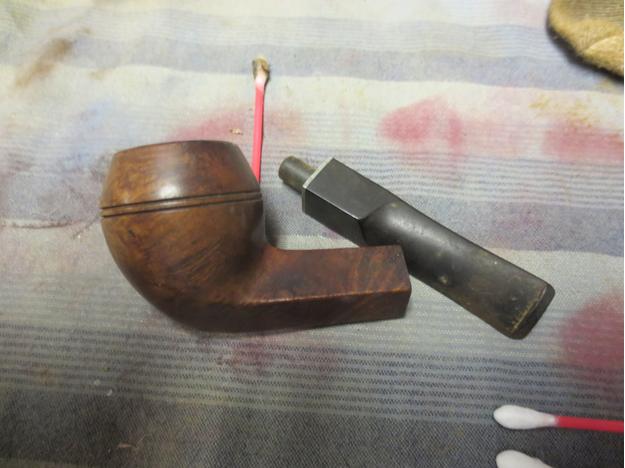
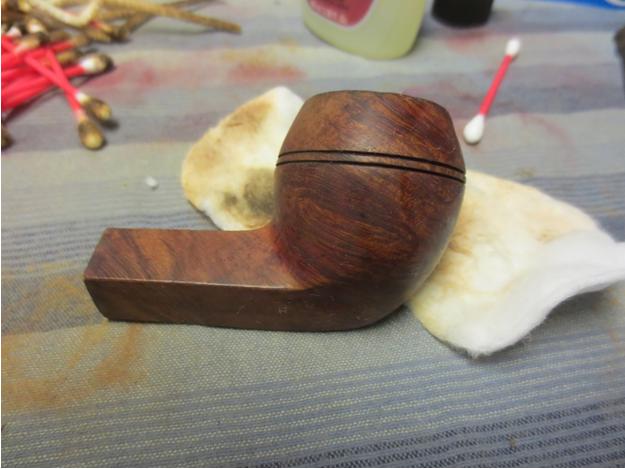
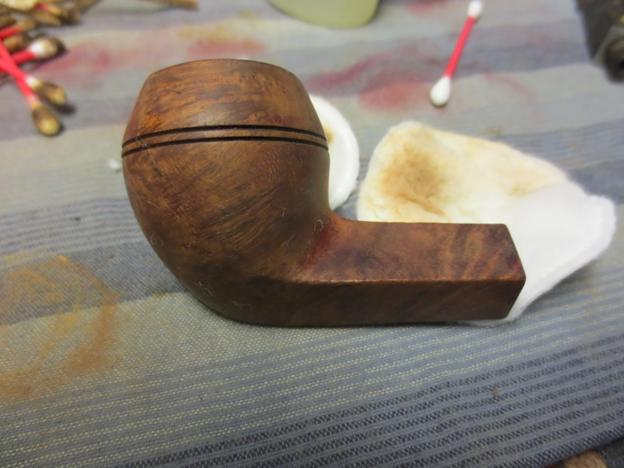
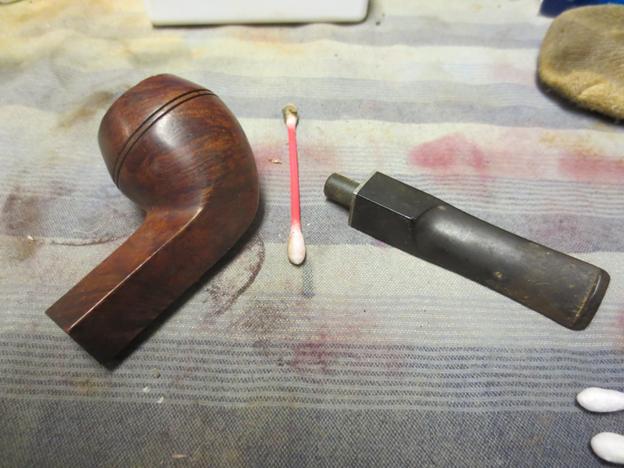
Renewing a 30’s Era KBB Yello-Bole Honey Cured Briar


Blog by Steve Laug

I just finished restoring and restemming an older Yello-Bole billiard. The bowl was stamped with the KBB (no ampersand) on the left side of the shank and next to it is stamped Yello-Bole in capital letters. Underneath is stamped Honey Cured Briar. On the right side of the shank it is stamped 2068B.
IMG_7566 The bowl was in decent shape. The finish had a heavy coat of varnish over the stain but the briar appeared to be quite nice. I could not find any visible fills in the bowl. There was some good grain under the varnish. The rim had been topped and was rounded and crowned. It still had some scratch marks in the wood and also it was stained in a much lighter colour than the rest of the bowl. The stem was missing. It originally had a push tenon stem as the mortise was not threaded. Fitting a new stem would not be difficult but getting proper look to the stem required that I had some idea of the era of the pipe. That pushed me to do a bit of research. IMG_7567IMG_7570 Since Yello-Bole pipes are one of my favorite older US brands doing the research would be enjoyable. As with other early brands made in the states I have found that older is better. A KBB in a cloverleaf stamp will date them back to the ’30’s. I have found through my reading that the 4 digit shape numbers are older than 2 digit ones. The pipes with the logo on top of the stem are older than ones that have them on the side. That is just some of the information that I found with a cursory read through the forums and a variety of websites.

I found that Kaywoodie would sort shipments of briar and send the culls to be used for Yello-Boles, meaning they got some quality briar. One fellow on the web believes that is why Yello-Bole pipes tend to be smaller over all, working around flaws. He also said that he thinks calling them Kaywoodie seconds is a bit of a misnomer, being that Kaywoodie was one of the largest briar purchasers in the world at the time (’20’s-50’s) and got some fantastic wood.

I came across the SM Frank website http://www.smfrankcoinc.com/home/?page_id=2 and found a wealth of historical information on Kaywoodies, Yello-Boles and the merger between KBB and SM Frank and later Demuth. It was a great read and I would encourage others to give the website a read. The information in the next paragraph was condensed from that site. I found confirmation for the statement above that the Yello-Bole line was an outlet for lower grade briar not used in Kaywoodie production. Yello-Bole’s were introduced in 1932 and manufactured by Penacook, New Hampshire subsidiary, The New England Briar Pipe Company. Advertising from the 1940′s, pictures the Yello-Bole “Honey Girl” and urges the pipe smoker to smoke the pipe with “a little honey in every bowl.” Honey was an ingredient of the material used to line the inside of the bowl. It was said to provide a faster, sweeter break-in of the pipe.

I went hunting further to see if I could find information on establishing dates for Yello-Bole pipes and found that there was not a lot of information other than what I had found above. Then I came across this link to the Kaywoodie Forum: http://kaywoodie.myfreeforum.org/archive/dating-yello-bole-pipes__o_t__t_86.html I quote the information I found there as it gives the only information that I found in my hunt to this point.

“OK so there isn’t a lot of dating information for Yello-Bole pipes but here is what I have learned so far.
– If it has the KBB stamped in the clover leaf it was made 1955 or earlier as they stopped the stamping after being acquired by S.M. Frank.
– From 1933-1936 they were stamped Honey Cured Briar.
– Pipes stems stamped with the propeller logo they were made in the 30s or 40s no propellers were used after the 40s.
– Yello-Bole also used a 4 digit code stamped on the pipe in the 30s.
– If the pipe had the Yello-Bole circle stamped on the shank it was made in the 30s this stopped after 1939.
– If the pipe was stamped BRUYERE rather than briar it was made in the 30s.

That is all I have in my notes right now I don’t have anything on the multitude of stem stampings or any other age indicators. If anyone has more definitive information or other methods of determining date please feel free to post it and I will edit this as I go. I currently have 2 from the 30s and 6 from pre 55 and 2 fairly modern ones.”

One further item was also found on that site. It was just a passing comment in the midst of some information on Kaywoodie pipes. I quote: “The pre-Kaywoodie KB&B pipes were marked on the shank with a cloverleaf around KB&B. Some early Kaywoodies had this same marking on the shank, but the practice was dropped sometime prior to 1936. Yello-Boles also had KBB in the leaf on the shanks, but did not have the ampersand found on Kaywoodies.” (Highlighting is mine)

Given the above information I discovered that the pipe I was working on was made sometime between 1933-1936. It was stamped with the Honey Cured Briar stamping on the shank and had a four digit code. Thus it was an early Yello-Bole from the 1930s. With that information I had a fairly clear idea of what kind of stem I needed to fit to the shank. I looked for photos of the pipe online and found none from that era. So I looked at KW stems to get some sense of what the shape of the stem and the slope of the taper would have been like. I found one the shape I was looking for in my can of stems. It had the right taper and look and after turning the tenon I was able to fit it to the shank. The diameter of the stem was slightly larger than the shank on the top and would need to be sanded until the transition was smooth between the shank and stem. IMG_7577IMG_7578IMG_7579 I sanded the stem with 220 grit sandpaper to remove the excess material on the top side. I sanded the shank to make the transition smooth. I planned on removing the varnish and touching up the stain on the rim anyway so to touch up the shank would not be a problem. I sanded carefully so as not to damage the stamping. IMG_7592IMG_7593IMG_7594IMG_7595 There were some slight ripples in the taper of the stem so I sanded it with a sanding block to smooth out the high points on the taper and even out the line. IMG_7596IMG_7597IMG_7598 I wiped down the bowl with acetone and cotton pads to remove the varnish and some of the stain coat. I always do that when I am going to do a restain on the rim and shank as I find that it makes the new coat of stain much simpler. IMG_7599IMG_7600 I wanted to remove the crown and rounding of the rim and flatten it out. The original bowls did not have a crowned rim but a flat one so I wanted to repair that and bring it back to its original look. I set up a topping board and 220 grit sandpaper and pressed the rim into the sandpaper and sanded the top flat. IMG_7601IMG_7602 I sanded the rim with a medium and a fine grit sanding sponge and also with 1500-2400 grit micromesh sanding pads to prepare it for staining. I stained the bowl, rim and shank with oxblood aniline based stain, flamed and repeated until the coverage was even. I then buffed the pipe with White Diamond. IMG_7604IMG_7605IMG_7606IMG_7608 I sanded the stem with medium and fine grit sanding pads once again and then sanded it with the micromesh sanding pads. I wet sanded with 1500-2400 grit pads and 3200-12,000 grit pads. I rubbed the stem down with Obsidian Oil and when it had dried took the pipe to the buffer. IMG_7609IMG_7610IMG_7611 I buffed the pipe with White Diamond and then gave it multiple coats of carnauba wax, buffing with a flannel buff between the coats. The finished 1930’s era pipe is shown below ready to be loaded and enjoyed for another 80 years. The stain does a great job highlighting the grain on this little pipe. It came out looking like new. The stamping stands out and is still sharp. The stem tapers just right to my liking. It is finished and waiting. Now the only decision left is what tobacco to use to break it in once again. IMG_7613IMG_7617IMG_7615IMG_7616

Restoring a couple of Yello Bole Airograte Bowls


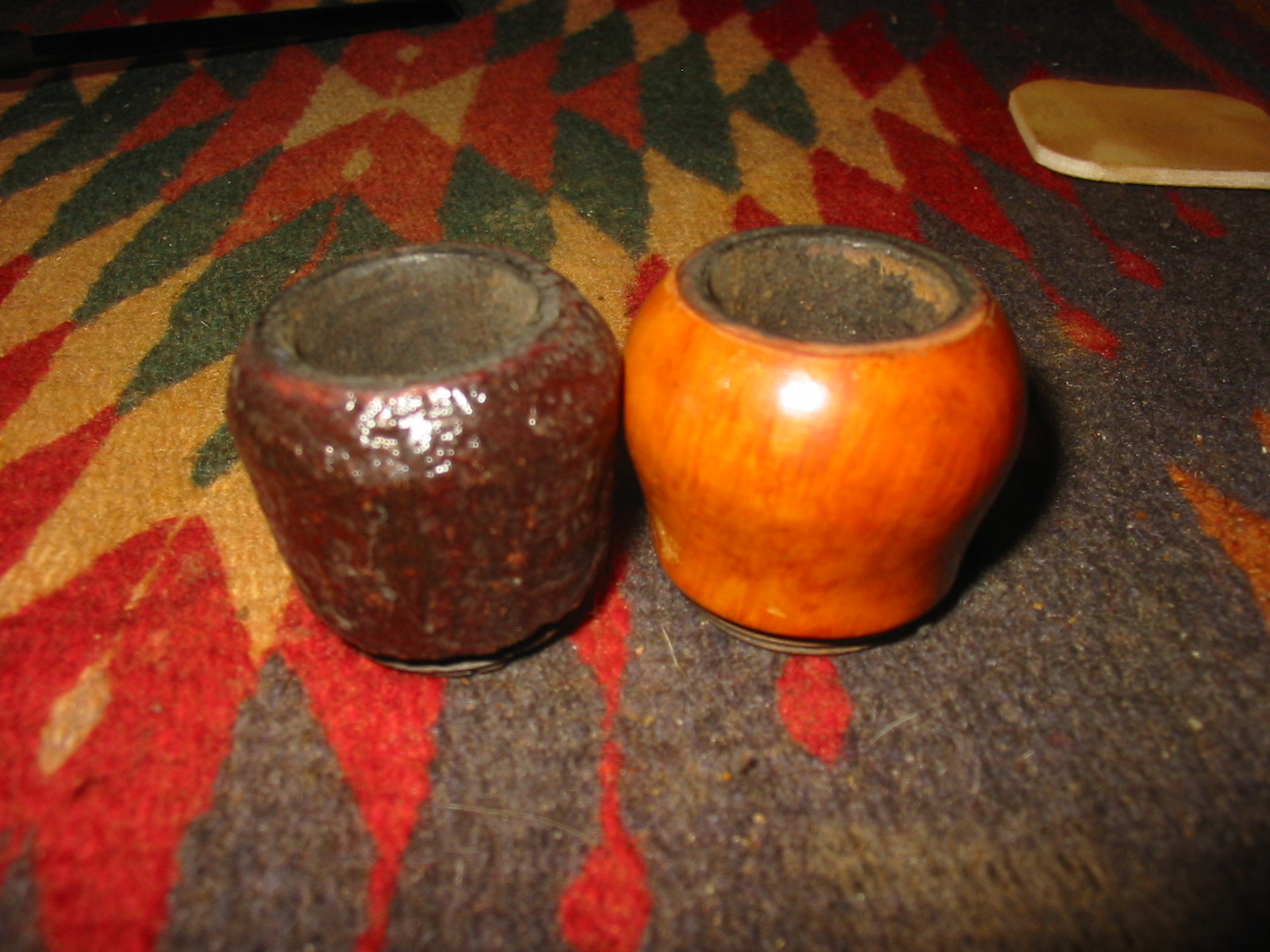
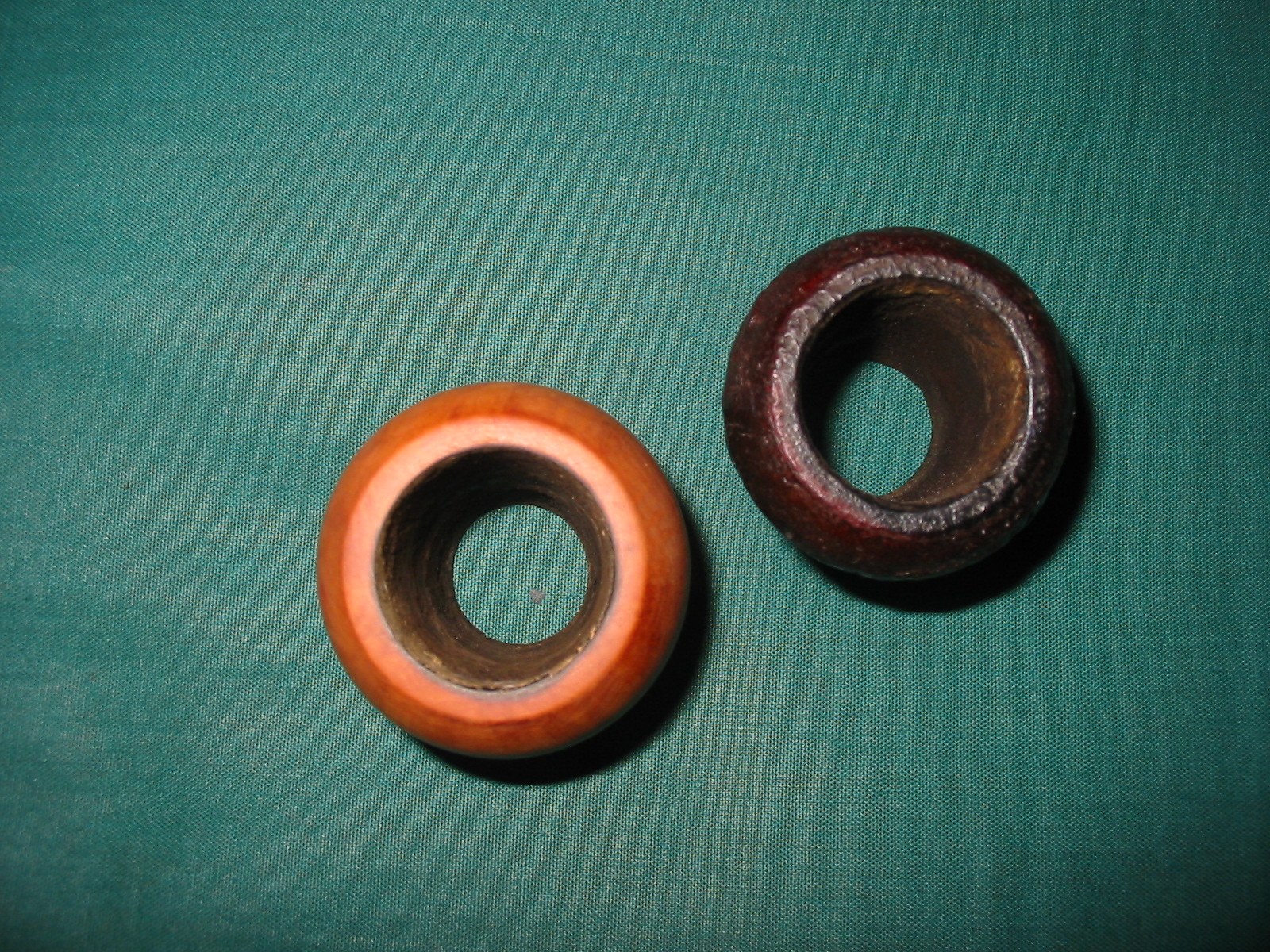
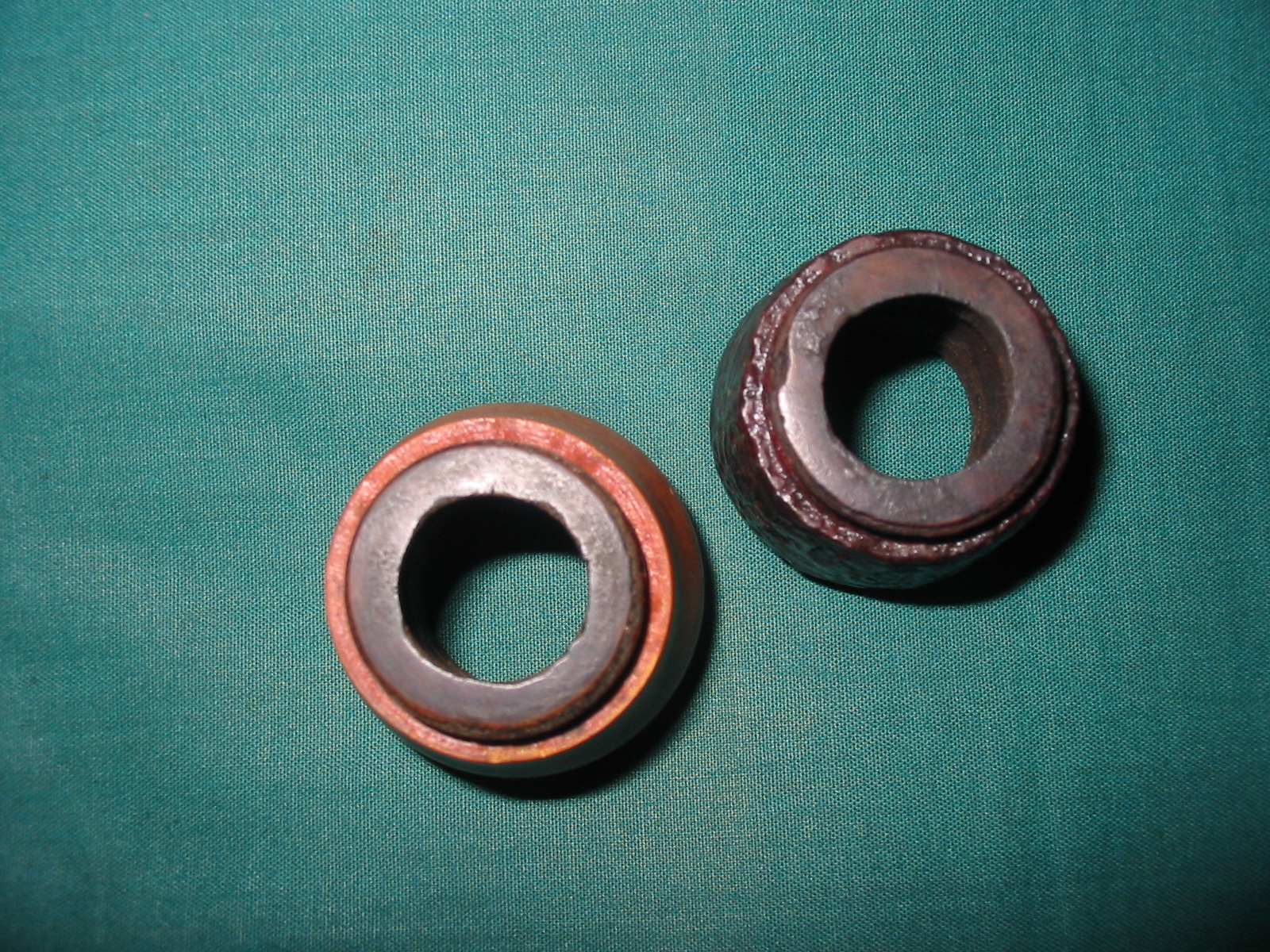
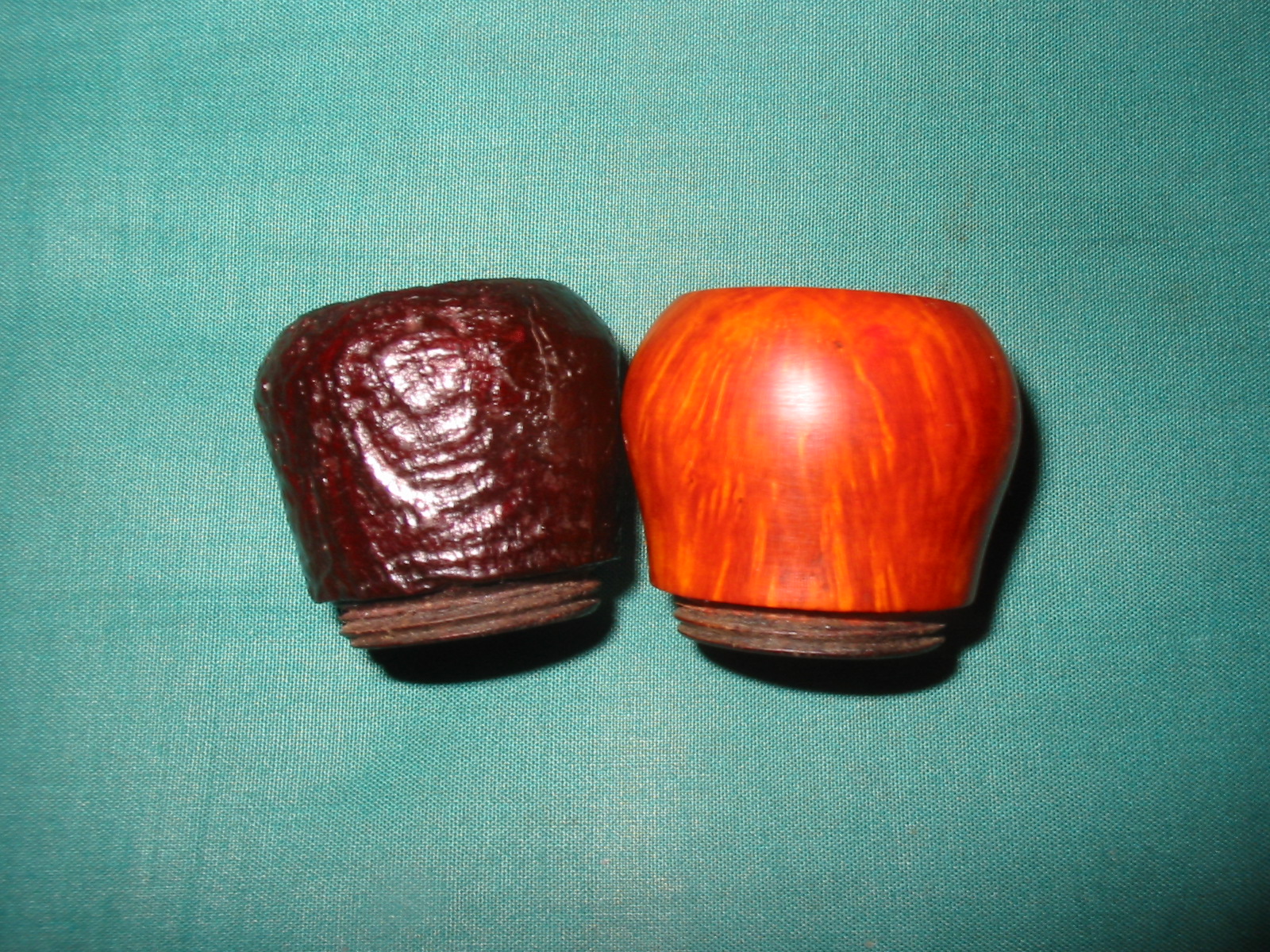
In my gift box were two pipe bowls that I initially thought were Falcon or Grabow Viking bowls but when I took them out and examined them I was surprised to see that instead of the usual bottom of the bowl found on those two brands there was a lack of a bottom of the bowl. That is correct there were just two briar tubes with a hole on the top and a hole on the bottom. I had not seen anything like that before and I have cleaned up a lot of different metal pipes. I had no idea what I was dealing with. I looked over the bottom hole to see if they had somehow been modified but it was clear that they had been manufactured this way. The bowls both had a cake but the cake on both was not even and it was crumbling. The rims on both were dirty and had a carbon buildup. The bottom threaded portion was tarry and dirty as well and the rim on the bottom of the bowl was also caked with carbon and tars. Both bowls had a varnish coat. The one on the sandblast bowl was in pretty good shape but the one on the smooth bowl was flaking. Both would need to be removed as I did not like thick varnish coats on the bowls I refurbish and smoke.
IMG_7400
The fact that I had not seen these kinds of bowls before was motivation to me to see if I could find out what kind of pipe they came from. I wanted to see if I could then find a stem and base unit for them. I searched the net to see what I could find. My go to resource for metal pipes is Smoking Metal http://www.smokingmetal.co.uk/index.html . I use the resource when I am researching information on any metal or metal style pipe. Tony Pringle has done a masterful job of collecting and cataloguing as many metal pipe variations as he can possibly get his hands on. He continues to add pipes to the collection and is open to information sent by other metal pipe smokers and collectors. I turned to Tony’s collection for information. Since I did not know the name of the pipe I was looking for I went to the Photo Index. I went through many photos before I came to the end of the photos. There in the Y section I finally found what I was looking for – the Yello Bole Airograte pipe. There I saw photos of the bowl style that I had in my hands.

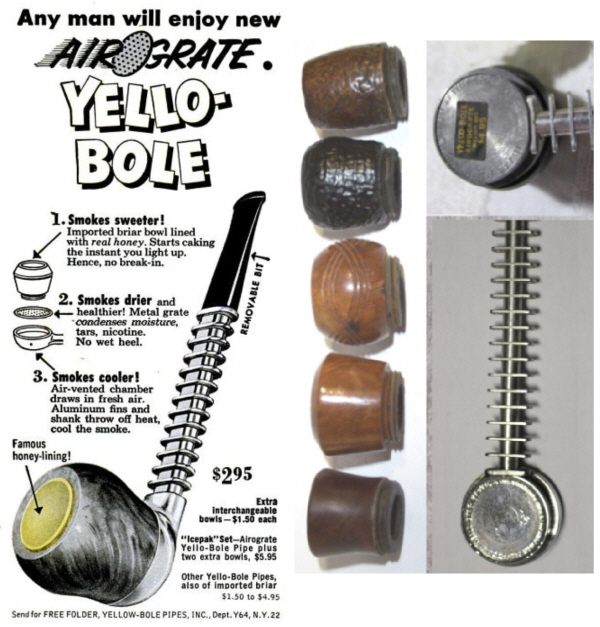
From there I did a Google search on Airograte pipes and found quite a bit of information. I found the advertisement below that showed the basic break down drawing of the way the bowl functioned. I also saw what the base and stem looked like. In the second photo below I saw more clearly how the system worked. A screen/grate sat on an inset shelf in the base and the bowl screwed over the grate and into the base. The grate was what the tobacco sat on when packed in the bowl and smoked. The holes in the grate kept the tobacco shards from going into the airway. The base collected the moisture from the smoke before delivering a smooth dry smoker the pipe man.
130_3

130_2
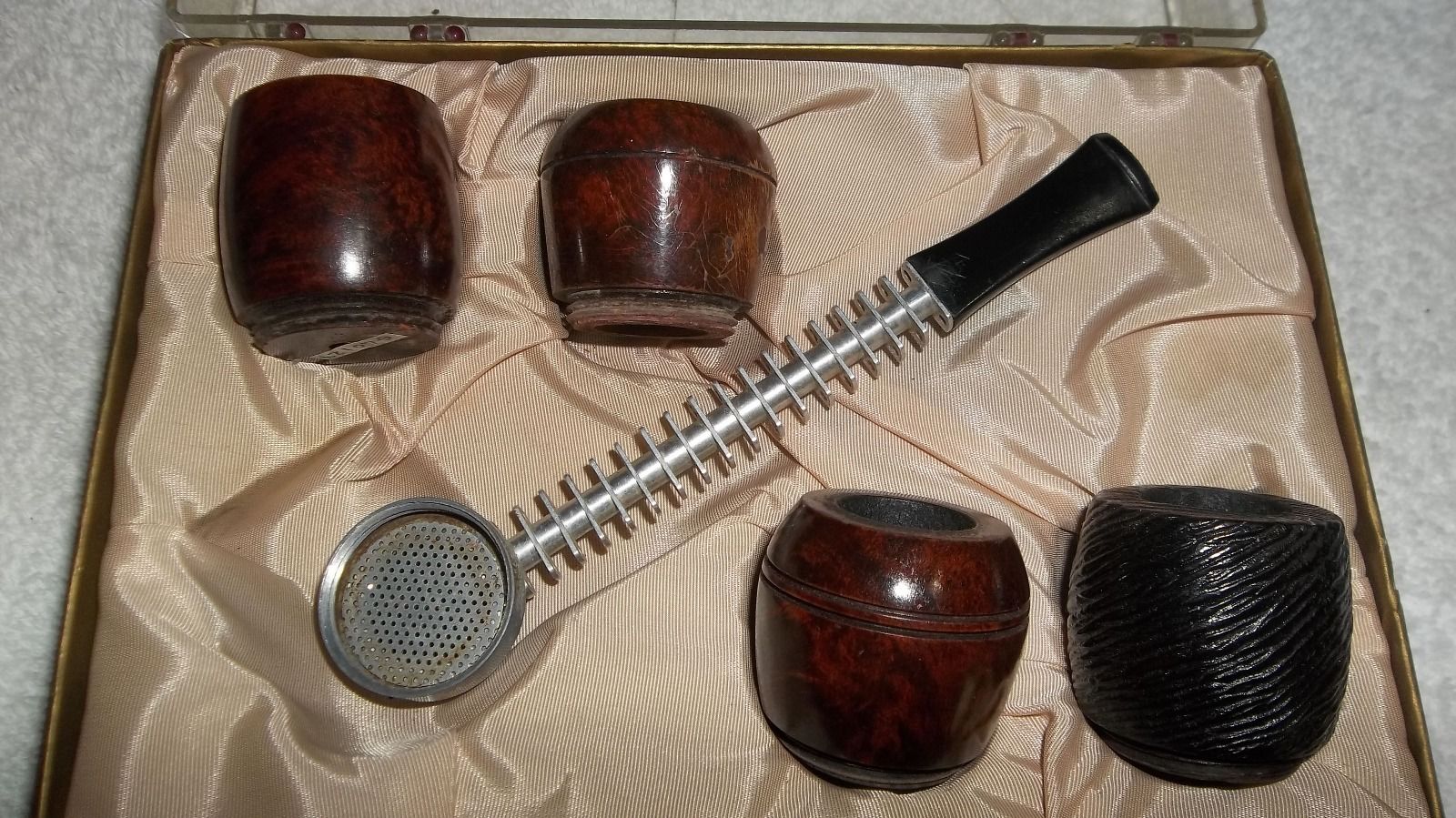
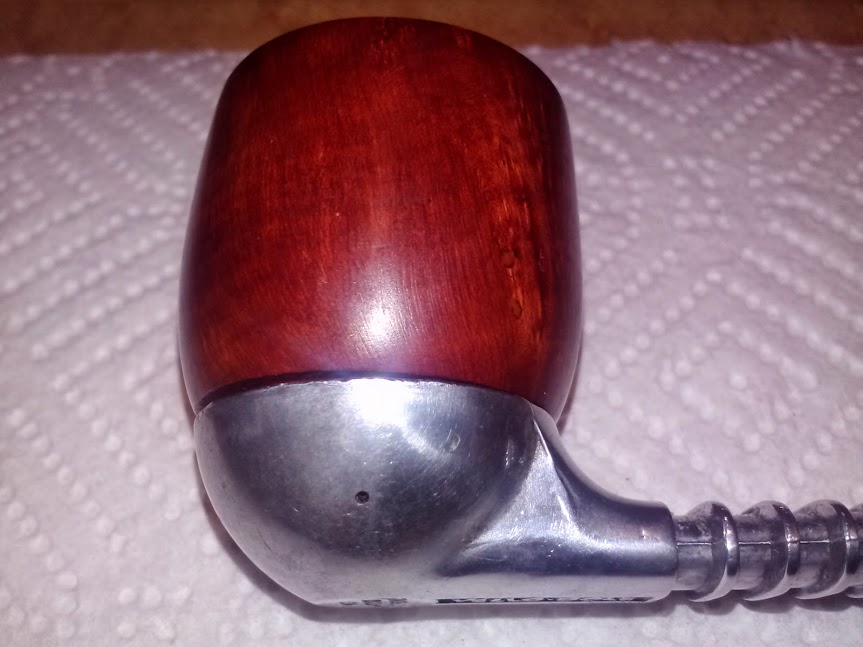
I posted on both Smokers Forums and Pipe Smoker Unlimited (PSU) Forums to see if anyone had a Yello Bole base unit that they would be willing to trade. I also searched on Ebay and found a few but all had extra bowls or were priced beyond what I wanted to pay for one. The one thing they did was show clearly the look of the pipe with the bowl in place.
$_57

$T2eC16V,!zUE9s38+CCeBRr3I!PJL!~~60_57
While I was prowling on Ebay one of the members on PSU, Father Tom no less, sent me a private message saying that he had one that I could have. We dickered back and forth and he shipped the base to me and I shipped a refurbished poker to him. I have included two photos of the pipe and base that Tom has sent. Now the wait begins. Thanks Tom, I look forward to seeing what this old-timer smokes like once I have the parts all in one place.
Monday_Airograte

Monday_Airograte2
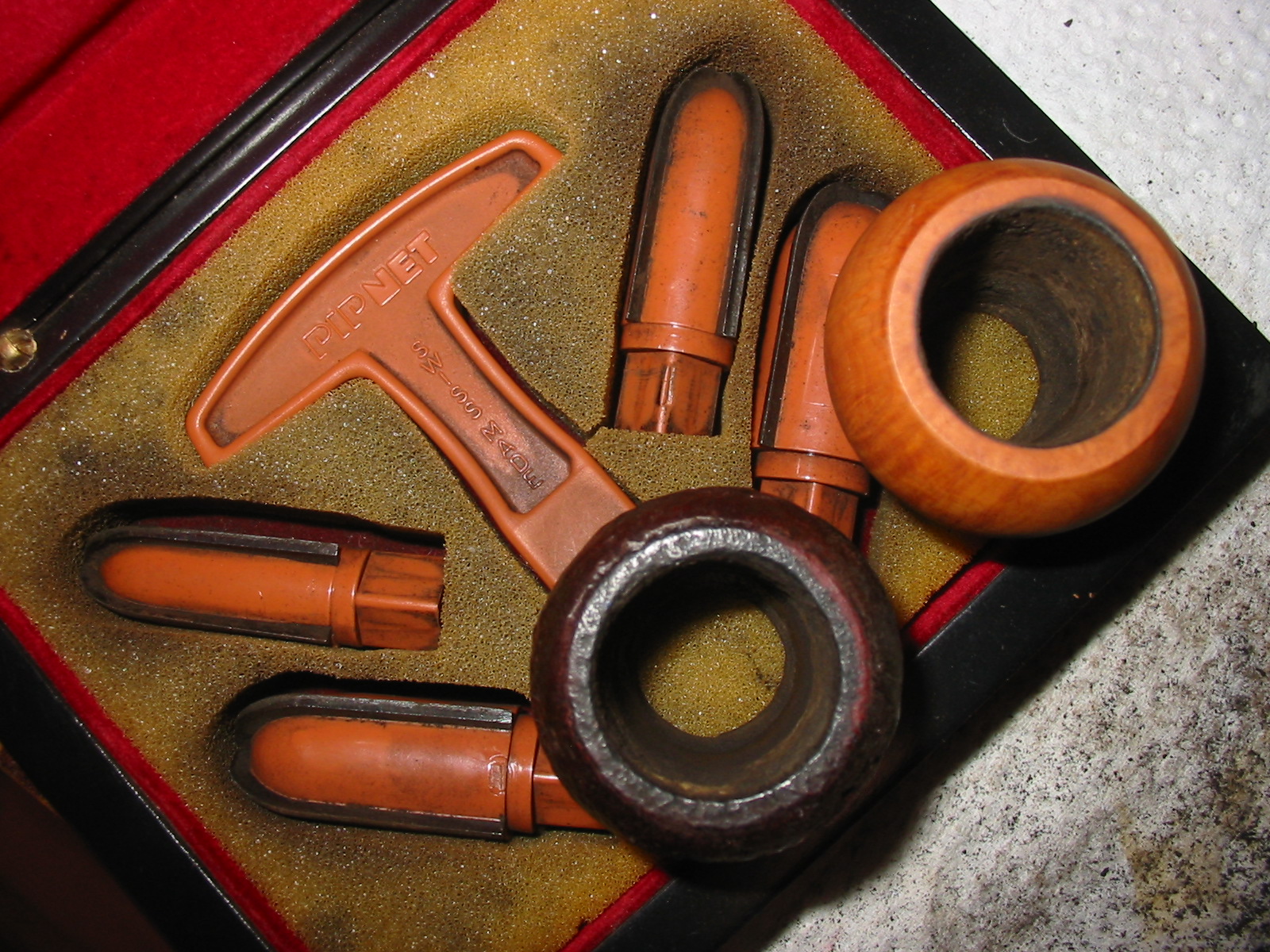
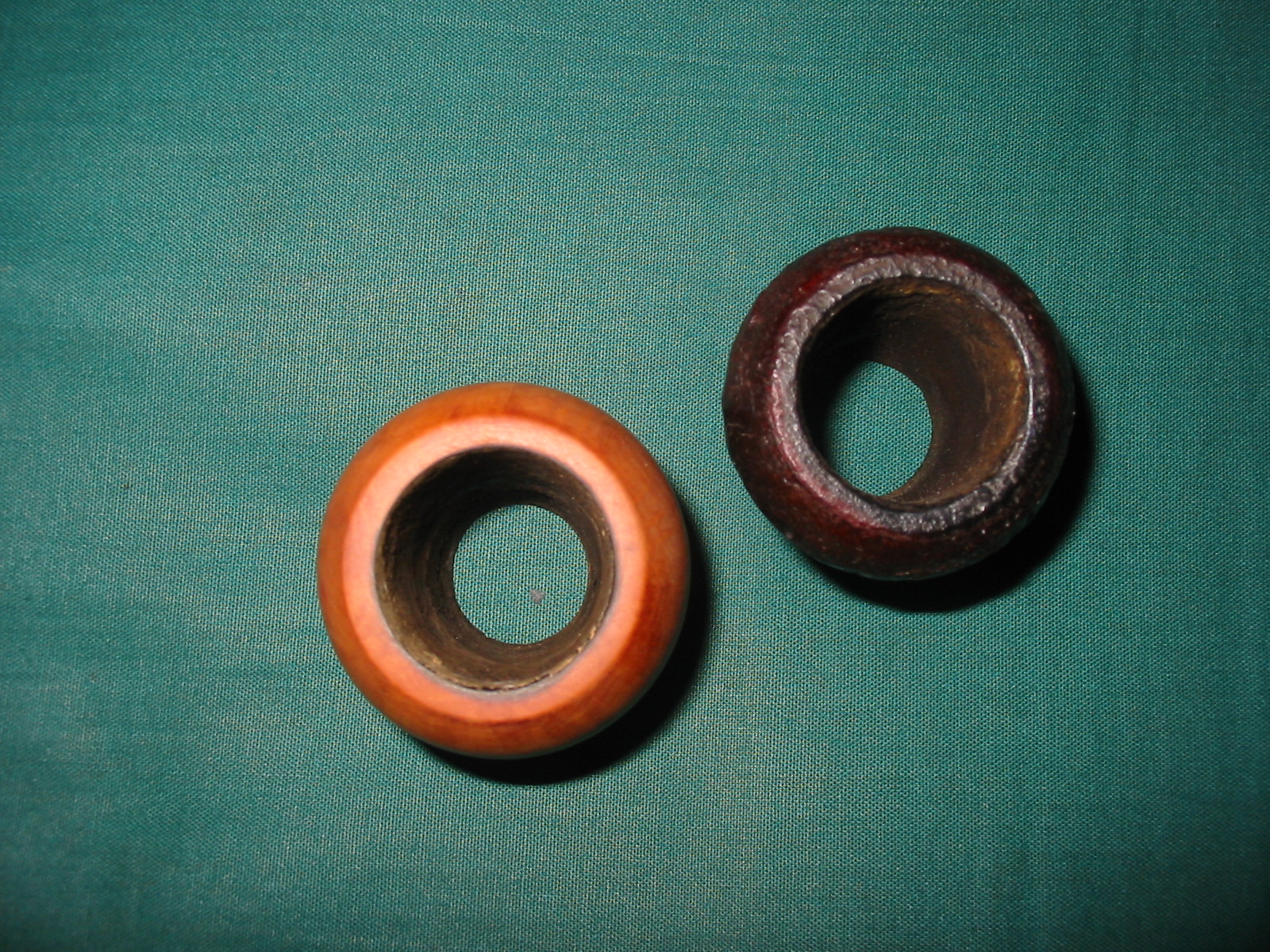
So while I am waiting I cleaned up the two bowls. I reamed them both with a PipNet reamer. That was an interesting experience. I held them over the ash can and twisted the reamer to scrape away the carbon. The ash fell out of the hole in the bowl bottom. I cleaned the rims with cotton pads and Murphy’s Oil Soap to remove the buildup and tars that covered both. I scrubbed the sandblast bowl with a soft bristle tooth-brush and cotton swabs. In the photo below the newly cleaned rims are visible.
IMG_7410
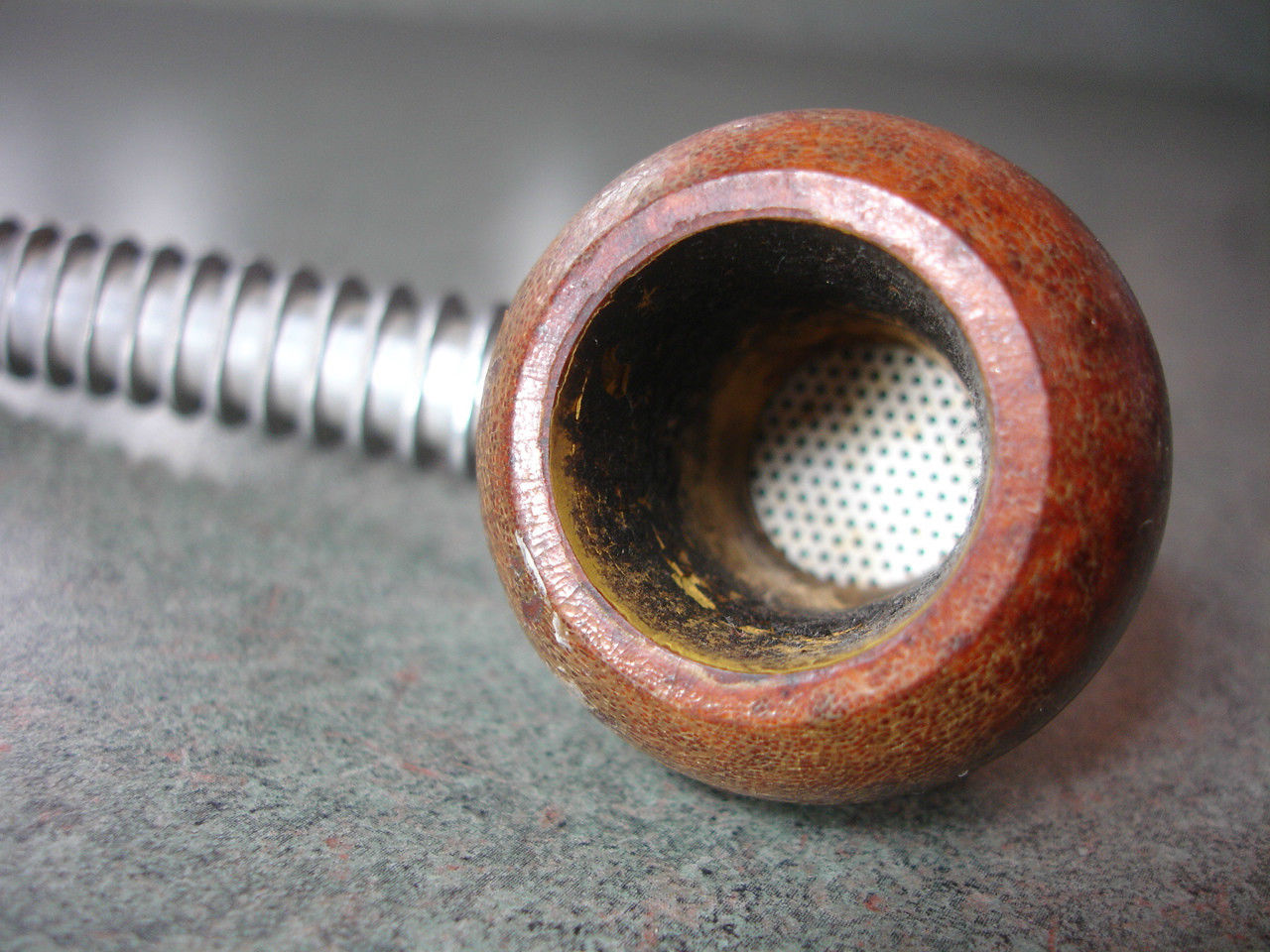
I scrubbed the bowls with acetone on cotton pads to remove the varnish coat. It took quite a bit of scrubbing but I was able to remove the varnish from both bowls. The briar on the smooth bowl is flawless and quite nicely grained. On the inside of both bowls once I had cleaned them the familiar yellow coating was visible and gave confirmation to my deduction that they came from a Yello Bole pipe.
IMG_7415
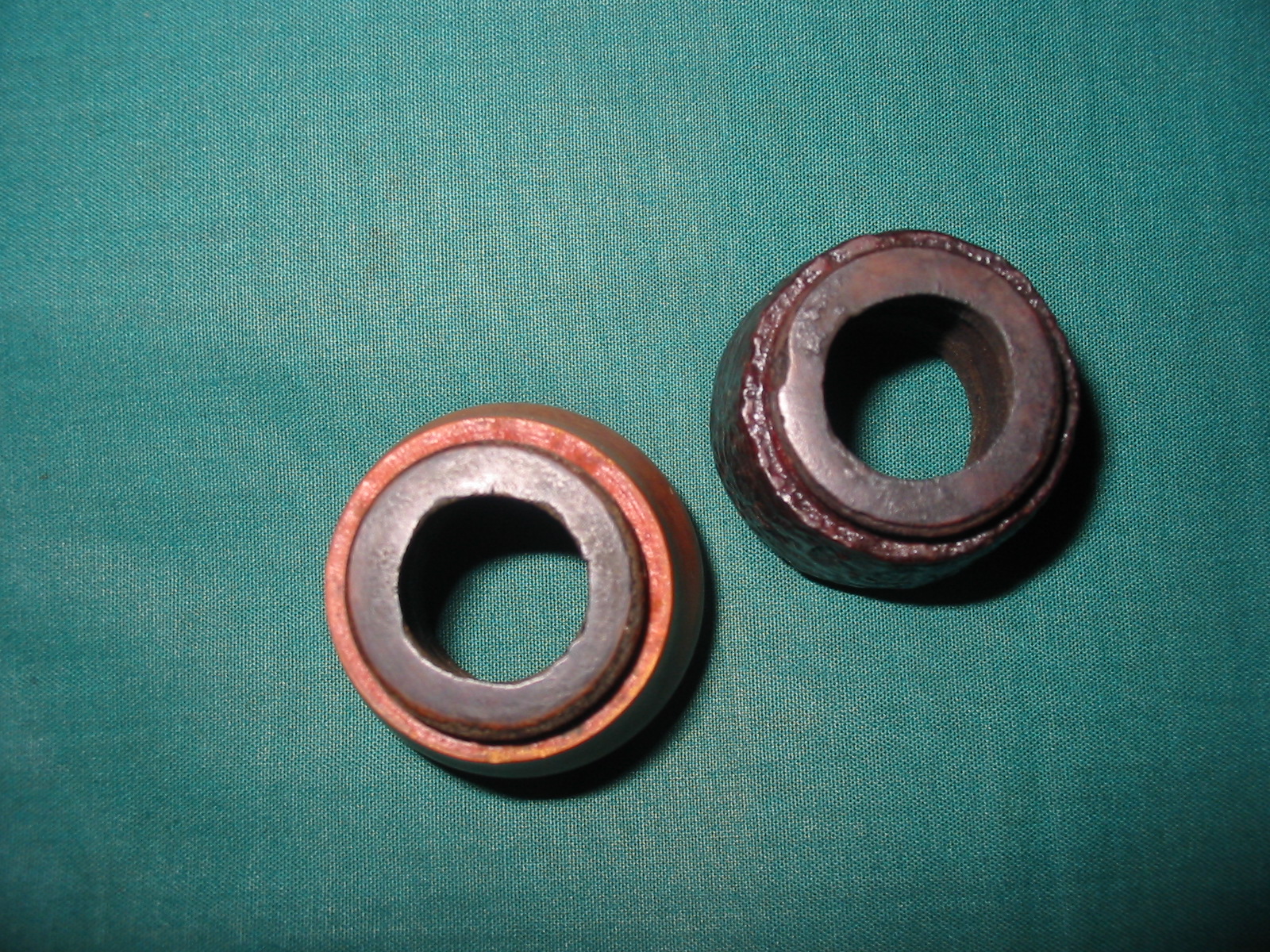
I scrubbed the bottom rims with alcohol on cotton swabs until they were both clean. I gave them both a light sanding with a medium and fine grit sanding sponge.
IMG_7416
I buffed the bowls with White Diamond and gave the smooth bowl several coats of carnauba wax and buffed it with a soft flannel buff. I put Halcyon II wax on the sandblast and used a shoe brush to buff it once it had dried. The finished bowls are shown below. I decided to leave the smooth bowl unstained to see how it will colour during use. I couldn’t wait to work on them or to write this up until the base comes. But once the base arrives I will take some photos of the bowls in place. Until then I will wait – and try to be patient for Canada Post to get the package to me.
IMG_7415

IMG_7416

IMG_7438

Restemmed and Reworked an Old Yello Bole Acorn


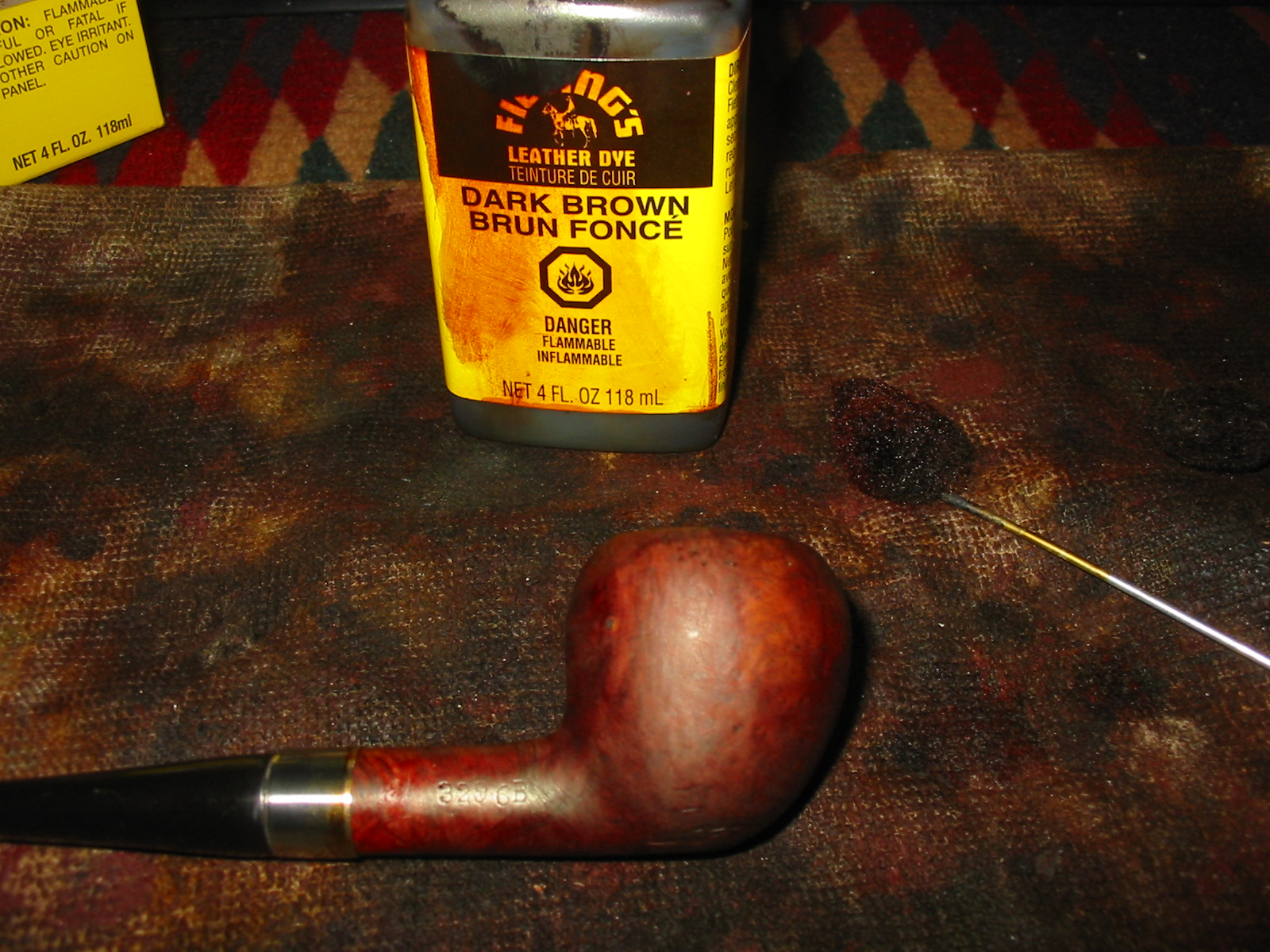
I have cleaned out my box of pipes for refurbishing and all I have left are bowls that need to have stems made and fit. This little Yello Bole Acorn pipe attracted my attention and I decided it would be the first one I worked on. The pipe is stamped on the left side of the shank: KBB in a cloverleaf and next to that it is stamped Yello Bole over REGDUSPATOFF over Imperial in script. Underneath that it is stamped “Cured with Real Honey”. On the right side is stamped 3296B. I reamed the bowl and cleaned the airway and mortise area so that I could get a good clean fit with the new stem. I picked a stem blank from my can of stems and used my Pimo Tenon turning tool to turn the tenon to fit the shank. The stem was too large so I removed the excess material with a sanding drum on my Dremel. In the photo below you can see the stem after I had sanded the excess away with the Dremel. The shank on the pipe also had a small crack in it so I glued it with superglue and pressure fit a nickel band on the shank.

Image

I sanded the stem with medium grit emery cloth to remove the scratches and marks left by the sanding drum. I find that the emery cloth does a great job removing the deep scratches and marks around the diameter of the stem as well as fine tune the fit to the shank. The band had some small dents that needed to be taken out so I used a small round headed pick to bring the shape back into round. The next three photos show the stem after sanding with the emery cloth.

ImageImageImage

At this point in the process I used the tool to round out the band a bit more and then fit the stem on the pipe. The next series of four photos shows the stem on the pipe. I also noted at this point that the band needed to be flattened on the bottom to accommodate the flattened bottom of the shank on the pipe. I would also have to flatten the edge of the stem to also accommodate that flattening.

ImageImageImageImage

I took a break from the stem and worked a bit on the bowl of the pipe. I wiped it down with acetone on a cotton pad to remove the finish. I then sanded the bowl to remove some of the dents and marks in the finish. The deep gouges needed to be steamed and I was able to raise them slightly. They are still visible on the finished pipe but lend it some character. The next series of three photos show the bowl cleaned and ready for staining.

ImageImageImage

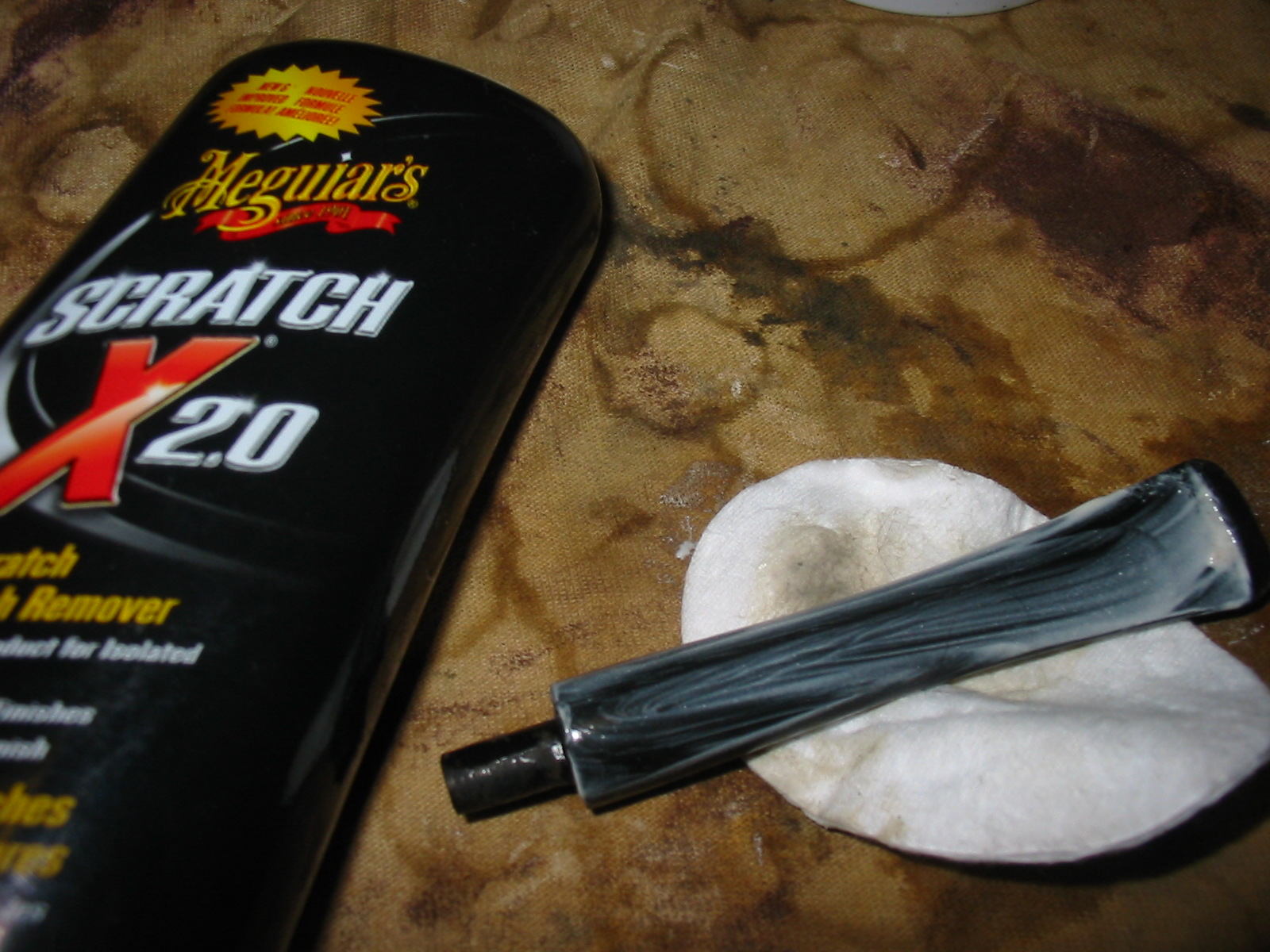
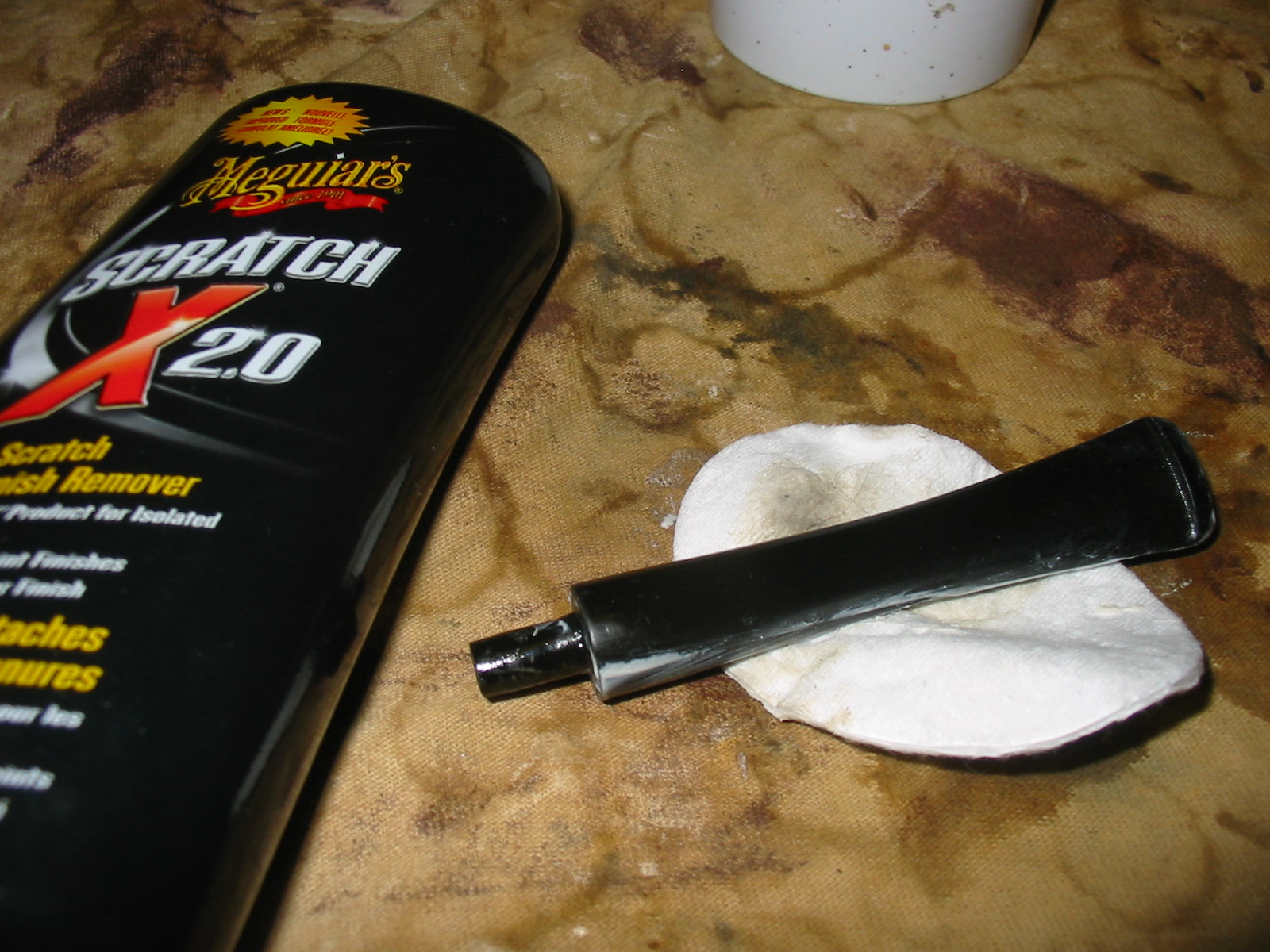
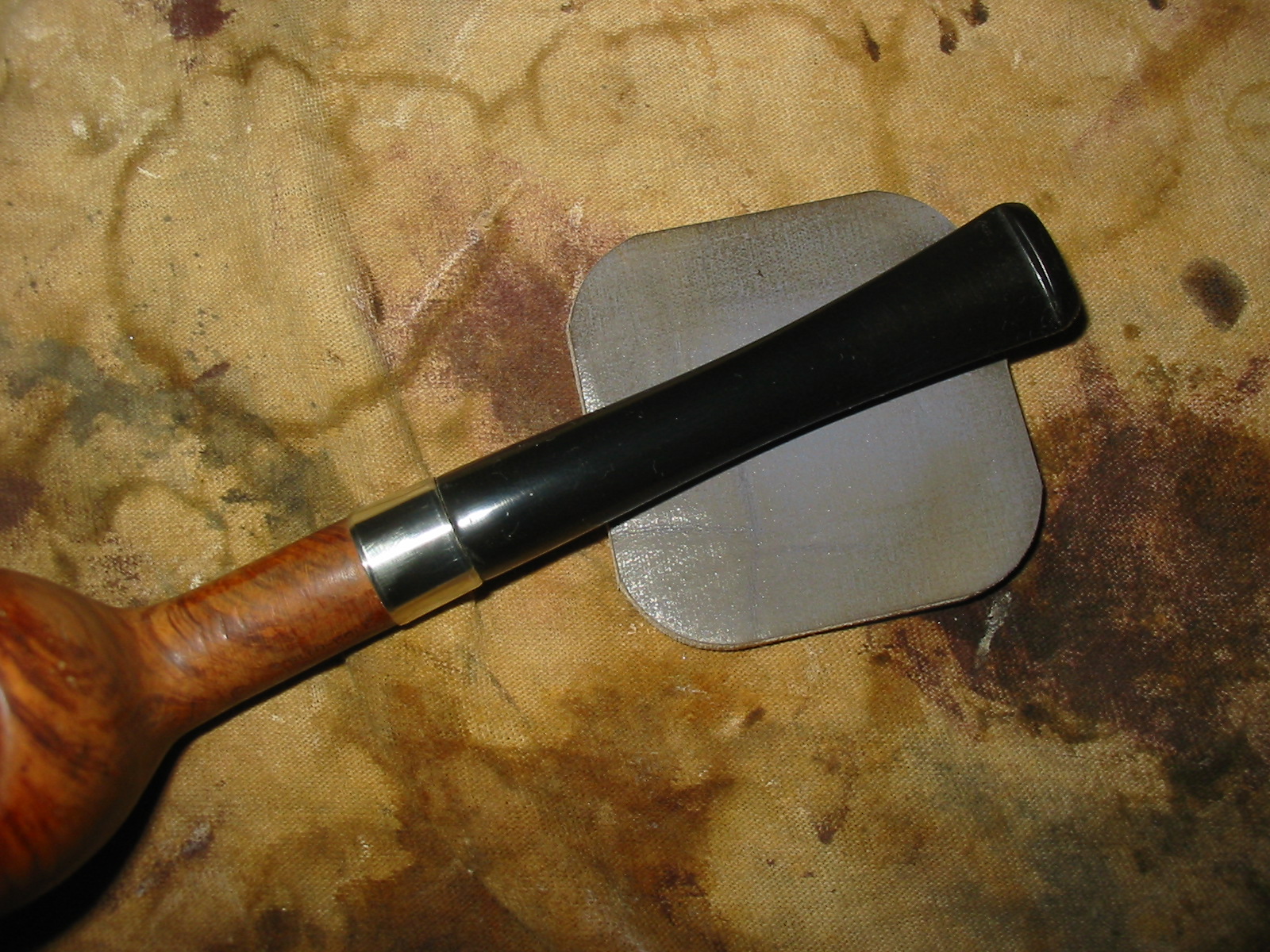
I then changed to sanding the stem with 240 and 320 grit sandpaper. The next series of six photos shows show the progression of the stem as I sanded it.  The shape was pretty close to finished by the time I was done. The fit was excellent and the look of the new stem gave the pipe a great look in my opinion. All that remained was to do a lot more sanding! The fourth through the sixth photos below show the stem after I had wiped it down with some Maguiar’s Scratch X2.0 applied by hand and rubbed down with cotton pads. The finish of the stem is getting smoother.
ImageImageImageImageImageImage

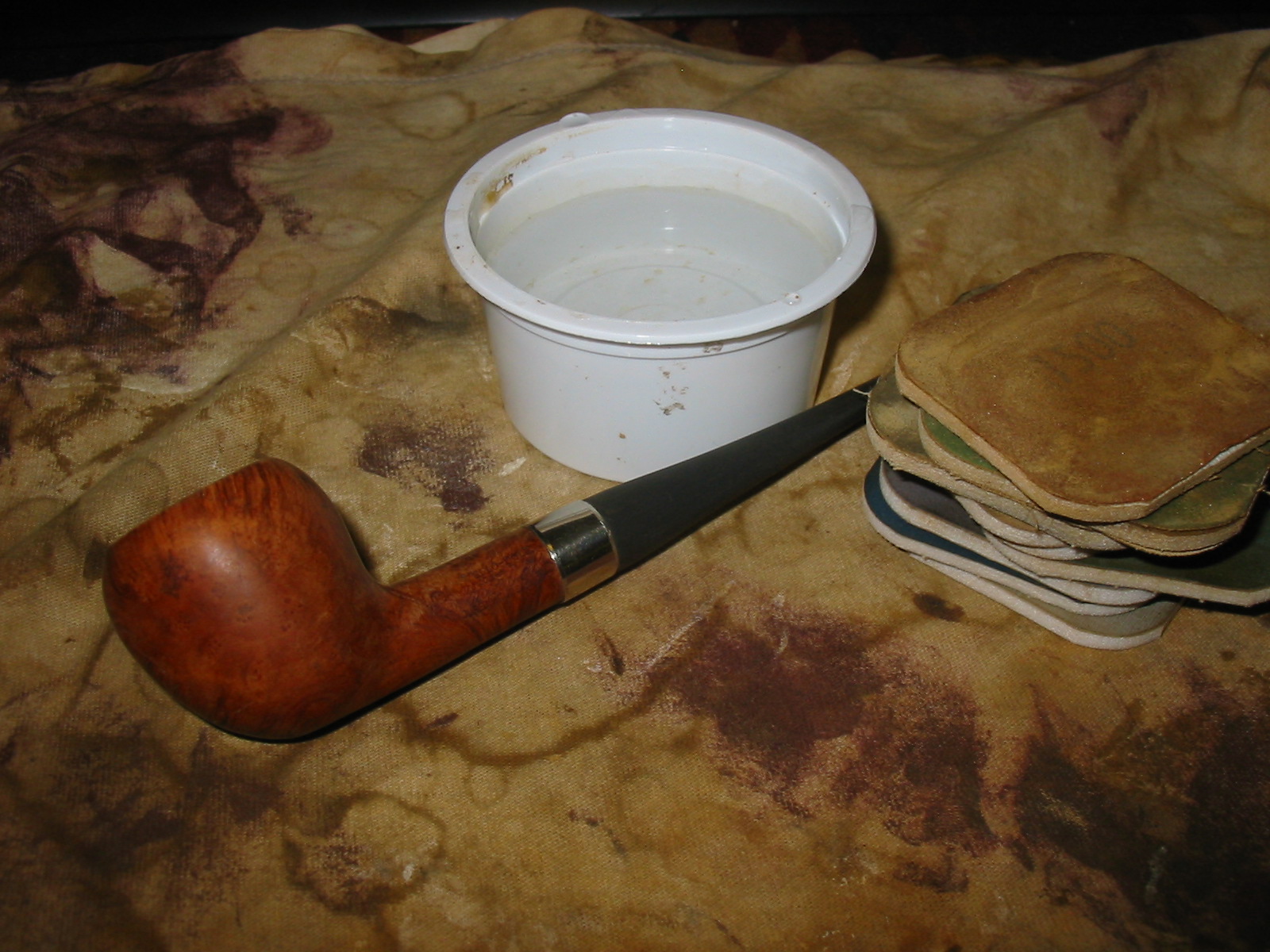
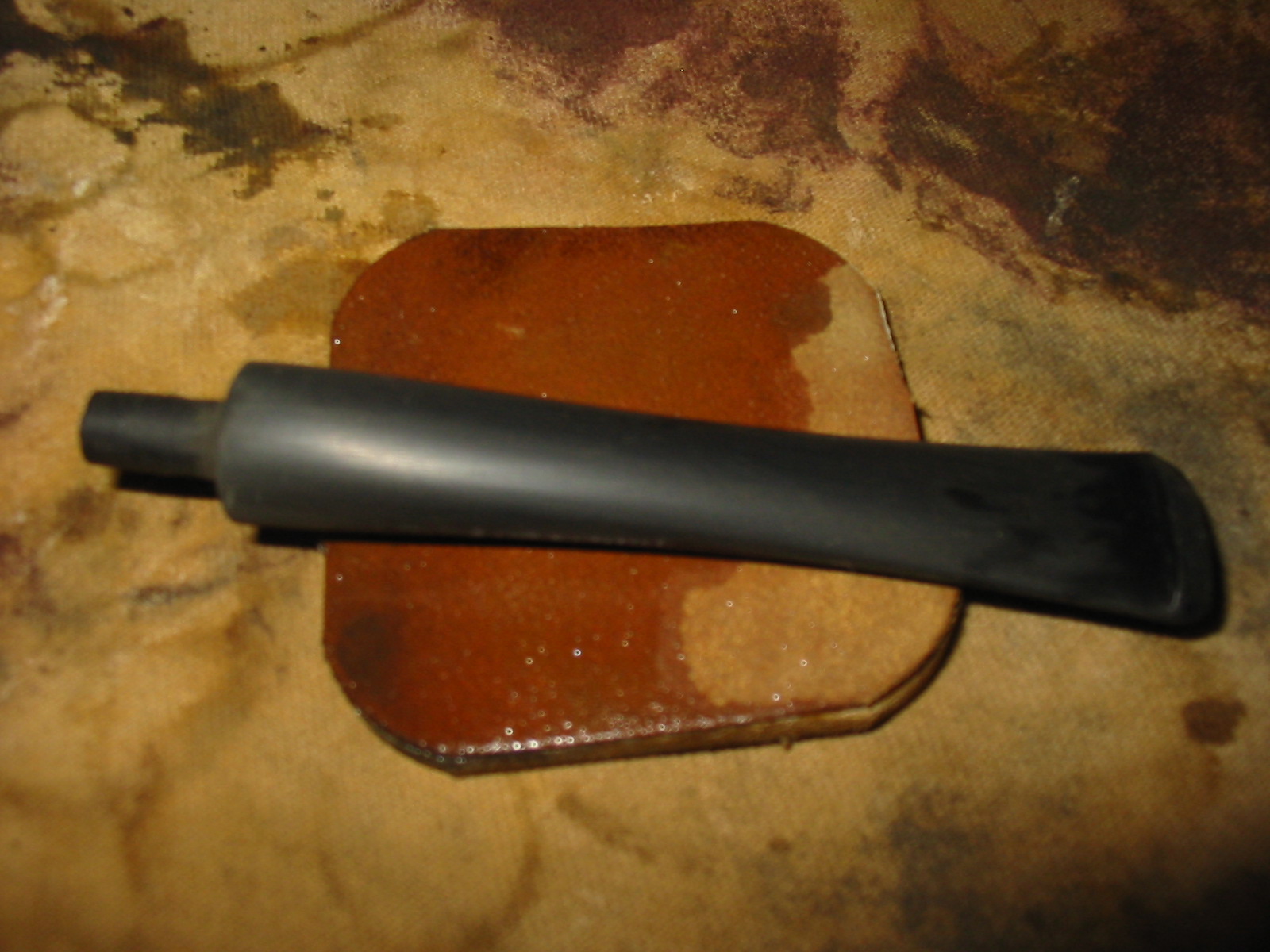
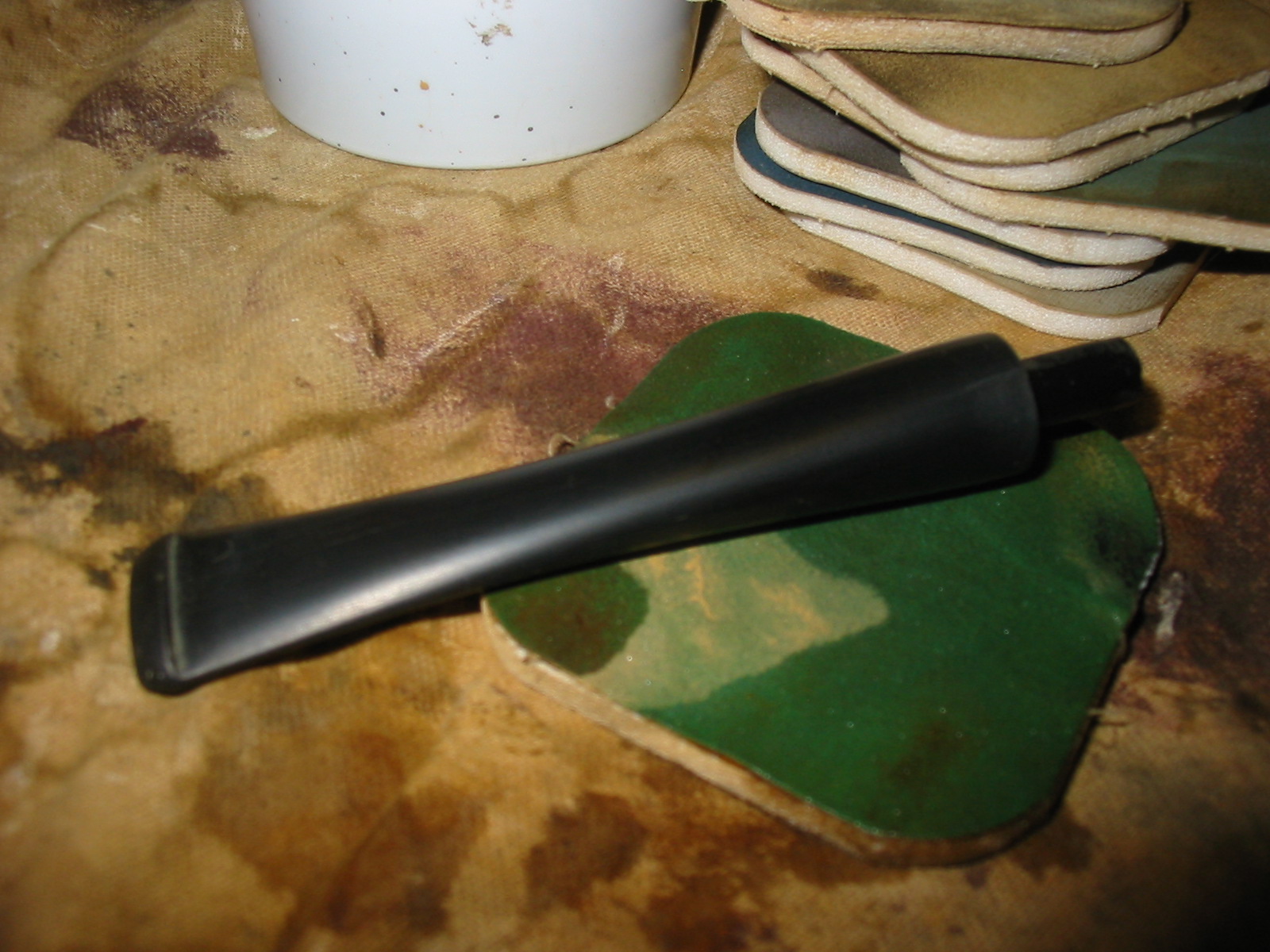
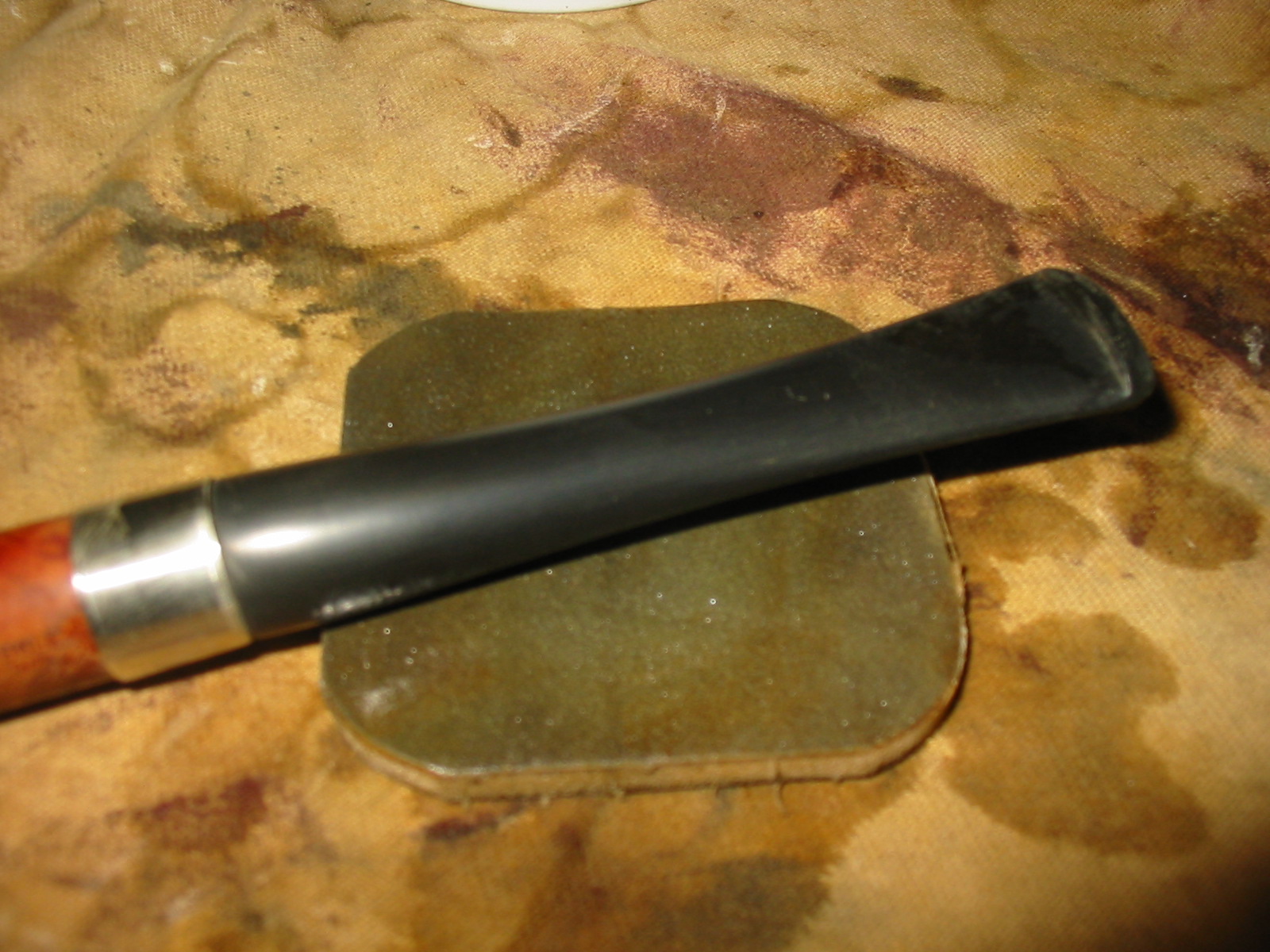
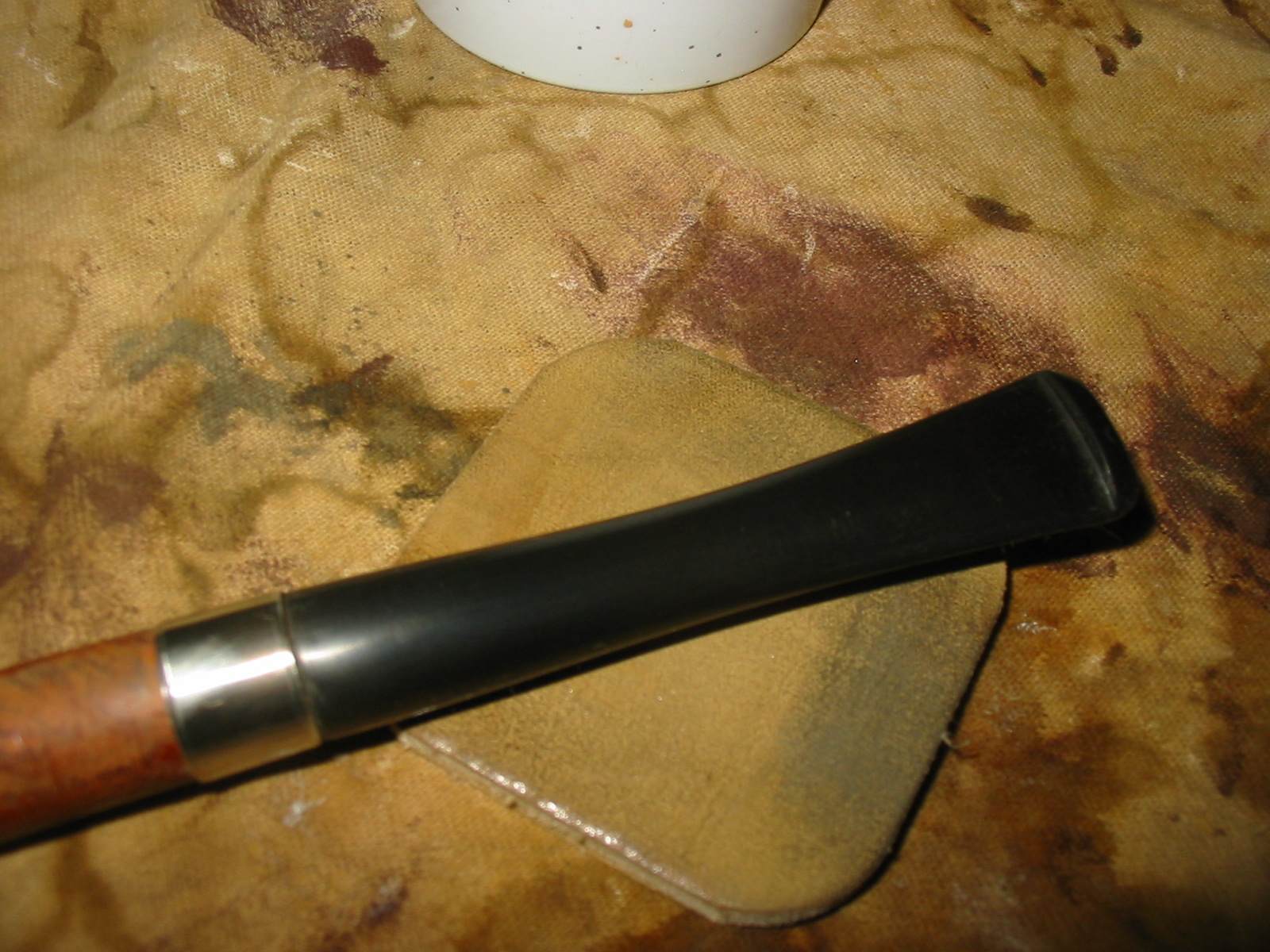
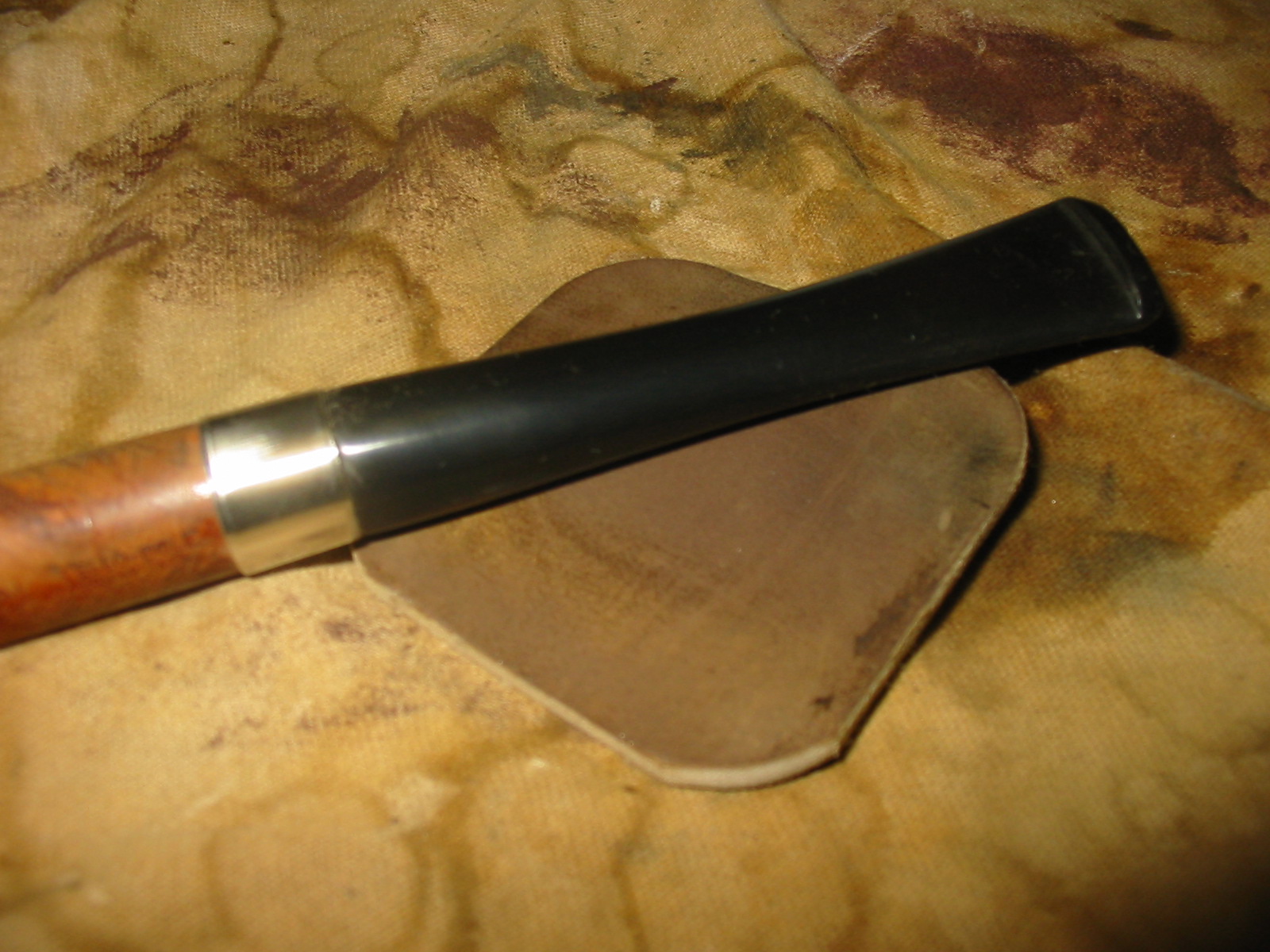
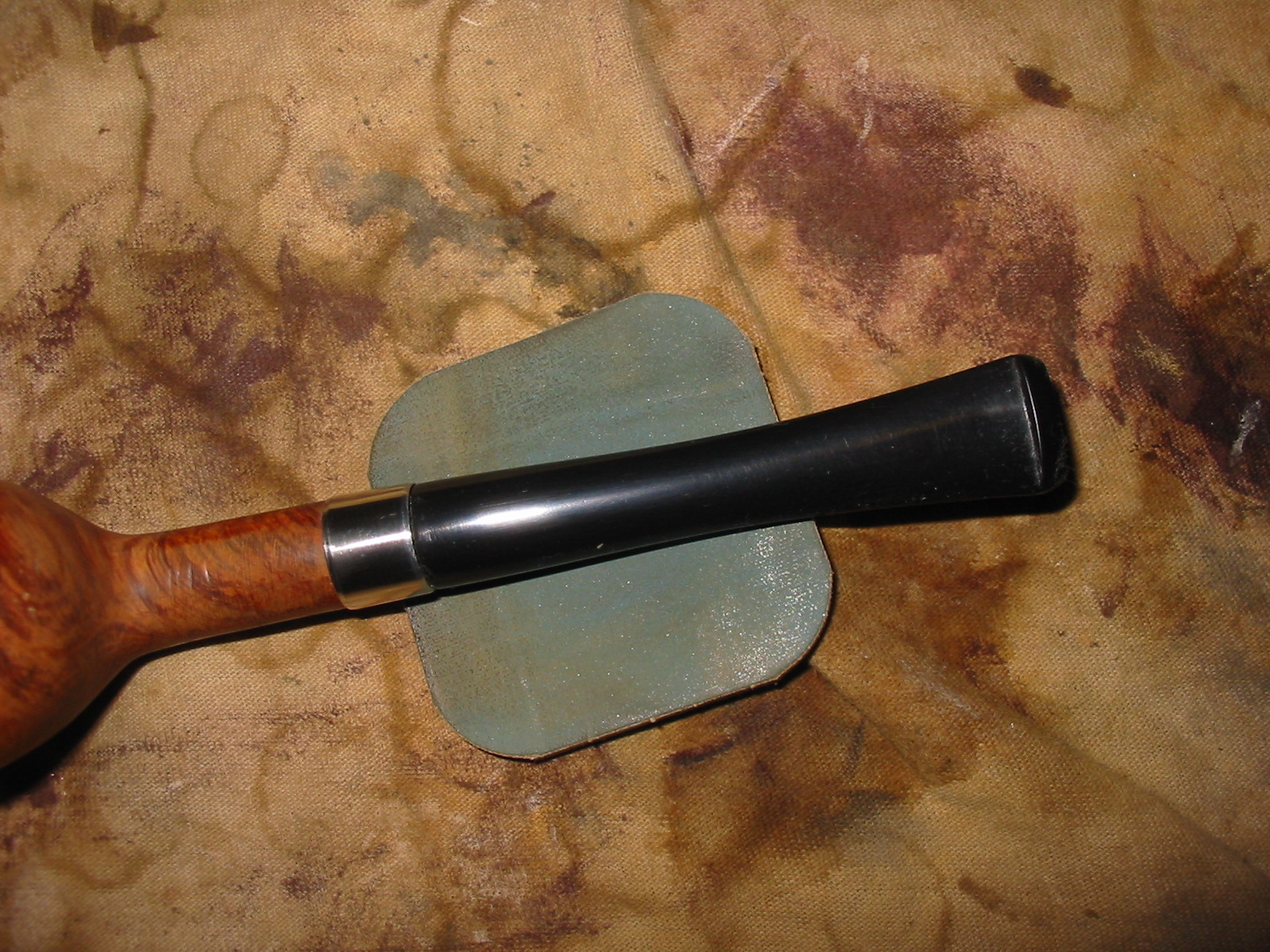
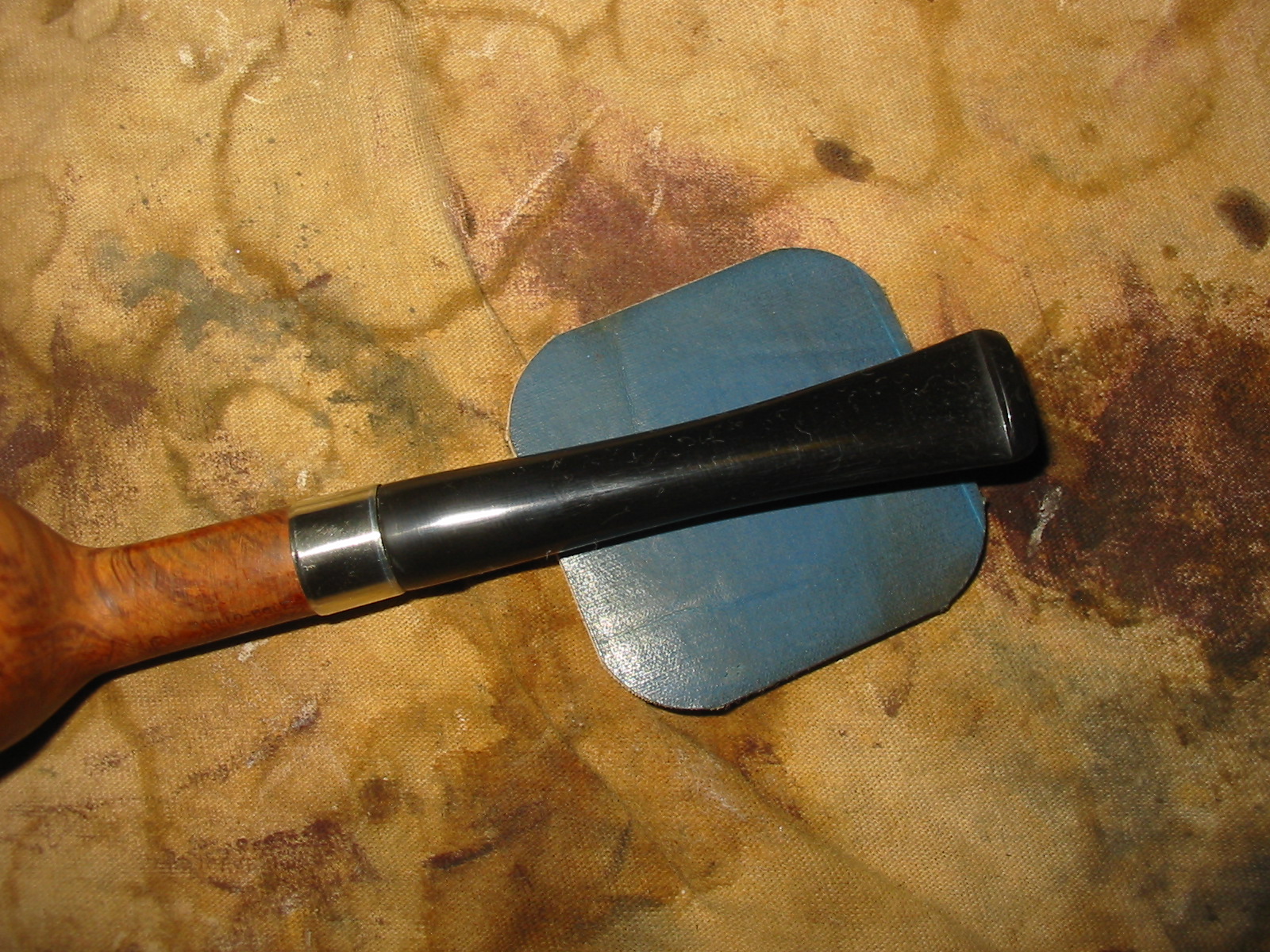
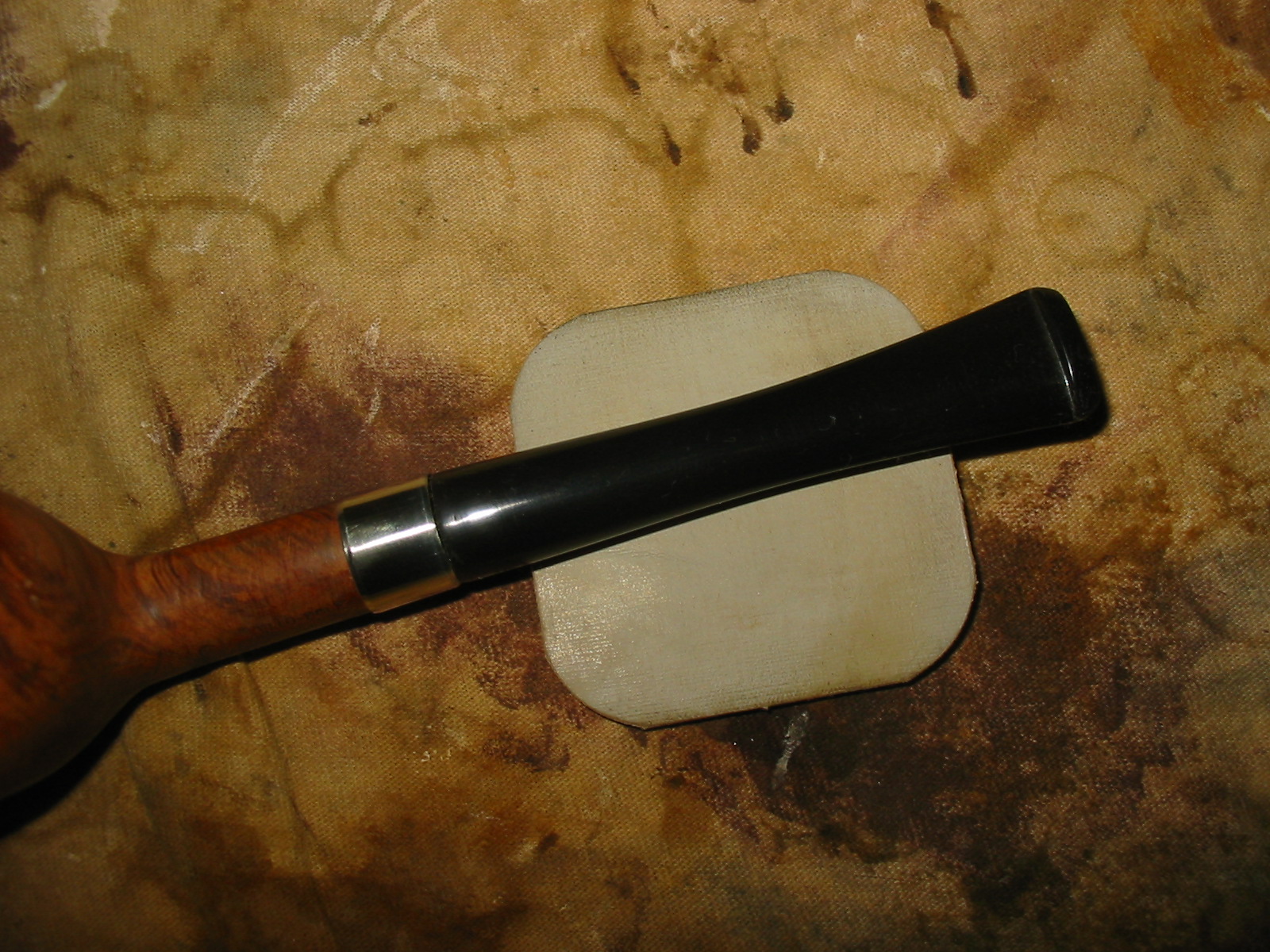
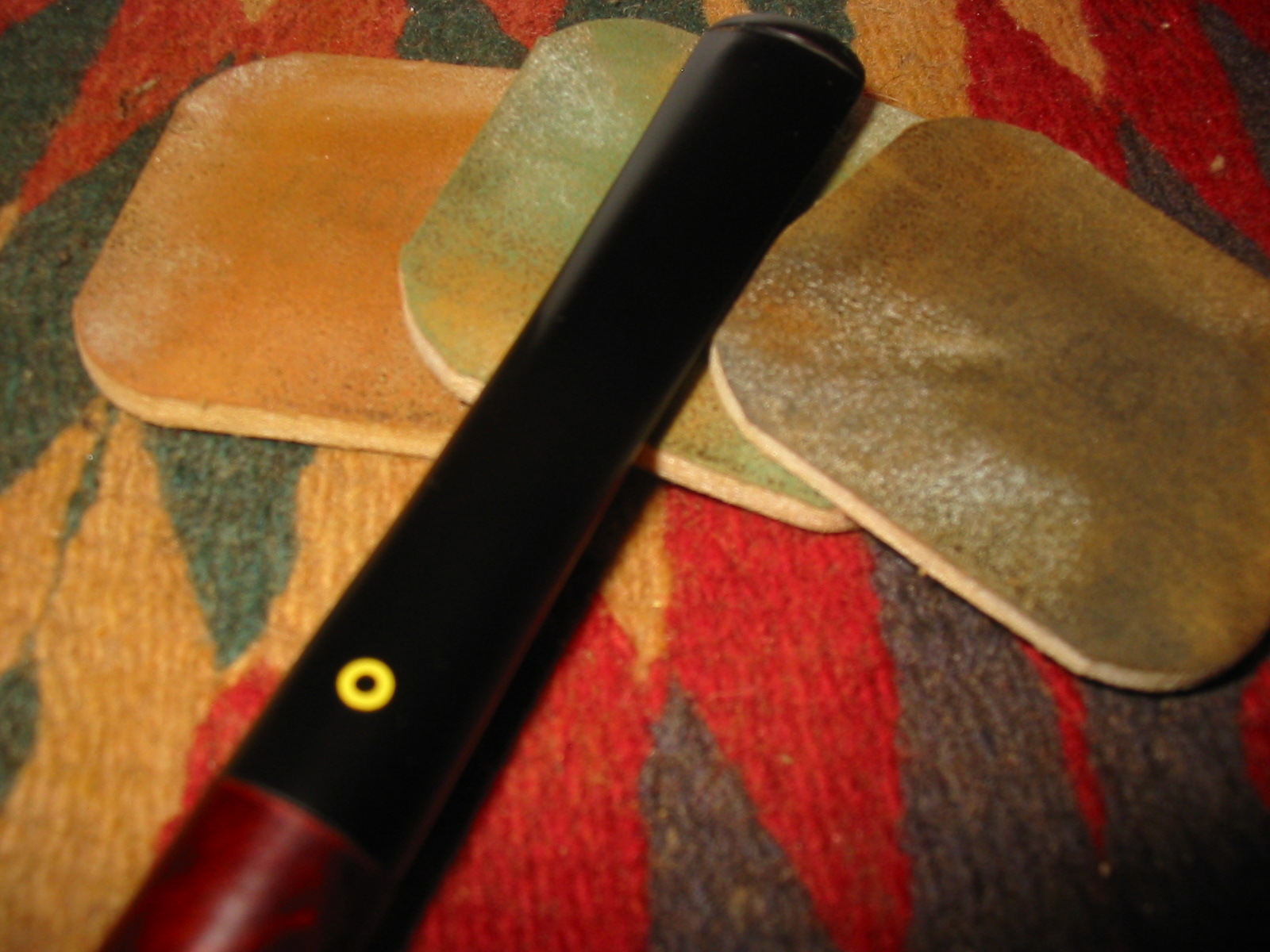
I then filled a small cup with water and moved on to wet sand the stem with the micromesh sanding pads. I used 1500, 1800 and 2400 to wet sand the stem. I wet the pad and sanded the stem. Then rinsed the pad and kept sanding until that particular grit had down its work and the stem was ready for the next one. Between pads I wiped the stem down with a wet cotton pad to clean off the grit. The first photo below shows the setup of my sanding area. I use an old rag for the work space so that it can pick up the dust and water from the sanded stem. The next series of three photos shows each of the three micromesh sanding pads from 1500-2400 and the stem after sanding with that particular pad.
ImageImageImageImage

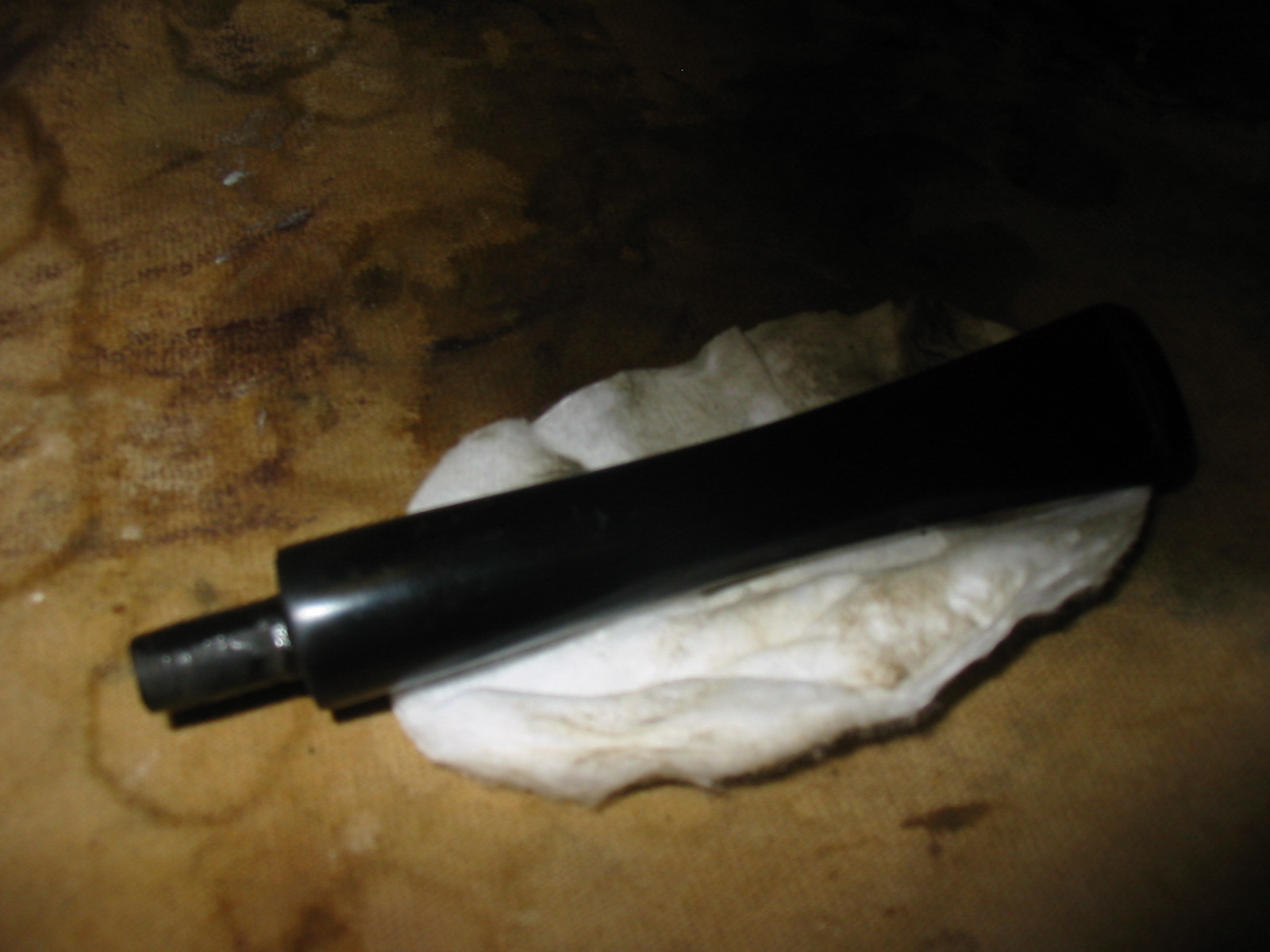
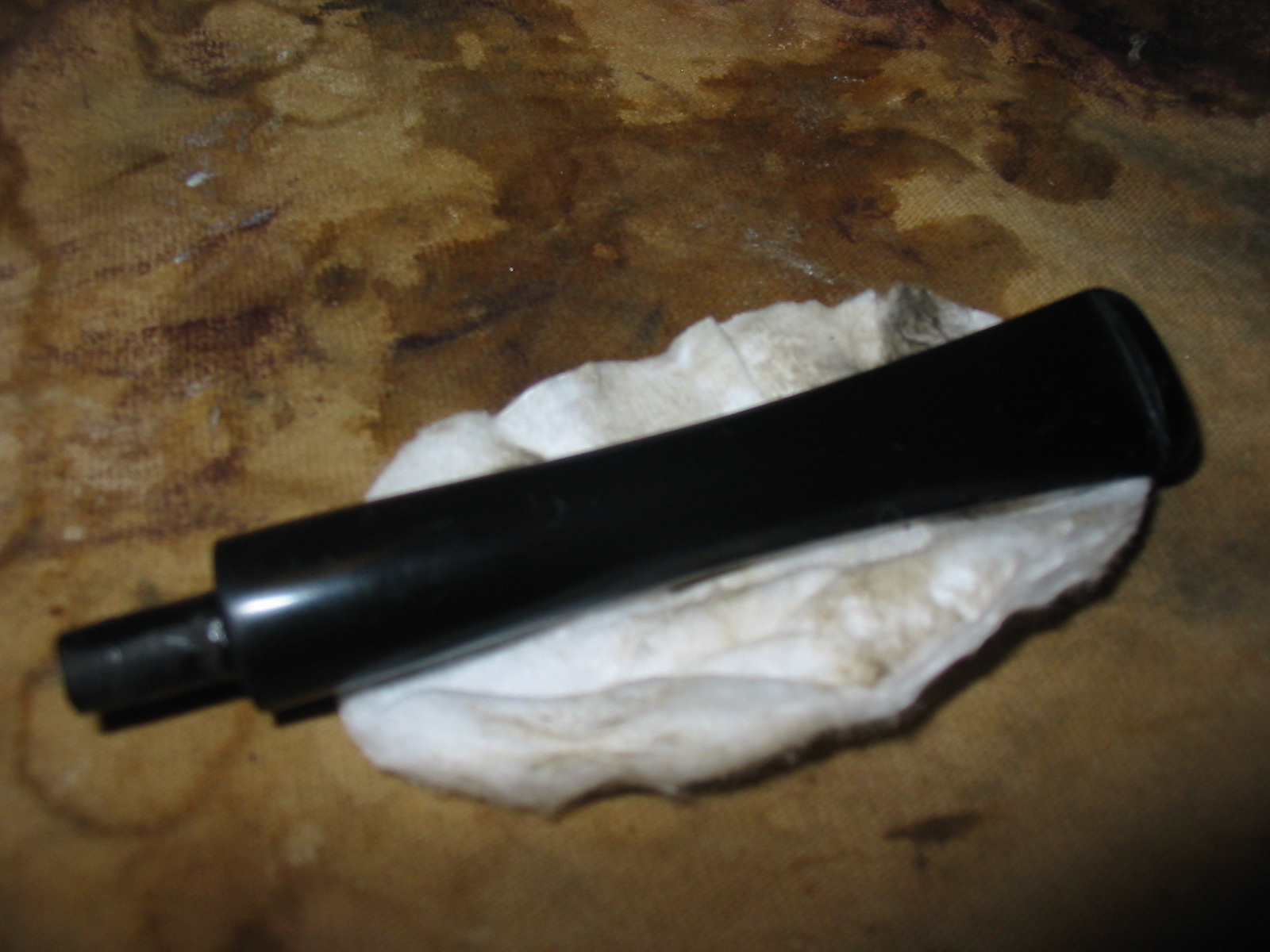
Once I finished wet sanding the stems up through the 2400 grit micromesh pads I then used the Maguiar’s again to polish the stem to see what remained of the deep scratches. I rubbed it into the stem with my finger and then polished it off with the cotton pads. The next series of five photos shows the application and the progressive polishing of the stem. The final pictures in the series show the stem polish to this point. I decided after this was done to move on to dry sanding with the remaining micromesh sanding pads.

ImageImageImageImageImage

The next series of six photos show the sanding progress through the remaining grits of micromesh sanding pads – 3200, 3600, 4000, 6000, 8000 and 12,000 grits. Each picture shows the stem on top of the sanding pad that I used to sand it. I dry sand with these higher grit micromesh pads.ImageImageImageImageImageImage

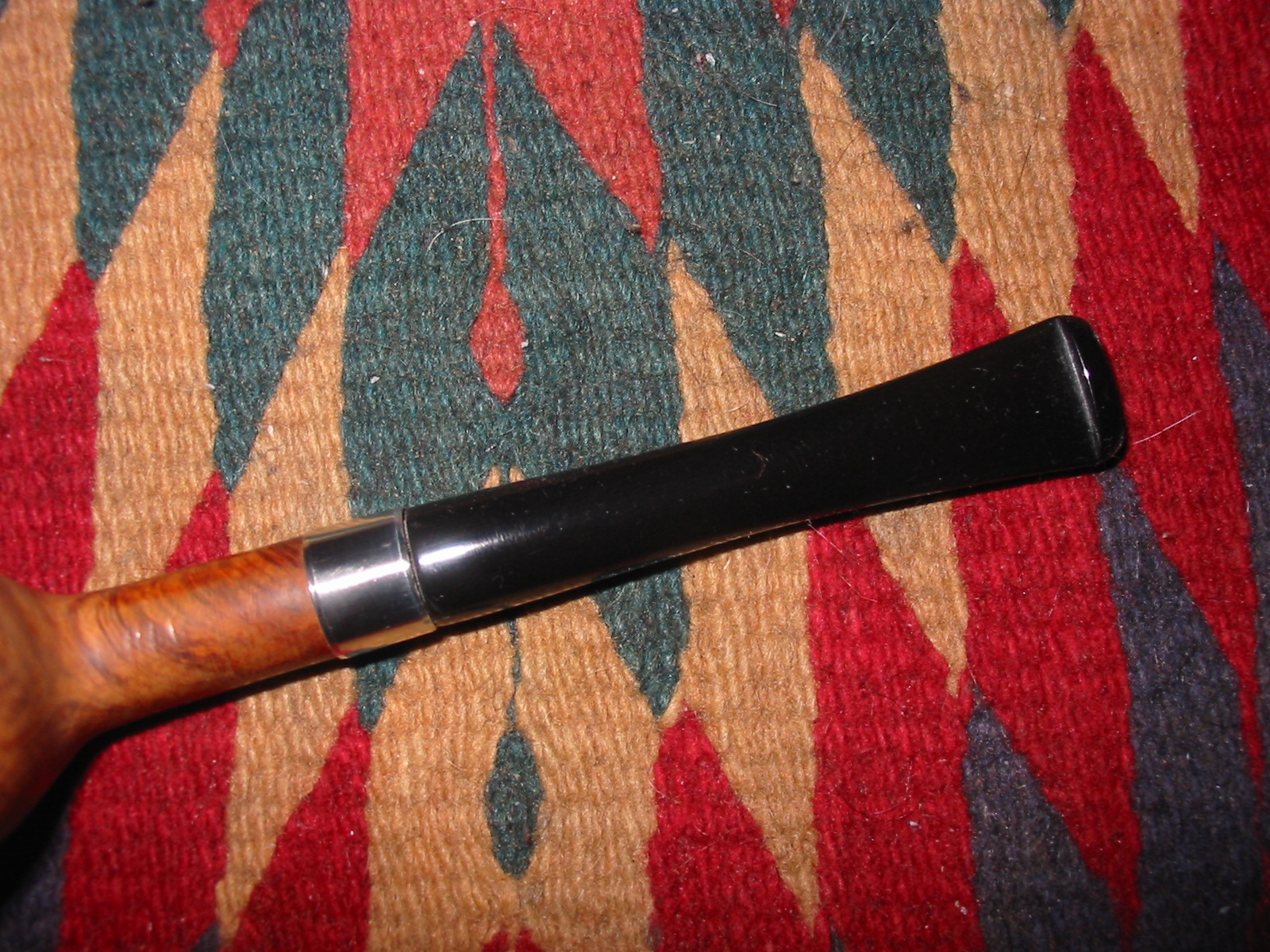
The next series of four photos show the stem after finishing the sanding and polishing it with Maguiar’s polish. There is a nice deep black shine to the stem at this point.

ImageImageImageImage

Now it was time to stain the bowl of the pipe. I used a Dark Brown aniline stain that I had thinned with isopropyl 2:1 to stain the bowl. I wanted a consistency in the colour and also have the grain on the bowl show through the stain. I applied the stain with the wool dauber that came with the stain and then flamed it with a match to set the stain. I restained it and reflamed it a second and third time. The next two photos show the stained bowl.

ImageImage

Once the stain was dry I used some silver polish on the nickel band to shine it up and remove the stain that had spilled on it. I also used some sandpaper in the bowl to remove stain that ran into the bowl edges from the beveled rim. I then took it to the buffer and buffed it with Tripoli and White Diamond before giving the whole pipe multiple coats of carnauba wax and a final buff with a clean flannel buffing wheel. The final four photos show the finished pipe.

ImageImageImageImage