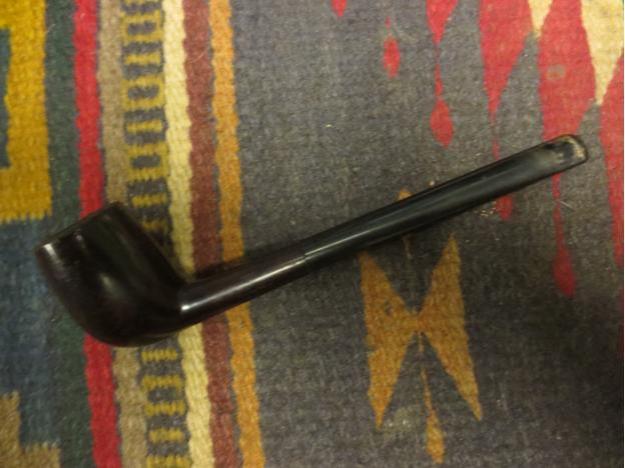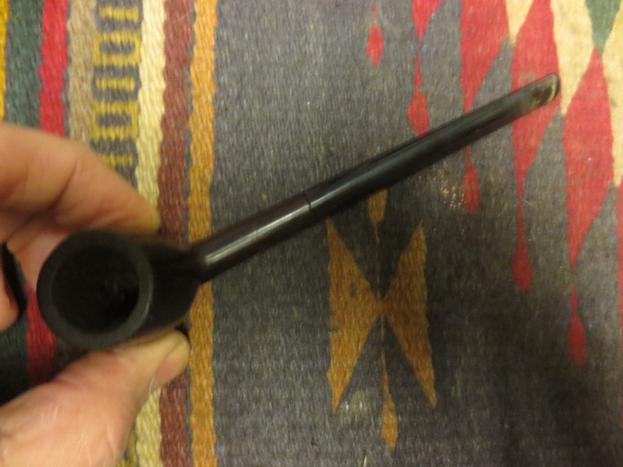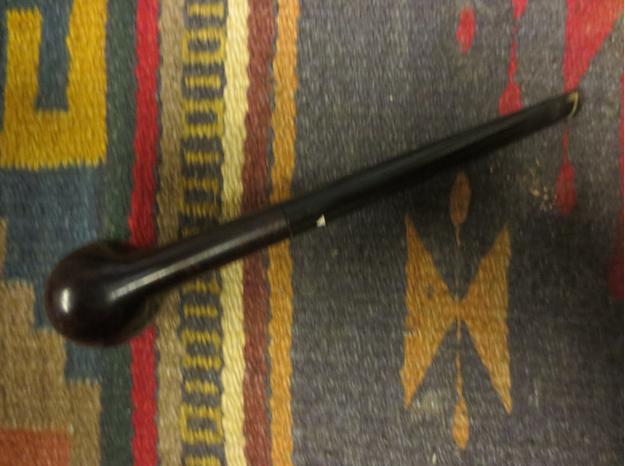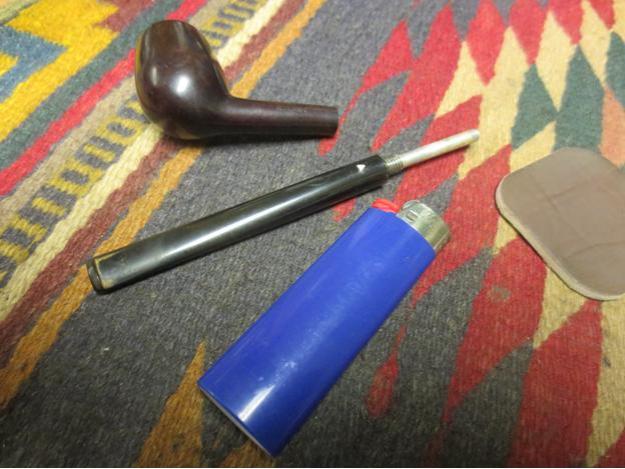
Tag Archives: WDC pipes

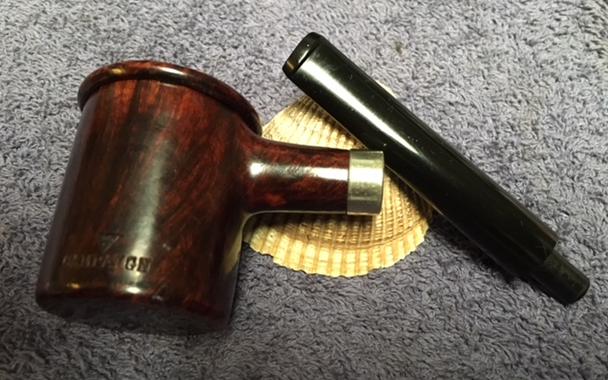
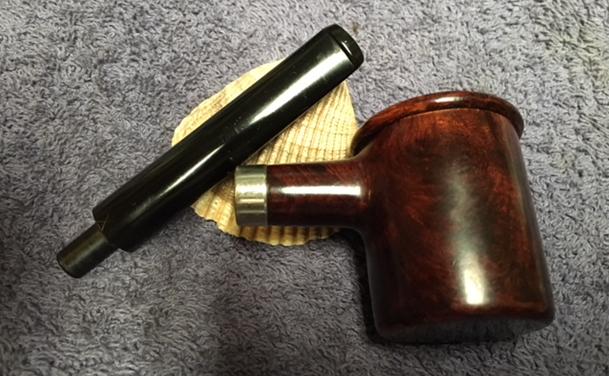
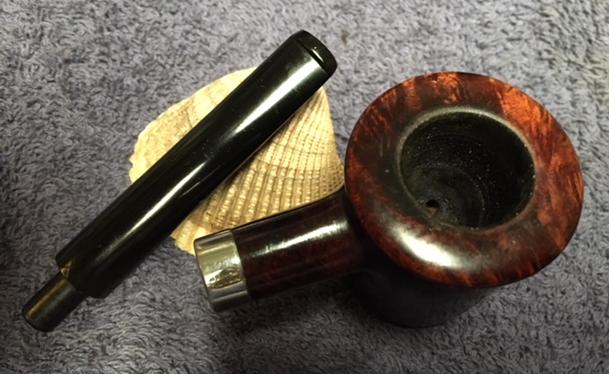
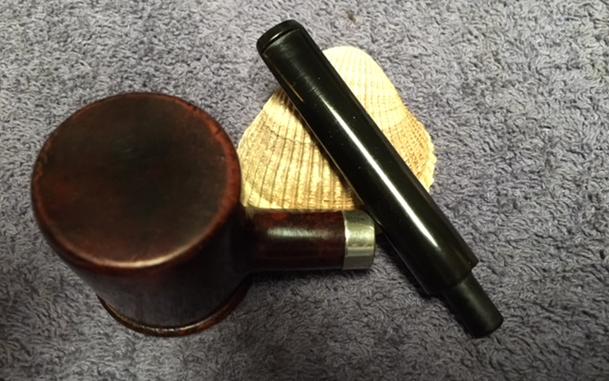
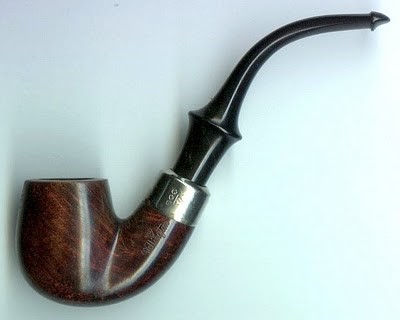
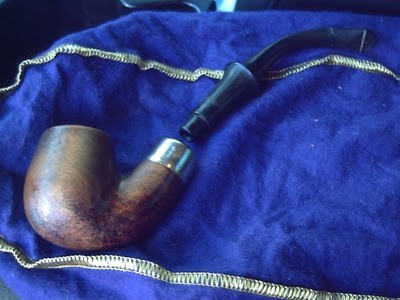
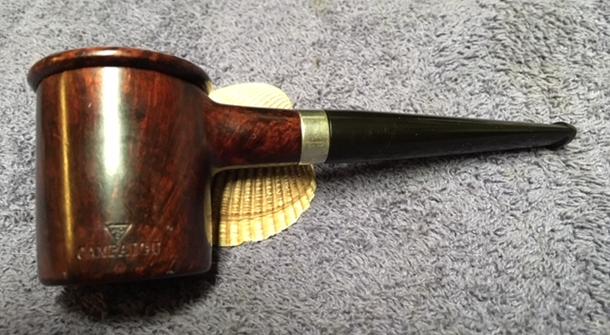
Craig’s Pipes #5 Restoring a William Demuth and Company (WDC) Campaign Calabash


Blog by Steve Laug

In my previous 4 blogs on Craig’s pipes I spoke of the five pipes that I am working on for him. In this blog I am taking on the fifth of his pipes – a WDC Campaign Calabash. It was another one with a cake in the bowl that was thick and hard. For the last time I am going to include what Craig wrote me about his pipes. I have included it in the previous four blogs but I think it adds context to the bunch.

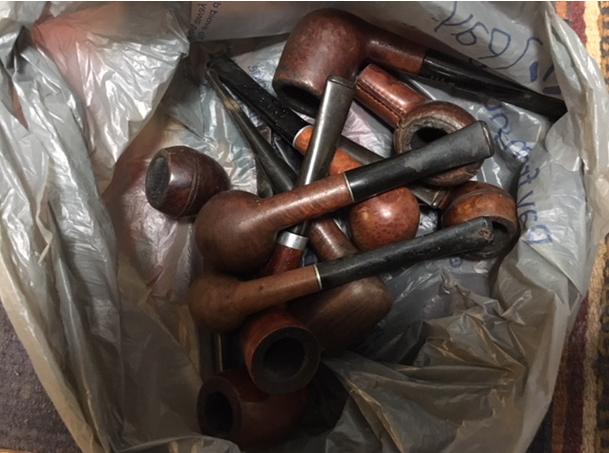
I was recently given a bag of pipes…literally, a BAG of 20 or so pipes that are 50+yrs in age and VERY used. I was wondering if you would have time to either Skype or FaceTime with me, and go through what I have in order to determine which are worth sending to you to have them refurbished. If you would be so kind, I’d really appreciate it.

We met on FaceTime and he pulled out a grocery bag with no rhyme or reason to it. It was filled with a jumble of no name or low-end drug store pipes. This last pipe is one of the two pipes that stood out for me – the old WDC Campaign pipe and a Grabow Starfire. He had several others that he liked. But we excluded all but five of the pipes. The amount of work necessary to bring them back was not worth the price. These are the five that we chose to work on. I have included the links to the blog covering each pipe. I am finally addressing the last one.

– A No Name Meerschaum that looked interesting – https://rebornpipes.com/2018/01/31/is-it-a-meerschaum-looks-like-one-feels-like-one-but/

– A leather clad billiard marked R20 and bearing a shield – https://rebornpipes.com/2018/02/01/rejuvenating-a-leather-clad-billiard/

– A Wally Frank Bulldog marked Natural Unvarnished lacking a stem https://rebornpipes.com/2018/02/02/craigs-pipes-3-restemming-and-restoring-a-wally-frank-natural-bulldog

– A Dr. Grabow Starfire 39 that had great grain – https://rebornpipes.com/2018/02/03/craigs-pipes-4-restoring-a-dr-grabow-starfire-39/

– A WDC Campaign underslung pipe

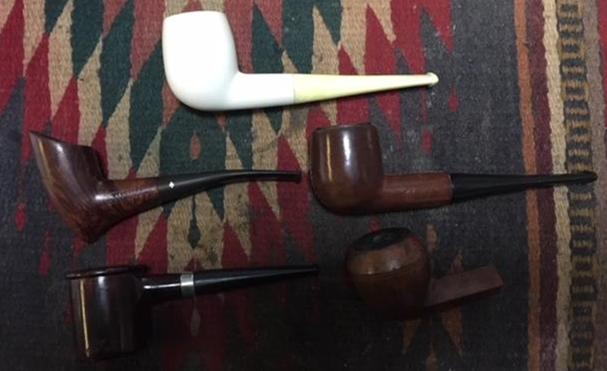
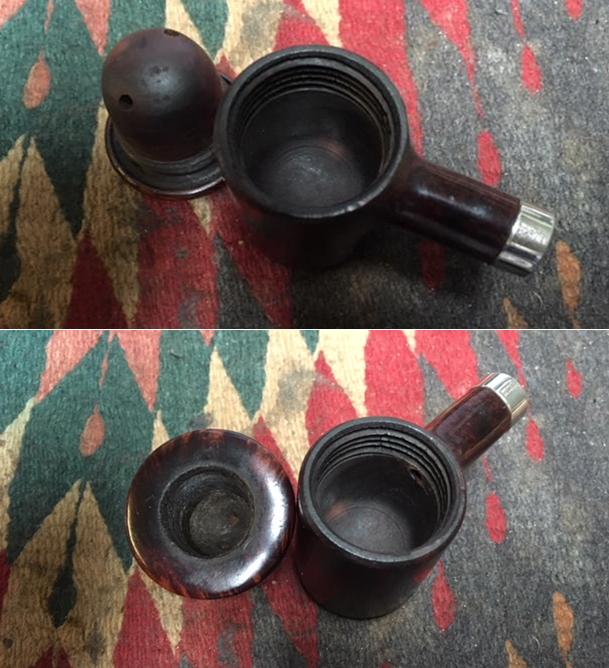
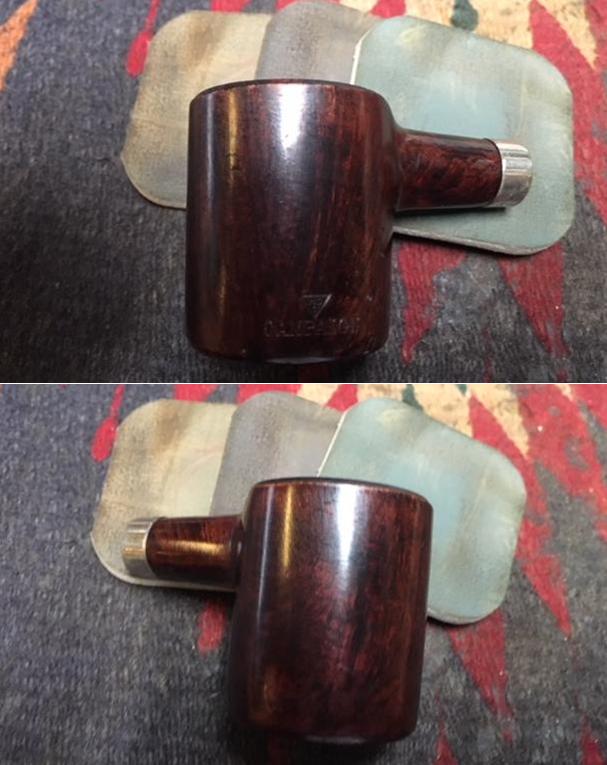
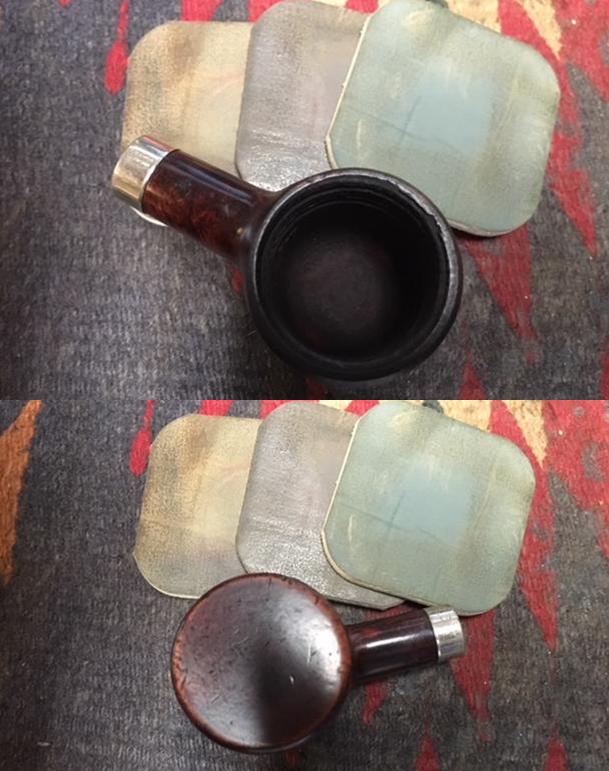
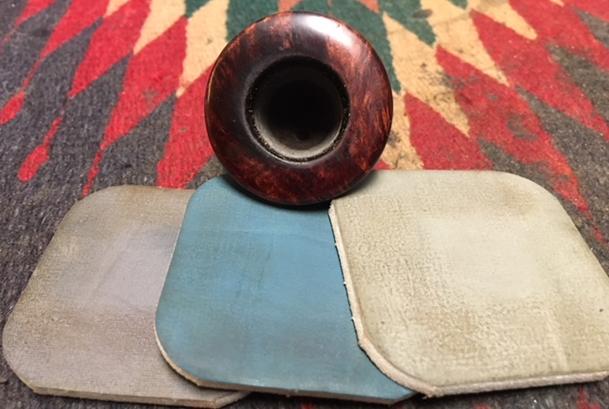
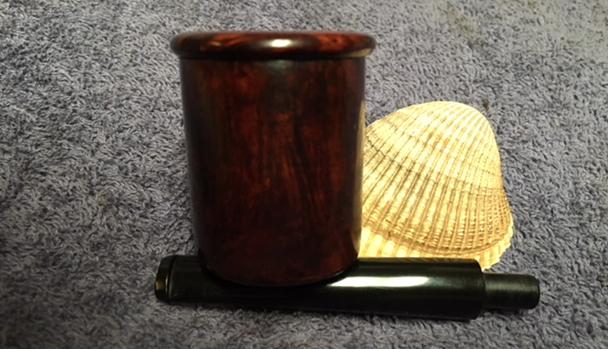
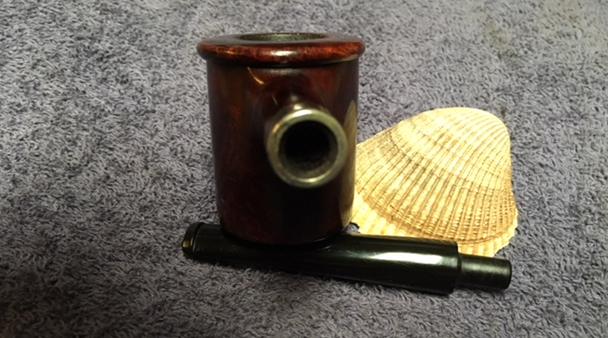
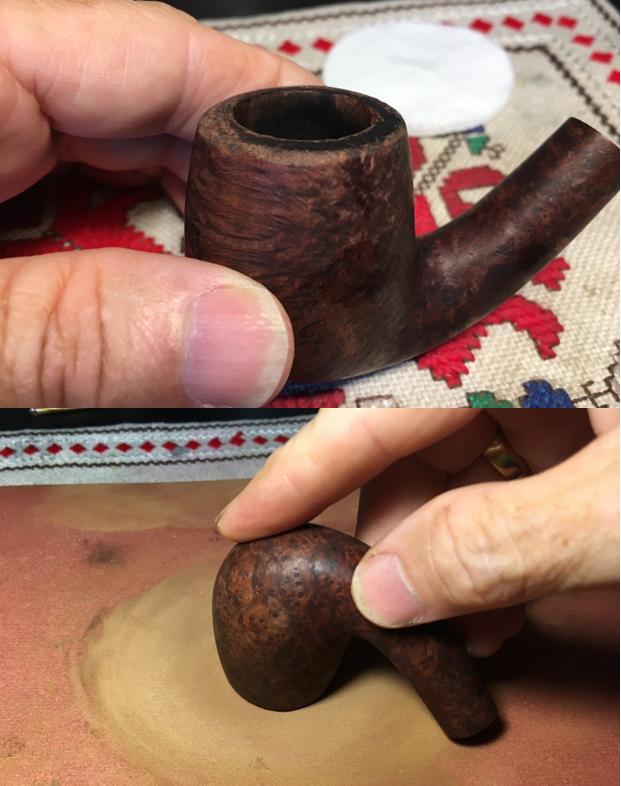
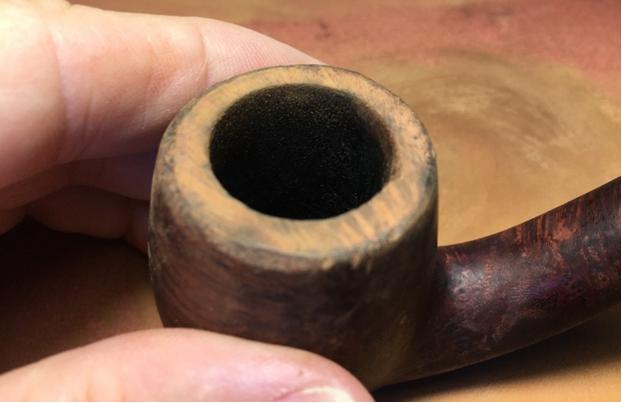
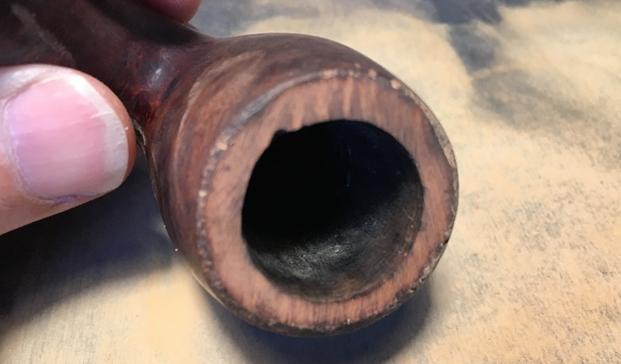
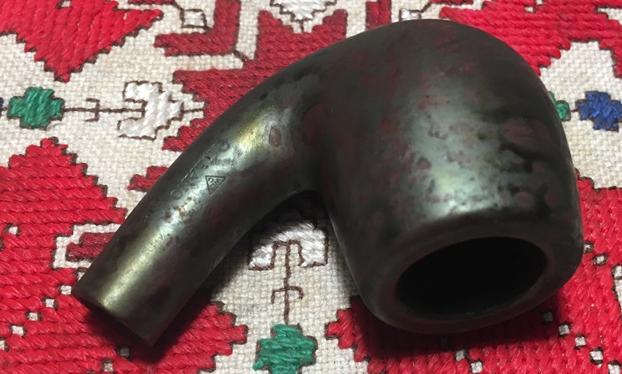
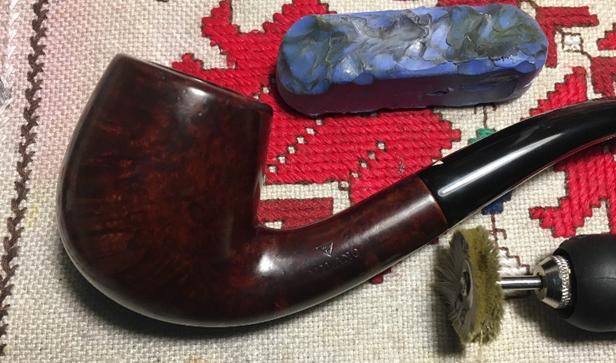
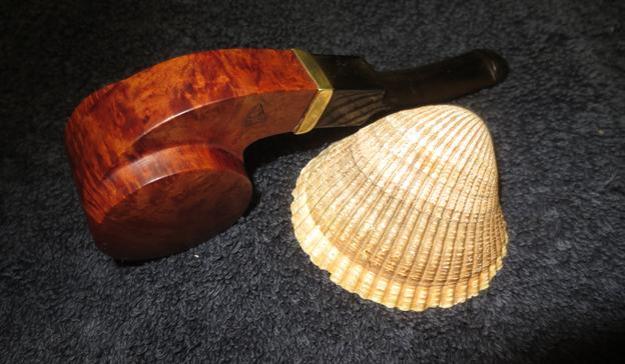
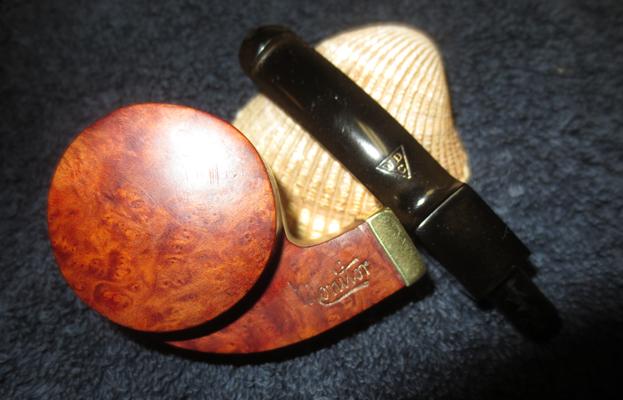
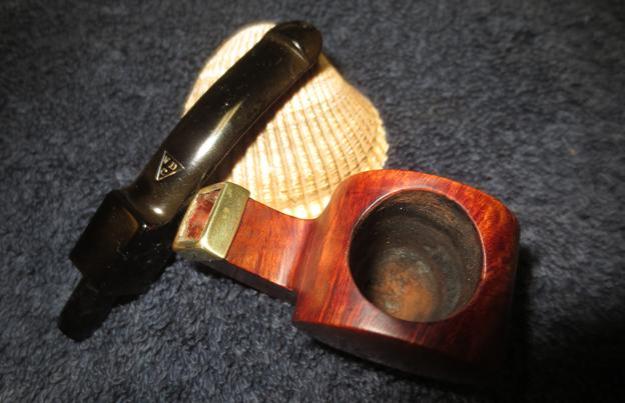
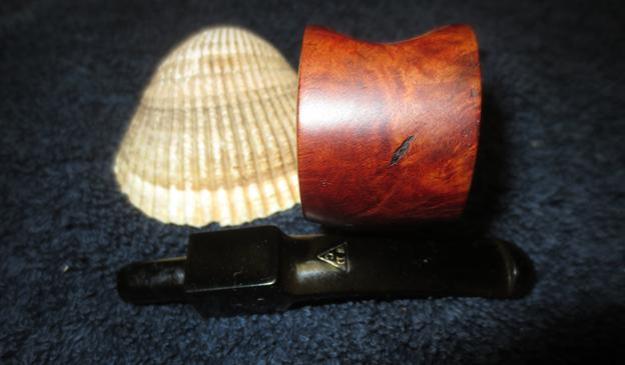
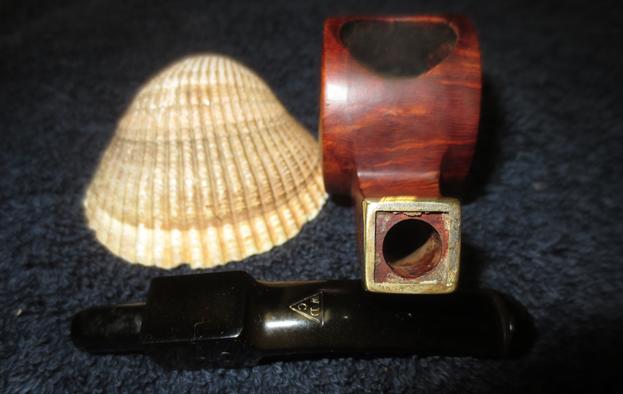
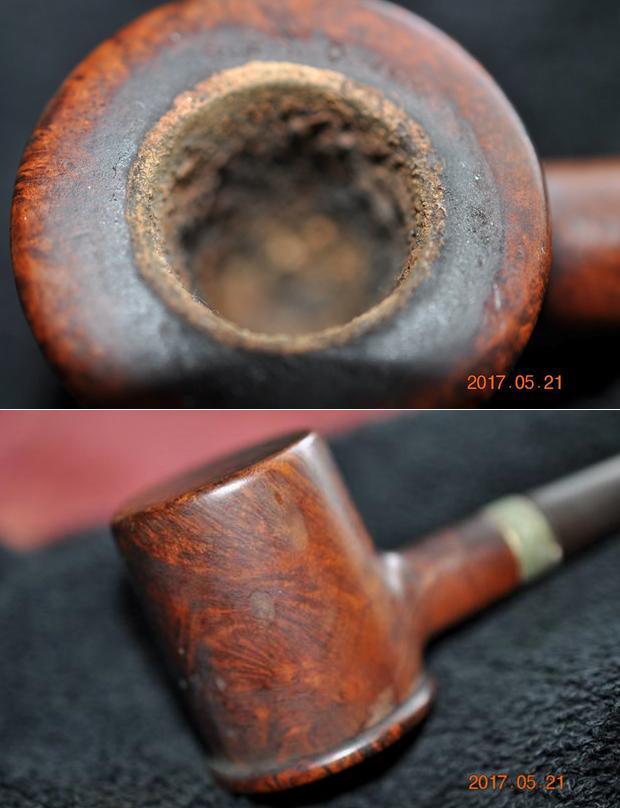
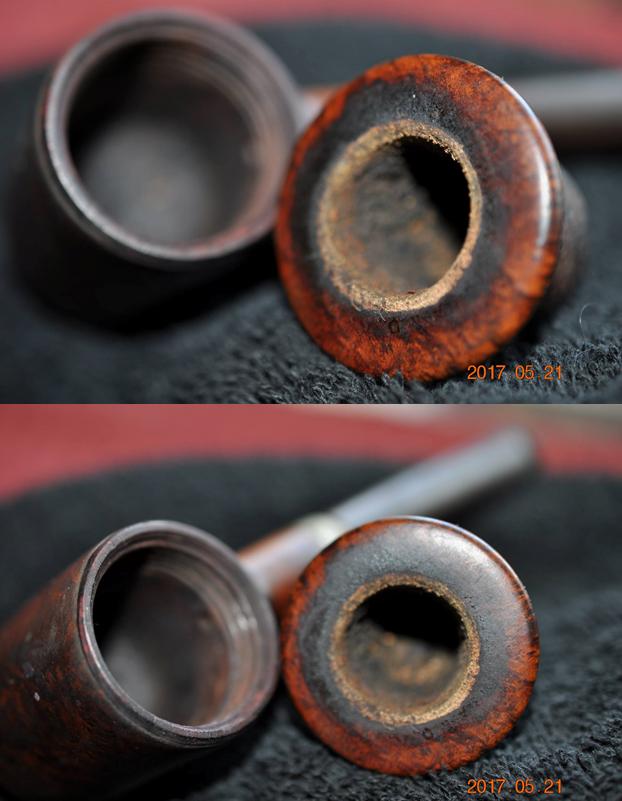
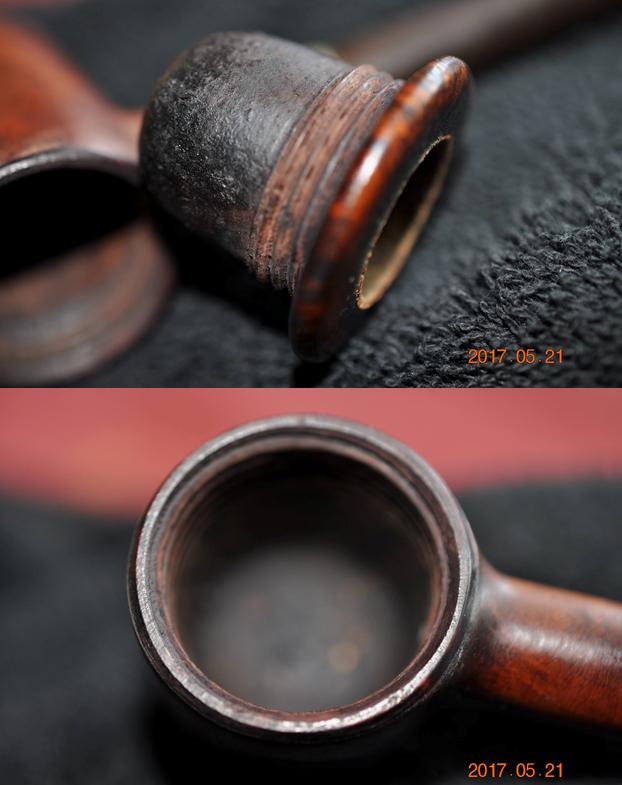
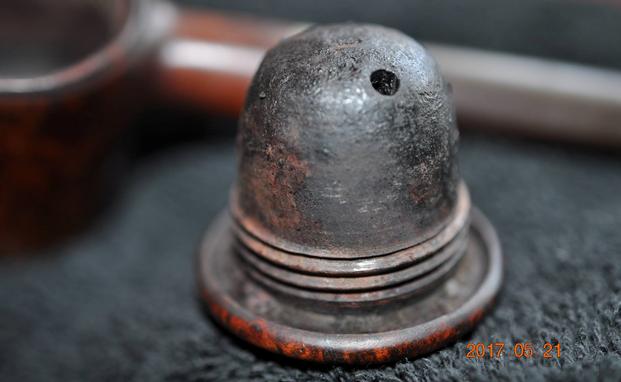
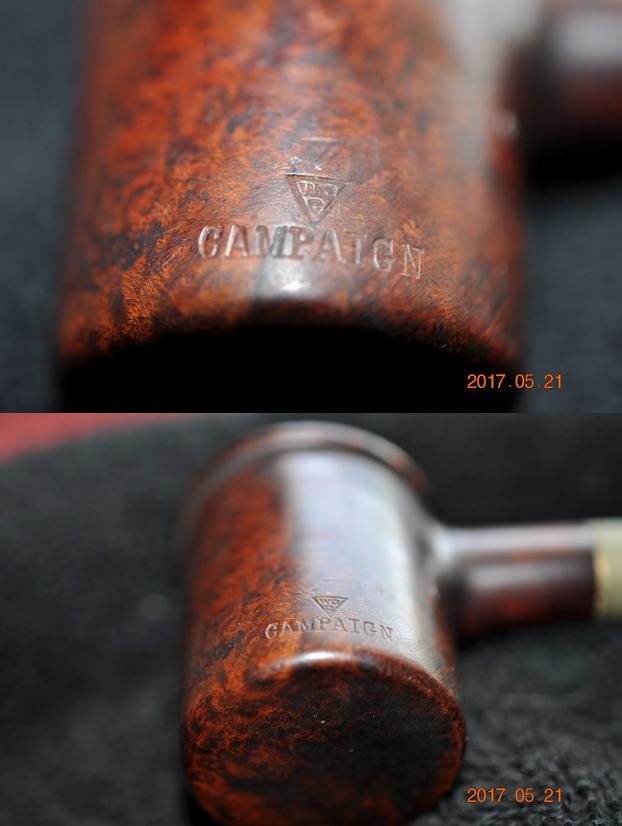
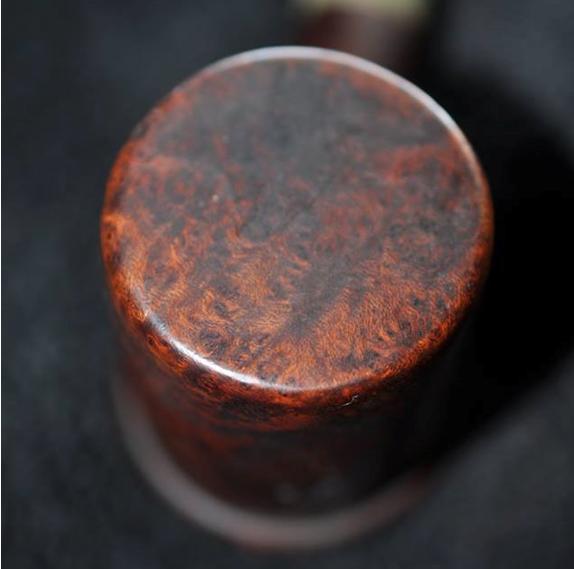
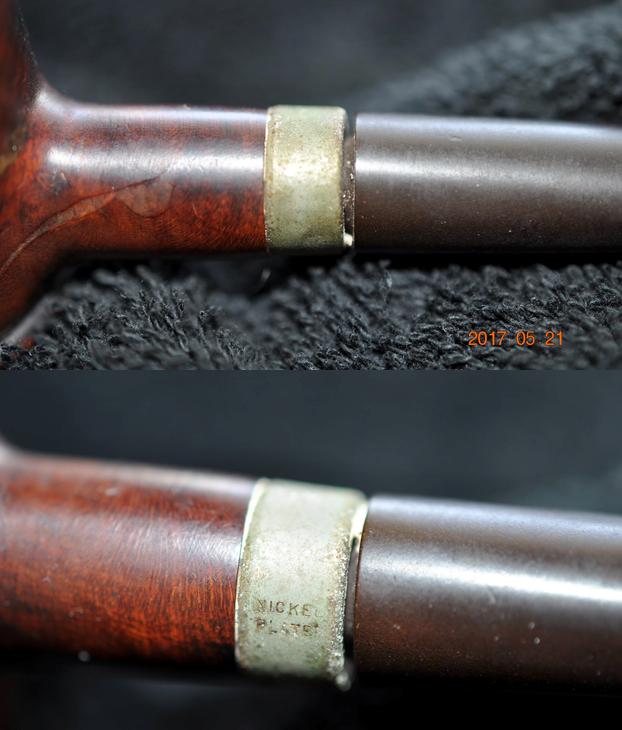
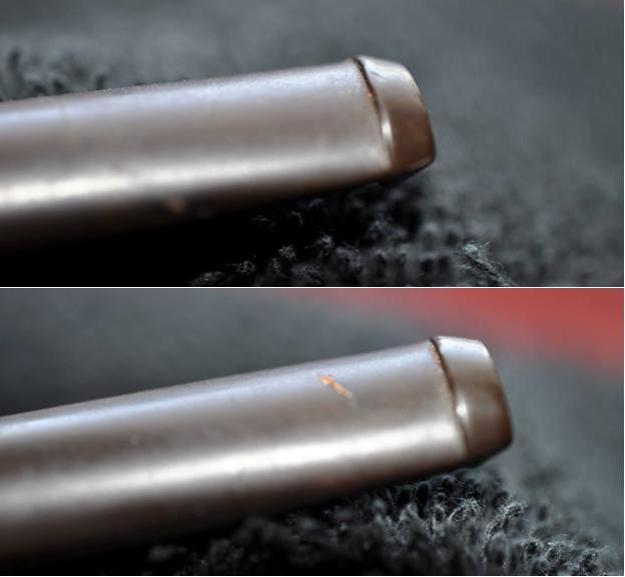
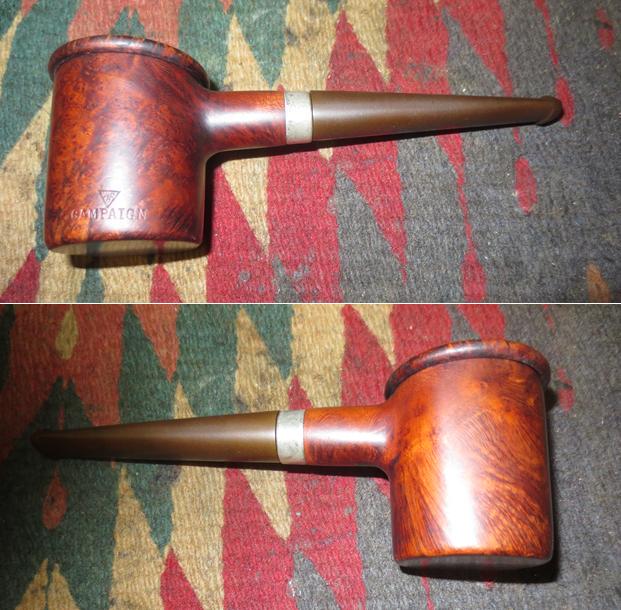
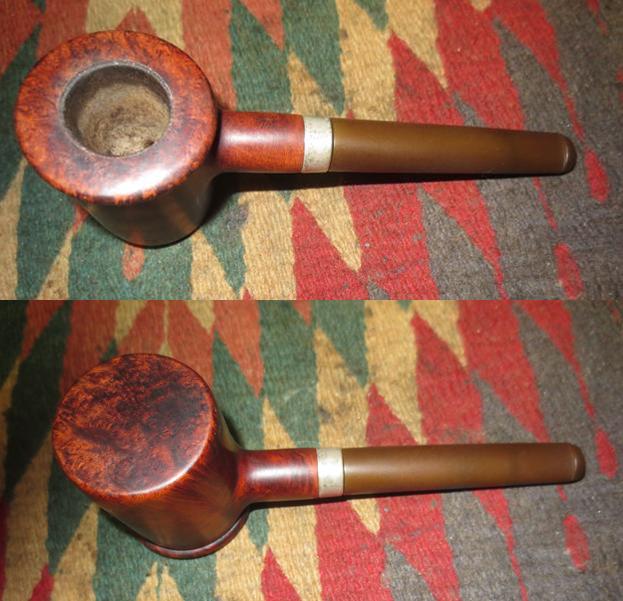
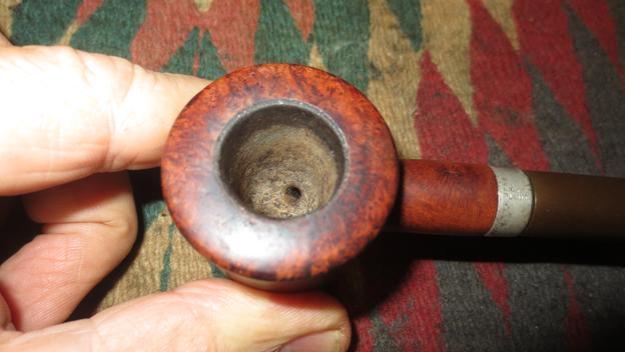
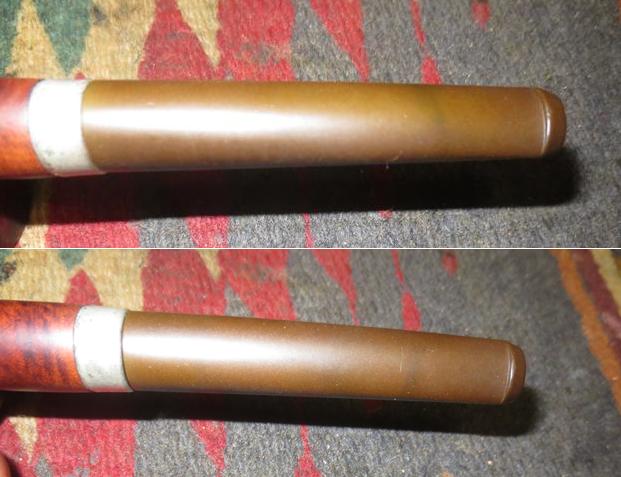
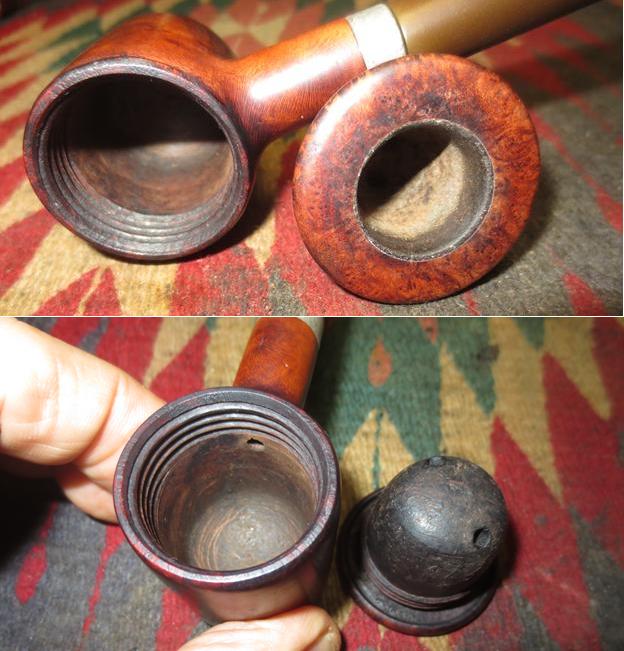
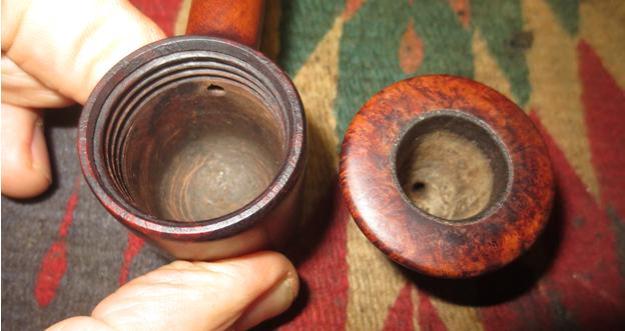
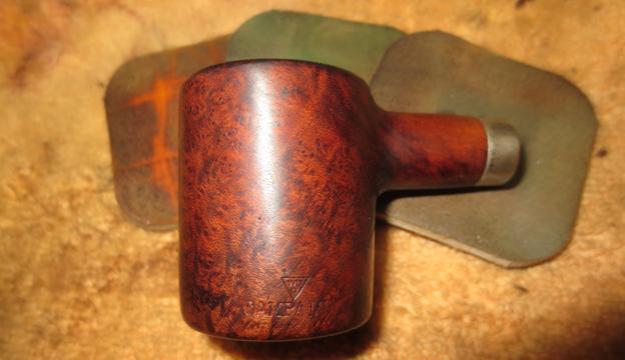
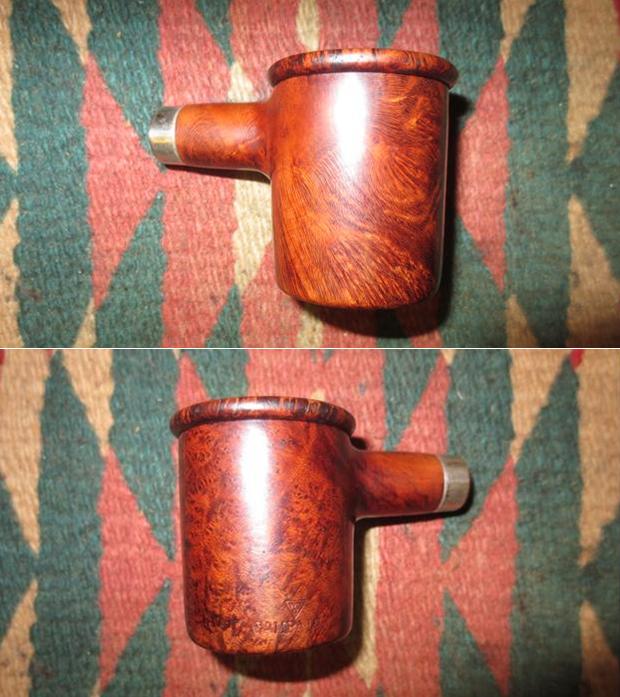
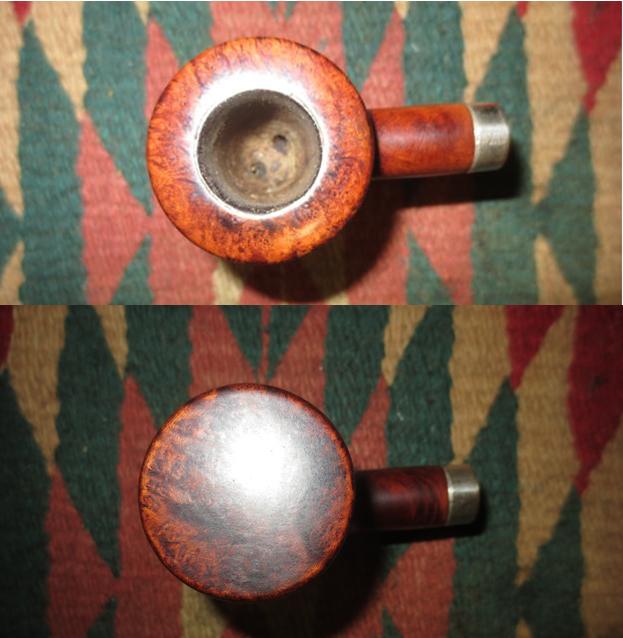
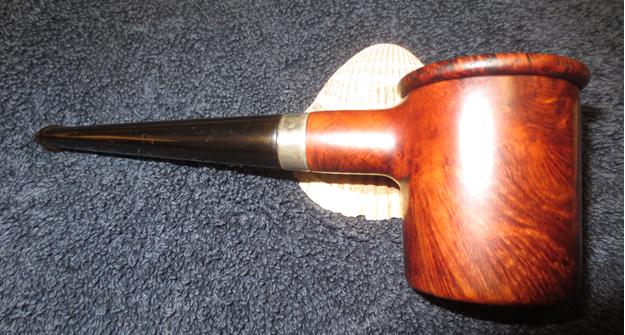
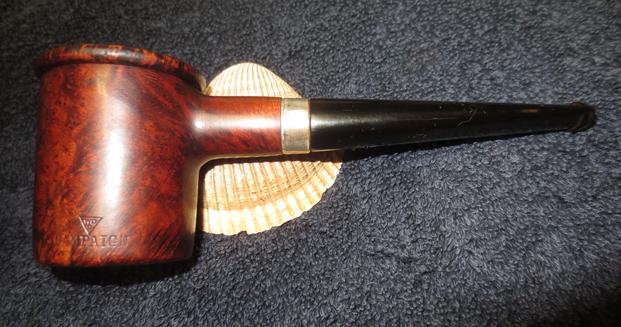
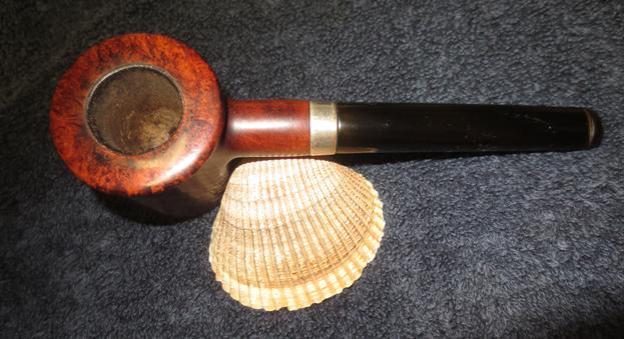
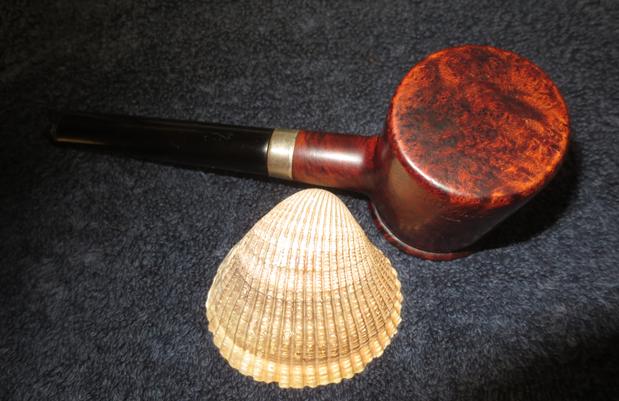
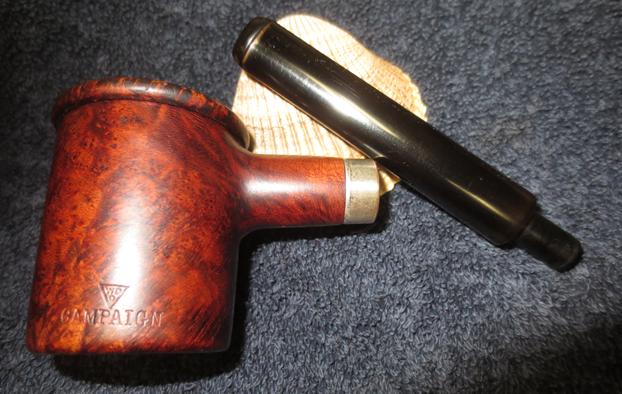
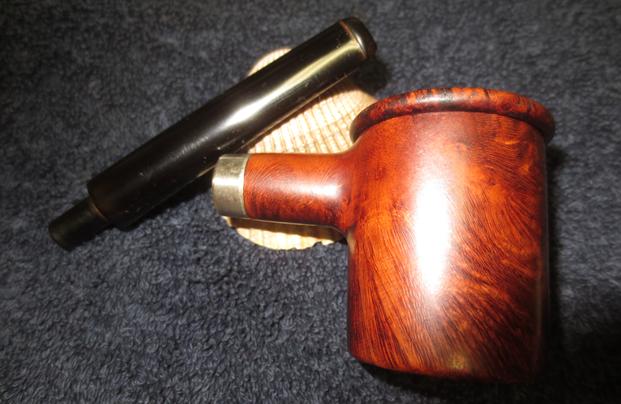
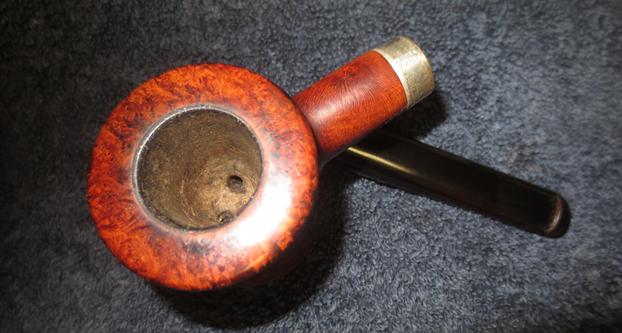
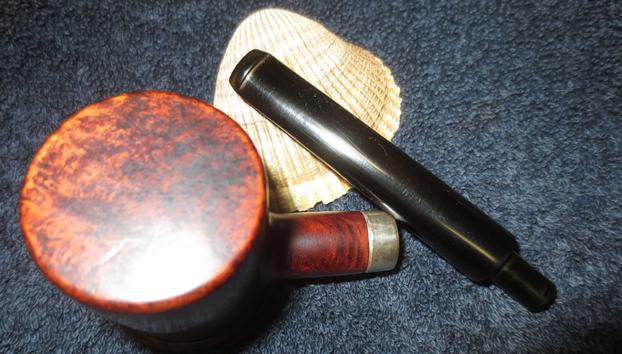
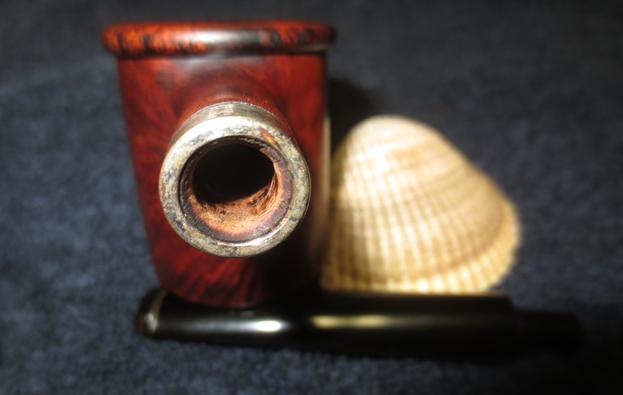
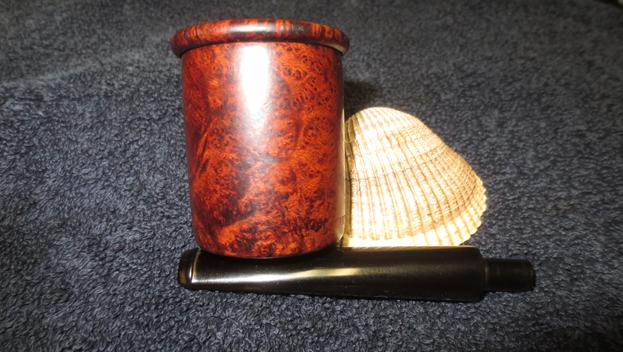
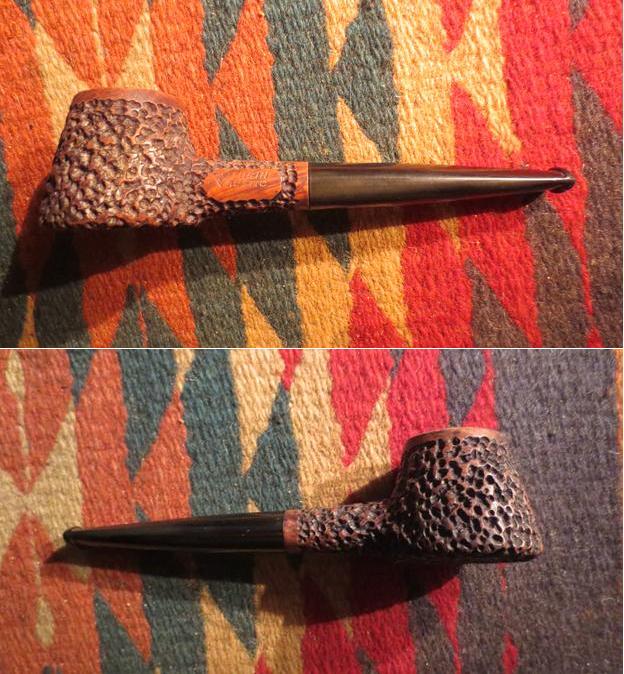
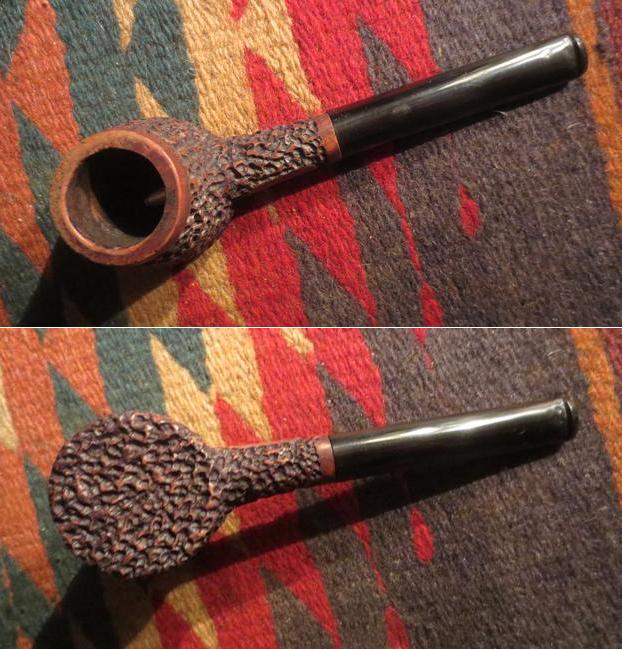
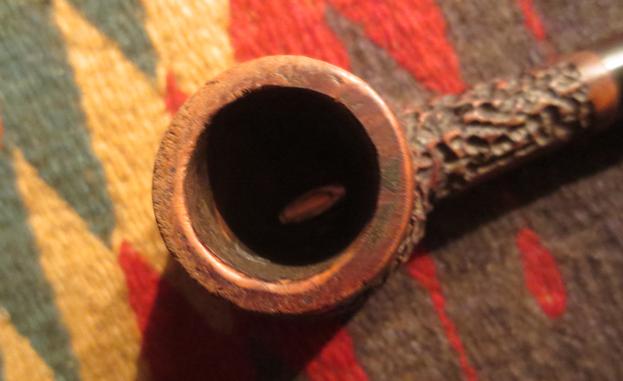
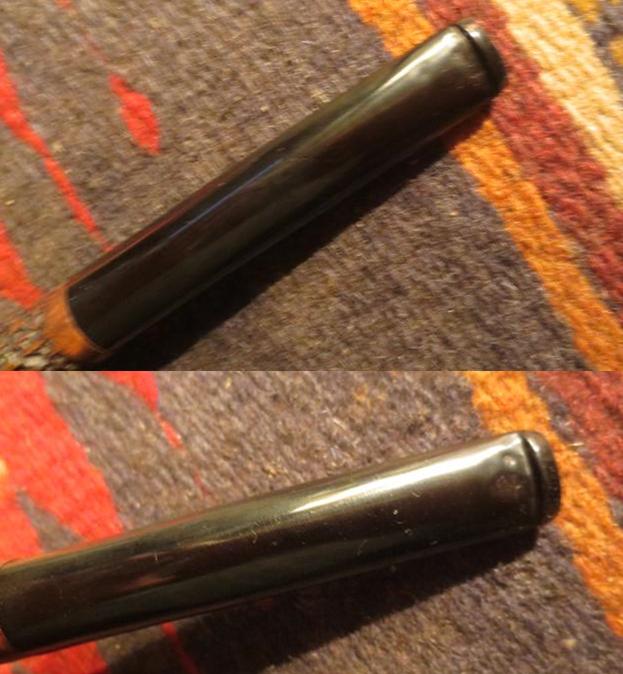
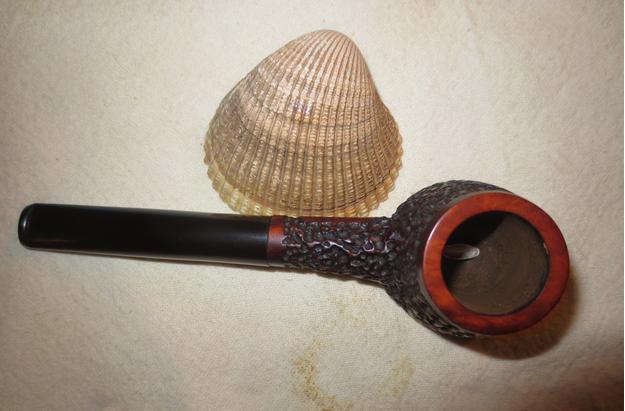
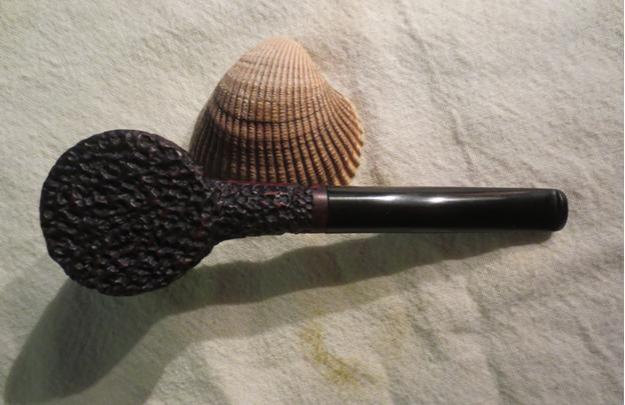
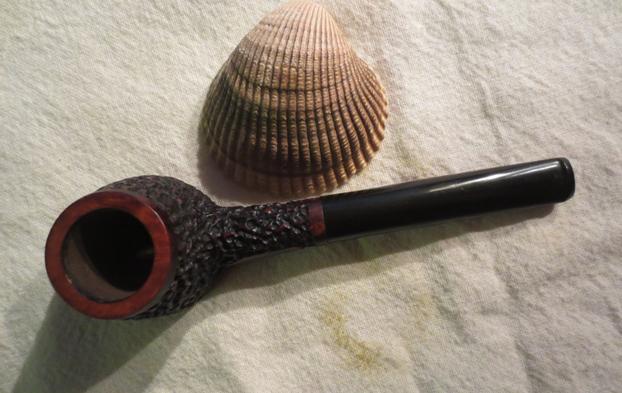
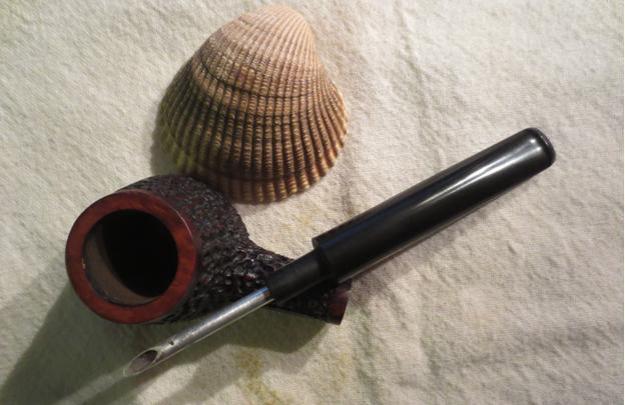
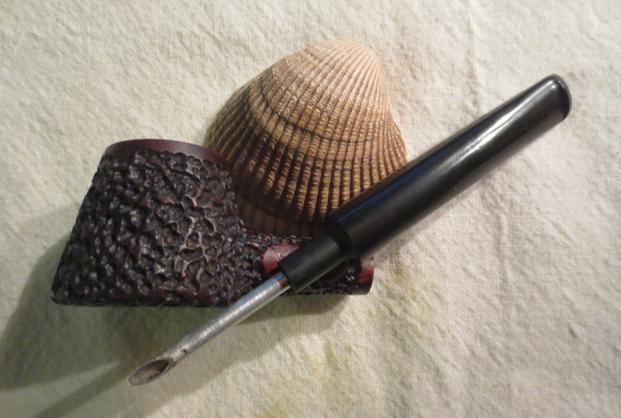
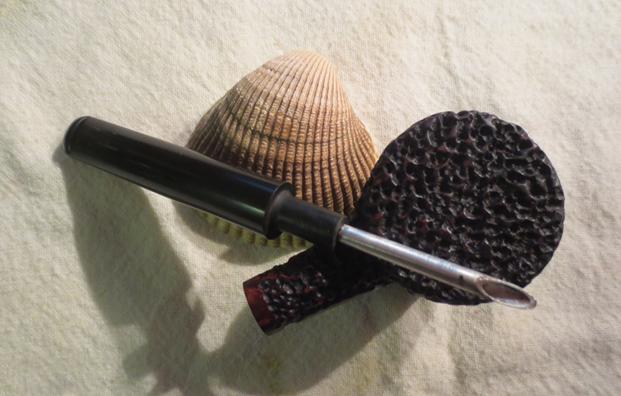
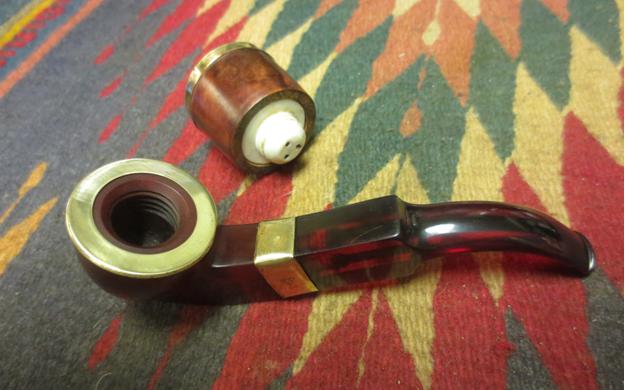
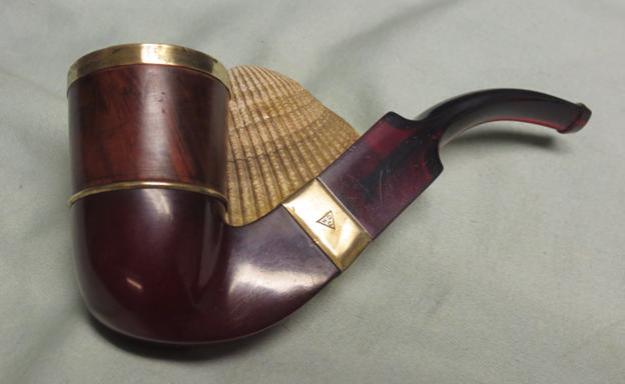
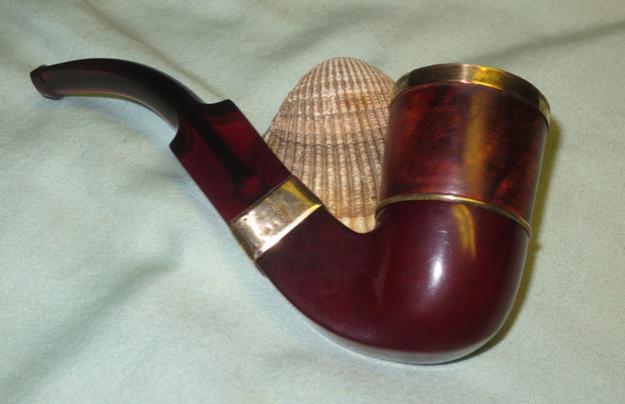
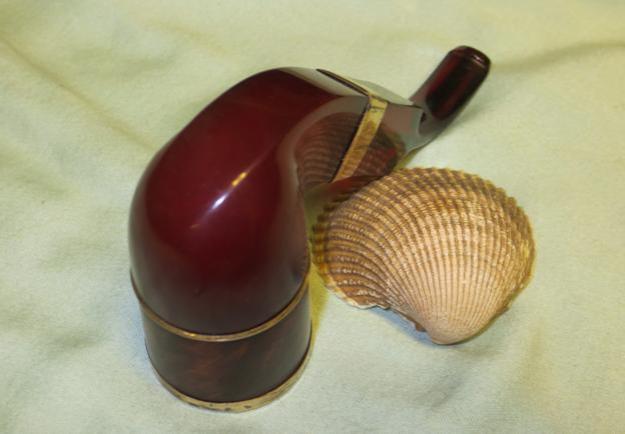
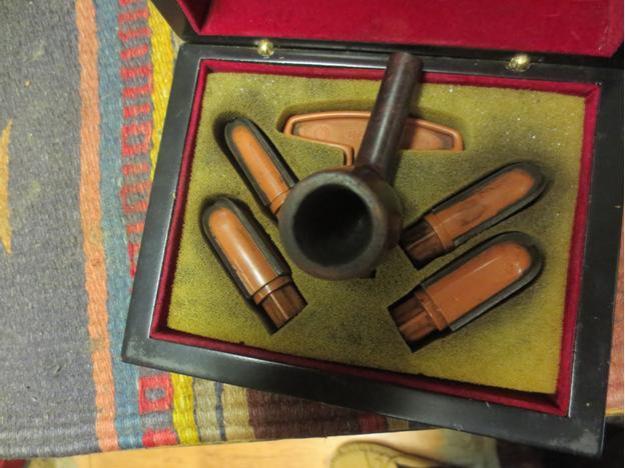
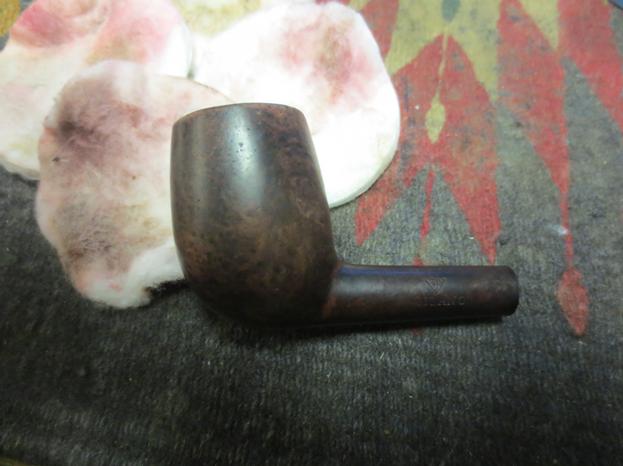
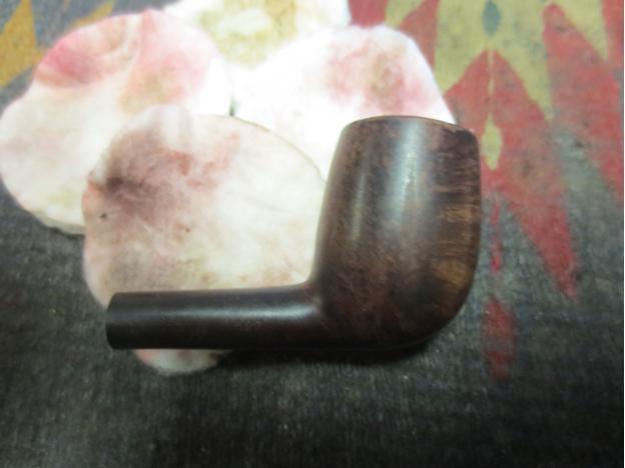
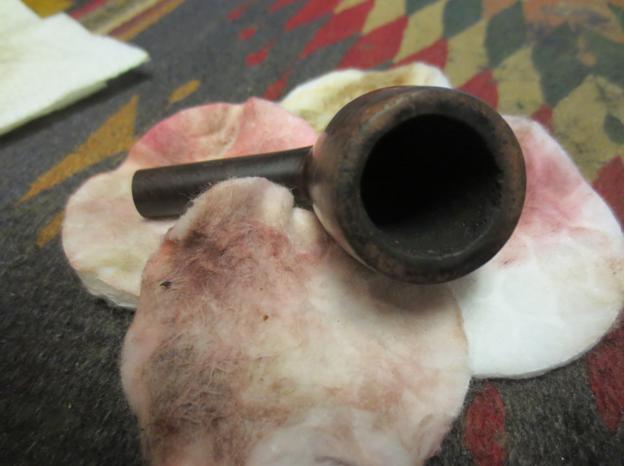
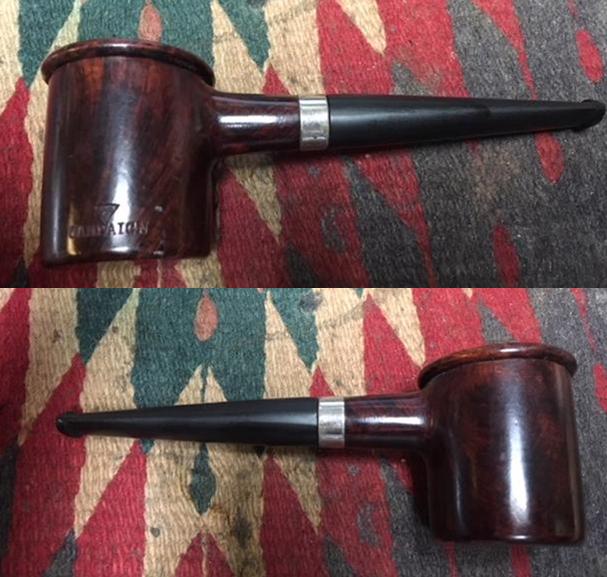
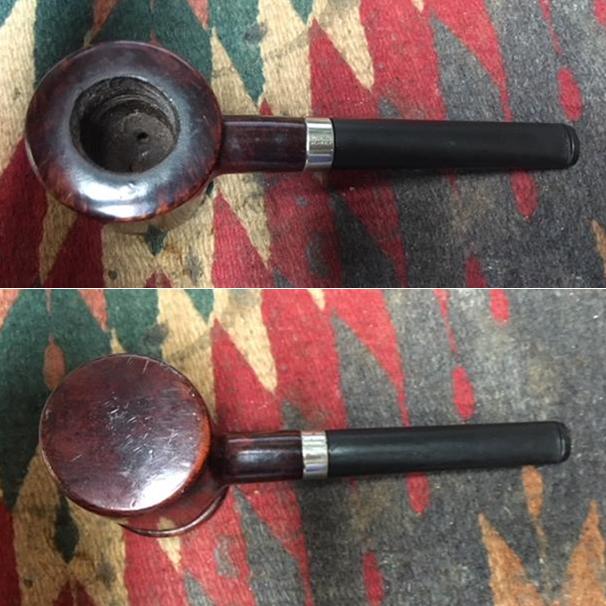
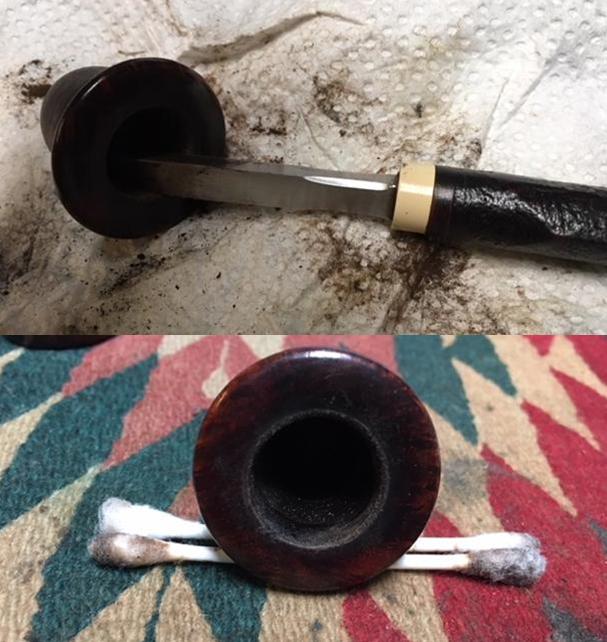
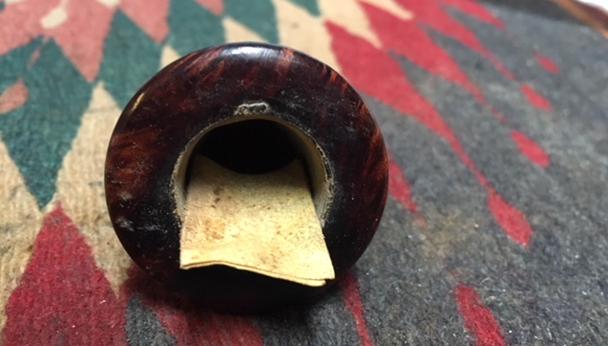
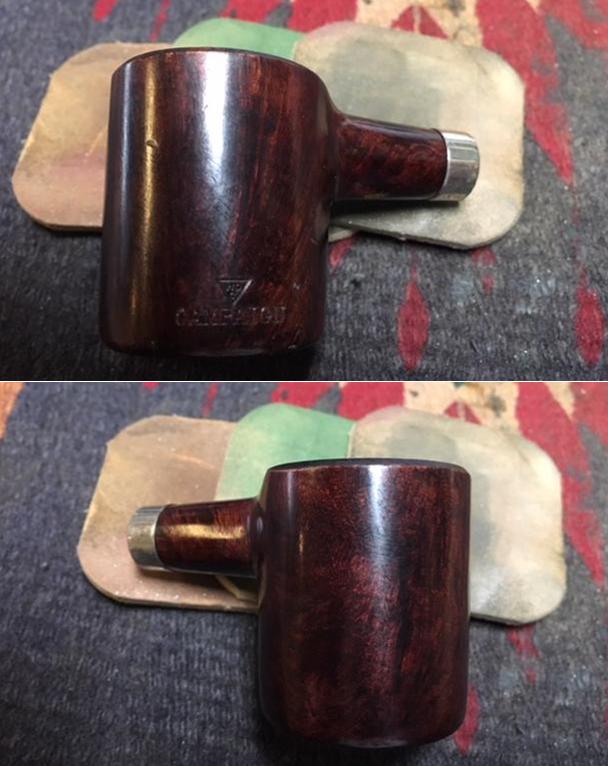
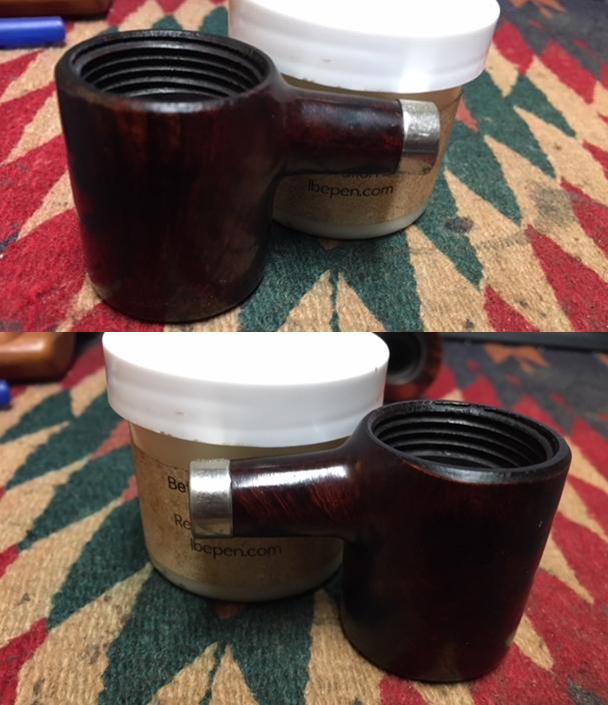
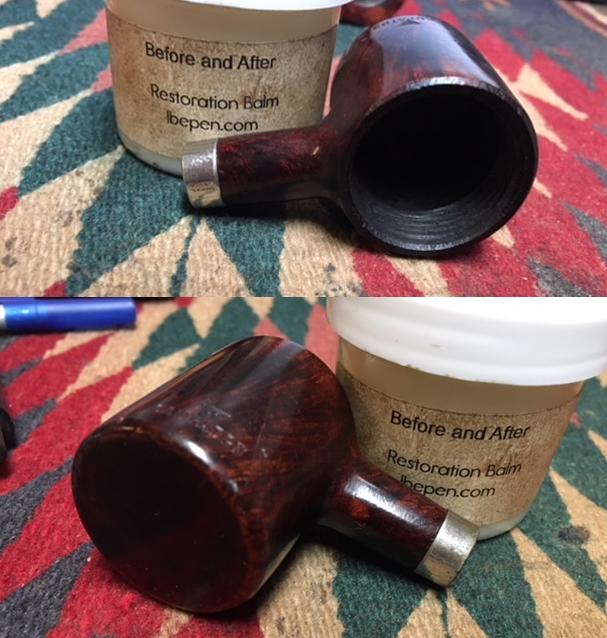
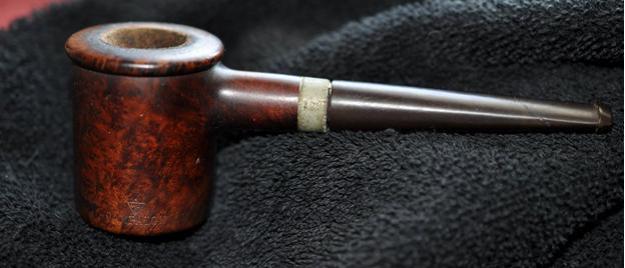
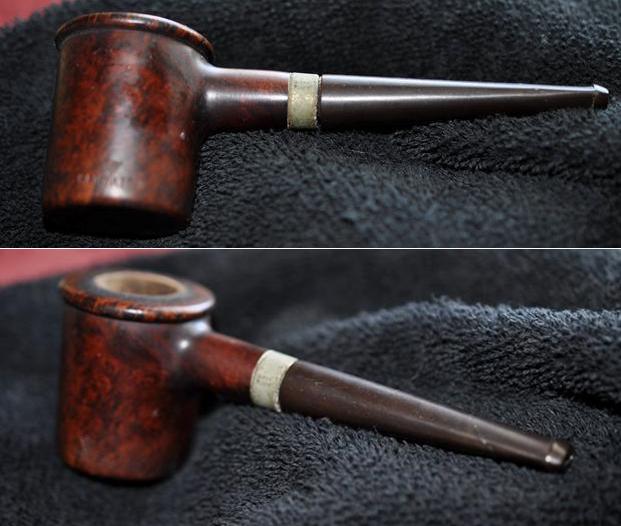
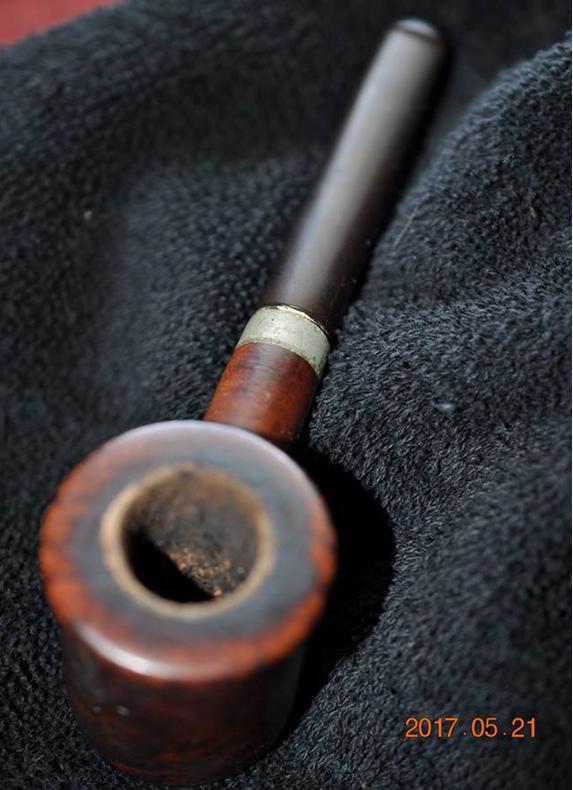
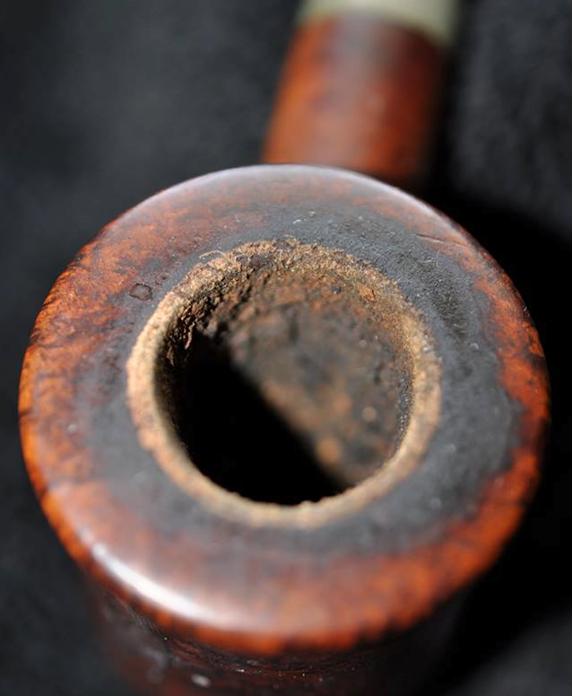
After our conversation, he packed up the pipes and threw the rest of the pipes in a separate bag for me to scavenge parts. The box did not take too long to get to Vancouver and when it did I opened the box and had a look. Here are pics of what I saw – there were two bags inside. One bag held the discards for the scrap pile and the other held the five pipes he wanted restored.  This is last of Craig’s five pipes. It is the second WDC Campaign that I have worked on. It is stamped on the lower left side of the outer bowl with the WDC triangle logo over the word CAMPAIGN. There was no other stamping on the pipe. The bowl was like a calabash bowl and screwed into the outer bowl. The entirety was made out of briar. The grain on the bowl and rim top is mixed grain with straight, flame, swirled and a bit of birdseye thrown in as well. The briar was very dirty and there were some sticky spots around the sides of the bowl. The rim top had some lava on the surface and there was an uneven cake in the bowl. There was a polished nickel band on the shank but there was no shank stamping. The band was stamped NICKEL PLATED. The stem was lightly oxidized and the fit against the end of the shank was snug. I took photos of the pipe before I started my cleanup work. I took close up photos of the bowl, rim top and all of the parts of the pipe. The first photo shows the stamping on the left side of the bowl. You can see the WDC triangle over the word Campaign. The surface of the outer bowl was dirty and grimy. The rim top had some tars and lava on the surface and a few nicks along the outer edge of the bowl. I unscrewed the cup from the outer bowl and took photos of the parts. It was actually surprisingly clean. The photos show the cake in the bowl and the dust and grime between the bowls. The stem had some minor tooth chatter and marks on both sides near the button and scratching on the surface. There were some small nicks on the top side of the stem. There was an X on the underside of the stem at the shank/stem junction. The surface of the stem was lightly oxidized and dirty.The previous Campaign pipe that I restored was posted on the blog earlier. I am attaching the link to that blog and some of the information that I found in researching the brand at that time. (https://rebornpipes.com/tag/wdc-campaign-calabash-pipe/). In my online research I found a brief interchange on a Google group. I include the link if you would like to read it in context and its entirety. It gives some helpful information regarding this particular pipe. https://groups.google.com/forum/#!topic/alt.smokers.pipes/kpkpd3zXoiwExcerpt from pipedia.org
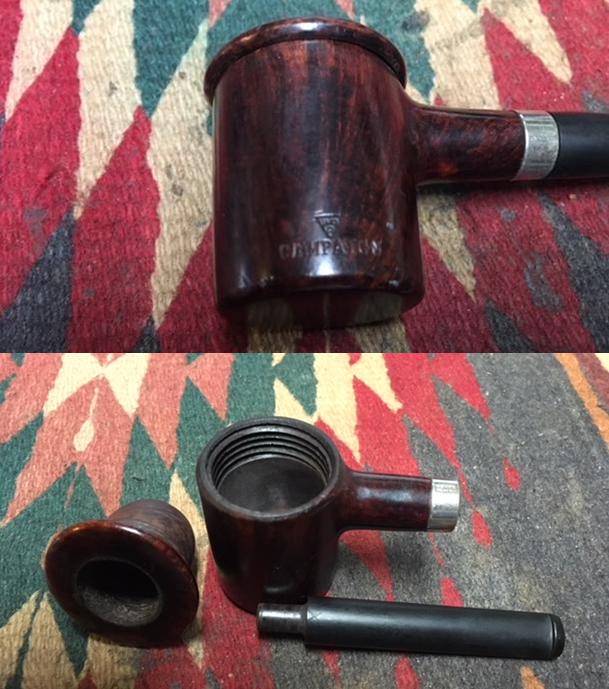
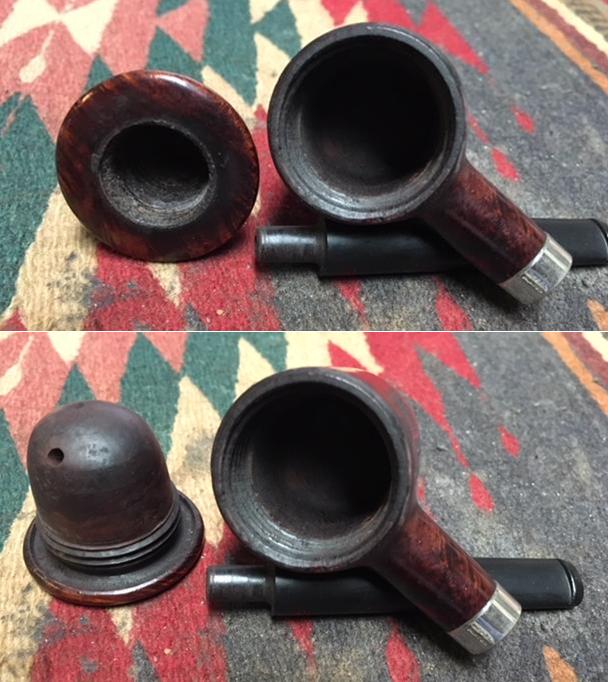
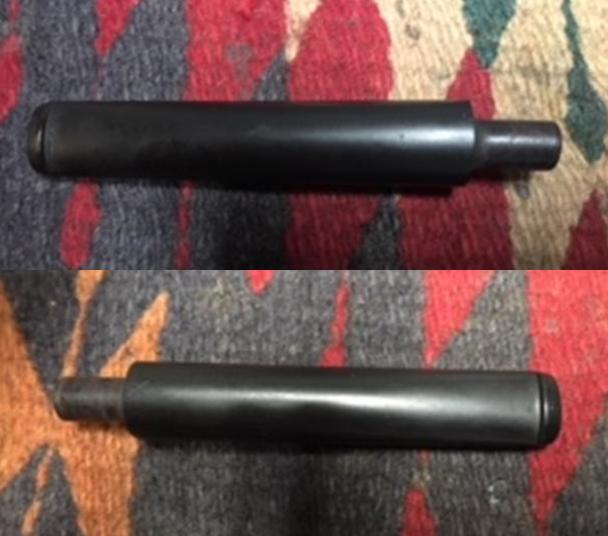
To a request for information regarding the WDC Campaign pipe on the Google Group there was quite a long string of answers. I am quoting two of those in full…

Respondent 1: While I can’t say anything about this pipe specifically, I have a hazy memory of that shape listed in a book about pipes; (I may be totally misremembering this, but here goes) the shape being called the “Dawes”, named after Harding’s Vice President?  Anyone else remember this? Sounds like an interesting pipe, whatever it’s called…

Respondent 2: From Weber’s Guide to Pipes: “The Dawes Pipe (more correctly named the Lyons, after its inventor, Charles Herbert Lyons) happened to be the favorite pipe of General Charles G. Dawes, Vice-President of the USA from 1925 to 1929. General Dawes smoked the curious pipe incessantly and it became popularly known as the Dawes Underslung, because the shank joined the bowl near its rim.”

I looked on Pipedia, (https://pipedia.org/wiki/William_Demuth_Company) and I quote in part from the article on the William Demuth Company.

The Demuth Company is probably well known for the famous trademark, WDC in an inverted equilateral triangle. William commissioned the figurative meerschaum Presidential series, 29 precision-carved likenesses of John Adams, the second president of the United States (1797-1801) to Herbert Hoover, the 30th president (1929-1933), and “Columbus Landing in America,” a 32-inch-long centennial meerschaum masterpiece that took two years to complete and was exhibited at the World’s Columbian Exposition in Chicago in 1893.

The Presidential series was the result of Demuth’s friendship with President James A. Garfield, a connoisseur of meerschaum pipes. Demuth presented two pipes to Garfield at his inauguration in 1881, one in his likeness, the other in the likeness of the President’s wife. Later, Demuth arranged for another figurative matching the others to be added to the collection as each new president acceded to the White House, terminating with President Hoover.

From the above information I learned some significant details about the Campaign pipe. It was invented by Charles Herbert Lyons and was the favourite pipe of General Charles G. Dawes who was the Vice President of the USA under President Harding from 1925-1929. It fits nicely into that period when WDC was having Presidential Pipes commissioned ending in 1933. That places this old pipe in the time period between the late 1920s and early 1930s.

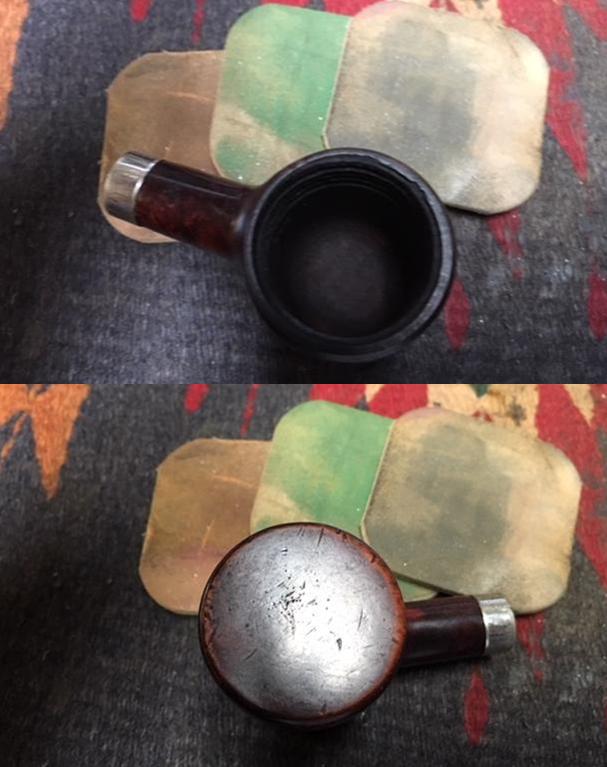
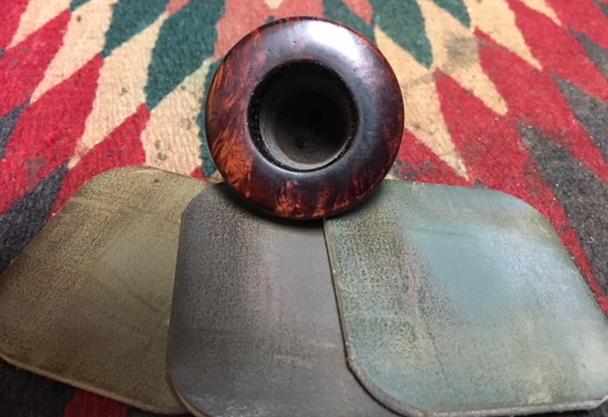
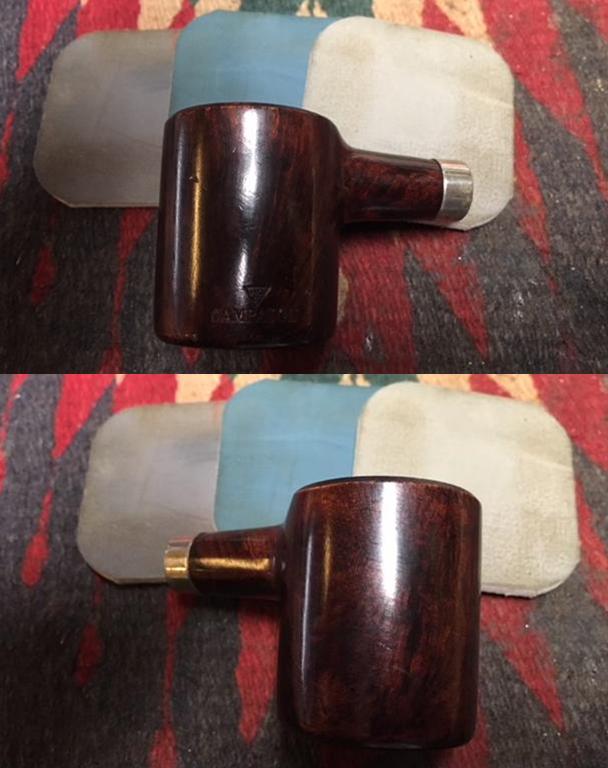
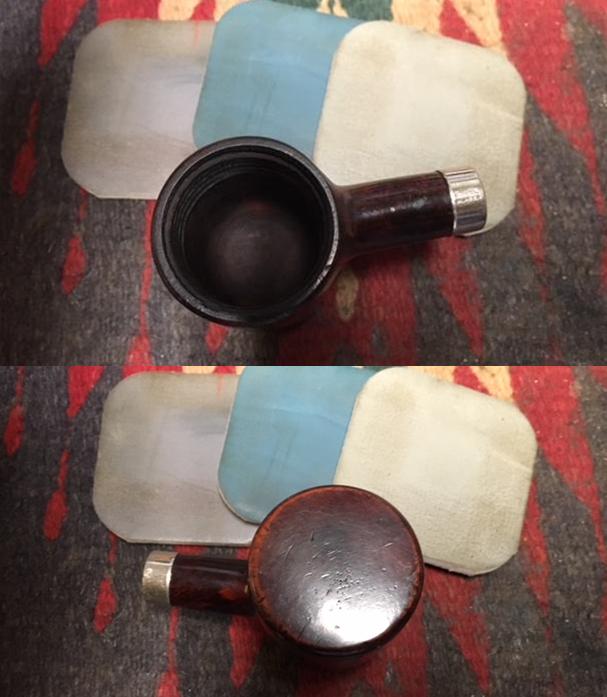
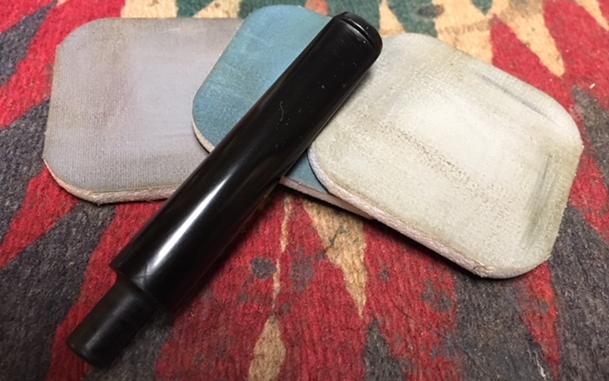
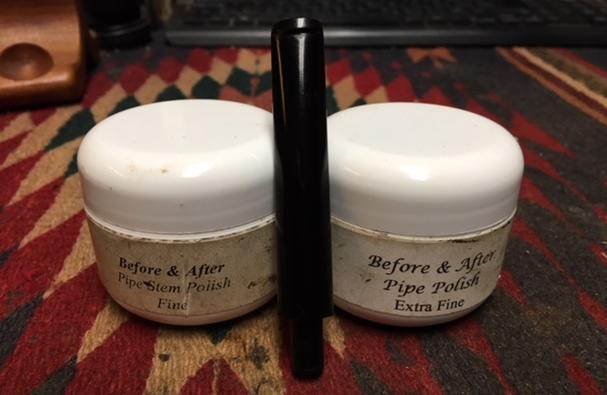
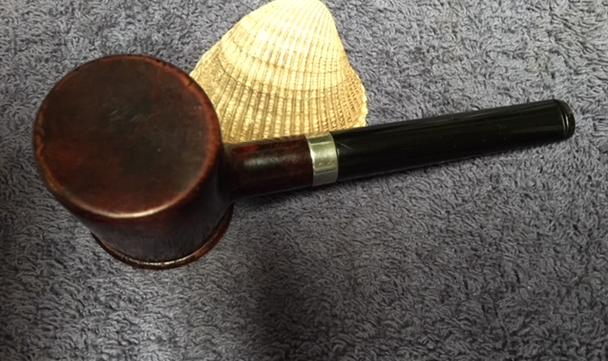
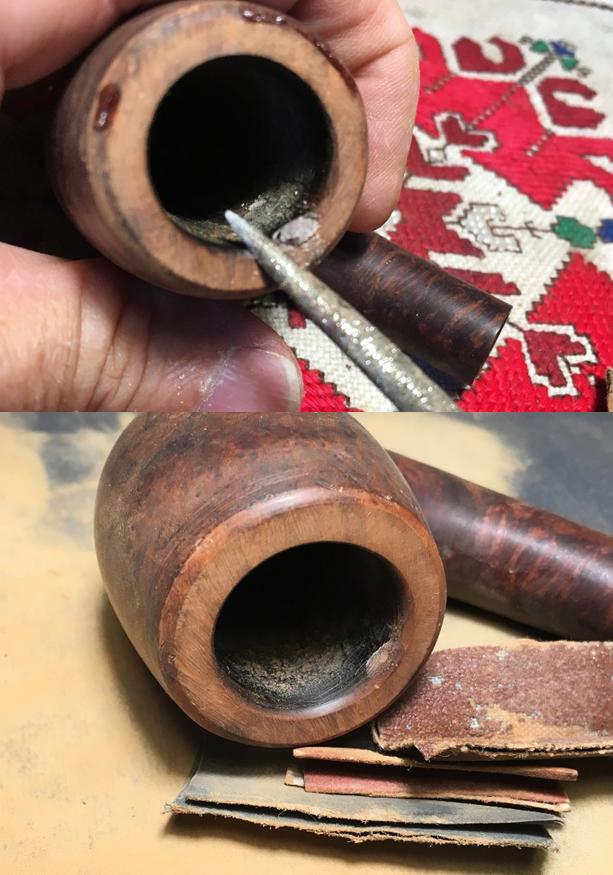
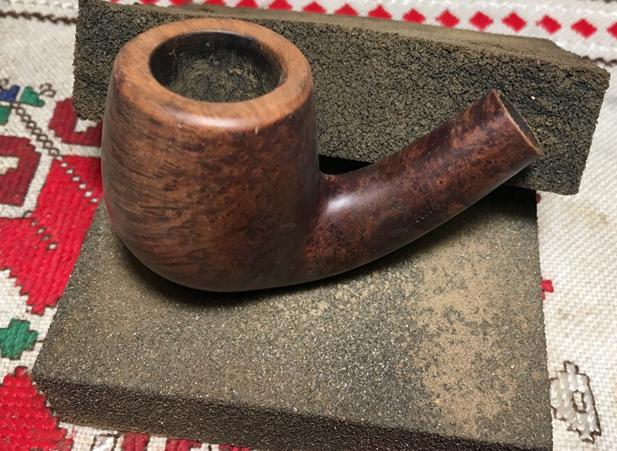
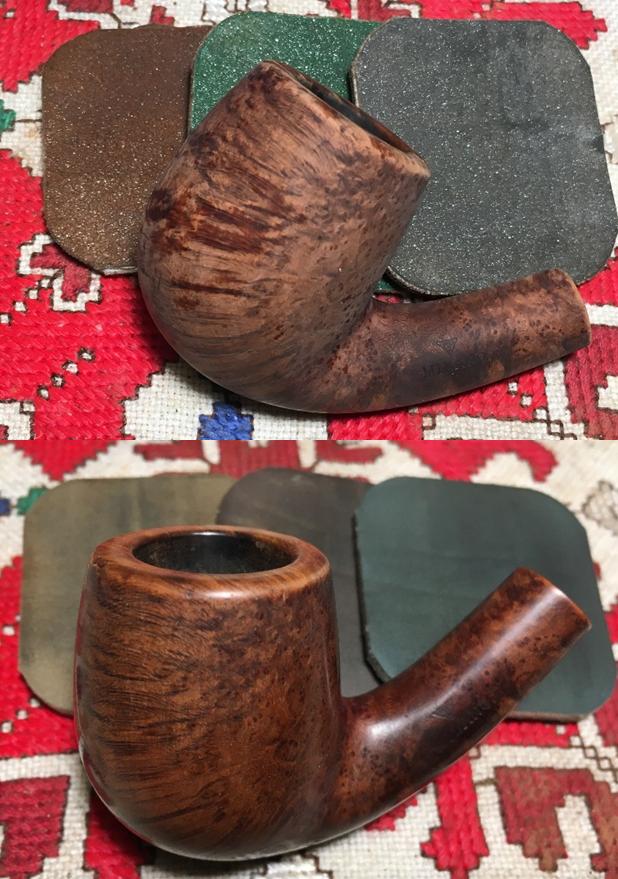
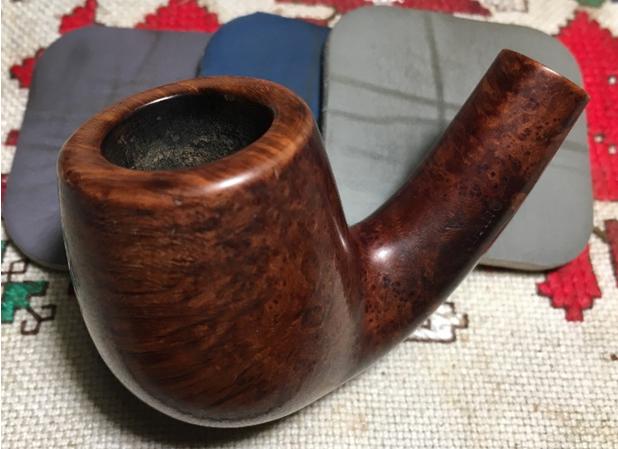
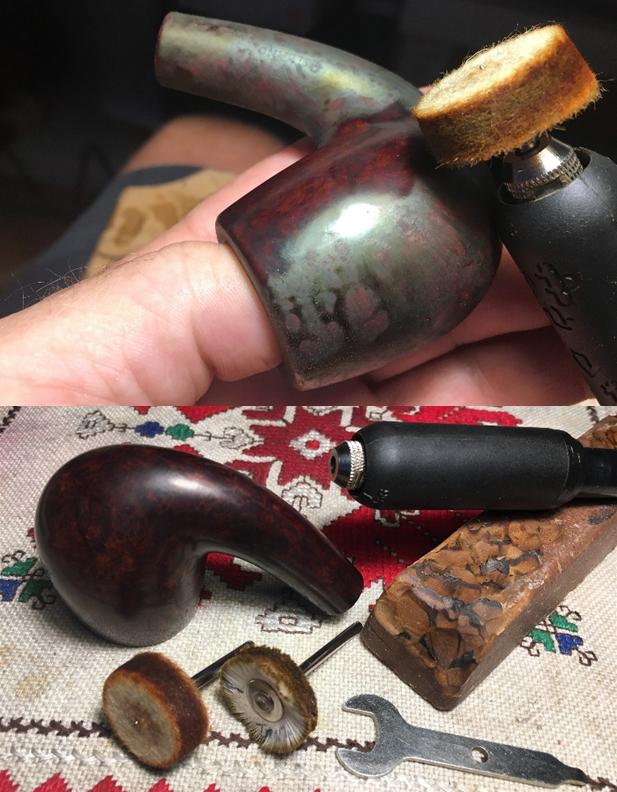
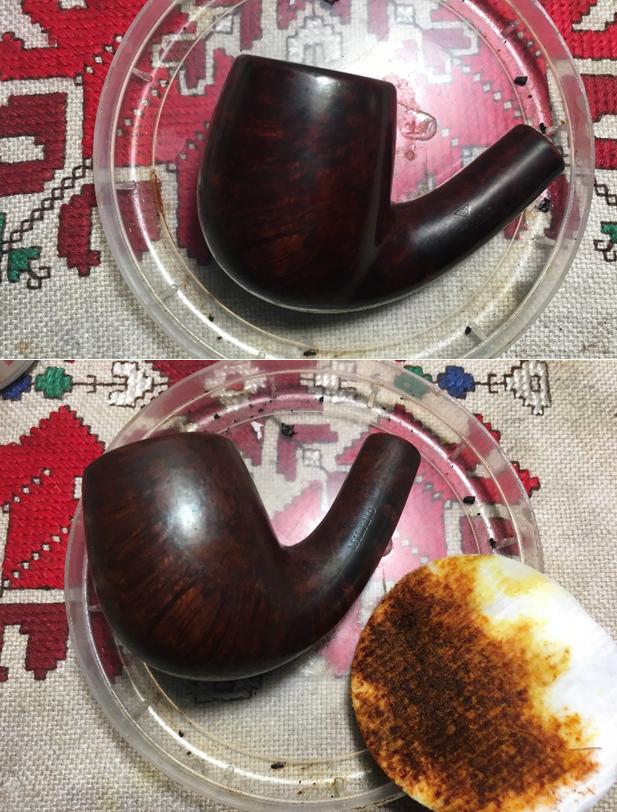
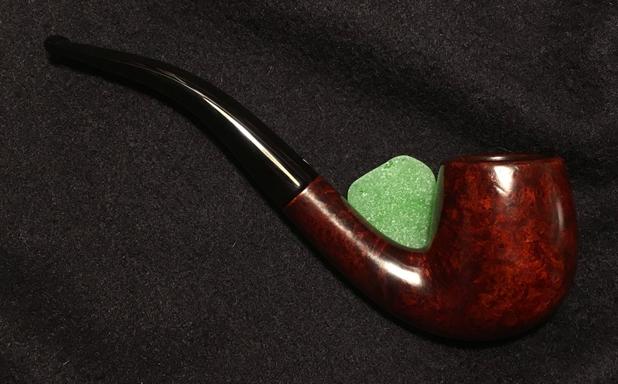
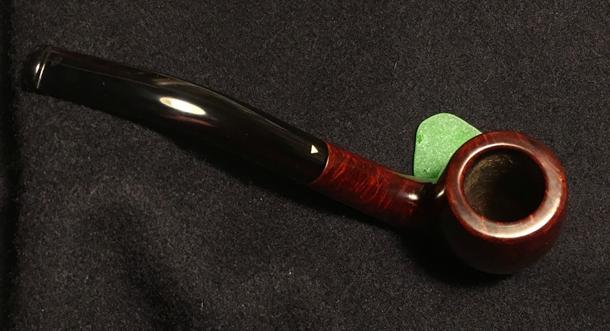
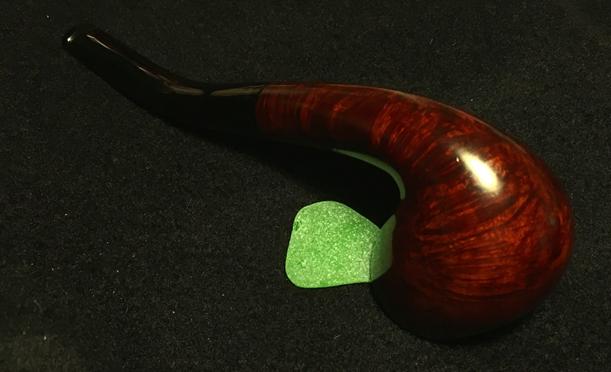
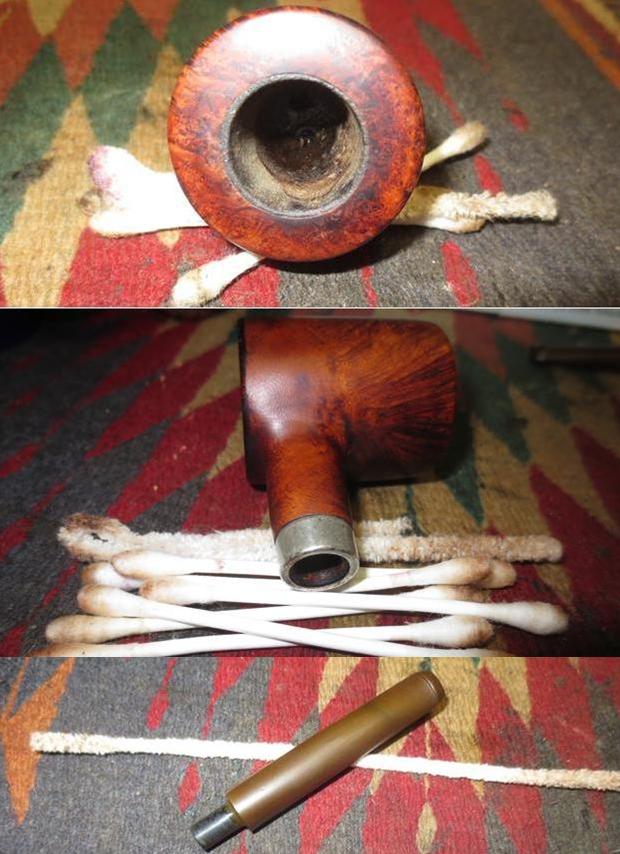
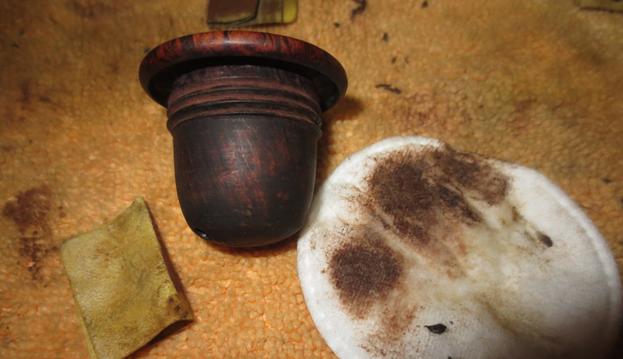
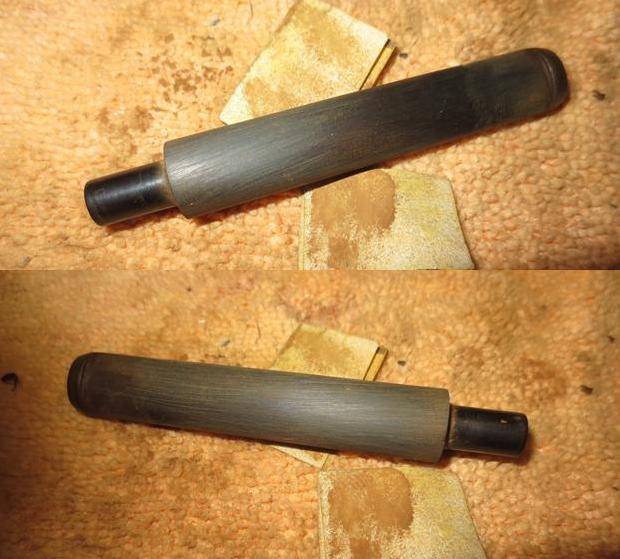
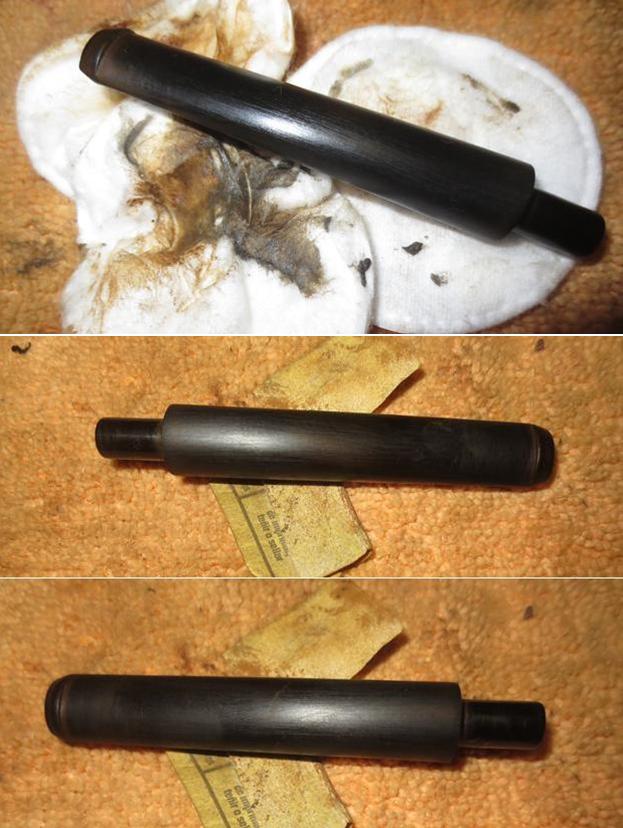
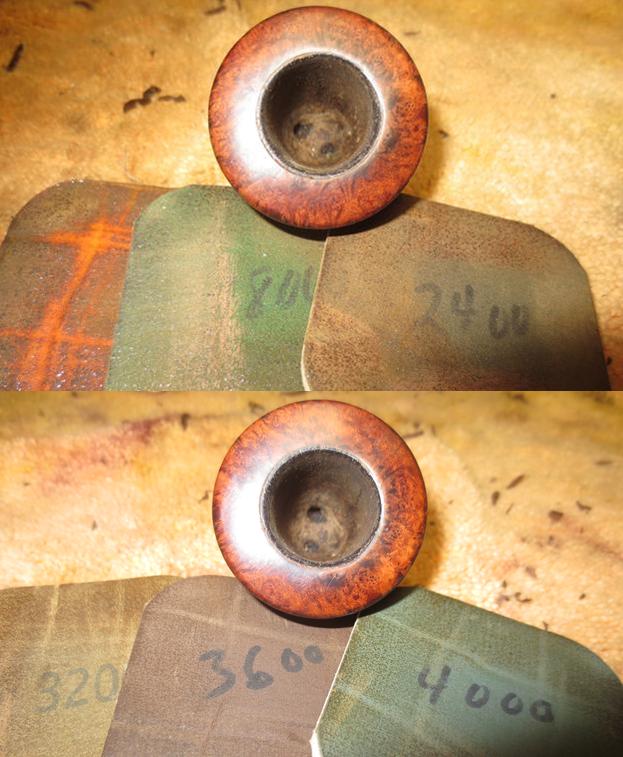
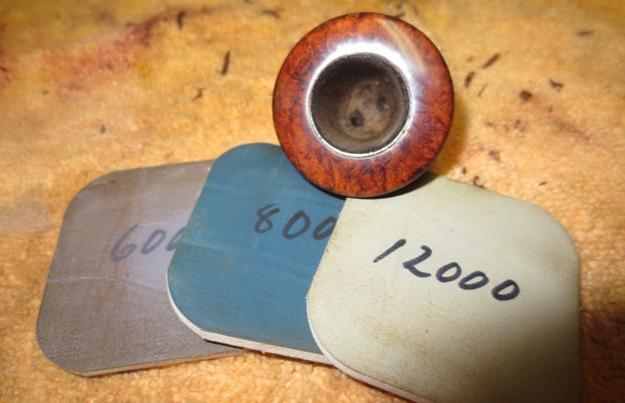
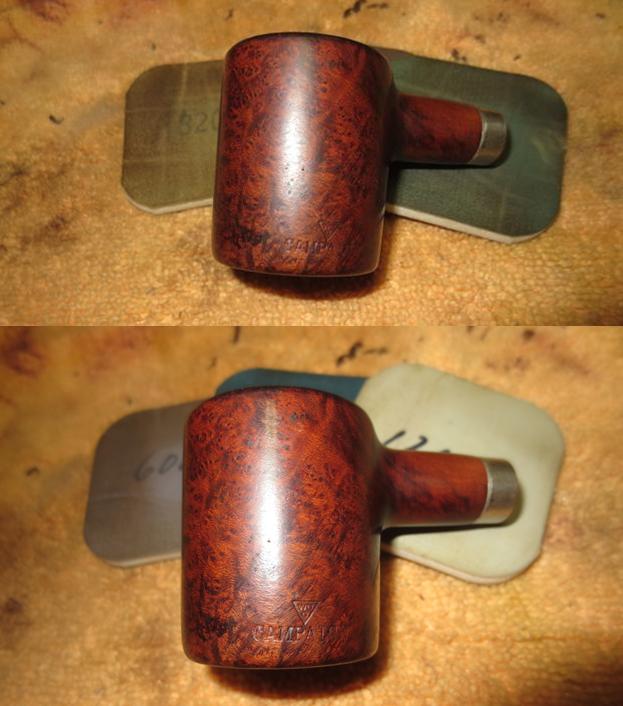
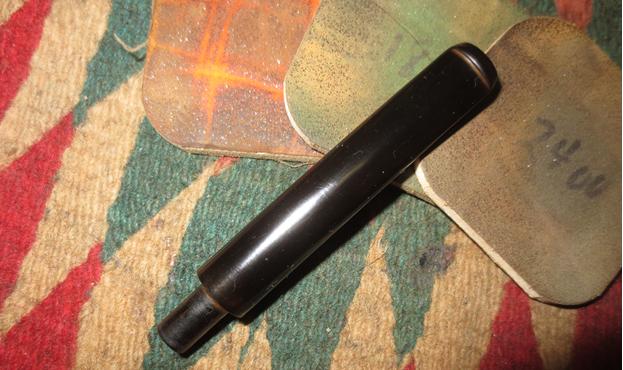
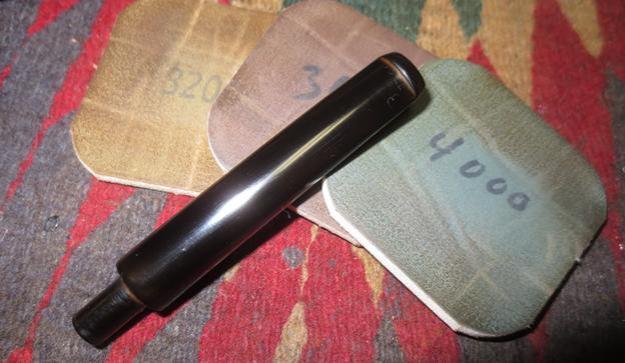
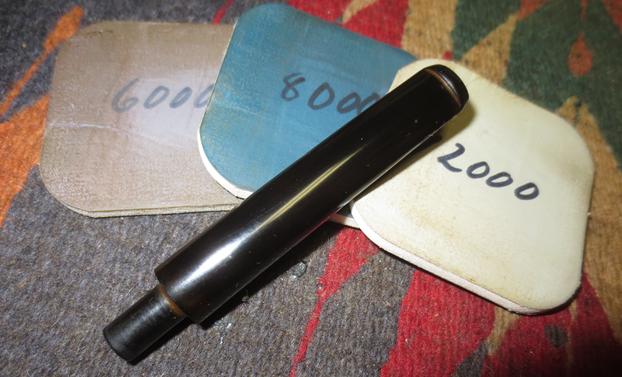
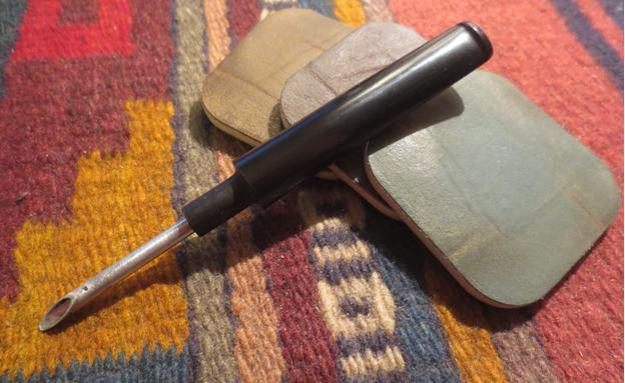
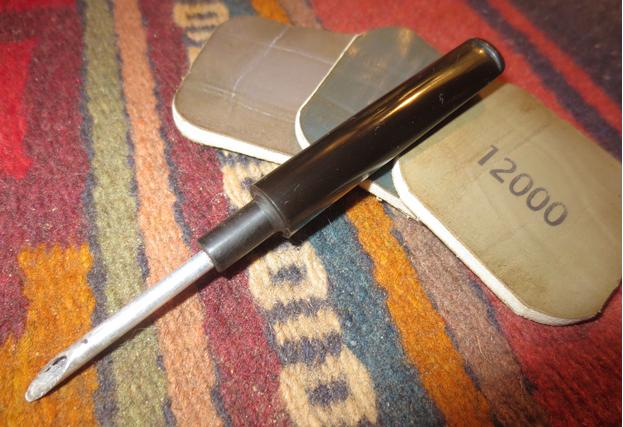
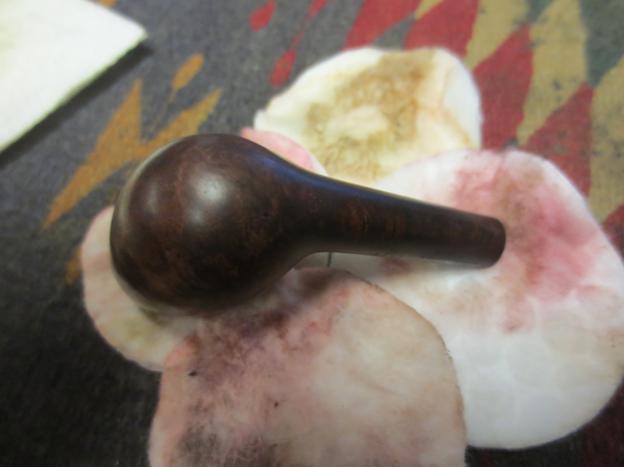
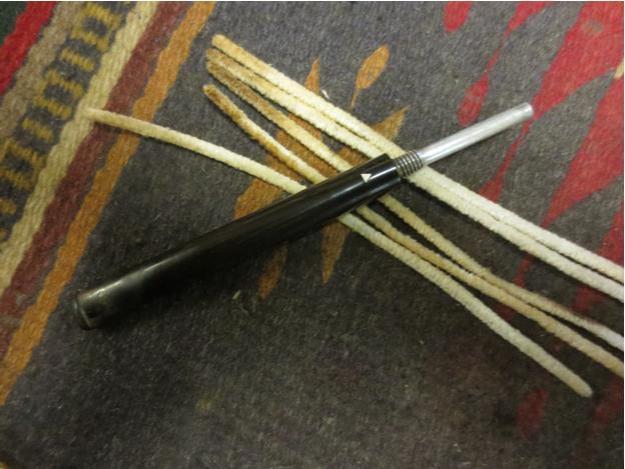
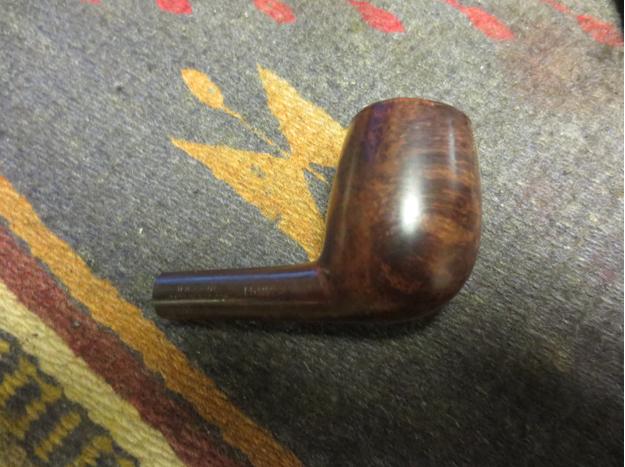
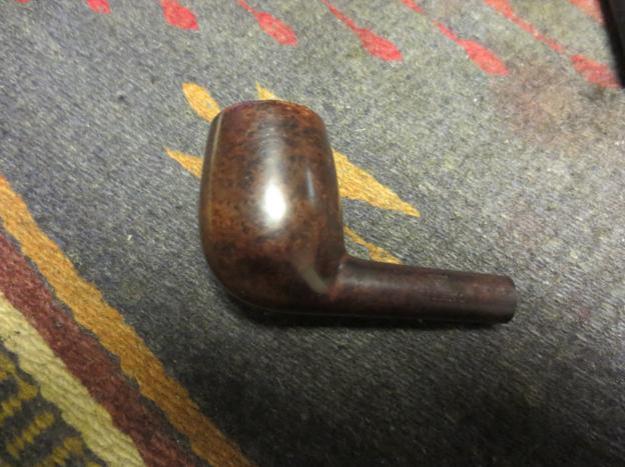
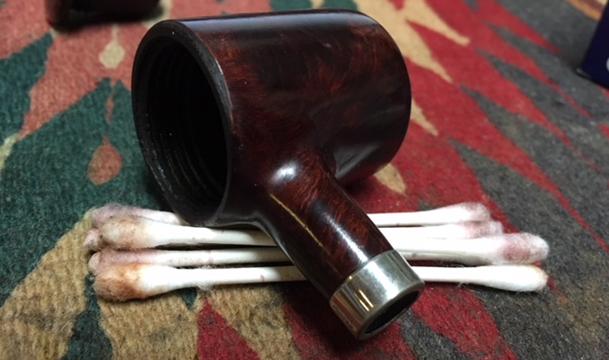
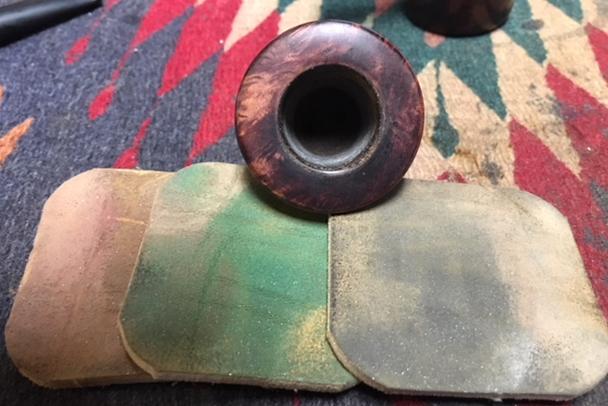
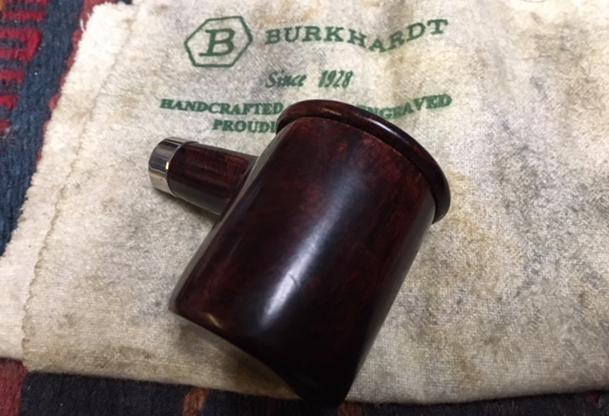
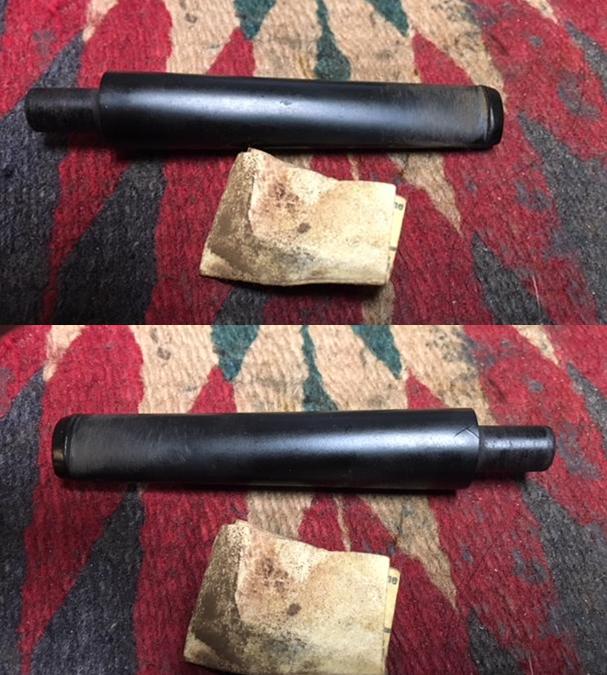
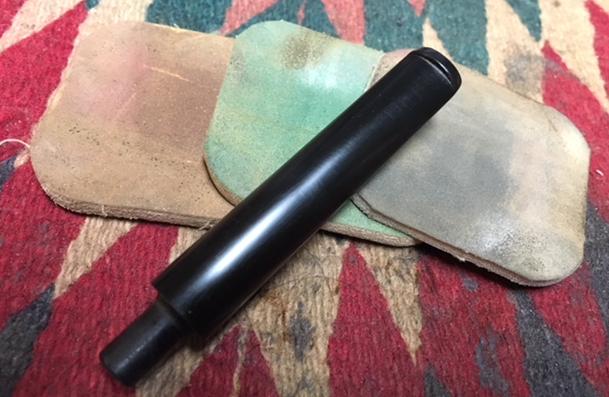
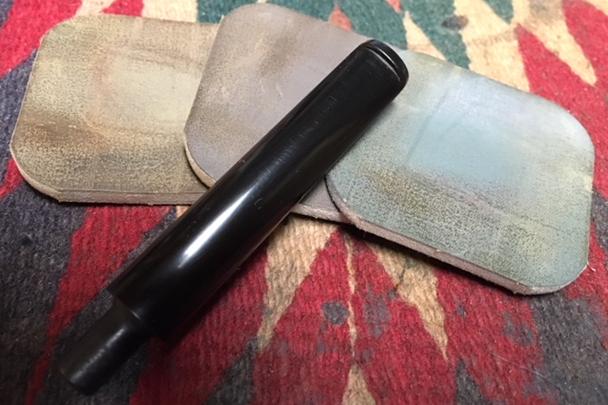
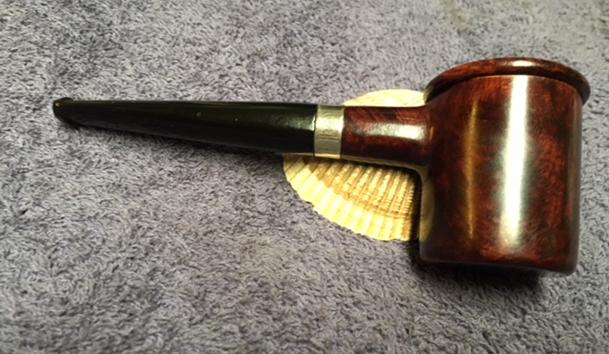
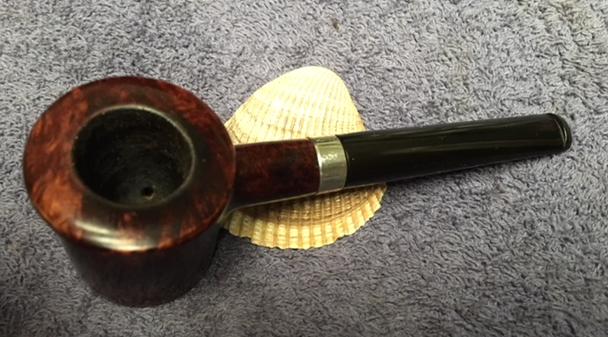
Reminded of the history of the brand and the provenance of this particular pipe it was time to begin working on the cleanup. I removed bowl cup and cleaned out the shank with pipe cleaners, cotton swabs and alcohol. I cleaned out the inside of the outer cup with cotton swabs and alcohol to remove the buildup of tars and oils in the threads and sides and bottom of the bowl.I reamed the inner bowl/cup with a Savinelli Fitsall Pipe Knife to scrape away the remaining cake that was in the bowl. I scraped it back to bare briar. I scrubbed out the outside and the inside of the bowl with cotton swabs and alcohol to remove the remaining oil and tars. I used a folded piece of 220 grit sandpaper to clean up the inner edge of the cup. I worked on the edge until it was clean. I polished the bowl and rim with micromesh sanding pads – wet sanding it with 1500-2400 grit pads and dry sanding with 3200-12000 grit pads. I wiped the bowl down after each pad with a damp cotton pad to clean off the sanding dust. The photos show the progress of the polishing. Once again I decided to do this before the deep cleaning with Before & After Restoration Balm. I worked some Before & After Restoration Balm into the surface of the briar on the bowl and the rim top with my finger tips to deep clean the finish, enliven and protect the wood. I let it sit for a few minutes and then buffed it with a cotton cloth. The grain in the wood came alive and there was a rich shine to the briar. I took some photos of the bowl at this point to mark the progress in the restoration. I sanded the band with 6000-12000 grit micromesh sanding pads. I polished the nickel band with a jeweler’s polishing cloth.I set the bowl aside in my rack and worked on the stem. I started by sanding it with 220 grit sandpaper to remove the light oxidation, tooth chatter and nicks in the surface.I cleaned the stem with alcohol and pipe cleaners to remove the debris and tars in the airway from the tenon to the slot in the button. I worked over the stem with micromesh sanding pads. I polished out the sanding scratches and marks from the reshaping work. I wet sanded it with 1500-2400 grit pads and dry sanded it with 3200-12000 grit pads and wiped it down with Obsidian Oil after each one. When I finished with the last micromesh pad I gave it a final coat of oil and let it dry. I polished the stem with Before & After Pipe Stem Polish – both the fine and the extra fine polishes. I wiped it down with a final coat of Obsidian Oil and set it aside to dry. With the stem polished I put it back on the pipe and buffed the entire pipe with Blue Diamond polish on the buffing wheel. I buffed it with the polishing compound until it was shiny. I gave the entire pipe several coats of carnauba wax and buffed it with a clean buffing pad to raise the shine. I hand buffed it with a microfibre cloth to deepen the shine. The stem and the bowl polished up pretty nicely. The finished pipe is shown in the photos below. This is the final pipe of Craig’s five. Now that I have finished the last of the pipes it is time to pack them up and get them out to him. I am looking forward to hearing what he will think once he has them in hand. Thanks for walking through these restorations with me. Once again I can’t help thinking that the pipeman who gave Craig these pipes would be happy that they are back in service and that Craig is carrying on the pipeman’s trust with them. Cheers.
A Lady’s Choice – WDC Milano Swan Neck Billiard


Blog by Dal Stanton

Is there a psychology in the choosing one makes when befriending a pipe?  A young Bulgarian lady, who also is a budding pipe lady, chose a pipe out of my ‘Help Me!’ baskets and boxes.  After looking at scores of hopeful candidates, there was only one – only one – that she held in her hands, looking at it and smiling. A beautiful, graceful, WDC Milano Swan Neck Billiard caught her attention, and it would seem, her affections.  Is there a psychology unfolding in the process, the evaluation, and the weighing of one pipe against another?  Or, is the process more like the lore of Harry Potter’s choice of one’s wand?  The young wizard does not choose the wand – the wand chooses his wizard.  Does the pipe do the choosing?

And is there any credence to the oft unspoken observation – do pipe stewards resemble their pipes like canine lovers sometimes uncannily resemble their 4-legged friends?  These observations come to my mind because intriguingly, the young lady who was claimed by the WDC Milano Swan Neck, shares, in some very remarkable ways, pleasing characteristics of this graceful pipe.

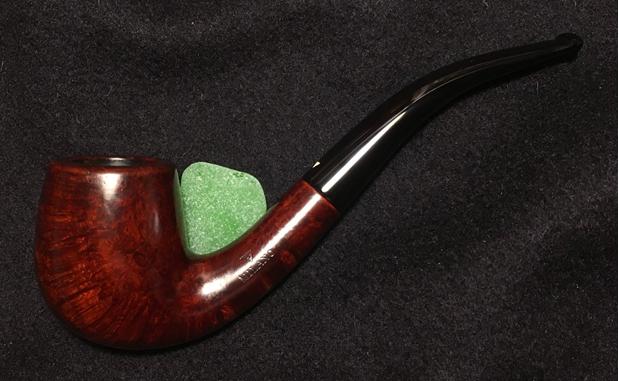
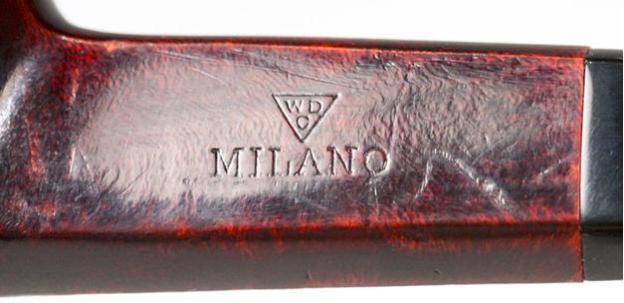
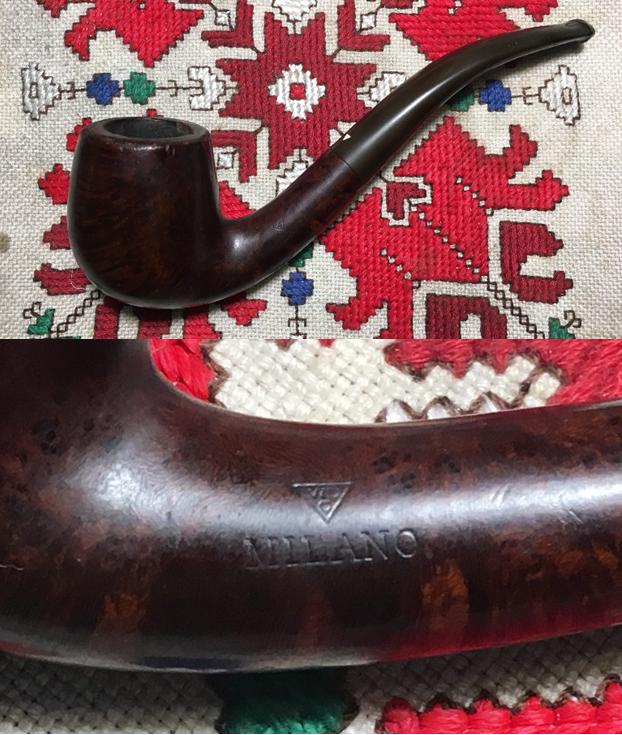
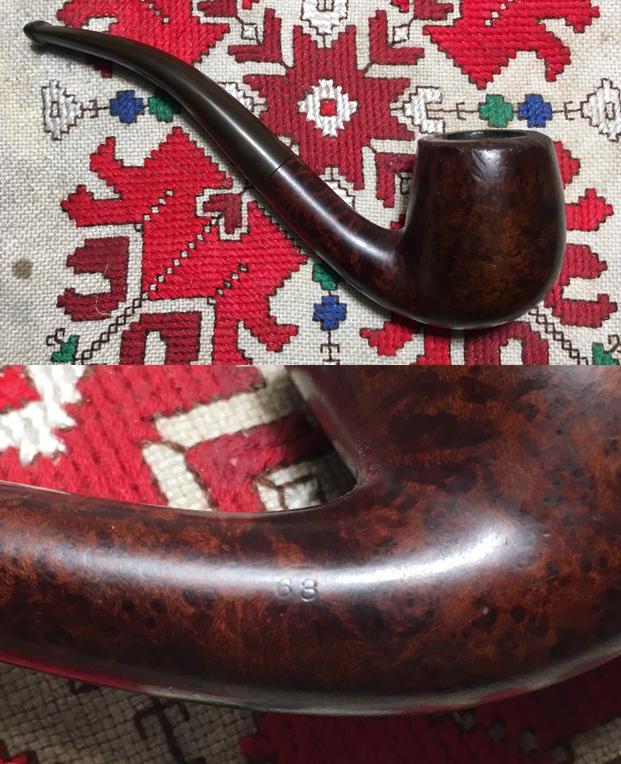
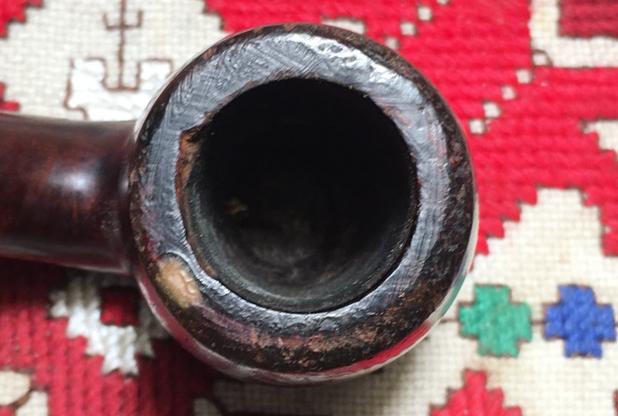
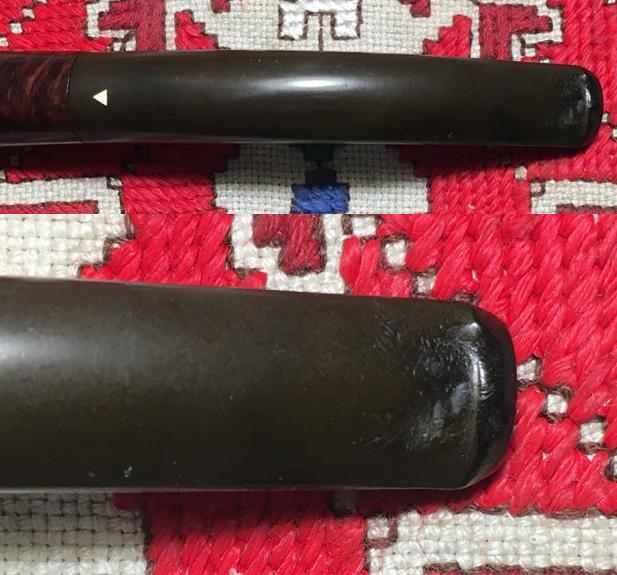
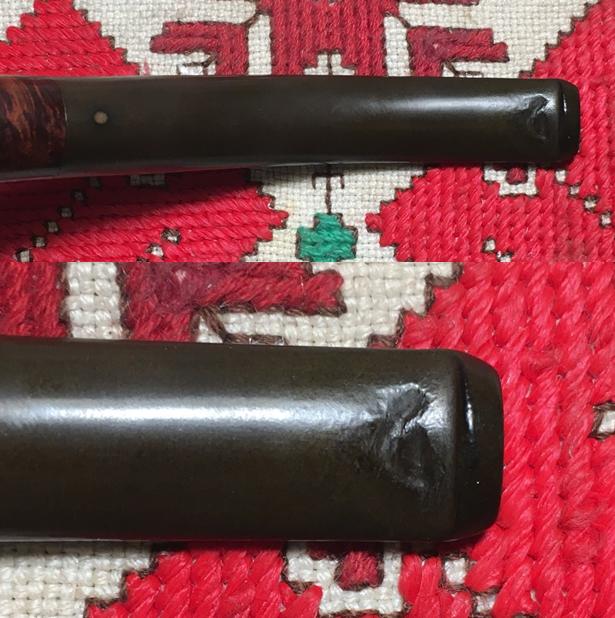
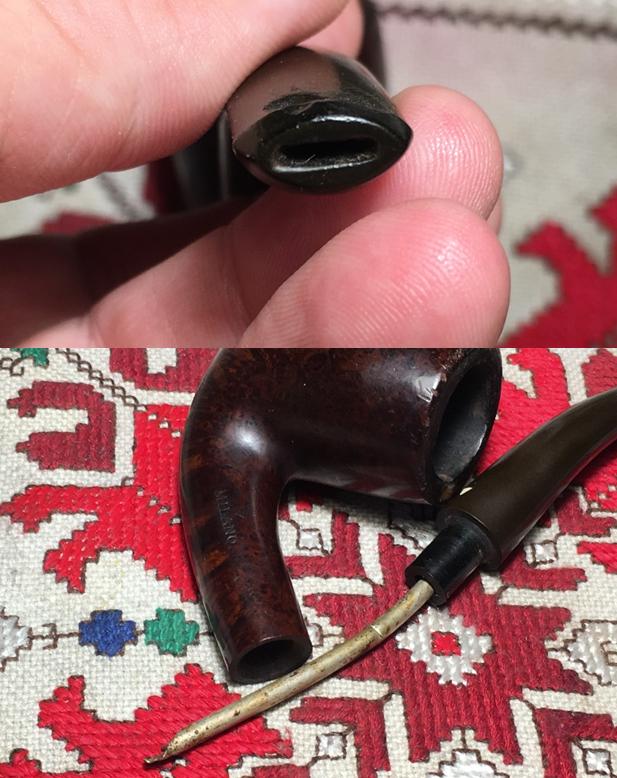
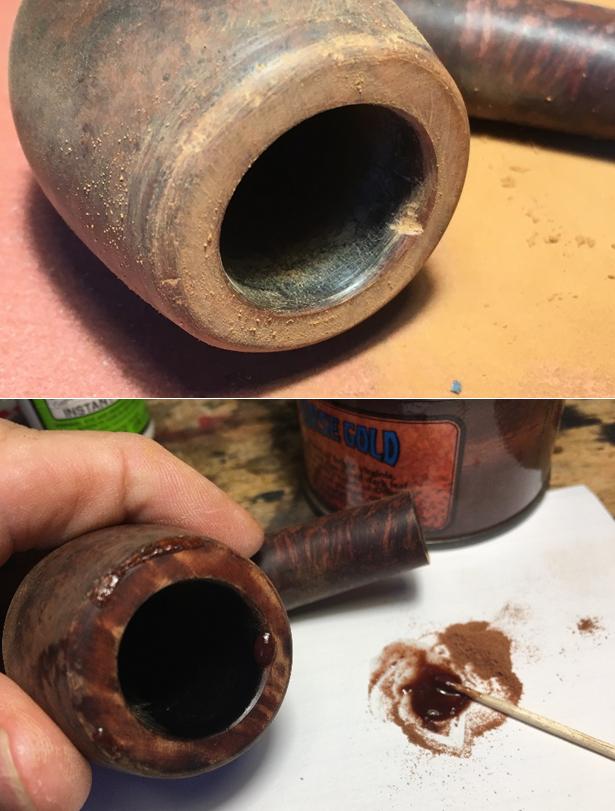
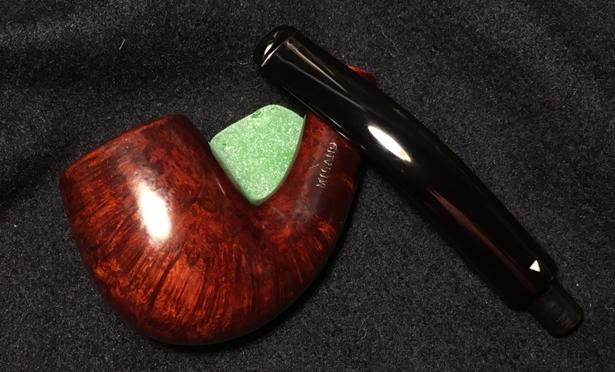
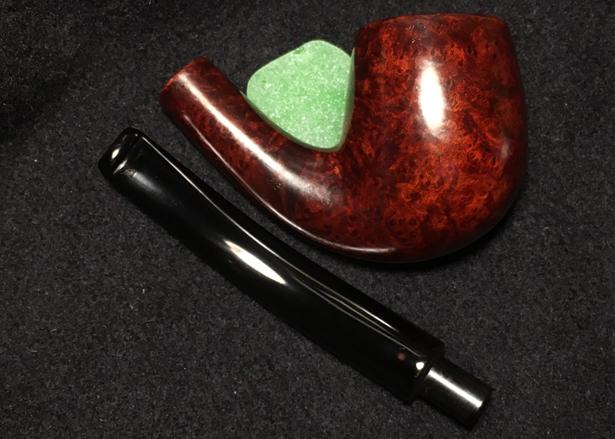
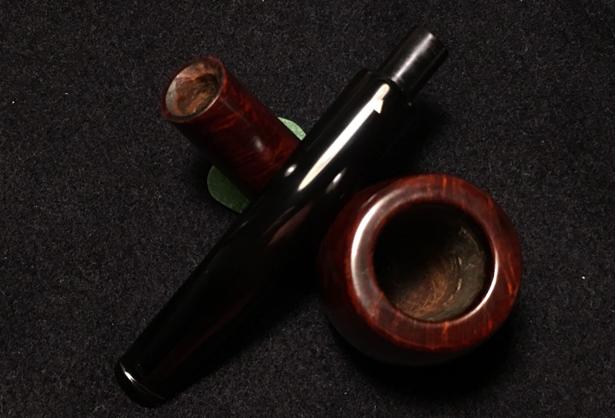
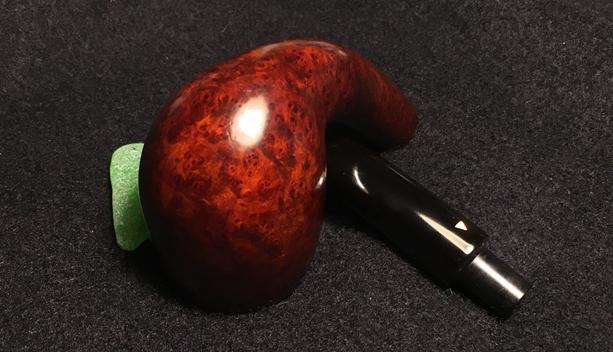
And then there is the ‘question’ of the ‘Pipe Lady’ more so than the ‘Pipe Man’.  A Pipe Lady lives closer to the social and cultural ‘edge’ when she takes her pipe in hand and enjoys a bowl of her favorite blend.  This picture I found somewhere on the internet (sorry, can’t cite!), I suspect would never be ascribed to Pipe Men.  Yet, a Pipe Lady looks at the three with a smile of agreement and a wink, while she is thinking, ‘You’ve got that one right!’This graceful, Milano Swan Neck stem comes from the William Demuth Company, established in 1862 – one of the oldest pipe manufacturing houses in the United States (Pipedia article).  The WDC Milano patent goes back to the 1920s with an example of the familiar WDC rhombus from the same WDC article in Pipedia (courtesy of Doug Valitchka).The eBay seller from Akron, Ohio, described the long dimensions of the Lady’s Choice WDC Milano:  Very graceful bent billiard! About 6″ long, bowl is 2″ tall, 1 3/8″ wide. ID 3/4″, depth 1 13/16″. From Pipedia’s WDC article, courtesy Doug Valitchka, a very nice example of what appears to be the same Swan Neck Billiard of the Milano line.From my worktable on the 10th floor of our flat here in Sofia, Bulgaria, I take these pictures to fill in the gaps. On the left side of the shank is stamped the traditional WDC rhombus [over] MILANO.  The right side is stamped the single shape number, ‘63’.  The chamber appears to have been cleaned to some degree and the carbon cake is very light.  The rim is sad.  It appears someone took a divot out of the internal lip trying to clean it or something.  The rim’s outer edge is beat up and I can see the vestiges of a bevel.  There is lava crusting as well on the rim surface and some hardened light stuff – the rim needs cleaning.  The stummel has few if any fills that I see – the grain of the tall bowl is impressive.  The stem has the WDC inlaid white triangle on the top.  Oxidation is present and the former steward was a clencher and chewer.  Both top and bottom of the bit shows deep bite dents.  The top button lip is dented.

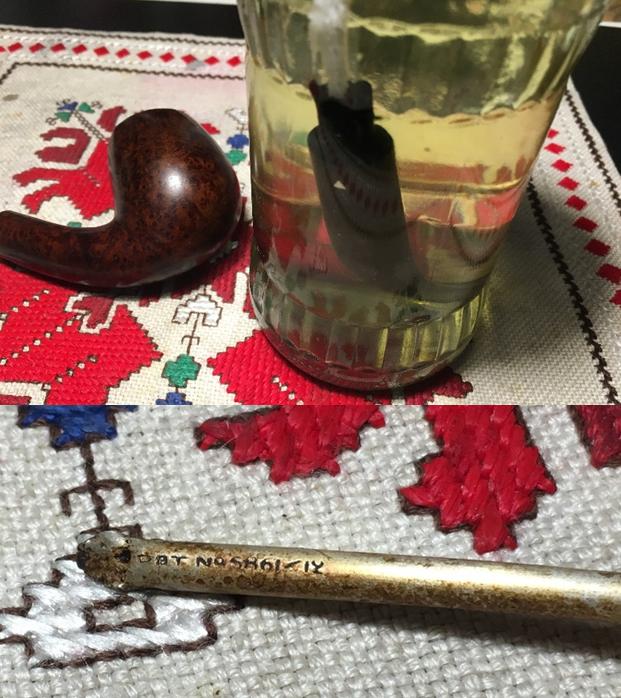
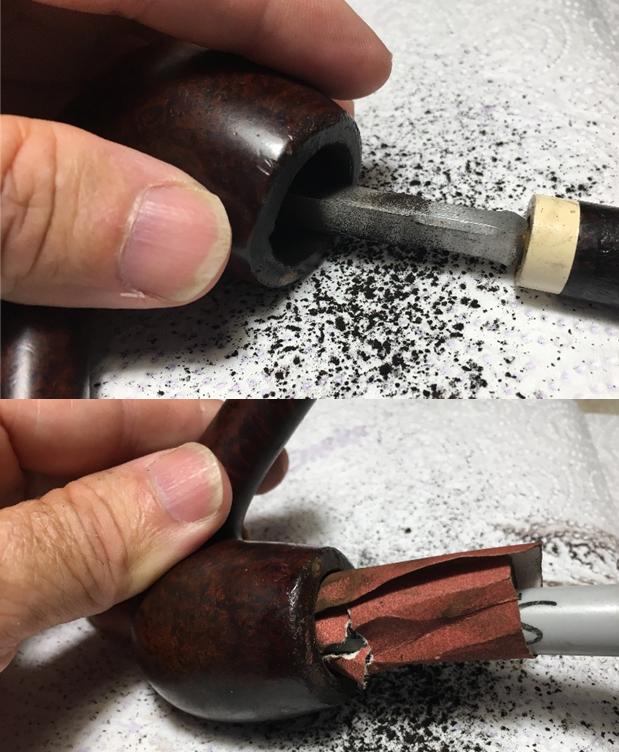
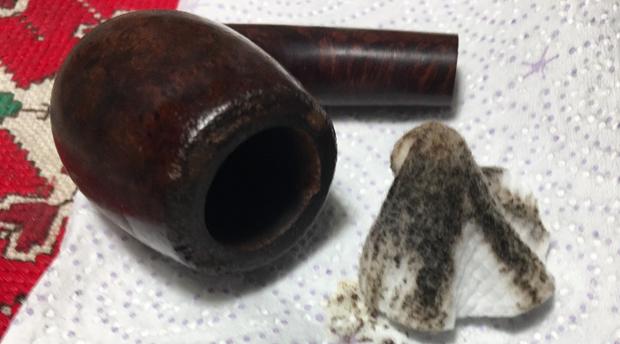
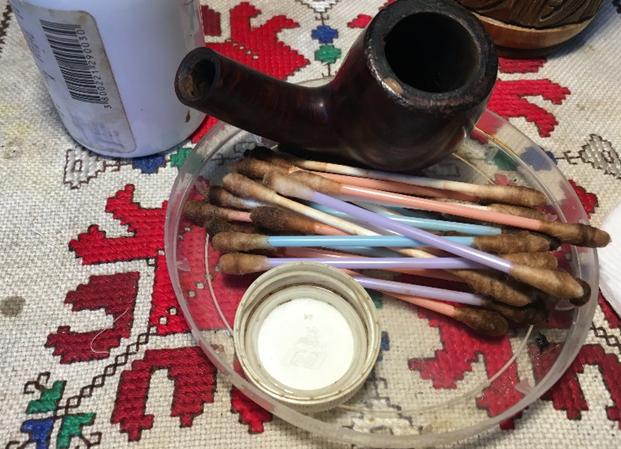
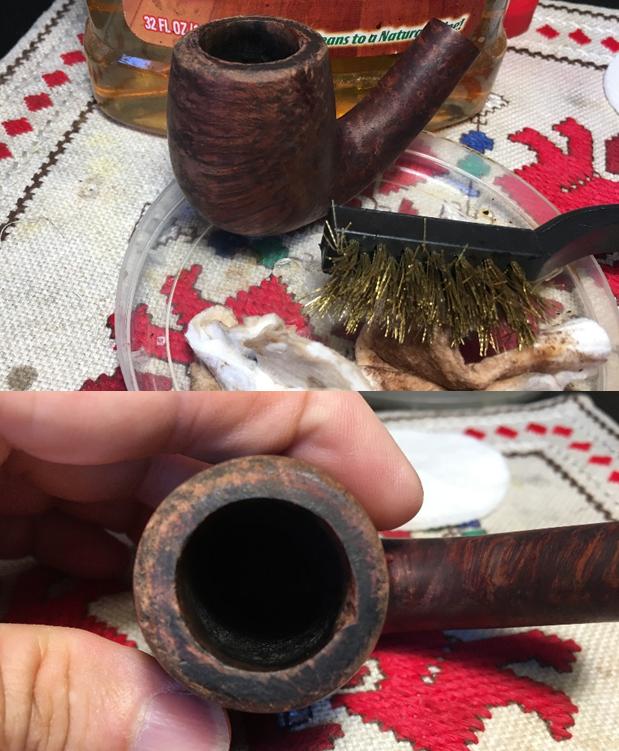
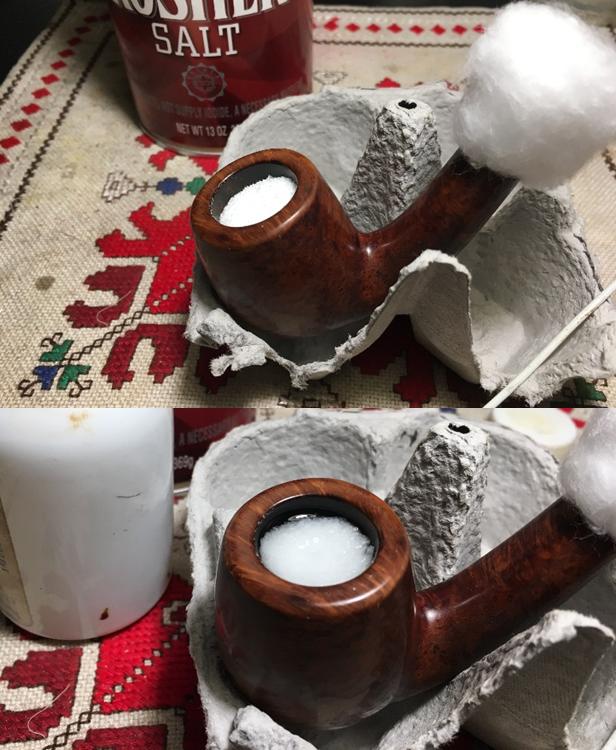
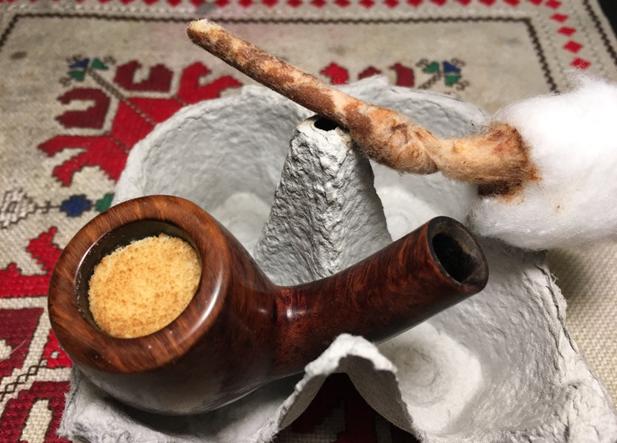
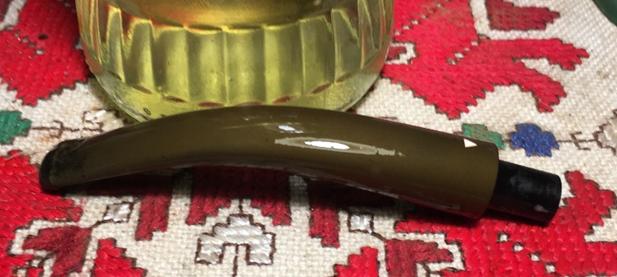
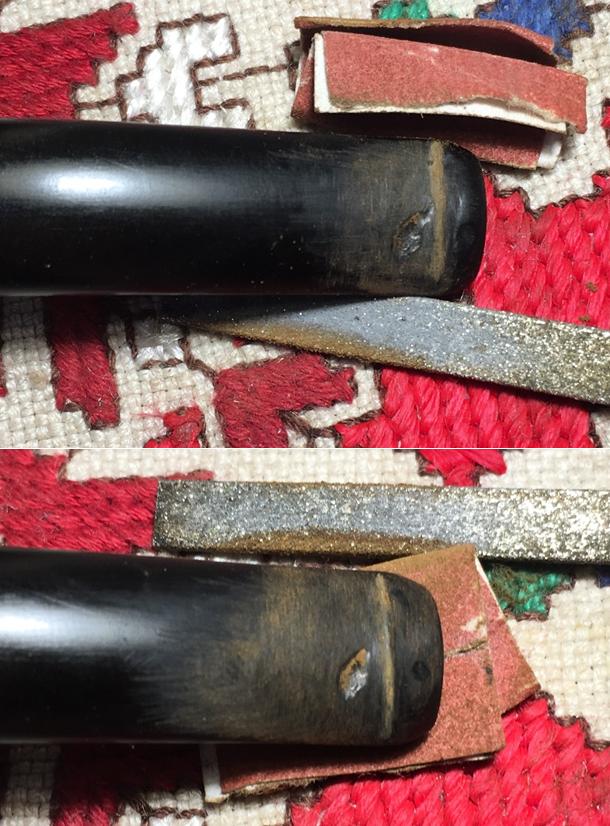
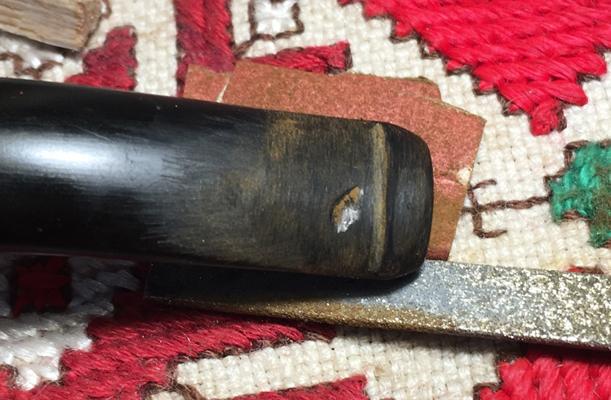
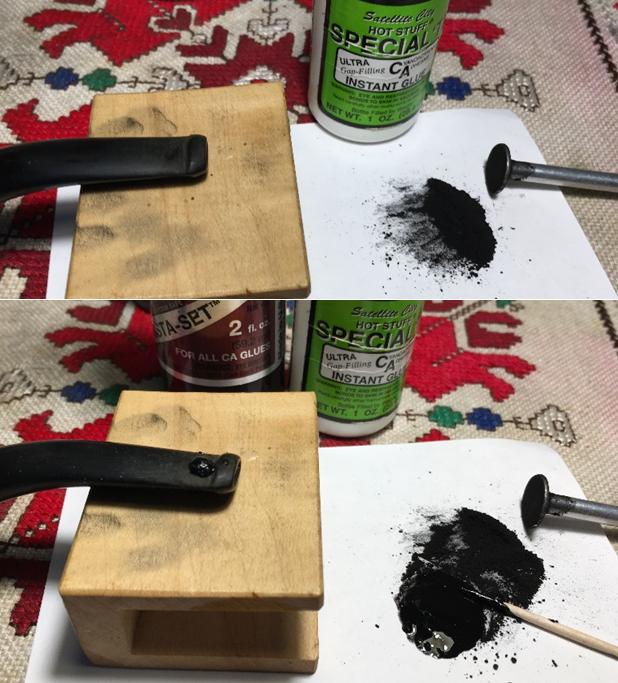
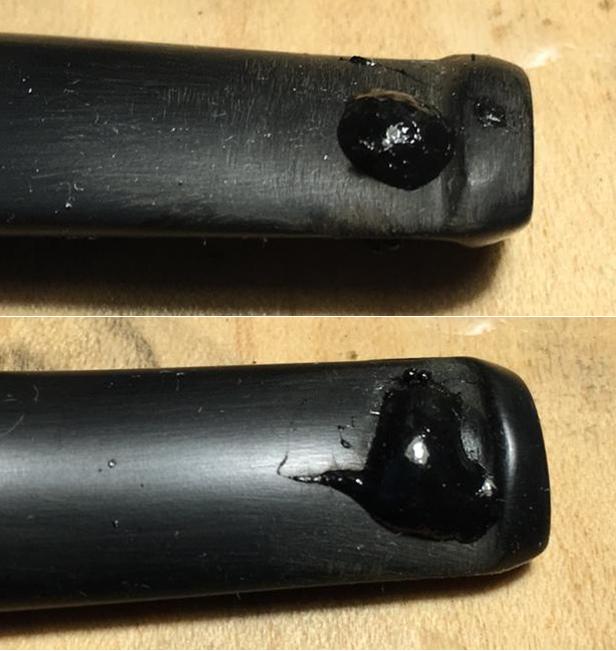
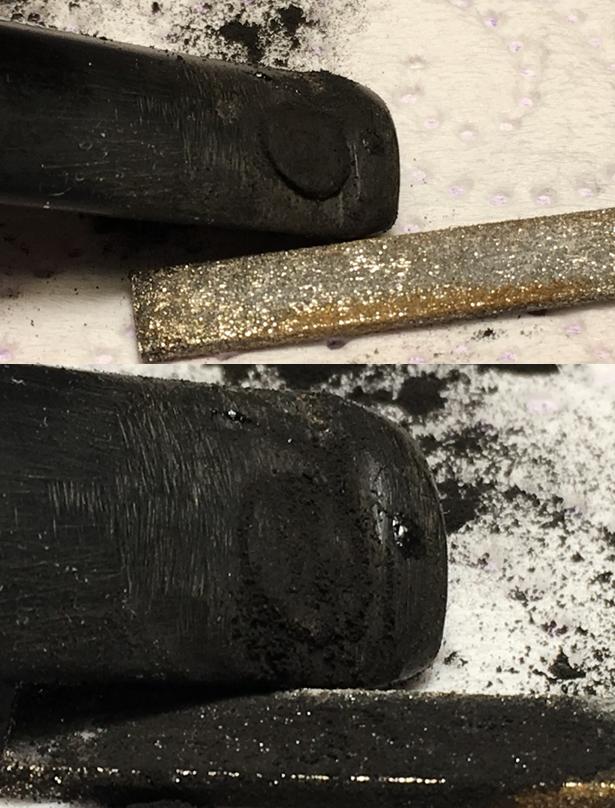
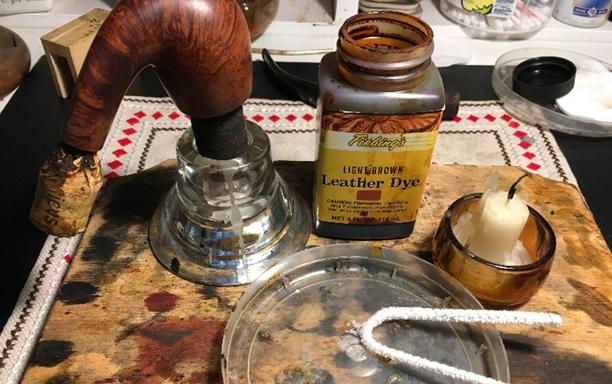
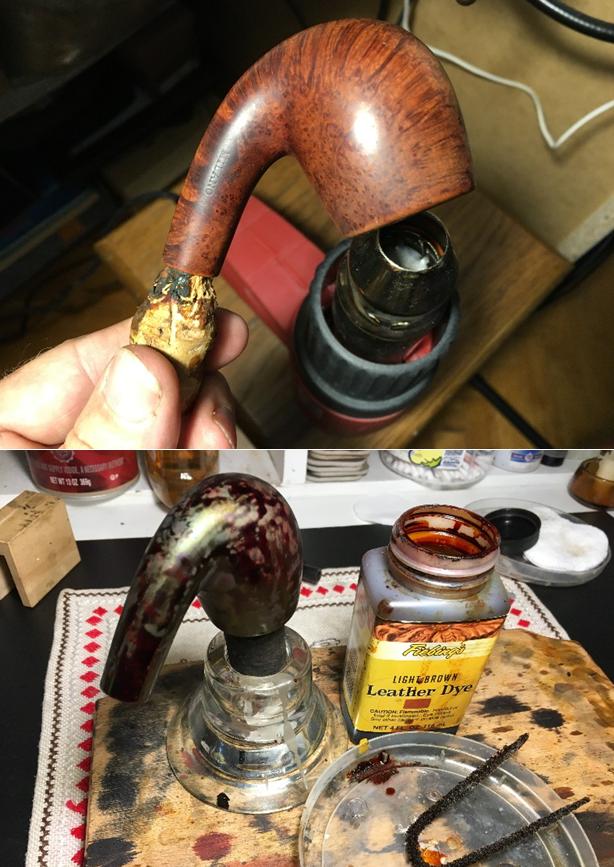
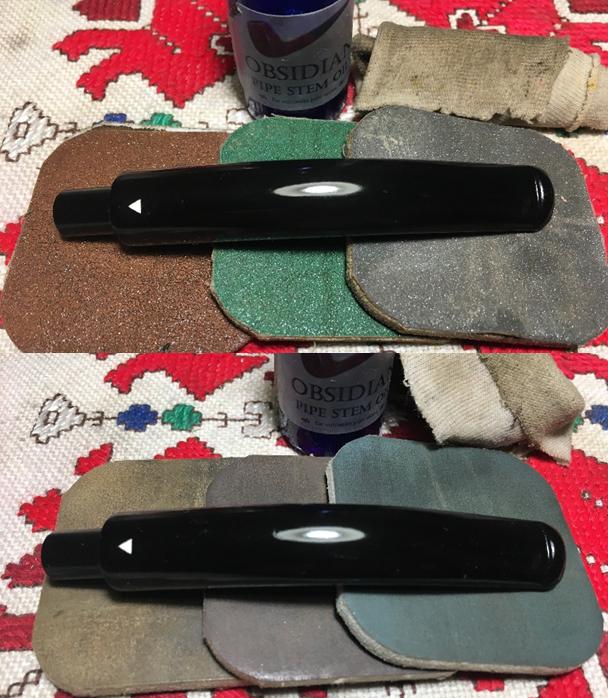
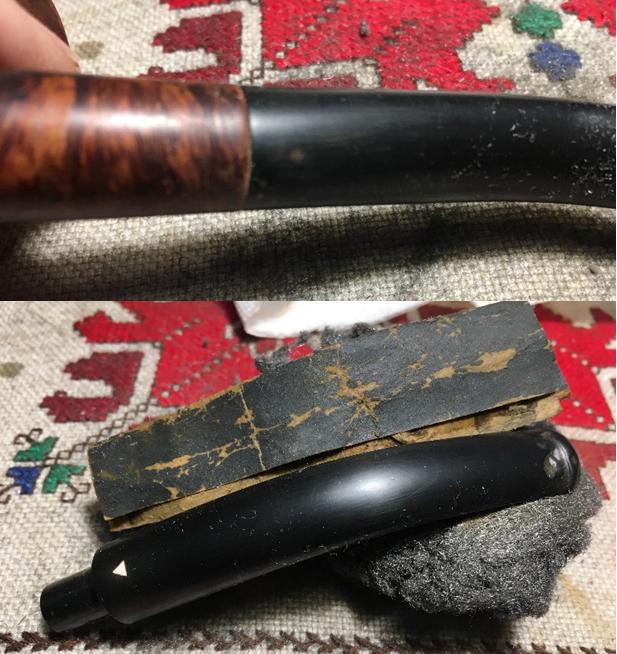
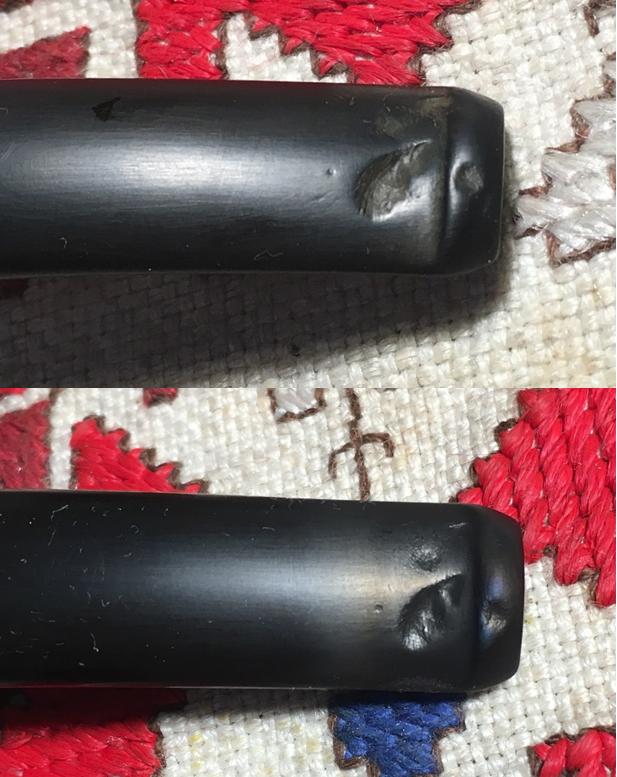
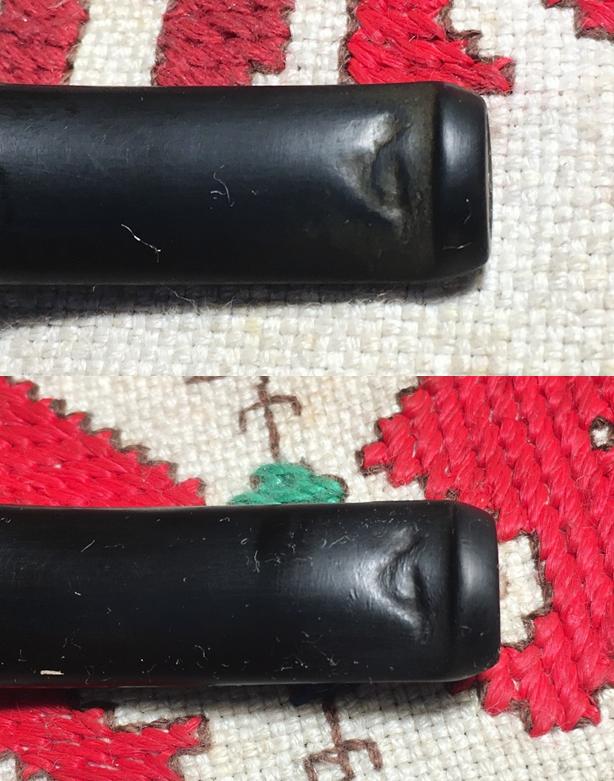
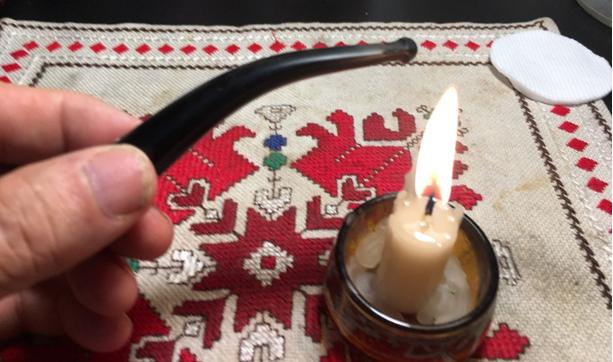
The recommissioning of this Lady’s Choice WDC Milano Swan Neck Billiard, begins by putting the stem into the OxiClean bath to work on the oxidation.  The second thing I do is toss the tubing that was hanging in the tenon.  If it belonged to this pipe originally, something is missing as the airway diameter of the tenon is much larger than the tubing.  On an interesting note, there is a patent number stamped on the tubular stinger.  I looked it up in Google patent search but found nothing that had bearing on pipes (PAT. NO. 5861 / IX – I think).Next, after spreading paper towel to catch the carbon dust, I use the Savinelli Pipe Knife to remove the little carbon left.  I follow with sanding the chamber walls with a 240 piece of sanding paper wrapped around a Sharpie Pen. I then turn to cleaning the internals of the stummel using cotton swabs and pipe cleaners wetted with isopropyl 95%.  There’s a good bit of tar and oils in the mortise.  After some time, I decide to switch to a Kosher Salt and alcohol soak to finish off the internal cleaning and to freshen the stummel.Next, using undiluted Murphy’s Oil Soap I work on the external surface of the stummel and the rim with cotton pads.  I also use a brass bristled brush on the rim.  After the scrub, I rinse the stummel in cool tap water.  The condition of the rim becomes more evident.  I think I will be able to remove the large divot at 4 o’clock in the second picture below by creating an internal bevel on the rim after I lightly top it. I start with by topping the stummel using 240 grit paper.  I follow by creating an internal and external bevel around the rim.  After a few rounds of working on the bevels, I realize that the internal rim divot is too much for the bevel to erase.  I switch gears and mix some briar dust with thick CA glue and create a putty and fill the divot on the rim.  I spray it with an accelerator to shorten the curing time.  With a needle file, I file down the briar dust patch material until it’s almost flush with the briar.  I then use 240 and 600 grit sanding paper to blend the patch and finish the bevel on the internal and external edges of the rim.I then sand the stummel using a medium grade sanding sponge followed by a light grade sanding sponge.  I remove the minor nicks and scratches on the bowl surface.I then proceed to sand the bowl using micromesh pads 1500 to 2400, then 3200 to 4000, then finally, 6000 to 12000.  The process brings out the beautiful horizontal grain flows from the front of the bowl downward to encompass the heel.  Bird’s eye grain is sprinkled nicely on the stummel sides. With the day ending, I continue the cleaning and refreshing of the stummel internals using a Kosher Salt and alcohol soak.  I create a wick to insert into the shank/mortise by twisting and stretching a cotton ball.  I take a straight stiff wire to help stuff it deeply into the mortise.  With the stummel secured in the egg carton I fill the bowl with Kosher Salt (which leaves no iodine after taste) and give it a shank to displace the salt.  I then, using a large eye-dropper, put isopropyl 95% into the bowl until it surfaces over the salt.  I put it aside for the night.  The next morning, the salt and alcohol soak did the job well.  The salt had turned dark and pulling the wick out – the same was true of it.  I toss the expended salt and wick in the waste and wipe the bowl out removing leftover salt.  Then returning to the use of cotton swabs and alcohol, in only a few plunges down the mortise, the internals are clean.  Pictures show the cleaning process. The stem was soaking in an OxiClean bath to raise the oxidation from the vulcanite.  I take stem out of the bath and the oxidation was raised showing the normal olive-green color.  I then take 600 grit sanding paper and wet sand the stem to remove the oxidation and to work on the serious teeth clenching damage. After the 600 grit sanding, I give the stem a stiff buffing from 0000 grade steel wool.  Interestingly, I noticed it earlier but thought that it would go away with the OxiClean and sanding.  I see a small lighter (reddish?) dot on the underside of the stem (second picture below), almost below the WDC triangle mark but just off center.  I’m not expecting a ‘manmade’ mark there so I assume it’s a discoloration in the vulcanite.  I take a little 240 grit paper and go after it, but it remains for now.  Pictures show oxidation and post-oxidation sanding. The button area is in bad shape.  The former steward was a clencher par excellence.  Neither upper nor lower bit areas were spared.  The upper has deep bites and a ‘wedgy’ dent on the button lip.  The lower button lip is spared, but there is a ‘go to’ clench handle which is distinct.  I take pictures to mark the start. Focusing first on the topside, I use the heating method to see if I might hopefully tease out the concave dents.  Then the bottom-side.  Vulcanite, a form of rubber, amazingly will seek out its original disposition when heated as the rubber expands with the heat.  I light a candle and pass the bit-end of the stem over the flame in back and forth style.  I try not to cook the vulcanite, but simply heat it strategically.  After some time, using heat on upper and then lower, I take pictures to compare.  You can see the closing of the dents in the picture comparisons below.  I think there is a beneficial change, but there are still dents to repair.  Pictures 1 and 2 are before heating and after for the upper side.  Pictures 3 and 4 of the lower side – before heating and after.  I first use 240 grit paper on the upper bit.  I sand out as much as possible all the smaller dents. Through the years of clenching, the button lip has lost its distinction so using a flat needle file, I reintroduce the lip edge and then follow by sanding with 240 to erase file tracks and shape more.  I’m wondering if I can avoid having to rebuild the button lip.  I gently sand the upper button lip as well.  The tooth grip has turned into only a small dimple – good movement.  I sand gently to remove the dimple because I don’t want to lose too much button real estate.  The top looks great.  The only patch needed is the remaining large dent.  The topside filing, sanding and shaping progression is pictured below. Turning to the lower bit, again I use 240 grit sanding paper to sand out what can be removed and blended by sanding. The dent/clench configuration was minimized by sanding but I need to patch what remains of the surface damage.To prep the vulcanite for the patch work, I wipe down the upper and lower bit with a cotton pad wetted with alcohol.  I mix activated charcoal powder with Hot Stuff Special ‘T’ CA Instant Glue (extra thick) to form a putty which is like molasses in viscosity to apply to the damaged areas.  I use a tooth pick as my trowel and tamper and I apply more putty than needed – the patch mound allows me to file down gently to the surface of the stem to achieve a better blended patch.  I apply putty to the upper bit, and a dab on the small, remaining dimple on the button lip.  I spray it with accelerator to cure the putty.  I then do the same for the needed area on the lower bit.  The pictures show the patch progress. Using a flat needle file, I begin filing the patch mound on the upper bit until I’m very close to the vulcanite surface.  With the patch expanding closely to the button lip, I also utilize the flat needle file to separate and define the button lip.  When close to the surface, I switch to 240 grit paper to bring the patch flush with the vulcanite surface.  After I’ve blended as far as 240 paper will take me, I switch to 600 grit paper and then finally, 0000 steel wool which fine tunes the blending and each in turn erases the former’s scratch marks.  I take pictures along the way to document progress. At this point, not surprised, I see very small air pockets exposed on the patch area (see picture above).  Taking Hot Stuff CA Glue, thinner than the ‘T’ I used for the patch, I dip a toothpick into the glue opening to give a coat of CA glue on the toothpick.  With this wet glue, I paint the patch with a thin glaze of glue which fills the air pockets.  I give the glaze of glue a quick spray of accelerator to cure it.  I then take 600 grit paper followed by 0000 steel wool to blend and complete the upper bit patch work.  The micromesh sanding later will further blend the patches.Now, to the lower bit patch.  As before, I use the flat needle file initially, then 240, 600 and then 0000 grade steel wool working toward the vulcanite surface then blending.  Again, a few miniscule air pockets are revealed in the patch, and I repeat the same procedure as on the upper patch. Having been so focused on the button repairs, I almost forget (again) to clean the stem internal airway.  With pipe cleaners dipped in alcohol, I do that and it does not take long to clean.Putting the stem aside, I pick up the stummel.  I will use Fiebing’s Light Brown Leather Dye to add some unifying hues on this very attractive WDC Milano’s grain.  I like the lighter motif which is what the Milano’s picture included above courtesy of Doug Valitchka.  I wipe the stummel with a cotton pad wetted with isopropyl 95% to make sure it’s clean.  I then warm the stummel with the heat gun after inserting a whittled cork into the shank to serve as a handle.  After the bowl is warmed, helping the briar more effectively to absorb the dye, I apply the dye liberally using a folded over pipe cleaner.  After the stummel is covered, I fire the dye with a lit candle which ignites the alcohol in the dye and sets the pigment in the grain.  After a few minutes, I repeat the procedure concluding with firing.  I then put the stummel aside to rest. While the stummel rests, the stem is ready for the micromesh pad cycle.  I wet sand with pads 1500 to 2400, then dry sand with pads 3200 to 4000 then 6000 to 12000.  After each cycle, I apply Obsidian Oil to rejuvenate the vulcanite, and my how it likes it!  The pop of a newly restored stem is wonderful to behold! The next day, I’m home from work, and it’s time to ‘unwrap’ the stained and fired bowl.  I mount the felt buffing wheel on the Dremel, which provides more abrasion to the surface, helping to remove the crust.  I used Tripoli compound with the Dremel set at 20% speed – slow because I don’t want to generate too much friction. Using the Dremel’s adjustment wrench, I purge the old compound off the felt wheel to clean and soften it.  I work the felt buffing wheel applying the abrasive Tripoli compound over the stummel.  I am not able to reach the bend curve between the shank and the bowl with the felt wheel.  I change to a cotton cloth buffing wheel again, only dedicated to Tripoli compound.  Each compound has its own dedicated Dremel buffing wheels.  With the cotton cloth wheel, I’m able to reach into the harder to get places.  I run the wheel over the entire surface.  I take a picture showing the completion of the ‘unwrapping’.  One of the helpful aspects of aniline, or alcohol-based dyes, is the ability to wipe it with alcohol to lighten the application as well as blend the dye.  I want to lighten this WDC Milano so I wipe it down with cotton pad wetted with alcohol.  I take a picture before and after.  Immediately after wiping down the surface, the surface clouds with the alcohol.  Then I remove the alcohol wipe clouding effect with Blue Diamond compound, with a cotton cloth wheel mounted on the Dremel at 40% speed.  Following the Blue Diamond application, the true ‘after’ picture is taken.  I also reunite the stem with the stummel for the Blue Diamond buffing.  Well, the third picture below represents the lighter ‘after’ picture, but I don’t believe the picture does justice to what my eyes are seeing.  The lightening and blending of the surface hue is showing off the grains quite nicely.  I’m liking it!  I think this, “Lady’s Choice” is going to like her choice too! I give the pipe a hand buffing with a felt cloth, not so much to buff up the shine at this point but to remove the compound dust from the surface.  The compounds are abrasives and the dust is the residue left over.  After this, I mount the Dremel with a dedicated cotton cloth buffing wheel, leaving the speed at 40%, I apply the carnauba wax evenly over the stummel and stem.  I finish with a hefty hand buffing of the pipe with a microfiber cloth to raise the shine more.

This WDC Milano Swan Neck Billiard is a lady’s choice.  I hope she likes it.  It is an elegant pipe and showcases beautiful flowing grain.  I’m pleased with the button repair that blended very well – without knowing it’s there, most people would not see it.  The repaired rim also looks good – forming the beginning of the long elegant lines carried through to the swan neck stem.  Nice.  Each pipe I restore benefits the work we do with the Daughters of Bulgaria – helping women and girls who have been sexually exploited and trafficked.  For more information about this and pipes I have available, check out the store at The Pipe Steward.  Thanks for joining me! 

Cleaning up an Unusual Petite WDC Monitor Disk Pipe


Blog by Steve Laug

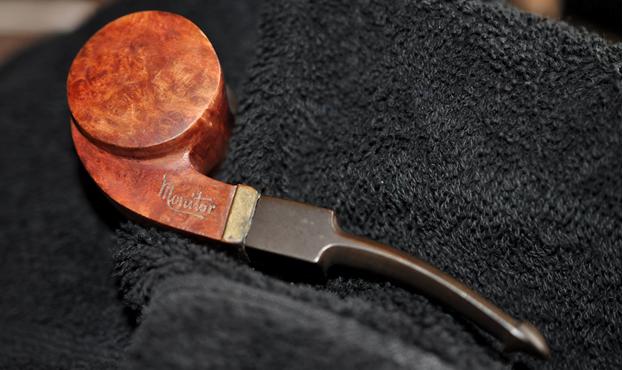
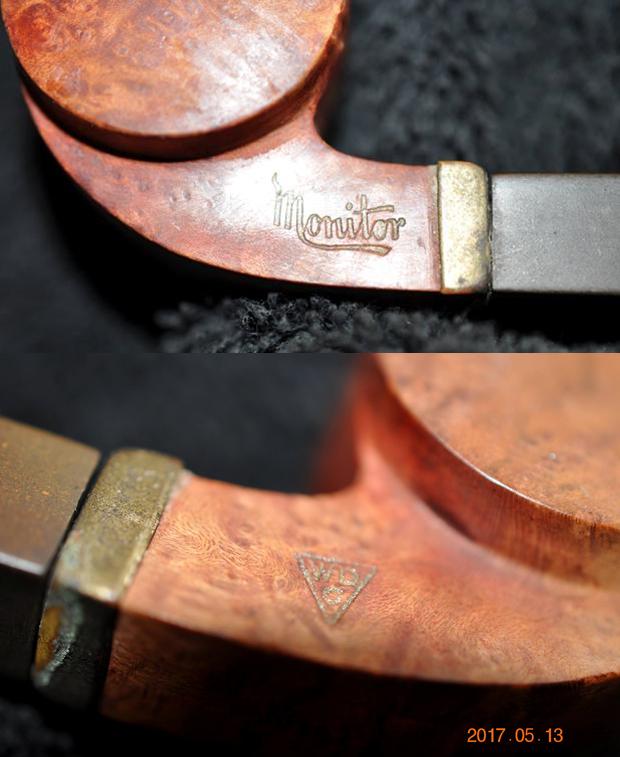
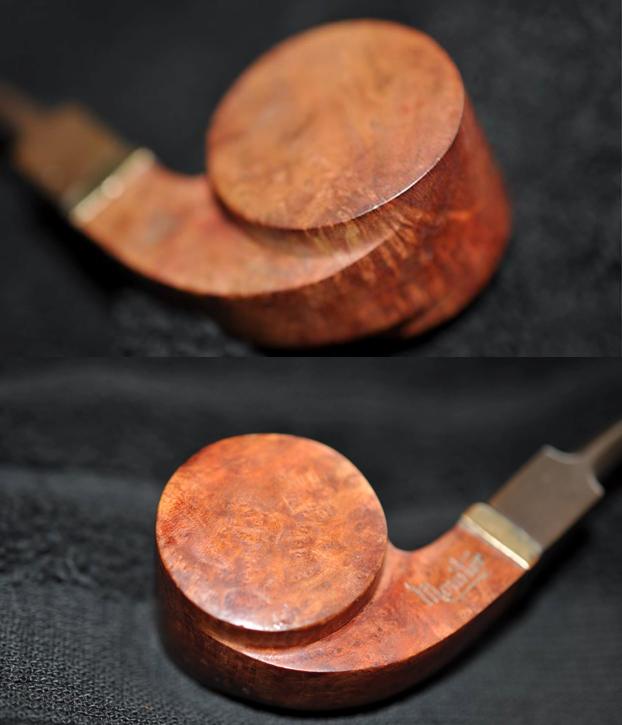
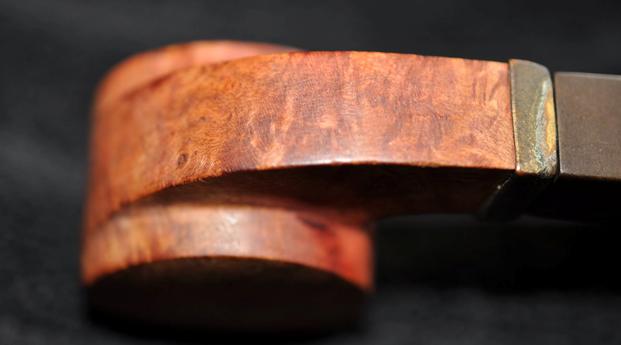
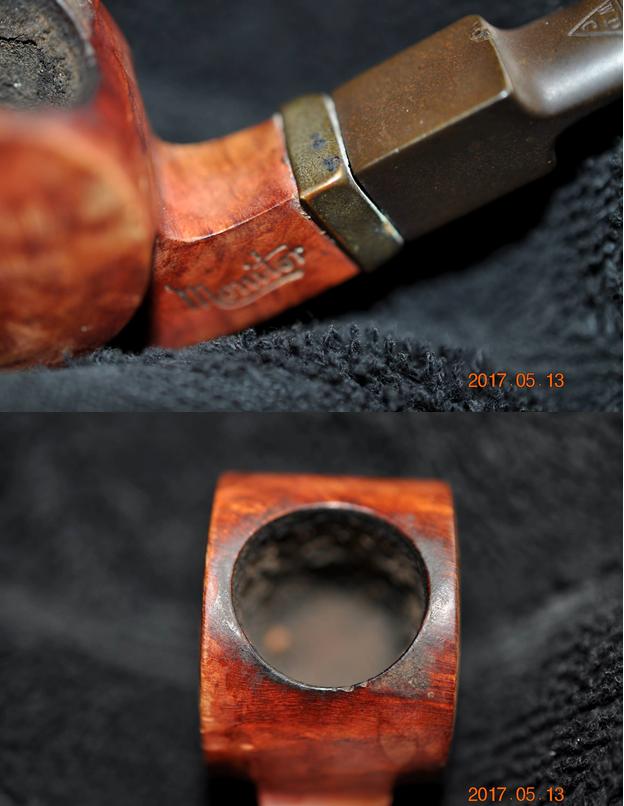
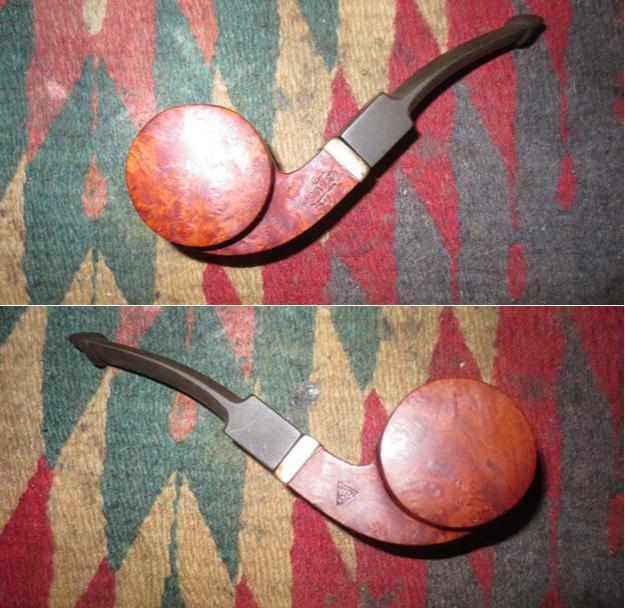
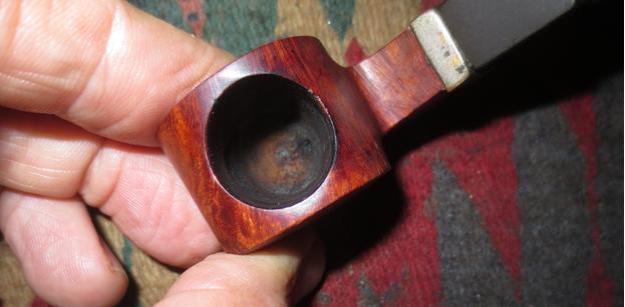
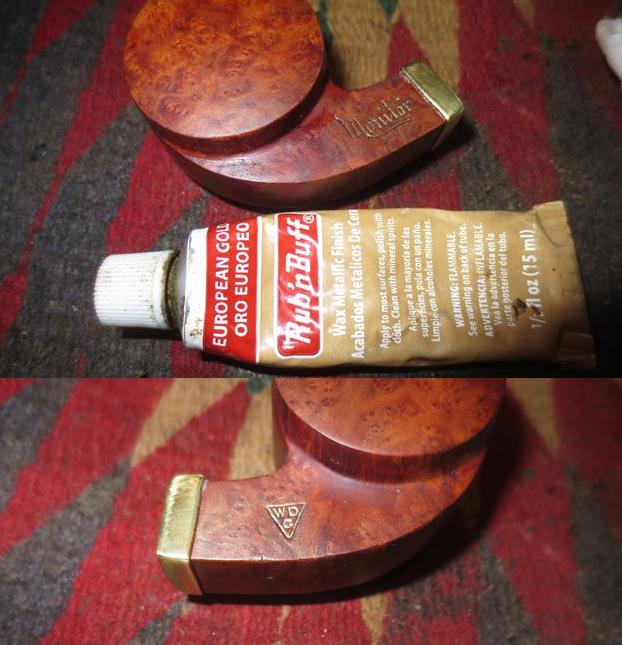
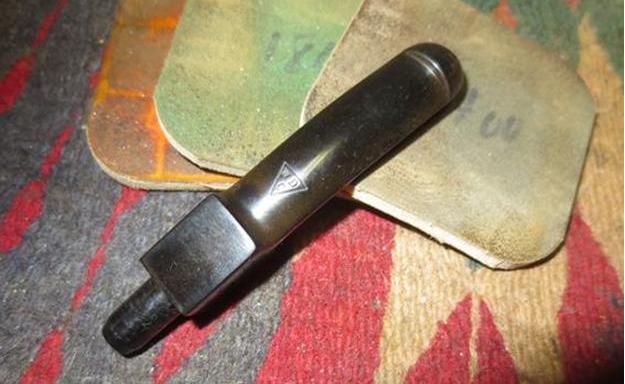
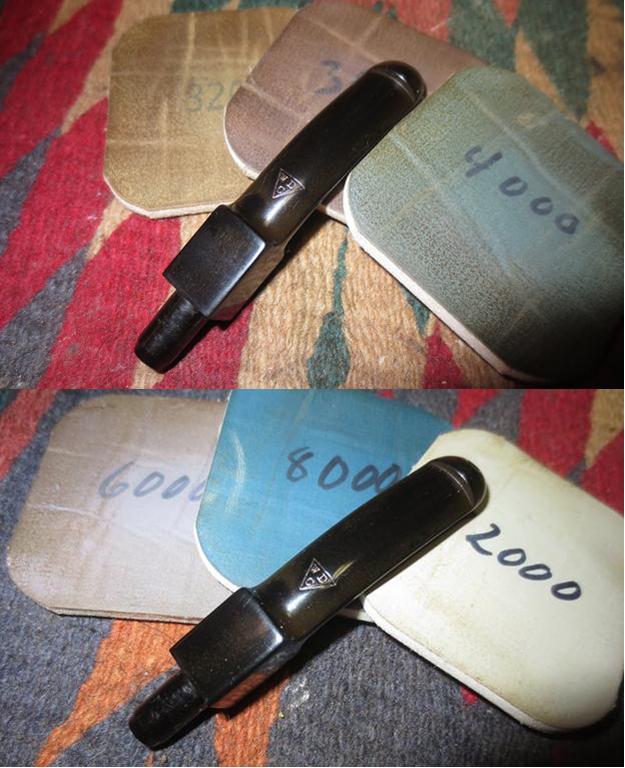
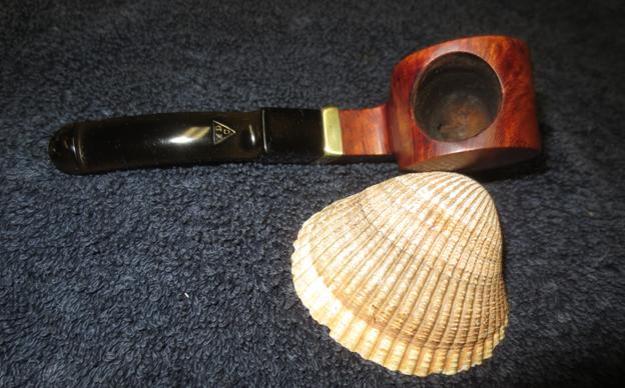
This petite and unusual disk shaped pipe came to me in the lot my brother and I found on our virtual pipe hunt in Montana (https://rebornpipes.com/2017/04/26/a-virtual-pipe-hunt-a-new-way-to-experience-the-joy-of-a-pipe-hunt/). It was in the same lot as the older C.P.F. and WDC pipes that I have been working on. I am guessing it is from the same era as the rest – late 1880s through early 1890s – but I am not positive. I can find nothing on the WDC Monitor in my pamphlets, books or online. The dimensions give you a picture of the size – length 4 ½ inches, height 1 3/8 inches, diameter of the bowl 1 inch, diameter of the chamber ½ inch. I have also included a photo of the pipe next to a Canadian Toonie ($2 coin, same size as the American $2 coin) for you to get an idea of the size of the bowl (the second photo was taken after I had begun the cleanup on the stem and band).The pipe was in decent condition. The finish was worn and dirty. There was a cake in the bowl and the inner edge of the rim was damage slightly on the back edge. There was lava on the top of the rim but it looked like it was not too heavy and it did not appear that there was burn damage. There was one fill/sandpit on the front side of the bowl near the top. The stem was like the WDC Wellington faux P-lip with the airway coming out at the end rather than on top. It was oxidized and dirty. There were some light scratches and chatter on the stem but it was in decent shape. The brass band was oxidized and dirty with some heavy buildup on the edges where it met the briar. It was also loose on the shank. My brother took quite a few photos to show the look of the pipe. It really is an interesting shape and one that I have not seen in this aged pipe before.The stamping on the shank of the pipe had some faded gold leaf and read Monitor in script and underlined on the left side and WDC in a triangle on the right side. The stamping was very sharp with a little shallowness on the capital M of Monitor.The grain on the bowl was very nice and the carver had placed the shape on the grain to highlight the variety of grain – birdseye, cross grain and flame. It is a good looking piece of briar and I could only find the one fill. The next two photos show the bowl. Notice not only the cake and the lava overflow on the rim but also the small nicks on the back, inner edge of the rim in both photos.The stem was oxidized as noted above and had scratching but did not have any tooth marks or chatter. The airway in the button was still round and did not show signs of damage. The WDC triangle logo was stamped on the top side of the stem behind the saddle and on the underside of the stem it was stamped SOLID RUBBER. The Solid Rubber stamping was fainter than the WDC logo on the top side of the stem with the word Rubber fading toward the end.Jeff thoroughly cleaned the pipe before he sent it to me. He reamed the bowl and scrubbed out the mortise and the airway in the shank and stem with alcohol, cotton swabs and pipe cleaners. He scrubbed the externals of the briar with Murphy’s Oil Soap and put the stem in a bath of Oxyclean to bring the oxidation to the surface and soften it. The next photos show what it looked like when it arrived in Vancouver. He did a great job cleaning up the rim and other than the small nicks on the back side of the inner edge it looked flawless.The oxidation on the stem came to the surface after the Oxyclean soak and it had that “wonderful” brown tint that would need to be removed.I wiped the bowl down with a soft cotton pad and a little alcohol to remove any dust or debris left behind by the packing material and dried it off. I used some Rub’n Buff European Gold to touch up the stamping on both sides of the shank. I reglued the band with a white all purpose glue and polished it with micromesh sanding pads.I used a folded piece of 220 grit sandpaper to work over the damage to the rim edge and it did not take too much work to remove it without damaging the shape of the rim or the bowl.I polished the rim top and rim edge with micromesh sanding pads to smooth out the remaining scratch marks from the sandpaper. I hand buffed the bowl a microfiber cloth and took the next four photos to show where I was at with the pipe at this point. I rubbed the stem down with Brebbia Stem Polish to remove as much of the oxidation as I could. I worked on it with 1500-2400 grit micromesh sanding pads. I took the next photo to show the stem at this point. There was still oxidation that shows up under the bright flash.I worked on the stem some more with 400 grit wet dry sandpaper to further remove the oxidation and when I was happy with the result I used some Rub ‘n Buff European Gold to fill in the WDC Triangle logo on the top of the stem behind the saddle. Like its name you put the gold on the place you want it to be and rub it off. The next two photos show the process. The excess gold turned the area around the stamping gold as well. I  would need to buff it off and finish the polishing with micromesh pads.I buffed the stem with red Tripoli to polish it further and remove some of the excess gold on the stem and saddle. I polished it with 3200-4000 grit micromesh pads and rubbed it down with Obsidian Oil.I buffed the pipe and stem with Blue Diamond on the buffing wheel to polish it more. I gave the bowl and stem multiple coats of carnauba wax. I buffed it with a clean buffing pad to raise the shine and hand buffed it with a microfiber cloth to deepen the shine. The finished pipe is shown in the photos below. It is a nice piece of briar and a unique old timer that is over a hundred and twenty years old. In the photos the flash revealed yet more oxidation :(. This would have to be polished out later. Off to work now. Thanks for walking through the process with me.
Loving the old WDC Campaign Pipe


Blog by Steve Laug

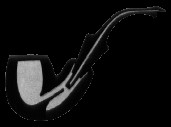
Another of the pipes found during the Virtual Pipe Hunt in Montana was one stamped on the lower left side of the out bowl with the WDC triangle logo over the word CAMPAIGN. There was no other stamping on the pipe. The bowl was like a calabash bowl and screwed into the outer bowl. The entirety was made out of briar. The grain on the bowl and rim top is quite stunning with a lot of birdseye grain on the sides and mixed grain over the rest of the bowl. There was a nickel band on the shank but there was no shank stamping. The band was stamped PLATED NICKEL. The stem was lightly oxidized and the fit against the end of the shank was not tight. There was a gap caused by what I presumed was the tars built up in the mortise area.My brother, Jeff took quite a few photos of the unique old pipe because it really was a beauty. There would need to be some significant cleanup work but the grain and the shape were both unique and quite stunning. The bowl was thickly caked and a thick buildup of tars and oils had flowed over to the top of the rim. The bowl had twin airways in the bottom of the calabash cup directing airflow into the external bowl. The airway in the outer bowl enters the shank at the top of the bowl. Smoke would have been drawn from the calabash cup into the interior of the outer bowl and up the back side to the airway into the shank and through that to the stem and button into the mouth of the smoker. I did a bit of digging online and found a brief interchange on a Google group. Here is the link if you would like to read it in context and in its entirety. It has some helpful information regarding the brand and the particular pipe that I wanted to know more about. https://groups.google.com/forum/#!topic/alt.smokers.pipes/kpkpd3zXoiwExcerpt from pipedia.org

To a request for information regarding the WDC Campaign pipe on the Google Group there was quite a long string of answers. I am quoting two of those in full…
Respondent 1: While I can’t say anything about this pipe specifically, I have a hazy memory of that shape listed in a book about pipes; (I may be totally misremembering this, but here goes) the shape being called the “Dawes”, named after Harding’s Vice President?  Anyone else remember this? Sounds like an interesting pipe, whatever it’s called…

Respondent 2: From Weber’s Guide to Pipes: “The Dawes Pipe (more correctly named the Lyons, after its inventor, Charles Herbert Lyons) happened to be the favorite pipe of General Charles G. Dawes, Vice-President of the USA from 1925 to 1929. General Dawes smoked the curious pipe incessantly and it became popularly known as the Dawes Underslung, because the shank joined the bowl near its rim.”

I looked on Pipedia, https://pipedia.org/wiki/William_Demuth_Company and I quote in part from the article on the William Demuth Company.

The Demuth Company is probably well known for the famous trademark, WDC in an inverted equilateral triangle. William commissioned the figurative meerschaum Presidential series, 29 precision-carved likenesses of John Adams, the second president of the United States (1797-1801) to Herbert Hoover, the 30th president (1929-1933), and “Columbus Landing in America,” a 32-inch-long centennial meerschaum masterpiece that took two years to complete and was exhibited at the World’s Columbian Exposition in Chicago in 1893.

The Presidential series was the result of Demuth’s friendship with President James A. Garfield, a connoisseur of meerschaum pipes. Demuth presented two pipes to Garfield at his inauguration in 1881, one in his likeness, the other in the likeness of the President’s wife. Later, Demuth arranged for another figurative matching the others to be added to the collection as each new president acceded to the White House, terminating with President Hoover.
From the above information I learned some significant details about the Campaign pipe. It was invented by Charles Herbert Lyons and was the favourite pipe of General Charles G. Dawes who was the Vice President of the USA under President Harding from 1925-1929. It fits nicely into that period when WDC was having Presidential Pipes commissioned ending in 1933. That places this old pipe in the time period between the late 1920s and early 1930s.

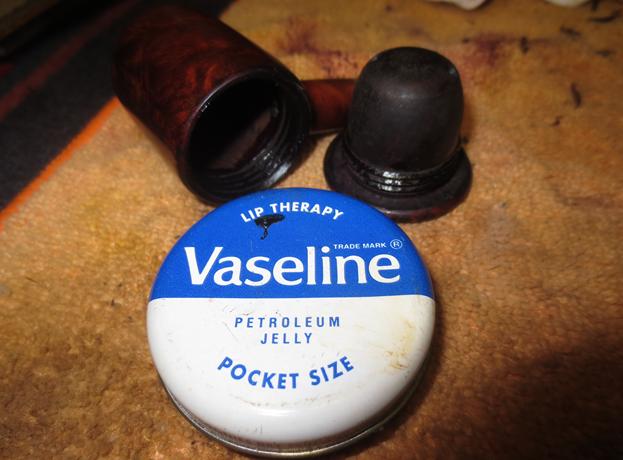
My brother took the following photos of the pipe to show what it looked like when it arrived in Idaho before he started his cleanup work. The cake in the calabash bowl was quite thick and the overflow onto the rim top was also thick. The finish while pretty decent was soiled and spotty with buildup and dirt. Jeff unscrewed the briar calabash bowl insert and removed it from outer bowl. The threads on both looked to be in very good condition. The out bowl was dirty and had a lot of dried tobacco oils and juices along the walls and bottom. The underside of the calabash bowl was dark and dirty with dried oils. It would need to be cleaned up. The next two photos show the stamping on the left side of the outer bowl. It is clearly stamped with the WDC logo in the inverted triangle and under that reads CAMPAIGN. In these photos you can see the beautiful grain of the briar. Even the bottom of the outer bowl has some nice grain. The next two photos show the wear on the finish of the shank and the oxidation on the nickel band on the shank. The band is stamped NICKEL PLATED. The stem does not sit tight against the shank and I am assuming that there is a lot of buildup in the mortise that is keeping it from seating properly.The stem was oxidized and there was some were to the sharp edge of the button. There were some light tooth marks on the surface of the button on both sides.My brother did his usual masterful cleanup on the pipe. When I received it things were much cleaner than the photos above. He had reamed back the calabash bowl to bare briar. He had scrubbed the rim top off and was able to remove the lava coat. He scrubbed the internals of the outer bowl as well. The briar had been scrubbed with Murphy’s Oil Soap and rinsed to remove all of the grime. The oxidation on the band was better than in the above photos. The stem was oxidized but it now sat properly in the mortise. I took the following photos before I started my final cleanup and restoration. I took some close up photos of the condition of the bowl and rim top. It looked far better than before his cleanup work. The stem also looked really good other than the oxidation. I took the calabash bowl out of the outer bowl and took some photos of the various parts of the pipe. It is an interesting piece of pipe history and it is in excellent condition for a pipe of its age. I did a bit more scrubbing of the internals to remove any remaining oils and tars. I used pipe cleaners, cotton swabs and alcohol to clean out the mortise and the airway in the shank and the stem. I scrubbed out the inside of the outer bowl and the inner bowl with alcohol and cotton swabs. I pushed pipe cleaners through the two airholes in the bottom of the calabash bowl. I sanded the bottom of the internal bowl to remove the last of the buildup and wiped it down with alcohol on a cotton pad. I sanded the oxidized stem and reshaped the edge of the button with 220 grit sandpaper to clean things up and bring it back to the original black vulcanite. I scrubbed it with some Before & After Stem Deoxidizer to remove the loosened oxidation. I wiped off the scrub and resanded the stem to remove the remaining oxidation. The photos below show the progress of the stem cleanup. I used a folded piece of 220 sandpaper to smooth out the inner edge of the calabash bowl and remove the remaining debris along the edge. I sanded the inside of the bowl to clean it up as well. I polished the rim top with micromesh sanding pads – wet sanding with 1500-2400 grit pads and dry sanding it with 3200-12000 grit pads. I wiped the rim top down with a damp cloth to remove the sanding debris. The photos show the progress of the polishing. I polished the outer bowl with micromesh sanding pads – wet sanding with 1500-2400 grit pads and dry sanding it with 3200-12000 grit pads. I wiped the bowl with a damp cloth to remove the sanding debris. The photos show the progress of the polishing. To preserve the threads on the calabash bowl and the outer bowl I use a small dab of Vaseline to lubricate both. I rub it into the threads by hand and wipe it down lightly with a cotton pad. I screw the two parts together and find that it removes friction and makes the cap turn easily into the outer bowl. I hand buffed the bowl with a microfibre cloth, polished the nickel band with a jeweler’s cloth and took photos of the pipe at this point in the process. I polished the stem with micromesh sanding pads – wet sanding with 1500-2400 grit pads and dry sanding it with 3200-12000 grit pads. I wiped the stem down with Obsidian Oil to bring life back to the vulcanite and protect it. The photos show the progress of the polishing. I buffed the stem with red Tripoli to polish out the last oxidation and scratching. I buffed the pipe – stem and bowl – with Blue Diamond on buffing wheel and gave it multiple coats of carnauba wax. I buffed it with a clean buffing pad to raise a shine. I hand buffed it with a microfiber cloth to deepen the shine. The finished pipe is shown in the photos below. One thing that shows through in the photos is some red along the crease of the button – I am pretty sure it is red Tripoli that is left behind from the initial buffing of the stem. After I took the photos I wiped that area down with some alcohol on a cotton pad. It removed the red Tripoli around the stem. It looks far better now that it is finished. Thanks for walking through this refurbish with me.


Restoring a piece of WDC Pipe History – A Meerschaum Bulldog


Blog by Steve Laug

When I was visiting my brother in Idaho, we called an eBay seller he had bought from before. We were looking for the Koolsmoke base and in the process of asking and buying that from her she also talked to us about other pipes that she had for sale. I love older WDC pipes so when she said she had a WDC Bulldog that was in a case that she would sell to me I was hooked. Then she said it was Meerschaum and that the case was in excellent condition. She said it was red leather-covered and stamped Genuine Meerschaum over Real Amber on the front of the case and Made in Austria on the back side of the case.  We asked her to send us some photos in an email and when she did I bought it. It was a beauty. I loved the shape, the condition the amber stem, actually just about everything about the pipe. Here are pics of the case when it arrived. I opened the case and took a photo of the WDC Triangle logo on the inside cover. The case was in excellent condition both inside and outside.I took a photo of the pipe before I removed it from the case. It looked really good sitting in the opened case. The shape is one of my favourites and the amber stem appeared to be in good shape at this point.I took the pipe out of the case and took a few photos of it to show the general condition of the pipe when I received it. I was amazed that it was in as good condition as it was.  I am guessing that was made in the late 1890’s through the early 1900’s. The bowl had begun to show some colour. There were some nicks and scratches on the sides and also on the stem itself. The rim top was tarred with overflow from the cake in the bowl. The stem was in good shape and showed tooth marks and chatter on the end of the stem on both sides near the button. It had a single hole orific style button. The stem aligned perfectly to the shank. That surprised me as most of the pipes of this era I have worked on had threaded bone tenons and either the internal threads on the shank or those on the bone tenon itself were worn and the stems were over turned. When I took it off the shank there was a small paper washer that had been carefully fitted to the shape of the stem and shank. That is why it aligned. I removed the washer and put the stem back on to find that it was indeed overturned.I scraped out the cake in the bowl with a Savinelli Fitsall Pipe Knife. I wanted to remove all of the cake so I carefully took it back to the meerschaum.I worked on the tarry build up on the rim with 1500-2400 grit micromesh sanding pads. I wiped rim top with a damp cotton pad repeatedly during the process of sanding it. I was able to remove all of the cake on the rim. There was some darkening around the outer edge of the rim and on the left side there was a small nick in the edge.With the rim cleaned I polished the entire bowl with micromesh sanding pads. I dry sanded it with 1500-12000 grit pads to polish the meerschaum and remove some of the finer scratches in the surface of the meerschaum. I left the larger ones and merely smooth out around them. To me these scratches give character and are an integral part of the story of the pipe. The photos below tell the story of the process. With the externals cleaned and polished I turned to the internals. I scrubbed out the shank and mortise with cotton swabs and alcohol. I cleaned the airway in the shank and the stem with pipe cleaners and alcohol. I scrubbed until the internals were clean.I moved on to work on the tooth marks and chatter on the stem. I sanded the stem with 220 grit sandpaper to minimize the scratches and nicks on the sides and angles of the stem.  I sanded out the tooth marks and chatter with little trouble as none of them were deep. That is one beauty of amber as a stem material. It is hard to dent!With the marks removed I decided to address the overturned stem before I polished the stem with micromesh. I have learned a good trick to correct the overturn on these bone tenons and threaded shanks. I have never read about it anywhere but it works really well. I used a clear nail polish, which dries hard and is neutral, to coat the threads on the tenon and the inside of the shank. I carefully apply the polish to the threads and set it aside to dry. It generally takes two or more coats to build up the threads enough to correct the overturn. I painted it the first time, let it dry and turned it on to the shank. It was better but needed a second coat. I gave it a second coat, let it dry and turned it on to the shank. It was a perfect fit. The alignment was spot on.I polished the stem with micromesh sanding pads – wet sanding with 1500-2400 grit pads and dry sanding with 3200-12000 grit pads. I wiped the amber down with a damp cotton pad between each different pad to remove the dust and check on the polishing. It did not take too long before the stem began to glow again. I love the look of a polished amber stem. This particular stem had some really nice patterns in the amber. The underside near the tenon was almost a birdseye pattern. I put the stem back in place in the shank. Things lined up perfectly. I gave it another quick polish with the 12000 grit micromesh pad. I hand waxed it with Conservator’s Wax because it is a microcrystalline polish and it really works well on meerschaum and amber. I rubbed the wax into the finish and buffed the pipe by hand with a microfibre cloth. The finished pipe is shown in the photos below. The meerschaum bowl has a rich glow to it and the amber stem looks really good. The combination is really nice with the amber and the meerschaum reflecting off of each other. I really like the looks of this old timer. It will more than likely remain in the collection with some of my other old timers. Thanks for looking.
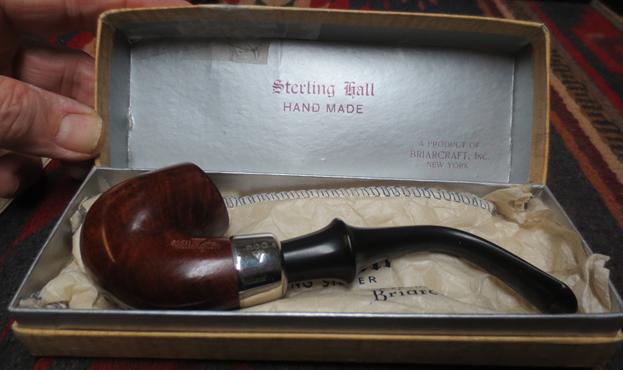
When he opened the Sterling Hall Hand Made Pipe box I did not see what I expected


Blog by Steve Laug

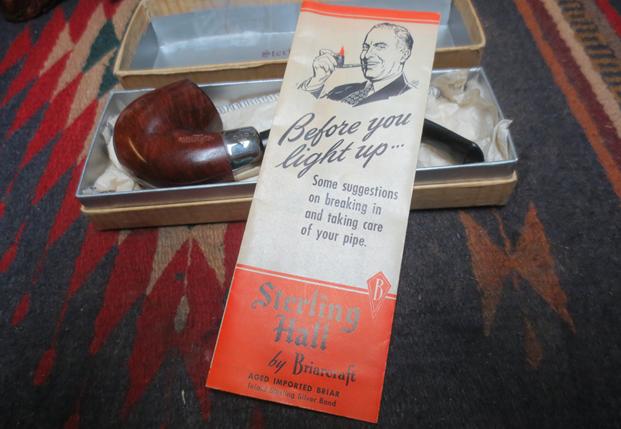
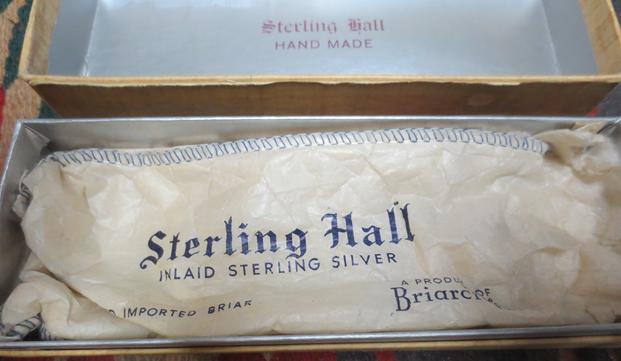
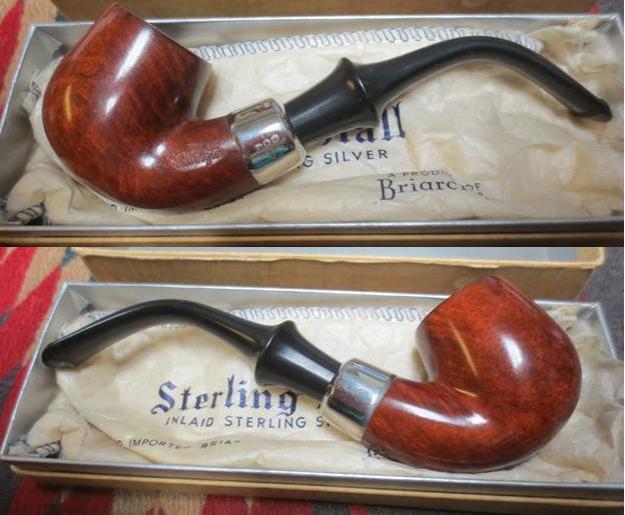
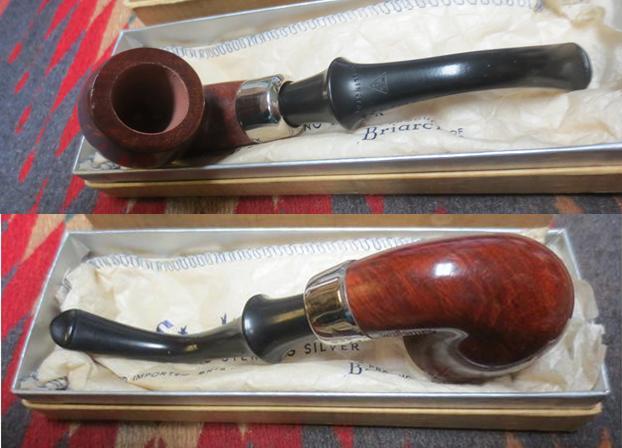
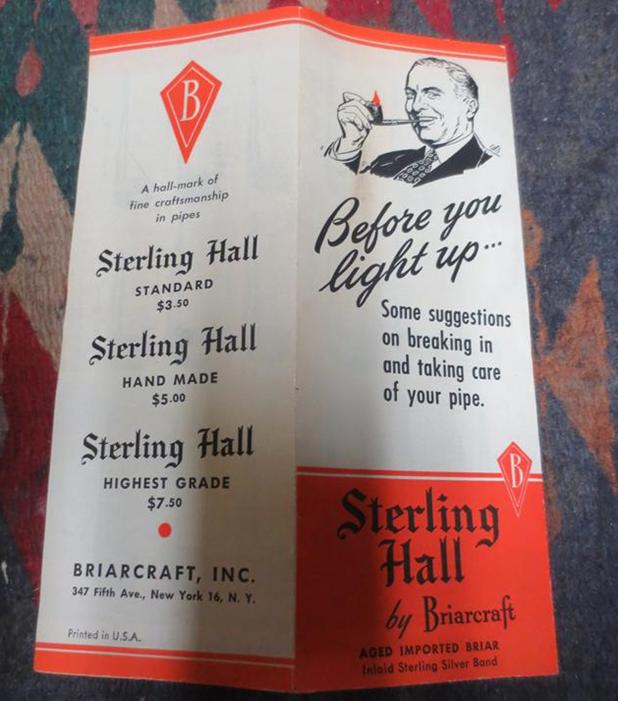
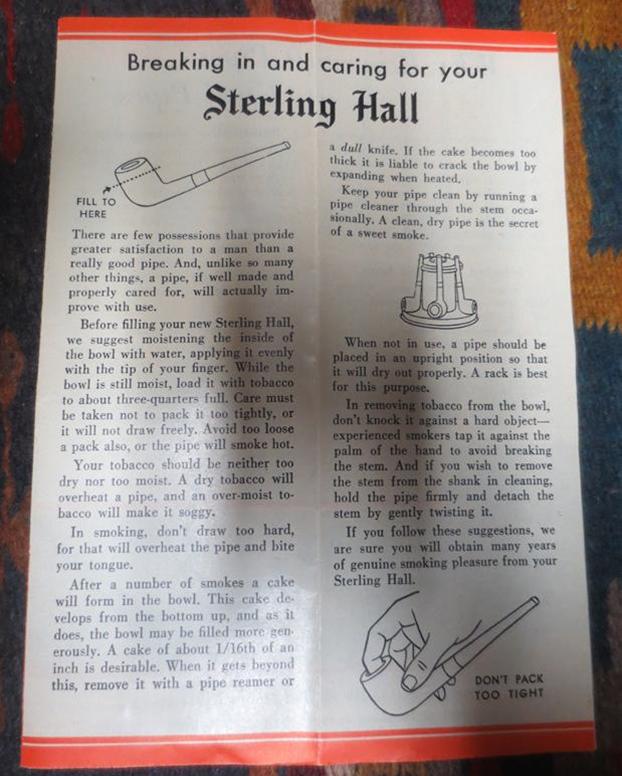
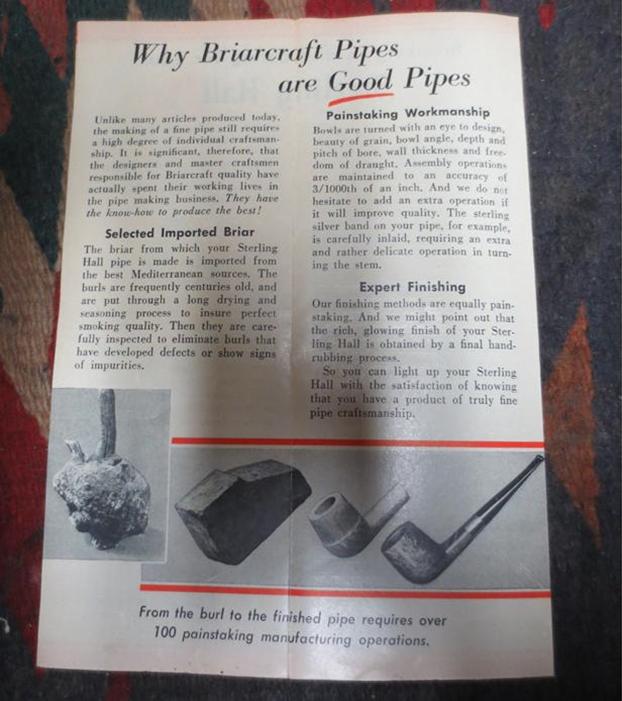
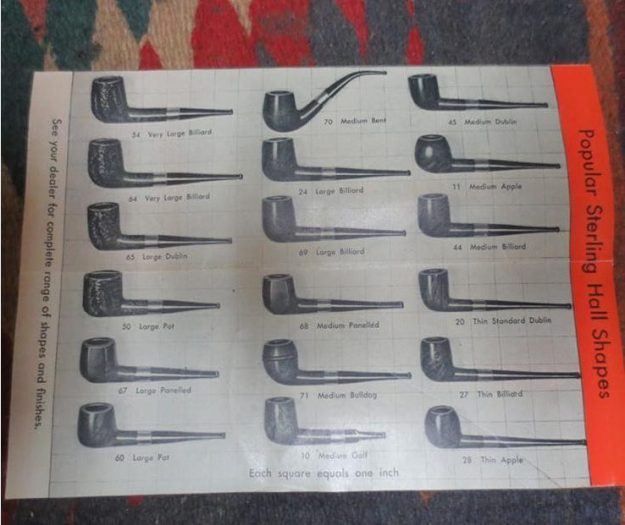
Sometimes you are hunting for pipes in antique shops, antique malls or even thrift shops when you come on a box like the one below. I don’t know about you but my first reaction when I see a box like this one is to walk away. I have found that they are often empty or at best holding worn out pipe that is cracked, chewed or both and certainly one I don’t want. Well I have tried to instill that habit in my brother but he is a better hunter than me! He opens the boxes to see what is in them. Now, understand, I used to do that but I have gotten jaded over the years of finding next to nothing or worse in these old pipe boxes. He opened this one and found something he was not expecting. When he showed me the box on Facetime I fully expected it to be useless even though he assured me I would be surprised.sh1He opened the box and showed me what was inside – well it was not a Sterling Hall Hand Made nor was it a useless worn out pipe. Instead it was a WDC Wellington that through the camera looked remarkably good. The finish looked good, the stem looked good, the nickel ferrule looked good. I was hooked. Okay so it is a Wellington I said – we have cleaned up quite a few of these system style pipes so I was still not that impressed. It so far appeared to be a nice looking old pipe in the wrong box. Heck, there was even a Sterling Hall pipe sock in the box along with the pamphlet included with every Sterling Hall pipe.sh2 sh3 sh4He just laughed and held the pipe up to the camera and rotated it from side to side so I could see the grain and the stem. It looked really good. The grain on both sides was nice and from the front and the back it also looked good. The stem was shiny black and bore the WDC in a triangle under the Wellington logo on the topside. In fact it appeared to be almost flawless but I still felt that there was something that he was not telling me. What was it with this Wellington pipe he had found in the Sterling Hall box?sh5Finally he turned the pipe bowl toward me. The bowl was unsmoked! It was unsmoked and clean! It was not worn or damaged or…. You know that feeling when you are looking at a New Old Stock (NOS) pipe? Yes he had found a new unsmoked old stock WDC Wellington in flawless condition. The fact that it had been kept in the wrong box had probably preserved it. There was no oxidation on the stem and it was like the day it had left the WDC factory.sh6I honestly could not believe my eyes. I don’t think I have ever seen a unsmoked new Wellington in my life. It was a first for me and I have to guess that it will probably be the only one that I ever see. He shipped it to me in the last shipment of pipes and I took the pictures above to let you see what I saw when it arrived. I have also included photos of the brochure that was in the Sterling Hall box for your reading enjoyment. Look at the prices of the pipes and quaint descriptions of how to break in and care for a pipe. Look also at the variety of shapes that were available in the Sterling Hall line. These pipes were made by Briarcraft in New York and were one of their higher grade lines. Enjoy the read and thanks for walking with me in the unveiling of this pipe hunt find!sh7 sh8 sh9 sh10

A unique old WDC Turin Rustic Volcano


Blog by Steve Laug

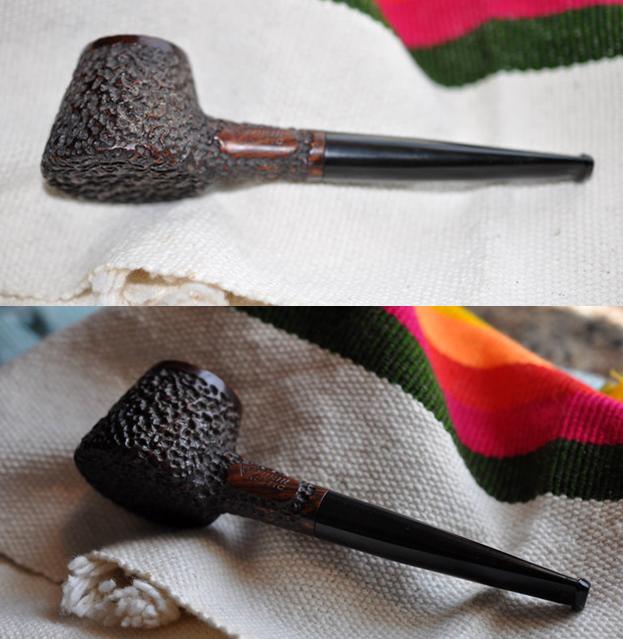
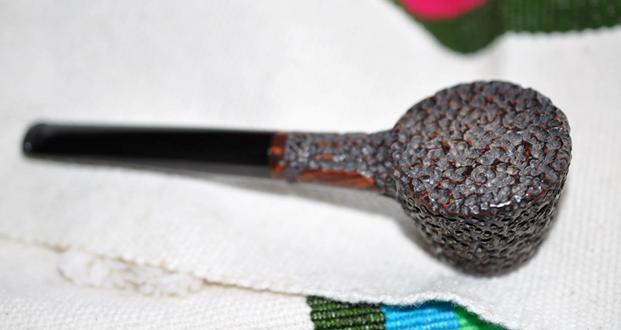
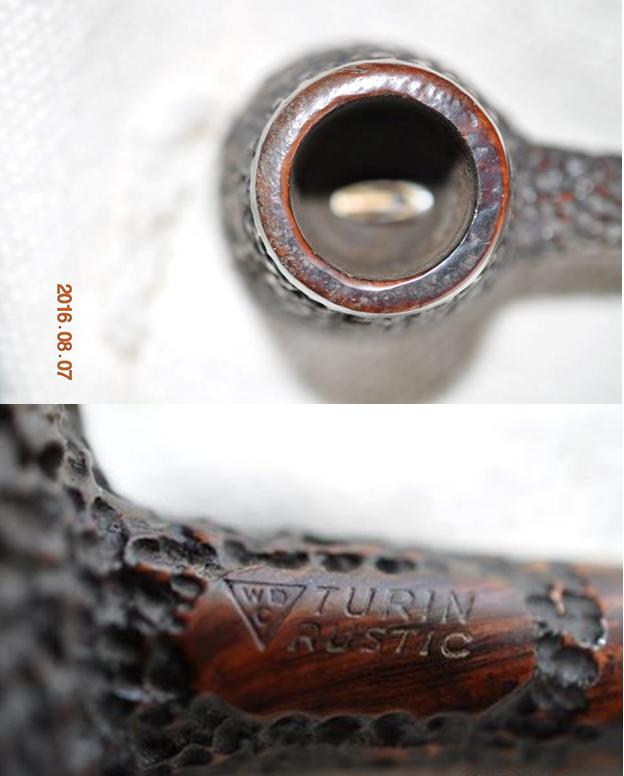
When I saw this one on eBay I sent a message to my brother and asked him to bid on it. He did and we got it. I love the rustication on the Turin Rustic series. It is rough and yet dignified at the same time. The seller billed it as restored/refurbished and clean. By and large that was true. The shank and the inside of the stem were very clean. The rim had been knocked about a bit and the inner edge of the rim was rough and uneven. The bowl had been reamed. The stem was polished though there were deep tooth marks on the top and underside of the stem next to the button.demuth1 demuth2My brother took the above photos and the following ones before he cleaned the pipe. You can see the damage to the rim top and the inner edge in the next photo. The second photo shows the stamping on the left side of the shank.demuth3Though I knew a bit about the WDC pipe maker and the William Demuth Company I thought it might be good to review the history before I started restoring the pipe. I googled the Turin Rustic to see what I could find. It immediately referred me to a post on the Kaywoodie Forum that in turn was an excerpt from pipedia.org. Here is the link.

http://kaywoodie.myfreeforum.org/archive/w.d.c.-master-list__o_t__t_191.html

William Demuth, a native of Germany, entered the United States at the age of 16 as a penniless immigrant. After a series of odd jobs he found work as a clerk in the import business of a tobacco tradesman in New York City. In 1862 William established his own company. The William Demuth Company specialized in pipes, smoker’s requisites, cigar-store figures, canes and other carved objects.

The Demuth Company is probably well known for the famous trademark, WDC in an inverted equilateral triangle. William commissioned the figurative meerschaum Presidential series, 29 precision-carved likenesses of John Adams, the second president of the United States (1797-1801) to Herbert Hoover, the 30th president (1929-1933), and “Columbus Landing in America,” a 32-inch-long centennial meerschaum masterpiece that took two years to complete and was exhibited at the World’s Columbian Exposition in Chicago in 1893.

The Presidential series was the result of Demuth’s friendship with President James A. Garfield, a connoisseur of meerschaum pipes. Demuth presented two pipes to Garfield at his inauguration in 1881, one in his likeness, the other in the likeness of the President’s wife. Later, Demuth arranged for another figurative matching the others to be added to the collection as each new president acceded to the White House, terminating with President Hoover.

In 1897 Ferdinand Feuerbach joined the Demuth Company and by 1903 had become the production manager. Feuerbach is credited with developing Demuth’s popular Royal Demuth and Hesson Guard Milano pipelines. He left in 1919, when Sam Frank Sr. needed an experienced pipe man to run his pipe factory, located at 168 Southern Blvd., in the Bronx. Feuerbach and Frank had been close friends since Frank started his own business in 1900 and was closely associated with the sales staff of WDC, selling their line of pipes.

In early 1937, the City of New York notified S.M. Frank & Co. of their intent to take by eminent domain, part of the land on which the companies pipe factory was located. This was being done to widen two of the adjacent streets. As a result of this, Frank entered into negotiations to purchase the Wm. Demuth Co.’s pipe factory in the Richmond Hill section of Queens. It was agreed upon that Demuth would become a subsidiary of S.M. Frank and all pipe production of the two companies would be moved to Demuth factory. New Corporate offices were located at 133 Fifth Avenue, NYC.

Demuth pipes continued to be made at the Richmond Hill plant till December 31. 1972. Then the Wm. Demuth Company met its official end as a subsidiary company by liquidation. Demuth’s mainstay pipe, the Wellington continued to be offered in the S.M. Frank catalog until 1976. In the mid-80’s, the Wellington even made a brief return as a direct to the consumer offer.

When the pipe arrived from Idaho it was quite clean and ready to work on. I took some photos of it before I started.demuth5 demuth6The next photo shows the rim and the damage to the surface. There were a lot of dents and dings as well as some roughness on the right side toward the front of the bowl. The inner edges was also worn and rough.demuth7The next photos show the condition of the stem – it had some deep tooth marks on the top and underside that are visible in the photo below.demuth8I “painted” the surface of the vulcanite with the flame of a Bic lighter to lift the dents and I was able to raise all but one of them completely. Even the worst one on the underside came up so that is only needed a little patch. The rest of them I was able to sand smooth with 220 grit sandpaper.demuth9I cleaned the sanded area on the underside of the stem with alcohol and then filled in the remaining tooth mark with a spot of clear super glue. Once it dried I sanded it smooth with 220 grit sandpaper and blended it into the surface of the stem.demuth10I rolled a piece of sandpaper and sanded out the inside of the bowl and the inner edge of the rim to smooth out the damage.demuth12

I touched up the rough spots on the inner edge with a piece of 220 grit sandpaper and smoothed out the edge until it was back in round. In the photo below you can see the damage to the top and outside edge of the bowl toward the front. It looked like it had been knocked out on concrete.demuth13I decided to lightly top the bowl on the topping board with 220 grit sandpaper until the rim top was smooth and clean of damage.demuth13aI sanded the rim top with micromesh sanding pads from 1500-12000 grit until the surface of the rim was clean and smoothly polished.demuth13bI used a light brown stain pen and touched up the rim top. The next four pictures show the bowl after I had rubbed it down with a light coat of olive oil. I love the rustication on the bowl sides and bottom. It really is a unique pattern.demuth13c demuth13dI polished the stem with micromesh sanding pads – wet sanding with 1500-2400 grit pads and dry sanding with 3200-12000 grit pads. I rubbed the stem down with Obsidian Oil after each set of three pads. After the final rub down I set the stem aside to dry.demuth14 demuth15 demuth16

I buffed the bowl and stem with Blue Diamond on the buffing wheel. I gave the stem multiple coats of carnauba wax and buffed it with a clean buffing pad to raise the shine. I hand wax the bowl with Conservator’s Wax and buffed it with a clean buffing pad. The finished pipe is shown in the photos below. The finish shines and the pipe belies its age. It is a beauty. Thanks for looking.demuth17 demuth18 demuth19 demuth20 demuth21 demuth22 demuth23 demuth24 demuth25


A WDC Bakelite/Briar Pipe like none I have seen before


Blog by Steve Laug

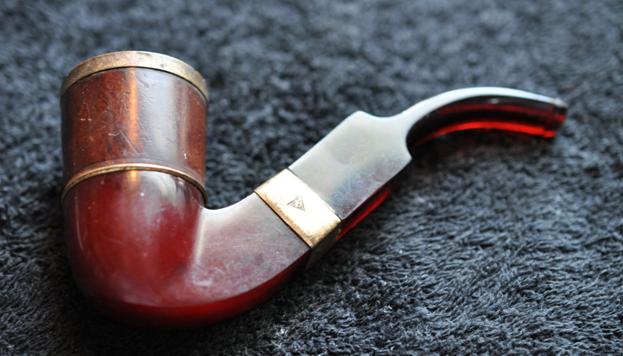
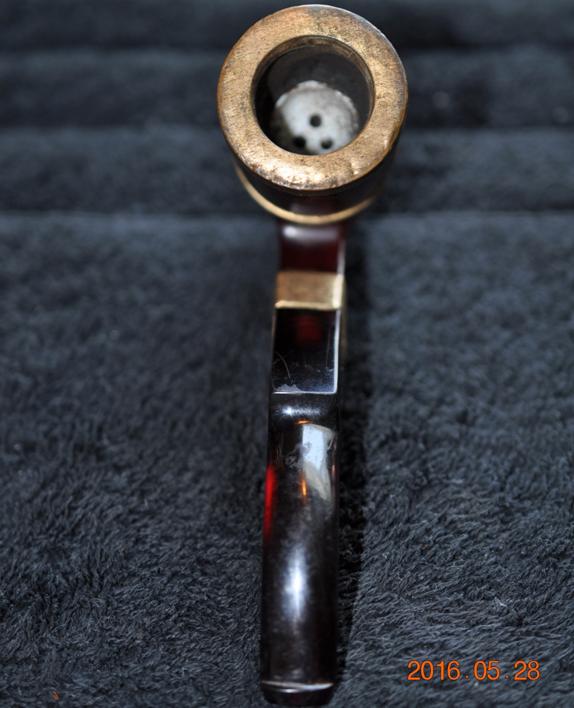
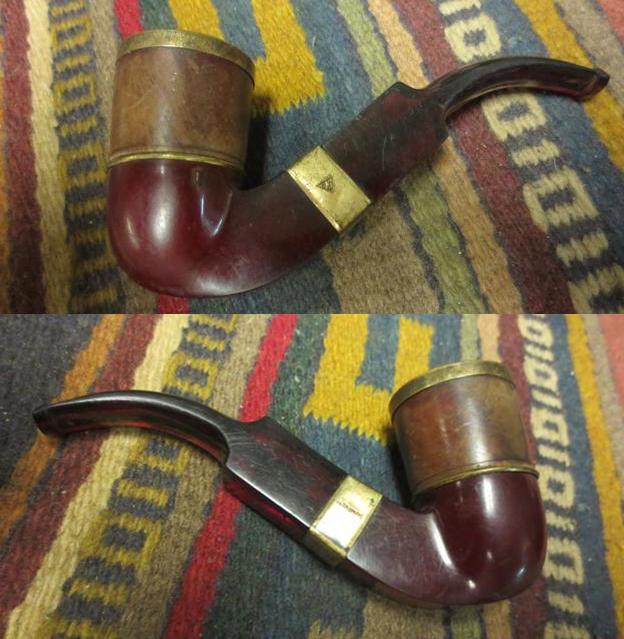
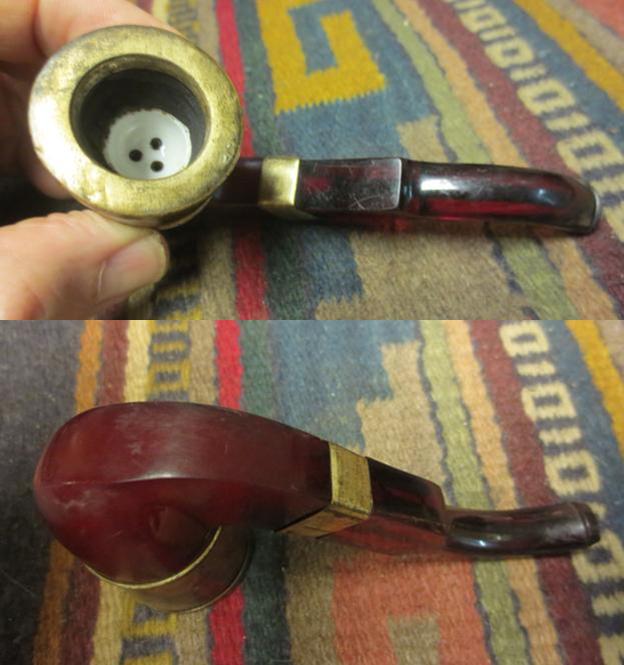
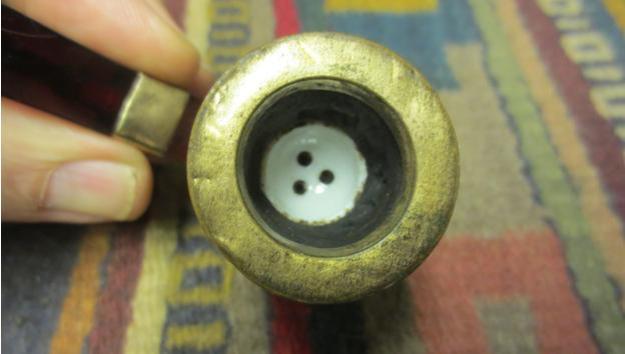
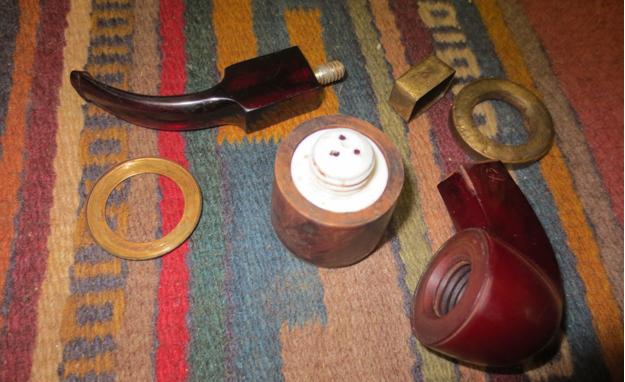
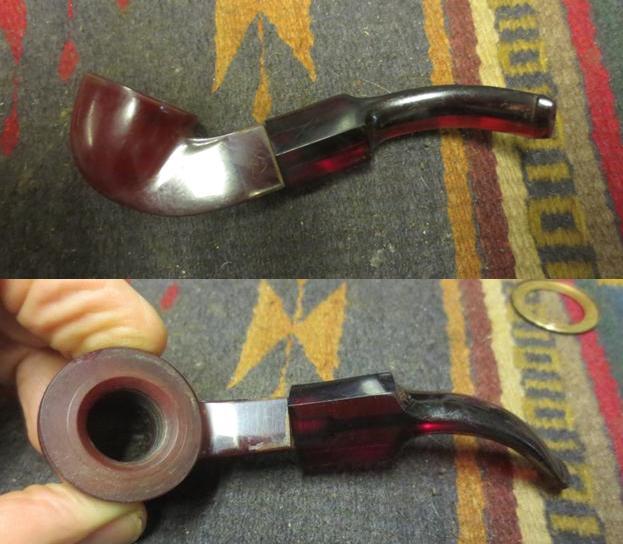
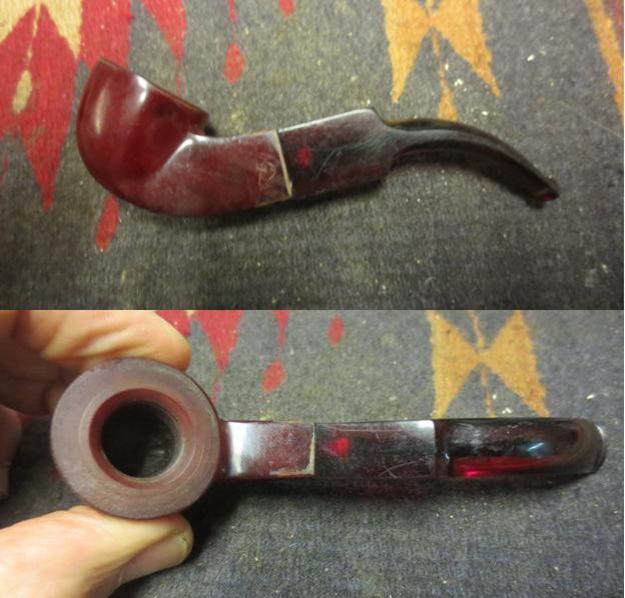
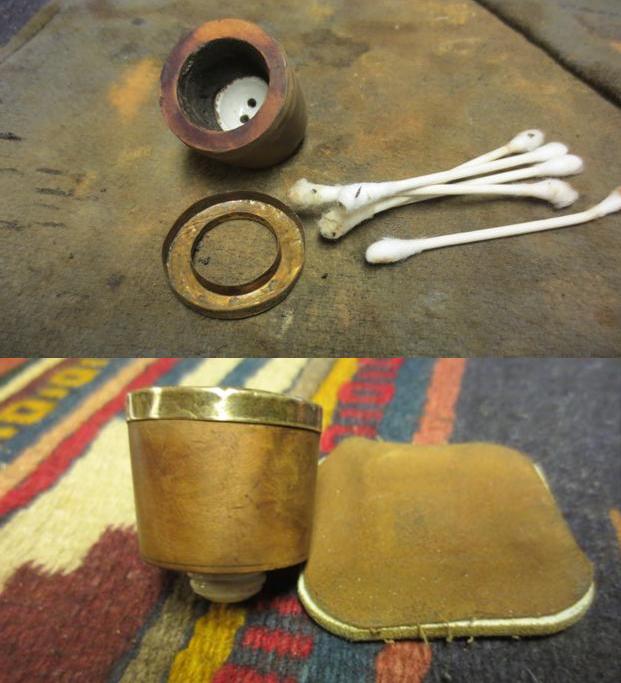
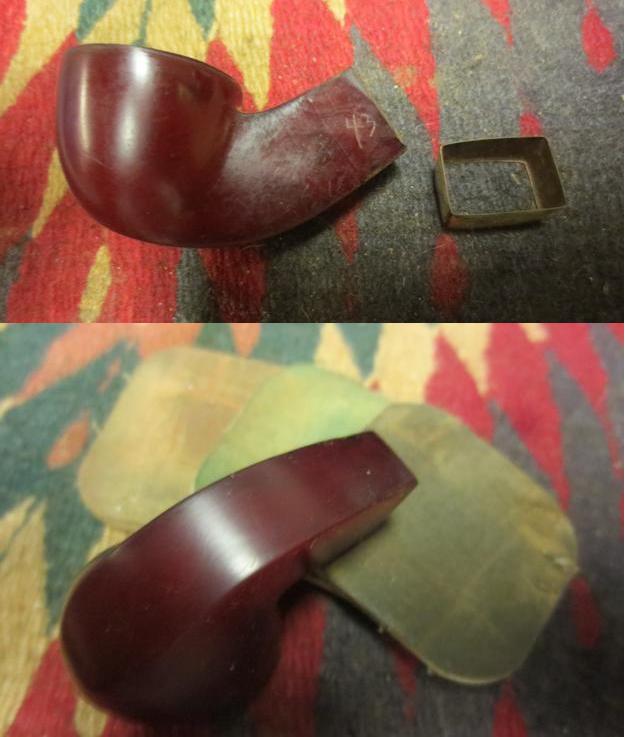
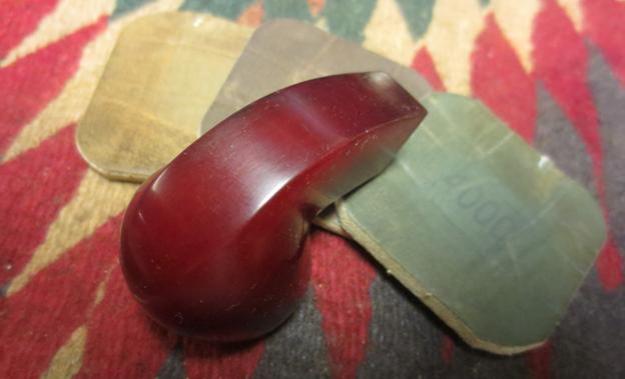
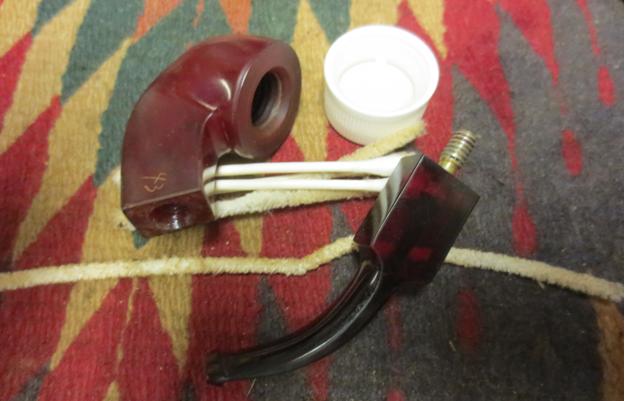
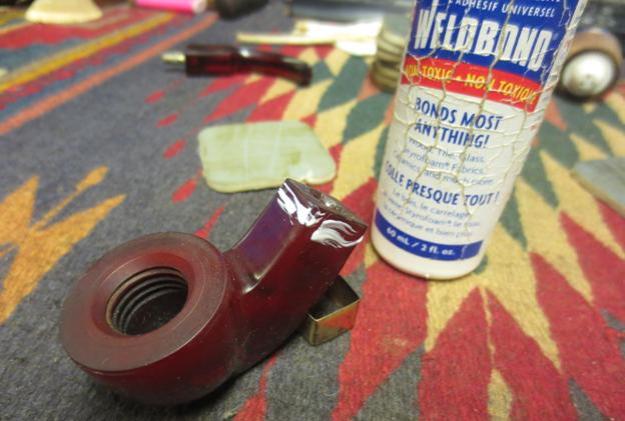
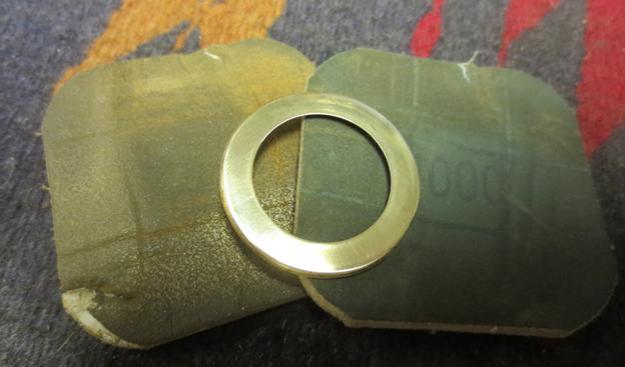
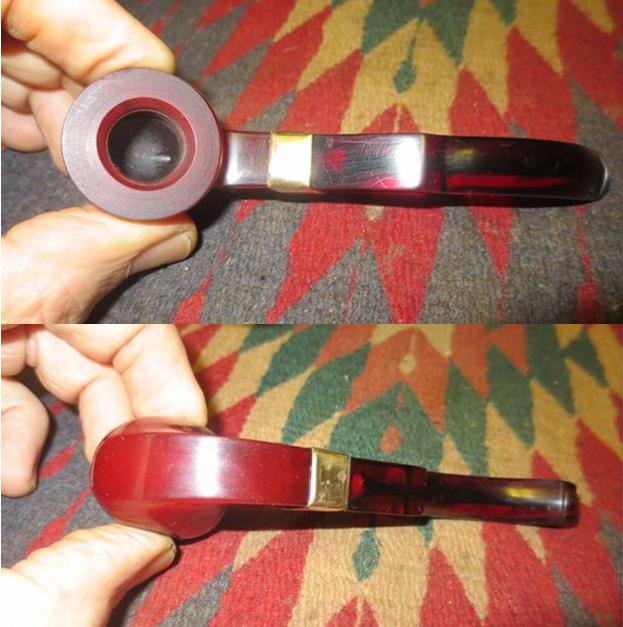
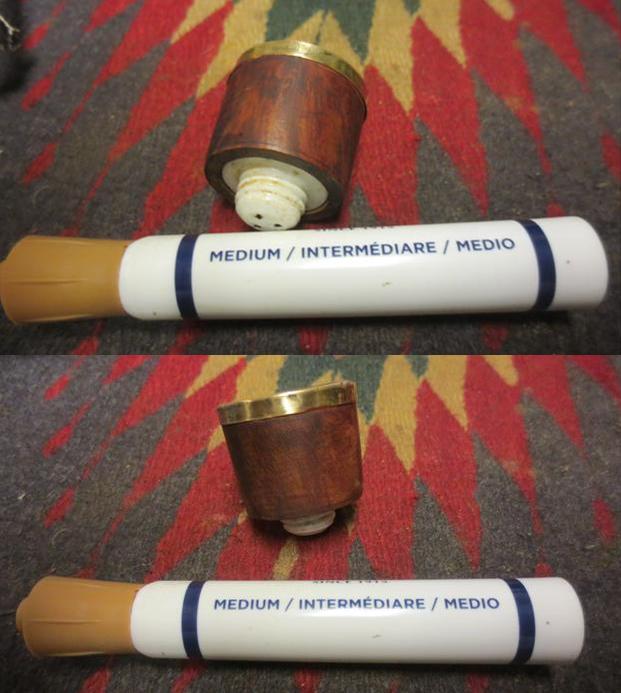
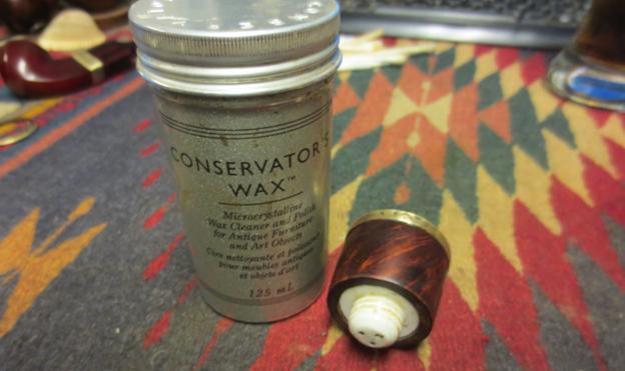
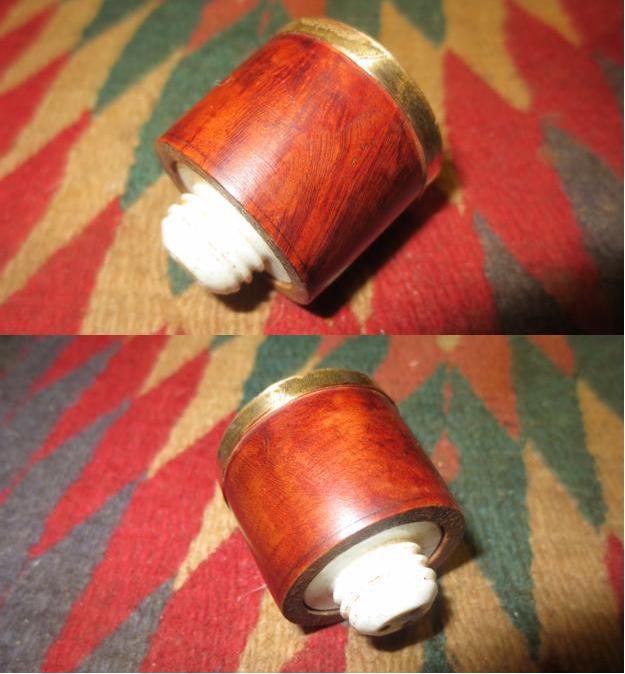
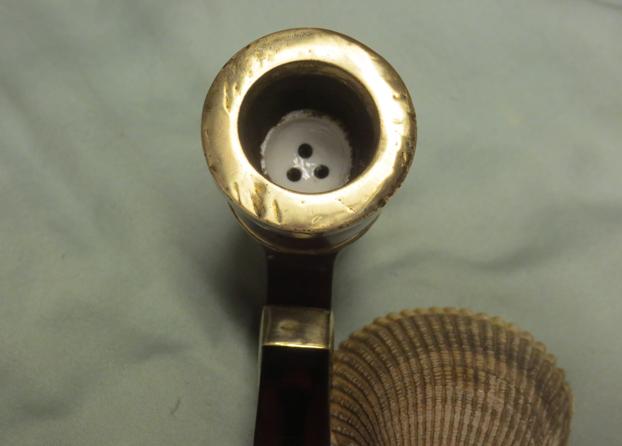
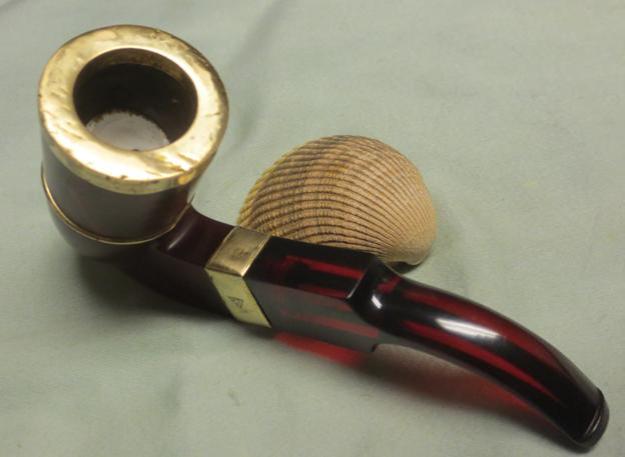
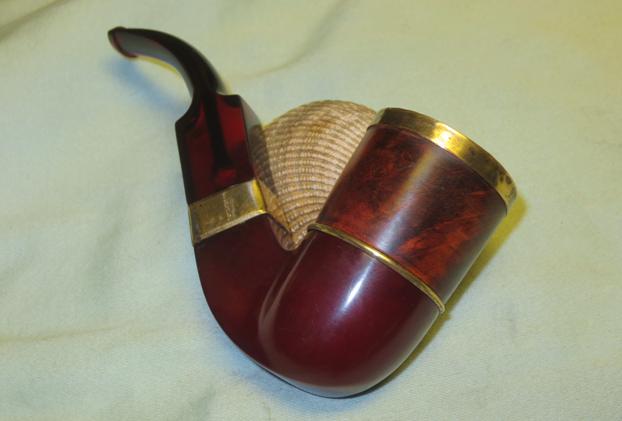
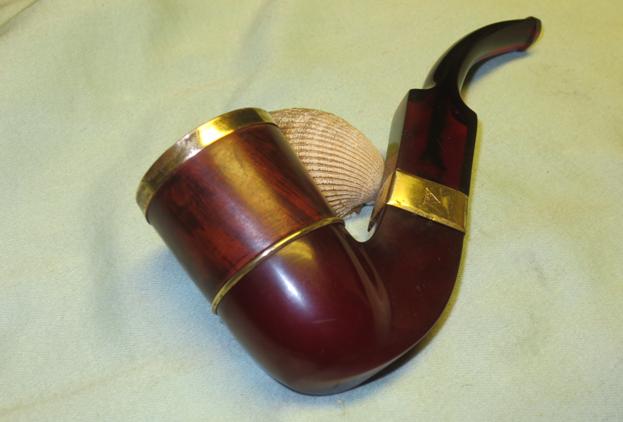
When my brother sent me this pipe I have to say I was surprised and enamored with it. I have cleaned up a lot of WDC pipes over the years and have come to really like them. There is something about them that always gets my attention. The workmanship is generally well done. The materials used are good quality. The briar always tends to have some flaws and is never perfect. But there is something about the brand that I like. Well this pipe is an oddity to me. It is a shape that is similar to some of the CPF pipes I have cleaned up and the combination of briar, brass and Bakelite it really nicely done. The first difference is that this one has a flat rectangular shank and saddle stem. The Bakelite base is rounded and flows into the flattened shank and stem. The stem is also Bakelite or Redmanol as the case may be. It is a rich reddish colour that is translucent and the light really plays with. The second difference is that in a lot of this style pipe the threaded connector and bottom of the bowl is metal. On this one it is white porcelain. When the bowl is removed the threaded connector is also porcelain – a single porcelain unit from the cupped bottom of the bowl to the connector. Those two differences intrigued me.WDC1There is a brass spacer between the base and the briar bowl and at some time in its life the spacer had been reversed and the sharper edges scarred the bowl. The Bakelite is actually notched to receive the sharp turned down edges of the spacer. The bowl had lots of dents and scars – character marks that I wish could talk and tell the story of the travels of this old pipe. The brass rim had long since come loose and was easily removed but for some reason never disappeared as it clung to the rim of the pipe. In the next photo you can see the rim top and the porcelain bottom of the bowl… it almost looks like the old milk glass that my grandmother collected.WDC2After looking at the two pictures above that came from my brother I was looking forward to seeing the pipe in person. When it arrived and I finally took it out to work on it was all that I had expected. The stem was over clocked so that would need to be addressed but I lined things up and took the next set of photos to show what the pipe looked like after my brother did an amazing job cleaning it. (It is great to have him work with me – it really speeds up the process on the restoration. He reams and cleans the pipes and does the dirty work of reaming and removing the debris of the years.) I looked it over to see if there were identifying marks. What I thought was brass may all be what is stamped on the right side of the band – 14K Gold Plated. The left side of the band bears the inverted WDC triangle logo.WDC3 WDC4I took a close up photo of the rim top to show the dents, scratches and scars on the surface. The photo also shows the porcelain cup in the bottom of the bowl. It has three round air holes for directing the smoke into the bottom chamber and into the stem.WDC5I dismantled the pipe to show the many parts that went into its construction. The photo below shows the broken down pipe.WDC6The next photos show the over clocked stem. (I had removed the loose band at this point in the process.) Once the base was screwed onto the stem it was grossly overturned. The metal tenon was set in the stem so it would need to be heated to be able to repair this.WDC7I heated the metal tenon with a lighter and once the glue softened I was able to align the stem and shank very easily. Underneath the band the number 43 had been scratched into the Bakelite shank. I am not sure if that is the shape number or if it is the “autograph” of the assembler of the pipe. Either way it is something that remained hidden for many years. WDC8I set the base aside and worked on the bowl. I removed the rim cap and cleaned off the glue that remained behind on the top of the bowl. It was rough and I was thinking that it was reason that the cap was no longer smooth. I scrubbed out the glue residue in the inside of the rim cap as well with alcohol and cotton swabs. I used a flat blade screw driver to smooth out the interior flat surface of the cap. I wiped down the bowl with acetone to remove the remnants of the finish and then glued the rim cap back in place with an all-purpose glue. I polish the rim with some micromesh and metal polish. I decided to leave some of the dents and dings as to me it gave the pipe character.WDC9 WDC10I cleaned the surface of the Bakelite base and sanded the whole base with micromesh sanding pads from 1500-12000 grit. I rubbed the base down with Obsidian Oil several times throughout the process to give the micromesh some bite as I polished the base. WDC11WDC12I gave the internals a quick clean with alcohol and cotton swabs to remove any of the sanding dust that might have found its way into the bowl base and shank. I also cleaned the airway in the stem at the same time with alcohol and pipe cleaners.WDC13I roughened the area on the base that would be underneath the band to give the glue something to bind to. I used an all-purpose glue and applied it sparingly to the shank. I had previously polished the band with metal polish to remove any tarnish and give it a shine. I pressed it in place and laid the base aside for the glue to set.WDC14I cleaned the inside of the space plate with alcohol and cotton swabs to remove the debris of the years. The spacer appeared not to have been glued in place so I left it that way. I polished it with micromesh sanding pads 1500-4000 grit until it gleamed. I laid it aside until I was ready to put the pipe back together.WDC15I turned my attention to the stem. There were some light tooth marks on the underside of the stem near the button. I sanded these out with 220 grit sandpaper. I wet sanded the stem with 1500-2400 grit micromesh sanding pads. I wiped the stem down with a damp cotton pad and dry sanded it with 3200-12000 grit pads. I gave the stem a final wipe down with the damp pad.WDC16 WDC17 WDC18With the stem finished and the glued band dried I put the base and stem back together. I would still need to buff the entirety with Blue Diamond on the buffing wheel.WDC19WDC20I used a medium brown stain pen to stain the bowl. I heated the briar and then applied the stain with the pen. I repeated the staining until the coverage was smooth and even.WDC21I gave the bowl several coats of Conservator’s Wax and hand buffed it to raise the shine with a microfibre cloth.WDC22WDC23With all the parts finished I took a final photo of the bowl and the base before putting it back together.WDC24I buffed the completed pipe with Blue Diamond to polish out some of the scratches in the base and the stem. I was not able to remove all of them so I left a few behind to tell the story. I gave the pipe several coats of carnauba wax and buffed it with a clean buffing pad. I hand buffed it with a microfibre cloth. The finished pipe is shown in the photos below. I am really pleased with the finished pipe and how it looks. Thanks for looking.WDC25 WDC26 WDC27 Wdc28 WDC29 WDC30 WDC31 WDC32
 

Restoring a William Demuth Co. Wellington


Blog by Alan DP

I was going through files on my computer the other evening and came across an article I picked up somewhere on the web back in October 2008. Alan DP wrote this and posted it February 25, 2008 for one of the Pipe Forums or online pipe communities. I have always liked WDC pipes and have had many over the years that I kept for my own collection or repaired and restored for others. The vast array of styles, shapes and designs may contribute to my like of the brand. I have older ones from the late 1800’s and later ones as well. When I came across this post of Alan’s I read with interest his work on the Wellington and his helpful information and thought I would share it here. Alan if you happen to read this thank you for your post. It is a great read. Here are Alan’s own words.
–Steve

Here’s a scannergraph of the old Wellington not long after I brought it back from the brink of oblivion. It was part of an eBay lot and I immediately decided it was a keeper, because I had no other pipe like it.WDC1

The Wellington is the WDC copy of the Peterson System pipe. Here’s a cutaway diagram that I snagged from Pipe & Pouch to help explain this pipe’s design.WDC2

The bit, rather than connecting directly to the bowl via the shank, fits into a sort of pocket or reservoir where the air sort of swirls around as it goes into the bowl. The upper air passage goes on into the bowl, and the bottom reservoir collects moisture. This looks like another odd gimmick, but in my opinion, this one works very well. Of course, it requires additional attention when cleaning. I use a cotton swab to clean out the reservoir, and pipe cleaners as usual to clean the air passage.

WDC3

Another thing about the Wellington (and other Peterson copies) is the military bit. Rather than the traditional tenon/mortise arrangement, the bit simply tapers down slightly and wedges into the shank, remaining in place from the pressure of insertion. This design makes it safe to remove the bit while the pipe is still warm–something that is not a good thing with a tenon/mortise design.

A third thing that sets the Wellington/Peterson pipes apart is the button on the bit. Go back and look at the first photo as well as the cutaway graphic and pay attention to the end of the bit. This is a bit design created by Peterson and is called the P-lip. The hole is on top of the button rather than in the very end, and is angled upward to direct smoke toward the roof of the mouth rather than straight into the tongue. Also, the curved underside of the bottom helps to prevent the tongue from touching the opening of the air passage. The upward-pointing opening is supposed to help prevent tongue-bite, and the curved “tongue shield” helps keep saliva from getting into the stem by being touched with the tongue (something that is a troublesome unconscious reflex for some pipe smokers).

Some people hate the P-lip because it feels different. I have no special preference nor objection to it, at all. To me it’s just another bit. The P-lip bit does have a more rounded shape than most bits, and it does feel somewhat different, but it’s nothing that anyone shouldn’t be able to get used to.

This old Wellington has become one of my favorite pipes. Its size and deep bend gives it an impressive appearance and a comfortably low center of gravity. As you can see in the second photo, I have managed to wear off some of the finish since it came into my hands, and I will eventually be refinishing this one. Meanwhile, this is one of my regular truck pipes and I often smoke it on the long commute home in the afternoon. If I manage to come across any more of these pipes in my eBay adventures, I will probably keep them all–at least until I build up a good week’s worth of pipes for rotation.

FYI, Kaywoodie also had a copy of the Peterson System pipe, called the Chesterfield. Unfortunately, I haven’t been able to acquire one of those yet.

Cleaning up a WDC Milano Hesson 1925 Long stem Billiard


Blog by Steve Laug

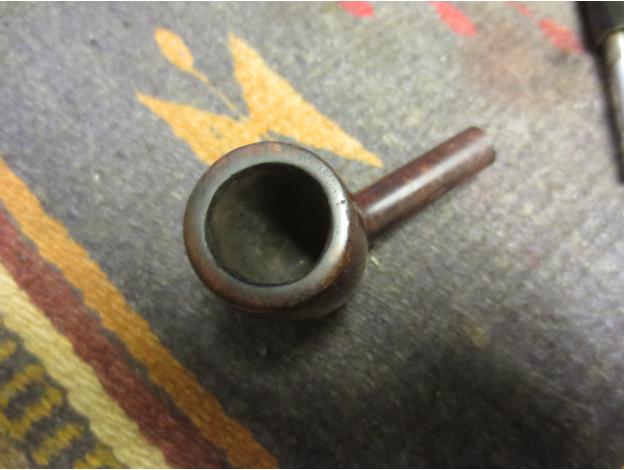
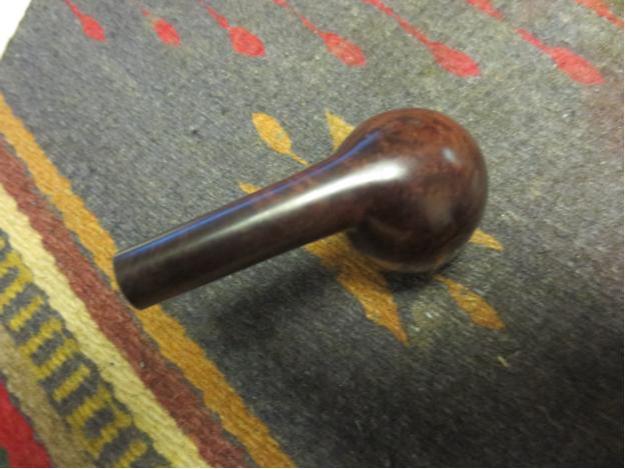
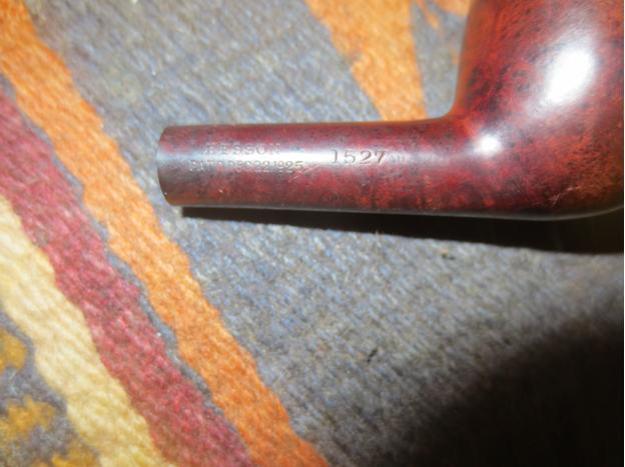
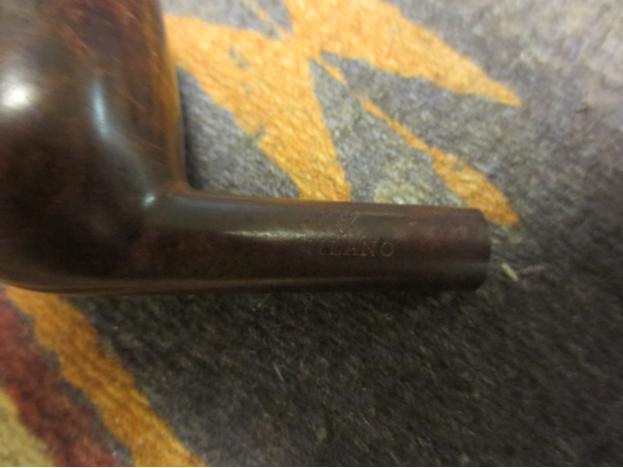
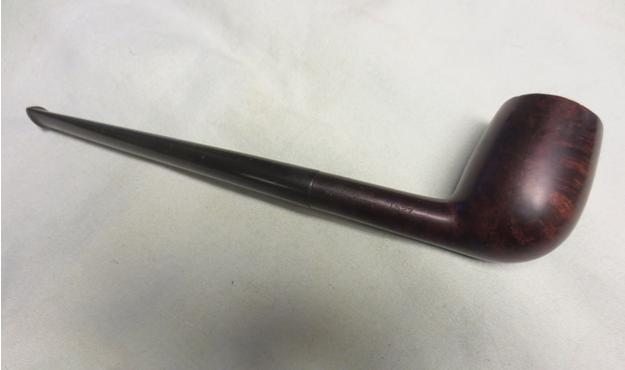
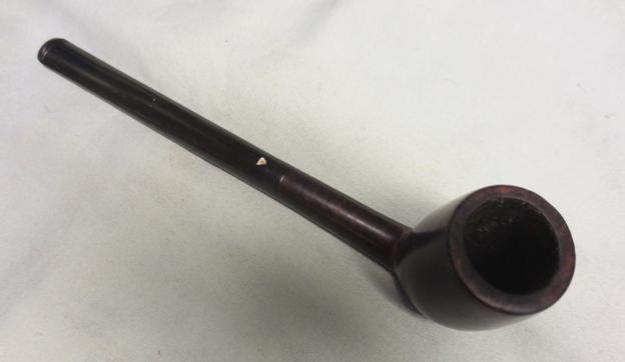
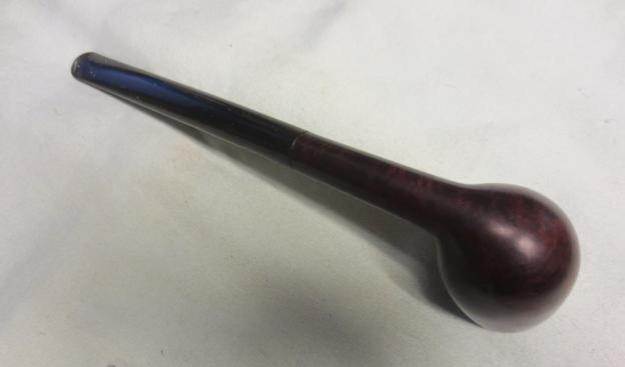
One of the pipes my brother sent me this past week was this long stemmed little billiard. The stem was over clocked almost ½ a turn in the shank and the stem was frozen in the shank. It was dark coloured and the finish was dingy. The rim was covered with an overflow of cake from the bowl but it did not look to be damaged either on the inside or outside edge. The bowl itself had a broken cake lining it – thicker in the middle and the back edge than at the top or the bottom fo the bowl. There was some small pin prick sized marks around the back side of the bowl near the top edge but they were not rough. The stem itself was quite clean – good rubber so it had hardly oxidized. There were two small tooth marks – one on each side of the stem. The WDC white triangle in the stem had lifted and would need to be repaired. The stamping on the shank of the pipe is what got my attention. On the left side it had the WDC in a triangle logo over MILANO. I have seen quite a few WDC Milano pipes over the years. On the other side it is stamped Hesson over Pat’d Dec 22, 1925 and the shape number 1527.Hesson1

Hesson2

Hesson3

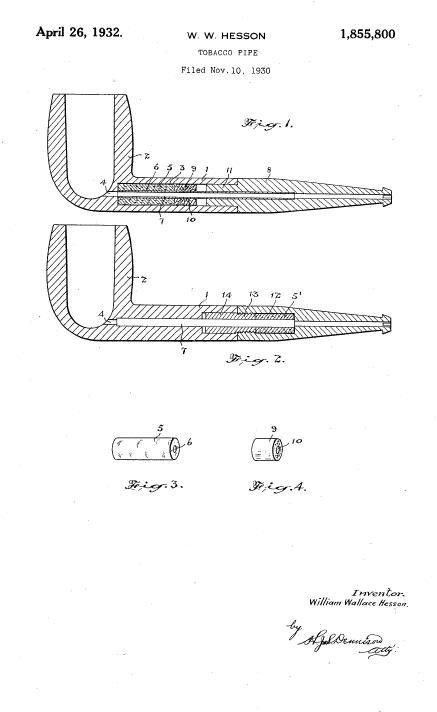
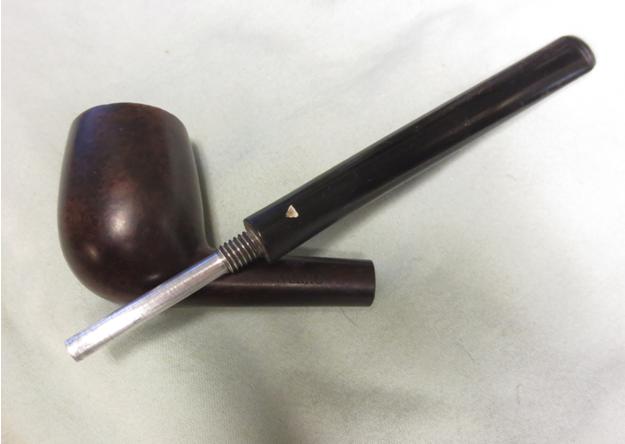
Hesson4 I was not sure what kind of connection I was dealing with on the tenon on this old Milano. Other ones I had worked on were push aluminum tenons and sat in the shank. The aluminum oxidized and the tenons often were bound to the shank when I got them. But there was something about this one that was different. I could not turn it either direction so I put it in the freezer overnight and let the different expansion/contraction rates of briar and metal do their work. In the morning I carefully worked it back and forth and it seemed to give a little. I decided to see if it was a threaded tenon so I held the shank tightly next to the stem and the turned the stem counter clockwise and it came free. Once it was out I could see that I was dealing with a slightly older Milano Hesson system than any of the previous ones I had worked on. This one had a threaded tenon with a long tube attached to the end. The tube extended right up to the entry of the airway in the bottom of the bowl. The shank was also was threaded but the threads had been cut into the briar. There was no mortise insert in the shank.Hesson5 I looked at the documents I had from the other WDC Milano Hesson pipes that I had restored. This one was slightly different. I have included the Patent drawing for your comparison. The differences are readily notable. The patent is from 1932 and the pipe is stamped 1925. The major difference that I see is the internal of the shank and the tube on the tenon in the 1925 edition.Hessiona I decided to use my tried and true method for correcting over clocked stems. I heated the tenon with the flame of the lighter and tried to turn it. It did not work. No matter how long I held the lighter in place it did not heat the glue in the stem enough to allow me to align the stem with the shank. I set up a heat gun and heated the tenon on low heat. It did not take long and I was able to screw it into the shank and align the stem properly. I set it aside and let it cool with the stem in place while the glue hardened again. I took the following three photos to show the properly aligned stem.Hesson6

Hesson7

Hesson8 I cleaned out the shank with cotton swabs and alcohol until it was clean. I ran a pipe cleaner through at the entry of the airway into the bowl. The end of the metal tube sat against the entry so it was pretty clean. Most of the grit and grime were in the threads on the walls of the mortise.Hesson9 I reamed the bowl with a PipNet reamer and the smallest cutting head to take the cake back to the briar.Hesson10

Hesson11 With the inside clean I worked on the bowl finish. It was dirty but it also had a coat of varnish on the surface that had gone opaque. The grain was invisible underneath it. I lightly sanded the bowl and rim with 1500 grit micromesh to break up the surface of the varnish and then wiped the bowl down with acetone on cotton pads until I had removed the grime and varnish coat and the grain was visible. The stain on the pipe was oxblood so it had a rich, deep red hue to it.Hesson12

Hesson13

Hesson14

Hesson15 I scrubbed the metal tube with 1500 grit micromesh and used a brass tire brush on the threads to clean up the grime and oxidation that was present on it. I cleaned out the inside with pipe cleaners, cotton swabs and alcohol.Hesson16 I buffed the bowl with White Diamond (very lightly around the stamping on the shank) and gave it a coat of carnauba wax.Hesson17

Hesson18

Hesson19

Hesson20 I took close up photos of the stamping on the shank. The left side shows in the first photo. The right side of the shank is shown in the second. It is sharp and very legible.Hesson21

Hesson22 I worked on the stem with 220 grit sandpaper to remove the small tooth marks on the top and the bottom sides. I then sanded it with a medium and fine grit sanding sponge to minimize the scratching.Hesson23

Hesson24

Hesson25 I started to polish the stem with micromesh sanding pads. I wet sanded with 1500-2400 grit pads and then rubbed the stem down with Obsidian Oil. I was just starting to sand with a 3200 grit pad when the edge of the pad hit the edge of the triangle (it sat high on the stem as it appeared to have lifted) and sent it flying. The white triangle was nowhere to be found so now I faced a new dilemma.Hesson26 I filled in the empty triangle in the stem with liquid paper. It is the same white as the previous triangle. It shrinks as it dries so once it was dry I put a drop of clear super glue on top of it to form a bubble. Once it dried I could sand it down to the surface of the stem and I would be good to go with the replacement triangle.Hesson27 Once the glue dried I sanded the fill down to match the surface of the stem and the new triangle looked pretty good. I cleaned out the threads on the tenon with alcohol and a cotton pad and then screwed it back into the mortise. I sanded the newly filled and area with 1500-2400 grit pads and then continued with 3200-4000 grit pads. I rubbed the stem down with Obsidian Oil and then dry sanded with 6000-12000 grit pads. I gave it a final coat of Obsidian Oil and let it dry.Hesson28

Hesson29 I buffed the stem and bowl with Blue Diamond on the wheel and then gave it multiple coats of carnauba wax. I buffed it with a clean flannel buff to raise the shine and then hand buffed it with a microfibre cloth. The finished pipe is shown in the photos below. It does not look too bad for a pipe from Dec. 22, 1925. Thanks for looking.Hesson30

Hesson31

Hesson32

Hesson33

Hesson34

Hesson35

Hesson36