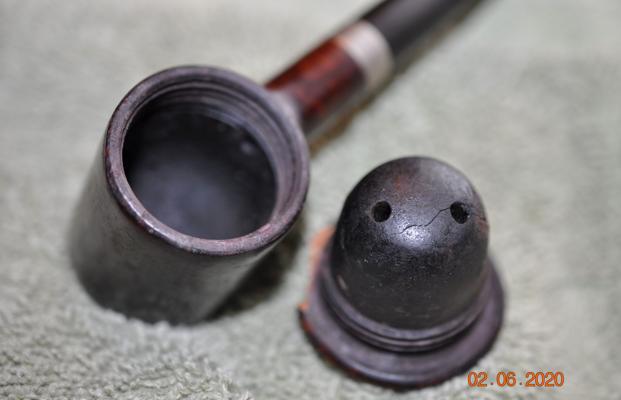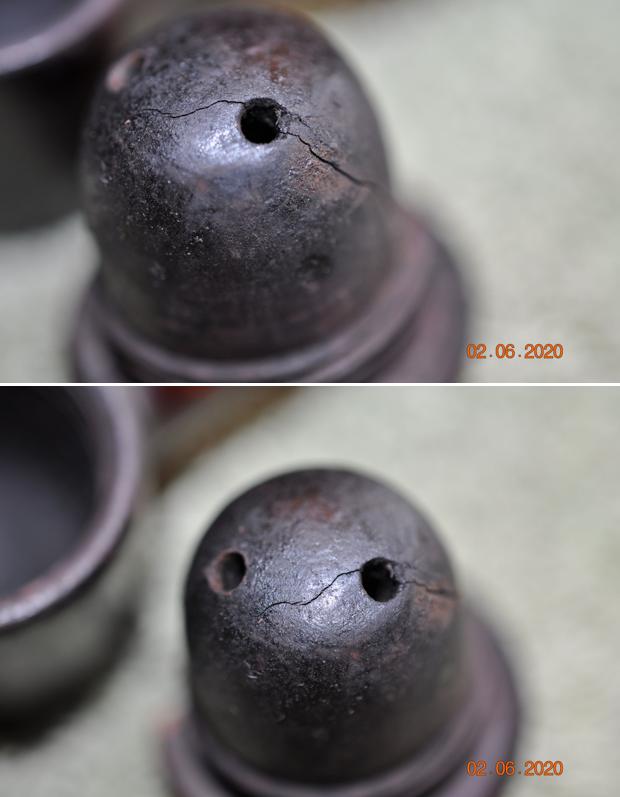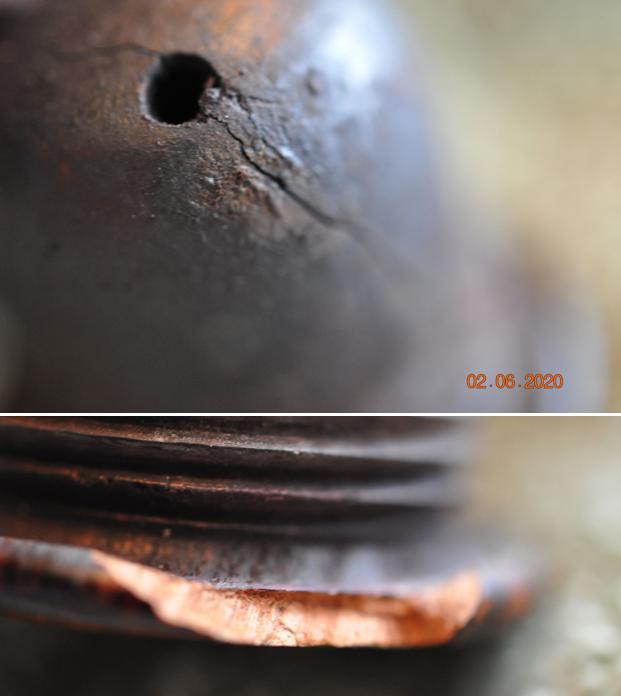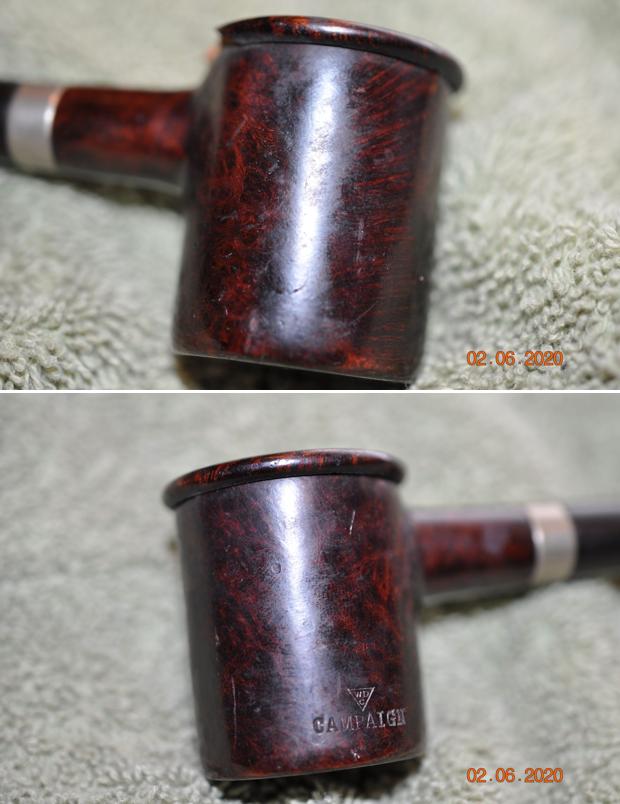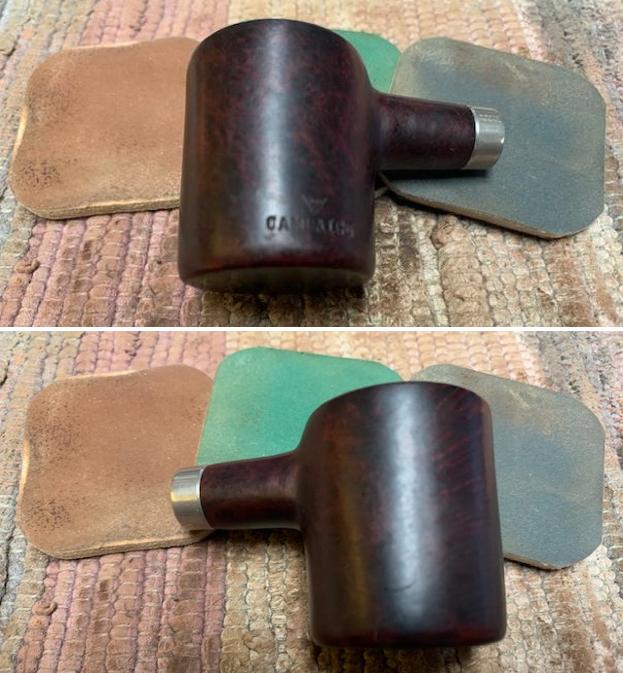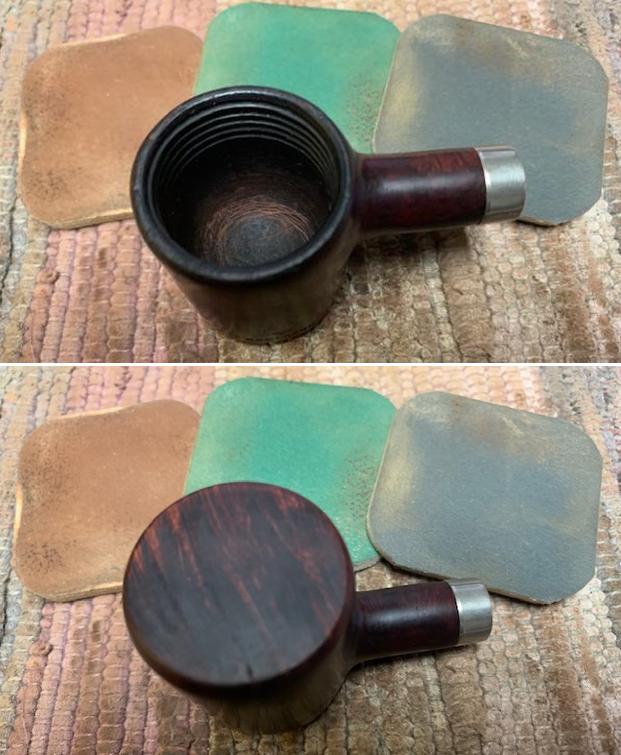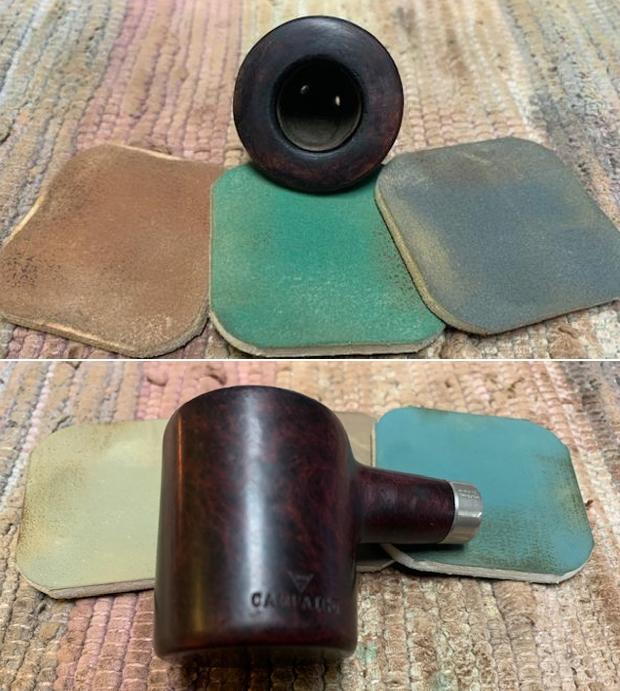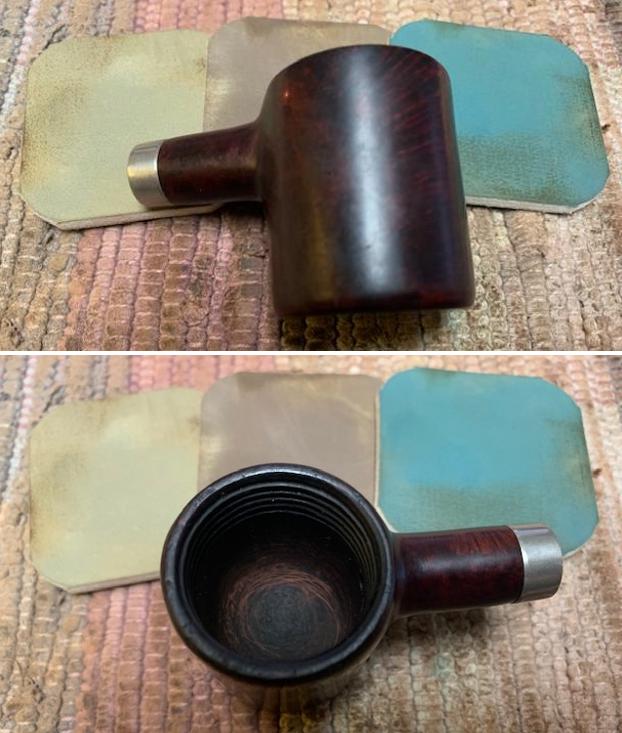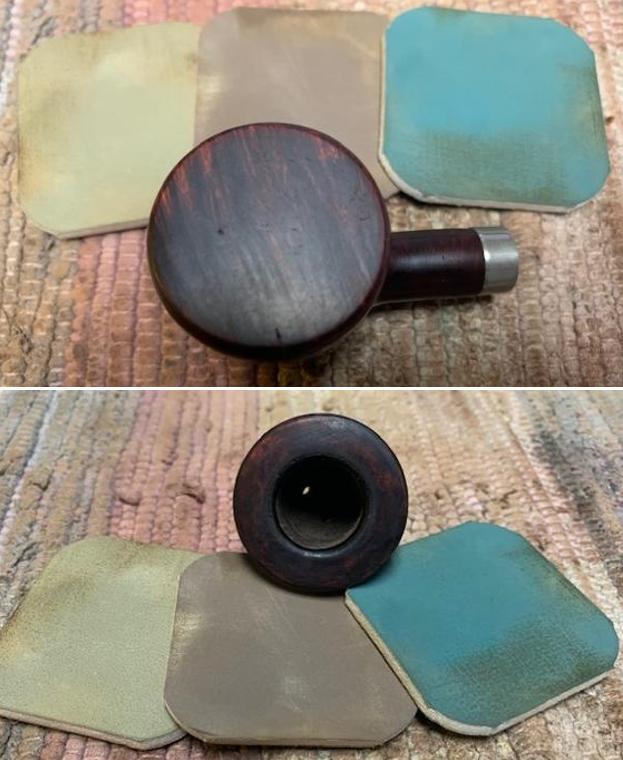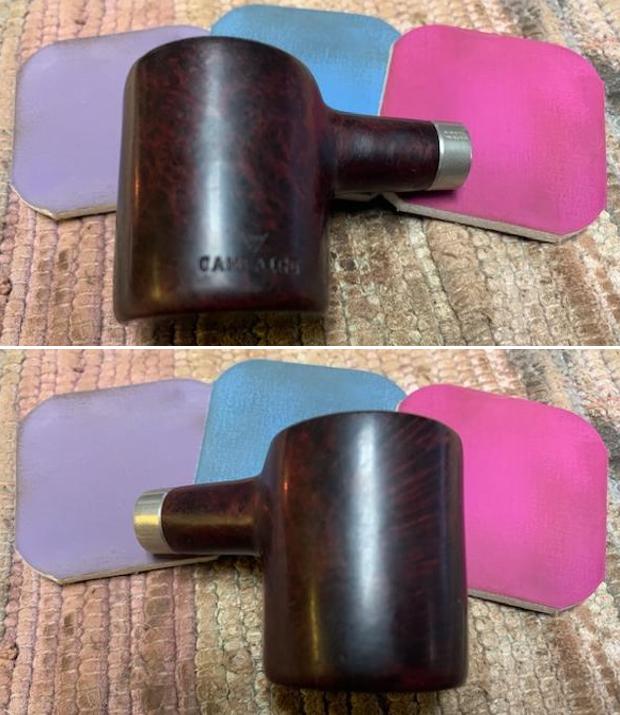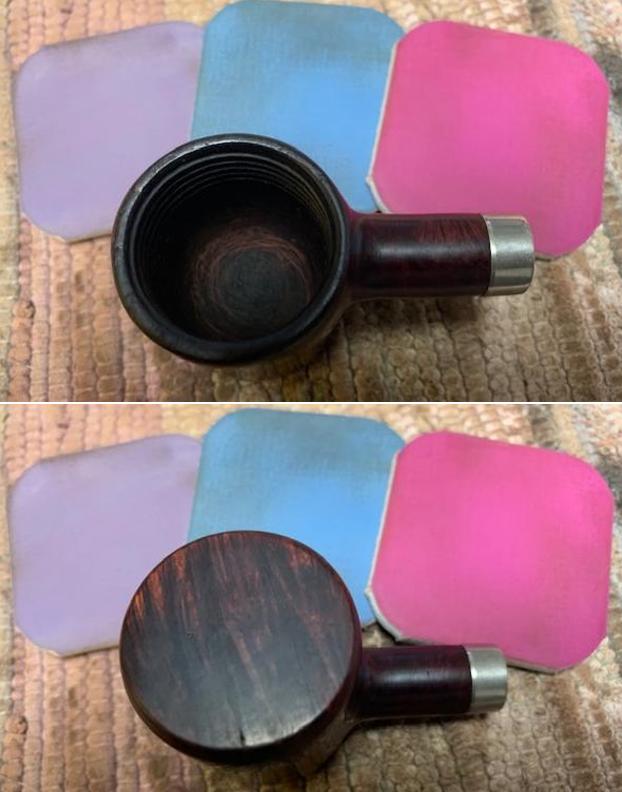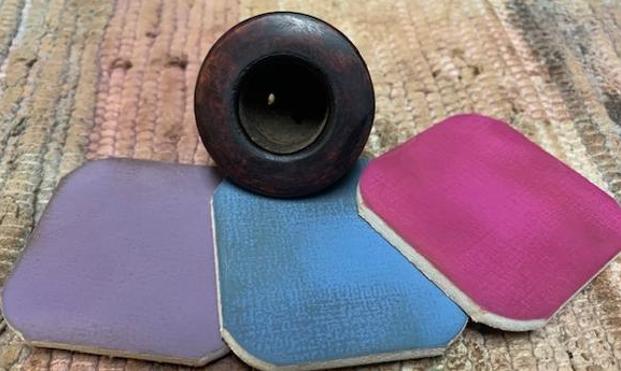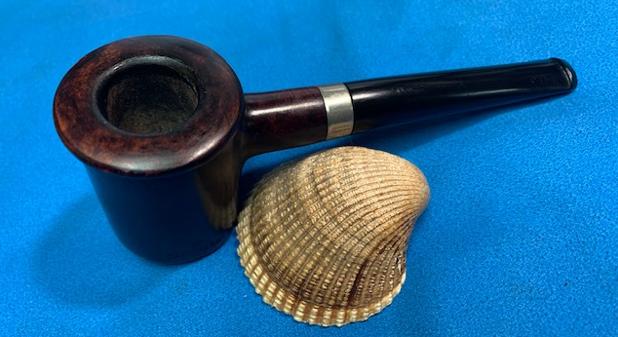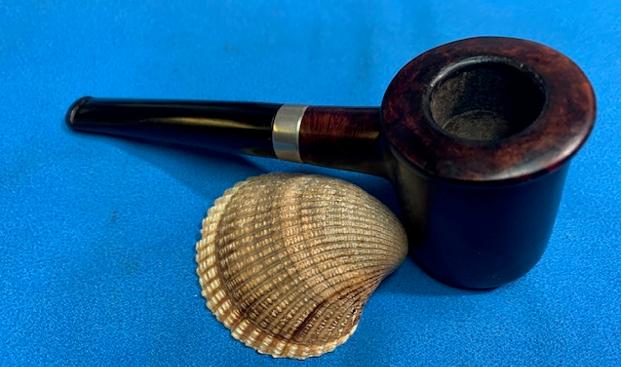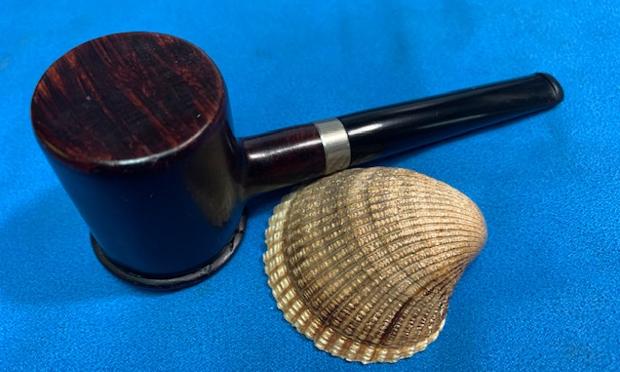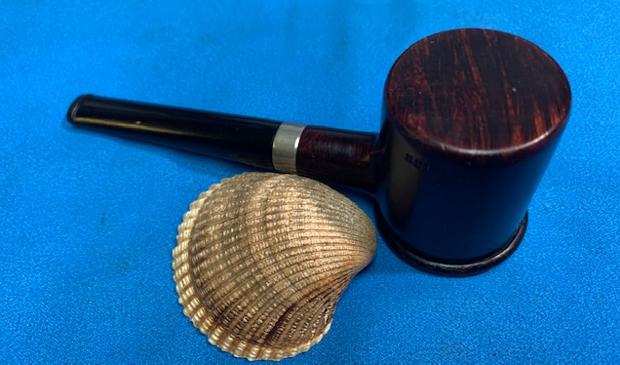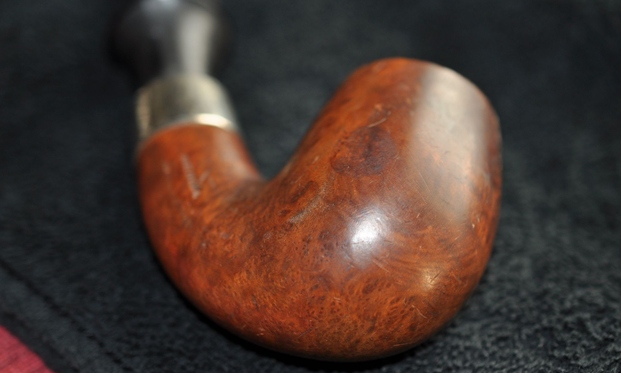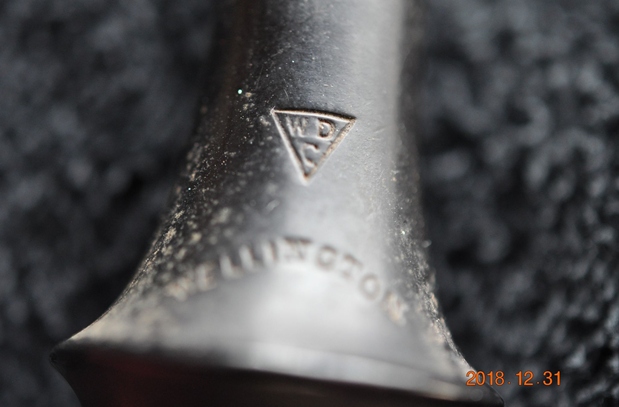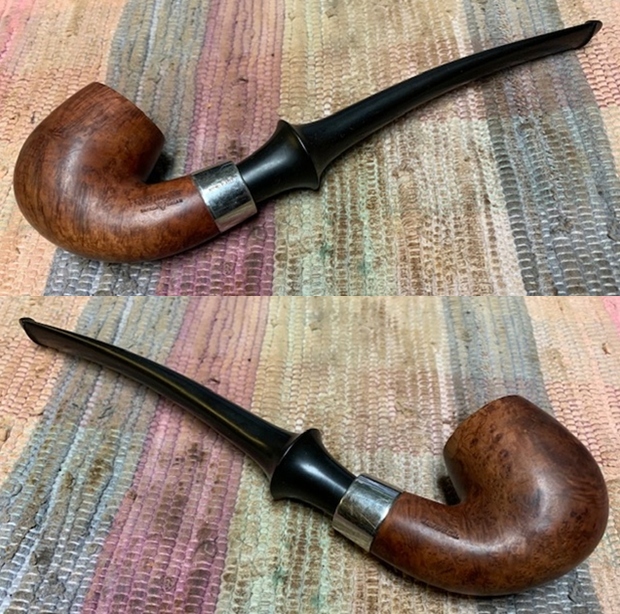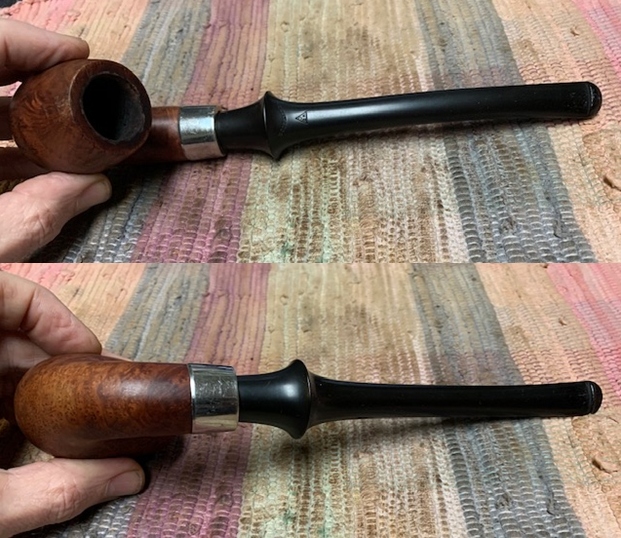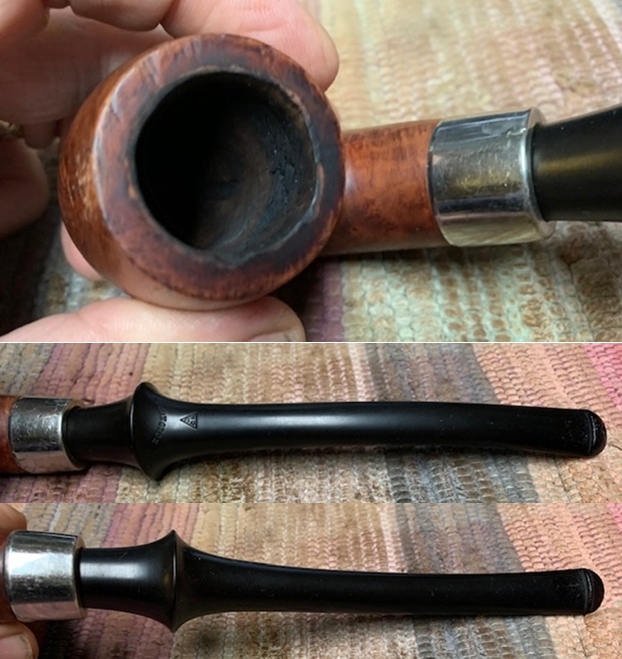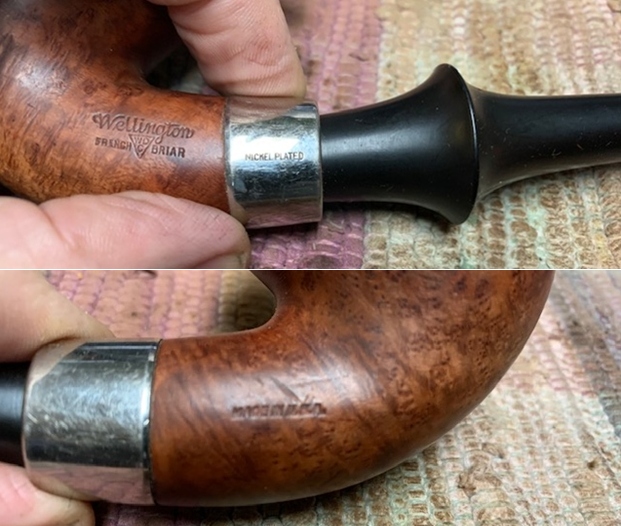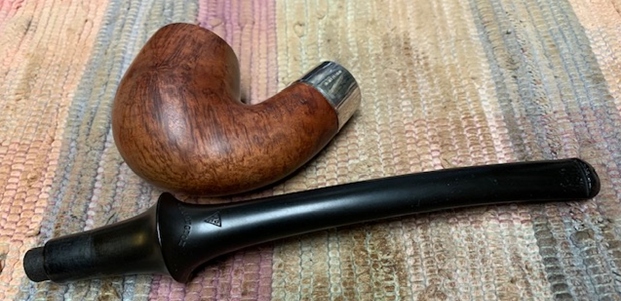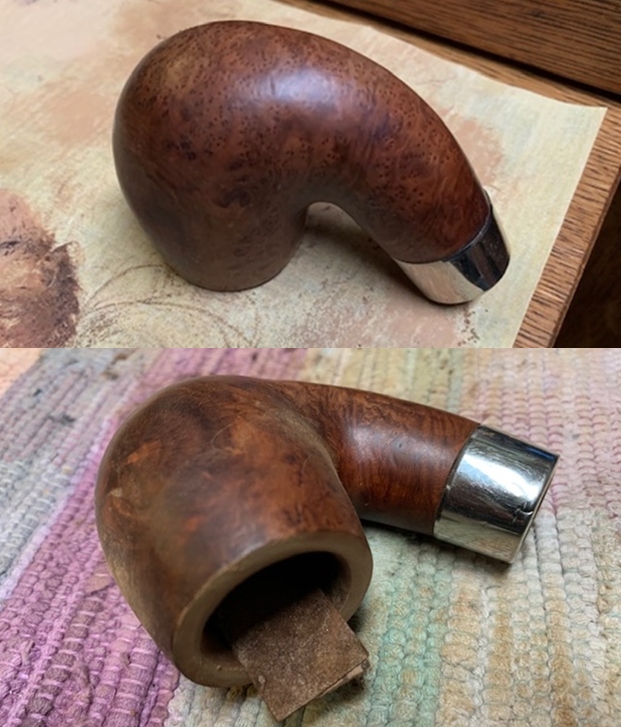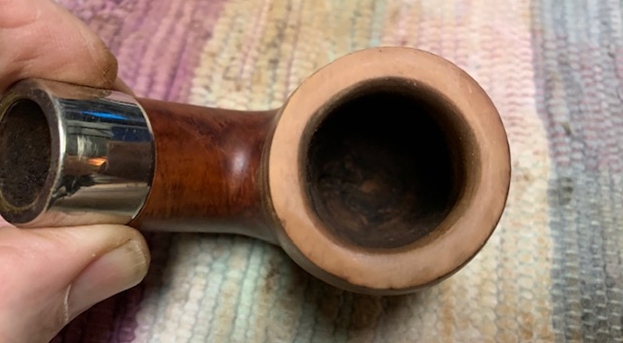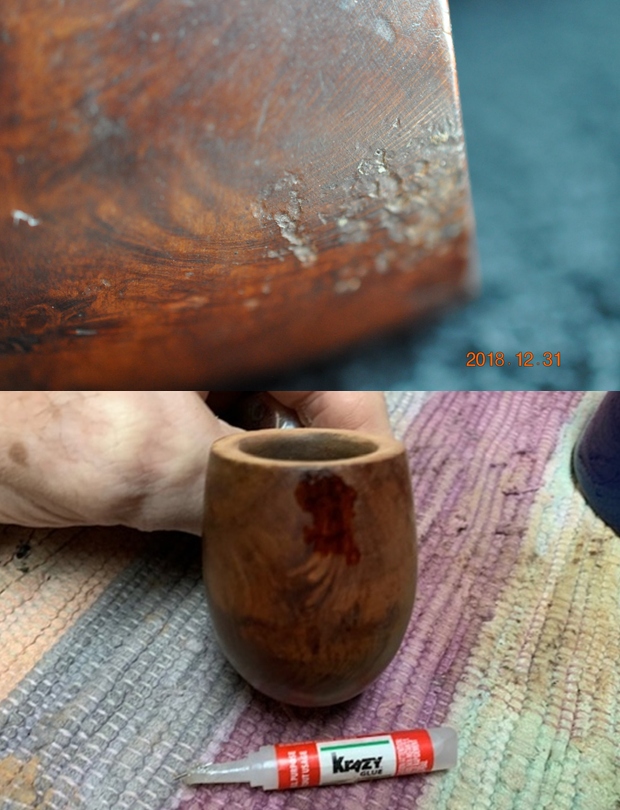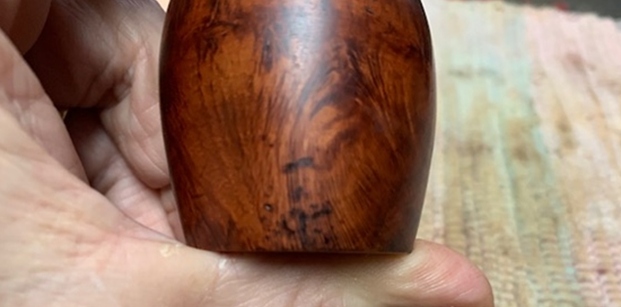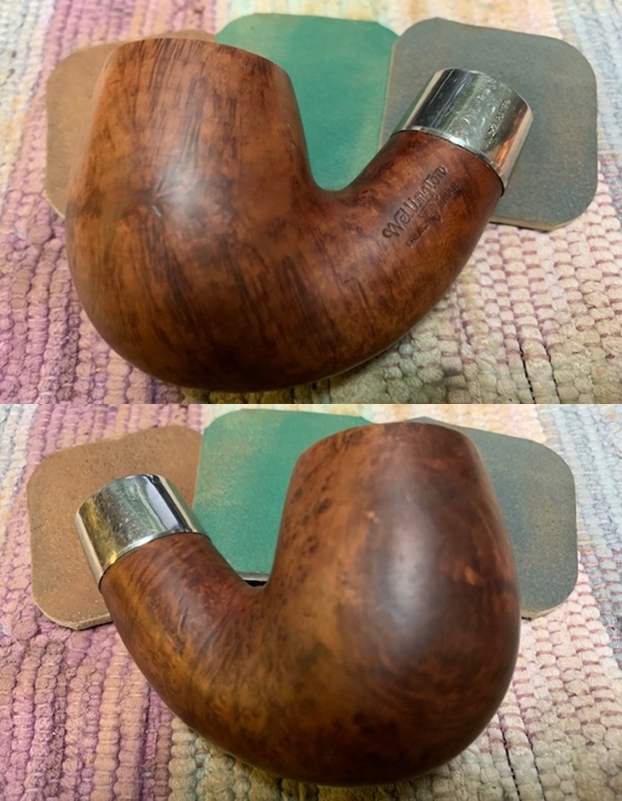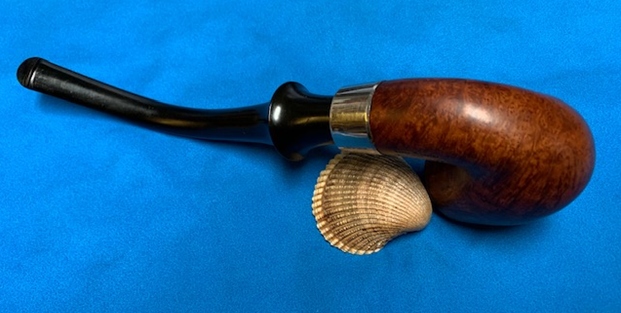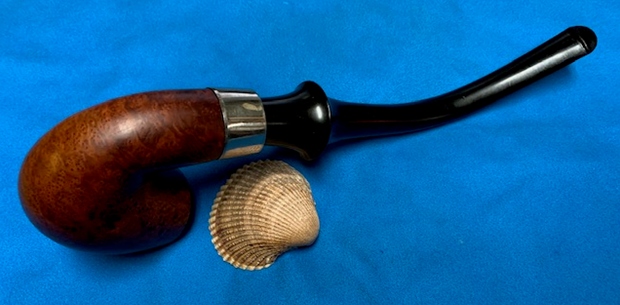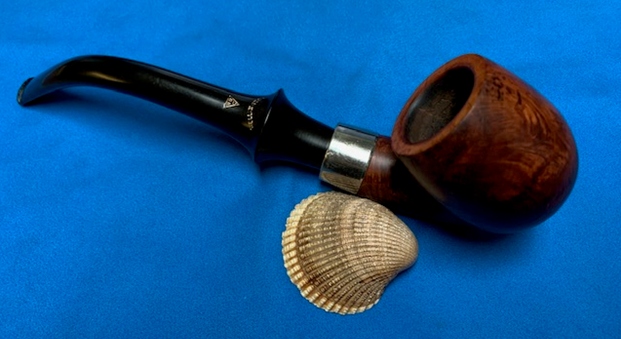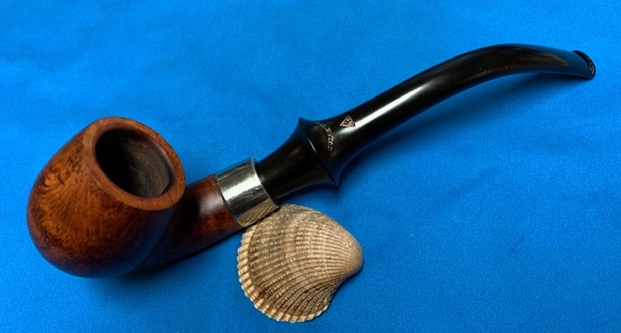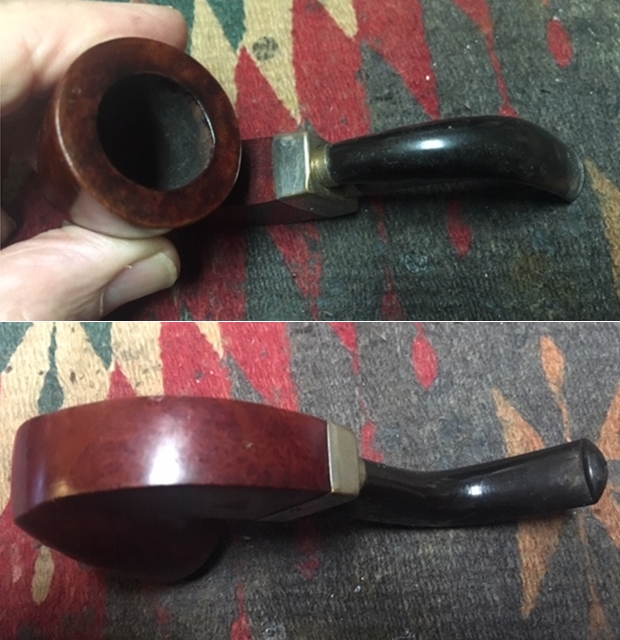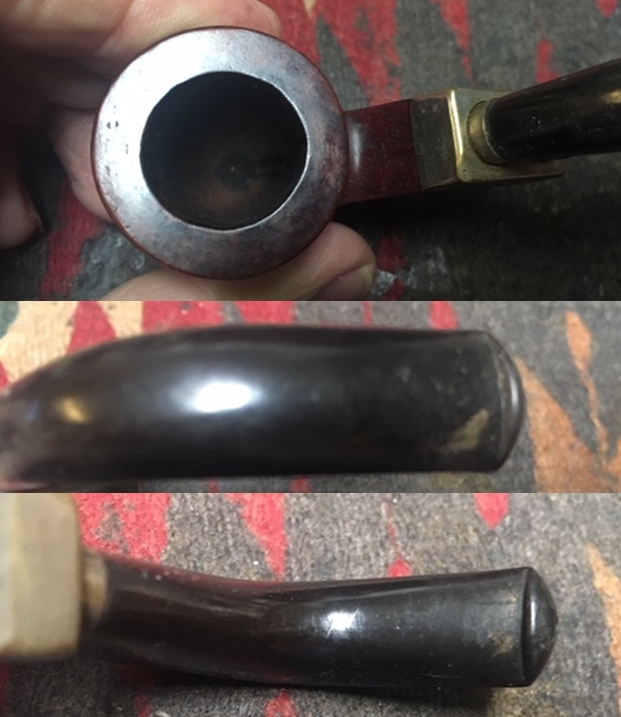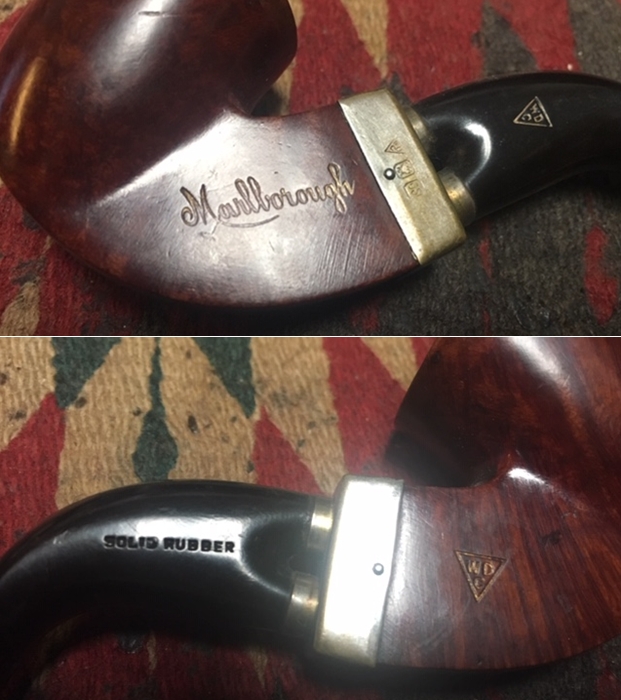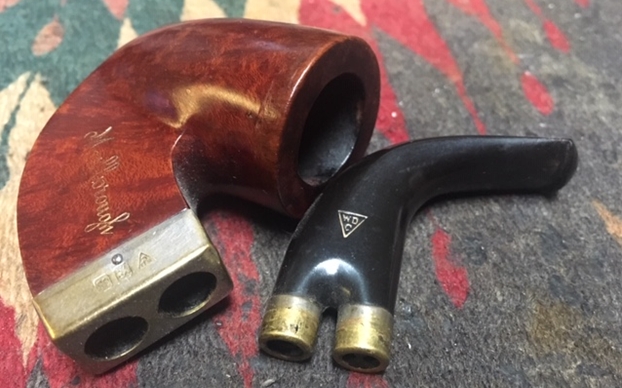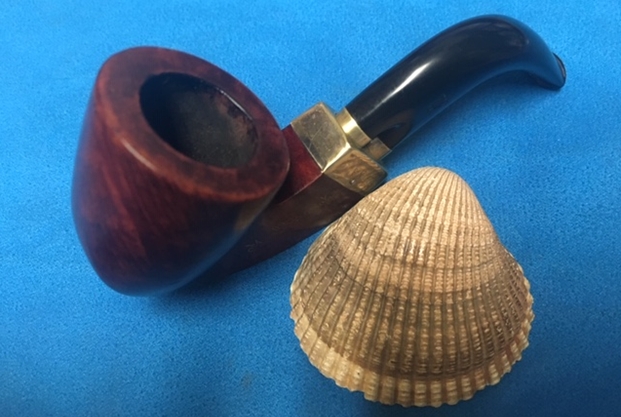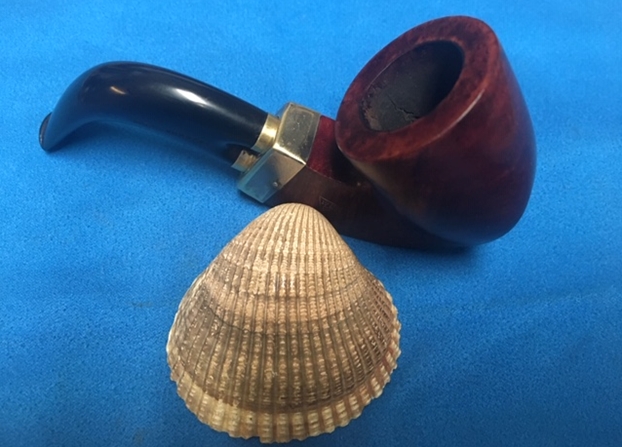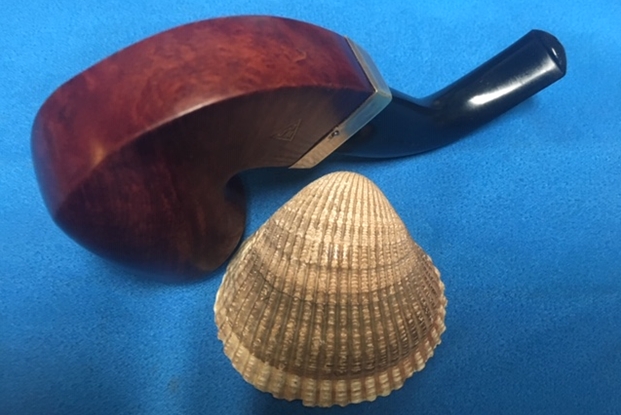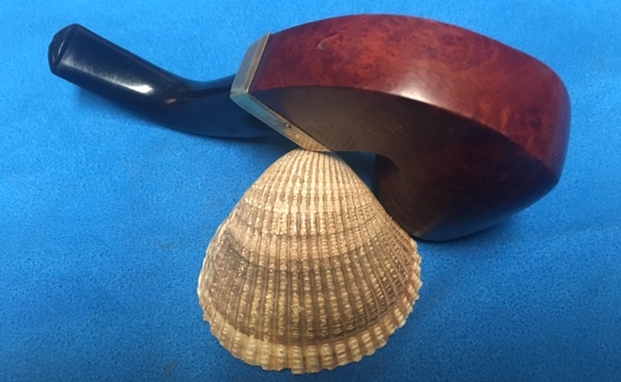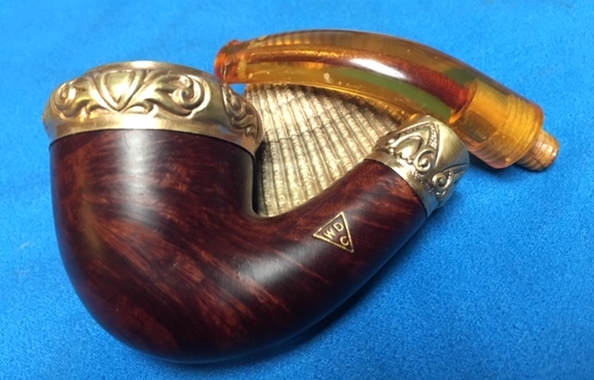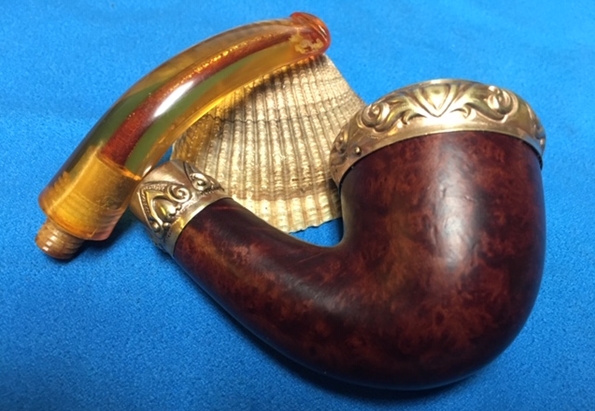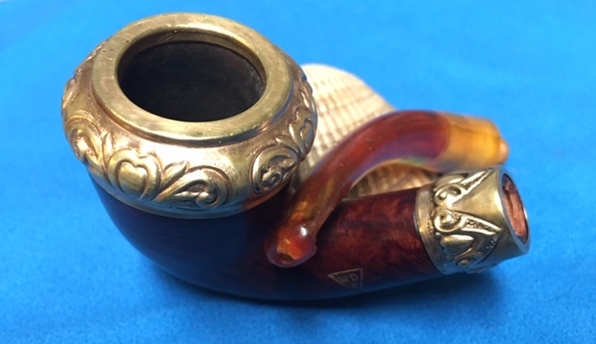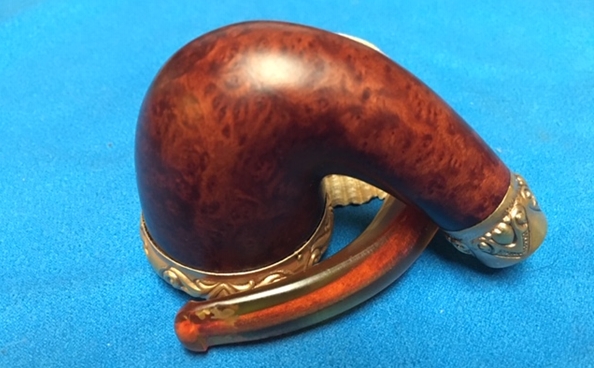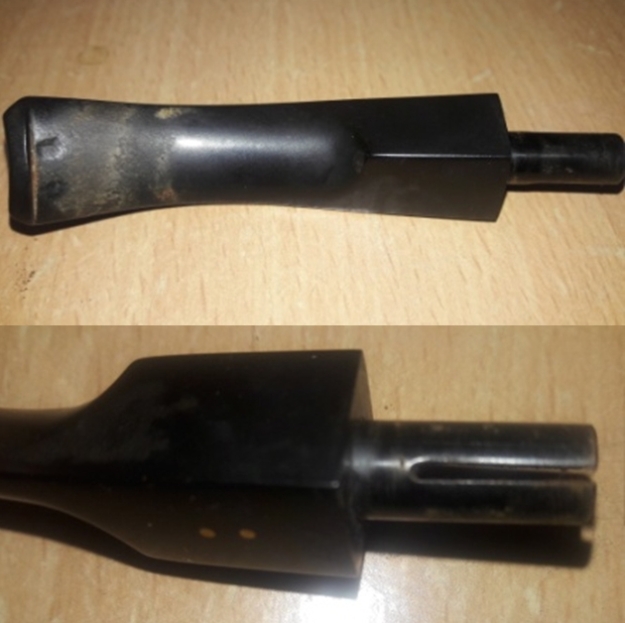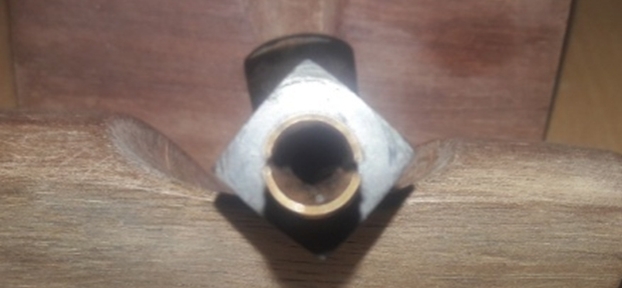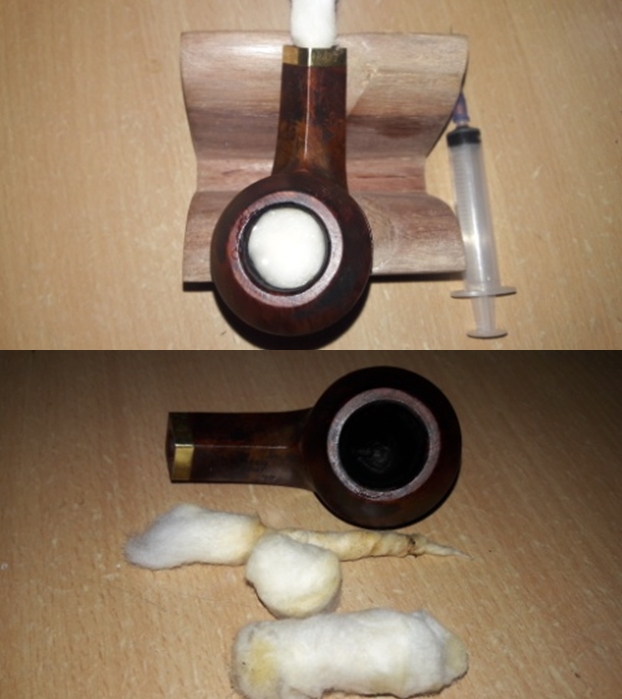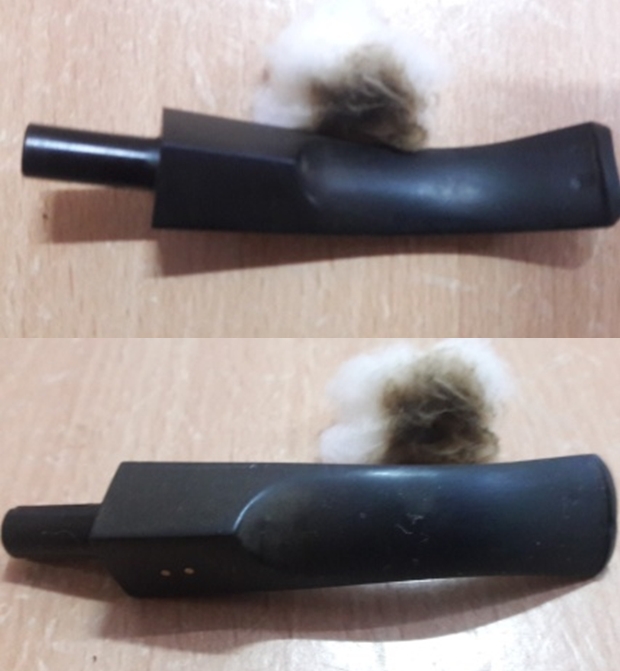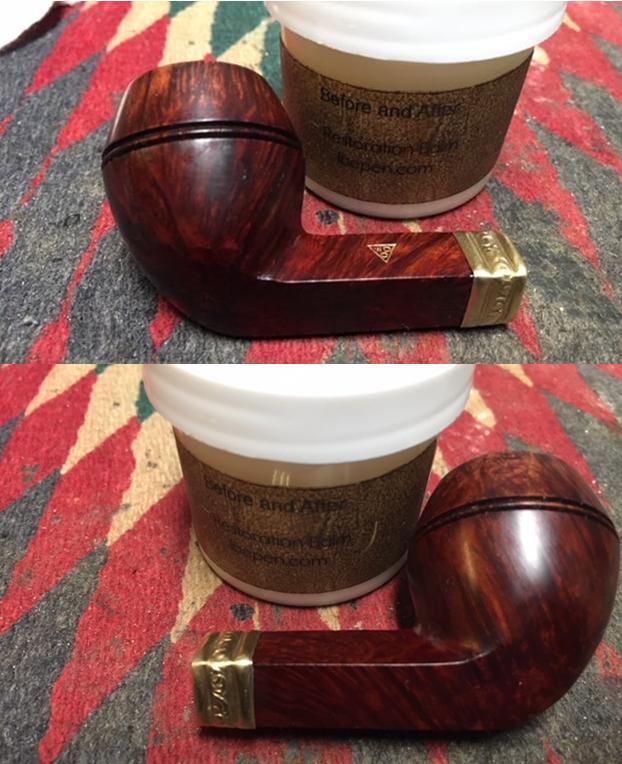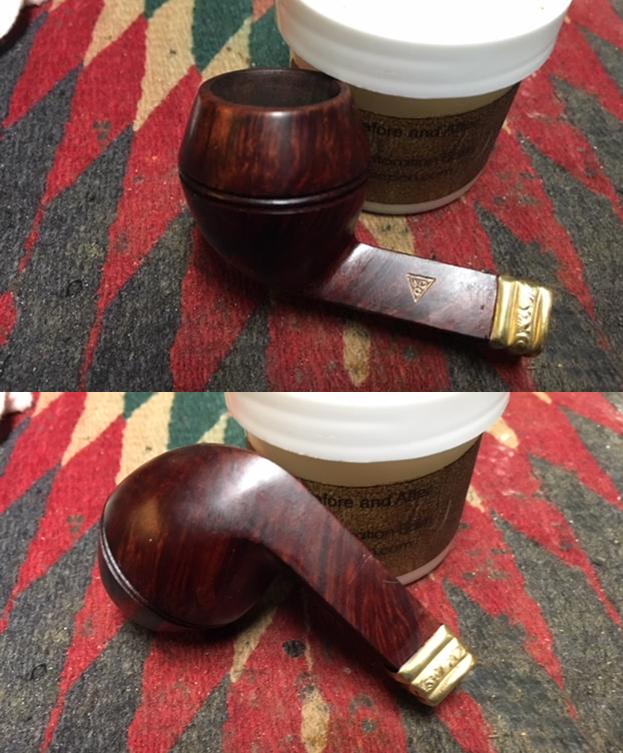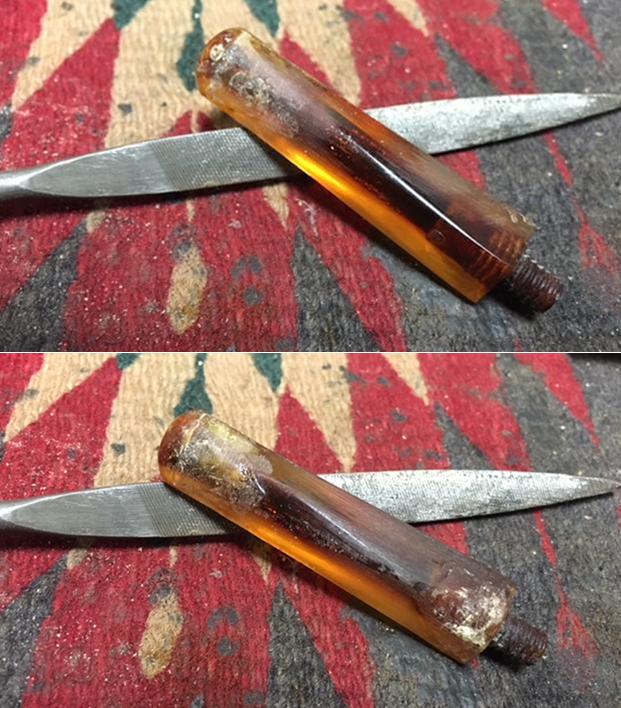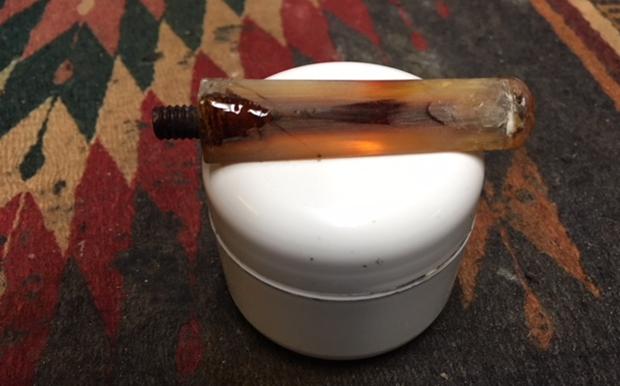
Tag Archives: WDC pipes

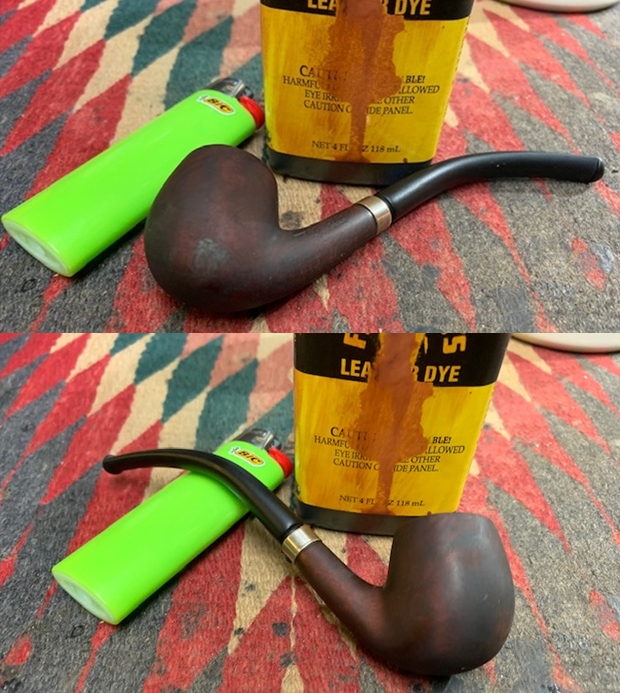
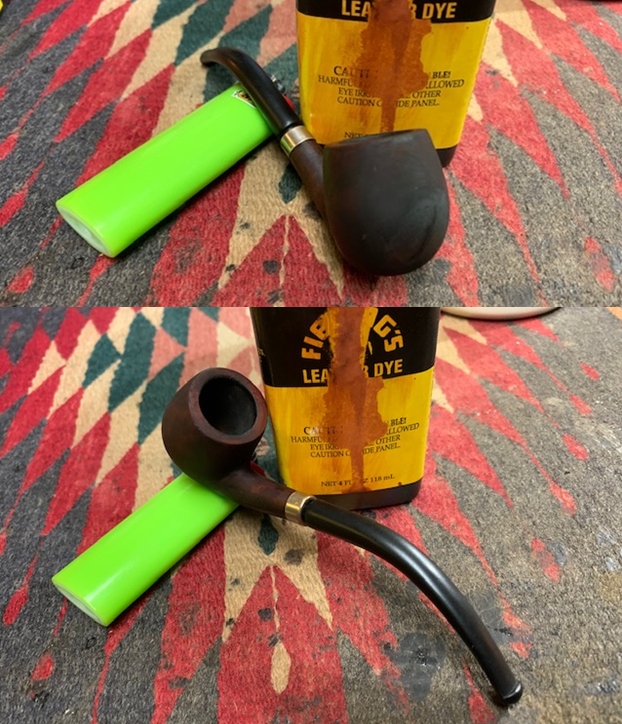
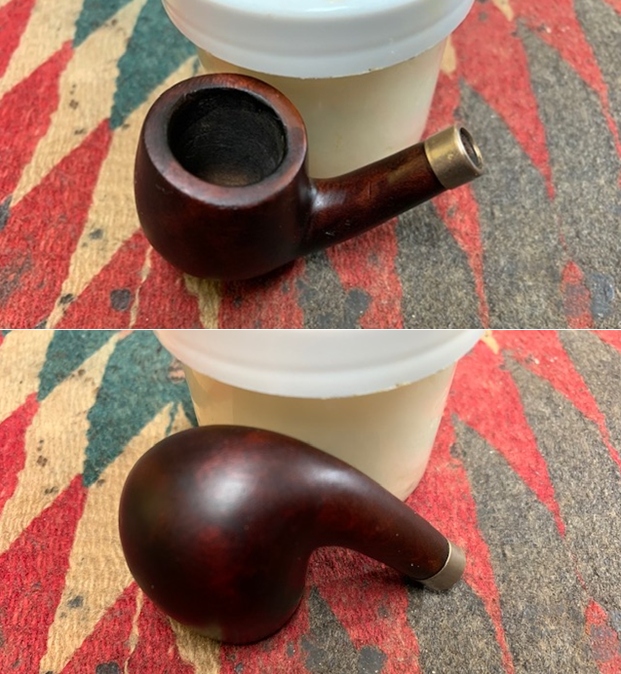
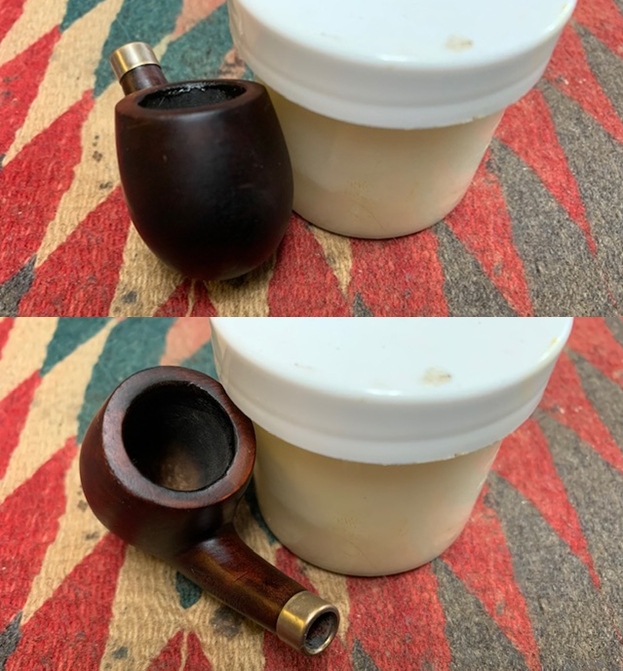
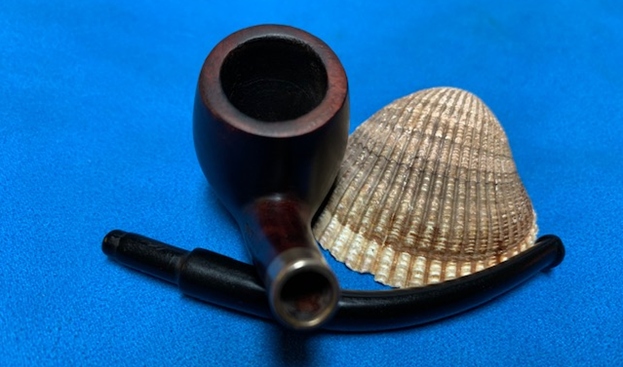
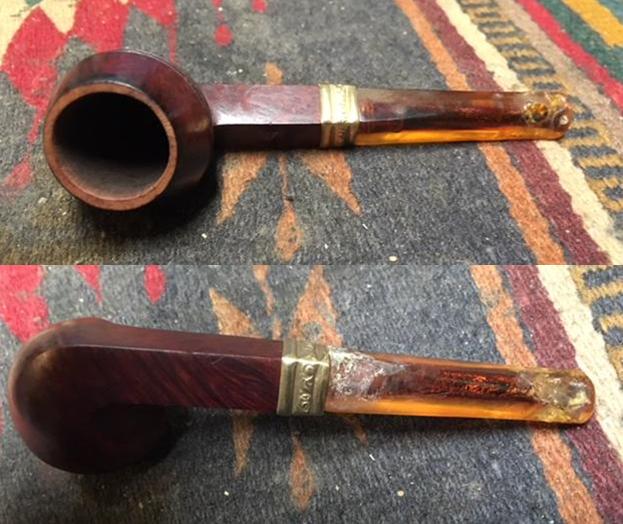
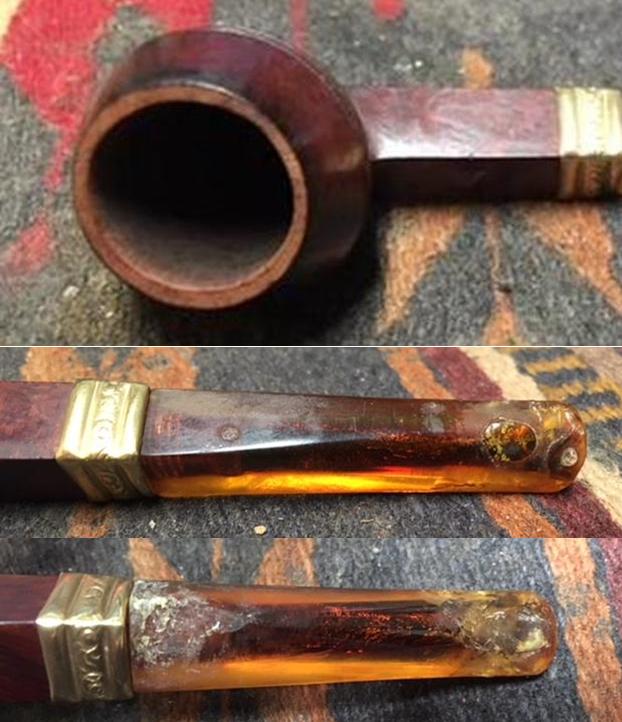
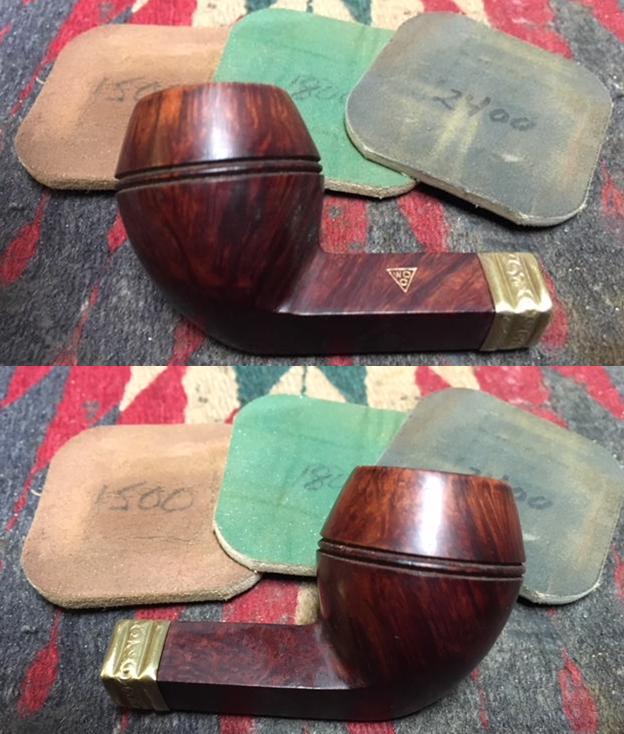
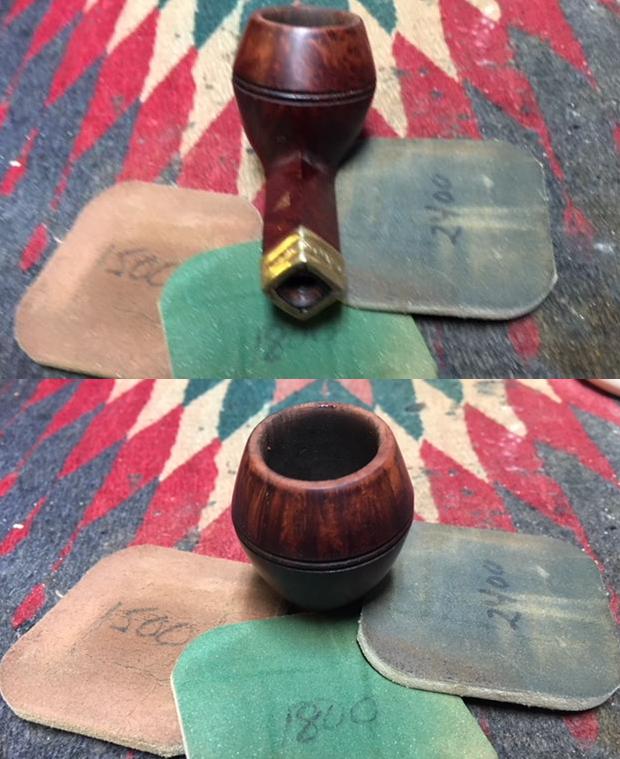
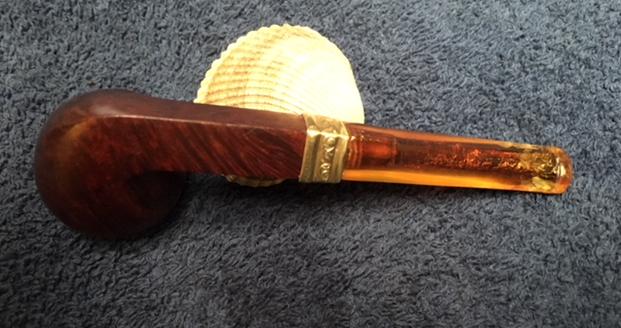
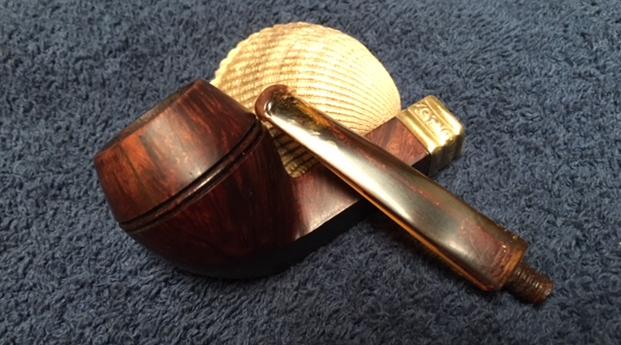
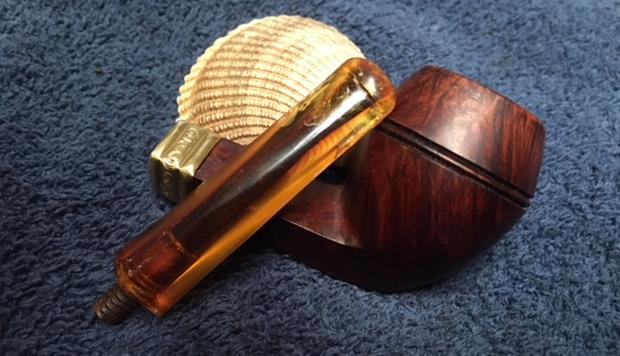
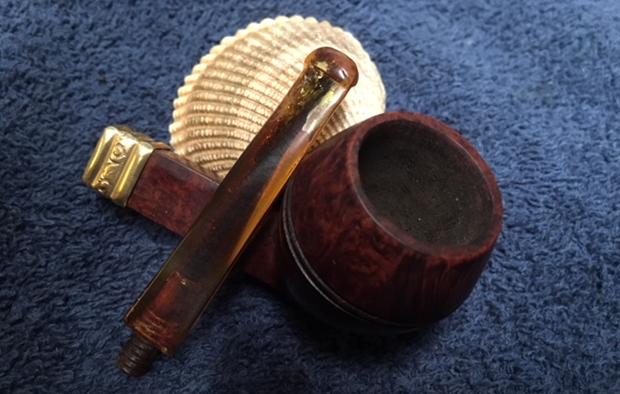
Freshening Up A Pair Of WDC Meerschaum Bowl, Bakelite Base And Redmanol Stem Pipes In A Presentation Case


Blog by Paresh Deshpande

It’s been a while since I have sent Steve any write ups for posting on rebornpipes and it’s not because I have not been working on any. As a matter of fact, I had completed re-stemming and refurbishing of 4 un-smoked vintage bowls. These were c.1897 BBB OWN MAKE Billiard with long pencil shank that came with its original shop stickers on it, the second was a c.1901 A.D.P (Adolph Posener), the third was a c.1904 Imperial ITC bent billiard and the fourth was c.1911 A.O KEYSTONE (Adolphe Oppenheimer & Co). Unfortunately, I lost the photographs that I had taken of all the pipes during their refurbishing process and as such there was nothing for me to base my write ups on (yeah…I know even Steve has been suggesting that I do the write up simultaneously as I work!!).

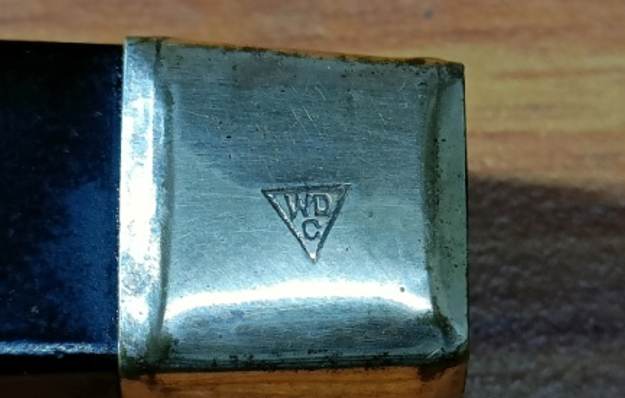
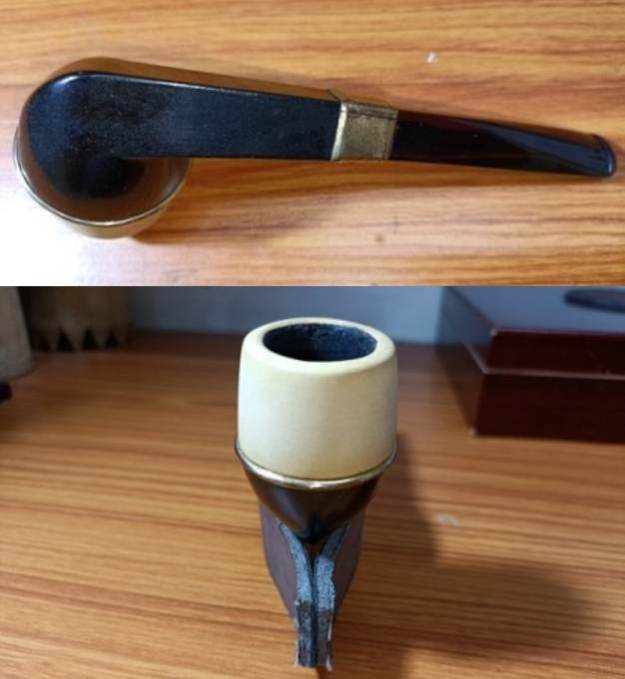
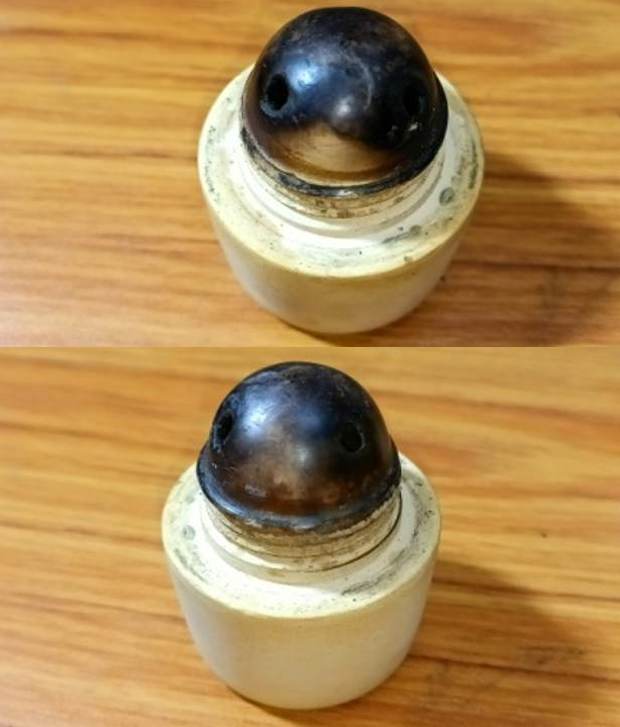
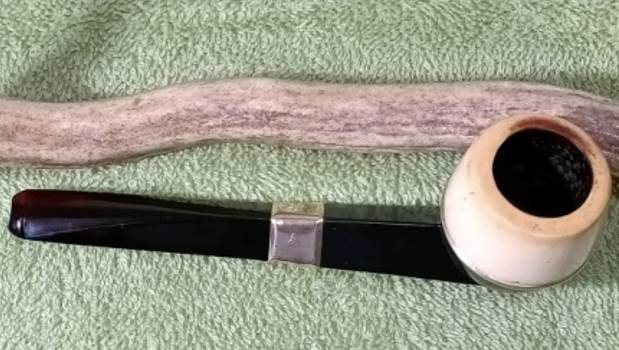
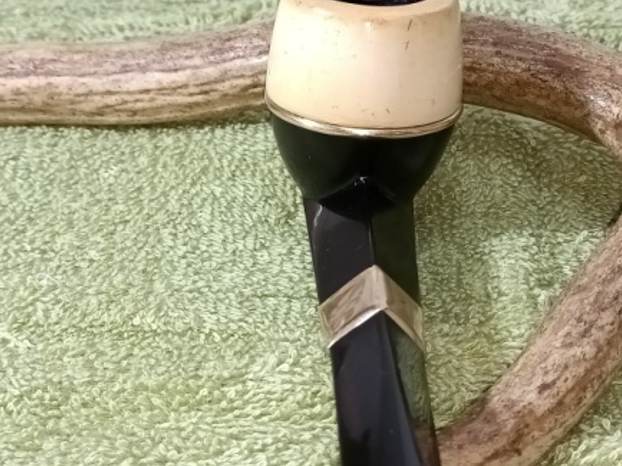
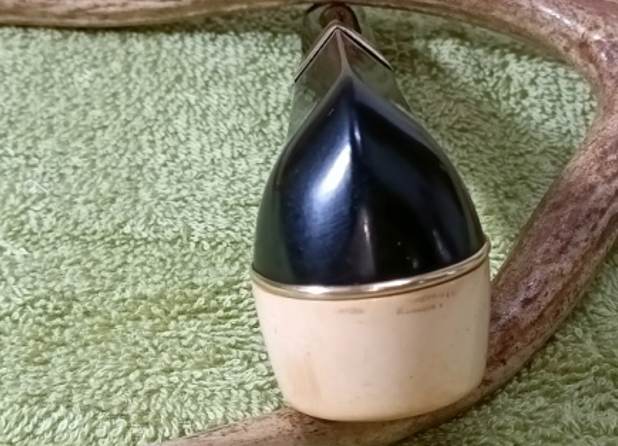
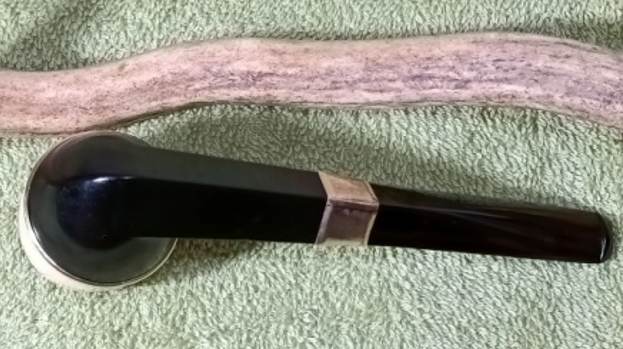
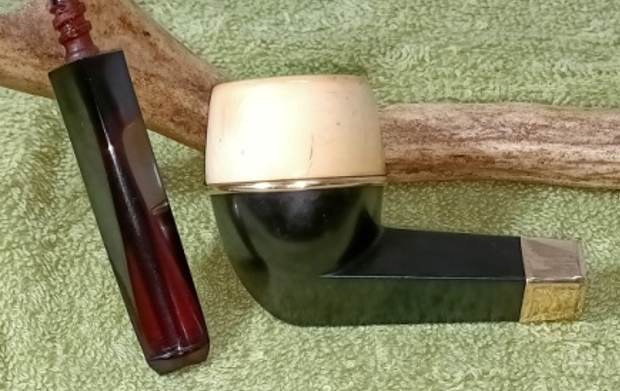
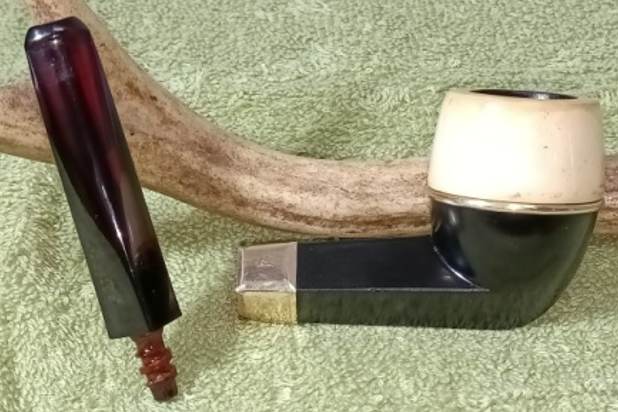
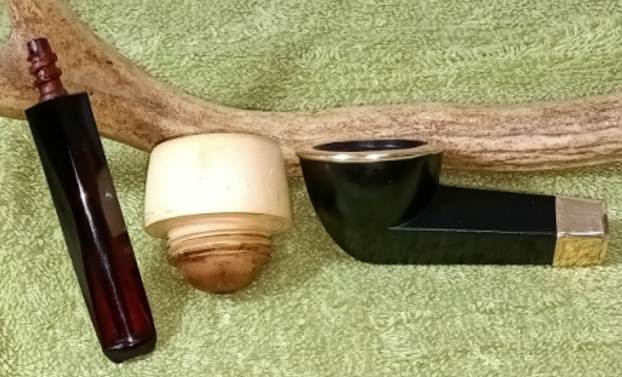
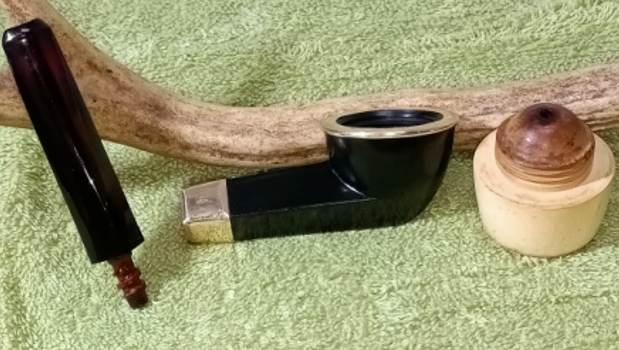
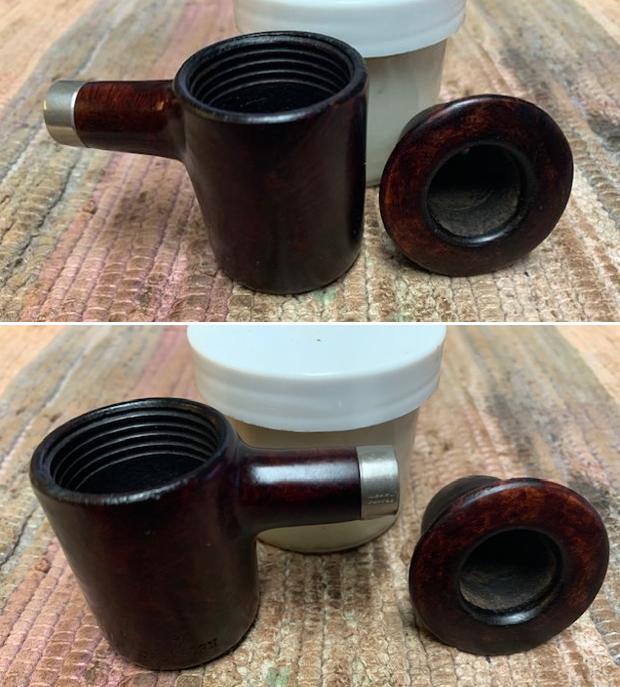
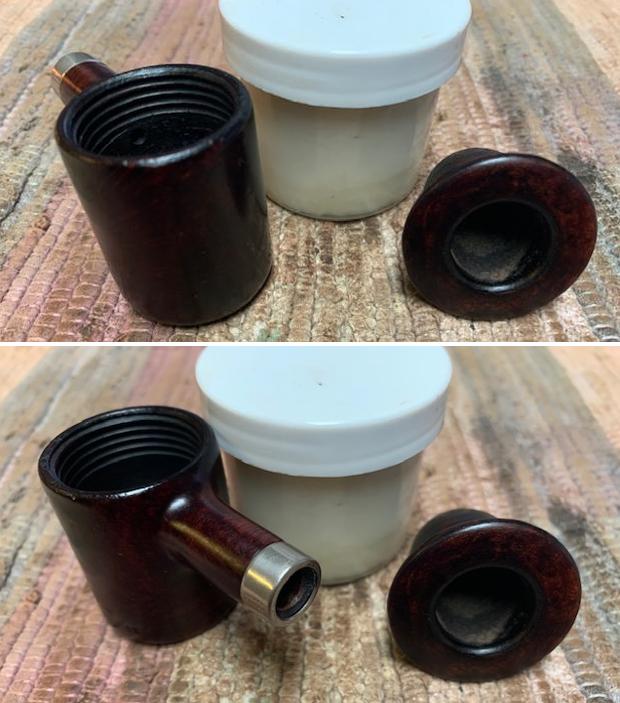
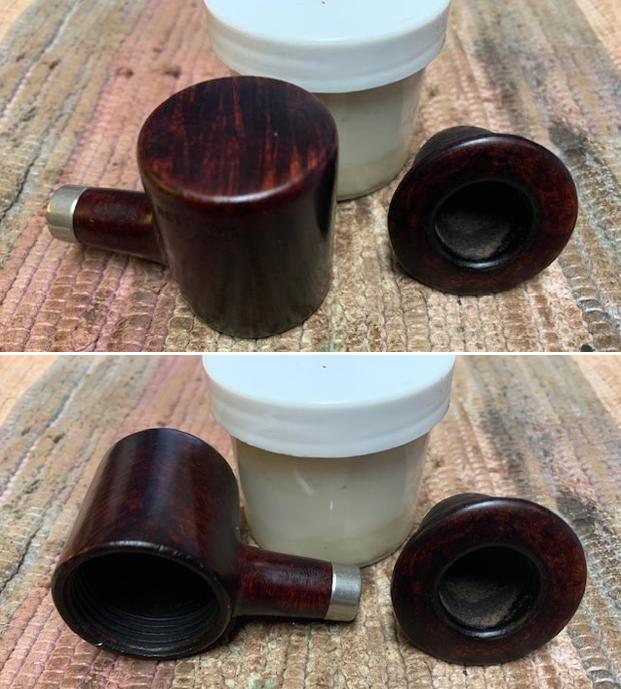
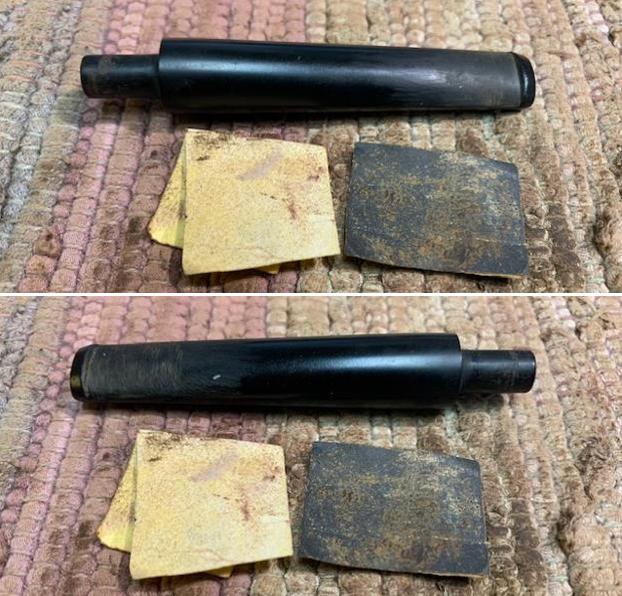
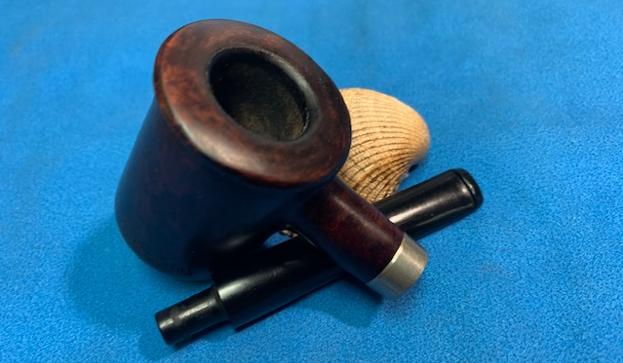
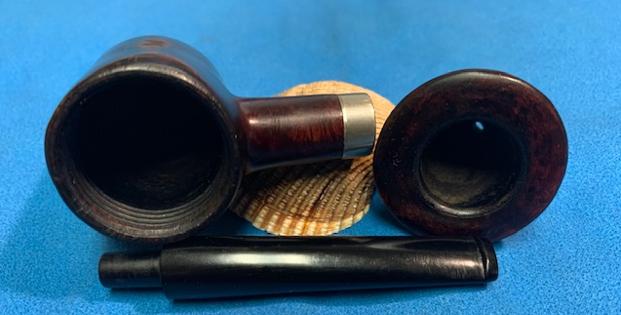
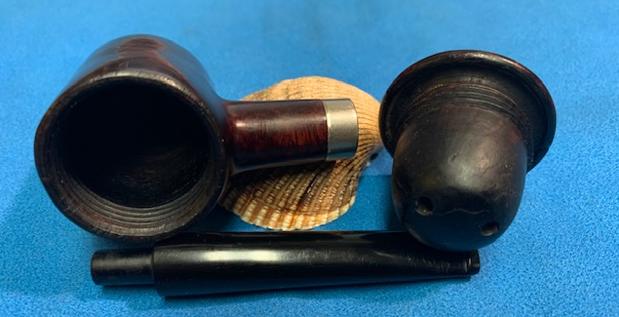
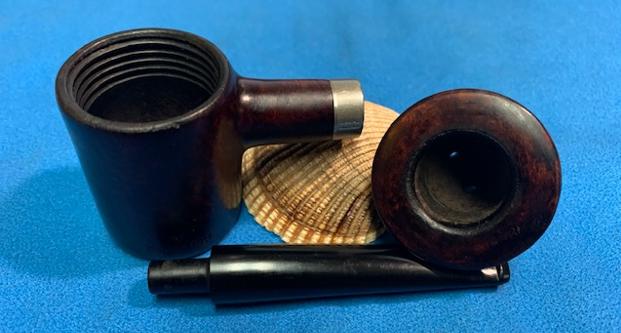
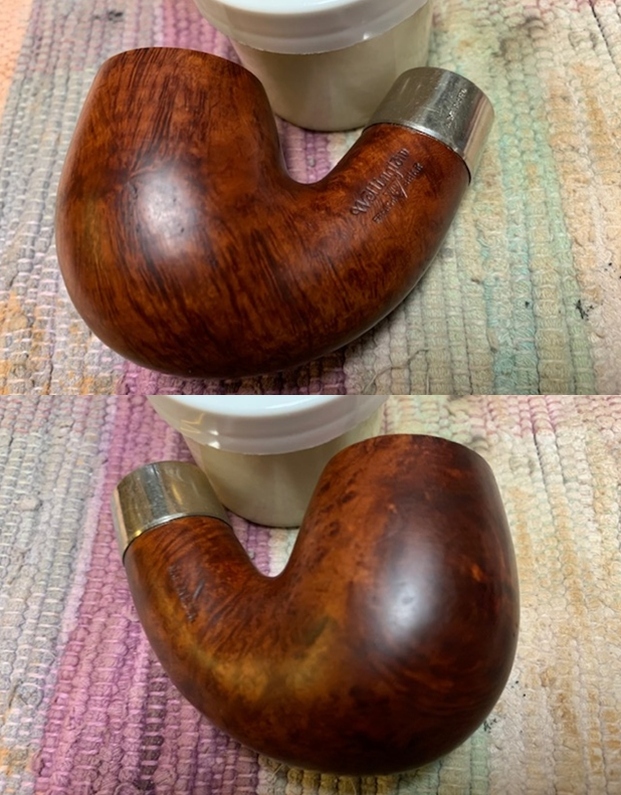
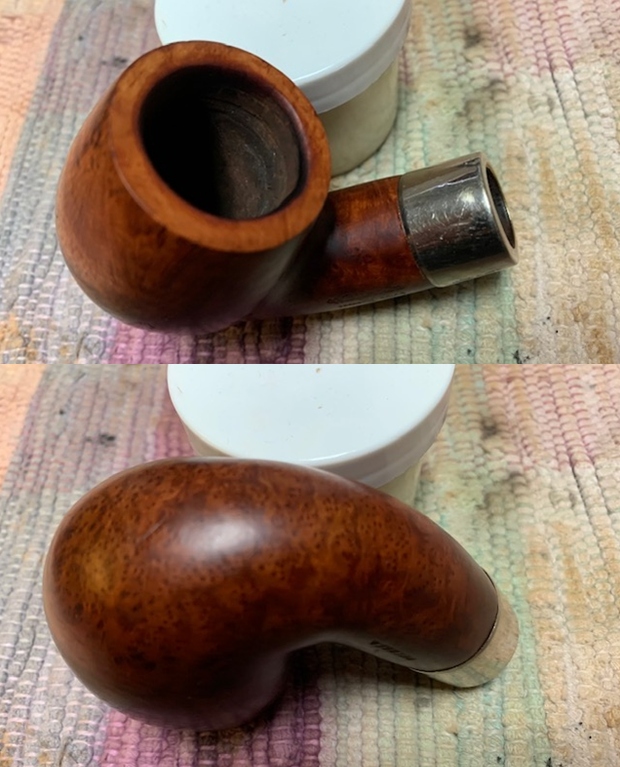
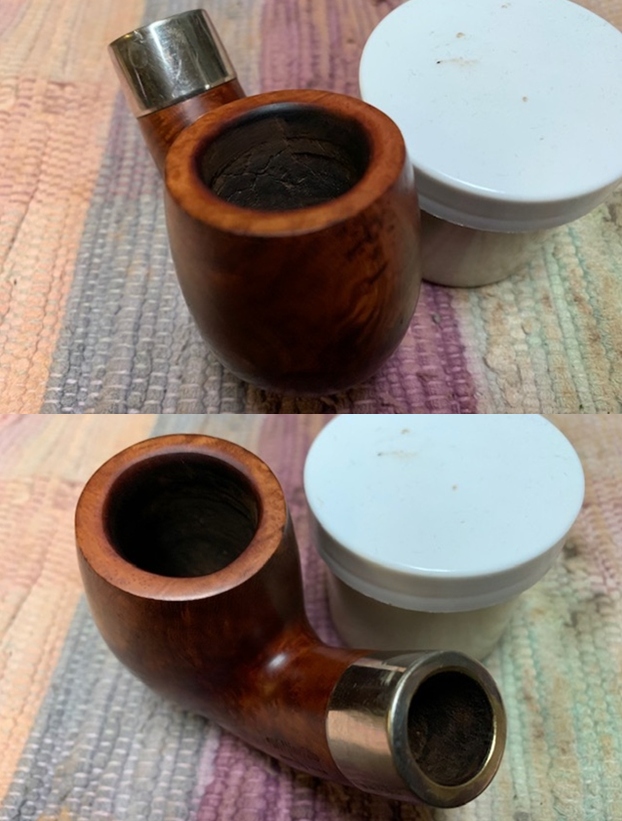
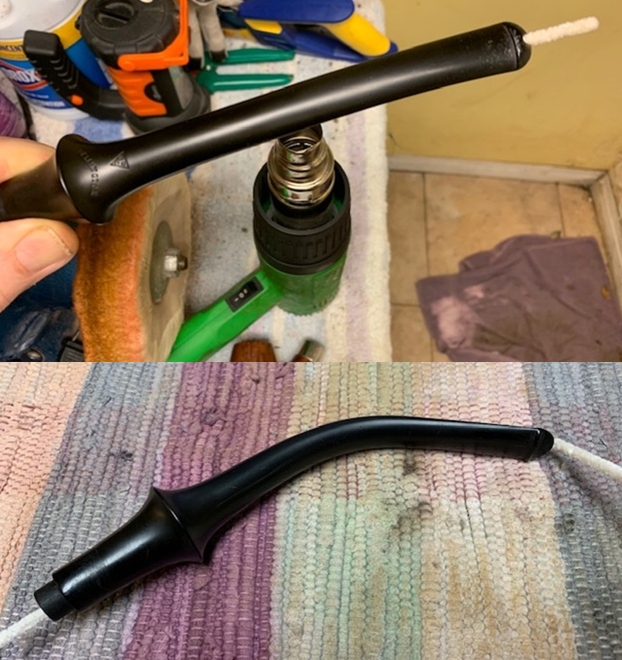
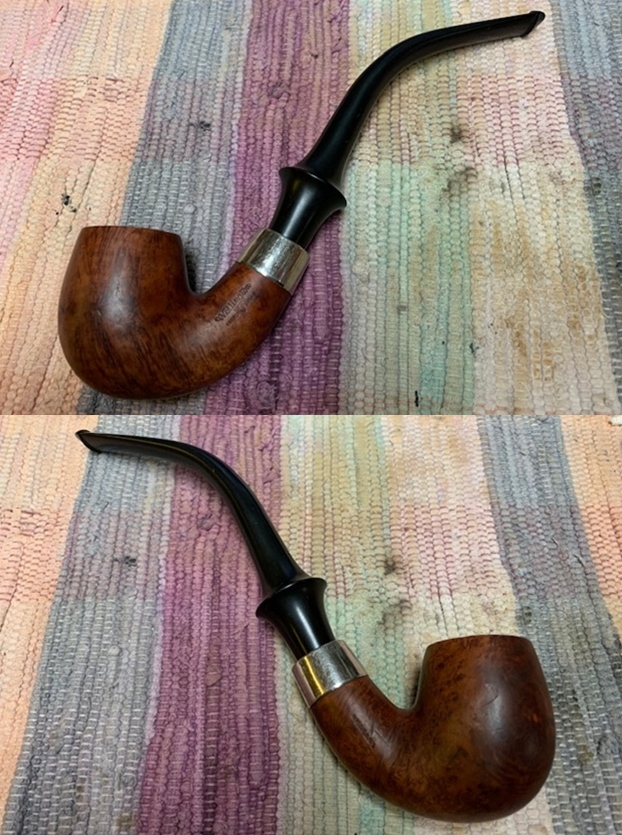
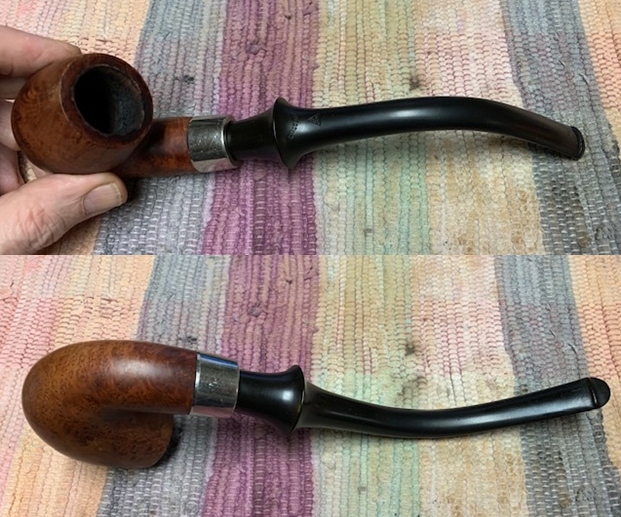
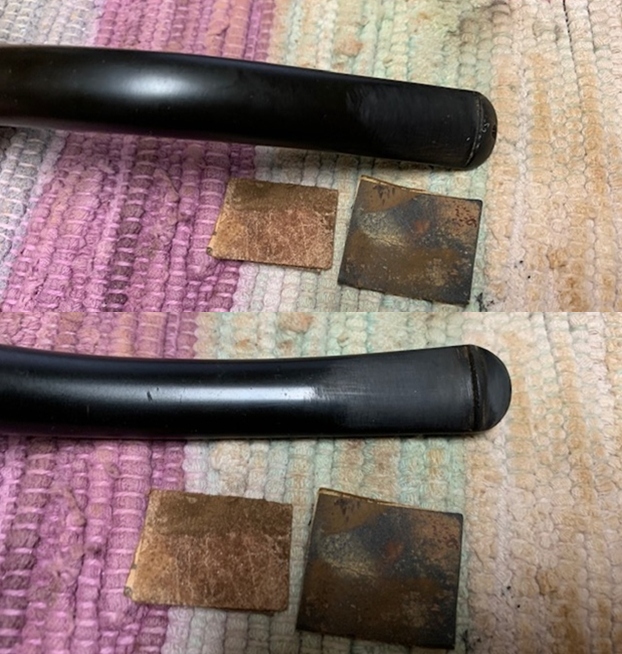
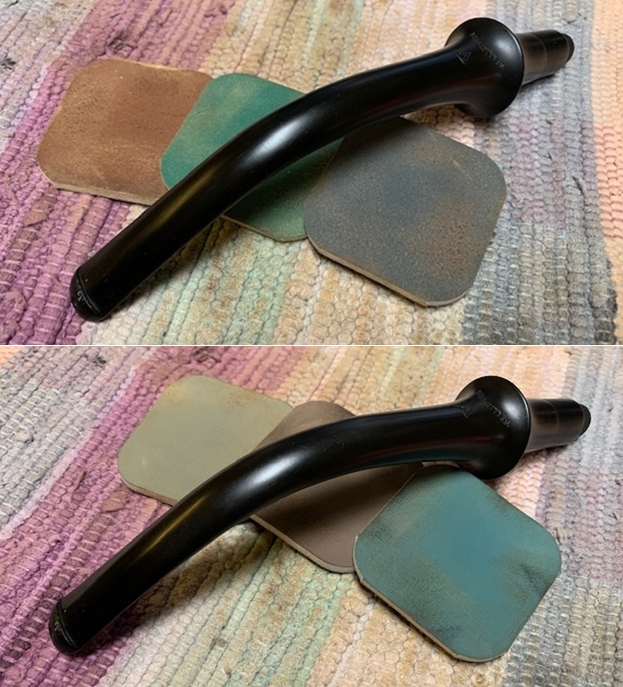
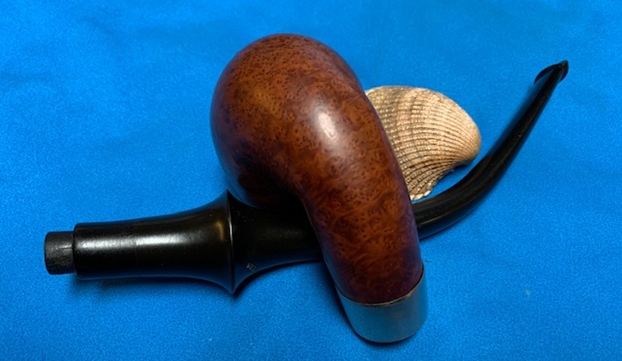
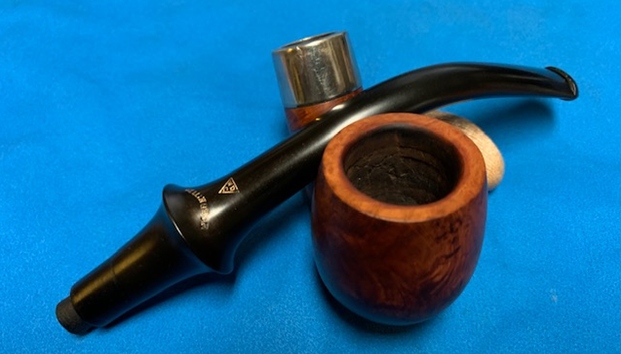
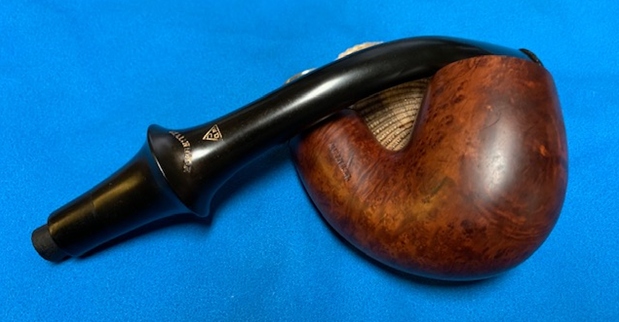
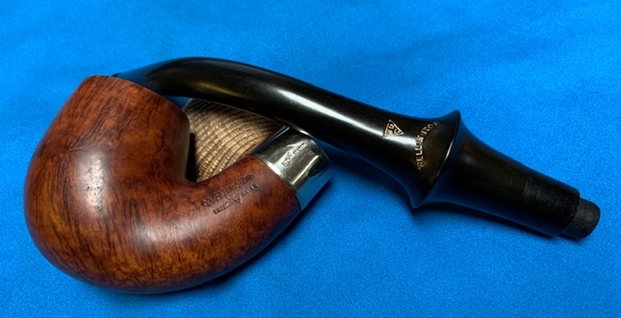
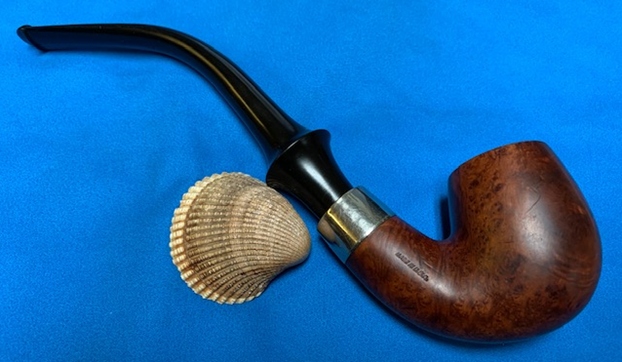
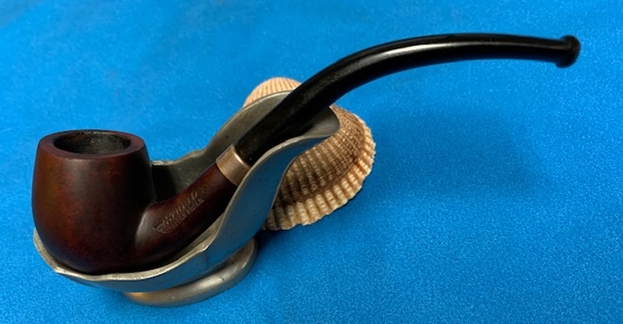
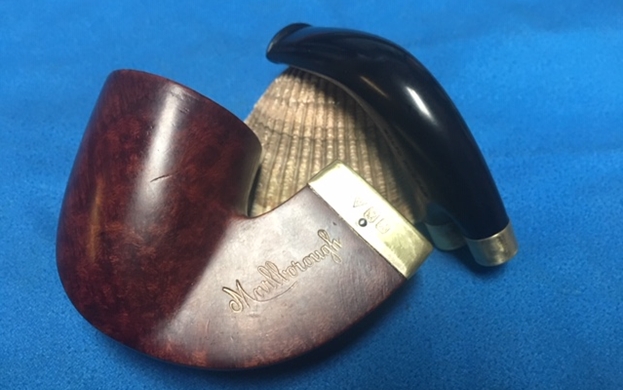
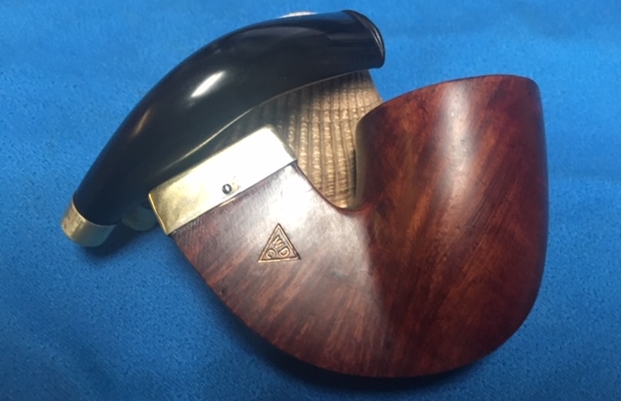
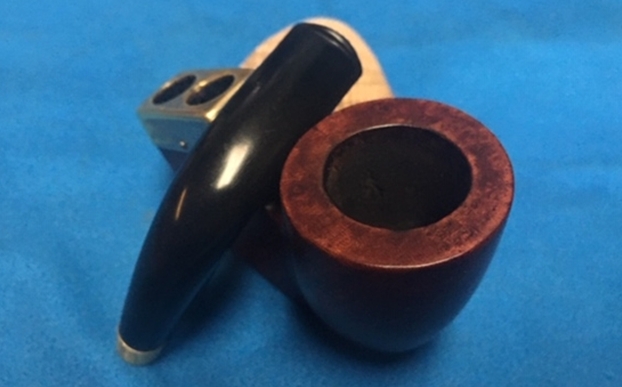
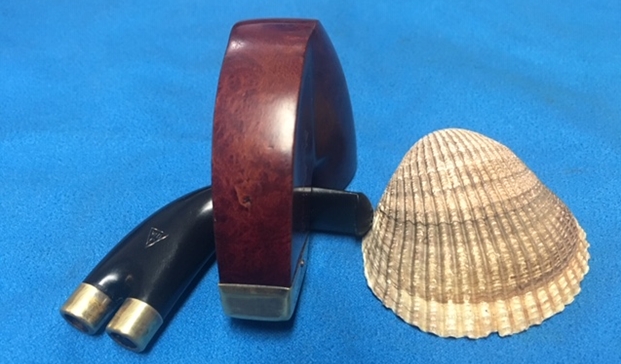
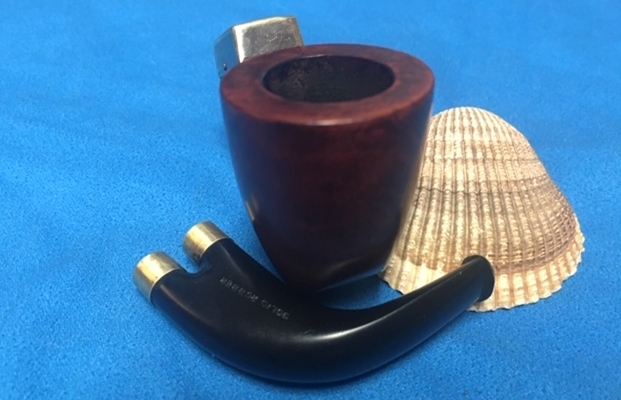
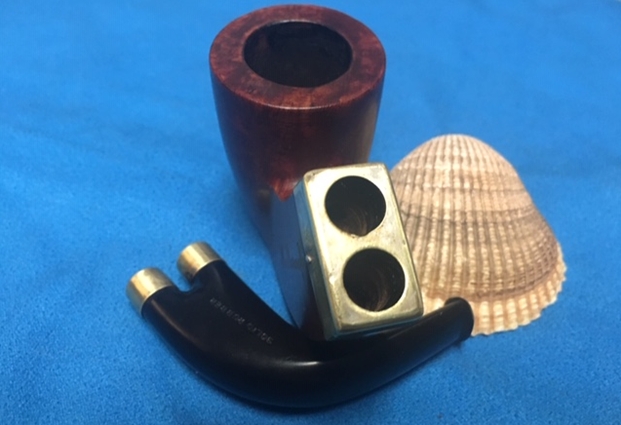
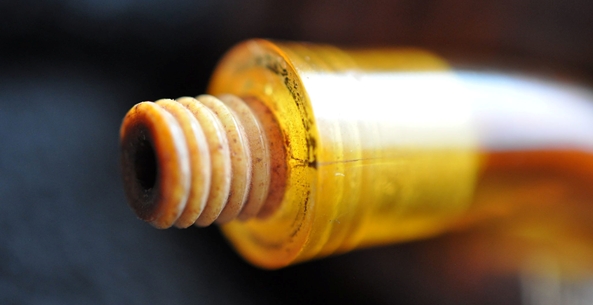
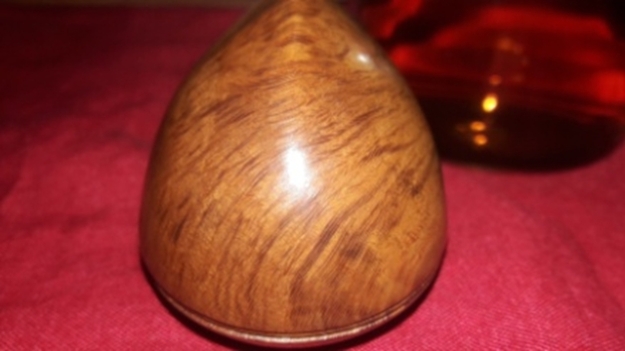
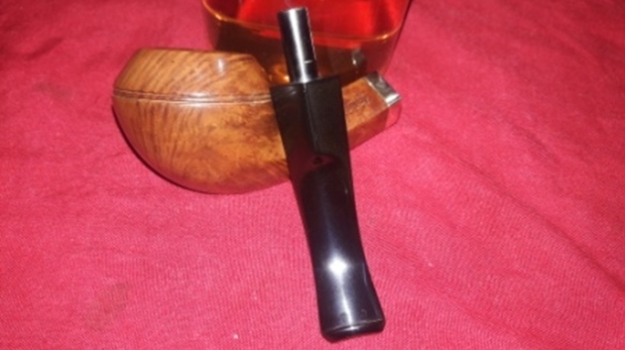
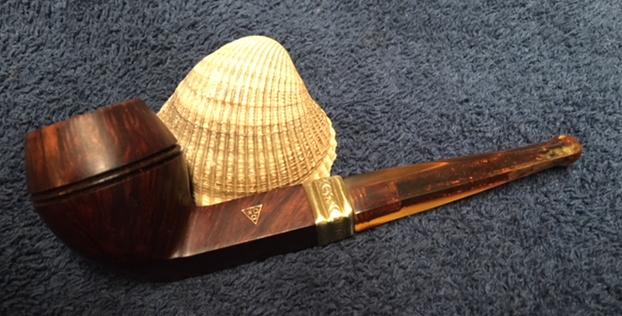
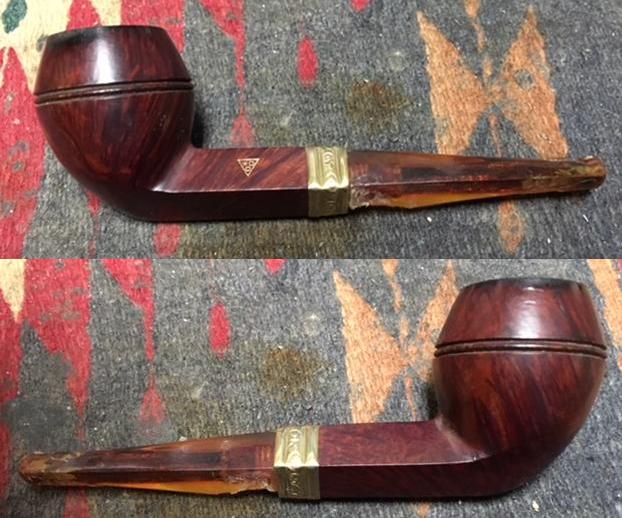
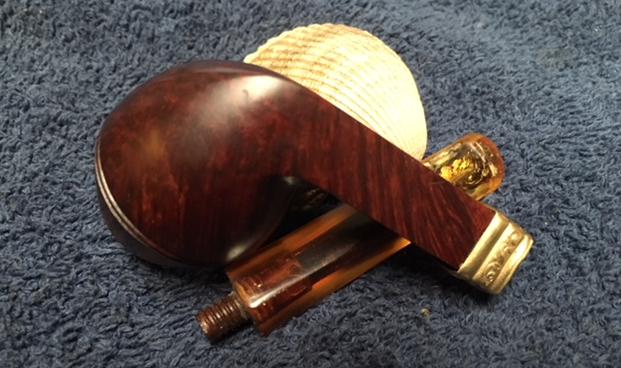
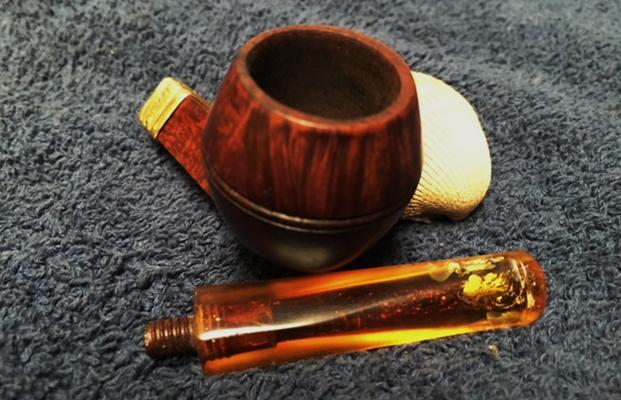
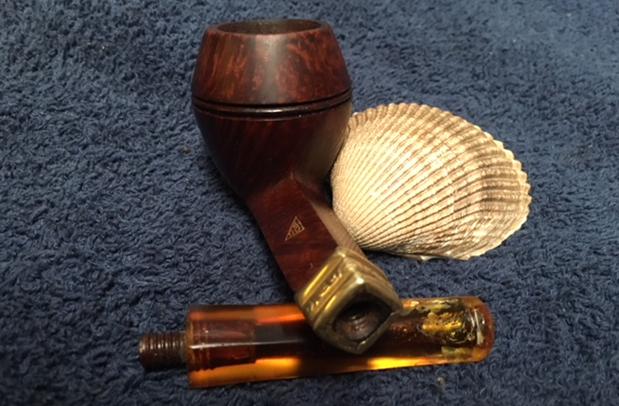
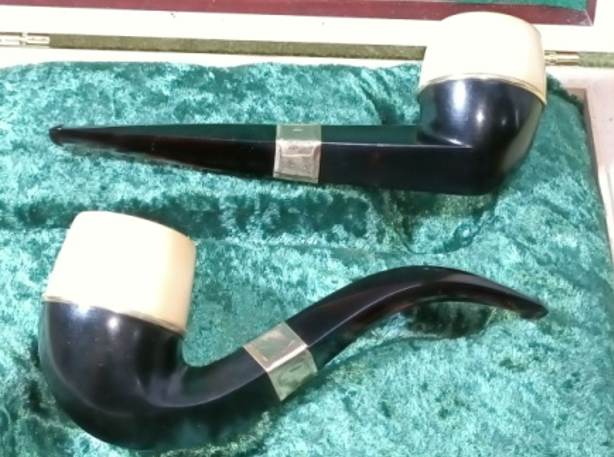
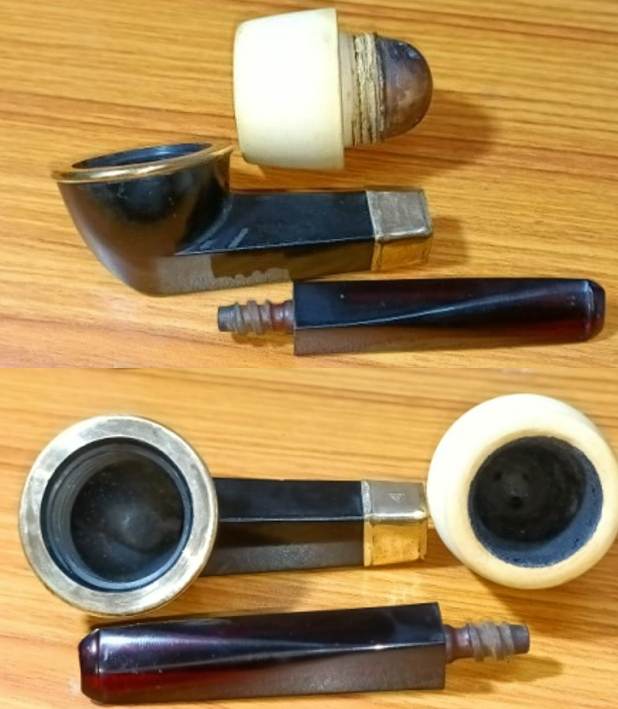
Moving ahead, the next project that I selected to lift up my spirits was a pair of WDC Meerschaum bowled Bulldog pipes that came in its beautiful Presentation case. Both pipes appeared to be in a very good condition and should clean up well. Here are a few pictures of the pair and its case as it sat on my work table. This pair of pipes has three different materials used in its manufacture and that is what makes it unique and interesting. The chamber/bowl are made from Meerschaum which threads in to a Bakelite shank that has a brass (?) band at its end and bears its trademark inverted triangle stamped with as “WDC”. The stems are made of Redmanol, a beautiful translucent material that was widely used in the early part of the 20th century. I have worked on a few WDCs earlier and am pretty familiar with the brand’s history. I revisited rebornpipes where I had posted my previous WDC projects. Here is the link to the write up which will give readers a fairly detailed idea about the brand and a rough estimate as to the vintage of the pair of pipes on my work table.
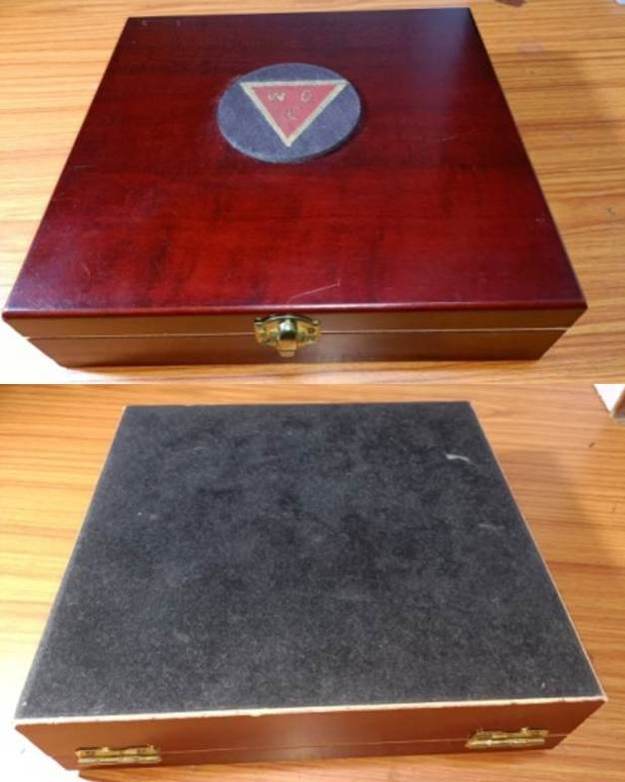
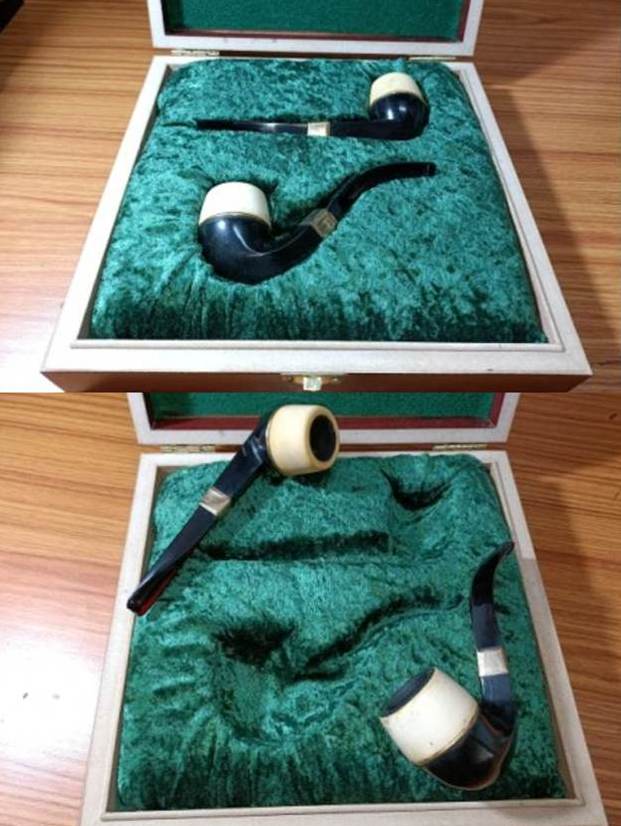
https://rebornpipes.com/2019/04/05/sprucing-up-another-wdc-a-cased-bakelite-briar-dublin/

I visited rebornpipes.com and came across an interesting article on materials used in pipe making (https://rebornpipes.com/2014/08/09/hard-rubber-and-other-early-plastic-used-in-pipes-ronald-j-de-haan/)

It is here that I found the following information on “BAKELITE”:

These qualities made Bakelite the most successful synthetic material in the first half of the 20th century. From 1928 it was also produced as molded resin. Both the pressed and the molded forms were suitable for the pipe making industry. Pipes were made from Bakelite and molded phenol-resin. Complete pipes of Bakelite are very rare because of its lack of heat resistance. Phenol-resin however was frequently used for pipe mouthpieces and cigarette holders because it imitated amber.

Further search on rebornpipes got me to a write up that Steve had done on a Redmanol WDC pipe. Given below is the link to the referenced article.

https://rebornpipes.com/2020/05/26/life-for-a-wdc-redmanol-dublin-with-a-removable-redmanol-bowl/

I quote from the article…..

“I turned to Wikipedia for an article on Bakelite and Redmanol to remind myself of the connection between the companies (https://en.wikipedia.org/wiki/Bakelite).

As the sales figures also show, the Bakelite Company produced “transparent” cast resin (which did not include filler) “artificial amber”, were machined and carved to create items such as pipe stems, cigarette holders and jewelry.[11][12] However, the demand for molded plastics led the Bakelite company to concentrate on molding, rather than concentrating on cast solid resins.[11]:172–174…

…The Bakelite Corporation was formed in 1922 after patent litigation favorable to Baekeland, from a merger of three companies: Baekeland’s General Bakelite Company; the Condensite Company, founded by J.W. Aylesworth; and the Redmanol Chemical Products Company, founded by Lawrence V. Redman.[13] Under director of advertising and public relations Allan Brown, who came to Bakelite from Condensite, Bakelite was aggressively marketed as “the material of a thousand uses”.[7]:58–59[14] A filing for a trademark featuring the letter B above the mathematical symbol for infinity was made August 25, 1925, and claimed the mark was in use as of December 1, 1924. A wide variety of uses were listed in their trademark applications.[15]

I also read a brief article on Redmanol on Wikipedia and the link was clear as the companies joined in 1922 (https://en.wikipedia.org/wiki/Redmanol_Chemical_Products_Company).

Redmanol Chemical Products Company was an early plastics manufacturer formed in 1913. Lawrence V. Redman was its president. In 1922, the Redmanol Company, the Condensite Company of America, and General Bakelite were consolidated into the Bakelite Corporation.[1]” ….unquote.

From the above gleaned information, it is safe to conclude that the pipe now on my worktable is of 1920s and early 1930s vintage.

Though I had simultaneously worked on this pair, I have divided the write up in two parts where I have dealt with each pipe separately. In PART I, I shall deal with the straight Bulldog of the pair and in PART II, I shall describe the process on the bent Bulldog.

PART I:- STRAIGHT BULLDOG

Initial Visual Inspection
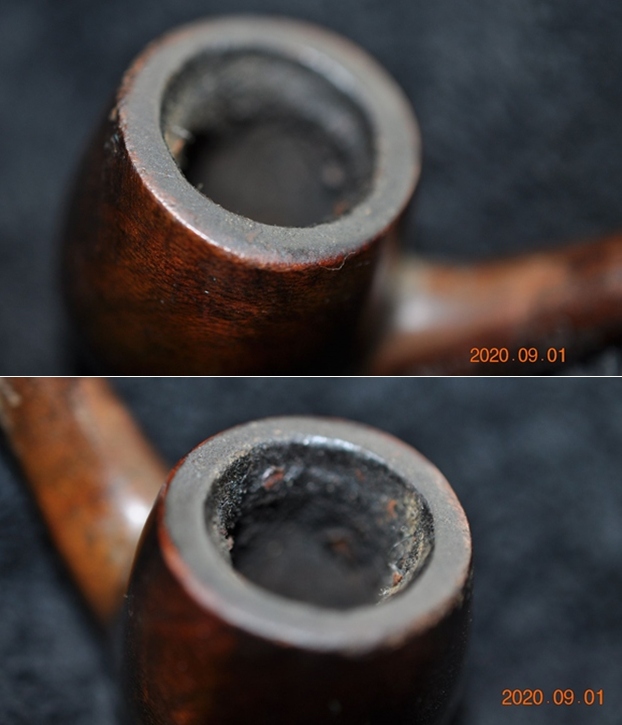
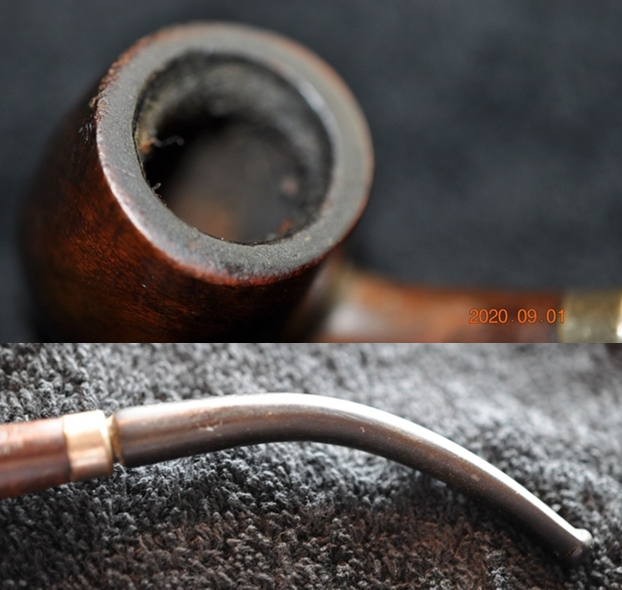
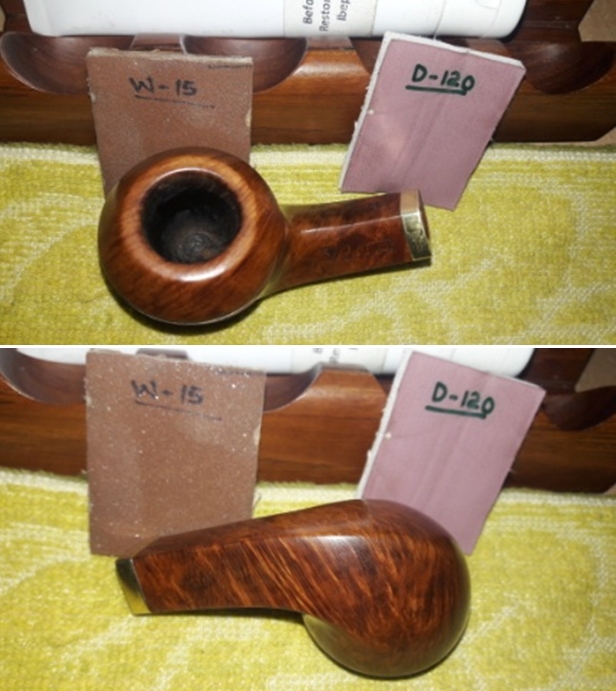
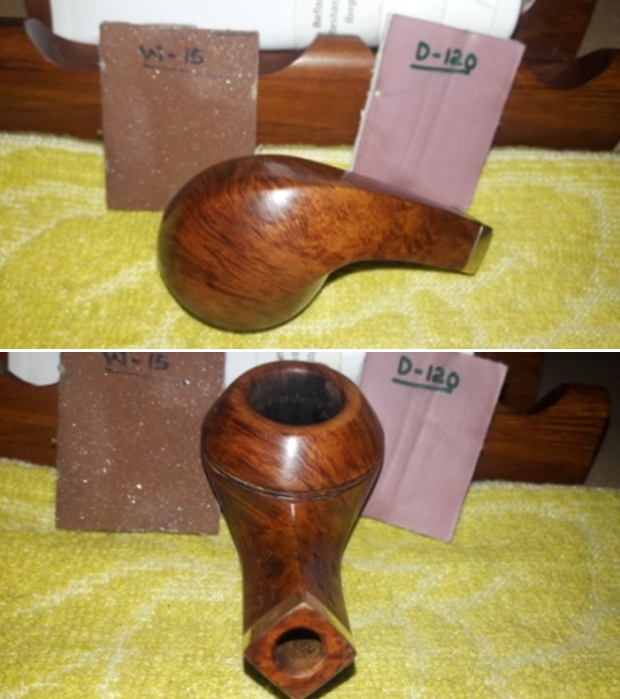
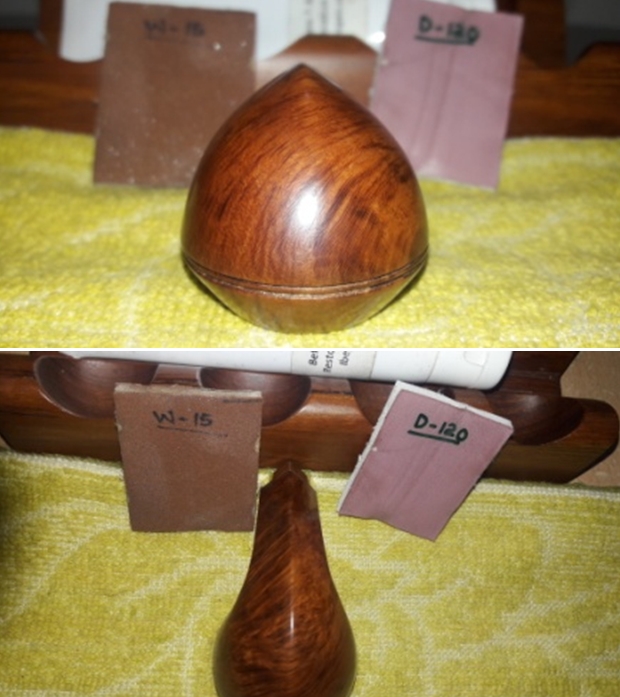
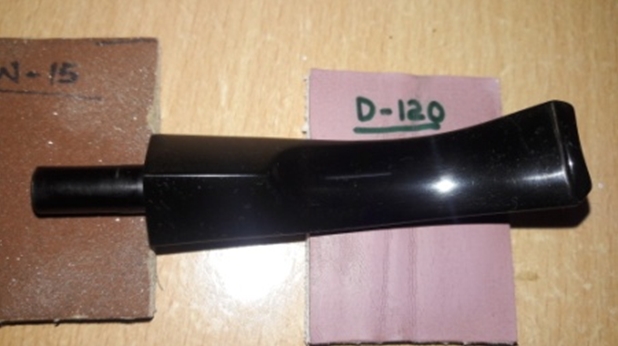
The straight bulldog pipe is in great condition given its 90 odd year age. It appears to have been well smoked given the decent layer of cake in the chamber. The rim top is clean without any lava overflow. The meerschaum bowl has a few superficial scratches from being used. The Bakelite diamond base and shank is dull in appearance, but intact. The translucent Redmanol stem is slightly oxidized and appears dull and lackluster. There is a deep tooth indentation over the upper surface and a chipped surface near the round orifice. The pictures below give a fair idea of the condition of the pipe in its present state. Detailed Inspection
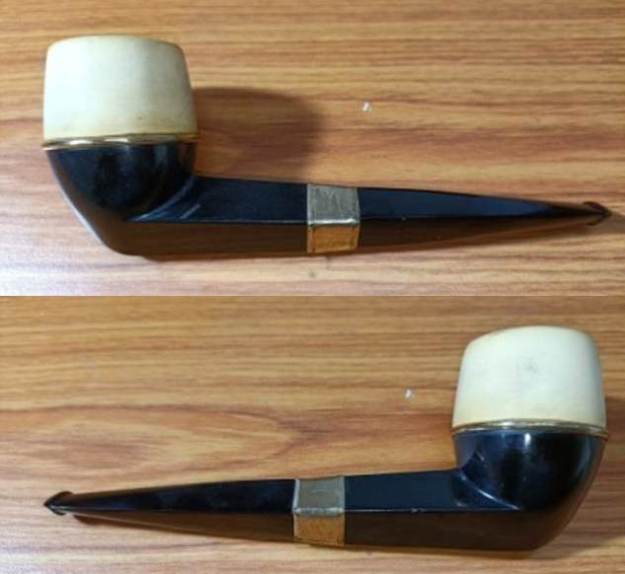
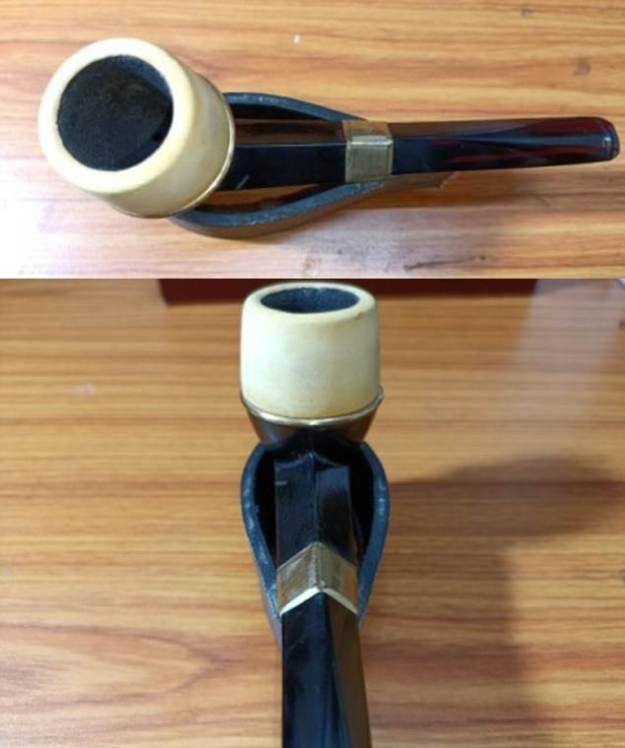
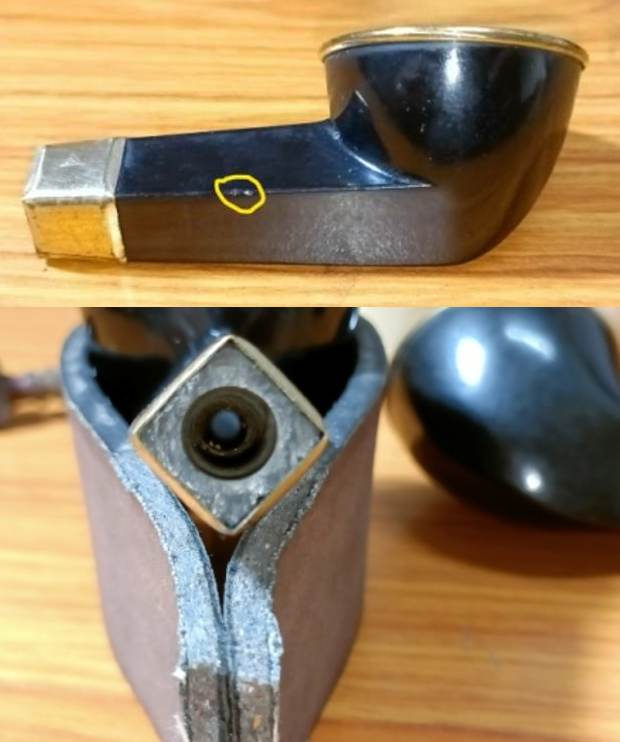
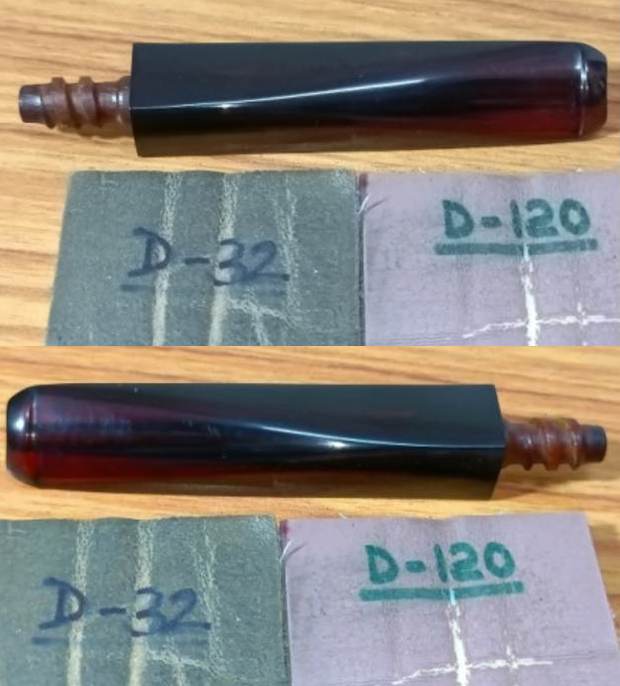
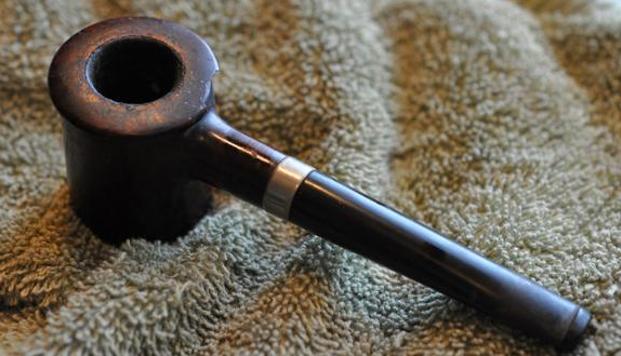
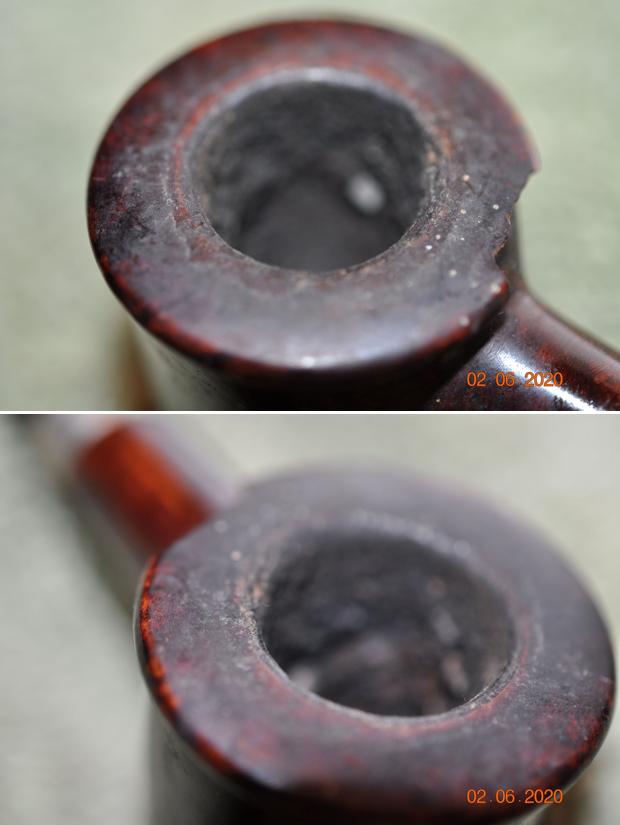
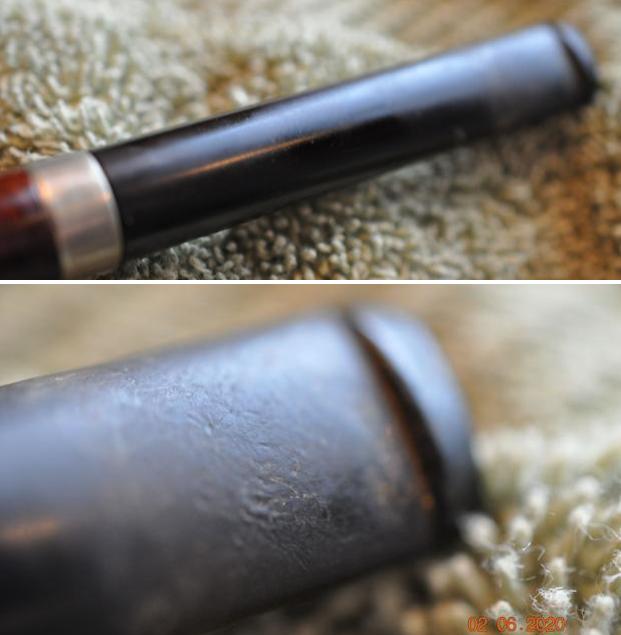
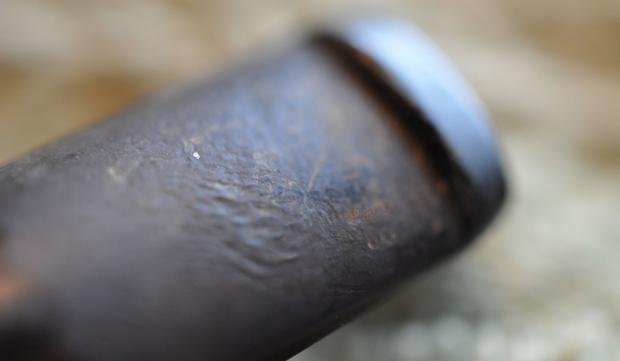
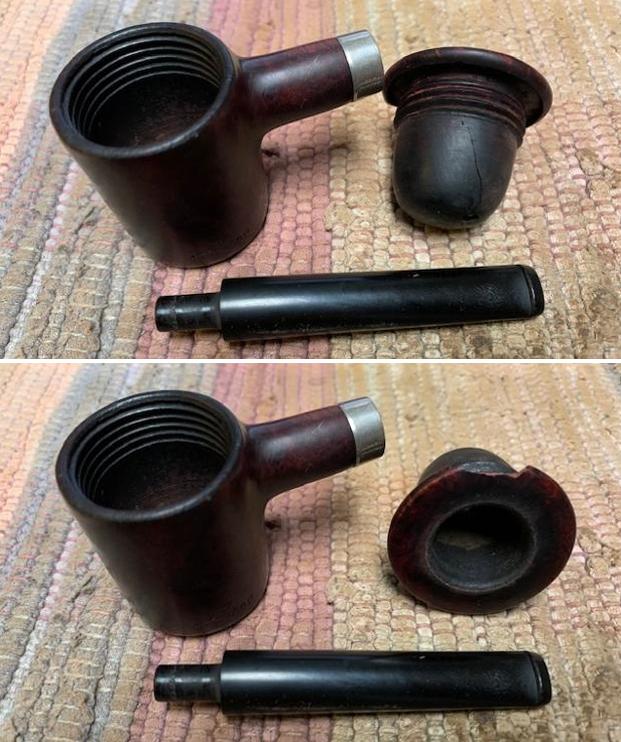
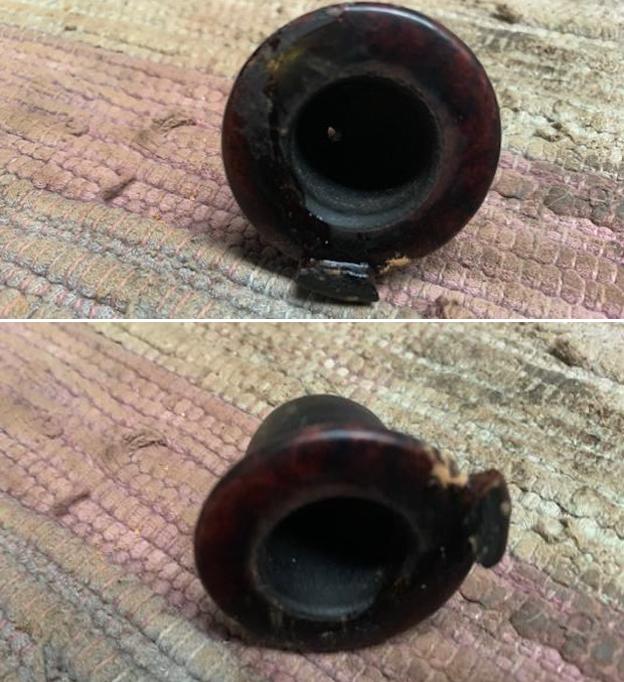
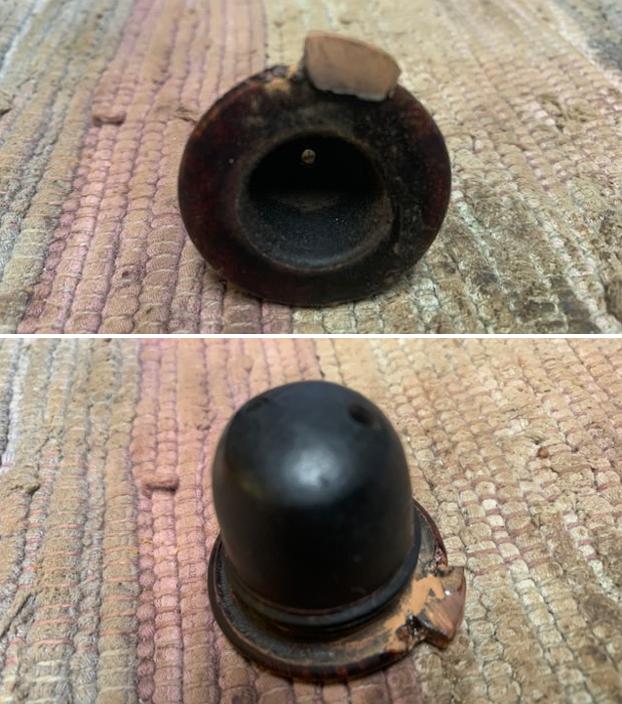
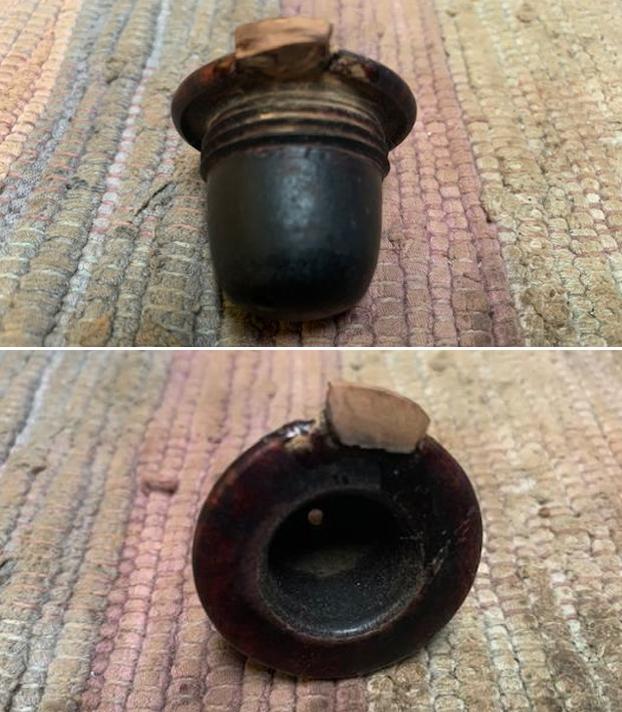
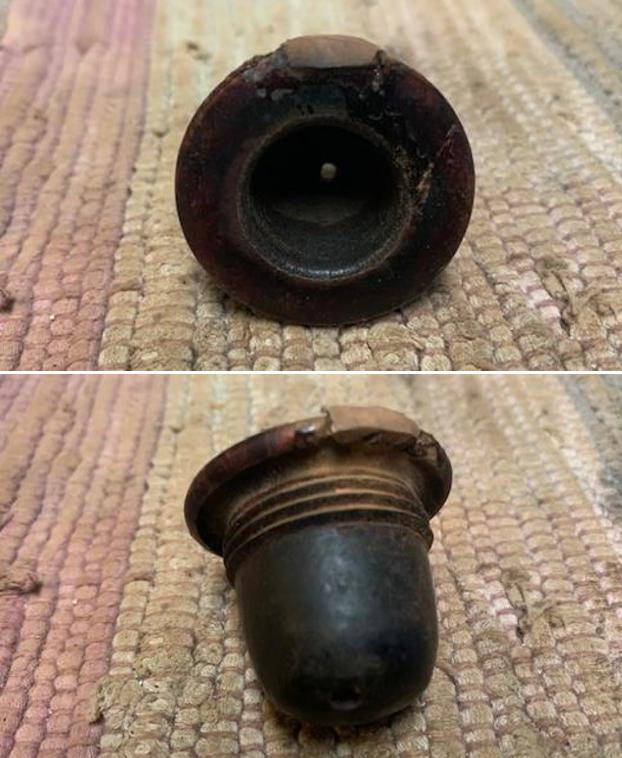
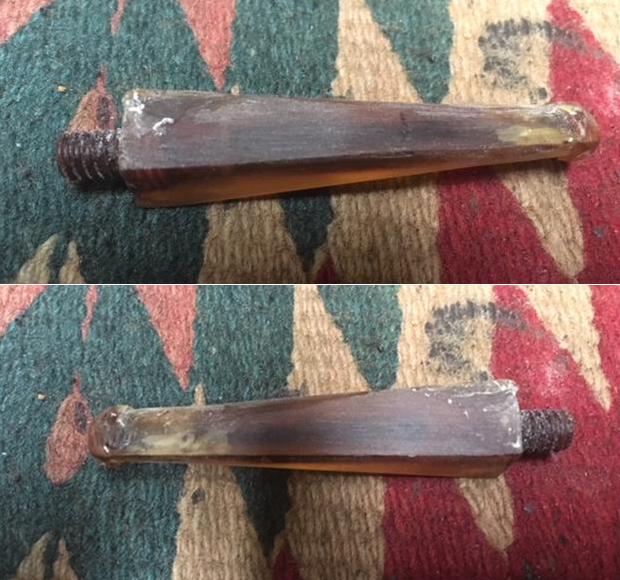
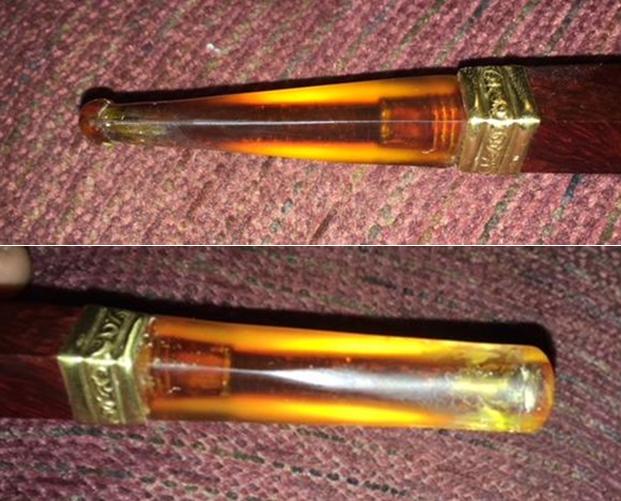
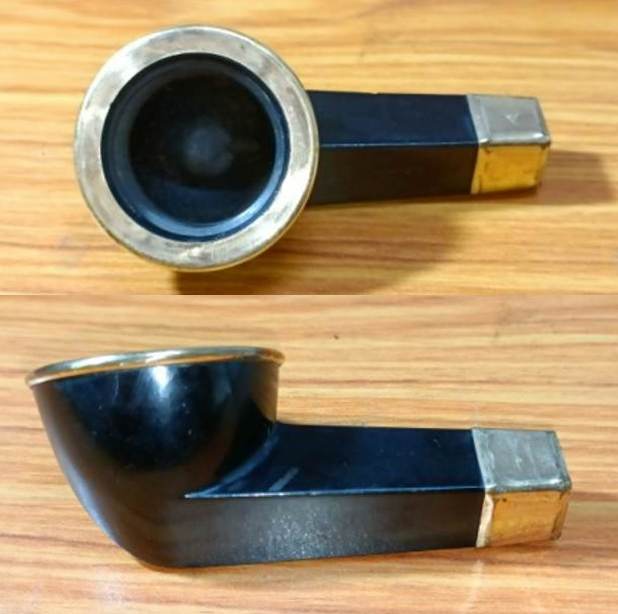
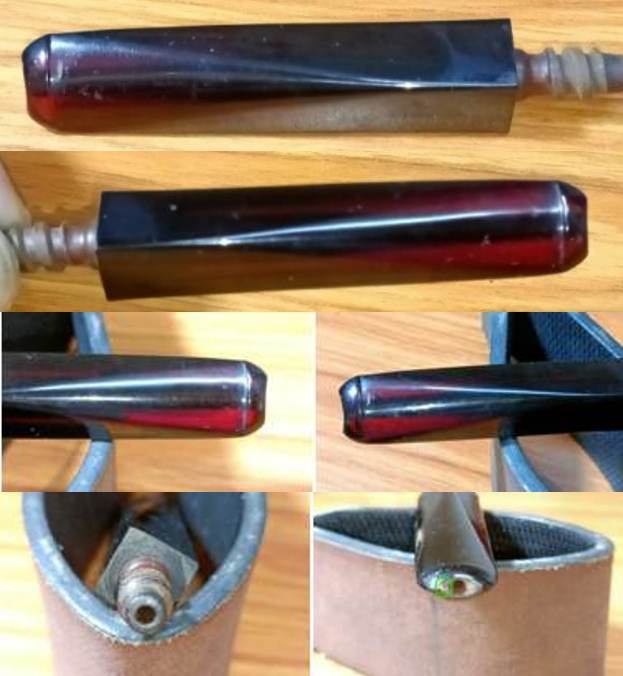
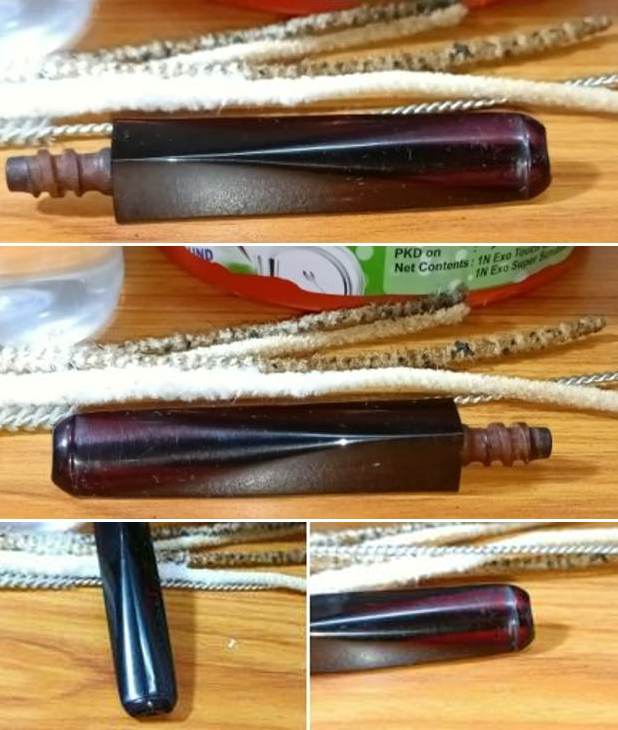
The pipe consists of three parts, a Meerschaum bowl, Bakelite base and shank and the Redmanol straight stem with a round orifice. These three parts come together as an instrument of smoking by means of threads at the bowl and stem ends.The meerschaum bowl is in very good condition with just a few scratches over the sides. The chamber has a thick layer of dried and crumbling cake. The rim top is in pristine condition and does not have any overflow of carbon deposits. The thread on the cup is slightly worn only at a small section and the attaches securely with the Bakelite shank. The bottom of the meerschaum cup has three draught holes and shows a couple of dents/ dings. The draw on the pipe was not very smooth and open. Close observation of the depth of the meerschaum cup made me realize that it touched the heel of the Bakelite base and constricted the air flow. I shall deal with this issue subsequently. The Bakelite base is clean with no traces of old oils and tars in the trough that houses the meerschaum cup. The brass rim cap at the top of the Bakelite base is firmly fixed and is nicely clean and shining. The mortise shows some traces of gunk but should clean up nicely. There are a couple of minute chipped spots over the right side of the diamond shank edge (encircled in yellow). The brass band at the shank end shows some signs of brassing and should polish up to nice shine. The brass rim cap and the shank band coupled with the translucent Redmanol stem add a nice bling to the appearance of the pipes. The diamond Redmanol stem has a rounded orifice which also points to its vintage. It has a rich translucent red color and the light really plays through. I cannot wait to see the stem clean up. Minor tooth chatter is seen on the upper and lower surface. The pointed corner edge of the lip on the left is broken (encircled in green) and will either have to be reconstructed or filed away to a straight profile. The stem airway has darkened due to accumulation of saliva, oils and tars and would need to be thoroughly cleaned. The screw-in tenon is of the same Redmanol material and is covered with dried oils and tars.   The Process
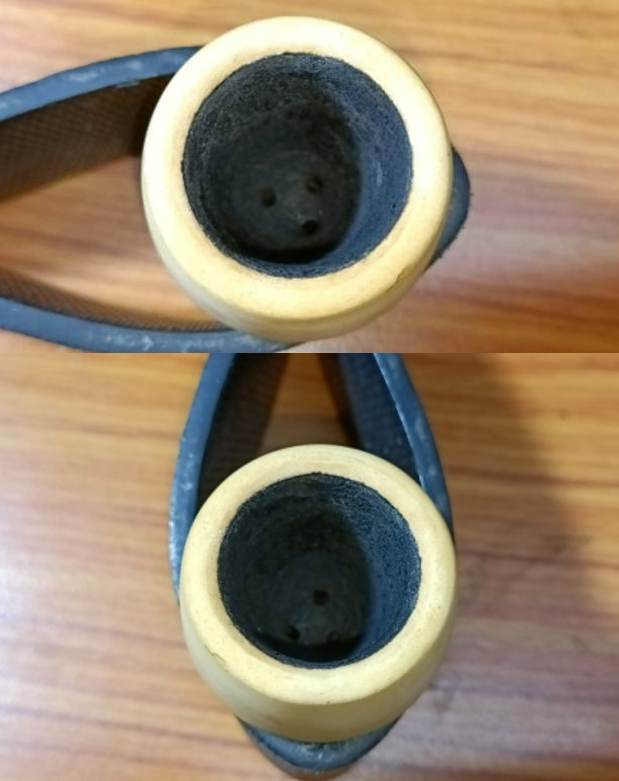
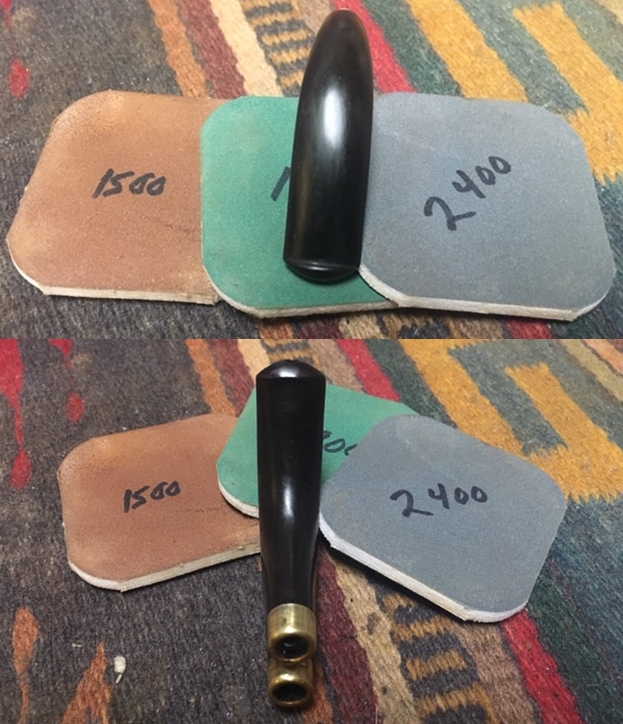
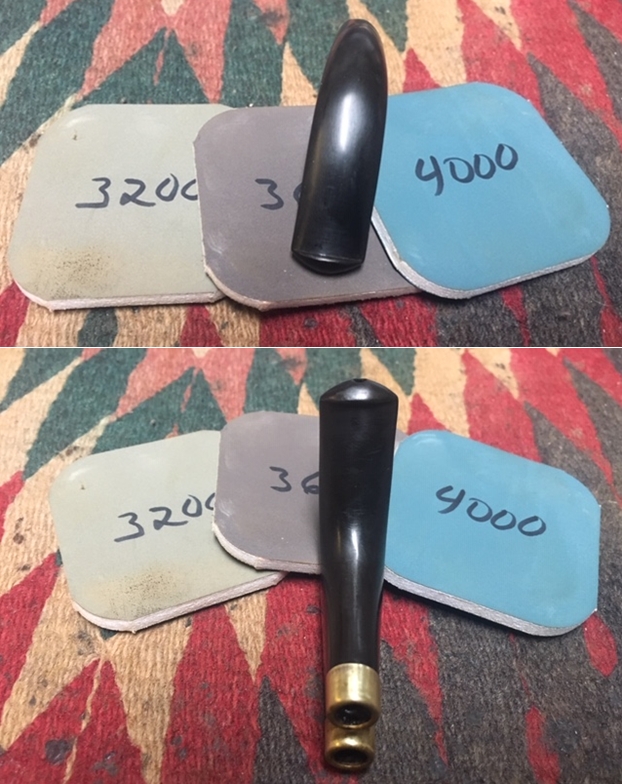
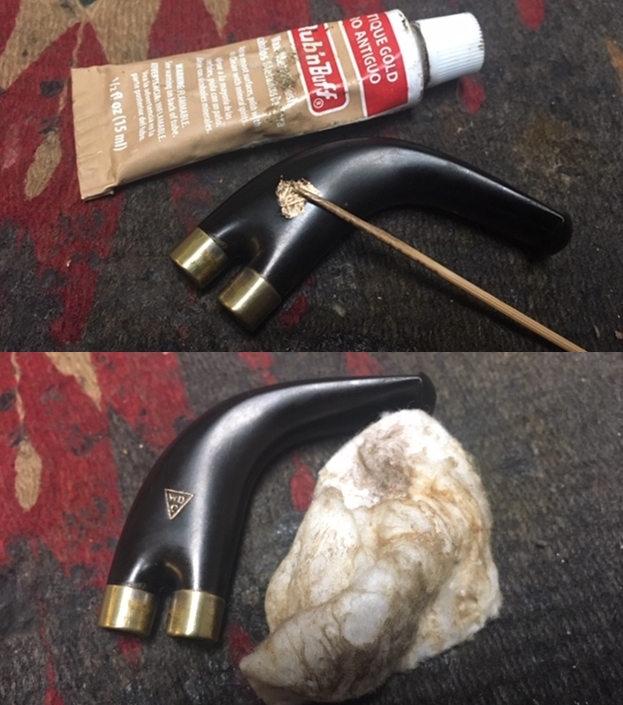
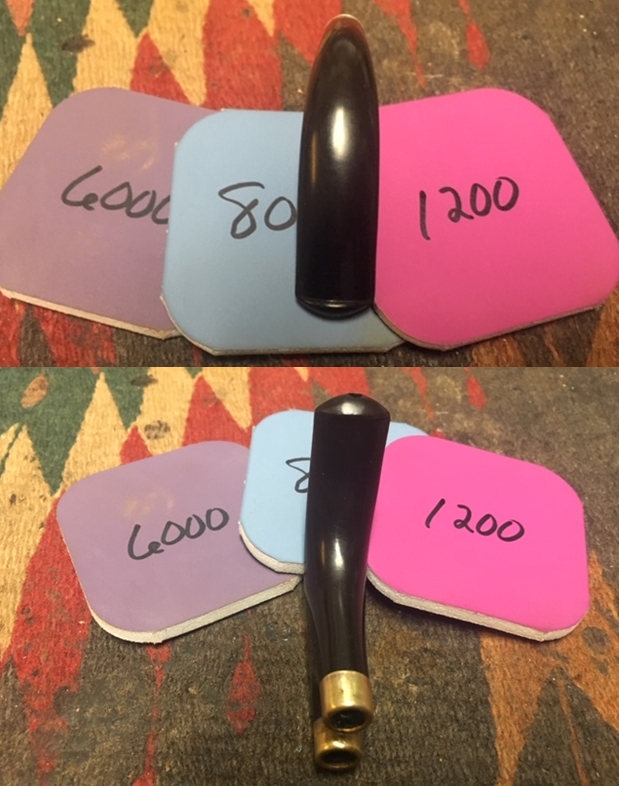
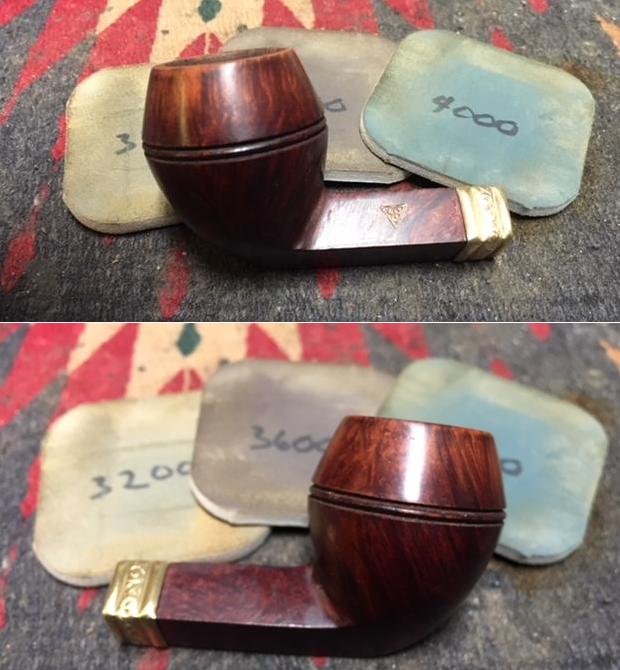
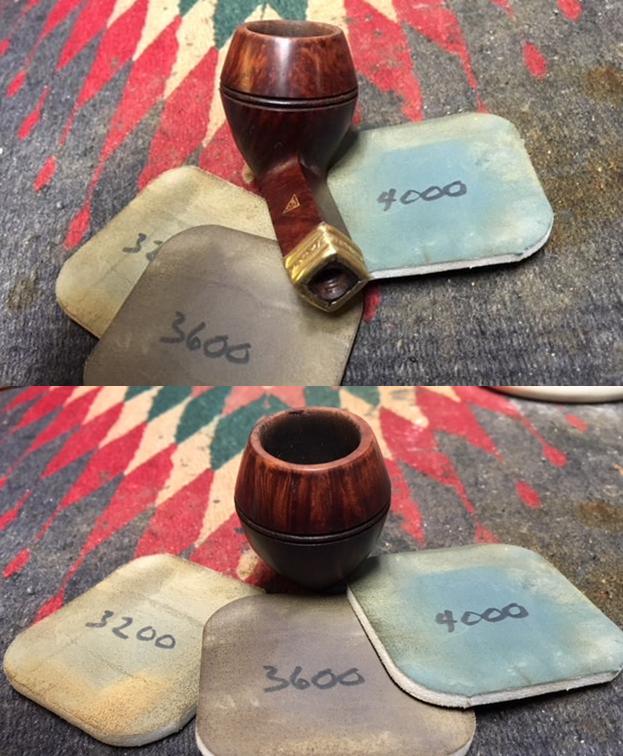
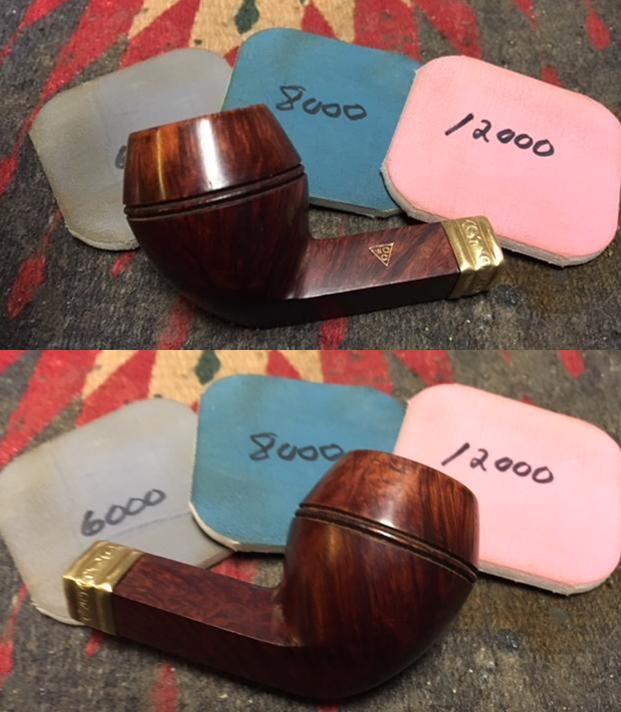
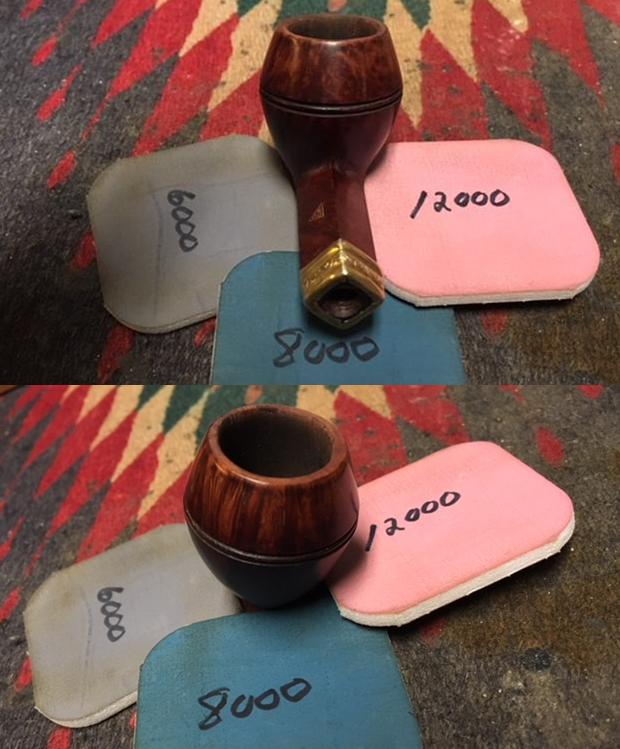
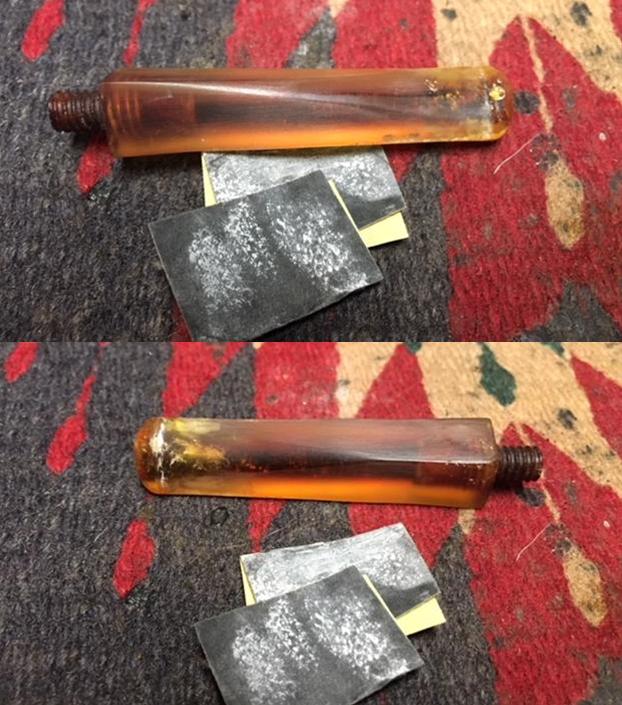
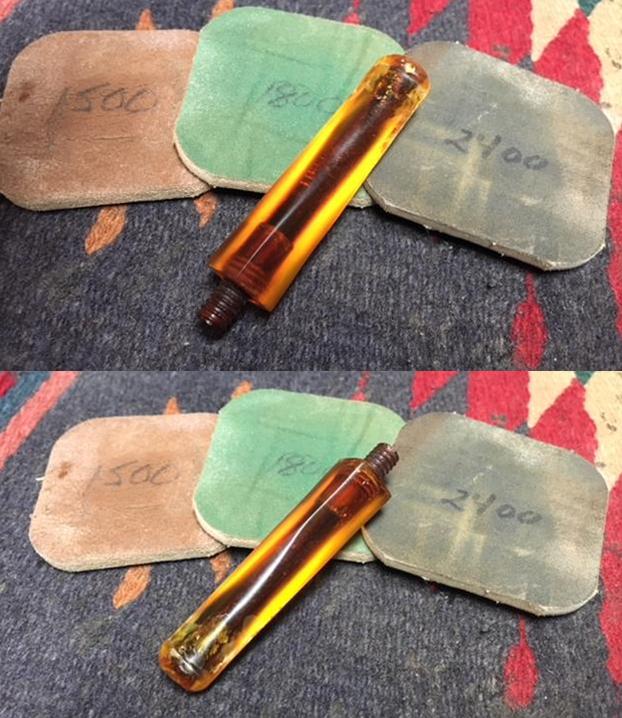
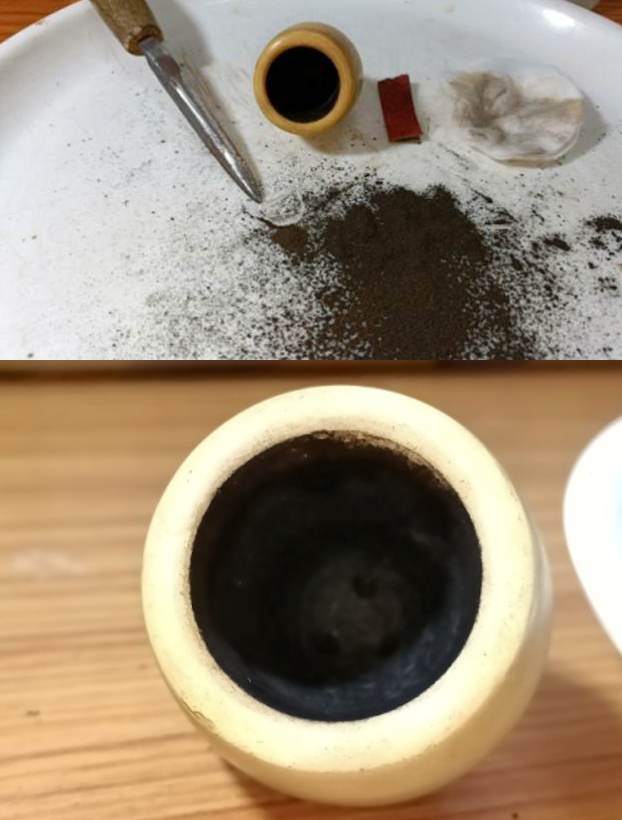
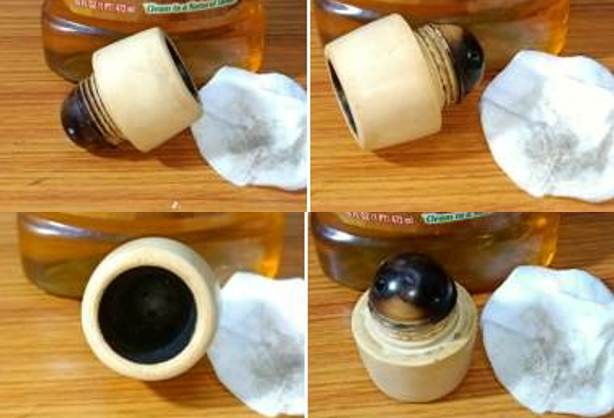
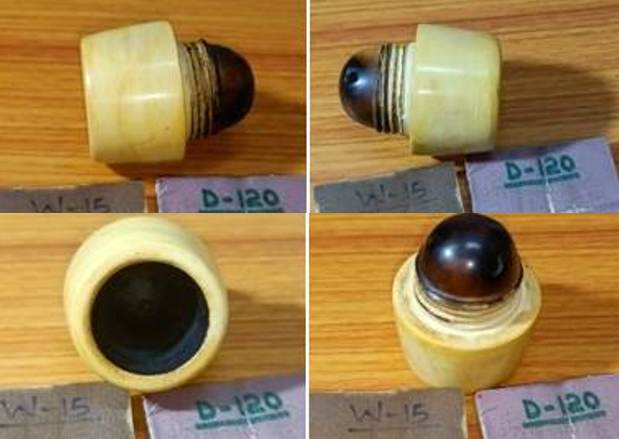
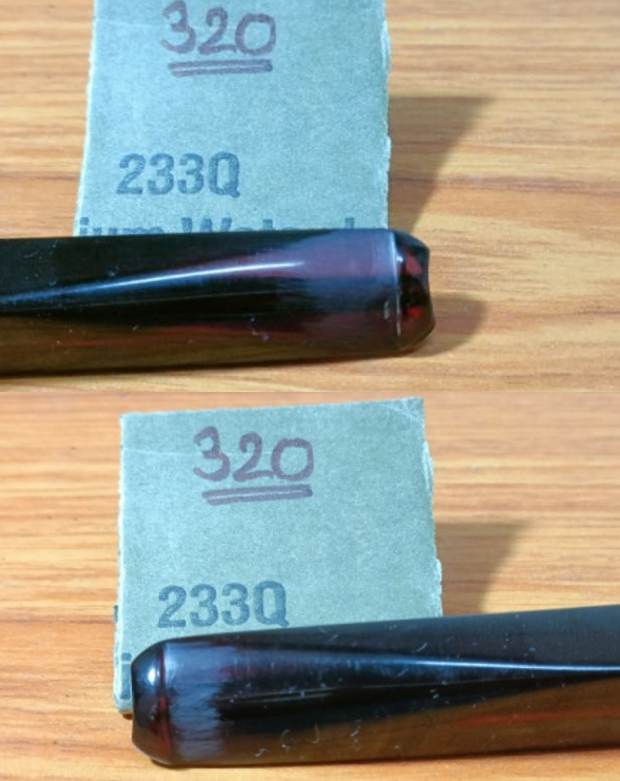
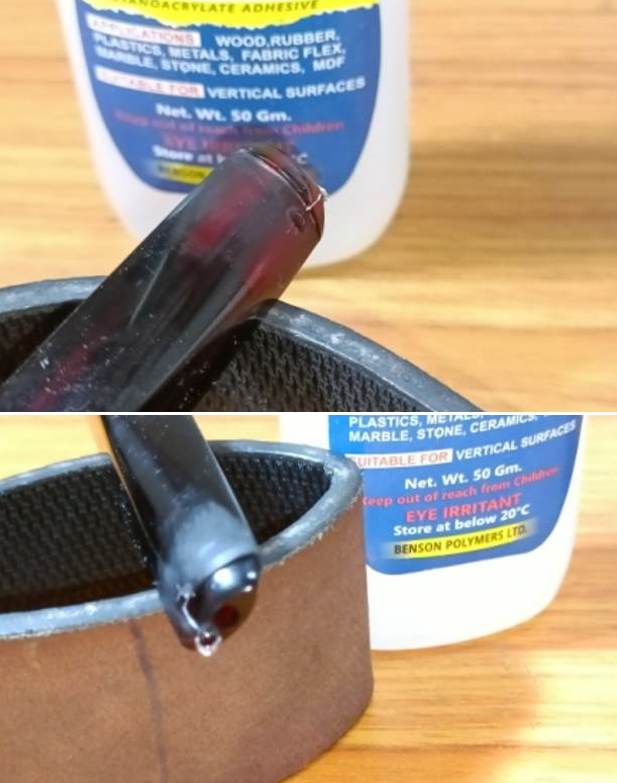
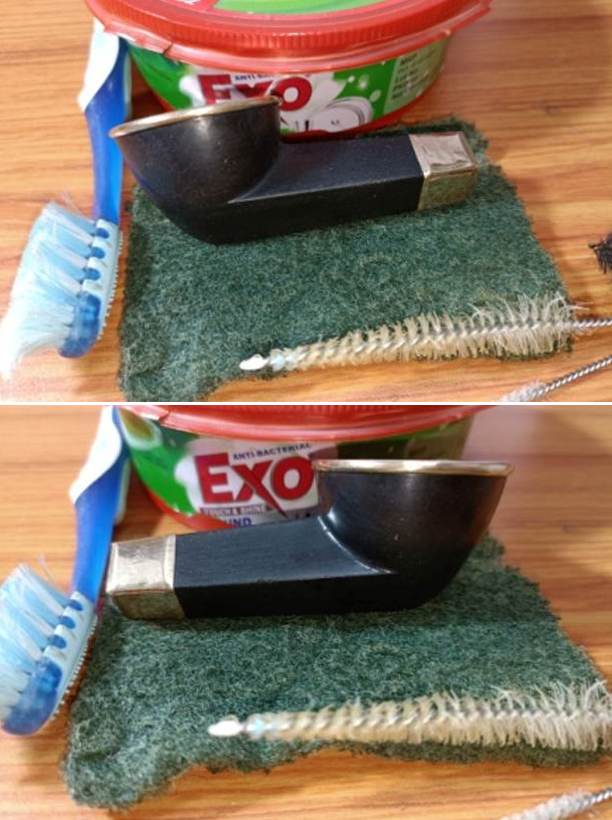
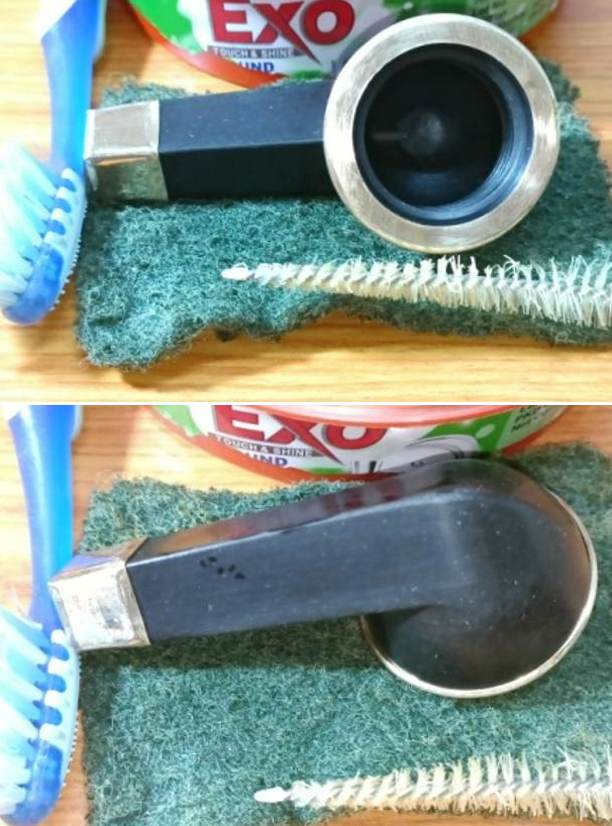
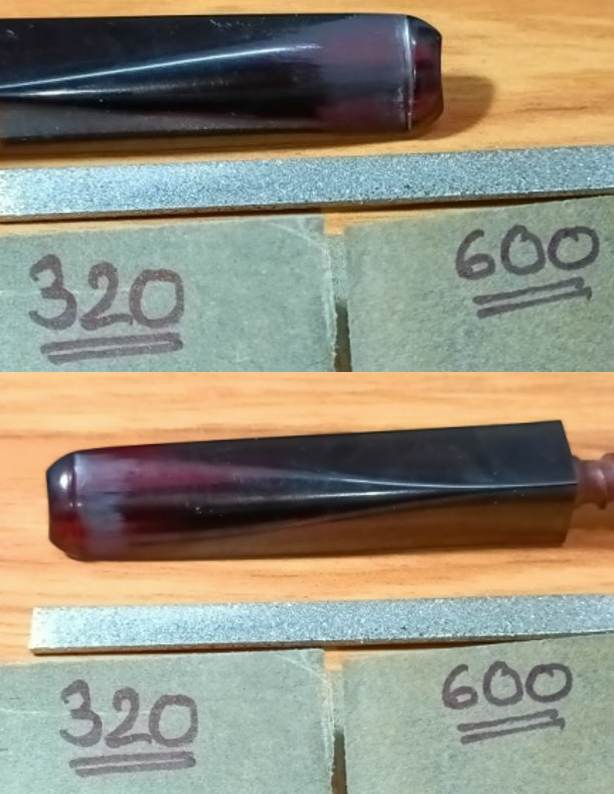
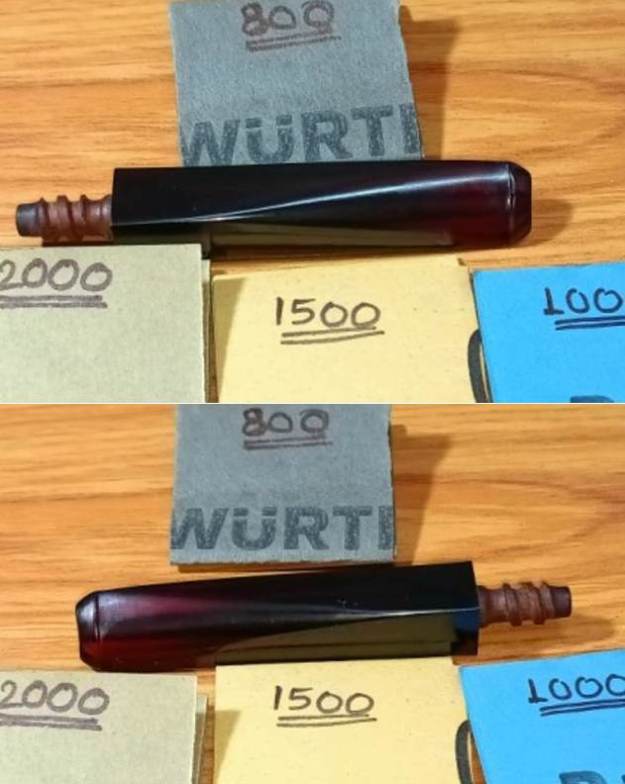
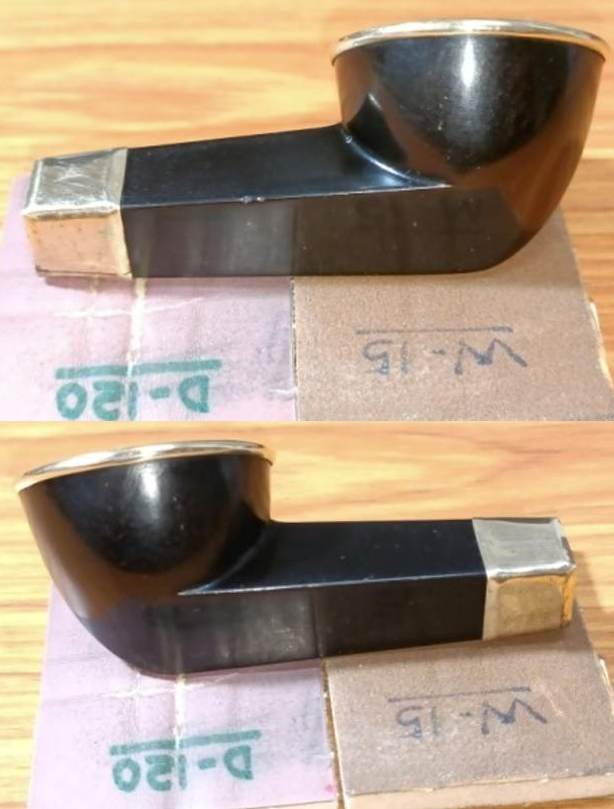
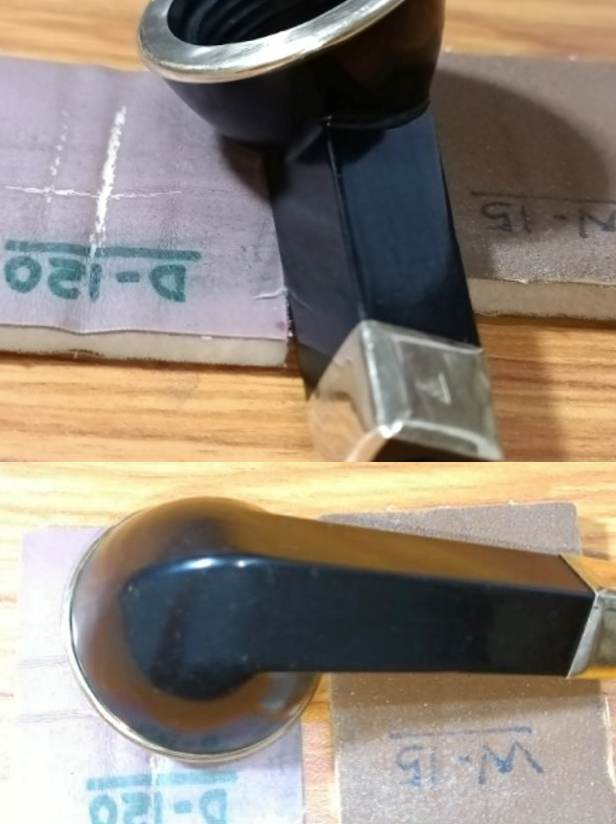
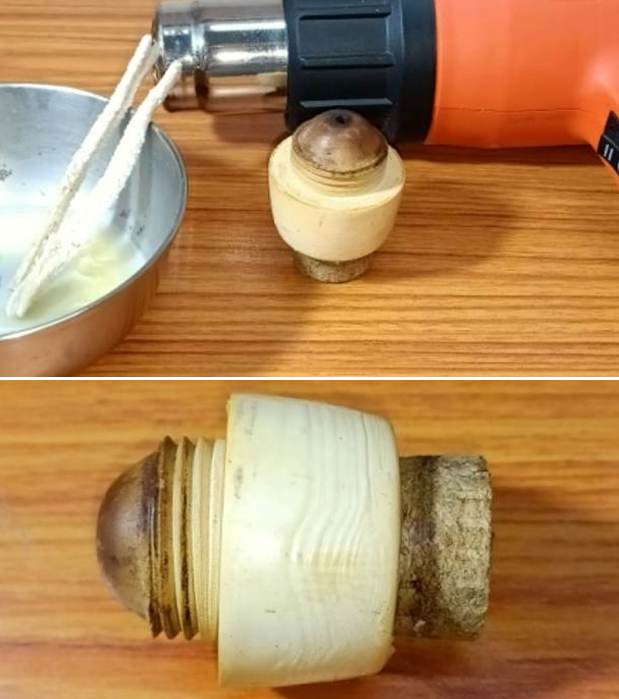
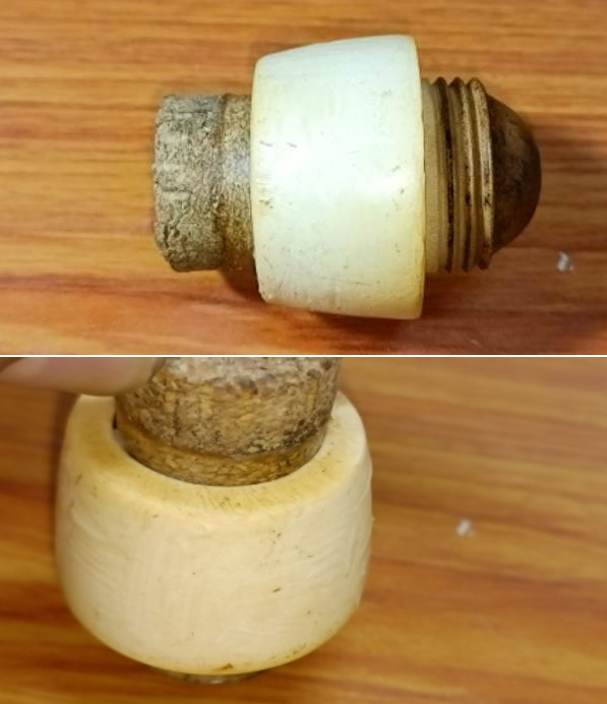
I started this project by reaming the chamber with my smaller fabricated knife and scraped out all the carbon from chamber. I used a 220 grit sand paper, pinched between my thumb and forefinger, to sand the inner walls of the chamber of the pipe. Once I had reached the bare walls, I wiped the chamber with a cotton pad dipped in isopropyl alcohol. This removed all the residual carbon dust and also rid the chamber of all ghost smells. The walls of the chamber are nice and solid with no signs of cracks.I cleaned the external surface of the Meerschaum cup with Murphy’s Oil soap and cotton swabs. I also cleaned the threads at the foot of the cup with tooth brush and oil soap. I wiped the bowl surface with a moist cloth to remove the soap and grime that remained on the surface. The stummel surface cleaned up nicely. The scratches and dents and dings over the stummel surface are now clearly visible.Once I was done with cleaning the external surface of the meerschaum cup, I handed over the cup to Abha, my wife, to work her magic in polishing the cup. She polished the rim top surface and rim edges with micromesh pads. She then went on to dry sand the entire stummel with 1500-12000 grit pads and wiped the bowl down with a damp cloth to remove the dust that was left behind by the sanding. I had requested her to minimize the scratches but not necessarily remove them. These lacerations and dings must have had a history and I wanted to preserve it. She did a fantastic job of polishing the meerschaum cup to a nice deep shine.While Abha was busy with polishing the meerschaum bowl, I addressed the stem repairs. I first cleaned the stem surface and the stem airway using anti-oil dish cleaning soap and thin shank brush and rinsed it under warm running water to remove the entire gunk from the airway. I also cleaned up the threaded tenon with a tooth brush and soap. To finish the cleaning, I ran a few bristled and regular pipe cleaners dipped in alcohol to remove the residual gunk from the airway and dry it out.To address the minor tooth chatter on both upper and lower surfaces, I sand the bite zone with a folded piece of 320 grit sandpaper. However, there was one tooth indentation in the bite zone and the chipped corner of the lip still remained an eyesore. I spot filled these with clear CA superglue and set the stem aside for the glue to cure. I cleaned the mortise by scraping out the dried gunk using my fabricated tool. Next, I cleaned the Bakelite shank with anti oil dish soap and tooth brush. I cleaned the shank internals and mortise with shank brush and anti oil soap and rinsed it under warm water. The shank is now clean both from the inside and the outside. Once the stem fills had cured, I sand the fills with a flat head needle file to roughly match the fill with the rest of the stem surface. I further fine tune the match by sanding the bite zone with 320 grit sandpaper followed by 600 grit sandpaper.  Following the sanding with a piece of 600 grit sandpaper, I began the process of polishing by wet sanding the entire stem with 800, 1000, 1500 and 2000 grit sandpapers. I completed the polishing of the stem by dry sanding the stem with 3200 to 12000 grit micromesh pads. The translucent red of the Redmanol stem just shines through.   With the Meerschaum bowl and the Redmanol stem polished, I turned my attention to the Bakelite shank. I polished the shank by wet sanding with 1500 to 2400 followed by dry sanding with 3200 to 12000 grit micromesh pads. Next I gave a beeswax polish to the meerschaum bowl. I assembled the equipment and materials that would be needed during the process viz heat gun, paper towels, q-tips and a Katori, a steel container graciously lent by Abha from the kitchen and of course, beeswax. I stuffed the chamber with cork to prevent inadvertent seepage of the melted beeswax into either. Next, I melted a sufficient quantity of beeswax in the katori using my heat gun and thereafter heated the stummel. Using the a folded pipe cleaner, I completely coated the stummel with the wax and continued the application till the surface was saturated and set the stummel aside to absorb the wax. I reheated the stummel with the heat gun about 20 minutes later and let the excess wax either be absorbed or drip off from the stummel surface. I rubbed off the excess wax with a soft cotton cloth and brought a deep shine to the surface with a microfiber cloth. To finish, I re-attach the Redmanol stem with the Bakelite shank. I mount a cotton cloth buffing wheel on to my hand held rotary tool and setting the speed at 50% RPM, applied Blue Diamond compound over the shank and the stem surface. I wiped/ buffed the parts with a soft cotton cloth to clear it of any leftover compound dust. I then mounted another cotton cloth wheel on to the polishing machine and applied several coats of carnauba wax over the shank and the stem of the pipe. I finished the restoration by giving the pipe a rigorous hand buffing using a microfiber cloth to raise the shine further. Have a look at the completed pipe below. P.S. – Readers must have noticed that the meerschaum bowl has been changed from three holed one to one hole. Well, if you recollect I had made a mention of draw on this pipe being constricted. It turns out that the meerschaum bowl on this pipe was a long neck one and the one on the bent bulldog had a shorter neck. The Bakelite base of the straight pipe is shallow as compared to the bent bulldog and accommodated the short neck meerschaum bowl better than the long neck bowl. Once the switch was made, the draw on both the pipes was open, full and smooth as silk.
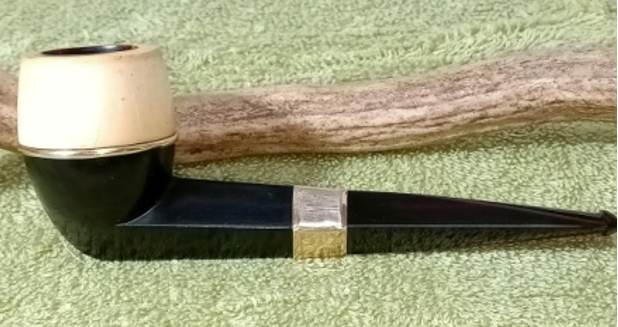
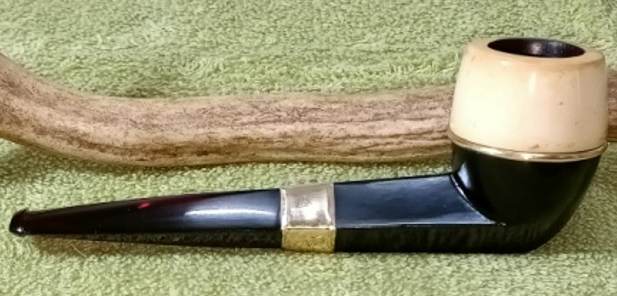
Now, why the bowls were switched in the first place? The answer to this intriguing question will be given in the next part…

Thank you all for being with me as I walk the path of learning nuances of pipe restoration.

New Life for a Beautifully Grained WDC Seville Bullmoose


Blog by Steve Laug

The next pipe on the work table has been here for over five years. Sad that there are some that have sat this long or longer before I got to them. But on the other hand I get to look through my boxes and pick out what turns my crank at the moment. This one was well grained Bullmoose – or Pot with a prominent chin jutting out the front. We picked it up back in October, 2017 from a seller on EBay from Stroudsburg, Pennsylvania, USA. It is stamped on the left side of the shank and reads WDC in a triangle followed by Seville [over] Genuine Briar. There was no shape number on the shank on either side. The poor pipe was another one that had obviously been someone’s favourite and must have been a grand smoker. The finish appears to have some nice straight grain around the bowl and shank that even stands out with the grime on the finish. The bowl is heavily caked with a thick lava overflow on the rim top – heavier on the back side. The stem is quite oxidized and had deep tooth marks on the top and underside near the button. The pipe showed a lot of promise but it was a mess. Jeff took pictures of the pipe before he did his clean up work. He took photos of the rim top and bowl as well as the stem surfaces to show the condition of the well smoked pipe. You can see the thick cake in the bowl and the heavy lava on the inner edge and rim – particularly at the back of the bowl. The stem was oxidized and had tooth marks and chatter on both sides ahead of the button.Jeff took several pictures of the stinger apparatus in the tenon. It was heavily coated with tars and was stuck in the tenon.Jeff took some photos o f the heel of the bowl and the side to give a sense of the beauty of the grain around this pipe. He captured the stamping on the left side of the shank. It is faint in spots but is readable as noted above. There was originally a WDC triangle on the left side of the thick taper stem. Most of it was worn away and I don’t think it will survive the clean up.I turned to Pipedia for a quick review of the WDC Brand and was not disappointed in what I found (https://pipedia.org/wiki/William_Demuth_Company). I quote a pertinent part of the article below. There was no mention of the Seville line.

In 1897 Ferdinand Feuerbach joined the Demuth company and by 1903 had become the production manager. Feuerbach is credited with developing Demuth’s popular Royal Demuth and Hesson Guard Milano pipelines. He left in 1919, when Sam Frank Sr. needed an experienced pipe man to run his pipe factory, located at 168 Southern Blvd., in the Bronx. Feuerbach and Frank had been close friends since Frank started his own business in 1900 and was closely associated with the sales staff of WDC, selling their line of pipes.

In early 1937, the City of New York notified S.M. Frank & Co. of their intent to take by eminent domain, part of the land on which the companies pipe factory was located. This was being done to widen two of the adjacent streets. As a result of this, Frank entered into negotiations to purchase the Wm. Demuth Co.’s pipe factory in the Richmond Hill section of Queens. It was agreed upon that Demuth would become a subsidiary of S.M. Frank and all pipe production of the two companies would be moved to DeMuth factory. New Corporate offices were located at 133 Fifth Avenue, NYC.

Demuth pipes continued to be made at the Richmond Hill plant till December 31. 1972. Then the Wm. Demuth Company met its official end as a subsidiary company by liquidation. Demuth’s mainstay pipe, the Wellington continued to be offered in the S.M. Frank catalog until 1976. In the mid-80’s, the Wellington even made a brief return as a direct to the consumer offer.

Now it was time to look at it up close and personal. Jeff had done an amazing job in removing all of the cake and the lava on the rim top. He had reamed the bowl with a PipNet Pipe Reamer and cleaned up the remnants with a Savinelli Fitsall Pipe Knife. He took the cake back to bare briar so we could check the walls for damage. He scrubbed the exterior of the bowl with Murphy’s Oil Soap and a tooth brush to remove the grime on the bowl and rim and was able to remove the lava and dirt. The varnish coat was peeling around the top half of the bowl. He cleaned out the interior of the bowl and shank with pipe cleaners, cotton swabs and alcohol until they came out clean. He cleaned the stem with Soft Scrub to remove the grime on the exterior. The pipe was cleaned before we started using Before & After Stem Deoxidizer so it was very oxidized. He cleaned out the airway with alcohol, cotton swabs and pipe cleaners. I took some photos of the pipe before I started my work on it today. I took a close up photo of the cleaned up rim top. The rim top is smooth and looks quite good. There are some damage spots along the outer edge of the rim as well as toward the back of the inner edge. The bowl is spotless. The stem is more heavily oxidized than when we started. That may be from sitting here for five plus years. Anyway it is what it is and you can see the tooth marks on both sides ahead of the button.I took a photo of the stamping on the side of the shank and the stem. You can see the shank stamp is readable. The stem stamp is all gone other than one thin line at the top of the original triangle logo.I took the stem off the pipe and took a photo. You can see that the stinger is still in place and Jeff was able to clean the externals. It was still stuck and knew I had to remove it to thoroughly clean out the shank.I decided to start my work on the pipe by removing the remainder of the peeling varnish coat. I sanded it with a medium grit sanding sponge and wiped it down with acetone on a paper towel. I repeated the process until I was free of the obnoxious peeling varnish coat. I polished the briar with micromesh sanding pads – dry sanding with 1500-12000 grit pads. I worked over the inner and outer edge of the rim as well. After each pad I wiped the bowl down with a damp cloth to remove the sanding debris. It really took on a shine by the last three sanding pads. I rubbed the bowl down with Before & After Restoration Balm. I worked it into the surface of the briar with my fingertips where it works to clean, restore and preserve the briar. I let it do its magic for 15 minutes then buffed it off with a cotton cloth. The pipe looks incredibly good at this point in the process. I set the bowl aside and turned my attention to the stem. I heated the stinger with my lighter and was able to remove the stinger. It was badly oxidized and damaged so I will be throwing it away. I scrubbed the oxidation with Soft Scrub All Purpose Cleanser. I was able to remove most of the remaining oxidation. It is finally starting to look better. I can now see the tooth marks and chatter clearly. I cleaned out the inside of the stem with alcohol, cotton swabs and pipe cleaners. I was not surprised to see how dirty the stem was behind the stinger. It really inhibited the cleaning of the pipe. But it is clean now!I “painted” the newly cleaned surface of the stem with the flame of a Bic lighter to lift the tooth marks on both sides. I was able to lift them totally on the one side and significantly on the other. I filled in what remained with black superglue. Once the repair cured I flattened the repair with a small file to start the process of smoothing it out and blending it into the surrounding vulcanite. I sanded the file marks and repairs with 220 grit sandpaper and started polishing the stem with 400 grit wet dry sandpaper. It is starting to look very good.I continued to polish the stem with micromesh sanding pads – wet sanding with 1500-12000 grit sanding pads. I wiped it down after each sanding pad with Obsidian Oil. I polished it further with Before & After Stem Polish – both Fine and Extra Fine. I gave it a final coat of Obsidian Oil and set it aside to cure. I am excited to finish this Large bowled, beautifully grained WDC Seville Bullmoose. I put the pipe back together and buffed it with Blue Diamond on the buffing wheel. I gave the bowl and the stem multiple coats of carnauba wax. I hand buffed the pipe with a clean buffing pad to raise the shine. It is fun to see what the polished bowl looks like with beautiful straight grain all around it and the birdseye on the rim top. The polished grain on the pipe looks great with the black vulcanite stem. This smooth WDC Seville Bullmoose is great looking and the pipe feels great in my hand. It is light and well balanced. Have a look at it with the photos below. The dimensions are Length: 6 inches, Height: 1 ½ inches, Outside diameter of the bowl: 2 inches, Chamber diameter: ¾ of an inch. The weight of the pipe is 81 grams/2.86 ounces. It turned out to be a beautiful pipe. I will soon be putting it on the rebornpipes store in the American Pipemakers Section. If you are interested in adding it to your collection let me know. Remember we are the next in a long line of pipe men and women who will carry on the trust of our pipes until we pass them on to the next trustee. Thanks for your time reading this blog.

Resurrecting a Briar WDC Campaign Pipe


Blog by Steve Laug

I have finished restoring quite a few of the pipes in this collection that we purchased from the older gentleman. He sent me the photos and I was amazed at what I saw. You have seen many of the pipes that he had. These included Dunhill, BBB, Orlik, Barclay Rex, a cased Ben Wade, an H. Simmons all briar, Hardcastles and some Meerschaums. There were also some assorted others that I will get to in the days ahead. It was a great collection.

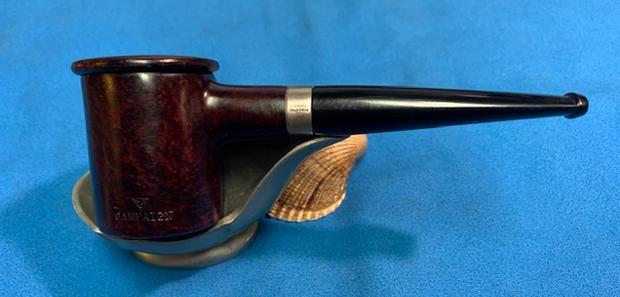
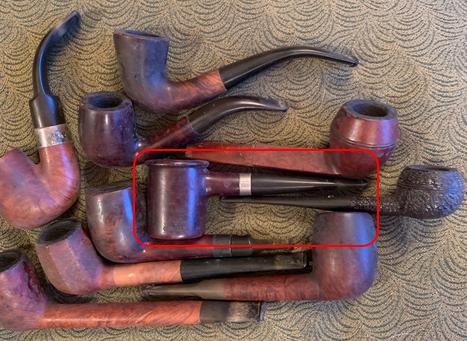
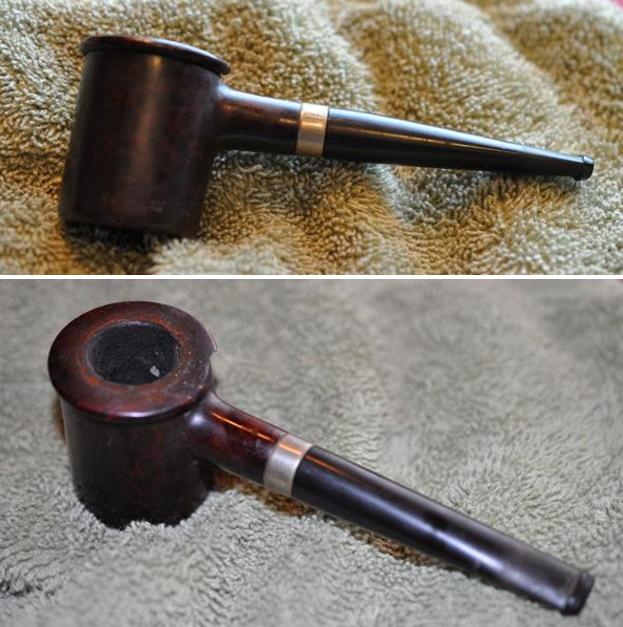
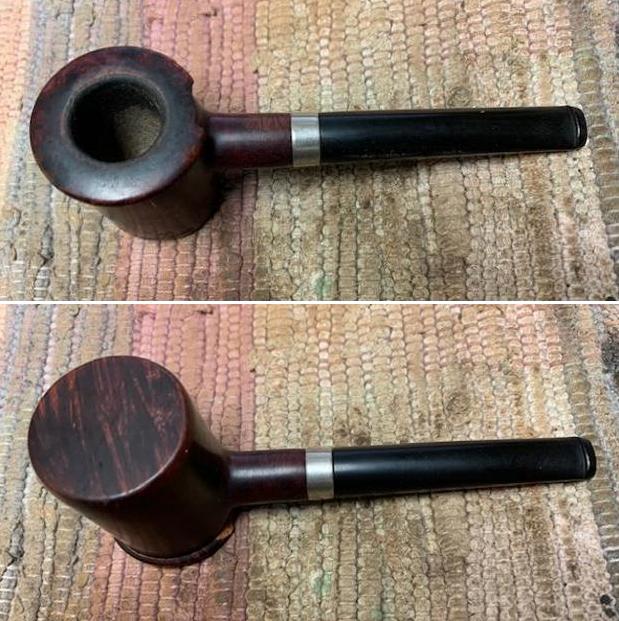
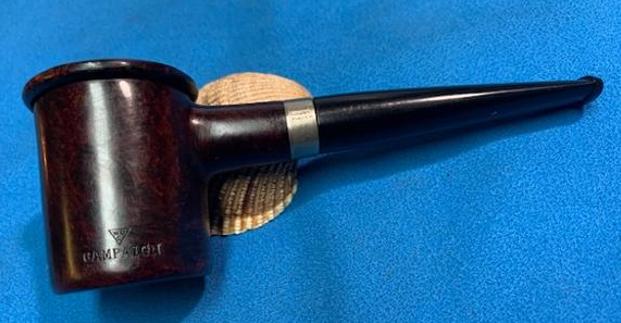
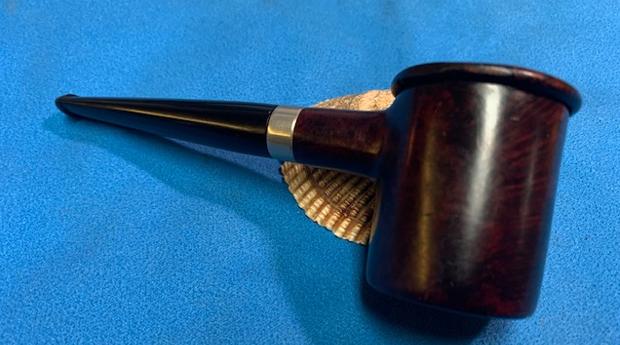
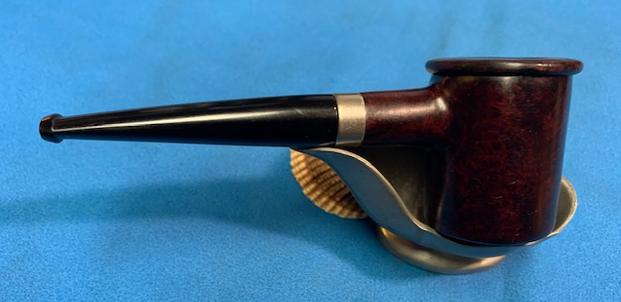
The next pipe I have chosen is a worn and damaged WDC Campaign Pipe with a calabash style bowl. I have drawn a red box around the pipe in the photo above. There was a thick cake in the bowl and the rim top of the cup. The inside of the calabash style base was also very dirty. The rim top and edges were buried under a thick coat of lava. There was a large chip of briar out of the back of the rim top cup. It was filthy both inside and out. The shape caught my eye because it is quite lovely even under the grime and wear. The stem is hard rubber with flecks of metal in the rubber. It had tooth marks and chatter on both surfaces of the stem ahead of the button. This was another well loved pipe that obviously been a good smoker!

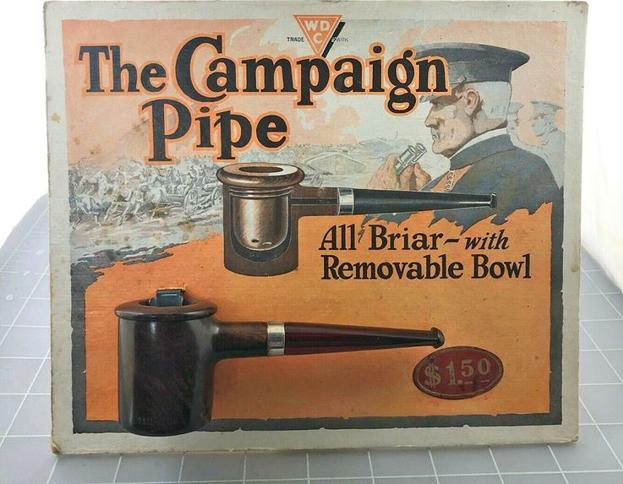
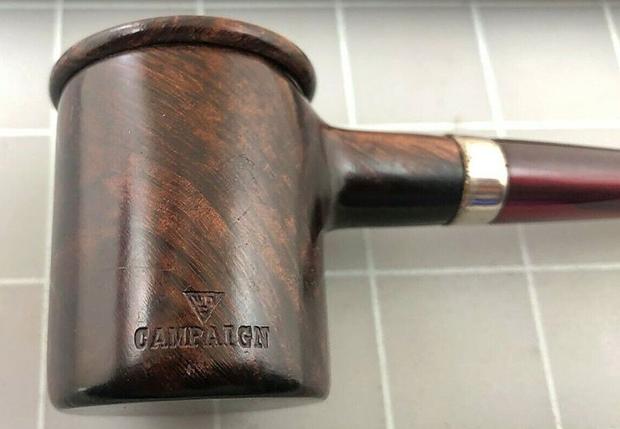
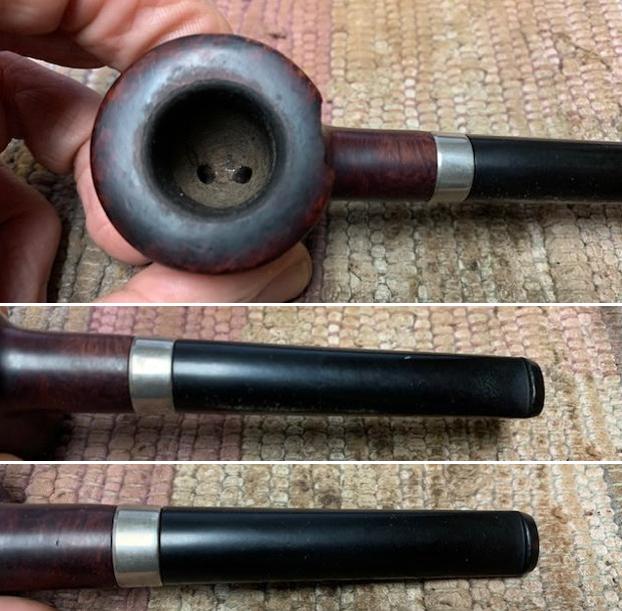
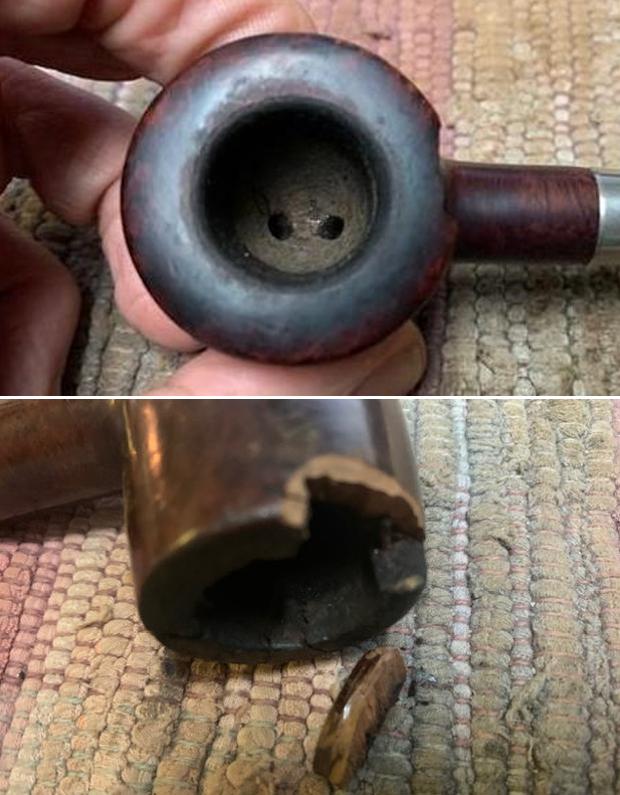
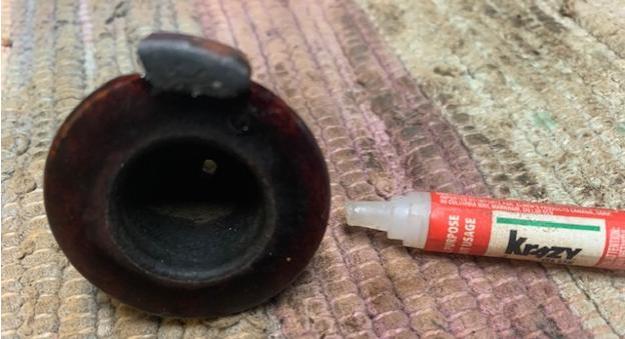
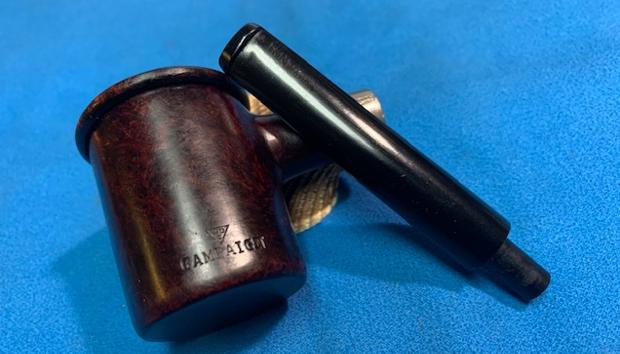
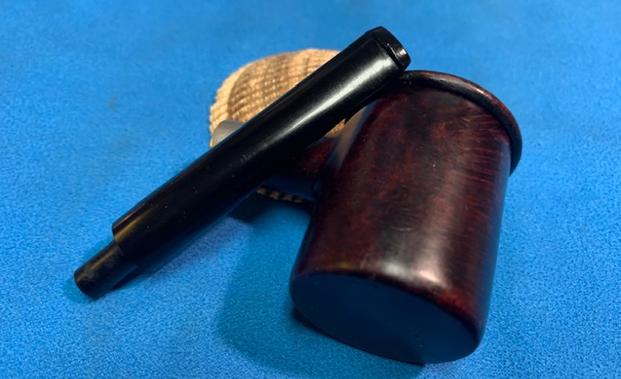
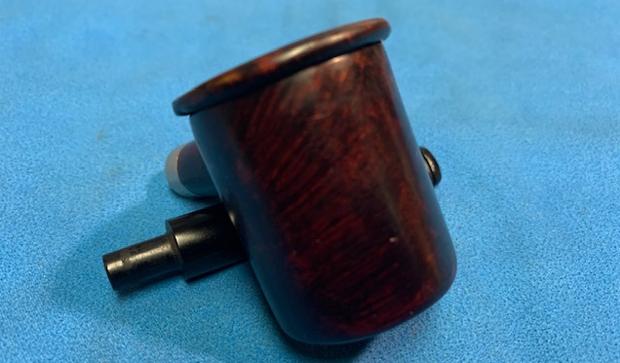
Jeff took some photos of the WDC Campaign Calabash before he worked his magic in cleaning up the pipe. It is a an interesting pipe with a lot of potential and what appears to be some great grain under the grime and debris of the years. Jeff took photos of the bowl, rim top to show the thickness of the cake in the bowl and the thick lava on the rim top of the cup. The rim top was thickly covered and there was a large chunk of briar missing on the back of the cap. He took photos of the top and underside of the hard rubber stem showing the tooth marks and chatter on both sides. Jeff also took some photos of the threaded bowl removed from the calabash base. You can see the small crack in the base of the cup. You can also see the dirty condition of both the inside of the base and the bottom of the cup.He also took photos of the base of the cup to show the cracks in the bottom of the bowl. He also took a photo of the chip in the top of the cap. Jeff took photos of the sides and heel of the bowl to show the condition of the briar. You can see the beautiful shape of the bowl and some interesting grain even through the dirt and debris of many years. I turned to Pipedia to have a look at the article on the William Demuth Company and see if there was any information on the Campaign (https://pipedia.org/wiki/William_Demuth_Company). There a great article on the history of the brand. There was also a picture of a countertop display for the pipes and also a picture of the stamping on the side of the bowl. I am including them both below. This all briar pipe with a removable bowl is made by the American Company, William Demuth Co. It is a nicely grained older pipe that has a very interesting look to it. Because the old gentleman that we bought the pipes from intimated that he purchased his pipes at the Manhattan Barclay-Rex store I would imagine that he may have purchased this one from them as well. I was unable to pin down any information regarding the date this pipe but I am assuming it is as old as the other pipes in the collection.

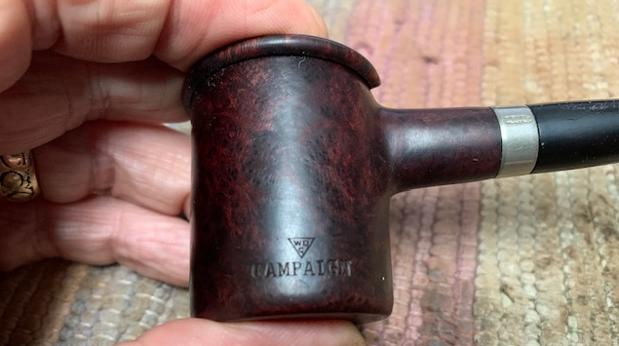
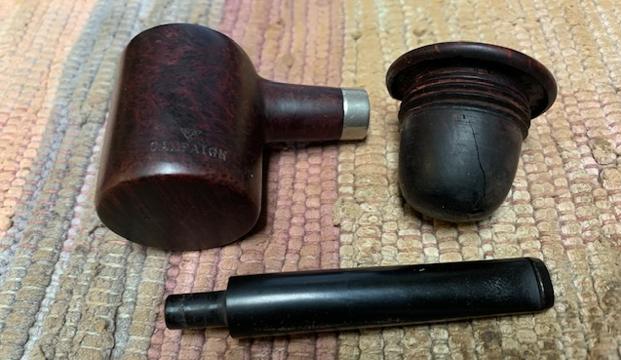
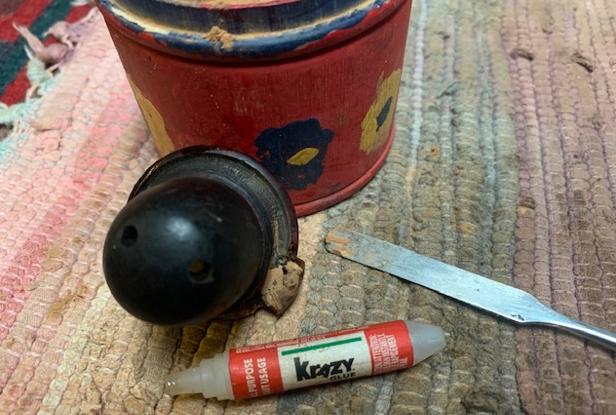
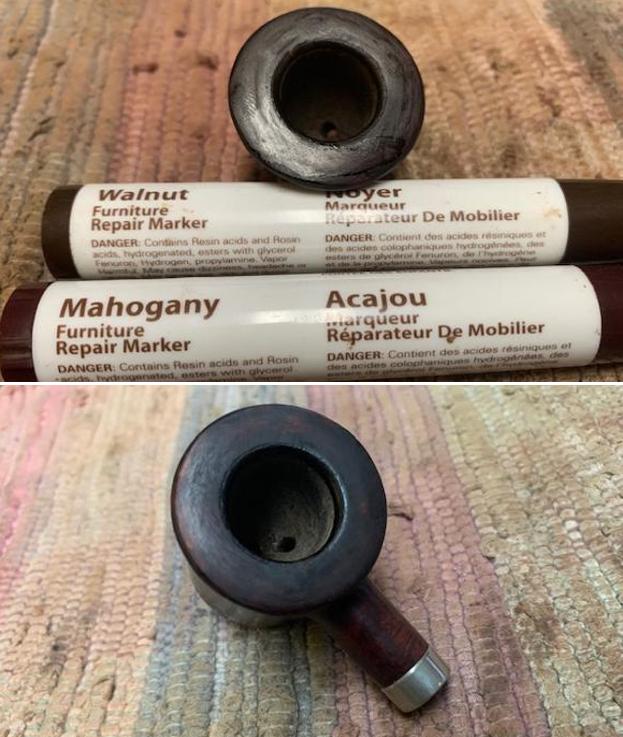
Jeff carefully took the pipe apart and cleaned it. He cleaned the calabash base and reamed it with a PipNet pipe reamer and then cleaned up the reaming with a Savinelli Fitsall Pipe Knife. He scrubbed out the internals of the shank, stem and shank extension with alcohol, pipe cleaners and cotton swabs until the pipe was clean. He scrubbed the exterior of the bowl with Murphy’s Oil Soap and a tooth brush to remove the grime and grit on the briar and lava on the rim top. The finish looks much better and has a deep richness in the colour of the briar. The edges of the cup had a huge chip out of the back edge. He scrubbed the hard rubber stem with Soft Scrub to remove the grime and soaked it in Briarville’s Pipe Stem Deoxidizer to remove the oxidation. When the pipe arrived here in Vancouver I was amazed that it looked so good. Here are some photos of what I saw. I took some close up photos of the rim top and the stem surface. The top of the rim showed some darkening/heavy tars and there was heavy damage at the back of the bowl and edge. The stem had tooth marks and chatter on both sides near the button.I took a photo of the stamping on the left side of the bowl. It was stamped with a WDC logo triangle and under that was clearly stamped CAMPAIGN. The stamping was clear and readable.I removed the bowl from the base, the stem from the shank and took a photo of the parts of the pipe. I started my work on the pipe by addressing the damage on the back top of the bowl. I cut a chip of briar out of an old broken bowl that I have here. I used a Dremel to reduce the size of the briar chip. I glued it in place in the chipped area with clear CA glue. I filled in the crevices around the repaired chunk of briar with briar dust and clear CA to clean up the transitions between the bowl rim top and the repair. I used a Dremel and sanding drum to thin down and shape the rim cap. I also shaped the edge of the repair with the Dremel. I carefully removed more of the edge and the thickness of the repair with the sanding drum and Dremel. It was starting to look very good. I sanded the rim cap top with 220 grit sandpaper to smooth it out and blend it into the surface. I restained the rim top with a mixture of Mahogany and Walnut Stain pens to blend it into the rest of the bowl.I polished the rim top of the cup and the entire briar base with micromesh sanding pads – dry sanding with 1500-12000 grit sanding pads. I wiped the bowl down after each pad with a damp cloth to remove the sanding debris. I worked some Before & After Restoration Balm into the surface of the cup, bowl and shank with my fingertips to clean, enliven and protect the briar. I let the balm sit for 15 minutes and then buffed with a cotton cloth to raise the shine. The photos show the bowl at this point in the restoration process. I set the bowl aside and turned my attention to the old stem. The hard rubber had flecks of metal throughout the surface which told me it was a war years pipe or one made slightly after the war. I sanded it smooth with 220 grit sandpaper and started the polishing with 400 grit wet dry sandpaper.I polished the stem with micromesh sanding pads – dry sanding with 1500-12000 grit sanding pads. I wiped it down after each sanding pad with Obsidian Oil. I polished it with Before & After Pipe Stem Polish – both Fine and Extra Fine. I gave it a final coat of Obsidian Oil. You can see the flecks of metal polished as well as the rubber stem! With the cup, bowl and the stem finished I buffed WDC Campaign “Calabash” base and stem with Blue Diamond to give it a shine. I avoided doing that to the rim cap/cup so as not to risk damaging it. I buffed it by hand. I gave the base and stem multiple coats of carnauba wax on the wheel. I buffed the pipe with a horsehair shoe brush to raise the shine. I gave the cup multiple coats of Conservator’s Wax. I hand buffed pipe with a microfiber cloth to deepen the shine. I polished the nickel band with a jeweler’s cloth. The smooth finish on the bowl is a great looking. The dimensions of the pipe are – Length: 5 inches, Height: 1 ¾ inches, Outside diameter of the bowl: 1 ½ inches, Chamber diameter: ¾ of an inch. The weight of this large pipe is 1.55 ounces /44 grams. This Older WDC Campaign Pipe is another great find from this collection. It is much more beautiful in person than these photos can capture. I will be adding it to the rebornpipes store soon. If you want to add it to your collection it will make a fine smoking addition. This is another pipe that has the possibility of transporting the pipe man or woman back to a slower paced time in history where you can enjoy a respite. Thanks for walking through the restoration with me.

Breathing New Life into a WDC Wellington Jumbo French Briar


Blog by Steve Laug

The next pipe on the work table came to us from a group of pipes that we purchased from an antique mall in 2018 in Newport, Oregon, USA. It is a large WDC Wellington Jumbo Pipe with a fancy hard rubber stem. The pipe is stamped on the left side of the shank and reads Wellington [over] French Briar separated by the WDC Triangle. The right side is stamped Made in U.S.A. There is a stamp on the metal shank cap/ferrule that reads Nickel Plated. This is a nice piece of briar with interesting grain all the way around the bowl. The finish had a lot of grime ground into it. There is also a large area of road rash on the front of the bowl where it has obviously been dropped on a hard surface. The bowl was moderately caked and there was a lava coat on the top and the inner edge of the rim. The rim top has deep scratches in the surface and the bowl appears to be out of round under the lava coat. The stem was oxidized, calcified and had tooth chatter and marks on the top and underside near the button. The bent stem had straightened over time and would need to be re-bent. The stem bore the WDC Triangle logo stamped on the top ahead of the saddle. It was also stamped Wellington in an arch under the triangle logo. The pipe showed promise but it was very dirty. Jeff took photos of the pipe before he started his cleanup work.    He took photos of the rim top and bowl to give a clear picture of the thickness of the cake and the condition of the rim top and beveled inner edges. You can see the cake in the bowl, the lava on the rim top and the damage to both the top and inner edge. He also took photos of the top and underside of the stem to show the oxidation, calcification and chatter and tooth marks.  There are also flecks of metal in the hard rubber stem that I have seen in pipes of this time period in the past.   Jeff took a photo of the right side and heel of the bowl to give a picture of what the briar looked like.He took photos of the stamping on the shank and the stem. It reads as noted above and is clear and readable. I turned to Pipedia’s article on WDC (William Demuth) pipes. It is a great read in terms of the history of the brand (https://pipedia.org/wiki/William_Demuth_Company). I have included one of the advertising flyers on the Wellington Jumbo below. Look at the price of this pipe when it was sold.Now it was time to work on the pipe. Jeff had cleaned up the pipe with his usual penchant for thoroughness. He reamed the pipe with a PipNet Pipe Reamer and cleaned up the remnants with a Savinelli Fitsall Pipe Knife.  He scrubbed the exterior of the pipe and bowl with undiluted Murphy’s Oil Soap and a tooth brush. He rinsed it under running warm water to remove the soap and grime. He cleaned out the inside of the shank and the airway in the stem with alcohol, cotton swabs and pipe cleaners. He soaked the stem in Before & After Deoxidizer and rinsed it off with warm water. I took photos of the pipe once I received it.   The rim top and edges of the rim were in rough condition. The rim top was chipped, scratched and had gouges in the surface. The inner edge of the bowl was out of round and had burn and reaming damage. The outer edge also showed nicks and damage as well. The stem surface looked very good with some tooth marks and chatter on both sides near the button.I took photos of the stamping on the shank. It is clear and readable as noted above. I removed the stem and took a photo of the pipe to give a sense of the whole. The stem is a fancy saddle version. I decided to start my work on the pipe by addressing the damage on the rim top and the edges of the bowl. I topped the bowl on a topping board with 220 grit sandpaper to remove the damage on the flat surface and clean up the edges at the same time. I worked over the out of round inner edge of the bowl with a folded piece of 220 grit sandpaper until I had brought it back to round. I gave it a slight bevel to take care of the burn damage and chipping. I decided to address the road rash on the bowl front next. There were deep gouges and nicks in the surface of the briar. Interestingly when Jeff cleaned the pipe some of them were raised. What was left behind would not be lifted any further. I filled in the remaining marks in the briar with clear super glue. Once the glue cured I sanded it smooth and blended it into the surrounding briar. I would polish it with micromesh when I worked on the rest of the bowl surface.   I polished the briar with micromesh sanding pads – dry sanding with 1500-12000 grit sanding pads. I wiped the bowl down with a damp cloth after each sanding pad.  The pipe was in such good condition that started by rubbing it down with Before & After Restoration Balm. I worked it into the surface of the bowl sides and shank with my fingertips. The product works to clean, enliven and protect the briar. I let the balm sit for 15 minutes and then buffed with a cotton cloth to raise the shine.     I set the bowl aside and turned my attention to the stem. I decided to deal with bending it to the proper angle first. I inserted a long pipe cleaner in the stem heated the stem with my heat gun until the rubber was flexible. I carefully bent it so that it matched the flow of the stem. I cooled it with running cool water to set the bend.  Once it cooled I inserted it in the stem and took photos. Now it was time to work on the tooth marks on the stem. I sanded them out with 220 grit sandpaper and started polishing the stem surface with 400 grit wet dry sandpaper. Note the white specks on the black rubber ahead of the button and on the button edge in the photo below. Those are actually bit of metal in the rubber. This was typical of pipes made during the war when recycled tires were used to make rubber stems.I polished the vulcanite stem with micromesh sanding pads – 1500-12000 grit pads. I wiped it down with a damp cloth after each sanding pad. I used Before & After Pipe Polish – both Fine and Extra Fine to further polish the stem. I touched up the gold stamping in the logo on the top of the saddle stem with Rub’n Buff Antique Gold. It is a great product and easy to apply. I rubbed it into the stem with a tooth pick and once it was well worked in I wiped the stem down with a soft cloth to remove the excess. The resulting stamp looked very good!   This WDC Wellington Jumbo French Made Bent Billiard with a the polished briar, polished nickel ferrule and fancy saddle stem is a great looking pipe now that it has been restored. The parts all come together to form a great looking piece. The beautiful grain that shines through the polished finish is stunning. I put the stem back on the bowl and carefully buffed the pipe with Blue Diamond on the buffing wheel. I gave the bowl and the stem multiple coats of carnauba wax on the buffing wheel. I buffed the entire pipe with a clean buffing pad which really brings the shine out with the wax. I hand buffed the pipe with a microfiber cloth to deepen the shine. The finished Wellington Jumbo fits nicely in the hand and feels great and will truly be a pipe to be smoked while sitting and reading or listening to music. Give the finished pipe a look in the photos below. The dimensions of the pipe are Length: 10 inches, Height: 2 ¼ inches, Outside diameter of the bowl: 1 ½ inches, Chamber diameter: 1 inch. The weight of the pipe is 93gr/3.25oz. I will be adding it to the American Pipe Maker section of the rebornpipes store soon. If you are interested in adding this pipe to your collection send me a message or an email. Thanks for reading this blog and my reflections on the pipe while I worked on it. There are many more to come!

Breathing Life into a Tiny WDC Studio Italian Briar Bent Billiard


Blog by Steve Laug

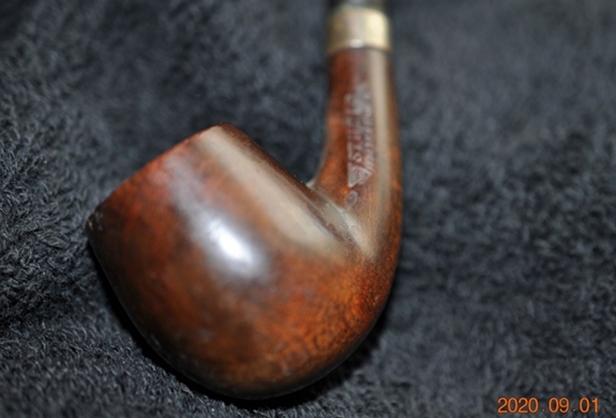
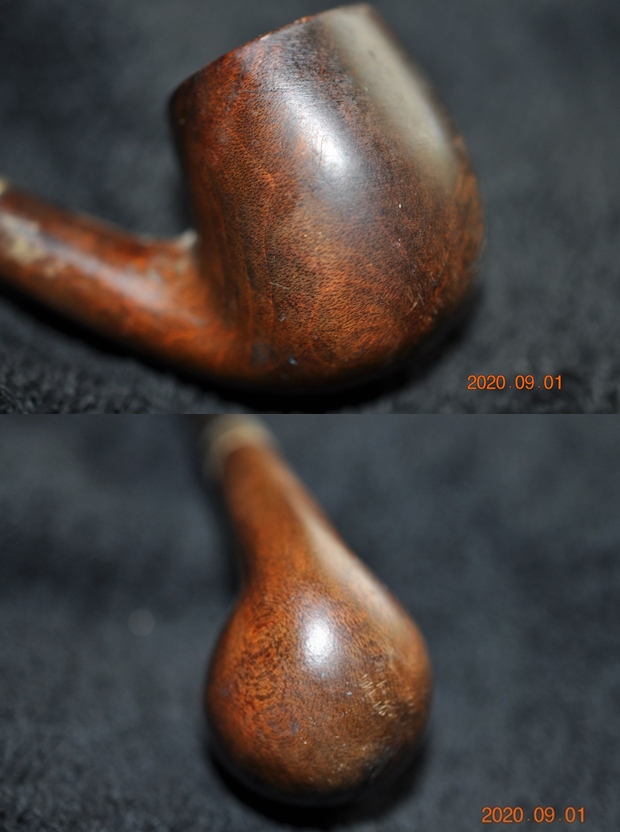
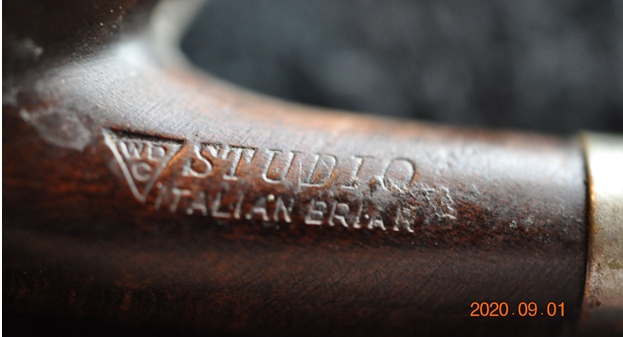
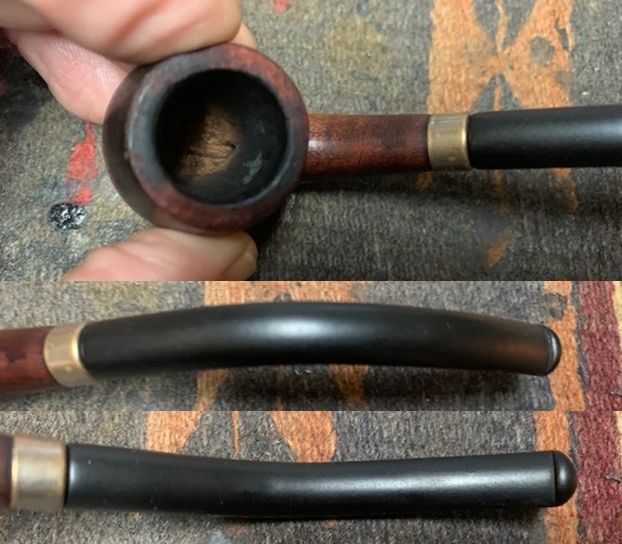
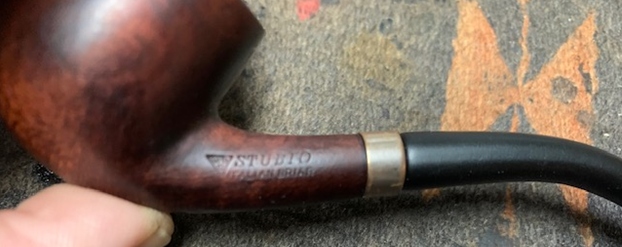
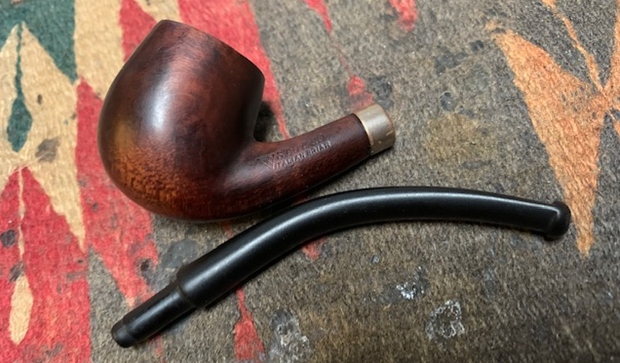
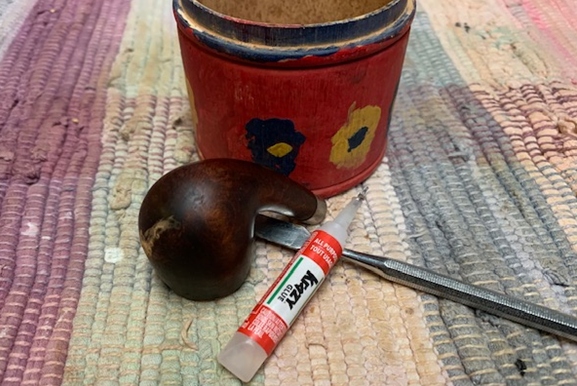
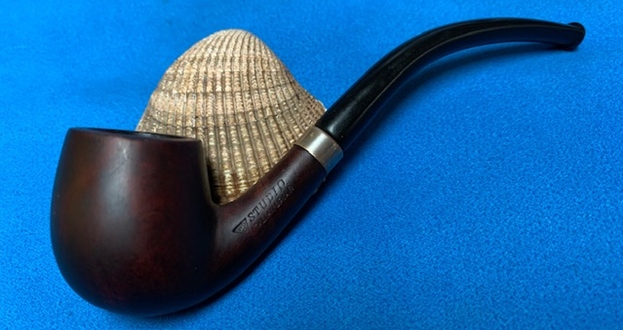
The next pipe on the work table came to us from an online auction in Kingman, Arizona, USA. The pipe is an interesting tiny bent pot. It could easily have been another salesman’s sample for Wm Demuth & Co. an American Briar maker but I have no way of knowing for sure. The orific button and the style of the stem contribute to my belief that this is an older pipe. The pipe is smoothly finished Bent Billiard shaped bowl. The pipe is stamped on the left side of the shank and reads WDC in a triangle and next to that it reads Studio [over] Italian Briar. There was grime and dust ground into the finish of the briar. The nickel band was oxidized and dull. The bowl was heavily caked while the top and inner edge of the rim had a coat of lava. The curved vulcanite taper stem was lightly oxidized, calcified and had tooth chatter and marks on the top and underside near the button. This was a tiny pipe and one that I would have thought could easily have been unsmoked. But in this case it must have been someone’s favourite smoker because it was smoked hard and often from the looks of it. The tiny pipe looked like it would be an interesting one to clean up. It showed a lot of promise but it was very dirty. Jeff took some photos of the pipe before he started his cleanup work.   He took photos of the rim top and bowl to give a clear picture of the thickness of the cake and tobacco debris as well as the lava on the top and inner edge of the rim. He also took photos of the top and underside of the stem. The shank was too dirty for the stem to fit in correctly. The photos show the overall condition of the stem. Jeff took photos of the sides and heel of the bowl to give a picture of what the briar looked like. It really does not look like briar but more like a hard wood which would also be another argument for it being a salesman’s sample pipe. The nickel band should look great once it is polished. The stamping on the left side of the shank is clear and readable and read as noted above.Jeff had cleaned up the pipe with his usual penchant for thoroughness. He reamed the pipe with a Savinelli Fitsall Pipe Knife as the bowl was too small for even the smallest PipNet reaming head.  He scrubbed the bowl with undiluted Murphy’s Oil Soap with a tooth brush. He rinsed it under running warm water to remove the soap and grime. He cleaned out the inside of the shank and the airway in the stem with alcohol, cotton swabs and pipe cleaners. He soaked the stem in a Before & After Deoxidizer bath and rinsed it off with warm water. I took photos of the pipe before I started my part of the restoration work. The rim top cleaned up really well. The rim top, inner and outer edges of the bowl are in excellent condition. The stem surface looked very good with a few tooth marks and chatter on both sides near the button.   The stamping on the shank side is clear and readable. It is stamped as noted above.  I removed the stem and took a photo of the pipe to give a sense of the whole. The taper stem is nice and the photo gives a sense of what the pipe looks like. I started my work on this little pipe by addressing a flaw in the wood on the front of the bowl. I filled it in with briar dust and super glue. Once the repair cured I sanded it with 220 grit sandpaper to smooth it out. I stained the repair on the front of the bowl with  a walnut stain pen. I sanded the bowl smooth with 1500-3200 grit micromesh sanding pads (I forgot to take photos of that process). I stained the pipe with a dark brown aniline stain, flamed it to set it in the grain and repeated the process until I was happy with the coverage.   I rubbed the bowl and shank down with Before & After Restoration Balm. I worked it into the surface of the bowl sides and shank with my fingertips to clean, enliven and protect the briar. I let the balm sit for about 10-15 minutes and buffed with a cotton cloth to raise the shine. The grain came alive and the fills while visible look better than when I began.     I set the bowl aside and turned to work on the stem. I polished the vulcanite stem with micromesh sanding pads – 1500-12000 grit pads. I wiped it down with Obsidian Oil after each sanding pad. I used Before & After Pipe Polish – both Fine and Extra Fine to further polish the stem. This Tiny WDC Studio Italian Briar Bent Billiard is a great looking little pipe now that it has been restored. The rich brown stain gives the bowl depth and elegance. The flow of the bowl and stem are well done make for a great hand feel or maybe I should say “finger” feel. The polished nickel band looks very good with the brown briar and polished vulcanite stem. I put the stem back on the bowl and carefully buffed the pipe with Blue Diamond on the buffing wheel using a light touch on the briar. I gave the bowl and the stem multiple coats of carnauba wax on the buffing wheel and followed that by buffing the entire pipe with a clean buffing pad. I hand buffed the pipe with a microfiber cloth to deepen the shine.  Once I was finished the bowl and a matte look to it that I liked. The finished WDC Studio Bent Billiard fits nicely in the hand and feels great. Give the finished pipe a look in the photos below. The dimensions of the pipe are Length: 4 ¾ inches, Height: 1 ¼ inch, Outside diameter of the bowl: 1 inch, Chamber diameter: 5/8 of an inch. The weight of this pipe is 18 grams/.63oz. I will be putting it on the rebornpipes store shortly. If you are interested in adding this pipe to your collection send me a message or an email. Thanks for reading this blog and my reflections on the pipe while I worked on it. There are many more to come!

Bringing Life to a WDC Demuth Gold Dot 77 Bulldog


Blog by Steve Laug

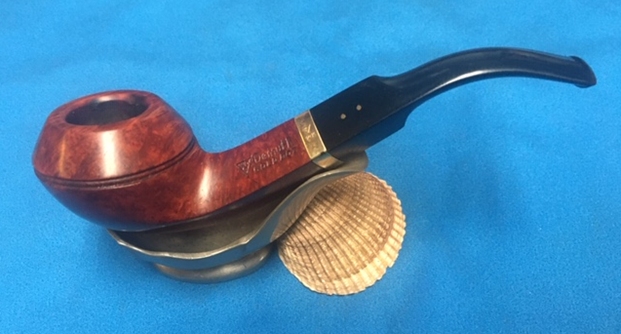
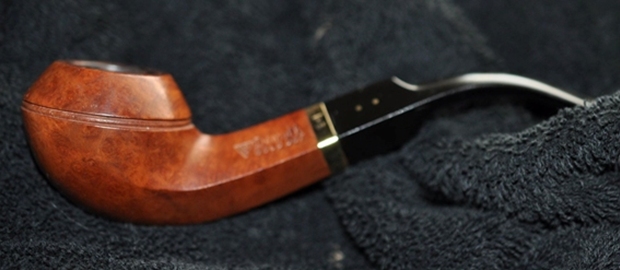
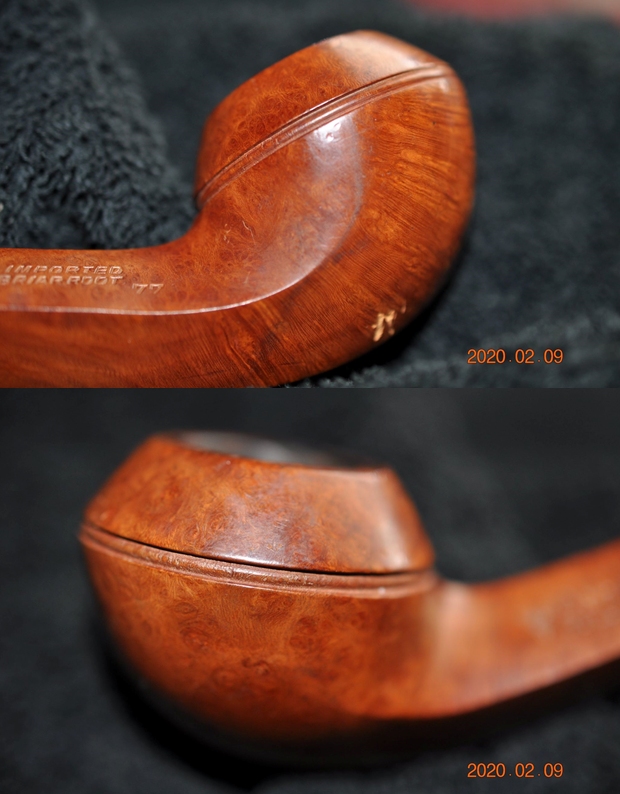
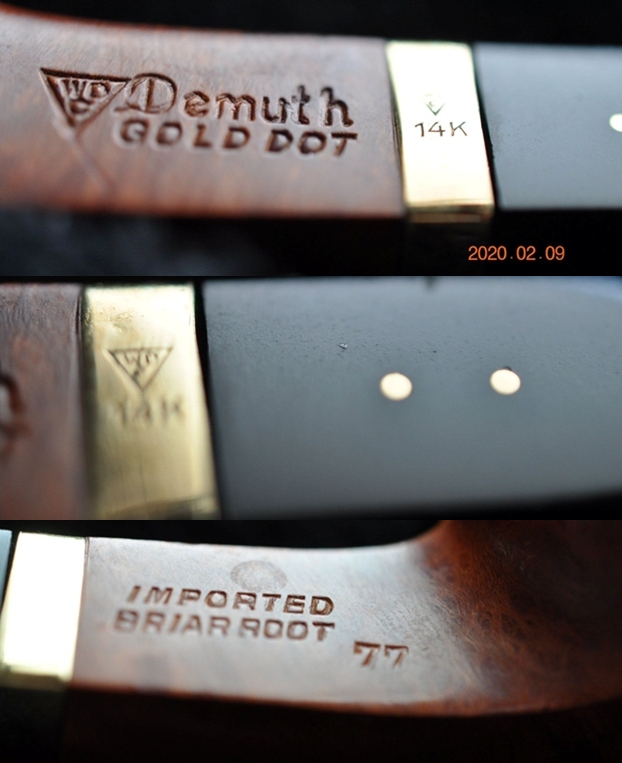
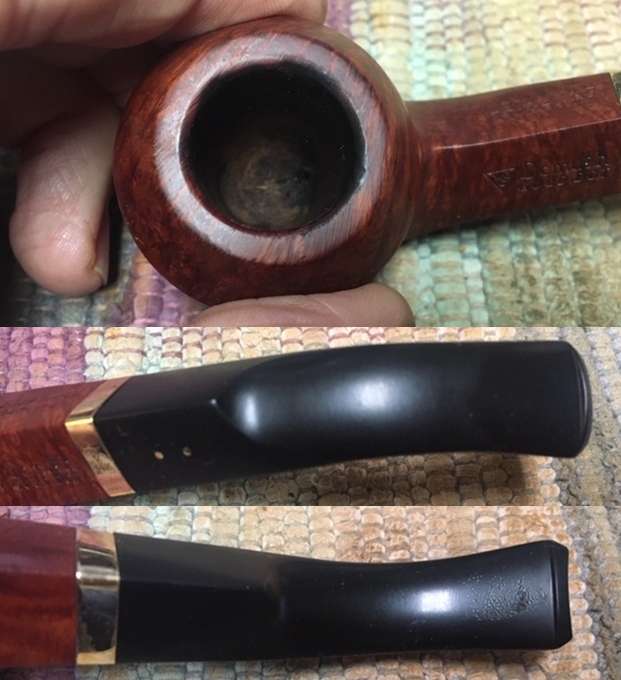
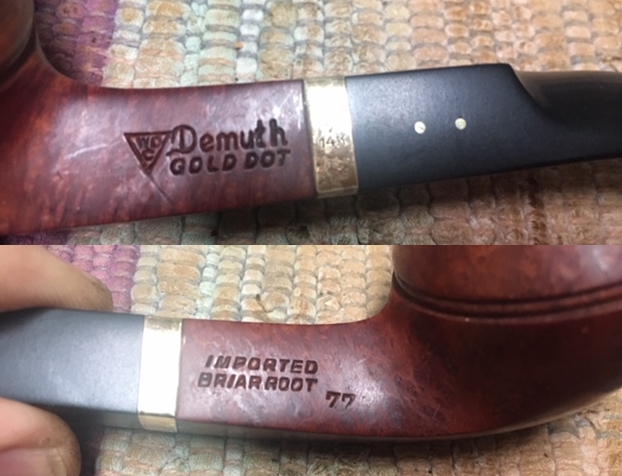
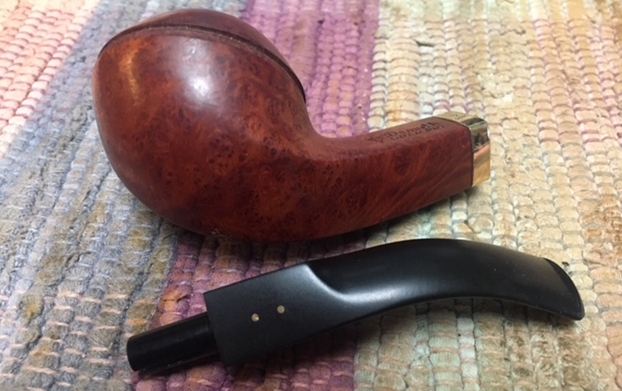
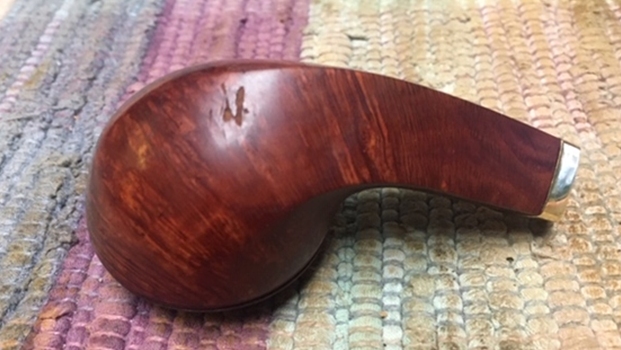
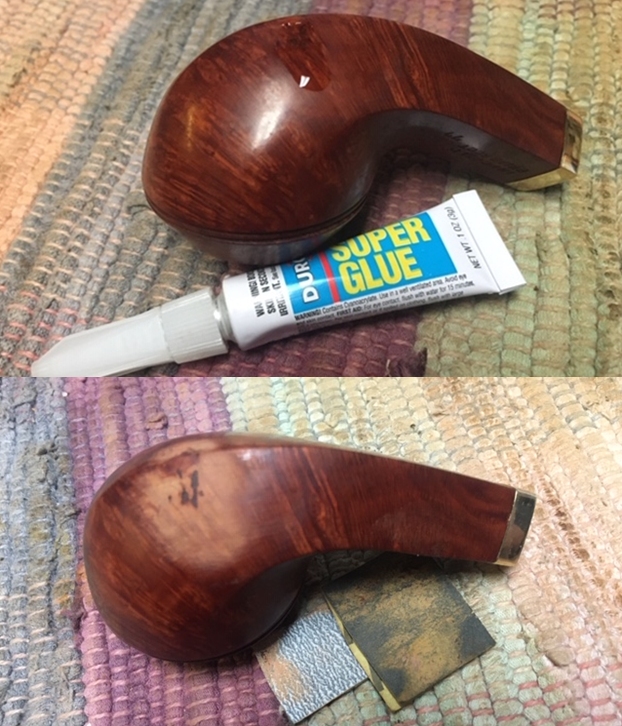
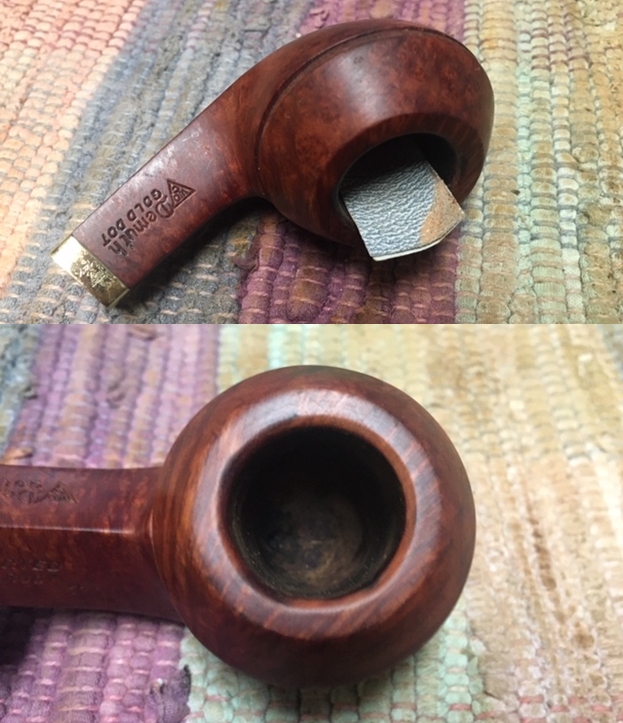
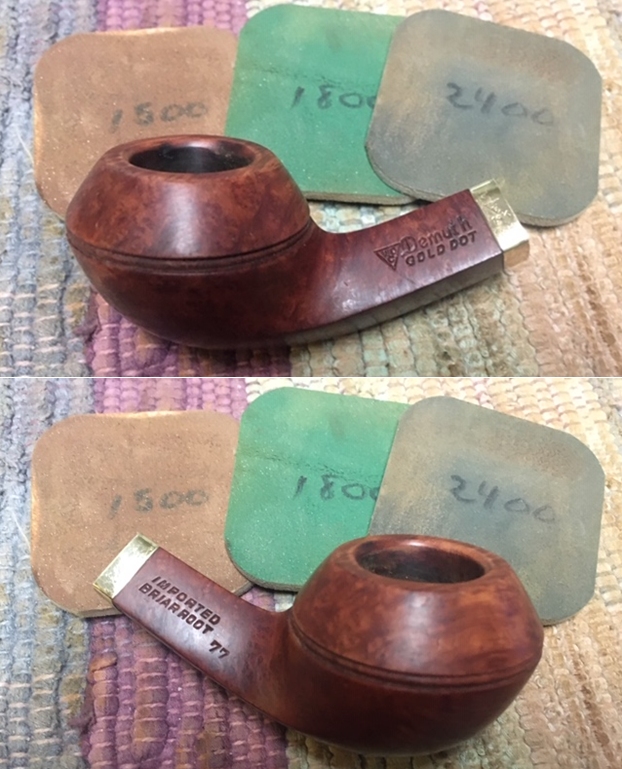
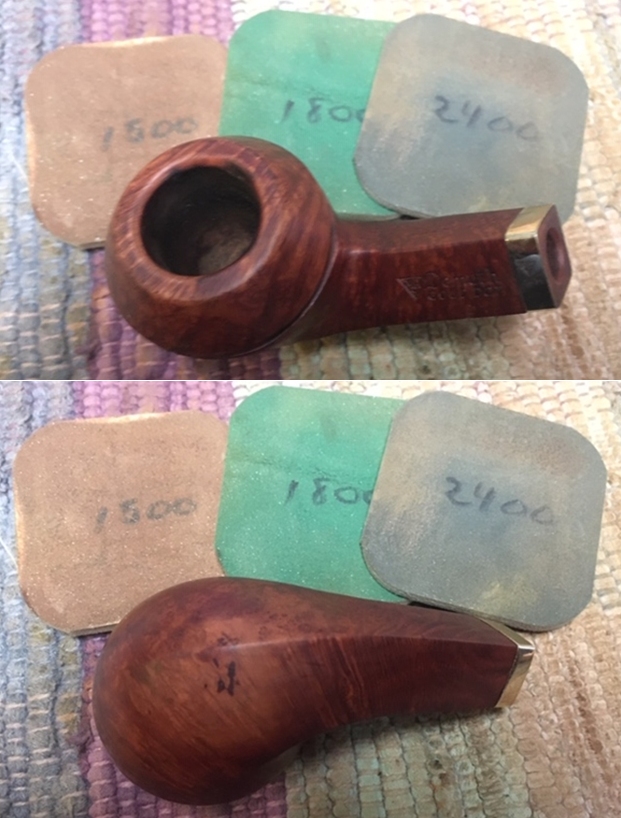
The next pipe on the table is a WDC Demuth Gold Dot Bulldog. It is a pretty pipe with a great shape. The condition is very dirty with a thick cake in the bowl and some darkening around the beveled inner edge of the rim. The previous pipeman took good care of this one. It is well smoked and other than dusty and grimy it is in decent shape. The pipe is stamped on the left side of the shank with the logo inverted equilateral triangle with letters “WDC” enclosed in it. This is followed by “Demuth” over “GOLD DOT” in block capital letters. On the right side of the shank is stamped “IMPORTED” over “BRIAR ROOT” followed by the shape number “77” towards the bowl and shank joint. A quarter inch wide gold band is on the shank end and is stamped on the left with the trademark WDC triangle over “14 K”, indicating the purity of the gold band. The ¾ bent saddle stem has two gold dots on the left side of the saddle stem. Jeff took photos of the rim top to show the condition of the bowl, rim top and edges. The cake is quite thick and there are a few spots of grime on the edges and around the cap on the bowl.He took photos around the sides and heel of the bowl to show the condition. You can see the grime in the finish and the damage on the heel. It is primarily on the right side but goes across the ridge. He included a close up photo of the damaged areas on the heel it has some deep gouges in the briar that look like it has been dropped.He took photos of the stamping on the sides of the shank and the band. You can see that it is clear and readable. You can see the 14K stamp on the band and the two dots on the stem side.The next two photos show the condition of the stem. You can see that it is lightly oxidized and has some tooth chatter on the underside. Otherwise the stem is in very good condition.I was going to do a bit of research on the brand and line but then I remembered that Paresh had worked on an identical pipe from his grandfather’s estate. I turned to the blog on rebornpipes to read what he had discovered (https://rebornpipes.com/2019/01/18/sprucing-up-the-first-of-my-wdc-a-demuth-gold-dot-77-bulldog/). I quote:

I searched pipedia.com for more information on this pipe and attempt at estimating the vintage of this pipe. Here is what I have found on pipedia.

William Demuth. (Wilhelm C. Demuth, 1835-1911), a native of Germany, entered the United States at the age of 16 as a penniless immigrant. After a series of odd jobs he found work as a clerk in the import business of a tobacco tradesman in New York City. In 1862 William established his own company. The William Demuth Company specialized in pipes, smoker’s requisites, cigar-store figures, canes and other carved objects.

The Demuth Company is probably well known for the famous trademark, WDC in an inverted equilateral triangle. William commissioned the figurative meerschaum Presidential series, 29 precision-carved likenesses of John Adams, the second president of the United States (1797-1801) to Herbert Hoover, the 30th president (1929-1933), and “Columbus Landing in America,” a 32-inch-long centennial meerschaum masterpiece that took two years to complete and was exhibited at the World’s Columbian Exposition in Chicago in 1893.

The Presidential series was the result of Demuth’s friendship with President James A. Garfield, a connoisseur of meerschaum pipes. Demuth presented two pipes to Garfield at his inauguration in 1881, one in his likeness, the other in the likeness of the President’s wife. Later, Demuth arranged for another figurative matching the others to be added to the collection as each new president acceded to the White House, terminating with President Hoover.

In early 1937, the City of New York notified S.M. Frank & Co. of their intent to take by eminent domain, part of the land on which the companies pipe factory was located. This was being done to widen two of the adjacent streets. As a result of this, Frank entered into negotiations to purchase the Wm. Demuth Co.’s pipe factory in the Richmond Hill section of Queens. It was agreed upon that Demuth would become a subsidiary of S.M. Frank and all pipe production of the two companies would be moved to DeMuth factory. New Corporate offices were located at 133 Fifth Avenue, NYC.

Demuth pipes continued to be made at the Richmond Hill plant till December 31. 1972. Then the Wm. Demuth Company met its official end as a subsidiary company by liquidation.

I came across an interesting advertisement on the same page on pipedia.com which shows the exact same pipe that I am now working on. It is the same pipe as the first pipe on the left. A close scrutiny of the picture confirms the following:

(a) The Gold Dot line of WDC pipes was offered sometime before 1941 as inferred from the bottom line of this flyer which encourages readers to “WRITE FOR NEW 1941 STYLE BOOKLET”, implying that this flyer was published prior to 1941!!

(b) The Gold Dot line of WDC pipes was at the time their top of the line product as it is the most expensive of all the pipes advertised in the flyer, retailing at $10!!Pipephil.eu too has the same pipe shown with shape # 77. Here is the link; http://www.pipephil.eu/logos/en/logo-w1.html

From Paresh’s research I confirmed that this WDC Gold Dot was WDC’s top tier of pipes and was made in 1940s. It is definitely a good looking pipe. Armed with that information and a clearer picture of the original pipe I turned to work on the pipe on my work table. Jeff had done a great job cleaning up the pipe as usual. He reamed the pipe with a PipNet reamer and cut back the cake back to the bare briar. He cleaned up the walls with a Savinelli Fitsall Pipe Knife. He scrubbed the interior of the bowl and shank with pipe cleaners, cotton swabs and alcohol to remove the tars and oils. He scrubbed the exterior of the pipe with Murphy’s Oil Soap and a tooth brush to remove the grime from the finish. He worked on the rim edge lava and darkening with the soap and tooth brush. He scrubbed the inside of the stem with alcohol and pipe cleaners. He scrubbed the exterior with Soft Scrub and then soaked it in Before & After Deoxidizer. He washed it off with warm water to remove the Deoxidizer. The pipe looked far better. I took photos of the pipe when I received it before I started working on it. I took photos of the bowl and rim top as well as the stem to show how clean they were. You can see the damage on the inner edge on the rear of the bowl. The stem looks clean of oxidation and the tooth marks and chatter are fairly light. I took photos of the stamping on the sides of the shank. They are clean and readable and read as noted above.    I took a photo of the pipe with the stem removed to show the overall look of stem, tenon and profile of the pipe. I noted that the tenon is metal and is made for a paper filter. I think it would fit a Medico paper filter.I decided to start my work on the pipe by addressing the damage to the heel of the bowl. I filled in the damaged areas with clear super glue. Once the repairs cured I sanded them smooth with 220 grit sandpaper and also began the polishing with 40o grit wet dry sandpaper. I turned to work on the rim top and the inner edge. I used a folded piece of 220 grit sandpaper to work on the inner edge to remove the darkening and bring it back into round. I cleaned up the beveled edge. It took a bit of work but I was able to remove the majority of it and the end product looked much better.I polished the bowl and rim with micromesh sanding pads – wet sanding with 1500-12000 grit pads. I worked over the rim top and edge of the bowl with the pads. I wiped the bowl down with a damp cloth after each pad to remove the sanding debris.       I used an Oak and a Maple stain pen to blend the repaired area on the heel of the bowl into the colour of the rest of the bowl. The match worked very well.I rubbed the briar down with Before & After Restoration Balm. I worked it into the briar with my fingertips. The product works to clean, enliven and preserve the briar. I let it sit for 10 minutes while I worked on the stem. After the time passed I buffed it with a cotton cloth to deepen the shine. The briar really comes alive with the balm.  I worked over the light oxidation on the stem and blended the tooth marks into the stem surface with 220 grit sandpaper. I started polishing the stem with 400 grit wet dry sandpaper. At this point it is starting to look much better.  I polished the vulcanite with micromesh sanding pads – 1500-12000 grit pads. I wiped it down with Obsidian Oil after each sanding pad. I used Before & After Pipe Polish – both Fine and Extra Fine to further polish the stem.   This beautiful WDC Gold Dot 77 Bulldog is a great looking pipe. The mix of brown stains highlights the mix of grain around the bowl sides, top and bottom. The finish on the pipe is in excellent condition and the contrasting stains work well with the polished black vulcanite saddle stem. I put the stem back on the bowl and carefully buffed the pipe with Blue Diamond on the buffing wheel using a light touch on the briar. I gave the bowl and stem multiple coats of carnauba wax on the buffing wheel and followed that by buffing the entire pipe with a clean buffing pad. I hand buffed the pipe with a microfiber cloth to deepen the shine. The finished WDC Gold Dot Bulldog is quite nice and feels great in the hand. Give the finished pipe a look in the photos below. The dimensions of the pipe are Length: 5 ½ inches, Height: 1 ¾ inches, Outside diameter of the bowl: 1 ¾ inches, Chamber diameter: ¾ of an inch. Thanks for walking through the restoration with me as I worked over another beautiful pipe. This pipe will be added to the American Pipe Makers section of the rebornpipes store soon. If you want to add it to your collection send me an email or a message! Thanks for your time.

Cleaning up a gift WDC Marlborough Twin Bore Bent Briar


Blog by Steve Laug

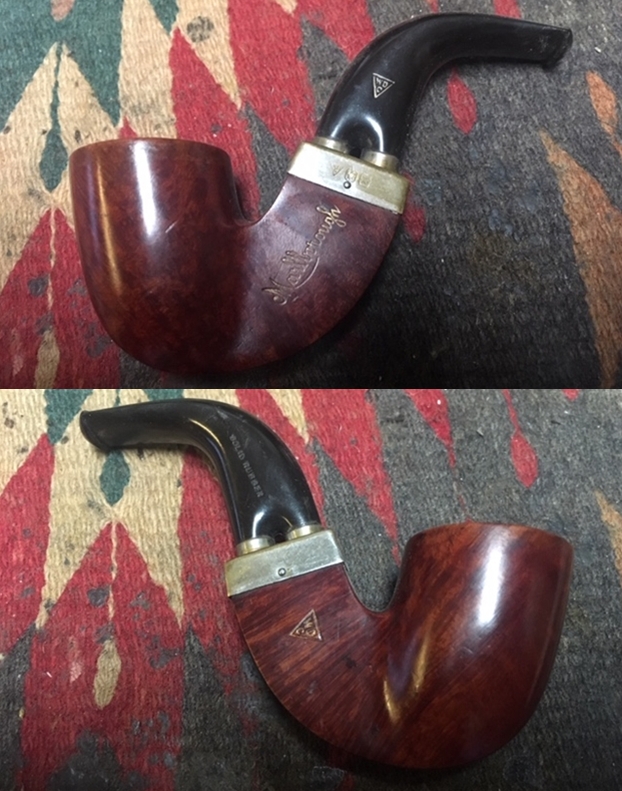
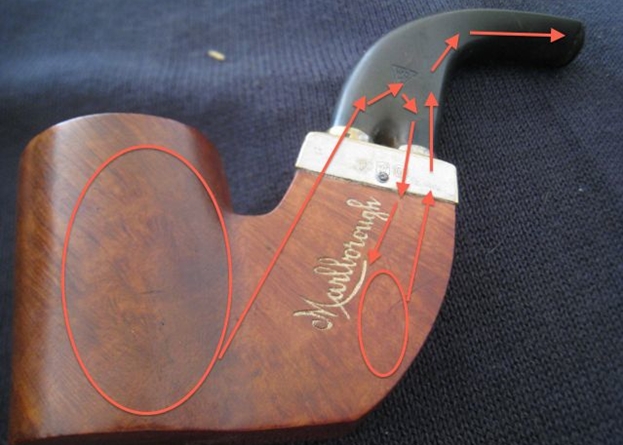
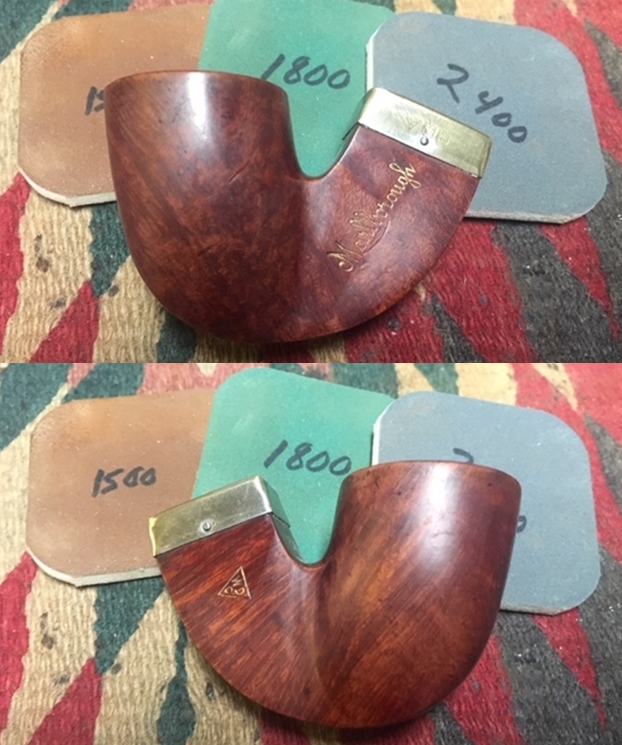
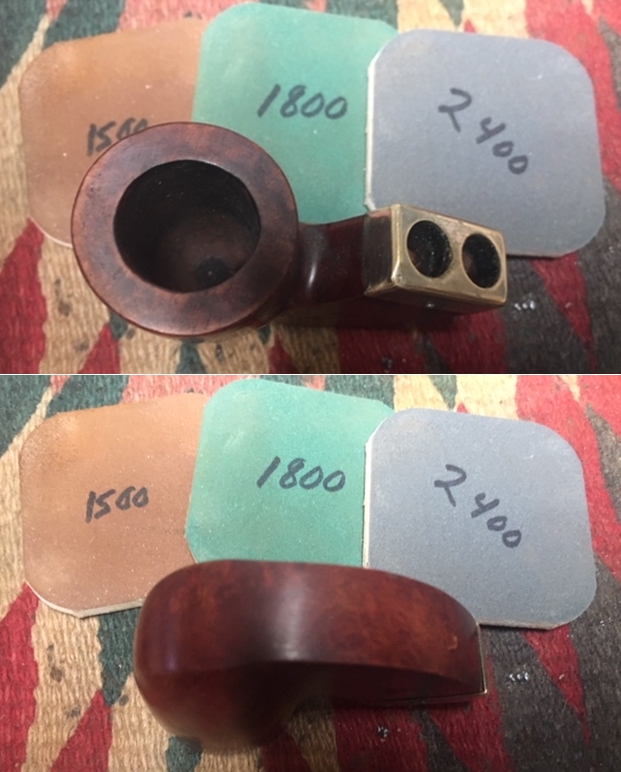
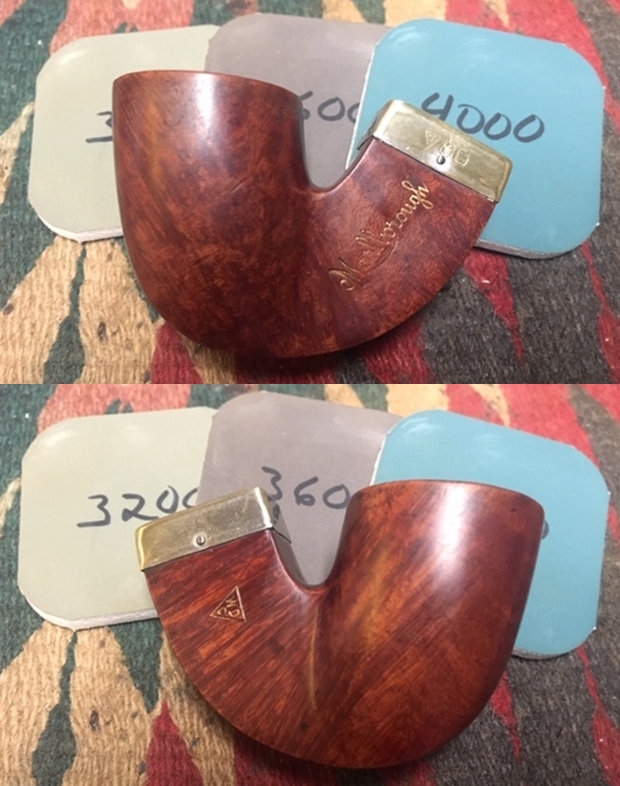
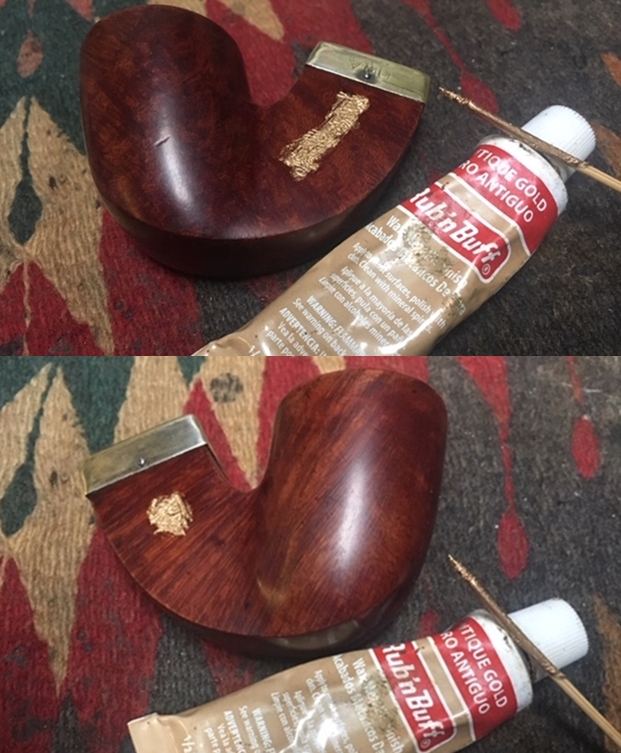
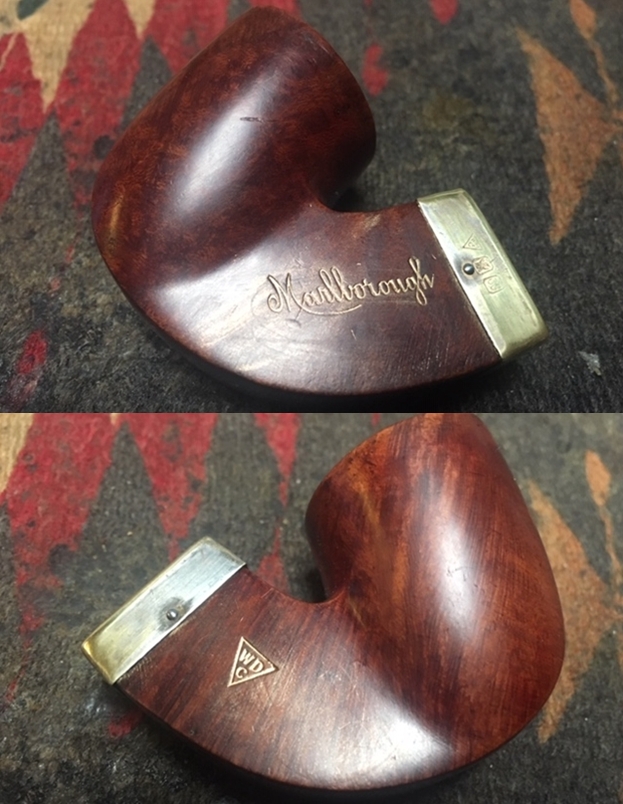
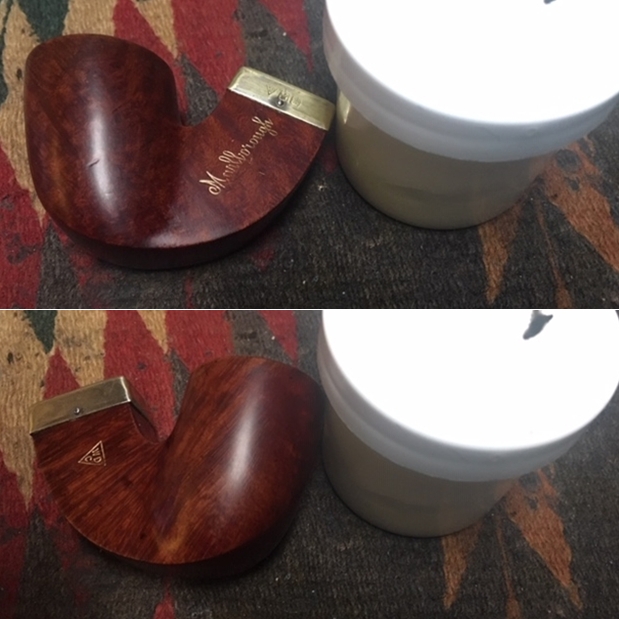
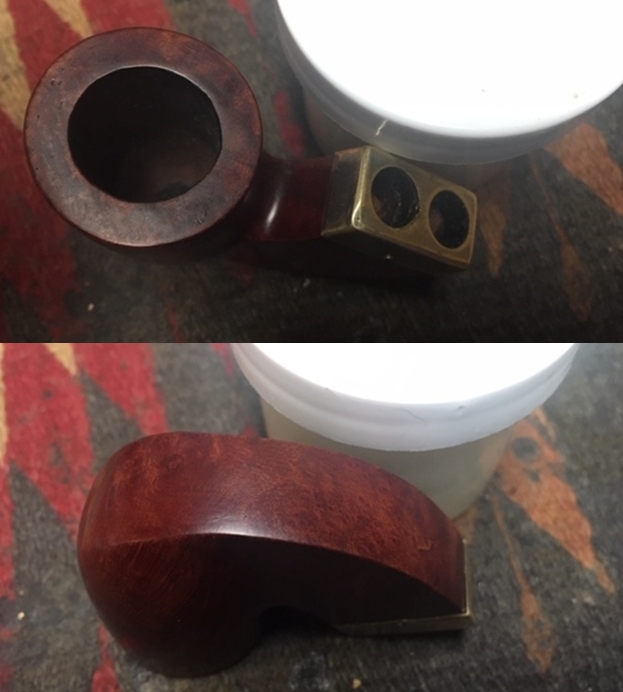
One of the gifts I brought home from Pune, India and my visit with Paresh, Abha, Mudra and Pavni was one of his Grandfather’s unique pipes. It is an old timer that is very similar to a CPF Cromwell pipe that I restored previously. I referred to this very pipe in that blog. Here is the link to the blog on that pipe (https://rebornpipes.com/2017/07/01/out-damn-spots-a-c-p-f-cromwell-double-vertical-stem-bent-billiard/). Paresh’s Grandfather was obviously gifted this old pipe. It did not appear to have been smoked very much (unlike the other pipes that Paresh received from him). Like the C.P.F. pipes from this time period this WDC Marlborough has some real charm. It is on the petite side of things – 4 ½ inches long and 1 3/4 inches tall. It is not a bad piece of briar, a mix of grains. The brass/silver collar on the shank is stamped with faux hallmarks and the WDC triangle logo. The stem is the unusual part of the mix. It has two brass plated spigot tenons that fit into openings in the shank collar. The twin stems merge into one single airway. Looking at it I could not wait to examine it and see the internals in the mortise and shank. The finish was worn but the pipe looked like it still had some life in it. The left side of the shank is stamped in worn gold leaf Marlborough in script. The right side of the shank is stamped in gold leaf with the WDC Triangle logo. The stem is also stamped on the left side with the WDC triangle and SOLID RUBBER on the right side. I took photos of the pipe from a variety of angles to show the uniqueness and the condition before I started my cleanup work. I took some close up photos of the bowl top to show what it looked like before I started the cleanup work on it. I also included some close up photos of the stem to show the tooth marks and chatter on both sides. The finish looks very good with a little dust and debris on the briar.The stamping on the left side of the shank and stem is readable – Marlborough on the shank in gold leaf and WDC in a triangle on the stem. It is clear and readable. You can also see the hallmark and logo on the brass/silver band. The stamping on the right side of the shank and stem is also clear. The shank reads WDC in a triangle in gold leaf and the stem reads SOLID RUBBER. I took the stem out of the shank and took a photo of the parts of the pipe. You can see the dual ports in the shank and the dual ports in the stem. I turned to the previous blog on the CPF pipe to refresh my memory of the information I had found at that point in the processs (https://rebornpipes.com/2017/07/01/out-damn-spots-a-c-p-f-cromwell-double-vertical-stem-bent-billiard/). I quote from that blog and also include a diagram that I did on the airflow of the pipe.

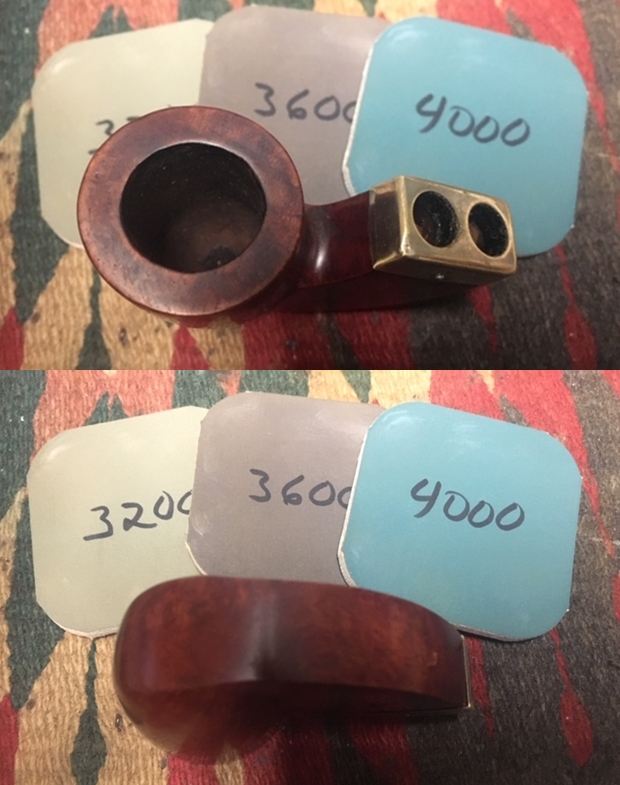
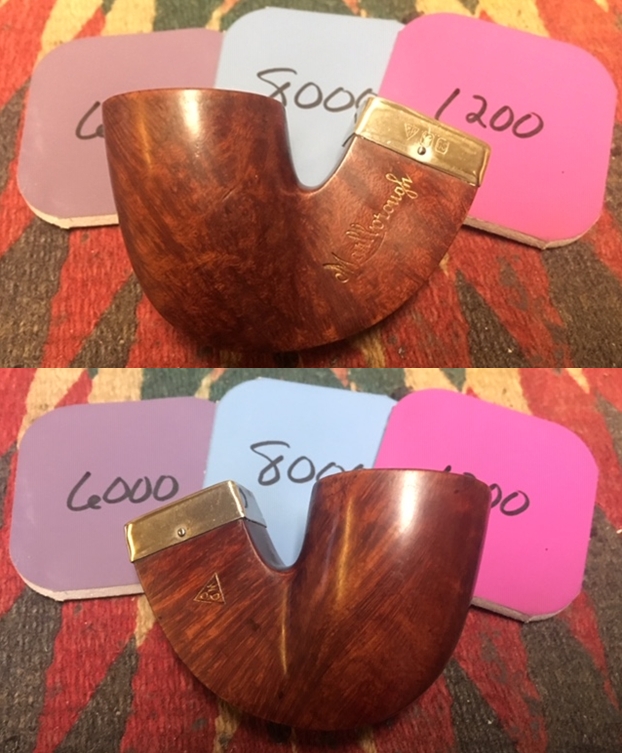
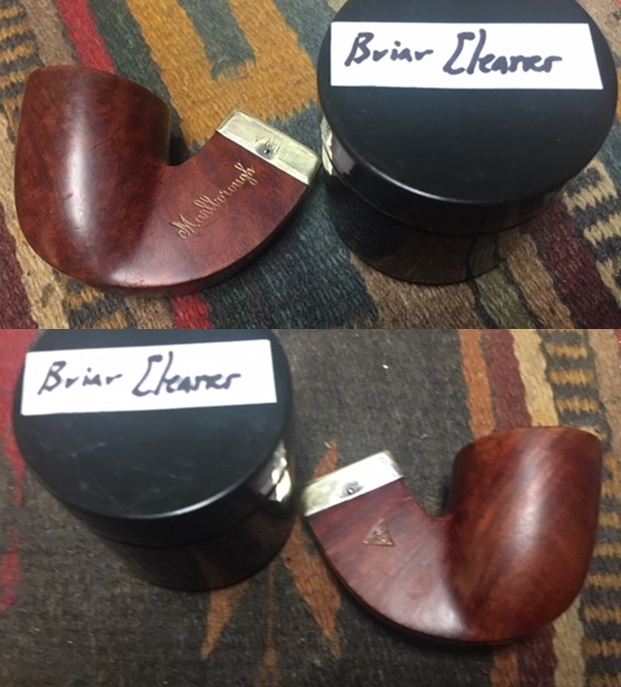
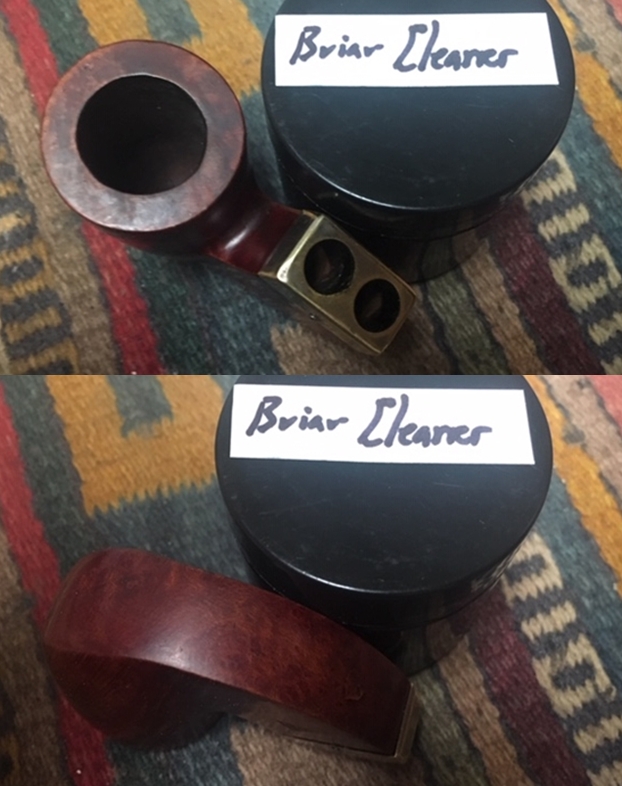
I did some digging online and found a WDC Marlborough that had a similar configuration though far more boxy. It did not have the elegance that the C.P.F. does in my opinion. Playing around with the mechanics of the smoke and how it flowed through the stem I examined the dual mortise and the way the stem was laid out. I fed a pipe cleaner through the stem and found that natural flow of the cleaner was from the button through the top of the stem and into the top mortise. I could plug the lower tenon and the air was unobstructed from tenon to button. When I plugged the upper tenon and blew air through it I could feel it against my fingertip and then it made its way out the lower tenon. The airflow seems to have flowed against my finger and back a short distance to an opening between the two stems and out. From that I figured out that the smoker draws smoke through the upper mortise and into the airway on the stem. It flows into the bottom stem and mortise (which is a sump like the Peterson System pipes have) where moisture is collected and the smoke exits up the lower stem and into the button and into the mouth of the smoker. In my online search I found a photo of the Marlborough with the airpath drawn out as I conceived it in my words above. I drew the same kind of pattern on the C.P.F. to show how it appeared from my experiments. I used the link on the previous blog to go back and read the online forum about the Marlborough pipe. Here is the link to the Marlborough (http://pipesmagazine.com/forums/topic/wdc-marlborough-double-airway).Now that I had a bit of the back story on the pipe from Paresh’s Grandfather’s collection it was time to go to work on it. I polished the briar with micromesh sanding pads – wet sanding with 1500-12000 grit sanding pads. I wiped it down with a clean damp cloth after each pad. I brought back a package of Restoration Balm from Mark Hoover from Idaho. He included a sample of a new product that he was experimenting with called Briar Cleaner. It is to be used prior to scrubbing (possibly instead of scrubbing with Murphy’s Oil Soap) and to be followed up with the Balm. I decided to give it a try on the smooth finish of this pipe. I worked it into the finish with my fingertips and scrubbed it off with a soft cloth. I buffed the bowl with a microfiber cloth to dry and shine it. The product seemed to work well to lift the dirt and grime from the finish. I am still not sure if it a necessary extra step for me but I am working with it on the next few pipes. The photos below show the pipe after cleaning with the product. I used some Rub’n Buff Antique Gold to repair the gold fill in the stamping on both sides of the shank. I rubbed it on and pressed it into the stamping with a tooth pick. I buffed it off with a soft cotton pad and a microfiber cloth. The photos tell the story. I rubbed Before & After Restoration Balm into the briar and worked it in with my fingertips. I let the bowl sit while the Balm did its work on the briar. Once it had been sitting for a few moments I buffed it off with a soft cotton cloth. The photos show the bowl after the Balm had worked. After cleaning the exterior of the briar with Mark’s new product it was time to clean the internals. I scrubbed out the mortise and the airway in the shank and the stem with pipe cleaners, cotton swabs and isopropyl alcohol. I was surprised to find that the pipe was pretty clean. I was also surprised to see some of the dark stain coming out of the shank. It appears that the pipe may have been dip stained. I set the bowl aside and worked on the stem. I sanded out the tooth marks with 220 grit sandpaper and started the polishing with 400 grit sandpaper.I polished the stem with micromesh sanding pads – wet sanding with 1500-12000 grit pads. I wiped the stem down after each pad with Obsidian Oil. I interrupted the polishing after the 4000 grit pad and used Rub’N Buff Antique Gold to touch up the WDC Triangle stamp on the left side fo the dual stem. I cleaned off the excess Rub’N Buff gold and then continued polishing with 6000-12000 grit pads. I rubbed it down with Obsidian Oil after each pad. I used some new product that Mark Hoover put together – Before & After Restoration Balm that was made to work on vulcanite. It did a good job of polishing the vulcanite. I finished by polishing the stem with Before & After Pipe Polish – both Fine and Extra Fine. I wiped it down a final time with Obsidian Oil and set it aside to dry.I put the stem back on the shank and buffed it lightly with Blue Diamond on the buffing wheel. I hand buffed it with a microfiber cloth to raise a shine in the briar. The finish on the briar came alive with the buffing and took on a deep shine. I gave the bowl and stem several coats of carnauba wax and buffed it with a clean buffing pad and with a microfiber cloth. The finished pipe is shown in the photos below. It is an interesting little pipe measuring 4 1/2 inches in length, 1 3/4 inches in height. The outside diameter of the bowl is 1 1/4 inches and a chamber diameter of 3/4 of an inch. The unique design and the flow of air through the pipe make this a very interesting looking pipe. It is a beautiful, bent billiard with a double shank and stem. This pipe is staying with me as it is the background to the similar CPF Cromwell that I have in my personal collection. It is another beautiful old pipe that fits into my old US Made pipe collection. Thanks for reading the blog. Enjoy.

A Unique Piece of Pipe History – A Beautiful WDC Calabash with Bling


Blog by Steve Laug

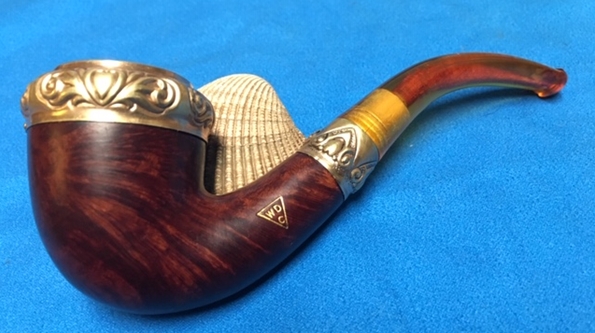
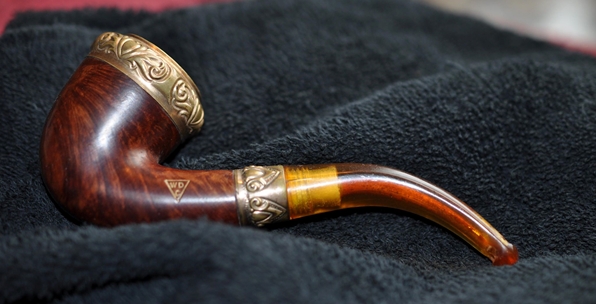
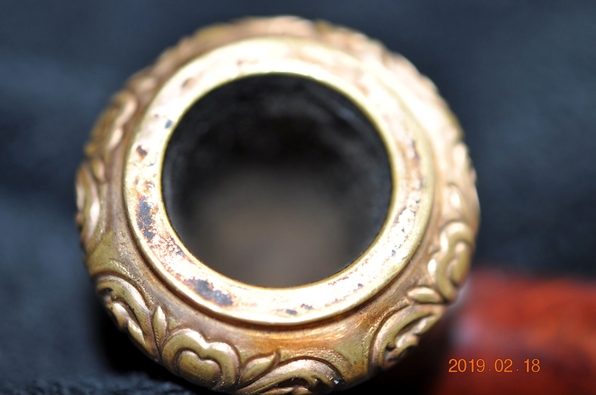
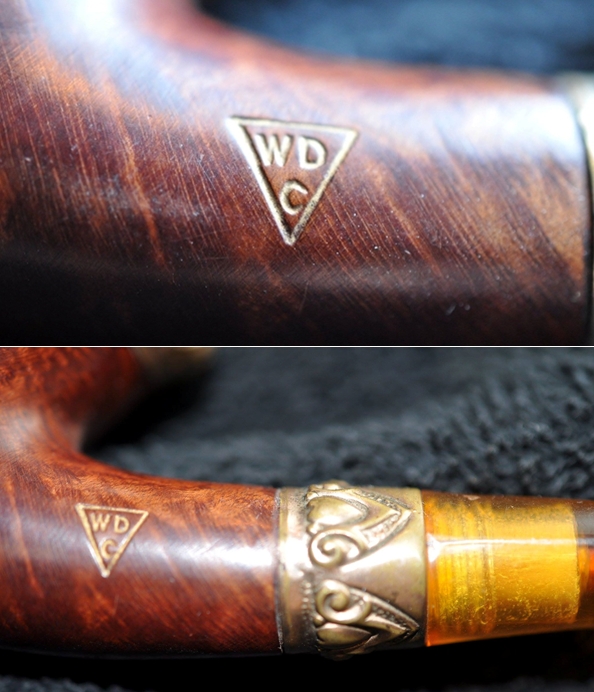
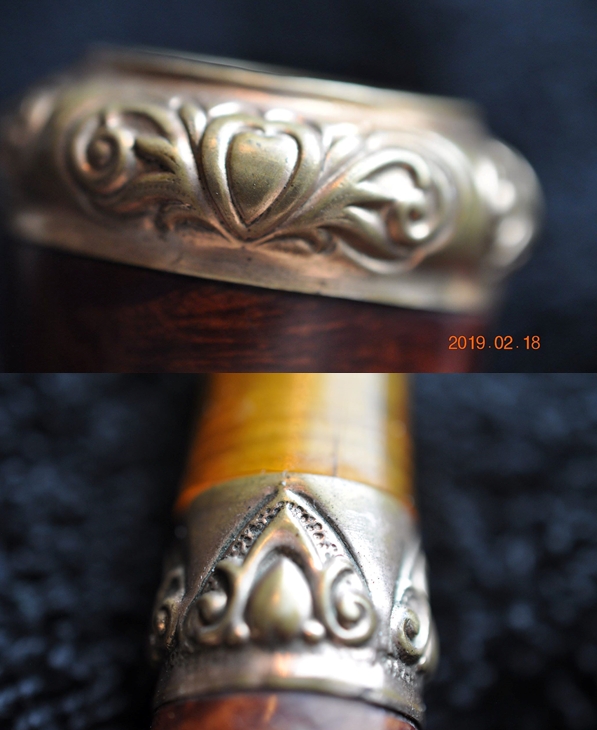
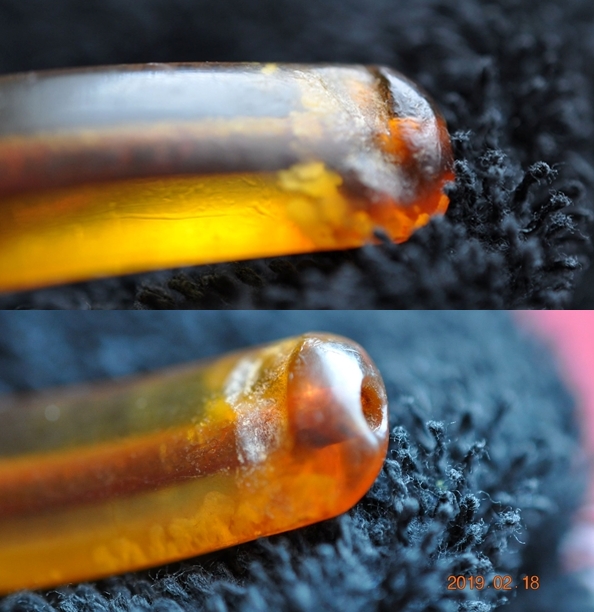
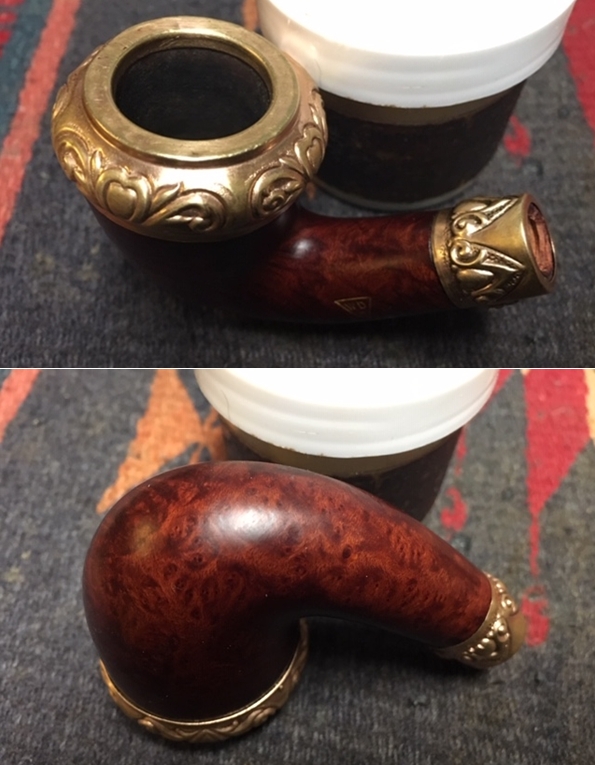
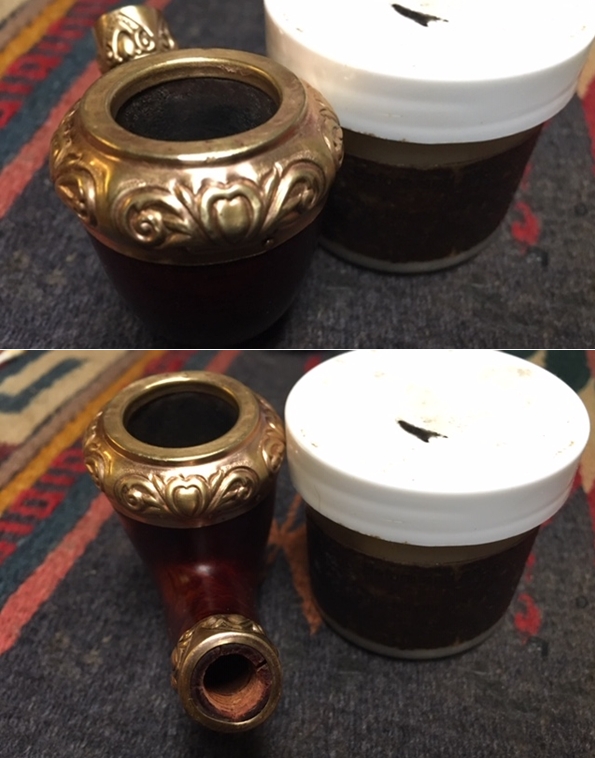
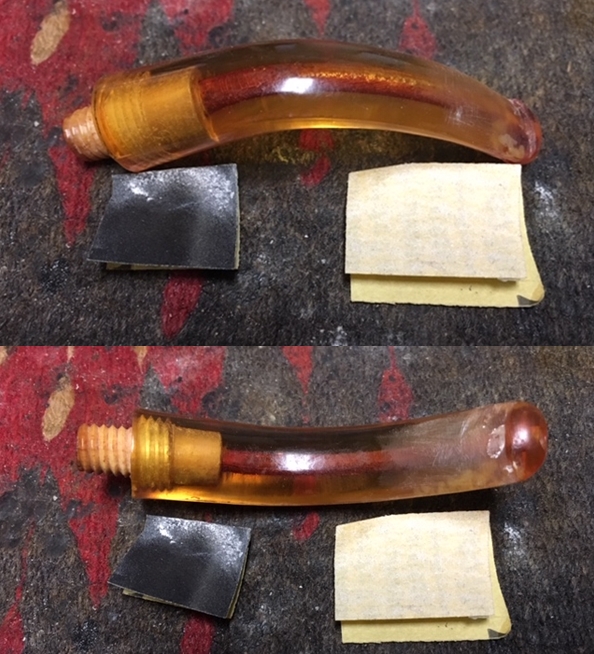
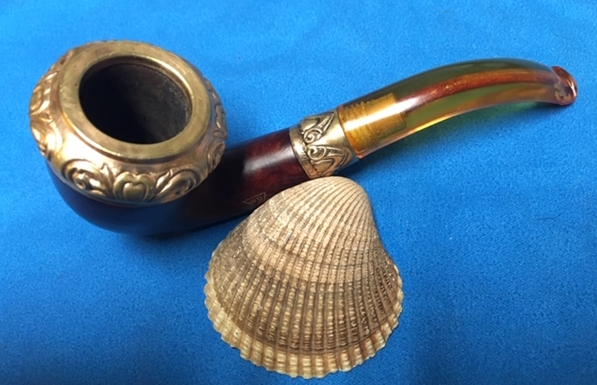
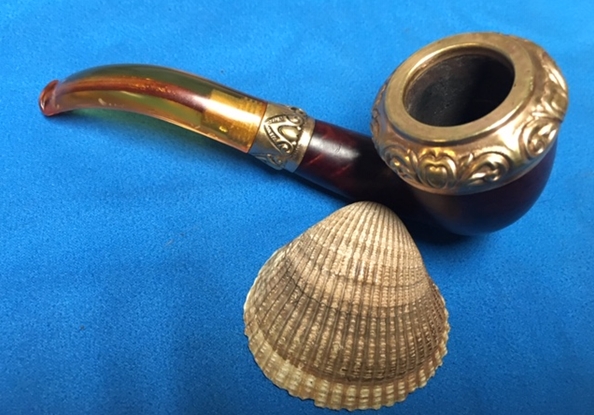
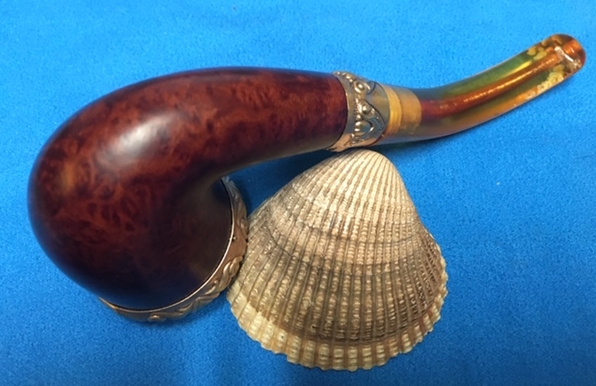
The next pipe in the queue is an old timer that Jeff picked up somewhere in his journeys whether online in his pipe hunting is antique shops. This one an interesting older WDC Calabash with a brass shank cap and a rim top cap. The stem is Bakelite with an amber colour. It is stamped on the left side of the shank WDC in a triangle (William DeMuth & Company). It is a Calabash shaped pipe decorated with a brass rim top and cap as well as a brass ferrule. Both have a pattern of filigree and hearts. These older WDC and CPF Calabashes were decorative and had a real flourish that makes them readily identifiable. The finish is smooth and is in good condition despite the years. The brass rim top has some dings in it and there was some lava buildup on various spots. The inner edge of the brass cap was turned down into the inner edge of the bowl. It was dirty with lava and there was a thick cake in the bowl. The brass was tarnished but looked easy to clean up. The pipe was dusty but the finish looked like it was rich and would clean up well. The stem is an amber coloured Bakelite with a threaded tenon in the shank and the stem. The stem has tooth marks and chatter on both sides at the button edge. The photos below tell the story and give a glimpse of the pipe before clean up. Jeff took a photo of the bowl and rim to show the condition of the pipe before he started his cleanup work. The spots of lava overflowing on the rim top made me thick that some of the lava had been scraped off by the seller.  There was a thick cake in the bowl that would need to be reamed out. There was dust and debris in the curls and curves of the brass cap.He also took a photo of the right side and underside of the bowl and shank to show the amazing birdseye and swirling grain around the bowl. The classic WDC stain looked pretty good under the grime.Jeff took photos of the stamping on the left side of the shank and the setting between the brass ferrule and the bowl. The WDC triangle logo stamping is legible and very readable.The next photos show the rim cap and ferrule and highlight the heart and filigree patterns in the brass. You can also see the oxidation on the brass in the photos.The next two photos show the stem surface. They show the tooth marks and chatter on both sides near the button. They also show the deep oxidation on the stem. The third photo below shows the threaded bone tenon. Jeff did a thorough clean up job on the pipe so that  when it arrived here in Vancouver it looked amazingly good for a pipe that is at least a hundred years old. Jeff carefully reamed the bowl with a PipNet pipe reamer and followed up with a Savinelli Fitsall pipe knife to remove the cake. He scrubbed out the mortise and the airway in the shank and the stem with alcohol, cotton swabs and pipe cleaners. He scrubbed the exterior of the bowl, rim, shank and stem with a tooth brush and Murphy’s Oil Soap to remove the oils and tars on the rim and the grime on the finish of the bowl of the pipe. He rinsed it off under running water. He dried it off with a soft cloth. He was able to remove all of the lava build up on the beveled rim top of the pipe. The brass rim top and ferrule looked very good. The birdseye and cross grain was beautiful and the pipe looked very good. There were tooth marks and chatter visible on both sides of the stem at the button. I took photos of the pipe to show its condition before I started my work. I took close up photos of the bowl, rim and stem surfaces to capture the condition of the pipe after Jeff had done his cleanup. The rim top was clean and the brass inner edge was in excellent condition. The stem was quite clean with some tooth marks and chatter on the top and underside near the button.I took a photo of the stamping on the left side of the shank and the flow of the grain on the shank and bowl side. It is a beautiful piece of briar.The bowl and rim top looked really good after Jeff’s clean up work. I decided to go straight to polishing the bowl. I worked some Before & After Restoration Balm into the surface of the briar with my fingertips to clean, enliven and protect it. I let the balm sit for a little while and then buffed the bowl with a cotton cloth to raise the shine. The following photos show the bowl at this point in the restoration process. The bowl and the rim top look really good and the grain really stood out on the smooth rim. The finish looks very good with the grain popping through the brown stain on the bowl and the brass on the rim top and shank end. I set the bowl aside and turned my attention to the stem. I filled in the deep tooth marks on both sides with clear super glue. It takes a while  to cure so I set it aside and worked on another pipe while it hardened.Once the repairs had cured I used a needle file to sharpen the edge of the button and smooth out the repairs on the surface of the stem. I sanded it with 220 and 400 grit sand paper to smooth out the repairs and blend them into the surface of the stem. I polished the stem with micromesh sanding pads – wet sanding with 1500-2400 grit pads and dry sanding it with 3200-12000 grit pads. I wiped the stem down with Obsidian Oil after each pad. I further polished it with Before & After Pipe Polish – both Fine and Extra Fine. I finished by giving it a final coat of Obsidian Oil and setting it aside to dry. Since I had finished both the bowl and stem I put them back together and carefully polished the bowl and stem with Blue Diamond polish on the buffing wheel. The combination of metal, Bakelite and briar makes this a very touch process. I gave the bowl and the stem multiple coats of Conservator’s Wax. I carefully buffed the pipe with a clean buffing pad to raise the shine. I hand buffed it with a microfiber cloth to deepen the shine. The pipe polished up pretty nicely. The brass rim cap and shank end and the beautiful grain of the briar on the bowl came alive on the buffing wheel. The rich brown stain works well with polished amber coloured Bakelite stem. The finish looks amazing and it is smooth and light weight in the hand. Judging from the condition when we got it, I am sure that this will be another amazing smoker. Have a look at it with the photos below. The dimensions are Length: 5 1/4 inches, Height: 2 inches, Outside diameter of the bowl: 1 7/8 inches, Chamber diameter: 3/4 of an inch. This beauty will be going into my collection of old WDC and CPF. Thanks for walking through the restoration with me on this beautiful old time WDC Calabash pipe.

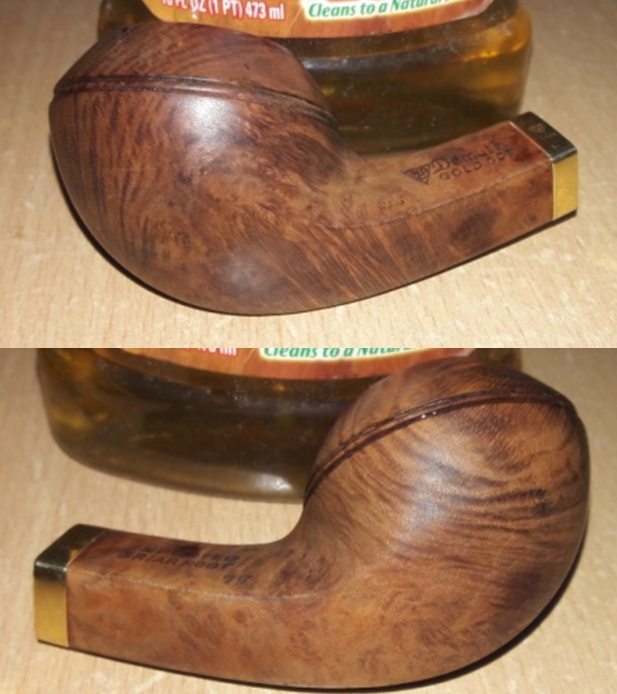
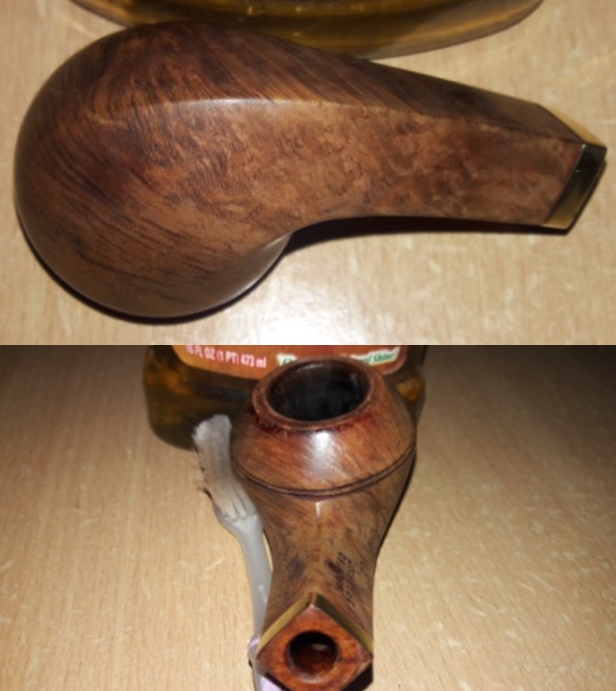
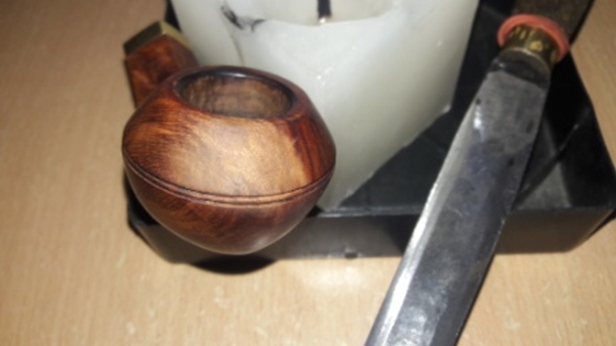
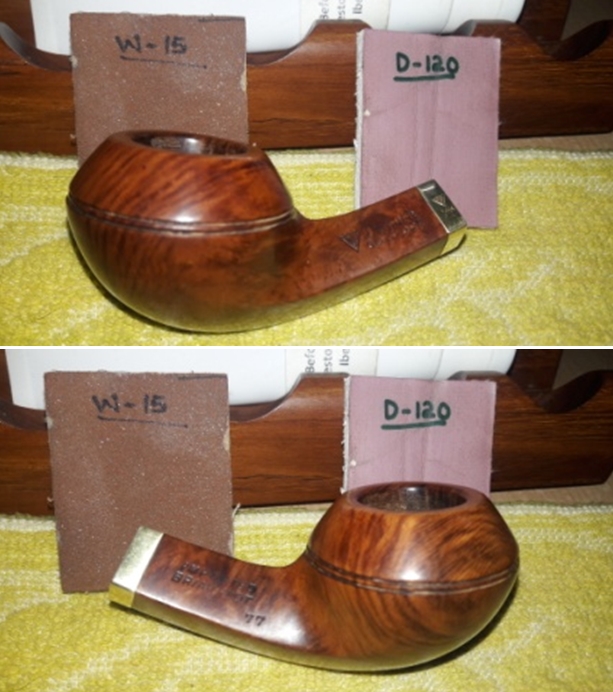
Sprucing up the first of my WDC; a Demuth Gold Dot #77 Bulldog


Blog by Paresh Deshpande

There a quite a few WDCs that I have inherited from my old man and the one on my table now is a “Demuth, Gold Dot”. I love the classic Bulldog and Rhodesian shape in pipes and am naturally attracted to pipes with this shape. Thus, no surprise here that I chose to work on this WDC Demuth Gold Dot in a classic Bulldog shape!!

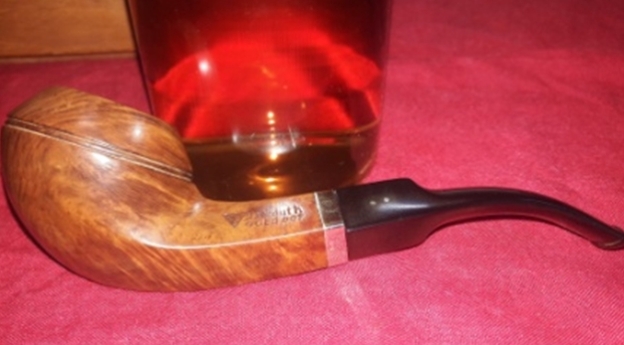
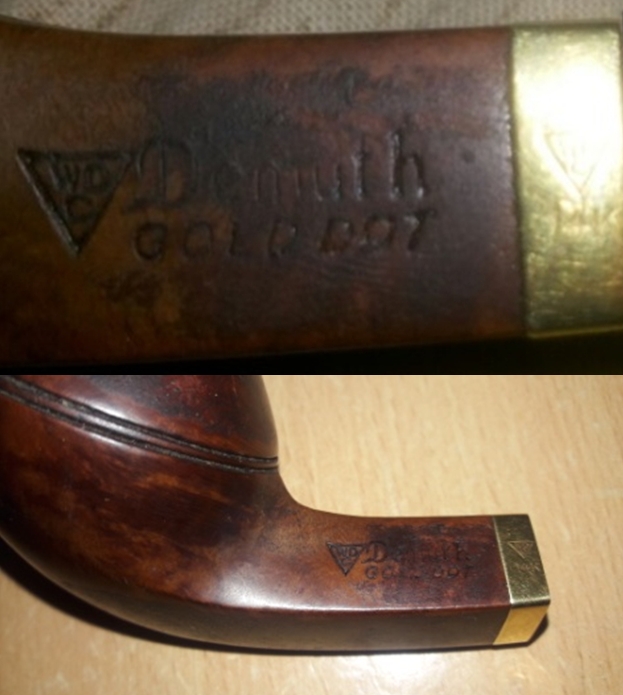
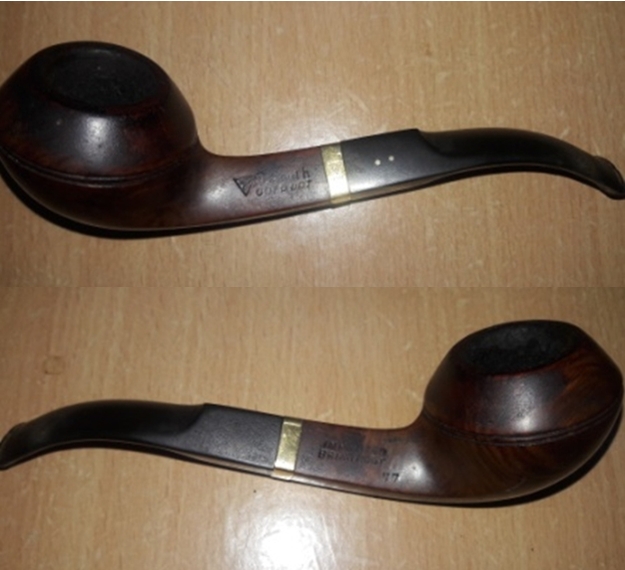
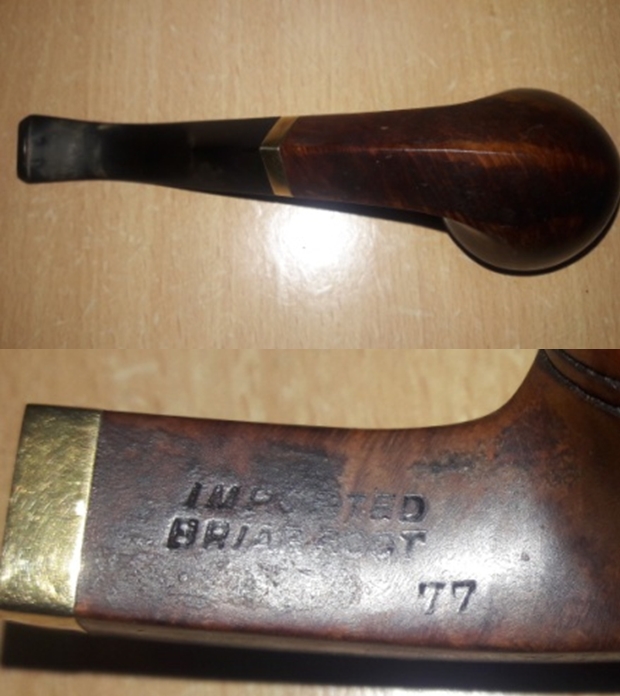
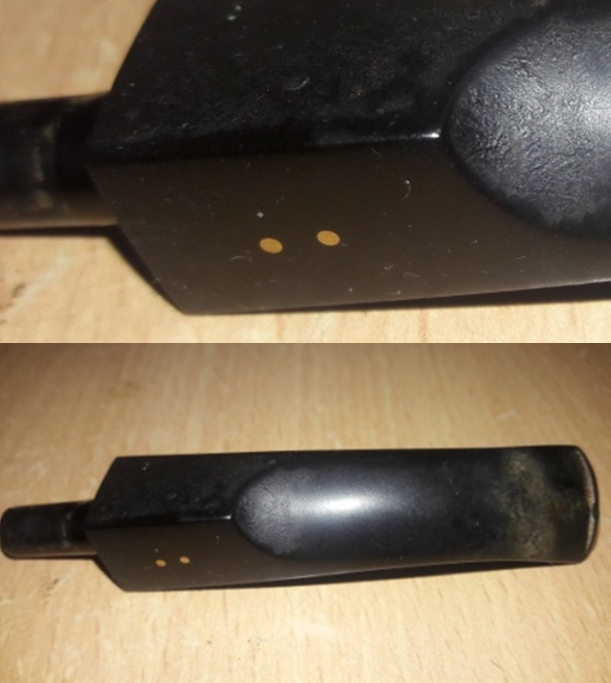
This is the first WDC from my grandfather’s collection, a smooth Gold Dot in an impressive Bulldog shape. The beautiful straight grain follow a circular pattern on the right and front of the bowl while linear pattern adorns the left side of the bowl and along the diamond shank, neatly divided by the spine on either side. The shank is stamped on the left with the trademark inverted equilateral triangle with letters “WDC” enclosed in it. This is followed by “Demuth” over “GOLD DOT” in block capital letters. On the right, the shank is stamped “IMPORTED” over “BRIAR ROOT” followed by the shape number “77” towards the bowl and shank joint. A half inch thick gold band adorns the shank end and is stamped on the left with the trademark WDC triangle over “14 K”, indicating the purity of the gold band. The ¾ bent saddle stem has two gold filled dots in the center of the saddle portion of the stem on the left side. I searched pipedia.com for more information on this pipe and attempt at estimating the vintage of this pipe. Here is what I have found on pipedia:-

William Demuth. (Wilhelm C. Demuth, 1835-1911), a native of Germany, entered the United States at the age of 16 as a penniless immigrant. After a series of odd jobs he found work as a clerk in the import business of a tobacco tradesman in New York City. In 1862 William established his own company. The William Demuth Company specialized in pipes, smoker’s requisites, cigar-store figures, canes and other carved objects.

The Demuth Company is probably well known for the famous trademark, WDC in an inverted equilateral triangle. William commissioned the figurative meerschaum Presidential series, 29 precision-carved likenesses of John Adams, the second president of the United States (1797-1801) to Herbert Hoover, the 30th president (1929-1933), and “Columbus Landing in America,” a 32-inch-long centennial meerschaum masterpiece that took two years to complete and was exhibited at the World’s Columbian Exposition in Chicago in 1893.

The Presidential series was the result of Demuth’s friendship with President James A. Garfield, a connoisseur of meerschaum pipes. Demuth presented two pipes to Garfield at his inauguration in 1881, one in his likeness, the other in the likeness of the President’s wife. Later, Demuth arranged for another figurative matching the others to be added to the collection as each new president acceded to the White House, terminating with President Hoover.

In early 1937, the City of New York notified S.M. Frank & Co. of their intent to take by eminent domain, part of the land on which the companies pipe factory was located. This was being done to widen two of the adjacent streets. As a result of this, Frank entered into negotiations to purchase the Wm. Demuth Co.’s pipe factory in the Richmond Hill section of Queens. It was agreed upon that Demuth would become a subsidiary of S.M. Frank and all pipe production of the two companies would be moved to DeMuth factory. New Corporate offices were located at 133 Fifth Avenue, NYC.

Demuth pipes continued to be made at the Richmond Hill plant till December 31. 1972. Then the Wm. Demuth Company met its official end as a subsidiary company by liquidation.

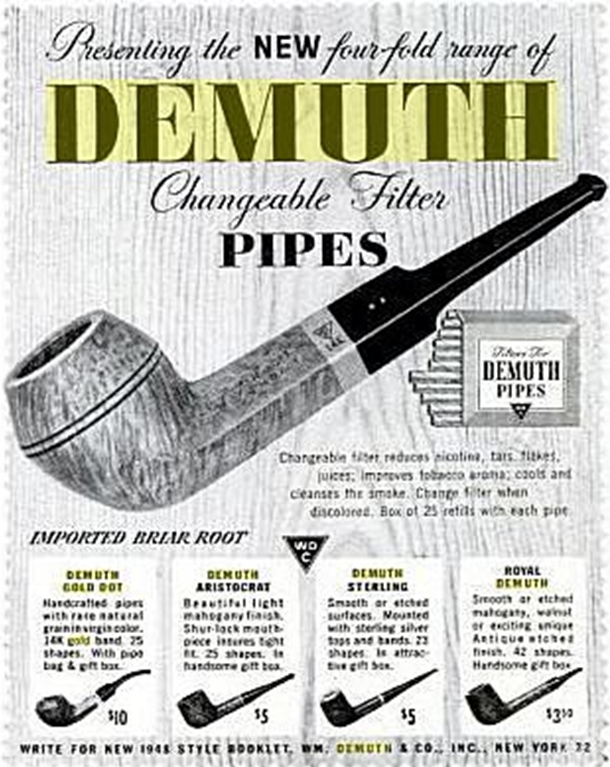
I came across an interesting advertisement on the same page on pipedia.com which shows the exact same pipe that I am now working on. It is the same pipe as the first pipe on the left. A close scrutiny of the picture confirms the following:

(a) The Gold Dot line of WDC pipes was offered sometime before 1941 as inferred from the bottom line of this flyer which encourages readers to “WRITE FOR NEW 1941 STYLE BOOKLET”, implying that this flyer was published prior to 1941!!!!!

(b) The Gold Dot line of WDC pipes was at the time their top of the line product as it is the most expensive of all the pipes advertised in the flyer, retailing at $10!!!Pipephil.eu too has the same pipe shown with shape # 77. Here is the link; http://www.pipephil.eu/logos/en/logo-w1.html

From the above gleaned information, it is safe to conclude that the pipe now on my worktable is of 1940s vintage and at that point in time was WDC’s top-of-the-line offering!!!!

INITIAL VISUAL INSPECTION
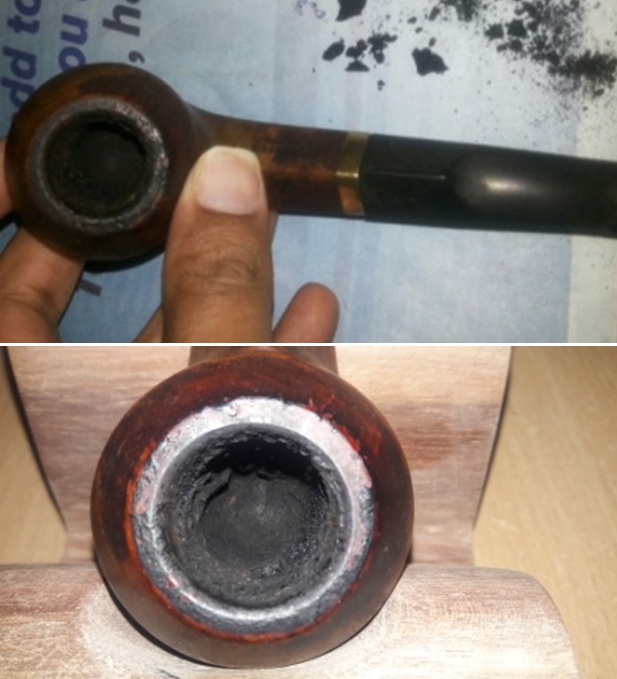
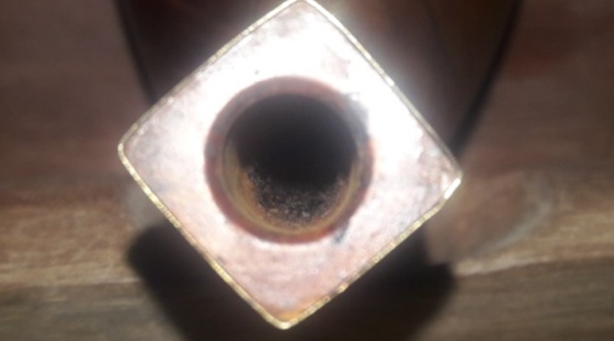
Age definitely shows on the stummel surface!!! The briar is dull and lifeless and has taken on a layer of aged patina, through which one can make out the beautiful straight grain patterns all around. There is a heavy overflow of lava all over the entire stummel surface. The bowl cap, bowl, shank and even the stem is covered in oils, tars and grime accumulated over the years of storage and is sticky to the touch. To be honest, the stummel is filthy to say the least. A thorough cleaning of the stummel followed by polish should accentuate the beautiful straight grain pattern seen on the stummel through all the dirt. The double ring that separates the cap from the rest of the bowl is even and undamaged; however, it is filled with dust, dirt and grime. The chamber exudes a strong, but not definitely unpleasant, smell. I hope that this will be addressed once the chamber has been reamed and internals of the shank and mortise is cleaned with isopropyl alcohol. There is heavy buildup of cake with a thick layer in the chamber. The buildup is such that I am barely able to squeeze my little finger in to the bowl. The condition of the inner walls of the chamber can be ascertained only after the cake has been removed completely and taken down to bare briar. The bowl however, feels robust and solid to the touch from the outside. The rim top has a thick layer of overflowing lava. The condition of the beveled inner and outer edge and rim top can be commented upon once the overflow of lava is removed and the chamber is reamed. The shank end of the pipe is clean. However, the mortise does show signs of accumulated dried oils, tars and remnants of ash, greatly restricting the air flow, or dare I say, completely restricting air flow. These issues should be a breeze to address, unless some hidden gremlins present themselves!! The vulcanite stem has deep tooth indentations and minor tooth chatter on the upper and lower surface. It is heavily oxidized and has traces of overflowing lava, dust, oils and tars on the saddle portion of the stem. The opening of the tenon is filled with dried oils and tars. The air flow through the stem is greatly restricted to say the least. The fit of the stem in to the mortise is very tight, which will loosen further after the mortise and tenon have been cleaned. The metal tenon has a slot like groove extending more than half way towards the stem end on either side; probably to securely seat the “changeable filter” as advertised in the flyer above (actually I was wondering the purpose of the metal tenon, which as it is, was new to me, with slots on either side. This doubt was cleared by the flyer!!). The overall condition of the pipe, with the thick build-up of cake in the chamber, clogged mortises and stem airway, overflowing of lava covering the entire stummel, makes me believe that this would have been one of my grandfather’s favorite pipes.

THE PROCESS
I started this project by reaming the chamber with size 2 and followed it up with size 3 head of PipNet reamer. I used a 220 grit sand paper, pinched between my thumb and forefinger, to sand the inner walls of the chamber of the pipe. Once I had reached the bare briar, I wiped the chamber with a cotton pad dipped in isopropyl alcohol. This removed all the residual carbon dust from the chamber. The walls of the chamber are nice and solid with no signs of heat fissures or cracks. I scrapped out the overflowing lava from the rim top with my fabricated knife. The inner and outer rim edges are pristine and that was a big relief.This was followed by cleaning the mortise and air way of the pipe using hard bristled and regular pipe cleaners, q-tips dipped in alcohol. The mortise and the draught hole were given a final clean with shank brushes dipped in alcohol. I dried the mortise with a rolled paper napkin. The shank internals and the draught hole are now nice and clean with an open and full draw. The gunk in the mortise had hardened to such an extent that I had to resort to using all the tools of the trade to get rid of the accumulated gunk, not to mention the time spent on cleaning it. The crud that was extracted from the mortise can be seen in the picture below. I had expected that the ghosting would be history by this stage. However, that was not to be the case. I had to resort to alcohol treatment to get rid of all the ghosting. I packed a few cotton balls in to the chamber. Drawing out a wick from one cotton ball, I inserted it in to the mortise of the pipe. Using a syringe, I topped the chamber with isopropyl alcohol and set it aside. Half hour later, I topped the chamber again with isopropyl alcohol as the level of alcohol had gone down from spreading inside the stummel. This process is usually done using Kosher salt as it leaves no aftertaste or smells. But here, in my part of the world, Kosher salts costs a huge bomb and from my personal experience, I have realized that cotton works equally well in drawing out all the oils and tars from the internals of the stummel exactly as Kosher salt does, but at a very economical cost. I set the stummel aside overnight to allow the alcohol to do its intended task. Next morning, I discard the wick and cotton balls from the stummel and wipe the bowl clean. Though the cotton balls and the cotton wick did not turn a dirty color as usual, the old smells were completely eliminated. While the stummel was soaking in the alcohol bath, I cleaned out the internals of the stem using hard bristled and regular pipe cleaners dipped in alcohol. Well, that sounds easier than actually done. From the amount of overflowing lava deposits on the stem, I had anticipated a difficult time in cleaning the stem internals. But what really confronted me was a nightmare of a time cleaning it. For starters, the pipe cleaners would not move an inch in to the airway from either ends!!! I soak the internals of the stem, after packing the slot with a pipe cleaner, by filling it with isopropyl alcohol using a syringe. This helped in loosening the hardened oils and tars in the air way. Thereafter began the tedious process of cleaning the stem internals with a straightened paper clip and scrubbing the aluminum tenon with the fabricated dental spatula. The blobs of accumulated gunk removed from the air way could not be photographed as my table and tray was cleaned out by my helper before I could take a few pictures!!!! After a great deal of struggle, time and lots of pipe cleaners, the air way is finally clean with an open draw.The deep bite marks on the stem were flamed using a Bic lighter. However, this did not work. From my experience, I have learnt that getting rid of the oxidation from and around the surface to be filled helps in subsequent better blending of the fill with the stem surface. With a folded piece of used 220 grit sand paper, I sand the area that is required to be filled. I cleaned the sanded portion of the stem with cotton pad dipped in alcohol and spot filled the damaged area with a mixture of activated charcoal and clear superglue. I set the stem aside for the fill to cure. Now, it was the turn of the stummel to get cleaned up. Using a hard bristled tooth brush dipped in undiluted Murphy’s oil soap, I very deliberately scrubbed the stummel, cleaning the surface thoroughly. I was very deliberate on the surface areas which were covered in overflowed lava over which dirt and grime had accumulated over the years. I rinsed the stummel under tap water, taking care that water does not enter the mortise or the chamber. I dried the stummel using cotton cloth and paper napkins. On close inspection, I observed a couple of dents and ding on the front portion of the crown. These would need to be addressed. Other than this, the stummel is now clean and devoid of any grime and dirt. It is really surprising that the rim top, inner bevel and edges and the stummel is in such pristine condition after so many years of storage and without a single fill. Speaks volumes about the quality of this line of pipes from WDC!! I addressed the dents and dings to the front portion of the crown by the steaming process. I heated my fabricated knife over a candle. I placed a soaked Turkish hand towel over the dents and placed the hot knife over the wet towel. The steam that was generated pulled the dents to the surface. The stummel is now without any blemishes.To further clean and highlight the grains, I sand the stummel with micromesh pads, wet sanding with 1500 to 2400 grit pads and dry sanding with 3200 to 12000 grit pads. I wiped the stummel after each wet pad with a moist cloth to remove the resulting dust. I rub a small quantity of “Before and After Restoration Balm” in to briar and let it rest for a few minutes. The balm almost immediately works its magic and the briar now has a nice vibrant appearance. I further buff it with a horse hair shoe brush. The pipe now looks lovely with beautiful grains showing off their beauty in all glory!! With the stummel nice and clean and attractive, I worked the stem of the “GOLD DOT” by sanding the fills with a flat heat needle to achieve a rough match with the surrounding stem surface. I sharpened the lip edges using a needle file and sand the entire stem with 220 followed by 400, 800 and 1000 grit sand paper to perfectly blend the filled surface with the rest of the stem surface. This helps to reduce the sanding marks left behind by the more abrasive 220 grit paper. By mere sanding itself, the minor tooth marks seen on stem surfaces were completely addressed. This process also eliminated the deep oxidation seen on the vulcanite stem. To bring a deep shine to the vulcanite stem, I went through the complete set of micromesh pads, wet sanding with 1500 to 2400 grit pads and dry sanding with 3200 to 12000 grit pads. I rubbed the stem down with Extra Virgin Olive oil after every three pads. I completed the restoration of the stummel by cleaning the grooves between the twin rings separating the crown from the rest of the stummel, of all the dust, grime and polishing compounds accumulated during the restoration process. Lucky me, there is no damage to the rings, which would have been a challenge to restore.To finish, I re-attach the stem with the stummel. I mount a cotton cloth buffing wheel on to my local machine which is similar to a Dremel.  I set the speed at about half of the full power and polished the entire pipe with White Diamond compound. I wiped/ buffed the pipe with a soft cotton cloth to clear it of any leftover compound dust. I then mounted another cotton cloth wheel on to the polishing machine and applied several coats of carnauba wax over the stummel and the stem. I finished the restoration by giving the pipe a rigorous hand buffing using a microfiber cloth to raise the shine further. The completed pipe, with the dark brown hues of the grains on the stummel contrasting with the shiny black stem, looks lovely, fresh and vibrant; the photographs speak for themselves. If only the pipe could tell some of my grand Old man’s stories and recount incidents witnessed while being smoked.…Cheers!! I am grateful to all the readers for their valuable time spent in reading this write up and joining me on this part of the journey in to the world of pipe restoration while I attempt to preserve a heritage and past memories of a part of me. 

Working on another of Paresh’s Grandfather’s pipes


Blog by Steve Laug

Paresh, my friend in India reached out to me over Whatsapp to talk about a few more of his Grandfather’s pipes. He was confident in working on many of them but there were a few that he wanted me to try my hand on. His wife Abha would ream and clean them for me so I would be able to start with a relatively clean pipe. The first of these was a beautiful older WDC Bulldog with an amber coloured Bakelite stem. It was in rough condition when Paresh and Abha started working on it. They reamed the thick hard cake with a KleenReem pipe reamer and clean up the exterior of the bowl with Murphy’s Oil Soap. They also cleaned the interior with alcohol, cotton swabs and pipe cleaners. The rim top had a thick over flow of lava that hid the briar that Paresh topped to smooth out. There was some darkening to the rim top and down the sides of the bowl cap. The briar was very dirty. There was a gold stamped WDC triangle on the left side of the shank and a brass decorative band that was loose. The stem was a mess. There was a large chunk of the Bakelite missing on the underside and deep tooth marks on the top and underside near and on the surface of the button. I took photos of the pipe to show its condition when it arrived.You can see the work that Paresh and Abha had done to the rim top to clean it up and remove the damage. He had also worked over the inner edge of the bowl to smooth out the damage to the edge. You can also see the extensive damage to the stem in these photos.I took some close up photos of the bowl and stem to give a better idea of what I was working with on this pipe. The rim top was clean but there was darkening down the edges of the cap for about a quarter of an inch. The stem was a mess. Paresh had tried to repair the damage and tooth marks with some clear super glue that he picked up in India. He found that it was inferior and did not harden quickly. Once it did the repair tended to fall out. It was very frustrating. He was able to patch the tooth marks on the stem but not the missing chunk at the stem/shank union.The bowl was the easiest part of the restoration on this old pipe so I started there. I worked on the darkening along the top edge of the cap and was able to remove it with micromesh sanding pads. I used 1500-2400 grit pads to remove the damage and then polished it with 3200-12000 grit pads. I wiped it down with a damp cotton pad after each pad to check out the progress. I polished the rim top at the same time. The photos tell the story. With the rim darkening removed and the rim and cap polished it was time to touch up the stain to blend it into the rest of the bowl. I used a Mahogany stain pen and stained the cap and the rim top. The match was a little darker than I wanted and not as transparent either. I wetted a cotton pad with alcohol and wiped down the cap to blend the stain and make it more transparent. This did the trick and I was happy with the finished colour. The photos show the process. I slipped the loose brass shank cap/band off the shank and used a tooth pick to put some all-purpose glue around the shank end. I pressed the band in place on the shank and wiped off the excess glue that squeezed out with a damp cotton pad.The briar was clean but dried out and in need of some deep cleaning. I rubbed the bowl down with Before & After Restoration Balm to deep clean the briar bowl and shank. The product works to clean, enliven and protect the briar. I hand rubbed it with my fingers, working it into the exterior of the pipe. I wiped it off and buffed it with a soft cloth to polish it. The pipe really began to have a rich shine. I took some photos of the bowl at this point to mark the progress in the restoration. I set the bowl aside and turned my attention to the stem. I used a needle file to clean up the edges of the button on both sides. I also used the file to smooth out the repairs that Paresh had made to the tooth marks on the surface of the stem. He had done a good job and now it was time to blend them into the surface of the stem.I sanded the file marks out of the stem surface with 220 grit sandpaper and blended the repairs into the surface of the stem. I filled in the missing chunk of Bakelite with multiple layers of amber super glue. I could have used clear glue but I had the amber around and it is a thicker product so it used it. I use layers so that the repair does not get to thick. It makes the drying time shorter and I think it gives a better bond.I laid the stem aside and went to bed. I touched up the final layer of glue in the morning and went to work. The stem had the entire day to cure. When I returned in the evening I sanded the repaired area with 220 grit sandpaper and reshaped the entire stem surface to make the flow of the taper correct. I would need to add some more glue to the patch but progress was being made. Slowly but surely I was conquering this repair.I touched up the glue repairs and wiped the stem down with Obsidian Oil. I took the next two photos to send on Whatsapp to Paresh and Abha. The stem is looking really good. There is still a lot of polishing to do but it is getting there.I polished the stem with 400 grit wet dry sandpaper to remove the scratches and polish the Bakelite.I polished the stem with micromesh sanding pads – wet sanding it with 1500-2400 grit pads and dry sanding with 3200-12000 grit pads. I wiped it down with Obsidian Oil after each sanding pad. I gave it a final coat of oil and set it aside to dry. I carefully polished stem and bowl with Blue Diamond (using a soft touch) to polish out the remaining small scratches. I gave the bowl and the stem multiple coats of carnauba wax and buffed the pipe with a clean buffing pad to raise the shine. I gave the stem several coats of Conservator’s Wax and hand buffed it with a soft cloth. I hand buffed it with a microfiber cloth to deepen the shine. The pipe polished up pretty nicely. The transparent medium brownish red stain worked really well with the golden/amber Bakelite stem. The finished pipe is shown in the photos below. The dimensions of the pipe are Length: 4 3/4 inches, Height: 1 3/4 inches, Outer diameter of the bowl: 1 inch, Chamber diameter: ¾ inches. This is the first of three of Paresh’s Grandfather’s pipes that he sent me to finish. I will set it aside and when the others are finished I will pack them up and send them back to India. I look forward to hearing what he thinks of it once he gets to load it with his favourite tobacco and carry on the pipe man’s legacy of his Grandfather. Thanks for walking through this restoration with me as I worked over this beauty.