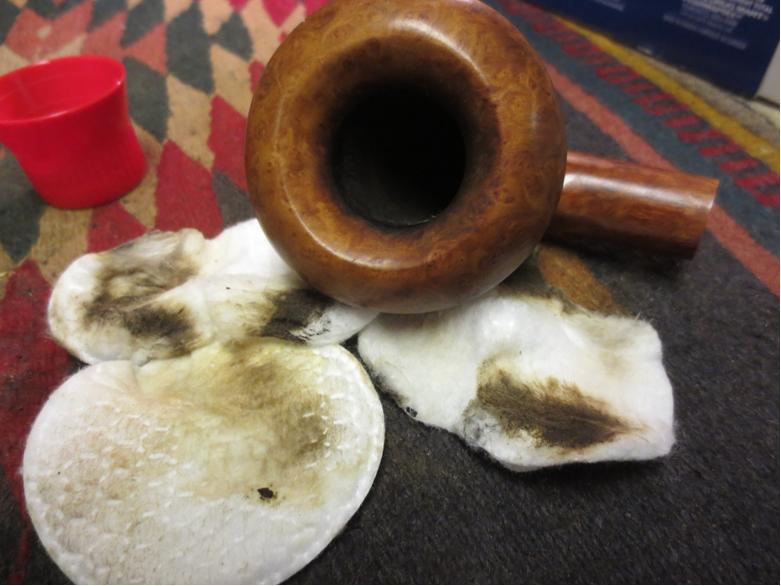
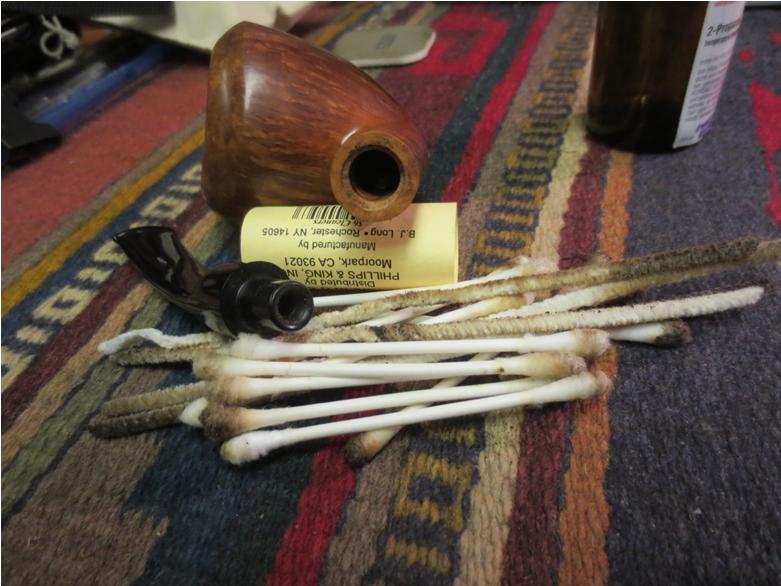
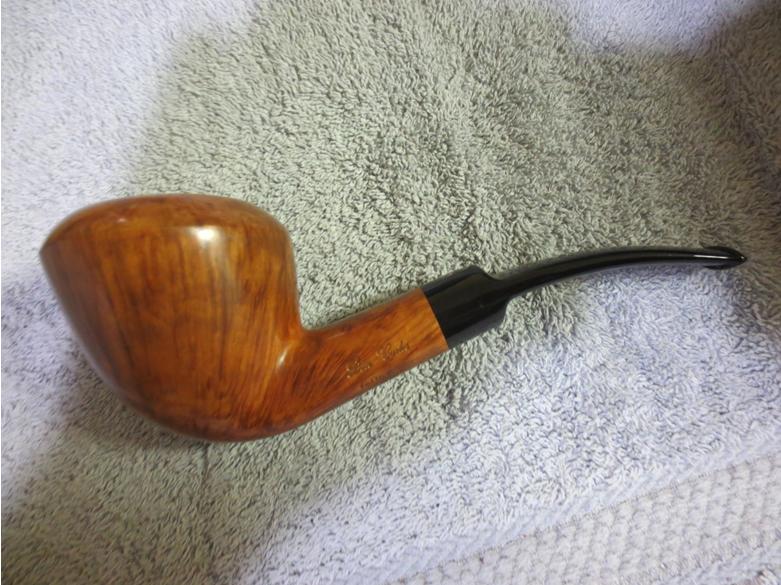
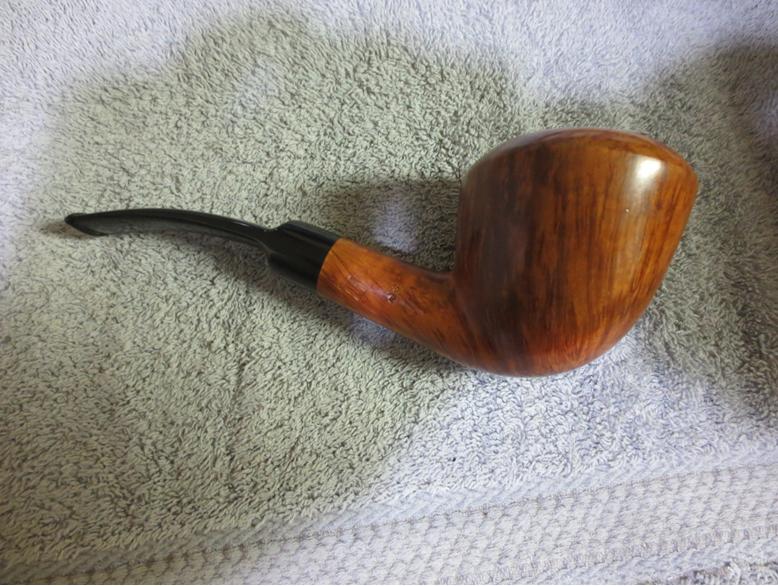
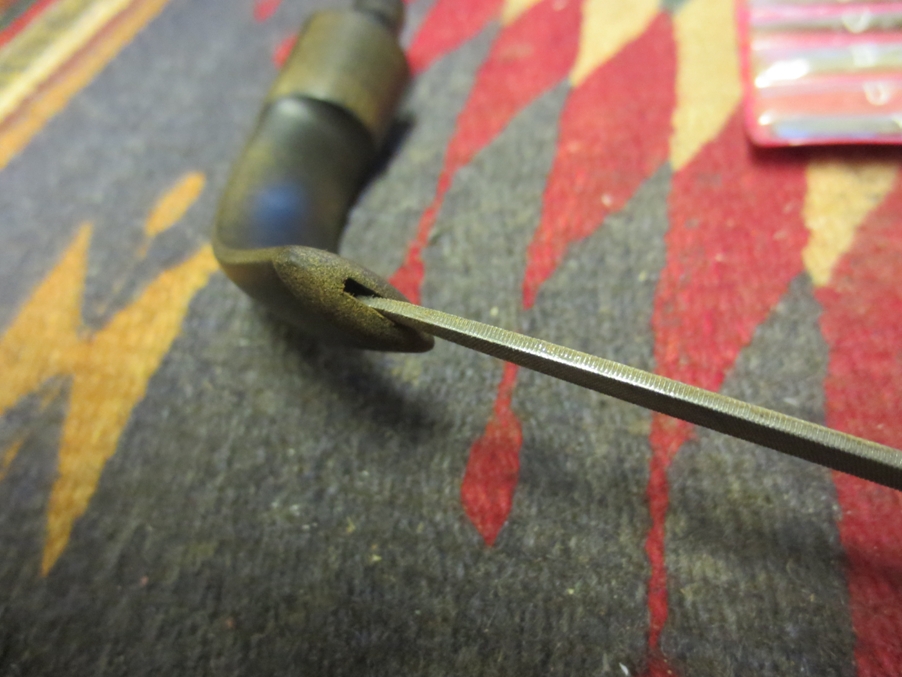
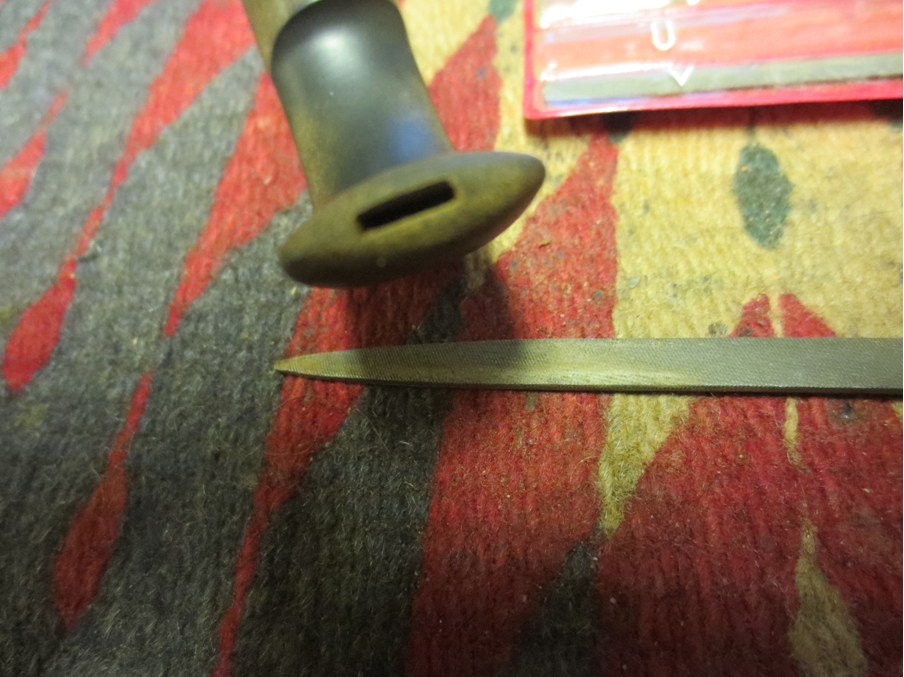
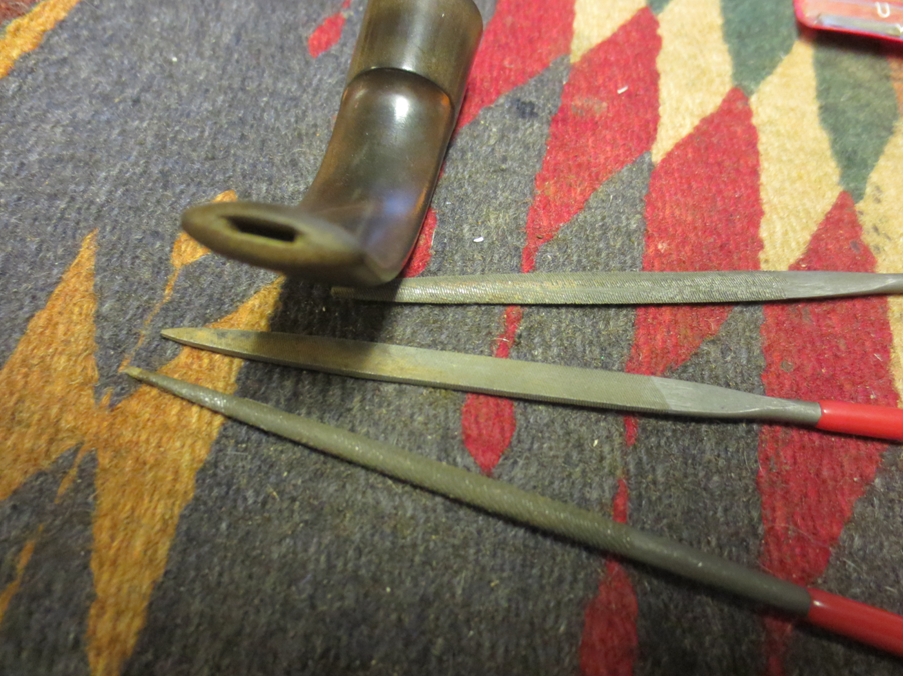
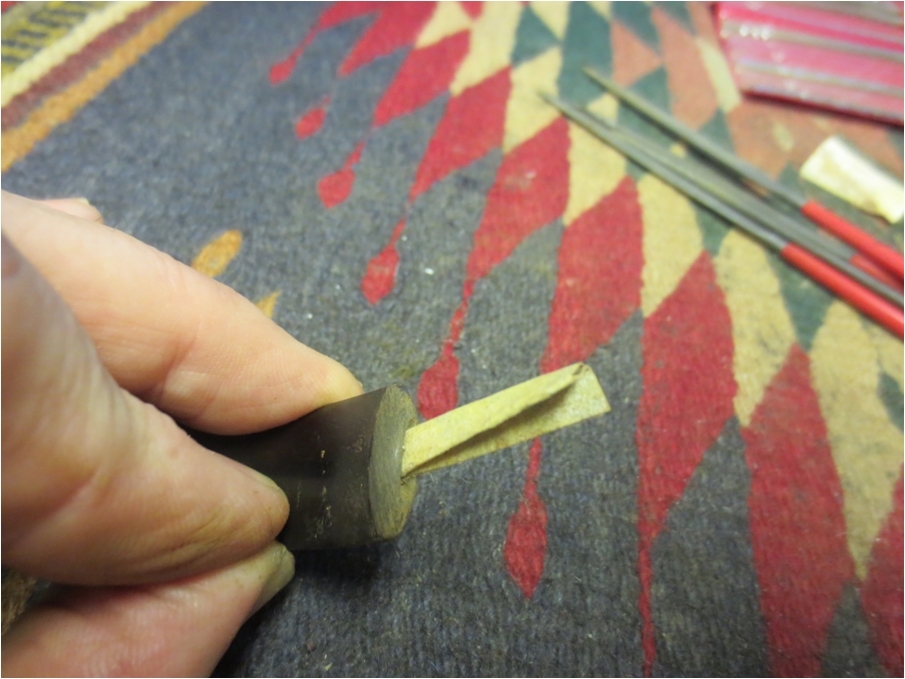
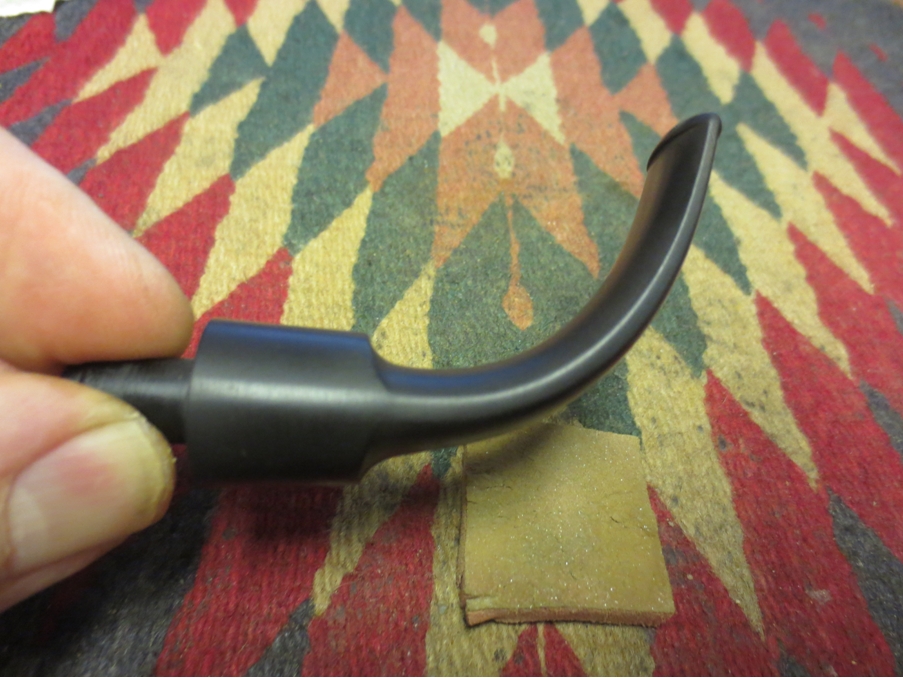
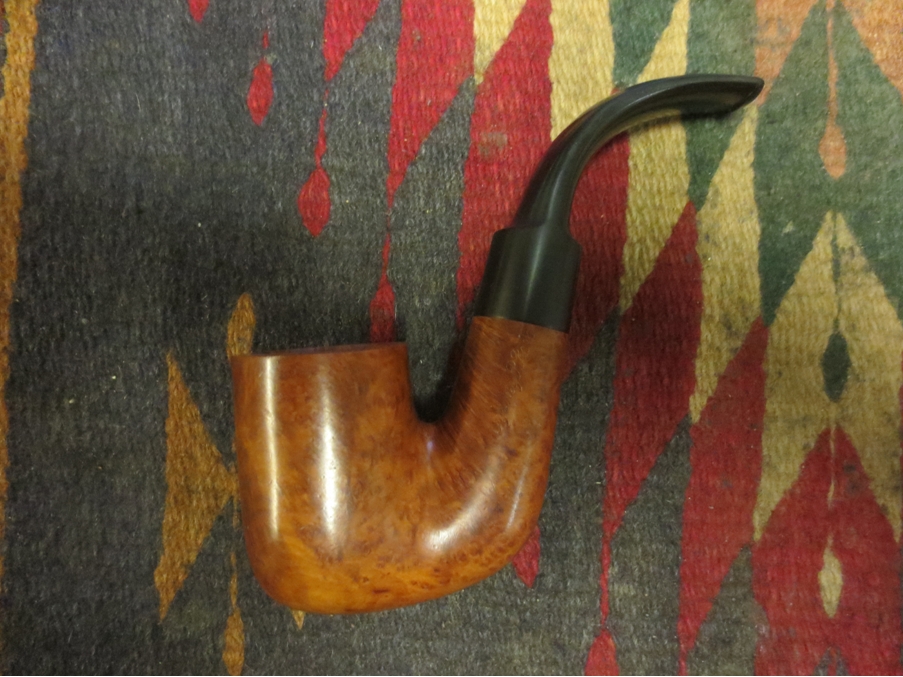
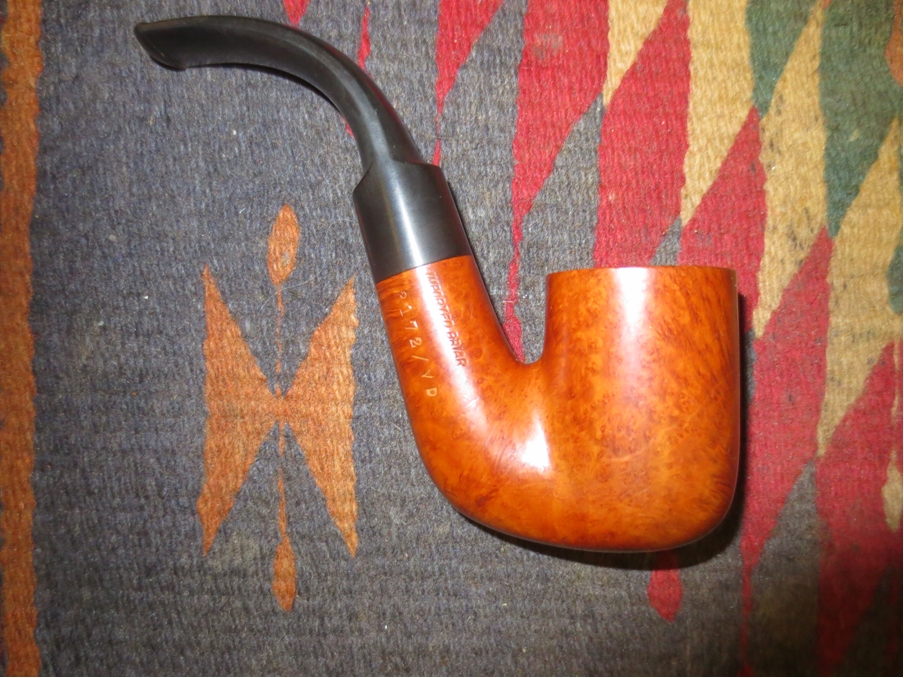
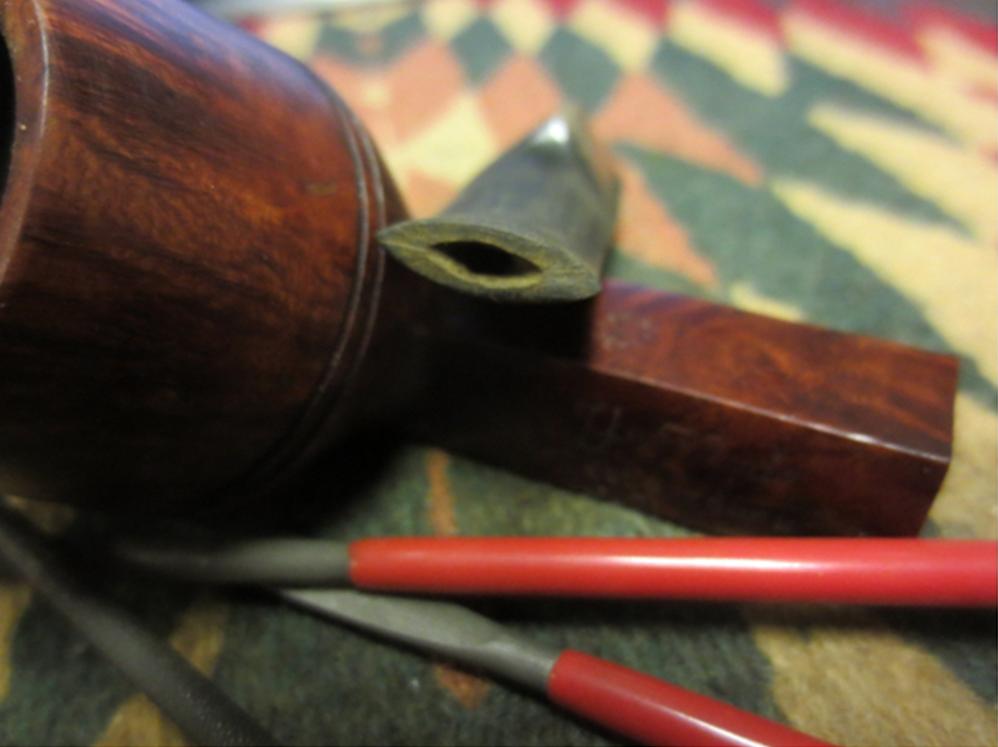
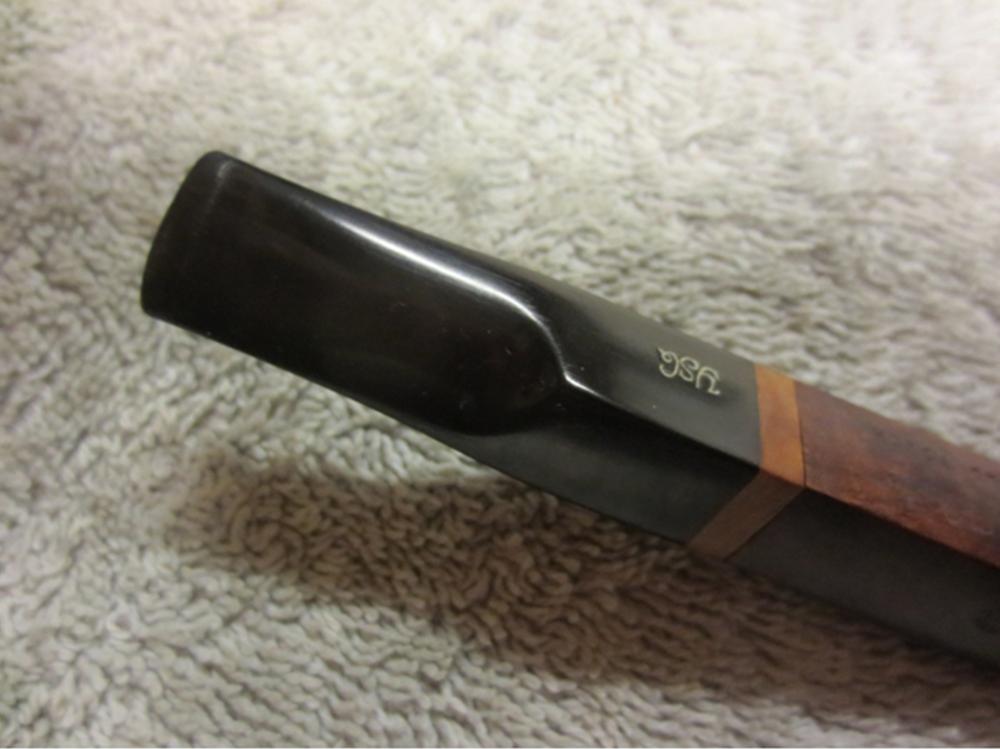
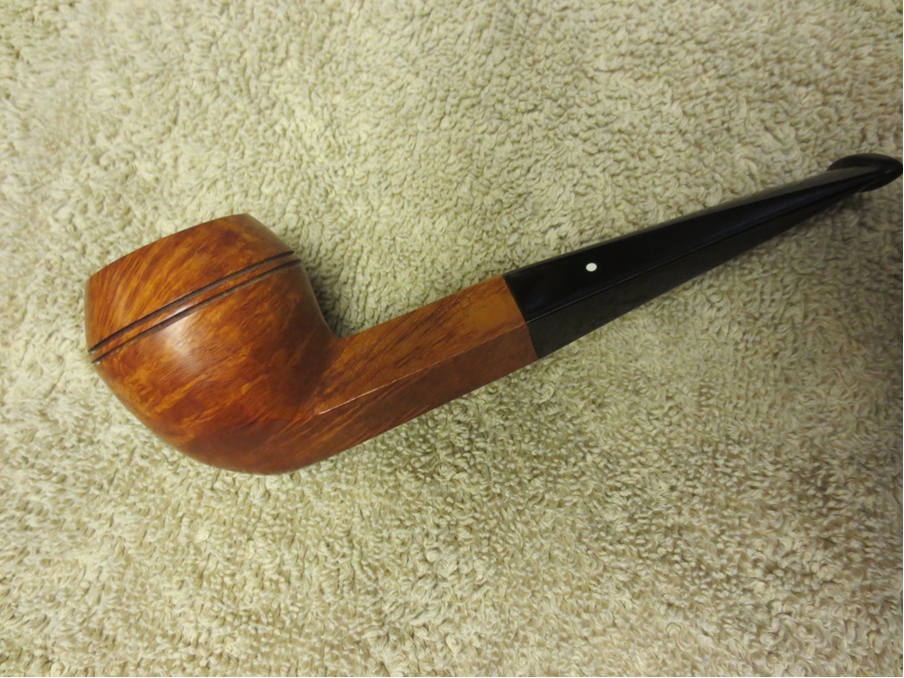
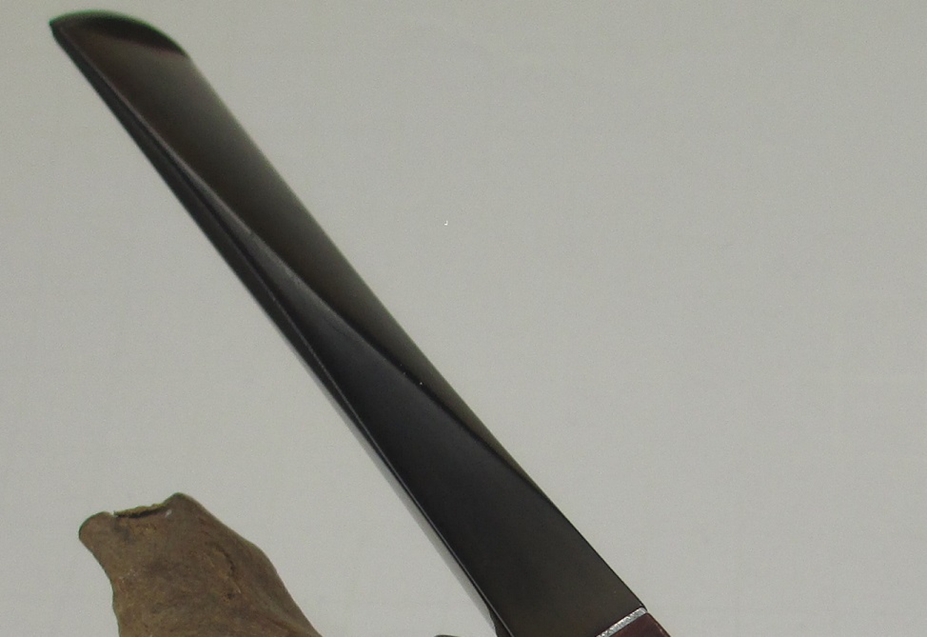
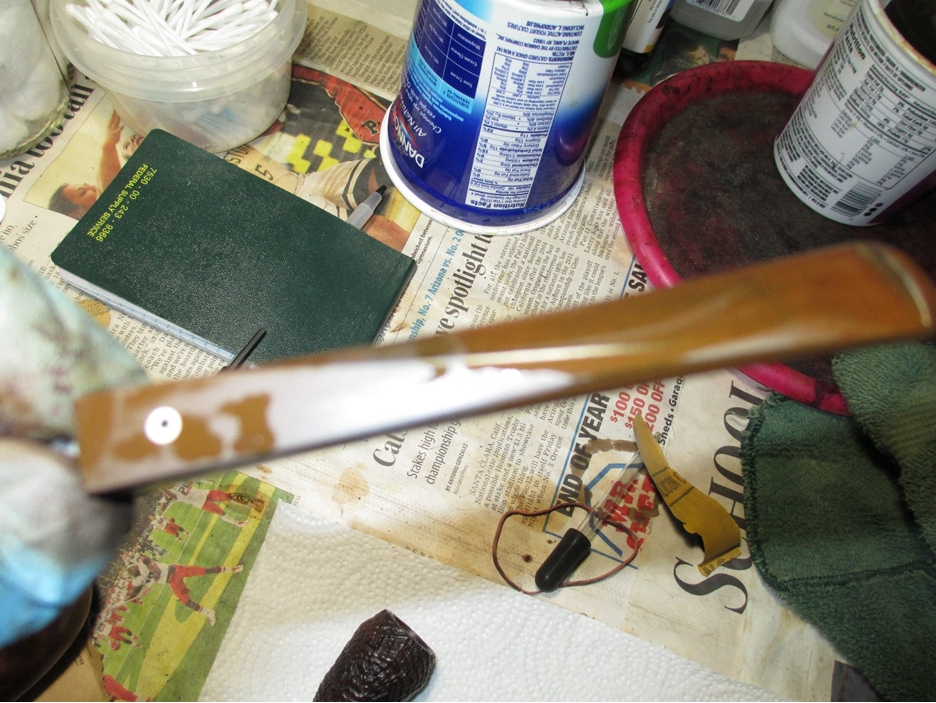
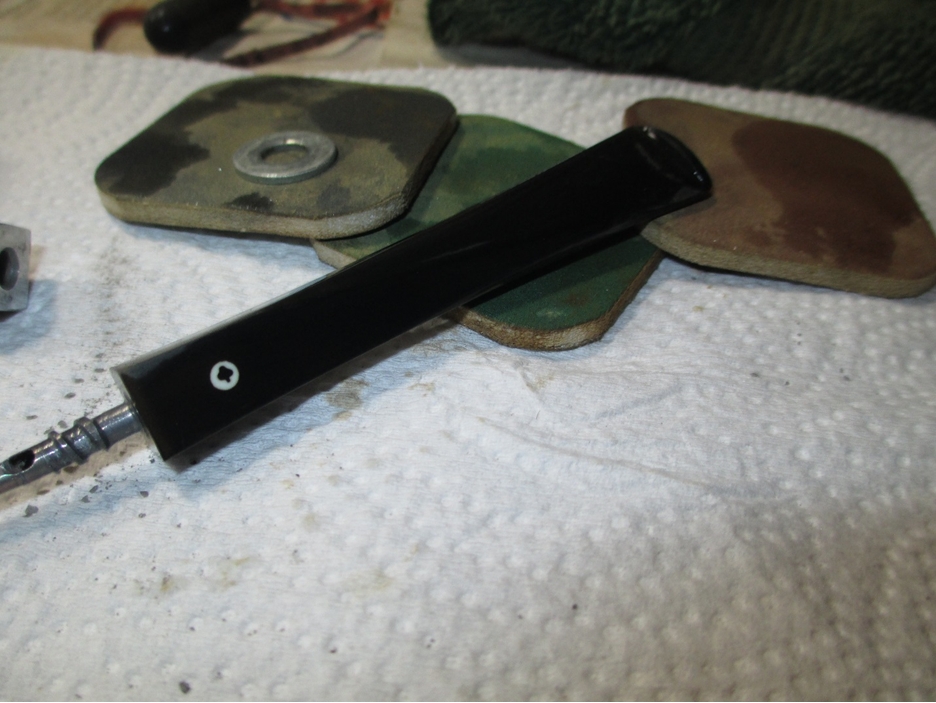
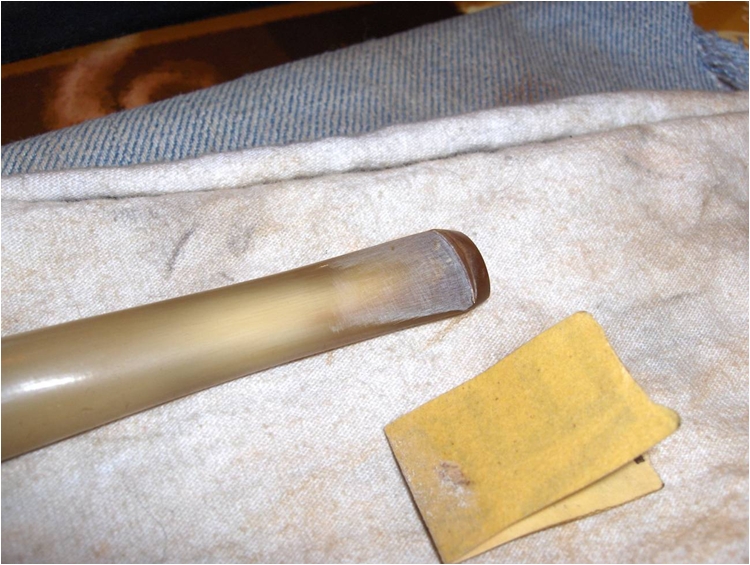
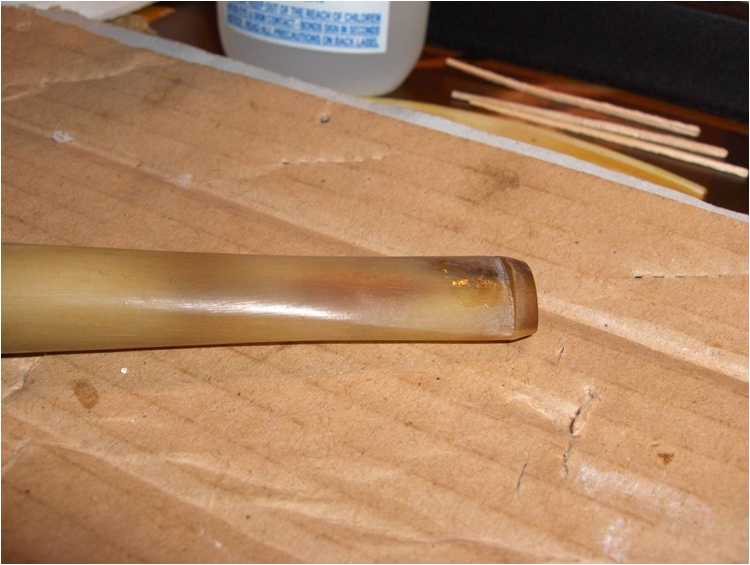
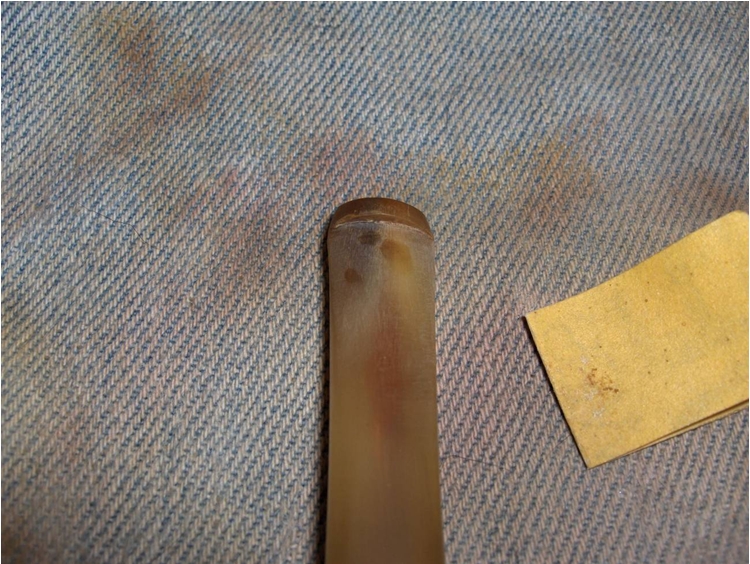
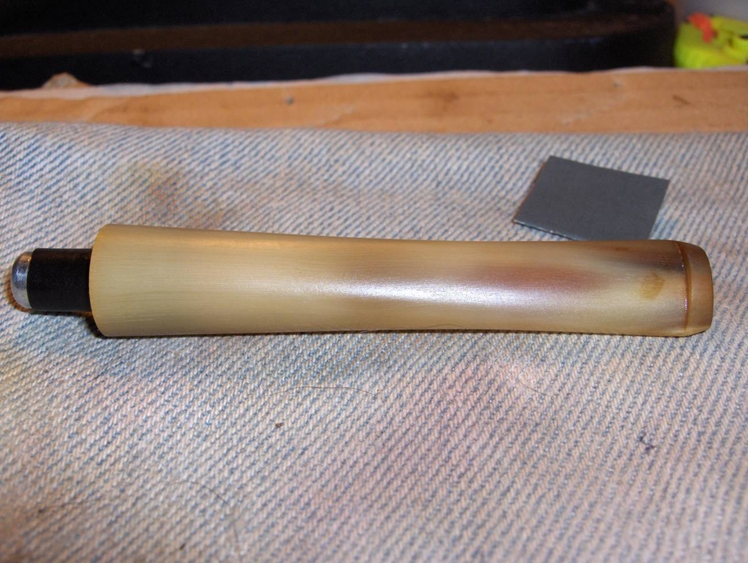
Tag Archives: waxing a stem

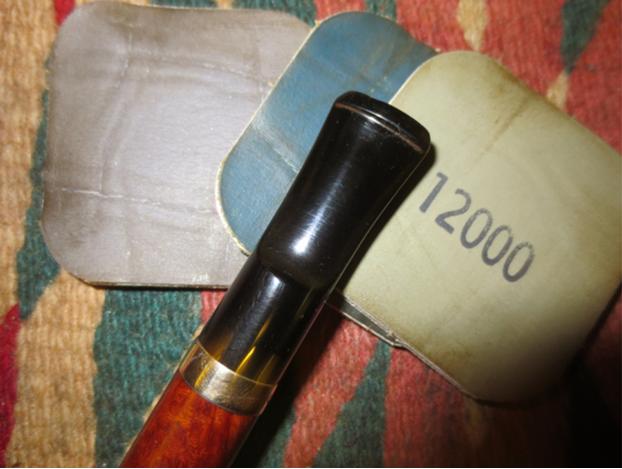
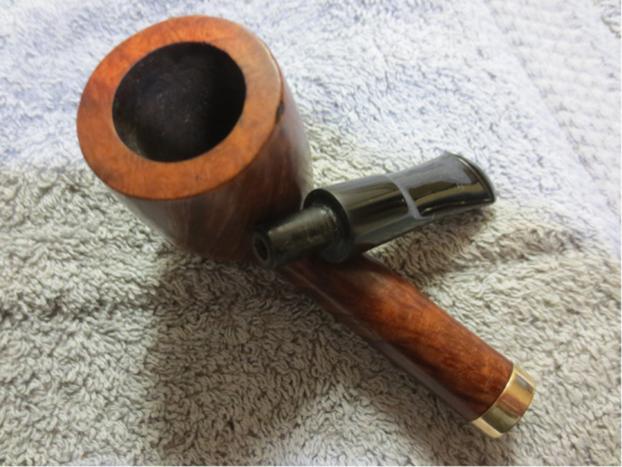
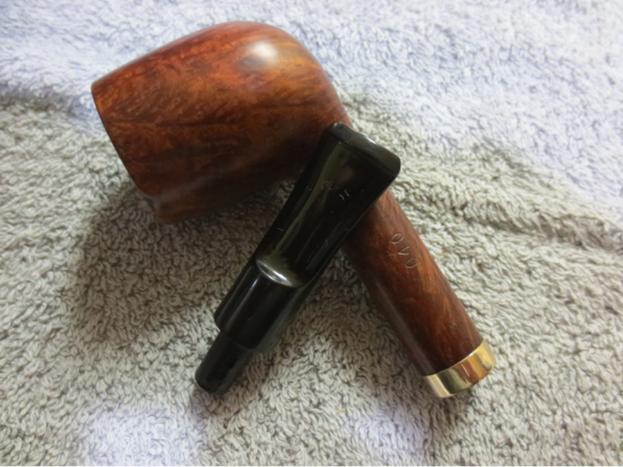
Restoring a Diamond Shank Bent – Andrew Selking


Blog by Andrew Selking

I have been following Andrew’s refurbishing work on Pipe Smoker Unlimited Forum for quite some time now and decided it was time to ask him if he would be willing to write some of his work up with photos for the blog. I sent him a message and he responded that he was glad to do so. I am happy to be able to present him to the readers here. He has been doing some great work in restoring pipes and has some great adaptations and innovations in terms of tools and equipment used to restore pipes. Besides he also takes amazing photos compared to me! Thanks Andrew for being willing to write for us here. So without further words from me I turn it over to Andrew.

It was a great honor when Steve asked me to write up a restoration for his blog. This pipe came in a lot of three. It’s a very chunky, diamond shank pipe marked Made in London England. It has a couple large fills near the end of the shank, one on the bottom of the bowl, and one on the rim. It also has an amazing feel in your hand and some very pretty cross grain. I decided to do this one for myself.

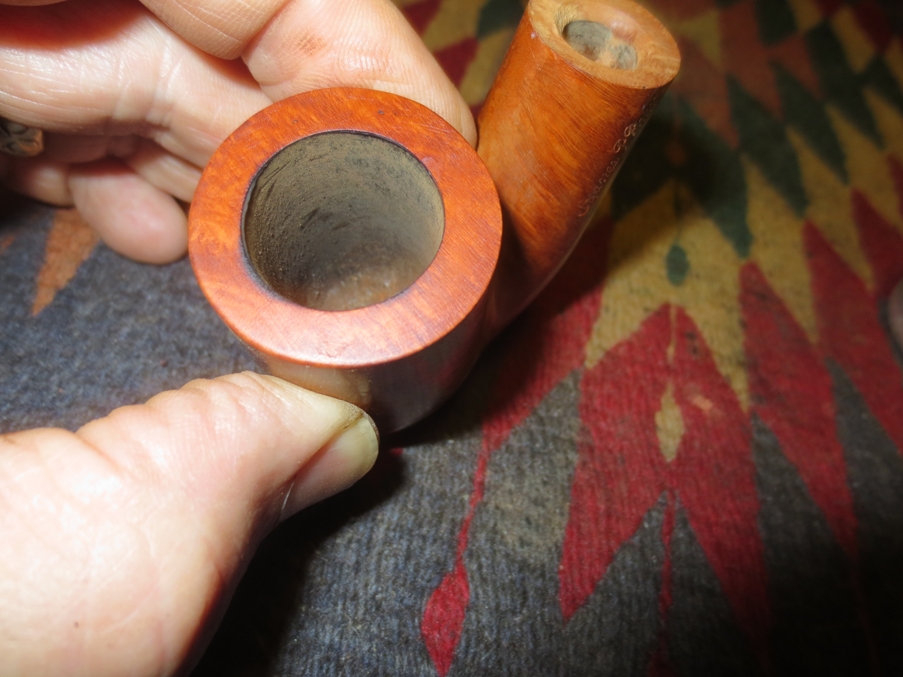
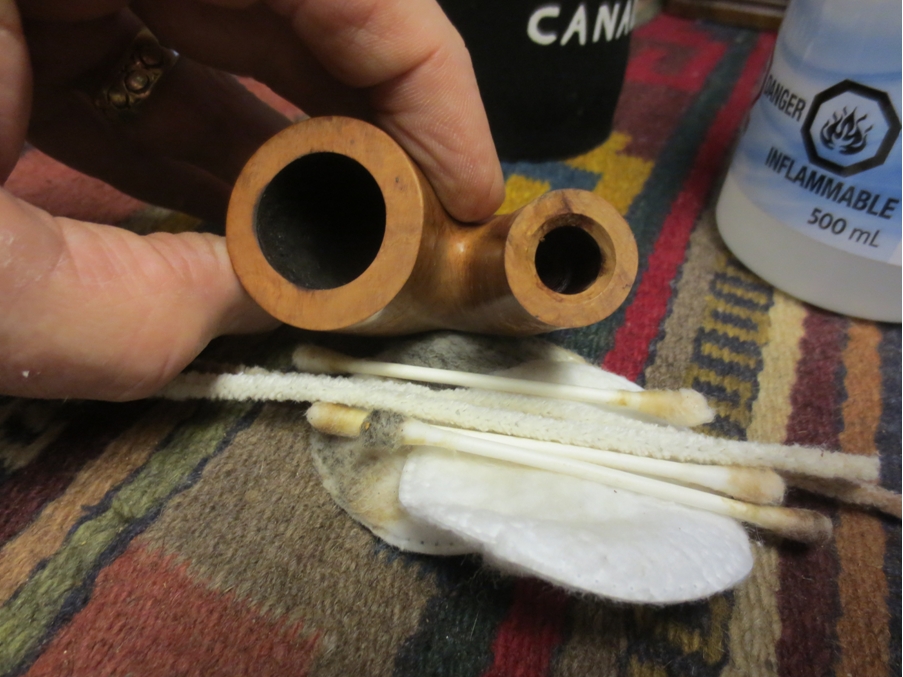
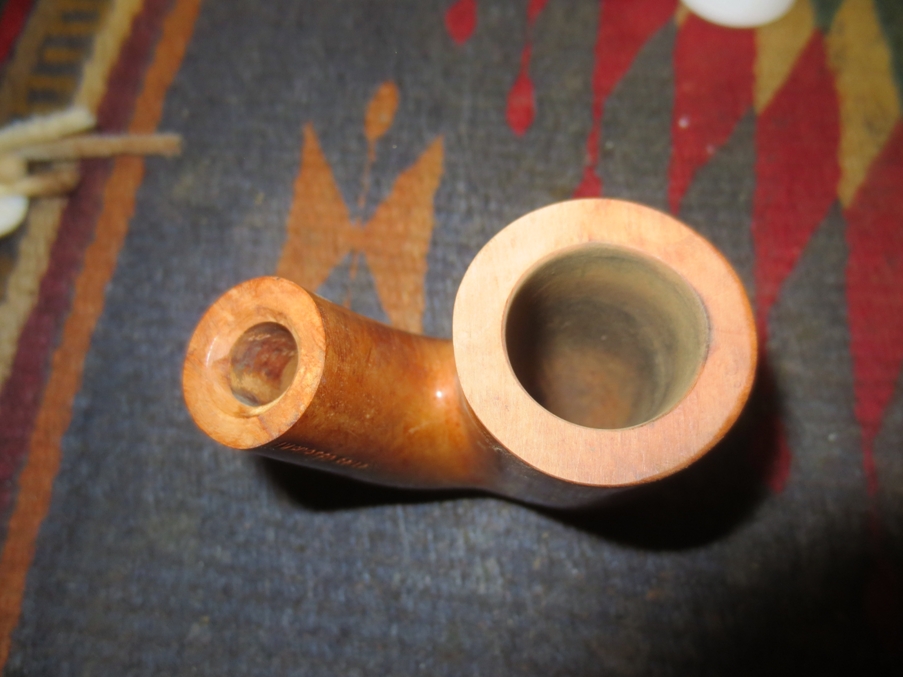
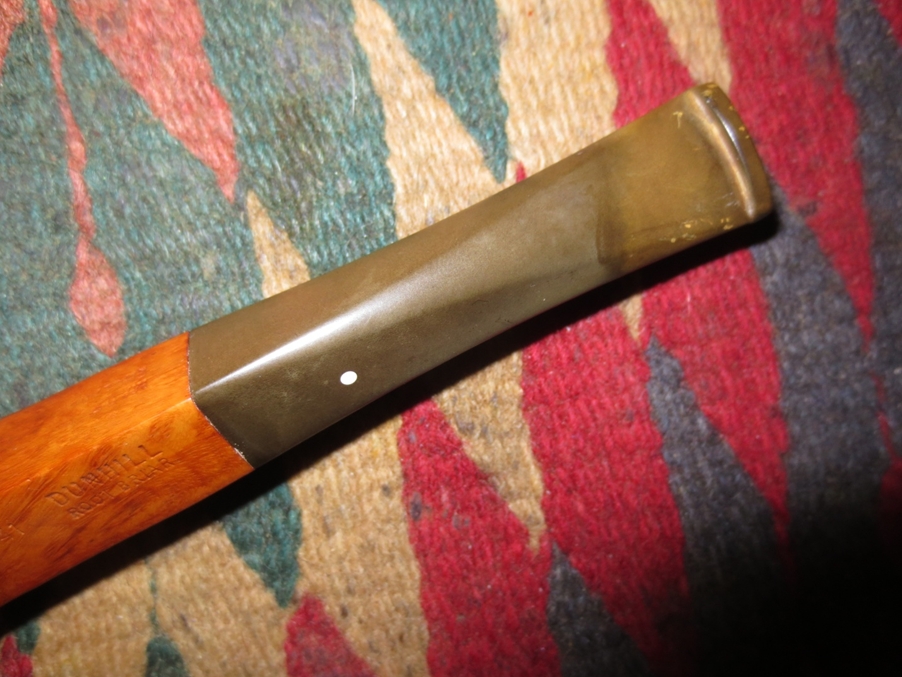
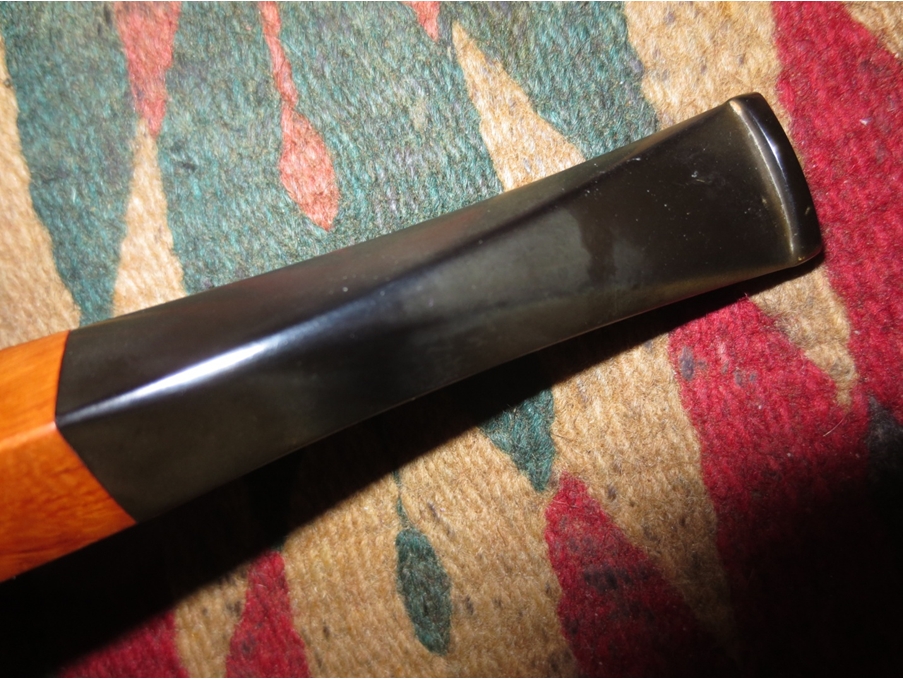
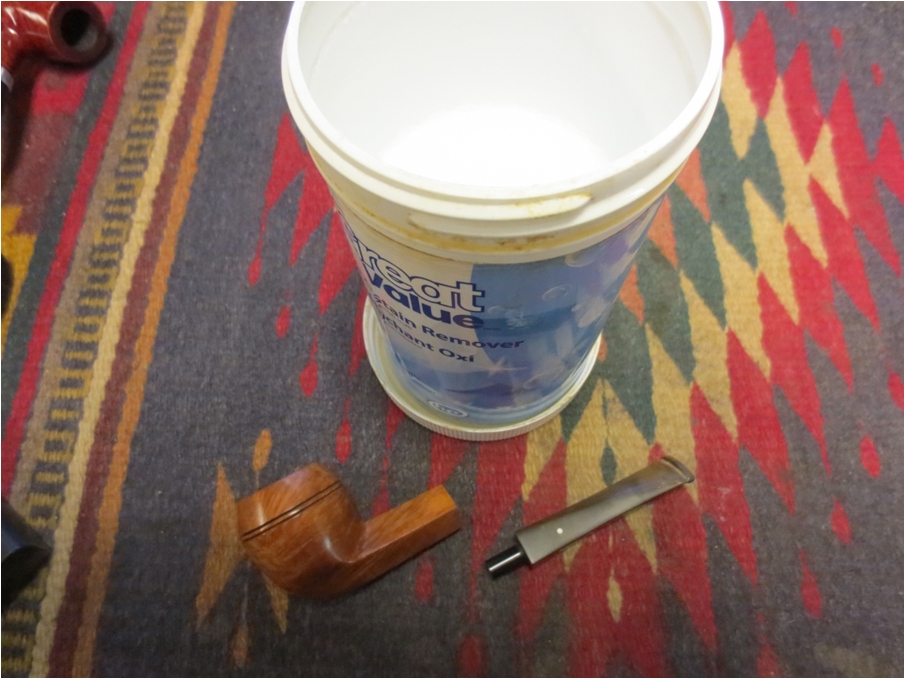
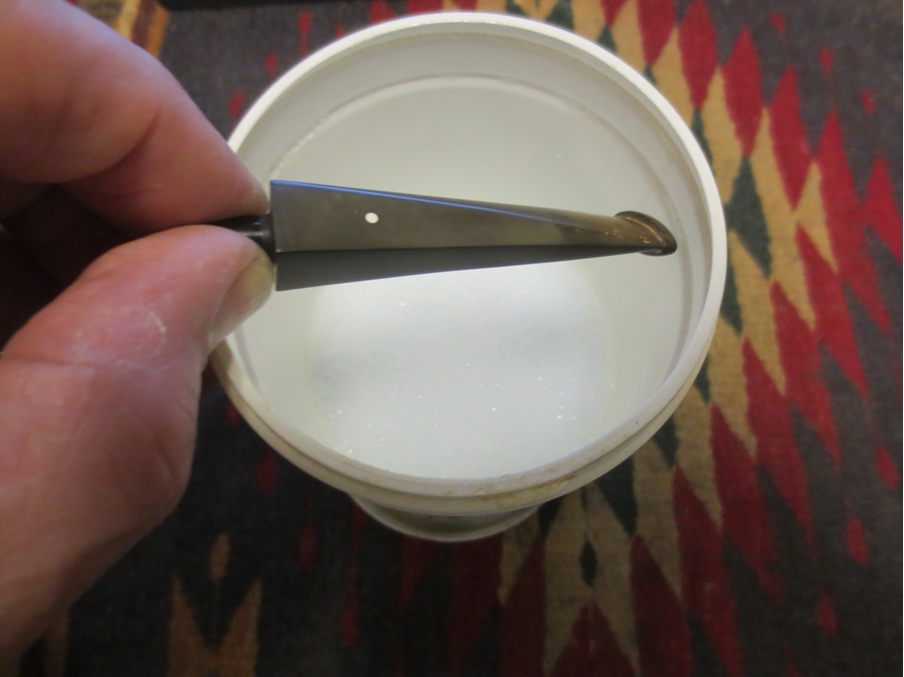
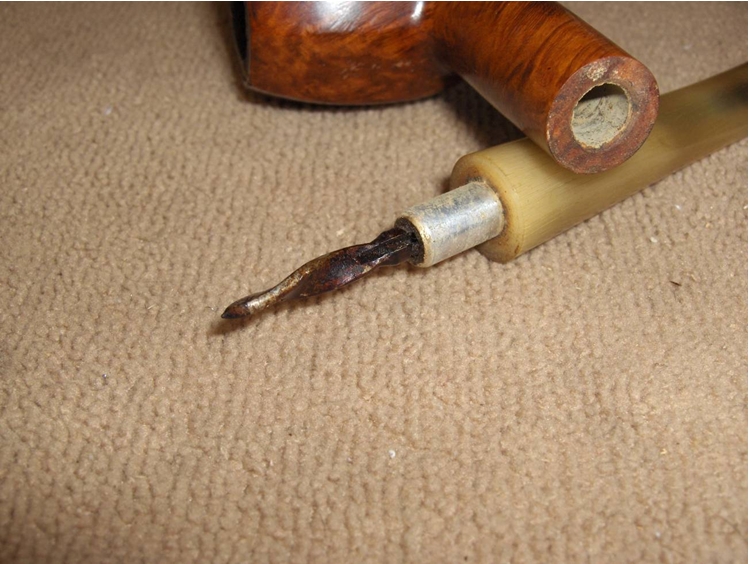
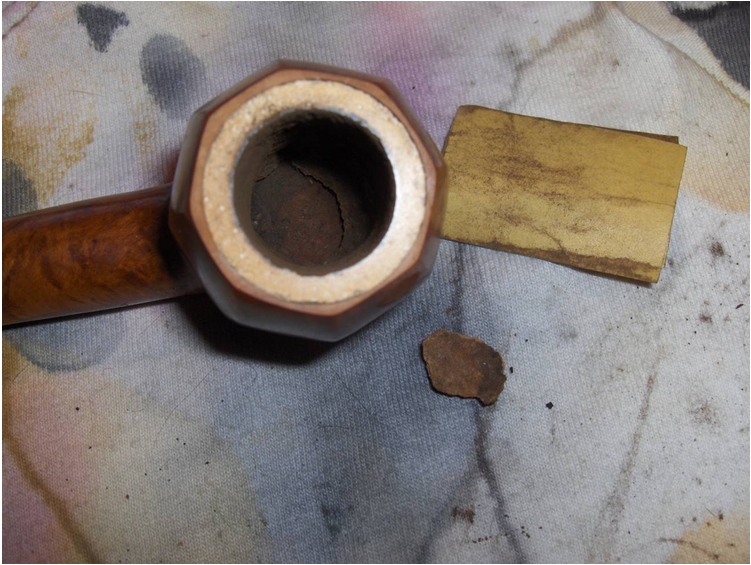
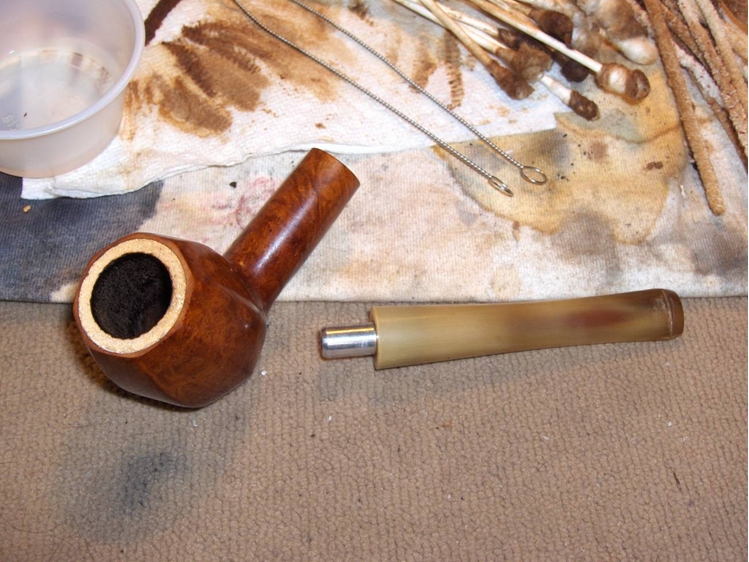
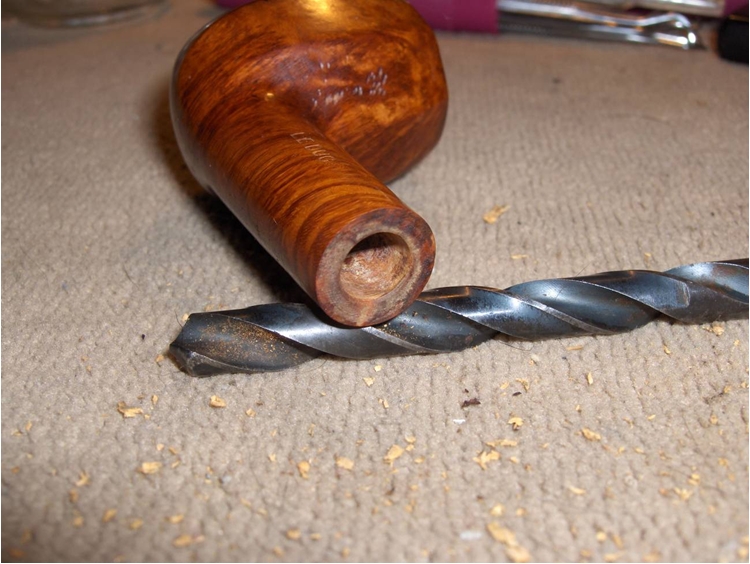
The first thing I do with all of my pipes is soak the bowl in isopropyl alcohol, usually for at least 24 hours. This serves multiple purpose; loosens the gunk inside the pipe (especially in the shank), makes the cake easier to remove, and usually takes of the exterior finish and softens any fills. Here is the bowl taking a bath.Sel1While the bowl marinated, I soaked the stem in a solution of hot water and Oxyclean. After sitting for several hours, I rinsed the stem under running water, this removes some of the oxidation. Next I took a pipe cleaner and used the Oxyclean solution to remove the built up tar and tobacco from inside the stem.Sel2 Sel3 I set the stem aside and turned my attention to the bowl. In the case of this pipe, the alcohol was not enough to remove all of the finish. When this happens, I use 0000 steel wool soaked in acetone. The steel wool is fine enough that it doesn’t damage the stampings on the shank, but aggressive enough to make short work of any remaining finish.Sel4Next I turned my attention to the bowl. I use a Castleford reamer (available on eBay for around $20.00) to remove the cake.Sel5I usually go down to the wood. I’ve found it’s better to use a reamer that is slightly smaller than the inside of the bowl to prevent damage to the wood.

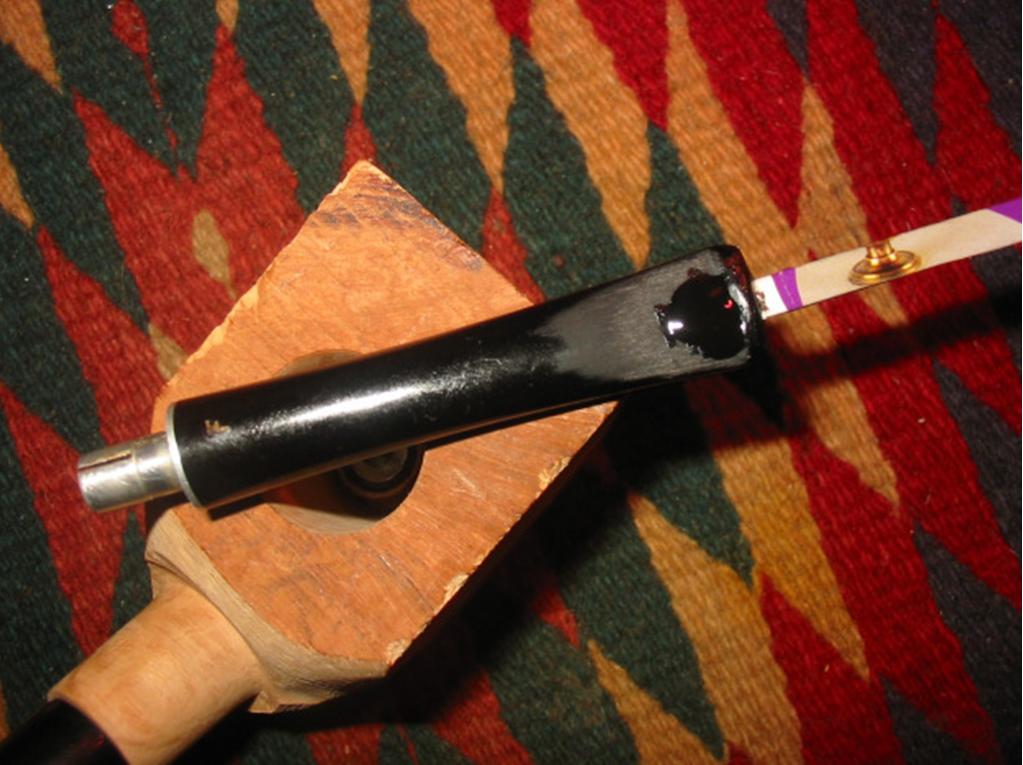
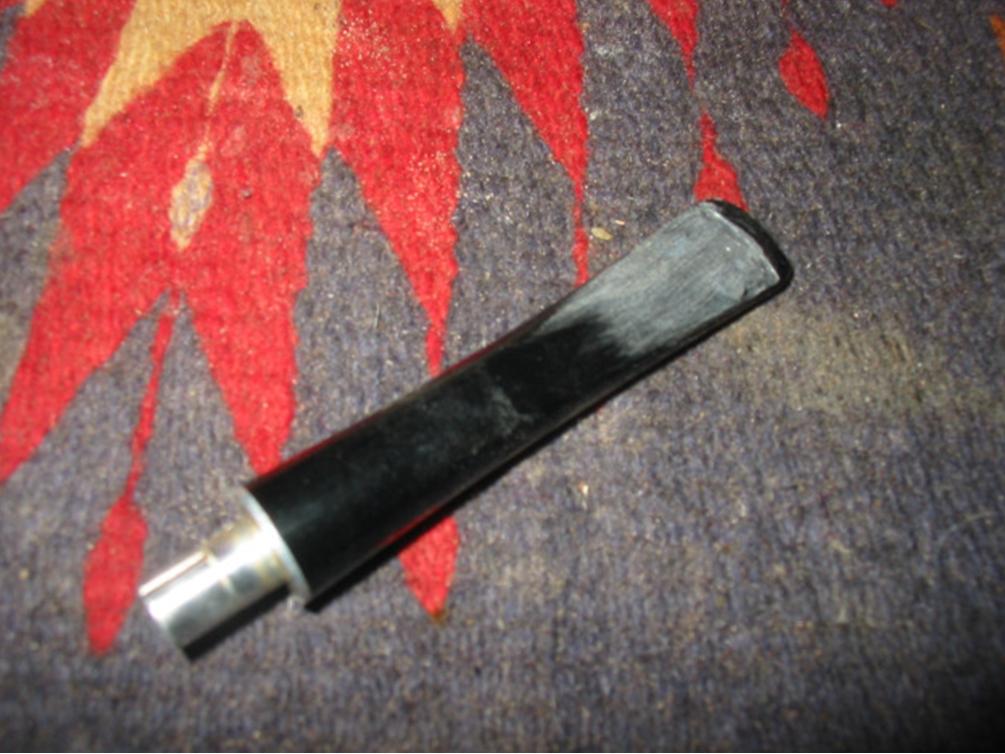
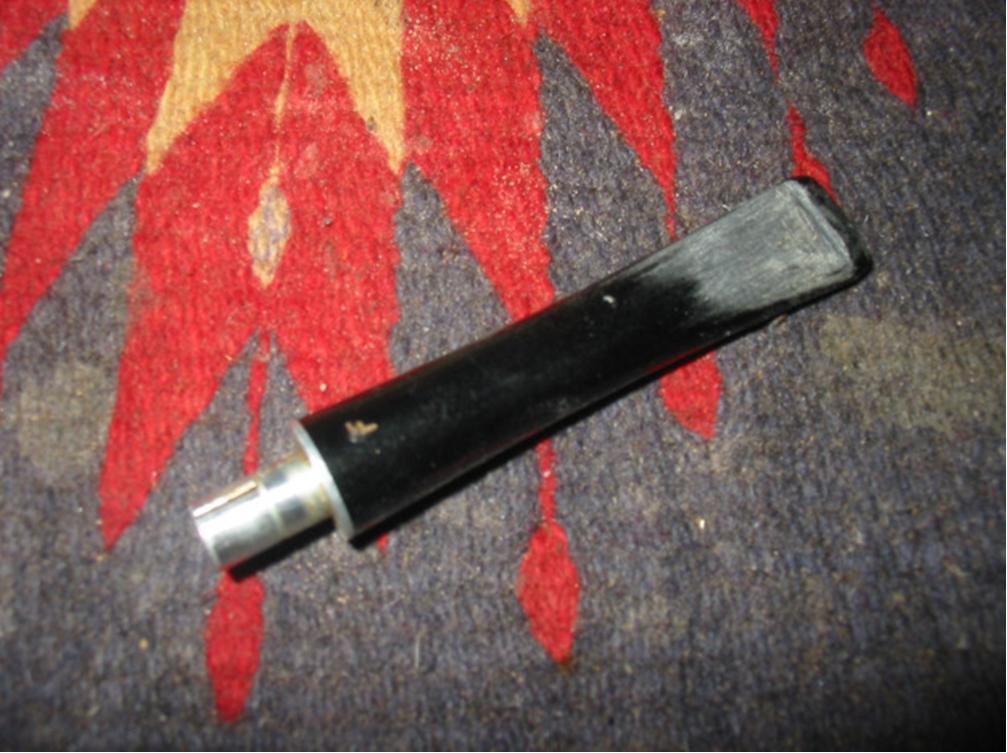
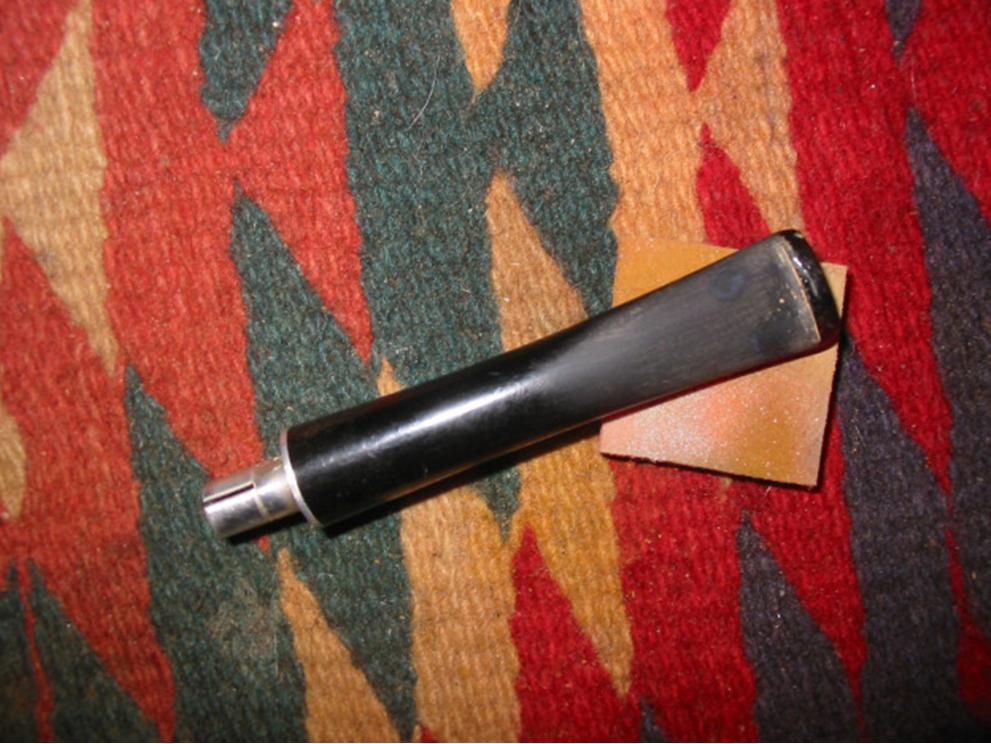
Next I worked on the shank. I have some small brushes that I bought in the baby section at Walmart (normal people use them to clean baby bottles, but I find they work great for the shank of a pipe).Sel6 Sel7 Although the brush gets most of the gunk out, I use a retort to really clean the inside of the shank and the stem. I started using this method when I couldn’t fit the end of the rubber tube over the wide button on a pipe. The tenon was a perfect fit and the tube also fits perfectly into the shank. This saves a lot of time and pipe cleaners. After doing the retort, I run one pipe cleaner through the stem and a pipe cleaner and q-tip through the shank and it’s done.Sel8 Sel9 Sel10 Now that the inside of the pipe is clean, it’s time to start working on the outside.Sel11 For the stem, I used 400 grit wet/dry sandpaper with water. This gets the majority of the oxidation out, the wet sand paper also makes it easier to get the underside of the button. Next I used micro-mesh pads (1500-2400 grit) with water.Sel12 I wiped the stem dry and turned my attention to the bowl. I used a progression of micromesh pads, 1500-12000 grit. I also used the same progression on the stem.Sel13 Now the pipe was ready for stain. This next part might be kind of controversial (I have never seen this method anywhere else). I use shoe polish for stain. Now before you dismiss this as crazy talk, consider this. It is very simple. I apply the polish, heat it with a heat gun, and buff it out with a shoe brush. I also protect the finish with carnauba wax and have never had any issues with the polish melting or coming off in my hand.Sel14 Polish applied.Sel15 After melting with the heat gun and buffing with a shoe brush.Sel16 It is also very simple to even out the stain.Sel17Next up the heart breaker (also known as the buffing wheel). This little gem makes the difference between a really nice application of carnauba wax and an average looking pipe. It will also grab what you’re working on and fling it to the four winds and shatter the pipe you’ve just spent the last few hours working on. Hold what you’re working on with both hands, place as much padding as you can under and behind the buffer, and work on the stem and bowl separately. Sorry about the quality of the picture.Sel18 I didn’t lose the pipe to the buffer and here’s the results.Sel19 Sel20 Sel21 Sel22 Sel23 Sel24 Sel25 I anticipate that this pipe will pass on to my kids, or be part of the estate sale. I can’t wait to smoke it.

I Found the Black Box – Bill Tonge


I recently was gifted a box of Brigham pipes from someone on eBay who bought one of my pipes. The one in this particular write up is the fourth one down which is a 429 Author shape.
Bill1 I pulled the pipe apart and did my usual cleaning which entails the bowl, shank and lightly sanding it for some contrast. Then I went at the stem. I did my Oxi-Clean and Magic Eraser to the stem and then used the micro mesh pads. When I finished I noticed that the stem was still brownish in spots. Bill2 Bill3 So I went out to the shop and dug out my Black Box from when I had my black car. Bill4 I used it exactly the same way you use it on your car following every step. The first step involves the scratch remover and the second step is the black carnauba wax. I just dabbed it all over the stem and let it sit until it turned to a gray haze. The next set of pics shows the stem covered in the black wax. Bill5 Bill6 Bill7 The final step is to buff it up. As you can see from the pics it covers the brown pretty well. Bill8 Bill9 And of course a pic of the final pipe cleaned, waxed and back together. Another happy Brigham. Bill10

Maintaining Vulcanite Stems – Ric Farrah Of Briarville Pipe Repair & Restoration


bvlogo1I have chatted with Ric from Briarville several times on Skype and not only found him great to talk with and full of ideas but also that we share the same passion for pipe refurbishing and restoration. I visited his website http://www.briarville.com/briarvilleblog.htm and found not only a great service that is offered to those who do not wish to repair or refurbish their own pipes but also much helpful advice in his blog. The following article is reproduced here with Ric’s permission. Thanks Ric for what you provide and for the permission to reprint your blog post here on rebornpipes.

As you probably already know there are two primary materials used for making pipe stems, acrylic and vulcanite. The brand names for these materials are Lucite and Ebonite respectively.

Vulcanite starts as a powdered rubber substance that is vulcanized and molded into rods for hand cutting stems or poured into molds of various stem shapes and sizes to be fitted as replacements when an original stem breaks.

Unlike acrylic, a hard plastic that can be either molded or hand cut into stems, vulcanite oxidizes which causes a bitter taste and changes colors anywhere from white, brown or even green. Consequently vulcanite requires a little maintenance whereas acrylic, not so much.
stem-beforeLG
Nevertheless, because of tradition and a more comfortable smoke, vulcanite is still a favorite for about half of us. I’ve seen many polls and enjoyed many debates about the best pipe stem material and it’s always pretty close with perhaps acrylic gaining very slight favor.

Maintenance before the stem oxidizes is the best way to keep vulcanite from oxidizing at all. Obsidian Oil is the best product I’ve found to prevent oxidation. After smoking, simply wipe a few drops on the stem, let stand for about 30 minutes and buff clean with an old cotton tee shirt. Follow this regiment and your stems will never oxidize. obsidian oil2

But what to do with your estate purchases or when some of the stems in your own collection are already oxidized? For the do-it-yourself guys without professional buffing mandrels, tripoli and white diamond, a little elbow-grease and a few easily obtained materials are all that’s needed.

Vulcanite oxidation, like rust to ferrous metals, feeds off the rubber. It grows into the stem and must be removed. You can remove or at least soften the oxidation by soaking your stems in either OxyClean or bleach. I prefer bleach but be aware, bleach will eat away stamping, logo inlays, threaded metal tenons and stingers! I would advise against using bleach with stems fitted with metal parts as are common with Kaywoodie pipes. Stamping and logos can be protected with a dollop of petroleum jelly applied over the top of them.

Let your stems soak overnight and then rinse them with water. They will dry to a pale gray. What has happened is the beach has eaten away the oxidation leaving your stem covered with microscopic peaks and valleys. In fact, under a microscope they’d look like the Himalayas. Those peaks and valleys absorb light and the stem appears dull.

Light being reflected back off the stem is what we perceive as a shine so the peaks and valleys must go. In the shop we use a buffing mandrel with 500 grit tripoli applied to the wheel spinning on the lathe at 1800 RPM to re-smooth the stem and then follow up with white diamond to bring out the glass-like appearance of a new, finely polished stem.

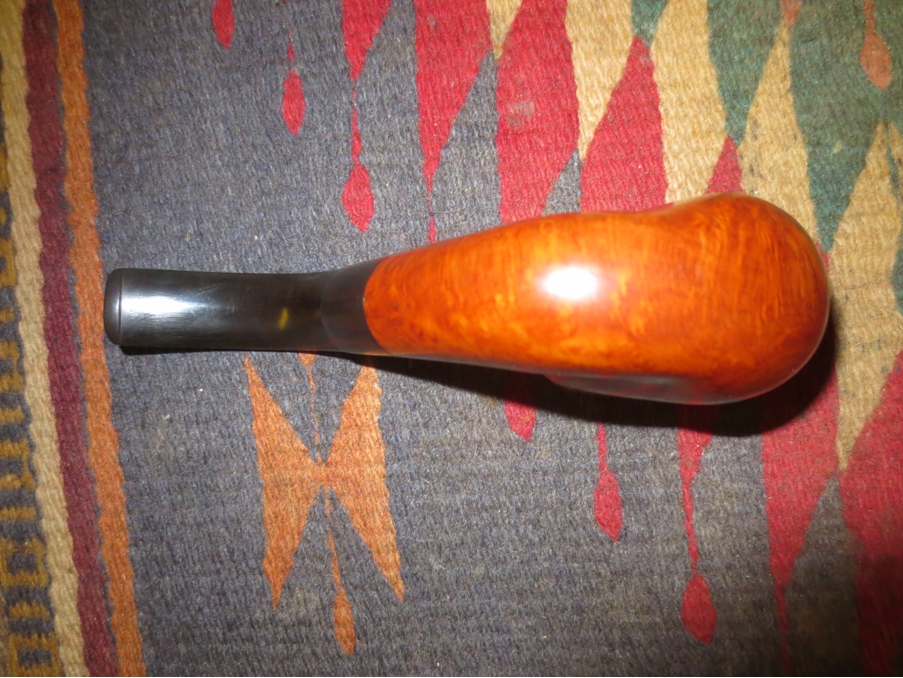
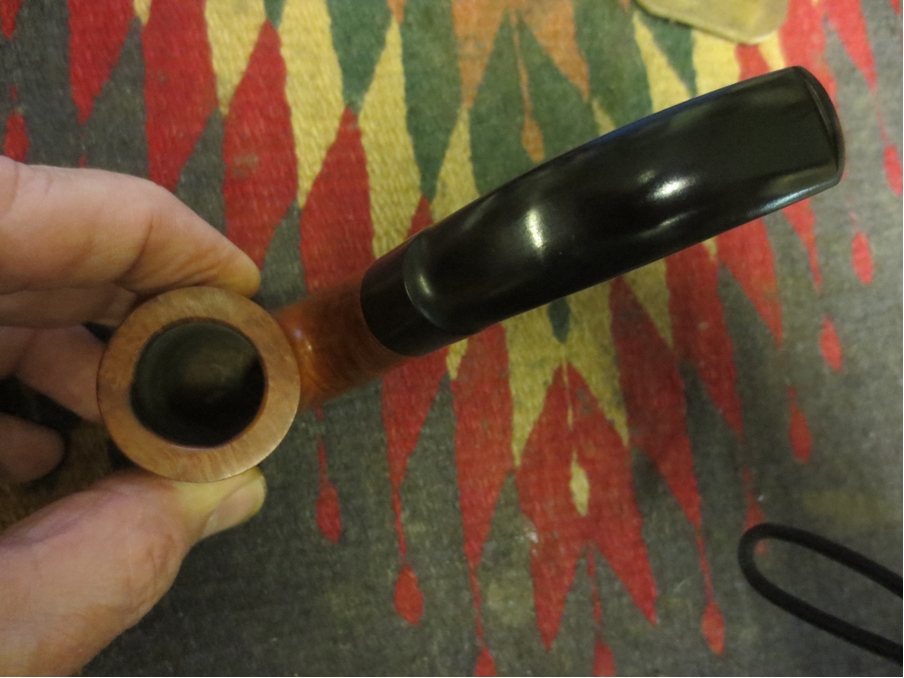
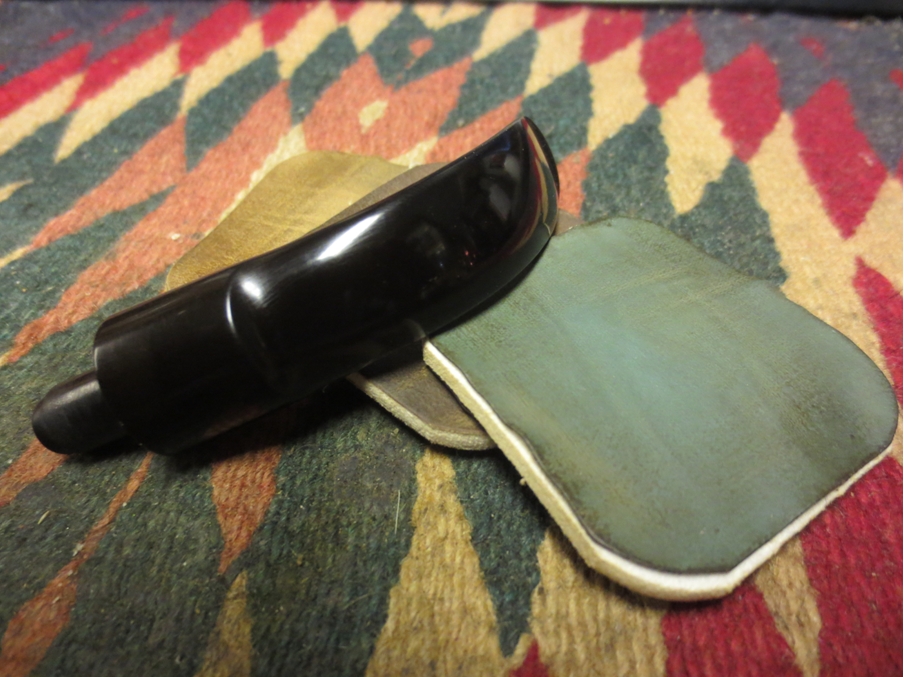
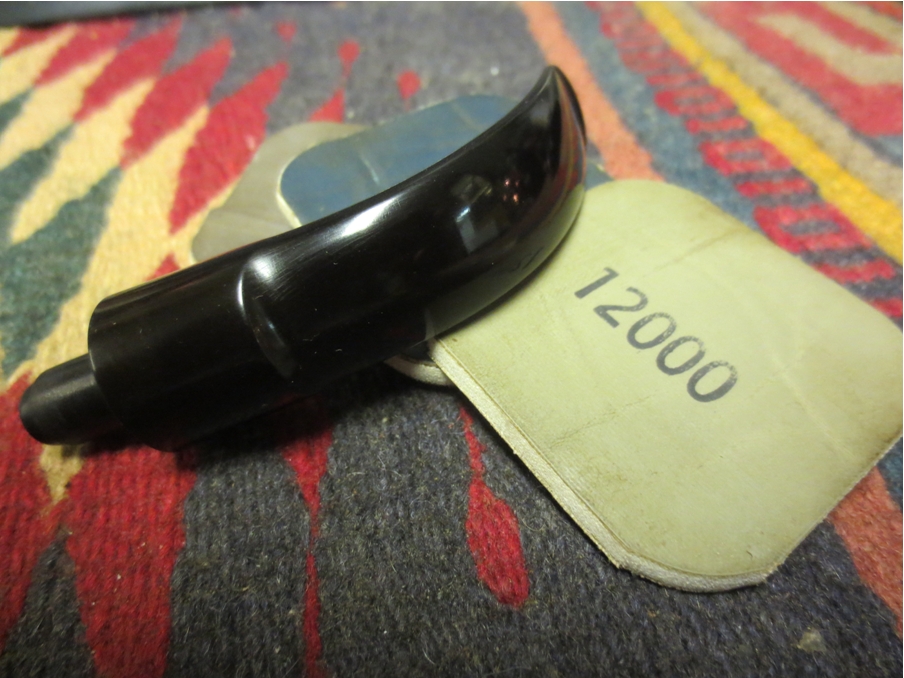
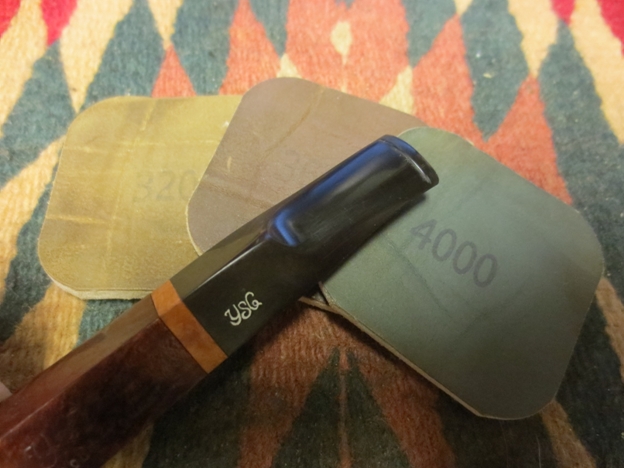
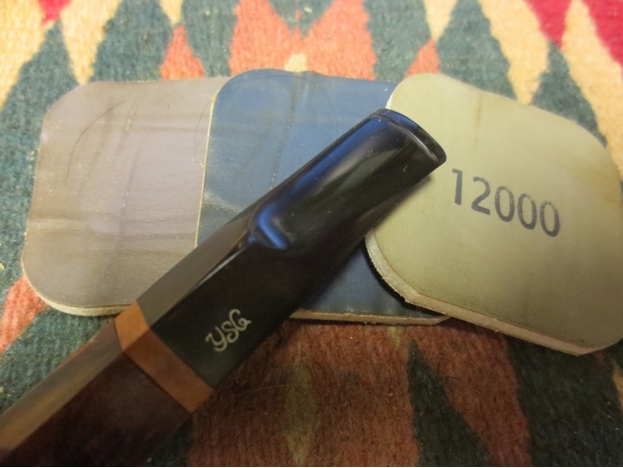
Our buffing promicromesh1cess can be reasonably replicated with micro mesh pads, wet and dry sanding pads in various grits. A set of micro mesh pads can be ordered on Amazon or eBay. The grits range is 1500, 1800, 2400, 3200, 3600, 4000, 6000, 8000, 12000. Have a bowl water handy to wet sand the stem through the various grits. The magic comes between 6000 and 12,000 grits.

Once the outside of your stem is to your satisfaction use some pipe cleaners soaked in denatured alcohol or your favorite high proof booze to clean the inside of the oils and gunk the bleach didn’t remove. Finally, apply the Obsidian Oil and buff with a cotton cloth.

stem-afterWhile this method won’t bring the stems to “as new”, it will get them close.

Of course, you can save yourself the hassle… (Here comes the shameless plug) …send your pipes for a quick visit to Briarville. Starting February Briarville is an online retailer of Obsidian Oil and all repaired and refurbished pipes with vulcanite stems will leave the shop with an application to retard future oxidation.

Restoring a Bent Billiard – Converting a threaded mortise to a push mortise


When I picked up these two pipes in the antique mall grab bag my intention was to hunt down threaded metal tenon stems for them both. But I soon finished cleaning up the rest of the lot and was down to these two and an old Medico. These two were in far better shape to start with than the old Medico so I looked them over for a while. I decided to drill out the threads on both of them and fit a push stem to the shank. I started with the bent billiard as it needed the most work to clean up the rim damage. While I was setting up to do it I got to thinking that the odds were very high that the inserts were reverse threaded into the shanks of the pipes. I took out a pair of pliers and carefully locked onto the metal edge of the insert on the bent billiard. I turned it counterclockwise and after a few moments of not moving it came loose and screwed out with ease. I did the second pipe bowl at the same time so I now have two pipe bowls that have been modified with a simple fix to that the mortises will accommodate a push stem.
IMG_6668

IMG_6669

IMG_6667
I had a saddle bit in my can of stems that had a Delrin tenon and with a little sanding fit the shank perfectly. It had a short saddle and quite quickly went to a blade. It was still quite thick in the mouth so I would need to sand it thinner for comfort. The fit against the shank was snug and only the diameter of the stem would need to be adjusted to fit properly.
IMG_6670

IMG_6671

IMG_6674
The pipe has some interesting grain on it and only one fill on the side of the shank. The stamping reads something like Barnard B over Imported Briar on the left side of the shank. The Barna is very clear the next two letters are faint and the end there is a Germanic Style B. Not much information available on the brand that I can find. The rim was really badly beaten up. It was rough and chewed up looking. The outer edge was ruined with chunks missing. The inner edge surprisingly enough was quite clean and in decent shape. There was a thin cake around the top half of the bowl while the bottom half was still unsmoked briar. The finish as worn around the rest of the bowl but surprisingly there were no nicks or dings on the rest of the briar.
IMG_6672

IMG_6673
I took a close up photo of the top of the rim to give an idea of the condition it was in when it arrived at my work table. I fit the stem to the shank and then used the Dremel and sanding drum to take down the excess diameter of the stem. I then sanded the stem and shank with 220 grit sandpaper to make a smooth transition between the two materials. In the photos taken of the top and bottom you can begin to see the damage on the stem near the saddle. At this point it did not go through the Lucite material but it was definitely a grey colour instead of black.
IMG_6678

IMG_6679

IMG_6680

IMG_6681

IMG_6682
With the fit of the stem finished I topped the bowl. I set up the topping board and the 220 grit sandpaper and turned the bowl into the sandpaper in a clockwise direction. I sanded the outer edge of the rim with a folded piece of sandpaper to smooth out the damage that the topping did not remove. I then wiped the bowl down with acetone to remove the finish and clean up the bowl.
IMG_6683

IMG_6686

IMG_6684

IMG_6685

IMG_6687

At this point I got an urge to put a silver band/end cap on the shank just to have a look. I liked the look of the cap but did not particularly like the look of the short saddle stem with the band. I almost pulled the band and decided against it but decided to leave it and stain the bowl to see what the finished look of the bowl would be. I could always make another stem for it should I desire to do so.
IMG_6688

IMG_6689

IMG_6690
I sanded the bowl with medium and fine grit sanding sponges and then wet sanded the bowl with 400 grit wet dry sandpaper. Once the scratches were removed and the briar was smooth I stained it with a black aniline stain. I applied it, flamed it, applied it again and flamed it again. I then heated the bowl with a heat gun to further set the black stain in the grain.
IMG_6691

IMG_6692

IMG_6693

IMG_6694

IMG_6695

IMG_6696

IMG_6697
I wiped the bowl down with isopropyl alcohol and followed that with acetone on cotton pads to remove the excess stain. I wanted to leave it deep in the grain and remove it from the surface of the bowl. I sanded the bowl with medium and fine grit sanding sponges and then wet sanded it with 400 grit wet dry sandpaper. When I had finished the bowl looked almost grey and the dark striations of grain stood out on the heel and underside of the shank.
IMG_6698

IMG_6699

IMG_6700

IMG_6701
I wiped the bowl down with alcohol again and then restained it with a oxblood aniline stain to bring out the contrast in the briar. I really like the way the finish had turned out on the bowl. The stem was looking more and more problematic. It seemed that I had sanded through the blade next to the saddle and sanded into the Delrin tenon. In the top and bottom view photos below you can see the grey area in each of those spots next to the saddle. This stem was ruined and needed to be replaced.
IMG_6702

IMG_6703

IMG_6704

IMG_6705
I took the stem off the pipe and sanded the two sides some more to see if I could feather out the damage or maybe repair it with a super glue patch. Looking at the photos you can see that patching and repairing the stem would not work.
IMG_6706

IMG_6707
I found a vulcanite saddle stem in my can of stems that would fit the shank. I turned the tenon with a PIMO tenon turner and then sanded it until it fit snuggly in the shank. The outer diameter of the stem needed to have some of the vulcanite removed to center the stem against the silver end cap.
IMG_6709
I sanded casting ridges off the stem and used a Dremel and sanding drum to remove the excess stem material. I sanded the diameter and the edges to remove all of the scratch marks. I used 220 grit sandpaper and then medium and fine grit sanding sponges to finish. I set up the heat gun and turned it on the low setting and held the stem over the heat. Once the stem was flexible I bent it carefully over an old rolling pin I use as a base until it was the correct angle. I set the angle with cold water.
IMG_6711

IMG_6712

IMG_6714
I sanded the stem with micromesh sanding pads – wet sanding with 1500-2400 grit pads and dry sanded with 3200-12000 grit pads. I buffed it with White Diamond and then rubbed it down with Obsidian Oil and let it soak into the rubber of the stem.
IMG_6715

IMG_6716

IMG_6717
I buffed the pipe and stem with White Diamond and polished the silver band with silver polish. I gave the entire pipe multiple coats of carnauba wax to preserve and protect the finish. I finished by giving it a light buff with a soft flannel buffing pad. The finish pipe is shown in the photos below.
IMG_6722

IMG_6725

IMG_6728

IMG_6727

I Had Heard of Royalton but not of the Smoke-Control Deluxe


In my antique mall grab bag was the bowl that is pictured below. It is stamped on the left side of the shank, Royalton over Smoke-Control over Deluxe and on the right side of the shank, Selected Briar over Pat. No.2326658. I had heard of Royalton pipes and have cleaned up a few of them in the years that have gone by. But I had never heard of the Smoke-Control or the Smoke-Control Deluxe. Obviously it was a system pipe of sorts, one of those creative ideas that lasted about as long as its maker. It never seemed to have caught on because in all the years I have been hunting and refurbishing pipes I have never come across one even to walk by in my prowls of thrift, junk or rummage shops. It was a brand unknown to me.

The bowl was in excellent shape and had not even been smoked to the bottom of the bowl. The bottom half of the bowl was bare briar. The top half was darkened but not carbonized at all. It was for all intents and purposes a new pipe. The shank was clean and contained a strange metal apparatus that filled the mortise and then stepped down to fill the airway all the way to the smoke hole in the bottom of the bowl. It was aluminum, the first ¼ inch was smooth and then it had threads that went to the bottom of the mortise. The airway was smooth. The finish on the bowl was non-existent. Whatever stain or coating had been on the bowl was no long present. The stamping was crisp and readable. There were no fills in the briar but there was a nice swirling mix of grain all around the bowl. The rim was clean and showed no burn or dent marks. The pipe was missing the stem. Judging from the mortise the stinger apparatus on this stem must have been a unique looking piece of hardware.
IMG_6315

IMG_6316

IMG_6318

IMG_6319
Since I had no idea what I was working on I decided to do a bit of digging on the internest and see if I could find out about the brand and kind of stem and stinger apparatus that it had. I wanted to know what the patent on the shank covered so that once I had a clear picture in mind I could hunt down a stem or work on one that would fit the shank in the meantime. I found out that Royalton pipes were manufactured by Henry Leonard & Thomas, Inc. (HLT) of Ozone Park, New York. HLT manufactured other brands as well including Dr.Grabow, Bruce Peters, Broadcaster and Vox Pop. I found on Pipephil’s logos page the two photos below that showed the stamping on the stem and the shank. The stamping on the bowl I had was a Smoke-Control with a hyphen rather than the one picture below and also was a Deluxe rather than a Supreme.
royalton1a

royalton1bMine was also stamped Selected Briar instead of Imported Briar. I could see that the stem had an aluminum faux band that sat between the stem and shank.
So far I had learned the manufacturer and the stamping on the stem and the faux band. I had not seen the stem. I did a bit more digging and found several advertisements that showed more of the stem. The first is from Popular Mechanics and it gave a clear description of the purpose of the pipe as well as the meaning of the Smoke-Control feature. The pipe had an adjustable valve that regulated the daft on the smoke to match personal taste and preference.
Smoke Control Advert
This advertisement spoke of both the Supreme Grade and the Deluxe grade of the pipe. The stinger that is shown in the picture could have been similar to the one in the bowl that I had found but it was not quite the same in terms of the sketched in lines on the shank of the top pipe in the picture. My bowl’s interior was different from the one in the picture so the stinger apparatus too must have been slightly different in the one I found. I went to the US Patent web site and did some more research and found the Patent Number of the pipe that I had. There was a description and a diagram of the pipe. The patent was taken out on August 10. 1943 by Arthur Koenigsamen of Jamaica, New York, assigner to Henry Leonard & Thomas Inc. of Ozone Park, New York. Reading the patent data, I am struck by the familiar hunt to develop a better smoking pipe to deliver a dry and cool smoker to the mouth of the pipe smoker and to make pipe smoking more appealing to those who might not try it otherwise. Have a look at the details of the patent and pay attention to each part of the apparatus in the shank and on the end of the stem. There are some unique features that are not visible in the pipe that is shown in the advertisement from Popular Mechanics.
Smoke Control Patent Page 1

Smoke Control Patent page 2

Smoke Control Patent photo
The stem in the above drawing in Fig. 2 shows the tenon that would fit in the mortise in the bowl I have. It is threaded about mid-tenon with three bands. Before and after the threaded portion the tenon is smooth. The apparatus goes into the stem as well, Fig. 3, in a way that was not shown in the advertisement above. It appears that there is a cooling reservoir in the stem that traps moisture and delivers a cool smoke out the wide slot in the end of the stem. The mortise in the bowl I have looks exactly like the one in Fig. 5 and screwed onto the tenon in Fig. 4. The shank on the bowl that I have is set up precisely like the nipple unit in Fig. 5. It is aluminum and set in the shank. I have included the photo below showing and end view of the shank to show what the insert looks like. You can see the flat area, the step up to the threaded portion and then the step up to the airway just as is shown in Fig. 5 above.
IMG_6322
My problem was that the bowl did not come with the unique stem unit that fit the shank. I tried several older Dr. Grabow stems and a Kaywoodie stem that I had here and the threads did not match those found in the shank. I had a choice to make, save the bowl until I found a stem someday by chance or to try to work on a stem and jerry-rig it to fit the shank system. I figured I had nothing to lose so I chose to work on a stem. I had just the right stem in my can of stems. It was a chubby stem from an Orlik pipe and the tenon was already shaped partially for a shank like this. The end of the tenon was slightly smaller in diameter than the portion of the tenon next to the stem itself.
IMG_6323
I slowly turned the vulcanite stem into the metal mortise, being careful to hold the stem straight as I turned it in place. I figured that by doing so I could score the vulcanite with the metal threads of the mortise and in so doing tap thread the tenon on the vulcanite. Low and behold it worked. The stem fit tightly against the face of the shank. The diameter of the stem would need to be adjusted but otherwise the fit was good.
IMG_6325

IMG_6326

IMG_6327

IMG_6328
I carefully sanded the stem and the shank avoiding the stamping. I did not want to damage the stamping on either side of the shank. I sanded with 220 grit sandpaper and a medium and fine grit sanding sponge. I sanded the rest of the bowl and the rim as well. When I finished the fit of the stem at the shank was smooth.
IMG_6329

IMG_6330

IMG_6331

IMG_6332
I wiped the bowl down with acetone on cotton pads to remove any remnants of the original finish on the bowl and to remove the sanding dust.
IMG_6333

IMG_6334

IMG_6335

IMG_6336
At this point in the process things were going too well! Everything was working without a hitch and the pipe was looking really good. This is when things inevitably take a turn for the worse and they certainly did in this case. I unscrewed the stem from the shank in preparation for staining the bowl. I wanted to clean out any briar dust that was trapped between the stem and the shank. I cleaned out the dust and blew air through the mortise. I then slowly and carefully screwed the stem back in place in the shank. They no longer lined up! The fit of the stem against the face of the shank was not tight. The smooth transition between the shank and stem was no longer there. The fit was not right. I took the stem off and examined the mortise and tenon. I could see that the insert in the shank had definitely been pushed deeper into the mortise. When I started it was even with the face of the end of the shank and now it was sunk in and the mortise bevel showed as it probably should have from the start. Arggghhh. Now the fit was off and the diameter of the stem would have to be corrected again. The big problem was that the way the stem fit against the end of the shank was no longer perfect. There was a gap that I could not correct no matter what I did in adjusting the insert or the stem.

I decided that I would have to band the shank, not as a repair on a bad shank but as a cosmetic measure to clean up the fit of the stem and the shank end. This irritates me to no end in that as you could tell from the above photos it was perfect! Ah well so goes the life of the pipe refurbisher who is restemming old pipes with replacement stems. I adjusted the diameter of the shank to fit the flow of the shank without the band. Once again it was round and smooth. If there had not been a gap at the bottom of the shank/stem union a band would not have been necessary. I looked through my box of bands and found a band that would fit and not go to deeply up the shank as to cover the stamping. I found just the right band. I put all purpose white glue on the shank and pressed the band in place. Once the glue had set I screwed the stem on to the shank and lined everything up. The fit and finish of the stem and shank looked good. I actually liked the band on the shank as it broke the line between the shank and the stem and added a bit of bling to look of the old bowl. I guess I can live with the look of the pipe after all. It is not what I wanted when I started but it would do.
IMG_6337

IMG_6338

IMG_6340

IMG_6341
I wiped down the bowl with isopropyl alcohol on a cotton pad to remove any excess glue that had seeped out around the band and removed grime from my finger prints on the bowl. I gave the bowl a first coat of dark brown aniline stain thinned 1:1 with alcohol. I flamed the stain and then wiped it down with an alcohol pad. I buffed it with White Diamond to see what the finish looked like with the brown stain. While I liked the look, the mottled look of the grain seemed to need some more colour and contrast to make it look right. I was not sure what I would use for a top coat so I set it aside and worked on the stem.
IMG_6343

IMG_6344

IMG_6345
I sanded the stem with 220 grit sandpaper to remove the oxidation that remained after cleaning and then sanded it with a medium and a fine grit sanding sponge. Once I had finished this I wet sanded it with 1500-2400 grit pads. Several times mid stream I went back and sanded with the sanding sponges and started over with the pads to clean up places where the scratching still showed or where the oxidation was stubborn. When I finished with the first three pads I rubbed down the stem with Obsidian Oil and screwed it back on the bowl.
IMG_6346
Now most of you probably would have just finished sanding the stem with the remaining micromesh pads but not me. I got distracted with the stem back on the bowl and decided to give it the second coat of stain. I took it to the buffer and buffed the bowl and the stem with Tripoli and White Diamond before going back to the work table to give it a second coat of stain. For the second coat of stain I decided to use an aniline based oxblood stain. The rich read colour would go well with the mottled grain of the bowl. I applied the stain, flamed it, applied it again and flamed it again as often as necessary to get an even finish. Once it was dry I wiped it down with an alcohol wet pad to remove the excess stain and make it more transparent. I buffed it with White Diamond. This stain coat had the desired effect and I liked the finished look of the bowl.
IMG_6348

IMG_6351

IMG_6354

IMG_6356
I took the photo below to show the threads that were cut into the vulcanite tenon to give an idea of what the finished tenon looked like after all was said and done. The fit in the mortise is snug and the stem screws into the mortise easily.
IMG_6367
I went back to sanding the stem with the remaining grits of micromesh pads. I dry sanded with 3200-12000 grit pads and once again had to go back and sand with the sanding sponges near the button to deal with the stubborn oxidation. This involved having to start over with wet sanding with 1500-2400 grit pads but once I had finished the oxidation was gone. I rubbed the stem down with Obsidian Oil again and when it was absorbed into the vulcanite I buffed the stem and bowl with White Diamond.
IMG_6368

IMG_6369
I polished the nickel band with silver polish and gave the bowl and stem multiple coats of carnauba wax to protect and give it a shine. When finished I buffed it with a soft flannel buffing pad and brought it back to the work table for the final photos. The old Smoke-Control Deluxe is back in action. The bowl looks great; the stem works even though it is not original. The band gives just the pipe an air of elegance that I had not expected. I look forward to breaking it in and enjoying a smoke in what for all intents and purposes is a new old stock bowl.
IMG_6370

IMG_6374

IMG_6375

IMG_6376

Restemming and Refurbishing a Planter Opera Pipe


This is the fourth bowl that I chose to work on from the antique mall lot. It had some great potential to clean up well as it was by far one of the least damaged of the bowls. It is stamped Planter over Made in France on the left side of the shank. There is no other stamping on the bowl or shank. There is no shape size or numbering on the shank. The right side is unmarked. I looked it up online and did not find any maker for the pipe. Pipephil did not have in on his logos and stampings pages nor did any of the other sites I frequent when searching for info online. I turned to my books and found out from “Who Made That Pipe” that the brand was made by Comoy’s in France. I checked Lopes book and it was not listed. The bowl itself was pretty clean on the inside and the interior of the shank was also clean. It barely looked to have been smoked. There were a few remnants of unsmoked tobacco on the walls of the bowl. On the exterior, one side of the bowl was clean and the other was covered with a greasy, dirty buildup. There was some nice looking grain under the grit and grime – both birdseye and cross grain. It looked like it would clean up nicely. There was one small fill on the right side of the bowl. The metal band was tarnished and yellow. The bowl did not come with a stem when I bought it at the antique mall.
IMG_6239

IMG_6241

IMG_6242

IMG_6243
I went through my can of stems and found one that would fit with very minimal adjustments. I sanded the tenon with a folded piece of sandpaper and it fit well against the shank. There were some issues on the diameter of the stem. It appeared that it was slightly out of round on the right side. It would need to be sanded on the right side, top and bottom for a perfect fit.
IMG_6244

IMG_6245

IMG_6246

IMG_6247
The band was not totally in place on the shank. It had slid toward the end of the shank over the years so I needed to heat it and press it into place. The benefit to this was that it heated up the yellow buildup on the band and it came off quite easily with some silver polish/metal cleaner. I scrubbed the band with some Hagerty Tarnish Preventative Silver Polish that I bought years ago at a jewelry shop. It removed the tarnish and oxidation and with repeated scrubbing it cleaned out the tarnish in the hallmarks.

I scrubbed the exterior of the bowl with Murphy’s Oil Soap to remove the greasy buildup on the right side of the bowl and shank. I followed that up with a wipe down of isopropyl alcohol to finish removing the grime. I sanded the stem on the right side to remove the excess vulcanite and make it line up with the band. I always look at the end view of the pipe and see if the diameter of the stem matches the edge of the band that it will sit against. I strive to make it the same all the way around as I think it looks better when done that way. I used 220 grit sandpaper and a medium and fine grit sanding sponge to get the fit right. In the photos below the pipe is shown after all the scrubbing and fitting of the stem.
IMG_6248

IMG_6250

IMG_6251
You can see from the few steps taken with the pipe that it was a very simple clean up. It took more time to fit the stem that it did to clean up the bowl and band. I gave it a quick buff with White Diamond before working on the stem. I took it back to the work table and sanded the stem with a medium and fine grit sanding sponge (the pink square pictured above is one of those sponges). I then sanded the bowl and stem with micromesh sanding pads – wet sanding with 1500-2400 grit pads and dry sanding with 3200-12000 grit pads.
IMG_6252

IMG_6254

IMG_6255
I finished by rubbing down the stem with Obsidian Oil and when it had been absorbed into the stem I buffed the stem and bowl with White Diamond. I gave it multiple coats of carnauba wax to protect and give it a shine. I finish with a soft flannel buffing pad on the buffer. The finished pipe is pictured below. Sometime today I will load a bowl and give it a smoke.
IMG_6256

IMG_6258

IMG_6259

IMG_6260

IMG_6261

A Kaywoodie Reworked, with a Little Mystery!


Blog by Greg Wolford

This year has not been a banner one, so far, for me personally. The harsh weather, an accident, and a failure of one of my orthotics has had me mostly sidelined since the first of the year. My workshop is downstairs, in the garage, and it isn’t exactly the warmest, most comfortable place to work in the temperatures we’ve had, not to mention the difficulty of actually getting myself up and down the stairs … but I digress … so I’ve been able to do very little work on either of my hobbies so far in 2014.

Last week my wife had a little pity on me and allowed me to bring a few necessary tools and supplies up to the kitchen so I could work on a few old pipes; leather work is out of the question until the temperature and my body cooperate. I think she knew I was getting a bit restless, not being able to get into any of my projects. When I said she “allowed” it, she corrected me with “I didn’t say you could do that” but she didn’t send it all back down to the shop either, so I take that as permission I told her! LOL

Now, I must admit that my photographs, when I remember to take them (that’s a preview hint that I haven’t remembered as often as I should have), aren’t as good as I would like but I don’t have as good a set-up as I normally do. So, I ask you to bear with me on the quality and quantity of them.

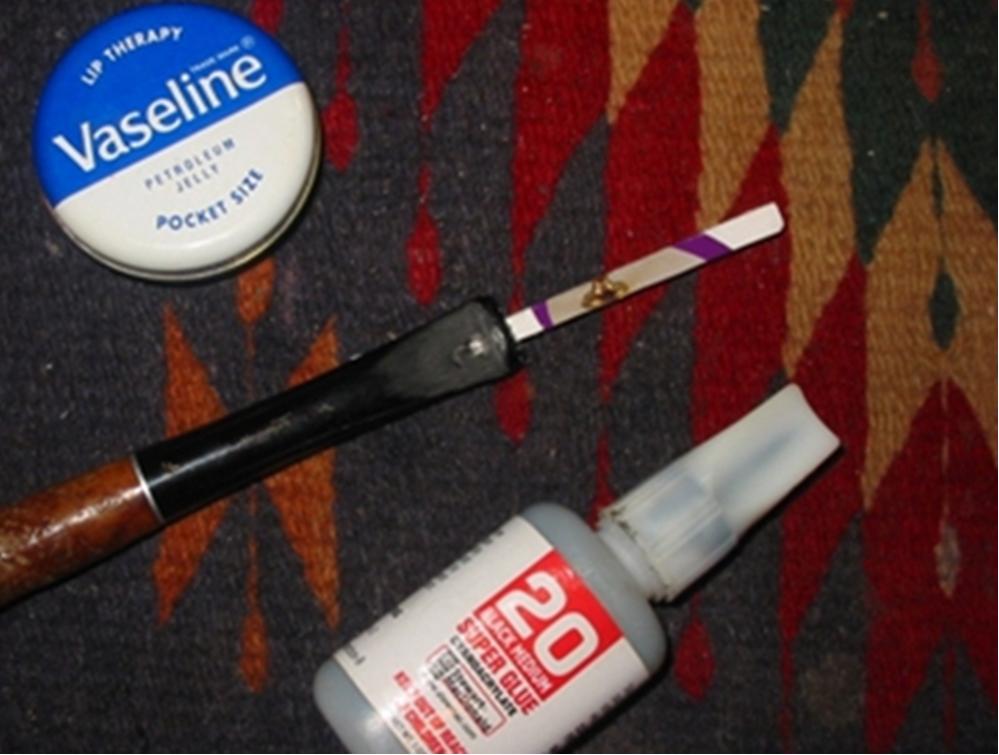
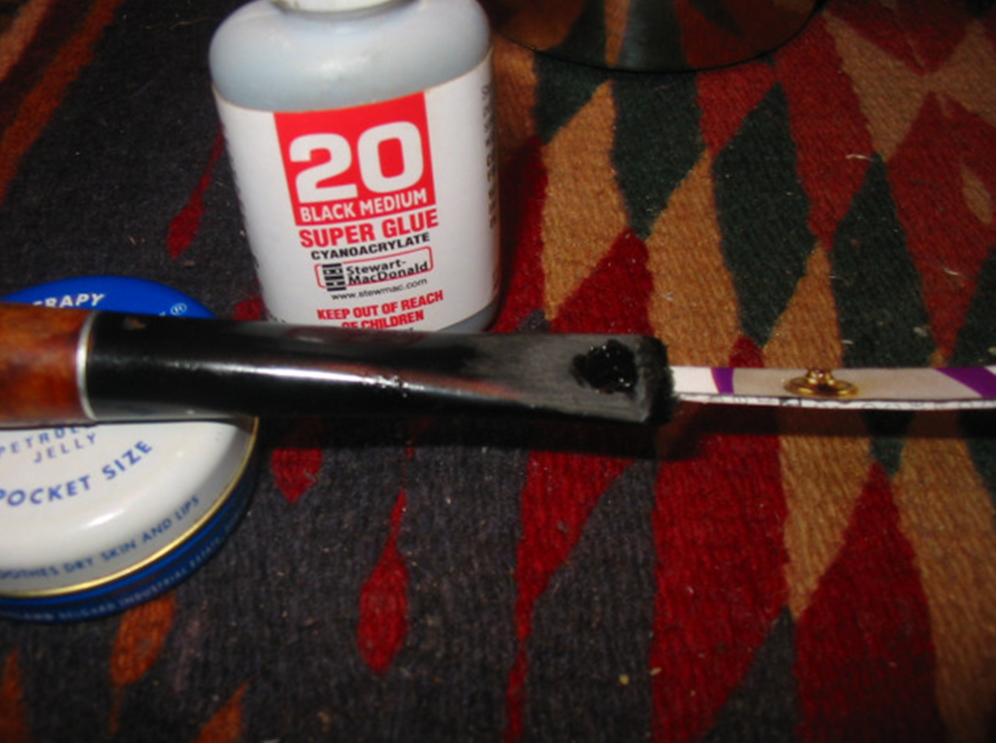
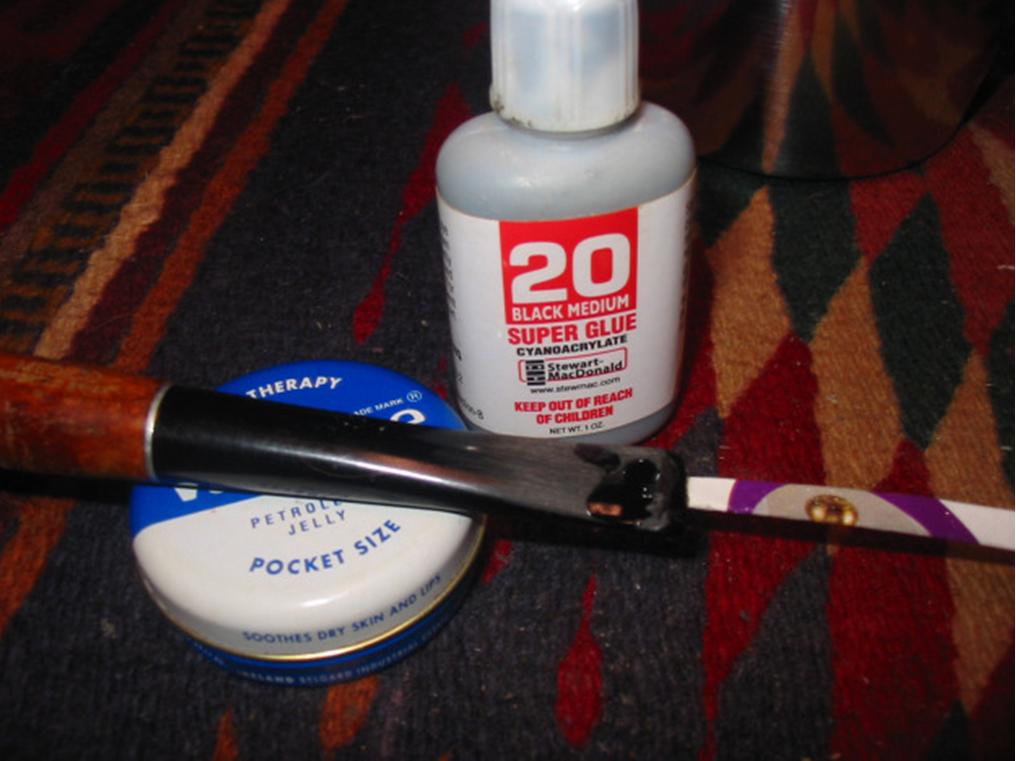
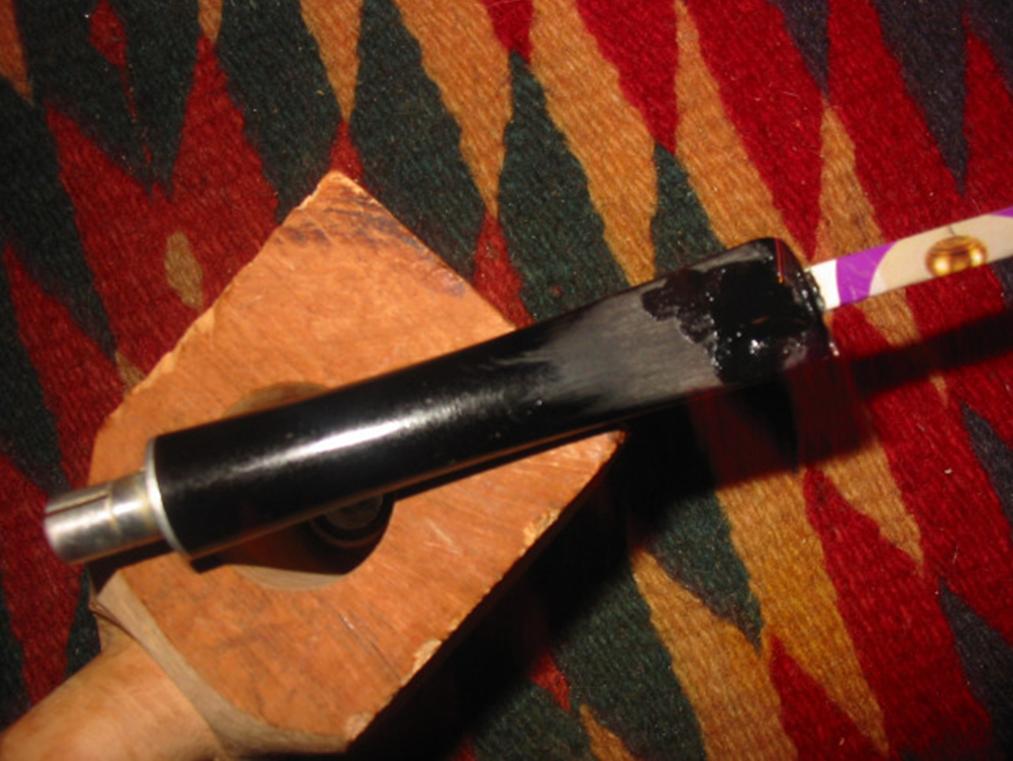
Sometime back I acquired an older Kaywoodie model 33. It is an apple shape with a rounded bowl-top. The pipe was in pretty good condition other than the front edge was damaged from being knocked-out and the bottom of the stem had been bitten off. because of the stem damage I put off working on this pipe for months; I wanted to save the stem but didn’t have the black super glue yet, which I planned on using, to do the job. Here are a couple of photos (all I could find) of it before I started working on it.

Kaywoodie Apple (10) Kaywoodie Apple (11) Kaywoodie Apple (13)

Unfortunately all I can find are some photos that I used it as a “prop” in and one of the underside of the stem. You can see the pipe itself wasn’t too bad but the stem was another story.

Initially I tried to patch the chip with black super glue; I tried this three times: the first attempt the pipe cleaner I was using as a plug absorbed all the glue and the other two times, using different materials for the plug, the patch failed. It turned out that the chip was just too large for me to patch well so I decided to cut it off and file a new button since there seemed to be plenty of room to work with on this stem.

I used a hacksaw on a small frame to remove just behind the bite through. When I looked at the air hole I noticed two things, neither good: first I had closed off the airway accidentally with the glue and second the air hole wasn’t drilled center. I fixed the glue-plug problem quickly by drilling out the hardened glue with a pin vice and then picking out the small fragments that were left. One problem down – now onto forming a new button and slot.

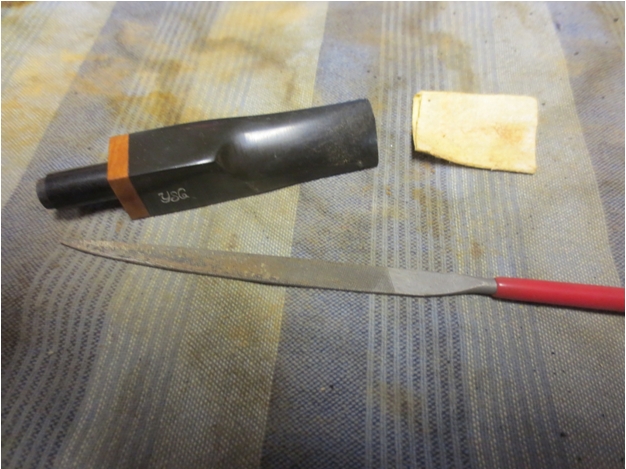
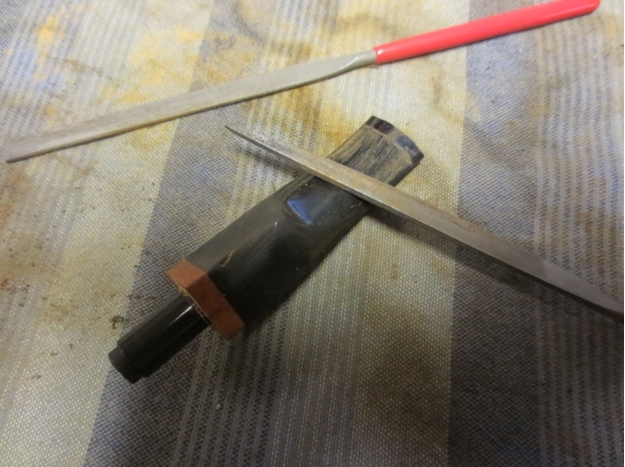
I used various needle files to shape the new button, being timid about not getting it too thin. I recently bought a new set of Kobalt needle files, a big upgrade from my old ones, and found that this (only my second or third time making a whole new button and transition) went much smoother and faster than in the past. I also used the files and a bit of sandpaper to open and funnel the slot, again I was a bit timid in not going too thin; I have done that once and suffered a cracked bit afterward. This is a fair representation of what I ended up with:

Kaywoodie Apple (8)

Once I had the stem to my satisfaction I turned to the stummel.

I had at some time past already reamed the bowl lightly, it had very little cake, and cleaned the shank and stem. I now began by cleaning the stummel with acetone wetted cotton pads to remove the old finish and dirt. After the acetone I moved on to some alcohol wetted pads to lighten up the grime on the bowl top. When it was sufficiently clean I decided to use some 400 grit sandpaper to lightly smooth the edge damage. I didn’t know it at the time – because I failed to look first, a fault I have all too often – but the rim was supposed to be rounded. Luckily I liked the general look of the rounded top and thought it might be the way it was supposed to be so I wanted to keep it rather than topping the entire bowl. I personally like, in general, the less sharp lines on a bowl top so this was an easy choice – one that turned out to be a good one as well.

Once I had reduced the damage to the rim and front, keeping the shape as close to original/symmetrical as I could, I moved to micro mesh pads to sand and polish the bowl top. After getting through the first two grades I thought the entire pipe would look nice just polished with the micro mesh. At this point I reassembled the pipe and began to look for nomenclature to avoid during my polishing; this is when I discovered my “mystery”.

On the bottom of the stem, a origianl Kaywoodie, three-hole stinger with white clover logo, I saw something I had never seen before: there was stamping on the vulcanite “D-2”. This immediately intrigued me; I knew I would have to find out more about that … but lets’ wait a paragraph or two on that.

Kaywoodie Apple (9)

I polished the entire pipe with all of the micro mesh grits in order from 1500 – 12000, avoiding all of the stamping, including on the stem. I wet sanded the stem (only) through 4000, then polished the stem with plastic polish, before finishing the entire pipe through 12000 grit. I then applied Halcyon II wax to the entire pipe and hand buffed it. I was really pretty pleased with the results, considering I didn’t have access to my buffer and this was, more or less, my first experience with the Halcyon wax.

Kaywoodie Apple (2) Kaywoodie Apple (3) Kaywoodie Apple (5)Kaywoodie Apple (4)Kaywoodie Apple (6) Kaywoodie Apple (7) 

I missed some file marks on the stem, and the “bits” near the bit; I figure when I can properly buff the pipe I will get those taken care of, as well as put a better shine on it with some carnauba wax. But until then I am enjoying this old gal just as she is!

The stem still has oxidation near that stamping, which I began to research after I finished the work on the pipe. None of the other Kaywoodies I have, or have ever had, have any stamping on their stems like this one does. I scoured the ‘net and asked as many folks as I could think of to no avail … well, almost none. I am a member of the Kaywoodie Pipes Group on Facebook and one of the members there is Bill Fuerbach is as well. He saw my question that I posted about the stamping in that group and replied as follows:

Hey guys. I’ve seen this also on some older Kaywoodie stems. unfortunately at this time I don’t know what the significance is. :(:(

So unfortunately there is not yet an answer to what the stamping means or its significance is – and the mystery remains …  If by chance anyone what reads this knows the answer I would really appreciate it is you would leave a comment with the answers!

Edit

I received an email from Chris at PipePages about this question. He said in his personal opinion, and that it is only a guess, that it could be a factory replacement stem and the number was a style/guide for the repairman to know which stem to use. Although it is only a shot-in-the-dark type of guess, it seems like a plausible answer to me.

Reworking the Stem/Shank Junction on a MPS 1534


I went through the box of pipes for the Vancouver Pipe Club a final time and found two more that needed some cosmetic work. The first is rusticated acorn or Peewit shape with smooth “leaves” on the side of the bowl and a smooth spot on the shank and a band at the end of the shank. It is stamped on the underside of the shank M.P.S. with the P slightly higher than the M and S forming almost a triangle. Along the end of the shank it is stamped 1534. The pipe is in great shape and needed no cleaning or reworking. What was wrong with this one was the rough fit of the stem to the shank. It was clearly a replacement stem and showed the marks of the work done to fit it to the shank. There was no gap between the stem and shank and the tenon fit in the mortise snugly. The stem itself was slightly larger in diameter than the shank and was very rough. There were lots of lines and pits in the stem itself making the transition quite bumpy.
IMG_4414

IMG_4415

IMG_4416

IMG_4417

I took the following close up photos to show the gouges and scratches on the stem near the junction.
IMG_4418

IMG_4419

IMG_4421

I sanded the stem with 220 grit sandpaper and with a medium grit sanding sponge to smooth out the transition and remove the scratching and gouges. It took quite a bit of sanding to smooth it out but the fit when I finished was far better. I then sanded it with the usual array of micromesh sanding pads – wet sanding with 1500-2400 grit sanding pads and dry sanding with 3200-12,000 grit pads. I wiped the stem down with Obsidian Oil and rubbed it into the surface.
IMG_4422

IMG_4423

IMG_4424

When the Obsidian Oil had soaked into the vulcanite I took the pipe to the buffer and buffed it with White Diamond to polish the stem and bowl. I then gave it multiple coats of carnauba wax to protect and polish it. The pipe is ready to go back in the box with the rest of the lot that will go to the Vancouver Pipe Club. It should provide someone with a great smoking pipe.
IMG_4425

IMG_4427

IMG_4428

IMG_4429

Restoring A Craft Briar Volcano/Poker


Finding this old pipe comes with a tale that is just too good not to tell. I have written it up here for your reading and also to help me remember the tale.

Yesterday I paid a visit to the Vancouver Flea Market to see if I could add any more pipes to my stock of pipes to refurbish. I generally have had some good luck there picking up older pipes at a good price. There is one seller at the market that has some pipes that have always caught my eye but her prices have been unreasonable. She would not negotiate on prices at all so I generally walked away from her and bought from other sellers. However, this time I decided to play a bit of her game. I looked at the various pipes and asked her prices. She walked away so I did as well. I made a loop around the market and then came back to her. She had a twinkle in her eye when I came back and she asked, “Are you serious to buy or do you just look?” I laughed and said, “That my dear lady depends solely upon you!” Again she had that same look and she responded, “Which pipe are you wanting?” I started with the one furthest away from the one I wanted and asked her price. It was a Savinelli Autograph in very nice shape. She took it from the case and waxed eloquent about its beauty. Now I knew her price was based on how beautiful the pipe was to her. She spoke of how her father had smoked a pipe in the old country and she had prepared his tobacco for him. She got a faraway look in her eye.

That did not last long and she was back to business. “You want it?” she asked. I asked her price which was far more than I was willing to pay. So I moved her on to the other pipes in her display case. These she said were less beautiful and were priced accordingly. I carefully went over each pipe talking about how I restore them to their original beauty because I was a pipeman. I loved pipes and everything about them. I enjoyed the process of restoration. She was hooked! I finally got around to the pipe that I had had my eye one for quite a while over the past trips I have made to the market. I asked her the price. She replied that it was $49 but the other one she had shown was way better. She said I should not wait and think too long as opportunities move quickly in our world and who knew if it would be there the next time I came back.

While she spoke I checked out the pipe I wanted. It was stamped on the bottom of its triangular shank, Craft in a Germanic Script and next to that Briar. Stamped above Briar was the number 386. It had an unusual rustication patter on it, a smooth rim and smooth lines on the edges of the triangular shank, the end of the shank and around the rounded bowl bottom. The bottom of the shank was smooth as well. The stem was clean and well fit, with slight oxidation around the shank. There were deep tooth marks on the top and bottom of the stem. The bowl was quite clean with a slight cake and the rim was relatively clean as well – a little tarry buildup at the back of the rim. There was no charring or burning. All of this was taken in while she waxed on about taking every opportunity to by the Savinelli.

When she paused for a breath I asked her the price on the pipe in my hands, knowing full well that there was a price tag on the underside of the stem. Without missing a beat she said, “You want that one? I will make a deal”. Ah, now I knew I could make an offer for the pipe. Too low an offer and she would be insulted but too little a variation from her price would insult her. What to do. I quickly came to a price in my mind and spoke it out, “I will pay you $40 cash right now. No tax and no more for this pipe of less beauty than the one you love so much.” She smiled and nodded her head. “We have a deal,” she said and held out her hand for the cash. I was ready and had two brand new $20’s in hand and laid them on her upturned palm. She smiled and told me to enjoy the new pipe but to not let the beautiful one pass without taking it home too.

I walked away and went to the coffee shop. I sipped a coffee while I did a bit of searching on the web regarding the Craft brand of pipes. Somewhere in the recesses of my memory it was a familiar name to me. The “o” logo on the stem looked familiar as well. I had a hunch the pipe was made by Julius Vesz, a Toronto pipemaker selling out of the York Hotel. I found a notation on the web that confirmed that the pipe was made in Toronto and sold out of a shop at the York Hotel. The address given on the site matched Vesz’ shop there. I was fairly certain that my hunch was correct. Another site stated that the Craft Briar Pipe Company’s principal was Julius Vesz. The identity of the carver was certified by the web.
IMG_3525

I still wanted to take one further step in confirming that the pipe did indeed come from Julius Vesz. I googled his website and sent an email via the website to the webmaster. I also emailed him directly from the contact information given on the site. Here is the web address should you want to check out some of his pipes: http://www.juliusvesz.ca/
welcome

I have included our correspondence about the pipe in full below.

On Dec 29, 2013, at 6:44 PM, Steve Laug wrote:
aboutpg

Good evening Mr. Vesz
I came across a pipe that I believe came from your shop if my research is correct. It is stamped Craft Briar and 3B6 and has a white o on the triangular stem. I was wondering if you could confirm that it is indeed one of your pipes. I have several of yours and thoroughly enjoy them and was caught by the “o” logo on the stem and the great shape of this one. Thank you for your time.
Kind regards
Steve Laug

On Dec 30, 2013 Rob Vesz wrote:

Hello Steve
This is Rob Vesz, Julius’ son replying. I take care of my father’s email and website. Thanks for your message and kind words.

Yes, Craft is the name Julius stamped on his very early pipes. It is in fact still the name of his company, but he operates under “Julius Vesz”. That pipe would be around 50 years old. My father stopped stamping Craft around the mid 1960’s.

It would be interesting to see a photo if you don’t mind emailing one.

Thanks again.

Rob Vesz

There is was – the web confirmation was confirmed by Rob Vesz that the pipe was indeed crafted by Julius Vesz and gave a date when the stamping on the pipes changed from Craft Briar in the mid 1960’s. I wrote back to Rob and sent the requested photos of the pipe and asked for clarification on the number stamp on the shank of the pipe. I wondered if it was not a date stamp. Below is that correspondence.

On Dec 30, 2013, at 12:37 PM, Steve Laug wrote:

Hi Rob
Thank you for your prompt reply. I appreciate the information. I am in the process of restoring the pipe now. Soon I will write it up for the rebornpipes blog – a blog I run for refurbishing of pipes.

I have attached three photos of the pipe. It is in pretty good shape other than some deep bite marks on the stem, top and bottom near the button.

One more question – can you interpret the stamping for me? The number on it is 386 – does that give me date information?
Thanks
Steve

On Dec 30, 2013 Rob Vesz wrote:

Steve
The 386 should be a style # that my father used. Will speak to him to see if he has any further thoughts on that.

Rob

Below are three more photos of the pipe showing what it looked like when I brought it home to refurbish.
IMG_3524

IMG_3526

IMG_3527

I took several photos of the end of the stem to show the tooth mark damage that was present. It truly was the only thing wrong with this pipe. The first photo shows the underside of the stem but does not show the size or the depth of the bite mark at the top of the photo.
IMG_3528

IMG_3529

I heated the stem with a heat gun to try to lift the tooth marks. The ones on the top of the stem lifted almost to the surface and a little sanding took care of the remnants there (Photos 1 and 2 below). The ones on the underside were deeper. Two of them lifted to the surface and with sanding disappeared. The one on the left side of Photo 3 was very deep and the surface of the vulcanite was broken so that it did not lift. It left a pit in the surface of the stem. I picked it clean with a dental pick.
IMG_3530

IMG_3531

IMG_3532

I wiped the sanded area of the stem down with Everclear on a cotton pad to clean the surface before using black superglue to repair the deepest bite mark and to also fix a small one to the right of it. The next two photos below show the drops of superglue on the surface of the stem. I set the stem aside for the glue to cure and went on to clean the bowl and rim.
IMG_3534

IMG_3533

I scrubbed the tars on the rim with saliva on a cotton pad until they were gone. The photo below shows some of the buildup still remaining that took a bit more elbow grease to remove. I also wiped down the rest of the bowl with a damp cotton pad to remove grime and dust.
IMG_3535

IMG_3536

IMG_3537

IMG_3538

IMG_3539

I cleaned out the shank with cotton swabs, pipe cleaners and Everclear to remove tars and oils left behind by smoking. I reinserted the stem in the shank and set the pipe down to continue to dry. There were two small marks left behind after I had sanded the top of the stem so I used the black superglue on them as well and set the pipe to rest on a dental pick while the glue on both sides of the stem dried.
IMG_3544

IMG_3545

IMG_3546

IMG_3547

IMG_3548

Once it was dry I sanded the excess with 220 grit sandpaper, a medium grit sanding sponge and then micromesh sanding pads. I wet sanded with 1500-2400 grit sanding pads and dry sanded with 3200-12,000 grit pads. After sanding with each group of three grits I wiped the stem down with Obsidian Oil and went on to sand with the next group of three.
IMG_3574

IMG_3575

IMG_3576

IMG_3577

IMG_3578

IMG_3579

When I had completed the sanding with the micromesh pads I wiped the stem down a final time with the oil and then buffed the bowl and stem with White Diamond on the buffing wheel. I completed the refurbishing with repeated coats of carnauba wax on the buffing wheel applied to the stem and Halcyon II wax hand applied to the bowl. I buffed the bowl and stem with a clean soft flannel buff for a final shine. It is nice to have a bit of history on an old pipe. The added story of the purchase is something that adds colour to the pipe and makes it unique in my collection.
IMG_3581

IMG_3582

IMG_3583

IMG_3585

I received an email from Rob on New Years afternoon giving some more detail on the date and stamping of the pipe. I include Rob’s note in full.

Hello Steve. Happy New Year!
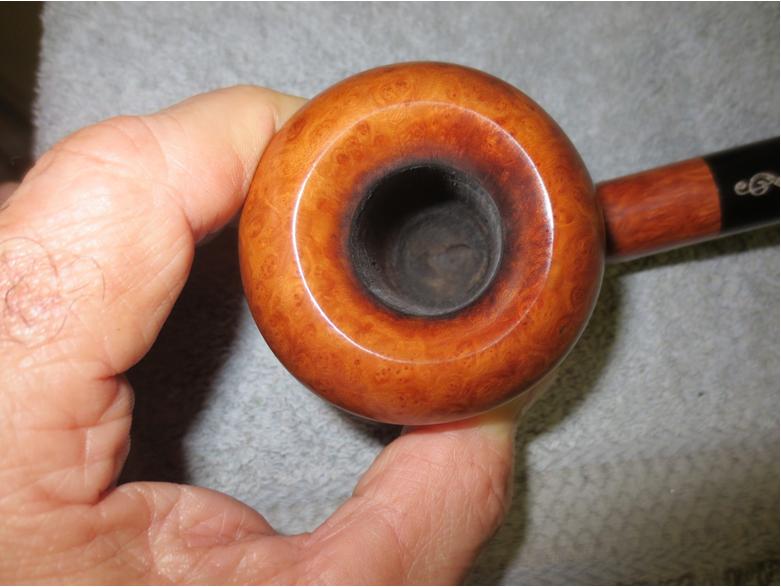
I spoke to my father and have some more information for you. The “386” represents two things. The “3” is the price category. At that time Julius had 1 through 6 for pricing. Your pipe would have been in the middle. The “86” represents the style. I asked my father about the style associated with that number WITHOUT showing him the photos. He was able to describe it in detail, triangular shank/stem and all. He hasn’t made an “86” in a long time. It was his own custom shape. It looks somewhat like “poker” to me. Also, some other interesting bits of trivia- typically the “3” would would have been within a circle (ie- his pipes have been known as Circle 3’s, Circle 4’s etc., and continue to be known as such based on price). Your pipe is very old. Julius only made 200-300 “Craft” stamped pipes. Those that didn’t have circle around price number are even fewer and older. For awhile he didn’t have a circular stamp and that’s where yours fits in. So, you have a real gem and rarity! It looks great in the pictures. My father doesn’t use a computer, so next time I see him I’ll be sure to show him on my iPhone or iPad. He will enjoy seeing it and be glad that it’s in the hands of someone who appreciates it!
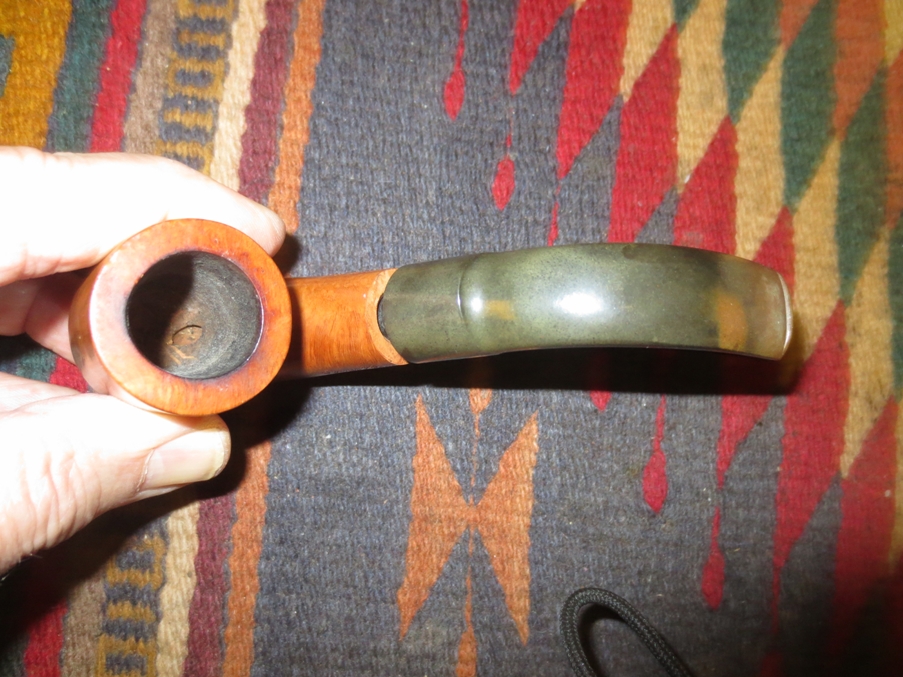
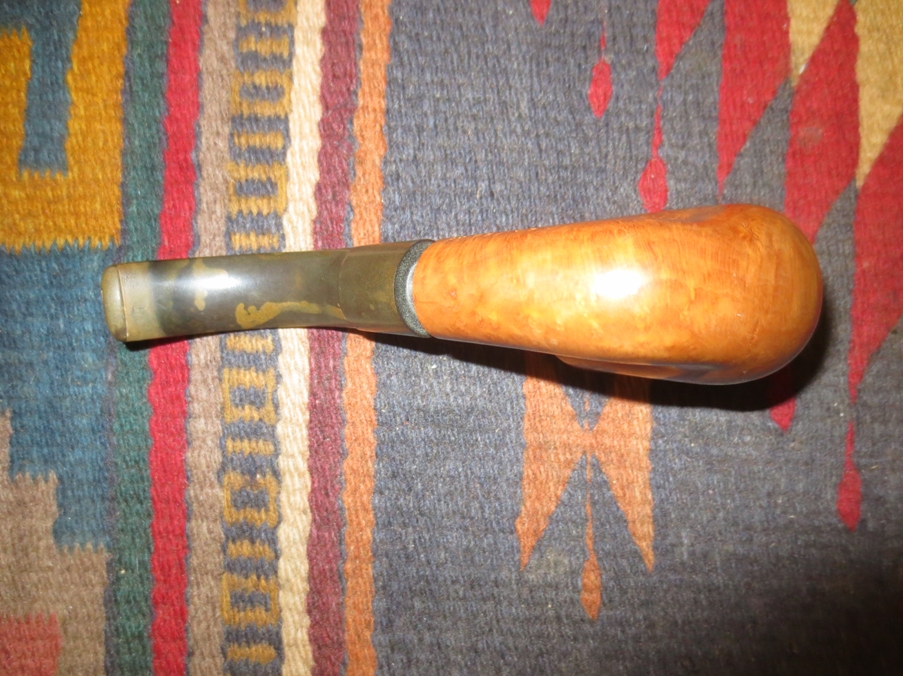
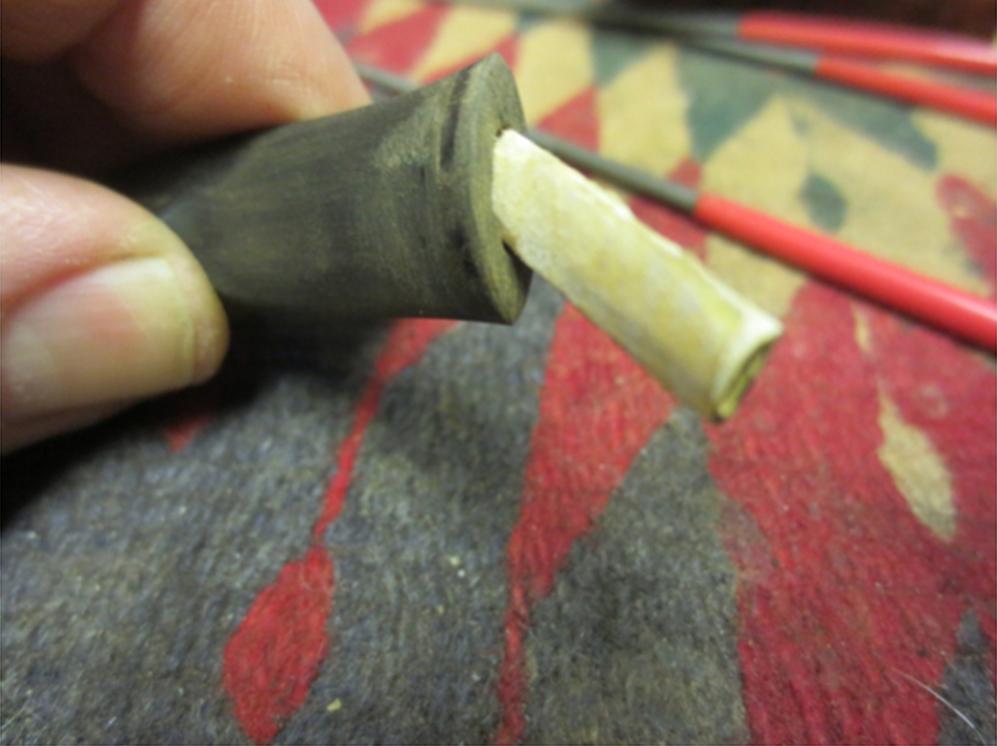
Hope this information had been helpful.

Sincerely,
Rob Vesz

Reclaiming a Digby Conquest Canadian


Blog by Steve Laug

On the weekend I went pipe hunting to refill my box of pipes for refurbishing. I found some nice ones to add to the box. The first one that I took on was odd looking when I picked it up. The stem on it was an aftermarket replacement that proportionally was all wrong. The addition of the stem made the pipe over seven inches long. The stem was also a twin bore which was not standard on GBD line pipes. The stamping on the bottom of the shank is Conquest in script followed by Digby over London Made. That is followed by London England and the shape number 9519. Digby is a GBD second line. It has the same blast as a GBD Prehistoric which lends one more question mark to what makes a pipe a second. In checking the GBD shape numbers there is no shape #9519 listed on the GBD shape site. http://www.perardua.net/pipes/GBDshape.html

The blast on the bowl was quite nice while the shank was rusticated. The person who added the new stem to the pipe changed the shank to fit the new stem rather than the other way around. In doing so they sanded the shank and removed the blast/rustication on the end of the shank. They also tapered both sides and top and bottom to meet the new stem. While both of these “errors” in fitting a stem are a pain to deal with they are not irreparable. It just means that any new stem must follow the new lines of the pipe and that the rustication pattern needs to be repaired as well. The bowl itself was thickly caked and the rim dirty and with a slight buildup of tars. The finish was spotty and the reddish brown stain was worn.
IMG_3467

IMG_3468

IMG_3469

IMG_3470

I went through my can of stems to find one that would properly fit a GBD style Canadian with an oval shank and found several. I chose the acrylic one in the photo below and used the PIMO Tenon Turning tool to reduce the diameter of the tenon. I also used the Dremel and sanding drum and hand sanding to further fit the tenon to the shank.
IMG_3471

IMG_3460

With the tenon fitting well, the overall diameter of the stem needed to be reduced to fit the shank diameter. It was just slightly bigger so the work on it would not be difficult. The excess is visible in the four photos below. Note also the smoothing of the shank that had been done in the previous repair.
IMG_3463

IMG_3464

IMG_3465

IMG_3466

I used a Dremel with a sanding drum to remove the excess acrylic material and bring the stem into line with the shank. I took care to not nick the shank even though I later planned to rework the rustication on it.
IMG_3472

IMG_3473

IMG_3474

IMG_3476

With the fit roughed in I took it back to the work table to hand sand the stem and make fit seamless. To begin the process I used 220 grit sandpaper to do the hand work. On the right side bottom of the shank I noted that the oval was slightly out of round with the stem removed and gave the new tapered stem a bulge in that area. I sanded the shank and the stem together at that point to correct the previous damage.
IMG_3477

IMG_3478

IMG_3479

IMG_3480

With the fit nearly finished on the stem I reamed the bowl of the pipe with a PipNet reaming set. I began with the smallest cutting head and then ended with the proper sized head for the bowl. I cut the cake back to bare wood.
IMG_3481

IMG_3482

IMG_3484

I worked some more on the stem shank junction with a fine grit sanding sponge to remove the scratches in the briar and the stem. I was more concerned with the briar as I wanted to give it a coat of stain.
IMG_3493

IMG_3494

IMG_3495

IMG_3496

Staining would be a complicated process of using a variety of stains to match the original stain colour on the prehistoric. For the first stain colour I used an oxblood aniline stain. I would use other stains later in the process to get the colour I was aiming for.
IMG_3504

IMG_3506

As I put the newly fitted stem in place so that I could lay it down to dry the tenon snapped on the new stem. As I examined it I could see the many small fractures in the acrylic. This is one of the frustrations of pipe repair. You get a pipe on its way to the finish line only to have something like this happen and have to begin again. I took another stem out of my can of stems. I once again had to go through the process of turning the tenon, using the Dremel and sanding drum and finally hand sanding to fit the tenon in the shank. I also had to trim back the diameter of the new stem to match the shank with the Dremel. One good thing is that doing it the second time everything is set up to do it again more quickly the second time.
IMG_3508

IMG_3509

IMG_3510

Once I had a good fit on the stem it was time to re-rusticate the shank using an etching head on the Dremel. In the next two photos the cutting tool is visible and the rustication of the shank is completed. I did both sides of the shank and the top to match the pattern on the upper portion of the shank. On the underside I brought the pattern around the flattened oval stamping area of the shank and matched the pattern around that area.
IMG_3511

IMG_3513

I stained the newly rusticated shank area with the oxblood stain. The stained rustication is visible in the next four photos. I am pleased with the match on the pattern of the rustication on the shank that I was able to achieve with the tool.
IMG_3515

IMG_3516

IMG_3517

IMG_3518

I still needed to use several more colours of stain to achieve a match to the bowl. I used aniline black and an aniline dark brown stain to approximate the mix of stains to blend the repaired portion with the remainder of the pipe. I would still need to do a top coat of oxblood to truly blend in the repair.
IMG_3519

I sanded the stem with the usual regimen of micromesh sanding pads. I wet sanded with 1500-2400 grit pads and dry sanded with 3200-12,000 grit pads.
IMG_3520

I gave the shank a final coat of the oxblood stain and lightly buffed the shank with White Diamond to blend the wear of the older portion with the new rustication. I rubbed down the stem with Obsidian Oil and then buffed the stem with White Diamond as well. Once the buffing was done I gave the stem multiple coats of carnauba on the wheel and then buffed it with a soft flannel buff. I rubbed in Halcyon II wax on the bowl and shank and then lightly buffed the bowl with a soft flannel buff. The “new” Digby Canadian is now ready for its inaugural smoke. It is shown below in the final four photos.
IMG_3540

IMG_3541

IMG_3542

IMG_3543