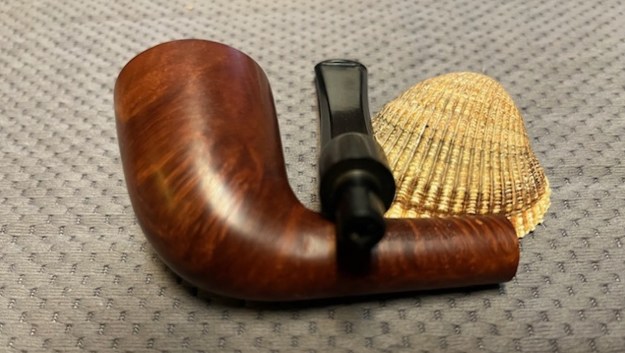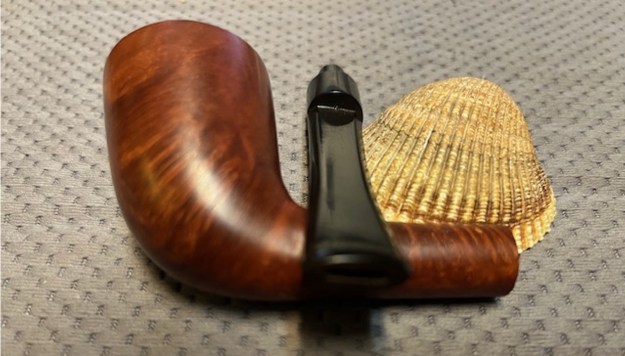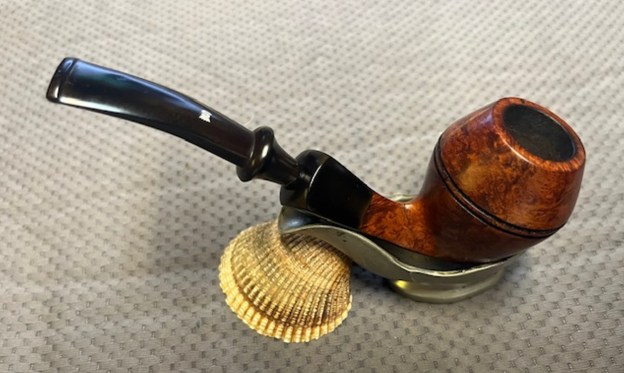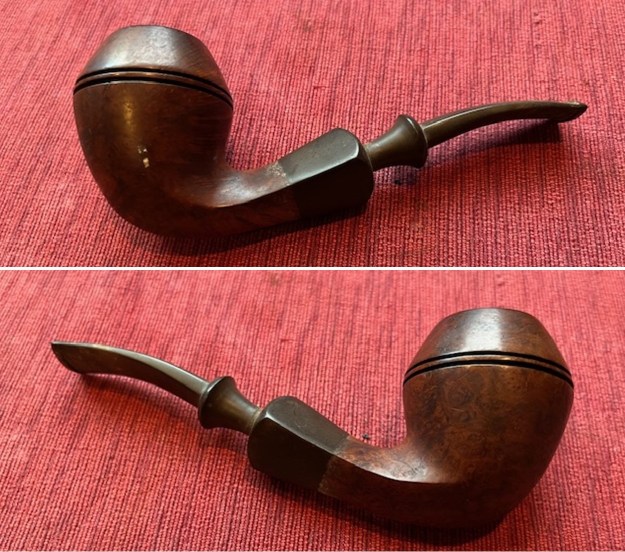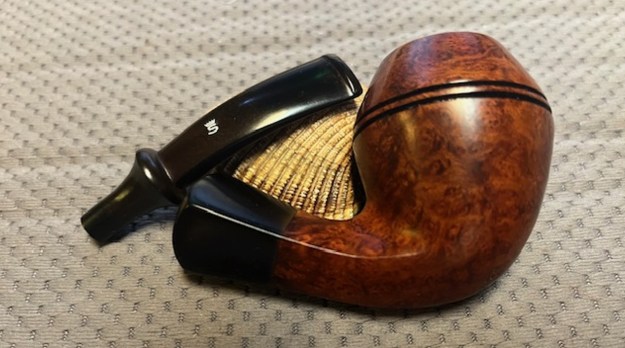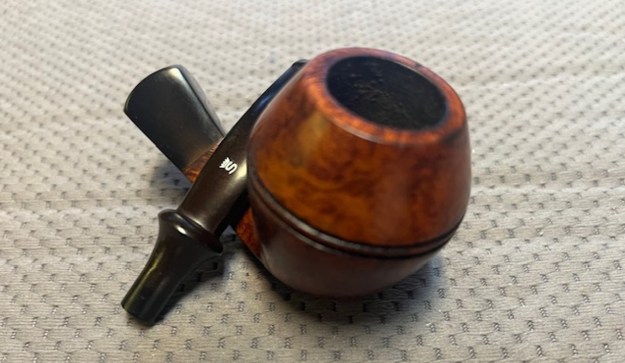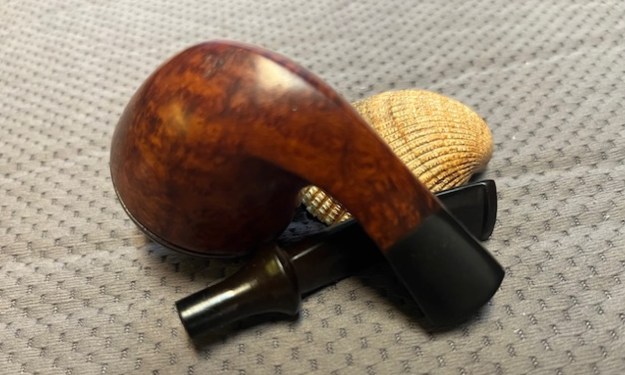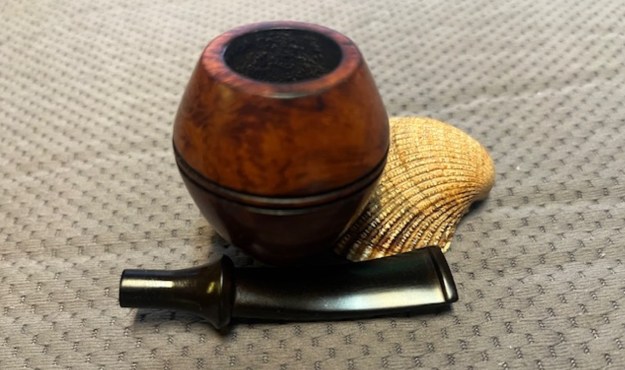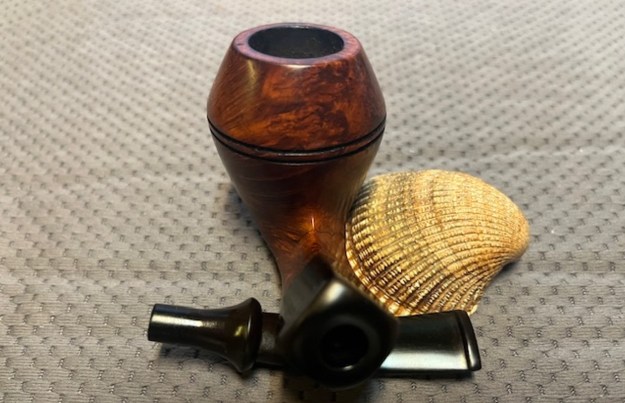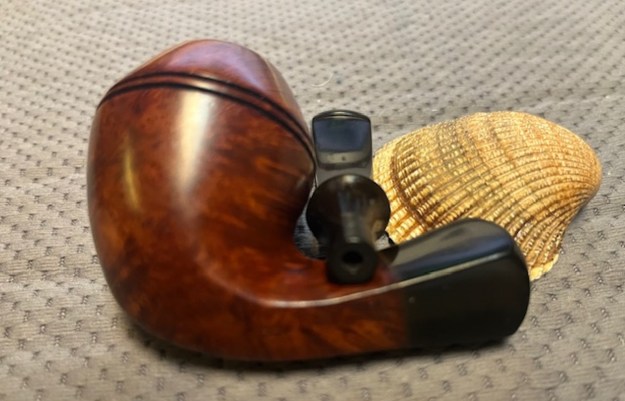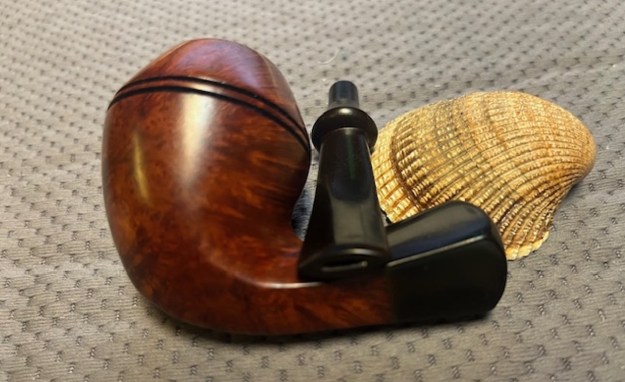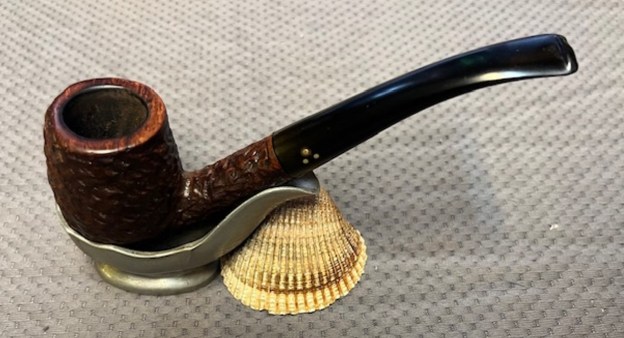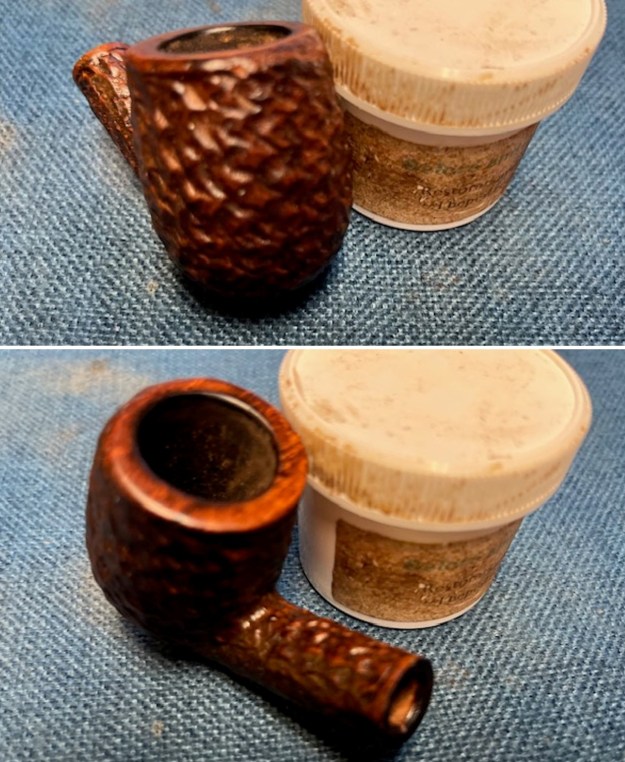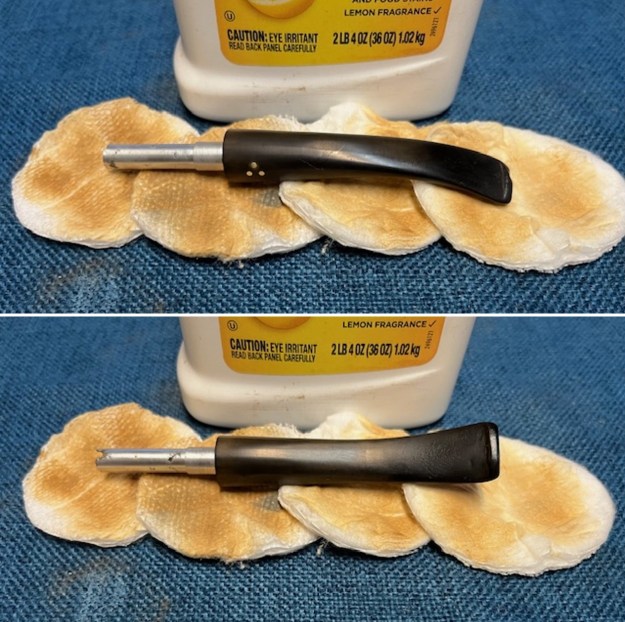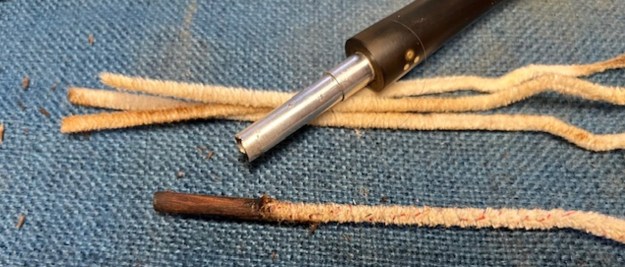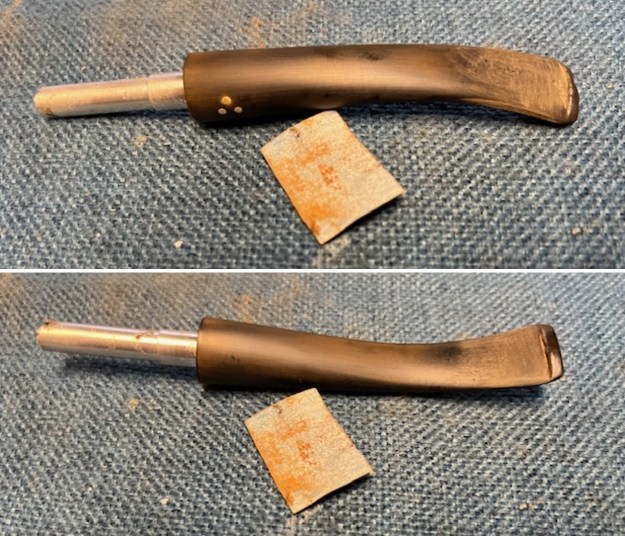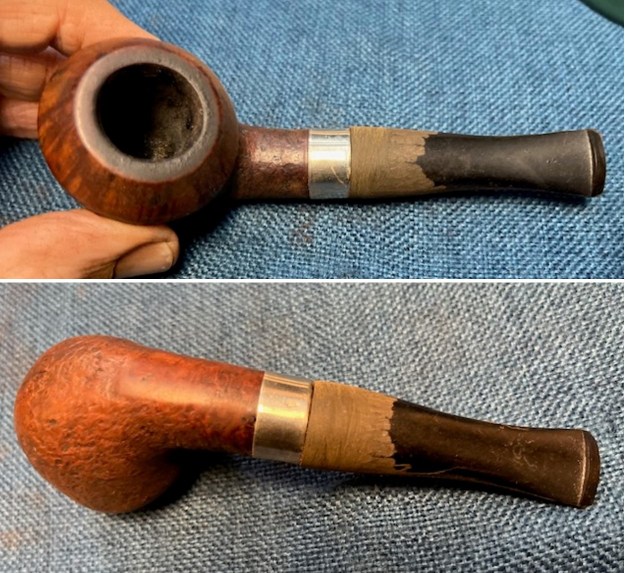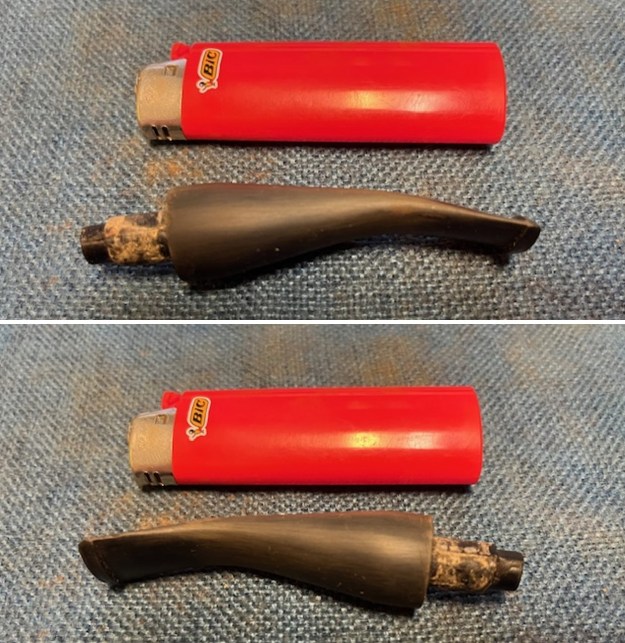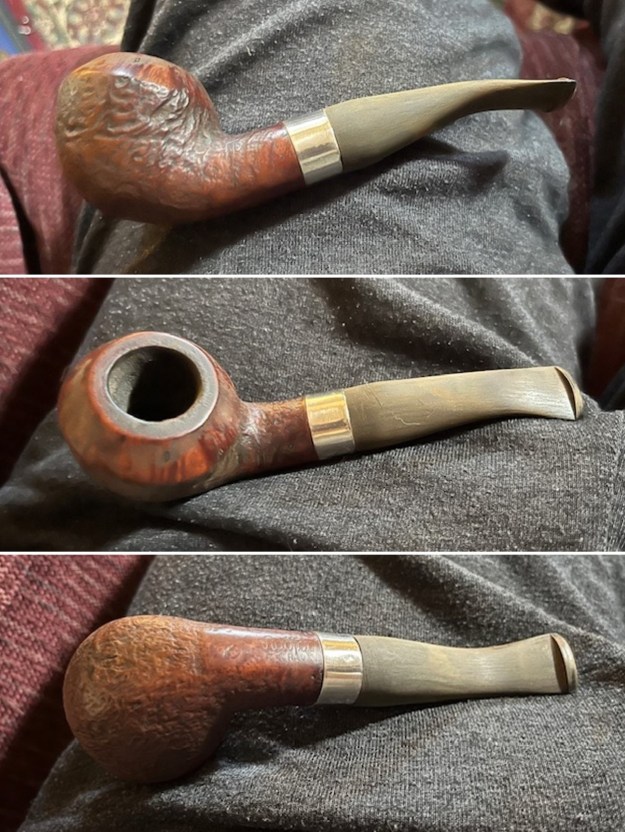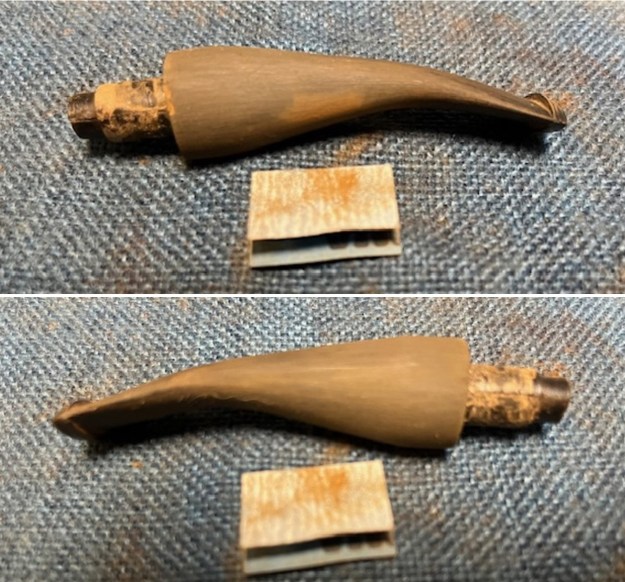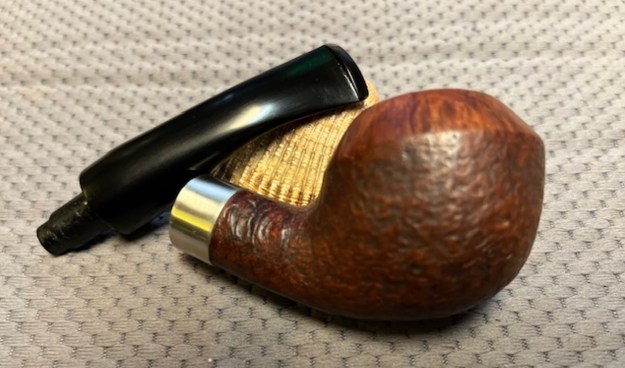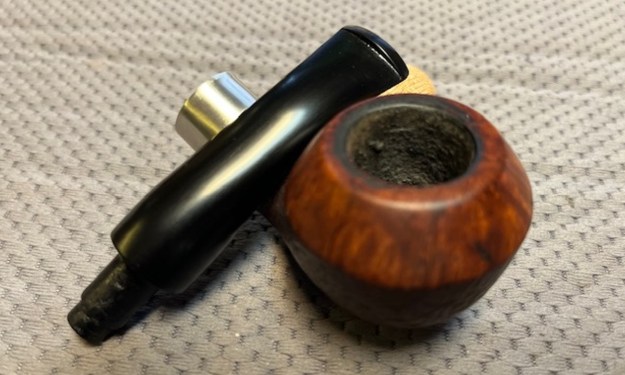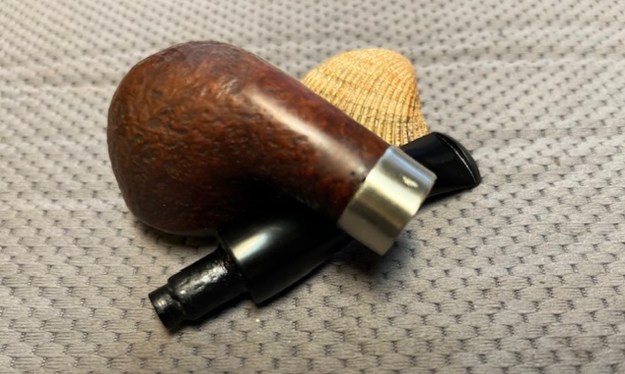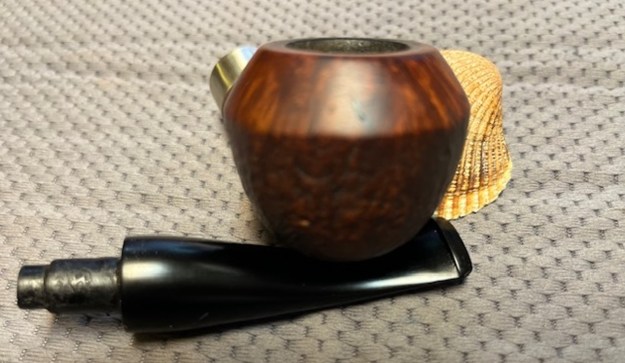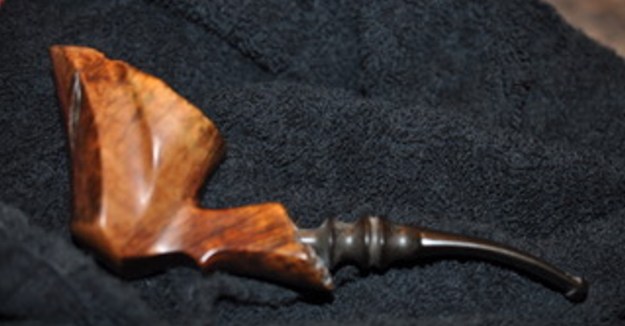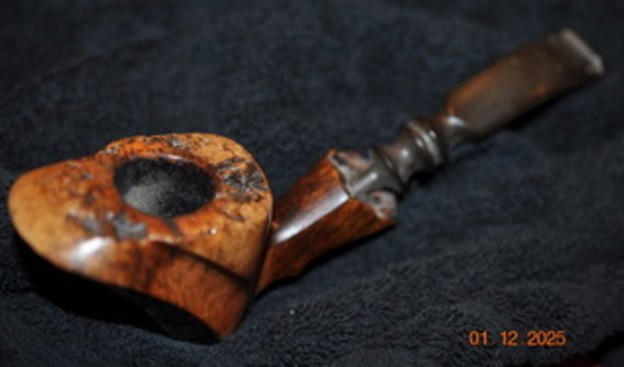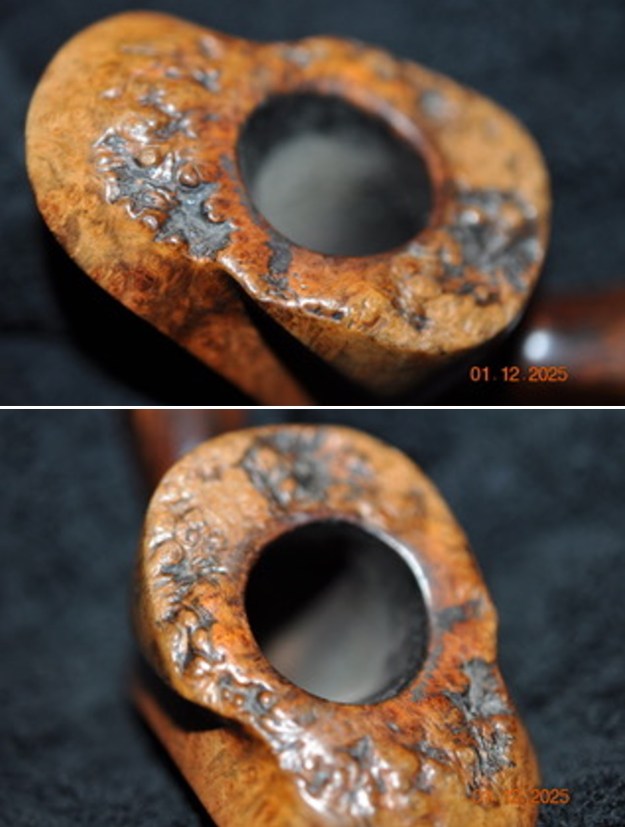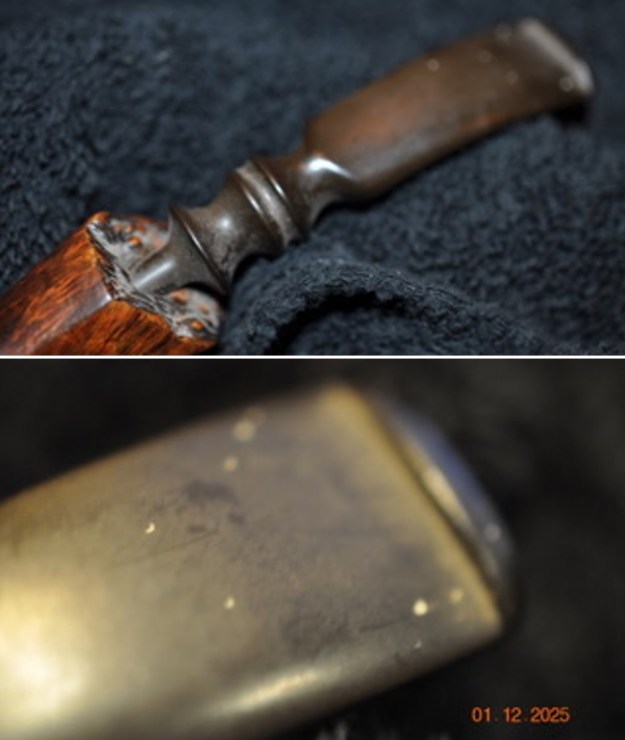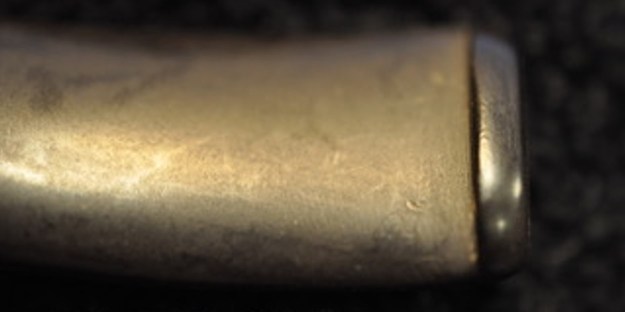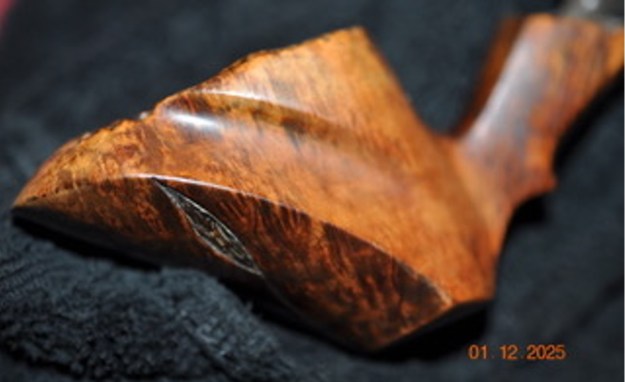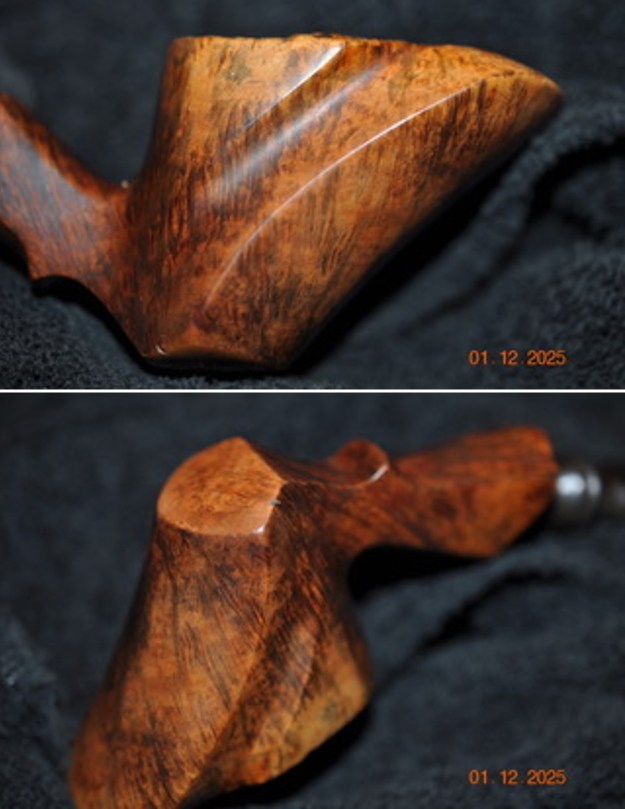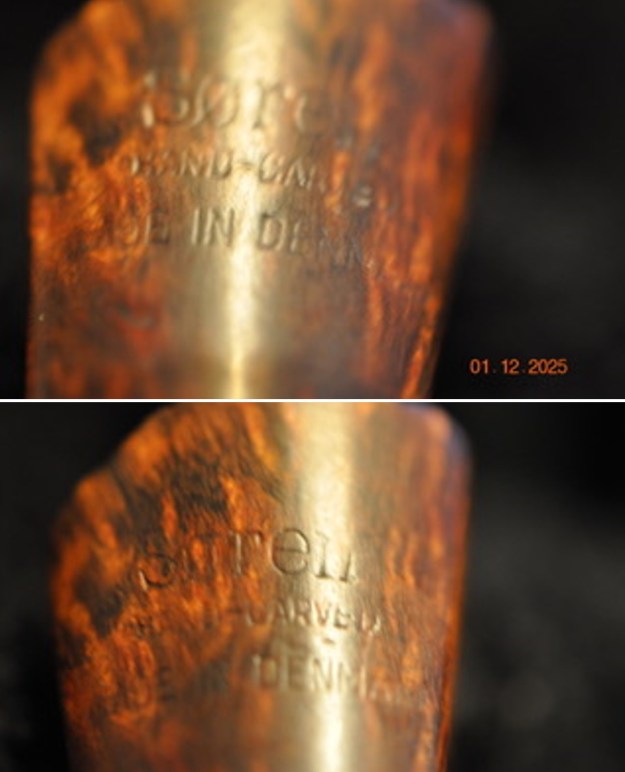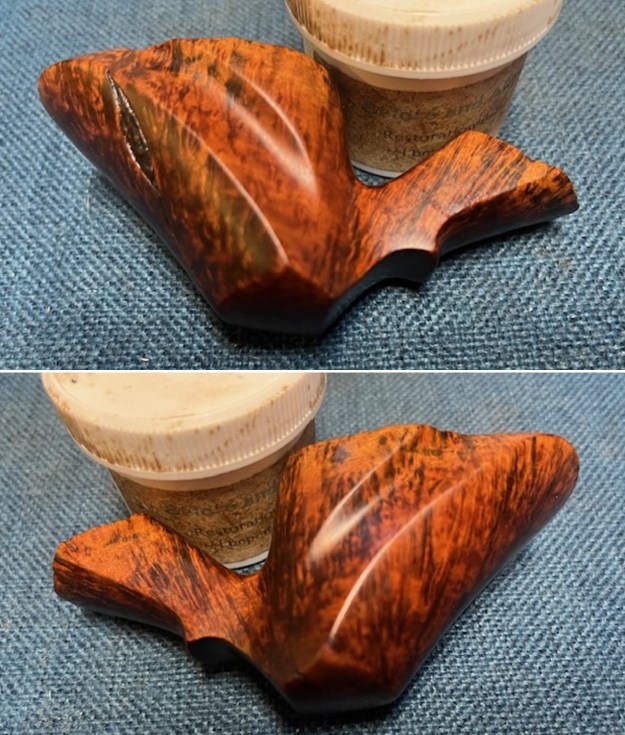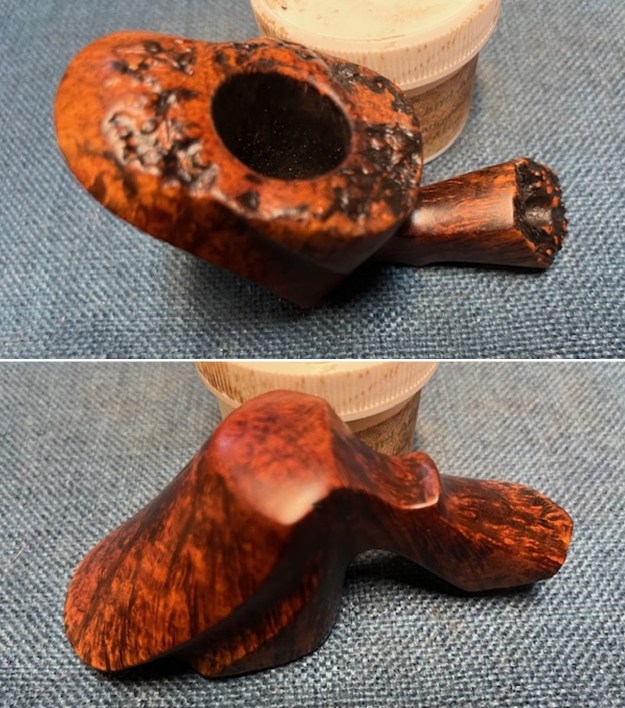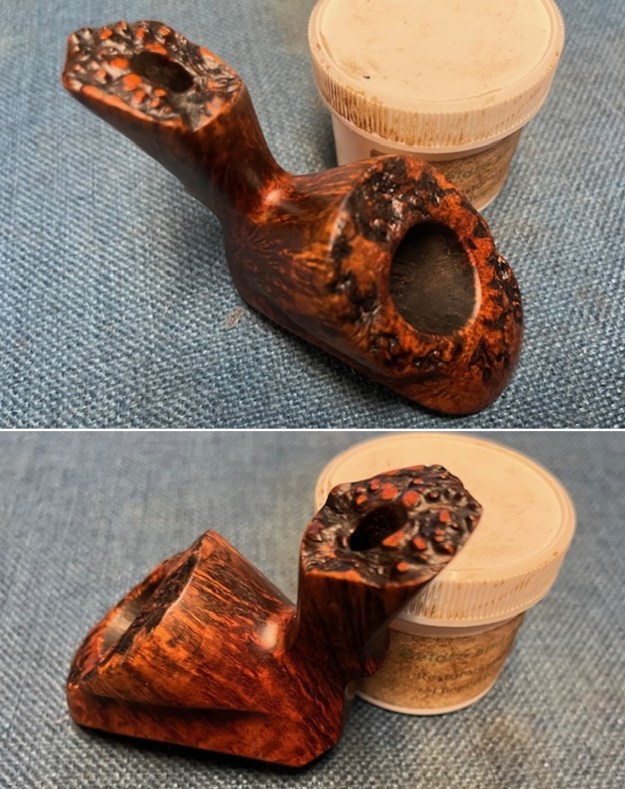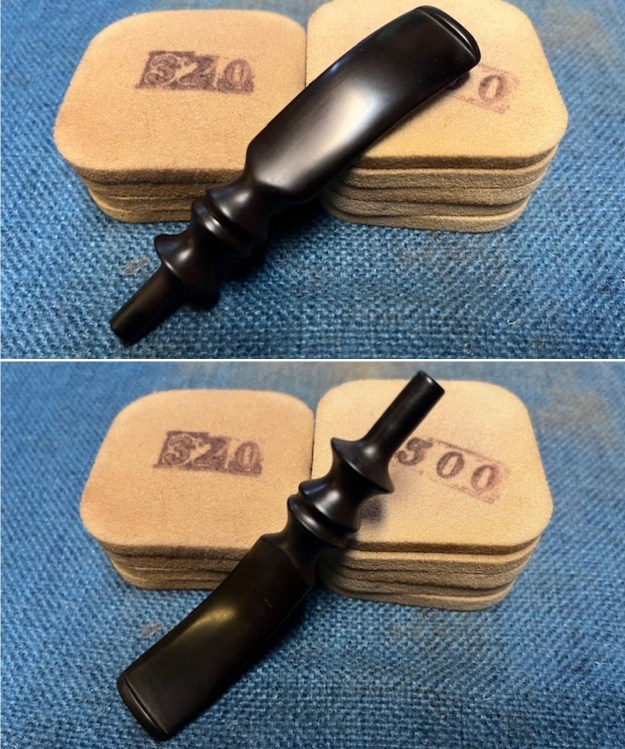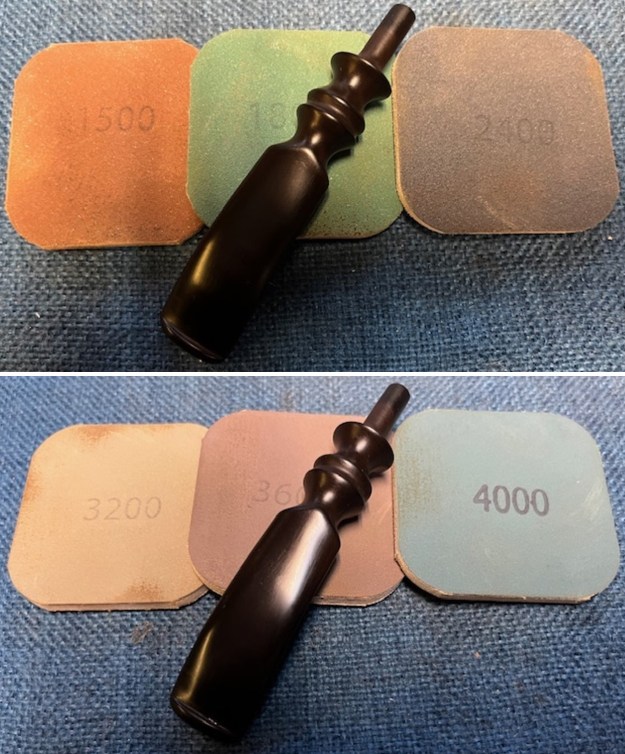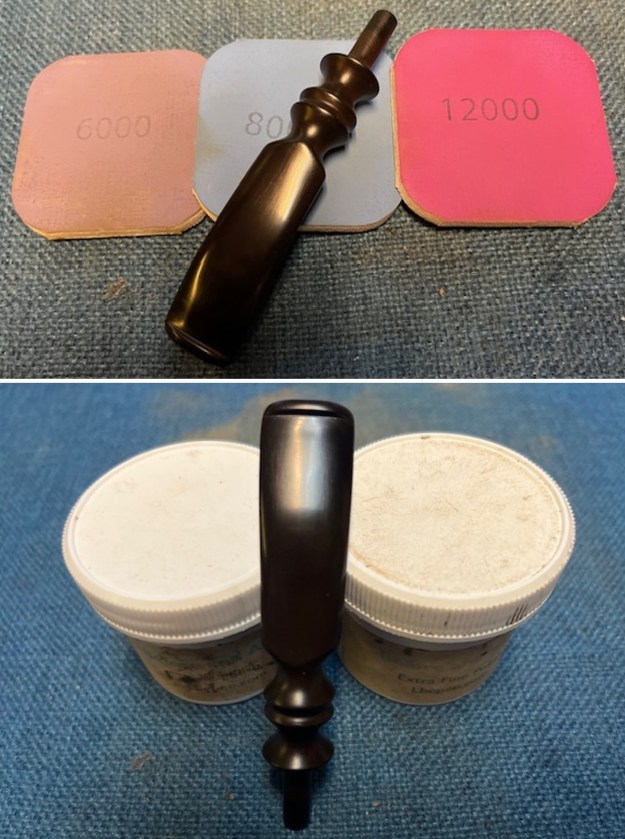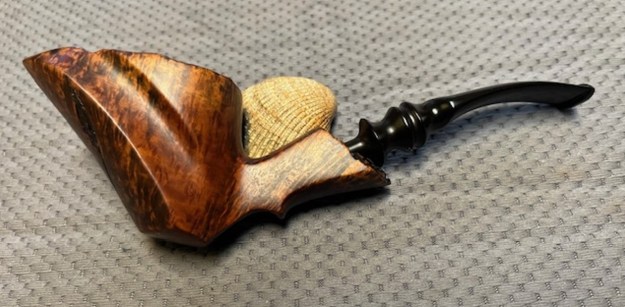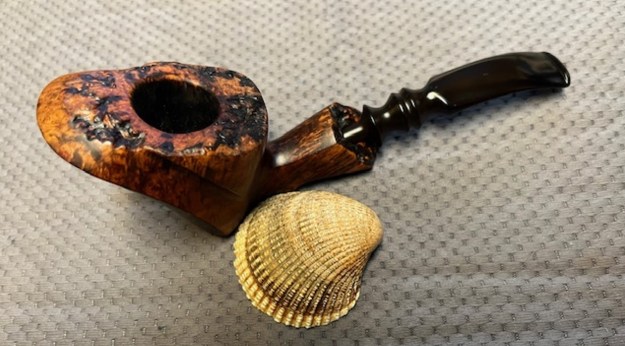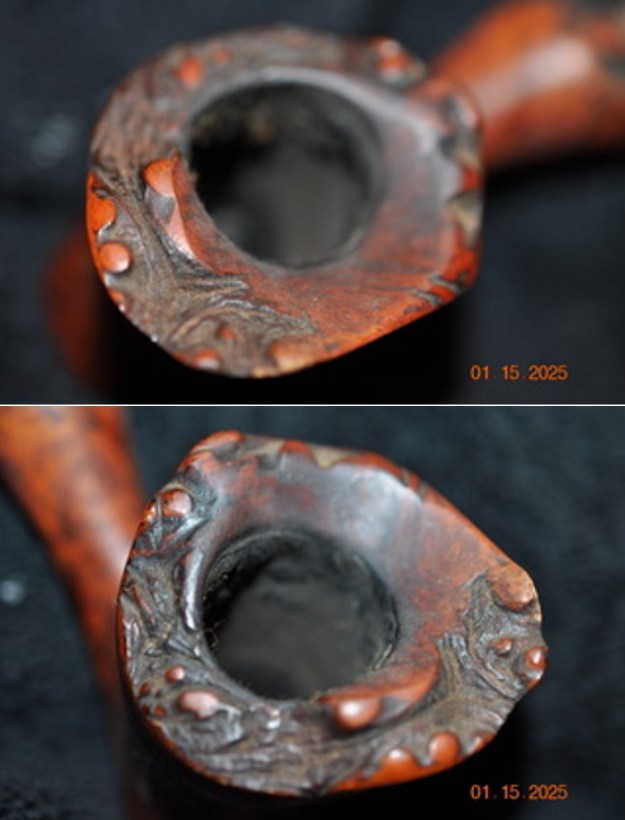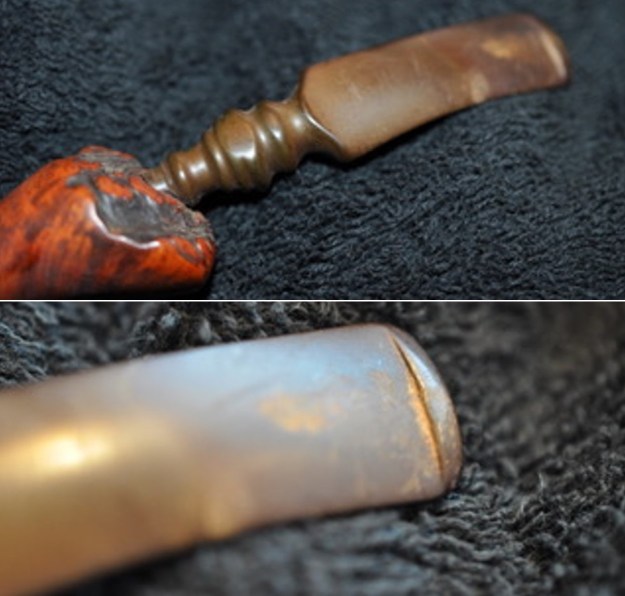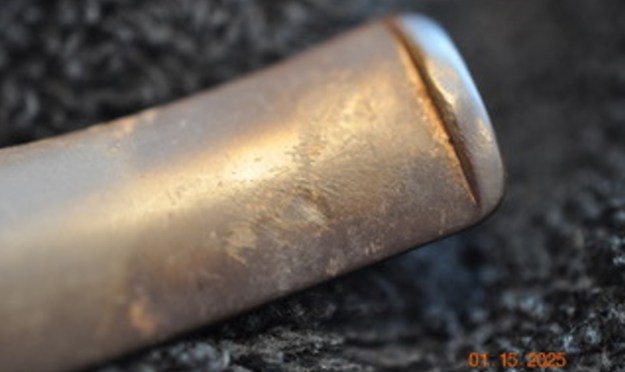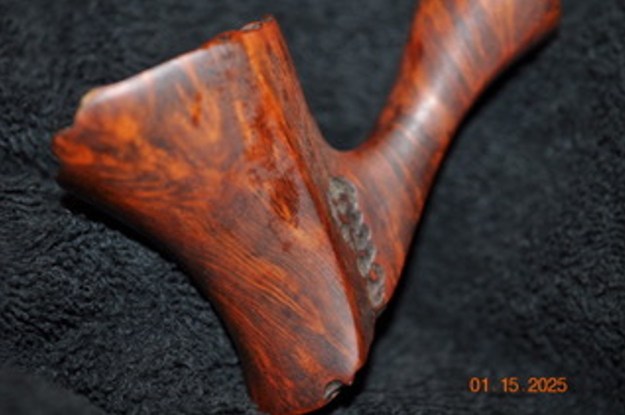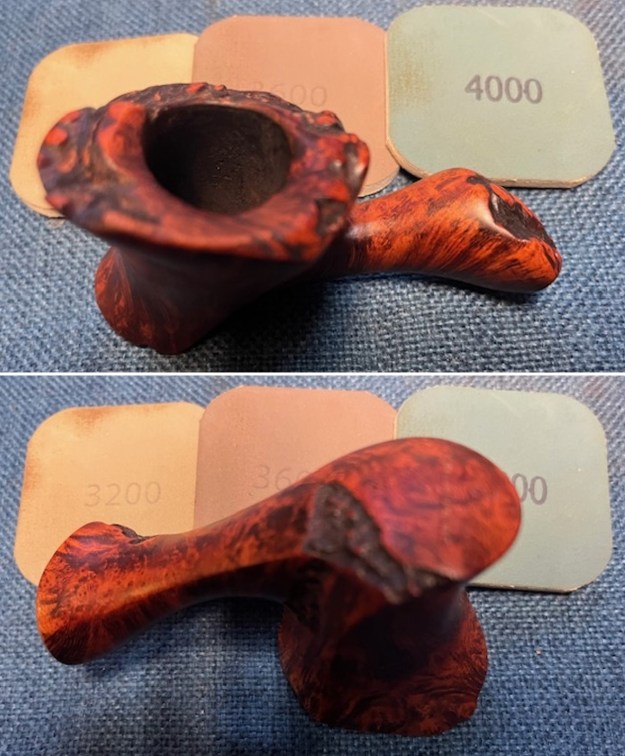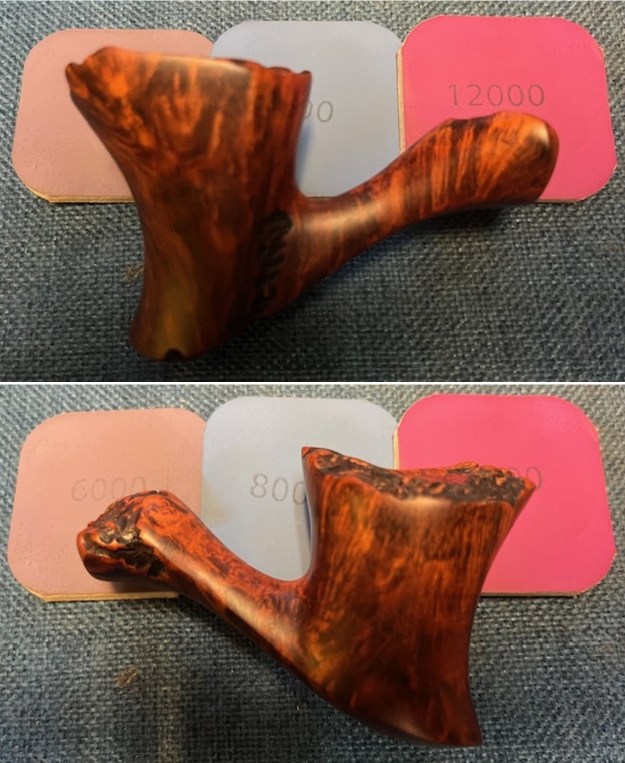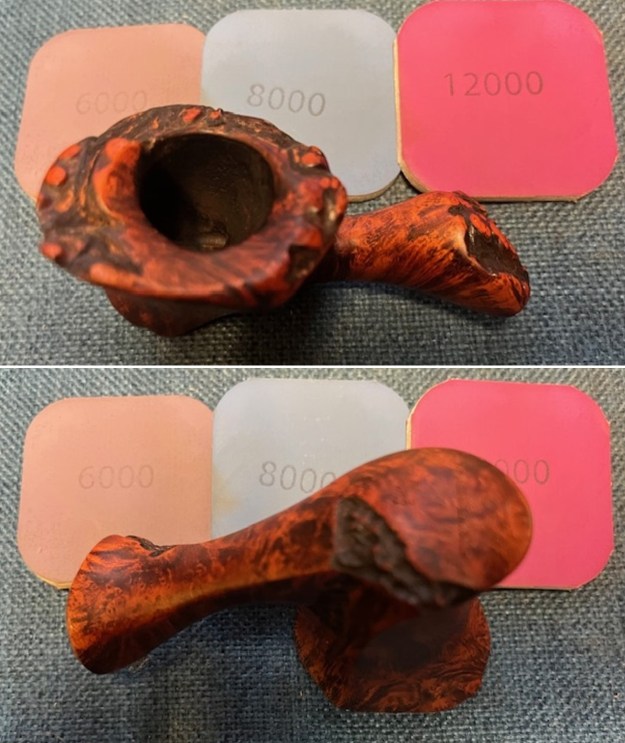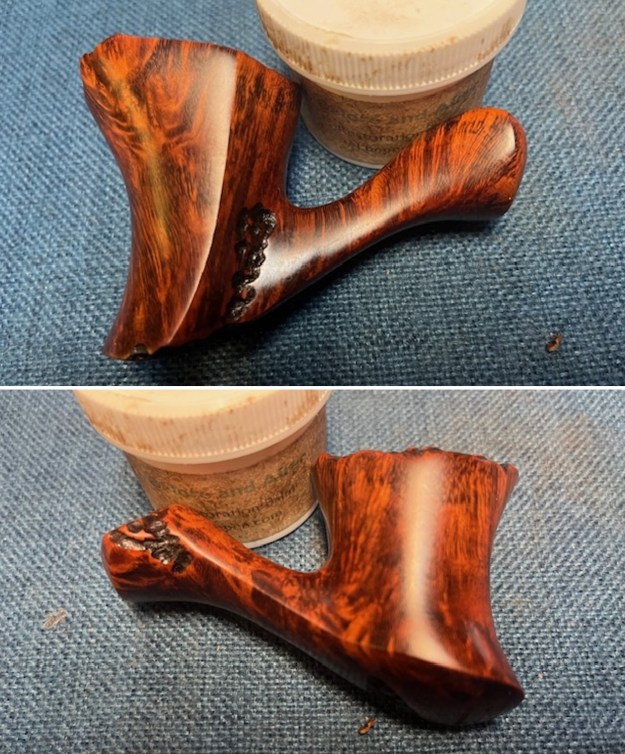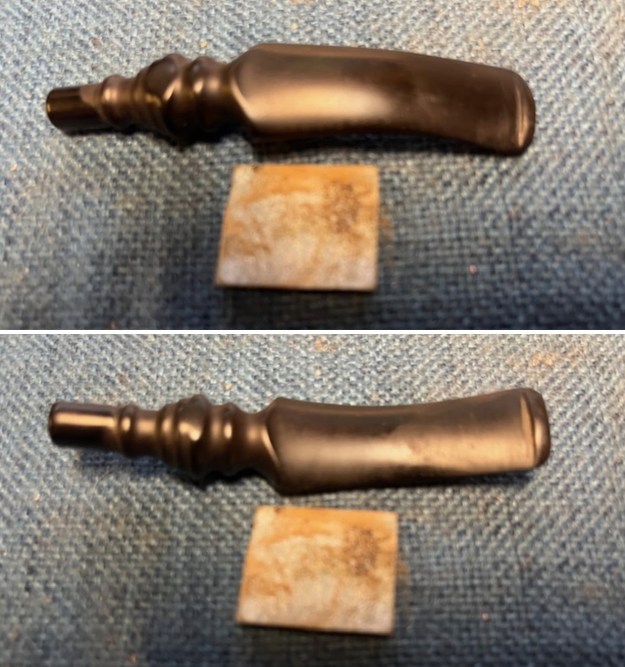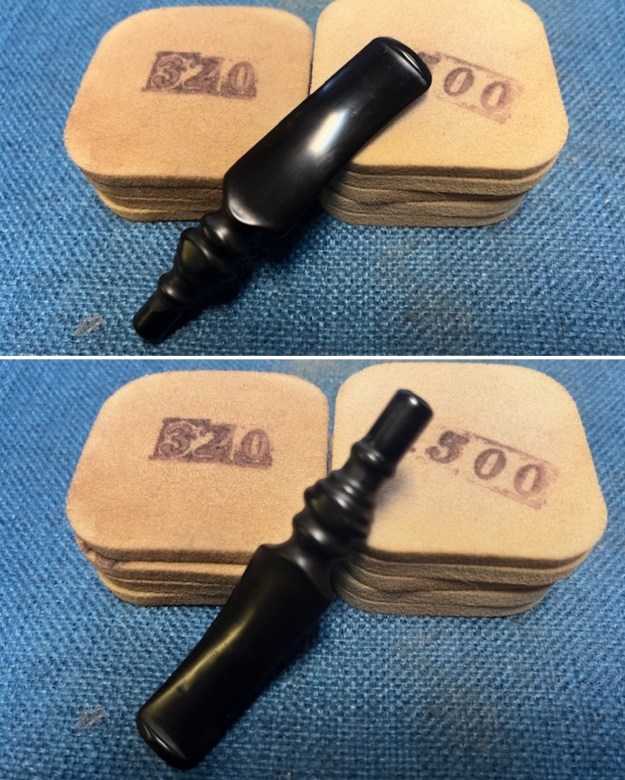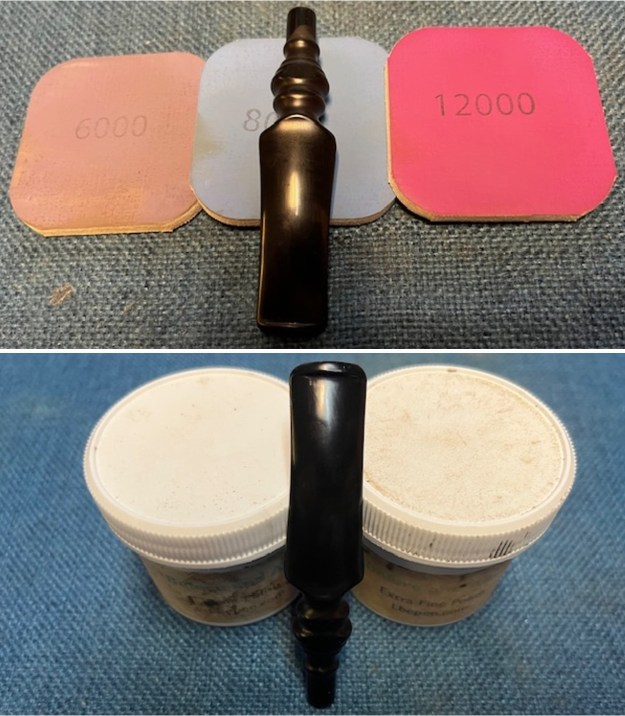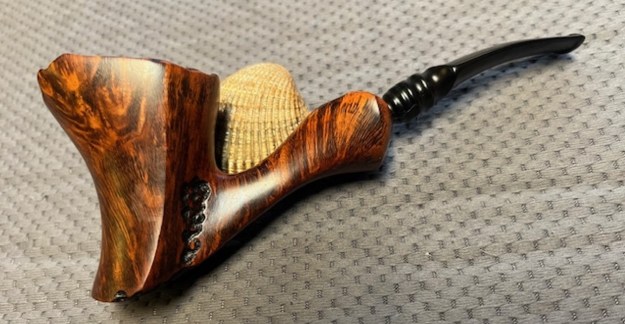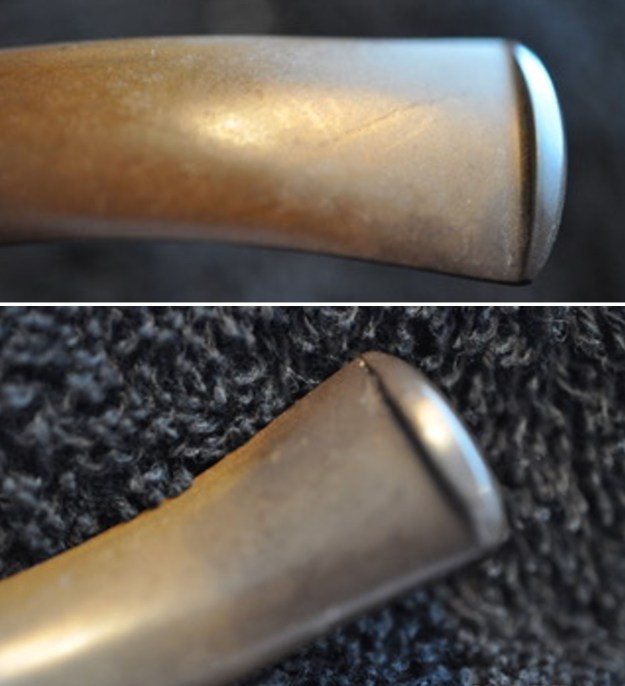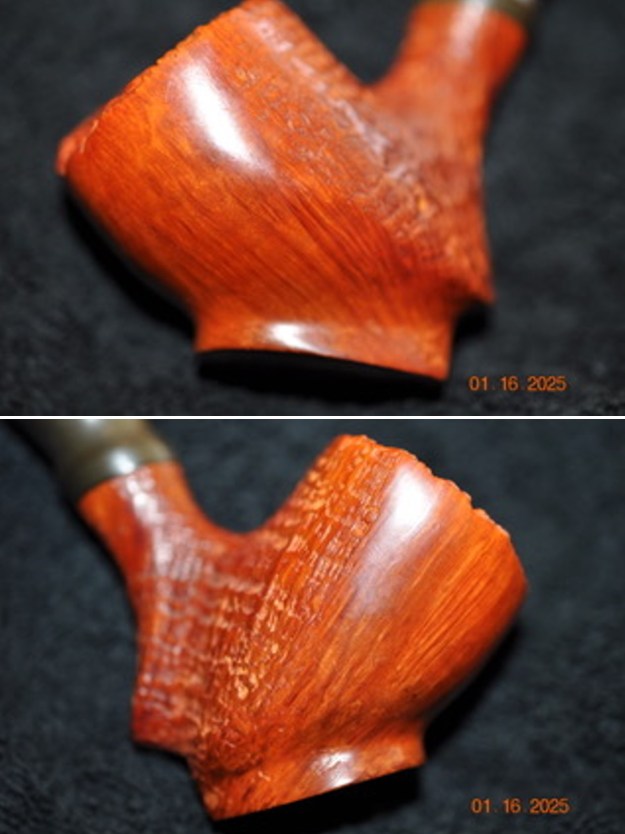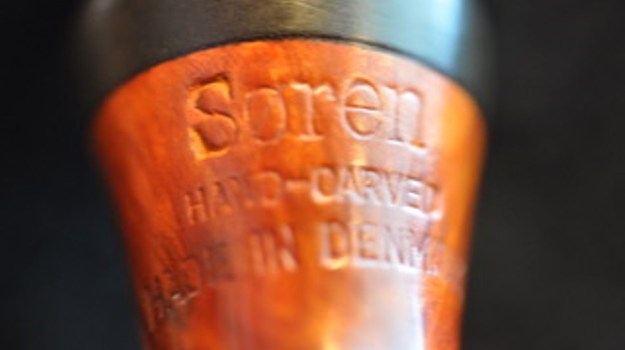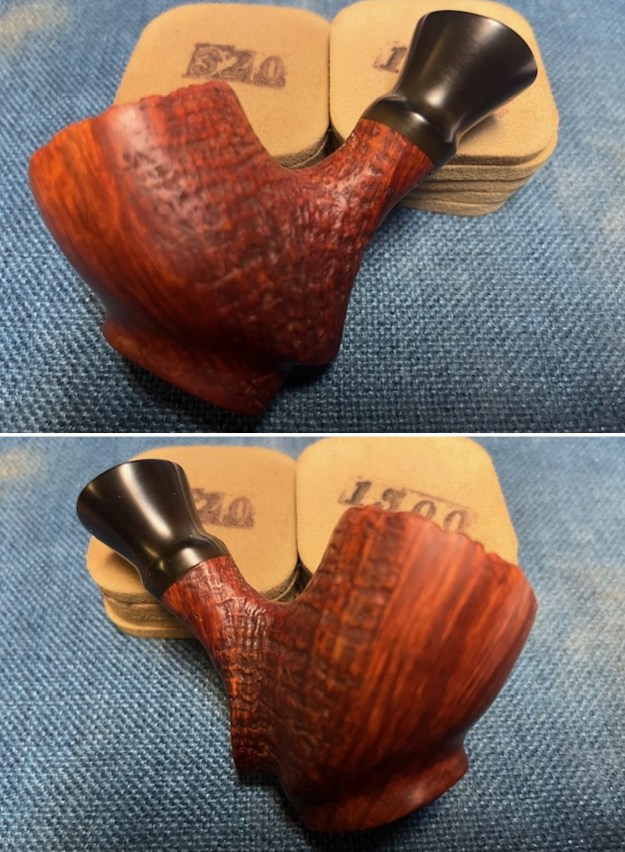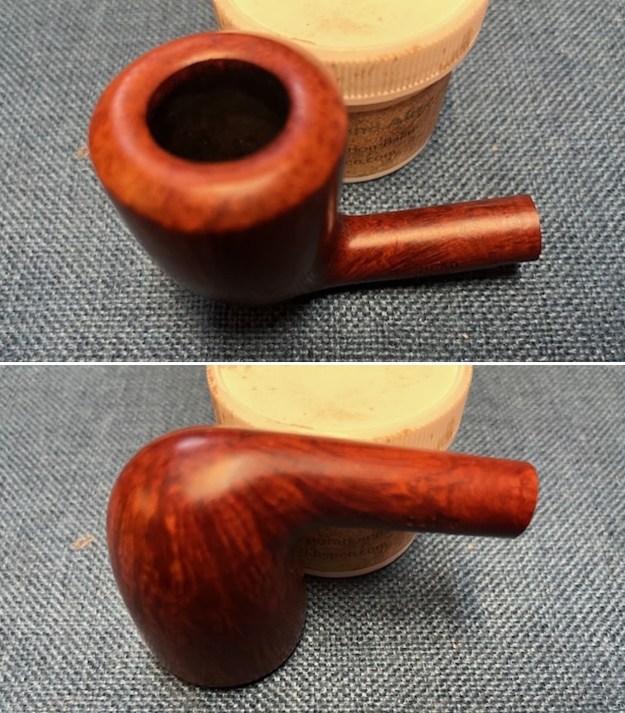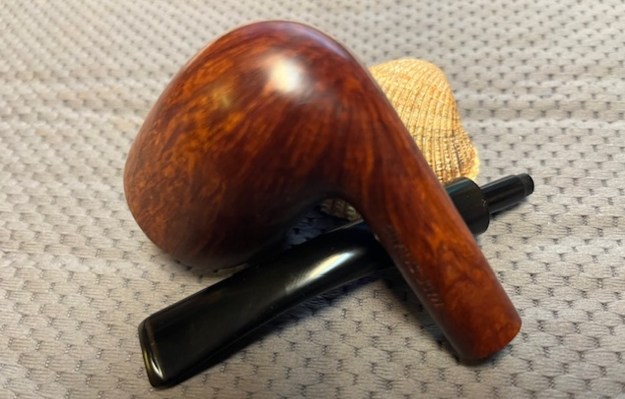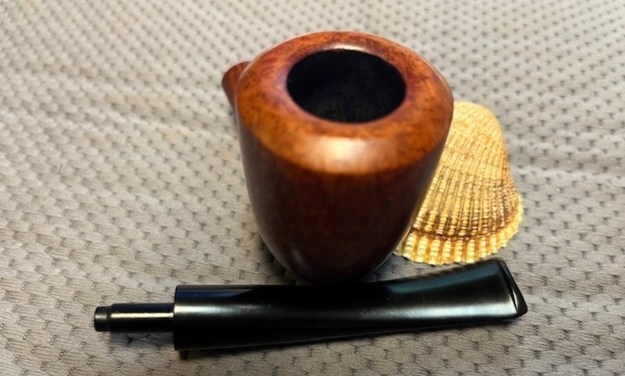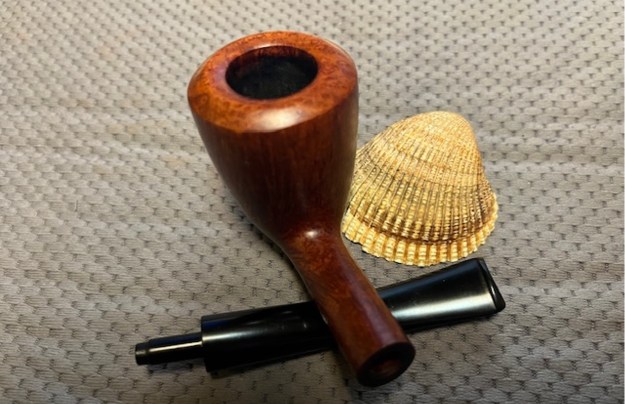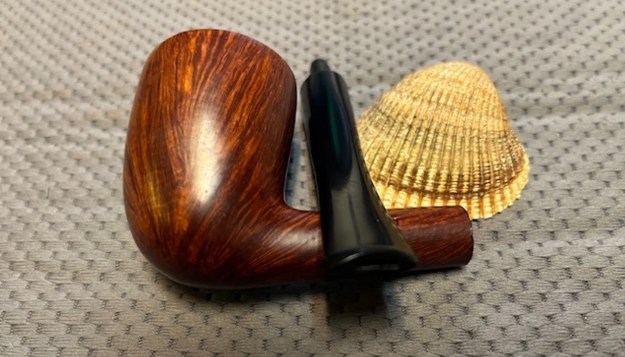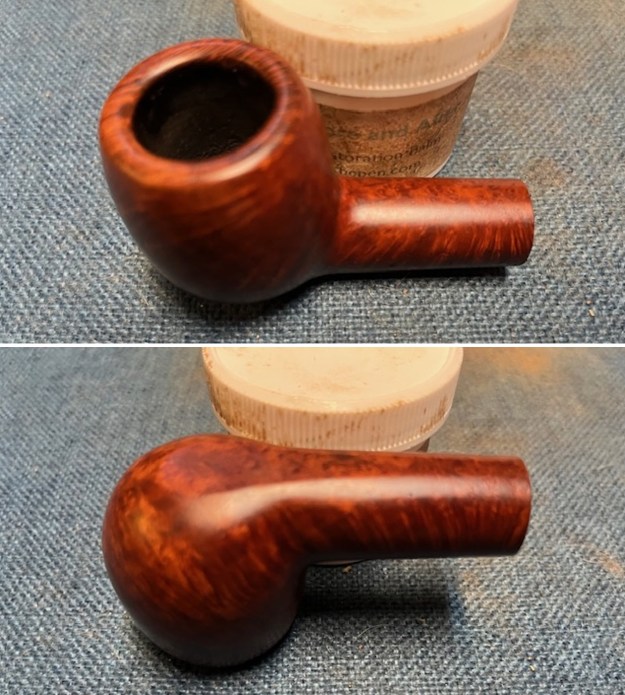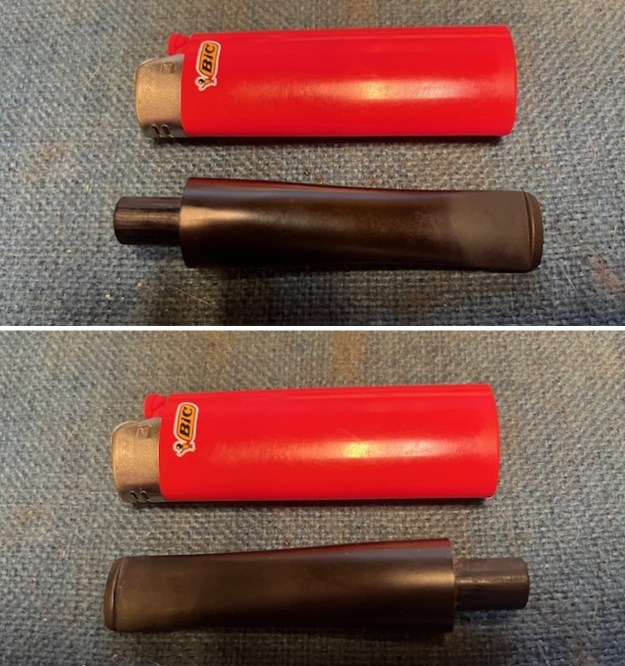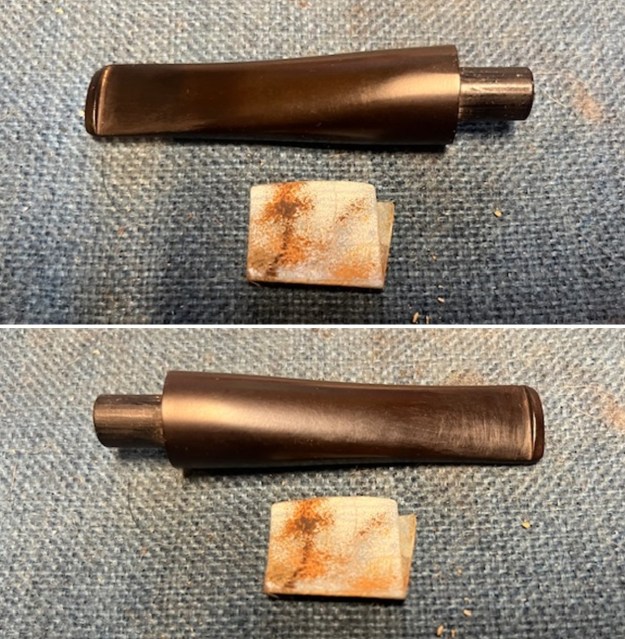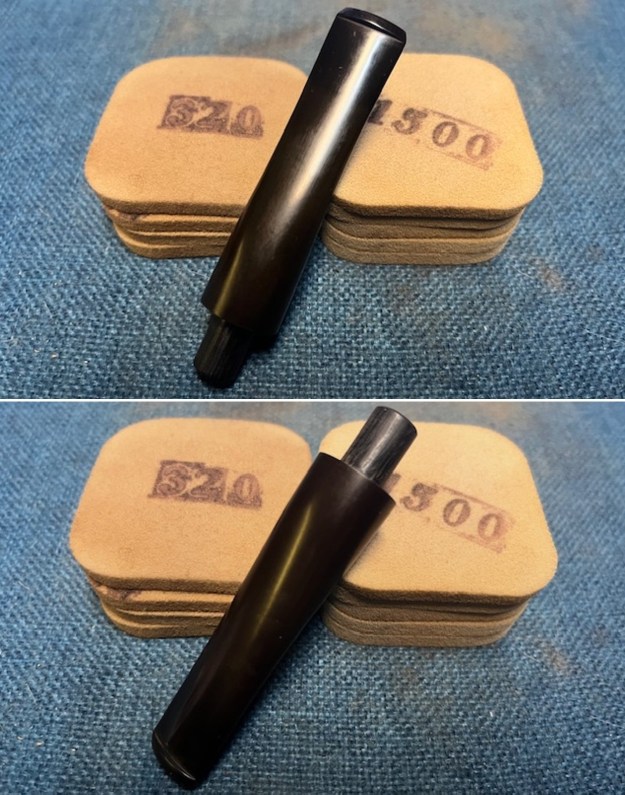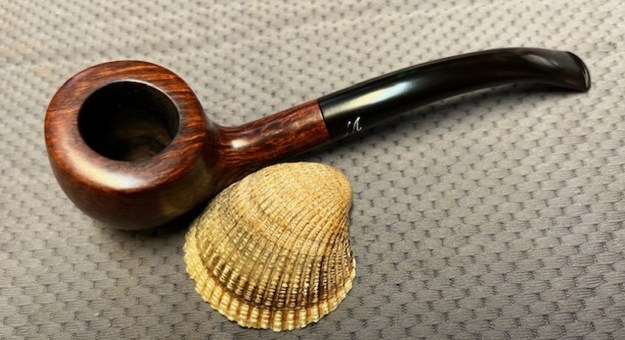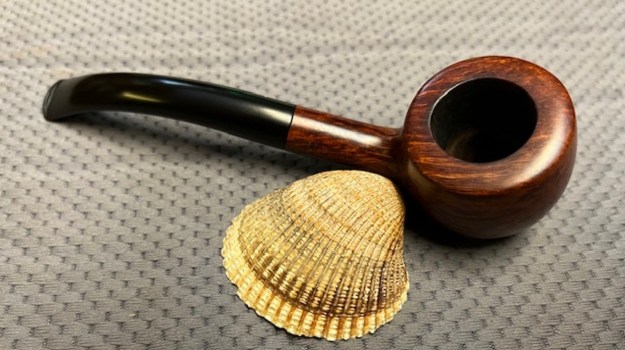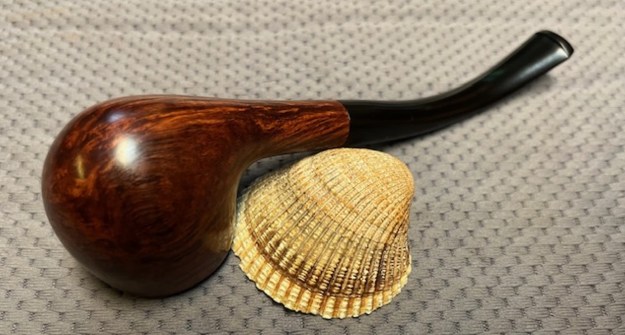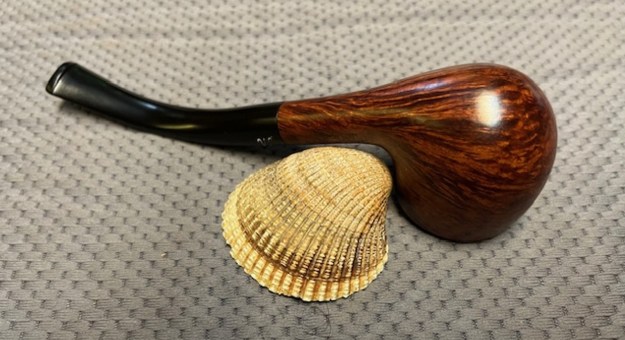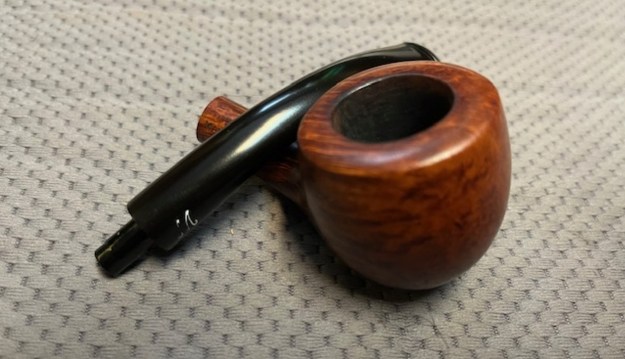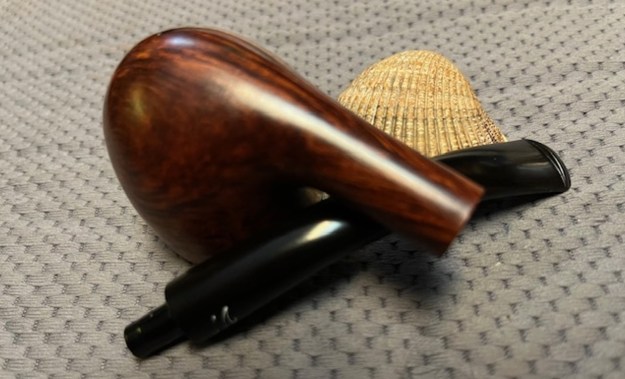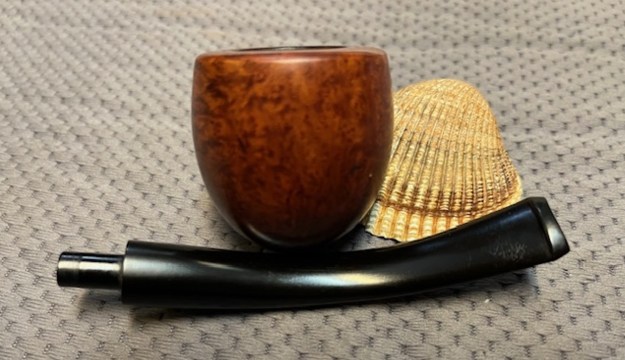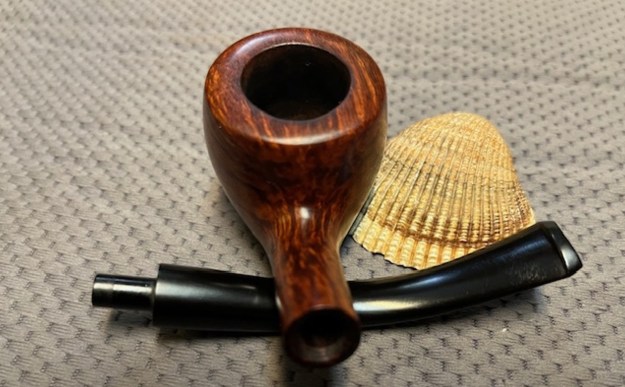
Tag Archives: vulcanite

Restoring the second of 11 pipes sent for restoration – an Arlington Imported Briar Dublin


by Steve Laug

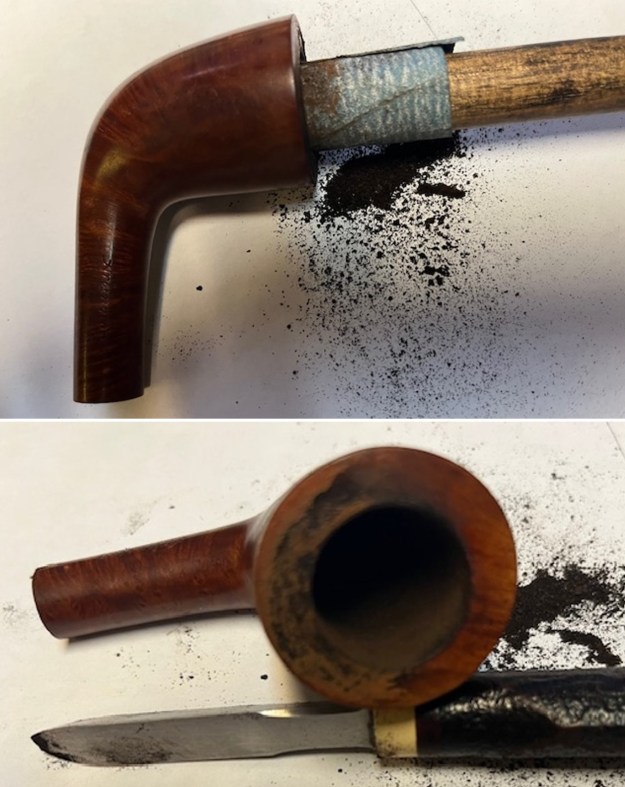
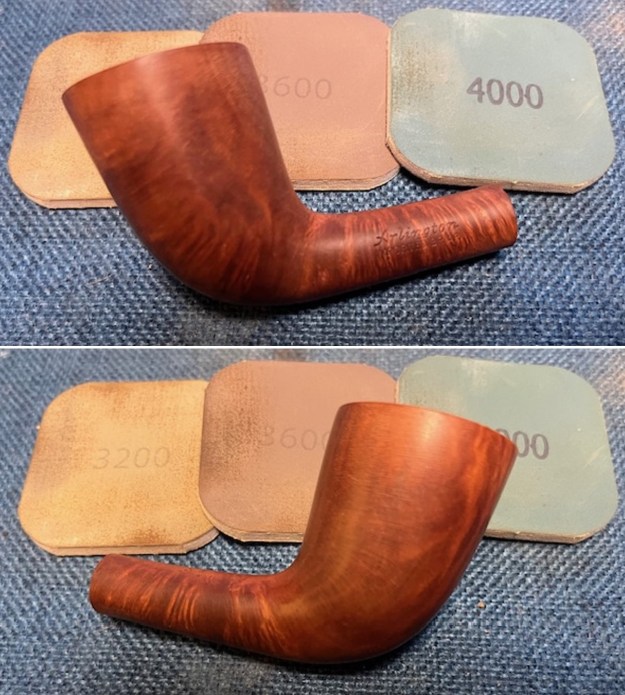
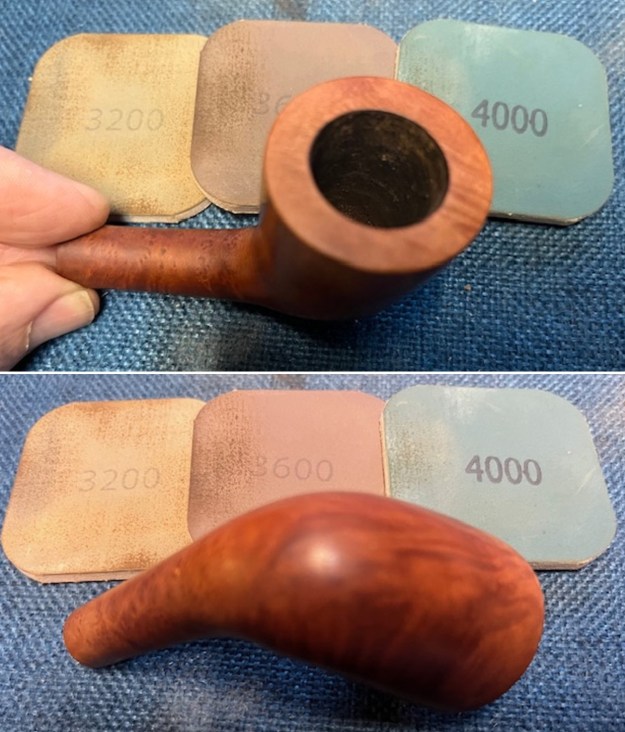
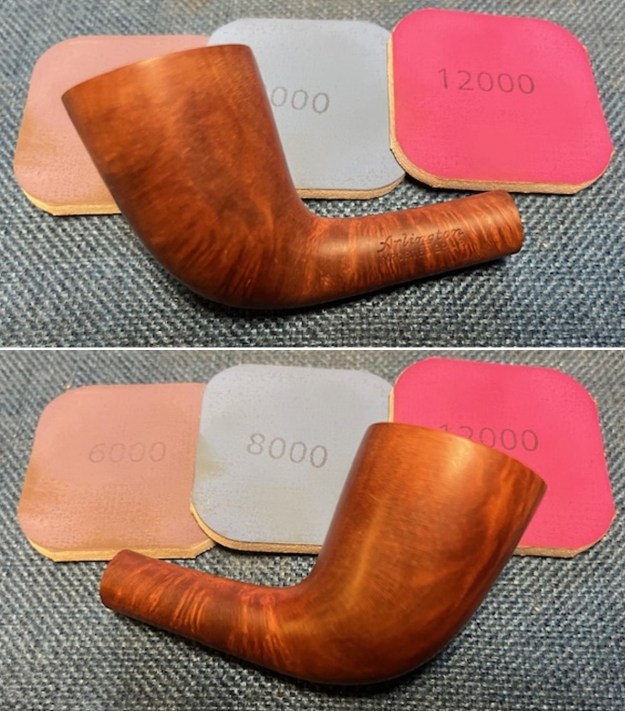
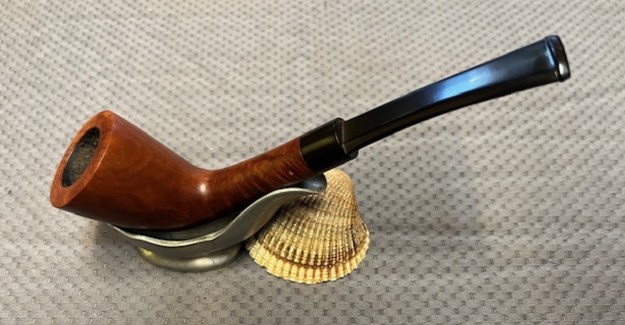
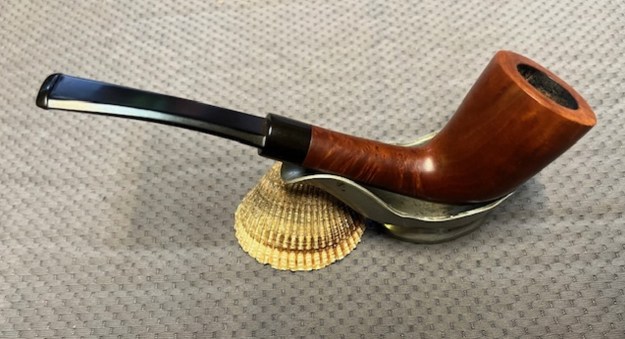
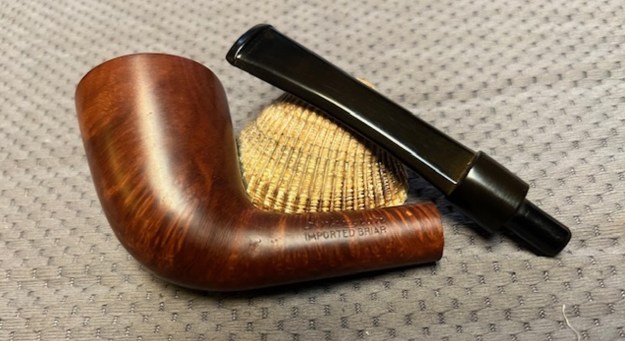
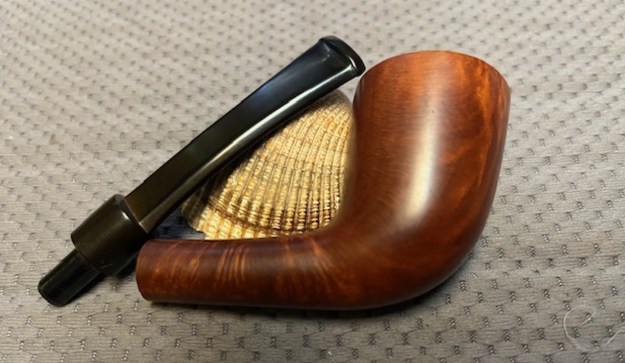
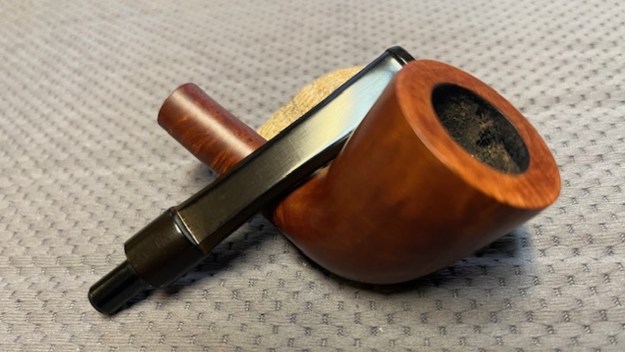
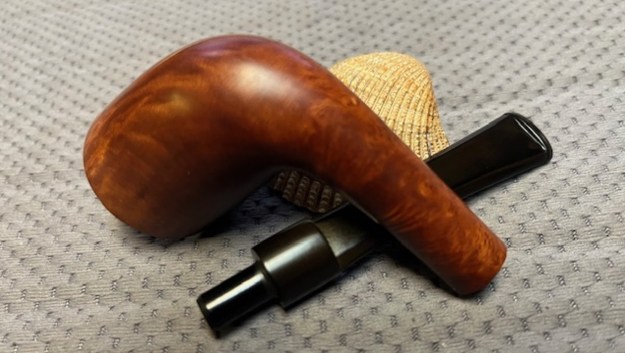
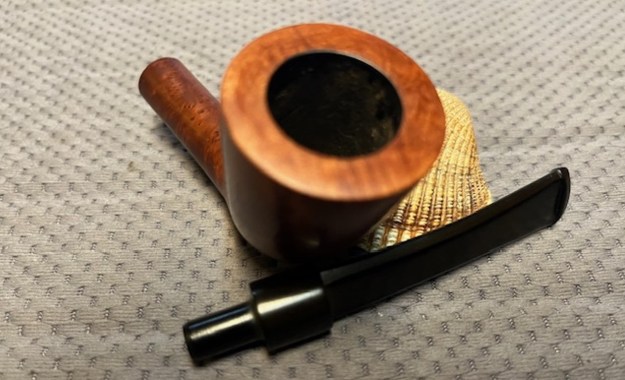
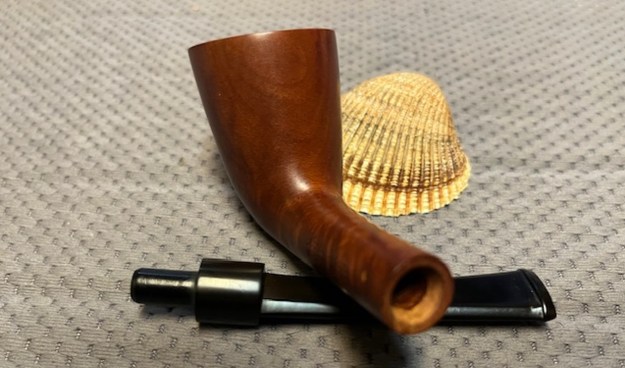
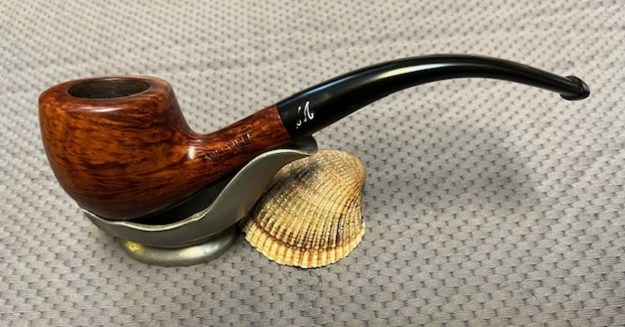
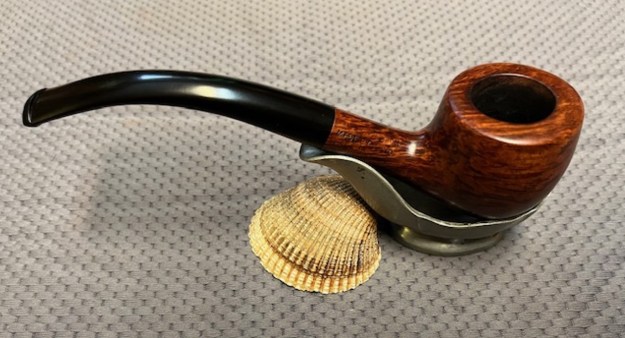
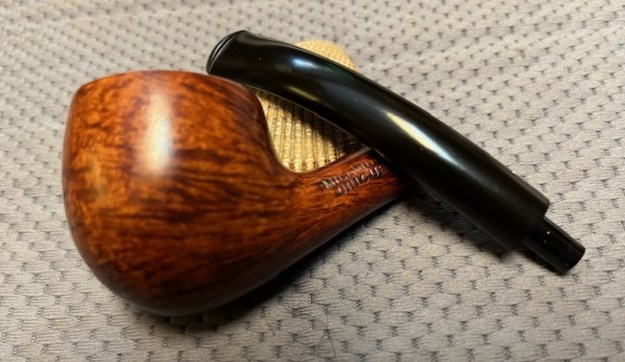
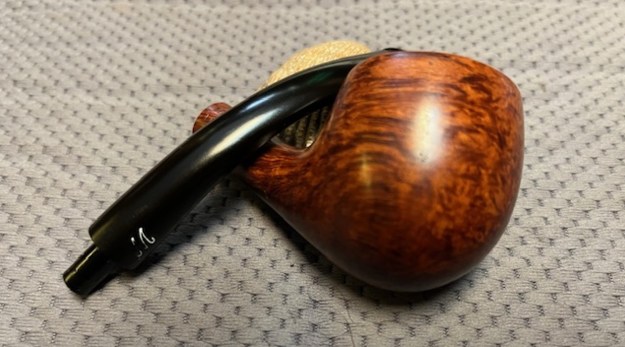
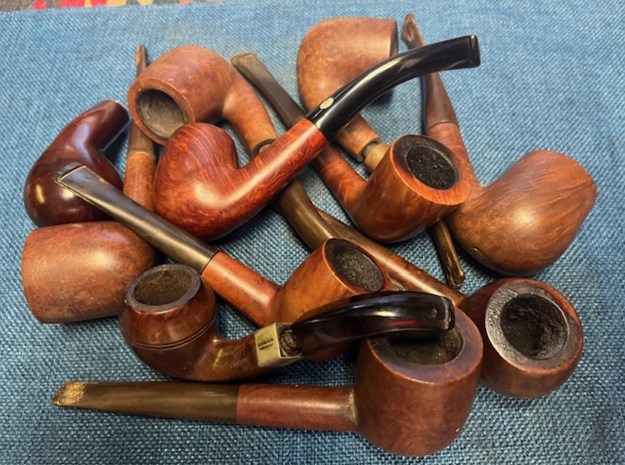
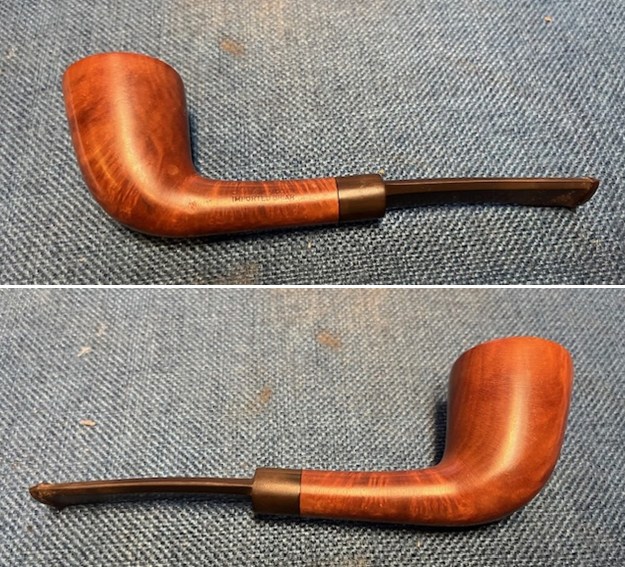
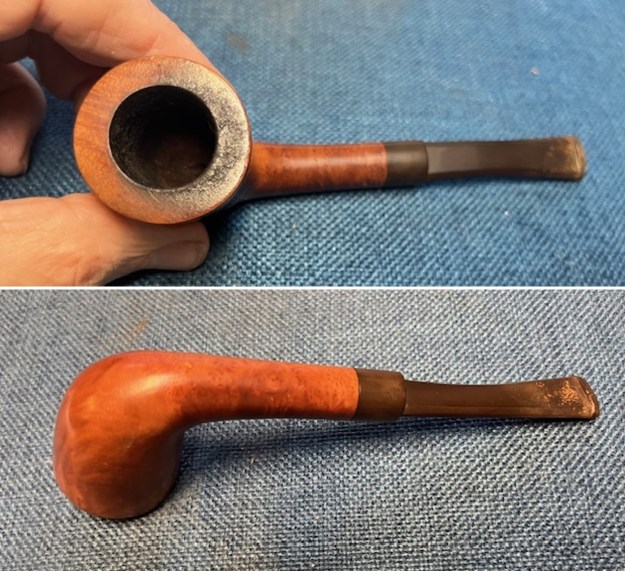
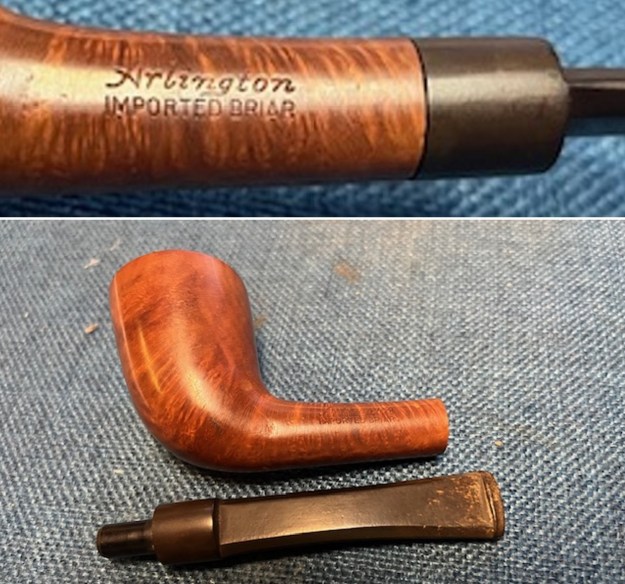
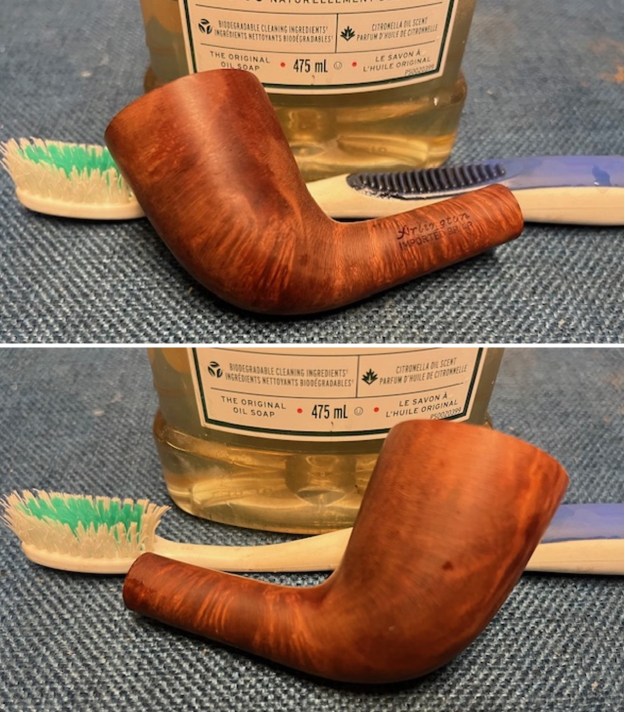
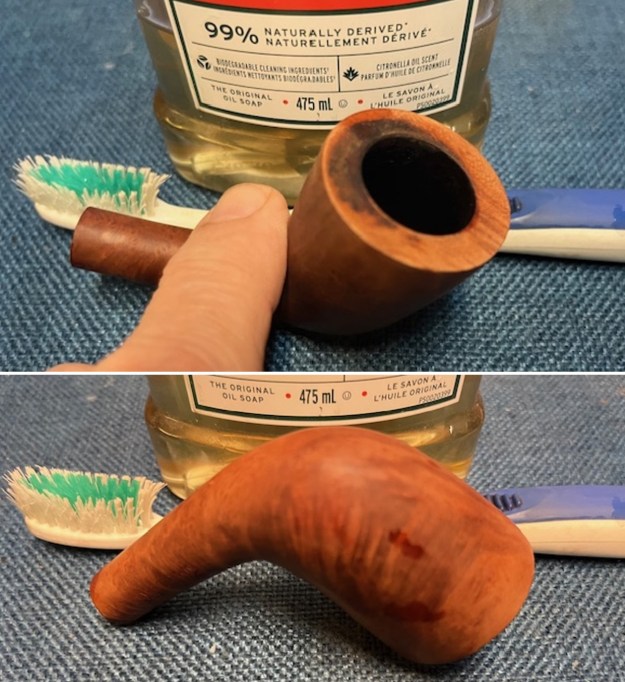
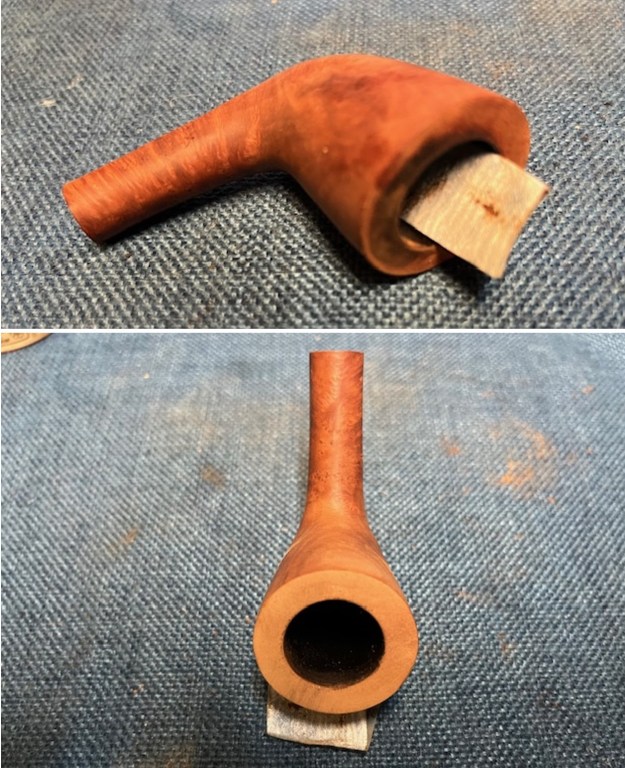
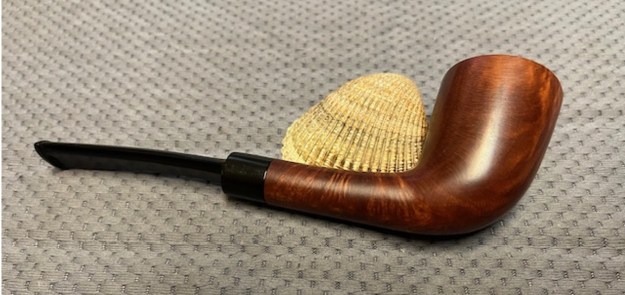
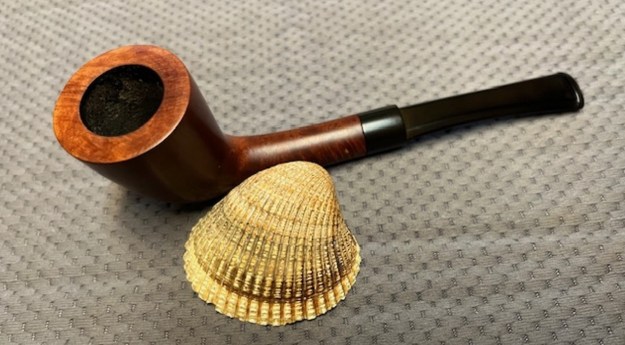
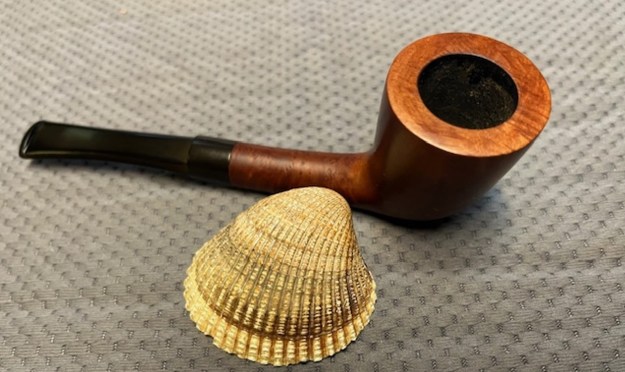
A while back I was asked by a customer and friend, Jack to take on some projects for him. I have worked on a few pipes for him over the years so we seem to have a standing agreement that I will clean up his pipes. This time he sent a batch containing 11 pipes – six Bertrams, an Arlington, a GBD, an old WDC Triangle Bakelite and one marked Texaco. All of them were in various conditions and would need different types of work. I took a photo of the pipes before I started working on them.I chose to work on the Arlington Imported Briar Dublin next. This richly stained Saddle Stem Dublin is a beautiful pipe. It is clearly stamped on the left side of the shank and reads Arlington in script [over] Imported Briar. The grain around the bowl is highlighted by the stain and really stands out. It has a rich darker, reddish brown finish that is on the bowl and shank. It was filthy with dust and debris ground into the sides of the bowl. The rim top has a heavy lava overflow on the top and edges coming from a thick cake in the bowl. The saddle vulcanite push stem had some tooth marks and chatter on both sides ahead of the button. I took photos of the pipe before I started working on it. It really is another beauty. I took photos of the rim top and the stem to show the condition. You can see the thick cake in the bowl and overflow of lava on the rim top. The photos of the stem show the tooth marks and damage in the vulcanite on the top and underside ahead of the button.I took a photo of the stamping on the side of the shank to capture it. It was clear and readable as noted above. I removed the stem from the shank and took a photo of the parts.Before I started my work on the pipe itself I turned to Pipephil to get a quick overview of the background information on the Arlington brand (http://pipephil.eu/logos/en/logo-a7.html). The side bar stated that it was a brand of the Arlington Briar Pipe Corp. I have included a screen capture of the pertinent information below.I turned to Pipedia for more information (https://pipedia.org/wiki/Arlington). I quote the article below.
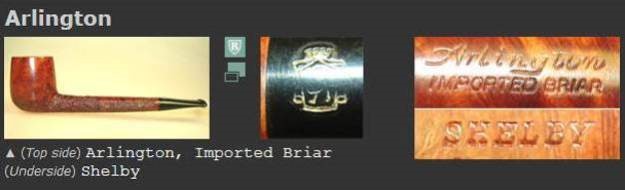
Arlington Briar Pipes Corporation was founded in 1919 in Brooklyn, New York, and produced the Arlington, Briarlee, Firethorn, Kimberly, Krona and Olde London brands among dozens of others, primarily acting as a subcontractor making pipes to be sold under other brand names. Among others, in the 1950’s, Arlington turned pipes for the famed Wilke Pipe Shop in New York City. The corporation was dissolved by the State of New York as inactive on December 6, 1978. Arlington Briar Pipe Corporation, located at 200 Kosciusko Street, Brooklyn, New York, registered only a single brand trademark, the Arlington brand, the trademark for which was applied for on November 13, 1962 and granted on February 25, 1964. Jack Kaye, of Arlington Briar, was also granted a patent for a combined mirror and stand in 1967.

According to José Manuel Lopes, “North American brand that belonged to Arlington Briar Pipes Corp., Brooklyn, New York, founded in 1919. In the 1940s, Ludwig Rosenberger gave the company new life, and it continued until the 70s. His son, Mel Rosenberger, has recently launched the DiMonte brand. Jack Uhle was also linked to Arlington.” Arlington, as far as known, mainly operated as a sub-contractor for other brands. The Jobey pipes are said to be made by Arlington at an unknown point of time. Arlington’s own pipes are seldom seen.

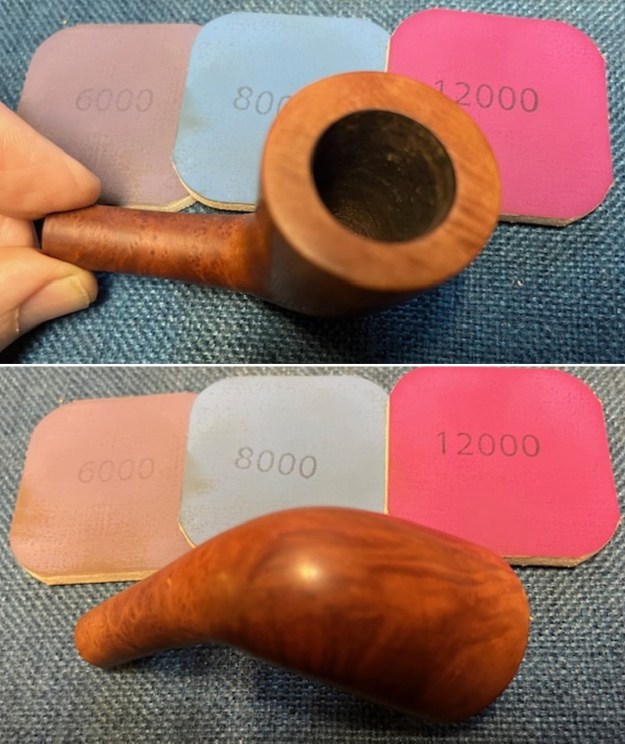
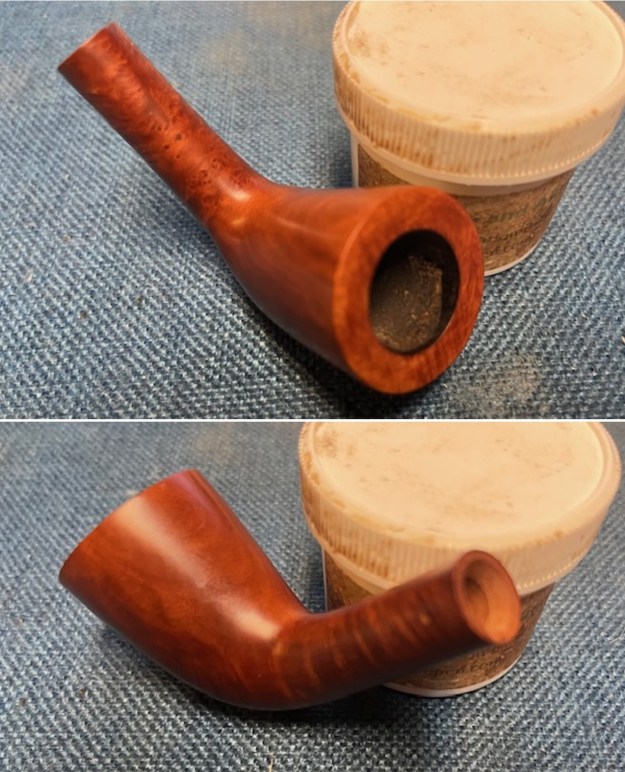
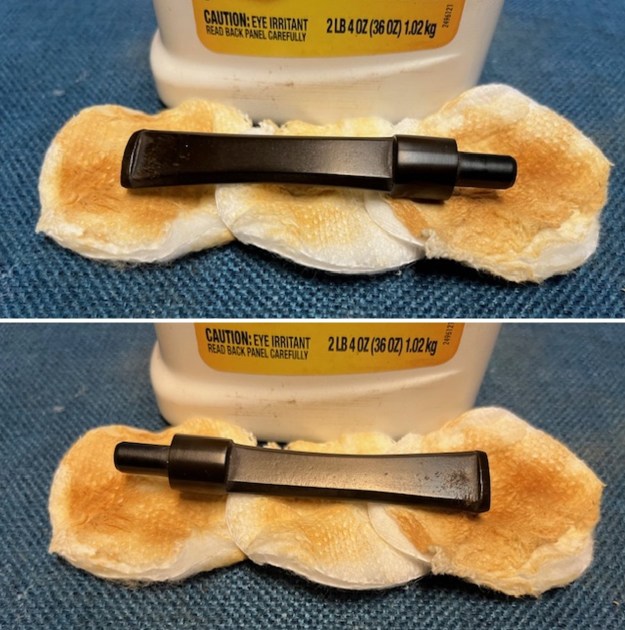
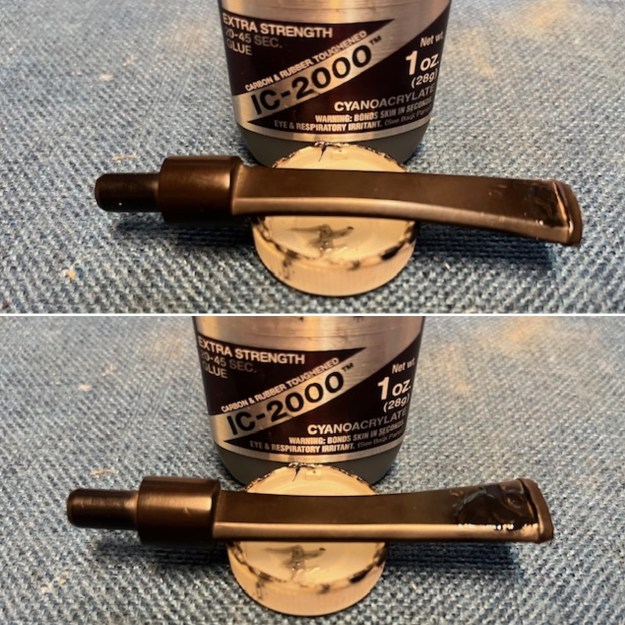
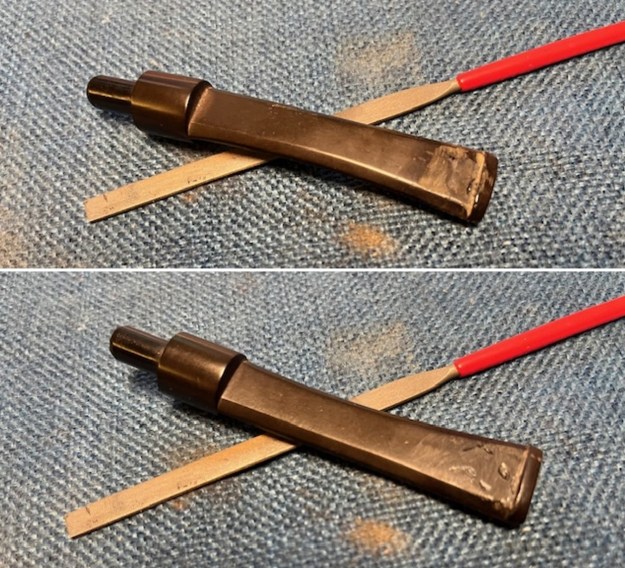
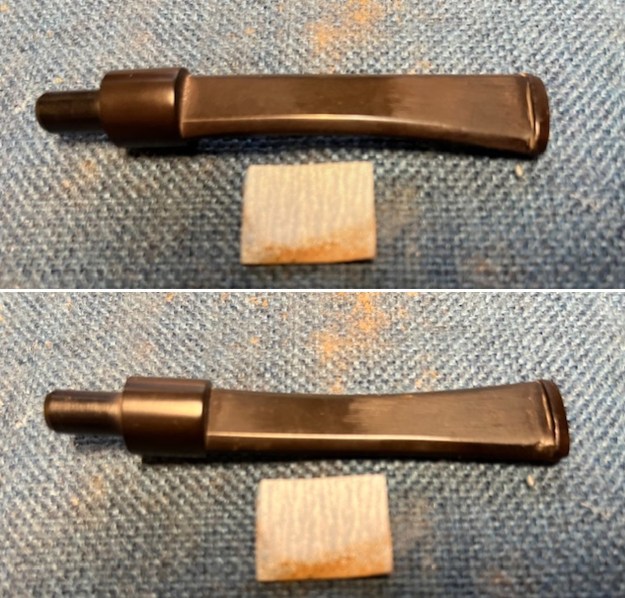
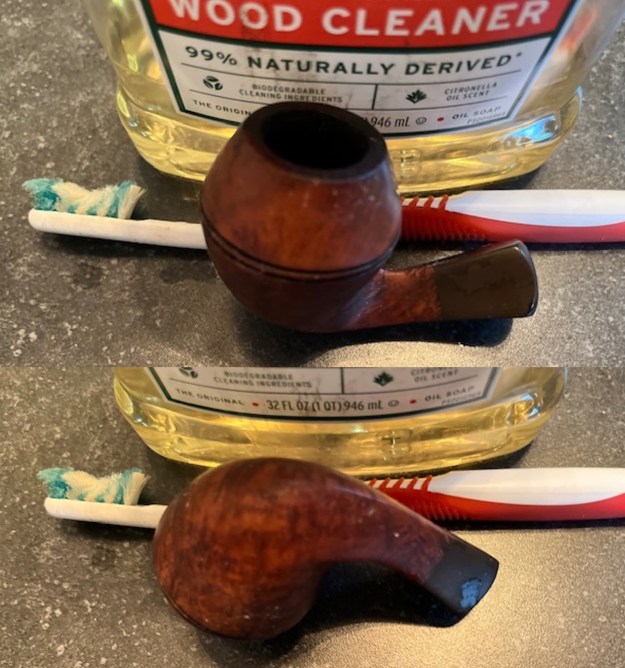
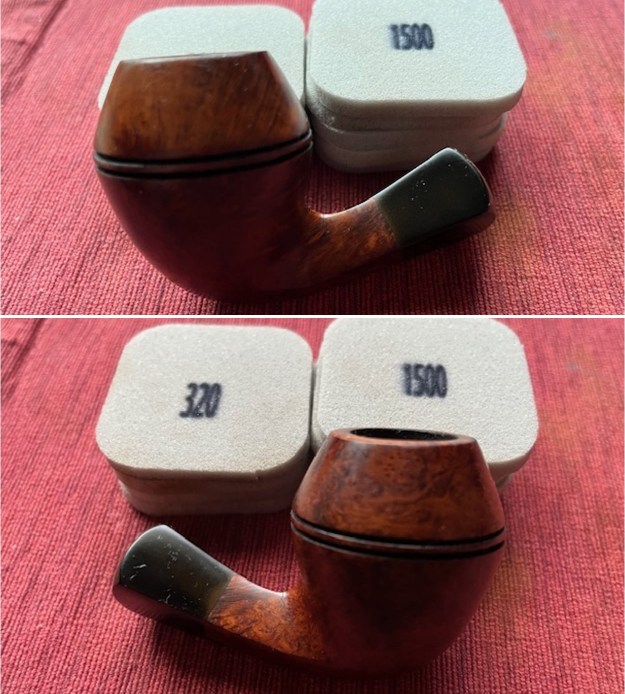
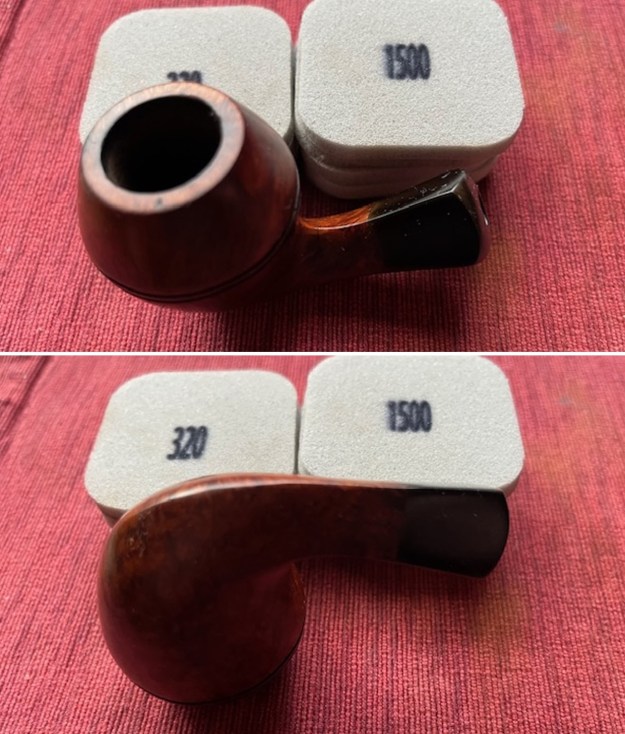
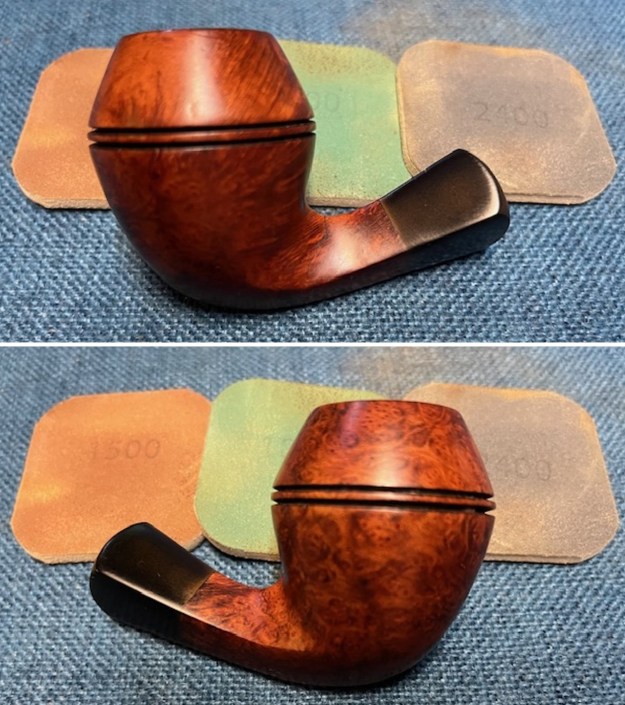
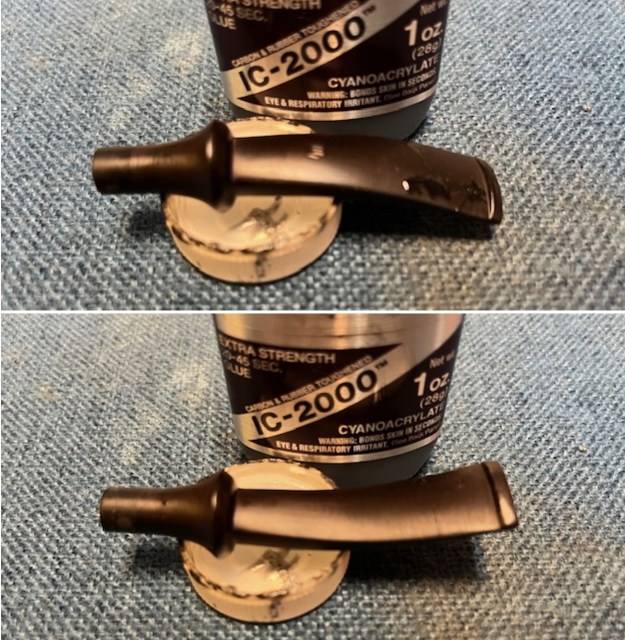
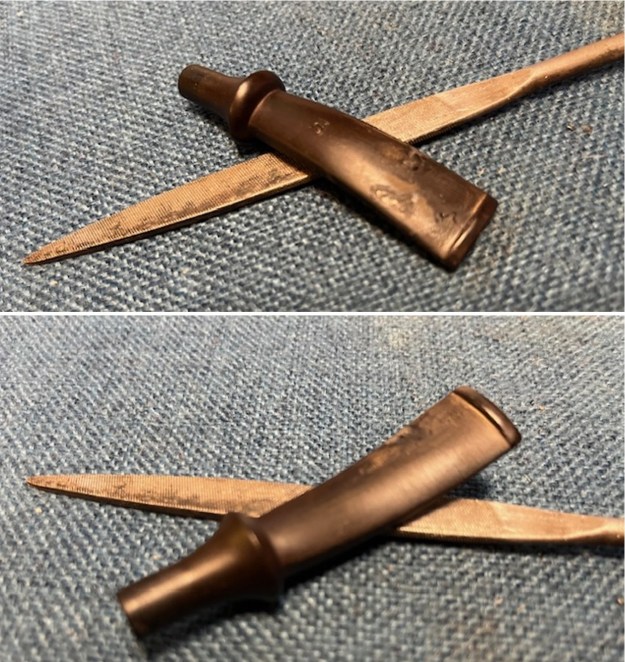
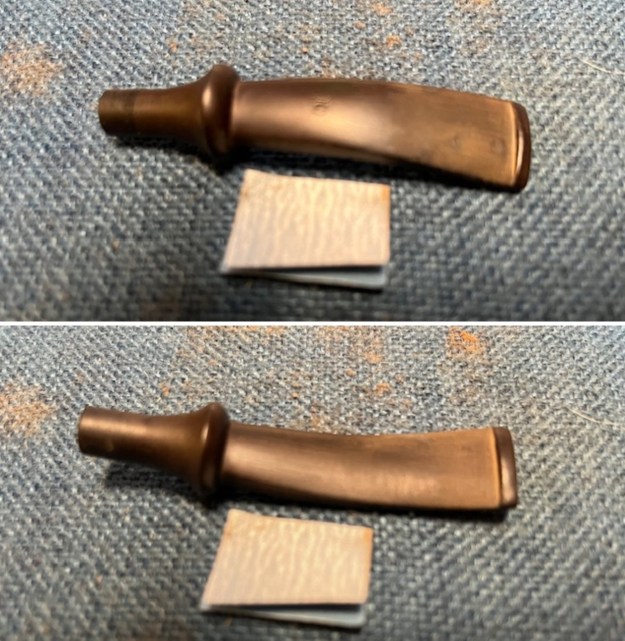
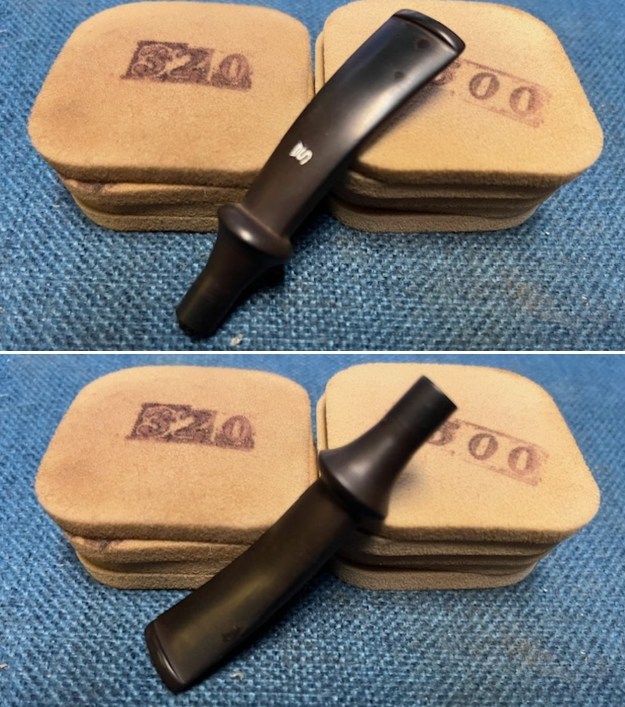
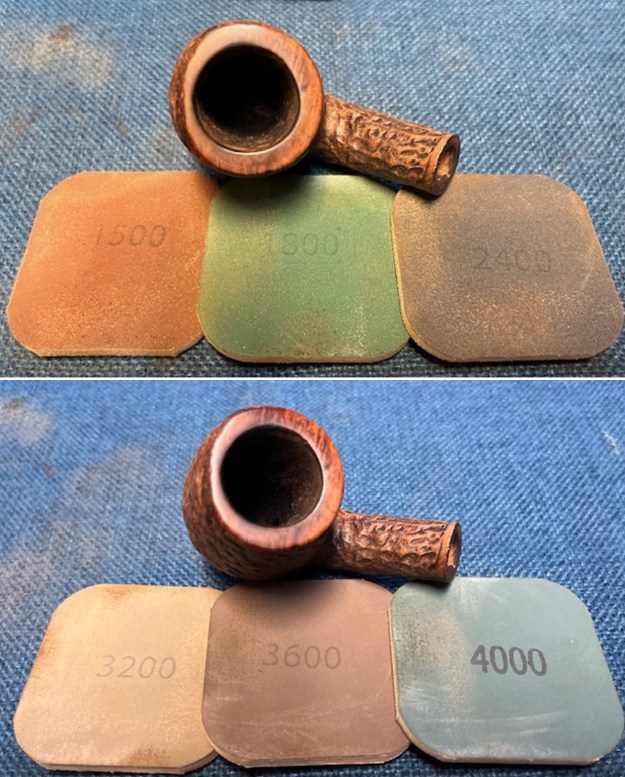
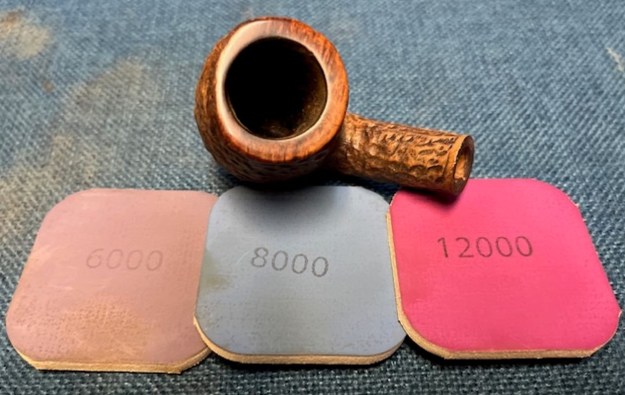
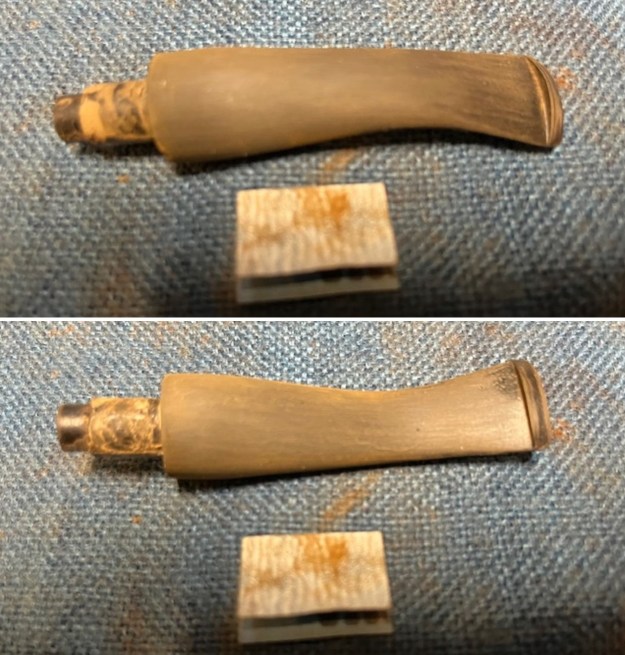
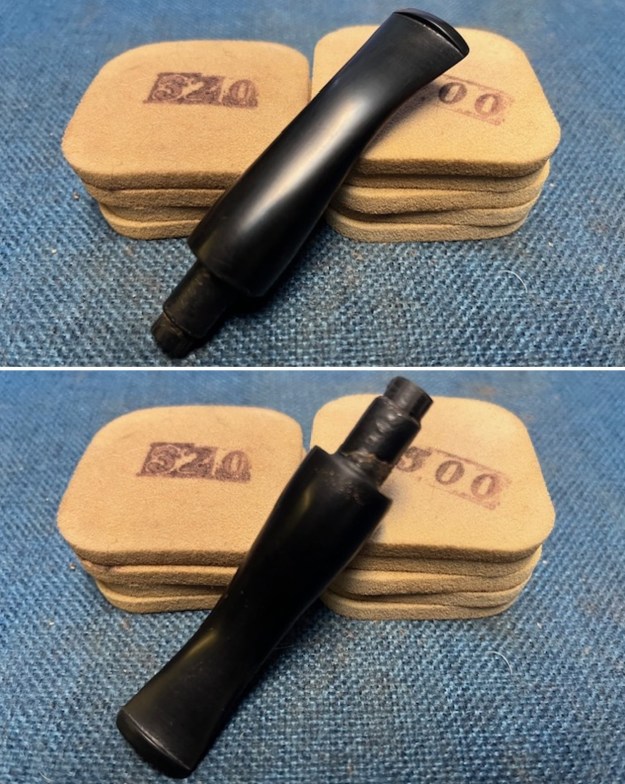
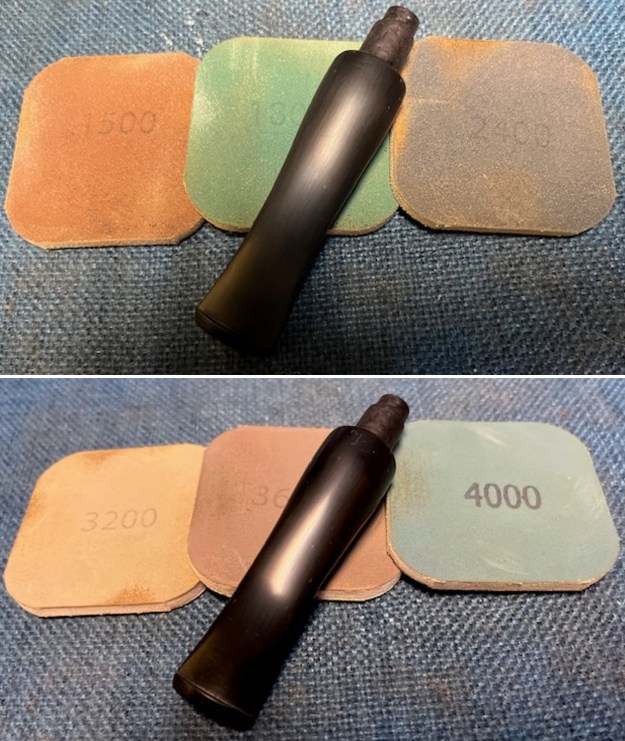
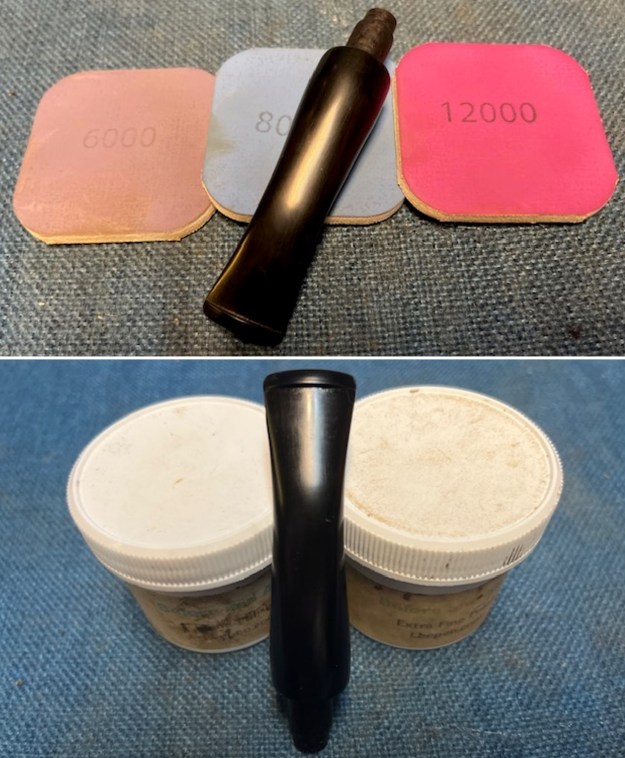
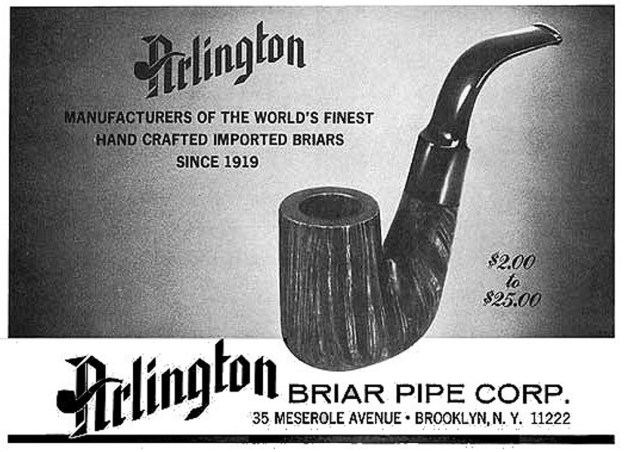
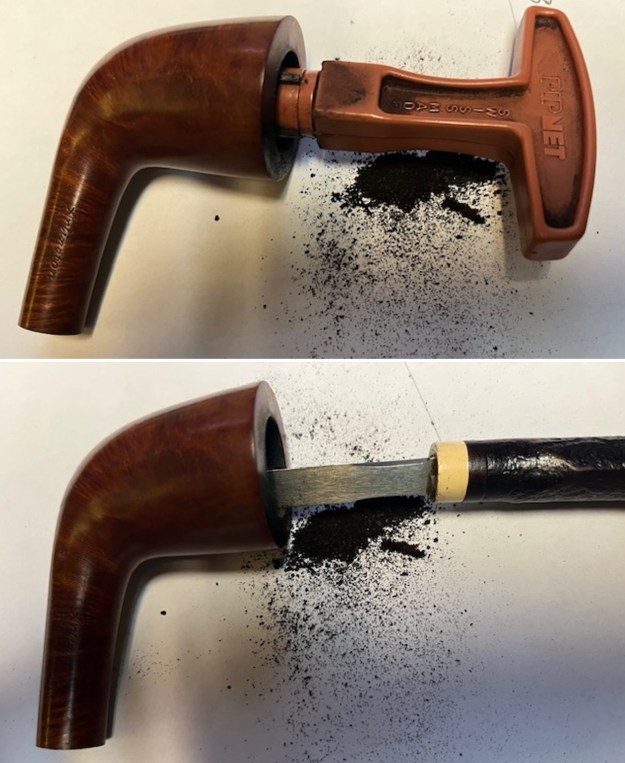
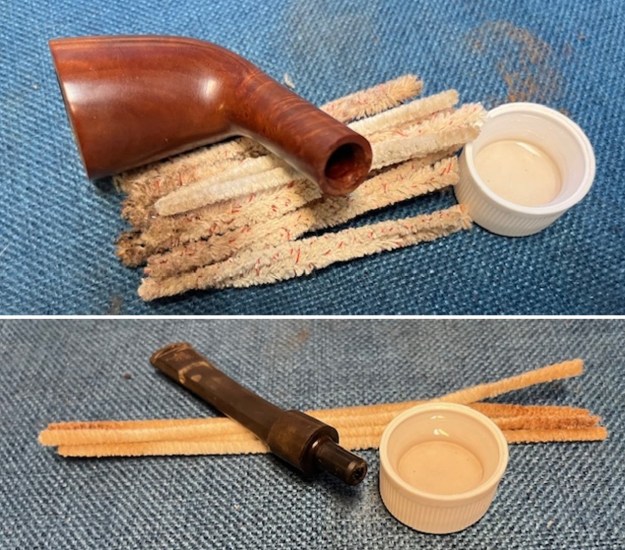
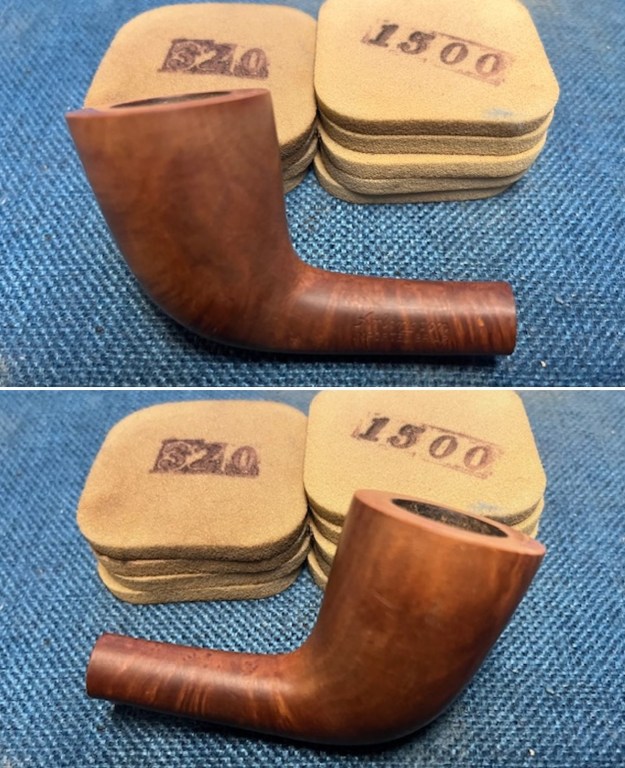
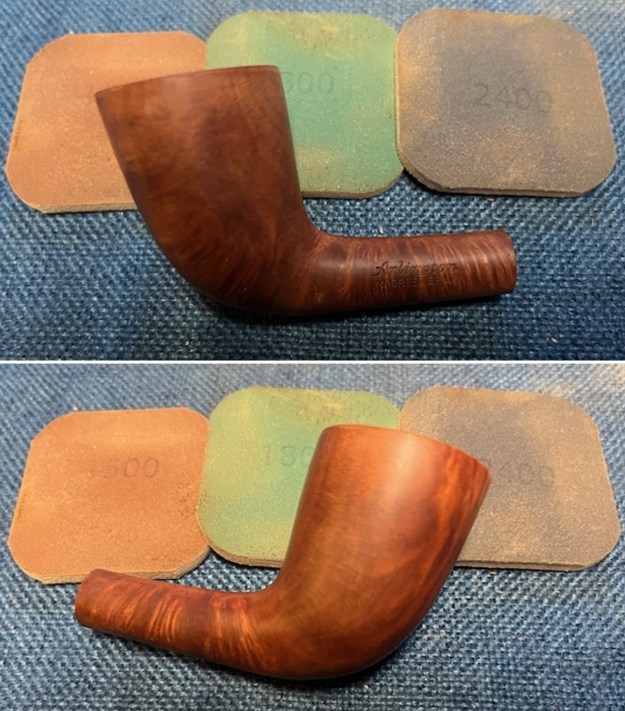
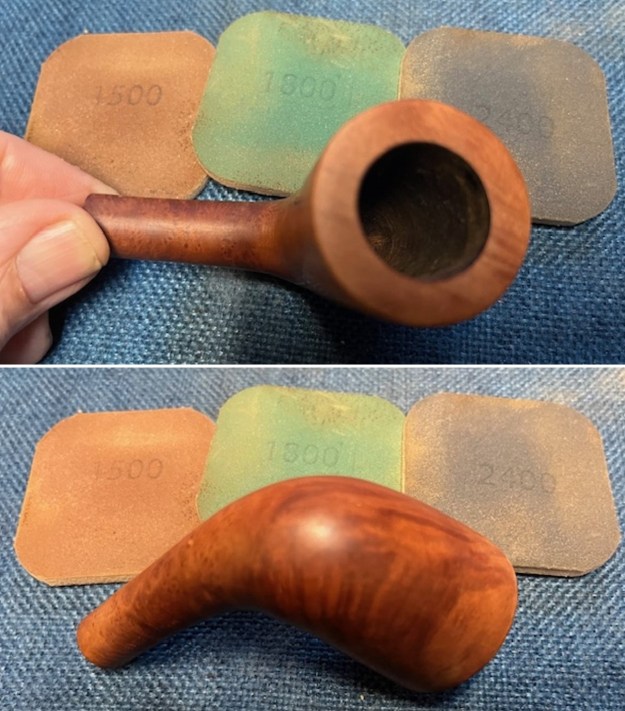
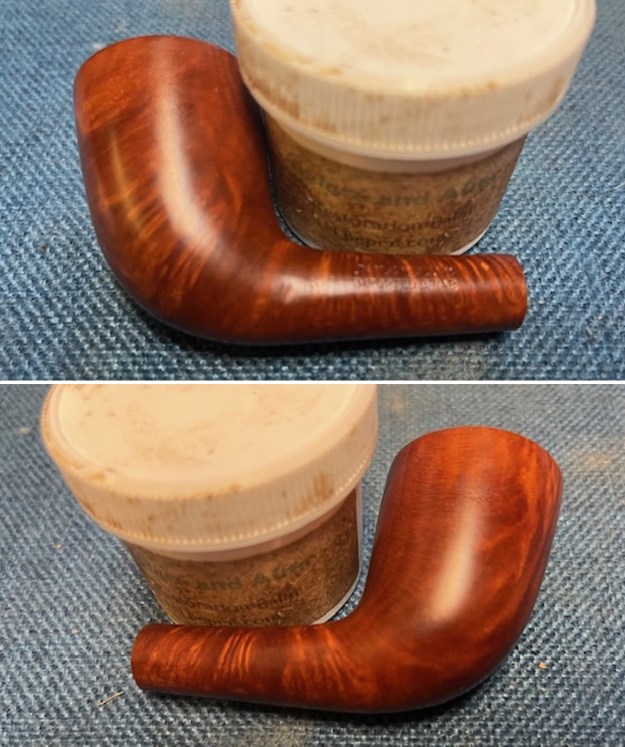
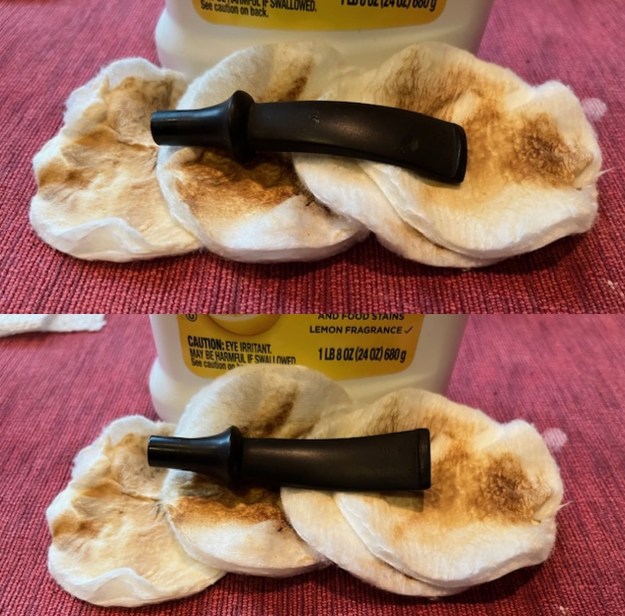
The article also included the following photo from an RTDA catalog. It is a great addition to the information above.I started my work on the pipe by reaming the bowl with a PipNet reamer. I used the first cutting head and took the cake back to bare briar. I cleaned up the reaming with a Savinelli Fitsall Pipe Knife and removed all the remnants of the cake. I scraped the rim top with the flat edge of the blade at the same time and removed most of the thick lava build up. I sanded the walls of the bowl with a piece of dowel wrapped in 220 grit sandpaper. The walls look very good at his point in the process. I cleaned out the shank, the airway and the mortise with alcohol, cotton swabs, hard bristle and soft bristle pipe cleaners. It was a very dirty pipe which just meant that it had really been enjoyed by the previous pipe man. I cleaned the bone tenon and the inside of the airway in the stem with alcohol, cotton swabs and pipe cleaners in the same way as I did the shank. It also was very dirty.I scrubbed the exterior of the bowl and shank with a tooth brush and undiluted Murphy’s Oil Soap. I scrubbed the lava on the rim top and overflow on the outside of the bowl with the soap. I rinsed  the briar with warm water to remove the grime and debris of the scrubbing. It looked significantly better after the scrubbing. The darkening on the rim top is very clear. The darkening on the rim top and inner edge of the bowl would need to be dealt with. I cleaned up the inner edge with a piece of sandpaper. I sanded the top of the rim with the piece of 220 grit sandpaper and was able to remove the darkening.I finished that and moved on to it with 320-3500 grit sanding pads to finish the rim top and the bowl and shank. The briar began to take on a rich shine and the darkening on the top was gone. The photos tell the story. I polished the smooth rim top with micromesh sanding pads – dry sanding it with 1200-15000 grit pads. I wiped the bowl down with a damp cloth after each sanding pad. The grain started to rise to the surface as I polished it. I rubbed the bowl and shank down with Before & After Restoration Balm to deep clean the finish on the bowl and shank. The product works to clean, enliven and protect the briar. I worked it in with my fingers to get it into the briar. I let it sit for 10 minutes then I wiped it off and buffed it with a soft cloth. The briar really began to have a rich shine. I took some photos of the bowl at this point to mark the progress in the restoration. It is a beautiful bowl. I turned my attention to the stem. I scrubbed the oxidized surface of the stem with Soft Scrub Cleanser and cotton pads. It took some elbow grease but it definitely looks better.I “painted” the surface of the vulcanite where the tooth marks were with the flame of a lighter. I filled in the deep tooth marks that remained with a rubberized Black CA glue. After it cured I flattened the repairs with a small flat file. I sanded the repairs further to flatten out the tooth chatter with a folded piece of 220 grit sandpaper. Progress was happening! I sanded the surface of the vulcanite with the 2 x 2 inch sanding pads – 320-3500 grit pads to remove the remaining oxidation. I dry sanded the surface until I have removed all of the oxidation and the stem started to really shine.I polished the stem with micromesh sanding pads – dry sanding with 1500-12000 grit pads. I wiped the stem down after each sanding pad with Obsidian Oil. I polished the stem with Before & After Pipe Stem Polish – both Fine and Extra Fine. I gave it a coat of Obsidian Pipe Stem Oil. It works to protect the stem from oxidizing. I set it aside to dry. I am excited to finish this Arlington Imported Briar Saddle Stem Dublin. I put the pipe back together and buffed it with Blue Diamond on the buffing wheel. I gave the bowl multiple coats of Conservator’s Wax and the stem multiple coats of carnauba wax. I buffed the pipe with a clean buffing pad to raise the shine and then by hand with a microfibre cloth to deepen it. It is fun to see what the polished bowl looks like with beautiful grain on the smooth portions and the rustication depths all around it. The polished grain on the pipe looks great with the black vulcanite stem. This Arlington Dublin is great looking and the pipe feels great in my hand. It is light and well balanced. Have a look at it with the photos below. The dimensions are Length: 6 inches, Height: 2 inches, Outside diameter of the bowl: 1 3/8 inches, Chamber diameter: ¾ of an inch. The weight of the pipe is 31 grams/1.06 ounces. It is another beautiful pipe that I will send to Jack after I finish working on the other 9 pipes. I look forward to hear what he thinks of this next beauty. It should be a great smoking pipe.
As always, I encourage your questions and comments as you read the blog. Thanks to each of you who are reading this blog. Remember we are not pipe owners; we are pipe men and women who hold our pipes in trust until they pass on into the trust of those who follow us.

Reclaiming a tired old Stanwell Bench Made 33 Bulldog with an oxidized Vulcanite shank extension


by Steve Laug

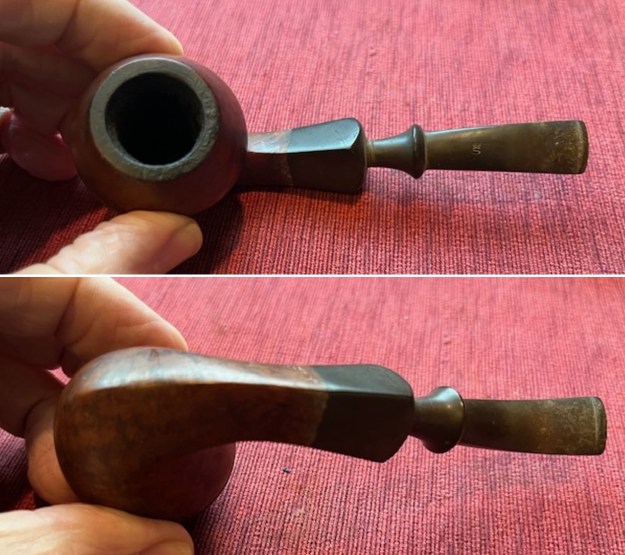
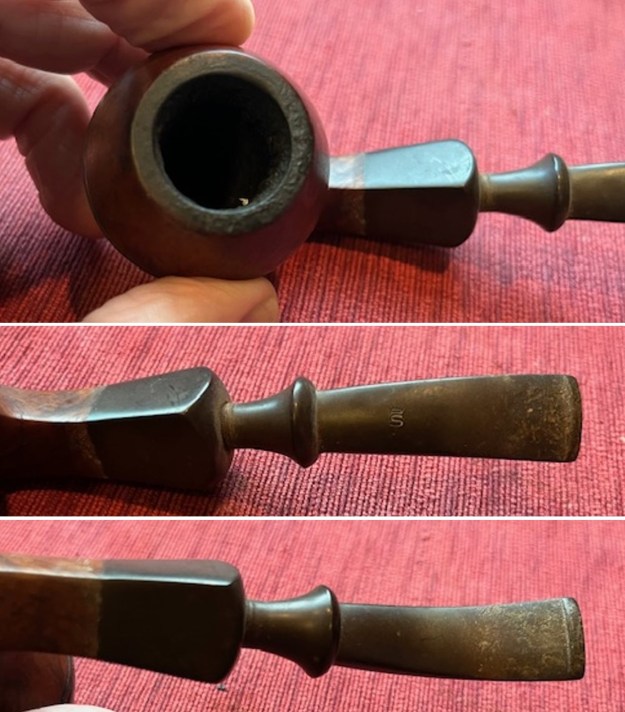
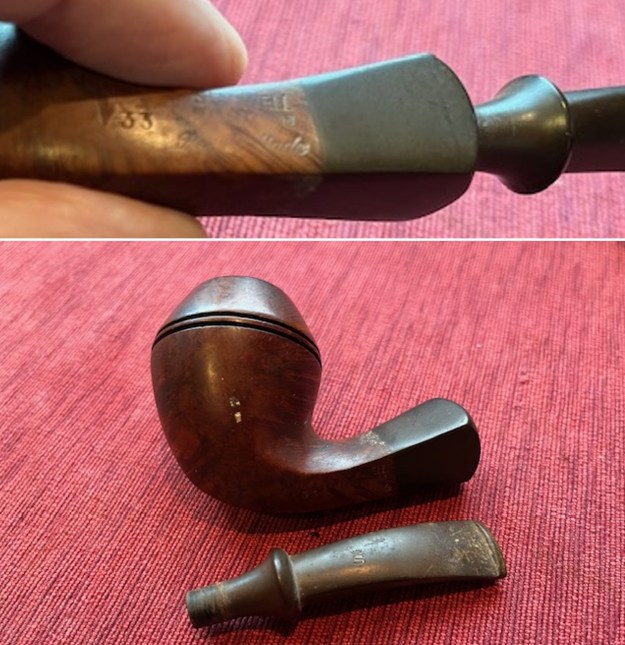
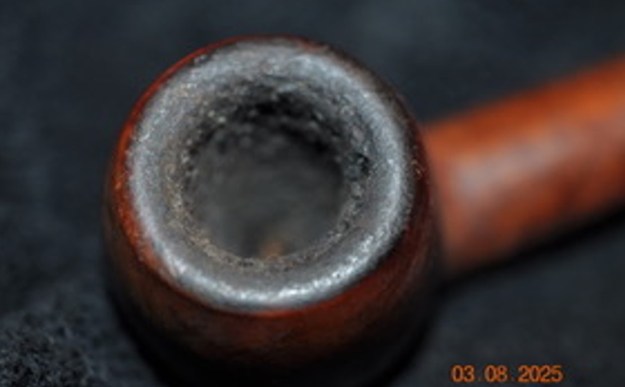
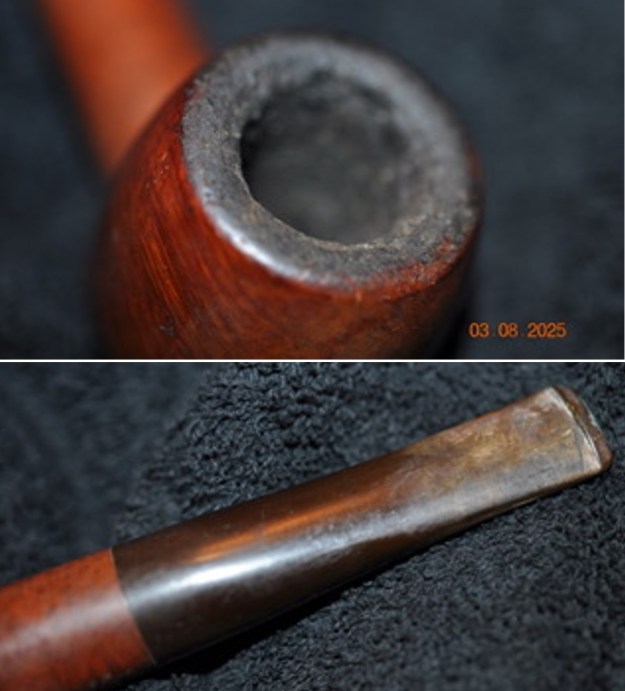
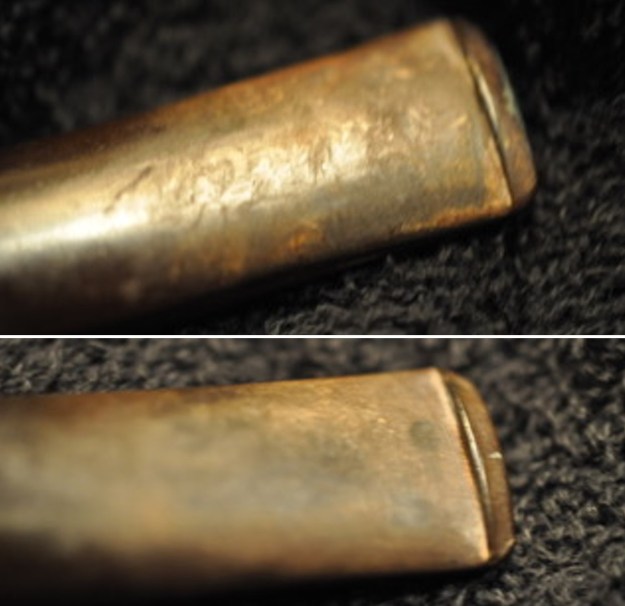
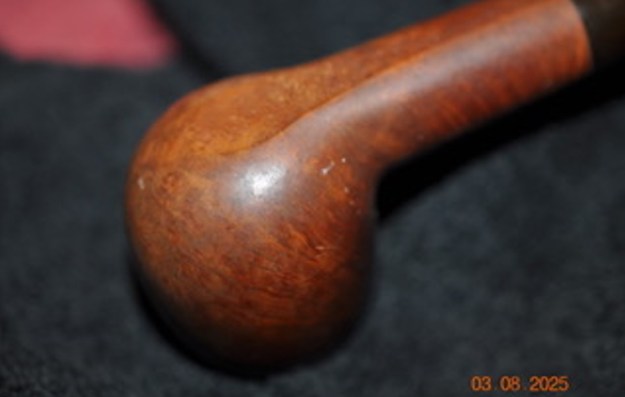
The next pipe is one I also worked on while I was at Jeff’s place in Idaho. I brought it home to finish it. We picked the pipe up from a seller in Macon, Georgia, USA on 03/08/2025. I would call the pipe a Bulldog shaped pipe with a vulcanite shank extension and a military style, vulcanite saddle stem. It is stamped on the left underside of the diamond shank and reads 33 (shape number) followed by Stanwell [over] Regd No. 969-48 [over] Bench Made. There is no other stamping on the shank. The bowl had a heavy cake and a thick coat of lava on the rim top. The finish was dirty and dusty with grime ground into the finish and in the twin rings around the cap. There were a few nicks in the finish from the journey the pipe had travelled since it was made. The vulcanite shank extension was oxidized and dirty. The military style vulcanite saddle stem sat well against the shank. It was dirty with oil and tar in the airway from the tenon to the button. There were deep tooth marks and chatter on both sides ahead of the button. There was a Crown S Stanwell logo on the topside of the stem. I took some photos of the pipe before I started my work on it. I took a photo of the bowl and rim top to show the cake in the bowl. The rim top had a thick coat of lava overflowing on top with some possible damage around the top and inner edge. I took photos of the top and underside of the stem showing the tooth marks and chatter on the vulcanite saddle stem surface as well as the heavy oxidation.The stamping is faint in spots but is readable in the photo below. It reads as noted above. I removed the stem from the shank and took a photo of the parts to show the parts of the pipe. The finish on the pipe is very worn and tired looking.I turned to do a bit of research on the Stanwell Bench Made line first to Pipephil’s site but unfortunately though there as some great information there, the Bench Made line is not shown on the site (http://www.pipephil.eu/logos/en/logo-stanwell.html).

I know that Pipedia has some great history (https://pipedia.org/wiki/Stanwell) on the brand so I turned there hoping to see the Bench Made. There was nothing on the line itself and no mention of the Bench Made pipes.

I turned to the article on designers and shape numbers to see if I could find data on the 33 Shape (https://pipedia.org/wiki/Stanwell_Shape_Numbers_and_Designers). I found that the shape had two versions with this shape number: a) Bent bulldog with a tapered stem and b) Quarter-bent tall bulldog with a diamond shank and push flared stem. The one I have in hand is closest to the b shape.

I knew that with the Regd. No. on the shank, the pipe was made in the period between 1948 and 1960. But I wanted to know more. I can find many examples of the Bench Made line online but no one   explains the meaning of the term. I can only surmise from going through the photos that the Bench Made was a higher end line of Stanwell made factory pipes. Perhaps the finishing is what distinguishes it from the rest of the brand offering. Do any of you readers have any information on this quandary? Post a response and let us in on the information.

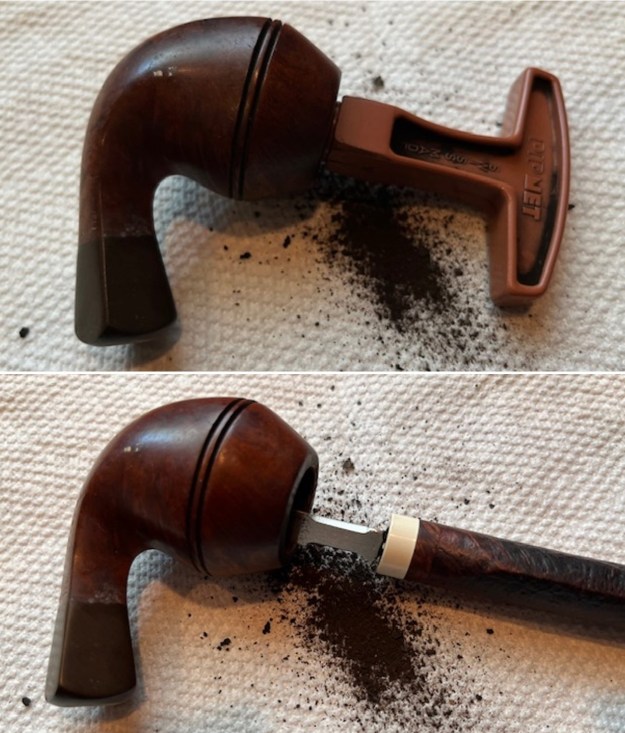
Now it was time to work on the pipe. I started my work on the pipe by reaming it with a PipNet pipe reamer and cleaning up the reaming with a Savinelli Fitsall Pipe Knife. I scraped the lava built up on the rim top with a small blade. It looked much better after the clean up. I cleaned out the inside of the shank and the airway in the stem with alcohol, pipe cleaners and cotton swabs. I removed the tars and oils with the cleaners and the alcohol. It was a dirty pipe!I scrubbed oxidation on the vulcanite shank extension with Soft Scrub All Purpose Cleanser. I have found that it does a remarkable job in softening and often removing the oxidation. Lot of elbow grease but it is effective. The photos show this step in the process. I scrubbed the surface of the bowl and shank with a tooth brush and undiluted Murphy’s Oil Soap to remove the debris and dust in the depths of the rustication. I cleaned out the shank again with a shank brush and the soap. I rinsed it with warm water. I dried off the briar with a soft cloth. It looked very good at this point in the process. After doing this I wondered if I should not have done this before the Soft Scrub. But oh well – hindsight is 20/20. I sanded the bowl, rim and shank extension with 320-3500 grit 2 x 2 inch sanding pads to minimise the scratches and marks in the surface of the briar and to further work on the oxidation on the vulcanite extension. I polished the bowl and the vulcanite shank end with 1500-12000 grit micromesh sanding pads to give it a deep shine. I wiped down the bowl and shank with an Obsidian Oil impregnated cloth after each pad. The briar and rubber began to shine! I worked some Before & After Restoration Balm into the surface of the briar with my fingertips and a horsehair shoe brush to get in the twin rings around the cap. The product works to clean, enliven and protect the briar. I let the balm sit for a little while and then buffed with a cotton cloth to raise the shine. The photos show the bowl at this point in the restoration process. I set the bowl aside and turned my attention to the stem. I scrubbed the surface with Soft Scrub Cleanser and cotton pads. I was able to remove much of the oxidation. The rest would come off using other tricks.I “painted” the stem surface with the flame of lighter to lift the tooth marks on the top and underside ahead of the button. It worked fairly well but some of the larger ones though they had come up a bit were still an issue.I filled in the deep tooth marks in the vulcanite with a rubberized black CA glue. Once the repairs cured I used a small file to flatten the against the surface and clean up the sharp edge of the button. I sanded the repaired areas with a folded piece of 220 grit sandpaper to further flatten and blend them into the surface. I sanded the stem further with 2×2 inch sanding pads to smooth out the stem surface. I wiped it down with a damp cloth after each sanding pad. I took photos of the stem after the sanding.I touched up the stamping on the top of the stem with white acrylic fingernail polish. Once it dried I scraped off the excess and cleaned up the area around the stamp with a 1500 grit sanding pad. It looked very clean. I polished the stem with micromesh sanding pads – wet sanding with 1500-12000 grit sanding pads. I wiped it down after each sanding pad with some Obsidian Oil. I finished polishing it with Before & After Pipe Stem Polish – both Fine and Extra Fine and buffed it off with a cotton cloth. I am excited to be finishing work this lovely Stanwell Bench Made 33 Bulldog pipe. This is the part of the restoration part I look forward to when it all comes back together, polished and waxed. I put the bowl and stem back together. I polished the bowl and stem with Blue Diamond to polish out the scratches in the briar and the vulcanite. I gave the bowl and the stem multiple coats of carnauba wax. I buffed the pipe with a clean buffing pad to raise the shine. I hand buffed it with a microfiber cloth to deepen the shine. The pipe polished up pretty nicely. The medium brown stained bowl looks really good with the polished black vulcanite. This Stanwell Regd. No Bench Made 33 Bulldog was another fun pipe to work on. It really has that classic Danish look that catches the eye. The brown stain really makes the pipe look attractive. It is another comfortable pipe to hold in the hand. The finished pipe is shown in the photos below. The dimensions of the pipe are Length: 5 ½   inches, Height: 2 inches, Outside diameter of the bowl: 1 ¼ inches, Chamber diameter: ¾ of an inch. The weight of the pipe is 1.55 ounces/46 grams. If you are interested in carrying on the previous pipeman’s legacy with this pipe send me a message or an email. Thanks for reading this blog and my reflections on the pipe while I worked on it. As always questions and comments are appreciated.

Clearing and Restoring a Clogged Brigham Made in Canada Bent Billiard


by Steve Laug

The next pipe on the table was one that the local pipe shop contacted me about repairing. I have included the email from the shop regarding this pipe. I quote:

Good evening Steve! Hope all is well. I’ve got yet another pipe here in need of your expertise! It’s a beautiful hundred year old (according to our client) Brigham 3 dot with something stuck in the stem. I included a few photos showing the issue and some of the more unique features of the pipe. If you’re available in the next little while, would it be possible to drop by? Cheers, Joe.

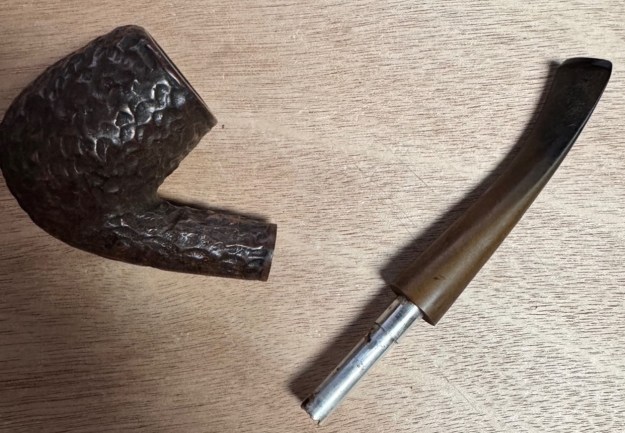
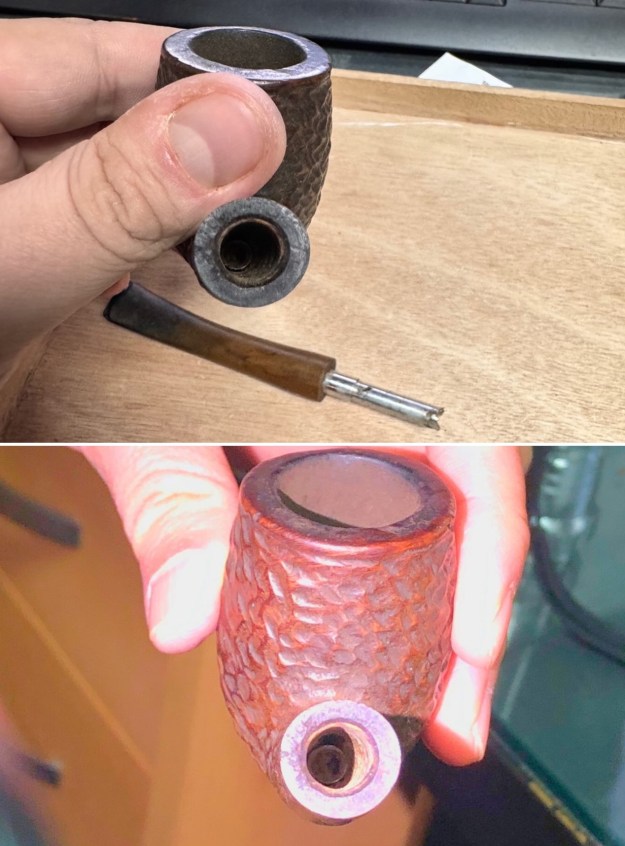
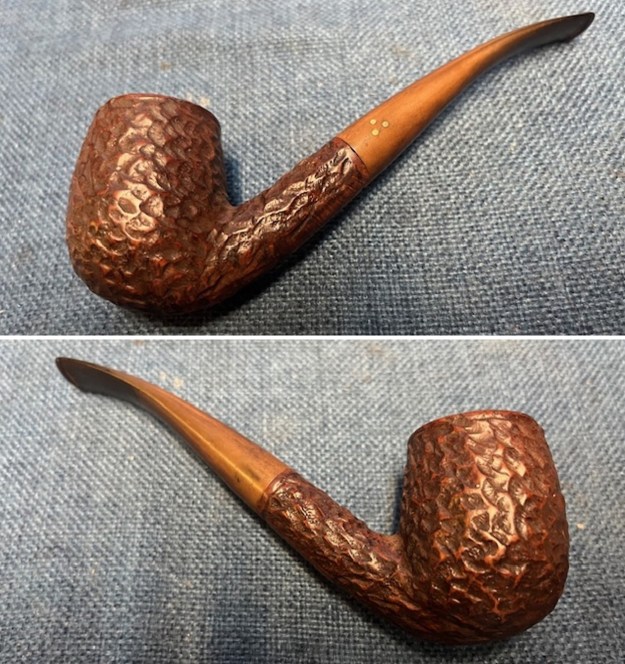
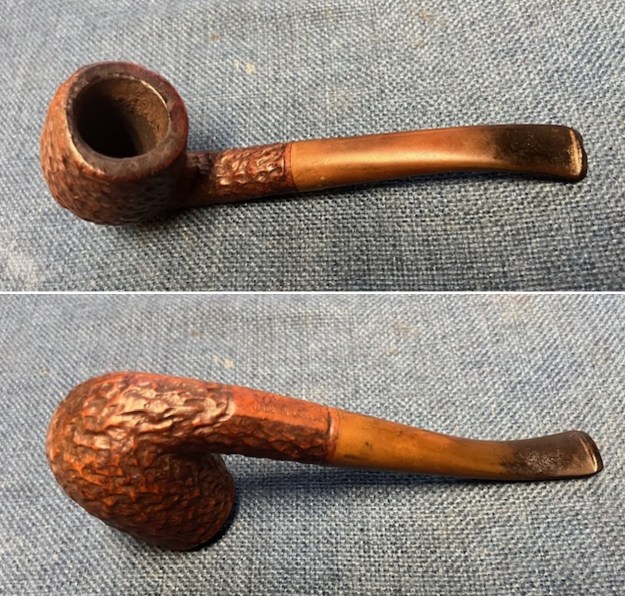
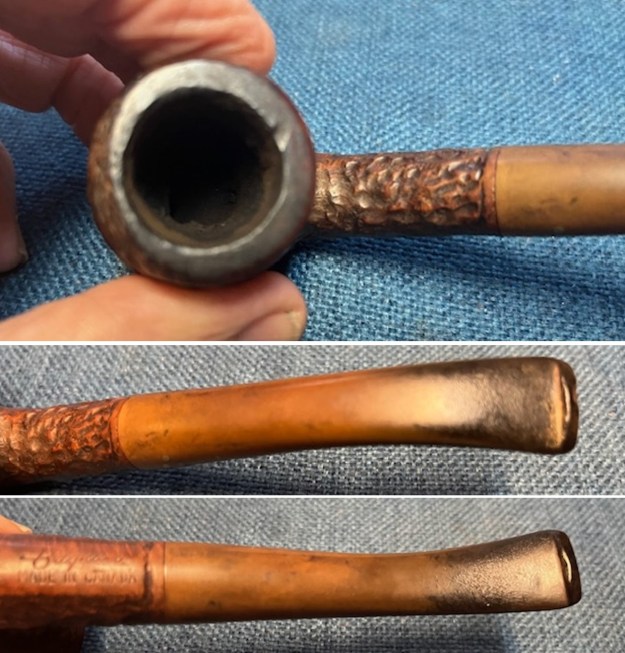
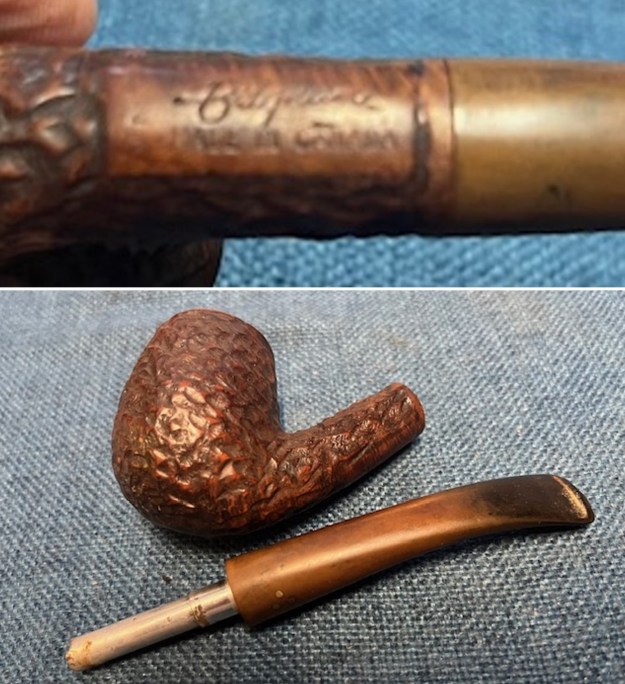
He included the following photos of the pipe. The third photo shows the item stuck in the shank. From the photo it appears to be the metal end of the Brigham Rock Maple Distillator. I have seen this happen before when the aluminum breaks off the wooden distillator. I could also see some corrosion to the aluminum tenon that held the distillator. I let Joe know that once I returned from my visit to my Father in the US I would let him know. Today, Joe dropped pipe by for my work. It was stamped on the underside of the shank and read 323 [followed by] Brigham [over] Made in Canada. The 323 was the shape number of the pipe. The style of the stamping would also help me identify when the pipe was made. The rusticated finish was classic Brigham. There was a thick cake in the bowl and some lava on the rim top. The rim top also had some nicks in the top and the front edge was damaged from knocking the pipe out against a hard surface. The bowl was slightly out of round. The clog in the shank did not allow the shank to be cleaned of the tars and oils and it was very dirty. The stem was oxidized and had tooth marks and chatter on both sides ahead of the button. The end of the metal tenon was also corroded and damaged. I would need to either smooth it out or replace the stem if I could. It had three brass dots on the left side of the taper. I took photos of the pipe before I worked on the pipe. I took close up photos of the bowl and rim top to show the condition of the bowl and damage to the rim edge as well as the cake and lava overflowing onto the rim top. I also took close up photos of the stem to show its condition as mentioned above.I took a photo of the stamping on the underside of the shank and it is very clear and readable. I took the stem off the shank and took a photo of the pipe to show the overall look of the pipe.For the needed background I am including the information from Pipedia on Brigham pipes. It is a great read in terms of the history of the brand (https://pipedia.org/wiki/Brigham_Pipes). Charles Lemon (Dadspipes) has written book on the history of the brand. This article is a good summary. I have included it below.

Roy Brigham, after serving an apprenticeship under an Austrian pipesmith, started his own pipe repair shop in Toronto, in 1906. By 1918 the business had grown to include five other craftsmen and had developed a reputation across Canada for the high quality of workmanship. After repairing many different brands of pipes over the years, Roy noted certain recurring complaints by pipe smokers, the most common referred to as “tongue bite”. Tongue bite is a burning sensation on the smoker’s tongue, previously thought to be due to the heat of the smoke (i.e. a “hot smoking pipe”).

He soon began manufacturing his own pipes, which were lightweight, yet featured a more rugged construction, strengthening the weak points observed in other pipes. The problem of tongue bite intrigued him, and he decided to make overcoming it a future goal.

About 1938, Roy’s son Herb joined him to assist in the business. The business barely survived the great depression because pipes were considered to be a luxury, not a necessity, and selling pipes was difficult indeed. In approximately 1937 [1], after some experimentation, Roy and Herb discovered that tongue bite was in fact a form of mild chemical burn to the tongue, caused by tars and acids in the smoke. They found that by filtering the smoke, it was possible to retain the flavour of the tobacco and yet remove these impurities and thereby stop the tongue bite.

Just as Thomas Edison had searched far and wide for the perfect material from which to make the first electric light bulb filaments, Roy & Herb began experimenting with many materials, both common and exotic, in the quest for the perfect pipe filter. Results varied wildly. Most of the materials didn’t work at all and some actually imparted their own flavour into the smoke. They eventually found just two materials that were satisfactory in pipes: bamboo and rock maple. As bamboo was obviously not as readily available, rock maple then became the logical choice.

They were able to manufacture a replaceable hollow wooden tube made from rock maple dowelling, which when inserted into a specially made pipe, caused absolutely no restriction to the draw of the pipe, yet extracted many of the impurities which had caused tongue bite. The result was indeed a truly better smoking pipe…

I then turned to a second article by Charles Lemon called, “A Closer Look at the Dots, Dates, and Markings of Brigham Pipes” to be able to pin down the time frame that the pipe was made in and to help interpret the stampings and shape number on the pipe. Here is the link to his article (https://pipedia.org/wiki/Brigham_Pipes_%E2%80%93_A_Closer_Look_at_Dots,_Dates_and_Markings). I quote the pertinent information below to establish the date on the pipe.

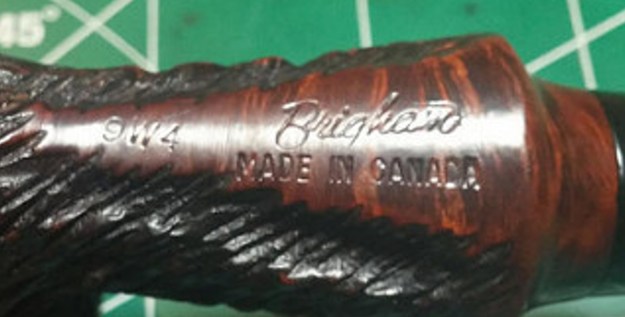
Around the late 1960s or early 1970s, at the beginning of what I’ve called the Canadian Era (roughly 1970 – 1980), the stampings changed again as Brigham moved to modernize its logo. Pipes are stamped with the 3-digit shape number and “Brigham” over “Made in Canada”. Note these two variants of this stamping.

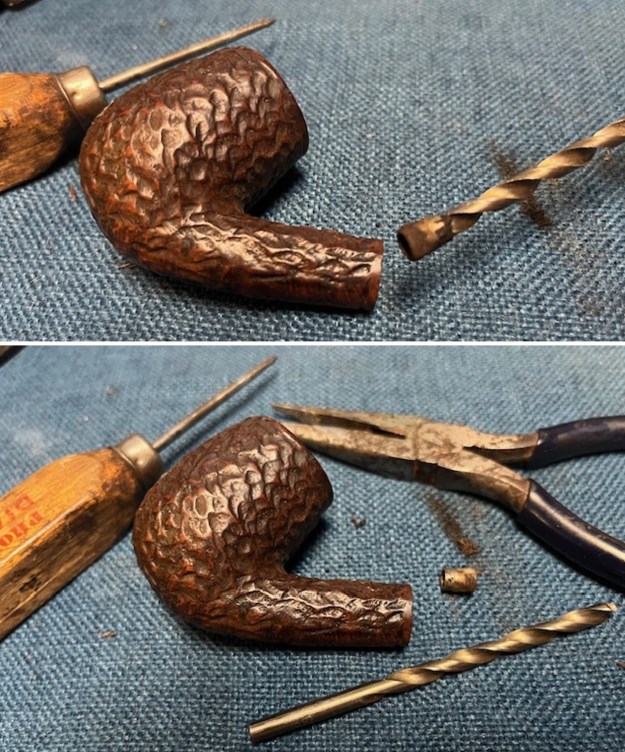
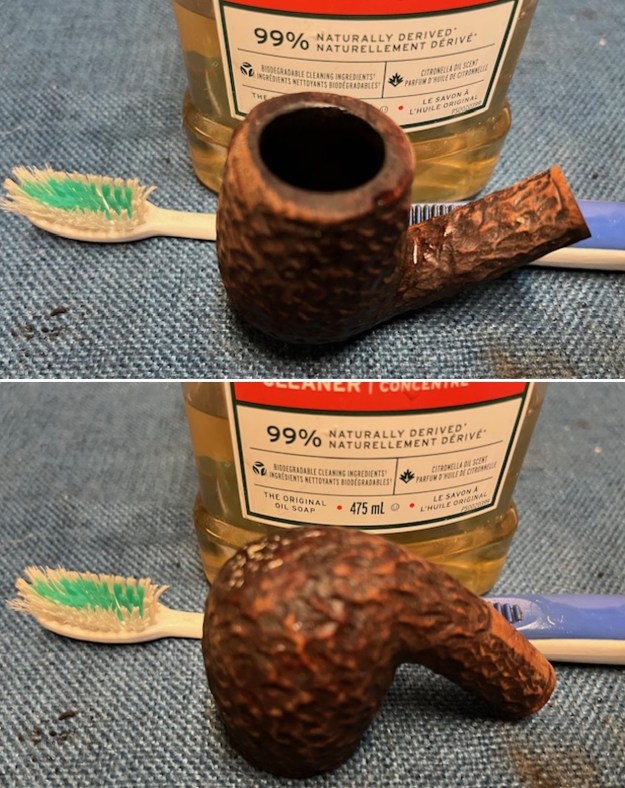
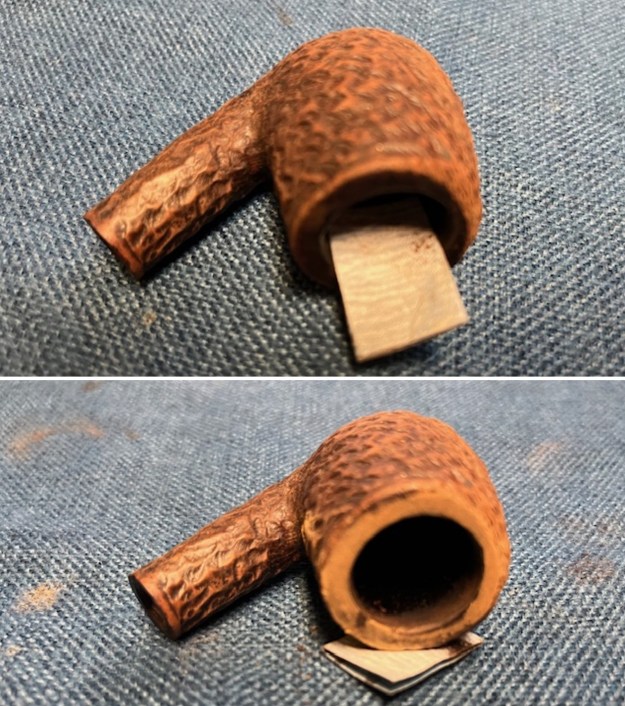
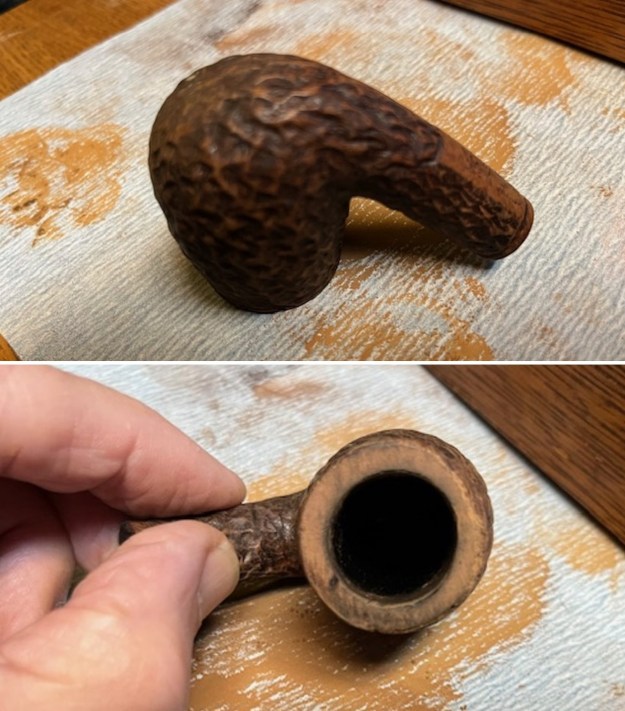
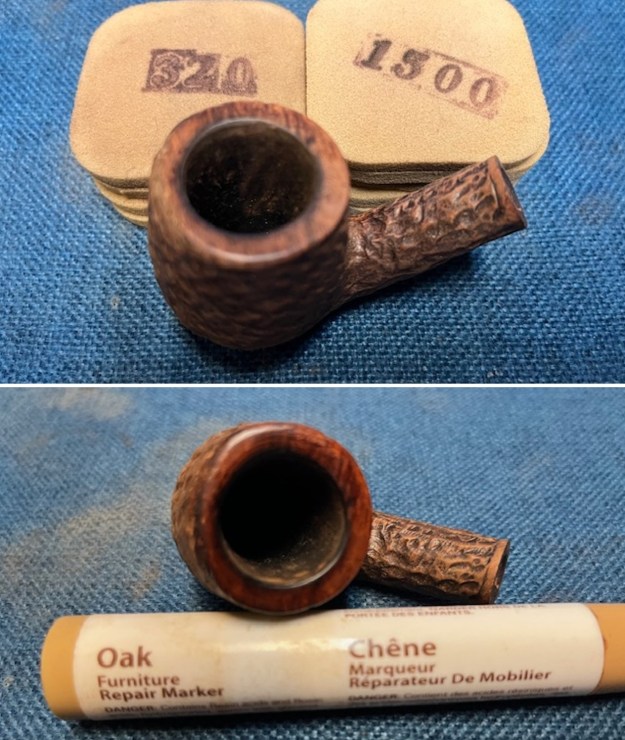
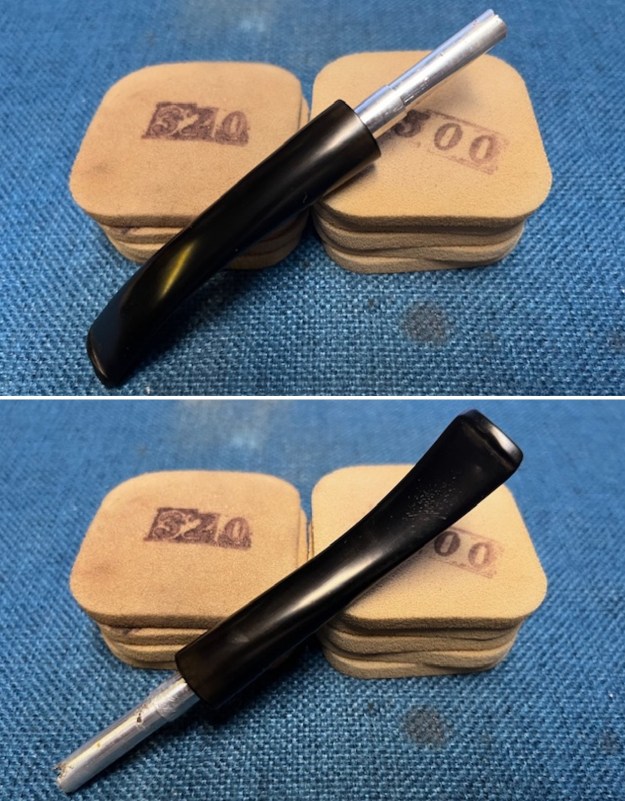
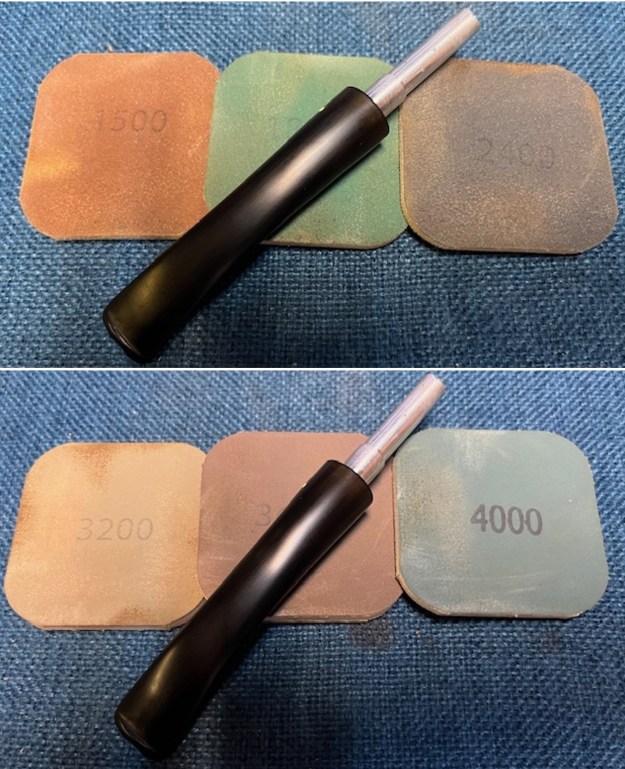
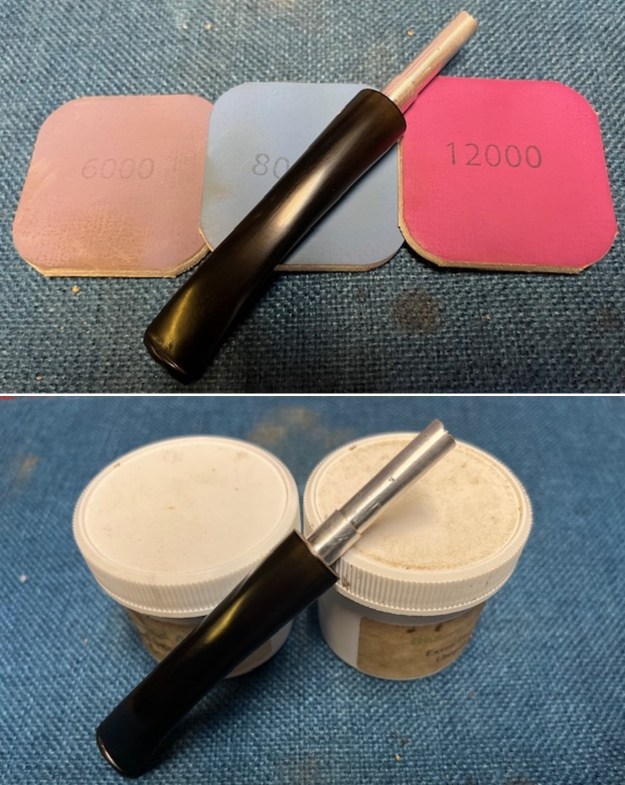
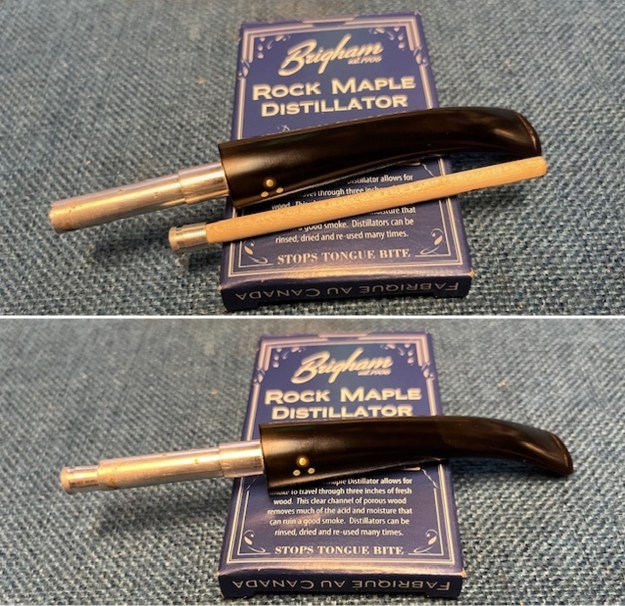
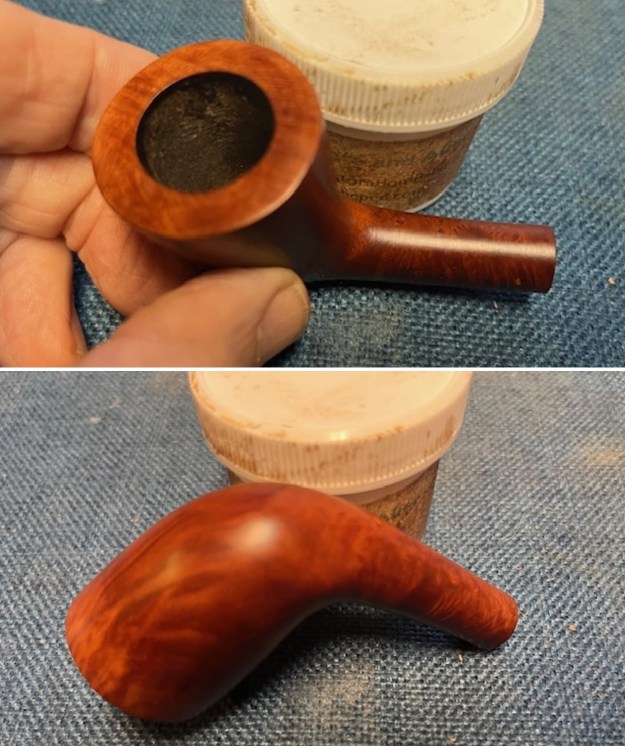
The stamping on the one I am working on is like that shown in the photo below. From the information above I know that the pipe I am working on was made between the late 1960s and the 1980s which makes the pipe approximately 45-65 years old. Now it was time to work on the pipe. I decided to pull the metal blockage in the shank end. I knew it was broken off the Hard Maple Distillator. I tried to pull the metal piece with an ice pick and it was too tight in the shank to come out that easily! Always seems to be the case for me. I used drill bit slightly larger than the airway in the metal piece. I carefully turned it into the metal with a cordless drill. Once it bit I was able to pull it free from the shank. It is shown on the end of the drill bit in the first photo below and free of the bit in the second photo below.I reamed the bowl with a PipNet reamer. I used the first and second cutting heads and took the cake back to bare briar. I cleaned up the reaming with a Savinelli Fitsall Pipe Knife and removed all the remnants of the cake. I scraped the rim top with the flat edge of the blade at the same time and removed most of the thick lava build up. I sanded the walls of the bowl with a piece of dowel wrapped in 220 grit sandpaper. The walls look very good at this point in the process. I cleaned out the shank, the airway and the deep mortise with alcohol, cotton swabs, hard bristle and soft bristle pipe cleaners. It was a very dirty pipe which just meant that it had really been enjoyed and used. I cleaned the inside of the aluminum tenon and the airway in the stem with alcohol, cotton swabs and pipe cleaners in the same way as I did the shank. It was clogged with debris and there was no airflow. It took some work with a paper clip but eventually it opened up so I could clean it well.I scrubbed the exterior of the bowl and shank with a tooth brush and undiluted Murphy’s Oil Soap. I scrubbed the lava on the rim top and overflow on the outside of the bowl with the soap. I rinsed the briar with warm water to remove the grime and debris of the scrubbing. It looked significantly better after the scrubbing. I cleaned up the inner edge of the rim and the rim top with a folded piece of 220 grit sandpaper. I removed the darkening as much as possible and smoothed out the top of the rim. I lightly topped the bowl on a topping board with 220 grit sandpaper to smooth out the damage on the top and minimize the damage on the front outer edge. I sanded the rim top with 320-3500 grit sanding pads to remove the marks, scratches and darkening and to help shrink and minimize the damage on the front outer edge of the bowl. I used an oak stain pen to blend the top colour into the finished colour of the bowl once polished. It looks a bit darker at this point but it will match very well.I polished it with micromesh sanding pads – dry sanding it with 1200-15000 grit pads. I wiped the bowl down with a damp cloth after each sanding pad. It began to look very good. While the damage on the front of the bowl is visible, in person it is less so. I rubbed the bowl and shank down with Before & After Restoration Balm to deep clean the finish on the bowl and shank. The product works to clean, enliven and protect the briar. I worked it in with my fingers to get it into the briar. I used a horsehair shoe brush to work it into the rustication around the bowl and shank. I let it sit for 10 minutes then I wiped it off and buffed it with a soft cloth. The briar really began to have a rich shine. I took some photos of the bowl at this point to mark the progress in the restoration. It is a beautiful bowl. I set the bowl aside and turned my attention to the stem. I scrubbed the oxidation on the stem with Soft Scrub cleanser and was able to remove a large amount of it. Even after cleaning the inside of the stem the airflow was still quite restricted. I had a hunch the other end of the hard Maple Distillator was stuck in the stem. It made sense. I worked on it with the wire and some bristle pipe cleaners and finally the piece of maple came free and the stem was open as it should have been.I sanded the area around the button edge and the remaining oxidation with a folded piece of 220 grit sandpaper. Progress was happening!I sanded the surface of the vulcanite with the 2 x 2 inch sanding pads. I dry sanded with each pad between the grits 320-3500. I worked on the surface until I had removed all of the oxidation and the stem started to really shine.I polished the stem with micromesh sanding pads – dry sanding with 1500-12000 grit pads. I wiped the stem down after each sanding pad with Obsidian Oil. I polished the stem with Before & After Pipe Stem Polish – both Fine and Extra Fine. I gave it a coat of Obsidian Pipe Stem Oil. It works to protect the stem from oxidizing. I set it aside to dry. I refit the damaged aluminum tenon with the new Brigham Rock Maple Distillator. It is a unique and cool smoking experience.The final steps in my process involve using the buffer. I buffed the bowl and stem with Blue Diamond to polish out the light scratches in the briar and the vulcanite. I gave the bowl and the stem multiple coats of carnauba wax. I have found that I can get a deeper shine if I follow up the wax buff with a buff with a clean buffing pad. It works to raise the shine and then I hand buff with a microfiber cloth to deepen the shine. It is always fun for me to see what the polished bowl looks like with the polished stem. It really is a nice pipe. The smooth tall bowl sides and the rusticated blaze on the left shank side looks great with the yellow acrylic stem. The Brigham 323 Bent Billiard with a vulcanite taper stem feels great in my hand. It is a well-balanced pipe. Have a look at it with the photos below. The dimensions are Length: 5 ½ inches, Height: 2 inches, Outside diameter of the bowl: 1 ¼ inches, Chamber diameter: ¾ of an inch. The weight of the pipe is 1.62 ounces/46 grams. It is a beautiful pipe that I will soon be sending back to the local shop to give back to the owner. It is obviously one that he enjoys.
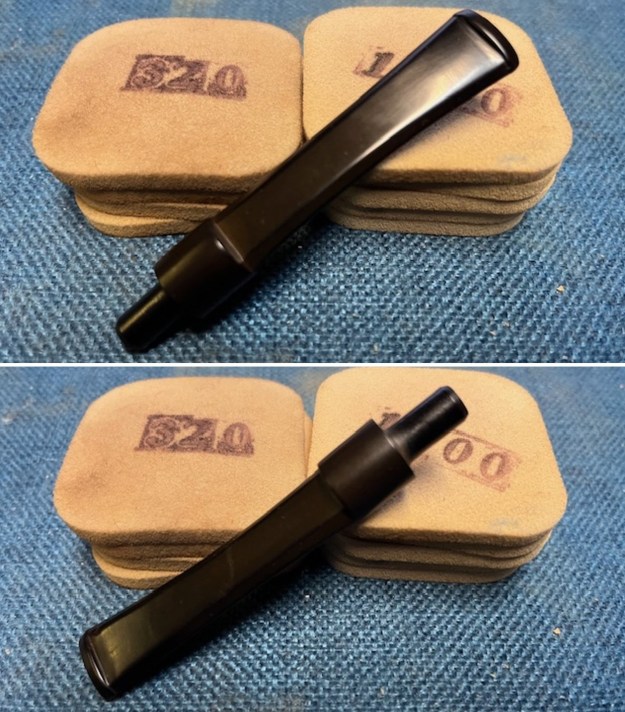
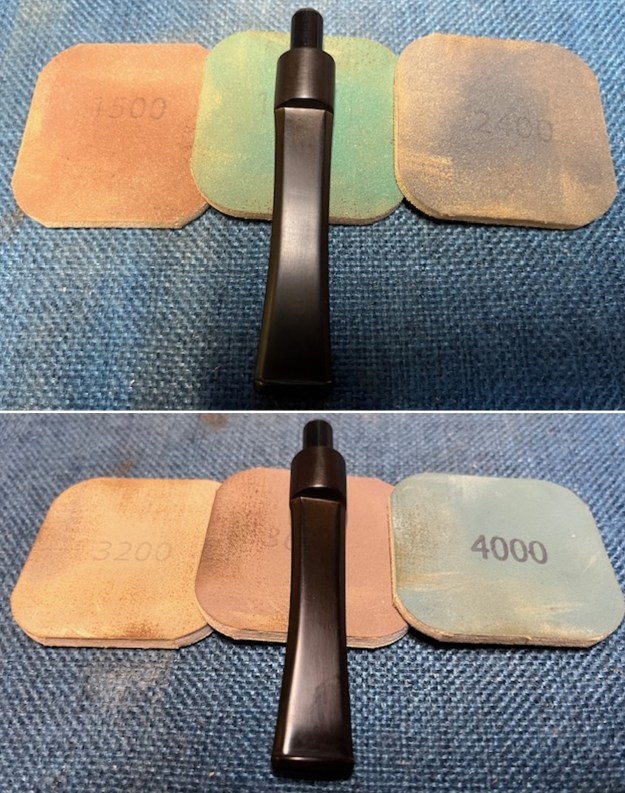
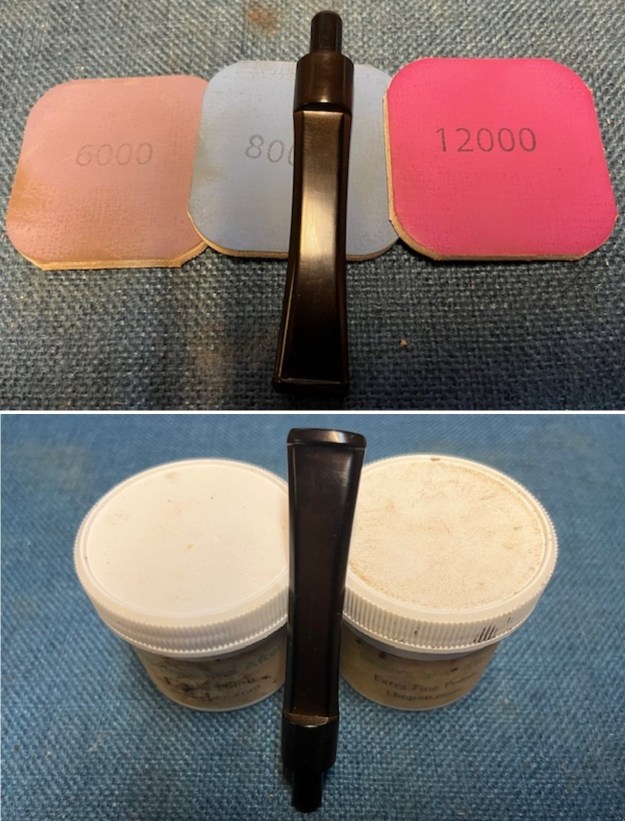
As always, I encourage your questions and comments as you read the blog. Thanks to each of you who are reading this blog. Remember we are not pipe owners; we are pipe men and women who hold our pipes in trust until they pass on into the trust of those who follow us.
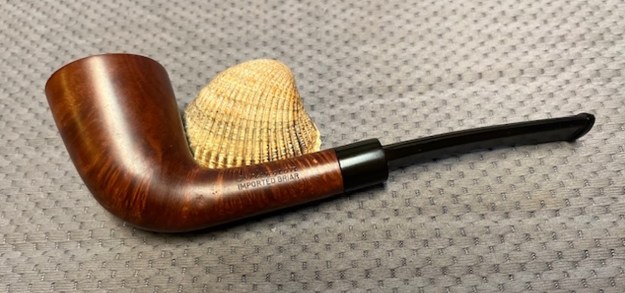
Restemming a Radford Ravel Rhodesian I have worked on before


by Steve Laug

I have worked on this Radford Ravel Rhodesian for this pipe man quite often and I know that this is at least the second stem I have worked on for this pipe. That does not include the many rebuilds and refits that I have done on the first stem. The pipe is one of his favourites and one that he repeatedly is drawn to. I remember restoring the pipe originally in 2017 – repairing and banding the cracked shank (https://rebornpipes.com/2017/03/19/banding-and-restoring-a-radford-ravel-rhodesian/). I cleaned up the stem, reshaped, repaired and polished it. In 2023 he brought the pipe back as the stem was loose. I reworked the thin saddle stem to improve the fit and shape (https://rebornpipes.com/2023/04/28/restemming-a-radford-ravel-rhodesian/). Since then I have rebuilt the area ahead of the button and the button area where tooth marks both marked it and ended up becoming bite throughs. Yesterday he stopped by left the pipe with me to replace. The top of the stem had cracked and the repaired areas on the topside were gone. I took photos of the pipe before I started the restemming process. Have a look at what I saw. I went through my can of stems and could not find a saddle stem that would fit. I did find a new vulcanite taper stem that would work once I fit the tenon to the shank. It was a little larger than the shank in diameter and I would need to remove the excess material to get a fit.I used the Dremel and a sanding drum to knock off the marks on the tenon and smooth it out to fit the shank. I took photos of the newly fit stem to show the casting marks on the sides of the stem and on the button/slot end. You can also see that the stem is slightly larger in diameter than the shank and nickel band. It is going to look very good! I used my Dremel and a sanding drum to knock off the casting debris on the stem sides and button end. I also began the process of reducing the diameter of the stem to match the shank. I took the majority of the excess of the vulcanite off the stem to start the fitting. I was working to get it down to where it would fit inside the band. I worked on it some more with the Dremel and sanding drum to get close. I was getting there. I wiped it down with some Obsidian Oil and then heated the stem with a lighter. Once the vulcanite was flexible I bent it to the angle that matched the bends of the shank and bowl.I sat on the front porch and sanded the stem with 220 grit sandpaper to further shape and fit the stem to the shank. The bend and flow of the stem looked very good at this point in the process.I sanded the tenon to smooth out the marks and striations still remaining as well as fine tuning the shape and fit of the stem in the band. I continued sanding the stem surface with 2×2 inch sanding pads – grits 320-3500. By the end all of the sanding marks were removed and the stem began to take on a shine as did the tenon. It was looking very good.I polished the stem with micromesh sanding pads – wet sanding with 1500-12000 grit sanding pads. I wiped it down after each sanding pad with some Obsidian Oil. I finished polishing it with Before & After Pipe Stem Polish – both Fine and Extra Fine and buffed it off with a cotton cloth. I finished the restem by buffing the bowl and stem with the Blue Diamond and moved on to buffing with carnauba wax. Once I have a good shine in the briar and vulcanite I always give the bowl and the stem multiple coats of carnauba wax. I have found that I can get a deeper shine if I following up the wax buff with a clean buffing pad. It works to raise the shine and then I follow that up with a hand buff with a microfiber cloth to deepen the shine. It is always fun for me to see what the polished bowl looks like with the polished vulcanite stem. It really is a beautiful pipe. The smooth finish around the cap and shank show the grain shining through the rich brown stains of this Radford Ravel Rhodesian. The finished pipe feels great in my hand. It is light and well balanced. Have a look at it with the photos below. The dimensions are Length: 5 ½ inches, Height: 1 ½ inches, Outside diameter of the bowl: 1 ¼ inches, Chamber diameter: ¾ of an inch. The weight of the pipe is 2.05 ounces/57 grams. It is a beautiful pipe and now that I have finished restemming it, he will get to enjoy it once more.

As always, I encourage your questions and comments as you read the blog. Thanks to each of you who are reading this blog. Remember we are not pipe owners; we are pipemen and women who hold our pipes in trust until they pass on into the trust of those who follow us.
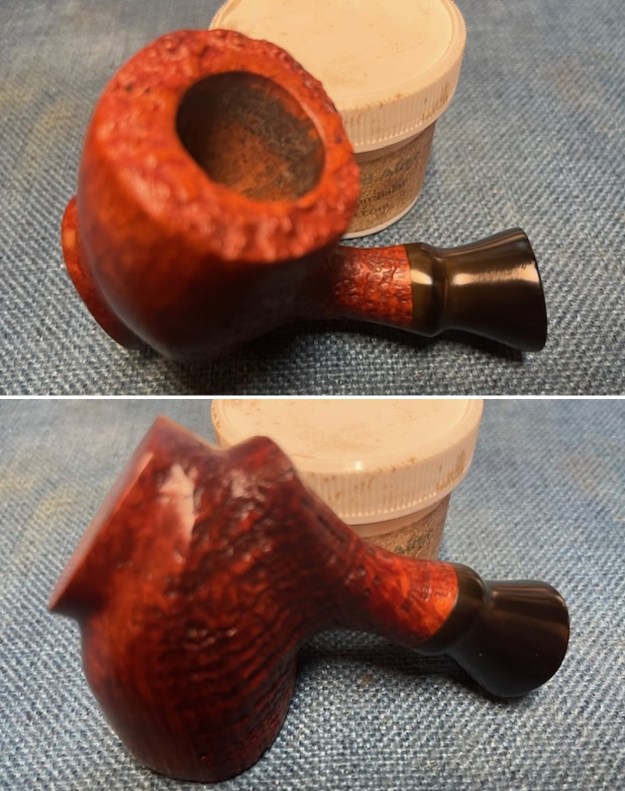
Reborn Soren Hand Carved Made in Denmark Freehand Sitter


by Steve Laug

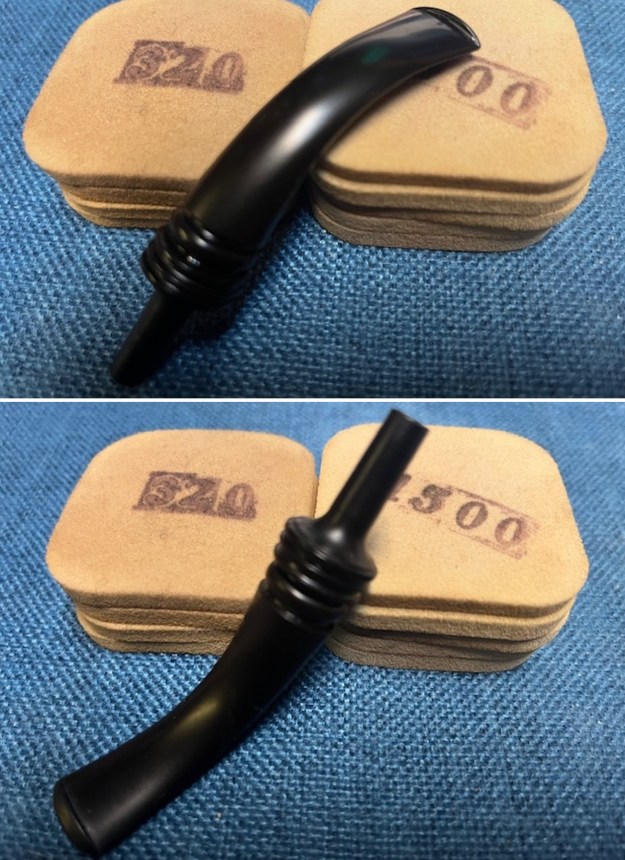
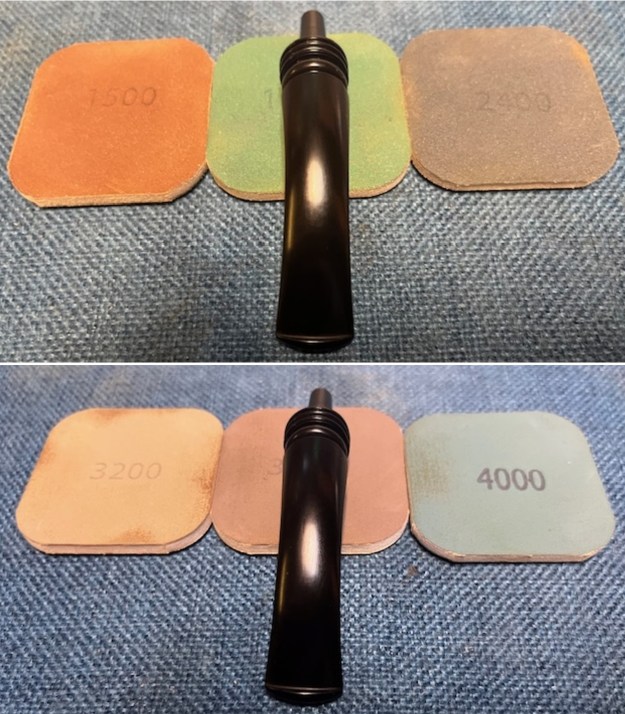
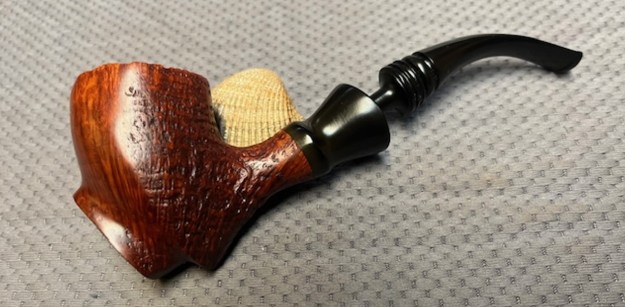
This particular Freehand pipe was purchased from seller in Holden Barr, Missouri, USA on 04/20/2021. It really is a Freehand pipe that combines a plateau rim top and shank end with a flat bottom making it a sitter. The bowl is smooth with fluted sides and a few carved feathers on the bowl sides. It is stamped on the underside of the shank and reads Soren [over] Hand-Carved [over] Made in Denmark. The finish is dirty but does not hide the beautiful grain around the bowl and shank. There is a vulcanite shank extension. The pipe had a moderate cake in the bowl some light lava on the rim top and inner edge of the bowl. There is some dust in some of the plateau. There was grime ground into the finish and dust and debris in the carved feathers and the plateau valleys. The fancy vulcanite saddle stem was oxidized and had light tooth marks and chatter on both sides near the button. Jeff took photos of the pipe before he started his work on it. Jeff took photos of the rim top and the stem to show the condition of the pipe when we received it. You can see the moderate cake in the bowl and the dust and lava in the plateau rim top and inner edge of the bowl. The turned vulcanite stem was oxidized, dirty and had light chatter and tooth marks on both sides near the button. He took photos of the sides and the heel to give an idea of the shape and the condition of the briar around the bowl. It really is a uniquely shaped pipe with the fluted sides on the bowl. The next photos Jeff took shows the stamping on the underside of the shank. It is clear but faint in spots and read as noted above.I went to a previous Soren restoration blog and reread what I had written to reconnect the dots for me https://rebornpipes.com/2016/09/12/repairing-and-rejuvenating-a-soren-danish-freehand/. I quote from that blog post:
I looked up the brand on Pipephil (http://www.pipephil.eu/logos/en/logo-s10.html) and found that the brand was carved by Søren Refbjerg Rasmussen. Pipes that he made for the European market were mostly stamped “Refbjerg” while those made for the US market were stamped “Soren”. Thus, I knew that one I was working on was imported into the US market.

I was once again working on a pipe made by Soren Refbjerg Rasmussen for the US market as it was stamped Soren. I continued to do reading on another of my go to websites, Pipedia. Here is the link for the article there. https://pipedia.org/wiki/Refbjerg. I quote some of the more pertinent information.

Søren Refbjerg Rasmussen founded a company in 1969, which employed an average of 8 – 12 craftsmen in the 1970’s. The semi-freehands they produced were traded under his prename Søren. Rasmussen himself finished only the very best pipes. So, his way of pipemaking closely resembled the ways of Preben Holm, Karl Erik Ottendahl or Erik Nørding. Altogether more than 1,000,000 pipes were sold.

From that I knew that the pipe in my hands came from the 1970s. It bears the Soren signature stamp which also says that it was made for sale in the American pipe market. Armed with that information I turned my attention to restoring the pipe.

Jeff had cleaned up the pipe following his normal cleaning process. In short, he cleaned up the reaming with a Savinelli Fitsall Pipe Knife.  He scrubbed the bowl with undiluted Murphy’s Oil Soap with a tooth brush. He worked over the lava and debris on the plateau rim top and shank end and was able to remove it. He rinsed it under running warm water to remove the soap and grime. He cleaned out the inside of the shank and the airway in the stem with alcohol, cotton swabs, shank brushes and pipe cleaners. He scrubbed the stem with Soft Scrub and cotton pads to remove the debris and oils on the stem. He soaked it in Briarville’s Pipe Stem Deoxidizer. He rinsed it with warm water and dried it off. The pipe looked very good and I was excited to start working on it. I took pictures of the pipe to show how it looked when I brought it to the worktable. I took some photos of the rim top and stem to show the condition of them both when the pipe arrived. It looked very good. The stem had some light chatter and tooth marks ahead of the button on both sides. I took a photo of the stamping on the heel of the bowl. It is readable and in great condition. I removed the stem from the shank and took a photo of the pipe to show the look of the pipe.I sanded the darkening on the smooth portions of the rim top and the bevelled inner edge of the bowl with a folded piece of 220 grit sandpaper to remove it. The process worked very well and the rim top looked much better.I touched up the valleys in the plateau with a black Sharpie pen to match the other valleys in the finish. It looked very good with the touch up. I polished the smooth portions of the bowl and the high points in the rustication and plateau with micromesh sanding pads – dry sanding with 1500-12000 grit pads. I wiped the briar down after each pad with a damp cloth. The bowl is starting to look very good. I worked some Before & After Restoration Balm into the surface of the briar with my fingertips and into the plateau rim top and shank end with a horsehair shoe brush to clean, enliven and protect it. I let the balm sit for a little while and then buffed with a cotton cloth to raise the shine. The photos show the bowl at this point in the restoration process. I set the bowl aside and turned my attention to the stem. I sanded it with 320-3500 grit sanding pads. I wiped the stem down with an Obsidian Oil cloth after each sanding pad. Once I was finished it looked much better.I polished the stem with micromesh sanding pads – wet sanding with 1500-12000 grit sanding pads. I wiped it down after each sanding pad with some Obsidian Oil. I finished polishing it with Before & After Pipe Stem Polish – both Fine and Extra Fine and buffed it off with a cotton cloth. This is a beautiful Soren Hand Carved Freehand with a fancy saddle stem. It has a great look and feel. The shape of the bowl, the mix of plateau, smooth and rusticated finishes and the cut of the briar work well to highlight the grain around the bowl sides. I polished stem and the bowl with Blue Diamond polish on the buffing wheel. I gave the bowl and the stem multiple coats of carnauba wax. I buffed the pipe with a clean buffing pad to raise the shine. I hand buffed it with a microfiber cloth to deepen the shine. The Soren Hand Carved Freehand polished up pretty nicely. The grain took on life with the buffing. The rich stains work well with the polished vulcanite stem. The finished pipe has a rich look that is quite catching. Have a look at it with the photos below. The shape, finish and flow of the pipe and stem are very well done. The dimensions are Length: 6 ½ inches, Height: 2 ¼ inches, Outside diameter of the bowl: 2 ½ inches x 1 ½ inches, Chamber diameter: ¾ of an inch. The weight of the pipe is 2.15 ounces/61 grams. It is a beautiful pipe. I will be putting it on the rebornpipes store shortly in the Danish Pipemakers Section if you are interested in adding it to your collection. Thanks for walking with me through the restoration.

New Life for someone’s obvious favourite Jobey Dansk Handmade in Denmark 2 Freehand


by Steve Laug

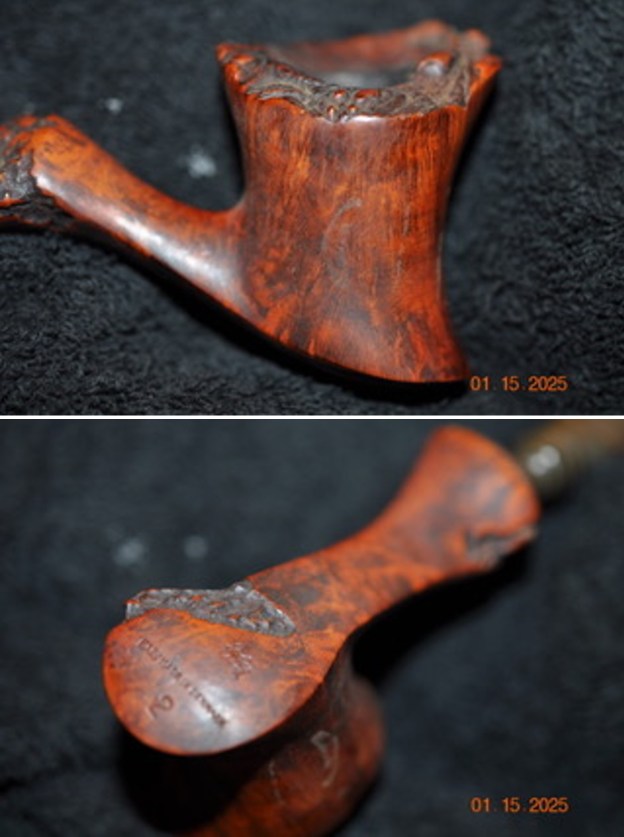
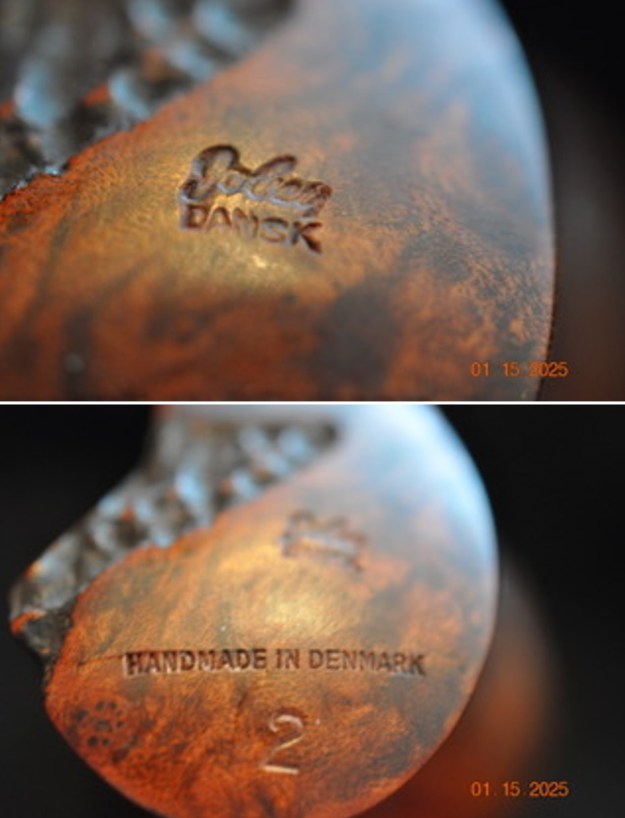
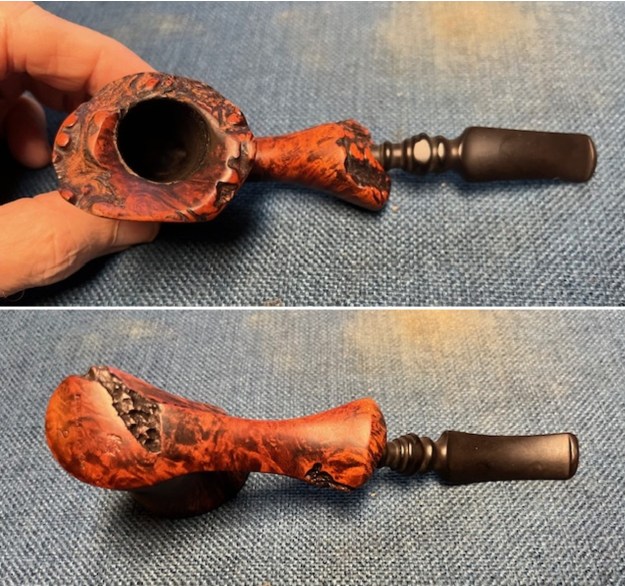
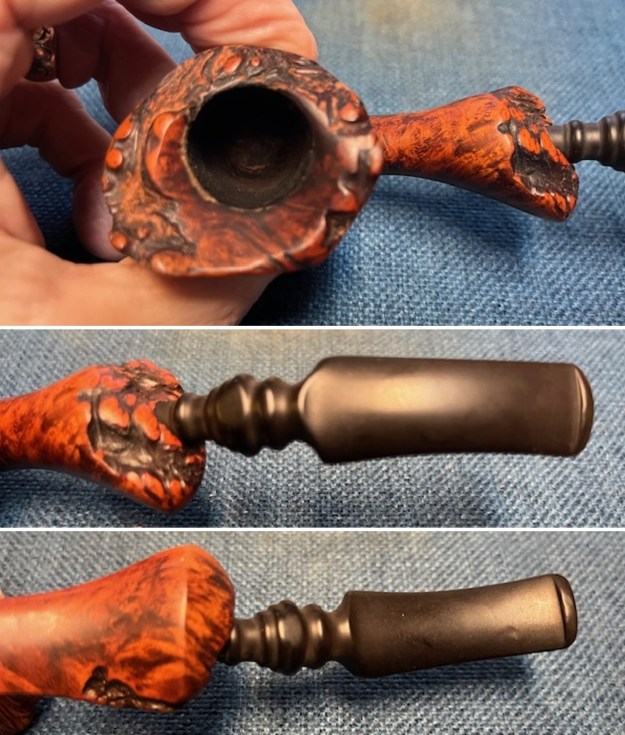
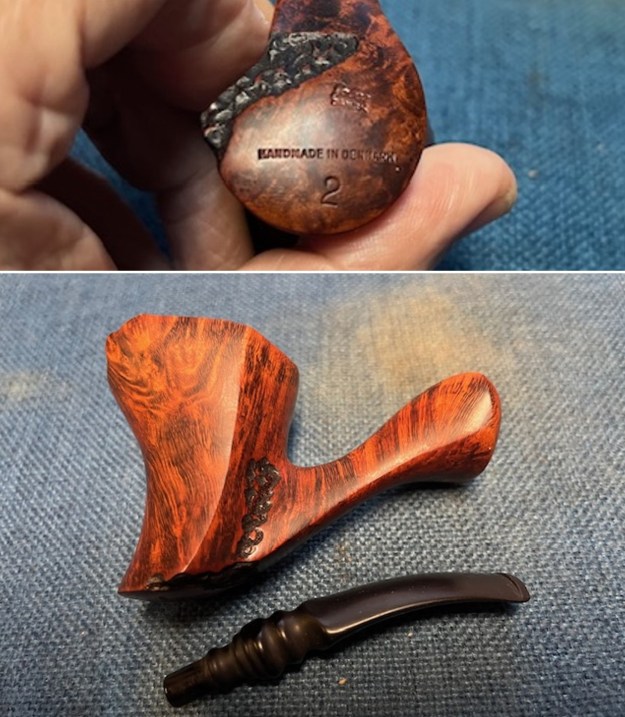
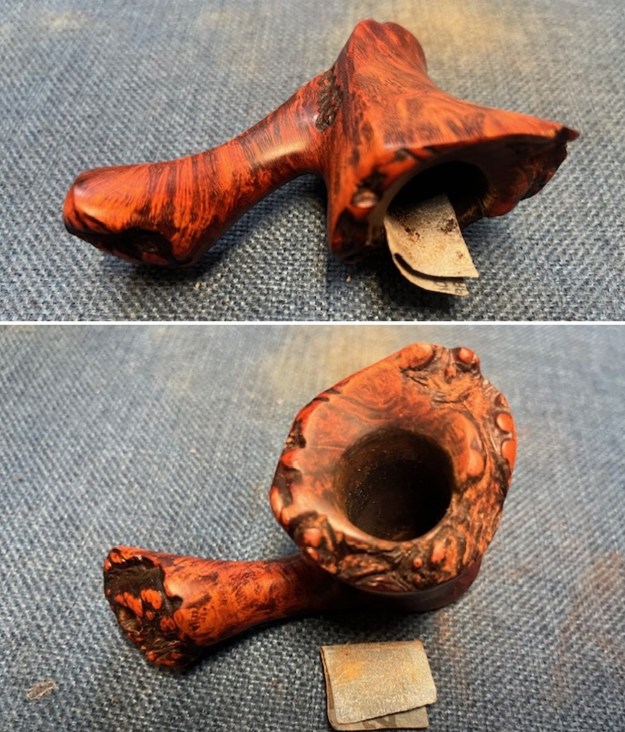
My brother Jeff picked up another Jobey Dansk 2 Freehand pipe on April 12, 2024 from a seller in Saint Cloud, Florida, USA. It had really unique shape and some nice grain with spot carvings around the bowl and shank. There was some plateau on the top of the rim and on the end of the shank. There was a rustication on the left side of the bowl and on the heel of the bowl. I have worked on enough of these to know that were Danish Freehand pipes were carved by Karl Erik Ottendahl. This one was stamped on the heel of the bowl and read Jobey in script [over] Dansk [over] Handmade in Denmark [over] 2. The finish on this pipe was very dirty with dust filing in the plateau top. There was some lava and darkening on the top as well. The bowl had a thick cake. There were oils and grime ground into the finish of the bowl and the shank. The fancy vulcanite stem fit the well. The stem was oxidized, calcified and there were light bite marks and chatter on both sides of the stem ahead of the button. Jeff took of the pipe to show the overall condition of the bowl and stem. He took close up photos of the bowl and rim top from different angles to show the condition of the bowl and the plateau finish. You can see the thick cake in the bowl and the darkening and lava build up on the plateau rim top and edges of the bowl. The next photos show the condition of the vulcanite stem which is oxidized and calcified. You can see the light chatter and tooth marks on the surface of both sides ahead of the button. He took photos of the sides and heel of the bowl to show the lay of the grain and the oils and dust in the finish around the pipe. It is a nice piece of briar with a unique shape and patches of rustication on the bottom left side of the bowl toward the heel and the heel itself. Jeff took a photo of the stamping on the underside of the shank to capture it. It was clear and read Jobey Dansk at the top. Under that it read Handmade in Denmark. Underneath that it is stamped with a number 2I have included the information that the pipes were carved by a Danish carver known as Karl Erik. I looked up the Jobey listing on Pipedia (https://pipedia.org/wiki/Jobey) and found the following information. I quote a portion of the article that is pertinent as follows.

English – American – Danish – French… Information about the brand Jobey are only to be found in form of smithereens…

Probably established in England around 1920(?) the brand hiked into the USA later. In the course of time owner, distributor and manufacturer changed repeatedly. As far as known:

George Yale Pipes & Tobacco, New York (1942)

Norwalk Pipe Co., New York (1949)

Arlington Briar Pipes Corp., Brooklyn (when?)

Hollco International, New York (1969).

Weber Pipe Co., Jersey City, NJ (1970’s)

The Tinder Box, (1970’s – 80’s).

Throughout decades Jobey pipes were mainly sold in the USA, Canada and England but remained almost unknown in continental Europe. The bulk of Jobeys was predominantly made according to classical patterns and mainly in the lower to middle price range. The predominant judgment of the pipe smokers reads: “A well-made pipe for the price.” So there is hardly anything very special or exciting about Jobey pipes although a flyer from ca. 1970 assures: “The briar root Jobey insists upon for its peer of pipes is left untouched to grow, harden and sweeten for 100 years. […]Jobey uses only the heart of this century old briar and only one out of 500 bowls turned measures up to the rigid Jobey specifications.” 99.80% of cull… that makes the layman marveling!

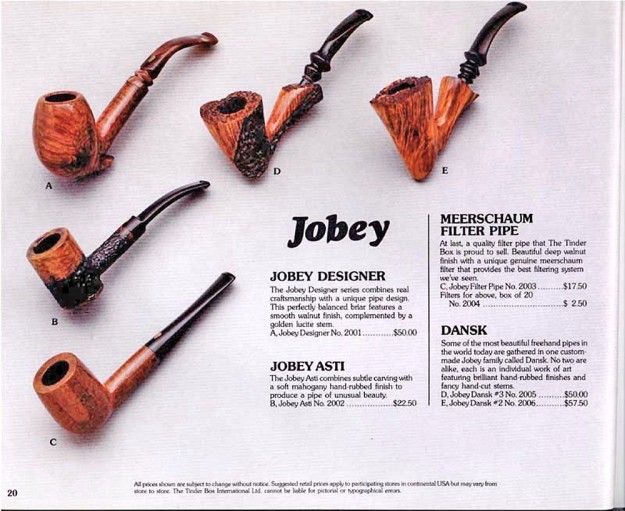
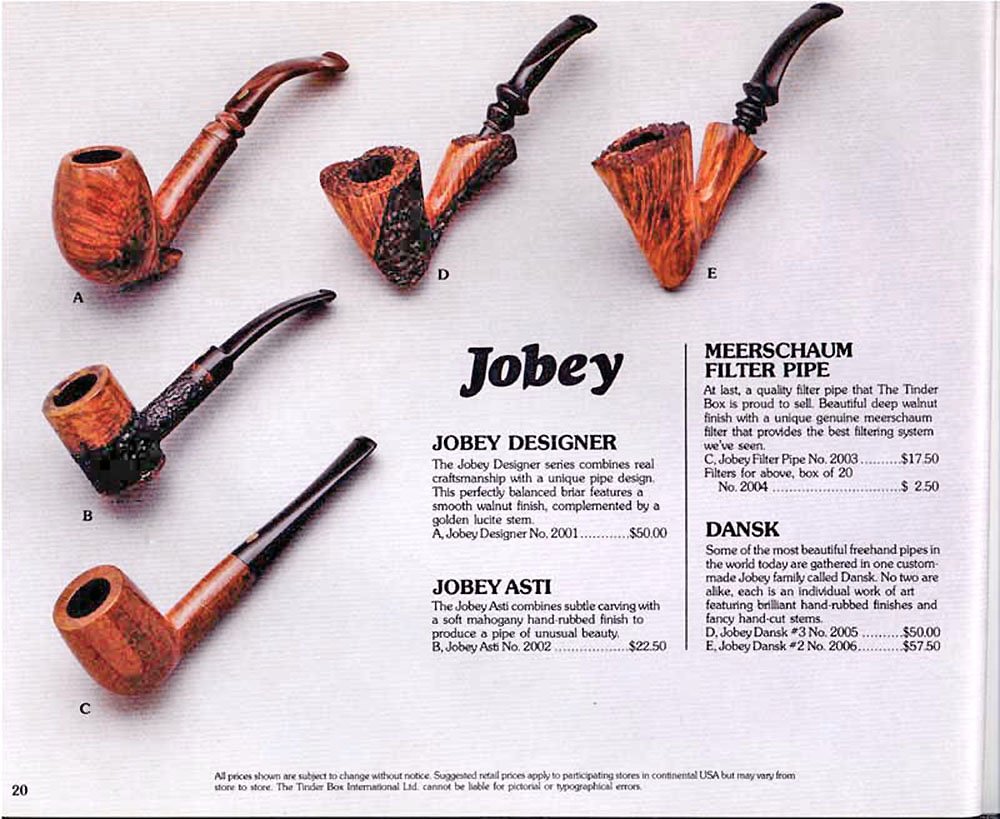
Yet then there are partially really exciting Freehands mainly in the seventies, that Jobey – Weber owned back then – bought from Danish pipe genius Karl Erik Ottendahl. These pipes were offered as Jobey Dansk – ’70’s pure! (BTW waning sales caused Ottendahl to discontinue exports to the United States in 1987.)

There was also an interesting Tinderbox catalogue page, provided courtesy of Doug Valitchka, that includes a note about the Jobey Dansk (https://pipedia.org/images/7/7a/Jobey1979.jpg).From that information I confirmed that the pipe that I was working on was carved by Karl Erik Ottendahl. There were some similarities to the Karl Erik pipes that I have worked on in the past. The dating of the pipe line in the 70s fits well with the pipe I have in hand.

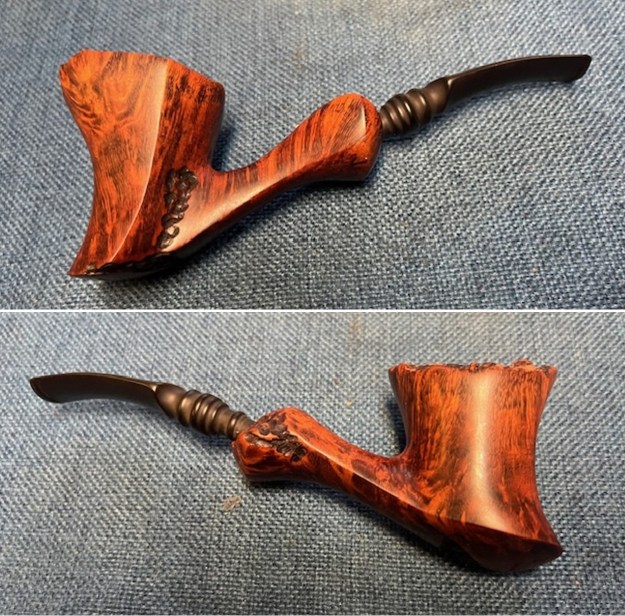
Now it was time to work on the pipe on my end. When I received it, Jeff had once again done an amazing job cleaning the pipe. He reamed it with a PipNet pipe reamer and got rid of the cake. He cleaned up the reaming with a Savinelli Fitsall Pipe Knife so that we could see the walls of the bowl and assess for damage. It was in good condition. He cleaned the internals of the shank and stem with cotton swabs, pipe cleaners, shank brushes and alcohol. He scrubbed the exterior with undiluted Murphy’s Oil Soap and a tooth brush. He rinsed the pipe under warm water. He dried it off with a cloth and then let it air dry. The stem was scrubbed with Soft Scrub and soaked in Briarville’s Stem Deoxidizer. It came out looking clean but the hole in the stem called for a replacement once again. The finish on the bowl and the rim top cleaned up nicely. I took pictures of the pipe to show how it looked when I brought it to the worktable. I took some photos of the rim top and stem to show the condition of them both when the pipe arrived. It looked very good. The stem had some light chatter and tooth marks ahead of the button on both sides. I took a photo of the stamping on the heel of the bowl. It is readable and in great condition.   I removed the stem from the shank and took a photo of the pipe to show the look of the pipe.I sanded the darkening on the smooth portions of the rim top and the bevelled inner edge of the bowl with a folded piece of 220 grit sandpaper to remove it. The process worked very well and the rim top looked much better.I touched up the valleys in the plateau with a black Sharpie pen to match the other valleys in the finish. It looked very good with the touch up.I polished the smooth portions of the bowl and the high points in the rustication and plateau with micromesh sanding pads – dry sanding with 1500-12000 grit pads. I wiped the briar down after each pad with a damp cloth. The bowl is starting to look very good. I worked some Before & After Restoration Balm into the surface of the briar with my fingertips and into the plateau rim top and shank end with a horsehair shoe brush to clean, enliven and protect it. I let the balm sit for a little while and then buffed with a cotton cloth to raise the shine. The photos show the bowl at this point in the restoration process. I set the bowl aside and turned my attention to the stem. I “painted” the stem with a lighter flame and then filled in the remaining tooth damage with black rubberized CA glue. I set it aside to let the repair cure. Once cured, I flattened out the repairs with a flat file and then sanded it with 220 grit sandpaper to blend it into the surface of the surrounding vulcanite. I sanded the stem with 320-3500 grit sanding pads. I wiped the stem down with an Obsidian Oil cloth after each sanding pad. Once I was finished it looked much better.I polished the stem with micromesh sanding pads – wet sanding with 1500-12000 grit sanding pads. I wiped it down after each sanding pad with some Obsidian Oil. I finished polishing it with Before & After Pipe Stem Polish – both Fine and Extra Fine and buffed it off with a cotton cloth. This is a beautiful Jobey Dansk 2 Handmade Freehand by Karl Erik with a fancy, turned, vulcanite stem. It has a great look and feel. The shape fits well in the hand with the curve of the bowl and shank junction a perfect fit for the thumb around the bowl when held. I polished stem and the bowl with Blue Diamond polish on the buffing wheel. I gave the plateau on the rim top and shank end multiple coats of Conservator’s Wax. I gave the bowl and the stem multiple coats of carnauba wax. I buffed the pipe with a clean buffing pad to raise the shine. I hand buffed it with a microfiber cloth to deepen the shine. The pipe polished up pretty nicely. The rich combination of browns and black in the smooth finishes and the plateau areas took on life with the buffing. The rich colour of the briar works well with the polished vulcanite stem. I like the grain and finished look of this Jobey Dansk 2 pipe. Have a look at it with the photos below. The shape, finish and flow of the pipe and stem are very well done. The dimensions are Length: 6  inches, Height: 2 ¼ inches, Outside diameter of the bowl: 1 ½ wide, Chamber diameter: 7/8  of an inch. The weight of the pipe is 43 grams/1.52 ounces. This Danish Freehand is a real beauty. Thanks for walking through the restoration with me as I worked over another beautiful pipe. This one will be going on the rebornpipes store in the Danish Pipe Making Section shortly if you would like to add it to your collection. Thanks for your time.

Restoring a Soren Hand Carved Made in Denmark Freehand Sitter


by Steve Laug

This particular Freehand pipe was purchased as part of a lot from seller in Wilkes Barre, Pennsylvania, USA on 09/26/2018. It really is a Freehand pipe that combines a plateau rim top and shank end with feet like the fins of a rocket on the bottom making it a sitter. The front of the bowl is smooth and the back is sandblast. The blast carries through the shank as well. It is stamped on a smooth panel on underside of the shank and reads Soren [over] Hand-Carved [over] Made in Denmark. The finish is dirty but does not hide the beautiful grain around the bowl and shank. There is a vulcanite shank extension. The pipe had a moderate cake in the bowl but the rim top and inner edge of the bowl looked good. There is some dust in some of the plateau. It is heavier toward the back half of the bowl. There was grime ground into the sandblast finish and dust and debris in the plateau valleys. The fancy vulcanite shank extension and the saddle stem was oxidized and had light tooth marks and chatter on both sides near the button.  Jeff took photos of the pipe before he started his work on it. Jeff took photos of the rim top and the stem to show the condition of the pipe when we received it. You can see the moderate cake in the bowl and the dust and debris in the plateau rim top and inner edge of the bowl. The turned vulcanite stem was oxidized, dirty and had light chatter and tooth marks on both sides near the button. He took photos of the sides and the heel to give an idea of the shape and the condition of the briar around the bowl. It really is a uniquely shaped pipe with the pedestal base on the bottom front of the bowl.The next photos Jeff took shows the stamping on the underside of the shank. It is clear but faint in spots and read as noted above. I went to a previous Soren restoration blog and reread what I had written to reconnect the dots for me https://rebornpipes.com/2016/09/12/repairing-and-rejuvenating-a-soren-danish-freehand/. I quote from that blog post:

I looked up the brand on Pipephil (http://www.pipephil.eu/logos/en/logo-s10.html) and found that the brand was carved by Søren Refbjerg Rasmussen. Pipes that he made for the European market were mostly stamped “Refbjerg” while those made for the US market were stamped “Soren”. Thus, I knew that one I was working on was imported into the US market.

I was once again working on a pipe made by Soren Refbjerg Rasmussen for the US market as it was stamped Soren. I continued to do reading on another of my go to websites, Pipedia. Here is the link for the article there. https://pipedia.org/wiki/Refbjerg. I quote some of the more pertinent information.

Søren Refbjerg Rasmussen founded a company in 1969, which employed an average of 8 – 12 craftsmen in the 1970’s. The semi-freehands they produced were traded under his prename Søren. Rasmussen himself finished only the very best pipes. So, his way of pipemaking closely resembled the ways of Preben Holm, Karl Erik Ottendahl or Erik Nørding. Altogether more than 1,000,000 pipes were sold.

From that I knew that the pipe in my hands came from the 1970s. It bears the Soren signature stamp which also says that it was made for sale in the American pipe market. Armed with that information I turned my attention to restoring the pipe.

Jeff had cleaned up the pipe following his normal cleaning process. In short, he cleaned up the reaming with a Savinelli Fitsall Pipe Knife.  He scrubbed the bowl with undiluted Murphy’s Oil Soap with a tooth brush. He worked over the lava and debris on the plateau rim top and shank end and was able to remove it. He rinsed it under running warm water to remove the soap and grime. He cleaned out the inside of the shank and the airway in the stem with alcohol, cotton swabs, shank brushes and pipe cleaners. He scrubbed the stem with Soft Scrub and cotton pads to remove the debris and oils on the stem. He soaked it in Briarville’s Pipe Stem Deoxidizer. He rinsed it with warm water and dried it off. The pipe looked very good and I was excited to start working on it. I forgot to take my usual photos of the pipe.

I started my work on the pipe by sanding the vulcanite shank extension with 320-3500 grit sanding pads to remove the residual oxidation that remained. I was able to remove it for the most part and what remained would come off with the micromesh pads and the Before and After Pipe Stem polish. It was a pretty pipe. I polished the vulcanite shank extension and the smooth portions of the bowl on the front and heel. I dry sanded it with 1500-12000 grit sanding pads. I wiped the sanded portions of the bowl off with a damp cloth to remove the sanding debris. I wiped down the shank extension with an Obsidian Oil cloth. I worked some Before & After Restoration Balm into the surface of the briar with my fingertips and a horsehair shoe brush to get into the plateau and the sandblast. The product works to clean, enliven and protect it. I let the balm sit for a little while and then buffed with a cotton cloth to raise the shine. The following photos show the bowl at this point in the restoration process. I am very happy with the results. I set the bowl aside and turned to the stem. I used 320-3500 grit sanding pads to smooth out the roughness on the surface of the vulcanite and remove the tooth marks and chatter. I wiped the stem down with an Obsidian Oil cloth after each sanding pad.I polished the stem with micromesh sanding pads – wet sanding with 1500-12000 grit sanding pads. I wiped it down after each sanding pad Obsidian Oil. I finished by polishing it with Before & After Pipe Stem Polish both fine and extra Fine and then wiped it down with a final coat of Obsidian Oil. This is a beautiful Soren Hand Carved Freehand Sitter with a vulcanite shank extension and a fancy saddle stem. It has a great look and feel. The shape of the bowl, the mix of sandblast and smooth finishes and the cut of the briar work well to highlight the grain around the bowl sides. I polished stem and the bowl with Blue Diamond polish on the buffing wheel. I gave the bowl and the stem multiple coats of carnauba wax. I buffed the pipe with a clean buffing pad to raise the shine. I hand buffed it with a microfiber cloth to deepen the shine. The Soren Hand Carved Freehand polished up pretty nicely. The grain took on life with the buffing. The rich stains work well with the polished vulcanite stem. The finished pipe has a rich look that is quite catching. Have a look at it with the photos below. The shape, finish and flow of the pipe and stem are very well done. The dimensions are Length: 6 ½ inches, Height: 2 ¼ inches, Outside diameter of the bowl: 1 ½ inches, Chamber diameter: 7/8 of an inch. The weight of the pipe is 2.43 ounces/69 grams. It is a beautiful pipe. I will be putting it on the rebornpipes store shortly in the Danish Pipemakers Section if you are interested in adding it to your collection. Thanks for walking with me through the restoration.

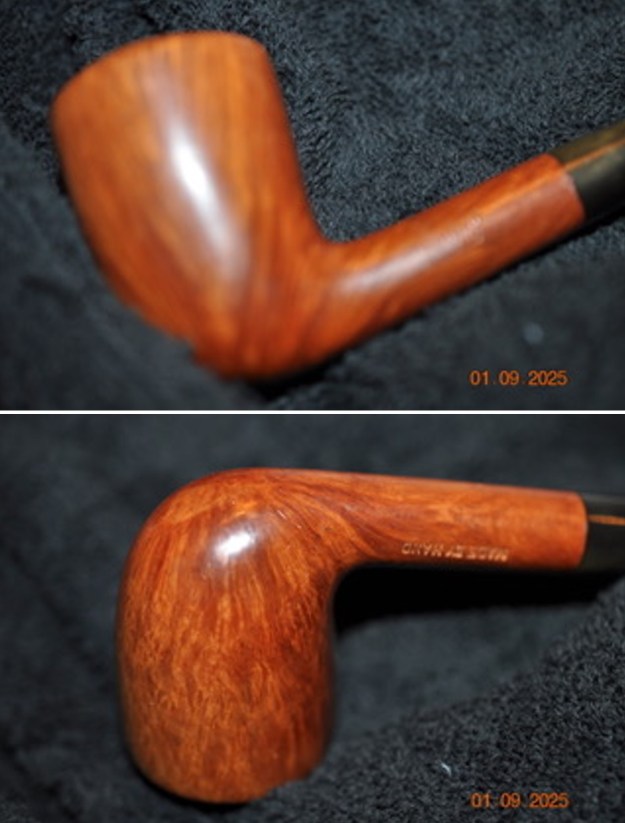
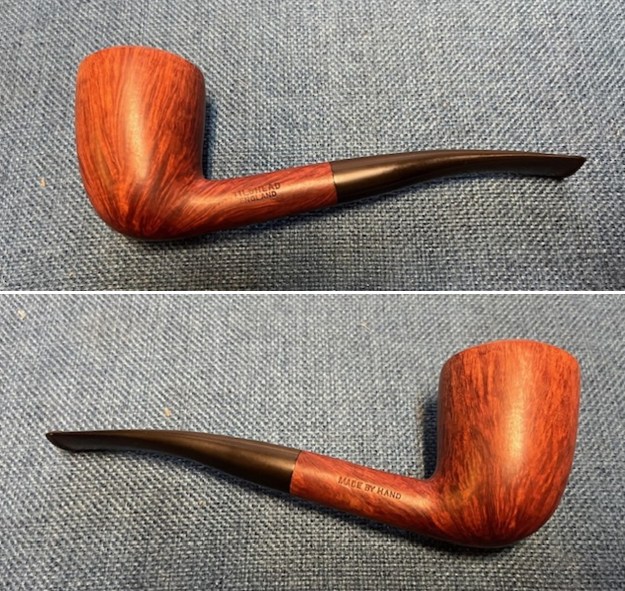
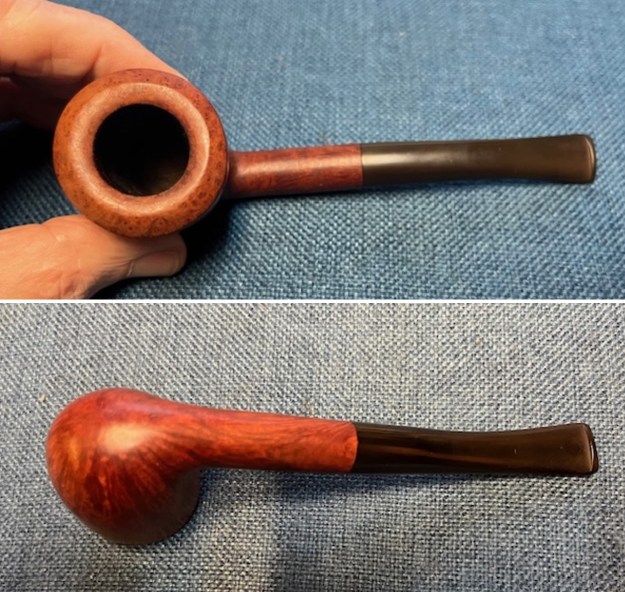
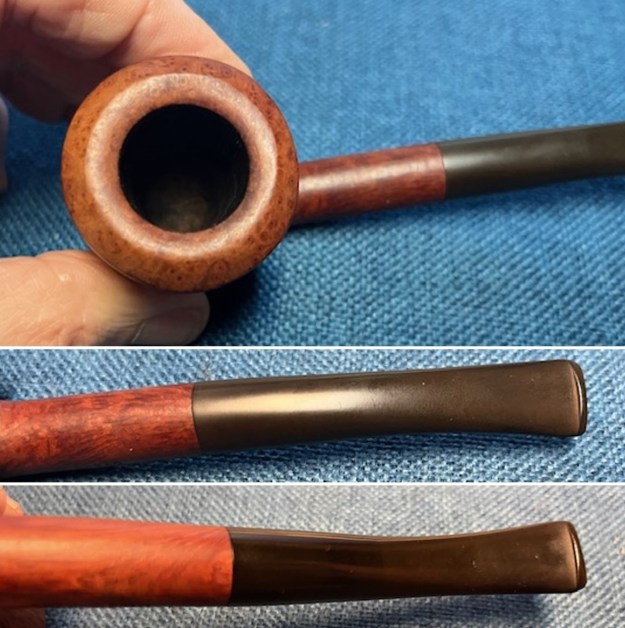
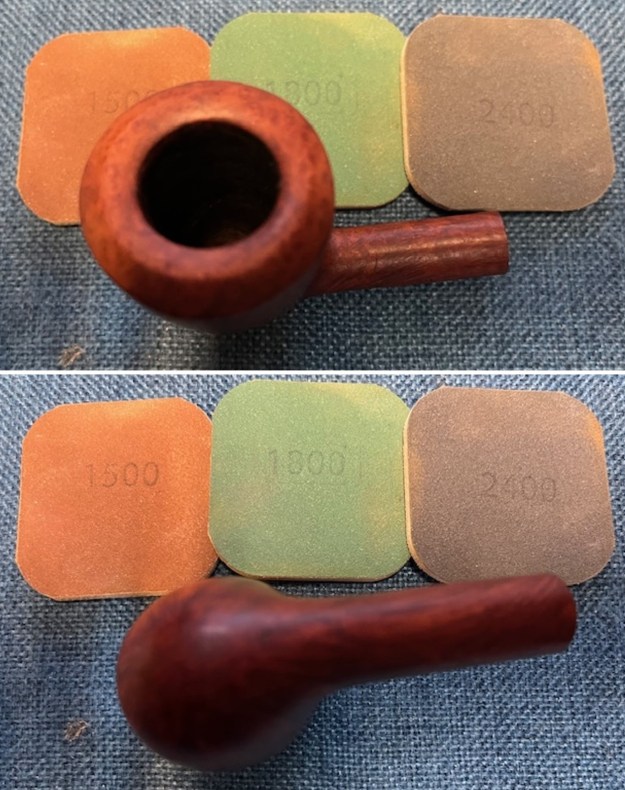
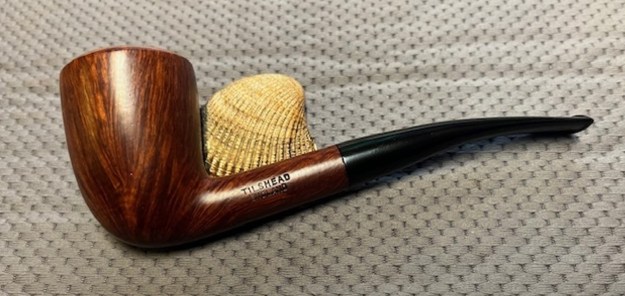
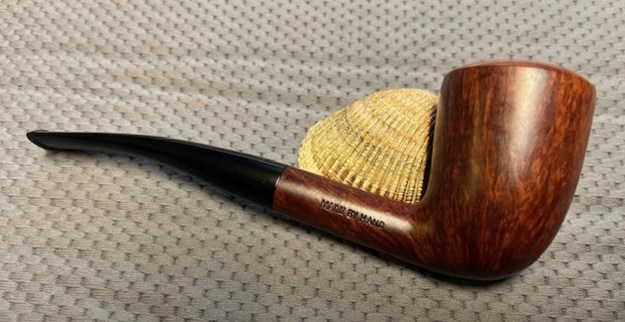
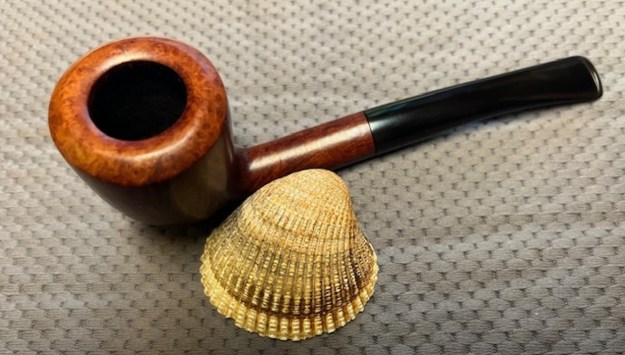
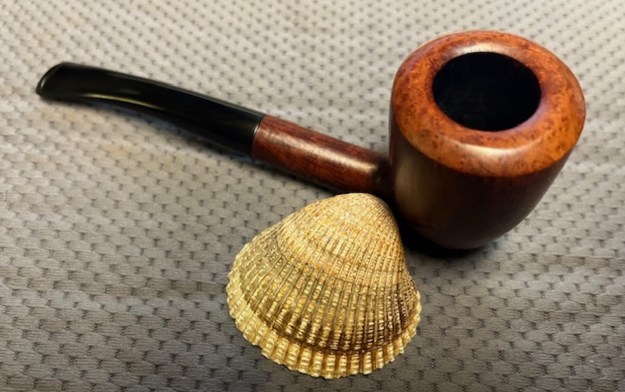
Restoring a beautiful Tilshead England Made by Hand Dublin


by Steve Laug

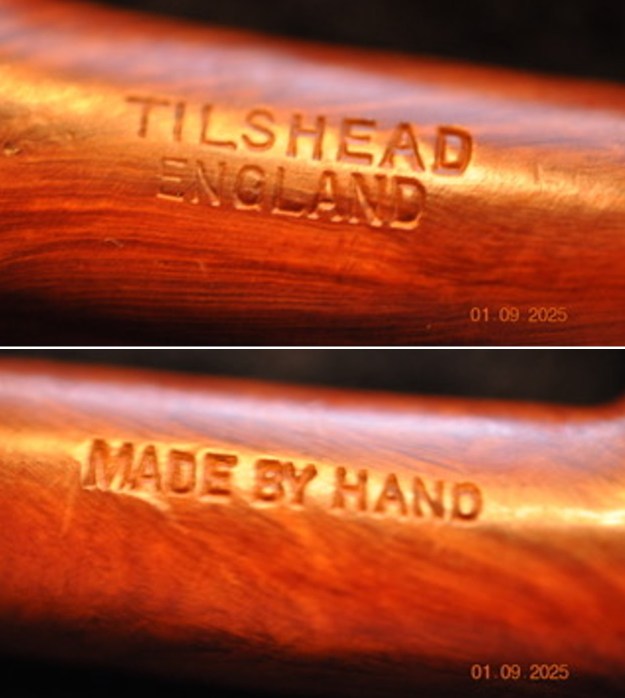
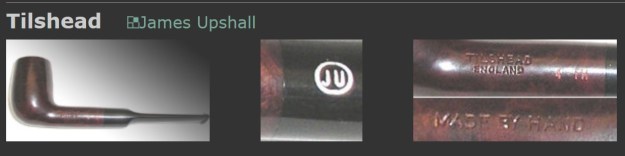
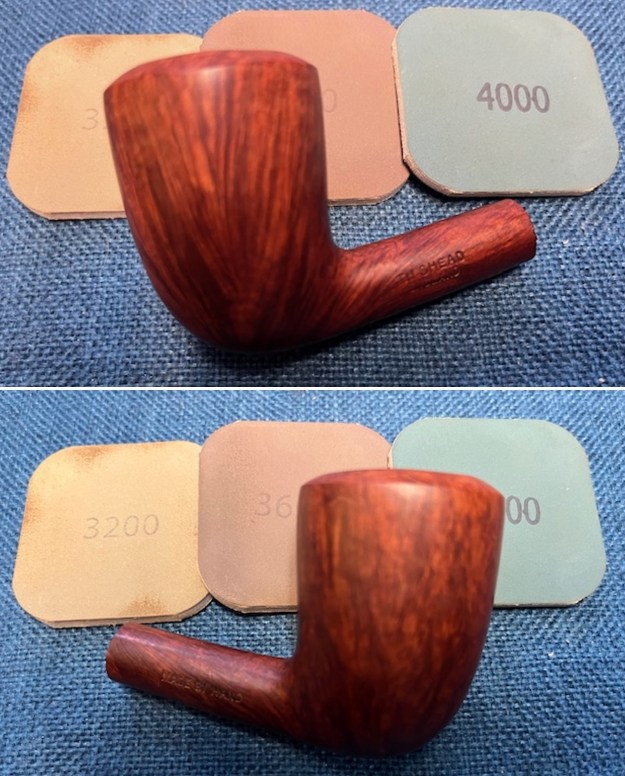
The next pipe on the table is a Peterson Rusticated Meerschaum Bulldog. We picked the pipe up from a seller in Ogden, Utah, USA on 12/21/2024. Probably the fact that it is a Tilshead Hand Made caught our eye on this one. It is stamped on the left side of the shank and reads Tilshead [over] England. On the right side it is stamped Made by Hand. It is a nice looking Dublin that was made by James Upshall company. The finish is a bit dull and dirty with dust and grime. The bowl has a light cake and the rim top has some darkening and some possible damage around the inner edge on the back. The stem is oxidized, calcified and has tooth chatter and light tooth marks on both sides near the button. There is no logo stamp on the stem. The surface of the button looks very good on both sides. Jeff took some photos of the pipe to show the general condition of the pipe before he started his clean up. Jeff took photos of the rim top and stem to show the general condition of the pipe. The bowl is lightly caked and the rim top looks good. The inner edge of the bowl has some possible burn damage and darkening toward the back of the bowl. The stem is oxidized, calcified and has tooth chatter and tooth marks on the top and underside near the button. Jeff took photos of the bowl sides and heel to show the condition of the smooth finish around this bowl. The grain is quite beautiful and it is a nice looking pipe. He took photos of the stamping on the shank sides and the top of the stem. It is clear and readable as noted above.Before I started my work on the pipe I looked up Tilshead Pipes on Pipephil’s site to see what they had in terms of information (http://www.pipephil.eu/logos/en/logo-t6.html).I looked up Tilshead on Pipedia and it sent me to the listing for Upshall pipes as they also made Tilshead (https://pipedia.org/wiki/James_Upshall). I read through the article and found the section on Grading & Sizing Information really helpful. I have included that below. I have highlighted the pertinent text in red below.

James Upshall pipes are graded by various finishes, i.e. bark, sandblast, black dress and smooth etc. Then by cross grain, flame grain, straight grain and, last but not least, the perfect high grade, which consists of dense straight grain to the bowl and shank. The latter being extremely rare. In addition, the price varies according to group size, i.e. from 3-4-5-6 cm high approximately Extra Large. We also have the Empire Series which are basically the giant size, individually hand crafted pipes which come in all finishes and categories of grain. All our pipes are individually hand carved from the highest quality, naturally dried Greek briar. In order to simplify our grading system, let me divide our pipes into 4 basic categories.

  1. It begins with the Tilshead pipe, which smokes every bit as good as the James Upshall but has a slight imperfection in the briar. In the same category price wise you will find the James Upshall Bark and Sandblast finish pipes, which fill and smoke as well as the high grades.
  2. In this category we have the best “root quality” which means that the grain is either cross, flame or straight, which is very much apparent through the transparent differing color finishes. This group will qualify as the “S”- Mahogany Red, “A” – Chestnut Tan and “P” – Walnut. The latter having the straighter grain.
  3. Here you have only straight grain, high grade pipes, which run from the “B”, “G”, “E”, “X” and “XX”. The latter will be the supreme high grade. Considering the straightness of the grain the latter category is also the rarest. Usually no more than 1% of the production will qualify.
  4. Lastly, we have the Empire Series. These are basically Limited Edition gigantic individually hand crafted pieces, which again are extremely rare due to the scarcity of large, superior briar blocks.

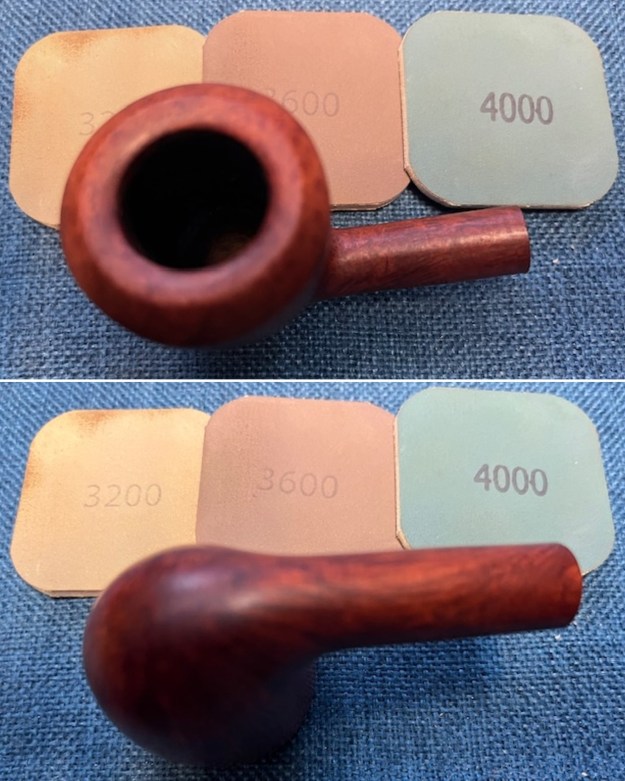
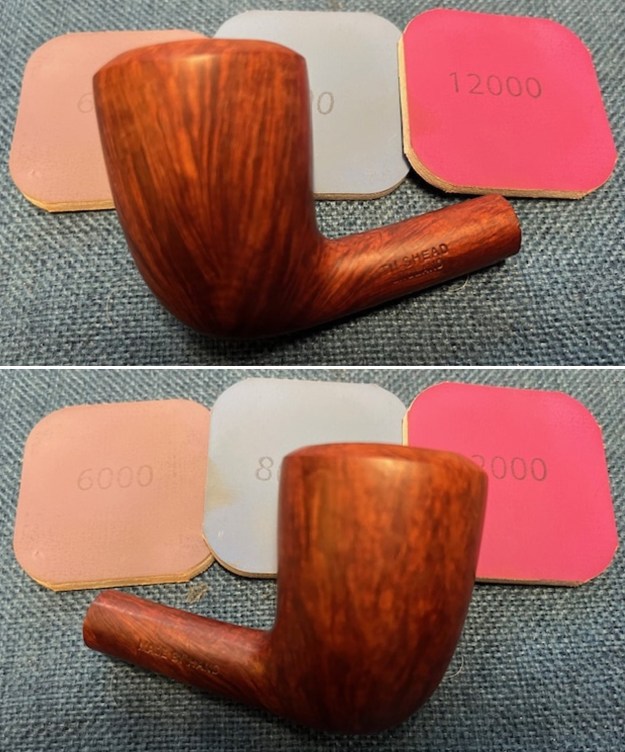
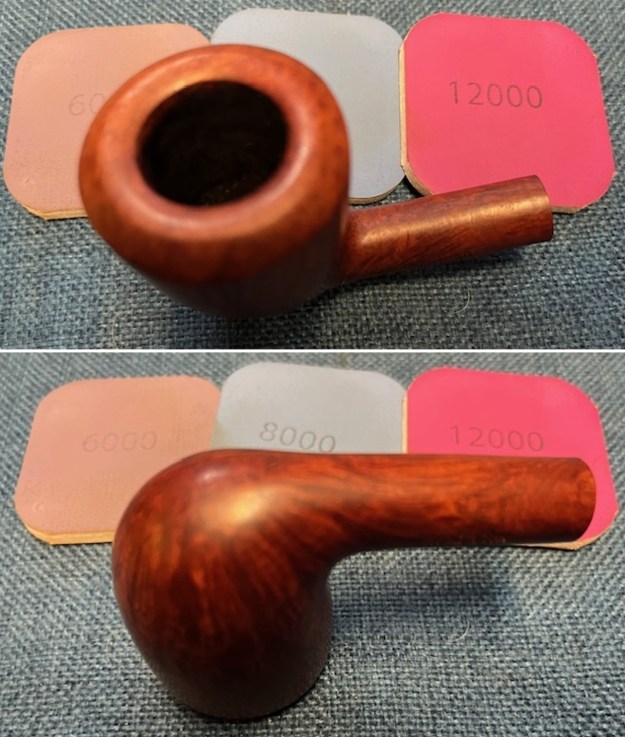
Armed with that information I turned my attention to the pipe itself. Jeff had cleaned the pipe with his usual penchant for thoroughness that I really appreciate. He reamed it with a PipNet pipe reamer and cleaned up the reaming with a Savinelli Fitsall Pipe Knife. He scrubbed out the internals with alcohol, pipe cleaners, shank brushes and cotton swabs until the pipe was clean. He scrubbed the exterior of the bowl with undiluted Murphy’s Oil Soap and a tooth brush to remove the grime and grit on the briar and the lava on the rim top. The finish looks very good with good looking grain around the bowl and shank. Jeff soaked the stem in Briarville’s Pipe Stem Deoxidizer to remove the oxidation on the rubber. When the pipe arrived here in Vancouver for the second stop of its restoration tour it looked very good. I took photos before I started my part of the work. I took close up photos of the bowl and rim top as well as the stem. You can see the condition of the rim top and bowl in the first photo. Jeff was able to remove all of the tar and oils on the top and the edges of the bowl. It looked very good. The stem had some remaining oxidation and some light tooth chatter on both sides ahead of the button.I took photos of the stamping on the shank sides to show the condition is after the clean up. The stamping was clear and readable as noted above. I removed the stem and took a photo to show the parts of the pipe. It is a beauty.I polished the briar with 1500-12000 grit sanding pads. I wiped down the bowl with a damp cloth to remove the sanding debris and dust. The bowl began to look amazing. I worked some Before & After Restoration Balm into the surface of the briar with my fingertips to clean, enliven and protect it. I let the balm sit for a little while and then buffed with a cotton cloth to raise the shine. The following photos show the bowl at this point in the restoration process. I am very happy with the results. I sanded the stem with 320-3500 grit sanding pads. I wiped the stem down with an Obsidian Oil cloth after each sanding pad. The tooth marks were blended in quite well.I polished the stem with micromesh sanding pads – wet sanding with 1500-12000 grit sanding pads. I wiped it down after each sanding pad Obsidian Oil. I finished by polishing it with Before & After Pipe Stem Polish both fine and extra Fine and then wiped it down with a final coat of Obsidian Oil. This is a beautiful James Upshall Made Tilshead England Made By Hand Dublin with a vulcanite tapered stem. It has a great look and feel. The shape of the bowl, the beveled rim top and the cut of the briar work well to highlight the grain around the bowl sides. I polished stem and the bowl with Blue Diamond polish on the buffing wheel. I gave the bowl and the stem multiple coats of carnauba wax. I buffed the pipe with a clean buffing pad to raise the shine. I hand buffed it with a microfiber cloth to deepen the shine. The Tilshead England Dublin polished up pretty nicely. The grain took on life with the buffing. The rich stains work well with the polished vulcanite stem. The finished pipe has a rich look that is quite catching. Have a look at it with the photos below. The shape, finish and flow of the pipe and stem are very well done. The dimensions are Length: 6 inches, Height: 2 ¼ inches, Outside diameter of the bowl: 1 ½ inches, Chamber diameter: ¾ of an inch. The weight of the pipe is 1.76 ounces/50 grams. It is a beautiful pipe. I will be putting it on the rebornpipes store shortly in the British Pipemakers Section if you are interested in adding it to your collection. Thanks for walking with me through the restoration.

New Life for an English Pipe Shop Algerian Briar Apple


by Steve Laug

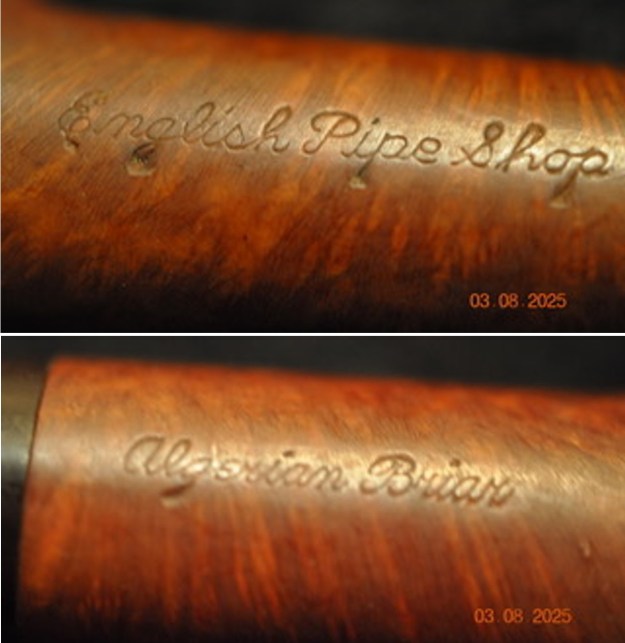
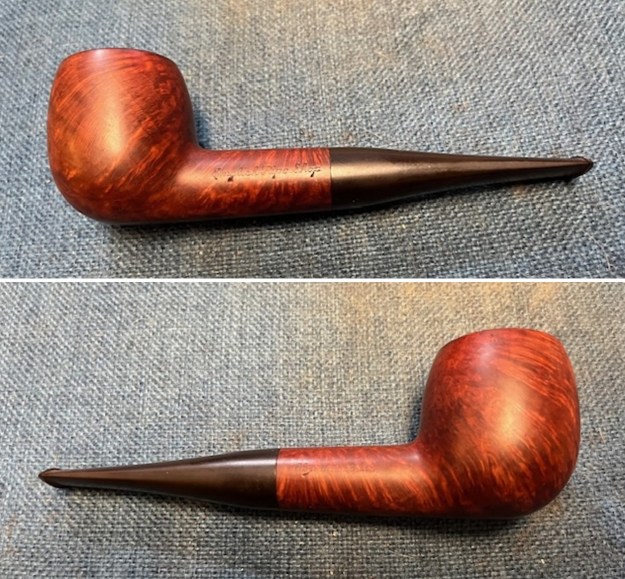
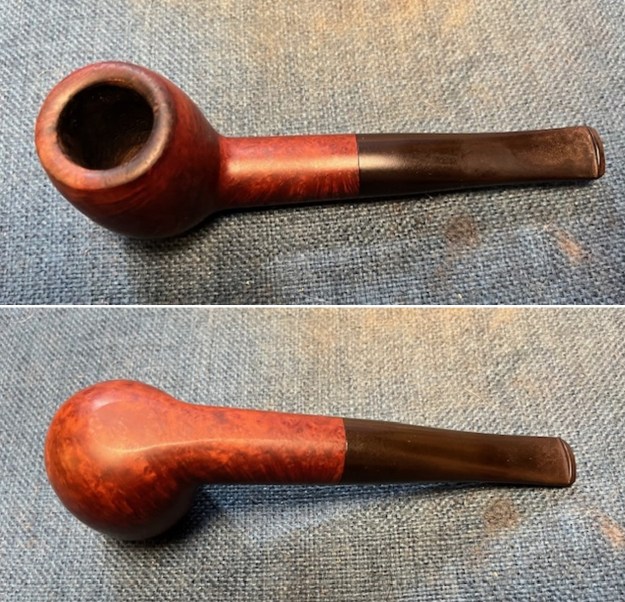
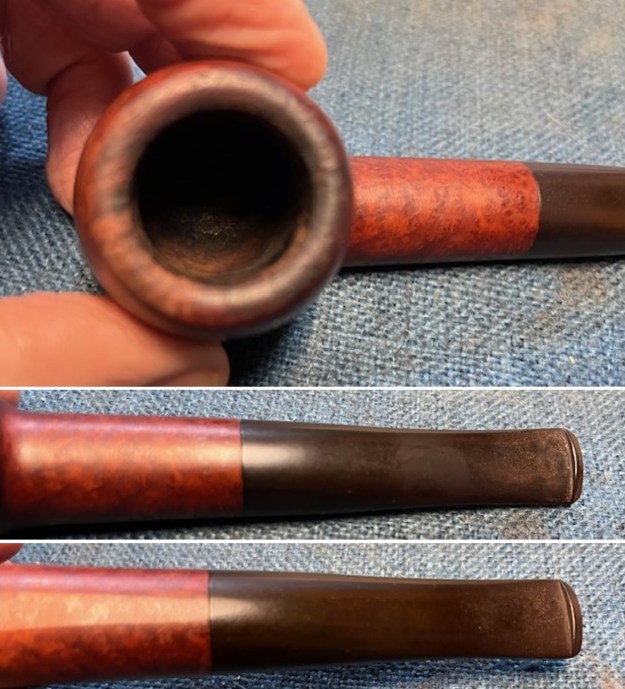
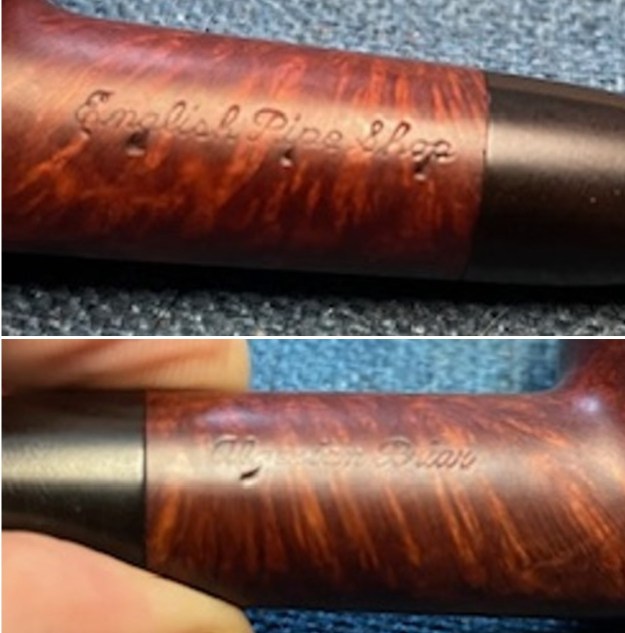
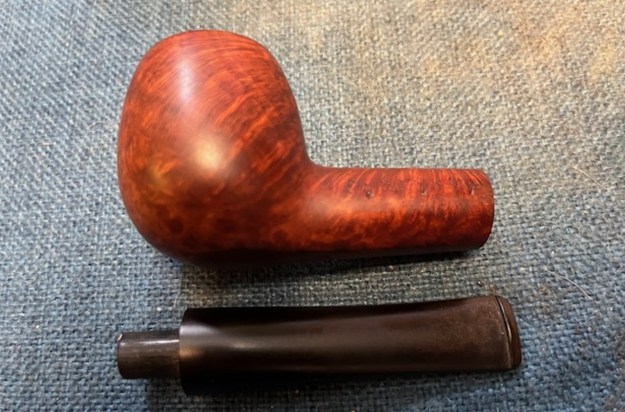
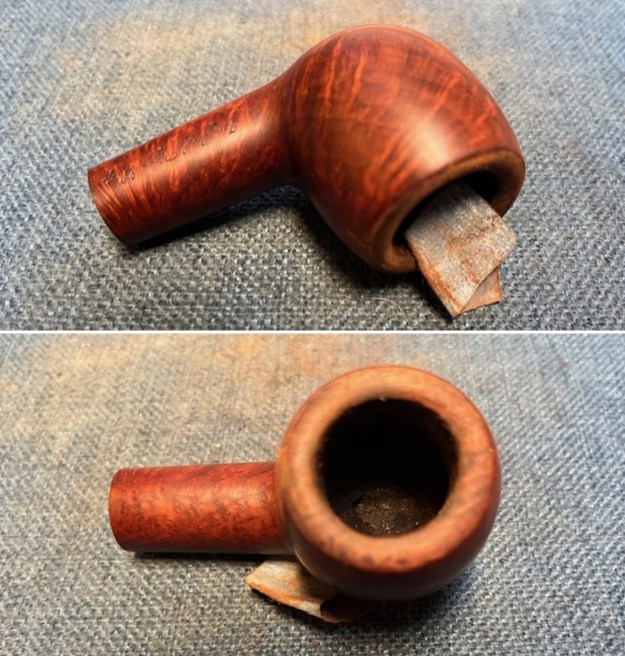
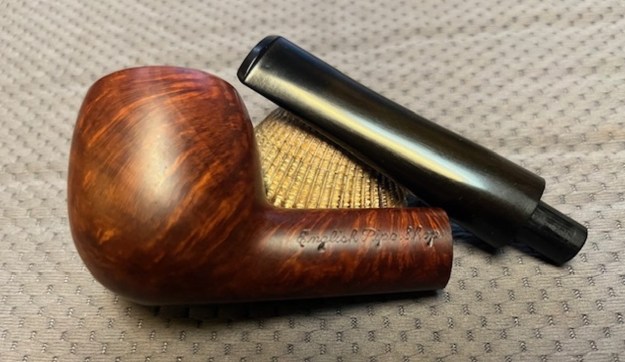
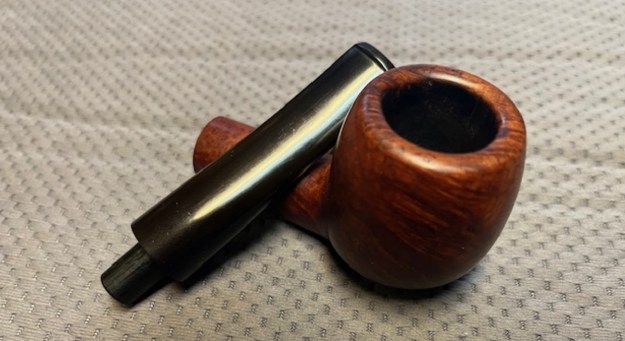
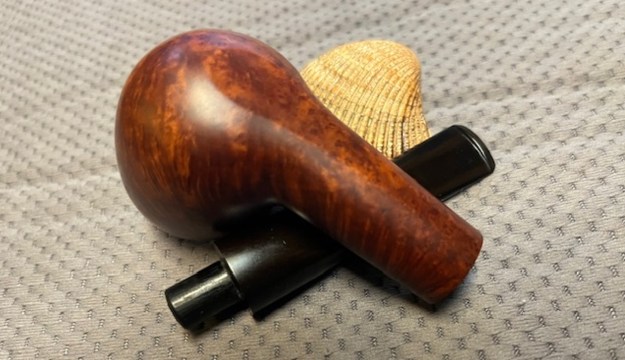
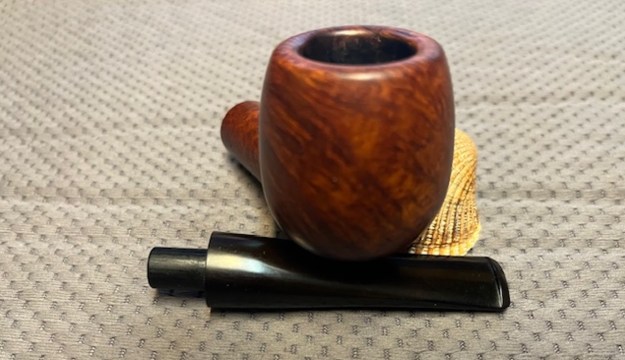
The next pipe on the worktable is a beautiful mix of grains on a straight apple. We bought it from antique shop in Wheeler, Oregon, USA. It is a truly beautiful piece of briar that is stamped English Pipe Shop on the left side of the shank and Algerian Briar on the right side. It is a brand I have not seen before but I really like the classic shape and the chunky shape. The grain on it is beautiful. The had a thick cake that had overflowed onto the rim top in thick lava. The inner and outer edge of the rim top was protected by the lava coat. I am hoping it will look good once it is cleaned up. The stem was oxidized, calcified and there was some chatter and tooth marks on the top and bottom of the stem near the button. The fit of the stem is perfect to the shank and there was no stamping or logo on the side of the stem. Jeff took photos of the pipe before he started his work on it. Jeff took close up photos of the bowl and rim to capture the condition of the pipe before he started his cleanup work. The bowl had a thick cake and a thick overflow of lava on the rim top that hopefully protected the crowned rim. The outer edge looked to be in decent condition. The stem showed some oxidation, calcification and light tooth marks on both sides ahead of the button. He also took a photo of the side and bottom of the bowl and shank to show the beautiful grain around the bowl under the grain. The photos show the general condition of the bowl and it is quite clean and another beautiful pipe. Jeff took photos to capture the stamping on the sides of the shank. The photos show the stamping. It is clear and readable as noted above. The stamping is deep on all the downward tails of the stamping on both sides.I cannot find any information on the brand though the stamping seems to point to an American made pipe. That is all I can determine from my observation of the pipe. It was time to work on the pipe.

Jeff reamed the bowl with a PipNet pipe reamer and followed up with a Savinelli Fitsall pipe knife to remove the cake. He scrubbed out the mortise and the airway in the shank and the stem with alcohol, cotton swabs, shank brushes and pipe cleaners. He scrubbed the exterior of the bowl, rim, shank and stem with a tooth brush and Murphy’s Oil Soap to remove the oils and tars on the rim and the grime on the finish of the bowl. He rinsed it under running water. He dried it off with a soft cloth. He was able to remove the lava build up on the rim top and the crowned surface of the rim top. Jeff scrubbed the interior of the stem with pipe cleaners and alcohol. He soaked it in Briarville’s Pipe Stem Deoxidizer and when finished he rinsed it off with warm water and dried it off with a soft cloth. I took photos of the pipe to show its condition before I started my work on it. The stem also looked better. I took close up photos of the bowl and rim top as well as the stem. You can see the condition of the rim top and bowl in the first photo. Jeff was able to remove all of the tar and oils but you can now see the darkening on the top and the edges of the bowl. The stem had light tooth marks and chatter on both sides near the button on both sides.I took photos of the stamping on the shank sides to show the condition is. The stamping was clear and readable as noted above. I also removed the stem and took a photo of the appearance of the parts of the pipe.
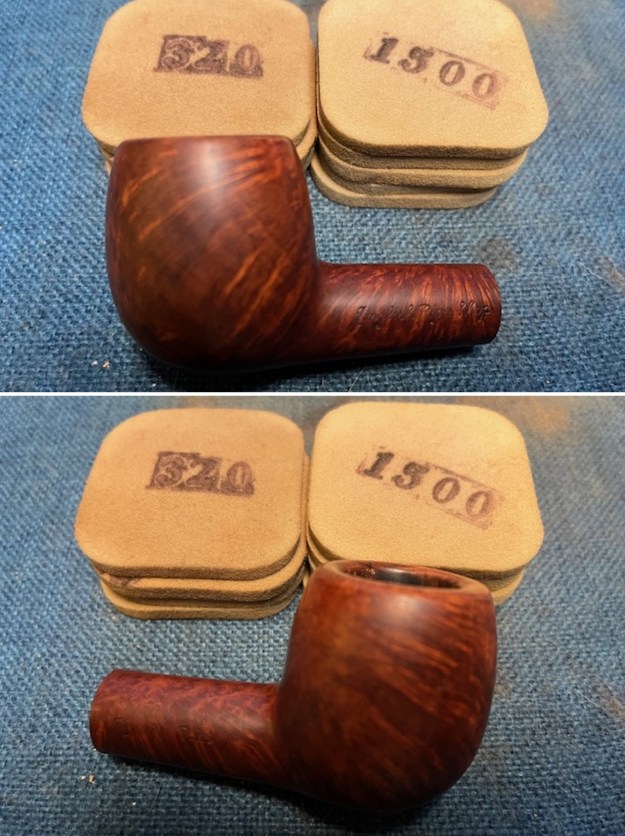
I decided to address the rim top first. To remove the darkening on the rim top and edges of the bowl with 220 grit sandpaper. That removed a lot of the damage on the rim top and outer edge.I sanded the bowl and rim with 320-3500 grit sanding pads to begin the process of removing the scratches and blending the restored rim top into the rest of the bowl. I wiped the bowl down after each pad with a damp cloth to remove the dust and debris. The photos tell the story. I polished the briar with 1500-12000 grit sanding pads. I wiped down the bowl with a damp cloth to remove the sanding debris and dust. The bowl began to look amazing. I worked some Before & After Restoration Balm into the surface of the briar with my fingertips to clean, enliven and protect it. I let the balm sit for a little while and then buffed with a cotton cloth to raise the shine. The following photos show the bowl at this point in the restoration process. I am very happy with the results. I “painted” the tooth marks on the stem with the flame of a lighter. I was able to lift them all. I smoothed out the surface with a folded piece of 220 grit sandpaper. I sanded the stem with 320-3500 grit sanding pads. I wiped the stem down with an Obsidian Oil cloth after each sanding pad. The tooth marks were blended in quite well.I polished the stem with micromesh sanding pads – dry sanding with 1500-12000 grit sanding pads. I wiped it down after each sanding pad Obsidian Oil. I finished by polishing it with Before & After Pipe Stem Polish both fine and extra Fine and then wiped it down with a final coat of Obsidian Oil. This is a beautiful English Pipe Shop Apple with a vulcanite tapered stem. It has a great look and feel. The shape of the bowl, the beveled rim top and the cut of the briar work well to highlight the grain around the bowl sides. I polished stem and the bowl with Blue Diamond polish on the buffing wheel. I gave the bowl and the stem multiple coats of carnauba wax. I buffed the pipe with a clean buffing pad to raise the shine. I hand buffed it with a microfiber cloth to deepen the shine. The English Pipe Shop pipe polished up pretty nicely. The grain took on life with the buffing. The rich stains work well with the polished vulcanite stem. The finished pipe has a rich look that is quite catching. Have a look at it with the photos below. The shape, finish and flow of the pipe and stem are very well done. The dimensions are Length: 5 ½ inches, Height: 1 ¾ inches, Outside diameter of the bowl: 1 ¼ inches, Chamber diameter: ¾ of an inch. The weight of the pipe is 1.66 ounces/47 grams. It is a beautiful pipe. I will be putting it on the rebornpipes store shortly in the American Pipemakers Section if you are interested in adding it to your collection. Thanks for walking with me through the restoration.

Restoring a Millville Unique Made by Hand in London City Acorn


by Steve Laug

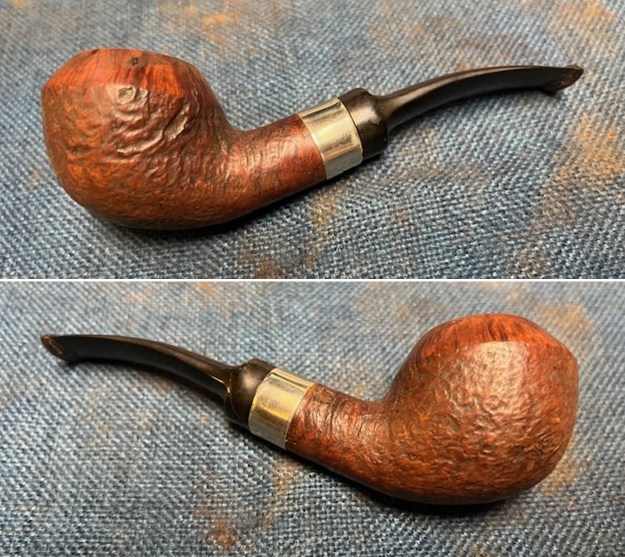
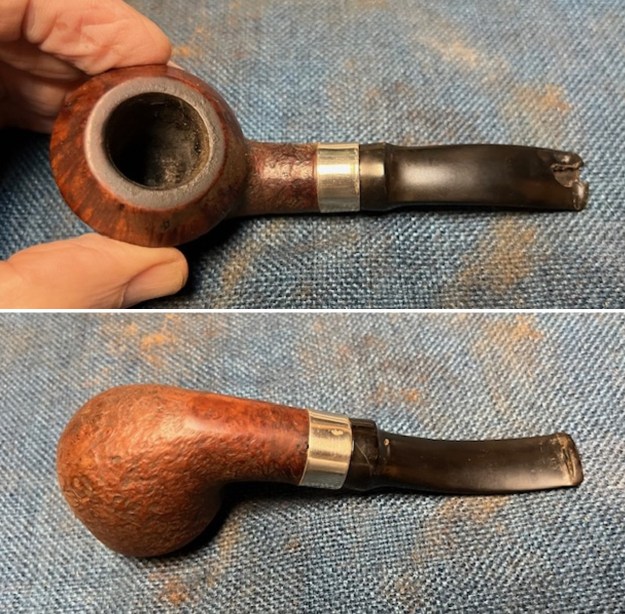
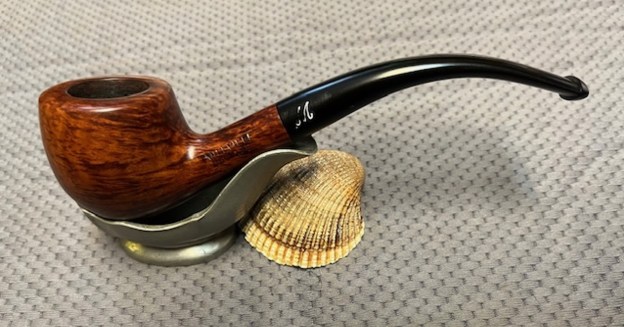
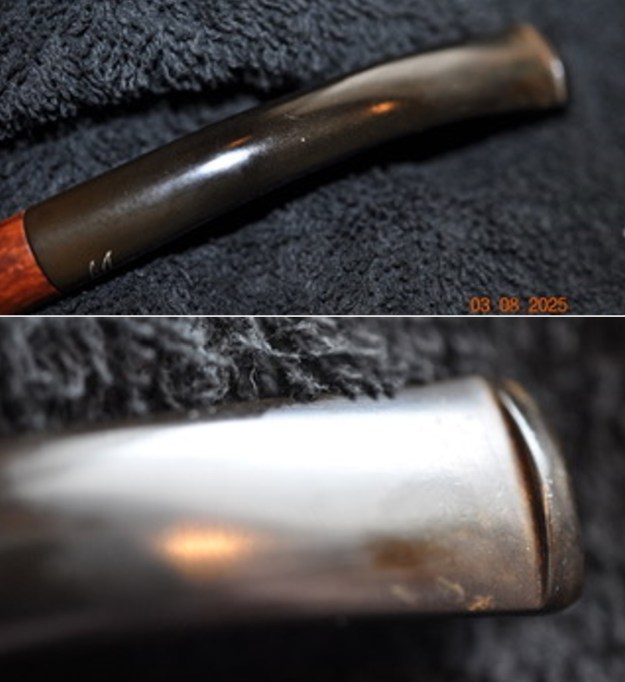
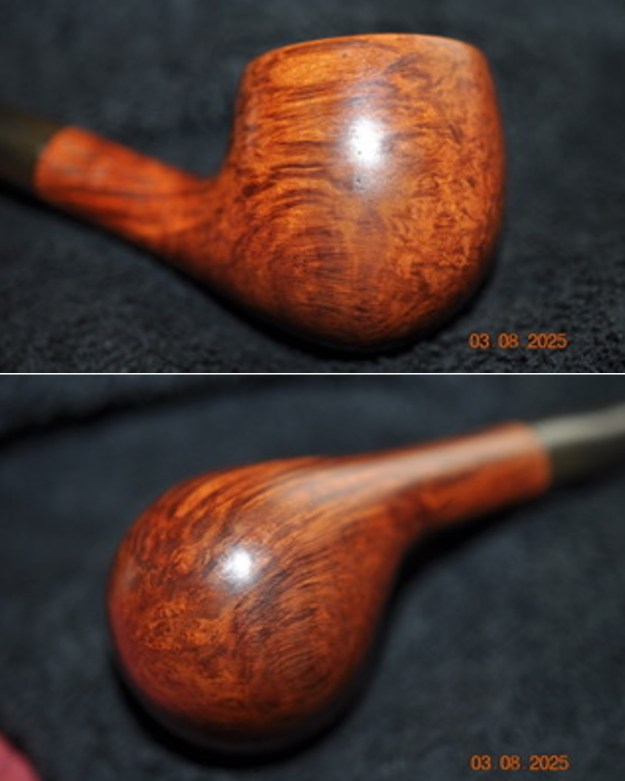
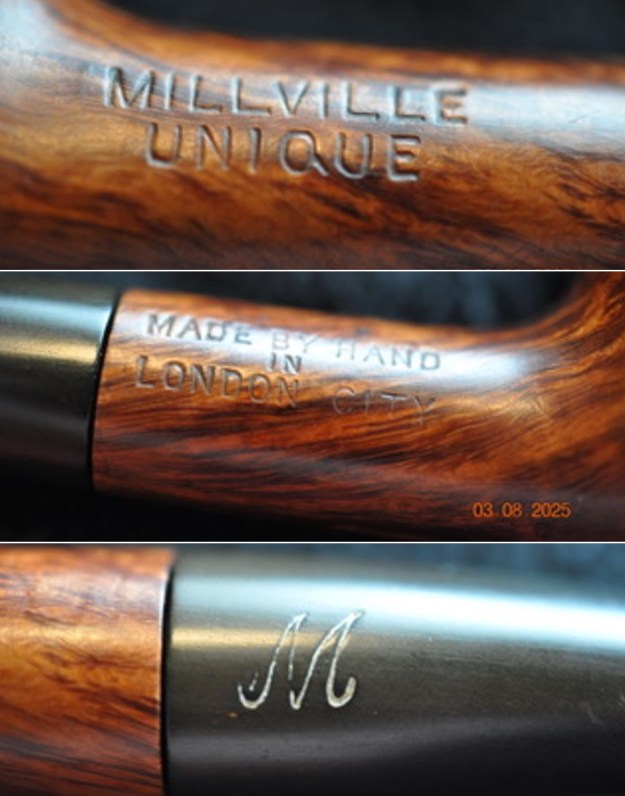
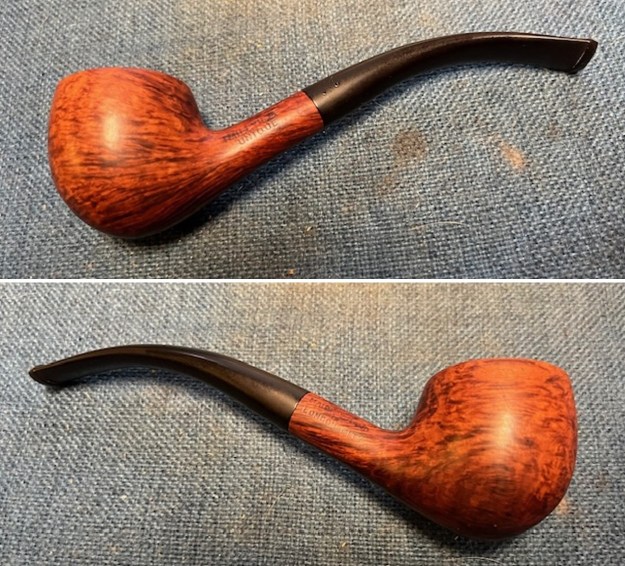
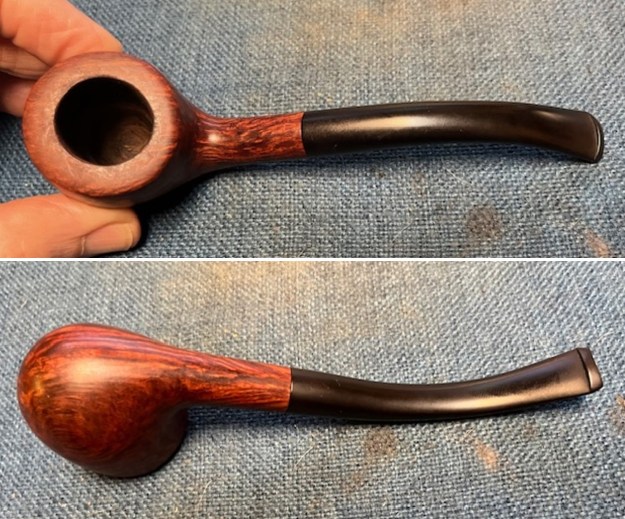
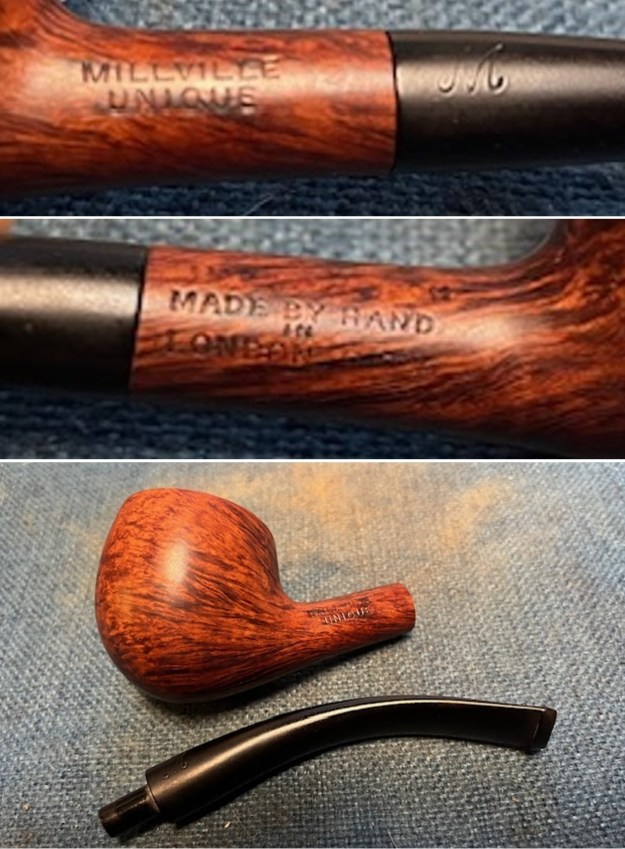
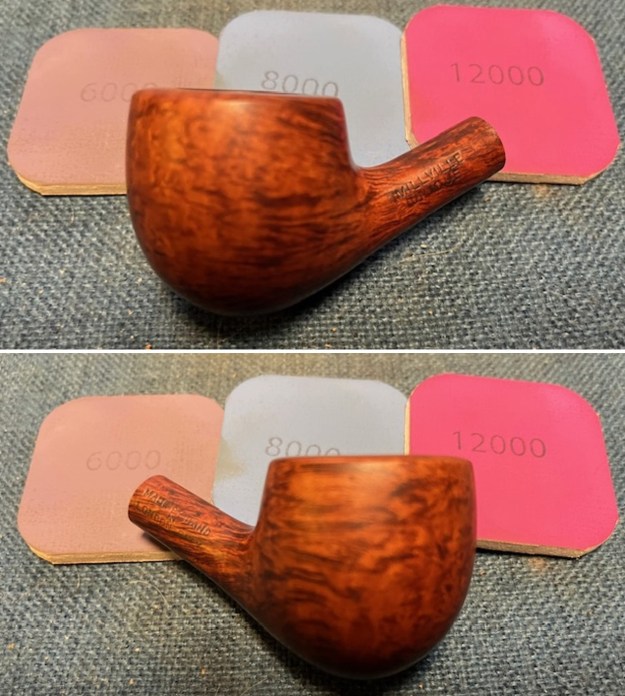
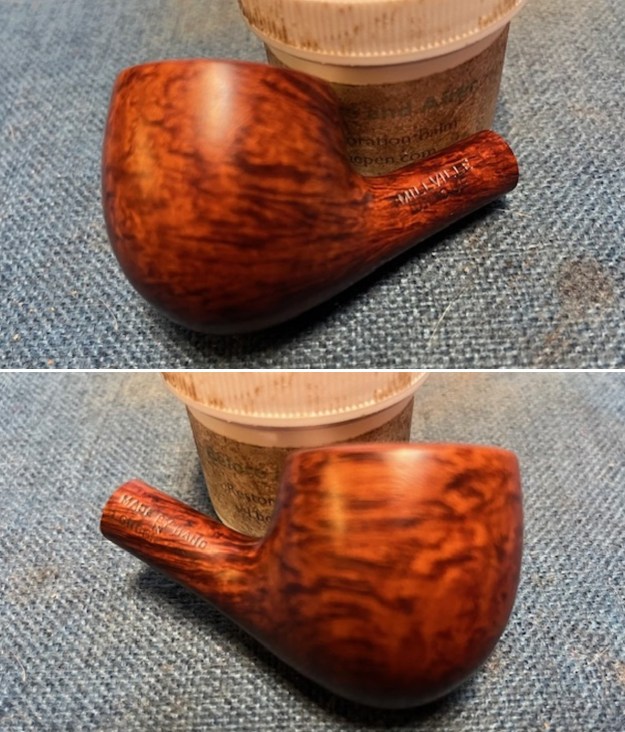
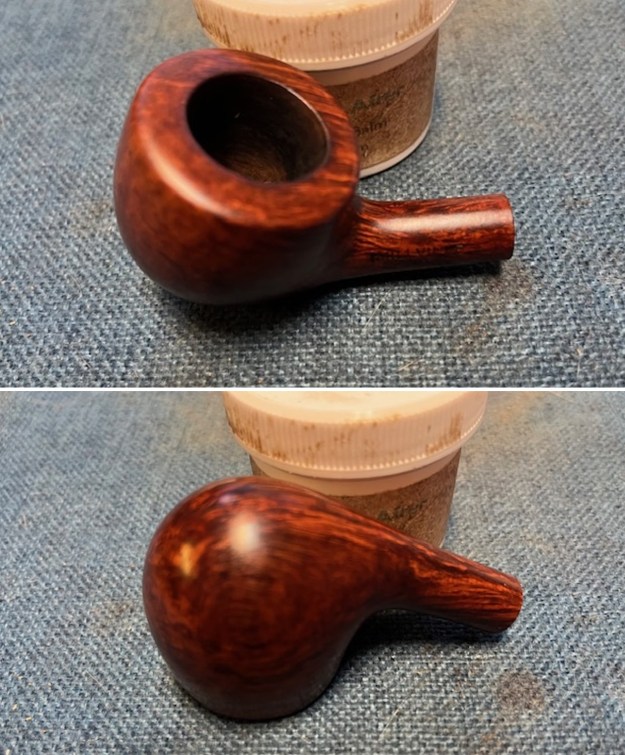
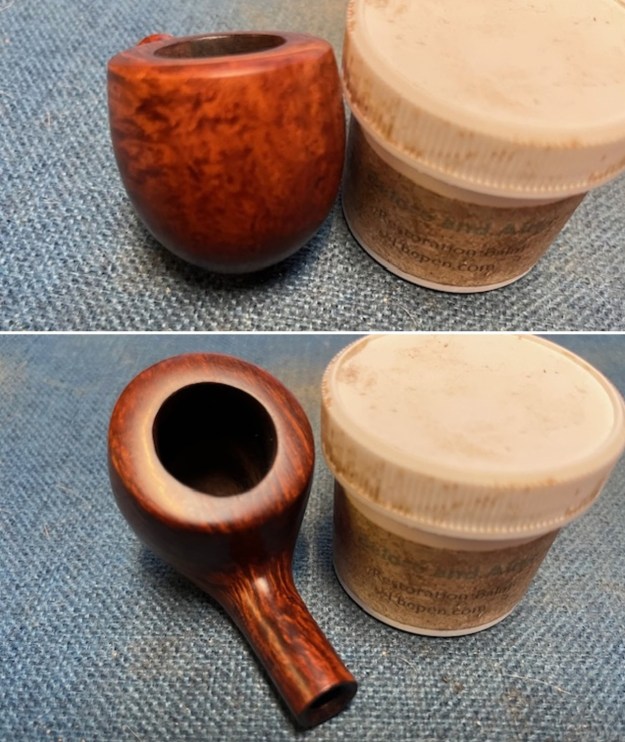
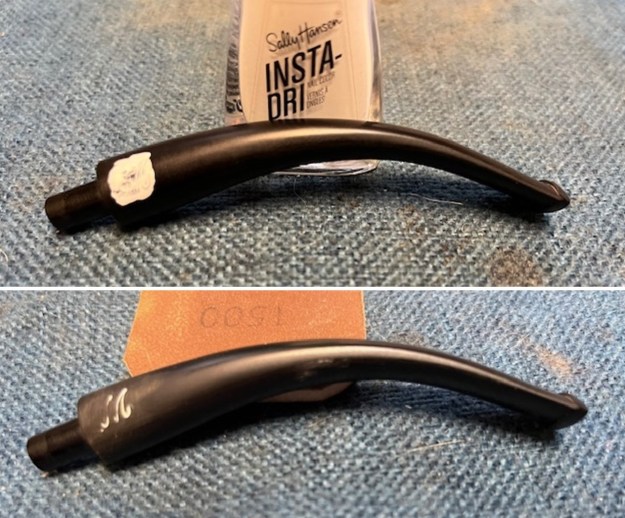
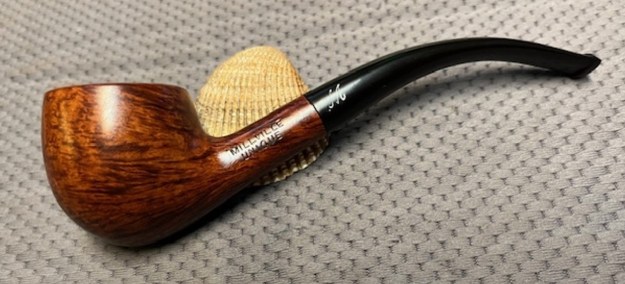
The next pipe on the worktable is a beautiful cross grain Bent Acorn. We bought it from a friend in Barrington, Rhode Island, USA. It is a truly beautiful piece of briar that is stamped Millville [over] Unique on the left side of the shank and Made by Hand [over] in [over] London City on the right side. The City stamp is slightly different that the stamping on Made in London. I have had a few Millville pipes come across my table over the years but this one is stunning. The cross grain on it is beautiful. When Jeff received it the bowl had been reamed and the pipe was quite clean. The stem was lightly oxidized and there was some chatter and tooth marks on the top and bottom of the stem near the button. The fit of the stem is perfect to the shank and there is a very faint characteristic M that graces this brand of pipe. It is almost gone from over-buffing but I am hoping it will still show when we have finished cleaning up the pipe. Jeff took photos of the pipe before he started his work on it.Jeff took close up photos of the bowl and rim to capture the condition of the pipe before he started his cleanup work. The crowned rim top was very clean with a slight bit of darkening on the back inner edge. The outer edge looked to be in decent condition. The stem showed some oxidation and light tooth marks on both sides ahead of the button. He also took a photo of the side and bottom of the bowl and shank to show the beautiful grain around the bowl. The photos show the general condition of the bowl and it is quite clean and another beautiful pipe. Jeff took photos to capture the stamping on the sides of the shank and the stem. The photos show the stamping Millville [over] Unique on the left side and Made by Hand [over] in [over] London City on the right side. He also captured the M stamp on the stem side.I wanted to know more about the brand so I did a bit of searching on the web to see what I could find out about Millville pipes. I turned first to Pipephil’s site to see what he had for information (http://www.pipephil.eu/logos/en/logo-m5.html). I did a screen capture of the section on the brand and have included that below. I also included the sidebar information below the picture. The pipe I am working is stamped like the second one below and is a Unique.Artisans: Dennis and John Marshall (father and son). They formerly worked at Charatans factory.

I turned to Pipedia for more information (https://pipedia.org/wiki/Millville). I have summarized what I found below:

Dennis Marshall started the brand in 1980. He had worked for Barling and Charatan for many years. His son John now makes all of the Millville pipes as Dennis is retired. Their pipes still very closely follow the artistic, freeform designs and grading of the old Charatan lines. The pipes are sold almost exclusively in Piccadilly, London in a stall in the market in front of St. James’s Church. Though you can sometimes find them online at British pipe sellers such as Bond’s of London. According to Pipedia the prices of their pipes “start at about 20 £ – hardly the price of a cheapish Stanwell. These were made from pre-turned bowls. The better pipes, entirely hand-made freehands in the old Charatan style, are made from a stock of very old briar, as John stresses. They use several grades like “Unique” or “Executive”. A “Bamboo” can make it up to 500 £.”

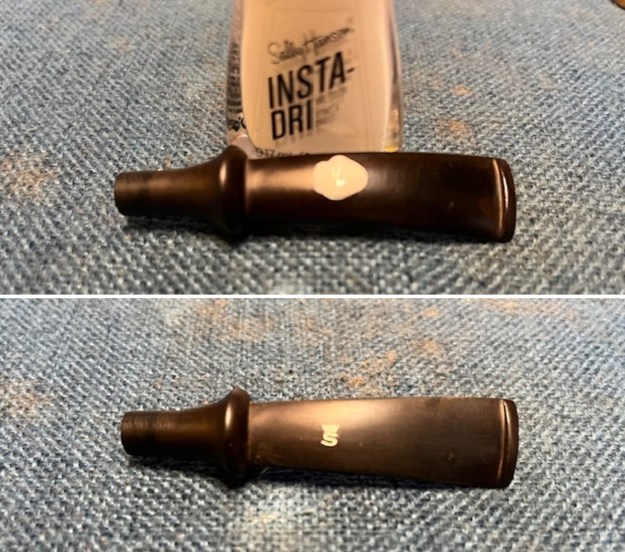
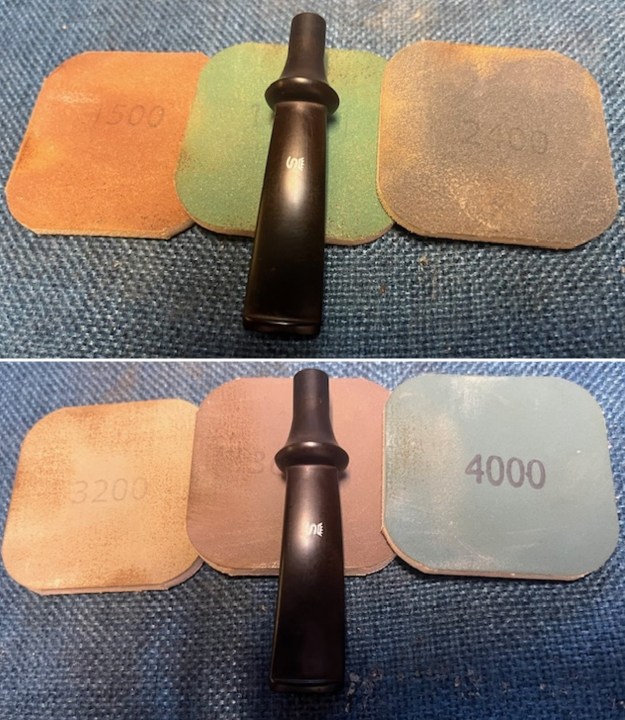
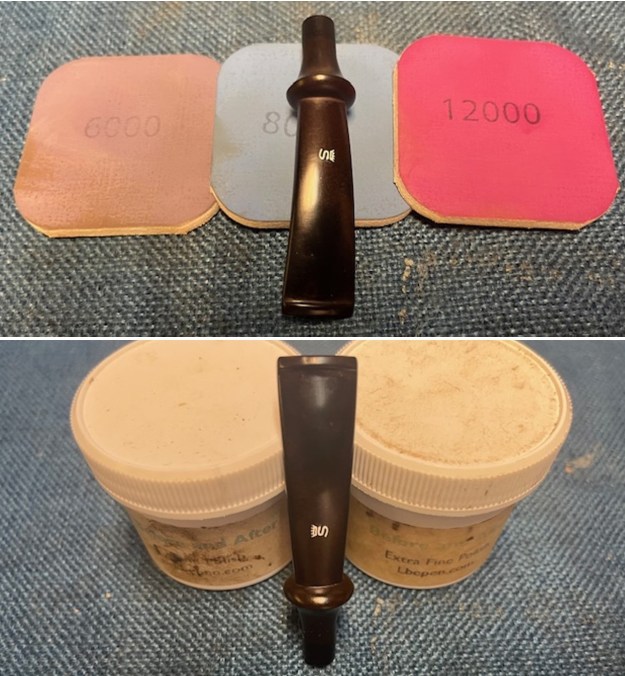
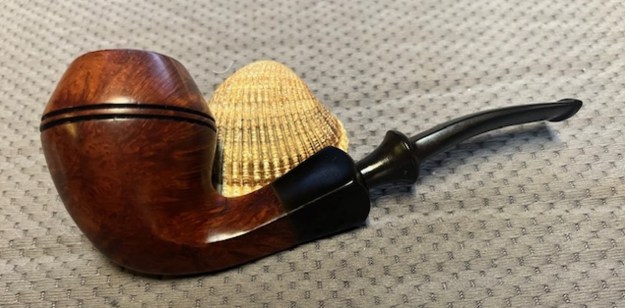
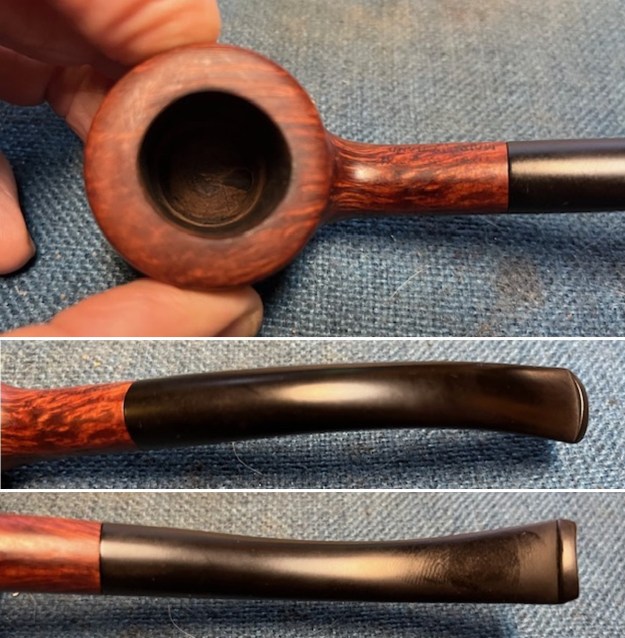
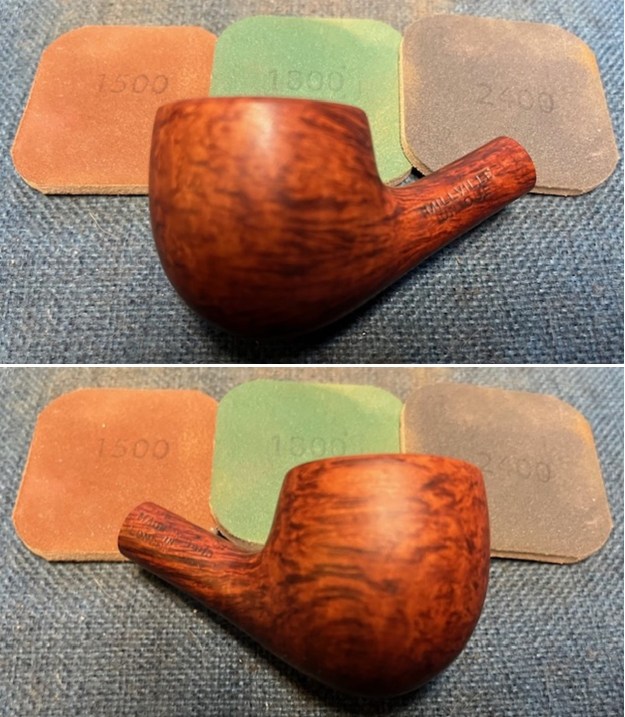
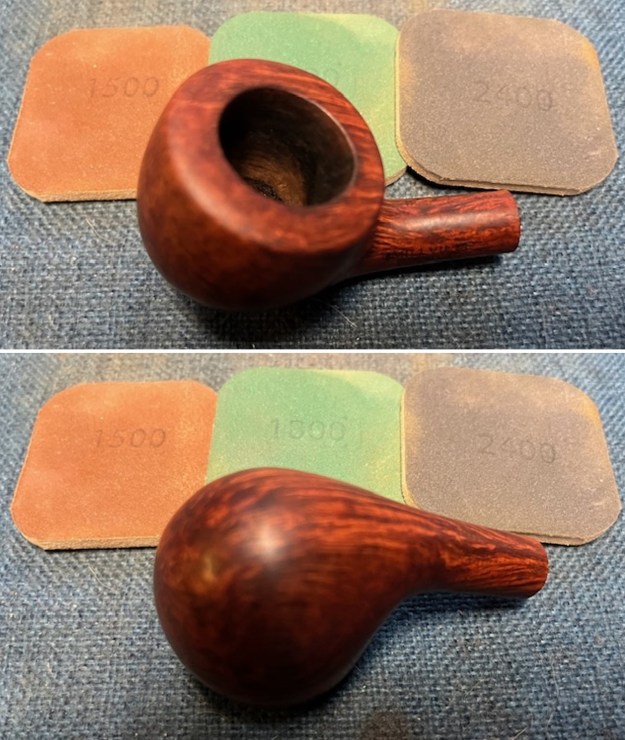
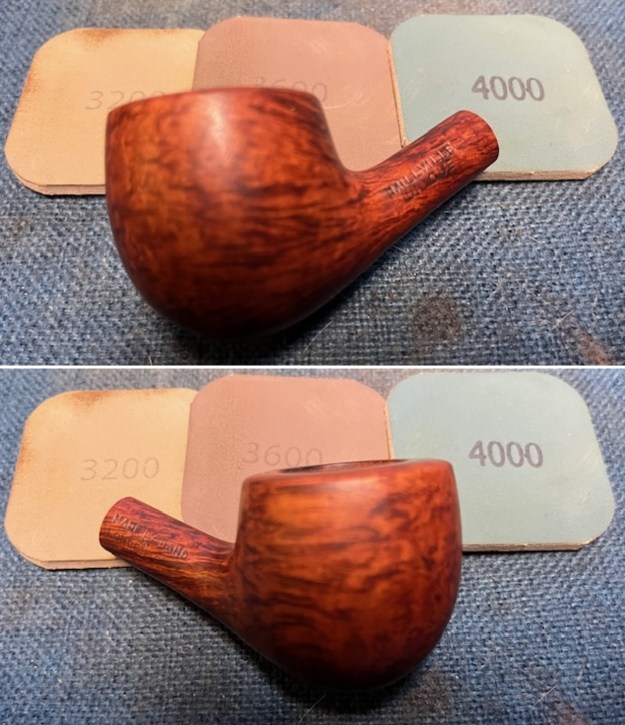
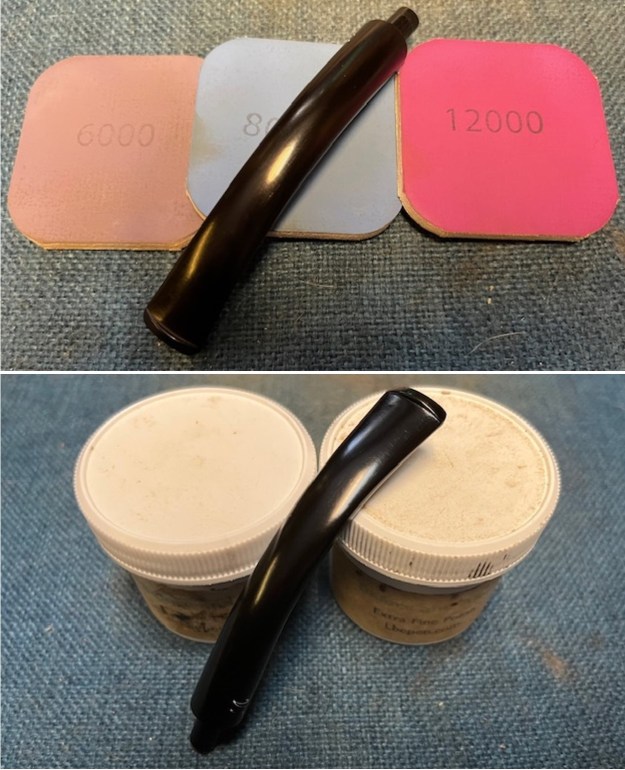
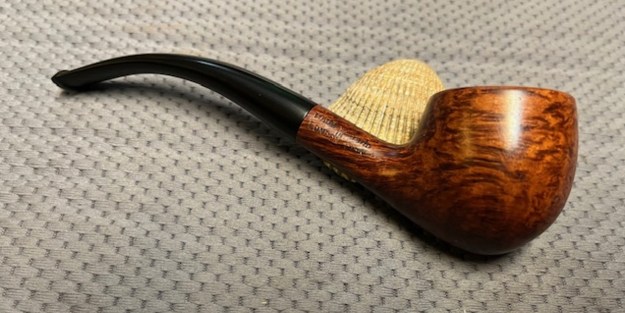
Jeff cleaned up the reaming with a Savinelli Fitsall Pipe Knife. He scrubbed out the mortise and the airway in the shank and the stem with alcohol, cotton swabs, shank brushes and pipe cleaners. He scrubbed the exterior of the bowl, rim, shank and stem with a tooth brush and undiluted Murphy’s Oil Soap to remove the oils and tars on the rim and the grime on the finish of the bowl. He rinsed it under running water. He dried it off with a soft cloth. He was able to remove the on the back side of the inner edge. I took photos of the pipe to show its condition before I started my work on it. The stem also looked better. I took close up photos of the bowl and rim top as well as the stem. You can see the condition of the rim top and bowl in the first photo. Jeff was able to remove the darkening on the back inner edge of the bowl and any remaining grime. It looked very good. The stem looked very good. The oxidation was all removed and the light tooth marks and chatter on both sides near the button were less visible and would polish out.I took photos of the stamping on the shank to show their condition. They are clear and readable. The M stamp on the left side of the stem is faint but readable and I am hoping to be able to touch it up with white acrylic to make it stand out. I removed the stem from the shank to give a sense of the look of this Unique. I polished the rim top and the briar with micromesh sanding pads. I dry sanded the bowl with 1500-12000 grit sanding pads. I wiped the bowl down after each pad with a damp cloth to remove the sanding dust. I worked some Before & After Restoration Balm into the surface of the briar with my fingertips to clean, enliven and protect it. I let the balm sit for a little while and then buffed with a cotton cloth to raise the shine. The following photos show the bowl at this point in the restoration process. I am very happy with the results. I touched up the faint M stamp on the left side of the stamp with white acrylic fingernail polish. I worked it into the stamp and scraped it off with my nail. I cleaned up the excess with a 1500 grit micromesh sanding pad. It looked quite good though faint in spots.I polished the stem with micromesh sanding pads – dry sanding with 1500-12000 grit sanding pads. I wiped it down after each sanding pad Obsidian Oil. I finished by polishing it with Before & After Pipe Stem Polish both fine and extra Fine and then wiped it down with a final coat of Obsidian Oil. This is a beautiful Millville Unique Hand Made in London City Bent Acorn with a vulcanite tapered stem. It has a great look and feel. The shape of the bowl, the rim top and the cut of the briar work well to highlight the grain around the bowl sides. I polished stem and the bowl with Blue Diamond polish on the buffing wheel. I gave the bowl and the stem multiple coats of carnauba wax. I buffed the pipe with a clean buffing pad to raise the shine. I hand buffed it with a microfiber cloth to deepen the shine. The pipe polished up pretty nicely. The grain took on life with the buffing. The rich oil cured colour works well with the polished vulcanite stem. The finished Millville Unique Bent Acorn has a rich look that is quite catching. Have a look at it with the photos below. The shape, finish and flow of the pipe and stem are very well done. The dimensions are Length: 6 inches, Height: 1 ¾ inches, Outside diameter of the bowl: 1 ½ inches, Chamber diameter: ¾ of an inch. The weight of the pipe is 1.48 ounces/43 grams. It is a beautiful pipe. I will be putting it on the rebornpipes store shortly in the British Pipemakers Section if you are interested in adding it to your collection. Thanks for walking with me through the restoration.