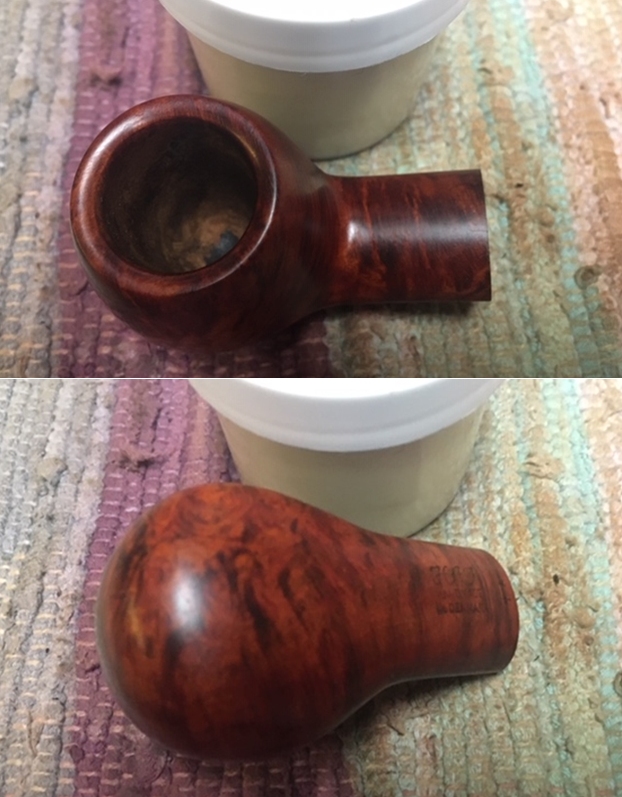
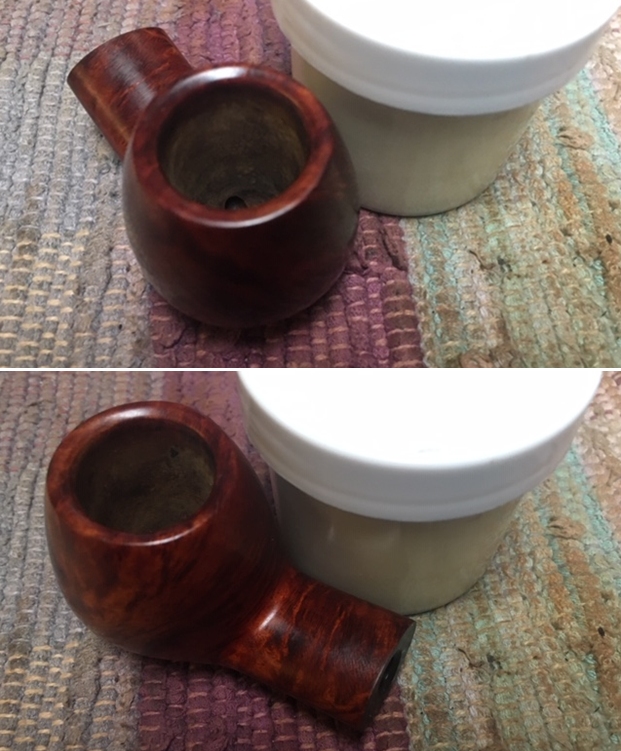
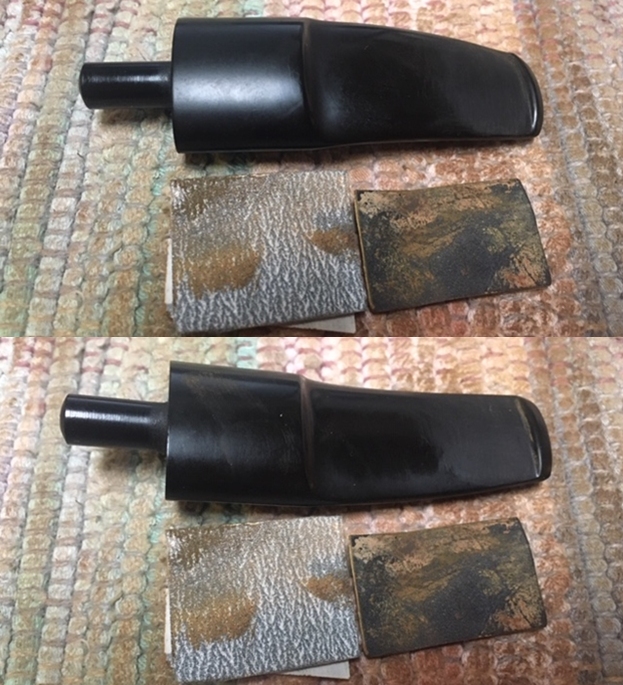
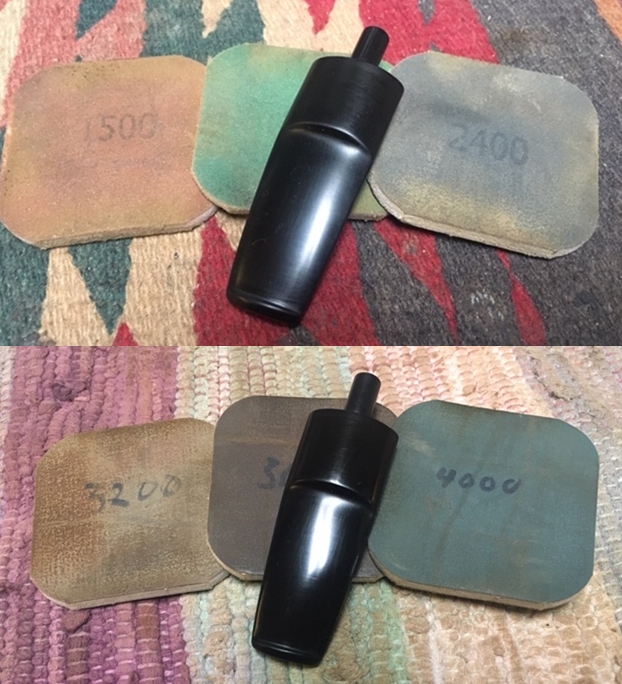
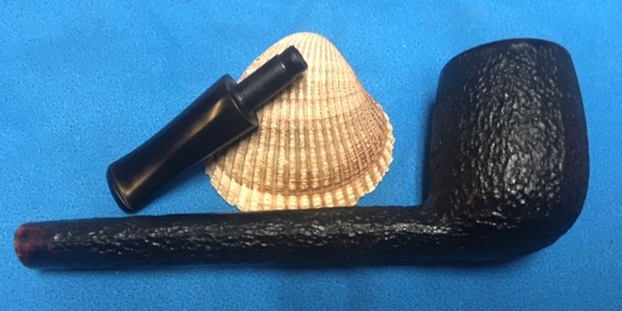
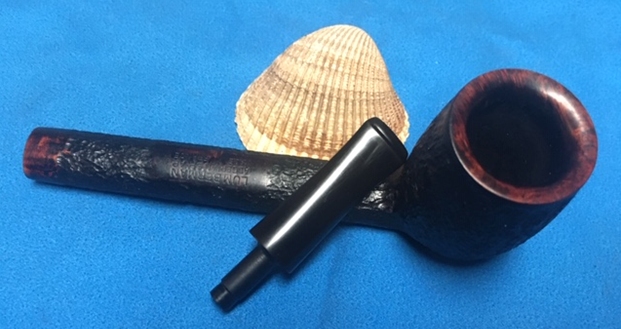
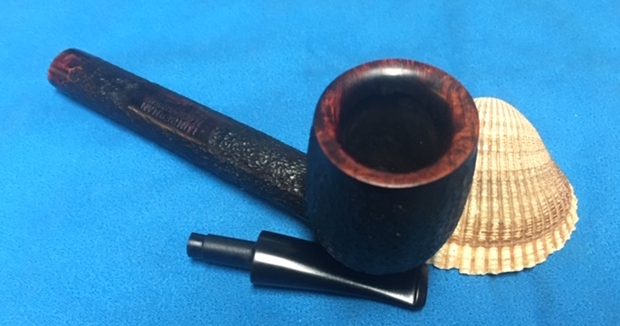
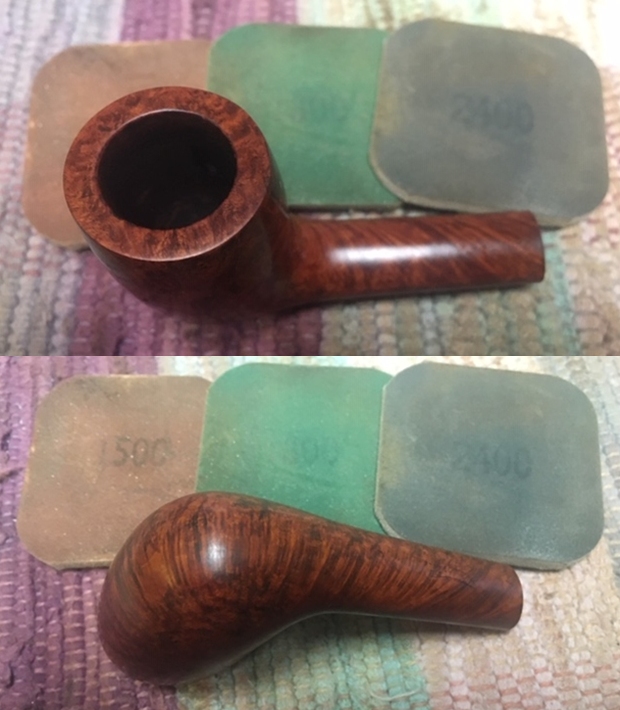
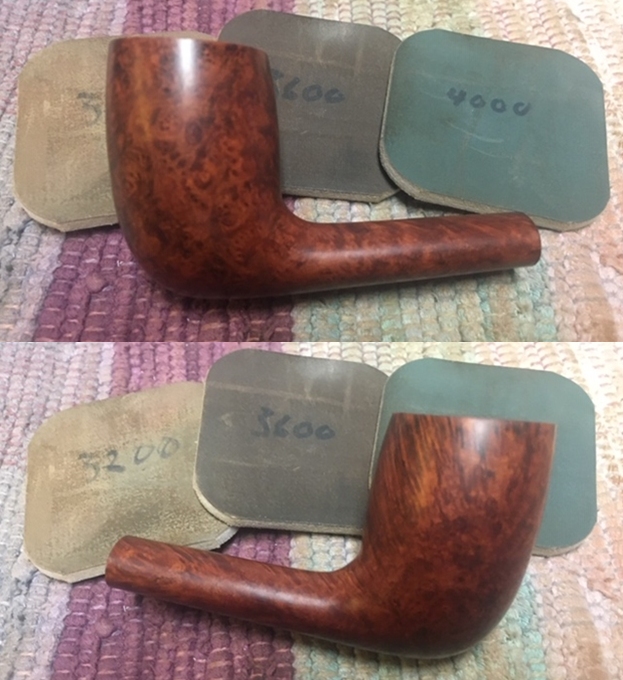
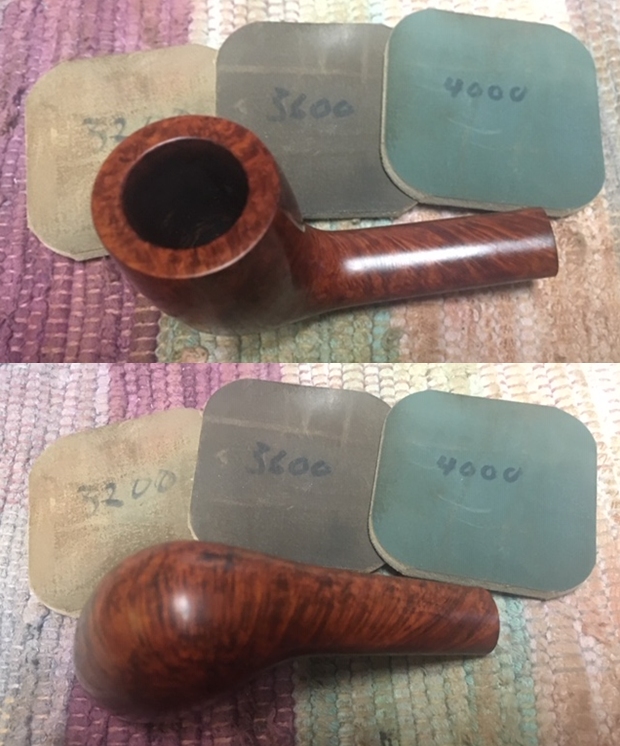
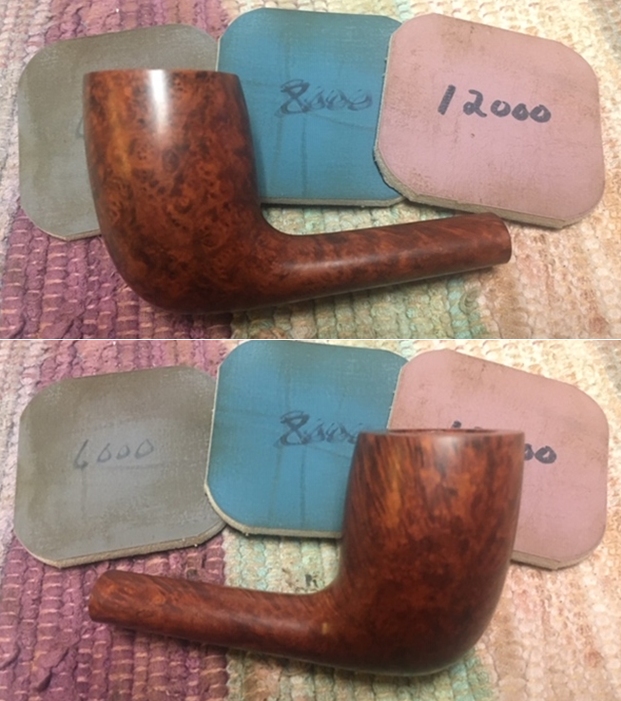
Tag Archives: vulcanite

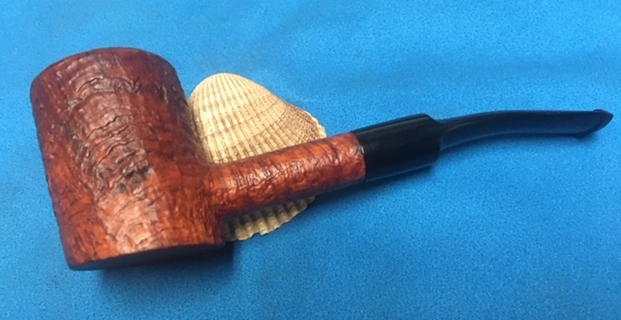
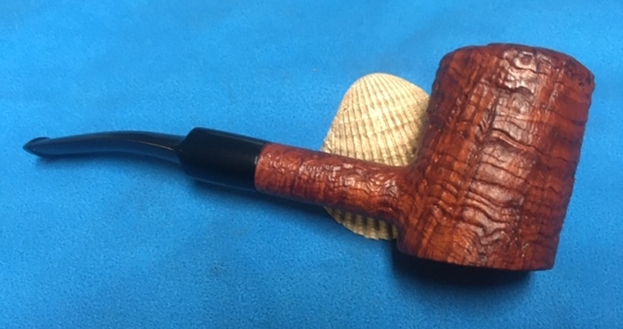
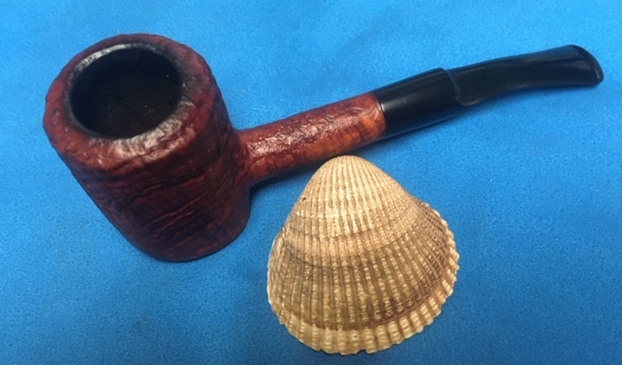
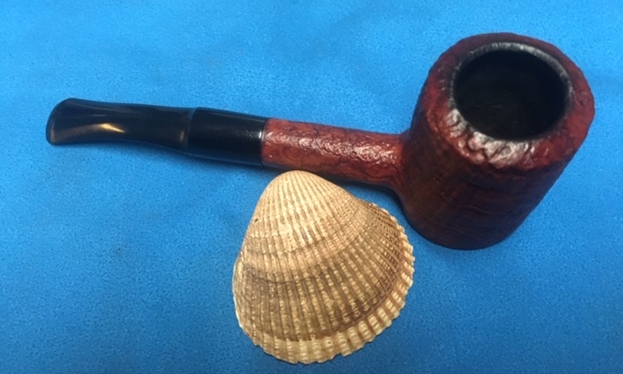
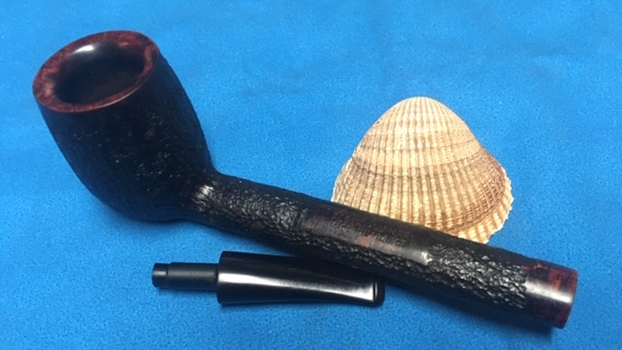
Restoring a Beautifully Sandblasted Savinelli Punto Oro 310KS Poker


Blog by Steve Laug

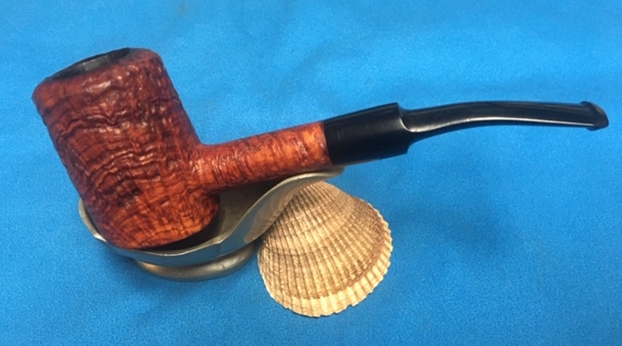
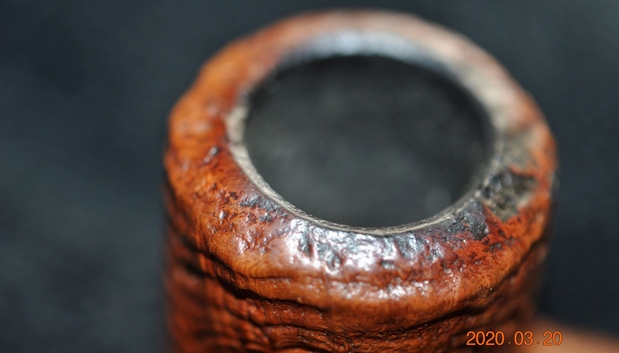
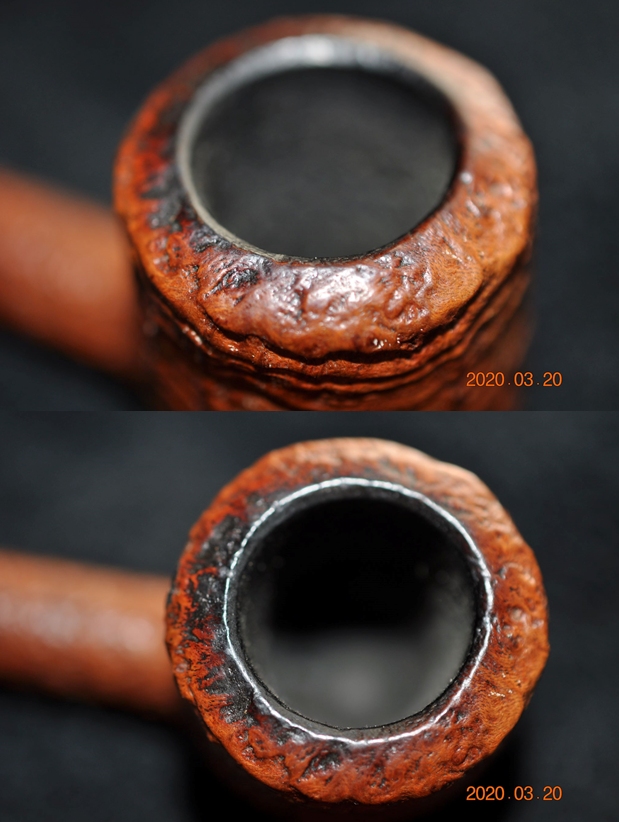
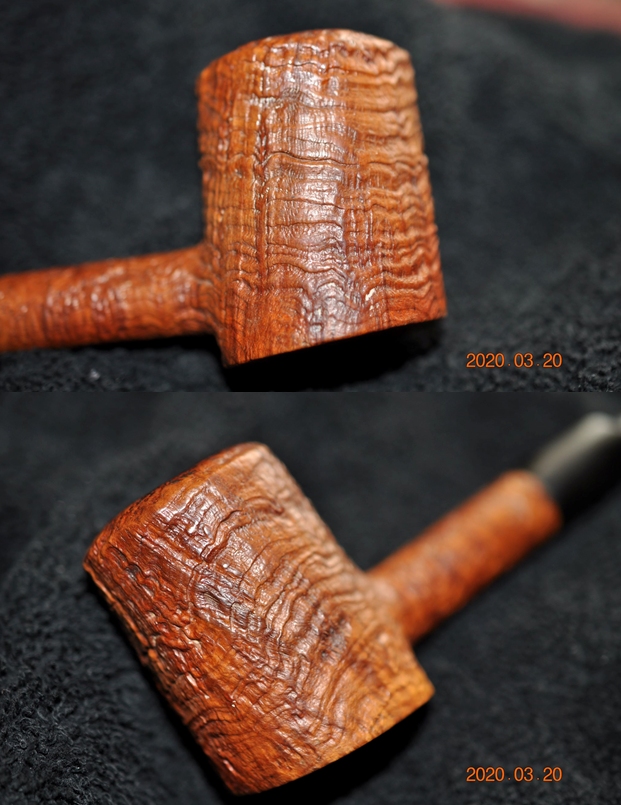
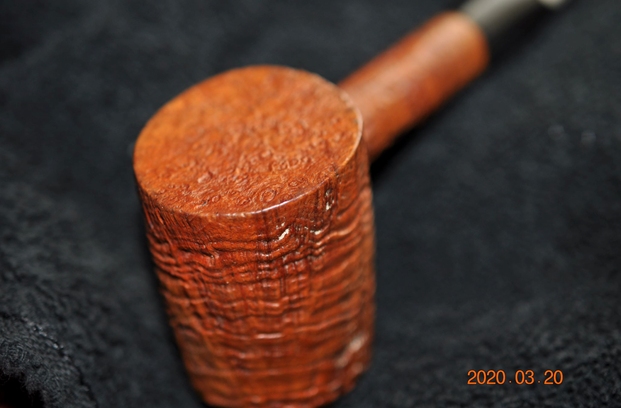
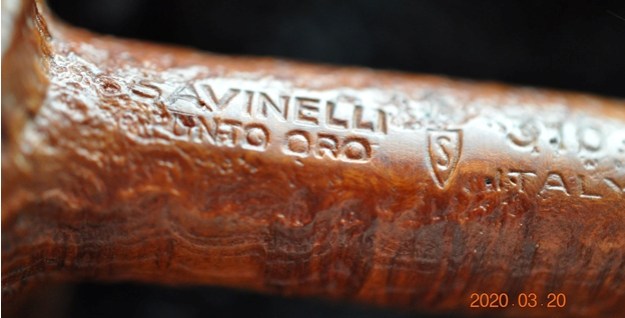
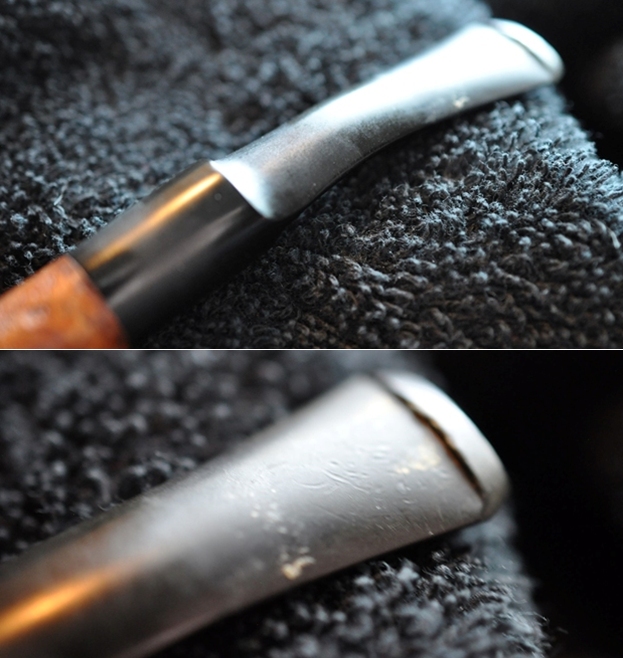
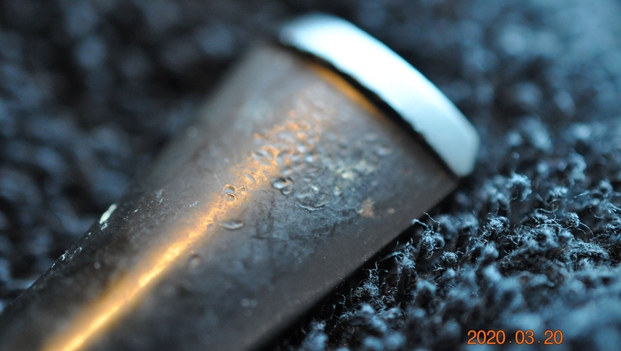
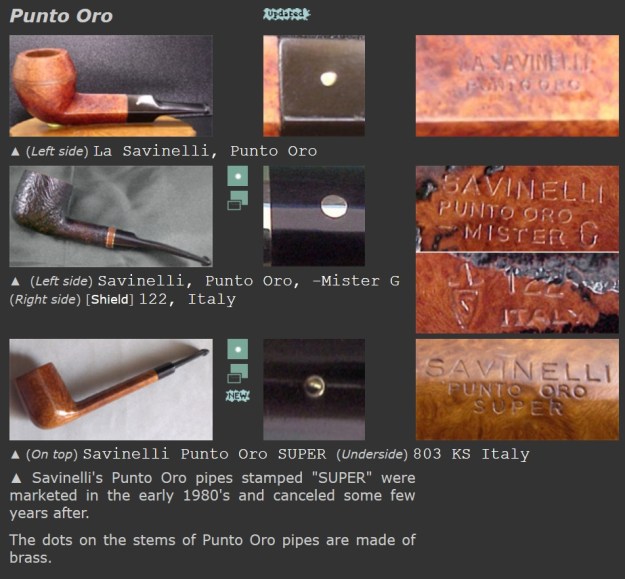
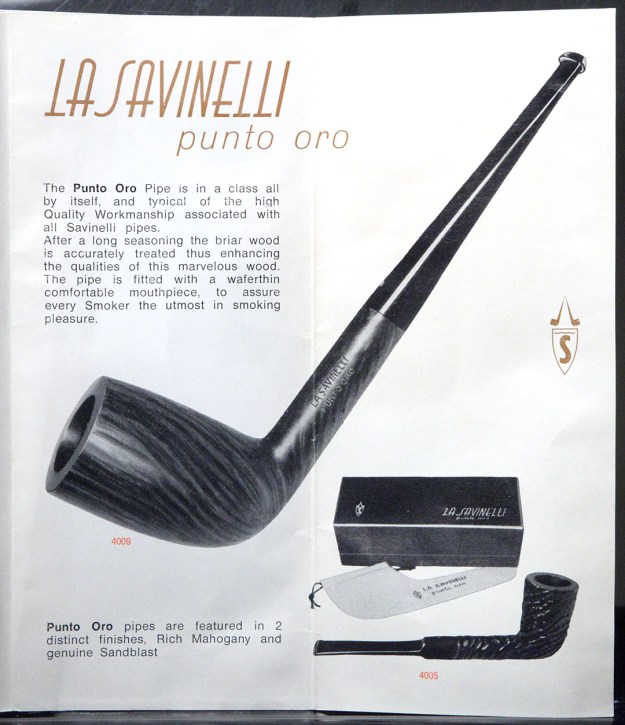
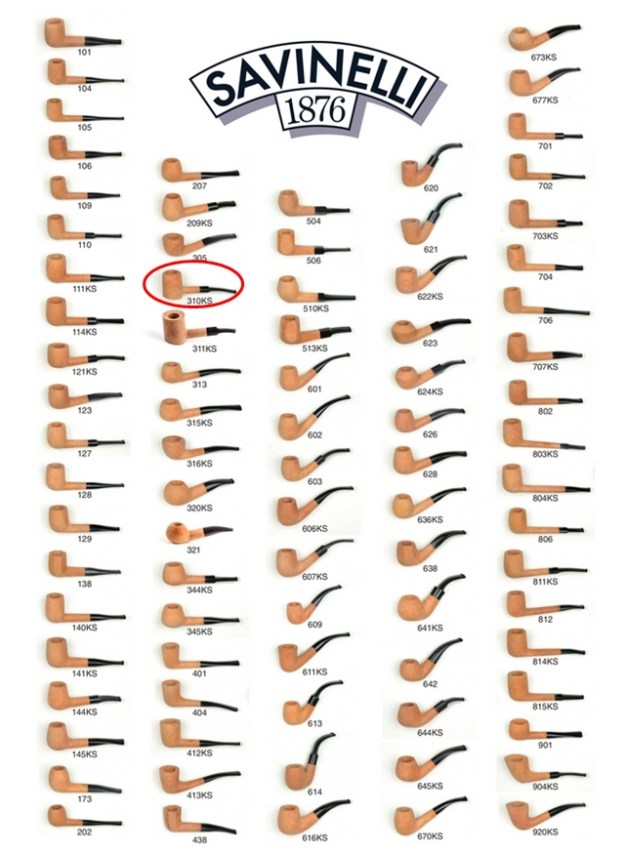
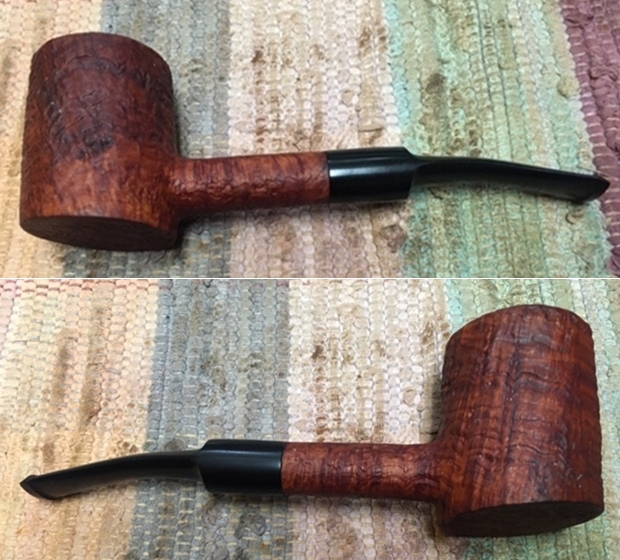
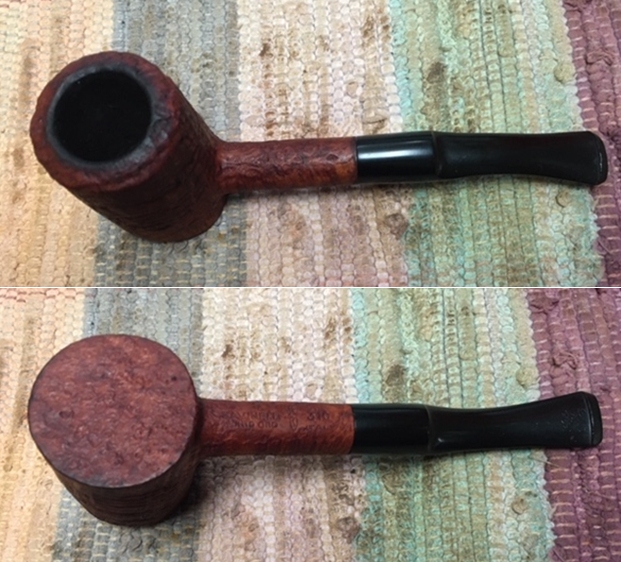
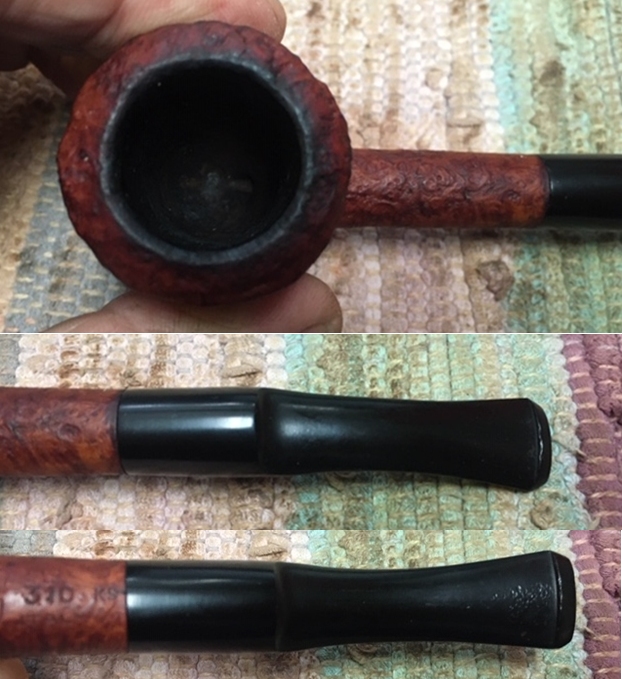
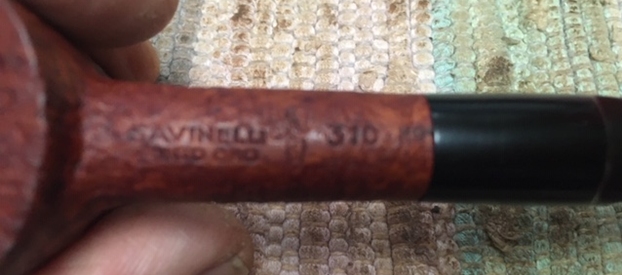
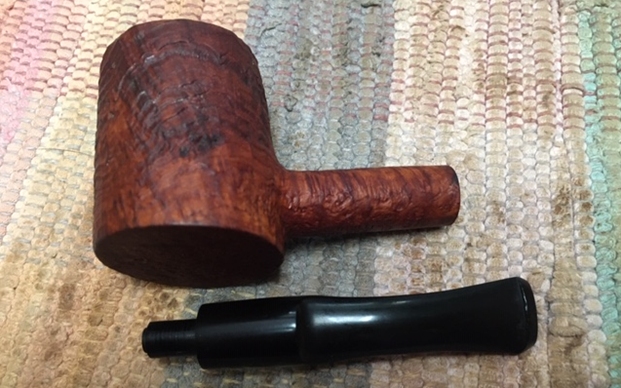
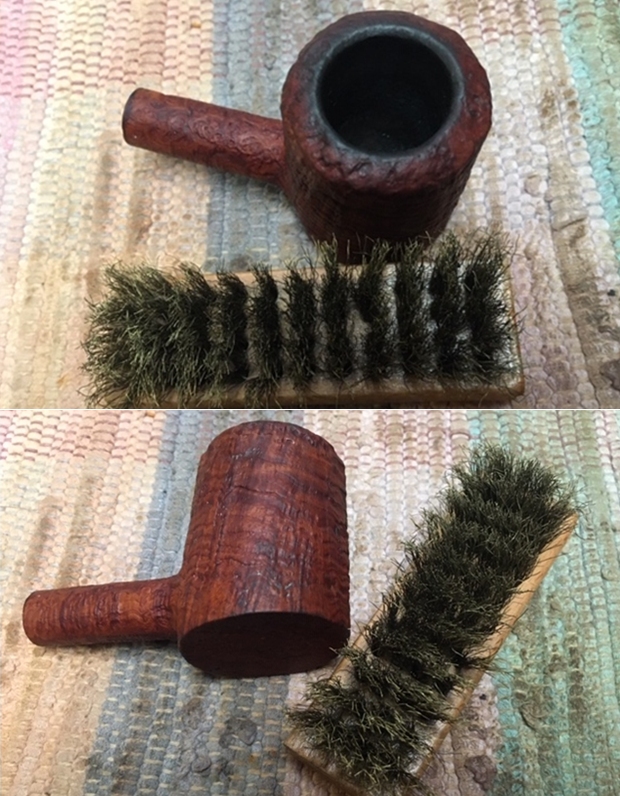
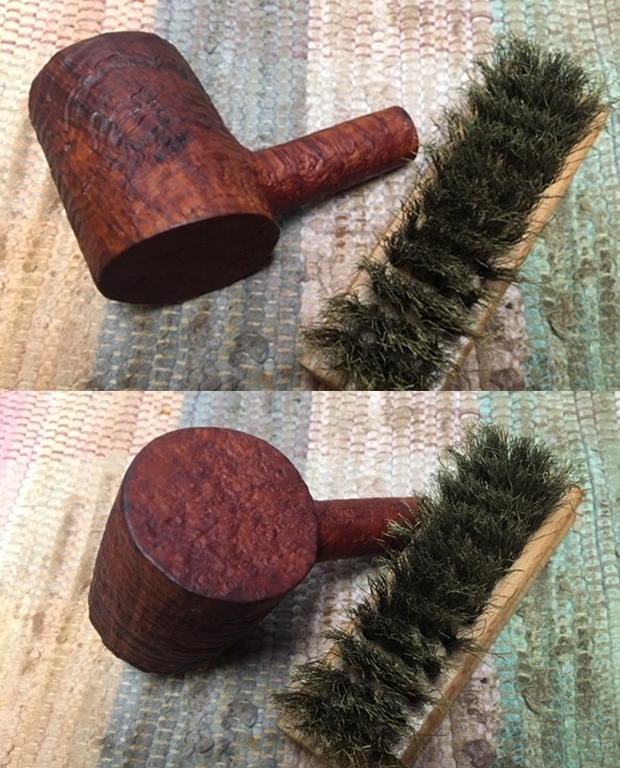
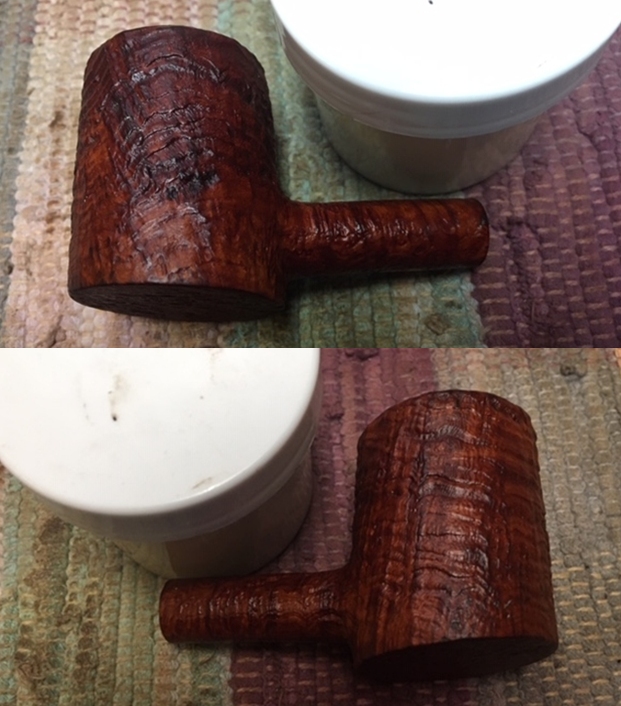
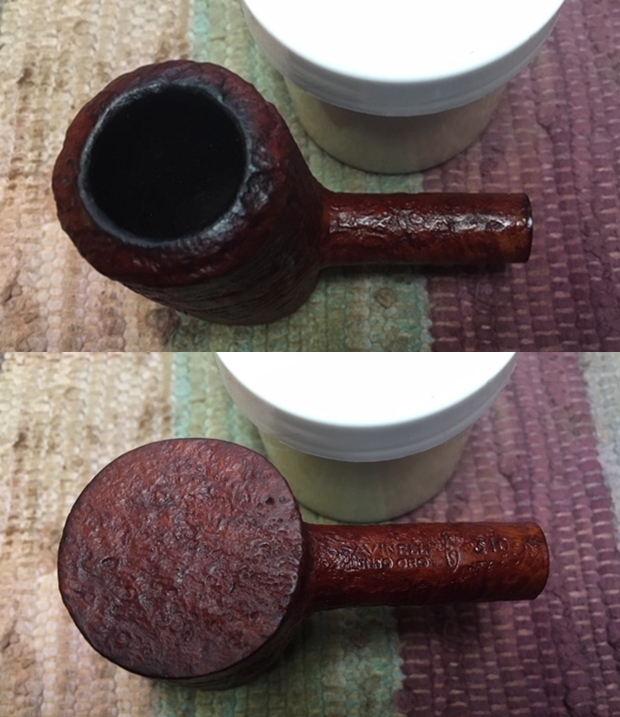
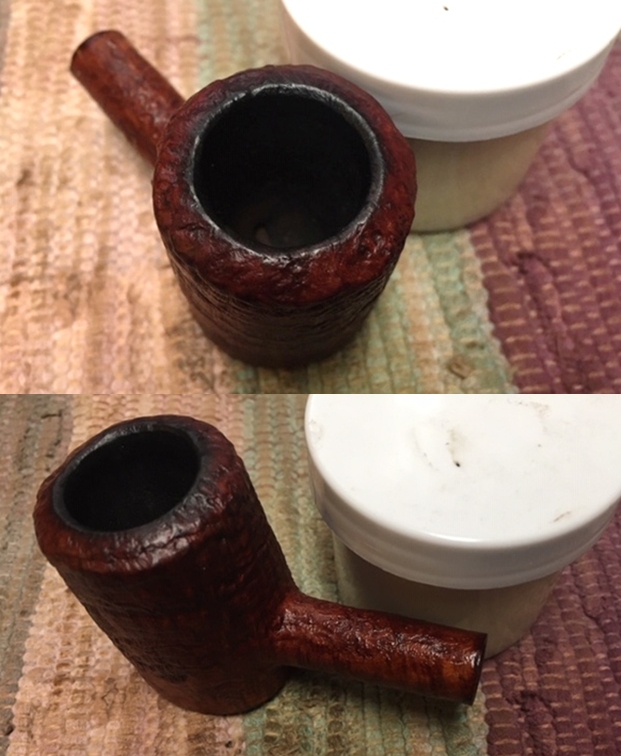
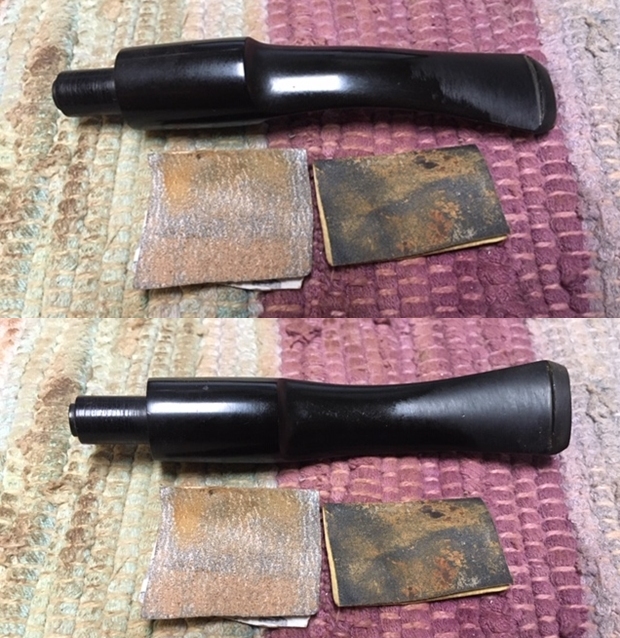
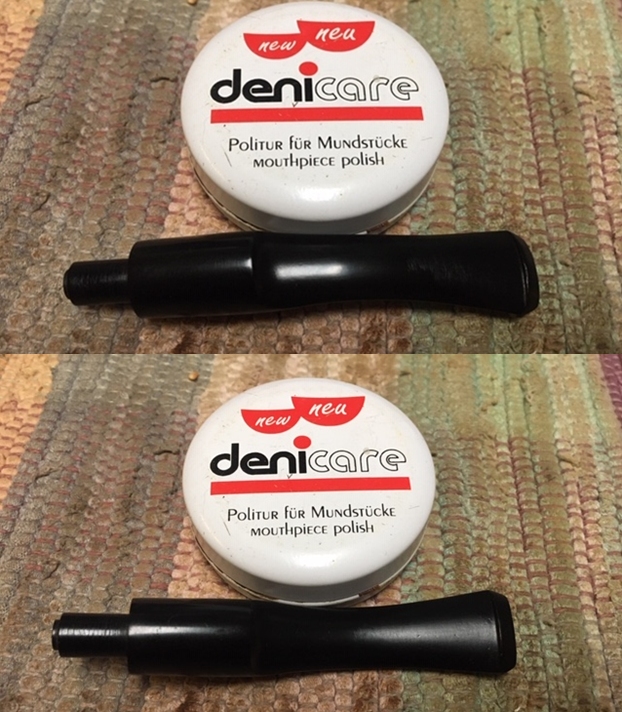
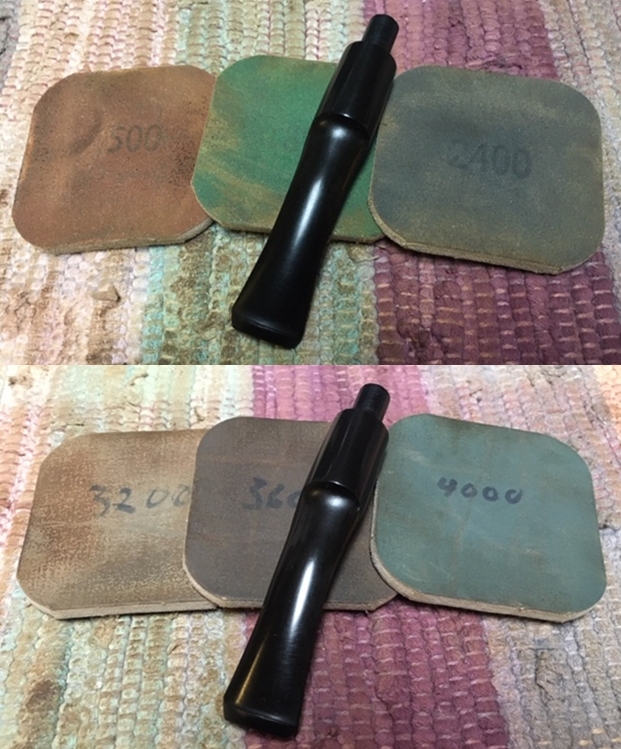
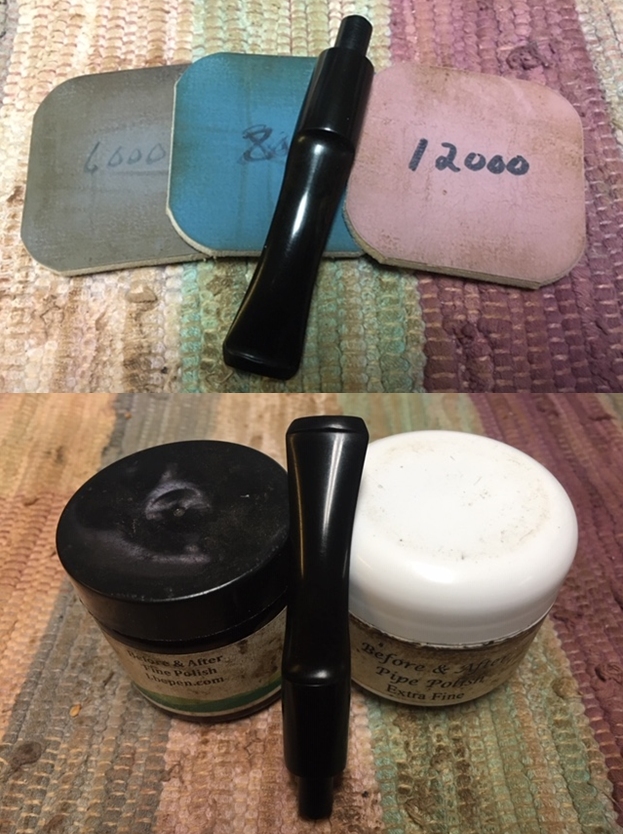
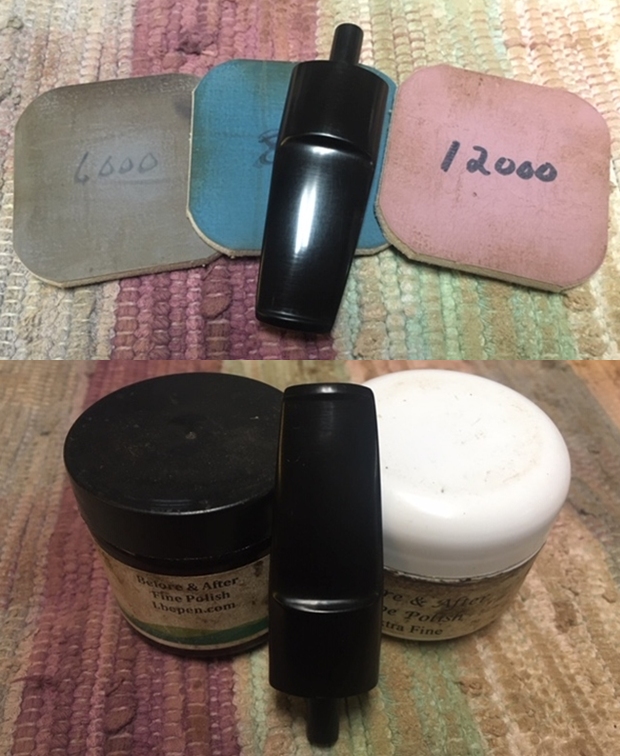
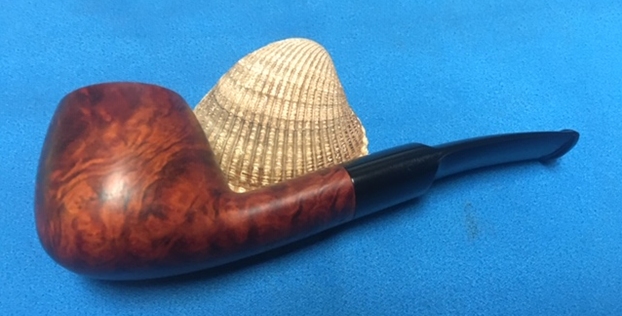
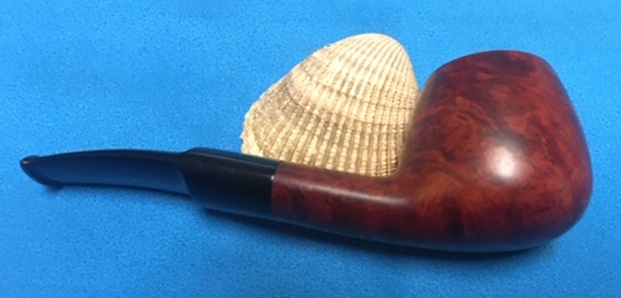
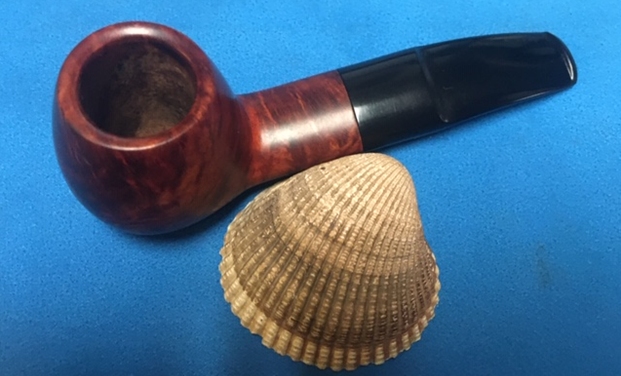
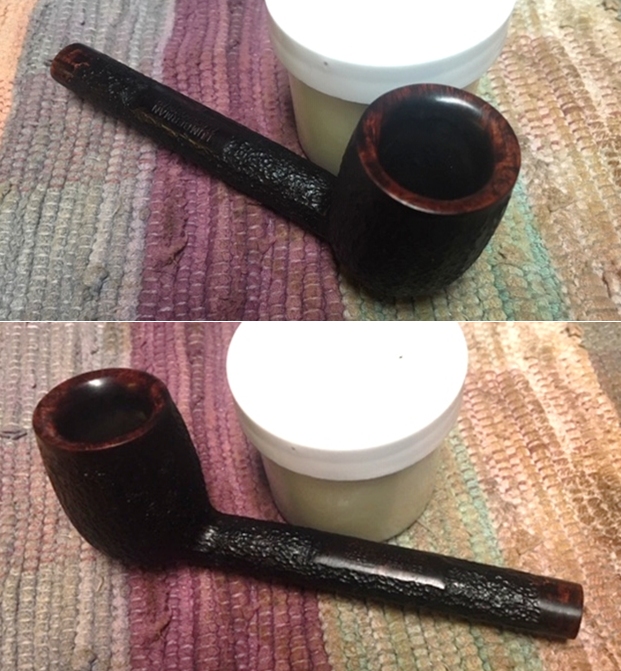
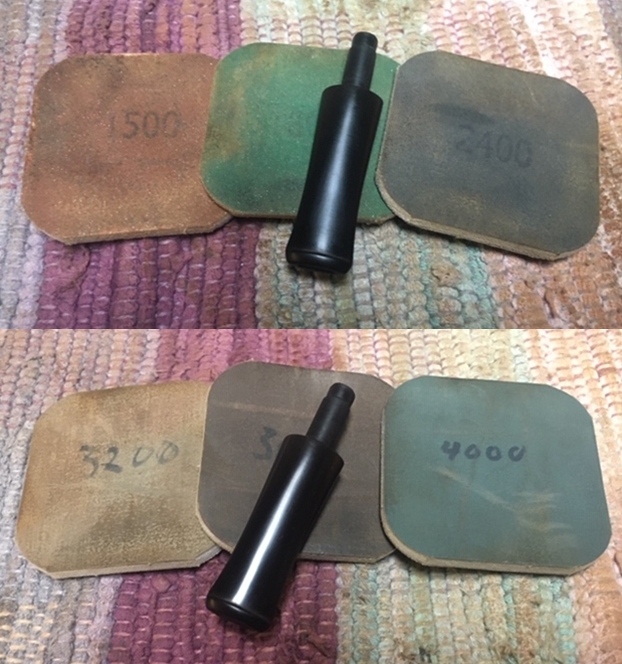
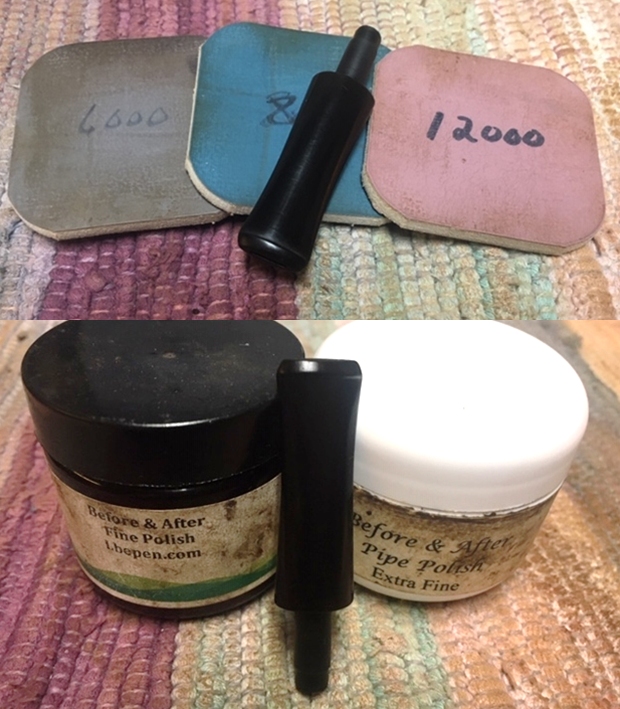
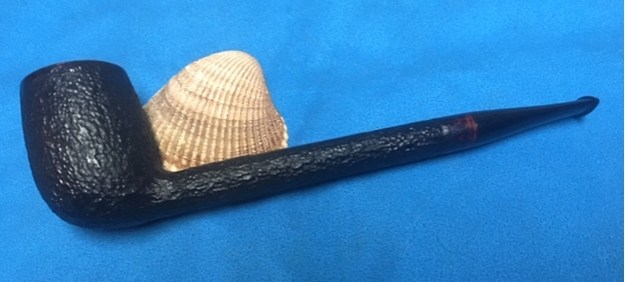
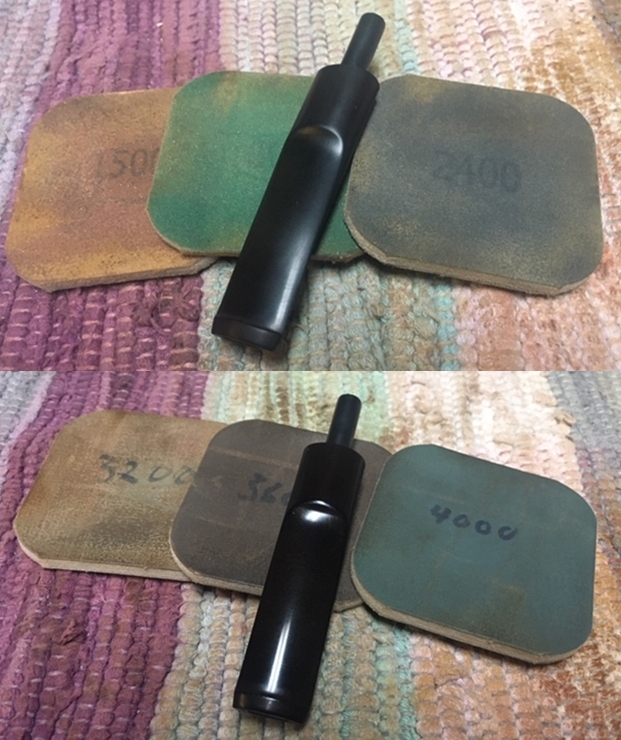
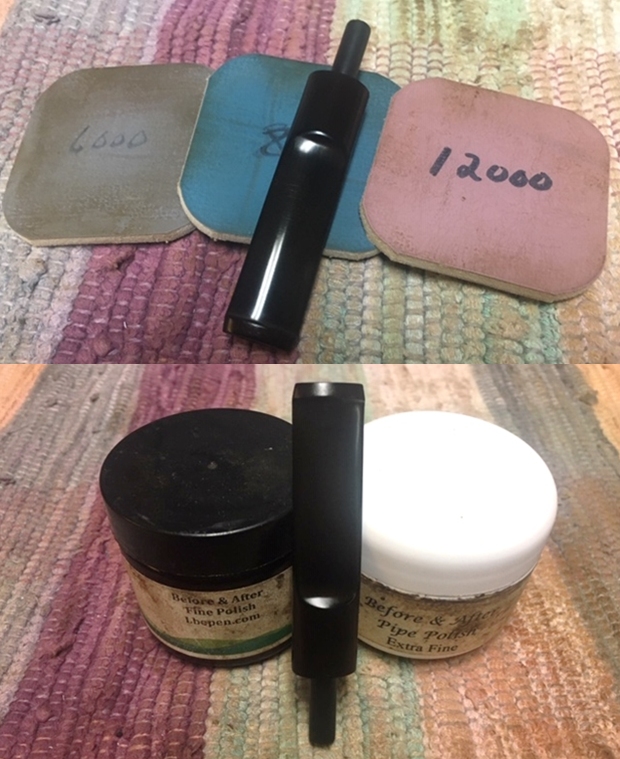
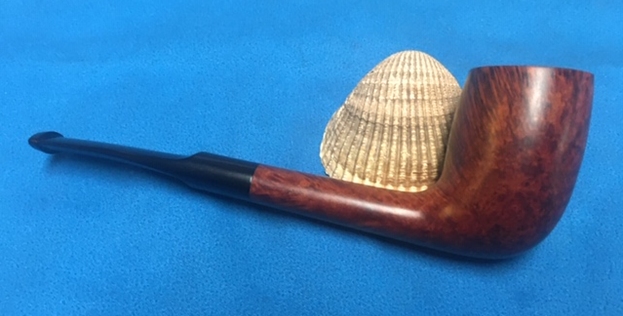
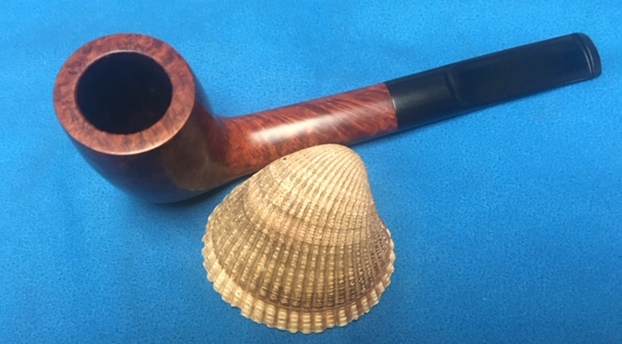
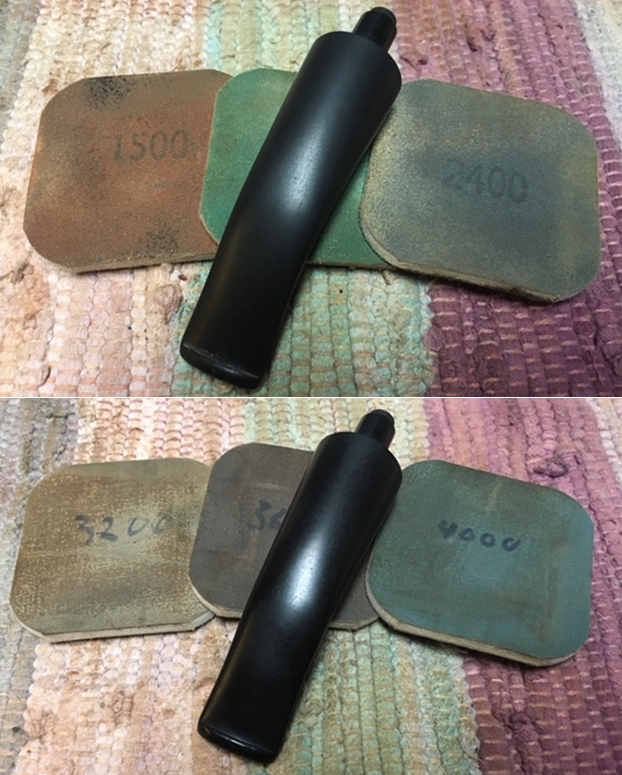
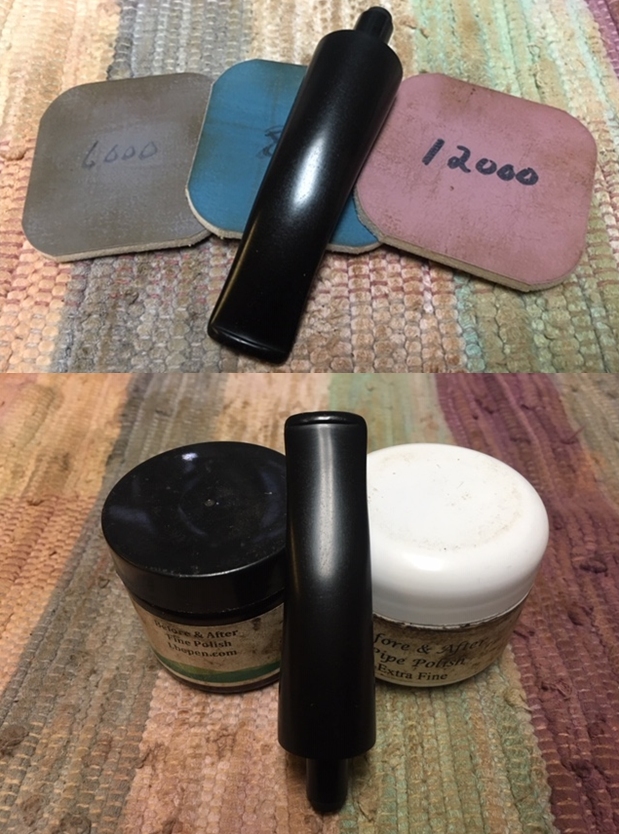
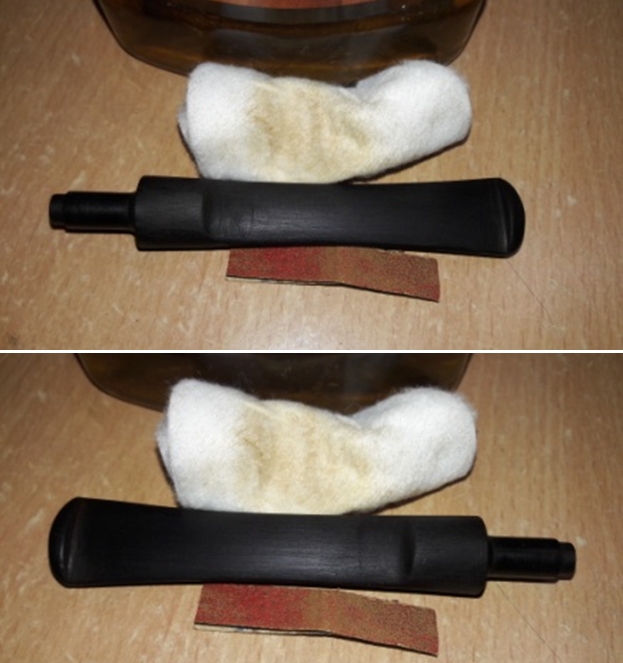
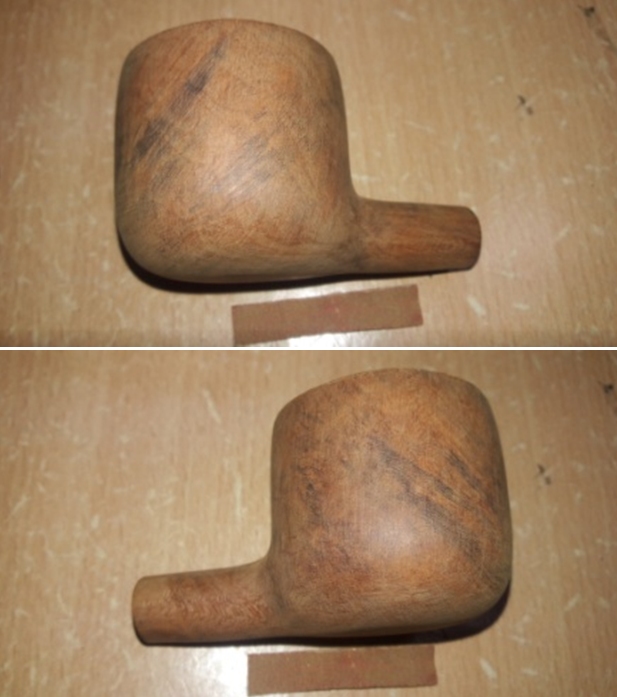
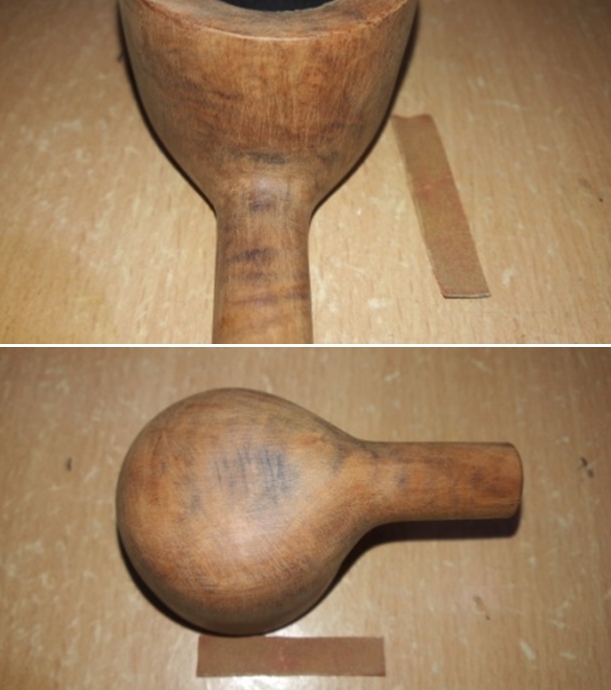
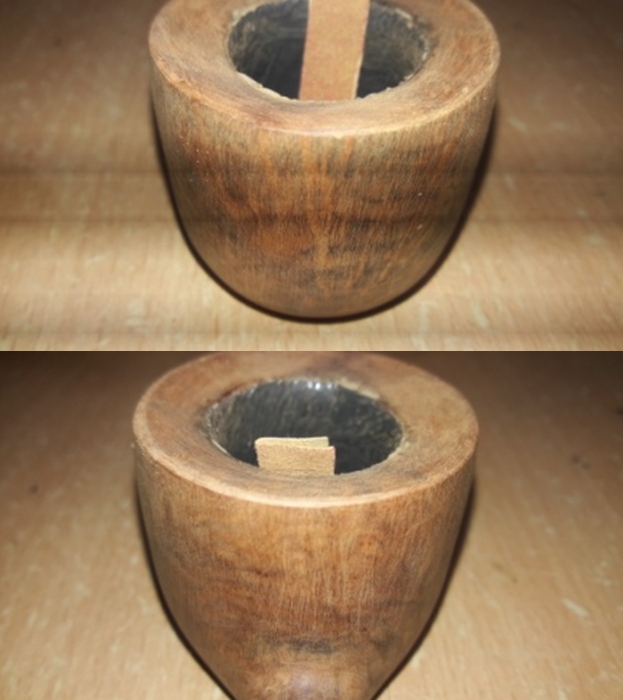
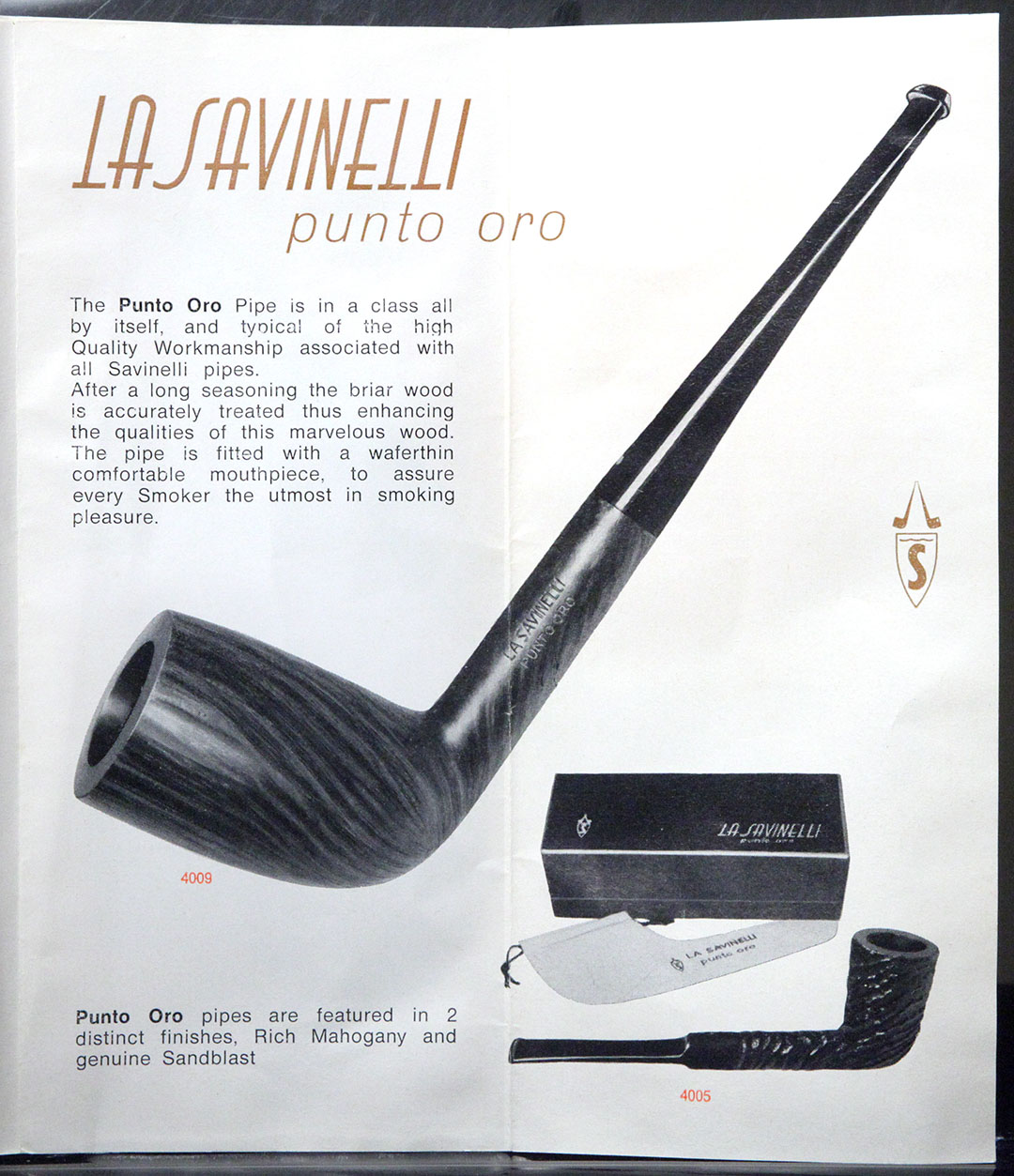
The next pipe on the table came to us from one of Jeff’s pipe hunts not far from where he is located. It is an interesting Savinelli Poker with a really nice sandblast finish. The blast is quite rugged and defined and feels as good in the hand as it looks to the eye. The finish was very dirty with flecks of white paint in the crevices of the blast around the bowl. The bowl had a thick cake in the bowl and a lava overflow on the rim top. There was darkening on the briar around the inner beveled edge of the rim. The pipe is stamped on the underside of the shank and reads Savinelli over Punto Oro followed by the Savinelli S shield and the shape number 310KS Italy. The stamping is clear and readable. The stem was dirty and oxidized. There were tooth marks and chatter on the stem near the button on both sides and some on the surface of the button as well. I am not sure the stem is original though the fit is perfect. There are no marks identifying it as a Savinelli or Punto Oro pipe but that is not enough to be conclusive on the status of the stem. Jeff took photos of the pipe before he cleaned it up. Jeff took photos of the rim top to show the damage, the tick cake in the bowl and the lava overflow on the rim top filling in some of the crevices in the blasted rim top.. The photos show the rim top and bowl from various angles. Jeff took some photos of the bowl sides and heel to show the nice grain that was on this bowl. It is a quite beautifully sandblasted pipe. The stamping and logo are on the underside of the shank and are as noted above. They look very good even though some of each line is stamped in the blast portion not just on the smooth panel.The stem was a very good fit to the shank. It was oxidized, calcified and had debris stuck to the surface of the vulcanite. There was tooth chatter and marks on both sides of the stem and on the button surface. I turned to Pipephil’s site to get a feel for the Punto Oro line. All of the previous Punto Oro pipes that I have worked on were smooth finish with great grain. This was a sandblast one and I do not recall working on one before. Here is the link (http://www.pipephil.eu/logos/en/logo-savinelli3.html). I have included a screen capture of the pertinent information on the line below. It appears the line came out in both smooth and sandblast finishes.I turned to Pipedia to look at what information they had on the brand. I found a catalogue page on the Punto Oro which confirmed what I had surmised about the line having both smooth and sandblast finished pipe (https://pipedia.org/images/d/db/Sav_Punto_Oro.jpg). I have included a screen capture of the page below. It says that the line was available in 2 distinct finishes – a rich Mahogany smooth finish and a genuine sandblast.The Savinelli shape number was 310KS so I turned to the Savinelli Shape Chart on Pipedia and included a screen capture (https://pipedia.org/images/4/41/Sav_Shape_Chart_2017.jpg). Ihave circled the 310KS shape in red in the photo below.Armed with that information I turned to work on the pipe itself. Jeff had done a great job cleaning up the pipe as usual. He reamed the pipe with a PipNet reamer and cut back the cake back to the bare briar. He cleaned up the walls with a Savinelli Fitsall Pipe Knife. He scrubbed the interior of the bowl and shank with pipe cleaners, cotton swabs and alcohol to remove the tars and oils. He scrubbed the exterior of the pipe with Murphy’s Oil Soap and a tooth brush to remove the grime from the finish. He worked on the rim top lava and darkening with the soap and tooth brush. He scrubbed the inside of the stem with alcohol and pipe cleaners. He scrubbed the exterior with Soft Scrub and then soaked it in Before & After Deoxidizer. He washed it off with warm water to remove the deoxidizer. The pipe looked far better. I took photos of the pipe when I received it before I started working on it. I took photos of the bowl and rim top to show how clean it was. You can see the darkening on the inner edge of the rim and the top.  The stem looks clean of oxidation and the tooth marks and chatter are very clear in the photos.I took a photo of the stamping on a smooth panel on the underside of the shank. The photo is a little blurry but the stamping is clear and readable.I took a photo of the pipe with the stem removed to show the overall look of stem, tenon and profile of the pipe.I cleaned up the darkening of the edge and rim top with a brass bristle wire brush. I was able to remove some more of the darkening and while not perfect it is certainly better. There were also still some white paint flecks in the sandblast grooves. I cleaned them out at the same time. I rubbed the briar down with Before & After Restoration Balm. I worked it into the briar with my fingertips and a horse hair shoe brush to get it into the deep crevices of the sandblast. The product works to clean, enliven and preserve the briar. I let it sit for 10 minutes while I worked on the stem. After the time passed I buffed it with a cotton cloth to deepen the shine. The sandblast came alive with the balm. I set the bowl aside and turned my attention to the stem. I sanded out the tooth marks and chatter on both sides of the button surface and stem with 220 grit sandpaper and began the polishing with 400 grit wet dry sandpaper.I rubbed the stem down with Denicare Mouthpiece Polish – a red, gritty Tripoli like substance that is a paste. I rubbed it into the surface of the stem and polished it off with a cotton pad. I have found that is a great intermediary step before polishing with micromesh pads. I am not sure what I will use once the final tin I have is gone!I polished the vulcanite with micromesh sanding pads – 1500-12000 grit pads. I wiped it down with Obsidian Oil after each sanding pad. I used Before & After Pipe Polish – both Fine and Extra Fine to further polish the stem. This Savinelli Punto Oro sandblast Poker Sitter is a real beauty. The sandblast reveals some great ring grain around the bowl sides and birdseye on the heel. The finish on the pipe is in excellent condition and the contrasting stains work well to highlight the grain under the blast on the pipe. The polished black vulcanite saddle stem adds to the mix. With the grime and debris gone from the finish and the bowl it was a beauty and the blast really is eye-catching. I put the stem back on the bowl and buffed the pipe with Blue Diamond on the buffing wheel. I buffed the sandblast with a light touch and carefully avoided the stamping on the shank during the process. I gave the bowl multiple coats of Conservator’s Wax and the stem multiple coats of carnauba wax on the buffing wheel and followed that by buffing it with a clean buffing pad. I hand buffed the pipe with a microfiber cloth to deepen the shine. The finished Savinelli Punto Oro Poker is quite nice and feels great in the hand. Give the finished pipe a look in the photos below. I can only tell you that like the other pipes I am working that it is much prettier in person than the photos capture. The dimensions of the pipe are Length: 5 ½ inches, Height: 2 inches, Outside diameter of the bowl: 1 ¼ inches, Chamber diameter: ¾ of an inch. Thanks for walking through the restoration with me as I worked over another interesting pipe. This pipe will be added to the Italian Pipe Makers section of the rebornpipes store soon. If you want to add it to your collection send me an email or a message! Thanks for your time.

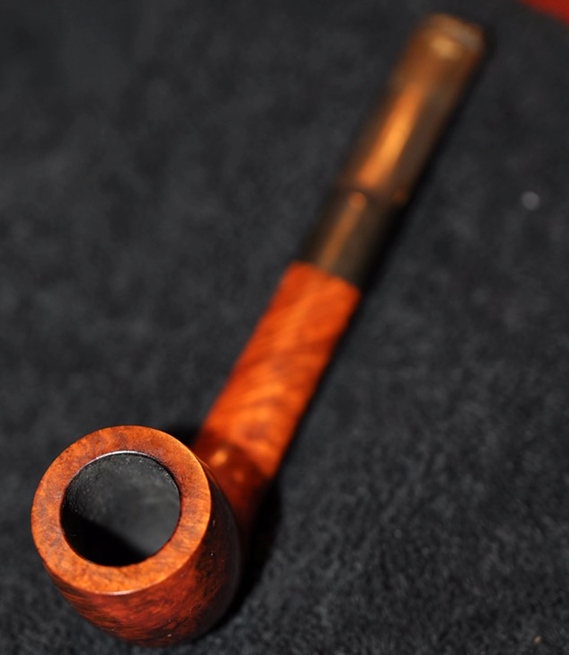
Restoring a bit of an oddity – a Dri-Cool Briar Carburetor Rhodesian


Blog by Steve Laug

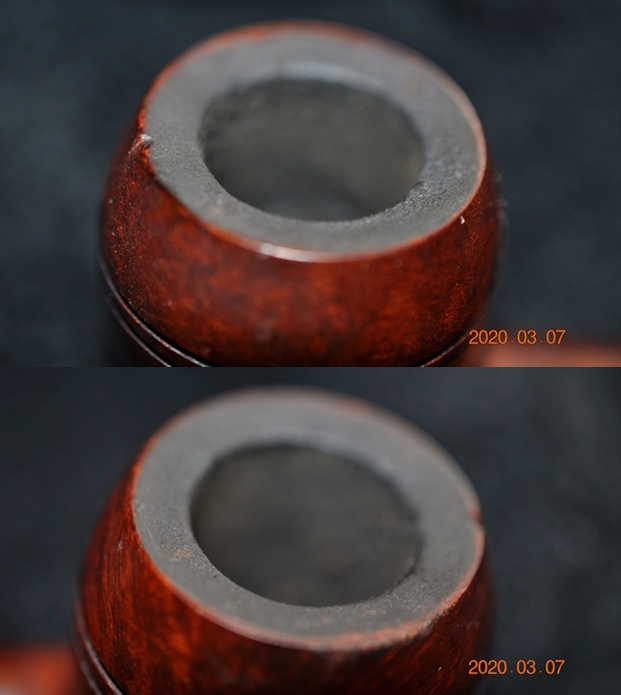
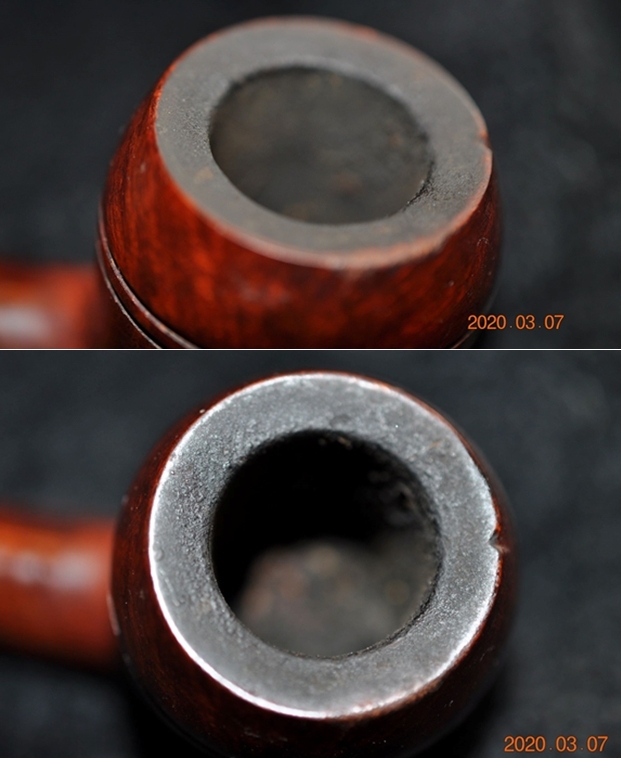
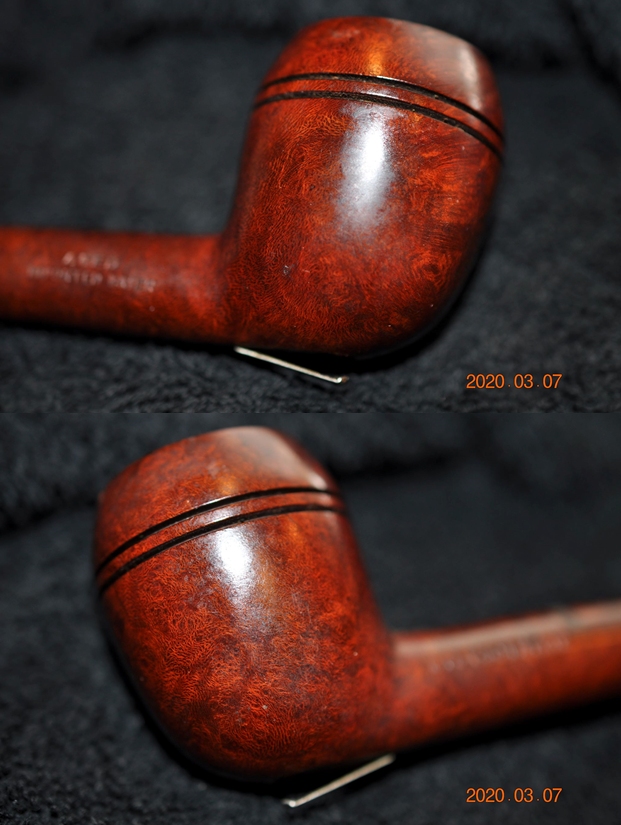
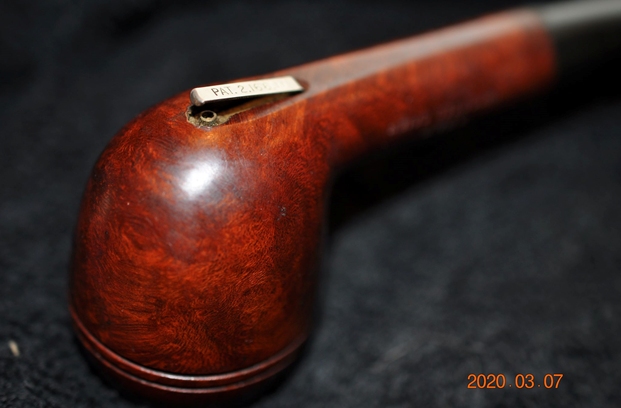
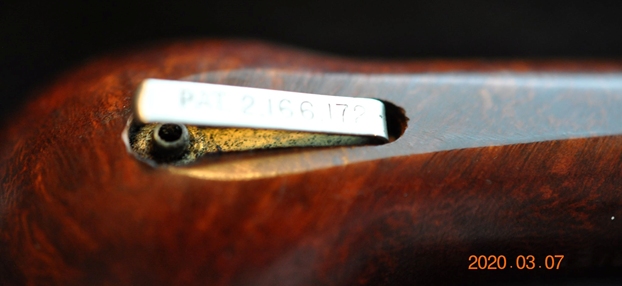
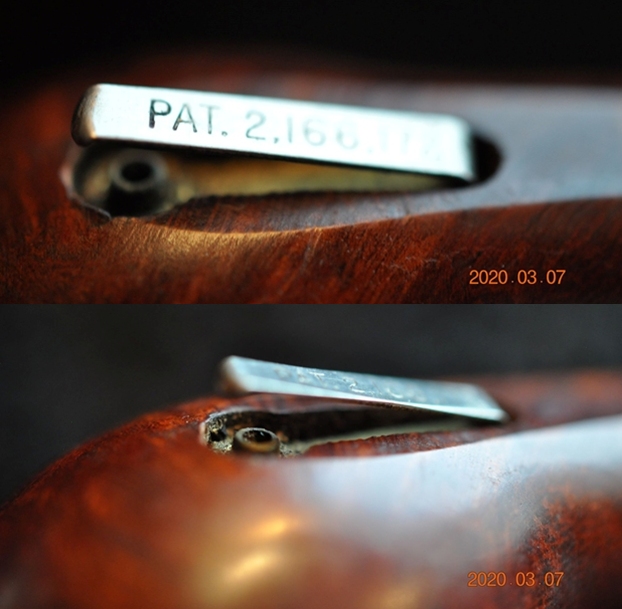
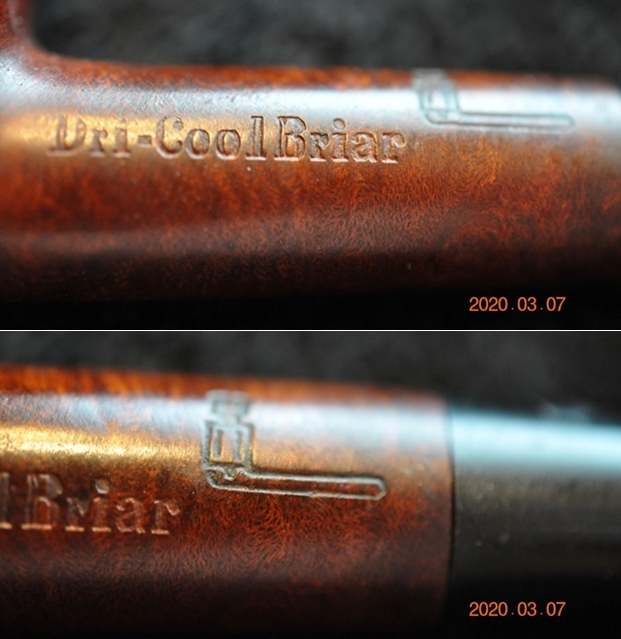
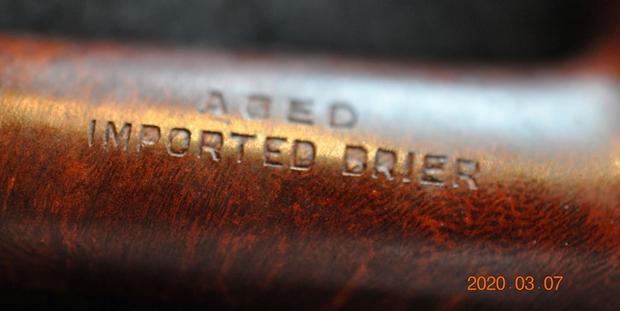
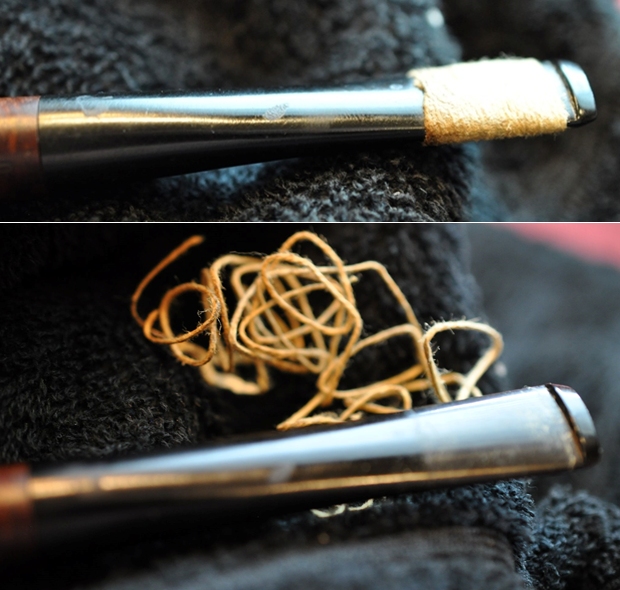
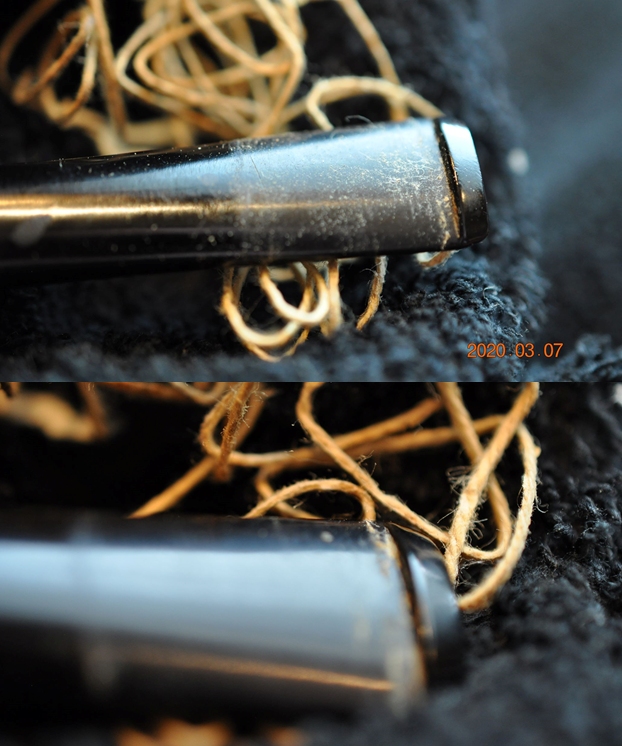
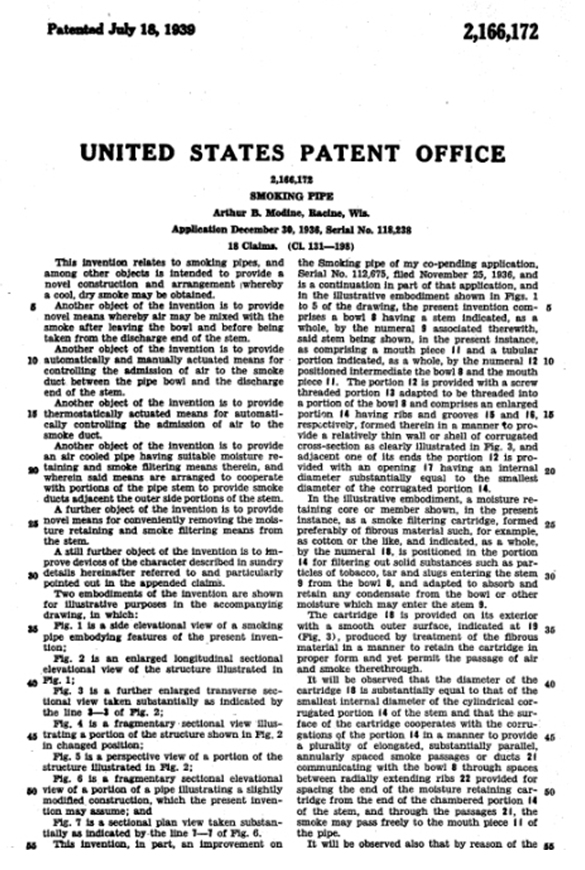
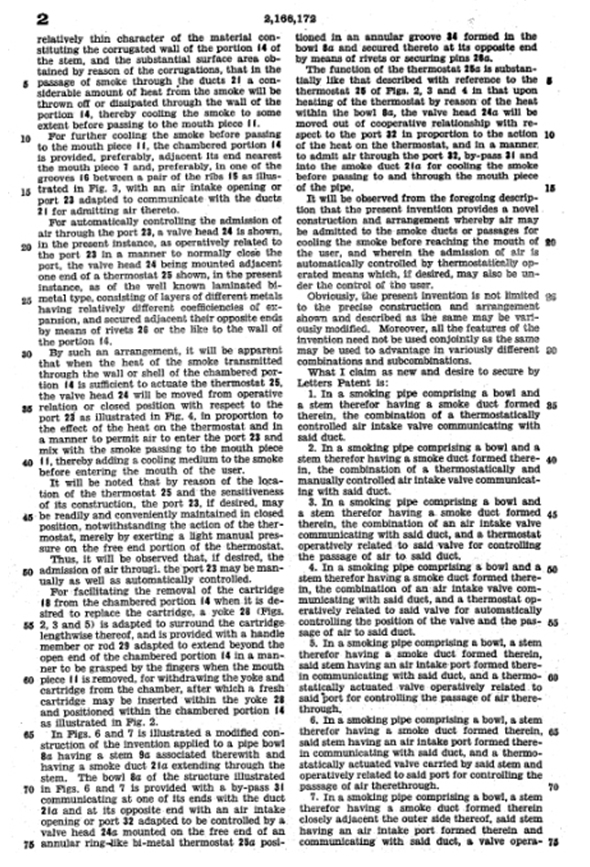
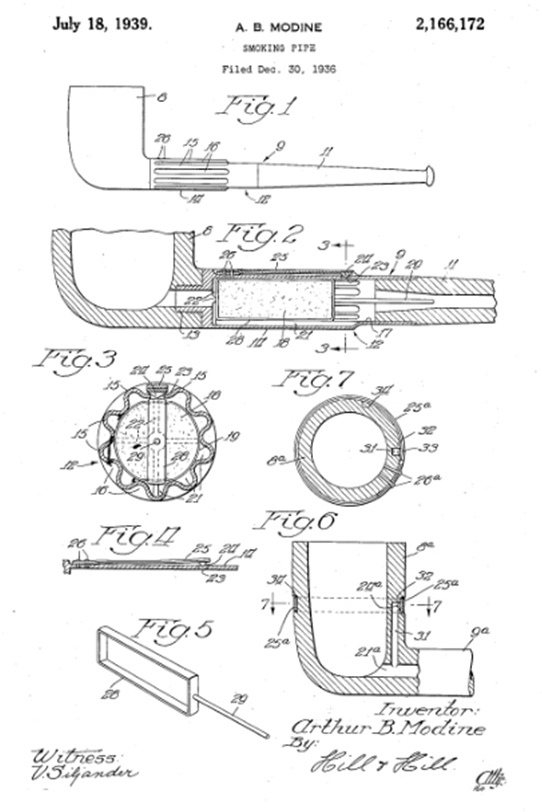
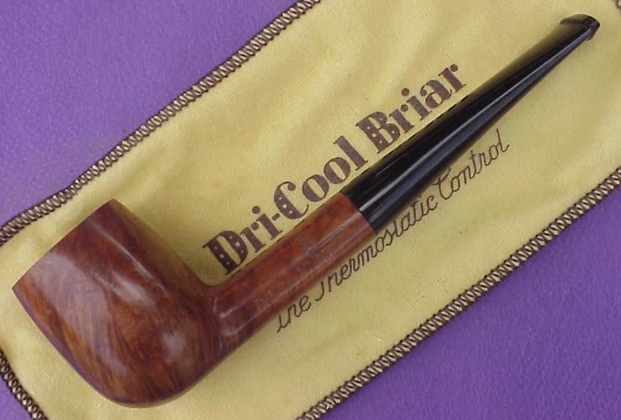
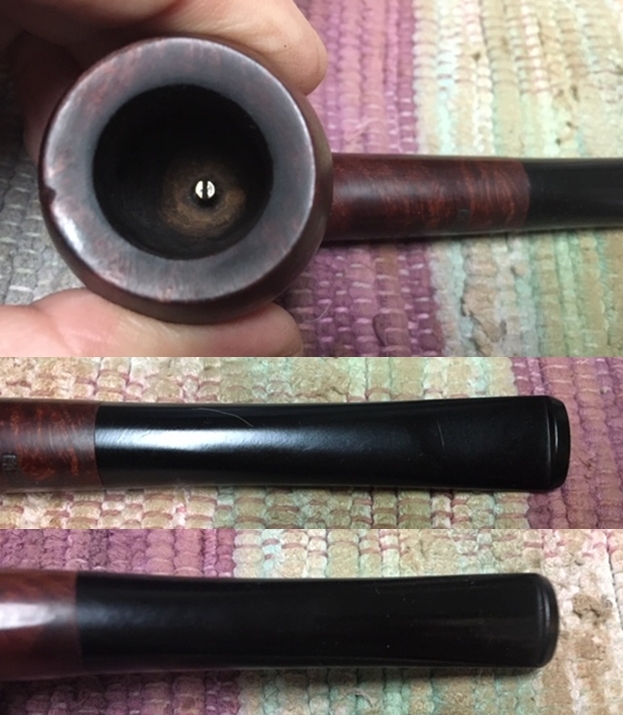
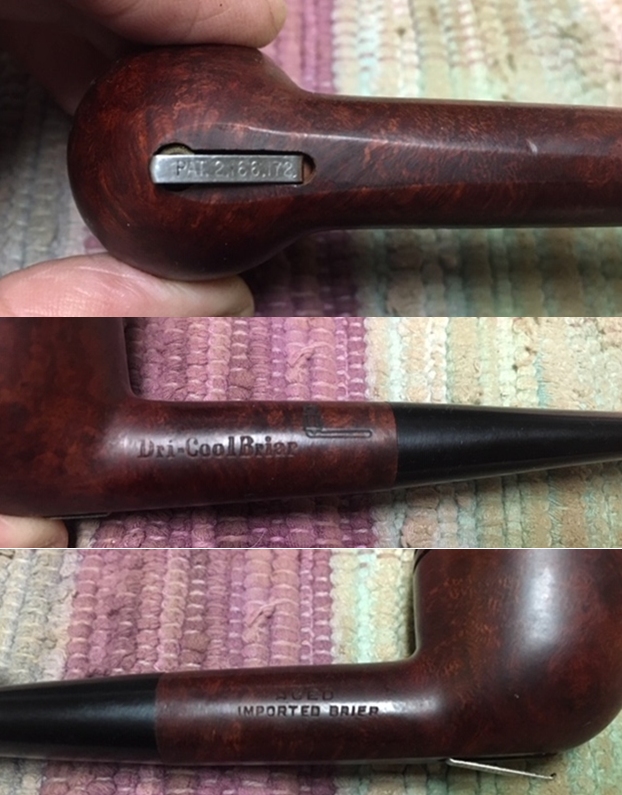
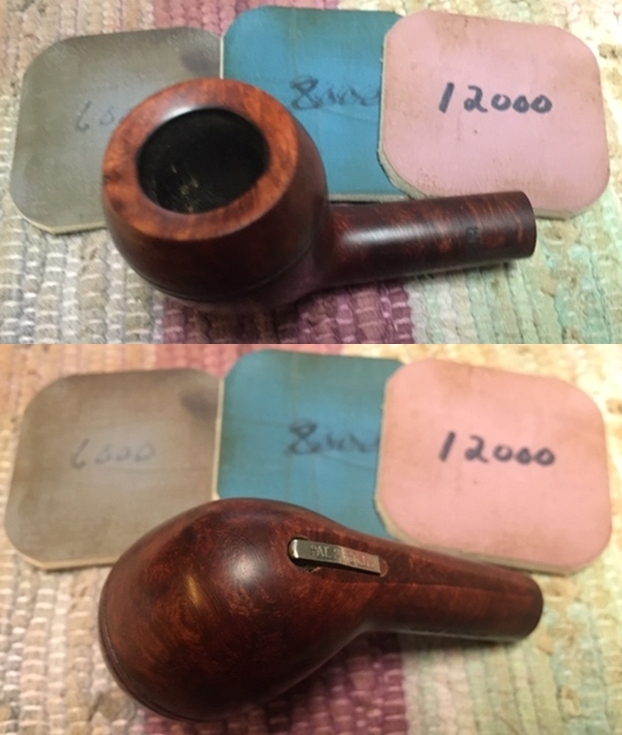
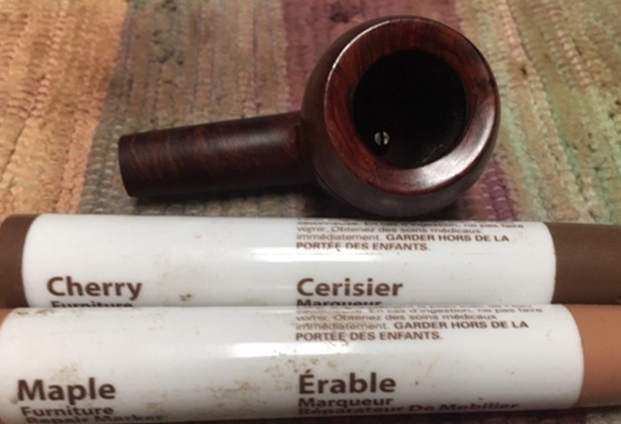
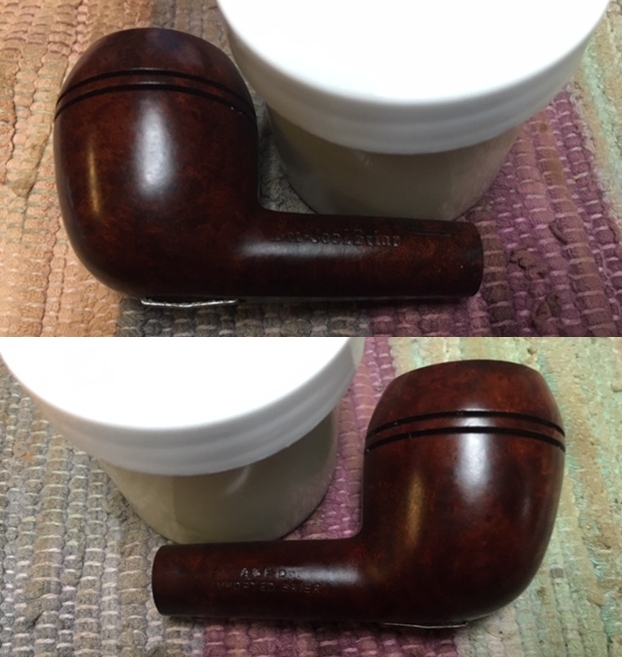
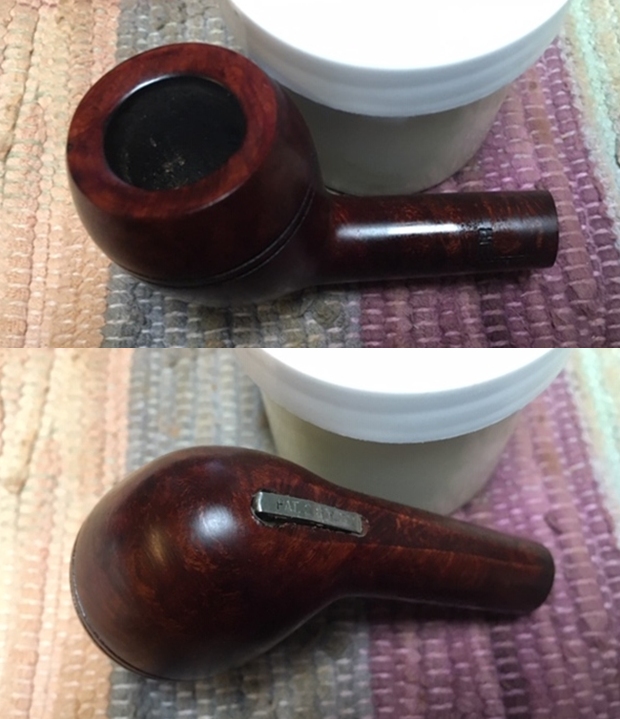
The next pipe on the table came to us from one of Jeff’s pipe hunts or auctions. It is a strange pipe in many ways. The end of the stem is wrapped tightly with thread forming a protective bit cover to protect the stem from bite marks – or was it? Maybe it was a home down repair job and when we removed the thread we would see what was wrong. The other thing about the pipe is that it has a clip on the underside of the pipe with a patent number 2,166,172. Under the spring clip there was a Kaywoodie style carburetor in the bottom of the bowl. It extends up into the bowl bottom about1/4 of an inch. The post is split in the centre like a slotted screw. The airway enters the bowl at the base of the post. The rest of the shank and stem are normal. The bowl was very dirty with a thick cake in the bowl and a lava overflow on the rim top. There was a large chip out of the outer edge of the bowl at the front of the rim top. The stem was dirty but lightly oxidized. There are not any tooth marks on the stem. Jeff took photos of the pipe before he cleaned it up. Jeff took photos of the rim top to show the damage, the tick cake in the bowl and the lava overflow on the rim top. The photos show the rim top and bowl from various angles. Jeff took some photos of the bowl sides and heel to show the nice grain that was on this bowl. It is a quite beautifully grained pipe. Jeff took several photos of the apparatus on the heel of the bowl. You can see the clip like piece of metal with a patent number on it over the carburetor/nozzle extending out of the bowl. The stamping and logo are interesting on the left side of the shank. They include the Dri-Cool Briar stamp and a pipe that illustrates the system. On the right side of the shank it reads Aged Imported Briar. The previous pipeman had wrapped the end of the stem in twine/thread to provide a homemade bite protector. We have seen this before and generally what is underneath is a mess. However Jeff took photos of the unwrapping this time and what was underneath was quite pristine. Whew a good surprise! Before I started to work on the pipe I decided to hunt down the patent number on the clip on the heel of the bowl. I did a patent search on the US Patent Site and found the following Patent Information. For some reason one of the pages was not available on the site but I have included what was there along with the patent drawings. It appears that the concept was patented on December 30, 1936 by A.B. Modine. While the pictures are slightly different from the pipe I am working on the parts appear to be the same. It is an interesting piece of the perpetual and ongoing search for a cool and dry smoke. I also found a picture online of a Dri-Cool Briar The Thermostatic Control Billiard and have included below.Armed with that information I turned to work on the pipe itself. Jeff had done a great job cleaning up the pipe as usual. He reamed the pipe with a PipNet reamer and cut back the cake back to the bare briar. He cleaned up the walls with a Savinelli Fitsall Pipe Knife. He scrubbed the interior of the bowl and shank with pipe cleaners, cotton swabs and alcohol to remove the tars and oils. He scrubbed the exterior of the pipe with Murphy’s Oil Soap to remove the grime from the finish. He scrubbed the inside of the stem with alcohol and pipe cleaners. He scrubbed the exterior with Soft Scrub and then soaked it in Before & After Deoxidizer. He washed it off with warm water to remove the deoxidizer. The pipe looked far better. I took photos of the pipe when I received it before I started working on it. I took photos of the bowl and rim top to show how clean it was. You can see the darkening on the rim top and the apparatus in the bottom of the bowl. The chip out of the outer edge of the rim is visible and deep.I took a photo of the clip on the underside of the shank to show the Patent Number. Jeff was able to clean up around the clip as well and it looked very good. I took photos of the stamping on both sides of the shank. It is clear and readable.I cleaned up the damage on the rim top and filled in the chip on the edge with briar dust and super glue. Once the chip repair cured I sanded it smooth and sanded the damaged rim top smooth with 220 grit sandpaper. I polished it with 400 grit wet dry sandpaper. I polished the briar with micromesh sanding pads – wet sanding with 1500-12000 pads and wiping the surface down with a damp cloth to remove the sanding debris. It began to really shine as I worked through the various grit pads. I used a blend of Cherry and Maple stain pens to restain the rim top and blend it into the rest of the briar. Once it polished the colour will blend together with the rest of the briar.Once the stain cured I rubbed the briar down with Before & After Restoration Balm. I worked it into the briar with my fingertips. The product works to clean, enliven and preserve the briar. I let it sit for 10 minutes while I worked on the stem. After the time passed I buffed it with a cotton cloth to deepen the shine. I set the bowl aside and turned my attention to the stem. I polished the vulcanite with micromesh sanding pads – 1500-12000 grit pads. I wiped it down with Obsidian Oil after each sanding pad. I used Before & After Pipe Polish – both Fine and Extra Fine to further polish the stem. This was a fun pipe to work on. The “plumbing” on it made it quite fascinating to clean up and to restore. It seems to me that it functions a lot like a Kaywoodie Carburetor but externally is different. I wonder if the clip is not a way of regulating the airflow from the Carburetor in the bowl bottom. Anyway, I put the pipe back together again and buffed it with Blue Diamond on the buffing wheel. I gave the bowl and stem several coats of carnauba wax. I buffed the pipe on the wheel with a clean buffing pad to raise the shine. I hand buffed it with a microfiber cloth to deepen the shine. I am really happy with how the pipe came out and the way in which the rim edge repair blended in with the rest of the bowl. The browns of the stain and the black of the polished vulcanite came out really well. This is a nice looking “contraption” pipe versus how often they are quite ugly! The dimensions of the pipe are Length: 5 ¾ inches, Height: 1 ¾ inches, Outer Diameter of the Bowl: 1 ¼ inches, Chamber Diameter: ¾ of an inch. The finished pipe is shown in the photos below. It is an interesting pipe and one that will reside in my “Search for a Cooler/Drier Smoking Pipe” Collection. Give the blog a read. Thanks for walking through the restoration with me.

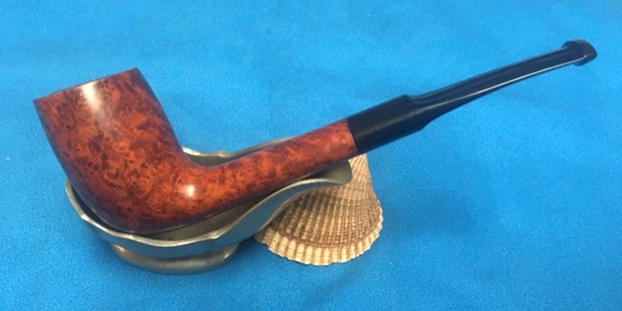
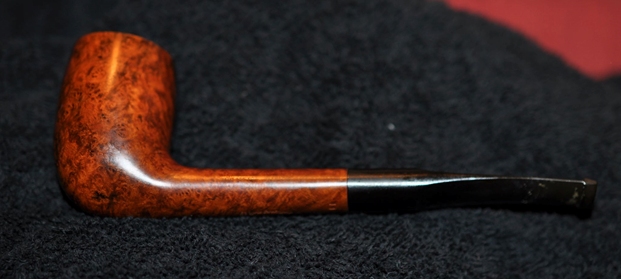
New Life for an HAJ Handmade in Denmark ¼ Bent Brandy


Blog by Steve Laug

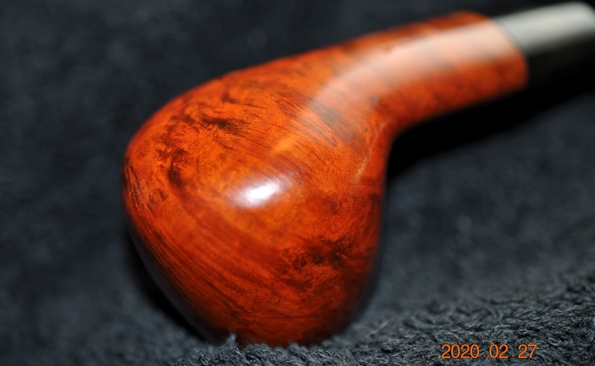
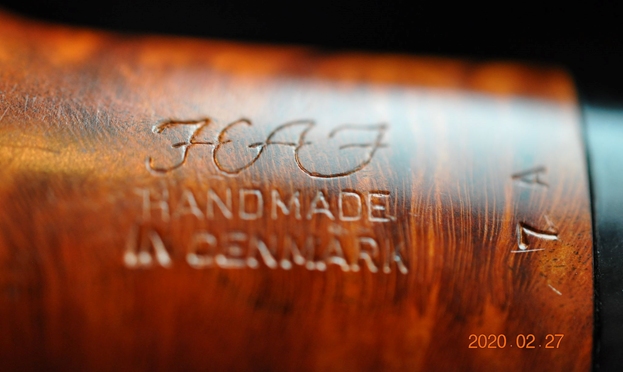
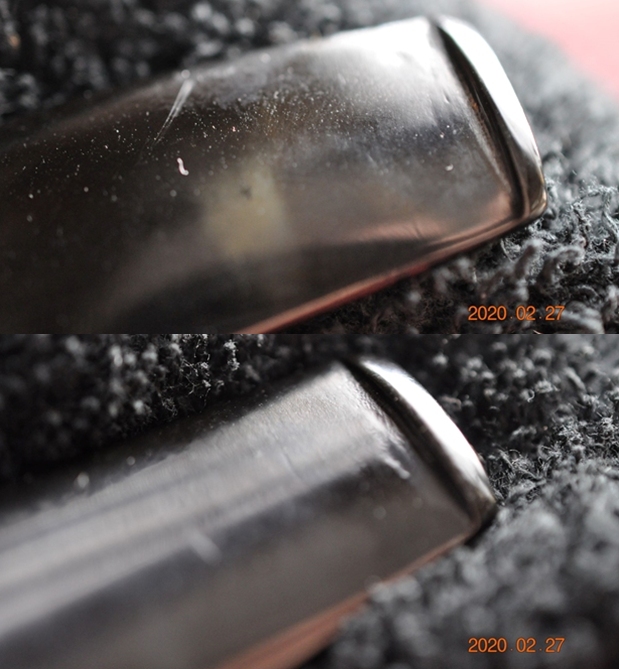
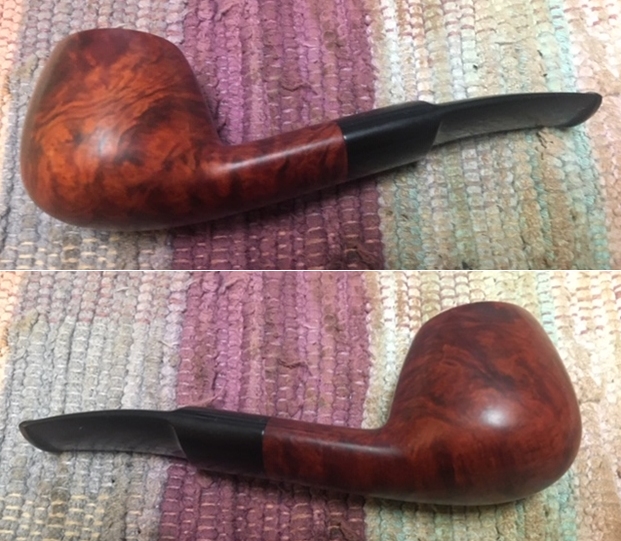
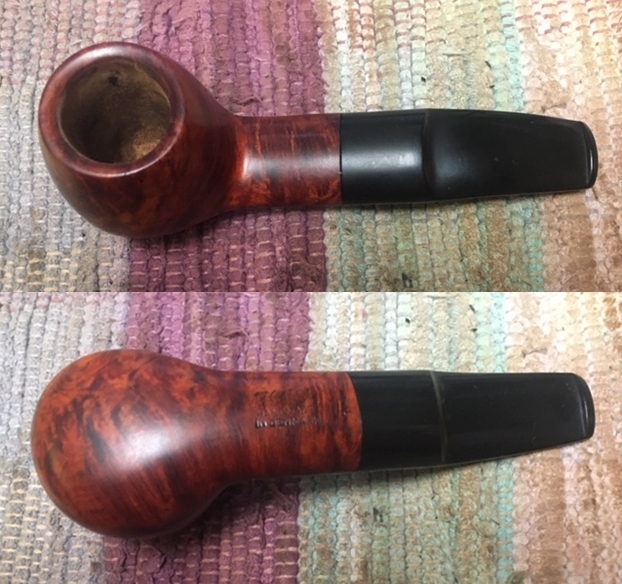
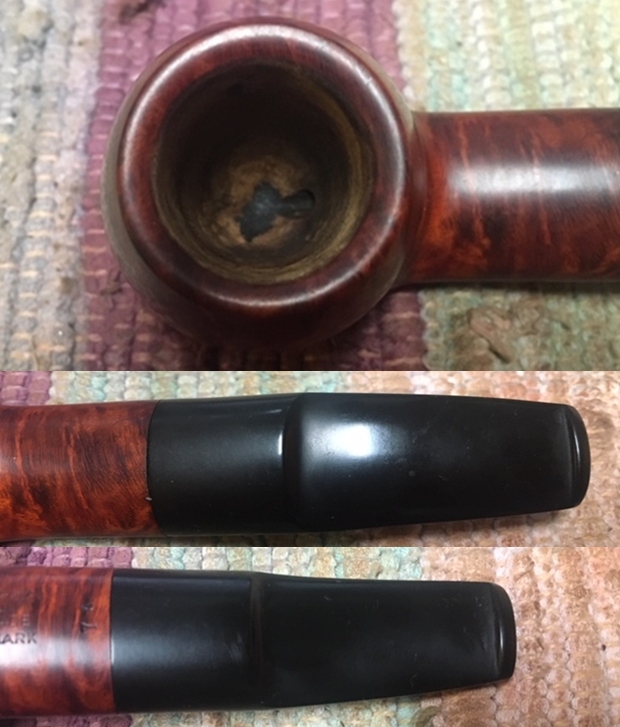
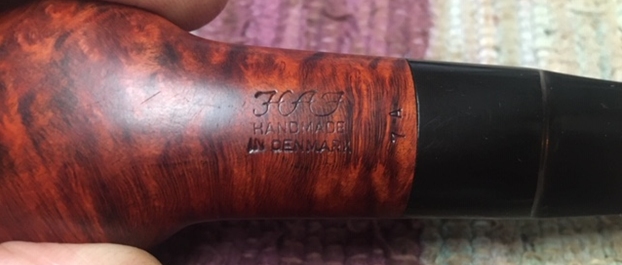
The next pipe on the table came to us in a group of pipes we purchased from a fellow who was getting rid of his collection. It is an interesting looking ¼ bent Brandy. It is stamped on the underside of the shank HAJ over Handmade in Denmark. The shape number is stamped at the shank stem junction and reads 7A. The grain around the bowl is a mix of swirls and cross grain and the stain is a reddish brown with dark brown undertones. The pipe was dirty and there were remnants of cake around the bowl in spots but not covering the entire bowl. It appeared to have been reamed and not completely cleaned. The bowl was dirty and darkened from smoking. You will be able to see what I am referring to about the spotty cake when you look at the photos Jeff took of the bowl and rim. The finish was dirty but looked good underneath. The vulcanite stem was lightly oxidized and there were tooth marks and chatter on both sides just ahead of the button. Jeff took photos of the bowl to show what it looked like when we received it. Jeff has gotten very good at capturing the condition of the bowl and rim top with his photos. You can see the work that is ahead of us in terms of the spotty cake on the walls of the bowl. It is kind of odd in that the other portions of the bowl have been sanded smooth. The rim top looks pretty good.The next set of photos show the grain on the sides and heel of the bowl. It is an interesting combination of grain – cross grain and swirls. I look forward to seeing what this one looks like once it is clean and restored. He took a photo of the stamping on the underside of the shank. The HAJ stamp is readable as is the Handmade in Denmark and the shape number stamp.The next photos show the stem surface. It was very dirty and had light tooth marks and chatter on both sides ahead of the button. Before I started to work on the pipe I wanted to learn as much as I could about the brand. I have heard of or worked on a HAJ pipe before so I had no idea who made the pipe. I turned first to Pipephils site to see if there was any information on the Danish Made HAJ pipe and came up empty. I turned to Pipedia and looked for the HAJ brand and found that under the Danish pipe makers there was a listing. (https://pipedia.org/wiki/Hans_Aage_J%C3%B8rgensen). I quote the totality of the information included on the listing below:

Hans Aage Jørgensen is the pipemaker behind HAJ pipes, stamped HAJ and Handmade in Denmark.

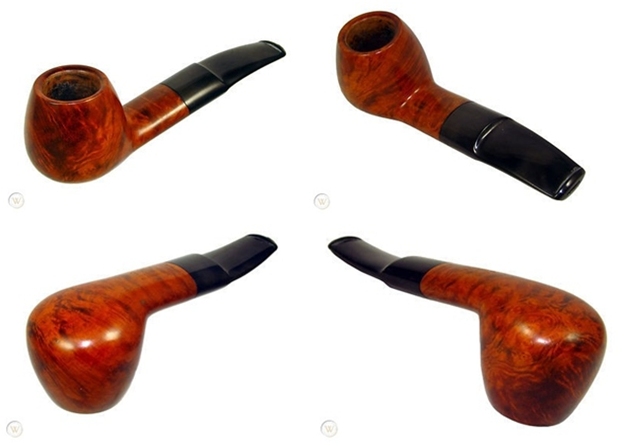
From there I decided to search a bit further so I googled the brand under the name Hans Aage Jorgensen HAJ. I found several pipes that were listed. I found a link on worthpoint.com to the brand and when I turned there I found the very pipe that I have in hand. It is exactly The grain, stamping, stem, shape everything is identical to the pipe I am working on. I have included the photos as well as the description from Worthpoint regarding this pipe (https://www.worthpoint.com/worthopedia/vintage-haj-handmade-hans-aage-419739128). I quote from the site:

…We present to you a Hans Aage Jorgensen HAJ briar estate pipe. It is a bent smooth Brandy style pipe with a beautiful reddish walnut exterior finish. Very light and lightly smoked , it is an incredible pipe with the great eye appeal. Great for gifting, collecting or using yourself! Solid pipe with nice grain. Its about 5″ long , 1.5″ tall , 1.65 ” wide and weighs a mere 40 grams. It is stamped HAJ Handmade in Denmark 7A and there is nothing on the stem. Now it was time to work on the pipe itself. Jeff had once again done a great job in cleaning this pipe. It looked far better than what it was like when we found it. Because of the spotty reaming job previously he took it through the whole gamut we use when reaming a bowl. He reamed the bowl with a PipNet Pipe reamer and took the cake back to bare briar. He cleaned up any stubborn spots on the bowl walls with a Savinelli Fitsall Pipe Knife. He scrubbed out the internals with alcohol, pipe cleaners and cotton swabs until the pipe was clean. He scrubbed the exterior of the bowl with Murphy’s Oil Soap and a tooth brush to remove the grime and grit on the briar and the slight darkening on the inwardly beveled rim top. The finish looks very good with good looking grain around the bowl and shank. Jeff scrubbed the stem with Soft Scrub and then soaked it in Before & After Deoxidizer to remove the oxidation on the vulcanite. When the pipe arrived here in Vancouver for the second stop of its restoration tour it looked very good. I took photos before I started my part of the work. I took some photos of the inwardly beveled rim top and stem. Once Jeff removed the spotty cake in the bowl the inside and outer edge looked very good. The close up photos of the stem shows that is it very clean and there is some tooth chatter and marks on the button surface and just ahead of the button.I took a photo of the stamping on the underside of the shank to show what it looked like after the cleaning.I took the stem off the bowl and took a picture of the pipe. It really is a pretty little pipe with a classic Danish look to it. I was happy with the way the rim top and edges looked after Jeff had done his cleanup work so I did not need to do anymore except to polish them. I polished the briar with micromesh sanding pads – dry sanding with 1500-12000 grit pads. I wiped the bowl down after each pad with a damp cloth. The grain really began to stand out and the finish took on a shine by the last sanding pad. The photos tell the story! I worked some Before & After Restoration Balm into the surface of the briar with my fingertips. The product works to clean, enliven and protect the briar. I let the balm sit for about ten minutes and then buffed with a cotton cloth to raise the shine. The photos show the bowl at this point in the restoration process. I set aside the bowl and turned my attention to the stem. I sanded out the tooth marks and chatter with 220 grit sandpaper and started polishing it with 400 grit wet dry sandpaper.I polished the stem with micromesh sanding pads – dry sanding with 1500-12000 grit sanding pads. I wiped it down after each sanding pad with a cloth containing some Obsidian Oil. I finished polishing it with Before & After Pipe Stem Polish – both Fine and Extra Fine and buffed it off with a cotton cloth. This oval shank bent Brandy made by HAJ is a real beauty. It is a Hand Made in Denmark pipe. The shaping and carving follows the grain and highlights the mix of grains around the bowl. The finish on the pipe is in excellent condition and the contrasting stains work well to highlight the stunning grain on the pipe. The polished black, oval shaped vulcanite saddle stem adds to the mix. With the grime and debris gone from the finish and the bowl it was a beauty and the grain just pops at this point. I put the stem back on the bowl and buffed the pipe with Blue Diamond on the buffing wheel. I carefully avoided the stamping on the shank during the process. I gave the bowl and the stem multiple coats of carnauba wax on the buffing wheel and followed that by buffing it with a clean buffing pad on the buffer. I hand buffed the pipe with a microfiber cloth to deepen the shine. The finished ¼ bent Brandy shape is quite nice and feels great in the hand. Give the finished pipe a look in the photos below. I can only tell you that like the other pipes I am working that it is much prettier in person than the photos capture. The dimensions of the pipe are Length: 5 inches, Height: 1 ½ inches, Outside diameter of the bowl: 1 ¼ inches, Chamber diameter: ¾ of an inch. Thanks for walking through the restoration with me as I worked over another interesting pipe. This pipe will be added to the Danish Pipe Makers section of the rebornpipes store soon. If you want to add it to your collection send me an email or a message! Thanks for your time.

Replacing a Broken Tenon on a Stanwell RP Freehand


Blog by Steve Laug

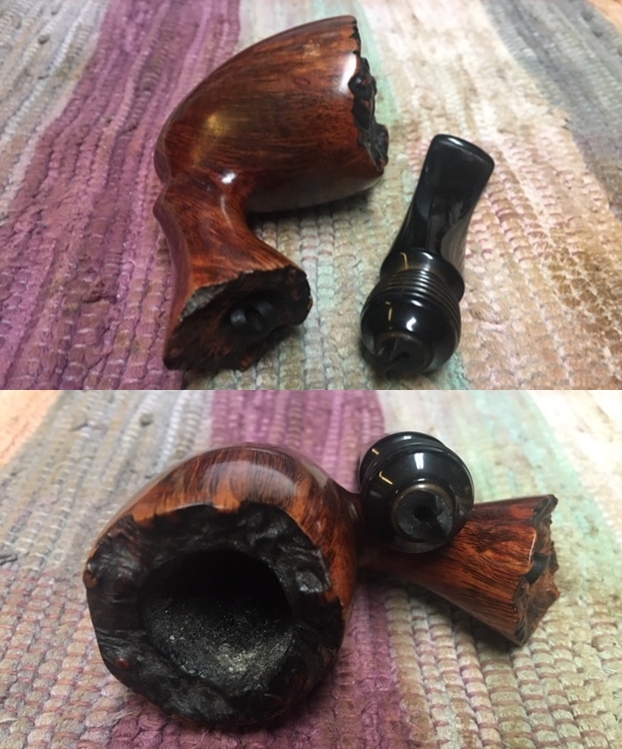
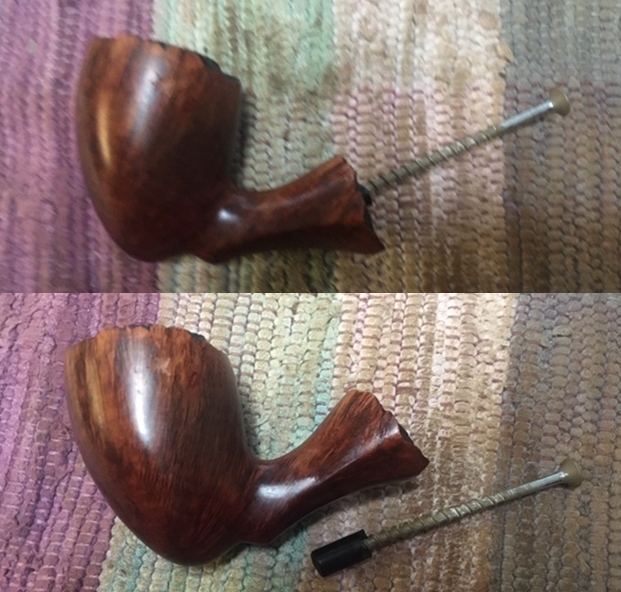
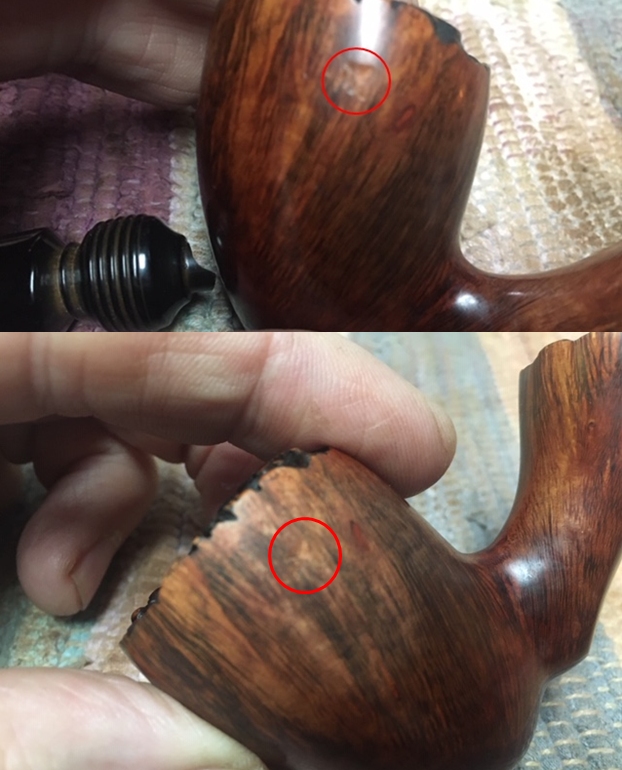
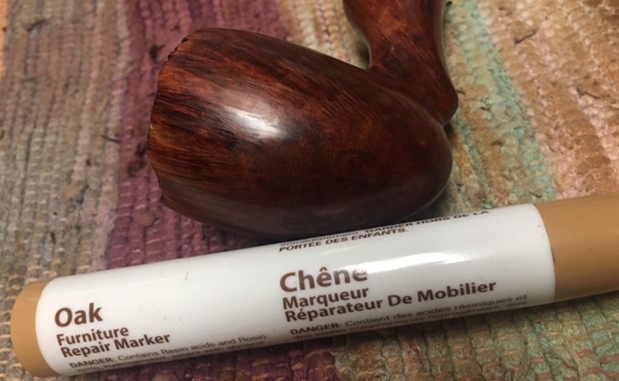
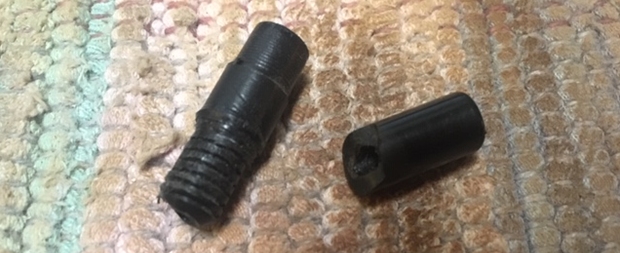
Yesterday a fellow pipe smoker called to say he was in front of my house and had a pipe that he had dropped while on a walk and needed a replacement tenon. He put the pipe in my mail box and I picked it up and while he was on the front side walk I chatted with him from the front porch – very much observing social distancing. The pipe was a beautiful Stanwell RP Freehand. Sure enough the tenon was stuck in the shank and snapper off just ahead of the fancy turned ball on the stem. Tenon replacements on these freehand styles are some of the easiest to do. It means that the stem end is flattened and drilled out to accommodate a new tenon. He also pointed out some road rash on the left side of the bowl where the pipe had bounced off the sidewalk. While I am not taking on new work what could I say to a previous customer standing at my gate asking for help. Of course I took the pipe in and today decided to address the broken tenon. I took pictures of the pipe to show its condition before I started. I took some photos of the shank end to show the snapped tenon in the shank and the broken end on the stem. I tried to pull the tenon with some simple tricks and it was stuck in the shank. It would not budge no matter how I tried. I put the bowl in the freezer for 10 minutes to see if a change in temperature would loosen the tenon.I took the bowl out of the freezer and screwed a drywall screw into the airway in the tenon. It did not take much effort at all to wiggle it and pull out the broken tenon. I kept the piece of tenon so that I could match the replace tenon to the diameter of the broken tenon.Before moving on to make the new tenon I decided to address the road rash on the side of the bowl. I have circled it in red in the first photo below. For this application I used a wet cloth and heated the blade of a butter knife over the flame of my gas stove. I put the wet cloth over the damaged spot and when the knife became hot I touched it to the wet cloth. The heat generated steam from the wet cloth and began to lift the damaged spot. I knew that it would not come up totally as it was a rough area but I knew that I could improve the look. The second photo shows the area on the bowl side after the steam application. I enclosed the repaired damage with a red circle.The damage looked much better after the steaming, not perfect but better! I stained the upper portion of the bowl with an Oak stain pen to blend it into the rest of the surrounding briar. Once it was polished it would blend in very well.I worked some Before & After Restoration Balm into the surface of the briar with my fingertips. The product works to clean, enliven and protect the briar. I let the balm sit for about ten minutes and then buffed with a cotton cloth to raise the shine. I find that it also helps to blend a newly stained area into the rest of the bowl. The photos show the bowl at this point in the restoration process. I set the bowl aside and turned my attention to replacing the tenon. I had a threaded tenon that I had started turning down to size for another pipe that would work perfectly. It is shown in the photo below next to the broken chunk of the original tenon. I would need to use a Dremel and sanding drum to finish turning the tenon portion down to match the diameter of the broken one. I would also need to reduce the diameter of the threaded tenon end because of the size of the end of the stem.I set the tenon aside and flattened the jagged portion of the broken tenon on the stem with the Dremel and sanding drum. Once it was flat I began the process of drilling out the airway to receive the new tenon. I always start with a drill bit slightly larger than the existing airway so that I do not chip of damage the stem. I don’t want create more work! I worked my way up to a ¼ inch drill bit as it was the largest one that I could get away with drilling into the stem end without damaging the external surface.I reduced the diameter of the portion of the tenon that fit in the shank and the portion that would be anchored in the stem using a Dremel and sanding drum to rough fit it. I straightened out the edges of the insert portion with a rasp and squared up the edge so that it would seat in the stem. Once I had a good fit in the stem and the shank I used slow setting super glue to anchor the new tenon in the stem. I coated the edges of the tenon and then set it in place and aligned it so that it was straight.Once the glue had cured I cleaned up the surface of the tenon so that it was not scratched with sandpaper and so that it fit well in the shank. I polished the stem with micromesh sanding pads – wet sanding with 1500-12000 grit pads.  I wiped down the stem after each pad with a damp cloth. I polished the fancy turnings on the stem and area around the new tenon with Before & After Pipe Polish (both Fine and Extra Fine) using a cotton swab to get into the grooves and angles. When I was finished I rubbed the entire stem down with the polish and buffed it with a microfibre cloth. With that the pipe is complete. I buffed it on the buffing wheel with Blue Diamond Polish and gave the entire pipe several coats of carnauba wax on the wheel. I buffed it with a clean buffing wheel and then hand buffed it with a microfiber cloth to deepen the shine. The pipe is now ready to go back to the pipe man who dropped it off Friday afternoon. I look forward to hearing what he thinks of his repaired pipe when he picks it up. Thanks for walking with me through this restoration. Cheers.

Rebirth of a Rusticated Long Shank Lumberman Made in France


Blog by Steve Laug

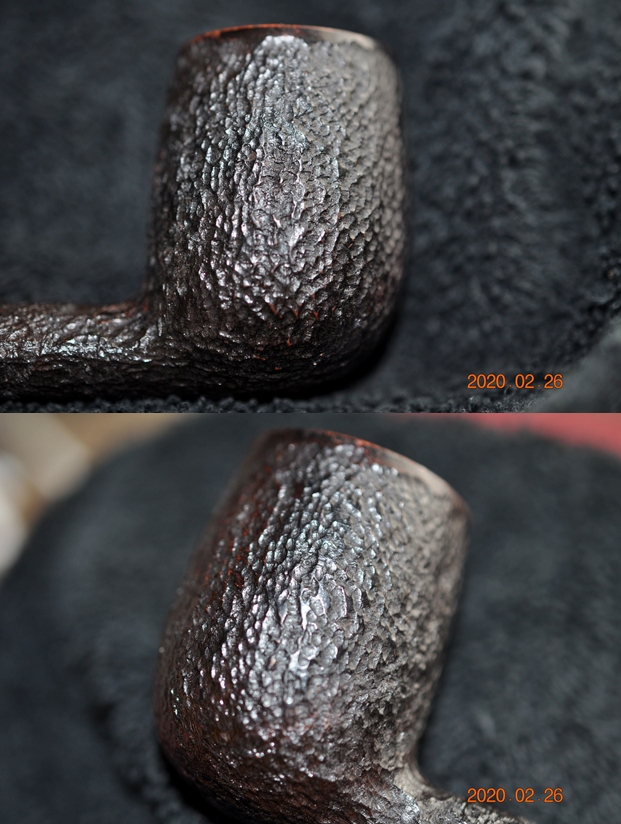
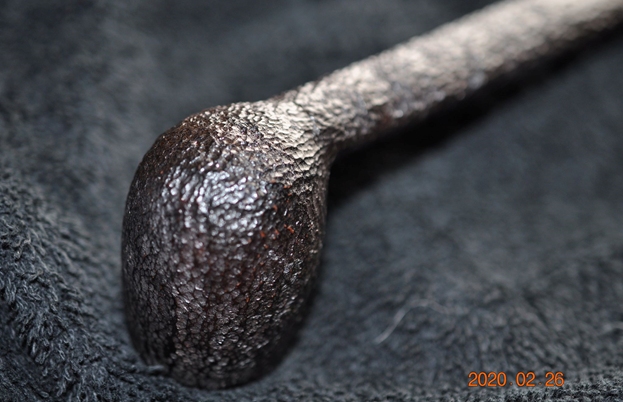
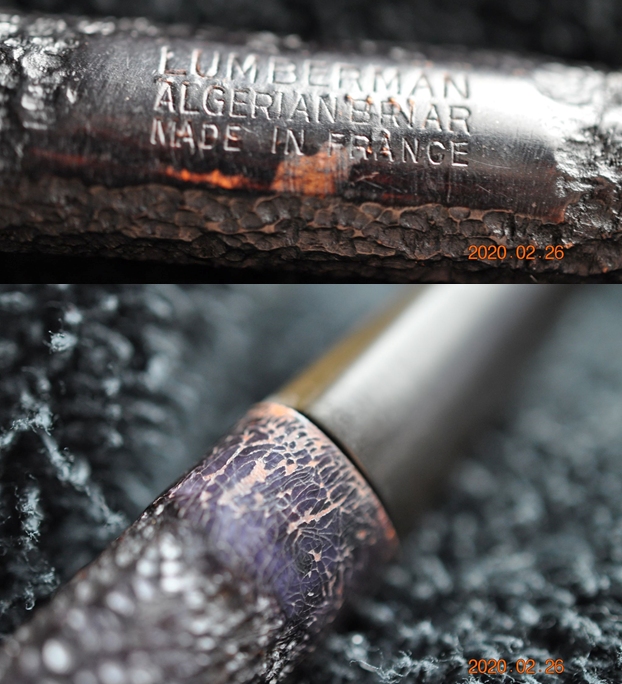
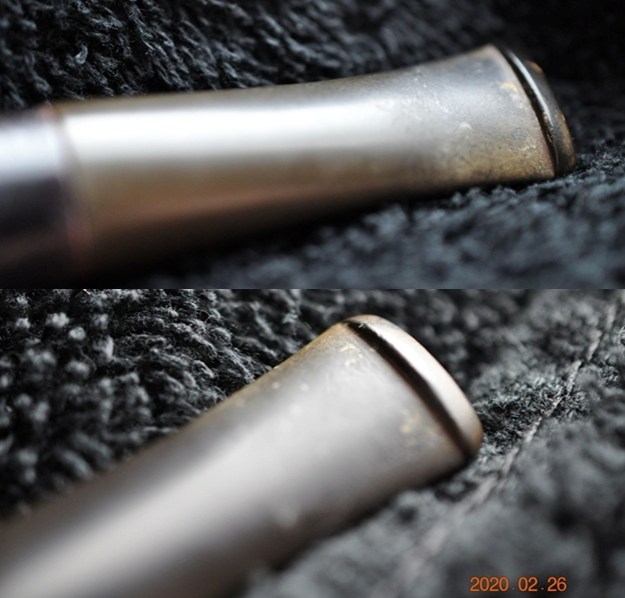
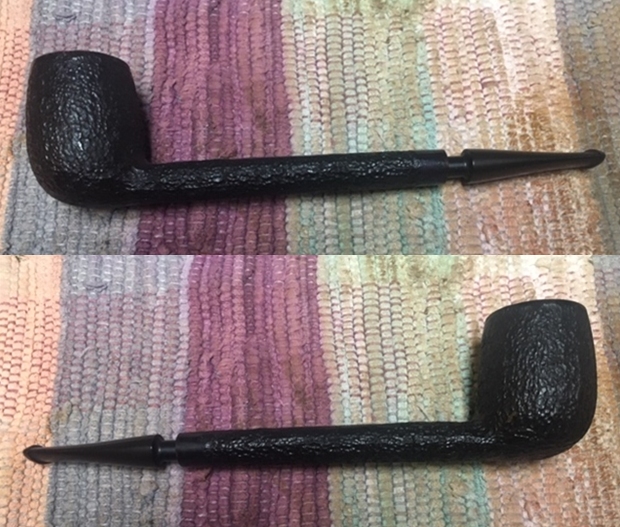
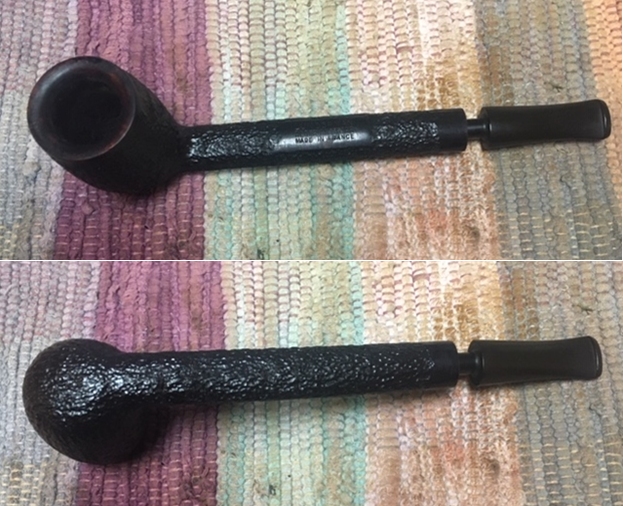
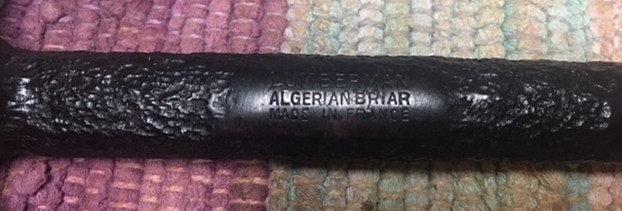
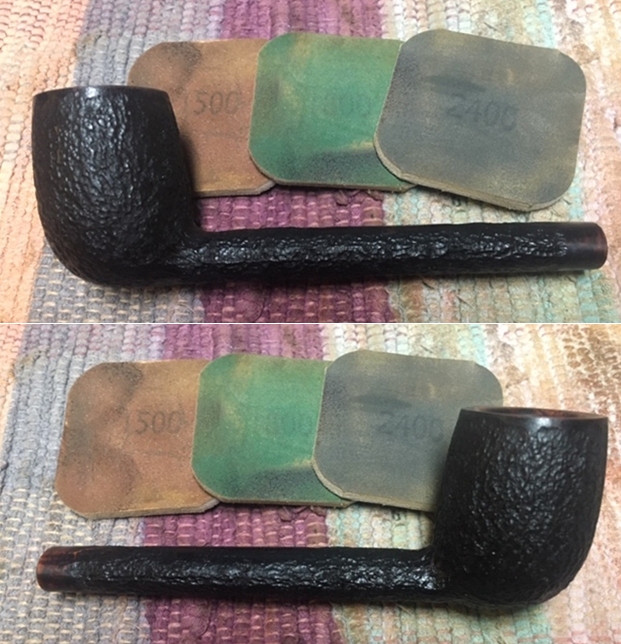
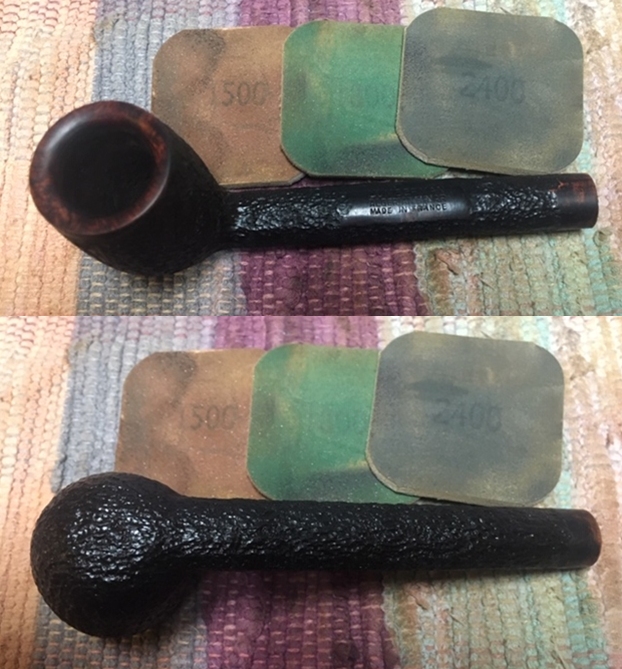
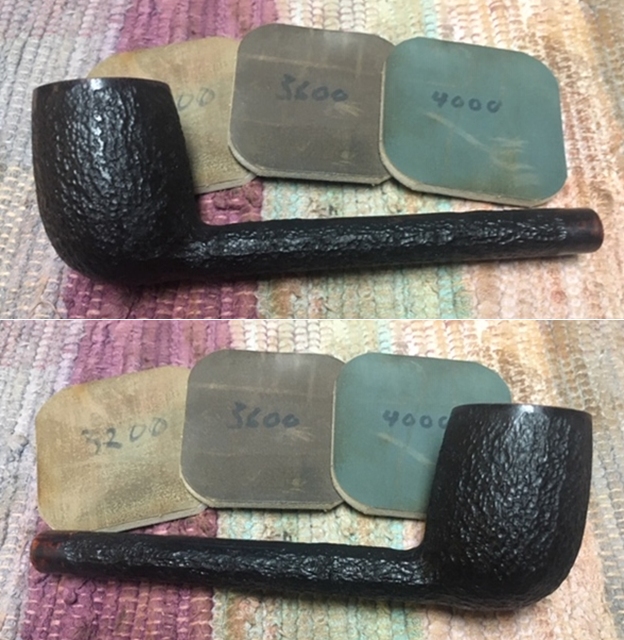
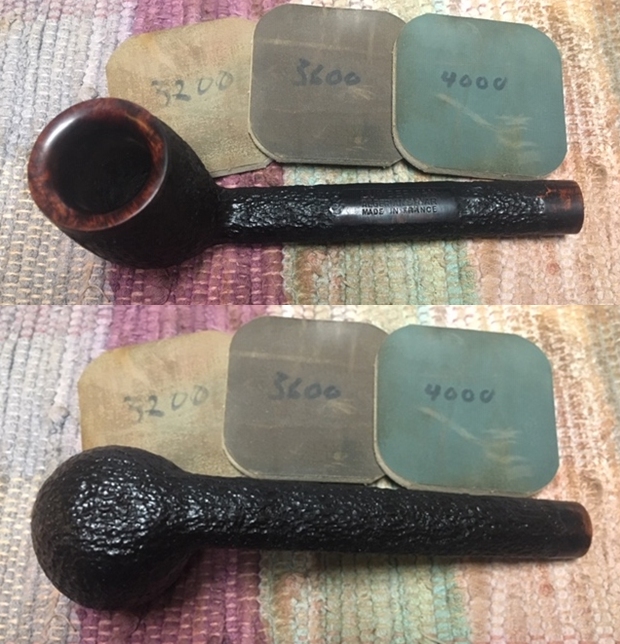
The next pipe on the table is a long shank Lumberman or what I would call a Canadian. It has a long oval shank and a tapered stem. The pipe is stamped on the top of the shank and reads LUMBERMAN over Algerian Briar over Made in France. The bowl is rusticated with a tight rustication pattern that gives it a pebble look. The pipe was filthy when we picked it up. The rustication was full of dust and debris. The finish was crackled on the smooth portions of the pipe. It was like a varnish coat was crackling and peeling. The finish was messy. The bowl had a thick cake in it that had overflowed lava onto the rim top. The inwardly beveled rim top was hard to see it was so filled with debris and lava. Even though it looked rough there was something about it that captured Jeff’s eye and eventually mine. The stem was oxidized but in terms of the general condition of the rest of the pipe was miraculously unchewed and bore no sign of tooth marks or chatter. Jeff took photos of the pipe before he started his cleanup work. I know I have used this phrase before but it adequately describes the photos that Jeff took of the rim top and bowl. He captured the condition of the bowl and rim top with the next series of photos. There is a lot of work to be done to get the bowl cleaned up and rim top visible. The pipe had an interesting tight rustication pattern around the bowl and shank. There was a smooth band at the rim edge and the shank end as well as a smooth beveled rim top. There was a smooth band on the shank top that bore the stamping. He took a photo of the stamping on the underside of the shank. It is clear and readable. It read as noted above. He also took a photo of the crackling finish around the stamping and on the shank end of the pipe.The photos of the stem show the stem surface. It is dirty and is free of tooth marks and chatter on both sides. That is quite remarkable as this is obviously an oft smoked pipe.I checked all of my usual sources of information and it appears that almost all of the major pipe makers turned out Lumberman stamped pipes. I have restored several English made versions that were made by Comoy’s and I have worked on a few from Chacom as well. This one had no identifying information beyond the stamping so it was not possible to narrow down the maker much more. I would not be surprised if it was made by Chacom. Now it was time to turn to work on the pipe.

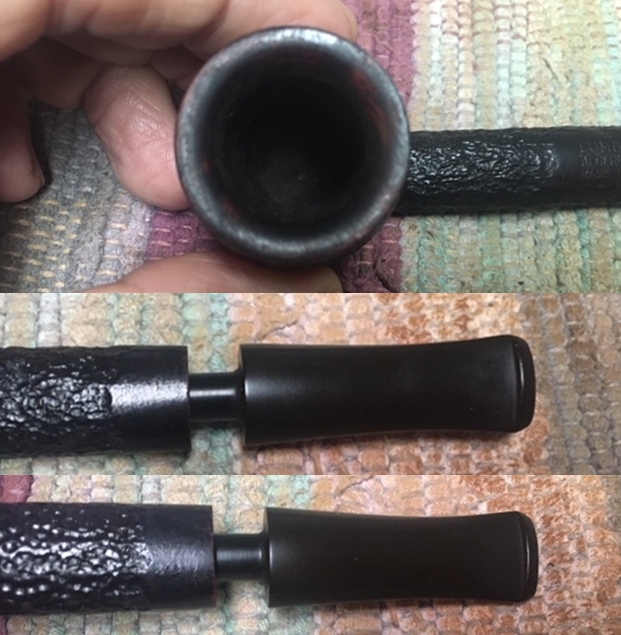
Jeff cleaned the pipe thoroughly with his usual care. He reamed it with a PipNet pipe reamer and cleaned up the reaming with a Savinelli Fitsall Pipe Knife. He scrubbed out the internals with alcohol, pipe cleaners and cotton swabs until the pipe was clean. He scrubbed the exterior of the bowl with Murphy’s Oil Soap and a tooth brush to remove the grime and grit on the briar and the lava on the rim top. He had been able to remove the crackling finish on the shank end and after cleanup the finish looks very good. The stem had been tight in the shank before so Jeff left it loosed. He scrubbed the stem with Soft Scrub to remove the grime and build up on the surface and soaked it in a bath of Before & After Deoxidizer. When the pipe arrived here in Vancouver for the second stop of its restoration tour it looked very good. I took photos before I started my part of the work. I took some photos of the rim top and stem. The photo of the bowl shows how clean the bowl and the smooth rim are. The rim top had some scratching and some darkening but it should be able to be polished out. The inner and outer edges of the bowl look really good. They are in excellent condition. The close up photos of the stem shows that is it very clean.I took a photo of the stamping on the underside of the shank of the pipe. It is clear and readable as noted above. The pipe was in great condition and only needed to be polished. I polished the smooth portions of the briar with micromesh sanding pads – dry sanding with 1500-12000 grit pads. I wiped the bowl down after each pad with a damp cloth. The grain really began to stand out and the finish took on a natural shine by the last sanding pad. The photos tell the story! I worked some Before & After Restoration Balm into the surface of the briar with my fingertips and used a horse hair shoe brush to work it into the nooks and crannies of the rustication. The product works to clean, enliven and protect the briar. I let the balm sit for about ten minutes and then buffed with a cotton cloth to raise the shine. The photos show the bowl at this point in the restoration process. I laid the bowl aside and turned to deal with the stem. The tooth marks and chatter on the stem were not deep. I polished the stem with micromesh sanding pads – dry sanding with 1500-12000 grit sanding pads. I wiped it down after each sanding pad with a cloth containing some Obsidian Oil. I finished polishing it with Before & After Pipe Stem Polish – both Fine and Extra Fine and buffed it off with a cotton cloth. The long pipe came together quite well. The finish on the pipe looks great and the contrasting stains between the smooth portions and the rustication work well with the black vulcanite stem. With the grime and debris gone, the bowl had a natural beauty and grain that pops. I put the stem back on the bowl and buffed the pipe with Blue Diamond on the buffing wheel. I carefully avoided the stamping on the shank during the process. I gave the bowl multiple coats of Conservator’s Wax by hand and the stem multiple coats of carnauba wax on the buffing wheel and followed that by buffing it with a clean buffing pad on the buffer. I hand buffed the pipe with a microfiber cloth to deepen the shine. The finished Lumberman pipe is quite elegant looking and feels great in the hand. Give the finished pipe a look in the photos below. I can only tell you that it is much prettier in person than the photos capture. The dimensions of the pipe are Length: 7 inches, Height: 1 ¾ inches, Outside diameter of the bowl: 1 ¼ inches, Chamber diameter: ¾ of an inch. It is great looking and in great condition, ready for the next pipe man or woman who takes it on in trust. I will be adding it to the French Pipe Makers section of the rebornpipes store shortly. Thanks for walking through the restoration with me as I worked over another beautiful pipe. Thanks for your time.

Refreshing a Grade 3 Ligne Bretagne from 2011


Blog by Steve Laug

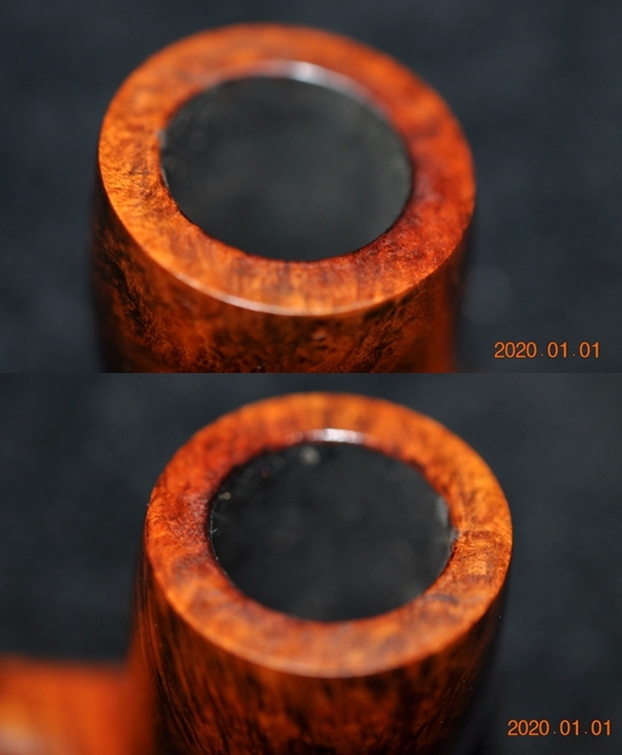
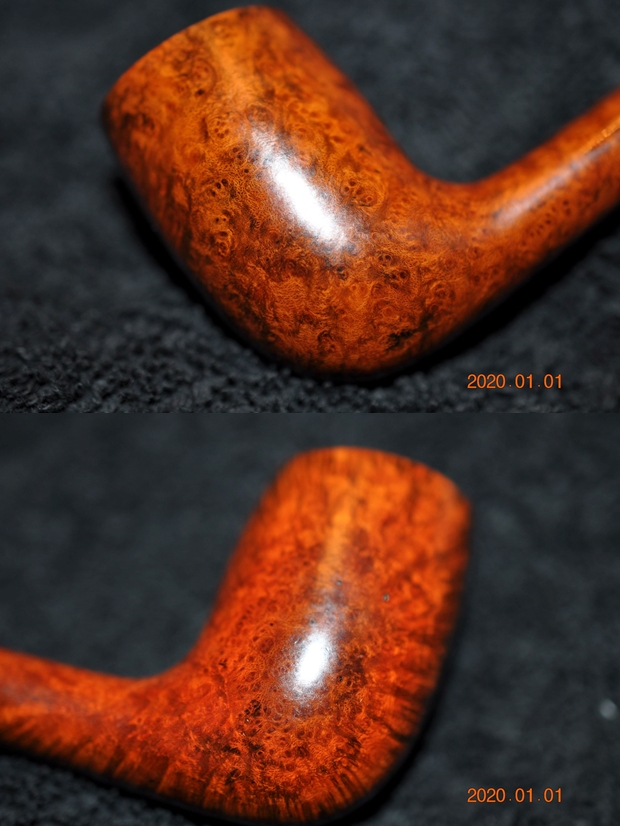
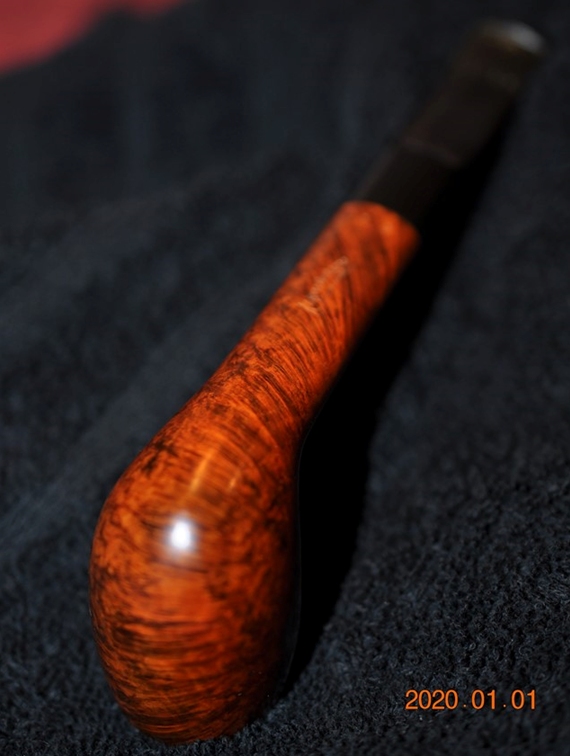
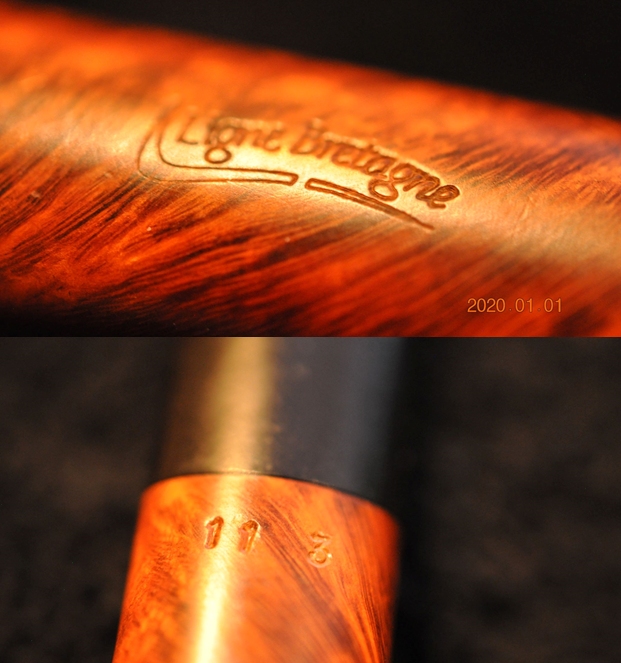
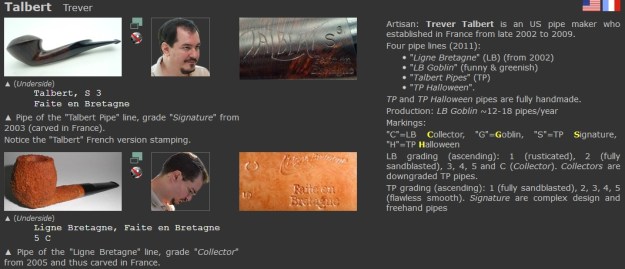
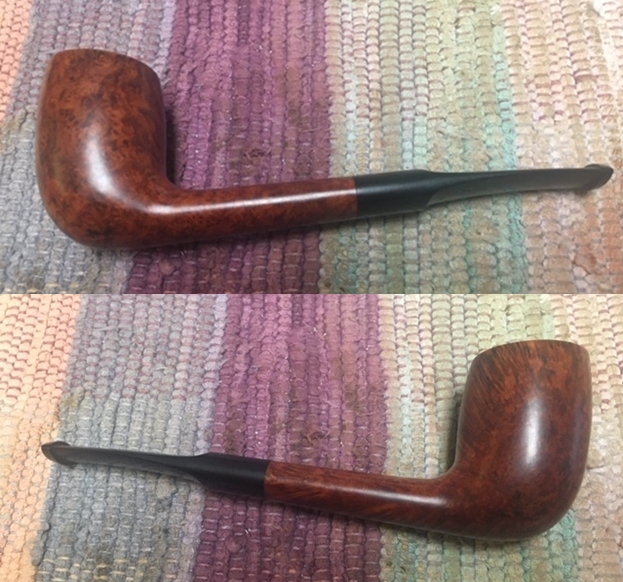
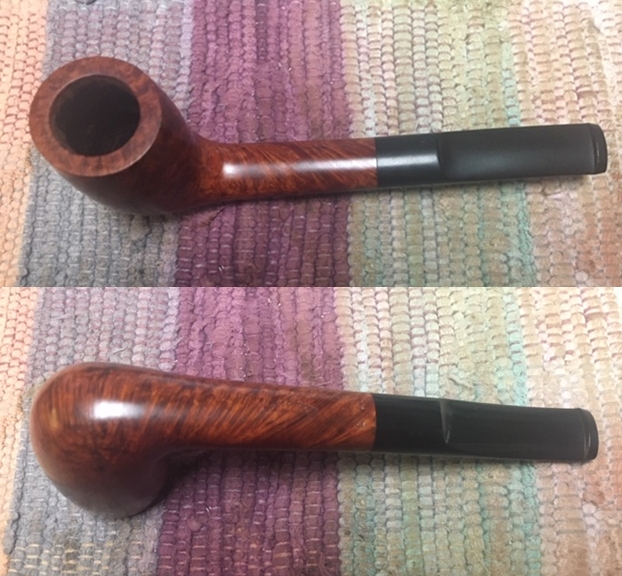
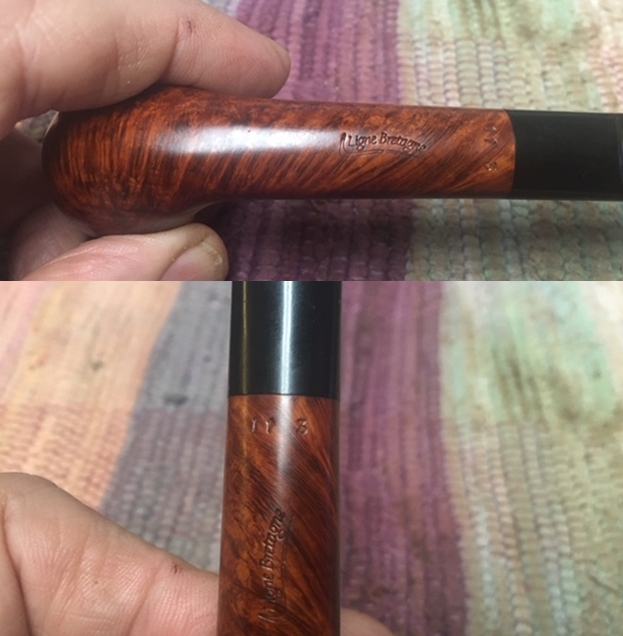
This afternoon I chose the next pipe from my boxes to work on. It is stamped Ligne Bretagne. I am not sure what I would call the shape. At some level it is almost a Cutty with a saddle stem and at another level an oval shank Billiard. You be the judge on the shape but it is a beautiful pipe. It is stamped on the underside of the shank with the Ligne Bretagne logo and the numbers 11 and 3 at the shank stem junction. It was in pretty good condition – just a little dirty and dusty when we received it. The bowl had a thin cake but the top and the edge of the rim was clean and in excellent condition. The pipe had a rich brown stain on the bowl that highlighted some nice grain on the bowl sides under the dust. The vulcanite saddle stem was in good condition with light tooth chatter and marks on both sides ahead of the button and on the button surface itself. Jeff took photos of the pipe before he started his cleanup work. Jeff captured the condition of the bowl and rim top with the next series of photos. You can see the work that is ahead of us there.The birdseye and cross grain around the bowl is quite stunning. Jeff took some great photos showing what is underneath the grime and debris of time and use. He took photos of the stamping on the underside of the shank. It is clear and readable. It read Ligne Bretagne underlined with a long line. At the shank end it is stamped with an 11 and a 3.The photos of the stem show the stem surface. It is dirty and has light tooth marks and chatter on both sides ahead of the button.This is the first Ligne Bretagne pipe that I have worked on. I knew from previous reading that the pipe was connected with Trever Talbert but was not sure how. I turned to Pipephil to get a quick overview on the brand so I knew a bit about the pipe I was working on (http://www.pipephil.eu/logos/en/logo-t2.html). I have included a screen capture of the pertinent section below. I turned to the Talbert Pipes Website and found a lot of helpful information on the pipe that I was working on. I quote from the first link a great short history of the brand and company written by Talbert (https://www.patreon.com/talbertpipes).

Talbert Pipes was founded in 1998, shortly after Trever Talbert won the first Pipes & Tobaccos Magazine national carving contest. Emily Talbert joined the business fulltime in 2002, when husband and wife relocated to the western coast of France for seven years to acquire tools, stock, and experience, as well as adding the Ligne Bretagne brand of pipes to our offerings. Now back in the USA, Talbert Pipes continues to offer a wide selection of classical and fantasy-themed shapes for all our fans worldwide.

From there I turned to read about the Ligne Bretagne pipes so I could have a clearer picture about the pipe in hand (https://talbertpipes.com/). I quote:

Ligne Bretagne – Aged, factory-turned shapes in classical designs, finished here in our shop for the discerning collector seeking a more individual alternative to mass-produced brands.

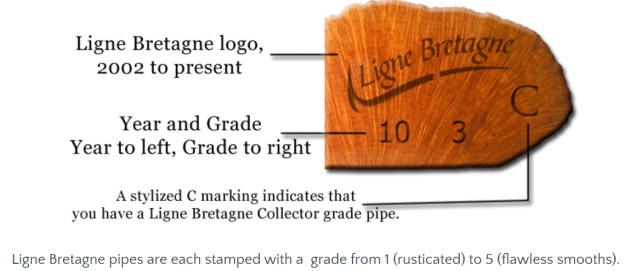
The final link provides a helpful explanation of the stamping on the shank of the pipe. The pipe I am working on is stamped with the Ligne Bretagne logo and the numbers 11 and 3 at the shank stem junction (https://talbertpipes.com/grading/). From this I learned that the pipe I have was made in 2011 and is a Grade 3 with is the first of the smooth finished pipes. I am including a screen capture of the site’s explanation below.

With that information in hand I knew what I was dealing with a beautifully grained factory-turned shape in a classical design, finished by the Talberts. I also knew that it was made in 2011 and was a Grade 3 smooth pipe. Now it was time to turn to work on the pipe.

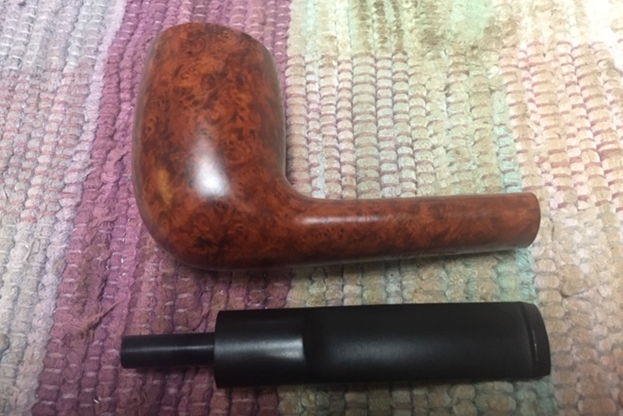
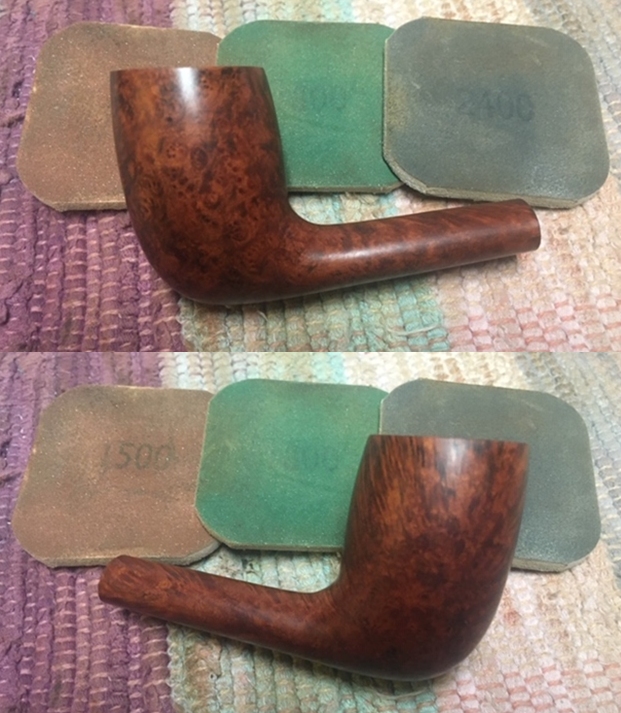
Jeff cleaned the pipe thoroughly with his usual care. He reamed it with a PipNet pipe reamer and cleaned up the reaming with a Savinelli Fitsall Pipe Knife. He scrubbed out the internals with alcohol, pipe cleaners and cotton swabs until the pipe was clean. He scrubbed the exterior of the bowl with Murphy’s Oil Soap and a tooth brush to remove the grime and grit on the briar and the lava on the rim top. The finish looks very good with good looking grain around the bowl and shank. Jeff scrubbed the stem with Soft Scrub to remove the grime and build up on the surface and soaked it in a bath of Before & After Deoxidizer. When the pipe arrived here in Vancouver for the second stop of its restoration tour it looked very good. I took photos before I started my part of the work. I took some photos of the rim top and stem. The photo of the bowl shows how clean the bowl and the smooth rim are. The inner and outer edges of the bowl look really good. They are in excellent condition. The close up photos of the stem shows that is it very clean.I took photos of the stamping on the underside of the shank of the pipe. It is clear and readable as noted above.I took the stem off the shank and took a picture of the pipe. It really is a nice looking pipe with great lines.The pipe was in great condition and only needed to be polished. I polished the beautifully grained briar with micromesh sanding pads – dry sanding with 1500-12000 grit pads. I wiped the bowl down after each pad with a damp cloth. The grain really began to stand out and the finish took on a natural shine by the last sanding pad. The photos tell the story! I worked some Before & After Restoration Balm into the surface of the briar with my fingertips. The product works to clean, enliven and protect the briar. I let the balm sit for about ten minutes and then buffed with a cotton cloth to raise the shine. The photos show the bowl at this point in the restoration process. I laid the bowl aside and turned to deal with the stem. The tooth marks and chatter on the stem were not deep. I polished the stem with micromesh sanding pads – dry sanding with 1500-12000 grit sanding pads. I wiped it down after each sanding pad with a cloth containing some Obsidian Oil. I finished polishing it with Before & After Pipe Stem Polish – both Fine and Extra Fine and buffed it off with a cotton cloth. The pipe came together quite well. The finish on the pipe is in excellent condition and the contrasting stains work well with the black vulcanite stem. With the grime and debris gone, the bowl had a natural beauty and grain that pops. I put the stem back on the bowl and buffed the pipe with Blue Diamond on the buffing wheel. I carefully avoided the stamping on the shank during the process. I gave the bowl and the stem multiple coats of carnauba wax on the buffing wheel and followed that by buffing it with a clean buffing pad on the buffer. I hand buffed the pipe with a microfiber cloth to deepen the shine. The finished Ligne Bretagne pipe is quite beautiful and is comfortable looking pipe. Give the finished pipe a look in the photos below. I can only tell you that it is much prettier in person than the photos capture. The dimensions of the pipe are Length: 5 ½ inches, Height: 1 ¾ inches, Outside diameter of the bowl: 1 ¼ inches, Chamber diameter: 5/8 of an inch. I really like the looks of this pipe. It is great looking and in great condition. Thanks for walking through the restoration with me as I worked over another beautiful pipe. Thanks for your time.


New Life for a Danish Hand Made Prince Amled 4 Peewit Shape


Blog by Steve Laug

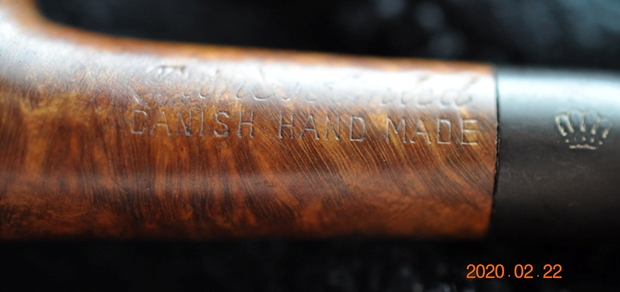
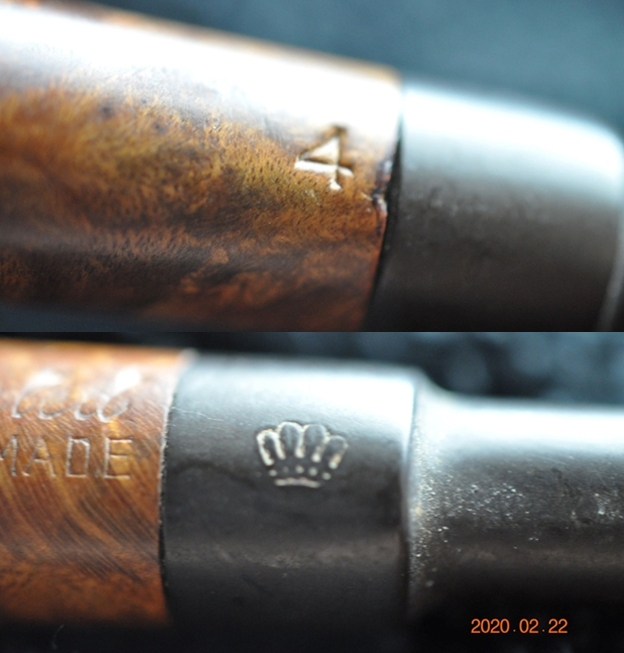
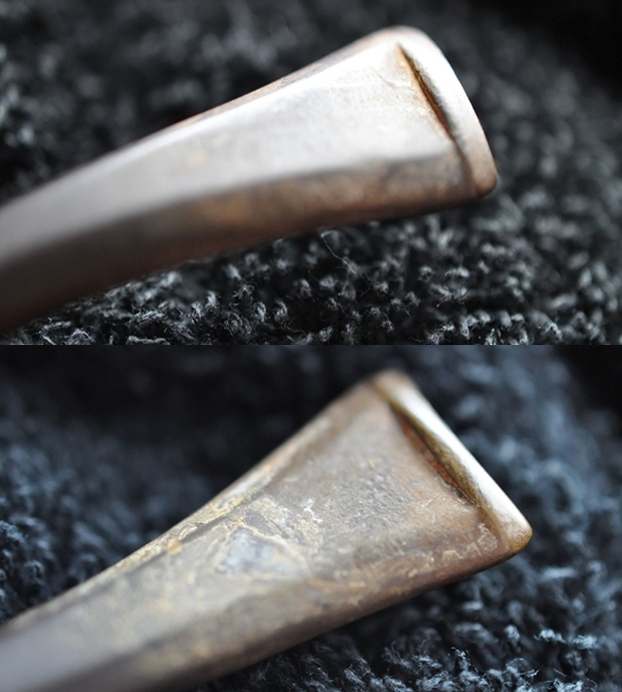
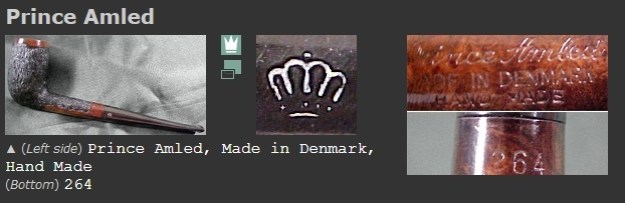
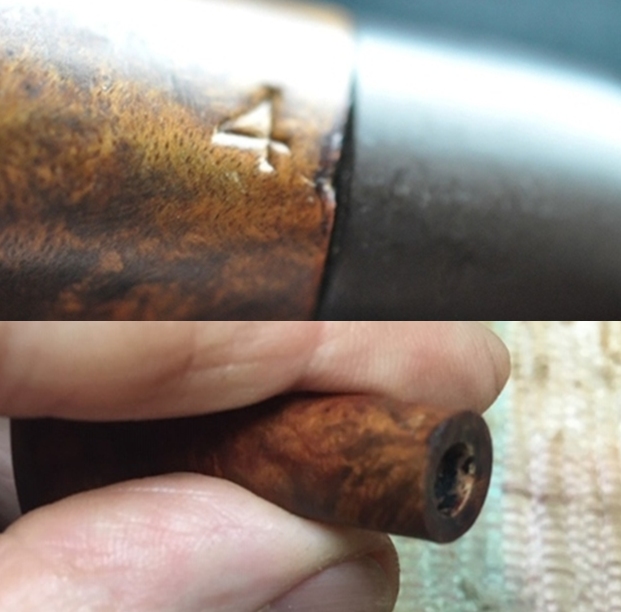
This past January Jeff and his wife Sherry and Irene and I made a pipe hunting trip down the Oregon Coast. At least that is what Jeff and I called it. We stopped in a lot of the small towns up and down the northern part of the coast and picked up some nice pipes. This little pipe was obviously Danish and I think both Jeff and I thought it was a Kriswill. We were hooked so we picked it up and added it to the finds of the trip. This pipe is stamped on the left side of the shank and on the underside at the shank/stem union. On the left side it is stamped with Prince Amled over Danish Hand Made. On the underside it is stamped with the shape number 4. Next to the 4 there was a chip in the shank end.  It was a very dirty pipe with a dull and lifeless finish but it was the shape that caught our eye. We were hoping for some nice grain around the bowl. There was a very thick cake in the bowl and a thick lava coat on the rim top and the inner edge. It was hard to see what the condition of either the inner or outer edges with the lava and grime. It did appear that there was a burned area on the right side of the outer edge. The pipe had a rich medium brown stain with a reddish tint that was meant to highlight the grain on the bowl sides. A lot would be revealed once Jeff had worked his magic on it. The pencil shank and pencil flared saddle stem was heavily oxidized and calcified. There was light tooth chatter and marks on both sides ahead of the button and on the button surface itself. Jeff took photos of the pipe before he started his cleanup work. Jeff has gotten very good at capturing the condition of the bowl and rim top with his photos. You can see the work that is ahead of us in terms of the lava and grime on the rim and the thick cake in the bowl. This pipe is a real mess.The next set of photos show the grain on the sides and heel of the bowl. It is an interesting combination of grain – cross grain, swirls and birdseye predominate. I look forward to seeing what this one looks like once it is clean and restored. He took photos of the faint stamping on the sides of the shank. The Prince Amled stamp on the left side is readable. On the underside is the shape stamp 4 which is very clear readable. The third photo below shows the crown logon on the left side of the saddle stem. The next photos show the stem surface. It was very dirty, oxidized and calcified. It had pitting, light tooth marks and chatter on both sides ahead of the button. Before I started to work on the pipe I wanted to learn about the brand. I turned first to Pipephils site to see if there was any information on the Danish Made Prince Amled brand (http://www.pipephil.eu/logos/en/logo-p5.html). I did a screen capture of what was on the site and I include that below. It was another of those pipes with little information included.I turned to Pipedia see if there was any further information to help me with hunt for this pipe manufacturer. The listing for that pipe company had some great photos but also an appeal for information on the brand. It looks like I had as much information as I could find online.

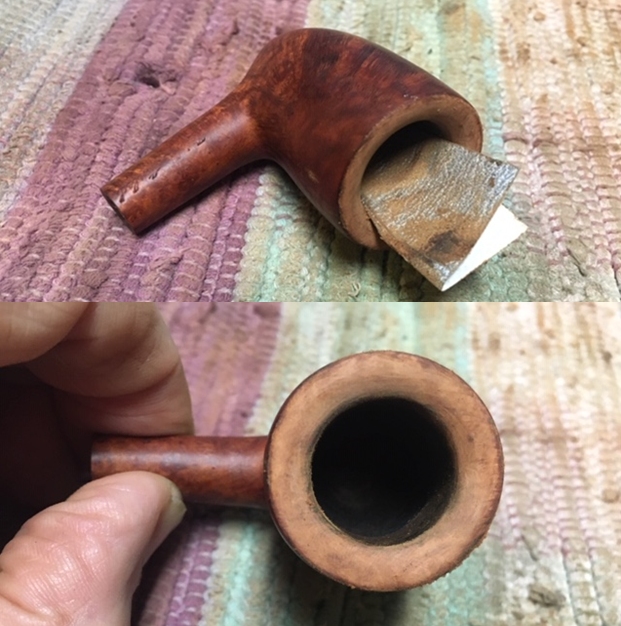
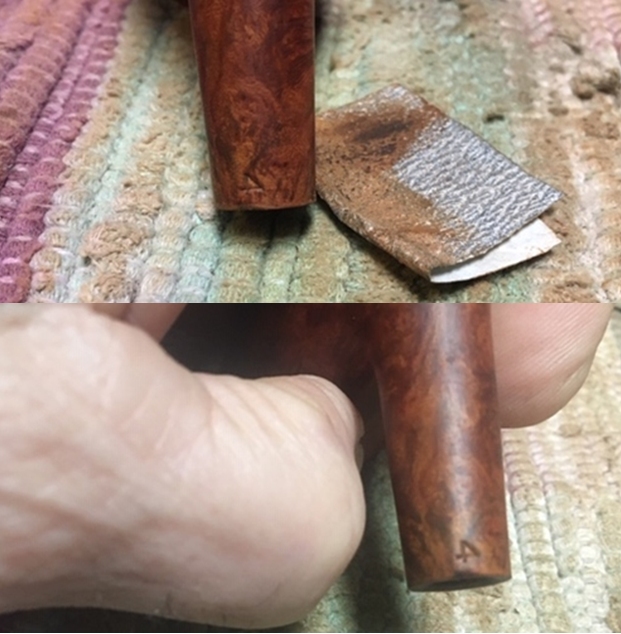
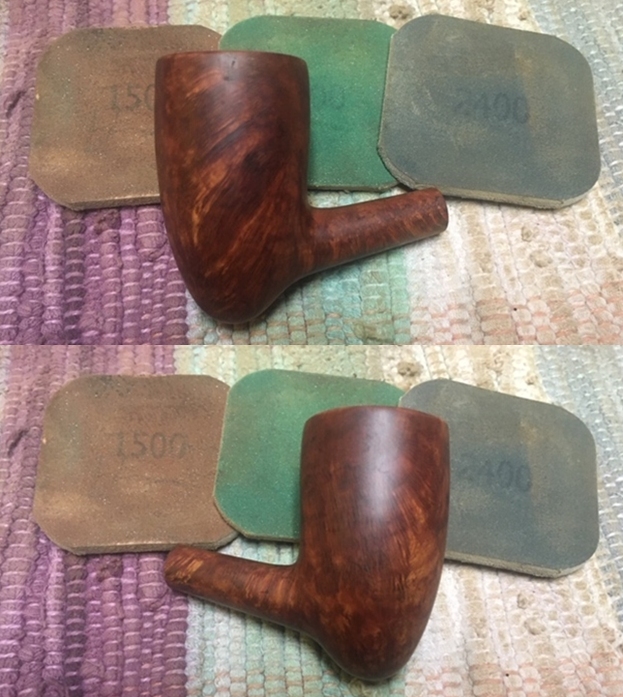
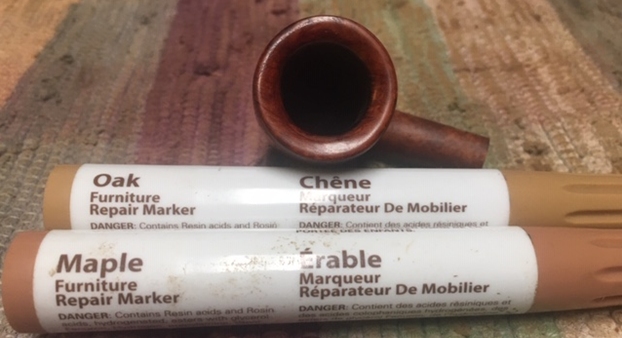
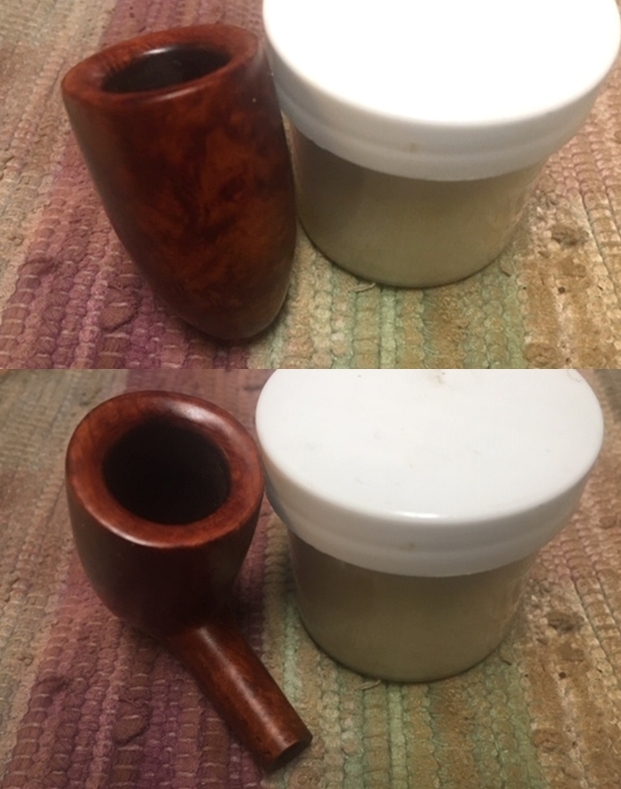
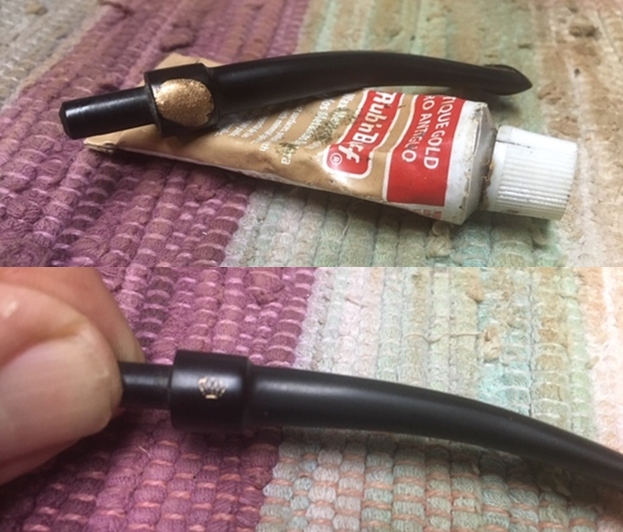
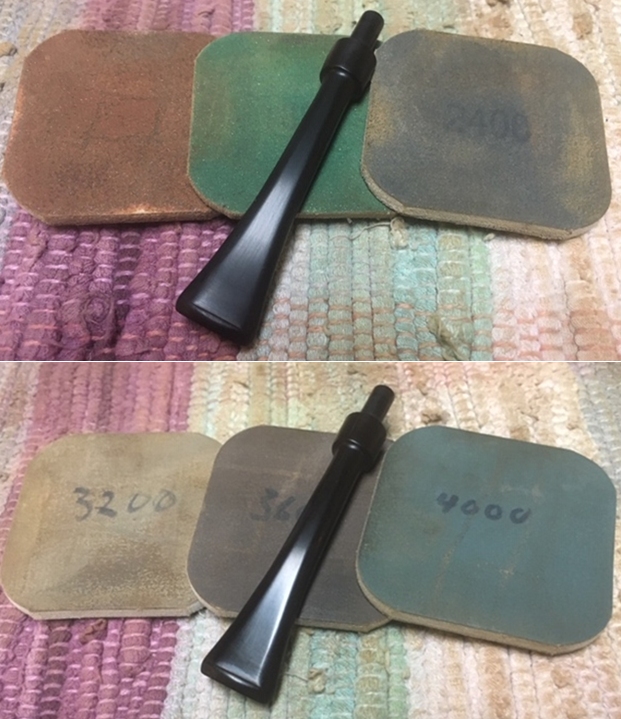
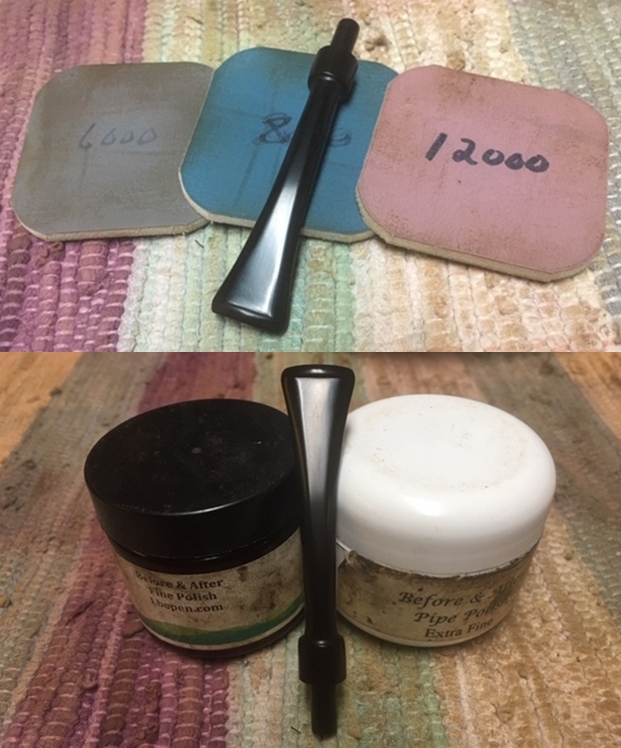
Now it was time to work on the pipe itself. Jeff had once again outdone himself on this pipe. It looked far better than what it was like when we found it. We were right in our assumption of nice grain under the grime. He reamed the bowl with a PipNet Pipe reamer and took the cake back to bare briar. He cleaned up the bowl walls with a Savinelli Fitsall Pipe Knife. He scrubbed out the internals with alcohol, pipe cleaners and cotton swabs until the pipe was clean. He scrubbed the exterior of the bowl with Murphy’s Oil Soap and a tooth brush to remove the grime and grit on the briar and the lava on the beveled rim top. The finish looks very good with good looking grain around the bowl and shank. Jeff scrubbed the stem with Soft Scrub and then soaked it in Before & After Deoxidizer to remove the oxidation on the vulcanite. When the pipe arrived here in Vancouver for the second stop of its restoration tour it looked very good. I took photos before I started my part of the work. I took some photos of the inwardly beveled rim top and stem. Once Jeff removed the lava on the top and inside of the rim top was rough. Both the inner and the outer edge of the bowl showed damage. There a lot of darkening on the inside edge and burn damage on the top right outer edge. The close up photos of the stem shows that is it very clean and there is some tooth chatter and marks on the button surface and just ahead of the button.I took the stem off the bowl and took a picture of the pipe. It really is a pretty little pipe with a classic Danish look to it.I decided to begin my work on the pipe by addressing the damage on the rim top and edges. The rim was beveled inward so topping it on a topping board was out of the question. I used a folded piece of 220 grit sandpaper to smooth out the inner and outer edges of the bowl. I also used it to smooth out the rim top to remove the damage.In the photos that Jeff took of the underside of the shank you can see a chip or large nick on the shank. It is almost like someone tried to pry off the stem. It needed to be cleaned up and repaired. I have included that photo as the first one below. One of the perks that I have found from Jeff’s cleanup methods as nicks like this will often swell and either disappear or be greatly reduced. The second photo shows the same area after his cleanup work. I used a folded piece of 220 grit sandpaper to smooth out the remaining damage on the shank (picture 3) and then took a photo of the clean shank end (picture 4). I was happy with the way the rim top and edges looked so I did not need to do anymore except to polish them. I polished the briar with micromesh sanding pads – dry sanding with 1500-12000 grit pads. I wiped the bowl down after each pad with a damp cloth. The grain really began to stand out and the finish took on a shine by the last sanding pad. The photos tell the story! I touched up the rim top to match the rest of the bowl with a blend of Oak and Maple stain pens. The blend works really well with this colour of bowl. I am happy with the work so it is time to move on.I worked some Before & After Restoration Balm into the surface of the briar with my fingertips. The product works to clean, enliven and protect the briar. I let the balm sit for about ten minutes and then buffed with a cotton cloth to raise the shine. The photos show the bowl at this point in the restoration process. I set the bowl aside at this point and turned my attention to the stem. The stem was in very good condition. I decided to apply some Antique Gold Rub’n Buff to the logo on the side of the saddle stem. I rubbed it on and buffed it off and it looks good.I polished the stem with micromesh sanding pads – dry sanding with 1500-12000 grit sanding pads. I wiped it down after each sanding pad with a cloth containing some Obsidian Oil. I finished polishing it with Before & After Pipe Stem Polish – both Fine and Extra Fine and buffed it off with a cotton cloth. This delicate and petite Prince Amled Hand Made Danish pipe is a real beauty. I know it is hand made in Denmark but that is the extent of the information available on the brand. The shaping and carving follows the grain and highlights the mix of grains around the bowl. The finish on the pipe is in excellent condition and the contrasting stains work well to highlight the stunning grain on the pipe. The thin vulcanite pencil saddle stem adds to the mix. With the grime and debris gone from the finish and the bowl it was a beauty and the grain just pops at this point. The rim top looks really good now. I put the stem back on the bowl and buffed the pipe with Blue Diamond on the buffing wheel. I carefully avoided the stamping on the shank and stem during the process. I gave the bowl and the stem multiple coats of carnauba wax on the buffing wheel and followed that by buffing it with a clean buffing pad on the buffer. I hand buffed the pipe with a microfiber cloth to deepen the shine. The finished “Peewit” shape (at least that is what I am calling it) is quite nice and feels great in the hand. Give the finished pipe a look in the photos below. I can only tell you that like the other pipes I am working that it is much prettier in person than the photos capture. The dimensions of the pipe are Length: 5 inches, Height: 2 ¼ inches, Outside diameter of the bowl: 1 ¼ inches, Chamber diameter: 5/8 of an inch. Thanks for walking through the restoration with me as I worked over another interesting pipe. This pipe will be added to the Danish Pipe Makers section of the rebornpipes store soon. If you want to add it to your collection send me an email or a message! Thanks for your time.

New Life for a Wally Frank Period Custombilt Bent Scoop


Blog by Steve Laug

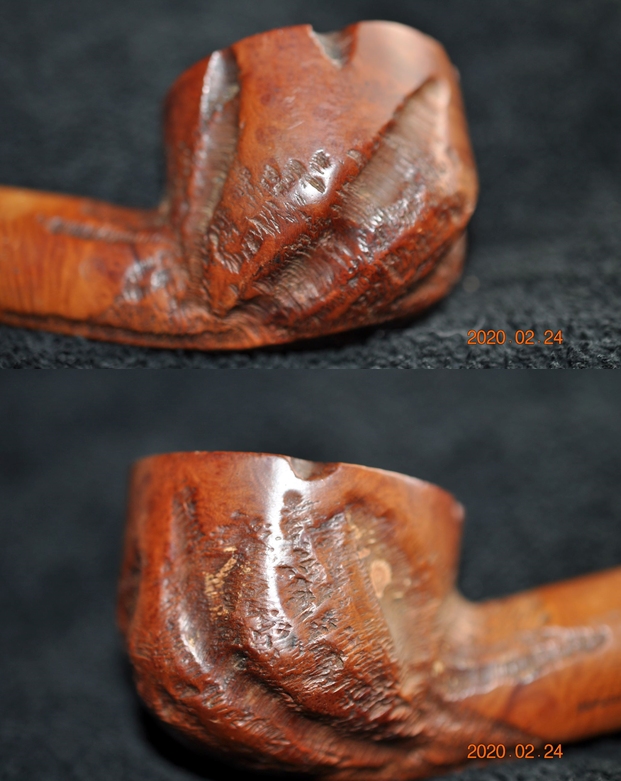
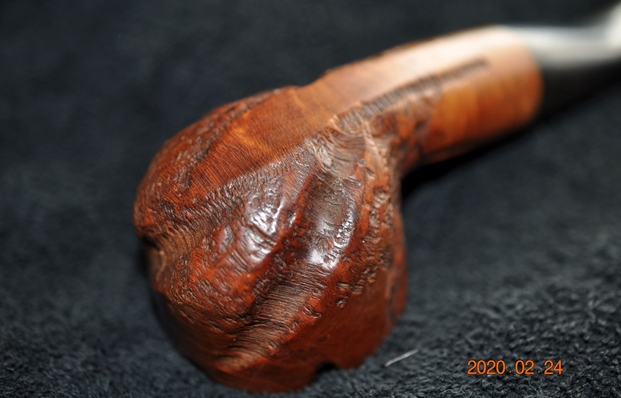
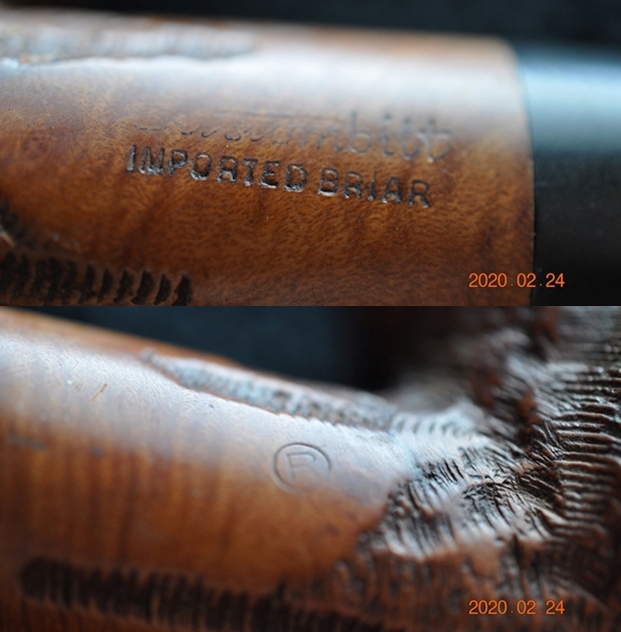
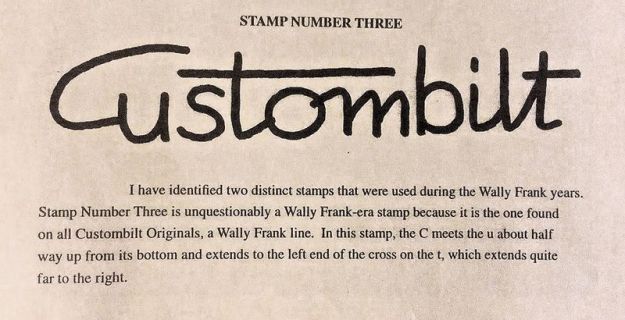
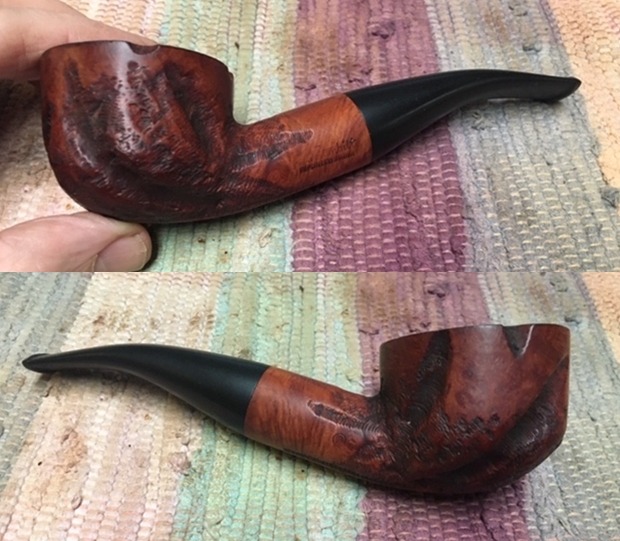
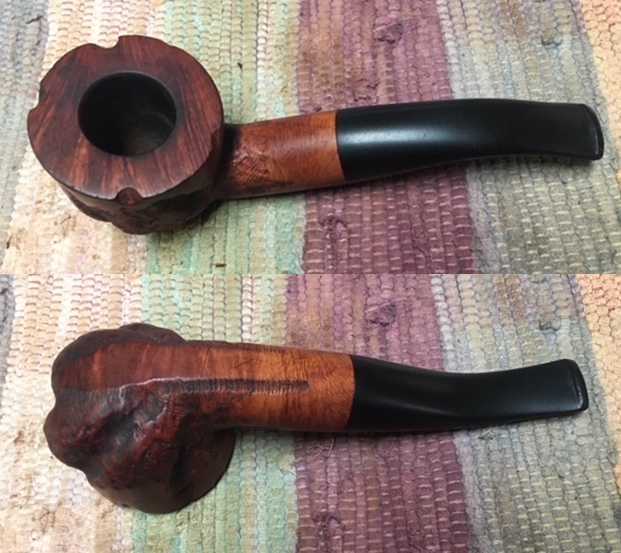
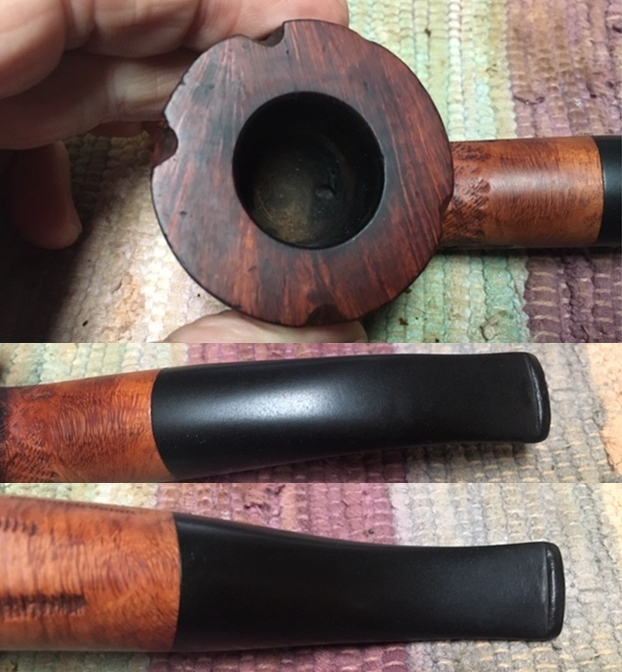
Over the years I have owned and worked on quite a few Custom-Bilt pipes from the hands of Tracy Mincer and also the various iterations that followed his demise – Wally Frank, Holco Rohr to mention a few. The stamping on this particular pipe identifies it to the Wally Frank Period. There is just something about the brand and the large rustic carving of the pipe that captures a lot of people’s imagination. This particular Custombilt is what I would call a Bent Scoop. It has a taper stem and is quite chunky. It is stamped both on the left and right side of the shank. On the left side it is stamped with the Custombilt over Imported Briar. On the right side it is stamped with the letter R in a circle. It was dirty and the fills in the briar really stood out with the finish as dull and lifeless as it was. There was a moderated cake in the bowl and a lava coat on the rim top and the inner edge. The pipe had a rich medium brown stain that highlighted nice grain on the bowl sides under the grime and the finish appeared to be in good condition. A lot would be revealed once Jeff had worked his magic on it. The vulcanite taper stem was in good condition with some oxidation and light tooth chatter and marks on both sides ahead of the button and on the button surface itself. Jeff took photos of the pipe before he started his cleanup work. Jeff captured the condition of the bowl and rim top with the next series of photos. You can see the work that is ahead of us in terms of the lava and grime on the rim and the cake in the bowl. The rustication patterns around the sides of the bowl and the contrasting smooth areas look very “Mincerlike”. Jeff took some photos showing what is underneath the grime and debris of time and use. He captured the stamping on the sides of the. The Custombilt stamp is faint but readable. The Imported Briar stamp is clear and the R circle stamp on the right side is also readable.The photos of the stem show the stem surface. It is dirty and has pitting, light tooth marks and chatter on both sides ahead of the button.I turned to Pipedia to the specific section on Custombilt pipes to try and establish a time frame for this pipe (https://pipedia.org/wiki/Custom-Bilt). I did a screen capture of the section showing the style of stamp that the pipe I have on the table. From that information I knew that the pipe I had was made during the Wally Frank years of Custombilt history. I quote a pertinent portion of the article on this particular era of the history

…In the early 1970s, Wally Frank Co. bought the Custombilt trademark and began to produce their version of the pipe in 1974 or 1975. Hollco Rohr owned the Weber pipe factory, located in New Jersey, and produced the Custombilt pipes there. In 1987, the pipes were made out of the Butz-Choquin factory (France) and then Mexico until the late 1990s.

So it appears that this pipe was made in the early 1970s and before Wally Frank sold the company in 1974 or 1975. So at least I have narrowed down the time period to a few years between 1970-1975.

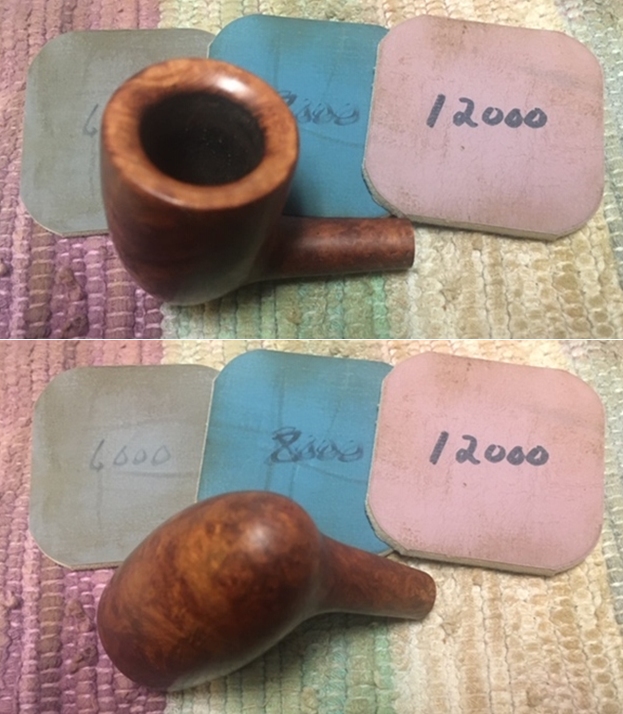
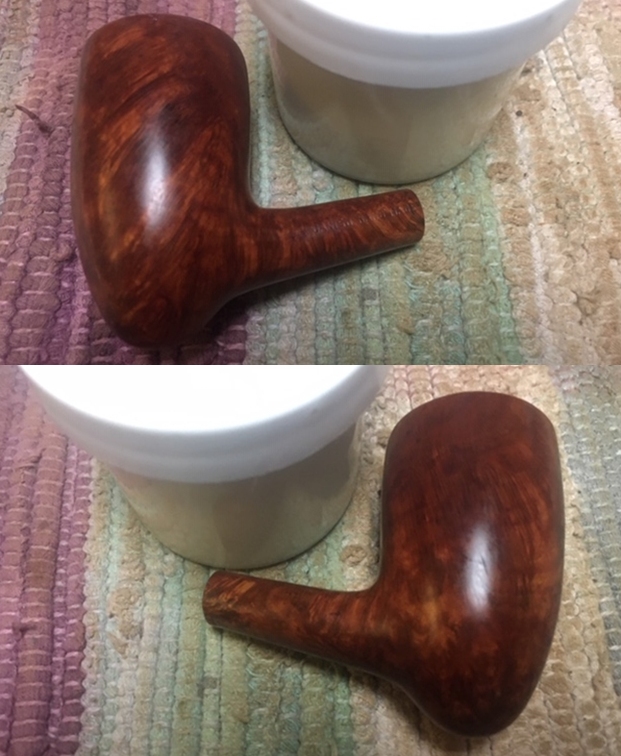
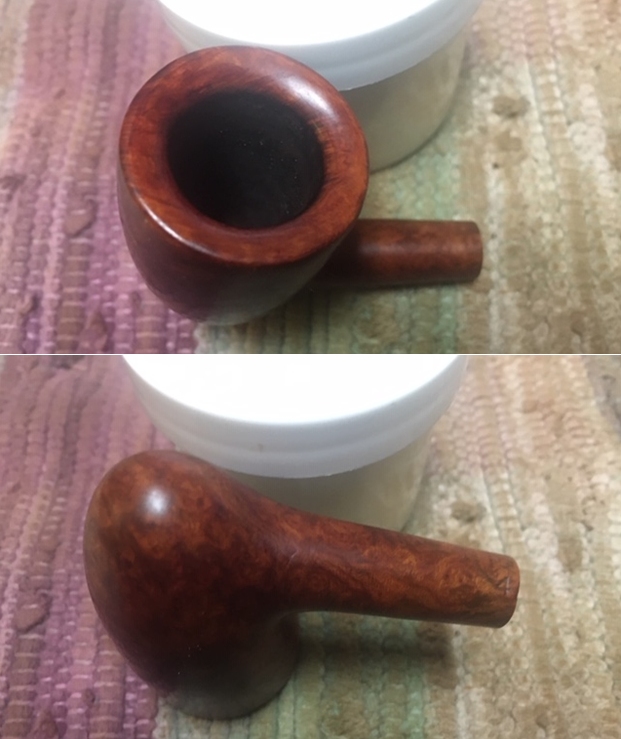
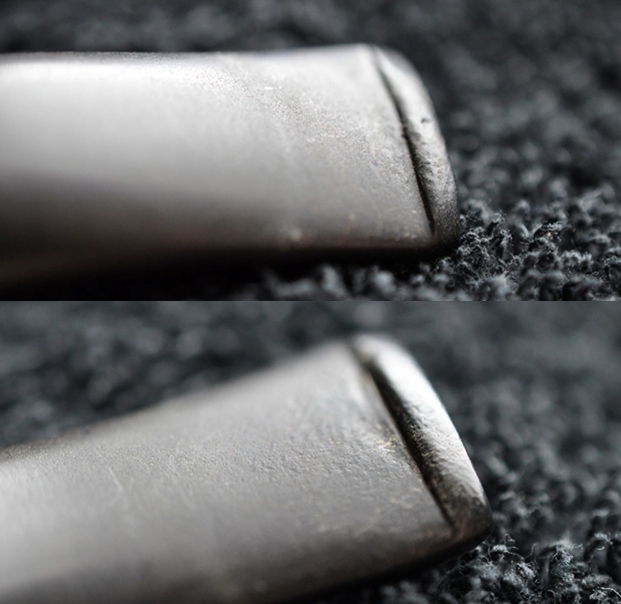
Now it was time to work on the pipe itself. Jeff had cleaned the pipe with his usual penchant for thoroughness that I really appreciate. He reamed the bowl with a PipNet Pipe reamer and took the cake back to bare briar. He cleaned up the bowl walls with a Savinelli Fitsall Pipe Knife. He scrubbed out the internals with alcohol, pipe cleaners and cotton swabs until the pipe was clean. He scrubbed the exterior of the bowl with Murphy’s Oil Soap and a tooth brush to remove the grime and grit on the briar and the lava on the beveled rim top. The finish looks very good with good looking grain around the bowl and shank. Jeff scrubbed the stem with Soft Scrub and then soaked it in Before & After Deoxidizer to remove the oxidation on the rubber. When the pipe arrived here in Vancouver for the second stop of its restoration tour it looked very good. I took photos before I started my part of the work. I took some photos of the rim top and stem. Once Jeff removed the lava on the top and inside of the rim top all that remained was a little darkening that should be able to be polished off. Both the inner and the outer edge of the bowl look good. The close up photos of the stem shows that is it very clean and there is some tooth chatter and marks on the button surface and just ahead of the button.I took the stem off the shank and took a picture of the pipe. It really is nice looking pipe with rugged rustication. After the clean up the fills blended back into the surface of the briar.I was happy with the way the rim top and edges looked so I did not need to do anymore except to polish them. I polished the briar with micromesh sanding pads – dry sanding with 1500-12000 grit pads. I wiped the bowl down after each pad with a damp cloth. The grain really began to stand out and the finish took on a shine by the last sanding pad. The photos tell the story! I worked some Before & After Restoration Balm into the surface of the briar with my fingertips. The product works to clean, enliven and protect the briar. I let the balm sit for about ten minutes and then buffed with a cotton cloth to raise the shine. The photos show the bowl at this point in the restoration process. I set the bowl aside at this point and turned my attention to the stem. I filled in the tooth marks on the button edge and along the edge on both sides with clear super glue. Once the repair cured I blended it into the surface of the stem with 220 grit sandpaper and started the polishing with 400 grit wet dry sandpaper. I continued the polishing using Denicare Mouthpiece polish. It is a red gritty paste that feels a lot like Tripoli to me. It works very well  to polish out remnants of oxidation and smooth out fine scratches in the rubber stem.I polished the stem with micromesh sanding pads – dry sanding with 1500-12000 grit sanding pads. I wiped it down after each sanding pad with a cloth containing some Obsidian Oil. I finished polishing it with Before & After Pipe Stem Polish – both Fine and Extra Fine and buffed it off with a cotton cloth. This Custombilt from the earlier 70s is a handful just like all Custombilts or Custom-Bilt pipes that I have worked on. It is a big piece of briar that has great grain on the rim top. The shaping and carving is interestingly done and minimizes the flaws in the briar. The finish on the pipe is in excellent condition and the contrasting stains work well to highlight the stunning grain on the pipe. The black vulcanite saddle stem just adds to the mix. With the grime and debris gone from the finish and the bowl it was a beauty and the grain just pops at this point. I put the stem back on the bowl and buffed the pipe with Blue Diamond on the buffing wheel. I carefully avoided the stamping on the shank and stem during the process. I gave the bowl and the stem multiple coats of carnauba wax on the buffing wheel (lightly in the rustications) and followed that by buffing it with a clean buffing pad on the buffer. I hand buffed the pipe with a microfiber cloth to deepen the shine. The finished Bent Pot is quite nice and has the instantly recognizable look of a Custombilt. The finish on the bowl combines various stains to give it depth. It is very well done. Give the finished pipe a look in the photos below. I can only tell you that it is much prettier in person than the photos capture. The dimensions of the pipe are Length: 6 inches, Height: 1 ¾ inches, Outside diameter of the bowl: 2 inches, Chamber diameter: 7/8 of an inch. Thanks for walking through the restoration with me as I worked over another interesting pipe. This pipe will be added to the rebornpipes store soon. If you want to add it to your collection send me an email or a message! Thanks for your time.

A New Lease On Life For A No-Name English Make Large Pot


Blog by Paresh Deshpande

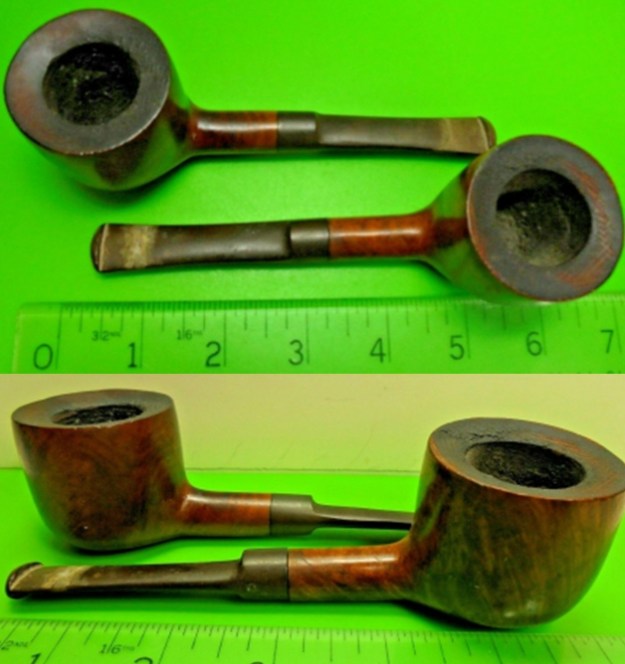
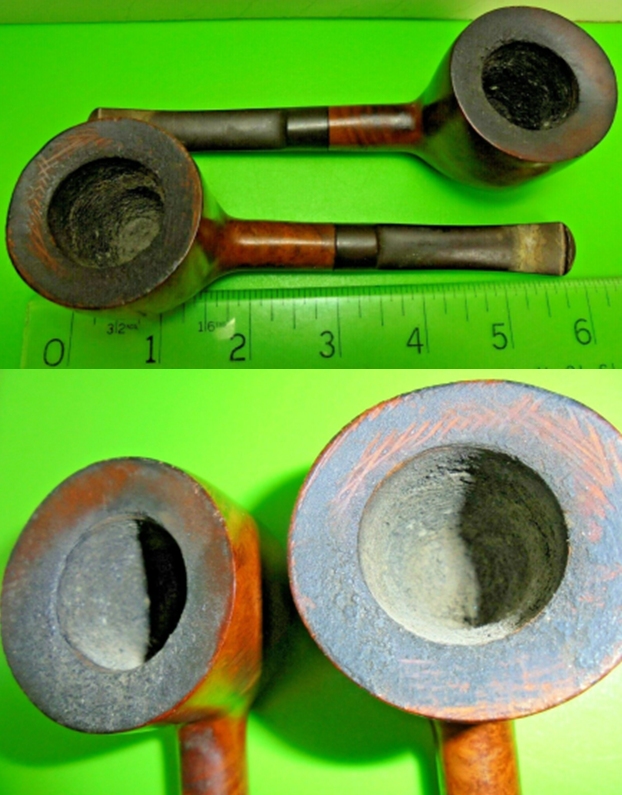
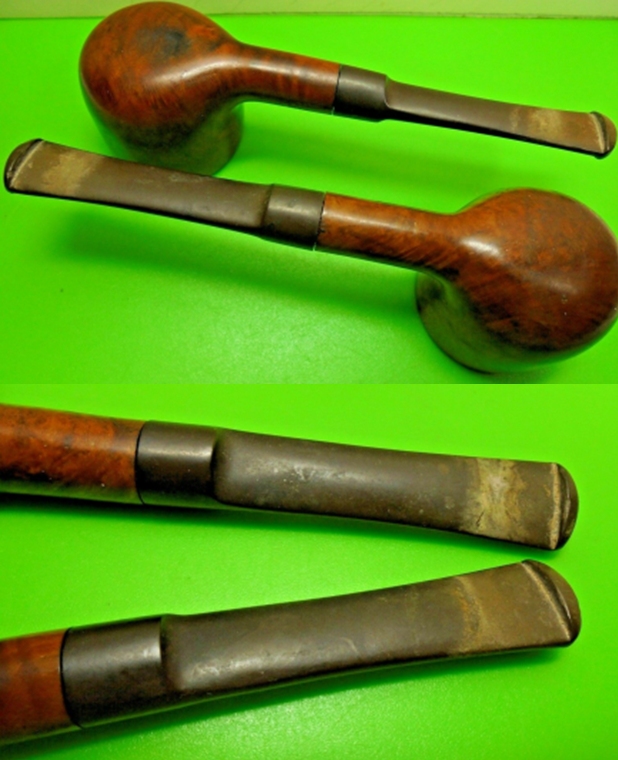
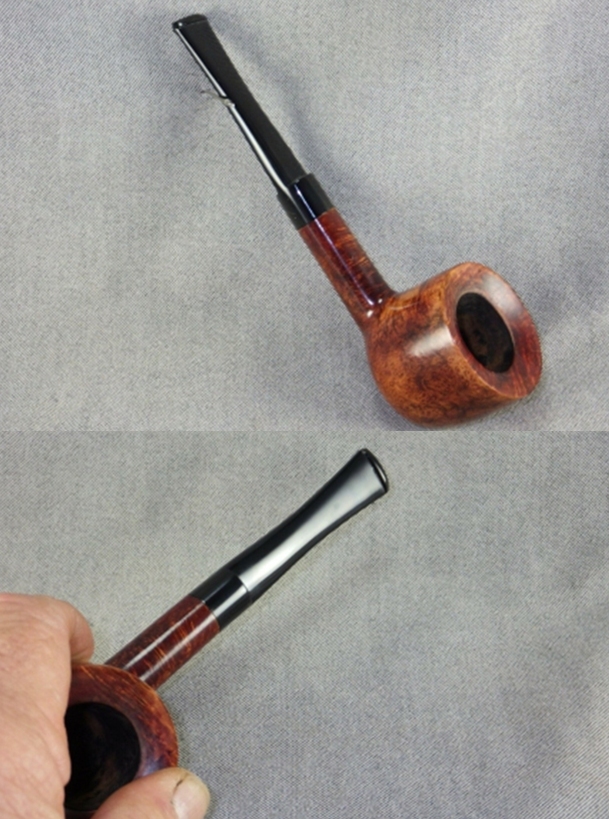
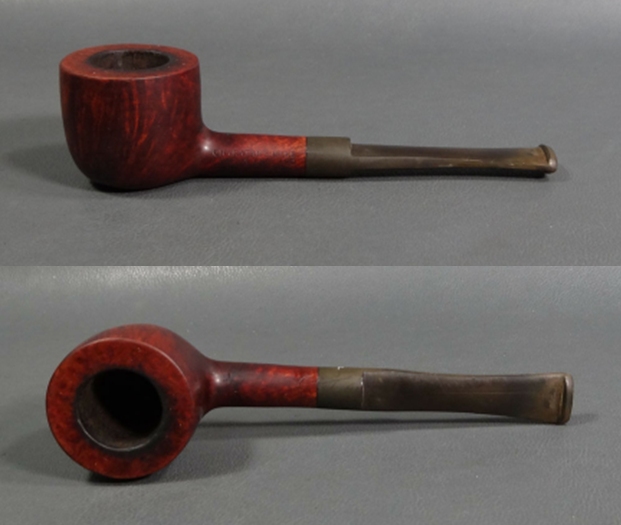
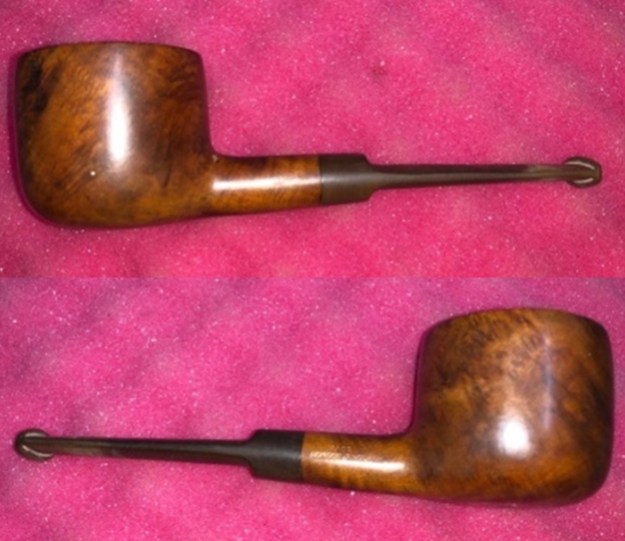
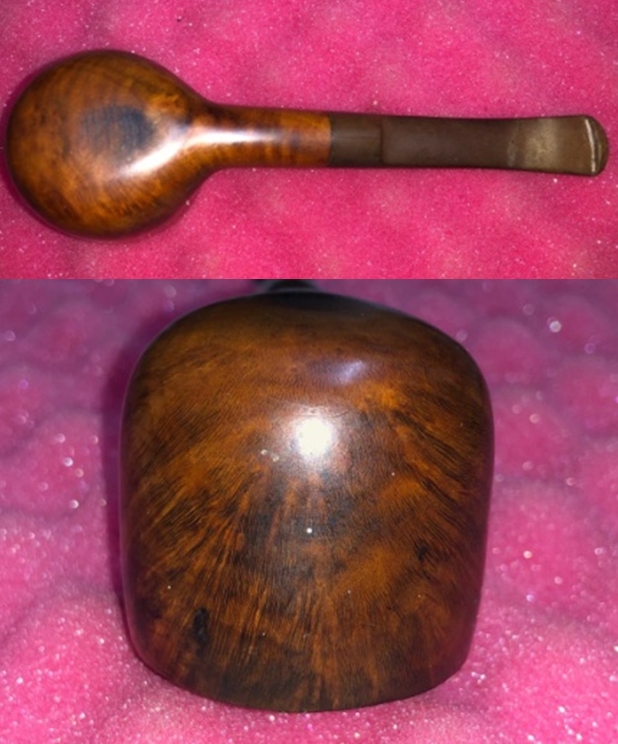
I had purchased this pipe lot of two unmarked beautiful looking pots on eBay with the intention of either selling or gifting. The price was very low and from the pictures, the pipes screamed quality and appeared solid. Here are a couple of pictures of this pair that were posted by the seller. Once the pipes were delivered home (my work place is away from where my family resides), Abha my wife, checked them out and informed me of the following;

(a) Both pipes are similar with only difference being in the size, one is large Pot while the other is a medium.

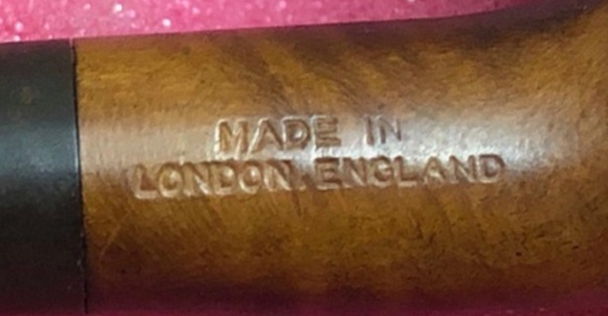
(b) The only stamping seen is on the right side of the shank and reads “MADE IN” over “LONDON, ENGLAND”. The stem is devoid of any stampings. The overall feel of the pipe is that of high quality.

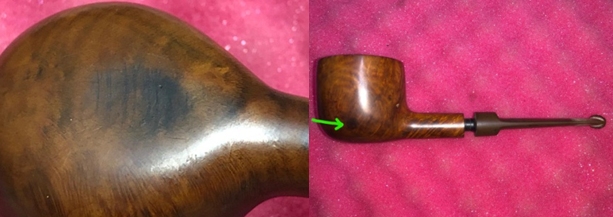
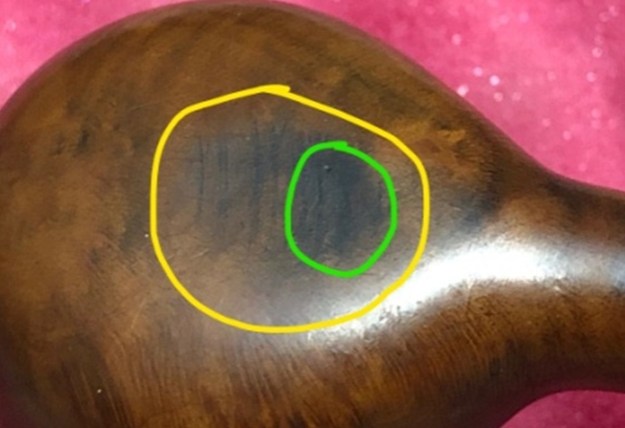
(c) Both pipes have a darkened spot each, the larger one has it on the heel and the other on the bottom left side of the stummel.

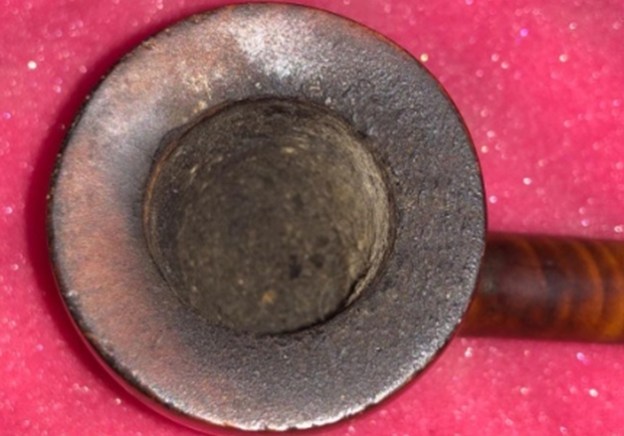
The last piece of information was something that troubled me. I had seen a dark spot on the heel of one pipe, but it appeared to be a smear of grime and dirt. Here are the pictures of the spots that Abha had sent me. It definitely appeared to be the beginnings of a burn out!!Truth is, after the initial surprise of being misinformed by the seller on eBay had subsided, I did not find these damages very alarming and I felt that these two beauties still had many years of smoke left in them with some minor repairs. The matter rested till I received about 40 pipes that Abha had sent me duly cleaned for my part of refurbishing. Both these pipes were part of that parcel that I had received.

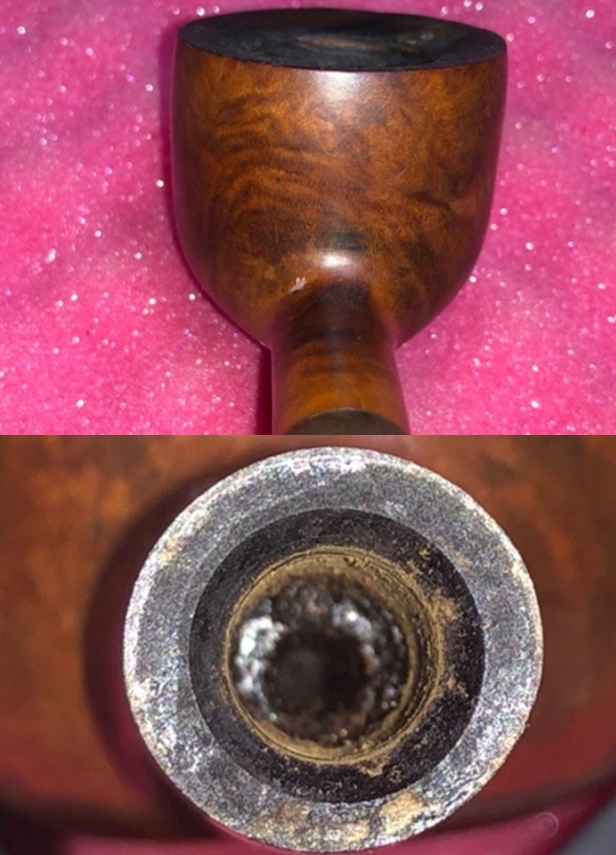
I decided to work on the larger pot first. The pipe has a beautiful mix of swirls and cross grains. In fact, the USP of the stummel lies in the solid hand feel and robustness of the build. The quality of briar is top notch and without any fills at all on this piece. It is stamped on the right side of the shank as “MADE IN” over “LONDON, ENGLAND”. The high quality vulcanite saddle stem is sans any stampings.There are not very many clues that can point me towards the provenance of this pipe. The only fact that can be established is that this is a London made pipe. The build quality, the shape and stem type reminds me a lot of Charatan’s pipe, most notably their Belvedere line. In fact, I do have a Charatan’s Make BELVEDERE pot shaped pipe that I had received as part of my Mumbai Bonanza and the similarities are striking. Also, while surfing the net, I came across a MOUNTBATTEN pot which again resembled the pipe on my work table. Here are pictures of both these pipes, the first two are of the Mountbatten and the next two are that of Belvedere pot. With Mountbatten being a Charatan’s second and observing the similarities between these three pipes, it may be surmised that there is a possibility that the pipe presently on my work table is made by Charatan’s for some pipe shop, which was not uncommon in the past. Any confirmed input to either support or refute my assumption is most welcome.

Initial Visual Inspection
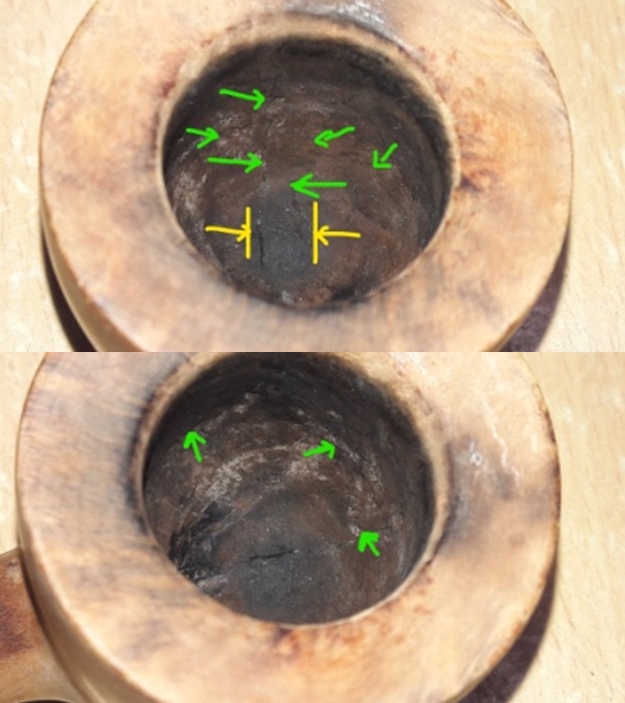
The chamber has a thick even layer of cake with heavy lava overflow over the inward sloping rim top surface. The deposition of heavy lava overflow is predominantly seen on the backside of the rim surface in 6 ‘O’ clock direction. A number of dents and dings are seen on both outer and inner rim edges. I suspect charring to the inner rim edge in 1 ‘O’ clock and likely in the 6 ‘O’ clock direction. The extent of the charring and the condition of the walls of the chamber can be ascertained only once the cake has been taken down to the bare briar. The foot of the stummel did show the sign of beginnings of a burn out that was considerably darker towards the draught hole (encircled in green) and extending outwards away from the draught hole half way across the foot. The damage to the heel and the resulting severity of the burn out will be confirmed after reaming. There are some very strong ghost smells to the chamber which will need to be addressed. The stummel is covered in oils, dust and grime giving it a dull and lackluster appearance. The stummel feels solid and well carved and nice mixed grains can be observed all over the surface through all the grime. There is not a single fill anywhere on the bowl. Other than the charring observed at the foot of the stummel, the stummel has a robust and solid feel. The mortise is cleaned and clogged with the accumulation of old and dried oils, tars and gunk. This will need to be cleaned. The vulcanite saddle stem is heavily oxidized with signs of calcification on either surface of the stem about an inch from the button edges. There is no serious tooth chatter or indentation or button damage to the stem. The tenon end and horizontal slot shows signs of accumulation of old oils, tars and gunk. The high quality vulcanite stem should clean up nicely.Initial Cleaning By Abha…
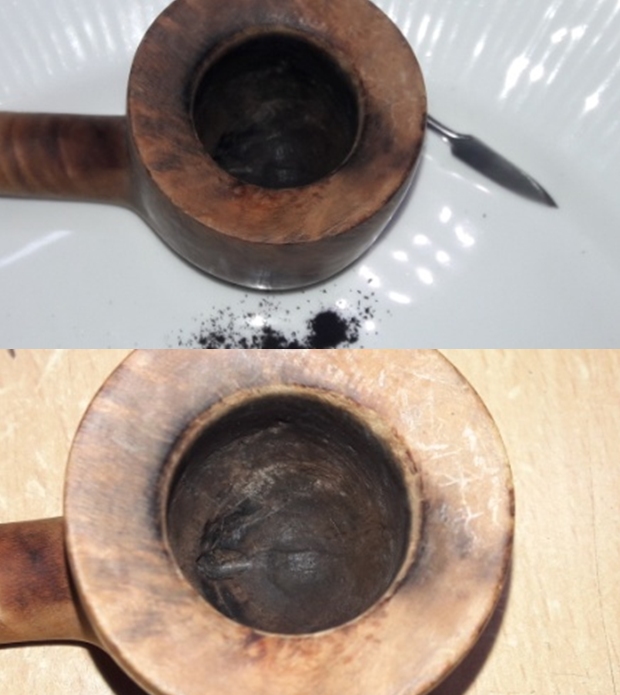
The initial cleaning on this pipe was done by Abha, my wife (she has cleaned up around 40-50 pipes and these have now reached me for further restoration). She reamed out the complete cake and further smoothed out the chamber walls with a folded piece of 220 grit sand paper. She further cleaned out the internals of the shank with pipe cleaners and alcohol and cotton buds. She followed the internal cleaning of the shank with external cleaning of the stummel using Murphy’s Oil soap and hard bristled tooth brush and dried it with paper napkins and cotton cloth.

Next she cleaned out the internals of the stem air way and immersed it in “Before and After Deoxidizer” solution along with the stem of the other pot in line for restoration. Once the stem had soaked overnight, she cleaned the stem under running warm water and scrubbed the raised oxidation from the stem surface using Scotch Brite pad. She further removed the oxidation by scrubbing the stem with 0000 grade steel wool and applied a little olive oil to rehydrate the stem.Once The Pipe Is On My Work Table…
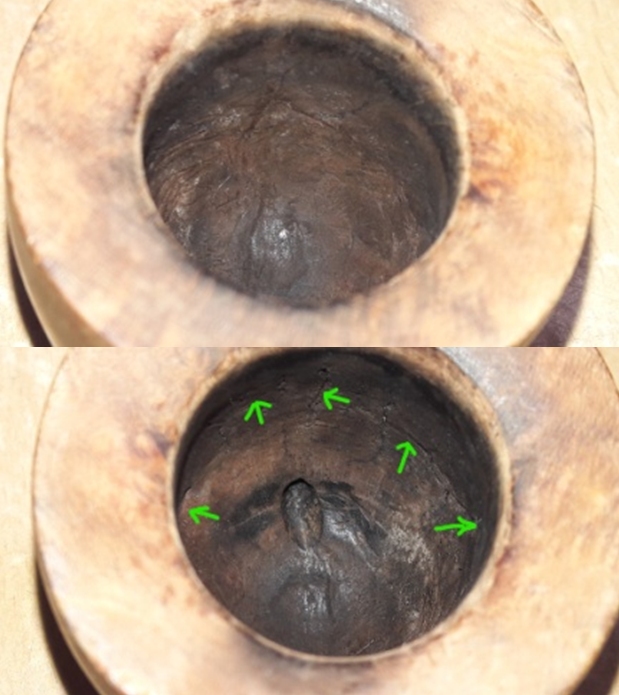
Now that the cleaned pipe is on my work table, I proceed to carry out my appreciation of the work that needs to be done on this pipe to restore it. The cleaned up pipe presented a clearer picture about the actual condition and the work required on this pipe. Here is how the pipe reached me. The stummel was clean and free of any accumulated grime. As observed earlier, there is not a single fill anywhere on the stummel. The only cause of concern is the darkened spot over the foot of the stummel. I felt the spot for softness with my nail and it appeared sufficiently solid, thus confirming that it’s not an all out burned heel. Rest of the stummel feels solid and robust to the touch. This piece of briar should polish up nicely. I was eager to understand the extent of burn out in the heel of the bowl. True enough, I could make out a dark patch just in front of the draught hole approximately at the center of the heel (marked in yellow). The chamber shows a few vertical minor heat lines all along the front of the walls emanating from the dark patch and further branching out horizontally to either side. The entire heel of the bowl appears dark and when seen in conjunction with the foot darkening, this issue needs to be investigated and addressed. The inward sloping rim top surface is in decent condition with the inner rim edge showing slight deformation and darkening in 6 o’clock and 1 o’clock direction (circled in red). The outer rim edge show few dents and dings. Thus, I would need to address issues of the darkened heel, inner rim edge and dents and dings to the outer rim edge. The mortise and shank is nice and clean. The ghost smells are history and reflects the thoroughness with which Abha cleans the internal and external of the pipe.The stem had cleaned up nicely and is in pristine condition. Whatever, little oxidation remains, will need to be removed by sanding with a folded piece of 220 grit sand paper and follow it up with polishing with micromesh pads. The Process
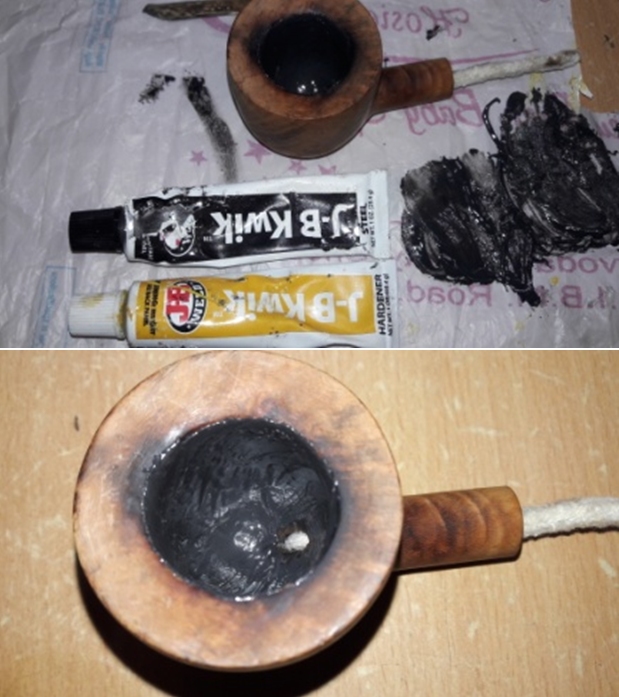
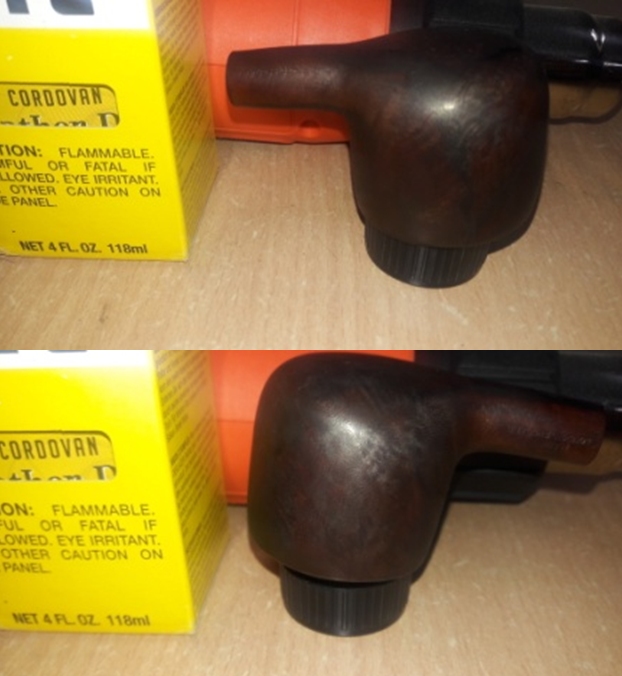
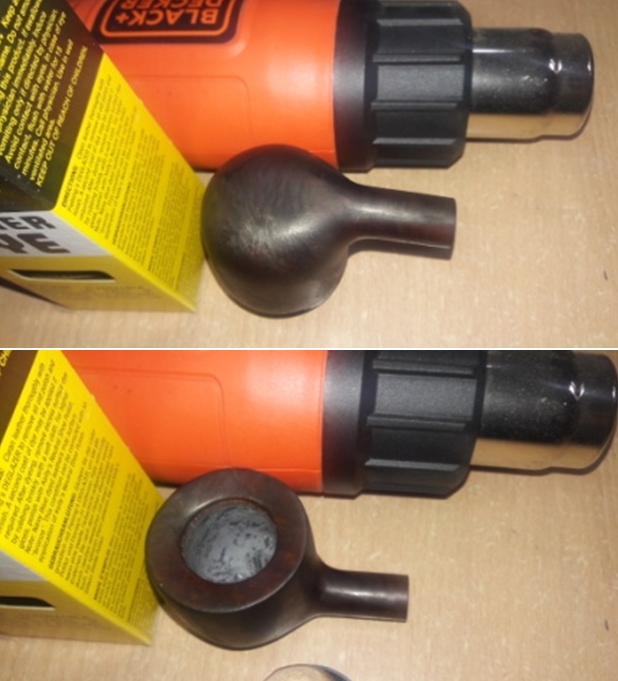
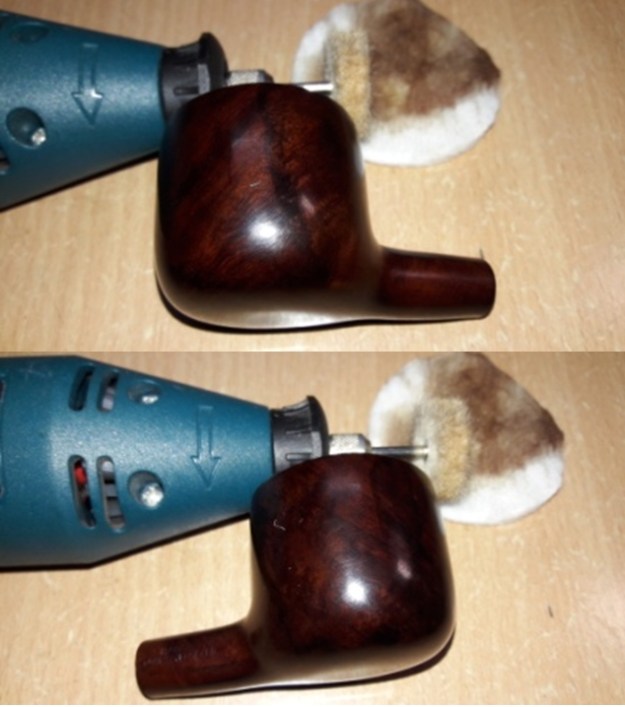
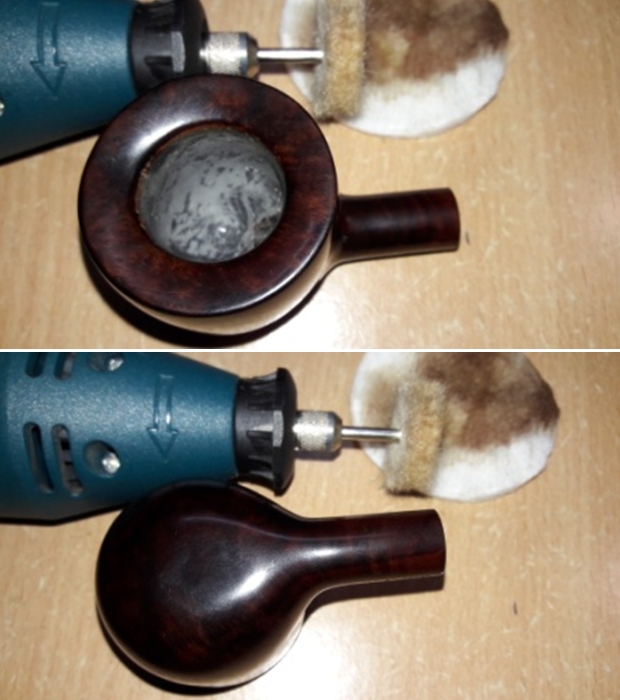
The first issue on the agenda that I decided to tackle was to address the dark patch to the heel observed just in front of the draught hole and correspondingly to the foot of the stummel. The black patch is bounded by the yellow arrows and the alignment of the web of these minor heat fissures is indicated by the green arrows. With a pointed dental tool, I scraped the black patch in the heel of the chamber and completely removed the dead charred briar from the surface till I reached solid intact briar. Thereafter, I removed the charred briar from the heat fissures till I had reached solid briar. Once the dead and charred briar was removed, there was a need to give a protective coat over the surface to avoid direct contact of the briar with the burning tobacco as the thickness from these damaged areas were slightly reduced. I would achieve this by coating the walls of the chamber with J B Weld mix. I preceded the stummel repairs first by coating the walls of the chamber with a slightly thick layer of J B Weld. J B Weld is a two-part epoxy Cold Weld in two tubes; hardener and steel which are mixed in two equal parts (ratio of 1:1) with hardening time of 5-6 minutes and complete curing time of 6-8 hours. I poured the contents of the two tubes and mixed it well. I inserted a petroleum jelly coated regular pipe cleaner through the draught hole to prevent it from getting blocked due to the J B Weld mix. I applied this mix, as evenly as possible, over the entire chamber wall surface. I worked fast to ensure an even coat over the chamber walls before the weld could harden. I set the stummel aside for the application to harden and cure overnight.While the J B Weld coat was curing, I worked the stem by first sanding it down with a folded piece of 220 grit sand paper. This step addresses the twin issues of removing residual stubborn oxidation and also smooth out the minor tooth chatter from the bite zone. I wiped the stem with Murphy’s Oil soap and cotton swab to remove the resulting sanding dust. I rubbed in a small quantity of EVO in to the stem and set it aside to rehydrate.Turning my attention back to the stummel, I sand the entire stummel surface with a folded piece of 220 grit sand paper to remove the minor dents and dings from the surface. This also helped to lighten the darkened spot from the foot of the stummel. Staying with the stummel repairs, the next issue I addressed was that of the damage to the rim top surface. The rim top surface is sloping inwards, making topping impossible without compromising the profile integrity. To address the issue of darkened rim surface, I sand it with a folded piece of 220 grit sand paper pinched between my thumb and fore finger, moving along in the direction of the surface profile. Simultaneously, I addressed the issue of charred inner rim edge and the dings and chips to the outer edge, by creating a slight bevel to both the rim edges. I am happy with the appearance of the stummel at this stage. I switch back to the stem and further sand it with 400, 600 and 800 grit sand paper. I wiped the stem with cotton pad dipped in alcohol to remove the resultant dust. I rubbed some extra virgin olive oil into the stem and set it aside to be absorbed. I polished the stem with micromesh pads, wet sanding with 1500 to 12000 grit pads. I rubbed a little extra virgin olive oil in to the stem at the end of all the micromesh pads. I finished the polishing of the stem by rubbing a small quantity of Paragon wax and giving it a final polish with a soft cotton cloth. The stem is now nice, smooth and shiny. With the stem polishing completed, I moved ahead with completing the stummel repairs. The J B Weld coat had hardened considerably by this time. I mount a sanding drum on to my hand held rotary tool and setting the speed to half of the full RPM, I sanded the excess coat from the chamber walls. To further fine tuned and keep the coat to a minimum thickness, I further sanded the coat with a 150 grit sand paper till I had a coat of a thickness that was just sufficient to protect the briar underneath. Here is how the chamber appeared at this stage. I polished the stummel with micromesh pads, wet sanding with 1500 to 12000 pads. I wiped the surface with a soft cloth at the end of the micromesh cycle. The stummel looks amazing with a deep shine and beautiful grains popping over the stummel surface. However, the dark rim surfaces in 1 o’clock direction and the dark spot at the foot of the stummel do not present a visually appealing picture. I had the option of either masking them under a darker stain or to let them be. I shall decide after I am done with polishing with Blue Diamond, hoping that this would further lighten these spots. I followed up the polishing by applying “Before and After Restoration” balm. This balm protects and enriches the briar surface and is highly recommended for use in any restoration of briar pipe. I rubbed it deep in to the stummel surface and set it aside to be absorbed for 20 minutes. I was pleased by the appearance of the stummel, less the dark spots on the rim edge and on the foot of the stummel. I mounted a cotton cloth buffing wheel on to my hand held rotary tool and applied a coat of Blue Diamond to the stummel, hoping to see a slight change in the appearance of the dark spots. However, these spots are still prominent and will need to be masked. Here are the pics of the pipe at this stage. I decided to stain the stummel with a Cordovan stain in the hope that it would help in a nice blending of the dark spots with the rest of the stummel. I heated the stummel surface with my heat gun to open up the pores on the stummel so that the stain is well set. I dipped a folded pipe cleaner in Fiebing’s Cordovan leather dye and liberally applied it over the heated surface, flaming it with the flame of a lighter as I went ahead to different self designated zones of the surface. This helps in even application and in the setting of the stain in the grain of the briar. I set the stummel aside for the stain to set into the briar. The next afternoon, I mounted a felt cloth buffing wheel on to my hand held rotary tool and using Red Tripoli proceeded, as my dear friend Dal Stanton likes to say “unwrap the coat of stain to reveal the grain” from the stummel surface. I set the tool at its slowest speed, again my recent experience while working on Steve’s pipe came in handy and the damage that can be caused due to heating while using the felt buffing wheel still fresh in my memory; I began to peel off the stain from the stummel surface first. The stain peeled out gradually. This was followed with wiping the stummel with a cotton swab and alcohol to lighten the stain a little as it was too dark for my liking. This also helped in cleaning the surface of all the residual stain and highlighting the grains. I set the stain by again heating the stummel surface with the heat gun. This is an essential step as, if missed, there is a possibility of the stain running down the hands of the smoker who decides to carry forward the trust in this pipe. To apply the finishing touches, I mounted a cotton cloth buffing wheel on to my hand held rotary tool and applied a coat of Blue Diamond to the stummel and the stem to polish out the minor scratches. Next, I mounted a cotton cloth buffing wheel and setting the speed to ¼ of the full power, I applied a thick coat of carnauba wax over the stummel and the stem. I worked the complete pipe till the time all the wax was absorbed by the briar. The pipe now boasted of a beautiful and lustrous shine. I vigorously rubbed the pipe with a microfiber cloth to deepen the shine and also to clean away any residual wax that had been left behind. I am very happy with the way this beauty has turned out. P.S. There was only one more issue that needed to be addressed and one that could not be ignored, being a functional issue. After I had protected the heel of the stummel and the walls of the chamber with a coat of J B Weld, it was necessary to prevent this coat from coming in to contact with the burning tobacco. I addressed this by mixing activated charcoal and plain yogurt to a thicker consistency, just enough that it would spread easily and applied it evenly all along the chamber walls after inserting a folded pipe cleaner through the draught hole to keep it open. Once dry and set, this will not only protect the walls but also aid in faster buildup of cake.I wish to thank all readers for sparing their valuable time to read through this write up.


Rusticating A Willard That Was A Gift For My Colleague…


Blog by Paresh Deshpande

My job involves a lot of transfers and frequent shifting of our household to a completely new place. At times, it is we who move to our work place alone while our families stay back for children’s education or when accommodation is not available or when the new place is in a remote area and fraught with risks. I moved to my present place of work alone. Here, I had a very fine set of colleagues with whom I gelled well. As time went by, these colleagues got transferred and new colleagues joined. However, when the last of my old colleagues got his transfer orders, I wanted to gift him a pipe as he has started to enjoy pipes more than his cigars.

Abha, my wife, had sent me one lot of 40-45 pipes that she had cleaned up and all ready for my part of restoration process. From this lot of the pipes that I had earmarked as for sale/ gifting, he selected a pipe that had come to me as part of my Mumbai Bonanza.

For those readers who have missed out on how I came to purchase this lot, here is the background story….

I was fortunate enough to have heeded the advice of my dear friend and mentor, Steve, and struck a deal with a junk collector from Mumbai. He did not know what he was selling and I did not know what I was buying as we reside in different cities!! The argument that Mr. Steve presented was that if not anything, I shall at least have some spares and this was logical. I struck a deal and here are pictures of the pipes that I received in this lot.    This lot contains some very nice collectible pipes, a few well known brands and some mediocre brands. Overall, with seven Dunhill pipes, a Preben Holm #1 FH, a couple of “Made in England” Pete System pipes, a couple of  Charatan’s Belvederes, Custom-Bilt, Stanwell and other assorted pipes, I would say that I had struck a decent deal!! This is indeed my “Mumbai Bonanza”.

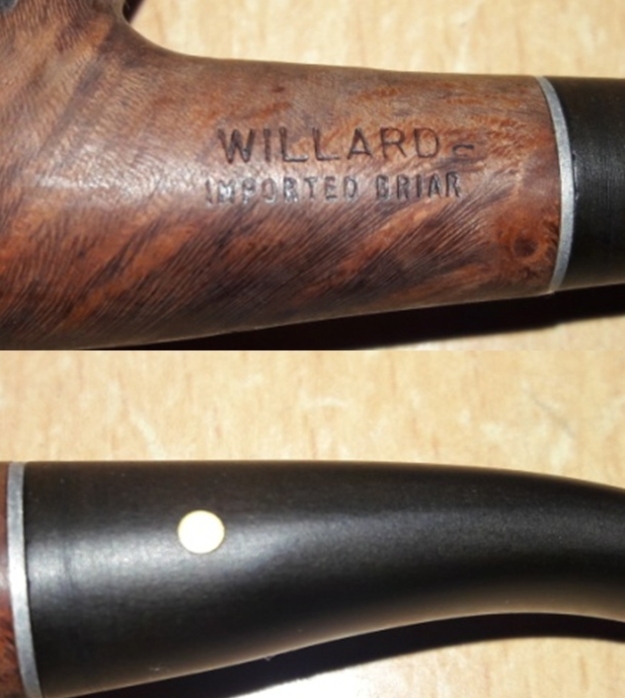
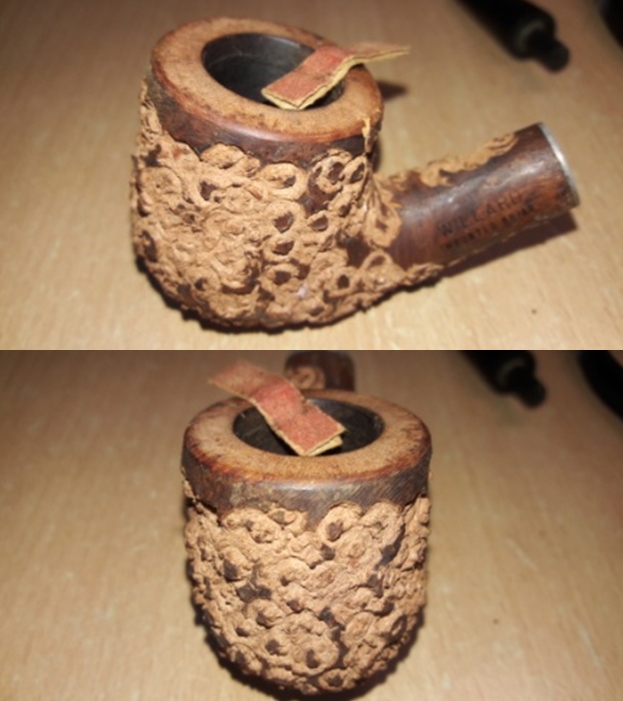
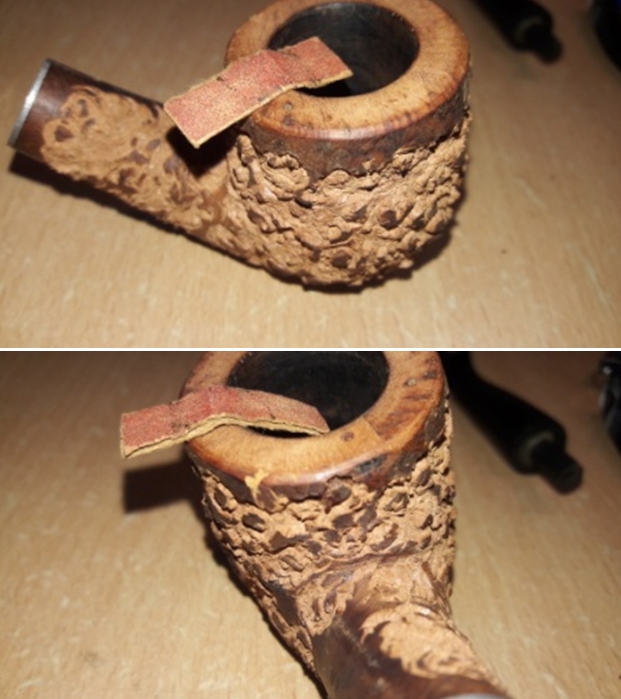
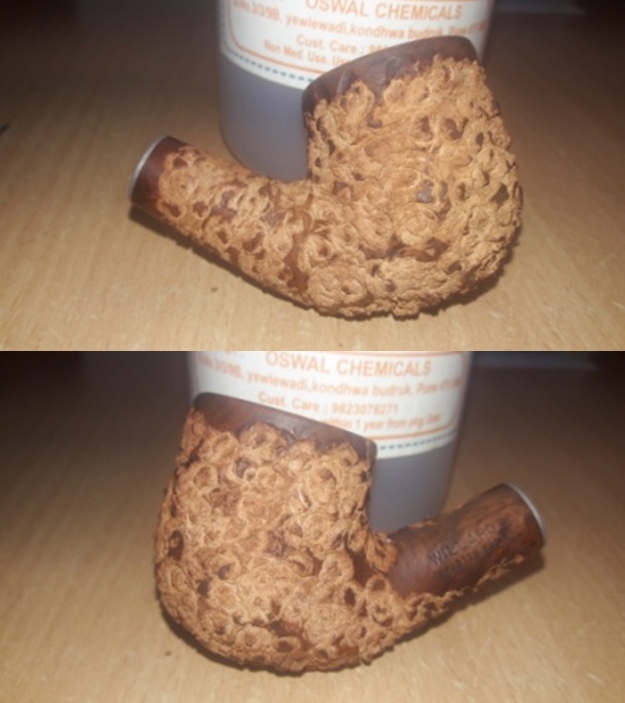
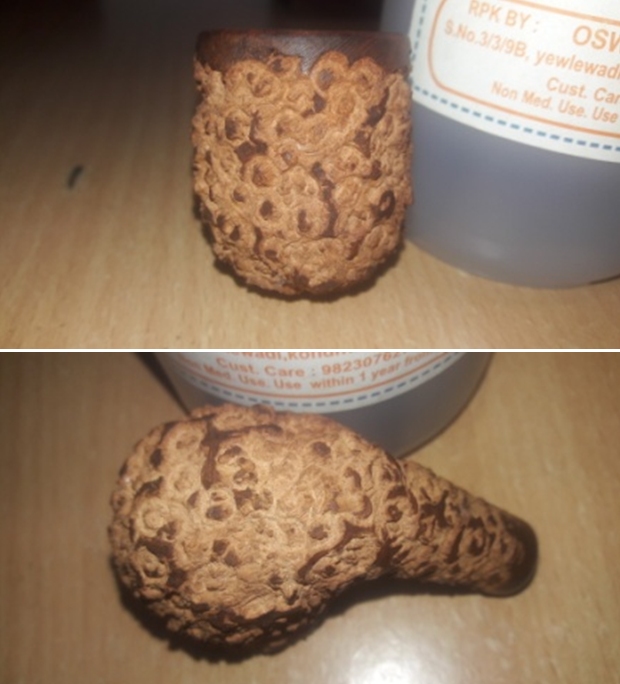
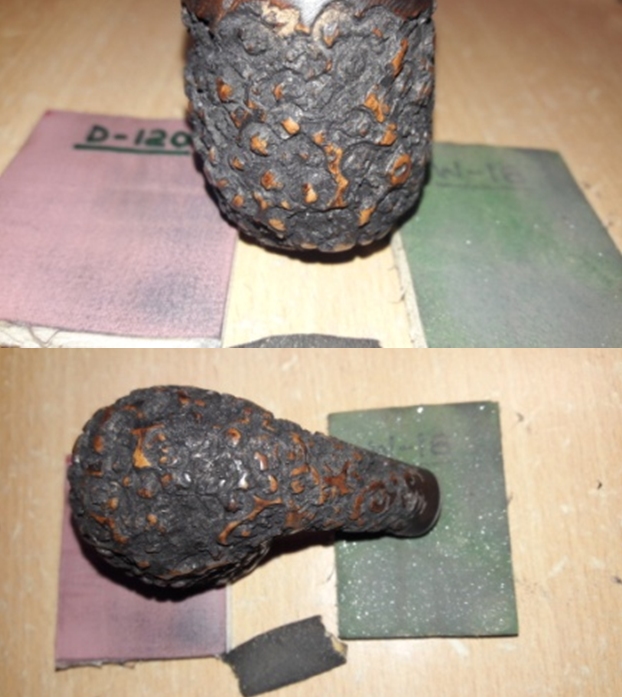
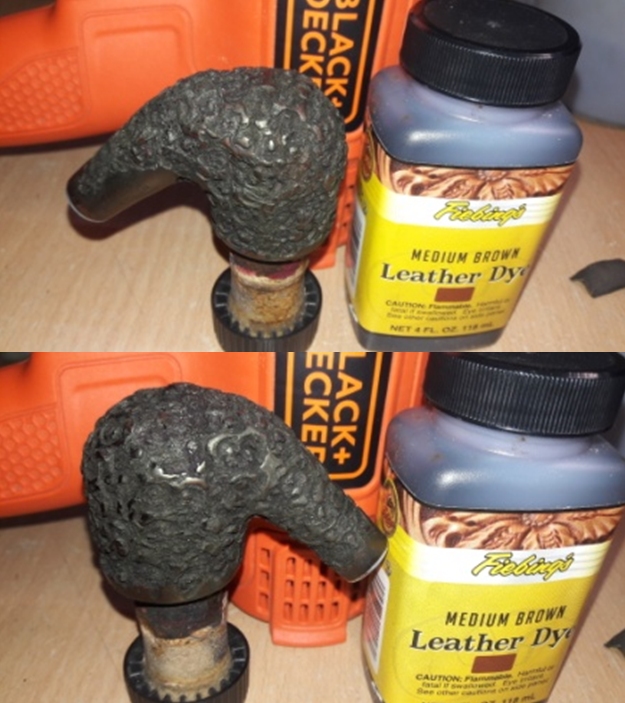
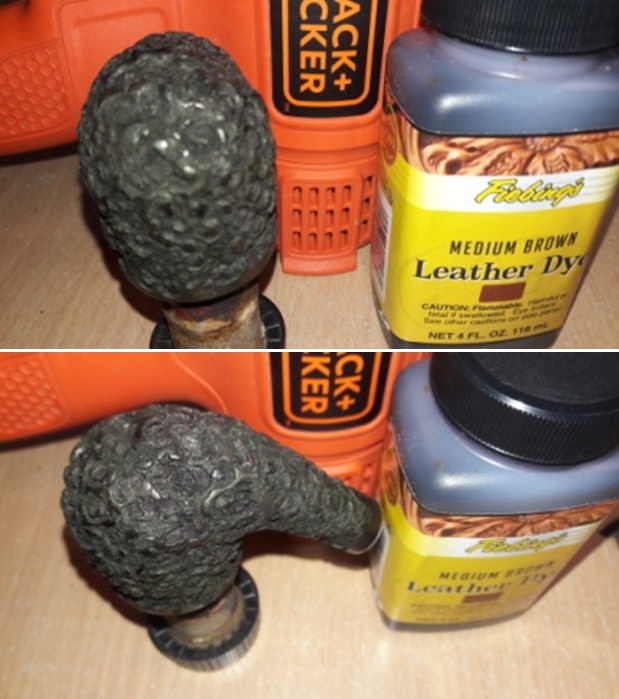
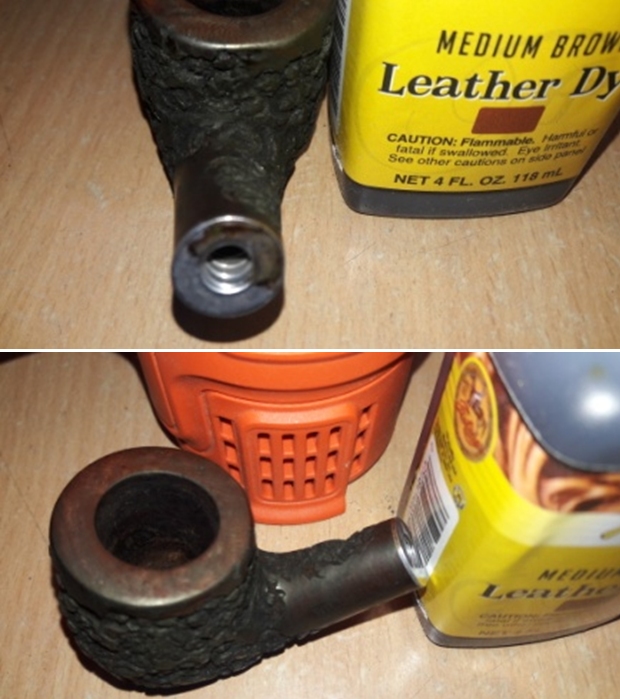
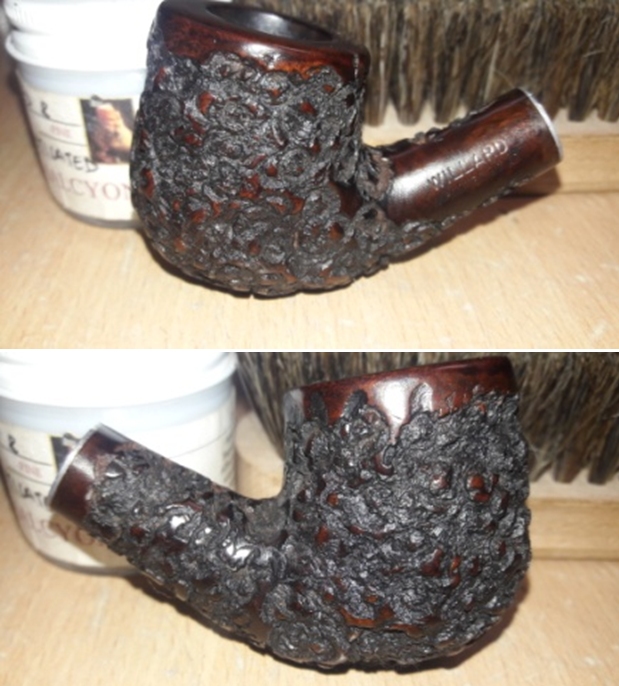
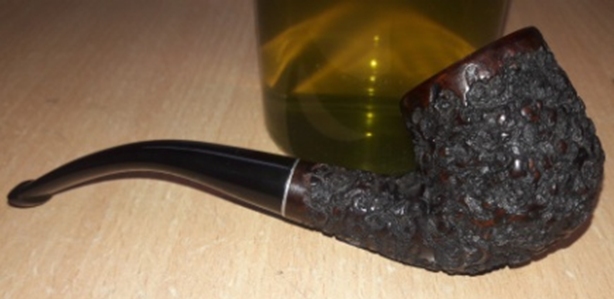
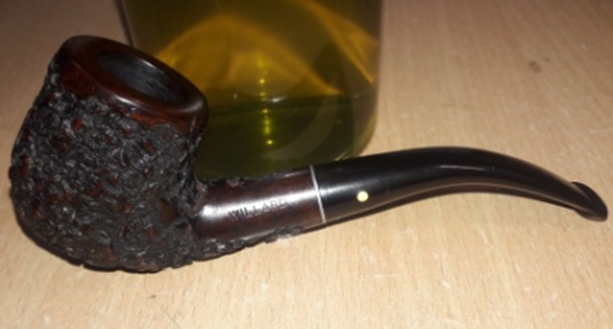
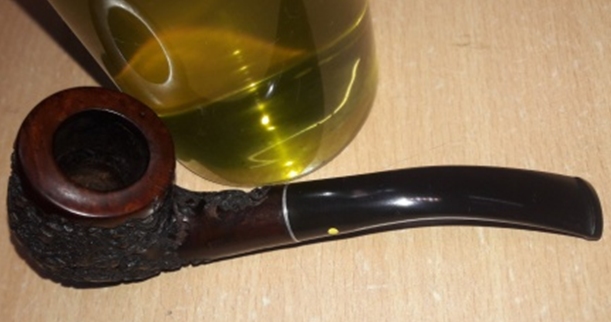
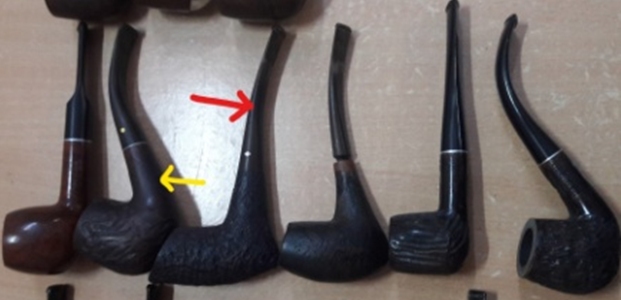
The pipe selected by my colleague and now on my work table from this find (sixteenth pipe being restored) is a bent billiard pipe with flame shaped worm rustications, a poor imitation of worm rustications as seen on Custombilts from the Wally Frank era! It is indicated in yellow arrow in the picture below. It is stamped on the left side of the shank as “WILLARD” in block letter over “IMPORTED BRIAR” again in block letter. The right side of the shank is devoid of any stamping. The stem bears a “Dot” logo in Yellow, embedded on the left side of the stem. Now coming to the research of this brand and line/model in specific, I referred to pipedia.org. Though there are no reams of information on this brand or model, the information provided gives a clear perspective of this brand and its aim. Here is the link (https://pipedia.org/wiki/Willard).
“The Willard pipes were made by Sparta Industries in Sparta, N.C from 1963 to 1975 (about 60,000 pipes per week). Some were distributed by the Post and Base Exchanges that serviced the military during the Vietnam War. Others were produced for R. J. Reynolds Tobacco. (preceding content from the “Pipes” website http://www.pipephil.eu/index.html)

Lord Abbott was either a sub-brand or a series produced by Willard —Dgillmor 22:42, 10 May 2012 (CDT)”

From the above information, it is evident that the pipe currently on my work table is from the period 1963-75. With this input on the vintage of this pipe, I move ahead with the restoration of this 42 plus years old pipe!

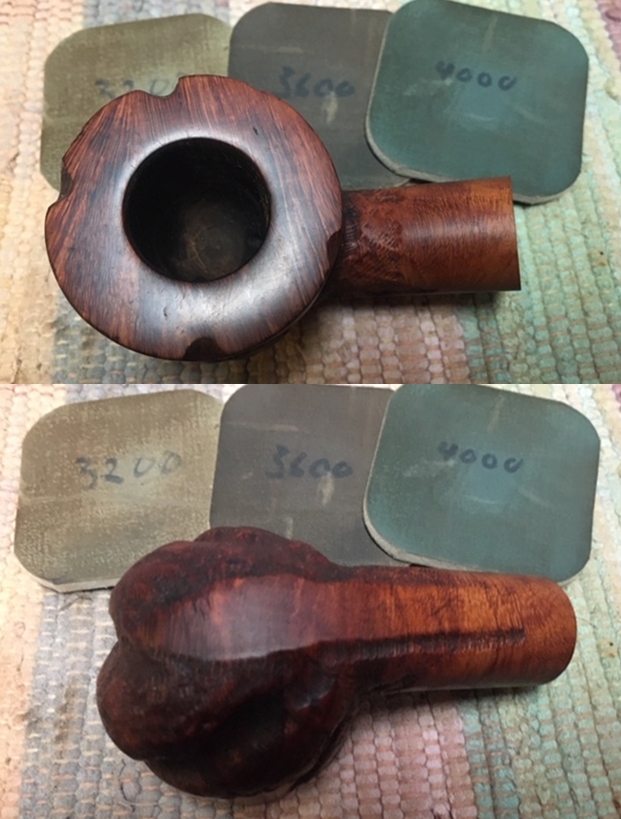
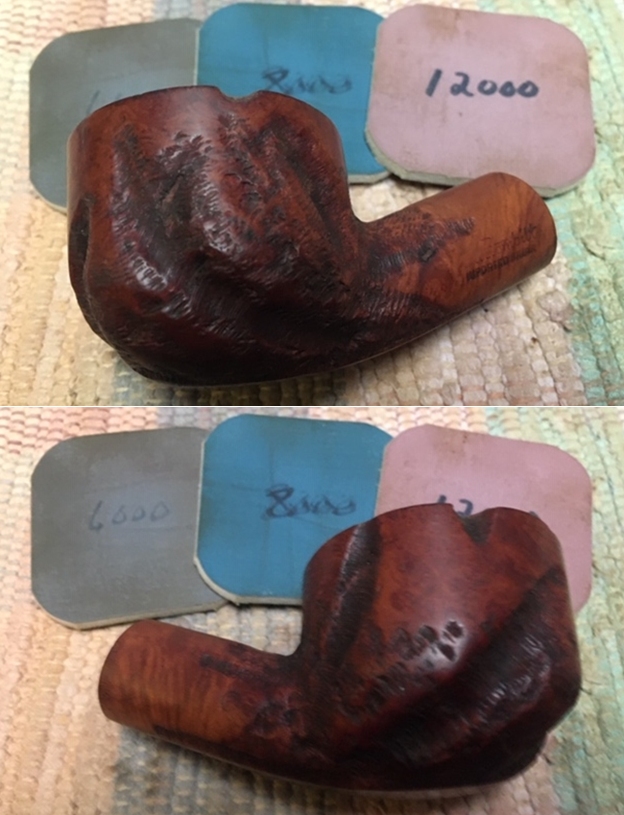
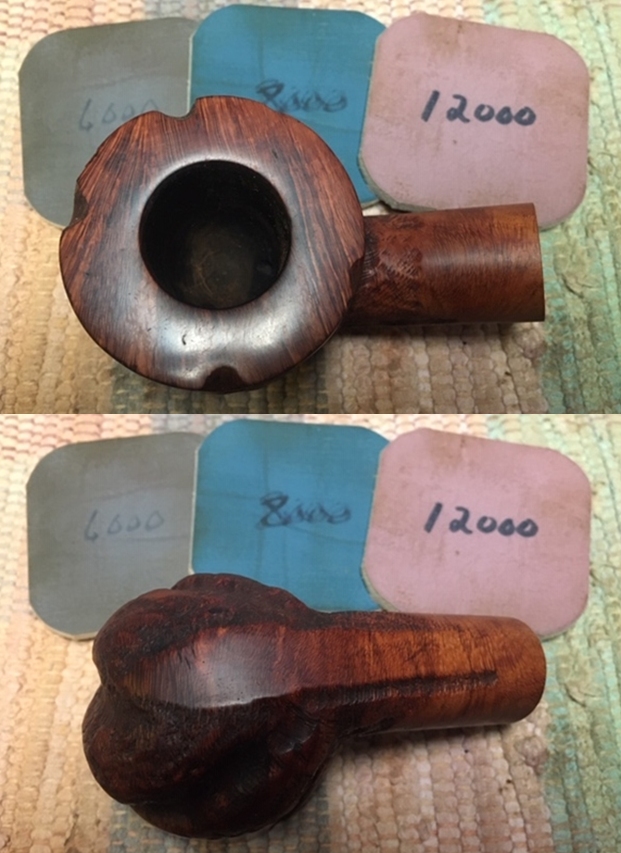
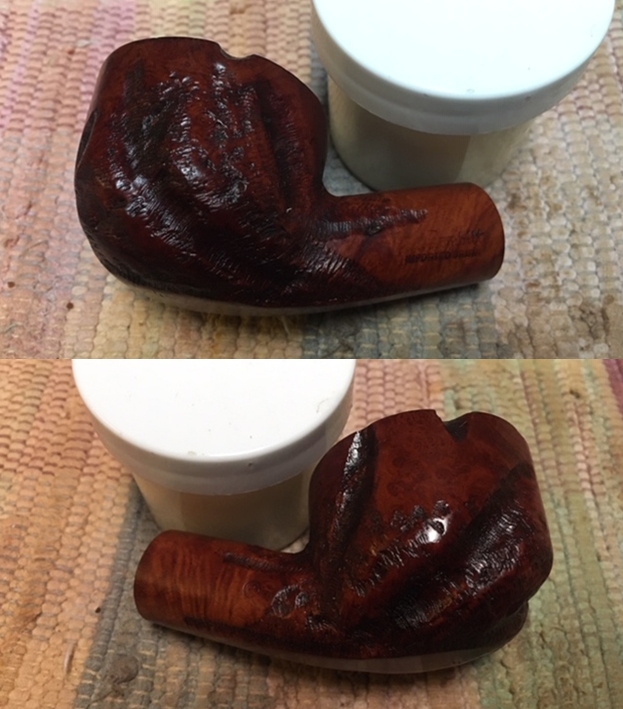
Initial Visual Inspection
The stummel is covered in dust and dirt giving it a dull appearance. The Custombilt like worm rustications are uneven, without any finesse and filled with dirt and grime. There are a couple of fills that are plainly visible. These will need to be refreshed, if needed. It’s a matter of personal choice; however, I could not help but wonder what it was that attracted my colleague to this pipe in the first place!! I got my answer the next day when he said that he liked the shape and lightness of this pipe. Thus, it was not the grains (which were zero!) or the worm rustication that he was interested in and could be done away with to make it more attractive. With this input from him, I decided to rusticate the stummel as I was not very happy with the appearance of this pipe at this stage. A thick layer of cake can be seen in the chamber. The smooth rim top surface is covered in dirt, dust and grime with a few dents and dings thrown in for good measures. The condition of the inner walls of the chamber will be known once the cake has been taken down to the bare briar. The inner rim condition appears to be in good condition with no burn/ charred surfaces. Even the outer rim edge appears to be in a decent condition. Only once the stummel has been thoroughly cleaned that I can be sure of my initial appreciation. In spite of the thick cake, the chamber odor is surprisingly not strong, yet I shall be subjecting it to a salt and alcohol treatment to freshen it up for him.The shank end has a metal band and this metal band extends inside the shank with threads, over which the threaded stinger is seated in to the mortise. Thankfully, the band and threads are all intact. The mortise is blocked with dried gunk, adversely affecting the airflow. The metal band is dull and dirty in appearance.The vulcanite stem is oxidized and has calcification deposits towards the button end. The lower and upper stem surface is peppered with tooth chatter. The button edges also need to be sharpened. The stinger opening and the horizontal slot is covered in accumulated oils and tars. The alignment of the stem and shank is skewed with the stem being overturned to the right. Initial Cleaning By Abha…
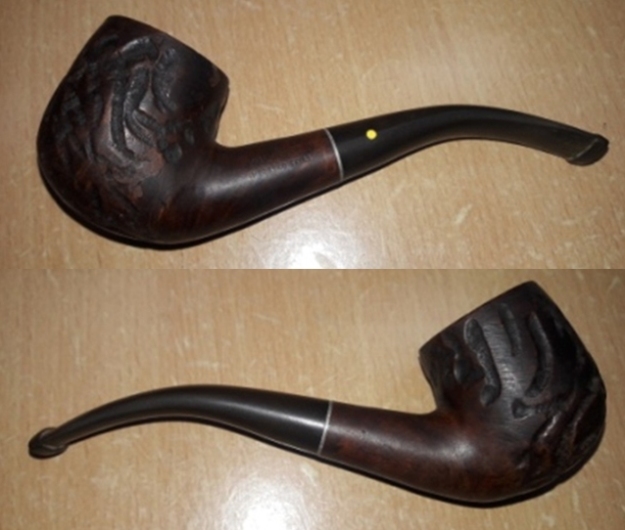
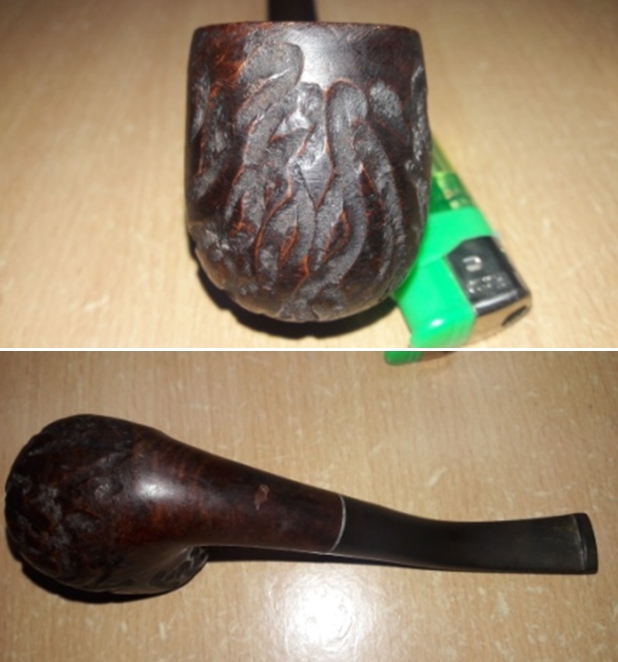
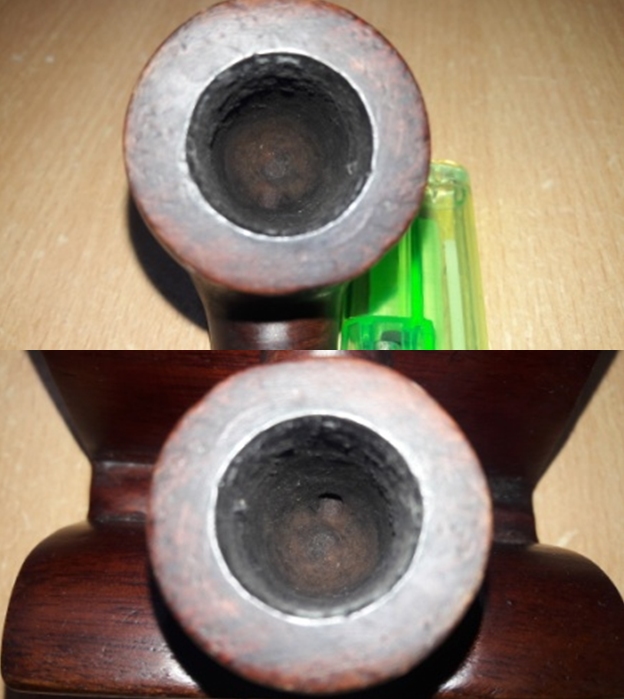
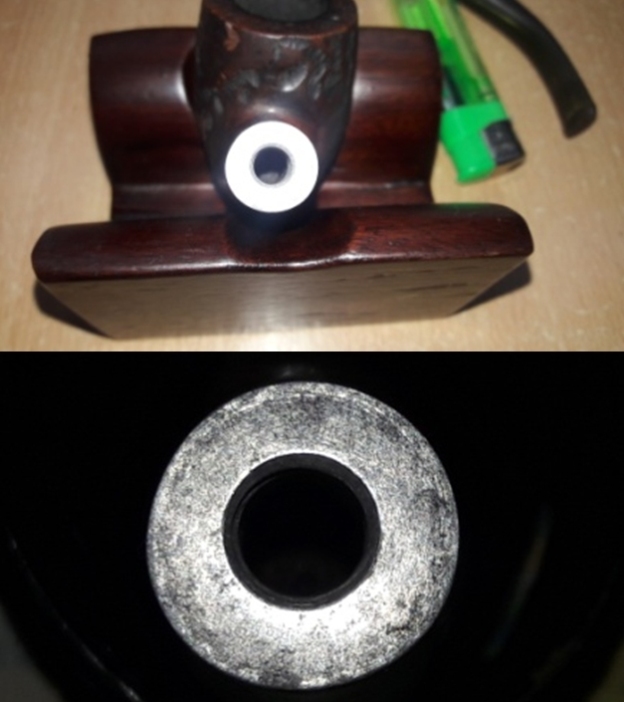
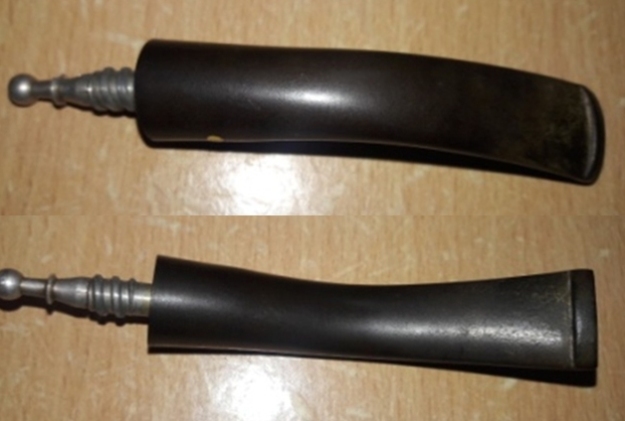
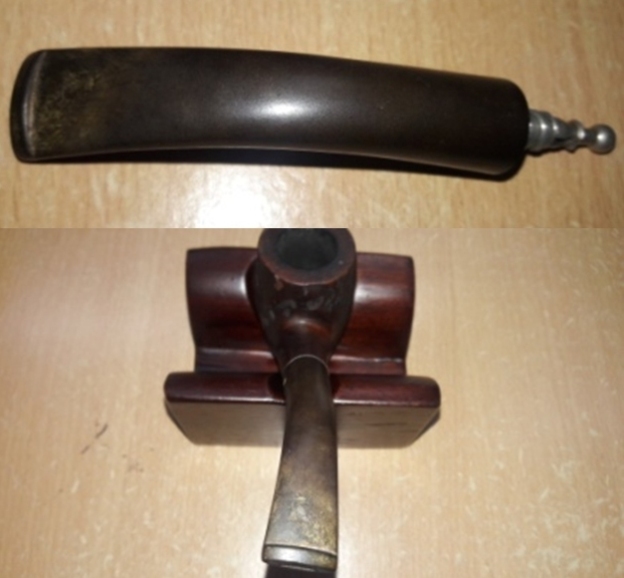
The initial cleaning on this pipe was done by Abha, my wife (she has cleaned up around 40-50 pipes and these have now reached me for further restoration). She reamed out the complete cake and further smoothed out the chamber walls with a folded piece of 220 grit sand paper. She further cleaned out the internals of the shank with pipe cleaners and alcohol and cotton buds. She followed the internal cleaning of the shank with external cleaning of the stummel using Murphy’s Oil soap and hard bristled tooth brush and dried it with paper napkins and cotton cloth.Next she cleaned out the internals of the stem air way and immersed it in “Before and After Deoxidizer” solution (pipe is marked in indigo blue arrow) along with the stem of other pipes in line for restoration. Once the stem had soaked overnight, she cleaned the stem under running warm water and scrubbed the raised oxidation from the stem surface using Scotch Brite pad. She further removed the oxidation by scrubbing the stem with 0000 grade steel wool and applied a little olive oil to rehydrate the stem.Once The Pipe Is On My Work Table…
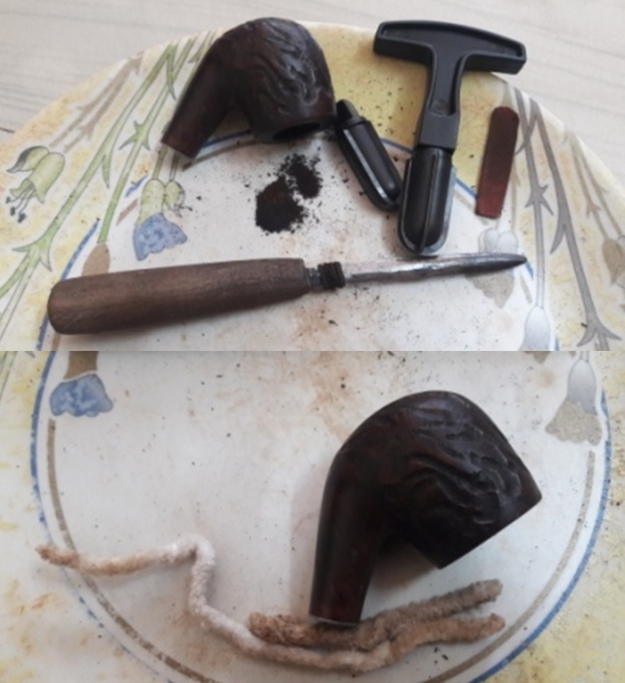
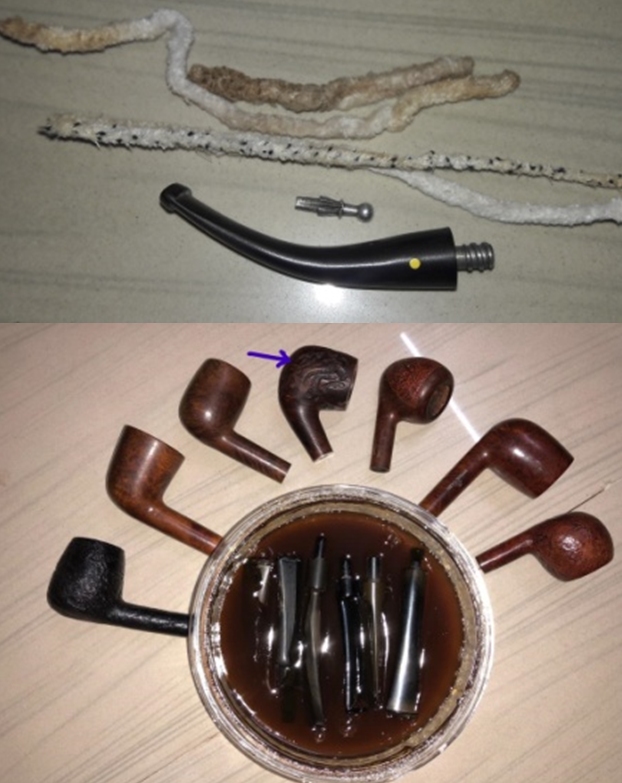
The cleaned up pipe presents a very clear picture of what needs to be done to restore this pipe to a decent and smoke worthy condition. I really cannot thank Abha, my wife, enough for all the help and support that she extends in my pursuance of this hobby. I proceed to carry out my appreciation of the work that needs to be done on this pipe to restore it. The cleaned up pipe, as I received it, is shown below. The chamber walls are without any heat fissures or pits and that’s a big relief. The rim top surface is peppered with dents and dings. The inner rim edge shows slight darkening all round and should be easily addressed with a couple of turns of a piece of 220 grit sand paper along the edge. There are some minute chipped spots on the outer edge. The condition of the chamber is good and will not require much repair work. There are no ghost smells in the chamber. The stummel surface is nice and clean. The worm rustications, though clean, are still not visually pleasing. There are a large numbers of fill now plainly visible (only larger ones are enclosed in yellow circle). The mortise is clean and air flow is smooth. The metal spacer ring is also clean and intact. The vulcanite stem had cleaned up nicely. The upper stem surface has a couple of deep bite marks at the base of the button and also in the bite zone. The lower surface has some minor tooth chatter in the bite zone. The button edges on both the surfaces need to be sharpened. The aluminum stinger is clean.The seating of the stem stinger in to the metal threaded mortise is off center. The stem is overturned to the right and will have to be readjusted to perfectly align with the shank and the stummel.The Process
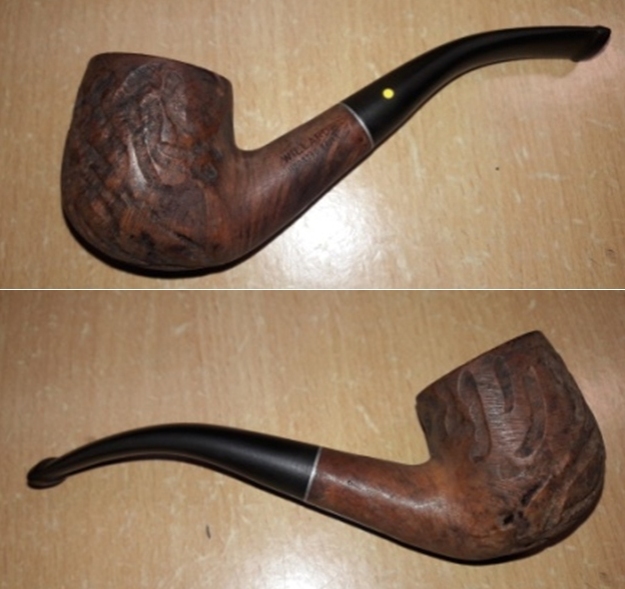
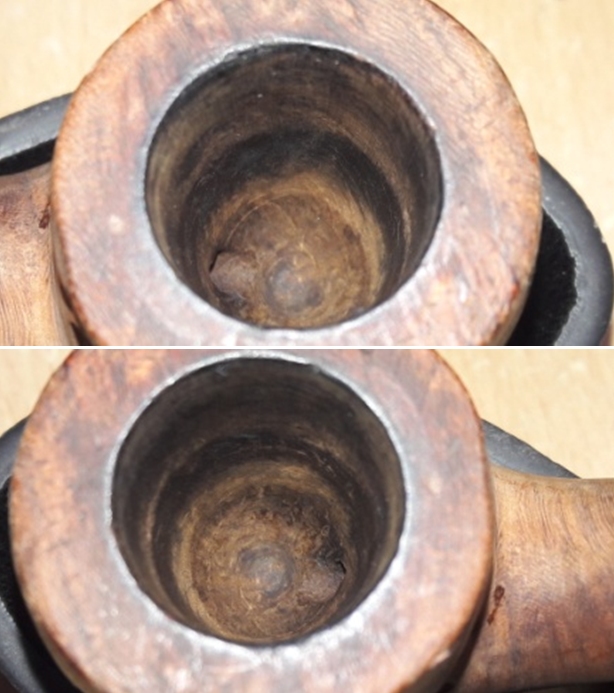
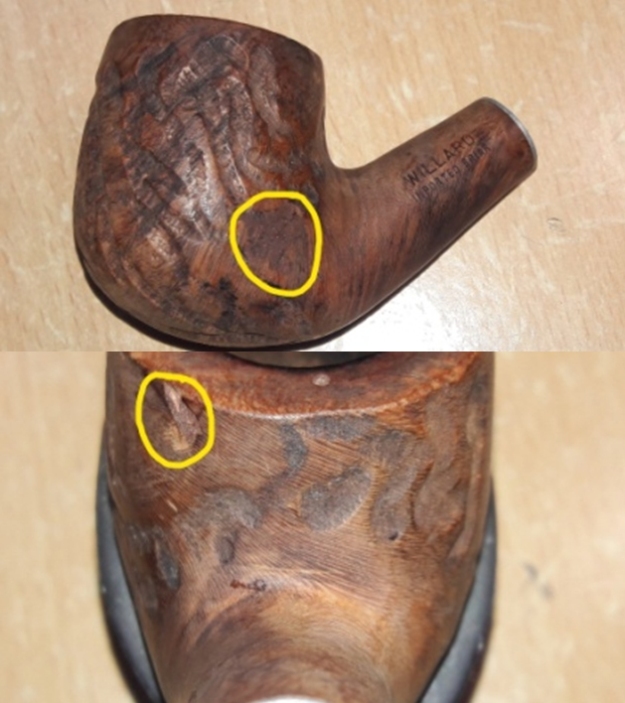
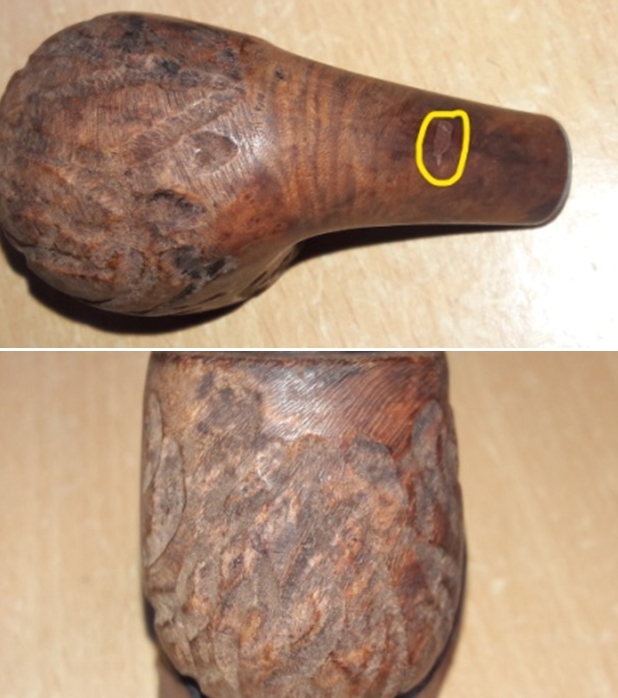
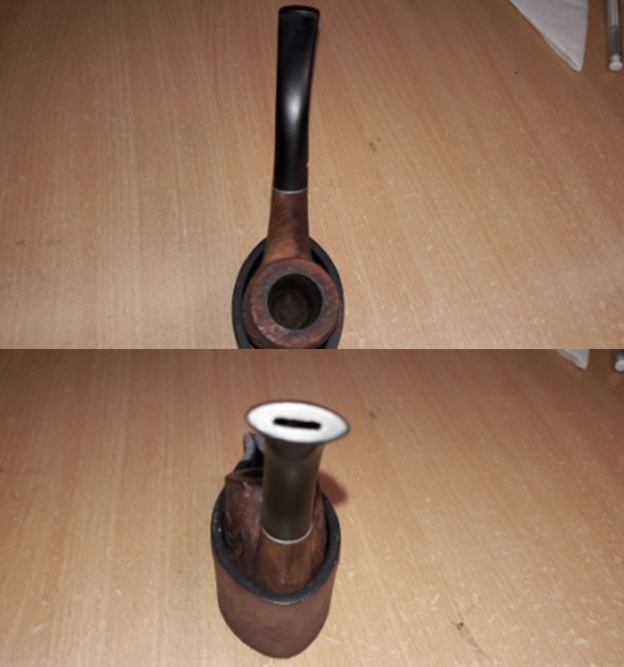
The first issue that I addressed in this project was that of the stem repairs. I painted both surfaces of the stem with the flame of a lighter to raise the tooth chatter and bite marks to the surface. This also helps in loosening minor oxidation from the stem surface. I sand the entire stem surface with a folded piece of a 220 grit sand paper to remove the loosened oxidation. I wiped the stem with a cotton swab and Murphy’s oil soap to further clean the surface. Even though most of the tooth indentations have been eliminated by heating the damaged stem portion, one deep indention is still seen on upper surface in the bite zone and a minor bite mark is seen on the button edge on the lower stem surface. I filled the tooth indentation in the button edge on lower and upper stem surface with a mix of activated charcoal and CA superglue and set it aside for the fill to cure.With the stem fills set aside for curing, I decided to work the stummel. The other day during a Face Time video call with Steve, we discussed the best way to transform this stummel. The long and short of the discussion was that it was decided to rusticate the stummel. This would help to mask the fills and provide a very tactile feel while smoking. It would also provide me an opportunity to practice rustication. With this decision finalized, I proceed with rusticating this stummel.
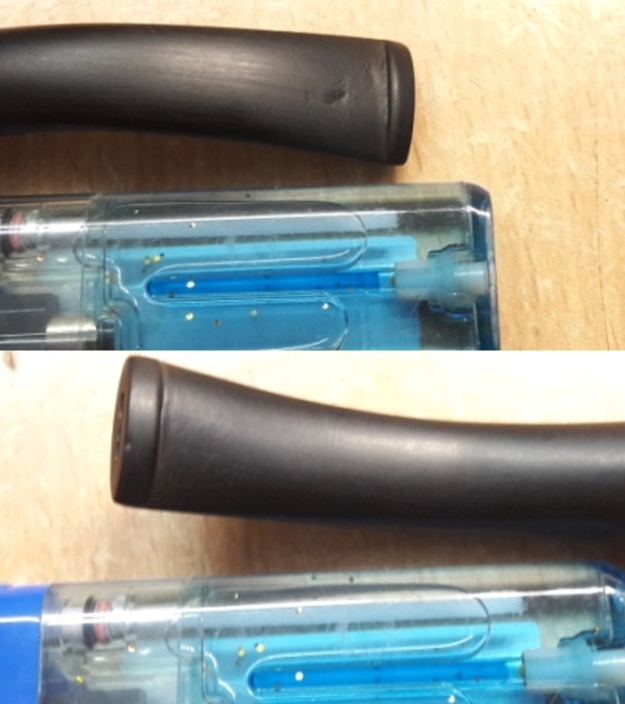
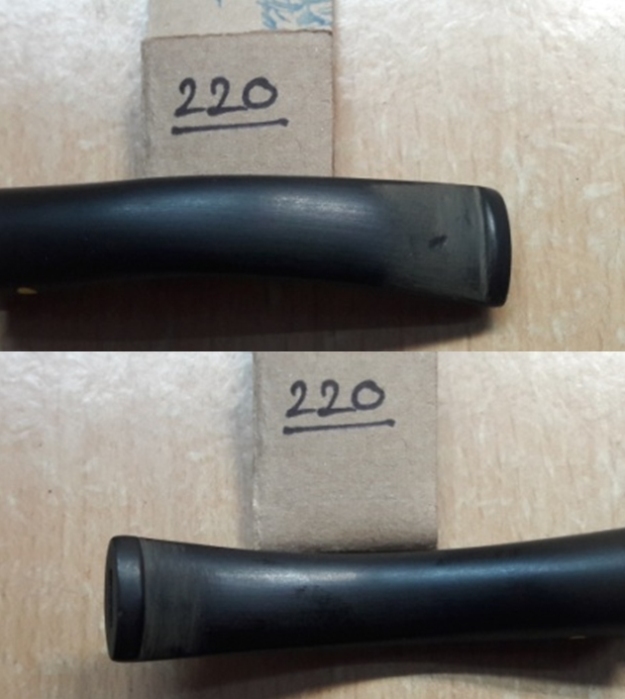
Now, this would not be my first attempt at rustication as I had rusticated one a few months back, here is the link to the write up (https://rebornpipes.com/2019/08/02/gifting-my-mentor-and-dear-friend-steve-an-alexander-zavvos-hygrosystem-pipe/).

I referred to the above write up and other subject write ups on rebornpipes to understand the mistakes committed and decide on the look/pattern of rustications over the stummel surface. I decided to maintain a smooth ring atop the rustication below the outer edge of the rim and also at the shank end. I used a transparent tape to demarcate the area that I wanted to keep smooth that is the rim top and about quarter of an inch below the rim outer edge and a thin band at the shank end. Similarly, I covered whatever little that remained of the stamping. From my experience, I knew that this is a very essential step as I realized during rusticating that it is very easy to lose track and transgress over the areas and stampings which you wish to preserve.To rusticate, I firmly held the stummel in my left hand and with my right hand and began gouging out the briar. The technique is to firmly press the pointed four prongs of the modified Philips screwdriver in to the surface, rotate and pull out the removed chunk of briar. I worked diligently till I was satisfied with the rustications and the appearance of the stummel. I cleaned the stummel surface with a brass wired brush to clear all the debris from the rustications. I decided to take a break from further rusticating the surface as the process is tiring and painful. This makes me want a better and efficient rusticating tool. While giving my right hand a rest from this task, I decided to work on the damage to the rim top and edges. I start by addressing the rim top surface damage. I top the rim on a piece of 220 grit sand paper, checking frequently till I am satisfied that the darkened surface is addressed to a great extent and the rim top surface is nice, smooth and even. The inner and outer edges are still uneven, though much better than before topping, and shall be addressed subsequently.With a folded piece of a 220 grit sand paper pinched between my thumb and forefinger, I create a slight bevel on the inner and outer edges of the rim top surface. This helps to mask and address the minor dents and dings that had remained on the rim edges after topping. I am careful so as not to alter the profile of the stummel by excessive topping or creation of the bevels. I am pretty pleased with the appearance of the rim top and edges at this stage. I cleaned the stummel with pure acetone and cotton swab to remove the old stain completely in preparation for the polishing and subsequently, a new stain. After the cleaning, I set the stummel aside to dry out naturally. I turn my attention back to the stem. The fill has cured nicely and with a flat head needle file, I sand the fill to achieve a rough match with the surrounding surface. To achieve a perfect match, I sand the stem with a 220 grit paper, progressively moving through to finish with a 1000 grit sand paper. As expected, a clean and neat looking stem stared back at me. I rub a little Extra Virgin Olive oil into the stem surface to hydrate it and set it aside to be absorbed in to the vulcanite.I polish the rim top and the smooth surfaces of the stummel using micromesh pads, wet sanding with 1500 to 12000 grit pads. I am happy with the appearance of the stummel at this point in the restoration. The stummel is now ready for a fresh coat of stain. I heat the stummel surface with my heat gun to open up the pores on the stummel so that the stain is well set. I mix black stain powder with isopropyl alcohol and liberally apply it over the heated surface, flaming it with the flame of a lighter as I went ahead to different self designated zones of the surface. This helps in the setting of the stain in the grain of the briar. Once the stain has set in well, I again warm the stummel with my heat gun. This helps the stain to be absorbed and set further into the briar. I mount a felt cloth buffing wheel on my rotary tool and gently buff the entire stummel surface to remove the stain crust. I wipe the stummel with a cotton swab and alcohol to remove any excess stain and follow it up sanding the raised rustication with a folded piece of 220 grit sand paper. This is followed up by careful dry sanding of the entire stummel, especially the raised rustications with 1500 to 12000 grit micromesh pads. This not only lightens and highlights the rustications, but will also provide a smooth surface for the next coat of stain. Here is how the stummel appears at this stage. I buff the stummel with a horse hair shoe brush to remove any sanding dust resulting from the micromesh sanding. I apply a small quantity of “Before and After” restoration balm to rehydrate and rejuvenate the briar and set it aside for some time. Thereafter, I buff and clean the stummel with a microfiber cloth. I apply a second coat of Medium Brown stain over the stummel and the shank extension, going through the same method as described above and set them aside for the stain to set. With the stummel set aside for the stain to set, I turned my attention to the stem polishing. Using the micromesh pads, I complete the polishing cycle by wet sanding the surface with 1500 to 12000 grit pads. The stem looks great with the fills nicely matched with the rest of the surface. I rub a little quantity of Extra Virgin Olive oil in to the stem surface and set it aside to be absorbed by the vulcanite.Coming back to the stummel, once the stain is set I wipe it down with a cotton swab and alcohol to remove any excess stain and lighten it from the raised rustications. Mounting a felt cloth buffing wheel on my rotary tool, I go about removing the crust formed by the stain over the raised rustication. The second coat of brown stain has added another layer of texture to the appearance of the stummel. Next, I rub a small quantity of “Before and After Restoration Balm” in to the briar with my finger tips, work it deep in to the sandblasts and let it rest for a few minutes. The balm almost immediately works its magic and the briar now has a nice vibrant appearance with the beautiful rusticated patterns on full display. I further buff it with a horse hair shoe brush. I rub a small quantity of Halcyon II wax into the surface and immediately wipe it with a microfiber cloth. The only issue that remains unaddressed at this stage is the issue of the overturned stem. With the flame of a lighter, I heat the aluminum stinger to a point where the stem is just about able to rotate on the stinger. I reattach the stem to the shank while the stinger was still warm, and turned it till the alignment was as perfect as I desired and set it aside to cool down.To complete the restoration, I mounted a cotton cloth buffing wheel on to my hand held rotary tool.  I set the speed at about half of the full power and applied several coats of carnauba wax. I finished the restoration by giving the entire pipe a rigorous hand buffing using a microfiber cloth to raise the shine further. The finished pipe looks amazingly beautiful and quite a transformation it was. It is now ready for its long second innings with my colleague. I wish that he enjoys his pipe and remembers our association for a long time to come. I wish to thank our esteemed readers for sparing their valuable time to read through and any input or advice is always welcome.