Tag Archives: vulcanite

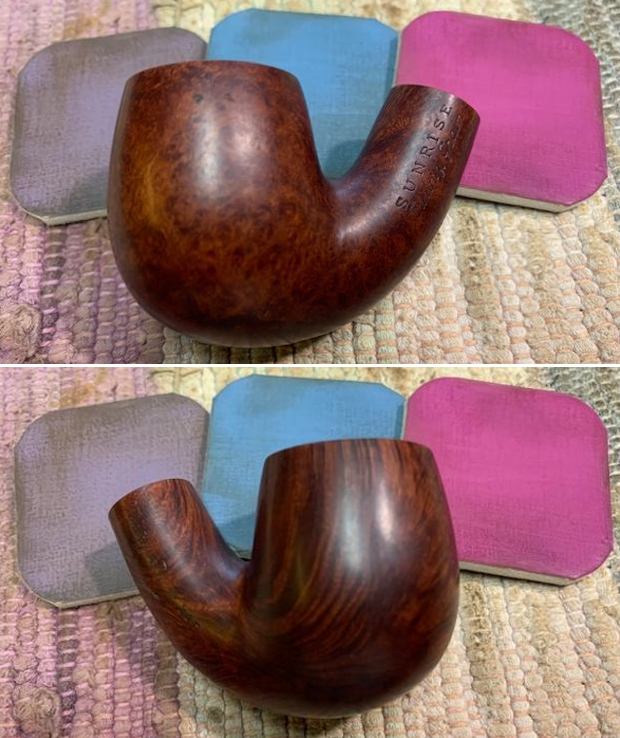
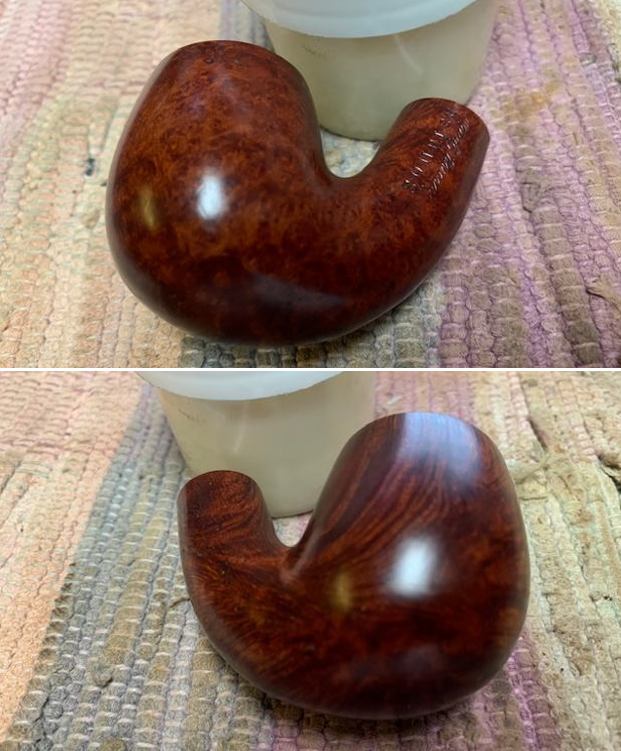
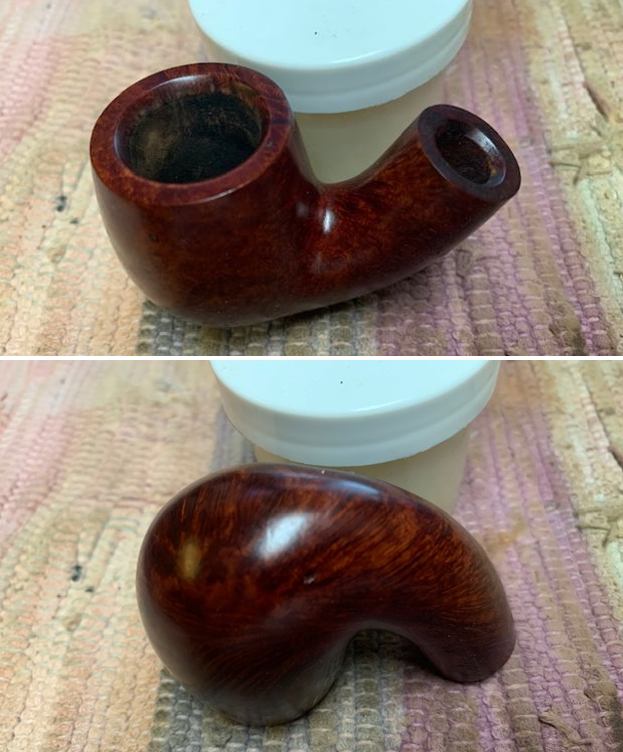
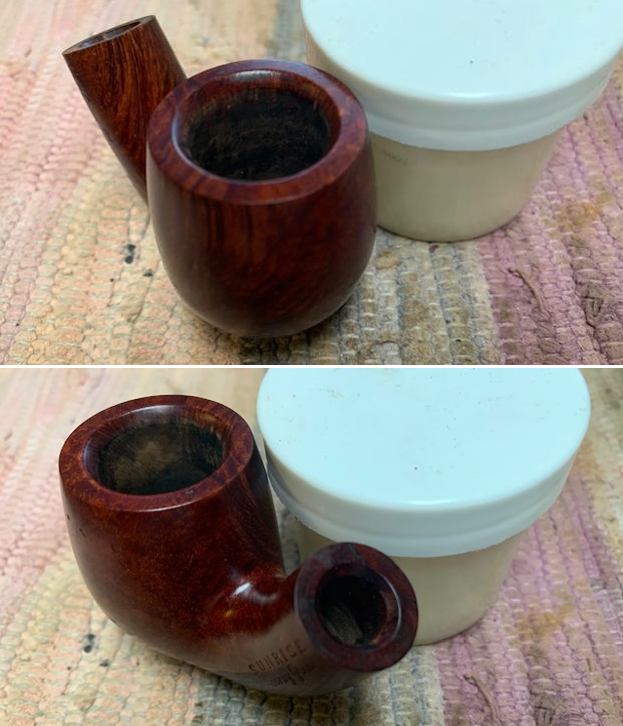
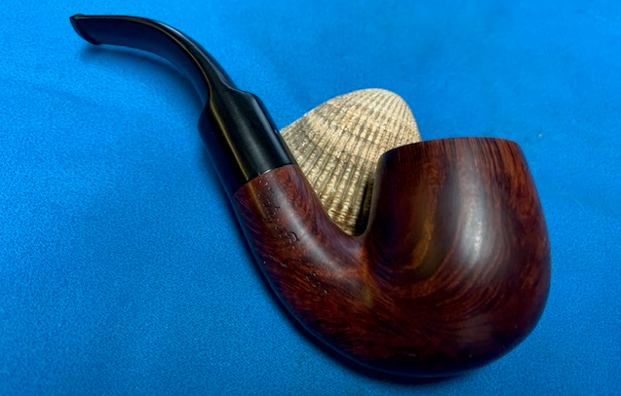
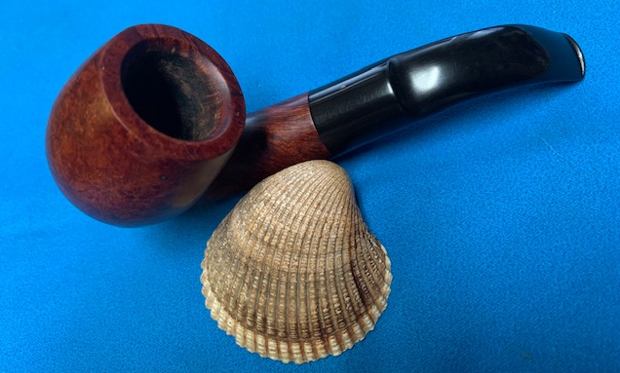
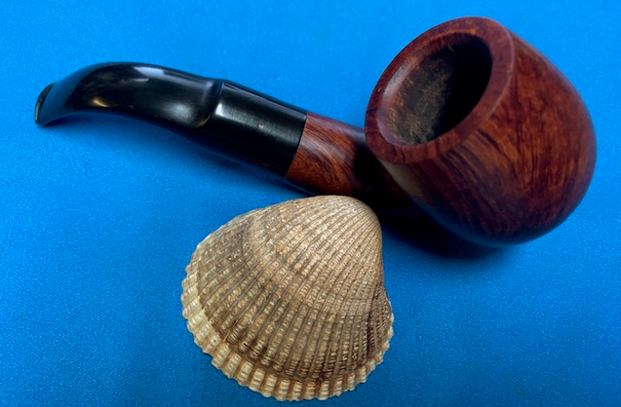
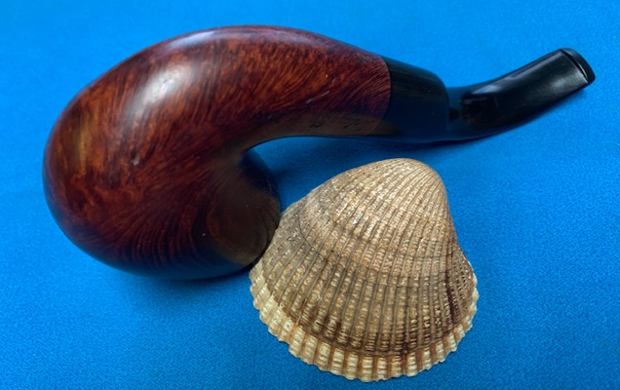
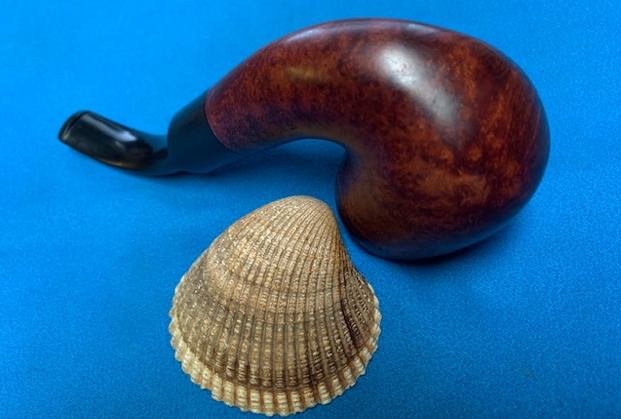
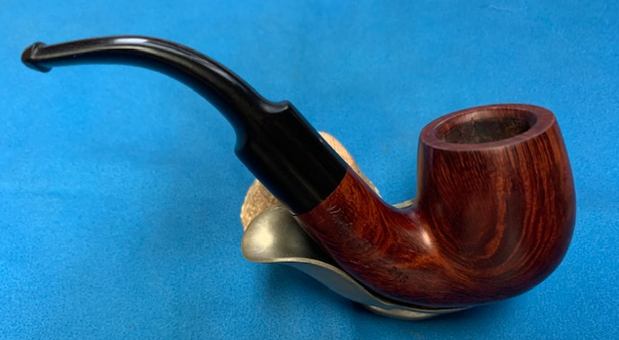
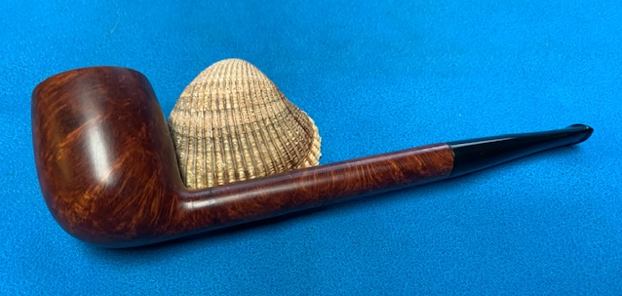
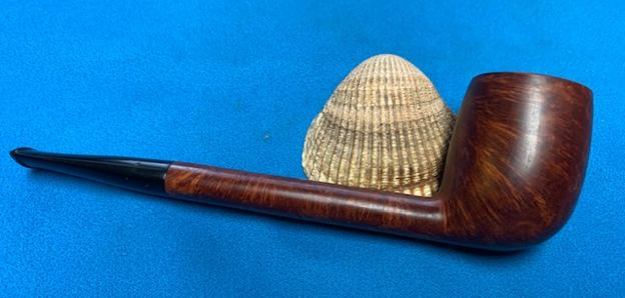
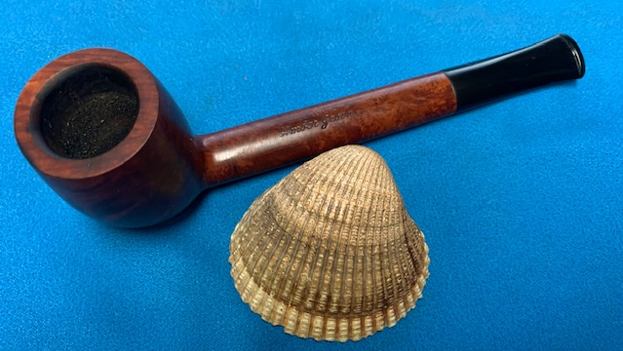
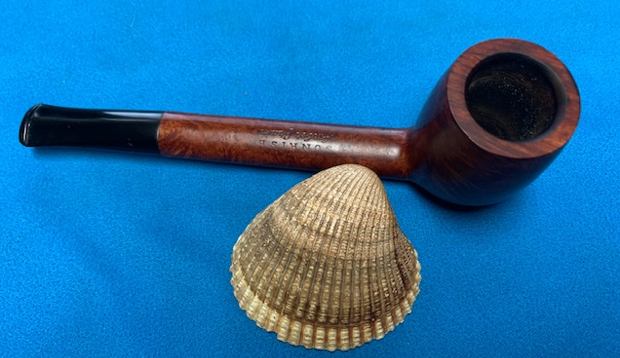
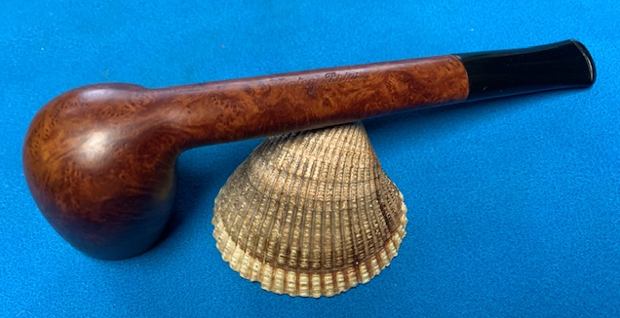
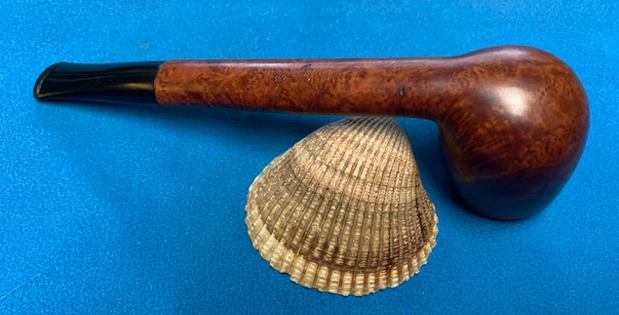
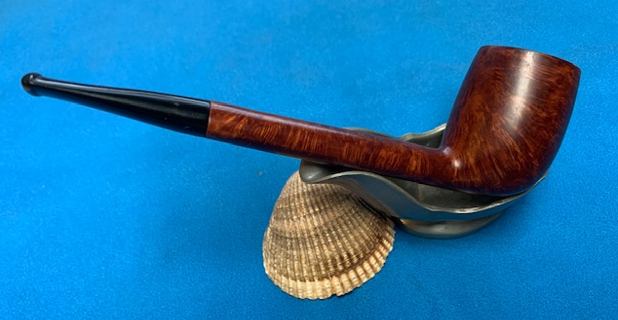
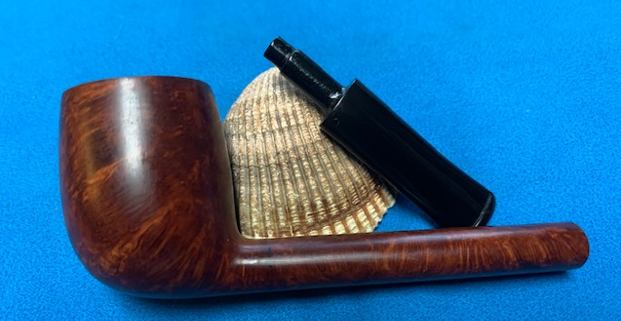
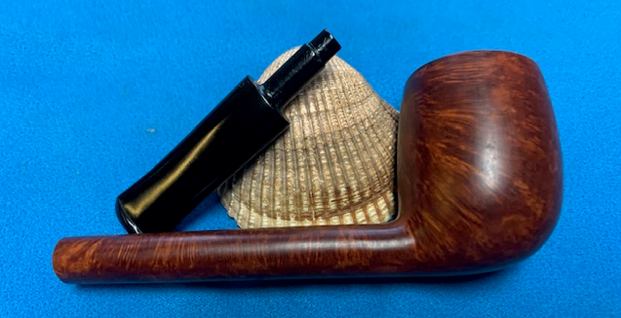
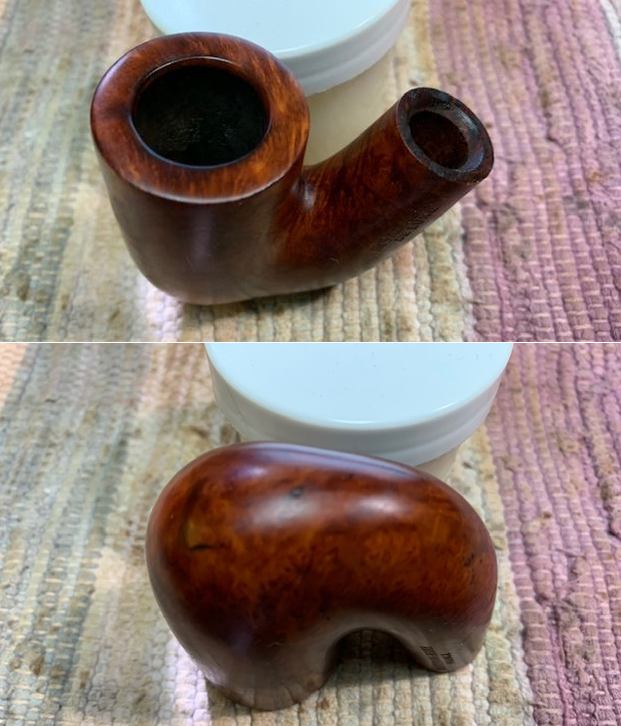
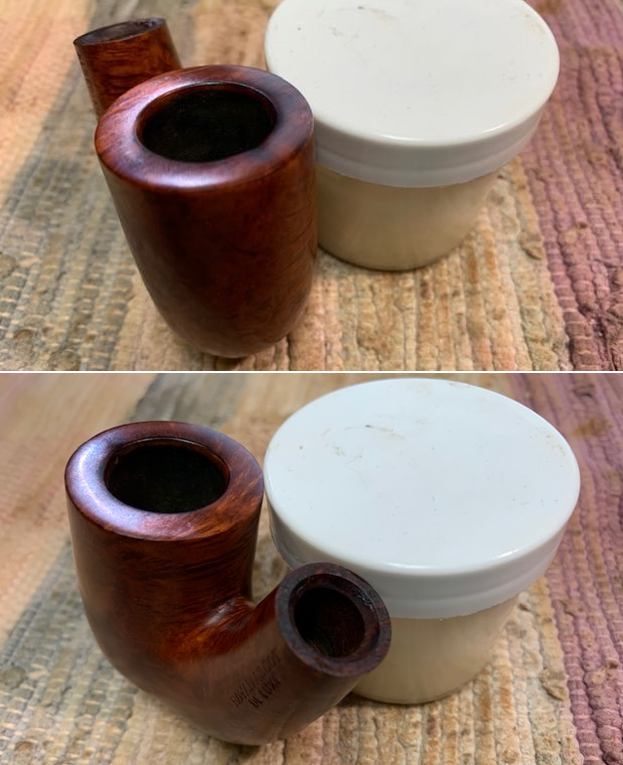
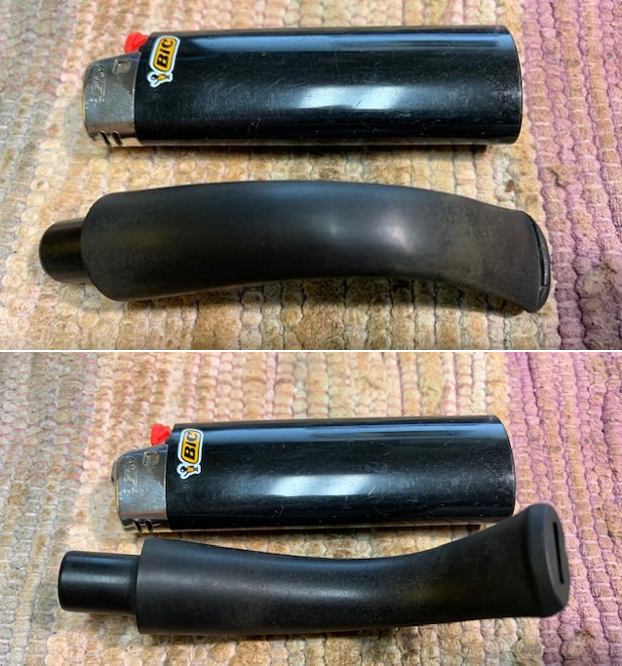
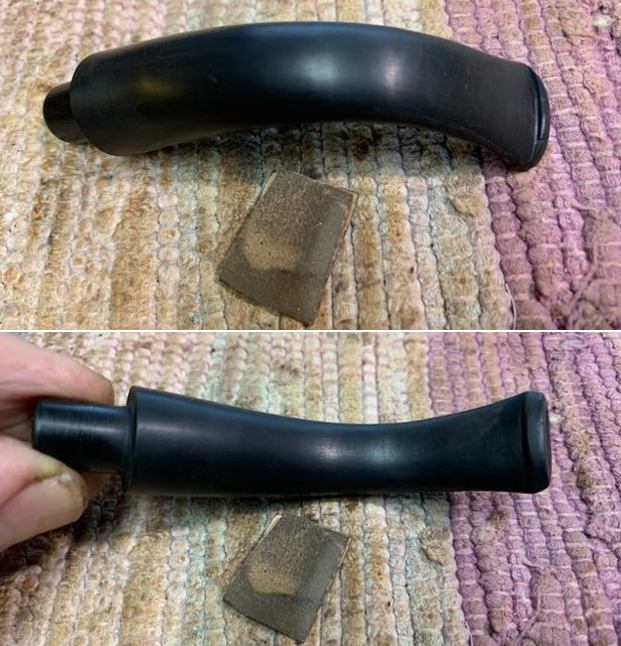
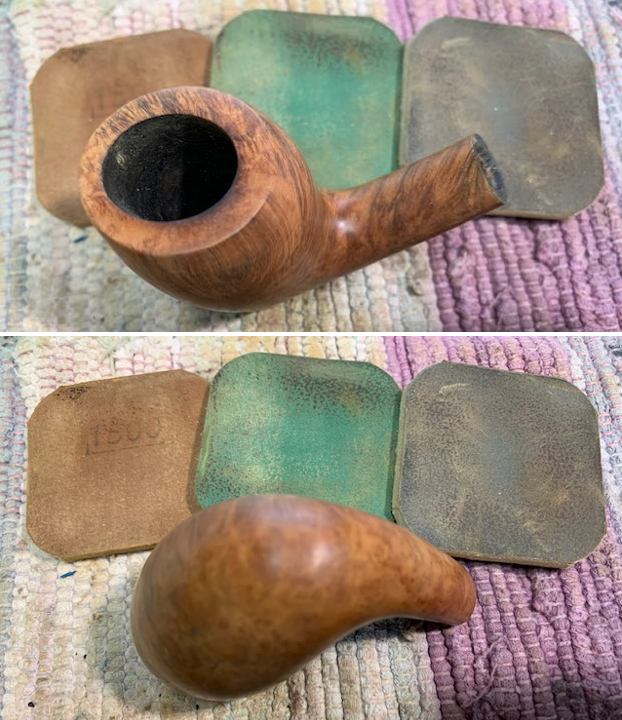
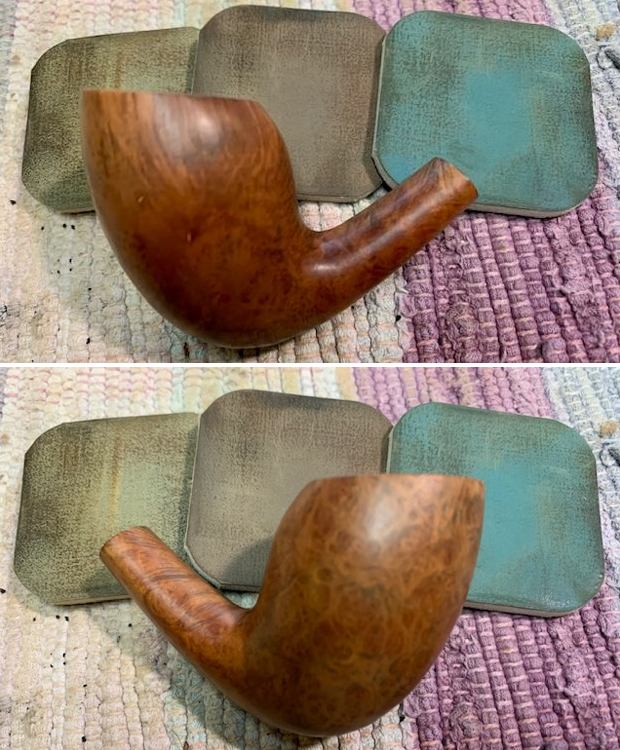
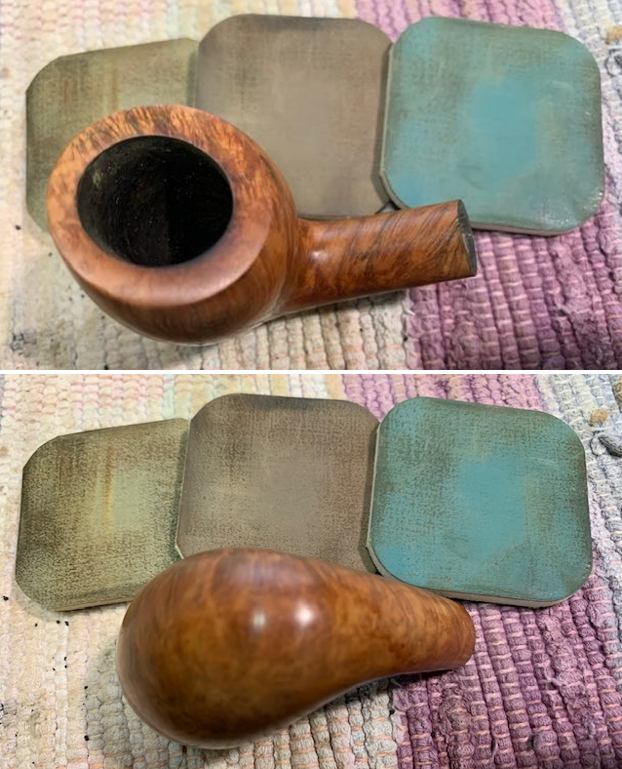
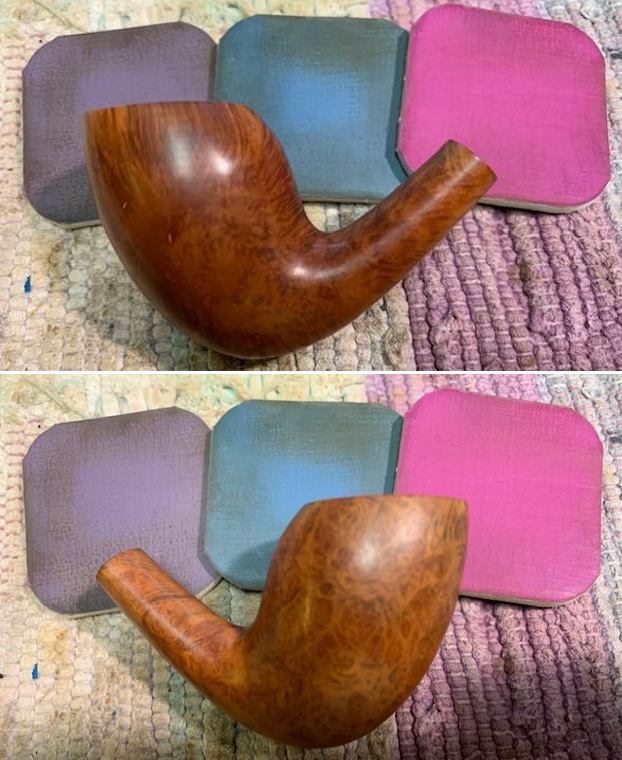
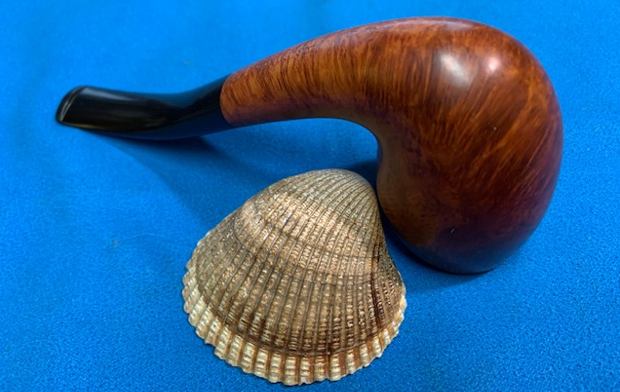
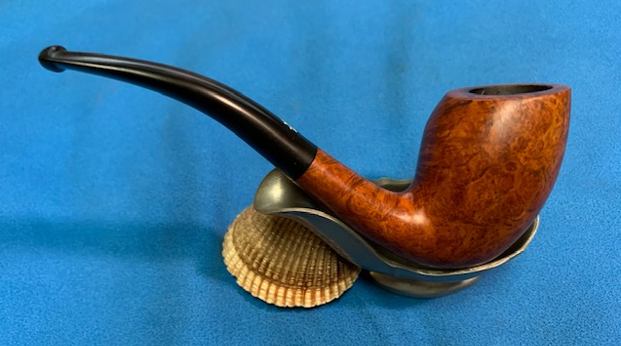
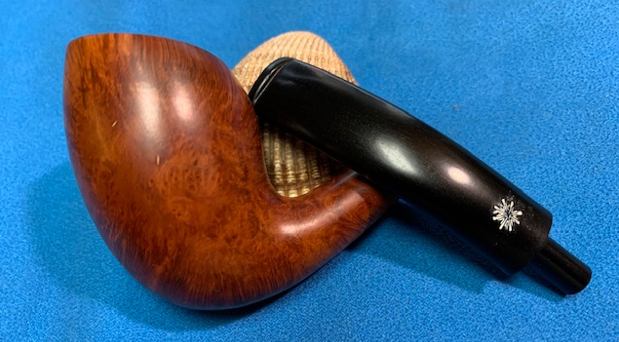
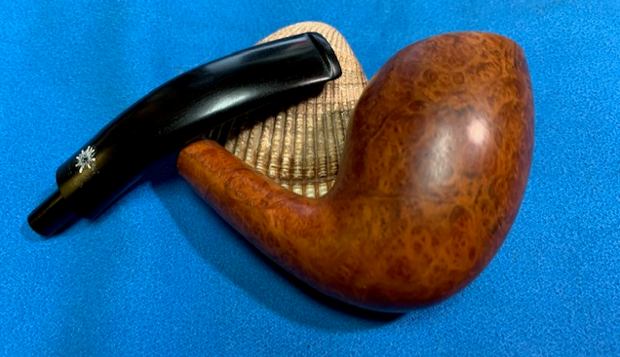
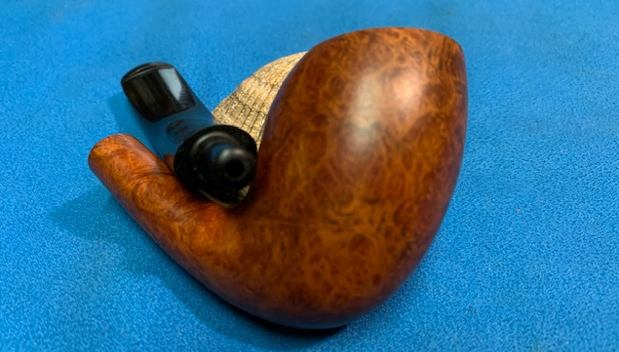
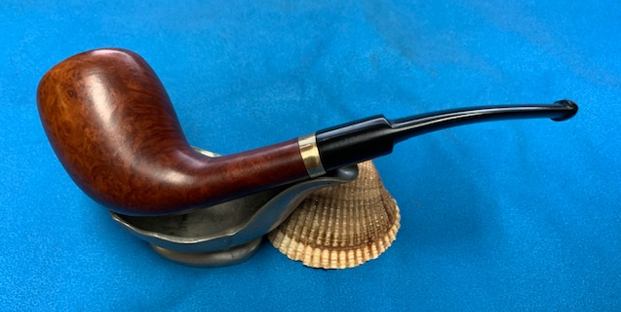
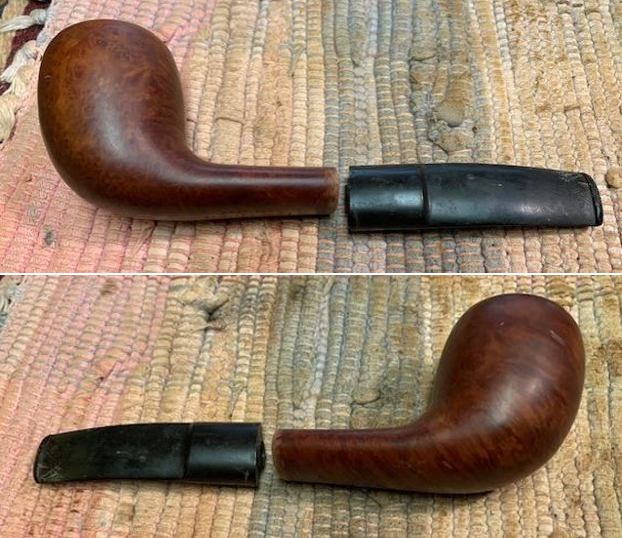
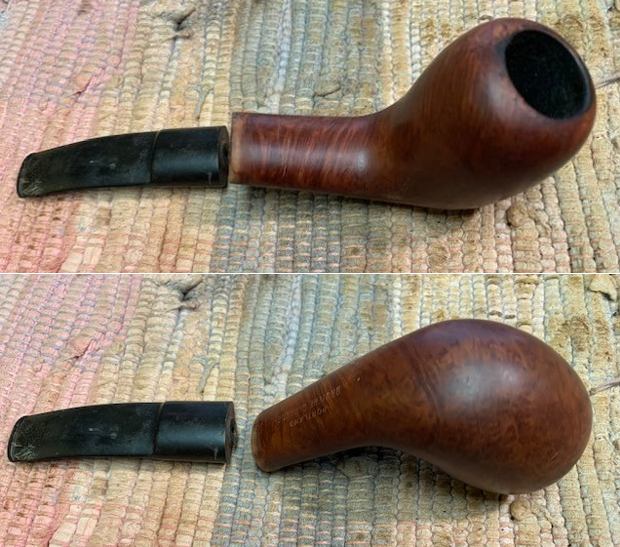
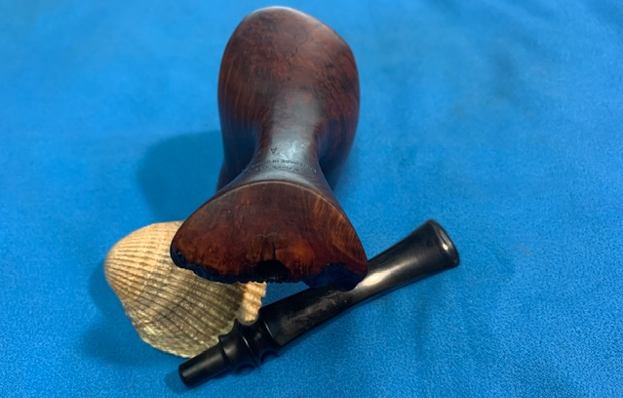
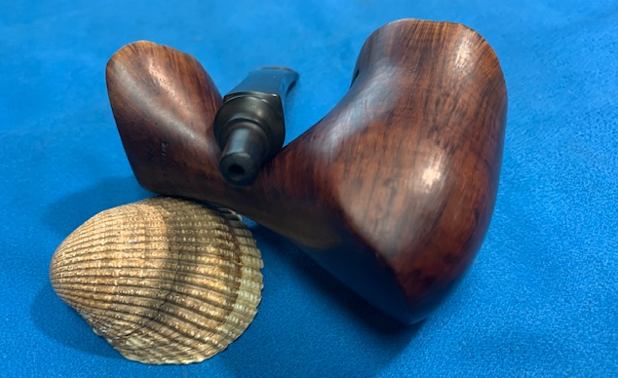
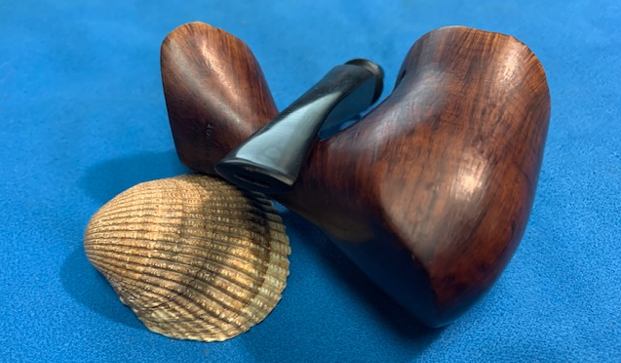
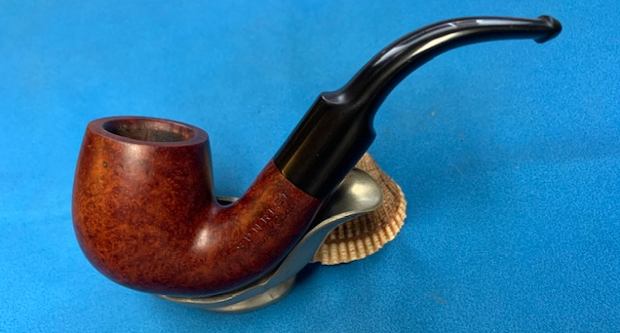
Another Gorgeous Sunrise – A Tawny Grain 215 Vintage Briar Bent Billiard


Blog by Steve Laug

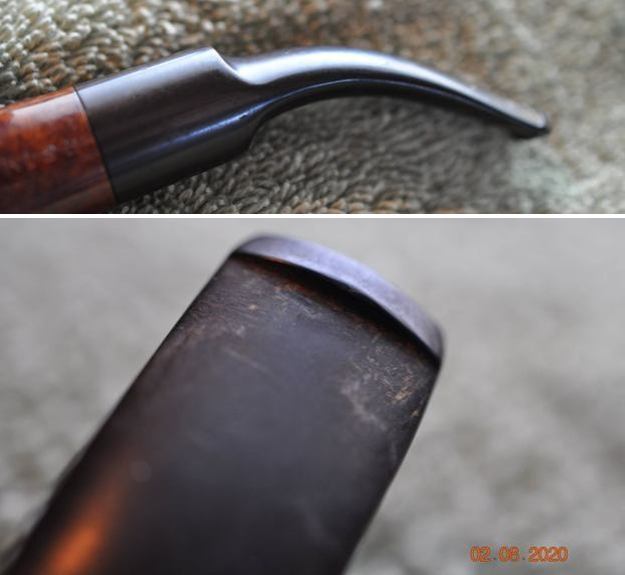
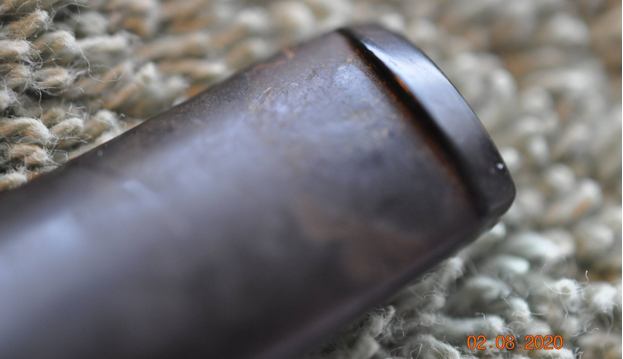
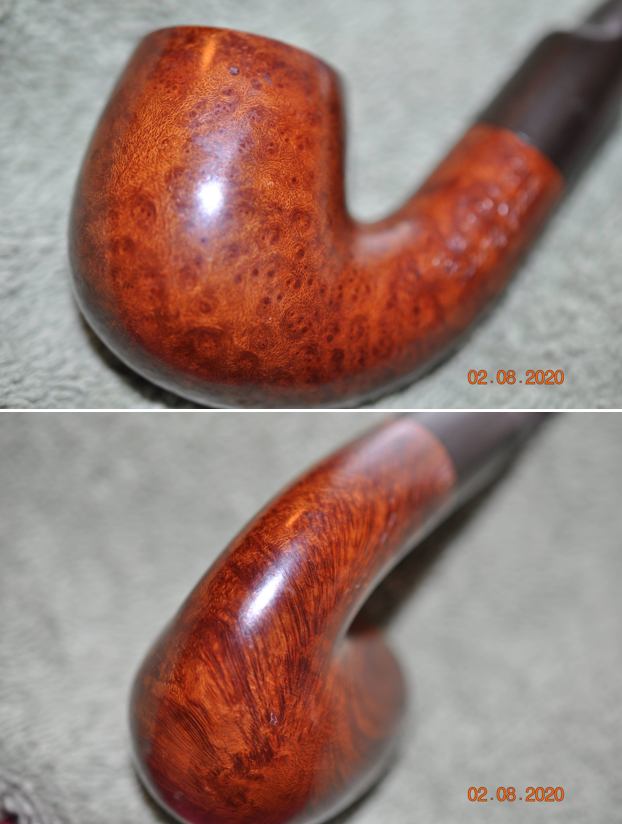
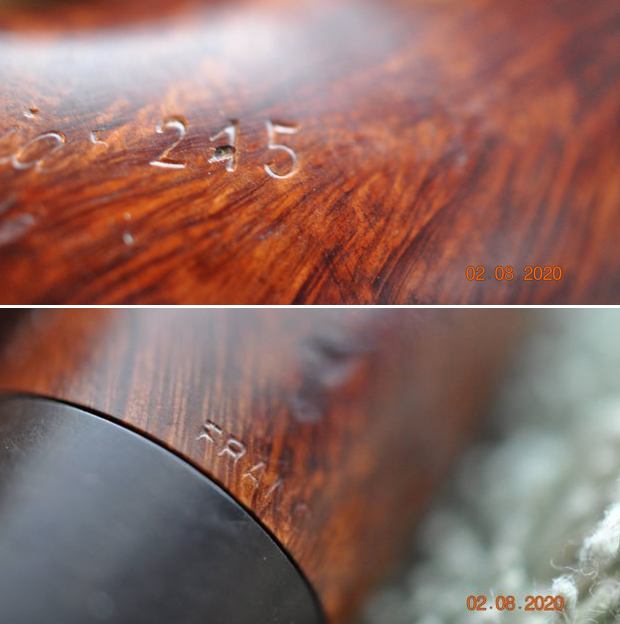
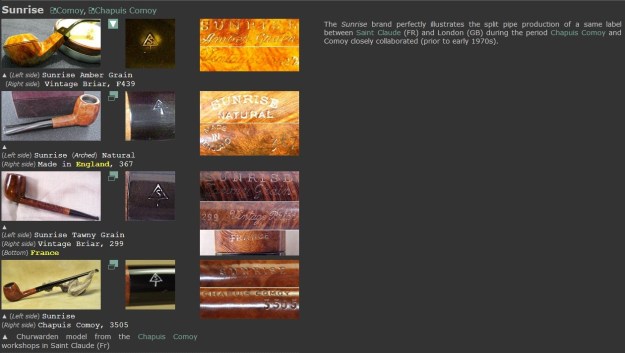
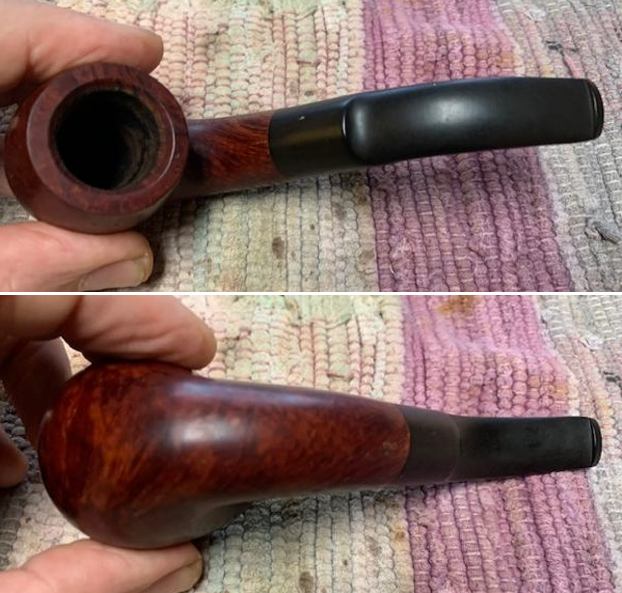
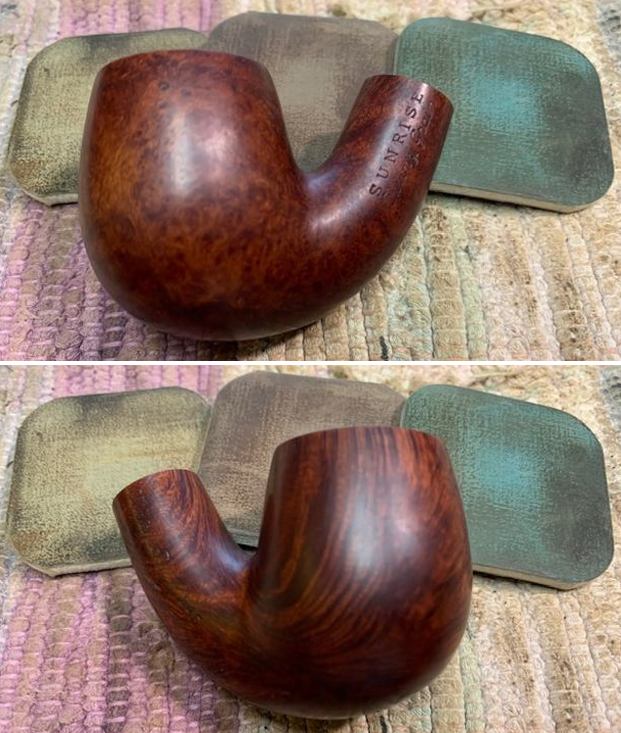
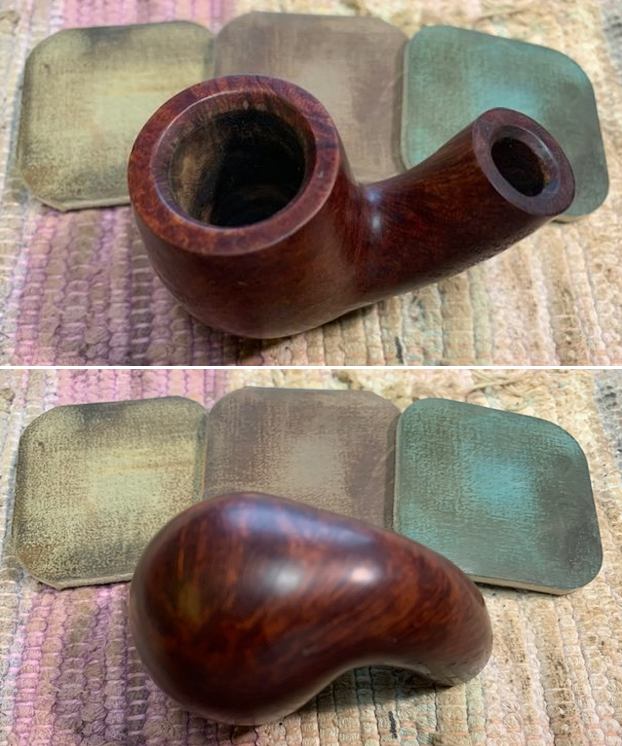
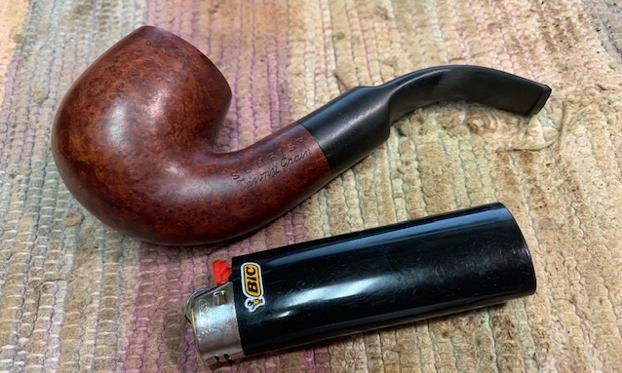
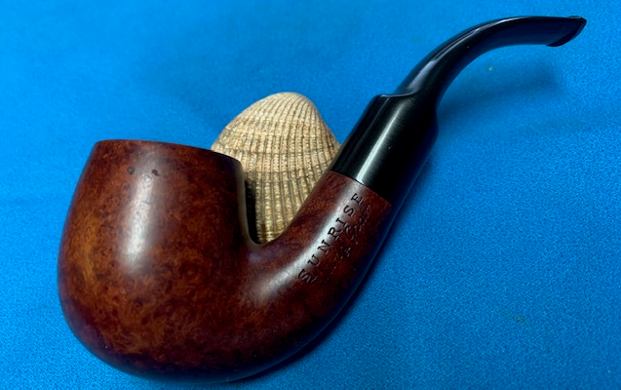
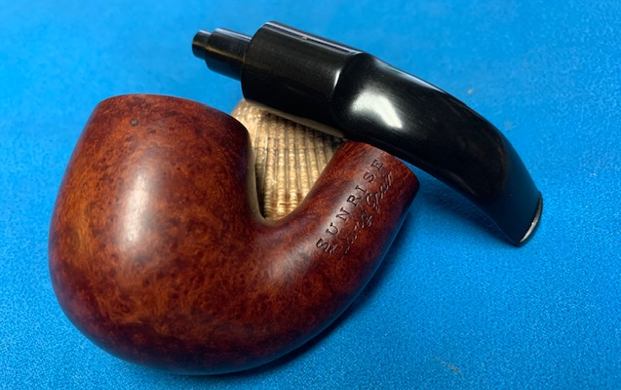
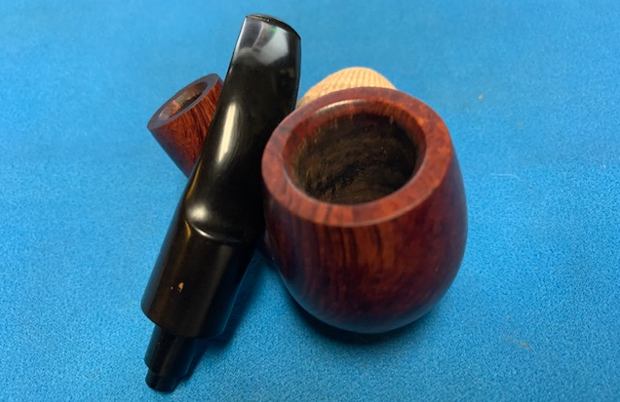
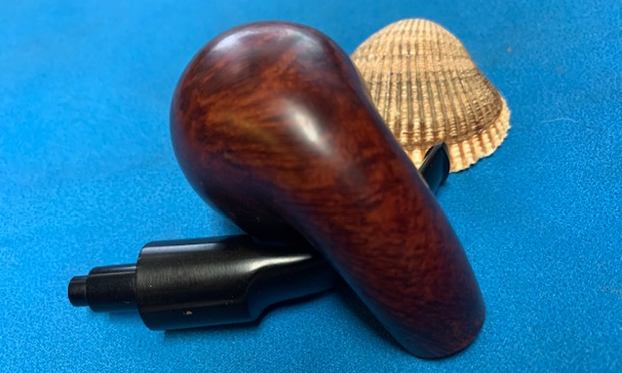
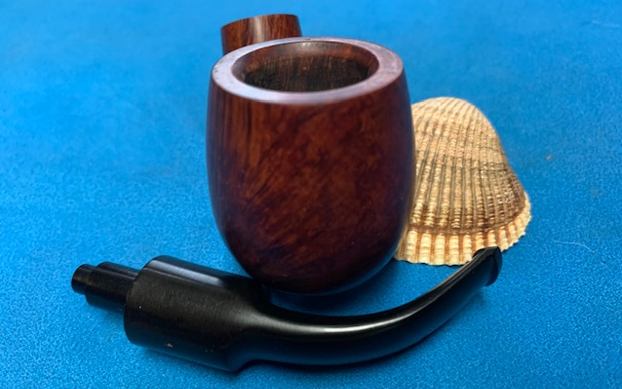
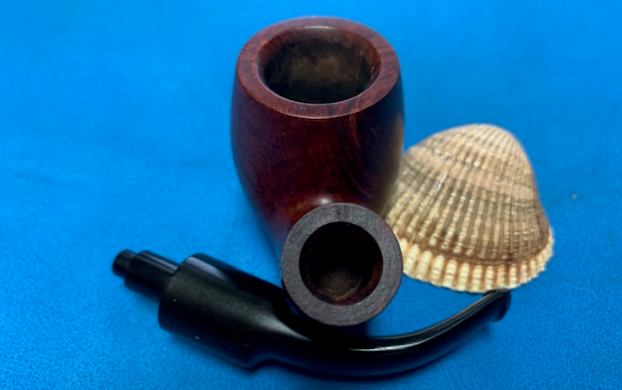
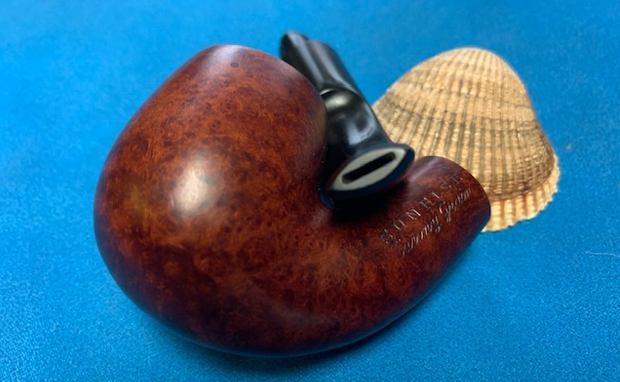
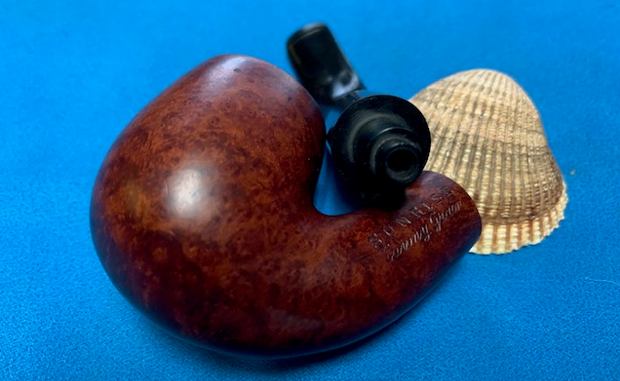
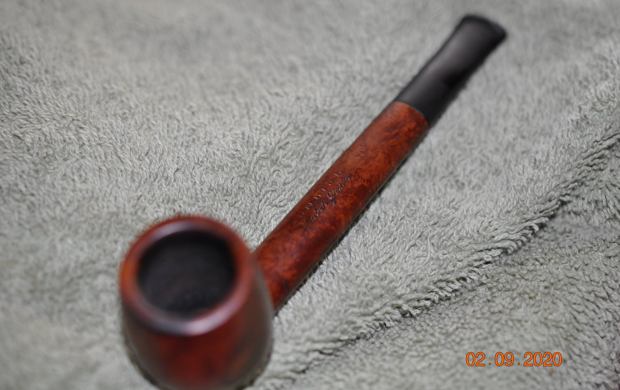
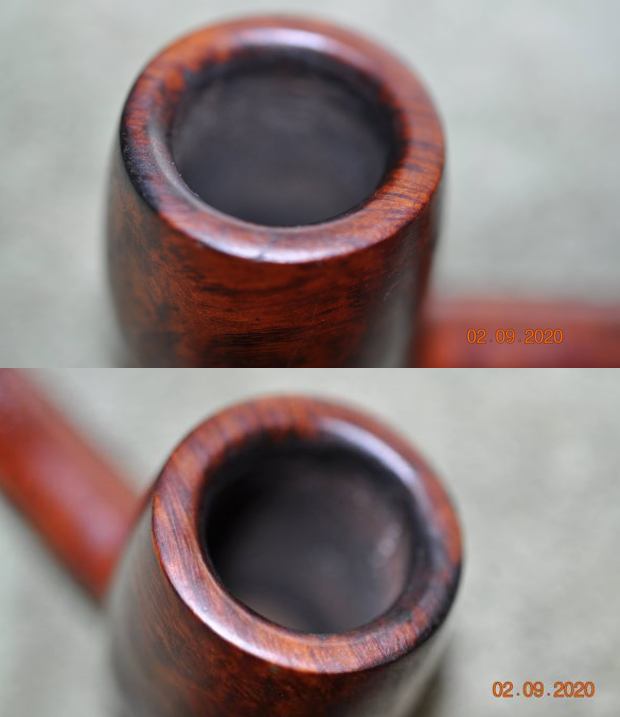
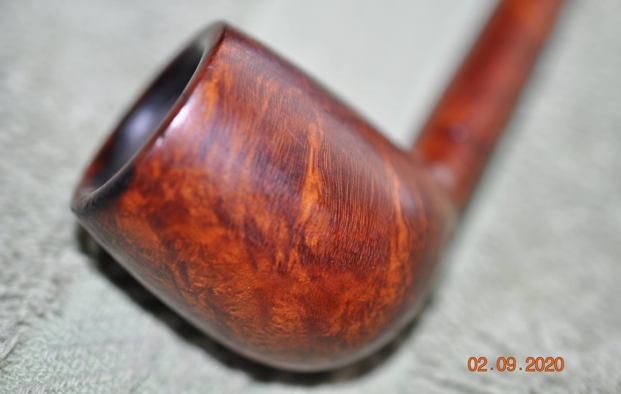
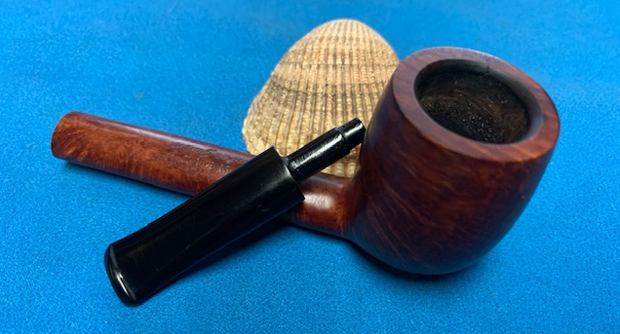
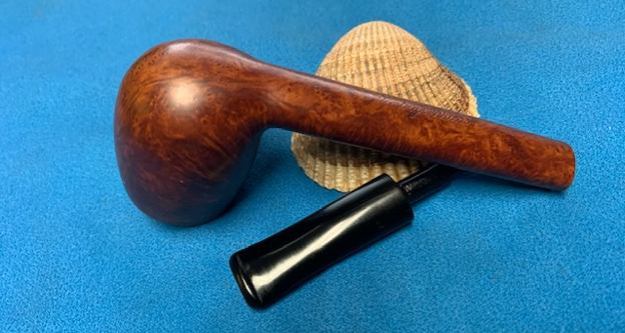
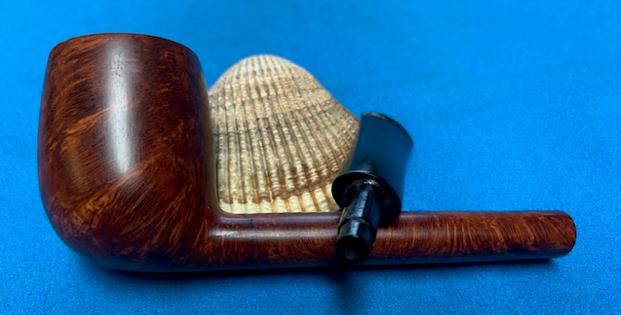
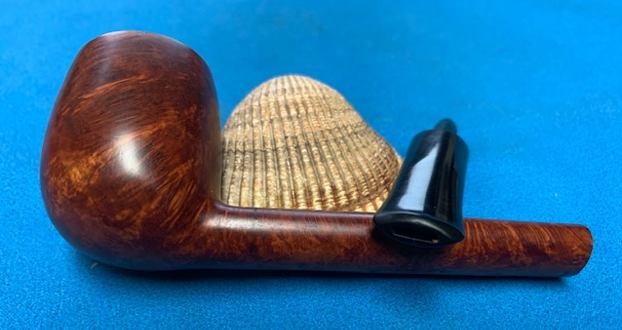
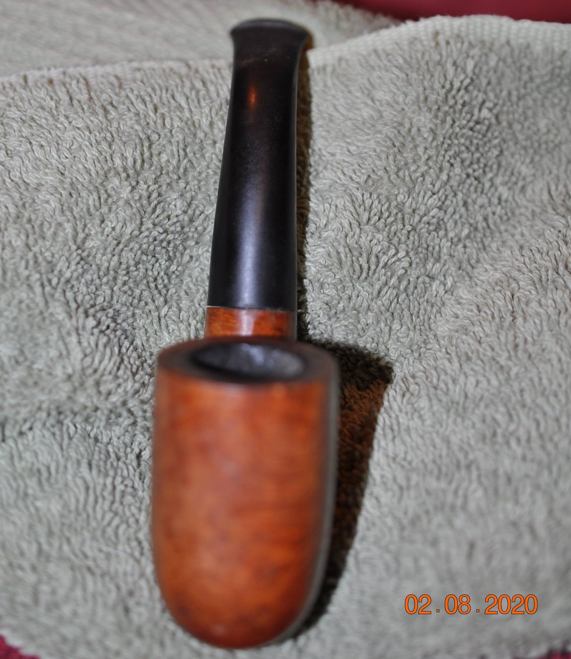
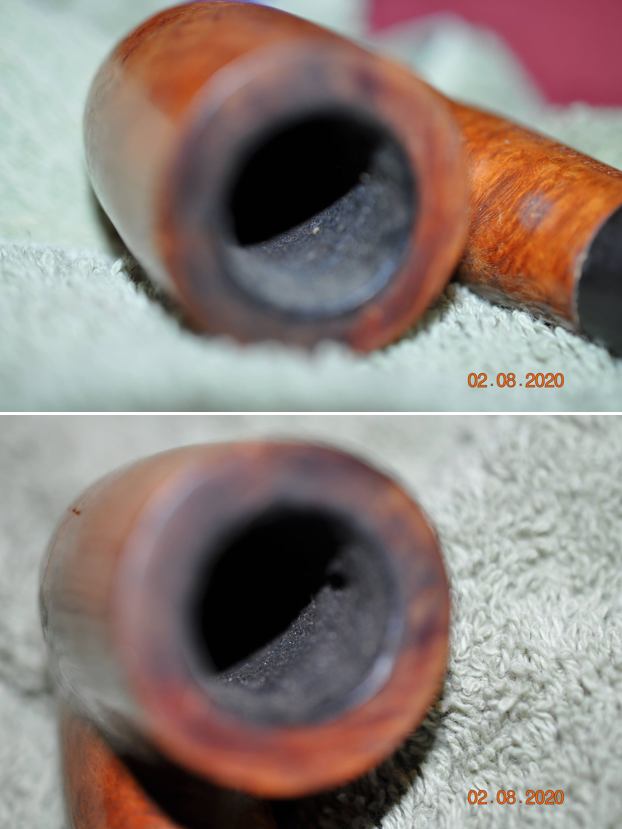
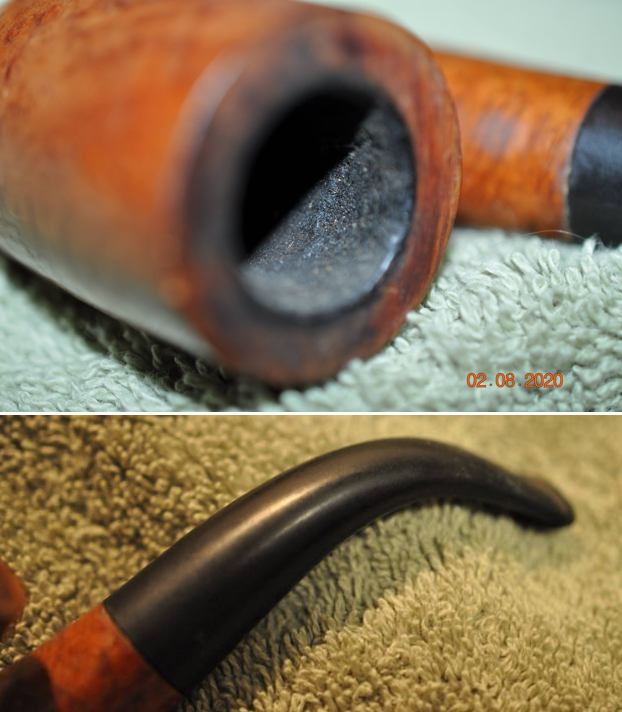
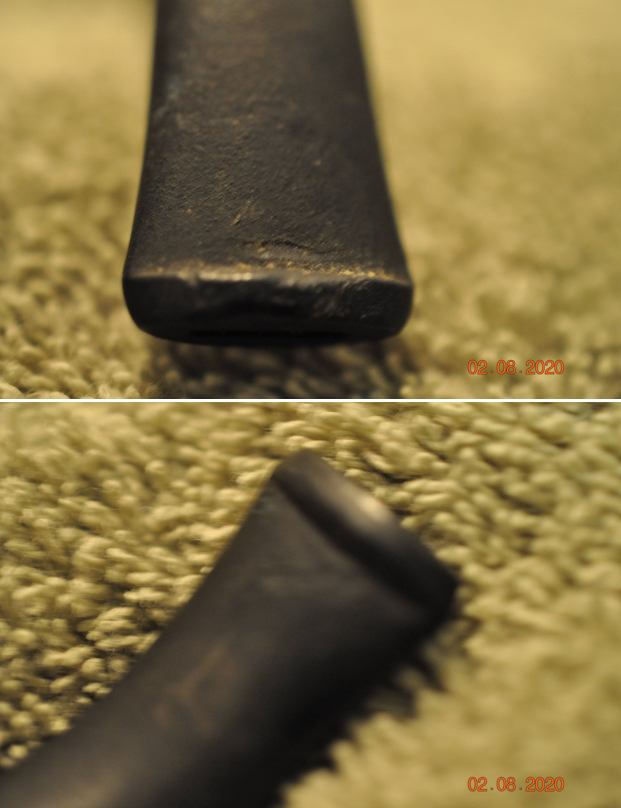
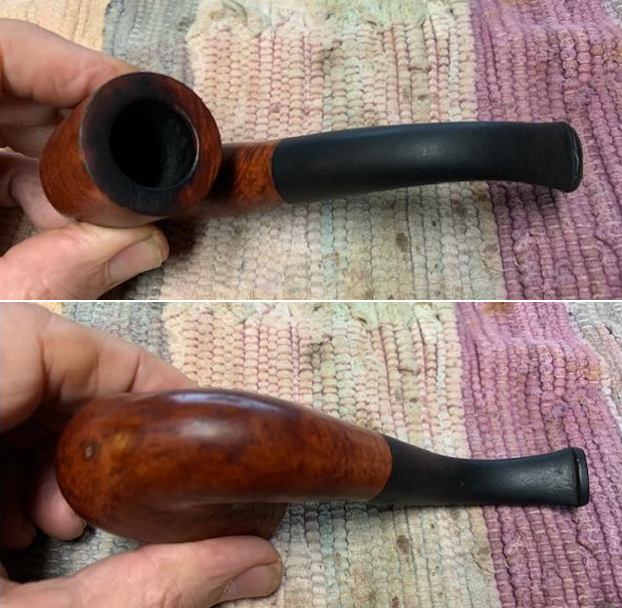
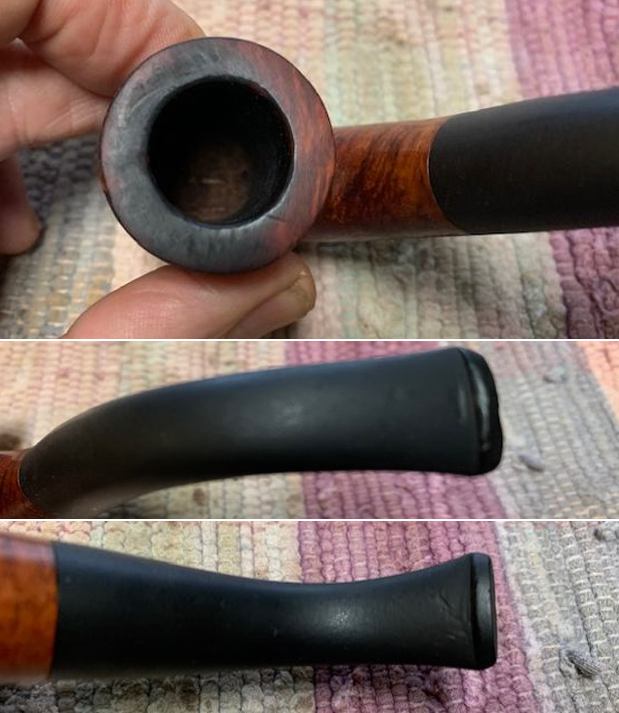
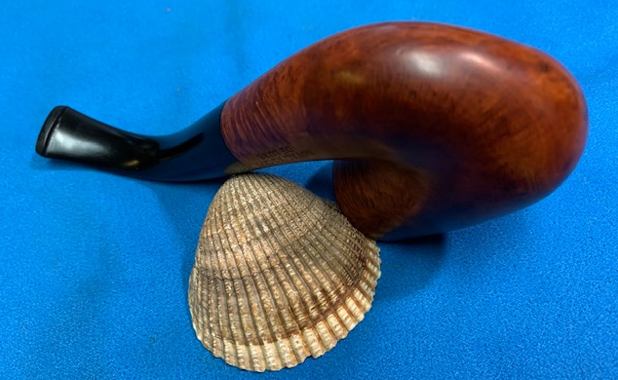
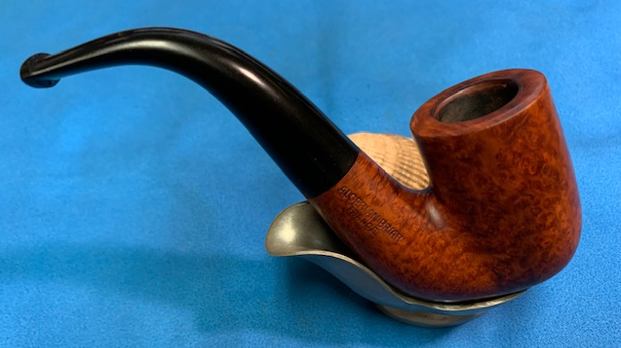
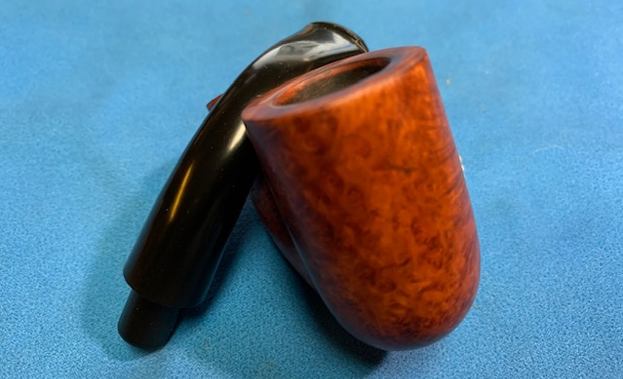
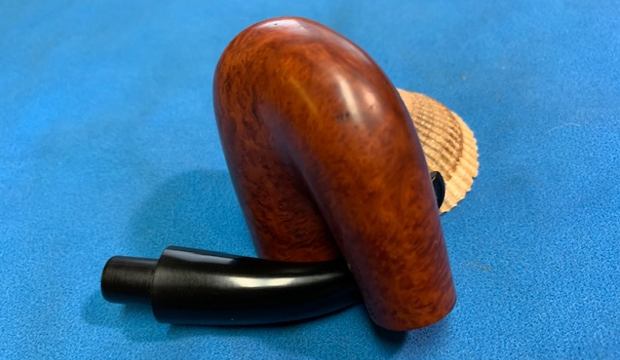
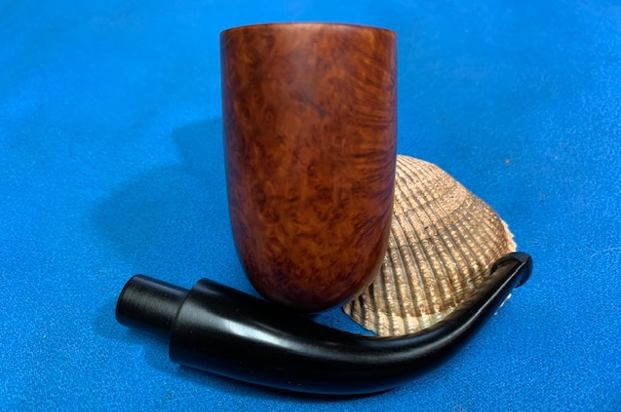
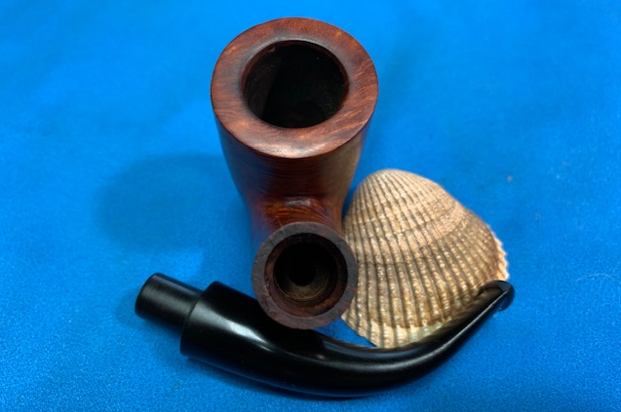
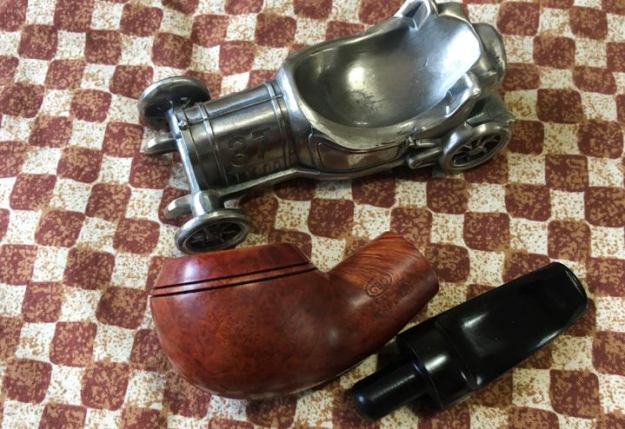
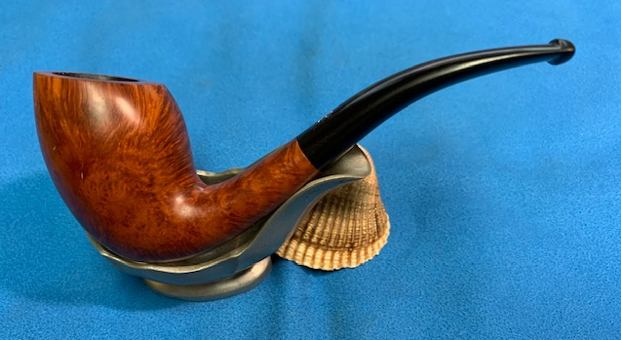
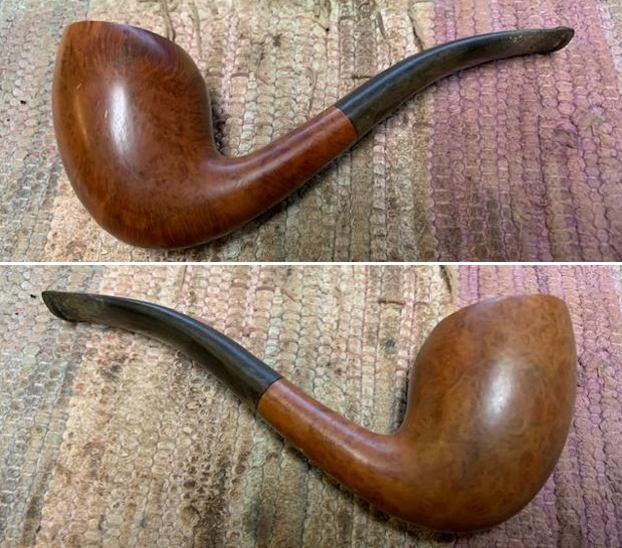
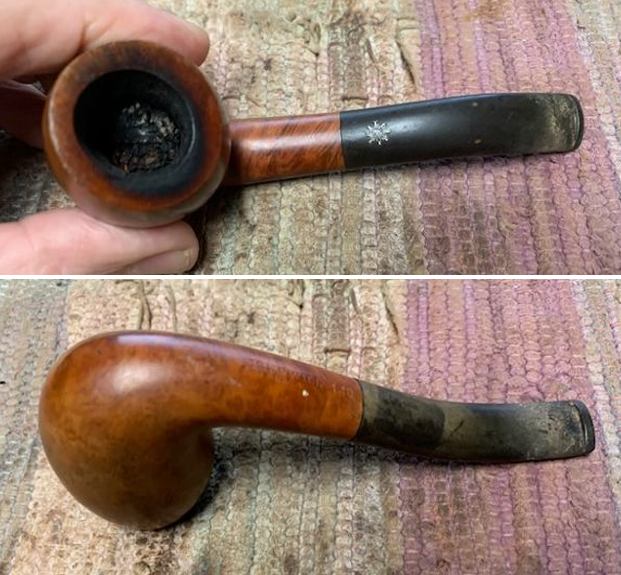
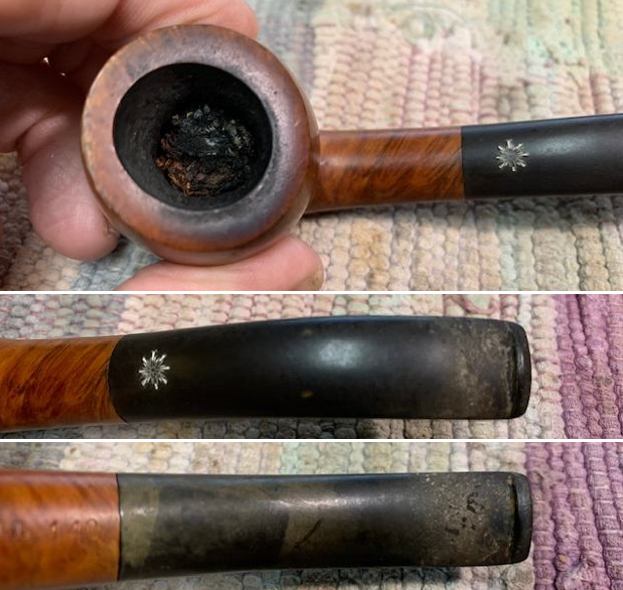
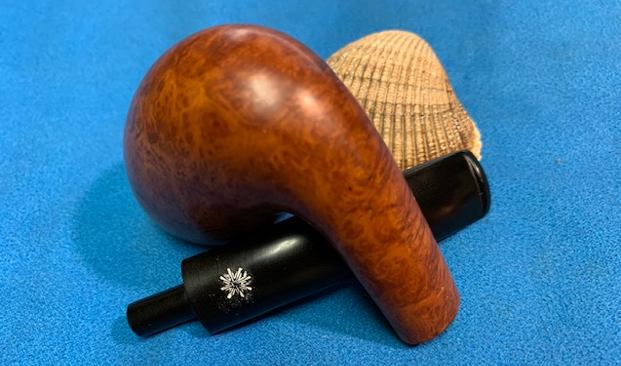
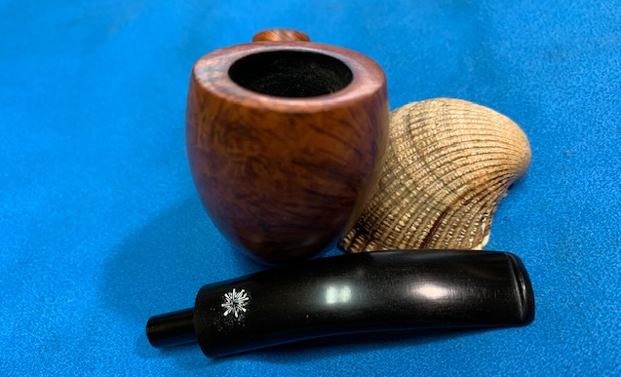
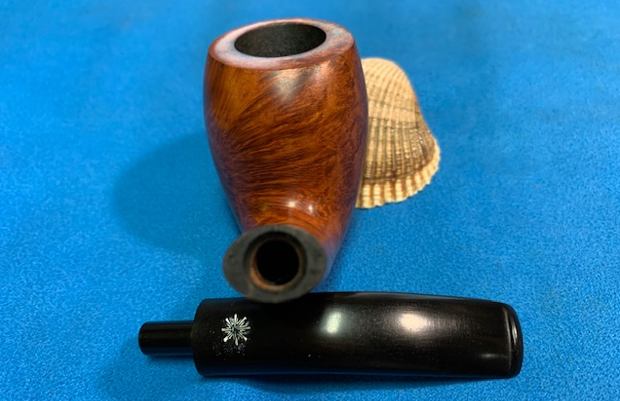
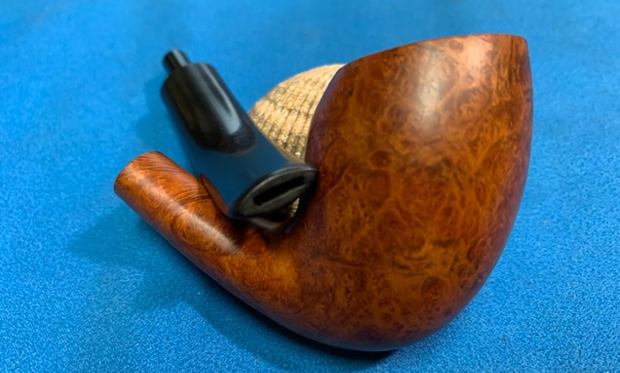
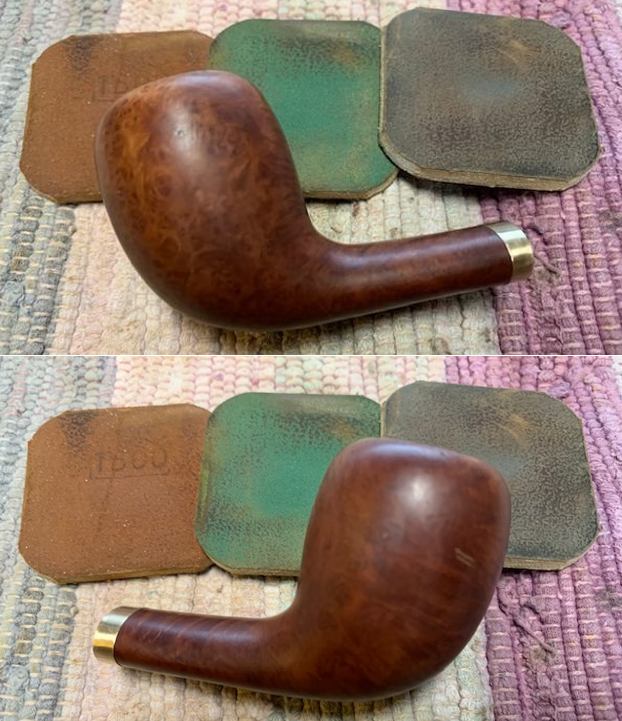
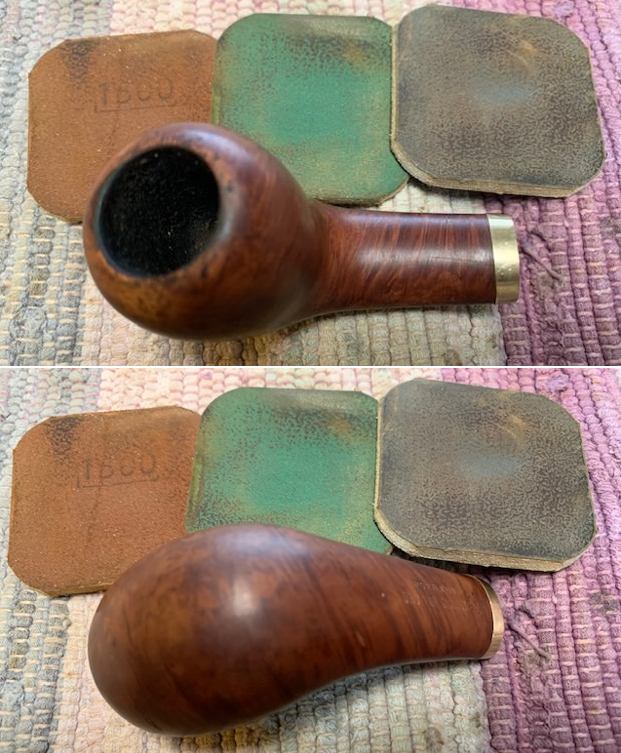
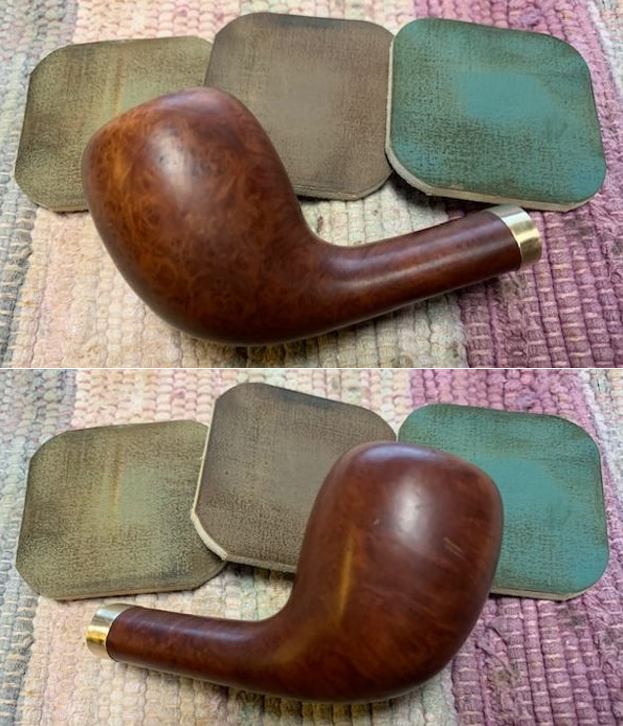
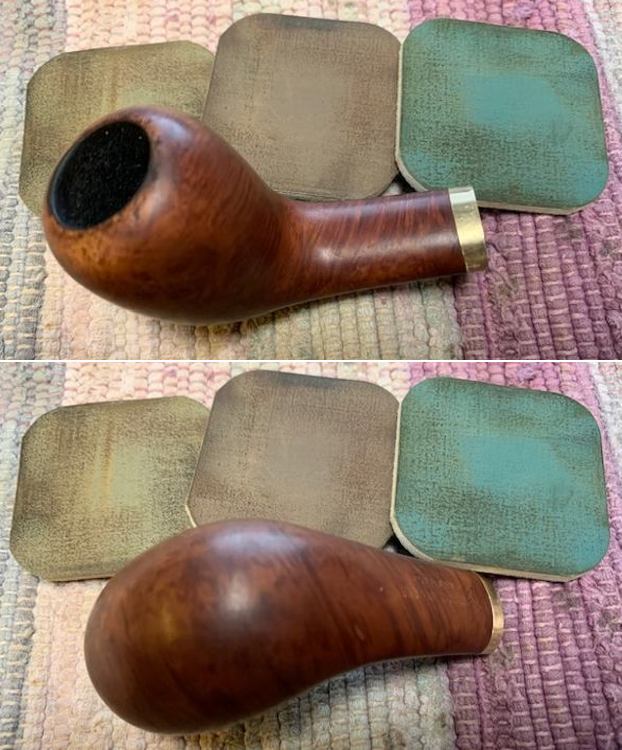
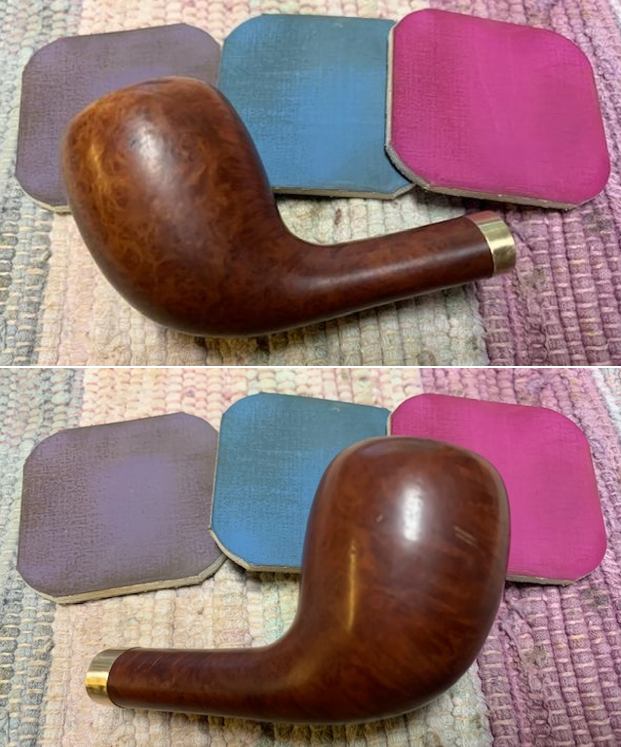
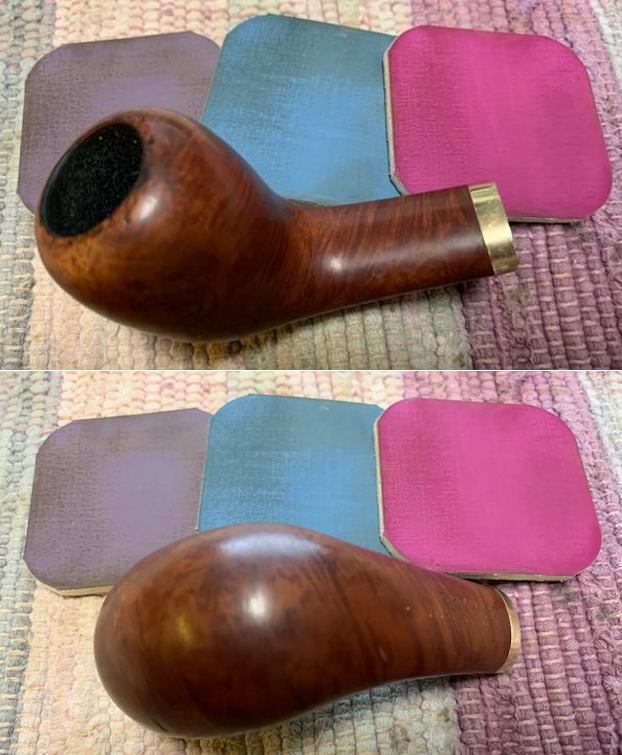
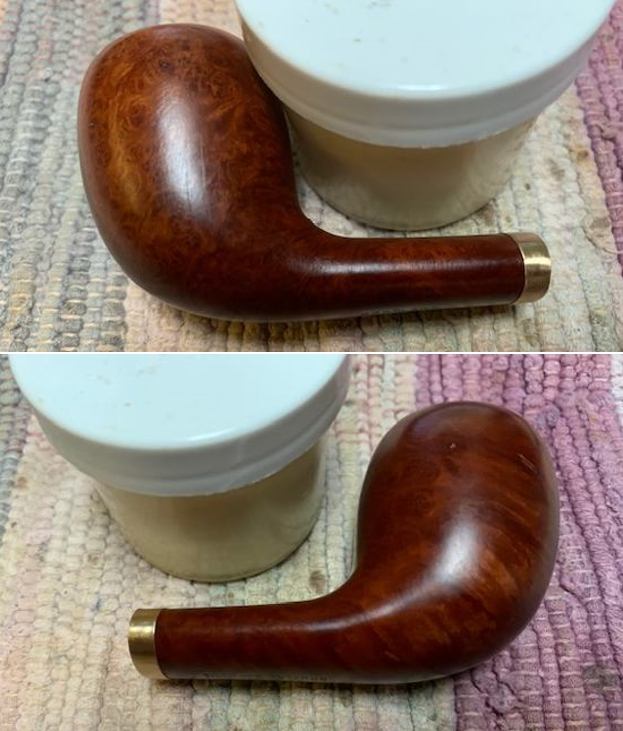
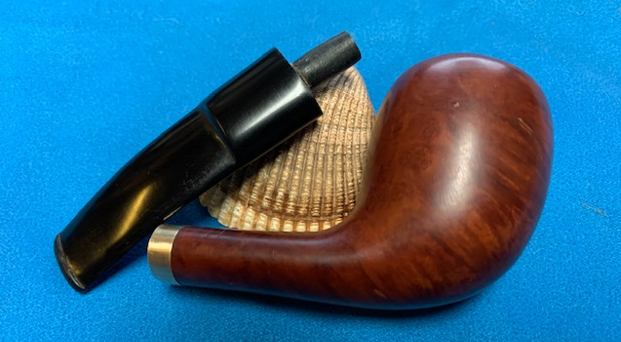
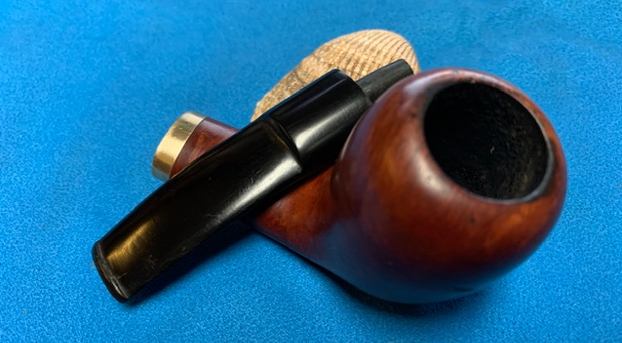
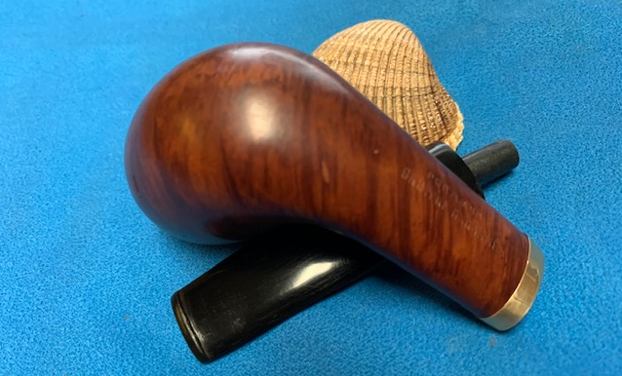
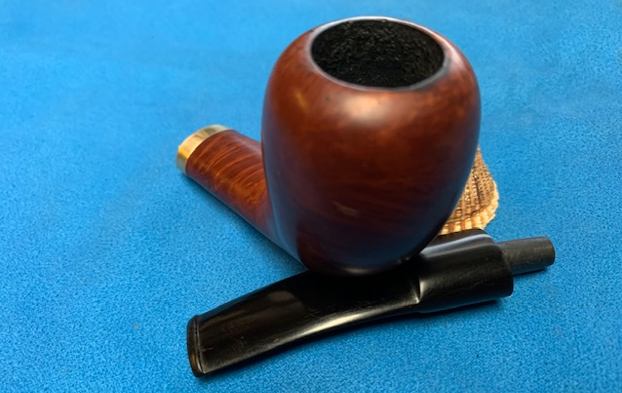
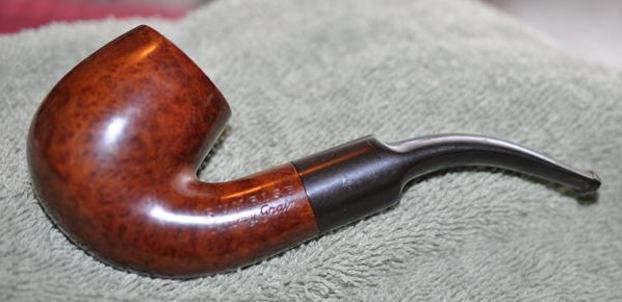
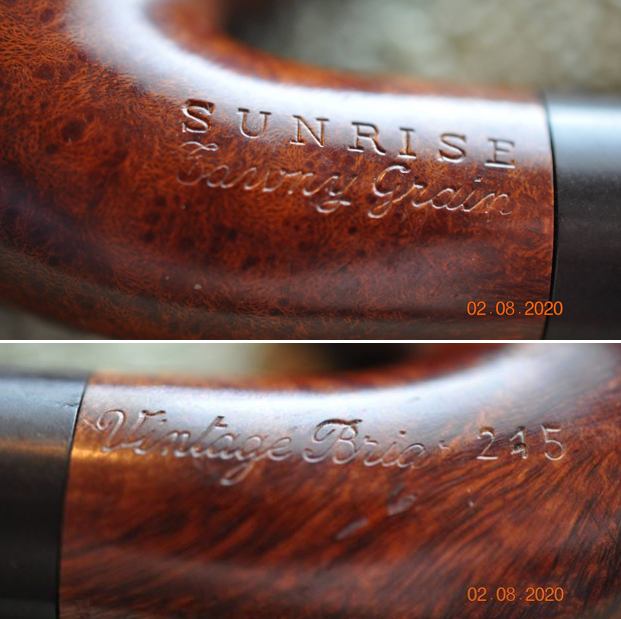
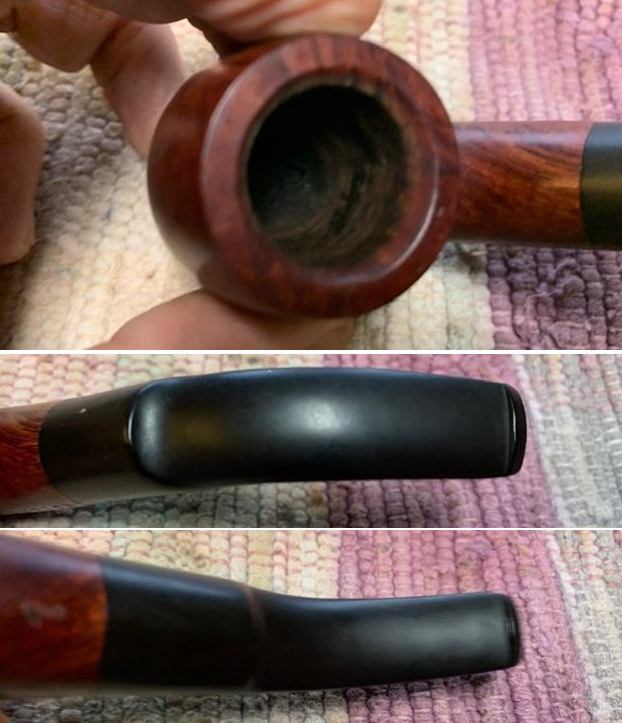
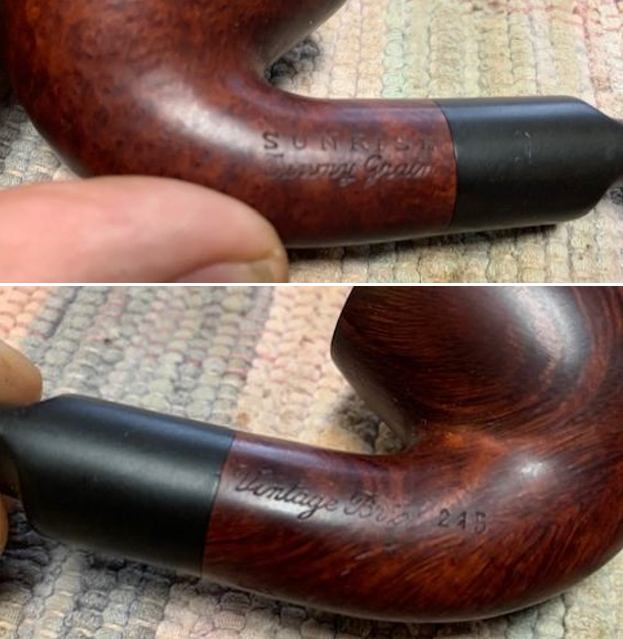
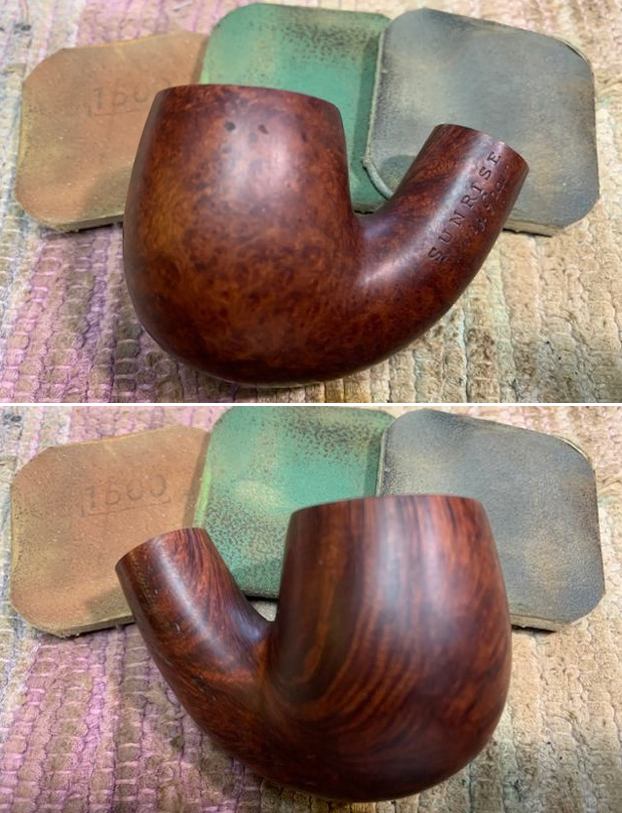
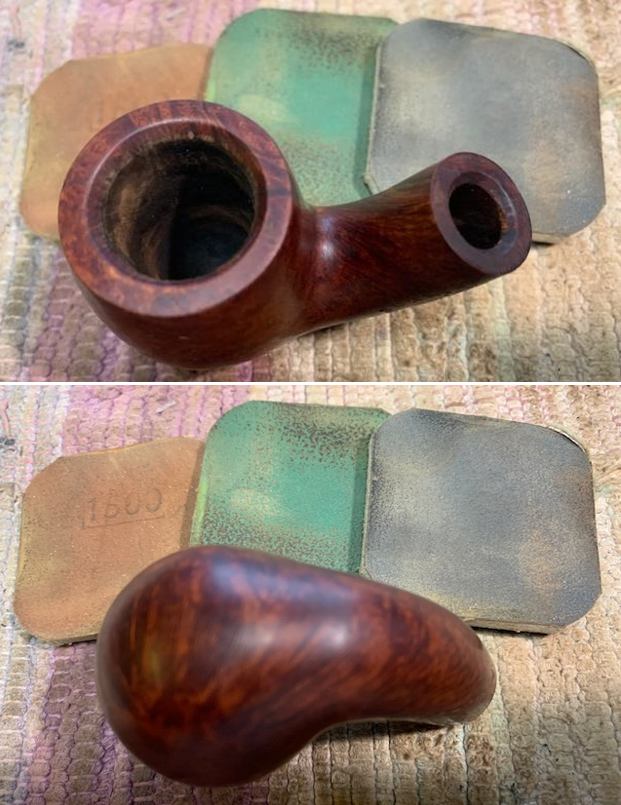
The next pipe on the work table is another one came to us from a group of pipes that Jeff and I picked up from an auction from Wilkes Barre, Pennsylvania, USA. The pipe is beautifully grained bent billiard shaped pipe with a mix of medium brown stains back in 2019. Jeff cleaned it up in 2020 and now I am finally getting to it is 2021. The pipe is stamped on the left side of the shank and reads Sunrise [over] Tawny Grain. On the right side of the shank it reads Vintage Briar followed by the shape number 215 near the bowl end. The pipe was dirty with a lot of grime ground into the bowl but the grain was still visible. The bowl was moderately caked with a light lava coat flowing onto the rim top and beveled inner edge toward the left front of the bowl. The stem was lightly oxidized and dirty with light tooth chatter and marks on the top and underside near the button. The stem had straightened slightly over time so the angle was wrong. It had promise but it was very dirty. Jeff took some photos of the pipe before he started his cleanup work. He took photos of the rim top and bowl to give a clear picture of the thickness of the cake and well as the lava and darkening on the front side of the rim top and inner edge. He also took photos of the top and underside of the stem to show the light oxidation and the chatter and tooth marks. Jeff took a photo the sides and heel of the bowl to give a picture of the beautiful grain around the bowl and shank.  The stamping on the sides of the shank is clear and readable and read as noted above. The Sunrise pipe was a Comoy’s made pipe and the France stamp on the shank pointed me to the connection between London and St. Claude (England/France). I turned to Pipephil’s site (http://www.pipephil.eu/logos/en/logo-s13.html) to get some background information on this beauty. I have included a screen capture of the pertinent section. The third pipe listed bears the same stamping as the one I am working on – Sunrise Tawny Grain.The side bar includes this interesting piece of information. I quote:
The Sunrise brand perfectly illustrates the split pipe production of a same label between Saint Claude (FR) and London (GB) during the period Chapuis Comoy and Comoy closely collaborated (prior to early 1970s).

I turned to Pipedia and looked under the French makers and the brand was not listed. Under the English makers it was listed as a Comoy’s Sub-brand or second. I turned to the Comoy’s listing and at the bottom of the article was a list of these pipes (https://pipedia.org/wiki/Comoy%27s). I have included the list in its entirety and highlighted the Sunrise in red.

Seconds made by Comoy’s

Ace of spades, Ancestor, Astor, Ayres, Britannia, Carlyle, Charles Cross, Claridge, Coronet?, Cromwell, Dorchester, Dunbar, Drury Lane, Emerson, Everyman, Festival of Britain, Golden Arrow, Grand Master, Gresham, Guildhall, Hamilton (according to Who Made That Pipe), Kingsway, Lion’s Head, Lord Clive, Lumberman, Hyde Park, Lloyds, Mc Gahey, Moorgate, Newcastle, Oxford, O’Gorman, Rosebery Extra, Royal Falcon, Royal Guard, Royal Lane, Scotland Yard, St James, Sunrise, Super Sports, Sussex, The Academy Award, The Golden Arrow, The Mansion House, The Exmoor Pipe, Throgmorton, Tinder Box Royal Coachman, Townhall, Trident, Trocadero, Westminster, Wilshire

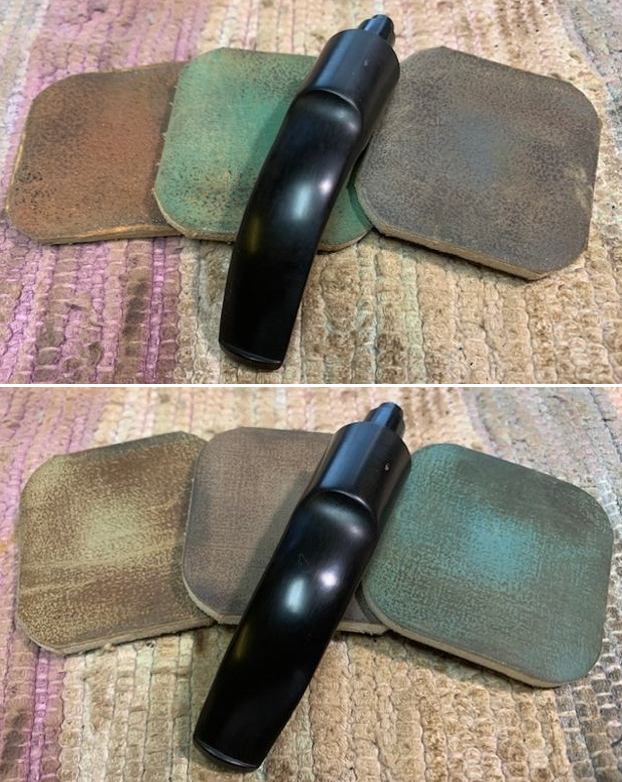
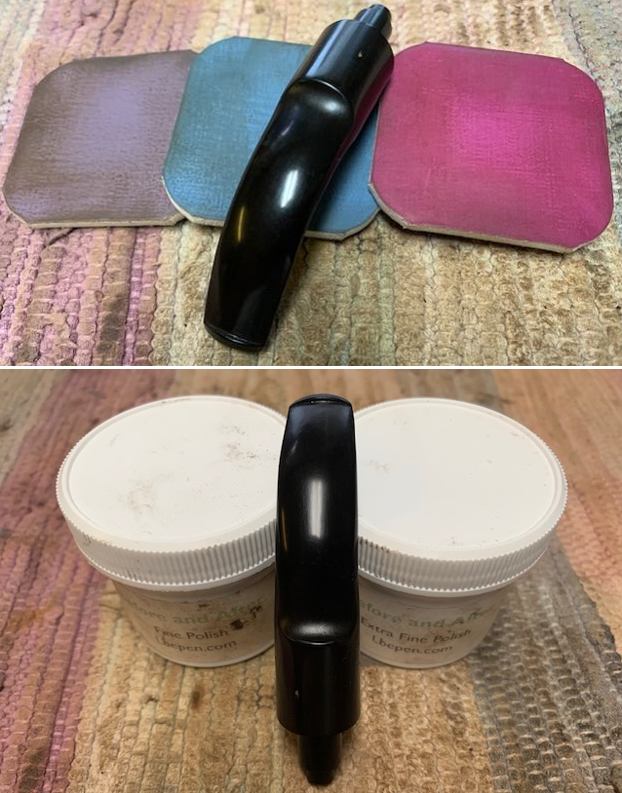
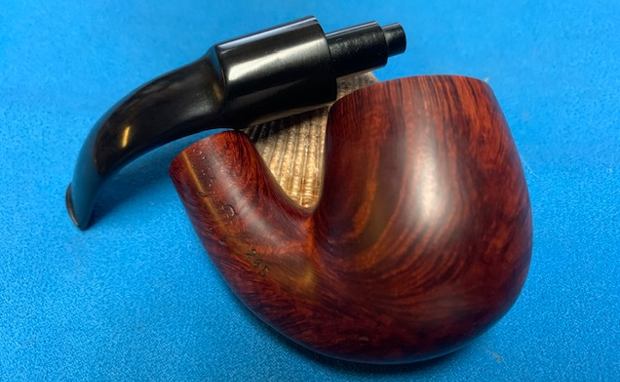
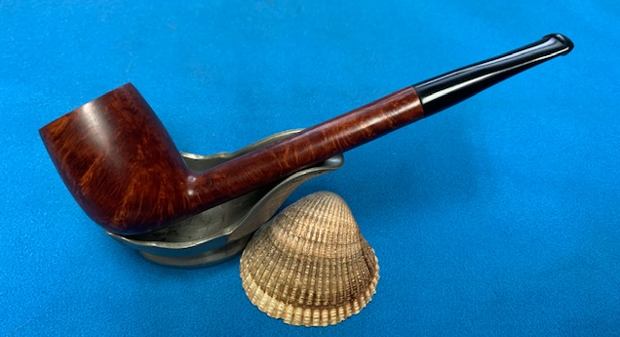
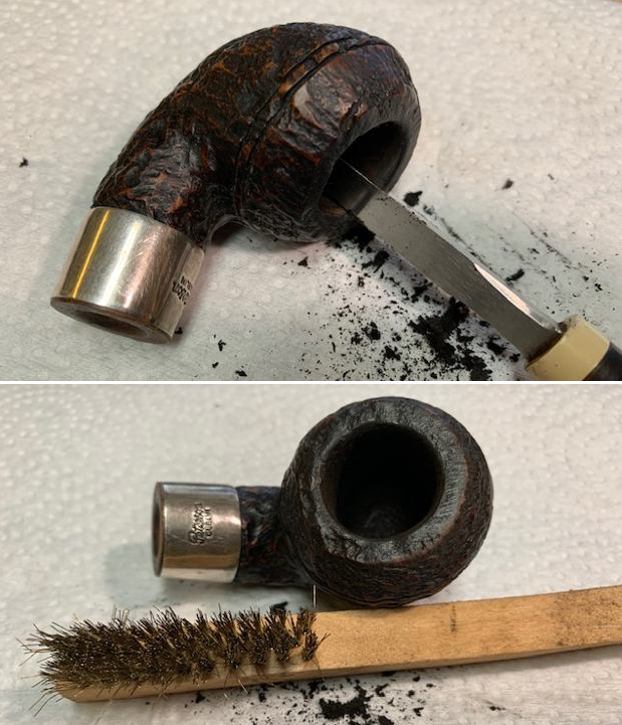
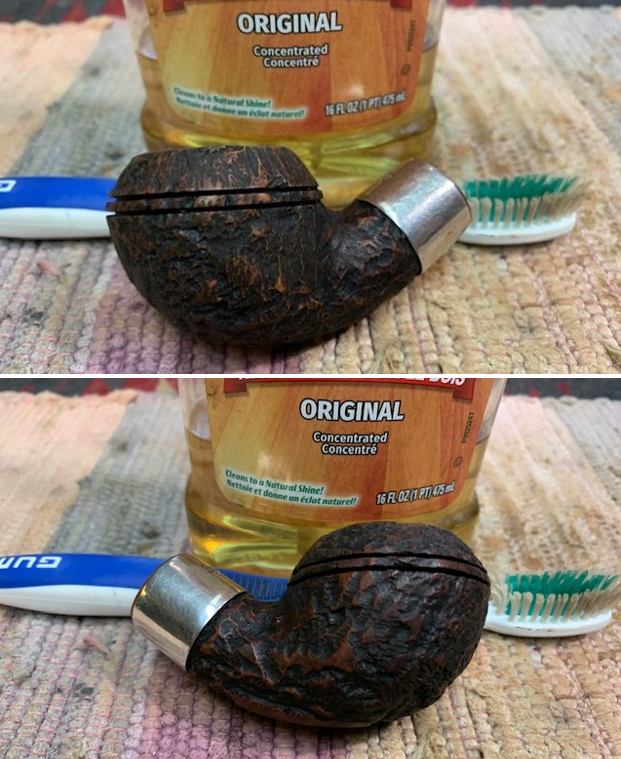
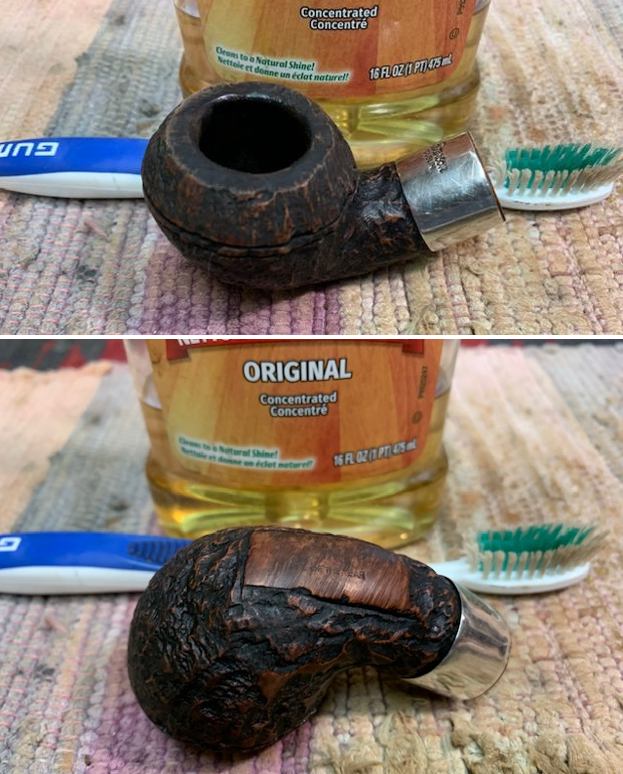
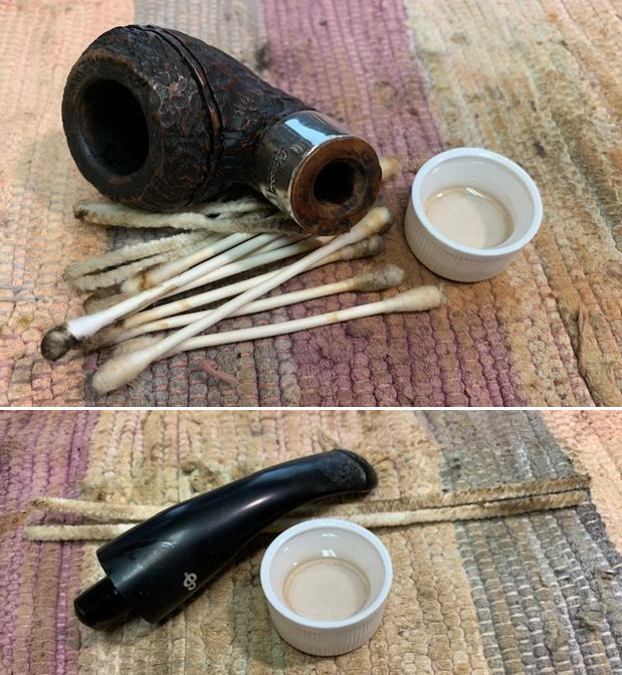
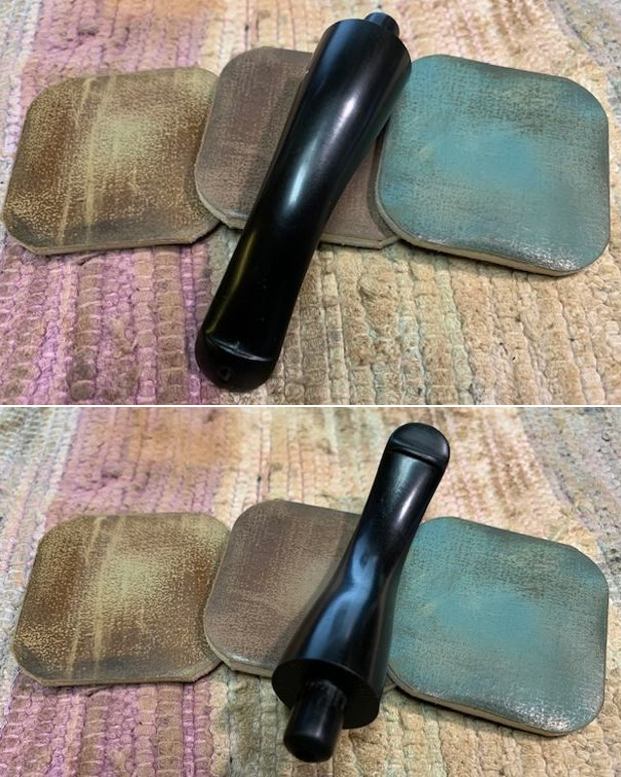
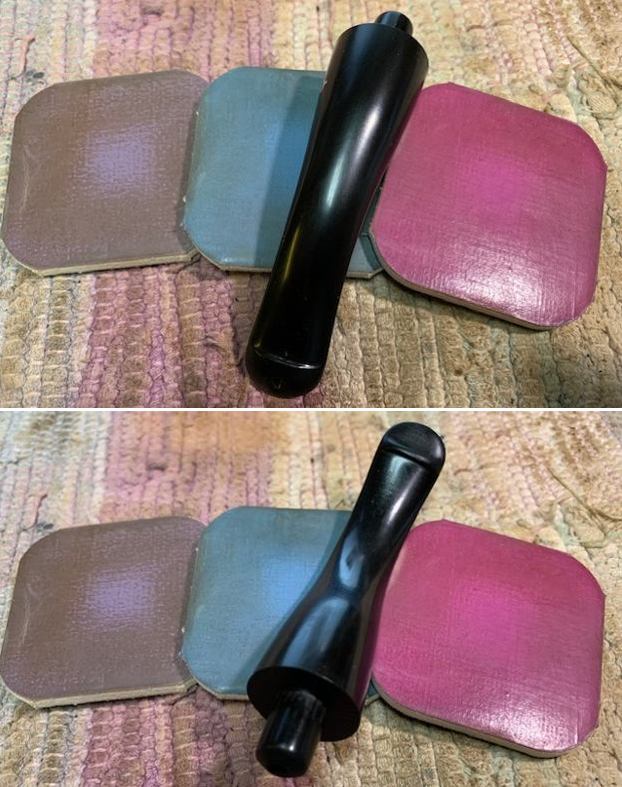
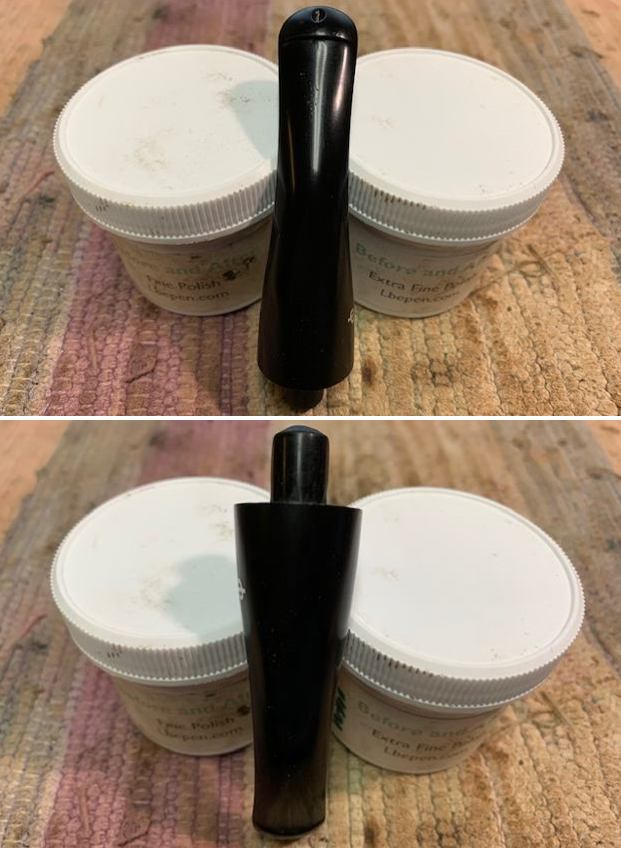
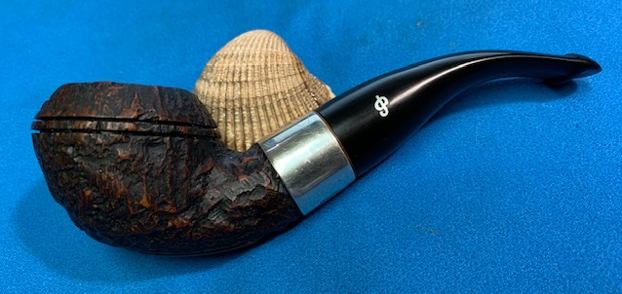
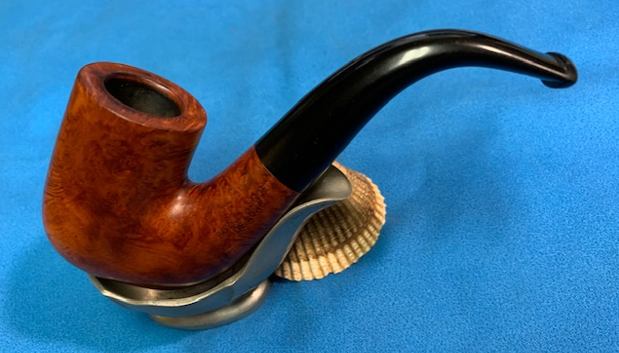
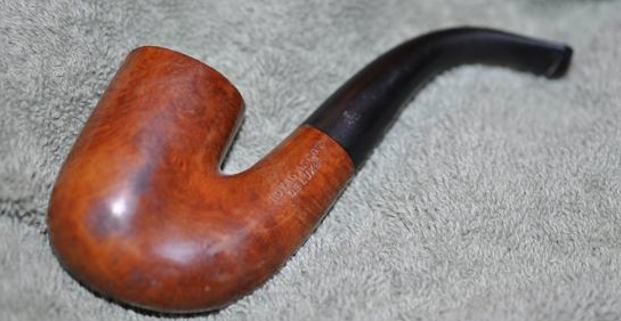
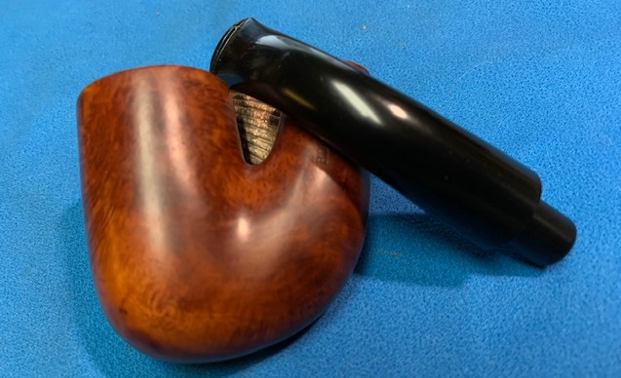
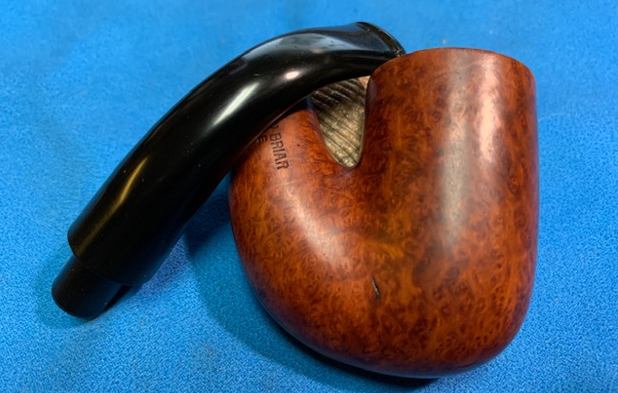
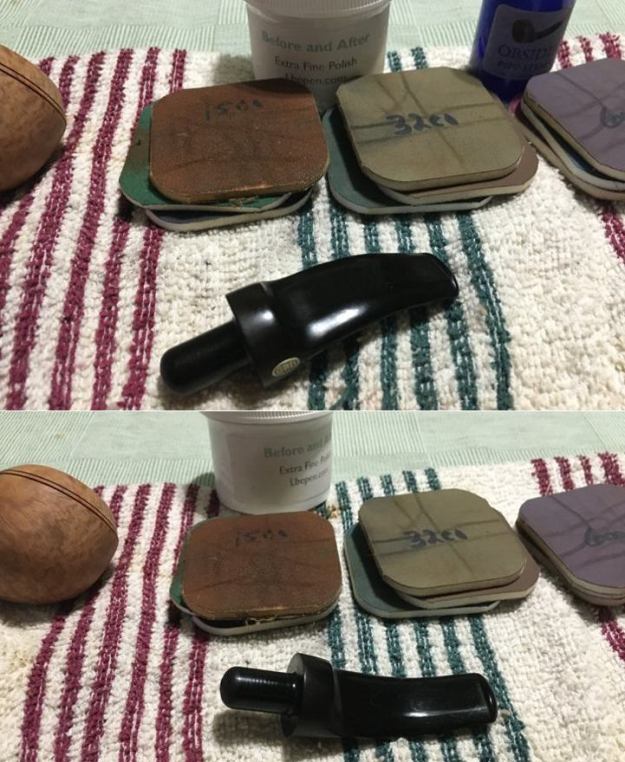
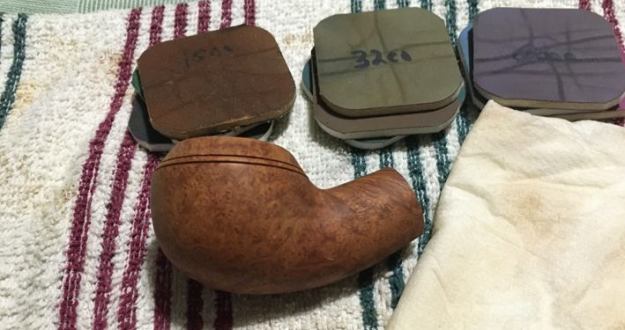
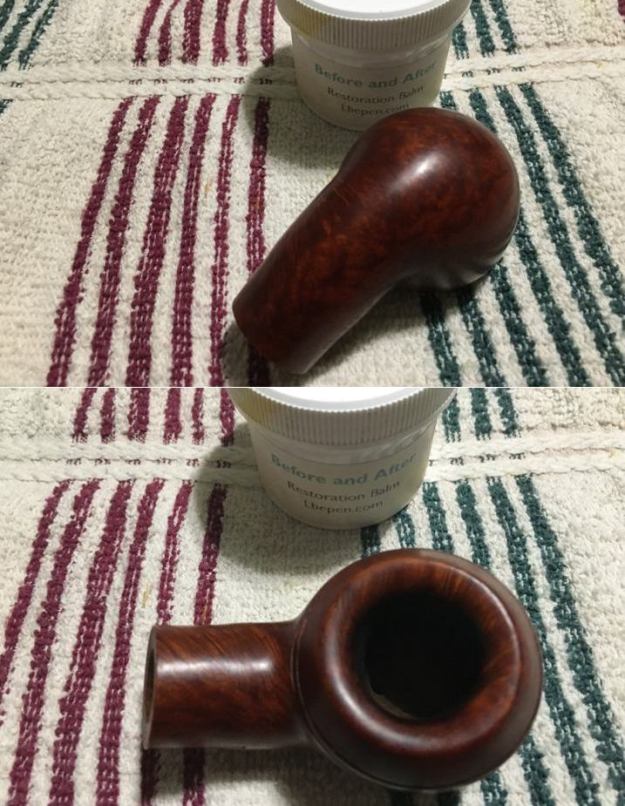
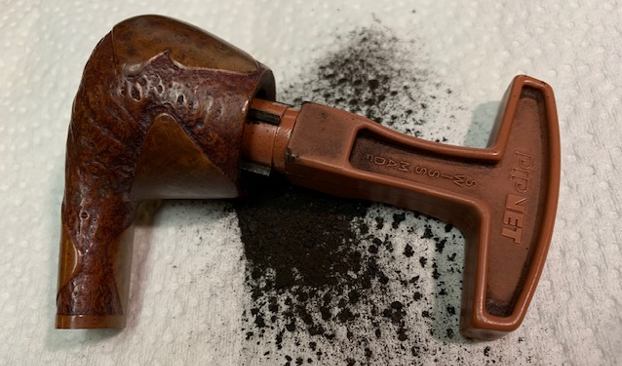
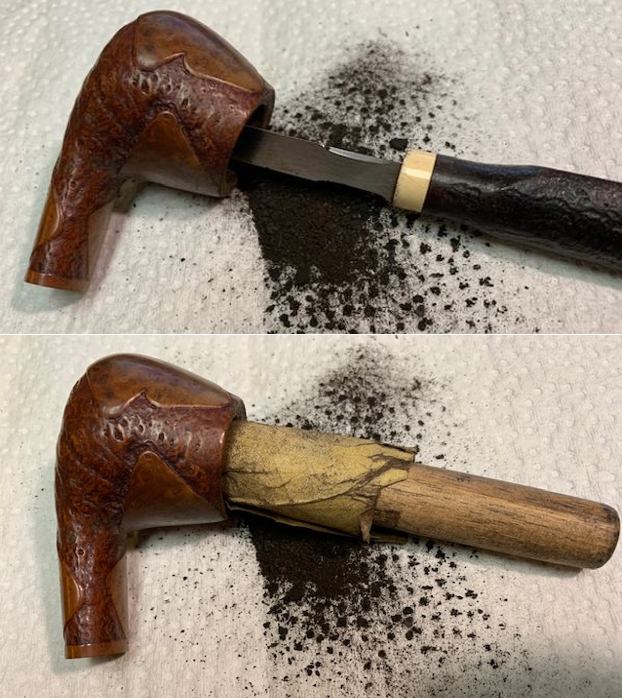
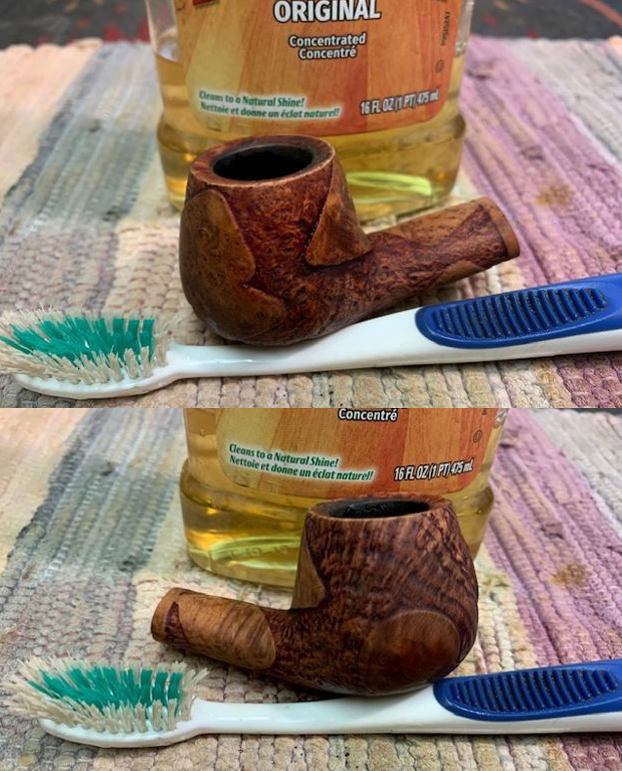
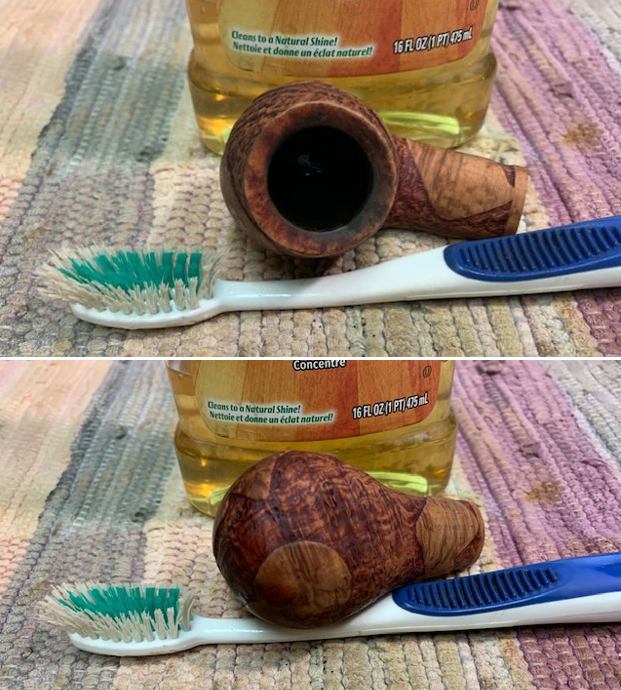
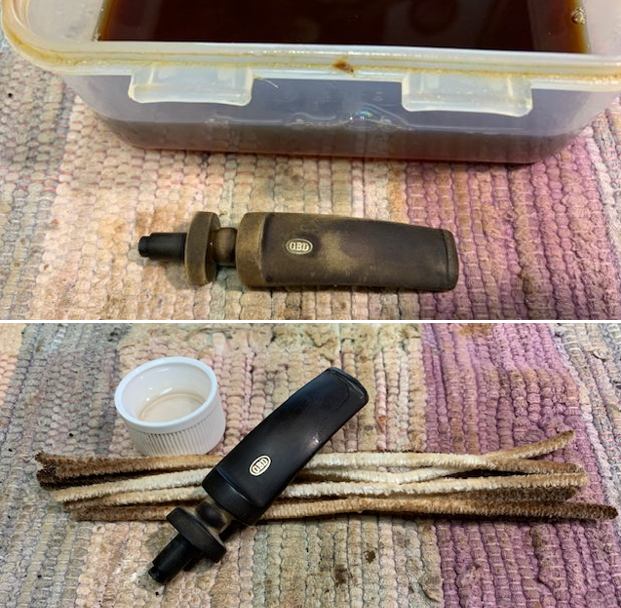
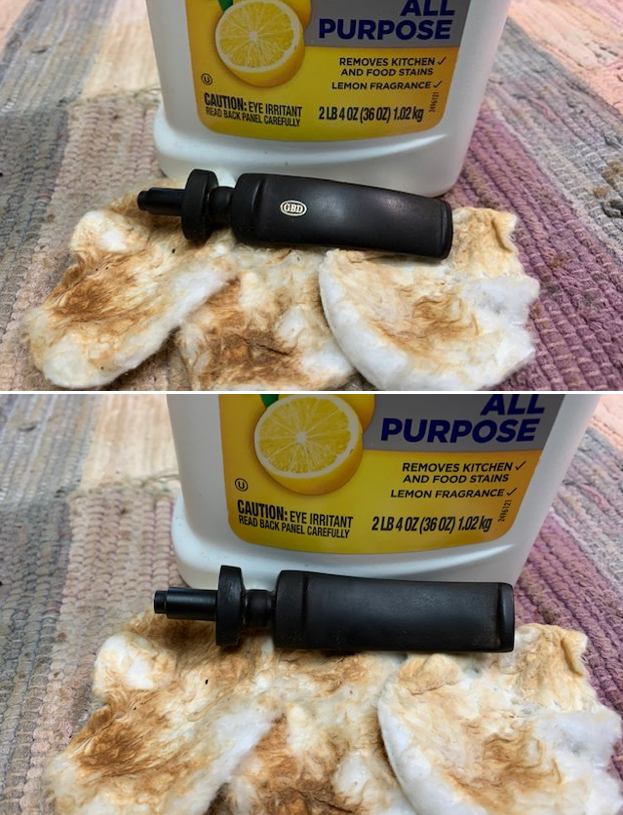
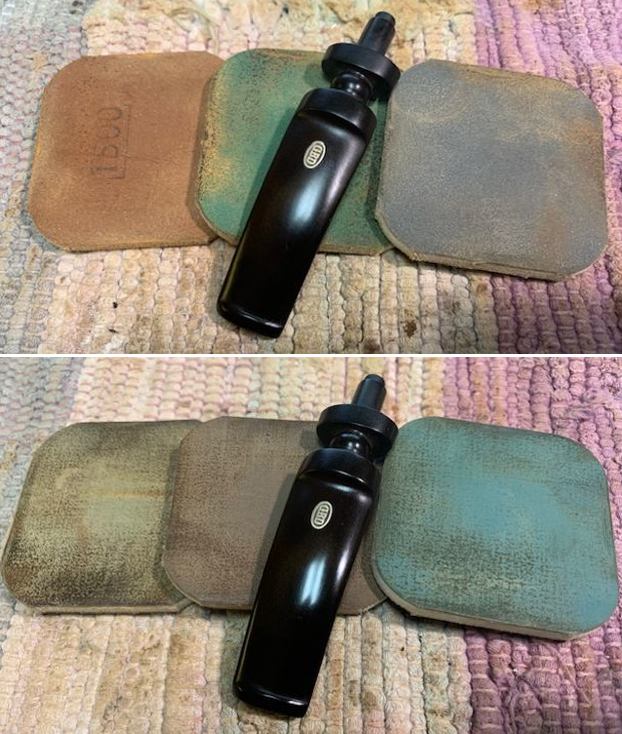
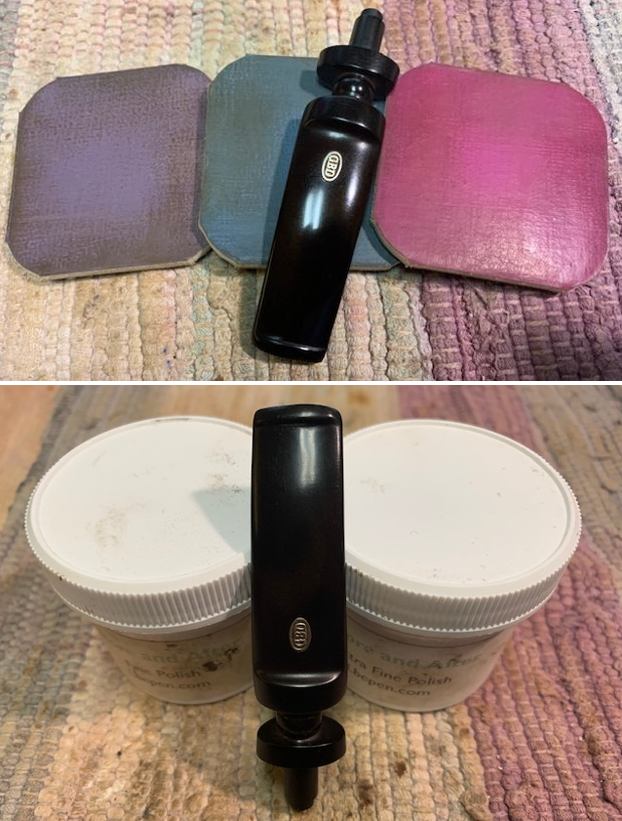
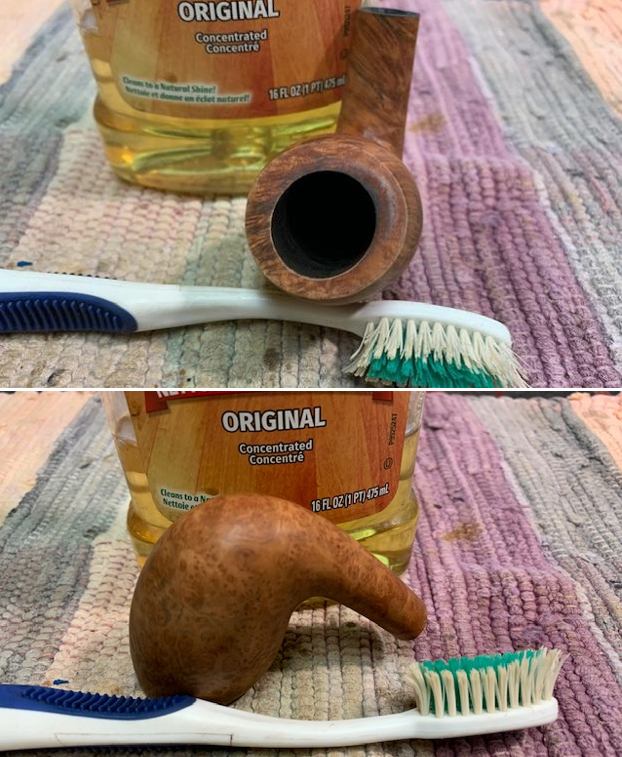
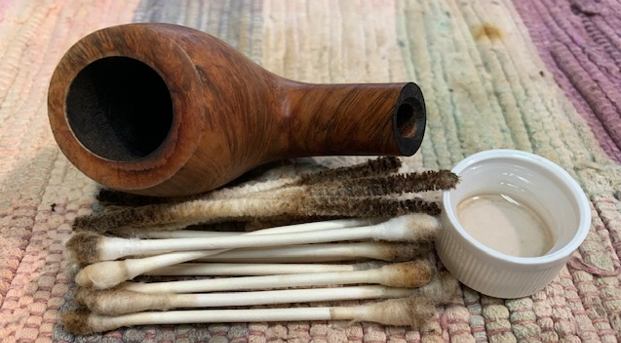
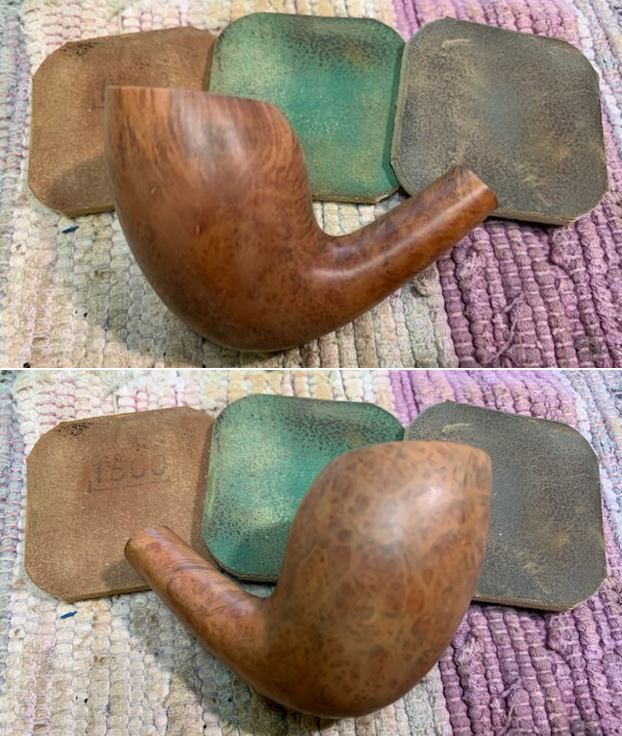
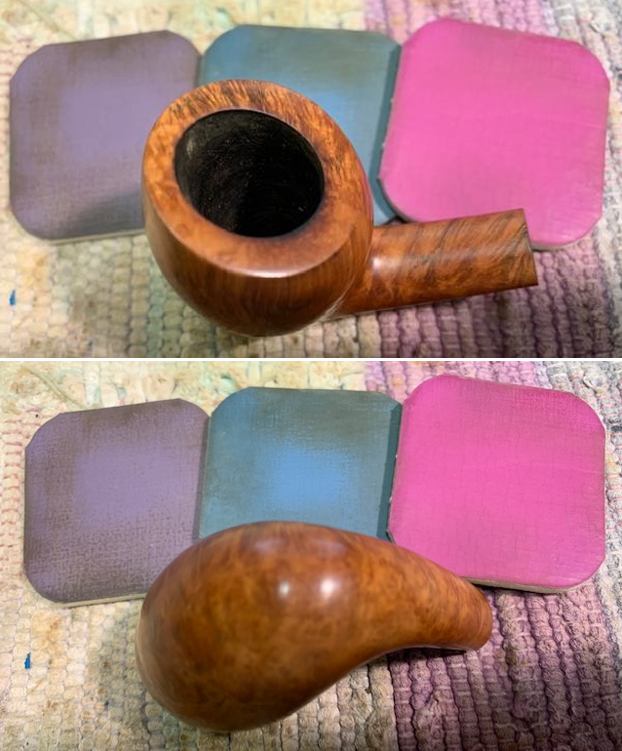
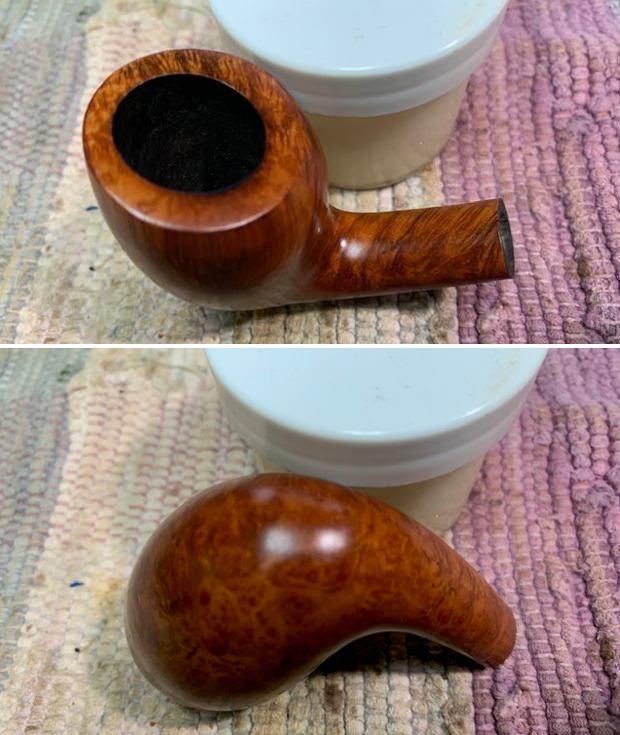
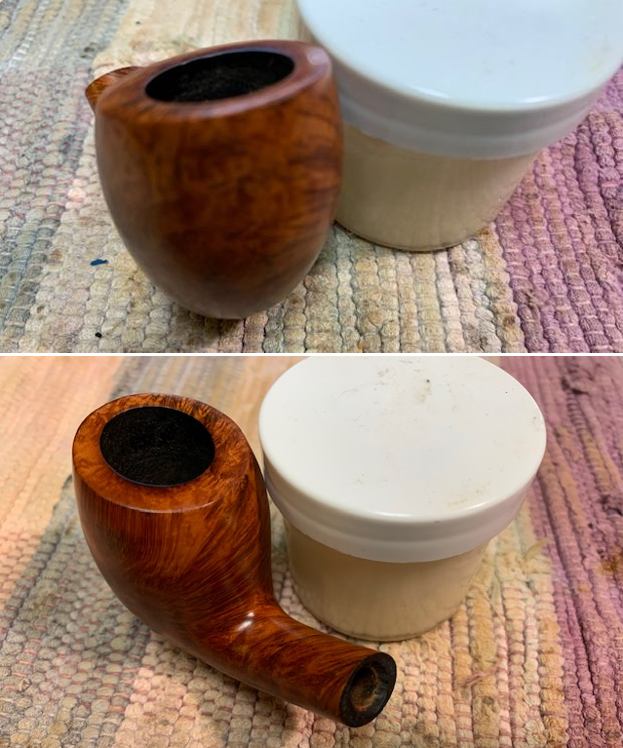
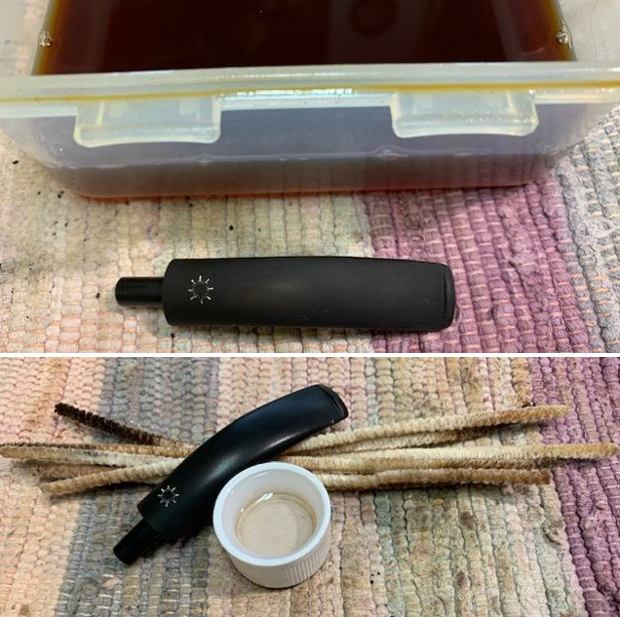
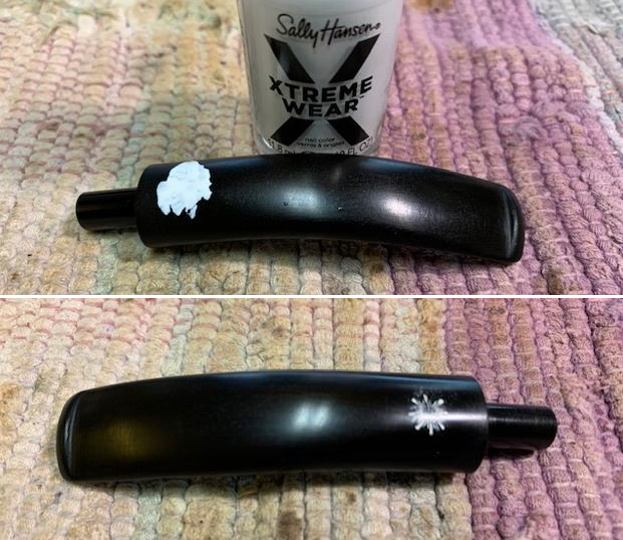
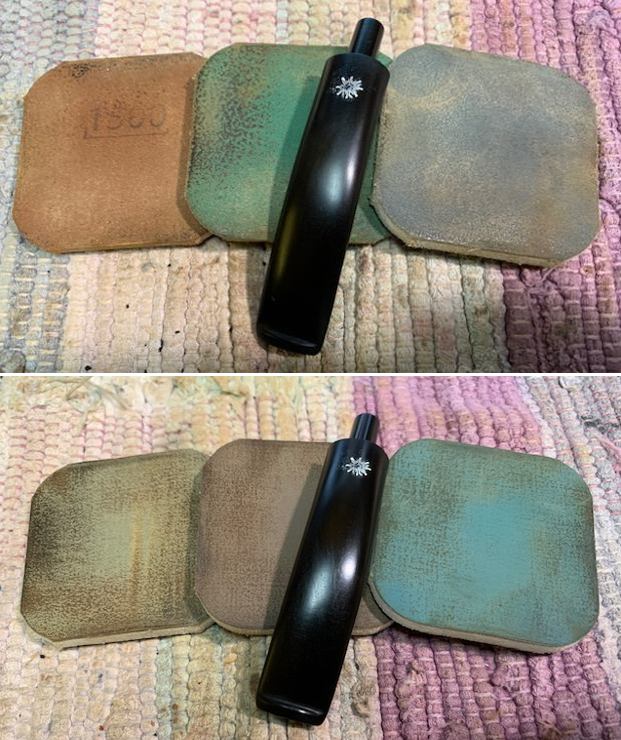
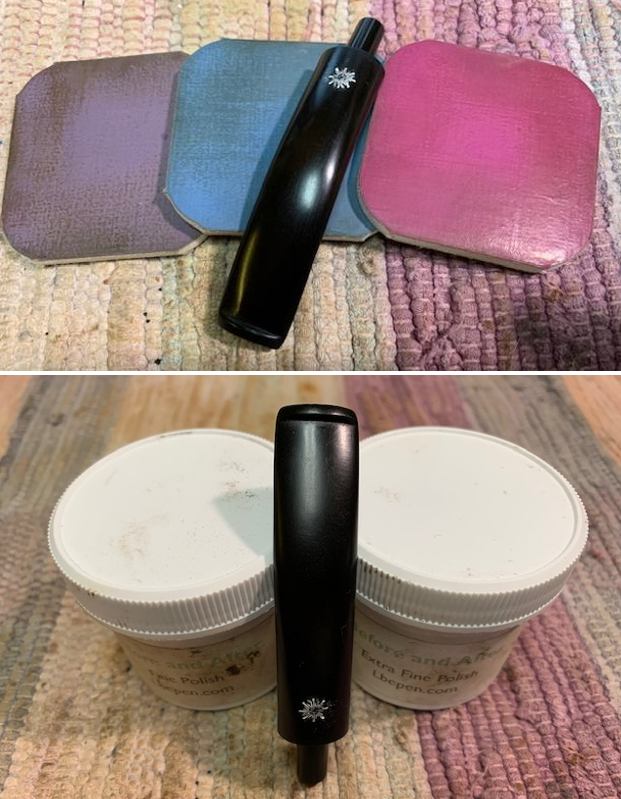
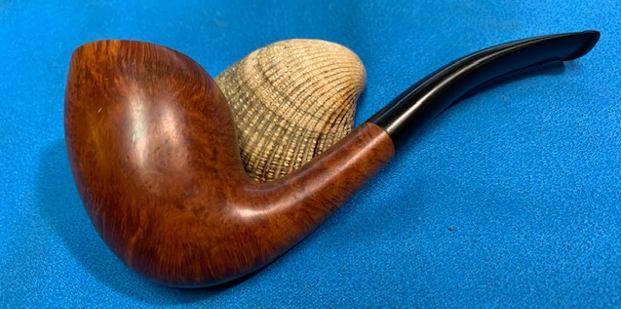
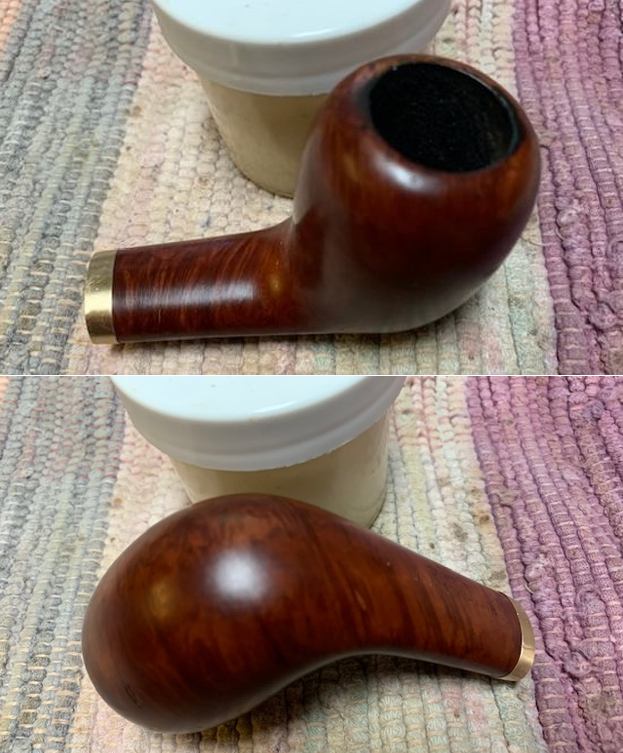
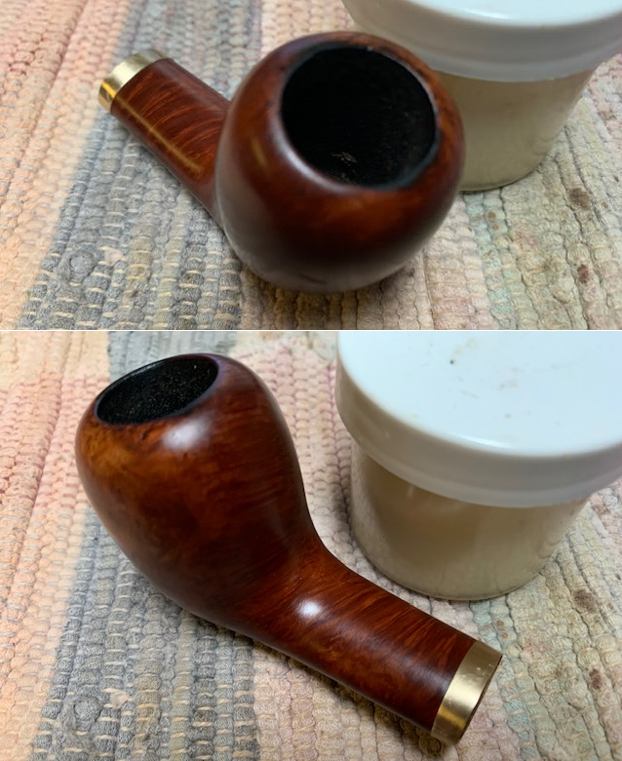
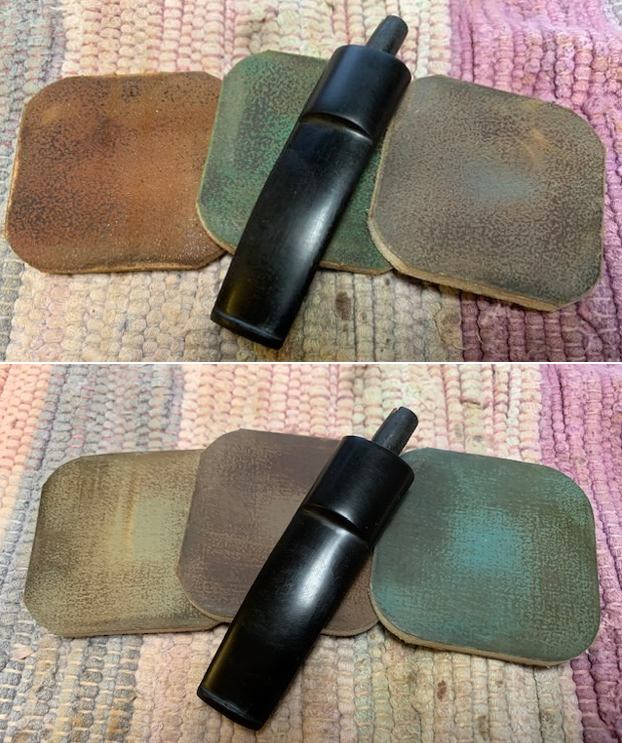
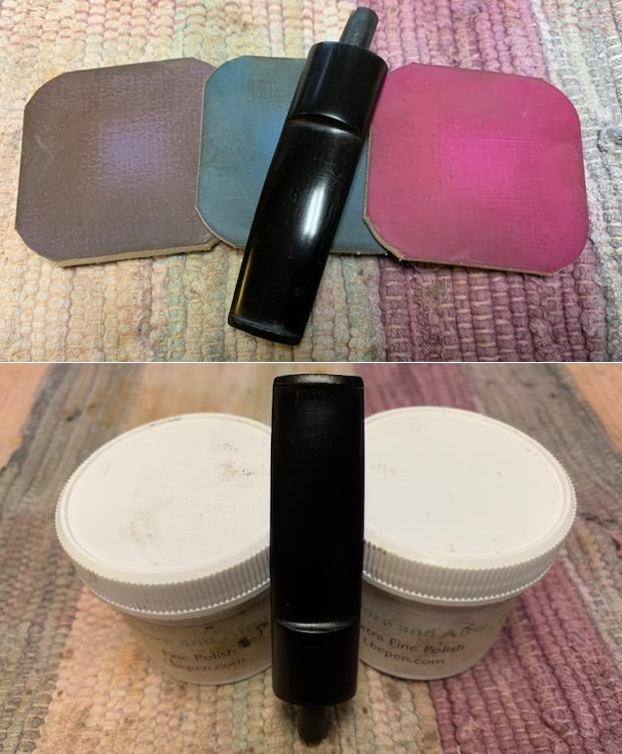
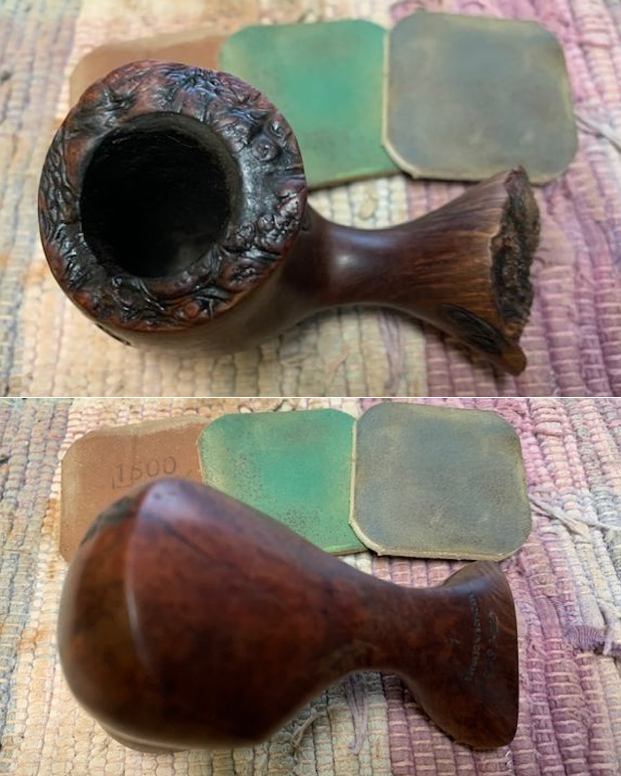
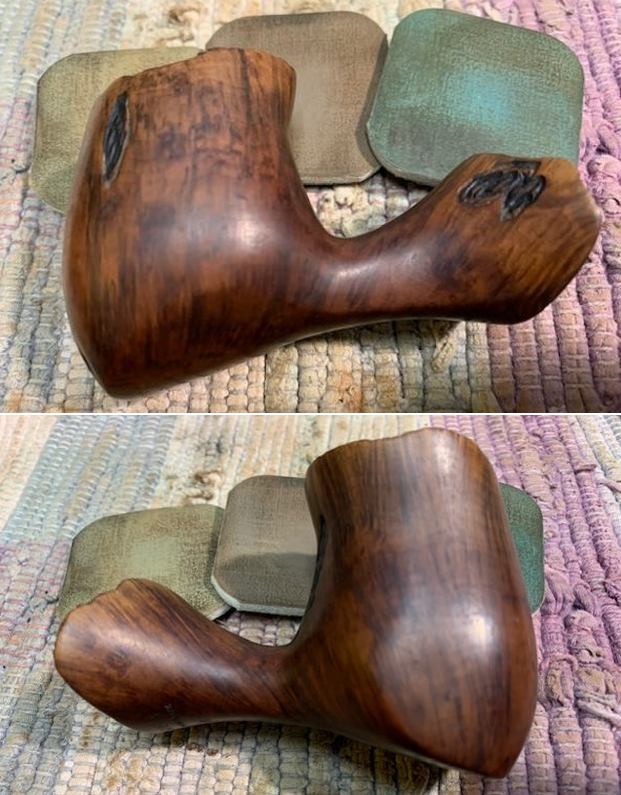
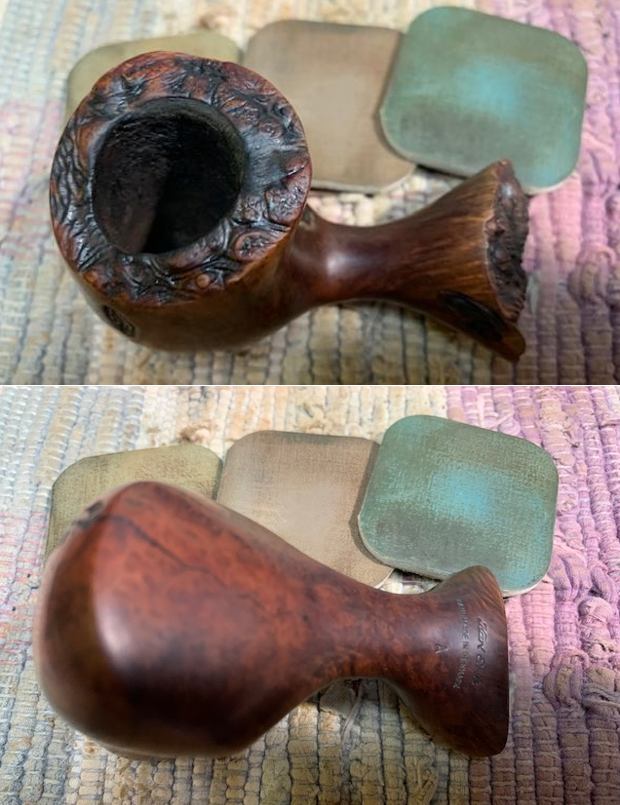
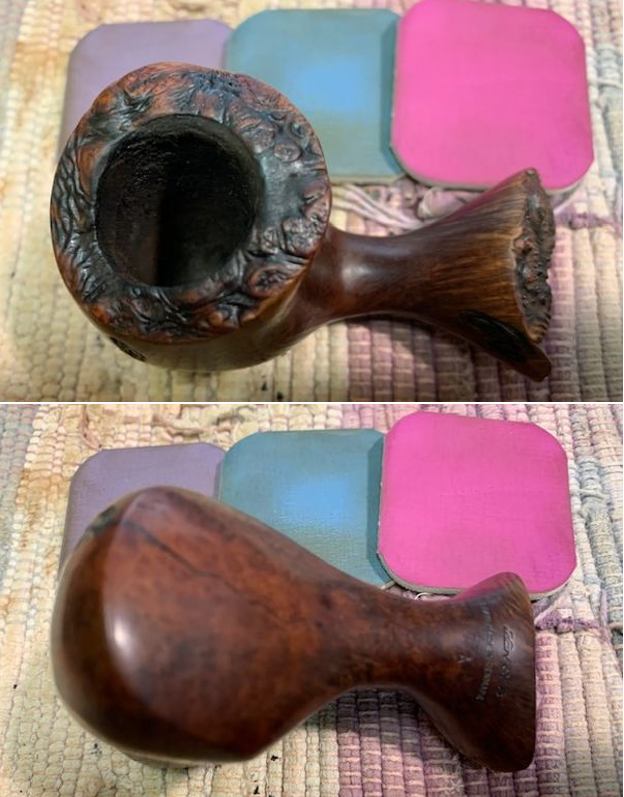
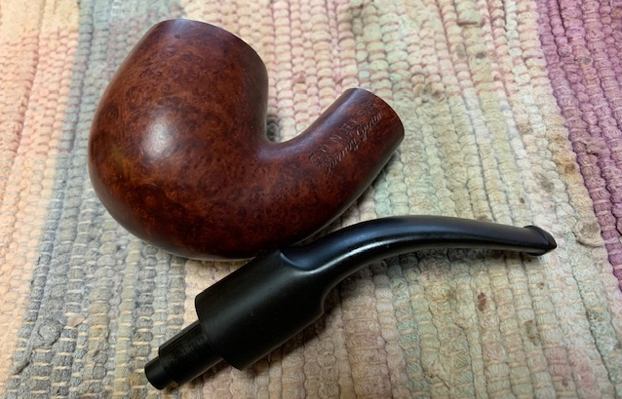
Now it was time to turn my attentions to the pipe itself. Jeff had cleaned up the pipe with his usual penchant for thoroughness. He reamed the pipe with a PipNet pipe reamer and removed the rest of it with a Savinelli Fitsall Pipe Knife.  He scrubbed the bowl with undiluted Murphy’s Oil Soap with a tooth brush. He rinsed it under running warm water to remove the soap and grime. He cleaned out the inside of the shank and the airway in the stem with alcohol, cotton swabs and pipe cleaners. He soaked the stem in Before & After Deoxidizer and rinsed it off with warm water. I took photos of the pipe once I received it. The rim top cleaned up really well. The rim top and outer edge of the bowl appear to be in good condition. The stem surface looked very good and the chatter on the stem on both sides near the button could easily be sanded out. The stamping on the sides of the shank is readable and reads as noted above.    I removed the stem and took a photo of the pipe to give a sense of the whole. The bowl looked very good and once I cleaned up the stem the pipe would look very good.Now it was time to do my work on the pipe. The pipe was in better condition than the other Sunrise pipes I have worked on recently. I was able to move immediately to polishing the briar with micromesh sanding pads – 1500-12000 grit pads. I wiped it down with a damp cloth after each sanding pad.   I rubbed the bowl and shank down with Before & After Restoration Balm. I worked it into the surface of the bowl sides and shank with my fingertips to clean, enliven and protect the briar. I let the balm sit for ten minutes then buffed the bowl with a cotton cloth to raise the shine.      I heated the stem with the flame of a lighter to soften the vulcanite and rebend it to the proper angles. It worked well.I polished the stem with micromesh sanding pads – 1500-12000 grit pads. I wiped it down with Obsidian Oil after each sanding pad. I used Before & After Pipe Polish – both Fine and Extra Fine to further polish the stem. Notice the white/silver spot on the right/topside of the saddle portion of the stem. It is a metal fleck that is often found in pipes that came out during and right after WWII. I polished it and left it there as part of the story of this pipe.    This Comoy’s Made Sunrise Tawny Grain Vintage Briar 215 Bent Billiard is a great looking pipe now that it has been restored. The brown stained finish around the bowl is quite beautiful and highlights grain very well. The finish works well with the polished vulcanite bent saddle stem. I put the stem back on the bowl and carefully buffed the pipe with Blue Diamond on the buffing wheel using a light touch on the briar. I gave the bowl and the stem multiple coats of carnauba wax on the buffing wheel and followed that by buffing the entire pipe with a clean buffing pad. I hand buffed the pipe with a microfiber cloth to deepen the shine. The finished Sunrise Tawny Grain Vintage Briar Bent Billiard sits nicely in the hand and feels great. Give the finished pipe a look in the photos below. The dimensions of the pipe are Length: 5 inches, Height: 1 ¾ inches, Outside diameter of the bowl: 1 ¼ inches, Chamber diameter: ¾ inch. The weight of the pipe is 56 grams/1.98 ounces. I will be putting it on the rebornpipes store shortly. If you are interested in adding this pipe to your collection send me a message or an email. Thanks for reading this blog and my reflections on the pipe while I worked on it. There are many more to come!

This Gorgeous Sunrise Amber Grain 299 Vintage Briar Canadian Came Alive


Blog by Steve Laug

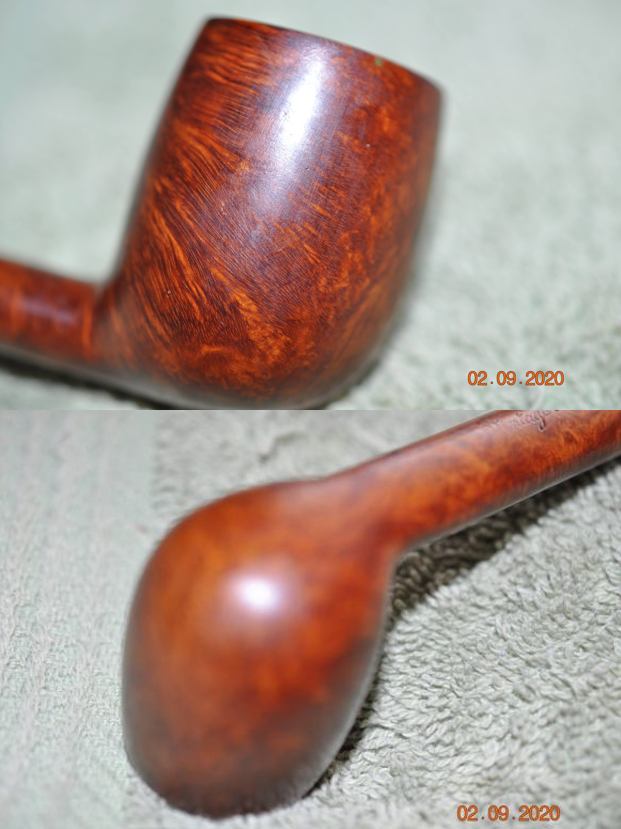
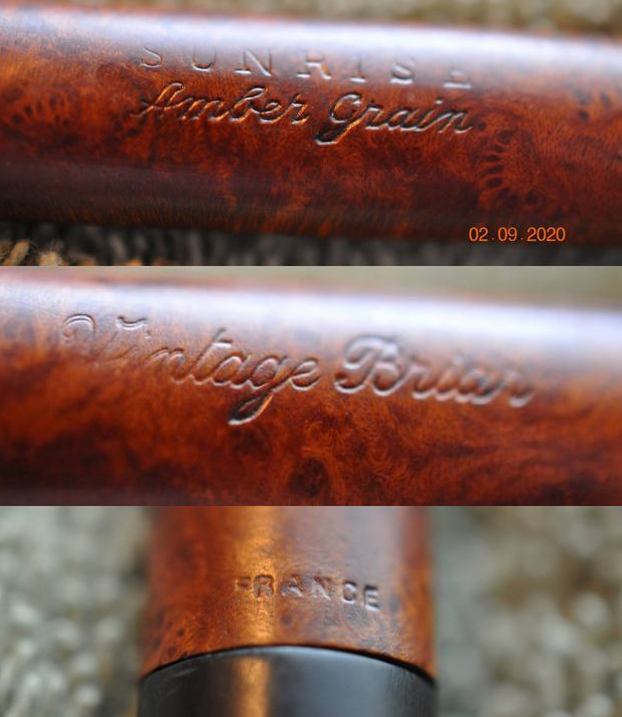
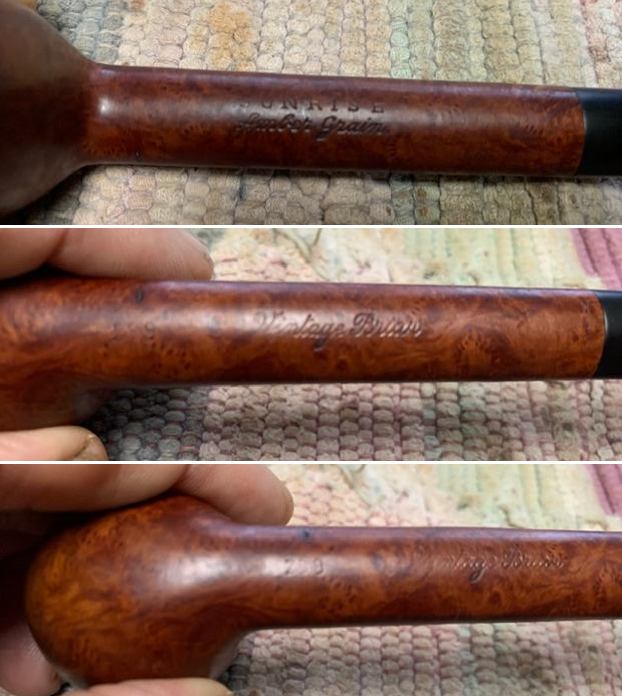
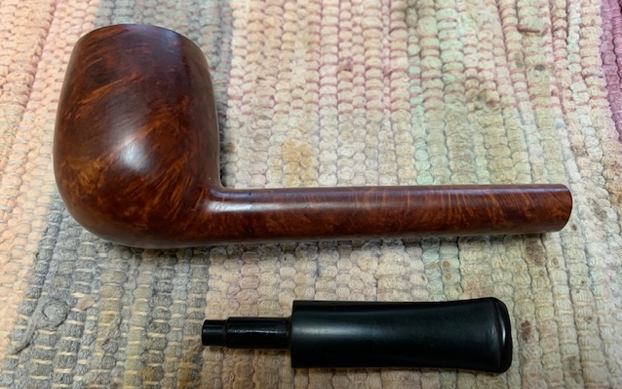
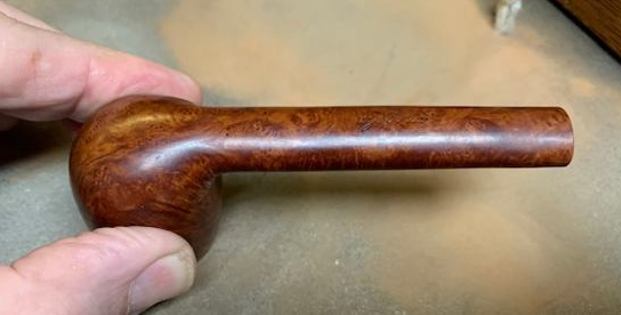
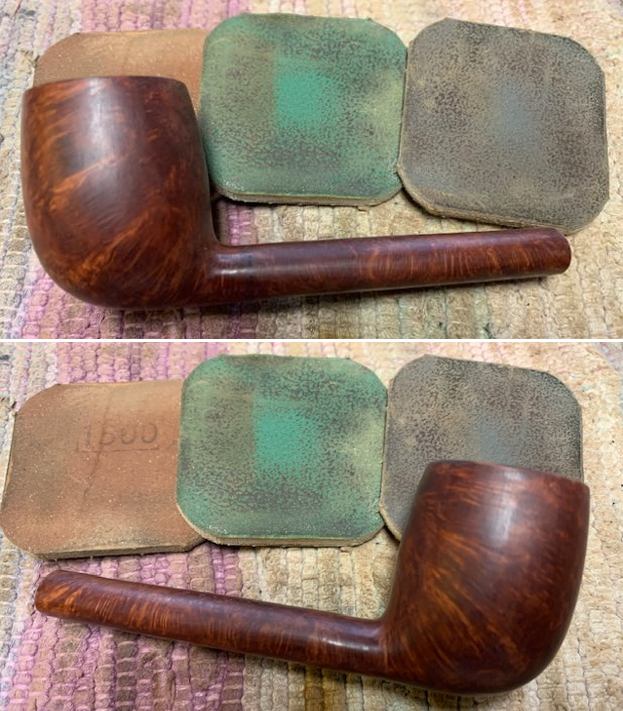
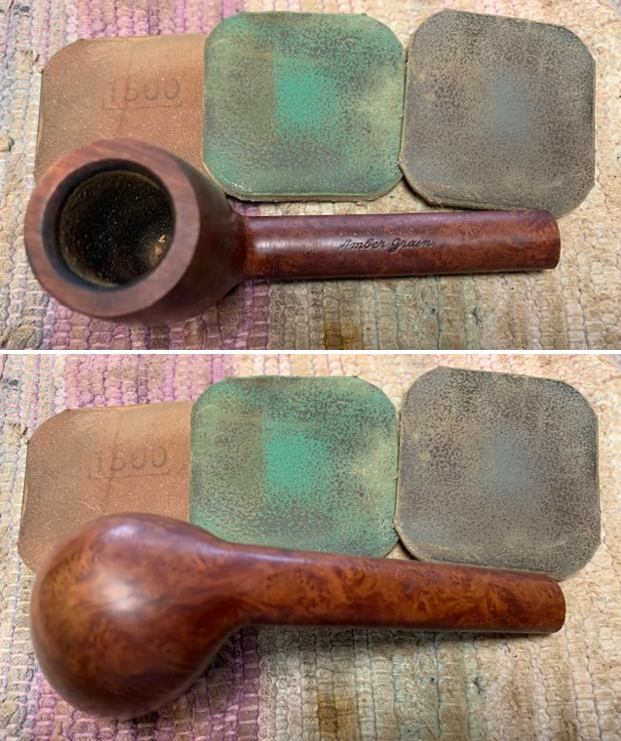
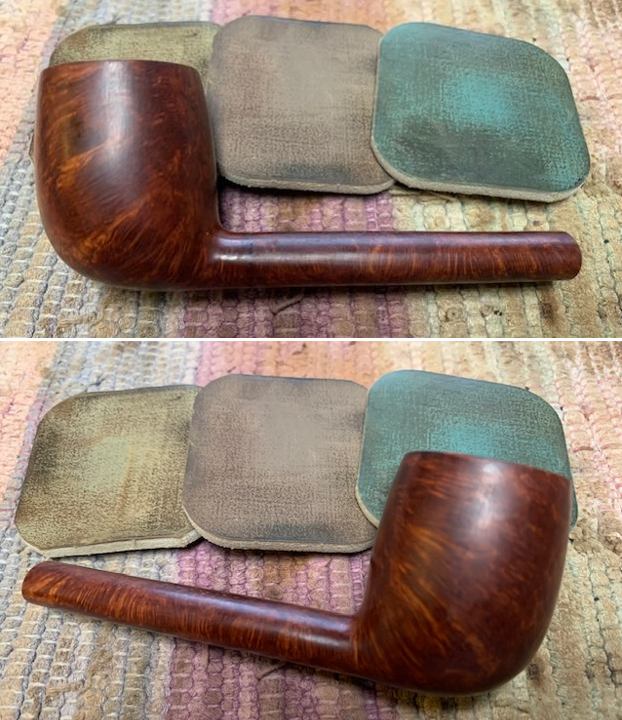
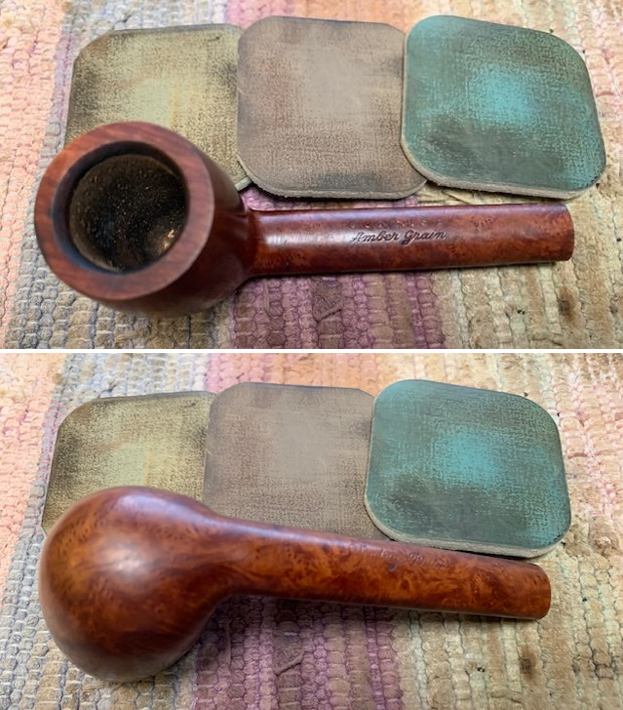
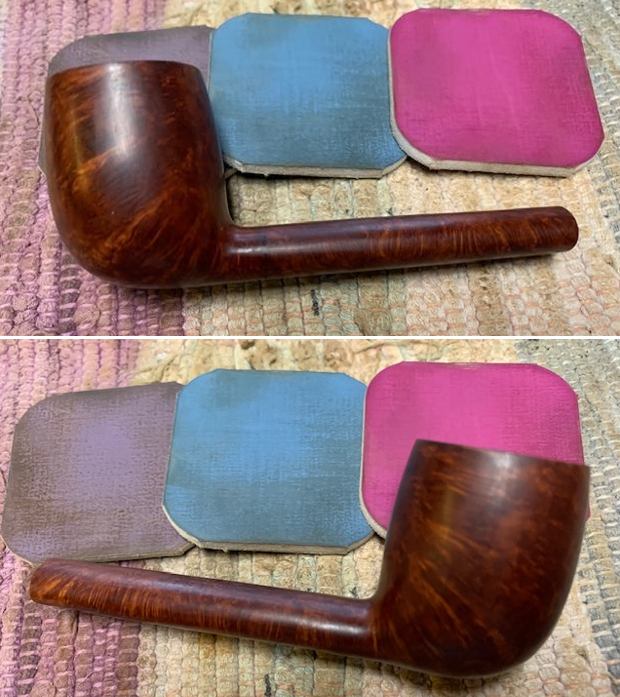
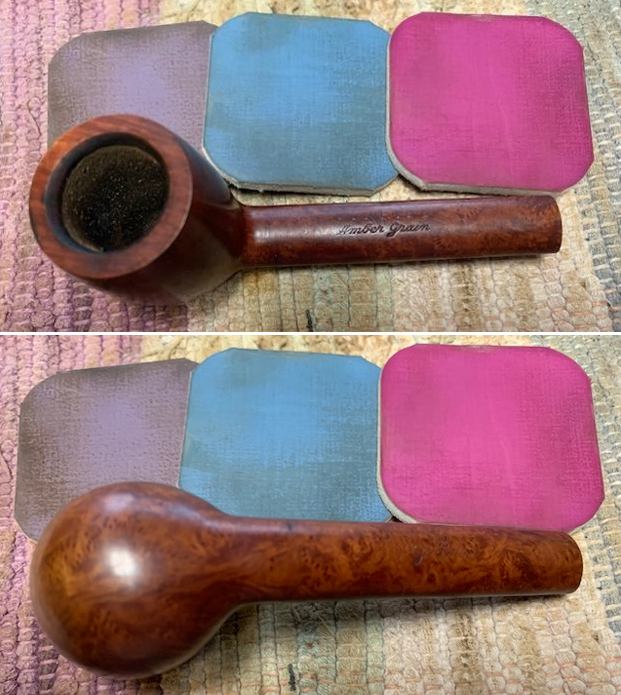
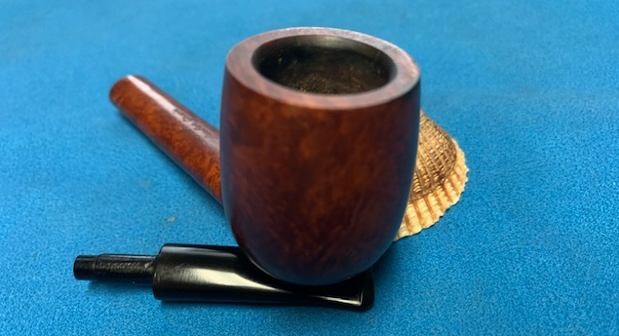
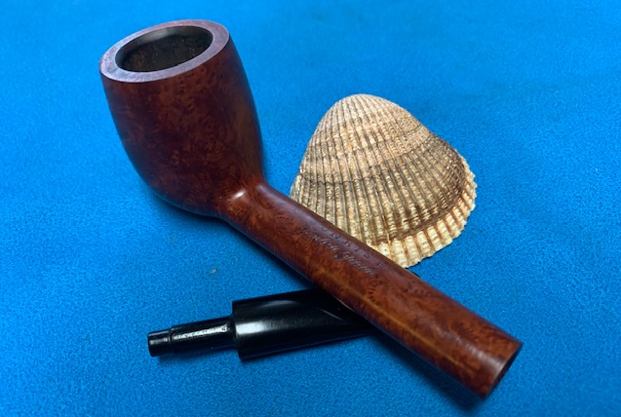
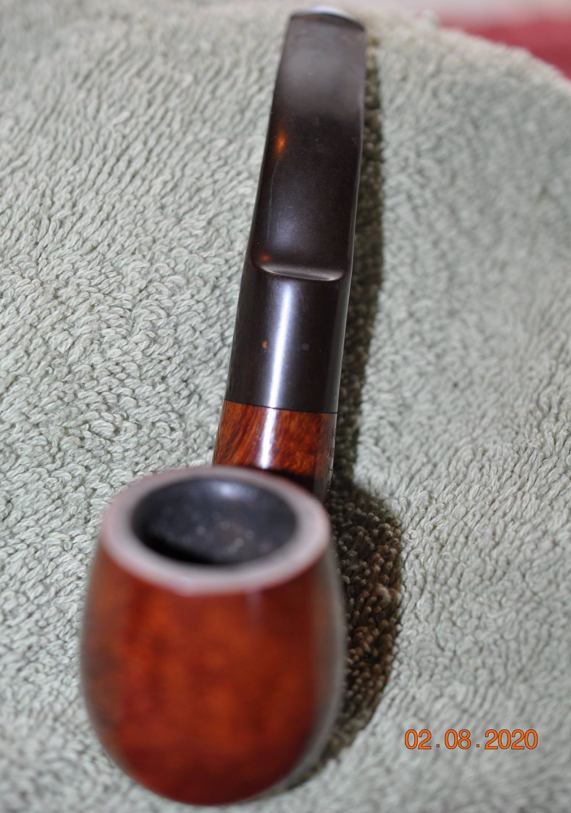
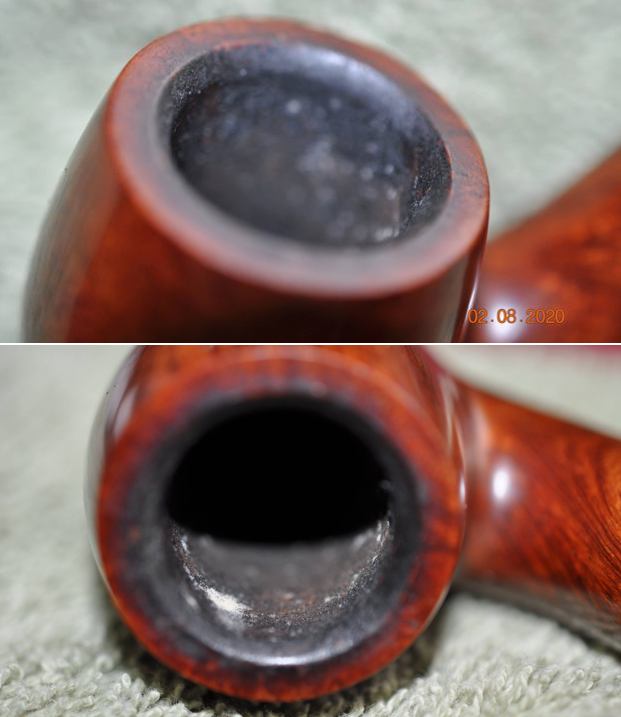
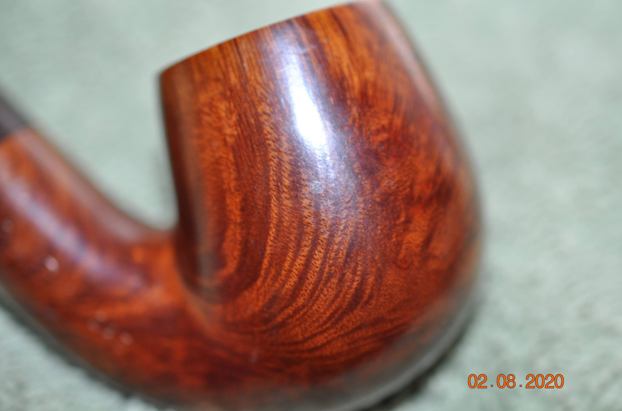
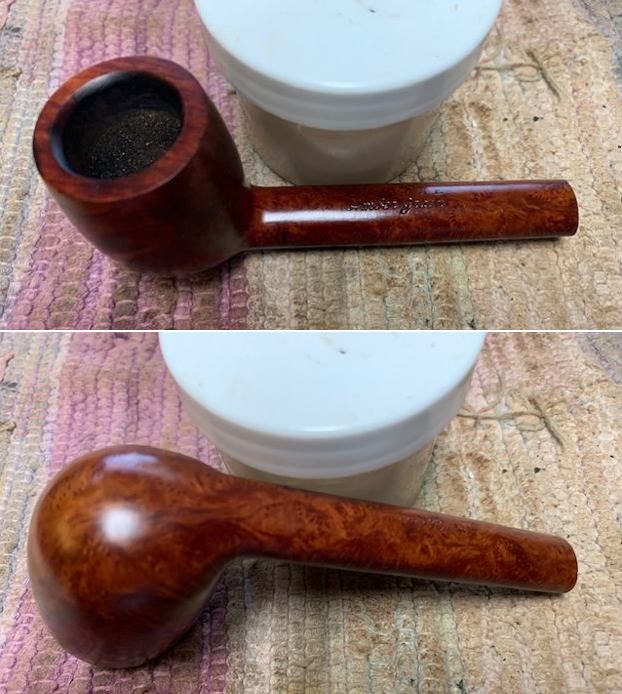
The next pipe on the work table came to us from a group of pipes that Jeff and I picked up from an auction from Wilkes Barre, Pennsylvania, USA. The pipe is beautifully grained Canadian shaped pipe with a mix of medium brown stains back in 2019. Jeff cleaned it up in 2020 and now I am finally getting to it is 2021. The pipe is stamped on the topside of the shank and reads Sunrise [over] Amber Grain. On the underside of the shank it reads Vintage Briar [over] the shape number 299 near the bowl end. The pipe was dirty with a lot of grime ground into the bowl but the grain was still visible. The bowl was moderately caked with a light lava coat flowing onto the rim top and beveled inner edge toward the left front of the bowl. The stem was lightly oxidized and dirty with light tooth chatter and marks on the top and underside near and on the button. It had promise but it was very dirty. Jeff took some photos of the pipe before he started his cleanup work. He took photos of the rim top and bowl to give a clear picture of the thickness of the cake and well as the lava and darkening on the front side of the rim top and inner edge. He also took photos of the top and underside of the stem to show the light oxidation and the chatter and tooth marks. Jeff took a photo the sides and heel of the bowl to give a picture of the beautiful grain around the bowl and shank. The stamping on the sides of the shank are clear and readable and read as noted above. The Sunrise pipe was a Comoy’s made pipe and the France stamp on the shank pointed me to the connection between London and St. Claude (England/France). I turned to Pipephil’s site (http://www.pipephil.eu/logos/en/logo-s13.html) to get some background information on this beauty. I have included a screen capture of the pertinent section. The first pipe listed bears the same stamping as the one I am working on.The side bar includes this interesting piece of information. I quote:
The Sunrise brand perfectly illustrates the split pipe production of a same label between Saint Claude (FR) and London (GB) during the period Chapuis Comoy and Comoy closely collaborated (prior to early 1970s).

I turned to Pipedia and looked under the French makers and the brand was not listed. Under the English makers it was listed as a Comoy’s Sub-brand or second. I turned to the Comoy’s listing and at the bottom of the article was a list of these pipes (https://pipedia.org/wiki/Comoy%27s). I have included the list in its entirety and highlighted the Sunrise in red.

Seconds made by Comoy’s

Ace of spades, Ancestor, Astor, Ayres, Britannia, Carlyle, Charles Cross, Claridge, Coronet?, Cromwell, Dorchester, Dunbar, Drury Lane, Emerson, Everyman, Festival of Britain, Golden Arrow, Grand Master, Gresham, Guildhall, Hamilton (according to Who Made That Pipe), Kingsway, Lion’s Head, Lord Clive, Lumberman, Hyde Park, Lloyds, Mc Gahey, Moorgate, Newcastle, Oxford, O’Gorman, Rosebery Extra, Royal Falcon, Royal Guard, Royal Lane, Scotland Yard, St James, Sunrise, Super Sports, Sussex, The Academy Award, The Golden Arrow, The Mansion House, The Exmoor Pipe, Throgmorton, Tinder Box Royal Coachman, Townhall, Trident, Trocadero, Westminster, Wilshire

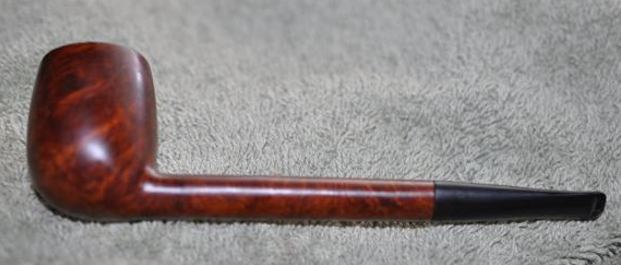
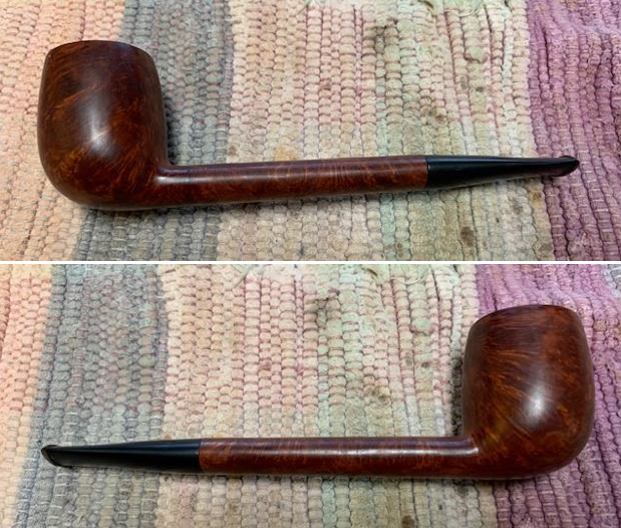
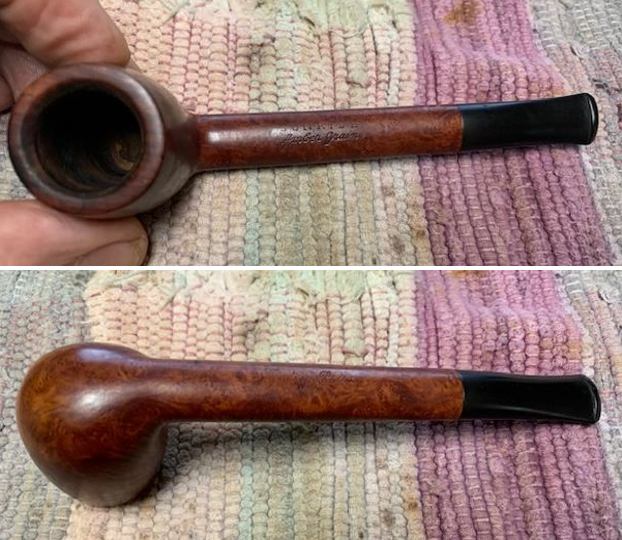
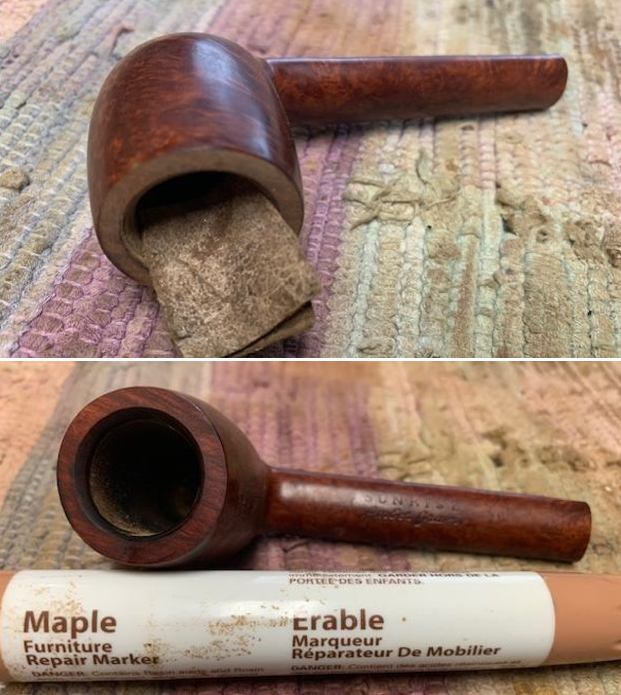
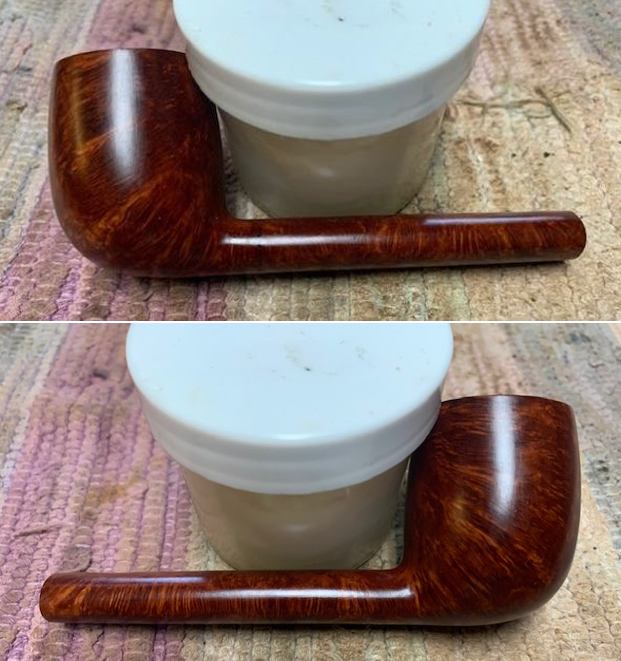
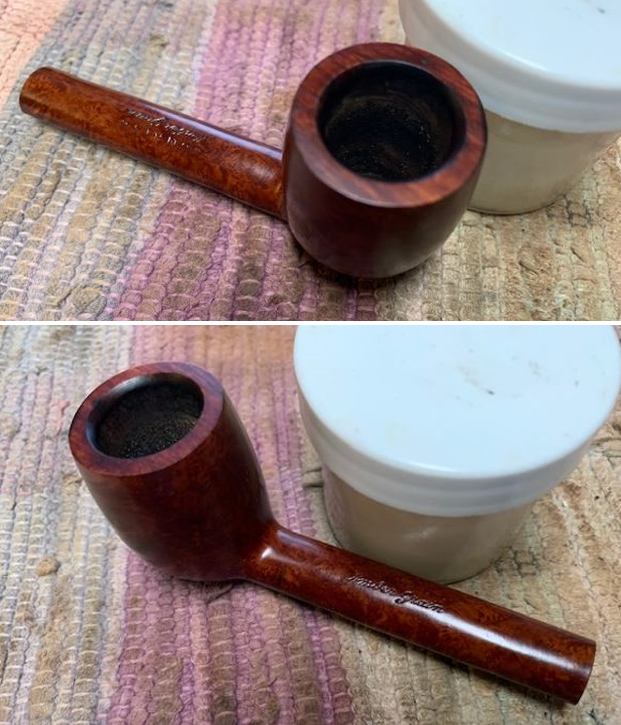
Now it was time to turn my attentions to the pipe itself. Jeff had cleaned up the pipe with his usual penchant for thoroughness. He reamed the pipe with a PipNet pipe reamer and removed the rest of it with a Savinelli Fitsall Pipe Knife.  He scrubbed the bowl with undiluted Murphy’s Oil Soap with a tooth brush. He rinsed it under running warm water to remove the soap and grime. He cleaned out the inside of the shank and the airway in the stem with alcohol, cotton swabs and pipe cleaners. He soaked the stem in Before & After Deoxidizer and rinsed it off with warm water. I took photos of the pipe once I received it.  The rim top cleaned up really well. The rim top and outer edge of the bowl appear to be in good condition other than some slight darkening on the front. The stem surface looked very good and the chatter on the stem on both sides near the button could easily be sanded out. The tooth marks on the button surface would need to be addressed. The stamping on the top and underside of the shank is readable and reads as noted above.      I removed the stem and took a photo of the pipe to give a sense of the whole. The bowl looked very good and once I cleaned up the stem the pipe would look very good.Now it was time to do my work on the pipe. I topped the bowl lightly and sanded the beveled inner edge and top of the rim with 200 grit sandpaper to lighten the darkening that was there. There was also a spot on the front outer edge of the bowl that I needed to sand. I stained it with a Maple stain pen to match the colour of the bowl. The finished product looked better. I polished the briar with micromesh sanding pads – 1500-12000 grit pads. I wiped it down with a damp cloth after each sanding pad.   The bowl was in such good condition that I rubbed the bowl and shank down with Before & After Restoration Balm. I worked it into the surface of the bowl sides and shank with my fingertips to clean, enliven and protect the briar. I let the balm sit for ten minutes then buffed the bowl with a cotton cloth to raise the shine.      I filled in the deep tooth marks on the button surface and the deeper ones on the stem itself with clear super glue. I let it cure and once it had hardened I reshaped the button and sanded the repairs smooth with 220 grit sandpaper. I started polishing the stem with 400 grit wet dry sandpaper. I polished the stem with micromesh sanding pads – 1500-12000 grit pads. I wiped it down with Obsidian Oil after each sanding pad. I used Before & After Pipe Polish – both Fine and Extra Fine to further polish the stem. This Comoy’s Made Sunrise Amber Grain Vintage Briar 299 Canadian is a great looking pipe now that it has been restored. The brown stained finish around the bowl is quite beautiful and highlights grain very well. The finish works well with the polished vulcanite oval taper stem. I put the stem back on the bowl and carefully buffed the pipe with Blue Diamond on the buffing wheel using a light touch on the briar. I gave the bowl and the stem multiple coats of carnauba wax on the buffing wheel and followed that by buffing the entire pipe with a clean buffing pad. I hand buffed the pipe with a microfiber cloth to deepen the shine. The finished Sunrise Amber Grain Vintage Briar Canadian sits nicely in the hand and feels great. Give the finished pipe a look in the photos below. The dimensions of the pipe are Length: 5 ¾ inches, Height: 1 ¾ inches, Outside diameter of the bowl: 1 1/8 inches, Chamber diameter: ¾ inch. The weight of the pipe is 31 grams/1.09 ounces. I will be putting it on the rebornpipes store shortly. If you are interested in adding this pipe to your collection send me a message or an email. Thanks for reading this blog and my reflections on the pipe while I worked on it. There are many more to come!
Restoring a Peterson’s of Dublin 1994 Pipe of the Year in a 999 Shape


Blog by Steve Laug

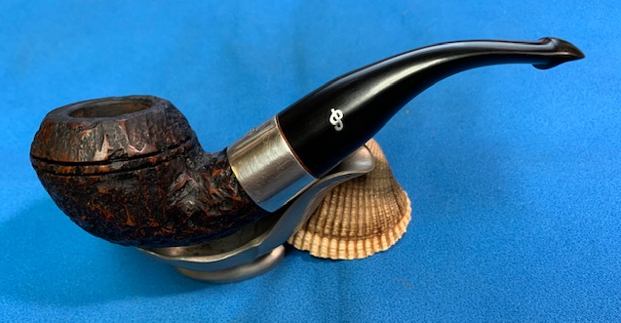
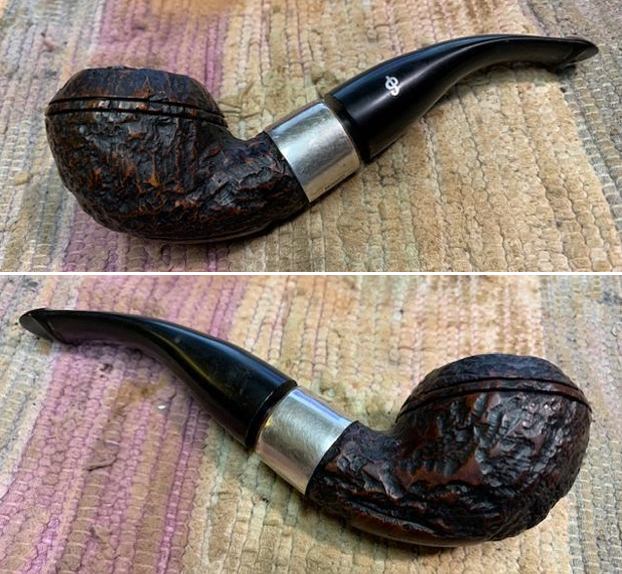
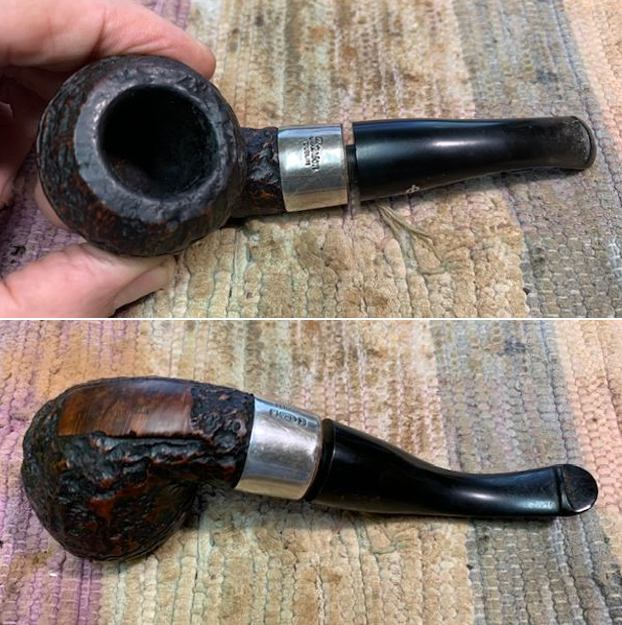
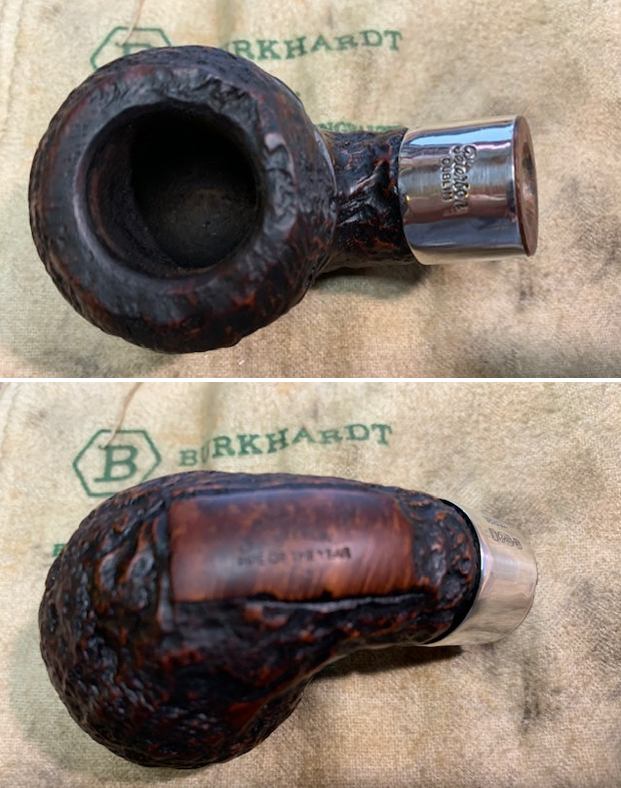
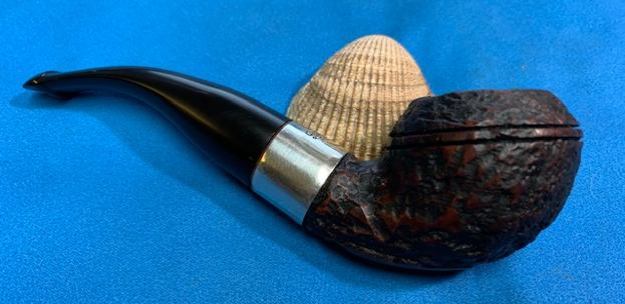
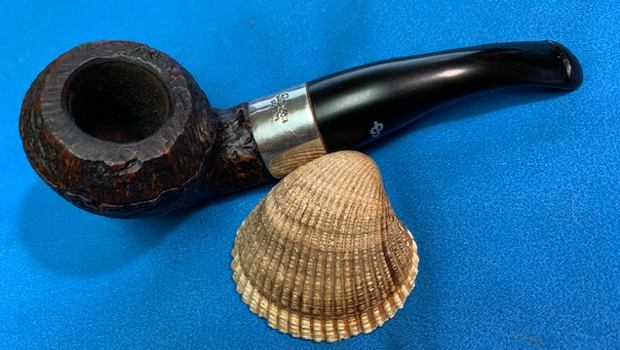
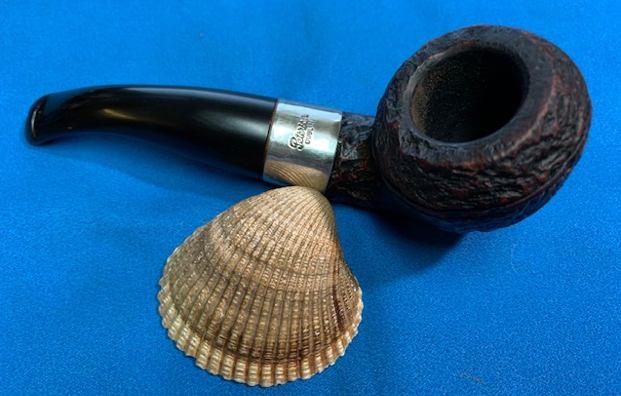
Yesterday a friend stopped by with a pipe he wanted me to have a look at and “spruce up” for him. He arrived in the heat of the day just before 5pm which is when it seems to be the hottest time here in Vancouver. He took the pipe out of his back pack and it was in the classic green Peterson of Dublin bag. He told me that he had picked it up at the Peterson’s shop in Dublin when he was there. It was hot out and he was with a friend so we did not go into details. The pipe appeared to be rusticated and looked to me like a Donegal Rocky in one of my favourite shapes – a Rhodesian 999. The bowl had a moderate cake and some lava on the rim top that needed attention. The rustication was dirty with dust of time ground in to the finish. The stem did not fit correctly in the shank. It should have been snug against the silver band but it was not. The silver “P” logo-ed stem was not too bad – no oxidation or build up. It had tooth chatter on both sides around the button. I took the pipe in and told him I would work on it and get back to him.

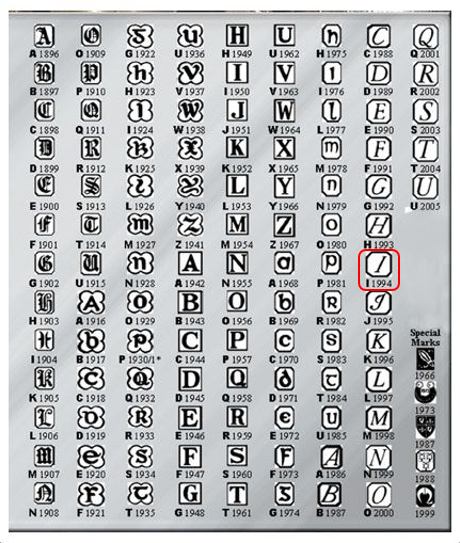
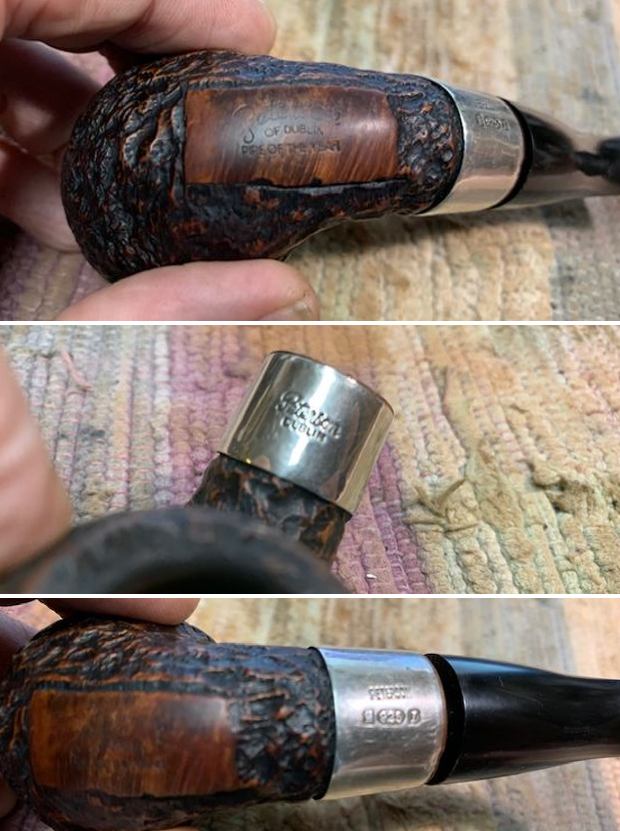
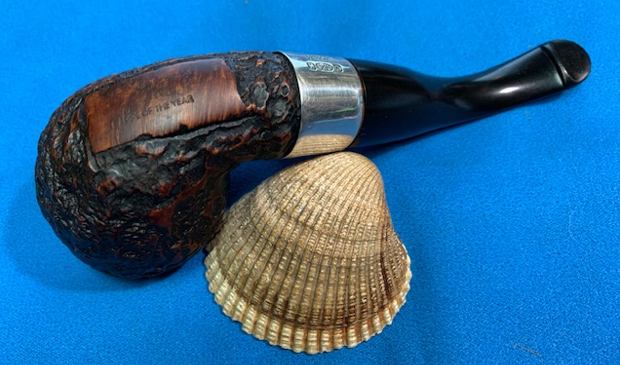
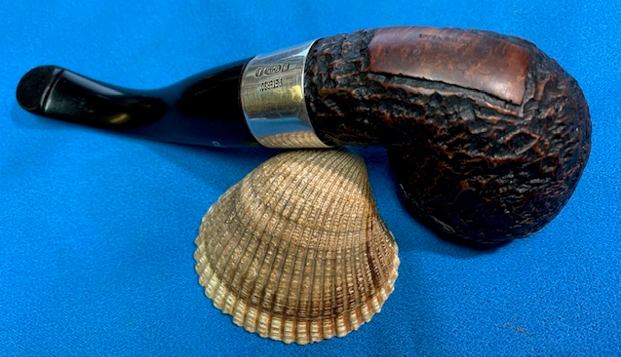
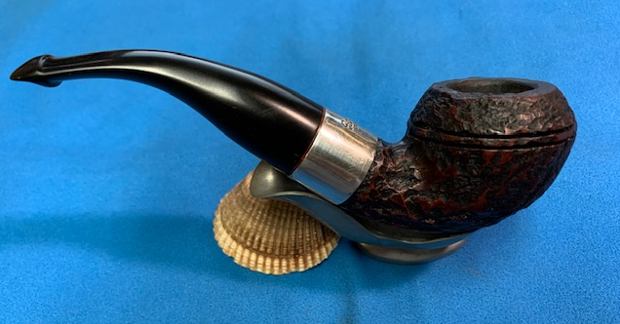
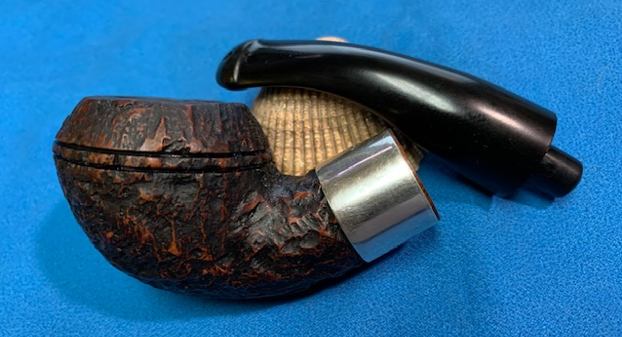
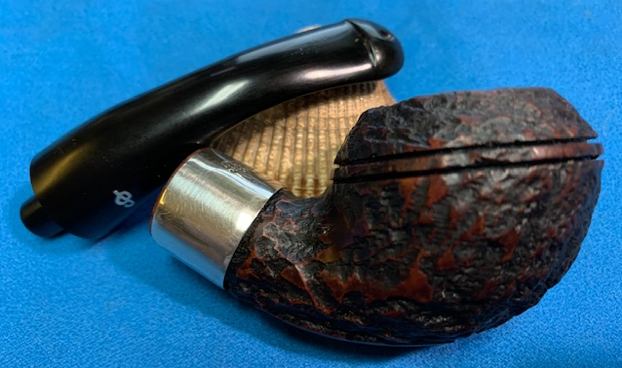
It was only later the next morning that I started working on it. I wanted to know what I was dealing with so I examined the faint stamping on the smooth panel on the underside of the shank. It read Peterson [arched over] OF DUBLIN [arched over] PIPE OF THE YEAR. There was no other stamping on the shank – no shape number and no year! I turned my attention to the silver band on the shank. It was a band and not a ferrule. It was stamped on the top and read Peterson [over] Dublin. On the underside it was stamped Peterson over three hallmarks – Hibernia seated (on the left) followed by 925 in an oval followed by an italic upper case “I”. That gave me the needed information. The Hibernia stamp identified it as made in Ireland, the 925 stamp was the quality of the silver and the italic I was the year. From the chart above that identified it as having been made in 1994 – at least the band was! I have drawn a red box around it in the above photo.

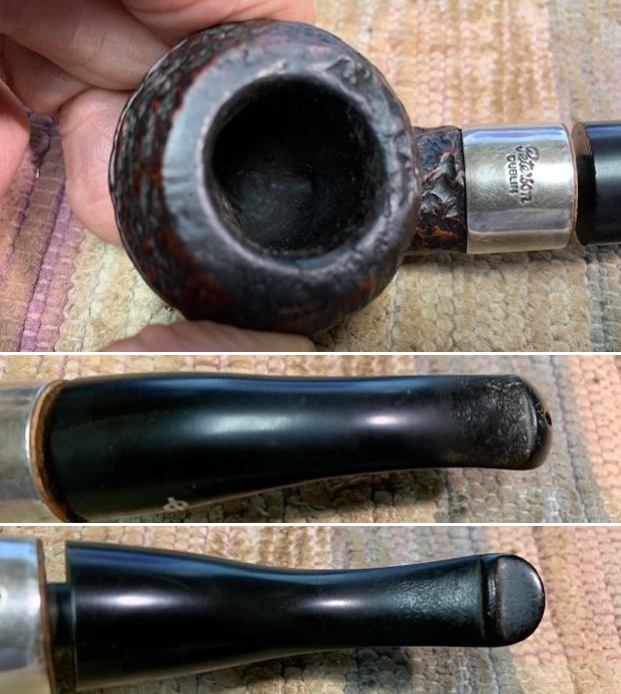
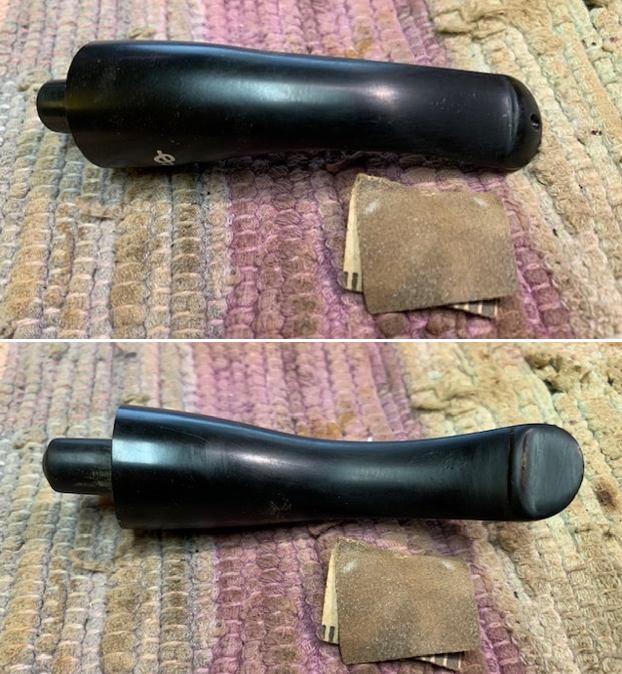
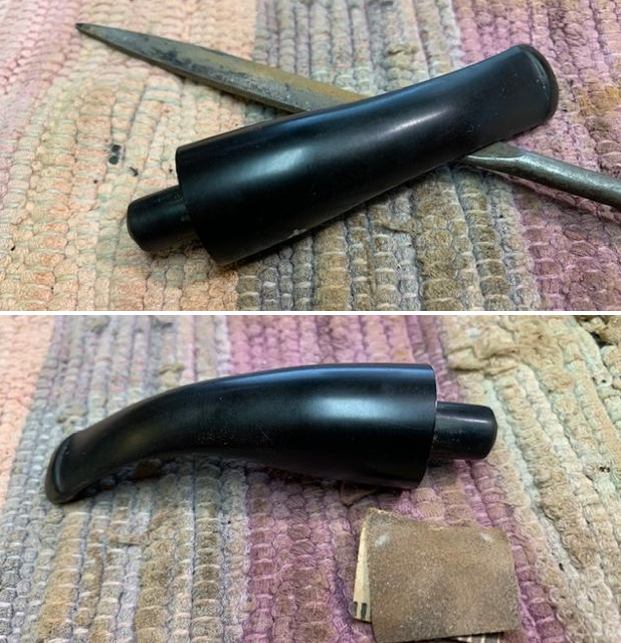
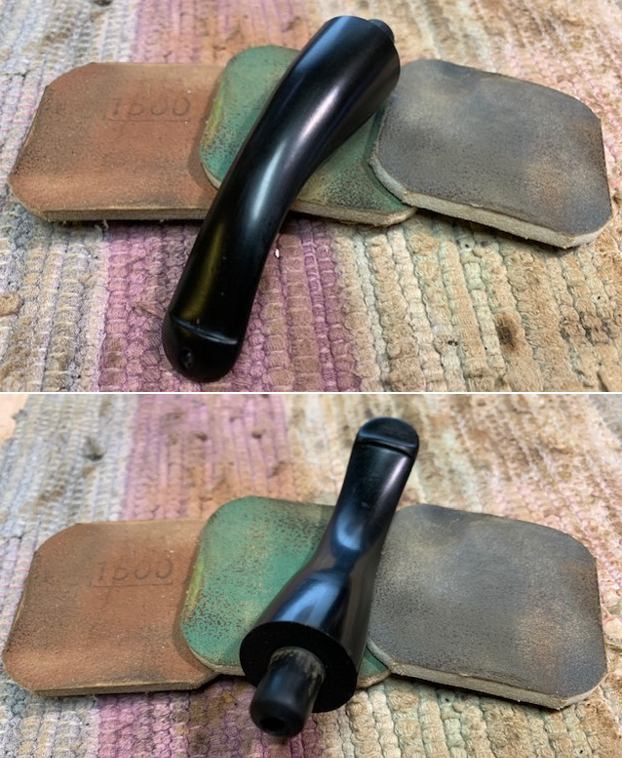
I took photos of the pipe before I started my work on it. These photos confirm the conditions noted above. The stem did not fit properly and my friend said it had been that way since he purchased it. The bowl was caked and the rim top had some lava overflow. The stem was clean other than the tooth chatter on both sides ahead of the P-lip button. It really was a nice looking pipe with a rugged rustication like the Donegal Rocky.I took a photo of the rim top and bowl to show the cake and the lava on the top. The first photo shows the gap where the stem does not fit the shank correctly. The stem photos show the tooth chatter on both sides.I took photos of the stamping on the underside of the shank and the band. They read as noted above. You can see the shape of the cartouche on each of the hallmarks.I started my work on the pipe by reaming the bowl with a Savinelli Fitsall Pipe Knife. I scraped the uneven cake back to bare briar so I could examine the walls on the bowl. It was in good condition. I used a brass bristle wire brush to scour off the lava on the rim top. It had filled in some of the rustication so the brush removed much of that. I scrubbed the rim top and the outside of the bowl and shank with a tooth brush and undiluted Murphy’s Oil Soap. I rinsed the bowl under running water to rinse off the soap and the debris. The bowl is beginning to take on a great look and the contrasting stains show well. I cleaned out the airway in the shank and the stem with 99% isopropyl alcohol, cotton swabs and pipe cleaners. I cleaned out the mortise carefully and was able to remove some stain and rubbish there that kept the stem from seating properly.I worked some Before & After Restoration Balm into the surface of the briar with my finger tips. I worked it into the crevices of the rustication with a horsehair shoe brush. The product continues to amaze me with it capacity to clean, enliven and protect the briar. I let it sit on the bowl for 10 minutes and then buffed it off with a soft cotton cloth. It is looking very good at this point.I polished the silver band with a jewelers cloth to remove the light tarnish and give it a deep shine. I set the bowl aside and turned my attention to the stem. I sanded out the tooth marks on the top and underside with a folded piece of 220 grit paper.I noticed that the tenon was a little larger in diameter at the stem end than the shank end. I would need to reduce it to the same diameter the entire length of the tenon for the fit to be right in the shank. I used a small file to work over the tenon. Once it was the right diameter I started the polishing of the tenon with 220 grit sandpaper.I polished the stem surface and the surface of the tenon with micromesh sanding pads – dry sanding it with 1500-12000 grit micromesh sanding pads. I wiped the stem down after each pad with some Obsidian Oil and finished the polishing it with Before & After Pipe Polish – both Fine and Extra Fine.I put the stem on the shank and lightly buffed the bowl and shank with Blue Diamond polish. I used a light touch so as not to get build up in the rustication. I used a heavier touch on the stem. The finished pipe with the properly fitted stem is a beauty. The Peterson Pipe of the Year from 1994 is a 999 shaped Rhodesian. The rusticated finish looks a lot like a Donegal Rocky. The fit of the stem to the shank is now flush and the feel in the hand is perfect. The pipe looks really good and has a rich shine. The dimensions of the pipe are – Length: 6 inches, Height: 1 ½ inches, Outside diameter of the bowl: 1 ¼ inches, Chamber diameter: 7/8 of an inch. The weight of the pipe is 60 grams/2.12 ounces. Give the finished pipe a look. I will be cleaning up my friend’s second pipe then giving him a call so he can pick them up. Thanks for walking with me through the blog. Cheers.

Breathing Life into a French Made Royal Ascot Deluxe Oom Paul


Blog by Steve Laug

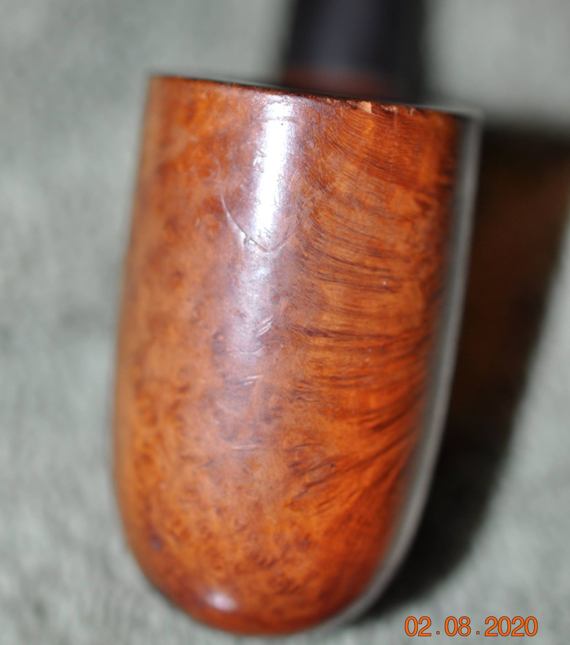
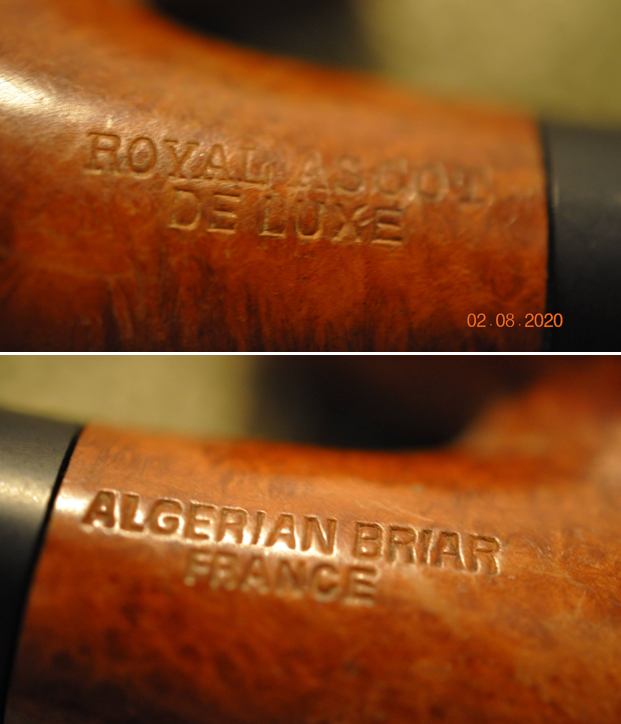
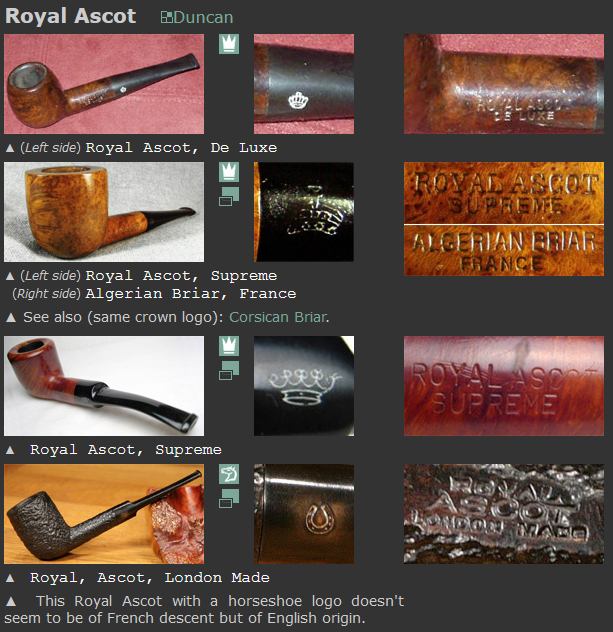
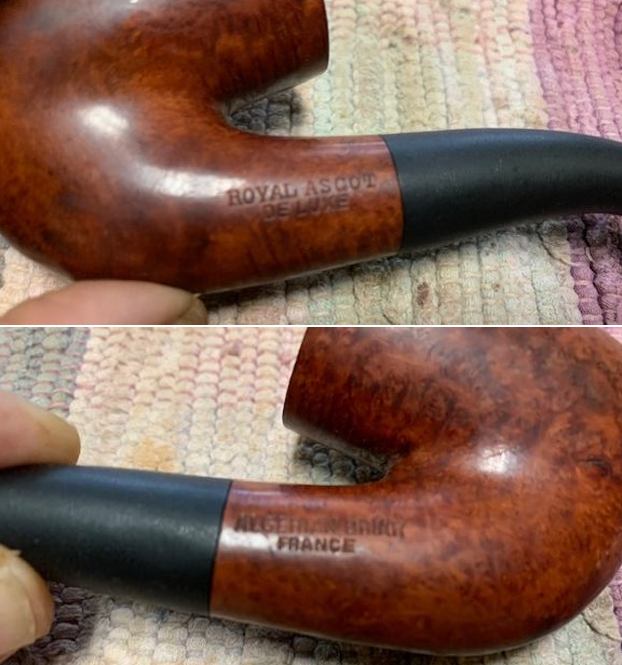
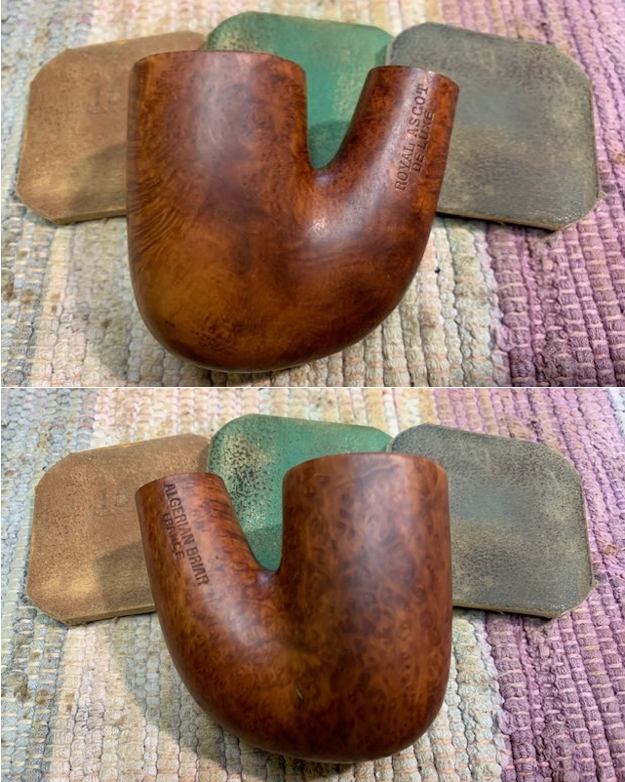
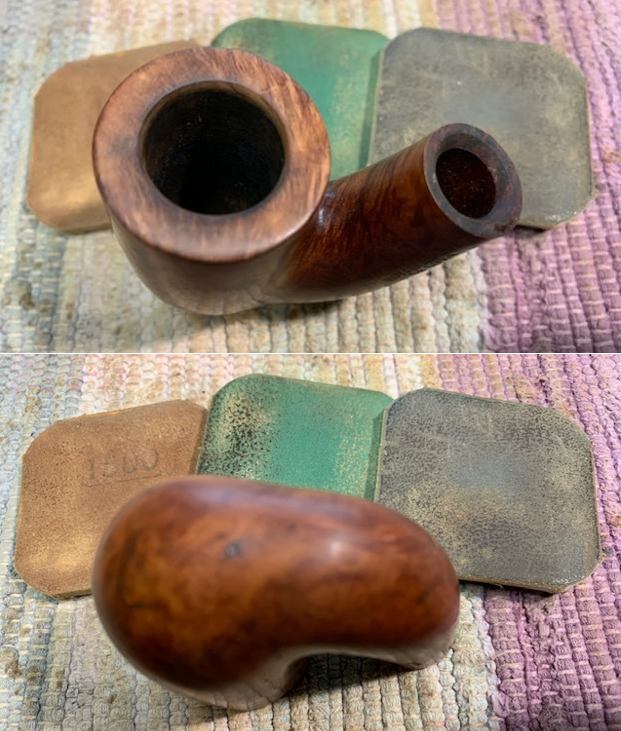
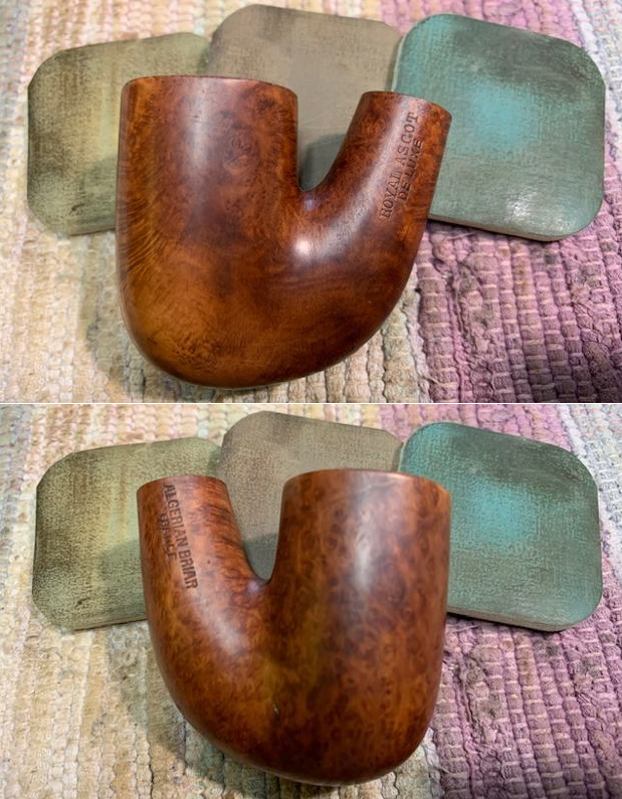
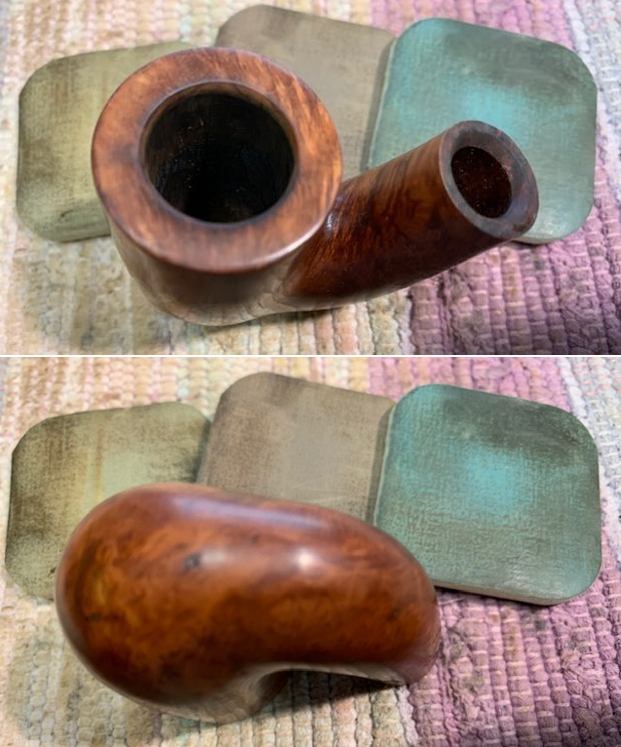
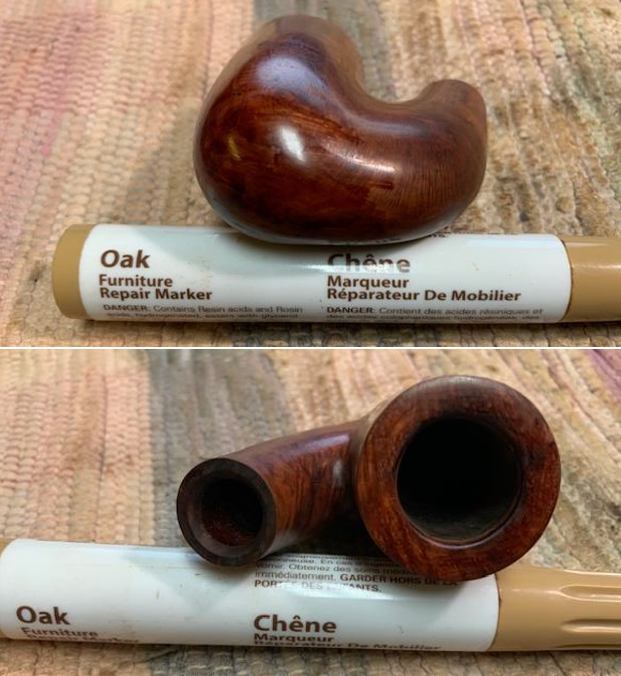
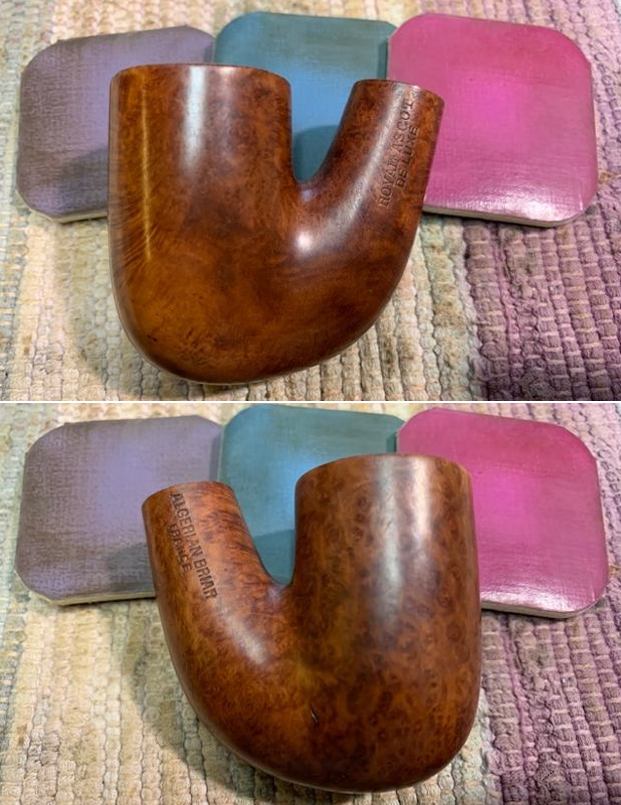
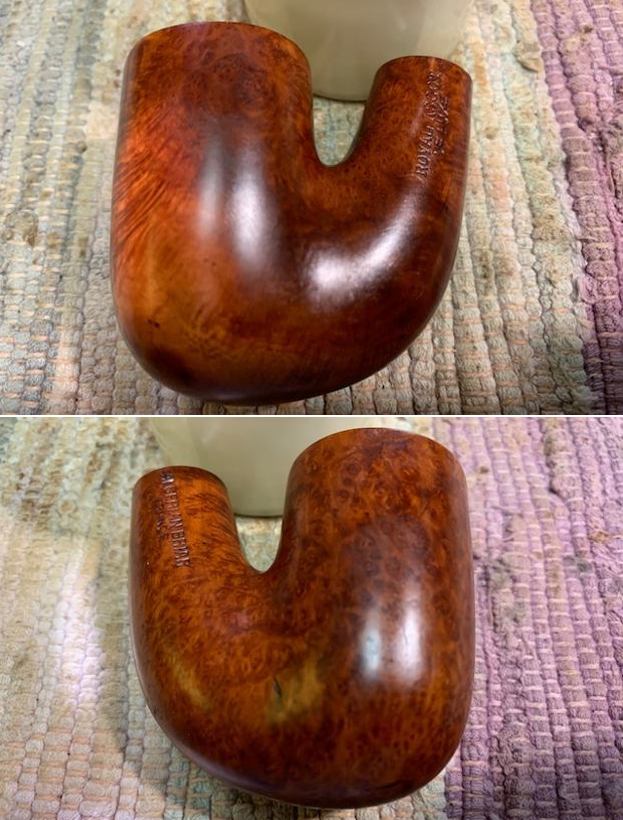
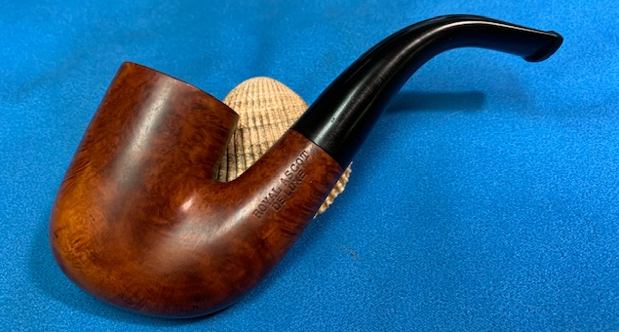
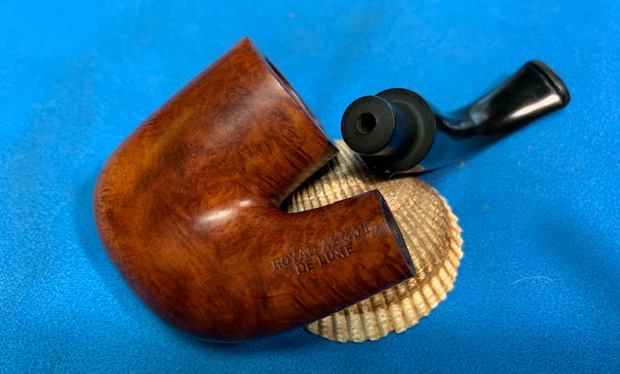
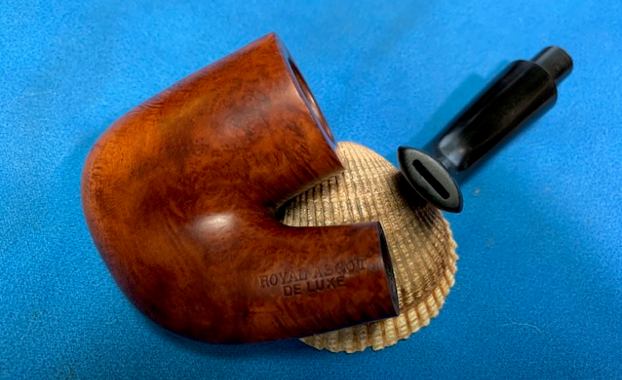
The next pipe on the work table was purchased form an online auction in Columbia, Missouri, USA. It is an Oom Paul shape that is stamped Royal Ascot [over] Deluxe on the left side of the shank and Algerian Briar [over] France on the right side. The shape is well done but I was not familiar with the brand. Jeff and I took a risk in purchasing it based on the shape alone but it looked to be worth it. The briar was mixed grain with birdseye on the sides and cross grain on the front and back of the bowl and shank. The finish was quite dirty with grime ground into the bowl sides and bottom. There was a thick cake in the bowl and an overflow of lava on the rim top and inner edges. There appeared to be some burn damage on the top and inner edge toward the rear of the bowl but only clean up would determine that with certainty. The stem seemed to be older hard rubber and had some mild oxidation and tooth chatter and marks on both sides at the button. There was a faint Crown logo stamped on the left side of the taper. Jeff took photos of the pipe before his clean up work started. He took photos of the rim top and bowl to give a clear picture of the cake and the condition of the rim top and bowl. He included photos of the stem as well to capture what it looked like pre-cleanup. It is a very graceful looking piece. Jeff took photos of the sides of the bowl to capture some of the grain that is visible through the grime coat and what also looks like a varnish coat on the briar. The stamping on the sides of the shank was readable and read as noted above. You can also see what appears to be some varnish on the shank sides – kind of a crackly shine coat over the letters.To find out more about a brand which I was ignorant of I turned to Pipephil’s site for a quick overview (http://pipephil.eu/logos/en/logo-r6.html). The Algerian Briar stamp on the shank led me to believe I was dealing with a pipe made for the American Market. The France stamp seemed odd to me with the very British sounding brand name “Royal Ascot” so I was intrigued to find out what I could learn about it. I have included a screen capture of the section on the site on the brand. There seems to have been a link to Duncan pipes.The side bar on the site included some interesting information. I quote

Pipes with this brand were manufactured in France for Duncan (according to J.M. Lopes, op. cit. and Wilczak & Colwell, op. cit.). They were destined to US market and sold by Mastercraft.

So there was the French/British connection and the connection to the US market and Mastercraft. There seems to always be a tie to the British or French houses with these odd brands and often a link to Mastercraft!

I turned then to Pipedia to see if there was further information as there often is when I use the two sources (https://pipedia.org/wiki/Royal_Ascot). Interestingly Pipedia quotes Pipephil’s site. There is a bit of additional information and some photos on the article as well.

According to PipePhil pipes with this brand were manufactured in France for Duncan (according to J.M. Lopes, op. cit. and Wilczak & Colwell, op. cit.). They were destined to US market and sold by Mastercraft. They are made in France and many are marked Algerian Briar. The logo is a crown on the stem. Some pipes of the same name with a horseshoe logo also exist that were made in England, but may not be the same company.

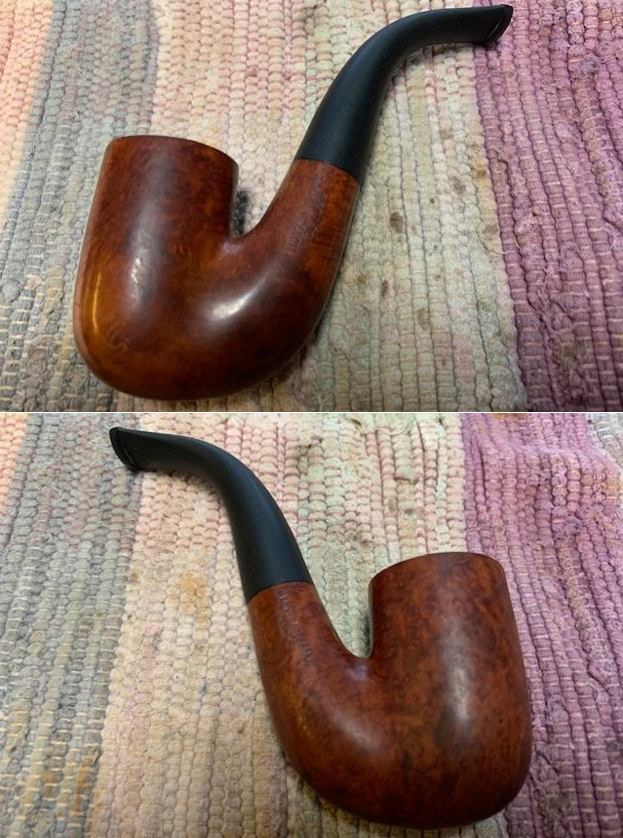
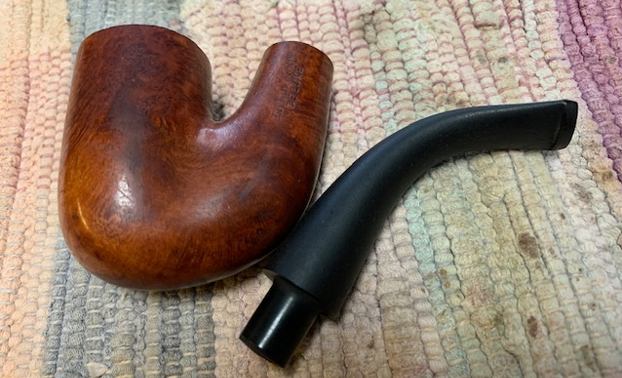
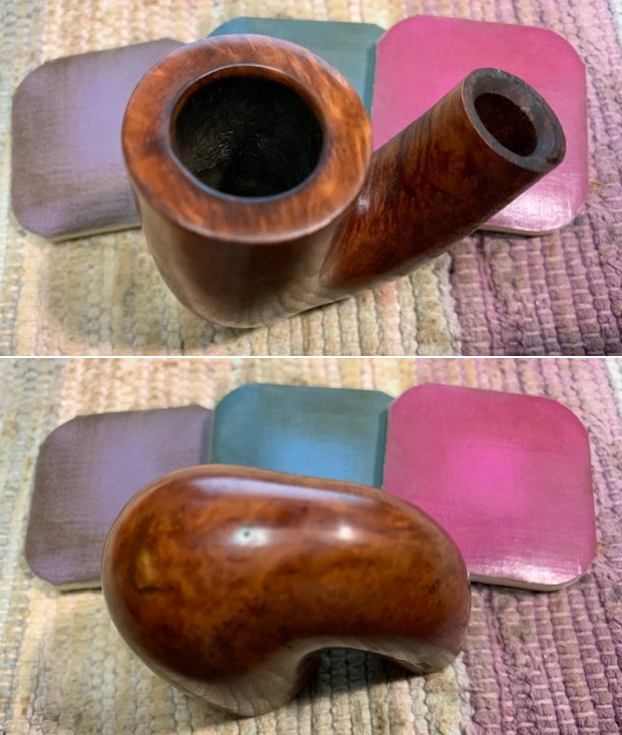
Jeff had done his usual clean up on the pipe – reaming it with a PipNet reamer and cleaning up the reaming with a Savinelli Fitsall Pipe Knife. He cleaned out the shank and the airway in the mortise and stem with isopropyl alcohol, cotton swabs and pipe cleaners. He scrubbed the exterior of the bowl with undiluted Murphy’s Oil Soap and a tooth brush to break through the grime. He was able to remove most of the varnish coat at the same time. He scrubbed the stem with Soft Scrub cleanser and cotton pads to remove the grime and light oxidation. He soaked it in Briarville’s Pipe Stem Deoxidizer. He rinsed it off and wiped the entire pipe down with a light rub of EVO to enliven both. When I received it I put it away for awhile. I am just getting to work on it now in the summer of 2021 almost a year later. Here is what I saw when I took it out of the box of pipes to work on. I took photos of the damage to the rim top and inner edges of the bowl. Fortunately it appeared to be on the surface and not to deep on the rim top. The inner edge showed more damage to the front of the bowl. The stem was clean but was pitted and had tooth marks on both sides ahead of and on the surface of the button.The stamping looked very good. It was clean and readable. The faint logo on the stem is visible with a lens but otherwise it is gone. It is a crown like the one shown in the photos from PipePhil.I removed the stem from the shank and took a photo of the parts to give a sense of the proportion of this Royal Ascot Oom Paul.I decided to start my work on the pipe by scrubbing it down with acetone on cotton pads to remove the remnants of the varnish coat. It was surprising how much came off and how much better the bowl looked once it was finished. I decided to deal with the inner edge of the rim and the rim top damage next. I used a folded piece of 220 grit sandpaper to clean up the slight bevel on the inner edge and remove the burn damage. I sanded the top as well and was able to make it look much better.There were a couple of rough spots – one on the right side at the shank/bowl junction and one on the heel – where the fills had shrunk. I filled them both in with clear super glue. When the repairs cured I sanded the smooth with 220 grit sandpaper to blend them into the surrounding briar. I polished the briar with micromesh sanding pads to further blend in the repairs and the sanded rim top. I dry sanded with 1500-12000 grit pads and wiped the briar down after each pad with a damp cloth to remove the debris. I paused the polishing to touch up the repaired areas and rim top with an Oak Stain Pen. The colour was the closest match to the rest of the bowl so once it was polished and buffed it would blend in well.I resumed the polishing with 6000-12000 grit micromesh and found that the areas on the bowl that I had stained blended in very well.I rubbed the bowl down with Before & After Restoration Balm and worked it into the briar. The product cleans, enlivens and protects the briar. I let it sit for 10 minutes to do its work then buffed it off with a soft cloth. The pipe is shown below as it looks at this point in the process. I set the bowl aside and turned my attention to the stem. I “painted” the surface of the hard rubber stem with the flame of a lighter to lift the tooth marks as much as possible. I was able to lift them significantly. I filled in the remaining one on the top side next to the button and on the underside in the same place with clear super glue. Once it cured I sanded it smooth with 220 grit sandpaper. I polished the stem with micromesh sanding pads – dry sanding with 1500-12000 grit pads and wiping the stem down after each pad with Obsidian Oil to help protect and preserve the rubber. I polished with Before & After Pipe Polish – both Fine and Extra Fine and gave it a final coat of Obsidian Oil to finish. I finished the stem and put the pipe back together again. I buffed the Royal Ascot Deluxe French Made Algerian Briar Oom Paul with Blue Diamond on the buffing wheel. I gave the bowl and stem multiple coats of carnauba wax and buffed the pipe with a clean buffing wheel. I hand buffed it with a microfiber cloth to deepen the shine. The pipe is a real beauty. The dimension of the pipe are  – Length: 5 ½ inches, Height: 2 inches, Outside diameter of the bowl: 1 ¼ inches, Chamber diameter: ¾ of an inch. The weight of the pipe is 60 grams/2.12 ounces. The pipe will be added to the rebornpipes store in the French Pipe Makers section soon. If you are interested in adding it to your collection let me know. Thanks for walking through the restoration with me. Cheers.

Cleaning up a GBD Speciale 9438 Rhodesian


Blog by Mike Belarde

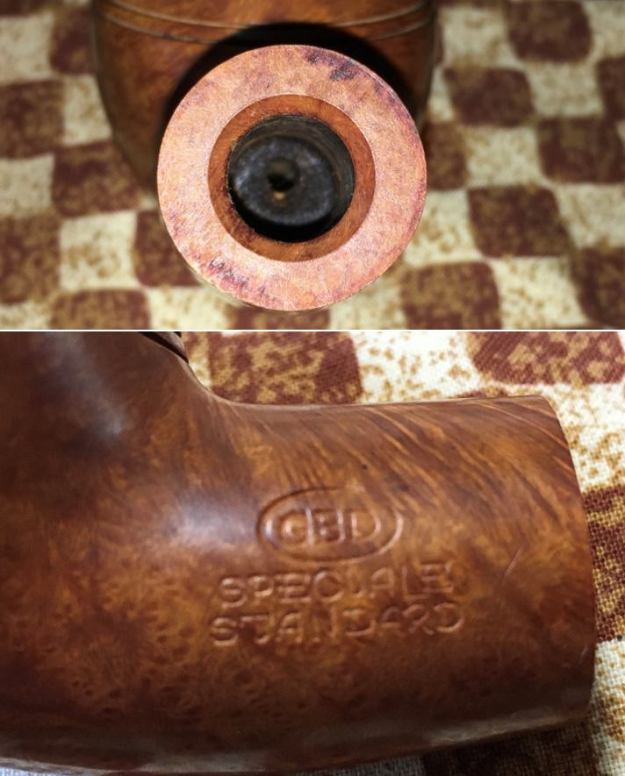
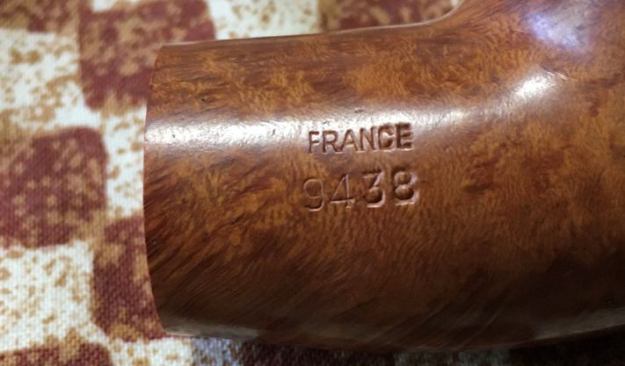
Hello. Thank you for taking the time to read this post, and walk through a fun clean up job on a GBD 9438.

I’m pretty excited about this pipe.  Like many readers of this site, the GBD 9438 Rhodesian is one of my favorite shapes. There is just something endearing about this rendition of the bent Rhodesian. The thick walls of these pipes also seem well suited for many of the flake tobaccos that I enjoy.  I was really thrilled when I won this pipe in an online auction out of New York.  The pipe looked to be in good condition in the pictures provided for the online listing. The stummel looked to have a nice smattering of bird’s eyes and some cross grain on the right side.

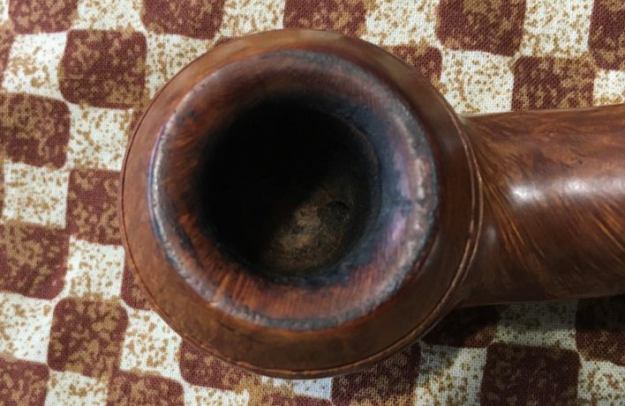
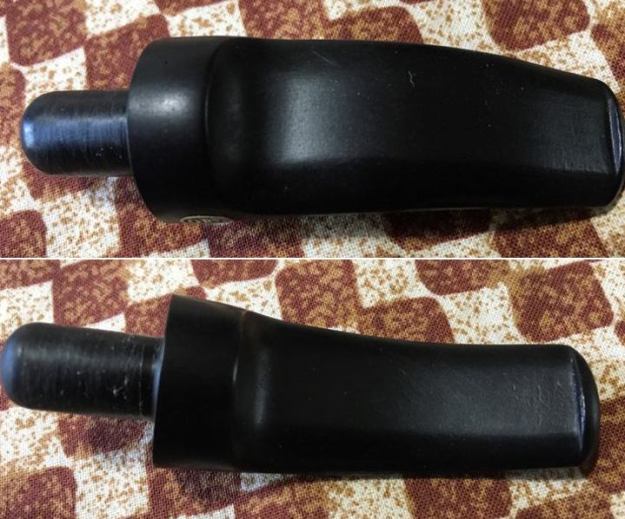
When I received the pipe, I found it to be in great condition. The stain looked a little faded, but the pipe had a nice orange-ish brown or reddish-brown tint to it. The stamping was legible and crisp. The rim was grungy and blackened. The chamber had only a trace of cake. The stem looked great. It was free of tooth marks and heavy oxidation, but looked to have some sanding marks, or scratches from being over buffed. All in all, I felt very pleased with the condition of the pipe.  Here are some pictures of the pipe, prior to cleaning process. As you can see from the photos, this pipe is in great shape for its age. Now let’s proceed to the cleaning process.

The first step in the process is to address the internals of both the briar and stem, and then clean up the grime on the stummel, and the carbon build up on the rim.  For this job I only grabbed a nylon bristled shank brush, some bristled and regular pipe cleaners, 99.9% isopropyl alcohol, and a bit of folded 320 grit sandpaper.I cleaned the shank over the sink with the shank brush dipped in alcohol. After each pass through the shank, I rinsed the shank brush under running water and re- dip it in the alcohol. I repeated this process until the soiling coming out on the shank brush began to lighten.   Once this happened, I transition to bristled pipe cleaner dipped in alcohol, and then lastly, regular pipe cleaners.

I also ran both alcohol dipped bristled and regular pipes cleans through the stem.  I was happy that the pipe was fairly clean and I only ran through a small hand full of pipe cleaners.

There wasn’t enough cake in the chamber to warrant the use of the reamer, so I opted to just sand out the chamber lightly with a folded piece of sandpaper.  Once that was completed, I scrubbed out the chamber and the shank with alcohol dipped cotton swabs. With the internals cleaned, I scrubbed the stummel with Murphy’s Oil Soap and an old toothbrush. I then scrubbed the rim with an old green scouring pad. The rim and the chamber cleaned up well and appeared to be in good condition. I took the rest of the charring or darkening on the rim and inner rim with a folded piece of 320 grit sandpaper. I light sanded out the darkening on the rim and reestablished the slight bevel in the inner rim with the sandpaper. The stummel seemed to be fairly clean but I decided to de-ghost the piped further.  I inserted two folded tapered fluffy pipe cleaners through the shank and down into the chamber to act as a wick. To ensure that there was contact on all the surface of the internal walls of the shank, I add two more folded pipe cleaners into the large shank of the Rhodesian.   I have found using the fluffy pipe cleaners is easier for me than trying to fish an elongated cotton ball down the shank.  I then placed a cotton ball in the chamber and saturated it with isopropyl alcohol.

While the stummel was de-ghosting. I placed the stem in a small Tupperware container to soak in Briarville’s Oxidation Remover solution.  This pipe was very clean and I only let both the stummel and stem to soak for about eight hours.Both the alcohol and the Briarville solution further cleaned the pipe. I took the stem out of the solution and rinsed it and then ran some alcohol dipped pipe cleaners through it. I then scrubbed the stem with Soft Scrub and the scouring pad to clean it up further. I then worked on the stem. There appeared to be light scratches and a bit of pitting near the button. I took a folded piece of 400 grit sandpaper and sanded out the damage the best I could. The sanding seemed to have taken care of most of the flaws in the stem.In the next step I took the stem through the progression of micromesh pads (1500-12000). I polished the stem with each pad and wiped the stem down with a cotton pad soaked in Obsidian Oil in between each pad. In the last step, I polished the stem with Before and After’s Extra Fine Polish. Satisfied with the progress on the stem, I turned my attention to the stummel. I polished the briar with the progression of micromesh pads (1500-12000) wiping it down with a damp paper towel. Once this step was done, I mixed some dye up to touch up the stain.I really liked the light orange or red tint that this pipe had, so I decided to try and re-stain it with British Tan. I mixed a one-to-one ratio of British Tan with alcohol to thin the leather dye down a bit. I like to apply the stain with a small hobby brush. I find that the brush helps me to coat the stummel evenly. Once the stain was applied, I used a small tea candle to fire the briar and set the dye. I let the stummel sit for a couple of hours and then removed some of the excess stain with a cotton pad soaked in acetone. After removing some of the excess stain with acetone I began to polish the stummel with the micromesh pad series (1500-12000). I wiped the briar down with a damp paper towel between each pad.

Once I was finished with the micro pads, I worked some Before and After Restoration Balm into the stummel. The pipe was really looking nice at this point! I let the balm sit for about 10 minutes and then buffed the stummel with a cotton cloth. In the last step of the process, I buffed both the stummel and stem with Red Tripoli and Blue Diamond.  I then gave both several coats of Carnauba wax and buffed them with a cotton cloth.

I’m really happy how this pipe turned out, and am looking forward to loading it up and relaxing with it in the backyard. Thanks for taking the time to read this post!

Restoring the final pipe of the Thrift Shop Foursome – A GBD Tapestry 1970 Diplomat


Blog by Steve Laug

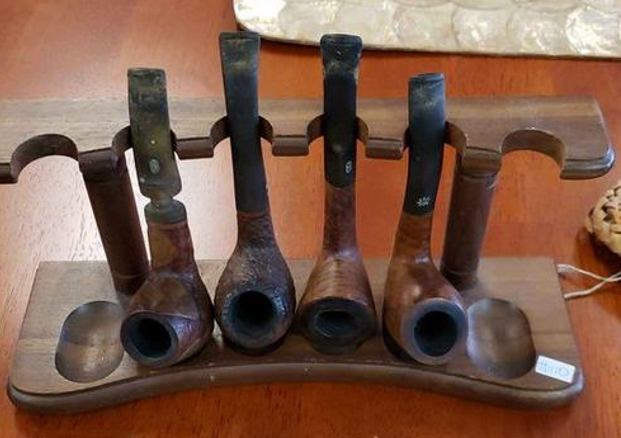
I was scanning through Facebook Marketplace and came across a collection of four pipes that were being sold near where I live in Vancouver. I messaged the individual and it turned out it was an animal rescue/hospital thrift shop. They were selling the four pipes and the rack with all proceeds going to their charity. My second daughter and I made the drive over to visit and have a look at the pipes. I have included the photo from the advertisement to show the pipes and their condition. The label on the sale was inaccurate but I could see what at least three of the pipes were and I was interested.When I parked in front of the shop and went in the clerk brought out the pipes and rack so I could have a look. In the order they are in the rack from left to right the pipes were as follows: A GBD Tapestry 1970 Shape (Diplomat), a Brigham 228 two dot sitter in a shape I had not seen before, a Chacom Meridien 811 Dublin with a diamond shank, and a Kriswill Saga 140. The Brigham and the Chacom both had cracks. The Brigham had a hairline crack in the bowl and Chacom a cracked shank. I paid the price we agreed on for the pipes and headed home.

I wrote Charles Lemon of Dad’s Pipes who is the go to guy for all things Brigham and asked him about the pipe. He said it was a shape he did not have and did not have on his shape chart. I thought about it overnight and sent it off to him on Monday morning. I look forward to his blog on this pipe as it is a really Danish looking Brigham.

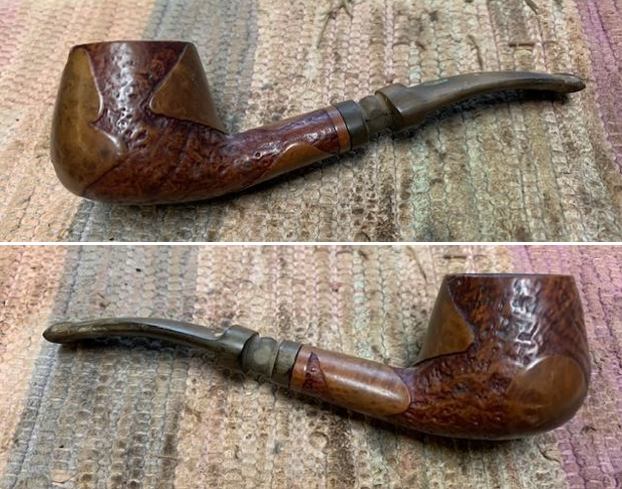
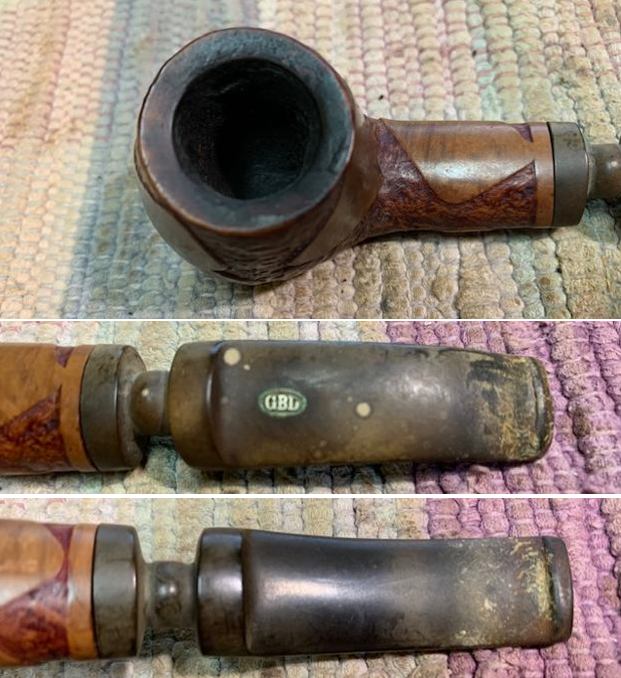
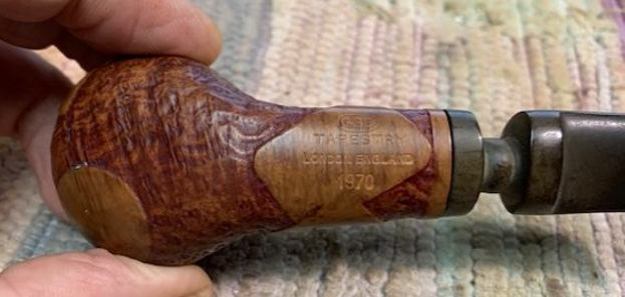
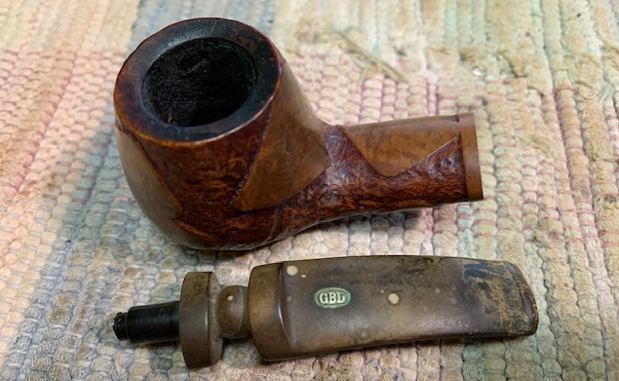
That left me with three pipes to work on. I worked on the Chacom Meridien first and have written about the work (https://rebornpipes.com/2021/07/23/repairing-and-adding-a-touch-of-antiquity-to-a-chacom-meridien-diamond-shank-811-dublin/). The second pipe, a Kriswill Saga Scoop has also been finished (https://rebornpipes.com/2021/08/07/restoring-an-interesting-kriswill-saga-140-scoop-egg/). The final pipe, the GBD Tapestry was a great looking shape but it was also a bit of a mess. The bowl had not only a moderate cake in the bowl and lava on the rim top toward the back side. The edges looked quite good with darkening on the back rim top. The mixed finish sandblast with smooth patches was filthy with ground in grit and grime. The stamping on the pipe was minimal. On the underside it read GBD in an oval [over] Tapestry over London England [over] the shape number 1970. The chairleg stem had the brass GBD roundel  on the topside. There was a lot of oxidation, calcification and tooth marks on chatter on both sides. It was tired but showed a lot of promise. I took photos of the pipe as it was when I brought it home.  I took some close up shots of the bowl and rim top along with the stem to show the condition of both. You can see the cake in the bowl. The rim top shows the lava coat that is all the way around but heavier on the right rear and side. The photos of the stem show its condition. You can see the oxidation, calcification, some paint spots and tooth marking in the photos below.I took photos of the stamping on underside of the shank and it read as noted above. I took a photo of the pipe with the stem removed to give a sense of the beauty of contrasting finish of sandblast and smooth panels on the bowl and shank. It is a nice looking pipe.I turned to Pipedia (https://pipedia.org/wiki/GBD) and read the history section to see if I could find any information on the Tapestry Line. There was a paragraph toward the end that gave a list of the pipe grades and where Tapestry fit into the brand. I quote:

The following list comprises the better grades in descending order:  Pedigree, Pedigree I, Pedigree II, Straight Grain, Prodigy, Bronze Velvet, Virgin, Varichrome, Prestige, Jubilee, New Era, Prehistoric, International, Universe, Speciale Standard, Ebony, Tapestry, New Standard, Granitan, Sauvage, Sierra, Penthouse, Legacy, Concorde.

I turned to the related article on Shape numbers for GBD pipe to see if I could find anything about the 1970 shape (https://pipedia.org/wiki/GBD_Shapes/Numbers). I found the following listed item:There was a slight issue in the information above. I would indeed call the shape a Diplomat and it has a 1/8 bent stem. However, the shank is oval not round.

I turned to another Pipedia article (https://pipedia.org/wiki/GBD_Model_Information) looking for information on the Tapestry line. I found it listed under the heading of a  List of GBD Models. It said:

Tapestry — Factory unknown: light brown sandblast, geometric panels masked before blasting. -TH: Chairleg stem. -catalog (1976).

Now it was time to work on the pipe. I began my work on the pipe by reaming out the cake. I started the process by reaming the bowl with a PipNet pipe reamer and took the cake down to bare walls. I cleaned up the reaming with a Savinelli Fitsall Pipe Knife. I finished the bowl work by sanding the inside with piece of dowel wrapped with 220 grit sandpaper. Once it was finished the bowl was clean. With cake removed I scrubbed the exterior of the bowl with undiluted Murphy’s Oil Soap and a tooth brush to remove the grime ground into the briar and to remove the buildup of lava on the rim top and edges. It really was a nice looking piece of briar. I scraped the walls of the mortise with a small pen knife to scrape away the thick tarry buildup that was present. I cleaned out the mortise, the airway into the bowl with alcohol, pipe cleaners and cotton swabs. It was very dirty with tars and oils and took a lot of swabs and pipe cleaners. I had already put the stem in the deoxidizer so cleaning the airway would have to wait.I used a folded piece of 220 grit sandpaper to clean up the darkening on the rim top. I was able to remove much of it. The rest would lessen with polishing.I dropped the stem into a soak of Briarville’s Pipe Stem Deoxidizer and set it aside for several hours while I worked on the bowl.While the stem soaked I polished the briar with micromesh sanding pads – dry sanding it with 1500-12000 grit pads. I wiped it down with a damp cloth after each pad to remove the debris. The bowl began to take on a deep shine. I worked some Before & After Restoration Balm into the finish my fingertips and into the nooks and crannies of the sandblast portion with a horsehair shoe brush. The product works to clean, enliven and protect the briar. I let the balm sit for 10 minutes and then buffed with a cotton cloth to raise the shine. The product brought the briar to life and gave some depth to the finish. I set the bowl aside and turned my attention to the stem. I took it out of the Briarville Pipe Stem Deoxidizer and rubbed it down with a coarse cloth. The oxidation was still present but primarily around the fancy turned portion of the stem. I remembered to clean out the inside of the stem with pipe cleaners and isopropyl alcohol. I scrubbed the surface of the stem with Soft Scrub cleanser on cotton pads until I had removed the remaining oxidation. The stem was actually starting to look very good at this point in the process.I polished the stem with micromesh sanding pads – dry sanding with 1500-12000 grit sanding pads. I wiped the stem down after each pad with Obsidian Oil. I polished it further with Before & After Fine and Extra Fine Stem Polishes. I wiped it down a final time with Obsidian Oil and set it aside to dry. This GBD Tapestry 1970 Diplomat turned out to be a real beauty with some nice grain on both the sandblast portions and the smooth patches. I put the stem on the shank and buffed it with Blue Diamond on the buffing wheel. I gave the stem and bowl multiple coats of carnauba wax and buffed it with a clean buffing pad to raise the shine. I hand buffed it to deepen the shine. The grain on the briar came alive with the buffing and the gold of the band was a great contrast between the briar and the polished vulcanite stem. The dimensions of the pipe are – Length: 5 ½ inches, Height: 1 ½ inches, Outside Diameter of the bowl: 1 ¼ inches, Diameter of the Chamber: ¾ of an inch. The weight of the pipe is 1.23 ounces/35 grams. It is really a great looking pipe. The oval shank and fancy chair leg style stem looks excellent. I will be adding it to the rebornpipes store in the British Pipe Makers section shortly. If you are interested in adding it to your collection let me know. Thanks for walking through the restoration with me. Cheers.

Restoring an interesting Kriswill Saga 140 Scoop/Egg


Blog by Steve Laug

I was scanning through Facebook Marketplace and came across a collection of four pipes that were being sold near where I live in Vancouver. I messaged the individual and it turned out it was an animal rescue/hospital thrift shop. They were selling the four pipes and the rack with all proceeds going to their charity. My second daughter and I made the drive over to visit and have a look at the pipes. I have included the photo from the advertisement to show the pipes and their condition. The label on the sale was inaccurate but I could see what at least three of the pipes were and I was interested.When I parked in front of the shop and went in the clerk brought out the pipes and rack so I could have a look. In the order they are in the rack from left to right the pipes were as follows: A GBD Tapestry 1970 Shape (Banker), a Brigham 228 two dot sitter in a shape I had not seen before, a Chacom Meridien 811 Dublin with a diamond shank, and a Kriswill Saga 140. The Brigham and the Chacom both had cracks. The Brigham had a hairline crack in the bowl and Chacom a cracked shank. I paid the price we agreed on for the pipes and headed home.

I wrote Charles Lemon of Dad’s Pipes who is the go to guy for all things Brigham and asked him about the pipe. He said it was a shape he did not have and did not have on his shape chart. I thought about it overnight and sent it off to him on Monday morning. I look forward to his blog on this pipe as it is a really Danish looking Brigham.

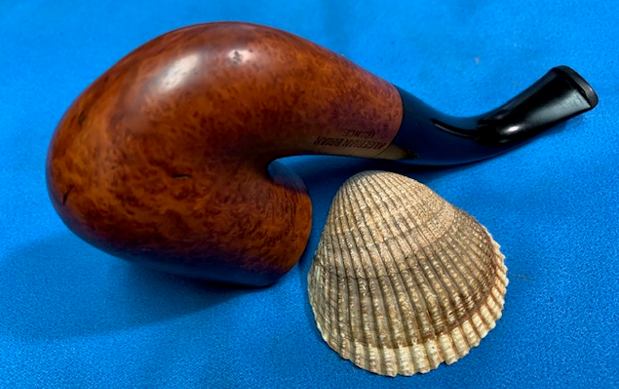
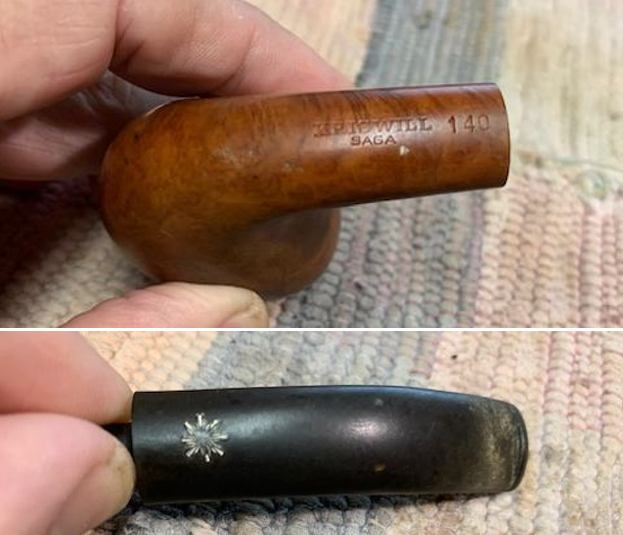
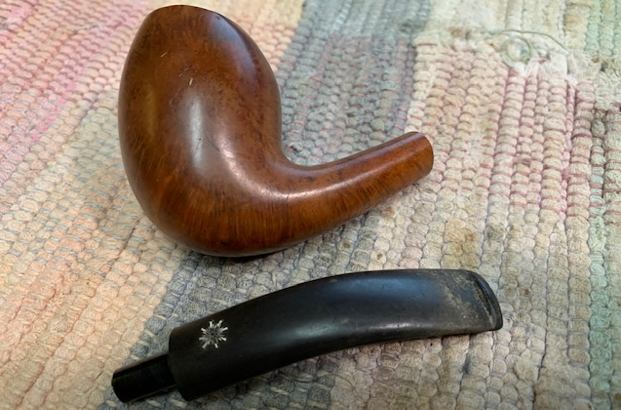
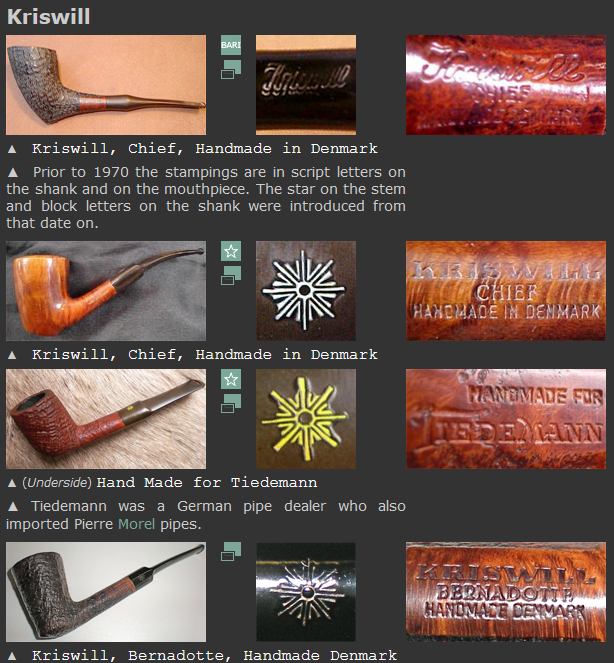
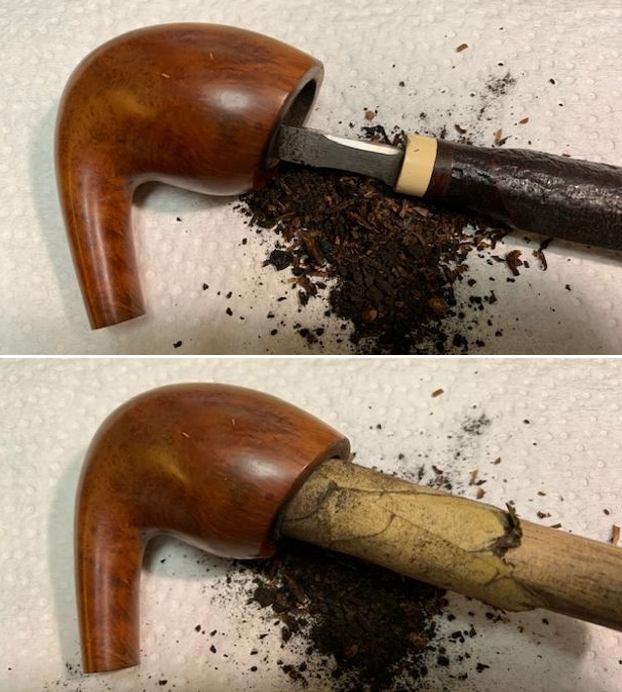
That left me with three pipes to work on. I addressed the cracked shank in the Chacom Meridien first and have written about the work (https://rebornpipes.com/2021/07/23/repairing-and-adding-a-touch-of-antiquity-to-a-chacom-meridien-diamond-shank-811-dublin/). The second pipe of the three I chose to work on was a Kriswill Saga Scoop. The pipe was a great looking shape but it was also a bit of a mess. The bowl had not only a moderate cake in it but also about a ½ bowl of old tobacco that was unsmoked. The cake in the bowl had erupted onto the crowned rim top and left a light lava coat toward the back side. The edges looked quite good with some nicks on the front outer edge. The briar was filthy with ground in grit and grime. The stamping on the pipe was minimal. On the underside it read Kriswill [over] Saga followed by the shape number 140. The stem had the Kriswill star logo on the topside of the taper. There was a lot of oxidation, calcification and tooth marks on chatter on both side. It was tired but showed a lot of promise. I took photos of the pipe as it was when I brought it home.  I took some close up shots of the bowl and rim top along with the stem to show the condition of both. You can see the half smoked bowl of tobacco and the cake in the bowl. The rim top shows the lava on the left side at the back and toward the front on the right side. The photos of the stem show its condition. You can see the oxidation, calcification and tooth marking in the photos below.I took photos of the stamping on underside of the shank and the logo on the stem and have included them below. They read as noted above.I took a photo of the pipe with the stem removed to give a sense of the beauty of the shape. It is a nice looking pipe.I turned to Pipephil’s site for a quick overview of the brand (http://pipephil.eu/logos/en/logo-k3.html). I have included a screen capture of the brand below. From that I knew that the pipe I was working on was post 1970 because of the stamping and the star on the stem.There was also a side bar that gave further information on the brand. It established an end date for the pipe I was working on. It was made before the late 1970s when the company went bankrupt. I knew that it was made between 1970-1978/79. I quote below

Kriswill is a brand of Kriswork Briar Trading, in Kolding (Denmark) established about 1955. Some of Kriswill pipes were designed by Sigvard Bernadotte, Swedish prince and brother to the late Queen Ingrid of Denmark. He collaborated with his Danish partner Acton Bjørn. When the company went bankrupt in the late 1970s it was on a level with Stanwell. Dan Pipe Cigar & Company (Hafenstrasse 30 D-21481 Lauenburg/Elbe, Ge) bought the rights to use the name and it is Holmer Knudsen and/or Poul Winsløw who make the Kriswill line.

Pipedia has a great history write up on the brand (https://pipedia.org/wiki/Kriswill). It gives a great summary of the history. There were several shape charts there and there was not a shape 140 but there was a 40 that was identical. With that out of the way it was time to work on the pipe.

I began my work on the pipe by reaming out the cake. I started the process with a Savinelli Fitsall Pipe Knife to remove the unsmoked tobacco and the moderate cake in the conical bowl. I took it back to bare briar then sanded the bowl with piece of dowel wrapped with 220 grit sandpaper. Once it was finished the bowl was clean.With cake removed I scrubbed the exterior of the bowl with undiluted Murphy’s Oil Soap and a tooth brush to remove the grime ground into the briar and to remove the buildup of lava on the rim top and edges. It really was a nice looking piece of briar. I cleaned out the mortise, the airway into the bowl with alcohol, pipe cleaners and cotton swabs. It was very dirty with tars and oils and took a lot of swabs and pipe cleaners. I had already put the stem in the deoxidizer so cleaning the airway would have to wait.I dropped the stem into a soak of Briarville’s Pipe Stem Deoxidizer and set it aside for several hours while I worked on the bowl.While the stem soaked I polished the briar with micromesh sanding pads – dry sanding it with 1500-12000 grit pads. I wiped it down with a damp cloth after each pad to remove the debris. The bowl began to take on a deep shine. I worked some Before & After Restoration Balm into the finish my fingertips to clean, enliven and protect the briar. I let the balm sit for 10 minutes and then buffed with a cotton cloth to raise the shine. The product brought the briar to life and gave some depth to the finish. I set the bowl aside and turned my attention to the stem. I took it out of the Briarville Pipe Stem Deoxidizer and rubbed it down with a coarse cloth. I was pretty happy with how good it looked. I cleaned out the inside of the stem with pipe cleaners and isopropyl alcohol.I touched up the star logo on the top of the stem with white acrylic nail polish. I applied it and when it dried scraped it off with a tooth pick and then polished it with a worn 1500 grit micromesh pad. I am happy with the finished look of the logo.I polished the stem with micromesh sanding pads – dry sanding with 1500-12000 grit sanding pads. I wiped the stem down after each pad with Obsidian Oil. I polished it further with Before & After Fine and Extra Fine Stem Polishes. I wiped it down a final time with Obsidian Oil and set it aside to dry. This Kriswill Saga 140 Scoop/Egg from the 1970s is a real beauty with some nice grain. I put the stem on the shank and buffed it with Blue Diamond on the buffing wheel. I gave the stem and bowl multiple coats of carnauba wax and buffed it with a clean buffing pad to raise the shine. I hand buffed it to deepen the shine. The grain on the briar came alive with the buffing and the gold of the band was a great contrast between the briar and the polished vulcanite stem. The dimensions of the pipe are – Length: 5 inches, Height: 2 inches, Outside Diameter of the bowl: 1 ¼ inches, Diameter of the Chamber: ¾ of an inch. The weight of the pipe is 1.45 ounces/41 grams. It is really a great looking pipe. The oval shank and tapered stem looks excellent. I will be adding it to the rebornpipes store in the Danish Pipe Makers section shortly. If you are interested in adding it to your collection let me know. Thanks for walking through the restoration with me. Cheers.

Restoring and Repairing a Cracked Shank & Broken Tenon on a Portland oval shank 60 Egg


Blog by Steve Laug

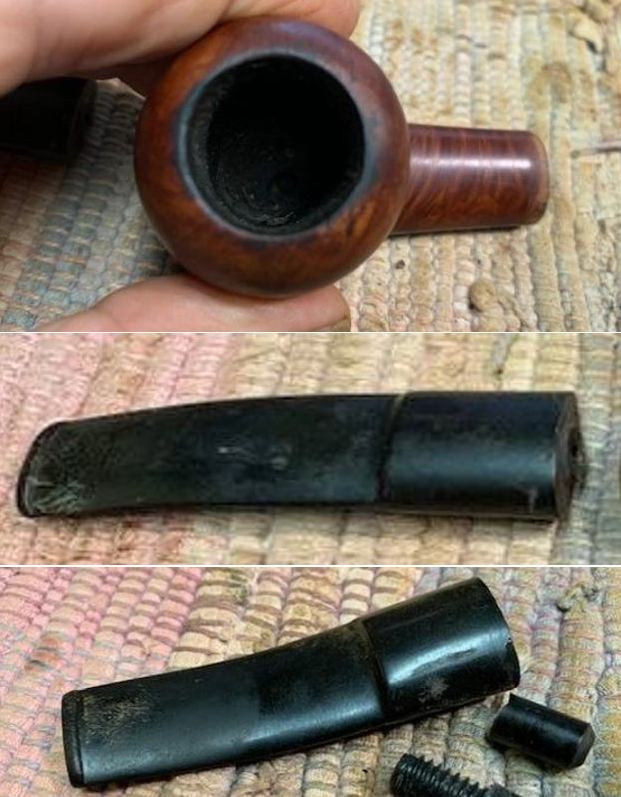
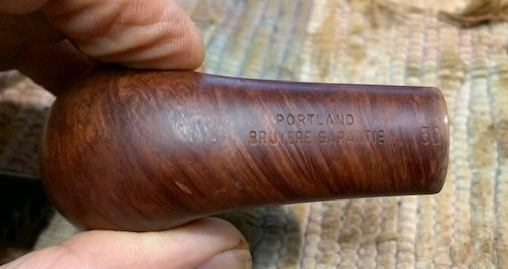
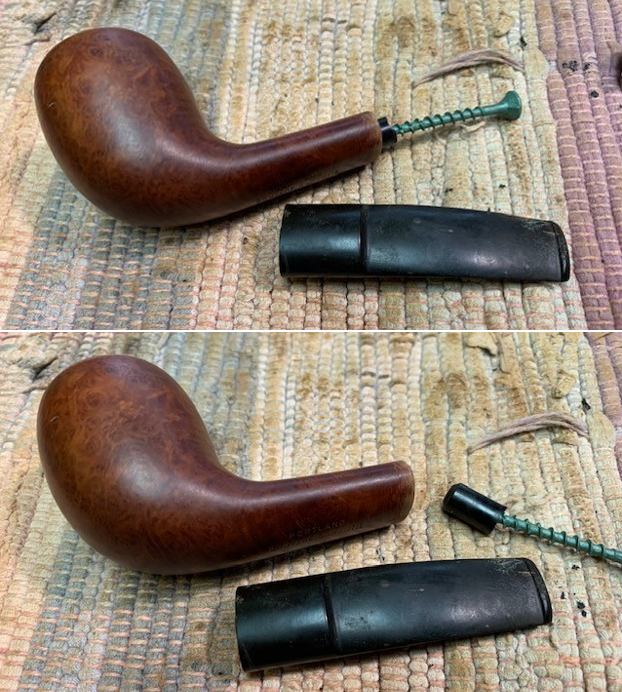
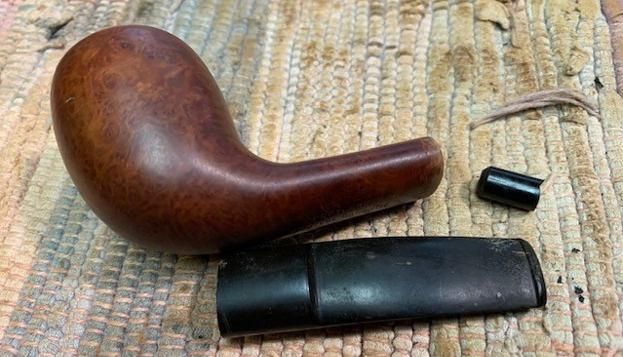
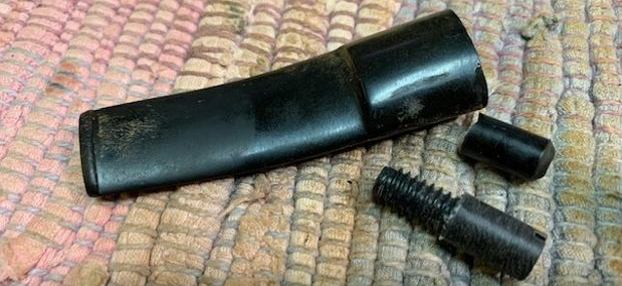
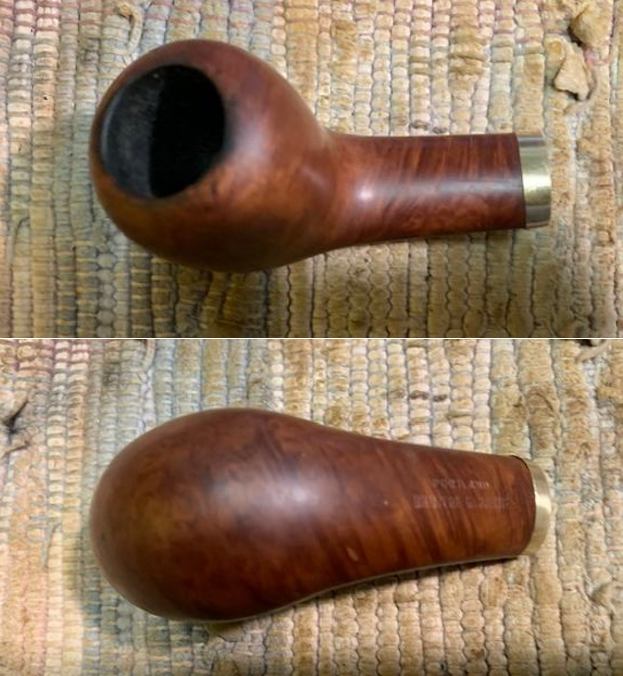
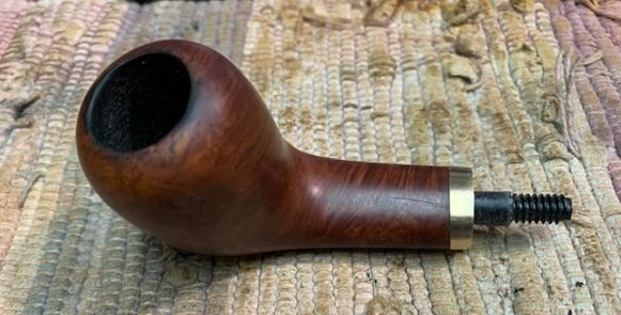
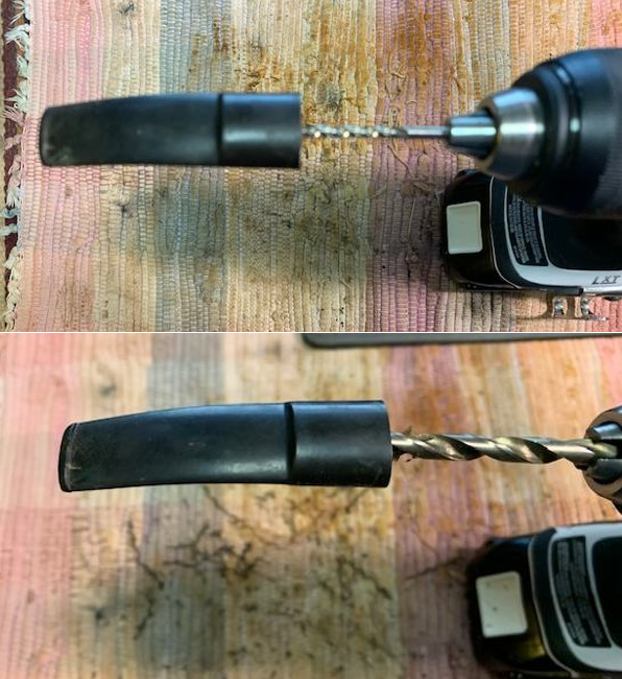
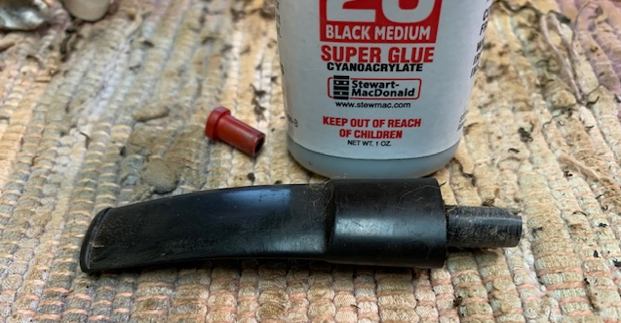
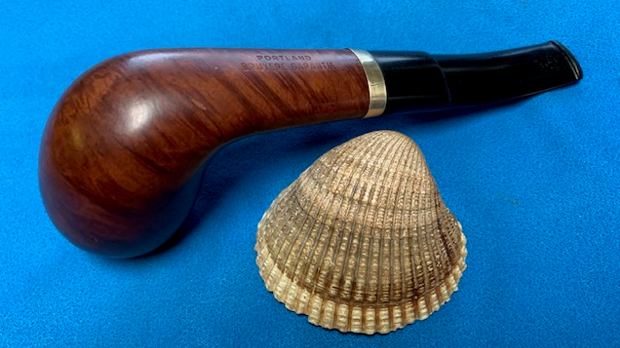
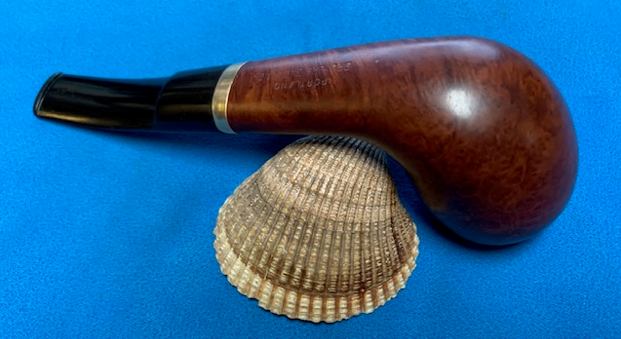
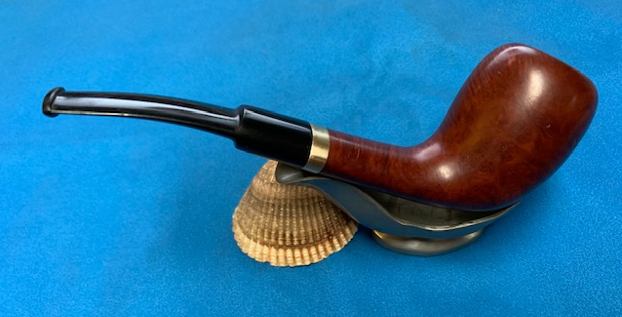
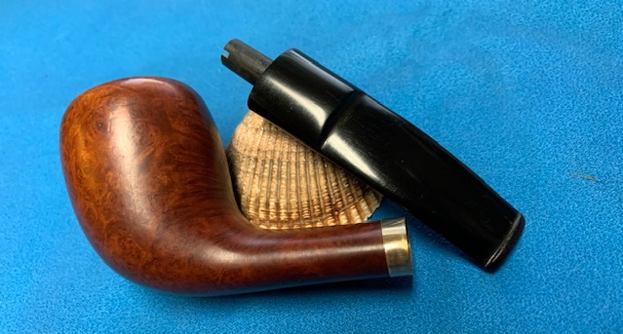
I am still doing some repairs for a local pipe shop and this one came from a referral from them. I have fixed several pipes for this particular pipeman in Vancouver including banding, restoring and fitting a new stem. He stopped by last weekend and dropped off a pipe to be reamed and cleaned and also this relatively new pipe that he had dropped. It is an interesting looking pipe with mix of nice grain around the bowl sides. It was stamped on the underside of the shank and read Portland [over] Bruyere Garantie followed by the shape number 60 near the shank/stem junction. He had only smoked it a couple of times before he dropped it. The stem snapped off leaving the tenon in the shank. When I looked it over there were also cracks on the top of the shank that happened at the same time. The stem was dirtier than the bowl but overall it was in good condition. I took some photos of the pipe before I started working on it. I took photos of the rim top and the stem surfaces to chronicle the condition. The rim had some darkening from his lighter toward the right front of the bowl and on the back side. There was not any cake in the bowl as it was still quite new. The stem was just dirty with light tooth marks on both sides near the button. The tenon had snapped off very close to the stem so it would be a simple process to add a new tenon.I took a photo of the stamping on the shank underside. It is clear and readable.I took a photo of the parallel cracks on the top of the shank. These were hairline but they were present and though you cannot see it they go to the end of the shank.I began my work on this pipe by pulling the broken tenon. I always use a coarse threaded screw and gently turn it into the airway in the broken tenon. I carefully wiggle it free. If it is tight a short 10 minutes in the freezer takes care of that. I went through my box of tenons and found a threaded one that was close to the diameter of the older broken tenon. It would need to be shaped but it would work.Before working on the stem I decided to put the band on the shank and repair the crack and protect it from going further. They are very fine cracks and I decided not to drill it as the hole would be bigger than the cracks. A tight fitting band would pull it together. I reduced the depth of the band with a topping board to make it thin and give a daintier look than the big clunky band. It is a thin brass band and it is pressure fit in place on the shank. I heated the band with a lighter and pressed it onto the shank. I like the look of the banded shank in the photos below.With the band fitted it was time to work on the tenon and the stem. I used my Dremel and sanding drum to make the tenon smaller in diameter to match the shank. I worked on it until the fit in the shank was snug but not tight.With that finished it was time to drill out the stem. I used the Dremel and sanding drum to flatten out the broken tenon end on the face of the stem. I started drilling with a bit slightly larger than the airway and finished with a bit that would allow the threaded tenon to fit the stem.I do not tap the drilled hole in the stem. Rather I flatten out the threads slightly as they provided the grip for the glue when I insert the tenon in the stem. I coated the threaded tenon end with black superglue which dries more slowly than the regular glue and allows me to make adjustments in the fit. I checked the fit in the shank and was pleased with it. I set the stem aside so the glue could cure.I turned my attention to polishing the bowl. I polished it with micromesh sanding pads – dry sanding it with 1500-12000 grit pads. I wiped the briar down with a damp cloth after each sanding pad. The pipe really began to take on a shine as I worked through the pads. I rubbed the briar down with some Before & After Restoration Balm. It works to protect, clean and enliven the briar. I rub it in with my finger tips and let it sit for 10 minutes. I buff it off with a cotton cloth to remove the excess and give the bowl a shine. I polished the stem and new tenon with micromesh sanding pads – 1500-12000 grit pads. I dry sanded with the pads and wiped the stem down with Obsidian Oil after each sanding pad. I finished the polishing with Before & After Pipe Stem Polish – both Fine and Extra Fine. I gave it a final rubdown with Obsidian Oil.I put the stem back on the bowl and polished the pipe with Blue Diamond on the buffing wheel to give it a shine. I gave it multiple coats of carnauba wax and buffed it with a clean buffing pad. I hand buffed it with a microfiber cloth to deepen the shine. I took some photos of the pipe before calling the pipeman to pick up his pipe. I am pleased with the look of the Portland Bruyere Garantie 60 Egg and the fit of the repair band and the stem to the shank. I think it will meet his expectations when he picks it up later today. Thanks for walking through the repair with me in this blog. Cheers.
Rebirth of a Special 1912 BBB Own Make Glokar Collegiate Class Zulu


When I saw Bri’s post on this old BBB Glokar on Facebook I wrote and asked her to do a blog on the restoration. She agreed. I am excited to have this blog here both for the pipe itself but also for the unique techniques that Bri uses in here restorations. Thanks Bri and welcome to rebornpipes.

Blog by Bri Hill

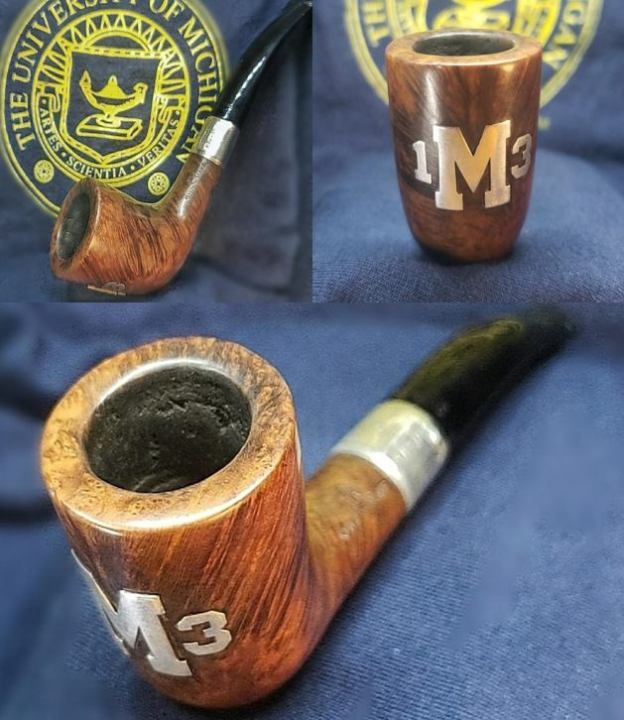
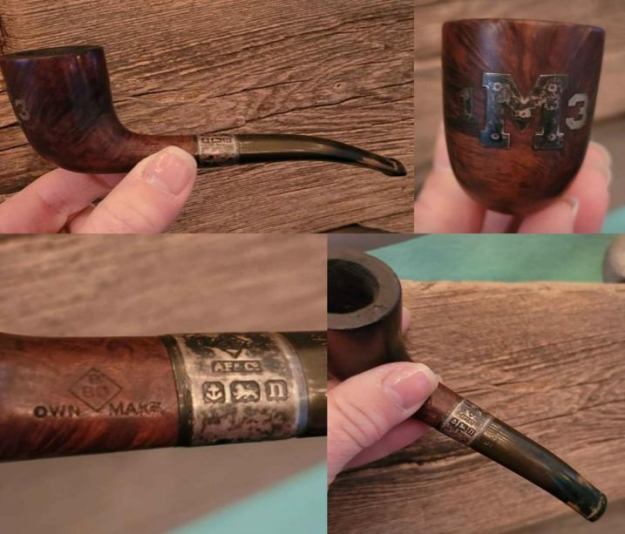
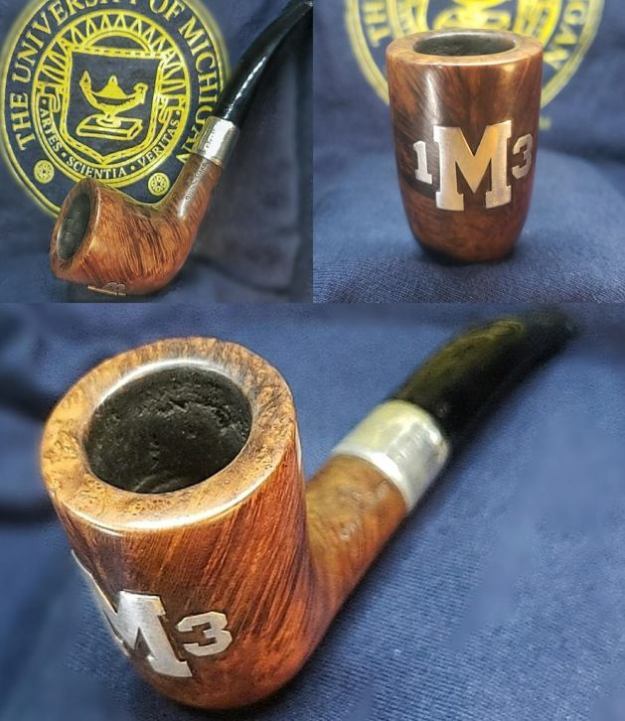
My name is Bri Hill, a new member of the pipe restoration community. I have a newly opened store on Ebay called Vintage Overhauled. My experience restoring tobacco pipes has been short so far, only a couple months experience under my belt. In that short amount of time it has been an awesome whirlwind learning so many new and different things.  I recently had the privilege of acquiring and restoring a 1912 BBB Own Make Glokar Collegiate Class Pipe. It was specifically made for the University of Michigan class of 1913. I found it on Facebook through an antique store in my home state of Michigan. This was a true gem to me for many reasons. Two of which, it is extremely rare and I am a tried and true Maize and Blue fan.Before I go into further detail I wanted to mention, full disclosure, I was not prepared for this amazing opportunity of writing about my experience with this beautiful piece. The opportunity to write this blog article was presented after the pipe was finished being restored. Therefore, I did not take as many pictures during the restoration process as I would have liked for this restoration project.

The process I follow has taken some time to iron out and is continually evolving, but for this piece it was very simple.

The first step was a two part process. One part was to put the stem in an Oxyclean soak. This helps speed the process of removing oxidation. The second step I follow is rubbing down the stummel with vinegar diluted in water.  I rubbed it down with 0000 steel wool. The fine grade of the steel wool prevents most scratching during the cleaning process. After only about five minutes with the steel wool the entire outside of the stummel is clean like new, even the char on the rim is completely gone. The metal lettering and band cleaned up immediately. From there, I then ran a fine grade pipe cleaner through the shank a few times continually dipping the pipe cleaner in the vinegar water solution during this.

The next step  involves adding in reaming techniques. I chose to pursue a less aggressive approach when first reaming this pipe in order to be as careful as possible with it.  I use a dropper to suck up the vinegar and water solution. I pour the solution from the dropper into the chamber while using my finger to plug the hole at the shank end. I let it sit for 30 seconds then release my finger off the shank to pour out the solution. This gets the cake in the chamber moistened up to prepare for reaming. I repeat this step throughout the reaming process. This makes it much easier than reaming the chamber when dry. For reaming the chamber this is a two part method. First, I take a piece of silverware with the smallest handle I can find. One with a round end at the handle. I gently scrape away at the cake trying to remove just a small initial layer at a time. I then repeat the solution with the dropper process for 30 seconds. Ream again. Repeat. I do this until the chamber is reamed to my satisfaction. I then move to the second and final part of reaming. Using a traditional reaming tool, I give it a couple spins to even out the chamber.

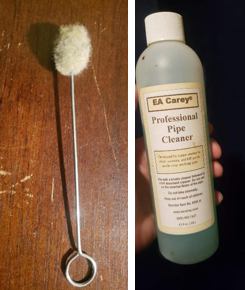
After reaming is complete, some sanding is done in order to even out the leftover cake in the chamber. I decided for this pipe I wanted to use a less aggressive method of sanding than my prior technique of just wrapping sandpaper around a toothbrush end. Instead I used some 320 grit sandpaper followed by 600 then 800 and 1200. I do this to ensure the chamber ends up looking even and smooth. (However on a side note, when I was completely done restoring the stummel I noticed there were uneven layers of cake toward the top of the chamber near the rim. After much debate with myself over it. I decided to forgo going back and sanding again.) I wrap the strip of paper around the end of my finger to create a curved surface in order to address the bottom of the chamber. Once sanding is complete I plug the shank hole and put coffee grounds and alcohol in the chamber. I let this sit overnight. Once I drain and clean out the coffee grounds . I run a bit of hot water through the chamber using the dropper to clean out any leftover grounds. Afterwards, I took a tool that came with my Fiebings dyes. I dip the  tool in EA Carey sweetener  and disinfectant.

I then insert the tool into the chamber and lightly twist and scrub around the chamber. I let the excess drip out through the shank, while being careful not to get the solution on the outside of the stummel. The solution sweetens and disinfects the chamber and shank.  The solution leaves the chamber smelling minty and fresh.

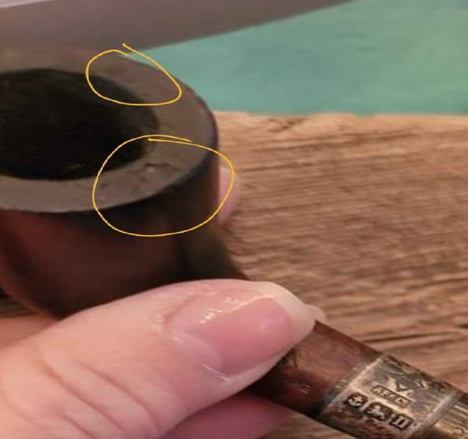
After, it is time to turn my attention to the rim of the bowl. There are two very small nicks in the rim.

I wasn’t sure at first if I needed to fill the nicks with CA glue and briar dust or if I could lightly sand and get results that way instead. I chose the sanding route because I wanted to preserve the originality of the pipe as much as possible. When choosing this approach I always start with the highest grade sanding paper possible and work my way down until I find the right grade for the situation. If you choose a grade too low it can alter the rim in multiple ways; such as taking off the stain and creating uneven spots on the rim. I started with the 2500 grade and worked my way down to 1200. I sanded each nick lightly, only for a few passovers. I would then switch to the Black Emery compound with a rotary tool cloth polishing bit. This might be unconventional to some, because many rave over Brown Tripoli and White Diamond. There have been some situations where I have used White Diamond and it produces positive results. In regards to Brown Tripoli. No matter what I have tried, I cannot produce the results that many speak about. For me, it just produces a dull and foggy look. In my experience the Black Emery produces a shinier luster than the Brown Tripoli. I repeat the process 3 times of sanding very lightly with 1200 and then using the Black Emery after. I focused my attention to the rim structure during this in order to make sure I was not creating an uneven spot by sanding too much. This is the end result, although the initial picture doesn’t really show the full extent of the nicks.Once the nicks were handled I moved on to buffing the stummel. For the first step of this process I used the Black Emery with a white cloth rotary buffing bit.

I then one over the stummel with 5000 sandpaper. After that, I apply the Green compound using a string buffer and then follow that with 10000 sandpaper. I do another round of Green and follow up for a final time with 15000 sandpaper. I have found that alternating between both sanding methods not only produces a great shine, but the high grit sandpaper polishes out the micro scratches the buffing compound process leaves behind. I avoid the rim edges with the sandpaper when doing this because it can produce uneven coloring on the rim and edge areas. I also avoid the metal lettering and band when using the sandpaper. I noticed it creates micro scratches. I stick to just the compound for the metal parts.

For the final step I apply two rounds of Carnauba wax with a string buffer again. I let the wax sit for 15 minutes each time.

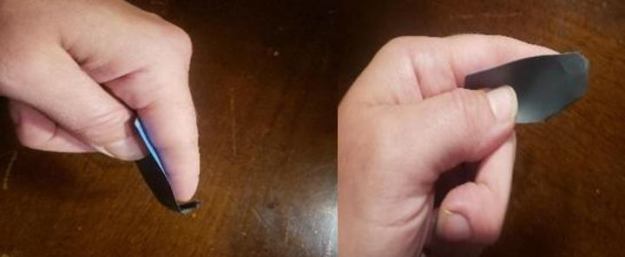
Once the stummel process is complete I move on to the stem that has been soaking in Oxyclean. I use 0000 steel wool and a magic eraser. After about 7 minutes of alternating between both, the stem is all clean. I had to pay a little extra attention to the lip of the stem. Oxidation is always a bit more difficult to remove in that area. Once clean I noticed there is a decent size indent from a bite mark on the stem. I use a lighter to apply short stints of heat to the bite area, this pulls the indent out a bit each time. Be careful not to apply the heat too close. It will burn and damage the stem. My trick is putting a finger right next to the area I’m working on. This way I can feel if the lighter is too close. In my experience you don’t need a high temperature of heat applied. I do about 2 or 3 second stints with applying the heat. After the 3rd time the indent pulled outward enough that I felt satisfied in moving on to buffing and polishing.

For polishing and buffing the stem I use the same Black Emery and General Green approach along with the same buffing bits. However, I only used one round of 15000 sandpaper right before waxing. I skipped the 5000 and 10000 step I used on the stummel. The approach that I found works best is applying a round of Black Emery first. Followed by the green and then the 15000 sandpaper. From there I apply two rounds of wax just like I did with the stummel.

Here is the final result. I’m quite satisfied with it. I am very excited for this piece to be a part of the new Vintage Overhauled collection. Visit my store on Ebay to check it out and see others that have been restored.

A Labour of Love – Repairing a Badly Damaged, Cracked Karl Erik Grade A Hand Made


Blog by Steve Laug

I am pretty sure that I am a sucker for both a good story and a badly damaged pipe. The next pipe on the table came with both. I received an email from Dewey in Iowa about a pipe he bought over 20 years ago. It was one of his favourite pipes and it had a serious crack in the exterior of the bowl. He wrote asking what he could do about it. Here is what he wrote:

Dear Steve,

I have owned a Karl Erik pipe for over 20 years. Bought it from the National Cigar Store in Waterloo, Iowa…..it is my favorite pipe…

just yesterday I found a large crack has appeared on the bottom of the pipe. It still smokes fine but is there anything that can be done to stop it from cracking further and can the crack be filled?The crack does extend up the front of the pipe into a small design where a short second crack is present…wow…

I was going to send pics but don’t know how to add them here

Thank you so much for your time and consideration.

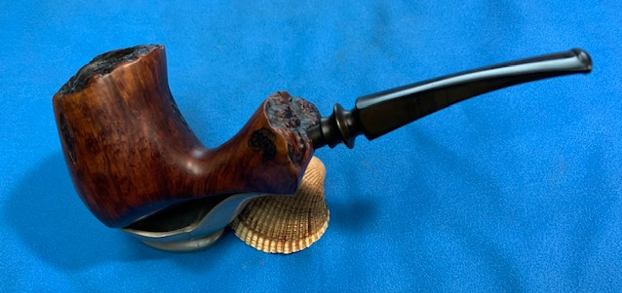
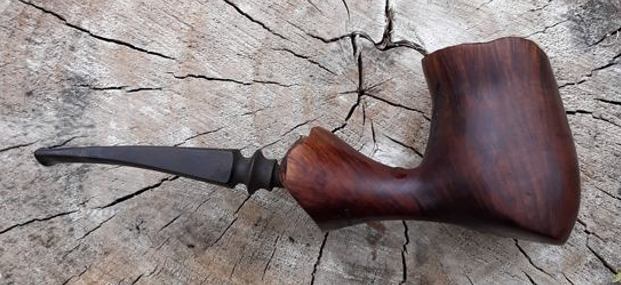
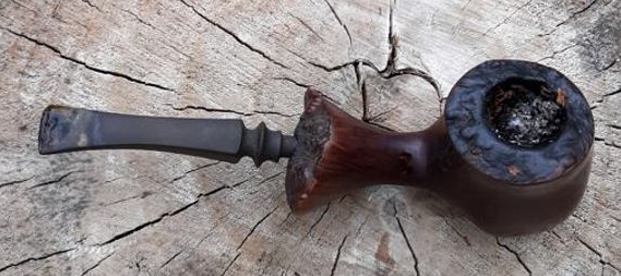
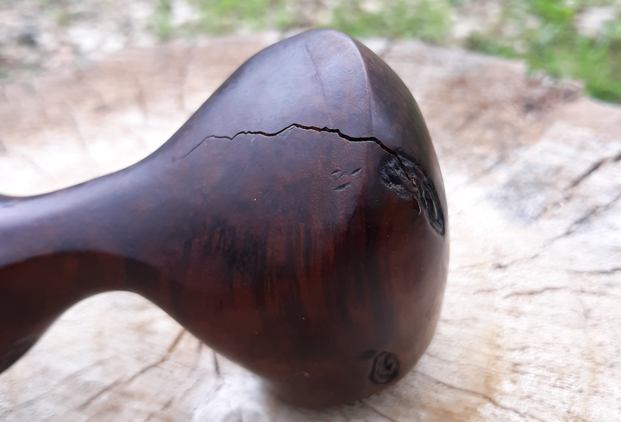
I wrote him back and asked him to send the photos to my email account. He sent three photos of the pipe. I think that the first two are teasers to get my interest before he hits me with the photo of the damage to the bowl. He obviously took photos mid smoke. It is a uniquely shaped pipe and one that he really loves to smoke. You can see from the photos above what I saw. The pipe was obviously heavily caked and the plateau on the rim top was filled in with lava overflow. The stem was chomped and had deep tooth marks visible on the topside. But so far it looked no different than any other pipes that I have worked on. It was a nice looking Karl Erik pipe that had been thoroughly enjoyed for over 20 years. Then came the next picture of the damage in question. Wow!He also added that there was more damage. I have included our further email conversation below.

Steve, the crack does extend up the front of the pipe into a small design where a short second crack is present…wow…

…there is also a very small crack extending below the stem hole…but it has been there for quite a while now and doesn’t seem to be growing larger.

Thanx, Dewey

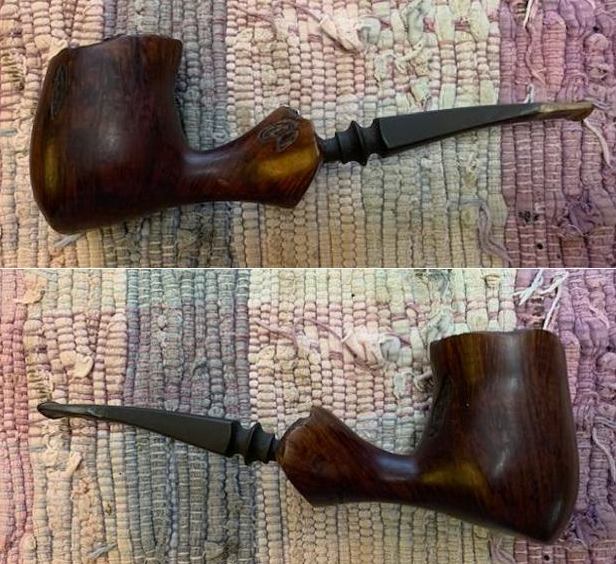
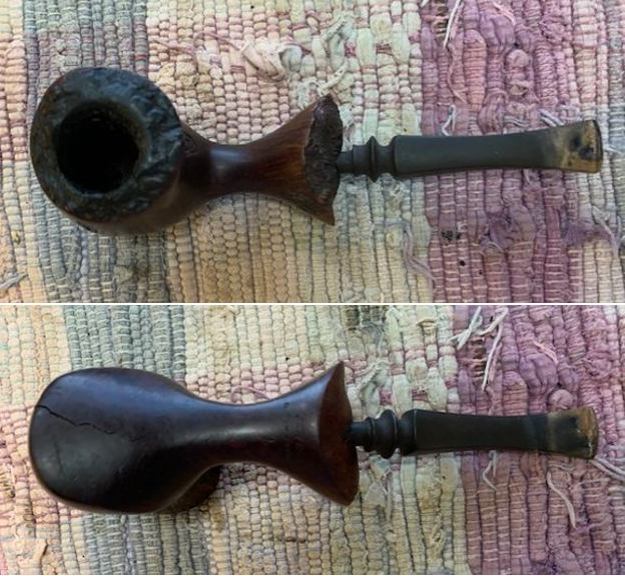
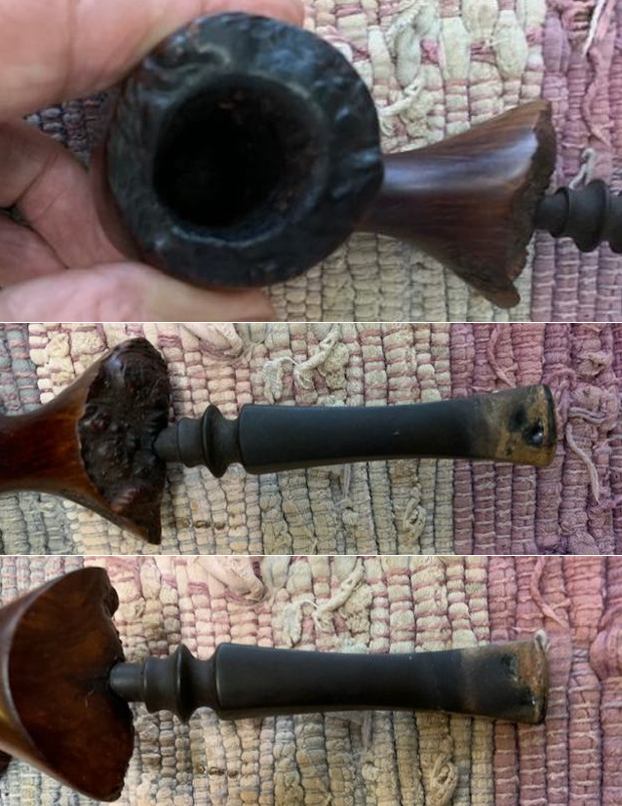
So now I knew what we were talking about. A crack in the heel of the bowl and up the front into the carved design with a second smaller crack in the design itself. There was also a small crack on the shank end extending downward from the mortise. I wrote Dewey back about what he could do with the crack in terms of self repair. His response was to ask if I would do the repair. We wrote back and forth for a while and finally I agreed to take on the project. I wanted to make sure that he understood that the repair would be solid but that it could possibly crack again. He was fine with that and reiterated that he was in no hurry with the pipe. Several weeks went by and the pipe arrived in Vancouver. Here is what I saw. The pipe was far dirtier than I could see from the photos. When the package arrived and my wife brought it in I could smell the sweet, smoky aroma of the pipe through the padded envelope. My wife handed it to me we the short declaration “IT STINKS”. I had to admit that it did. The bowl had a lot of oils and grime ground into the surface of the briar that all but hid the grain on the bowl. The plateau rim top was almost smooth with the filled in lava overflow and there was a thick cake in the bowl. The stem was oxidized, calcified and chomped with heavy tooth marks on both sides ahead of the button. When I removed the stem the mortise and airway were reduced from the tars and the airflow through the shank and stem were restricted. The pipe would need a serious ream and clean before I could assess the damage from the crack. I would need to ream it back to bare briar to see if the cracks went into the chamber. It was impossible to see the condition of the chamber.

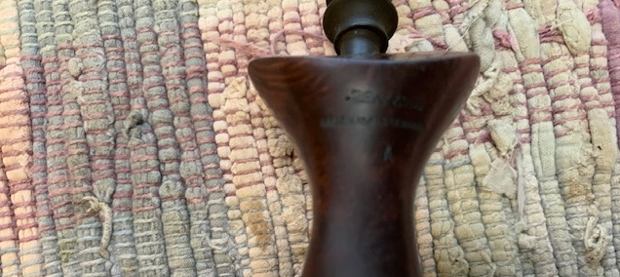
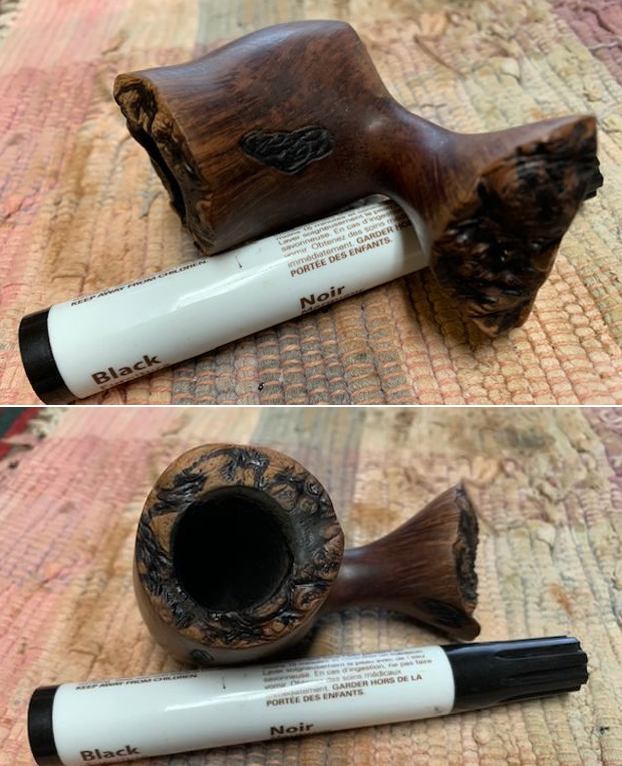
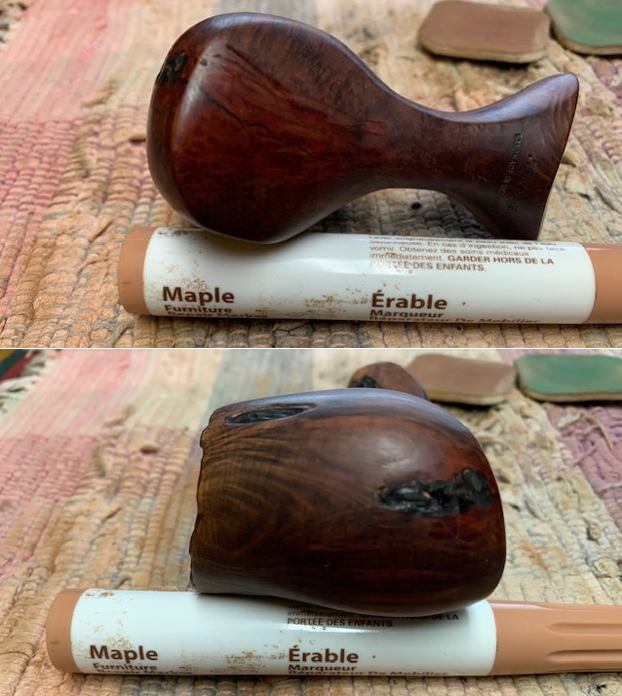
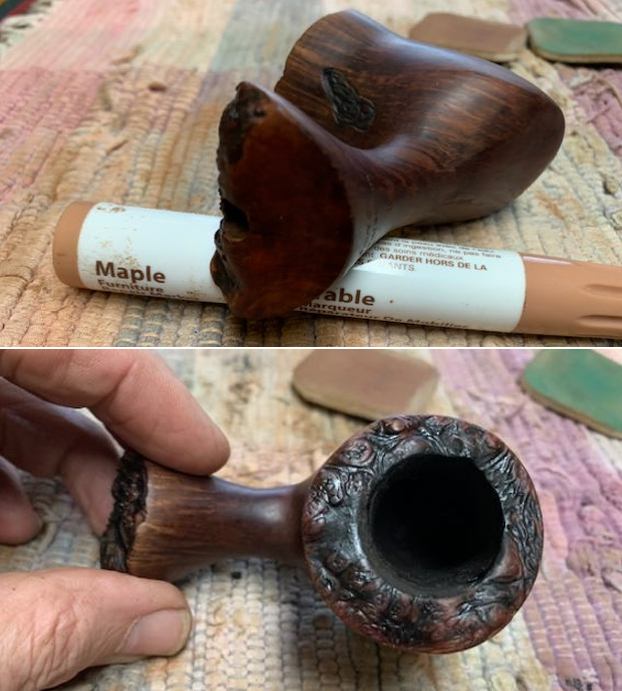
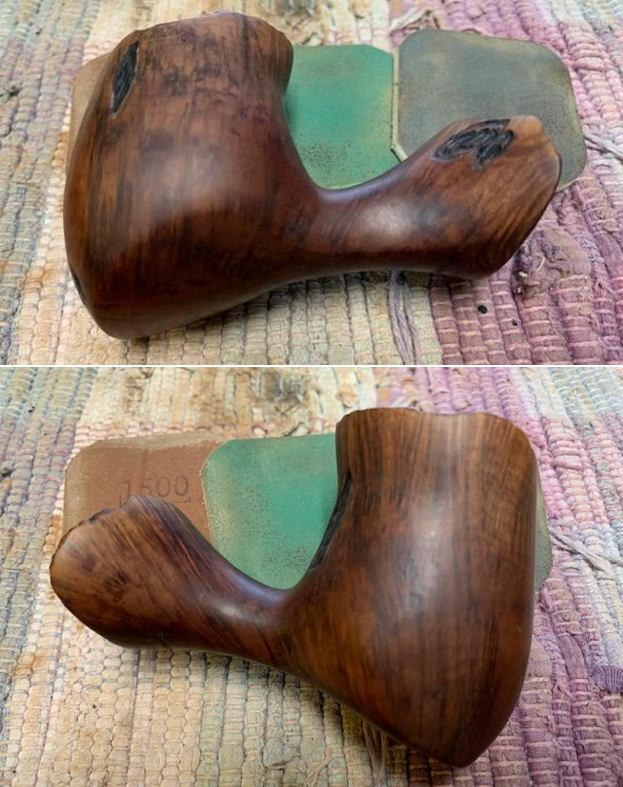
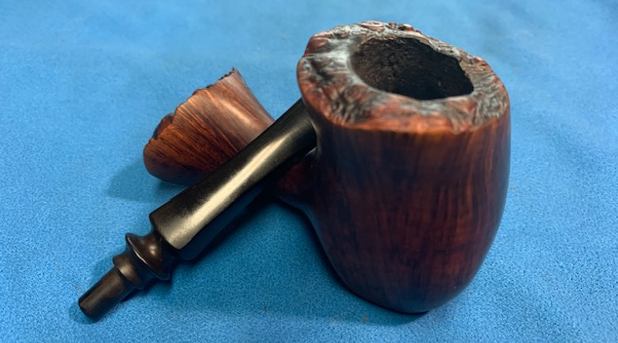
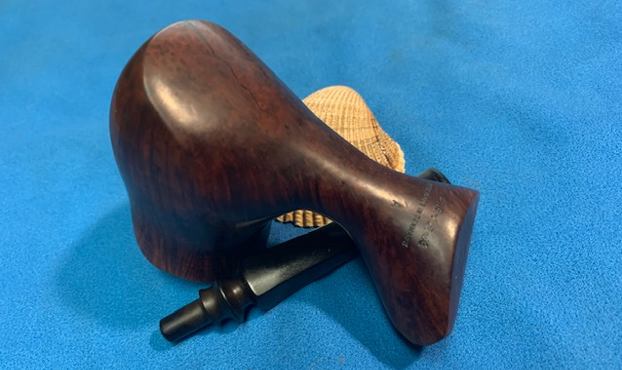
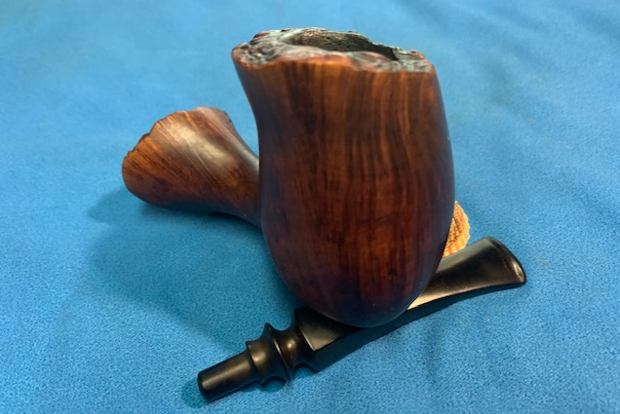
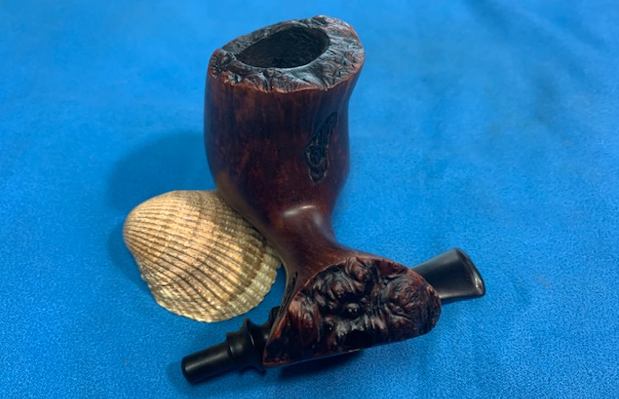
I took close up photos of the rim top and bowl and the stem before I started my clean up work so that I could document the condition of the pipe when I started my work on it.The stamping on the underside of the shank is quite filled in with the grime but reads Karl Erik [over] Hand Made in Denmark [over] A which is the grade stamp.I took photos of the crack in the heel of the bowl and up the front side into the carving. It is quite long and large and the crack is singular. It has not taken off in other directions. That is the good news with this damaged bowl.I removed the stem from the shank and took a photo of the look of the pipe. It is an interesting shaped pipe with a jutting chin on the front.In order to move forward with the examination of the bowl I needed to clean it up. To inspect the inside walls of the chamber and the base of the chamber to see if the crack goes into the chamber I needed to remove all of the cake. It needed to be smooth if I was going to be able to examine it properly. I reamed the bowl with a PipNet pipe reamer and cleaned up the remnants in the chamber with a Savinelli Fitsall Pipe Knife. I wrapped a dowel with 220 grit sandpaper and sanded the walls and bottom of the bowl to further clean it up.At this point I examined the bowl with a flashlight and a dental probe and I could not see any cracking on the bottom of the bowl or the sides parallel to the crack on the heel and the front of the bowl in the carving. That was a wonderful discovery! I knew now that I was dealing with a crack on the exterior of the bowl that had not proceeded inside. I am wondering at this point if Dewey had dropped the pipe on a hard surface as that would explain what we were dealing with.
I decided to clean up the exterior of the bowl next. I scrubbed it with undiluted Murphy’s Oil Soap, a tooth brush and a brass bristle brush for the plateau. I scrubbed it with the soap and the brushes until it was a mess and rinsed it off with warm running water. I repeated the process until I was convinced I had removed the thick grime coat and lava on the rim top. I took photos of the cleaned bowl at this point. It is nice to see the grain poking through. It is a really nicely grained pipe. I am thinking that the characteristic carved patterns around the bowl and shank were done to deal with flaws in the briar. I wonder if the crack started in the carved area and proceeded downward? I focused some of the cleaning on the crack on the front carving where it appeared that there were two cracks. I have circled the crack in the second photo and have red arrows pointing to the damaged spots. I also cleaned the crack down into the heel of the bowl. I wanted it to be free of grime and oils so that the repair would be solid.With the externals clean and the bowl reamed it was time to clean out the mortise and the airway in the shank and the stem. I scrubbed them with 99% isopropyl alcohol, cotton swabs and pipe cleaners until they came out clean. The pipe was finally beginning to smell less sour.With the pipe clean it was now time to work on the cracks. I drilled a small micro pin hole at each end of the crack to stop it from spreading further. I filled in the pin holes and the crack with briar dust and clear super glue. I layered the repair using a dental spatula to pressed the dust deep in the cracked area. I did the same thing with the small hairline crack on the shank end.Once the repair had cured I sanded the heel of the bowl, the front of the repair and the chin edge with 220 grit sandpaper to smooth out the repaired area and blend it into the surrounding briar.I used a black stain pen to fill in the crevices of each of the carved areas around the bowl and shank sides as well as those in the plateau areas on the rim top and shank end. It appeared that this is what it looked like originally and I like the sense of contrast and depth that it gives those areas once the bowl is polished.I stained the repaired areas with a Maple stain pen to match the surrounding briar. It involved staining the heel of the bowl, the nose and carved area on the front of the bowl, the rim top high points on the plateau and the high points on the plateau on the shank end. The pipe is beginning to take shape and look better.With the staining finished I polished the briar with micromesh sanding pads – dry sanding with 1500-12000 grit pads. I wiped the bowl down between the pads with a damp cloth to remove the debris. By the end o f the process the bowl began to take on a rich shine. The repairs, while still visible were less so than when I started the polishing. I rubbed the bowl down with some Before & After Restoration Balm. I worked it into the briar with my finger tips to clean, preserve and protect the briar. I let it sit for 10-15 minutes then buffed it off with a cotton cloth. I set the bowl aside and turned my attention to the stem. I scrubbed the stem with Soft Scrub and cotton pads to remove the oxidation and calcification which seemed to reside on the surface of the vulcanite. I scrubbed out the tooth marks at the same time working the scrub deep into them. I was amazed at how clean it was when I had finished. I “painted” the tooth marks with the flame of a lighter to lift them to the surface. The heat raised them significantly but not completely. I filled in the remaining marks with clear super glue and once it had cured flattened the repairs with a file and also recut the button edges. I sanded the stem with 220 grit sandpaper to blend the repairs into the surface and started polishing the stem with 400 grit wet dry sandpaper. I polished the stem with micromesh sanding pads – wet sanding with 1500-2400 grit pads and dry sanding with 3200-12000 grit pads. I wiped the stem down after each pad with Obsidian Oil which cleans and protects the vulcanite. I polished it further with Before & After Pipe Stem Polish – both Fine and Extra Fine. I gave it a final wipe of Obsidian Oil and set it aside to dry. It was good to be finished with this labour of love. I would be glad to pack it up and send it back to Dewey. It looks amazingly good considering where it was when I started. Some may not agree with my method of repair but it has worked for me for many years. The cracks in the exterior of the briar were repaired and filled in. The bowl been restained and polished. I buffed the bowl and stem with Blue Diamond on the buffing wheel and the bowl began to shine. The Karl Erik A Hand Made Freehand looked almost like new (minus the dark line of the crack repair). The dimensions of the pipe are Length: 7 inches, Height: 2 ½ inches, Outer diameter of the bowl:1 ¾ inches, Chamber diameter: 7/8 of an inch. I know Dewey will be excited to get this back when I send it out next week. It is a beautiful pipe and with the repair and restoration it should continue to serve Dewey for a long time to come. Thanks for walking through this repair with me.