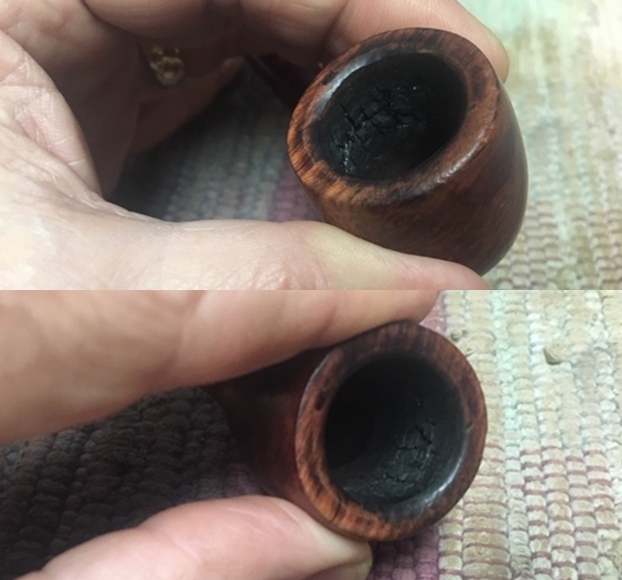
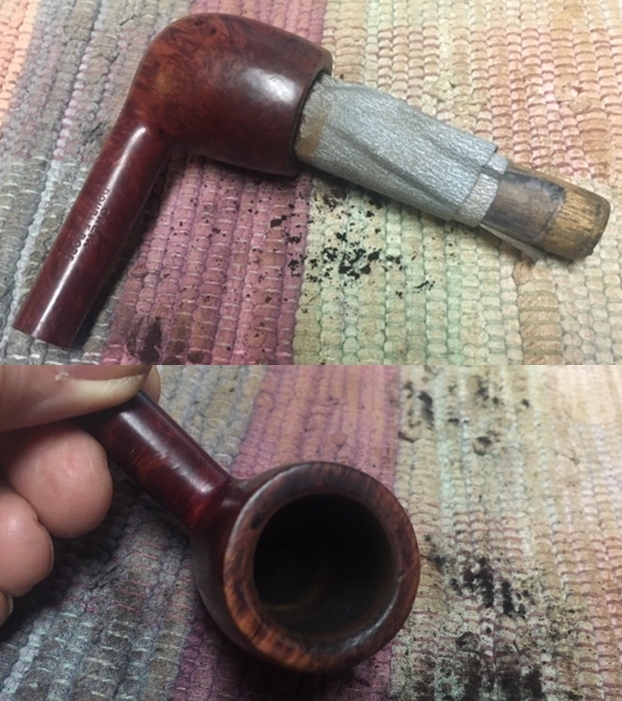
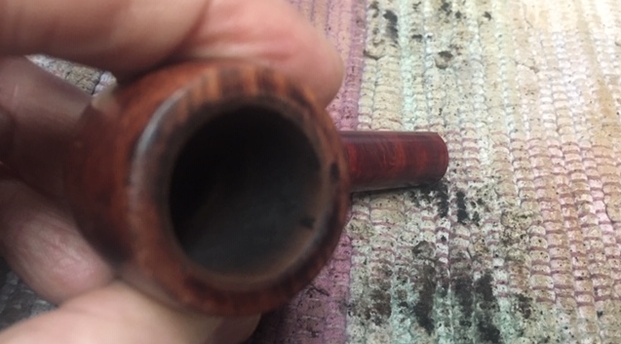
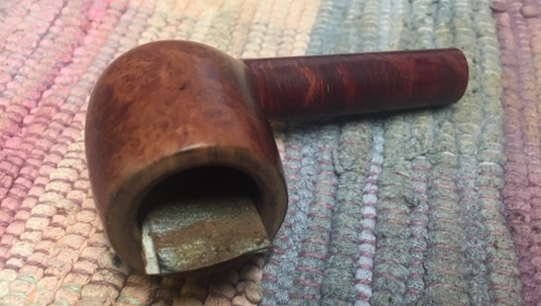
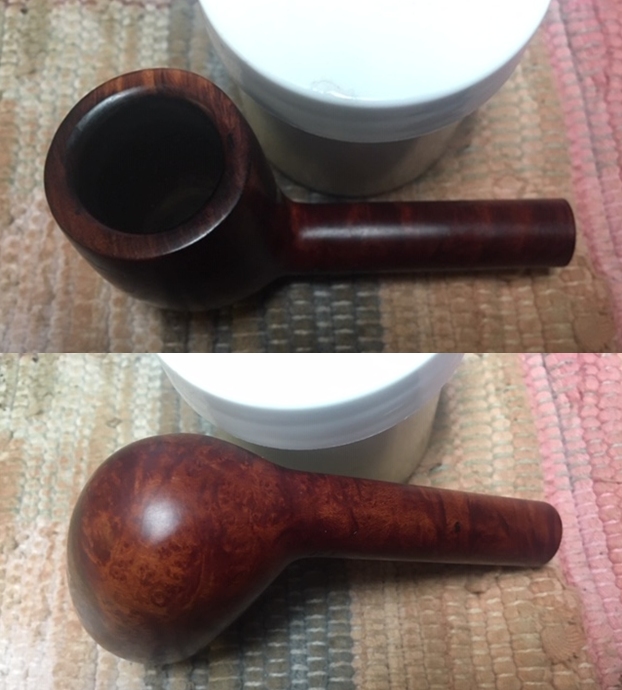
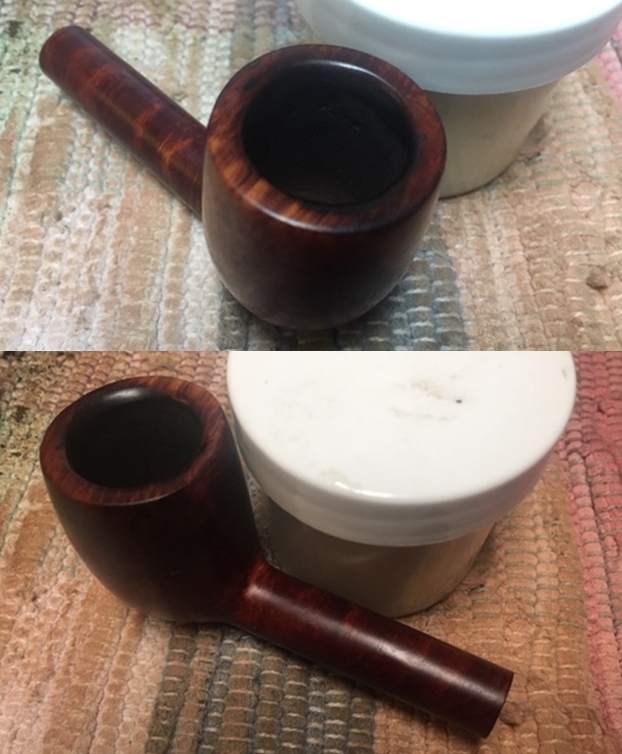
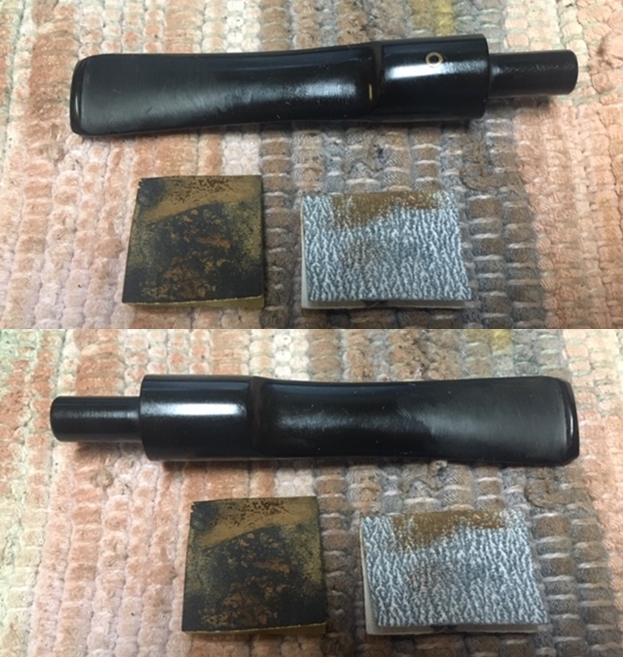
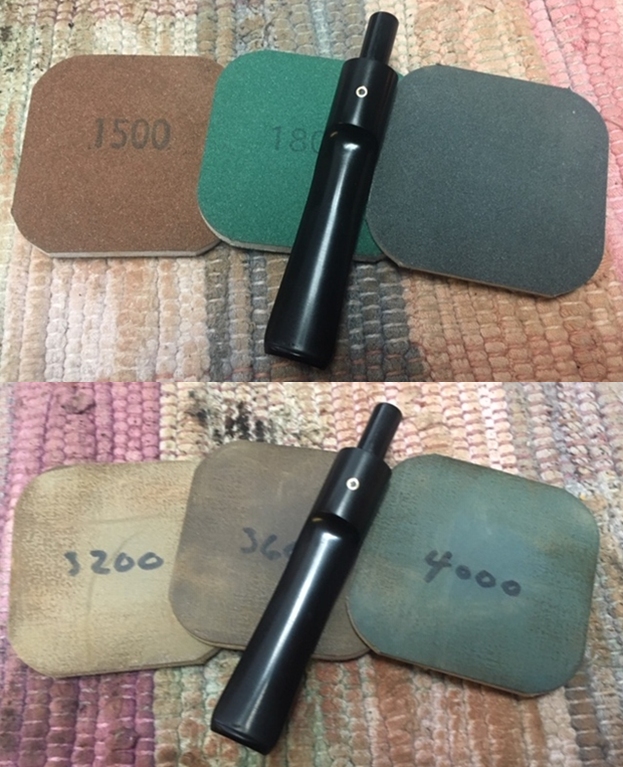
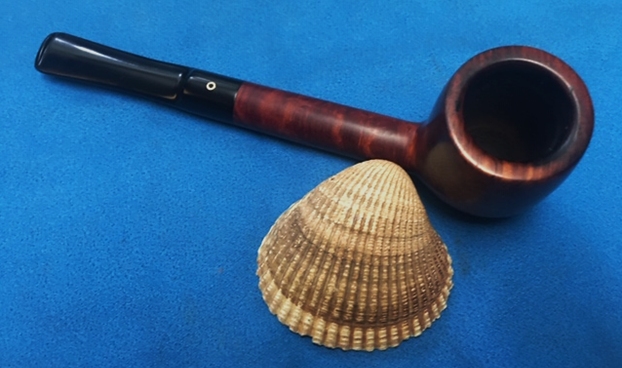
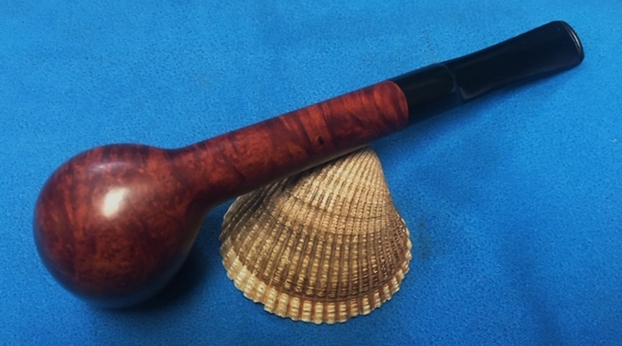
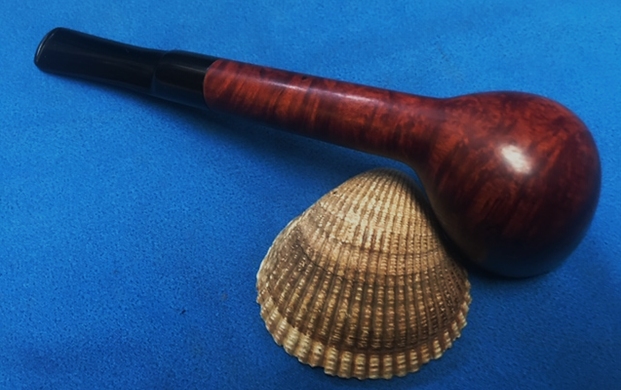
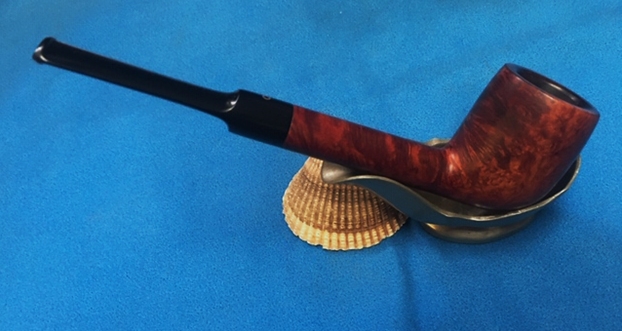
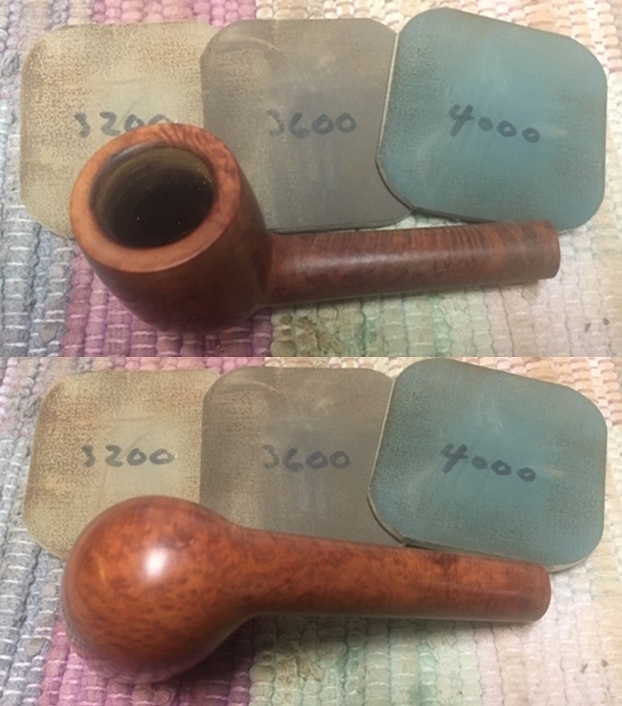
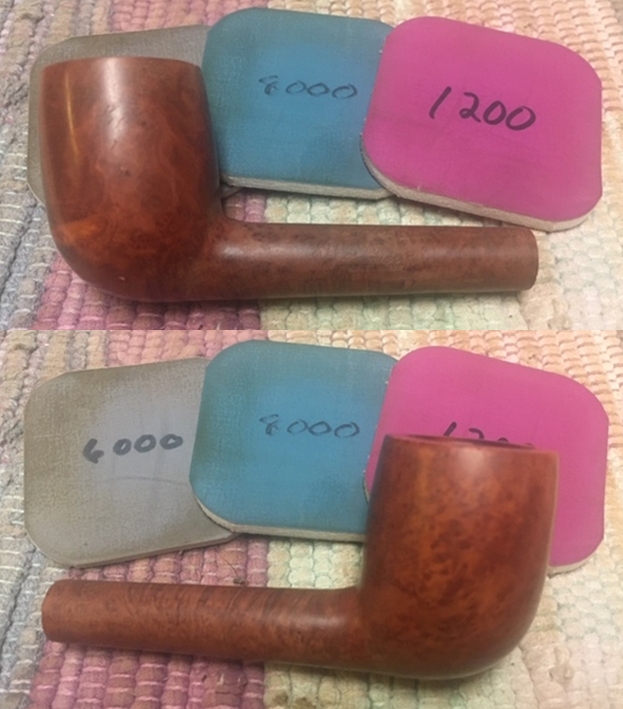
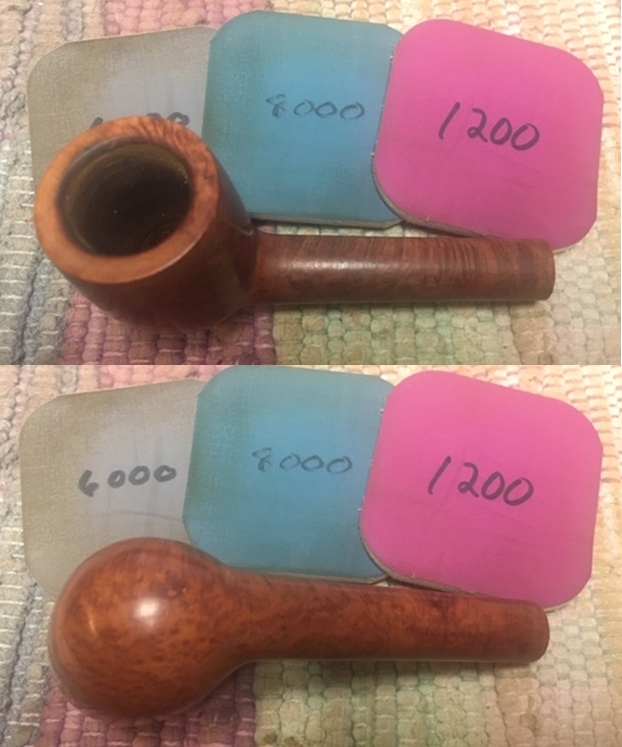
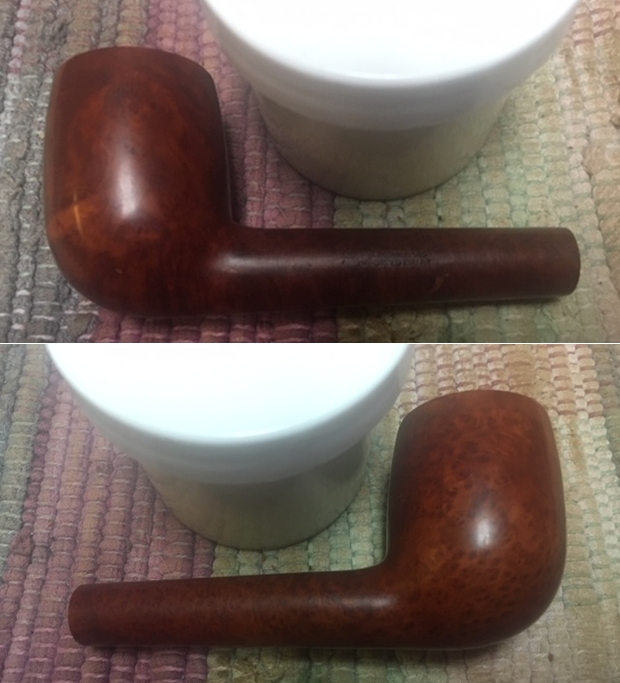
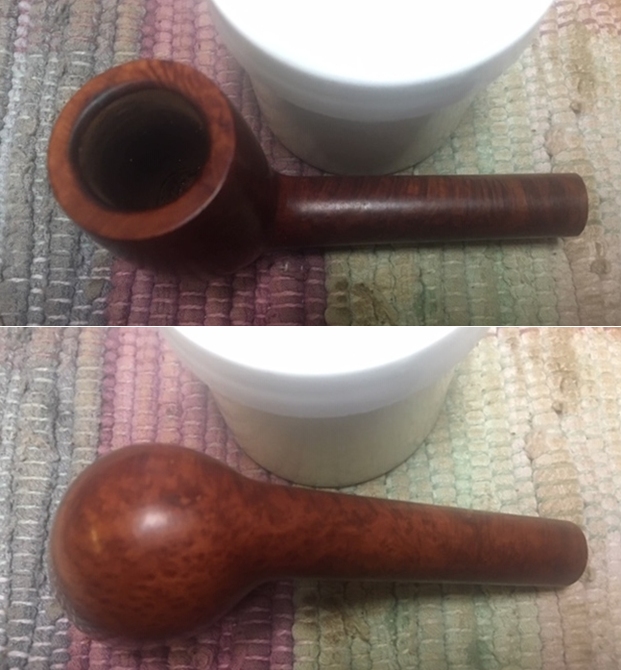
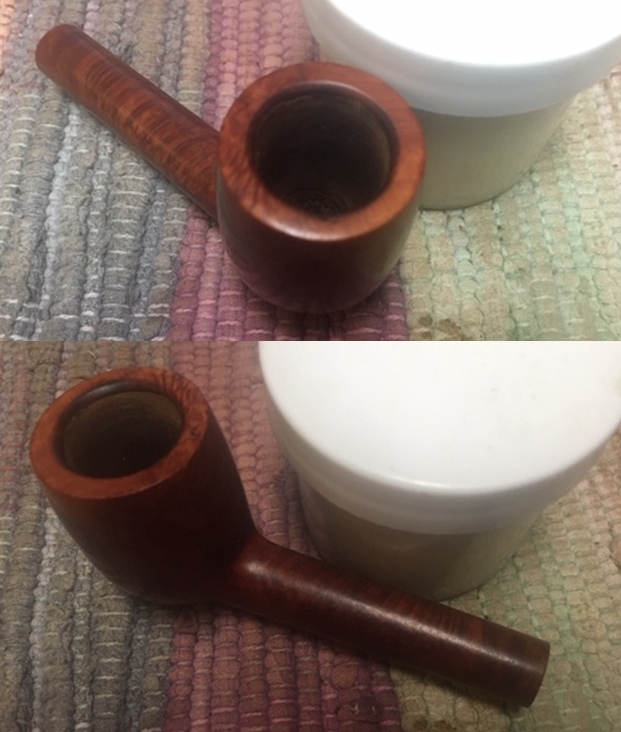
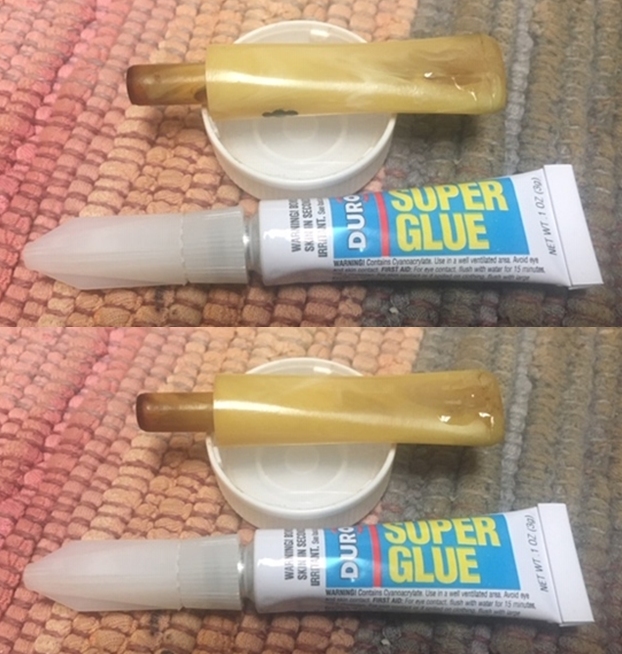
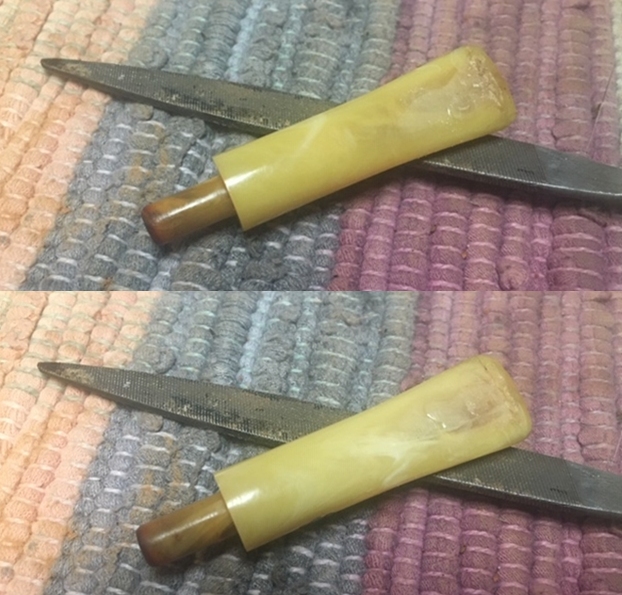
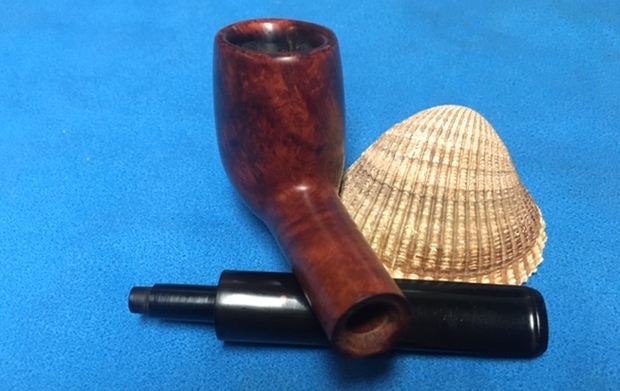
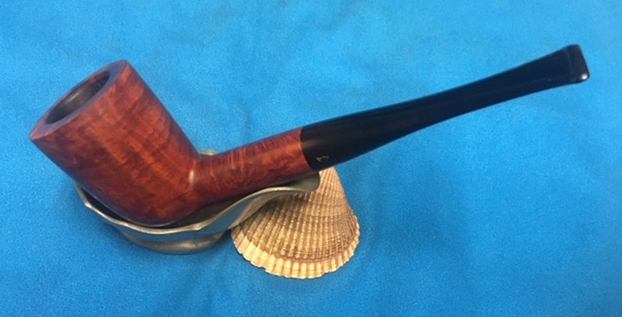
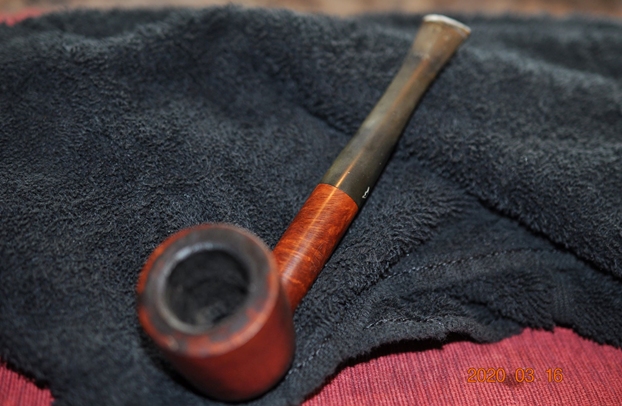
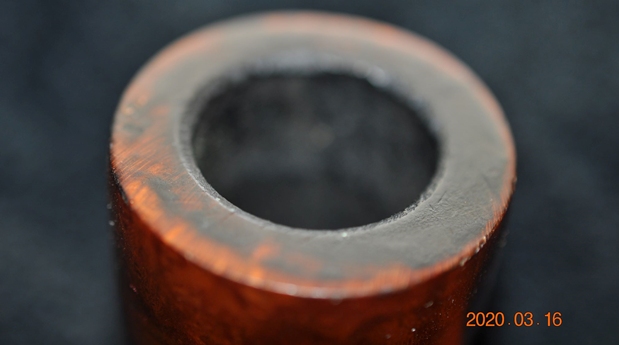
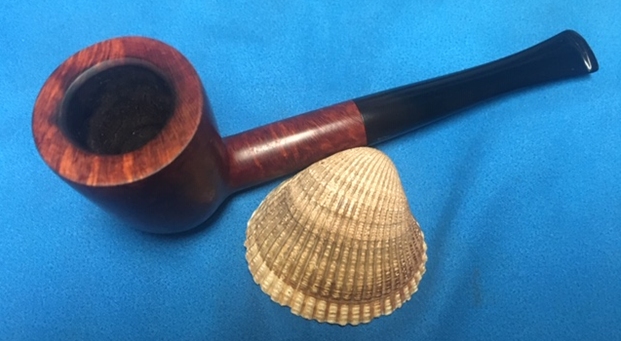
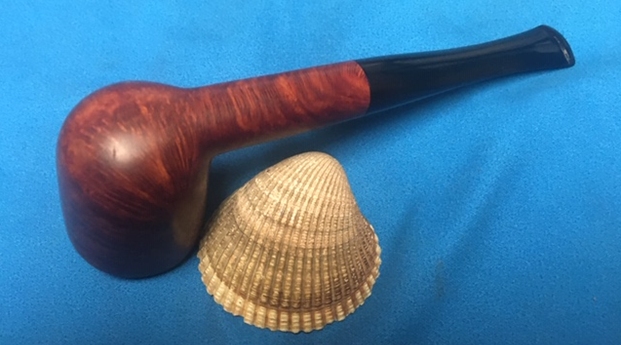
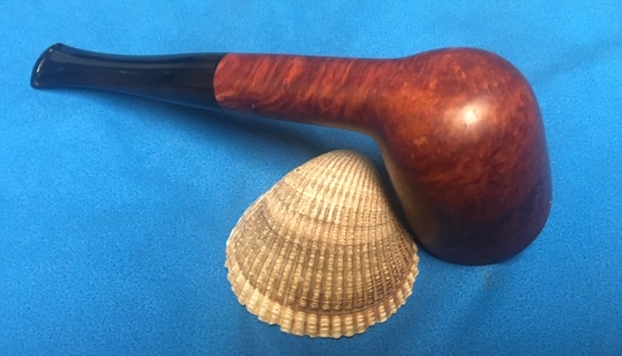
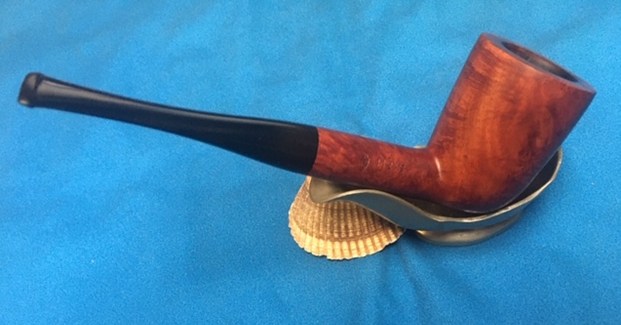
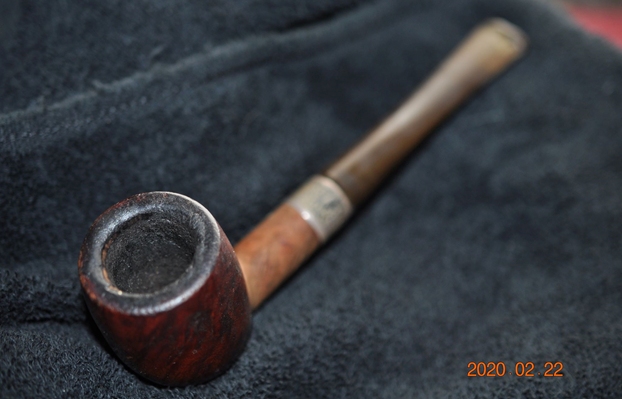
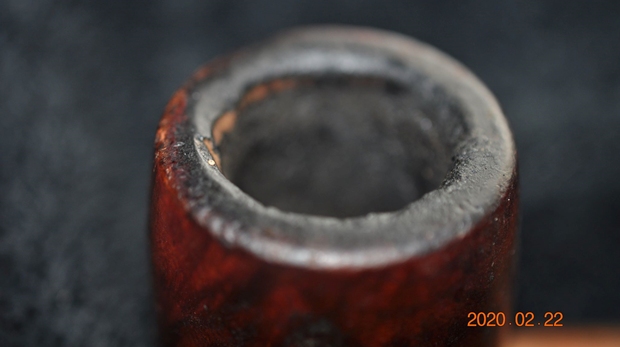
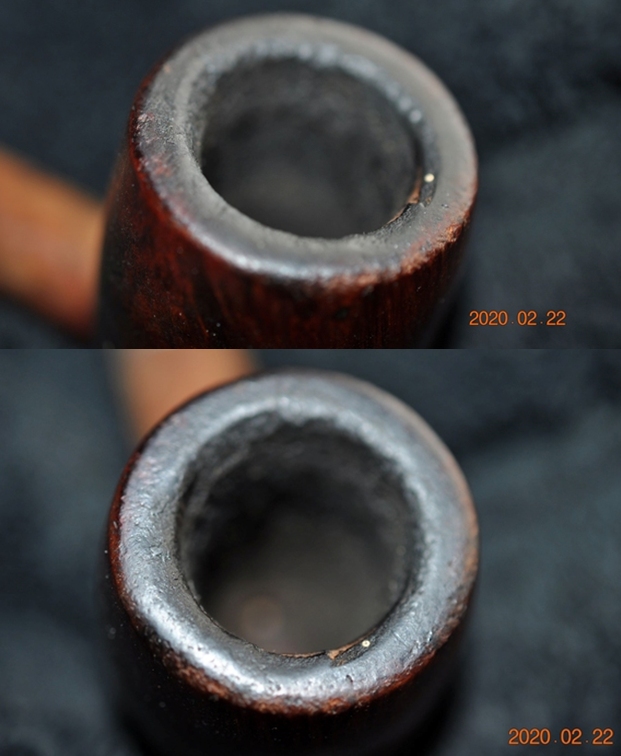
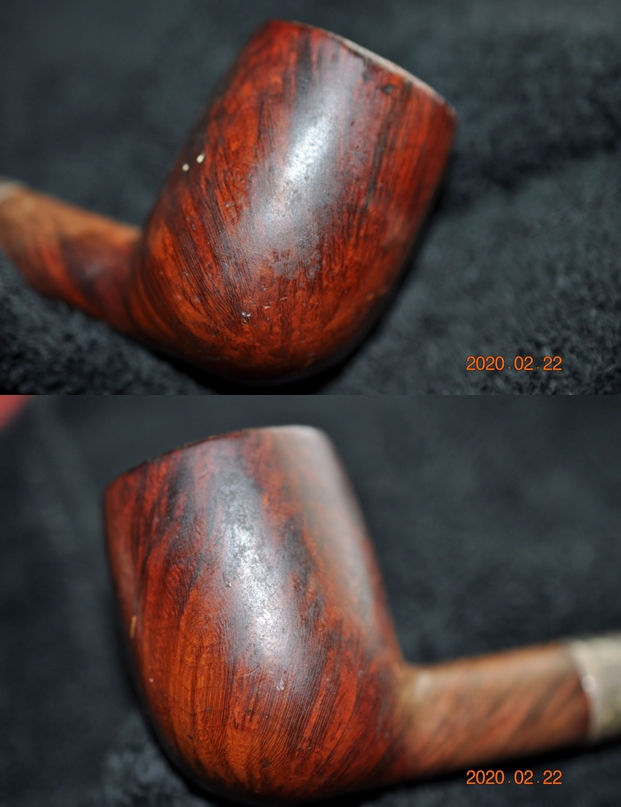
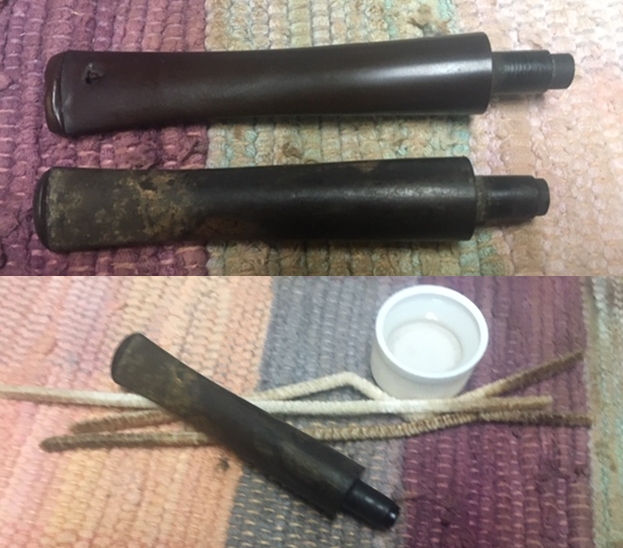
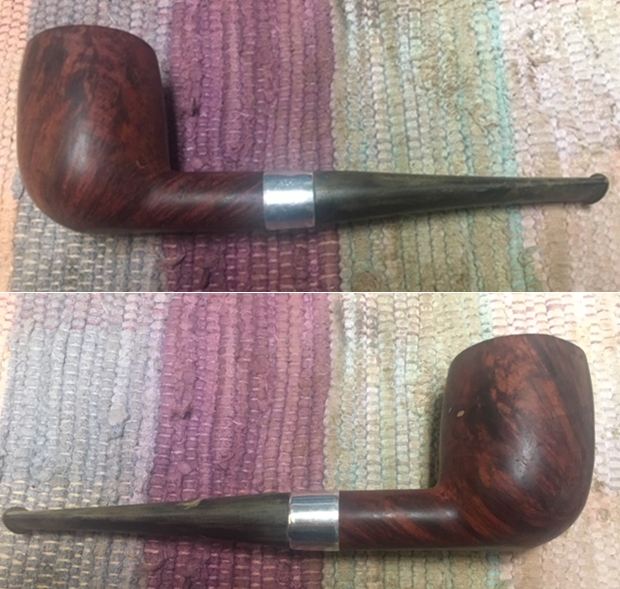
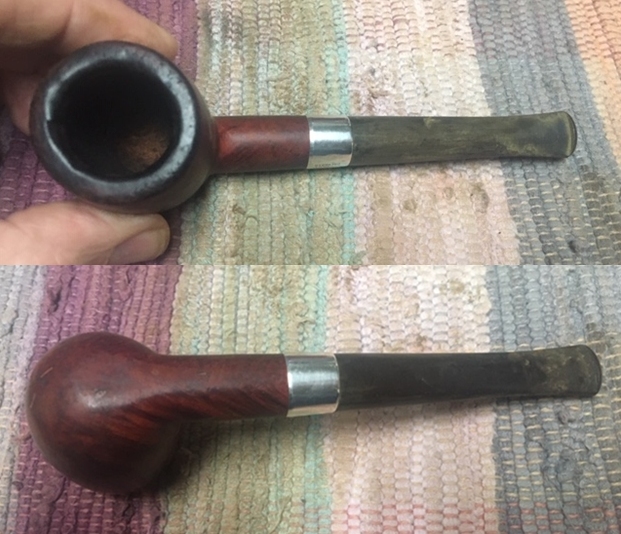
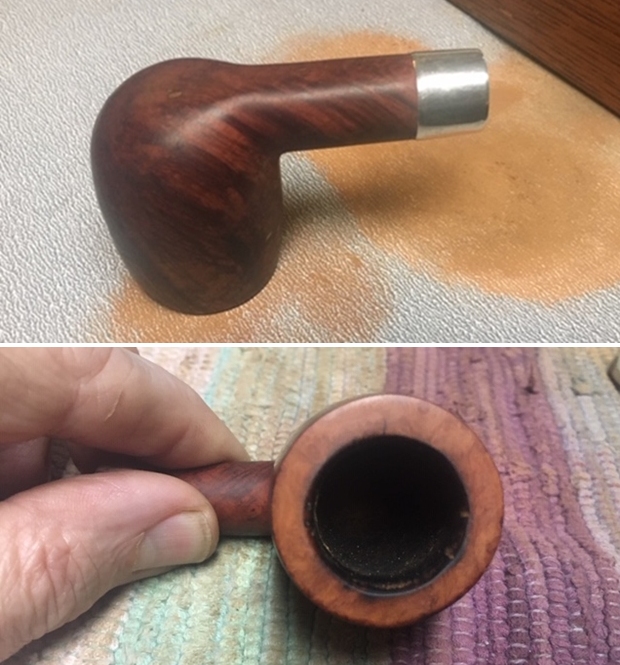
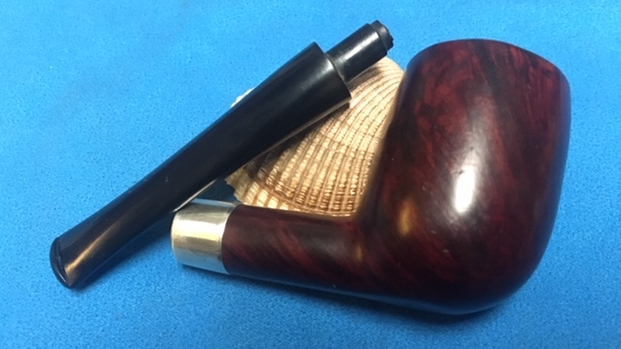
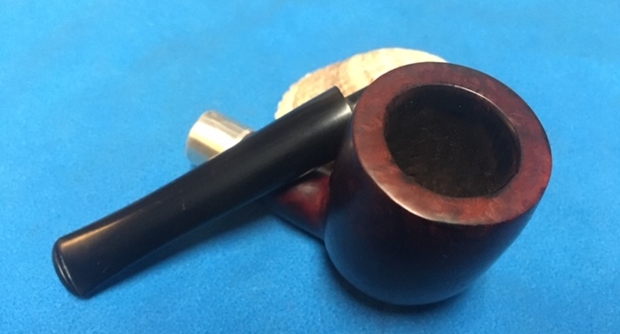
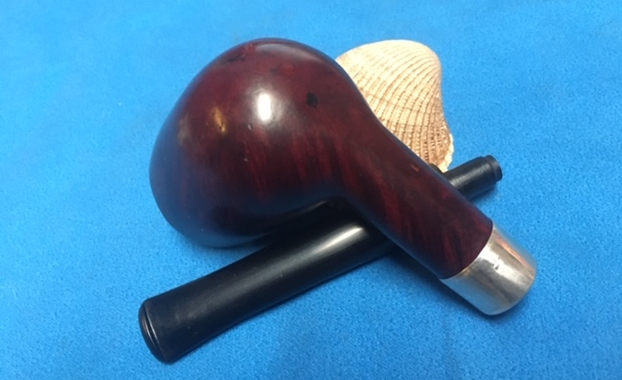
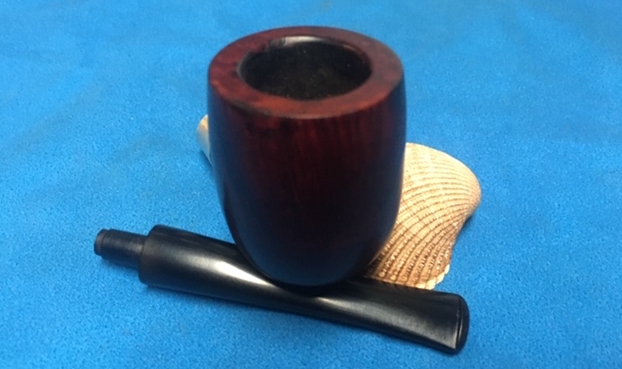
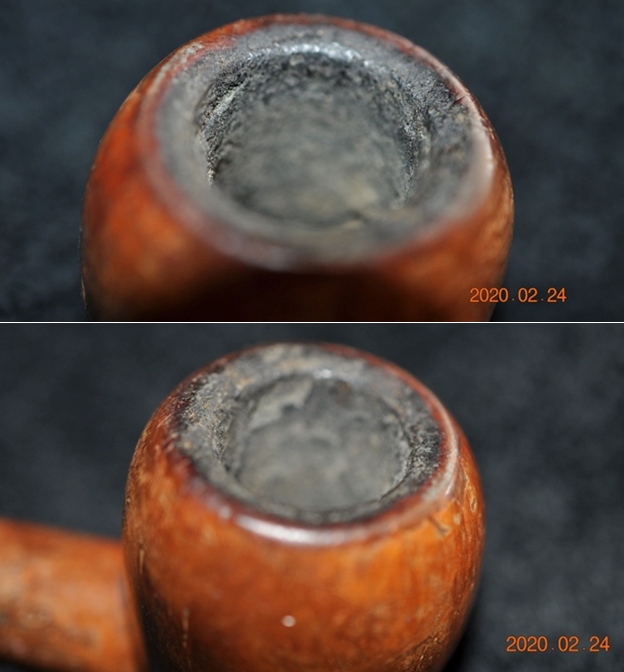
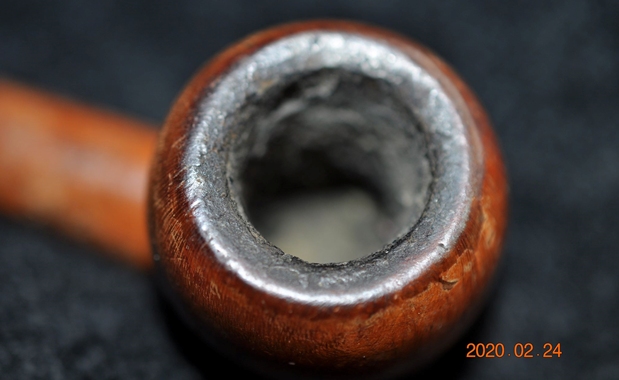
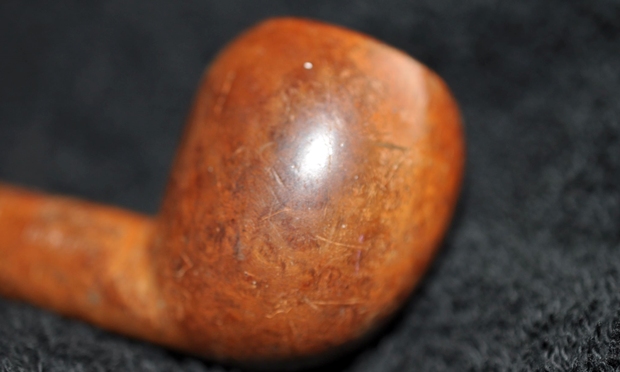
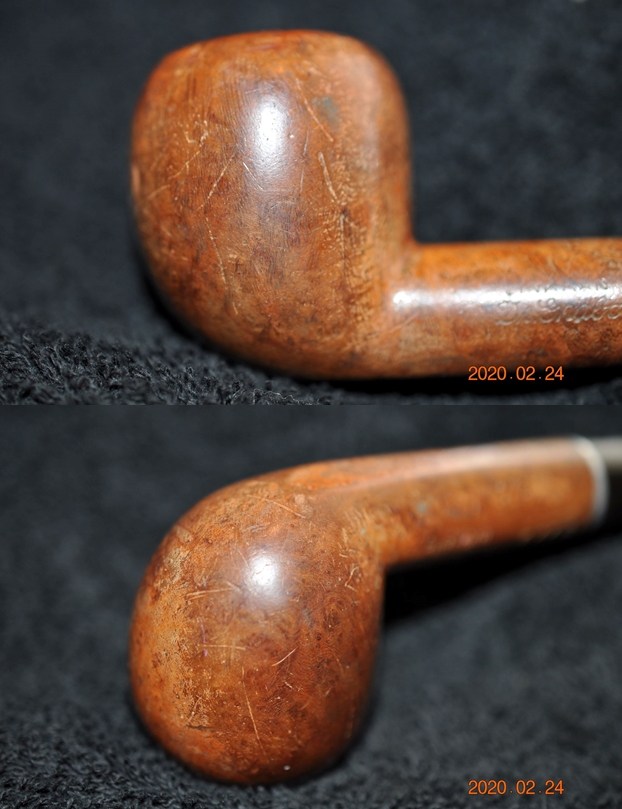
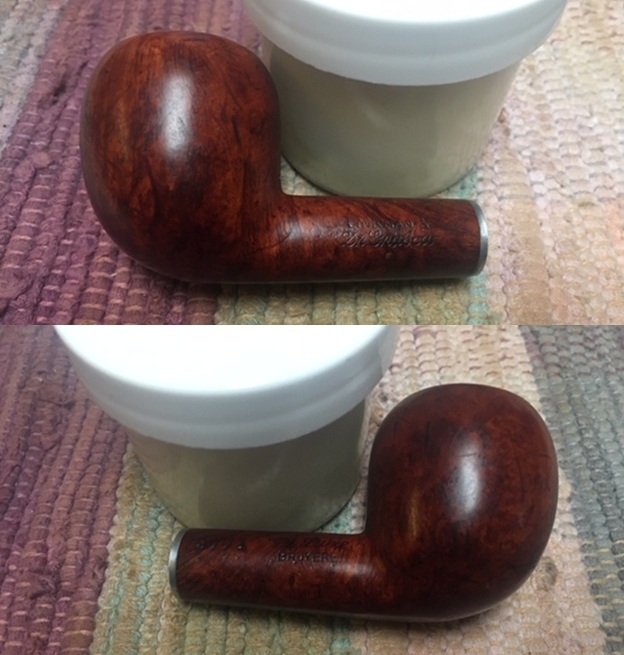
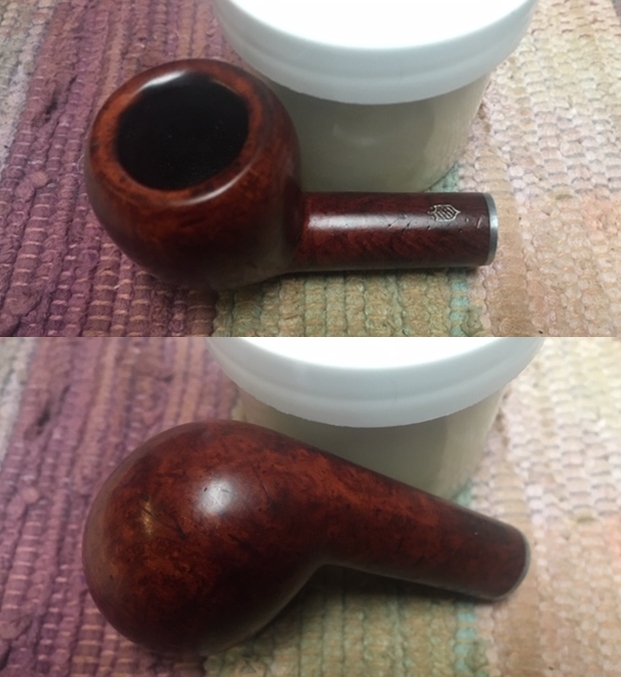
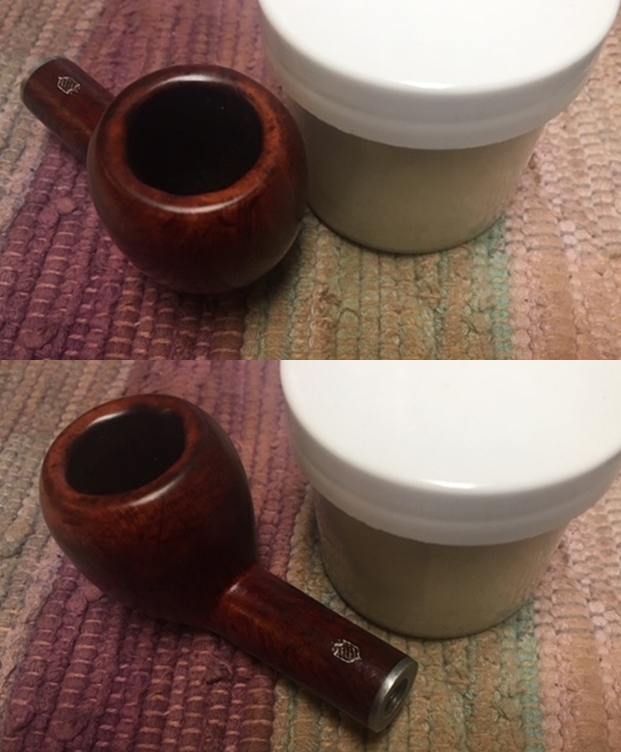
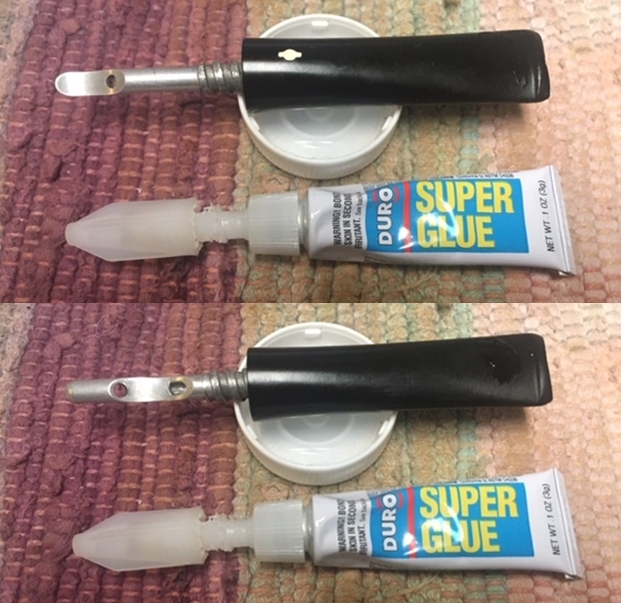
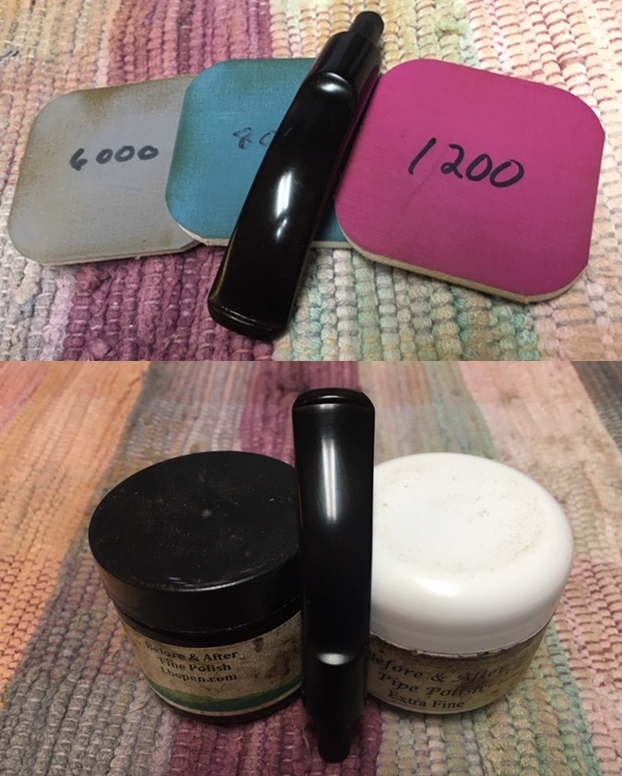
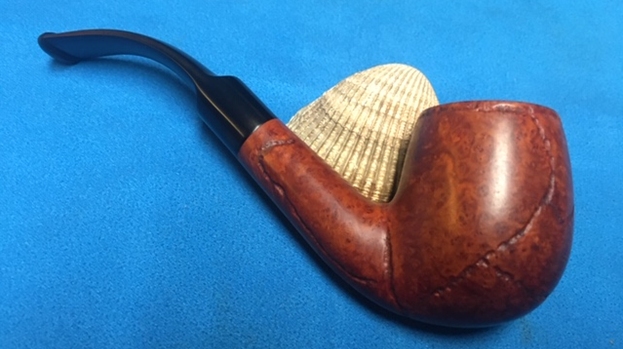
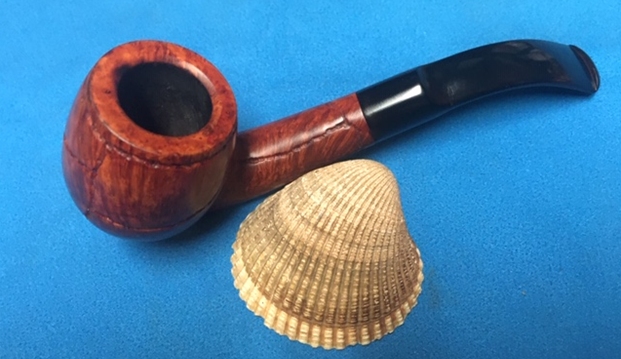
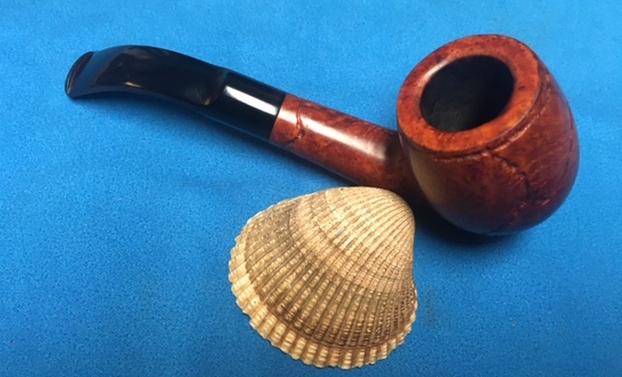
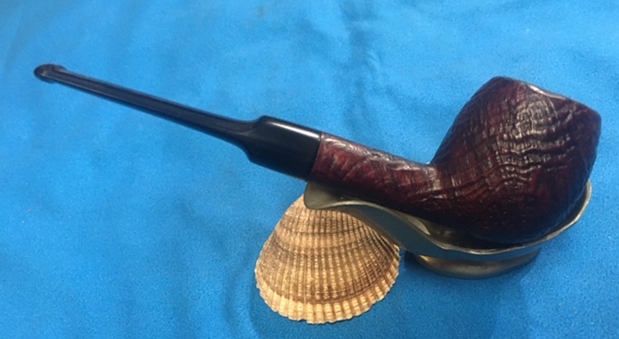
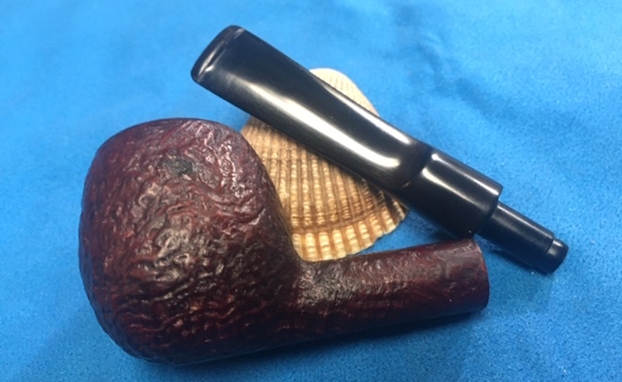
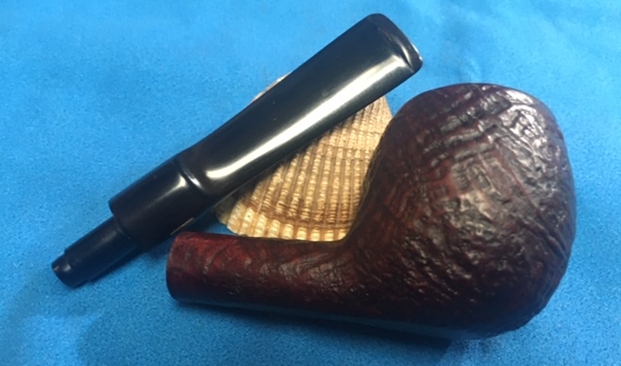
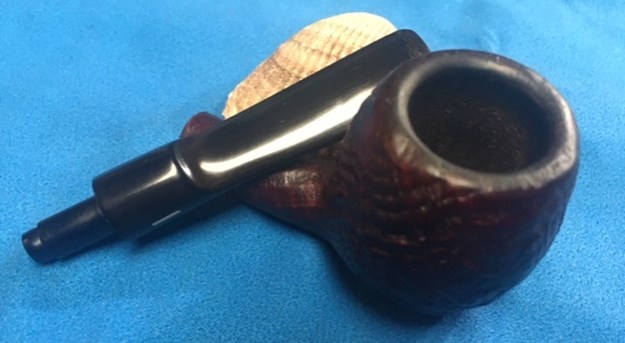
Tag Archives: topping a bowl

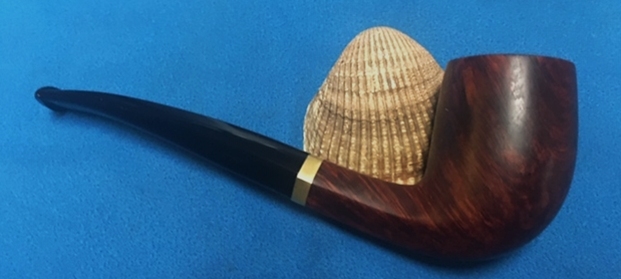
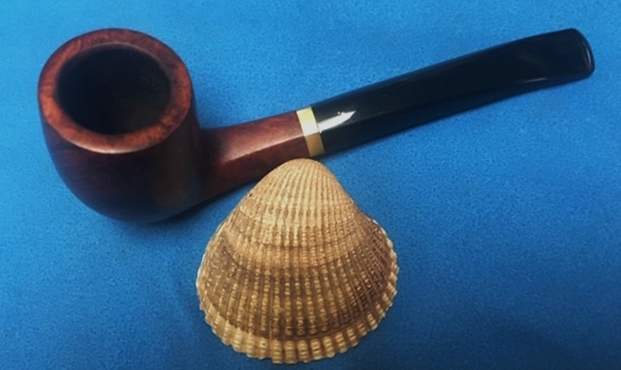
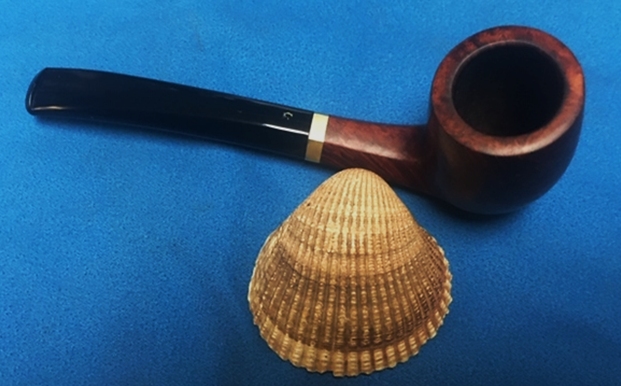
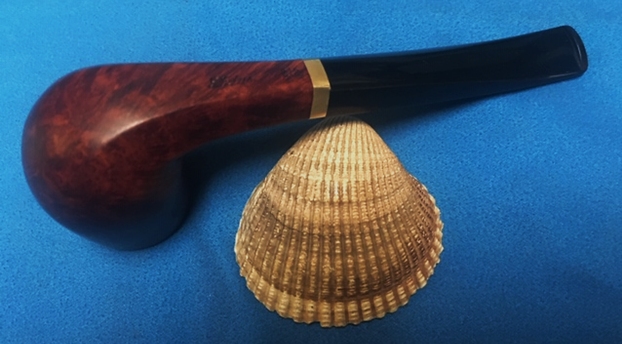
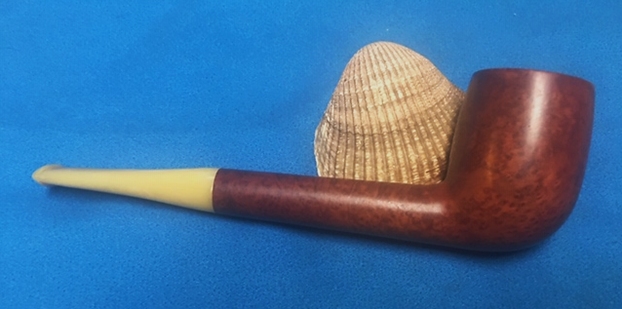
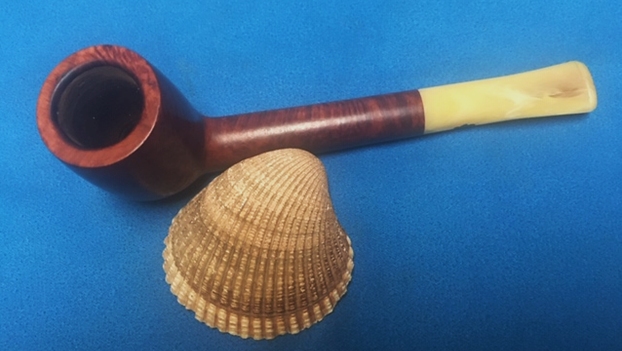
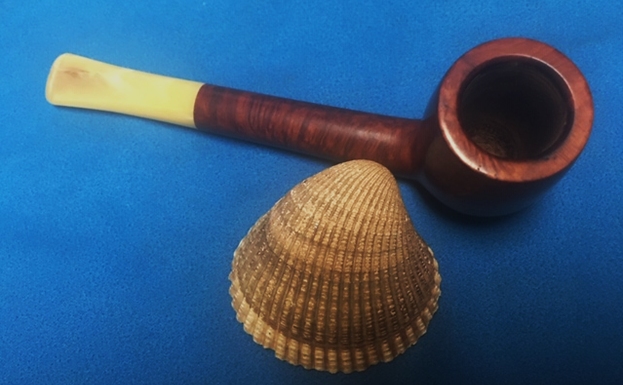
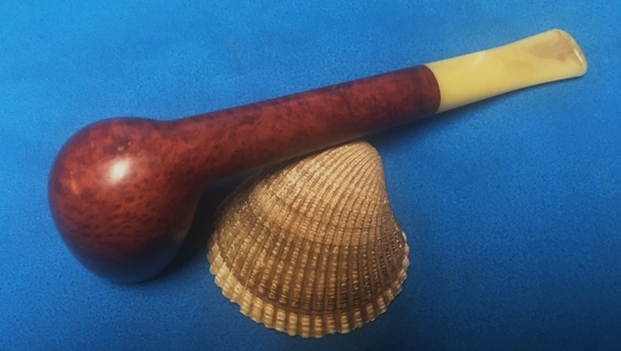
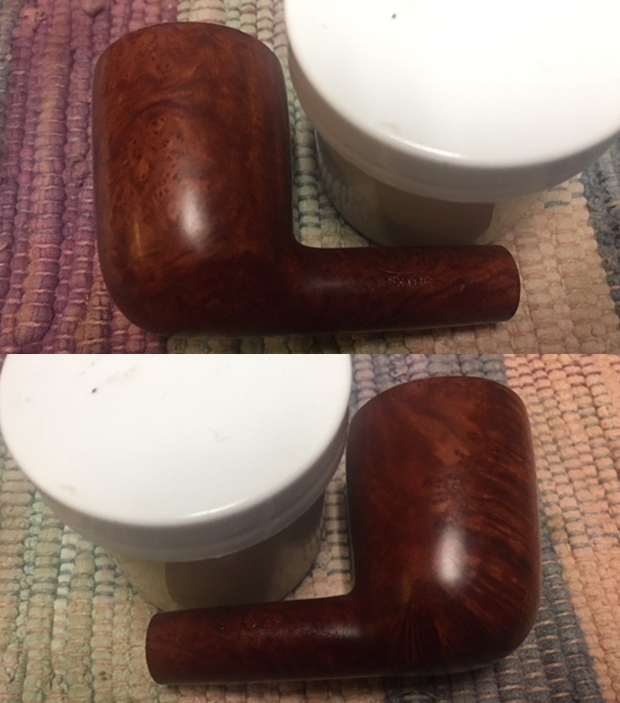
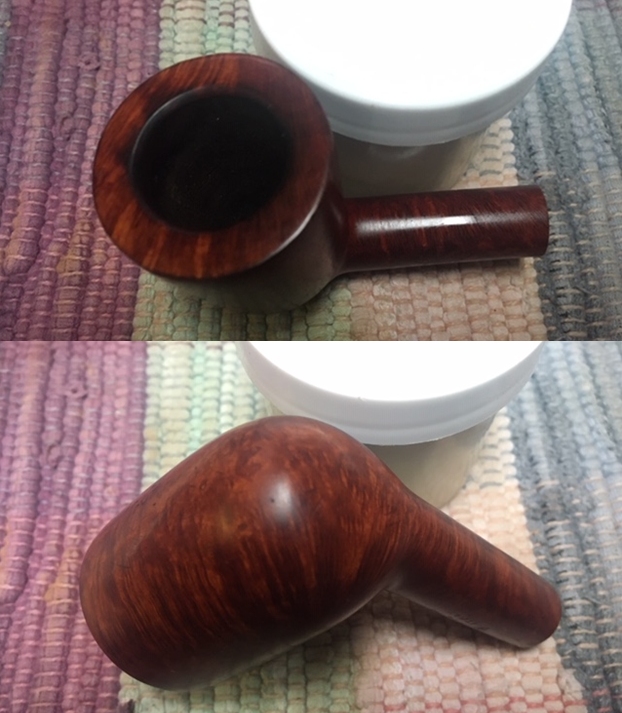
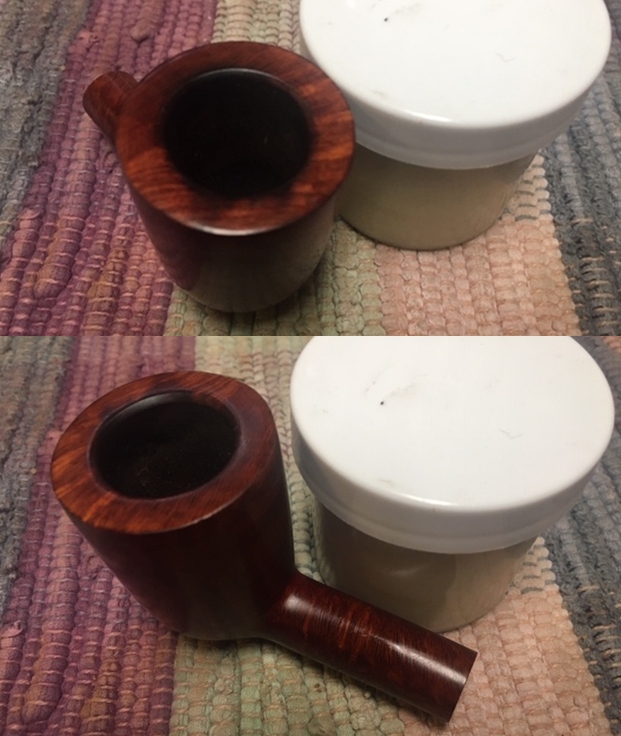
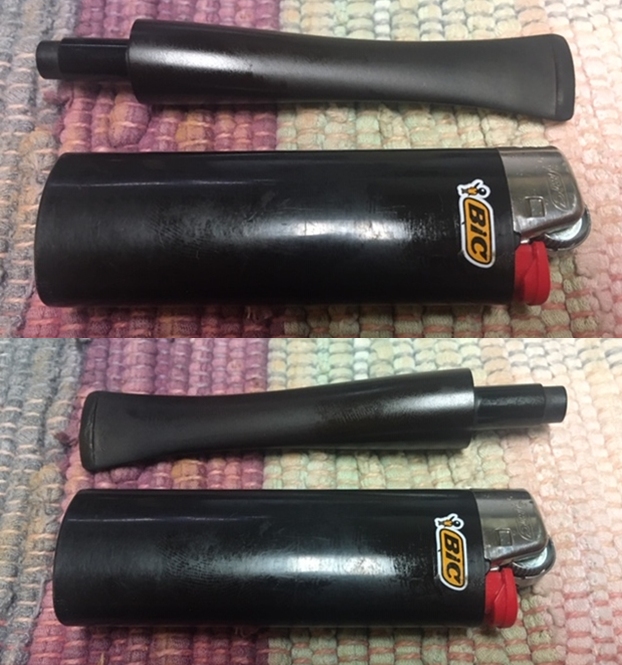
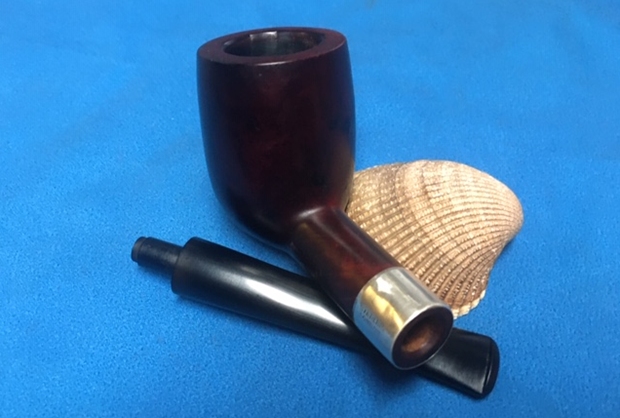
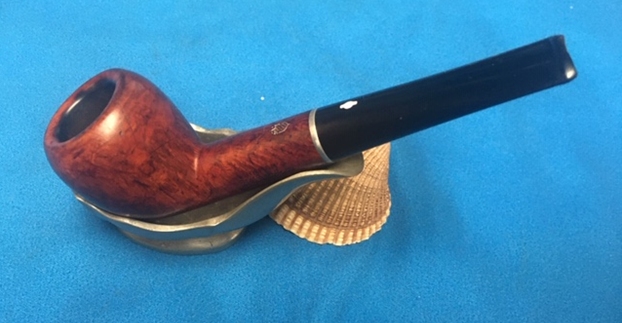
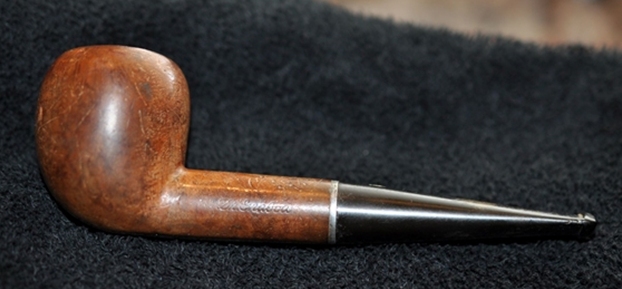
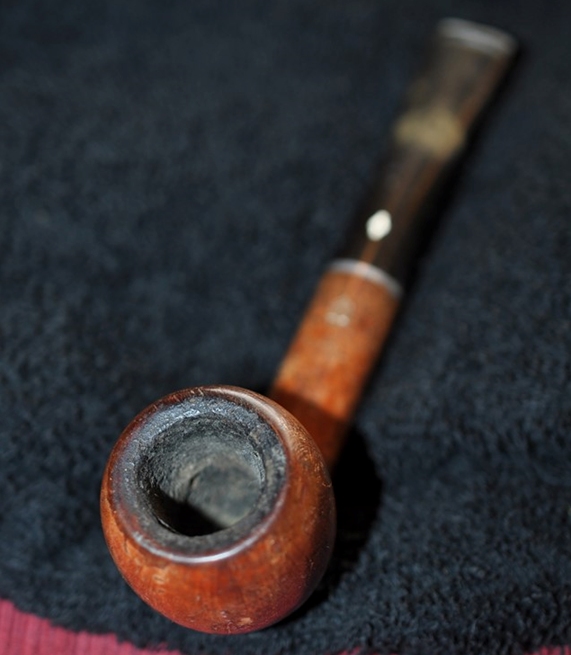
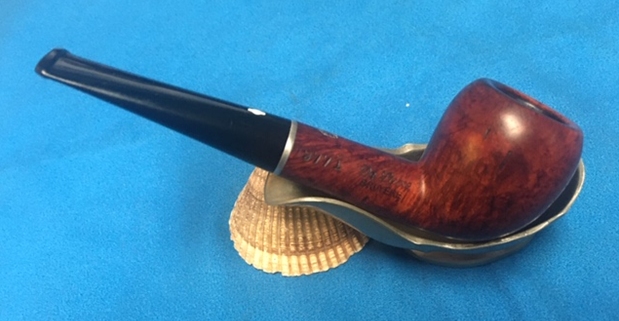
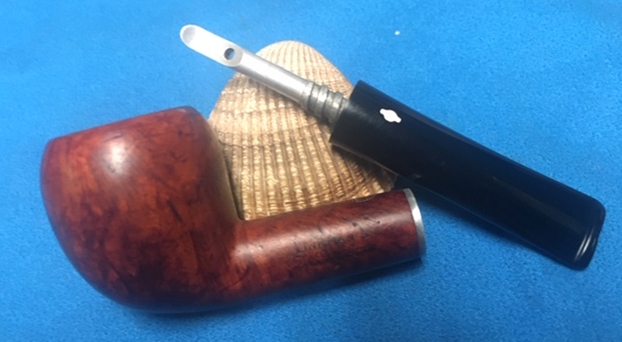
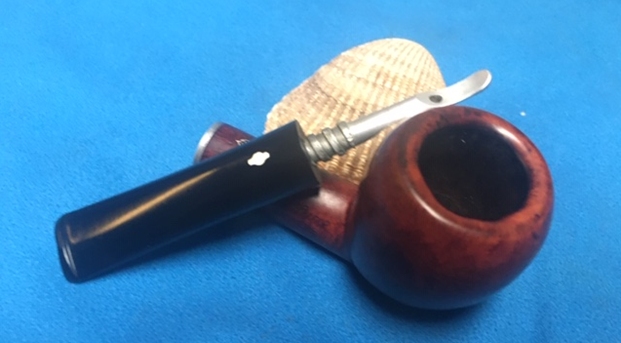
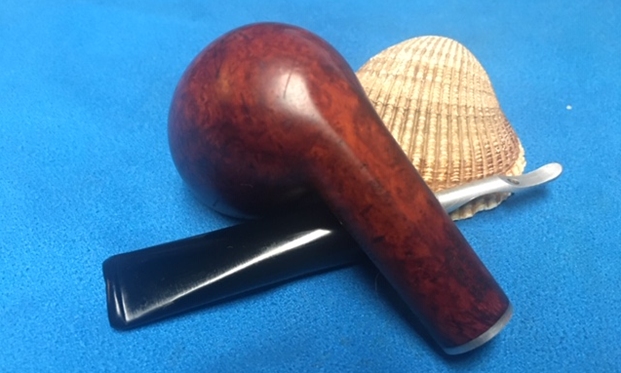
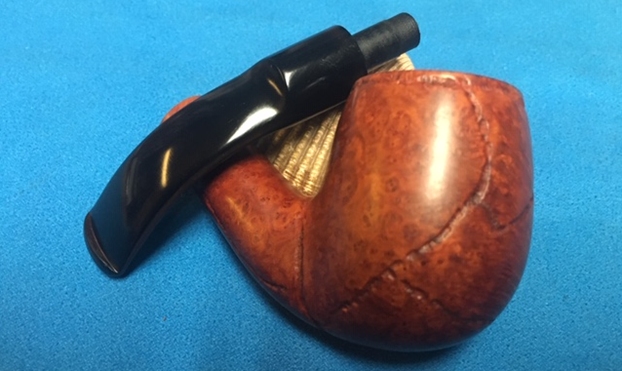
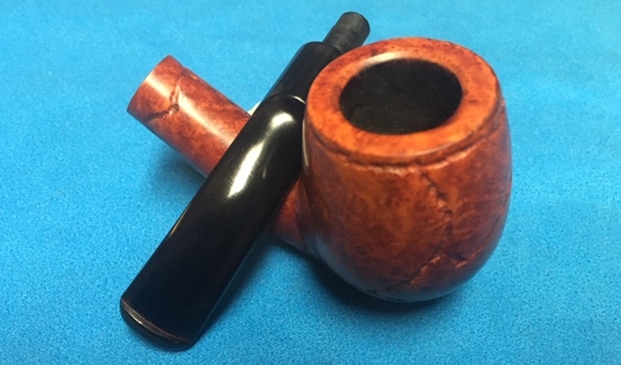
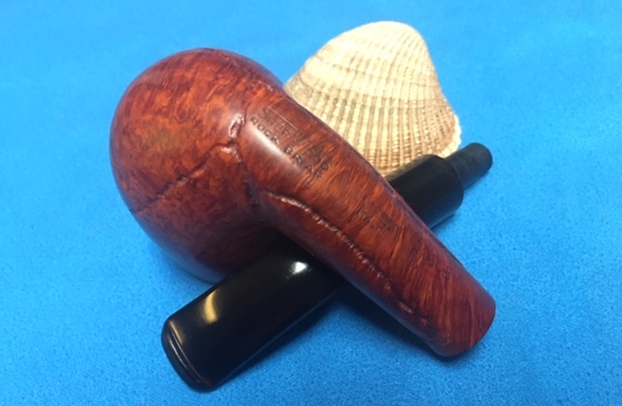
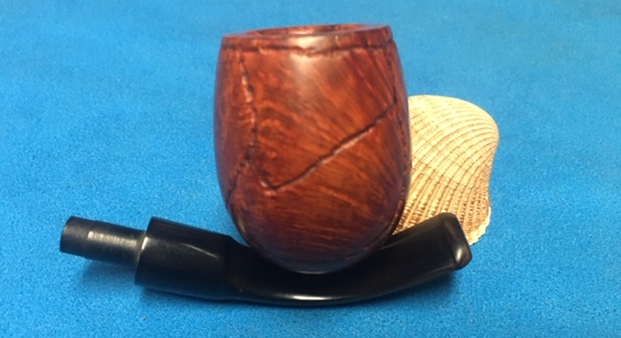
A Stanwell Sixtus 212 Tom Eltang Designed Hex Shank Billiard


Blog by Steve Laug

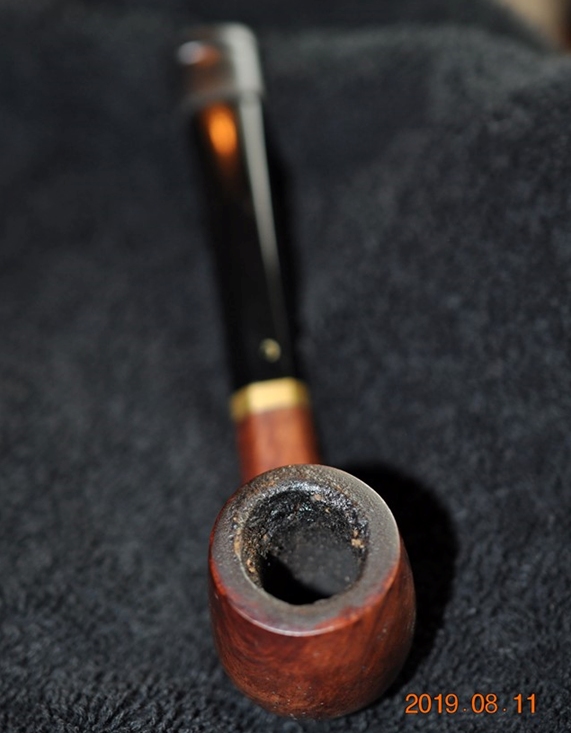
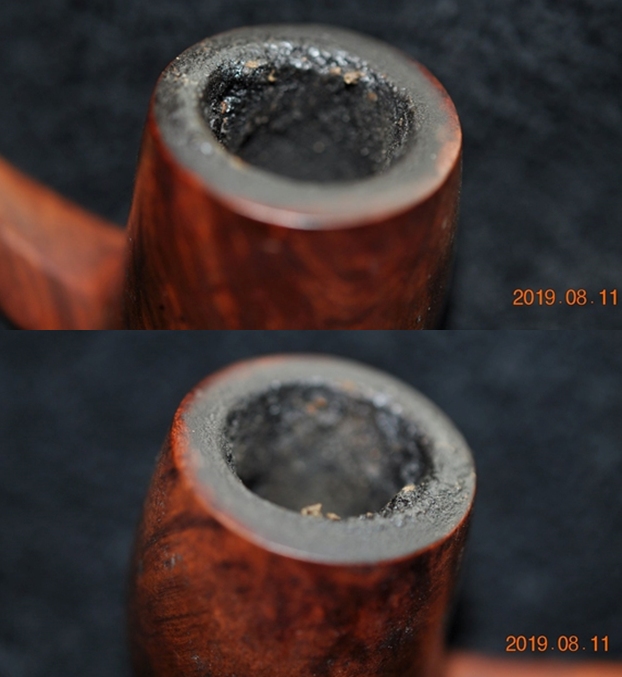
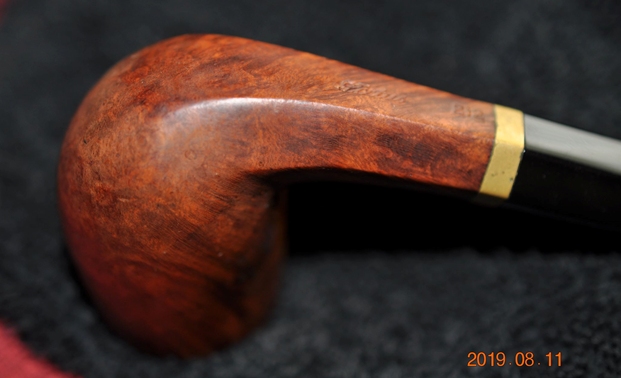
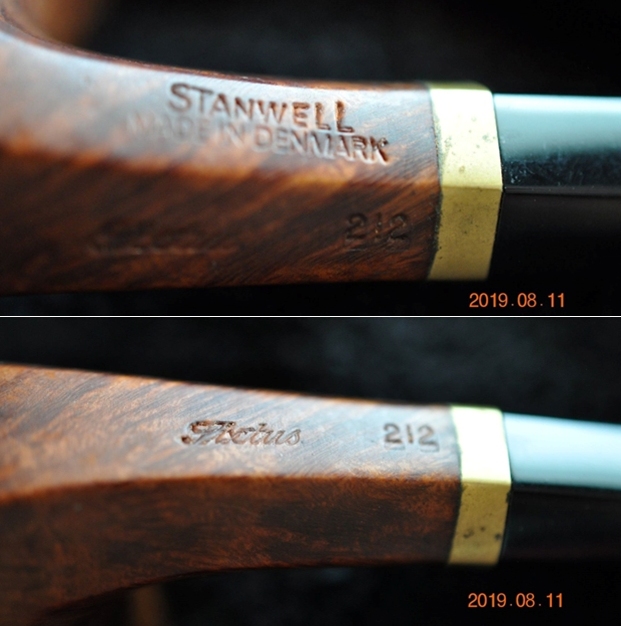
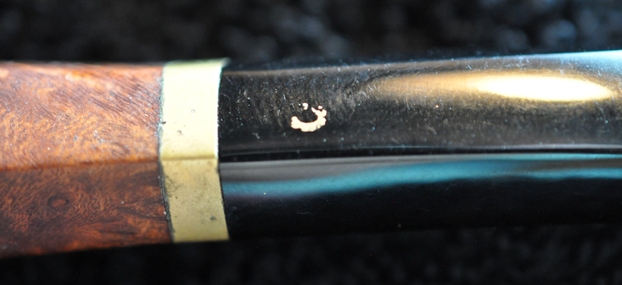
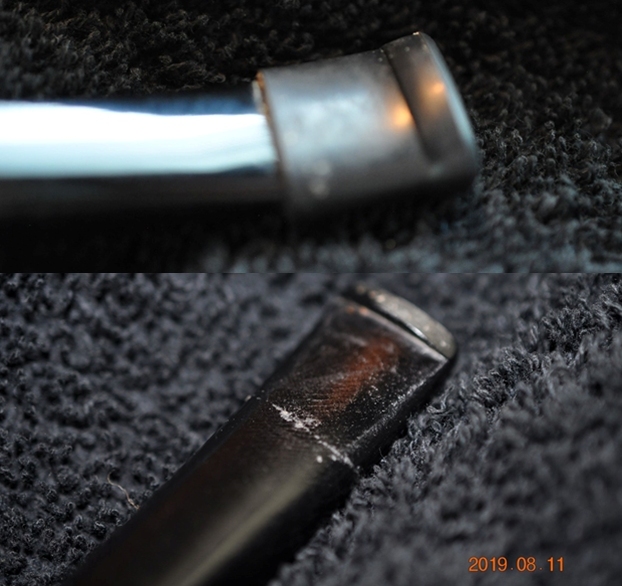
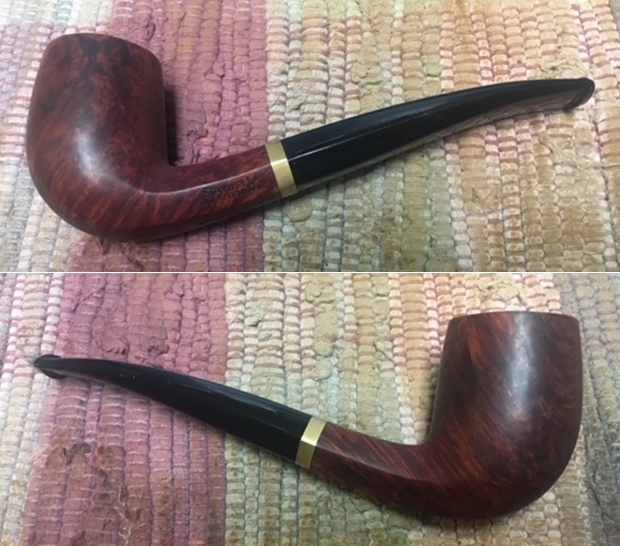
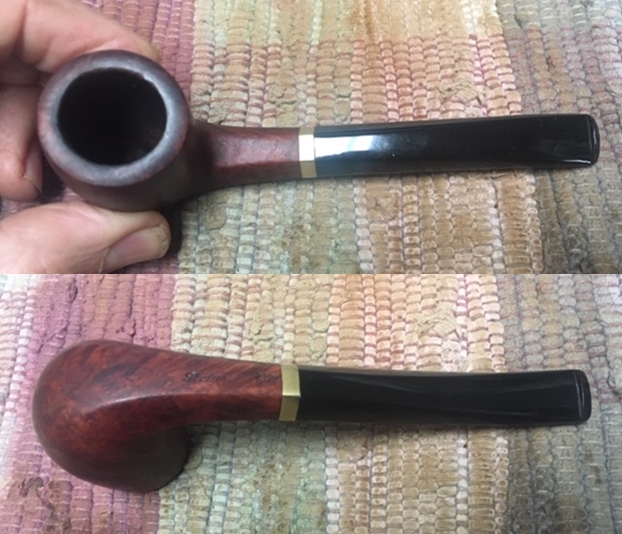
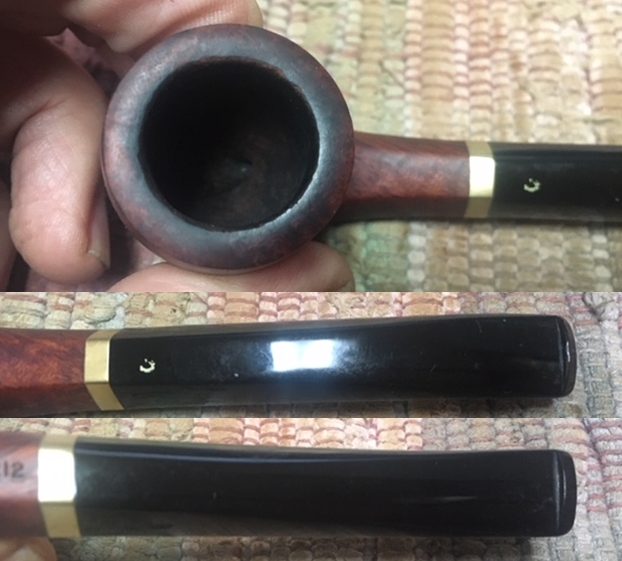
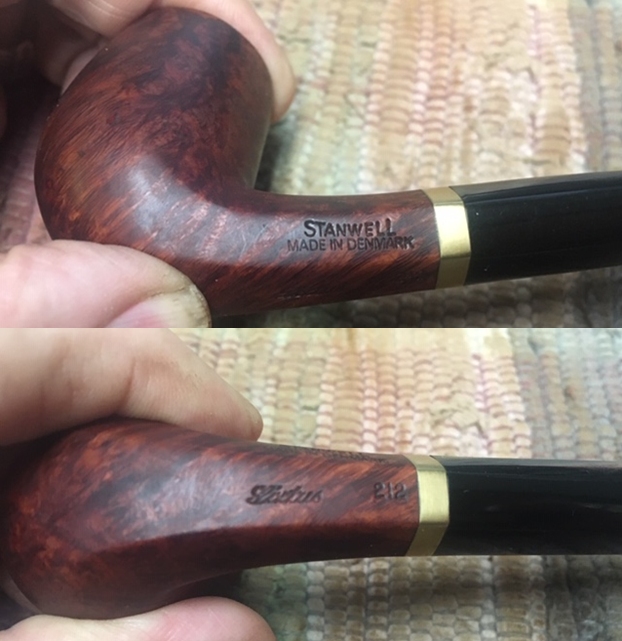
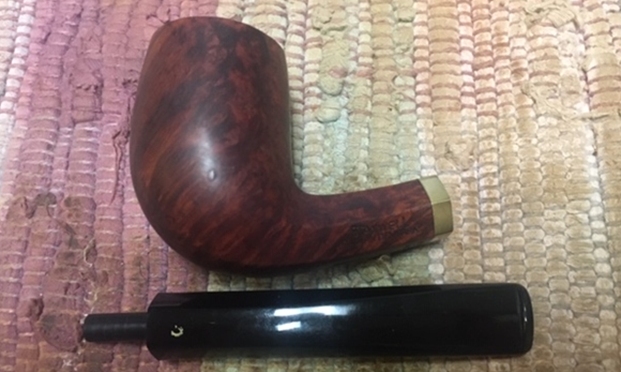
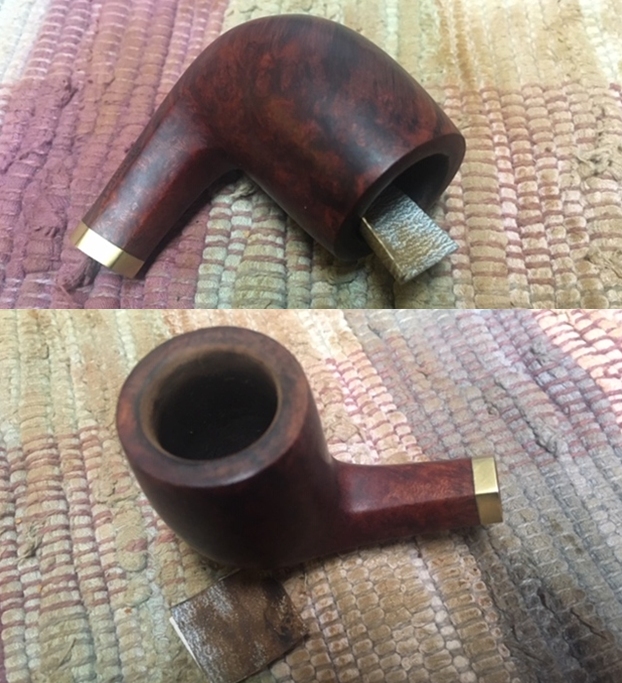
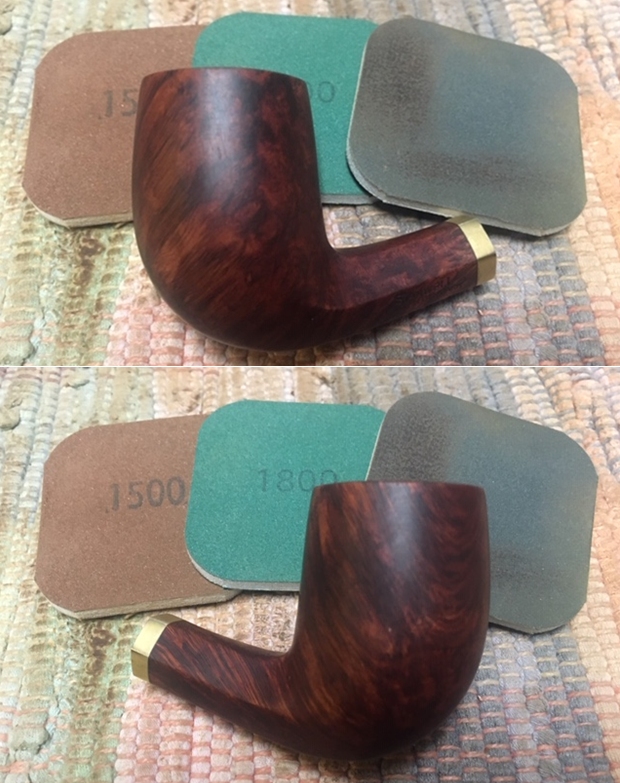
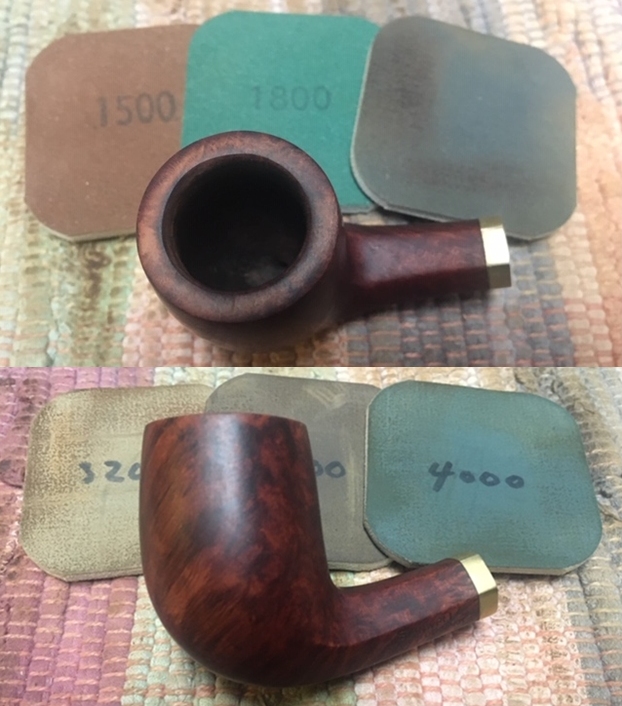
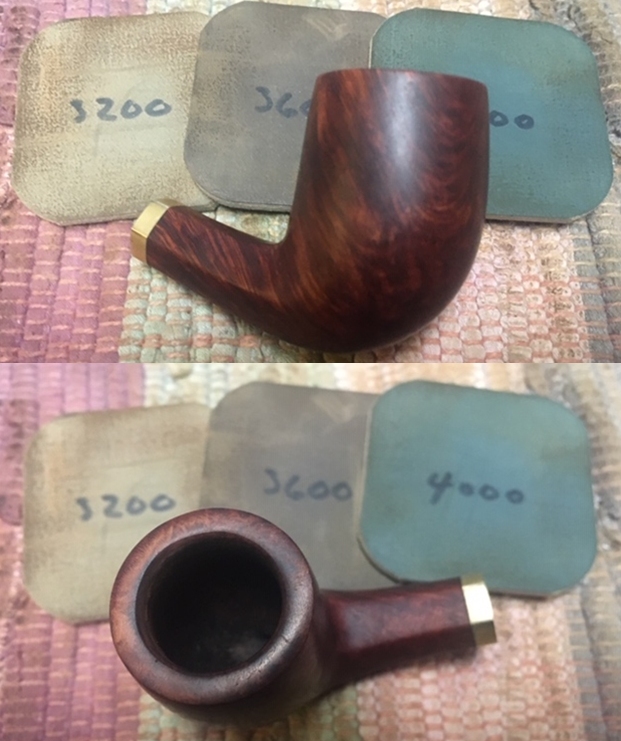
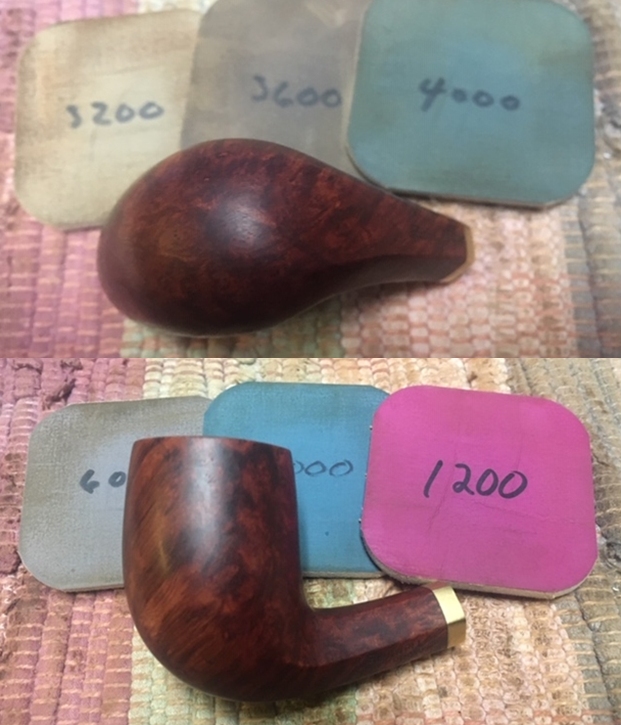
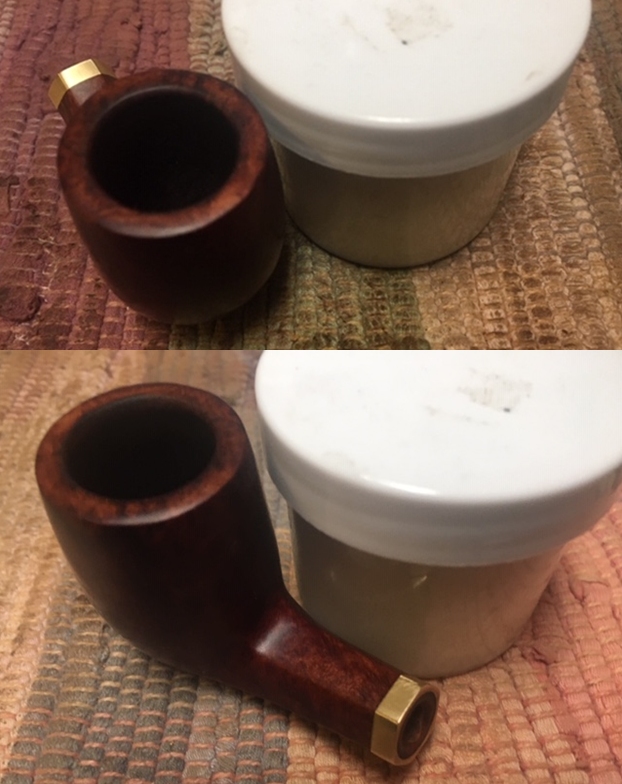
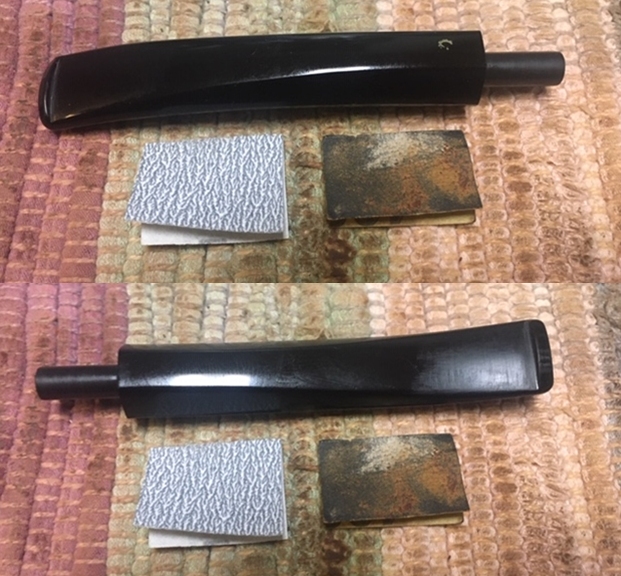
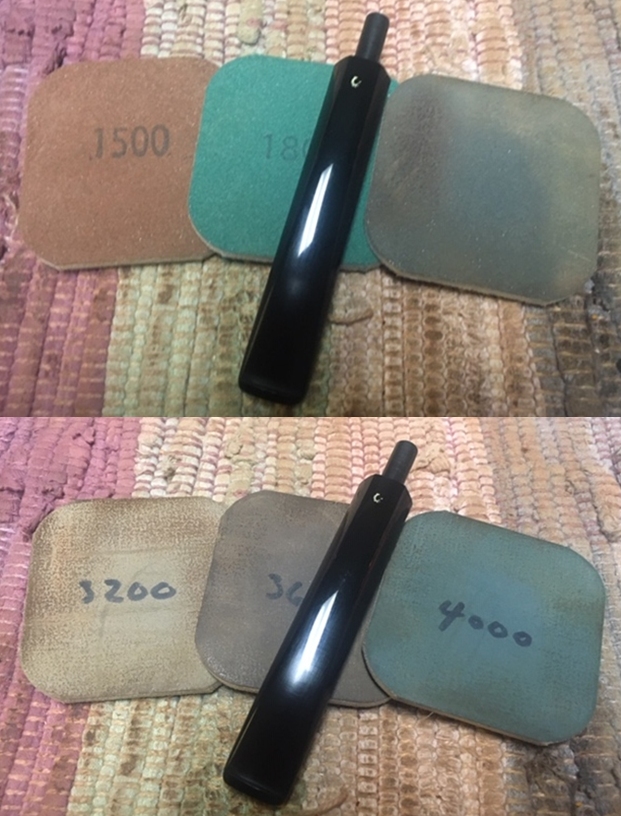
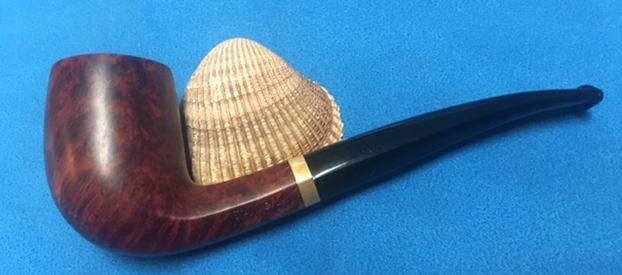
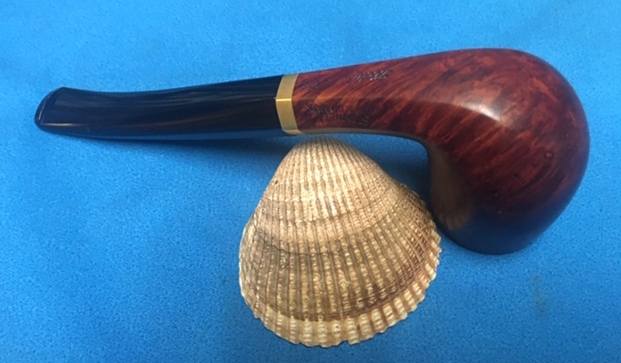
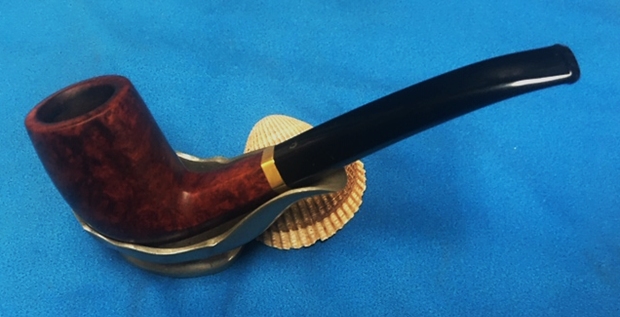
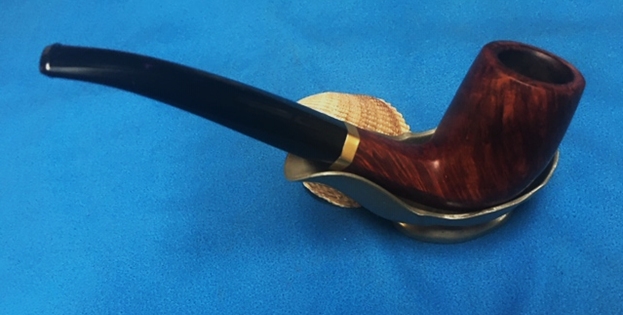
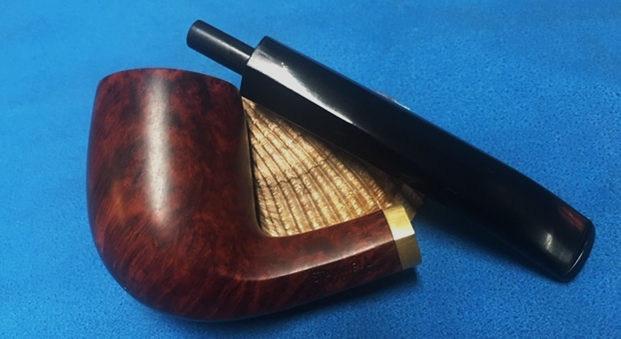
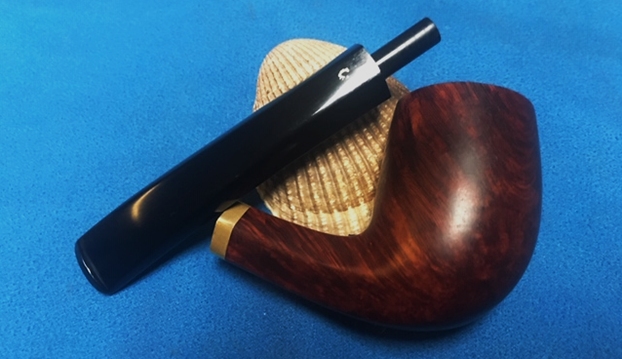
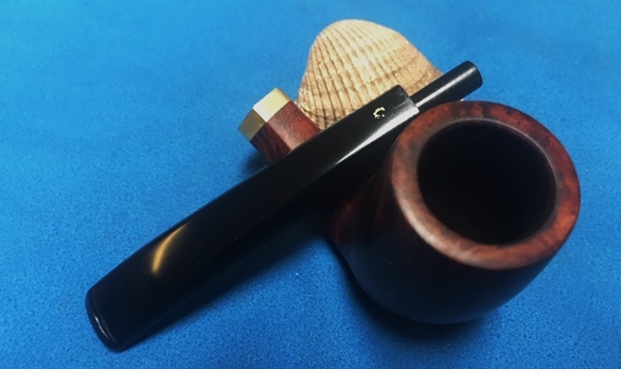
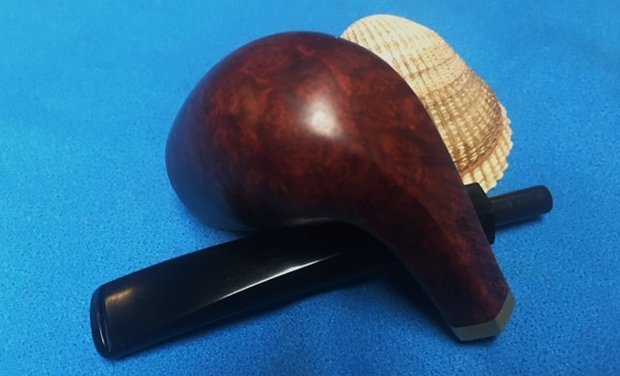
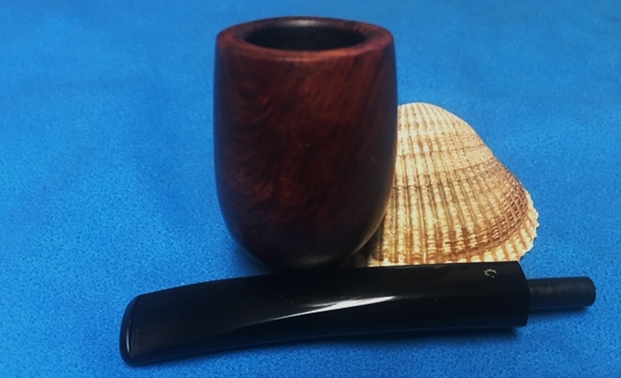
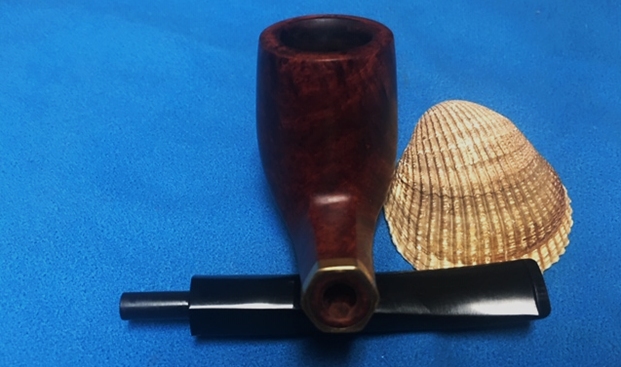
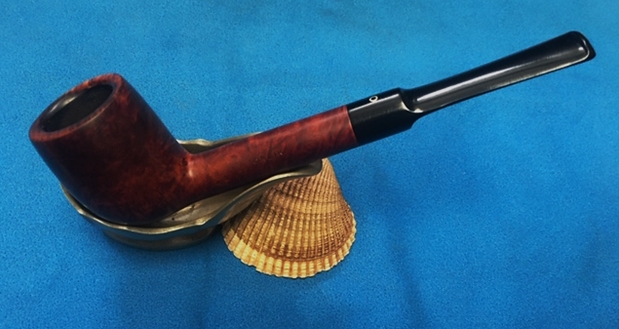
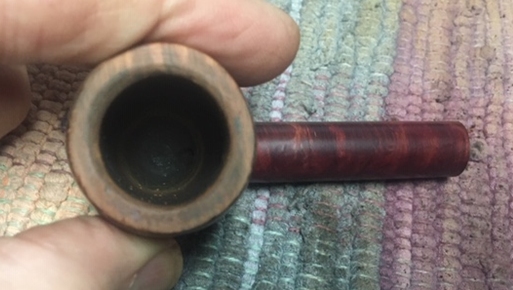
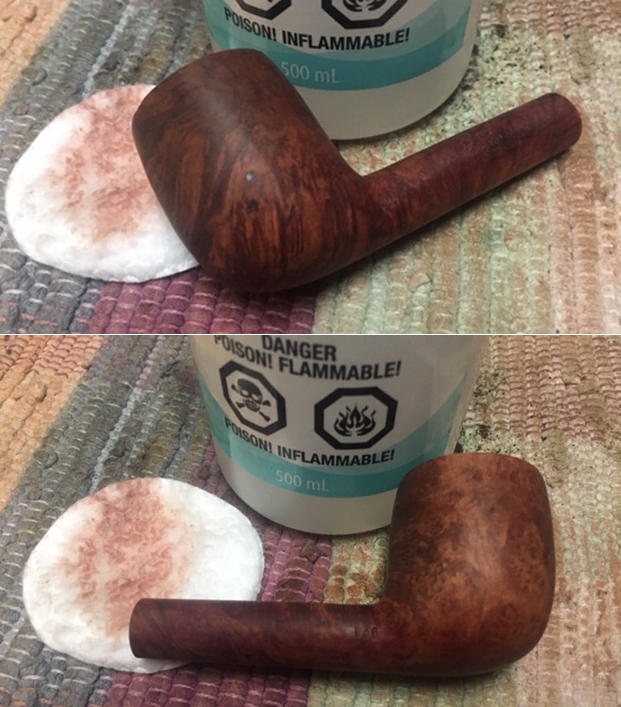
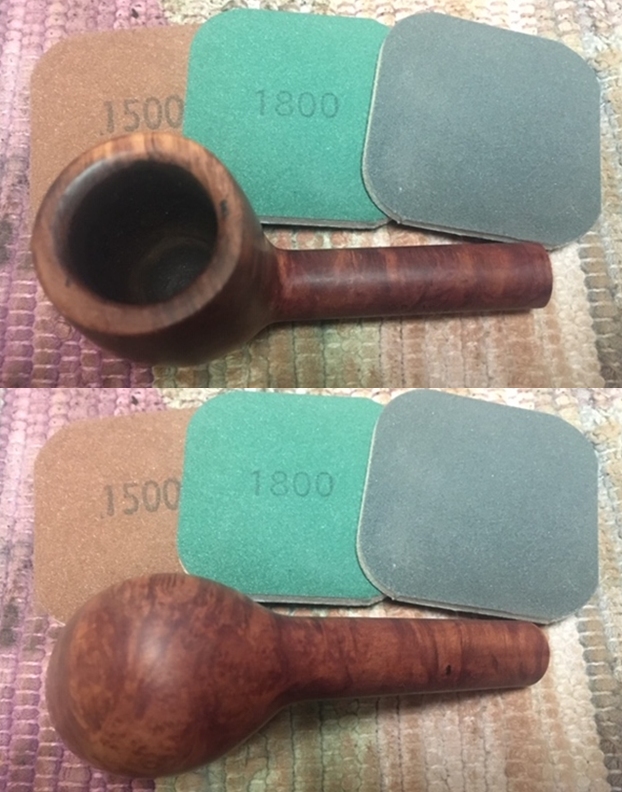
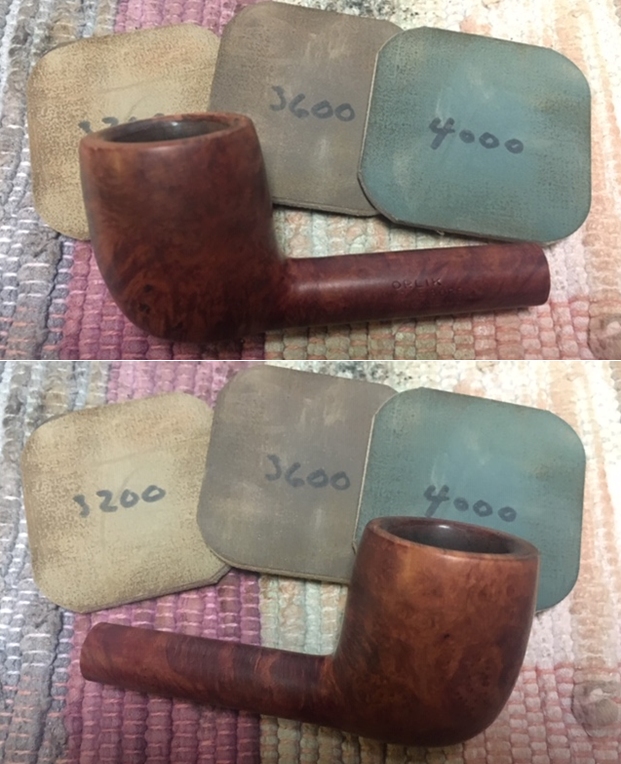
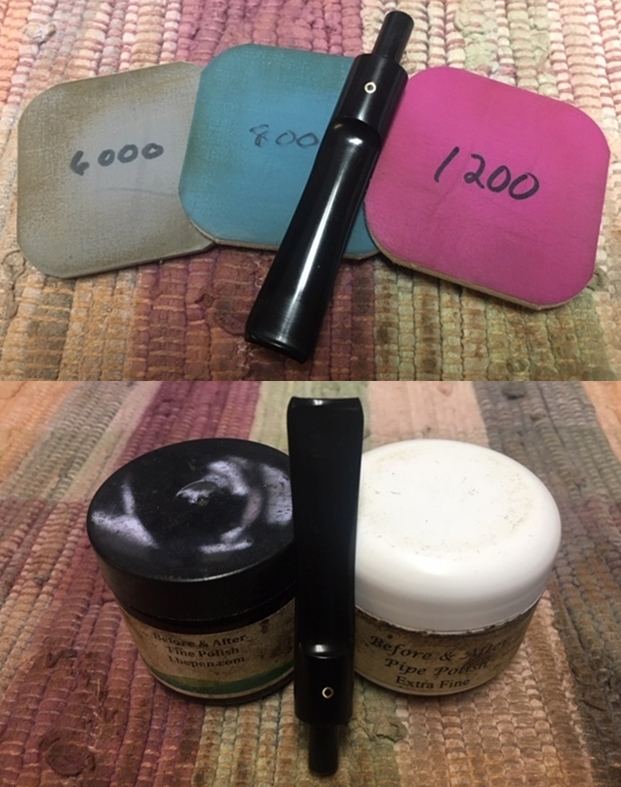
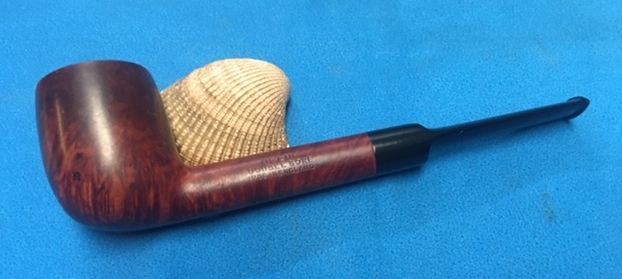
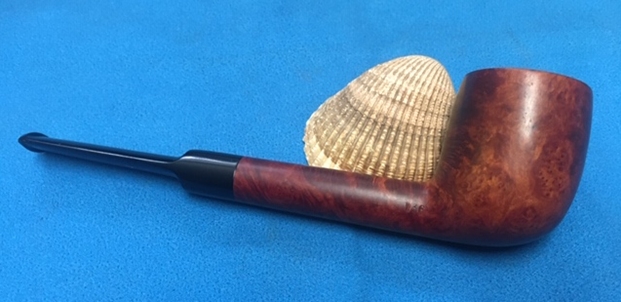
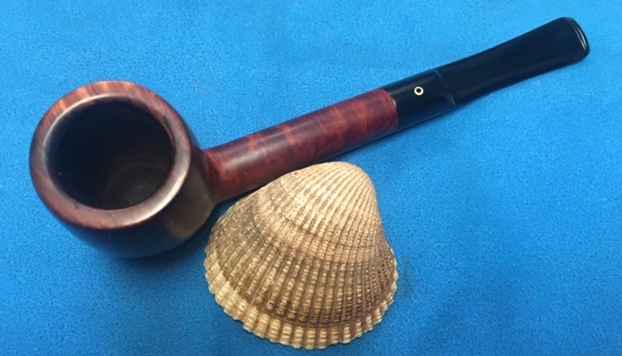
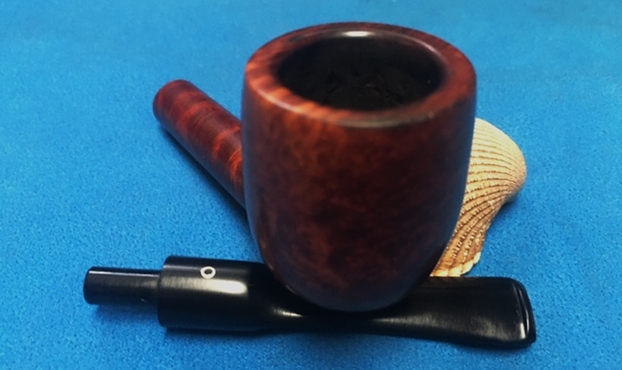
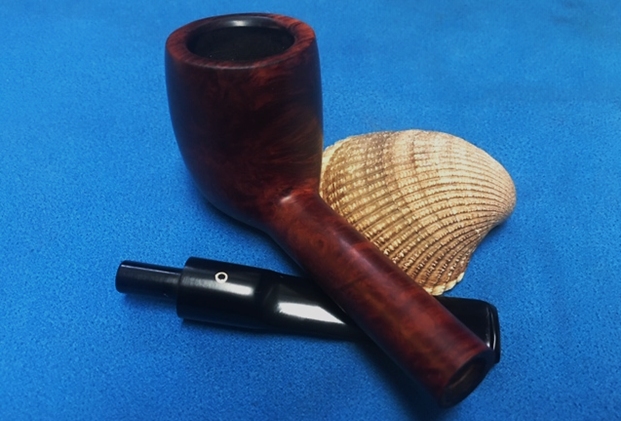
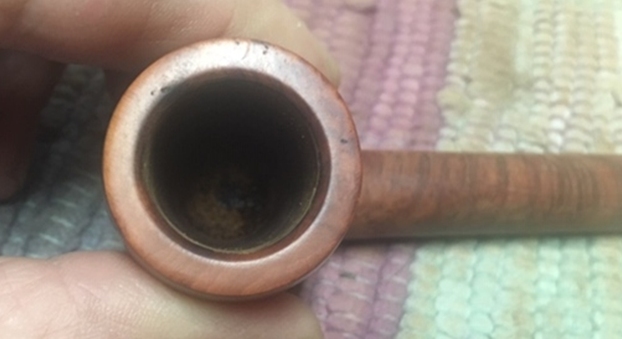
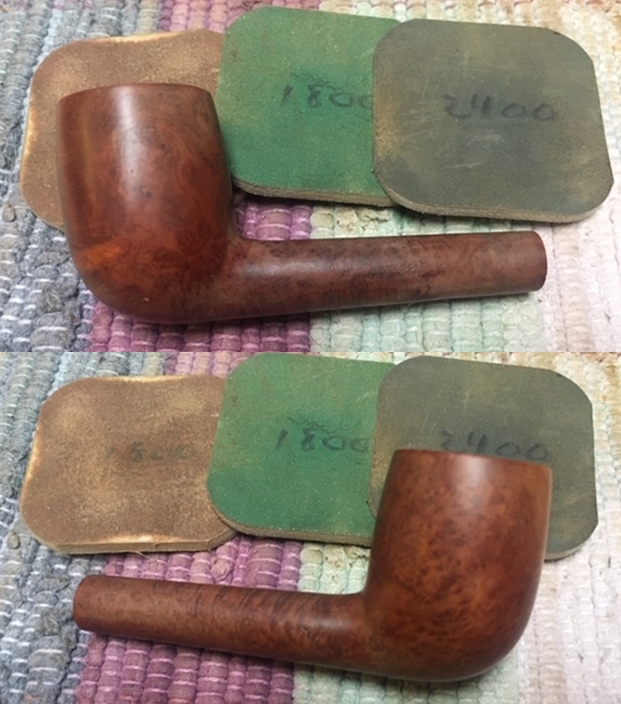
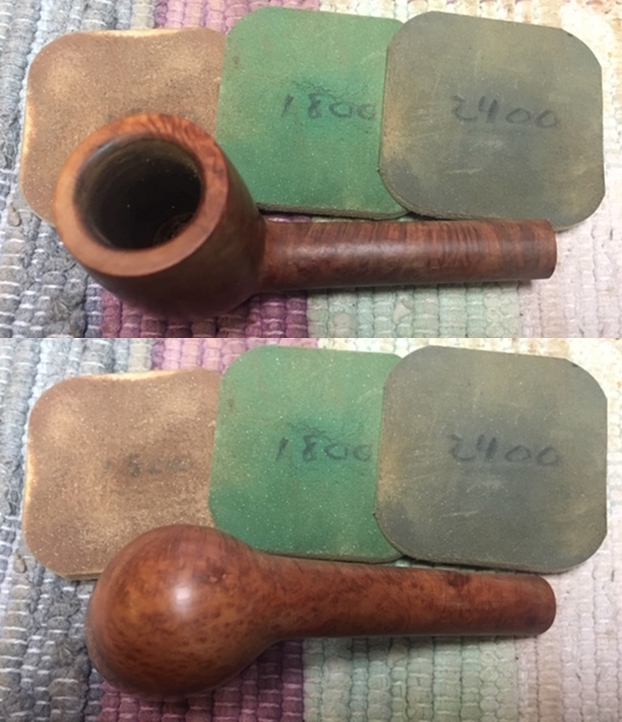
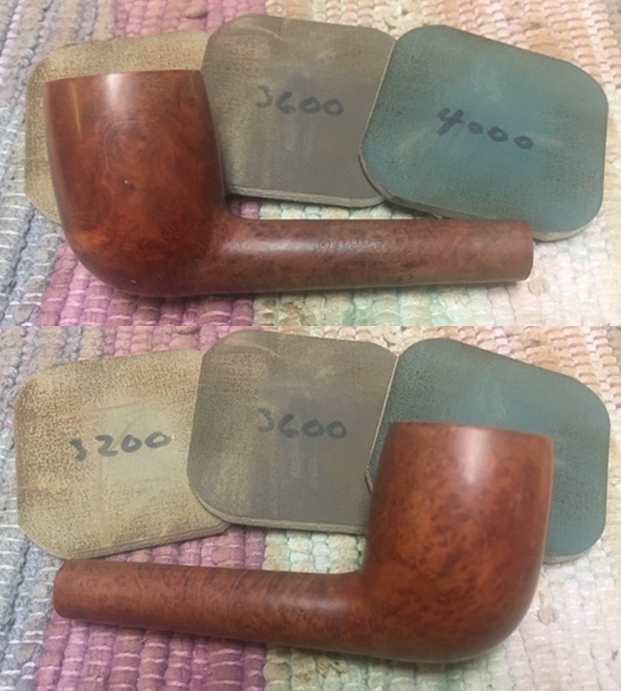
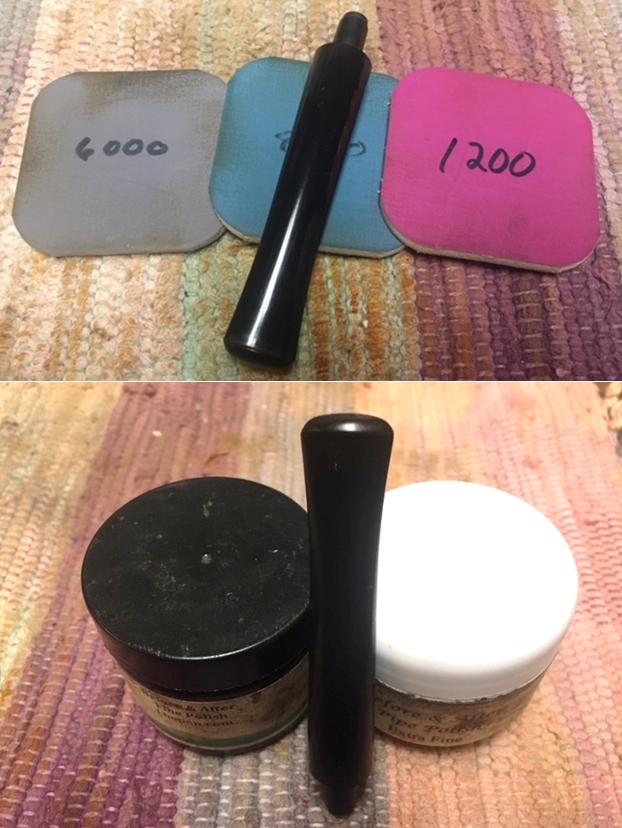
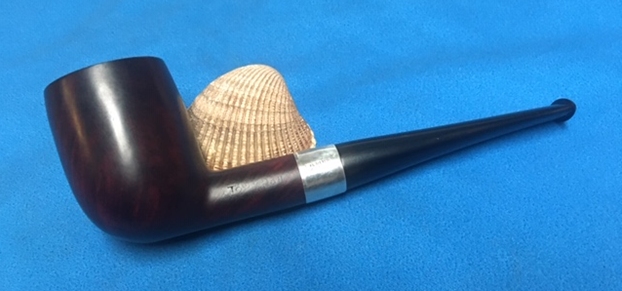
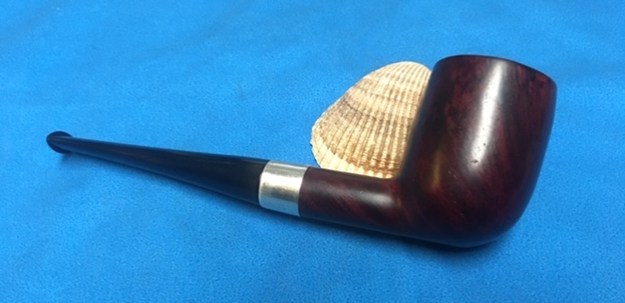
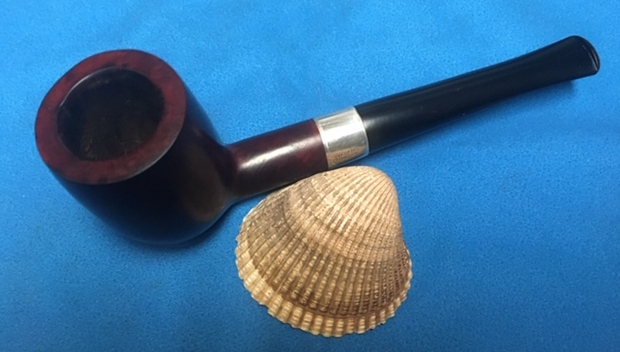
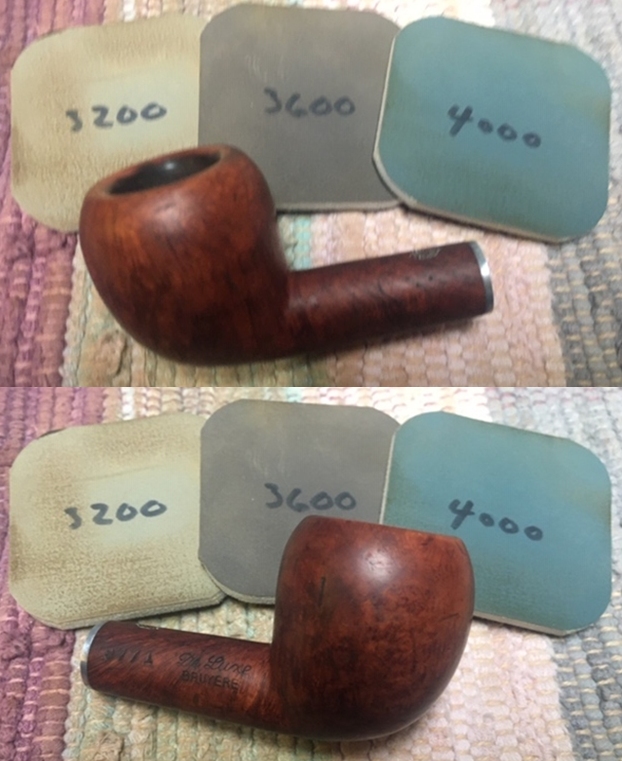
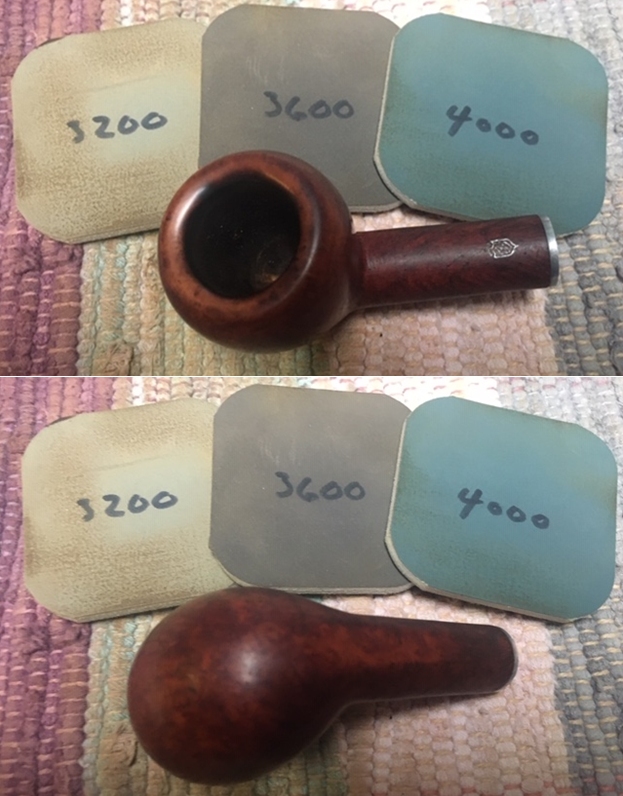
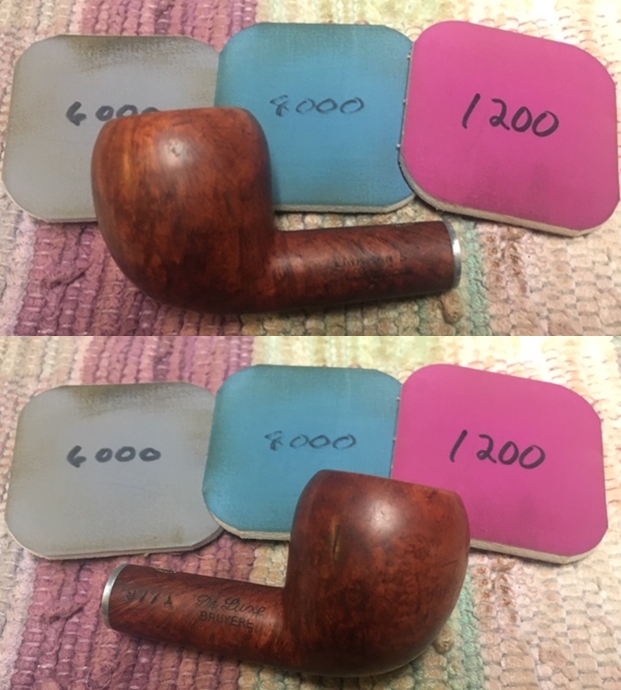
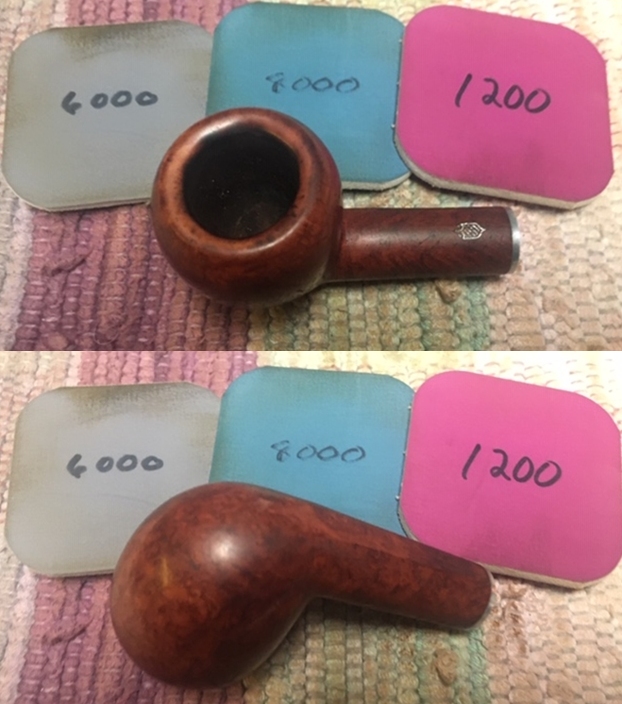
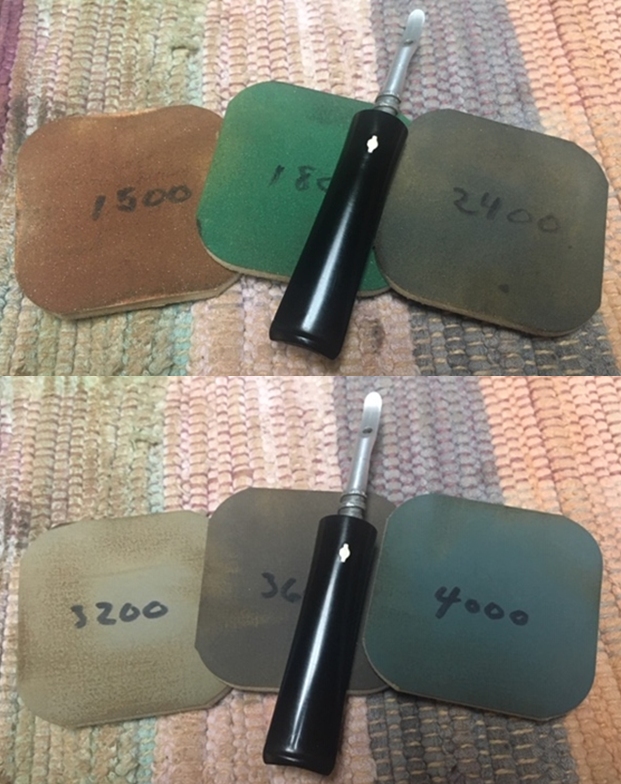
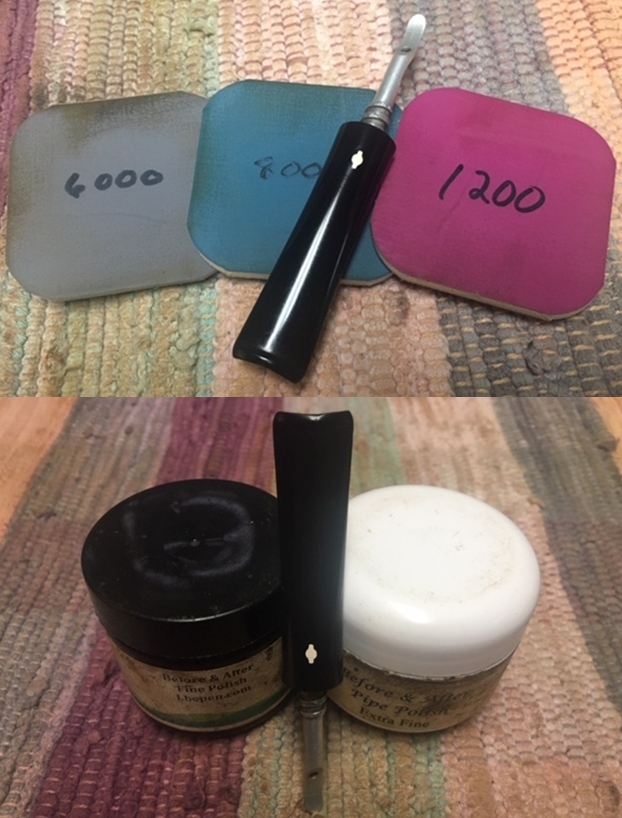
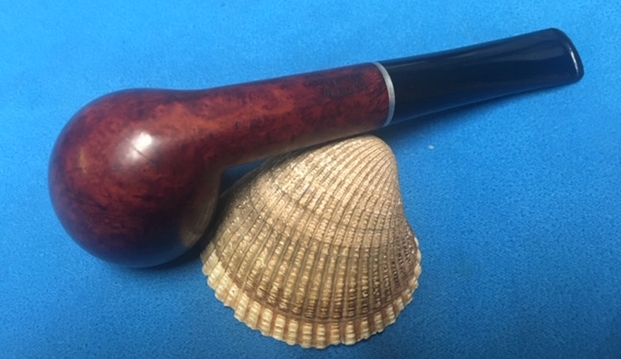
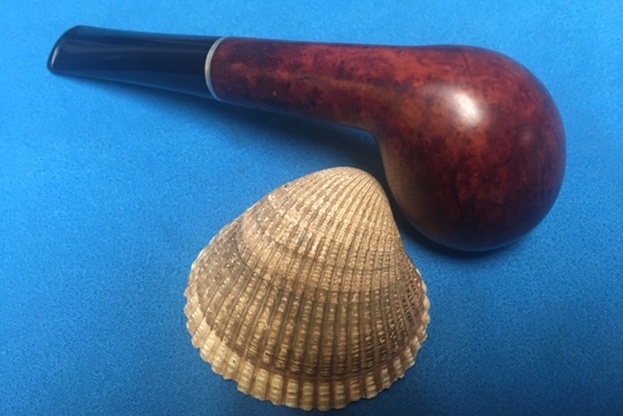
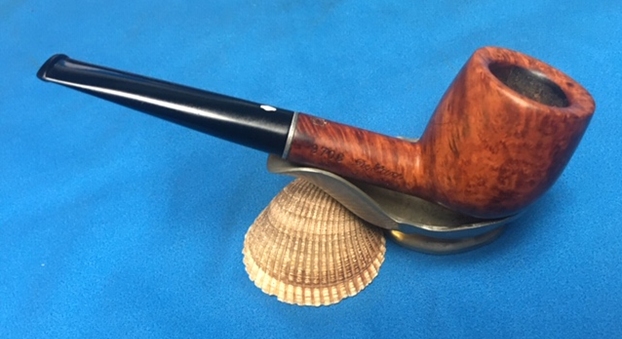
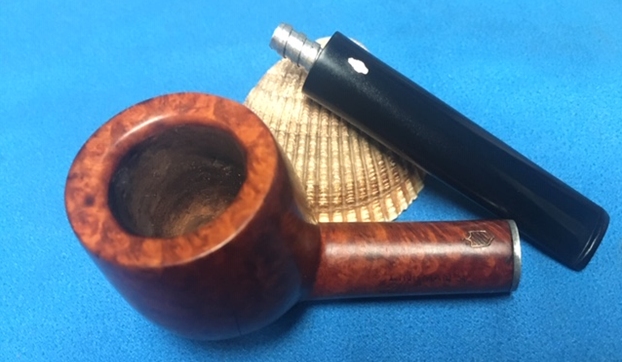
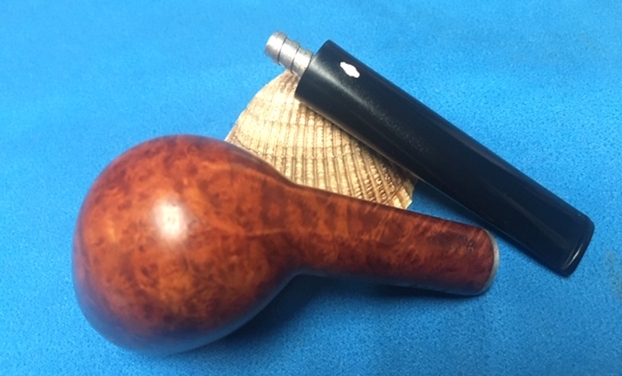
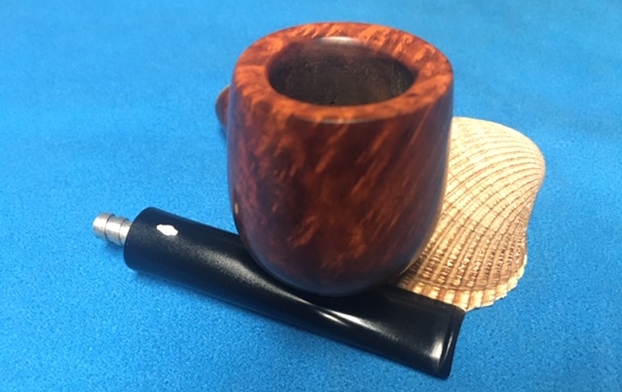
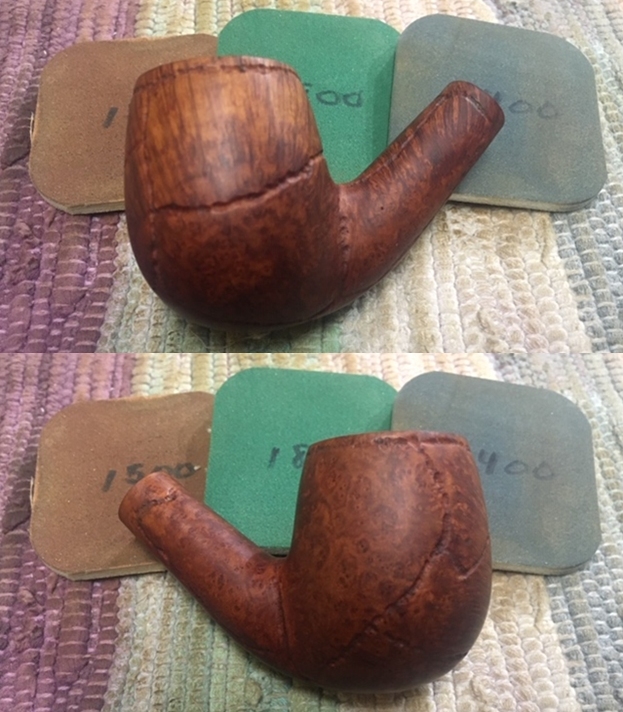
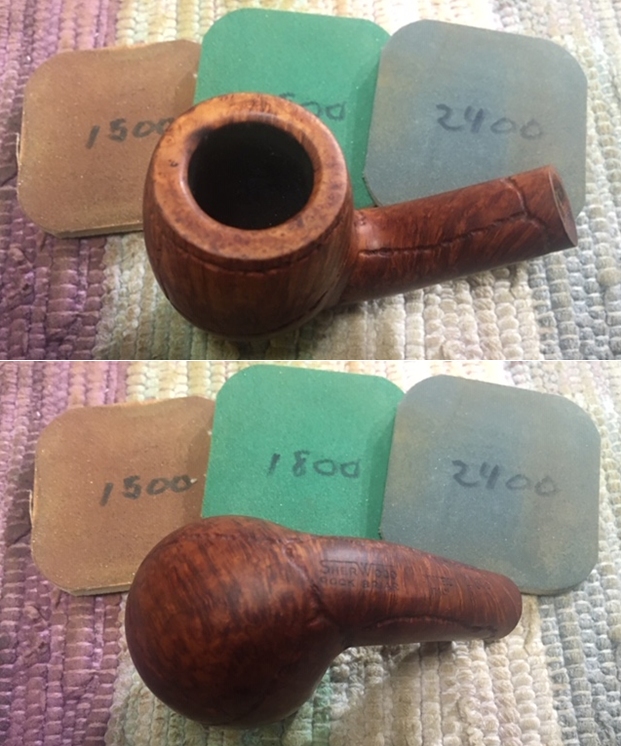
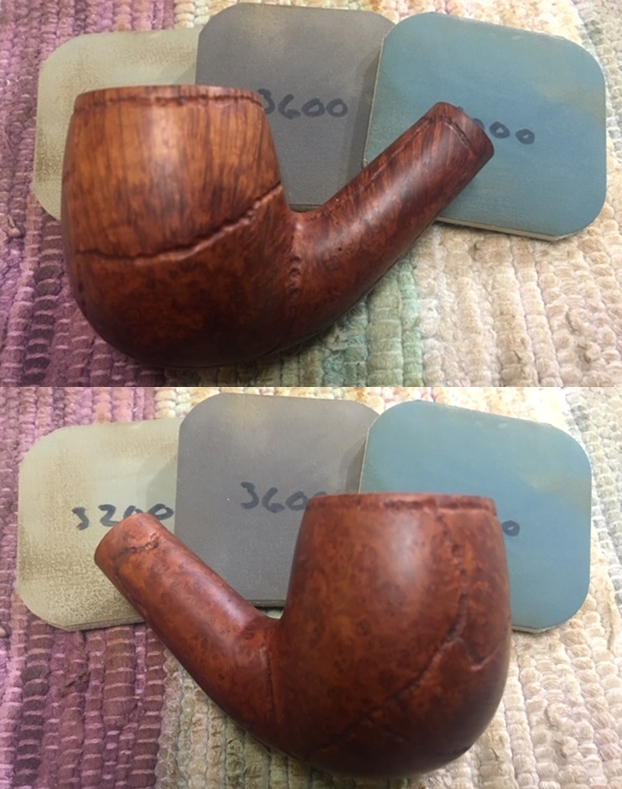
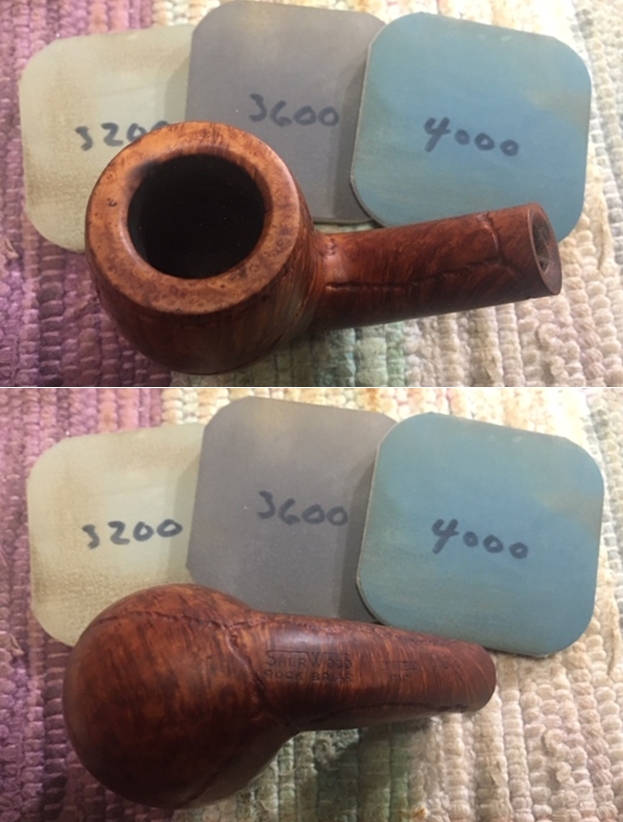
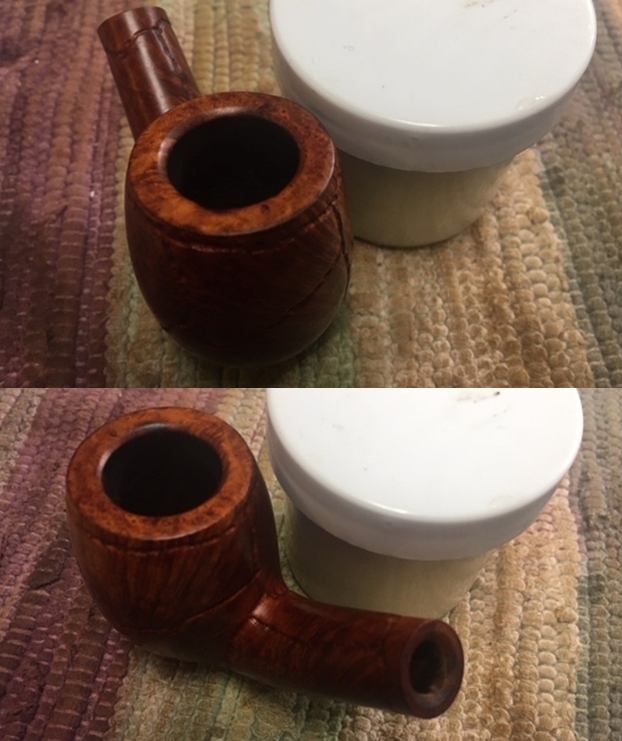
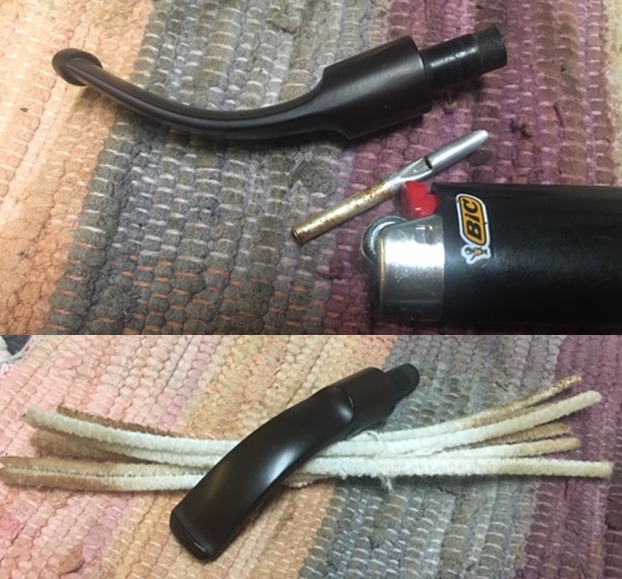
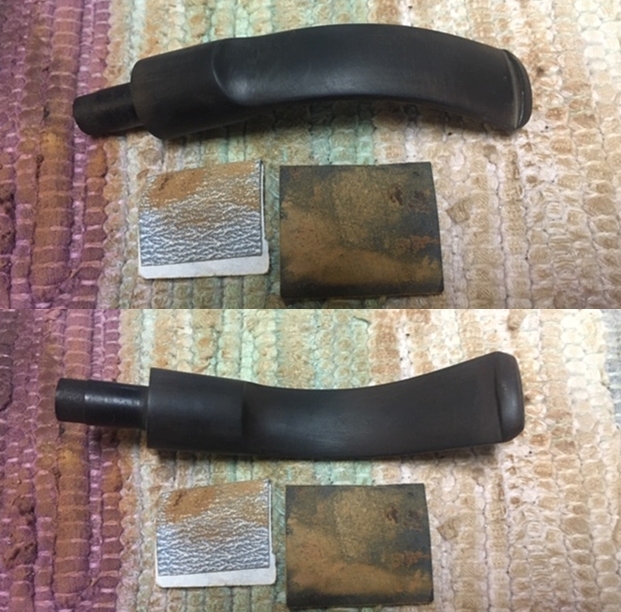
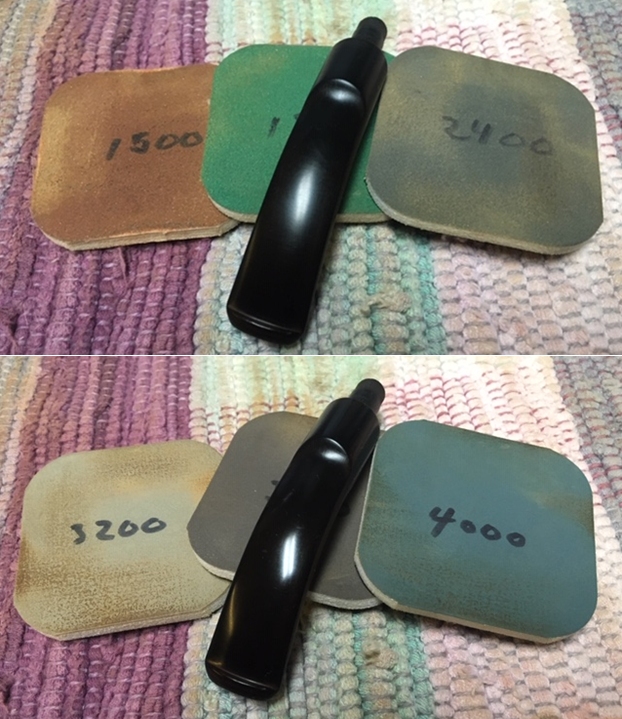
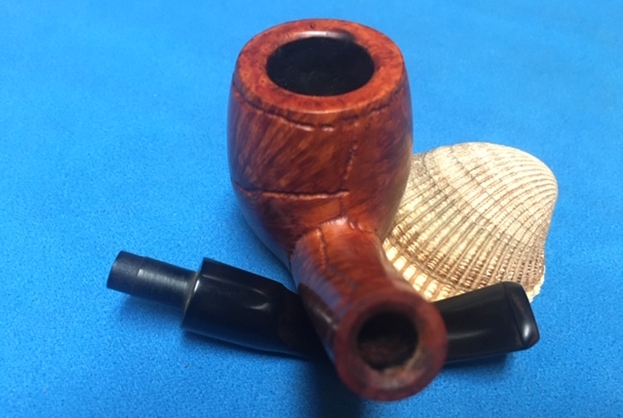
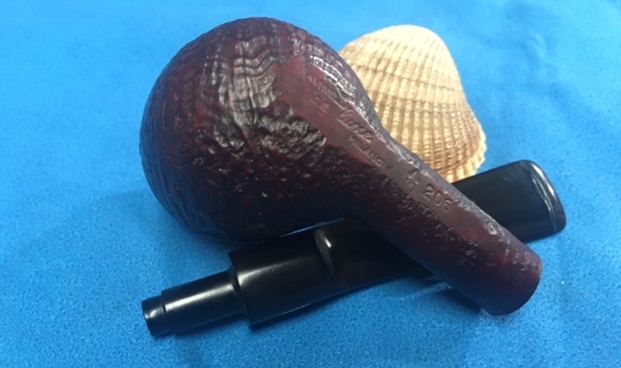
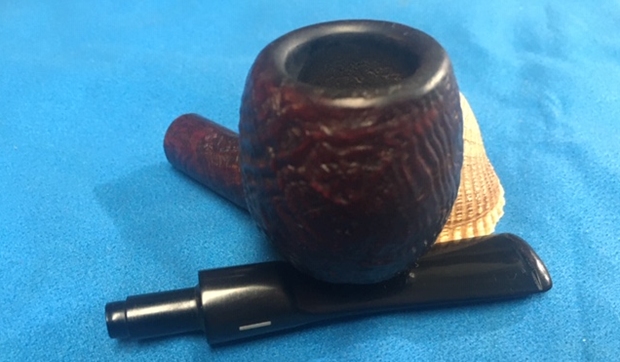
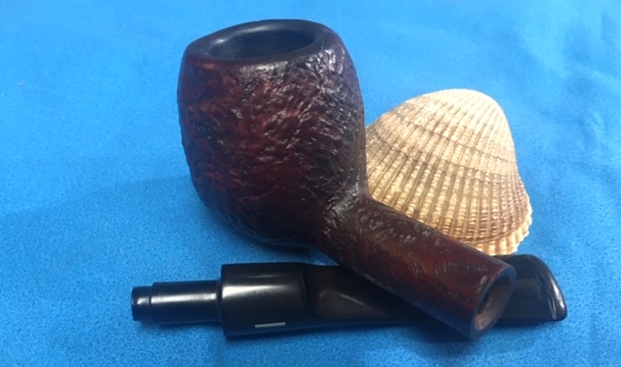
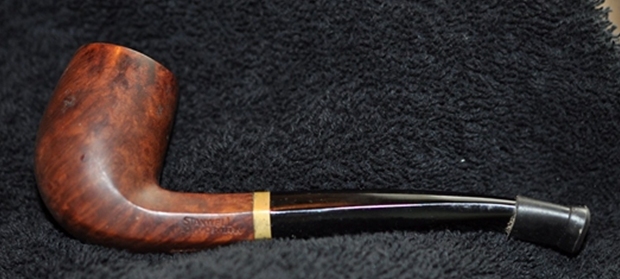
The next pipe on the table is from the next box of pipes I am working through. It is another Stanwell pipe. This time it is a nicely grained bent billiard. It is a Stanwell Sixtus shape 212 ¼ bent billiard with a hexagonal shank and stem. The Billiard shaped bowl, hexagonal shank and black acrylic hexagonal stem combine to make this Stanwell Sixtus a beauty. To me this is another classic Stanwell shape and it instantly recognizable. The finish is a smooth well grained piece of briar stained with a mix of stains to highlight the grain. The top of the bowl is smooth. It was stamped on the second panel and third panel of left side and reads Stanwell Made in Denmark followed by the line Sixtus and the shape number 212. The finish was very dirty with a heavy coat of grime ground into the bowl and rim top as can be seen in the photos. The bowl had a thick cake with a lava overflow onto the plateau rim top and the inner edge of the bowl. The acrylic stem was dirty and there was a Softee bit that was made to protect the surface of both sides and on the top and bottom edges of the button. I would not know if it worked until we removed it during the cleanup. Originally the Stanwell Crown S on the top of the hexagonal stem was a gold decal. Jeff took photos of the pipe before he cleaned it up so you could see what we saw. Jeff took a photo of the rim top to show lava build up in the plateau rim top, the edges and cake in the bowl. This one was obviously someone’s favourite pipe and it was a mess.     Jeff took some photos of the bowl sides and heel to show the absolutely dirty finish ground into the briar. It was a dirty pipe but I think it will be a beautiful one once we are finished.     The stamping on the underside of the shank is shown in the photo below. It is clear and read as noted above. There was a Stanwell Crown S logo decal on the top of the stem that was damaged and missing parts. The acrylic stem was dirty and had debris stuck to the surface. In the first photo of each pair below you can see the rubber Softee bit on the stem and in the second photo of each pair it is removed. The bit did a good job of protecting the stem surface from the majority of tooth damage but even so there are light spots on the surface that will need to be removed. I checked my usual sources for information on the Sixtus line but there was nothing specific on either Pipedia or Pipephil’s site. I also checked on the Pipedia site in the article there on shape number and shape designers(https://pipedia.org/wiki/Stanwell_Shape_Numbers_and_Designers). From there I found that the shape number 212 was designed by Tom Eltang and was a Freehand with and acrylic stem. I did a screen capture of the listing and have included it below.It looks like I am dealing with a pipe designed for Stanwell by Tom Eltang. Now it was my turn to work on the pipe. Jeff had done his usual thorough cleanup of the pipe. He had reamed the pipe with a Pipnet piper reamer and taken the cake back to bare briar. He cleaned up the remaining cake with a Savinelli Fitsall Pipe Knife. He scrubbed the interior of the bowl and shank with pipe cleaners, cotton swabs and alcohol to remove the tars and oils. He scrubbed the exterior of the pipe with Murphy’s Oil Soap and a tooth brush to remove the grime from the finish. He worked on the rim top lava and darkening with the soap and tooth brush. He scrubbed the inside of the stem with alcohol and pipe cleaners. He scrubbed the exterior with Soft Scrub and then soaked it in Before & After Deoxidizer. He washed the stem off with warm water to remove the Deoxidizer. The pipe looked far better. I took photos of the pipe when I received it before I started working on it. I took photos of the bowl and rim top as well as the stem to show how clean they were. The inner edge of the rim had some damage and was slightly out of round. The rim top had some darkening and light nicks. The stem is clean and the minimal damage on the button top and bottom edges is not too bad.     I took a photo of the stamping on the hexagonal patterns of the shank. The stamping is readable as noted above.     I took the stem off the bowl and took a photo of the pipe showing the overall look of the design.I decided to address the issues of the damage to the inner edge and rim top first. I used a folded piece of 220 grit sandpaper to smooth out edge and reshape it. I also smoothed out the damage on the rim top and darkening at the same time. It looked a lot better once I had finished.  I polished the briar with micromesh – wet sanding with 1500-12000 grit micromesh sanding pads. I wiped the bowl down after each sanding pad with a damp cloth.      I rubbed the briar down with Before & After Restoration Balm. I worked it into the briar with my fingertips. The product works to clean, enliven and preserve the briar. I let it sit for 10 minutes while I worked on the stem. After the time passed I buffed it with a cotton cloth to deepen the shine. The briar really comes alive with the balm.   I sanded the stem with 220 grit sandpaper to remove the small tooth chatter and marks near the button. I started polishing the stem with 400 grit wet dry sandpaper. I wiped the stem down with Obsidian Oil before further polishing it.        I polished the vulcanite with micromesh sanding pads – 1500-12000 grit pads. I wiped it down with Obsidian Oil after each sanding pad. I used Before & After Pipe Polish – both Fine and Extra Fine to further polish the stem. This Stanwell Sixtus 212 Tom Eltang Designed Billiard with hexagonal shank and stem turned out very nice. The mix of brown stains highlights the grain around the bowl sides and bottom. The rim top and edges look very good. The finish on the pipe is in excellent condition. I put the stem back on the bowl and carefully buffed the pipe with Blue Diamond on the buffing wheel. I gave the bowl and stem multiple coats of carnauba wax on the buffing wheel and followed that by buffing the entire pipe with a clean buffing pad. I hand buffed the pipe with a microfiber cloth to deepen the shine. The finished Bent Billiard is very nice and feels great in the hand. Give the finished pipe a look in the photos below. It is a nice pipe whose dimensions are Length: 5 ½ inches, Height: 2 inches, Outside diameter of the bowl: 1 ¼ inches, Chamber diameter: ¾ of an inch. Thanks for walking through the restoration with me as I worked over another beautiful pipe. This Stanwell Sixtus 212 Bent Billiard designed by Tom Eltang will be going on the rebornpipes store shortly. If you are interesting in adding it to your collection let me know! Thanks for your time.
Restoring an Orlik Double Bore Long Shank Saddle Stem Billiard


Blog by Steve Laug

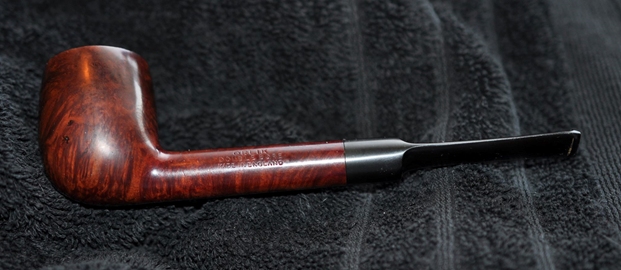
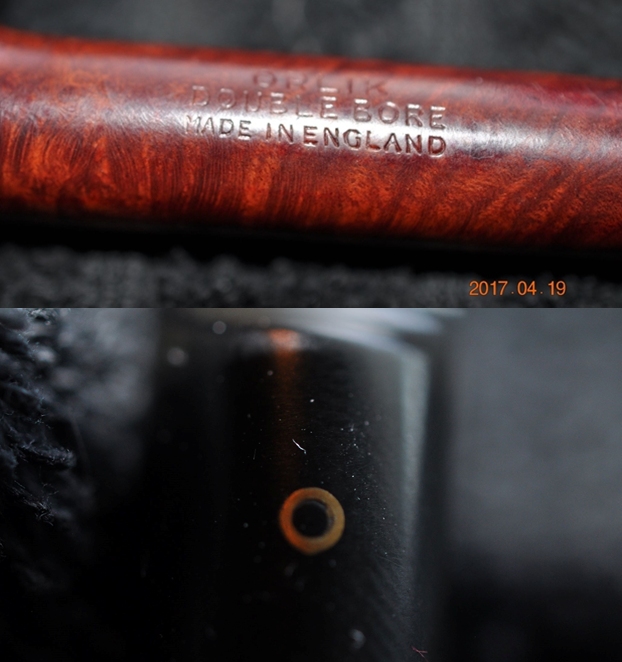
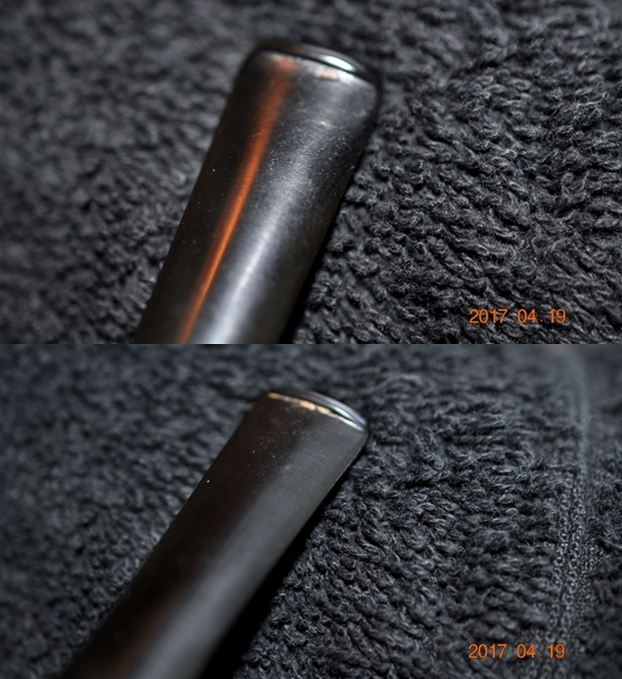
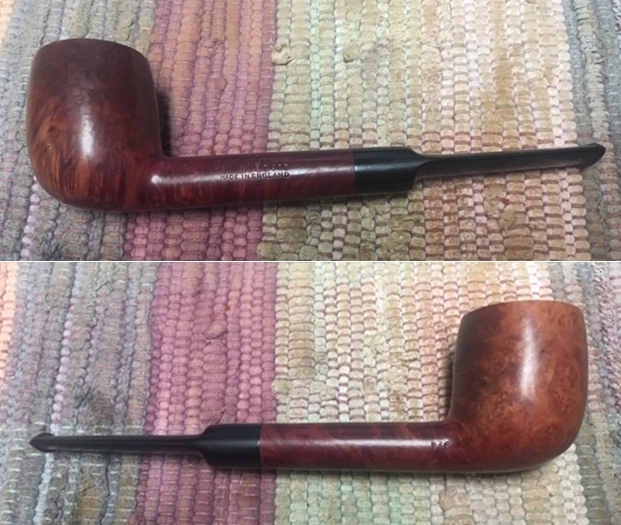
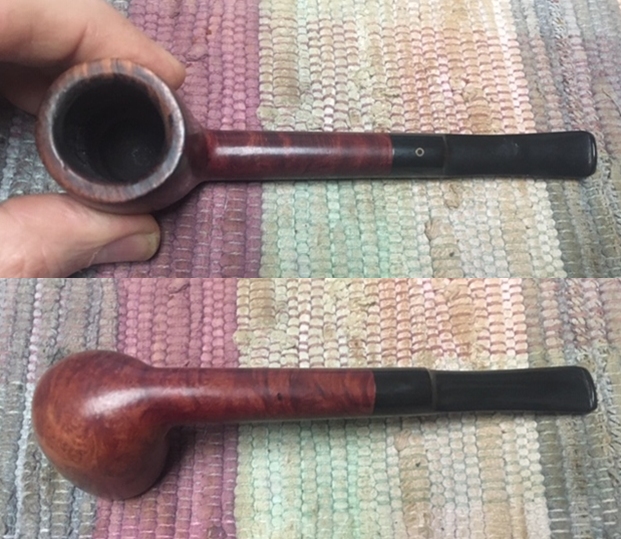
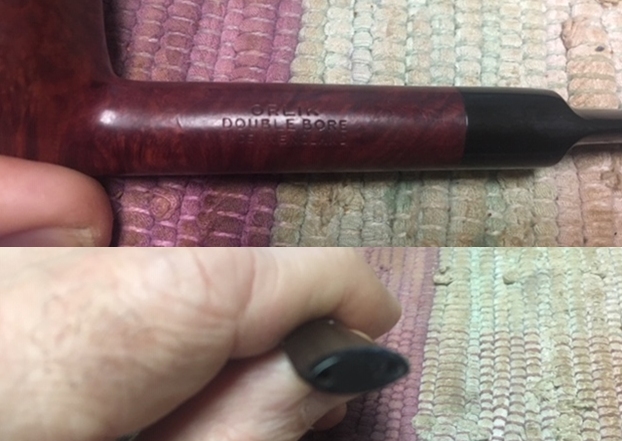
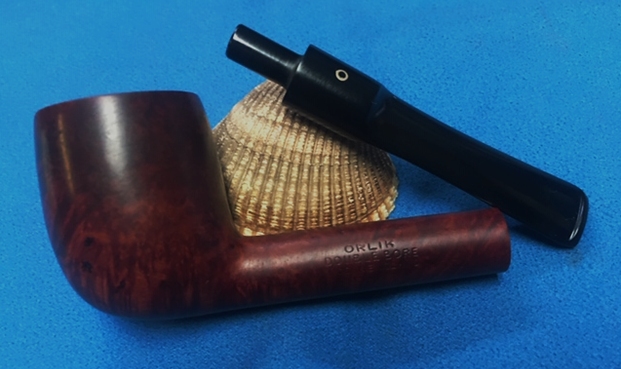
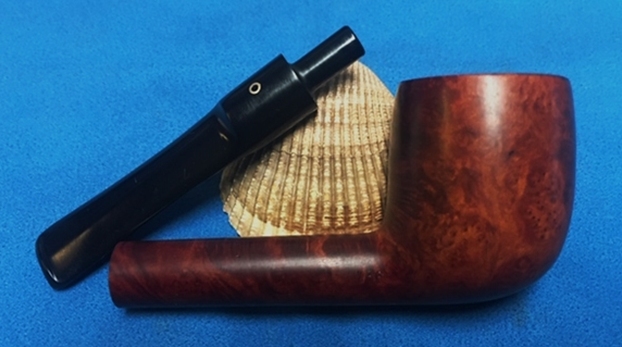
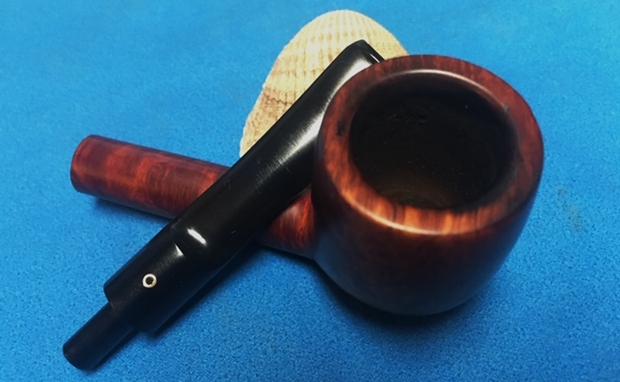
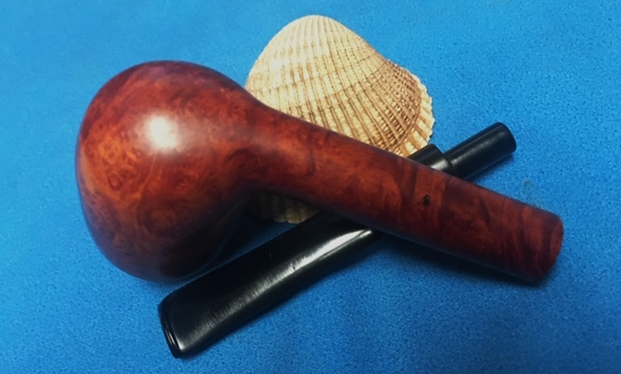
The next pipe on the table is an interesting Orlik Long Shank Billiard with a saddle stem. It is stamped Orlik Double Bore over Made in England on the left side of the shank. On the right side it is stamped with the shape number W36. The pipe was very dirty with a thick cake in the bowl and some tobacco remnants from the last bowl smoked. There was some darkening and light lava around the rim top and beveled inner edge of the bowl. The long shank and bowl has some great grain on it. There are a few dark fills in the bowl sides but they are pretty small and blend well. The twin bore/double bore vulcanite saddle stem has some light oxidation and tooth marks and chatter on both sides near the button. It is billed as a bite proof stem designed for chompers. Jeff took some great photos of the pipe to show its general condition before he started his cleanup. Jeff took a photo of the rim top to show the thick cake in the bowl and the lava overflow all over the rim top. It is hard to know what the inner edge of the rim looks like until we remove the cake and the lava. There also appears to be some burn damage on the rear left side.He took photos around the sides and heel of the bowl to show the condition. You can see the grime in the finish and the crackling of the varnish coat. He took a photo of the stamping on the left side of the shank. You can see that it is clear and readable. On the right side it is stamped with the shape number W36. The top of the saddle stem has a brass O inset in the vulcanite.The next two photos show the condition of the stem. You can see that it is lightly oxidized and has some tooth chatter and marks on both sides near the button. There is also some wear on the button surfaces on both sides.I turned to the listing on Pipephil on Orlik pipes hoping to find a similar pipe to the one I am working on (http://www.pipephil.eu/logos/en/logo-o2.html). Unfortunately there was not a pipe like the Double Bore I am working on. It is also not listed in the section I included below.I turned next to Pipedia to gather a more detailed history of the brand and see if I could find any information on this particular pipe (https://pipedia.org/wiki/Orlik). Once again there was nothing on the particular line. The history of the brand is concise and pointed. I quote that below.

In 1899, a pipe manufacturer was founded in London, Bond Street, by Louis Orlik. L. Orlik Ltd. started to produce high quality pipes for a relatively low price but high service and soon became quite popular. By 1907 they used the name L & A Orlik, which apparently added Louis’s brother, Alfred to the company name. In the first quarter of 1900 they also established in Birmingham. This can be verified by silver hallmarks. In 1980 the company was acquired by Cadogan. Like many of London’s other pipe manufacturers they moved to a new built factory in Southend-on-Sea. As all current brands in the Cadogan group, Orlik was being produced in those factories.

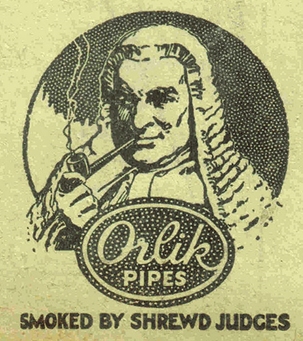
Orlik used the slogan “Smoked by all shrewd judges” “(who are also loved by his hard judge)” with a portrait of a judge wearing a wig. The picture is still used in Denmark for manufacturing of Orlik cigarettes.

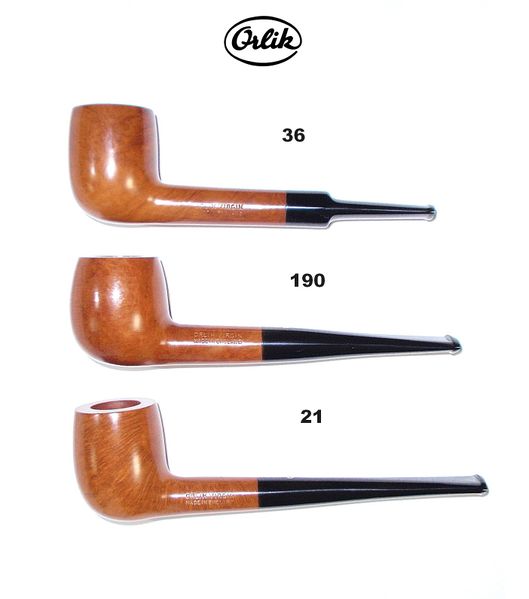
The article also had a catalogue of the various pages. I am including a copy of the page that shows the shape 36. I think that the W on the shape number of the one I am working on may refer to the Double Bore Bit.There was also some helpful information on the dating of the brand. The pipe I am working on is Pre-Cadogan era as is proven by the stamping on the shank as below.

In the Pre-Cadogan era of the Orlik, the name is ORLIK in a straight line, capital block letters. Also the MADE IN ENGLAND is in a straight line, capital block letters. However, there are a konwn model (ORLIK NATURAL T 1155) stamped with MADE IN ENGLAND in a straight line, capital serif letters. Date is unknown. The mouthpieces have the Orlik logo, a circular O as a brass inlay. After joining Cadogan the same origin stamp as other Cadogan brands like Comoy´s etc. was used, MADE IN LONDON in circular an below ENGLAND in straight.

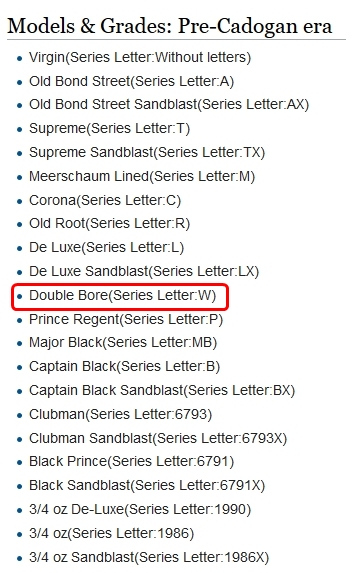
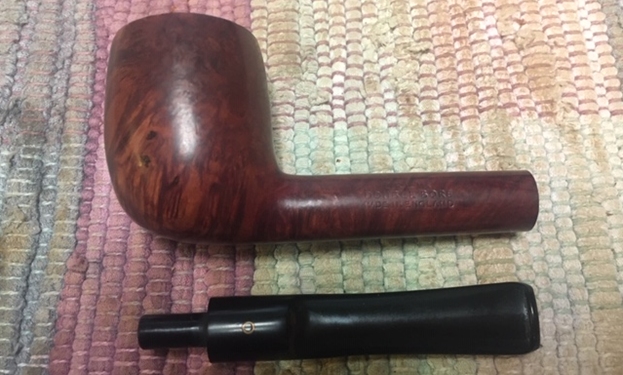
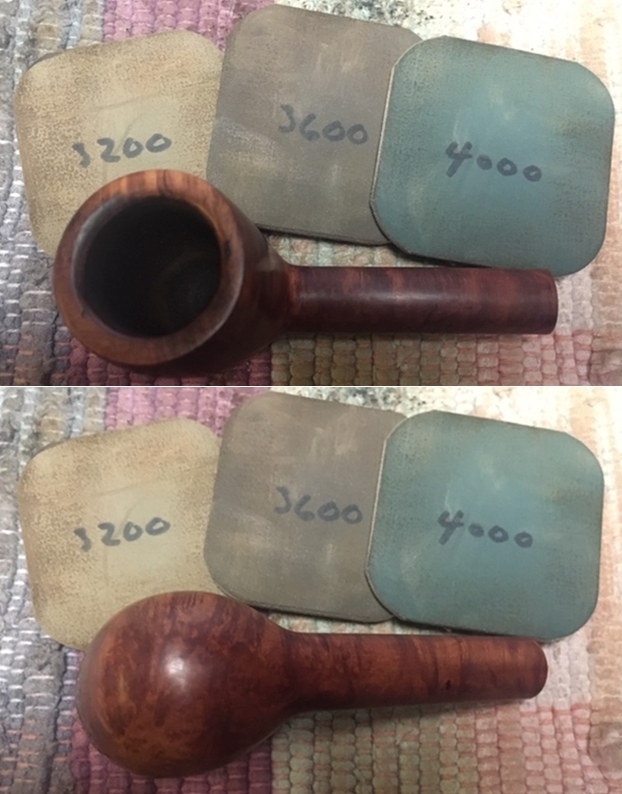
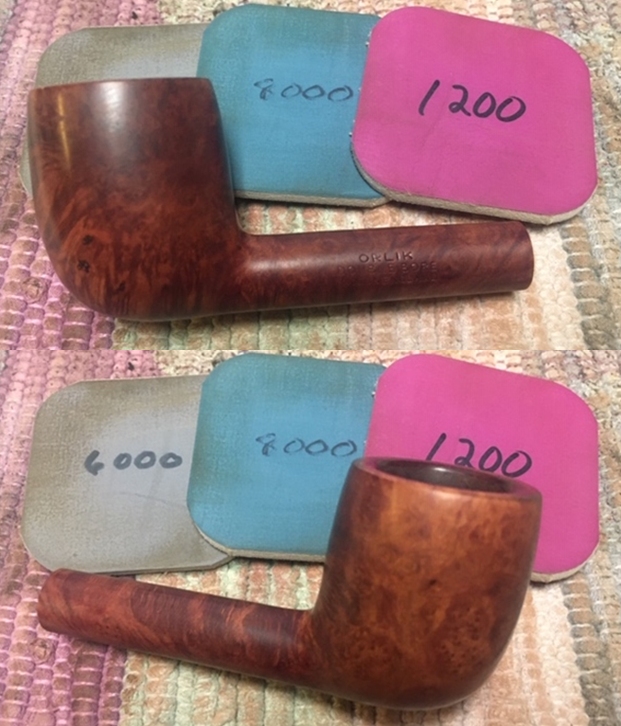
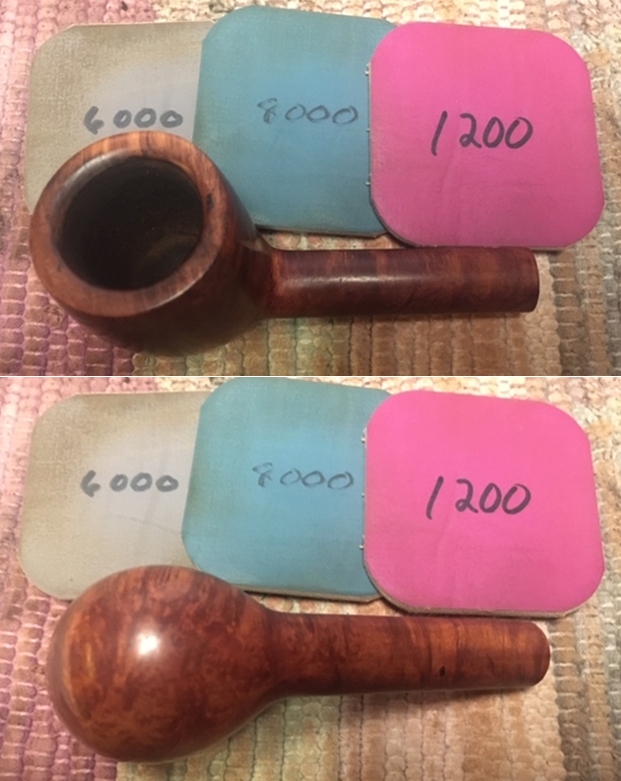
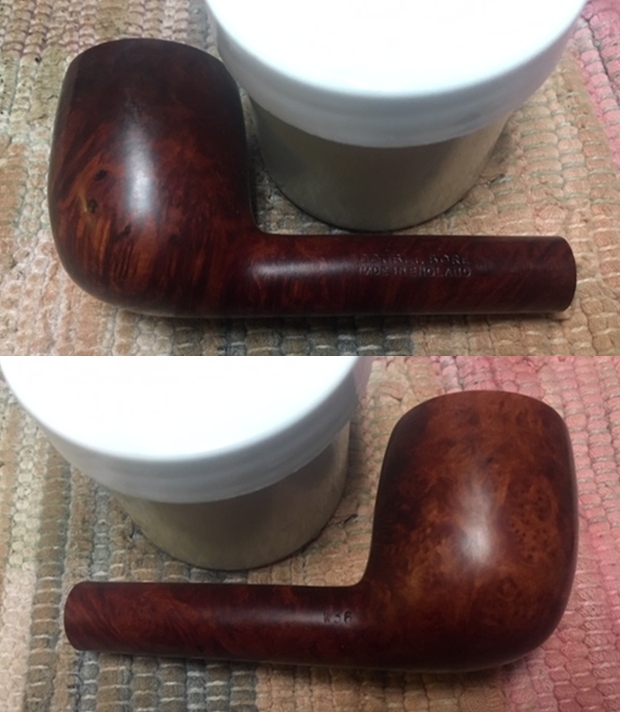
I also am including a list of the various lines of Orlik pipes sold. I have included a screen capture of the list below. I have drawn a red box around the Double Bore Pipes. Interestingly my assumption about the W being a notation for the Double Bore stem turned out to be correct.It is definitely an interesting piece of pipe history. This Pre-Cadogan Orlik was made before 1980 when Cadogan bought the brand.  Armed with the brand information and some parameters for the age of the pipe I turned to work on it. Jeff had done a great job cleaning up the pipe as usual. He reamed the pipe with a PipNet reamer and cake from the walls of the bowl. He cleaned up any remnants of cake with a Savinelli Fitsall Pipe Knife. He scrubbed the interior of the bowl and shank with pipe cleaners, cotton swabs and alcohol to remove the tars and oils. He scrubbed the exterior of the pipe with Murphy’s Oil Soap and a tooth brush to remove the grime from the finish. He was not able to remove the bowl from the base so a thorough cleaning of the base was not possible. He worked on the rim edge lava and darkening with the soap and tooth brush. He scrubbed the inside of the stem with alcohol and pipe cleaners. He scrubbed the exterior with Soft Scrub and washed it off with warm water to remove the cleanser. The pipe looked far better. I took photos of the pipe when I received it before I started working on it.  I took photos of the bowl and rim top as well as the stem to show how clean they were. You can the roughness on the top and the inner edge of the rim on the front right side of the bowl. The bowl and rim looks much better without the thick lava and cake. The stem looked better. There are tooth chatter and marks on both sides of the stem near the button.I took a photo of the stamping on the left side of the shank. The stamping is very readable and it reads as noted above. The right side of the shank is smooth and the shape number is near the bowl shank junction (no photo). I took a photo of the Double Bore stem.I took a photo of the pipe with the stem removed to show the overall look of stem, tenon and profile of the pipe. I decided to start my work on the pipe by dealing with what looked like checking and damage on the inner walls of the bowl on the back side above the entrance of the airway into the bowl. I poked at it with dental pick and was pretty sure I was dealing with cracks in the cake rather than deep into the walls. I sanded the walls smooth with a dowel wrapped in 220 grit sandpaper. Once I sanded it the damage was a lot less. I sanded the inside of the rim edge with a folded piece of 220 grit sandpaper to smooth them out and also minimize the burn damage to the beveled inner rim edge. I wiped off the finish on the bowl with alcohol to remove the remnants of finish on the bowl sides and shank. It really cleaned off a lot of the dirty finish. I polished the bowl with micromesh sanding pads – wet sanding with 1500-12000 grit pads. I worked over the rim top and edge of the bowl with the pads. I wiped the bowl down with a damp cloth after each pad to remove the sanding debris.  I rubbed the briar down with Before & After Restoration Balm. I worked it into the surface of the briar with my fingertips. The product works to clean, enliven and preserve the even that material. The balm is absorbed by the briar and gives it real life. I buffed it with a cotton cloth to deepen the shine. I set the bowl aside and turned my attention to the vulcanite stem. I sanded it with 220 grit sandpaper to remove the oxidation and tooth chatter on both sides of the stem. I started the polishing of the surface with 400 grit wet dry sandpaper. I polished the stem with micromesh sanding pads – 1500-12000 grit pads. I wiped it down with Obsidian Oil after each sanding pad. I used Before & After Pipe Polish – both Fine and Extra Fine to further polish the stem.  With both parts of this Orlik Double Bore Long Shank Billiard finished, I polished the bowl and the stem with Blue Diamond polish on the buffing wheel. I gave the bowl and the stem multiple coats of carnauba wax. I buffed the pipe with a clean buffing pad to raise the shine. I hand buffed it with a microfiber cloth to deepen the shine. This older Orlik Double Bore W36 Billiard polished up pretty nicely. The rich browns of the finish and the grain came alive with the buffing. The finish on the briar works well with the polished vulcanite saddle stem. The finished pipe is a well-proportioned, well-made Orlik long shank billiard. Have a look at it with the photos below. The dimensions are Length: 6 inches, Height: 1 ¾ inches, Outside diameter of the bowl: 1 ¼ inches, Chamber diameter: ¾ of an inch. This Orlik Double Bore is a great looking pipe and it will be going on the rebornpipes store in the British Pipemakers section shortly. Thanks for walking through the restoration with me on this older British Made pipe.

Restoring a KBB Yello-Bole Premier Liverpool


Blog by Steve Laug

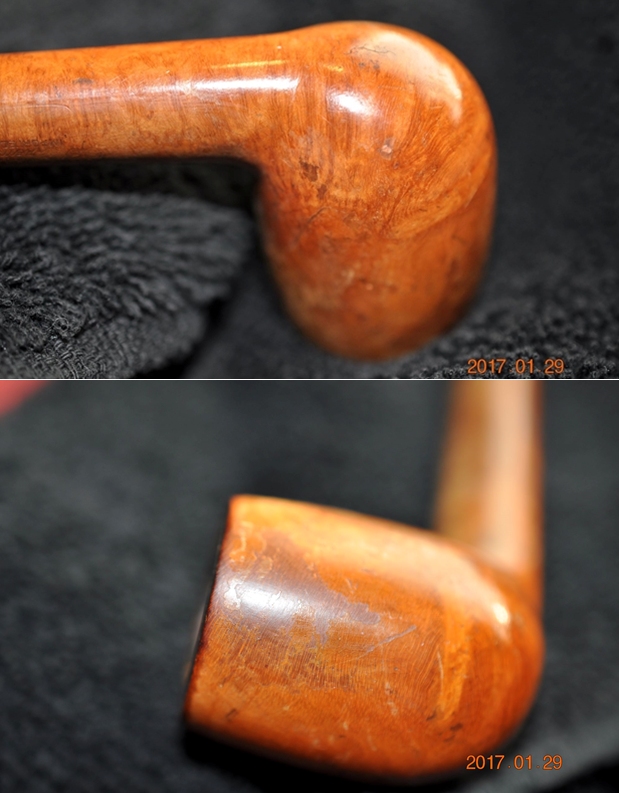
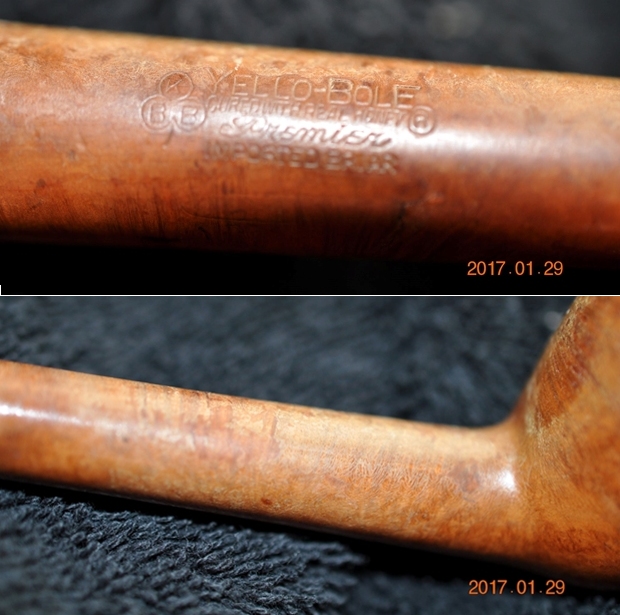
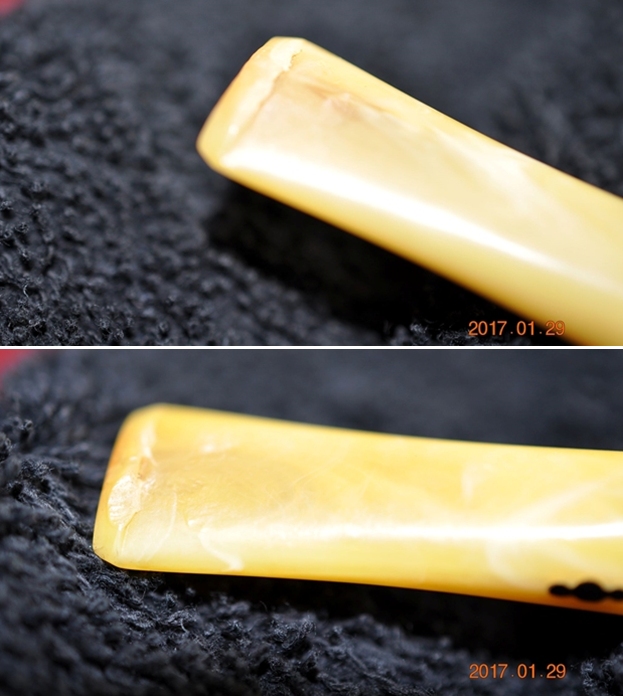
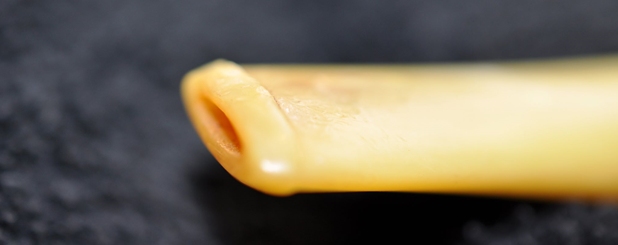
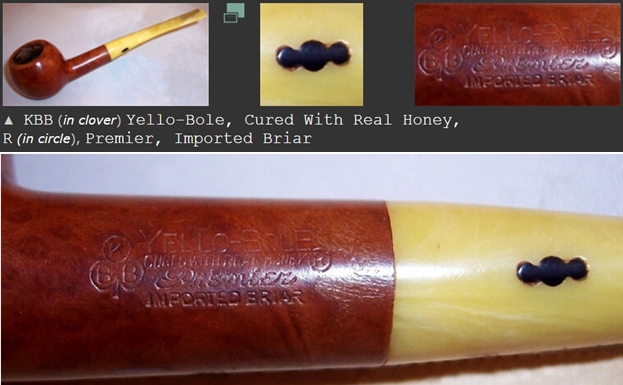
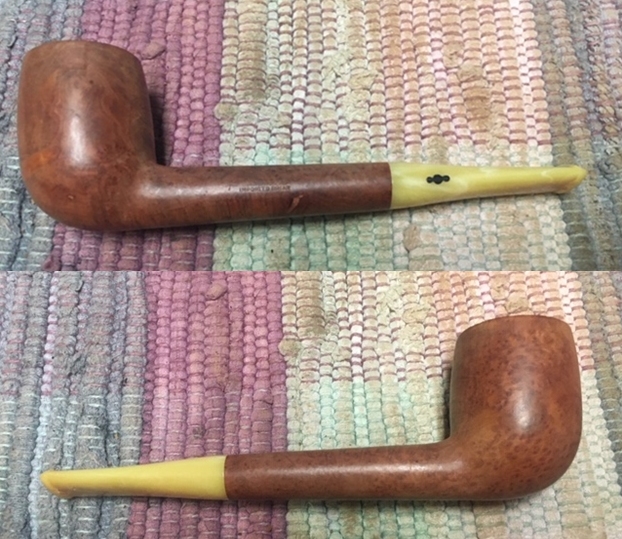
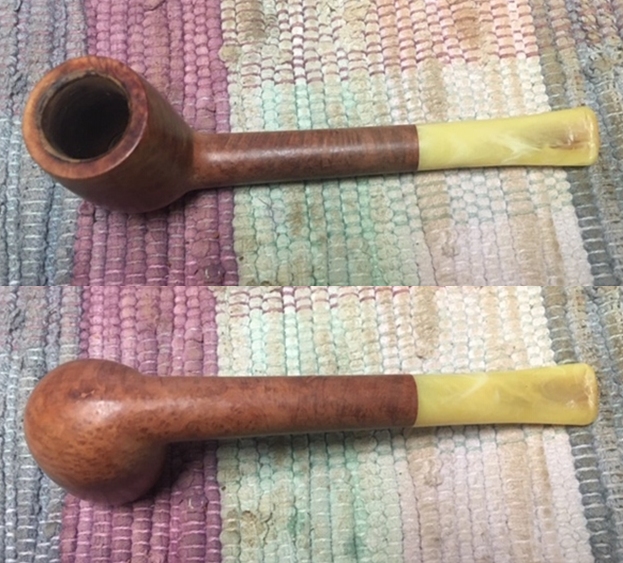
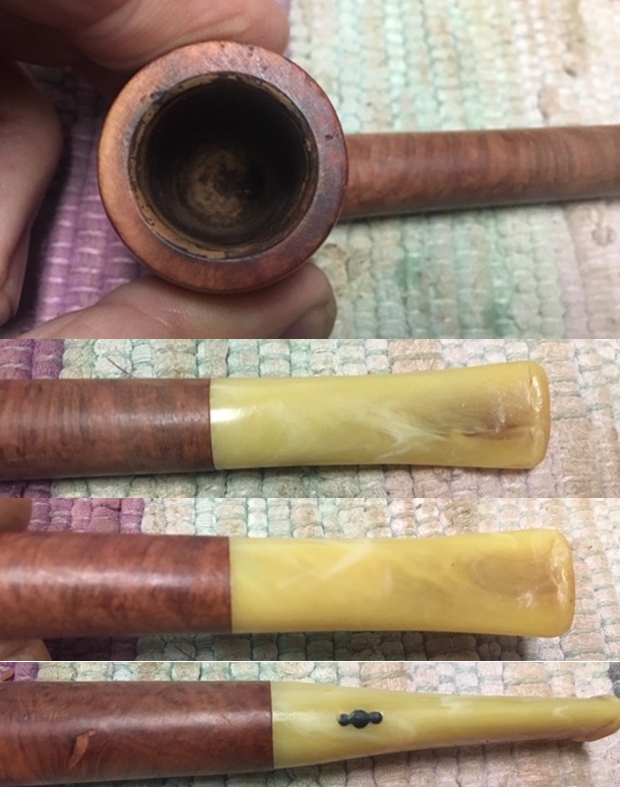
With this post I am celebrating notification from WordPress that rebornpipes is 8 years old. It does not seem possible that 8 years ago in May I posted the first blog on rebornpipes and wrote about my dream of the blog being a gathering spot for information and individuals who enjoy working on rehabilitation and restoration of pipes. I continue to do the work or restoration and rehabilitation of pipes because it is something I enjoy. It is a pleasure to take pipes that are a bit of a wreck and with some effort and careful work bring them back to life. The next pipe on the table is a great one to work on as a part of that celebration. It is a well smoked KBB Yello-Bole Premier Liverpool. The pipe was very dirty with a thick cake in the bowl and some tobacco remnants from the last bowl smoked. There was some darkening and lava around the rim top and inner edge of the bowl. There are a few visible fills around the bowl and the varnish coat is crackling. The taper yellow stem has tooth marks and chatter on both sides. Jeff took some great photos of the pipe to show its general condition before he started his cleanup. Jeff took a photo of the rim top to show the thick cake in the bowl and the lava overflow all over the rim top. It is hard to know what the inner edge of the rim looks like until we remove the cake and the lava.He took photos around the sides and heel of the bowl to show the condition. You can see the grime in the finish and the crackling of the varnish coat. He took a photo of the stamping on the left topside of the shank. You can see that it is clear and readable. It reads KBB in a Cloverleaf followed by Yello-Bole over Cured with Real Honey followed by R in a circle. Underneath that it reads Premier over Imported Briar. Normally there would be stamping on the right side but in this case there does not appear to be any stamping visible.The next two photos show the condition of the stem. You can see that it is lightly oxidized and has some tooth chatter and marks on both sides near the button. There is also some wear on the button surfaces on both sides. I turned to the listing on Pipephil on the KBB Yello-Bole pipes and actually found a very similar pipe to the one I am working on (http://www.pipephil.eu/logos/en/logo-y.html). It is a KBB in a cloverleaf Yello-Bole that also bears the Cured with Real Honey, circle R stamp over Premier over Imported Briar. I did a screen capture of the section and the stamping on the shank side. I have included it below.I turned next to Pipedia to gather a more detailed history of the brand and see if I could find any information on this particular pipe (https://pipedia.org/wiki/Yello-Bole). I quote a portion of that article on tips for dating Yello-Bole pipes below.

Tips for Dating Yello-Bole Pipes

  • KBB stamped in the clover leaf indicates it was made in 1955 or earlier as they stopped this stamping after being acquired by S.M. Frank.
  • Pipes from 1933-1936 they were stamped “Honey Cured Briar”
  • Post 1936 pipes were stamped “Cured with Real Honey”
  • Pipe stems stamped with the propeller logo were made in the 1930’s or 1940’s – no propellers were used after the 1940’s.
  • Yello Bole used a 4 digit code stamped on the pipe in the 1930’s.
  • Pipes with the Yello-Bole circle stamped on the shank it were made in the 1930’s, this stopped after 1939.
  • Pipes stamped BRUYERE rather than BRIAR it was made in the 1930’s.

Following the tips above I learned that the KBB Stamped in a Cloverleaf indicates that the pipe I have was 1955 or earlier. The fact that it is stamped Cured with Real Honey puts it post 1936. The field is narrowing down for a date. The fact that the stem has the propeller logo puts it between the 30s and 40s. So now I have it narrowed down to between 1936 and 1949. That is as close as I am going to get with this one as the numbers are worn off the shank.

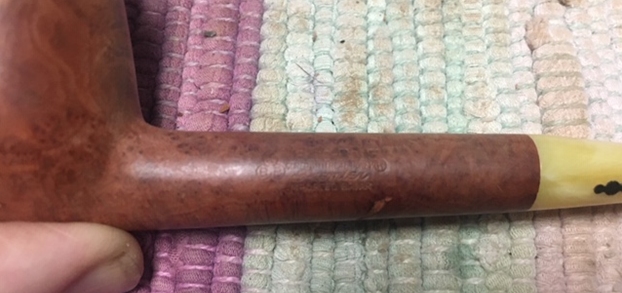
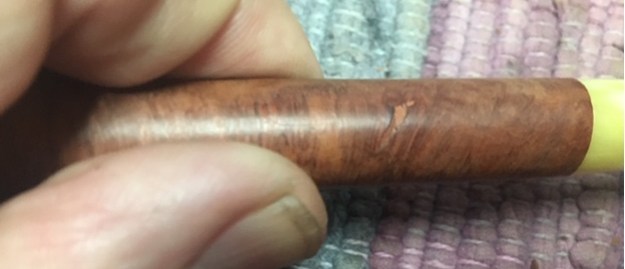
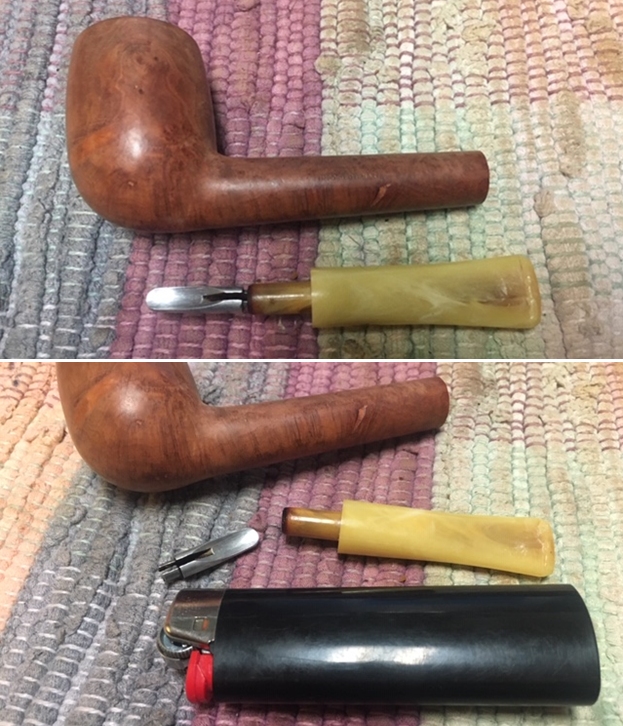
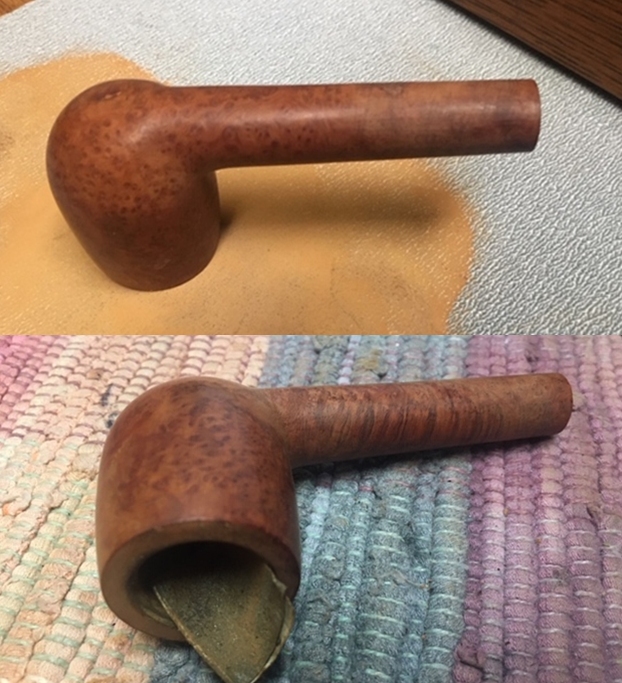
It is definitely an interesting piece of pipe history. Armed with the brand information and some parameters for the age of the pipe I turned to work on it. Jeff had done a great job cleaning up the pipe as usual. He reamed the pipe with a PipNet reamer and cake from the walls of the bowl. He cleaned up any remnants of cake with a Savinelli Fitsall Pipe Knife. He scrubbed the interior of the bowl and shank with pipe cleaners, cotton swabs and alcohol to remove the tars and oils. He scrubbed the exterior of the pipe with Murphy’s Oil Soap and a tooth brush to remove the grime from the finish. He was not able to remove the bowl from the base so a thorough cleaning of the base was not possible. He worked on the rim edge lava and darkening with the soap and tooth brush. He scrubbed the inside of the stem with alcohol and pipe cleaners. He scrubbed the exterior with Soft Scrub and washed it off with warm water to remove the cleanser. The pipe looked far better. I took photos of the pipe when I received it before I started working on it. I took photos of the bowl and rim top as well as the stem to show how clean they were. You can the roughness on the top and the inner edge of the rim on the front right side of the bowl. The bowl and rim looks much better without the thick lava and cake. The stem looked better. There was tooth chatter and marks were very visible on both sides of the stem near the button. I have included a photo of the propeller logo on the left side of the stem.I took a photo of the stamping on the left side of the shank. The stamping is faint but very readable and it reads as noted above. The right side of the shank is smooth- if there was any stamping it is long gone.I took a photo of the large fill on the underside and up the left side of the shank. It was hard but it had shrunk and left a divot.I took a photo of the pipe with the stem removed to show the overall look of stem, tenon and profile of the pipe. I noted that there was a small stinger apparatus that is removable in the tenon. I heated the stinger with a Bic lighter flame and was able to very easily remove it for more thorough cleaning of the tenon and airway in the stem.I decided to start my work on the pipe by dealing with the damaged rim top and inner edge of the bowl. I lightly topped the bowl with 220 grit sandpaper to minimize the damage on the top. I used a folded piece of 220 grit sandpaper to smooth out the damaged bevel on the rim edge. It is far from perfect but it is better. I polished the bowl with micromesh sanding pads – wet sanding with 1500-12000 grit pads. I worked over the rim top and edge of the bowl with the pads. I wiped the bowl down with a damp cloth after each pad to remove the sanding debris.  I rubbed the briar down with Before & After Restoration Balm. I worked it into the surface of the briar with my fingertips and a horse hair shoe brush. The product works to clean, enliven and preserve the even that material. The balm is absorbed by the briar and gives it real life. I buffed it with a cotton cloth to deepen the shine. I set the bowl aside and turned my attention to the stem. The stem material is an early acrylic product (perhaps Bakelite) and does not respond like vulcanite when heated. I filled in the deep tooth marks with clear super glue. Once the repairs cured I used a needle file to smooth them out and to reshape the button edge. I sanded it with 220 grit sandpaper to remove the oxidation and tooth chatter on both sides of the stem. I started the polishing of the surface with 400 grit wet dry sandpaper. I polished the stem with micromesh sanding pads – 1500-12000 grit pads. I wiped it down with Obsidian Oil after each sanding pad. I used Before & After Pipe Polish – both Fine and Extra Fine to further polish the stem.  With both parts of the pipe finished, I polished the bowl and the stem with Blue Diamond polish on the buffing wheel. I gave the bowl and the stem multiple coats of carnauba wax. I buffed the pipe with a clean buffing pad to raise the shine. I hand buffed it with a microfiber cloth to deepen the shine. The old KBB Yello-Bole Premier Liverpool polished up pretty nicely. The rich browns of the finish and the grain came alive with the buffing. The finish on the briar works well with the polished yellow Bakelite stem. The finished pipe is a well-proportioned, well-made KBB Yello-Bole Liverpool. Have a look at it with the photos below. The dimensions are Length: 5 ¼ inches, Height: 1 ¾ inches, Outside diameter of the bowl: 1 1/8 inches, Chamber diameter: ¾ of an inch. This KBB Yello-Bole Premier Liverpool will be going on the rebornpipes store in the American Pipe Makers shortly. Thanks for walking through the restoration with me on this older American Made pipe.

Rebirthing a Schoenleber Hand Made – #4 Opera Pipe


Blog by Steve Laug

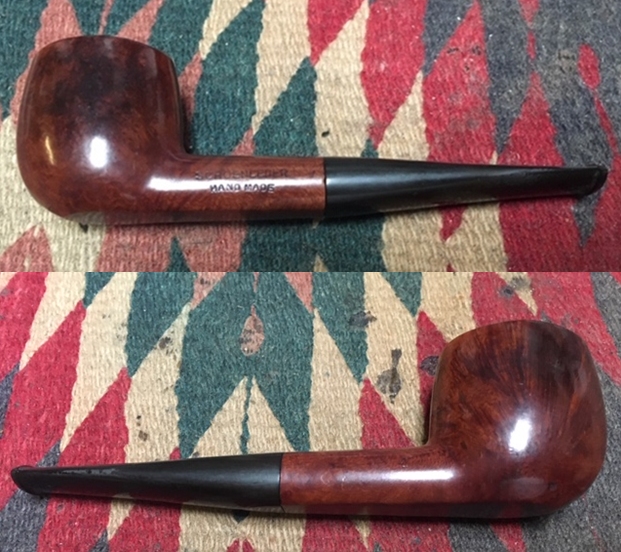
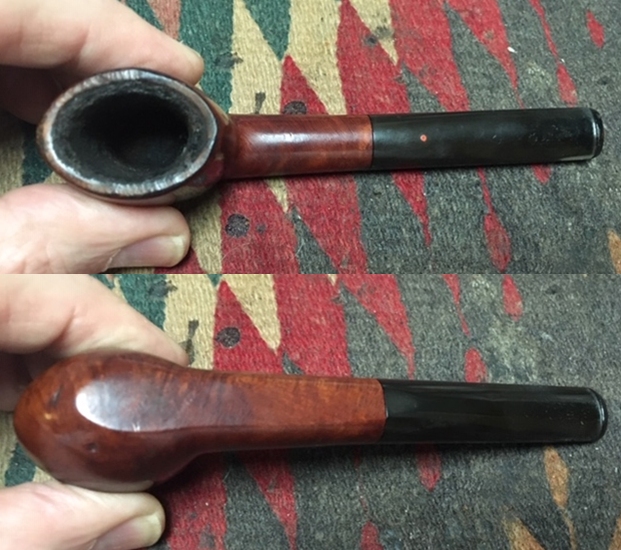
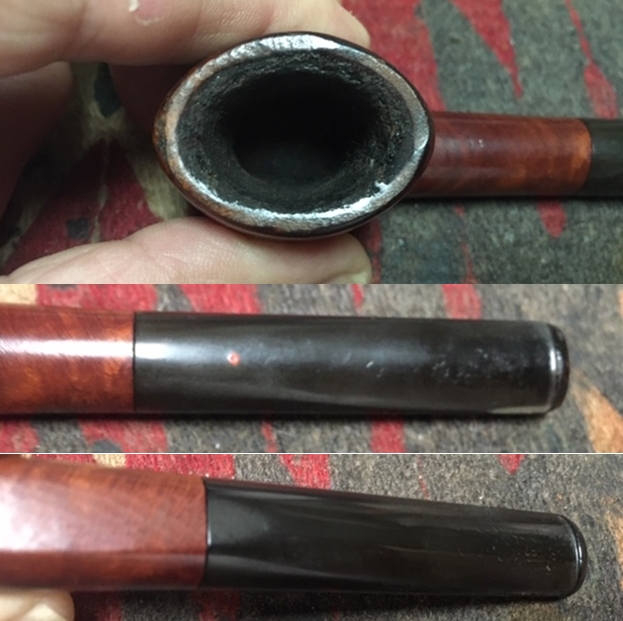
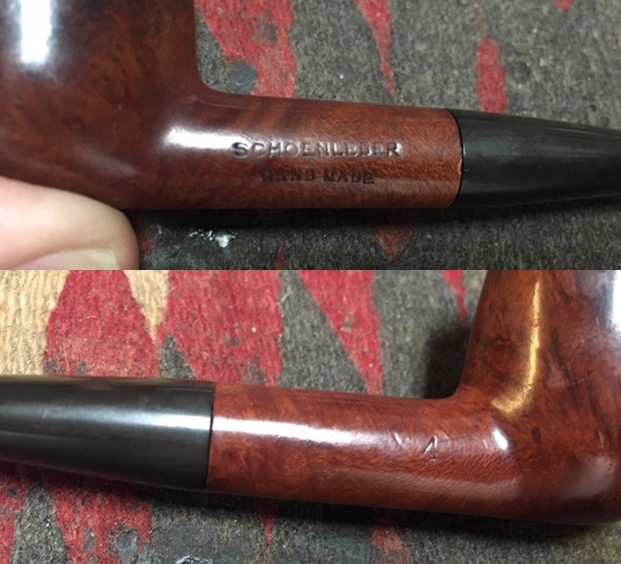
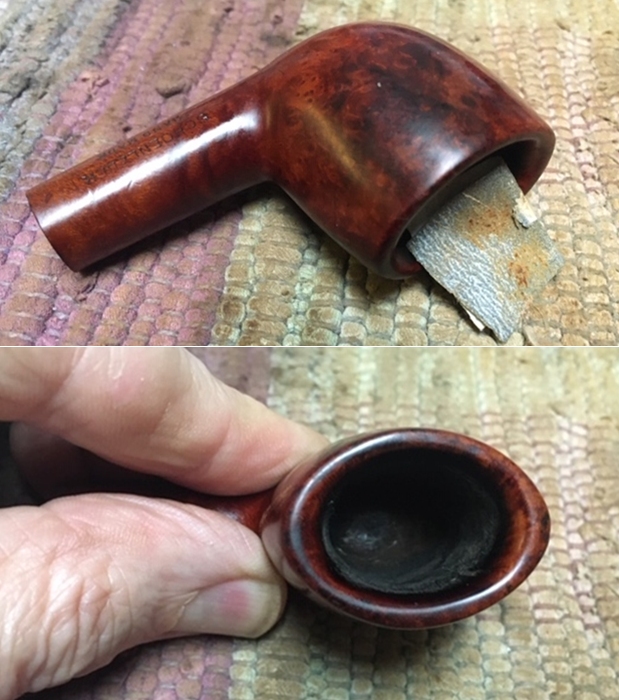
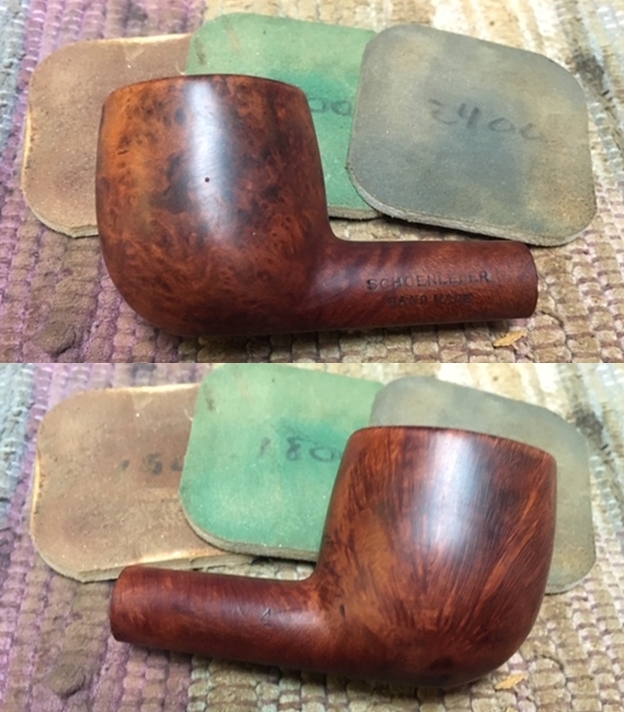
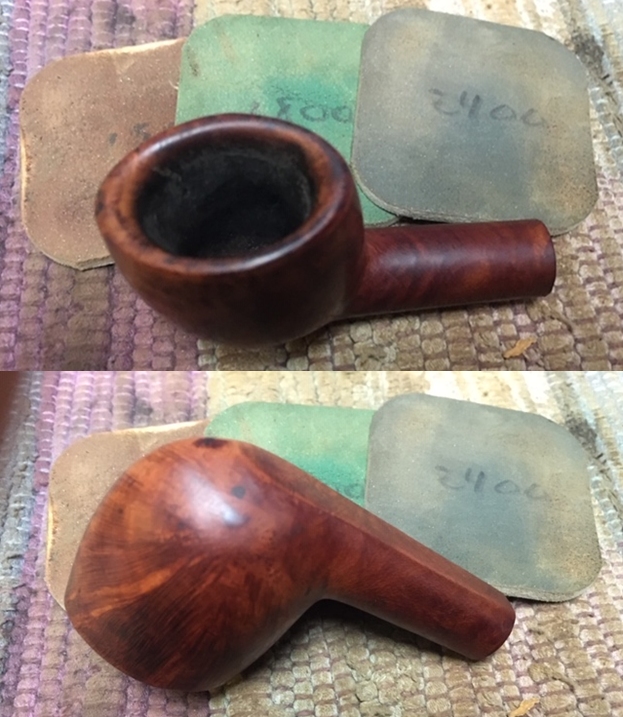
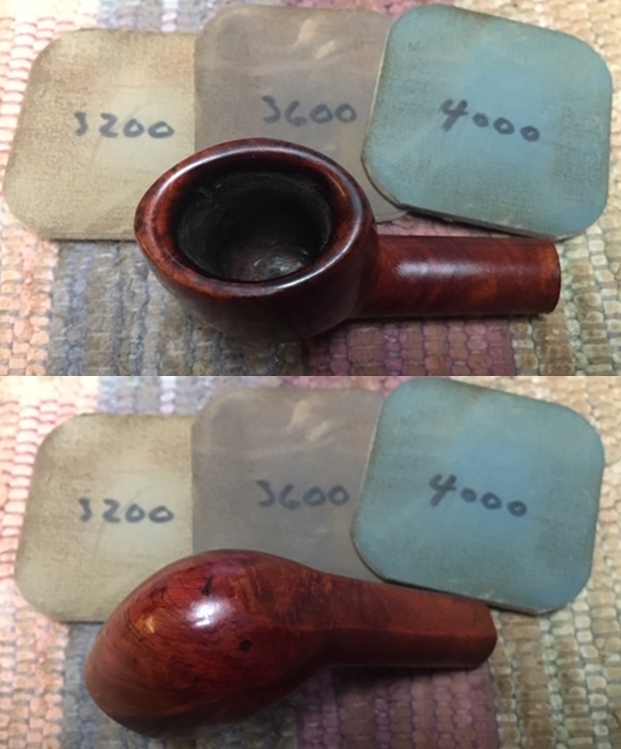
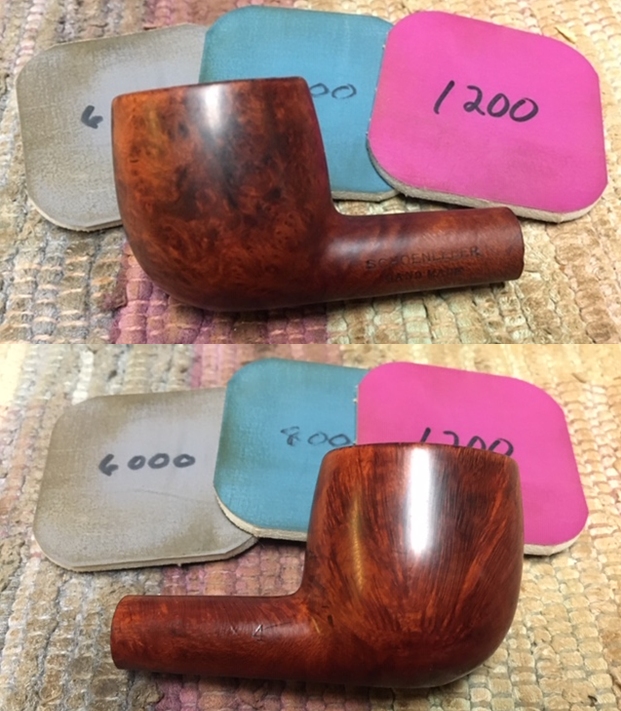
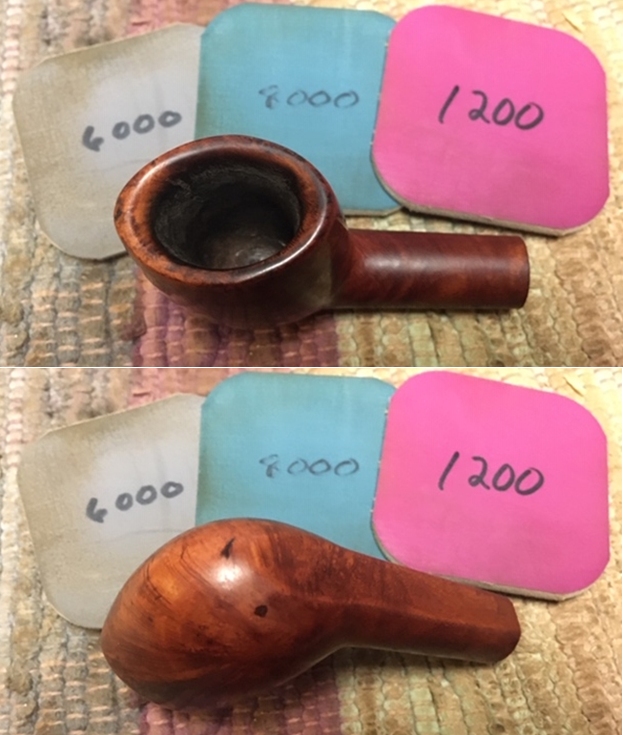
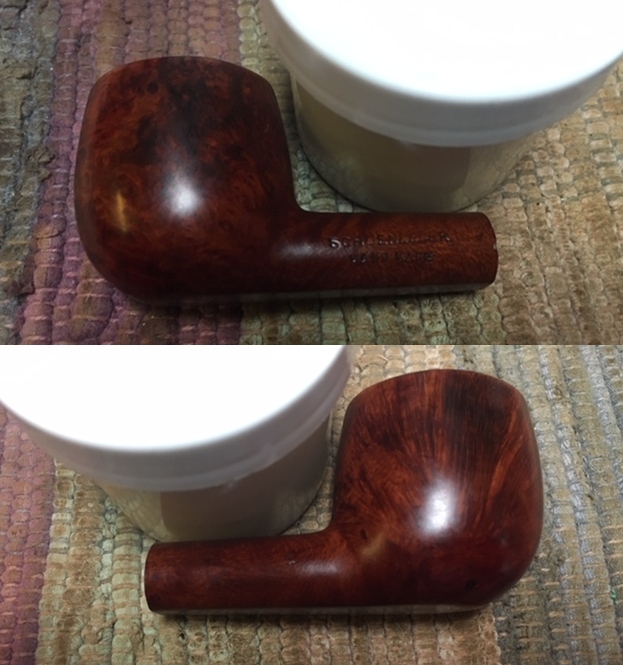
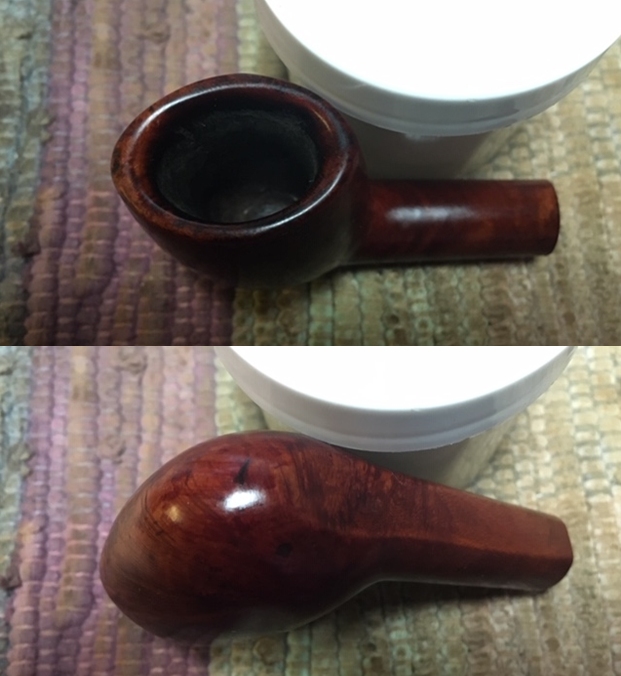
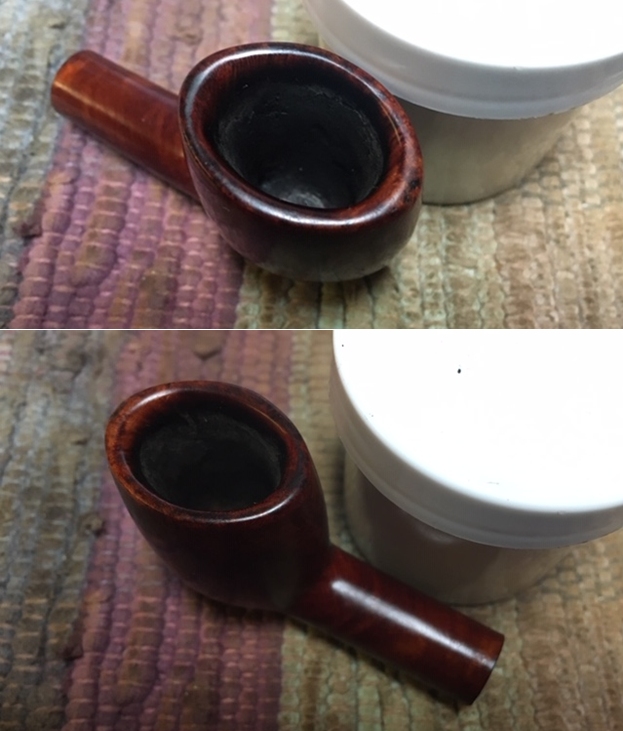
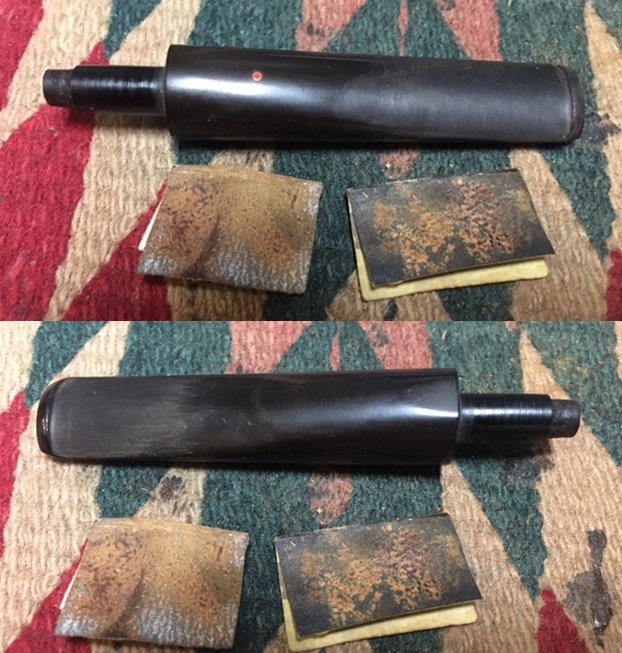
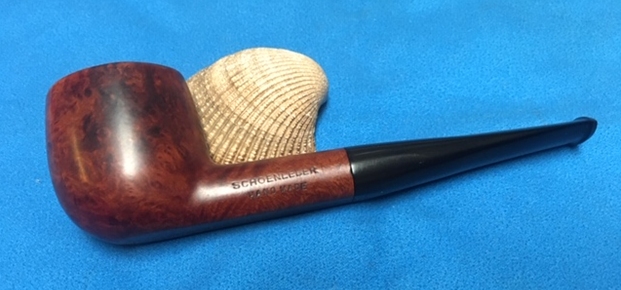
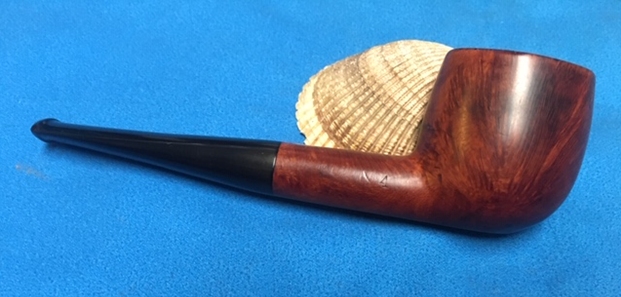
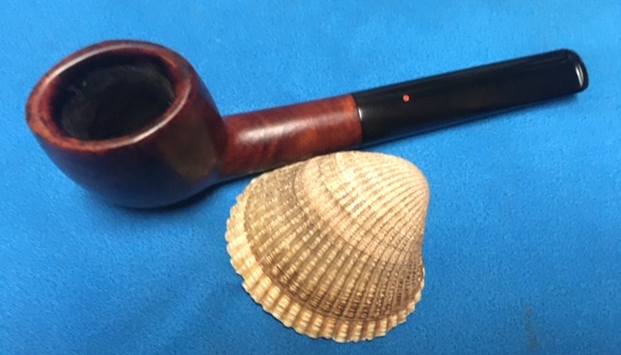
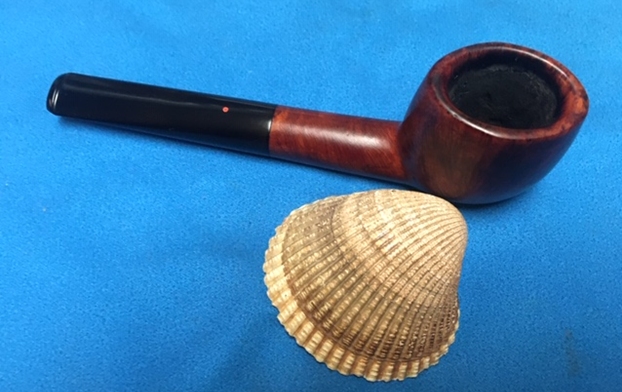
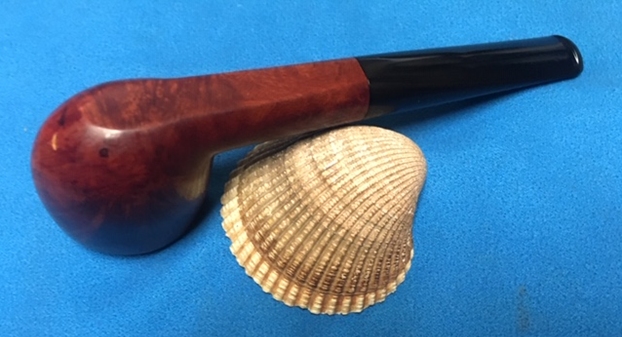
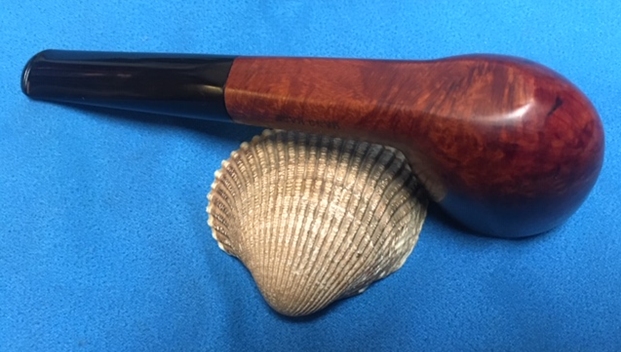
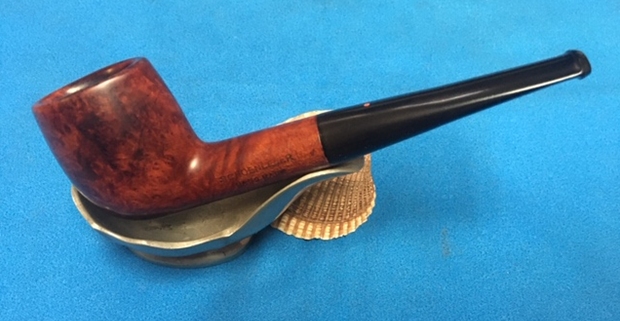
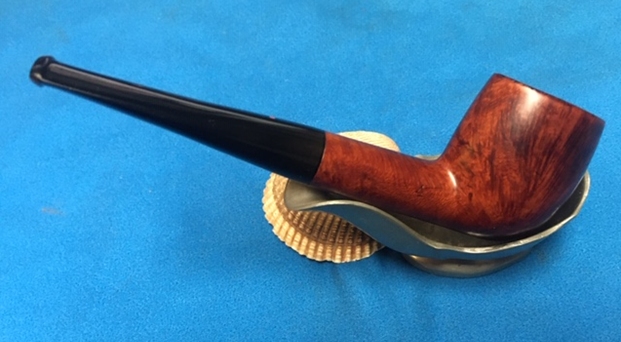
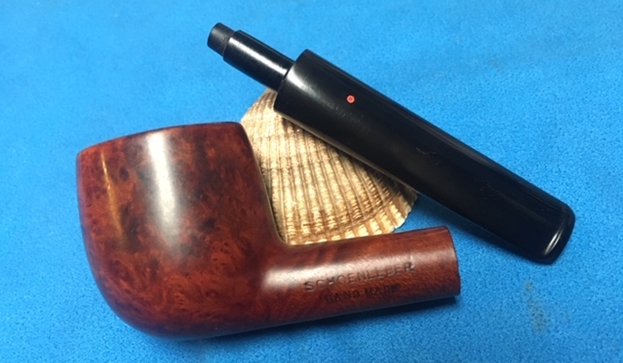
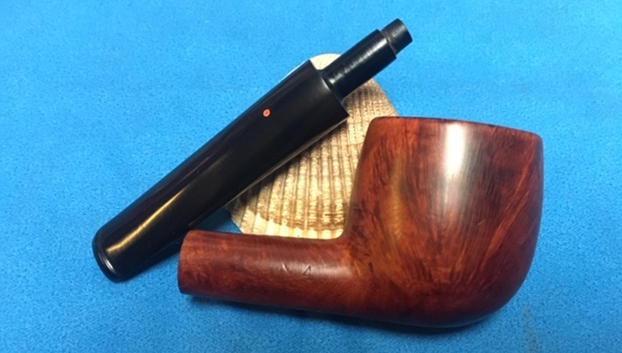
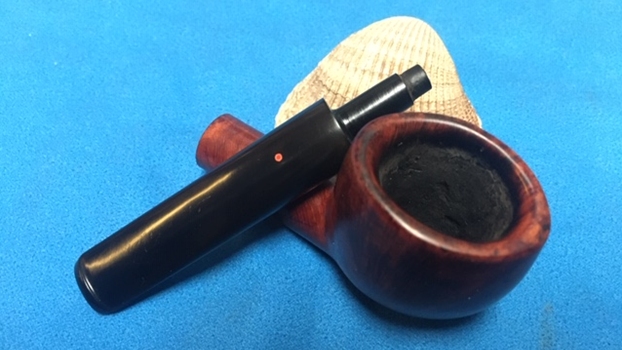
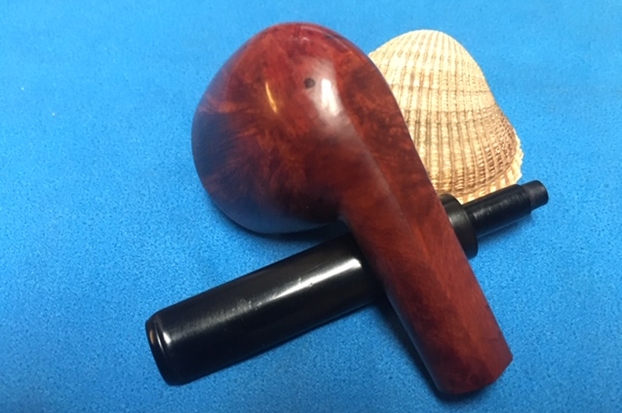
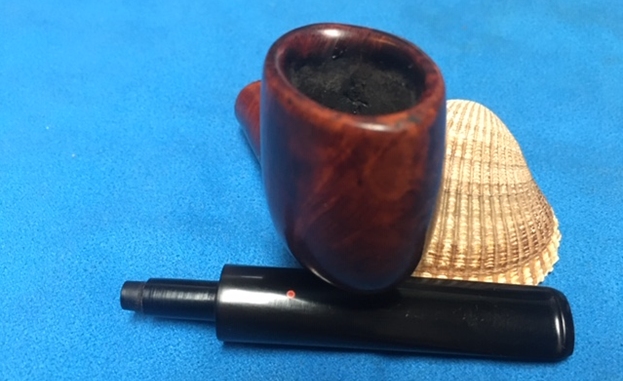
The next pipe in the queue is another one that Alex dropped off for me to work on for him – another Schoenleber Hand Made. This one is a straight shank Opera pipe with an oval bowl and a mix of different grain around the sides and shank. Someone had given the dirty pipe a coat of varnish or shellac to give it a shine but in doing so put the coating over the grim on the rim and the bowl sides. The carver once again did a great job utilizing the block of briar to maximize the grain. The pipe is stamped on the left side of the shank and reads Schoenleber over Hand Made. On the right side of the shank it is stamped with a number 4 which is either a shape number or size designation. The taper stem is vulcanite and has a single small coral dot on the top side. I think that this will be another nice looking piece once it is cleaned up. The bowl is thickly caked with a thick overflow of lava on the rim top. The top and edges of the bowl are damaged and chipped and what was once a bevel has been almost ruined. The exterior of the briar was dirty with grime and dust. The stem has light tooth marks and chatter on both sides. It is lightly oxidized and dirty. I took photos of the pipe before my cleanup work They tell the story and give a glimpse of the promise that I see in this pipe. I took a photo of the rim top to show the thick cake in the bowl, the damage to the rim top and inner edge.  The stem was a very good fit to the shank. It was oxidized, calcified and had debris stuck to the surface of the vulcanite. It also shows the tooth marks on the stem and on the button surface.  I took photos of the sides of the shank to show the stamping. The stamping is faint but readable in the photos below and is as noted above – on the left side it reads Schoenleber Hand Made and on the right side it is stamped with the number 4 at the shank/bowl junction. The stem has a coral dot on the top of the taper.When I worked on a Schoenleber pipe for Alex in the past I had done the research on the brand. I knew that the pipe had been made for a shop in New Jersey but went back and reread the previous blog I had written on the brand. I have included the information from Pipedia that I included before. I quote the article in full (https://pipedia.org/wiki/Schoenleber).

Louis Schoenleber lived in North Arlington N.J. and was an Austrian immigrant and skilled artisan in pipe making. His hand carved pipes were available in his shop, ‘Schoenleber’s Newark Pipe Shop’, at 26 Branford Pl., Newark NJ, thought to open in the 1920’s. Schoenleber’s carried a full line of tobaccos as well as related pipe smoking accessories. It’s thought the shop operated until the late 1960’s, and Louis Schoenleber died in 1976. It’s also fairly certain they may have sold to other brands such as Jelling, also in Newark and are very similar in design and finish.

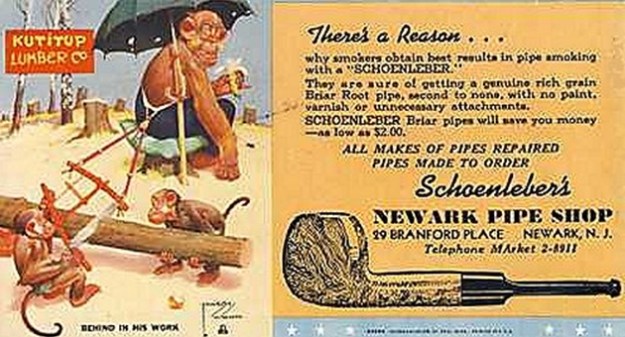
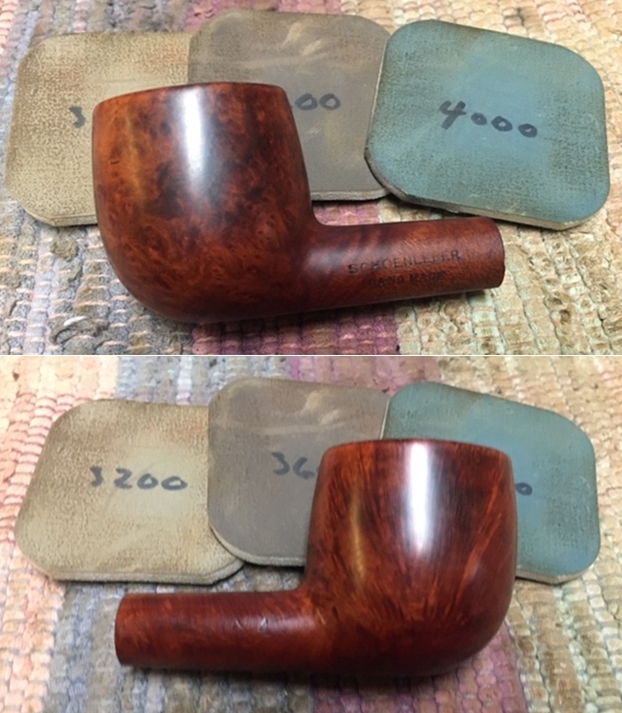
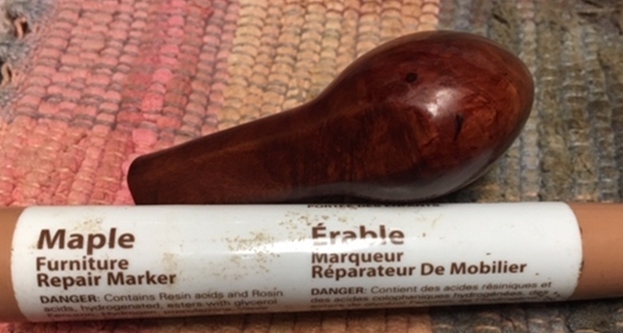
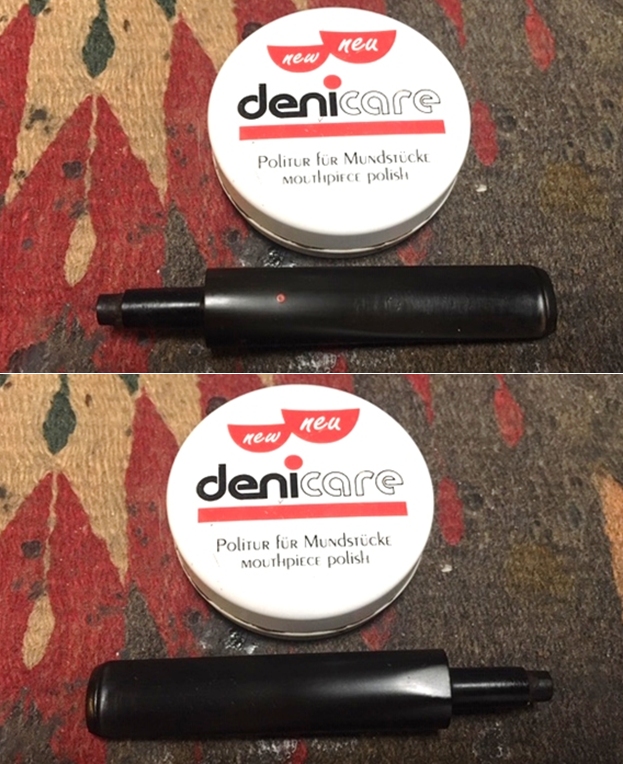
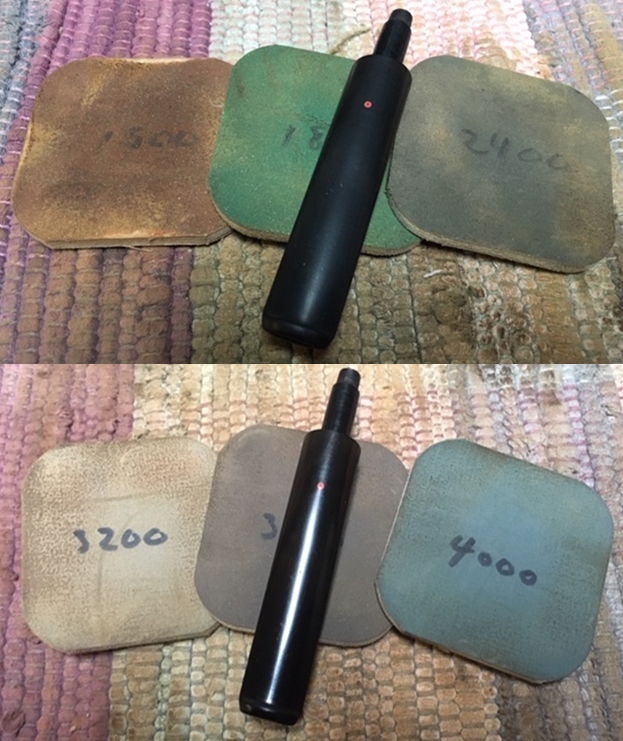
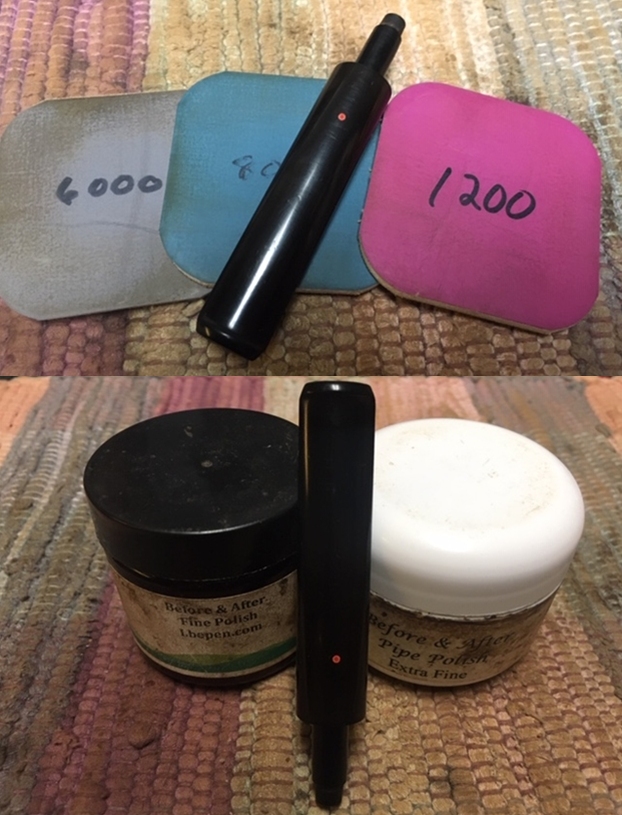
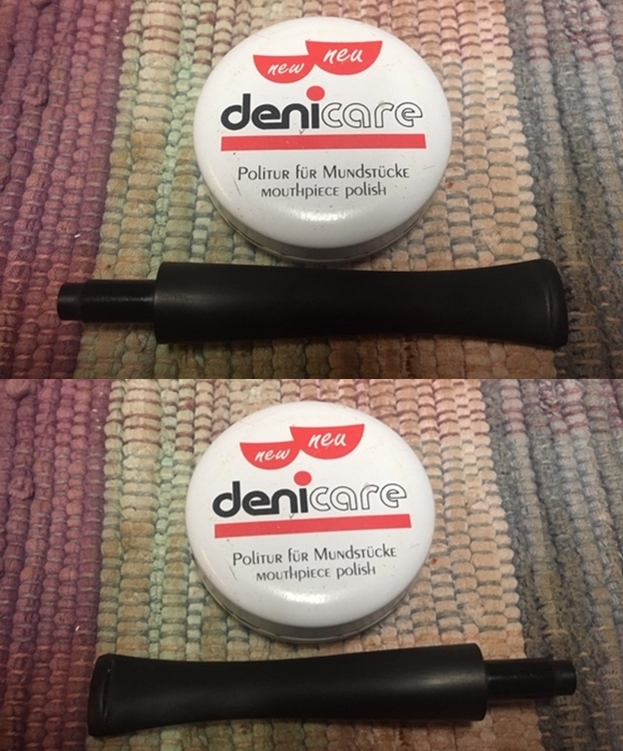
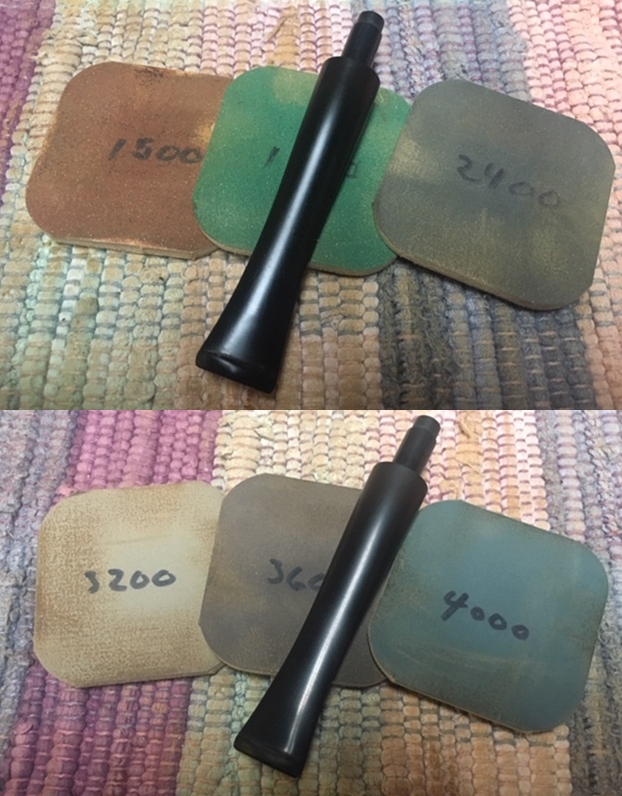
There was also an advertising card on the site that I have included below. It speaks to my assumptions about the curing process and the finishing process on the pipe. It also connects the pipe to Schoenleber’s Newark Pipe Shop in Newark, N.J. It also has a comment on the fact that pipes were made to order.I have to tell you I am spoiled with having Jeff do all the heavy clean up work on pipes. I almost forgot that on this one and started to work on the finish. I stopped myself when I realized I was working with a dirty pipe. I reamed the pipe with a Savinelli Fitsall Pipe Knife because of the oval bowl. It is a difficult reaming because of that so it takes more time to take the cake back to bare briar.I wiped the bowl exterior down with alcohol on paper towels to remove the grime and then scrubbed the interior of the bowl shank and stem with pipe cleaners, cotton swabs and alcohol to remove the tars and oils.I turned my attention to the deep gouges on the heel of the bowl. I filled them in with clear super glue and when that repairs cured I sanded them smooth with 220 grit sandpaper and started polishing the areas with 400 grit wet dry sandpaper.I dealt with the damage to the rim top with a folded piece of 220 grit sandpaper to clean up the damages and reshape the top and inner edge bevel. I forgot to take a photo of it after the clean up so I have included a photo from after I polished it with micromesh.I polished the briar with micromesh sanding pads – wet sanding with 1500-12000 grit pads. I worked over the rim top and edge of the bowl with the pads. I wiped the bowl down with a damp cloth after each pad to remove the sanding debris. I used a Maple Stain pen to touch up the area around the repair on the left side, heel and the inner edge of the rim.I worked some Before & After Restoration Balm into the surface of the briar with my fingertips to clean, enliven and protect it. I let the balm sit for a little while and then buffed with a cotton cloth to raise the shine. I set the bowl aside and turned my attention to the stem. I sanded it with 220 grit sandpaper to remove the oxidation and tooth chatter on both sides of the stem. I started the polishing of the surface with 400 grit wet dry sandpaper. I rubbed the stem down with Denicare Mouthpiece Polish – a red, gritty Tripoli like substance that is a paste. I rubbed it into the surface of the stem and polished it off with a cotton pad. I have found that is a great intermediary step before polishing with micromesh pads. I am not sure what I will use once the final tin I have is gone! I polished the vulcanite with micromesh sanding pads – 1500-12000 grit pads. I wiped it down with Obsidian Oil after each sanding pad. I used Before & After Pipe Polish – both Fine and Extra Fine to further polish the stem.   With both parts of the Schoenleber Opera Pipe finished, I polished the bowl and the stem with Blue Diamond polish on the buffing wheel. I gave the bowl and the stem multiple coats of carnauba wax. I buffed the pipe with a clean buffing pad to raise the shine. I hand buffed it with a microfiber cloth to deepen the shine. The pipe polished up pretty nicely. The rich oil cured finish and the grain came alive with the buffing. The finish on the briar works well with the polished black vulcanite stem. The finished pipe is a well-proportioned, nicely grained Schoenleber Opera. Have a look at it with the photos below. The dimensions are Length: 5 ¼ inches, Height: 1 ½ inches, Outside diameter of the bowl: 1 inch wide x 1 ¼ inches, Chamber diameter: 5/8 of an inch wide x 1inch long. This Schoenleber Hand Made Straight Opera will be going back to Alex shortly. I cannot wait to hear what he thinks of it. Thanks for walking through the restoration with me on this older American Made pipe.

New Life for a Savinelli Extra 412KS Dublin


Blog by Steve Laug

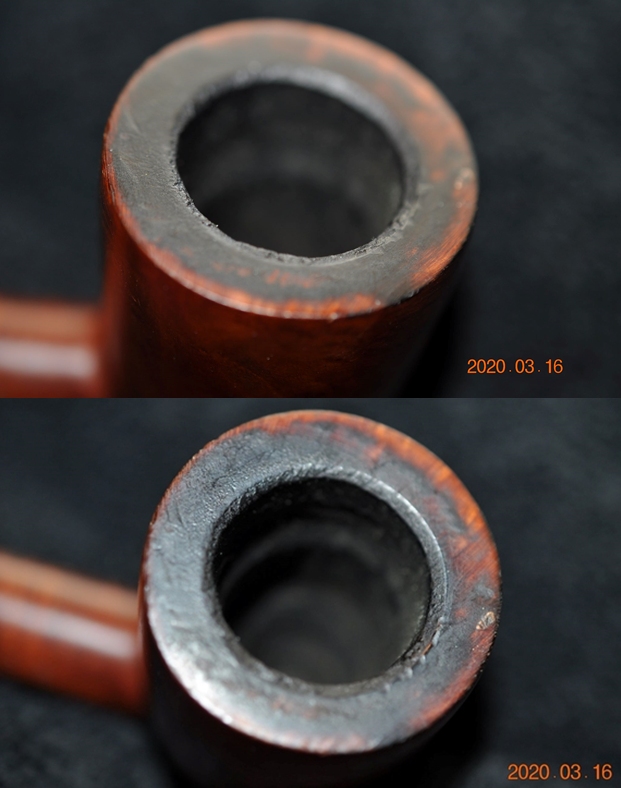
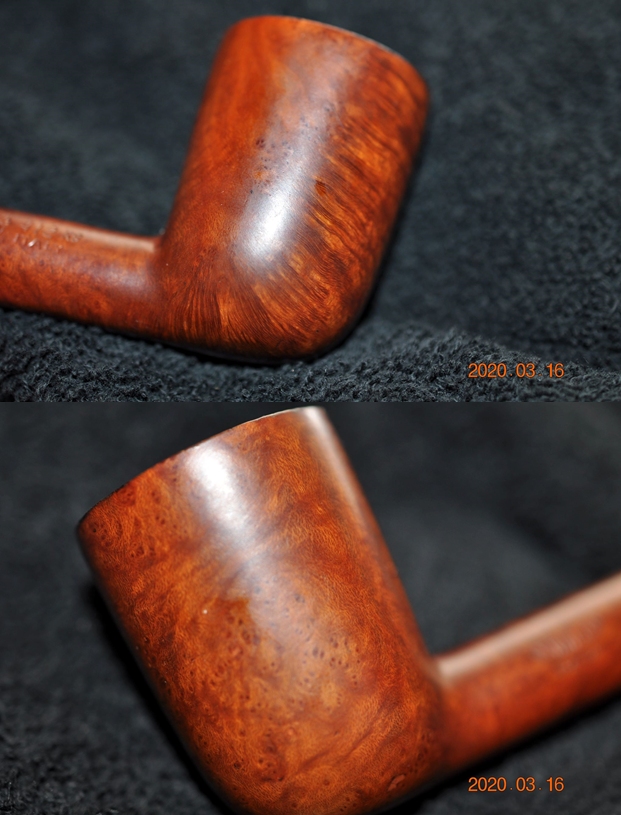
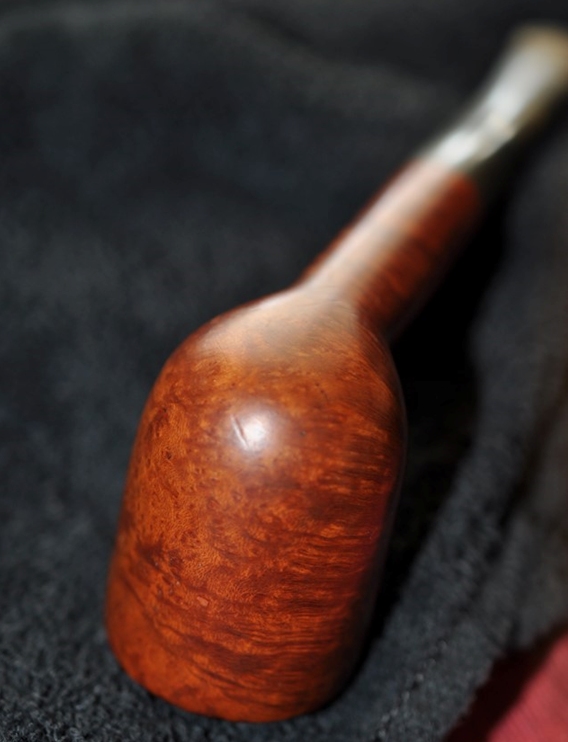
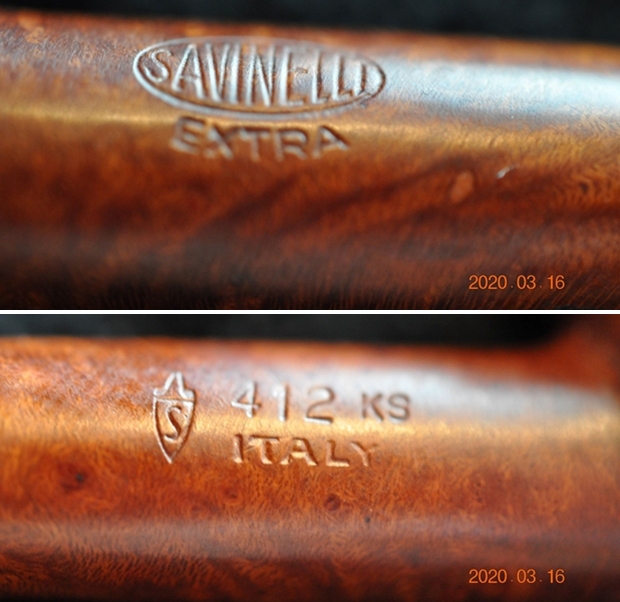
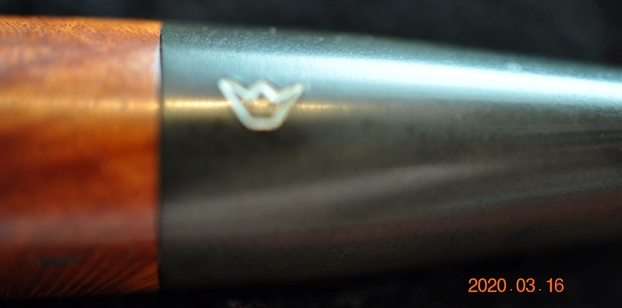
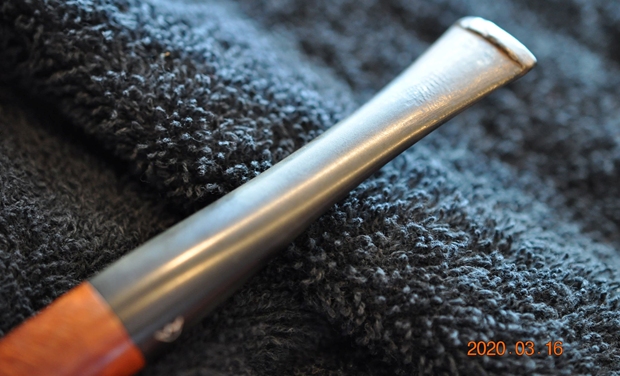
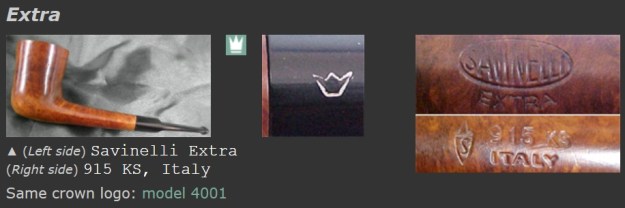
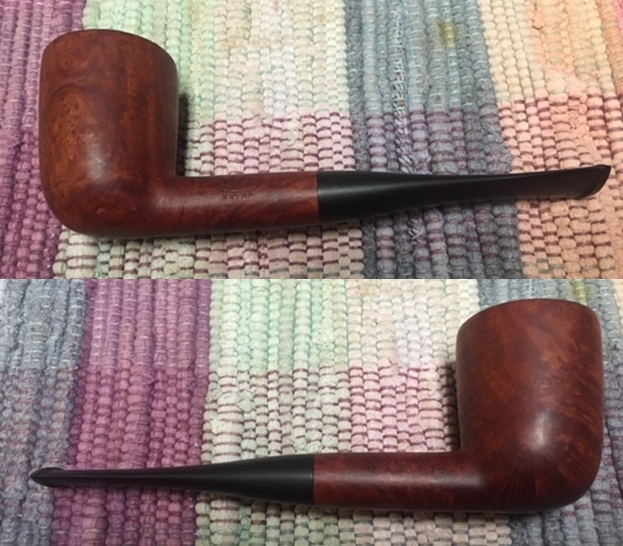
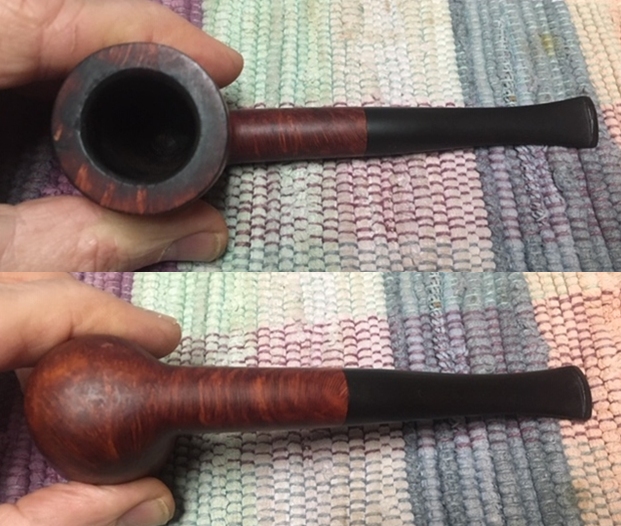
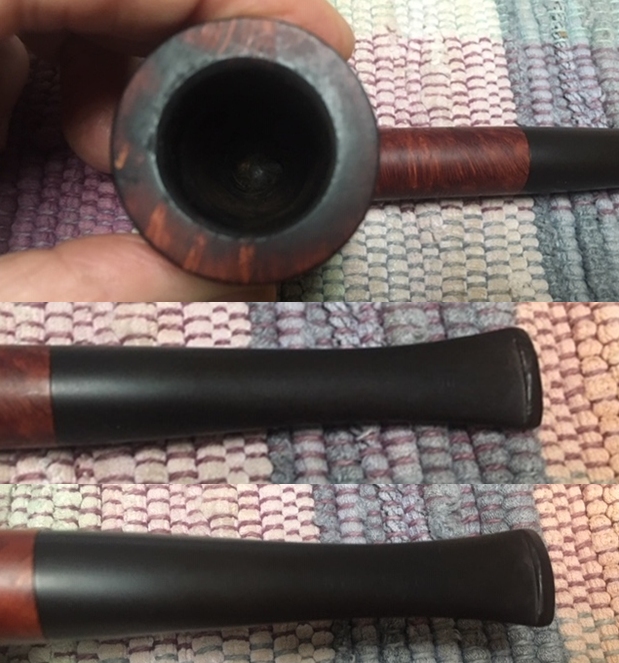
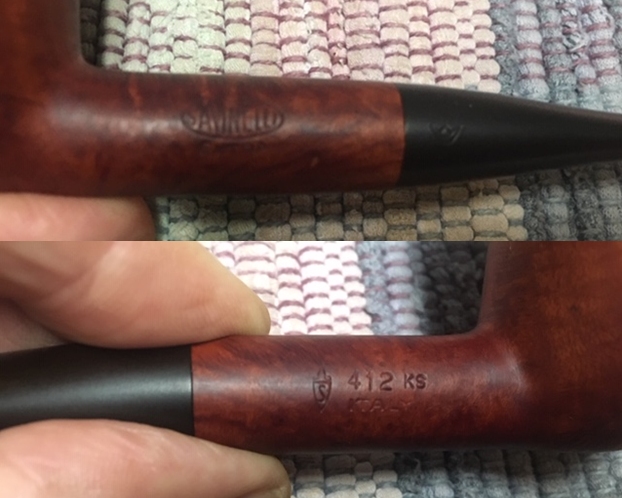
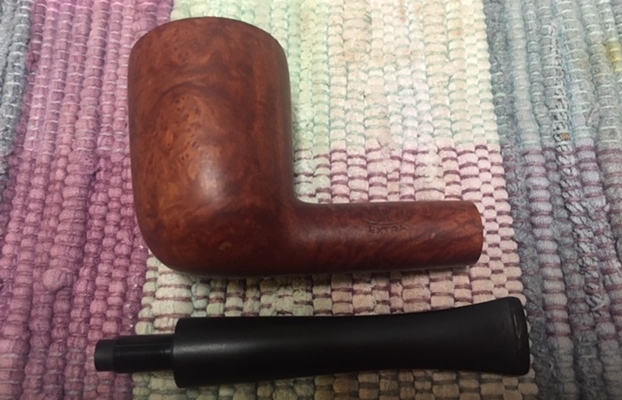
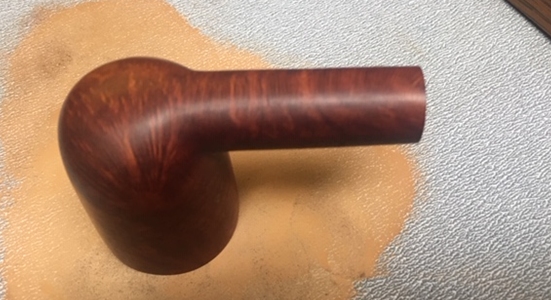
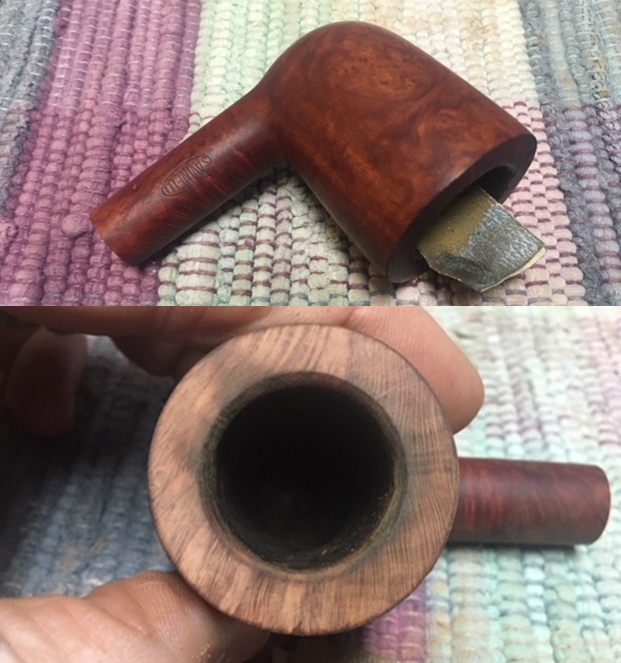
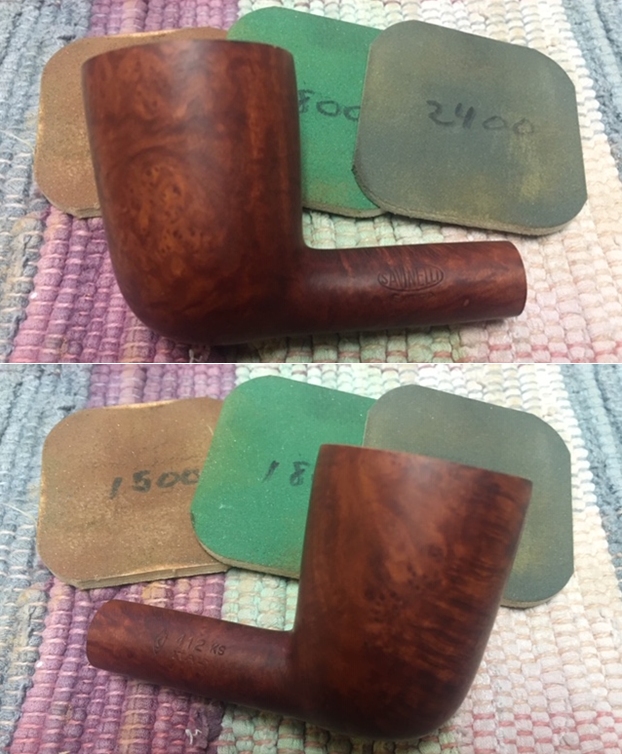
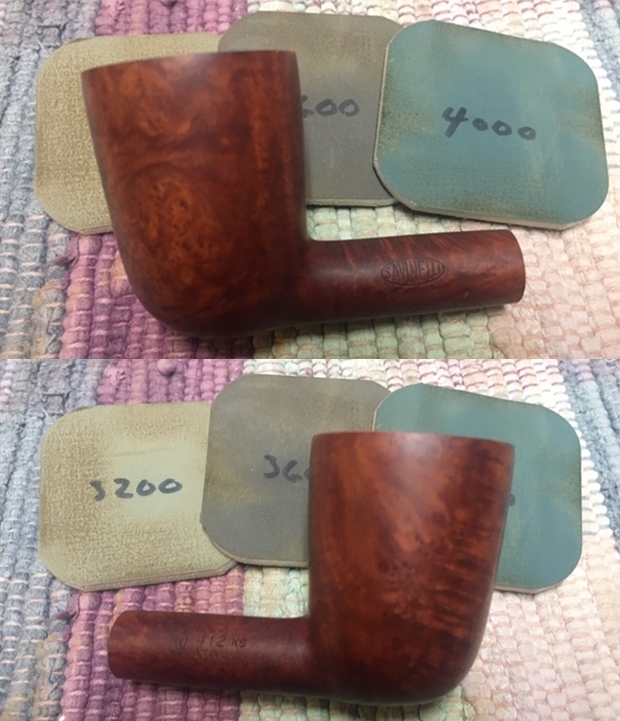
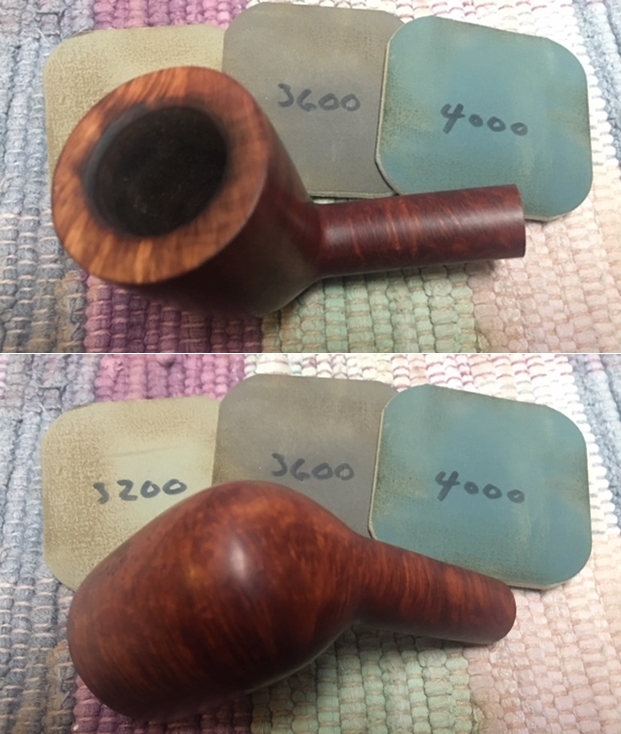
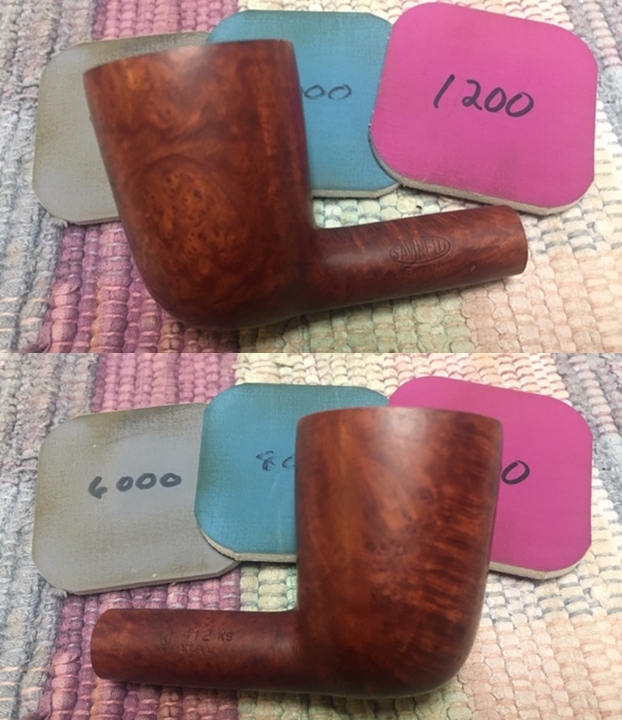
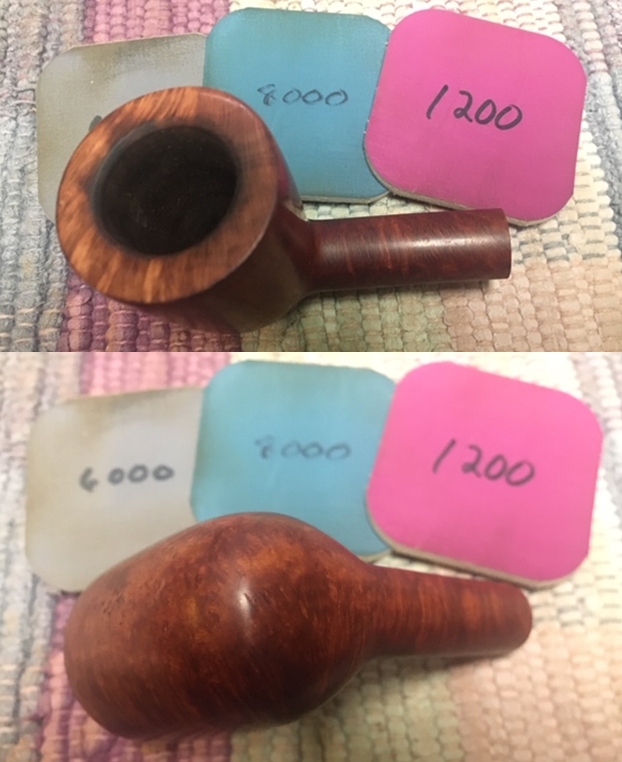
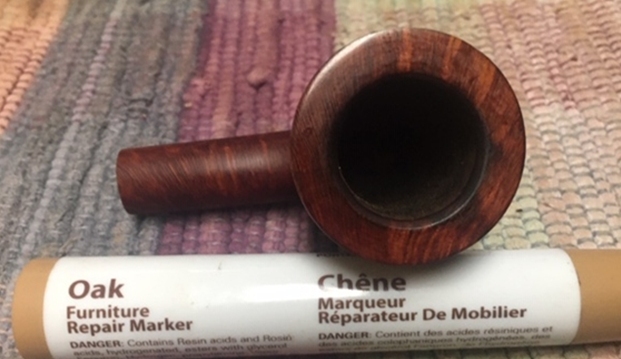
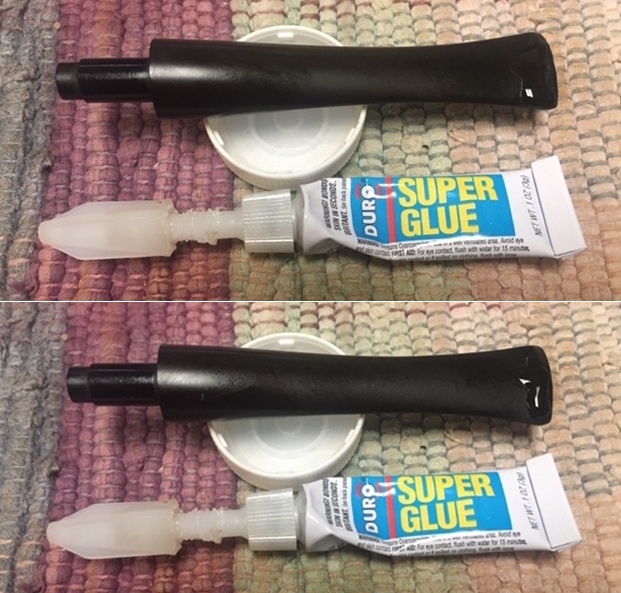
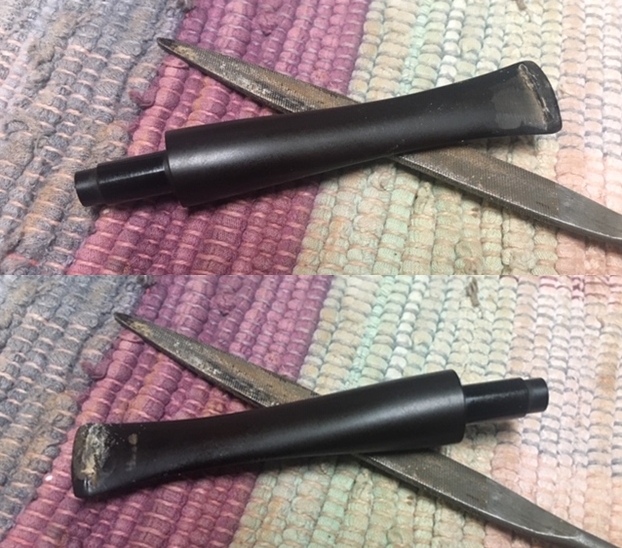
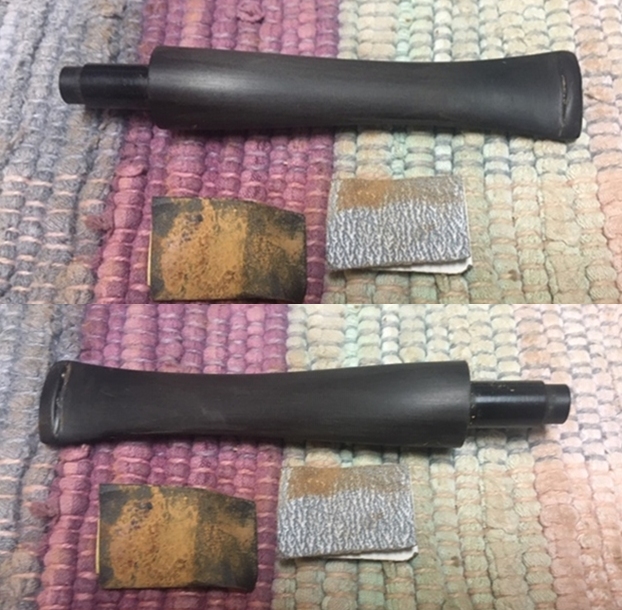
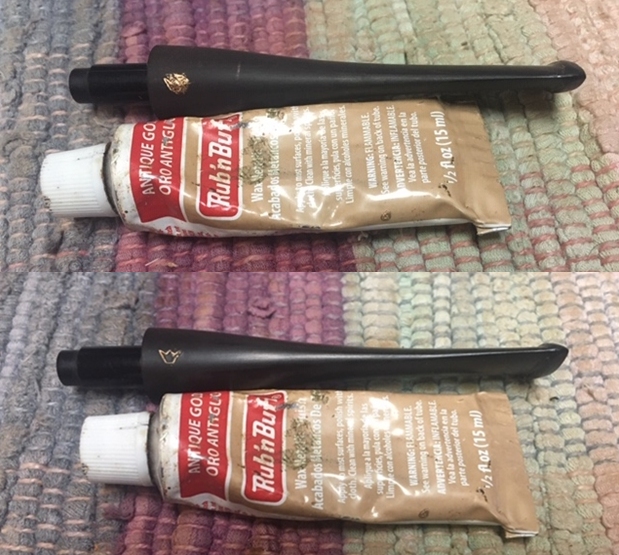
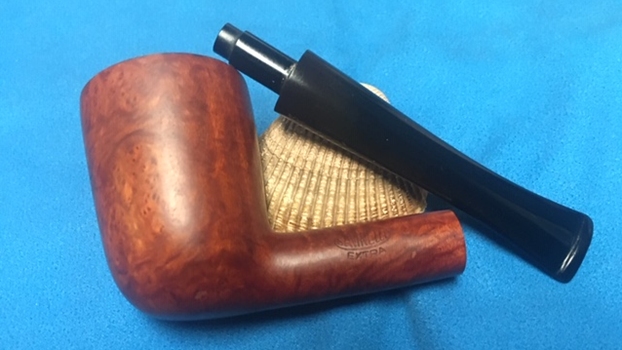
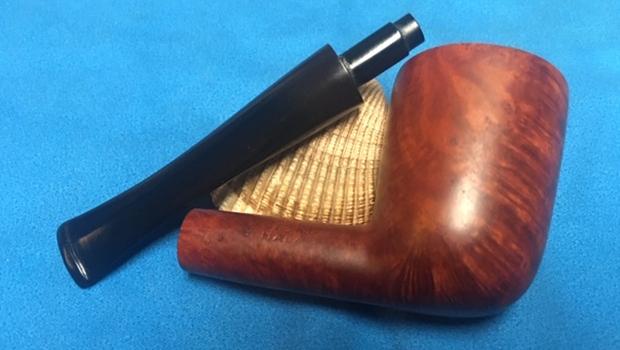
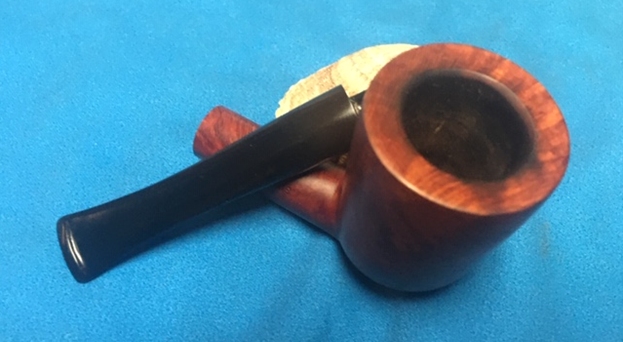
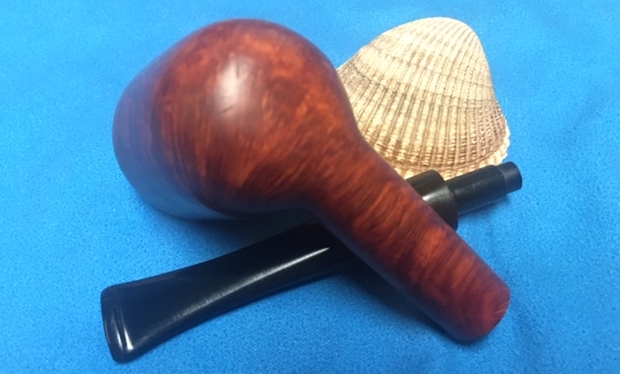
The next pipe on the table came to us from one of Jeff’s pipe hunts. It is an interesting straight Dublin shaped pipe with darkening and lava around the rim edge and top. It is stamped with a oval with SAVINELLI inside and EXTRA below that on the left side of the shank. On the right side of the shank it was stamped with the Savinelli “S” shield and the shape number 412KS over Italy. The stamping is clear and readable. The pipe has a combination of brown stains that highlighted some nice mixed grain around the bowl sides. The finish was very dirty with grime ground into the bowl. The bowl had a thick but even cake in the bowl and a heavy lava overflow on the inner edge of the top and beveled edge all around the bowl. It was hard to know what was underneath the lava and grime in terms of damage to the inner edge and the top of the rim. The taper stem was oxidized and there were tooth marks and chatter on both sides and on the top and bottom edges of the button. There was gold crown stamped on the stem. Jeff took photos of the pipe before he cleaned it up. Jeff took photos of the rim top to show the thick cake in the bowl and the lava overflow on the rim top and the beveled inner edge of the rim.  Jeff took some photos of the bowl sides and heel to show the great looking grain around the bowl. It is actually a nice looking pipe.  The stamping on the sides of the shank is shown in the photos below. They look very good and readable.  There is also a crown on the left side of the taper stem. The stem was a very good fit to the shank. It was oxidized, calcified and had debris stuck to the surface of the vulcanite. It also shows the tooth marks on the stem and on the button surface.  I turned to Pipephil (http://www.pipephil.eu/logos/en/logo-savinelli2.html) to read about the Extra Line. It is a smooth finished pipe with the same stamping on the shank and on the stem as the one that I am working on. I have included the screen capture from the site below.Armed with that information and a clearer picture of the original pipe I turned to work on the pipe on my work table. Jeff had done a great job cleaning up the pipe as usual. He reamed the pipe with a PipNet reamer and cut back the cake back to the bare briar. He cleaned up the walls with a Savinelli Fitsall Pipe Knife. He scrubbed the interior of the bowl and shank with pipe cleaners, cotton swabs and alcohol to remove the tars and oils. He scrubbed the exterior of the pipe with Murphy’s Oil Soap and a tooth brush to remove the grime from the finish. He worked on the rim top lava and darkening with the soap and tooth brush. He scrubbed the inside of the stem with alcohol and pipe cleaners. He scrubbed the exterior with Soft Scrub and then soaked it in Before & After Deoxidizer. He washed it off with warm water to remove the Deoxidizer. The pipe looked far better. I took photos of the pipe when I received it before I started working on it. I took photos of the bowl and rim top as well as the stem to show how clean they were. You can see the damage and the darkening on the inner edge and the top on the right front and the rear of the bowl. The stem looks clean of oxidation and the tooth marks and chatter are fairly light.  I took photos of the stamping on the sides of the shank. They are clean and readable and read as noted above.    I took a photo of the pipe with the stem removed to show the overall look of stem, tenon and profile of the pipe.I decided to start my work on the pipe by addressing the darkening on the rim top and the inner edge. I topped the bowl on a topping board with 220 grit sandpaper on a board. I used a folded piece of 220 grit sandpaper to work on the inner edge to remove the darkening. It took a bit of work but I was able to remove the majority of it and the end product looked much better. I polished the bowl and rim with micromesh sanding pads – wet sanding with 1500-12000 grit pads. I worked over the rim top and edge of the bowl with the pads. I wiped the bowl down with a damp cloth after each pad to remove the sanding debris.      I used an Oak stain pen to blend the cleaned rim top into the colour of the rest of the bowl. The match was perfect.I rubbed the briar down with Before & After Restoration Balm. I worked it into the briar with my fingertips. The product works to clean, enliven and preserve the briar. I let it sit for 10 minutes while I worked on the stem. After the time passed I buffed it with a cotton cloth to deepen the shine. The briar really comes alive with the balm.   I set the bowl aside and turned my attention to the stem. I decided to “paint” the stem surface to raise the dents in the vulcanite. The process worked very well.     I built up the edges of the button and filled in the small dents in both sides of the stem. Once the repairs had cured I used a needle file to recut the edge of the button. I worked over the oxidation on the stem and blended the repaired area of the button with 220 grit sandpaper. I started polishing the stem with 400 grit wet dry sandpaper. At this point it is starting to look much better.   I touched up the gold crown on the stem side with Rub’n Buff Antique Gold. I pressed the gold into the stamp and buffed it off with a cotton pad.   I rubbed the stem down with Denicare Mouthpiece Polish – a red, gritty Tripoli like substance that is a paste. I rubbed it into the surface of the stem and polished it off with a cotton pad. I have found that is a great intermediary step before polishing with micromesh pads. I am not sure what I will use once the final tin I have is gone!     I polished the vulcanite with micromesh sanding pads – 1500-12000 grit pads. I wiped it down with Obsidian Oil after each sanding pad. I used Before & After Pipe Polish – both Fine and Extra Fine to further polish the stem.   This Savinelli Extra 412KS Dublin is a great looking pipe. The mix of brown stains highlights the mix of grain around the bowl sides, top and bottom. The finish on the pipe is in excellent condition and the contrasting stains work well with the polished black vulcanite taper stem. I put the stem back on the bowl and carefully buffed the pipe with Blue Diamond on the buffing wheel using a light touch on the briar. I gave the bowl and stem multiple coats of carnauba wax on the buffing wheel and followed that by buffing the entire pipe with a clean buffing pad. I hand buffed the pipe with a microfiber cloth to deepen the shine. The finished Savinelli Extra 412KS Dublin is quite nice and feels great in the hand. Give the finished pipe a look in the photos below. The dimensions of the pipe are Length: 5 ¾ inches, Height: 2 inches, Outside diameter of the bowl: 1 ½ inches, Chamber diameter: 7/8 of an inch. Thanks for walking through the restoration with me as I worked over another beautiful pipe. This pipe will be added to the Italian Pipe Makers section of the rebornpipes store soon. If you want to add it to your collection send me an email or a message! Thanks for your time.


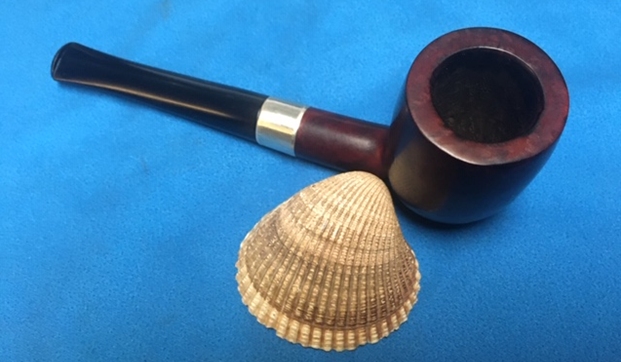
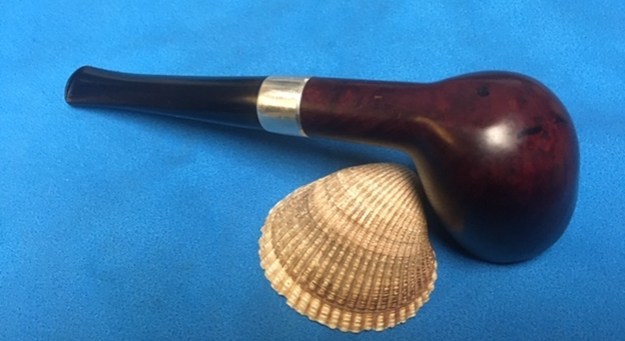
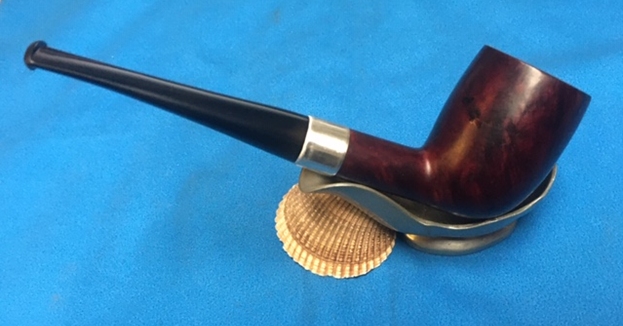
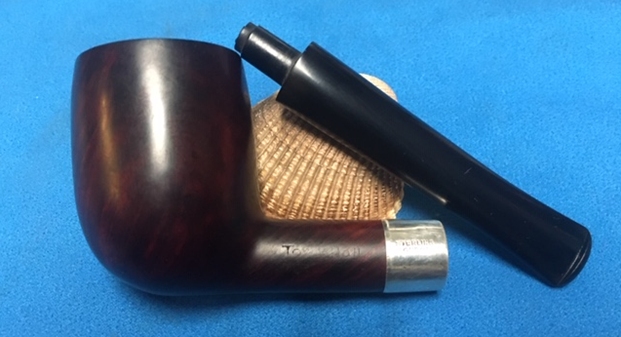
New Life for a Comoy’s Second – A Town Hall Made in England 136 Billiard


Blog by Steve Laug

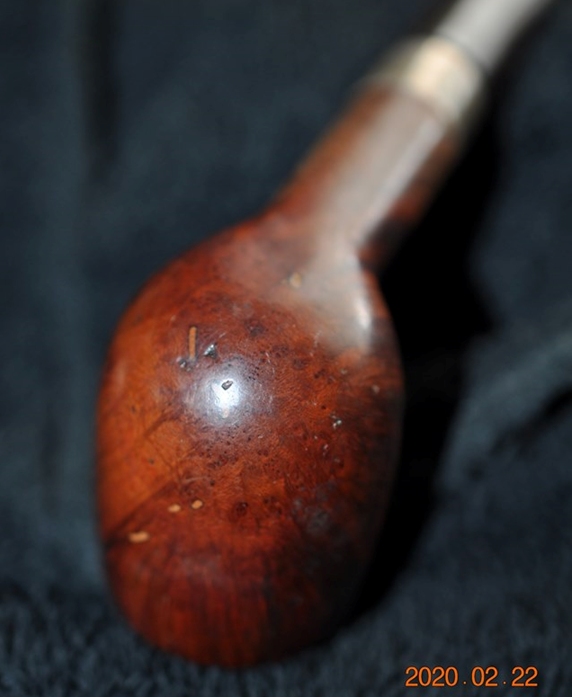
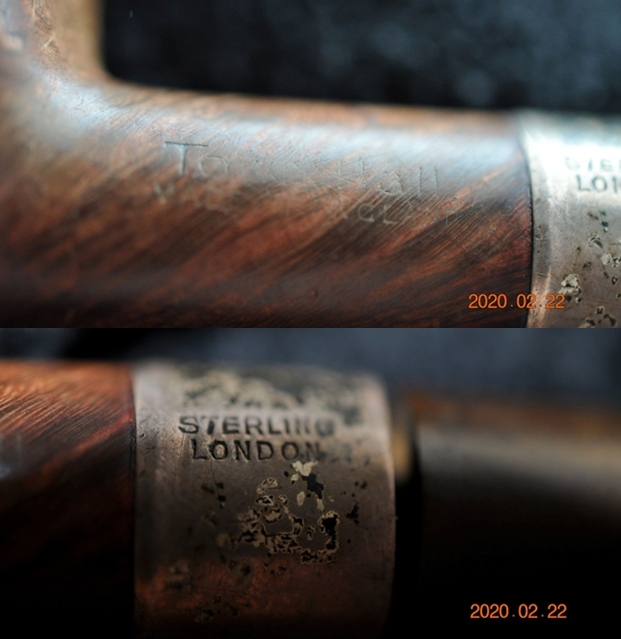
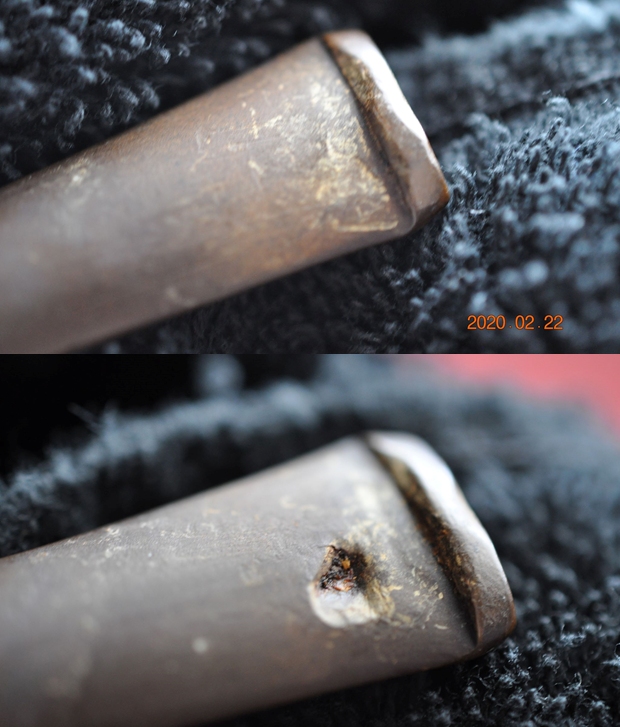
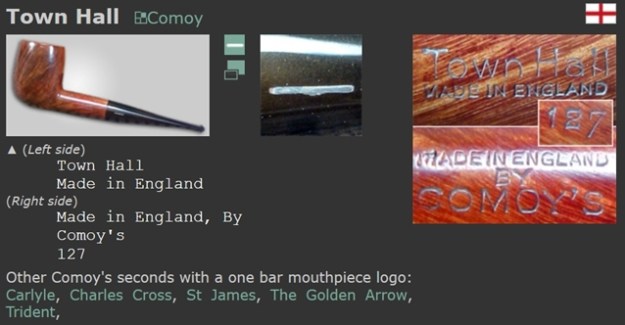
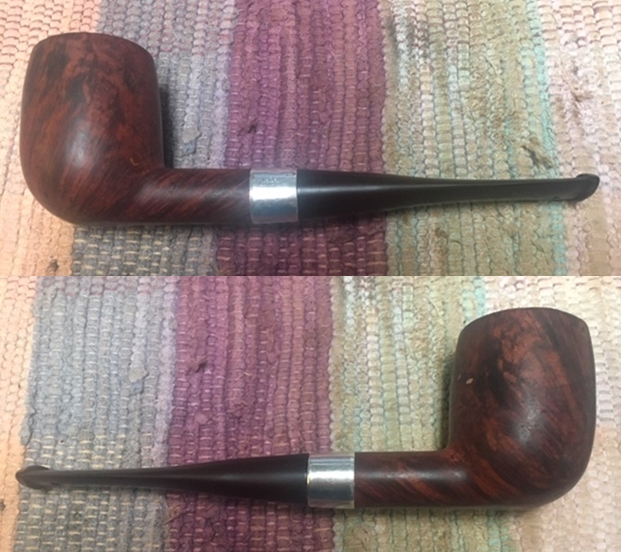
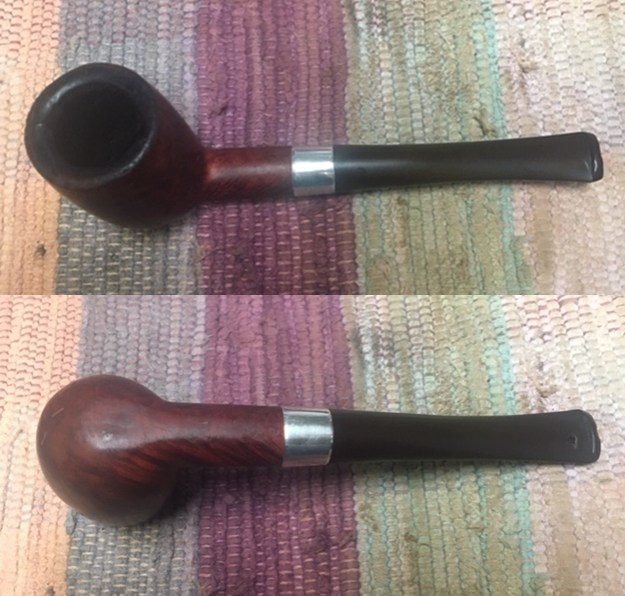
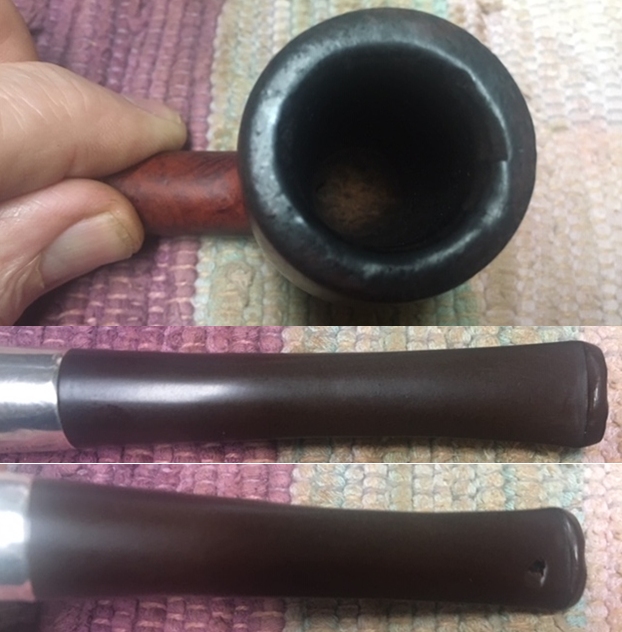
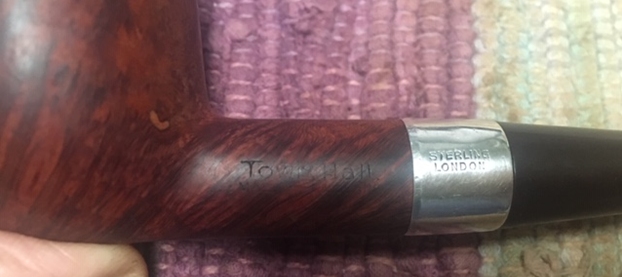
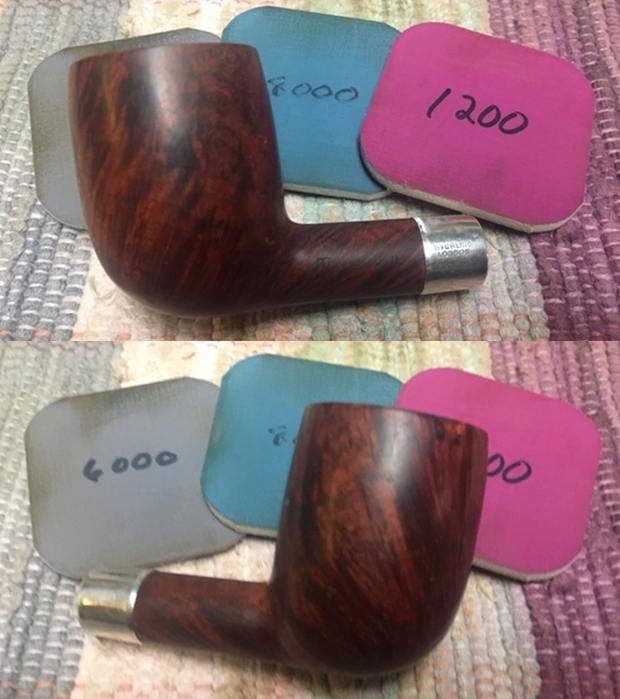
I am getting to the bottom of the current box of pipes for restoration. I think there were probably 40+ pipes in the box when I started. I am down to the last two. I took out an interesting older billiard that Jeff and I had picked up on our Oregon Coast Pipe Hunt. It was a well-shaped billiard that was absolutely filthy but there was something about it that ticked the boxes for me. The exterior of the bowl was coated with sticky oils and grime around the walls. The rim top was beat up pretty badly and there was a thick coat of lava and burn marks on the rim top and inner edge. There was a thick cake in the bowl. Between the lava and the cake overflowing the bowl it was hard to know what the inner edges looked like. The exterior edge was nicked and chipped with quite a bit of damage. The stem was oxidized and had tooth marks and chatter on both sides near the button. There was also a large hole in the underside of the stem – a large bite through that covered about half of the area ahead of the button. Jeff took photos of the pipe before he started his work on it. Jeff took some photos of the rim top from various angles to show the condition. You can see the thick lava on the top and the dust and debris as well as some damage on the rim. There is a thick cake in the bowl and lava on the inner edge. The next photos show the bowl sides and heel. The finish around the bowl was very worn and tired looking. There were spots of paint on the briar as well as quite a few fills on the heel and the front of the bowl. There was some amazing grain showing through the thick grime on the finish. The next photos capture the stamping around the shank and band. Jeff did not get a good photo of the shape number and worn stamp on the right side of the shank so I have not included that. The stamping read as noted above and they are faint but readable with a light and lens. The silver band is also stamped Sterling London.The stem was oxidized and calcified and the photos below show the tooth marks and chatter on the surface. The second photo shows the large bite through on the stem surface ahead of the button. This stem will need to be replaced.  I turned to Pipephil to try and figure out any information regarding the Town Hall brand. I was not familiar with and was hoping I would get some info (http://www.pipephil.eu/logos/en/logo-t7.html). I did indeed find out that it was a Comoy’s Second. The photo of the stamping looks like what I have. The stamp on the right side of the shank in the photo below is very faint on the pipe I am working on. I have included the screen capture of the section on the brand below. I then turned to the Pipedia article on Comoy’s pipes (https://pipedia.org/wiki/Comoy%27s). I read through the article until I came to the section entitles “Seconds made by Comoy’s”. I scrolled through the list of brands and the Town Hall was listed. (There is a typo in the name in the list as it runs the two words together.) I have emboldened and underlined the name in the list below.

Ace of spades, Ancestor, Astor, Ayres, Britannia, Carlyle, Charles Cross, Claridge, Coronet?, Cromwell, Dorchester, Dunbar, Drury Lane, Emerson, Everyman, Festival of Britain, Golden Arrow, Grand Master, Gresham, Guildhall, Hamilton (according to Who Made That Pipe), Kingsway, Lion’s Head, Lord Clive, Lumberman, Hyde Park, Lloyds, Mc Gahey, Moorgate, Newcastle, Oxford, O’Gorman, Rosebery Extra, Royal Falcon, Royal Guard, Royal Lane, Scotland Yard, St James, Sunrise, Super Sports, Sussex, The Academy Award, The Golden Arrow, The Mansion House, The Exmoor Pipe, Throgmorton, Tinder Box Royal Coachman, Townhall, Trident, Trocadero, Westminster, Wilshire

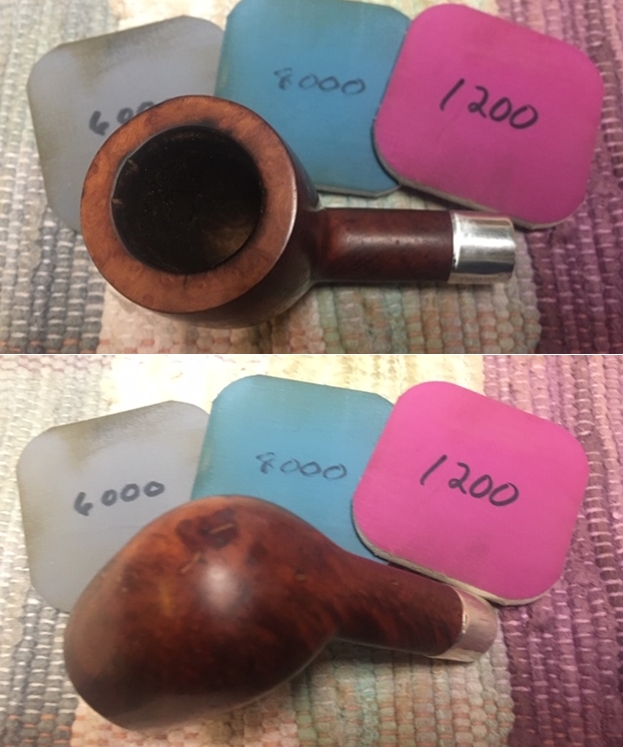
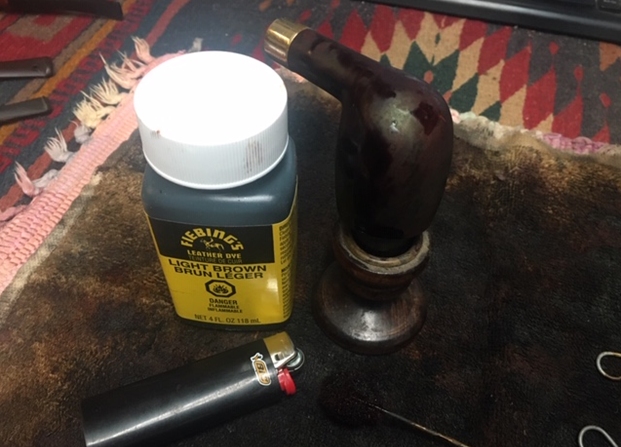
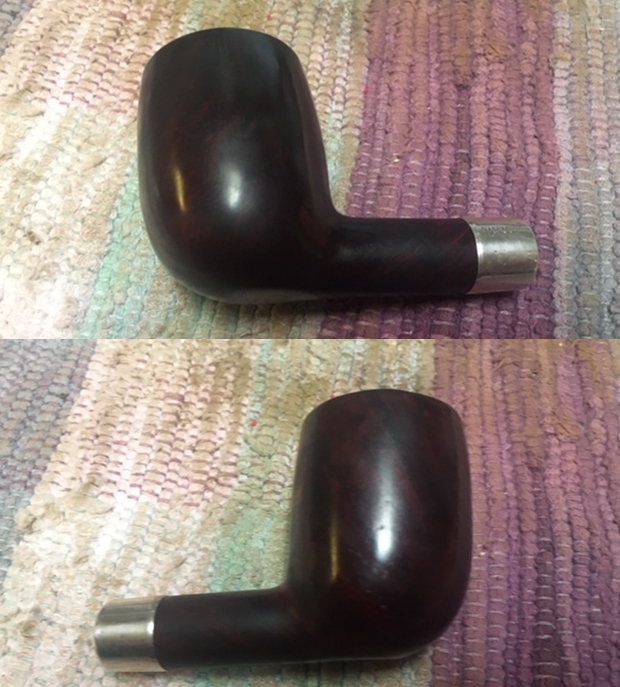
I knew that I was working on a Comoy’s Made pipe and once I read that I could see the classic Comoy’s Billiard shape and the shape number confirmed that. Armed with that information and a clearer picture of the original pipe I turned to work on the pipe on my work table. Jeff had done a great job cleaning up the pipe as usual. He reamed the pipe with a PipNet reamer and cut back the cake back to the bare briar. He cleaned up the walls with a Savinelli Fitsall Pipe Knife. He scrubbed the interior of the bowl and shank with pipe cleaners, cotton swabs and alcohol to remove the tars and oils. He scrubbed the exterior of the pipe with Murphy’s Oil Soap and a tooth brush to remove the grime from the finish. He worked on the rim top lava and darkening with the soap and tooth brush but it was in rough condition. He scrubbed the inside of the stem with alcohol and pipe cleaners. He scrubbed the exterior with Soft Scrub and then soaked it in Before & After Deoxidizer. He washed it off with warm water to remove the Deoxidizer. The pipe looked far better. I took photos of the pipe when I received it before I started working on it.  I took a photo of the rim top showing the damage to the rim top and the damage on the inner edge of the bowl. It was in rough condition. There was some darkening and nicks around the outer edge of the bowl and some burn areas on the inner edge. The stem was also in rough condition with a large bite through on the underside.I took a photo of the stamping on the shank. The stamping is clean and still readable.I decided to start with finding a new stem for the pipe. I took the stem off and looked for a replacement. I have so many pipes to work on that I am not bothering with filling in bite throughs at this point. I am leaving this to the master Paresh Deshpande to do! I found a suitable estate stem that was the right diameter and right tenon size. It is slightly shorter and a bit less tapered than the one that was on the bowl but it would work. I cleaned the airway in it with alcohol and pipe cleaners to get a good start on it then put it in place on the shank and took some pictures of the new stem. I decided to address the damage to the rim and the edges of the bowl – both outer and inner. I topped the bowl with a piece of 220 grit sandpaper. I sanded the inner and outer edges with a folded piece of 220 grit sandpaper to remove them and to remove the damages. Once it was finished it looked a lot better. There were a lot of fills around the sides and heel of the bowl. I checked them for soundness and filled in some of the more damaged ones with clear super glue. Once the repairs cured I sanded them with a piece of 220 grit sandpaper to smooth them and blend them into the surrounding briar.I polished the rim top and bowl with micromesh sanding pads – wet sanding with 1500-12000 grit pads and wiped the bowl down after each sanding pad. The fills were very obvious on this pipe and to me they were just ugly enough to bother me. I could have stained just the rim top to match but figured I would try to mask the fills a bit with a darker stain. I used what is labeled as a Light Brown stain to cover the bowl and rim. I applied the stain and then flamed it to set it in the grain of the bowl. It was dark but I think it will look good once I am finished. I let it sit for several hours then buffed it off with Red Tripoli on the buffing wheel to get a feel for what it looked like at this point. I wiped the bowl down with isopropyl alcohol to make the stain coat a little more transparent and show the grain on the bowl. I rubbed the briar down with Before & After Restoration Balm. I worked it into the briar with my fingertips. The product works to clean, enliven and preserve the briar. I let it sit for 10 minutes while I worked on the stem. After the time passed I buffed it with a cotton cloth to deepen the shine. The briar really comes alive with the balm. I set the bowl aside and turn to address the issues with the stem. The stem was in decent condition with no bite marks. It was dirty and oxidized as could be seen in the photos above. I sanded out the oxidation with 220 grit sandpaper and started polishing it with 400 grit wet dry sandpaper.I polished the stem with micromesh sanding pads – wet sanding it with 1500-12000 grit pads. I wiped it down after each pad with some Obsidian Oil to preserve the stem and to give some bite to the sanding. I finished the polishing with Before & After Pipe Polish – both Fine and Extra Fine polishes. I rubbed the stem down with the polishes and buffed it with a cotton pad. I gave it a final coat of Obsidian Oil. This Comoy’s made Town Hall 136 Billiard was one I was looking forward to seeing come together. The new light brown stain hides the fills nicely while still highlighting the grain around the bowl – sides, top and heel. The polished black vulcanite taper stem that I fit to the shank works very well with the look of the pipe. I put the stem back on the bowl and carefully buffed the pipe with Blue Diamond on the buffing wheel. I gave the bowl and stem multiple coats of carnauba wax on the buffing wheel and followed that by buffing the entire pipe with a clean buffing pad. I hand buffed the pipe with a microfiber cloth to deepen the shine. I polished the silver band with a jeweller’s cloth. The finished Billiard is quite nice and feels great in the hand. Give the finished pipe a look in the photos below. The dimensions of the pipe are Length: 5 ¾ inches, Height: 2 inches, Outside diameter of the bowl: 1 3/8 inches, Chamber diameter: ¾ of an inch. Thanks for walking through the restoration with me as I worked over another beautiful pipe. This pipe will be added to the British Pipe Makers section of the rebornpipes store soon. If you want to add it to your collection send me an email or a message! Thanks for your time.

Restoring a Second Linkman’s Dr. Grabow 9771 De Luxe Bruyere Acorn


Blog by Steve Laug

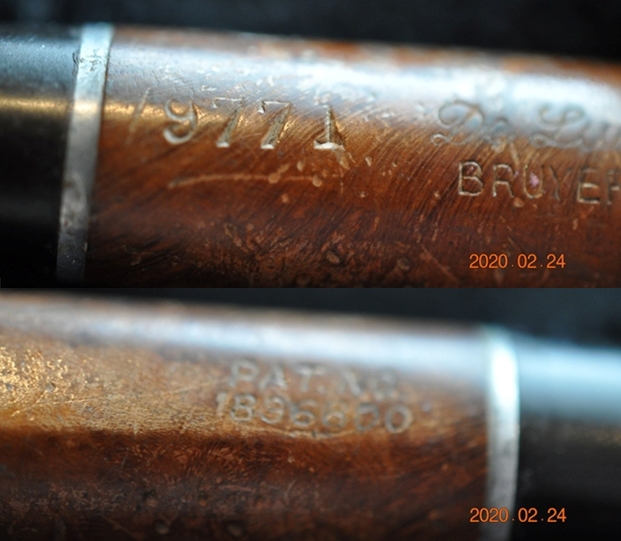
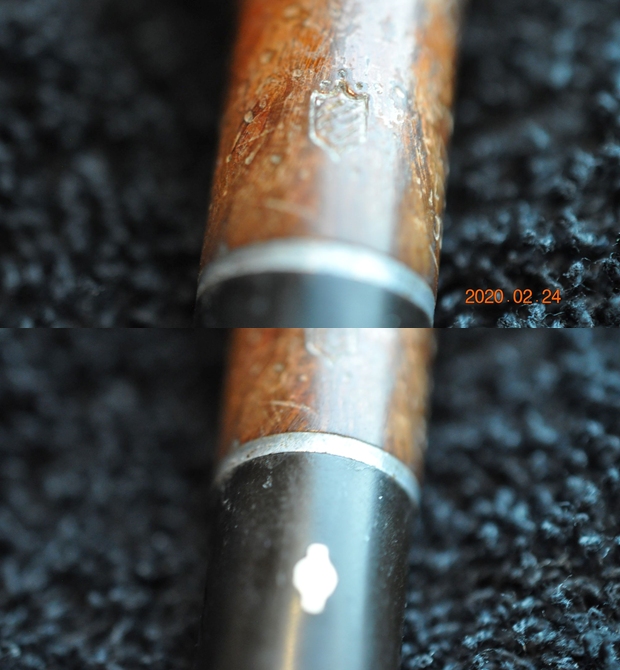
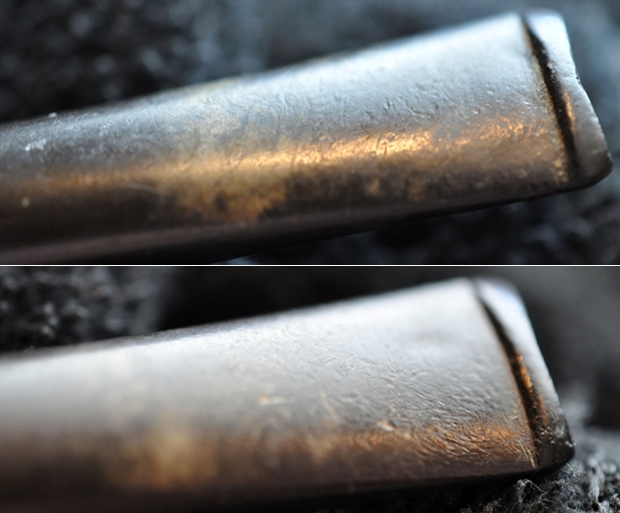
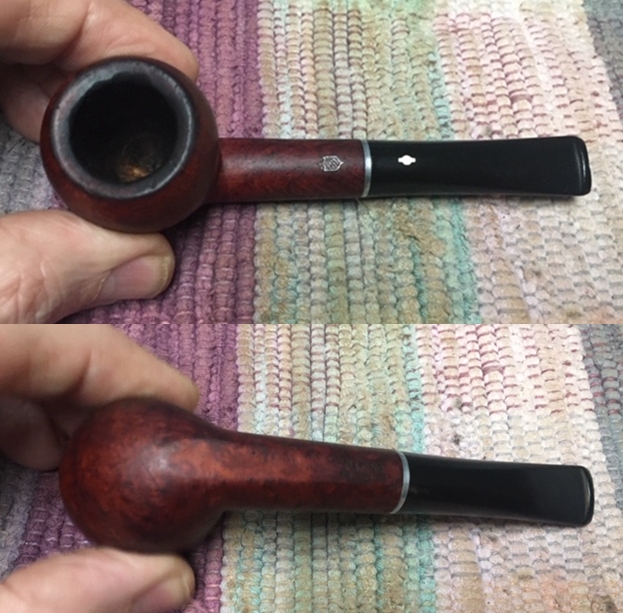
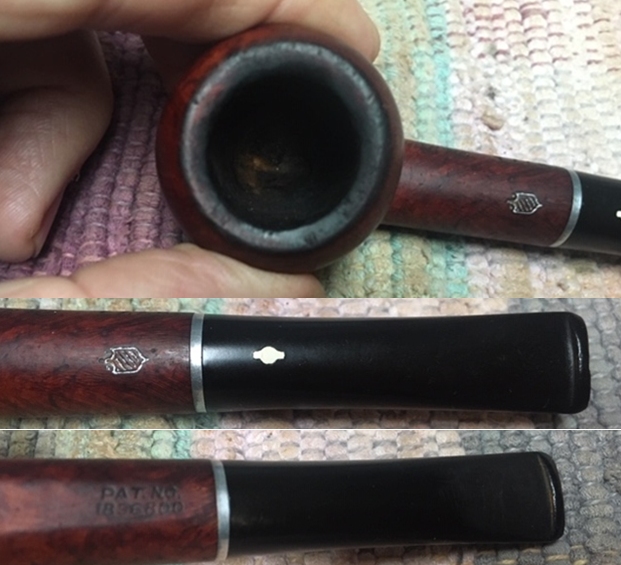
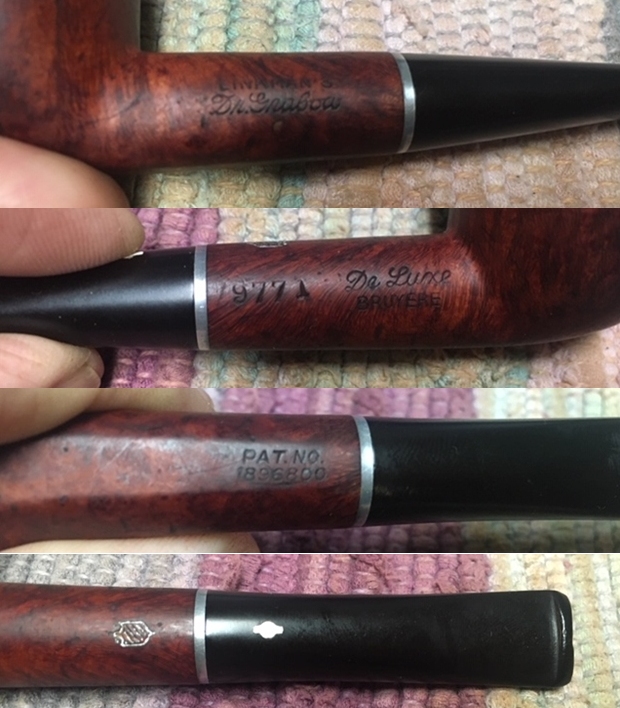
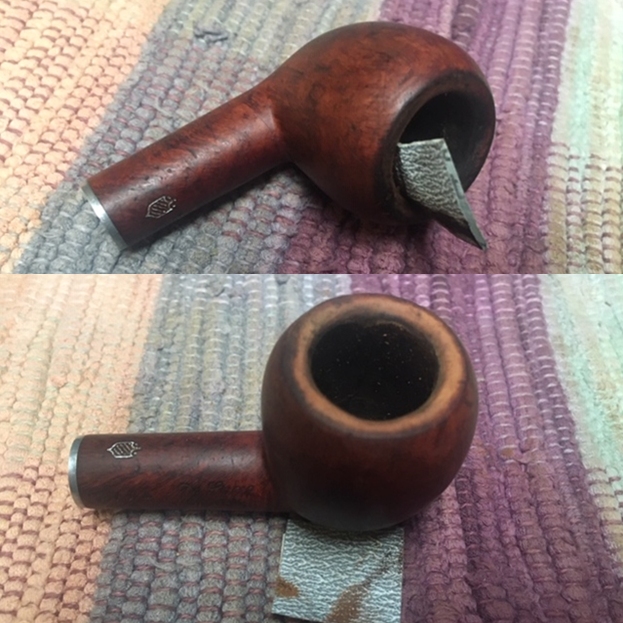
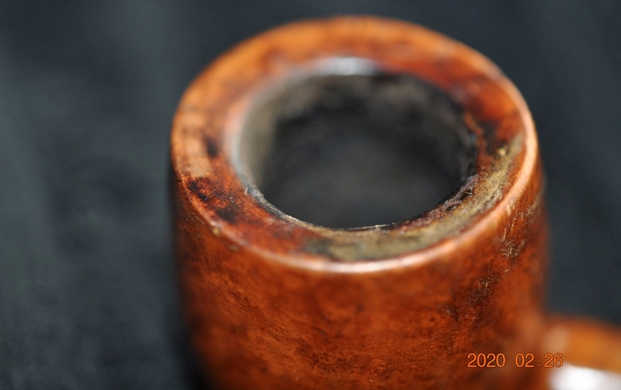
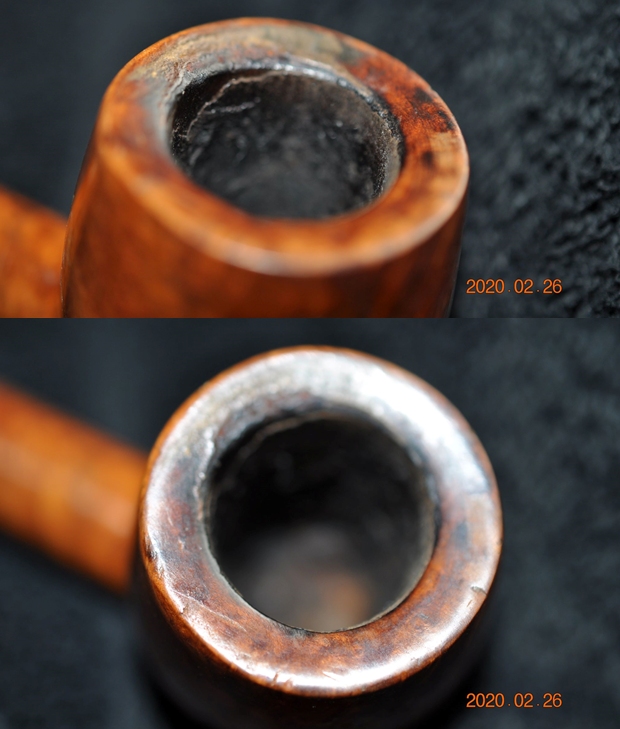
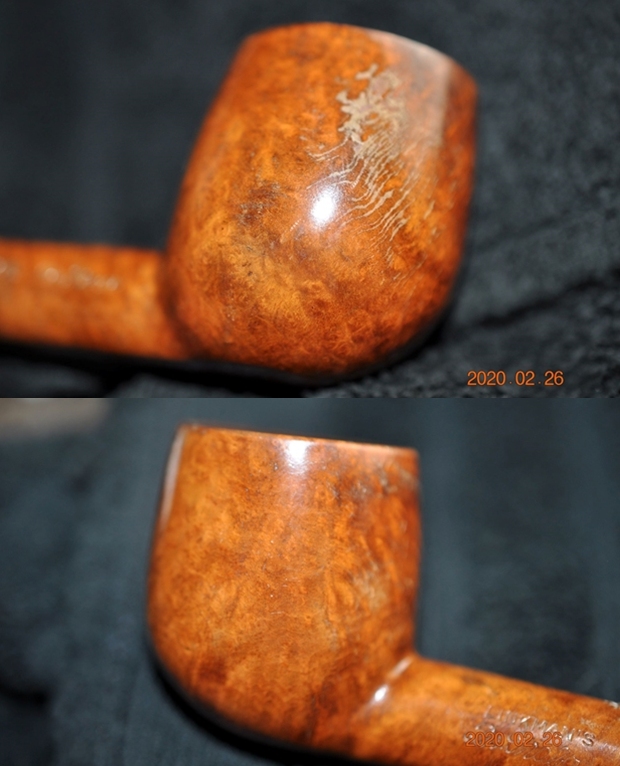
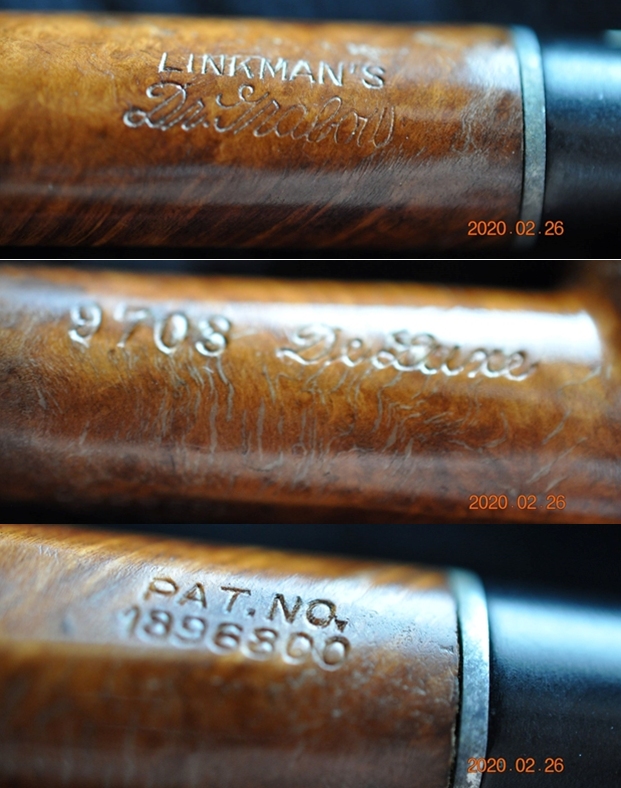
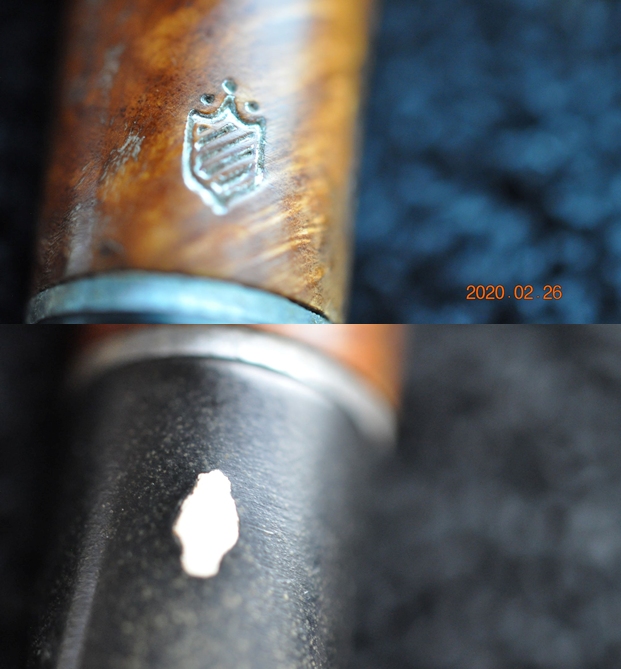
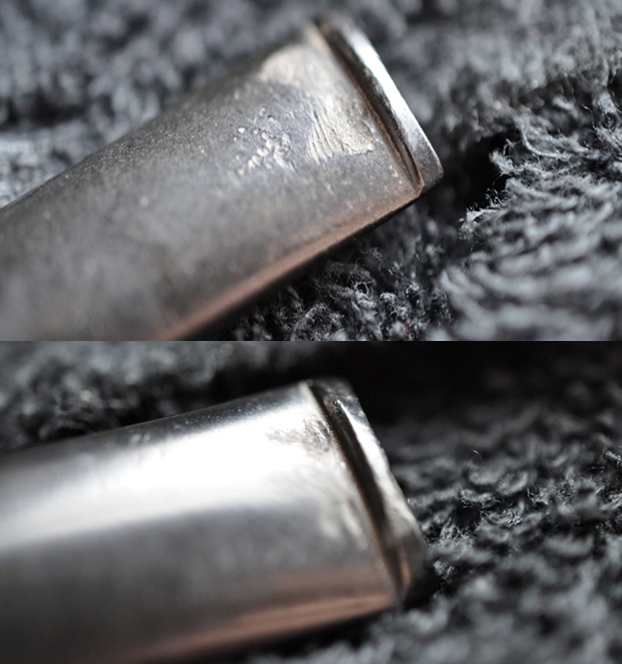
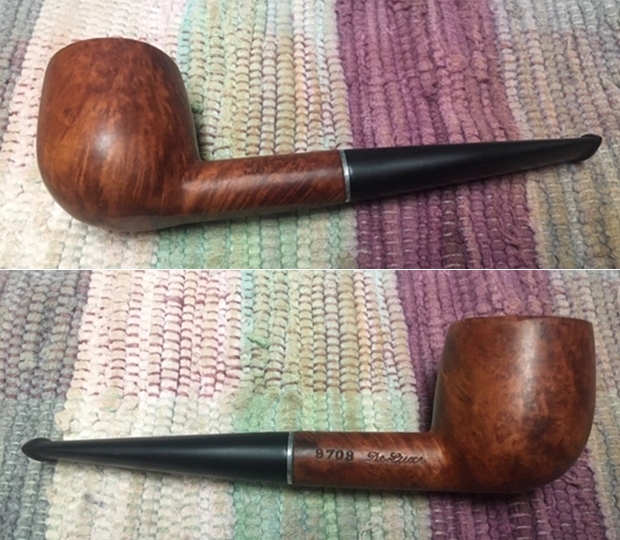
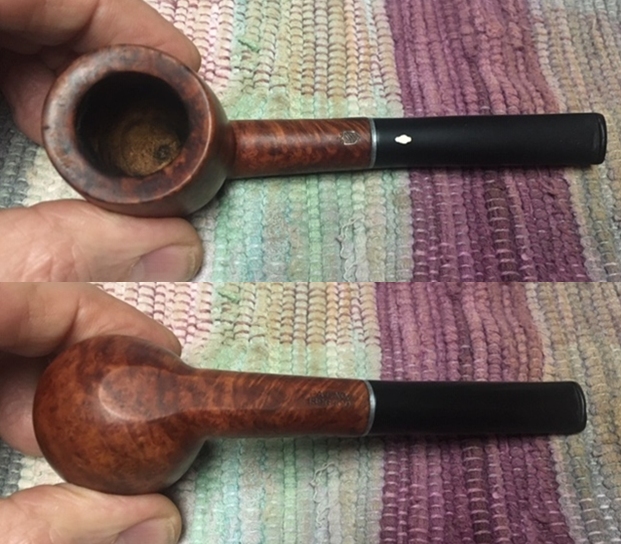
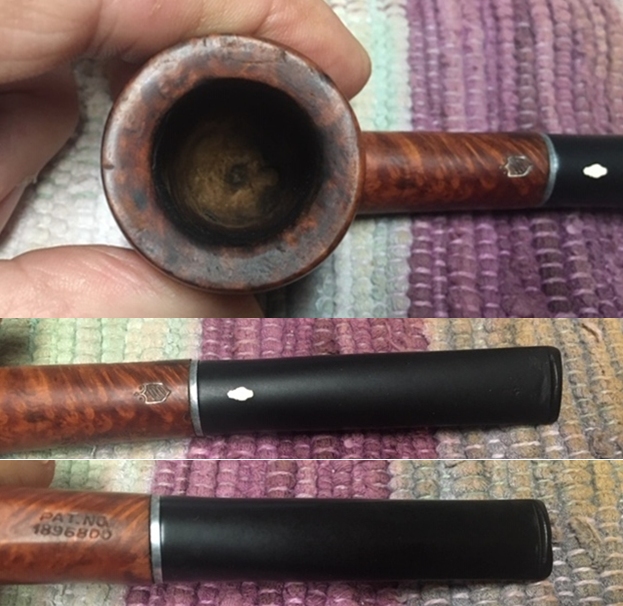
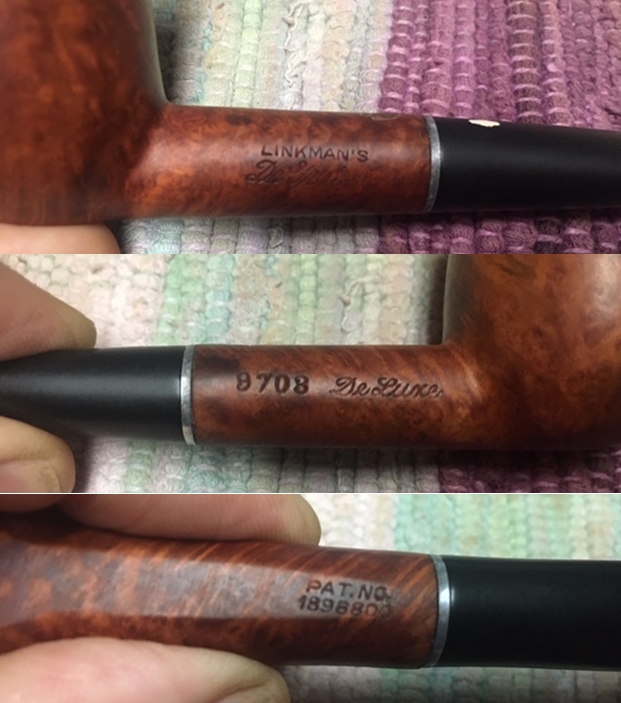
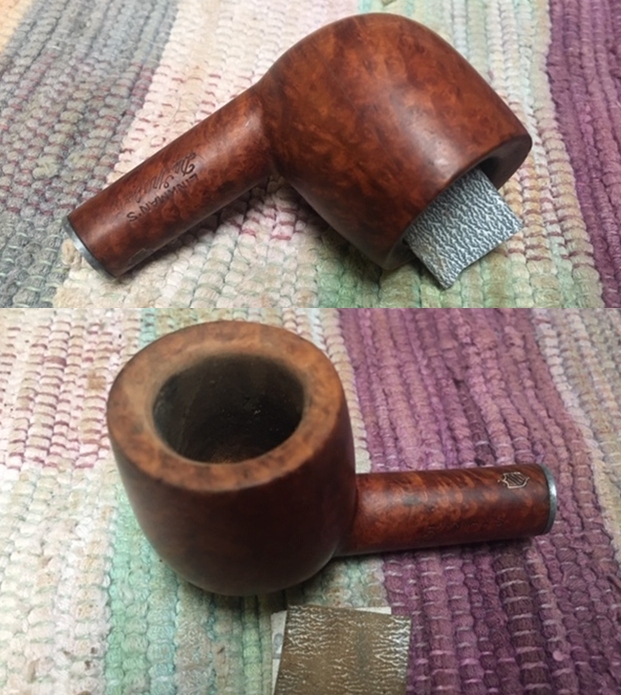
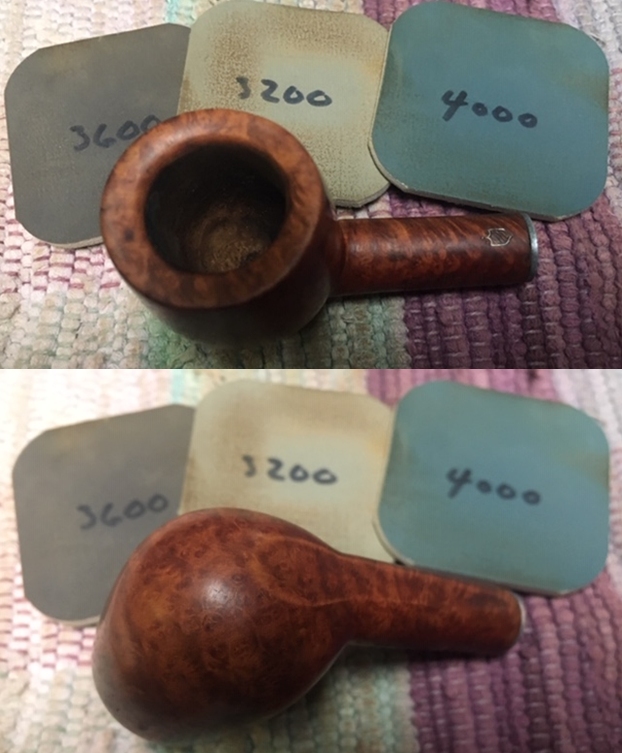
I am getting to the bottom of the current box of pipes for restoration. I think there were probably 40+ pipes in the box when I started. I am down to the last four. Two of them are Linkman’s Dr. Grabow pipes. The first Linkman’s I took out of the box and restored was a billiard. It is stamped Linkman’s Dr. Grabow on the left side of the shank and 9708 De Luxe on the right side of the shank (https://rebornpipes.com/2020/05/20/113190/). It was time to work on the second Linkman’s pipe – an Acorn shaped pipe. It was stamped the same way as the first on both sides of the shank – Linkman’s Dr. Grabow on the left and with a different shape number 9771 De Luxe Bruyere on the left side.  On the underside it bears a Patent Number 1896800. The pipe was dirty and there was some lava and burn marks on the inwardly beveled rim top and inner edge. There was a thick cake in the bowl. The exterior of the pipe was varnished and was scratched and wearing off. The stem was lightly oxidized and had tooth marks and chatter on both sides near the button. Jeff took photos of the pipe before he started his work on it. Jeff took some photos of the rim top from various angles to show the condition. You can see the thick lava on the top and the dust and debris. The varnish coat is crackling and will need to be removed. There is a thick cake in the bowl and lava on the inner edge. The varnish coat was crackling and scratched on the exterior of the bowl but there was great grain shining through. This would be a beautiful pipe once the varnish coat and grime was removed. The next photos capture the stamping around the sides of the shank. They read as noted above and they are clear and very readable. I forgot to note above that there was a worn silver chevron on the top side of the shank at the end. The topside of the stem had the propeller logo that was always associated with the Linkman brand. Jeff removed the stem from the shank and took a picture of the stinger apparatus. This time it is not missing and it is not removable but is an integral part of the tenon. Is it and earlier or a later edition of the pipe? Who knows! The stem was oxidized and calcified and the photos below show the tooth marks and chatter on the surface. They do not look deep but there a lot of them.   I have included the same information that I included in the previous restoration of the first Linkman’s Dr. Grabow for ease of reference.

I turned to Pipephil to pin down the dates of the pipe (http://www.pipephil.eu/logos/en/logo-l4.html). I have included the screen capture of the section on the brand below.The M. Linkman and Co. was established by Louis B. Linkman and August Fisher in 1898. The company closed down in the 1950s and the Dr Grabow branch was sold to Henry Leonard and Thomas Inc. Early Linkman’s pipes were stamped MLC in an oval.

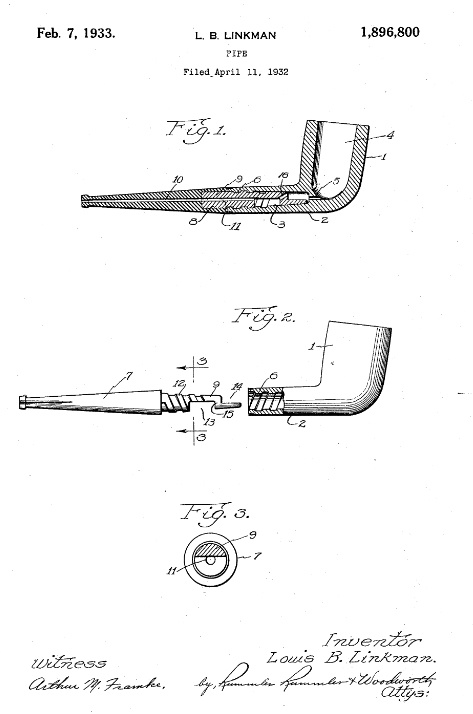
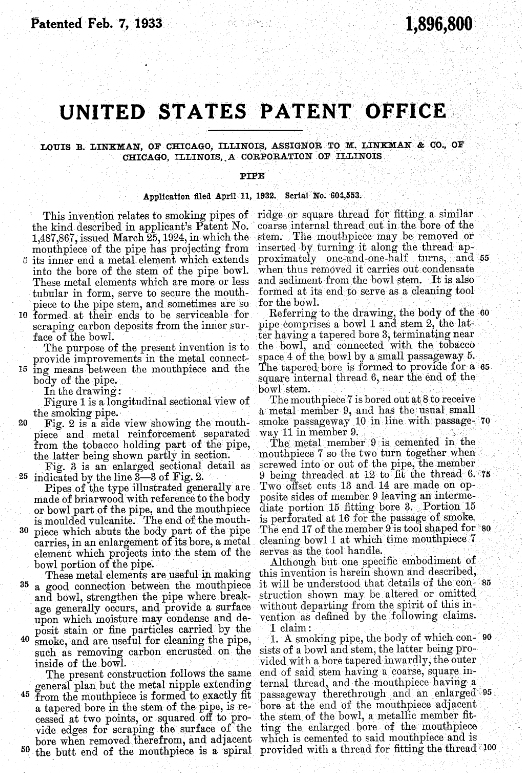
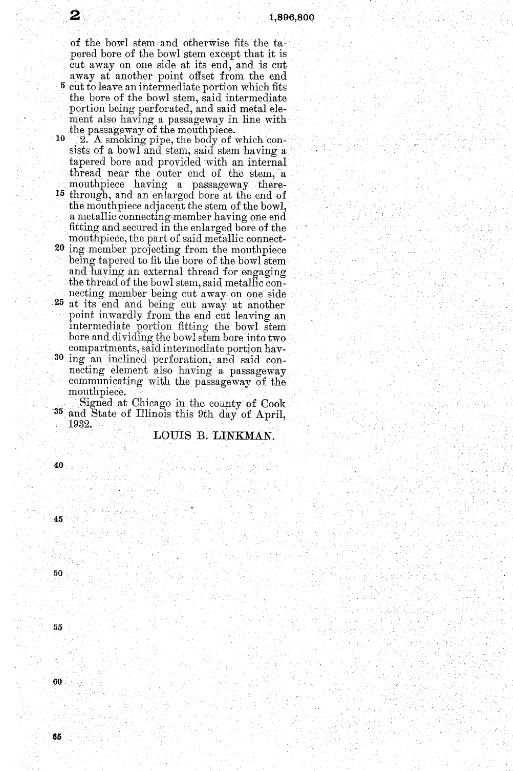
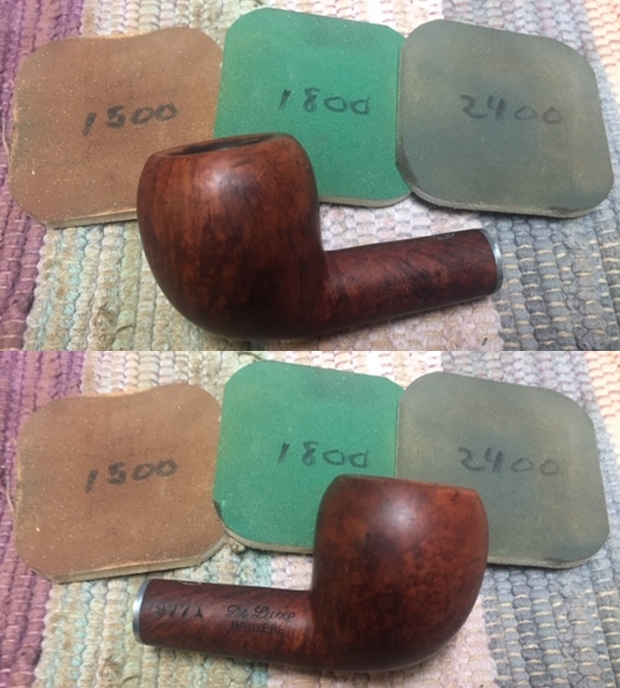
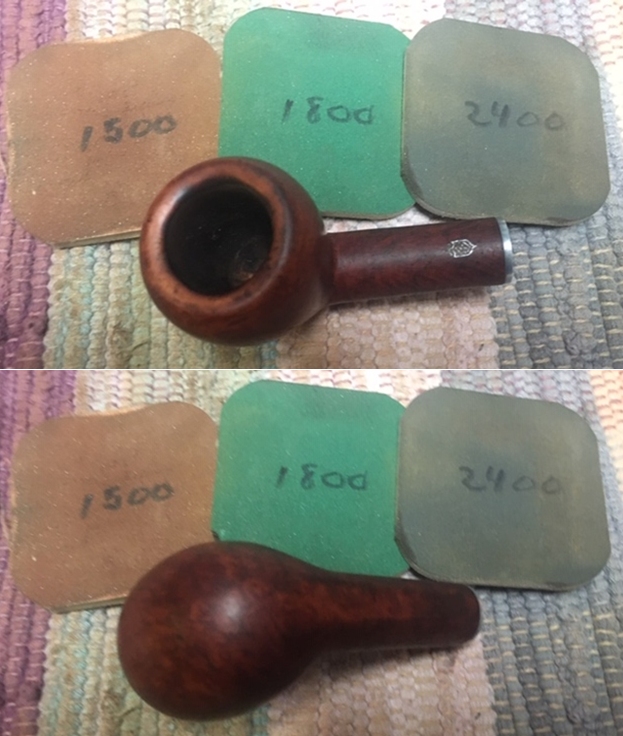
I then did a patent search on the US Government Patent site using the patent number on the underside of the shank. I found the following Patent information. It specifically refers to the stinger apparatus that is attached to the tenon. It was filed in April 11, 1932 by L.B. Linkman. I am including the full patent information below. I knew that I was working on a pipe made after Feb. 7, 1933 when the patent was granted and prior to the early 1950s when the company was closed. Armed with that information and a clearer picture of the original pipe I turned to work on the pipe on my work table. Jeff had done a great job cleaning up the pipe as usual. He reamed the pipe with a PipNet reamer and cut back the cake back to the bare briar. He cleaned up the walls with a Savinelli Fitsall Pipe Knife. He scrubbed the interior of the bowl and shank with pipe cleaners, cotton swabs and alcohol to remove the tars and oils. He scrubbed the exterior of the pipe with Murphy’s Oil Soap and a tooth brush to remove the grime from the finish. He worked on the rim top lava and darkening with the soap and tooth brush. He scrubbed the inside of the stem with alcohol and pipe cleaners. He scrubbed the exterior with Soft Scrub and then soaked it in Before & After Deoxidizer. He washed it off with warm water to remove the Deoxidizer. The pipe looked far better. I took photos of the pipe when I received it before I started working on it.  I took a photo of the rim top showing the damage to the inward bevel on the rim and the damage on the inner edge of the bowl. There was some darkening and nicks around the out edge of the bowl and some burn areas on the inner edge. The stem looks very good – light tooth marks near the button.I took a photo of the stamping on the shank. The stamping is clean and still readable.I took the stem off and took a photo of the appearance of the pipe. It is missing the stinger. It is not cut off but it is a removable one. It is missing but the draught is much better without it.I decided to address the damage to the beveled rim and the edges of the bowl – both outer and inner. I sanded it with a folded piece of 220 grit sandpaper to remove them and to remove the damages. Once it was finished it looked a lot better.I polished the rim top and bowl with micromesh sanding pads – wet sanding with 1500-12000 grit pads and wiped the bowl down after each sanding pad. I rubbed the briar down with Before & After Restoration Balm. I worked it into the briar with my fingertips. The product works to clean, enliven and preserve the briar. I let it sit for 10 minutes while I worked on the stem. After the time passed I buffed it with a cotton cloth to deepen the shine. The briar really comes alive with the balm. I set the bowl aside and turn to address the issues with the stem. I filled in the deep tooth marks on each side of the stem just ahead of the button with clear super glue. Once the repairs cured I sanded them out with 220 grit sandpaper and started polishing it with 400 grit wet dry sandpaper. I polished the stem with micromesh sanding pads – wet sanding it with 1500-12000 grit pads. I wiped it down after each pad with some Obsidian Oil to preserve the stem and to give some bite to the sanding. I finished the polishing with Before & After Pipe Polish – both Fine and Extra Fine polishes. I rubbed the stem down with the polishes and buffed it with a cotton pad. I gave it a final coat of Obsidian Oil. This older Linkman’s Dr. Grabow 9771 De Luxe Bruyere straight Acorn is another interesting piece of pipe history. The mix of brown stains highlights the mix of nice grain around the bowl – sides, top and heel. With the varnish removed the finish on the pipe is in excellent condition and the contrasting stains work well with the polished black vulcanite saddle stem. I put the stem back on the bowl and carefully buffed the pipe with Blue Diamond on the buffing wheel using a light touch on the briar. I gave the bowl and stem multiple coats of carnauba wax on the buffing wheel and followed that by buffing the entire pipe with a clean buffing pad. I hand buffed the pipe with a microfiber cloth to deepen the shine. The finished Linkman’s Dr. Grabow De Luxe Bruyere Billiard is quite nice and feels great in the hand. Give the finished pipe a look in the photos below. The dimensions of the pipe are Length: 5 inches, Height: 1 ½ inches, Outside diameter of the bowl: 1 ¼ inches, Chamber diameter: ¾ of an inch. Thanks for walking through the restoration with me as I worked over another beautiful pipe. This pipe will be added to the American Pipe Makers section of the rebornpipes store soon. If you want to add it to your collection send me an email or a message! Thanks for your time.

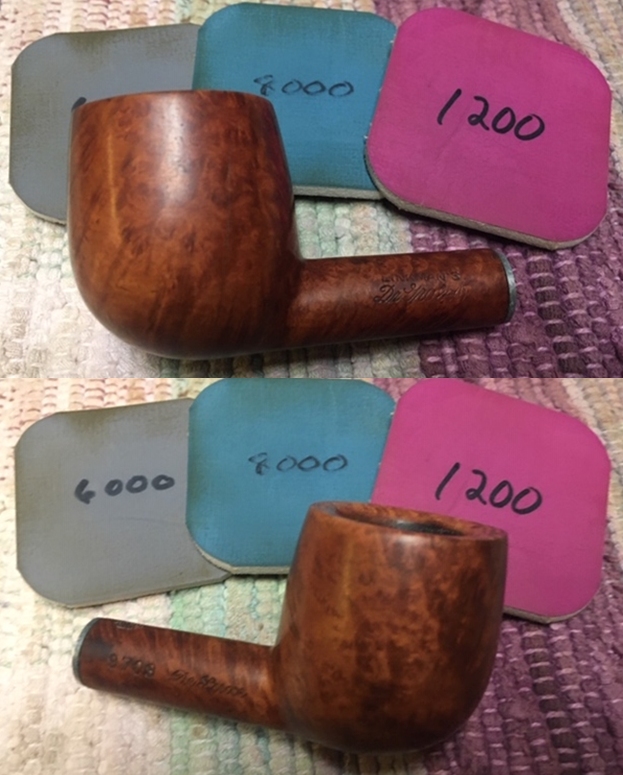
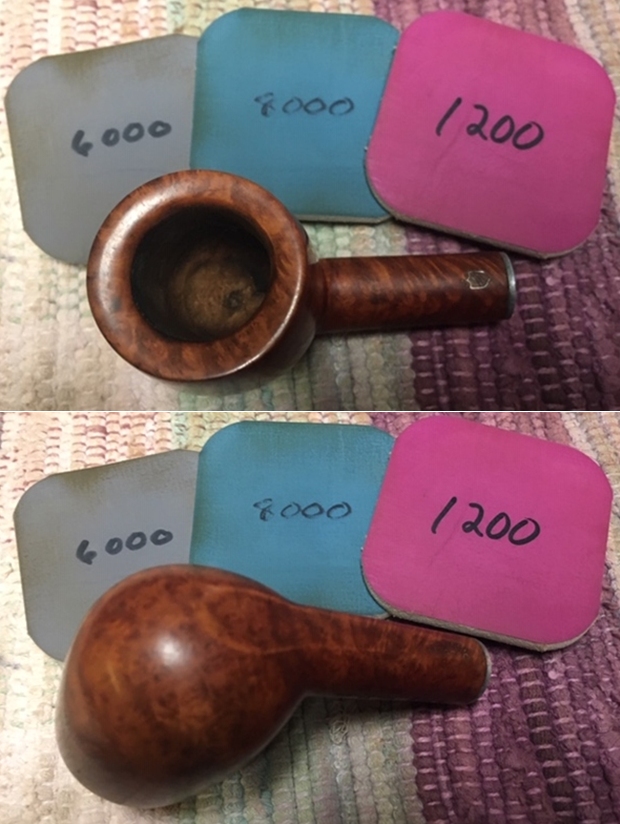
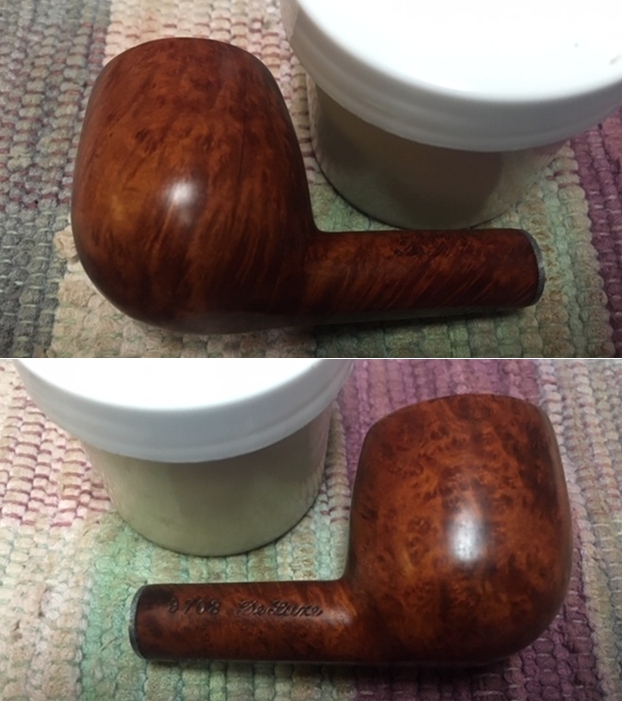
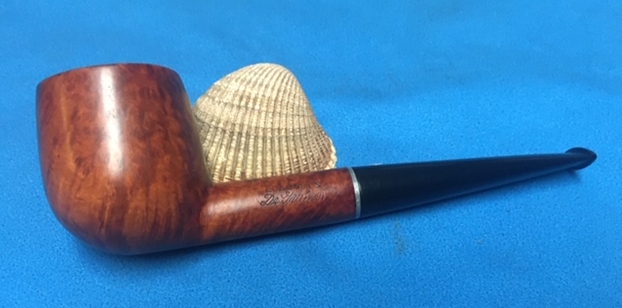
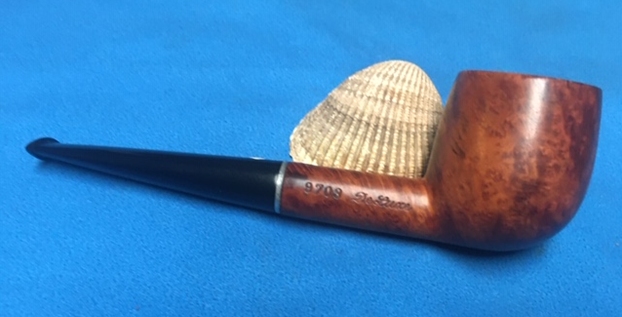
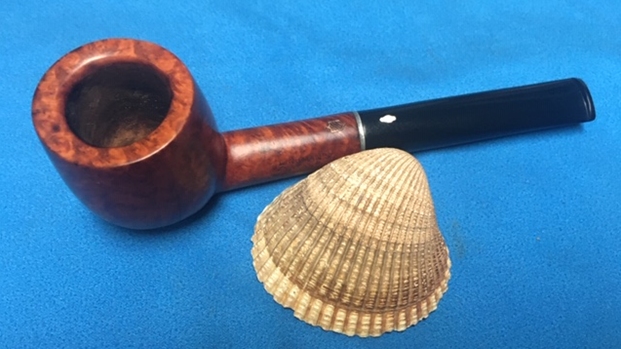
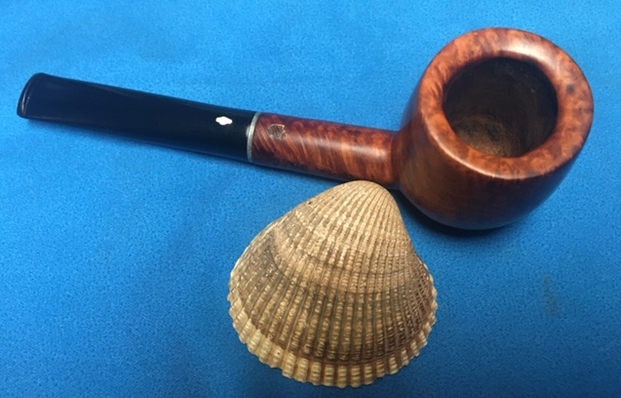
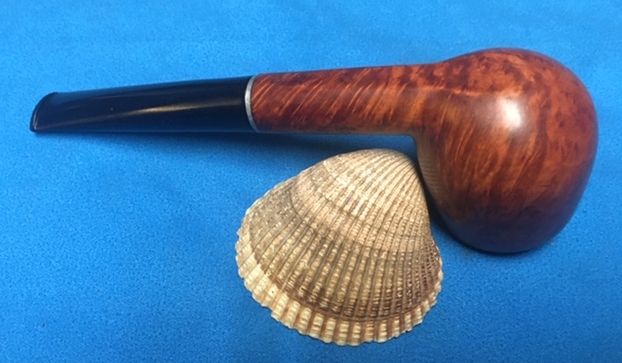
Restoring a Linkman’s Dr. Grabow 9708 De Luxe Billiard


Blog by Steve Laug

I am getting to the bottom of the current box of pipes for restoration. I think there were probably 40+ pipes in the box when I started. I am down to the last four. Two of them are Linkman’s Dr. Grabow pipes. The first one I took out of the box was the billiard. It is stamped Linkman’s Dr. Grabow on the left side of the shank and 9708 De Luxe on the right side of the shank. On the underside it bears a Patent Number 1896800. The pipe was dirty and there was some lava on the inwardly beveled rim top and inner edge. There was a thick cake in the bowl. The exterior of the pipe was varnished and almost looked like it had been done over the grime on the briar as a sales ploy. The stem was slightly underturned but would be fine once cleaned up. It was lightly oxidized and had tooth marks and chatter on both sides near the button. Jeff took photos of the pipe before he started his work on it. Jeff took some photos of the rim top from various angles to show the condition. You can see the lava on the top and the dust and debris. The varnish coat is crackling and will need to be removed. There is a thick cake in the bowl and lava on the inner edge. The varnish coat was crackling on the exterior of the bowl but there was great grain shining through. This would be a beautiful pipe once the varnish coat and grime was removed. The next photos capture the stamping around the sides of the shank. They read as noted above and they are clear and very readable. I forgot to note above that there was a worn silver chevron on the top side of the shank at the end. The topside of the stem had the propeller logo that was always associated with the Linkman brand.The stem was lightly oxidized that the photos below show the tooth marks and chatter on the surface. They do not look deep but there a lot of them.I turned to Pipephil to pin down the dates of the pipe (http://www.pipephil.eu/logos/en/logo-l4.html). I have included the screen capture of the section on the brand below.The M. Linkman and Co. was established by Louis B. Linkman and August Fisher in 1898. The company closed down in the 1950s and the Dr Grabow branch was sold to Henry Leonard and Thomas Inc. Early Linkman’s pipes were stamped MLC in an oval.

I then did a patent search on the US Government Patent site using the patent number on the underside of the shank. I found the following Patent information. It specifically refers to the stinger apparatus that is attached to the tenon. It was filed in April 11, 1932 by L.B. Linkman. I am including the full patent information below. I knew that I was working on a pipe made after Feb. 7, 1933 when the patent was granted and prior to the early 1950s when the company was closed. Armed with that information and a clearer picture of the original pipe I turned to work on the pipe on my work table. Jeff had done a great job cleaning up the pipe as usual. He reamed the pipe with a PipNet reamer and cut back the cake back to the bare briar. He cleaned up the walls with a Savinelli Fitsall Pipe Knife. He scrubbed the interior of the bowl and shank with pipe cleaners, cotton swabs and alcohol to remove the tars and oils. He scrubbed the exterior of the pipe with Murphy’s Oil Soap and a tooth brush to remove the grime from the finish. He worked on the rim top lava and darkening with the soap and tooth brush. He scrubbed the inside of the stem with alcohol and pipe cleaners. He scrubbed the exterior with Soft Scrub and then soaked it in Before & After Deoxidizer. He washed it off with warm water to remove the Deoxidizer. The pipe looked far better. I took photos of the pipe when I received it before I started working on it.  I took a photo of the rim top showing the damage to the inward bevel on the rim and the damage on the inner edge of the bowl. There was some darkening and nicks around the out edge of the bowl and some burn areas on the inner edge.I took a photo of the stamping on the shank. The stamping is clean and still readable.I took the stem off and took a photo of the appearance of the pipe. It is missing the stinger. It is not cut off but it is a removable one. It is missing but the draught is much better without it.I decided to address the damage to the beveled rim and the edges of the bowl – both outer and inner. I sanded it with a folded piece of 220 grit sandpaper to remove them and to remove the damages. Once it was finished it looked a lot better.I polished the rim top and bowl with micromesh sanding pads – wet sanding with 1500-12000 grit pads and wiped the bowl down after each sanding pad. I rubbed the briar down with Before & After Restoration Balm. I worked it into the briar with my fingertips. The product works to clean, enliven and preserve the briar. I let it sit for 10 minutes while I worked on the stem. After the time passed I buffed it with a cotton cloth to deepen the shine. The briar really comes alive with the balm.  I set the bowl aside and turn to address the issues with the stem. I sanded out the tooth marks and chatter on the top and underside of the stem with 220 grit sandpaper and started polishing it with 400 grit wet dry sandpaper.I polished the stem with micromesh sanding pads – wet sanding it with 1500-12000 grit pads. I wiped it down after each pad with some Obsidian Oil to preserve the stem and to give some bite to the sanding. I finished the polishing with Before & After Pipe Polish – both Fine and Extra Fine polishes. I rubbed the stem down with the polishes and buffed it with a cotton pad. I gave it a final coat of Obsidian Oil. This older Linkman’s Dr. Grabow 9708 De Luxe straight Billiard is another interesting piece of pipe history. The mix of brown stains highlights the mix of nice grain around the bowl – sides, top and heel. With the varnish removed the finish on the pipe is in excellent condition and the contrasting stains work well with the polished black vulcanite saddle stem. I put the stem back on the bowl and carefully buffed the pipe with Blue Diamond on the buffing wheel using a light touch on the briar. I gave the bowl and stem multiple coats of carnauba wax on the buffing wheel and followed that by buffing the entire pipe with a clean buffing pad. I hand buffed the pipe with a microfiber cloth to deepen the shine. The finished Linkman’s Dr. Grabow De Luxe Billiard is quite nice and feels great in the hand. Give the finished pipe a look in the photos below. The dimensions of the pipe are Length: 5 ½ inches, Height: 1 ½ inches, Outside diameter of the bowl: 1 ¼ inches, Chamber diameter: ¾ of an inch. Thanks for walking through the restoration with me as I worked over another beautiful pipe. This pipe will be added to the American Pipe Makers section of the rebornpipes store soon. If you want to add it to your collection send me an email or a message! Thanks for your time.


A Savinelli Sherwood Rock Briar 608 Bent Billiard


Blog by Steve Laug

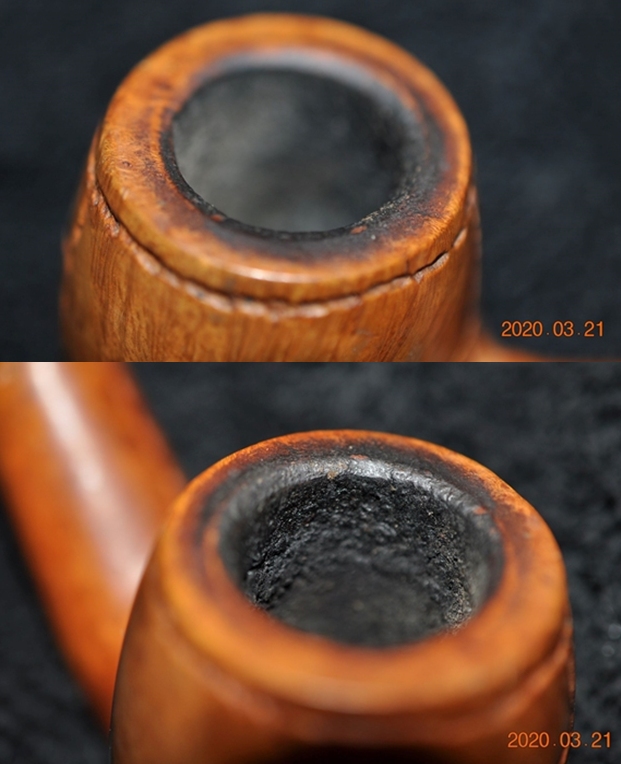
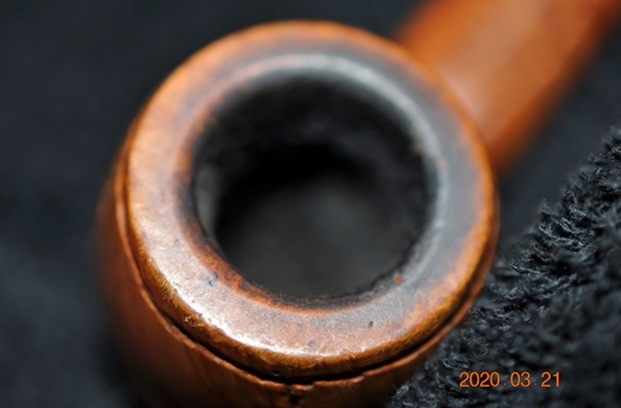
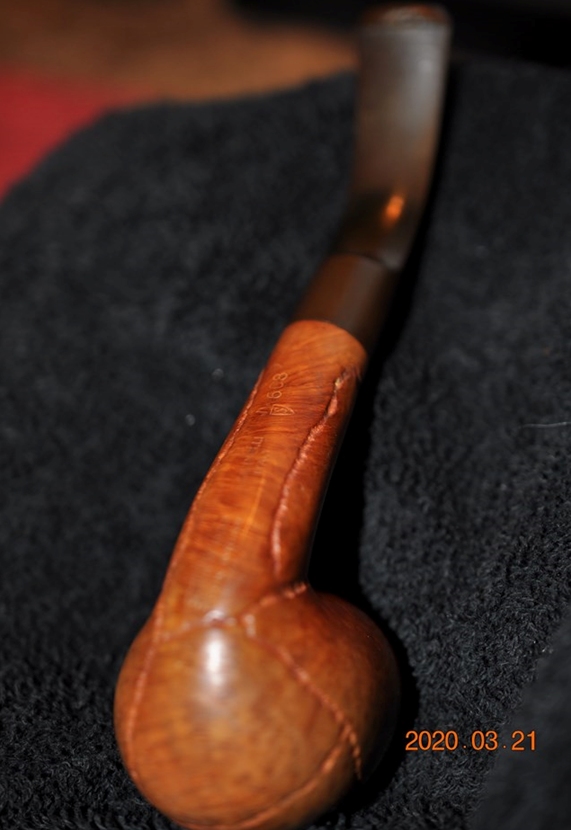
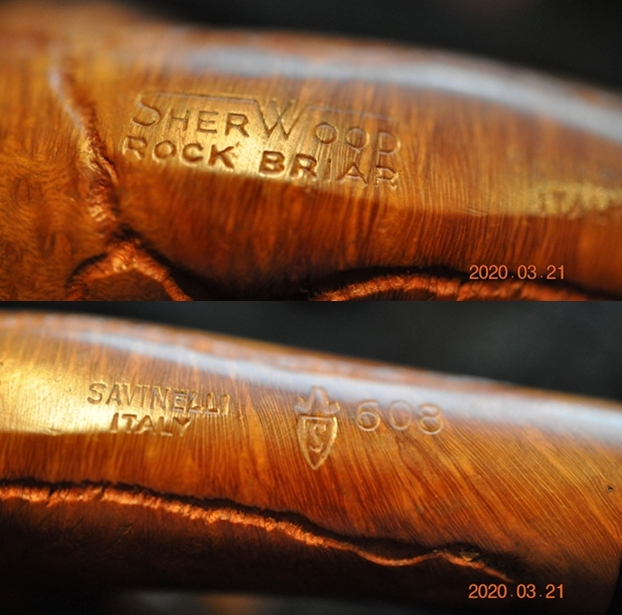
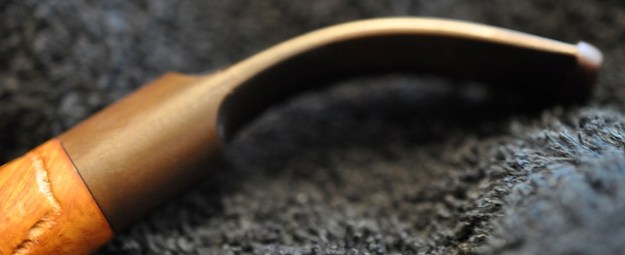
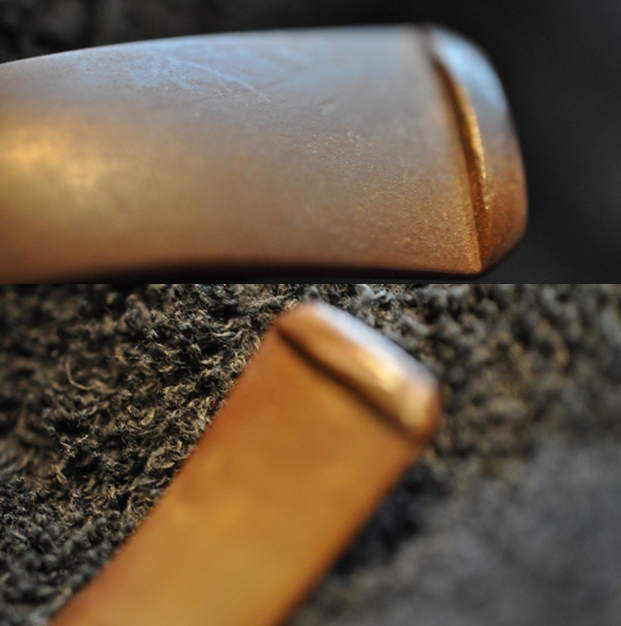
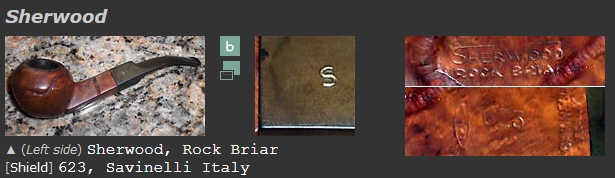
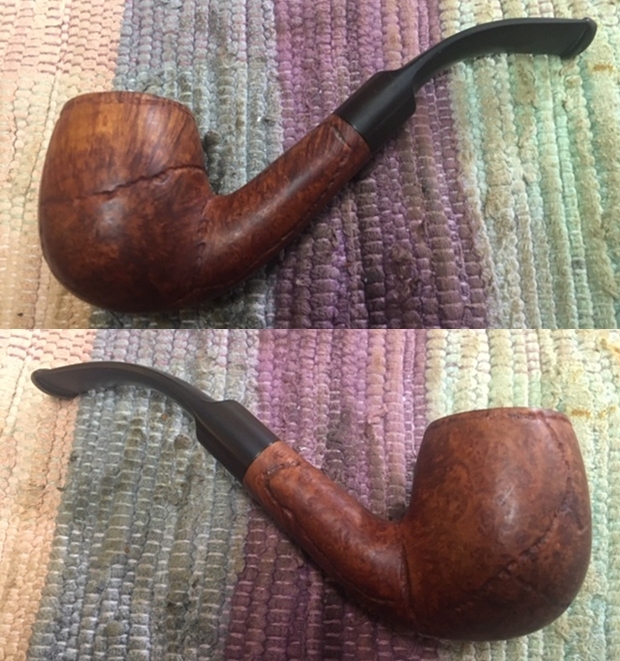
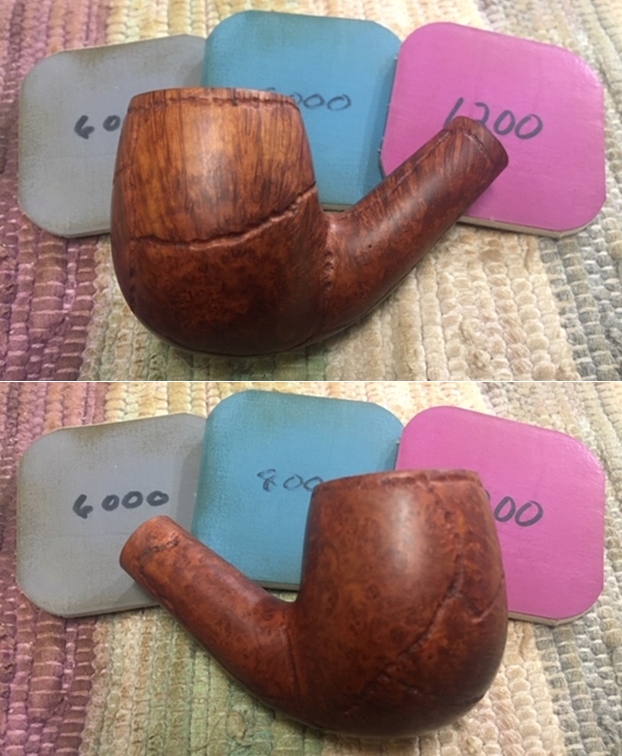
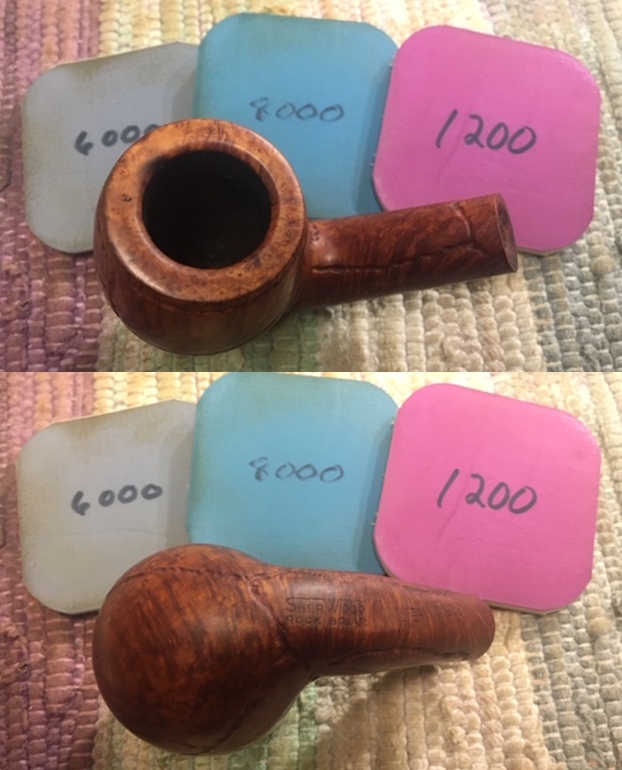
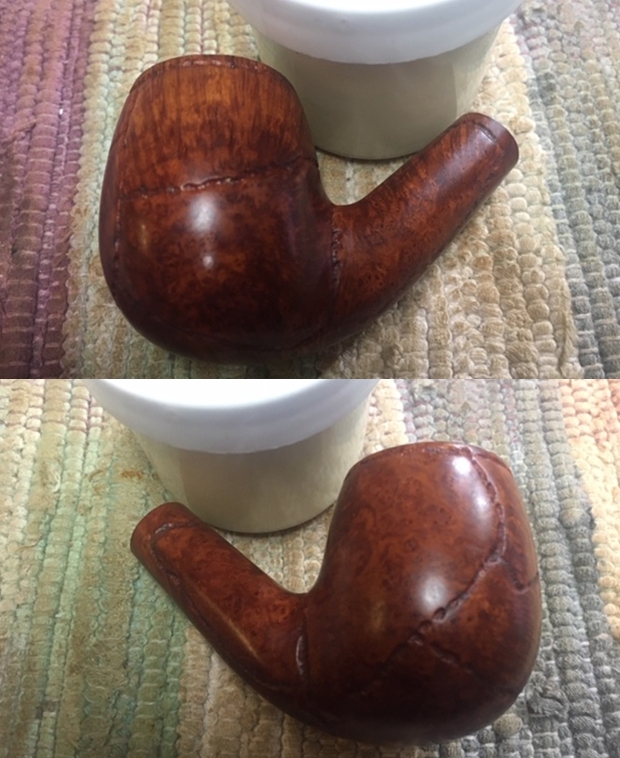
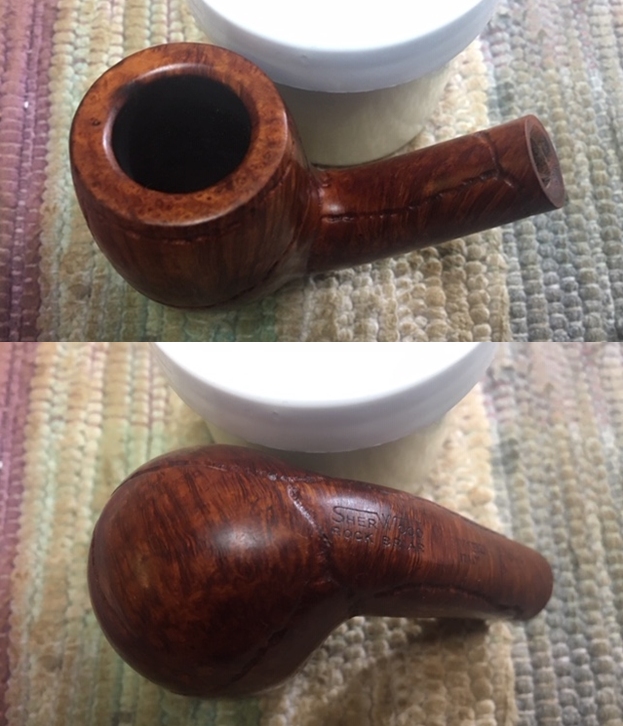
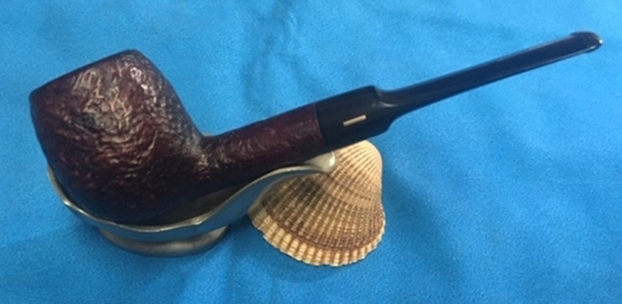
The next pipe on the table came to us from one of Jeff’s pipe hunts. It is an interestingly rusticated Bent Billiard with darkening around the rim edge and top. It is stamped with Sherwood over Rock Briar on the heel of the bowl followed by the Savinelli “S” shield and the shape number 608 over Italy on the shank. The stamping is clear and readable. The pipe has a combination of brown stains and the worm trail rustication is not only tactile but also a purposeful pattern to the finish. The finish was very dirty with grime ground into the bowl. The bowl had a thick but even cake in the bowl and a heavy lava overflow on the inner edge of the top toward the back of the bowl. There was darkening on the briar around the inner edge and the top of the rim. The saddle stem was oxidized and there were tooth marks and chatter on both sides and on the top and bottom edges of the button. There is no stamping on the stem. Jeff took photos of the pipe before he cleaned it up. Jeff took photos of the rim top to show the thick cake in the bowl and the lava overflow on the inner edge of the beveled rim.  Jeff took some photos of the bowl sides and heel to show the “worm trail” rustication around the bowl and the great looking grain as well. It is actually a nice looking pipe.  The stamping on the underside of the shank is shown in the photos below. They look very good and readable.The stem was a very good fit to the shank. It was oxidized, calcified and had debris stuck to the surface of the vulcanite. It also shows the tooth marks on the stem and on the button surface.  I am including the section from the previous blog I did o the Sherwood Rock Briar pipe that I restored. I quote:

I turned to Pipephil (http://www.pipephil.eu/logos/en/logo-savinelli3.html) to read about the Sherwood Rock Briar. It is a smooth pipe with the worm trail carving around the bowl. Sometimes I wonder if it was not Savinelli’s answer to the Custombilt Craze or what Lorenzo was selling that was similar. This is definitely tamer! I have included the screen capture from the site below. Armed with that information and a clearer picture of the original pipe I turned to work on the pipe on my work table. Jeff had done a great job cleaning up the pipe as usual. He reamed the pipe with a PipNet reamer and cut back the cake back to the bare briar. He cleaned up the walls with a Savinelli Fitsall Pipe Knife. He scrubbed the interior of the bowl and shank with pipe cleaners, cotton swabs and alcohol to remove the tars and oils. He scrubbed the exterior of the pipe with Murphy’s Oil Soap and a tooth brush to remove the grime from the finish. He worked on the rim top lava and darkening with the soap and tooth brush. He scrubbed the inside of the stem with alcohol and pipe cleaners. He scrubbed the exterior with Soft Scrub and then soaked it in Before & After Deoxidizer. He washed it off with warm water to remove the Deoxidizer. The pipe looked far better. I took photos of the pipe when I received it before I started working on it. I took photos of the bowl and rim top as well as the stem to show how clean they were. You can see the darkening on the inner edge and the top on the right front the bowl. The stem looks clean of oxidation and the tooth marks and chatter are very clear in the photos.    I took a photo of the pipe with the stem removed to show the overall look of stem, tenon and profile of the pipe. There was a crimped aluminum tube in the tenon once the stem was off and it inhibited airflow and was really unnecessary.I decided to start my work on the pipe by addressing the darkening on the rim top and the inner edge. I used a folded piece of 220 grit sandpaper to work on the edge and the rim top at the front of the bowl to remove the darkening. It took a bit of work but I was able to remove the majority of it and the end product looked much better.I polished the bowl and rim with micromesh sanding pads – wet sanding with 1500-12000 grit pads. I worked over the rim top and edge of the bowl with the pads. I wiped the bowl down with a damp cloth after each pad to remove the sanding debris.   Because the bowl and rim top looked so good I decided to move on to rubbing the briar down with Before & After Restoration Balm. I worked it into the briar with my fingertips and a horse hair shoe brush to get it into the crevices. The product works to clean, enliven and preserve the briar. I let it sit for 10 minutes while I worked on the stem. After the time passed I buffed it with a cotton cloth to deepen the shine. The briar really comes alive with the balm. I set the bowl aside and turned my attention to the stem. I decided to pull the crimped tube in the tenon so I heated it with a lighter and twisted it free. Behind and under the aluminum tube there was a lot of tars and oils so I recleaned the inside of the stem with pipe cleaners and alcohol.   I worked over the oxidation on the stem and the button with 220 grit sandpaper and sanded it until I had removed it. I started polishing the stem with 400 grit wet dry sandpaper. At this point it is starting to look much better.   I rubbed the stem down with Denicare Mouthpiece Polish – a red, gritty Tripoli like substance that is a paste. I rubbed it into the surface of the stem and polished it off with a cotton pad. I have found that is a great intermediary step before polishing with micromesh pads. I am not sure what I will use once the final tin I have is gone!   I polished the vulcanite with micromesh sanding pads – 1500-12000 grit pads. I wiped it down with Obsidian Oil after each sanding pad. I used Before & After Pipe Polish – both Fine and Extra Fine to further polish the stem.   This Savinelli Sherwood Rock Briar 608 Bent Billiard is another interesting looking pipe. The mix of brown stains highlights the smooth briar between the rusticated patterns around the bowl sides, top and bottom. The finish on the pipe is in excellent condition and the contrasting stains work well with the polished black vulcanite saddle stem. I put the stem back on the bowl and carefully buffed the pipe with Blue Diamond on the buffing wheel using a light touch on the briar. I gave the bowl and stem multiple coats of carnauba wax on the buffing wheel and followed that by buffing the entire pipe with a clean buffing pad. I hand buffed the pipe with a microfiber cloth to deepen the shine. The finished Sherwood Rock Briar 608 Bent Billiard is quite nice and feels great in the hand. Give the finished pipe a look in the photos below. The dimensions of the pipe are Length: 5 ½ inches, Height: 2 inches, Outside diameter of the bowl: 1 ¼ inches, Chamber diameter: ¾ of an inch. Thanks for walking through the restoration with me as I worked over another beautiful pipe. This pipe will be added to the Italian Pipe Makers section of the rebornpipes store soon. If you want to add it to your collection send me an email or a message! Thanks for your time.

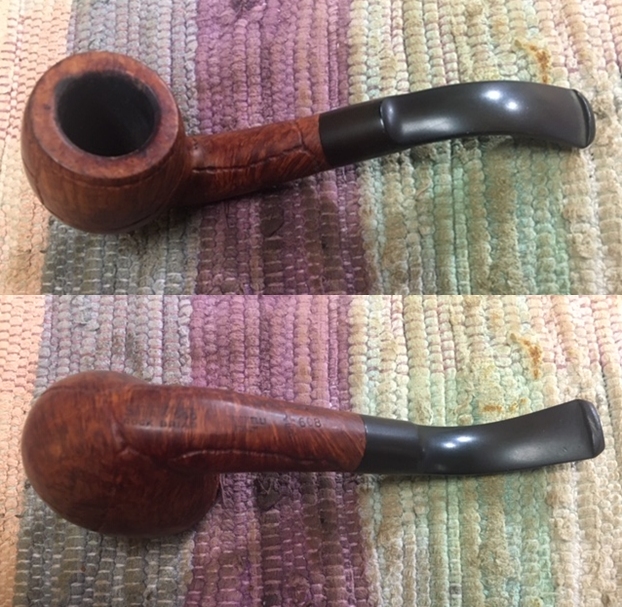
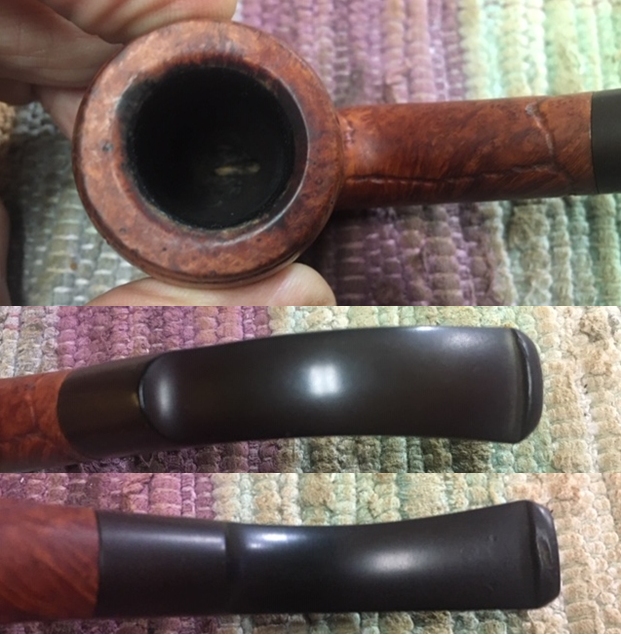
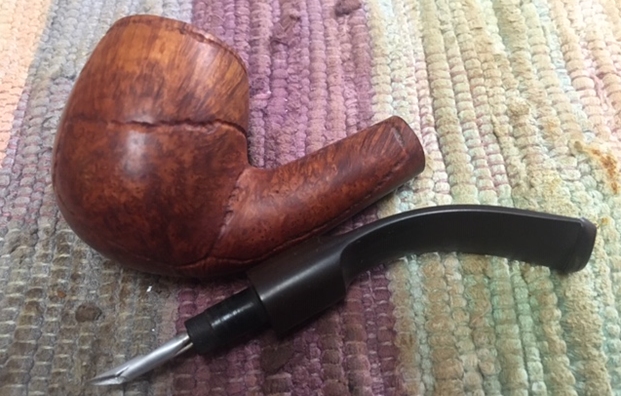
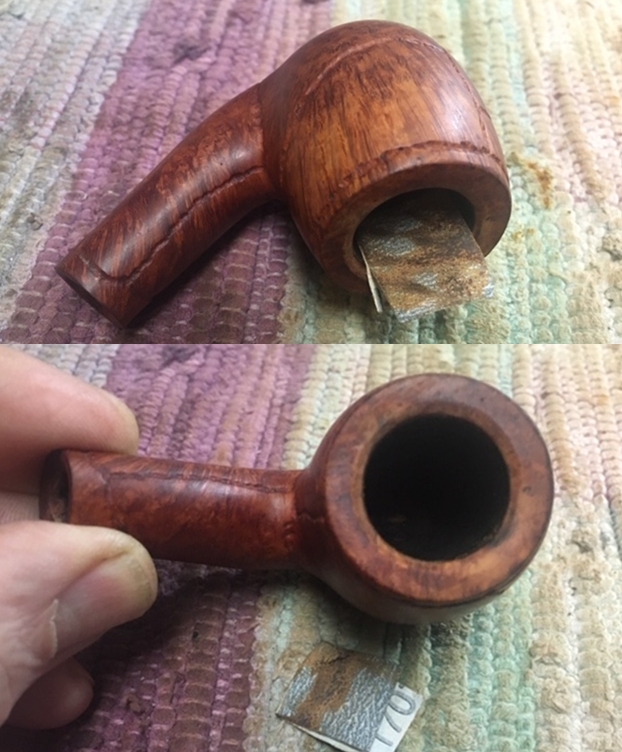
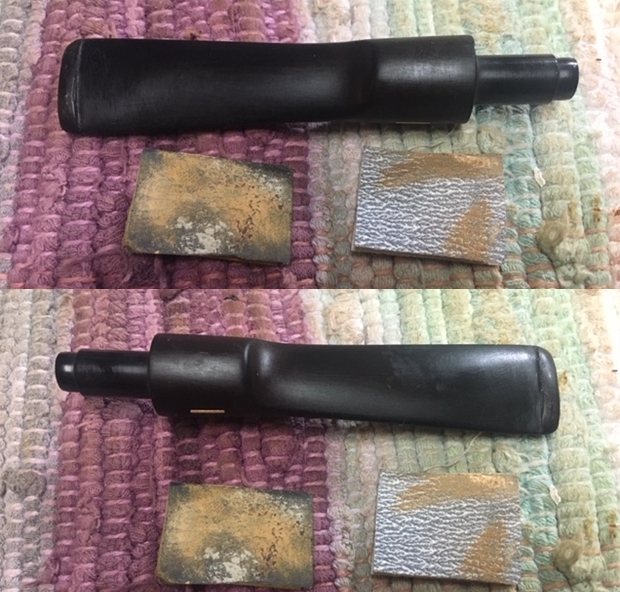
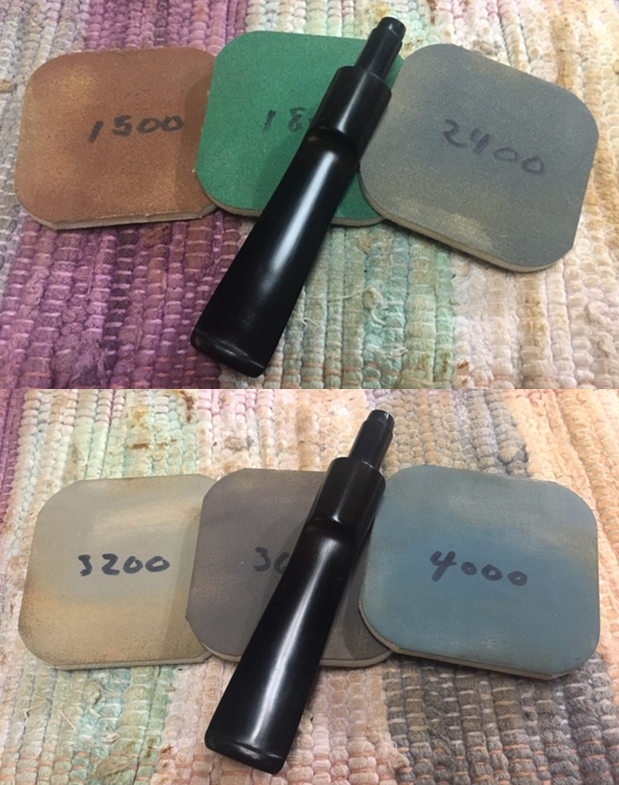
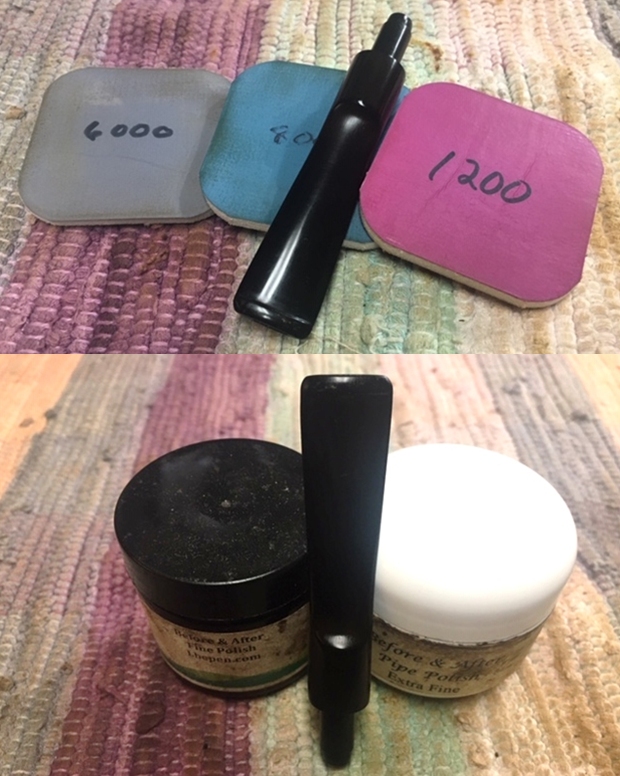
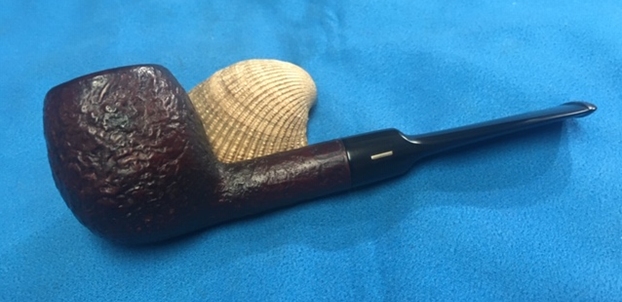
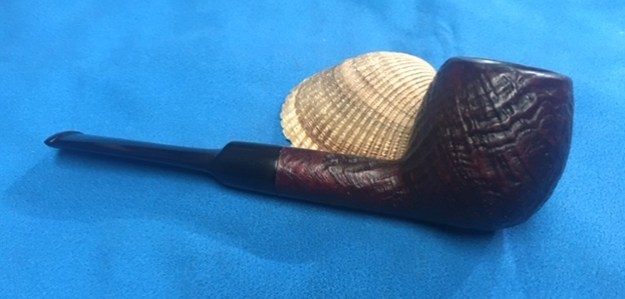
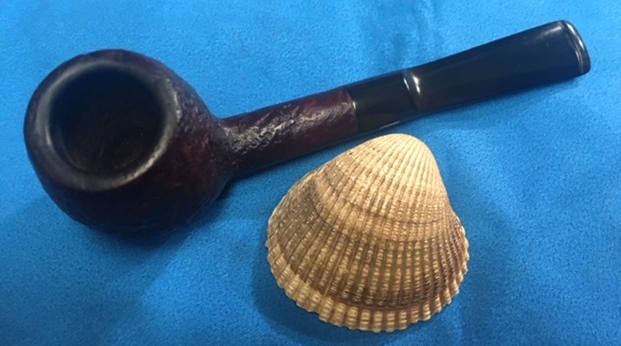
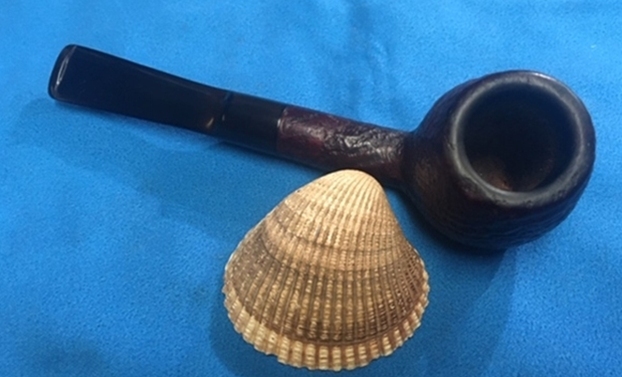
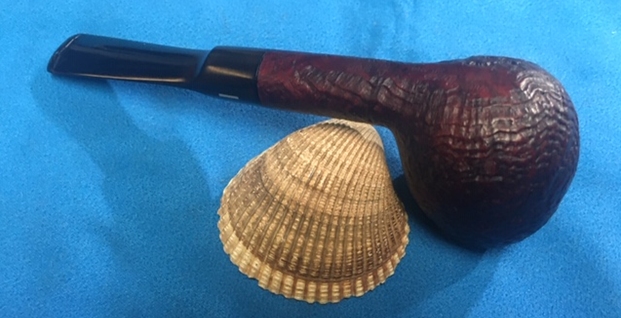
This Savinelli de luxe Milano 206 Apple was worn and tired pipe


Blog by Steve Laug

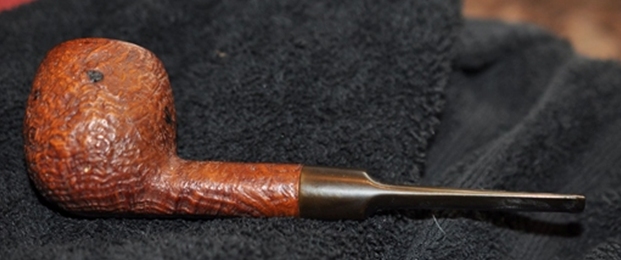
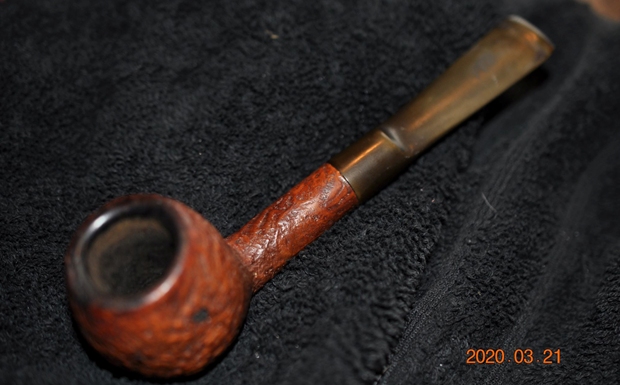
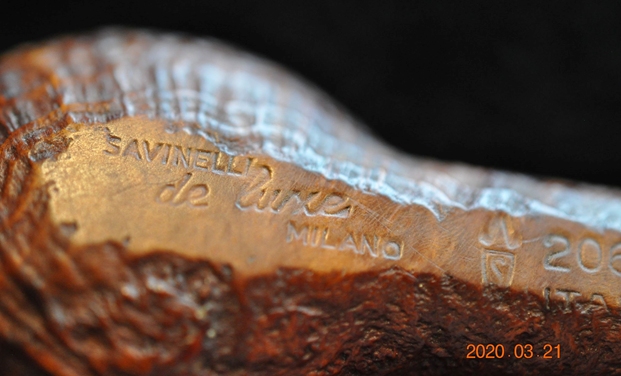
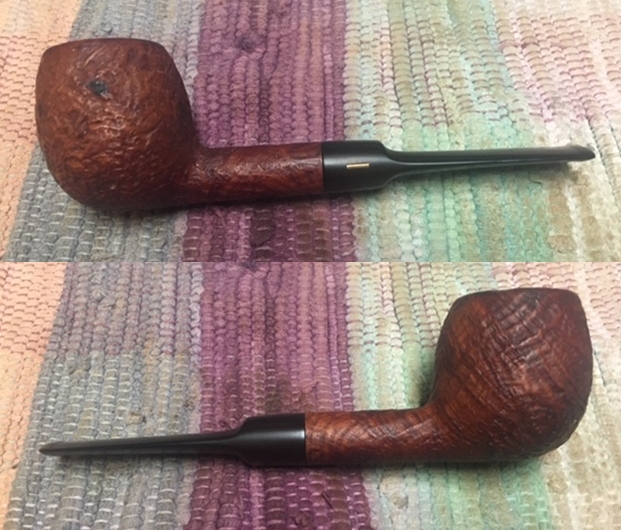
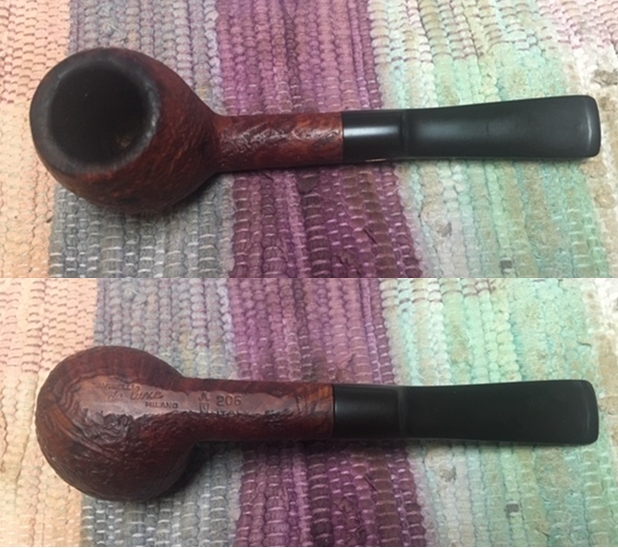
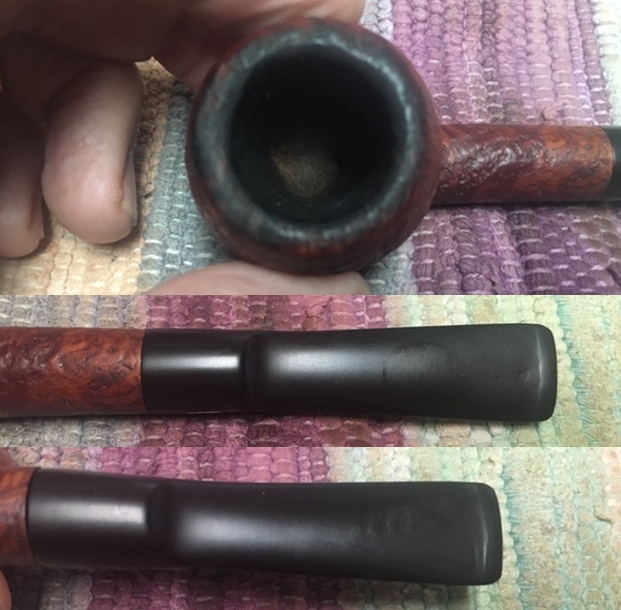
The next pipe on the table is one I have been avoiding working for this whole box of pipes. I just keep putting under others. Today I am getting to the bottom of the box and decided to take this one on. It is a well-shaped sandblast apple made by Savinelli. That is itself is not an issue as it has a great shape and look. The round bowl, slender shank and saddle stem with a thin blade – what’s not to like?  It was stamped on a smooth panel on the underside of the shank and read Savinelli de luxe Milano on the heel and that was followed by the Savinelli S shield and the shape number 206 over Italy. The finish was very dirty with a heavy coat of grime ground into the bowl and rim top as can be seen in the photos. There were dark spots all around the bowl and a deep nick on the right side of the crowned rim top. The bowl had a thick cake with a heavy lava overflow on the rim top. There was too much lava on the rim top and edge to know what they looked like but more would be revealed once it was cleaned. The stem was oxidized and there were deep tooth marks and chatter on both sides and on the top and bottom edges of the button. Jeff took photos of the pipe before he cleaned it up so you could see what we saw. Jeff took photos of the rim top to show lava build up around the rim, the wear on the edges and cake in the bowl. The lava actually was running down the edges of the crown of the bowl and had filled in some of the nooks and crannies in the sandblast. Jeff took some photos of the bowl sides and heel to show the dark spots around the bowl sides mixed in with the nice sandblast. It was a dirty pipe but I think it will be a beautiful one once we are finished.    The stamping on each side of the shank is shown in the photos below. They are clear and read as noted above.  There is a brass bar on the left side of the saddle stem. The stem was a good fit to the shank. It was oxidized, calcified and had debris stuck to the surface of the vulcanite. It also shows the tooth marks on the stem and on the button surface.  It was my turn to work on the pipe now. I was really looking forward to what the pipe would look like once Jeff had worked his magic. What would the rim top look like? What would the dark spots around the bowl look like? I had no idea. When I took it out of the box I was struck great job cleaning up the pipe Jeff had done. It was impressive! He had reamed the pipe with a Pipnet piper reamer and taken the cake back to bare briar. He cleaned up the remaining cake with a Savinelli Fitsall Pipe Knife. He scrubbed the interior of the bowl and shank with pipe cleaners, cotton swabs and alcohol to remove the tars and oils. He scrubbed the exterior of the pipe with Murphy’s Oil Soap and a tooth brush to remove the grime from the finish. He worked on the rim top lava and darkening with the soap and tooth brush. He scrubbed the inside of the stem with alcohol and pipe cleaners. He scrubbed the exterior with Soft Scrub and then soaked it in Before & After Deoxidizer. He washed the stem off with warm water to remove the deoxidizer. The pipe looked far better. While some of the dark marks had faded it became clear that they were dark stains rather than burn marks as I suspected. I took photos of the pipe when I received it before I started working on it. I took photos of the bowl and rim top as well as the stem to show how clean they were. You can see that there is still some darkening to both the briar rim top and inner edge. The stem is clean and the tooth damage on both sides is very clear in the photos. Lots more work to do on this pipe.I took a photo of the stamping on the underside of the shank. The stamping is readable as noted above. There is also the expected inset brass bar on the left side of the saddle.I took a photo of the pipe with the stem removed to show the overall look of stem, tenon and profile of the pipe. It really is a beautifully shaped pipe.I decided to start my work on the pipe by addressing the darkening on the briar rim top. I sanded the crowned rim top and inner edge of the bowl with a folded piece of 220 grit sandpaper. I was able to remove some of the darkening to the top and smooth out the inner edge of the bowl. I wiped the rim top down with alcohol on a cotton pad.I wiped down the entire bowl with alcohol and used a brass bristle wire brush to work over the darkened areas on the bowl sides and top. Once it was dried off I restained the bowl and shank with a Tan Aniline Stain. I applied it to the briar and flamed it with a Bic lighter. I repeated the process. The alcohol burns off with the flame and the stain is set in the briar. I let the bowl sit and the stain cure overnight. In the morning I buffed it on the buffer with Red Tripoli and Blue Diamond. I took photos of the bowl with its new look. I rubbed the briar down with Before & After Restoration Balm. I worked it into the briar with my fingertips and a horsehair shoe brush to get it into the crevices of the sandblast. The product works to clean, enliven and preserve the briar. I let it sit for 10 minutes while I worked on the stem. After the time passed I buffed it with a cotton cloth to deepen the shine. The briar really comes alive with the balm.   I set the bowl aside and turned my attention to the stem. I “painted” the stem with the flame of a Bic lighter to lift the deep dents in the surface.I filled in the remaining indentations and built up the top and bottom of the button with clear super glue. Once the repair cured I used a needle file to reshape the button edges and also flatten the repaired areas. I sanded the stem with 220 grit sandpaper to finish the shaping and to remove the remaining oxidation. I started polishing the stem with 400 grit wet dry sandpaper. I wiped the stem down with Obsidian Oil before further polishing it.   I polished the vulcanite with micromesh sanding pads – 1500-12000 grit pads. I wiped it down with Obsidian Oil after each sanding pad. I used Before & After Pipe Polish – both Fine and Extra Fine to further polish the stem.     This nice looking Savinelli deluxe Milano 206 Apple with a saddle stem turned out very nice. The addition of a tan stain to the mix of brown stains highlights the nooks and crannies of the sandblast around the bowl sides and bottom. The finish on the pipe looks much better and they go well with the polished black vulcanite saddle stem. I put the stem back on the bowl and carefully buffed the pipe with Blue Diamond on the buffing wheel. I gave the bowl and stem multiple coats of carnauba wax on the buffing wheel and followed that by buffing the entire pipe with a clean buffing pad. I hand buffed the pipe with a microfiber cloth to deepen the shine. The finished straight apple is very nice and feels great in the hand. Give the finished pipe a look in the photos below. The dimensions of the pipe are Length: 5 ½ inches, Height: 1 ¾ inches, Outside diameter of the bowl: 1 ¼ inches, Chamber diameter: ¾ of an inch. Thanks for walking through the restoration with me as I worked over another beautiful pipe. This pipe will be going on the rebornpipes store shortly. If you are interesting in adding it to your collection let me know! Thanks for your time.