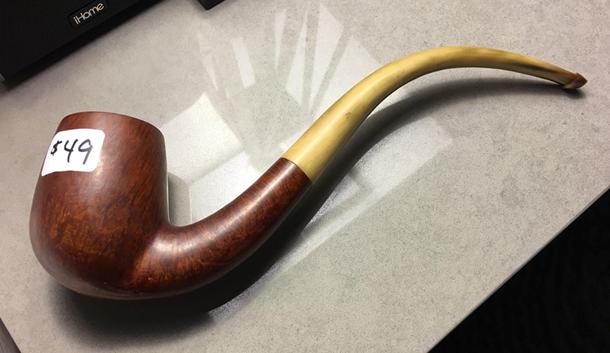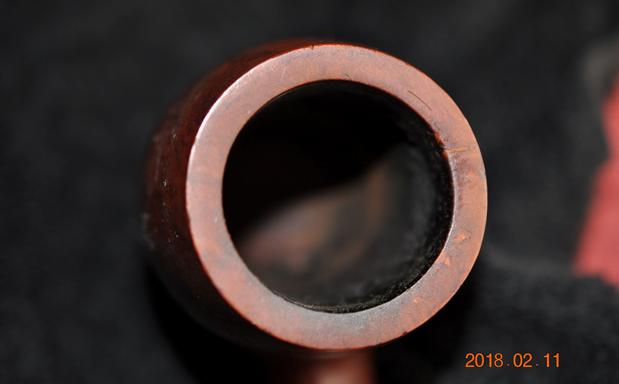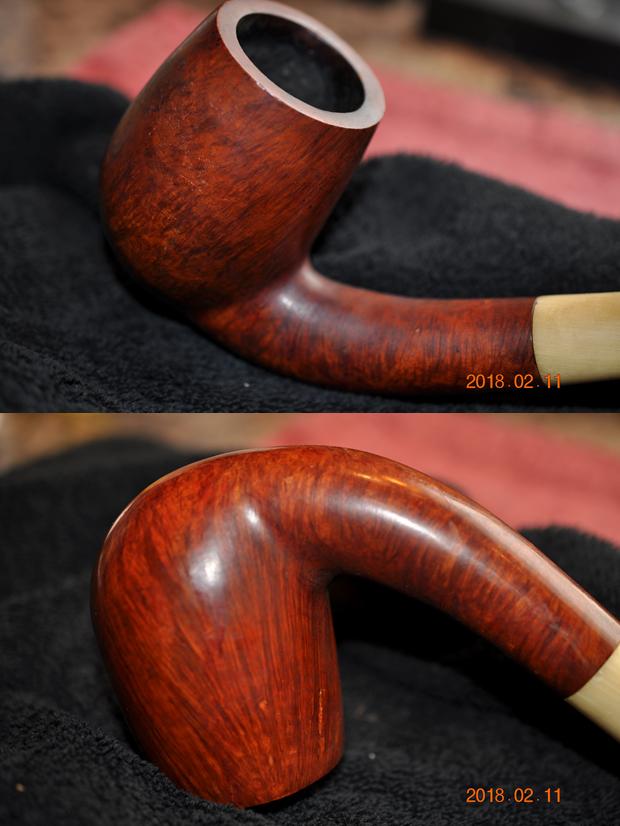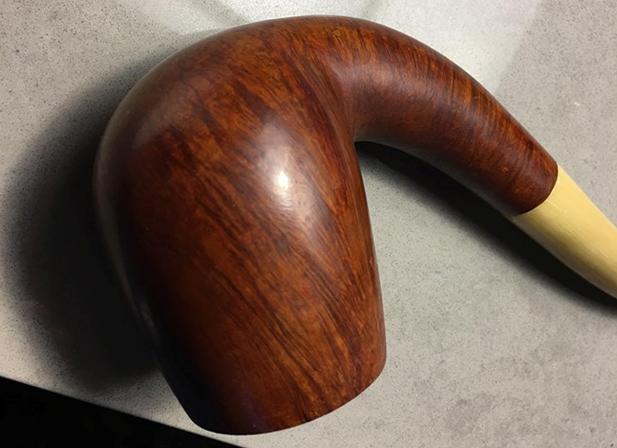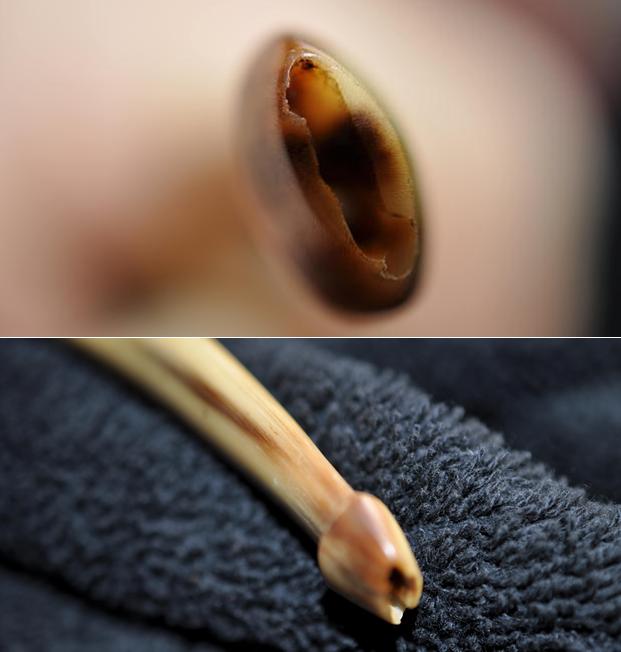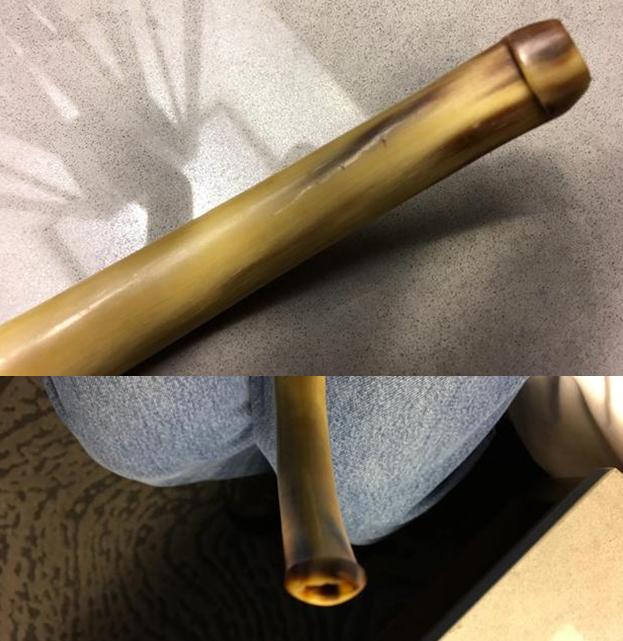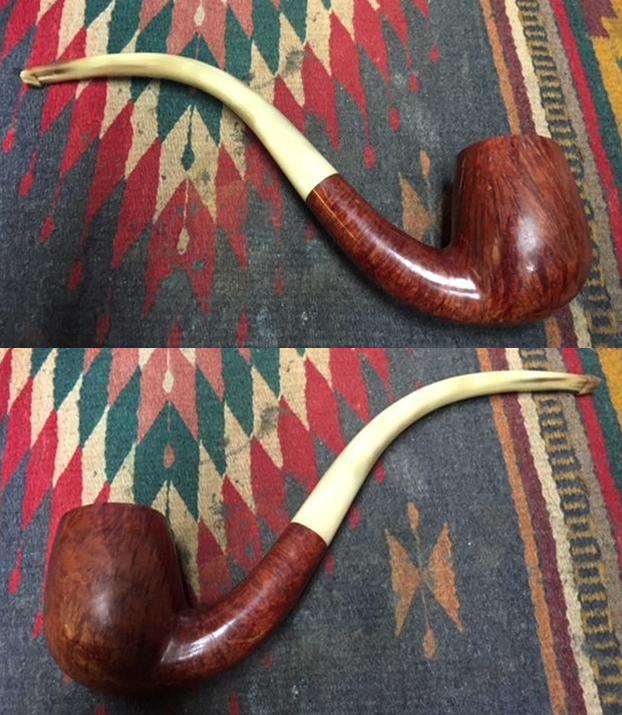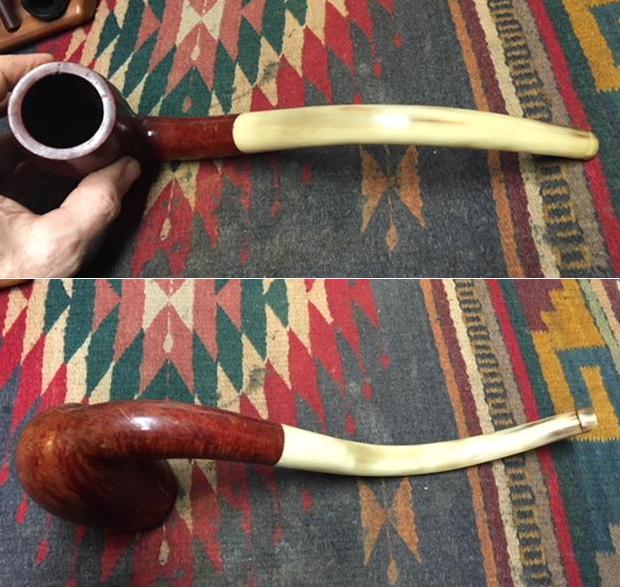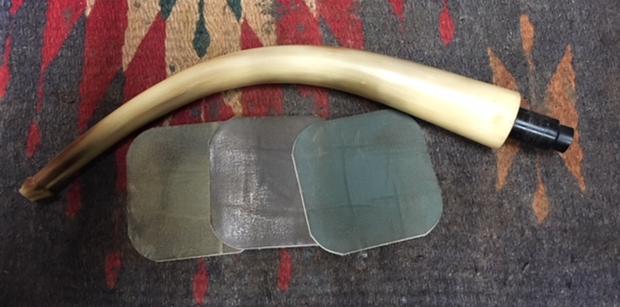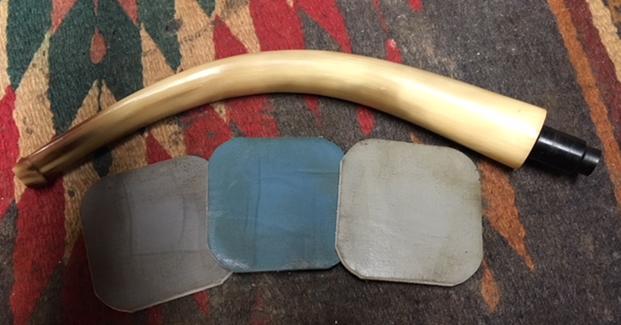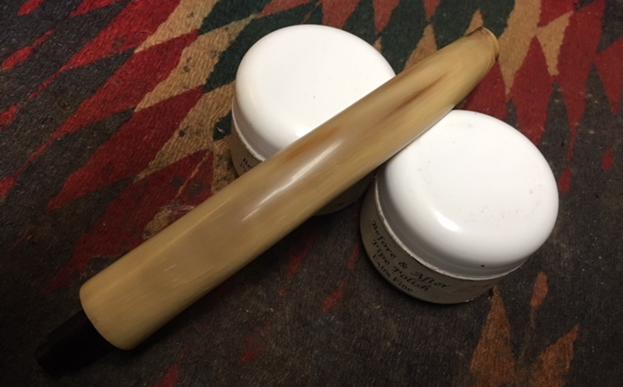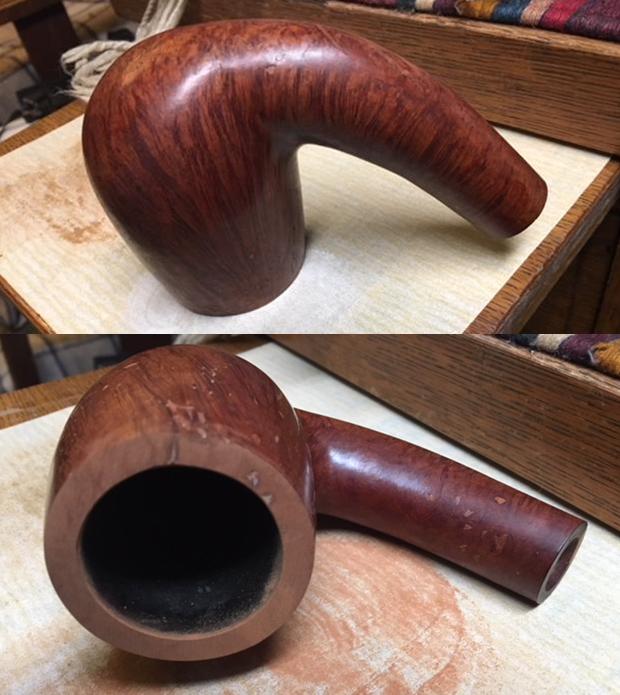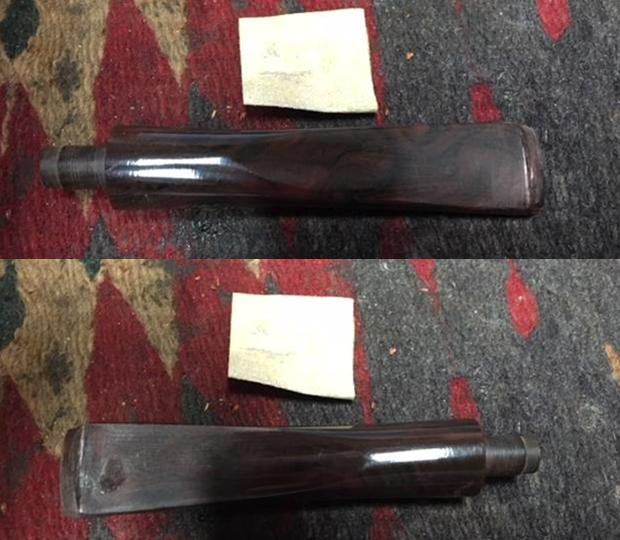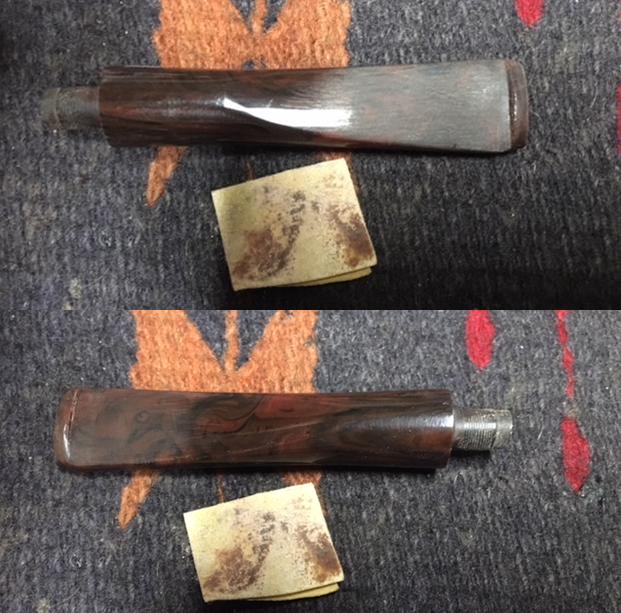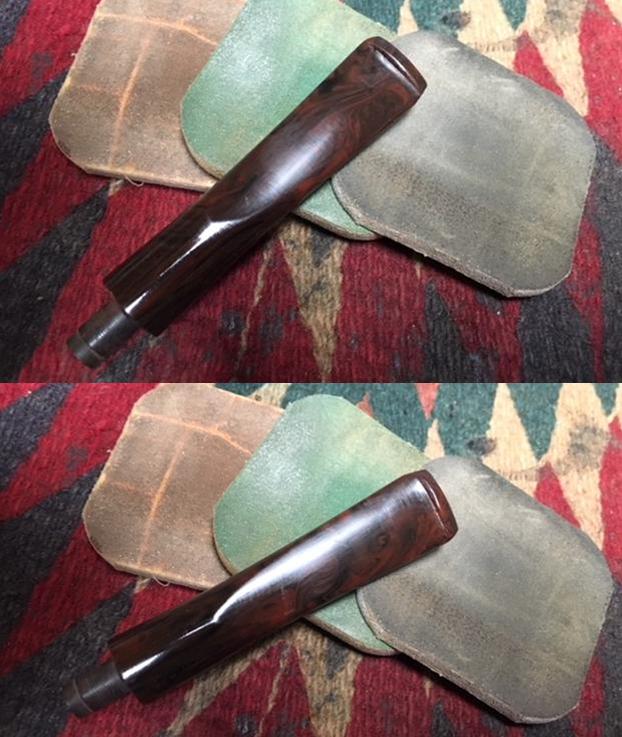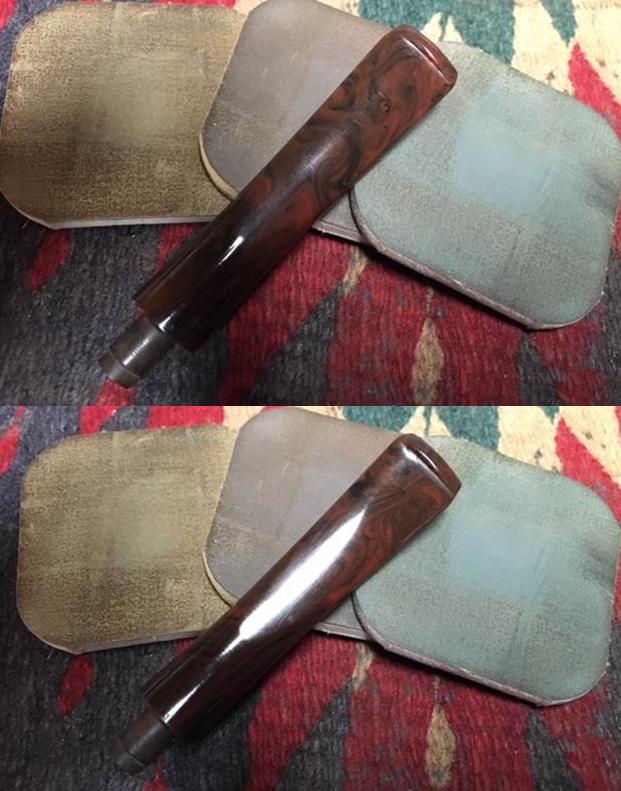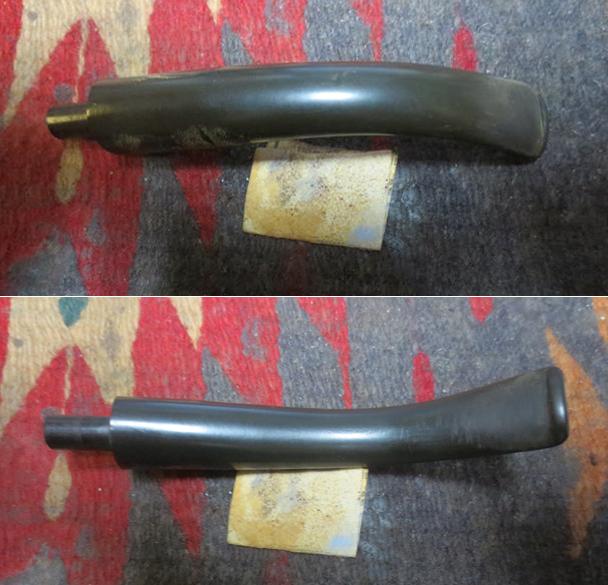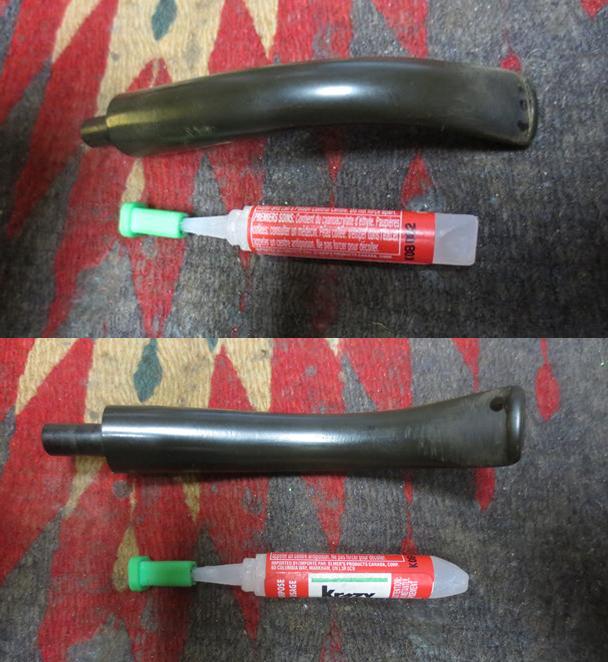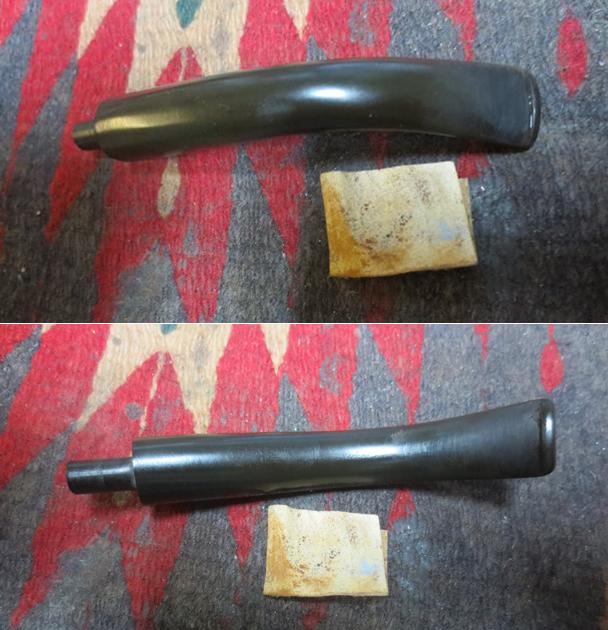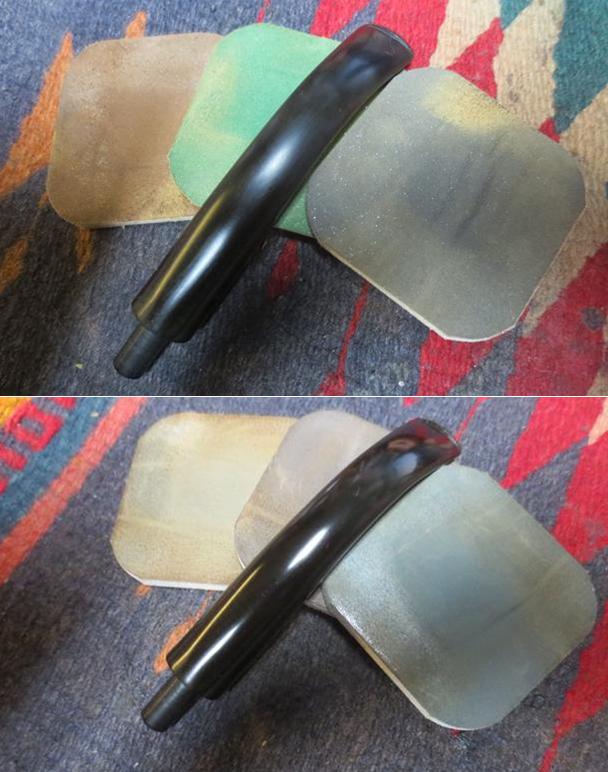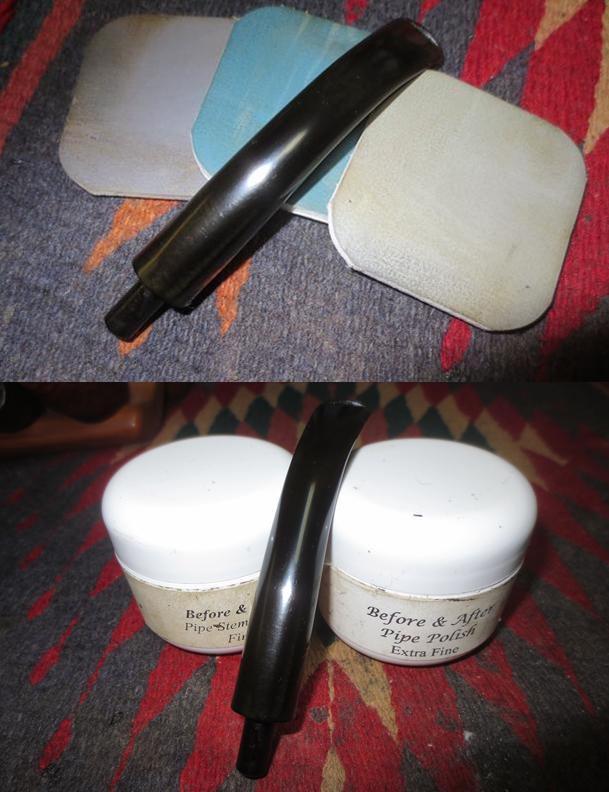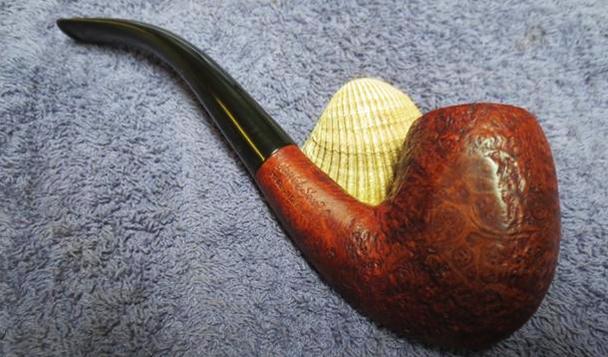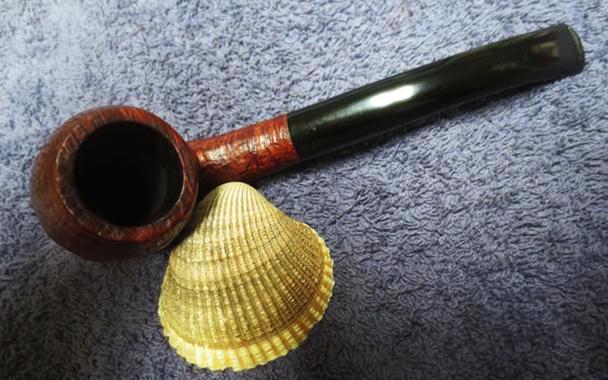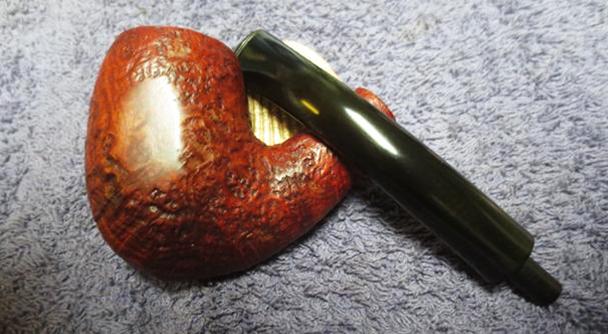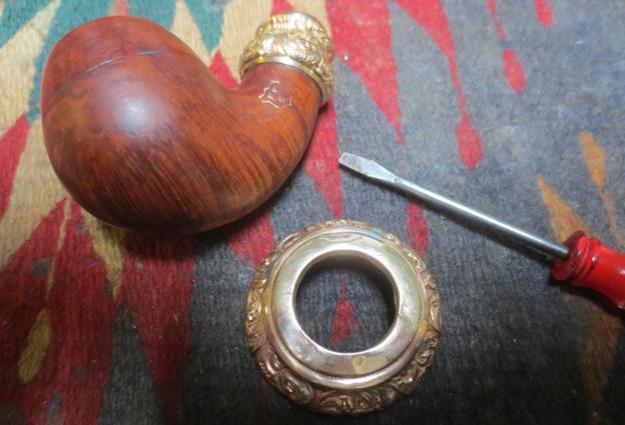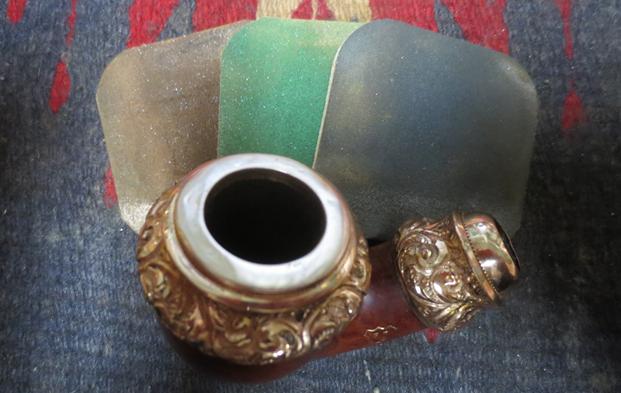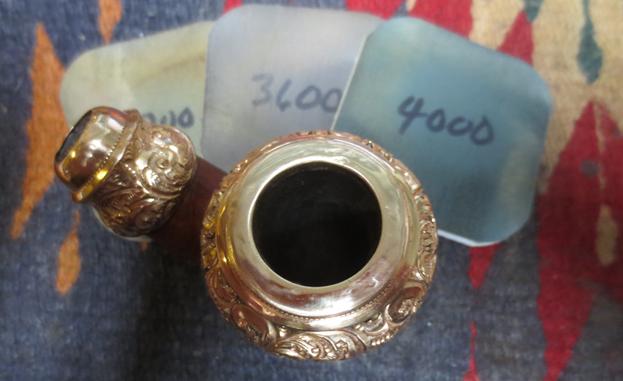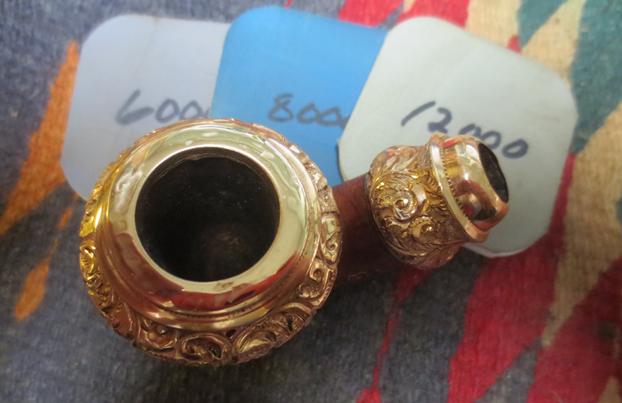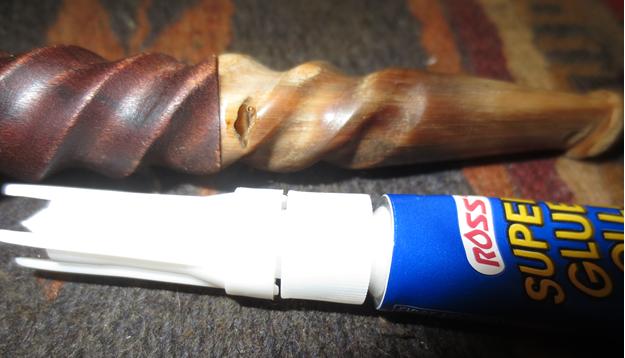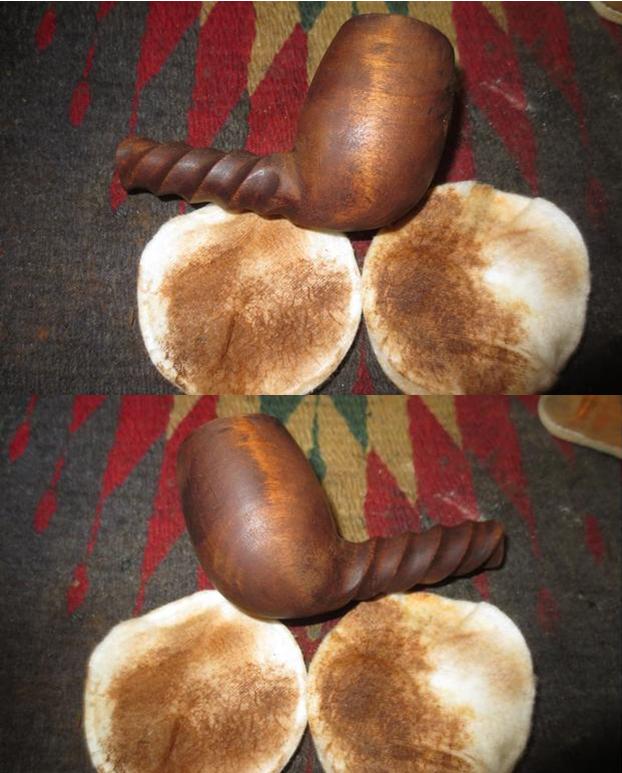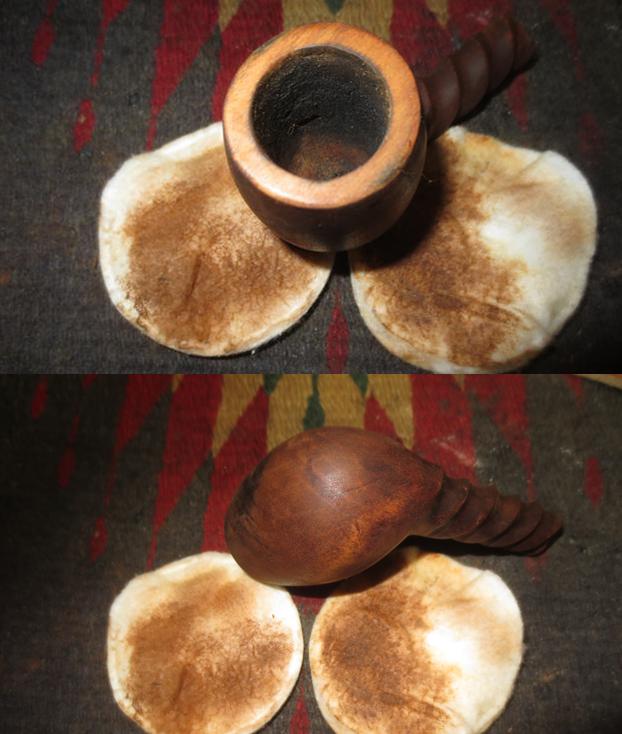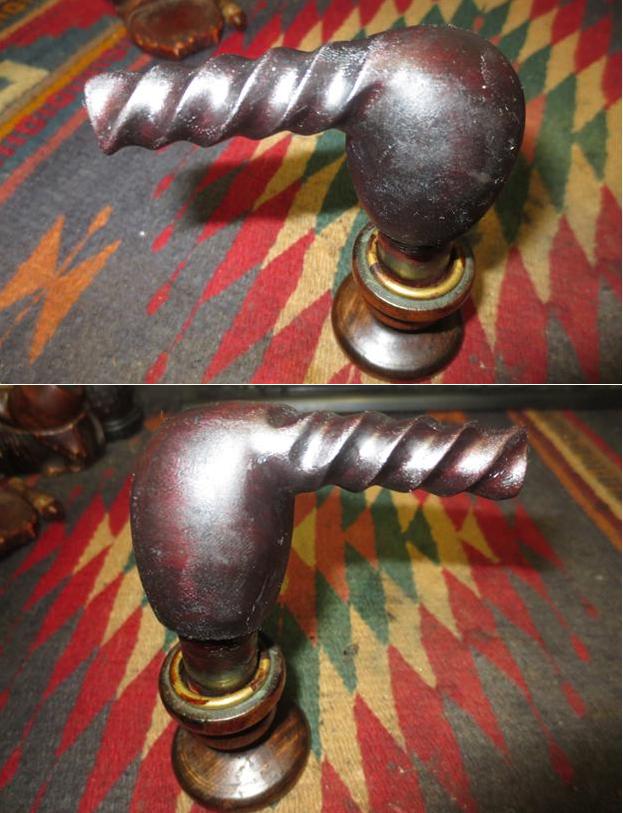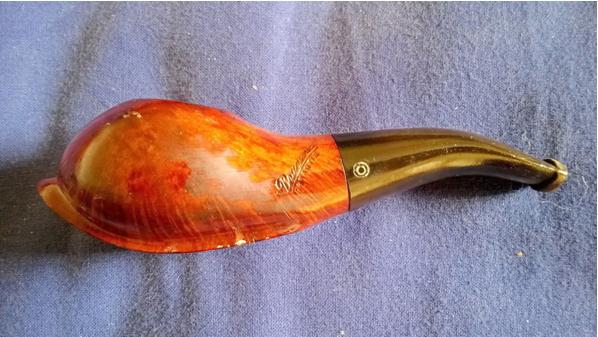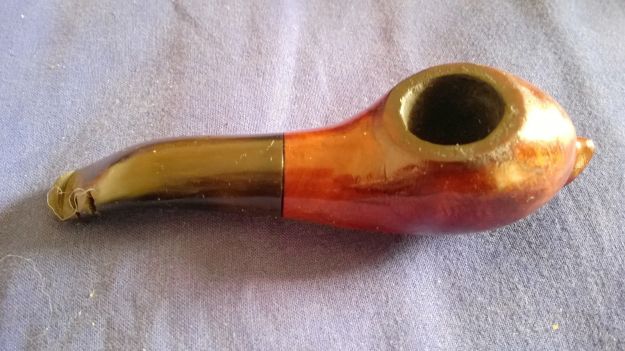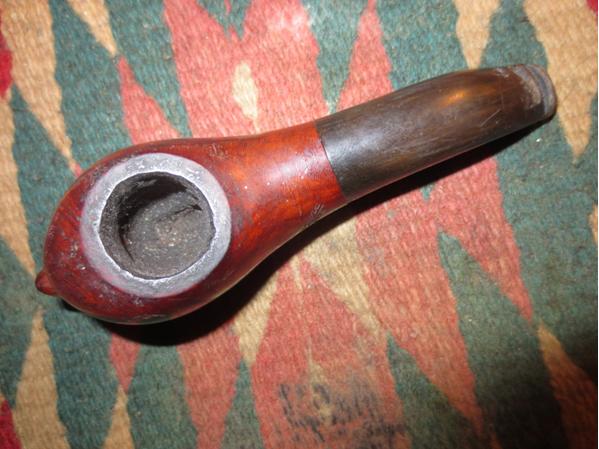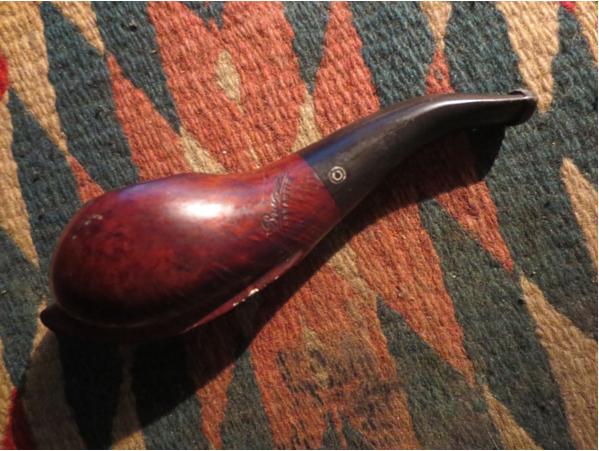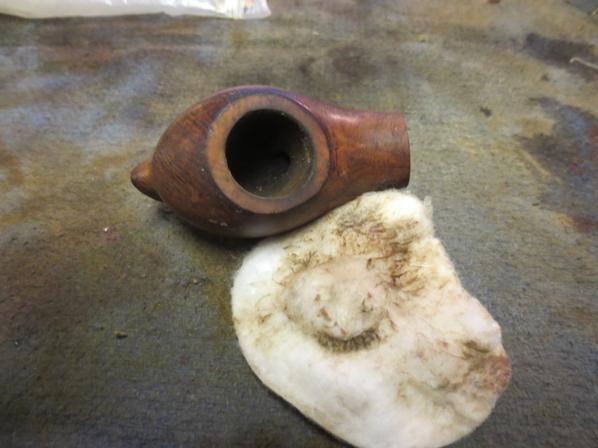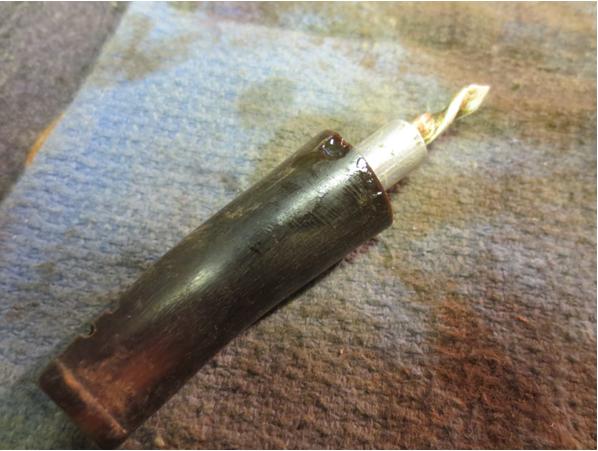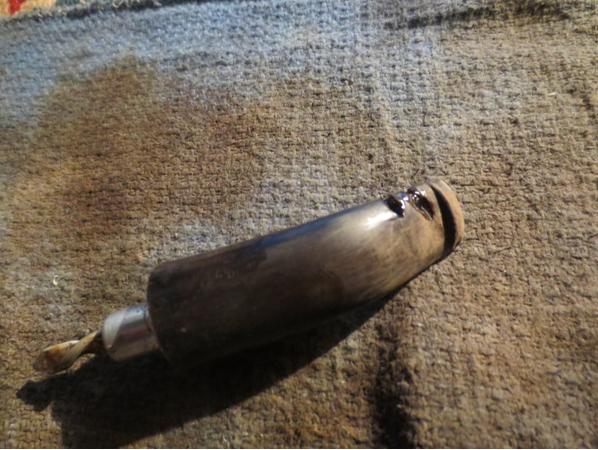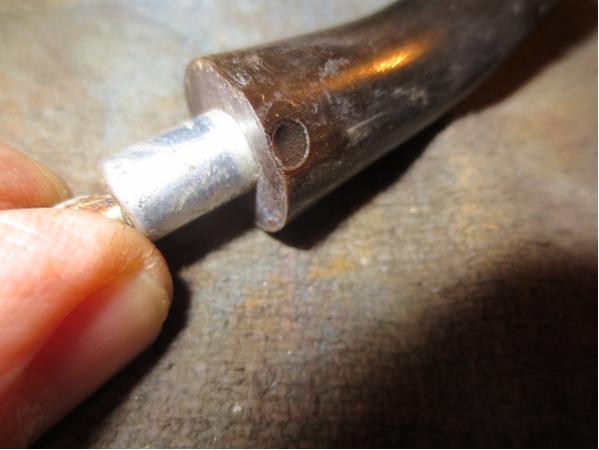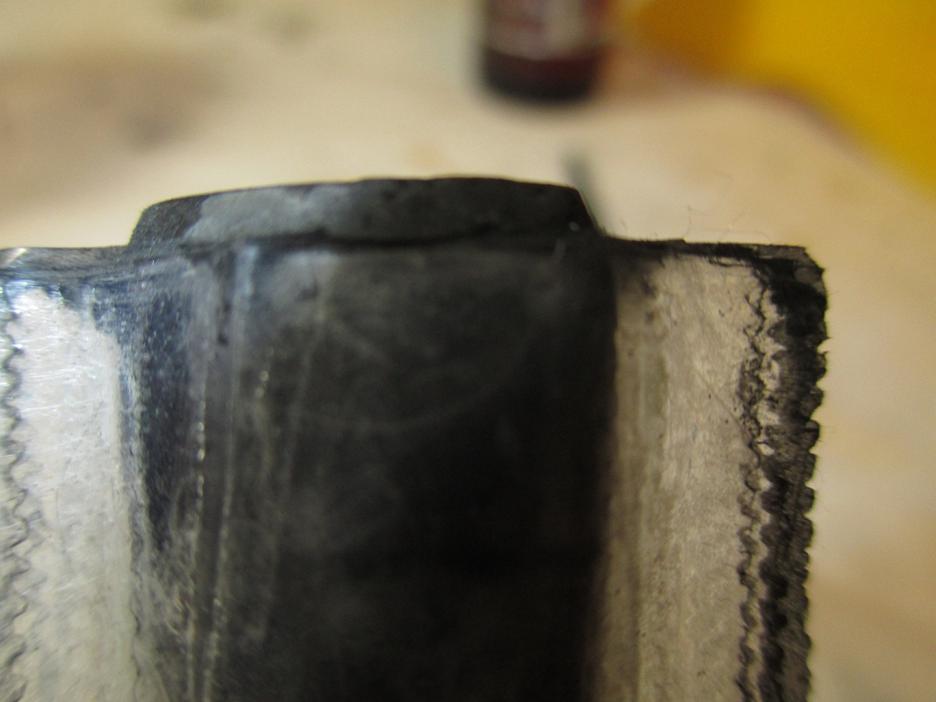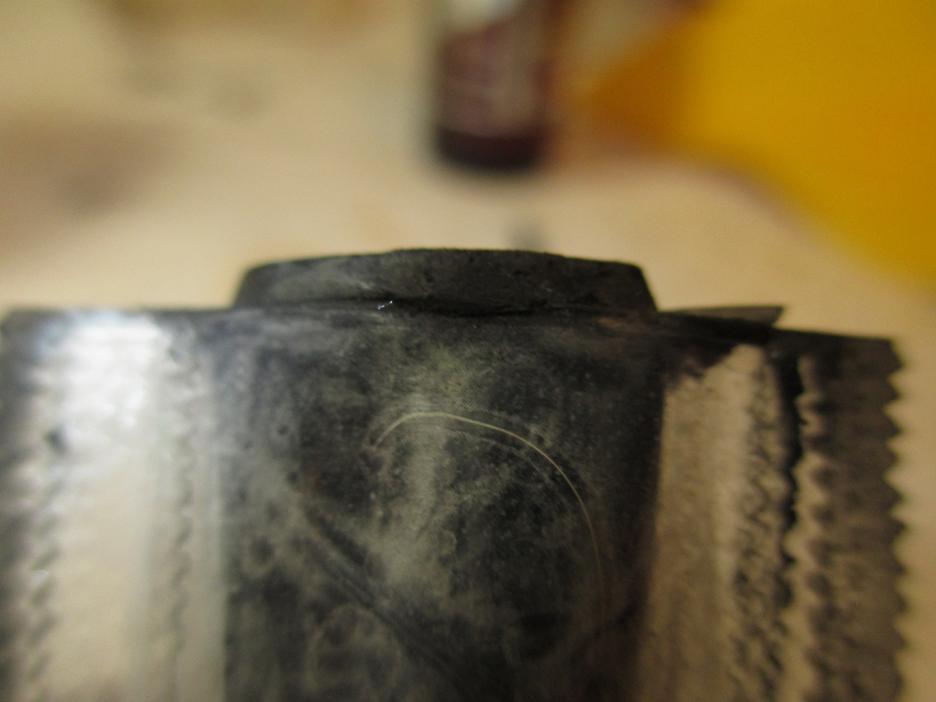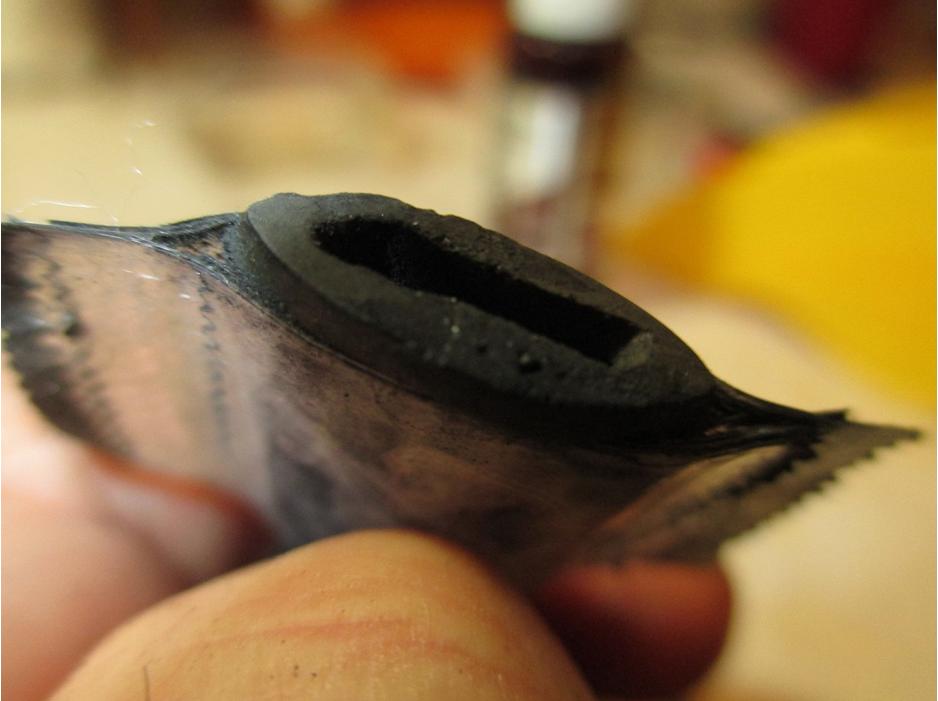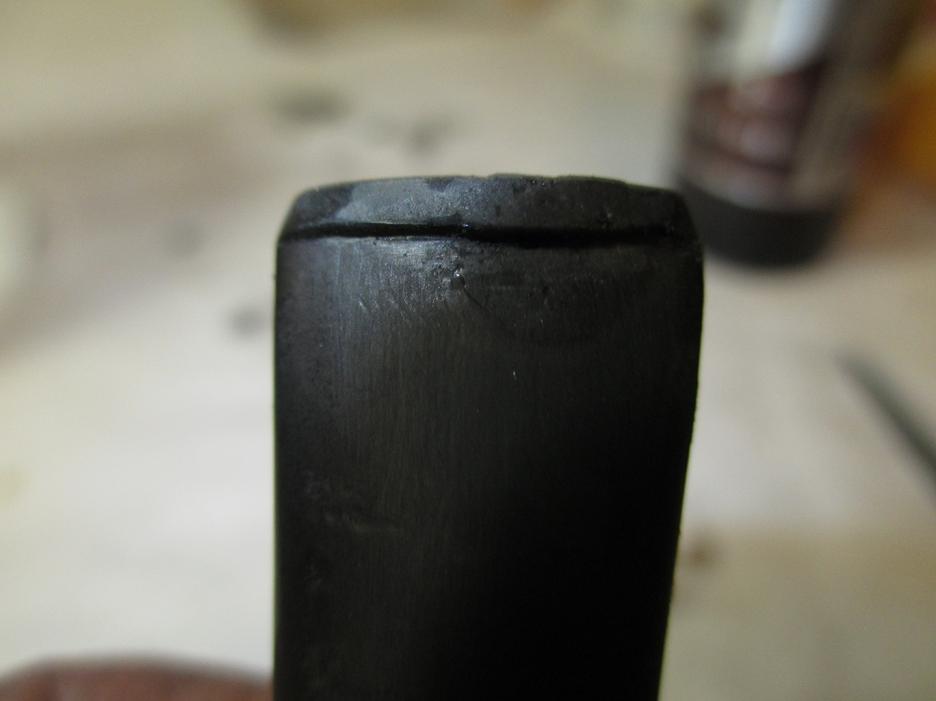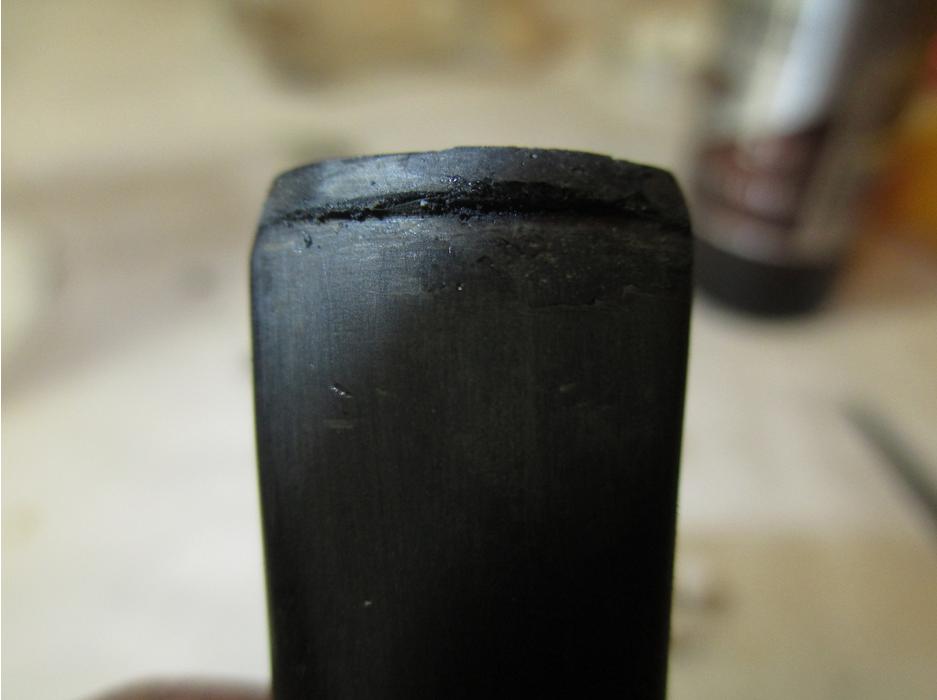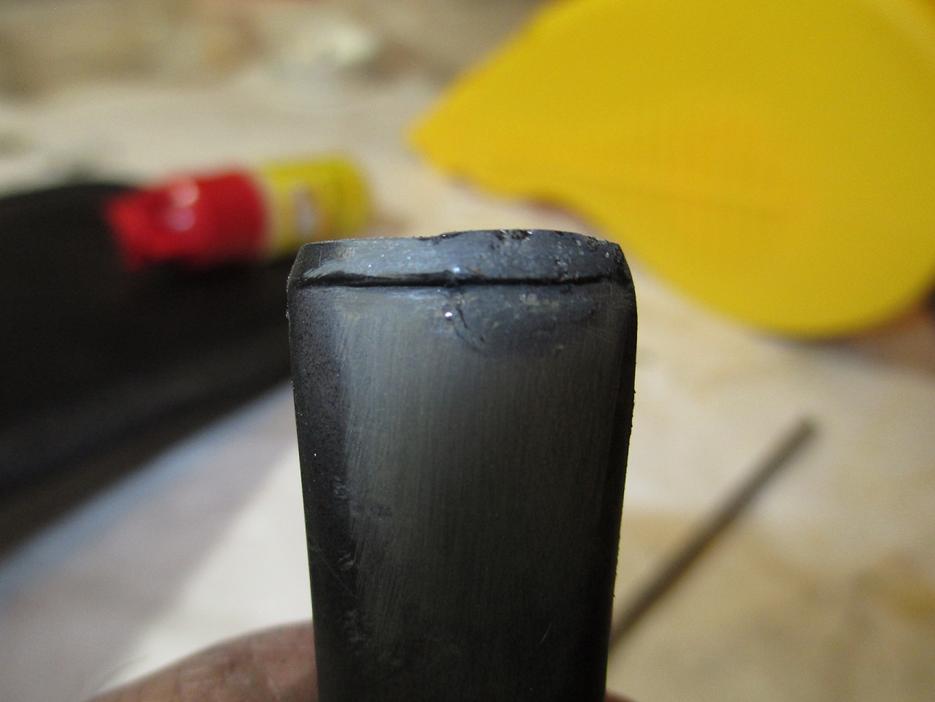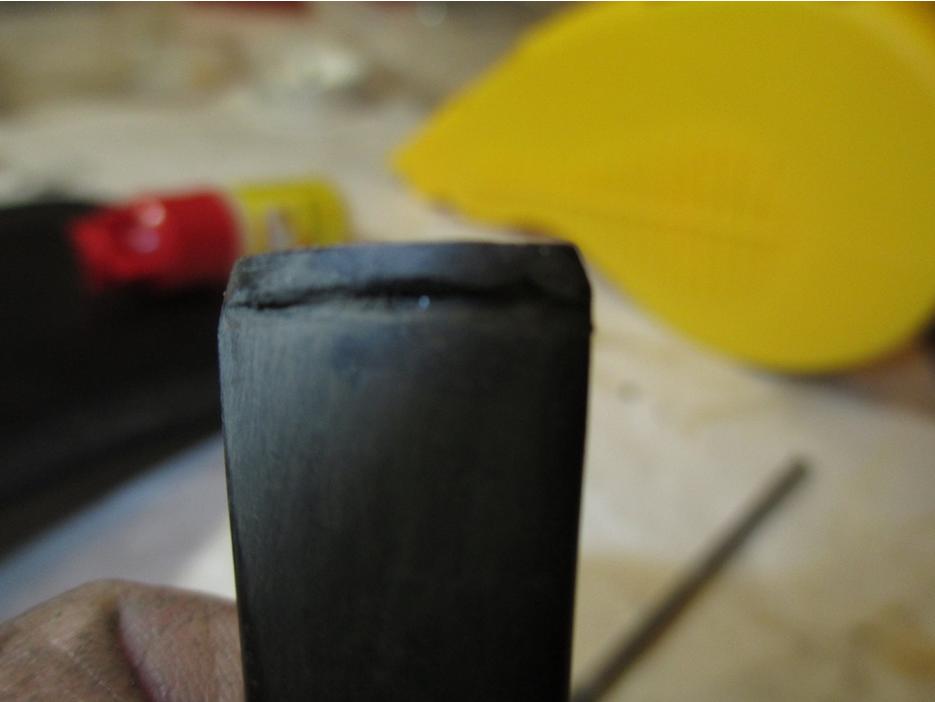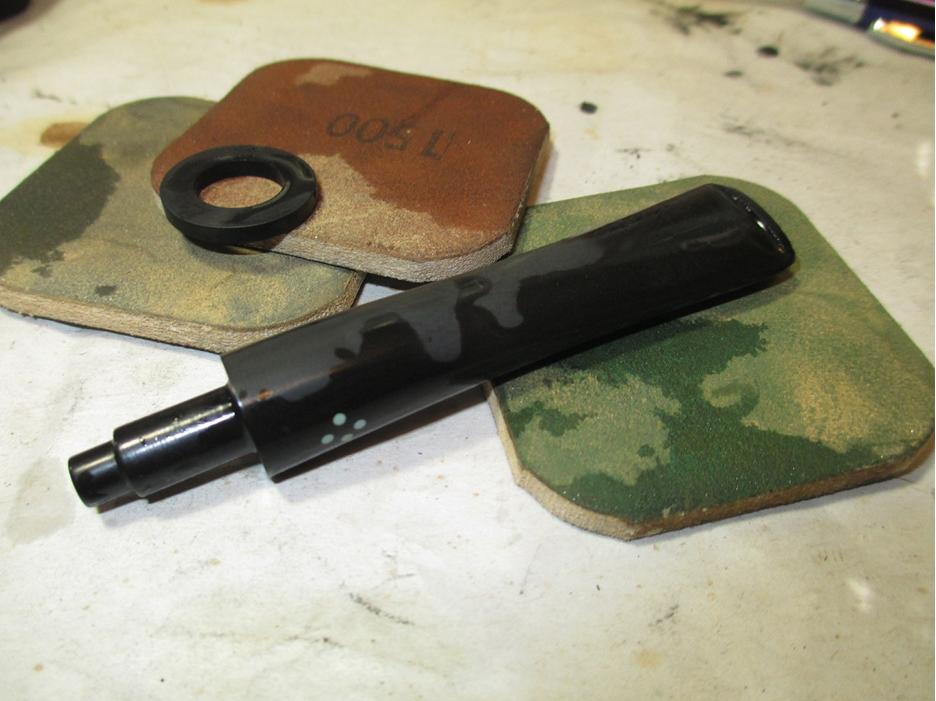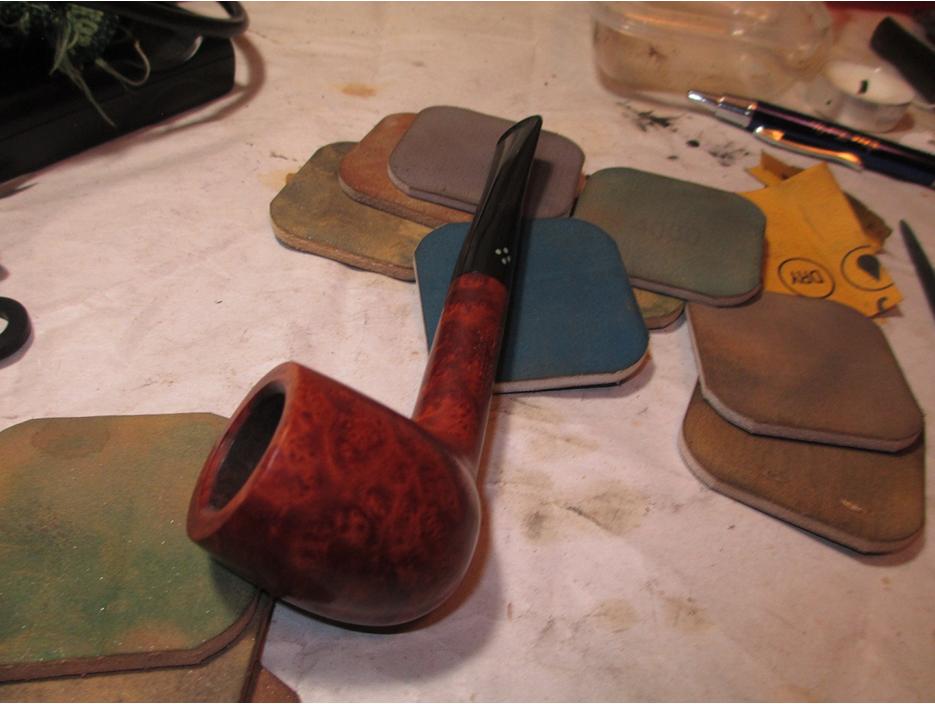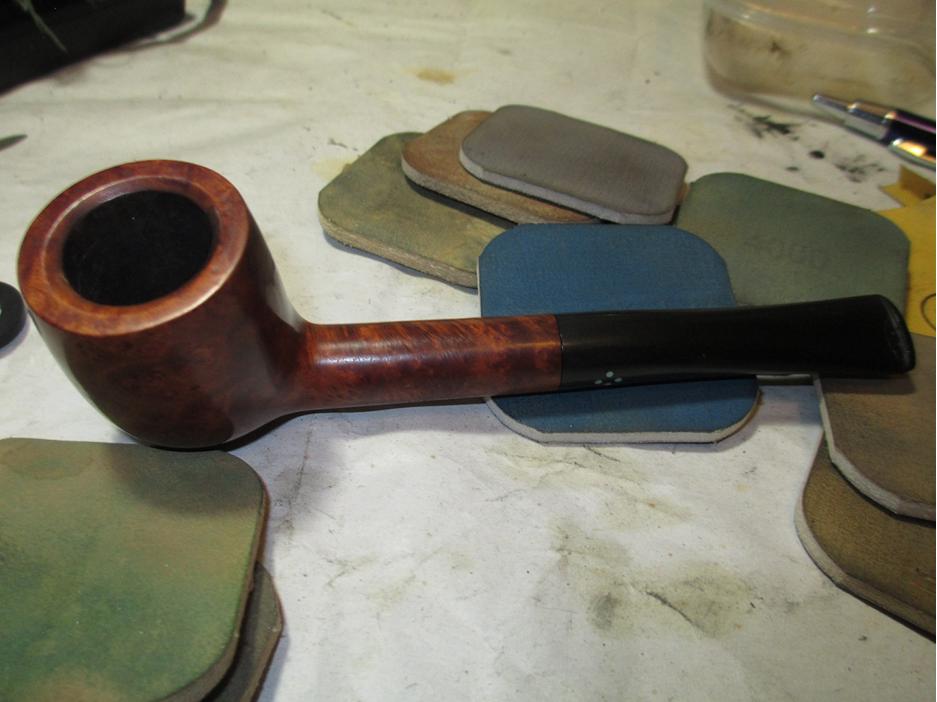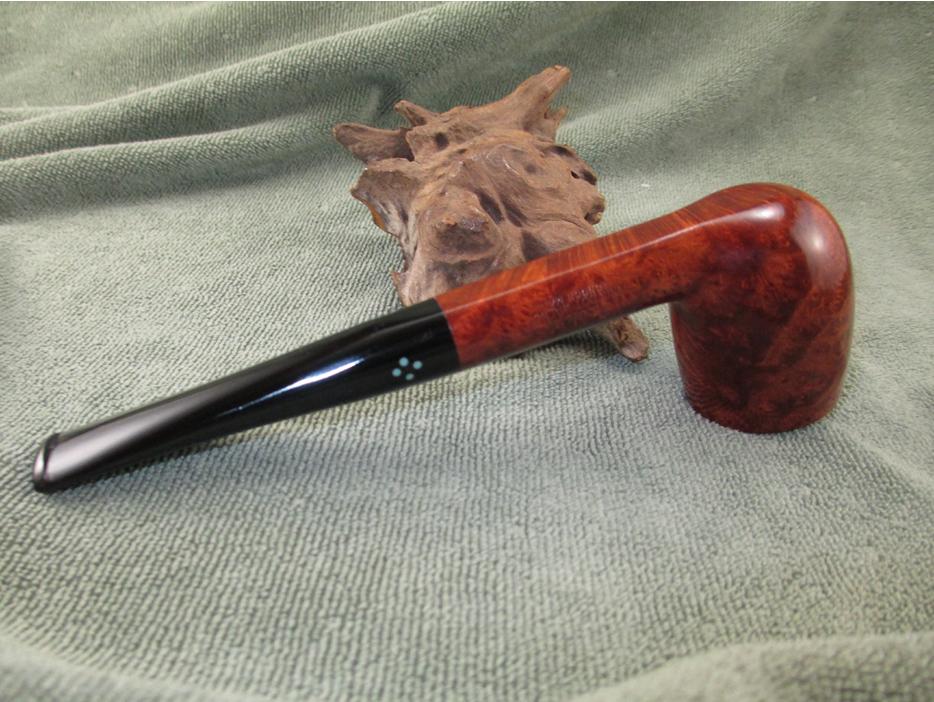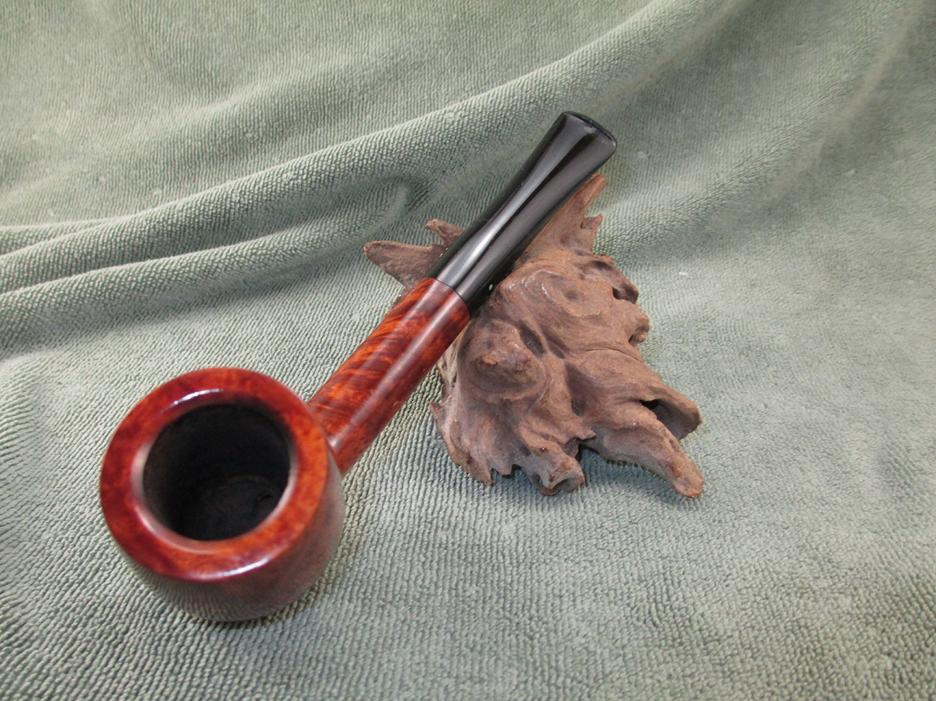
Tag Archives: super glue

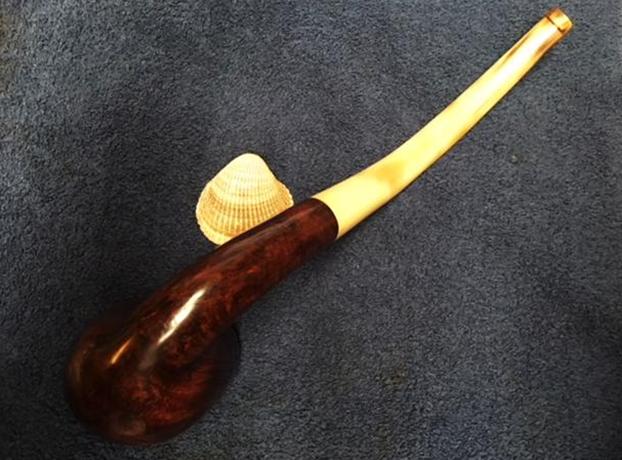
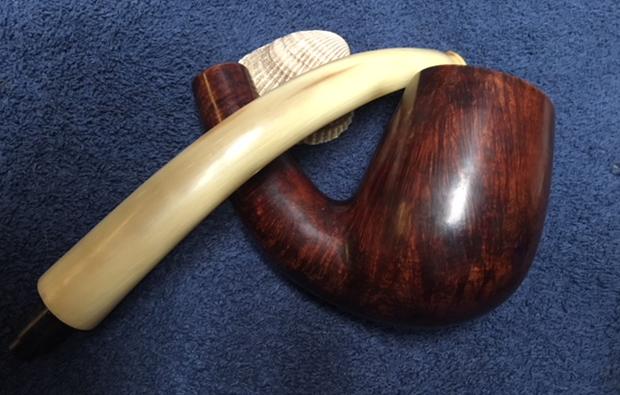
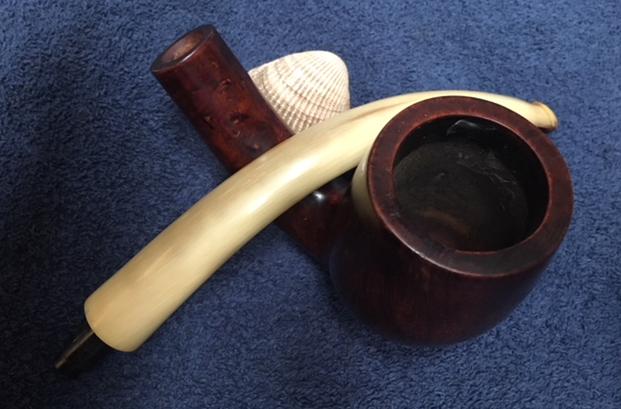
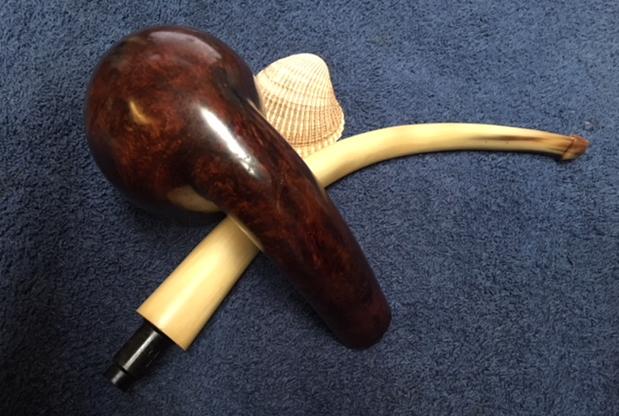
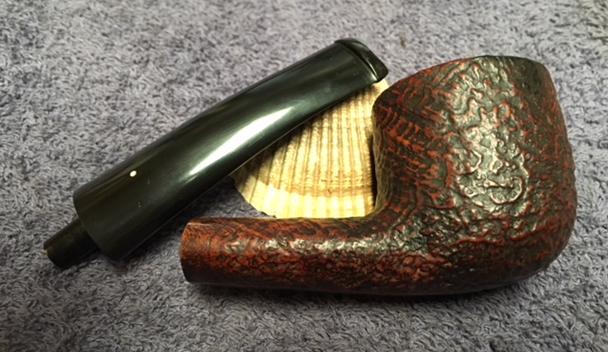
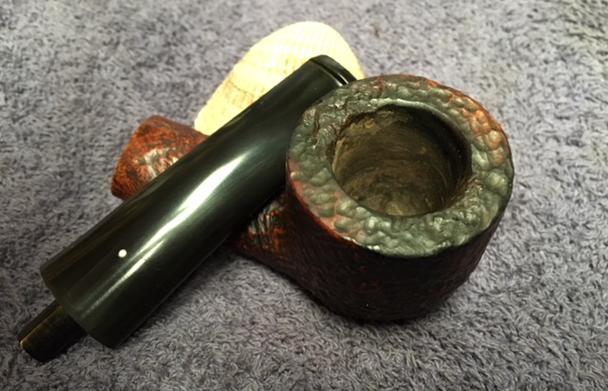
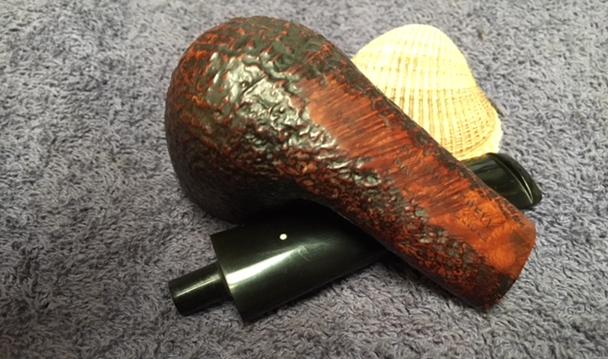
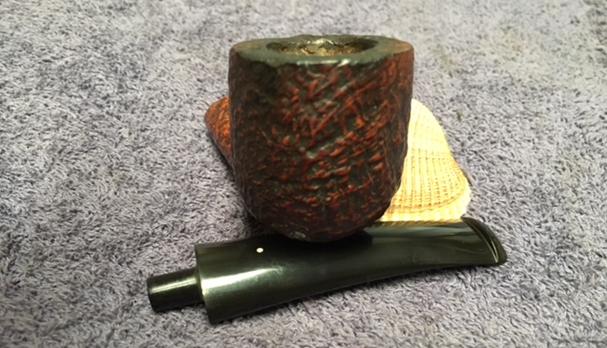
Saving a New Friend


Blog by Dave Weagle

When I saw Dave’s work on this old pipe I knew I wanted to read about the process he used in repairing this old friend. I wrote him a message on the Facebook Tobacco Pipe Restorers Group and asked him if he would be interested in putting together a blog for us here at rebornpipes. He gladly accepted the offer and today he sent along this blog. Welcome to rebornpipes Dave. It is a pleasure to have you show your work and skills here. The invitation is always open to you. With no further intro I will let Dave speak for himself. Enjoy.

Growing up I always knew that someday I would be a pipe smoker. I remember during an anti smoking discussion in grade 1 at the rip old age of 7, I told the teacher I had no interest in cigarettes but someday I would smoke a pipe. That was 1978.

Over the past 40 years I have had a few passions that have shaped my life. Recently pipe smoking and restoration has been one of them. During the 90’s while working backshifts I discovered old black and white suspense movies from the 1930’s & 1940’s. Of these the Sherlock Holmes movies starring Basil Rathbone became a favorite.

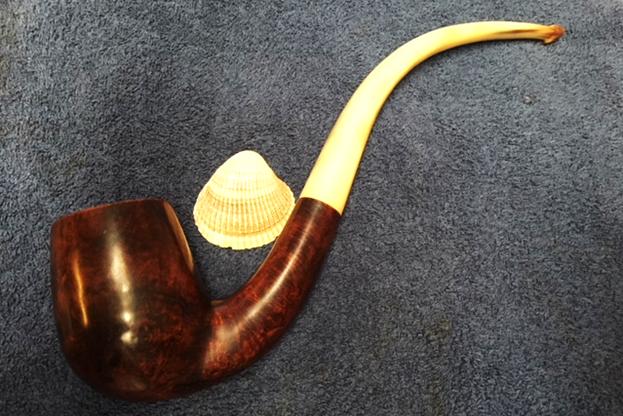
Once I decided I was ready to take up pipe smoking I knew there was one pipe brand I would have to acquire. Peterson. After some research I found that Basil Rathbone smoked a 4ab in the movies produced by Universal. Further research suggested the 4ab shape would become the 309.   I found a Peterson Patent pipe a few years ago hiding in a lot on Ebay with a bunch of old burnt cobs. With a bit of work I had a close copy of a 4ab.

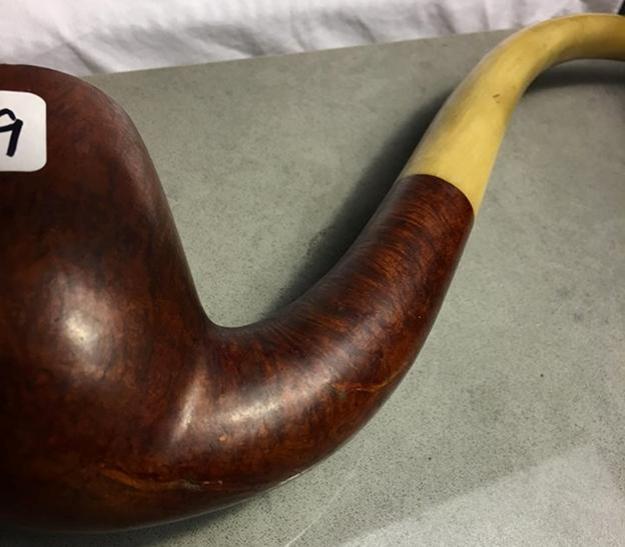
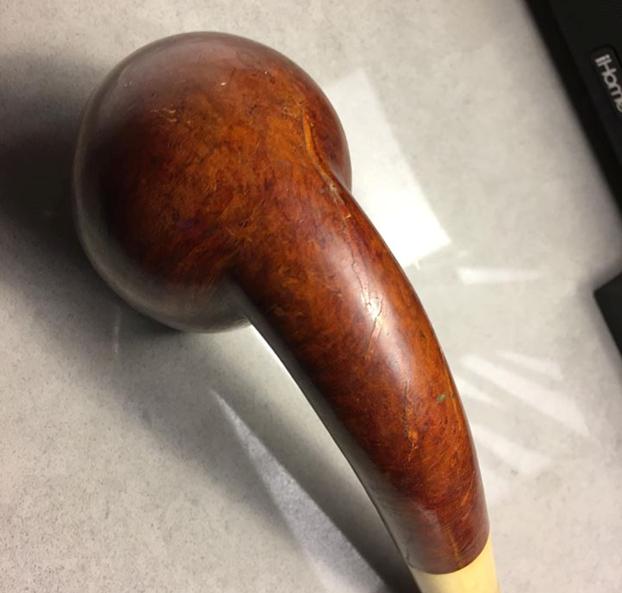
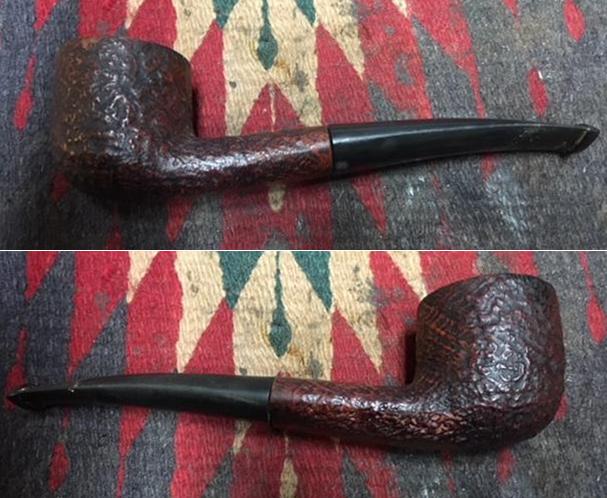
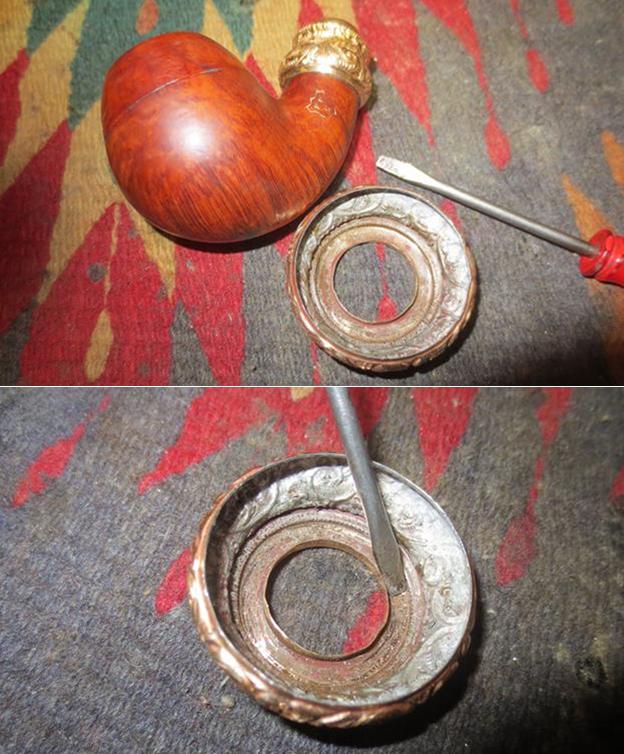
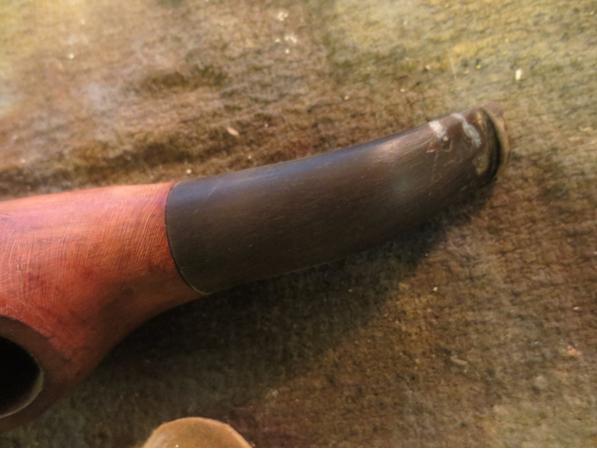
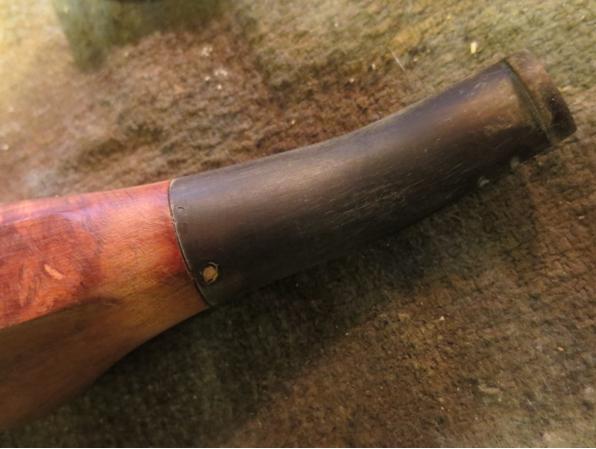
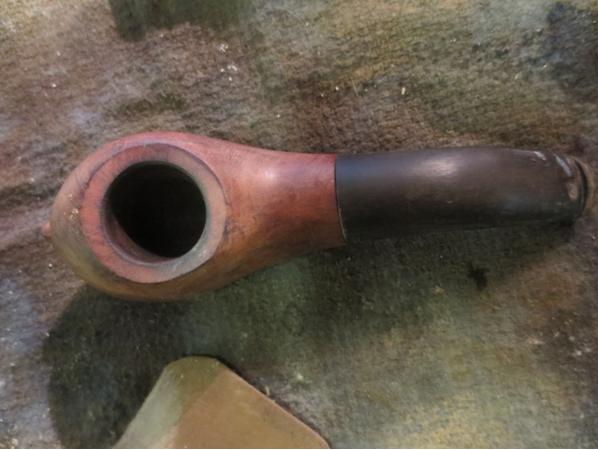
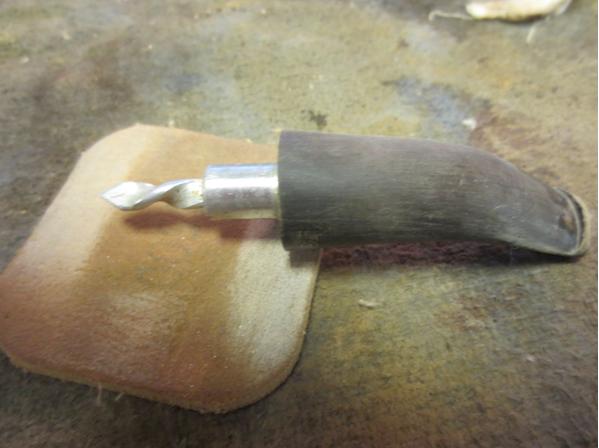
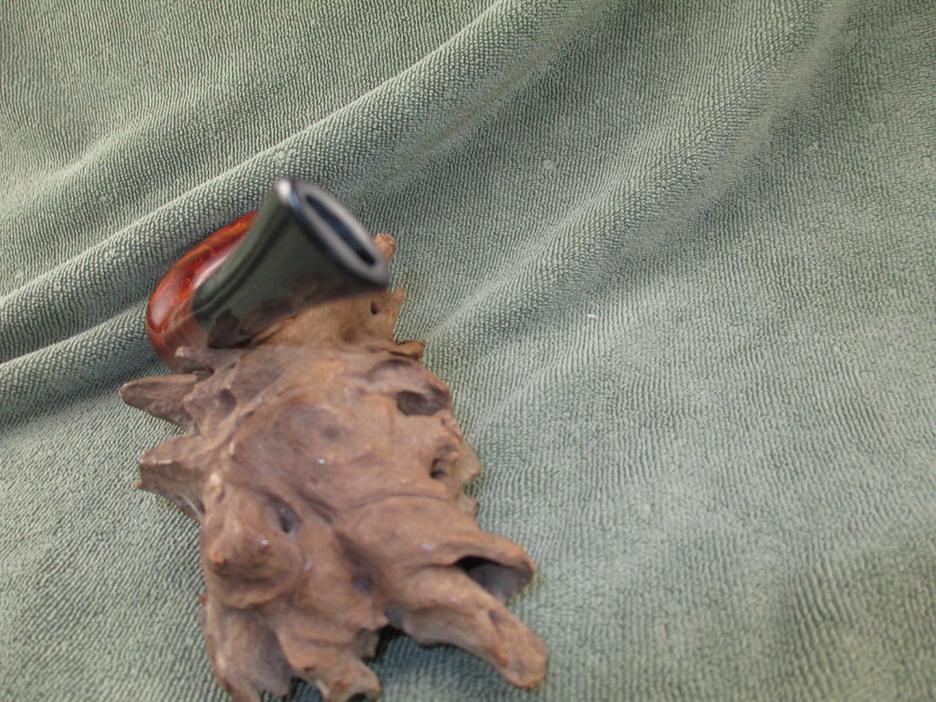
My Peterson Patent pipe with a stem I modified.Now for the back story. 

Now for the back story.  Since March of 2016 I have started chasing pre- republic pipes. This past Christmas (2017) with a little cash burning a hole in my pocket, I went surfing my usual online pipe haunts for older Petes. I found a seller on Etsy that had some interesting older pipes. One was a Pete. There was no shape number in the listing so I emailed the seller. It turned out to be a 313. I have three 313 already, so I thanked the seller but declined the pipe. To my surprise he emailed me back and asked if I’d be interested in some older unrestored Petersons. We emailed back and forth and came up with an arrangement that both were happy with. I bought 8 pipes. A Peterson calabash with a silver hallmark dated 1908 and a S17 sealed the deal (those will be future restorations). The other 6 pipes where all Republic era pipes. My favorite shape 309 was there so I was very pleased with my purchase.

This is where my restoration story begins. When the pipes arrived from England I was surprised to find how well loved the 309 was. The shank was actually worn crooked. The stem was worn and the nickel cap had a crack and 11 dents. I contacted Peterson about getting a new cap on the 309. When I found out how expensive it was I decided this was a lot of money to restore a well used 309. I started looking for a donor 309. It didn’t take long to find a cracked 309 (a cracked Chacom and Nording came with it) which would be a great parts pipe for about half the price of shipping my original 309 back to the factory to be fixed.

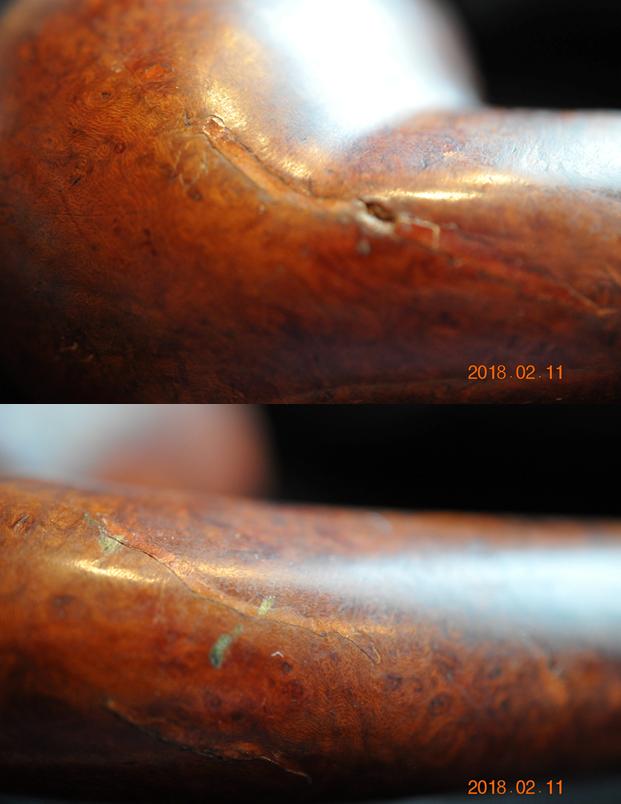
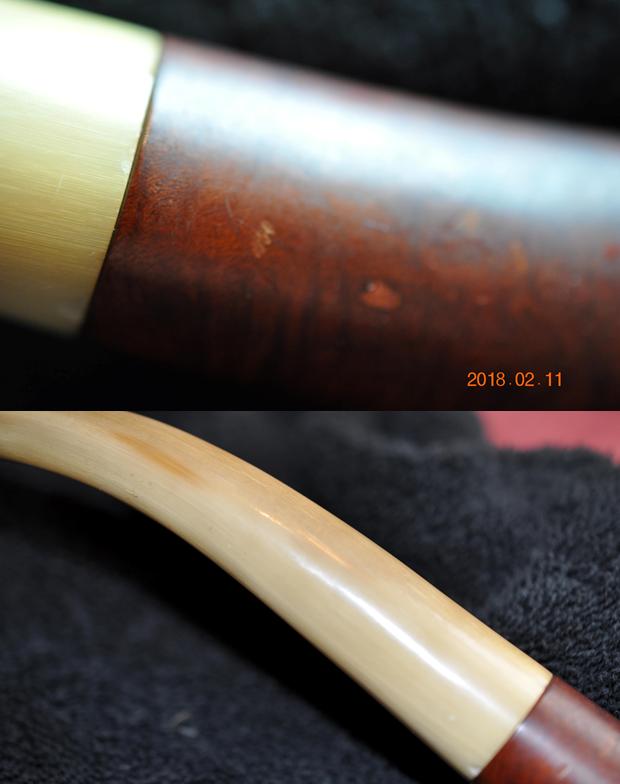
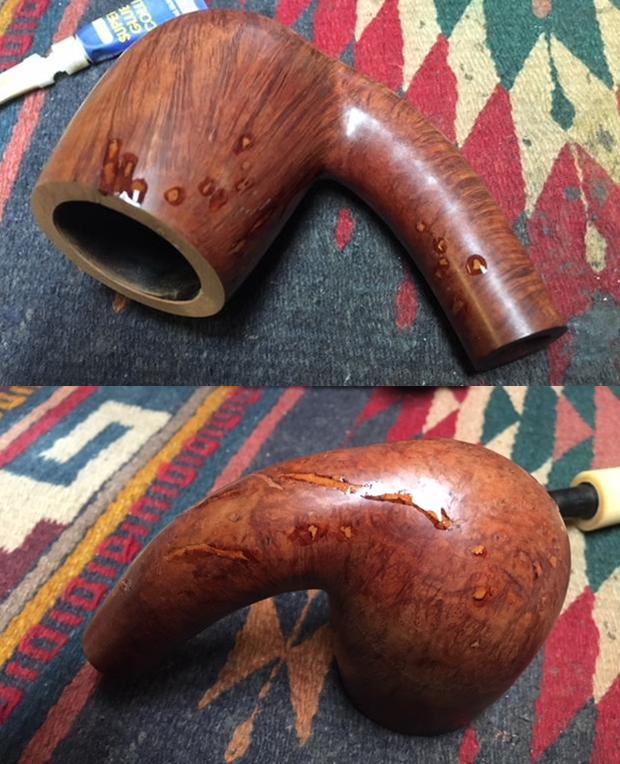
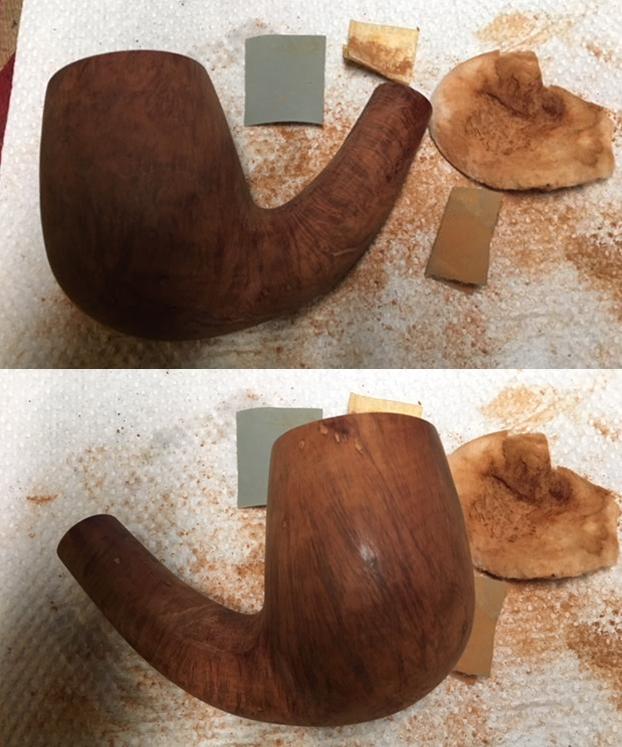
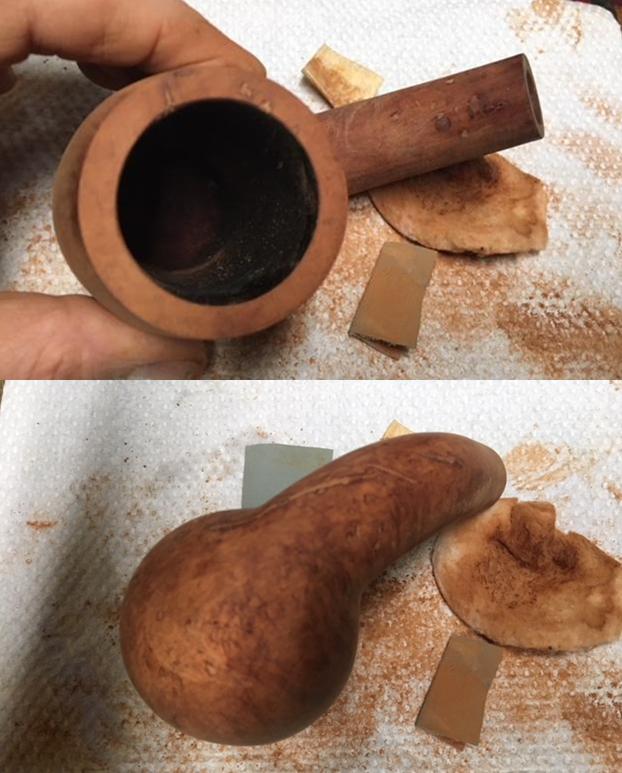
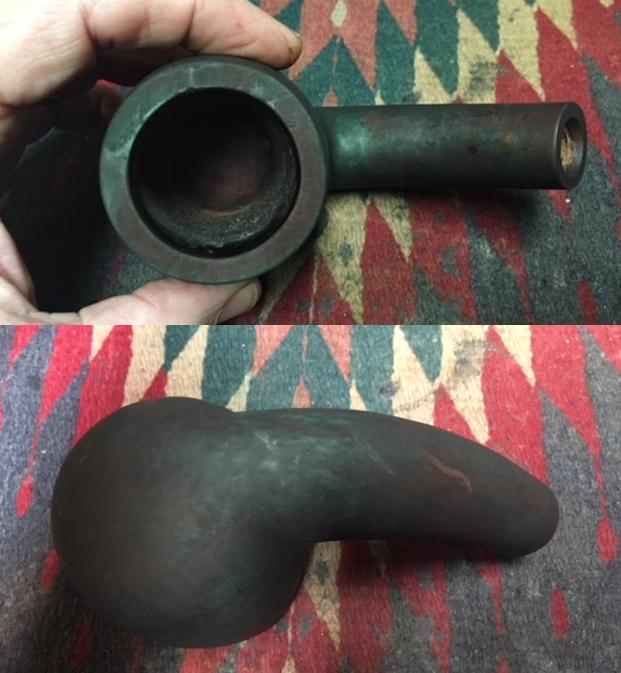
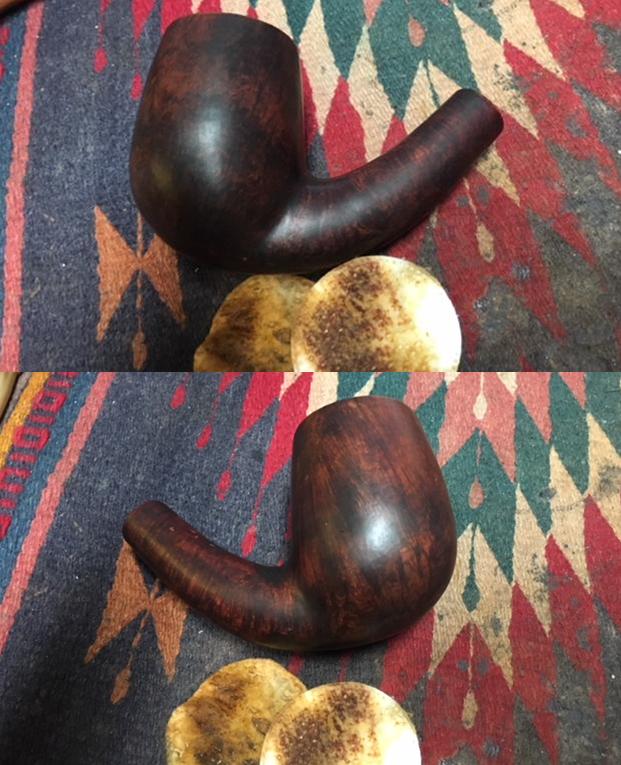
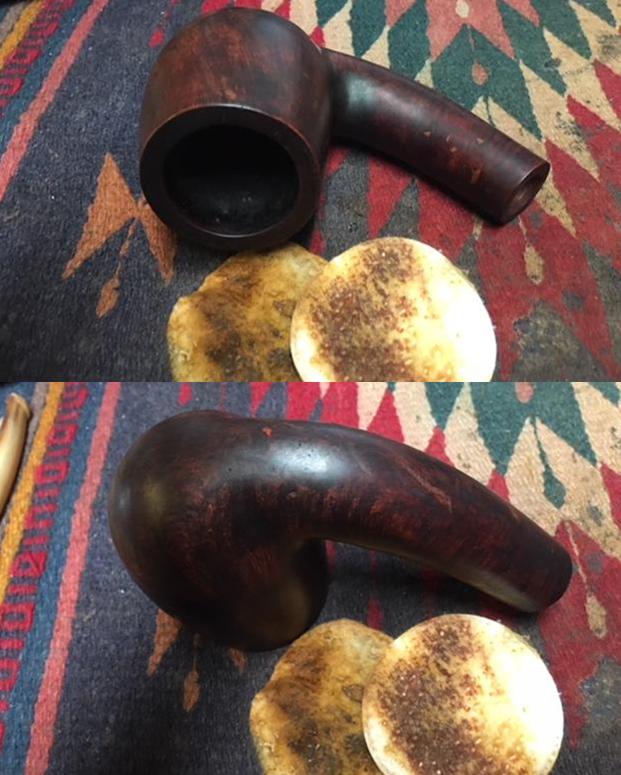
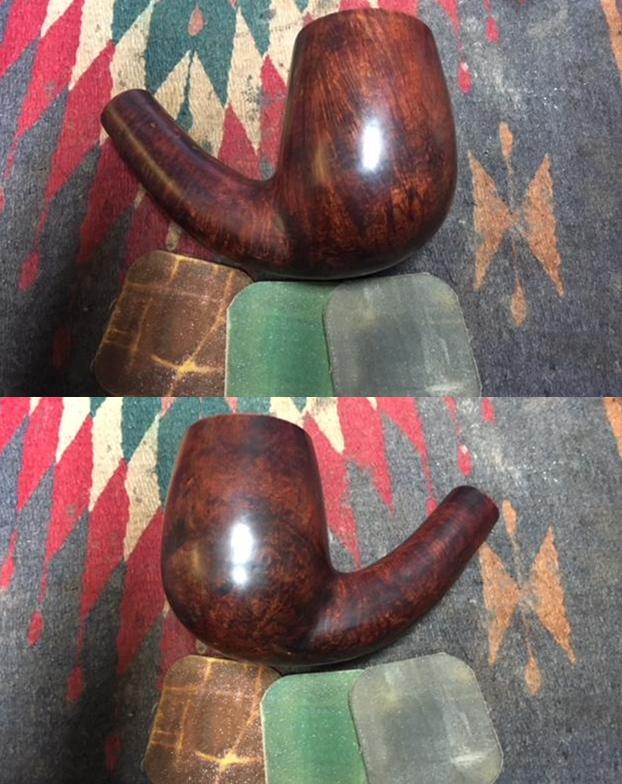
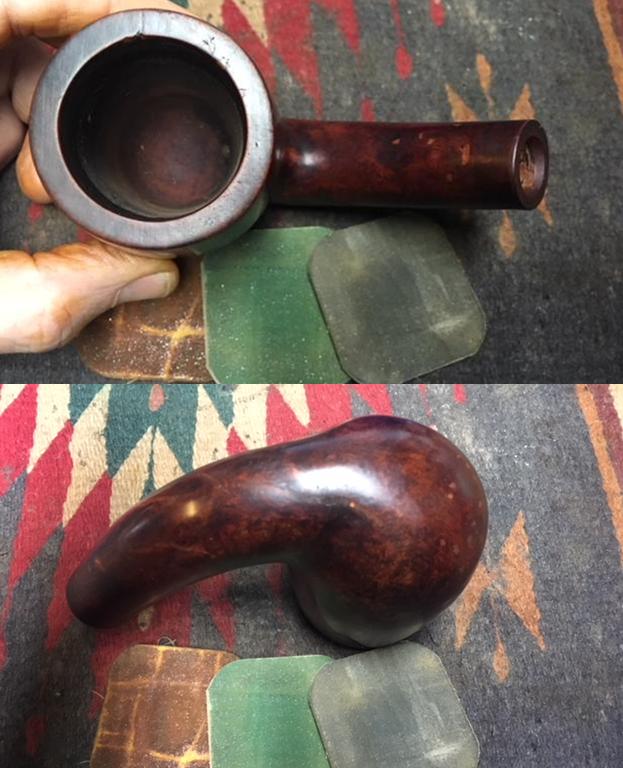
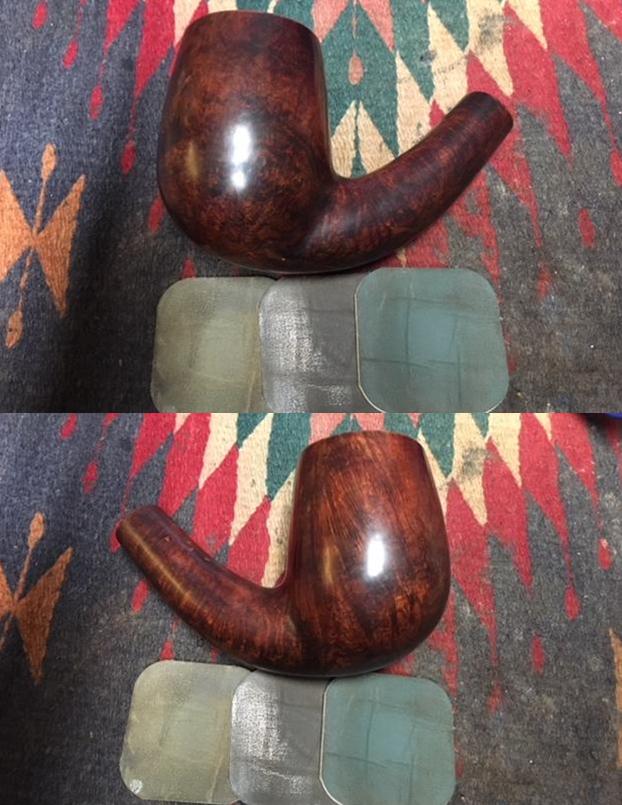
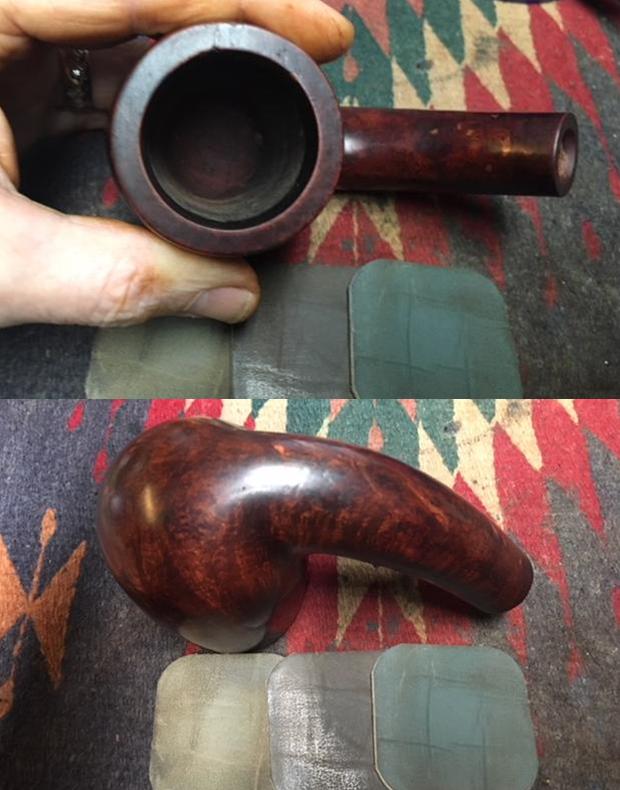
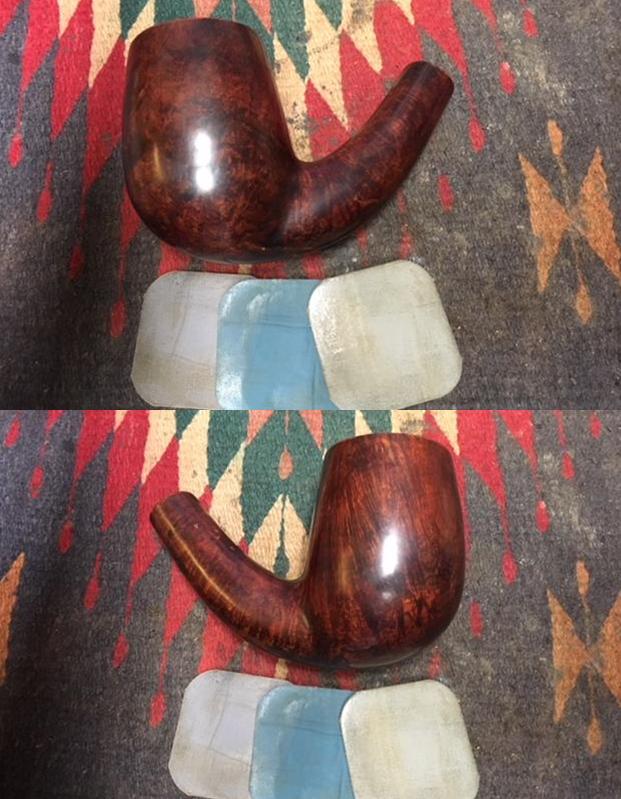
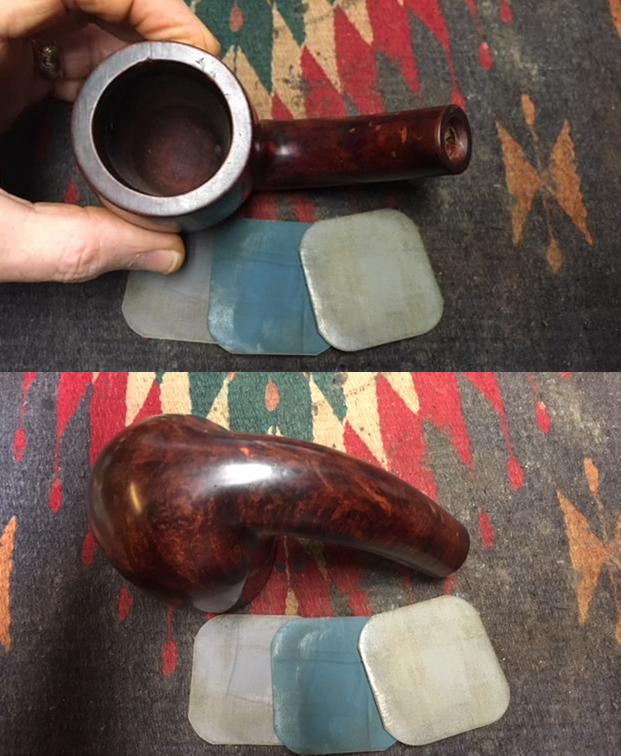
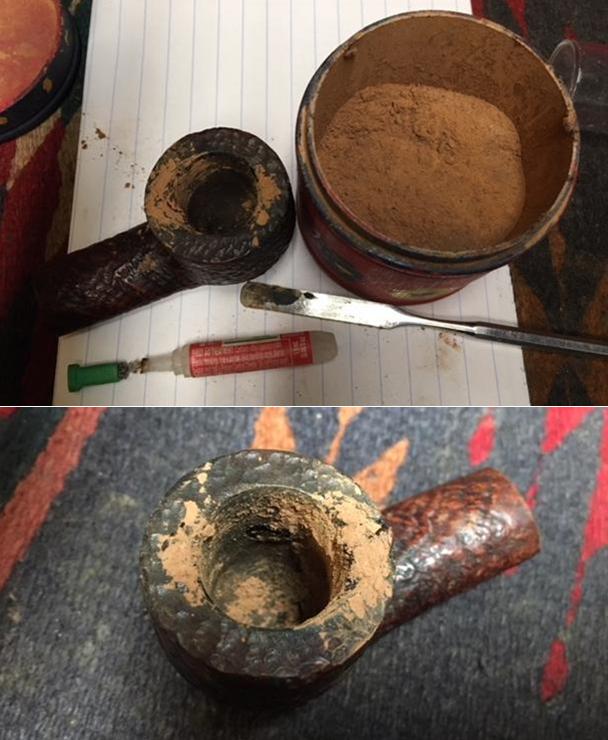
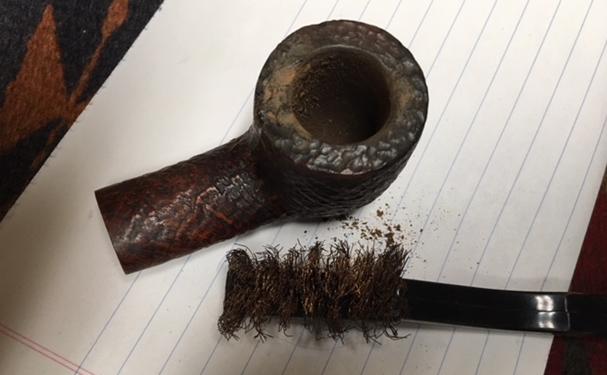
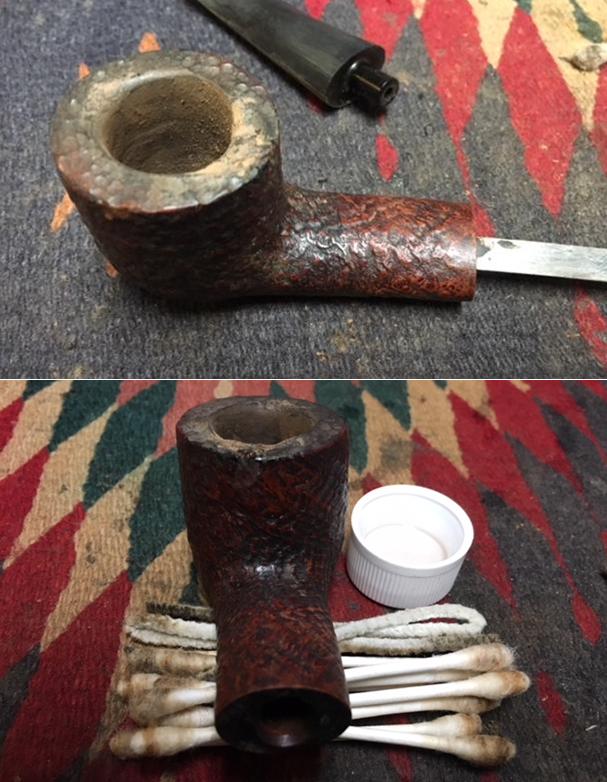
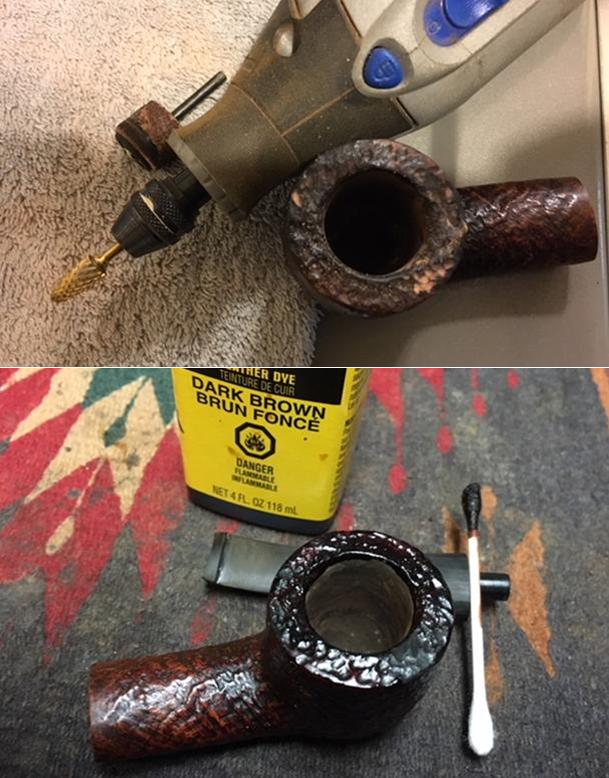
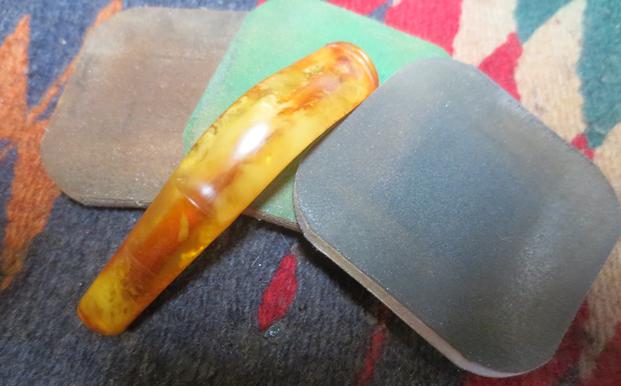
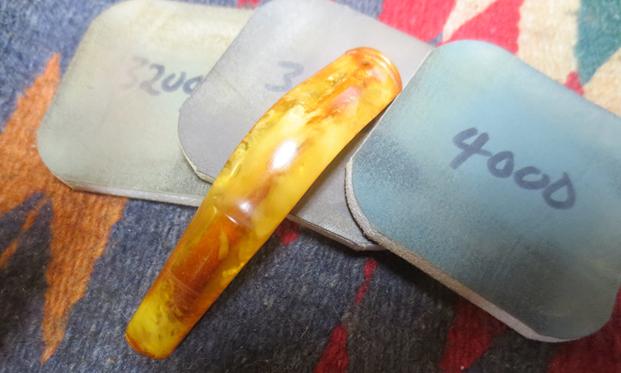
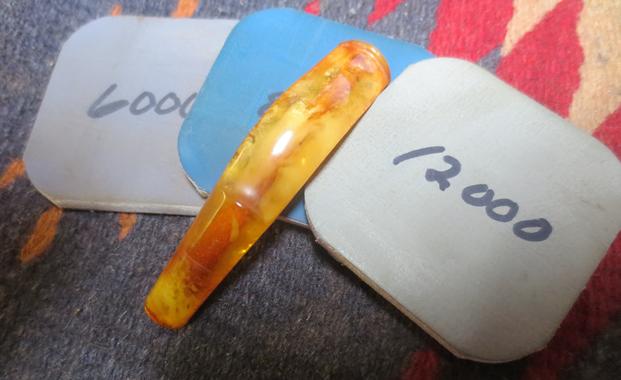
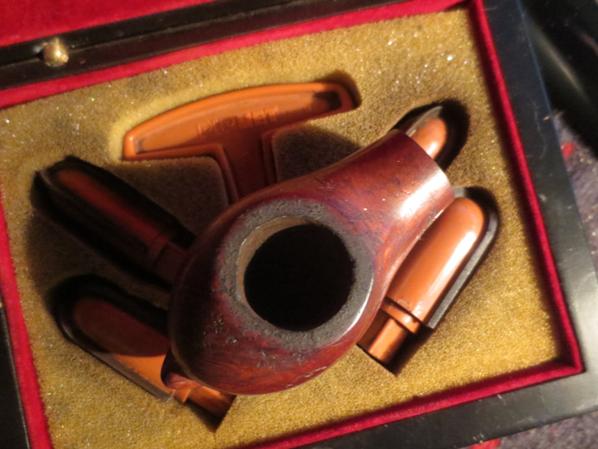
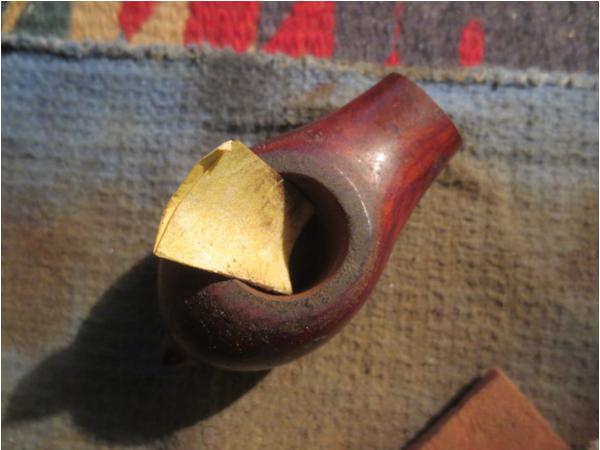
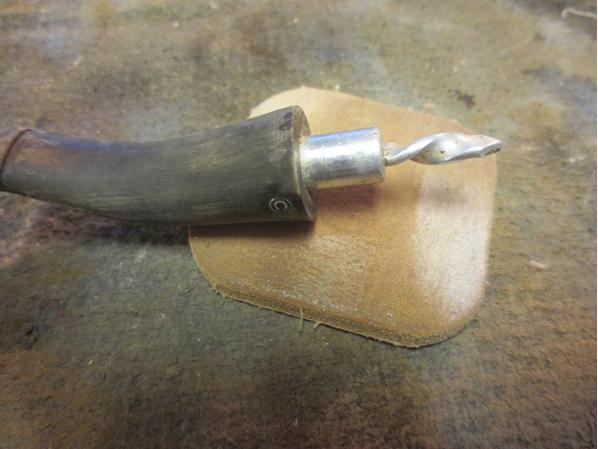
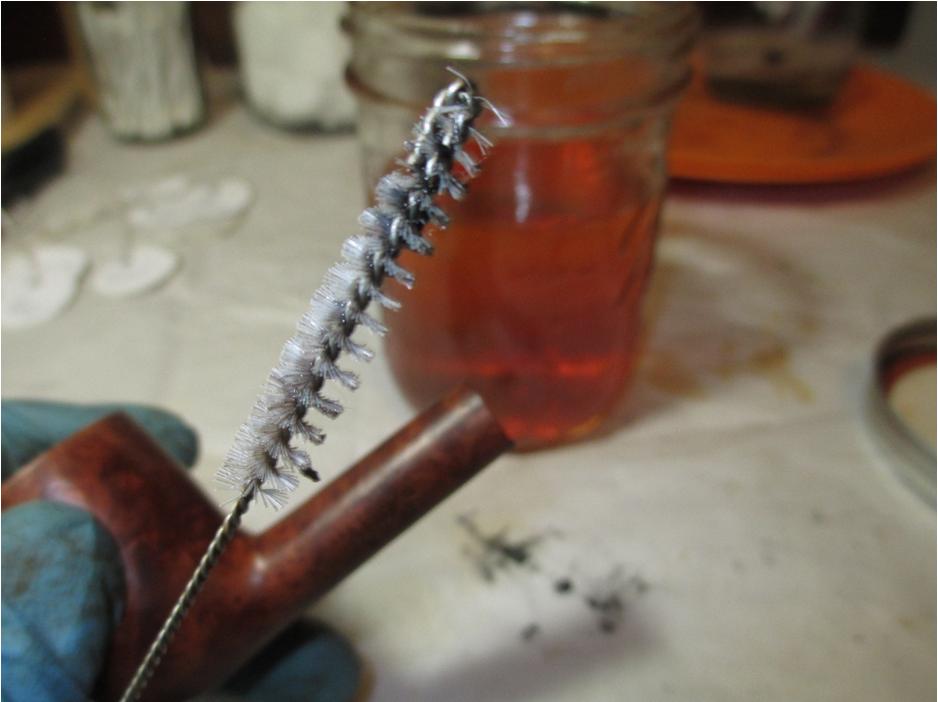
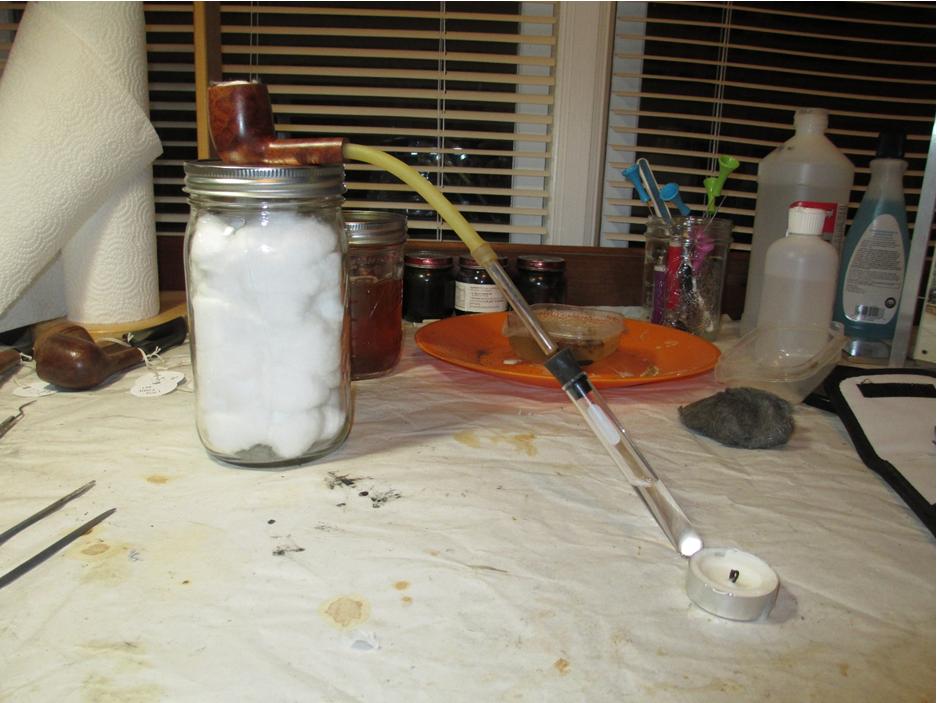
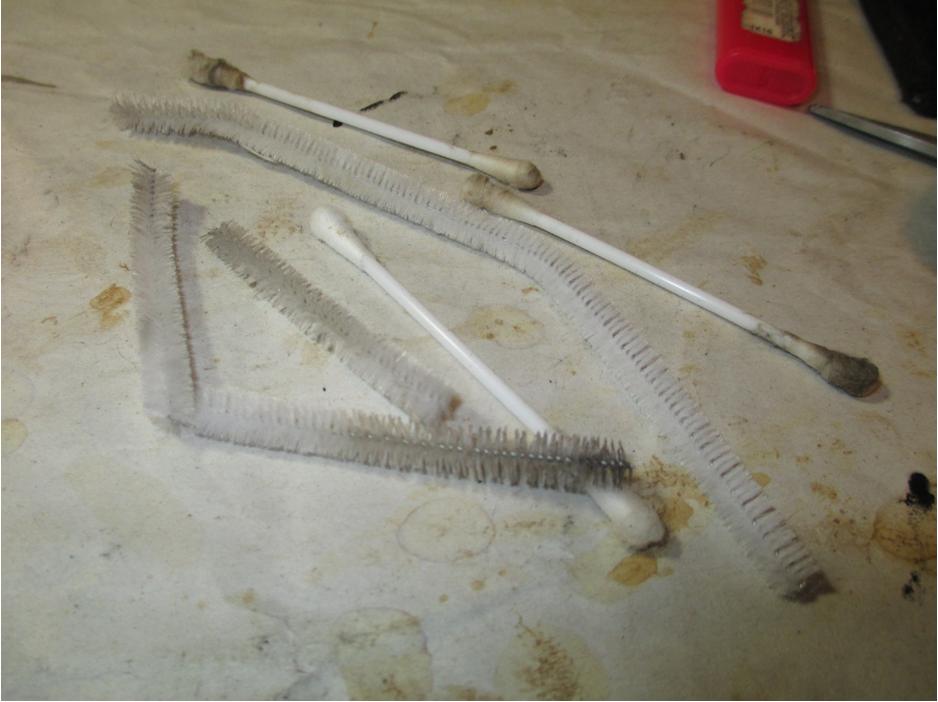
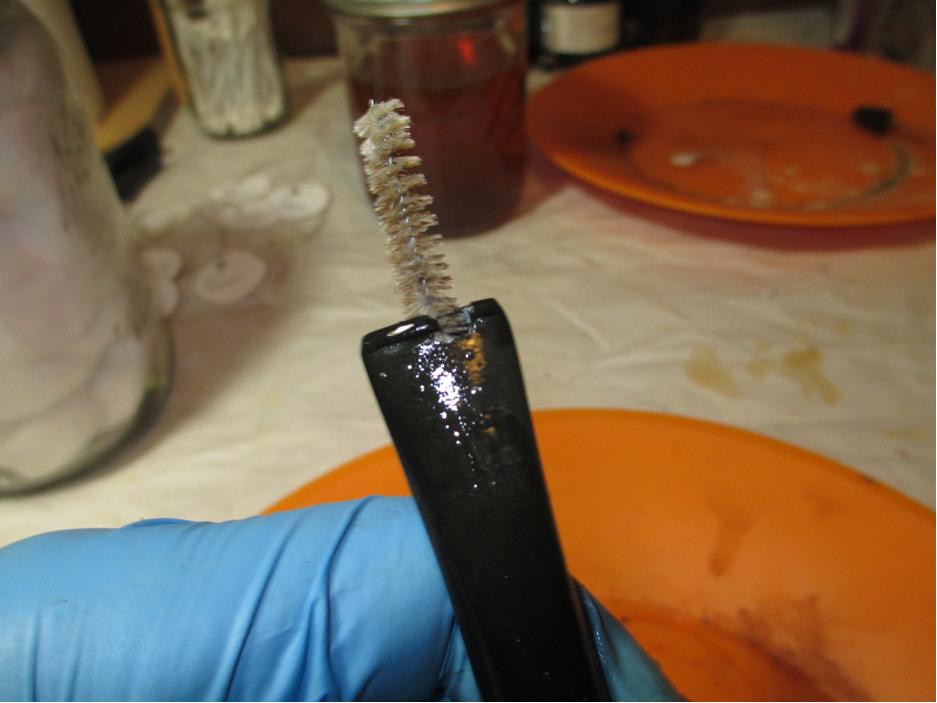
The donor 309 came from EBay. It took two weeks for the pipe to travel from California to Nova Scotia. During the two weeks, I kept going back to the original listing and night after night I keep thinking I can’t send this donor 309 to the scrap pile without at least attempting to save it. This is how the pipe arrived.Not sure how to approach this repair I decided to gently ream it to see the extent of the inner bowl damage. I didn’t want to just start filling the crack with CA glue and briar dust. This was the result of reaming. Some people might have been upset by the result but I knew it was a good thing. I now knew the extent of the damage. Also, I could clean up the cracked surfaces to remove any loose char or ash. Using cotton swabs and isopropyl alcohol I cleaned all the damaged area before reattachment. I now had two pieces of the bowl which I glued together and let them set. Once they dried I fit them back in place and set to gluing and pinning.I started by drilling several vertical holes and then drilled the horizontal holes making sure that the two broken pieces were pinned to each other and into the remaining bowl. I used several types of CA glue in this process. I used a thinned glue designed to flow into cracks. The pins were cut to fit and glued with a thicker gap filling gel CA. When it came time to fill the cracks and the drilled holes I used a standard CA and briar dust. I used several coats of glue and dust to fill everything in, brushing the bowl between coats with a brass bristled bush to remove any loose dust and checked each coat with my jeweler’s lope for coverage. Once I was happy with the surface coverage, using my jewelers lope and a rotary tool I tried to copy the rustification as close to the original as possible. I always wear a dust mask when I attempt surface repairs using a jeweler’s lope and a rotary tool. The pipe is right about nose level and the tool blows the dust right in your face.This is the outer surface after about two hours of work. Now it was time to fix up the inner bowl.  After the outer repair was complete it was evident that a burnt out was the cause of the crack.  There was an indent which need to be filled. Usually I use fireplace cement (a paste I make out of hardwood ash that I collect from my woodstove) to patch small burns in a bowl but this was going to be a large patch ,so I wanted something stronger. JB Weld was what I used. After wiping out the bowl with cotton swabs and isopropyl alcohol to remove any loose char and ash I mixed up some JB Weld and applied it to the inner bowl. After let it dry overnight I turned again to my rotary tool with a sanding drum to even out the walls. Again, wear a mask if using when this method because it throws a lot of dust in the air, and you’ll be sneezing for a few days (past experience). With the inner bowl smooth and round it was on to cleaning the draft hole and the shank. Using a 4mm drill bit I redrilled the draft hole. With cotton swabs, isopropyl alcohol and a dental tool I cleaned the shank and draft hole. After cleaning and drilling I didn’t like the depth of the bowl reverses the position of the draft hole so I added a bit more JB Weld to the bottom of the bowl. Using a small piece of 220 grit sand paper I sanded the inner bowl again so there were no rough seams. With the repairs to the bowl it was time to refinish. Using my brass bristle brush and a 3M autobody scuff pad I gently buffed the outer bowl. I carefully polished the stamping using micro mesh pads starting at 3200, finishing with 12000.

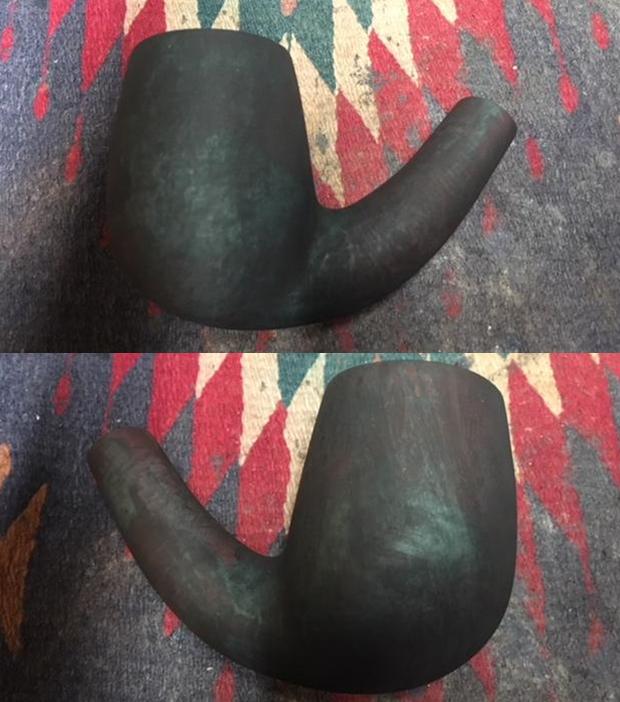
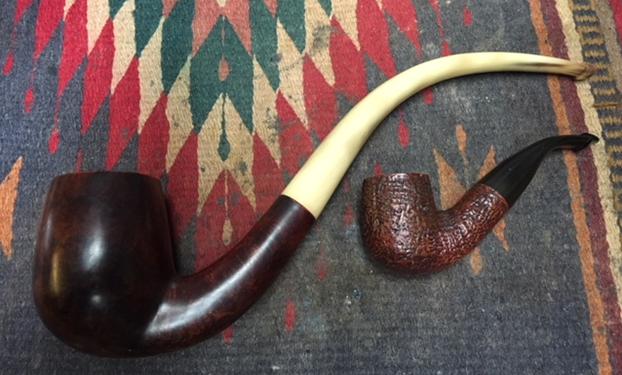
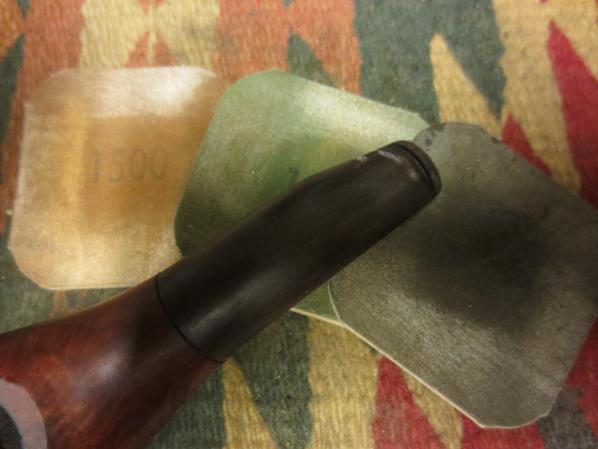
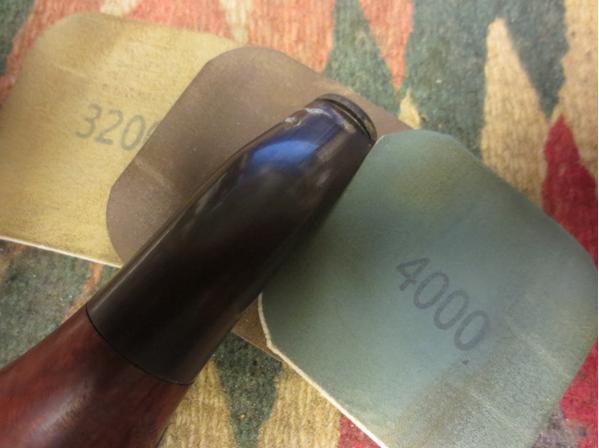
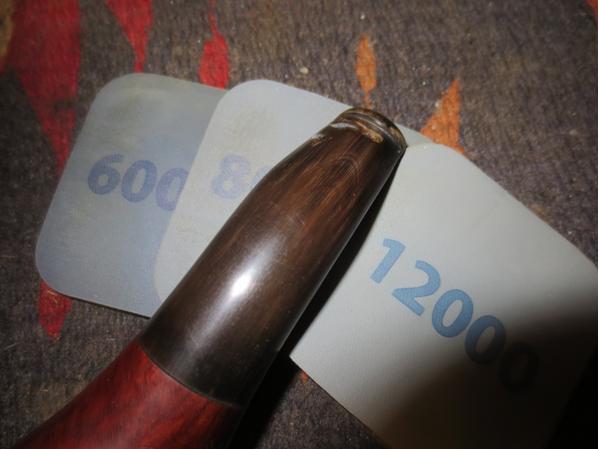
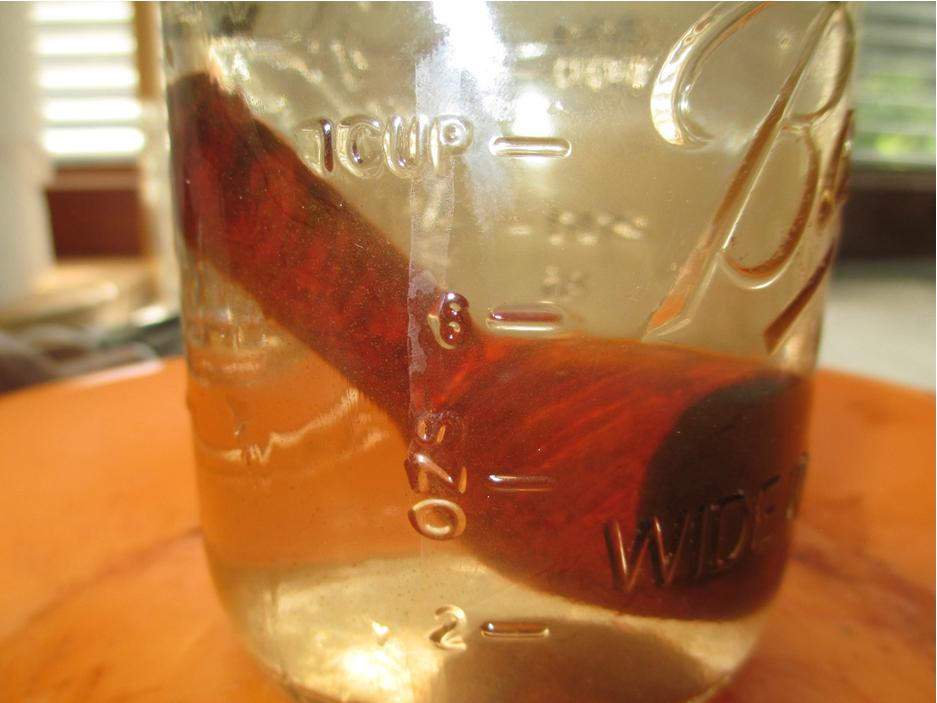
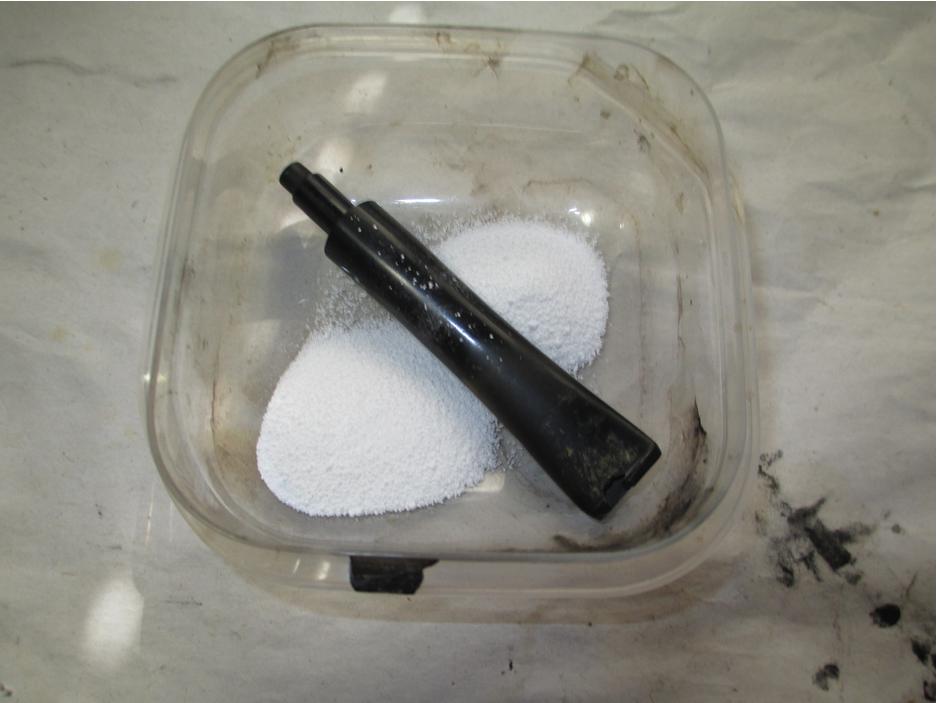
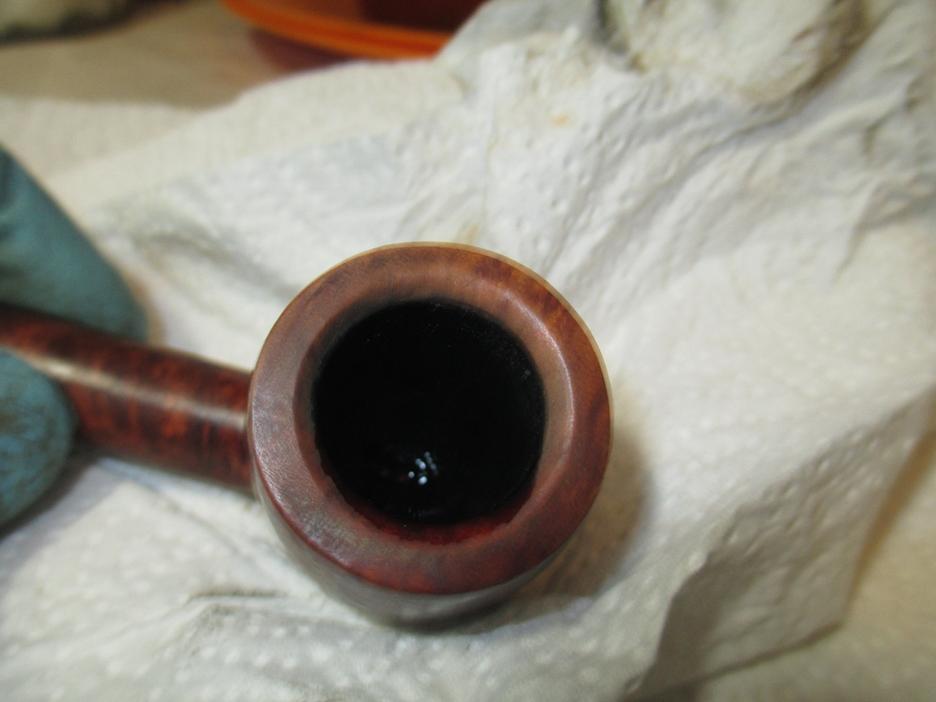
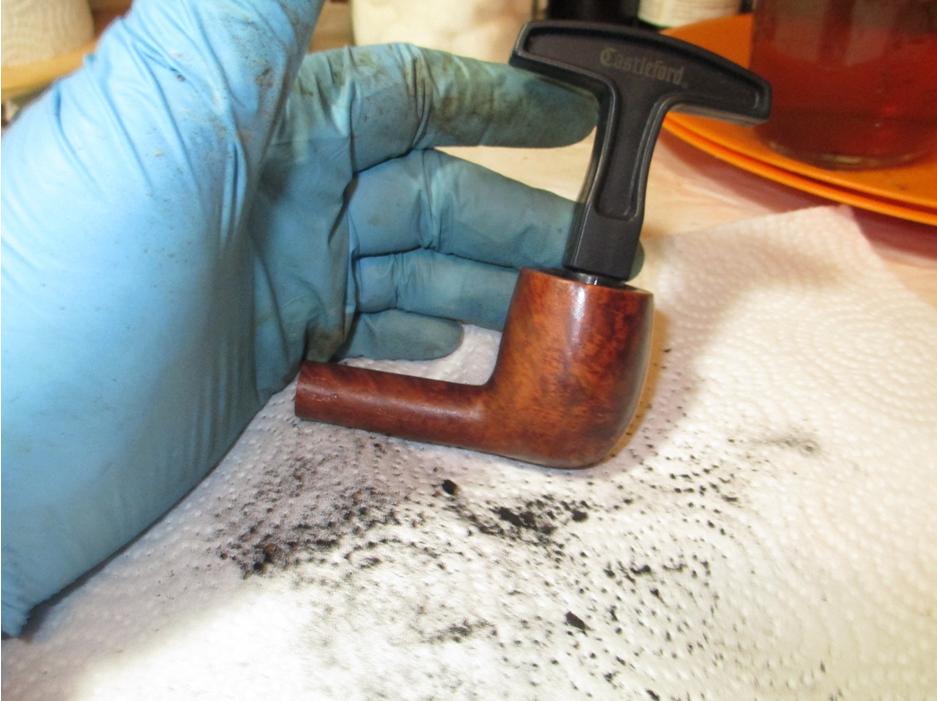
When it came to the staining I used Fiebing’s leather dye. USMC black was the base coat and Ox Blood was the finish coat. Both colours where flamed to set the dye into the grain. I then hand buffed the bowl before coating the bowl with Halcyon II wax. Once the wax had dried I hand buffed the bowl again. While staining the bowl I got some red stain on the cap which I removed with Autosol polish (I use it to polish the chrome bumpers on my Dodge Ram) which also cleans up the oxidation. With the outside finished it was time to finish the inside. For this I decided a coating of maple syrup and charcoal would be the best to help rebuild the new cake as the pipe is smoked. With a pipe cleaner placed in the draft hole the inner bowl was lined with maple syrup. Then the bowl was filled with charcoal. I gently tapped the top of the bowl with a spoon to remove any air gaps (not unlike how I may tap a bowl when I fill it with tobacco). I let the bowl dry before removing the excess charcoal. This was the finish of the work on the bowl. All that was left to finish was the stem. The stem was heavily oxidized so a soak in Oxiclean for a few hours. After removing the stem from its Oxi bath I cleaned the inner stem with bristle pipe cleaners and Isopropyl alcohol. There was a lot of chatter on the tip including some dents on the P lip. I heated the stem with a heat gun to raise the dents with some success. A quick sanding with 220 grit sand paper and a wipe with isopropyl alcohol I was ready to repair the dents that didn’t raise. Rubberized CA glue and charcoal powder were mixed and used to patch the dents. With a coarse file I reshaped the P lip. Starting with 220 grit sand paper I dry sanded the stem removing the excess glue. From there I dry sanded the stem with 600 grit. I then changed to wet sanding with 1000, 2000, and 3000 sand paper. I switch to dry sanding with 4000 – 12000 grit micro mesh pads. Once I was happy with the sanding, I polished the stem with blue diamond compound on a buffing wheel. To finish, I applied several coats of carnauba wax on a soft buffing wheel. A hand buff finished the stem work. All that was left was to assemble the stem and the bowl. Here is a shot of the two 309’s involved in this project. The donor being in the front. With guidance from certain pipe repair blogs, I have used their techniques and developed some of my own. A few years ago starting out buying estate pipes I never thought I’d be able to do repair work like this.

Just for the record, I have decided to just send the other 309 to Peterson to have a new cap installed. My attempt to save money ended up costing me more, but one can never have too many pipes. Right?


Restoring a Large Rusticated House of Robertson Panel Billiard


Blog by Steve Laug

After my brother Jeff found an assortment of House of Robertson pipes at an auction in Wilder, Idaho which is an area in the greater Boise, Idaho area. He kept an eye out for more of the brand on his weekly pipe hunts. He found several others that are quite unique in an antique mall near where he lives. There were two large long shanked pipes – one round shanked and one square shanked. The third of the batch that he finds is a nice little classic apple shape. It looks tiny with the size of the other two. The two larger pipes are a combination of smooth and rusticated. They both have smooth panels on the sides or front of the pipes. Both of the large ones are banded with a sterling silver band. It seems to me that the bands on both the square shank and the round shank are decorative rather than a repair for a cracked shank. I finished the restoration of the square shanked sitter, the bottom pipe in the above photos and did the blog write up on it (https://rebornpipes.com/2018/02/28/restoring-a-rusticated-house-of-robertson-war-club/). It is soon on its way to a fellow who was a regular of the House of Robertson Pipe Shop in Boise, Idaho. He is excited to be adding it to his collection. Each of these pipes has the name House of Robertson roughly hand-etched on the side or underside of the shank with an engraving tool. I am also including the information that I found when I received my first of the House of Robertson Pipes. “House of Robertson” was in business for many years, but alas, closed their doors in 1999. They were located in Boise, Idaho. They are noted for making rather large and interesting pipes. Thayne Robertson was a Master Mason, AF & AM, and started the shop about 1947 and his son Jon started working there in 1970 when he finished college, along with Thayne’s daughter. Thayne and his son started making the big pipes at that time, and made them together until 1987 when Thayne passed away. Jon kept the store and his sister moved on to other things. The House of Robertson appears to have closed around 1999. https://pipedia.org/wiki/Robertson

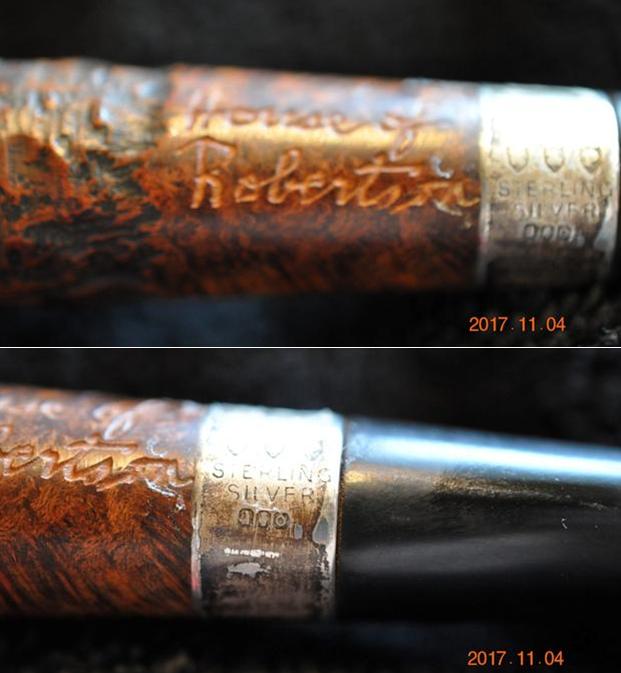
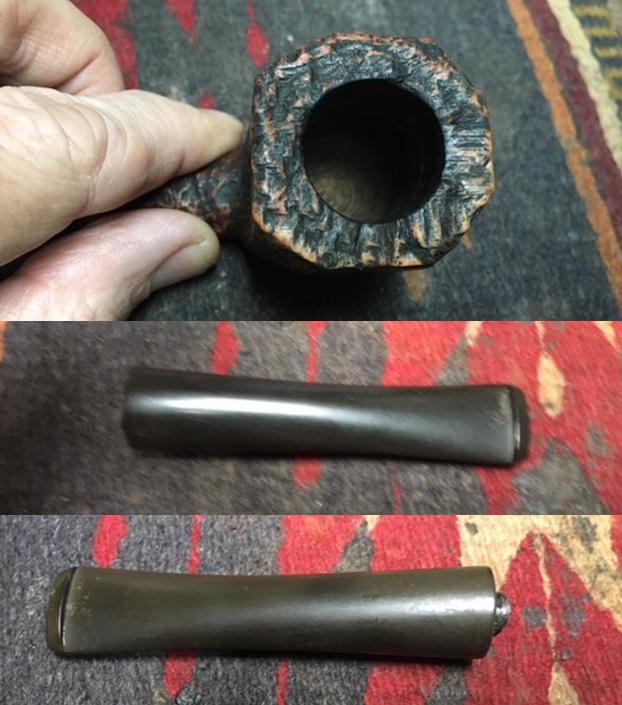
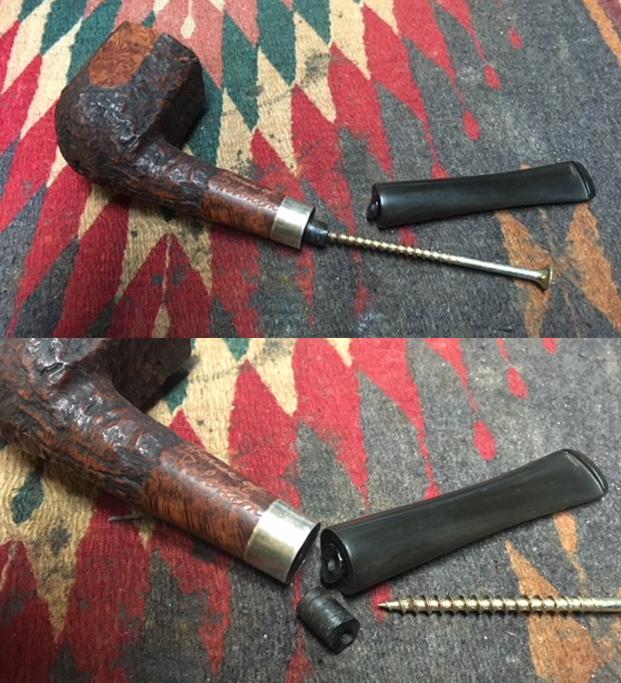
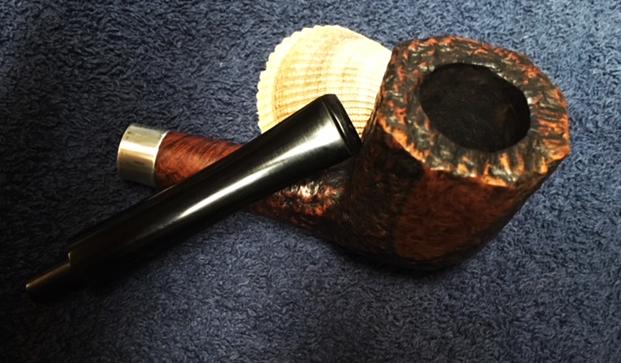
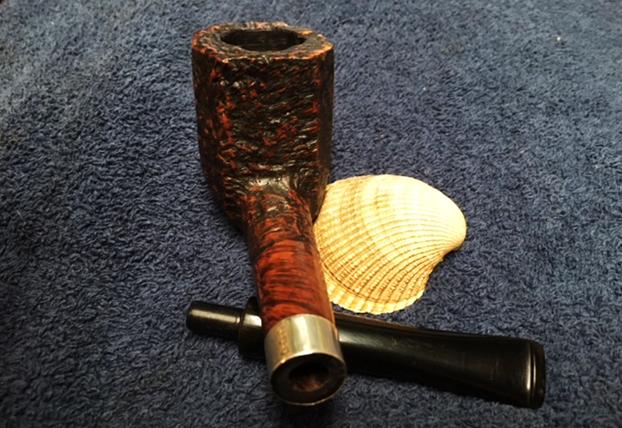
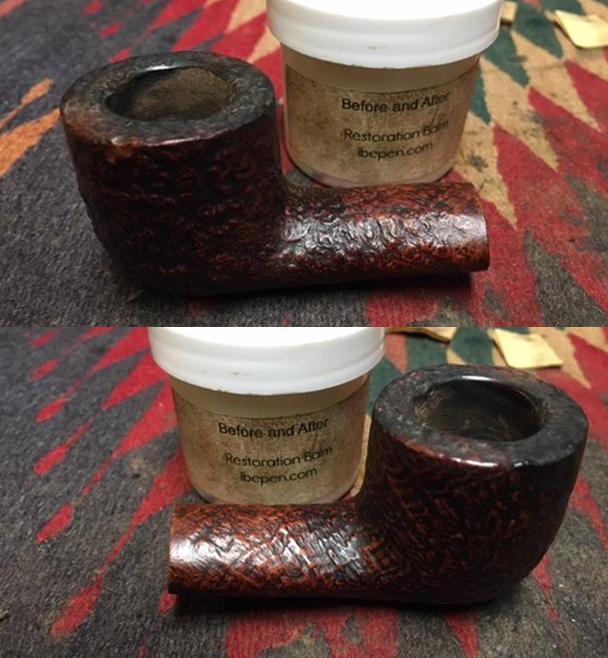
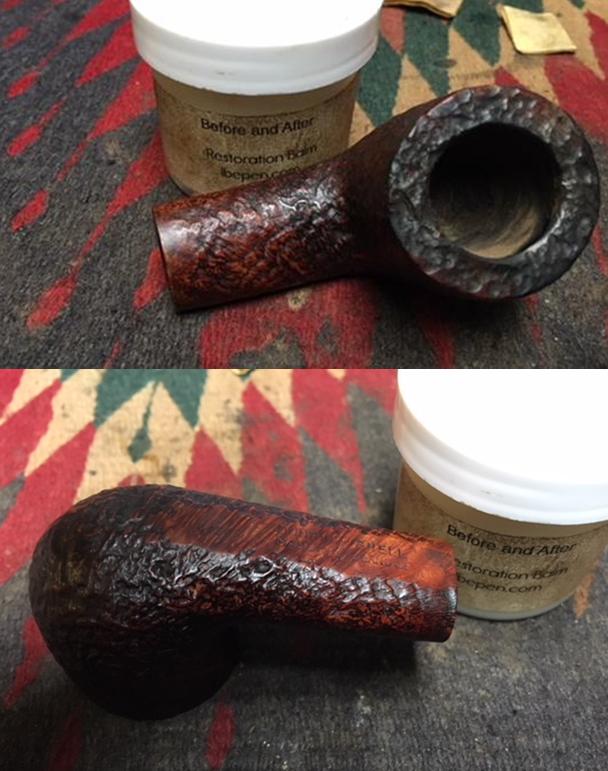
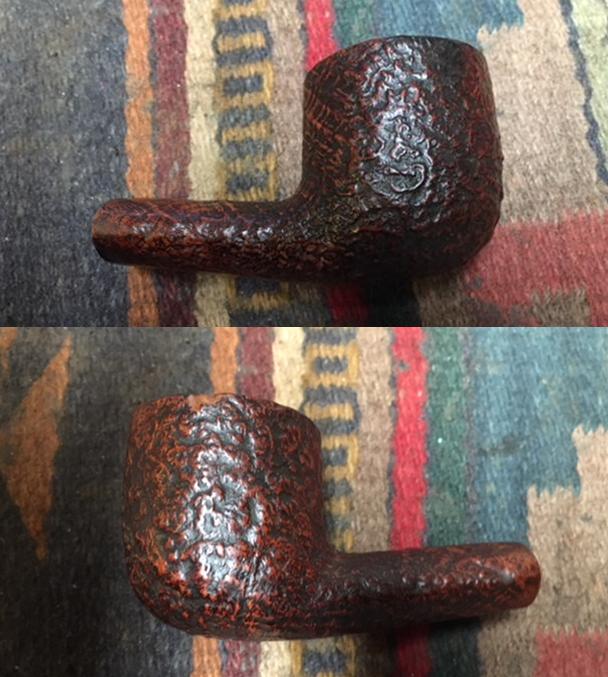
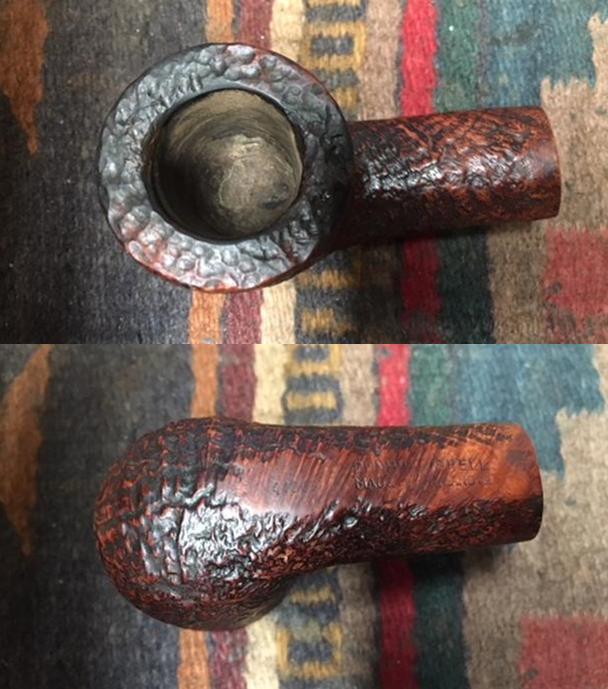
The second pipe, the next House of Robertson pipe I chose to work on is a large rusticated billiard with smooth panels on the sides and front of the bowl and a hexagonal shaped bowl. It is another very different pipe than the others pipes from this Boise based store. It is large and similar to the previous larger pipe in this threesome – 7 long with a bowl that is 2 1/8 inches tall. It is engraved with the House of Robertson signature on the smooth portion of the shank on the left side just ahead of the band. There is a smooth panel on the right, left and front sides of the bowl. The rim top was rusticated. The pipe was dirty but underneath all of the grime it appears to be in excellent condition. The rustication on the bowl and shank was nicely done and was made to look like a sandblast finish. The bottom of the bowl and shank also appeared to be sandblasted. It is definitely an interesting pipe and should clean up very well. The band on the shank is decorative as the shank is undamaged. It has the look of a repurposed band from an older pipe. There are some worn hallmarks on the oxidized Sterling Silver band. The fit of the stem to the shank was good. The stem was oxidized and had some small tooth marks and chatter on both sides of the stem near the button. Jeff took photos of the pipe before he started the cleanup. The next close-up photos show the finish on the top and the sides of the bowl. The first photo shows cake in the bowl and the lava overflowing onto the rim top. The inner and outer edge of the rim looks really good. The finish on the rim top was appeared to be in great condition but the lava coat as pretty thick. The next two photos show sides of the pipe. It was a different rustication from any of the other Robertsons that I have done and it was interesting. The next photo shows the etched name on the left side of shank on a smooth panel of briar. It reads House of Robertson. The second photo shows the stamping on the band. You can also see the general condition of the grime in the rustication of the briar.The tapered stem was oxidized and had tooth chatter and marks on both sides of the stem near the button. The edge of the button had some dents in it as well.This unique pipe was really dirty with a thick cake, overflow of lava on top the rim and dust and debris in the heavy rustication on the sides of the bowl. He reamed the bowl with a PipNet pipe reamer and cleaned up the remnants with the Savinelli Fitsall Pipe Knife. He scrubbed out the mortise and the airway in the shank and the stem with alcohol, cotton swabs and pipe cleaners. He scrubbed the exterior of the bowl, rim and shank with a tooth brush and Murphy’s Oil Soap to remove the dust in the rustication on the bowl and shank as well as the smooth portions. He rinsed it under running water. He dried it off with a soft cloth. Once the dust and debris were removed the finish was dull but appeared to be in excellent condition. I took photos of the pipe to show its condition before I started my work on it. I took a photo of the bowl and rim top to show the condition it was in once it was cleaned off. It has an interesting rustication on the rim top – it has the look of almost a faux plateau. Normally I would include photos of the stem at this point as well to show its condition. Sadly while I was chatting with my brother on Facetime I dropped the pipe on the floor next to my worktable and the stem snapped off leaving the tenon in the shank… Arghhh I hate that. It is not enough to have to clean up and restore an old timer now I have to replace the tenon on the stem and get the fit in the shank correct… oh well these things happen. I am attaching photos of the stem after the “accident” to show what it looked like.Normally my habit at this point in the restoration is to work on the bowl. However, with the broken tenon I decided to address that first before even touching the bowl. I used a long drywall screw to pull the broken tenon out of the shank. I screw it into the airway on the broken tenon and wiggle it out of the shank.I have a small container of threaded replacement tenons that I have on hand for just this kind of “accident”. I went through the tenons and found one that was the same size as broken one. I flattened the broken edges remaining on the stem end with a Dremel and sanding drum to make the face smooth. I started drilling it with a bit slightly larger than the airway to begin to open it up to receive the threaded tenon end. I worked my way up to a bit the same size as the tenon end. The critical part when you are doing this by hand is to keep everything straight or you can end up with a crooked tenon. I finished the drilling and cleaned up the opening in the stem with a needle file to ensure that everything was smooth. Once it was clean and ready I checked out the fit of the tenon and then glued it in place in the stem. The photos show the process. I worked Before & After Restoration Balm deep into the nooks and crannies of the rusticated finish to clean, enliven and protect the briar. I hand rubbed it with my fingers and worked it into the finish with a horsehair shoe brush. I wiped it off with a soft cloth. I buffed the bowl with a cotton cloth to polish it. It really began to have a deep shine in the briar. I took some photos of the bowl at this point to mark the progress in the restoration. The grain on the smooth panels on the sides of the bowl stands out, while the grooves of the rustication look almost undulating. It is another unique and strangely beautiful House of Robertson pipe. Once the glue on the tenon was set I put the stem in the shank and took the following photos to show the fit of the repaired stem to the shank. Finally, after the “accidental” extra steps I am back to where I was when the pipe arrived. It is ready to be cleaned up and restored. I sanded the stem with 220 grit sandpaper to remove the oxidation on both sides of the tapered stem and remove the tooth marks and chatter on the top and bottom sides at the button.I polished out the sanding scratches and marks in the vulcanite with micromesh sanding pads – wet sanding it with 1500-2400 grit pads and dry sanding it with 3200-4000 grit pads. I wiped the stem down with Obsidian Oil after each sanding pad. I buffed the stem with Blue Diamond on the buffing wheel. I brought it back to the table and sanded it with the final three 6000-12000 grit pads. I polished it further with Before & After Pipe Polish –using both the Fine and Extra Fine Polishes. I gave it a rubdown with Obsidian Oil one last time and set it aside to dry. I put the stem back on the bowl and worked the pipe over on the buffing wheel using Blue Diamond to lightly polish the stem. I buffed the bowl with a light touch so as not to get any of the buffing compounds in the grooves of the rustication. I buffed the stem to raise the gloss on the vulcanite. I gave the bowl multiple coats of Conservator’s Wax and gave the stem multiple coats of carnauba wax. I buffed the entire pipe with a clean buffing pad to raise the shine. I hand buffed it with a microfiber cloth to deepen the shine. The finished pipe is shown in the photos below. The medium brown and dark brown stains on the rusticated billiard shaped bowl with a smooth panels and bands works well with the rich black of the vulcanite stem. The polishing of the stem material left this a beautiful and interesting looking pipe. The dimensions of the pipe are: Length: 7 inches, Height: 2 1/8 inches, Outside Diameter: 1 1/2 inches, Diameter of the chamber: 3/4 inches. I will be putting this pipe on the rebornpipes store shortly. It is another big pipe and will make a great addition to someone’s collection. If you are interested in adding this unique pipe let me know. Thanks for looking.
Kathy’s Dad’s Pipes #3 -Restoring George Koch’s “Malaga” Apple


Blog by Steve Laug

This is the third of the “Malaga” pipes that I am working on from Kathy’s Dad’s pipes. Another reminder of where I got them. Last fall I received a contact email on rebornpipes from Kathy asking if I would be interested in purchasing her late Father, George Koch’s estate pipes. He was a lover of “Malaga” pipes – all shapes and sizes and she wanted to move them out as she cleaned up the estate. We emailed back and forth and I had my brother Jeff follow up with her as he also lives in the US and would make it simpler to carry out this transaction. The long and short of it is that we purchased her Dad’s “Malaga” pipes. There are some beautiful pipes in that lot. I have never seen this many “Malagas” together in one place in all of my years of pipe restoring and refurbishing. They varied from having almost pristine to gnawed and damaged stems that will need to be replaced. Many of the pipes already had replacement stems or maybe George had the staff at the Malaga shop in Michigan put Lucite stems on them because he was such a gnawer. I don’t know if we will ever know the answer to that as Kathy did not know for sure. She did know though that he loved the brand and that most of the pipes he smoked he purchased from the shop. These were some well used and obviously well loved pipes. Cleaning and restoring them will be a tribute to this pipeman. (Here is a link to some history of the Malaga Brand if you are interested: https://rebornpipes.com/tag/malaga-pipes/. There are also links there to a catalogue and the maker George Khoubesser.)I have previously written about how knowing about the pipeman who held the pipes in trust before me gives another dimension to the restoration work. This is certainly true with this lot of pipes. I can almost imagine him picking out his assortment at the Malaga shop in Michigan. I may well be alone in this, but when I know about the person it is almost as if he is with me work on his pipes. In this case Kathy sent us not only information but also a photo of her Dad enjoying his “Malagas”. Once again, I am including that information so you can know a bit about the pipeman who held these pipes in trust before they are passed on to some of you. I include part of Kathy’s correspondence with my brother as well…

Jeff…Here is a little about my dad, George P. Koch…I am sending a picture of him with a pipe also in a separate email.

Dad was born in 1926 and lived almost all his life in Springfield, Illinois. He was the youngest son of German immigrants and started grade school knowing no English. His father was a coal miner who died when Dad was about seven and his sixteen year old brother quit school to go to work to support the family. There was not much money, but that doesn’t ruin a good childhood, and dad had a good one, working many odd jobs, as a newspaper carrier, at a dairy, and at the newspaper printing press among others. He learned to fly even before he got his automobile driver’s license and carried his love of flying with him through life, recertifying his license in retirement and getting his instrumental license in his seventies and flying until he was grounded by the FAA in his early eighties due to their strict health requirements. (He was never happy with them about that.) He was in the Army Air Corps during World War II, trained to be a bomber, but the war ended before he was sent overseas. He ended service with them as a photographer and then earned his engineering degree from University of Illinois. He worked for Allis Chalmers manufacturing in Springfield until the early sixties, when he took a job at Massey Ferguson in Detroit, Michigan. We lived in Livonia, and that’s where his love for Malaga pipes began. After a few years he returned to Allis Chalmers and we moved back to Springfield. I remember that when we went back to Michigan to visit friends, Dad had to go to the Malaga store and acquire a few new pipes. Many a year I wrote to Malaga and they picked out a pipe for me to purchase that I could give Dad for a Christmas or birthday present. He was always pleased. His favorites were the straight stemmed medium sized bowl pipes, but he liked them all.  He had some other pipes, but the Malagas were his favorites. I remember him smoking them sitting in his easy chair after work, with feet up on the ledge by the fire burning in the fireplace.  Growing up it was my job to clean them and he liked the inner bowl and stem coated with Watkins vanilla, leaving a little of that liquid in the bowl to soak in when I put them back on the rack. Dad quit smoking later in life and so they’ve sat on the racks for many years unattended, a part of his area by his easy chair and fireplace. Dad passed when he was 89 years old and it finally is time for the pipes to move on. I’m very happy they are being restored by you and your brother and hope they find homes who enjoy them as much as Dad did. Thank-you for your care and interest. — Kathy, the oldest daughter

Kathy, once again I thank you for providing this beautiful tribute to your Dad. We will appreciate your trust in allowing us to clean and restore these pipes. I am also trusting that those of you who are reading this might carry on the legacy of her Dad’s pipes as they will be added to the rebornpipes store once they are finished.

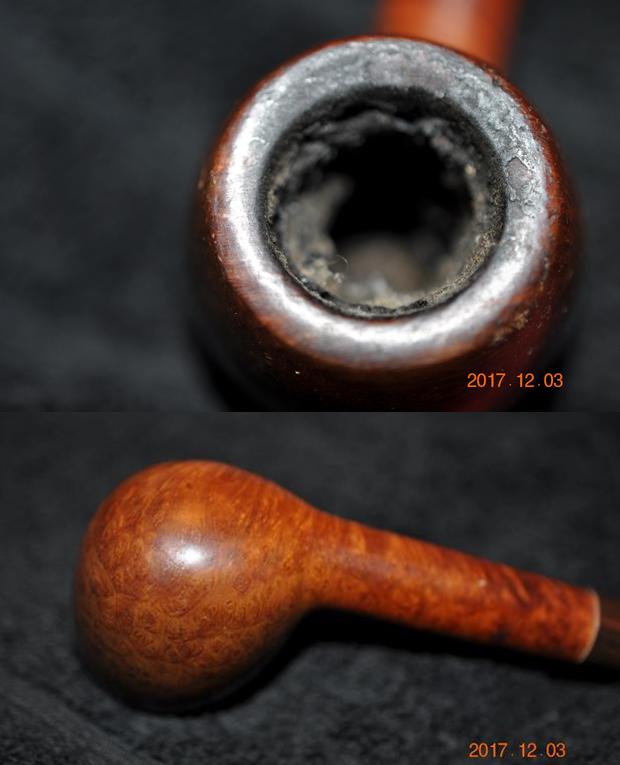
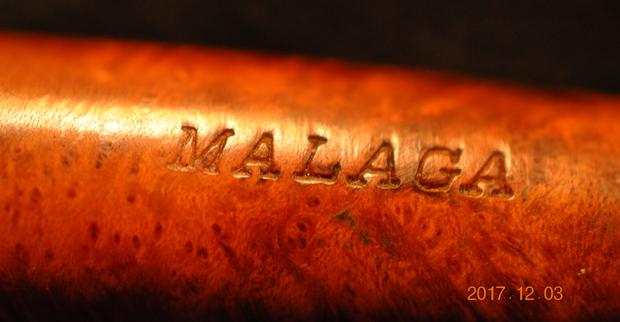
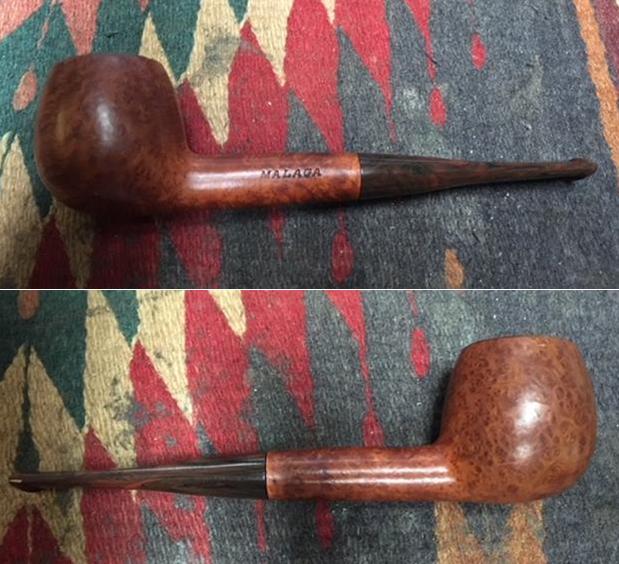
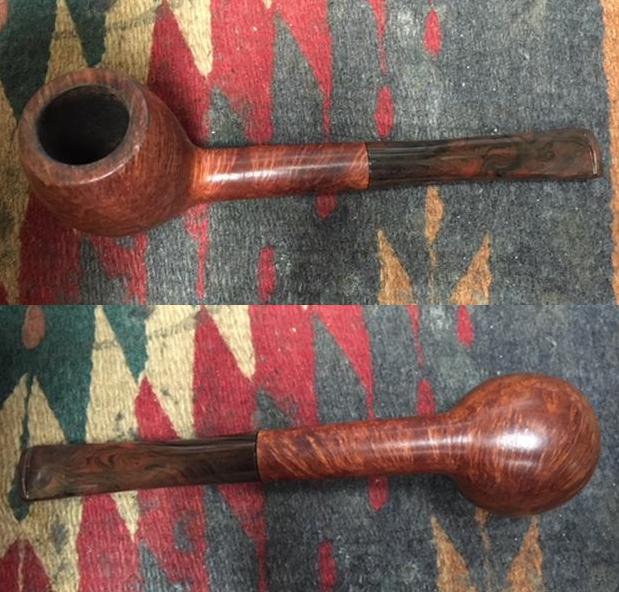
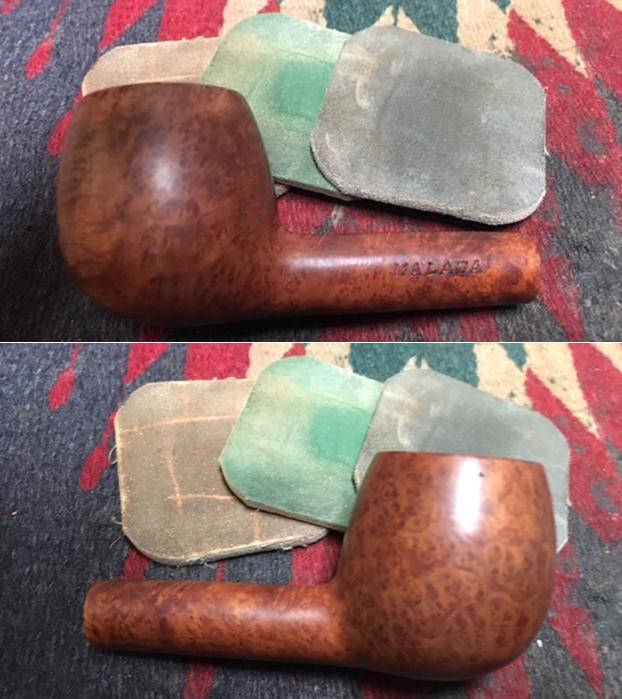
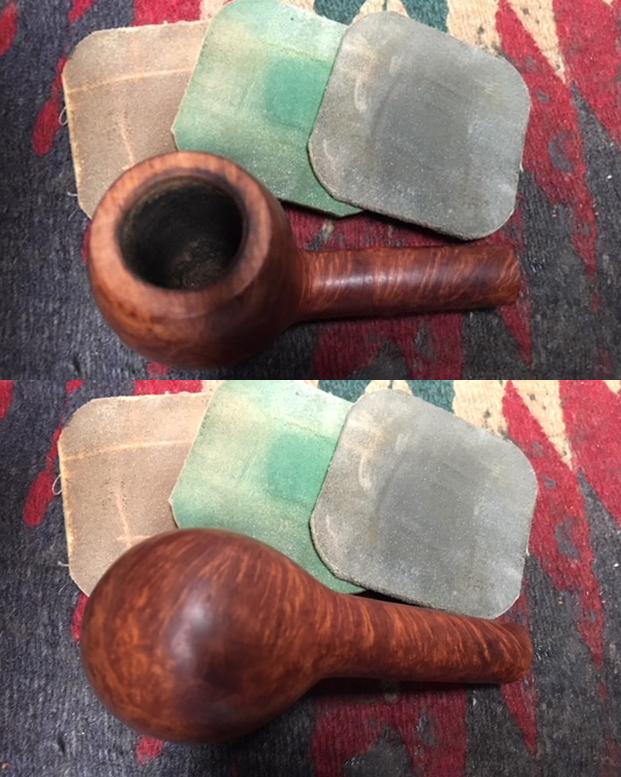
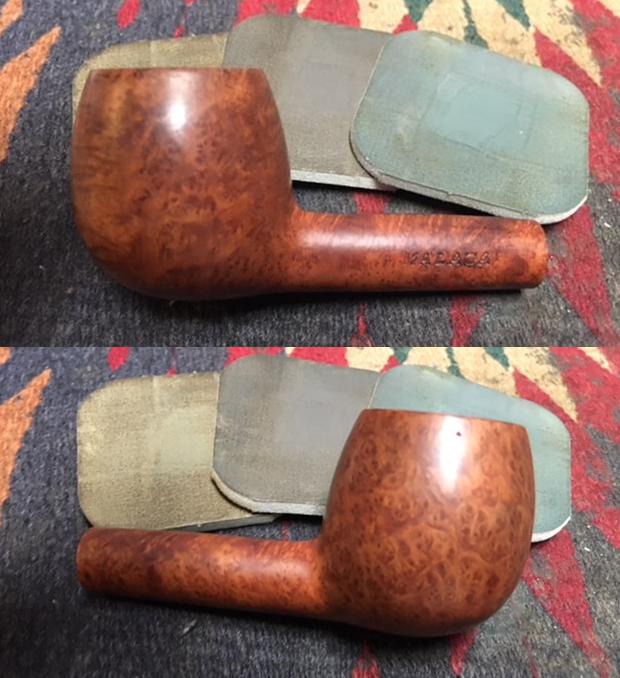
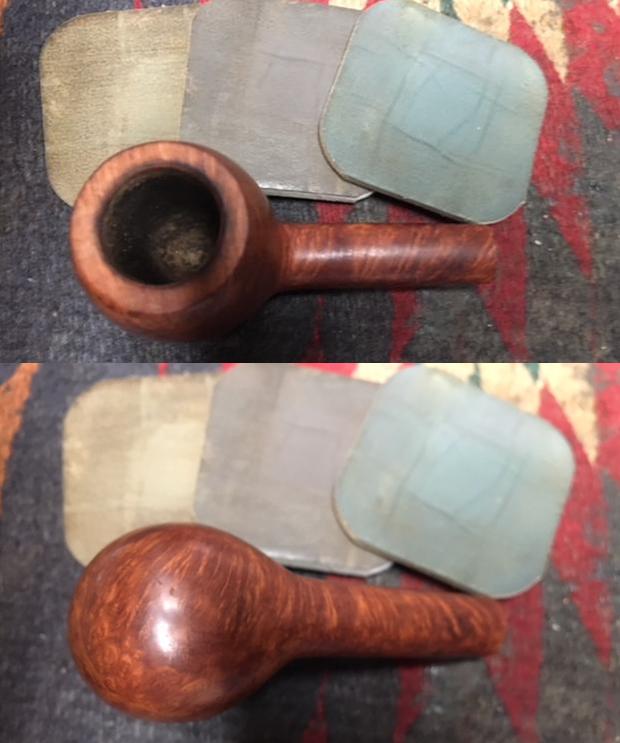
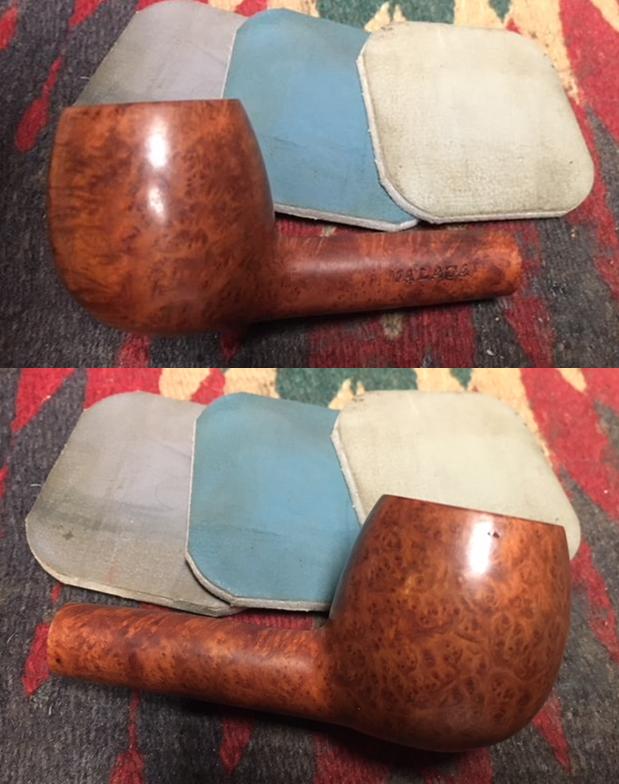
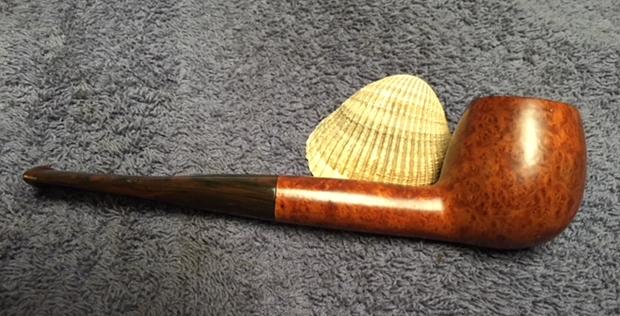
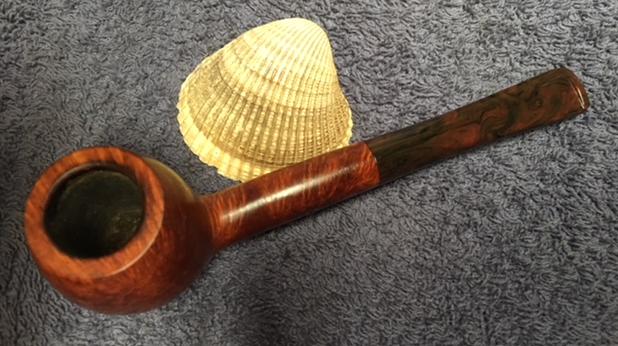
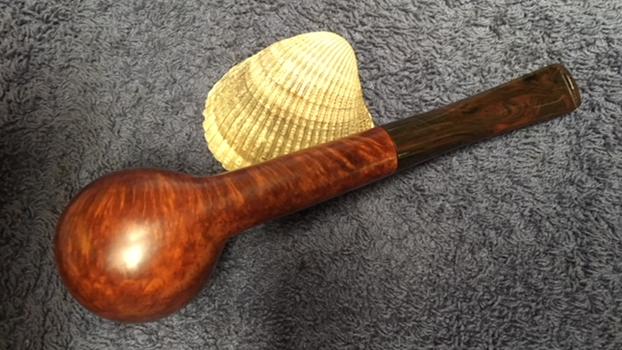
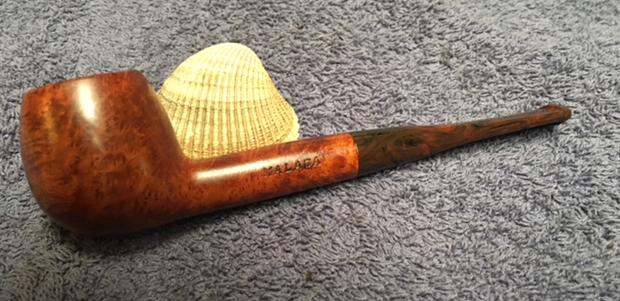
The third of the pipes that I chose to work on is a “Malaga” Apple shape with an acrylic Cumberland stem. It is another beautiful pipe underneath the grime and debris of the years. The warm brown finish on the bowl appeared to be good condition under the dust and tars of time. I think that Malagas must have been oil cured as they are very light weight and the finishes are uniformly well done. I have yet to find a fill in any of the bowls I have worked on in this lot and looking through what remains I think it is fair to say I won’t find any in them either. The rim top on the apple was covered with a light overflow of lava from the cake in the bowl. The inner and outer edge of the bowl had damage. There were some nicks on the outer edge and there was some darkening on the inner edge. The outer edge showed signs of being knocked against a hard surface to empty the dottle from the bowl. The stamping on the left side of the shank was clear and read “Malaga”. Once again there were no shape numbers on the pipe. The acrylic Cumberland coloured stem fit the shank quite well and had some really interesting patterns around the stem. There was tooth chatter and marks on both sides at the button and one deep tooth mark on the underside near the button. The interior of the pipe was dirty. I know that George thoroughly enjoyed his pipes as is evidenced by the use that all of them show. Jeff took these photos before he started the cleanup work on the pipe. He took close up photos of the bowl and rim to show the condition of the pipe before he started to work his magic on it. The exterior of the bowl and shank were dirty. You can see the lava on the rim, the cake in the bowl and the nicks on the bowl around the outer edge of the rim. It is dirty but in otherwise good condition. He also took a photo of the side of the bowl and the underside of the bowl and shank. He also took a photo of the left side of the shank to show the stamping and the condition of the overall shank so you could have an idea of where things were at before he cleaned it up.The next photo shows the colour of the stem material with all of the swirls of black and red that make Cumberland beautiful. The nicks in the surface, the tooth chatter on the stem top and underside as well as the button and the deep tooth mark on the underside of the stem can be seen in the photos that follow. Working on this third pipe and working on a Savinelli Autograph from Farid’s Dad’s estate at the same time is a good reminder of how much Jeff does in preparing a pipe for me to restore. He reamed the bowl with a PipNet pipe reamer and followed up with a Savinelli Fitsall pipe knife to remove the cake. He scrubbed out the mortise and the airway in the shank and the stem with alcohol, cotton swabs and pipe cleaners. He scrubbed the exterior of the bowl, rim, shank and stem with a tooth brush and Murphy’s Oil Soap to remove the oils and tars on the bowl, rim and shank. He rinsed it under running water. He dried it off with a soft cloth. The lava mess on the rim was thoroughly removed without harming the finish underneath it. Once the grime was removed the finish actually looked it was in excellent condition. I took photos of the pipe to show its condition before I started my work on it. It really has some nice birdseye grain on the right side of the bowl and shank. I took a photo of the rim top to show the condition it was in after the cleanup. Jeff was able to remove all of the lava on the rim top and edges. There is still some darkening on the rim top. You can see the damage around the outer edges and top from knocking out the pipe on a hard surface. The stem was clean and you can see the tooth chatter and marks on the surface near the button and the large deeper tooth mark on the underside.I sanded out the tooth chatter and tooth marks with 220 grit sandpaper to smooth and blend them into the surface of the rest of the stem. I sanded the surface of the button to remove the marks on the top and underside. The top of the stem looks very good at this point. The tooth mark on the underside is visible and is repairable at this point.I sanded the inside of the tooth mark to rough it up, wiped it down with alcohol on a cotton pad and filled in the divot with clear super glue. I set the stem aside to let the glue cure and worked on another pipe.When the glue had hardened I sanded it smooth with 220 grit sandpaper to blend it into the surface of the acrylic. I worked on it until the repair was basically invisible (first photo below). I sanded the topside of the stem again as well (second photo below).I polished the stem with micromesh sanding pads – wet sanding with 1500-2400 grit pads and dry sanding with 3200-12000 grit pads. I wiped the stem down after each pad with a damp cloth to remove the sanding dust. I lightly topped the bowl on my topping board using 220 grit sandpaper. It did not take too much work to remove the nicks and damage to the rim top and edges. Once it was complete I topped it on a medium grit sanding sponge to smooth the surface even more.I beveled the inside edge of the rim to minimize the damage. I gave it a slight bevel that made the darkening on the inside edge less visible.I filled in the deeper nicks and marks along the outer edge of the bowl with clear super glue. Once it dried and I sanded it back it would make those areas smooth and almost unnoticeable.I sanded the repaired areas with 220 grit sandpaper and then blended it into the surrounding briar with micromesh sanding pads. I polished it with 1500-2400 grit sanding pads.I polished the briar with micromesh sanding pads – wet sanding with 1500-2400 grit pads and dry sanding with 3200-12000 grit pads. I wiped the briar down after each pad with a damp cloth to remove the sanding dust. I rubbed the bowl down with Before & After Restoration Balm to deep clean the pores and grain of the smooth finish as well as to enliven and protect the briar. I hand rubbed it with my fingers and wiped it off with a soft cloth. I buffed the bowl with a horsehair shoe brush to polish it. The briar really began to have a rich shine. I took some photos of the bowl at this point to mark the progress in the restoration. With the stem polished I put it back on the pipe and buffed it with Blue Diamond. I gave the bowl and the stem several coats of carnauba wax and buffed the pipe with a clean buffing pad to raise the shine. I hand buffed it with a microfiber cloth to deepen the shine. The pipe polished up pretty nicely. The finished pipe is shown in the photos below. This is the third of the many “Malaga” pipes that I am restoring from Kathy’s Dad’s collection. I am looking forward to hearing what Kathy thinks once she sees the finished pipe on the blog. I will be posting it on the rebornpipes store very soon. It should make a nice addition to a new pipeman’s rack that can carry on the trust from her father. The dimensions are Length: 6 inches, Height: 1 1/2 inches, Outside diameter of the bowl: 1 1/4 inches, Chamber diameter: 3/4 inches. Thanks for walking through the restoration with me as I worked over this second Malaga of his estate. More will follow in a variety of shapes and sizes.

Restoring a 1983 Dunhill Shell 41009 Oval Shank Pot


Blog by Steve Laug

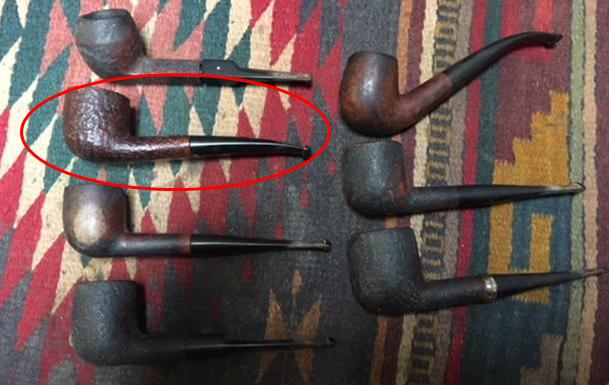
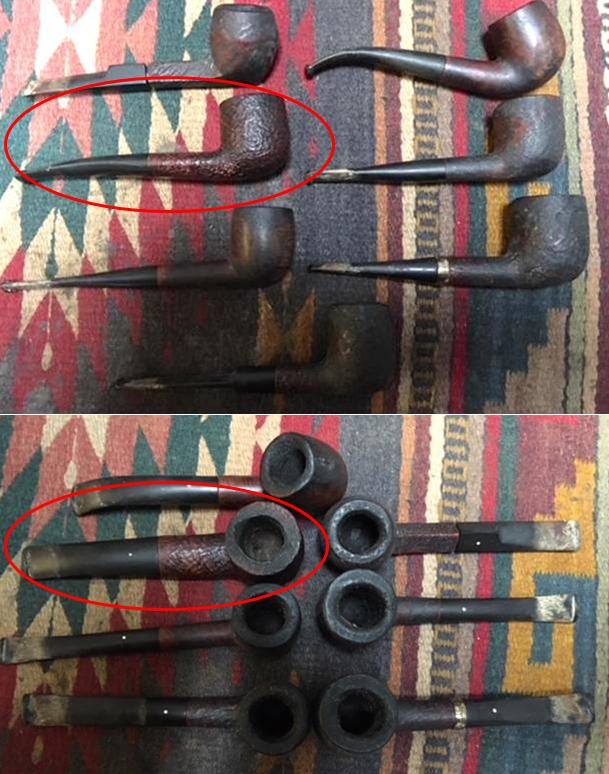
The next collection of pipes that I am working on comes from the estate of an elderly gentleman here in Vancouver. I met with his daughter Farida last summer and we looked at his pipes and talked about them then. Over the Christmas holiday she brought them by for me to work on, restore and then sell for her. There are 10 pipes in all – 7 Dunhills (one of them, a Shell Bulldog, has a burned out bowl), 2 Charatans, and a Savinelli Autograph.  He loved his pipes and she said that he was rarely seen without a pipe in his mouth. He traveled a lot and she remembers him having one of these pipes with him in the far north of Canada. His pipes are worn and dirty and for some they have a lot of damage and wear that reduce their value. To me each one tells a story. I only wish they could speak and talk about the travels they have had with Farida’s dad. Each of them has extensive rim damage and some have deeply burned gouges in the rim tops. The bowls were actually reamed not too long ago because they do not show the amount of cake I would have expected. The stems are all covered with deep tooth marks and chatter and are oxidized and dirty. The internals of the mortise, the airway in the shank and stem are filled with tars and oils. I took pictures of the Dunhill pipes in the collection. There are some nice looking pipes in the lot. The first pipe that I am working on is a Shell Oval Pot. I have circled in the above three photos in red to identify it for you. It is an interesting shape. The pipe is stamped on the underside of the shank with the shape number 41009 next to Dunhill Shell over Made in England 23. Dating this pipe is a fairly easy proposition. You take the two digits following the D in England and add them to 1960. In this case it is 1960+23= 1983. (Pipephil’s site has a helpful dating tool for Dunhill pipes that I use regularly http://www.pipephil.eu/logos/en/dunhill/shell-briar1.html). It was in pretty rough shape. The bowl itself looked good and the finish was in decent condition. The top of the rim was rough and the inner edge was badly damaged. There were spots on the front of the rim top and at the rear that had deep burns into the briar. The briar was burned to a point where I could pick it out with my fingernail. The shank was so dirty that the stem would not properly seat in the mortise. The stem was not too bad – tooth marks on the underside near the button and lots of chatter on both sides. It was lightly oxidized and there was some calcification on the first inch of the stem. I took some photos of the pipe before I started to clean it up. I took close up photos of the rim top, bowl and the stem to show the condition the pipe was in before I started my clean up. The first photo shows the damage on the top of the rim and particularly the inner edge of the bowl. You can see the damage on the front edge and the back edge of the bowl. There was some major burn damage on the inner edge of the bowl. The rim top also had some tars and lava on the surface that would need to be addressed before I could work on the burned areas. The surface of the bowl was dirty and grimy with dust and oils ground into the grooves of the sandblast. The photos show the light cake in the bowl and the dust and grime on the finish. The stem photos show the oxidation and the tooth chatter and tooth marks on the stem surface. You can also see that the stem does not seat in the shank well.I reamed the bowl with a PipNet pipe reamer to cut back the cake to bare briar. I finished cleaning up the remnants with a Savinelli Fitsall Pipe Knife. I used the knife to scrape away the soft briar from the burned areas of the rim top. I used a brass bristle wire brush to clean up the grooves in the good portion of the rim top. I also cleaned out the burned areas. I wiped out the burned areas with cotton swabs and alcohol to clean out the remaining dust and leave it clean. I built up both areas with briar dust and super glue. I used a dental spatula to apply the briar dust to the glue. I built it up in layers until it was level and the inner walls were round.I used a folded piece of 220 grit sandpaper to smooth out the inner edge of the bowl. I worked on it to round the edges. I used a Dremel and sanding drum to smooth out the hard spots of dried glue and dust. I used the brass bristle wire brush to clean out the grooves in the rustication on the rim top. With the rim top basically finished (other than rusticating it with a Dremel and burr) I worked on cleaning out the internals in the shank. I used a dental spatula to scrape out the hard tars and oils that had lined the walls in the mortise. I cleaned out the mortise and the airway in the shank with alcohol, pipe cleaners and cotton swabs until the shank was clean.I used a dental burr in my Dremel to rusticate the top of the rim. I wanted to match the repaired areas to the rest of the rim top. I slowly and carefully put divots in the surface to match the rest of the surface of the rim. I restained the rim with a dark brown aniline stain and a cotton swab to get the stain deep in the recesses of the repaired rim top.I rubbed Before & After Restoration Balm into the deep grooves and crevices of the sandblast on the rim and the rest of the bowl. I rubbed it until it was deep in the briar. It was amazing to see the grime and dirt on the cotton pad that I wiped it down with. The balm brought life and a rich glow to the briar. I rubbed the bowl down with Conservator’s Wax and buffed the pipe with a shoe brush. I took it to the buffer and buffed it with a clean buffing pad to raise the shine. I hand buffed it with a clean microfiber cloth to deepen the shine. The photos below show the repaired and restored bowl. It has come a long way from the damaged pipe I started with when I began. I laid the bowl aside and turned my attention to the stem. I cleaned the surface with alcohol and a cotton pad and cleaned out the airway with alcohol, cotton swabs and pipe cleaners. I scrubbed until the cleaners came out white. I sanded the stem with 220 grit sandpaper to smooth out the tooth chatter and remove the tooth marks. Fortunately they were not too deep so they came out with a little elbow grease.I polished the stem with micromesh sanding pads – wet sanding with 1500-2400 grit pads and dry sanding with 3200-12000 grit pads. I wiped them down after each pad with Obsidian Oil after each pad. I polished it with Before & After Pipe Stem Polish – both fine and extra fine to take out some of the tiny scratches in the vulcanite. I finished by rubbing it down with a final coat of Obsidian Oil and set it aside to dry. With the stem polished I put it back on the pipe and lightly buffed the bowl with Blue Diamond being careful to not fill the grooves in the blast with the polishing compound. I used a regular touch on the stem to polish out any remaining scratches. I gave the bowl several coats of Conservator’s Wax and the stem several coats of carnauba wax and buffed the pipe with a clean buffing pad to raise the shine. I hand buffed it with a microfiber cloth to deepen the shine. The pipe polished up pretty nicely. The finished pipe is shown in the photos below. This is the first of six Dunhill pipes that I am restoring from Farida’s dad’s collection. I am looking forward to hearing what Farida thinks once she sees the finished pipe on the blog. I will be posting it on the rebornpipes store as she wants to sell them for the estate. It should make a nice addition to a new pipeman’s rack that can carry on the trust from her father. The dimensions are; Length: 6 inches, Height: 1 ¾ inches, Outside diameter of the bowl: 1 ½ inches, Chamber diameter: 7/8 inches. Thanks for walking through the restoration with me it was a fun pipe to work on. Cheers.

Restoring a Kriswill Made Danish Special Smooth Panel Bent Billiard


Blog by Steve Laug

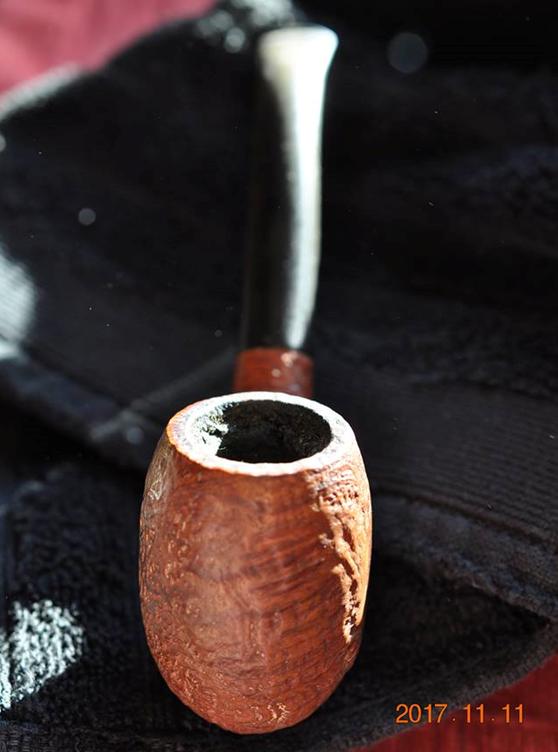
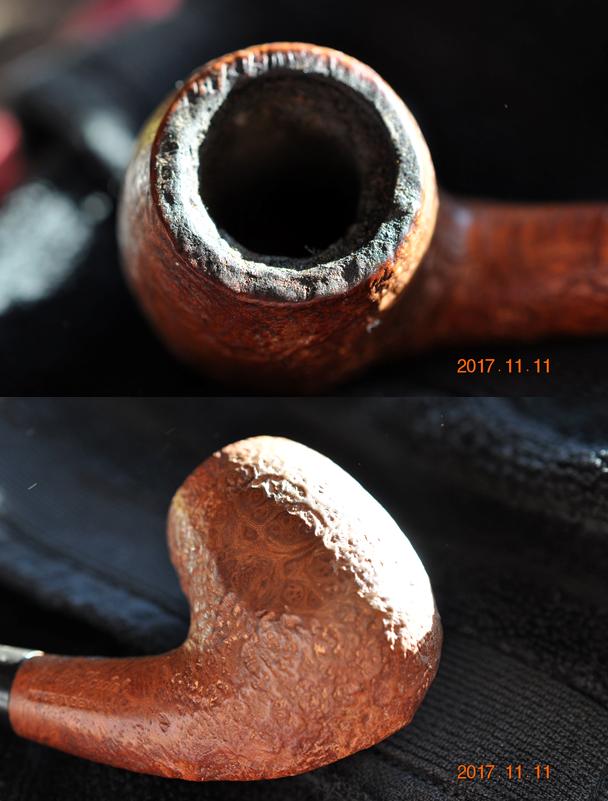
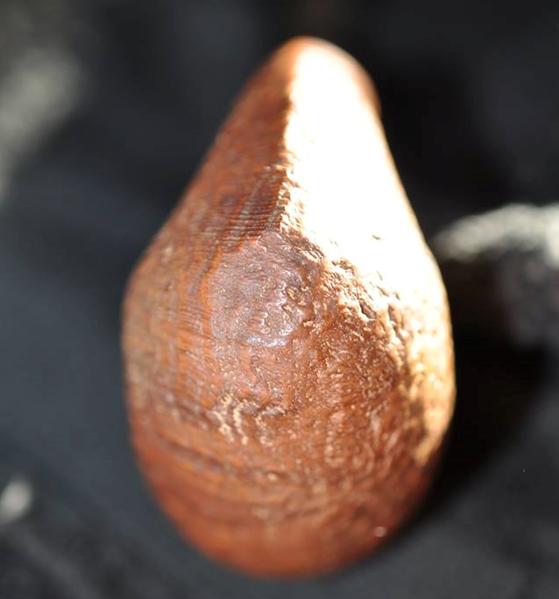
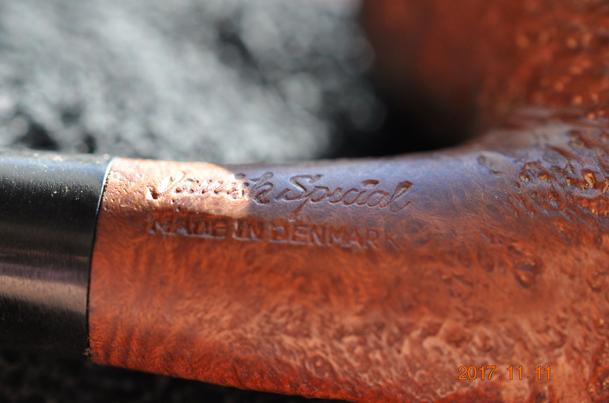
The next pipe on the table is one from a local pipe shop. It came from the estate of an older gentleman whose wife returned them to the shop for restoration and resale. This one is an interesting sandblast finish bent billiard. The sandblast is interesting showing a variety of grain around the bowl. It has smooth panels on the right and left side of the bowl and the right side of the shank. It is stamped on the smooth right side of the shank Danish Special over Made in Denmark. The finish on the pipe was dusty and some of the grooves were almost filled in with grime and dust. The rim top had lava built up in the blast on the flat surface. The bowl had a thick, hard cake almost filling it in. The stem had several tooth marks and was lightly oxidized. I sent the pipes off to my brother for cleaning. I have about 50 of them to rework and a waiting queue of pipes to repair. I really appreciate his willingness to clean and ream the pipes for me. When he received the pipe he took a series of photos of it to show its condition. He took a close up photo of the rim top showing the cake and the lava on the flat top of the bowl. The cake is quite thick and the lava has filled in the sandblast on the surface of the rim. He also took photos of the sandblast around the sides and underside of the bowl. His final photo shows the stamping on the right side of the shank. It is clear and readable. The brand Danish Special was unfamiliar to me. I had heard of Danish Pride, Danish Star, Royal Danish and other Stanwell brands but this one was unfamiliar.I Googled the name and found that the brand was a sub-brand or second brand of Kriswill pipes. From there I did some reading on Pipedia on the Kriswill Brand and found the following:  Kriswill was one of the large pipe manufacturers in Denmark during the 1960s and 1970s, and I believe closed around 20 years ago. Their catalog cover read “By Appointment to the Royal Danish Court, KRISWILL, Kriswork Briar Trading, Briar Pipes Hand Made in Denmark.” https://pipedia.org/wiki/Kriswill
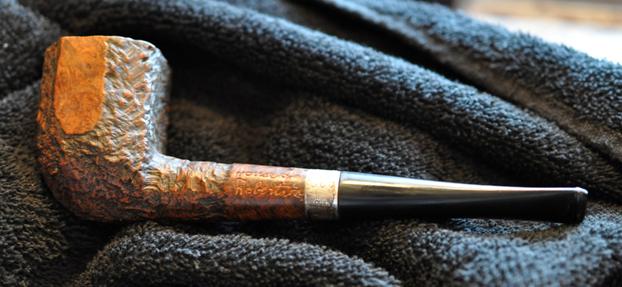
I also went to the PipePhil logos and stamping site and found more on the date of the brand. It had no explicit ties to the Danish Special that I had but it was interesting nonetheless.

Kriswill is a brand of Kriswork Briar Trading, in Kolding (Denmark) established about 1955. Some of Kriswill pipes were designed by Sigvard Bernadotte, Swedish prince and brother to the late Queen Ingrid of Denmark. He collaborated with his Danish partner Acton Bjørn. When the company went bankrupt in the late 1970s it was on a level with Stanwell. Dan Pipe Cigar & Company (Hafenstrasse 30 D-21481 Lauenburg/Elbe, Ge) bought the rights to use the name and it is Holmer Knudsen and/or Poul Winsløw who make the Kriswill line. Nørding, on its side, bought the plant and introduced a Kriswell line. http://www.pipephil.eu/logos/en/logo-k3.html
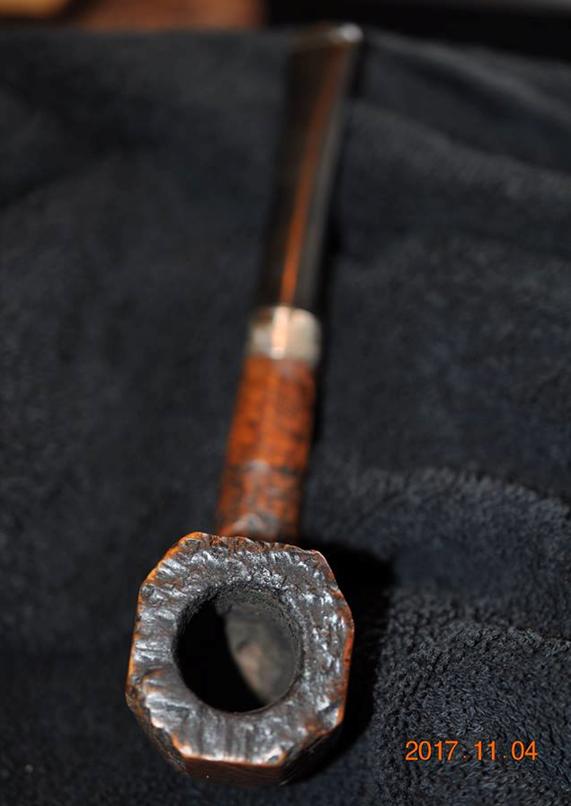
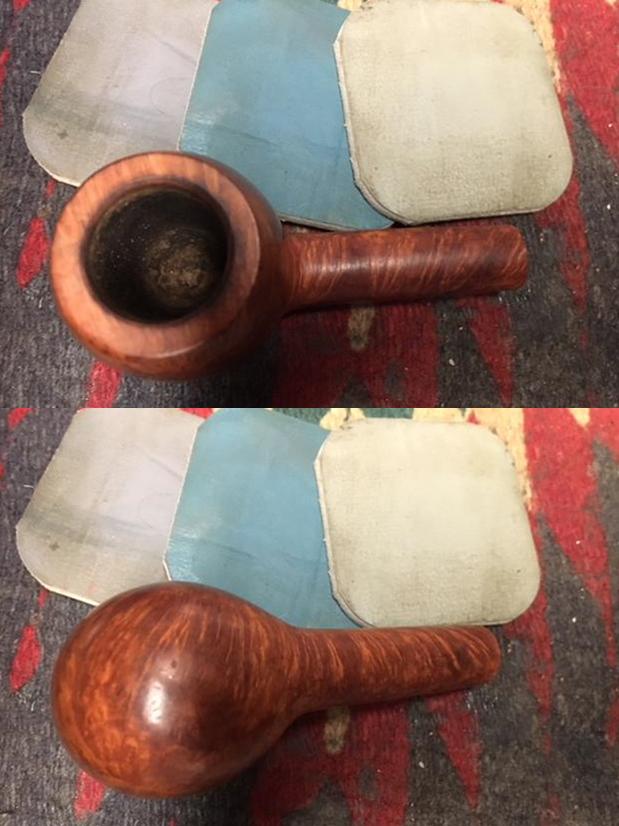
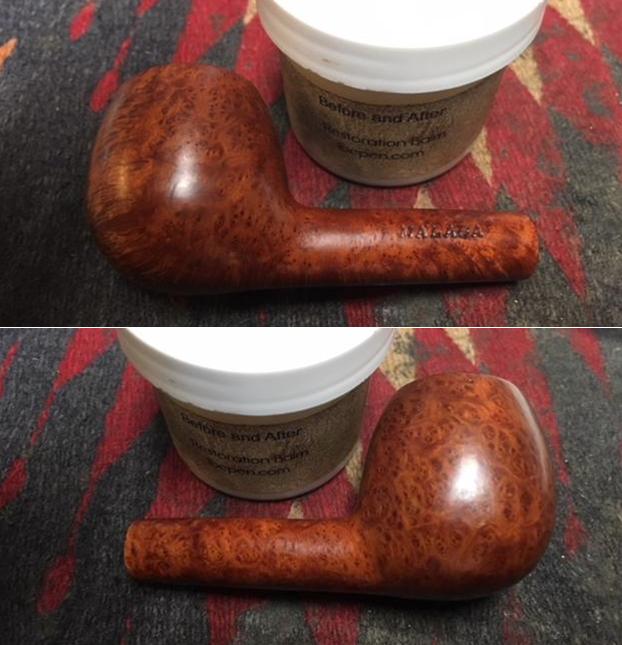
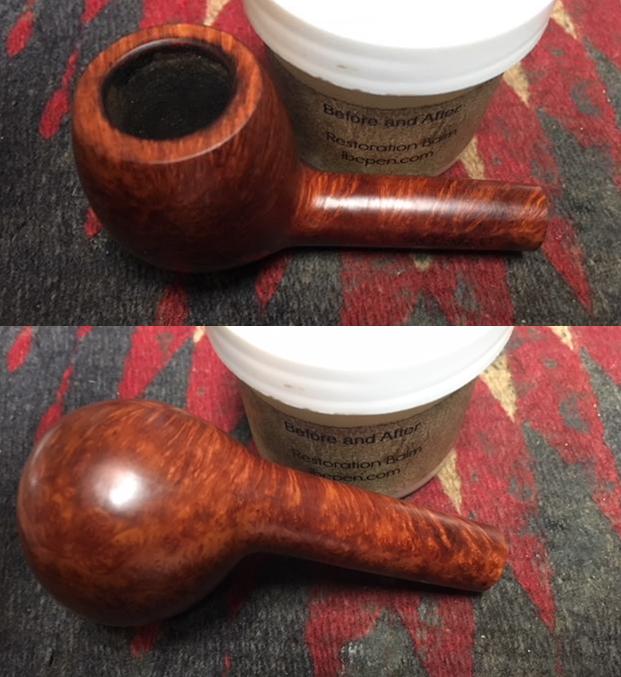
Jeff did his usual thorough cleanup on the bowl and stem. He carefully reamed the bowl back to bare briar with a PipNet Pipe Reamer and cleaned up the remnants with a Savinelli Fitsall Pipe Knife. He cleaned the internals with alcohol, pipe cleaners and cotton swabs – scrubbing out the mortise as it was dirty. He scrubbed the exterior of the pipes with Murphy’s Oil soap and a tooth brush and was able to remove all of the oils and dust in the smooth finish on the briar. He was able to remove all of the lava and grime from the rim top and left it looking very clean. The inner and outer edges of the rim top were in good shape. He soaked the stem in an Oxyclean bath to raise the oxidation to the surface of the vulcanite. It was clean and the remaining oxidation was very light. When the pipe arrived I took some photos to show how it looked before I did the restoration.  Jeff was able to remove the lava buildup on the rim top and clean grooves and crevices of the sandblast surface and edges of the rim. The inner and outer edges of the rim were in excellent condition and the rim top looked new. The stem was lightly oxidized and had tooth chatter and marks on both sides of the stem near the button.I rubbed the bowl down with Before & After Restoration Balm to deep clean the nooks and crannies of the finish, enliven and protect the briar. I hand rubbed it with my fingers to get it deep into the grooves. I let it sit for a few minutes and then wiped it off with a soft cloth and buffed it with a horsehair shoe brush. The briar really began to have a deep shine. The smooth panels showed some nice grain patterns and the sandblast looked really good. I took some photos of the bowl at this point to mark the progress in the restoration. I set the bowl aside and turned my attention to the stem. I sanded out the tooth chatter and many of the tooth marks with 220 grit sandpaper. There was a small tooth mark on the top and underside of the stem that I cleaned up and filled it in with a drop of clear super glue. When the glue cured, I sanded the repaired areas smooth to blend them into the surface of the stem. I worked over the stem with micromesh sanding pads. I polished out the sanding scratches and marks in the vulcanite – wet sanding it with 1500-2400 grit pads and dry sanding it with 3200-12000 grit pads and wiped it down with Obsidian Oil after each one. When I finished with the 12000 grit pad I gave it a final coat of oil and set it aside to dry. I polished it with Before & After Stem Fine Polish and wiped it down. I followed that by polishing it with the Extra Fine Polish. I buffed it with a microfiber cloth to raise the shine. I put the stem back on the bowl and took the pipe to the buffing wheel to work it over. I buffed the bowl with Blue Diamond to polish the briar. I buffed the stem at the same time to raise the gloss on the vulcanite. I gave the bowl and the stem multiple coats carnauba wax. I buffed the entire pipe with a clean buffing pad to raise the shine. I hand buffed it with a microfiber cloth to deepen the shine. The finished pipe is shown in the photos below. The dimensions of the pipe are: Length: 6 1/2 inches, Height: 2 1/4 inches, Outer Diameter of the Bowl: 1 1/8 inches, Diameter of the Chamber: 7/8 inches. I will be adding this one to the rebornpipes store shortly if you are interested in adding it to your collection. It is a beautiful Kriswill made pipe that feels comfortable in the hand. It will make a great pipe addition to the rack and should smoke dry and cool. If you are interested email me at slaug@uniserve.com or send me a message on Facebook. Thanks for looking.

An Interesting Find – An FEC Cased Briar with a lot of Bling


Blog by Steve Laug

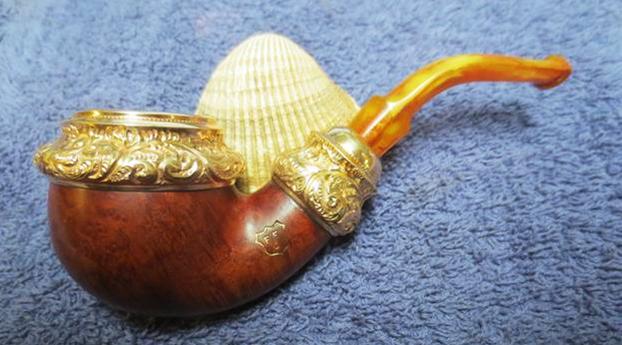
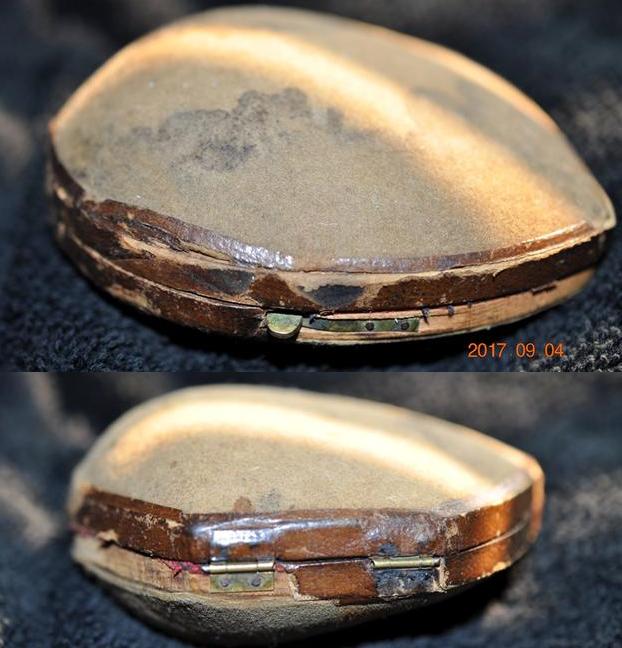
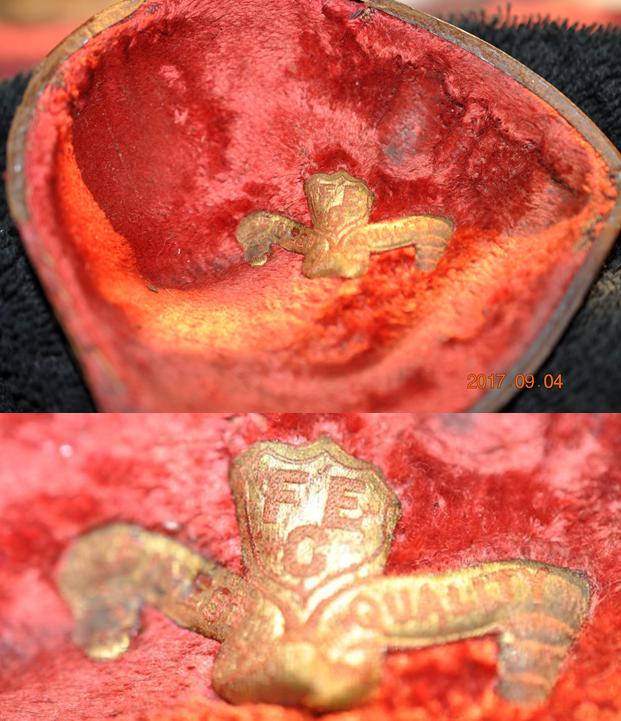
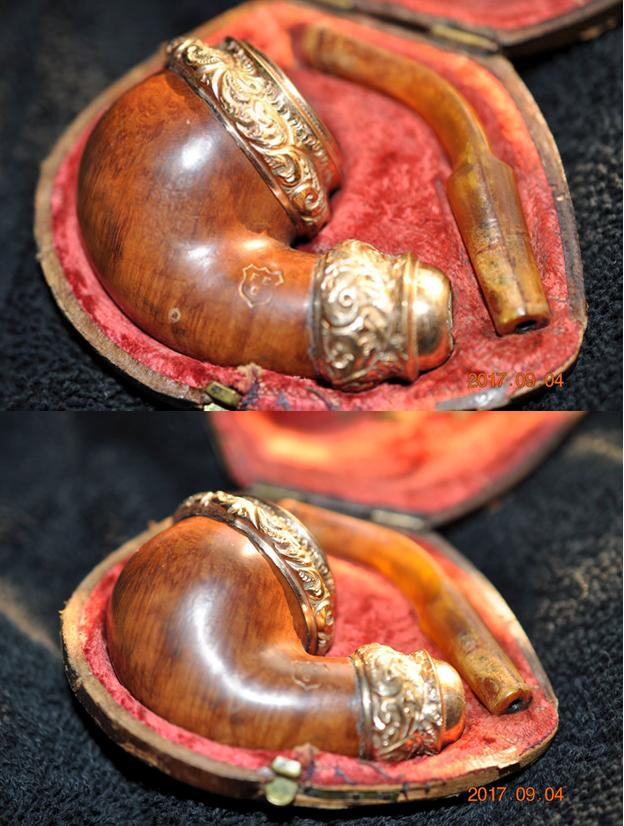
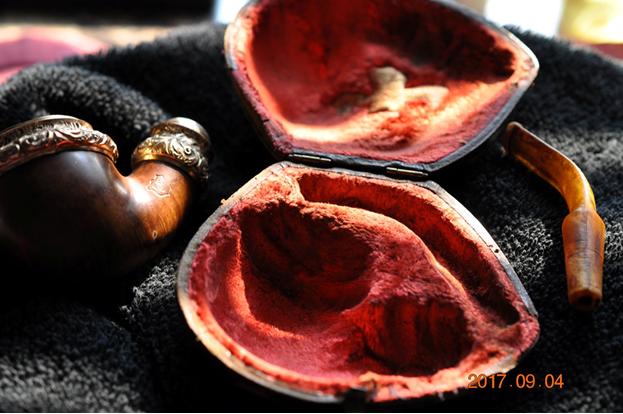
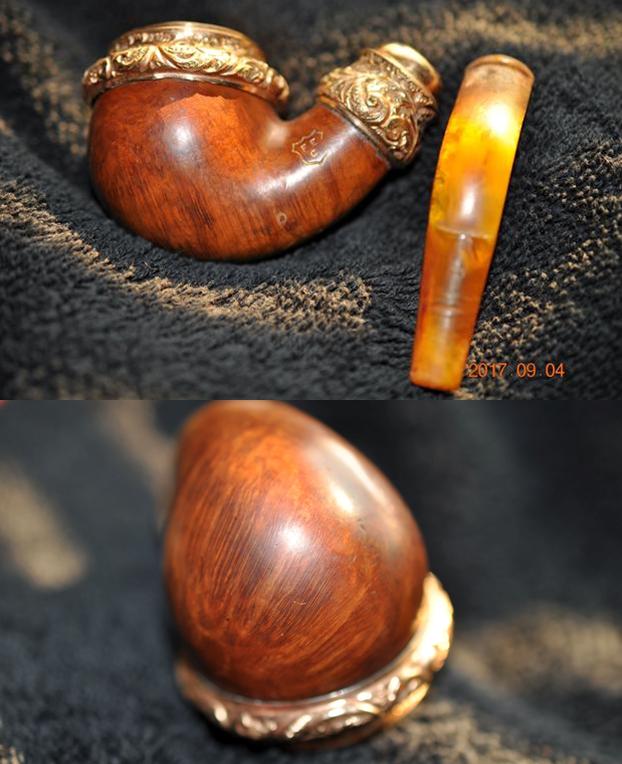
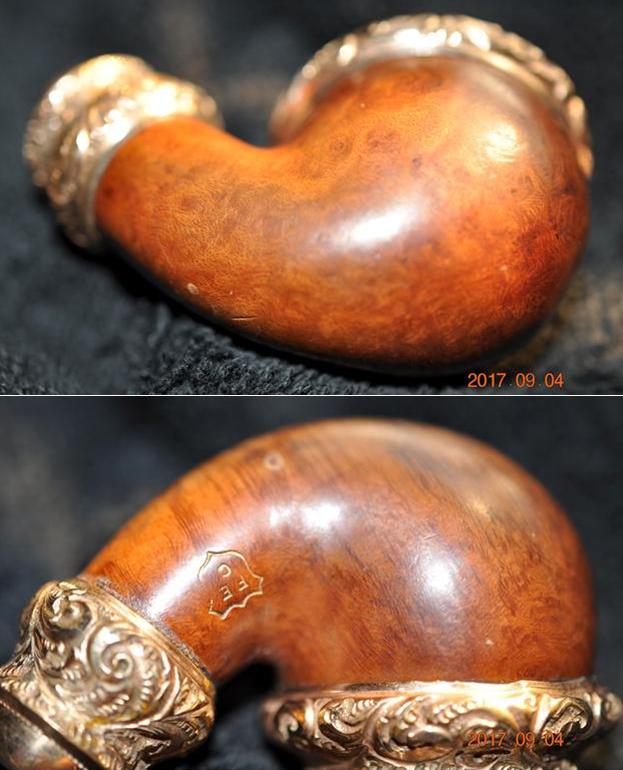
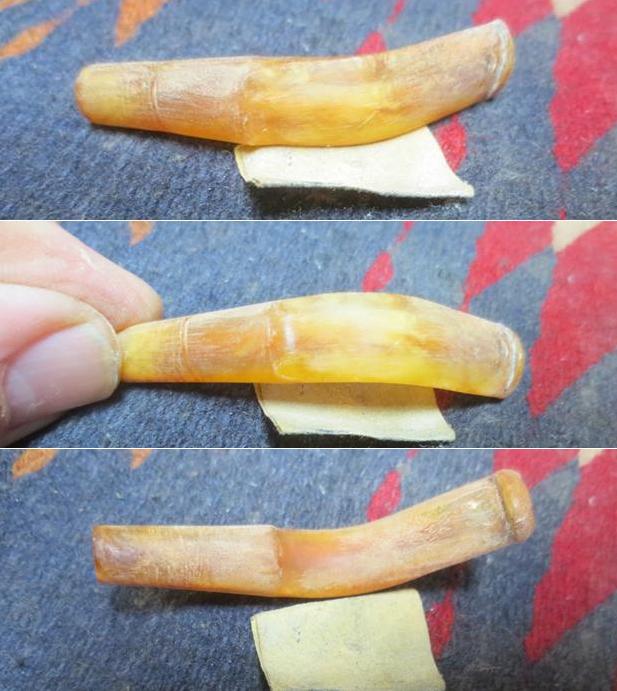
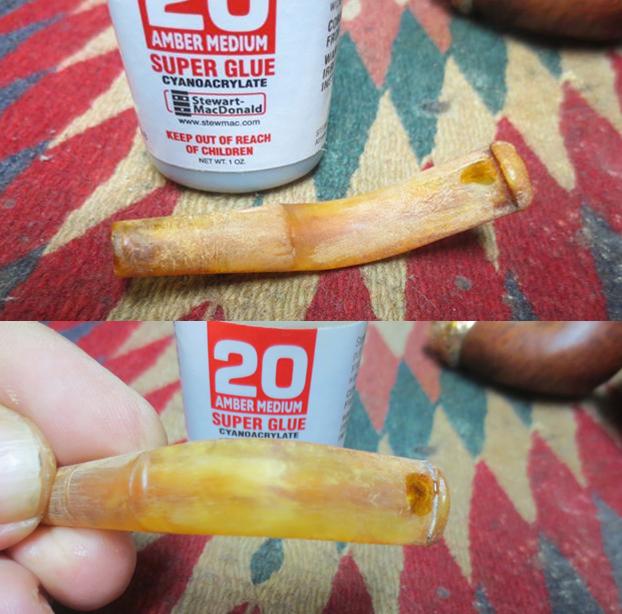
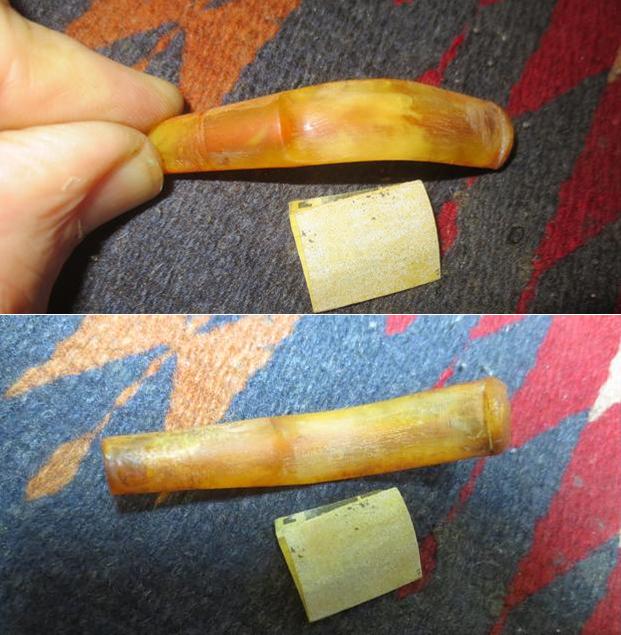
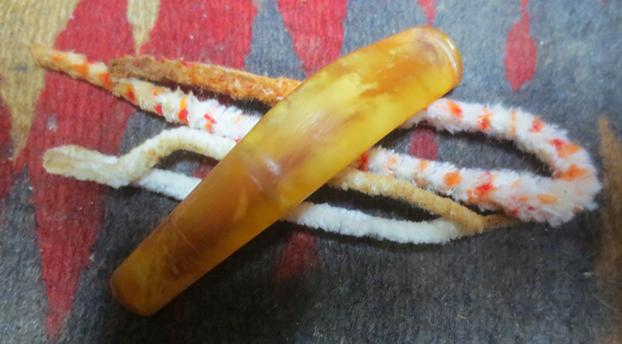
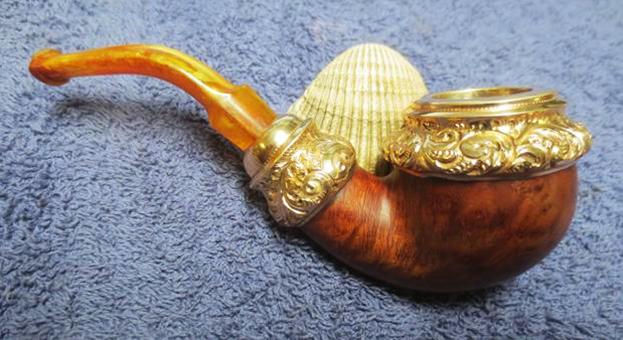
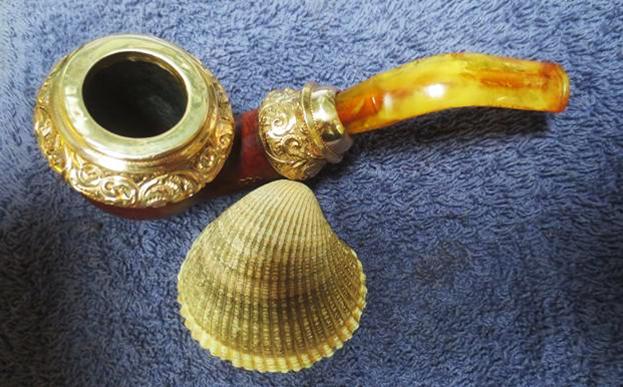
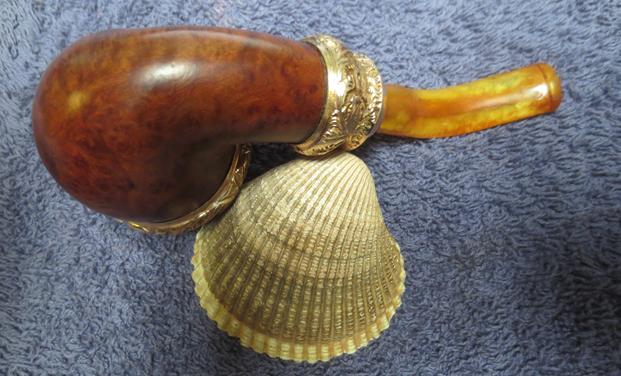
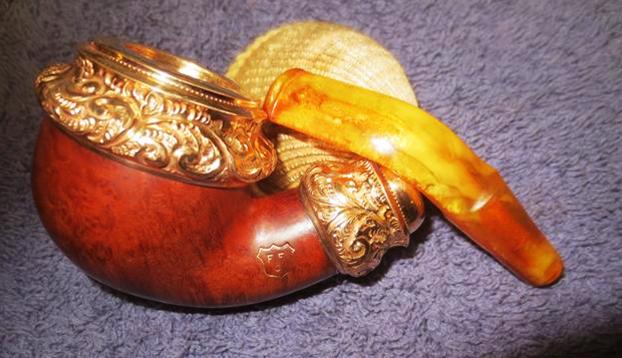
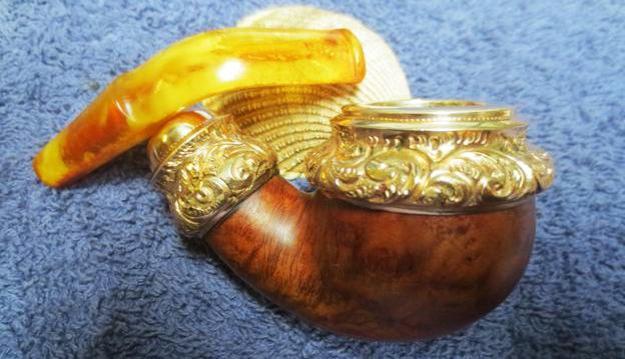
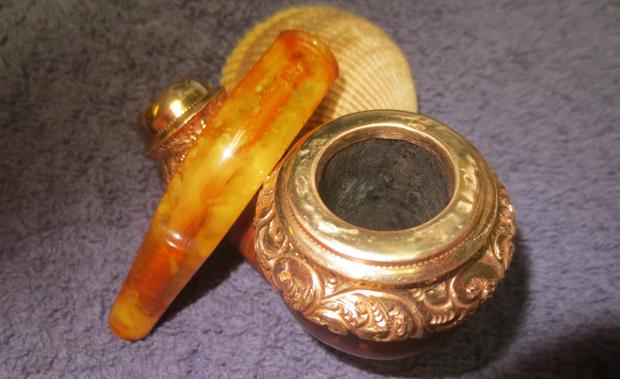
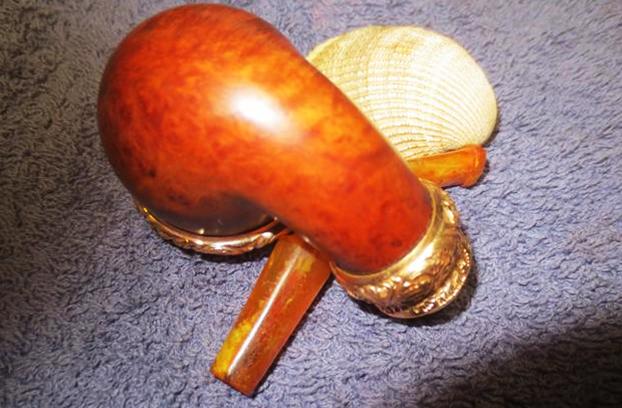
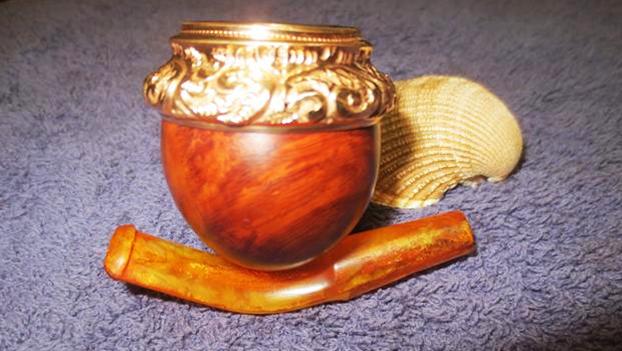
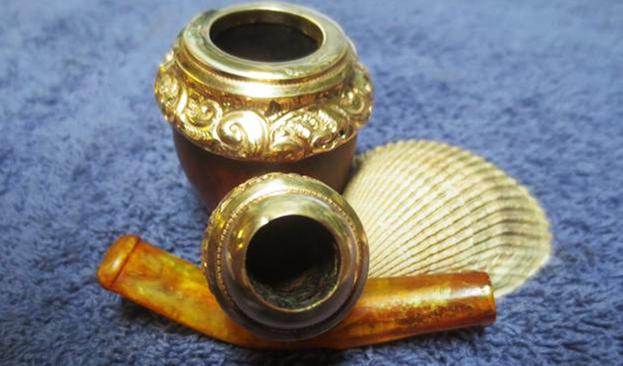
My brother Jeff sent me a link to a pipe he thought might interest me on eBay. He was right; we bid on it and won. The shape of the clamshell case (even though it is worn and tired looking) caught my attention. At its widest point it is 4 inches long, it is 3 ¼ inches wide and 2 inches tall. It is the perfect size case to put in a coat pocket with not too much of a bulge. The brass catch/latch was visible and was attached with nails to the front of the bottom half of the case. The wooden case is visible under the worn leather. On the back side of the case you can see the hinges, also attached with nails. (He took photos of the case and the pipe before he cleaned it up.)The plush red lining covered entire inside of the case. While it was worn and a little soiled it still showed some of its original glory. The top half of the case had a gold banner with FEC in a shield and two ribbons unfurled below the shield that read “FINEST QUALITY”. The bottom half the plush lined case had been form fitted to hold the bowl and stem separated but safely held in place. Then the pipe itself was intriguing. It looked to be in decent condition and was a brand with which I was unfamiliar. It looked very old and clean for a pipe of this age.Jeff took a photo of the inside of the case to show the form of the underside without the pipe and stem in place. It is obvious the case was made especially for this pipe and stem. The fit is perfect and the forms match the shape of the bowl with its bling and the saddle stem.Jeff took photos of the pipe and stem from various angles to capture the condition of the pipe. Other than some grime and dirt from sitting and the normal cake and tars in the bowl and shank the pipe was in really good shape. There were some scratches and dings in the briar and in the Bakelite stem but nothing too serious. The first and last photos below show the FEC shield on the left side of the shank. It was worn on the right side of the shield but it was very clear. The filigree shank and rim adornments were in really good condition with no chipping or scratching. There were also no nail caps showing that held both in place on the rim and the shank. The flat portion of the gold rim top was dented and there was some darkening. The next photos show the rim top and sides of both the rim cap and shank cap. There was grime and grit in the swirls of the gold but other than being dirty it was in good condition.  The next photo is a view of the pipe looking down the end of the shank. The build up of tars and oils on the walls of the mortise are very clear. The debris flowing out of the end of the tenon is also visible in this photo.The stem was a bit of a wreck with tooth chatter, tooth marks and nicks all around the top and underside. The airway in the stem is black with tars and oils. The third and fourth photos below show the nicks and scratches in the tenon of the Bakelite stem. The fifth photo below shows the airway at the end of the tenon – note how dirty the airway is. As I mentioned above I had no idea of who made the FEC brand or even what country it came from. In many ways it looked like an older American pipe of the same ilk as CPF or WDC. The gold filigree on the cap and shank made me think of both of those but hunting for an American brand with those initials turned up absolutely nothing. I looked in the index of my copy of “Pipes, Artisans and Trademarks” by Jose Manuel Lopés’ and found a listing. It was short and to the point but now I had my information.

FEC is the old English brand of Friedrick Edwards & Co., established in London around 1884, and which mainly produced meerschaum and calabash pipes. The company was bought in 1904 by S. Weingott & Sons, but continued separately until 1916.

Armed with the company name behind FEC I went back to the web and did some more searching. I found the same information as quote above on Pipedia. I also found a Briar Pipe Makers in London Directory on Pipedia. There was a listing for FEC. https://pipedia.org/wiki/Briar_Pipe_Makers_in_London_Directories. It read as follows:

Edwards, Friedrich & Co. – 25 Gingshouse St., W [at this point in time, John Solomon Weingott was a full partner of F. Edwards & Co. who were primarily meerschaum pipe makers]

Now I had some idea of the age and provenance of the pipe in my hands. It was made in the FEC factory at 25 Gingshouse St., W in London, England. Since Friedrich Edwards & Co. made primarily meerschaum and calabash pipes before joining with S. Weingott & Sons in 1904 I was pretty confident that this pipe came out after that merger. I knew that the brand continued separately until it was subsumed by S. Weingott & Sons in 1916. That gave me the dating parameters for the pipe. It was made between 1904-1916 which certainly fit the style of the pipe and its ornamentation.

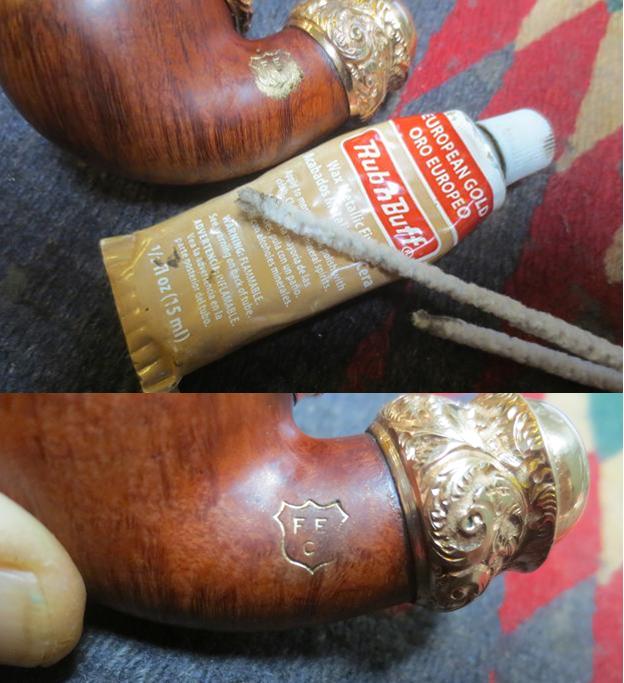
When the pipe arrived in Vancouver, I could see that Jeff had done a lot of cleaning and scrubbing on before he sent it to me. The scrubbing of the gold filigree would have been a labour of love in that it was so intricate and detailed that the grit and grime would have fought hard to remain in all of the crevices. He had reamed the bowl with a PipNet pipe reamer and a Savinelli Fitsall Pipe Knife. He cleaned up the rim and the exterior of the bowl with Murphy’s Oil Soap to remove the grime and debris on the briar itself. He exercised care around the gold stamping on the left side of the shank. He had cleaned out the mortise and the airway in the shank and the stem with alcohol, cotton swabs and pipe cleaners. The stem damage was clearly visible and the nicks and marks stood out in clarity. There were some deep tooth marks on both sides of the stem at the button and the slot in the button still had some tars and dark spots in the corner of the slot. When I brought the pipe to my work table I took some photos of it as I opened the case. It really was a beautiful old pipe. I took it out of the case and put it together to get a feel for its size and appearance. While it was petite it still have a full sized bowl. The briar had some great grain patterns around the bowl and shank. Jeff had done a great job cleaning up the gold filigree on the rim cap and shank cap. It looked amazing and had a rich shine to those spots on the pipe. The dents on the top of the rim can be seen in the photo below as can the clean bowl. I took a picture of the FEC Shield on the left side of the shank to show the condition of the stamping.When it arrived I could see that he had really worked over the stem and the airway from the top and bottom looked clean. The tooth chatter and marks on the top and underside are shown in the photos below.I decided to start working on the stem as it was the part of this pipe that needed the most work. I sanded down the tooth chatter with 220 grit sandpaper and was able to remove all of the chatter and some of the lighter tooth marks. I sanded the scratches and nicks on the rest of the stem and the tenon end and was able to smooth most of them out.I wiped off the stem with a cotton pad to remove the sanding dust and filled in the deep tooth marks on both sides near the button with amber super glue.When the glue repairs had cured I sanded them flat with 220 grit sandpaper to blend them into the rest of the surface of the stem. I was really happy with the blend achieved by the amber super glue and the Bakelite stem.I cleaned out the remaining dark spots in the slot in the button and the tenon area of the stem with pipe cleaners and warm water. I was able to remove all of the left over darkening and the stem looked better.I polished the stem with micromesh sanding pads – wet sanding with 1500-2400 grit pads and dry sanding with 3200-12000 grit pads. I rubbed the stem down with Obsidian Oil after each pad and then proceeded through the pads. After the 12000 grit pad I gave it a final coat and let it dry. I spoke with Jeff this morning and he told me that the top cap was not glued or pinned to the top of the bowl and could easily be removed. I wiggled it free without doing and damage to the edges. I used a small flat blade screw driver that fit perfectly in the last ring before the opening. It worked to smooth out much of the dents and damage to the top of the rim. While I was not able to remove all of it I was able to minimize it in this manner. I decided to pressure fit the rim cap back on the top of the bowl rather than glue it or pin it. I figured that way if I wanted to try smoothing out the rim cap some more I could do so in the future. I polished the top of the rim cap with micromesh sanding pads to further minimise the scratching on the top. I wet sanded with 1500-2400 grit pads and dry sanded with 3200-12000 grit pads. I wiped it down afterwards with a soft cotton pad to raise the shine. I touched up the FEC Shield stamp on the left side of the shank with Rub’n Buff European Gold. I applied it with the tip of a pipe cleaner and worked it into the grooves of the stamp. I removed the excess with a damp cotton swab and polished the finished shank with a soft cotton pad. I was able to fill some of the grooves toward the top right of the shield and a bit of the letters. The stamping on the bottom right side of the shield was too shallow to hold the gold.I buffed the pipe bowl and stem independently with Blue Diamond on the buffing wheel to polish them both. I worked over the briar around the bowl with the Blue Diamond and lightly buffed the gold rim and shank cap. I carefully gave the briar several coats of carnauba wax and then Conservator’s Wax in the hard to reach spots. I buffed the briar and caps with a clean buffing pad to a raise a shine. I gently buffed the stem with Blue Diamond so as not to melt it or cause damage. I gave the stem multiple coats of carnauba wax and buffed it with a clean buffing pad to raise the shine. I hand buffed bowl and stem with a microfibre cloth to deepen the shine. I put the stem in the shank and hand buffed it once more. I am quite happy with the finished pipe. It is a beautiful piece of briar and the stem picked up a nice shine that brought it back to life. The dents in the rim cap while still present look much better. The finished pipe is shown in the photos that follow. Thanks for looking and enduring my obsession with these pipes from another time.
Bringing an older 1890s Era Spiral Shank Horn Stem Billiard back to Life.

Blog by Steve Laug

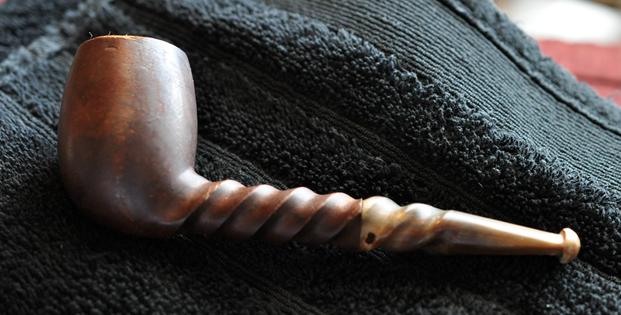
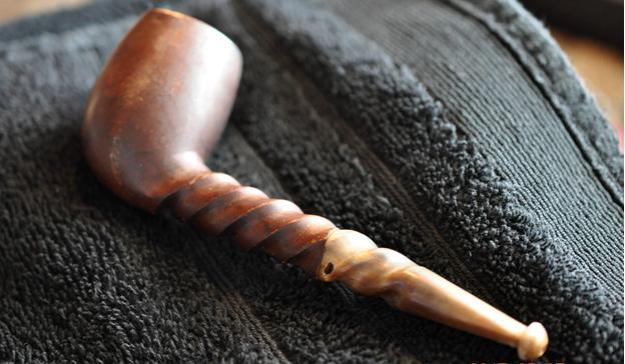
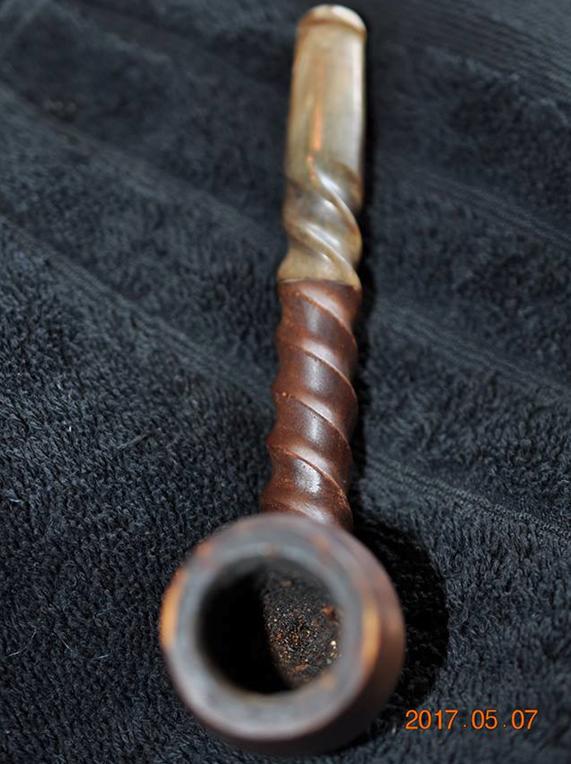
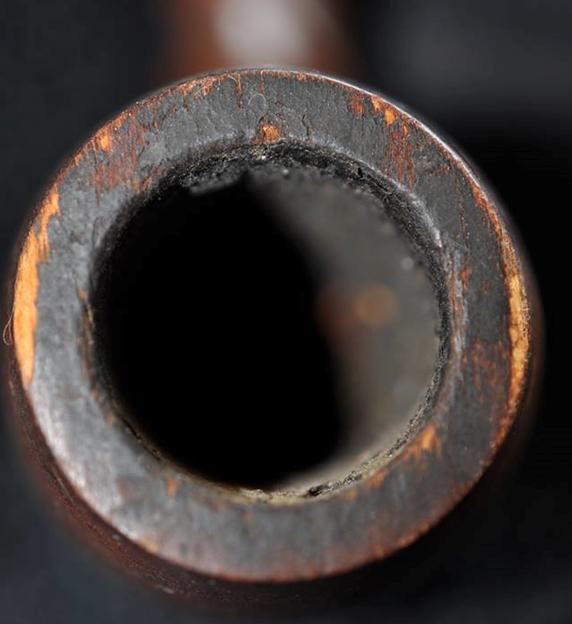
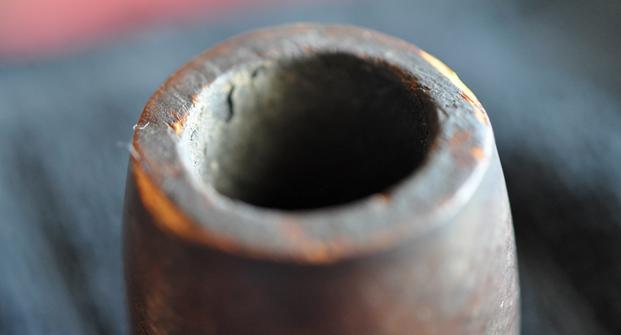
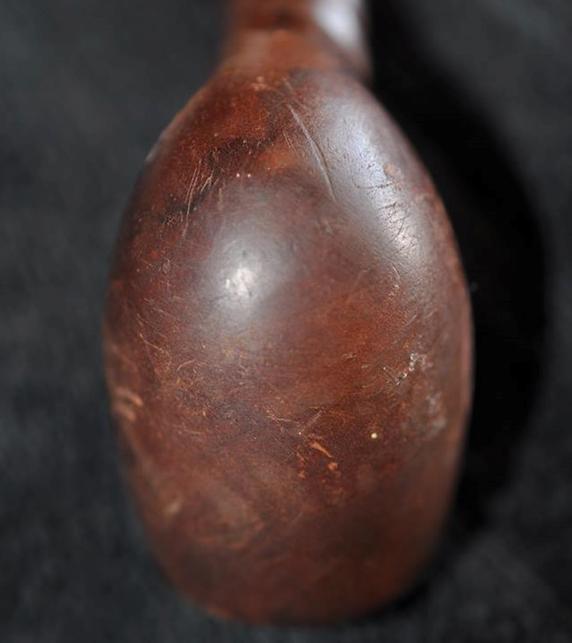
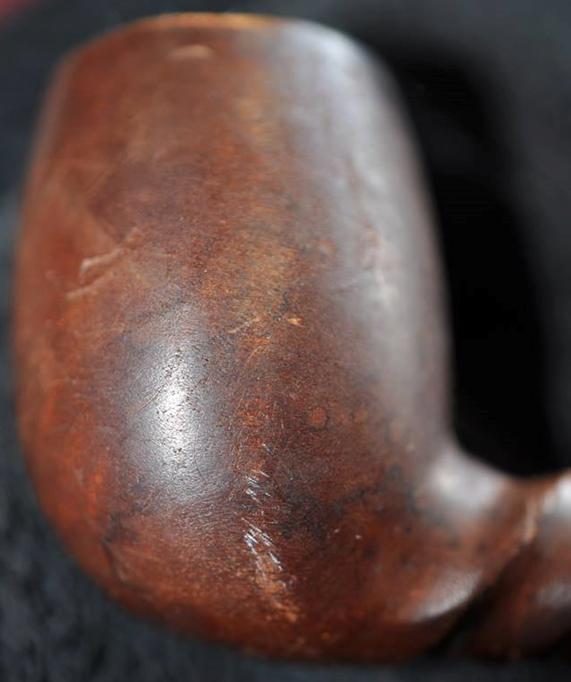
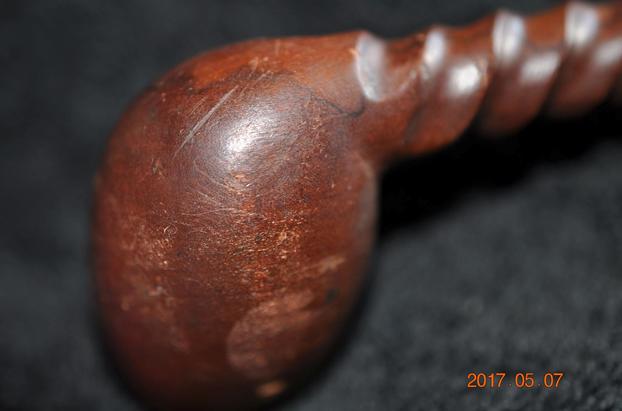
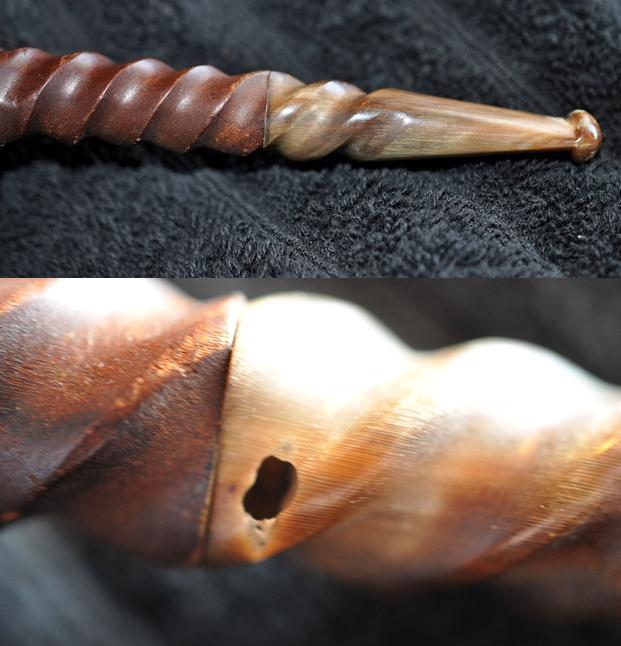
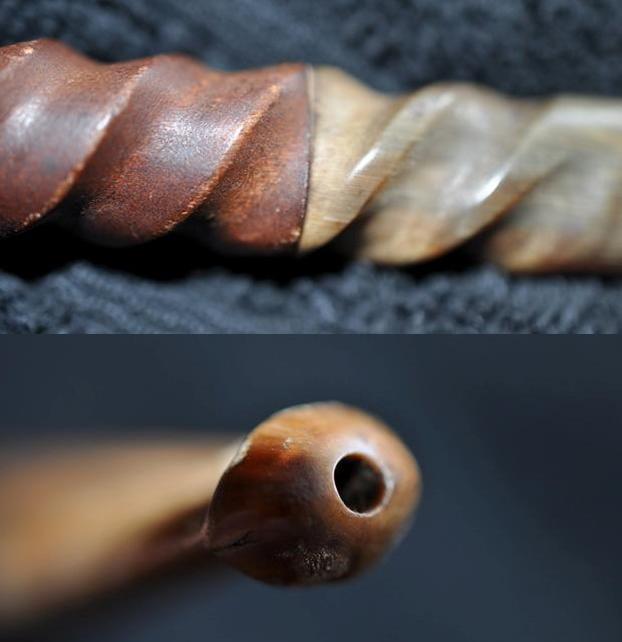
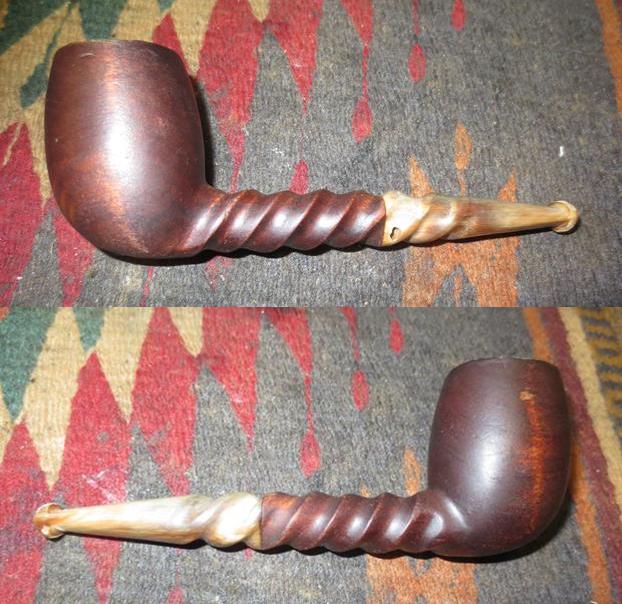
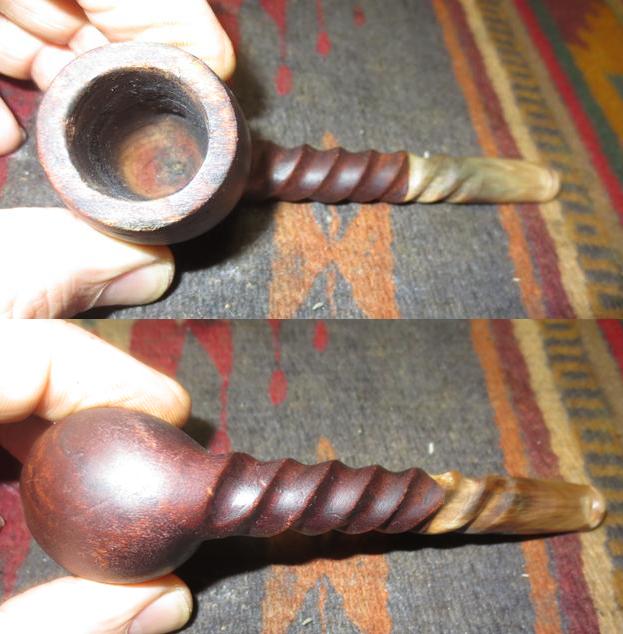
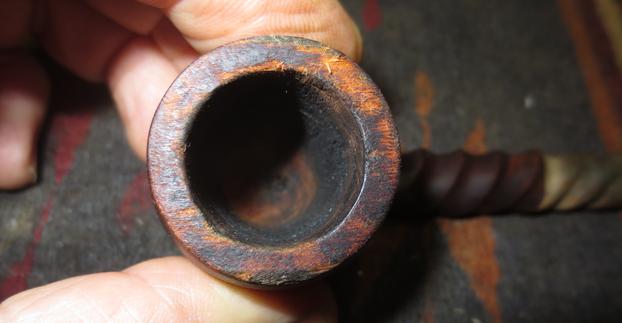
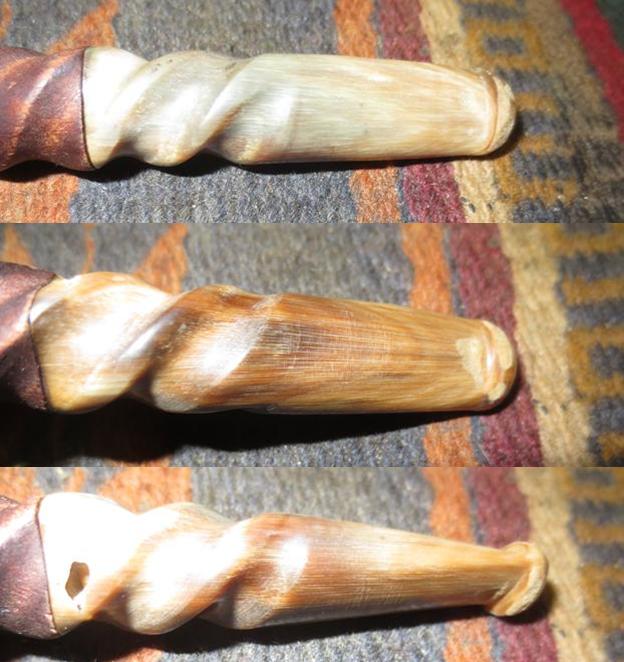
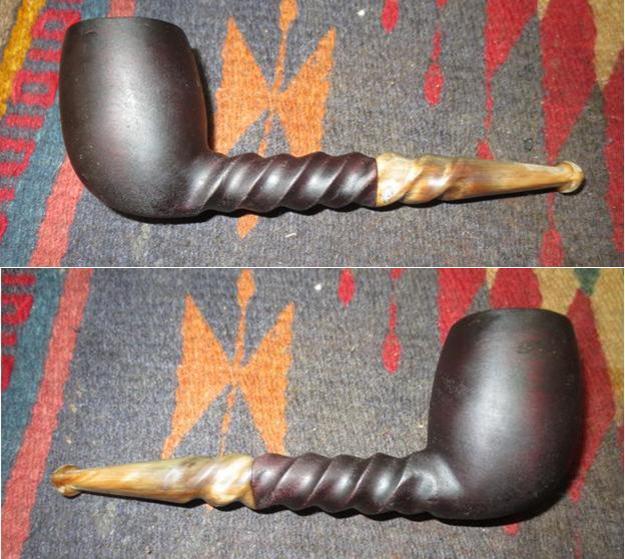
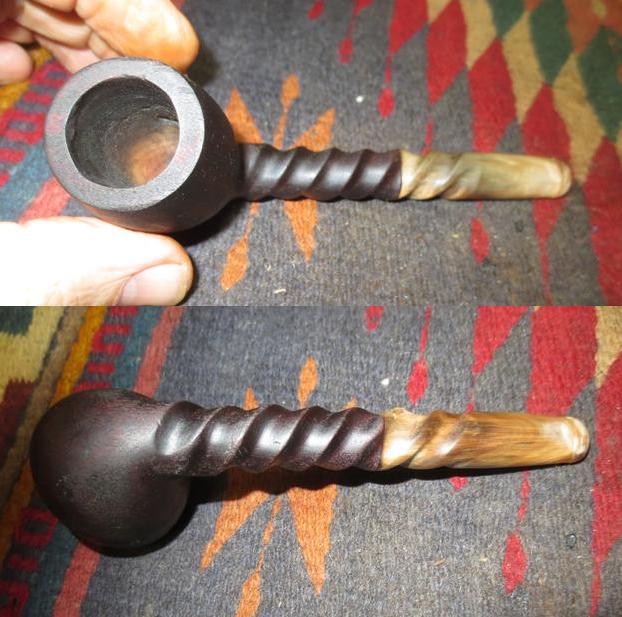
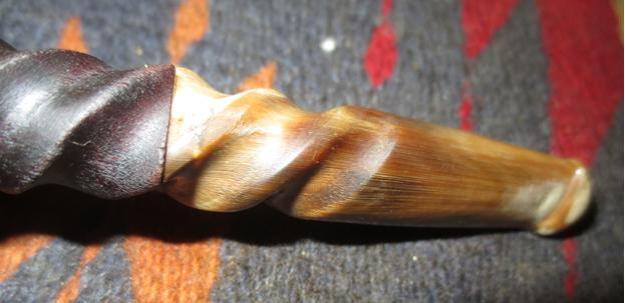
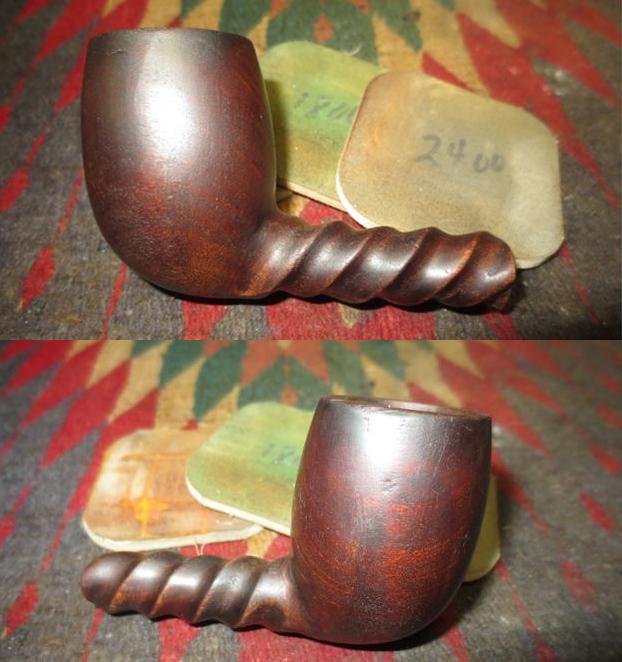
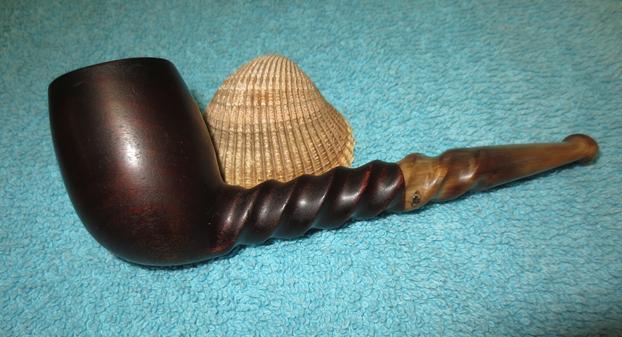
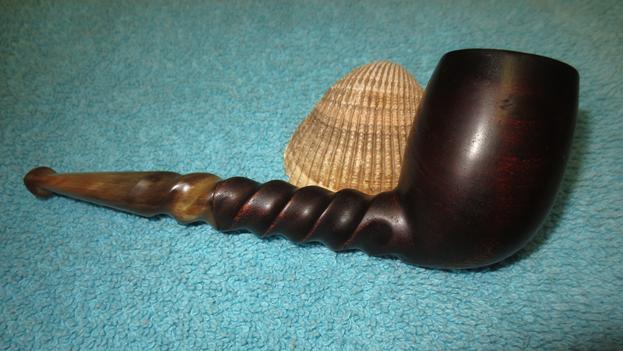
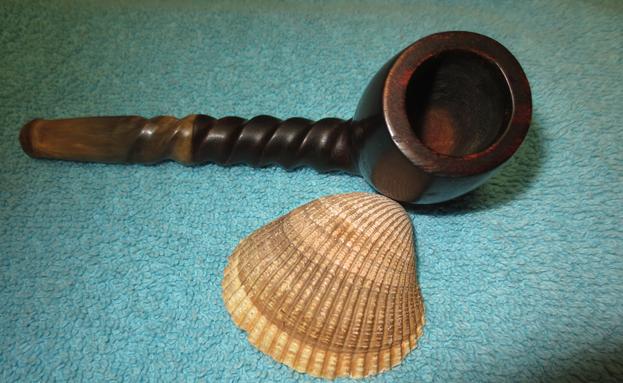
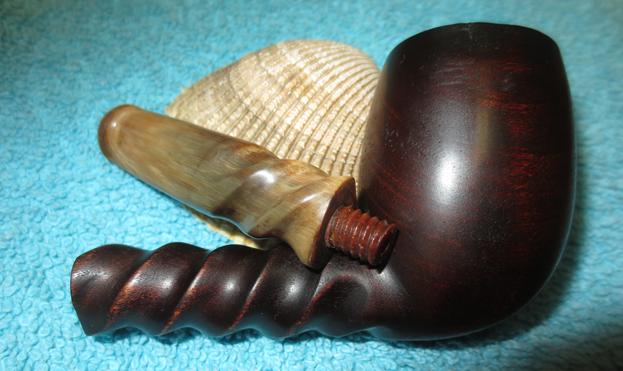
My brother Jeff visited an antique mall in Montana on one of his recent trips and found a lot of older pipes from the 1890s era. There were CPF, WDC and other older brand pipes with amber and horn stems. I wrote about how we used Apple Facetime so that I could be present on the hunt. It was an amazing time “in the shop” for me. The link to the blog on this hunt follows: https://rebornpipes.com/2017/04/26/a-virtual-pipe-hunt-a-new-way-to-experience-the-joy-of-a-pipe-hunt/. The first pipe that I chose to work on from the hunt was the one picture below. My brother took the following pictures of the pipe before he cleaned it up to send to me for finishing. It is a unique and interesting old pipe. The spiral shank continues through the horn stem. The finish on the bowl was worn and tired but the spiral shank and stem were undamaged. There was one deep “worm hole” in the left side of the stem in the bottom of a spiral that would need to be repaired but otherwise it was in pretty decent shape.The photos show the overall condition and look of the pipe. Whoever carved it remains a mystery as there is no stamping on the shank or bottom of the bowl. It is unmarked so it is one of those unknown pipes. The difference is that this is not a homemade pipe it has the marks of a good pipemaker and the drilling is perfect from the stem forward. The bowl was lightly caked and the rim had a tarry overflow on the top. The inside edge of the bowl was in great shape as far as I could see from the photos. The outer edge of the top had been knocked about enough that there was some damage and wear to it. The next two photos show the rim top and bowl. The finish on the outside of the bowl is worn and there are a lot of dents and dings in the surface of the wood. The photos lead me to wonder what kind of wood the pipe is made of because of the way the damaged rim looks. The next photos show the condition of the stem and the drilling in the button. The spiral continues from the shank through the stem seamlessly. The second photo shows the worm hole in the horn stem. It is deep but clean and the areas around it are undamaged. The junction of the stem and the shank is very tight and clean. The transition from wood to horn is smooth to the touch. The last photo shows the orific button on the end of the stem. It is clean, round and centered in the end of the crowned button. This older style button helps me date this pipe as early as I do above. My brother did his usual job reaming and cleaning the pipe. He reamed the bowl with a PipNet reamer and cleaned it with a Savinell Fitsall Pipe Knife. He scrubbed the internals with alcohol, cotton swabs and pipe cleaners to remove the grime in the mortise, shank and airway in the stem and shank. He scrubbed the exterior with Murphy’s Oil Soap and was able to remove all of the grime on the bowl sides and rim. The pipe came to me in great condition. I took a close up photo of the rim top and stem to show their condition more closely. The rim top was worn and there were some spots on the edges that had slivered. The rim would need to be topped to smooth things out and remove the damage.The stem photos show the tooth damage on the top and underside at the button and the “worm hole” in the left side near the shank.I wiped down the area around the hole in the left side of the stem with a cotton swab and alcohol and dried it off. I layered in several fills of clear super glue into the hole. As each layer dried I added more glue to the top of the hole repair. I continued until the file was slightly overfilled then sanded the areas smooth.Billiard16While waiting for each layer of glue to dry I worked on the rim top. I topped it lightly with 220 grit sandpaper on a topping board to smooth out the damage to the rim. I took enough of the damage off to leave the rim top smooth to the touch.I wiped down the bowl with acetone on a cotton pad to remove all of the finish that remained on the bowl. I kept wiping it down until no more stain would come off and the bowl was clean. I could see once it was clean of the stain that the wood was not briar. I was dealing with what appeared to be walnut. It was extremely light weight and the grain was very different from what I expected once the stain was gone. I restained the pipe with dark brown aniline stain and flamed it to set the stain deep in the grain of the wood. I repeated the process until the coverage is acceptable.I put the stem back on the shank and hand buffed the stain with a soft cloth to show what the pipe looked like at this point in the process. The first photo and the last show the repair to the hole in the stem. It is smooth once again. I polished the bowl with 1500-12000 grit micromesh sanding pads. Each successive grit made the walnut bowl shine more and made the stain more and more transparent. I polished the horn stem with micromesh sanding pads – wet sanding with 1500-2400 grit pads and dry sanding with 3200-12000 grit pads. I rubbed the stem down with Obsidian Oil after each pad and when I finished the last pad I gave it a final coat of oil and let it sit and dry. I turned the bone tenon on the stem into the threaded mortise on the shank. I buffed the pipe with Blue Diamond on the buffing wheel to raise a shine. I gave the bowl and stem multiple coats of carnauba wax and buffed it with a clean buffing pad to raise the shine. I hand buffed the pipe with a microfibre cloth to deepen the shine. In the first photo you can see the repair on the lower portion of the horn stem. It is a slightly darkened spot but it is smooth to the touch. Do any of you recognize the style or work on this old pipe? Can you tell me any information regarding the maker or the era? Do you think I am in the ball park with a late 1890s date? What do you think? Thanks for the help ahead of time and thanks for walking with me through this restoration.
Cleaning up a Bruyere Garantie Pocket Pipe with a Horn Stem


Blog by Steve Laug

This pipe reminds me of the Mokin Pocket Pipe that Anthony restored and wrote about in an earlier blog. When I saw it on eBay I put a bid in and actually won it. The pipe needed a lot of work. From the photo it looked as if it had a thick coat of varnish or some shiny topping. That would need to go. The finish was spotty and appeared to have some flecks of paint on the top and on the skate at the bottom of the bowl. The rim was darkened and hard to tell whether it was burned or just tarry. The bowl was slightly out of round but it also had a cake that would need to be reamed out before addressing the out of round inner wall of the rim.The stamping was clear and distinct and read Bruyere Garantie on the left side of the shank. The stem had a double circle on the left side. The stem also appeared to be horn. There were two deep cuts on the right side of the stem near the button that would need work and with those marks I was sure there were other issues. The first two photos are the ones included in the seller’s description of the pipe on eBay. I had no idea what the other side or bottom of the bowl or stem looked like or if there would be more issues that would need to be addressed.Bruyere1

Bruyere2 When the pipe arrived I was both encouraged by what I saw and concerned by several other issues that had not been shown in the photos above. The encouraging thing was that there was no shiny coat of varnish or lacquer on the bowl. All that was present was a very dirty, grimy natural finish that seemed to have a reddish-brown colouring to it. The concerns involved the fills on the underside of the bowl. What had appeared to be paint flecks on the skate at the bottom turned out to be part of the fill on the bottom and a missing piece of briar. The bowl was indeed caked and the cake was crumbling and uneven. Looking at it initially I wondered if there would not be burned spots in the walls of the bowl once the cake was removed. The inner edge of the rim was also more damaged than I had expected from the seller’s photo. The cuts in the stem were dangerously close to the airway but fortunately had not broken through. The fact that the airway was unharmed was a small miracle given the depth of the cuts. The fact that they angled probably save the airway from damage. On the underside of the stem there were also large chips missing from the stem at the shank stem union. It appeared that someone had tried to pry the stem away from the shank rather than twisting it off. There was also tooth chatter on the top and underside of the stem near the button. The button however was clean and sharp as was the slot in the in the end of the button. The stem had some beautiful striations of colour that I had not seen in the photos and I looked forward to seeing if I could bring them out.Bruyere3

Bruyere4

Bruyere5

Bruyere6 I took some close up photos of the damage to the rim and the stem. The first photo below shows the damage to the inner edge of the rim and the crumbling cake in the bowl. Looking closely at the top of the photo and the bottom of the bowl you can see the cause for my concern regarding the potential burn out damage. The second and third photos below show the cuts in the stem and the missing chips. You can see how close the cut closest to the button came to the airway in that photo.Bruyere7

Bruyere8

Bruyere9 The next photo shows the stamping on the side of the shank and the logo on the stem. It is hard to see but much of the depth of the stamping on the stem is gone so restoring that with new white colouring will not be possible.Bruyere10 When I removed the stem the tenon was inset aluminum and there was a stinger apparatus in place. It was a twisted piece that had a slot in the top for the airflow that followed the twist to the airway. It was stuck in the tenon and would need to be loosened before I could properly clean out the airway in the stem. I included some extra photos of the stem to show the cuts and chips from a different angle.Bruyere11

Bruyere12

Bruyere13 I reamed the bowl with a PipNet reamer. I started with the smallest cutting head and cleaned things up with it first. I then used the second cutting head which was pretty close to the diameter of the bowl. I cut the cake back to nothing so that I could examine the interior walls of the bowl. I was pleasantly surprised to find that once the cake was gone the interior walls of the bowl were solid and there was no burning.Bruyere14

Bruyere15 I worked on the out of round bowl with a folded piece of sandpaper to smooth out the damaged areas and bring it back to as close to round as I could get it. I then topped the bowl on my topping board to smooth out the rim and clean up the damage on the surface. I will often do this just to bring the damage on the inner edge of the rim closer to the top so that I can smooth it out further with sandpaper.Bruyere16

Bruyere17

Bruyere18 I wiped down the bowl with acetone on a cotton pad to remove the grime and the remnants of the finish. There appeared to be some damage to the front of the bowl that I wanted to have a closer look at once the bowl was cleaned up.Bruyere19 I wiped down the horn stem with cotton pads and some alcohol to clean up the surface so that I could begin the repairs. I debated on whether to use black super glue or clear super glue for the repairs to the chipped areas but decided to go with the clear hoping that once it dried the colour would come through the repair and blend it into the horn better. I layered the repair to the chipped areas on the underside and the cuts on top side of the stem. I wanted each layer to dry before I added another layer of glue.Bruyere20

Bruyere21

Bruyere22 After many layers of glue I was disappointed that glue did not cure clear but rather had a cloudy white appearance. The fills on the cut areas dried hard but looked like two white slashes. I was hoping that as I polished the stem these would blend in a bit more. The fills in the chips were a mixed bag. The smaller ones dried perfectly and blended in well. The larger divot was also white. I cleaned that area once again and added a drop of black superglue to the top of the repair to see if I could hide it better.Bruyere23

Bruyere24 I sanded the bowl and stem with 220 grit sandpaper and then medium and fine grit sanding sponges to clean up the repairs and the scratches in the briar. I carefully avoided the area of the stamping and the logo so as not to harm them. I also cleaned up the stinger and was able to remove it from the tenon. It was threaded and after cleaning up the joint I was able to unscrew it and clean it and airway of the stem. I wet sanded the bowl and stem with a 1500 grit micromesh sanding pad. The striations of colour are beginning to show on the stem and the bowl is looking far better than when I started.Bruyere25

Bruyere26

Bruyere27 I wiped the stem down with a light wipe of alcohol to remove the sanding dust and then continued to wet sand it with 1500-2400 grit micromesh pads. I rubbed it down with Obsidian Oil and then dry sanded with 3200-4000 grit pads. I rubbed it down again with the oil and then finished sanding it with 6000-12000 grit pads. I gave it a final coat of Obsidian Oil and let it dry.Bruyere28

Bruyere29

Bruyere30 I buffed the bowl and stem with White Diamond and Blue Diamond on the wheel. I then cave the bowl and stem multiple coats of carnauba wax and buffed it with a clean buffing pad. I hand buffed the stem and the bowl with a microfibre cloth. The first photos below are of the polished stem. You can see the repairs from the cuts. For some reason the glue dried white – even though it is clear. I did a patch on the chip on the underside with black super glue and it does not quite match… ah the frustrations of repairs. This one is staying with me so I will not mind as the stem is now smooth and polished. The cuts and the chips are repaired and are smooth to the touch. The fit of the stem to the shank is good with no missing stem parts.Bruyere32
Bruyere33

Bruyere34

Bruyere35 The final four photos show the finished pipe. The bowl polished up very nicely with just carnauba wax. The polished stem shows the striations that are one of my favourite parts of horn as a stem material. The deep shine is a bonus.Bruyere36

Bruyere37

Bruyere38

Bruyere39

Dave’s Four Dot Sasieni


Blog by Andrew Selking

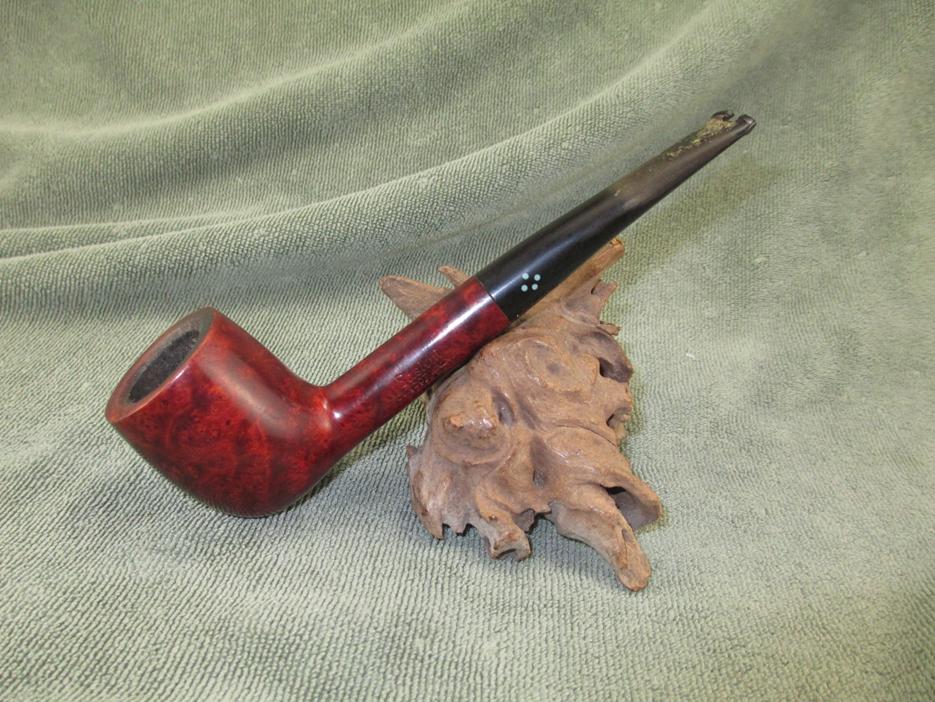
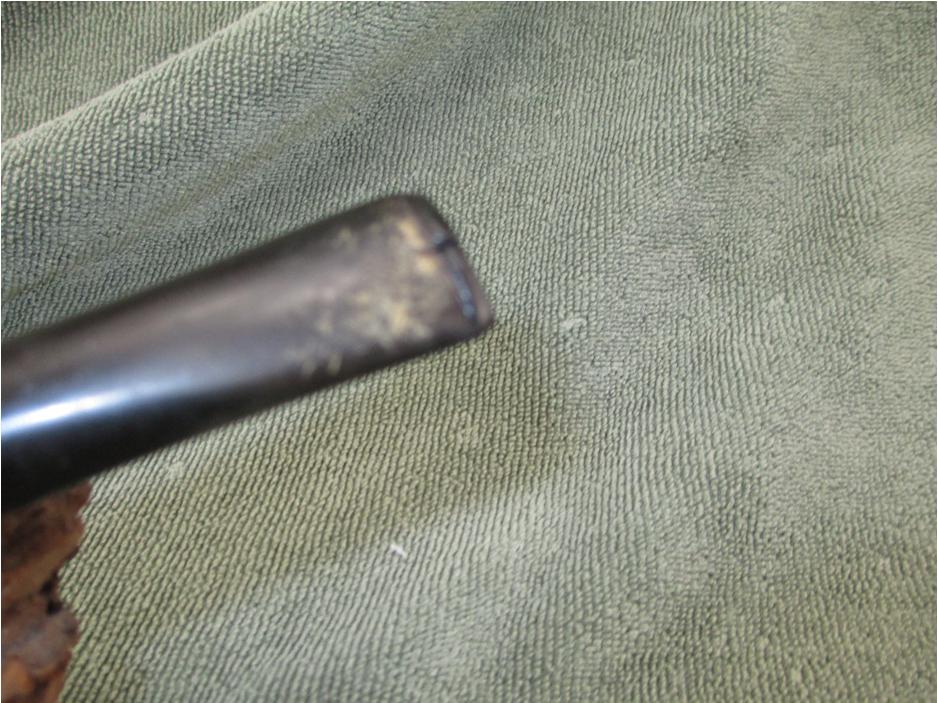
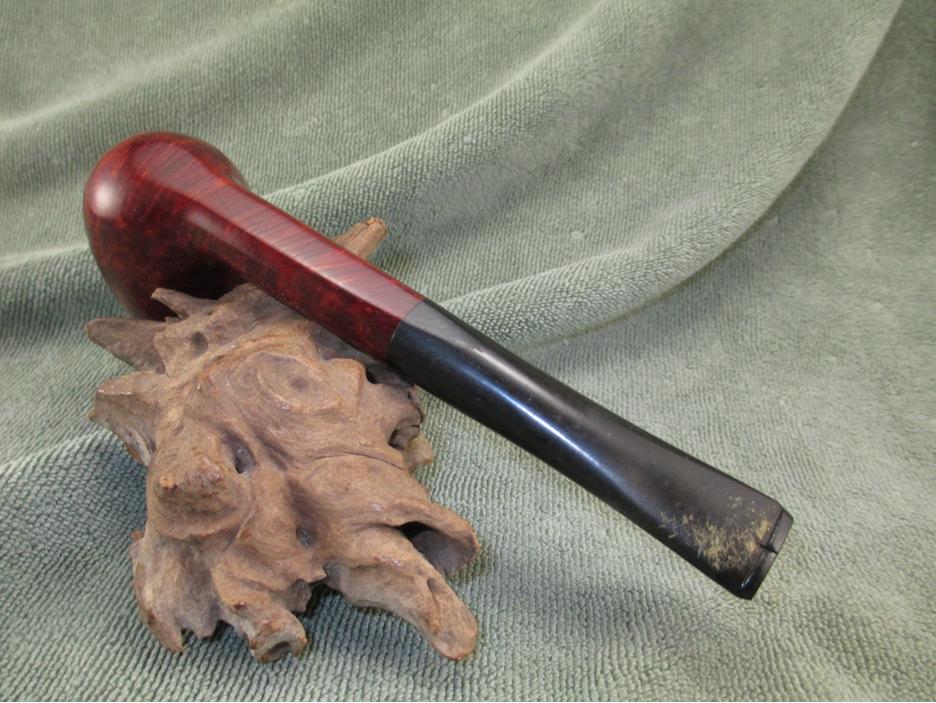
I’ve been out of touch for the past few months, between moving, home renovation, and finding a new job my free time has been limited. Dave is sneaky though, he sent a picture of a pipe he bought and asked me if I thought I could fix it. Of course I said yes. Here is the pipe as it looked upon arrival. There is an obvious chunk missing from the button, but there is also a small crack on the other side of the stem. That was uglier than it looks.Dave1

Dave2

Dave3

Dave4

Dave5

Dave6

Dave7

Dave8

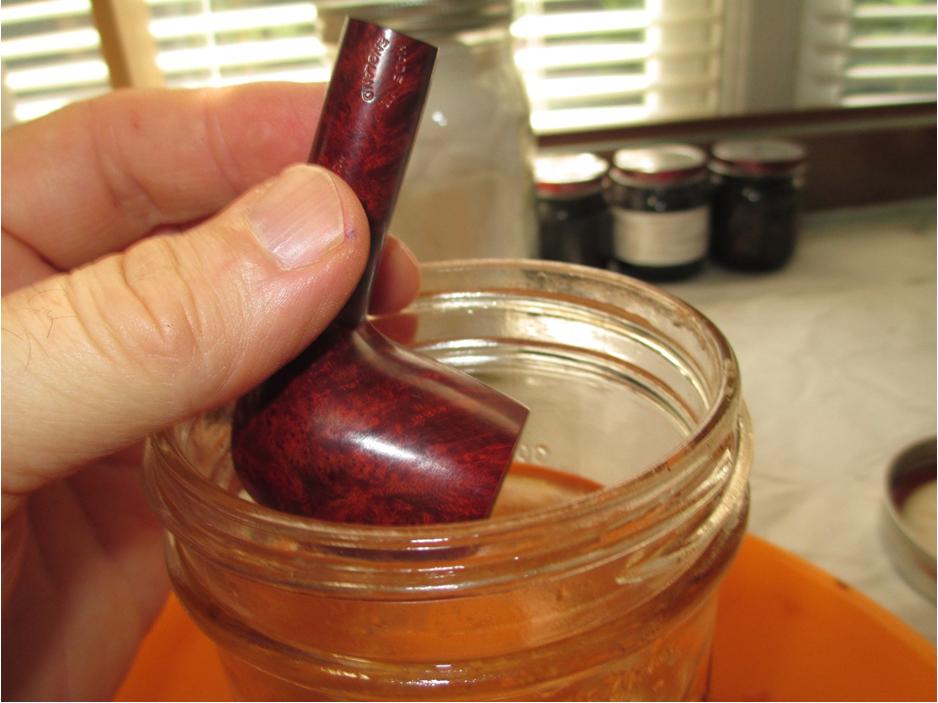
Dave9 I did my normal procedure of cleaning the inside of the pipe first. Dave was kind of worried about how the alcohol might affect the finish, so I used new alcohol and only left the bowl in for about 45 minutes. I soaked the stem in an Oxyclean bath.Dave10

Dave11

Dave12 The tar on the rim came right off after removal from the alcohol bath. Next I reamed the pipe using my Castleford reamer, used a brush on the inside of the shank, followed by a retort of the bowl. As I suspected the pipe was pretty clean.Dave13
Dave14

Dave15

Dave16

Dave17 Before dumping out the Oxyclean, I ran a pipe cleaner through the stem. It was not too dirty. I followed that by a retort and more pipe cleaners. That was the easy part, the fun was about to begin.Dave18

Dave19

Dave20

Dave21 As you can see the missing chunk is a problem. The crack on the other side looked like it could keep going, so I drilled a hole to stop it. You might notice a slight micro crack to left of the main crack. Turns out there was a chunk of vulcanite hanging on like a loose tooth. Of course it came out very easily, leaving a stem that was missing most of the button on both sides.Dave22

Dave23

Dave24

Dave25

Dave26

Dave27

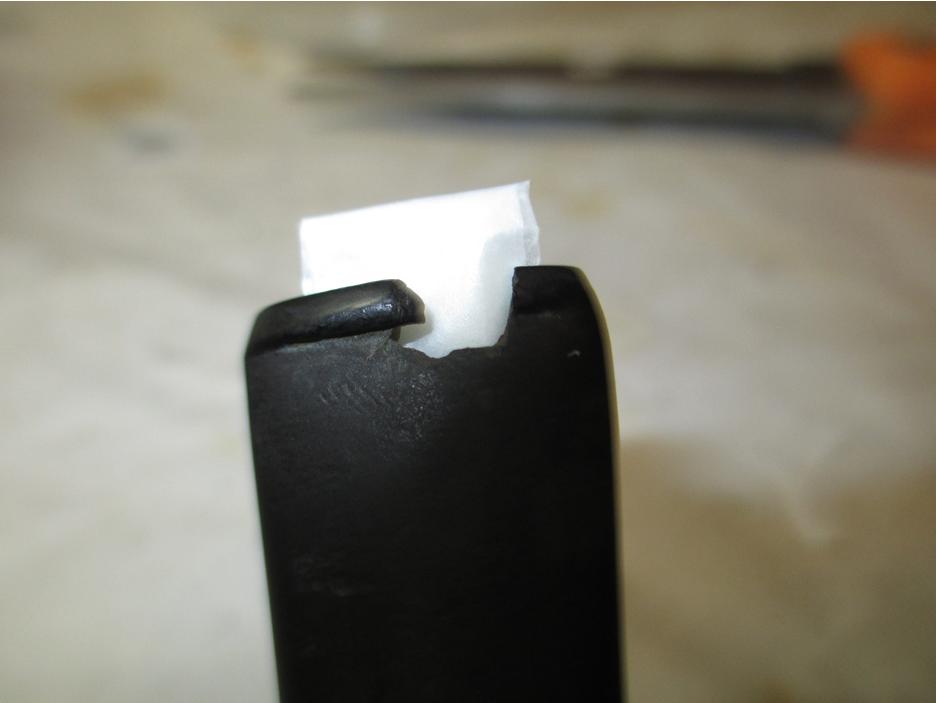
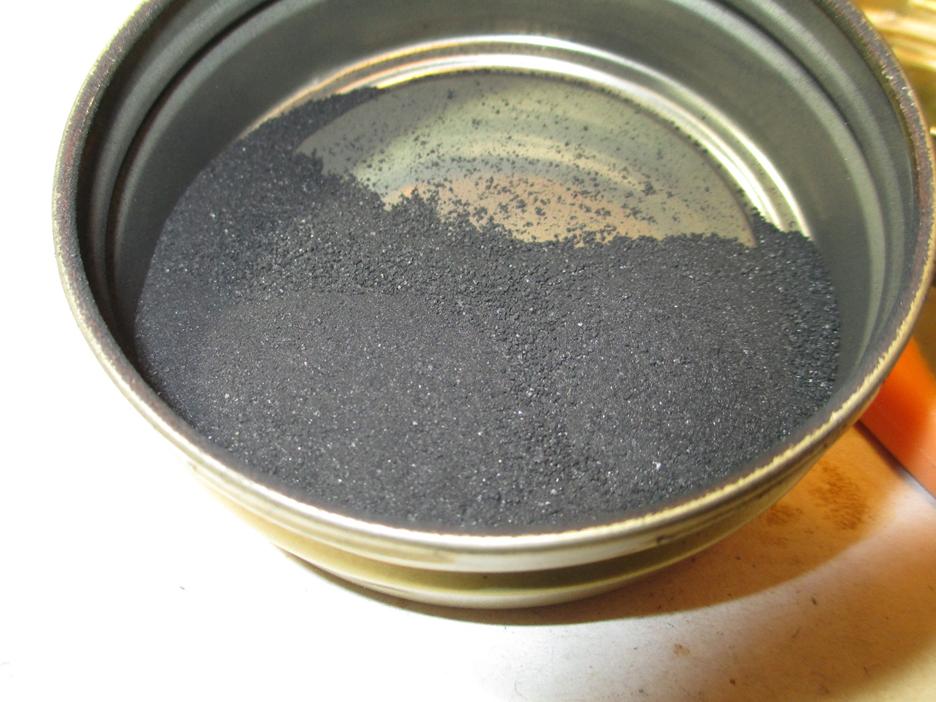
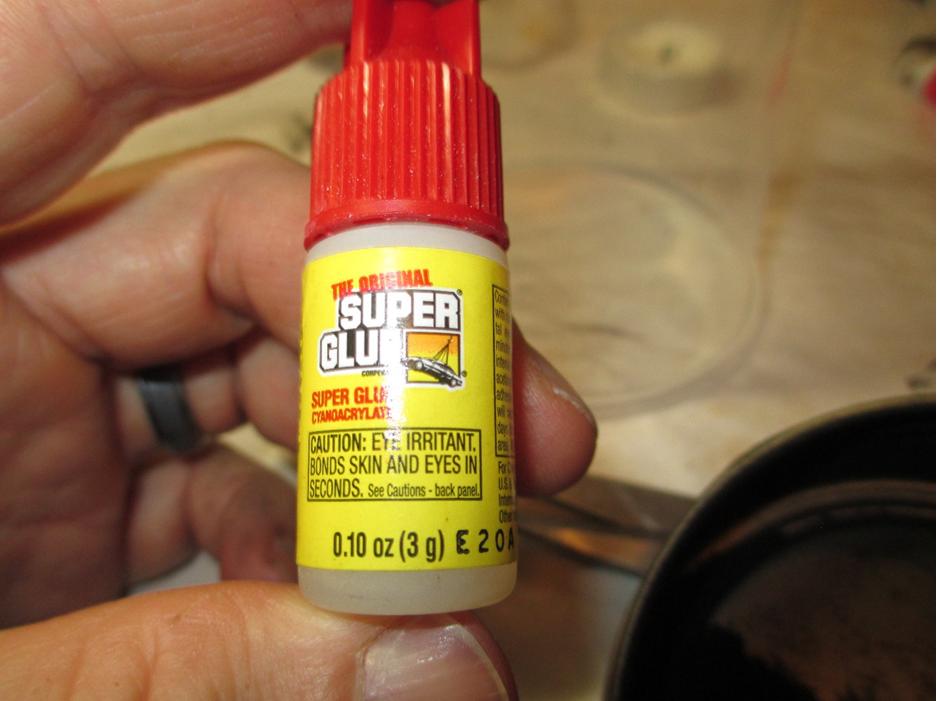
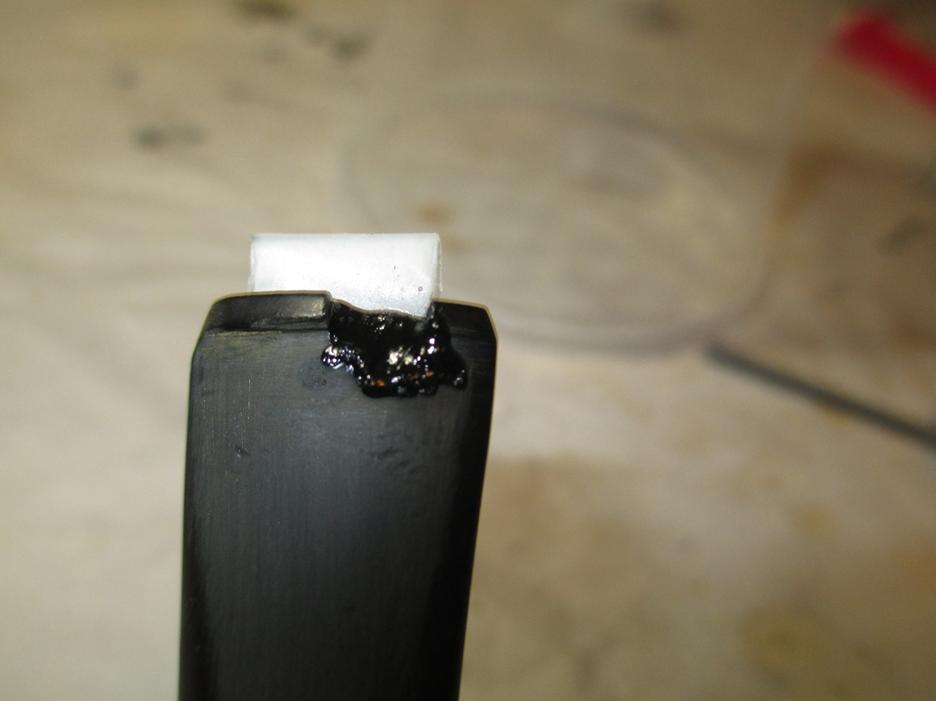
Dave28 The first thing I do when building a new stem is fit some rolled up wax paper inside the stem. I’ve found that the CA glue does not stick to it and it helps give shape to the inside of the stem. I use ground charcoal (which I purchased at the pet store and ran through a coffee grinder and sifter) and CA glue. I started by filling in the hole that I drilled to stop the crack. Once I had that filled in and sanded smooth, I started building up the stem below the button. I forgot to mention that I use CA accelerator throughout the process. I find that you can work the glue within 2 to 3 minutes instead of having to wait overnight.Dave35
Dave36

Dave37

Dave38

Dave39

Dave40

Dave41

Dave42

Dave43

Dave44

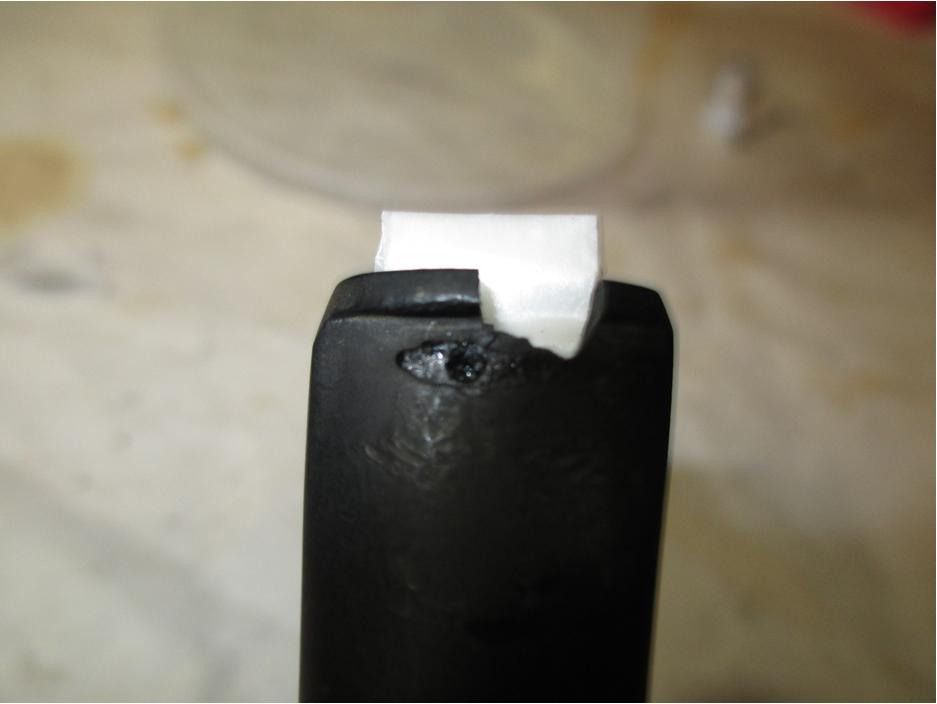
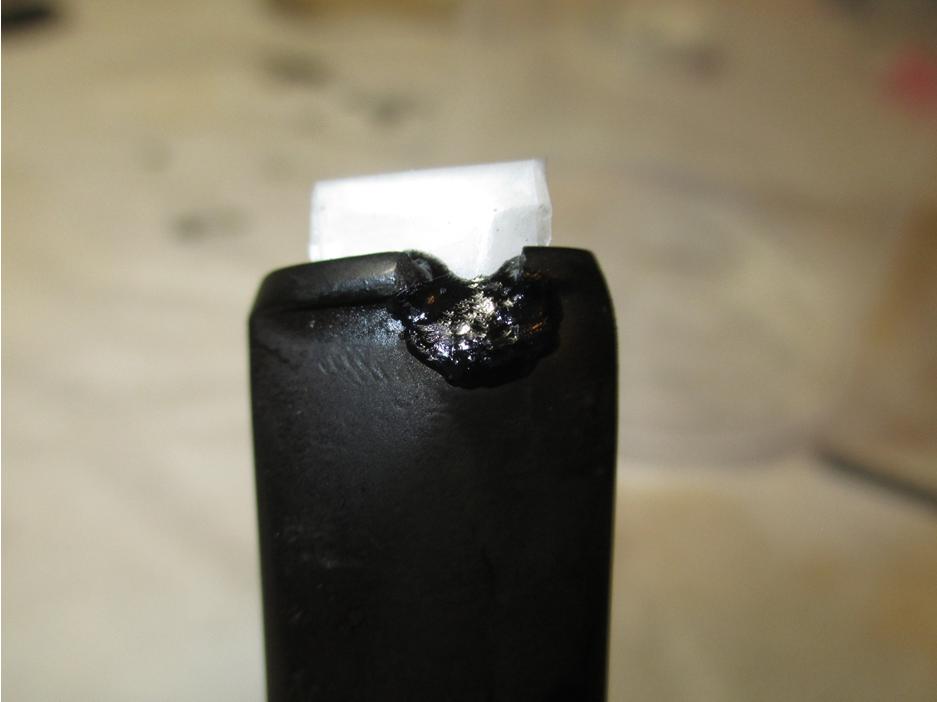
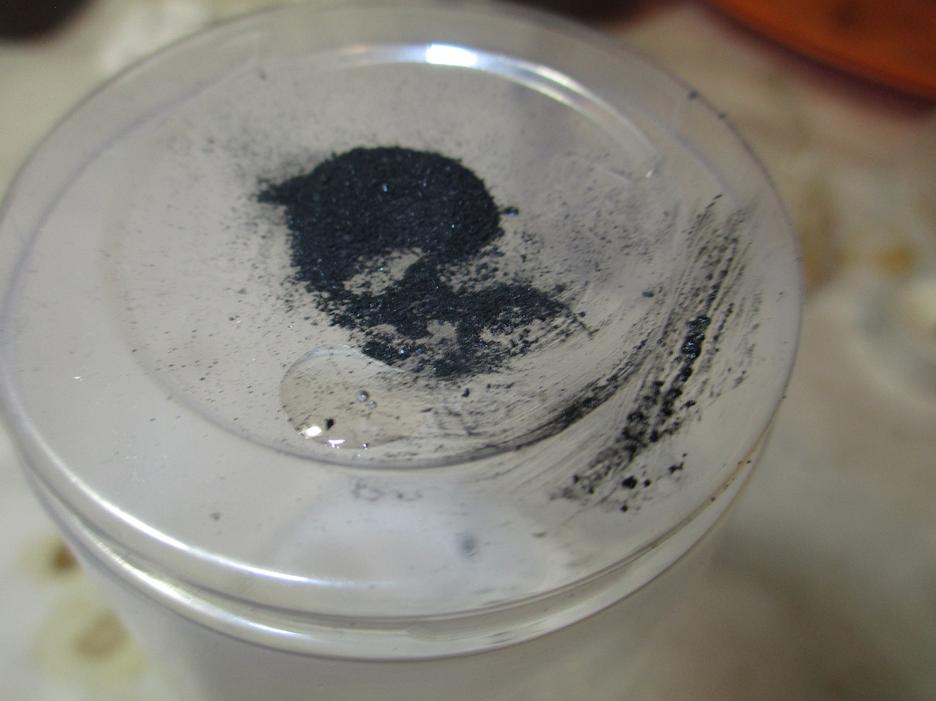
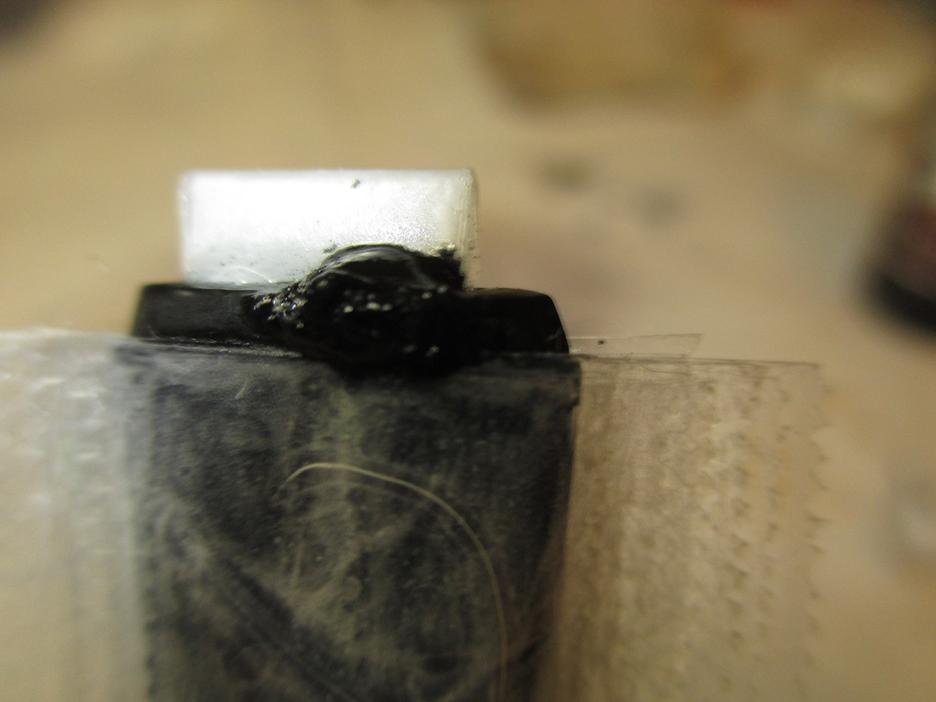
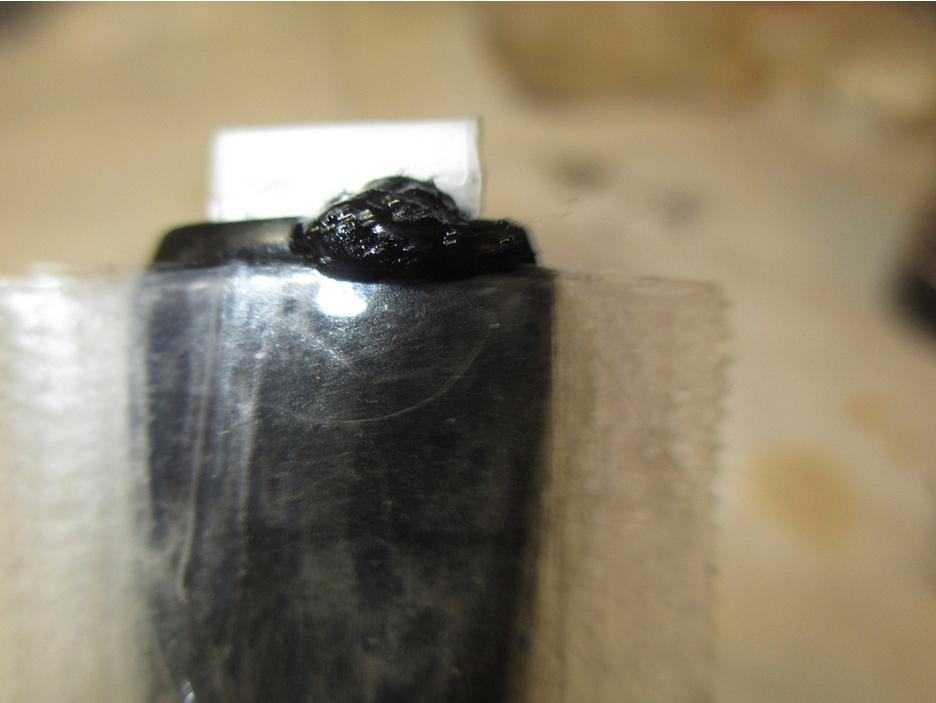
Dave45 Once the stem was repaired, I put layers of clear tape on the stem under the button to serve as a form for the glue. Once the tape was even with the button, I started adding CA glue and charcoal. I put a small amount of charcoal on the bottom of a plastic cup, add a drop or two of CA glue and mix it with a push pin. I use the push pin to add the material to the stem, followed by a few drops of accelerator. Once the material is built up, I start to sand and file it into shape. I use needle files and 400 grit sand paper. This gets me to the final step, which is addressing the micro pits.Dave46

Dave47

Dave48

Dave49

Dave50

Dave51

Dave52

Dave53

Dave54

Dave55

Dave56

Dave57

Dave58 I filled the micro pits with a mixture of CA and charcoal, but used much less charcoal than before. I used 400 grit sandpaper and needle files to get the final shape. I then used 1500-2400 grit micro mesh with water to smooth it all out. Since the bowl was in nice condition and I wanted to preserve the finish, I started polishing with 3200 grit micro mesh. I used a progression of 3200-12,000 grit micro mesh on both the bowl and the stem. Here is what it looked like once it was ready for the buffer.Dave59

Dave60

Dave61

Dave62 I polished the stem using my rotary tool with a felt pad and white diamond, followed by carnauba wax. My rotary tool has variable speed and I use the lowest setting. I used white diamond and carnauba wax on the bowl with the buffing wheel. Here is what the pipe looked like when I finished. This is my second repair of this type. My ultimate goal is to do repairs that look like the original. Thanks for looking.Dave63

Dave64

Dave65

Dave66

Dave67

Dave68

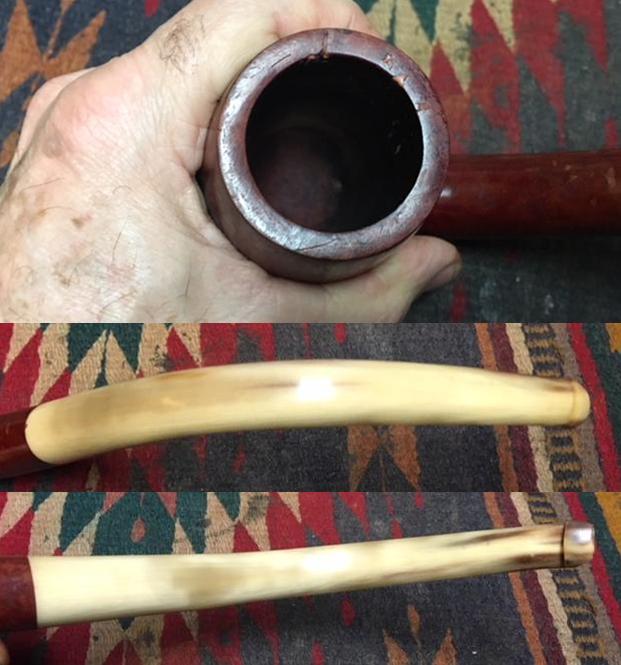
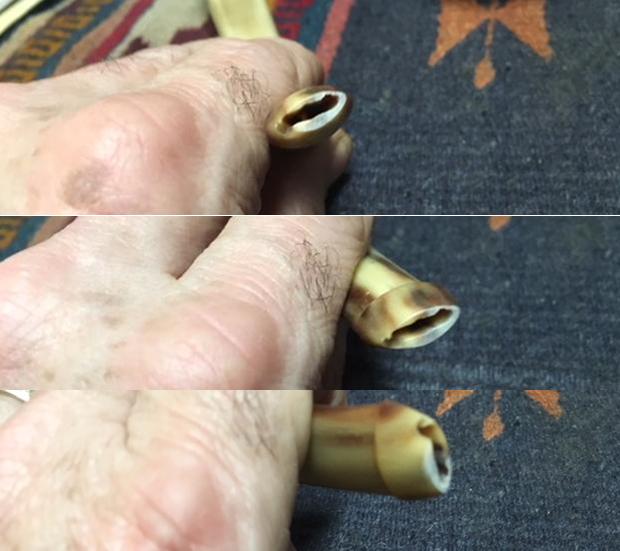
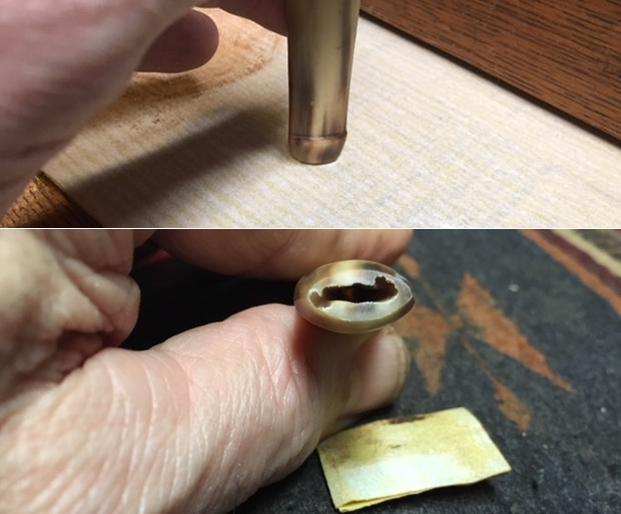
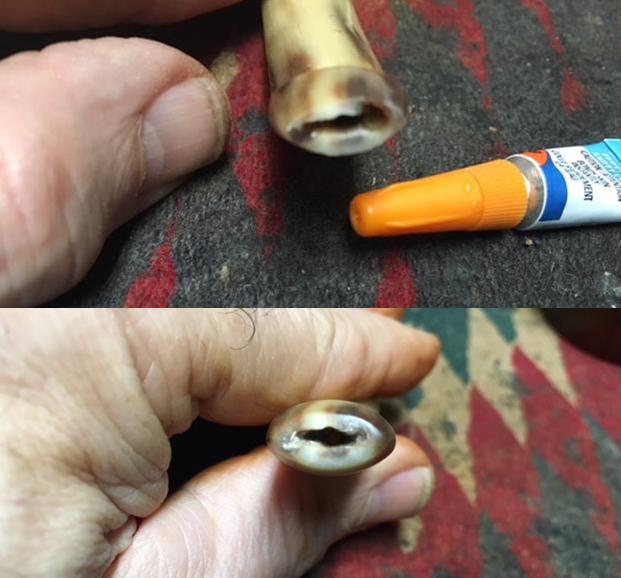
Using Charcoal & Cyanoacrylate glue to do a Stem Repair on a Dr. Grabow Starfire Churchwarden


Blog by Joe Mansueto -“JoeMan” (Dr. Grabow Collectors Forum)

Joe sent me the following email and an attached link for the article that follows. He has done some excellent work and I have followed it on Pipe Smokers Forums and also on the Dr. Grabow Collectors Forum. It is a pleasure to be able to post his work here on rebornpipes. Welcome and thank you Joe.

“Steve – I’ve looked in on your blog a number of times. Thanks for posting some really good information, and featuring the work of other guys in the field. One of the things I learned here which I had not done before was the use of Plaster of Paris to mend cracked / broken meer-lined bowls. That was helpful…and I think that was one of your own posts. I’d been looking for a better solution…thanks.”

“I’m not looking to get published so much as I’m happy to help other guys with refurb processes. I learned a LOT of things from others who’ve been at it for many years more than I, and have also developed a few of my own techniques…as I’m sure most of us have! Cleaning out gunk…refitting a stem…rusticating….topping a bowl…staining…refinishing…de-oxidizing stems…repairing chips…etc…these are all things I do on a regular basis. Recently, I took my hand to making pipes, and made 2 of them during a stay-home vacation…came out pretty good! But, I see myself primarily as a refurb guy…I really enjoy making an old broken-down relic of a pipe gleam again. If I were to count, I suppose I’ve refurbished most of a thousand pipes over the last 4 years. No…I don’t have 1,000 pipes…most have gone to others by way of sale, trade or gift. I suppose I do have 200 pipes in my collection however.”

“One of the things that most refurb guys seem to struggle with most is chewed / eaten stems. Those nasty tooth indentations…or worse yet…missing chunks from the button. I’ve heard of guys using super-glue, heat, JB Weld, vulcanite dust & glue, and other mad-scientist approaches. There are many good approaches to repairing a stem. The most effective approach I’ve personally found is Cyanoacrylate and activated charcoal. Ed James (AKA Ozark Southpaw online) is just about the best talent I’ve seen in all-things pipes. He too learned from others over many years, but what an innovator this gentleman is. I visited his shop when I was on the road over 2 years ago, and I’ve learned a lot from him. One of his own experiments a few years ago was mixing CA with activated charcoal and comparing the result with other repairs. It was a great discovery, and at the time he did it and shared it on the forum, I’d not seen anyone else doing it that way. I’m not saying it’s the ‘best method’…because you know how some pipe guys can get into struggles over their method being best…but I’ve personally not seen anything more successful. Ed James has not done too many of these CA/charcoal repairs himself…but once he discovered, tested and shared it, I took it and ran with it. Do with this info as you please or nothing at all…but here is one example of the process…”

“At the time of that Starfire churchwarden refurb, I had done a couple hundred stem repairs. Since the time of that refurb, I’ve surely done a couple hundred more, and have tweaked my own process here and there. I’ve done some of these repairs on pipes for myself, but more for pipes which I’ve then sold, as well as others who bring them to me. This one served as a good example, since it was one of the worst cases that I documented. Most of those I’ve done, I’ve not documented at all.” – Joe Mansueto “JoeMan” (Dr. Grabow Collectors Forum)

Here is Joe’s blog:

Just recently got this pipe from Sam (DG forum name SamCoffeeMan – hasn’t been here in a while) along with the Grabow Unique. When I expressed interest in it…Sam said that he’d “cut off 1/2” of the stem, and file out a new button. I said…nnnooooo…leave it original and I’ll fix it.

I am sure the stem is original to the pipe. The stem is identical to the stem on my Linkman Grabow 6033, it is perfectly registered, and the wire carving is that of an ‘early’ Starfire, as you’ll see below. That said, this was surely among the last of the churchwardens to leave the Grabow factory.
Joe1 The previous owner should have had a sandwich instead of smoking this pipe…Joe2

Joe3 This can be fixed!

Bleach soak first, then an isopropyl alcohol scrub of the surgery site to assure the CA will stick best.

The form I used is 2 thicknesses of cereal box cardboard, cut to the shape of the tapered slot opening, wrapped in shiny packing tape. Since both sides of the button were nearly identically eaten, there was nothing to keep the form properly seated. So, I taped the form to a pipe cleaner and pulled it into place as tight as I could, then centered it top to bottom…if that makes sense.Joe4 CA mixed with activated charcoal, applied in multiple layers…Joe6

Joe7 Using a needle file to shape between layers…Joe7 Just about done shaping, ready for multiple-stage wet sanding…Joe8 Buffing…done.Joe9

Joe10 Some of you will know which shape number this medium billiard would be. Bowl height is nearly 1 3/4″, ID is 3/4. Overall length is 11 3/4″.Joe11 This is an older Starfire for sure. It’s got the very deep wire carving which is continuous over the entire pipe as I believe Tom pointed out about Belvedere.Joe12

Joe13 This was originally posted on The Dr. Grabows Collectors Forum. Here is the link: http://drgrabows.myfreeforum.org/sutra87253.php#87253