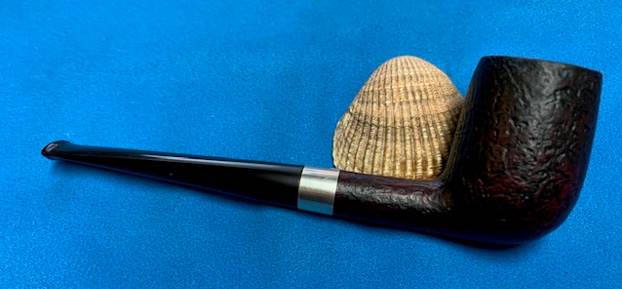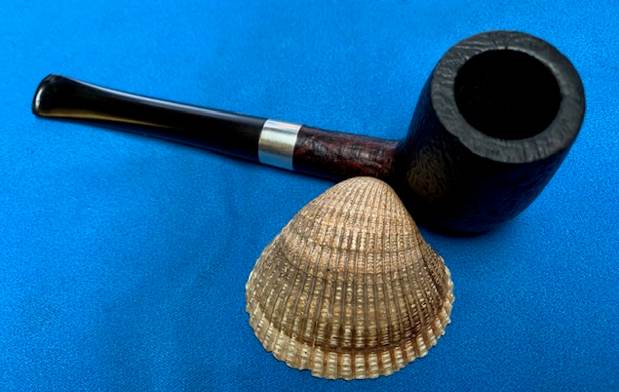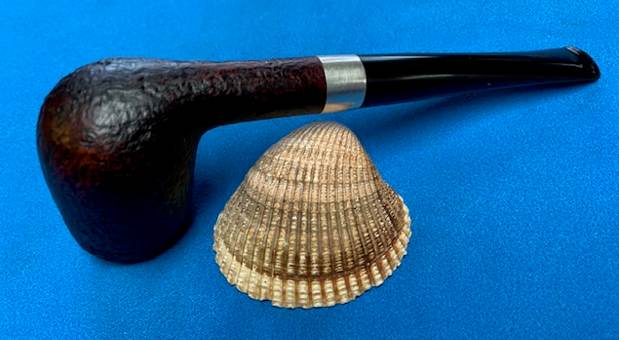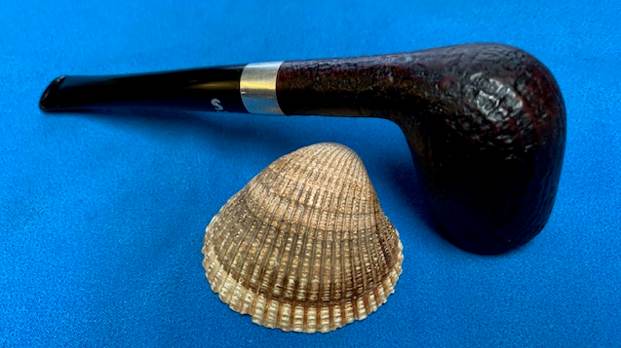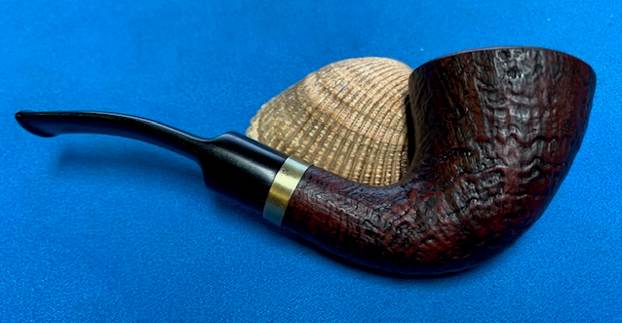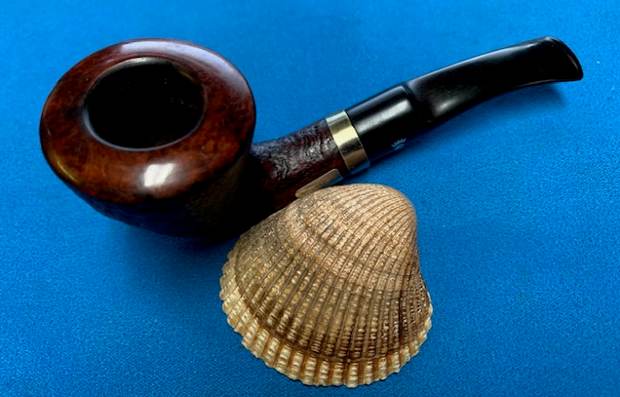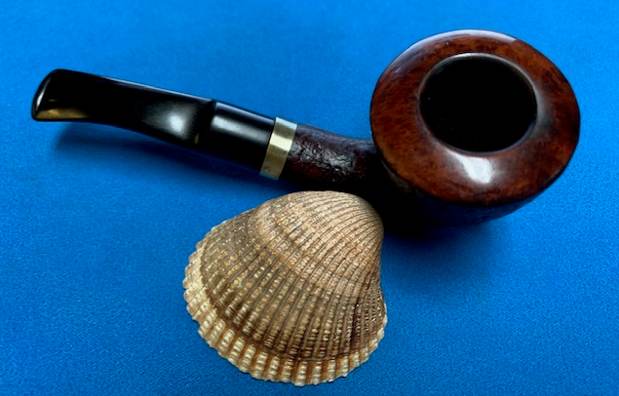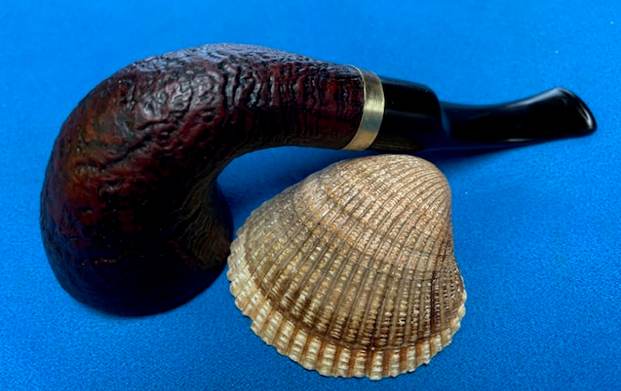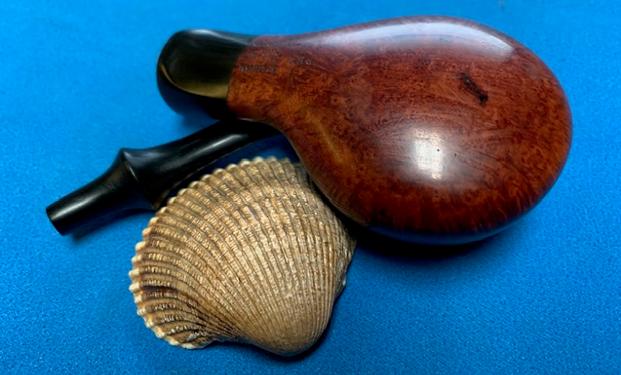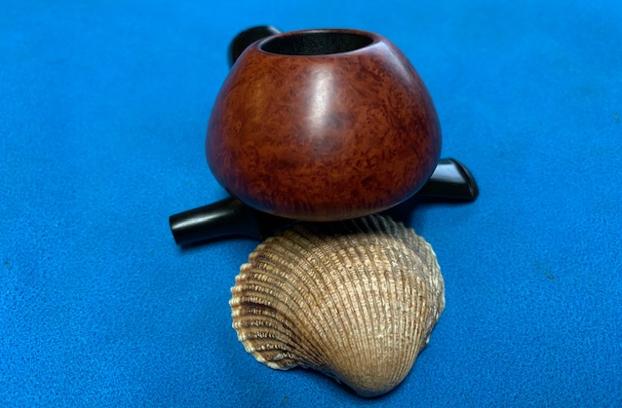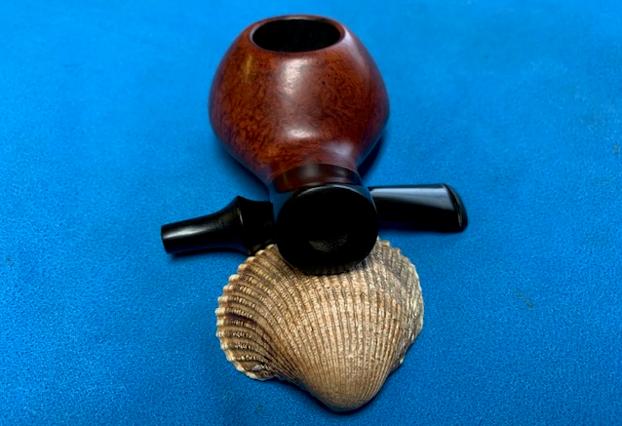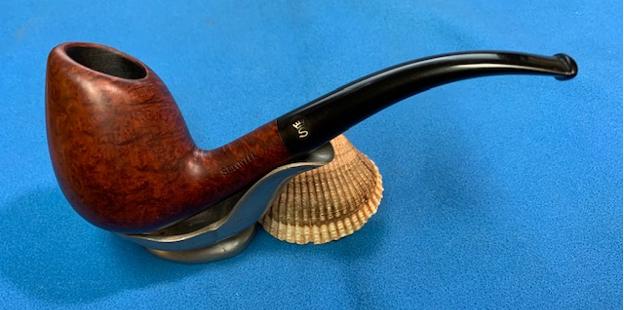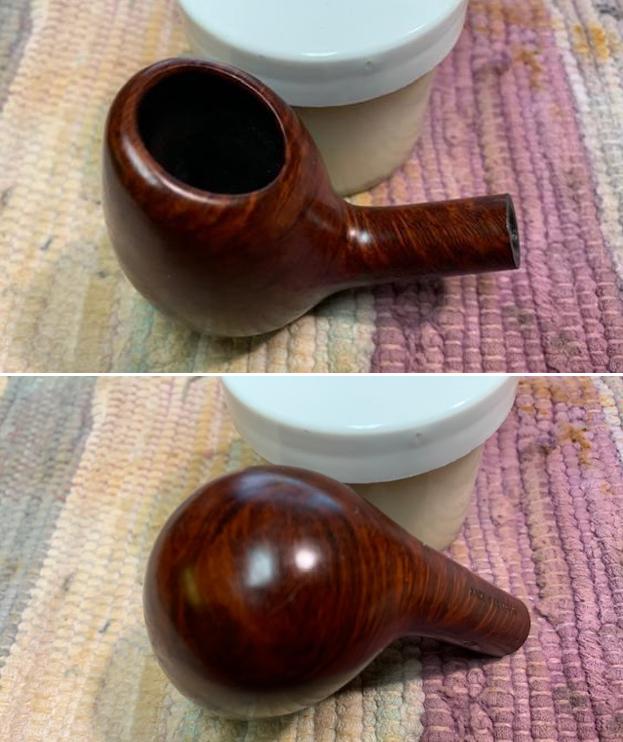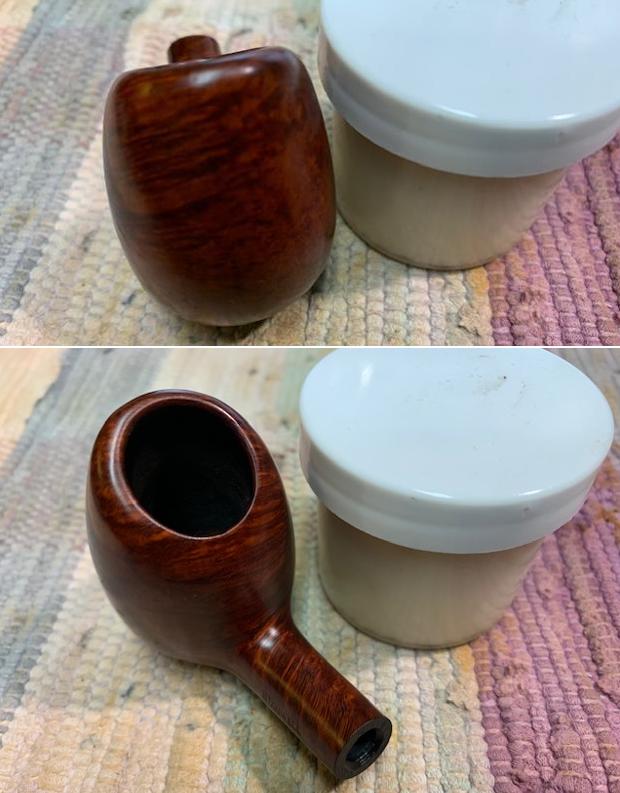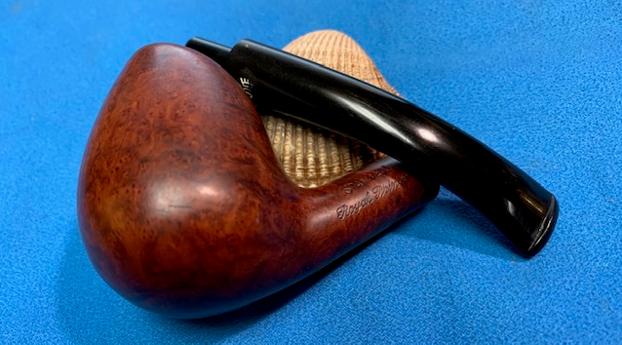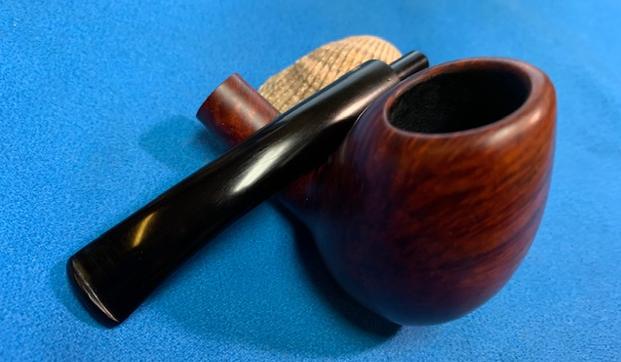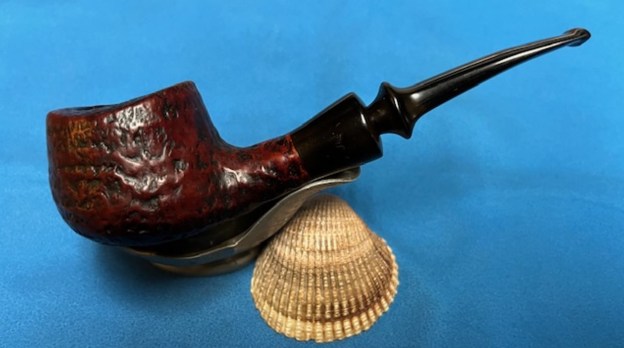
Tag Archives: Stanwell Made in Denmark pipes

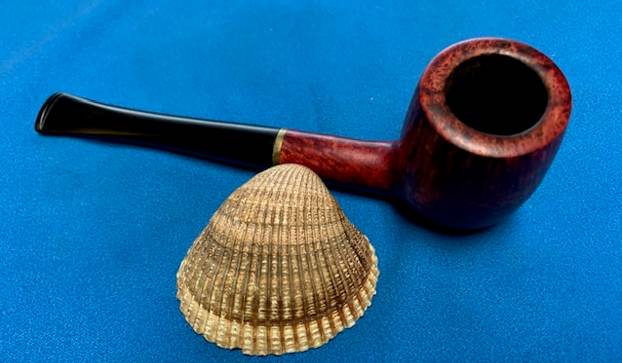
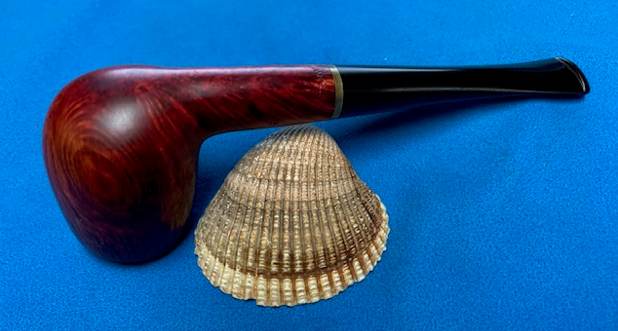
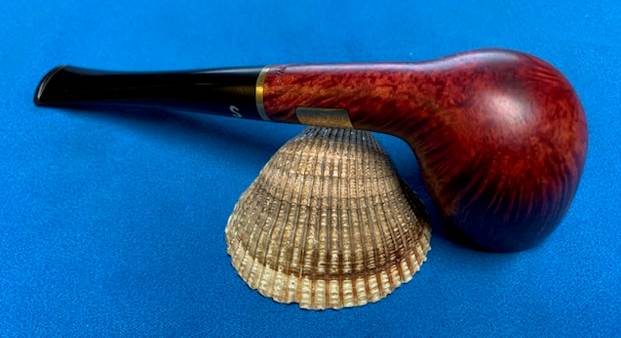
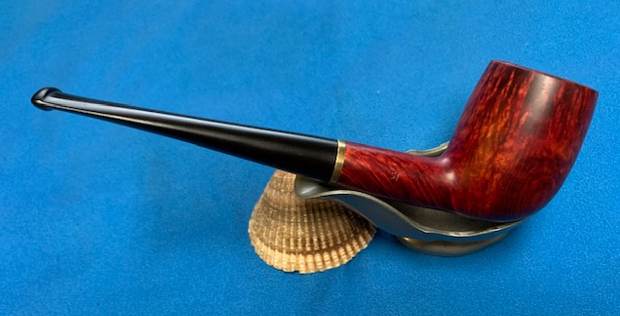
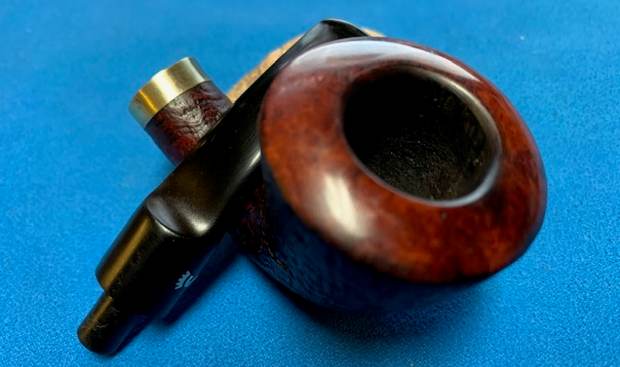
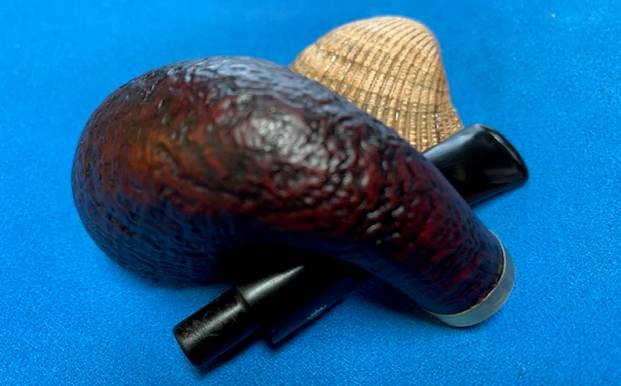
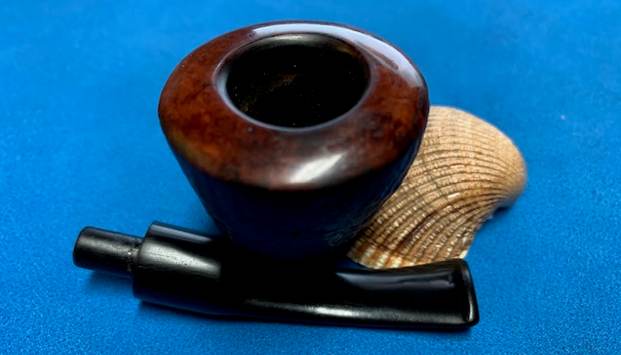
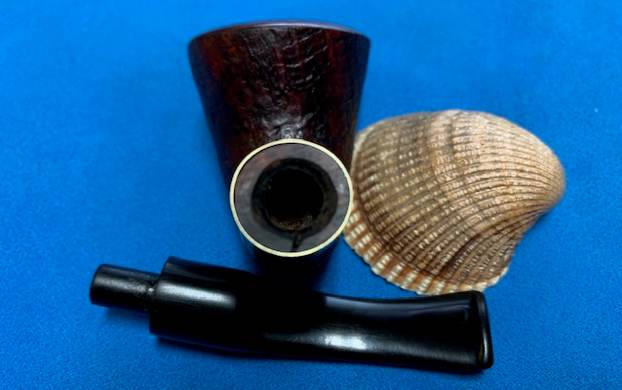
Another Filthy and Messy Stanwell Made in Denmark Pot on the table


Blog by Steve Laug

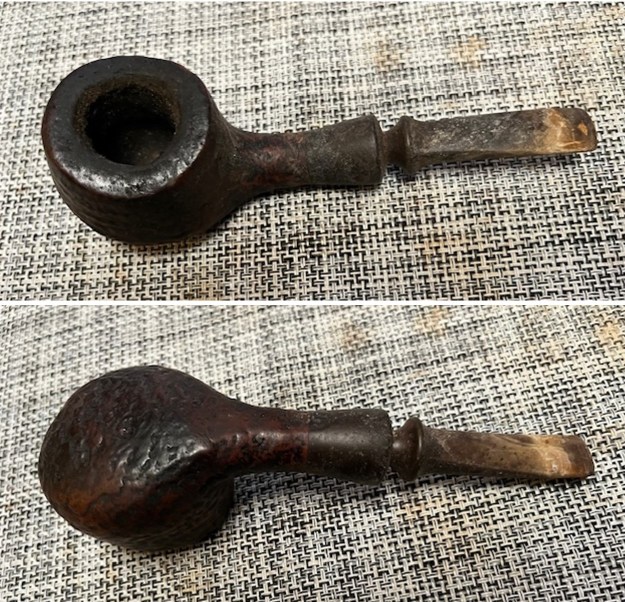
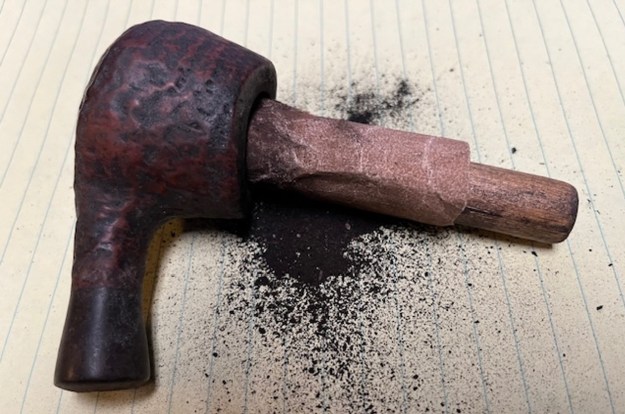
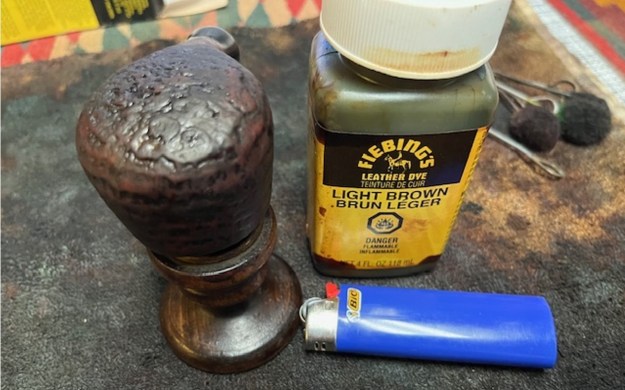
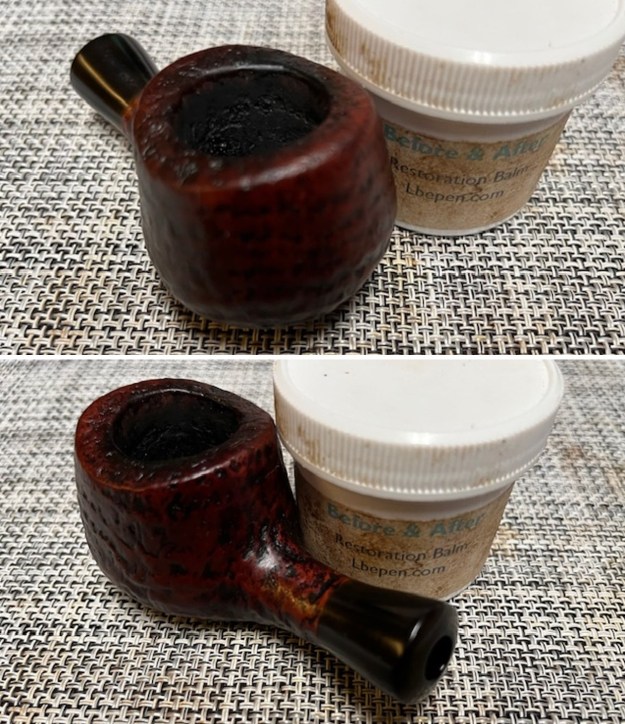
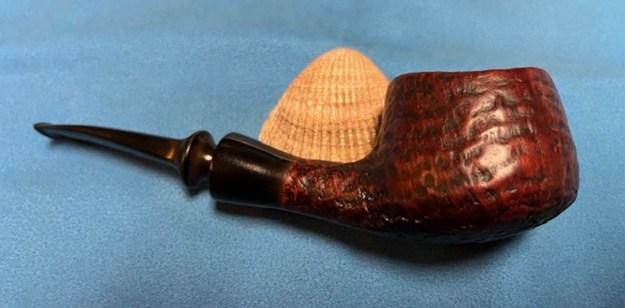
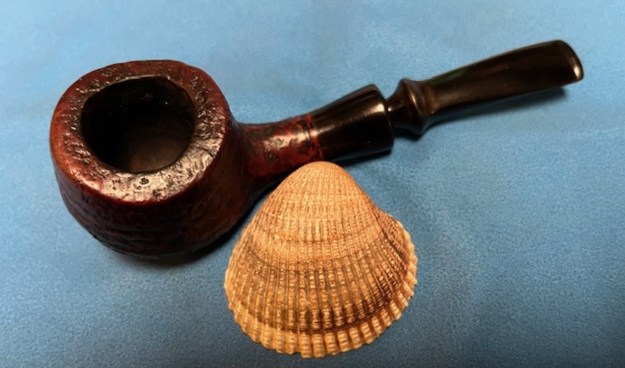
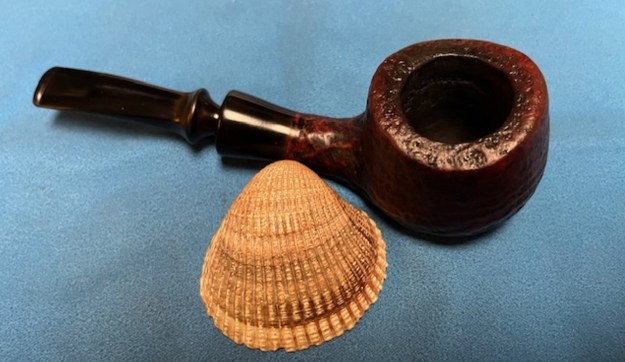
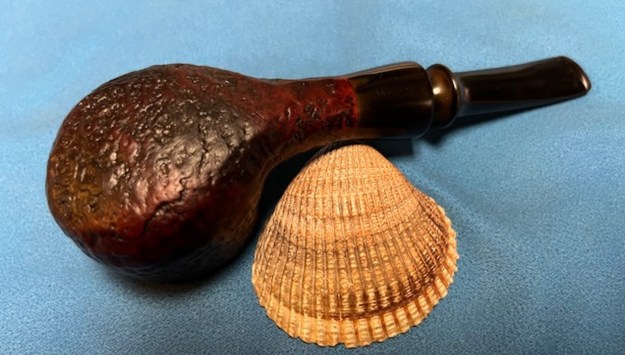
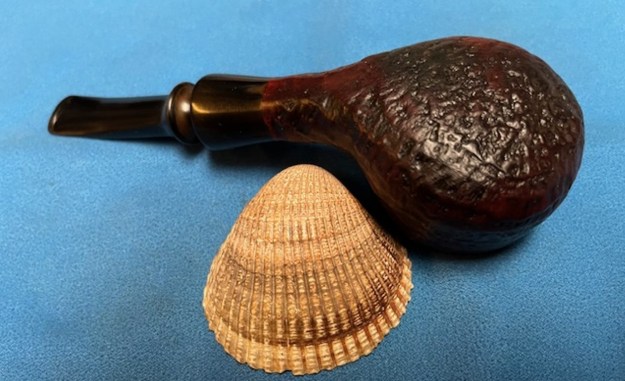
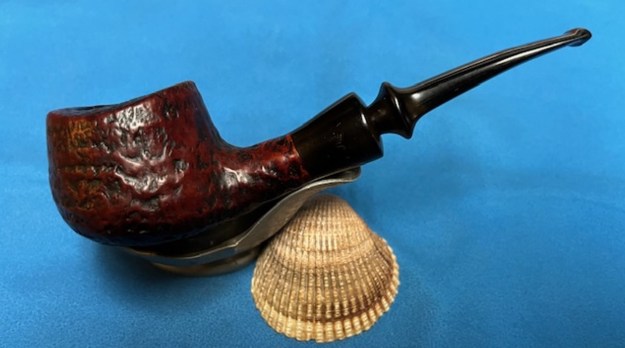
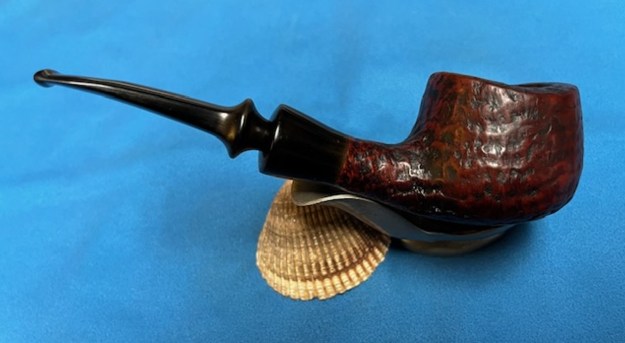
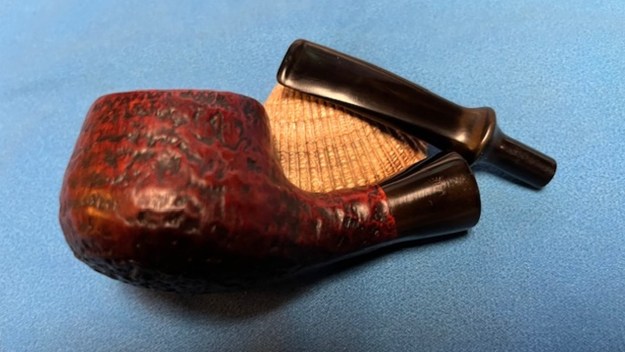
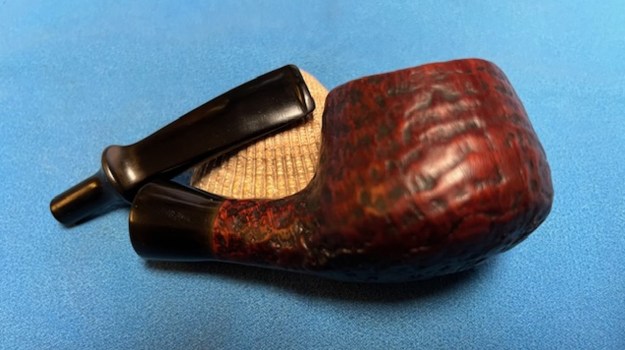
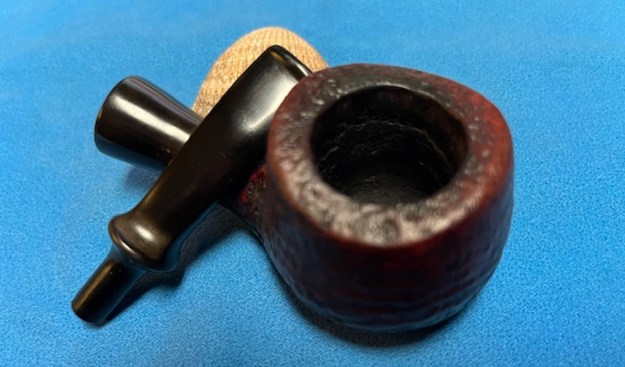
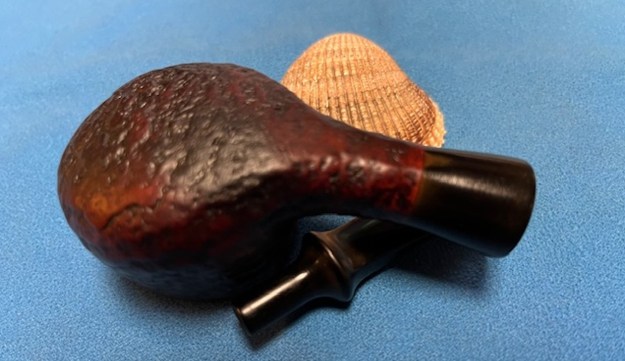
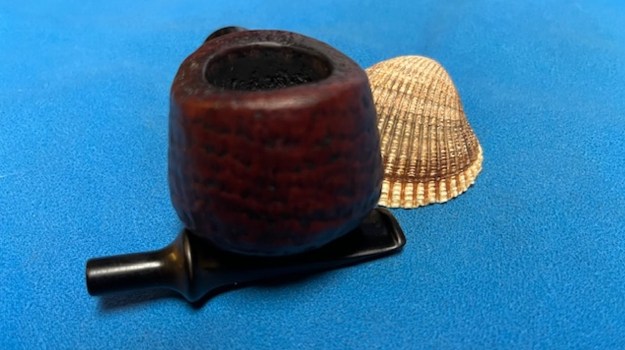
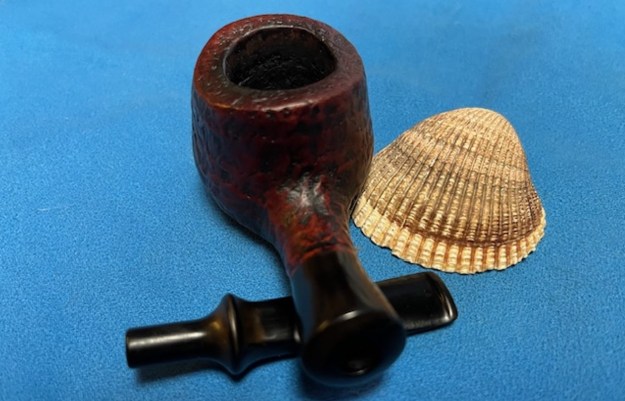
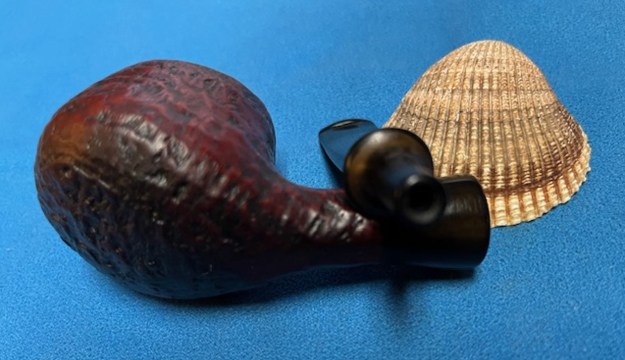
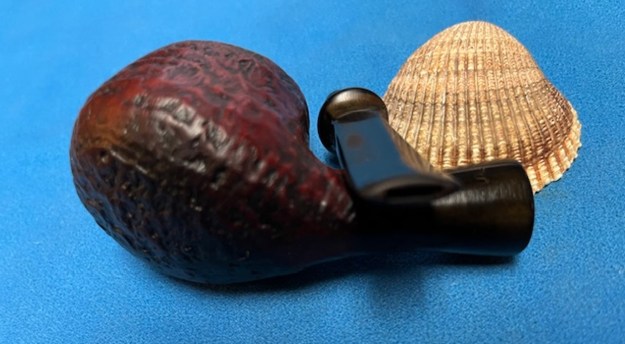
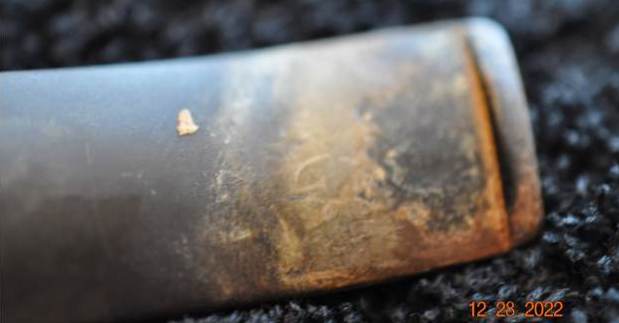
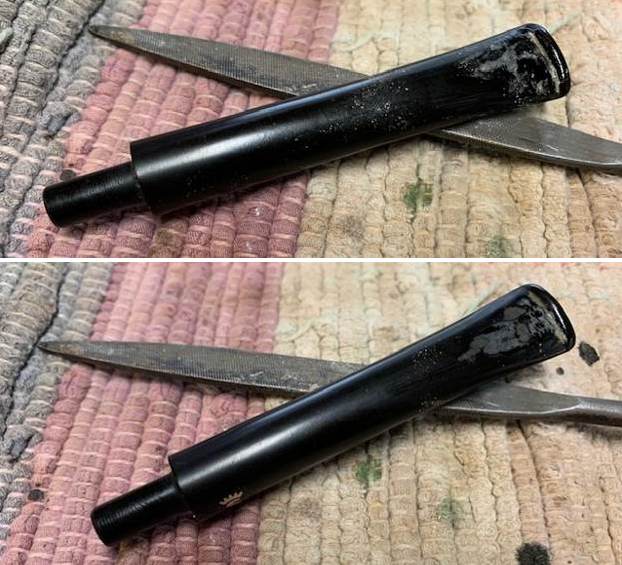
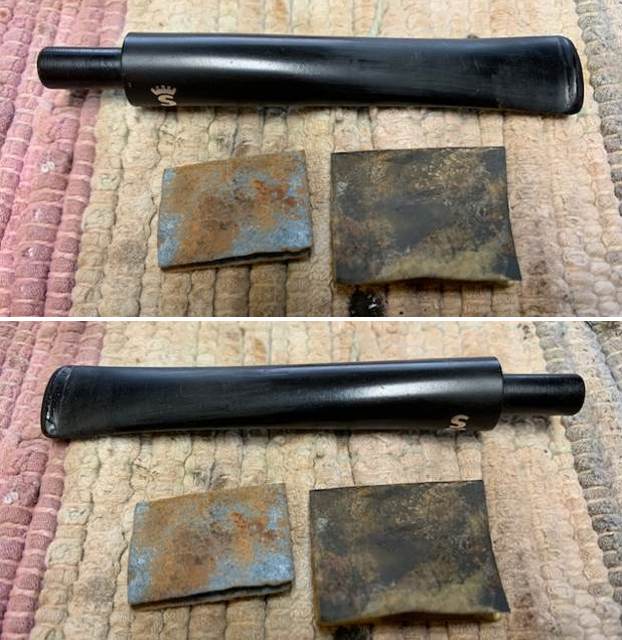
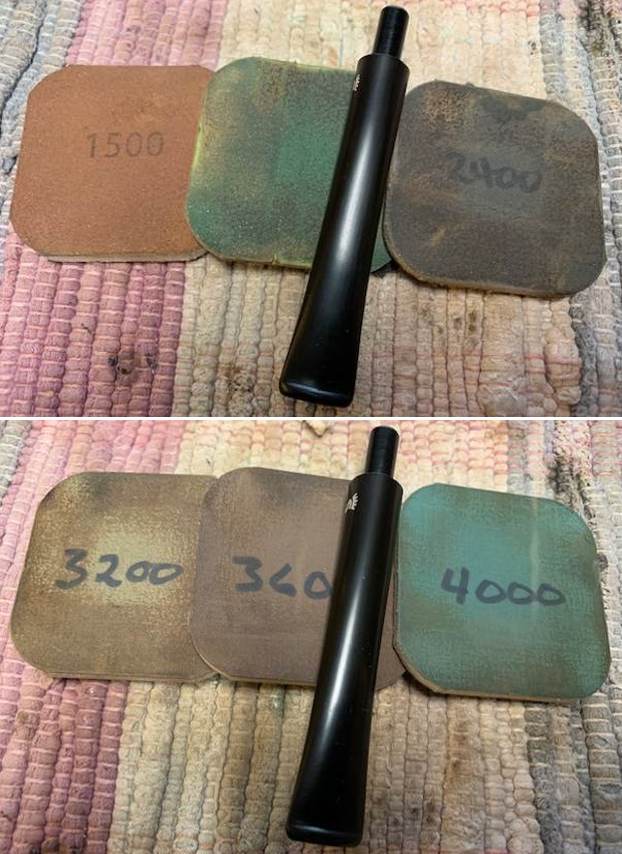
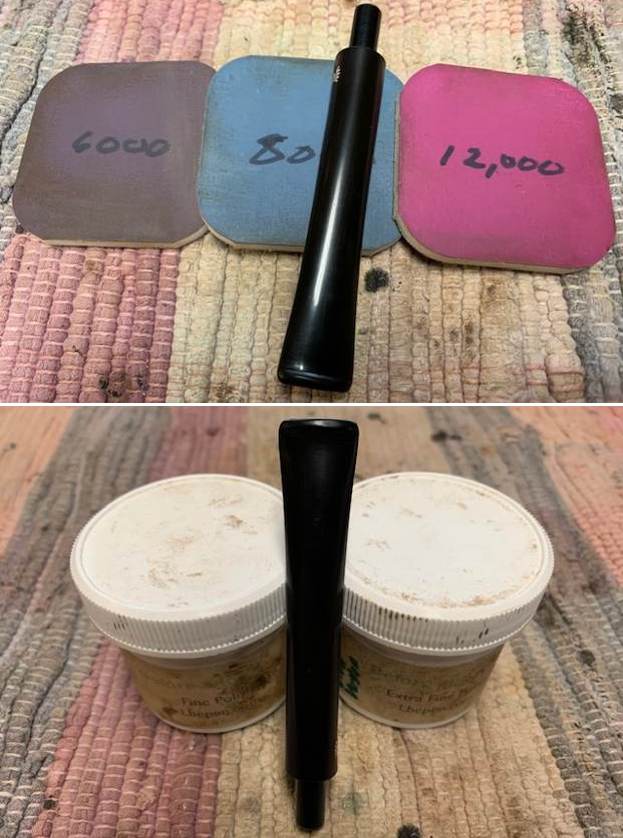
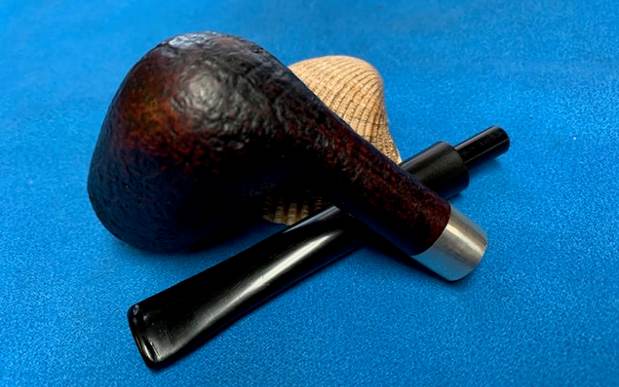
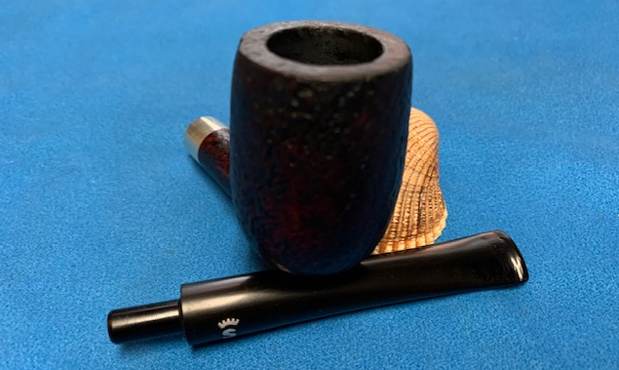
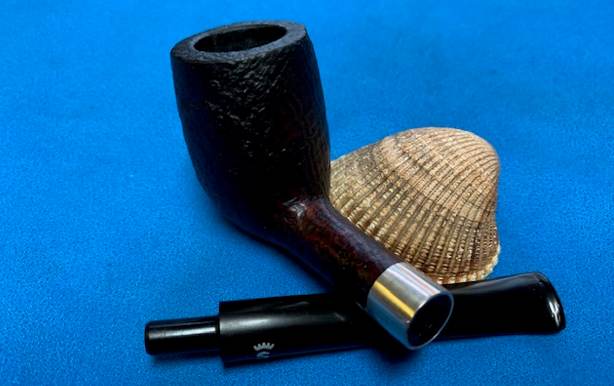
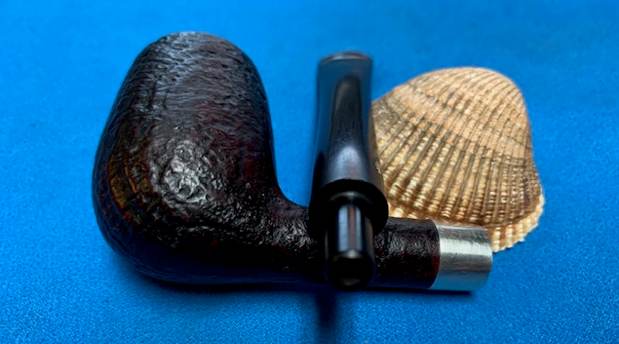
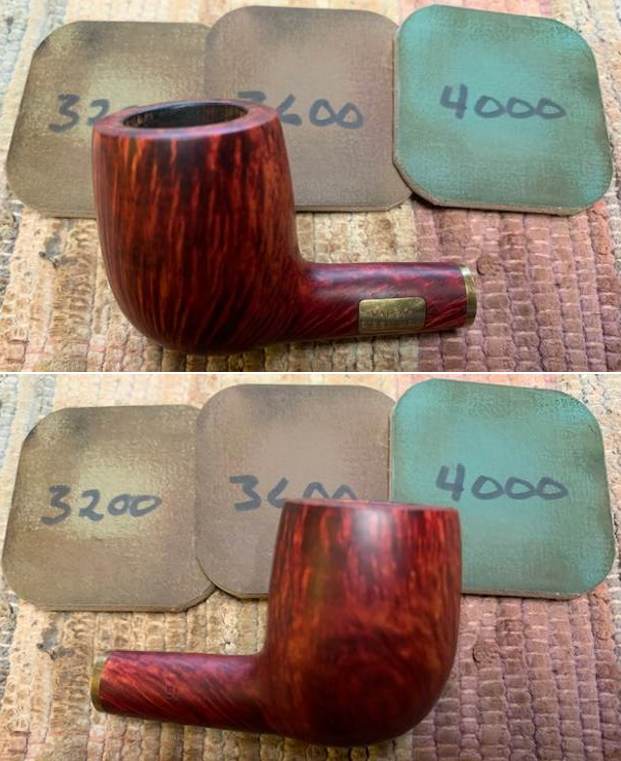
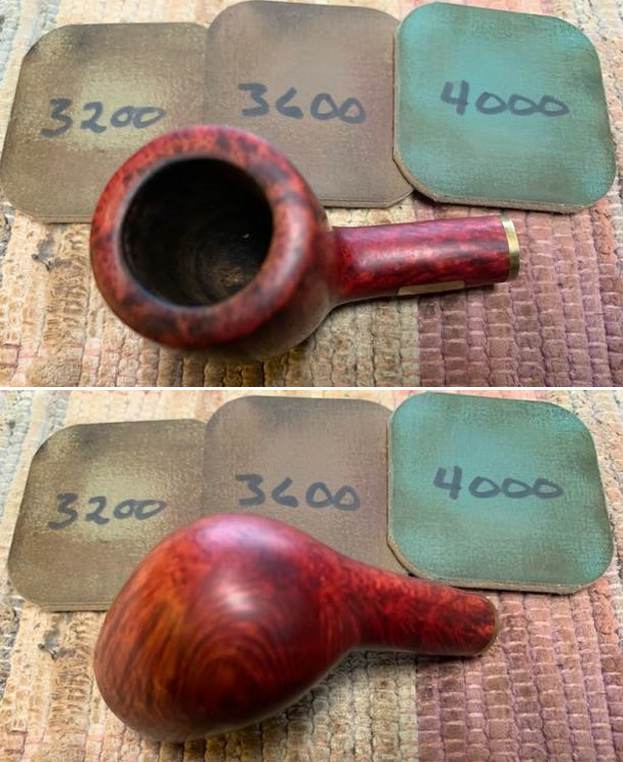
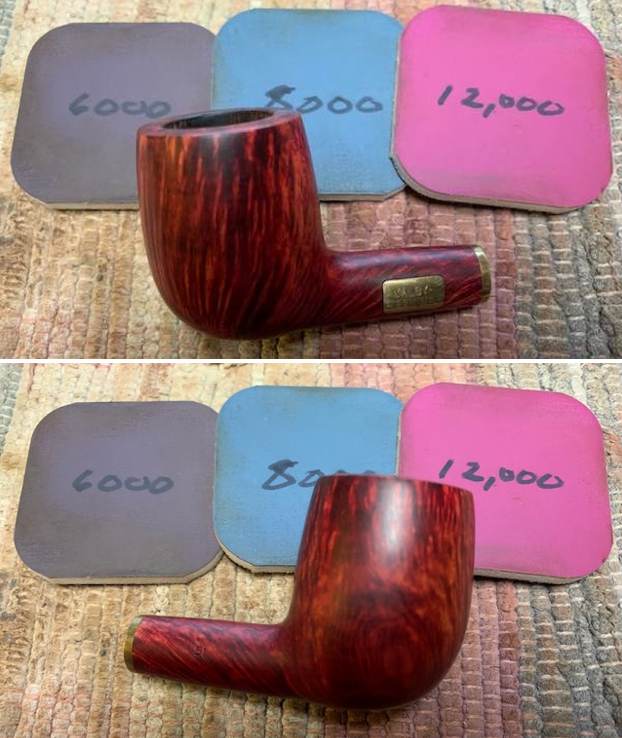
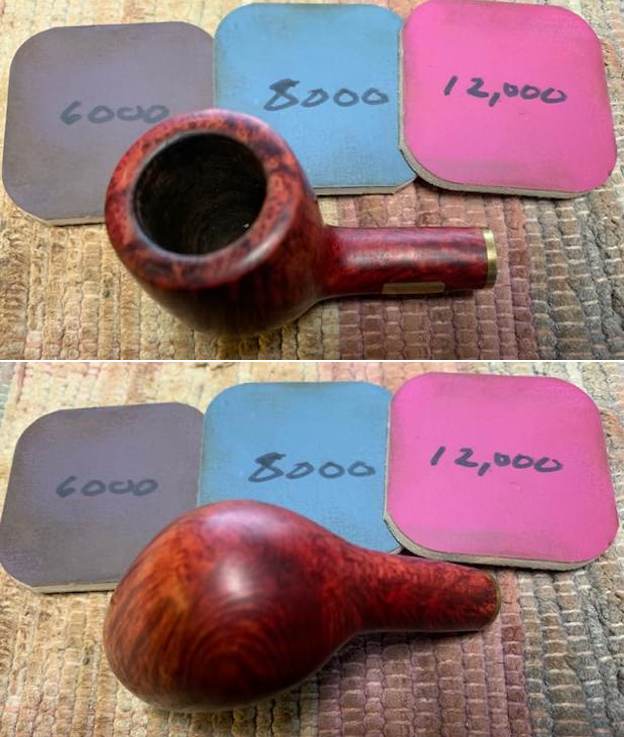
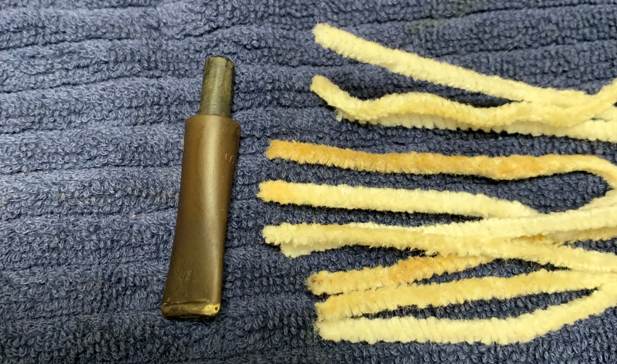
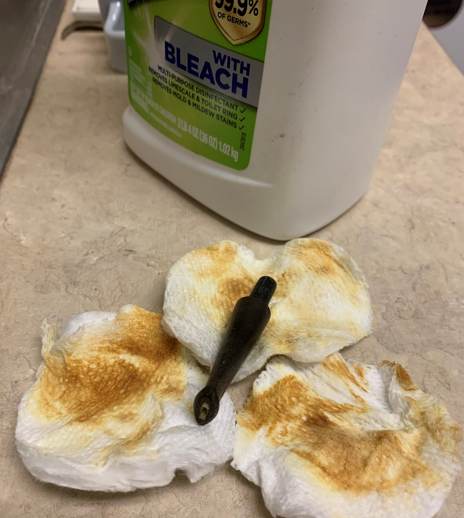
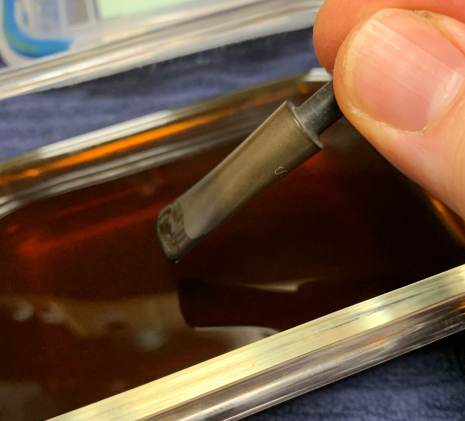
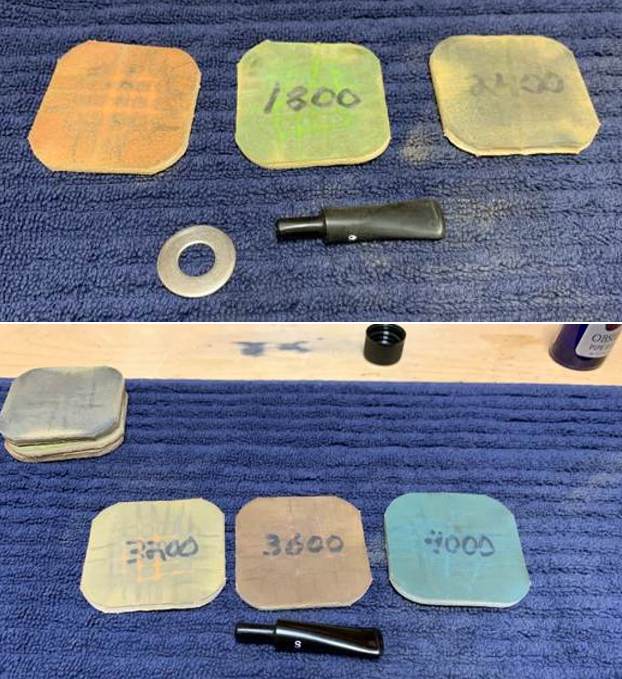
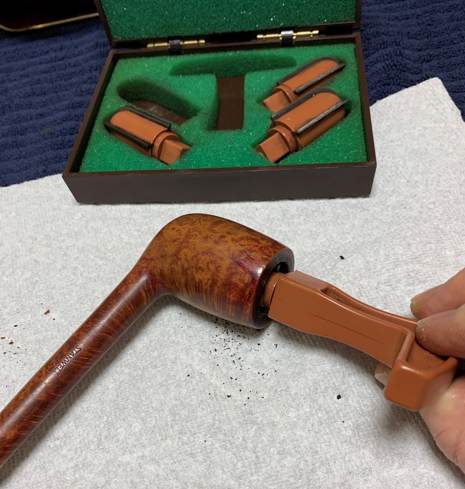
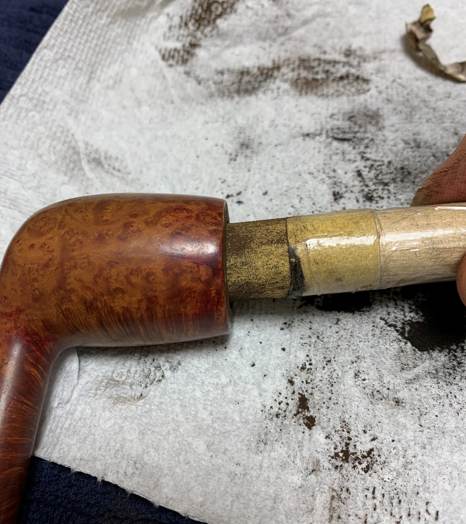
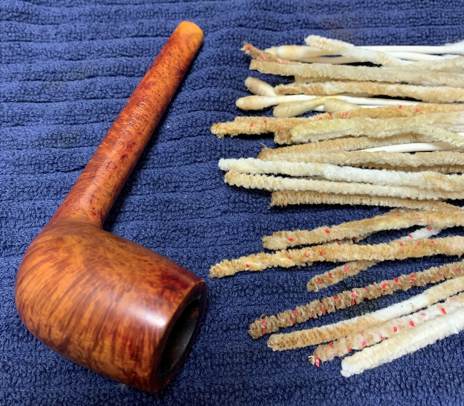
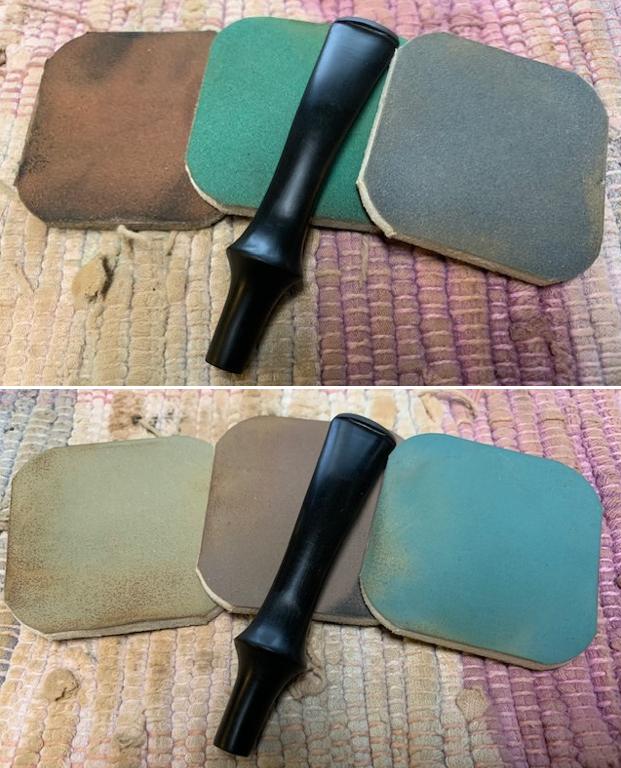
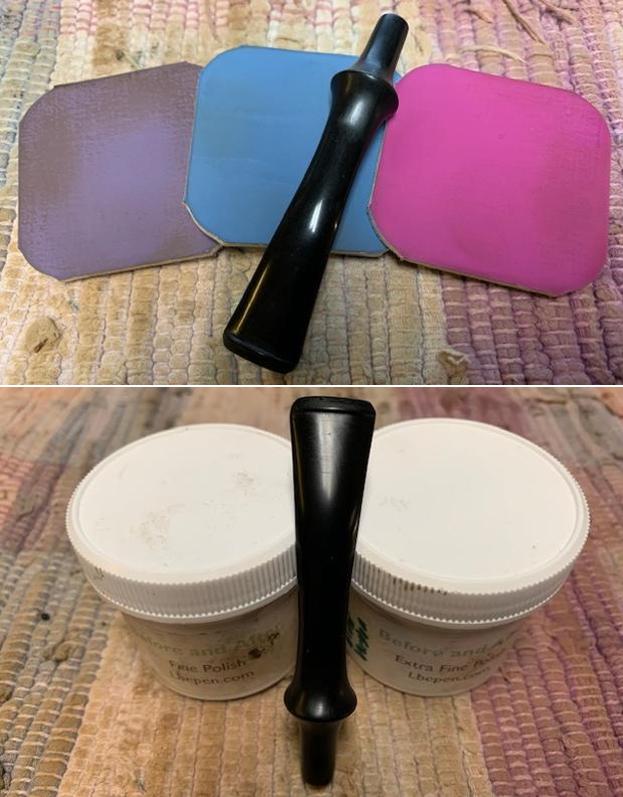
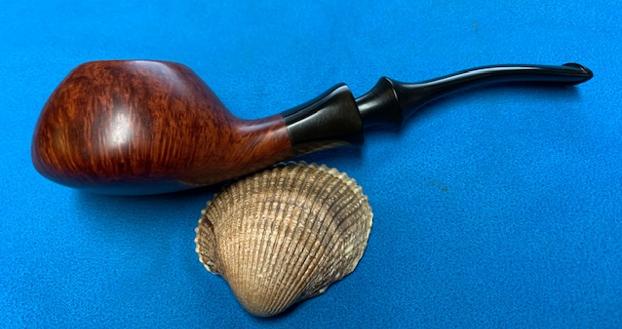
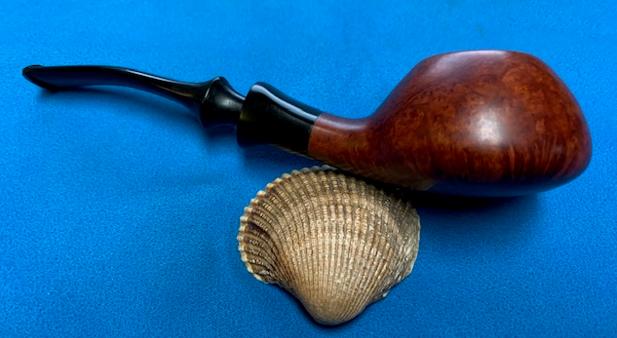
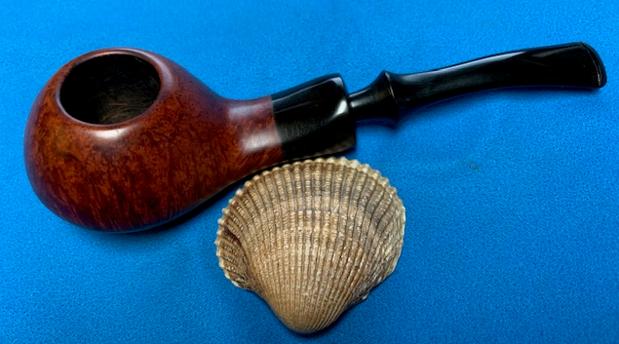
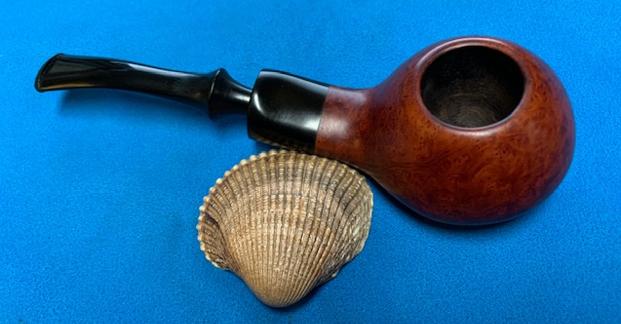
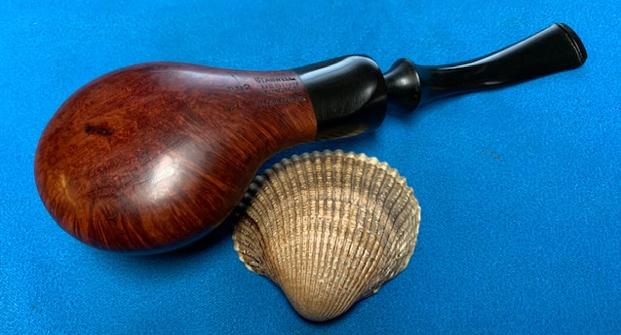
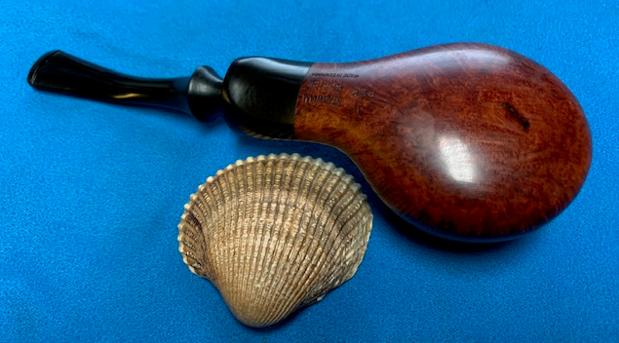
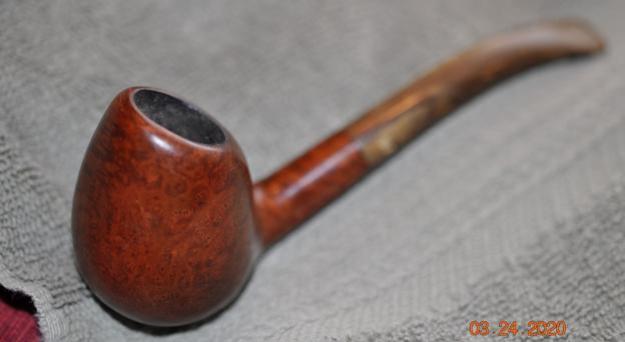
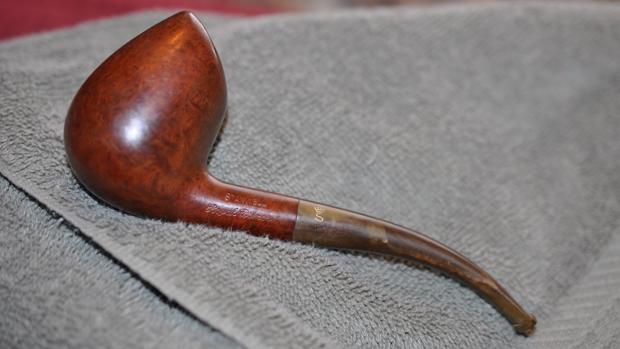
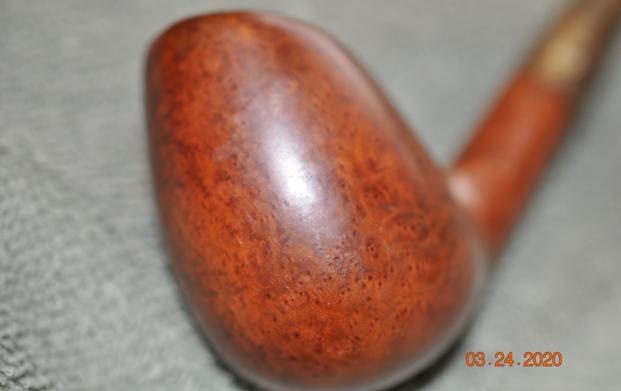
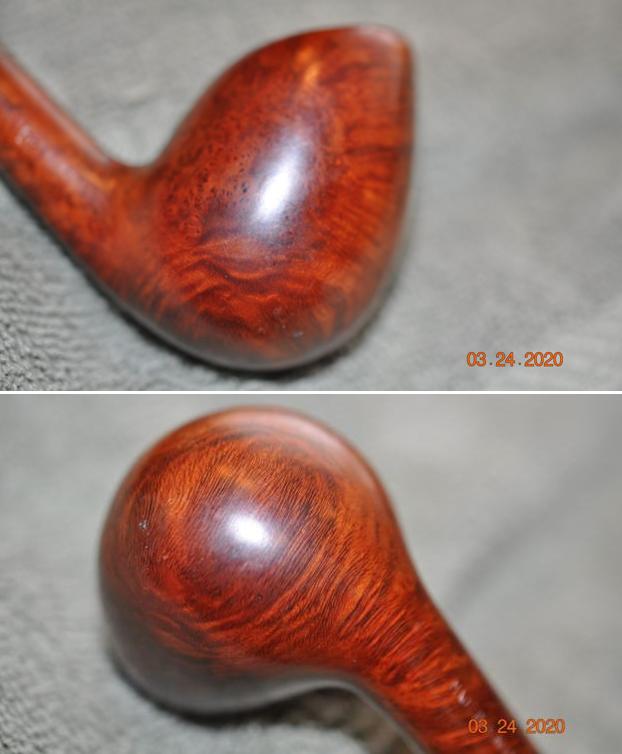
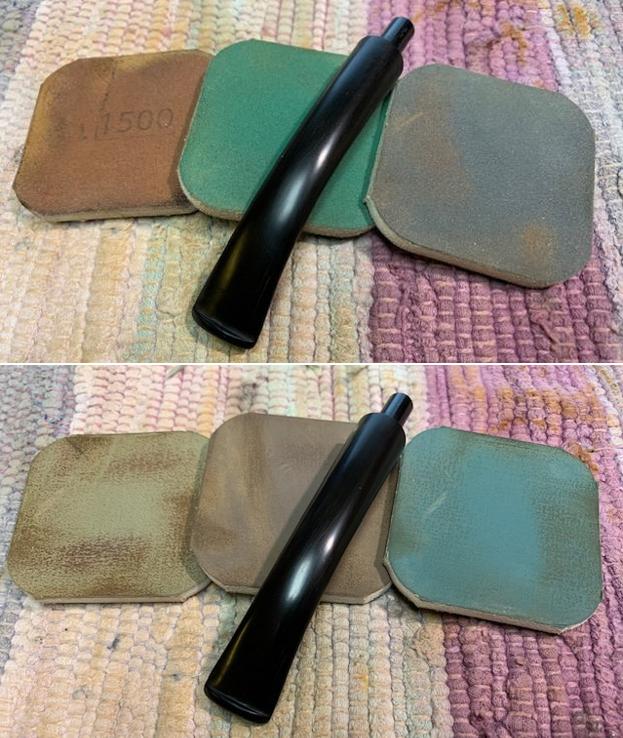
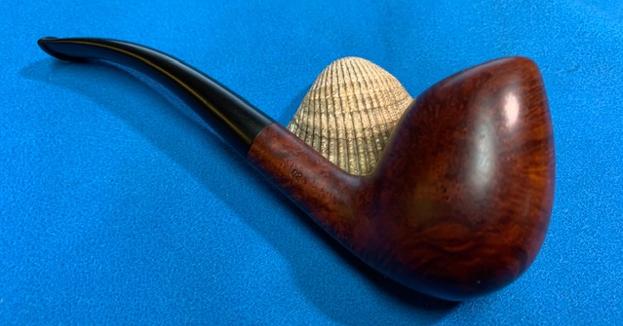
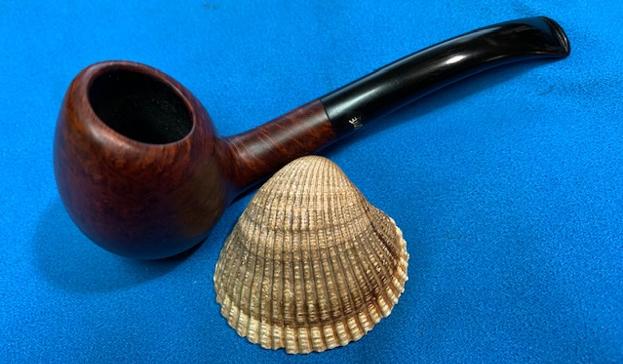
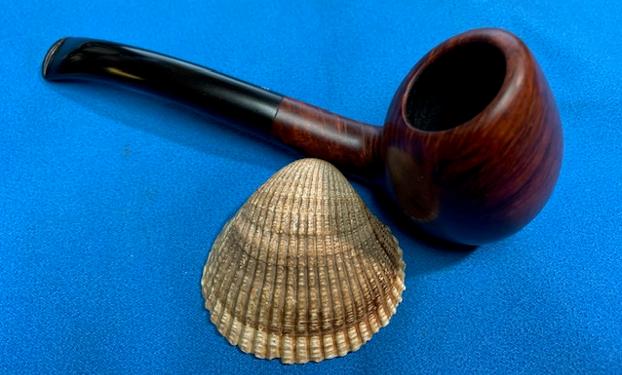
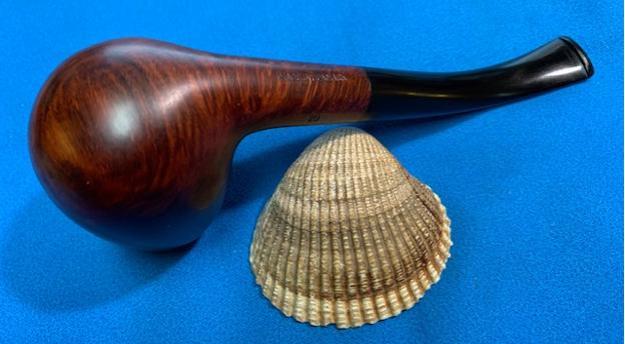
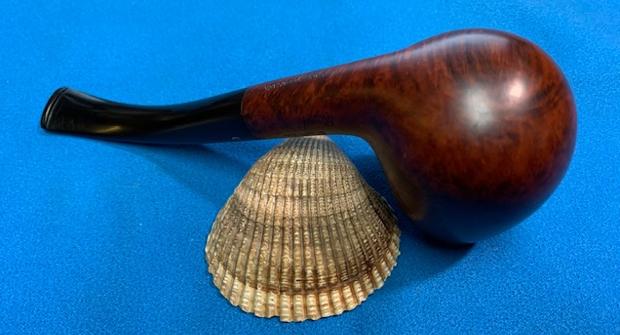
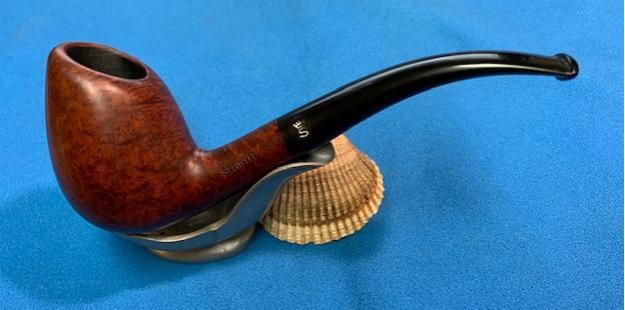
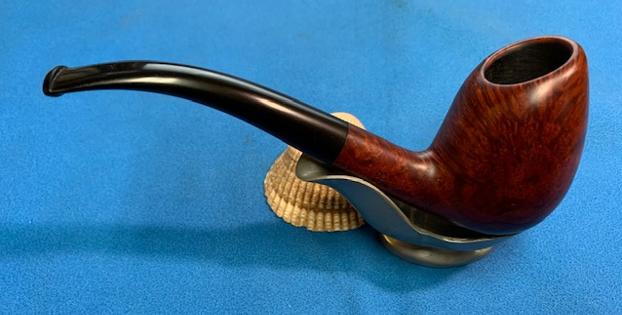
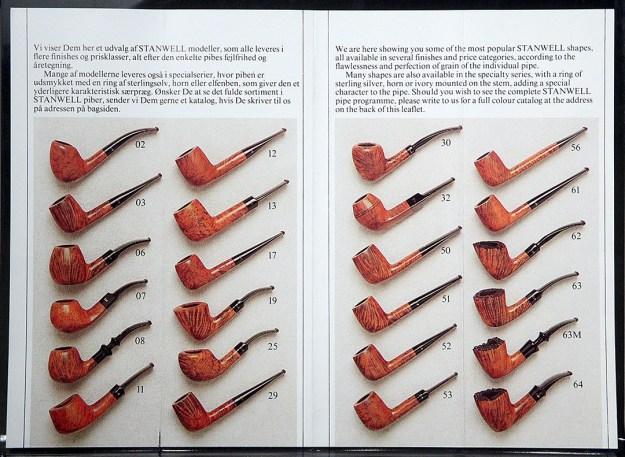
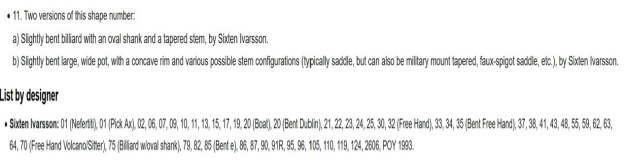
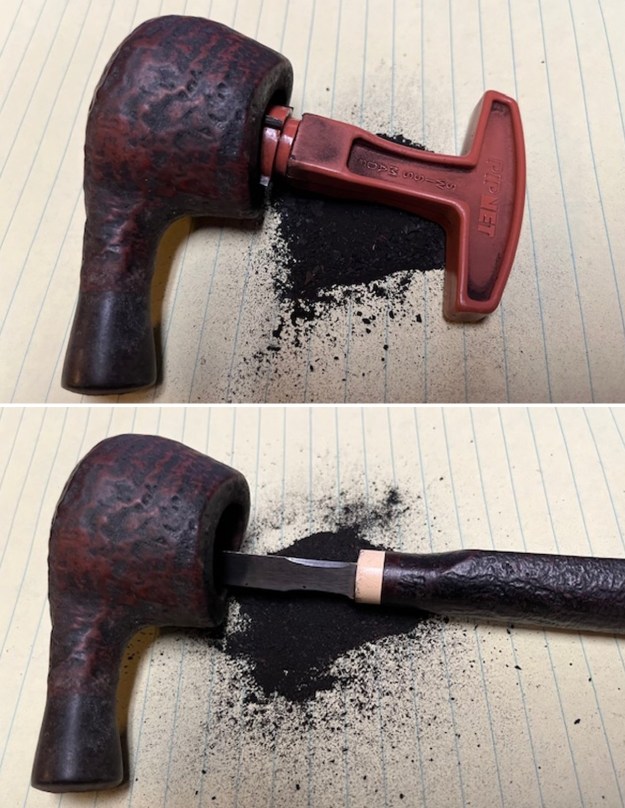
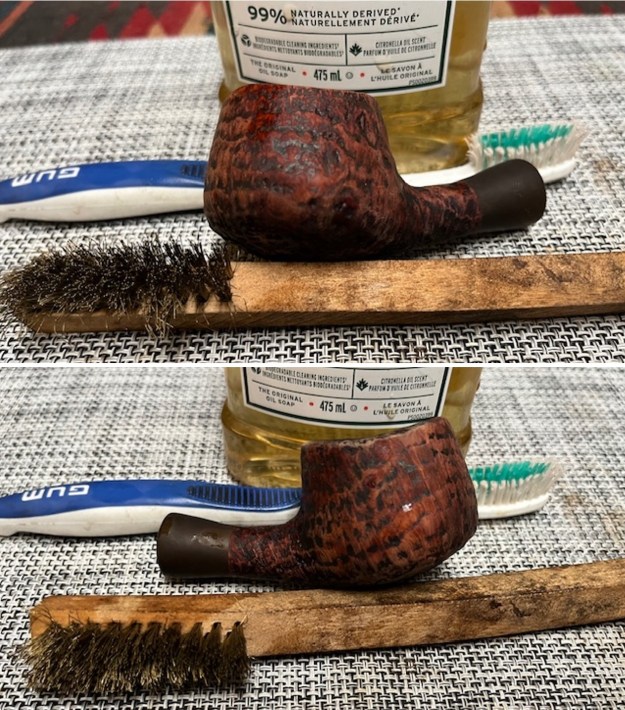
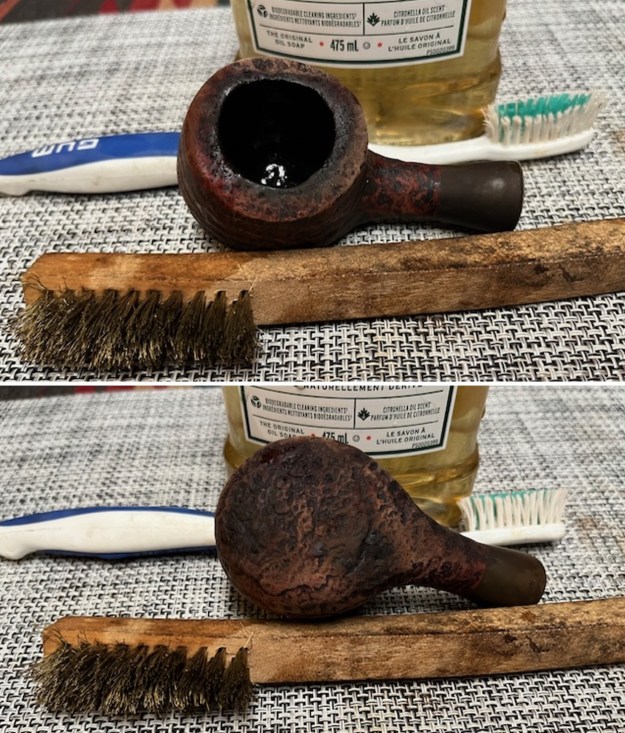
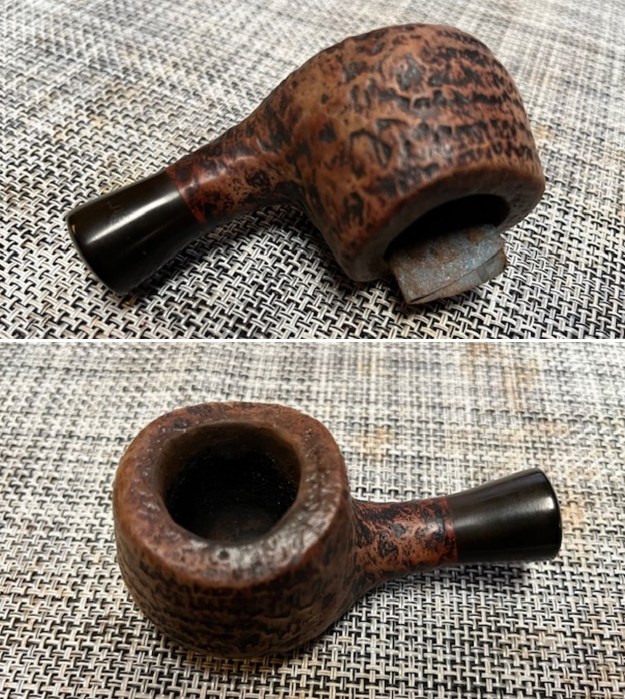
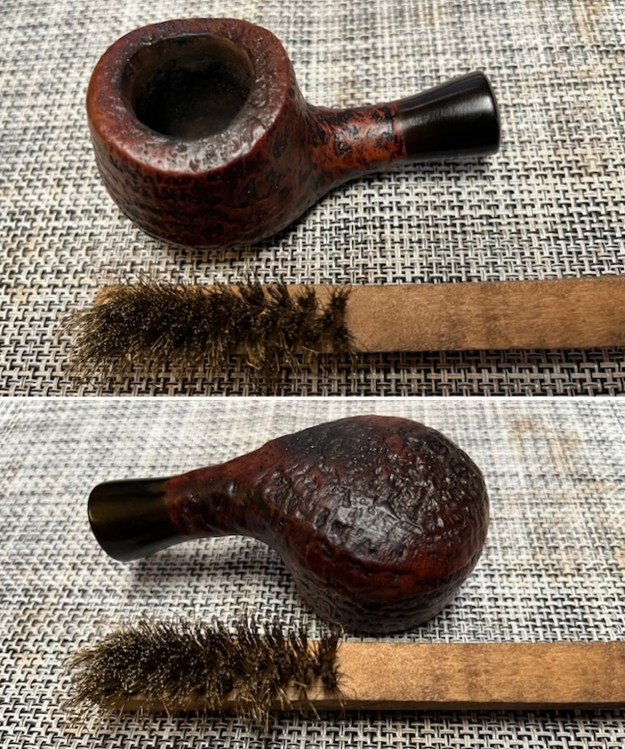
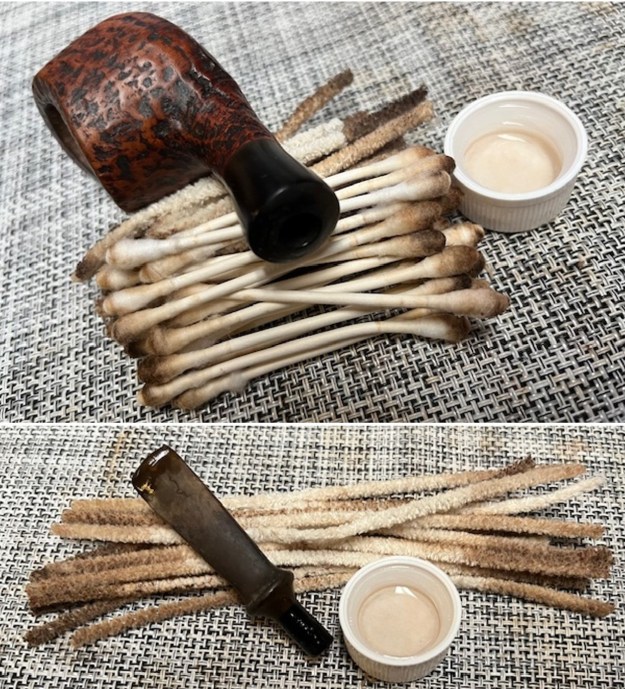
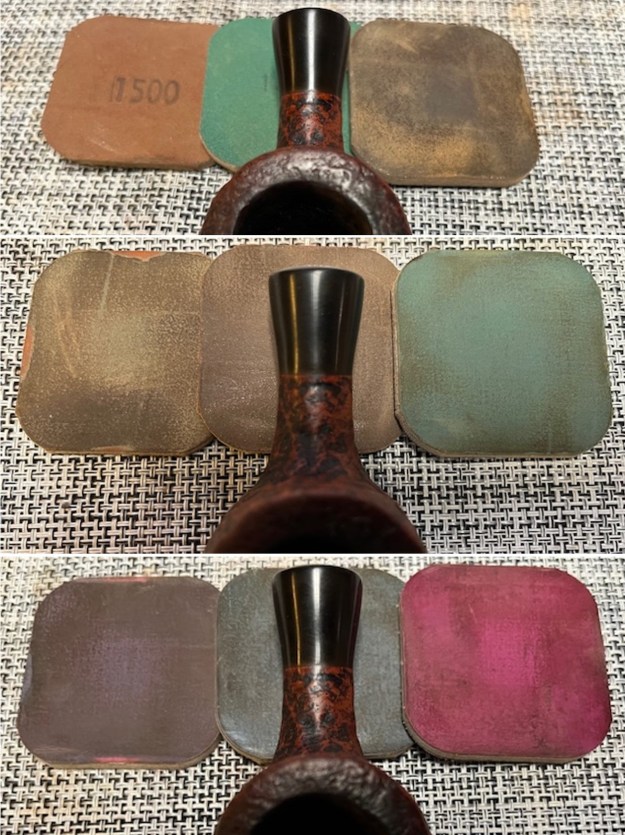
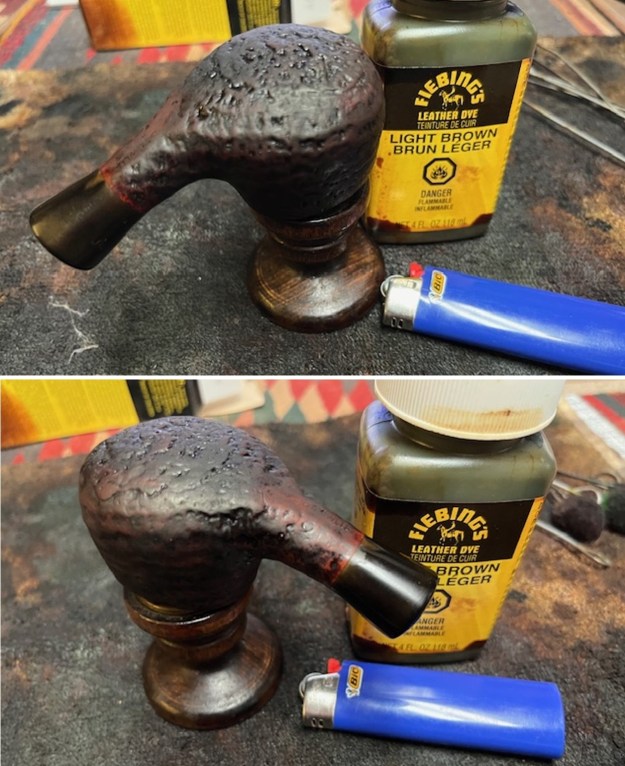
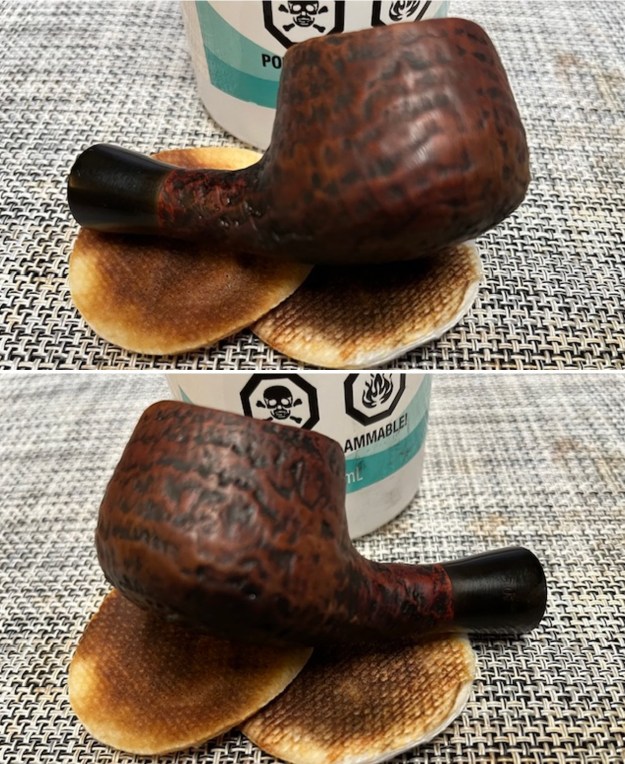
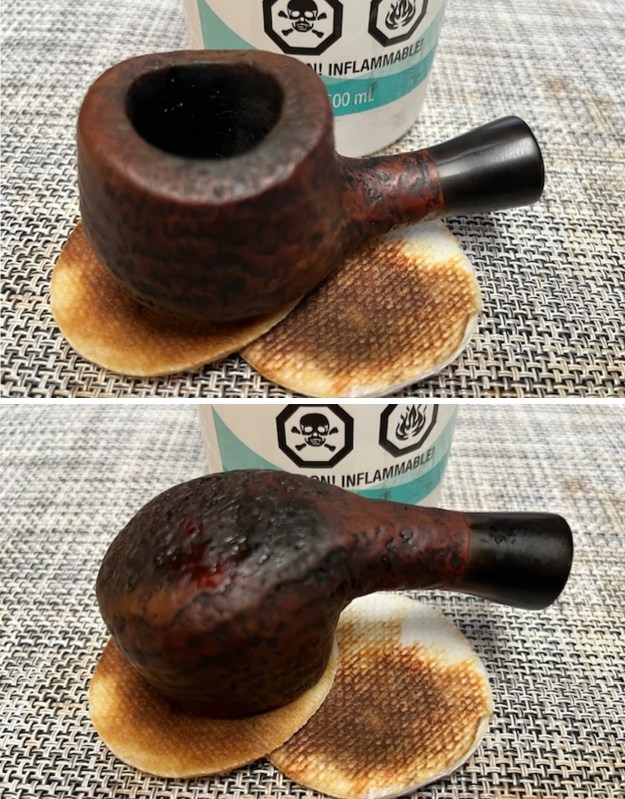
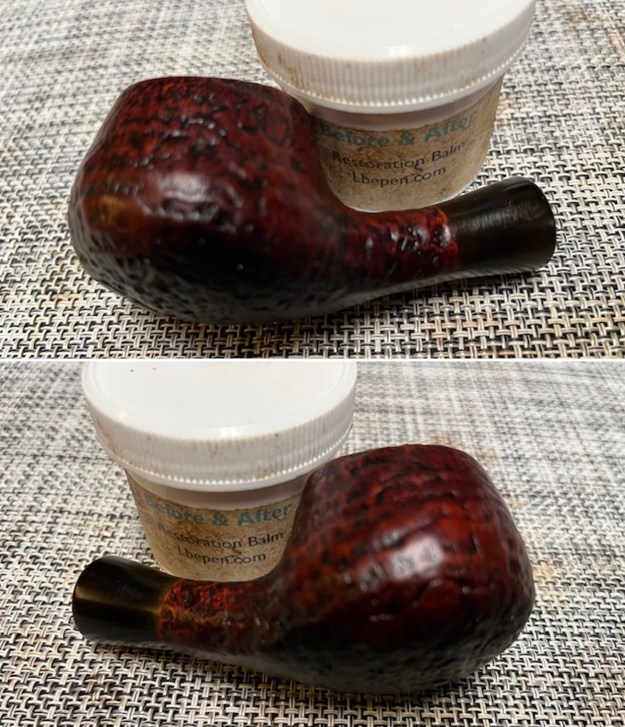
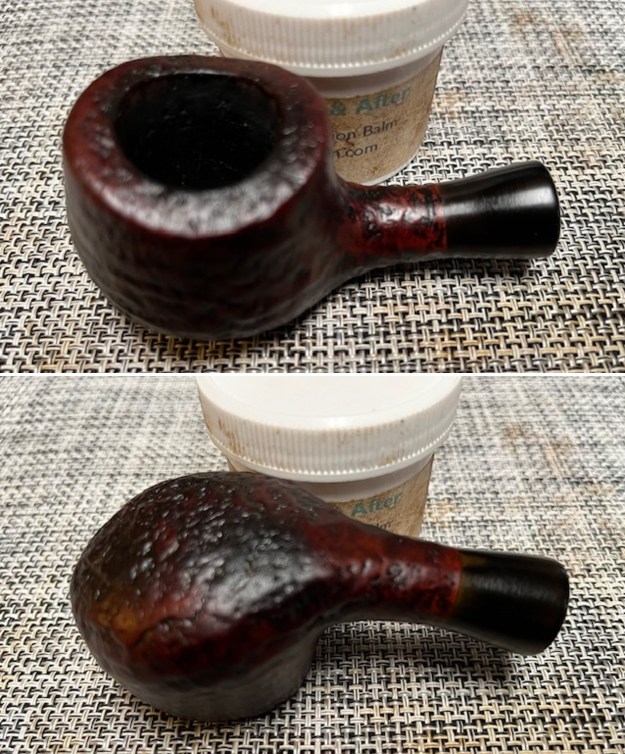
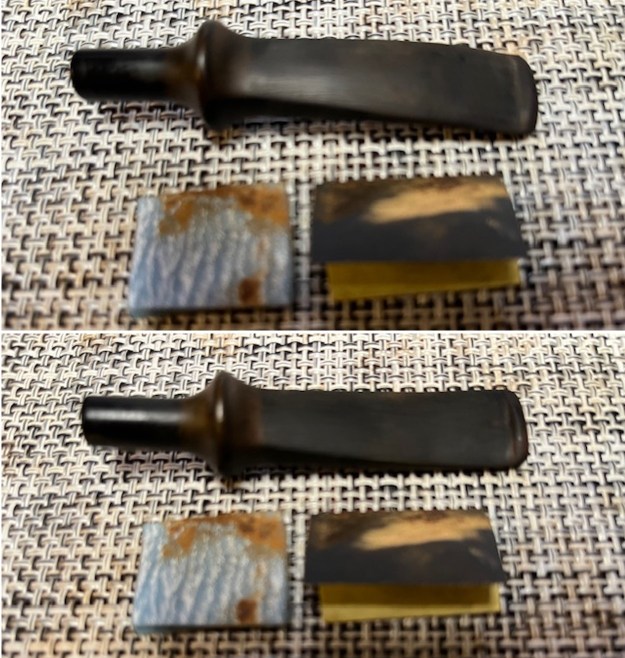
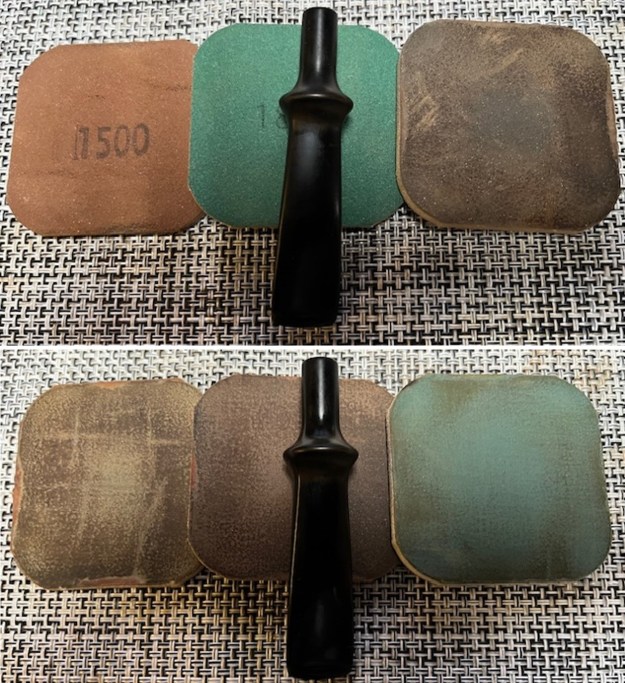
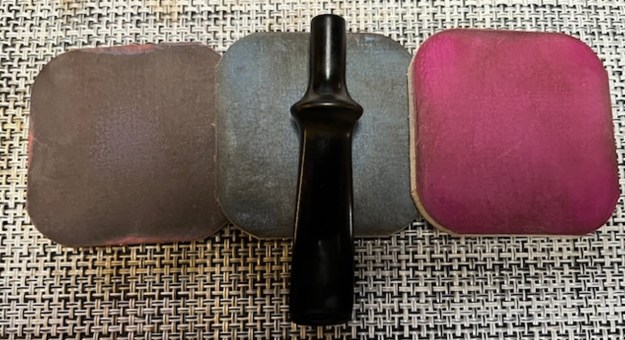
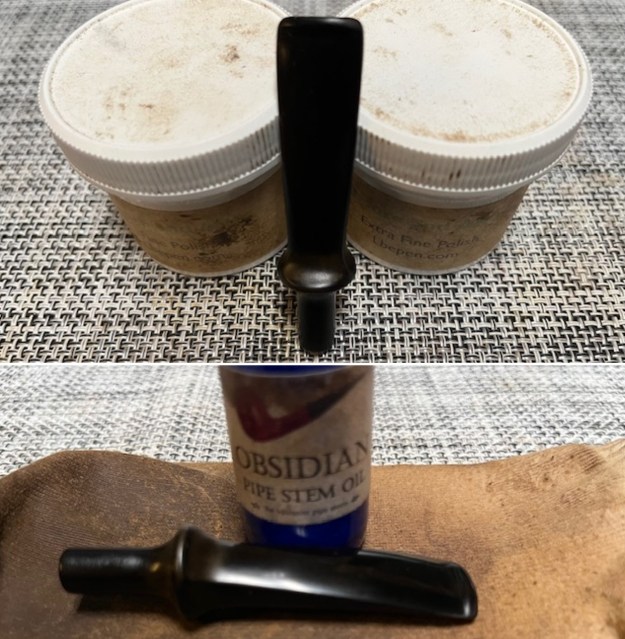
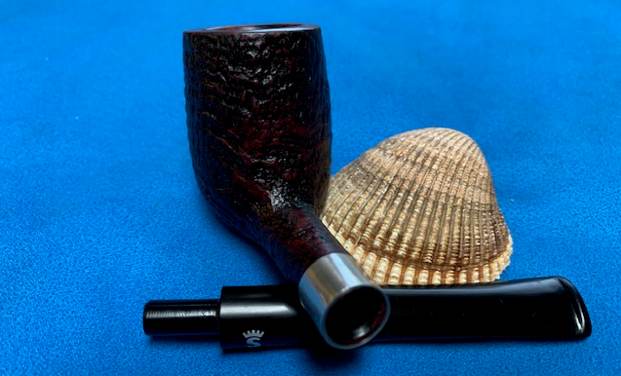
The next pipe I chose to work on came is another one from the lot of 11 pipes I purchased from a lady in Regina, Saskatchewan. She had found them in a house she bought and wanted to know if I wanted them. We struck a deal, I paid for the pipes and shipping and the box arrived while I was traveling in Europe. In the box were 4 Stanwells, I Danmore Bowl, 1 Soren Freehand, 1 Calabash with a Briar Bowl, 1 Nording Freehand, 1 Italian Made Bertenetti, 1 Rhodesian with a banded cracked shank, and 1 Brigham. I have restored the Nording, the snapped Stanwell, the Brigham, the Gourd Calabash with the briar bowl and restemmed the Danmore bowl. There are blogs on each restoration available. The next pipe on the table is one of the dirtiest pipes in a box full of very dirty pipes. It is stamped on the underside of the shank and reads Stanwell [over] Made in Denmark. There is no visible model name or shape number stamped on the pipe. There was a thick cake in the bowl, debris in the bottom and on the bowl walls and some remnants of tobacco. The airway was plugged and there was no draught on the pipe. There was a heavy lava overflow on the rim top and down the sides of the bowl and shank. It was hard to know the condition of the inner edges of the bowl because of the cake. The outer edge actually looked quite good under the grime. The finish was dirty and dusty and there was lava on the sides and heel of the bowl. The vulcanite shank extension was filthy and oxidized. The stem was in rough shape in appearance but underneath the calcification and oxidation the tooth marks and chatter looked minimal. I took photos of the pipe before I started my cleanup work on it. I took a close-up photo of the bowl and rim top to show the cake in the bowl. The rim top shows some thin lava spots on the smooth finish. The inner and outer edges of the bowl looked good. I took photos of the top and underside of the stem surface and button to show its general condition. It looked very good under the spotty oxidation.The stamping on the underside of the shank is faint but readable as noted above. You can barely make out the Stanwell stamp on the smooth panel near the shank extension but it is present. I took the stem off the shank and took a photo to give a sense of the proportion of the pipe.I recognized shape as being a Sixten Ivarsson design but Icould not remember the shape number associated with it. I turned to Pipedia’s article on shapes that Bas Stevens originally worked on to check it out (https://pipedia.org/wiki/Stanwell_Shape_Numbers_and_Designers). I am including a shape chart below. It identifies the shape as an 11 (bottom left corner of the photo below).I also have included two screen captures regarding the shape 11. The pipe I am working on is 11b in the list below. It is a slightly bent large, wide pot with a concave rim and various possible stem configurations (typically saddle, but can also be military mount, tapered, faux spigot saddle etc.), by Sixten Ivarsson.Now I knew it was an Ivarsson Design shape 11 with a military style saddle stem. Now it was time to work on the pipe. I removed the stem and turned my attention to the bowl clean up. I reamed the bowl with a PipNet pipe reamer using the fourth (and largest) cutting head to take the cake back to bare briar. I cleaned up the reaming with a Savinelli Fitsall Pipe Knife. I sanded the walls with a piece of 180 grit sandpaper wrapped around a dowel to smooth them out. I scrubbed the exterior of the briar with a brass bristle wire brush, a tooth brush and undiluted Murphy’s Oil Soap. I rinsed it off with warm water to remove the grime and soap. It looked much better and the dust and debris was gone. I dried it with a cotton towel. I worked over the damage on the inner edge of the bowl and the rim top. I also smoothed out the damage on the outer edge with a folded piece of 220 grit sandpaper. It looked much better after I sanded the damaged areas smooth. I worked over the rim top and the heel of the bowl with a dry brass bristle brush to remove some of the darkening. It is looking better.I scrubbed out the internals of the pipe with 99% isopropyl alcohol, pipe cleaners and cotton swabs. I cleaned out the airway in the stem as well. I worked on these areas repeatedly until the shank and the airway in all the parts was clean. I polished the vulcanite shank extension with micromesh sanding pads – wet sanding it with 1500-12000 git sanding pads. I wiped it down with a cloth and some Obsidian Oil.I stained the bowl with a light brown aniline stain to blend the lighter and darker portions into each other. I applied it with a wool dauber and then flamed it with a Bic lighter to set it in the grain. I repeated the process until the coverage on the bowl was what I wanted. I wiped the bowl down with isopropyl alcohol on cotton pads to make it more transparent and show the other colour underneath. I worked some Before & After Restoration Balm into the surface of the briar with my fingertips to clean, enliven and protect the briar. I let the balm sit for 15 minutes and then buffed with a cotton cloth to raise the shine. The photos show the bowl at this point in the restoration process. With that done, the bowl was finished other than the final buffing. I set it aside and turned my attention to the stem. I wiped it down with some Soft Scrub to remove the oxidation and calcification. I sanded out the light tooth marks and chatter along with the remaining oxidation with 220 grit sandpaper and started polishing the stem with 600 grit wet dry sandpaper.I polished the stem with micromesh sanding pads – wet sanding with 1500-12000 grit sanding pads. I wiped it down after each sanding pad with Obsidian Oil. I finished polishing the stem with Before & After Pipe Stem polish (both Fine and Extra Fine) then wiped the stem down with another coat of Obsidian Oil.I am excited to finish this Ivarsson Design Stanwell Made in Denmark 11. I put the pipe back together and buffed it with Blue Diamond on the buffing wheel. I gave the bowl and the stem multiple coats of carnauba wax. I buffed the pipe with a clean buffing pad to raise the shine and hand buffed it with microfiber cloth to deepen the shine. It is fun to see what the polished bowl looks like with the polished black, fancy turned vulcanite stem was beautiful. This Stanwell Large Pot 11 is nice looking and the pipe feels great in my hand. It is light and well balanced. Have a look at it with the photos below. The dimensions are Length: 5 ½ inches, Height: 1 ½ inches, Outside diameter of the bowl: 1 ½ inches, Chamber diameter: 7/8 of an inch. The weight of the pipe is 1.69 ounces/48 grams. It is a beautiful pipe and one that I will be putting in the Danish Pipemaker Section on the rebornpipes store. Thanks for walking through the cleanup with me as I worked over this pipe.
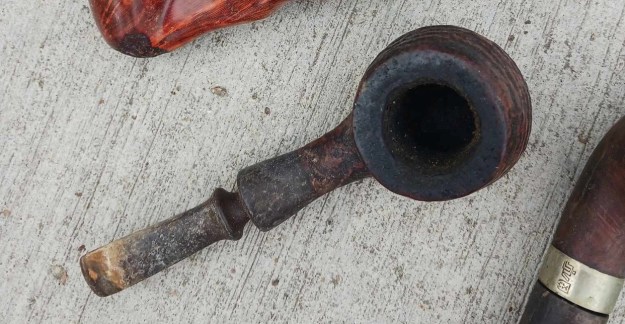
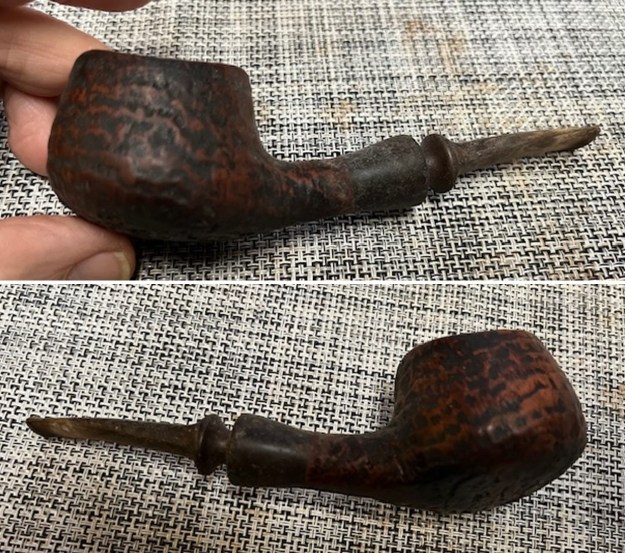
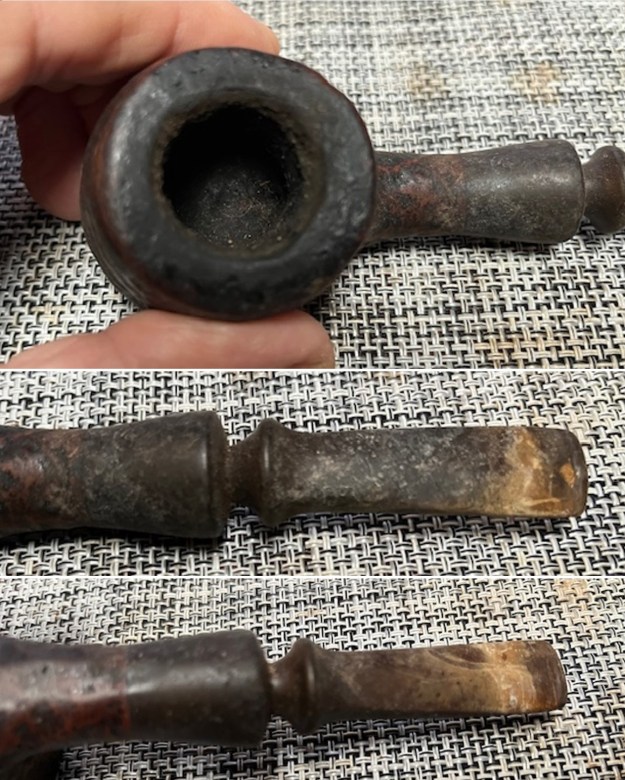
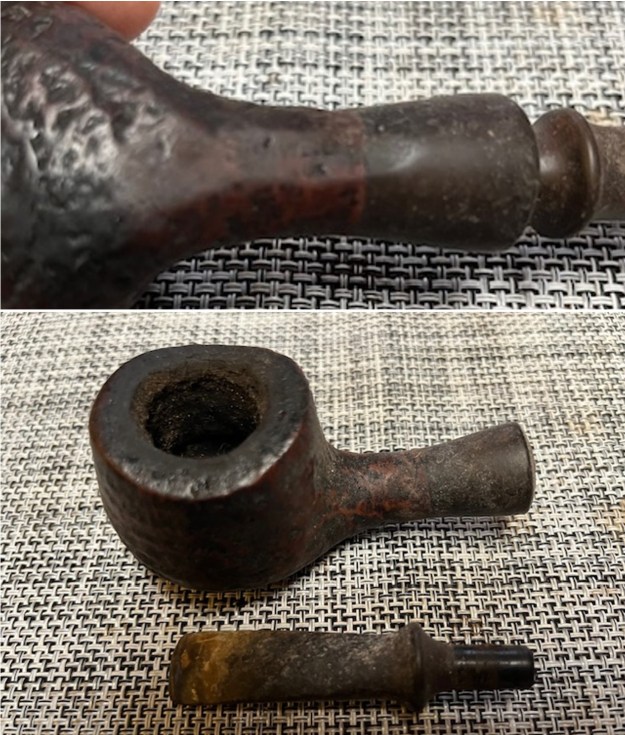
As always, I encourage your questions and comments as you read the blog. Thanks to each of you who are reading this blog. Remember we are not pipe owners; we are pipe men and women who hold our pipes in trust until they pass on into the trust of those who follow us.
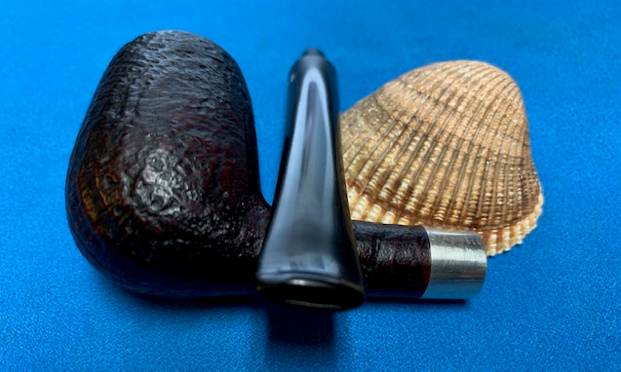
Rebirthing a Stanwell 1985 POY Sandblast Dublin with a smooth Rim Top


Blog by Steve Laug

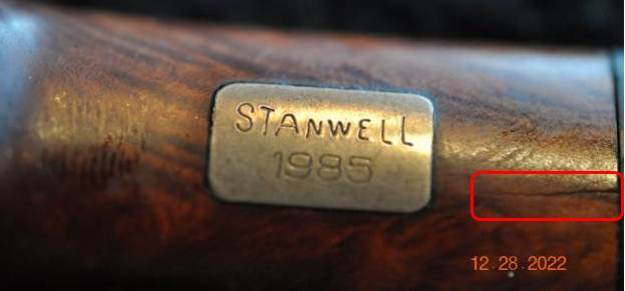
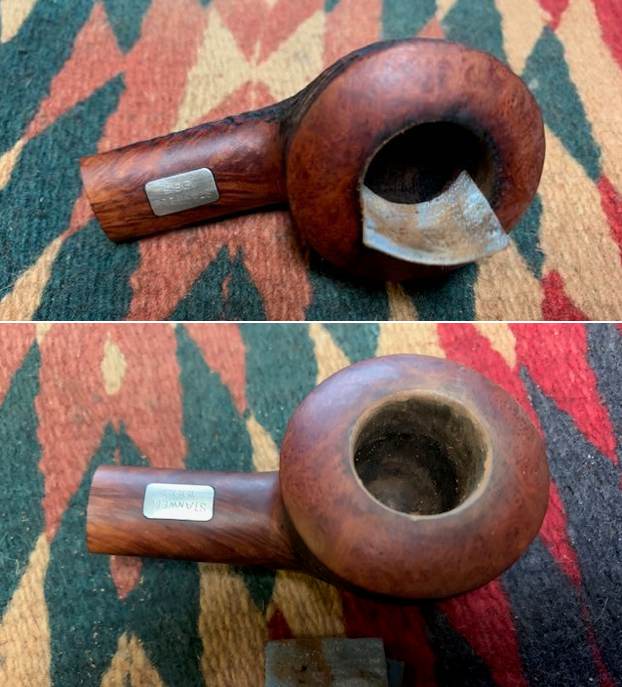
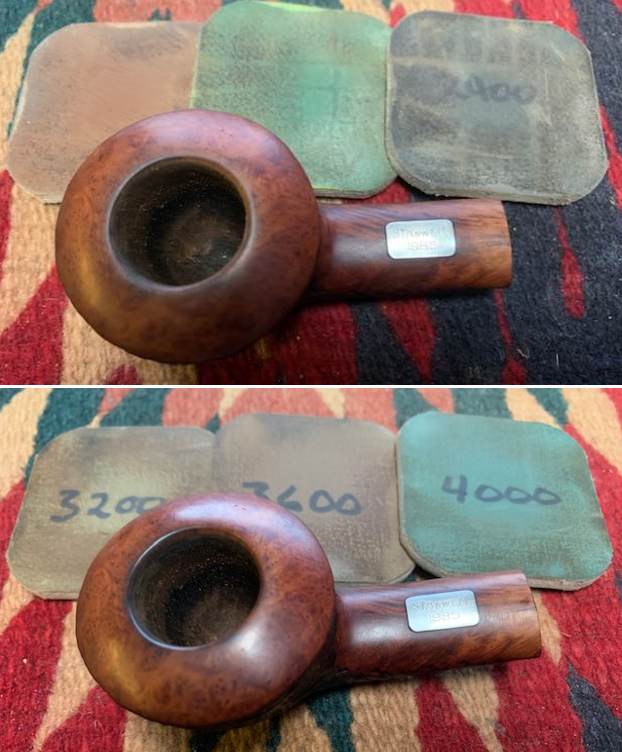
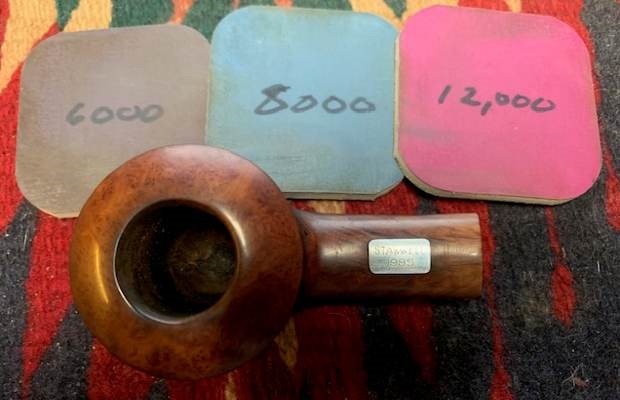
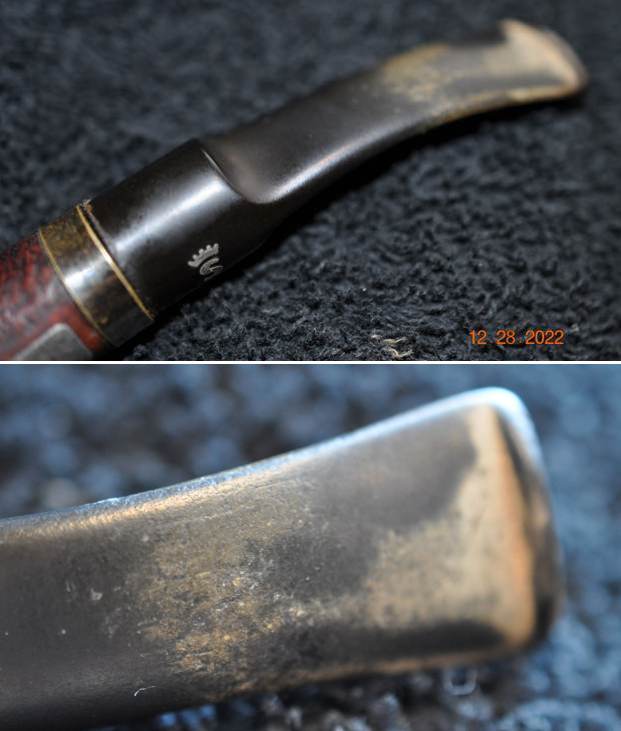
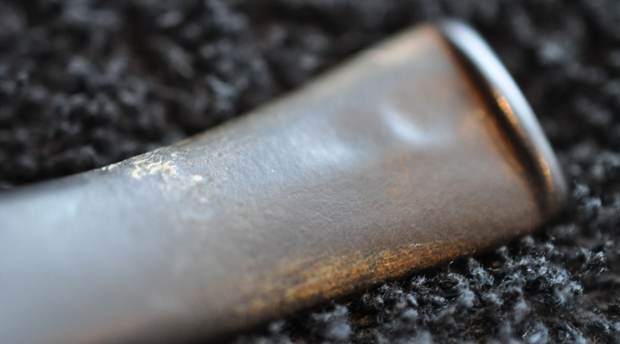
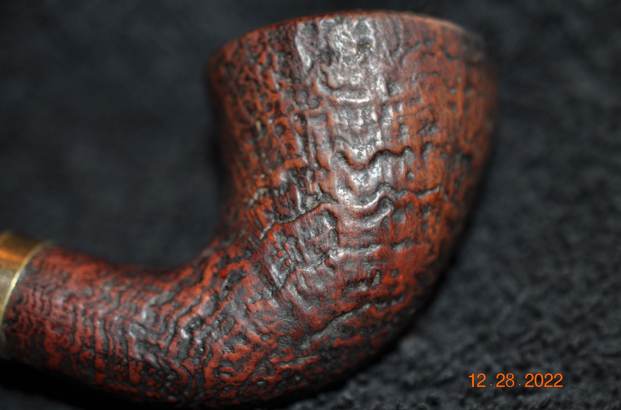
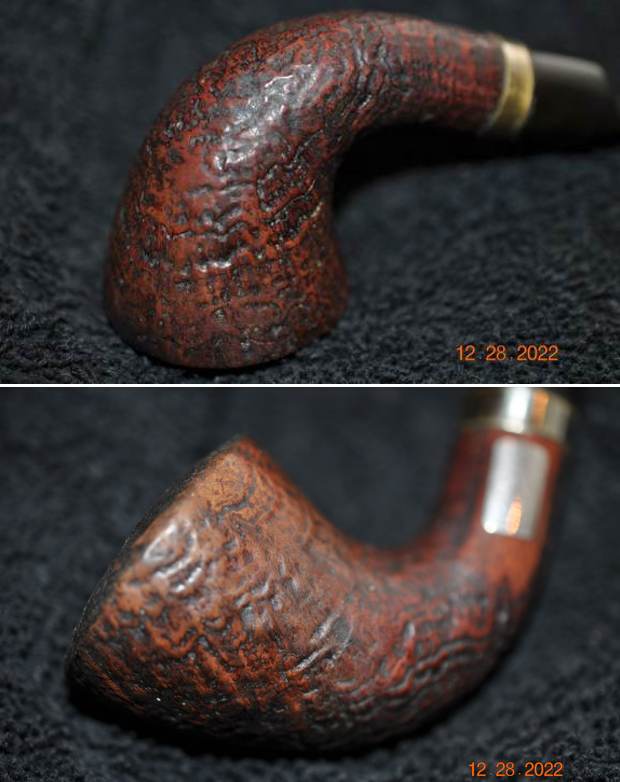
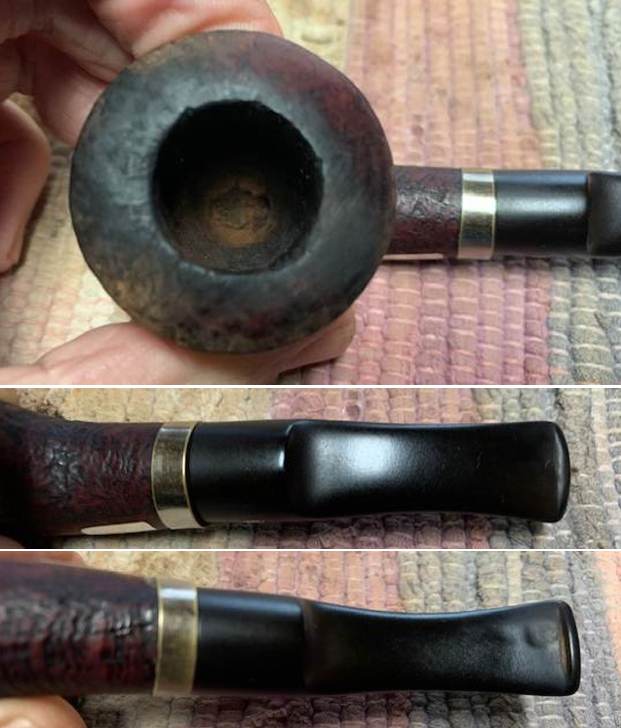
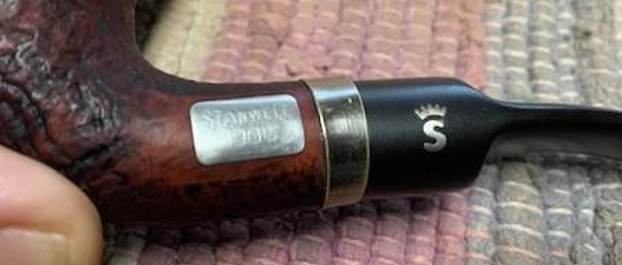
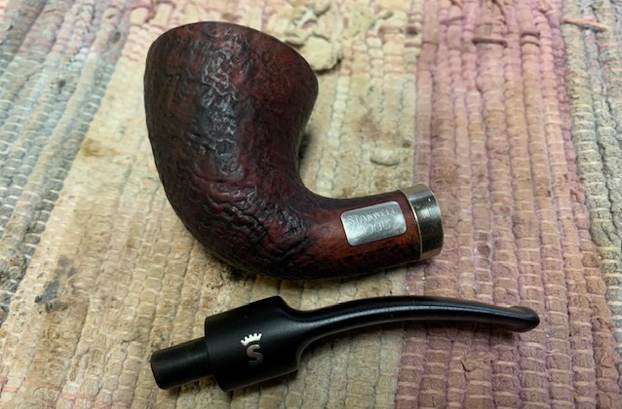
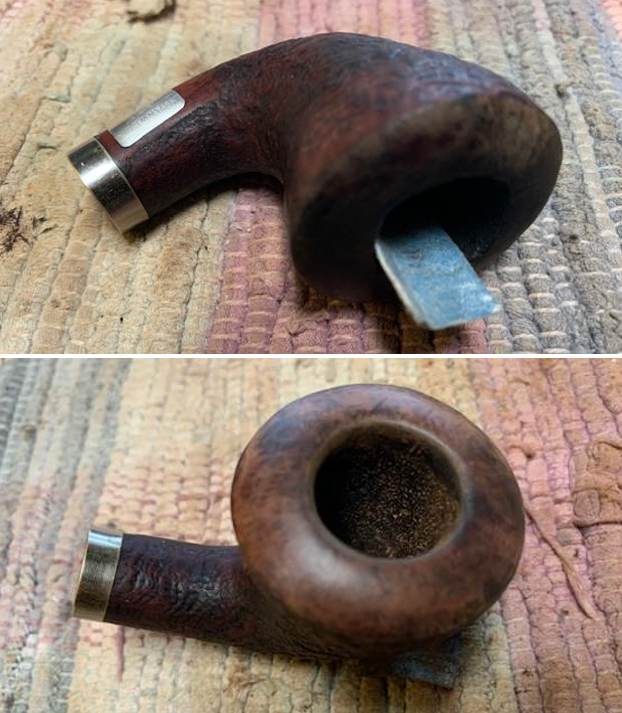
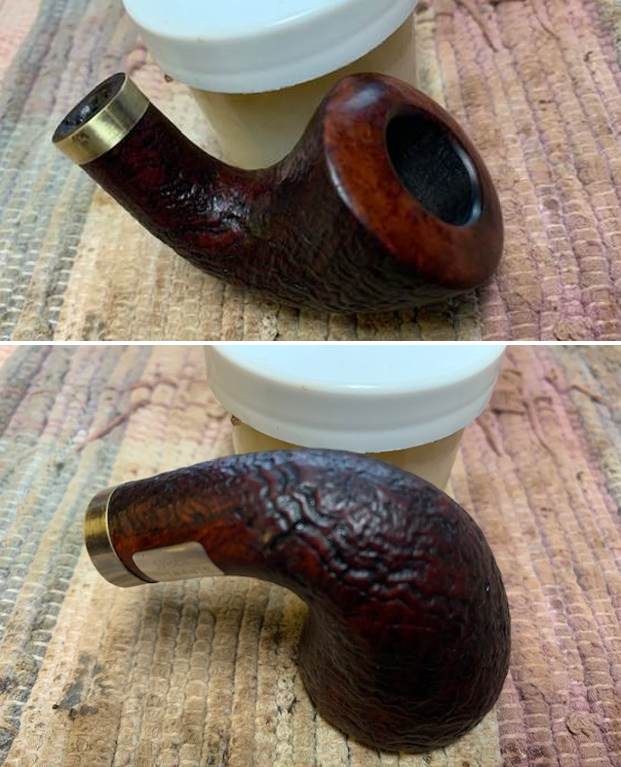
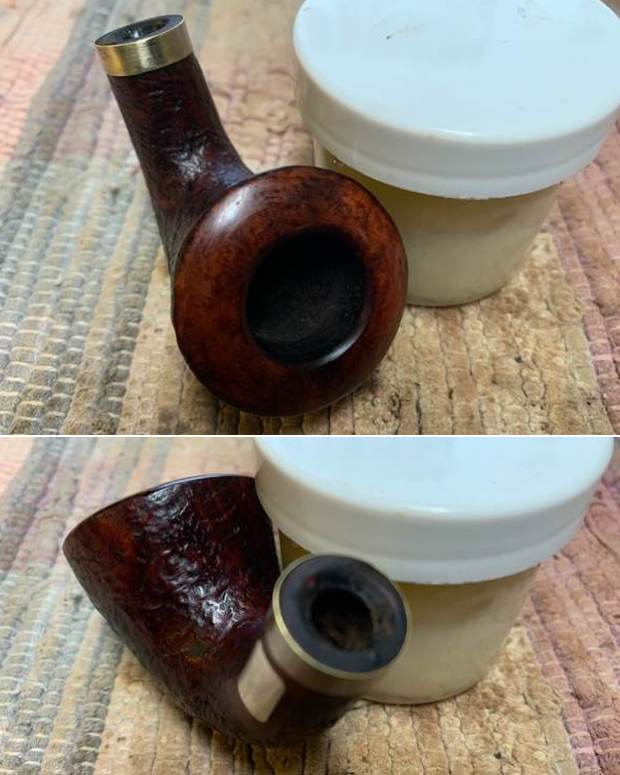
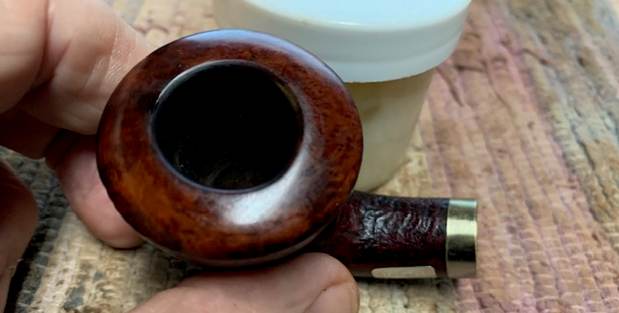
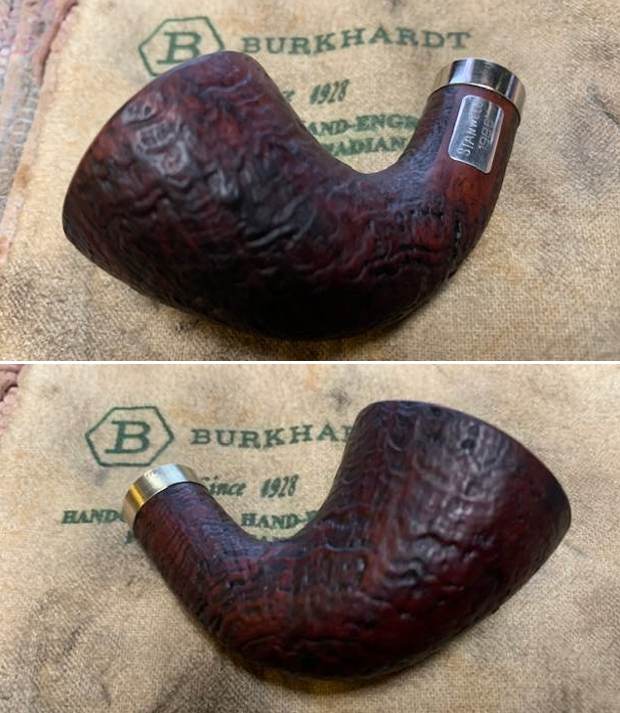
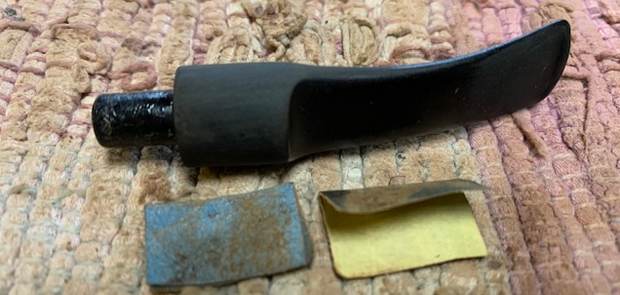
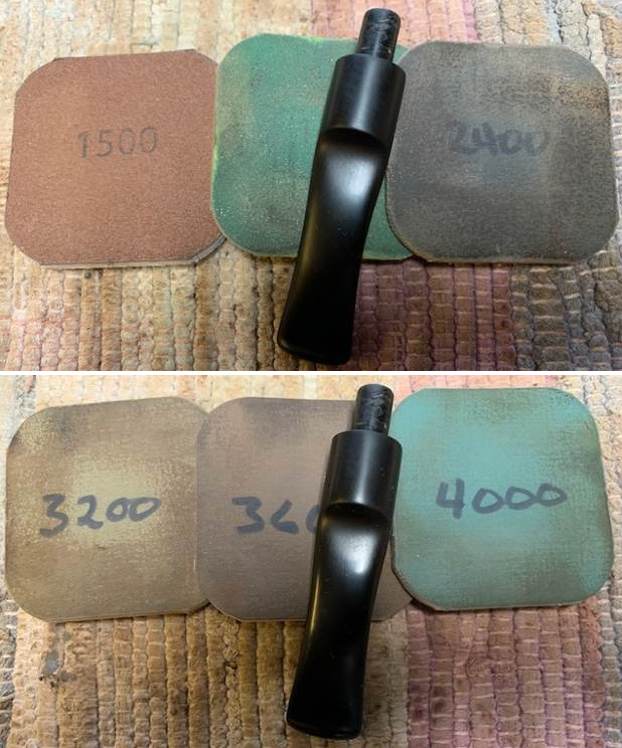
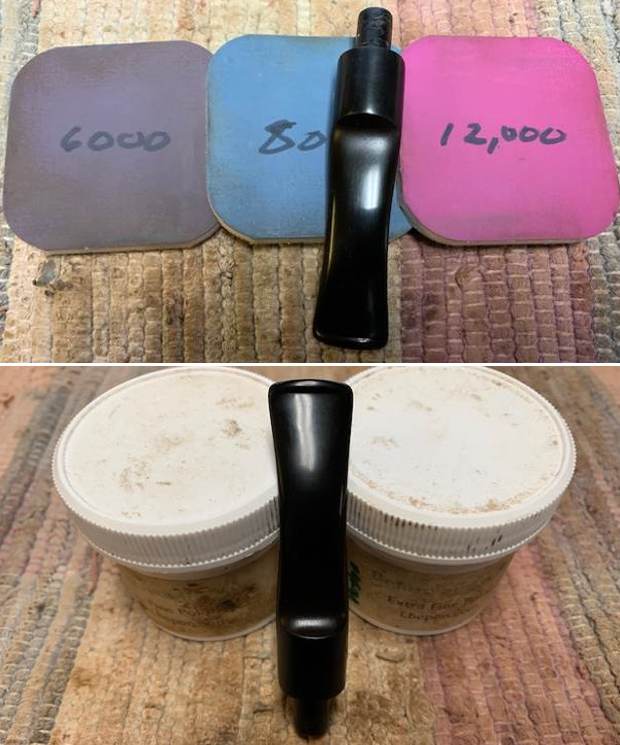
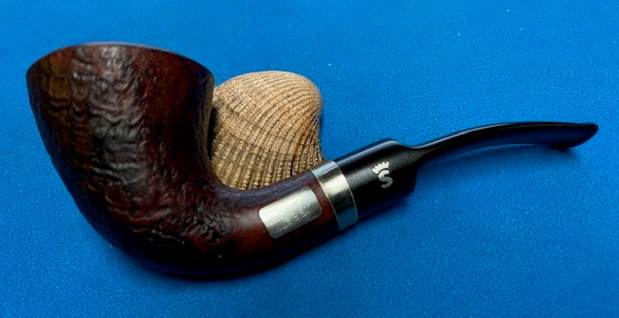
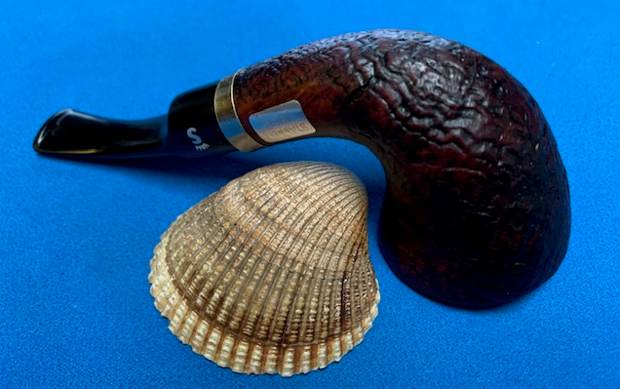
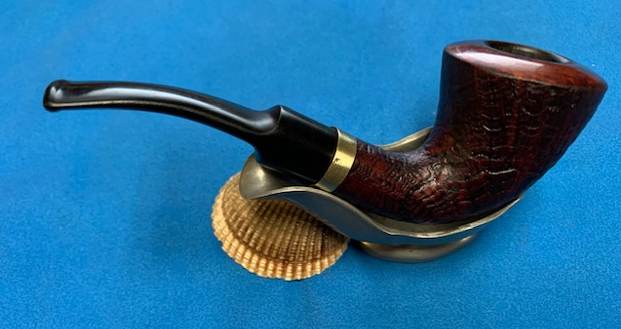
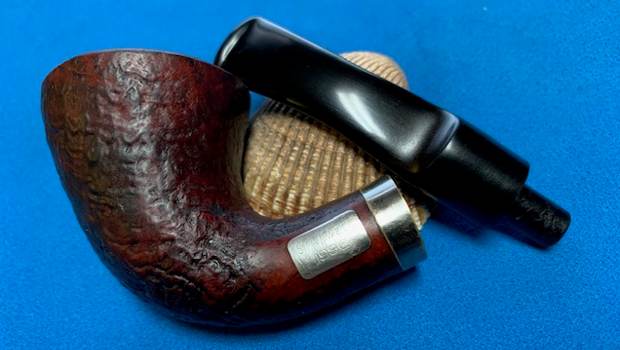
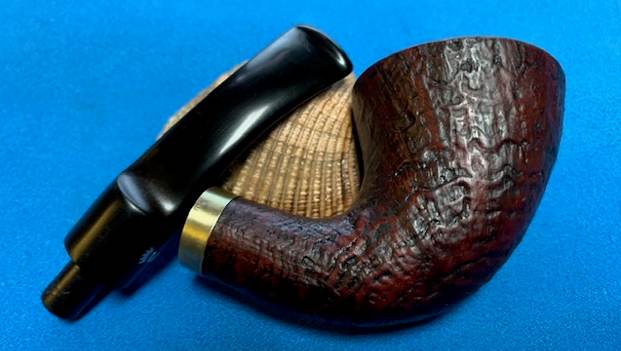
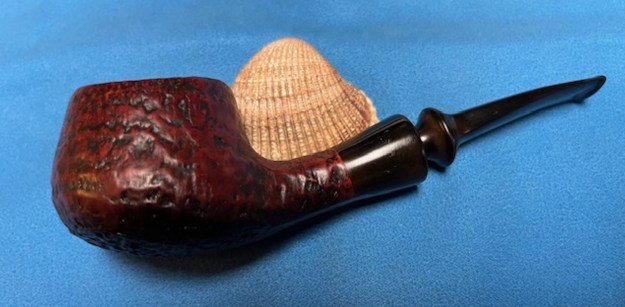
The next pipe I am working on was purchased on 12/13/2022 as part of a group of pipes from a fellow in Copenhagen, Denmark. This was another horribly tired and dirty pipe with a lot of wear and tear and obviously it had been someone’s favourite smoker. The pipe has an identifying silver plate on the topside of the shank that reads Stanwell [over] 1985. There was no other stamping on the shank and the silver plate confirmed for me that it was a Stanwell Pipe of the Year. The dirty sandblast finish on this was worn and tired looking. There were tars and oils ground into the surface of the briar. The shank had a hairline crack on the left side of the top that would need to be dealt with. The sandblast showed some nice grain around the bowl and shank and though it was a little dirty it was a nice looking pipe. The bowl had a thick cake that flowed over the top of the lightly crowned rim in a thick coat of a lava and showed potential damage on the top and the inner edge. The stem was a black vulcanite saddle stem with a silver Crown S on the topside of the saddle. It had some deep and wide tooth marks and chatter on both sides ahead of the button. There was also some oxidation and calcification on both sides of the stem. Jeff took photos of the pipe before he started his clean up work.  He took photos of the rim and bowl to show the heavy cake and thick lava coat covering the rim top. It really was filthy and a mess. He also took photos of the stem surfaces to show its overall condition when it arrived. The photos of the sides and heel of the bowls show beautiful grain around the bowl and shank sides. The sandblast is nicely done and highlights the grain. The brown stain on the briar adds depth finish on the pipe and makes the grain really stand out. It shows some promise. He also took a photo of the stamped silver plate on the left underside of the shanks. It reads as noted above. I have also boxed the hairline crack on the top of the shank in red in the photo below.Jeff cleaned up the pipe for me. He reamed the bowl with a PipNet pipe reamer and cleaned it up with a Savinelli Fitsall Pipe Knife. He scrubbed the exterior with Murphy’s Oil Soap and a tooth brush to clean off the grime off the finish and the heavy overflow of lava on the rim top. The cleaning had removed the thick coat on the rim top. He cleaned up the internals of the shank, mortise and stem with pipe cleaners, cotton swabs and alcohol to remove all of the oils and tars in the pipe. He soaked the stem in Before & After Deoxidizer and was able to remove much of the oxidation, calcification. When it arrived here in Vancouver it was a clean pipe and I knew what I had to work with. I took photos of it before I started my part of the restoration. I took a photo of the rim top and the stem to show their condition once it arrived in Canada. Jeff was able to clean up the incredibly thick cake and the lava overflow that was shown in the rim and bowl photos above. The rim top showed damage on the surface and the inner edge of the bowl. He was also able to get rid of the grime and grit in the surface of the briar around the sandblast. The second photo of the three below shows the crack in the shank (once again boxed in red). The stem looked better, though there were deep tooth marks and chatter on both sides near the button.I took a photo of the stamping on the silver plate on the topside of the shank to show that it was readable and undamaged by the cleanup work.I removed the stem from the shank and took a photo of the parts to give a sense of what the pipe looks like.I started my work on the inner edge and rim top with a folded piece of 220 grit sandpaper. I was able to remove that damage on the rim top and bring the inner edge back into round. It looked much better. I repaired the hairline crack in the shank with a dab of clear CA glue. I clamped the shank together to let the repair cure. Once it had cured I sanded it smooth with 220 grit sandpaper to blend in the repair. It looked much better. To stabilize it further I will need to put a thin band on the shank end so that with the addition and removal of the stem does not rebreak the crack.I started polishing the rim top and smooth portions of the briar (including the repaired hairline crack) with micromesh sanding pads. I wet sanded it with 1500-12000 grit pads. I wiped the bowl down after each pad with a damp cloth. The bowl began to take on a rich shine and grain was beginning to stand out. I rubbed the bowl and shank down with Before & After Restoration Balm to deep clean the finish on the bowl and shank. The product works to clean, enliven and protect the briar. I worked it in with my fingers to get it into the briar. I used a horsehair shoe brush to work it into the sand blast areas. I let it sit for 10 minutes then I wiped it off and buffed it with a soft cloth. The briar really began to have a rich shine. I took some photos of the bowl at this point to mark the progress in the restoration. It is a beautiful bowl. To stabilize the crack further and stop it from reoccurring each time the stem was removed I banded it. I had a band that would work on the shank but it needed to be reduced by half to get the depth more aesthetically pleasing to my eye. I used a coarse 180 grit sanding pad and worked the band against it until I have removed approximately half of the width. I heated it with a lighter and pressed it on the shank. The fit was perfect and to me it looked very good. I polished the band with a jeweler’s cloth to protect and give it a shine. I gave it another coat of Restoration Balm and buffed it off with a clean cloth. I set the bowl aside and worked on the stem. I filled in the deep tooth marks with clear CA glue. I flattened the repairs with a small file. And sanded the smooth with 220 grit. I started polishing the whole stem with 600 grit sandpaper until the sanding marks were gone. I polished the stem with micromesh sanding pads – dry sanding with 1500-12000 grit pads. I wiped the stem down after each pad with a damp cloth to remove the sanding dust. I gave it a further polish with Before & After Stem Polish – both Fine and Extra Fine. I finished by wiping the stem down with a final coat of Obsidian Oil and set it aside to dry. I put the stem back on the Stanwell Pipe of the Year 1985 Dublin pipe and took the pipe to the buffer. I buffed the bowl and stem with Blue Diamond to polish the briar and the vulcanite stem. Blue Diamond does a great job on the smaller scratches that remain in both. I gave the bowl and the stem several coats of carnauba wax and buffed the pipe with a clean buffing pad to raise the shine. I hand buffed it with a microfiber cloth to deepen the shine. The finished pipe is shown in the photos below. This is a beautiful Stanwell POY 1985 – the vulcanite saddle stem and crowned rim top and sandblast finish combine to give the pipe a great look. The polished black, vulcanite stem looks really good with the rich browns standing out in the sandblast. The dimensions of the pipe are Length: 5 inches, Height: 1 ½ inches, Outside diameter of the bowl: 1 ¾ inches, Chamber diameter: ¾ of an inch. The weight of the pipe is 1.38 ounces/39 grams. This pipe has already been spoken for as an Anniversary present. It will soon be going to the fellow who ordered it. Thanks for walking through the restoration with me on this beauty!

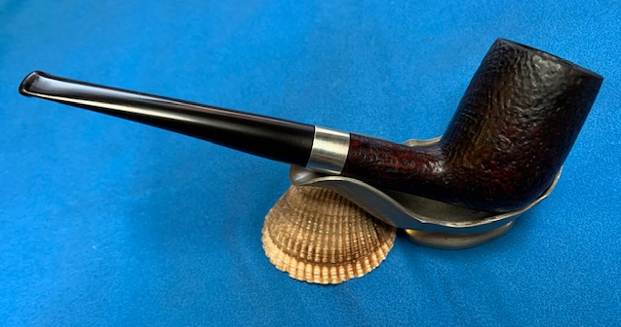
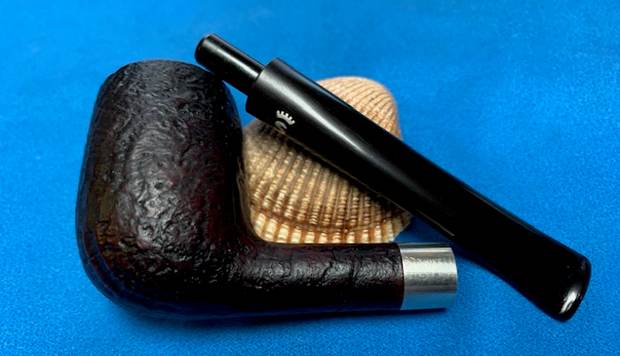
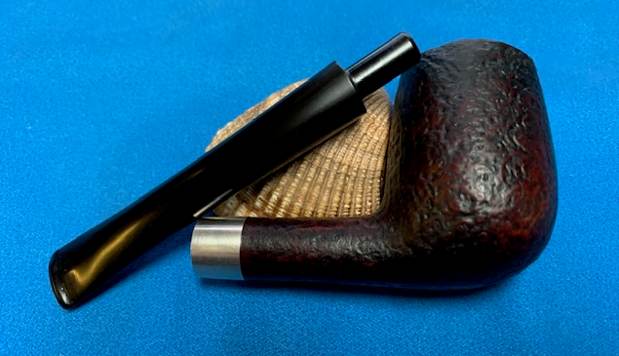
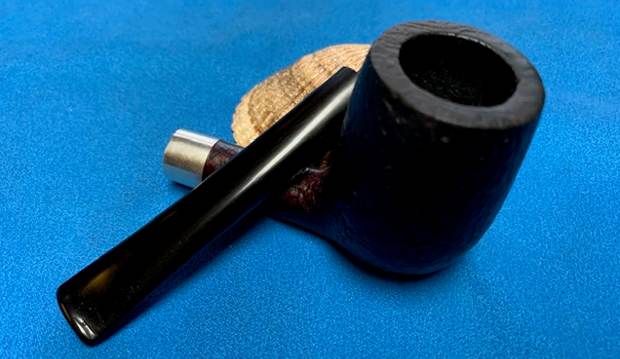
Cleaning up another Dark Sandblast Stanwell Sterling Silver Billiard


Blog by Steve Laug

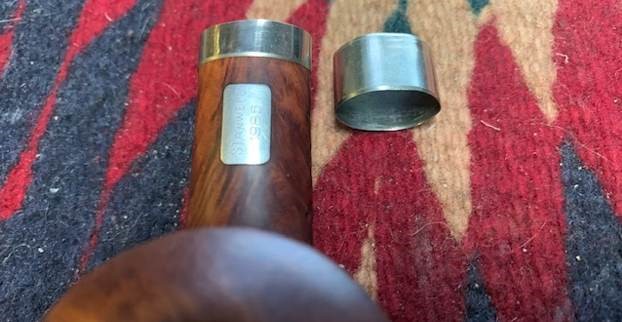
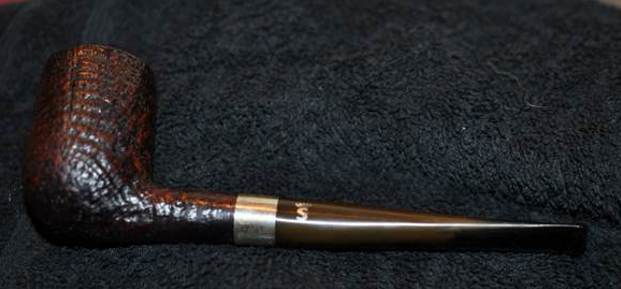
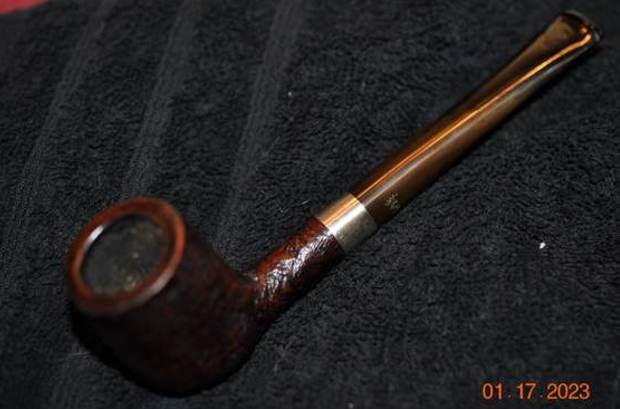
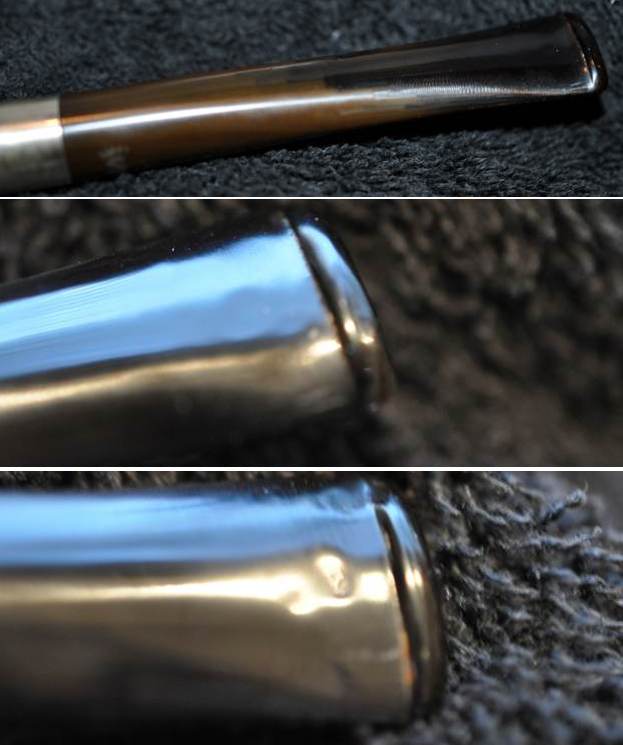
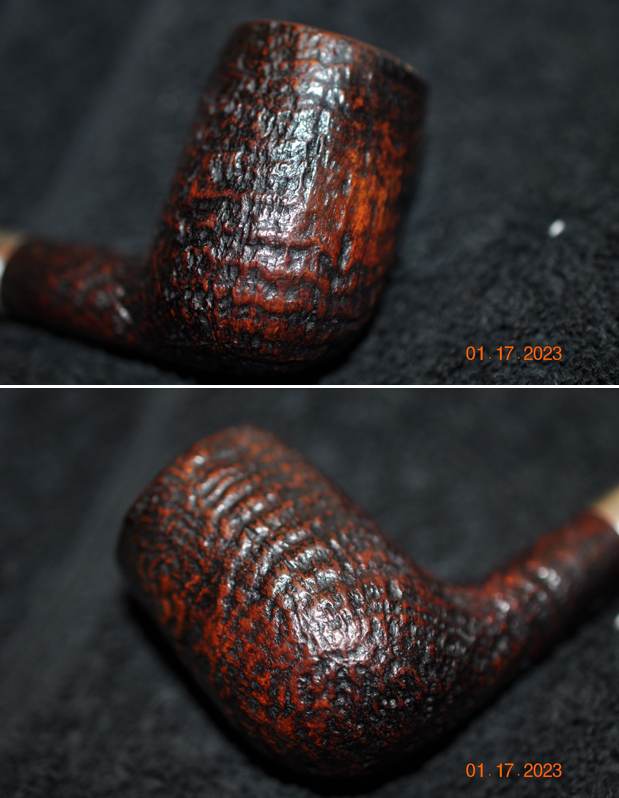
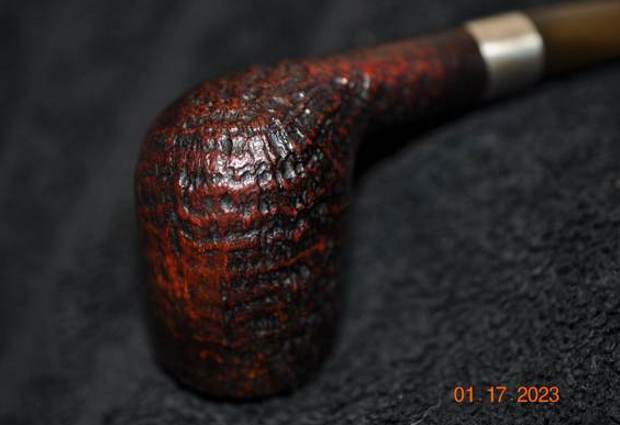
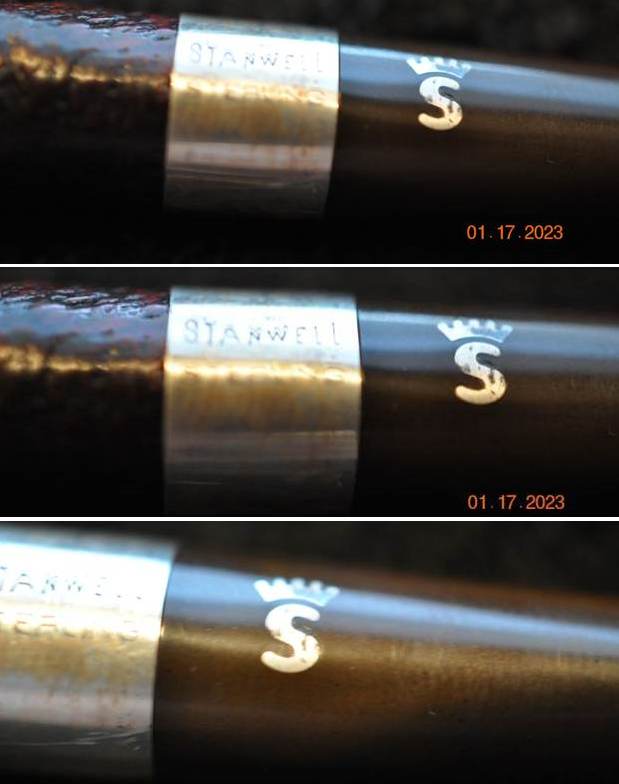
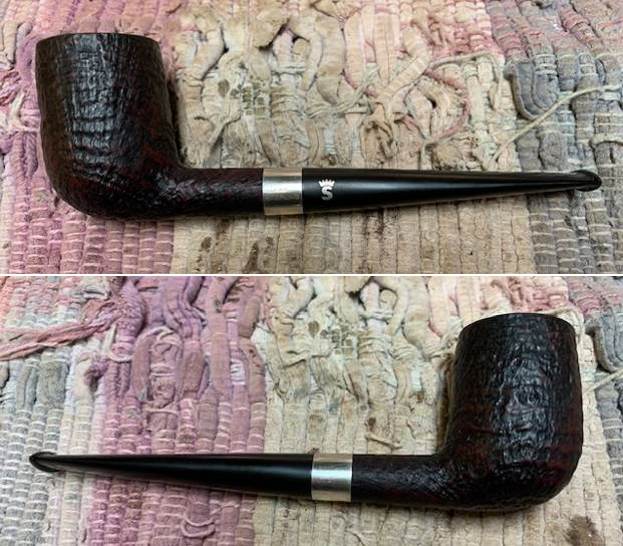
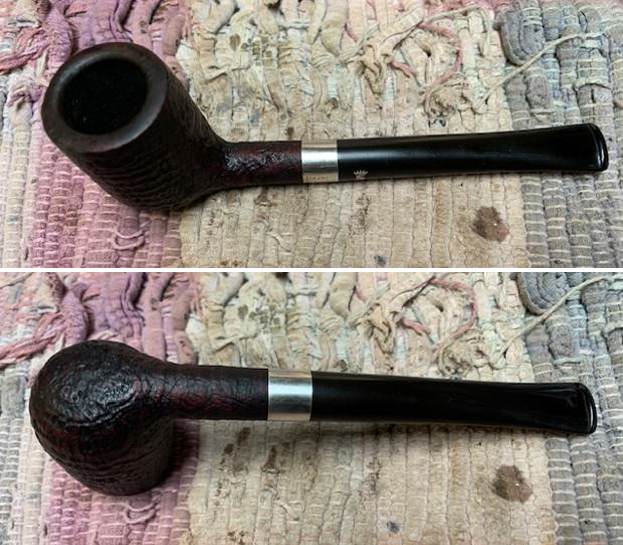
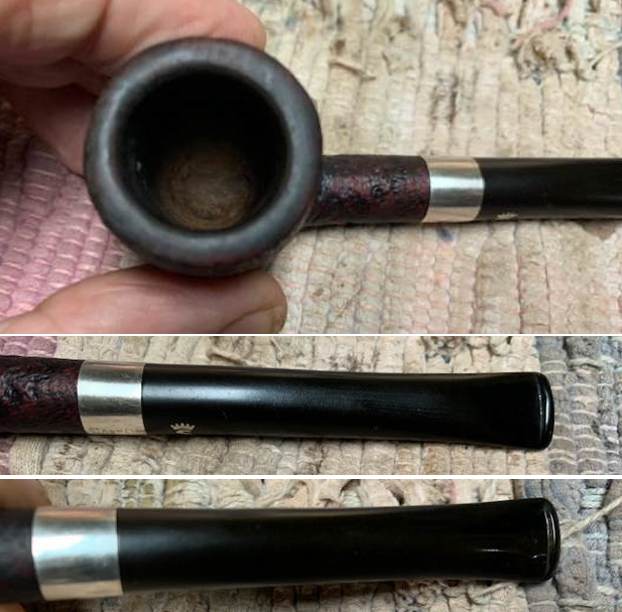
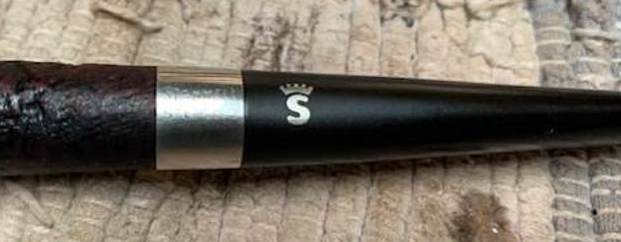
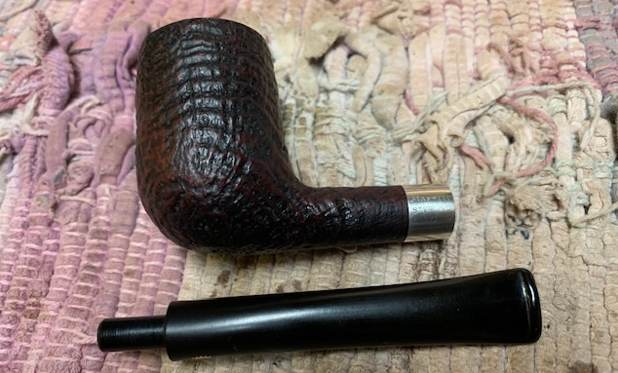
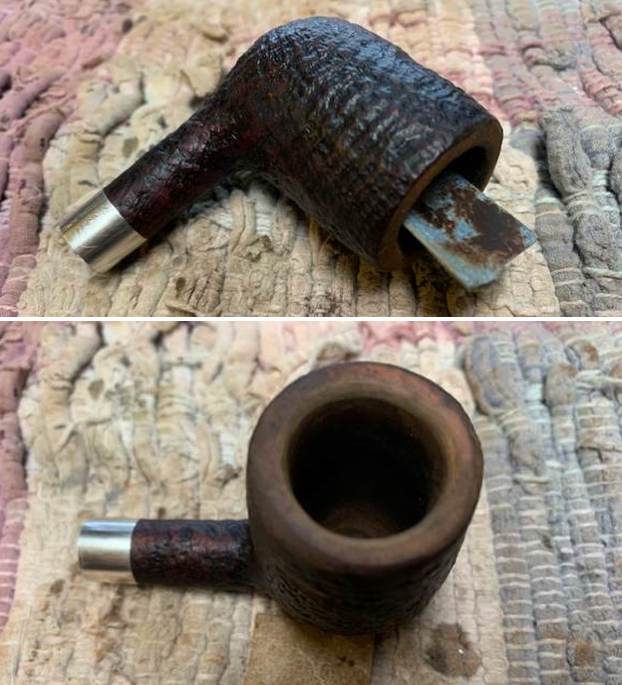
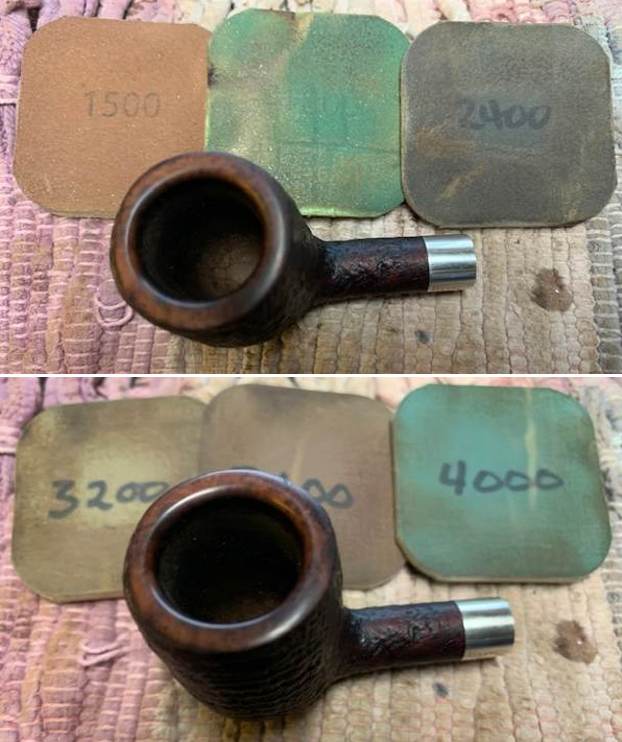
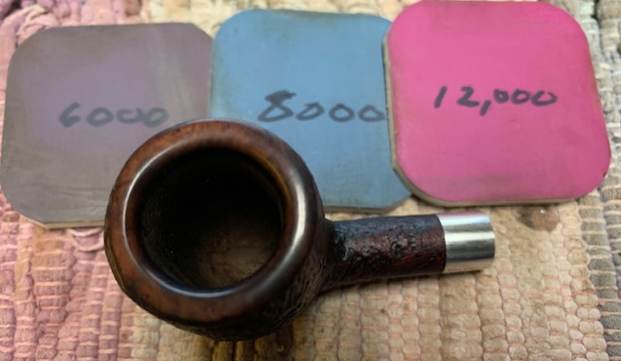
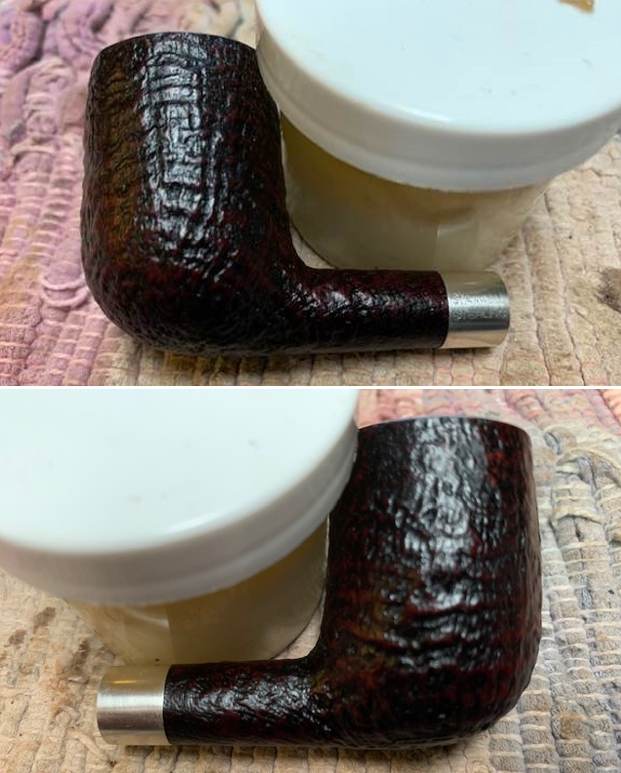
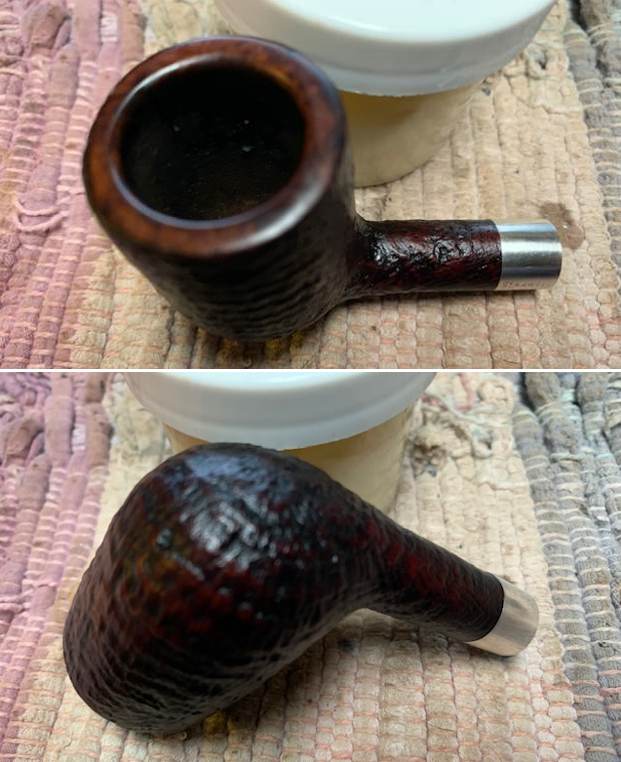
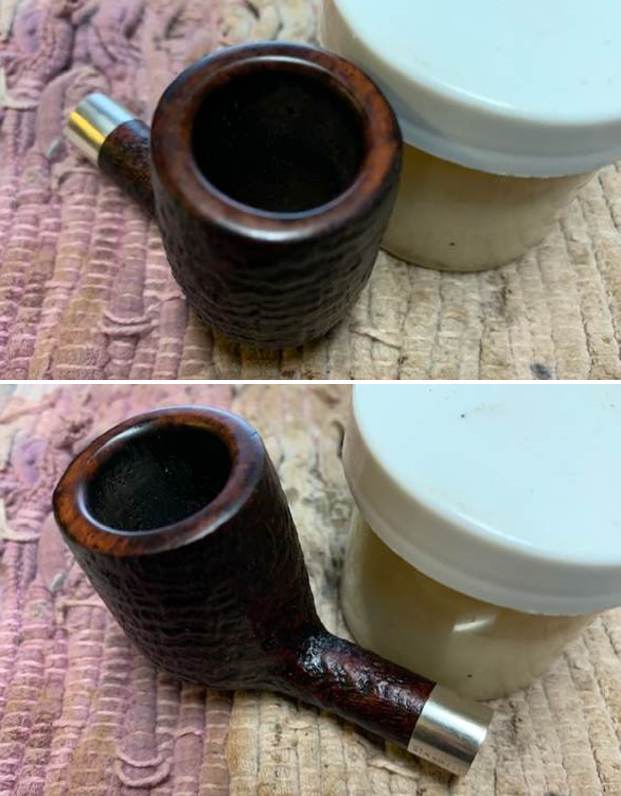
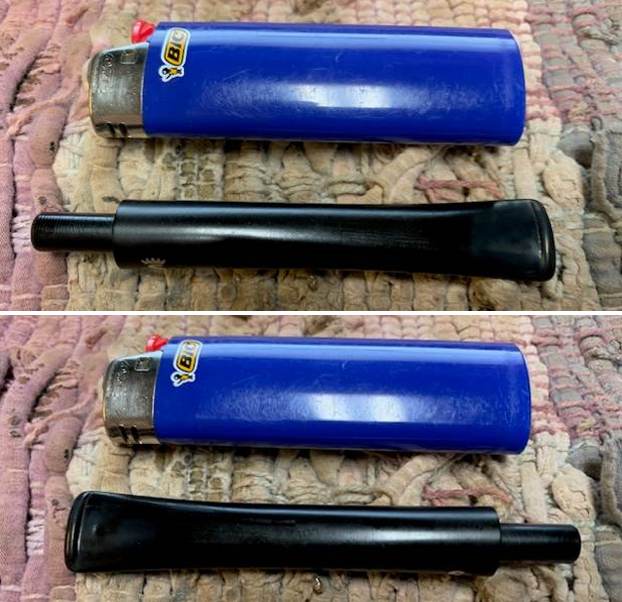
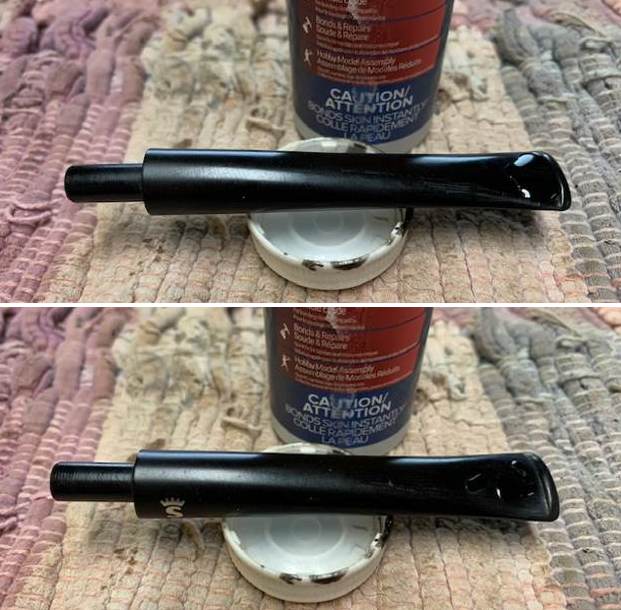
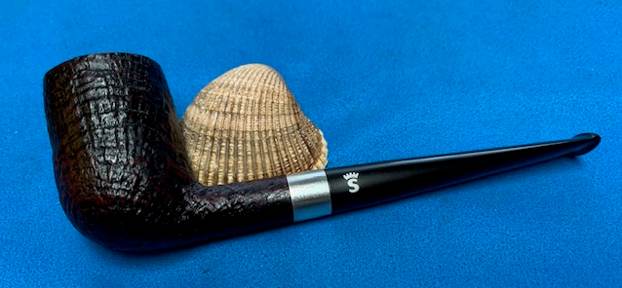
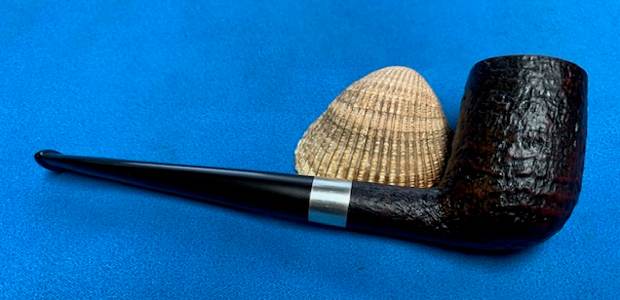
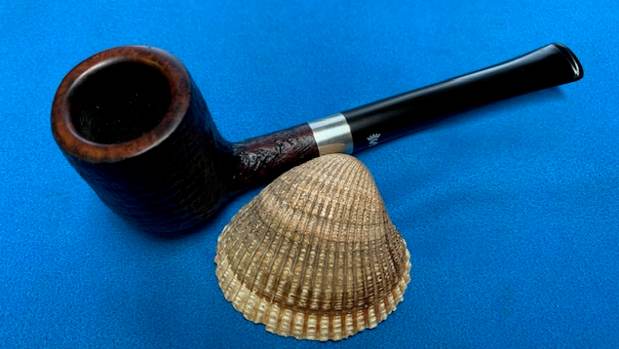
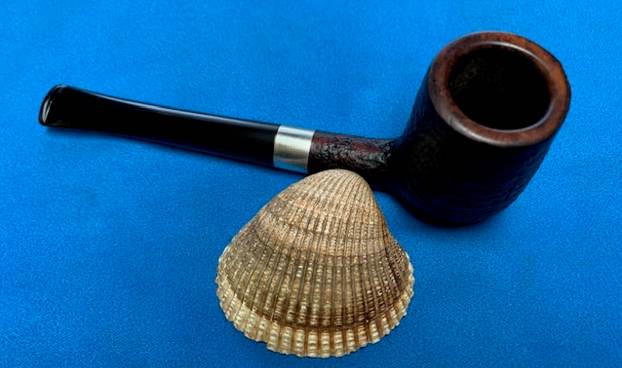
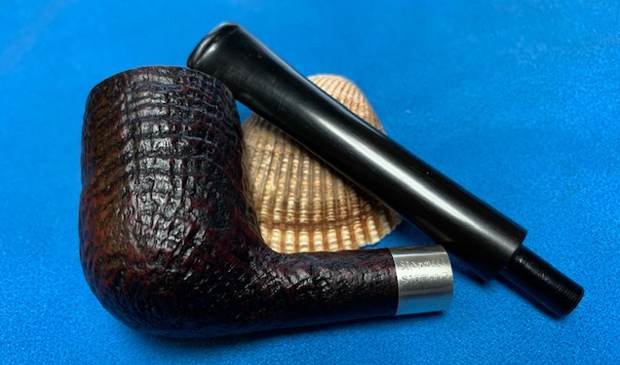
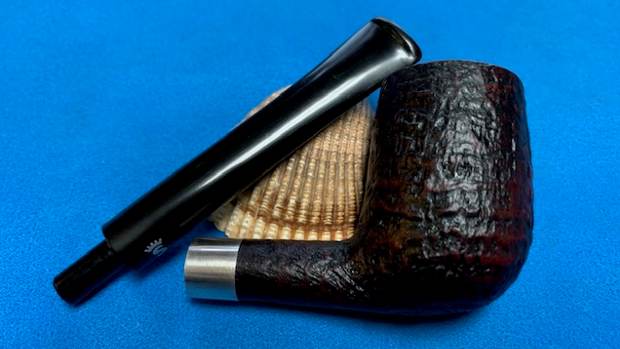
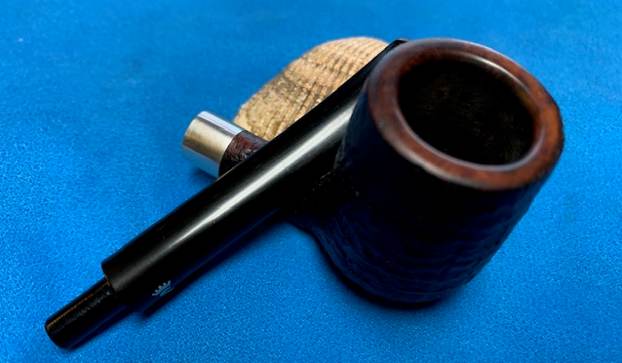
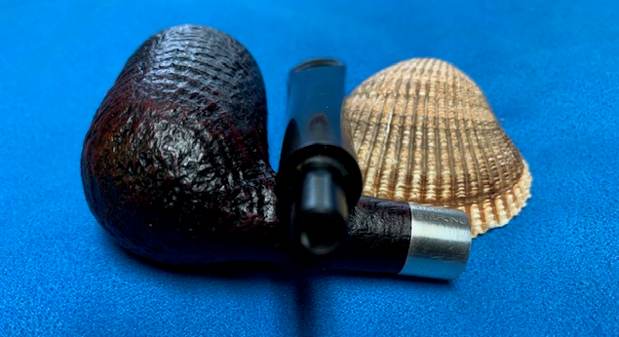
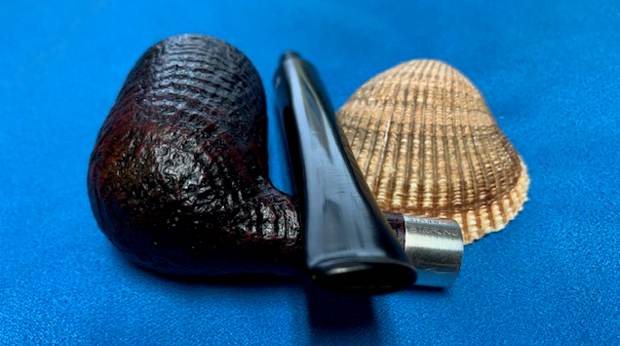
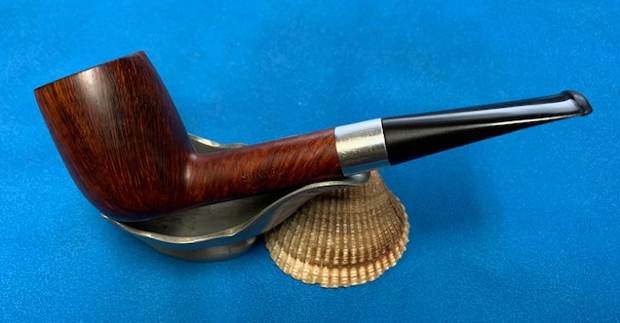
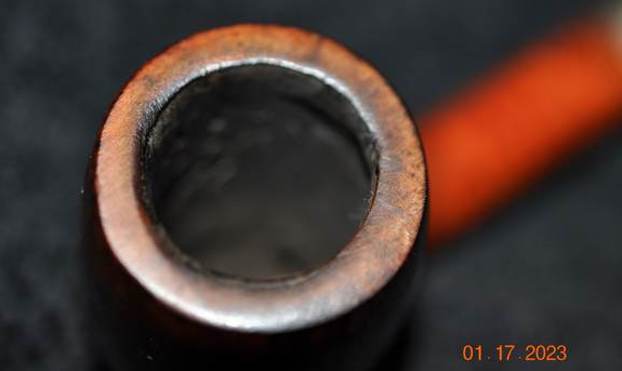
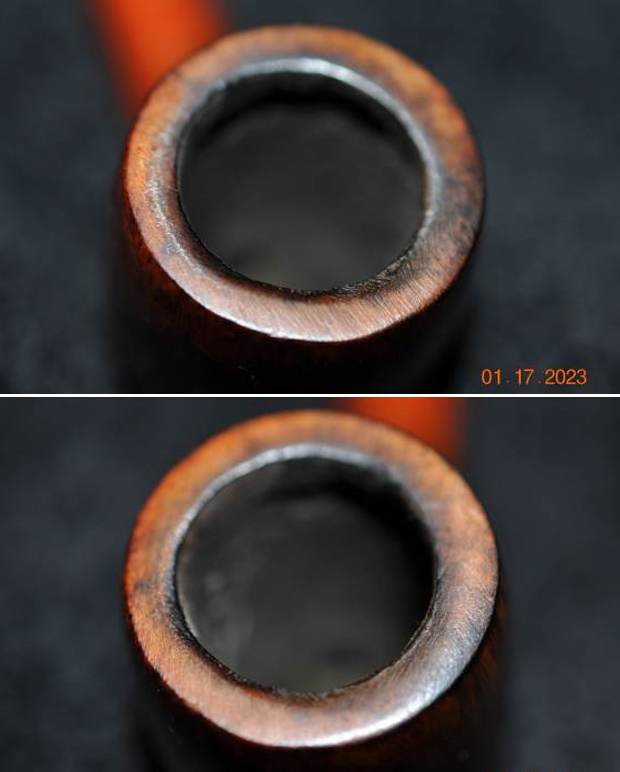
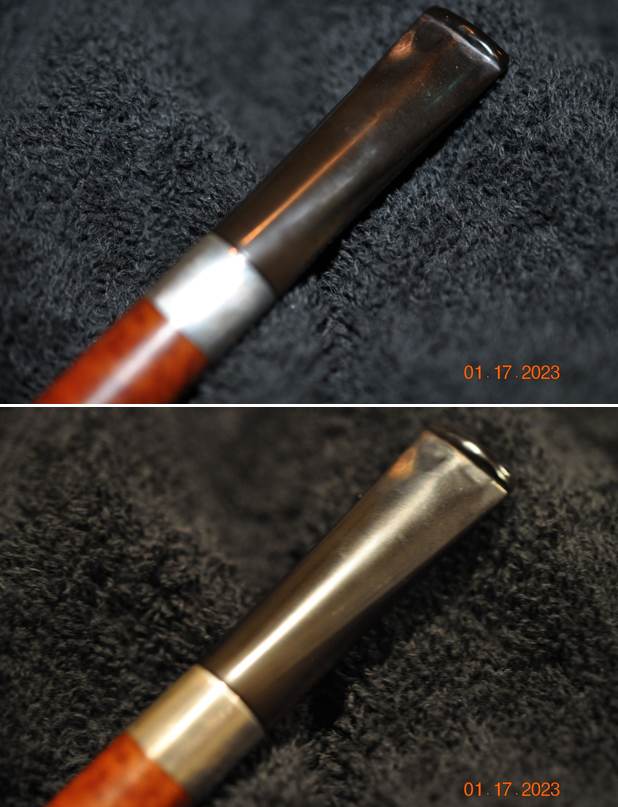
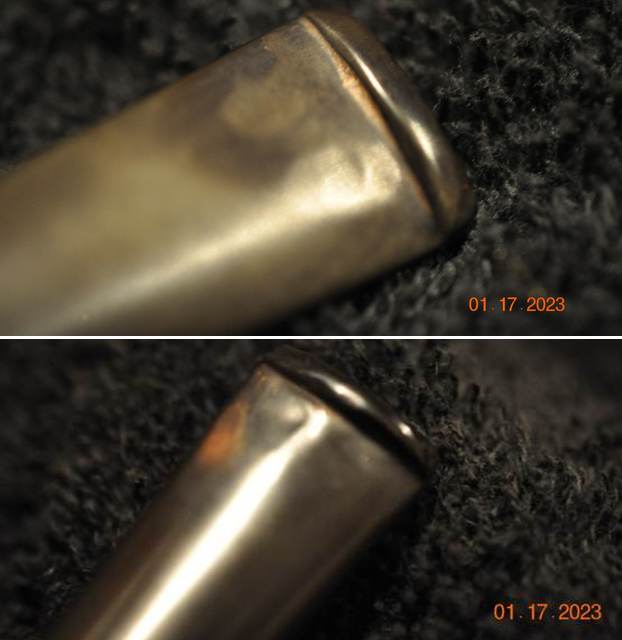
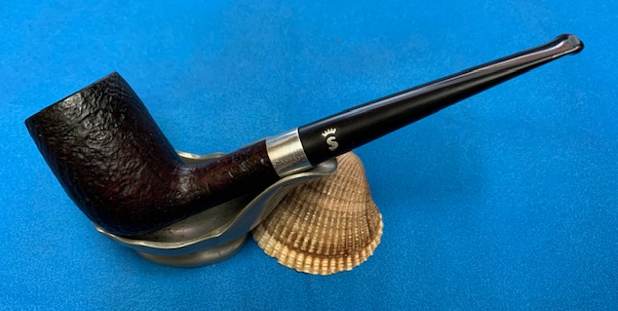
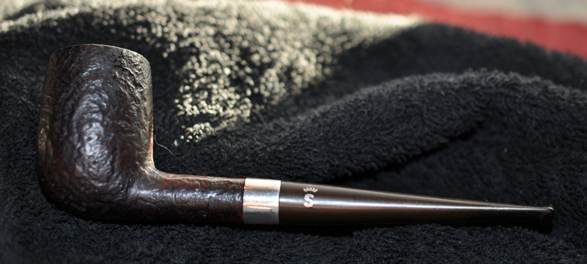
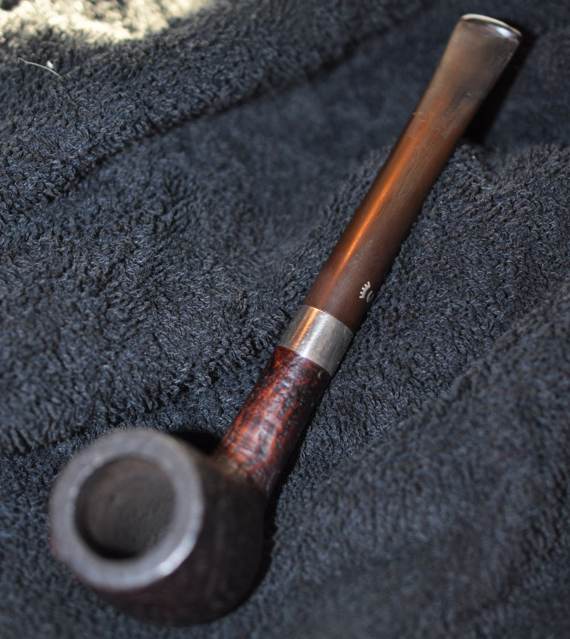
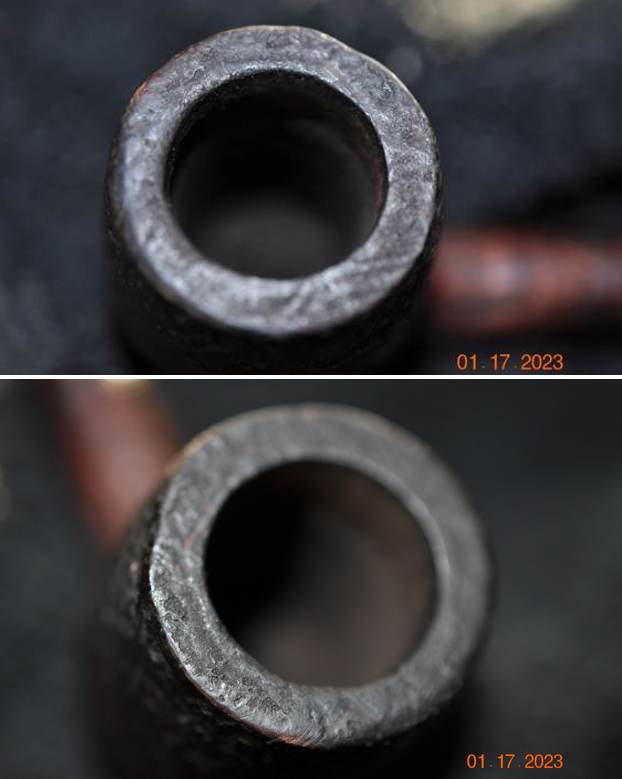
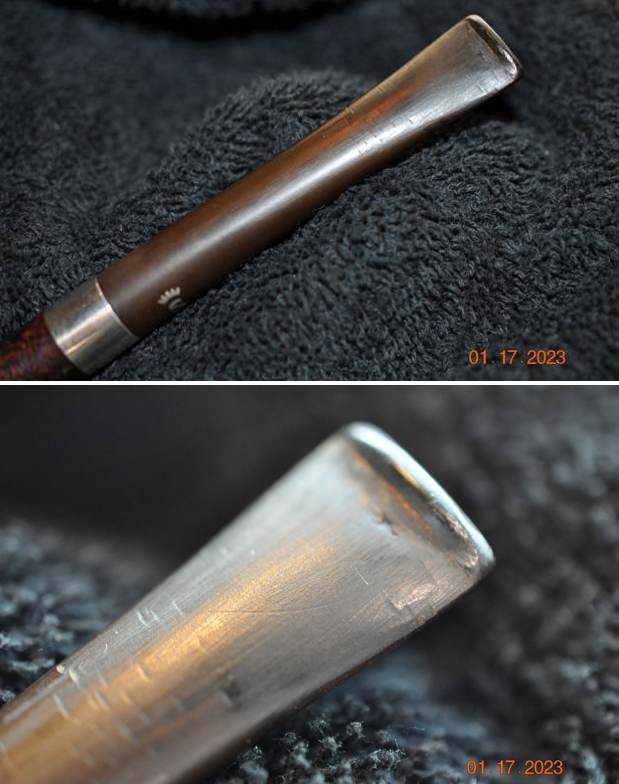
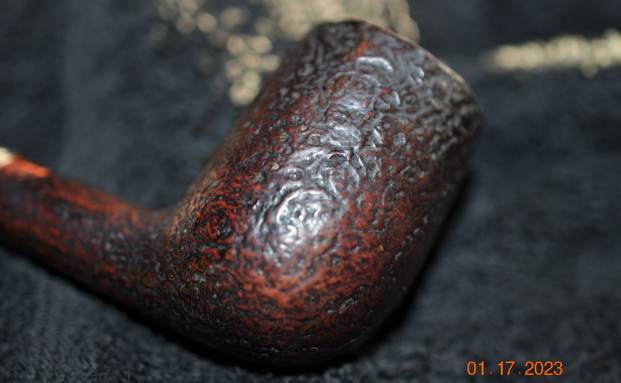
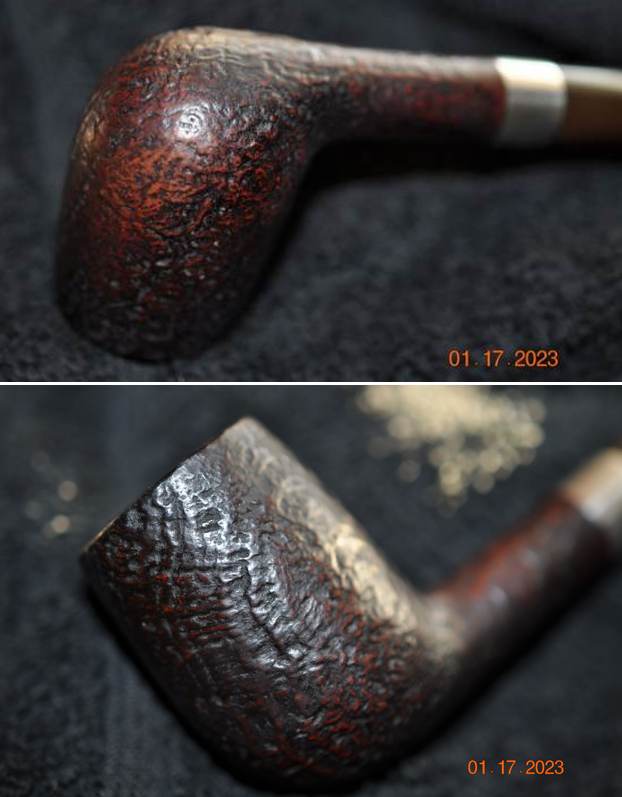
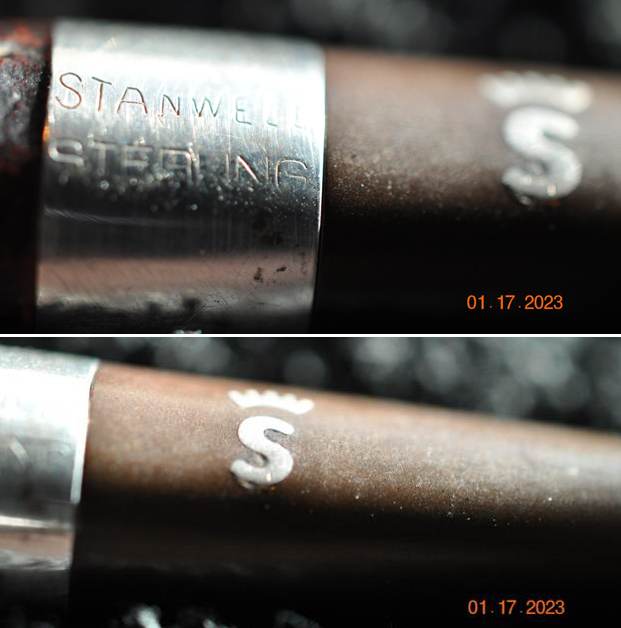
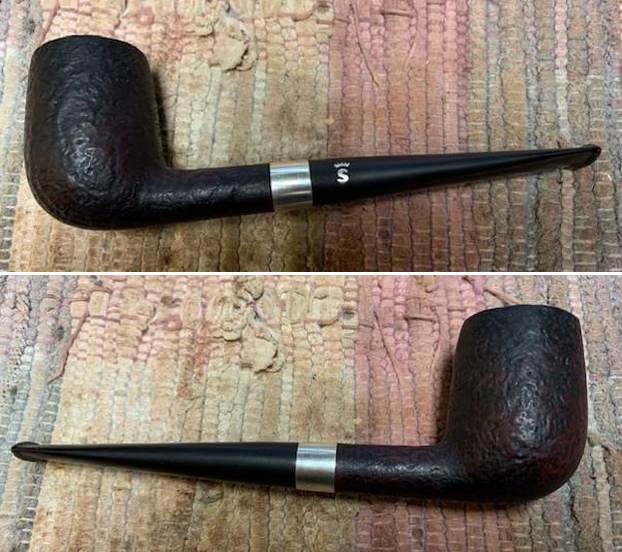
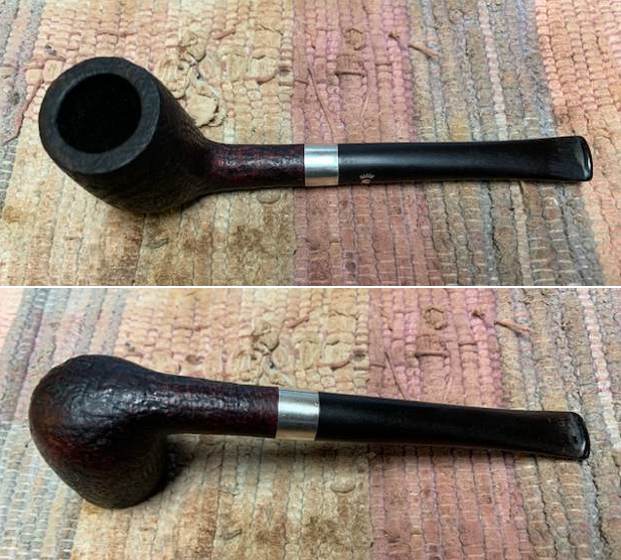
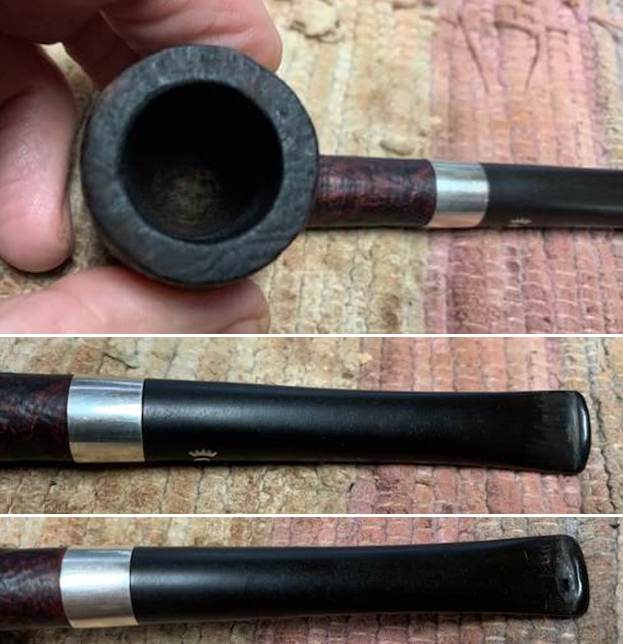
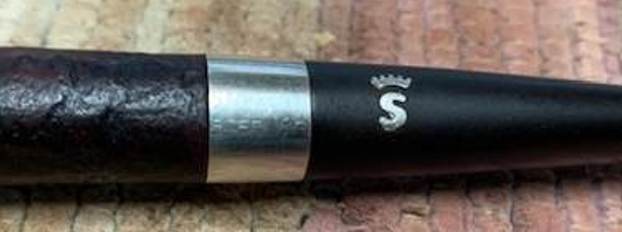
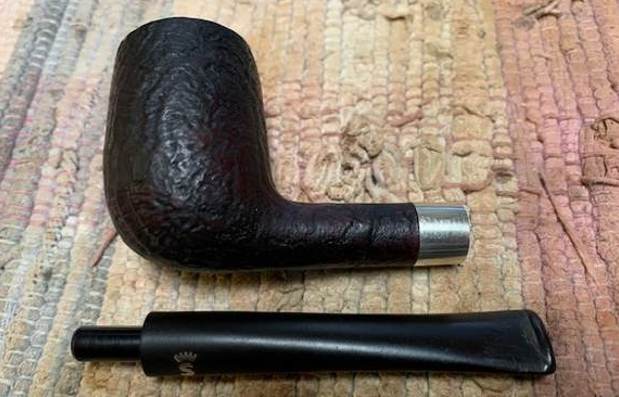
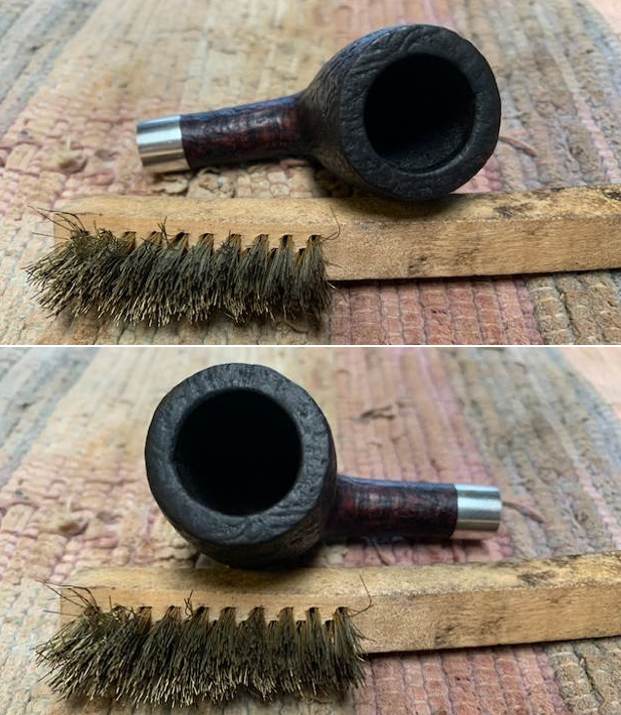
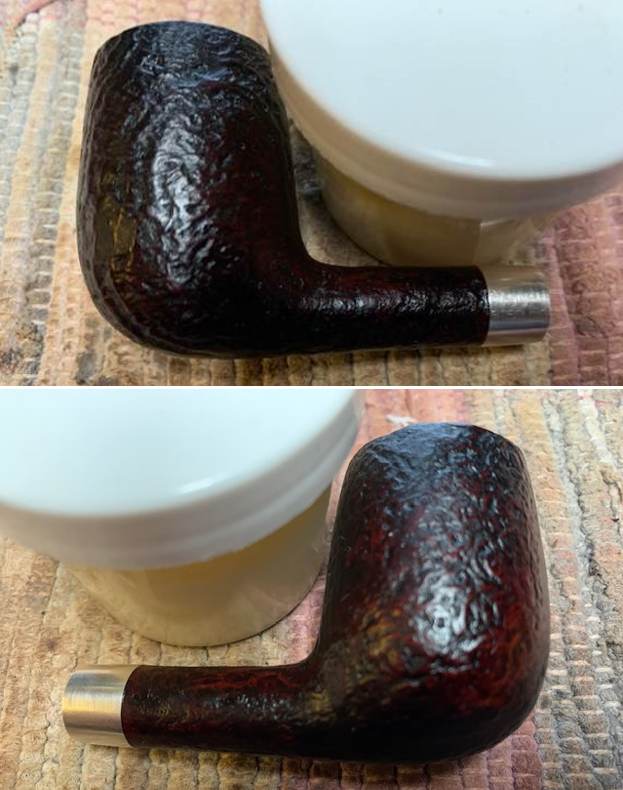
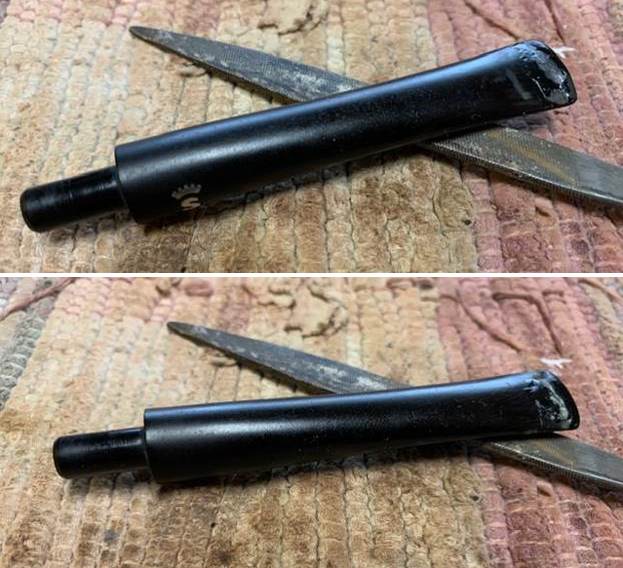
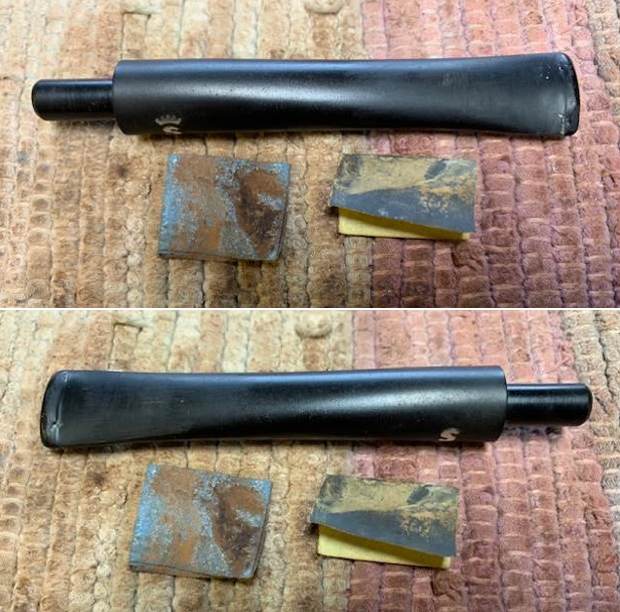
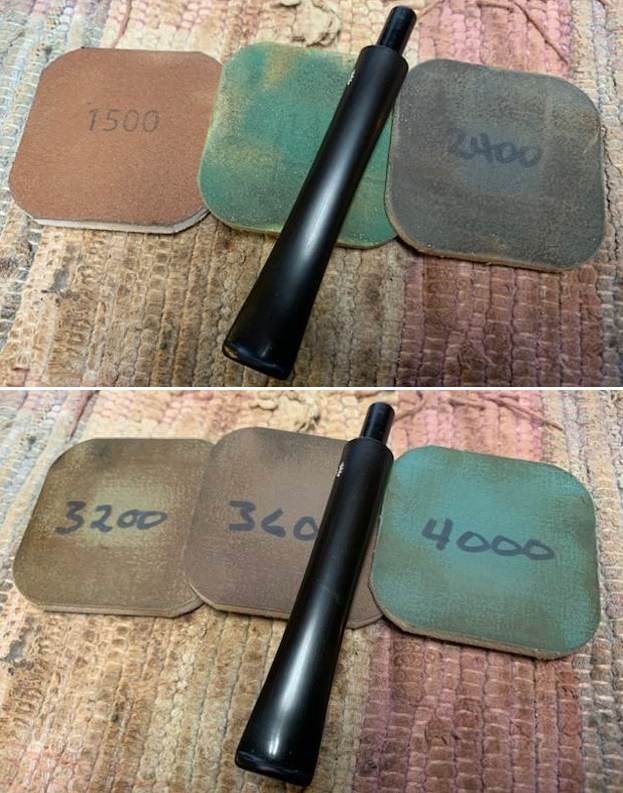
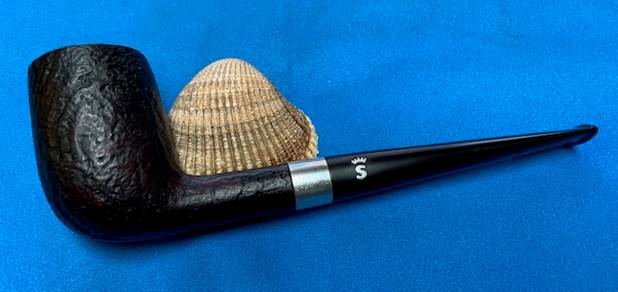
The next pipe I am working on was purchased on 01/10/2023 as part of another group of pipes from a fellow in Copenhagen, Denmark. This was another tired and dirty pipe but it had a great sandblast on the bowl and shank and a smooth rim top. The only mark on the pipe is on the silver band on the shank that reads Stanwell [over] Silver. The pipe is classic Danish Billiard. There were tars and oils ground into the valleys and crevices of the sandblast. The bowl had a thick cake that flowed over the top of the rim in a thin coat of a lava and some damage to the top and inner edge of the bowl. The stem was a black vulcanite taper stem with a silver Crown S logo on the left side. It was oxidized, calcified and had tooth marks and chatter on both sides ahead of the button. I think it would clean up to be a beautiful pipe. Jeff took photos of the pipes before he started his clean up work.  He took photos of the rim and bowl to show the thick cake and lava coat covering the rim top. It really was filthy and a mess. You can also see the rim top and inner edge damage in the photos. He also took photos of the stem surfaces to show its overall condition when it arrived. The photos of the sides and heel of the bowls show beautiful blast around the bowl and shank sides. The rich brown stains highlights the grain and adds depth to the finish. It shows some promise. He also took photos of the stamping on the silver band. It took several photos to capture the stamp on the curve but they were clear and read as noted above. Jeff cleaned up the pipe for me. He reamed the bowl with a PipNet pipe reamer and cleaned it up with a Savinelli Fitsall Pipe Knife. He scrubbed the exterior with Murphy’s Oil Soap and a tooth brush to clean off the grime off the finish and the overflow of lava on the rim top. The cleaning had removed the debris on the rim top. He cleaned up the internals of the shank, mortise and stem with pipe cleaners, cotton swabs and alcohol to remove all of the oils and tars in the pipe. He soaked the stem in Before & After Deoxidizer and was able to remove much of the oxidation, calcification. When it arrived here in Vancouver it was a clean pipe and I knew what I had to work with. I took photos of it before I started my part of the restoration. I took a photo of the rim top and the stem to show their condition once it arrived in Canada. Jeff was able to clean up the cake and the lava overflow that was shown in the rim and bowl photos above. The rim top and the inner edge of the bowl showed some damage to the inner edge and some darkening on the rim top. He was also able to get rid of the grime and grit in the surface of the briar. The stem looked better, though there were tooth marks and chatter on both sides near the button. I tried to capture the Stanwell Sterling on the silver band. It is clearer in person than is shown in the photo. I removed the stem from the shank and took a photo of the parts to give a sense of what the pipe looks like. I started my work on the bowl by working on the damage to the inner edge of the bowl and the darkening on the rim top and outer edge with 220 grit sandpaper. I was able to clean it up nicely.I polished the smooth rim top with micromesh sanding pads – dry sanding with 1500-12000 grit pads. I wiped the briar down after each pad. I rubbed the bowl and shank down with Before & After Restoration Balm to deep clean them. The product works to clean, enliven and protect the briar. I worked it in with my fingers to get it into the briar. I let it sit for 10 minutes then I wiped it off and buffed it with a soft cloth. The briar really began to have a rich shine. I took some photos of the bowl at this point to mark the progress in the restoration. It is a beautiful bowl. I set aside the bowl and turned my attention to the damage on the stem. I “painted” the surface of the stem with the flame of a lighter to lift them as much as possible. I filled in the ones that remained with clear CA glue and set it aside to cure. I used a small file to flatten the repairs and recut the button edge. I sanded the stem smooth with 220 grit sandpaper and started polishing it with 400 grit wet dry sandpaper. I polished the stem with micromesh sanding pads – dry sanding with 1500-12000 grit pads. I wiped the stem down after each pad with a damp cloth to remove the sanding dust. I gave it a further polish with Before & After Stem Polish – both Fine and Extra Fine. I finished by wiping the stem down with a final coat of Obsidian Oil and set it aside to dry. I put the stem back on the Stanwell Sterling Sandblast Billiard and took the pipe to the buffer. I buffed the bowl and stem with Blue Diamond to polish the briar and the vulcanite. Blue Diamond does a great job on the smaller scratches that remain in both. I gave the bowl and the stem several coats of carnauba wax and buffed the pipe with a clean buffing pad to raise the shine. I hand buffed it with a microfiber cloth to deepen the shine. Considering the mess the pipe was when we received it I am amazed at how well it turned out. The finished pipe is shown in the photos below. This is a beautiful Stanwell Sterling Sandblast Billiard – the vulcanite taper stem and rim top and sandblast finish combine to give the pipe a great look. The polished black, vulcanite stem looks really good with the rich grain standing out on the bowl and shank. The dimensions of the pipe are Length: 5 ½ inches, Height: 1 ¾ inches, Outside diameter of the bowl: 1 1/8 inches, Chamber diameter: ¾ of an inch. The weight of the pipe is 1.27 ounces/36 grams. This is another pipe that I will be putting on the rebornpipes online store in the Danish Pipe Pipemaking Companies Section shortly, if you are interested in adding it to your collection. Thanks for walking through the restoration with me on this beauty!

Discovering Beautiful Grain on this dirty Stanwell Sterling Silver 97 Reg. No. 969-48 Liverpool


Blog by Steve Laug

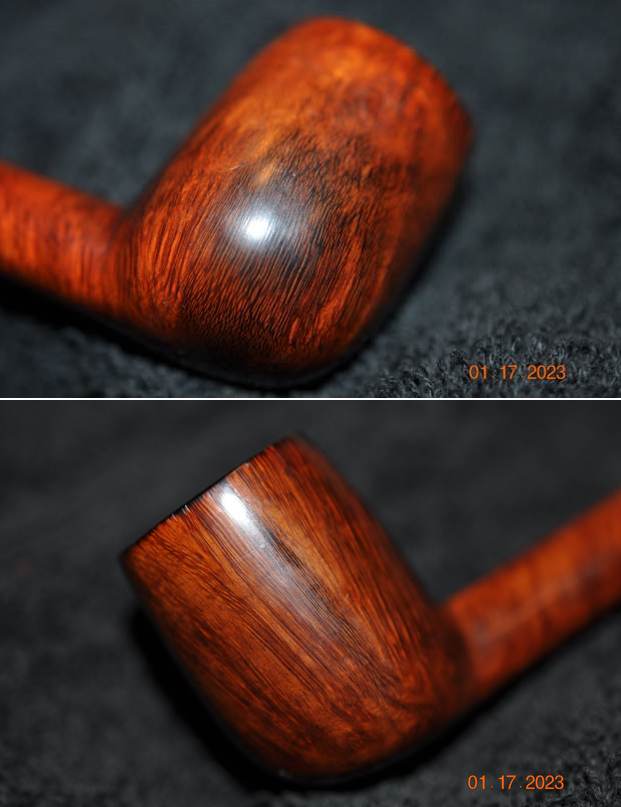
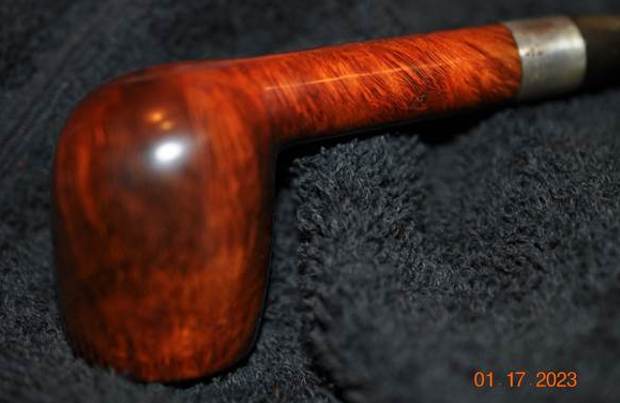
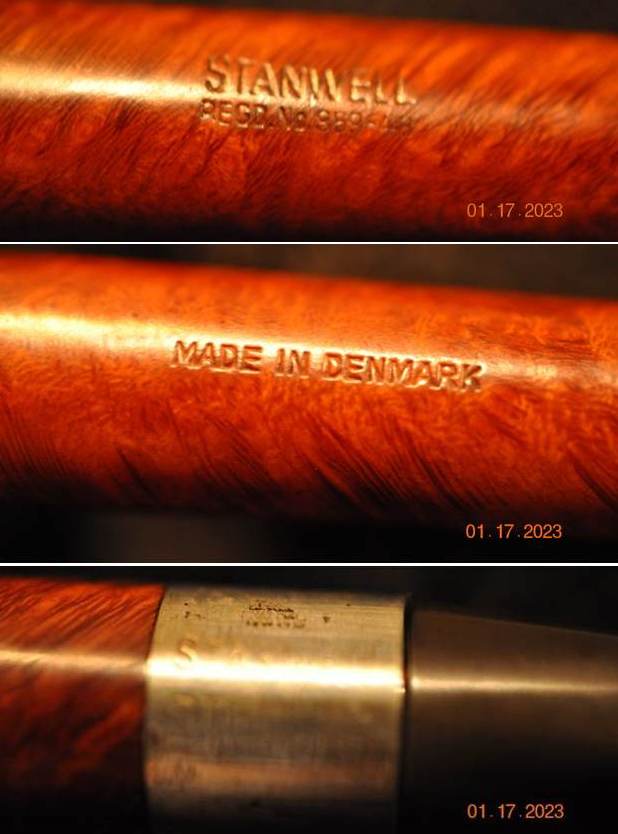
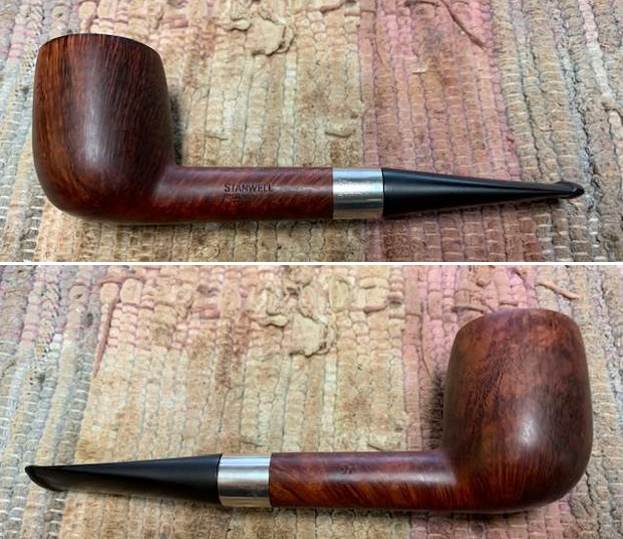
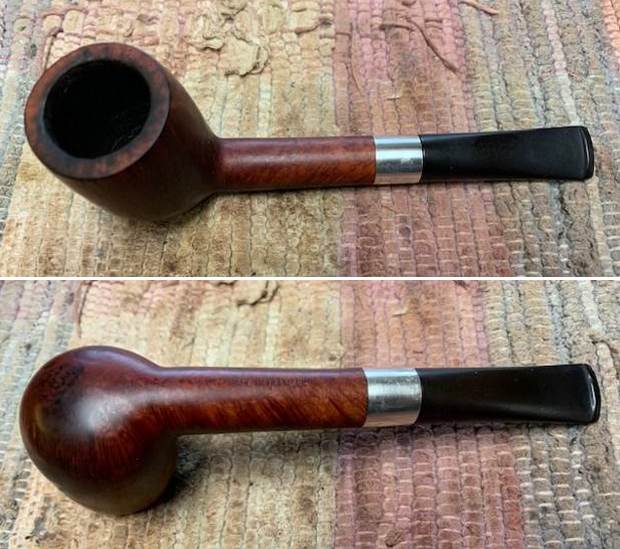
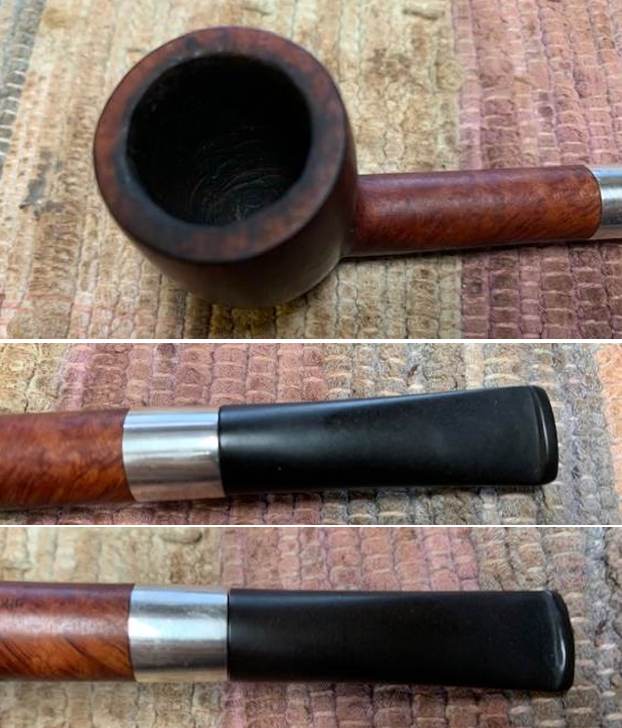
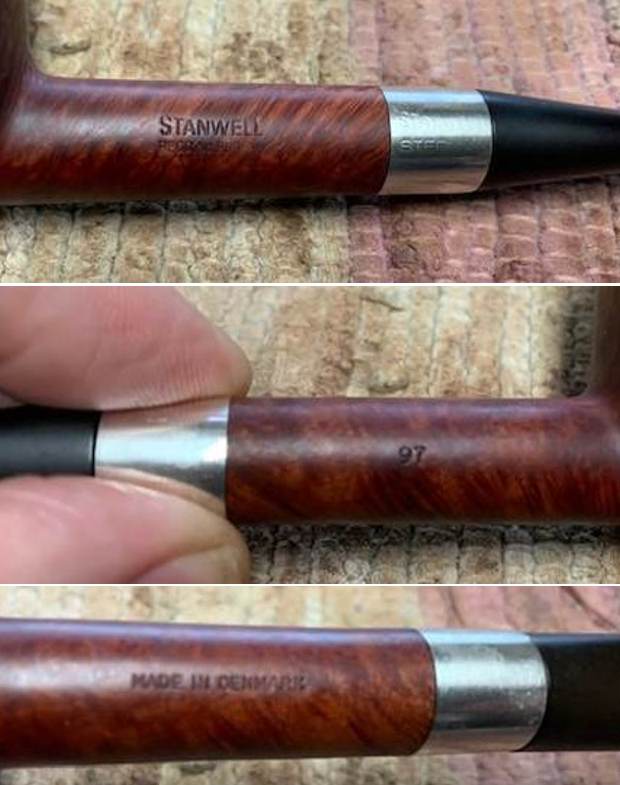
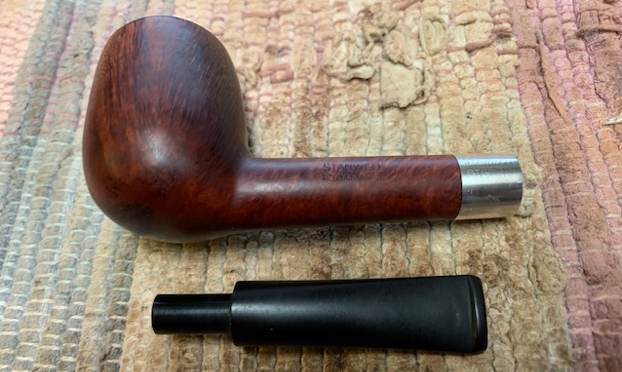
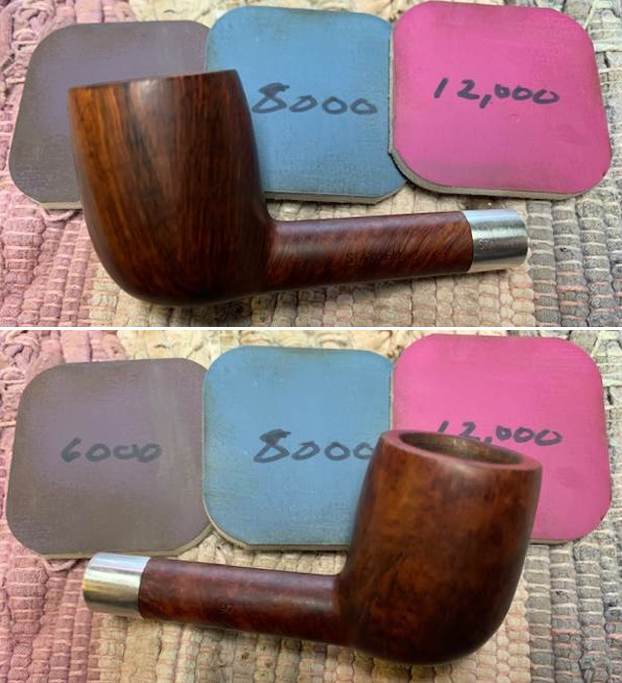
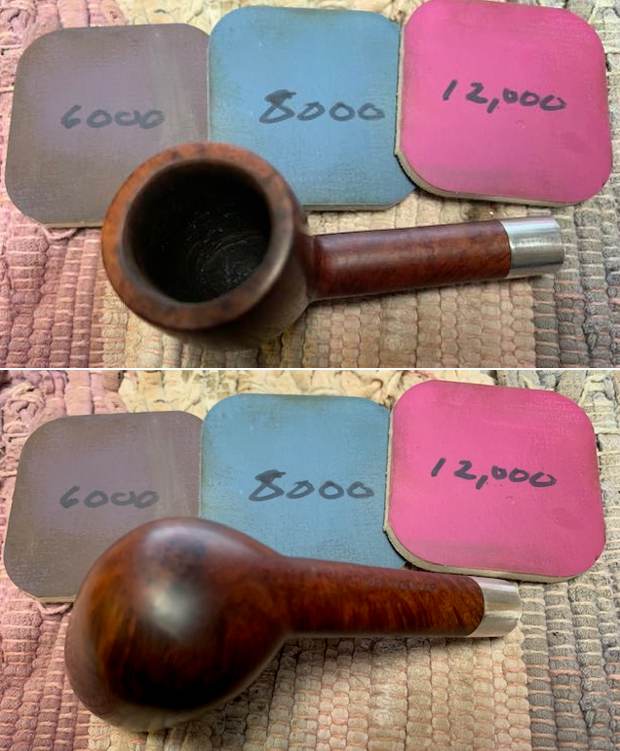
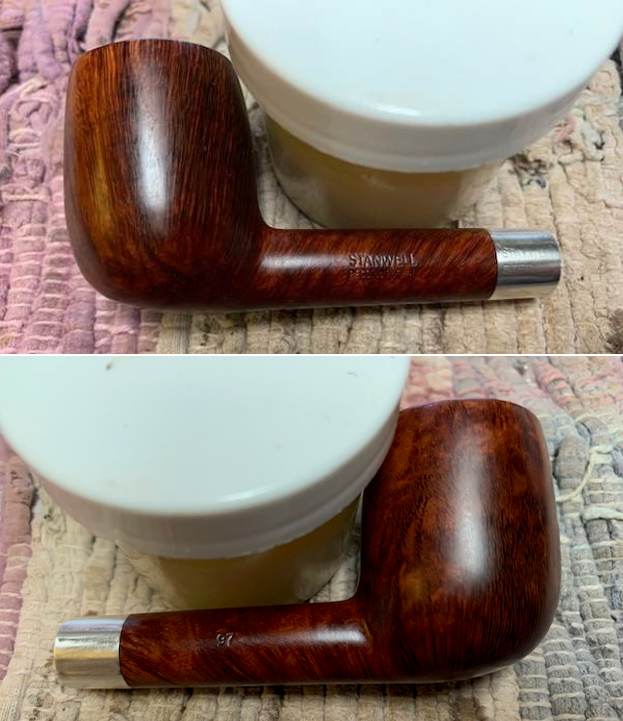
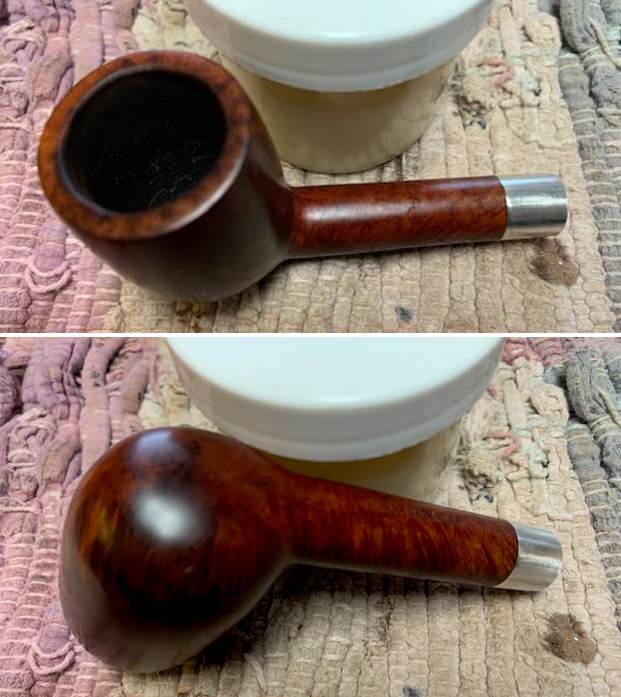
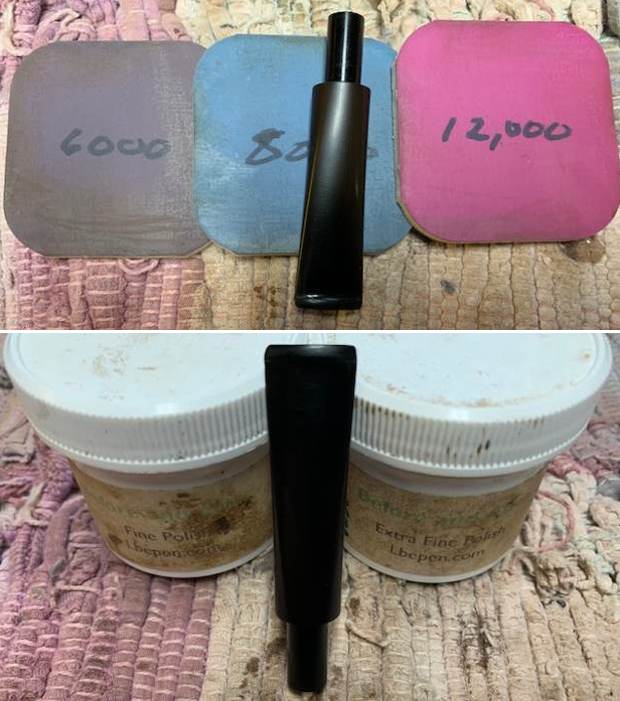
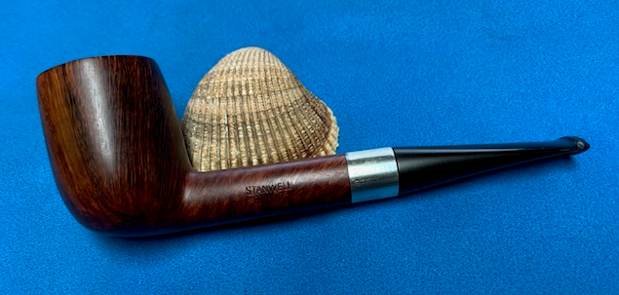
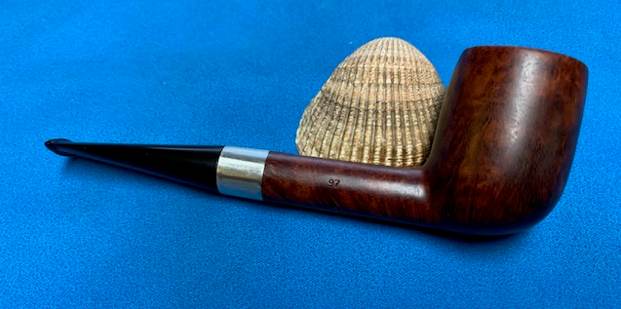
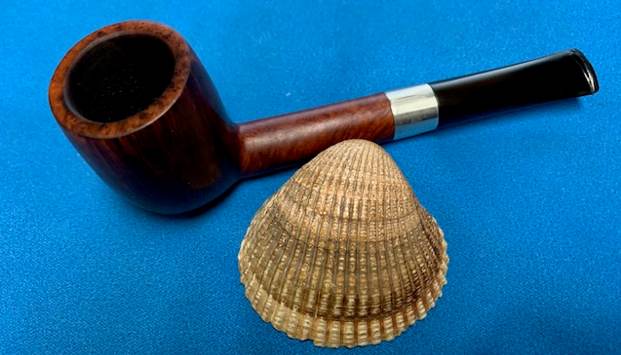
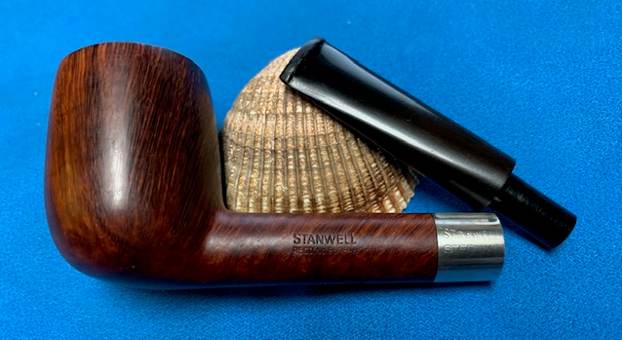
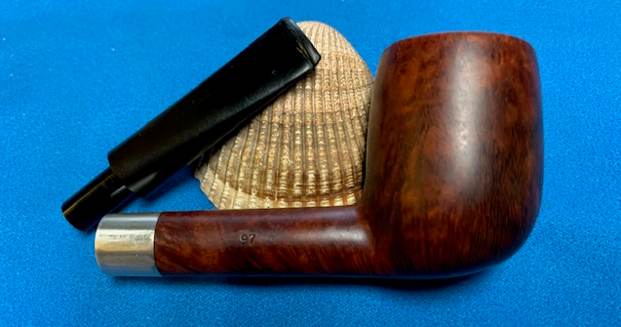
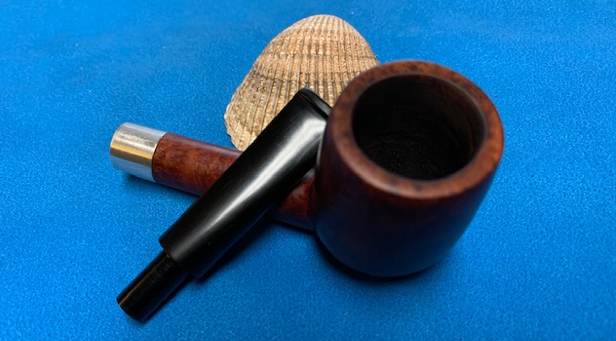
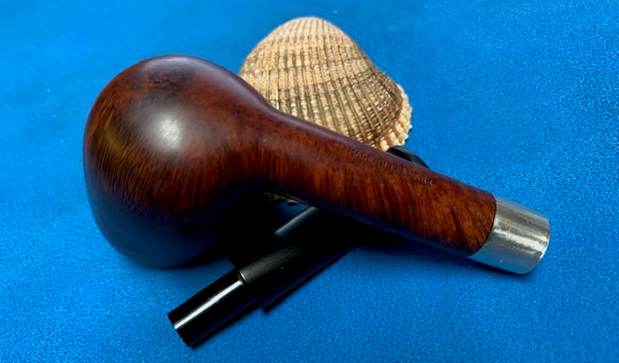
The next pipe I am working on was purchased on 01/10/2023 as part of another group of pipes from a fellow in Copenhagen, Denmark. This was another tired and dirty pipe that was a unique shape. The pipe is stamped on the left side and reads Stanwell [over] Regd. No. 969-48. On the right side it is stamped with the shape number 97. On the underside of the shank it is stamped Made in Denmark. The pipe is an interesting look shape I would call a Liverpool. It is long shank and round with a taper vulcanite stem. There were tars and oils ground into the surface of the briar. The silver band on the shank was original and was stamped Sterling [over] Silver. The bowl had a thick cake that flowed over the top of the rim in a thin coat of a lava and some damage to the inner edge of the bowl. The stem was a black vulcanite taper stem without a logo on the side or top. It was oxidized, calcified and had tooth marks and chatter on both sides ahead of the button. I think it would clean up to be a beautiful pipe. Jeff took photos of the pipes before he started his clean up work.  He took photos of the rim and bowl to show the moderate cake and lava coat covering the rim top. It really was filthy and a mess. You can also see the rim top and inner edge damage in the photos. He also took photos of the stem surfaces to show its overall condition when it arrived. The photos of the sides and heel of the bowls show beautiful grain  around the bowl and shank sides. The rich brown stains highlights the grain and adds depth to the finish. It shows some promise. He also took photos of the stamping on the sides of the shank and the band. They were clear and read as noted above. Jeff cleaned up the pipe for me. He reamed the bowl with a PipNet pipe reamer and cleaned it up with a Savinelli Fitsall Pipe Knife. He scrubbed the exterior with Murphy’s Oil Soap and a tooth brush to clean off the grime off the finish and the heavy overflow of lava on the rim top. The cleaning had removed the thick coat on the rim top. He cleaned up the internals of the shank, mortise and stem with pipe cleaners, cotton swabs and alcohol to remove all of the oils and tars in the pipe. He soaked the stem in Before & After Deoxidizer and was able to remove much of the oxidation, calcification. When it arrived here in Vancouver it was a clean pipe and I knew what I had to work with. I took photos of it before I started my part of the restoration. I took a photo of the rim top and the stem to show their condition once it arrived in Canada. Jeff was able to clean up the cake and the lava overflow that was shown in the rim and bowl photos above. The rim top and the inner edge of the bowl showed some damage to the inner edge and some darkening on the rim top. He was also able to get rid of the grime and grit in the surface of the briar. The stem looked better, though there were tooth marks and chatter on both sides near the button. I took photos of the stamping on the sides of the shank and the underside show that it is clear and readable. I tried to capture the Stanwell Sterling on the silver band (first photo below). It is clearer in person than is shown in the photo.I removed the stem from the shank and took a photo of the parts to give a sense of what the pipe looks like.I started my work on the bowl by working on the damage to the inner edge of the bowl and the darkening on the rim top and outer edge with 220 grit sandpaper. I was able to clean it up nicely.I polished the briar with micromesh sanding pads – dry sanding with 1500-12000 grit pads. I wiped the briar down after each pad. I rubbed the bowl and shank down with Before & After Restoration Balm to deep clean them. The product works to clean, enliven and protect the briar. I worked it in with my fingers to get it into the briar. I let it sit for 10 minutes then I wiped it off and buffed it with a soft cloth. The briar really began to have a rich shine. I took some photos of the bowl at this point to mark the progress in the restoration. It is a beautiful bowl. I set aside the bowl and turned my attention to the damage on the stem. I “painted” the surface of the stem with the flame of a lighter to lift them as much as possible. I filled in the ones that remained with clear CA glue and set it aside to cure. I used a small file to flatten the repairs and recut the button edge. I sanded the stem smooth with 220 grit sandpaper and started polishing it with 400 grit wet dry sandpaper. I polished the stem with micromesh sanding pads – dry sanding with 1500-12000 grit pads. I wiped the stem down after each pad with a damp cloth to remove the sanding dust. I gave it a further polish with Before & After Stem Polish – both Fine and Extra Fine. I finished by wiping the stem down with a final coat of Obsidian Oil and set it aside to dry. I put the stem back on the Stanwell Sterling 97 Lovat Reg. No. 969048 Liverpool pipe and took the pipe to the buffer. I buffed the bowl and stem with Blue Diamond to polish the briar and the vulcanite. Blue Diamond does a great job on the smaller scratches that remain in both. I gave the bowl and the stem several coats of carnauba wax and buffed the pipe with a clean buffing pad to raise the shine. I hand buffed it with a microfiber cloth to deepen the shine. Considering the mess the pipe was when we received it I am amazed at how well it turned out. The finished pipe is shown in the photos below. This is a beautiful Stanwell Sterling 97 Reg. No. 969-48 Lovat – the vulcanite taper stem and rim top and smooth finish combine to give the pipe a great look. The polished black, vulcanite stem looks really good with the rich grain standing out on the bowl and shank. The dimensions of the pipe are Length: 5 inches, Height: 1 ½ inches, Outside diameter of the bowl: 1 1/8 inches, Chamber diameter: ¾ of an inch. The weight of the pipe is .99 ounces/28 grams. This is another pipe that I will be putting on the rebornpipes online store in the Danish Pipe Pipemaking Companies Section shortly, if you are interested in adding it to your collection. Thanks for walking through the restoration with me on this beauty!

Discovering Beauty under the grime on a Stanwell Sterling Silver Billiard


Blog by Steve Laug

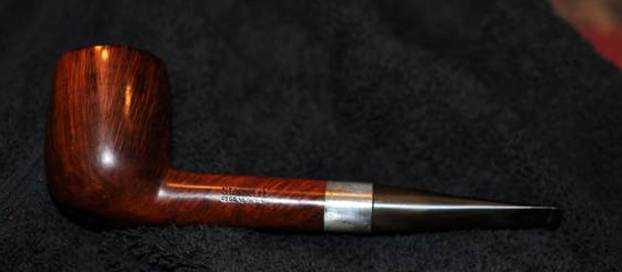
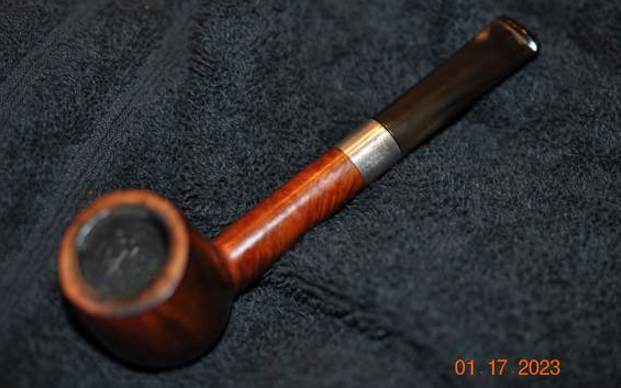
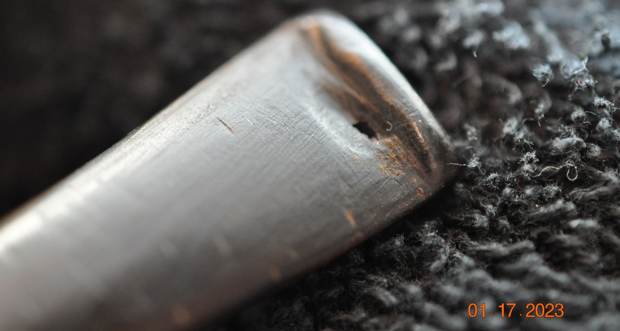
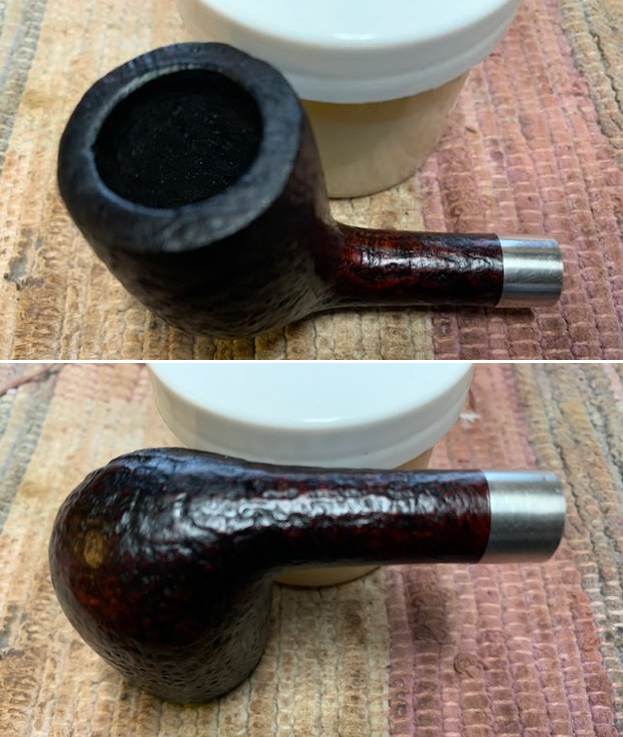
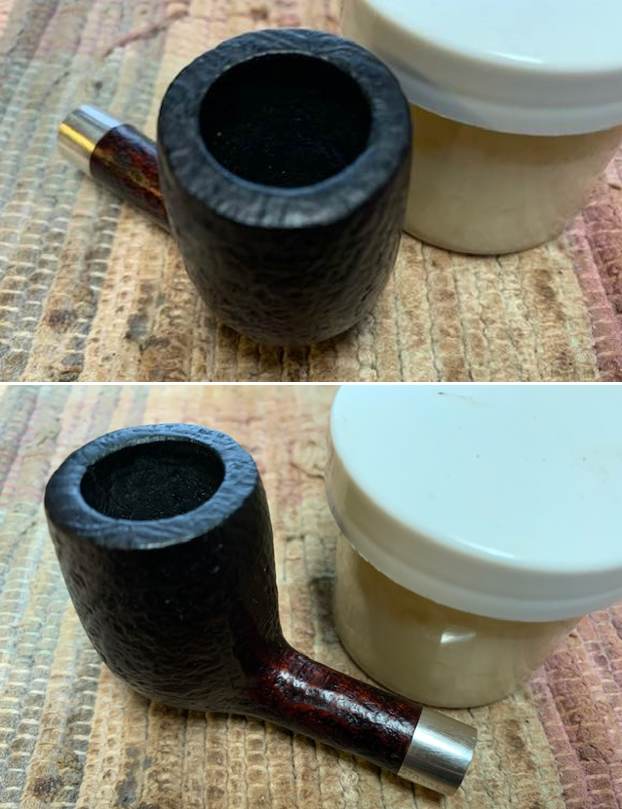
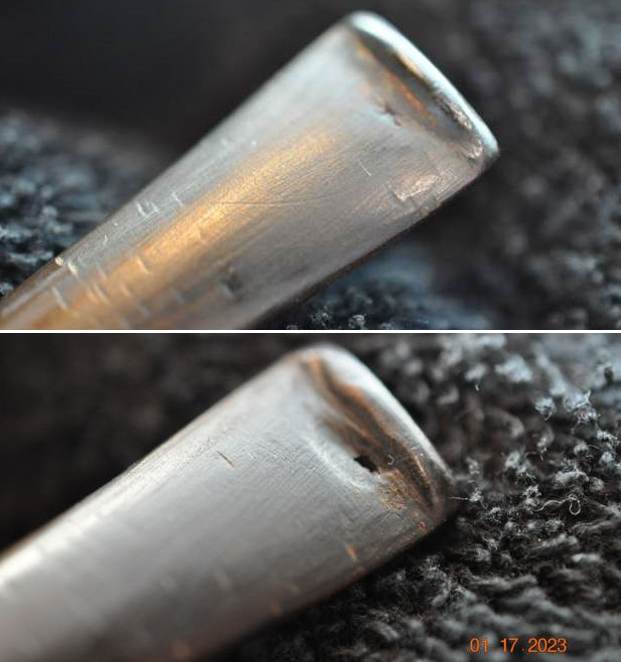
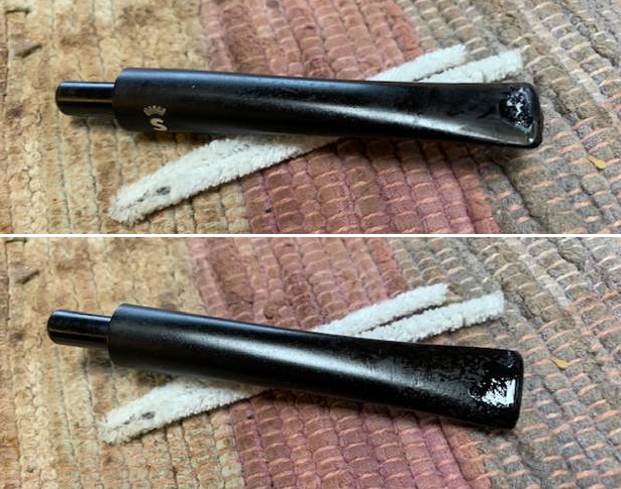
The next pipe I am working on was purchased on 01/10/2023 as part of another group of pipes from a fellow in Copenhagen, Denmark. This was another tired and dirty pipe that obviously had been someone’s favourite smoker. The pipe has no stampings on the shank sides. The silver band is stamped Stanwell Sterling. The dark brown sandblast finish was dirty and tired looking but showed some great grain in the blast. There were tars and oils ground into the surface of the briar. The silver band on the shank was original and was stamped Sterling [over] Silver. The bowl had a thick cake that flowed over the top of the rim in a thick coat of a lava in the sandblast top. The stem was a black vulcanite taper stem with a silver Crown S on the left side. It was oxidized, calcified and had tooth marks and chatter on both sides ahead of the button. There was also a small bite through on the top and underside ahead of the button. I think it would clean up to be a beautiful pipe. Jeff took photos of the pipes before he started his clean up work.  He took photos of the rim and bowl to show the moderate cake and lava coat covering the rim top. It really was filthy and a mess. He also took photos of the stem surfaces to show its overall condition when it arrived. You can see the two bite throughs on both sides of the stem. The photos of the sides and heel of the bowls show beautiful grain in the sandblast around the bowl and shank sides. The rich brown stains highlights the grain and adds depth to the finish. It shows some promise. He also took a photo of the stamping on the left side of the Sterling Silver Band and a photo of the inlaid Crown Silver S on the left side of the stem. It read as noted above. Jeff cleaned up the pipe for me. He reamed the bowl with a PipNet pipe reamer and cleaned it up with a Savinelli Fitsall Pipe Knife. He scrubbed the exterior with Murphy’s Oil Soap and a tooth brush to clean off the grime off the finish and the heavy overflow of lava on the rim top. The cleaning had removed the thick coat on the rim top. He cleaned up the internals of the shank, mortise and stem with pipe cleaners, cotton swabs and alcohol to remove all of the oils and tars in the pipe. He soaked the stem in Before & After Deoxidizer and was able to remove much of the oxidation, calcification. When it arrived here in Vancouver it was a clean pipe and I knew what I had to work with. I took photos of it before I started my part of the restoration. I took a photo of the rim top and the stem to show their condition once it arrived in Canada. Jeff was able to clean up the cake and the lava overflow that was shown in the rim and bowl photos above. The rim top and the inner edge of the bowl was in surprisingly good condition. He was also able to get rid of the grime and grit in the surface of the briar around the sandblast. The stem looked better, though there were deep tooth marks and chatter on both sides near the button as well as a small bite through on each side ahead of the button. I took a photo of the stamping on the left side of the Sterling Band. It was clear and readable as noted above.I removed the stem from the shank and took a photo of the parts to give a sense of what the pipe looks like.I started my work on the bowl by going over the sandblasted rim top with a brass bristle wire brush. It removed the remaining dust and debris from the sandblast. It gave the finish a better and cleaner look. I rubbed the bowl and shank down with Before & After Restoration Balm to deep clean them. The product works to clean, enliven and protect the briar. I worked it in with my fingers to get it into the briar. I let it sit for 10 minutes then I wiped it off and buffed it with a soft cloth. The briar really began to have a rich shine. I took some photos of the bowl at this point to mark the progress in the restoration. It is a beautiful bowl. I set aside the bowl and turned my attention to the damage on the stem. I took a photo of the bite through on the top and underside of the stem just ahead of the button. You can see the small bite through on the top of the stem and the larger hole in the underside of the stem. They will need to be filled in and smoothed out and reshaped.I greased a folded pipe cleaner with Vaseline Petroleum Jelly and inserted it into the airway in the button. I filled in the holes on both sides with black CA glue and set it aside for the repairs to cure.I removed the pipe cleaner from the airway and set aside the stem to let the repairs cure. Once they cured, I flattened them out with a flat file and then sanded them with 220 grit sandpaper to blend them into the surface of the stem. I started the polishing with 600 grit wet dry sandpaper. I polished the stem with micromesh sanding pads – dry sanding with 1500-12000 grit pads. I wiped the stem down after each pad with a damp cloth to remove the sanding dust. I gave it a further polish with Before & After Stem Polish – both Fine and Extra Fine. I finished by wiping the stem down with a final coat of Obsidian Oil and set it aside to dry. I put the stem back on the Stanwell Sterling Sandblast Billiard pipe and took the pipe to the buffer. I buffed the bowl and stem with Blue Diamond to polish the briar and the acrylic. Blue Diamond does a great job on the smaller scratches that remain in both. I gave the bowl and the stem several coats of carnauba wax and buffed the pipe with a clean buffing pad to raise the shine. I hand buffed it with a microfiber cloth to deepen the shine. Considering the mess the pipe was when we received it I am amazed at how well it turned out. The finished pipe is shown in the photos below. This is a beautiful Stanwell Sterling Sandblast Billiard – the vulcanite taper stem and rim top and sandblast finish combine to give the pipe a great look. The polished black, vulcanite stem looks really good with the rich browns standing out in the sandblast. The dimensions of the pipe are Length: 5 ¾ inches, Height: 1 ½ inches, Outside diameter of the bowl: 1 ¼ inches, Chamber diameter: ¾ of an inch. The weight of the pipe is 1.23 ounces/36 grams. This is another pipe that I will be putting on the rebornpipes online store in the Danish Pipe Pipemaking Companies Section shortly, if you are interested in adding it to your collection. Thanks for walking through the restoration with me on this beauty!

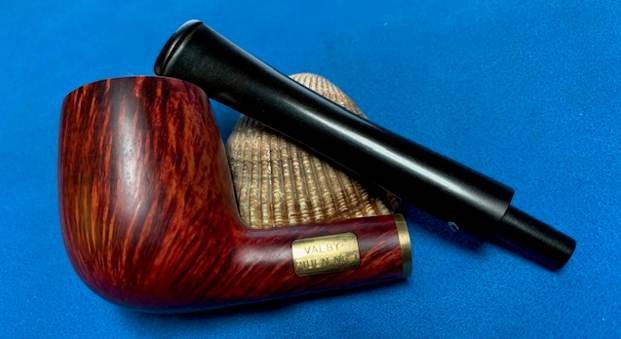
Discovering Beauty under the Filth of this Stanwell Valby Piben Nr.1 51 Billiard


Blog by Steve Laug

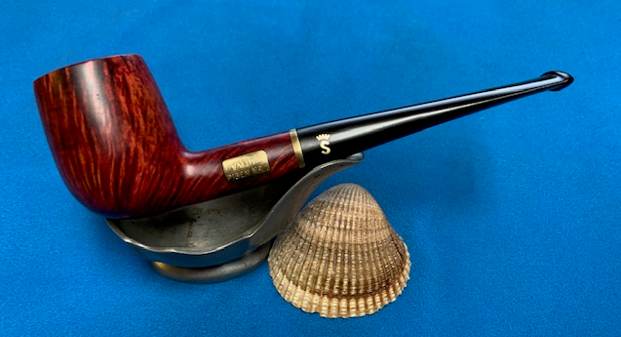
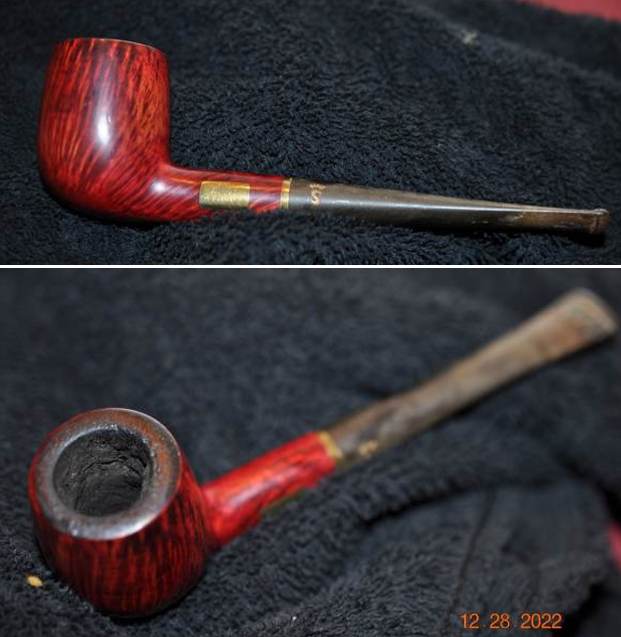
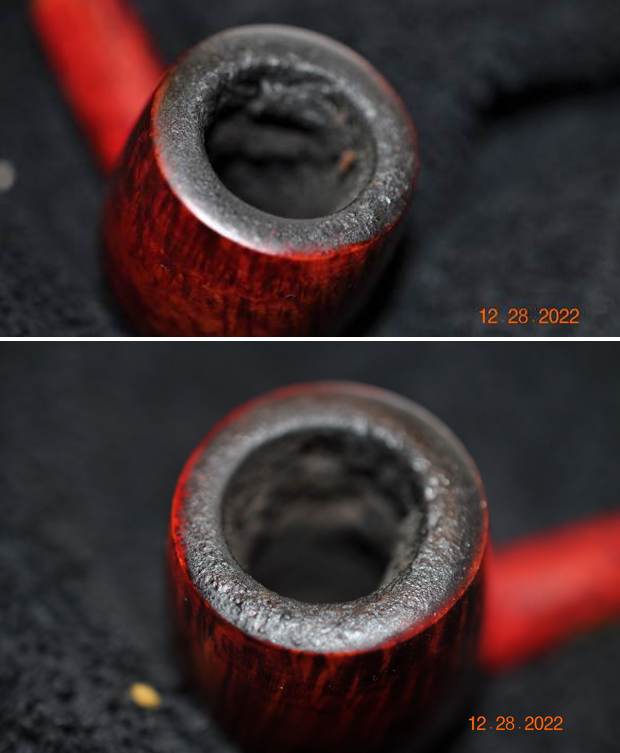
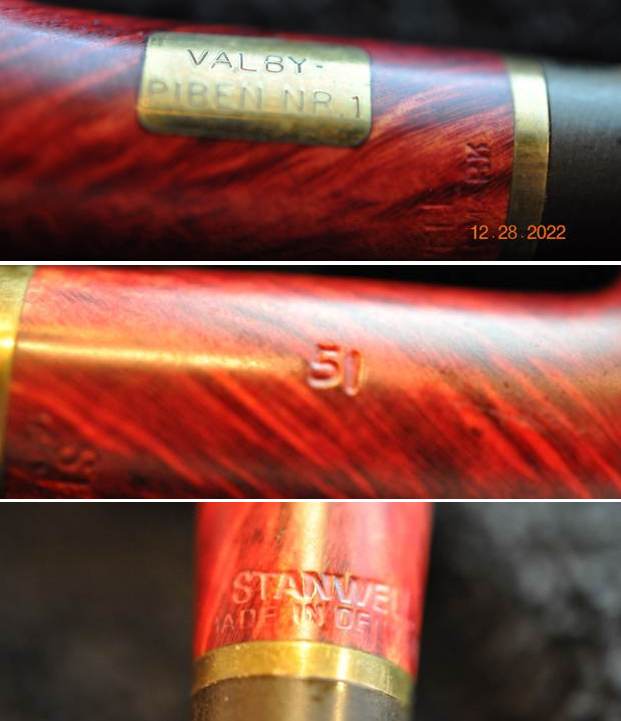
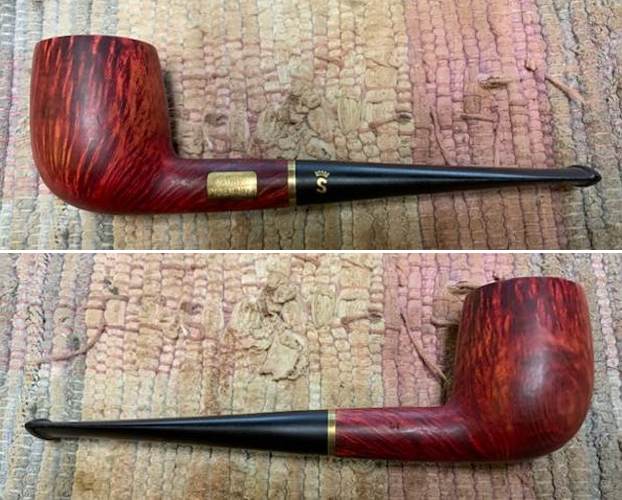
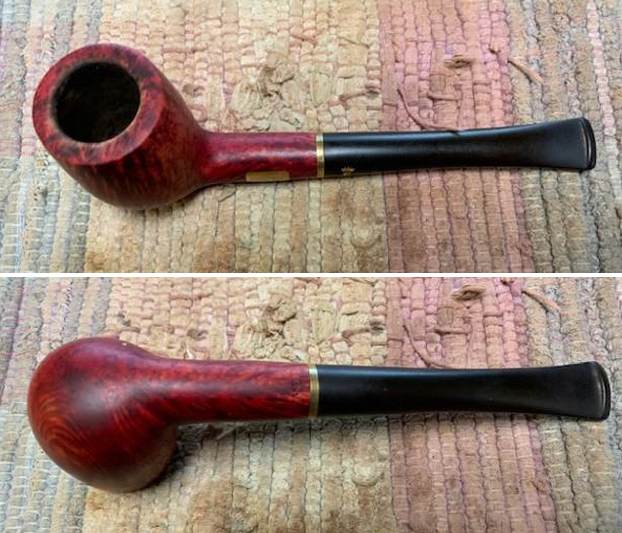
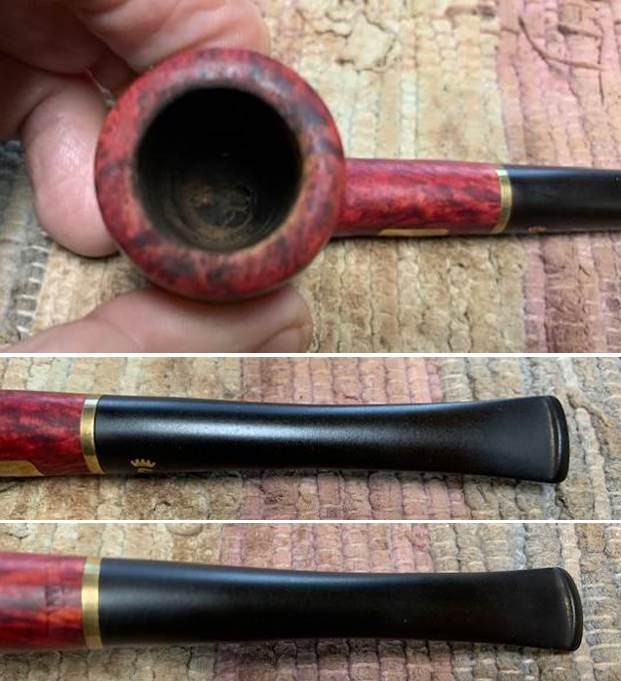
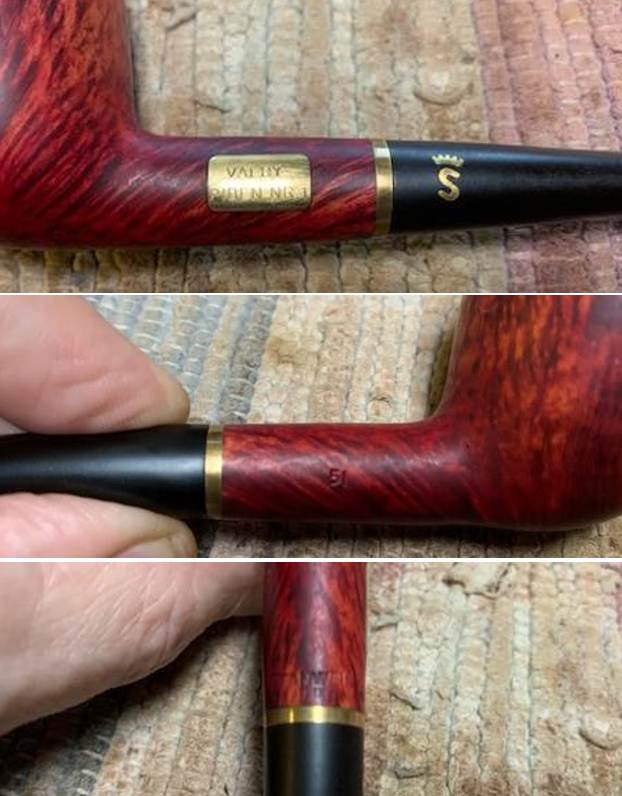
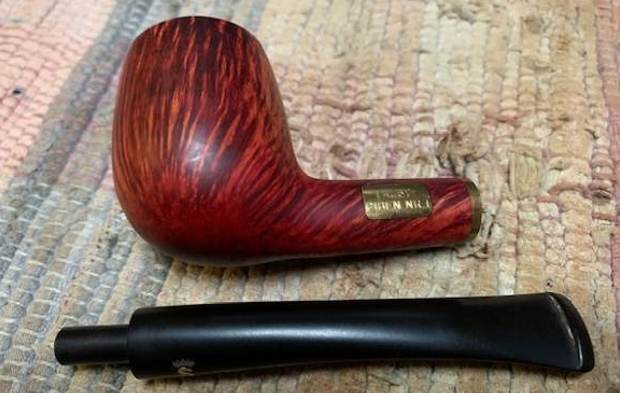
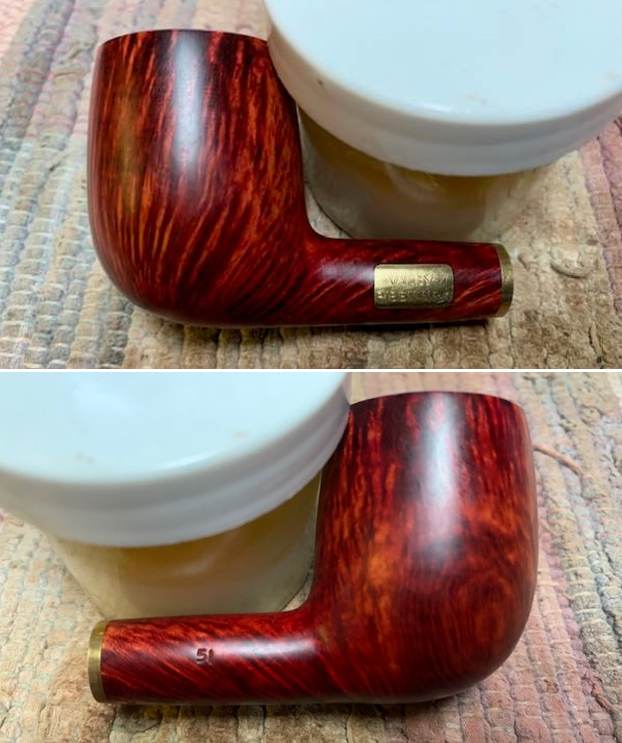
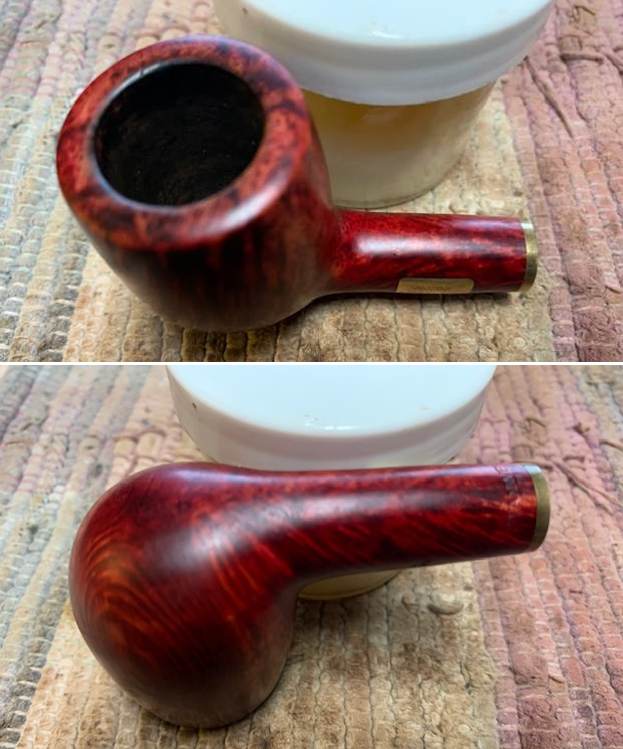
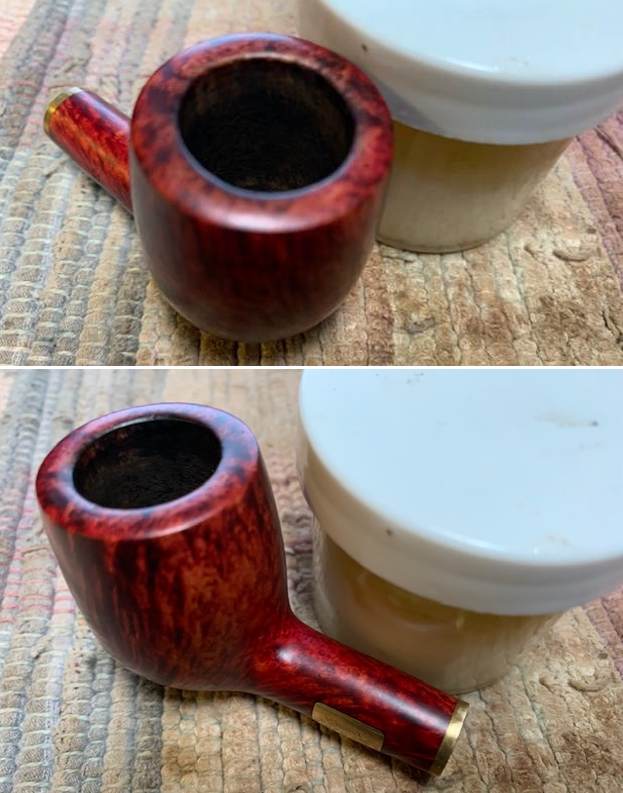
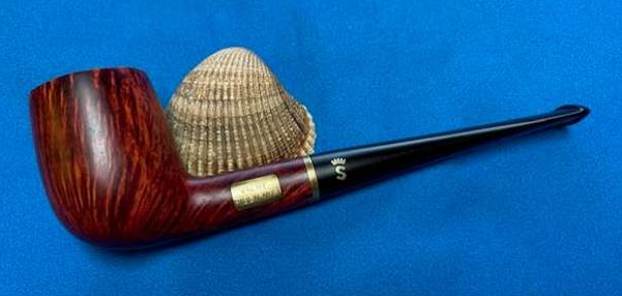
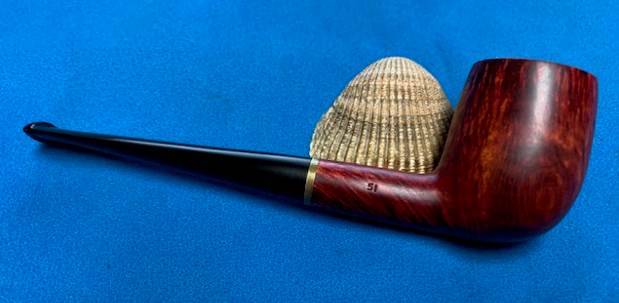
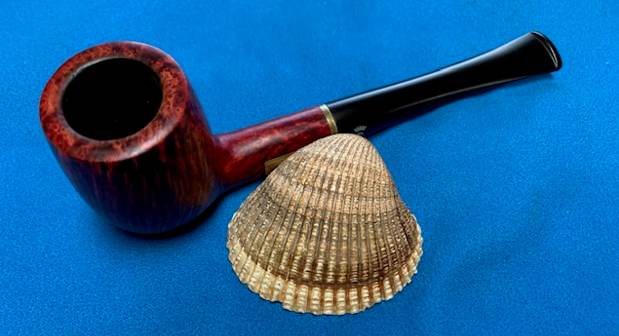
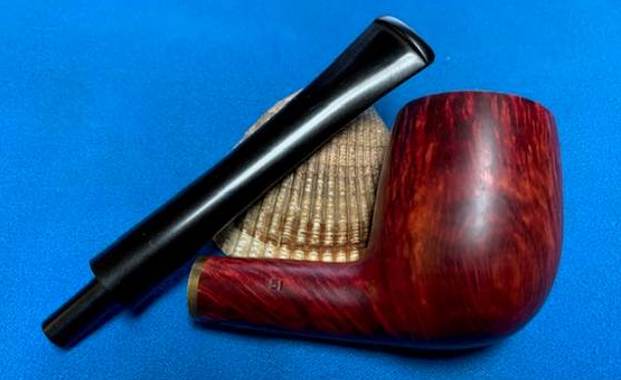
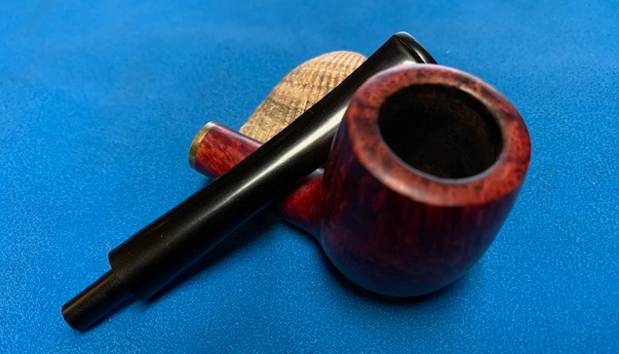
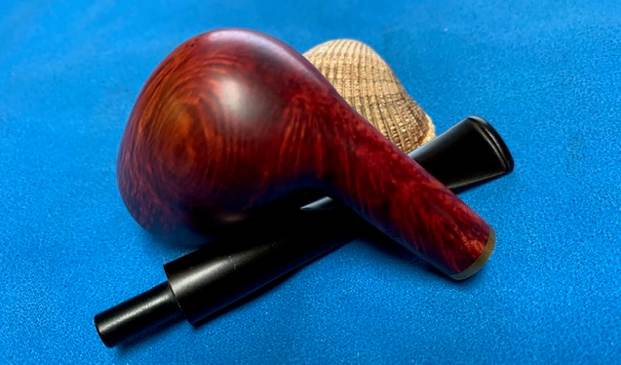
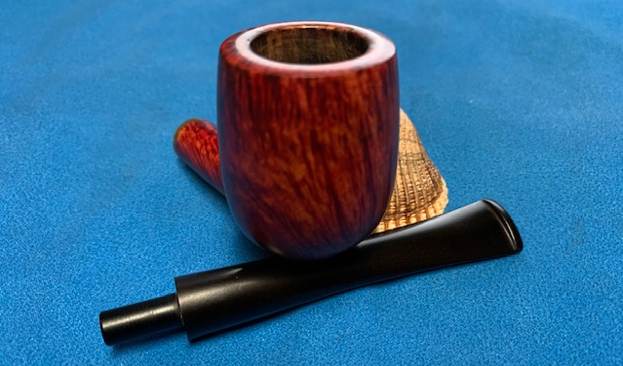
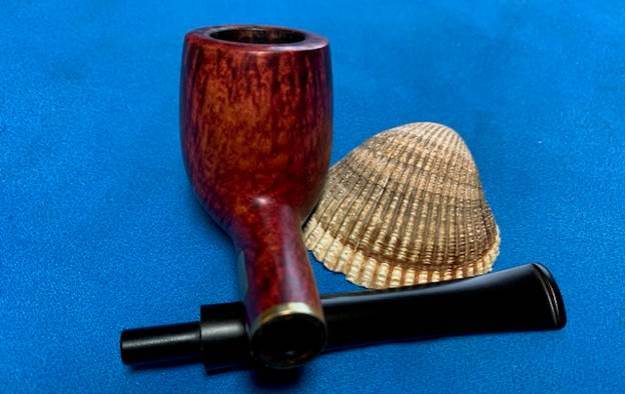
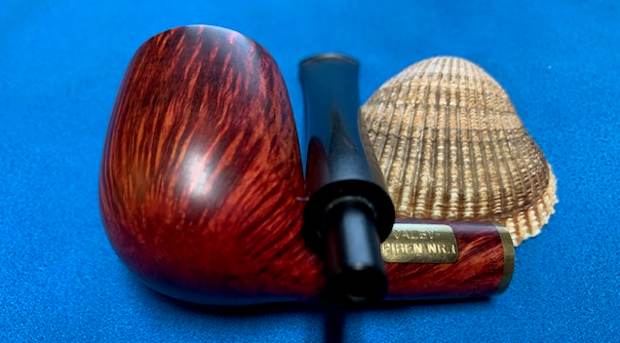
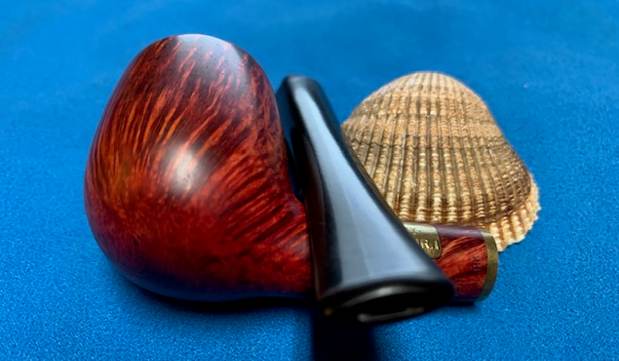
The next pipe I am working on was purchased on 12/13/2022 as part of another group of pipes from a fellow in Copenhagen, Denmark. This was a tired and dirty pipe that obviously had been someone’s favourite smoker. The pipe has an identifying plate on the left side of the shank that reads Valby -[over] Piben Nr.1. On the underside of the shank it was stamped Stanwell [over] Made in Denmark. On the right side of the shank it was stamped with the shape number 51. The dirty reddish finish on this was worn and tired looking but showed some great grain. There were tars and oils ground into the surface of the briar. The thin gold band on the shank was original and distinguishing feature of the Valby. The bowl had a thick cake that flowed over the top of the rim in a thick coat of a lava and showed potential damage on the top and the inner edge. The stem was a black vulcanite taper stem with a gold Crown S on the left side. It was oxidized, calcified and had light tooth marks and chatter on both sides ahead of the button. I think it would clean up to be a beautiful pipe. Jeff took photos of the pipes before he started his clean up work.  He took photos of the rim and bowl to show the heavy cake and thick lava coat covering the rim top. It really was filthy and a mess. He also took photos of the stem surfaces to show its overall condition when it arrived. The photos of the sides and heel of the bowls show beautiful grain around the bowl and shank sides. The rich red stain highlights the grain and adds depth to the finish. It shows some promise. He also took a photo of the stamped gold plate on the left side of the shank. He also took photos of the stamping on the underside as well as the shape number on the right side. It read as noted above. From what I can find online it seems that Valby is one of the cities that Stanwell was made in along with Copenhagen. I wonder if the Piben Nr.1 is to commemorate the first pipe that was originally made in Valby. It could be another commemorative pipe like the pair of Bulldogs I just finished commemorating the 65th Anniversary of Stanwell – 1942-2007. Hard to  know for sure but very likely.

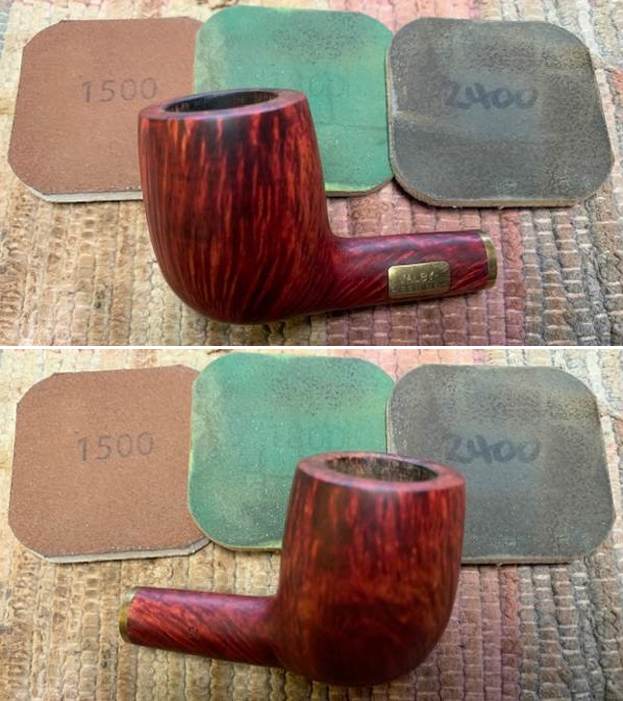
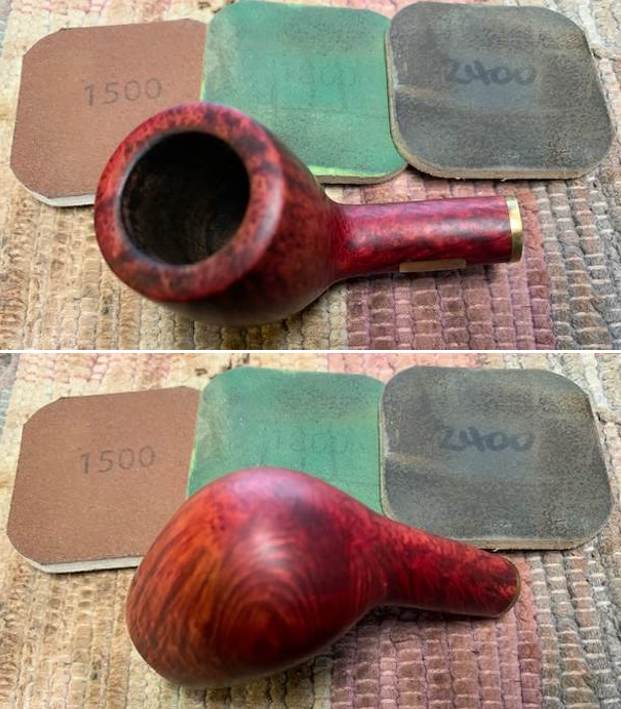
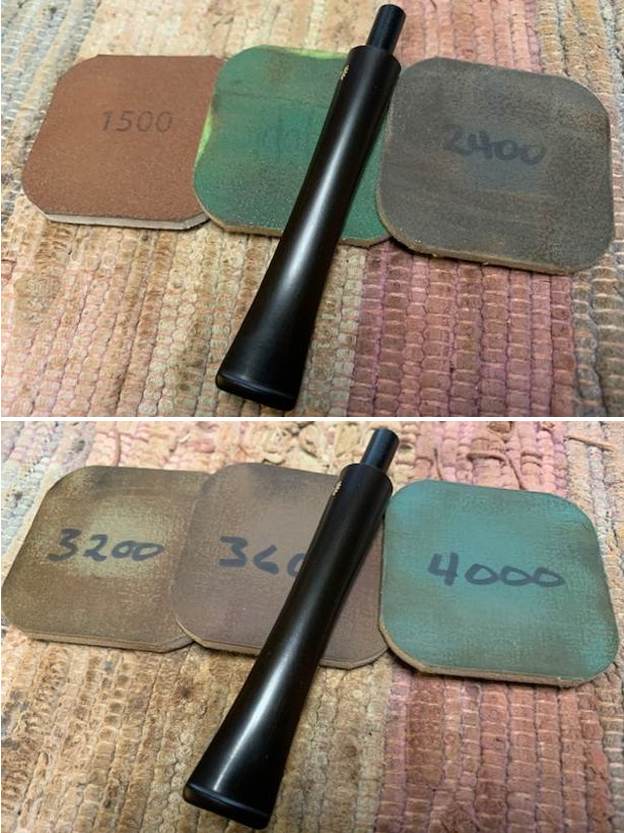
Jeff cleaned up the pipe for me. He reamed the bowl with a PipNet pipe reamer and cleaned it up with a Savinelli Fitsall Pipe Knife. He scrubbed the exterior with Murphy’s Oil Soap and a tooth brush to clean off the grime off the finish and the heavy overflow of lava on the rim top. The cleaning had removed the thick coat on the rim top. He cleaned up the internals of the shank, mortise and stem with pipe cleaners, cotton swabs and alcohol to remove all of the oils and tars in the pipe. He soaked the stem in Before & After Deoxidizer and was able to remove much of the oxidation, calcification. When it arrived here in Vancouver it was a clean pipe and I knew what I had to work with. I took photos of it before I started my part of the restoration. I took a photo of the rim top and the stem to show their condition once it arrived in Canada. Jeff was able to clean up the incredibly thick cake and the lava overflow that was shown in the rim and bowl photos above. The rim top and the inner edge of the bowl looked very good. He was also able to get rid of the grime and grit in the surface of the briar around the sandblast. The stem looked very good.I took a photo of the stamping on the gold plate on the left side of the shank and the underside and the right side of the shank to show that it was readable and undamaged by the cleanup work. I removed the stem from the shank and took a photo of the parts to give a sense of what the pipe looks like.I started my work on the bowl by polishing the briar with micromesh sanding pads. I dry sanded it with 1500-12000 grit pads. I wiped the bowl down after each pad with a damp cloth. The bowl began to take on a rich shine and grain was beginning to stand out. I sanded with all of the pads and wiped the bowl down after each pad with a soft cloth. I rubbed the bowl and shank down with Before & After Restoration Balm to deep clean them. The product works to clean, enliven and protect the briar. I worked it in with my fingers to get it into the briar. I let it sit for 10 minutes then I wiped it off and buffed it with a soft cloth. The briar really began to have a rich shine. I took some photos of the bowl at this point to mark the progress in the restoration. It is a beautiful bowl. I set the bowl aside and worked on the stem at this point in the process. I polished the stem with micromesh sanding pads – dry sanding with 1500-12000 grit pads. I wiped the stem down after each pad with a damp cloth to remove the sanding dust. I gave it a further polish with Before & After Stem Polish – both Fine and Extra Fine. I finished by wiping the stem down with a final coat of Obsidian Oil and set it aside to dry. I put the stem back on the Commemorative Stanwell Valby – Piben Nr.1 shape 51 Billiard pipe and took the pipe to the buffer. I buffed the bowl and stem with Blue Diamond to polish the briar and the acrylic. Blue Diamond does a great job on the smaller scratches that remain in both. I gave the bowl and the stem several coats of carnauba wax and buffed the pipe with a clean buffing pad to raise the shine. I hand buffed it with a microfiber cloth to deepen the shine. Considering the mess the pipe was when we received it I am amazed at how well it turned out. The finished pipe is shown in the photos below. This is a beautiful Stanwell Valby Nr.1 Billiard – the vulcanite saddle stem and crowned rim top and sandblast finish combine to give the pipe a great look. The polished black, vulcanite stem looks really good with the rich browns standing out in the sandblast. The dimensions of the pipe are Length: 5 ¾ inches, Height: 1 ½ inches, Outside diameter of the bowl: 1 ¼ inches, Chamber diameter: ¾ of an inch. The weight of the pipe is 1.23 ounces/36 grams. This is another pipe that I will be putting on the rebornpipes online store in the Danish Pipe Pipemaking Companies Section shortly, if you are interested in adding it to your collection. Thanks for walking through the restoration with me on this beauty!

Is it possible to give this Horribly Abused Stanwell 1986 POY Dublin New Life?


Blog by Steve Laug

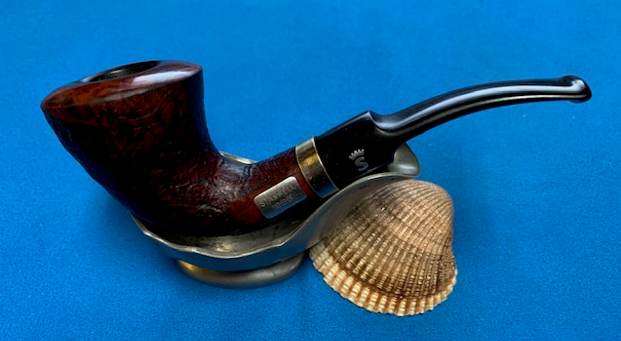
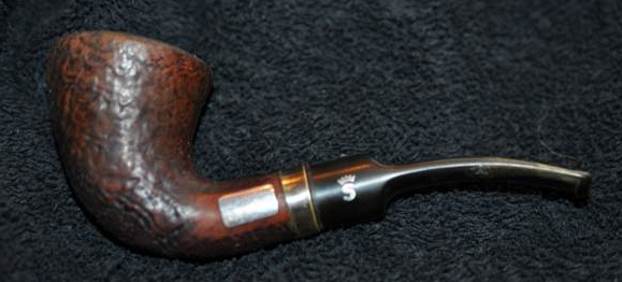
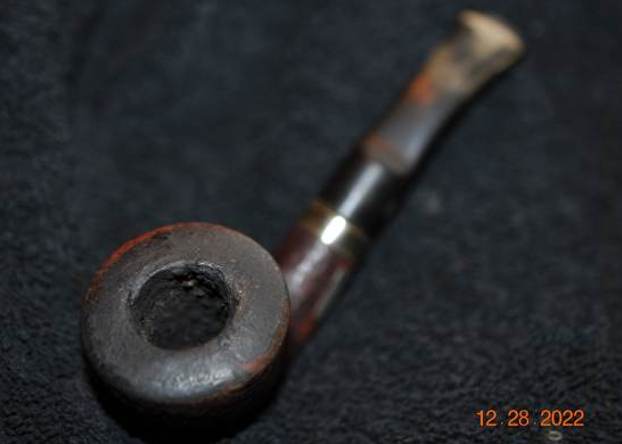
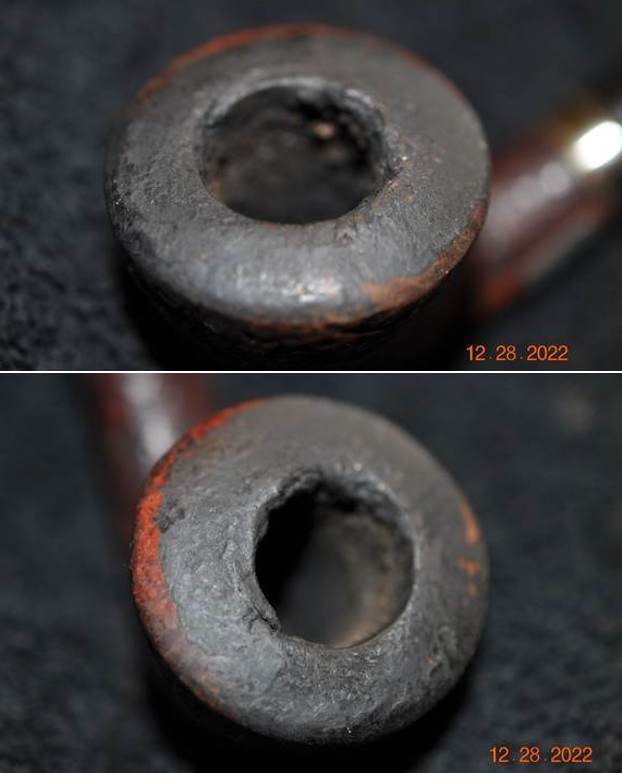
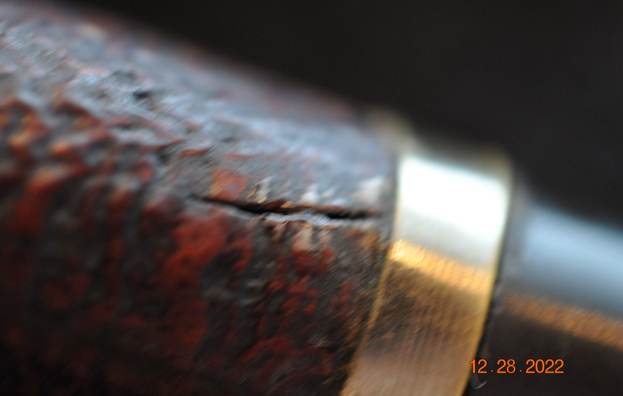
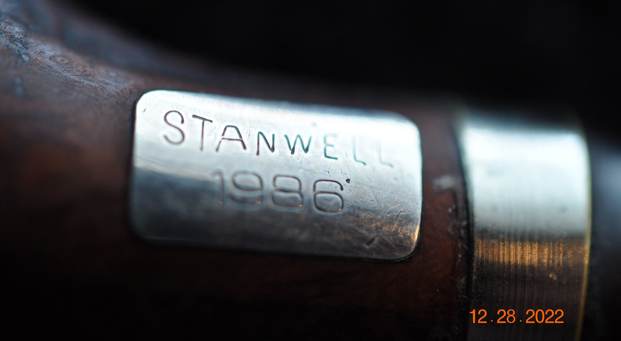
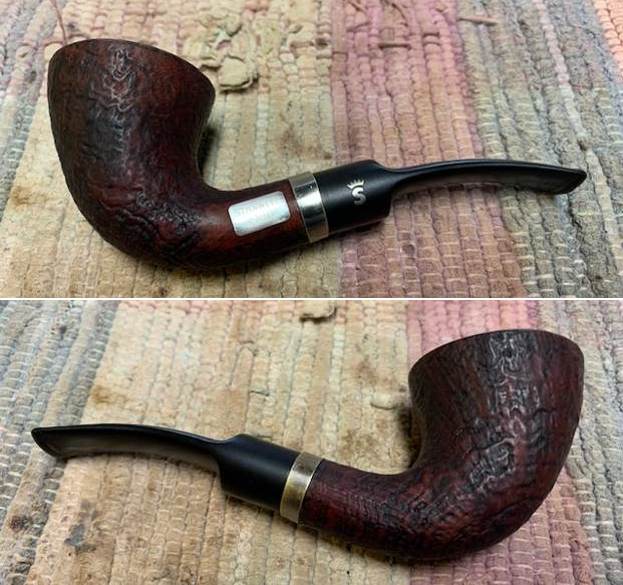
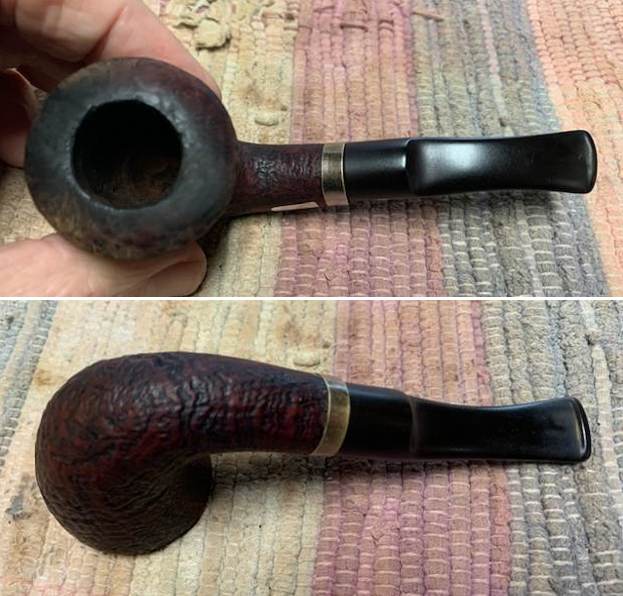
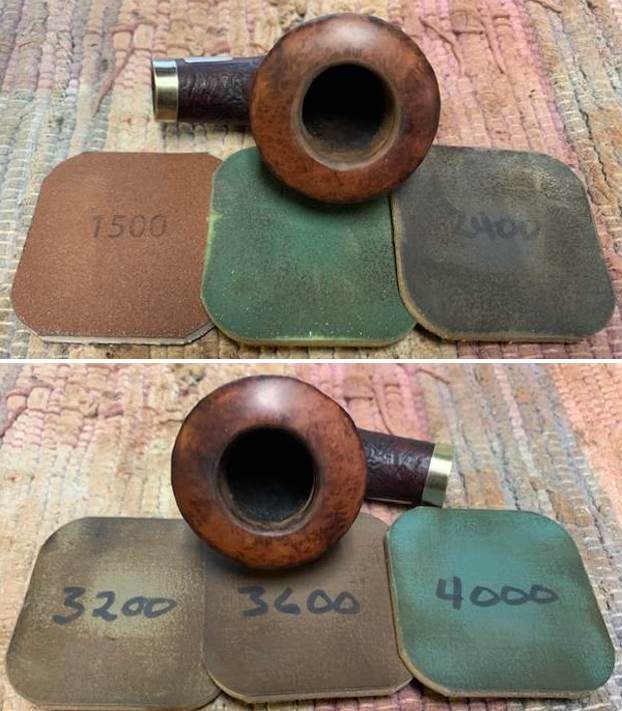
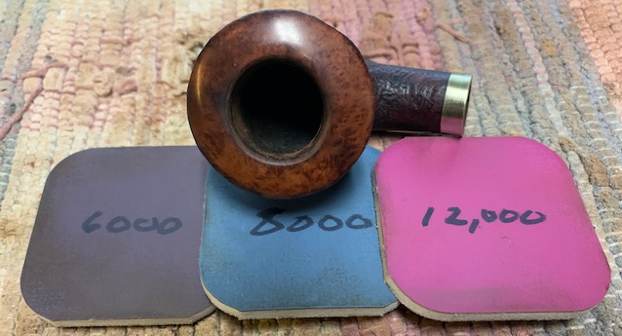
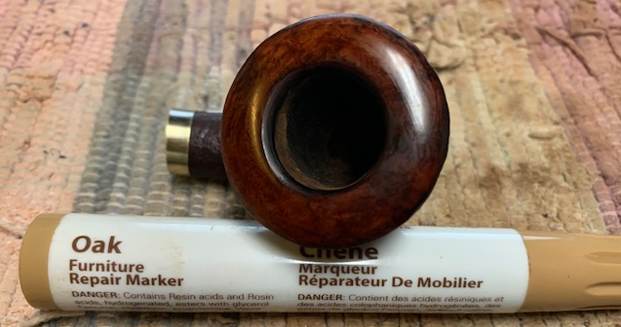
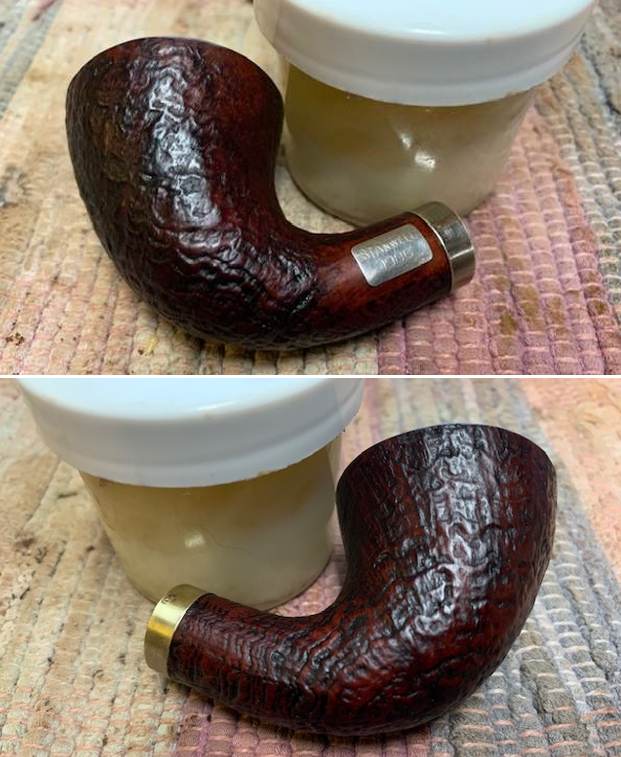
The next pipe I am working on was purchased on 11/14/2022 as part of a group of pipes from a fellow in Copenhagen, Denmark. This was a horribly tired and dirty pipe with a lot of wear and tear and obviously it had been someone’s favourite smoker. The pipe has an identifying plate on the left side of the shank that reads Stanwell [over] 1986. There was no other stamping on the shank and the silver plate confirmed for me that it was a Stanwell Pipe of the Year. The dirty sandblast finish on this was worn and tired looking. There were tars and oils ground into the surface of the briar. The silver band on the shank was an later addition to address a crack in the shank on the underside. one showed some nice grain around the bowl and shank and though it was a little dirty it was a nice looking pipe. The bowl had a thick cake that flowed over the top of the lightly crowned rim in a thick coat of a lava and showed potential damage on the top and the inner edge. The stem was a black vulcanite saddle stem with a silver Crown S on the left side of the saddle. It had some deep and wide tooth marks and chatter on both sides ahead of the button. There was also some oxidation and calcification on both sides of the stem. For me the question was would it clean up well enough to make it worth doing a thorough restoration. Time would tell once it was cleaned up and I had a chance to look it over. Jeff took photos of the pipes before he started his clean up work.  He took photos of the rim and bowl to show the heavy cake and thick lava coat covering the rim top. It really was filthy and a mess. He also took photos of the stem surfaces to show its overall condition when it arrived. The photos of the sides and heel of the bowls show beautiful grain around the bowl and shank sides. The sandblast is nicely done and highlights the grain. The brown stain on the briar adds depth finish on the pipe and makes the grain really stand out. It shows some promise. He took a photo of the crack in the underside of the shank. It had been repaired before but the band had slipped off a bit and the crack had opened up. He also took a photo of the stamped silver plate on the left underside of the shanks. It reads as noted above. Jeff cleaned up the pipe for me. He reamed the bowl with a PipNet pipe reamer and cleaned it up with a Savinelli Fitsall Pipe Knife. He scrubbed the exterior with Murphy’s Oil Soap and a tooth brush to clean off the grime off the finish and the heavy overflow of lava on the rim top. The cleaning had removed the thick coat on the rim top. He cleaned up the internals of the shank, mortise and stem with pipe cleaners, cotton swabs and alcohol to remove all of the oils and tars in the pipe. He soaked the stem in Before & After Deoxidizer and was able to remove much of the oxidation, calcification. When it arrived here in Vancouver it was a clean pipe and I knew what I had to work with. I took photos of it before I started my part of the restoration. I took a photo of the rim top and the stem to show their condition once it arrived in Canada. Jeff was able to clean up the incredibly thick cake and the lava overflow that was shown in the rim and bowl photos above. The rim top showed damage on the surface and the inner edge of the bowl was in rough condition. It was chipped and out of round. He was also able to get rid of the grime and grit in the surface of the briar around the sandblast. The last photo of the three below shows the crack in the shank. The stem looked better, though there were deep tooth marks and chatter on both sides near the button. I took a photo of the stamping on the silver plate on the left side of the shank to show that it was readable and undamaged by the cleanup work.I removed the stem from the shank and took a photo of the parts to give a sense of what the pipe looks like.I started my work on the inner edge and rim top with a folded piece of 220 grit sandpaper. I was able to remove that damage on the rim top and bring the inner edge back into round. It looked much better. (I also filled in the remnants of the crack on the underside of the shank with clear CA glue to further strengthen the  previous repair. I forgot to take pictures of this step.)I started polishing the smooth rim top with micromesh sanding pads. I wet sanded it with 1500-12000 grit pads. I wiped the bowl down after each pad with a damp cloth. The crowned rim top began to take on a rich shine and grain was beginning to stand out. I wet sanded with all of the pads and wiped the bowl down after each pad with a soft cloth. I used an oak stain pen to touch up the stain on the rim top to match the other smooth portions of the bowl and shank.I rubbed the bowl and shank down with Before & After Restoration Balm to deep clean the finish on the bowl and shank. The product works to clean, enliven and protect the briar. I worked it in with my fingers to get it into the briar. I used a horsehair shoe brush to work it into the sand blast. I let it sit for 10 minutes then I wiped it off and buffed it with a soft cloth. The briar really began to have a rich shine. I took some photos of the bowl at this point to mark the progress in the restoration. It is a beautiful bowl. I polished the silver band and plaque on the side of the shank with a jewelers cloth to remove the slight remaining oxidation and to protect and preserve it. I set the bowl aside and worked on the stem at this point in the process. The stem sat straight in the shank but the fit was thicker on the right side of the shank rather than the left side. I would need to reduce the diameter of the stem on the right side to get a more centered fit. I sanded the side with a piece of 220 grit sandpaper to reduce the diameter on that side. At the same time I filled in the deep tooth marks with clear CA glue. I flattened the repairs with a small file. And sanded the smooth with 220 grit. I started polishing the whole stem with 600 grit sandpaper until the sanding marks were gone. I polished the stem with micromesh sanding pads – dry sanding with 1500-12000 grit pads. I wiped the stem down after each pad with a damp cloth to remove the sanding dust. I gave it a further polish with Before & After Stem Polish – both Fine and Extra Fine. I finished by wiping the stem down with a final coat of Obsidian Oil and set it aside to dry. I put the stem back on the Stanwell Pipe of the Year 1986 Dublin Calabash pipe and took the pipe to the buffer. I buffed the bowl and stem with Blue Diamond to polish the briar and the acrylic. Blue Diamond does a great job on the smaller scratches that remain in both. I gave the bowl and the stem several coats of carnauba wax and buffed the pipe with a clean buffing pad to raise the shine. I hand buffed it with a microfiber cloth to deepen the shine. Considering the mess the pipe was when we received it I am amazed at how well it turned out. The finished pipe is shown in the photos below. This is a beautiful Stanwell POY 1986 – the vulcanite saddle stem and crowned rim top and sandblast finish combine to give the pipe a great look. The polished black, vulcanite stem looks really good with the rich browns standing out in the sandblast. The dimensions of the pipe are Length: 5 inches, Height: 2 inches, Outside diameter of the bowl: 1 ½ inches, Chamber diameter: ¾ of an inch. The weight of the pipe is 1.34 ounces/38 grams. This is another pipe that I will be putting on the rebornpipes online store in the Danish Pipe Pipemaking Companies Section shortly, if you are interested in adding it to your collection. Thanks for walking through the restoration with me on this beauty!

Reviving a Lovely Stanwell Liverpool


by Kenneth Lieblich

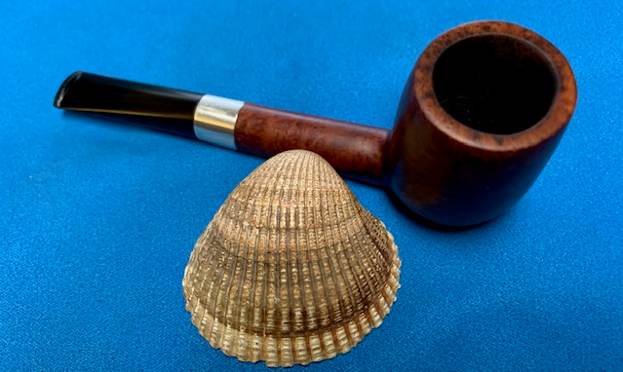
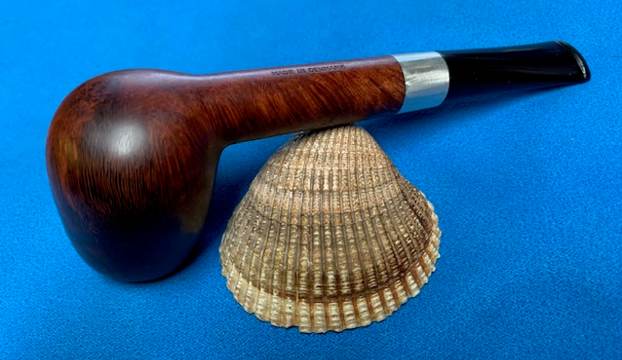
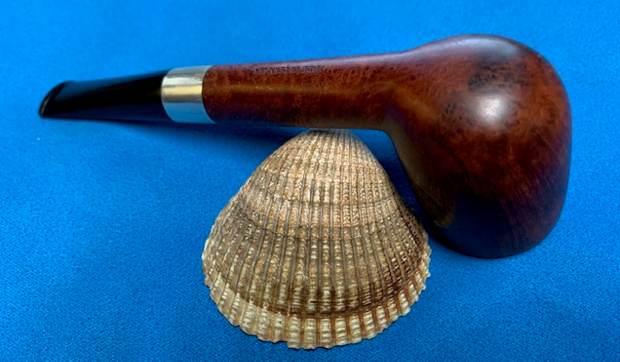
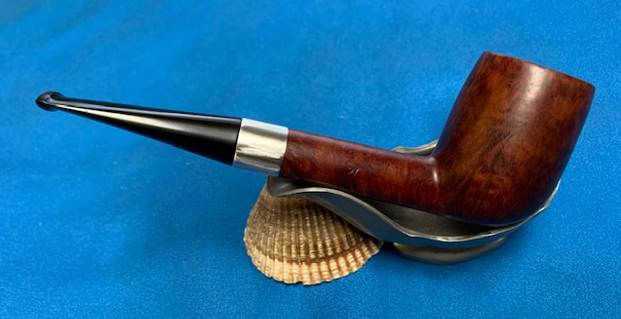
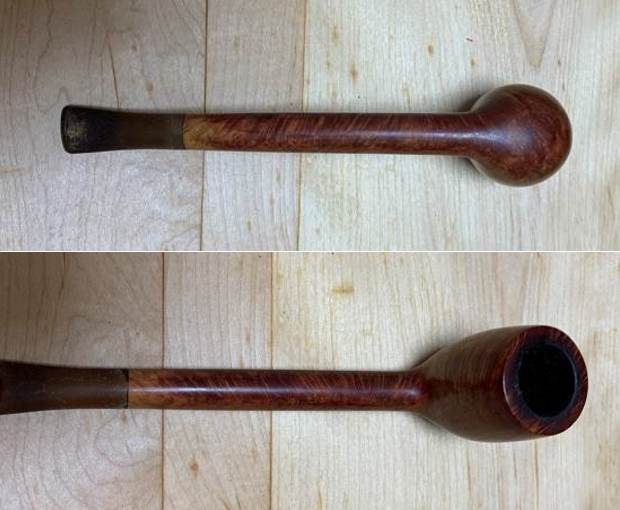
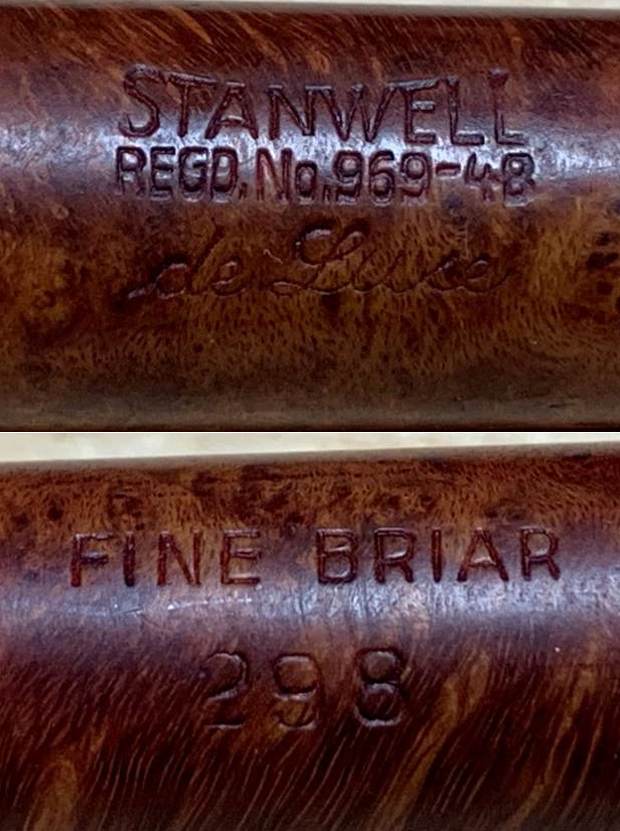
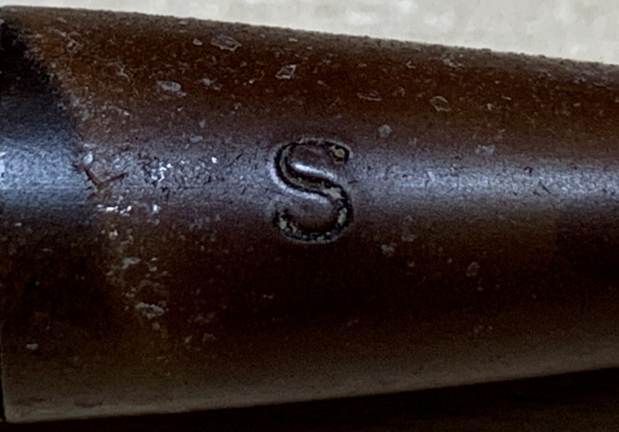
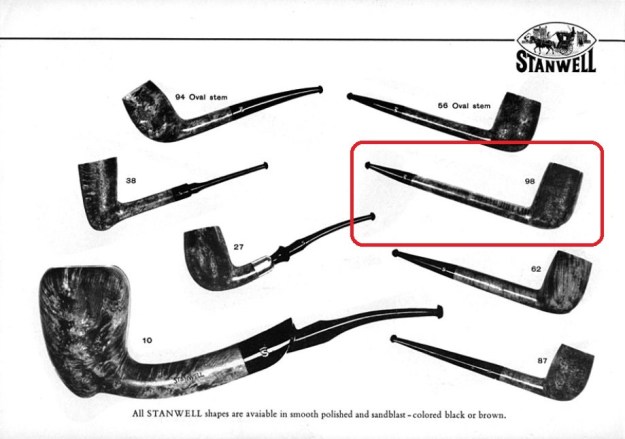
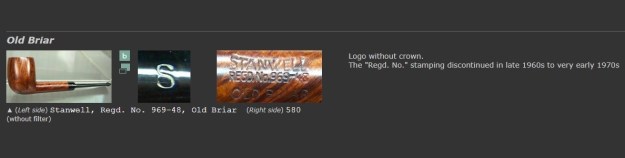
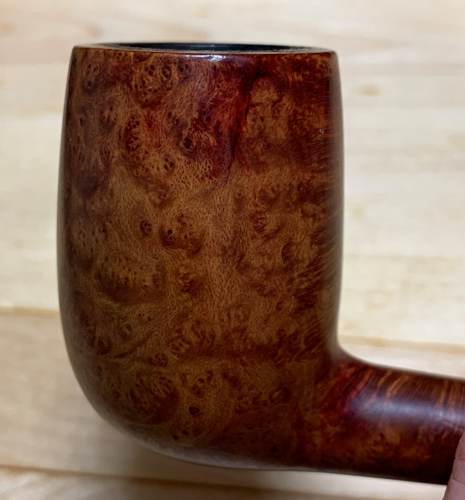
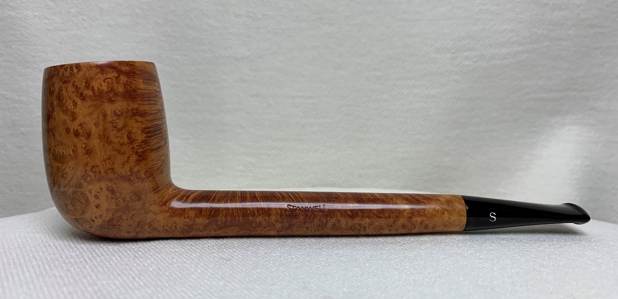
Next on the chopping block is beautiful Danish pipe from Stanwell. I acquired it locally from the estate of an old boy who kept a lovely collection of pipes. The shape of this pipe is a Liverpool – a member of the Canadian pipe family. For some reason, the Liverpool is far less common than the Canadian. Both types have a shank length 1½ to 2 times the height of the bowl. The difference between the two is as follows: the Canadian has an oval-shaped shank whereas the Liverpool has a round-shaped shank. This Stanwell Liverpool is so charming that I was tempted to keep for myself, but, as a life-long Manchester United fan, I cannot have anything named Liverpool in my home!   As I mentioned, this is a Stanwell de Luxe 298 Liverpool. It has beautiful briar from the bowl all the way down the long shank to a short-but-elegant stem. The left side of the shank reads Stanwell [over] Regd. No. 969-48 [over] de Luxe. The right side of the shank reads Fine Briar [over] 298. Finally, the stem’s left side also has the trademark S of the Stanwell company. Of course, 298 refers to the model number and I went to check the list of Stanwell shapes, here on Reborn Pipes. There was no 298 on this list. Hmm. Well, I did find some images from an old Stanwell catalogue (rather vaguely dated as 1960-70). The image below does not mention a shape “298”, but it does show a “98” which looks very similar to the pipe I have. I am assuming that there is a connection.I know from information at Pipephil that the pipe I have is certainly more than 50 years old – and this corresponds to the catalogue above. My pipe has both the “Regd. No.” and the S logo without a crown. This screen capture explains that clearly.Meanwhile, Pipedia has a good amount of information on the Stanwell brand and its history. I certainly recommend looking it over: https://pipedia.org/wiki/Stanwell.

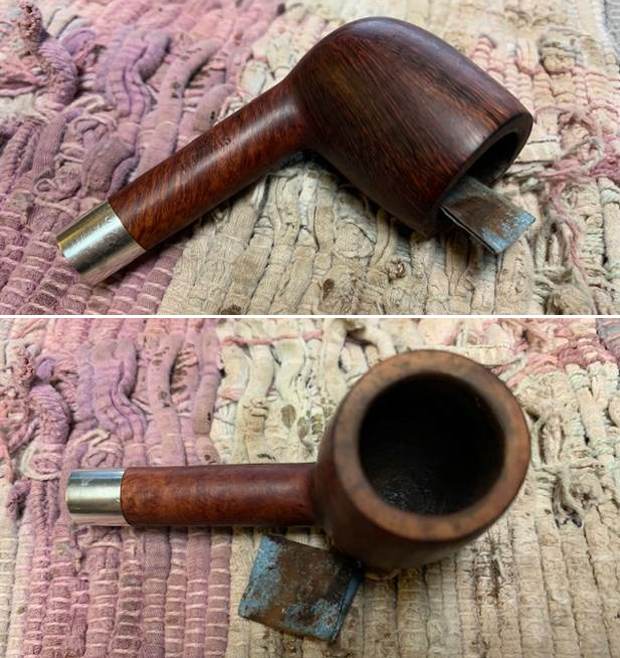
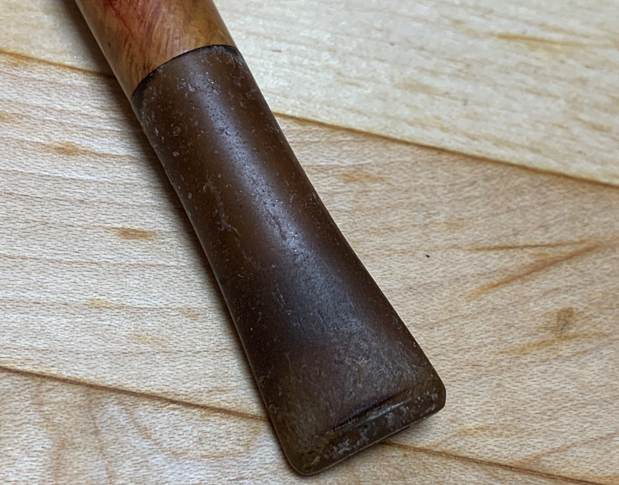
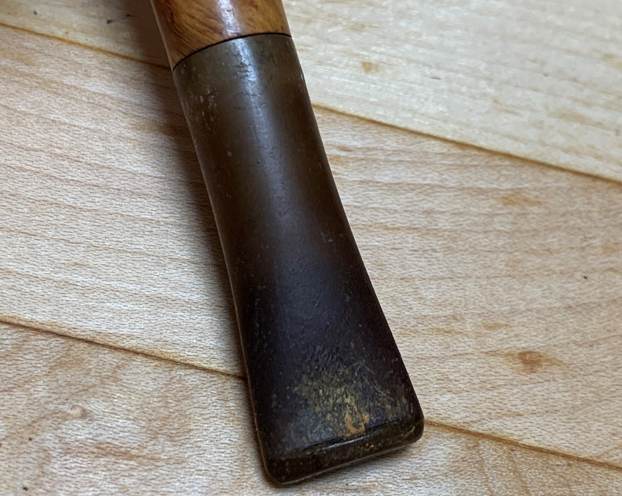
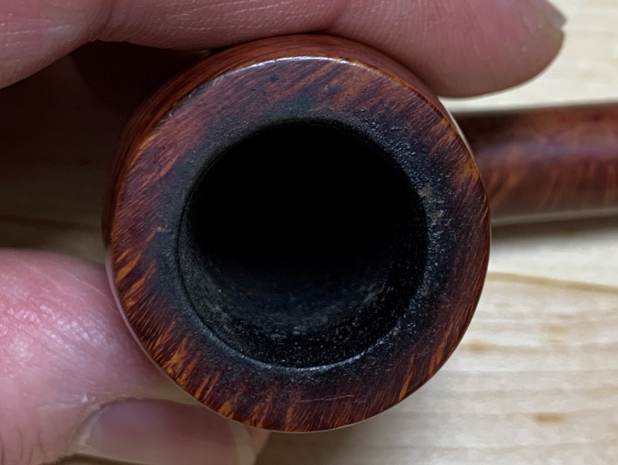
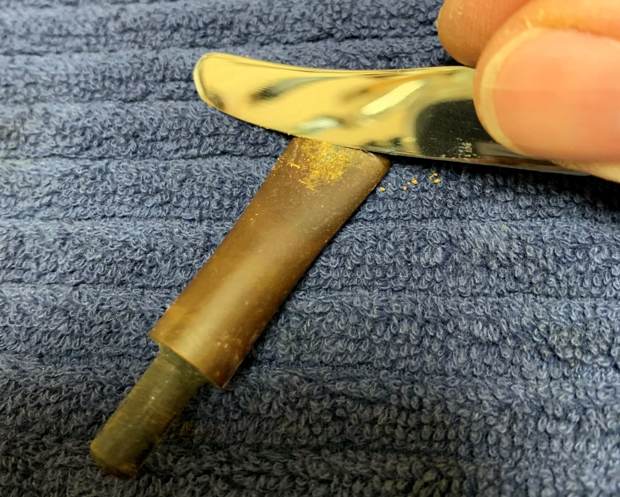
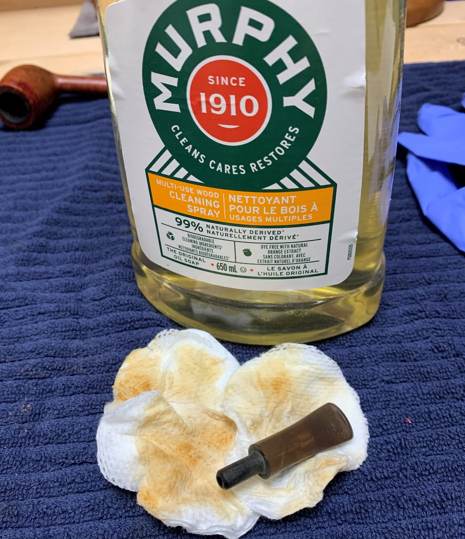
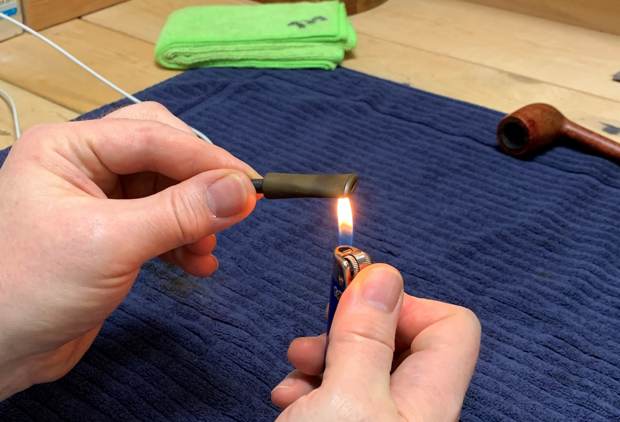
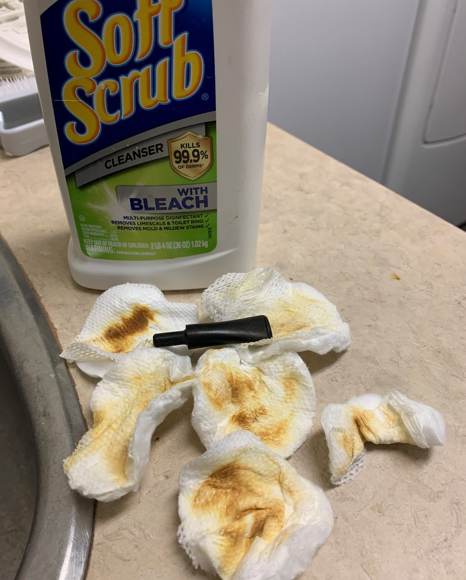
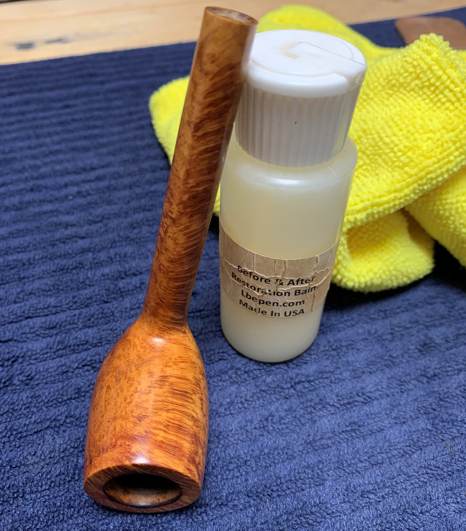
Anyway, this really is a good-looking pipe. No major issues to resolve – just a few minor ones. The stem was dirty, though not too beat up. There were some small scratches and a couple of bite marks, as well as some oxidation and calcification on the vulcanite. The rim on the stummel was blackened and a bit burnt – that would need to be addressed. The insides were fairly dirty and would need some work to clean out. In addition, there was a strange colour to the wood that just wasn’t right. The stem was first on my list. I wiped down the outside of the stem with Murphy’s Oil Soap on some cotton pads. There was enough calcification on the stem that I decided to take a blade and gently scrape it off. I also took a BIC lighter and ‘painted’ the stem with its flame in order to lift the bite marks and dents. Unfortunately, this didn’t really work, but I have ways of sorting this out. Then, I cleaned out the inside with pipe cleaners and isopropyl alcohol. It wasn’t too dirty and only required a few pipe cleaners.I then wiped down the stem with SoftScrub cleaner to remove some surface oxidation. Once this process was done, the stem went for an overnight soak in the Pipe Stem Oxidation Remover. As the name suggests, this liquid removes oxidation, but, more than anything, it helps draw oxidation to the surface of the vulcanite. This allows me to clean the oxidation off in a couple of ways: both by applying a mild abrasive cleaner to the surface, then by sanding the stem.  The next day, I used SoftScrub again with some cotton rounds and, as you can see, more revolting colour came off the stem.The bite marks on and around the button had to be dealt with, so I whipped out my black cyanoacrylate adhesive to fill those in and let them fully cure. After curing, I used some nail polish to restore the letter S on the stem. I painted the area carefully and let it fully set before proceeding.For sanding the adhesive, I used 220- and 400-grit sandpapers to meld seamlessly into the stem.  Then I used a set of nine Micromesh pads (1,500 through 12,000 grit) which gradually erased the ravages of time and brought out the stem’s lovely black lustre. For the last five pads, I also lightly coated the stem with Obsidian Pipe Stem Oil in between each scrubbing. At last, I set the finished stem aside.    Off to work on the stummel! The bowl needed a bit of reaming, so I used the PipNet Reamer to scrape off the built-up cake and I followed that with 220-grit sandpaper taped to a dowel to eliminate as much as possible. Generally, I prefer to sand the chamber down to bare briar. When restoring, it is important to ensure that there is no damage to the briar in the bowl, under the cake. Fortunately, there were no hidden flaws to the briar on this pipe.   I then proceeded to clean out the insides of the shank with Q-tips, pipe cleaners, and lemon-infused isopropyl alcohol. There was a bit of filth inside this stummel and it took a fair amount of cotton to get it clean. I followed that up by cleaning the insides with some dish soap and tube brushes.    I decided to de-ghost the pipe in order to remove any lingering smells of the past. I thrust cotton balls into the bowl and the shank and saturated them with 99% isopropyl alcohol. I let the stummel sit overnight. This caused any remaining oils, tars and smells to leach out into the cotton. The bowl was nice and clean after this. I used cotton rounds and some Murphy’s Oil Soap to scrub the outside of the stummel and a toothbrush with Murphy’s for the lava on the rim of the pipe. With the lava on the rim removed, I could see that the burn marks remained (see the photo below).In order to remove the remaining burns, I “topped” the pipe – that is to say, I gently and evenly sanded down the rim on a piece of 220-grit sandpaper. I enhanced this further by running the same sandpaper along the inside edge of the rim and creating a very subtle (and beautiful) chamfer. This effectively removed the damage, without altering the look of the pipe. This is always a tricky business – I want to find the balance between removing old burns and maintaining as much of the pipe as possible. But I believe that the photos at the end of this blog show that I got the balance right.

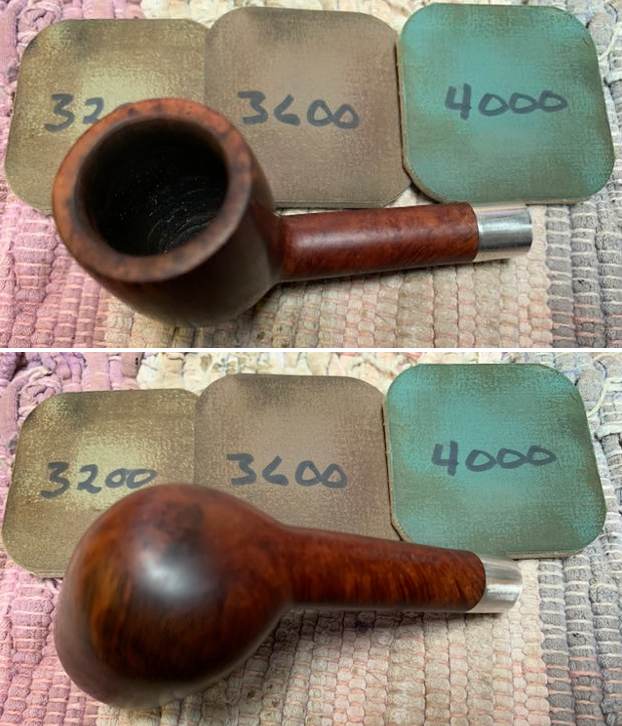
As I mentioned earlier, there were some remnants of an oxblood-like stain on the wood. I’m not sure if this was the original colour of the pipe or if it was added later, but – regardless – it didn’t look good at all. I hoped (and expected) that sanding would help this problem. I used all nine Micromesh pads (1,500 through 12,000 grit) on the stummel to make it lovely and smooth.  However, not all of the colour was gone, so I removed it with 99% isopropyl alcohol and other stuff I had on hand. It looked so much better with that colour gone.

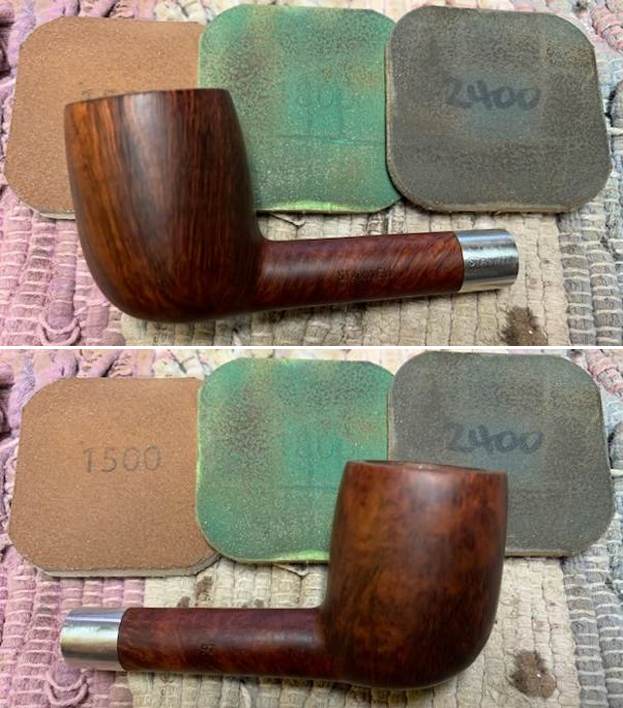
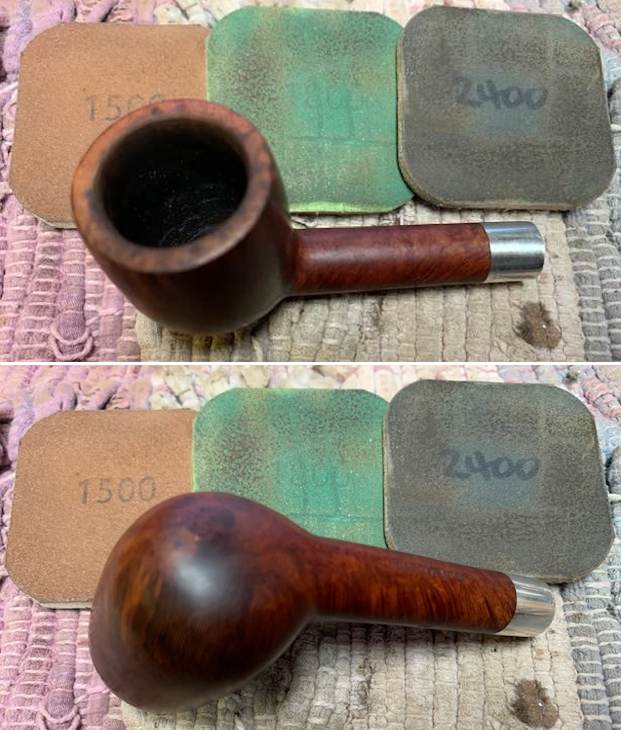
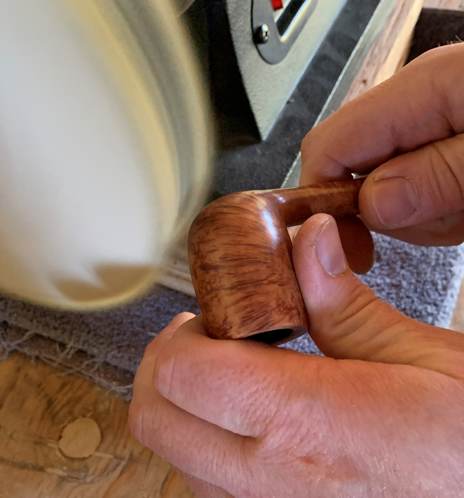
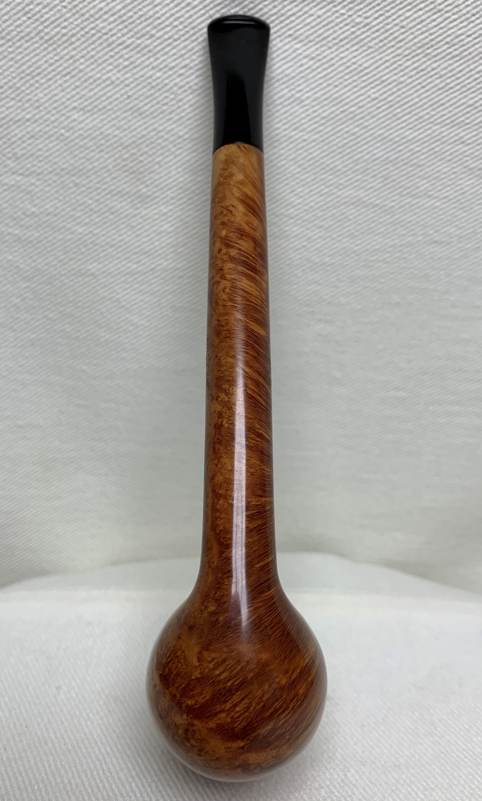
At this point, I rubbed some Before & After Restoration Balm into the briar and left it to sit for 10 or 15 minutes. I brushed it with a horsehair brush and buffed it with a microfibre cloth. The BARB does wonderful things to the wood, and I really like the natural colour of the briar.   Finally, it was off for a trip to the bench polisher. A dose of White Diamond and a few coats of carnauba wax were the perfect complement to the briar. The lovely shine made the wood look absolutely beautiful. This pipe is elegant, light, and incredibly comfortable to hold. I thoroughly enjoyed bringing this Stanwell de Luxe 298 Liverpool back to life and I am pleased to announce that this pipe is for sale! If you are interested in acquiring it for your collection, please have a look in the “Danish” pipe section of the store here on Steve’s website. You can also email me directly at kenneth@knightsofthepipe.com. The approximate dimensions of the Stanwell are as follows: length 6 in. (152 mm); height 2 in. (50 mm); bowl diameter 1⅛ in. (29 mm); chamber diameter ¾ in. (19 mm). The weight of the pipe is 1⅛ oz. (33 g). I hope you enjoyed reading the story of this restoration as much as I enjoyed restoring it. If you are interested in more of my work, please follow me here on Steve’s website or send me an email. Thank you very much for reading and, as always, I welcome and encourage your comments.

Restemming a Stanwell Design Choice 892 Ukelele with a proper stem


Blog by Steve Laug

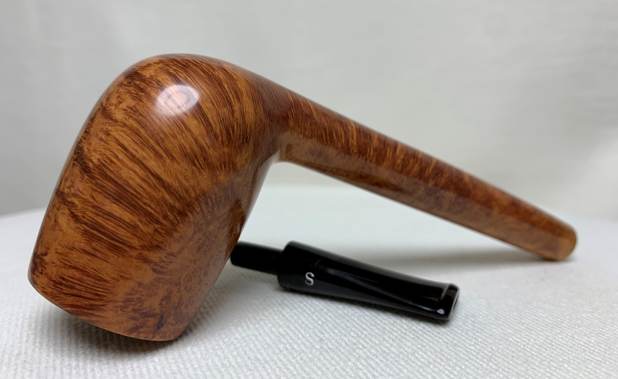
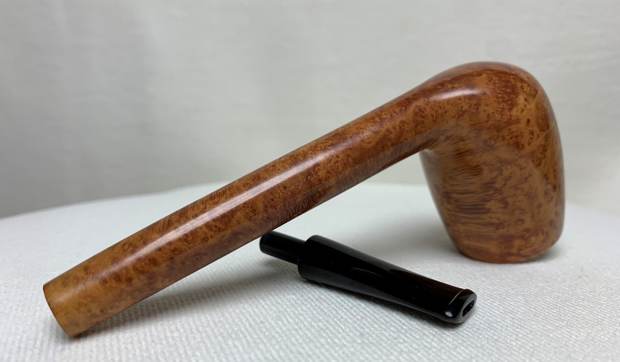
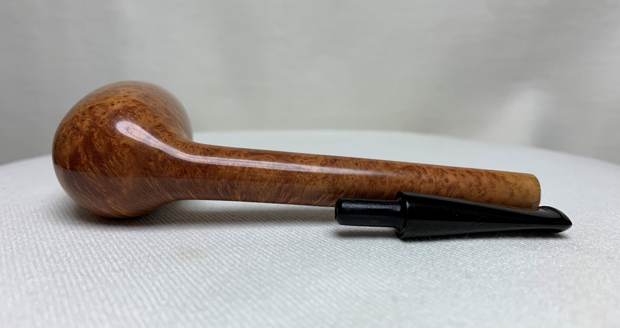
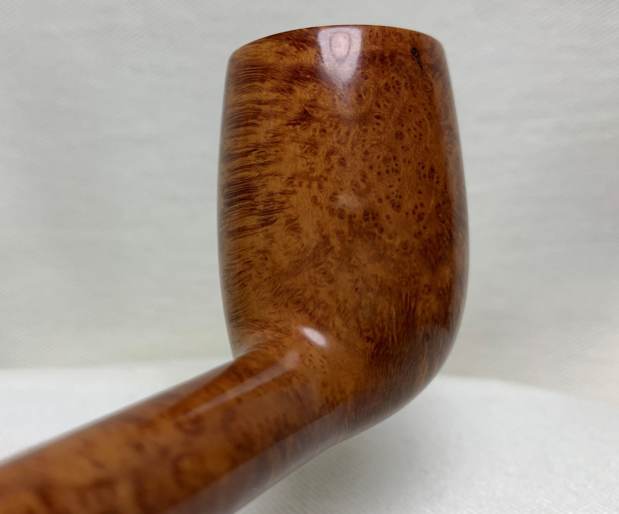
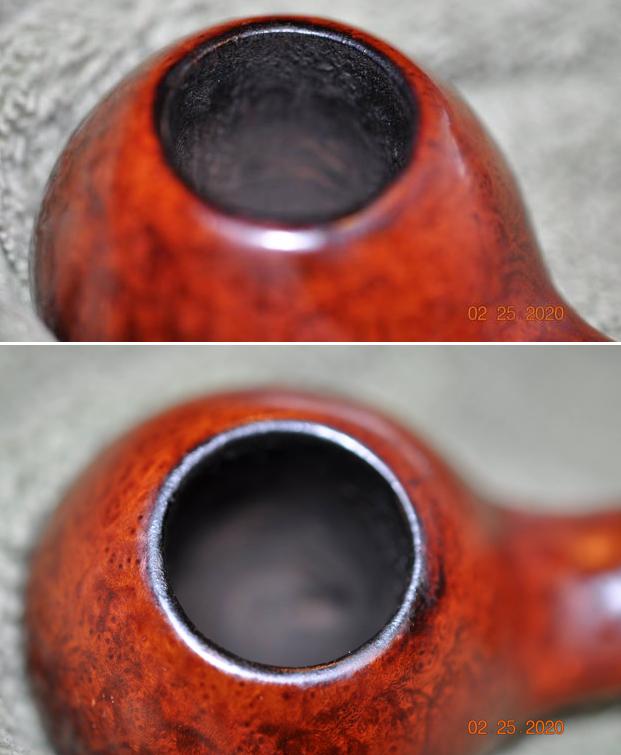
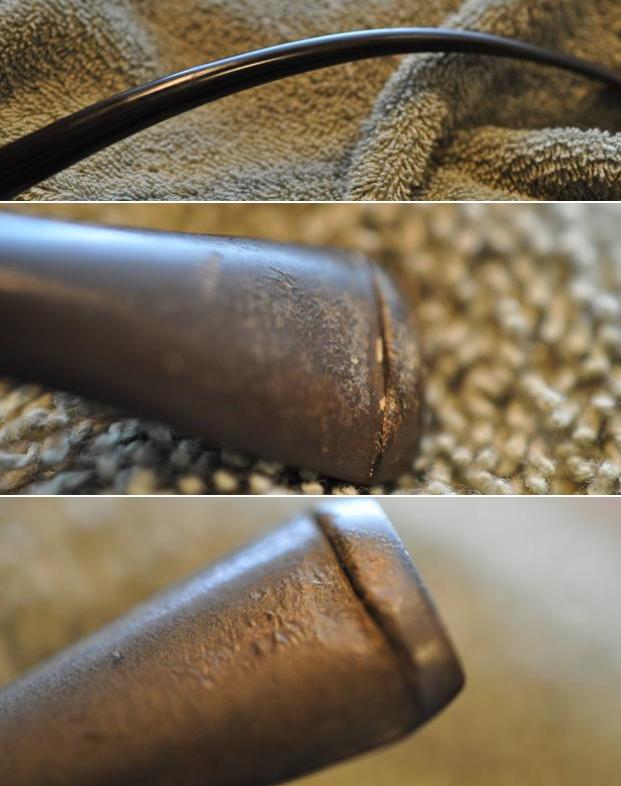
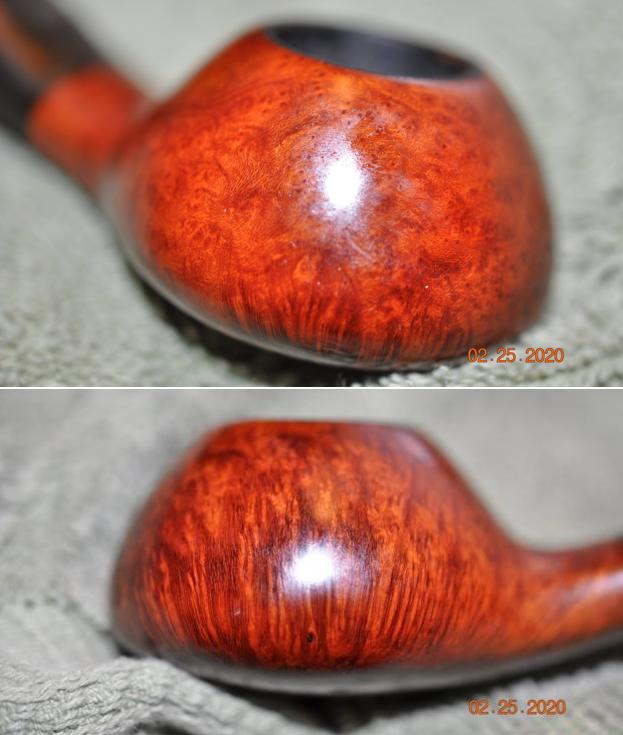
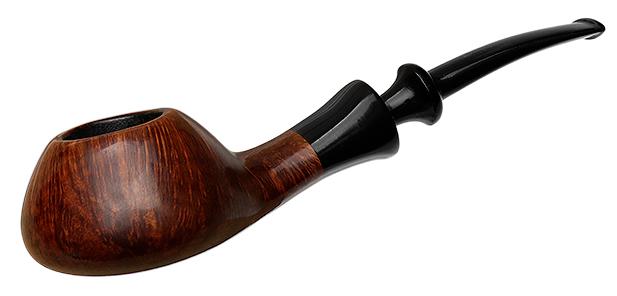
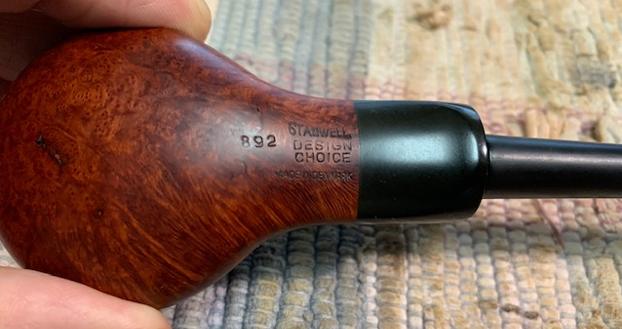
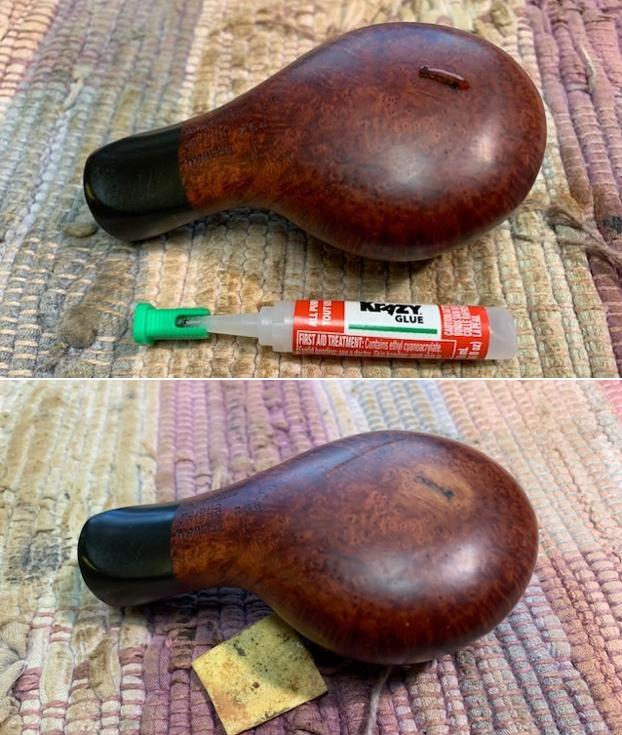
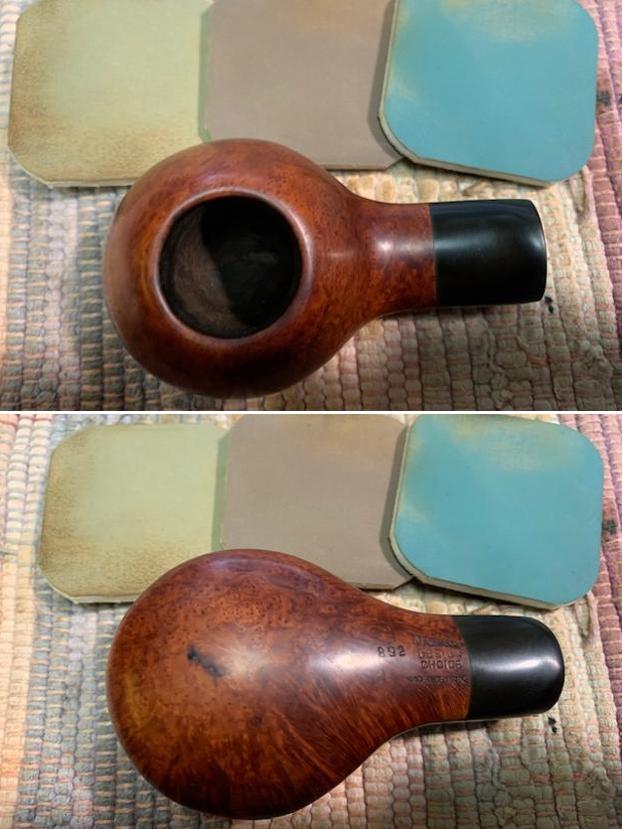
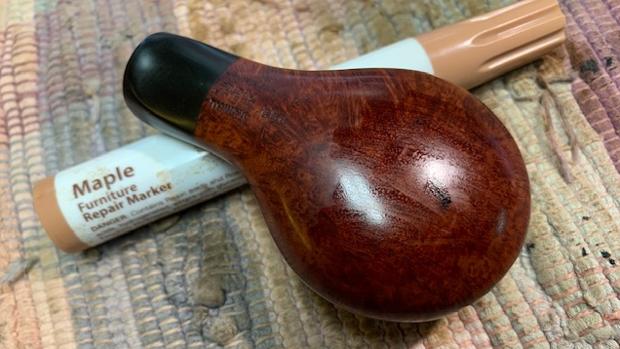
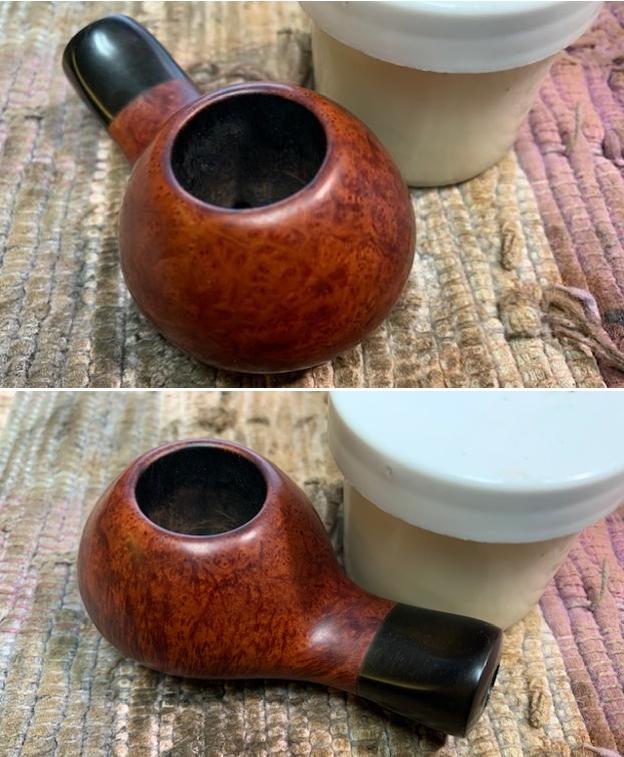
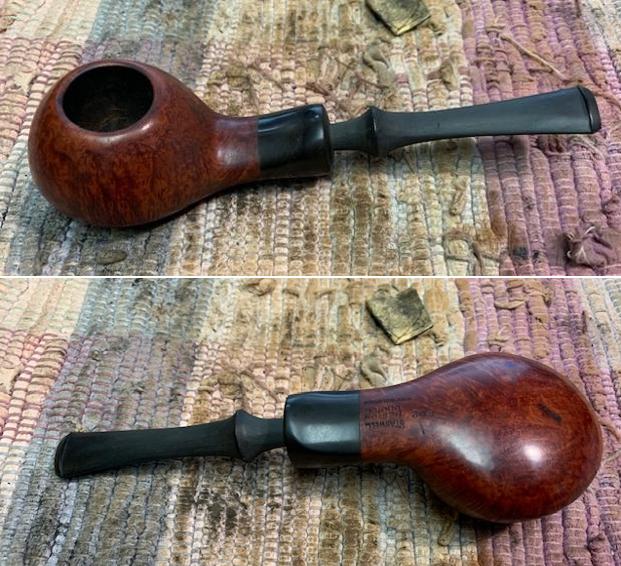
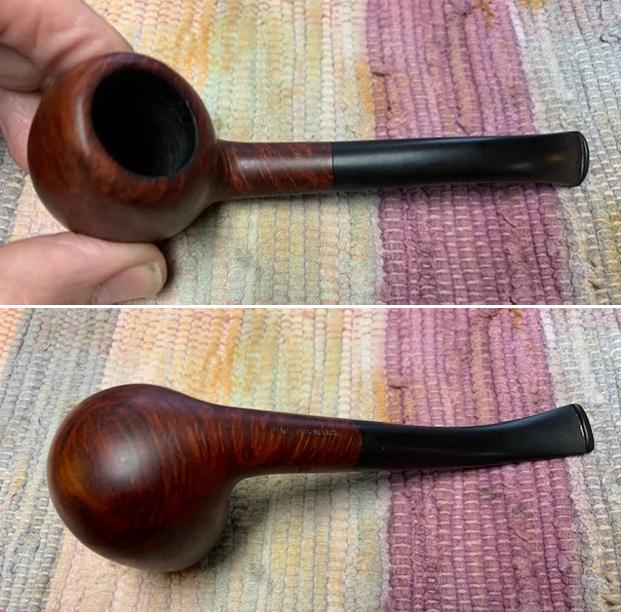
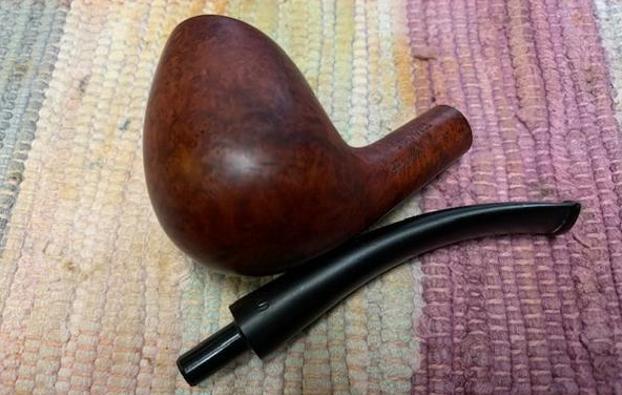
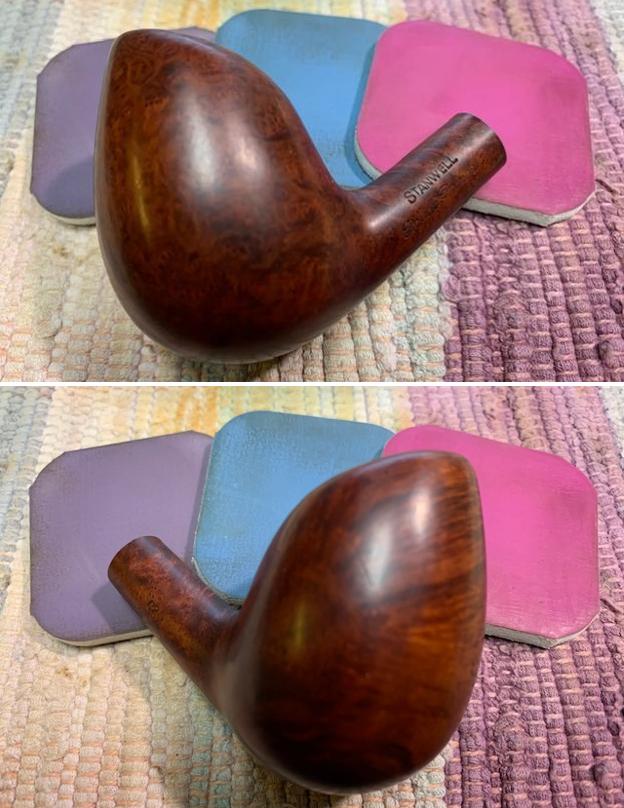
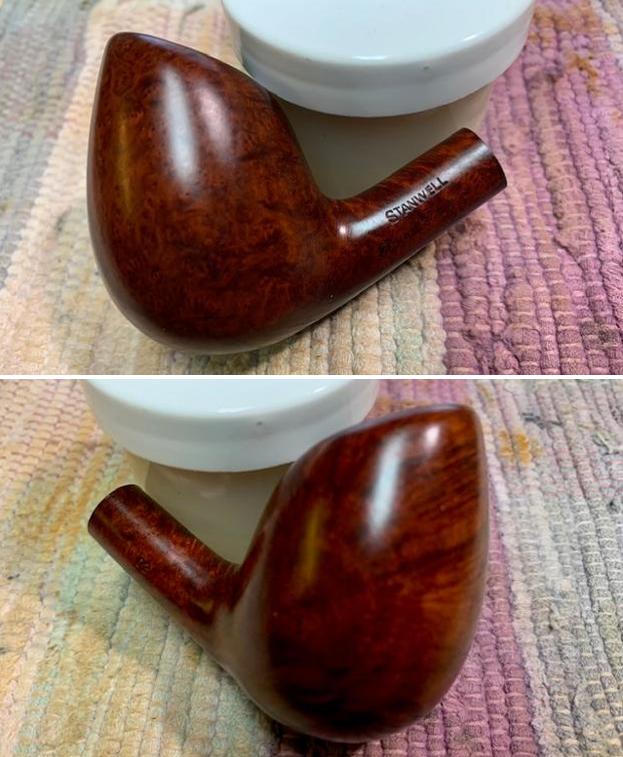
The next pipe on the work table is one that was purchased in 2020 from an auction in Bloomingdale, New York, USA. It has been here for a while and I am just now getting to it. Work has been demanding so it is slowing down my restoration work a bit. This flat bowled volcano shaped pipe obviously has a a poorly fit replacement stem that has made it into an odd shaped churchwarden. I don’t think that it looked like this when it came out but I had no idea what it would have looked like before. It has a really mix of grains around the bowl and shank. It was stamped on the underside of the shank and it reads Stanwell [over] Design [over] Choice [over] Made in Denmark. To the left of this it is stamped with the shape numbers 892. The pipe was dirty with grime ground into the finish. There was a moderate cake in the bowl and lava overflow on the rim top. The inner edge of the rim was covered in lava it was hard to know what was underneath. The vulcanite shank extension was oxidized and worn. The churchwarden stem is overly bent and the fit in the shank extension is not quite right – just a few of several reasons that I knew it was a replacement stem. Jeff took some photos of the pipe before he started to work on cleaning it up for us. Jeff took photos of the rim top and the stem to show the condition of the pipe when we received it. You can see the cake in the bowl and the lava on the rim top and inner edge of the bowl. The oxidized and replacement churchwarden vulcanite stem was over bent and would need to be straightened or replaced with a more original stem. This one has chatter and deep tooth marks on both sides near the button. He took photos of the sides of the bowl and the heel to give an idea of the shape and the condition of the briar around the bowl. It really is a nicely shaped pipe with some great grain. There are some flaws in briar on the bottom of the bowl. The next photo Jeff took shows the stamping on the underside of the shank. It is clear and readable as noted above. I Googled the Stanwell shape 892 Design Choice pipe to see if I could find photos of what the pipe looked like when it was made and to see if I could see if there was information on who had made the pipe originally. I found a link to the shape on smokingpipes.com to the shape number (https://www.smokingpipes.com/pipes/estate/denmark/moreinfo.cfm?product_id=238398). I have included the description from the site below as well as a photo of one of the pipes.

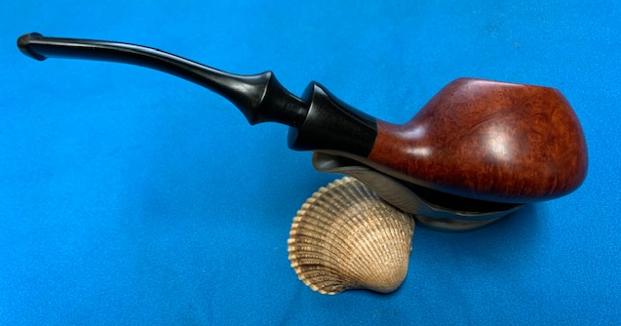
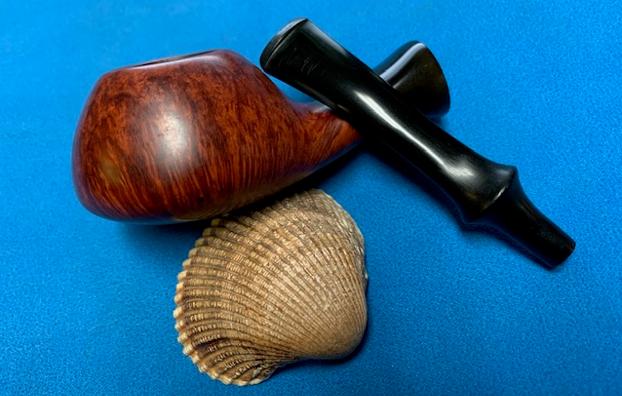
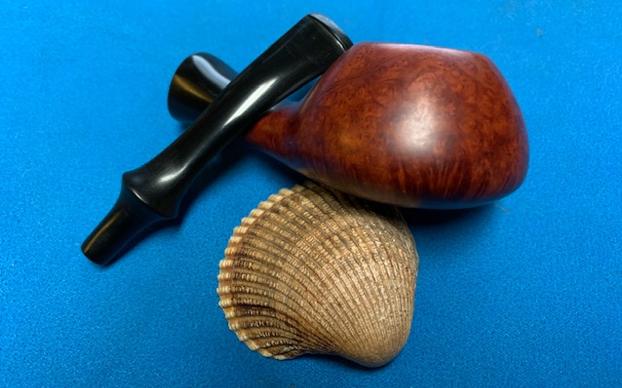
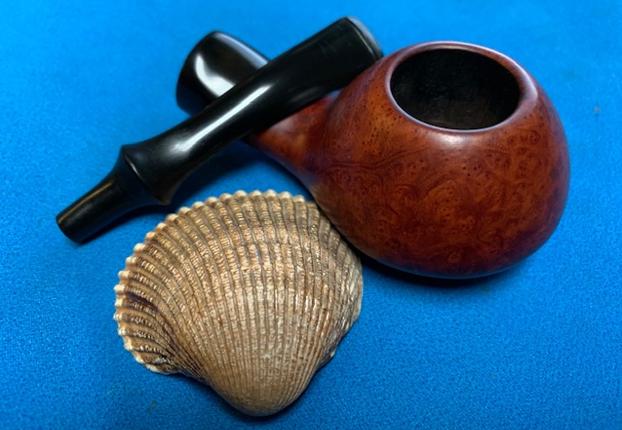
A shape designed for Stanwell by Sixten Ivarsson, this is a take on the Ukelele, with plenty of plump curvature and low-slung charm on display. This example is still in good condition overall, though it has picked up some light scratches around the bowl, and the chamber is slightly out of round.Now I knew that I was dealing with a shape designed by Sixten Ivarrson called a Ukelele that had a short fancy saddle stem and there was no reference anywhere I looked for a churchwarden stemmed Ukelele. I would need to fashion a new stem for the pipe to give the pipe a similar look to the one above.

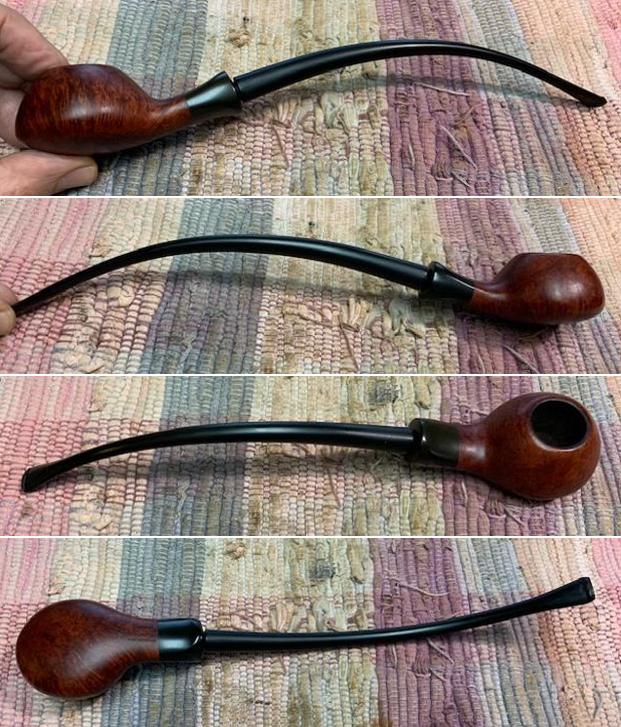
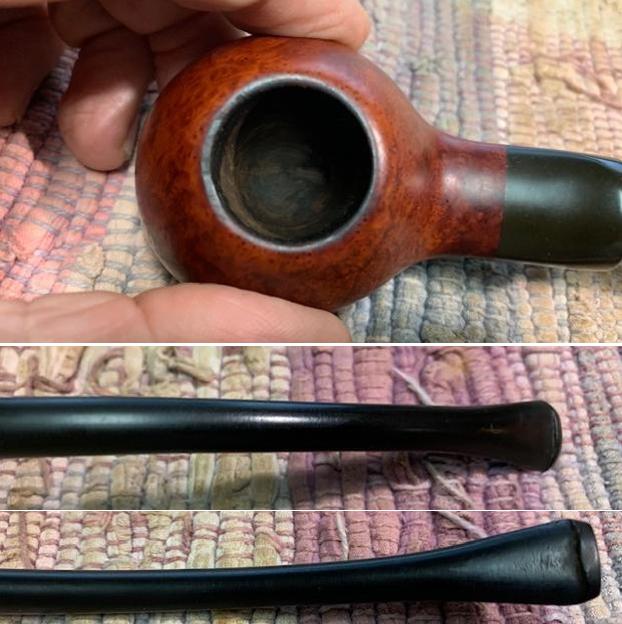
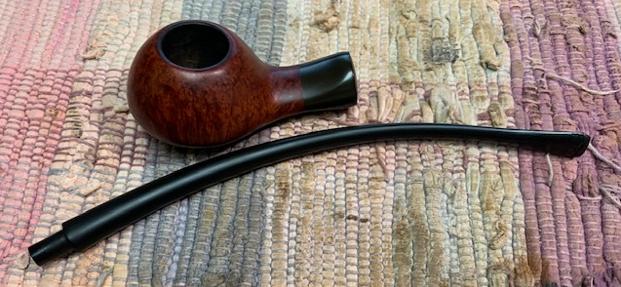
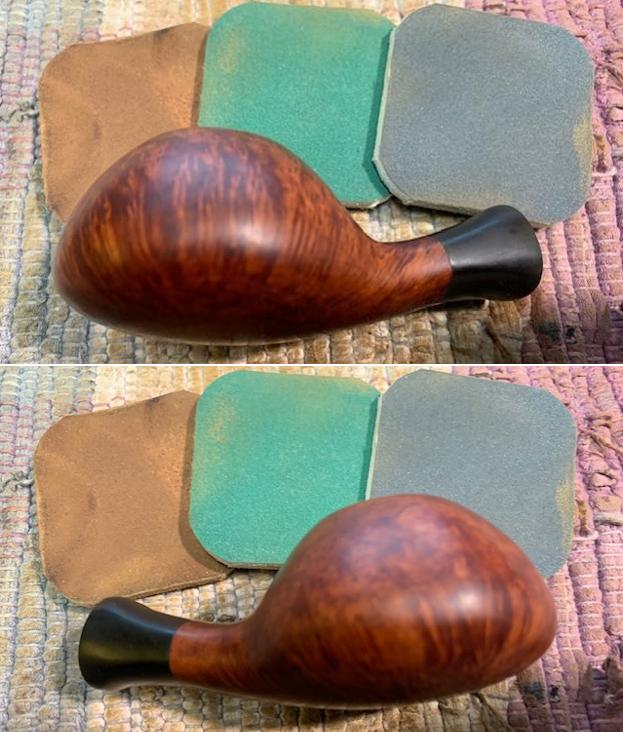
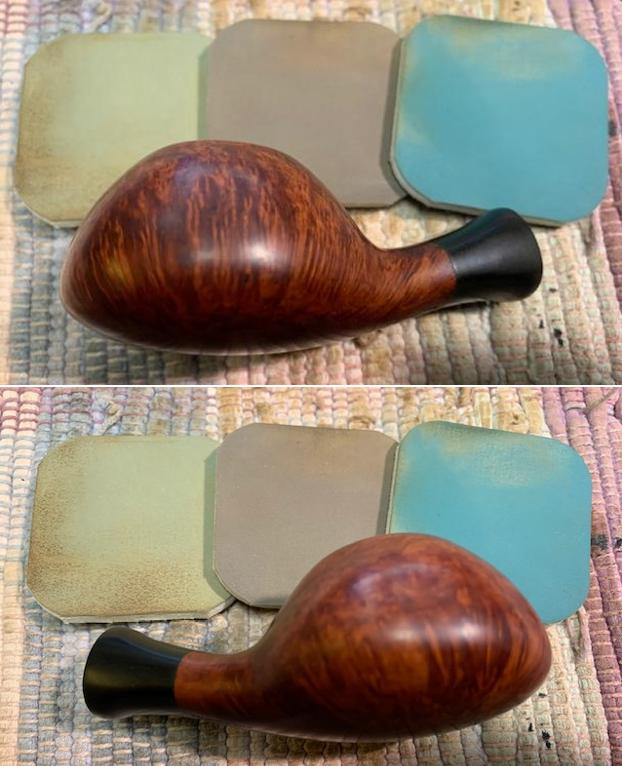
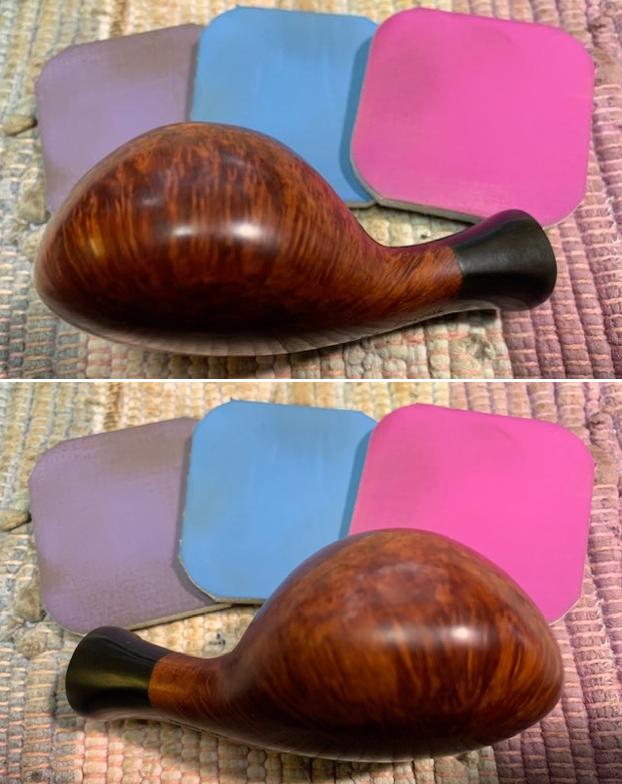
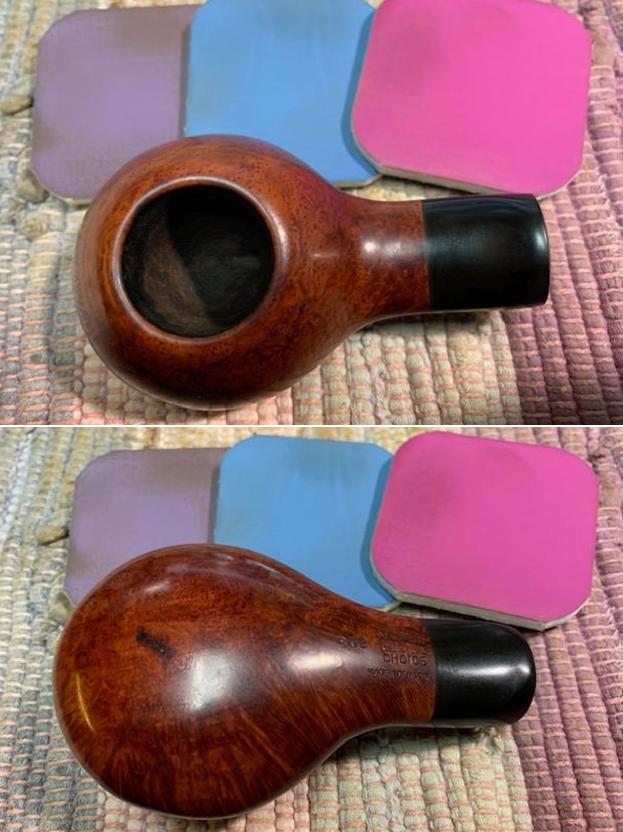
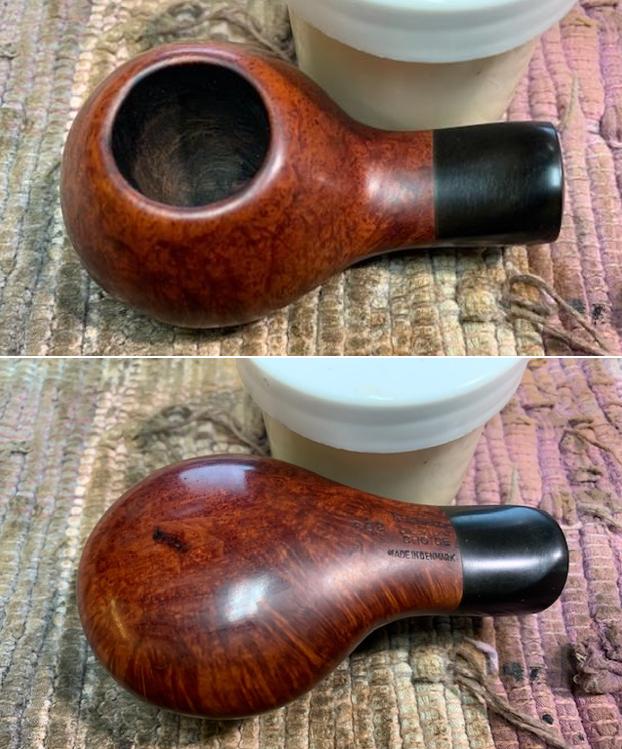
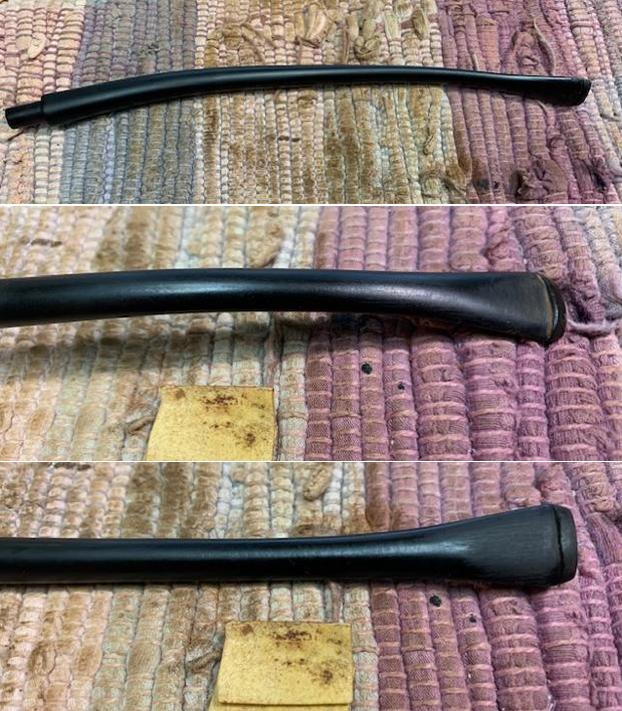
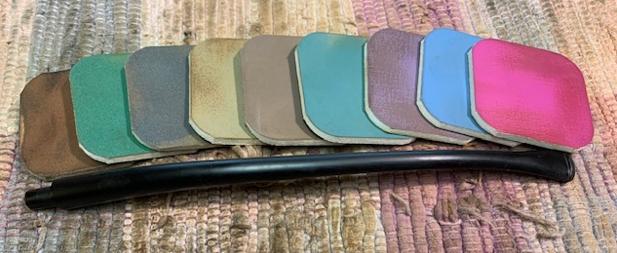
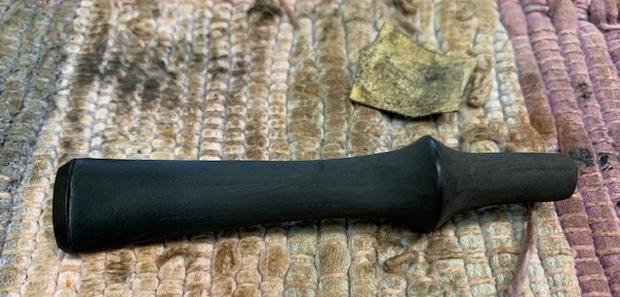
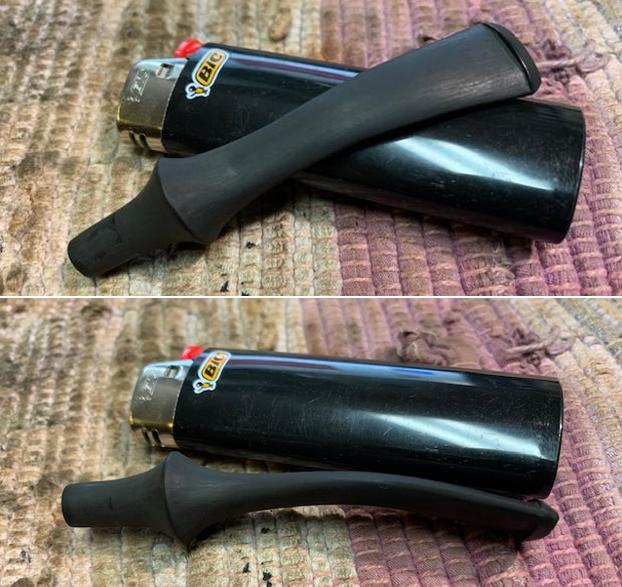
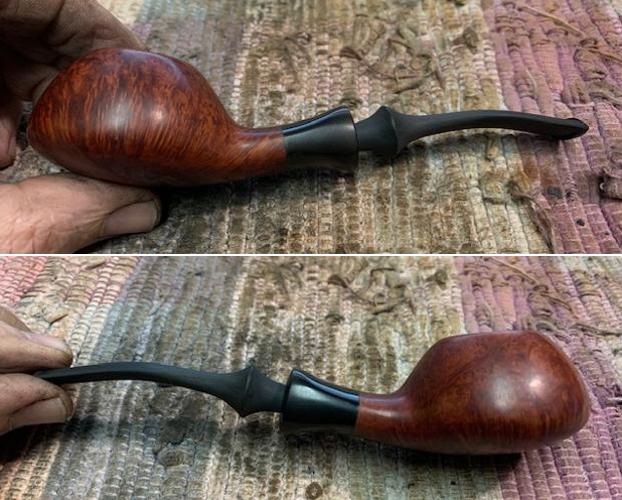
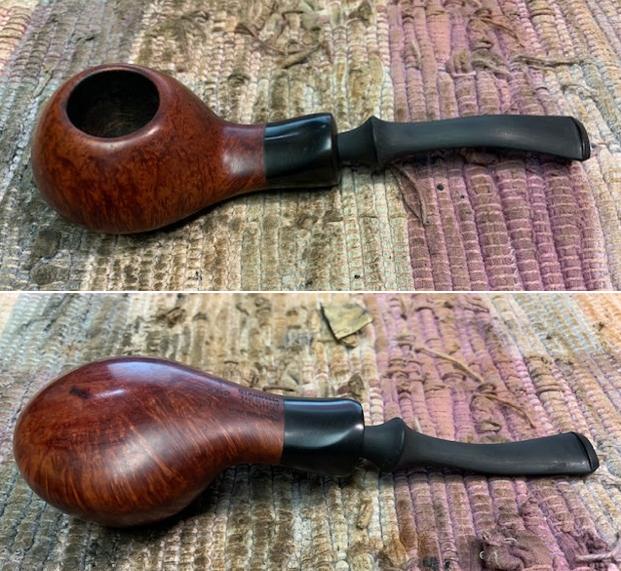
Jeff had cleaned up the pipe following his normal cleaning process. In short, he reamed the bowl with a PipNet pipe reamer and cleaned up the reaming with a Savinelli Fitsall Pipe Knife.  He scrubbed the smooth bowl with undiluted Murphy’s Oil Soap with a tooth brush. He worked over the lava and debris on the rim top and was able to remove it. He rinsed it under running warm water to remove the soap and grime. He cleaned out the inside of the shank and the airway in the stem with alcohol, cotton swabs and pipe cleaners. He scrubbed the stem with Soft Scrub and cotton pads to remove the debris and oils on the stem. He soaked it in a bath of Briarville’s Pipe Stem Deoxidizer to remove the oxidation. He rinsed it with warm water and dried it off. I took photos of the pipe once I received it. It really looked good but I was more convinced than ever that a new stem was needed. I decided that I would work on this stem while I was looking for a new stem.I took close up photos of the stem and the rim top to show both how clean they were and what needed to be addresses with both. The rim top and bowl look good. The edge was clean but there was some damage on the rim top at the front of the bowl. The Churchwarden stem looked better and the tooth marks and chatter were still present. I took a photo of the stamping on the underside of the shank. You can see from the photo that it is readable.I removed the stem from the bowl and took a photo of the parts to give a sense of the beauty of the pipe. I started my work on the pipe by addressing the flaws in the bottom of the bowl. Under a lens there were small sand pits along the line of the CA glue that I filled them with in the photo below. Once the repair cured I sanded it smooth with a folded piece of 220 grit sandpaper to blend it into the surrounding briar. I polished the smooth briar and the vulcanite shank extension with micromesh sanding pads – dry sanding with 1500-4000 grit pads to smooth out the surface of the briar and the repair on the bottom of the bowl. I wiped the bowl down after each sanding pad with a damp cloth to remove the sanding dust. The briar began to take on a shine. I paused after polishing the bowl with the 4000 grit micromesh pad to stain the repair on the bottom of the bowl. I used a Maple stain pen to match the surrounding briar. Once the stain cured I finished polishing the bowl with 6000-12000 grit micromesh sanding pads. The bowl really did begin to shine. I rubbed the bowl down with Before & After Restoration Balm working it into the briar with my finger tips. The product works to clean, revive and protect the briar. I let it sit on the pipe for 10 minutes then buffed it off with a soft cloth.   I set the bowl aside and turned my attention to the stem. I decided to deal with the stem even though I would replace it on the finished pipe. I straightened the churchwarden stem with a heat gun to get the angle more in keeping with the angles of the shank. I sanded out the tooth marks on both sides of the stem at the button with 220 grit sandpaper and started the polishing with 400 grit sandpaper.I polished the stem with micromesh sanding pads – wet sanding it 1500-12000 pads. I wiped it down with some Obsidian Oil each pad to remove the dust and polishing debris. I polished it with Before After Pipe Polish – both Fine and Extra Fine. I gave it a final coat of Obsidian Oil and set it aside to dry. Now that the churchwarden stem was finished I turned my attention to a shorter stem that I shaped to match the one in the photo from smokingpipes.com. I used a stem blank that I shaped with a Dremel and sanding drum. I shaped the saddle above the tenon to flow into the blade of the stem. I also shaped the tenon area to also have the same slope. I wanted  the slope on both sides to match. I used 220 grit sandpaper to smooth out the angles. I took photos of the newly shaped stem in place in the bowl. I like the looks of the pipe with the new stem. I heated the vulcanite with the flame of a lighter to soften the stem and give it a slight bend. The bend fit the angles of the shank and allowed it to sit on the desktop.I put the stem on the pipe and took photos of the pipe with its new stem. I looked very good and the angles were perfect. I liked the way the pipe looked at this point.I polished the new stem with micromesh sanding pads – wet sanding it 1500-12000 pads. I wiped it down with some Obsidian Oil each pad to remove the dust and polishing debris. I polished it with Before After Pipe Polish – both Fine and Extra Fine. I gave it a final coat of Obsidian Oil and set it aside to dry. This is another pipe that I am really happy about the finished restoration. This reborn Stanwell Ivarrson Designed Ukelele turned out really well. I used a blank to shape and craft a new stem for it as the churchwarden stem just did not work well. After restemming I think that it really is a great looking pipe with a great shape and grain. The bowl is flattened volcano shape and the vulcanite shank extension goes well with it. The new vulcanite saddle stem is very close to the original stem that would have come with the pipe when it was new. The polished black of the stem works well with the briar. The briar really came alive with the buffing. The rich brown stains of the finish make the grain really pop with the polishing and waxing. I put the stem back on the bowl and buffed the pipe with Blue Diamond on the buffing wheel. I gave the bowl and the stem multiple coats of carnauba wax on the buffing wheel. I buffed the pipe with a clean buffing pad to raise the shine. I hand buffed the pipe with a microfiber cloth to deepen the shine. The finished Stanwell Design Choice Ukelele really has a unique beauty and feels great in the hand. It looks very good. Give the finished pipe a look in the photos below. The dimensions of the pipe are Length: 6 ¼ inches, Height: 1 ¼ inches, Outside diameter of the bowl: 1 ½ inches, Chamber diameter: 7/8 of an inch. The weight of the pipe is 55 grams/1.98 oz. The pipe will be going on the rebornpipes store soon. It will be in the section on Danish Pipe Makers if you would like to add it to your collection. Thanks for reading this blog and my reflections on the pipe while I worked on it. It was a fun one to work on!
Look at the Birdseye Grain on this Stanwell Royal Prince 02 Bent Egg


Blog by Steve Laug

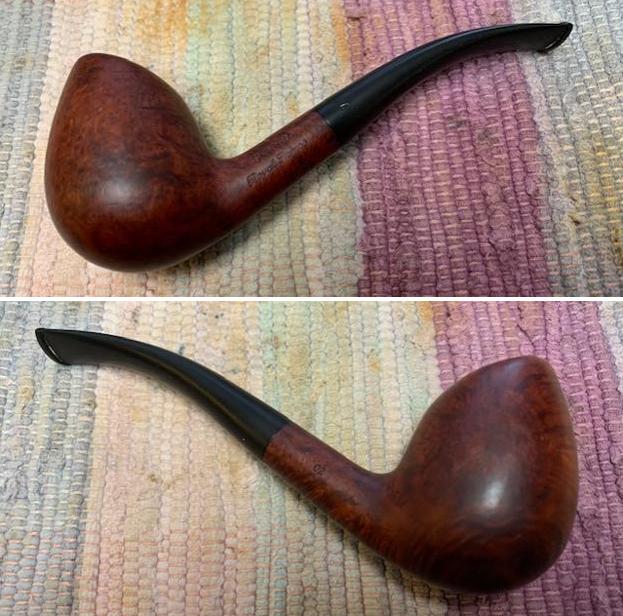
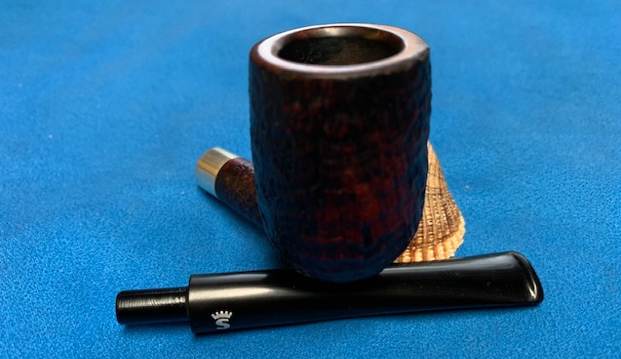
I am enjoying an evening free to work on a few pipes. The next pipe on the table came from an online auction on 02/18/21 in Upland, California, USA. Even though the finish was a dirty and worn it had some amazing grain showing through the grit and grime of the years. On the left side of the shank it was stamped Stanwell [over] Royal Prince. On the right side it is stamped with the shape number 02. On the underside it is stamped Made in Denmark. The pipe is a bent egg and as the shape number identifies. The finish is filthy with grime and oil ground into the briar of the bowl and shank sides. The bowl had a thick cake and there was an overflow of lava on the inner edge of the rim. The stem was a bent vulcanite taper stem that fit snugly in the shank. It had the Stanwell Crown S faintly stamped on the left side of the stem. The vulcanite was oxidized, calcified and had tooth marks and chatter on both sides ahead of the button. Jeff took some photos of the pipe to show its overall condition before he started his cleanup work. He took photos of the rim top and bowl to give a clear picture of the thickness of the cake and the lava and dust ground into the finish of the rim top and edges. There is dust and debris stuck to the walls of the bowl clearly visible in the photos. He also took photos of the top and underside of the stem to show the oxidation, chatter and tooth marks. Jeff took photos of the sides and heel of the bowl to give a picture of what the briar around the pipe looked like. There is some stunning grain under the grime.He took photos of the stamping on the sides of the shank. It read as noted above and is clear and readable. I turned first to Pipephil’s site to get a quick idea of when this pipe line was made and where it stood in the Stanwell hierarchy. I found nothing (http://www.pipephil.eu/logos/en/logo-stanwell.html).

I also turned to Pipedia’s article on Stanwell but it did not add any further information. It is a great read in terms of the history of the brand (https://pipedia.org/wiki/Stanwell).

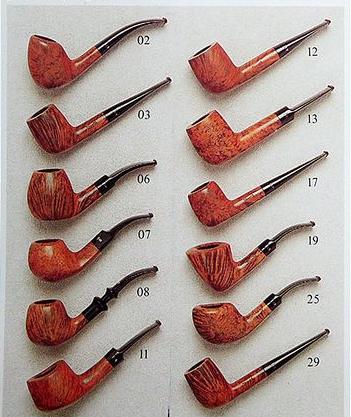
I turned to the section on Stanwell shapes and numbers on Pipedia to see if I could identify the designer (https://pipedia.org/wiki/Stanwell_Shape_Numbers_and_Designers). Finally I found a bit of help there. It stated that the shape number 02 came in two versions – a Freehand, oval bowl and stem designed by Sixteen Ivarsson and a Bent Egg Shaped Bowl sloping top and full mouthpiece. Now I knew that I was dealing with the second. There was also a catalogue photo that I have included below that shows the shape 02 at the top left of the photo.

With that information in hand I knew what I was dealing with in terms of the shape of the pipe. I am pretty sure it is a pipe that was made in the 80s or 90s. I was not certain but that is my educated guess. Now it was time to work on the pipe.

Jeff had reamed the bowl with a PipNet Pipe Reamer and cleaned up the remnants with a Savinelli Fitsall Pipe Knife. He scrubbed the exterior of the bowl with undiluted Murphy’s Oil Soap with a tooth brush. He worked over the debris on the rim top and was able to remove it. He rinsed it under running warm water to remove the soap and grime. He cleaned out the inside of the shank and the airway in the stem with alcohol, cotton swabs and pipe cleaners. He soaked the stem in Briarville’s Pipe Stem Deoxidizer and rinsed it off with warm water. He scrubbed the stem with Soft Scrub and cotton pads to remove remaining oxidation on the ferrule and the stem. He rinsed it with warm water and dried it off. I took photos of the pipe once I received it. It really looked good. The rim top and the inner edge of the rim showed some nicks and marks after the cleaning. The stem had a few small tooth marks and chatter on both sides near the button. I took photos of the stamping on the sides of the shank. It was clear and read as noted above.I removed the stem and took a photo of the pipe to give a sense of the whole. I decided to address the damage to the inner edge of the bowl first. I used a folded piece of 220 grit sandpaper to smooth out the damage and clean up the edge. I was pleased with the reshaped rim top and edge. I polished the briar with micromesh sanding pads – dry sanding with 1500-12000 grit pads and wiping it down after each pad with a damp cloth. I rubbed the bowl and shank down with Before & After Restoration Balm. I worked it into the surface of the bowl sides and shank with my fingertips. The product works to clean, enliven and protect the briar. I let the balm sit for 15 minutes and then buffed with a cotton cloth to raise the shine.I “painted” the stem surface on both sides with the flame of a lighter to lift the tooth marks. I was able to lift all of them on the underside of the stem but one of them on the topside remained. I filled it in with clear super glue. Once the repair cured I smoothed it out and also the tooth chatter on the underside with 220 grit sand paper. I started the polishing with 400 grit wet dry sandpaper.I touched up the stamping on the top of the stem. It was a Stanwell Crown S logo. Parts of it were faint but I was able to get some of the stamping to show up with the Paper Mate Liquid Paper White.I polished the vulcanite stem with micromesh sanding pads – 1500-12000 grit pads. I wiped it down with a damp cloth after each sanding pad. I used Before & After Pipe Polish – both Fine and Extra Fine to further polish the stem. This beautiful Stanwell Royal Prince Sloped Bent Egg with a taper vulcanite stem is a great looking pipe now that it has been restored. I put the stem back on the bowl and carefully buffed the pipe with Blue Diamond on the buffing wheel using a light touch on the briar. I gave the bowl and the stem multiple coats of carnauba wax on the buffing wheel and followed that by buffing the entire pipe with a clean buffing pad. I hand buffed the pipe with a microfiber cloth to deepen the shine. The finished Stanwell Royal Prince Bent Egg fits nicely in the hand and feels great. Give the finished pipe a look in the photos below. The dimensions of the pipe are Length: 6 inches, Height: 2 inches, Outside diameter of the bowl: 1 ¼ inches, Chamber diameter: ¾ of an inch. The weight of the pipe is 46grams/1.62oz. I will be adding it to the rebornpipes store shortly in the Danish Pipe Makers Section. Thanks for reading this blog and my reflections on the pipe while I worked on it. There are many more to come!