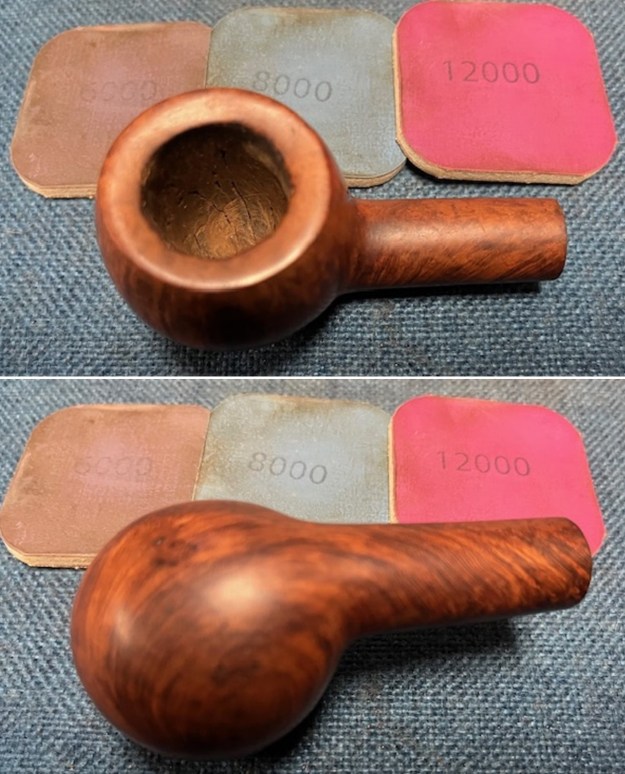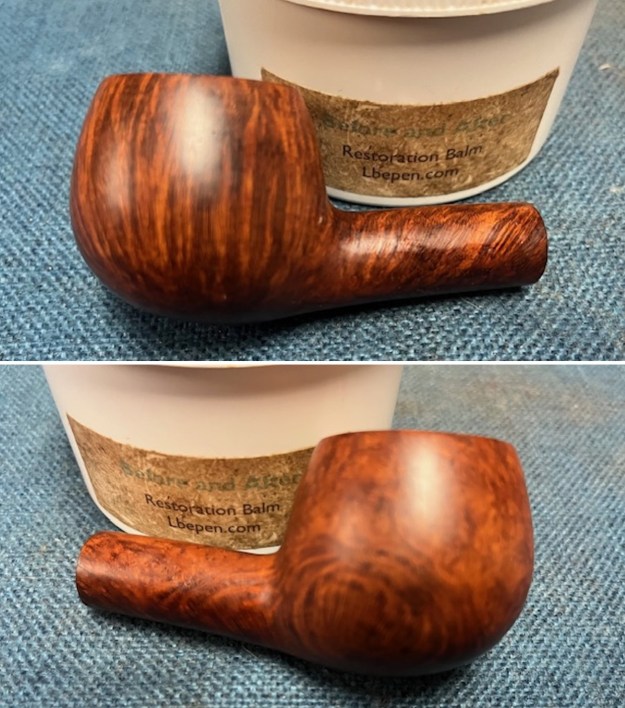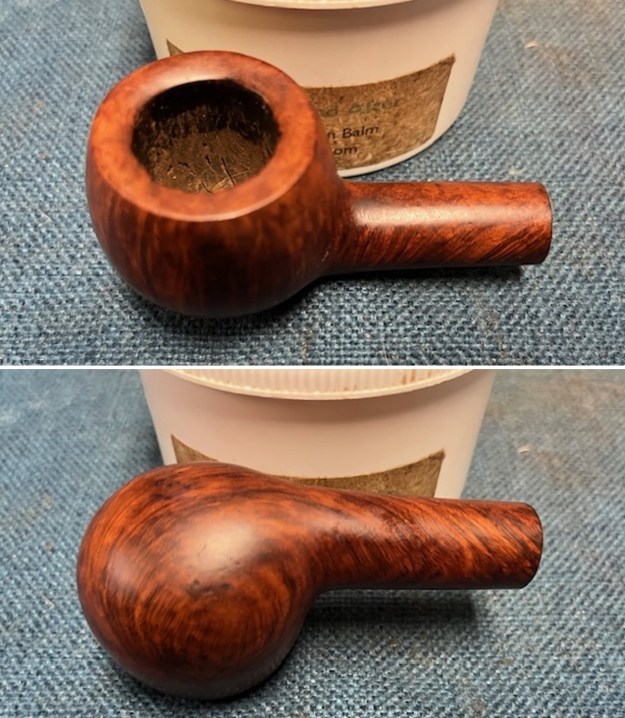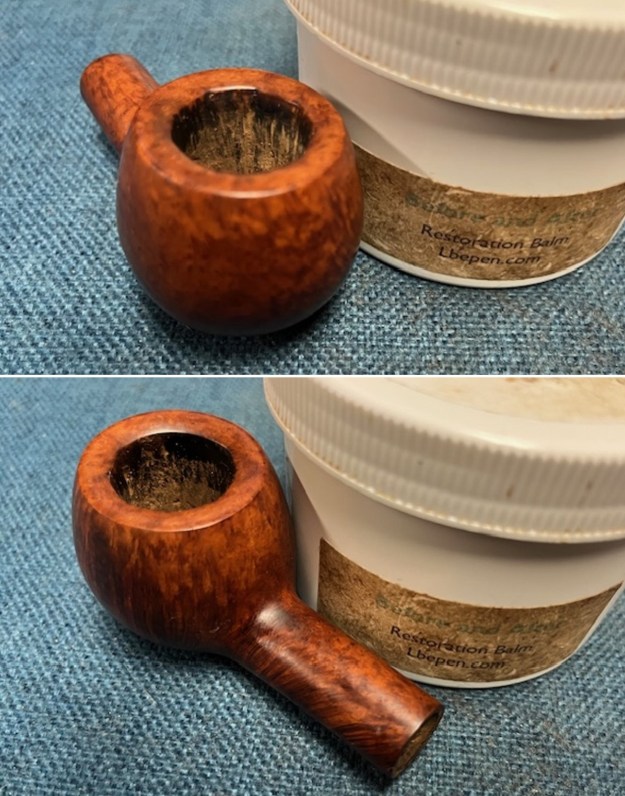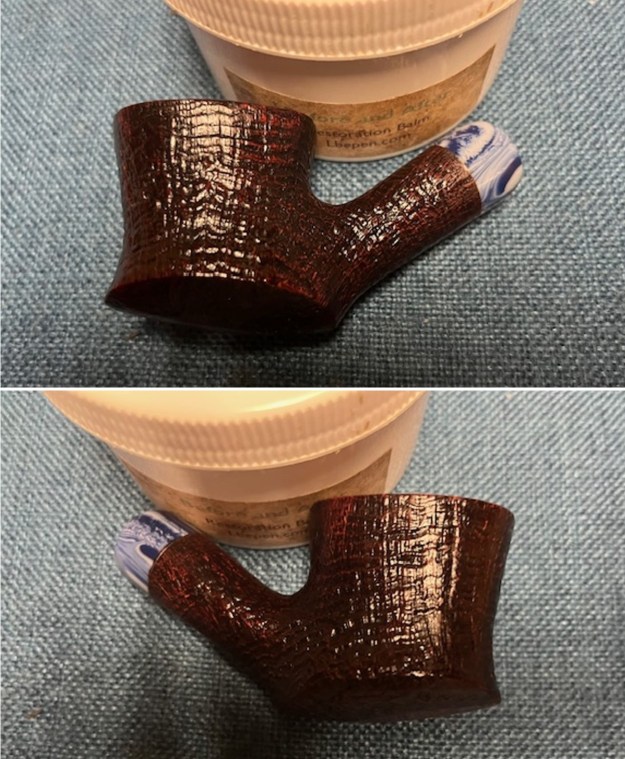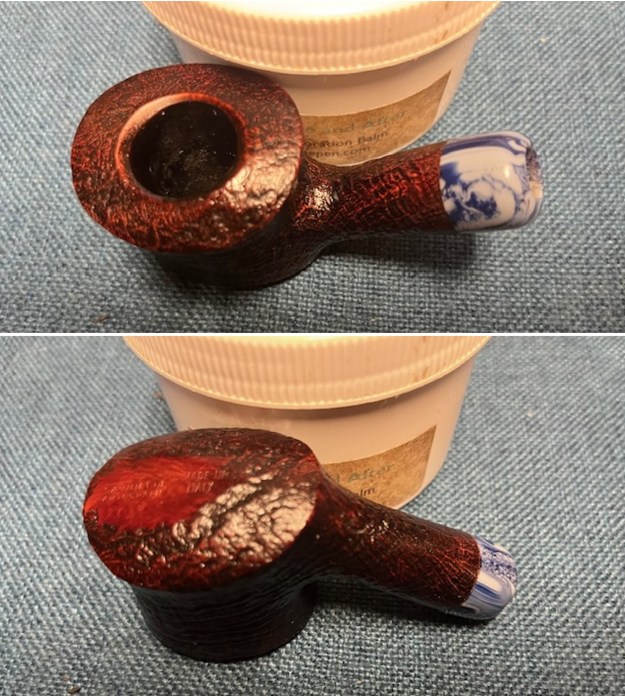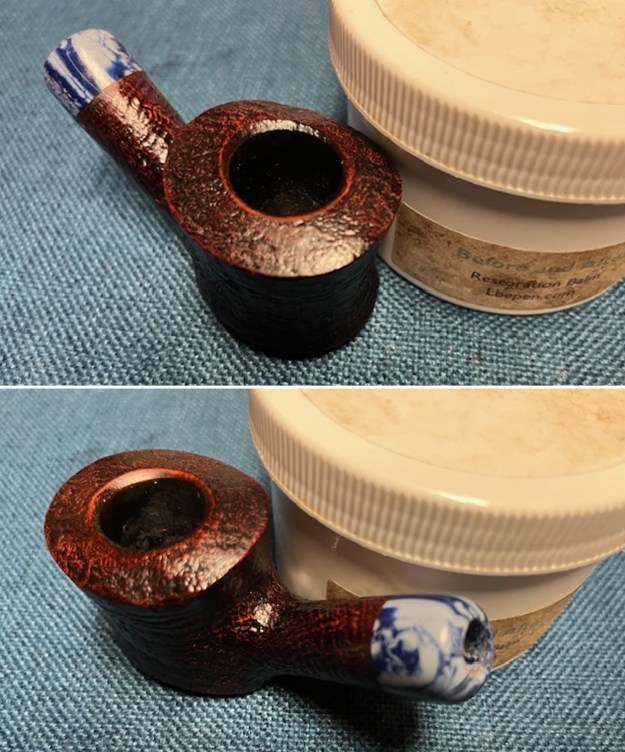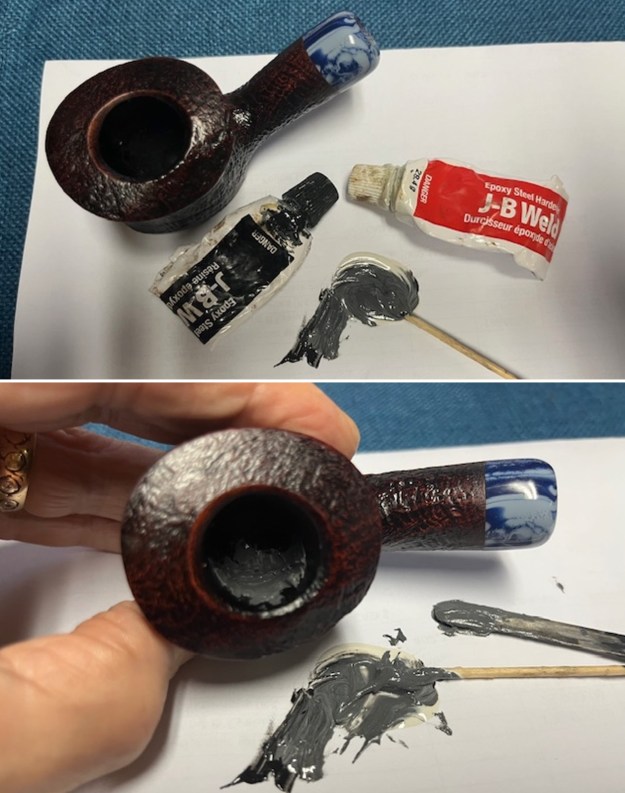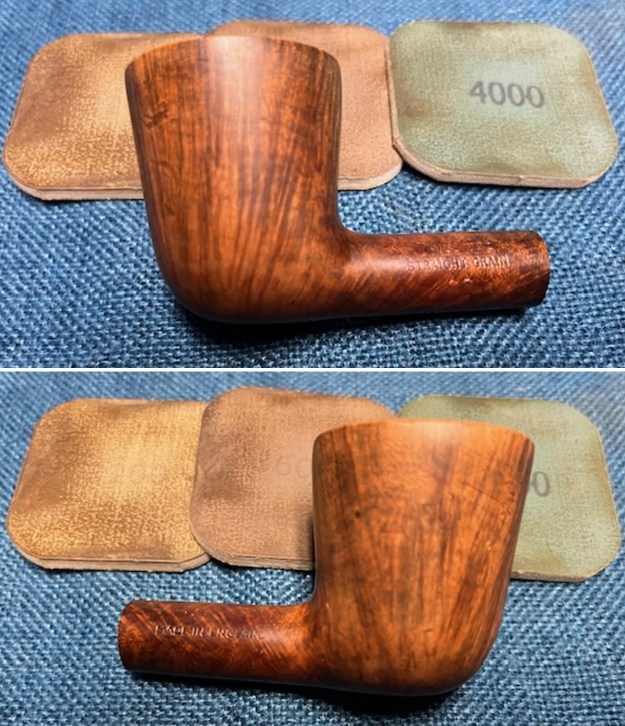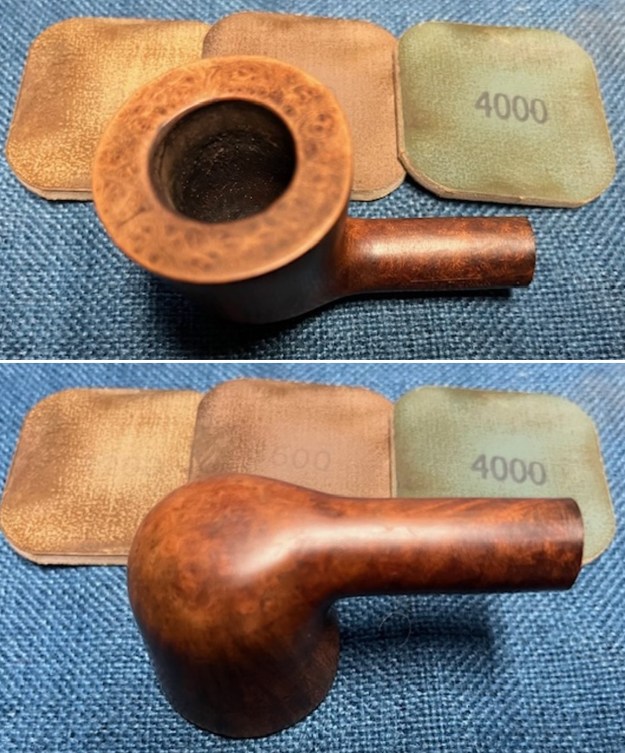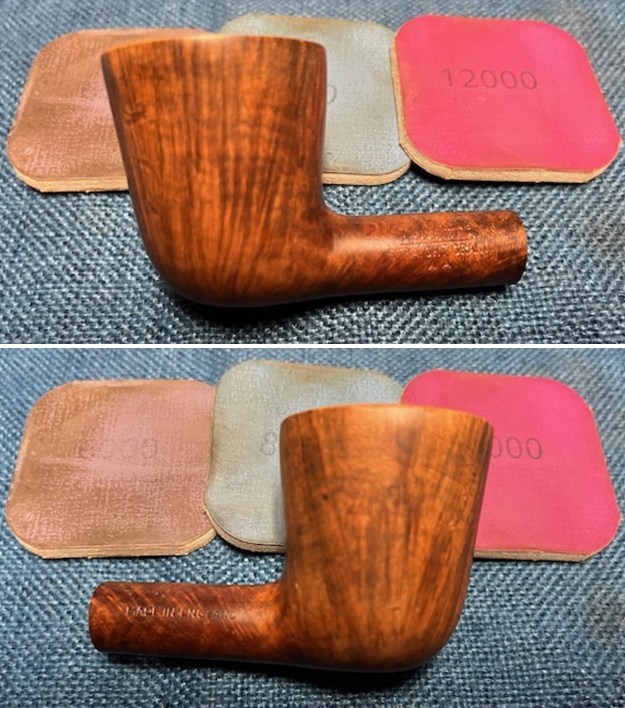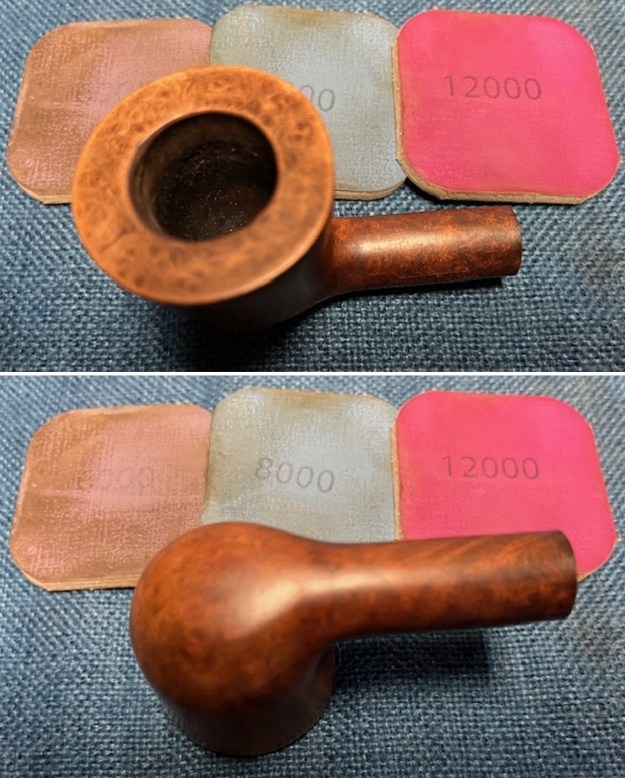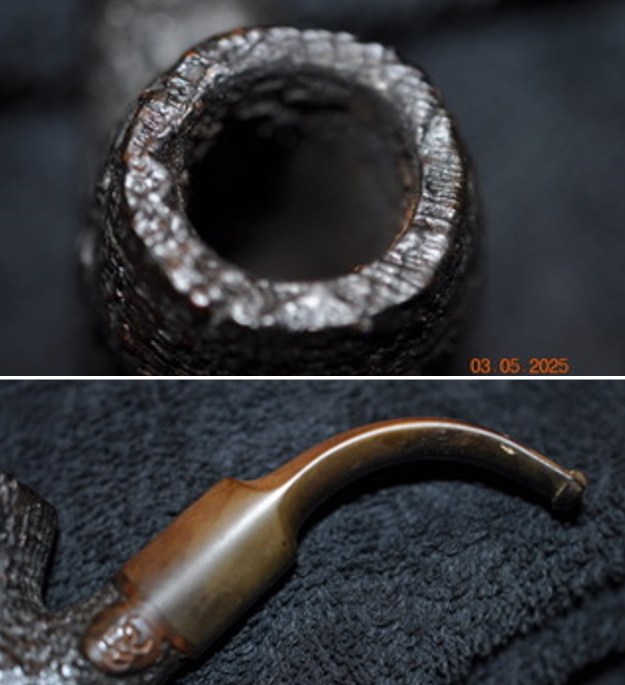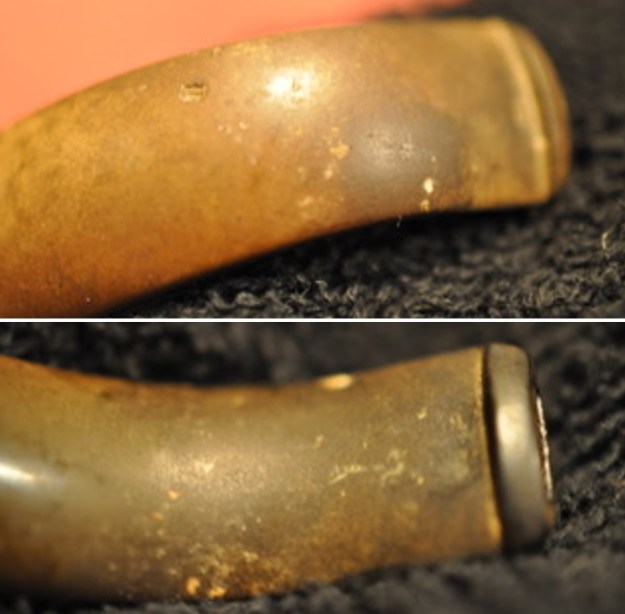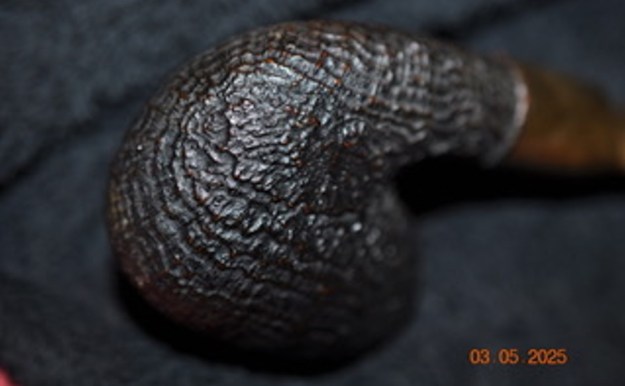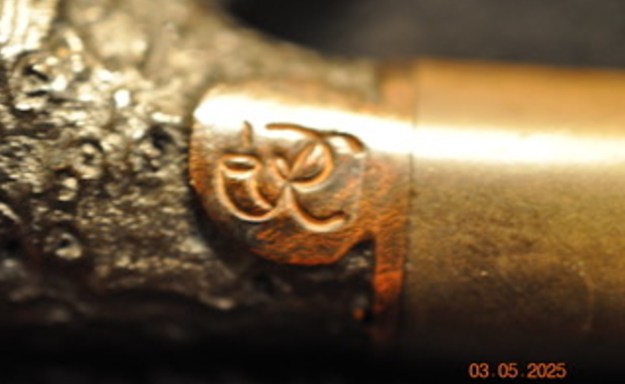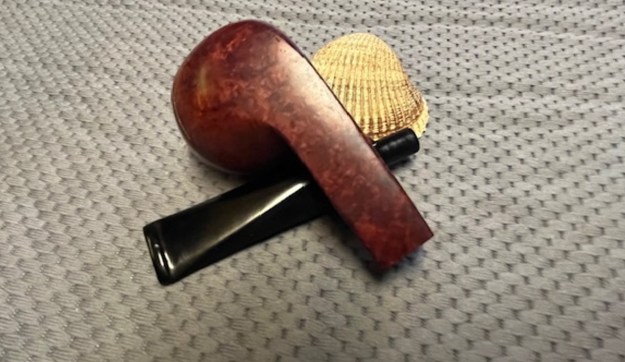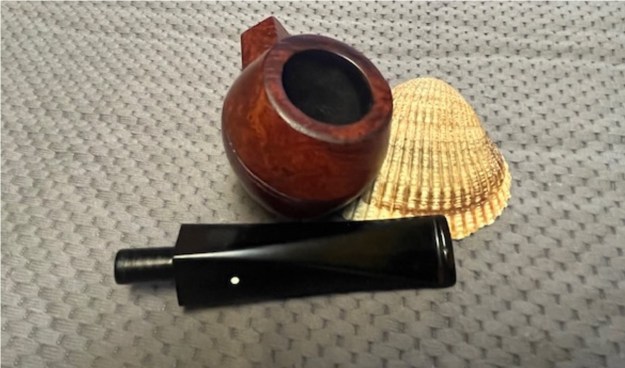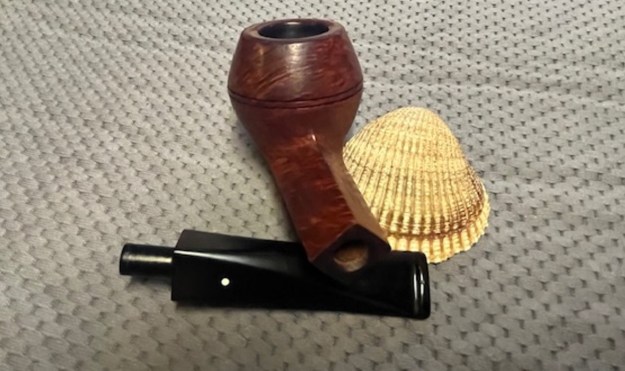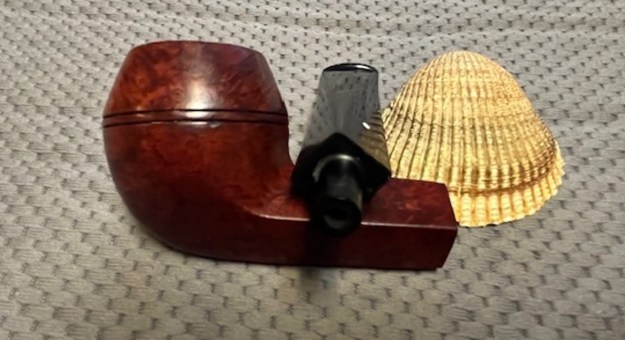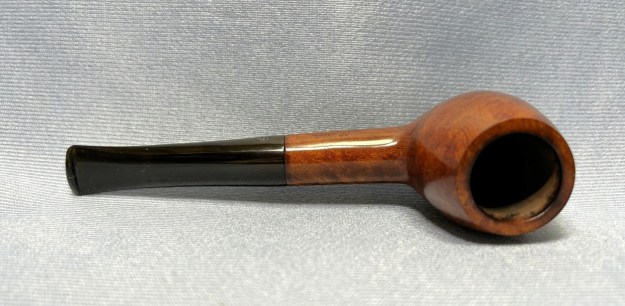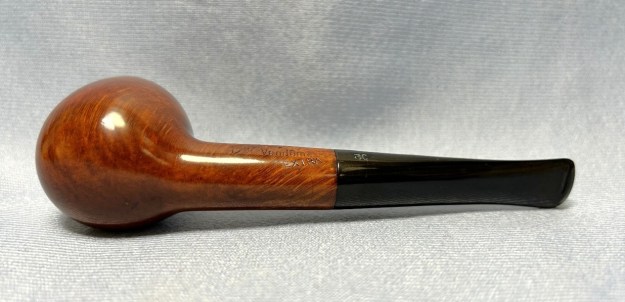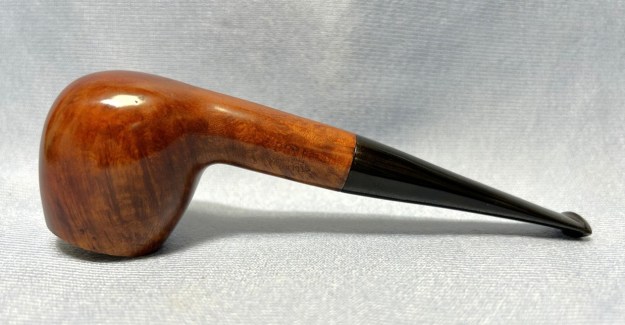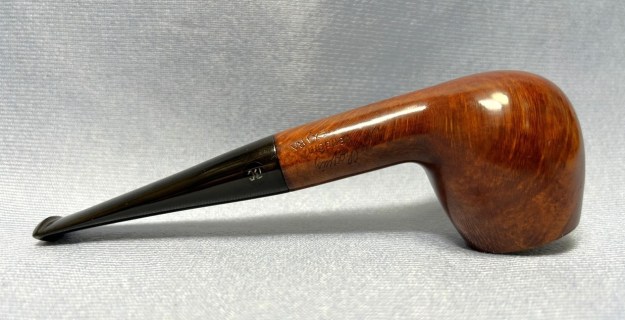
Tag Archives: staining

Restoring and Restemming a Clogged and Filthy Italian Lorenzetti Billiard


by Steve Laug

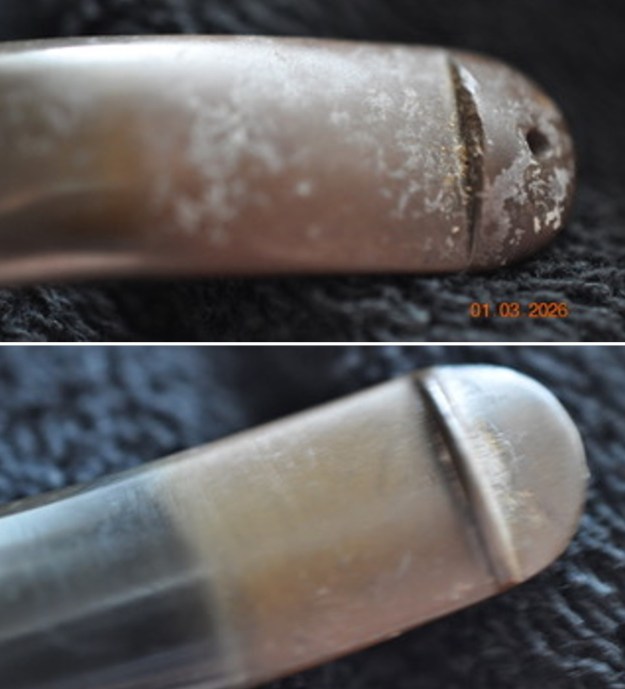
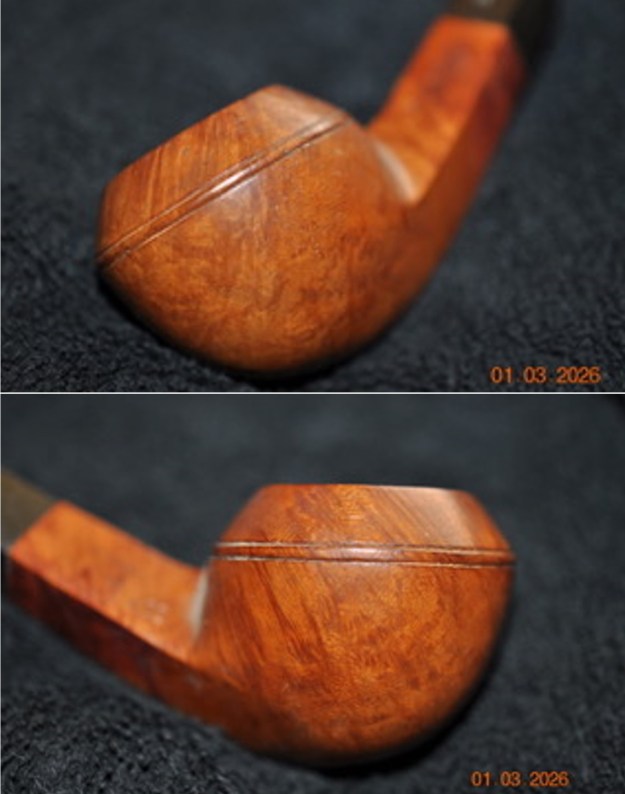
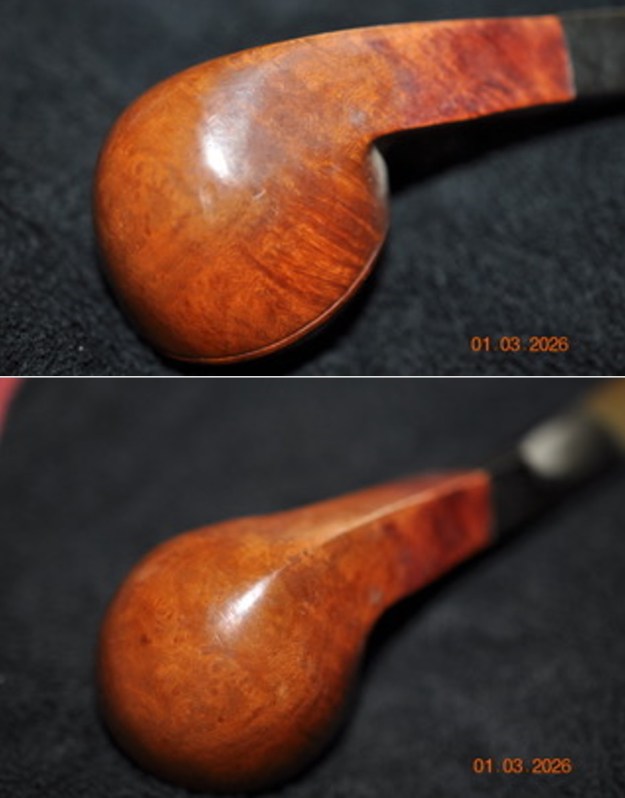
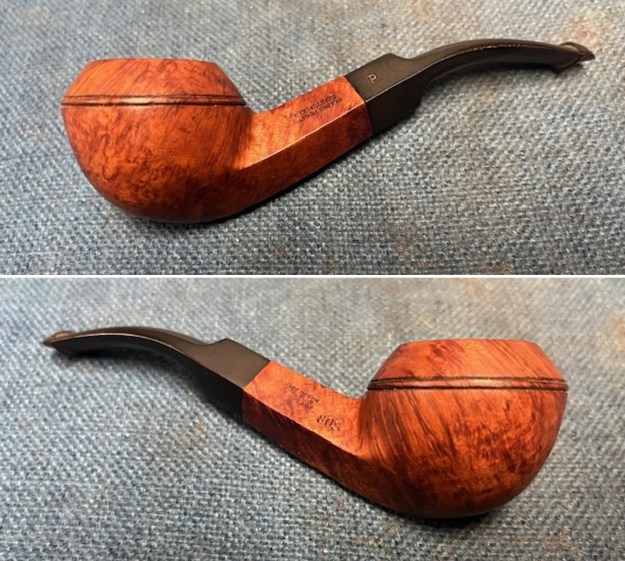
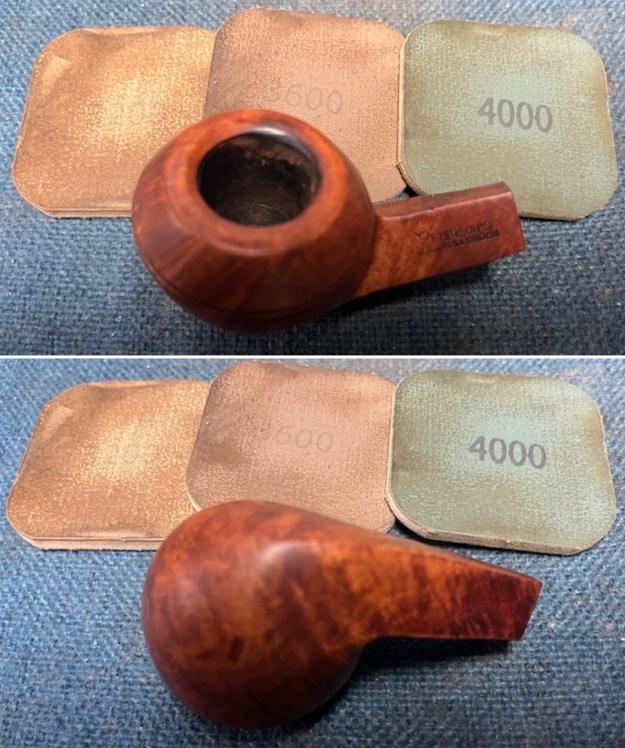
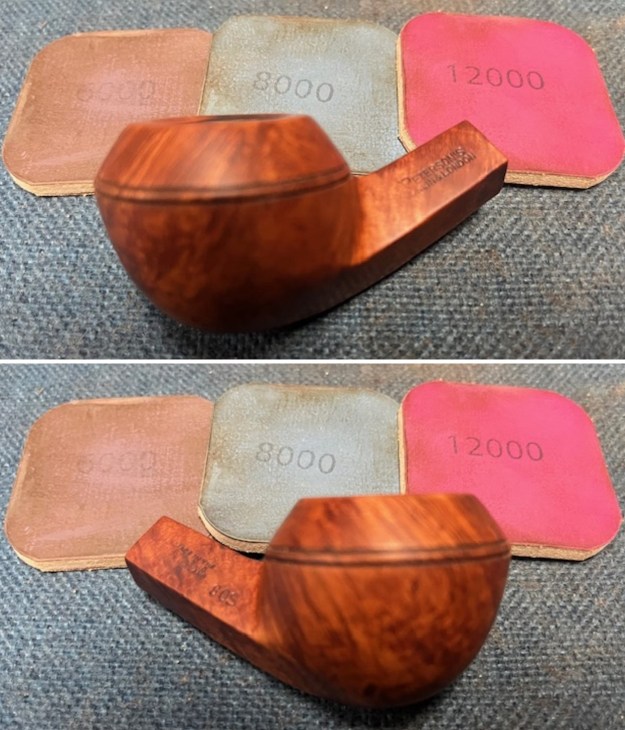
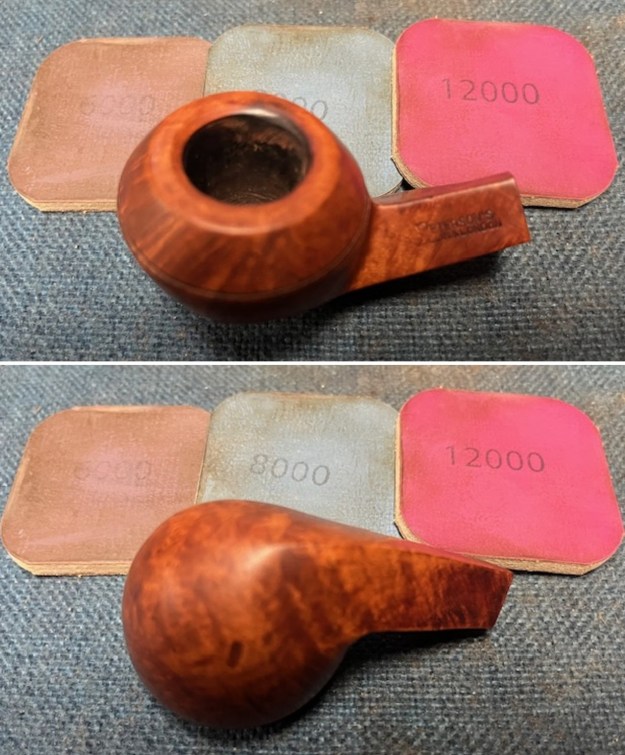
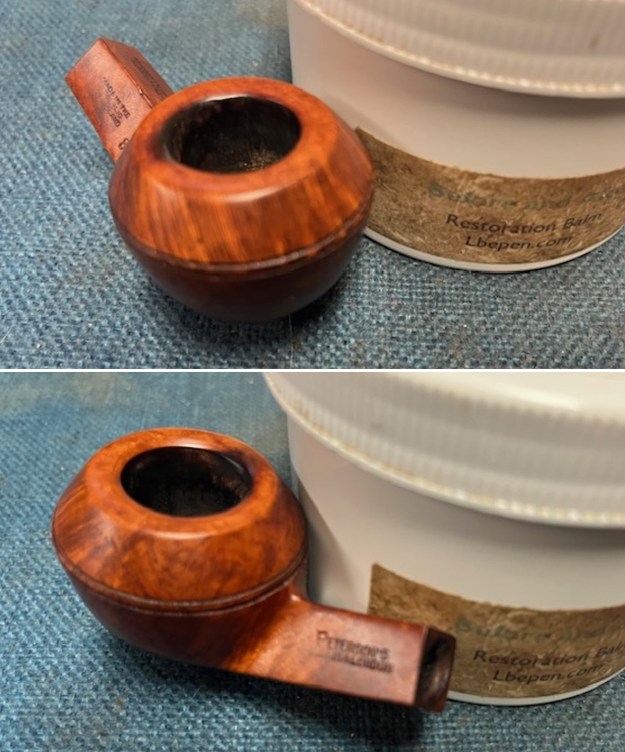
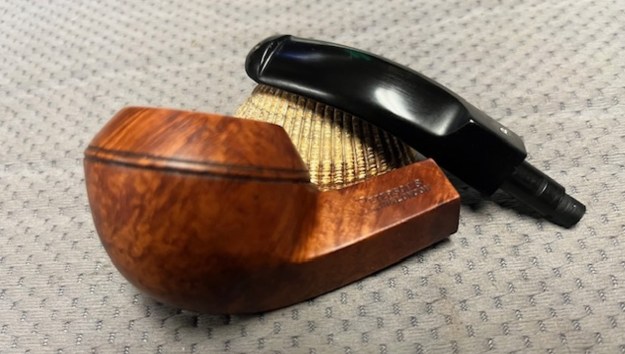
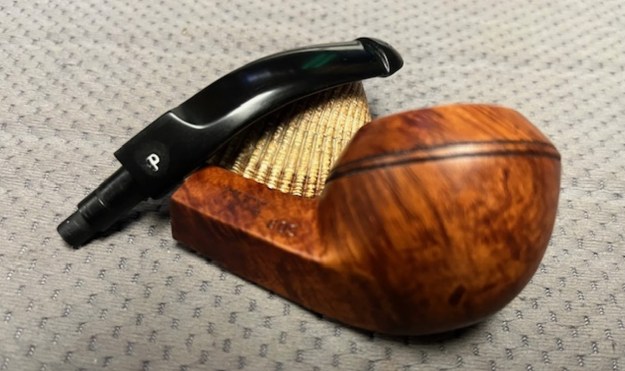
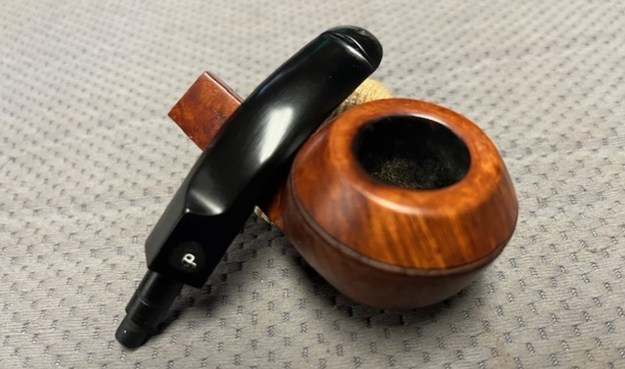
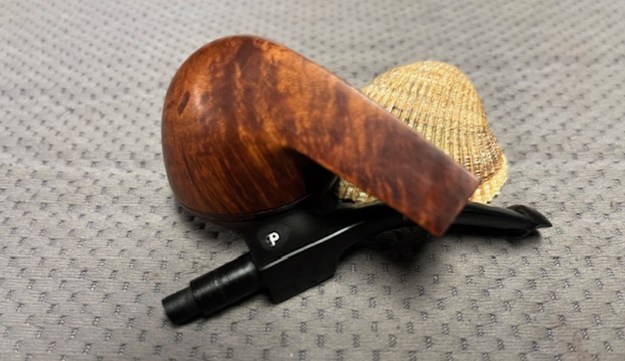
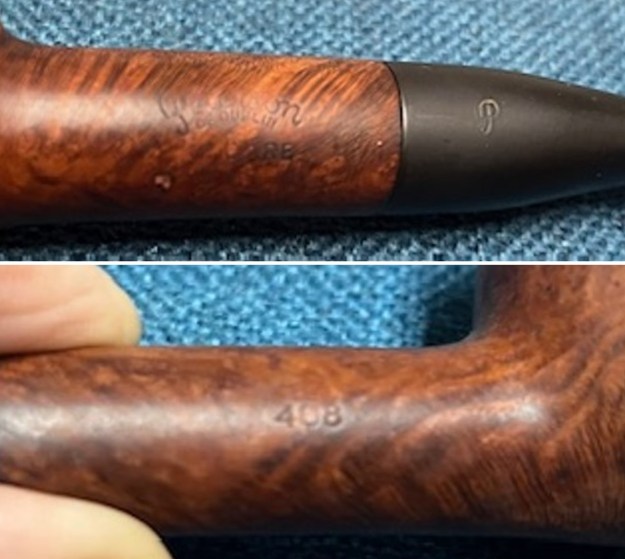
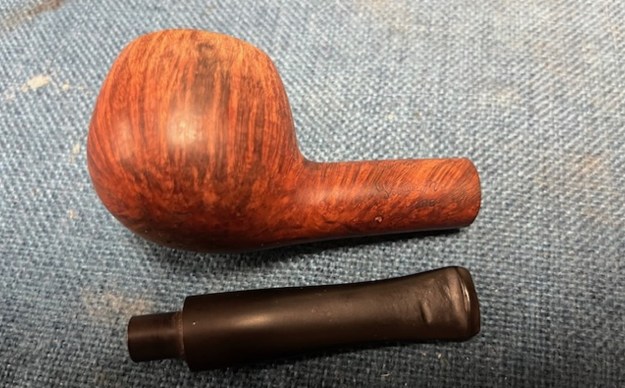
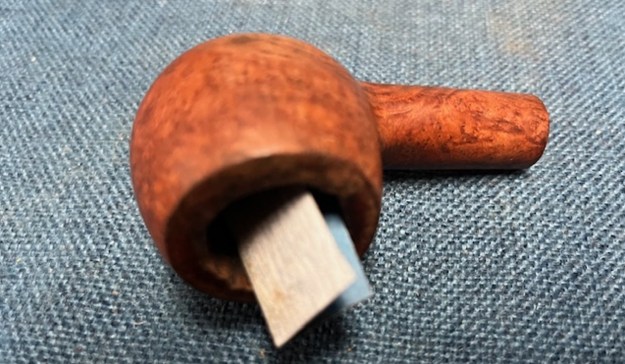
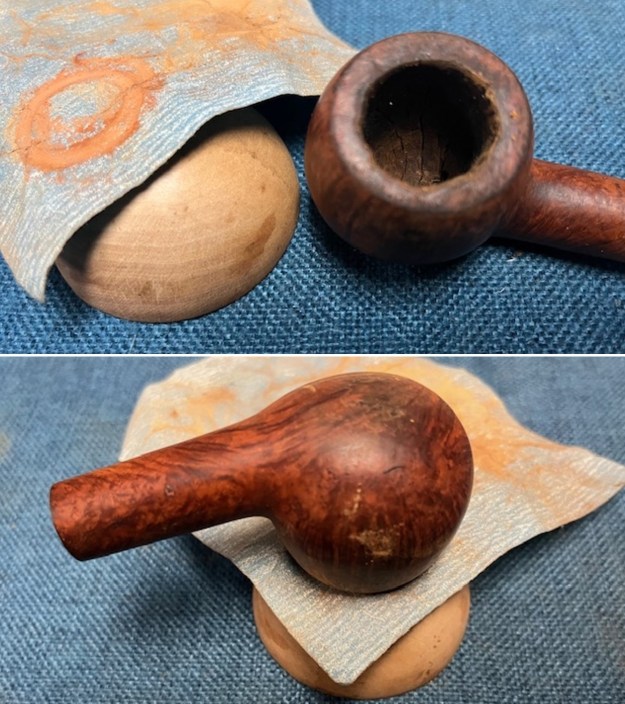
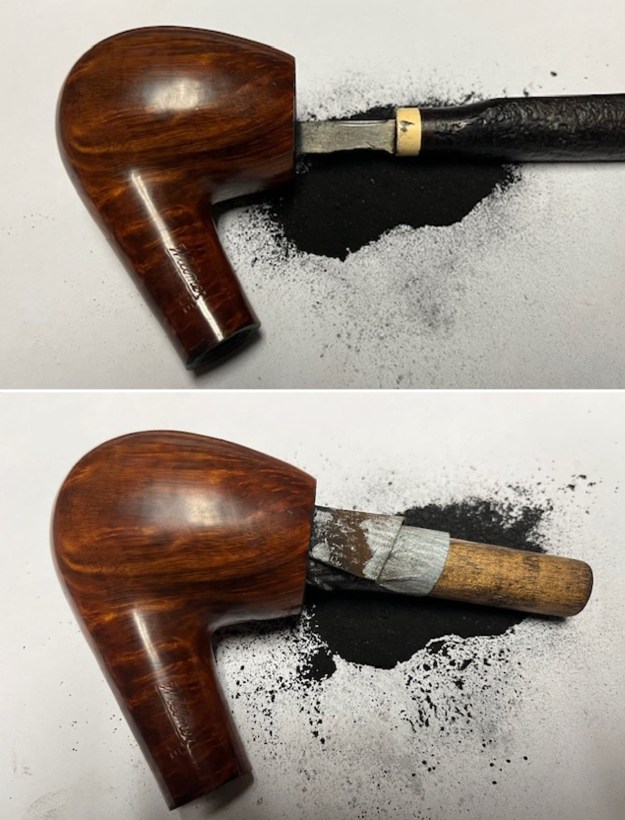
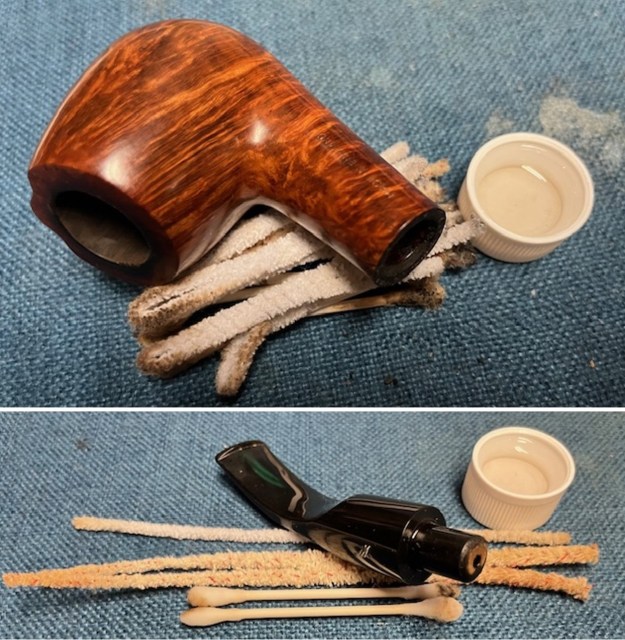
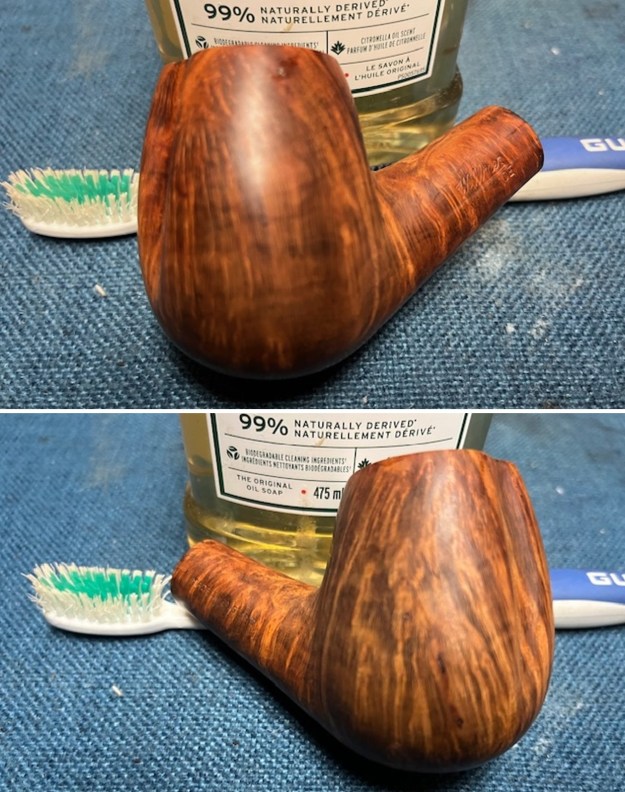
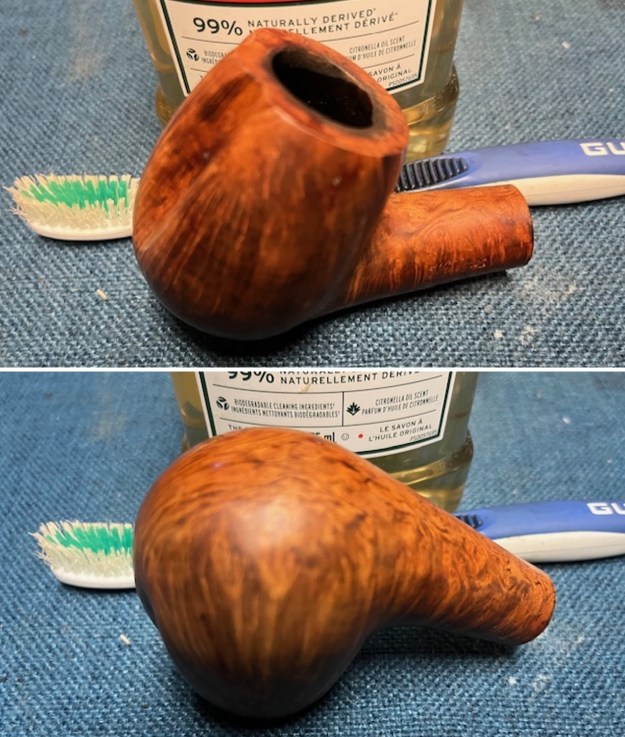
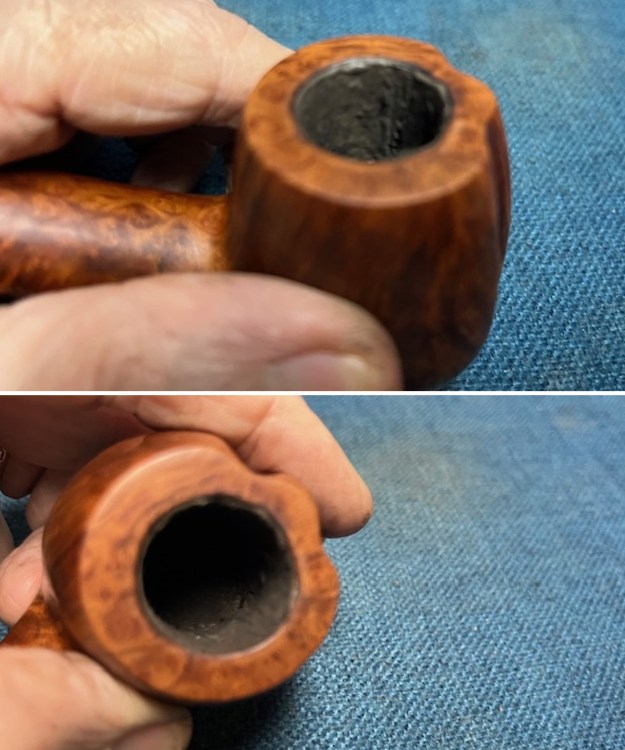
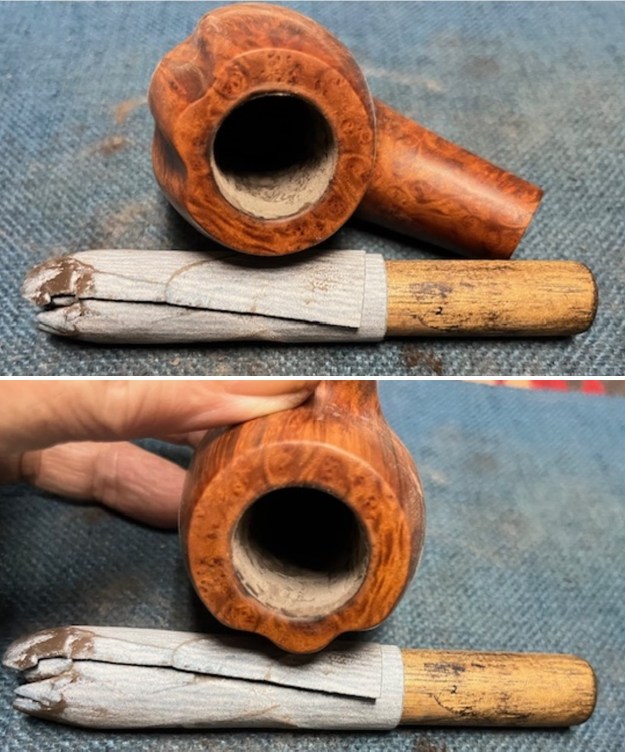
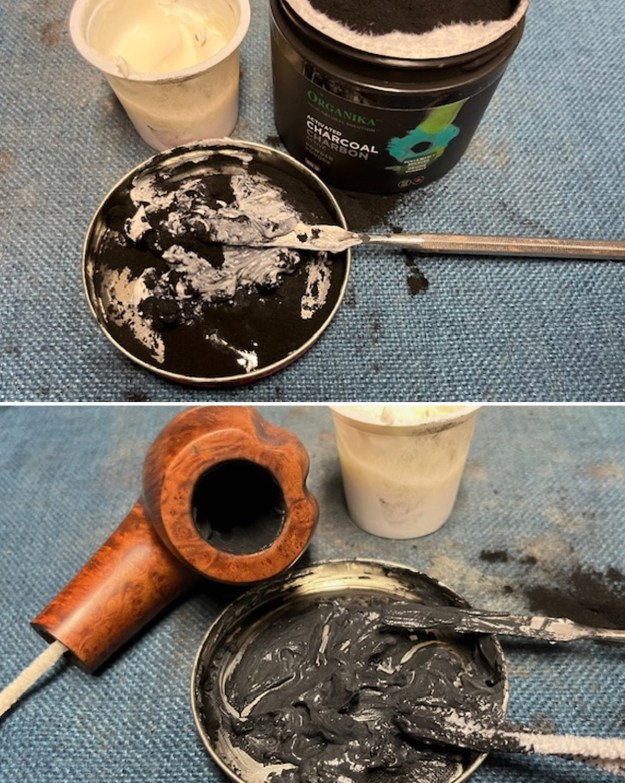
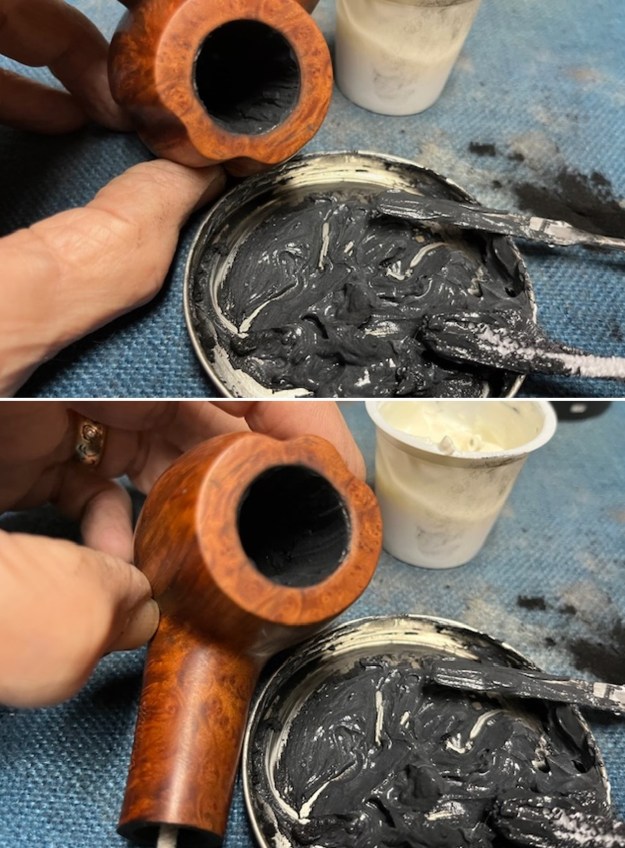
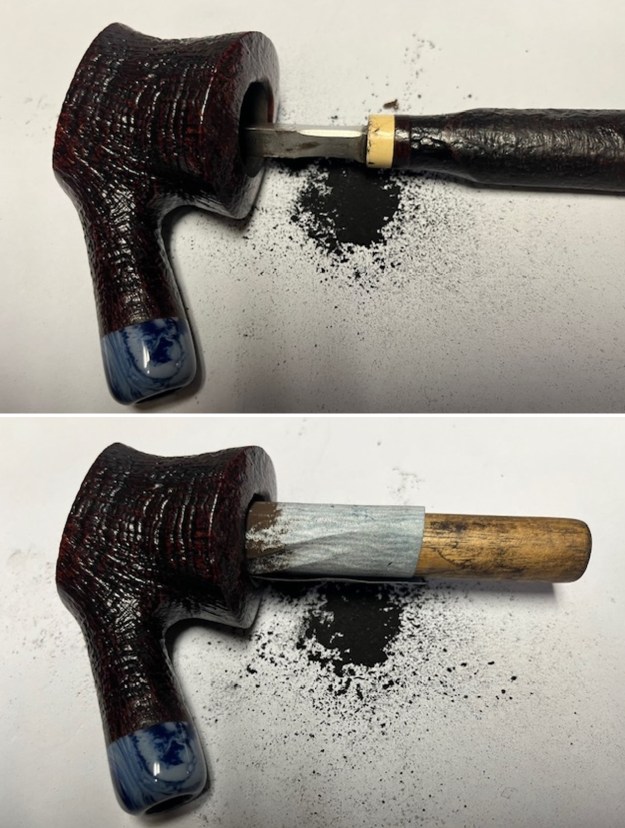
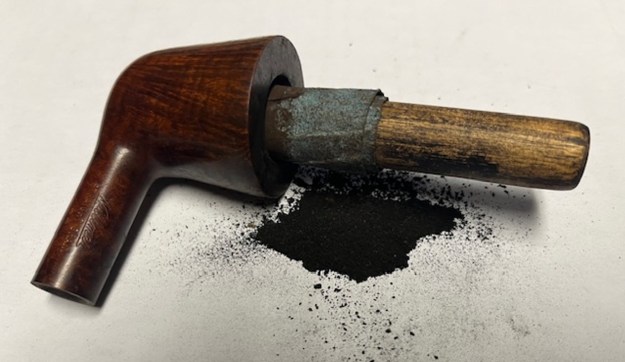
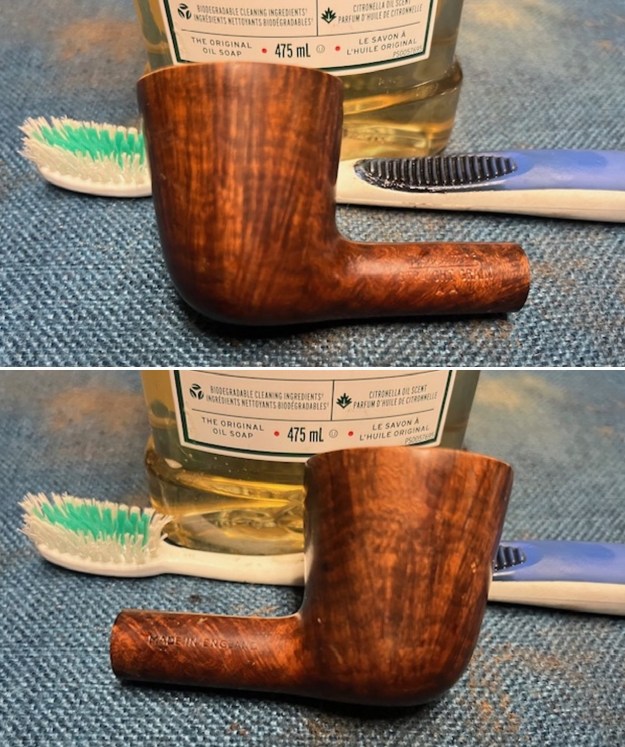
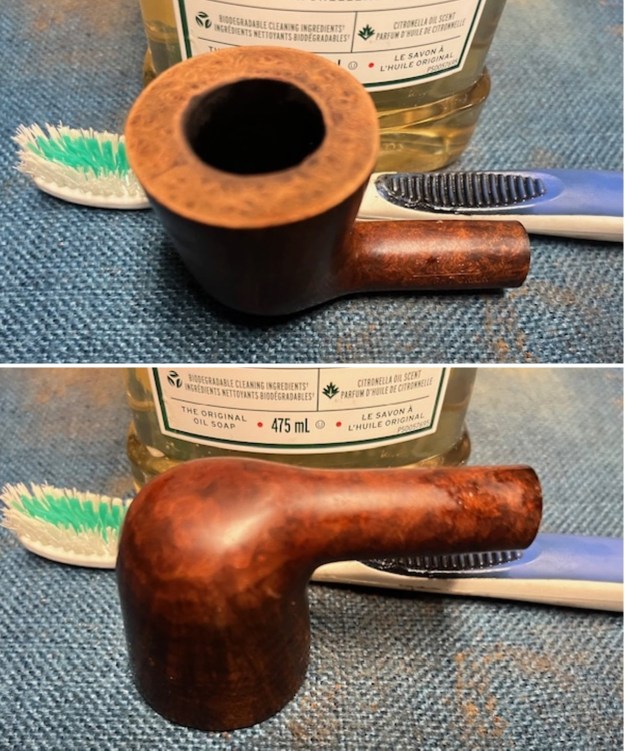
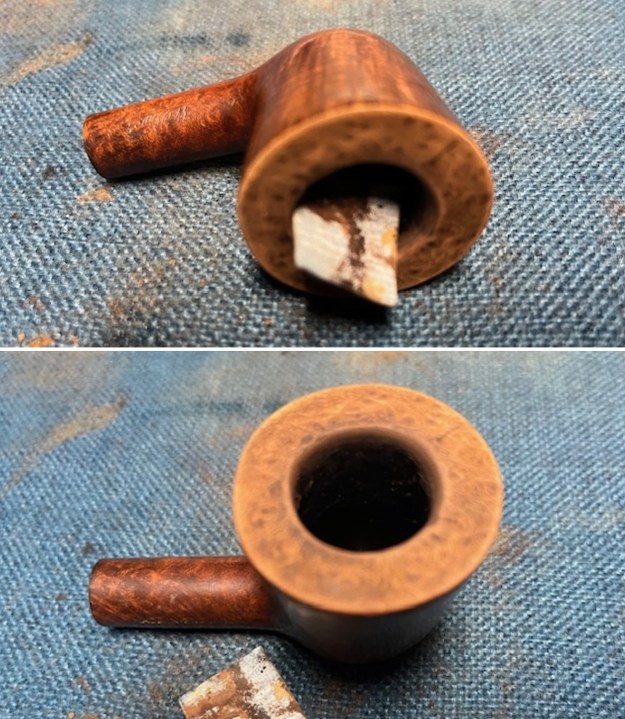
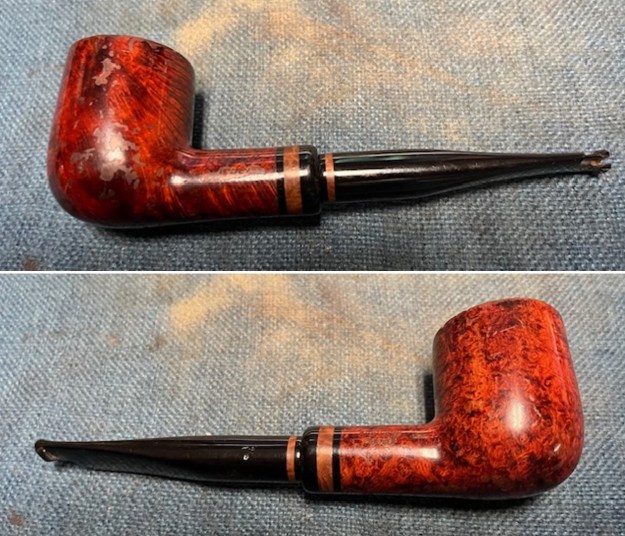
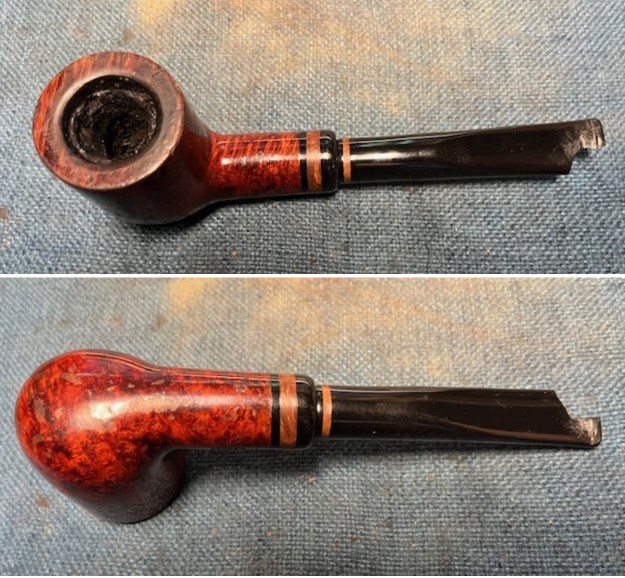
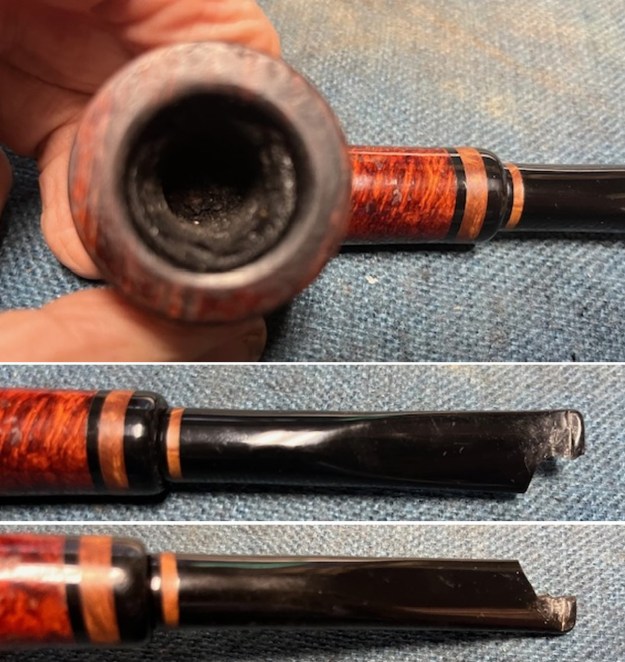
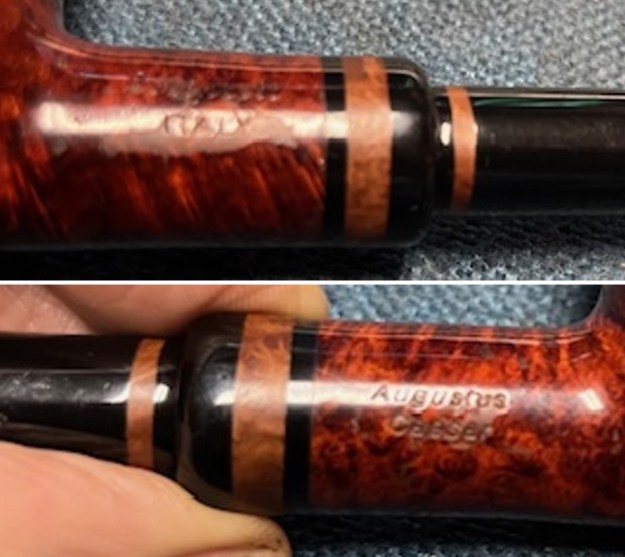
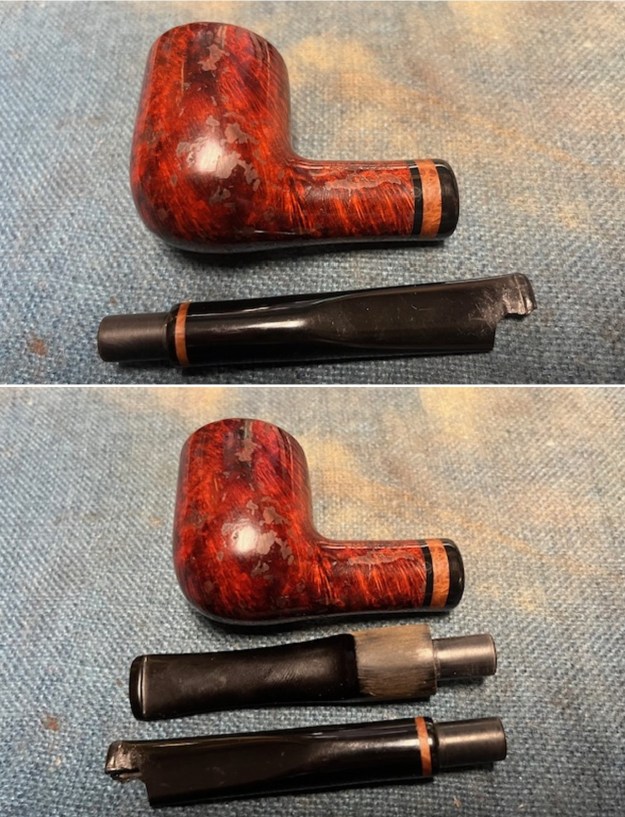
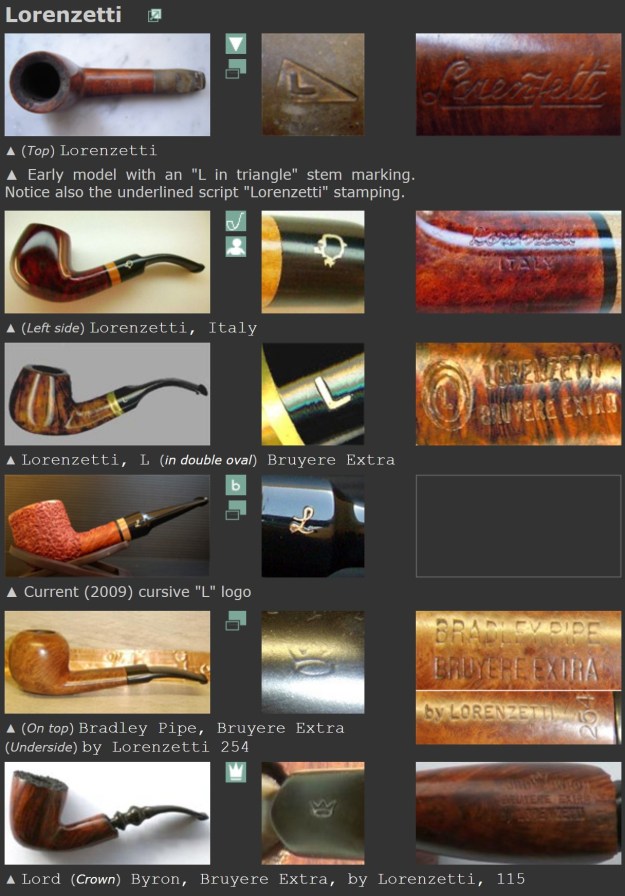
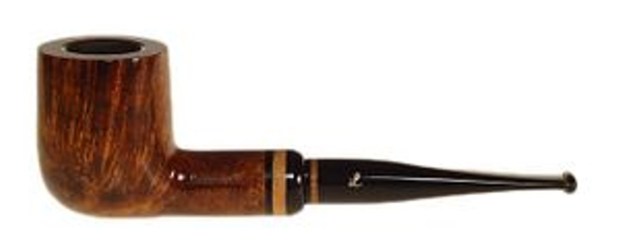
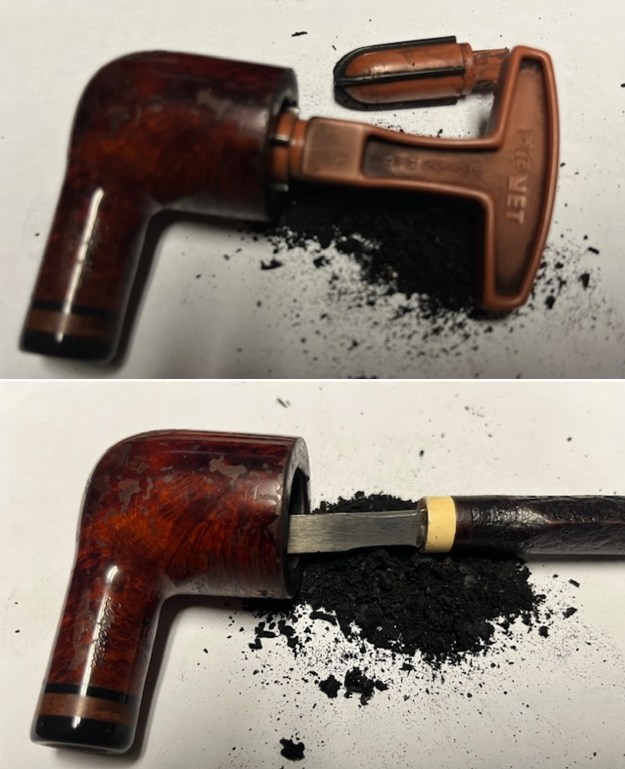
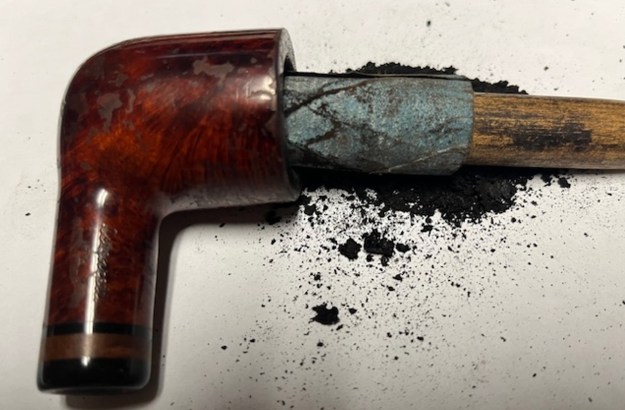
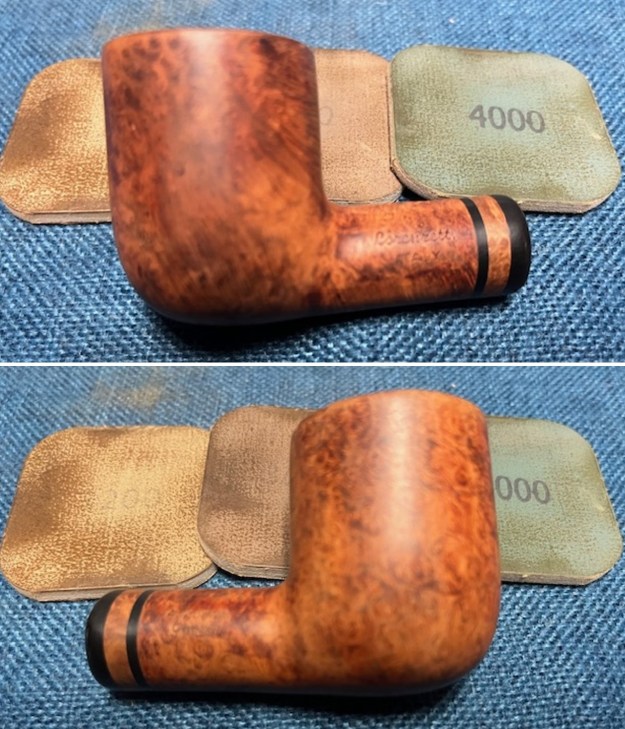
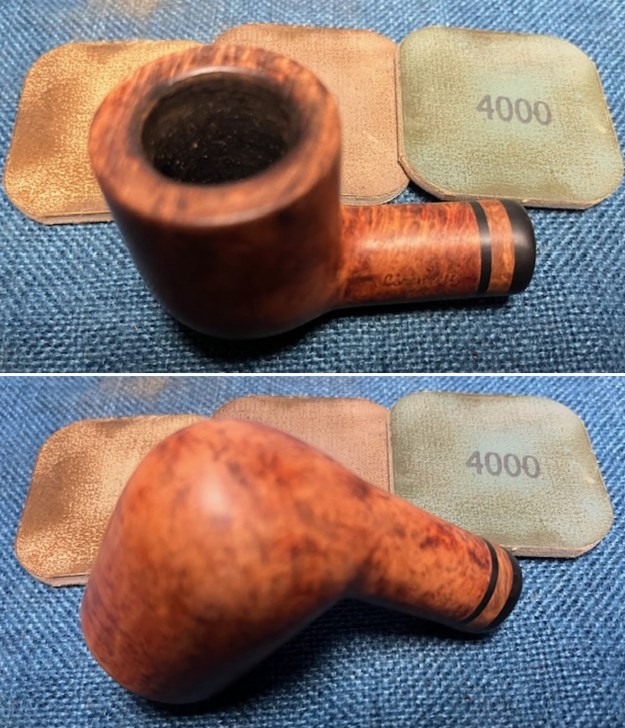
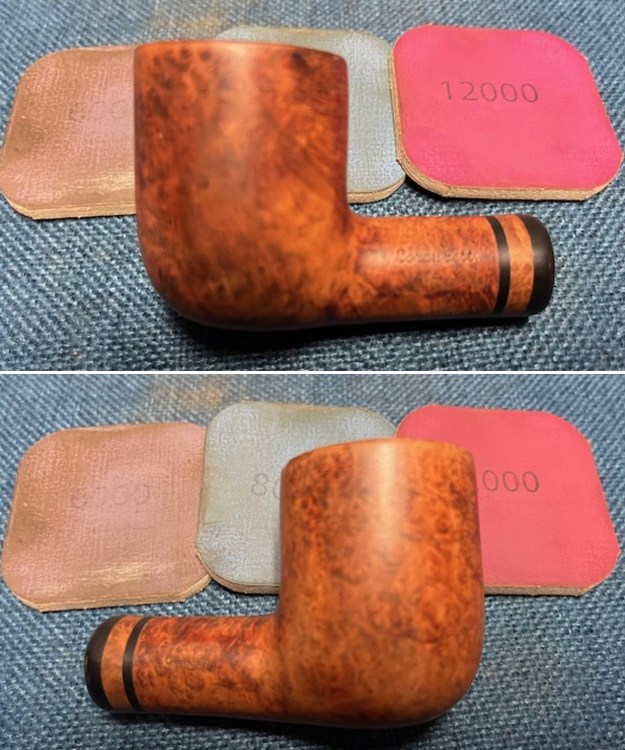
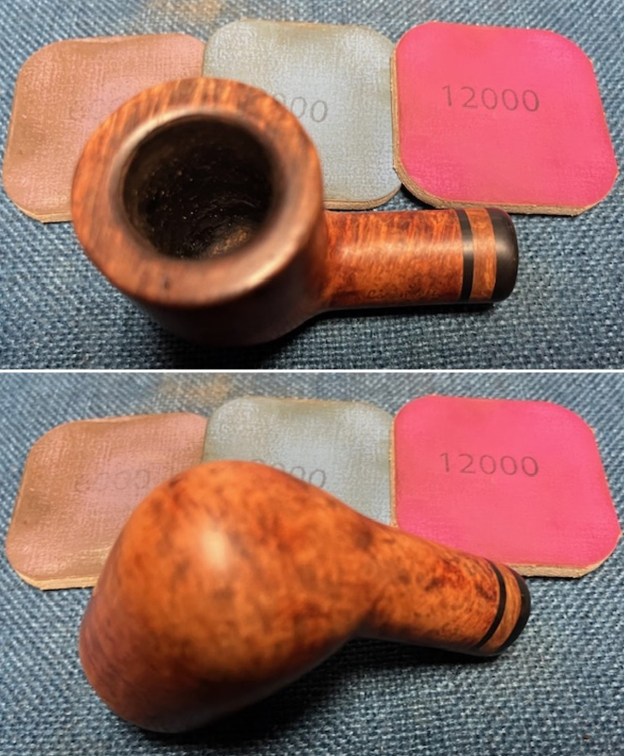
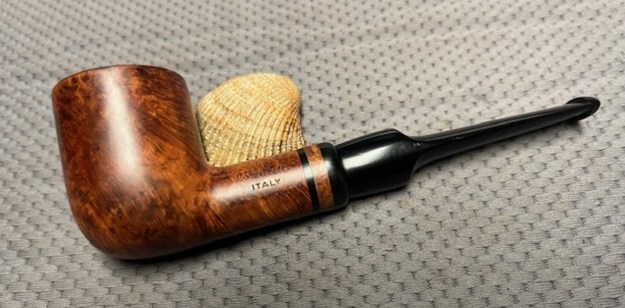
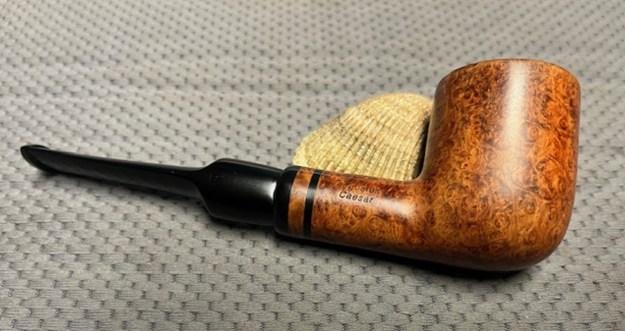
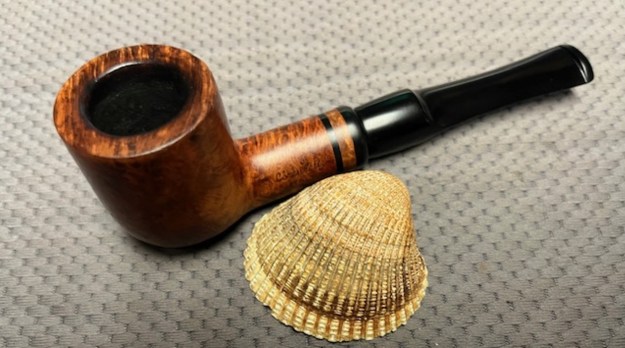
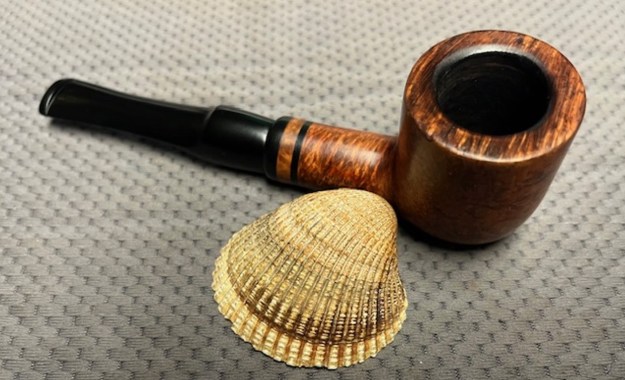
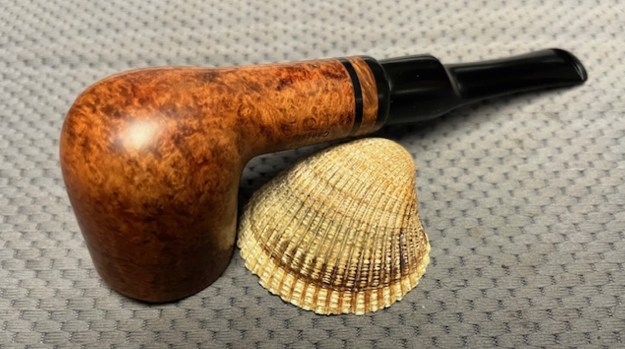
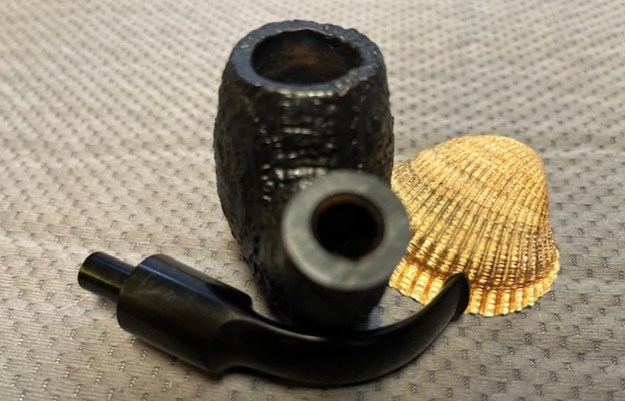
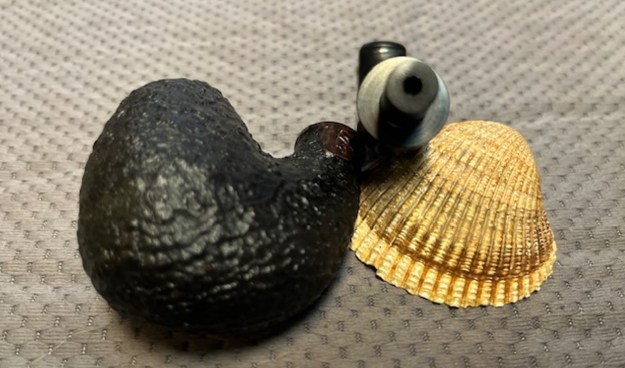
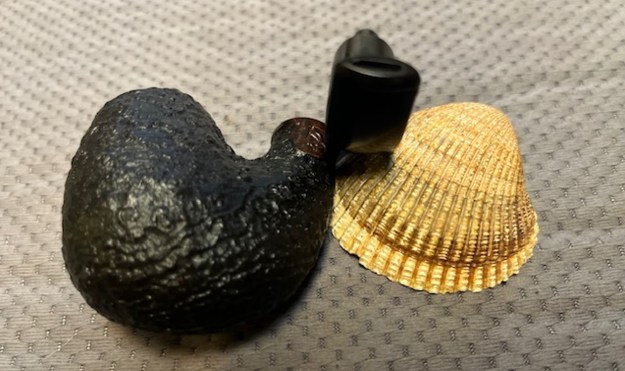
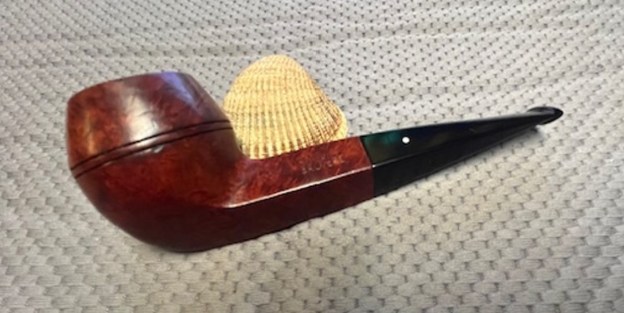
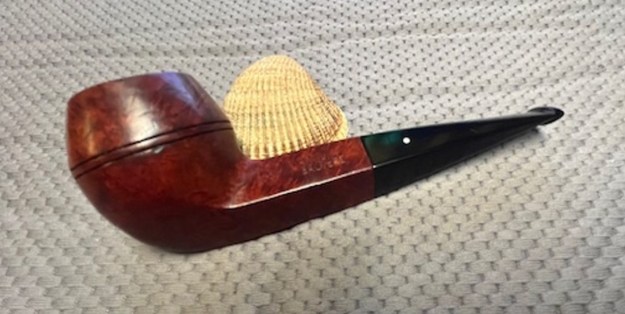
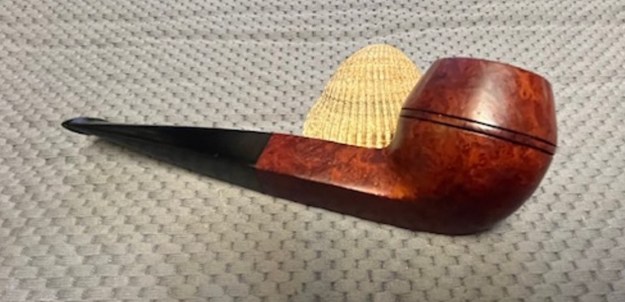
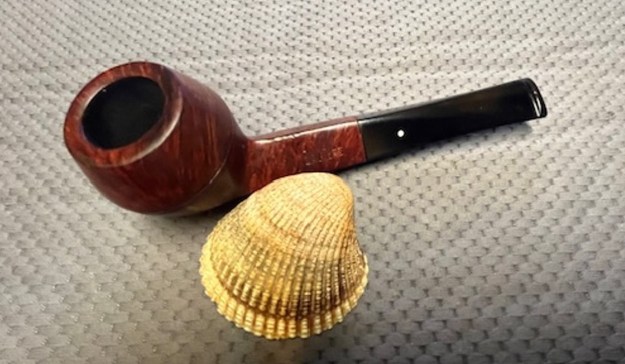
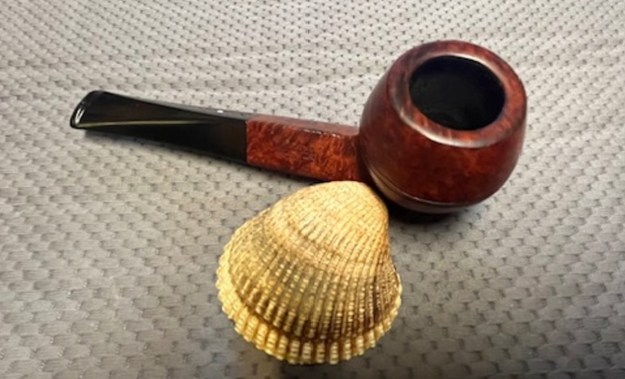
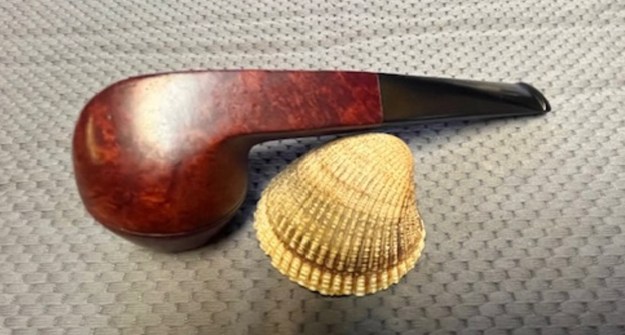
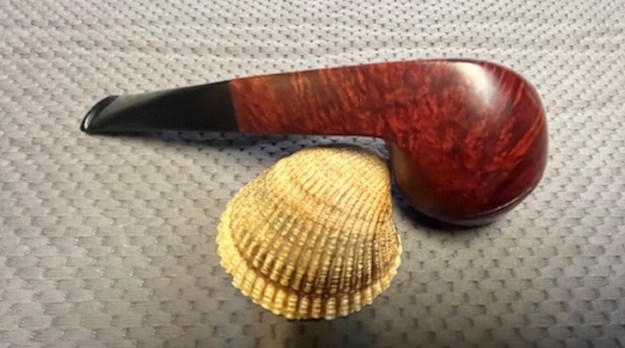
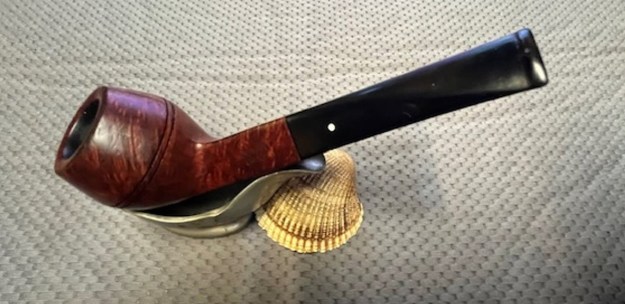
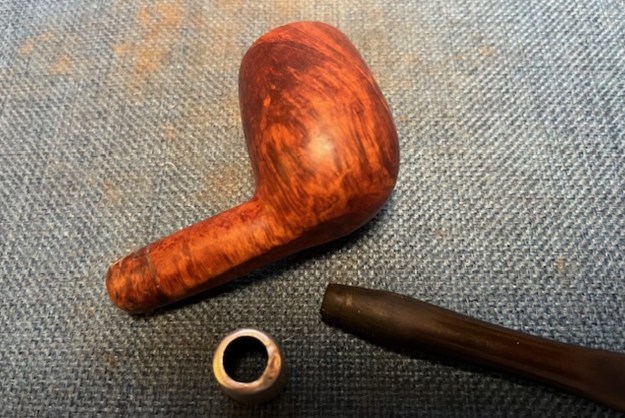
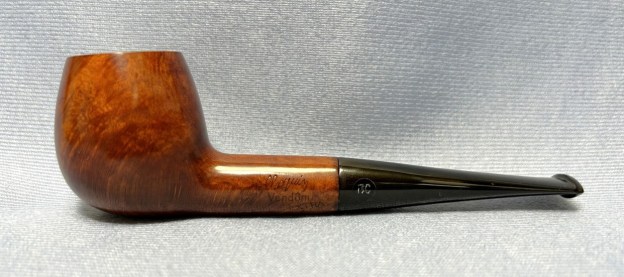
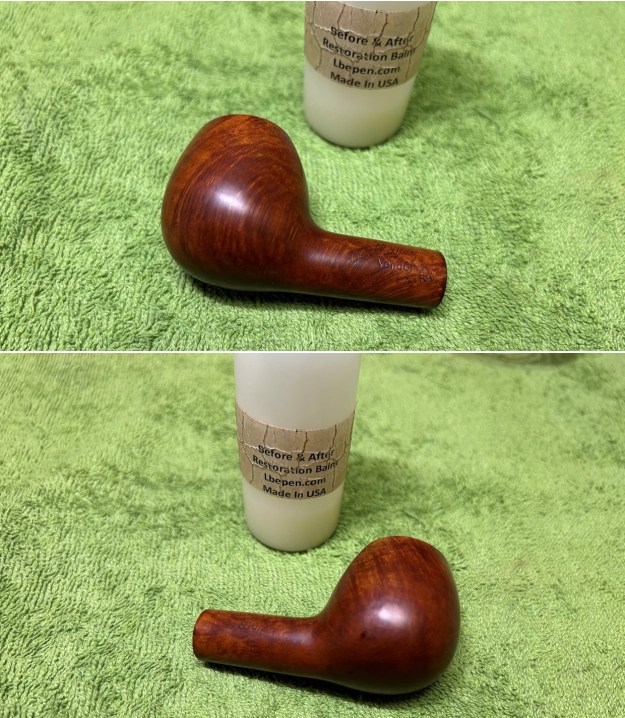
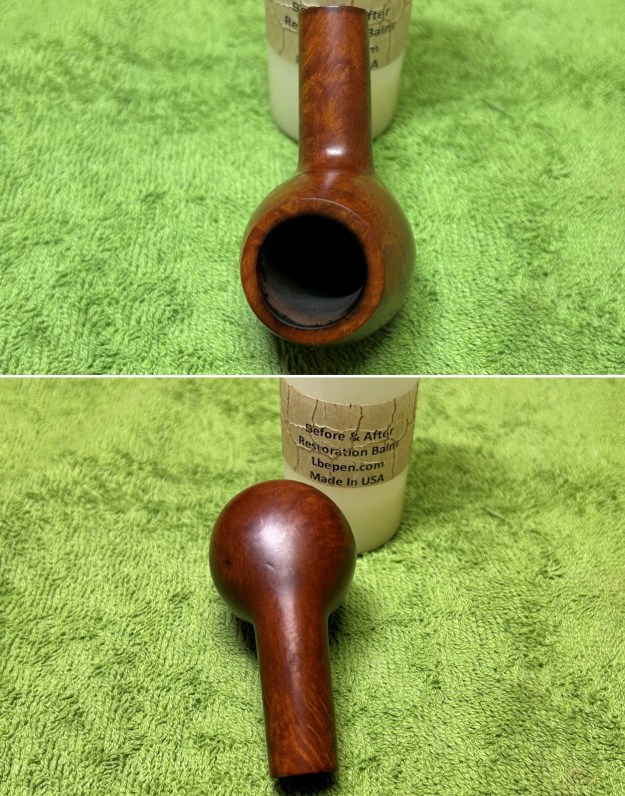
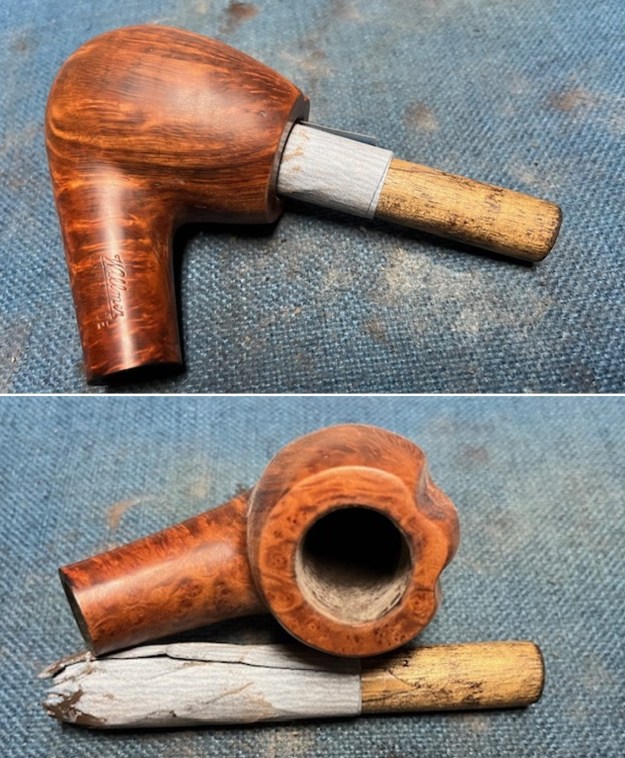
A fellow in Victoria, Brian has had me work on a few of his pipes this past few months. The pipes are generally very dirty with plugged airways and a thick damp, tarry mess in the heel of each bowl. The airway in the shank was also clogged so there was no exchange of air going through the pipe. The pipe was stamped on the left side of the shank and reads Lorenzetti in script [over] Italy and on the right side it is stamped Augustus [over] Caesar. On the underside it is stamped 03. There is a thick cake in the bowl that is wet in the bottom 1/3 of the bowl. The rim top was quite clear of heavy lava. The finish on the bowl and shank has a thick peeling coat of varnish on the bowl that looks terrible. There is an acrylic shank end with an insert of briar between the acrylic pieces. The stem acrylic stem is a filter stem and the button end has a large chunk missing that is severely damaged. I will need to restem the pipe. But I have included photos of the pipe before I started working on it. I took photos of the rim top and stem to show the general condition of the pipe. The bowl is heavily caked and the rim top and edges have a thick lava overflow. The photos of the stem show the damage and broken part of the stem. It really is a mess and the acrylic is not repairable.I took photos of the stamping on the sides of the shank. It is clear and readable and reads as noted above. I took a photo of the pipe without the stem to show the proportions of the bowl and stem. I also went through my stems and had a saddle stem that was made for a filter. I called Brian and asked if this would work for him and he was happy with the options. I wanted to gather some background information on the brand. I turned first to Pipephil’s site to see what I could learn (http://www.pipephil.eu/logos/en/logo-l6.html). I was able to get a screen capture of information on the brand. I have included that below along with the sidebar info.Brand created 1934 by Otello Lorenzetti.Currently (2009) the company is managed by Alessandro Lorenzetti. Address: via A.Giunta, 51, 62019 Recanati (MC) – Italy.

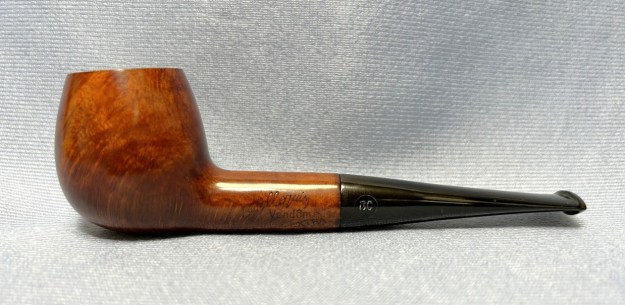
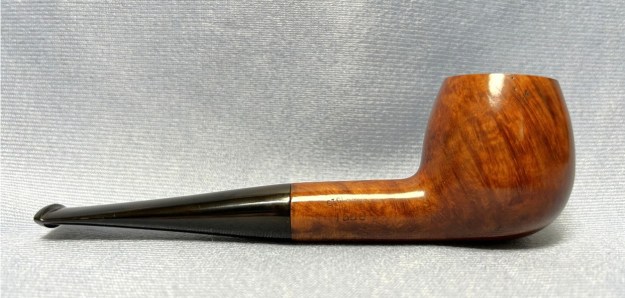
I turned to Pipedia to gather more information on the brand. It gives some great history of how the brand developed (https://pipedia.org/wiki/Lorenzetti). I quote some portions of the article below. There was also a photo of the same pipe that I am working on the site. I have included that below.

Smooth Pot, courtesy SmokersHaven.com

Otello Lorenzetti, the founder of our manufacture, was born in Castelnuovo, Recanati in 1911. He is the fifth of five children from a modest, but enterprising family, in fact they own a tavern where the young Otello, already at the age of seven, actively collaborates. He goes on his own, with a small handcart, to S. Agostino di Recanati where he purchases fizzy drinks and other soft drinks and then resells them with his mother in their small family run tavern….

After the precocious interruption of his studies he begins to work as an employee at “Catena Remigio” an old pipe manufacture in Recanati. The grand personality of Otello, who is inclined to make any art a passion, does not delay in emerging. In 1934, after having concluded 18 months of military service in Cividale, in Friuli Venezia Giulia, he decides to work on his own pondering the first bases of the actual pipe manufacture, that, in this period, operates under the company name “Otello Lorenzetti.” At that time the capital of our actual company, that was and still is his house, was constituted by: “A few rented tools and my own hands” – as Otello himself tells us. The production consists of 20-30 pipes per day. Every morning, in company of his bicycle, he tries to sell them to the tobacco shops in the area or as he says the “neighbouring shops”. With only the strength of his legs he goes to Macerata, San Severino and Civitanova Marche. His pipes are appreciated, so much so that he decides to work more than 12 hours a day to be able to increase the production. This does not constitute a sacrifice for him as his neighbours remember hearing him tirelessly working and singing everyday.

Two brisk interruptions mark the history of our pipe manufacture: the first was in 1935 -in the summer of this year Otello was enrolled in the army and then left for “the African Campaign” from which he returned in January of 1937; the second was in October of 1940, other long months spent in the service of the Italian Army after which he returned home in 1943 the year of Armistice. In 1940 Otello got married to Marinella who became, other than his wife, a great and indispensable business collaborator.

In 1947 Otello succeeded in building, alone, machines the same as the ones he used to rent up until that moment. Many of the pieces most difficult to mould by hand were designed by him and were made in a craftsman workshop in Civitanova Marche. Production increased and permitted Otello and Marinella to buy a “Vespa” helping them to, a part from the province of Macerata, also reach Abruzzo in order to successfully sell their pipes.

The Sixties-Seventies bring on the beginning of exportation abroad (Europe, Africa, America). The company begins to expand, now a part from Marinella, with the help of their children Luciano, Gabriella, Alessandro and some employees. The production begins to perfect itself to the point of being appreciated in almost all the world and by one of the biggest and most famous pipe collectors of all times: our ex-president of the Republic Sandro Pertini.

I knew that I was dealing with a Lorezetti that was probably a recent manufacture. It had some great shape and form and should clean up well once I have the varnish coat removed. Now it was time to work on the pipe.

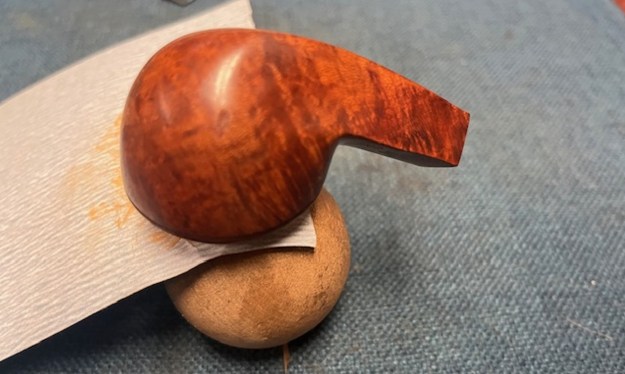
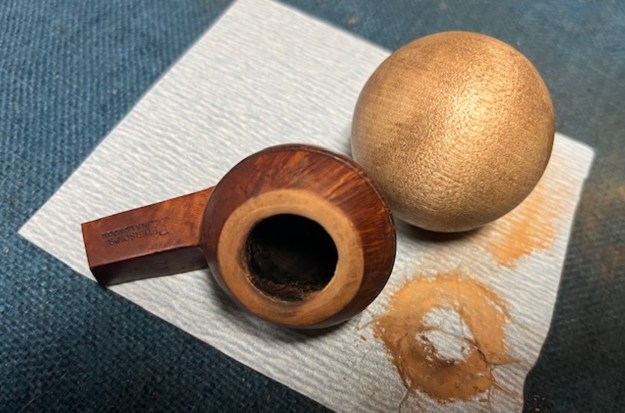
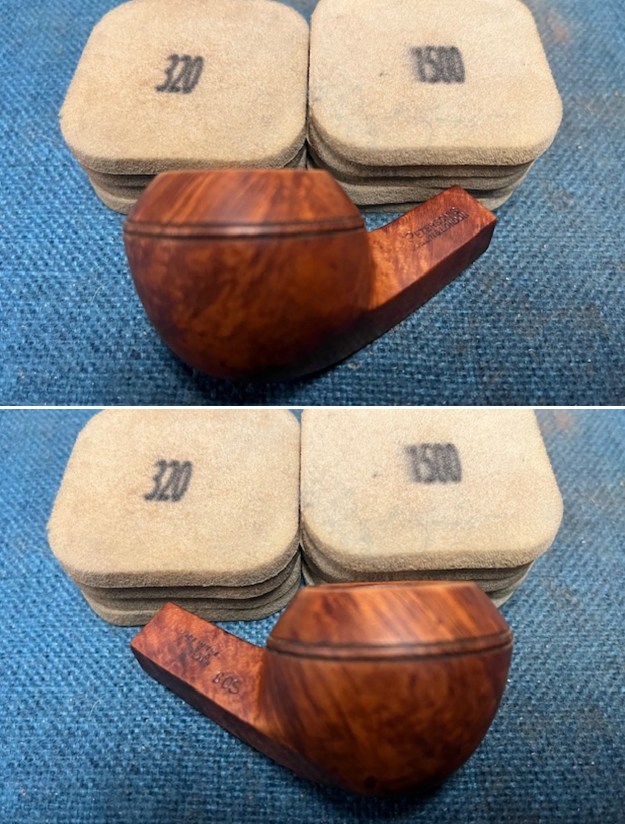
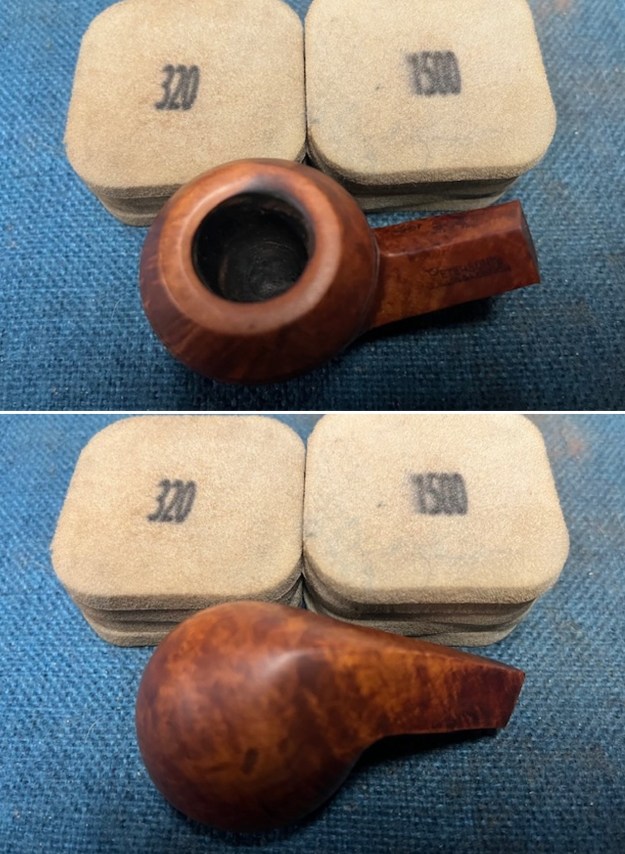
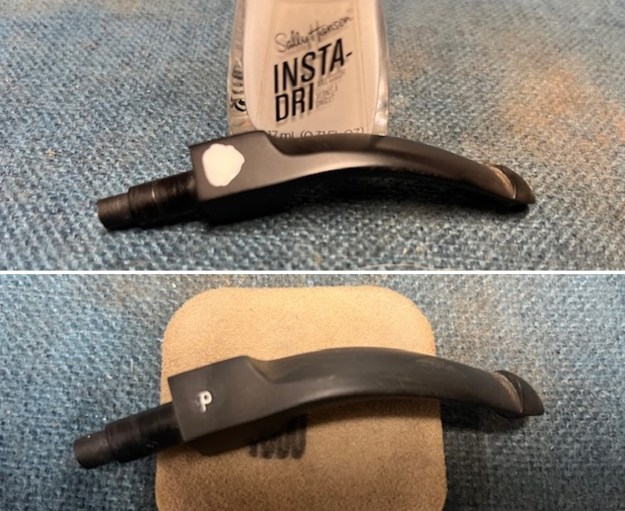
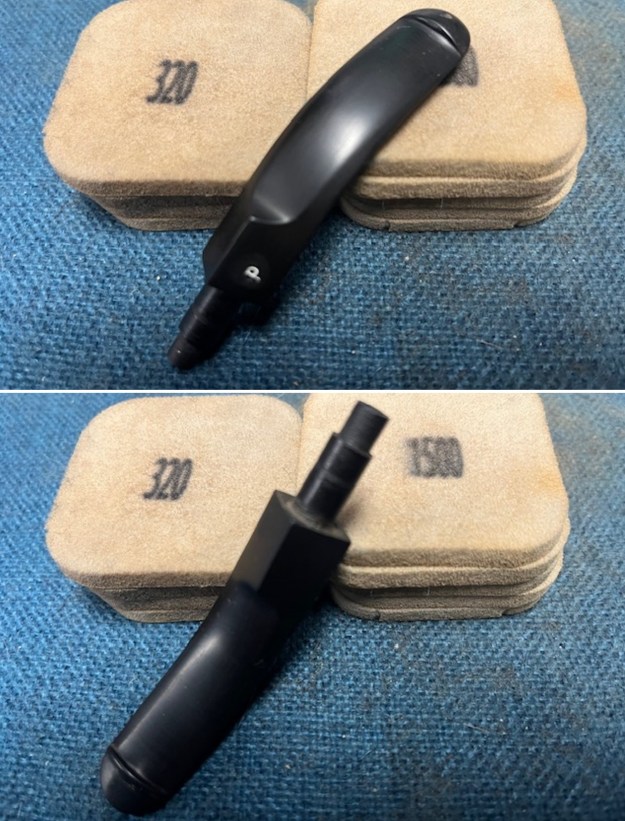
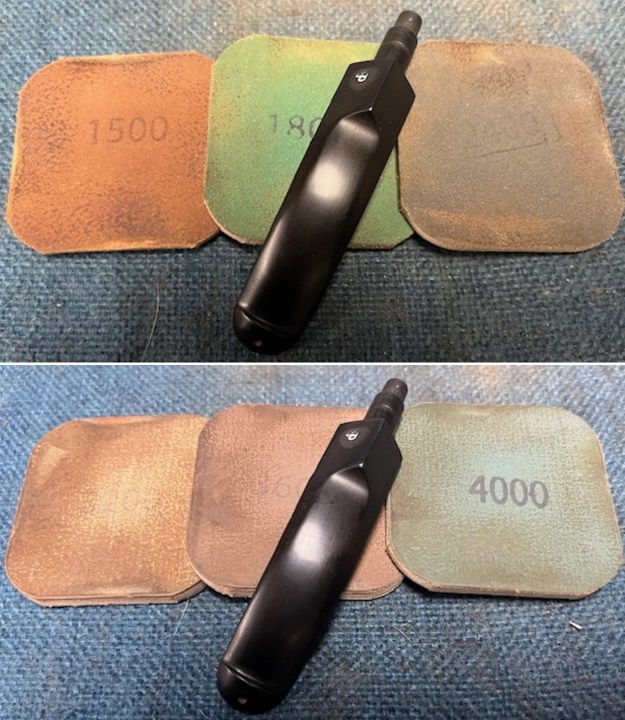
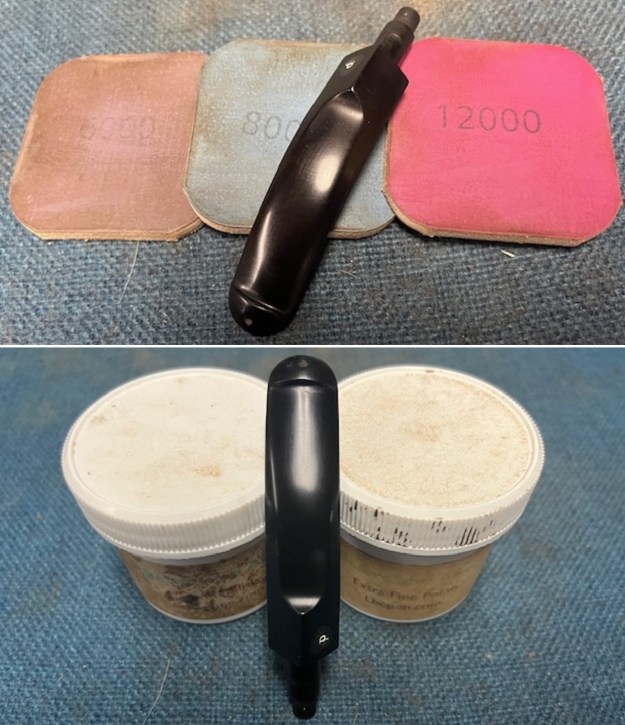
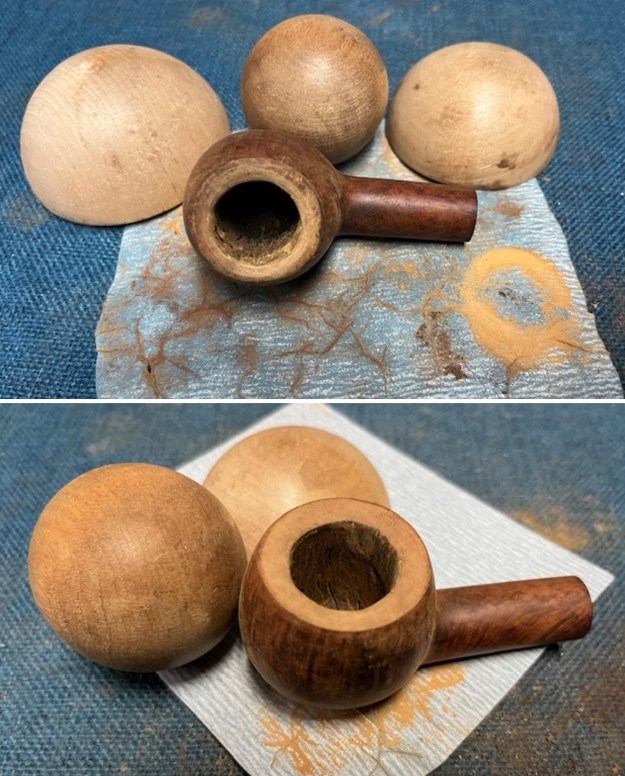
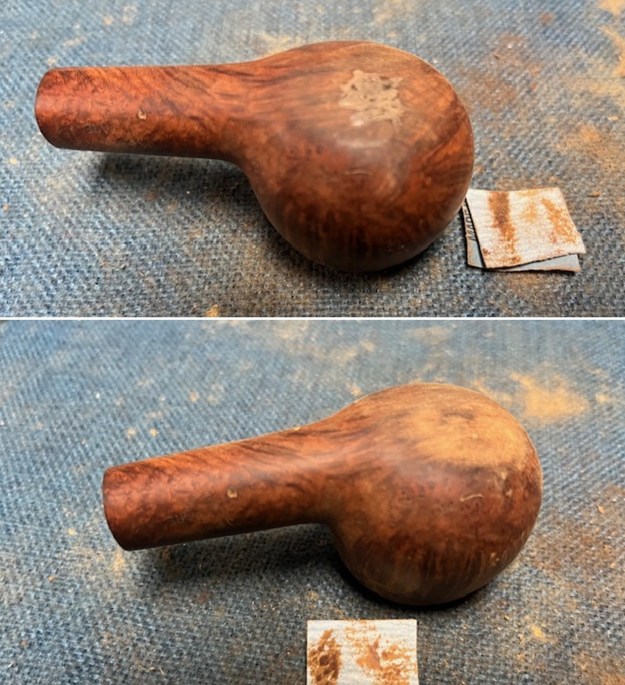
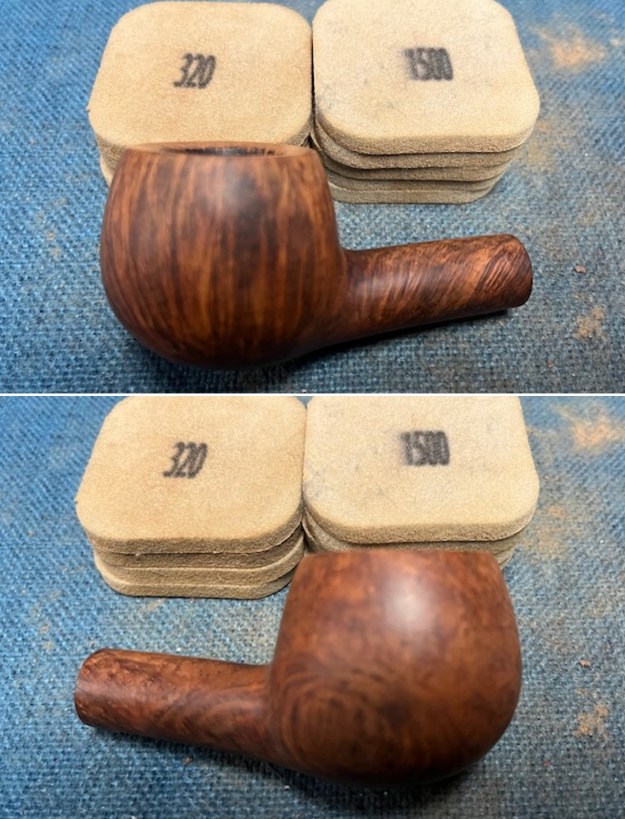
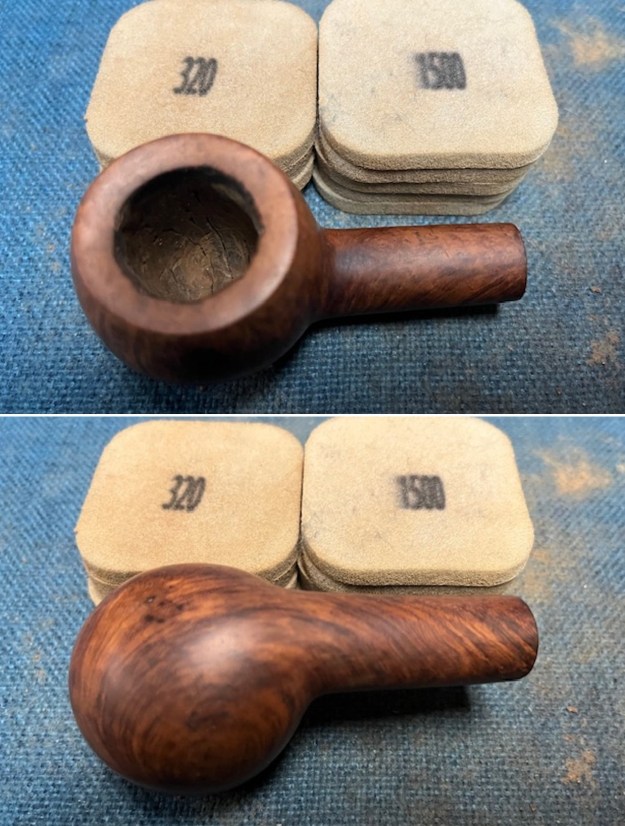
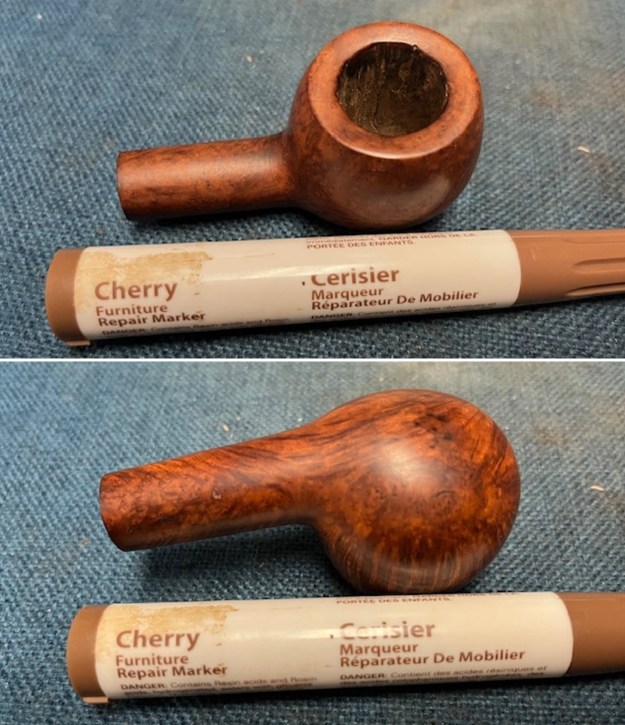
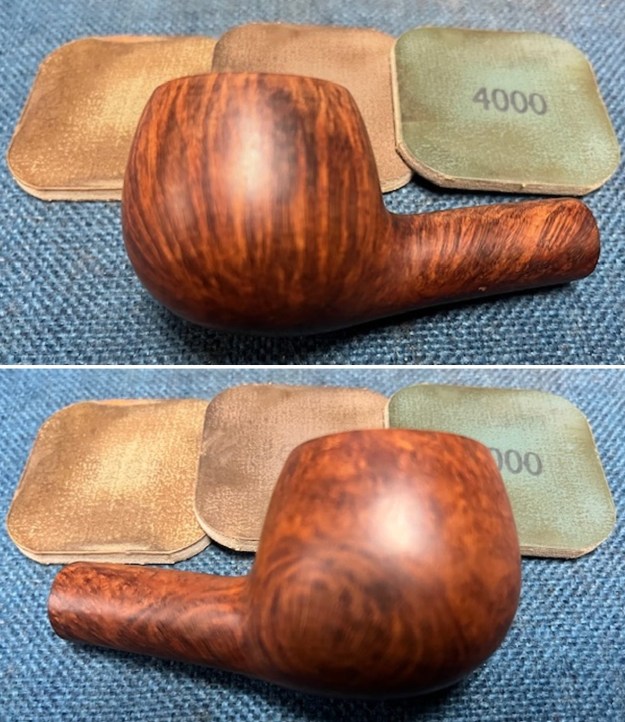
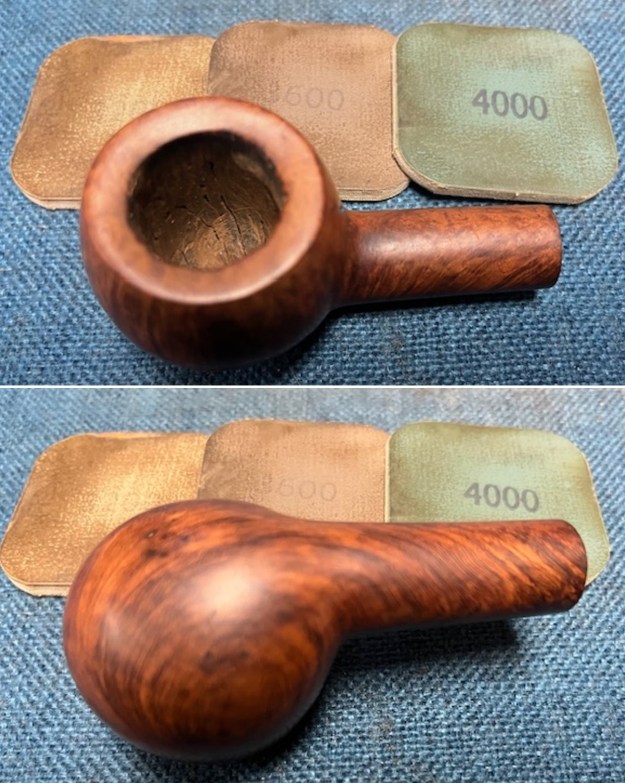
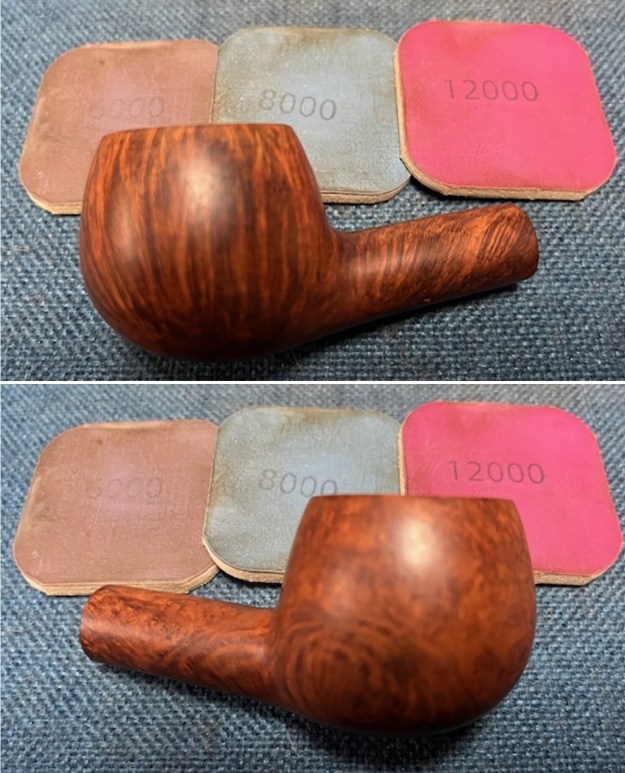
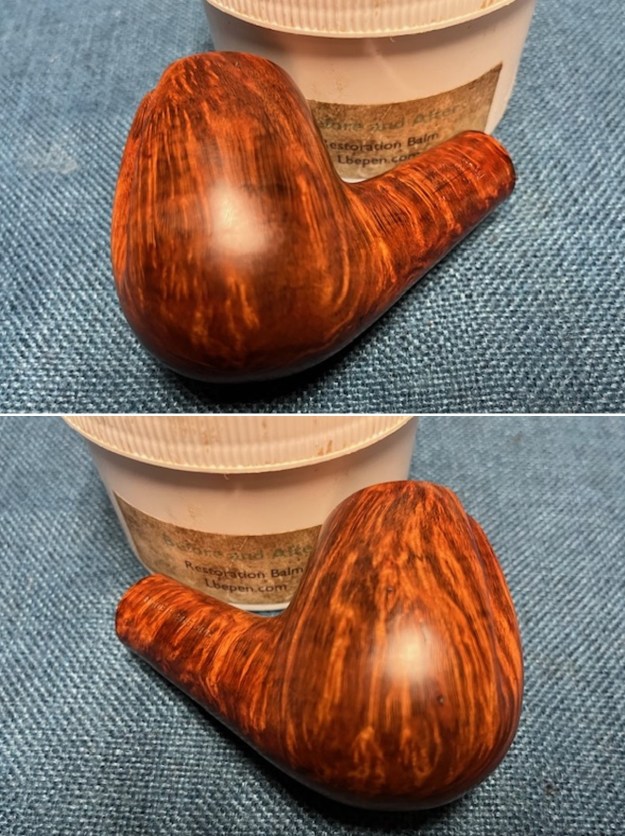
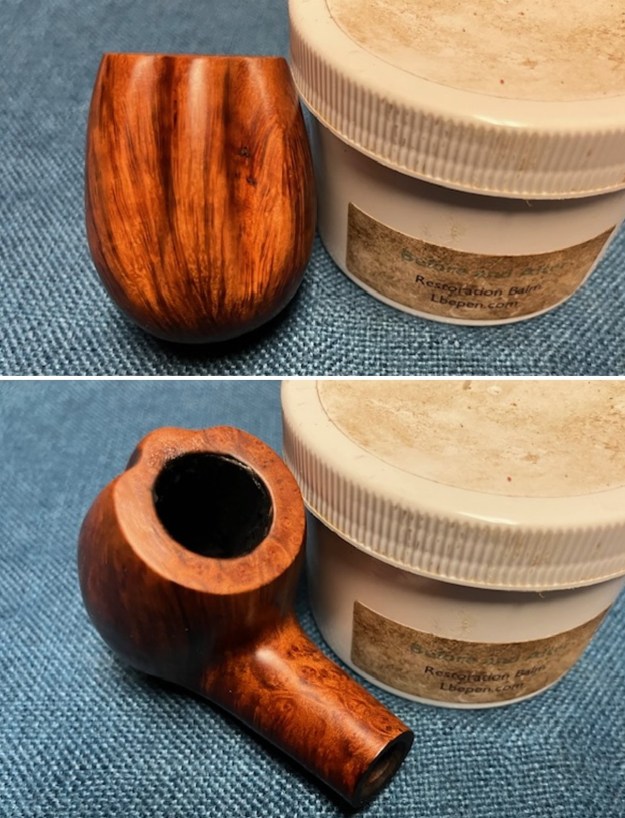
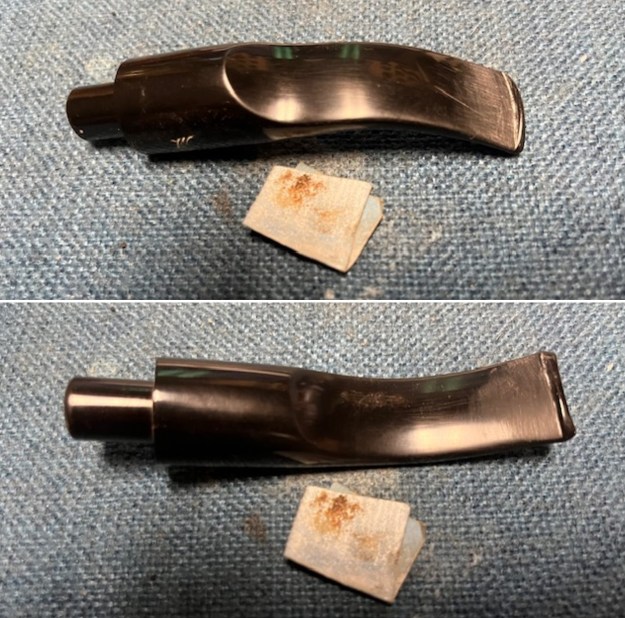
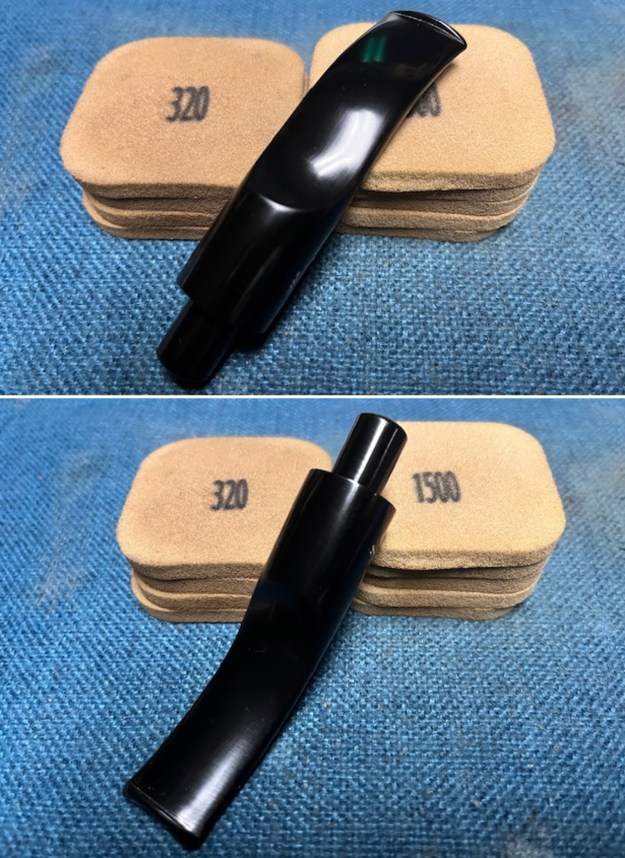
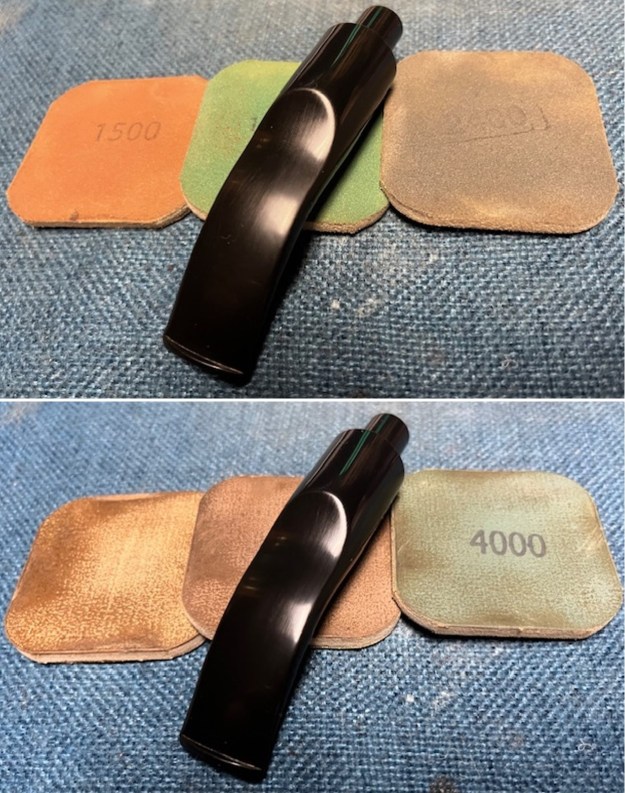
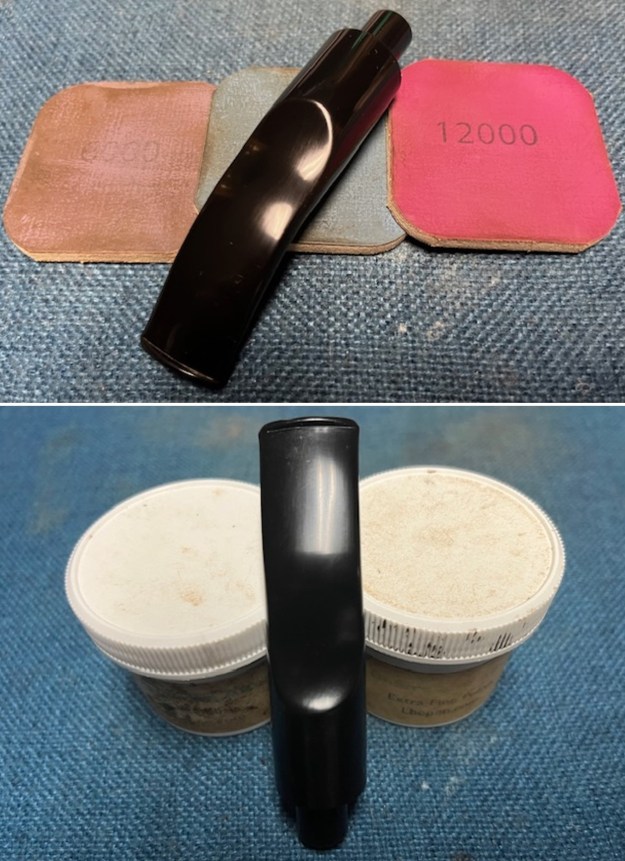
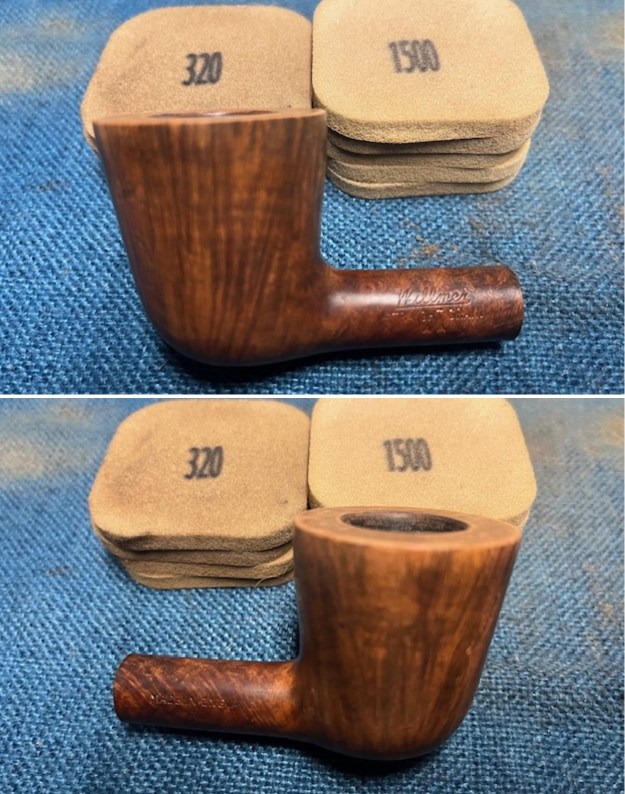
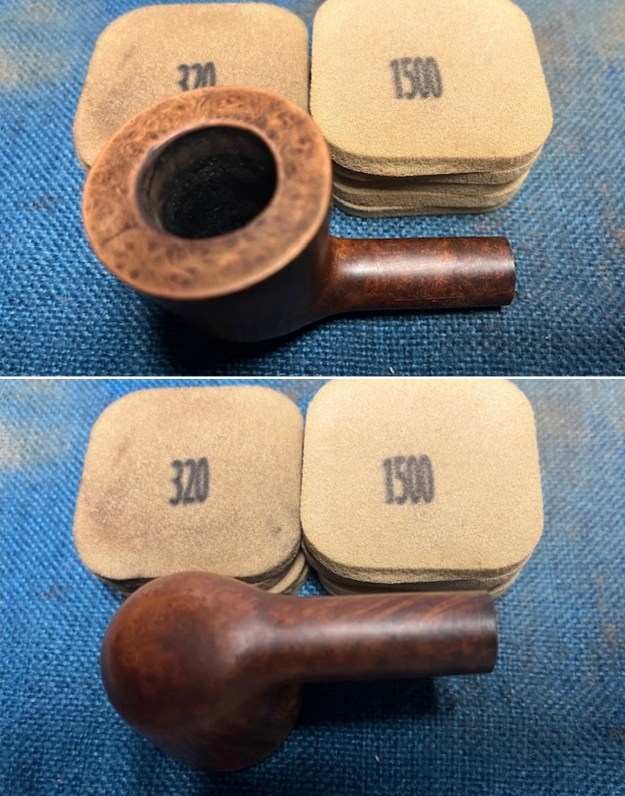
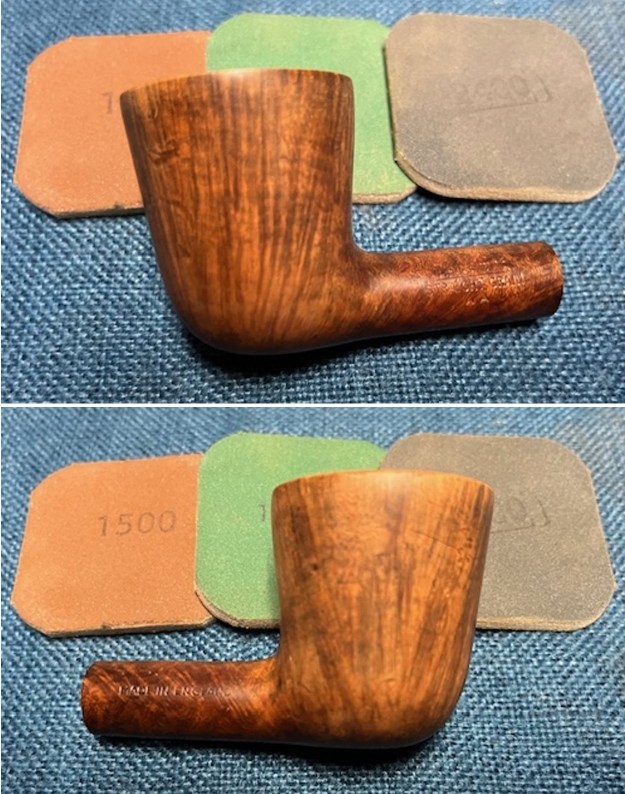
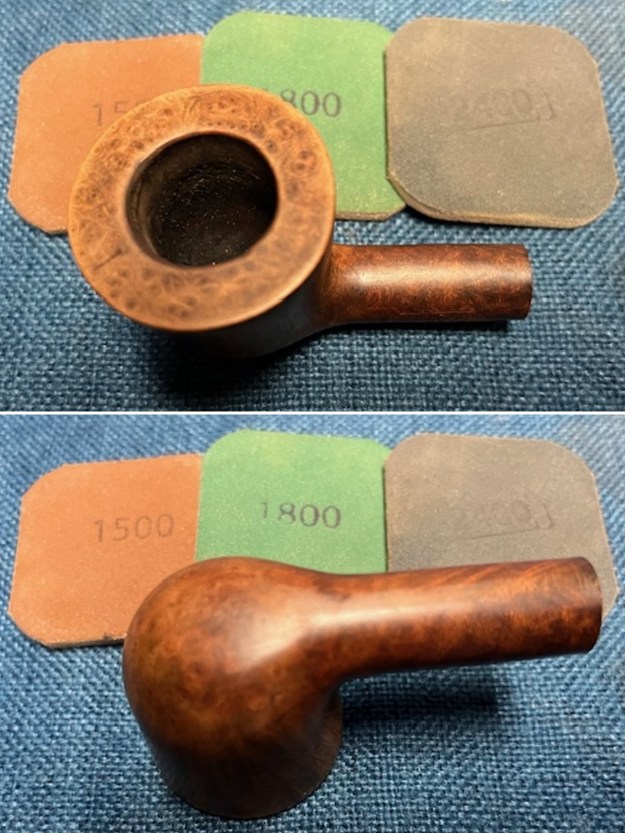
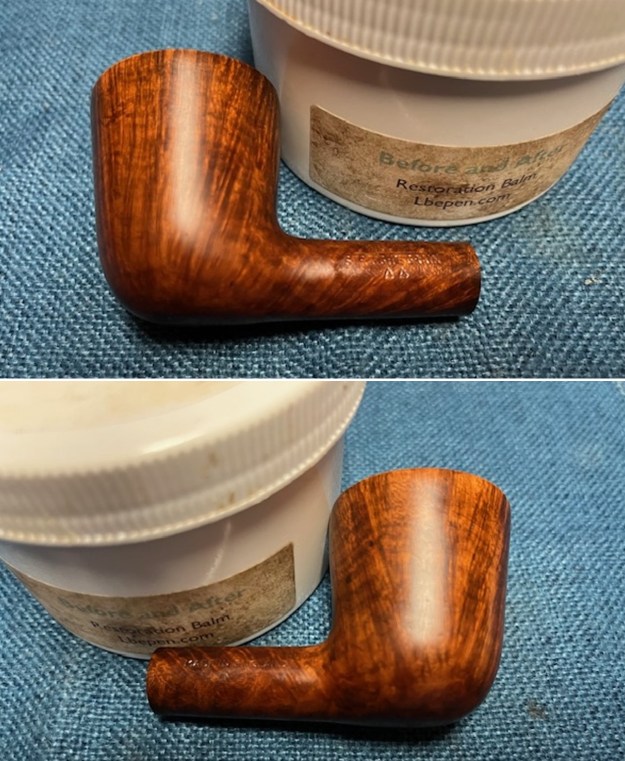
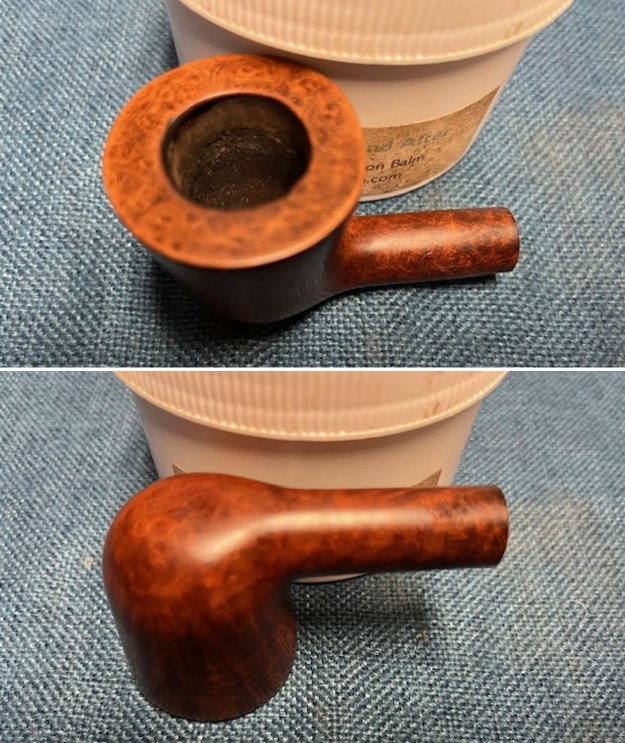
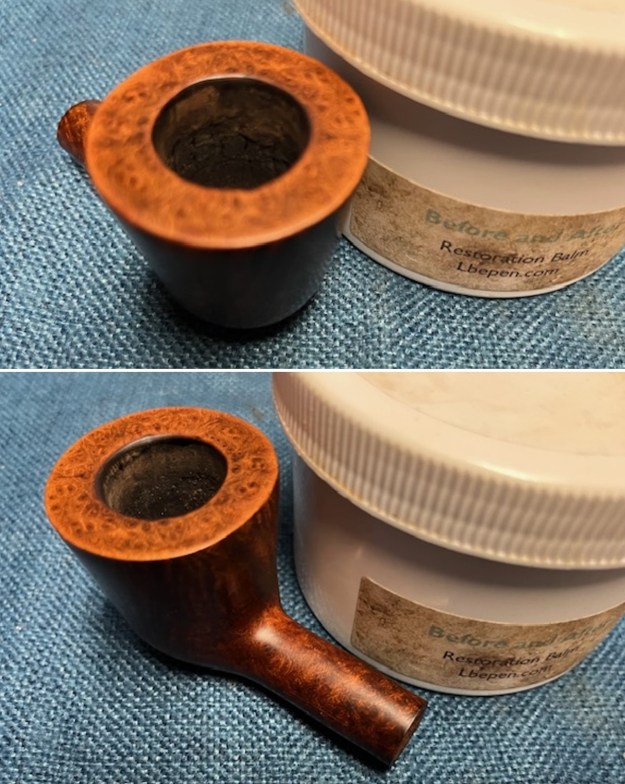
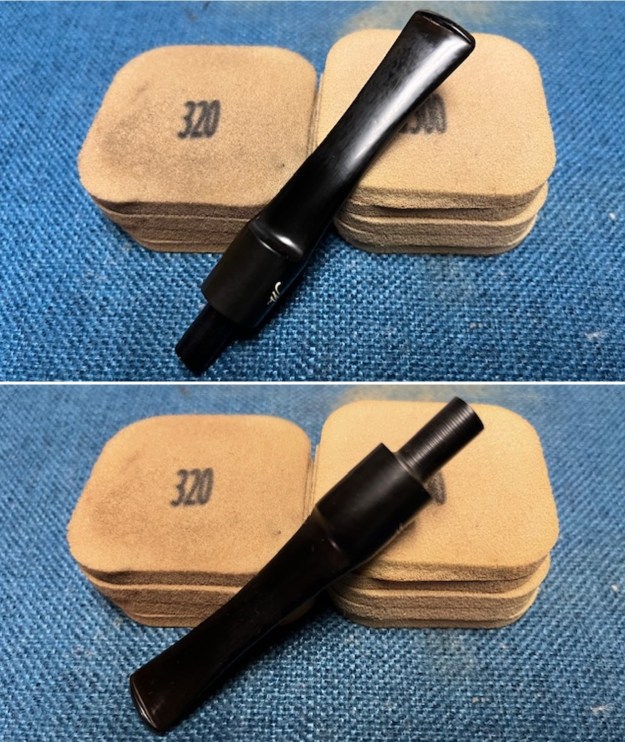
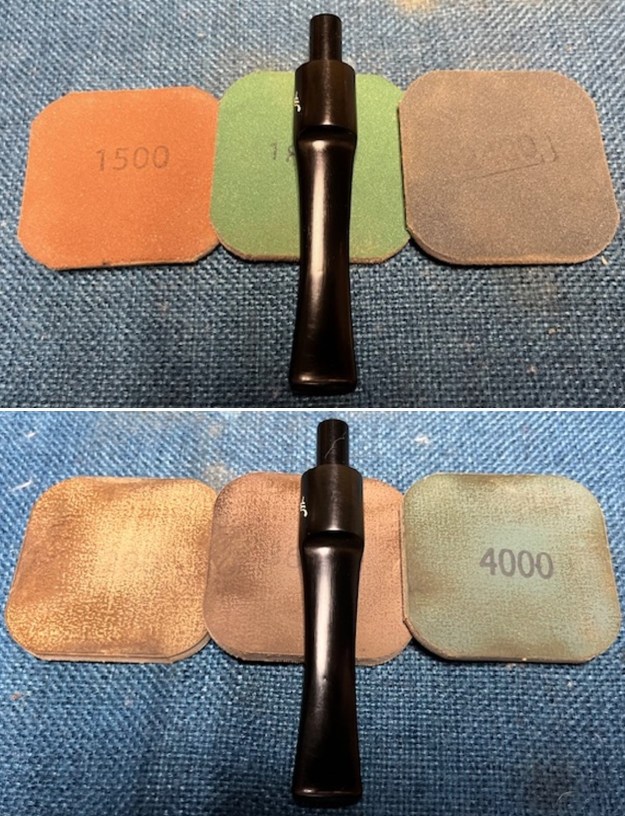
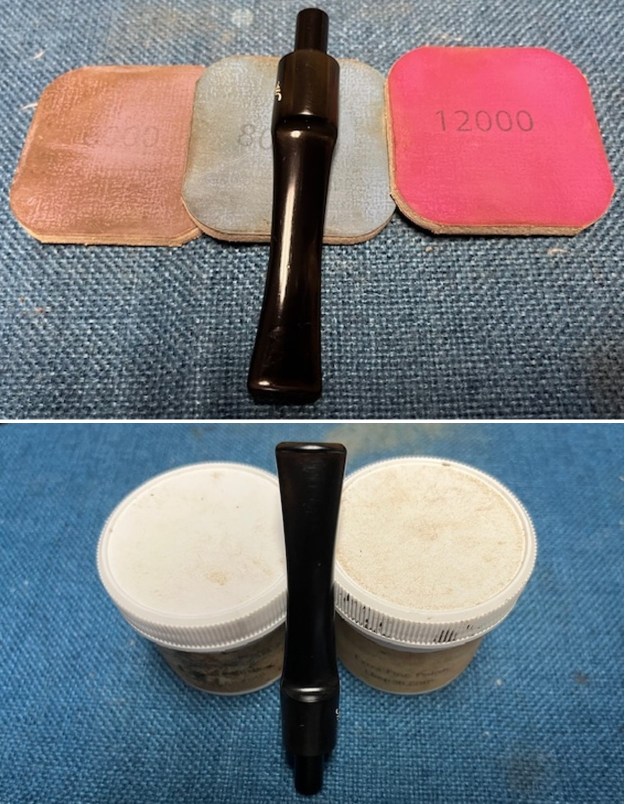
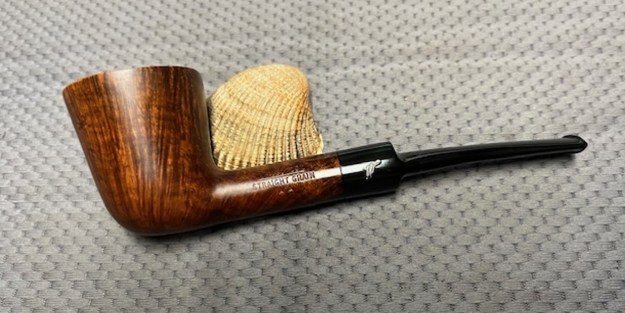
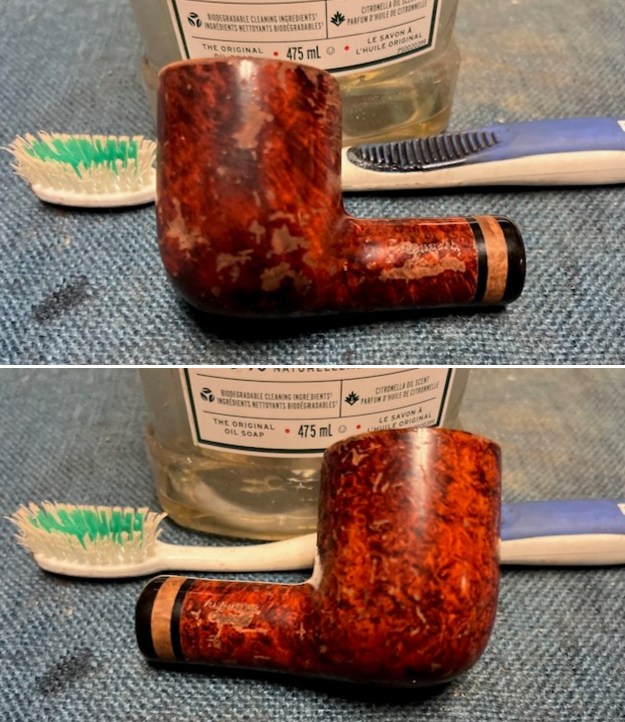
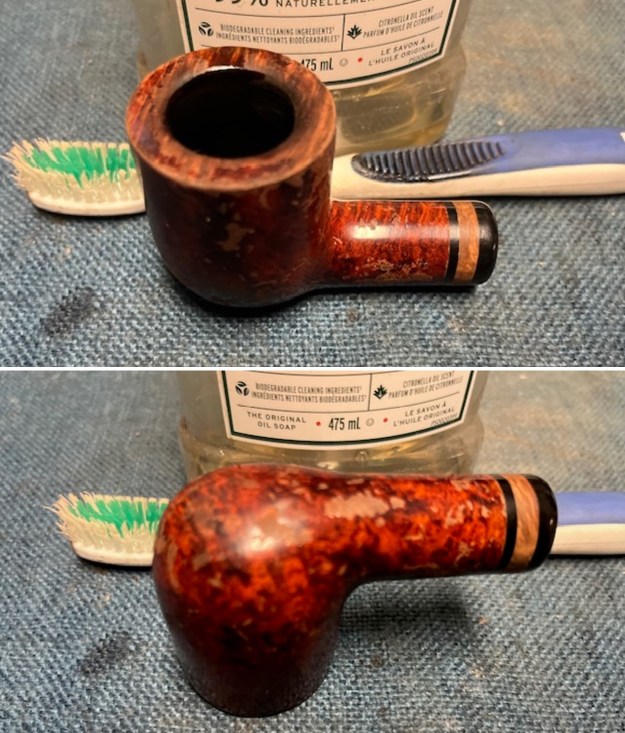
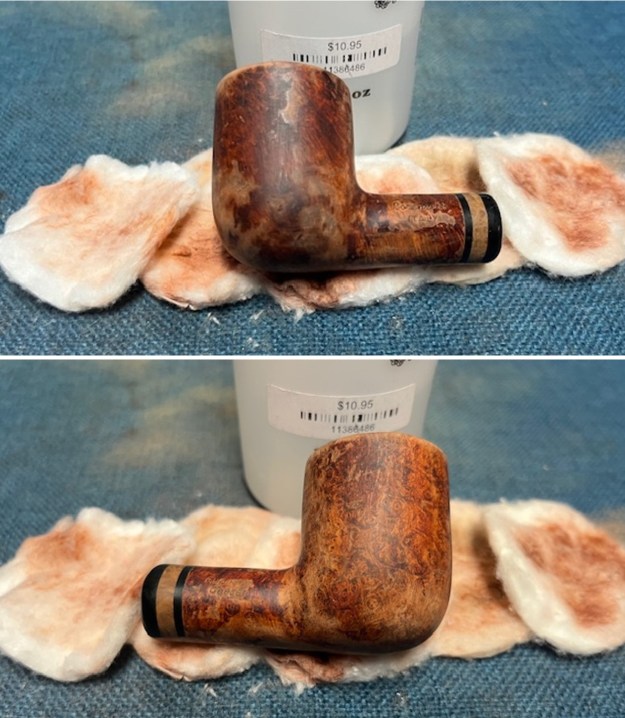
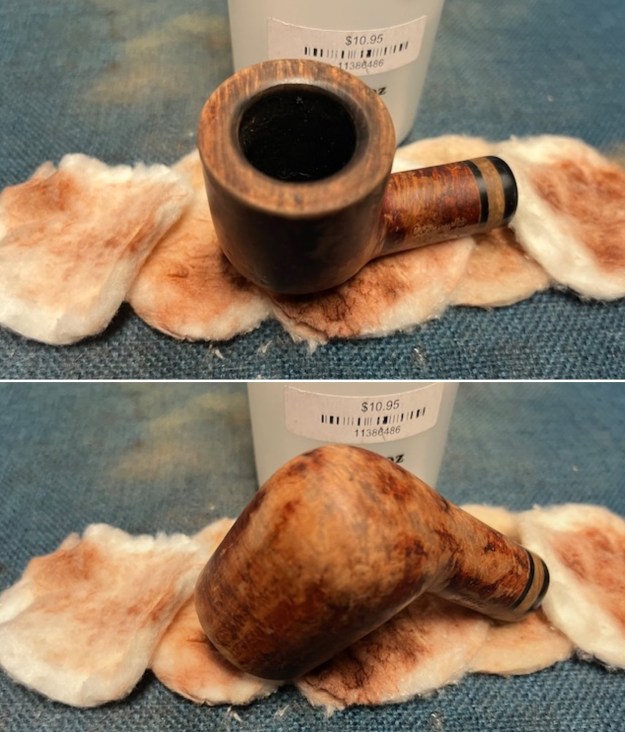
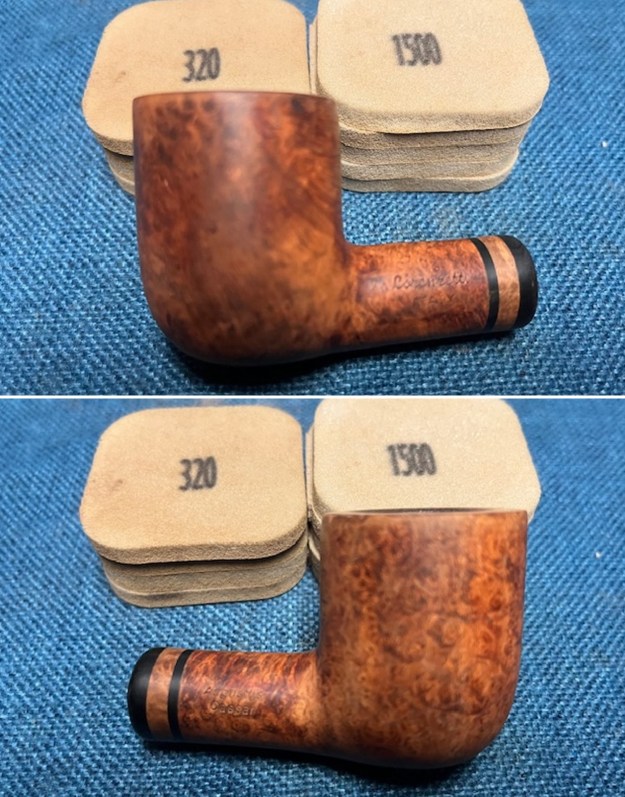
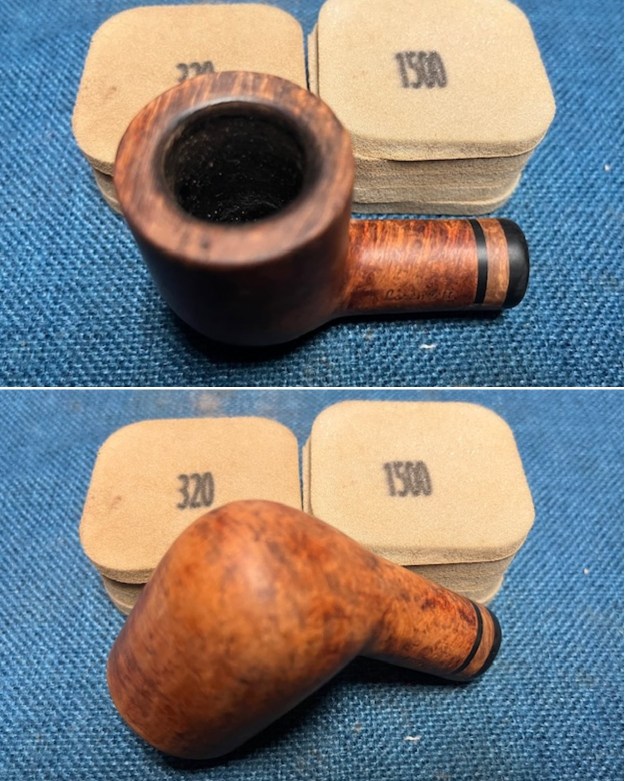
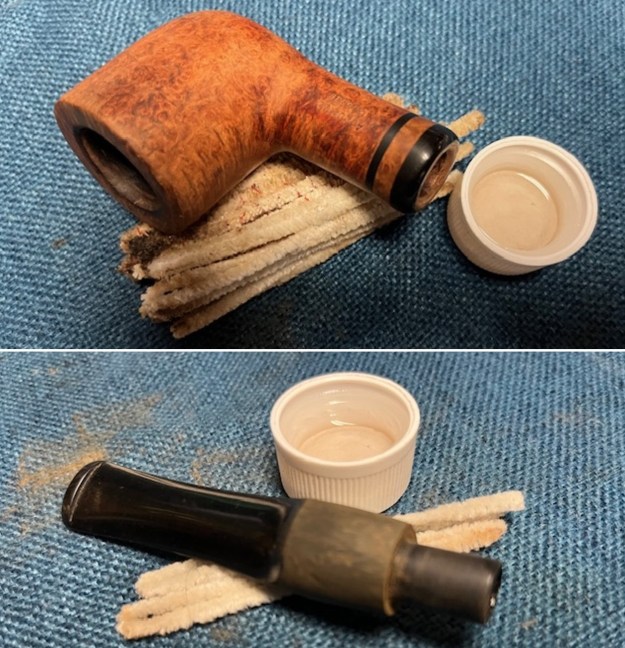
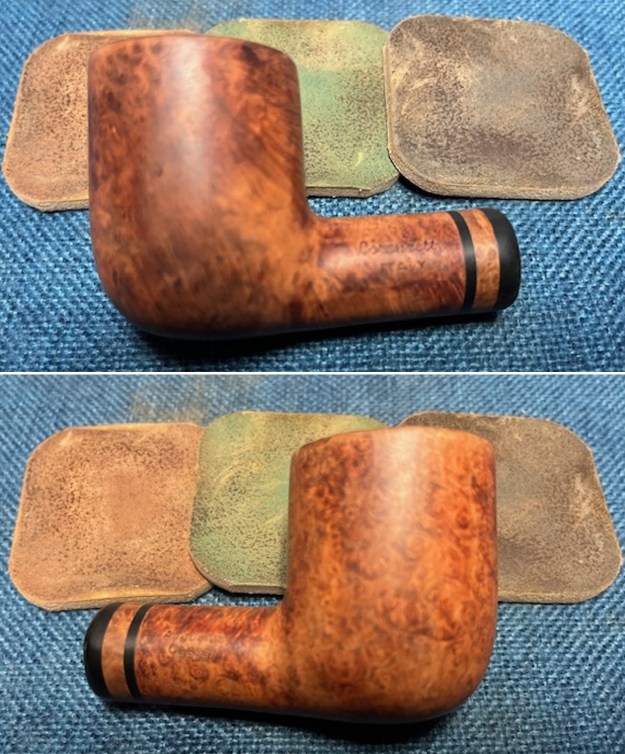
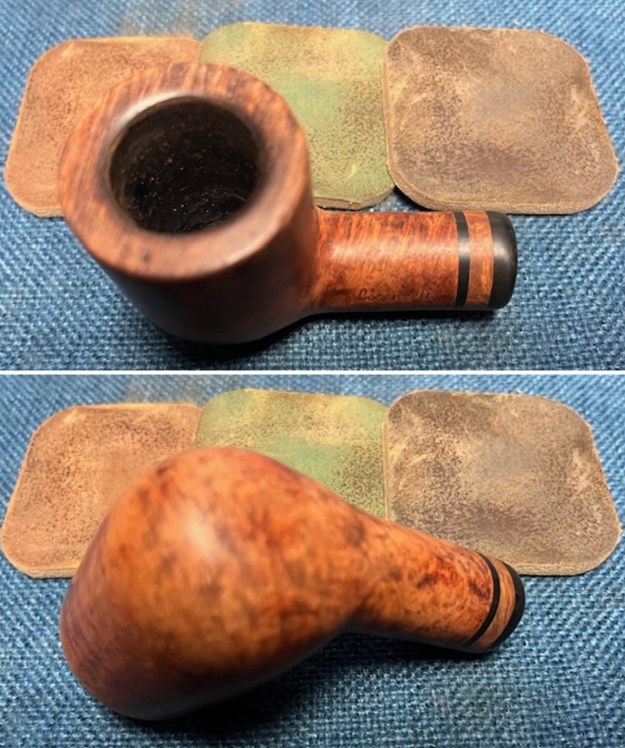
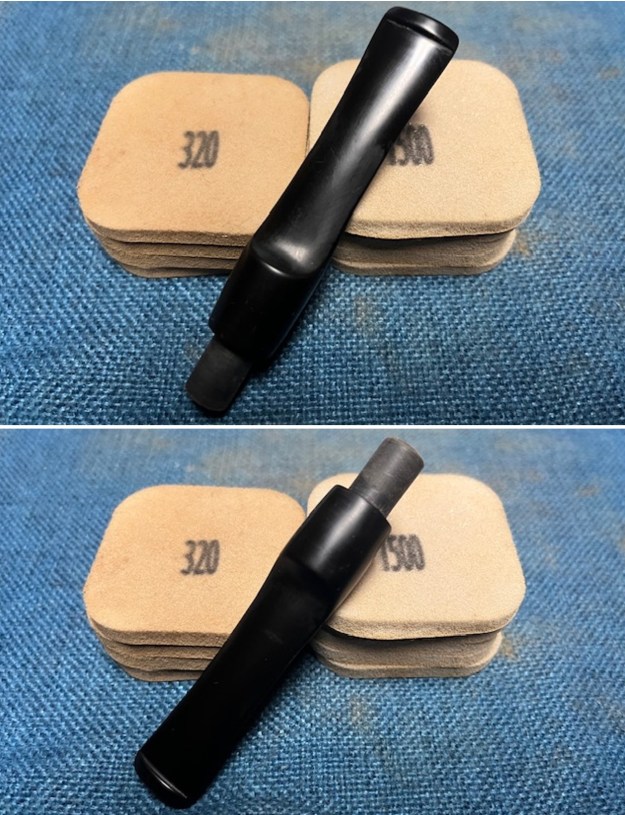
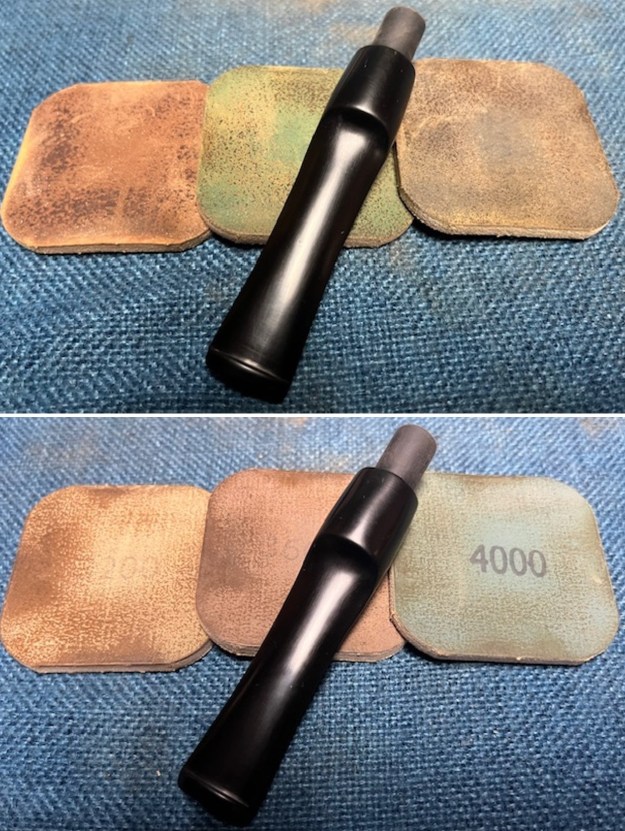
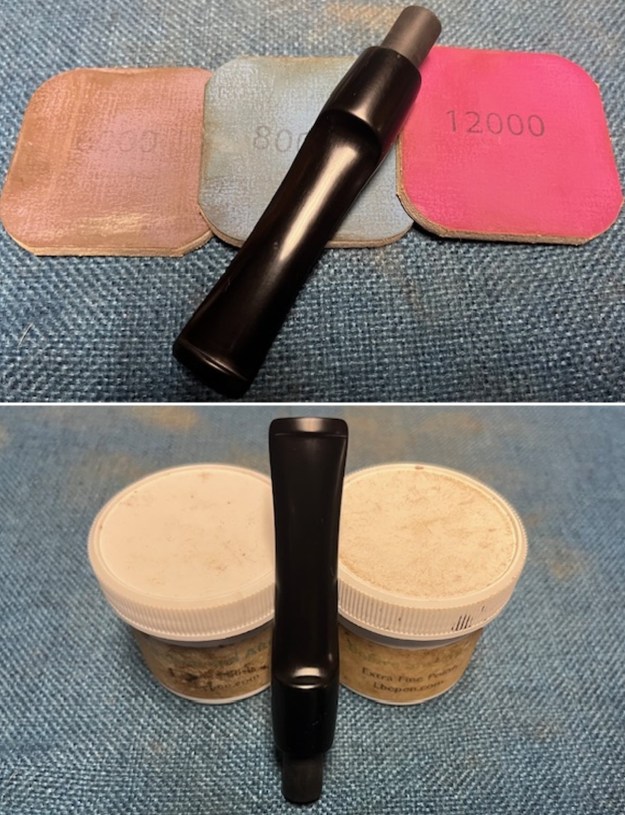
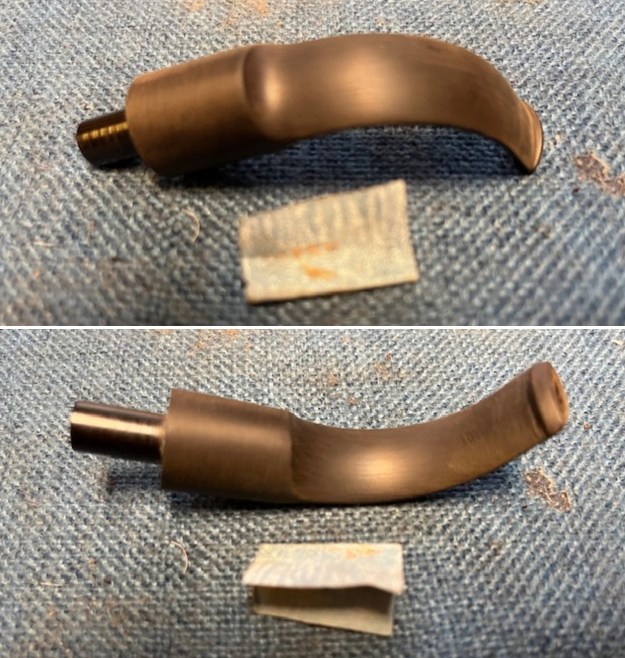
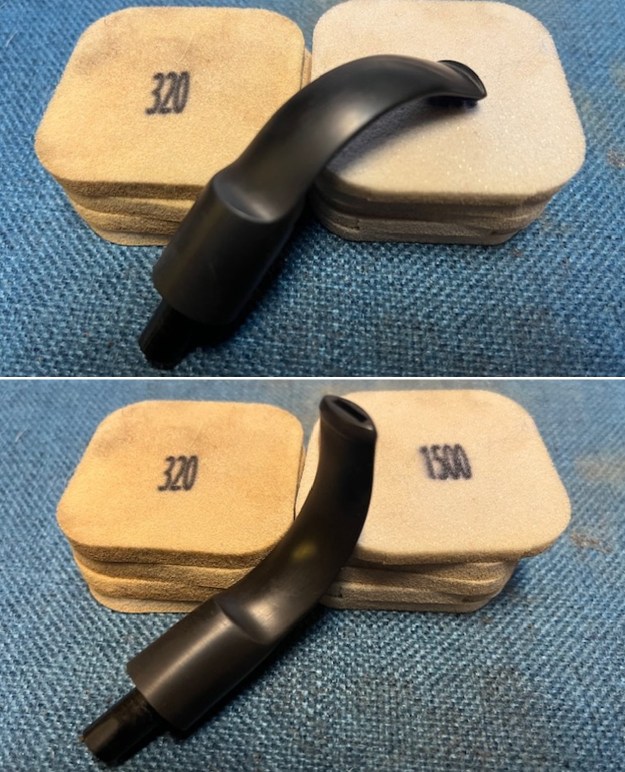
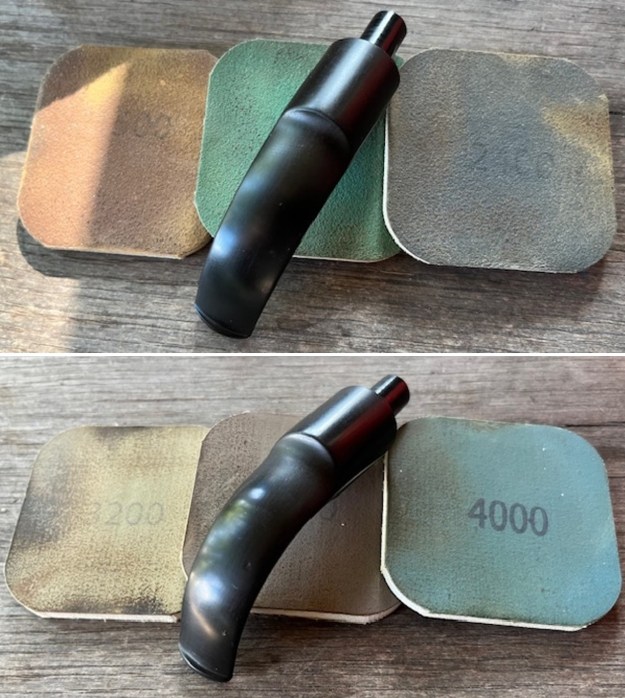
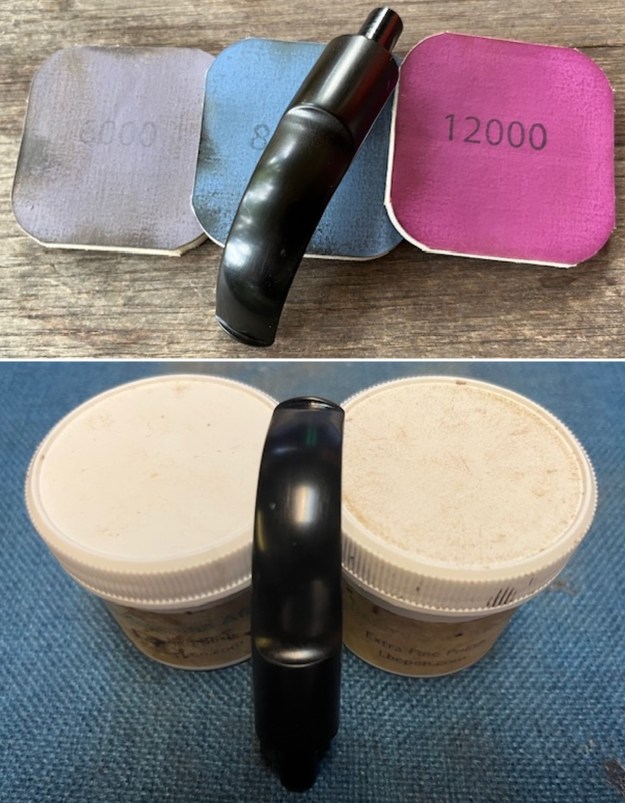
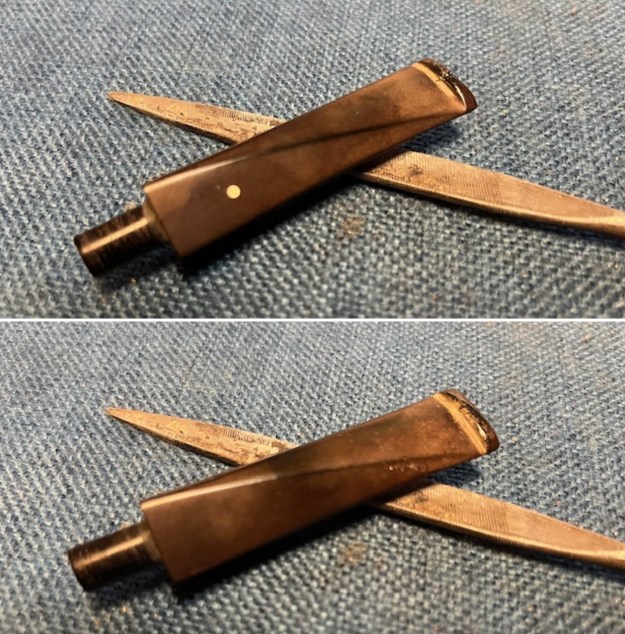
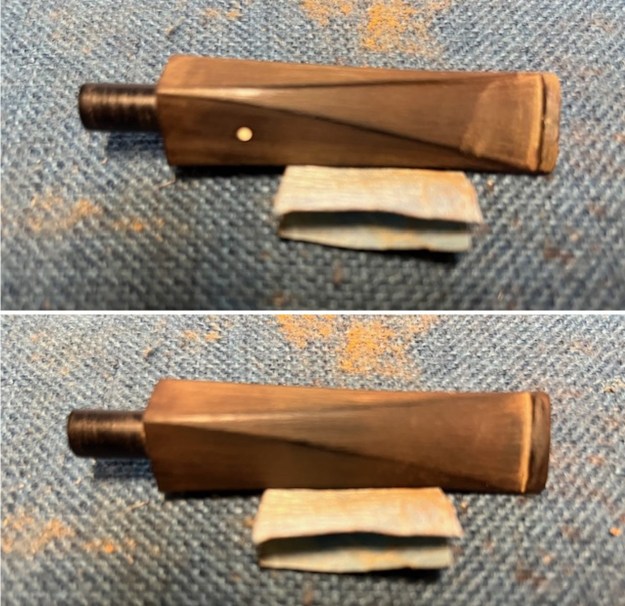
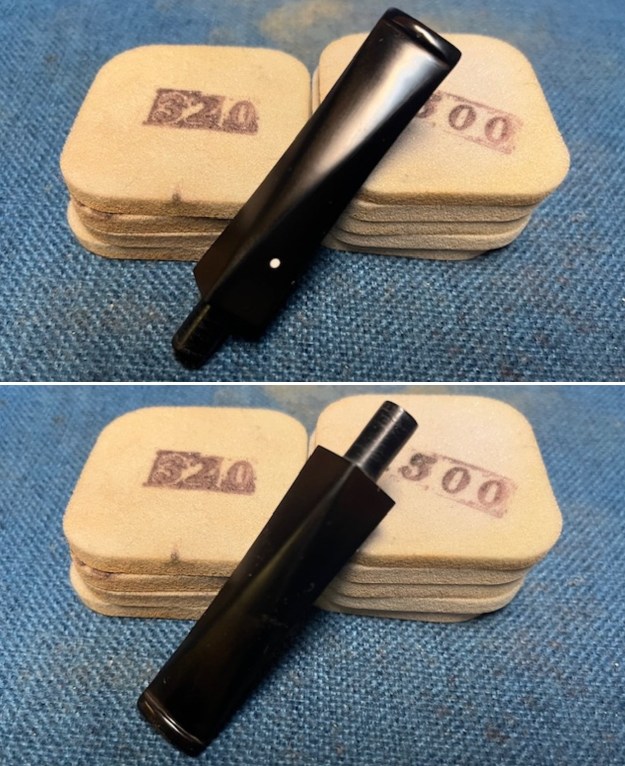
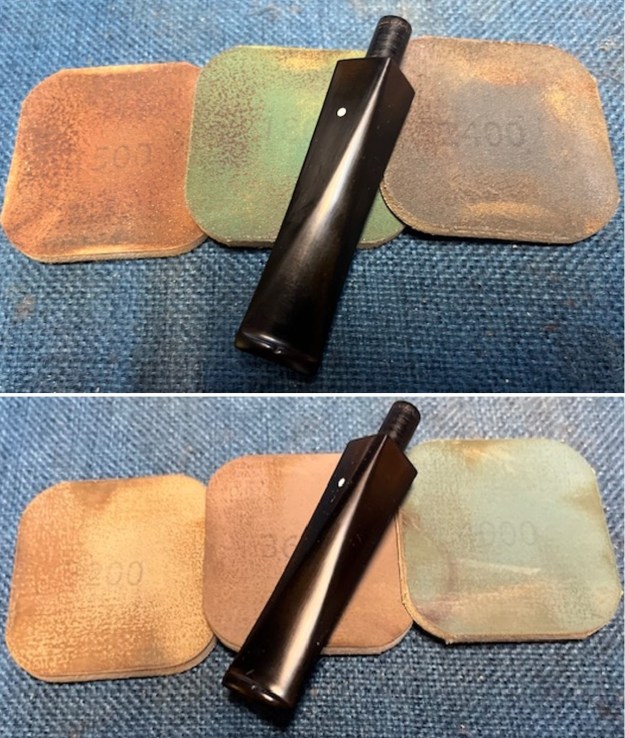
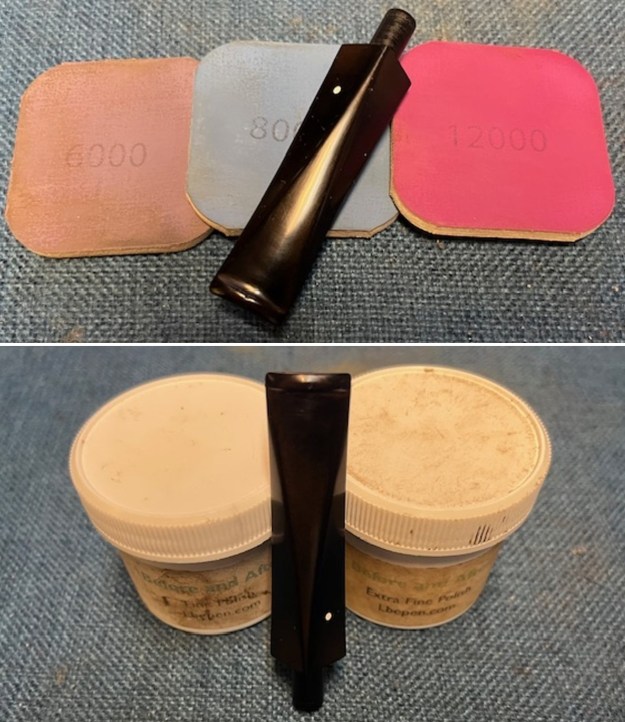
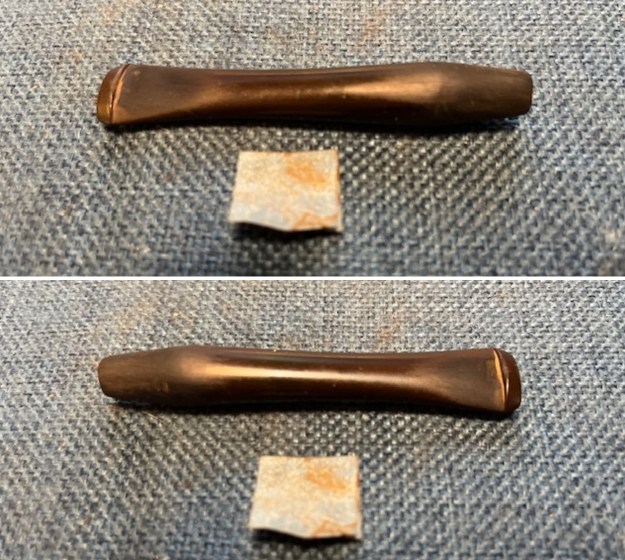
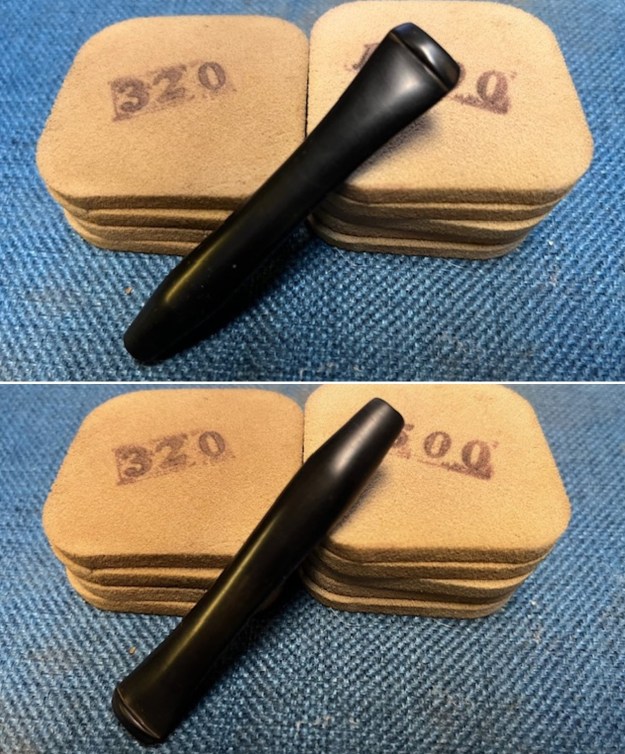
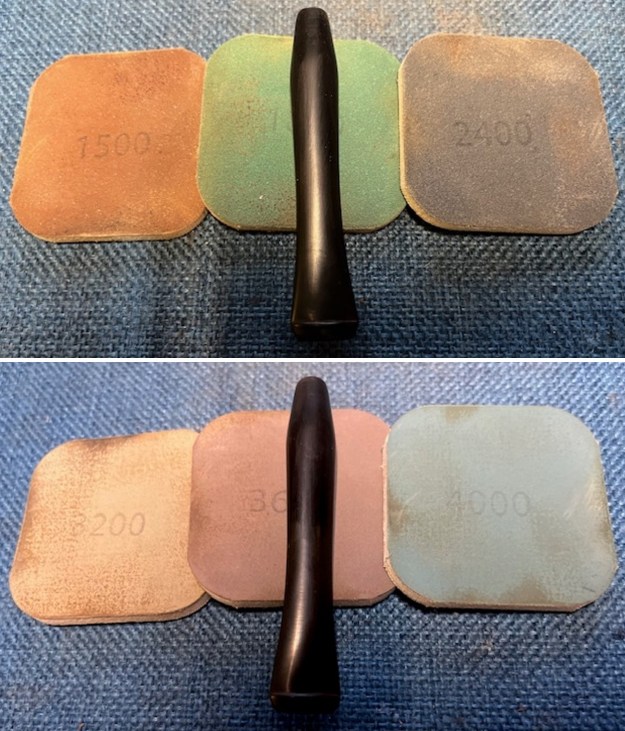
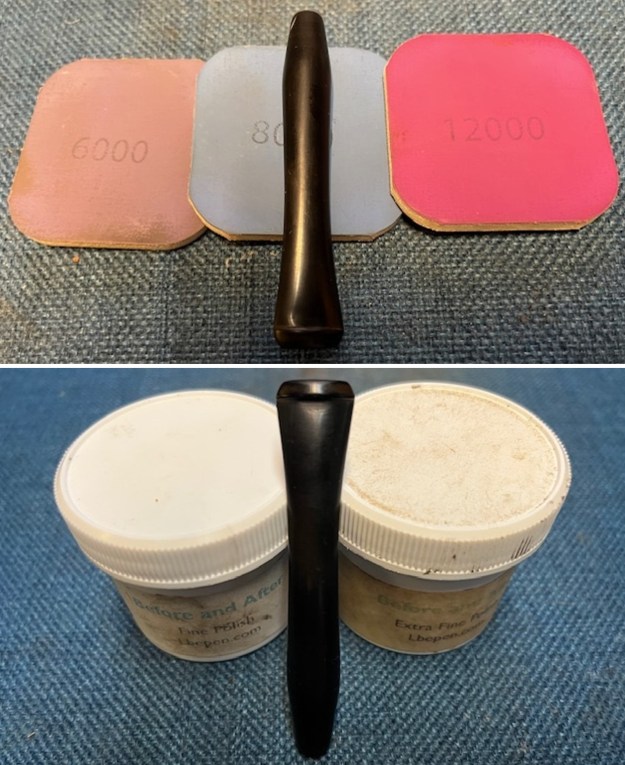
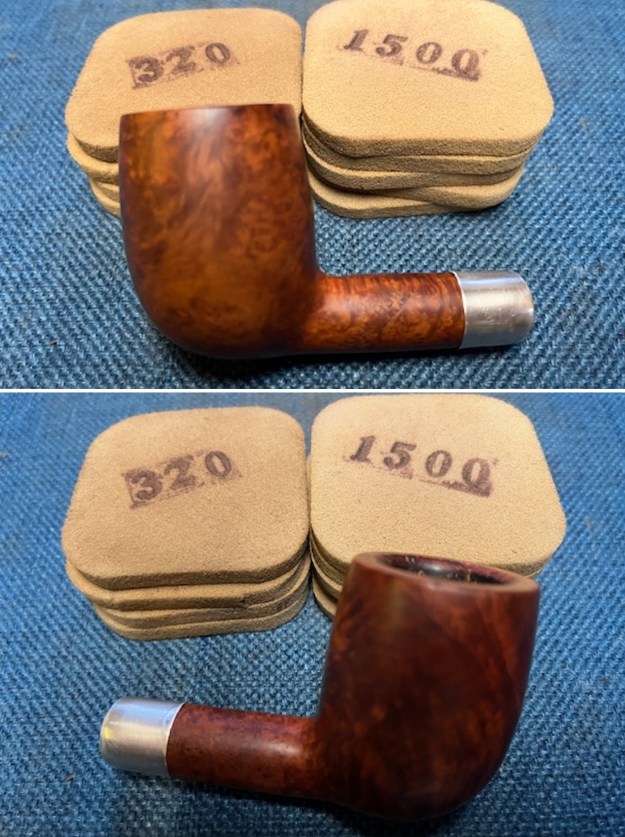
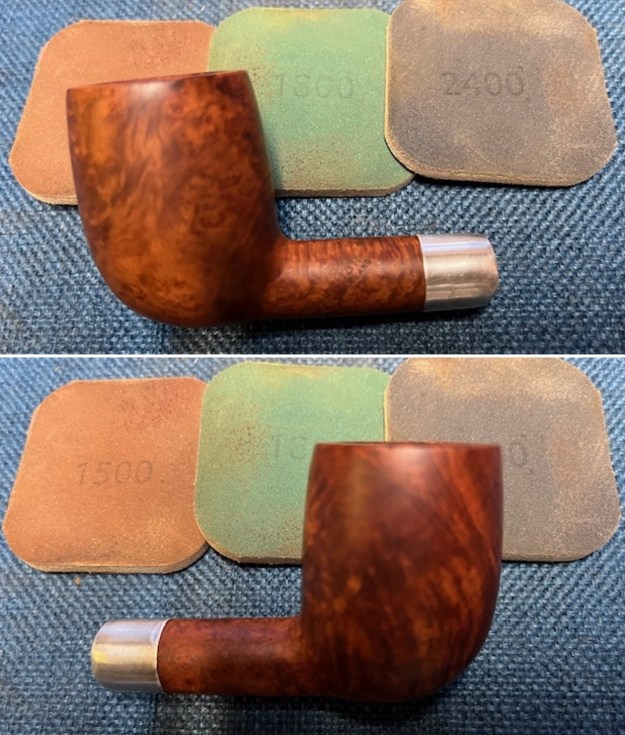
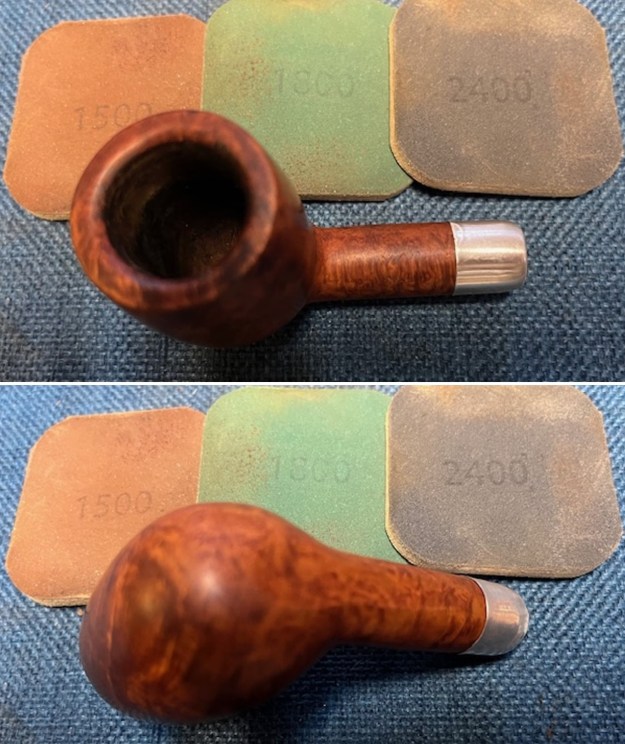
I reamed the bowl with a PipNet pipe reamer and the 2nd and 3rd cutting heads to remove the heavy cake. I took it back to bare briar and then cleaned up the reaming with a Savinelli Fitsall Pipe Knife. I sanded the bowl with a piece of dowel wrapped in 220 grit sandpaper. I scrubbed the exterior of the bowl and shank with undiluted Murphy’s Oil Soap and a tooth brush. It took some scrubbing to clear off the debris on the rim top and the surface of the bowl and shank. I rinsed the bowl off with warm water to remove the grime and debris along with the soap on the pipe. It looked much better. To begin the process of breaking through the peeling varnish coat I wiped the bowl and shank down with acetone on cotton pads. It broke through a lot of the varnish and I began to see what was underneath the varnish. I sanded the bowl with 320-3500 grit 2×2 inch sanding pads. I wiped the briar down with a damp cloth to remove the sanding debris. By the final pad it was looking much better. I cleaned out the mortise and airway in the shank as well as the airway in the newly chosen stem with pipe cleaners, cotton swabs and alcohol. It was a dirty bowl and shank.I polished the bowl and the shank with micromesh sanding pads – dry sanding it with 1500-12000 git sanding pads. I wanted to make the new stain coat a bit more transparent. I wiped it down with a cloth and some Obsidian Oil. I worked some Before & After Restoration Balm into the surface of the briar with my fingertips to clean, enliven and protect the briar. I let the balm sit for 15 minutes and then buffed with a cotton cloth to raise the shine. The photos show the bowl at this point in the restoration process. I set the bowl aside and turned my attention to the stem. I sanded the stem to reduce the diameter of the saddle portion and give it a slight slope or taper. I used my Dremel and sanding drum to start the process. I cleaned up the sanding marks from the Dremel with a folded piece of 220 grit sandpaper. I smoothed out the marks and the stem started to look better.I sanded the stem with 320-3500 grit 2×2 inch pads to further smooth out the surface and remove the light residual oxidation. I wiped the stem down after each pad with an Obsidian Oil cloth to remove the debris and further protect the stem.I polished the stem with micromesh sanding pads – dry sanding with 1500-12000 grit sanding pads. I wiped it down after each sanding pad with Obsidian Oil.I polished the finished Lorenzetti Italy Augustus Caesar Billiard with Blue Diamond to polish out the remaining small scratches. I gave the bowl and the newly fit saddle stem multiple coats of carnauba wax and buffed the pipe with a clean buffing pad to raise the shine. I hand buffed it with a microfiber cloth to deepen the shine. The pipe polished up pretty nicely. The smooth briar with the medium the brown stain wash works very well with the black stem. The finished pipe is shown in the photos below. I have worked on several Lorenzetti’s over the years and I have always been impressed by his ability to a craft a comfortable and functional smoking pipe. It looks far better with the varnish coat removed. The beautiful Lorenzetti Augustus Caesar had the following dimensions. The Length: 6 inches, Height: 1 ¾ inches, Outside diameter of the bowl: 1 3/8 inches, Chamber diameter: 7/8 inches. The weight of the pipe is 51 grams/ 1.69 ounces. I have two more of Brian’s pipes to work on and then they will go back to him. This is an interesting group of three pipes to bring back to life.

As always, I encourage your questions and comments as you read the blog. Thanks to each of you who are reading this blog. Remember we are not pipe owners; we are pipe men and women who hold our pipes in trust until they pass on into the trust of those who follow us.

Breathing Life into an S&R Sandblast Oom Paul


by Steve Laug

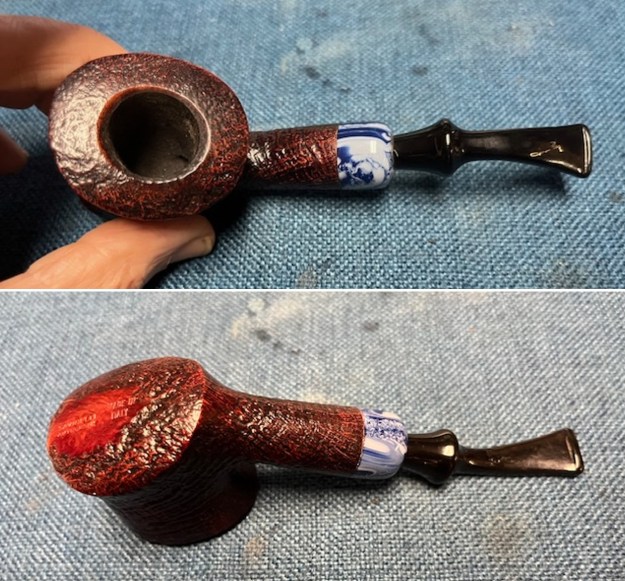
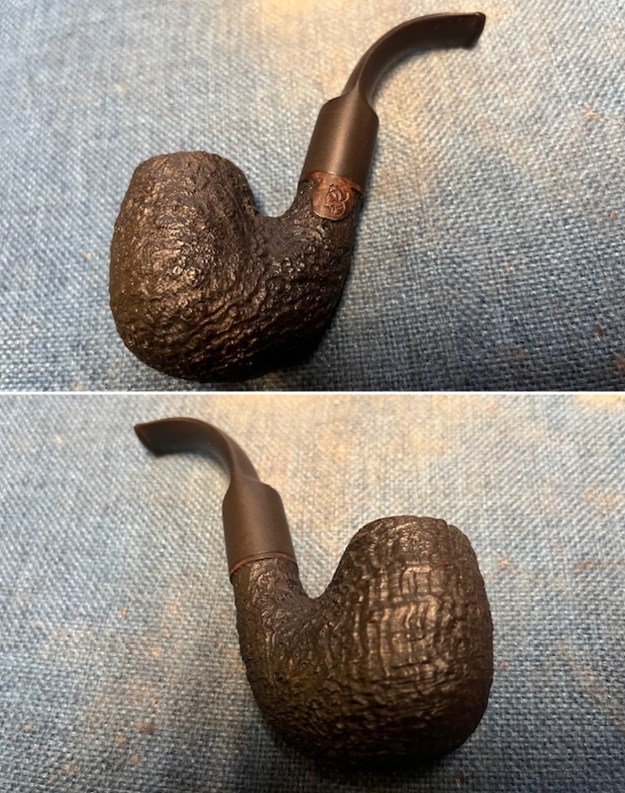
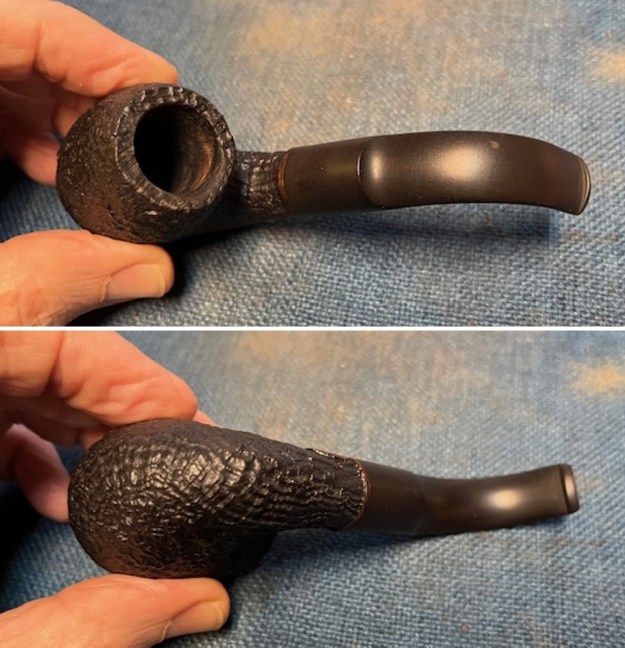
Years ago, I met Steve and Roswitha of S&R pipes at the Chicago Pipe Show. I cannot even remember the year but I remember having a good conversation with them. I was not able to pick up one of their pipes at that time but I was amazed at the beauty and style of pipes that the two of them were creating in their shop, Pipes & Pleasures in Columbus, Ohio. This pipe came to us from a seller in Memphis, Tennessee, USA on 08/27/2024. Jeff took some photos of the pipe when he received it to show the general condition. I have included the photos of the S&R pipe. The sandblast finish was dirty and dusty looking. There was a moderate cake in the bowl and surprisingly no lava overflow on the rim top. The sandblast follows the grain of the bowl and shank. The stamping is very clear and shows the interlocked SR with a pipe on the left side of the shank. The sandblast is quite deep and really shows the grain and is nicely done. The saddle stem is vulcanite and oxidized. There are tooth marks and chatter on both sides of the stem ahead of the button and some scratching on the stem surface. The photos below tell the story and give a glimpse of the Oom Paul shape.Here is a close up of the bowl and rim top. You can see the light lava coat. The inner edge of the rim looks good. There is a moderate cake in the bowl that is hard and rough. The photos of the stem show the scratching, oxidation and tooth marks in the stem at the button. Jeff took photos of the sides of the bowl to show the interesting grain in the sandblast. The swirls and depths of the sandblast are intricate and quite beautiful. Jeff took a photo of the S&R logo on the left side of the shank. It is a unique interlocked S&R stamp with the pipe. It is clear and legible.I decided to take some time to review my knowledge of the brand. I turned to Pipedia and read the article that was included there (https://pipedia.org/wiki/S%26R_Pipes). I quote in full below:

Stephen and Roswitha Anderson of S&R Pipes, also known as S&R Woodcrafters, have become pipe makers renowned throughout the world as talented carvers of high-grade briar pipes. They have been featured in several trade publications and magazines such as Pipes and Tobaccos and PipeSmoker, and have several pieces on display in museums in Europe and the United States.

They are the first American pipe carvers honored with induction into the Conferee of Pipe Makers of St. Claude, France; the very place where the carving of briar pipes became a world-wide industry. Sadly, Steve passed away in March of 2009. Roswitha is still carving S&R pipes and carrying on with the shop with help from her “guys” David, Marty, and Tony.

Steve and Roswitha began carving pipes in the 1960’s. They travelled to pipe shows and arts and crafts shows throughout the country and Europe selling their pipes and built up quite an extensive loyal customer base. Eventually, it became time to offer their pipes to the retail fraternity of pipe smokers.

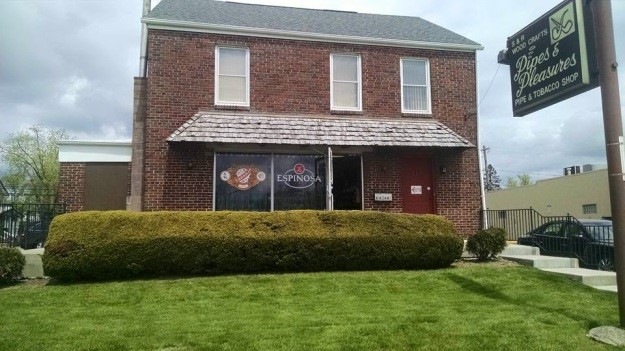
Pipes & Pleasures had its grand opening in a distinct red brick house on Main Street in Columbus, Ohio in 1977. The front section of the house was converted into a traditional tobacco shop selling pipe tobacco, cigars, and pipes manufactured by well known companies such as Dunhill, Charatan, and Savinelli as well as the high-grade S&R pipes that Steve and Roswitha carved. A workshop was set up in the back section of the house.

When the cigar boom hit in the ’90’s, the shop was expanded by building a large computer controlled walk-in humidor. It’s no secret throughout the country that Pipes & Pleasures has the best maintained cigars in the Columbus area as well as the best selection of premium cigars available in the area including the much sought-after Davidoff line.

Soon after the boom began, Steve and Roswitha moved their pipe making workshop to their farm and converted that space into a large smoking lounge for their many customers. The lounge features comfortable easy chairs, a television set, a stereo, a library of books and magazines about every aspect of tobacciana, a chess table, and a couple of card tables. The lounge is populated daily with long-time loyal customers and newcomers to the enjoyment and relaxation of cigar and pipe smoking. It’s also the room where several cigar tastings and samplings are held every year by representatives from cigar companies such as Davidoff and La Flor Dominicana.

I captured a photo of the shop from the Pipedia article to include below. It is a great looking shop.

The Pipes & Pleasures shop, home of S&R Woodcrafters

I also turned to the Pipes & Pleasures website and copied the “About Us” section. Here is the link to the site (https://www.pipesandpleasures.biz/maintenance). I quote in part.

Pipes & Pleasures proprietors Stephen and Roswitha Anderson have become pipe makers renowned throughout the world as talented carvers of high-grade briar pipes. They have been featured in several trade publications and magazines such as Pipes and Tobaccos and PipeSmoker, and have several pieces on display in museums in Europe and the United States. They are the first American pipe carvers honored with induction into the Conferee of Pipe Makers of St. Claude, France; the very place where the carving of briar pipes became a world-wide industry.

Steve and Roswitha began carving pipes in the 1960’s. They travelled to pipe shows and arts and crafts shows throughout the country and Europe selling their pipes and built up quite an extensive loyal customer base. Eventually, it became time to offer their pipes to the retail fraternity of pipe smokers…

…Sadly, Steve passed away in March of 2009. Roswitha is still carving S&R pipes and carrying on with the shop with help from her “guys” David, Marty, and Tony, who welcome you to this website.

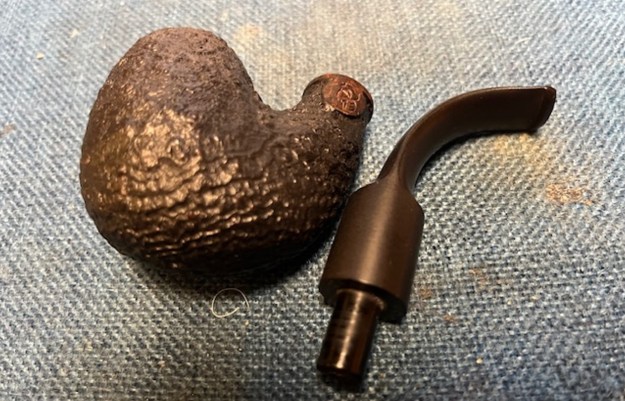
Jeff reamed the bowl with a PipNet pipe reamer and followed up with a Savinelli Fitsall pipe knife to remove the cake. He scrubbed out the mortise and the airway in the shank and the stem with alcohol, cotton swabs and pipe cleaners. He scrubbed the exterior of the bowl, rim, shank and stem with a tooth brush and Murphy’s Oil Soap to remove the oils and tars on the rim and the grime on the finish of the bowl of the pipe. He rinsed it off under running water. He dried it off with a soft cloth. He was able to remove most of the lava build up on the rim top of the pipe leaving a clean rim with some debris in the sandblast. I took photos of the pipe to show its condition before I started my work. I took a close up photo of the rim top to show the condition of the sandblast finish of the rim. The inner and outer edge of the bowl looks really good. The stem photos show the light tooth marks and pit on the top surface.I removed the stem and took a photo of the parts of the pipe to give a sense of the proportion of the parts to the whole. It is a well designed and crafted pipe.I worked some Before & After Restoration Balm into the surface of the briar with my fingertips to clean, enliven and protect it. I let the balm sit for a little while and then buffed with a cotton cloth to raise the shine. The photos show the bowl at this point in the restoration process. With the bowl finished I set it aside and turned my attention to the stem. I filled in the pit on the top of the stem mid stem right side and the tooth damage at the button edge on the underside of the stem with Extra Strength Rubberized Black CA glue. I set it aside to let the repairs cure for morning. After work today I smoothed out the fills with a folded piece of 220 grit sandpaper to blend them into the surface. I sanded the stem surface further with 320-3500 grit sanding pads to finish smoothing out the repairs and removing residual oxidation. I wiped the stem down after each pad with a cloth impregnated with Obsidian Oil. It began to look very good.I polished the stem with micromesh sanding pads – wet sanding it with 1500-2400 grit pads and dry sanding it with 3200-12000 grit pads. I wiped the stem down with Obsidian Oil after each pad. I polished it with some Before & After Pipe Polish – both Fine and Extra to deepen the shine. I wiped it down with a final coat of Obsidian Oil and set it aside to dry. This S&R Sandblast Oom Paul is a beauty. It is a stunning example of Steve & Roswitha’s craft – the sandblast finish and the dark stain is very well done. I polished the stem with Blue Diamond polish on the buffing wheel. I gave the bowl multiple coats of Conservator’s Wax and the stem multiple coats of carnauba wax. I buffed the pipe with a clean buffing pad to raise the shine. I hand buffed it with a microfiber cloth to deepen the shine. The pipe polished up pretty nicely. The contrasting finishes came alive with the buffing. The rich, contrasting dark stain work well with the polished black vulcanite stem. The finished pipe is a beauty and feels great in the hand. Have a look at it with the photos below. The dimensions are Length: 5 inches, Height: 2 inches, Outside diameter of the bowl: 1 inch, Chamber diameter: ¾ of an inch. The weight of the pipe is 47 grams/1.66 ounces. I will be putting this beautiful S&R Oom Paul on the rebornpipes online store soon. It may well the kind of unique pipe you have been looking for so have a look. Thanks for walking through the restoration of this pipe with me. It was a fun one to work on.

Restoring a beautifully grained Dunhill Bruyere 41041 Taper Stem Bulldog


by Steve Laug

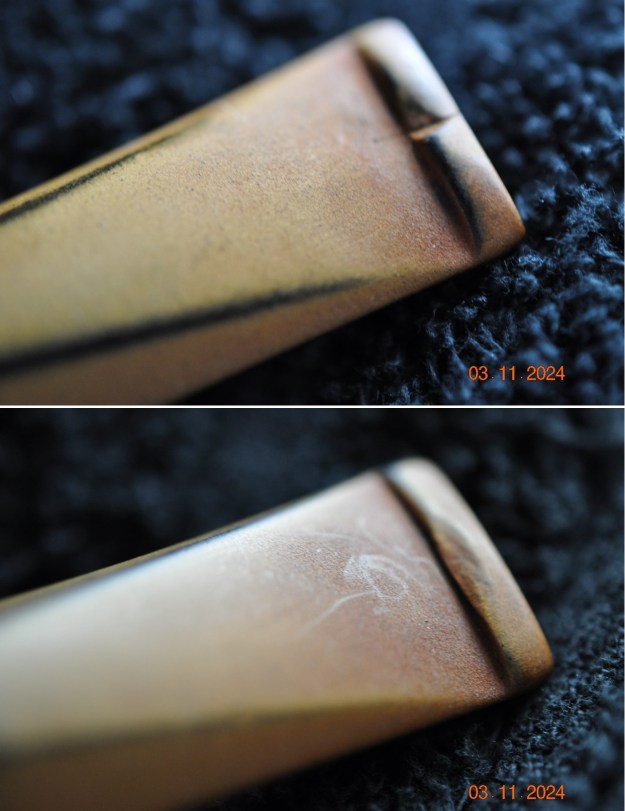
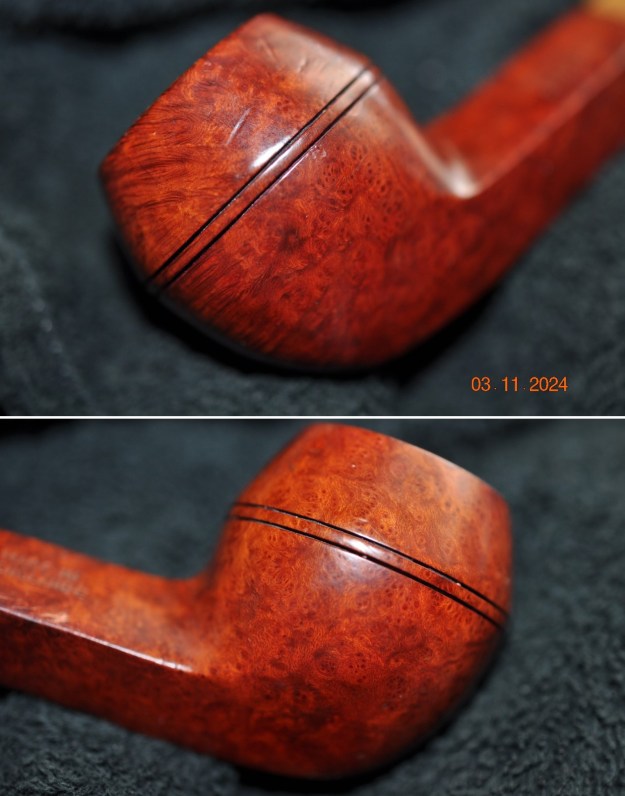
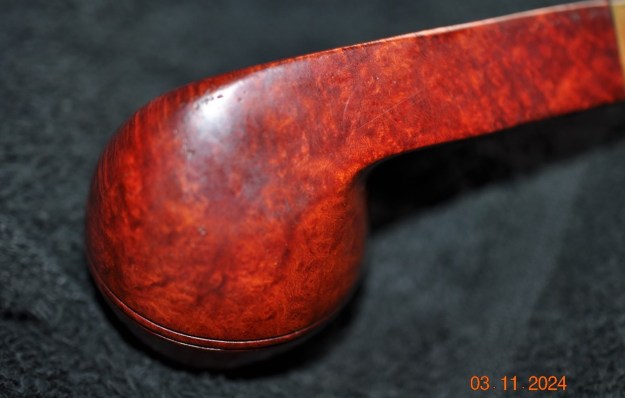
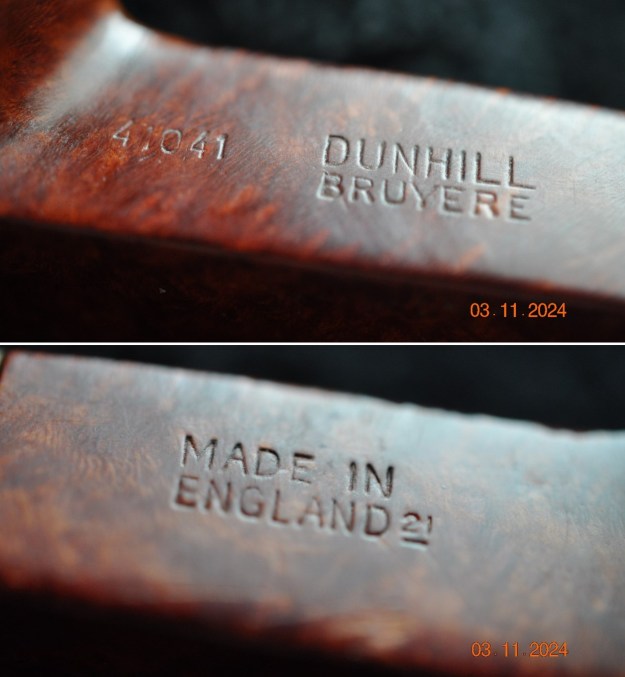
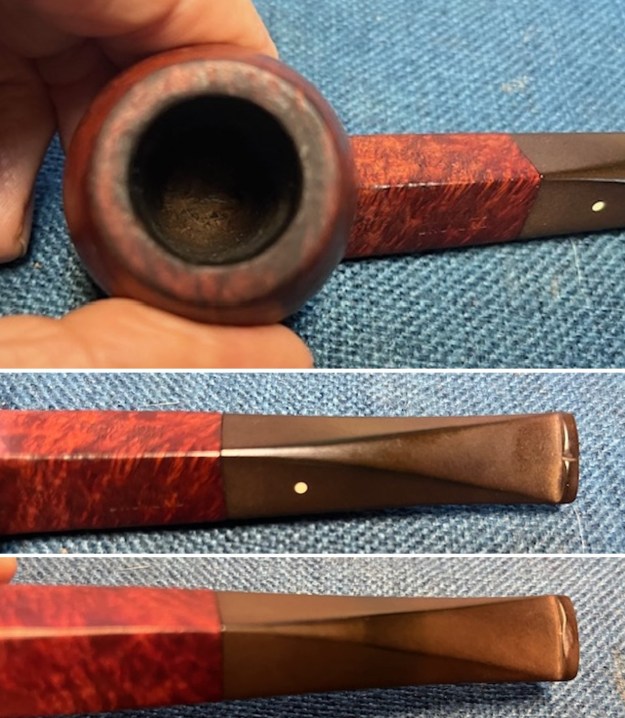
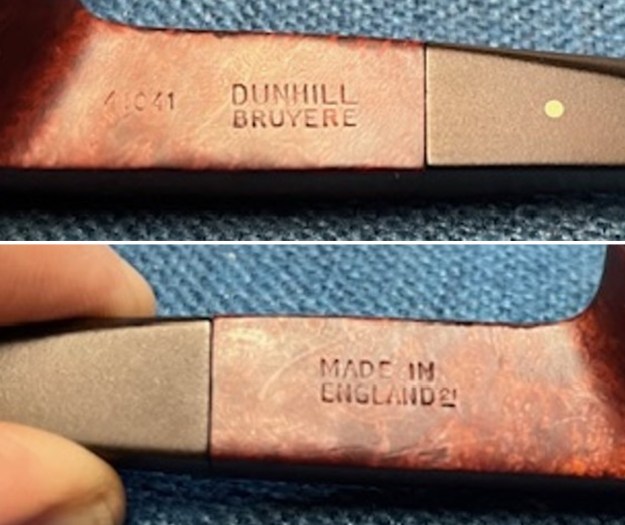
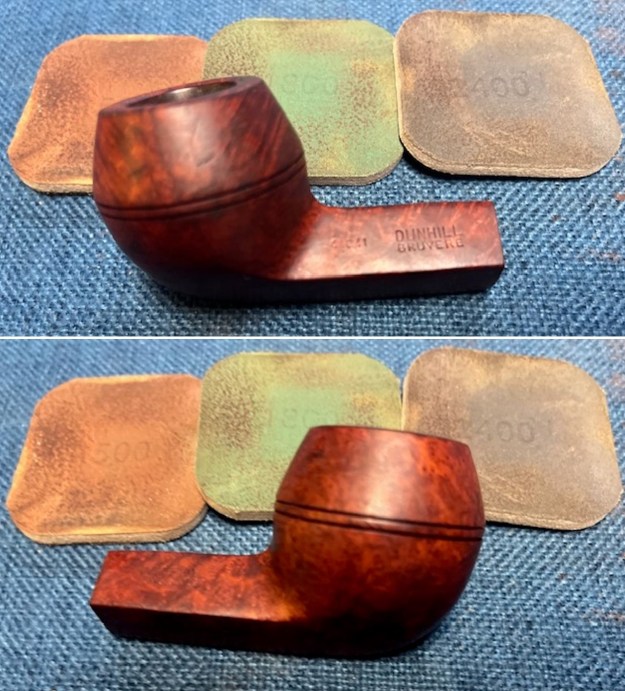
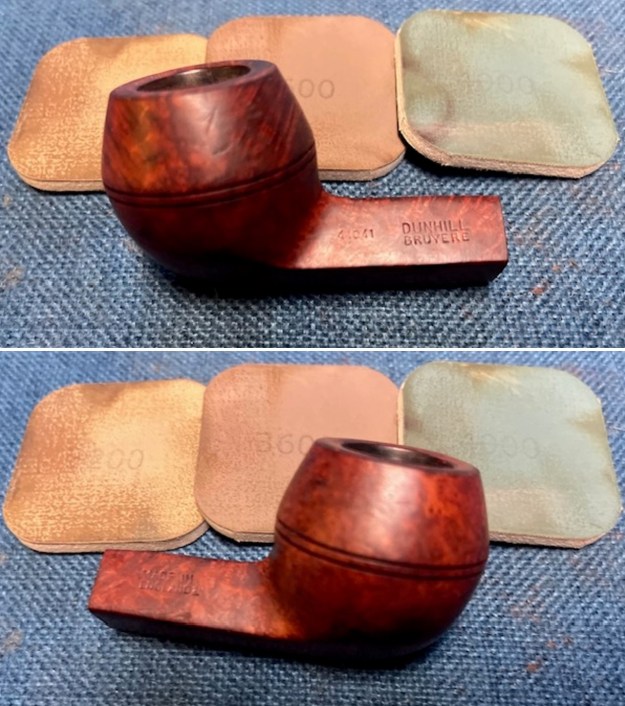
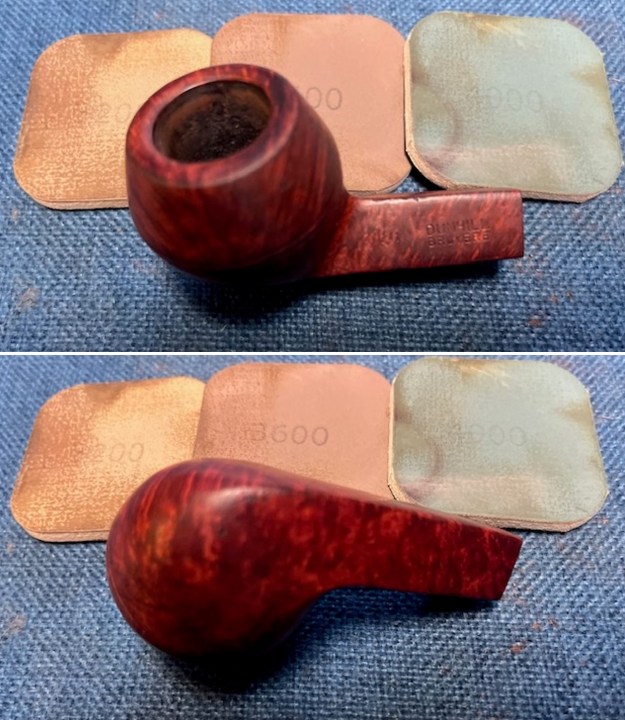
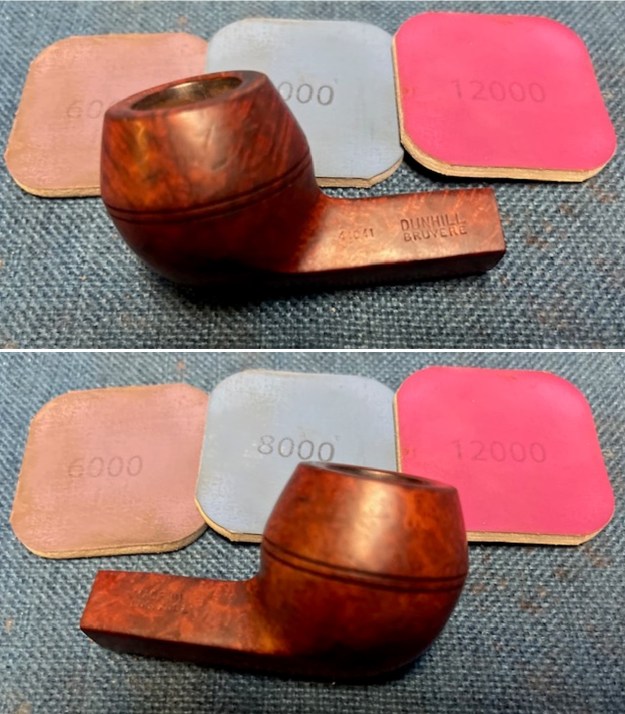
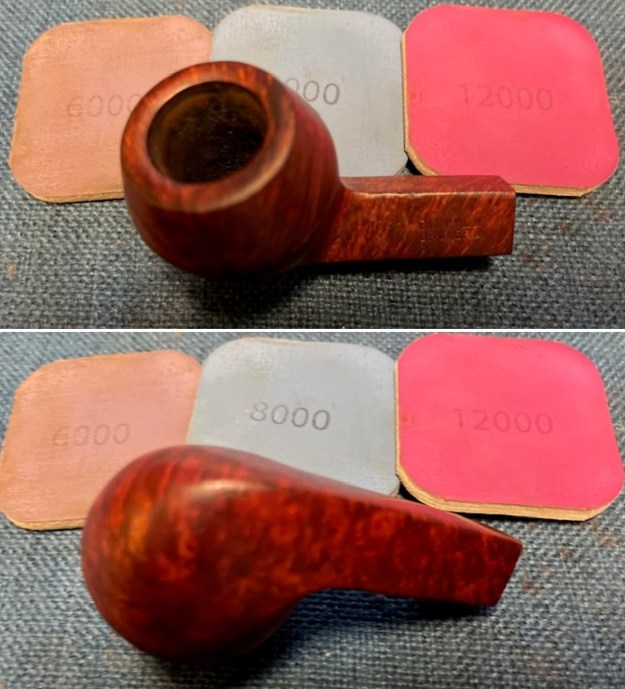
The next pipe on the table is one that we picked up in the lot from our contact in Copenhagen, Denmark on 08/09/2024. The Bruyere finish and the Dunhill stamping is what caught our eye. It is stamped on the left side of the shank and reads 41041 next to the bowl/shank union followed by Dunhill [over] Bruyere. On the right side it is stamped Made in [over] England21. It has a classic Bruyere smooth finish that is a stark contrast to vulcanite, diamond taper stem. The finish has some scars that are a part of the pipe’s story particularly on the rim cap. The bowl appears to be moderately caked. The inner edge and the top show some lava overflow and what looks like knife damage from reaming on the inner edge. The stem is very oxidized and tooth marks and chatter on the top and underside ahead of the button and on the button surface itself. The classic white spot is on the left top side of the taper, diamond stem and looks to be in good condition. Jeff took some photos of the pipe to show the general condition of the pipe before he started his clean up. He took some photos of the rim top and bowl from various angles to give me a clear picture of the condition of the rim top and bowl. You can see the lava on the rim top and edges as well as part of the cake in the bowl. He included photos that show the top and underside of the stem. It is as described above. Jeff took some photos of the sides and heel of the bowl to show the condition of the finish on the pipe. The photos showed some great grain around the bowl and shank. It is a great looking piece of briar. He took some photos of the stamping on the sides of the bowl and shank. The stamping was clear and readable as noted above. As is my regular practice, before I started my work on the pipe, I turned to Pipedia’s section on Dunhill Bruyere Pipes to get a refresh the information I know regarding the Dunhill finishes (https://pipedia.org/wiki/Dunhill_Bruyere). I quote:
Initially, made from over century-old briar burls, classified by a “B” (denoted highest quality pipe); “DR” (denoted straight-grained) and an “A” (denoted first quality), until early 1915. After that, they became a high-end subset to the Dunhill ‘Bruyere’. The DR and B pipes, a limited production, they should be distinguished as hand-cut in London from burls as opposed to the Bruyere line which was generally finished from French turned bowls until 1917, when the Calabrian briar started to be used, but not completely. Only in 1920 Dunhill took the final step in its pipe making operation and began sourcing and cutting all of its own bowls, proudly announcing thereafter that “no French briar was employed”.

Bruyere pipes were usually made using Calabrian briar, a very dense and hardy briar that has a modest grain but does very well with the deep red stain.

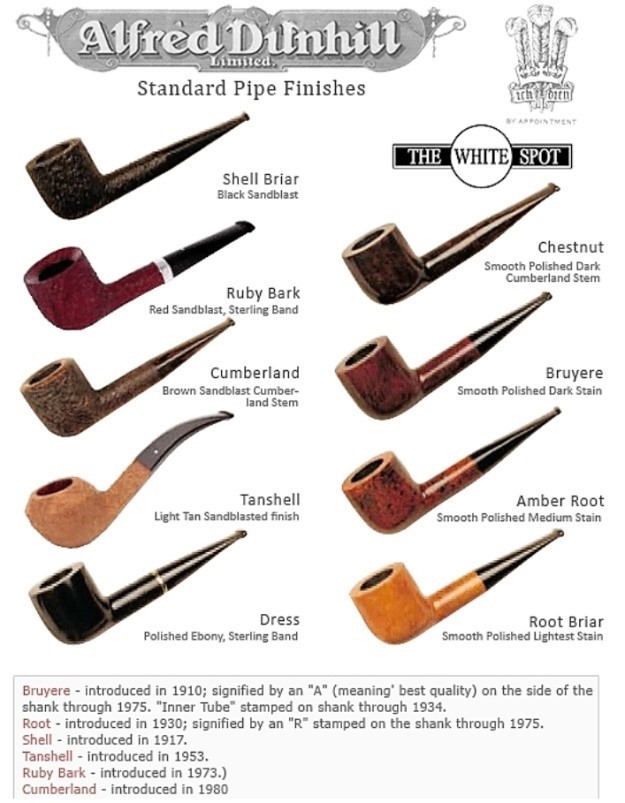
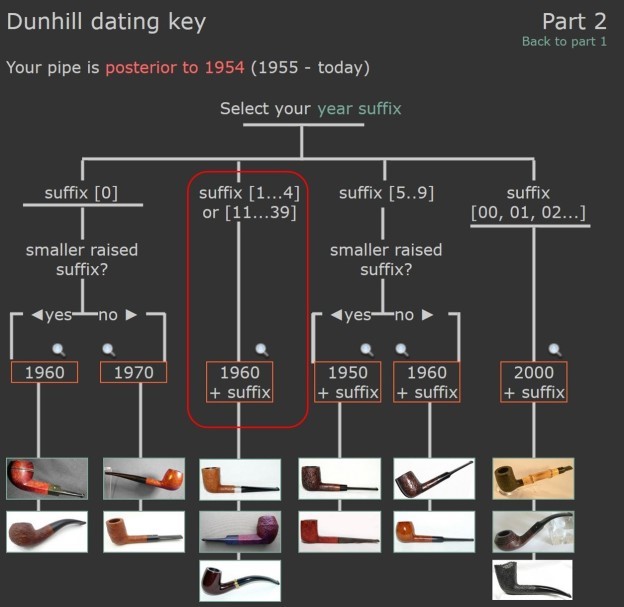
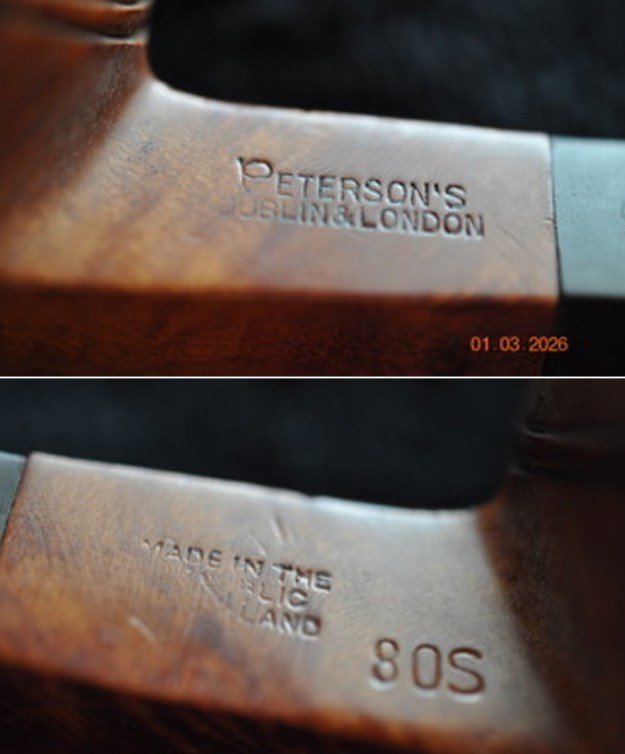
“Before the 1950s, there were three possible finishes for Dunhill pipes. The Bruyere was a smooth finish with a deep red stain, obtained through two coats, a brown understain followed by a deep red. The Shell finish was the original sandblast with a near-black stain (though the degree to which it is truly black has varied over the years). Lastly, the Root finish was smooth also but with a light brown finish. Early Dunhill used different briars with different stains, resulting in more distinct and identifiable creations… Over the years, to these traditional styles were added four new finishes: Cumberland, Dress, Chestnut and Amber Root, plus some now-defunct finishes, such as County, Russet and Red Bark.”[1]I turned to Pipephil’s dating guide to show how I arrived at the date of manufacture for this pipe (http://www.pipephil.eu/logos/en/dunhill/cledat-en1a.html). I am including the chart that is provided there for the dating a pipe. I have drawn a red box around the section. Since the pipe I am working on has a superscript suffix 21 after the D in England it points to the 1960 line on the chart below. To date it just add 1960 +21 for a date of 1981. I have drawn a red box around the pertinent section in the chart.I now knew that I was working on a Bruyere that came out in 1981. The shape of the pipe is called a smooth straight Bulldog with a 41041 Shape number on the left side of the shank/ bowl.

I turned to Pipephil’s shape list (http://www.pipephil.eu/logos/en/dunhill/shapes.html). At the bottom of the list of shapes (with the 04 being a Billiard) is a key for interpreting the digits in the stamp I have included that below.

Dunhill pipes are stamped with a four digit code.
Digit 1: (from 1 to 6) denotes the size of the pipe (the group).
Digit 2: denotes the style of the mouthpiece (0,1=tapered, 2=saddle)
Digit 3 and 4: denote the generic pipe shape (in yellow in the chart on top) 

Example: 5102
(5 = size | 1 = tappered stem | 02 = Bent)

When 5 digits occur, the meaning of the 4 first remain the same

The 41041 was thus a Group 4 size, with a taper mouthpiece, and in an 04 or straight Bulldog shape.

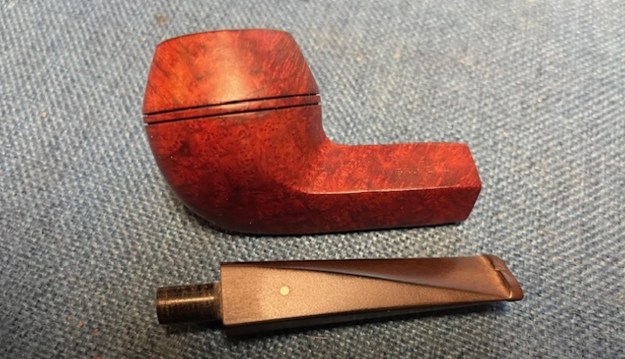
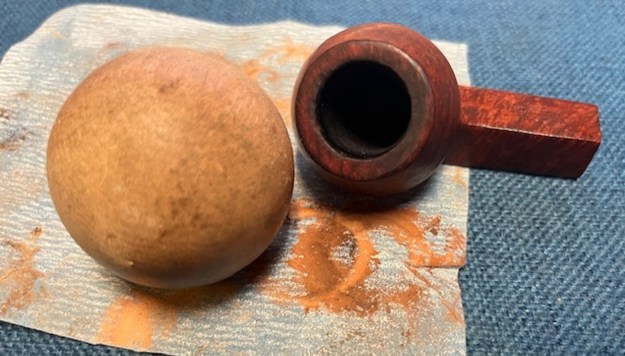
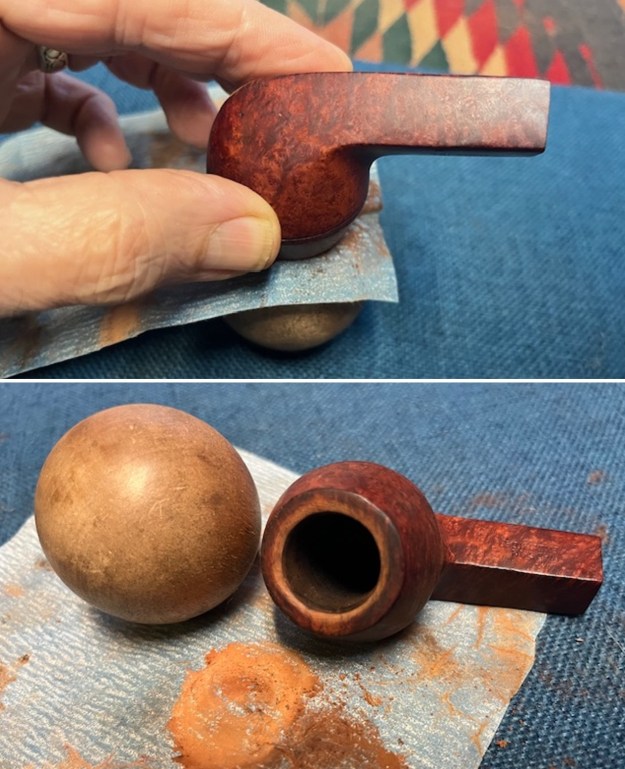
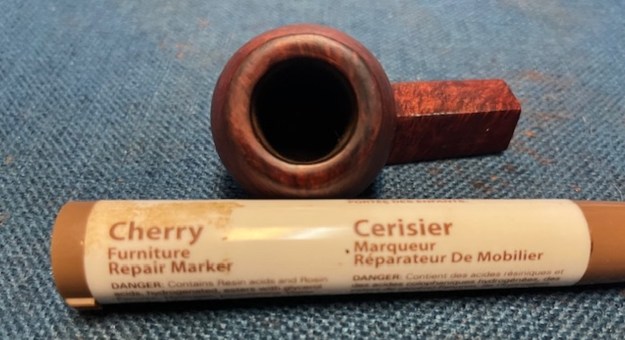
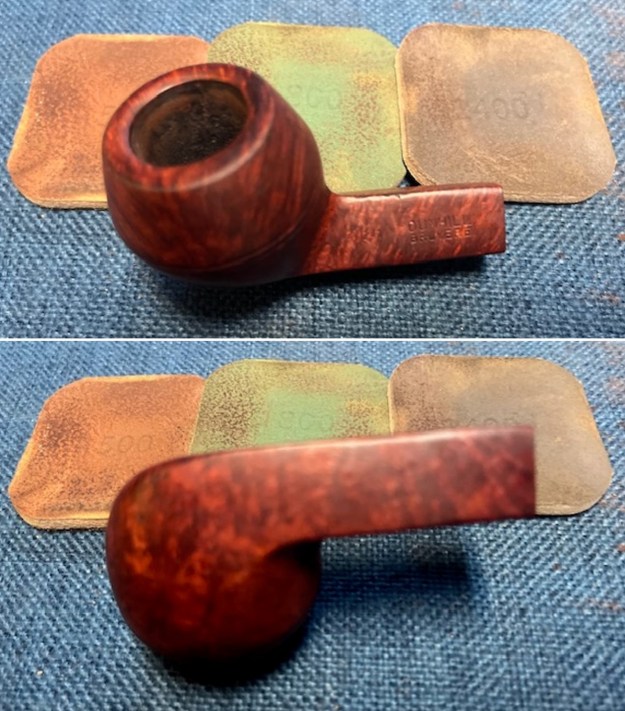
Armed with that information I turned to work on the pipe itself. Jeff had done a great job cleaning up the pipe as usual. He cleaned up the inside of the bowl with a PipNet reamer and a Savinelli Fitsall Pipe Knife. The rim top shows some damage on the top and the inner edge of the bowl. The bowl walls looked very good. He scrubbed the interior of the bowl and shank with pipe cleaners, cotton swabs and alcohol to remove the tars and oils. He scrubbed the exterior of the pipe with Murphy’s Oil Soap and a tooth brush to remove the grime from the finish. He worked on the rim top lava and darkening with the soap and tooth brush. He scrubbed the inside of the stem with alcohol and pipe cleaners. He scrubbed the exterior with Soft Scrub and then soaked it in Briarville’s Pipe Stem Deoxidizer. He washed it off with warm water to remove the deoxidizer. Now the damage to the stem was very clear. Overall, the pipe looked far better. I took photos of the pipe when I received it before I started working on it. I took close up photos of the bowl, rim top and stem to show how clean the pipe was. The bowl was clean and the damage to the rim top and the inner edge is very visible in the photo below. The stem was clean and the light tooth marks and chatter can be seen in the photos.I took a photo of the stamping on the sides of the shank. It is very clear and readable and read as noted above. I also removed the stem from the shank and took photos of the pipe to show the look of the parts. I started my work on the pipe by addressing the damage to the rim top. I used some 220 grit sandpaper and a round wooden sphere to clean up the bevel on the inner edge of the bowl. It looked much better once finished. I touched up the sanded inner edge and top with a cherry stain pen to match the surrounding briar. It is looking very good.I polished the Bruyere bowl and shank with 1500-12000 grit micromesh sanding pad – dry sanding it with the pads. I wiped the bowl down with a damp cloth after each pad. It began to take on a deep shine. The exterior of the bowl look better after sanding. I worked some Before & After Restoration Balm into the briar with my finger tips. I let it sit on the bowl for 10 minutes and then buffed it off with a paper towel and soft cloth. The product is a great addition to the restoration work. It enlivens, enriches and protects the briar while giving it a deep glow. It is a product I use on every pipe I restore. The stem surface looked good other than some deeper oxidation. It showed up in the bright lights of the photos. There were some deep tooth marks in the middle of the button surface on both sides of the stem. I filled them in with black CA glue and set it aside to cure. Once it had cured I recut the button edge and flattened it with a small file. I sanded it with a folded piece of 220 grit sandpaper. I continued the sanding process with 320-3500 grit sanding pads. The repairs began to disappear into the surface of the vulcanite and the stem began to take on a smooth new look. Progress for sure.It was ready for the next step. I polished it with micromesh sanding pads – dry sanding with 1500-12000 grit pads and wiping the surface down with Obsidian Oil after each sanding pad. It is really shining. I polished it further with Before & After Stem Polish – both Fine and Extra Fine. I gave it another coat of Obsidian Oil to finish this step. I am excited to be on the homestretch and look forward to seeing the 1981 Dunhill Bruyere 41041 Bulldog put back together, polished and waxed. I put the bowl and stem back together and lightly polished the bowl and stem with Blue Diamond to polish them. I gave the bowl and the stem multiple coats of carnauba wax. I buffed the pipe on the wheel with a clean buffing pad to raise the shine. I hand buffed it with a microfiber cloth to deepen the shine. The depths of the grain really pop with the wax and polish. The repaired and polished vulcanite stem is a beautiful contrast to the combination of stains on the bowl and shank. This Dunhill Bruyere 41041 Bulldog was a lot of work to bring back to life. The pipe is light weight, comfortable in the hand and should feel great as it is warmed up when smoking. The finished pipe is shown in the photos below. The dimensions of the pipe are Length: 5 ½ inches, Height: 1 ¾ inches, Outside diameter of the bowl: 1 ¼ inches, Chamber diameter: ¾ of an inch. The weight of the pipe is 1.34 ounces/38 grams. I will be putting this one on the rebornpipes store in the British Pipemakers Section soon. Let me know if you wish to add it to your collection.

As always, I encourage your questions and comments as you read the blog. Thanks to each of you who are reading this blog. Remember we are not pipe owners; we are pipe men and women who hold our pipes in trust until they pass on into the trust of those who follow us.

Restemming and restoring a Comoy’s Made Town Hall Made in England 19 Military Bit Billiard


by Steve Laug

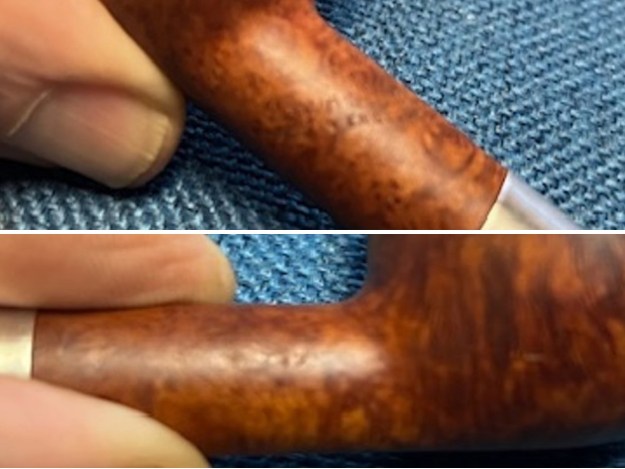
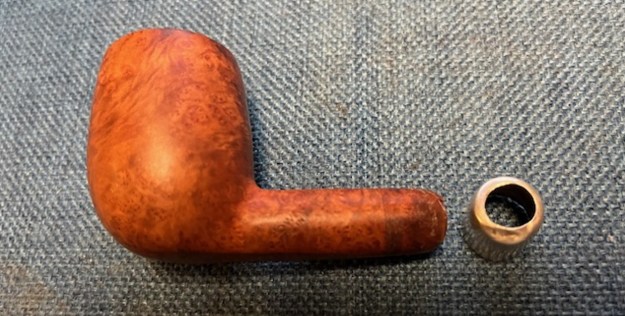
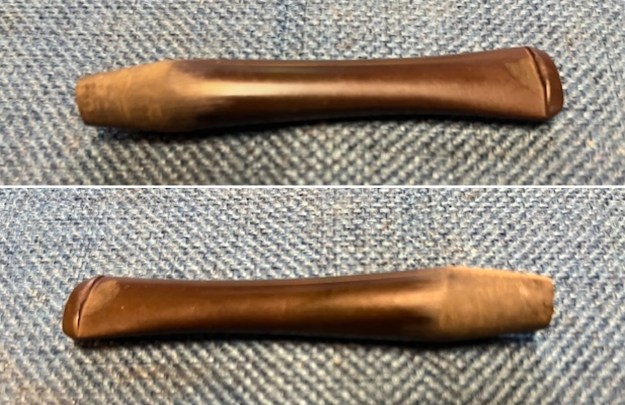
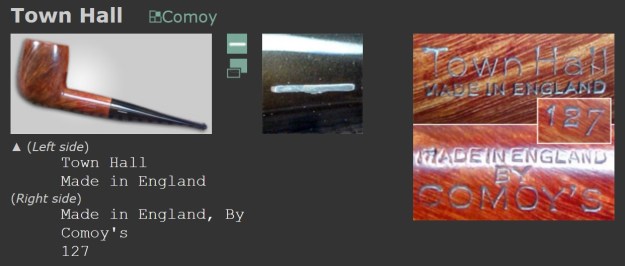
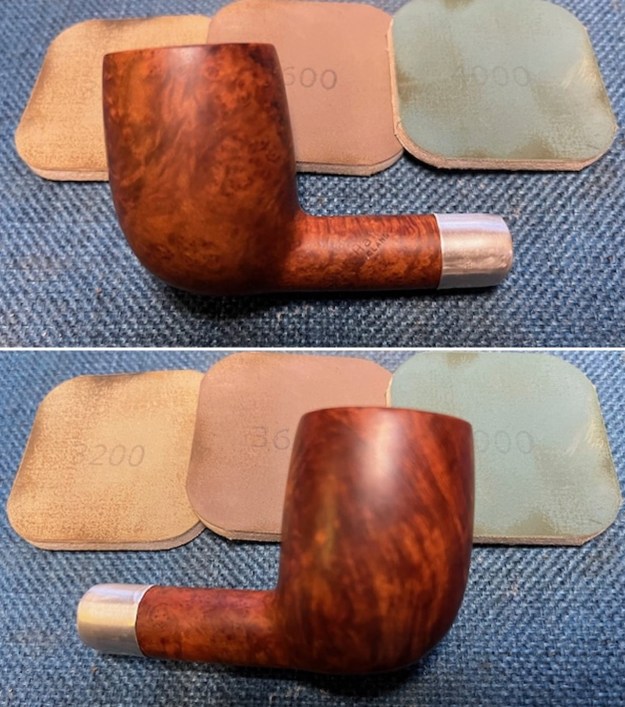
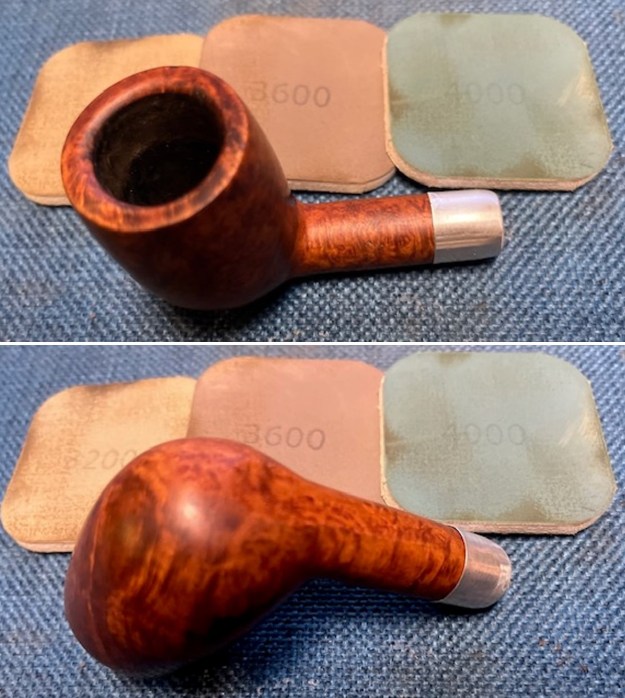
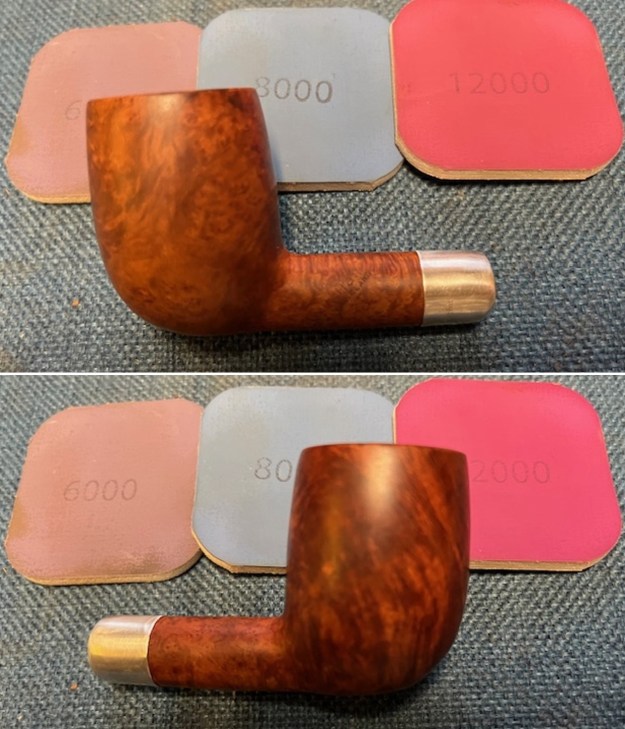
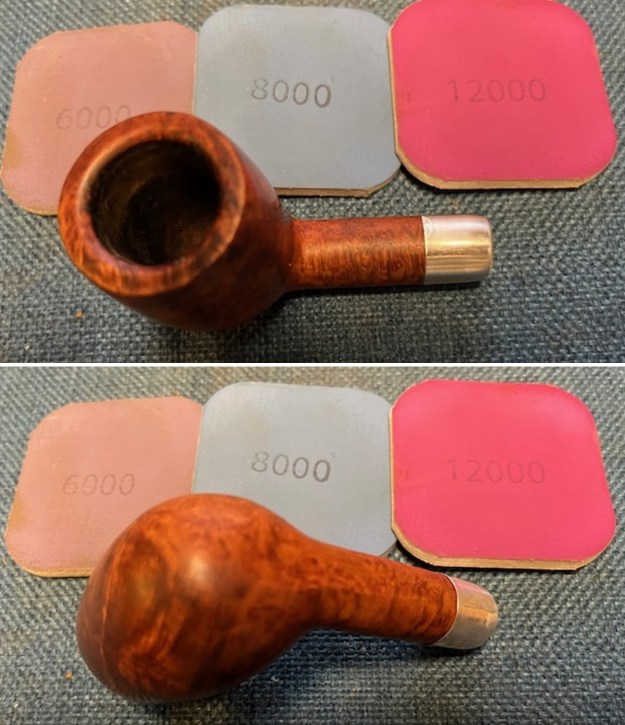
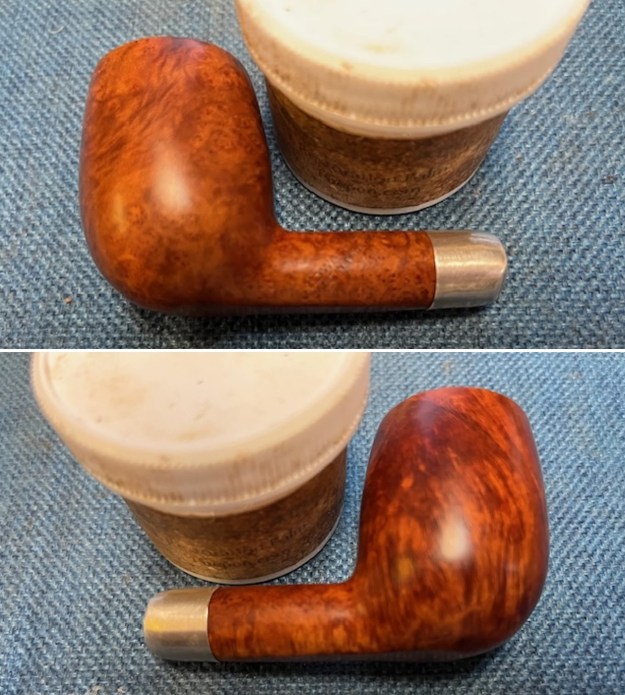
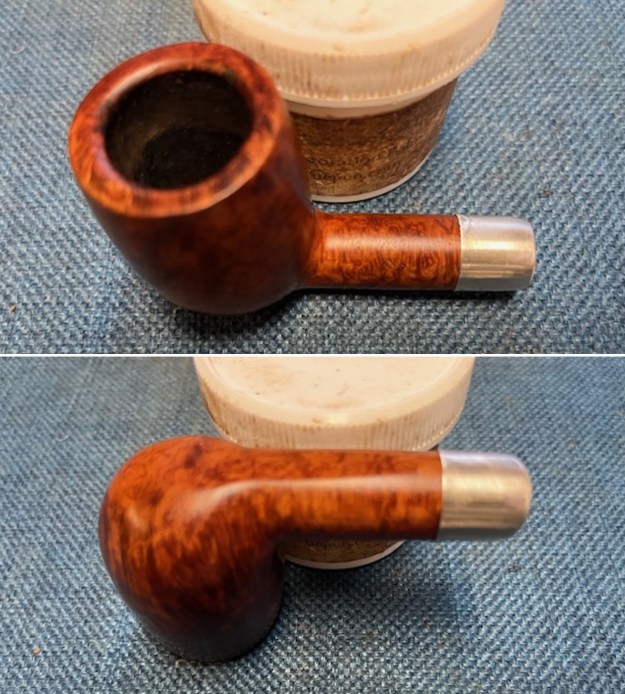
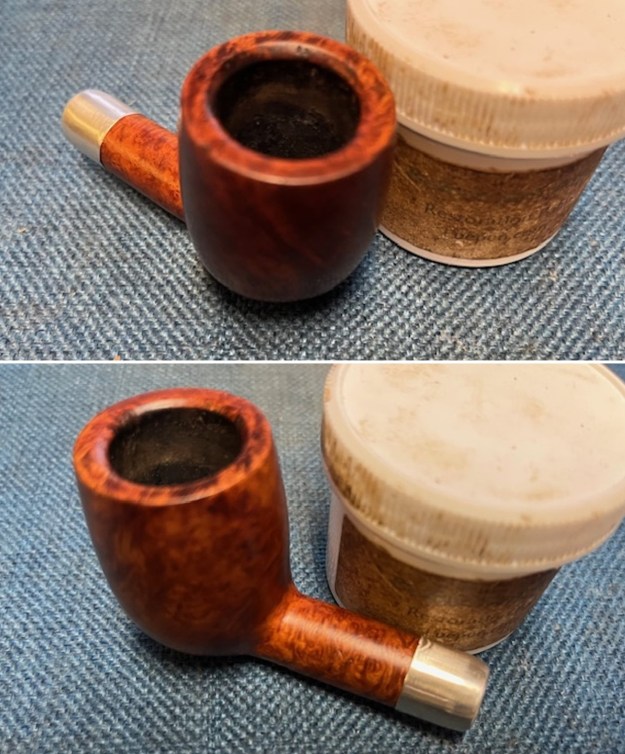
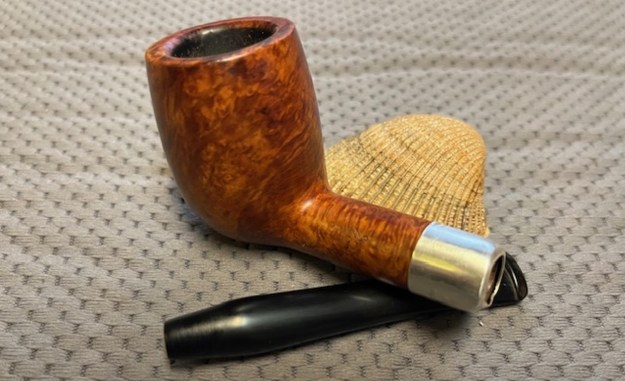
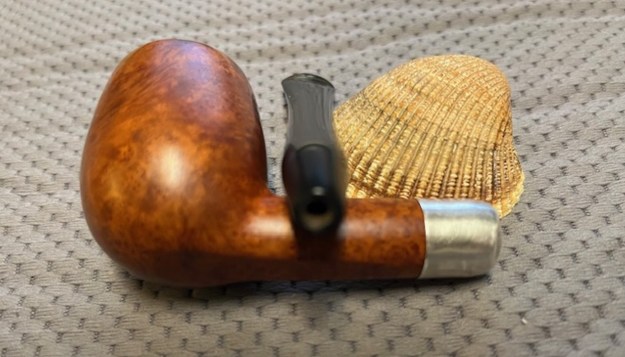
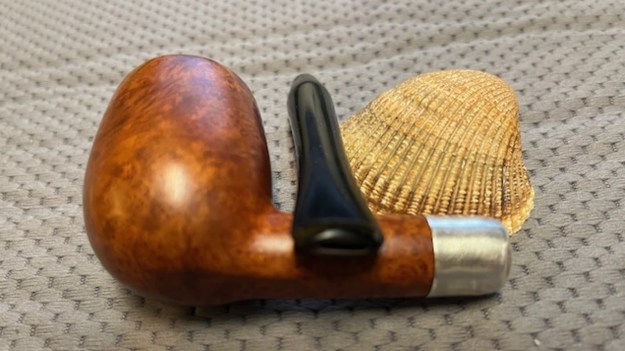
I decided to restem another bowl that I had here in the box. Jeff and I purchased on 11/23/2020 from a seller in Brazil, Indiana, USA. It is a nice bowl with a silver ferrule on the shank end. The left side of the shank is stamped at and angle and reads Town Hall [over] Made in England. The right side has the shape number 19 next to the bowl/shank junction. The ferrule is stamped with an arched Sterling Silver. The bowl is quite clean with no cake and no lava overflow on the rim top or the bevelled inner edge. The briar is dry but clean – just a bit lifeless looking but there is some great grain hidden by the dullness. The silver ferrule is not oxidized but there are some dents on the shank end on the underside. The ferrule is a bit ragged looking around the entrance to the mortise. I took some photos of the pipe before I started my work on restemming and restoring it back to its former glory. I tried to capture the stamping on the shank sides. It is readable but faint in spots. It reads as noted above.The ferrule was loose so I removed it and took a photo to show the dents and the condition of the opening on the ferrule end.I went through my stems and found this partially shaped stem that would work quite well. It would need to be reduced in diameter and cleaned up. There were some gouges on both sides ahead of the button that looked like someone had started shaping a dental bit. Before I started working on the pipe I wanted to get an idea of the maker of the Town Hall brand. Something about the shape and the number reminded me of the Guildhall by Comoy’s but I was not sure. I turned first to Pipephil’s site and found a link that gave a good summary of the information and confirmed the Comoy’s connection (http://www.pipephil.eu/logos/en/logo-t7.html) that I suspected. I have included a screen capture of the pertinent section and the side bar information below the photo.Other Comoy’s seconds with a one bar mouthpiece logo: Carlyle, Charles Cross, St James, The Golden Arrow, Trident,

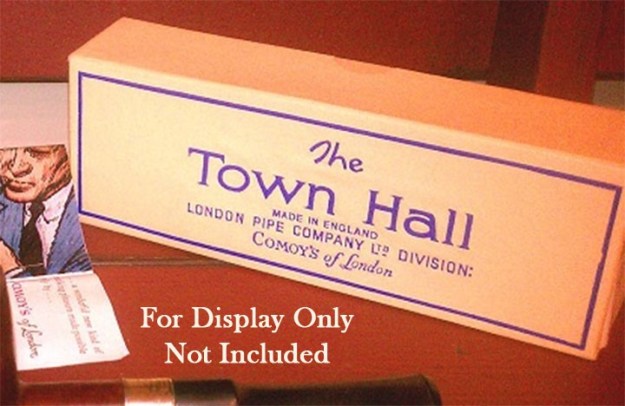
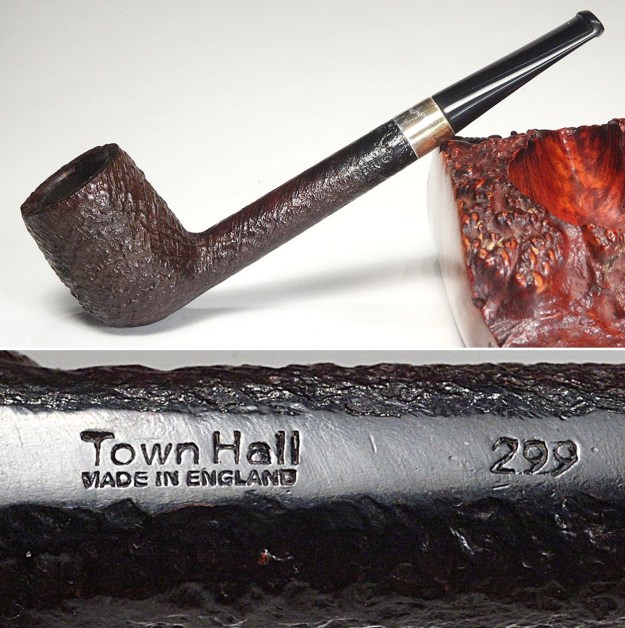
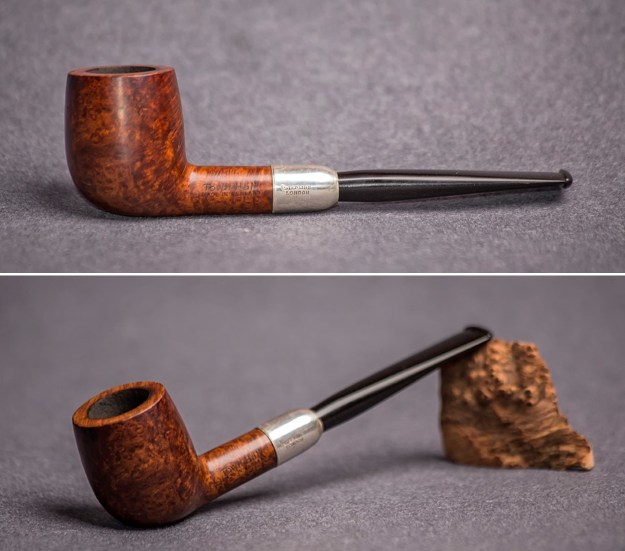
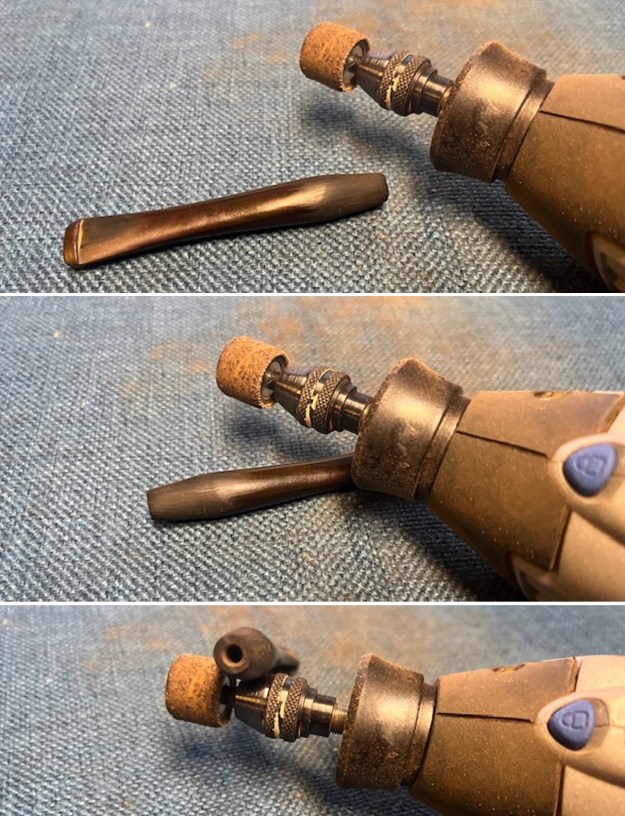
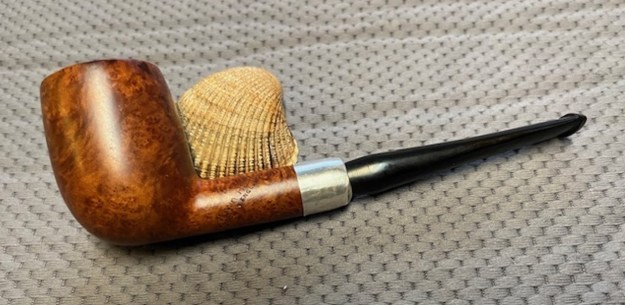
I turned to Pipedia for more information (https://pipedia.org/wiki/Comoy%27s). Other than the great history of the brand there was a note in the section entitled “Seconds made by Comoy’s” that had a listing for Town Hall. I scrolled down the page and found some interesting photos that I have included below including an original box for the pipe. The second and third photos show similar stamping though horizontal on this pipe. At the very bottom of the article I found perhaps to me, the most exciting connection – a Town Hall – same shape, same silver ferrule as the one I was working on. The stamping on it was clearly a Comoy’s Town Hall Pipe, Made in England. The thing I am glad for is that the photos show the type of stem I would need to fit on the pipe. The one I had chosen would work quite well with some shaping.I started my work on this one by fitting the newly chosen stem first. If you have followed me you will note the departure from my normal pattern of working on the bowl first. But in this case, I really wanted to see if I could duplicate the stem shown above for this pipe. I shaped the conical end with my Dremel and a sanding drum to get it close to the look I was shooting for. The rough shape was done but I would need to fine tune it by hand.I carefully sanded the conical portion with a folded piece of 220 grit sandpaper and blended it into the rest of the stem. I reshaped it in the process and sanding out the gouges in the button end on both sides. I was able to remove the roughening left by the Dremel and the shape was beginning to look right. I worked on the silver ferrule to try to smooth out the dents and damage to the opening on the stem end. I was able to remove some of the dents and minimize the others. It looked better. I pressed it onto the shank and fit the stem. I took photos of the stem in place to give a sense of how it was beginning to look. The fit of the stem still needed adjusting and the scratches needed to be sanded out from the surface. It was beginning to look much better. I sanded the stem with 320-3500 grit sanding pads to polish out the scratches in the surface. I wiped the stem down after each sanding pad with a damp cloth to remove the dust and debris on the surface of the stem. It began to take shape and look better.I polished the stem with micromesh sanding pads – dry sanding with 1500-12000 grit sanding pads. I wiped it down after each sanding pad with Obsidian Oil. I polished it with Before & After Pipe Stem Polish – both Fine and Extra Fine. I wiped down again with Obsidian Oil and set it aside while I worked on the stem. I sanded the briar with 320-3500 grit sanding pads to remove the scratching and nicks in the rim edge and the side of the bowl. I wiped the bowl down with a damp cloth after each sanding pad to remove the sanding debris. It is starting to look very good at the end of the process. I polished the briar with micromesh sanding pads – dry sanding with 1500-12000 grit sanding pads. I wiped the bowl down with a damp cloth after each sanding pad. The grain really began to sing. I worked some Before & After Restoration Balm into the surface of the briar with my fingertips to clean, enliven and protect the briar. I let the balm sit for 15 minutes and then buffed with a cotton cloth to raise the shine. The photos show the bowl at this point in the restoration process. This Comoy’s Made Town Hall 19 Military Bit Billiard was one I was looking forward to seeing come together. The brown stains highlight the grain around the bowl – sides, top and heel. The polished silver ferrule and the black vulcanite military bit that I fit to the shank works very well with the look of the pipe. I put the stem back on the bowl and carefully buffed the pipe with Blue Diamond on the buffing wheel. I gave the bowl and stem multiple coats of carnauba wax on the buffing wheel and followed that by buffing the entire pipe with a clean buffing pad. I hand buffed the pipe with a microfiber cloth to deepen the shine. I polished the silver band with a jeweller’s cloth. The finished Town Hall 19 Billiard is quite nice and feels great in the hand. Give the finished pipe a look in the photos below. The dimensions of the pipe are Length: 5 ¾ inches, Height: 1 ¾ inches, Outside diameter of the bowl: 1 ¼ inches, Chamber diameter: ¾ of an inch. The weight of the pipe is 1.20 ounces/34 grams. Thanks for walking through the restoration with me as I worked over another beautiful pipe. This pipe will be added to the British Pipe Makers Section of the rebornpipes store soon. If you want to add it to your collection send me an email or a message! Thanks for your time.

Restoring a Butz-Choquin Vendôme Extra 1688 Apple


by Kenneth Lieblich

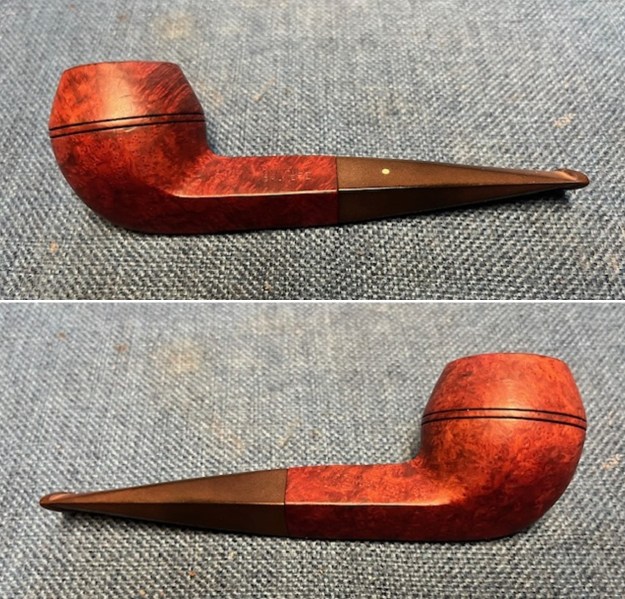
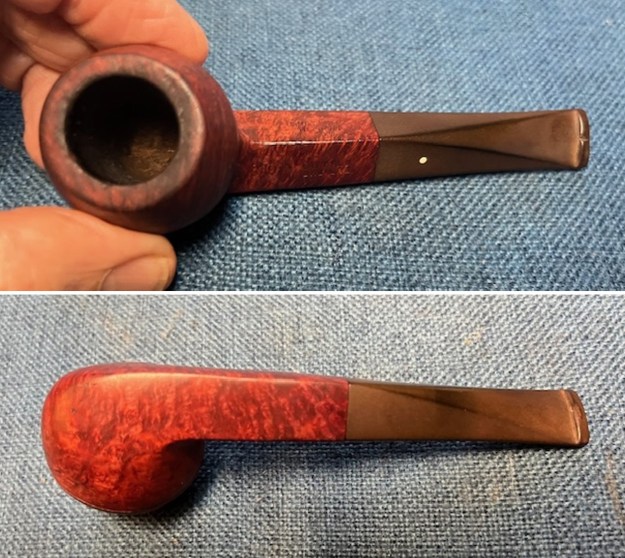
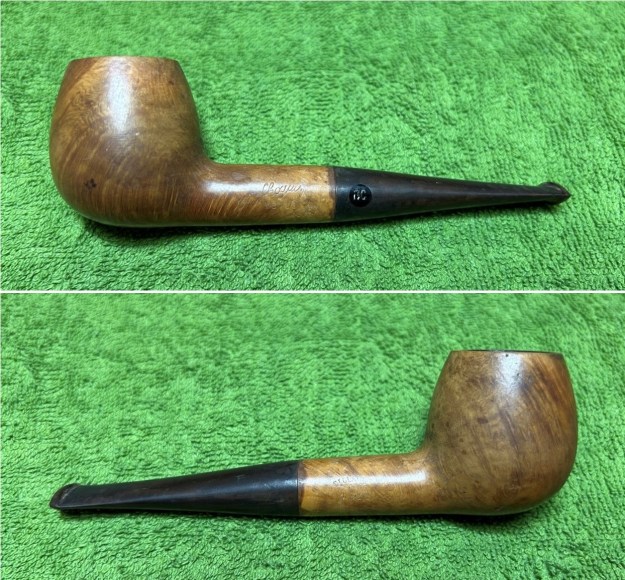
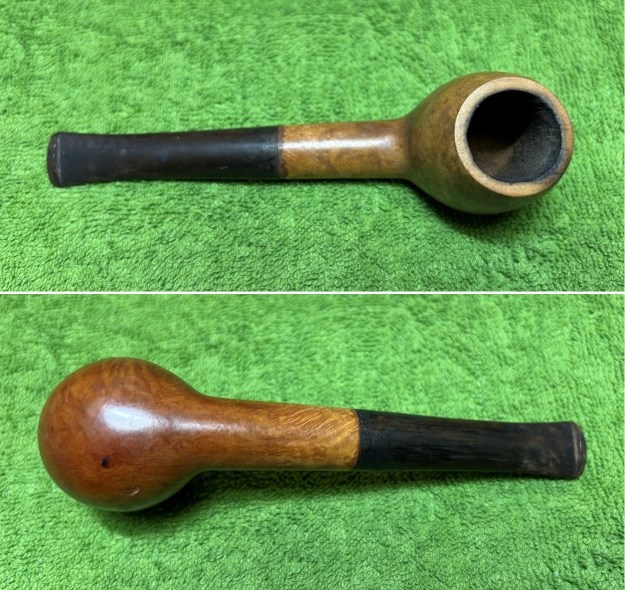
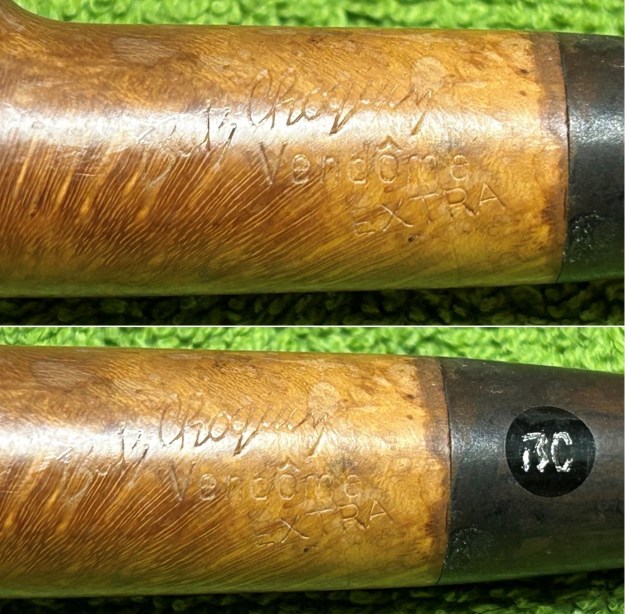
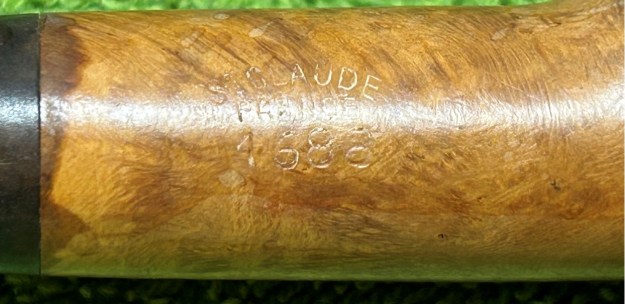
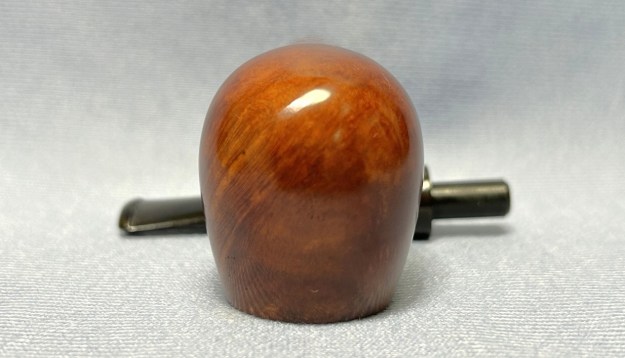
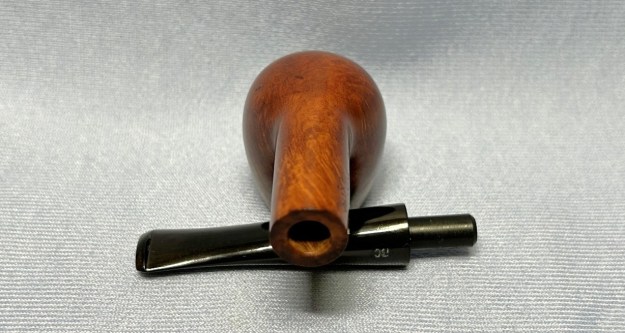
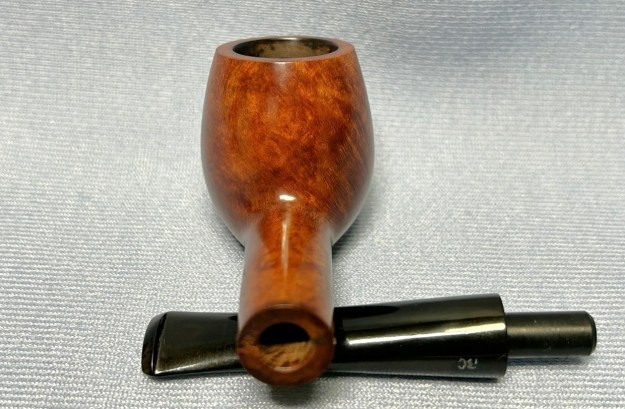
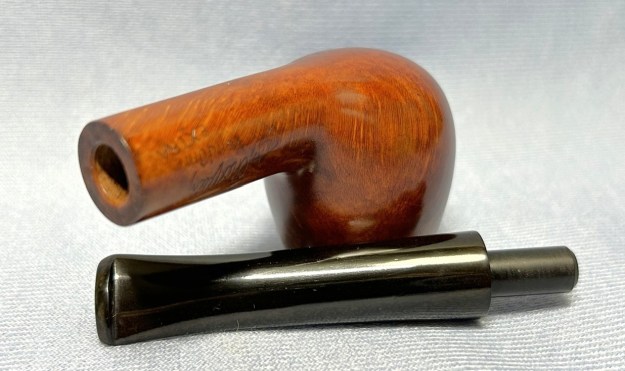
Here’s a charming pipe! I’ve been restoring a good number of pipes for a local family and this is the latest of the bunch: a Butz-Choquin Vendôme Extra 1688. This is an apple shape (in French, the shape is called boule – meaning ball), with a round shank and a tapered stem. It’s an attractive pipe, but it has seen better days. Time to spiff it up for its new owner. Let’s have a look at the markings on this pipe. As the photos show, the left side of the shank reads, Butz-Choquin [over] Vendôme [over] Extra. The right side of the stem reads, St Claude [over] France [over] 1688. Additionally, the stem shows the BC logo of Butz-Choquin in a clear, acrylic circle. Both Pipedia and Pipephil have good write-ups on the history of Butz-Choquin and I encourage you to read both. Also, Steve has restored quite a few and it’s worth having a look at his writings too. For the moment, here is some information from Pipedia:

The pipe, from Metz to Saint-Claude.

 Jean-Baptiste Choquin of Metz started out as a tobacconist. This enterprise was prosperous; he had several employees. Among those, there was a certain Gustave Butz who was its first workman and who became his son-in-law by marrying Choquin’s daughter Marie in 1858.

In 1858 Jean-Baptiste Choquin created, in collaboration with Gustave Butz, the Choquin pipe. This bent pipe with a flat-bottomed bowl was finished with an albatross-bone mouthpiece, fixed with silver rings.

In 1858, still in Metz, Gustave Butz built an establishment for the manufacture of the Choquin pipe which took the name of. In 1951, the Berrod-Regad company bought the trademark, continuing manufacture until 2002. Departing from Metz, the workshop was relocated to Saint-Claude, then also called “the world capital of the briar pipe”, under the Berrod-Regad group. The Berrod-Regad group would go on to completely rebuild the network of representatives until finally entering the export market in 1960 and has since won several prizes, as well as the Gold Cup of French good taste.

In a few years, the brand’s collection increased from ten to seventy series. 135 years after it was founded, the pipe is still well-known not only in France but throughout the world. In 2002, the Berrod family, wishing to preserve manufacture of pipes in Saint-Claude, handed over the company to Fabien Guichon, a native of the area, who will continue to develop the brand during the 21st century.Meanwhile, Pipephil says this:

The origin of the brand reaches back to 1858 when Jean-Baptiste Choquin in collaboration with his son-in-law Gustave Butz created their first pipe in Metz (France). Since 1951 Butz-Choquin Site officiel Butz Choquin, pipes de Saint-Claude jura. BC pipe de bruyere luxe is a brand of the Berrod-Regad group (Saint-Claude, France).

Jean Paul Berrod managed the company from 1969 to 2002 when he retired and sold the corporate to Mr Fabien Gichon. Denis Blanc, allready owner of EWA, took over the S.A. Berrod-Regad in 2006.

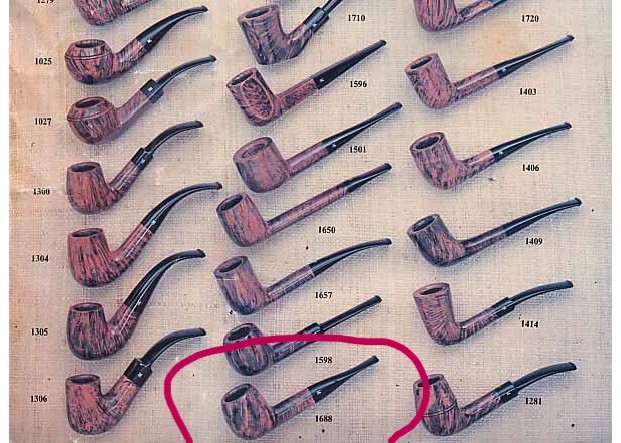
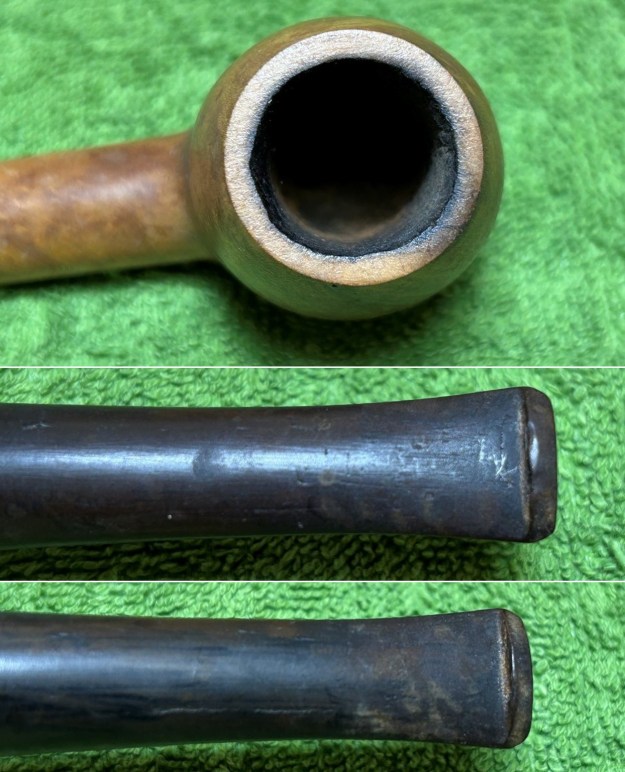
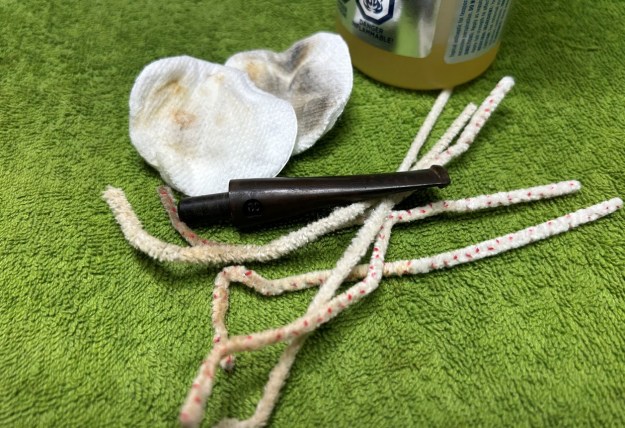
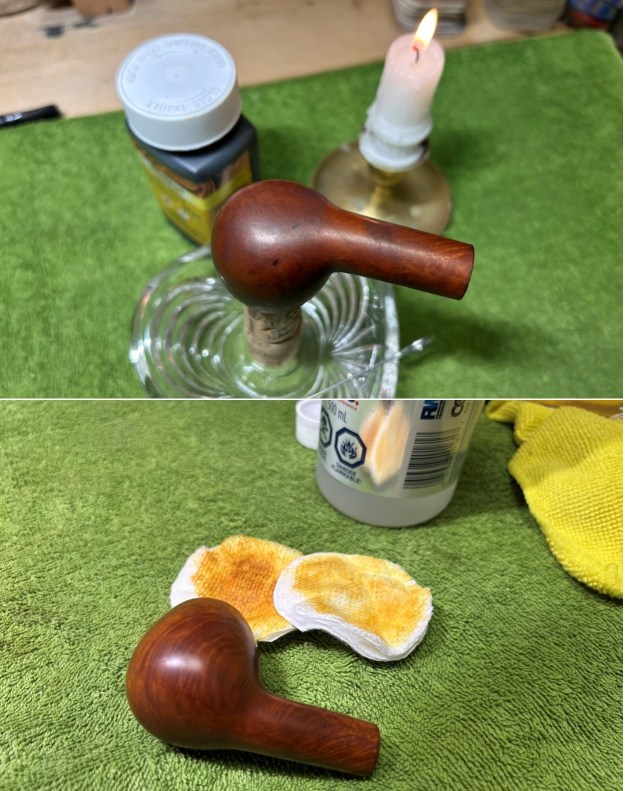
In an old Butz-Choquin catalogue, I found the pipe shape in question, listed with its requisite number:An inspection of the pipe showed a few flaws to be addressed. The bowl was dirty and stained. It also had some burn marks on the rim top. Furthermore, it had an unattractive lacquer-like finish to it. Meanwhile, the stem was dirty and scratched. There were minor bite marks and there was some oxidation.To begin, I used oil soap on a few cotton rounds and wiped the stem down to provide an initial cleaning of filth before moving on. The primary cleaning comes next. I cleaned the inside of the stem with both pipe cleaners and cotton swabs dipped in 99% lemon-infused isopropyl alcohol. I scrubbed thoroughly to make sure the interior was clean.The goal of the next step is the removal (or minimization) of oxidation. Going to my sink, I used cream cleanser, cotton rounds, and a toothbrush, and scoured the stem to remove as much surface oxidation as possible. As the photos show, the result is a hideous brownish mess – but better off the stem than on it.Once the stem was reasonably clean, I soaked it overnight in some de-oxidation fluid. This solution works to draw oxidation in the stem to the surface. This is a major aid and an important step in ensuring a clean stem. The following day, I drew the stem out from its bath and scrubbed the lingering fluid with a toothbrush.Now that the stem is clean and dry, I set about fixing the marks and dents in the vulcanite. This is done by filling those divots with black cyanoacrylate adhesive, impregnated with carbon and rubber. I left this to cure and moved on.The penultimate step for the stem is sanding. First, with my set of needle files, I reduce the bulk of the cyanoacrylate repairs. I want to remove the excess adhesive as near to the surface as possible, without cutting into the vulcanite. Following that, I use all nine of the micromesh sanding pads (1,500 through 12,000 grit) to sand out flaws, even out the vulcanite, and provide gentle polishing of the finished surface. I also apply pipe-stem oil while using the last five micromesh pads. There was a wonderful, deep black shine to the stem when I was done.Now that the stem is (nearly) complete, I can move on to the stummel. The first step for me is to ream out the bowl – that is to say, remove all the cake inside the bowl. This accomplishes a couple of things. First (and most obviously), it cleans the bowl and provides a refurbished chamber for future smoking. Second, when the old cake is removed, I can inspect the interior walls of the bowl and determine if there is damage or not. I used a reamer, a pipe knife, and a piece of sandpaper taped to a wooden dowel. Collectively, these ensure that all the debris is removed. Plenty of cake in there…The inside of the stummel needs to be cleaned thoroughly. Similar to the stem, I then cleaned it with both pipe cleaners and cotton swabs dipped in 99% lemon-infused isopropyl alcohol. With a pipe this dirty, it took quite a while and much cotton to get clean (as the photos will attest).I then decided to ‘de-ghost’ the pipe – that is to say, exorcize the remaining filth from the briar. I filled the bowl and the shank with cotton balls, then saturated them with 99% isopropyl alcohol. I let the stummel sit overnight. This caused any remaining oils, tars and smells to leach out into the cotton.To tidy up the briar, I also wiped down the outside with some oil soap on cotton rounds (and a toothbrush). This does a good job of cleaning any latent dirt on the surface of the briar. The last step of the cleaning process is to scour the inside of the stummel with some soap and tube brushes. This is normally the culmination of a lot of hard work in getting the pipe clean.However, I noticed that the lacquer was flaking and looking terrible. As a result, I chose to remove it all with acetone on some cotton rounds. Of course, acetone is a volatile chemical, and I only use it rarely and judiciously in my pipe work. In this case, it acted perfectly to remove what I needed and left beautiful wood underneath. In fact, it looked so much better after having wiped it down. The damage to the rim is not terrible, but it is notable. In order to lessen the burns on the rim, I ‘topped’ the pipe – that is to say, I gently and evenly sanded the rim on a piece of 220-grit sandpaper. This effectively minimizes the damage, without altering the look of the pipe. A little of the burn remains, but that is part of this pipe’s life story.I used all nine micromesh pads (1,500 through 12,000 grit) on the outside of the stummel to finish it off. This sanding minimizes flaws in the briar and provides a beautiful smoothness to the wood.The removal of the lacquer was a positive, necessary step, but it made the stummel a bit pale. I decided to stain the wood with an alcohol-based, aniline dye. I use this type of dye because it is easy to work with, uniform in colour, quite penetrating, and is easily thinned with isopropyl alcohol. For this pipe, I chose a light brown colour, as it most closely resembled what the pipe would have looked like when new. I spread the dye all over the outside of the stummel with a small dauber and then applied a gentle flame to it. This flame assists in setting the stain by quickly evaporating the isopropyl alcohol. If necessary, the stain can be lightened by wiping the briar with pure alcohol – and, in this case, that’s precisely what I did. I rubbed some Before & After Restoration Balm into the briar and let it sit for 20 minutes or so. The balm moisturizes the wood and gives a beautiful depth to the briar. I then buffed it with a microfibre cloth. For the final step, I took the pipe to my bench buffer and carefully polished it – first with a white diamond compound, then with three coats of carnauba wax. This procedure makes the pipe look its best – the stummel sings and the stem glows.This Butz-Choquin Vendôme Extra 1688 apple is a very handsome pipe and will provide many years of smoking pleasure for its new owner. The approximate dimensions of the pipe are as follows: length 5¼ in. (134 mm); height 1⅝ in. (40 mm); bowl diameter 1⅓ in. (34 mm); chamber diameter ¾ in. (19 mm). The weight of the pipe is 1⅛ oz. (34 g). I hope you enjoyed reading the story of this pipe’s restoration as much as I enjoyed restoring it. If you are interested in more of my work, please follow me here on Steve’s website or email me directly at kenneth@knightsofthepipe.com. Thank you very much for reading and, as always, I welcome and encourage your comments.

Restoring the third of six pipes for a Vancouver Pipeman – No Name Bent Rhodesian


by Steve Laug

Earlier this week I received an email from Stephen regarding a few more pipe projects that he had for me to work on. He dropped them off here yesterday for me to work on. There were six pipes in the lot. Two were his that I had worked on a few years ago – a Mayfair 1005 rusticated tree stump and a Jost Supreme. Both were favourite pipes of his. One was a Savinelli Bent Billiard that he purchased on a trip to Italy. The final three were pipes that belonged to his father who would soon be visiting him in Vancouver – a Brigham full bent four dot 4244, a Savinelli Portofino Bent Pot and a Bent Rhodesian with no name stamped on the shank sides. Stephen texted me this photo of the pipes before he sent them.I decided to work on the second of Stephen’s father’s pipes. It is a smooth Bent Rhodesian. It is a beautiful grained piece of briar that I can appreciate why he chose it. The pipe is unstamped and does not appear to have even the remnants of any stamping. The briar is dirty from use with a moderate cake in the bowl and a lot of chipping and dents in the rim top and the twin rings on Bullcap on the bowl. The stem was oxidized, calcified and had some tooth marks and chatter on the top and underside of the stem ahead of and on the surface of the button. There is no stamping on the side of the stem as it was unmarked. I took photos of the pipe before I started my work and included them below. I took a photo of the stem surfaces and the bowl and rim to give a sense of condition of the pipe. You can see the cake in bowl and the lava overflow and the heavy nicking and denting on the edges and rim top of the bowl. The stem surface is very dirty and you can see the tooth marks and chatter on both sides ahead of the button. There is also a paper wash inserted in the mortise of the pipe to tighten the fit of the stem.I removed the stem from the shank of the pipe and took a photo of the parts to show the flow of the pipe. It has some great grain.I used a dental spatula to scrape out the paper washer from the inside of the shank. It had been glued to the right side of the shank to thicken the wall of the right side. It was not an effective way as the shank was not drilled evenly. It was straight but the shank was not round. The stem turned the same way the stem was.To address the damage on the rim top I topped it with 220 grit sandpaper on a topping board. I took off the rim damage and smoothed out the top of the rim. It looked much better. I reamed the bowl with a PipNet pipe reamer using the second and third cutting head to trim the cake back. I used a Savinelli Fitsall Pipe knife to clean up the remnants leaving bare briar. I sanded the bowl walls with 220 grit sandpaper wrapped around a piece of dowel. The bowl was significantly cleaner. I cleaned out the airway in the shank and mortise as well as the stem with cotton swabs, pipe cleaners and isopropyl alcohol. It was dirty but it cleaned up very well. I cleaned the surface of the briar with a cotton pad and acetone to remove the grime and the remnants of the finish on the briar. It looked much better.There was a large divot on the bottom of the bowl that I decided to repair. I filled it in with some clear CA glue and pressed briar dust into the glue. I repeated the process until the damaged area was filled in. Once the repair cured I sanded it flat to blend it into the surrounding surface of the briar. It looked much better when I was finished. I sanded the bowl with 320-3500 grit sanding pads. I wiped the bowl down after each sanding pad with a damp cloth to remove the sanding debris. I polished the briar with 1500-12000 micromesh sanding pads – dry sanding the bowl with the pads and wiping it down after each sanding pad to remove the sanding debris. It is looking much better. I left the nicks on the twin rings around the top of the Bullcap as they are a part of the pipe’s journey. I rubbed the bowl down with Before & After Restoration Balm. I worked it into the surface of the briar with my fingertips and a shoe brush to work it into the rings around the Bullcap. The product works to clean, restore and preserve the briar. I let it do its magic for 15 minutes then buffed it off with a cotton cloth. The pipe looks very good at this point in the process. I set the bowl aside and turned my attention to the vulcanite taper stem. I scrubbed the surface of the stem with Soft Scrub to break through the oxidation, calcification and clean up the tooth marks.I filled in the tooth marks on the stem surface and on the surface of the button on both sides with black CA glue. The glue I use has both rubber and carbon in the mix that harden as it dries but does not become brittle. Once it cured I flattened the repairs and reshaped the button edge with a flat needle file. I cleaned up the repaired areas with 220 grit sandpaper. I sanded the stem with 320-3500 grit sanding pads. I wiped the stem down after each sanding pad to remove the sanding debris and dust. The stem looked very good. I polished the stem with micromesh sanding pads – 1500-12000 grit pads. I wiped it down with an Obsidian Oil cloth after each sanding pad.  I finished polishing it with Before & After Pipe Stem Polish – both Fine and Extra Fine and buffed it off with a cotton cloth. I gave it a coat of Obsidian Oil to preserve and protect the stem. This No Name Bent Rhodesian is a great looking pipe now that it has been restored. The mix of brown stains really highlight the grain and the polished finish has depth. The nicks in the rings give a bit of character and history to the pipe. I put the vulcanite stem back on the bowl and carefully buffed the pipe with Blue Diamond on the buffing wheel. I gave the bowl and the stem multiple coats of carnauba wax on the buffing wheel and followed that by buffing the entire pipe with a clean buffing pad. I hand buffed the pipe with a microfiber cloth to deepen the shine. The finished Bent Rhodesian fits nicely in the hand and feels great. Give the finished pipe a look in the photos below. The dimensions of the pipe are Length: 5 inches, Height: 1 ½ inches, Outside diameter of the bowl: 1 inch, Chamber diameter: ¾ of an inch. The weight of the pipe is 48 grams /1.69 ounces. I have three more of Stephen’s pipes to work on. Once I have finished I will get them back to him to enjoy with his father. Thanks for reading this blog and my reflections on the pipe while I worked on it.

As always, I encourage your questions and comments as you read the blog. Thanks to each of you who are reading this blog. Remember we are not pipe owners; we are pipe men and women who hold our pipes in trust until they pass on into the trust of those who follow us.

Restoring a Conway Aristocrat Made in England Bulldog


by Steve Laug

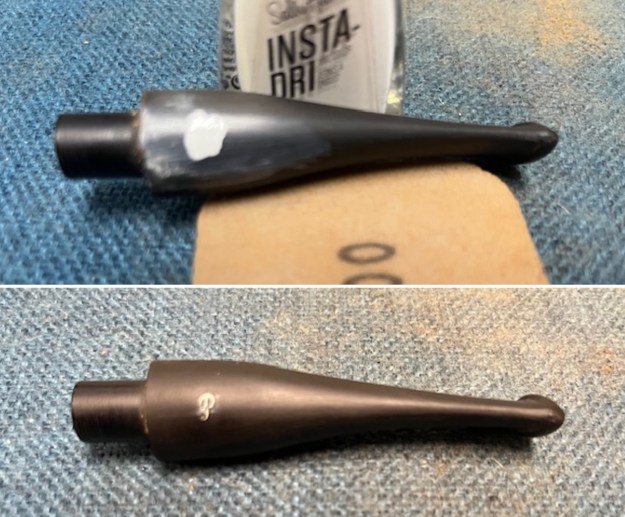
I picked some older pipes to work on next. The next of these is a Classic, Smooth Straight Bulldog with a Saddle Stem. We purchased this one on 09/20/2023 from a seller in Portland, Oregon, USA. The is a large straight Bulldog that is stamped on the top left side of the shank and reads Conway [over] Aristocrat. On the left side it is stamped Made in England. On the top left side of the saddle stem the Circle C logo of Conway was stamped. The pipe was well used. The finish was dirty with dust and debris in the smooth briar and in the twin rings around the rim cap. The bowl had a thick cake in it and heavy lava on the rim top and the inner edge. There was some damage on the left back of the rim top and om the bevelled inner edge of the bowl. The vulcanite stem was oxidized, calcified and had some tooth marks on the surface ahead of the button. Jeff took photos of the pipe before he started his cleanup work. He took some closer photos of the rim top and bowl to show the condition. You can see the thick cake in the bowl and the lava on the rim top and inner edge. You can see the chip on the outer edge at the back of the rim top. It is hard to know for certain but it looks like there is some roughening on the back inner edge. He also took photos of the stem to show its condition. You can see the oxidation, calcification and tooth marks and chatter. Jeff took some photos of the sides and heel of the bowl to show the condition of the finish on the bowl. The twin rings and bowl cap are quite well done and you can see the nicks and damage in the briar. He captured the stamping on the left top and right top side of the diamond shank. It is faint in spots but reads as noted above. It is interesting to note the nicks on the shank. The circle C logo stamped on the left side of the saddle stem is faded but the stamp is quite deep. I turned to Pipephil’s site (http://www.pipephil.eu/logos/en/logo-c6.html) to see what I could find out on the brand. I did a screen capture of the section on the site on the Conway label. It is a pipe that bears the same stamping as the one in hand here other than the shape number. I also copied the sidebar information below the screen capture.Conway pipes were most probably made by Singleton & Cole. If the pipe is stamped with a shape number this probability almost becomes a certitude. According to Wilczak & Colwell (op. cit.) Loewe had a line named Conway.

I turned to a link on Pipedia hoping for more information (https://pipedia.org/wiki/Conway). Sadly the only information was a mention of the information on Pipephil’s site. There were some amazing photos of the brand on the site. There was one that included an unsmoked Apple with a box and pipe sock as well as a brochure. The interesting point is that it was also an Aristocrat.Armed with that information that pipe was probably made by Singleton & Cole in London, England. I turned to work on the pipe itself. Jeff had cleaned up the pipe and it looked very good. He reamed the pipe with a PipNet pipe reamer and removed the rest of it with a Savinelli Fitsall Pipe Knife. He scrubbed the bowl with undiluted Murphy’s Oil Soap with a tooth brush. He rinsed it under running warm water to remove the soap and grime. He cleaned out the inside of the shank and the airway in the stem with alcohol, cotton swabs, shank brushes and pipe cleaners. He soaked the stem in Briarville’s Stem Deoxidizer and rinsed it off with warm water. I took photos of the pipe before I started my part of the restoration work. The rim top cleaned up really well. The rim top had some damage on the back left side of the top. The outer edge of the bowl look very good. The inner bevelled edge was clean but had some darkening all around the bowl. The stem surface was clean but the oxidation was still visible and calcification was gone. Overall it looked very good with a few tooth marks and chatter on both sides near the button.The stamping on top left side of the shank and the top right side is clear and readable. It is stamped as noted above. It is faint in spots but still clear. The logo on the left topside of the saddle is also clear. I removed the stem and took a photo of the pipe to give a sense of the whole. The wide taper stem is nice and the photo shows the proportions of the pipe. I used a wooden half sphere and a piece of 220 grit sandpaper to clean up the rim top and the bevel on the bowl. Once finished the inner edge looked better. I then topped the bowl with 220 grit sandpaper to remove the damage to the left side of the rim top. I took a photo of the top after this part of the work as well.I washed the bowl with cotton pads and acetone to remove some of the opaqueness of the stain. Once I washed it down it looked much better. The grain really stood out and I was able to add a bit of colour to the sanded rim top. I touched up the stain on the rim top with a Walnut stain pen to match the rest of the bowl colour. It matched well and once it was polished and buffed it would be perfect.I sanded the bowl and shank with 320-3500 grit sanding pads. I wiped the bowl down after each sanding pad to remove the debris. The pipe was beginning to look much better. I polished the smooth briar around outside of the bowl and the rim top with micromesh sanding pads. I sanded it with 1500-12000 grit pads and wiped the bowl down with a damp cloth to remove the sanding dust. I rubbed the bowl and shank down with Before & After Restoration Balm. I worked it into the surface of the bowl sides and shank with my fingertips and a horsehair shoe brush to get it into the rings and rustication. It works to clean, enliven and protect the briar. I let the balm sit for 15 minutes and buffed with a cotton cloth to raise the shine. The grain and the rustication came alive. I set the bowl aside and turned my attention to the stem. I “painted” the tooth marks with the flame of a lighter to lift them (forgot to take photos). The heat did a great job lifting all of them. The marks and chatter that remained I filled in with black CA glue strengthened with carbon and rubber. Once cured I flattened them with a file and blended them into the surface by sanding with 220 grit sandpaper. I touched up the Circle C logo on the left side of the stem with white acrylic nail polish. Once it cured I scraped off the excess and polished the stem.I polished the roughness, scratch marks and smoothed the stem with 320-3500 grit sanding pads. I wiped the stem down after each sanding pad with an Obsidian Oil impregnated cloth. It removes the dust and also gives the sanding pads some bite. By the final pad it was looking quite good.I polished the vulcanite stem with micromesh sanding pads – 1500-12000 grit pads. I wiped it down with Obsidian Oil after each sanding pad. I used Before & After Pipe Polish – both Fine and Extra Fine to further polish the stem. I rubbed it down with a final coat of Obsidian Oil and let it dry. This Conway Aristocrat Straight Bulldog is a great looking pipe now that it has been restored. The style of rustication that is used around the bowl is quite beautiful and works well with both the shape and the polished vulcanite taper stem. I put the stem back on the bowl and carefully buffed the pipe with Blue Diamond on the buffing wheel using a light touch on the briar. I gave the bowl and the stem multiple coats of carnauba wax on the wheel and followed by buffing the pipe with a clean buffing pad. I hand buffed the pipe with a microfiber cloth to deepen the shine. The finished Conway Aristocrat Bulldog fits nicely in the hand and feels great. Give the finished pipe a look in the photos below. The dimensions of the pipe are Length: 5 ¾ inches, Height: 1 ¾ inches, Outside diameter of the bowl: 1 ¼ inches, Chamber diameter: 7/8 of an inch. The weight of the pipe is 47 grams/1.66 ounces. I will be putting it on the rebornpipes store in the British Pipemakers Section shortly. If you are interested in adding this pipe to your collection send me a message or an email. Thanks for reading this blog and my reflections on the pipe while I worked on it. I appreciate your support and time!

Getting Creative with this Weber Golden Walnut Imported Briar Apple


by Steve Laug

The next bowl on the table is a classic shaped Apple. It has been sitting here and I have looked at it over and over again and today I decided to restem it. I wanted to try something a little different with this restem and see if I could come up with an interesting restem. I think when you see it you will either love it or hate it! But there you go. Here is what I did! I cleaned up the bowl and matched a stem with briar bowl. It is a cleanup and restore and is a break from my work on the Freehand pipes. The bowl is dirty and somewhere in its life before it came to us the stem was lost. The finish was coated with varnish that left it shiny even under the grime. It showed promise under the grit and grime of the years. It was stamped on the left side of the shank and read Weber in an oval [over] Golden Walnut. The right side of the shank it is stamped Imported Briar. The bowl had a thick cake and a thick lava overflow on the rim top. There was some lava and tars coming down the bowl sides from the top. It is a pretty pipe with some great grain under the grime. I am hoping to match a nice stem to it. I took some photos of the bowl before I started my work on it. I took a close up photo of the rim top and bowl to give more of a sense of what I see and noted above. It is a dirty pipe but seems to have no damage on the rim top or edges.I took a photo of the snapped tenon in the shank end. The end of the tenon is quite smooth so it was a clean snap. I will need to pull it before I can fit a new stem to it.I took a photo of the stamping on the left and right side of the shank. The stamping looks blurry and double stamped in the photos but in person it is clear and readable. Recently I picked up some unused acrylic stems. There was an acrylic amber/orange variegated saddle stem in the lot. It was drilled for a new tenon and was clean. This stem had a close diameter to the shank end of the Weber and would work well I think.I put the bowl in the freezer for 30 minutes then used a drywall screw to pull out the broken tenon. I screwed it into the tenon and wiggled it free from the shank. I used the tenon piece to fit a new tenon in the shank end.I fit the new tenon in the shank end and it was a little tight. I used a Dremel and sanding drum to reduce the diameter just enough for a snug fit. I painted the threaded tenon with black CA glue and turned it into the end of the new stem. The fit was good. I set it aside and let the glue cure. I put it in the shank and the fit against the shank end was slightly off. I used a file to make the transition between the shank and the saddle portion of the stem very smooth. I liked the look of the variegated orange acrylic stem with the browns of the briar bowl. I cleaned up the file marks on the shank and avoided the stamping on both sides with a folded piece of 220 grit sandpaper. Once finished the transition and both the briar and the acrylic were smooth. I set aside the stem and turned my attention to reaming the pipe. I used a PipNet Reamer with the first and second cutting heads to take back the heavy cake to bare briar. I cleaned up the reaming with a Savinelli Fitsall Pipe Knife and finally sanded the bowl walls with 220 grit sandpaper wrapped around a dowel. I like to remove all the cake to examine the walls for damage and checking. Great news is that this one is free of any damage. With the bowl reamed it was time to work on the rim top. The lava was hard and thick. I started the process with a topping board and 220 grit sandpaper. Once I had smoothed off the top outer edges it was clear that the inner edge of the rim top was slightly bevelled inward. I used a wooden half sphere and 220 grit sandpaper to clean up the bevel and remove the damage to that portion of the rim top and edges. I cleaned up a few spots with a folded piece of 220 grit sandpaper. To remove the shiny varnish coat on the bowl and to use the stain on the bowl to colour the rim top and sanded shank end I wiped the bowl and shank down with acetone. I used cotton pads with the acetone and was able to easily remove the varnish and move some of the stain to the sanded portions of the shank and rim. I would need to restain but it definitely looked much better. I matched the stain on the bowl and shank with a Maple Stain Pen. I put it on the smooth sanded rim top and shank end. I wanted it to start matched before I started sanding the bowl and shank with sanding pads. I was very happy with the match. I worked on polishing out the sanding marks with 320-3500 grit sanding pads. I worked particularly on the transition between the shank and the stem surface. I also worked over the briar of the bowl and rim top at the same time. The bowl and stem looked very good once I finished. I took the stem off the shank and turned to the bowl first. I polished the briar with micromesh sanding pads – dry sanding with 1500-12000 grit pads. After each sanding pad I wiped the bowl down with a damp cloth to remove the sanding debris and dust. It began to take on a deep shine. I rubbed down the briar Before & After Restoration Balm. I worked it into the surface with my fingertips. The product works to clean, enliven and preserve the briar. I let it sit for 15 minutes then I buffed it with a cotton cloth to deepen the shine. The briar really comes alive with the balm. I polished the stem with micromesh sanding pads – 1500-12000 grit pads to remove them. I wiped the stem down with Obsidian Oil after each sanding pad. I used Before & After Pipe Polish – both Fine and Extra Fine to further polish the stem. I rubbed it down with a final coat of Obsidian Oil and let it dry. This is another pipe that I am really happy about the finished restoration. This reborn Weber Golden Walnut with a newly fitted golden acrylic variegated stem turned out really well to my eye. After restemming I think that it is unique and beautiful looking classic apple with a twist. The bowl is a classic Bent Billiard and the “new” horn stem is a great match. The polished horn stem works well with the briar and the nickel ferrule. The briar really came alive with the buffing. The rich reddish brown stains of the finish make the grain really pop with the polishing and waxing. I put the stem back on the bowl and buffed the pipe with Blue Diamond on the buffing wheel. I gave the bowl and the stem multiple coats of carnauba wax on the buffing wheel. I buffed the pipe with a clean buffing pad to raise the shine. I hand buffed the pipe with a microfiber cloth to deepen the shine. The finished Weber Golden Walnut Apple really has a unique beauty and feels great in the hand. It looks very good. Give the finished pipe a look in the photos below. The dimensions of the pipe are Length: 6 inches, Height: 1 ½ inches, Outside diameter of the bowl: 1 ½ inches, Chamber diameter: ¾ of an inch. The weight of the pipe is 45 grams/1.62 ounces. The pipe will be going on the rebornpipes store soon. It will be in the American Pipemakers Section if you would like to add it to your collection. Thanks for reading this blog and my reflections on the pipe while I worked on it. It was a fun one to work on!
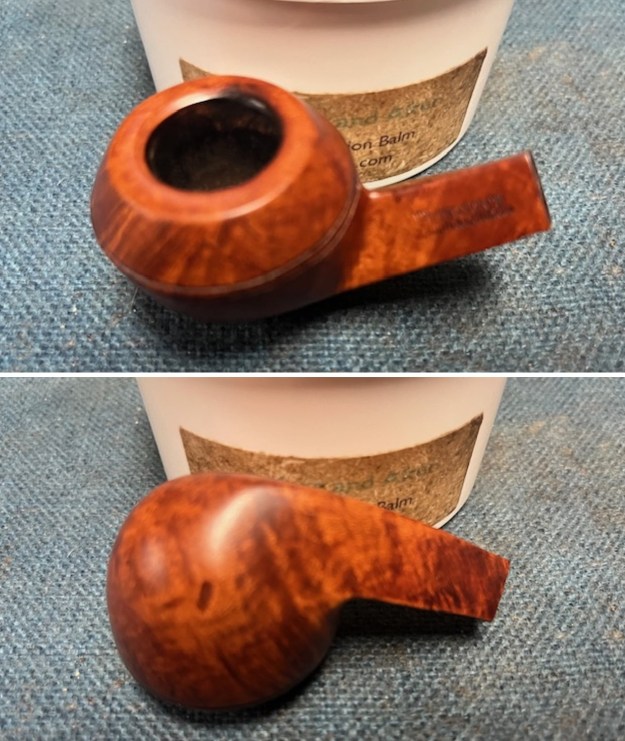
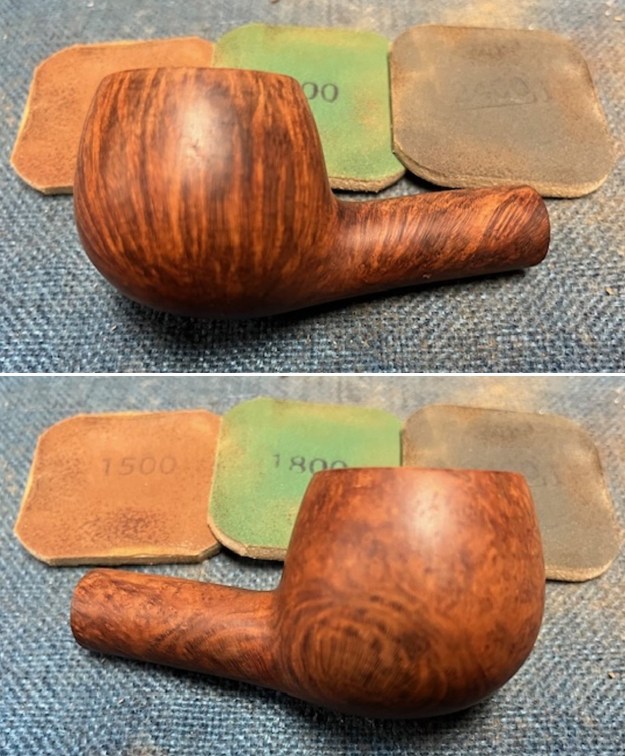
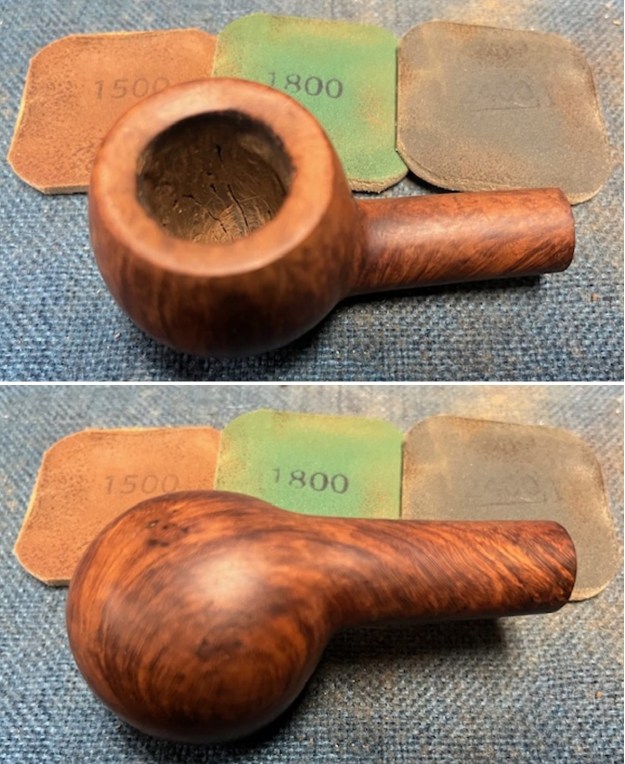
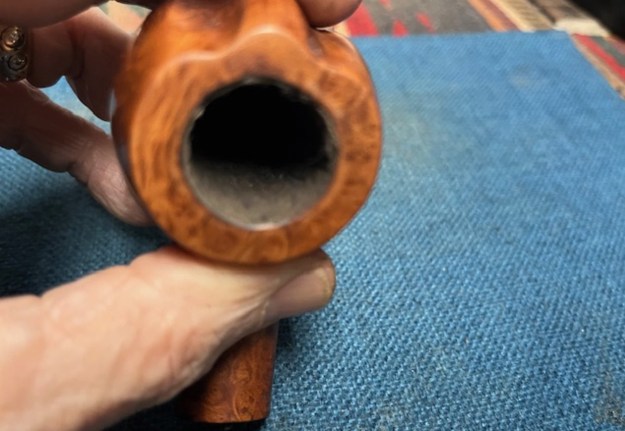
Nording “N” Handcrafted Made in Denmark Freehand with fancy turned vulcanite stem


by Steve Laug

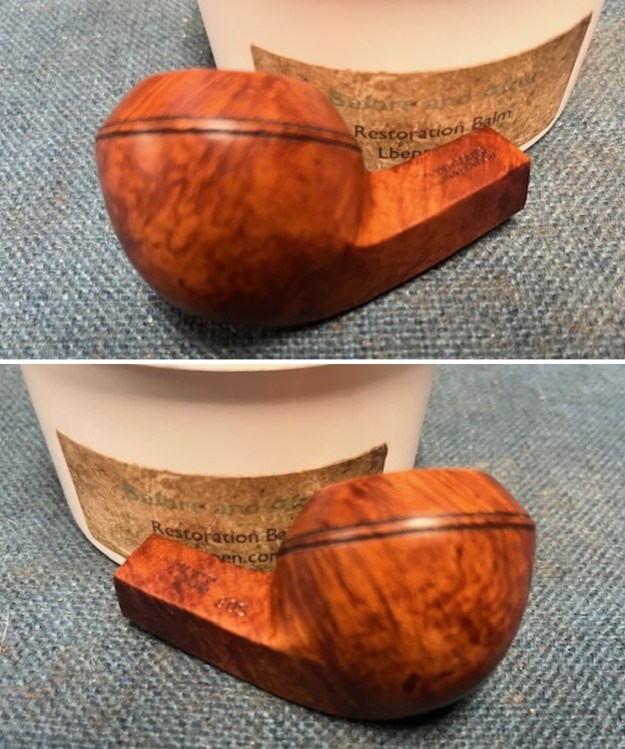
It was time to turn back to one of the pipes that Jeff and I picked up. This pipe was purchased from an auction on 10/03/21 in Lacon, Illinois, USA. The pipe is Freehand take on a Rhodesian. The grain around the bowl sides, the plateau on the rim top and the rusticated almost leaf pattern on the underside of the bowl. The shank end has a vulcanite shank extension. You can see the flow of straight and flame grain around the bowl and shank. It is stamped on the underside of the shank with a hollow letter N [over] Handcrafted [over] Made in Denmark. There is no other stamping on the pipe. The stem does not have the expected Nording N anywhere on the sides or top. The pipe was very dirty with a thick cake in the bowl and some lava overflowing on to the plateau rim top. It was hard to know what the inner edge of the rim looked like because of the lava and cake. Other than being dirty the finish appeared to be in good condition. The fancy, turned stem was lightly oxidized and had come calcification ahead of the button. There was some tooth chatter and marks on both sides of the stem ahead of the button and on the button surface. Jeff took the following photos of the pipe before he started his clean up work on it. He took a photo of the rim top to show the thick cake in the bowl and the overflow of lava. The cake is thick and hard and the lava overflow is in the plateau. The bowl is dirty but it must have been a great smoking pipe. The stem looked dirty and oxidized with the calcification. The bite marks and tooth chatter on the stem were not too bad and the edge of the button was worn down. The mark on the back side of the bowl is actually more of the plateau running down the side rather than a flaw in the briar. The next photos show the sides and heel of the bowl to give a clear picture of the beauty of the grain around the bowl of the pipe. Under the grime there is some great grain peeking through. Jeff took photos of the stamping to capture the clarity of it even under the grime. The stamping is faint in spots but still readable. It reads as noted above.Before I started my work on the pipe I wanted to learn more about where this pipe fit into the Nording lines so I turned to the first of two sites that I always check to gather information on a brand. I turned first to Pipedia (https://pipedia.org/wiki/N%C3%B8rding). Nording’s were exclusively freehand shapes, graded from A, B, C, D, up to its highest grade, extra. Later an “F” grade was added—less expensive than the “A.” I could find no other information on the rest of the stamping on the pipe.

I did find a great collage of photos of Erik Nording that I have included below.I turned to the second information site – Pipephil’s (http://www.pipephil.eu/logos/en/logo-n2.html) did not find any more helpful information on the Nording N stamp.

Armed with that information I actually knew no more about this Freehand. I turned to address the pipe itself. Jeff cleaned up the pipe for me. He reamed the bowl with a PipNet pipe reamer and cleaned it up with a Savinelli Fitsall Pipe Knife. He scrubbed the exterior with Murphy’s Oil Soap and a tooth brush to clean off the grime off the finish and the heavy overflow of lava on the rim top. The cleaning had removed some of the black stain on the rim top. He cleaned up the internals of the shank, mortise and stem with pipe cleaners, cotton swabs and alcohol to remove all of the oils and tars in the pipe. He soaked the stem in Before & After Deoxidizer and was able to remove much of the oxidation. When it arrived here in Vancouver it was a clean pipe and I knew what I had to work with. I took photos of it before I started my part of the restoration. I took photos of the rim top and the stem to show their condition once it arrived in Canada. Jeff was able to clean up the incredibly thick cake and lava overflow that was shown in the rim and bowl photos above. You can see the spots where the black stain had been removed from parts of the plateau top. He was also able to get rid of the grime and grit in the surface of the briar. The inner edge of the bowl was in very good condition and was smooth to the touch. The rim top and edges looked very good. The stem looked much cleaner. There was tooth marks and chatter on both sides on and near the button.I took a photo of the stamping on the underside of the shank. It was clear and readable as noted above.I removed the stem from the shank and took a photo of the appearance of the parts. You can see how large the pipe is in the photos.I decided to start with polishing the briar and the vulcanite shank extension with micromesh sanding pads. I wet sanded it with 1500-12000 grit pads. I wiped the bowl down after each pad with a damp cloth. The bowl began to take on a rich shine and grain was beginning to stand out.  I paused the polishing to touch up the stain on the plateau rim top and shank end. I used a black stain pen and was able to match the black perfectly. It looks much better.I rubbed the bowl and shank down with Before & After Restoration Balm to deep clean the finish on the bowl and shank. The product works to clean, enliven and protect the briar. I worked it in with my fingers to get it into the briar. I used a horsehair shoe brush to work it into the plateau top.  After it sat for a little while I wiped it off and buffed it with a soft cloth. The briar really began to have a rich shine. I took some photos of the bowl at this point to mark the progress in the restoration. It is a beautiful bowl. I set the bowl aside and worked on the stem at this point in the process. I “painted” the tooth marks in the stem with the flame of a Bic lighter to lift them. I filled in the remaining tooth marks on the stem surface and button edge with black CA glue (forgot to take photos). I set the stem aside to let the repairs cure. I used a small file to flatten the repairs and recut the button edge. I sanded the repairs with 220 grit sandpaper to blend them into the stem surface. I sanded out the scratches in the vulcanite with 320-3500 grit sanding pads. I wiped the stem down after each sanding pad with a cloth impregnated with Obsidian Oil. It started to take on a deep shine.I polished the stem with micromesh sanding pads – wet sanding with 1500-2400 grit pads and dry sanding with 3200-12000 grit pads. I wiped the stem down after each pad with a damp cloth to remove the sanding dust. I used the Before & After Pipe Polish to remove the small minute scratches left in the vulcanite even after the micromesh regimen. I finished by wiping the stem down with a final coat of Obsidian Oil and set it aside to dry. I put the stem back on the Nording Made N Handcrafted Made in Denmark Large Freehand and took the pipe to the buffer. I buffed the bowl and stem with Blue Diamond to polish the briar and the vulcanite. Blue Diamond does a great job on the smaller scratches that remain in both. I gave the bowl and the stem several coats of carnauba wax and buffed the pipe with a clean buffing pad to raise the shine. I hand buffed it with a microfiber cloth to deepen the shine. The pipe polished up really nicely with a great contrasting stain look to the briar. The finished pipe is shown in the photos below. This is another unique Nording for me – the combination of plateau, rustication and smooth finish along with a vulcanite shank extension. The polished black vulcanite extension and stem looks really good with the reds and blacks standing out in the grain. The dimensions of the pipe are Length: 6 inches, Height: 2 ½ inches, Outside diameter of the bowl: 1 ½ inches wide x 2 long, Chamber diameter: 7/8 of an inch. The weight of the pipe is 77 grams/2.79 ounces. This is another pipe that I will be putting it on the rebornpipes online store shortly, if you are interested in adding it to your collection. Thanks for walking through the restoration with me on this beauty!

Restoring and Replacing a Tenon on a Hand Cut B Olive Stack


by Steve Laug

The next pipe on the table was one that we purchased from our contact in Denmark who has provided us with some great pipes. We bought it on 02/16/2023. It caught my eye because of the brass “O” on the stem which I have come to associate with Julius Vesz Hand Made pipes. The stamping on the shank is a bit odd, but uses some of the words that I have come to associate with Vesz pipes.  On the underside of the shank it reads hand cut (lower case script) with B on top of the “cut” portion of the stamp making it unclear. Below that the stamp reads Olive and I don’t think it refers to the wood but perhaps the finish on the pipe. I have never seen a Vesz stamped with that nomenclature. The wood is definitely briar and not Olive wood. I really like the fact that the pipe is the top of the line of Vesz Hand Cut pipes. The bowl had a thick cake with an overflow of lava on the top and the inner edge of the bowl. There were also some burn marks and darkening on the inner edge of the rim. These would need to be dealt with in the clean up and restoration. The finish was dirty with grime and grit ground into the briar. The Ebionite stem was oxidized and had some tooth marks on both sides ahead of the button. Jeff took some photos of the pipe before he started his clean up work. Jeff took some great photos of the rim top that show the thick cake in the bowl and the lava on the rim top. There was also some burn damage on the front inner edge of the bowl and some darkening around the edges. He also captured the condition of the stem showing the oxidation and the tooth damage on both sides. Jeff took a photo of the damage to the filter tenon. It had a major crack on the top half. I expected it to break free during the cleanup process.He captured the grain around the sides and heel of the bowl well in these photos. It was amazing grain and the stain was a rich walnut that made the grain really pop around the bowl and shank. Jeff took a photo of the stamping on the underside of the shank. It was clear and readable as noted above. You can see the “B” stamped on top of the Hand Cut stamp. The second photo shows the brass “O” on the left side of the taper stem and the oxidation around it on the side of the taper stem.Before I started working my part of the restoration I spent some time trying to place the hand cut line in the Vesz hierarchy. I turned to rebornpipes to have a look at some of the pieces I had written previously on the brand. The first was a catalogue I had picked up on Vesz pipes from a friend. It was an older catalogue from the time period that the brand was called Craft Pipes (https://rebornpipes.com/2016/09/13/an-older-julius-vesz-catalogue/). In going through the catalogue there was nothing that referred to the newer lines of the Vesz pipes that showed up in other places.

A piece I wrote on a Vesz Zulu gave a lot of historical backgroundon the brand so I reread that (https://rebornpipes.com/2014/10/04/a-review-a-julius-vesz-shape-76-zulu/). I quoted from Pipedia in the piece and have included that and the link below.

Pipedia gives good background information on Vesz. The picture and the material is taken from this link http://pipedia.org/wiki/Vesz_Pipes

“Born and raised in Hungary, Julius Vesz was first exposed to pipe making through his grandfather. Although his grandfather died when Julius was only 9 years old, he can still picture his grandfather making pipes. It made a lasting impression that matured years later.

After immigrating to Canada at age 23, Vesz worked as a mechanical draftsman, but ever since a child had wanted to do something on his own. Remembering his grandfather’s pipe making and repairing, he thought perhaps he should try his hand at that also. He sought out Charlie Dollack, who had a repair shop in downtown Toronto, but while Charlie encouraged the young Vesz, he did not offer any help or instruction.

Julius continued on his own, setting up a modest shop in his own home, and was soon fixing and making pipes for several department stores, as well as United Cigar, which later turned into his main source of work. He discovered he had a unique skill, which he practiced and nurtured on his own. Like his grandfather, Vesz is motivated by a desire to create pipes that approach perfection.”

Over the years I have followed Julius Vesz’ pipes and kept an eye out for one that caught my eye. Julius Vesz is a Canadian pipe maker who has been controversial in his claim to use dead root briar. Many have argued about his choice of terms regarding the briar that he uses. But regardless of your take on that issue he makes beautiful pipes that smoke exceptionally well. His unique raindrop shaped pipes may be how many people know him. He has a shop in the Royal York Hotel, 100 Front Street West in Toronto.

His Hand Cut pipes are crafted from his oldest and finest blocks of aged briar. They come in a variety of shapes and styles and no two are the same. The grading of the Hand Cut is ascending from 3 – 9, then switches to A – D. The pipe I am working on is a B grade so it is getting close to the top of the grading scale which I would expect from the grain on the briar. The Hand Cut pipes were often personalized with bone, silver and gold ornamentation.

His early pipes bore the Craft Briar stamp, and though his company still is registered as Craft Briar his pipes are now stamped Julius Vesz. He carved every pipe that bears his name and though they may bear similarities to others that he has carved each one is one of a kind. His site says that “Every pipe is meticulously crafted from his personal supply of aged briar that he has been accumulating since the 1960s. The extremely old briar gives each pipe the exceptional smoking characteristics found only in a world famous Julius Vesz pipe.”

Now I knew that the Hand Cut pipe I had was the top line of Vesz Pipes and that it was Graded a B which is close to the top of the line which tops out at Grade D. It is a beauty and it is now time to work on it!

Jeff had thoroughly cleaned up the pipe. He had reamed the pipe with a PipNet pipe reamer back to bare briar and removed the remnants of the cake with a Savinelli Fitsall Pipe Knife. He scrubbed the bowl with undiluted Murphy’s Oil Soap and a tooth brush. He rinsed it under running warm water to remove the soap and grime. He cleaned out the inside of the shank and the airway in the stem with alcohol, cotton swabs, pipe cleaners and shank brushes. He soaked the stem in Briarville’s Pipe Stem Deoxidizer and rinsed it off with warm water. The filter tenon, shown cracked above, fell apart in the clean up. You can see pieces of the broken tenon below. I took photos of the pipe before I started my part of the restoration work.

I took photos of the bowl and rim top to show the clean condition. The burn damage on the inner edge of the bowl is clear on the front of the bowl. The rim top has some scratches and marks as well. The bowl walls look very good. The thick vulcanite stem looks very clean and the tooth marks are evident next to the button on both sides.I took the stem off the bowl and took photos of the broken tenon and parts. It will definitely need to be replaced. The beauty of this is that I can replace it with a regular tenon instead of the filter tenon. To me that is good news.I decided to replace the tenon first. I knew that fitting it would require adjustments to the stem and shank so I wanted to do that before I put a lot of work into polishing the bowl. I used a Dremel to flatten out the broken tenon end. The photo below shows it in process to the flattening out. Once it is flat and the face of the stem is smooth then it will be time to put a new tenon in place. With flattened I used a Delrin tenon – the largest that I had to fit into the airway in the stem. I coated the threaded end of the tenon with clear CA glue and inserted it in the end of the stem.I set the stem aside to let the glue cure on the new tenon. Once it had hardened it was time to reduce the diameter of the new tenon to properly fit in shank. I used a file and a Dremel with a sanding drum to bring it to the right diameter.When I had the tenon shaped correctly, diameter and fit correct I put the stem in the shank and took the following photos. You can see that the fit is very good. It is snug and looks good against the shank end. The alignment to the shank end is quite good but I will need to sand the right side of the stem a little to make the transition smooth. I will need to do the same on the right, top and bottom sides – adjusting either the stem or the shank for smooth transition between the stem and shank. I have to say it is a really beautiful pipe! I sanded the transition smooth all the way around the shank and stem joint. I was careful on the underside to not damage the stamping. Once it was smooth I polished the sanded areas with 1200-3200 grit micromesh pads. I used a Walnut stain pen to blend in the adjusted areas to the rest of the briar. That transition looked and felt very good.I set the stem aside for now and turned to the bowl. I used a folded piece of 220 grit sandpaper to smooth out the damage on the front inner edge and to give it a slight bevel to bring it back to round and deal with the darkening in that area of the rim edge. It definitely looks better. I smoothed it out with micromesh sanding pads. There were some gouges in the rim top on the front and I did not want to top the bowl. I used a tooth pick and clear CA glue to fill in the gouges. Once it cured I smoothed them out with 220 grit sandpaper and smoothed it with some 1500 grit micromesh. I restained the top and the inner edge with a Walnut stain pen. I polished the briar with micromesh sanding pads – dry sanding with 1500-12000 grit sanding pads. I wiped the bowl down with a damp cloth after each pad. I take photos of the three groups of pads for my own viewing primarily as I am looking for progress in polishing. Once again, by the end of the process it looked quite good. I rubbed the bowl and shank down with Before & After Restoration Balm. I worked it into the surface of the bowl sides and shank with my fingertips. It works to clean, enliven and protect the briar. I let the balm sit for 15 minutes and buffed with a cotton cloth to raise the shine. The grain came alive. I set the bowl aside and turned my attention to the stem. The scratches, tooth chatter and marks easily were addressed by dry sanding the stem with 320-3500 grit sanding pads. I wiped it down after each pad with Obsidian Oil. It looked very good at this point in the process.I polished the vulcanite stem with micromesh sanding pads – 1500-12000 grit pads to further remove the remaining scratches. I wiped the stem down with Obsidian Oil after each sanding pad. I used Before & After Pipe Polish – both Fine and Extra Fine to further polish the stem. I rubbed it down with a final coat of Obsidian Oil and let it dry. This Julius Vesz Hand Cut Grade B Olive Stack is a great looking pipe with great grain around the sides of the bowl. The replaced broken filter tenon with a Delrin one worked very well and now it is a nonfilter pipe. I put the stem back on the bowl and carefully buffed the pipe with Blue Diamond on the buffing wheel using a light touch on the briar. I gave the bowl and the stem multiple coats of carnauba wax on the wheel and followed by buffing the pipe with a clean buffing pad. I hand buffed the pipe with a microfiber cloth to deepen the shine. The finished Vesz Hand Cut B Grade Olive fits nicely in the hand and feels great. Give the finished pipe a look in the photos below. The dimensions of the pipe are Length: 5 ½ inches, Height: 2 ½ inches, Outside diameter of the bowl: 1 ¼ inches, Chamber diameter: 7/8 of an inch. The weight of the pipe is 52 grams/1.80 ounces. This one will be with me for awhile so I can enjoy the beauty of this high grade Julius Vesz Hand Cut Stack. I think I will enjoy it for a while before I make up my mind once and for all… at least for now. Thanks for reading this blog and my reflections on the pipe while I worked on it. As always, I appreciate your comments and questions. Thanks for your support and time!