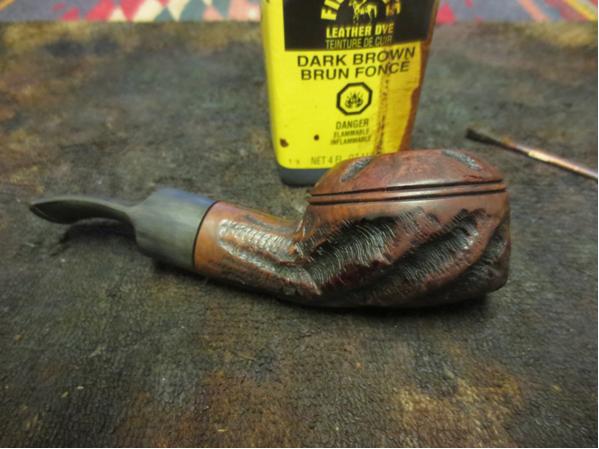
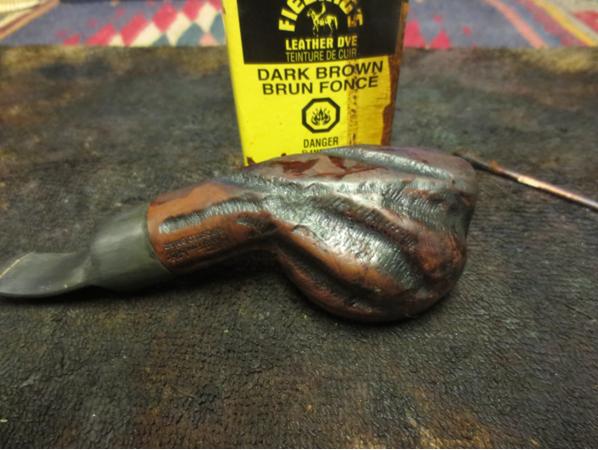
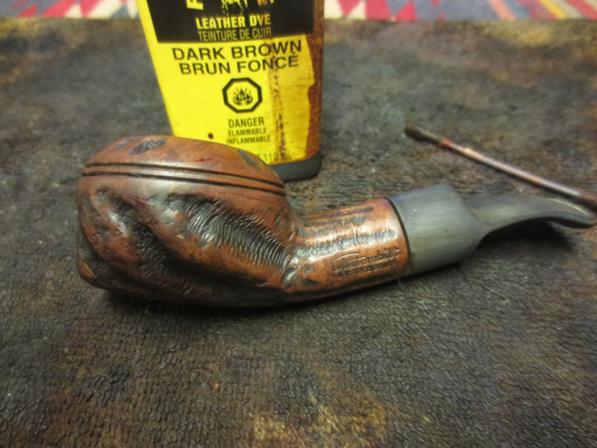
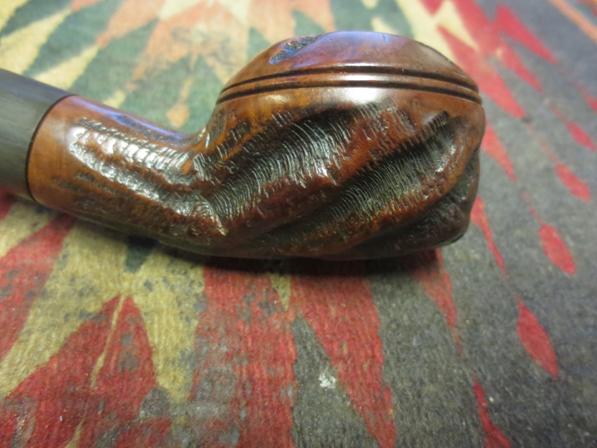
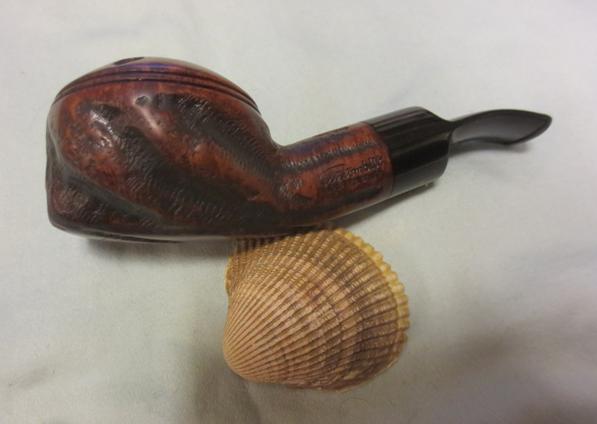
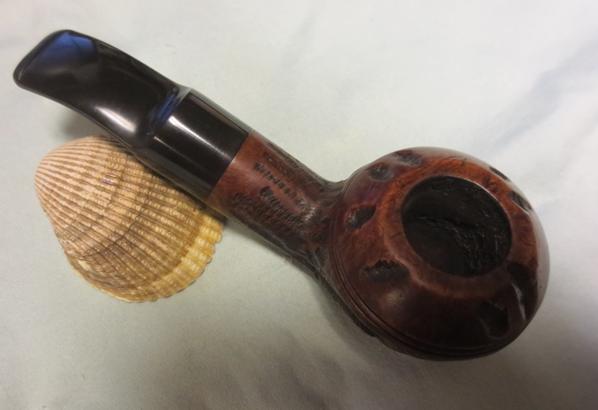
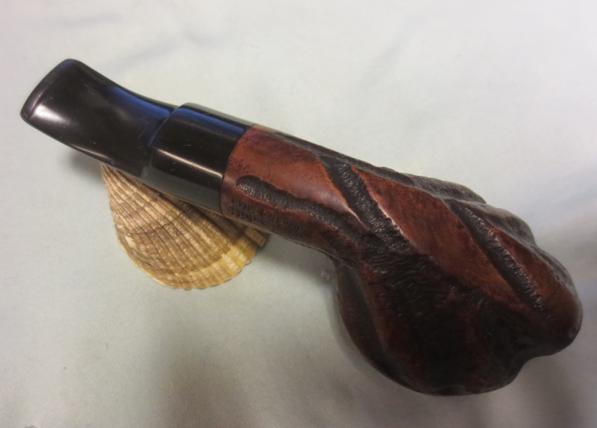
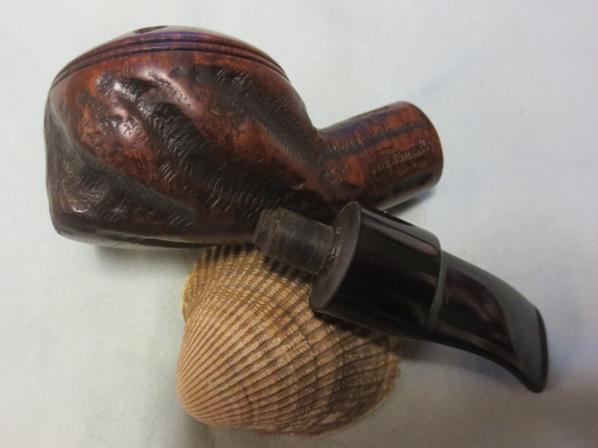
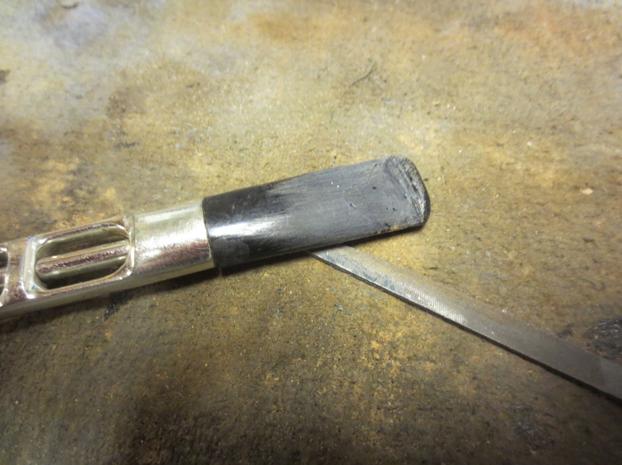
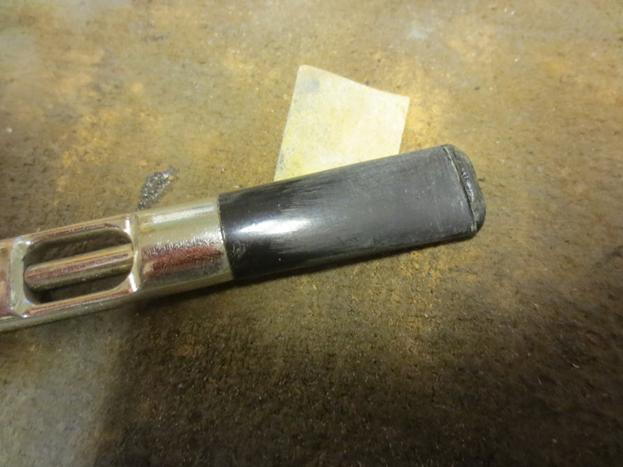
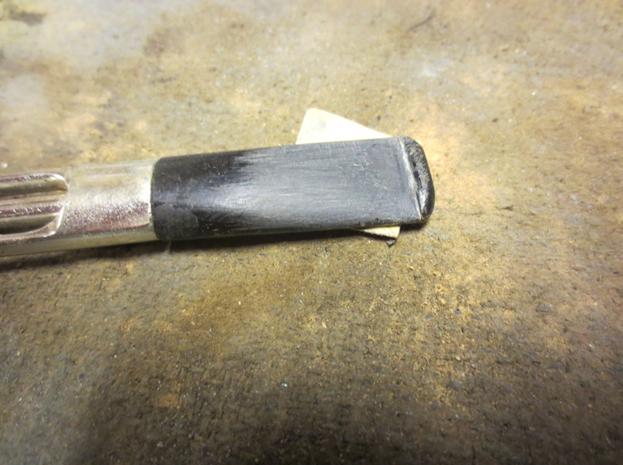
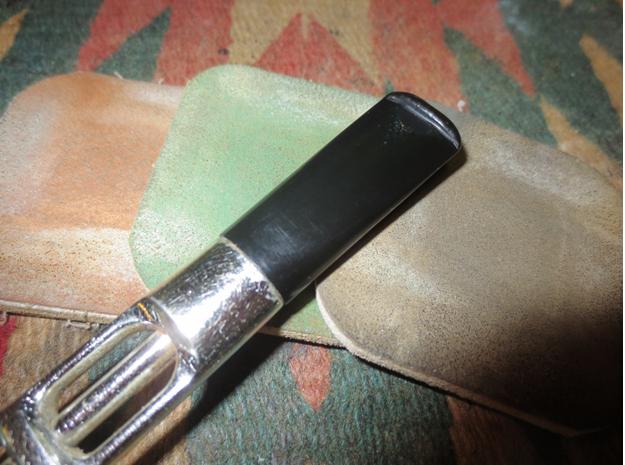
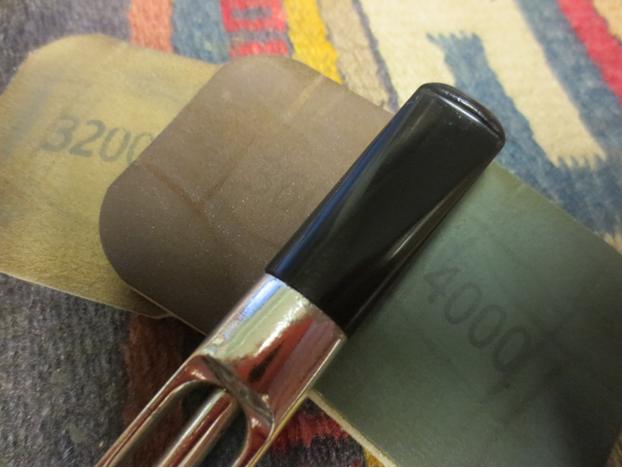
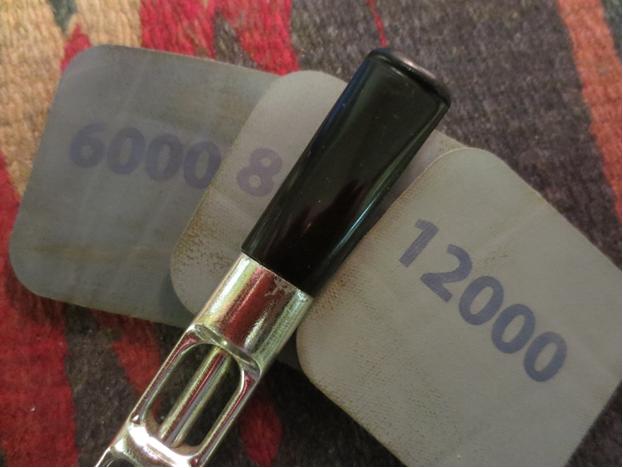
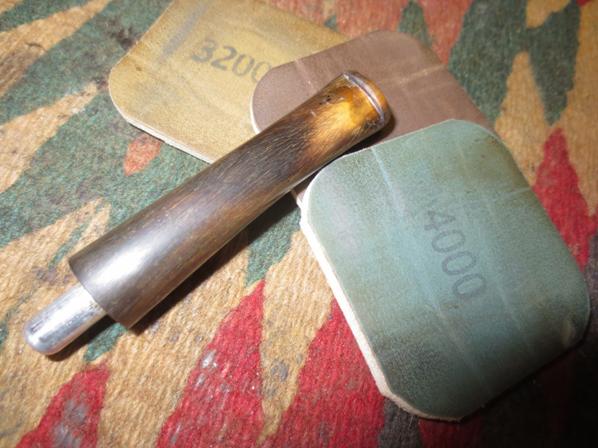
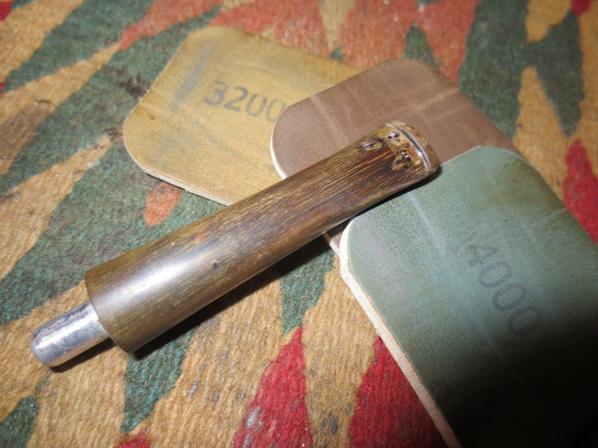
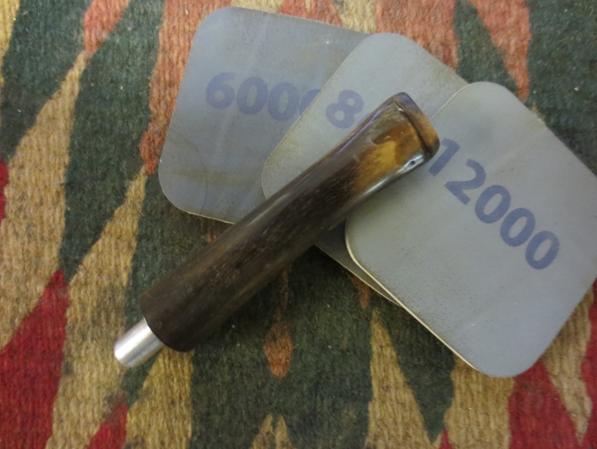
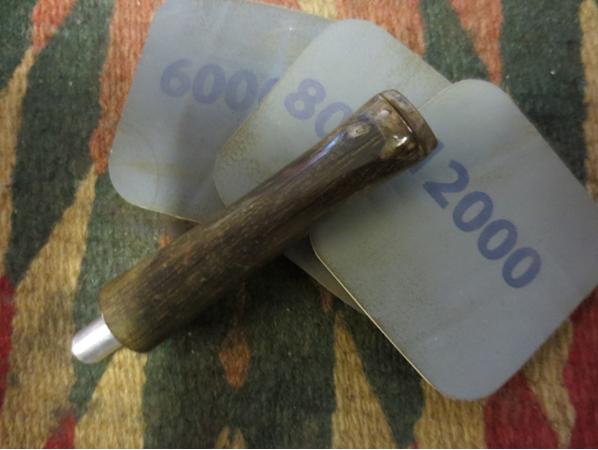
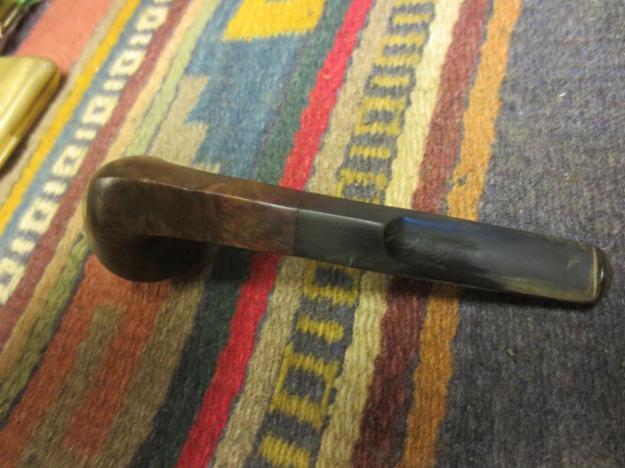
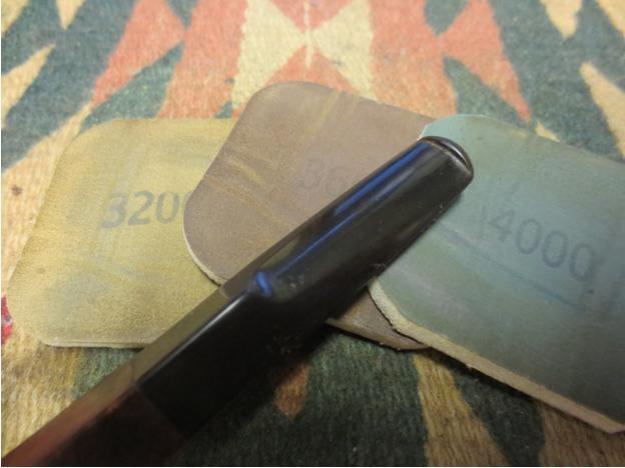
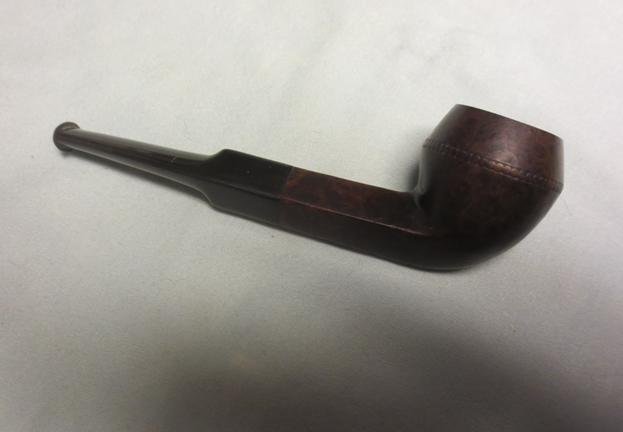
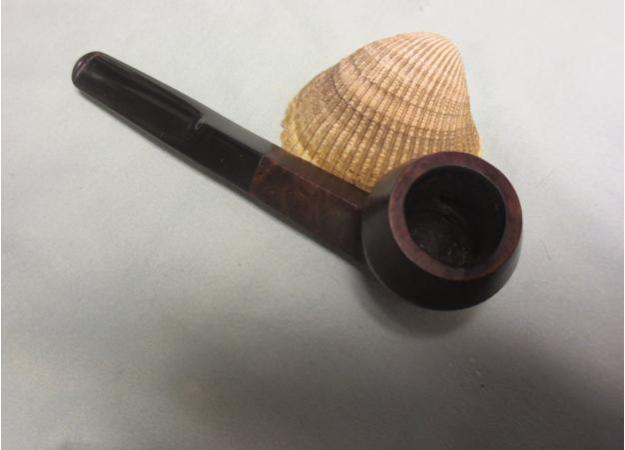
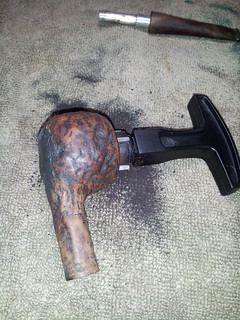
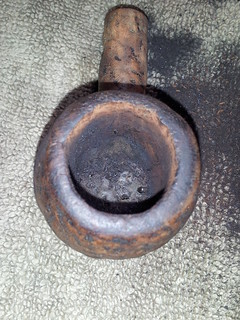
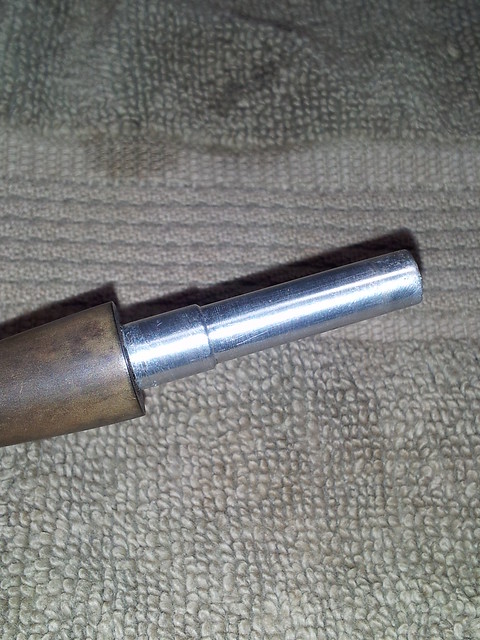
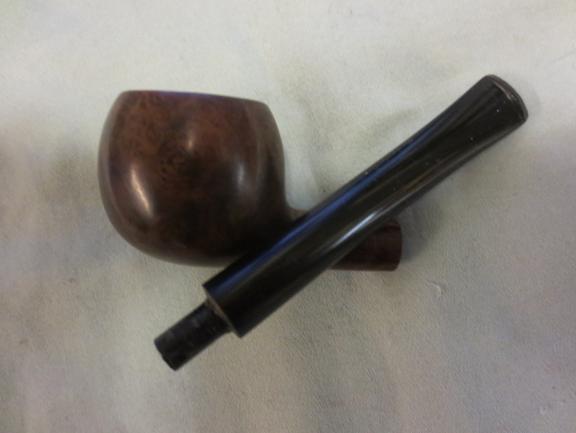
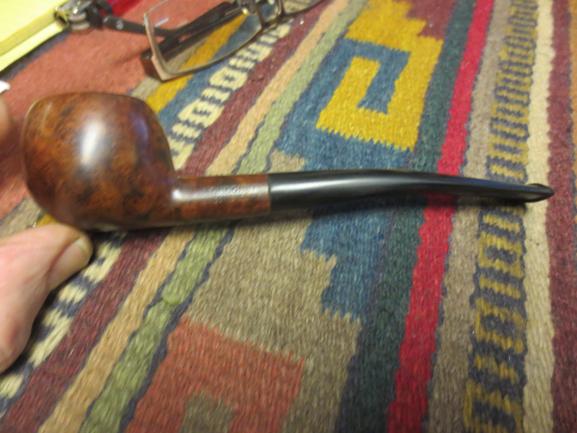
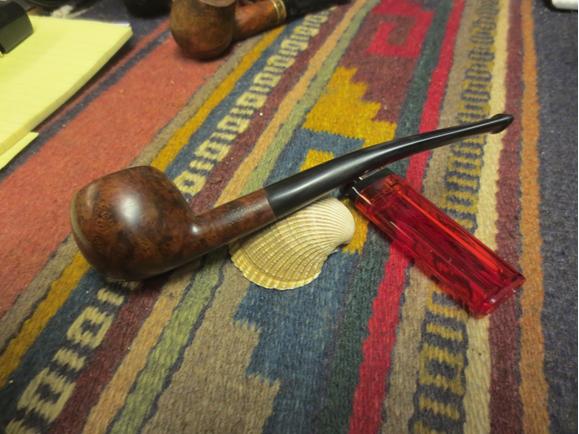
Tag Archives: shaping a stem

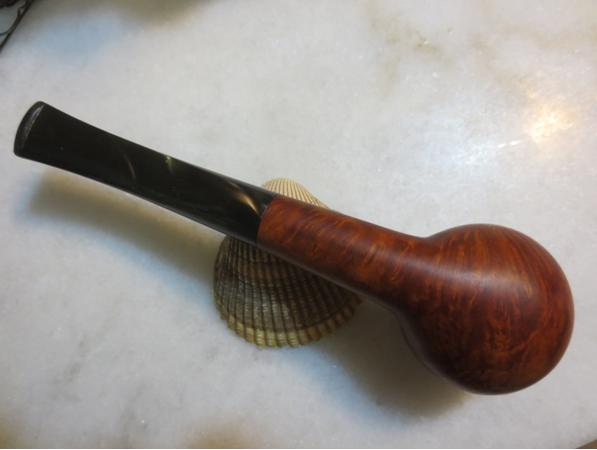
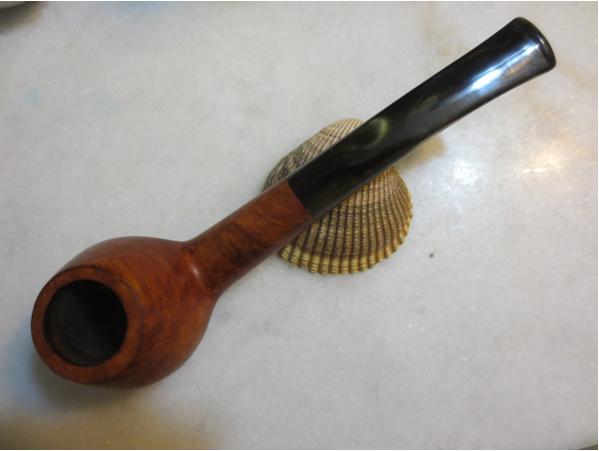
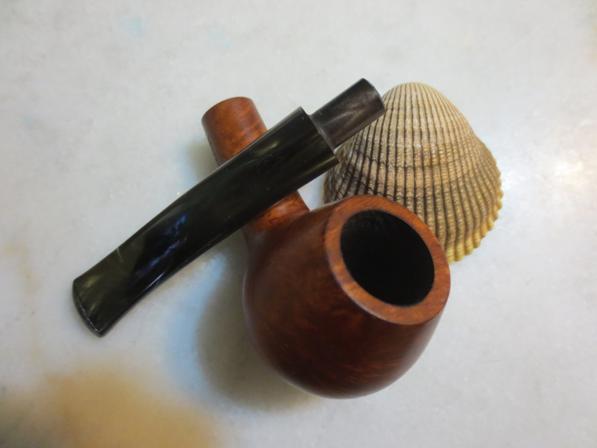
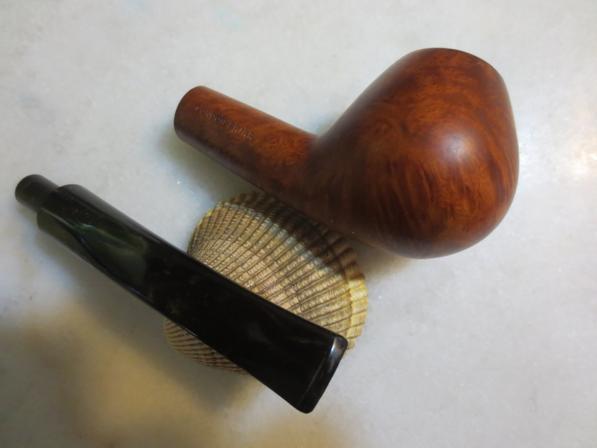
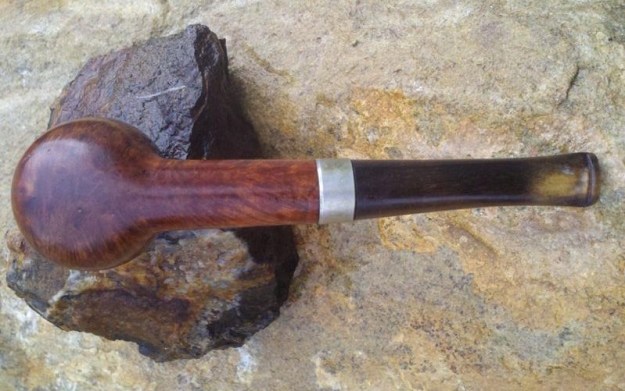
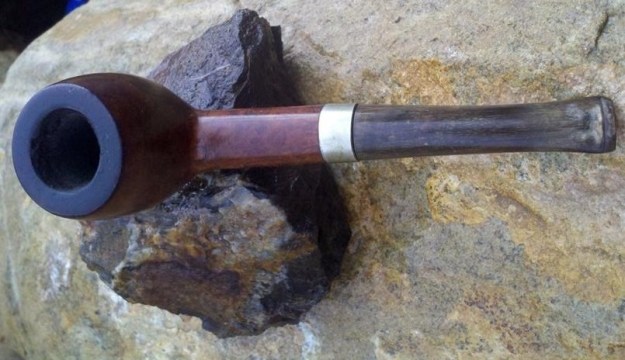
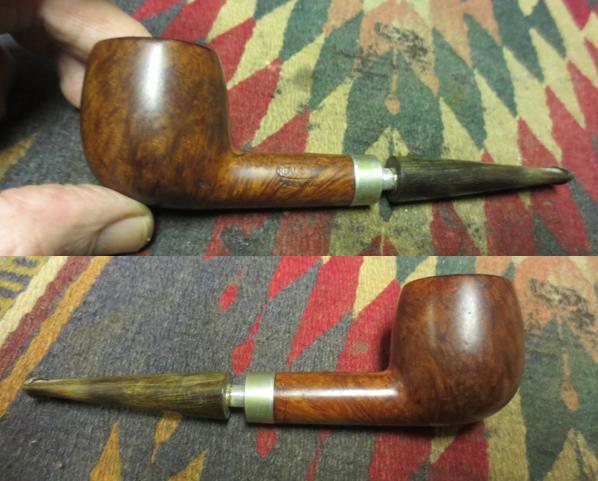
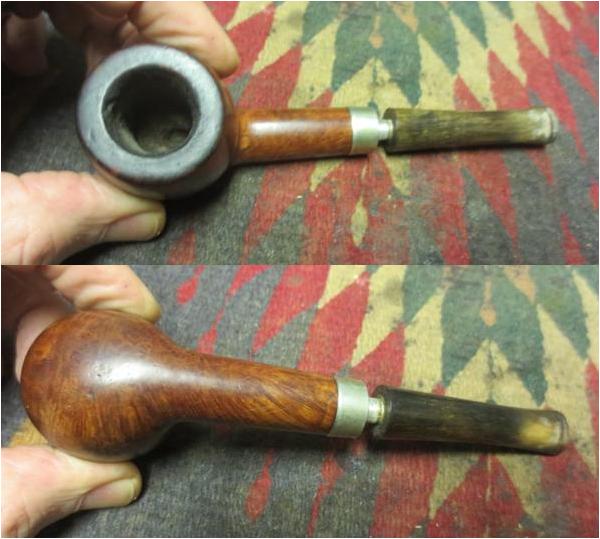
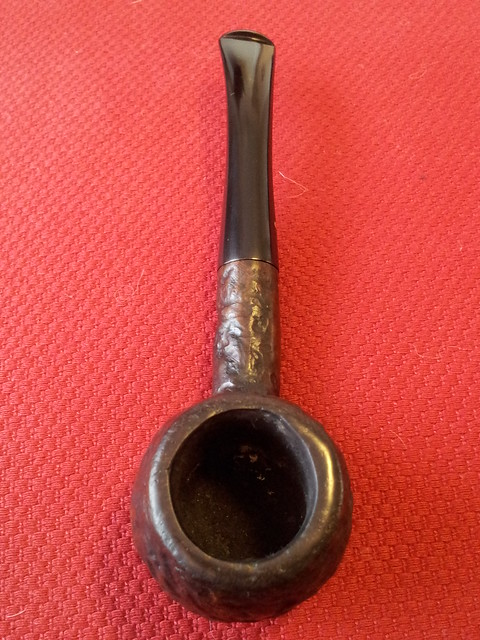
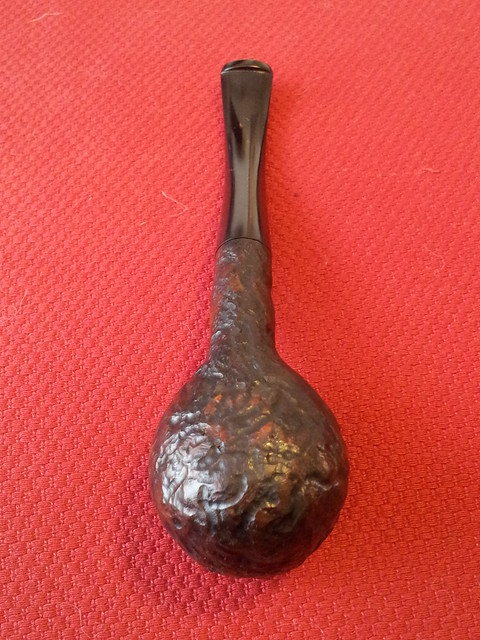
My Second C.A. Sander of Swansea Bent Bulldog Restemmed and Restored


Blog by Steve Laug

When I was working on the previous C.A. Sander of Swansea straight bulldog that I restored (https://rebornpipes.com/2015/12/13/an-interesting-welsh-pipe-find-a-c-a-sanders-sandhurst-bent-bulldog/) I was looking for information on the brand. In my search on the internet I came upon this small bulldog bowl on eBay. I had found that there were at least two different names stamped on these pipes – both the ones I found were sandblast finishes. The earlier one was stamped Sandhurst and this one is stamped Oxford. Other than that the stamping on both is the same – the name then CA Sander over Swansea. I wrote the seller to see if he had any information on the brand and he replied that he did not. I put a bid on the pipe and ended up winning it. It arrived here on Tuesday this week. I have included the photos that the seller had posted on eBay below. It appeared to be in very good shape even though it did not have a stem.CA1

CA2

CA3

CA4

CA5 When the pipe arrived it was in excellent shape. The seller’s photos were absolutely correct. The bowl had a light cake in it and the rim was dirty with lava overflow and carbon. The shank was dirty and the finish had dust in the crevices of the blast. The stamping was exactly the same as the Sandhurst I restored other than the Oxford name that was present. I took the next series of photos to show the pipe on arrival before I started working on it.CA6

CA7

CA8

CA9

CA10 I went through my can of stems to find one that would work on this bowl. Diamond shanks are notoriously hard to match a stem to as each side and angle is very individual and hardly ever align with used or estate stems. I would have to find one that had a close fit and modify it to match the angles. With that in mind I found several stems that could have worked. In looking at the tapered stems I pulled all seemed too long to go with the petite size of this bowl. None quite aligned at the shank and modifying them was not an option as one or more of the sides did not have enough material to modify. I had several saddle stems that had the same issues. Then in the bottom of my can I remembered that I had a Lucite saddle stem that might very well work. I took it out and measured the sides of the diamond. I have to tell you I was very surprised – this stem was almost a perfect fit. I would need to shorten the tenon slightly and take a little material off to get a snug fit. Only the bottom right side was a little larger than the shank. Everything else matched. The stem is a pearlised cream coloured Lucite that actually would go well with the colour of the bowl once I had it cleaned up.CA11 I used the PIMO tenon turning tool to reduce the diameter of the tenon to get a close match and finished the fit by hand sanding. I shortened the length of the tenon with a Dremel and sanding drum to the same length as the mortise. In doing so I removed the damaged end of the tenon and the rounded right side. Once I had the work done I put the stem in place in the shank and took the photos below. You can see the great fit that the stem had in terms of the width of the sides of the diamond. I was fortunate in terms of the amount of work that would need to be done to fine tune this one. It would take very little work to make a good fit.CA12

CA13

CA14

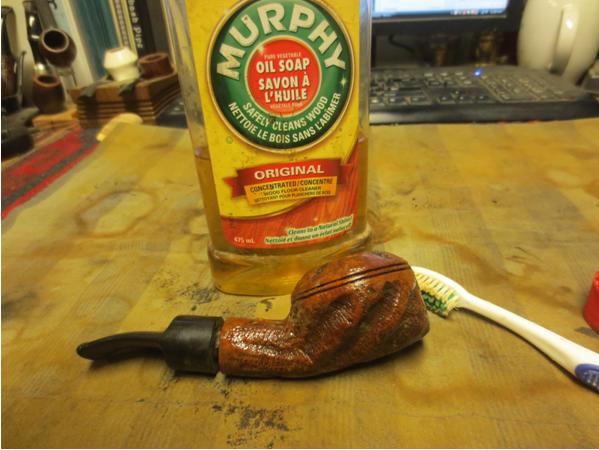
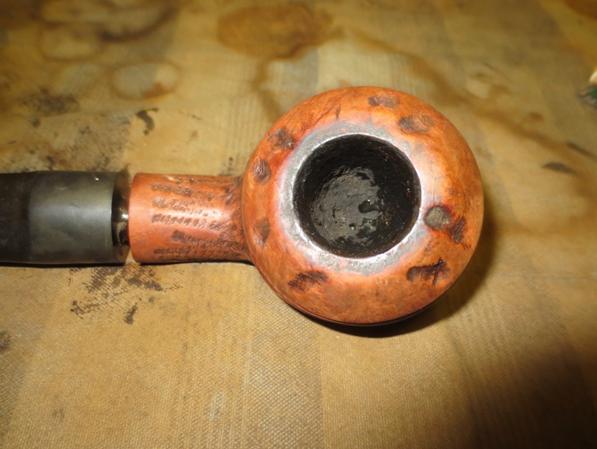
CA15 I took a photo of the end of the shank and the end of the stem and put them side by side for comparison sake to show how close the two diamonds came to matching each other. This is a very rare occurrence in my experience.CA16 I sanded the bottom right side with 220 grit sandpaper to adjust the fit on that side. I needed to remove enough material to align the bottom of the diamond with the bottom of the diamond on the shank. All others point on the diamond aligned perfectly but this one. It did not take too much sanding before I had the alignment and the fit against the side of the shank perfect.CA17 I reamed the cake in the bowl with a PipNet reamer and took it back to bare briar.CA18 I scrubbed the bowl with Murphy’s Oil Soap and a tooth brush on the sides and bottom of the bowl and shank and with a brass tire brush on the rim.CA19

CA20

CA21

CA22

CA23

CA24 I put the stem on the bowl, put a cotton ball in the bowl and then set up the retort to clean out the internals of the pipe. I boiled alcohol through the pipe and after two tubes of alcohol the airways were clean. The retort also removed some of the staining in the stem airway. I removed the retort and scrubbed the internals of the bowl and shank with pipe cleaners and cotton swabs to remove the remaining alcohol and grime in the shank. In the end the shank and airway were clean and the pipe smelled fresh.CA24A I cleaned the stem with pipe cleaners and alcohol and also pipe cleaners dipped in Bar Keepers Friend powder to scrub out the tar stains in the airway. It took a lot of scrubbing but I got the majority of the stains out. I did not want to darken the stain on the bowl but wanted to highlight the contrasts in the finish. The combination of dark brown and medium brown on the high spots worked well for me. To keep that and add life to the bowl I wiped it down with a light coat of olive oil and rubbed it into the blast pattern. I took the following photos with the stem in place on the bowl. The pipe is taking shape.CA25

CA26

CA27

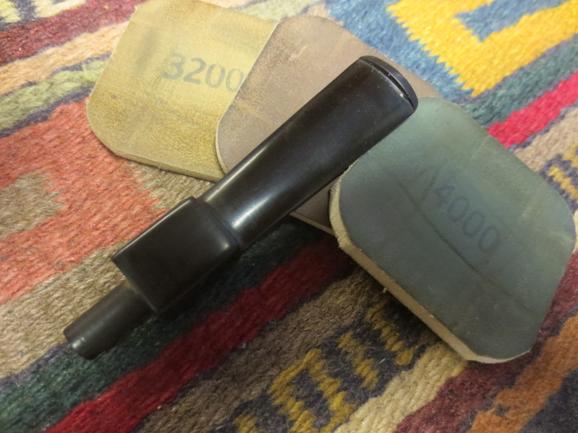
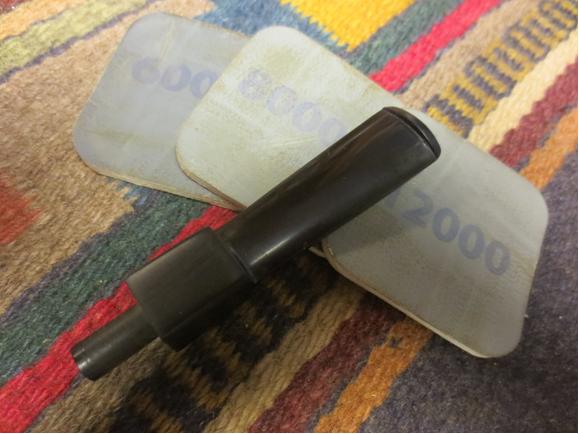
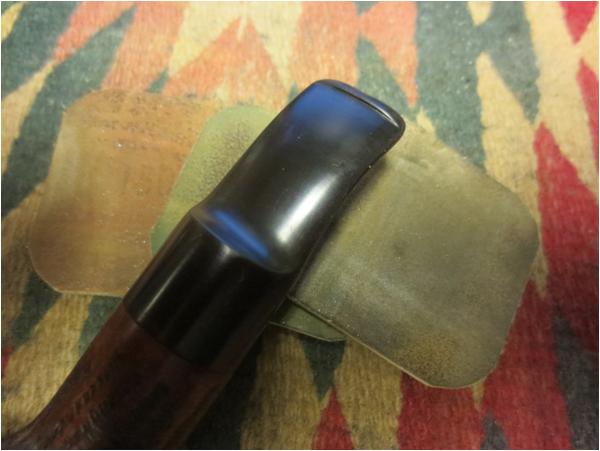
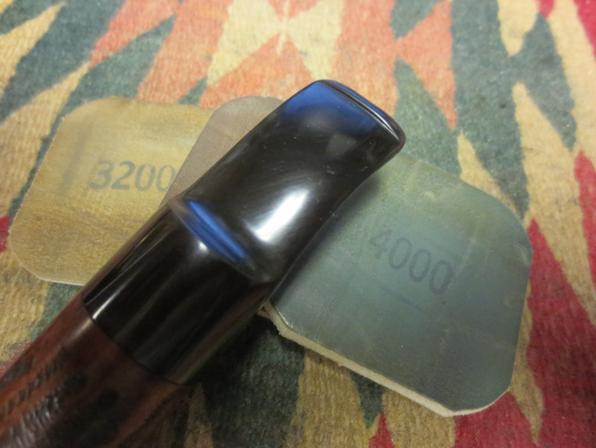
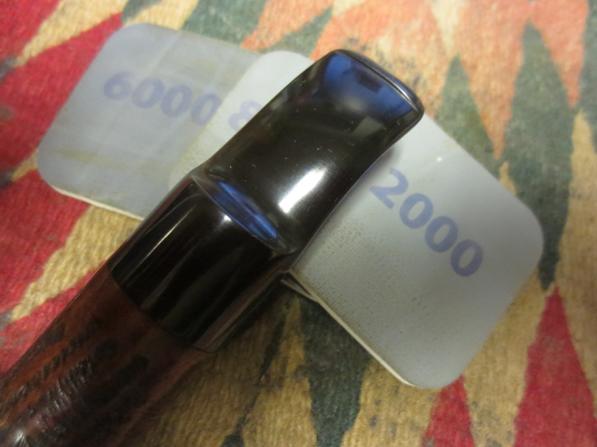
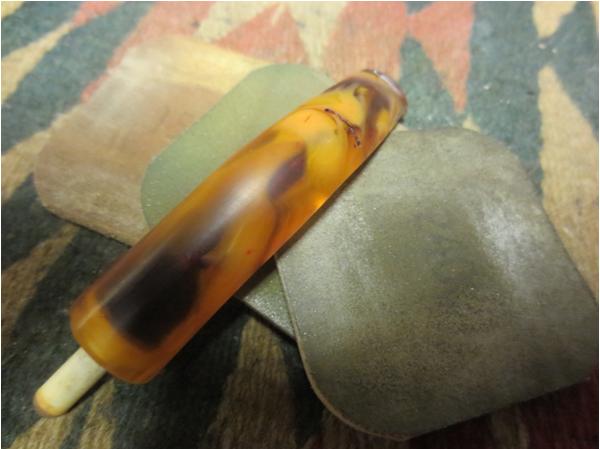
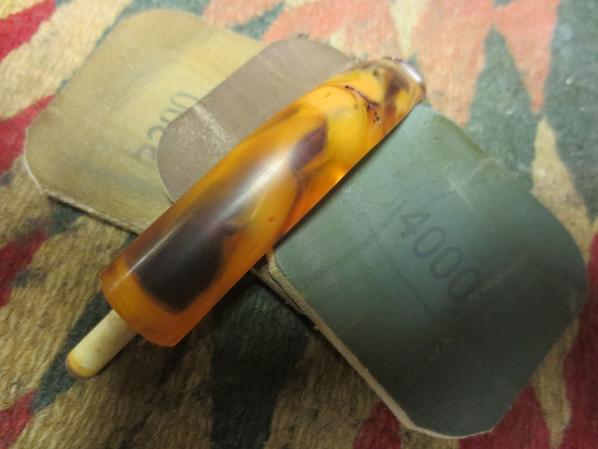
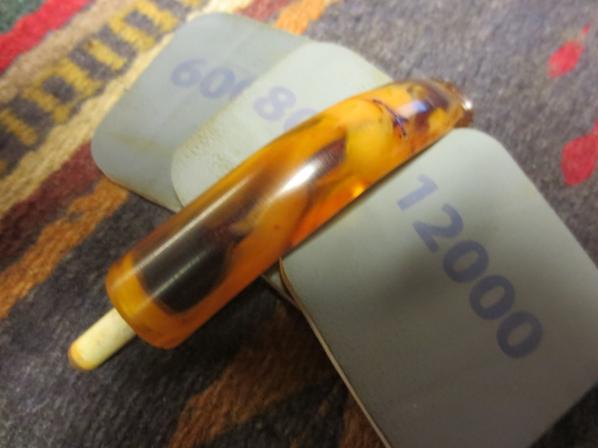
CA28 The stains at the button were stubborn and hard to remove. I found that there was a small lip where the slot in the button met the airway in the stem and it collected tars and oils. The pipe cleaners and scrubbing did not touch that as it did not reach into the small crevice there. I used a needle file to flatten out the lip at the junction. With that gone I was able to remove more of the stain from the stem. All that remain was a small spot on the top and the bottom that I could not get out no matter how hard I worked it.CA29 I sanded the stem with micromesh sanding pads to polish and remove the scratching. I wet sanded with 1500-2400 grit pads and dry sanded with 3200-12000 grit pads. As I sanded the stem with each successive micromesh pad it left a richer luster in the pearlised stem.CA30

CA31

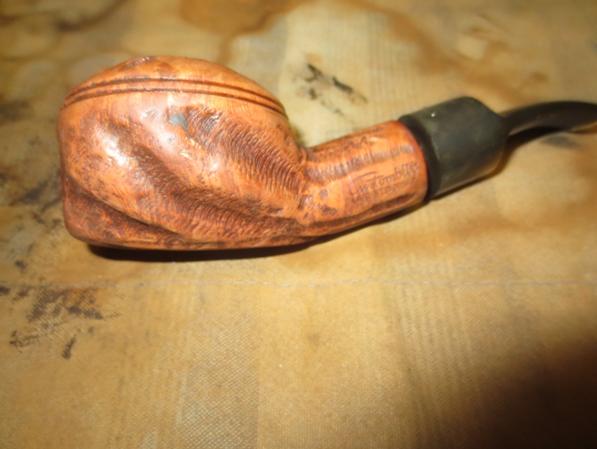
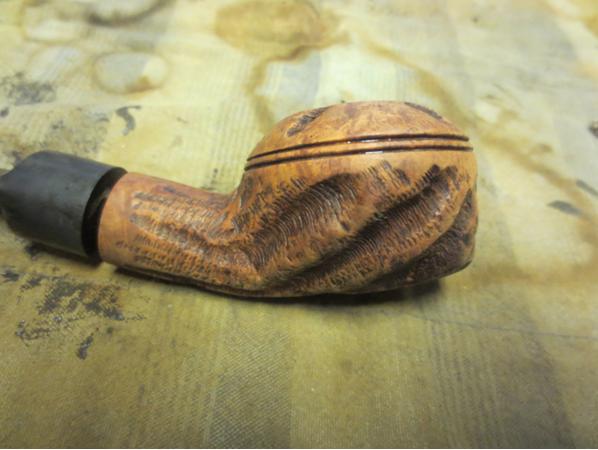
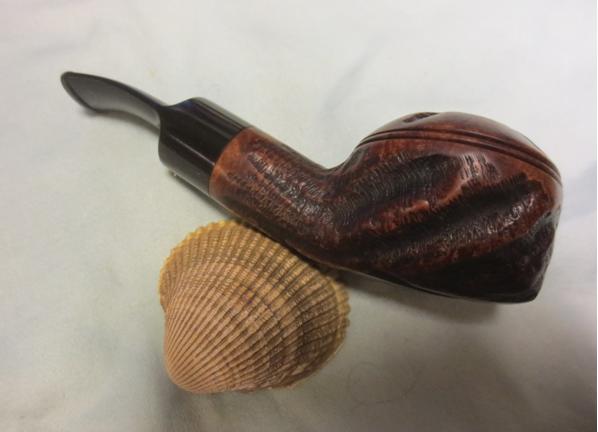
CA32 I buffed the bowl and stem with Blue Diamond on the wheel (lightly on the sandblast bowl as I did not want to flatten the blast) and gave the stem several coats of carnauba wax. I hand waxed the bowl with Halcyon II wax and then buffed the bowl and stem with a shoe brush and a microfibre cloth to raise the shine. The finished pipe is shown in the photos below. It is a petite bulldog – only 5 inches long from bowl to button and 1 3/8 inches tall from rim to point on the bowl bottom. The drilling on the bowl is 5/8 inches. I like the contrast that the Lucite stem gives with the blast on the bowl. The colours work well for me. The stem length works on this bowl and the overall effect is a balanced small sandblast pipe that looks great. At least it does to me! Thanks for looking.CA33

CA34

CA35

CA36

Addendum: 06/06/18 I received an email from Andrew  in answer to a question I asked in my two blogs on CA Sander pipes. I quote in full his email because of the information that it includes.

Comment: You asked about C A Sander

C A Sander were tobacconists based in Wind Street Swansea. I don’t know exactly when the business started but it it passed to my Grandfather from his father (both were C A Sander) and by the 1920 was a successful and well established retail business with shops all over south wales. They were importers and blenders (if that is the term) of tobacco and the shops sold smoking paraphernalia. At my grandfathers retirement late 60’s to business went to my uncle again C A Sander but known generally as Jim. He developed a business supplying cigarette machines around South Wales and moved out of retail he eventually sold the business to Rothermans and went into other business ventures, I expect that was when the limited company you found was formed. Uncle Jim has now retired but still lives in the area.

Hope this helps with your research.

Andrew I received this followup email from someone who would like to get in touch with you. Here is her email

Hi there – I stumbled upon your website when looking for anything to do with C.A. Sander tobacco shop and I saw the pipe you restored – which is amazing! and then saw the comment below left by Andrew. Since that shop was owned by my grandfather, and Andrew’s grandfather – it would seem that we are cousins – but we have never met. I would love to get into contact with Andrew. Would you be able to assist in that? If possible, could you ask him to contact me at my email address pianokey88@hotmail.com?
Many thanks for your help! Georgina


A Passion for Rhodies and Dogs – Stem Repair on a Dunhill 52081 Rhodesian


Blog by Dutch Holland

With this blog it is my pleasure to introduce you to the work of Dutch Holland. His work comes highly recommended to us by Dave Gossett who has been a contributor to rebornpipes for a while now. Welcome to the blog Dutch. It is great to have you here.

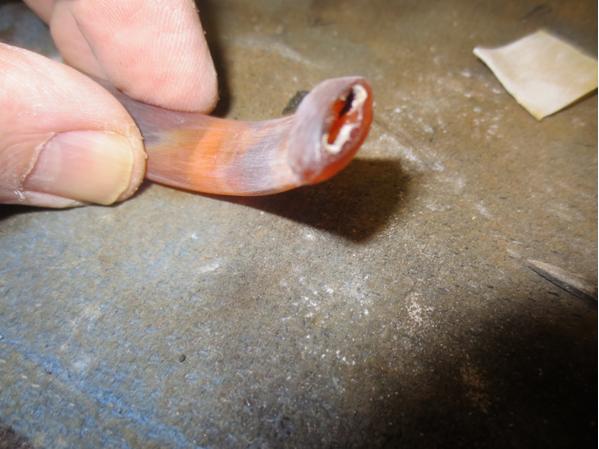
Dutch1A number of years back I had the good fortune to acquire a Dunhill 52081 Bent Rhodesian. I readily admit to a passion for Rhodies and Dogs that borders on obsession. Several years later I came across a second pipe of the same year and style but a different finish. The temptation was overwhelming and I succumbed. The problem was this second pipe not only had been poorly used but it had a nasty chip in the top center of the bit at the button. But the price was right and at worst, I could always invest in a replacement bit. These Rhodies were only offered for a few years and they don’t come on the market very often so I made the decision to buy. That pipe sat in the “Awaiting Action” box in my shop for a number of years. I really wasn’t sure just how to deal with the repair but last year I decided to give it a shot and to my pleasant surprise found it was neither difficult nor complicated. As you can see from the picture above it’s all but invisible. It requires very close inspection by a knowledgeable eye to detect.

I’ve broken the process down into steps outlined below. Being able to fix a broken bit can do for you what it’s done for me, allowed me to rescue a pipe I really wanted. So here’s one way to do it.

Repairing damage to a pipe stem is an easy five step process. This kind of repair can be done by the hobbyist and makes an old pipe serviceable again at a very modest cost. The outcome is very dependent on the skill of the repairman so a few tries on an old stem for practice is recommended. The better your skill set, the better the final result but it’s neither difficult nor complicated, just time consuming. Some question the durability of this kind of repair but my experience is that they hold up to normal use quite well. I don’t recommend the use of harsh chemicals for cleaning but with reasonable care the repair will last a very long time and for the hobbyist it’s more than adequate for your average project.

What you will need:

Supplies
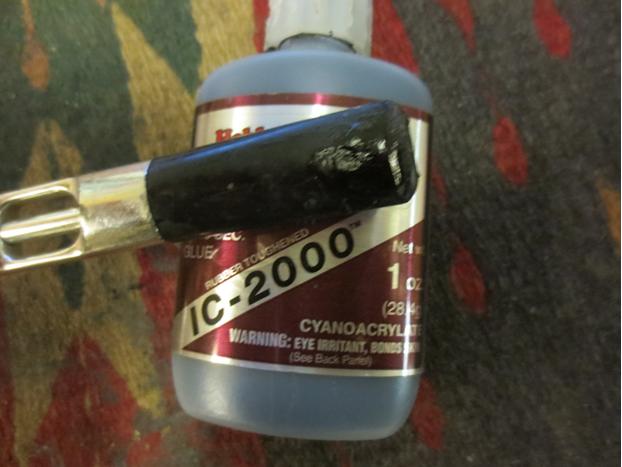
CA Glue, Activated Charcoal, a small drink bottle cap, light cardboard, Pipe cleaners, Scotch tape and some tooth picks

Tools
A small file set, Sandpaper (400, 600 & 1000 grit) and a set or Micro-Mesh pads (1500 to 12,000 grit)

The Process

Step 1, Rough Sanding.
Sand the area to be repaired with the 400 grit sandpaper, beveling the area of the break to provide the maximum bonding area for the repair mixture. I like the courser grade as it scores the area around the break and reduces the stark contrast between the repair area and the rest of the bits surface making the repair difficult to detect. Clean the area to be repaired well and make sure it is free of any contaminants which might inhibit the bond of the glue/charcoal mixture. I usually use a high proof alcohol (Wild Turkey 101)

Step 2, Support the repair.
Insert support into the airway to prevent the mixture from invading it. A piece of light cardboard will do the trick. First rap the cardboard in Scotch tape (mixture won’t stick to the tape) and slide it into the slot. Then slide a pipe cleaner into the slot under the cardboard to force a snug fit up against the repair area.

Step 3, Making and applying the repair mixture.
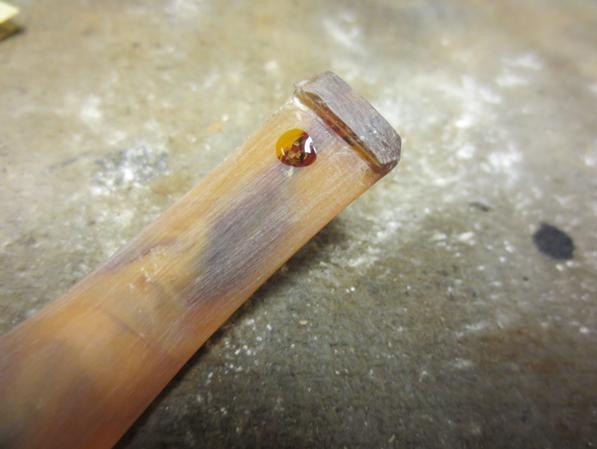
Place a portion of the activated charcoal in the drink cap. I use a spoon on a Czech pipe tool as about the right amount. To that I add the CA glue until I have about a 50% Glue mixture and then gently stir until the charcoal is completely mixed with the glue. I like to let the mixture set for 15 seconds to allow any air bubbles caused by the mixing to escape. Using the tooth pick apply the mixture to the repair area until the build-up is higher than the bit surface. There is some shrinkage when the mixture dries so extra depth is essential to getting a smooth, flat surface when finished. Work quickly as the CA glue thickens rapidly. If necessary repeat this step to get the surface level to where you want it. In the example shown below I added mixture twice. First to fill the gap and a second time to rebuild the button area.

Step 4, Rough sanding & Shaping
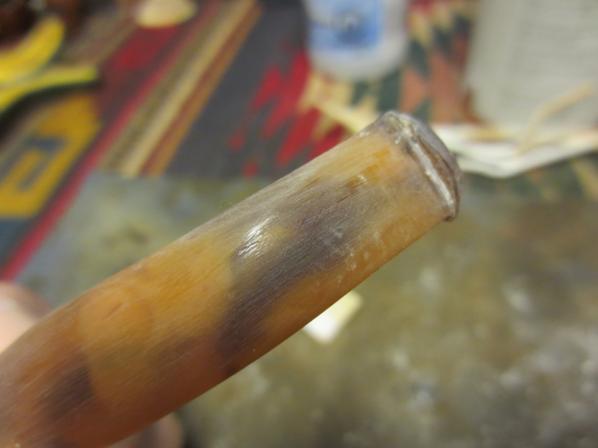
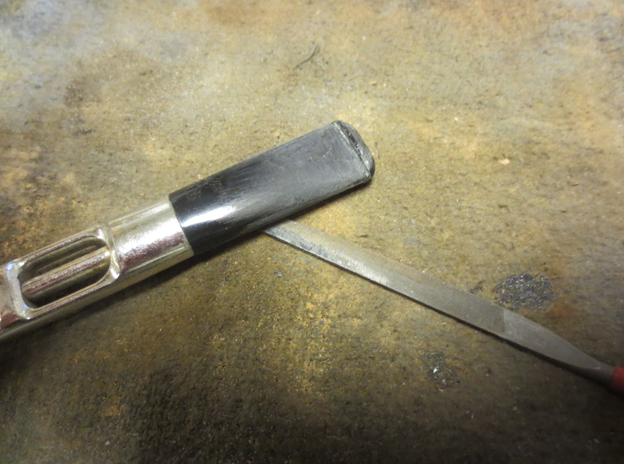
Once the repair mixture has cured, (I usually leave it for several hours, probably overkill but I find it shapes better if it’s well cured) start with the files and reduce the excess mixture and get a rough shape. Do not try to get a close finish to the shape you want as the files are quite course and will leave significant scratches on the surface. Allow for this by leaving some surplus material in place. Now with the sandpaper progressively contour the surface starting with the 400 and moving to 600 and then 1000 grits. Slow, careful sanding works best using the sandpaper to contour the fine details. Sometimes air bubbles get caught in the repair mixture and will leave a tiny void in the surface. Should this happen add a thin touch of the CA glue to the void and re-sand. The imperfection will become un-noticeable. Keep in mind that any irregularities in the surface will become traps for contaminants so don’t be too forgiving of them.

Step 5, Finishing the bit
Now you’re ready to restore luster to the bit. Here Micro-Mesh is a great solution for the task. Progressively sand the bit starting with the 1500 grit and progressing up to the 12,000 grit. The human eye cannot detect scratches left by the 12,000 grit pad so the surface looks shiny. I don’t recommend buffing as an alternative. You can quickly undo all the painstaking work you have just completed. As a final step in the process a light buff with white diamond followed some carnauba wax will give you a great shine and inhibit future oxidation.
So there you have it. Give it a try. You can’t make a broken bit much worse than it already is so there’s little at risk. Who knows, you might like the results and there’s something very satisfying about being able to rescue a pipe others would consider a lost cause. This technique was shared with me by Dave G and it works well so I pass it on with my recommendation.

Note
In subsequent tries I’ve found this solution works invisibly Vulcanite but is more detectable on acrylics.Dutch2

Wm Wales Billiard Restemmed and Restored


Blog by Steve Laug

Wm1This is yet another pipe that my brother Jeff picked up in Montana and sent my way. It is stamped Wm Wales on the left side of the shank and on the right side it is stamped Grecian in script. The stamping though a different script than that found on the Carey Magic Inch pipes is similar in the way it is stamped and the stamping of Grecian on the right side of the shank. I did some digging on the internet and found nothing about the brand other than several pipes with the same stamping for sale. There is nothing about the brand on the various pipe information websites. There is nothing about the brand on Who Made That Pipe or in Lopes book so I am left with a bit of a mystery.

The pipe has some pretty decent grain on it. The sides of the bowl have some interesting birdseye grain and the front and the back of the bowl have cross grain on them. The stem is a mix of grains. The finish was worn and dirty. The rim had a cake of tar and grit on the top of the bowl. The inside of the bowl had a hard, thick cake that almost filled the bowl. The rim itself was undamaged and showed no burn marks or damage to either the outside edge of the rim or the inside bevel of the rim. The stem was at first glance workable but upon examination it had a crack in the centre of the button on both the top and bottom sides. There were also tooth marks that were deep and one split the button. The surface of the stem was wavy and rippled from the way it had been buffed. The slot in the stem was clogged and no air would go through the airway.

In the photo above to the left the pipe is the second one down from the top. The next set of four photos show the pipe as was when it arrived at my work table.Wm2

Wm3

Wm4

Wm5 I took a close up photo of the bowl and rim to give a clear picture of what I started with in my clean up. The two photos following that give a good view of the stamping on the shank.Wm6

Wm7

Wm8 The next two photos show the damage to the stem. The more I looked at the damage the more I realized that a replacement stem would be less work than fiddling around with repairing the damage on that one.Wm9

Wm10 I tried to ream the bowl with a PipNet reamer and found that the cake was so hard that reamer did not even cut into the surface of the cake. I tried a KLEENREEM reamer and made no headway either so I dropped the bowl in an alcohol bath to soak. It would soften the cake and clean up the grime on the finish of the rim and bowl as a bonus.Wm11 While it soaked I looked for a new stem in my can of stems and found one that would work quite well. It was a little larger in diameter but once I fit it to the stem some sanding and shaping would take care of that.Wm12 In the morning I took the bowl out of the alcohol bath and worked on it to ream it. I used the PipNet and the KLEENREEM reamer on the bowl. I also used a pen knife to work at cutting away the hard cake. In the process of reaming I found that the bowl was conical in shape rather than U shaped. I used the drill bit from the KLEENREEM tool to open the airway in the shank.Wm13

Wm14

Wm15 Once I had cleaned out the shank and the bowl with alcohol, pipe cleaners and cotton swabs I fit the new stem to the shank. I sanded it with 220 grit sandpaper to clean up the tooth chatter and the oxidation. I sanded it with a medium and a fine grit sanding sponge to further remove the scratching and oxidation. I wiped the stem down with Obsidian Oil.Wm16

Wm17

Wm18

Wm19

Wm20 I scrubbed the briar with acetone on cotton pads to remove the finish and the remaining grime on the rim and bowl.Wm21

Wm22

Wm23

Wm24 I sanded the stem with micromesh sanding pads – wet sanding with 1500-2400 grit pads on the briar and the stem and then rubbed down the stem with Obsidian Oil. I dry sanded with 3200-4000 grit pads and gave it another coat of oil. I finished by dry sanding the stem with 6000-12000 grit pads and gave it a final coat of Obsidian Oil.Wm25

Wm26

Wm27 I buffed the bowl and stem with Blue Diamond polish on the wheel and then gave it multiple coats of carnauba wax. I buffed it with a clean flannel buff to raise the shine. The finished pipe is shown in the photos below. The grain really shines through in the photos. It is a beautiful piece of briar. I would love to know more about the history of the brand to give more depth to my understanding of the pipe.Wm28

Wm29

Wm30

Wm31 I took a few close-up photos of the stem and the bowl showing the grain of the briar and the shape and look of the stem. Thanks for looking.Wm32

Wm33

Wm34

Taking a Swing at Reconstructing and Refurbishing an old CPF Meerschaum Bulldog


Blog by Steve Laug

In a previous post where I wrote about repairing the overturned stem on the CPF Bulldog for Michael I referred to a Meerschaum Bulldog that he sent to me as a gift project. I had no idea what he meant about that until I took it out of the box and started checking it out. It really was a rescue dog operation. It is shown in the photo below (the pipe on the right). The picture does not show half of the story about the state of the old stem.CPF1 When the pipe was unwrapped what met my eye fit well with Michael’s “take a swing at it” approbation. It was in rough shape. The Meerschaum bowl was scratched and dirty and the bling was worn and tired. The rim was pretty beat up with dents and scratches but the bowl was solid. There was a light cake in the bowl and that was a plus, as it could have been heavily caked and have a clogged airway.

The worst part of the entire pipe was the stem. I am pretty sure it is not amber – at least it does not feel like amber or even have the weight of amber. I am guessing an early version of Bakelite but I am not sure. It is almost fibrous like material – reminds of fibre glass. Somewhere during its lifetime the stem had crazed and cracked all through from one end to the other. It looked like fractured glass. It was barely holding together. There was nothing hold it onto the shank but tars, oils and what seemed like thread that was wrapped around the dirty tenon. I carefully lifted the stem off the tenon and laid it aside. The tenon was covered with a thick tarry substance and what appeared to be thread. I am pretty certain that the previous owner had glued the threaded tenon into the shank and I would never get it loose. Here are a few photos of the pipe, carefully taken so as not to further damage the stem.

I am a sucker for these old timers. This was obviously someone’s beloved pipe. There was a time when I thought a badly abused old pipe was a sign of lack of care. I have come to understand that it is not that at all. It was someone’s constant companion through the good and the bad times. It was one that was always close at hand – to my thinking it may well of road along wherever the pipeman went in the course of his day and was always ready to be loaded and fired up. It is a small bowl so it would not have been a long smoke but it was one that he obviously enjoyed to the point that the pipe was worn and repaired and worn more and repaired more. His repairs were just enough to make the pipe smokeable again but not to make it beautiful. I wish it could talk and tell its story. It lived through two World Wars, the Wright Brothers and the birth of air travel, the first man on the moon, space shuttles and microcomputers. It has seen the turn of two centuries and still survives. Those are the things that I think when I look at a tired old pipe now. I can’t help but wonder about the fellow who once held it in his hands. My repairs are dedicated to carrying on his legacy in this pipe.CPF2
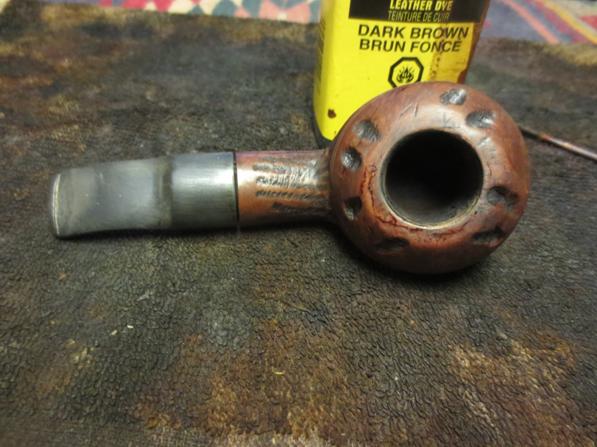
CPF3

CPF4

CPF5 If you are observant you will have noticed the black circular mark on the stem on both sides at the button. That black mark was a large hole, a bite through. That was another thing about the stem that made me pretty certain that it was not amber. I took a close up photo of both sides of the stem to show the size of the hole. It is quite large and centered on both sides. The button was also quite worn down and the slot had been opened leaving the top and bottom of the button very thin. You can see all of the cracks and crazing in the stem material in both photos. The airway and the area around the holes were black with tars. This old pipe was not stopped by the holes in the mouthpiece; the pipeman just moved it deeper into his mouth and carried on smoking his favourite pipe.CPF6

CPF7 I took a close up photo of the rim to show the dents and darkening on the metal cap. The ornamentation on the top the rim was worn down from many years of a thumb rubbing over the top of the bowl and leaving behind the remnants of what must have been a continuation of the pattern on the sides of the cap.CPF8 I decided to deal with the issues in the cracked and crazed stem. It was rough along the edges with what looked like splinters. I carefully worked to stabilize the stem material with clear super glue. I liberally coated the outside of the stem with clear super glue, filling the cracks and chipped areas and smoothing out the surface with the clear gel. Once I had it coated well I set it aside and let it harden. I have used the super glue before on Bakelite and it does a great job getting into the cracks and crevices in the material and hardening and preserving the original material. Once it was covered in the glue I had to figure out how to allow it to harden without sticking to everything it touched. I decide to put an ice pick in the airway and lay it across a box – suspended above the work top until it dried.CPF9

CPF10 After the stem had been sitting for four hours and the glue had dried to touch, I decided to “take a swing” at repairing the bite through issue on both sides of the stem. I cleaned the hole and the airway with a cotton swab and warm water to remove the oils and tars. I wanted a clean surface for the patch. I sanded carefully around the hole to roughen the surface to give the patch something to bond to. Then I greased a thick pipe cleaner with Vaseline and pushed it into the slot in the button. I wiped the edges around the whole so there was no grease on them. I put the first coat of super glue on the hole on the underside and sprayed it with an accelerator to harden the first coat of the repair. I repeated the process on the top of the stem until both sides were repaired with the first coat. I removed the pipe cleaner and set the stem aside to cure. The photos below show the process of the repair to the hole. You can see from the photos that the holes patched pretty nicely. They are rough but they are no longer holes. I will need to do a lot of sanding on the stem to clean up the patches and reshape the button but it will be usuable.CPF11

CPF12

CPF13

CPF14

CPF15 After about an hour I gave it a second coat of glue on top of the repair and set it aside to cure again. While the repaired stem cured I went to work on the bowl. I used a pen knife to carefully scrape out the light cake in the bowl.CPF16 I cleaned out the rings around the bowl with the pointed end of a round needle file. I wanted to get the gunk out of the rings before I scrubbed the surface of the bowl.CPF17 I scrubbed the bowl with Murphy’s Oil Soap on a cotton pad remove some of the grime and clean up the exterior of the bling.CPF18 I used a cotton swab to soak alcohol around the threads of the bone tenon. I was able to pick out some of the thread that had been used to hold it in place. I am hoping that repeated alcohol applications will loosen the tenon so that I can unscrew it from the shank to do a thorough cleaning.CPF19

CPF20 The repeating swabbing with alcohol did not loosen the tenon at all. I think that the previous owner must have glue it in the stem and just pressure fit the stem onto the tenon. I had to come up with a different way of getting the stem to fit the tenon as the threads on the inside of the airway in the stem were worn and the stem just wobbled now that it was clean.

I examined the inside of the cleaned and restored stem and could still see the threads. I thought of trying cork and wrapping the tenon with that but after trying that it was too thick to fit into the stem. I then thought of wrapping the end of the tenon with thread and then coating the thread with wood glue. I tried that and it worked well. I was able to twist the stem onto the tenon and the threads in the stem worked into the glue and thread mixture on the tenon. The fix was a success.CPF21

CPF22

CPF23 I sanded the stem with 220 grit sandpaper to smooth out the repairs. I took down all the high spots and bumps left behind by the super glue. I recut the edge of the button on both sides of the stem with a needle file and then sanded the hole repairs on both sides to blend them into the surface of the stem.CPF24

CPF25

CPF26

CPF27 I reworked the button with files and cleaned up the slot with files as well. Once I had the look right I sanded the stem with a medium and a fine grit sanding sponge. The crackle in the stem material where all the crazing was and now the glue bonding it together gave the stem a bit of a sparkling look. An added benefit of the crackling look was that the patched holes at the button blended in quite well.CPF28

CPF29 I screwed the stem in place on the bowl and took a few photos to see what the finished look was going to be like. The repair makes the material sparkle. I really like the look that is coming together. I still needed to polish the stem with the micromesh sanding pads but you can see the finished pipe taking shape.CPF30

CPF31

CPF32

CPF33 I sanded the stem with micromesh sanding pads to raise the shine in the material. I wet sanded it with 1500-2400 grit pads and gave it a coat of Obsidian Oil. It would not absorb but it would give some traction to the next grits of micromesh. I dry sanded with 3200-4000 grit pads and gave it another coat of oil. I finished with 6000-12000 grit pads and applied several coats of carnauba wax to the stem by hand and hand buffed it with a microfibre cloth.CPF34

CPF35

CPF36 The wax on the stem, polished by hand gives it warmth and a glow that is beautiful. The repairs to the bite through on both sides of the stem blended in quite well do to the crackling of the stem material. All combined the stem came out quite well considering where I started with it in this process.CPF37

CPF38

CPF39

CPF40 I sanded the bowl with micromesh sanding pads to give it a shine. I decided to leave the scratches and dings in the bowl as it adds character to the old timer and are part of its long history as someone’s favourite smoking pipe. I can almost see the old pipeman putting the pipe in his pocket and heading off to work or for a walk. It certainly was not coddled like a pampered thing that wisdom of the age taught about meerschaums. No white gloves or careful handling this pipe saw much in its long life and carries the scars and marks of the journey. Now it is good to go for the next portion of its journey, one in which it will have a bit easier life.CPF41

CPF42

CPF43

CPF44

A Surprise when working on the Citation 812 Canadian


Blog by Steve Laug

Class1This Citation (second pipe down in the first column in the photo on the left) is a sister pipe to the Savinelli Classica 812 Canadian that I just restored. It is stamped Citation and 812 on the bottom of the shank. The sand blast is nowhere near as beautiful as the Classica but it has a charm all its own. It appears to be a combined blast and rustication – hard to explain but it is just too consistent to be a normal sand blast. It appears to have been rusticated and then blasted lightly. It has a dark brown stain as an undercoat and a light brown over the top. The high points on the finish are lighter brown and the smooth portions are also lighter brown.

The bowl had a pretty heavy cake and the lava had overflowed onto the rim. The finish was dirty but otherwise in decent shape under the grime. The rim appeared to be in good shape under the grime and there were no nicks or dings in the outer or inner edge of the rim. The stem that came with the pipe was not the original and it had been poorly fit to the shank. It was narrower than the shank and pinched at the saddle portion. It still had all of the fill marks from the person who had fit it to the shank. The underside of the button and a large chunk of the underside of the stem were missing. I would not be sad to throw away this poorly cut broken stem.

Inside the shank was pretty dirty and plugged. I could not blow air through the pipe and did not dare to try sucking on the shank. Who knows what might end up in my mouth! I would need to remedy that situation and I would need to make a stem for it. This would be a beautiful little pipe to go with the Savinelli Classica once it was finished – kind a light and a dark version of the same shape. At this point little did I know what kind of surprise lay ahead for me as I cleaned it up and restored this little pipe. The photo below shows the two pipes together.Class2 The next four photos give a clear picture of the state of the pipe – its finish, broken stem and tarred and cake rim and bowl. You can also see what I mean when I say that the finish is far to uniform for a sand blast but looks to have both a blast and a rustication. Someone help me out on this if you have any information.Citation3

Citation4

Citation5

Citation6I went through my can of stems and found a clear acrylic taper stem that would work perfectly with this pipe and with a little shaping would go well with the dark look of the finish.Citation7 The tenon almost fit perfectly from the start. I only needed to lightly sand it to get a snug fit against the shank. The diameter of the stem was a little bigger than the shank of the pipe all the way around but would easily be shape to fit well.Citation8

Citation9

Citation10

Citation11 I took a close up photo of the rim to give an idea of what I was working with on this bowl. The second photo below shows the stamping on the pipe.Citation12

Citation13 If I had known what I found out later in the refurbishing process I would never have taken the next steps in the clean up. But I was oblivious so I did them unwittingly. I used the smallest PipNet reamer cutting head to take back the cake to what I thought was bare briar. I used a small pen knife to even up the job of cutting back the cake to smooth.Citation14

Citation15 I scrubbed the outside of the bowl and the rim with Murphy’s Oil Soap and a tooth brush and fine bristle brass tire brush to clean off the tars and lava that had overflowed the top of the bowl. I rinsed the pipe under warm water to remove the soap and the grime and dried it off with a cotton towel.Citation16 The cleaned finish even more clearly looks to be a manufactured look to approximate a sandblast finish. But it was a great tactile finish and once polished would look great.Citation17

Citation18

Citation19 I gave the bowl a light rubdown of olive oil like I had on the Classica. It brought the colours in the briar to the front and it is going to be a beautiful pipe.Citation20

Citation21

Citation22 In the photo above you can see what looks like a smooth ring around the inside of the bowl. This was my first clue that things were not necessarily as they appeared. I went back to read a post on Facebook by Geoff Carmell about a Citation pipe he had found. Sure enough the finish was the same and the ring around the inside edge of the bowl was a meerschaum lining. With the way I had man handled it – reaming and scrubbing with the brass bristle brush it is a wonder that I had not damaged the bowl. I would do some work on cleaning that edge a little more gingerly later. Now I had to fit the new stem.

I sanded the stem with a Dremel and sanding drum carefully working it down to the same diameter as the shank and fitting the flow of the curves on the oval shank. This has to be done carefully and with a steady hand or you have to repair the damaged shank or cut another stem to fit. I proceed carefully and slowly. The photos below show the rough fit of the stem after the Dremel and sanding drum work.Citation23

Citation24

Citation25

Citation26 I sanded the rough fit stem with 220 grit sandpaper to smooth out the scratches and fine tune the fit to the shank. I also sanded it with a medium and a fine grit sanding sponge to further fine tune the fit.Citation27

Citation28

Citation29

Citation30 The next photos show the newly fitted stem and what the pipe will look like with the clear stem. It still needs a lot of sanding including file work on the airway and the button. It has a small airhole in the end of the button but I will need to cut and shape a slot.Citation31

Citation32

Citation33

Citation34 All of the internal work and the work on shaping a slot are done with my collection of needle files. It looks like a lot of files but I usually only use three different files – a round, an oval and a flat oval. I use both the larger and the smaller files in these three shapes.Citation35

Citation36 The slot is progressing from a round hole to more of an oval shape that matches the shape of the button. Still a lot of filing to do to get it finished.Citation37 I worked on the button, slot, and airway to smooth things out and open them up with the smaller files as well. When I drilled the airway to turn the tenon the drill left a ridge on the inside of the airway in the stem that is a bear to sand out. I worked on it until it was as smooth as I could get it. There is still a small line in the airway but it is smoother than it was when I started. I am going to have to get some tapered drill bits. That would have made this task a minor hiccup in the process rather than a several hour ordeal. The airway is wide open and takes a fluffy pipe cleaner with ease.Citation38

Citation39

Citation40 I sanded the end of the button and slot with 220 grit sandpaper to remove the scratches and then went through the micromesh pads to polish it. I worked the stem over with micromesh sanding pads, wet sanding with 1500-2400 grit pads and dry sanding with the remaining pads 3200-12000 grit.Citation41

Citation42

Citation43 With the stem done I figured I could put it off no longer. I had to work on the airway. It was seriously clogged. I could not push a paper clip through or even an ice pick. I used the drill bit on the KLEENREEM and could not get it through. I had to soak it with an alcohol wetted pipe cleaner to soften the plug and then I used a paper clip to push through the plug finally. Then I had to work through the drill bit and the pipe cleaners to get all of the gunk out. Finally I have good airflow. I cleaned out the shank with alcohol and pipe cleaners until they were clean.Citation44 I cleaned the meerschaum lining on the rim with micromesh sanding pads and patiently just sanding the meer edge and the bowl. I was able to get much of the tars off the meer and now it shows golden. There are several spots where it is stained very dark.Citation45 I buffed the bowl and rim with Blue Diamond and did the same to the stem. I gave the stem several coats of carnauba wax and the hand waxed the bowl with Conservators Wax. I buffed the pipe with a clean flannel buff and then with a microfibre cloth to raise the shine. The finished pipe is shown in the photos below. I like the way it came out. (In the photos of the full pipe the stem came out looking opaque but it is absolutely clear as can be seen in the close up photo.)
Citation46

Citation47

Citation48

Citation49

Citation50 I took a photo of the two pipes together to show the finished product. Thanks for looking.Citation51

Restemming a Beautiful Savinelli Classica 812 Canadian


Blog by Steve Laug
Class1In the pipes that my brother Jeff sent me from his Montana find was a pair of Savinelli made 812 shape pipes. The first is the second pipe down from the top in the picture to the left. That pipe is stamped Citation 812 and made in Italy on the underside of the shank. The stem is a refit and is poorly done. Fortunately it is beat up and missing a large chunk on the underside near the button. The second one is shown in the picture in the second column and is a sandblast without a stem. It is stamped Savinelli Classica with the Savinelli shield and 812 Italy on the underside of the shank. The first is a two toned dark brown and the second is a lighter two toned medium brown.

The pipe I chose to work on first was the Savinelli Classica – the stemless one. It was in pretty decent shape. The finish was dirty but was not worn. It had a great sandblast. The left side of the bowl had a circular grain pattern and the right side was blasted birdseye. The shank had long swirls on the top and sides. The rim had some build up on it and the bowl had a thick cake that plugged the airway and closed off the lower portion of the bowl.

I took a photo of the two pipes together to show the similarities and the differences. The Classica is a bit shorter in terms of shank length and the finish is much more distinctive. The Citation had a nice blast on it but when compared with the Classica it had nothing to compare. Both pipes were the same height. The bowls were the same diameter and the mortise of both held the broken stem with no trouble.
I looked up the Savinelli 812 shape online and found that it originally had a taper stem and that the stem had a slight bend in it at the button. I am not sure if I like the look of it on the Canadian but will think about it as I restore the Classica.Class2 I took the next photos of the bowl to show the distinctive sandblast on the bowl. It truly is a beautiful piece of work. The way the bowl was stain highlighted and emphasized the blast rather than muted it. Once I cleaned it up I would need to maintain that look.Class3

Class4 The next two photos show the grain on the shank and the tar buildup on the rim. I am pretty sure that the blast is underneath the tars and will look good once it is scraped off. The third photo shows the underside of the shank and the smooth portion that bears the stamping.Class5

Class6

Class7 I went through my stem can and found the candidate for the tapered Canadian stem for this pipe. I used the PIMO tenon turning tool to take down the tenon to the point that it almost fit the shank. I hand sanded it with 220 grit sandpaper to bring it to the correct size. I did not want to crack the shank so I went slowly, checking for the fit often.Class8 Once the stem was in place I took some photos to show the excess in diameter on the top and sides and the shaping that would need to be done to get a good match to the shank.Class9

Class10 I rough shaped the stem fit with a sanding drum on a Dremel to get it close to the shape of the shank. I have found that if I move slowly and carefully with the Dremel it saves a ton of hand sanding on the stems. Once I had it rough shaped I did the rest of the shaping by hand.Class11

Class12

Class13

Class14 I fine tuned the shape with 220 grit sandpaper and brought it to a smooth transition between the shank and the stem all the way around. I worked on the button area and cleaned up the castings and marks on the slot and the button edges with the sandpaper.Class15

Class16

Class17

Class18 With the new stem fitting and only needing more fine tuning and polishing I decided to ream the bowl and work on the rim. I used a PipNet reamer and a KLEENREEM reamer and a pen knife to cut away the cake in the bowl. It was as hard as the cake in the other two bowls that my brother sent me.Class19

Class20 I scrubbed the sandblast with Murphy’s Oil Soap and a tooth brush and the caked rim with the soap and a brass bristle tire brush.Class21 Once the grime was scrubbed off I rinsed the bowl in warm running water and cleaned out the brushes. I dried off the bowl with a towel.Class22

Class23

Class24

Class25 I cleaned out the shank with pipe cleaners, alcohol and cotton swabs. It was plugged in the airway to the bowl so I used the drill bit on the KLEENREEM tool and was able to clear out the gunk in the airway and open it up all the way to the bowl.Class26 I wanted to keep the contrast stain on the pipe and not restain it so I gave it a light coat of olive oil to bring life back to the wood. I have found that dry briar absorbs the oil quite quickly and that the oil gives it some colour and life back without masking the original stain.Class27

Class28

Class29

Class30 I wiped the bowl down and rubbed it vigorously with a clean soft towel to remove any of the surface oil and to give it an initial buff. I went to work fine tuning the stem fit. I used micromesh sanding pads – wet sanding with 1500-2400 grit pads and rubbing the stem down with Obsidian Oil. I dry sanded with 3200-400 grit pads. I gave it another coat of oil and finished sanding with 6000-12000 grit pads. I gave it a final coat of Obsidian Oil and let it dry.Class31

Class32

Class33 I buffed the stem and lightly buffed the bowl with Blue Diamond and then gave the stem multiple coats of carnauba wax. I hand buffed the bowl with Conservators Wax and a small shoe brush to bring out a shine to sand blast finish. The finished pipe is shown in the photos below. The straight new stem works for me. The pipe is once again a work of beauty. Thanks for looking.Class34

Class35

Class36

Class37

Class38

Class39

Class40

Class41

Rescuing a Tinderbox Monza Horn – Restemming and Refinishing


Blog by Steve Laug

Monza1Another of the pipes that my brother Jeff sent me was a horn shaped pipe that was stamped Tinderbox Made in Italy in a circle with Monza in the centre of the circle. It is stamped on the underside of the shank. The shape is quite unique. The bowl had around 10-12 fills in it that went from tiny spots to huge plugs in the briar. The finish was a heavy urethane coat that made the pipe very shiny and really highlighted the fills around the bowl and the shank.

The shank had a split in the underside of the shank that went from under the band up the shank for one inch on the bottom side. It had just turned slightly upward and if left alone would have continued to the bowl. The rim was heavily damaged and there was a thick hard cake in the bowl that hurt my hand when I pushed the various reamers that I had trying to remove it. The bowl looked like it was conical in shape but was so thick that there was very little room in the bowl for tobacco. The stem was a replacement, like many of them in the pipes my brother sent me. It was a saddle stem and was missing a huge chunk on the left side of the button and up the stem about ½ inch. The person who had made the replacement had cut an angled end on the tenon which in my opinion was careless and not necessary. The airway into the bowl from the shank was plugged and when I blew into the end of the shank I could not get any air through it.

The next four photos show the pipe as it appeared when it arrived in the box from my brother.Monza2

Monza5

Monza4

Monza3 I took a close up photo of the bowl and rim to show the damage and the cake in the bowl. The second photo below shows the broken stem. The stem was pretty much a throw away as it is very narrow after the broken button.Monza6

Monza7 I started to ream the bowl with a PipNet reamer. I started with a small cutting head and soon gave up. I used the largest head that would fit the diameter of the bowl and still found the cake too hard to cut through with the reamer. I dropped it in an alcohol bath to soak to soften the cake and to soften the urethane coat on the bowl. After it had been soaking an hour I took it out of the bath.Monza8

Monza9 In my can of stems I had one with the same diameter as the shank and a tenon that would work with some adjustments. The tenon was too long so I would need to trim it back and also adjust the diameter to get a snug fit in the shank.Monza10 The alcohol bath did not even make a dent in the finish. As I expected the only way to remove a urethane finish is to sand it off. I did not mind as it was covering a lot of damage to the rounded rim and the sides of the bowl. I fit the new stem in the shank and took a few photos to get an idea of the look. The stem was a little too bent to my liking so that would need adjusting but the taper worked well with the horn shape. The last photo of the underside of the shank shows a dark area. That is where the stamping is present and also the crack in the shank.Monza11

Monza14

Monza13

Monza12 I put the stem aside and used a pen knife, a KleenReam and a PipNet reamer to work on the hard cake. It was still rock hard but I was able to chip away at it until I had removed it from the bowl.Monza15 I used the drill bit from the handle of the KleenReem to open up the airway into the bowl.Monza16

Monza17 I sanded the bowl some more with some medium and fine grit sanding sponges. I wanted to clean up the cracked area on the shank bottom so that I could repair it. I took the photo below to show the crack in the shank.Monza18 I used a micro drill bit on my Dremel to drill a small hole at the end of the crack to stop it from spreading further up the shank.MOnza19

Monza20 I packed some briar dust into the hole and then dripped super glue on top of that and then more briar dust and some more glue. I ran a dental pick along the crack to open it slightly and then put some glue along the crack to the band as to preserve that as well.Monza21

Monza22 I sanded the repair to smooth it out and blend it into the shank and avoided the area inside the stamping.Monza23 I heated the stem with a heat gun to take a bit of the bend out of it. Once it was pliable I bent it to match the flow of the curve of the horn. I wanted it to sit with the rim and the bend in the stem flat on the table when laid down. That angle would make it sit correctly in the mouth when it was smoked.Monza24

Monza25

Monza26

Monza27 I worked on the curve of the rim and top with sandpaper and sanding sponges to get the flow of the rolled rim even all the way around the bowl. I worked on the inner edge of the rim as well to make it flow into the bowl rather than be an abrupt edge.Monza28 I sanded the bowl with medium grit sanding sponges and fine grit sanding blocks to remove the scratches from the briar and to work on the oxidation on the stem. The grain was beginning to show through. I wiped it down with a tack cloth to remove the sanding dust in preparation for staining the bowl.Monza29 The bowl had a lot of fills so I decided to try a contrast stain to both hide the fills and to bring out the grain. I started with a black aniline stain and finished with a brown.Monza30 I stained the bowl with the black and flamed the stain to set it in the grain. I reapplied and reflamed it until the coverage was even.Monza31 I wiped the bowl down with alcohol and cotton pads to remove the excess black and leave it only in the grain of the briar. I wanted it to show the grain and highlight the beauty. I also wanted to mask the fills to some degree.MOnza32

Monza33

Monza34

Monza35 I used a black Sharpie permanent marker to draw grain lines through the huge fills on the bowl to further blend them into the briar.Monza36

Monza37

Monza38 With that preparation done I gave it a top coat of dark brown aniline stain. I applied it and flamed it and repeated until I was happy with the coverage.Monza39

Monza40

MOnza41 I hand buffed the bowl to check out the coverage of the brown and the contrast of the black and the black Sharpie marks. By and large I liked what I saw. There were some spots that needed some more work but it was looking good.Monza42

Monza43

Monza44 I worked the stem over with micromesh sanding pads – wet sanding with 1500-2400 grit pads and then giving it a coat of Obsidian Oil. I dry sanded with 3200-4000 grit pads and gave it another coat of oil. I finished sanding with 6000-12000 grit pads and then gave it a final coat of Obsidian Oil and let it dry.Monza45

Monza46

Monza47 I buffed the pipe with Blue Diamond and then gave it multiple coats of carnauba wax. I buffed it with a clean flannel buff to raise the shine and then with a microfibre cloth to add depth to the shine. The finished pipe is shown in the photos below. It exceeds my expectations when I began the reclamation work on it. The fills on the sides, shank and back of the bowl have all but disappeared in the blend of stains and Sharpie pen. The large ones on the bowl front look better but are still somewhat visible. Overall I am happy with the results. Thanks for looking.Monza48

Monza49

MOnza50

Monza51

Monza52

Monza53

Monza54

Monza55

Monza56

Reworking a Lucite stem on a Sasieni Litewate Deluxe 71F Long Shank Dublin


Blog by Steve Laug

This pipe caught my eye as I was browsing through the for sale section of the Dr.Grabow Collectors Forum. It was in very clean condition. The finish on the bowl and rim were like new. The pipe was stamped Made in England in a circle on top of the shank next to the stem and in the center of the shank it was stamped Litewate over De Luxe. On the underside of shank near the stem was the shape number 71F. The pipe was barely smoked and was very clean. The stem was obviously a replacement Lucite stem in a bright yellow swirl pattern. In the photos it looks more green than it truly is. In reality it is very yellow.Litewate1

Litewate2

Litewate3

Litewate4 I looked up the brand on the pipedia site and found that the Litewate was produced by Parker and also sold by R.M. Littaur & Co. Ltd. It was also made by Sasieni. The circular com stamp on the shank and the shape number identified this particular pipe as a Sasieni made pipe. http://pipedia.org/index.php?title=Litewate I copied the next photos from the PipePhil stamping and logos site. The stamping on the pipe I have is exactly like that on these photos. He also noted there that brand was solely distributed in the US Market.Litewate5 When the pipe arrived I was surprised by the sheer size of it – I knew it was small but I had no idea that it would be this small. It was very light weight and reminded me in both the size and the weight of the Stanwell Featherweight series. I unpack it and looked over the stem. It was chunky and thick. The descent of the slope to the button was not even and had a slight flat spot about ½ inch from the stem/shank joint. The button was sloppily cut and the stem was very thick in front of the button. The button itself was thick both in terms of height and in terms of width from the outer edge to what should have been a sharp angle to the slope of the stem. It did not have that angle but was rather another slope to the top of the button. Where there should have been a slot in the stem there was merely an airway – a single hole in the end. This is the way that stem blanks arrive before they have been shaped and fit to the pipe. Overall it looked like a quickly done stem to make the pipe useable. I took some photos of the pipe when it arrived.Litewate6 The next photos show the stamping on the top of the shank and the rim. Whoever did the restem did a great job fitting the stem against the shank. It is a great snug fit that shows no light. The bowl is clean and lightly smoked.Litewate7 I took a few photos of the stem that shows the chunkiness of the button and the thickness of the angle from shank to button. The third photo below shows the single hole airway in the end of the button.Litewate8 I used three different needle files to cut a slot in the end of the button and shape it and the Y in the airway. I used a round, a slight oval and a flat oval file to cut and shape the slot.Litewate9 I straightened the edge on the button and thinned out the button with a flat needle file. I wanted a 90 degree angle rather than the slope that was there originally.Litewate10 I sanded out the newly cut slot with a folded piece of 220 grit sandpaper. I reworked the taper on the stem and thinned it out with 220 grit sandpaper. In the photo above you can see the overall thickness of the stem and the short taper from the hip of the stem to the button. This needed to be thinned and the taper increased. I sanded and shaped the button and cleaned up the straight edge against the stem body.Litewate10a I sanded the stem with a medium and a fine grit sanding sponge and finish the initial reshaping with 400 grit sandpaper.Litewate11 I sanded out the inside of the slot with a folded piece of 400 grit wet dry paper.Litewate12

Litewate13

Litewate14 I polished the Lucite with micromesh sanding pads – wet sanding with 1500-2400 grit pads and dry sanding with 3200-12000 grit pads.Litewate15

Litewate16

Litewate17 I buffed the pipe and stem with Blue Diamond on the buffing wheel and then gave the pipe several coats of carnauba wax. I buffed it with a clean flannel buff and then by hand with a microfiber cloth. The finished pipe is shown in the photos below. The newly shaped stem is far more comfortable in the mouth now that the taper is more flattened and the thickness reduced. Thanks for looking.Litewate18

Litewate19

Litewate20

Litewate21

Litewate22

Litewate23

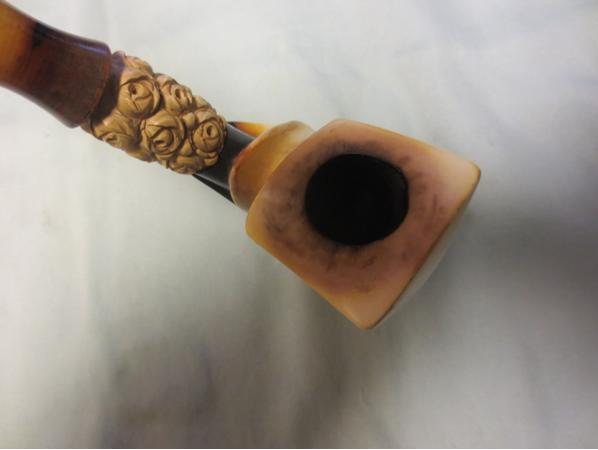
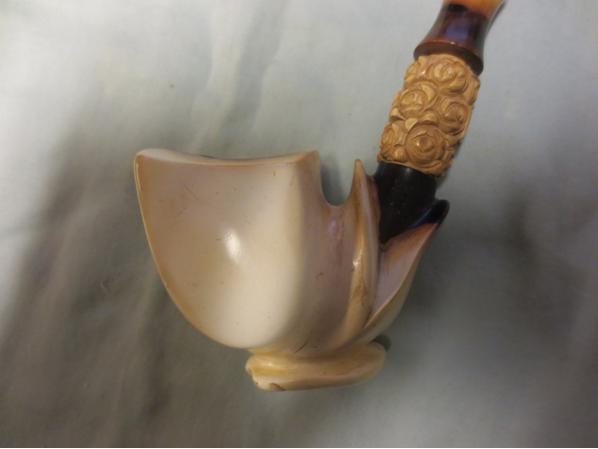
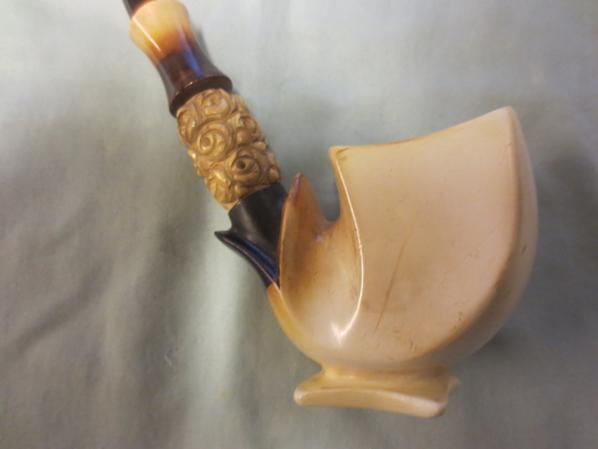
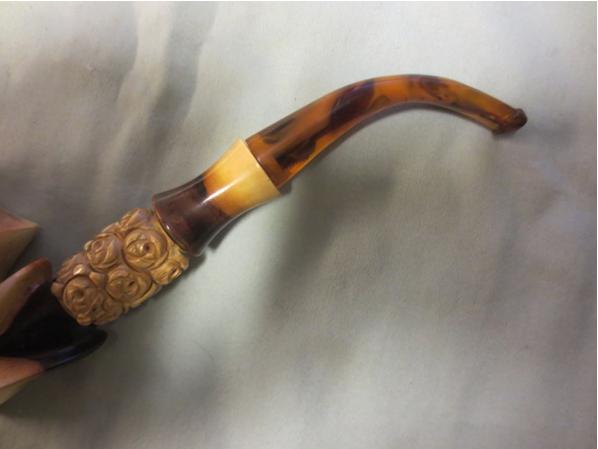
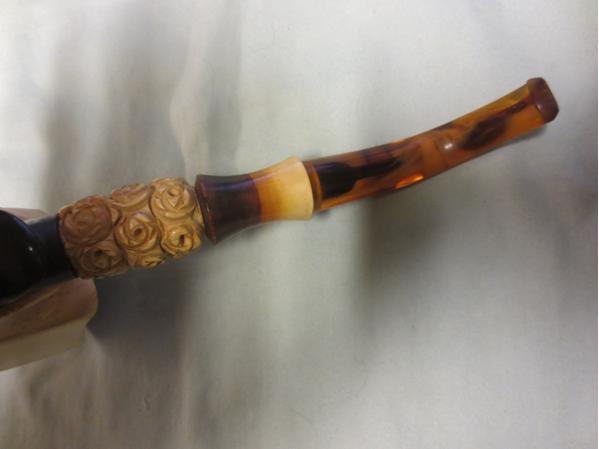
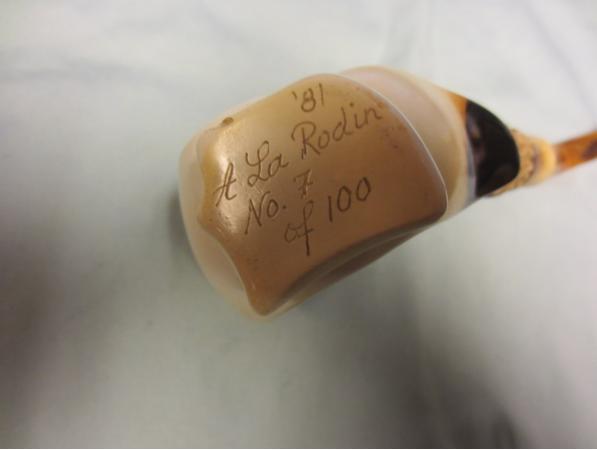
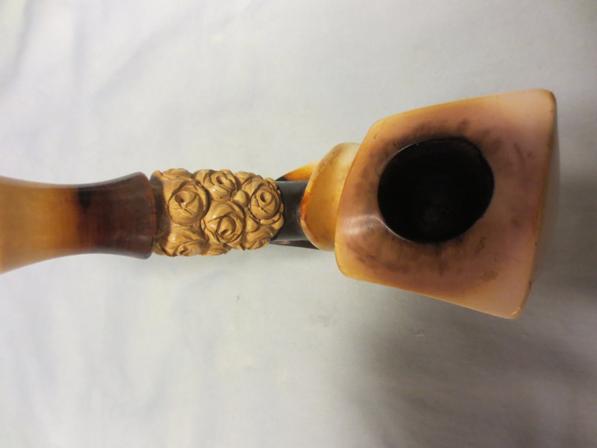
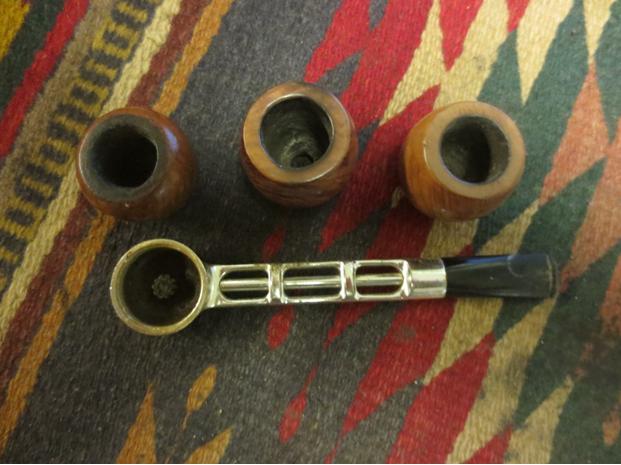
Restemming & Restoring -Antique Egg & Claw Meerschaum


Blog by Steve Laug

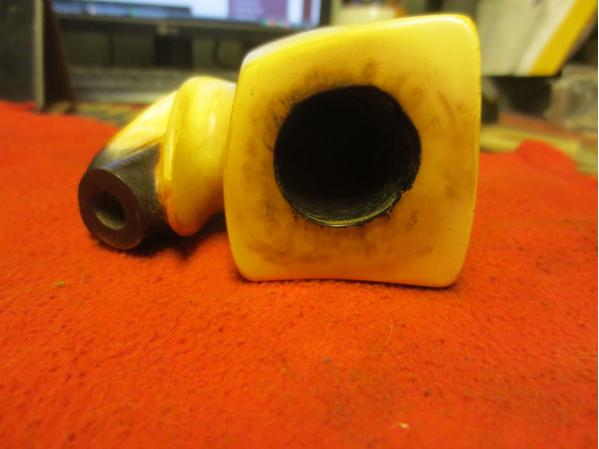
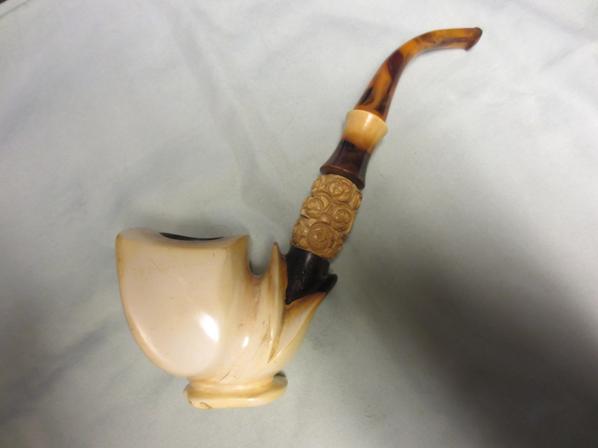
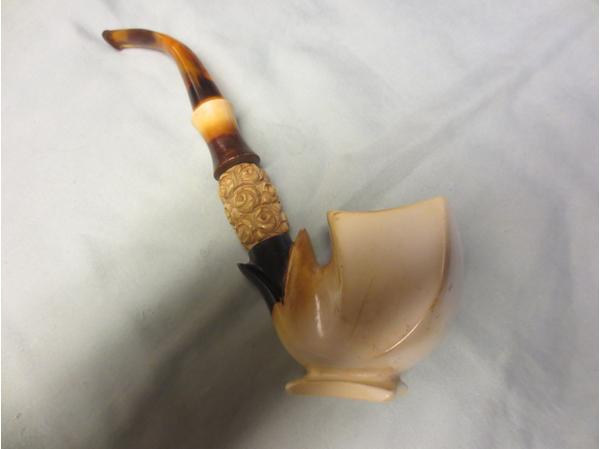
My brother Jeff picked up a beautiful old Meerschaum pipe when he was in Austin, Texas. There was something about the old pipe that caught his eye and he wanted it. The patina of age was forming around the claws and the egg. The feathers on the bottom of the foot that held the claws was also colouring nicely. The browns of a well smoked meerschaum were changing the shadows around the bowl of the pipe. The shank also showed some signs of the colourng. It was almost a meerschaum collar out of which the feather foot extended. The cross hatched look of skin extended beyond the collar on the sides of the shank and the small claw held the bowl at the back. The bowl blackened but the cake was scraped clean other than a slight buildup around the top portion of the bowl. The rim was blackened with tars and there was some road rash on the top right side of the bowl toward the front. The tip of one of the feathers holding the claw on the front of the bowl also had a small chip but it had coloured like the rest of the feathers so it was blended in. The pipe itself was an old timer that was clear.Claw1 The anomaly for me is that it should have had an amber stem. There is no way a pipe this age would have had a Lucite stem. The yellow Lucite stem looked that it had been adapted from a free hand pipe. The end had been drilled out to hold a replacement push tenon. It was set deep in the stem. The stem also had been counter sunk to cover the replacement threaded mortise in the shank. Instead of trimming it off to be flush with the end of the shank it stuck out about 1/8 of an inch or more. The stem maker had drilled the end of the stem so that with the tenon threaded in and the stem pushed into the mortise it would hide the mortise extension. The airway in the stem was pretty clogged and had blackened with tars. The stem had served the previous owner well. To my eye it just did not go with the either the age or the look of the pipe. It looked like two centuries had collided and joined to very different generations together with this stem and bowl.Claw2 The shank itself was clean though the tars had stained the tenon. The airway in the shank was open and clean. It was as if someone had cleaned out the inside of the shank and bowl before putting the pipe up for sale at the antique shop. There were signs also that the bowl itself had been wiped down on the outside as the colouration bore signs of scratching from scrubbing the exterior with something like ScotchBrite pads. There were a lot of scratches and scrapes around the rim edges. Fortunately whoever had cleaned it had not removed too much of the patina. This pipe deserved some tender loving care to bring it back to life and restore the appearance to more of its stately form. The stem would definitely have to go and in its place an amberoid or amber coloured Lucite stem would have to be shaped to take its place.
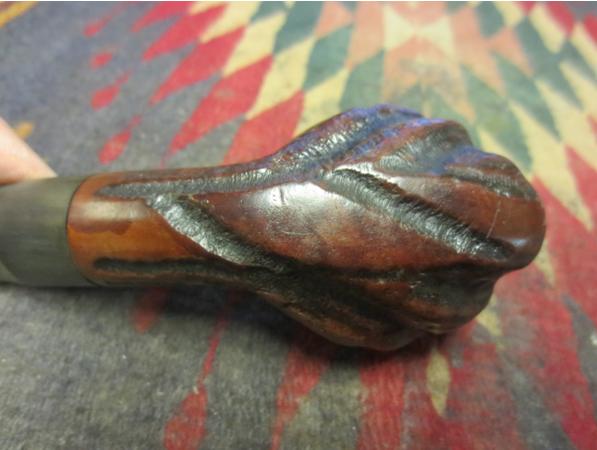
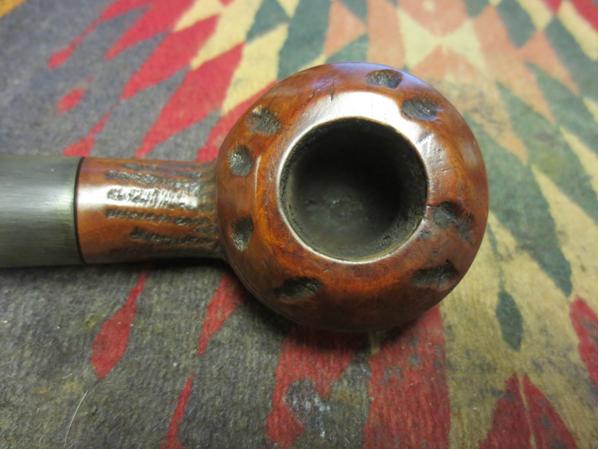
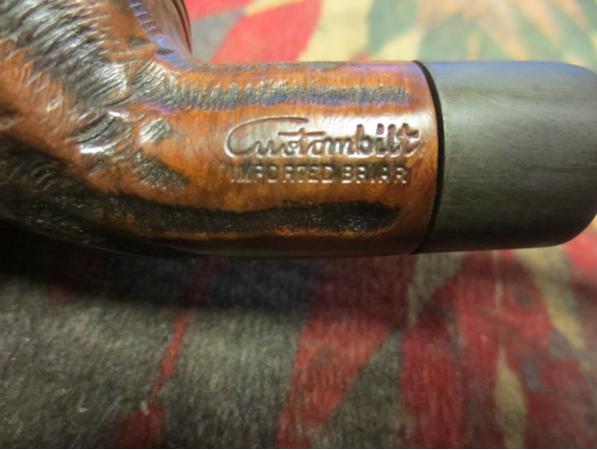
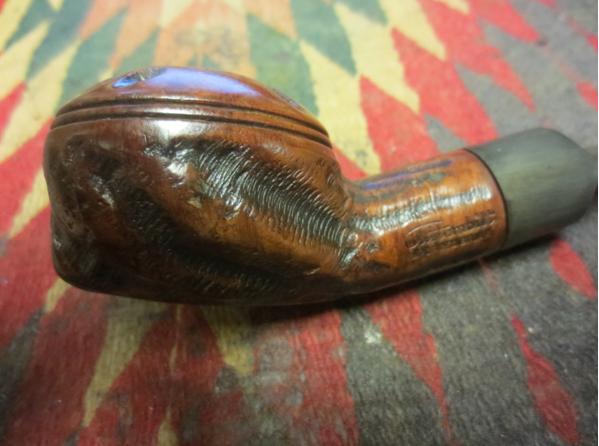
I called Tim West at JH Lowe to talk with him about ordering a stem and what would look best with this old timer. Tim suggested a tortoise shell amber Lucite stem. He said the chocolate swirls in the material would look good with the patina of the old meer and as the bowl darkened more would continue to look good. I gave him the dimensions that I was hunting for and ordered a tapered stem. As usual Tim was quick in getting the materials I ordered shipped to me. It did not take long for it to arrive. I knew that it would be longer than I wanted and would need to be cut down and shaped but the colour would be perfect.

I got home from work on Monday to find Tim’s package had arrived. I opened it and took a picture of the new stem blank, the stem that I was retiring and the old bowl. You can see from the photo below that it is about an inch longer than the previous stem. The taper shape should work well with the pipe. Lots of drilling and shaping will need to be done before it fits the shank well.Claw3 I am pretty limited in terms of a shop – no saws or power tools to make things simpler so I am left to resort to doing things by hand. I measured the length of the stem that I wanted and use a small hacksaw to cut off the excess stem material. Once it was removed I faced the newly cut end on my topping board to smooth it out and square it off. This is the hard way to do things I know but with careful attention to the verticality of the stem it is possible to get a smooth surface that is square to the shank end.Claw4

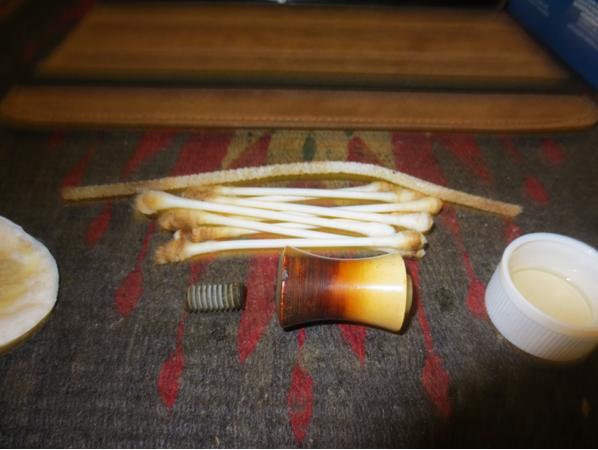
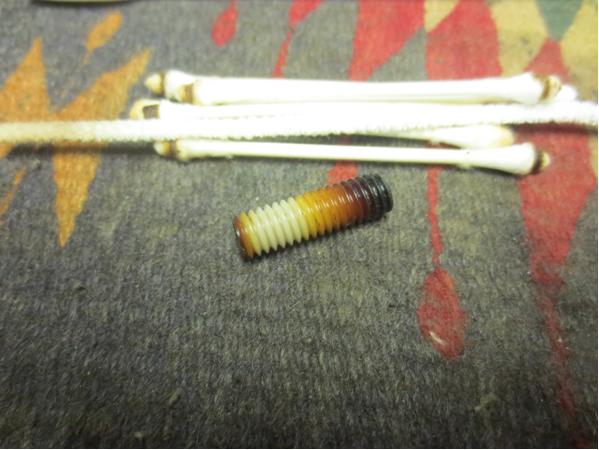
Claw5 The push tenon and mortise was smaller than any that I had in my stash so I removed the push tenon from the old stem. It was not difficult to do as it was threaded and could be unscrewed. The mortise was threaded into the shank but extended beyond the end of the shank. I would need to sand that smooth and bevel it inward to give a good fit to the new stem. I took the next two photos below to show the two stems side by side and give an idea of the length.Claw6

Claw7 With the length cut and the surface faced it was now time to start the drilling. I needed to drill the airway in the new stem to accommodate the diameter of the push tenon. Once it was drilled I would be able to thread it with a tap. The airway would also need to be drilled a second time to receive the collar on the tenon and give a flush fit with the stem end. I set up my cordless drill with a small drill bit to begin with and then worked up to the one that was the correct size for the tenon. I used a larger bit to countersink the end of the stem to take the collar on the tenon.Claw8 The photo below shows the roughed in drilling of the stem. I would still need to clean up the edges of the countersink and also the roughness of the area that I would be using the tap on. I used needle files to bring the countersink into round, smooth out the edges and the airway.Claw9 When I had finished with the airway I screwed the tenon into place and used a Dremel and sanding drum to begin smoothing out the mortise insert.Claw10 I sanded the end of the mortise insert by hand to bring it to the same height as the rest of the shank end. I cleaned up the area around the tenon so that when I put the two pieces together I would have a pretty flush fit.Claw11 I took the next photo to show the initial fit of the tenon in the stem. More sanding would need to be done to make the inner edges clean on the countersink.Claw12 I pushed the stem into the mortise and took the photos below to have a look at the new stem and its fit on the pipe. There was still a gap in between the stem and the shank – it showed light so more work would need to be done to bring it flush against the shank. The overall look of the new stem worked for me. I like the tortoise shell look of the stem with the patina of the meer.Claw13

Claw14

Claw15

Claw16 I carefully scraped the bowl with a pen knife to remove the small cake that was present in the bowl. It was more of a ridge than a full cake so I wanted to smooth out the sides of the bowl.Claw17 I used the knife to begin the bevel on the mortise insert at this time as well. I would need to give it more of a slope to accommodate the tenon but it was getting there.Claw18 I inserted a pipe cleaner in the stem and set up my heat gun. (I set it up on top of the dryer in our laundry room so forgive the socks and dishtowels in the background. I held the stem about 5 inches above the heat so that Lucite would not bubble (it did even at this height). When it was flexible I bent it to the same angle as the previous stem using an old rolling pin that I saved for this purpose. It took several time of heating it to get the angles correct so that the bend of the stem would match the curves of the bowl.Claw19

Claw20 I put the newly bent stem on the pipe and took some photos so I could see if I got the angles correct. I find that the distance of a photo gives me clearer perspective than just holding it in hand.Claw21

Claw22 With the fit of the stem and the bend roughed in it was time to work on the stem itself. The sharp edges of the taper and the thick button would need to be sanded and shaped. I would also need to get rid of the bubbles that happened when I heated and bent the stem. I started with emery cloth to quickly shape the button and take down the sharp edges. I also thinned the stem with the emery cloth and worked on the sides of the taper. I sanded it with 220 grit sandpaper to smooth out and further shape it and then followed up with a medium and fine grit sanding sponge.Claw23

Claw24

Claw25 I cleaned up the mess left behind by the stem sanding and worked on the scratches in the meer bowl and the heavy build up on the rim. I used 1500-2400 grit micromesh to sand the rim and the area of road rash on the top of the bowl at the right side. I also sanded the scratches along the claws to clean up the mess that had been left behind. I was careful to no sand too much so as to keep the patina intact.Claw26

Claw27

Claw28

Claw29 I scrubbed the bowl and rim with a cotton pad and saliva to remove some of the grime and dirt left behind on the bowl.Claw30 I used a sharp Buck Knife to clean up the bevel of the mortise insert so that the stem would fit snugly against the shank.Claw31 I sanded and polished the stem with micromesh sanding pads- wet sanding with 1500-2400 grit pads and then dry sanding with 3200-4000 grit pads. I wiped the stem down with a little Obsidian Oil to give the final 6000-12000 grit micromesh pads traction in the final polishing.Claw32

Claw33

Claw34 I also polished the meerschaum bowl with the micromesh pads to clean up and minimize the scratches. Here is a photo of the bowl with the 3200-4000 grit pads.Claw35

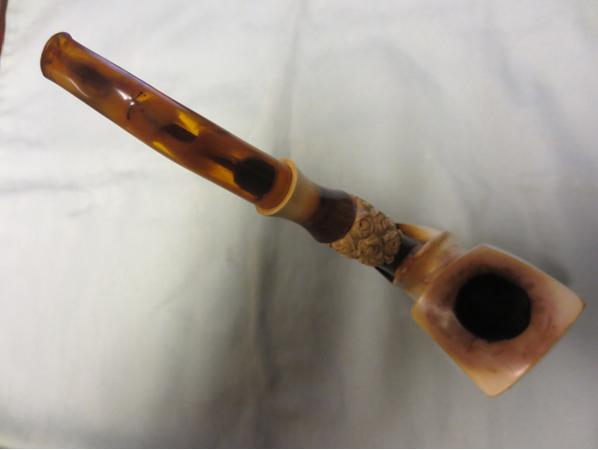
Claw36 I buffed the stem with Blue Diamond polish on the wheel and then gave it a light coat of carnauba wax. I hand waxed the bowl with carnauba and buffed it with a microfibre cloth to raise the shine. The finished pipe is shown in the photos below. I definitely like the look with the new tortoise shell stem. It just seems to fit the age of the bowl better than the free hand stem that came with it. Thanks for looking.Claw37

Claw38

Claw39

Claw40

Claw41

Claw42

Claw43

Claw44

Claw45

Putting a New Stinger and Tenon on a Kaywoodie Super Grain Apple 33


Blog by Steve Laug

In a trade with Dave Gossett I acquired this Kaywoodie Super Grain Apple. The bowl was in really great shape other than a few nicks and dents here and there. The finish was clean and the bowl had been cleaned and reamed. There were some small pin pricks on the back left side of the outer edge of the rim that looked to me were made when the pipe was dropped. They had been sanded a little so that the outer edge was no longer even around the bowl but sagged at this spot. The top of the rim was clean and smooth. The pipe was stamped on the left side of the shank with the words Kaywoodie over Super Grain over Imported Briar. The right side is stamped with the shape number 33. In looking through the various shape charts I found that the 33 was the stamping for a Large Apple (see the first photo below). The aluminum stinger had been broken off in the stem. It was hard to tell if I was dealing with what had originally been a four hole stinger or a three hole stinger. I know that many can tell the age on these KW’s by the stamping but I am not one of them. I knew that the three hole stinger/tenon apparatus was pressure fit in the stem and the four hole was threaded and screwed into the stem. Once I was able to drill out the broken stinger I would have a better idea regarding the type of stinger it had. The stem itself was fairly clean. There were some ripples in the stem on both the top and the bottom of the stem near the button. This told me that there were tooth marks that someone had either tried to buff out or sand out. These would need to be smoothed out. The interior of the stem and the shank were clean of debris and tar.KW1 The next three photos show the broken metal tenon in the stem and the state of the stem and bowl when it arrived. The briar has some beautiful straight grain and birdseye.KW2
KW3 I had several broken Kaywoodie stems in my can of stems that I cannibalized the stingers from. In the photo below the top stinger is the three hole one with the pressure fit end that fit in the stem. The bottom stinger is the four hole one that is threaded and screwed into the stem. What made it a bit interesting for me is that both stingers came from stems that had the same white clover leaf as the stem I was working on.KW4 I used my cordless drill to act as a holder for the drill bit and turned the stem onto the bit to begin to remove the broken tenon/stinger. I started with a bit slightly larger than the airway on the broken part. I worked my way up to a size that finally grabbed a hold of the broken tenon piece in the stem and when I twisted the bit out brought metal piece with it. The second photo below shows the broken tenon piece amongst the bits of aluminum. I had my answer it was the pressure fit three hole stinger/tenon apparatus. (I should have done this with a paper down to catch the bits and bobs of metal but did not so I ended up having to vacuum up my mess.)KW5

KW6 I cleaned out the inside of the stem with pipe cleaner and alcohol and the drilled out end with cotton swabs and alcohol. I cleaned the new stinger/tenon the same way and polished it with 0000 steel wool. I applied twisted the tenon into the mortise and then applied glue to the end that would go into the hole in the stem. I pushed the stem in place on the glued part and let is set. I unscrewed the stem and set it aside to let the glue cure. I used an all purpose white glue to set the tenon in place because I wanted to be able to adjust the fit with heat. I topped up the glue around the end with some clear super glue.KW7
KW8 With the tenon in place it was time to clean up the damage to the stem. I sanded it with 220 grit sandpaper to remove the wavy lines and clean up the residual tooth marks. There was also a nick in the side of the stem on the underside so I cleaned up the taper there as well. I then sanded it with a medium and a fine grit sanding sponge to minimize the scratching.KW9

KW10

KW11 With the stem surface smooth it was time to polish it with micromesh sanding pads. I wet sanded the stem with 1500-2400 grit pads. I rubbed it down with Obsidian Oil before going on to dry sand with 3200-4000 grit pads. I gave it another coat of oil and then sanded it with 6000-12000 grit pads. I rubbed it down a final time with Obsidian Oil and let it dry.KW12

KW13

KW14 I sanded the bowl with 4000-12000 grit micromesh sanding pads to smooth out the outer rim edge and the sides of the bowl. I wiped the bowl down with some pipe polish. I buffed the bowl and stem with Blue Diamond polish and then gave it multiple coats of carnauba wax. I buffed it with a clean flannel buff and then hand buffed it with a microfibre cloth. The finished pipe is shown in the photos below. Thanks Dave for the opportunity to restem this beauty. It was a fun one to work on. Thanks for looking.KW15

KW16

KW17

KW18

KW19

KW20

KW21

KW22

KW23

KW25