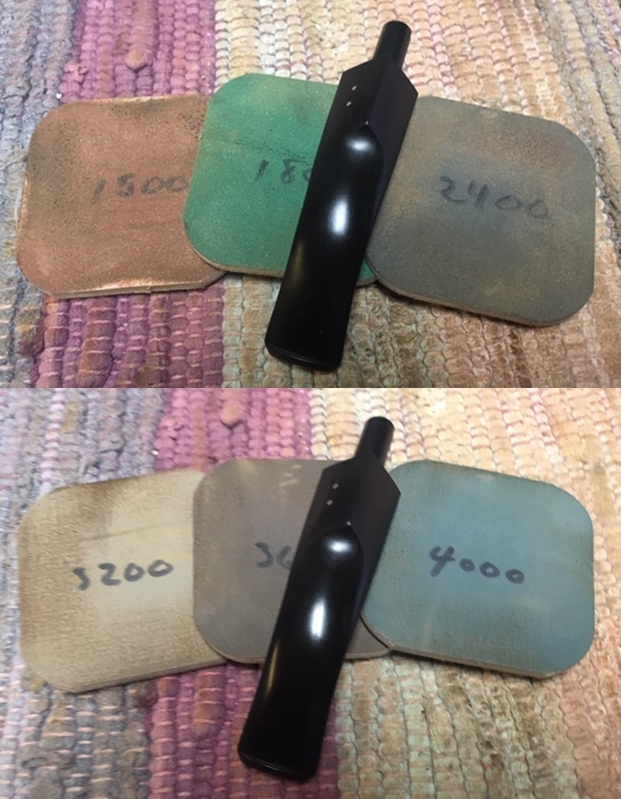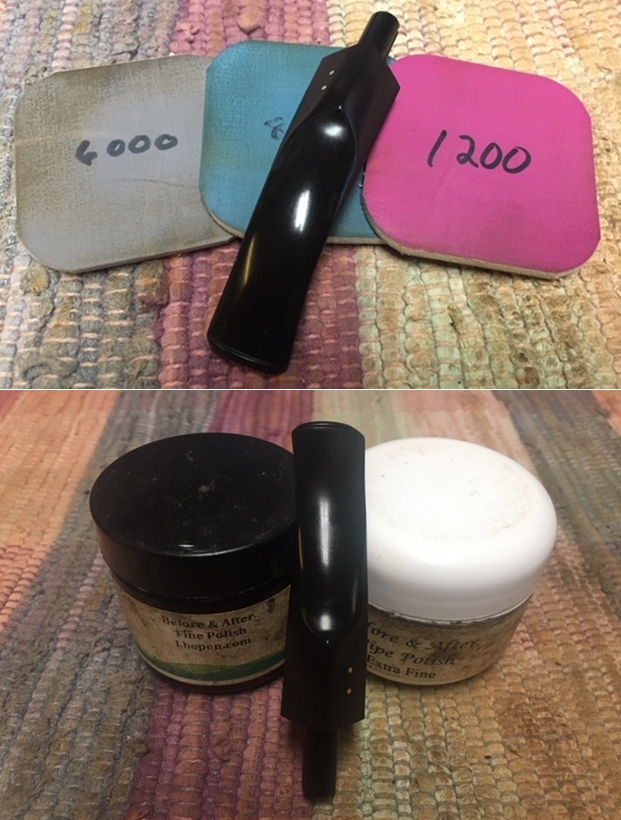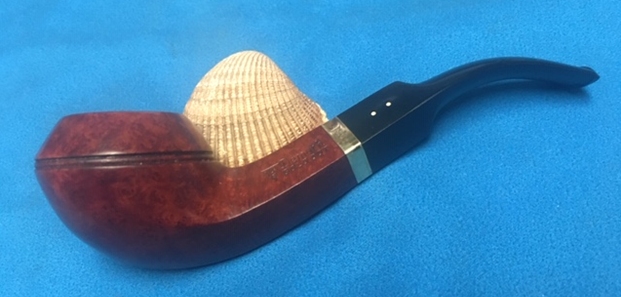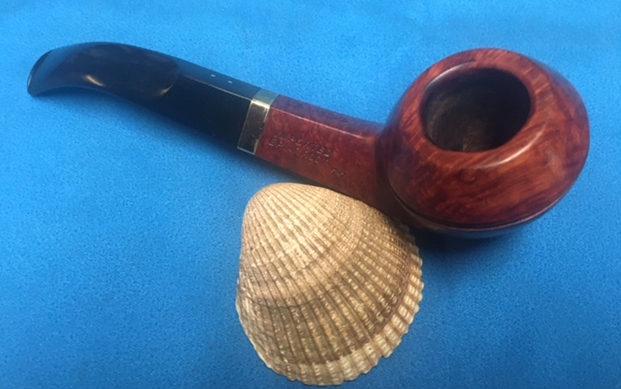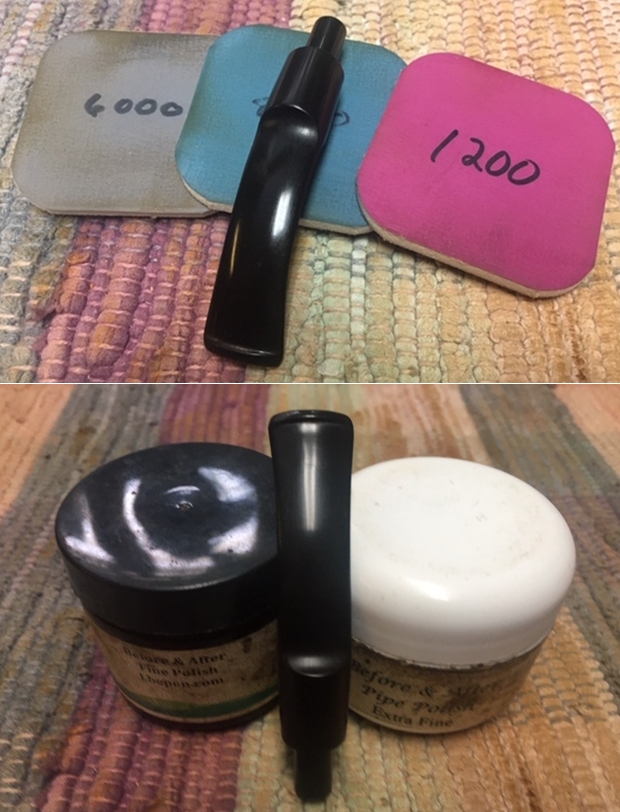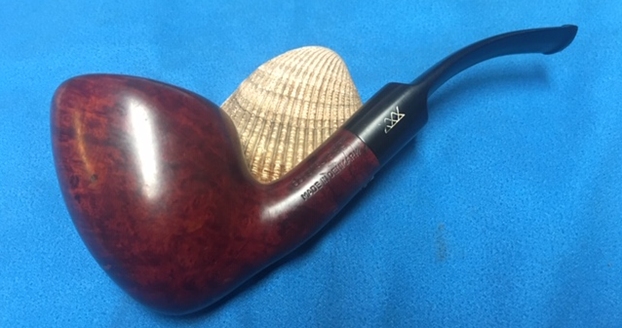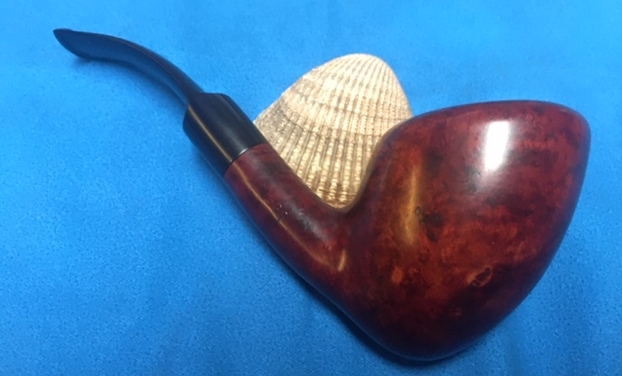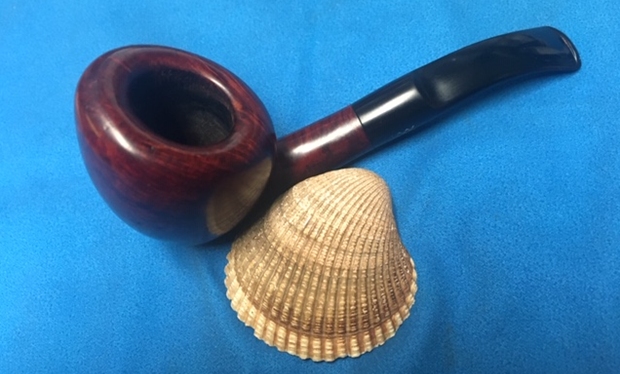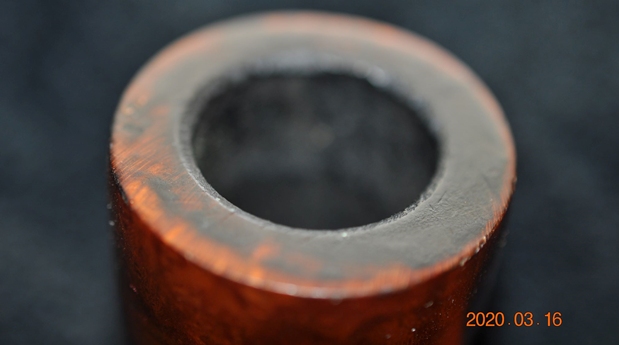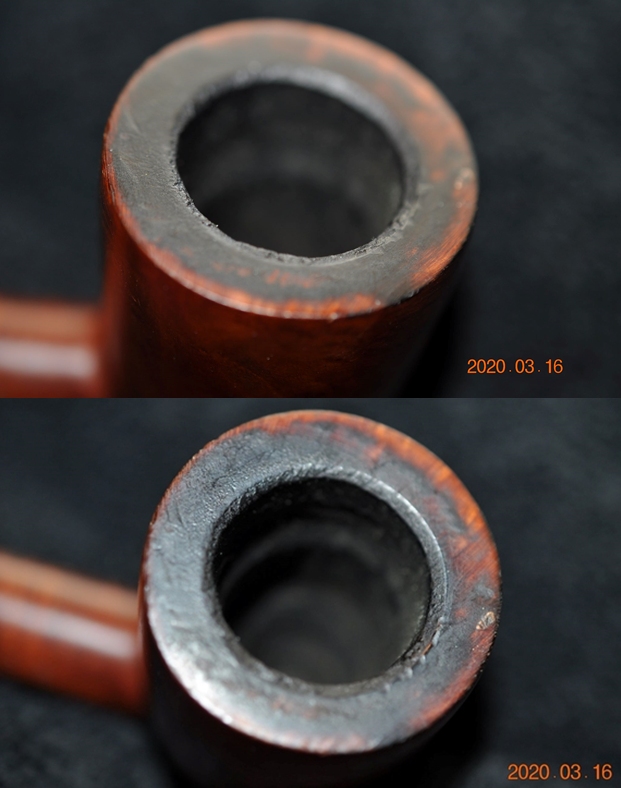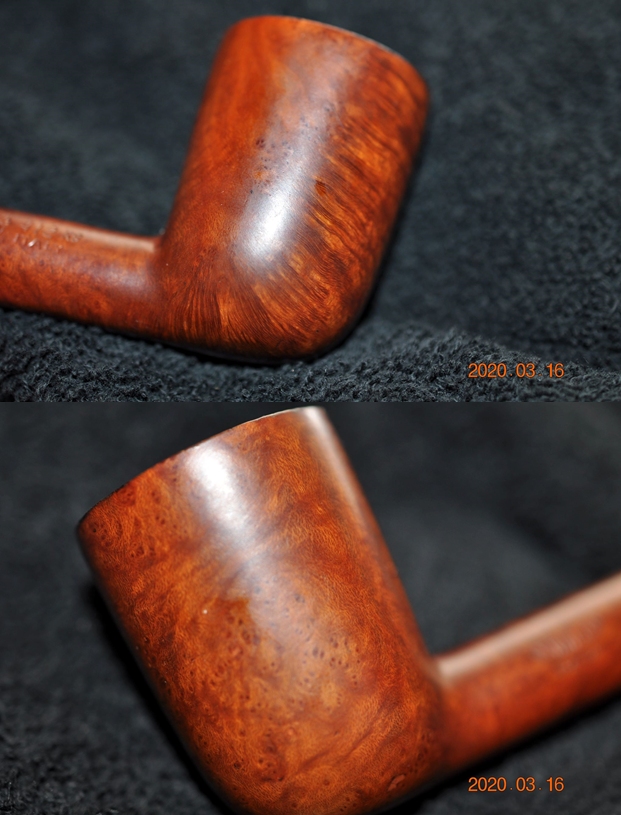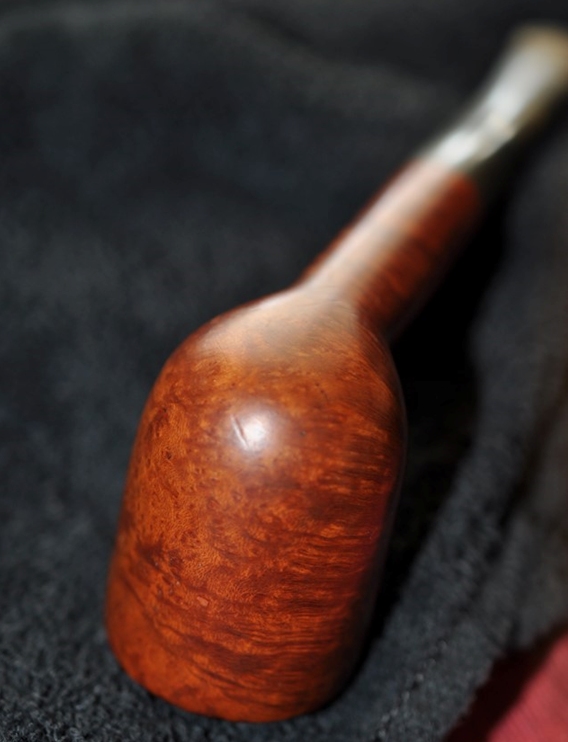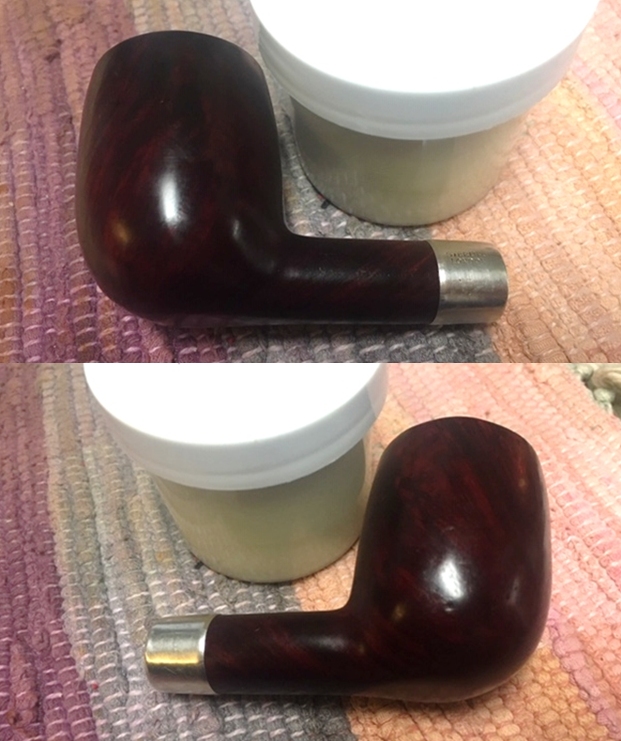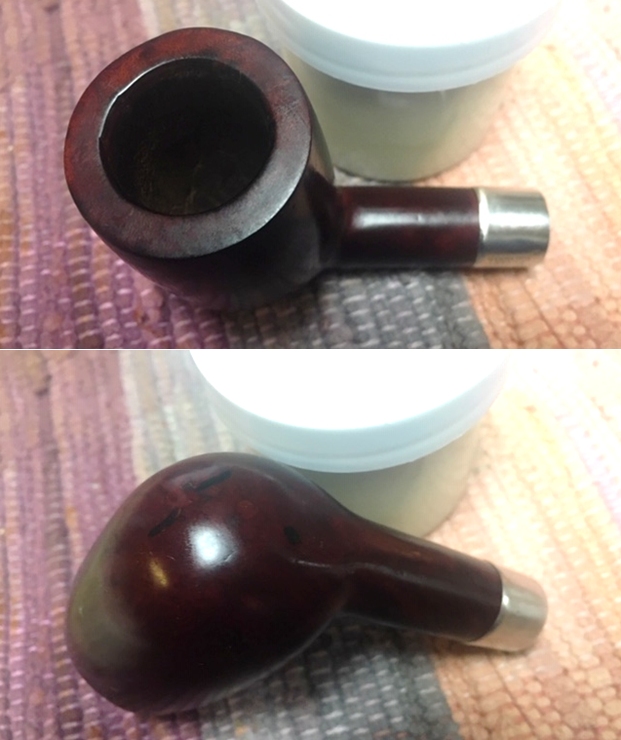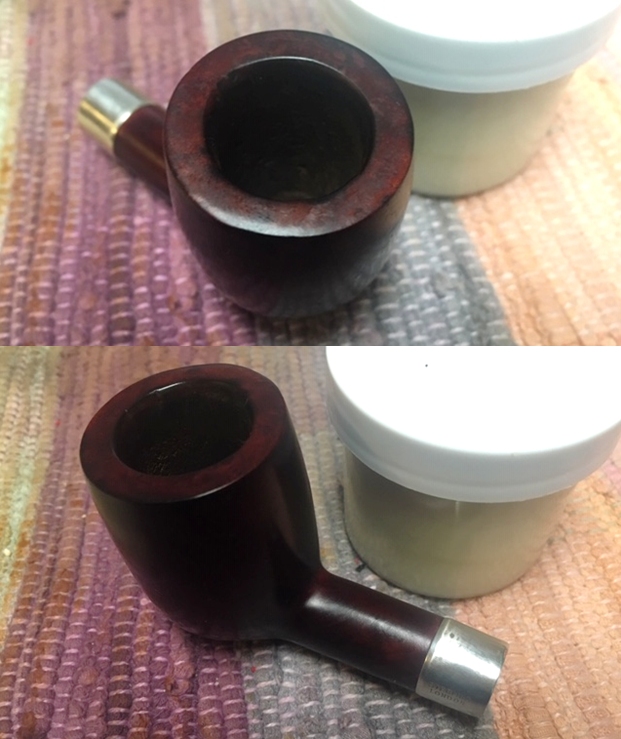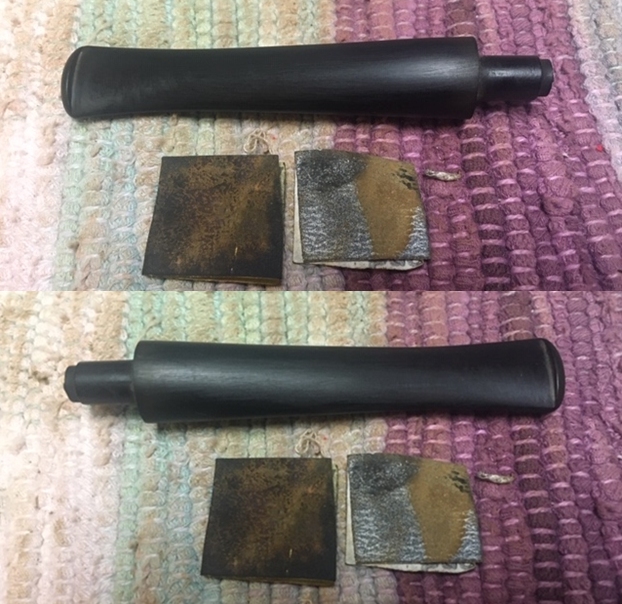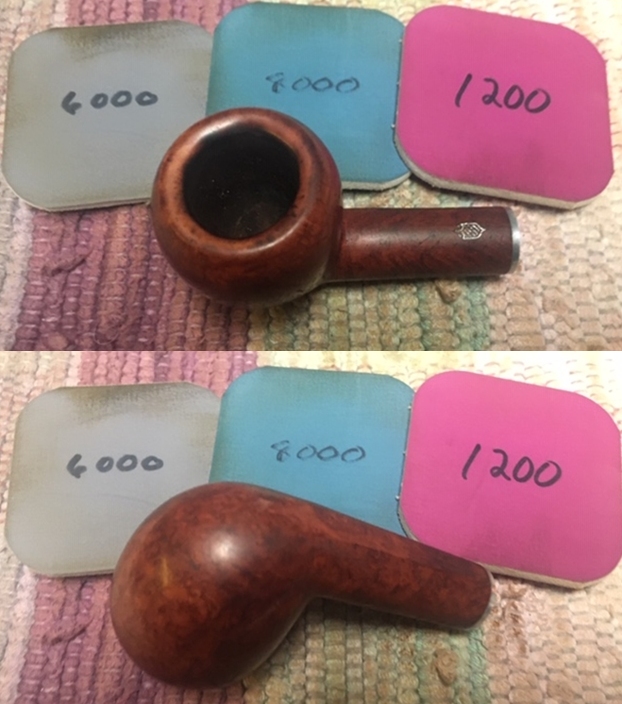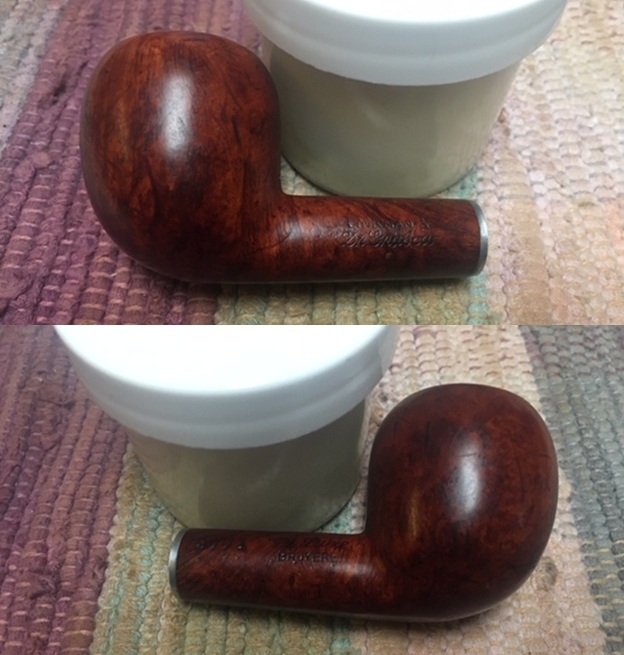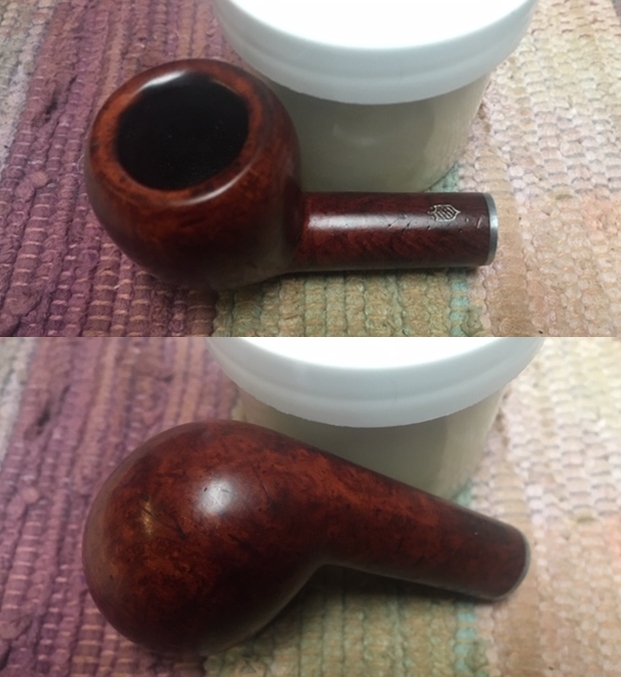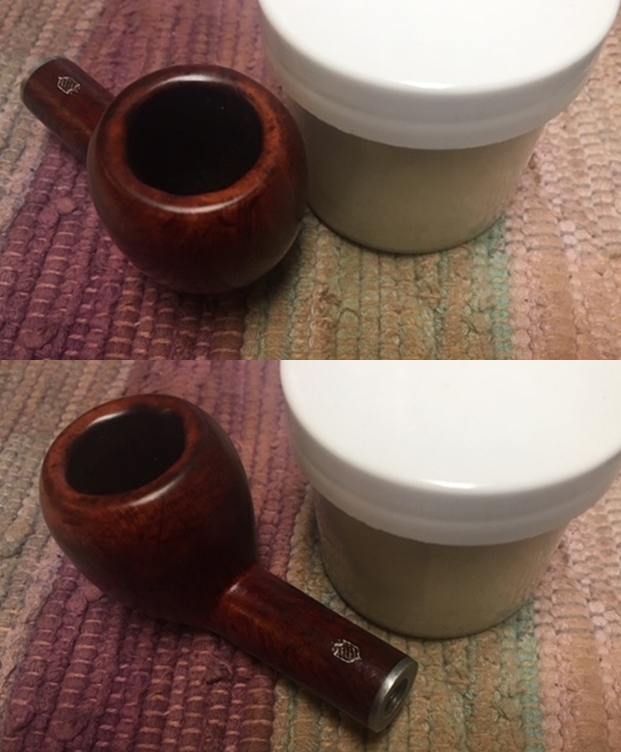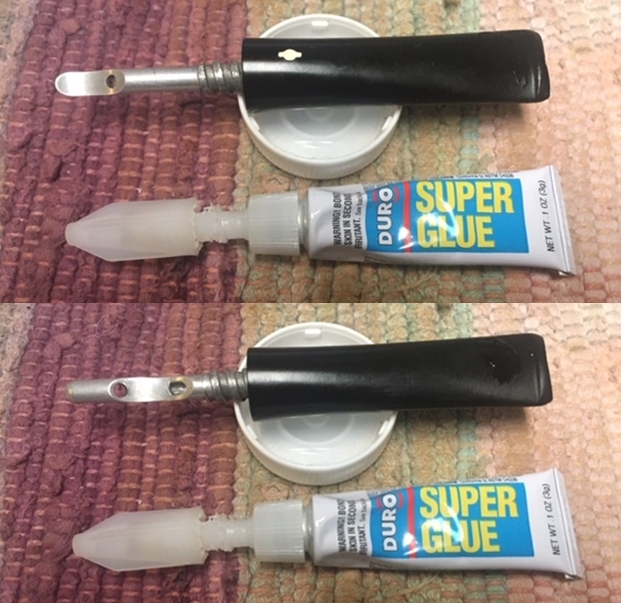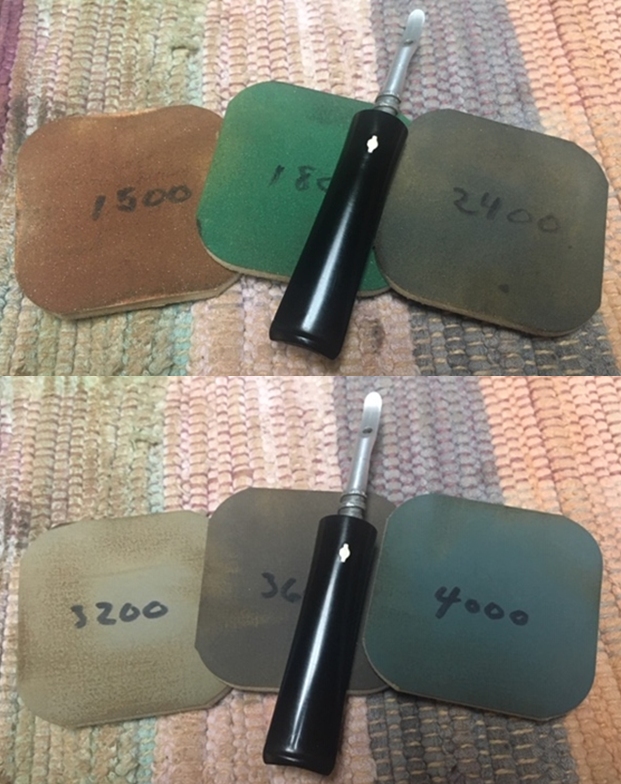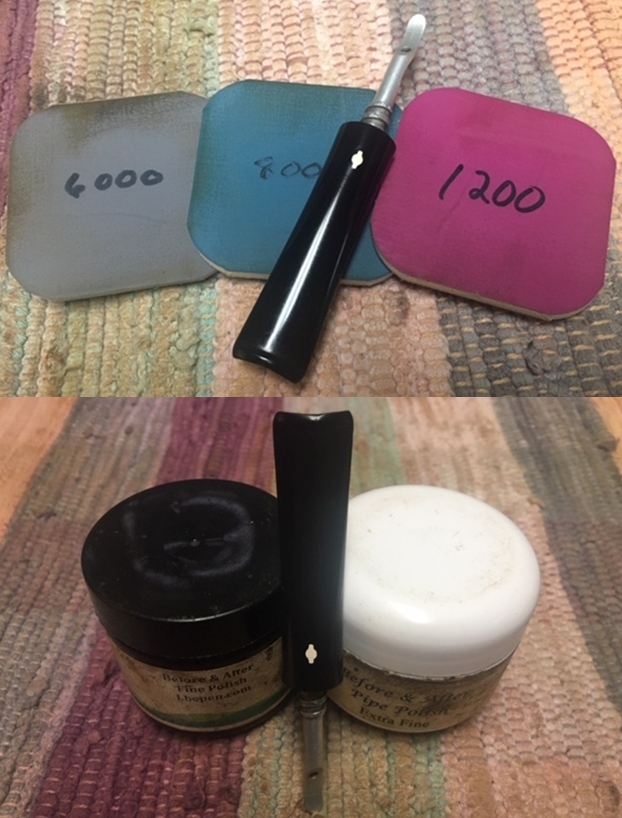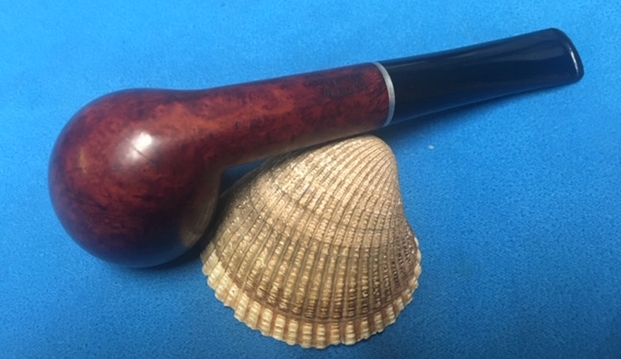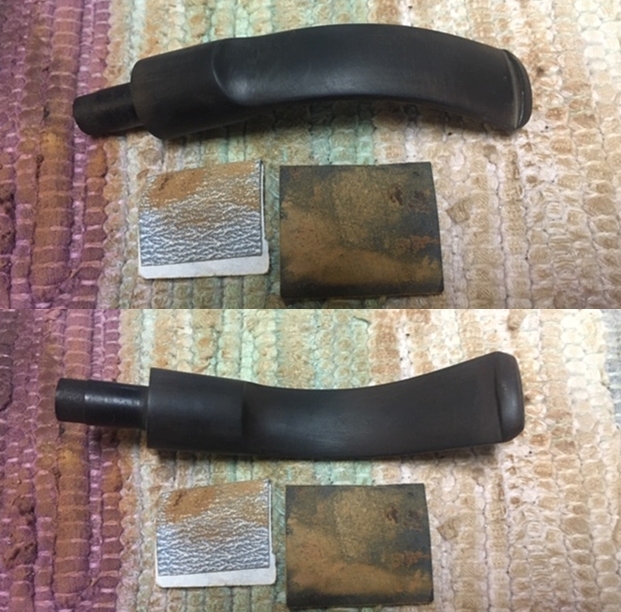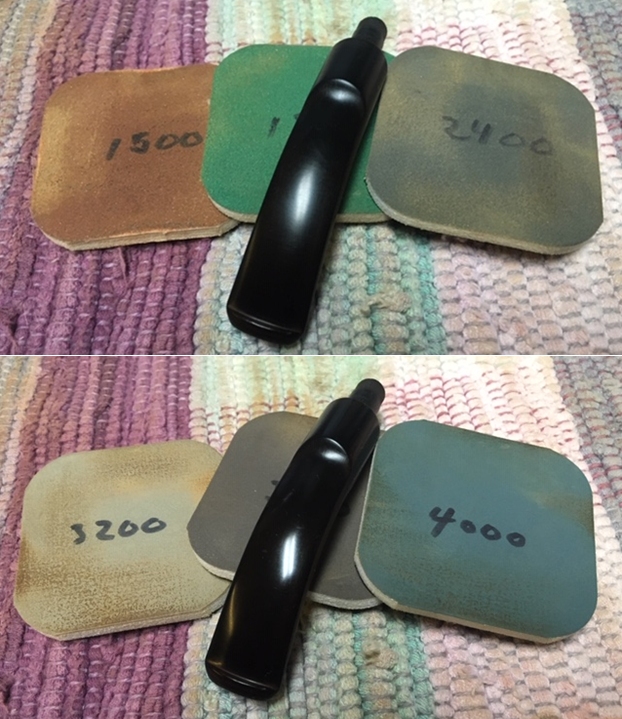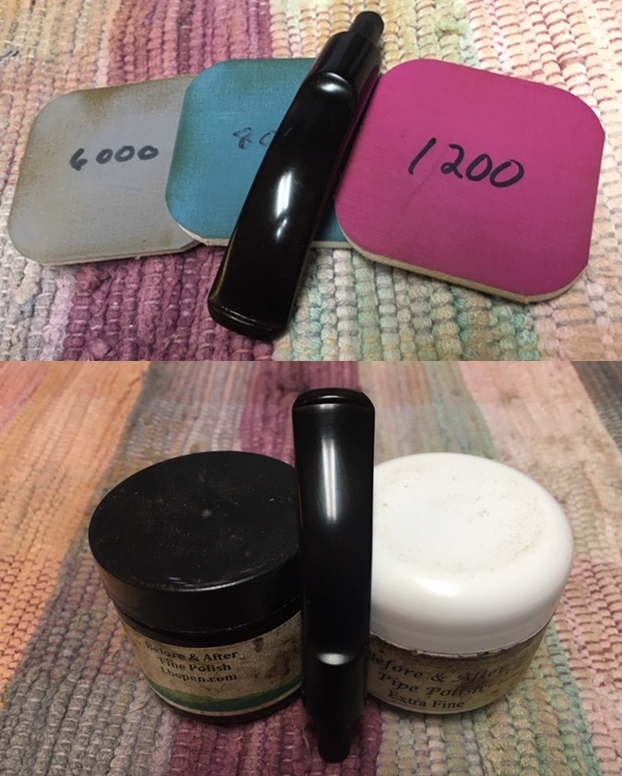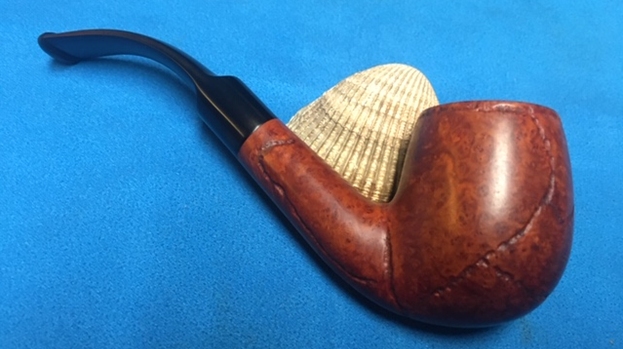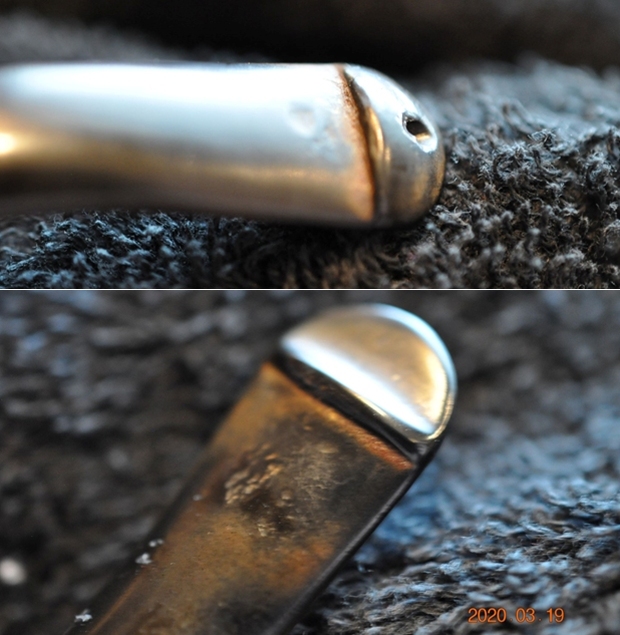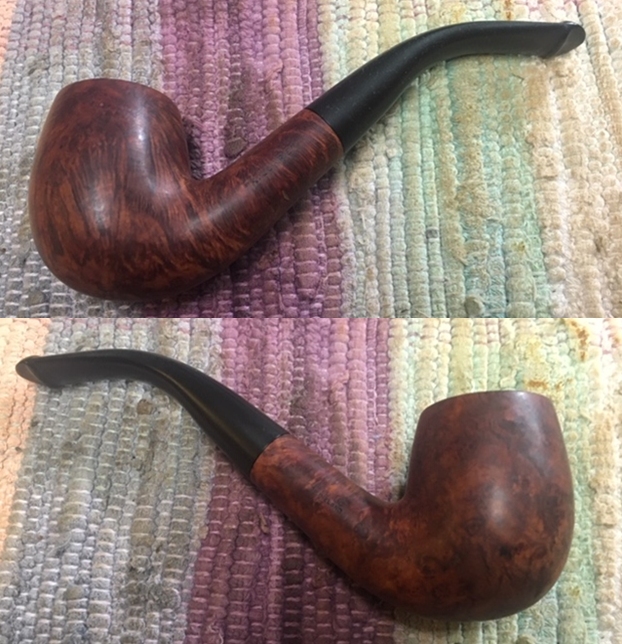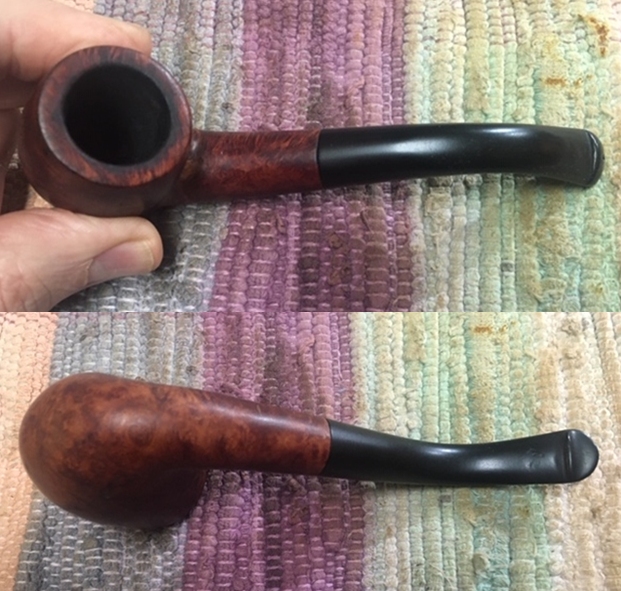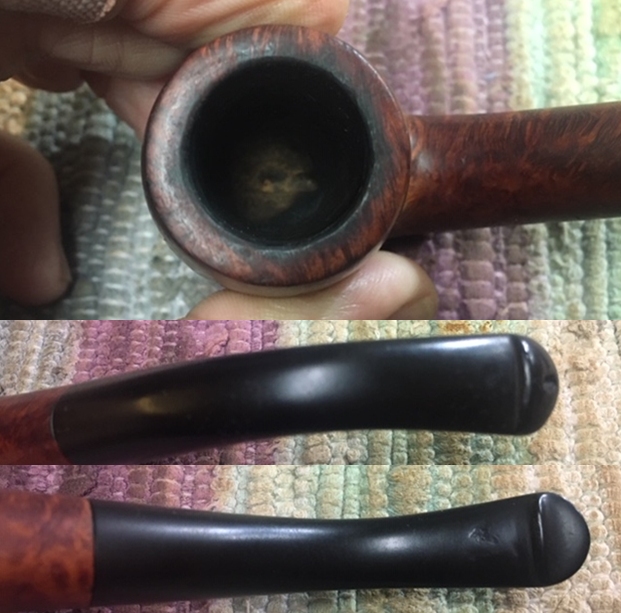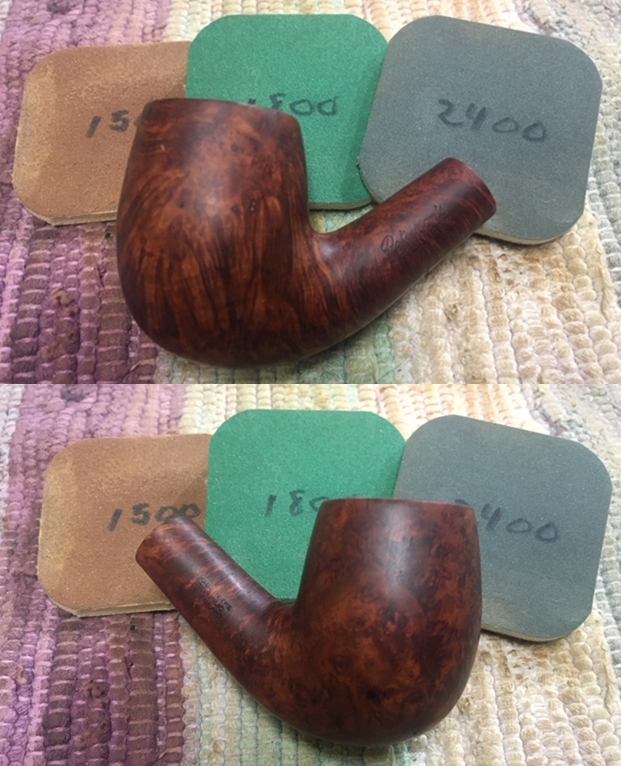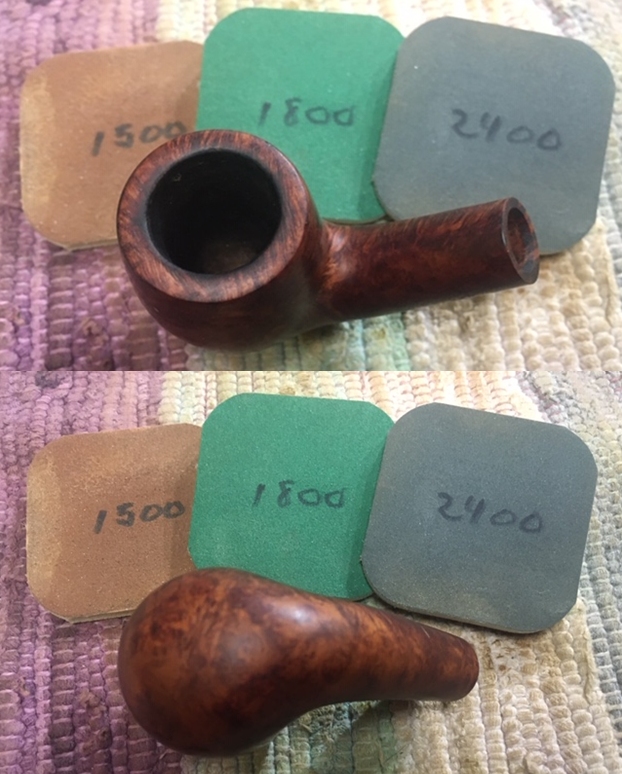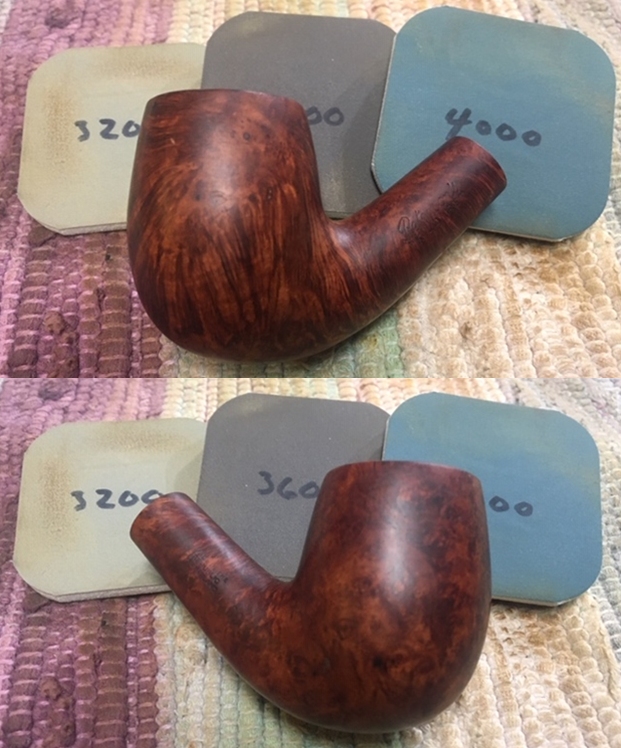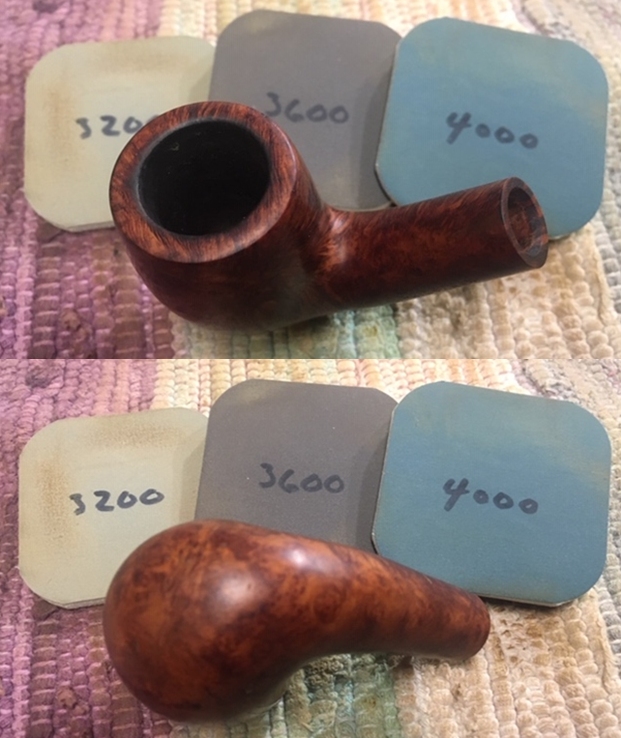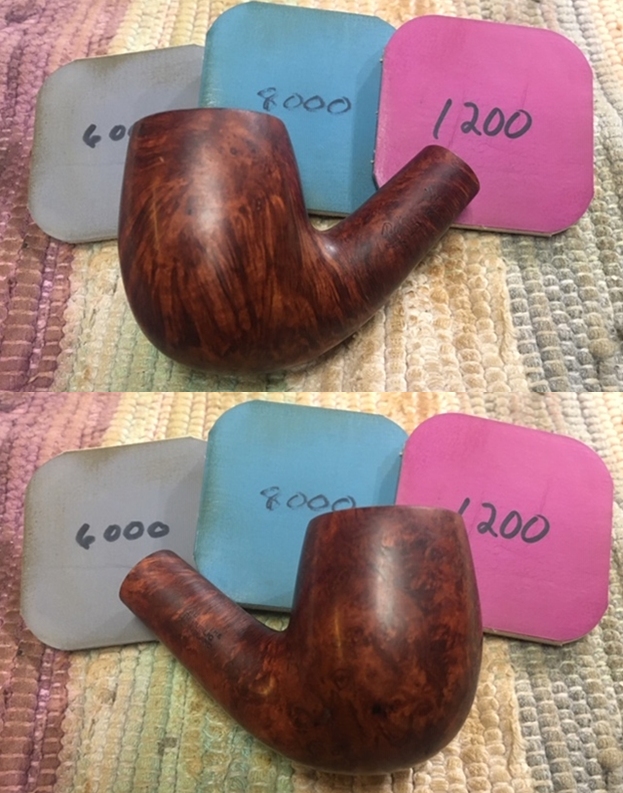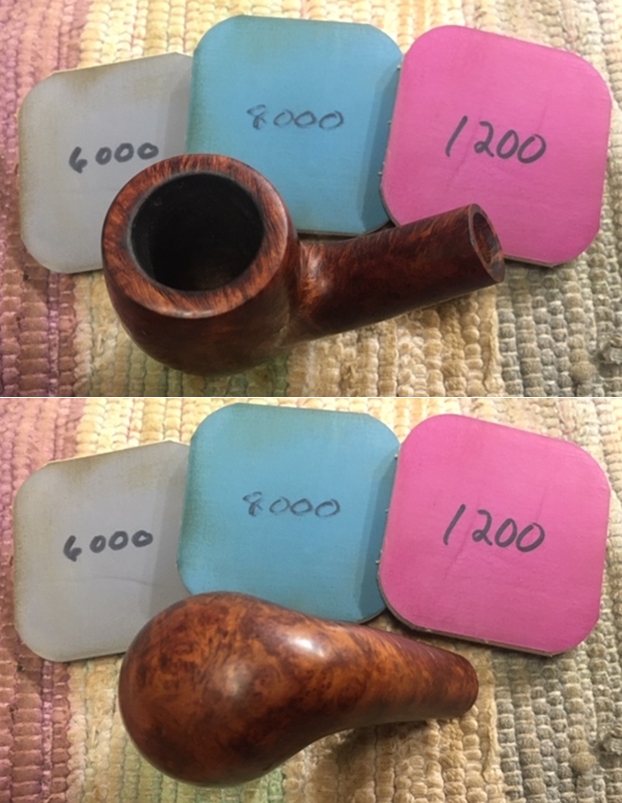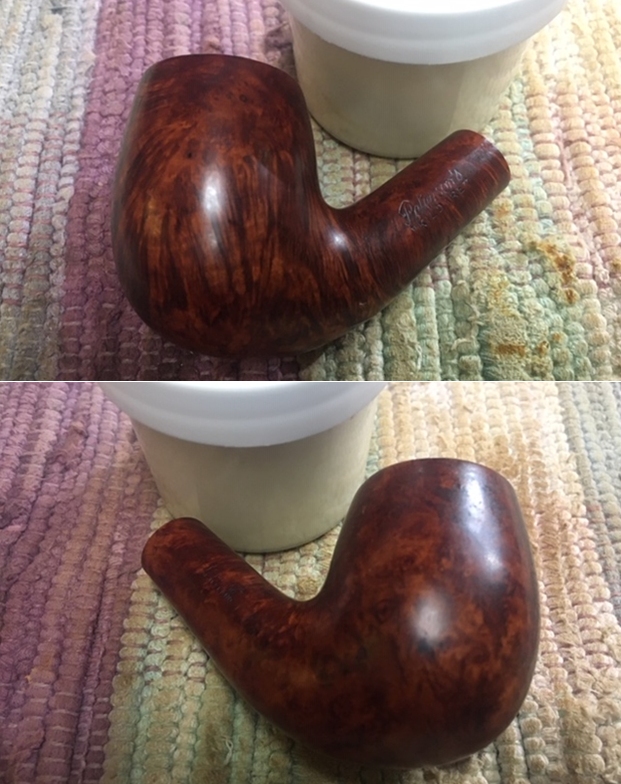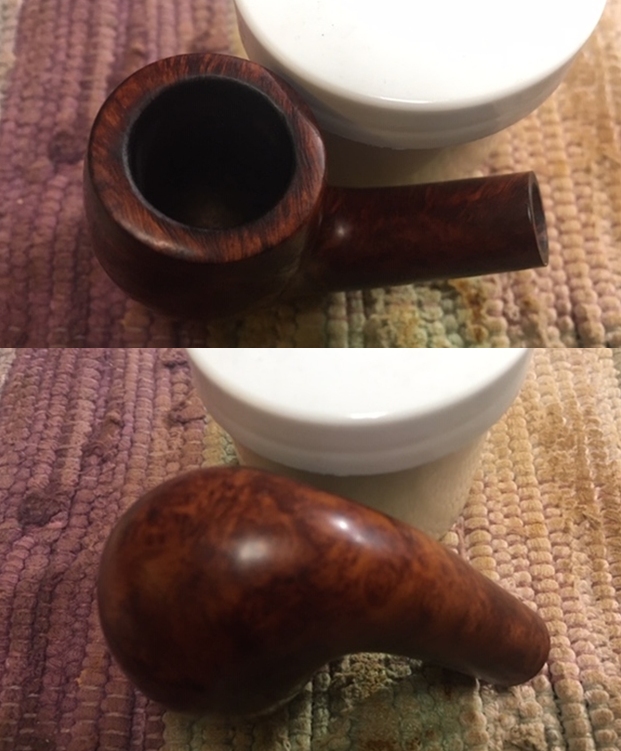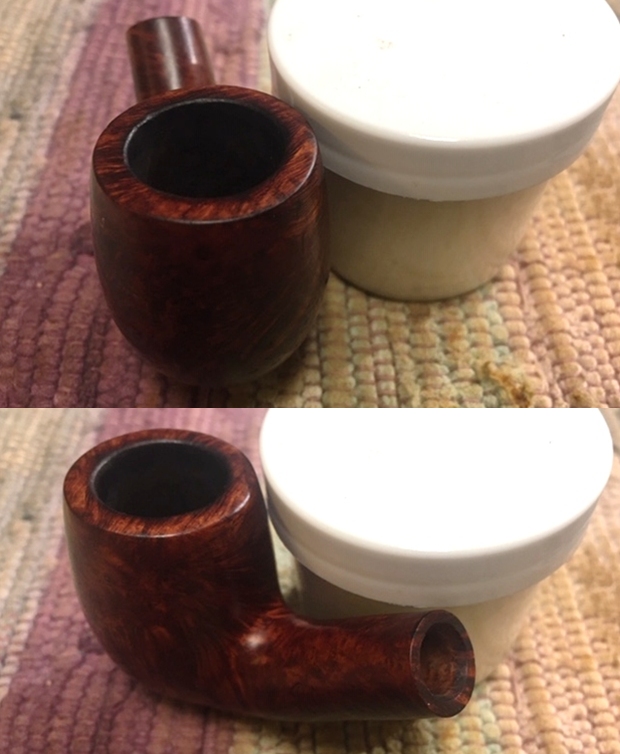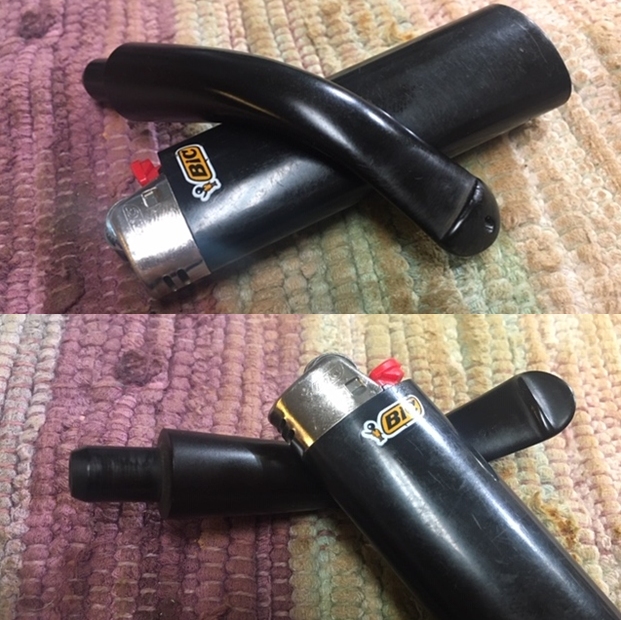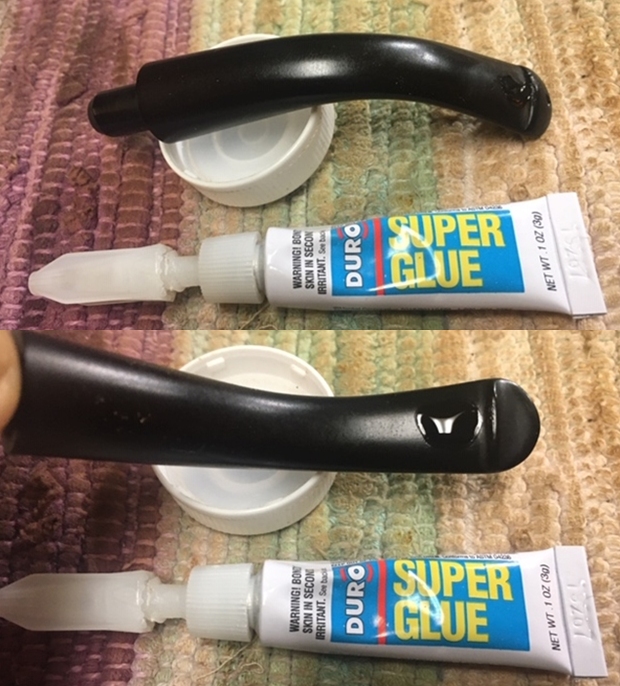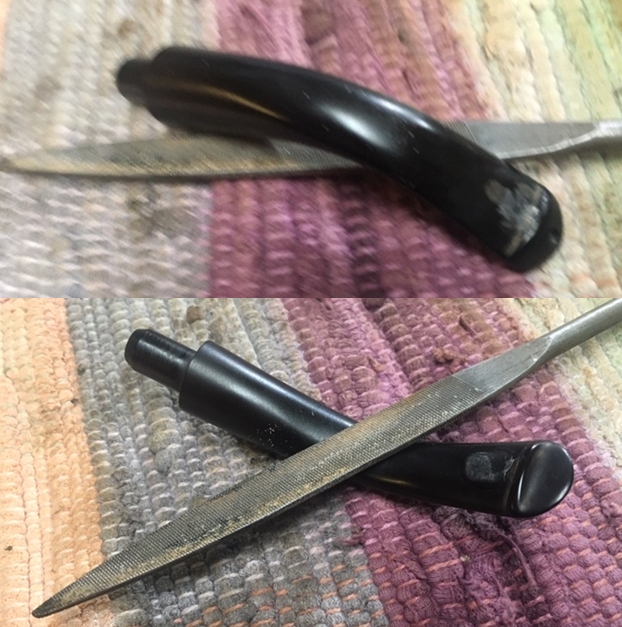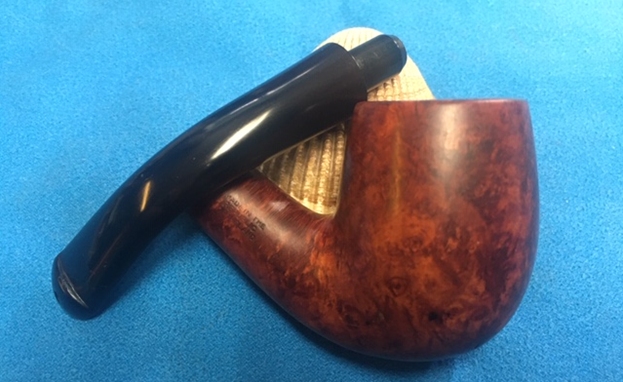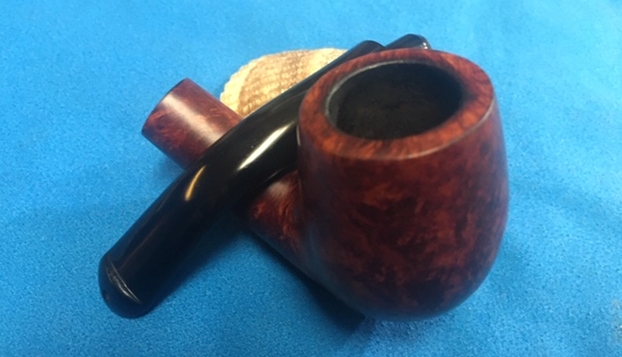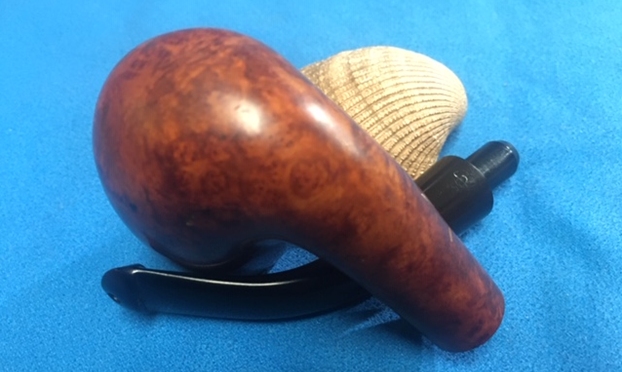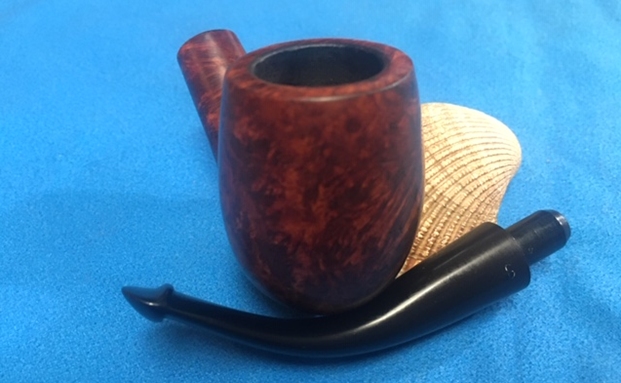
Tag Archives: shaping a stem

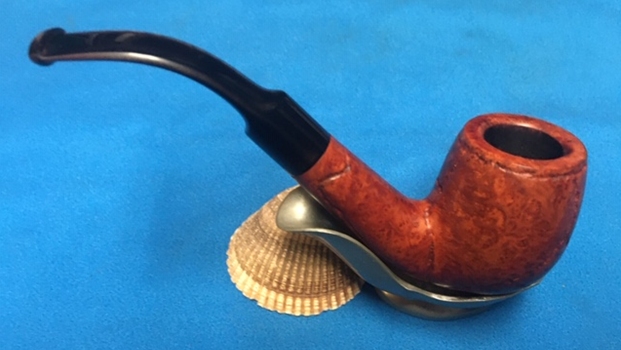
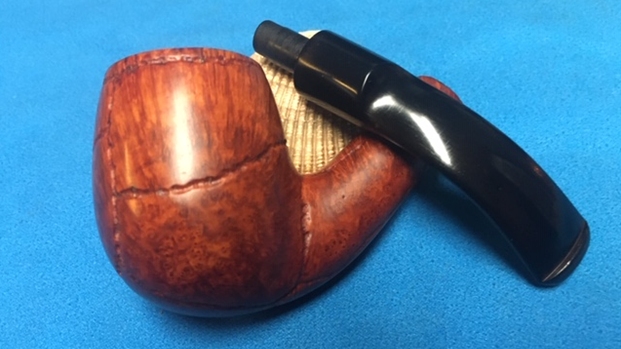
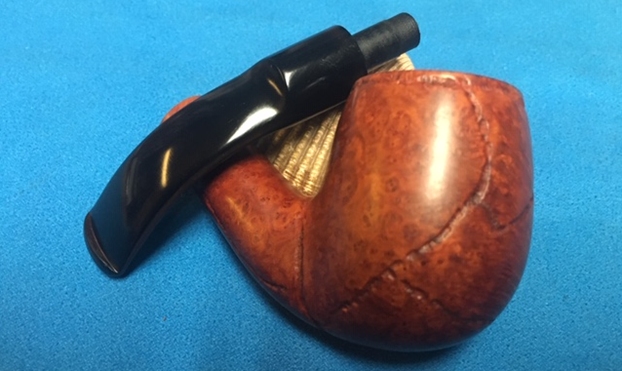
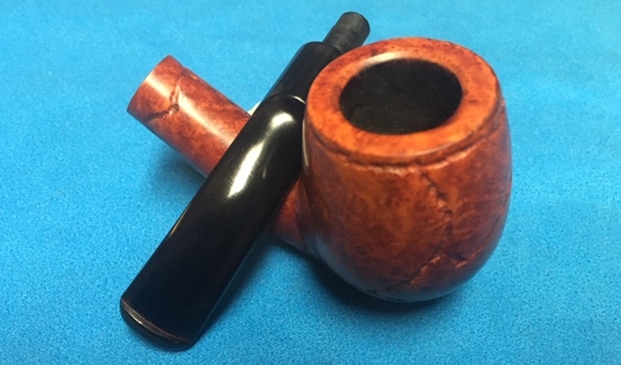
Bringing Life to a WDC Demuth Gold Dot 77 Bulldog


Blog by Steve Laug

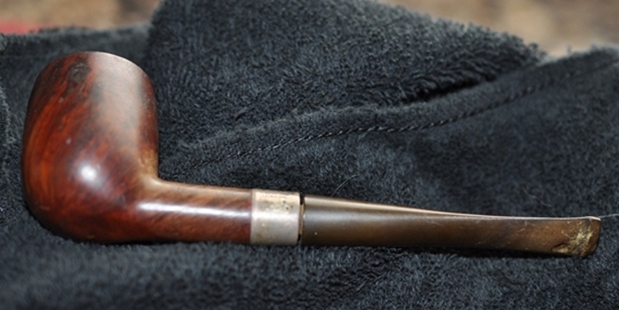
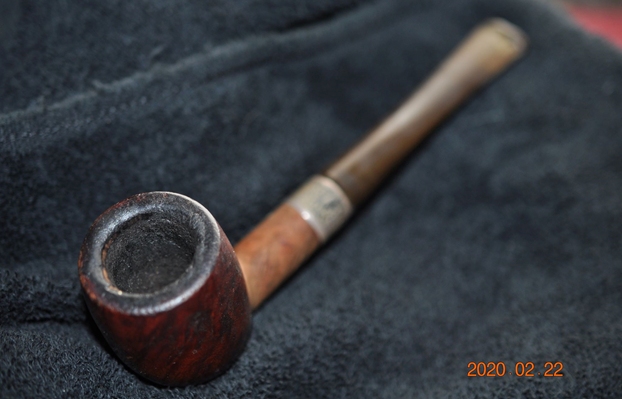
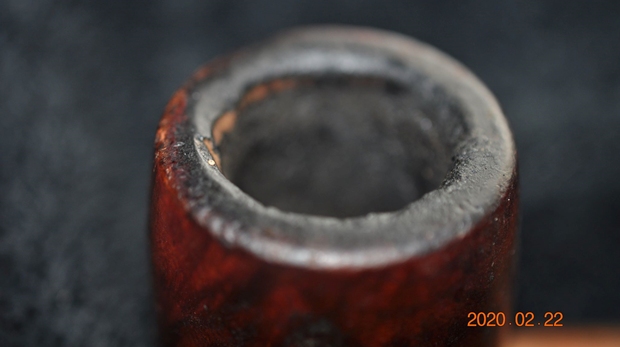
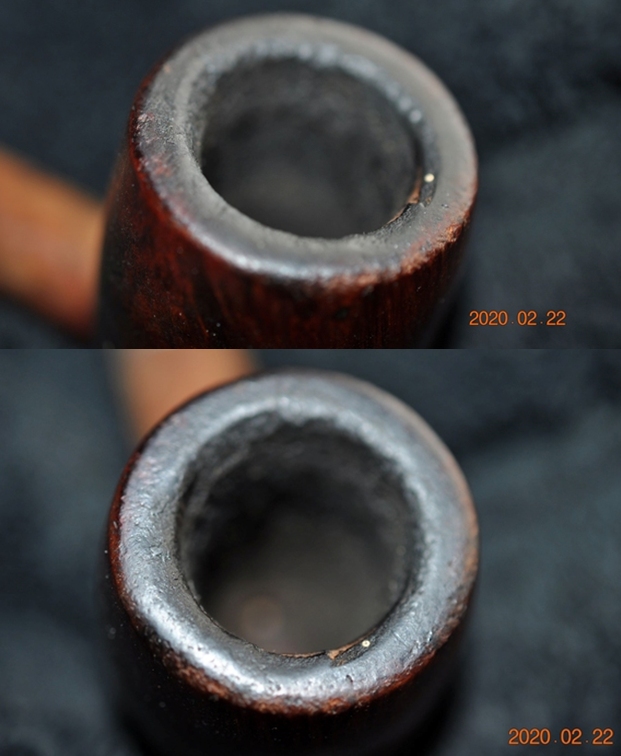
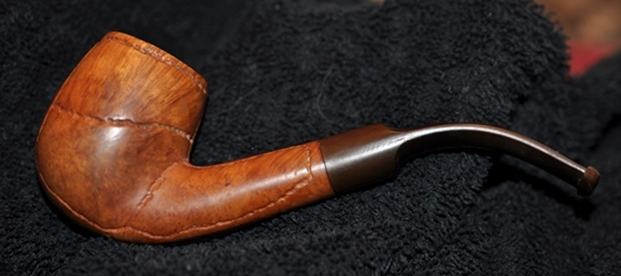
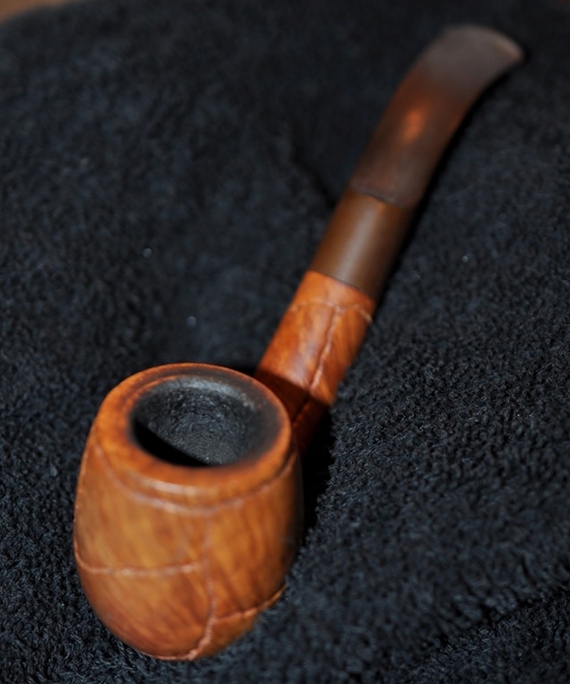
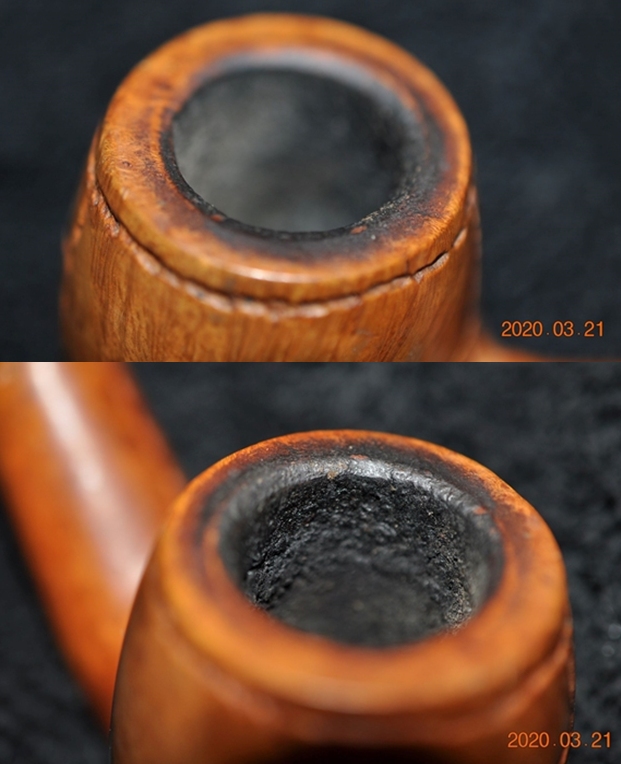
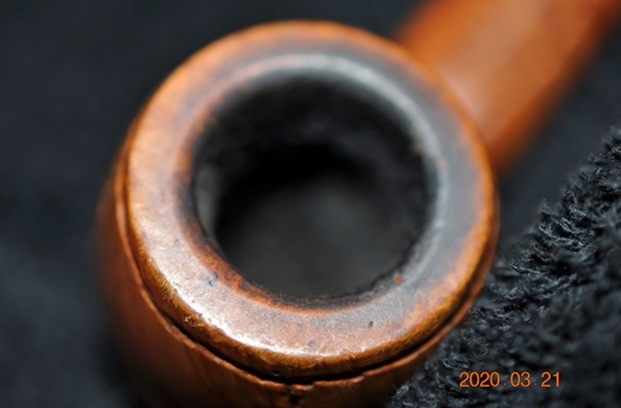
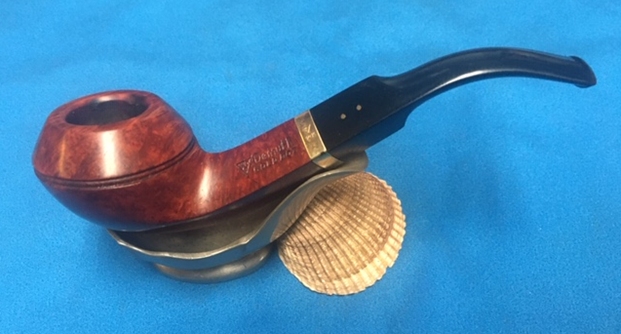
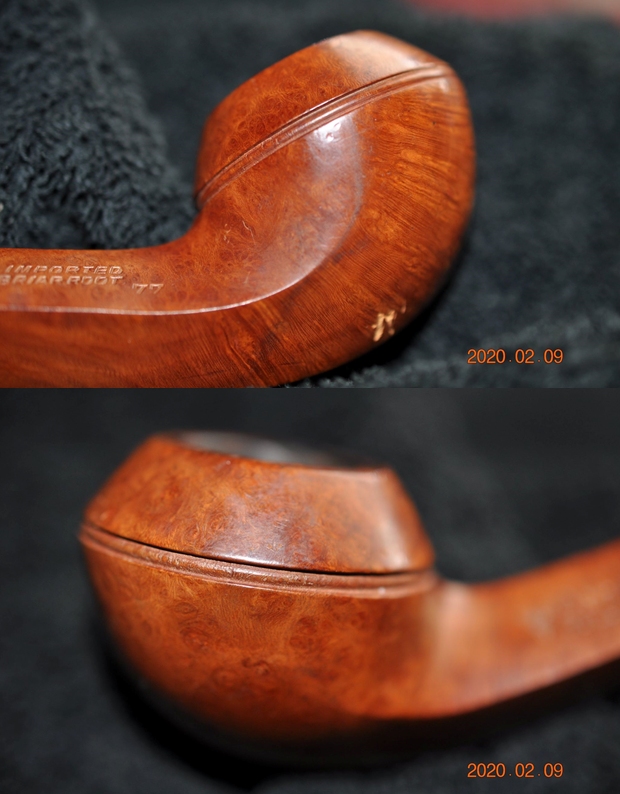
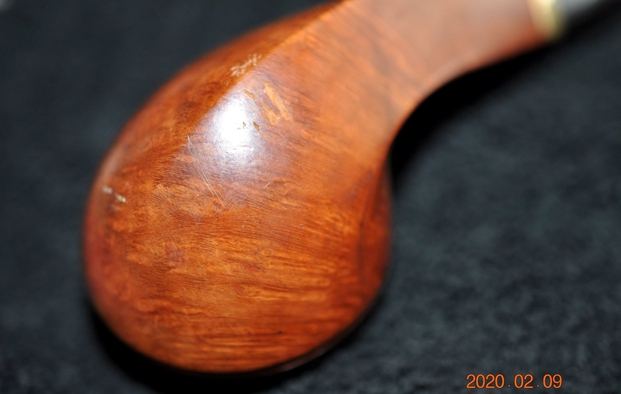
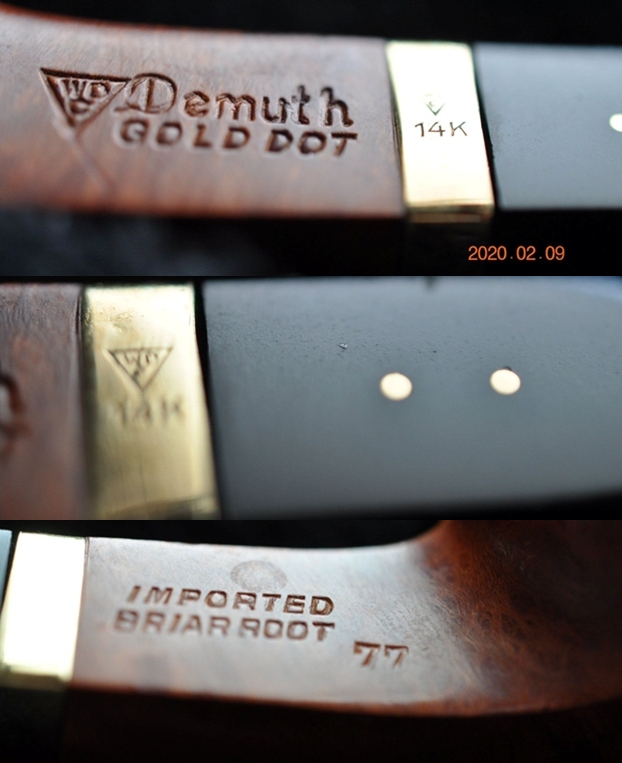
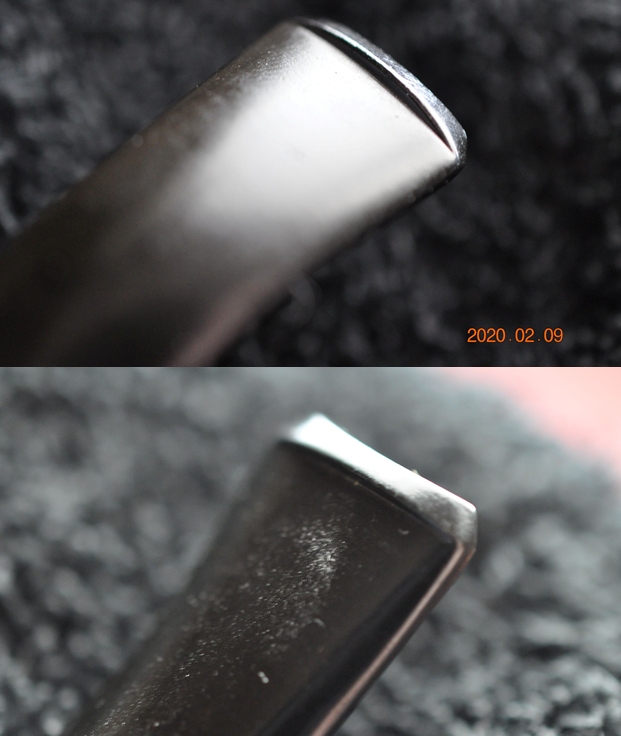
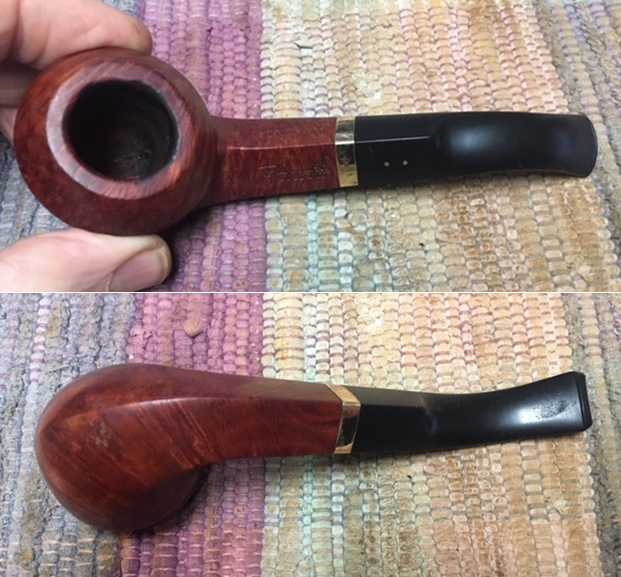
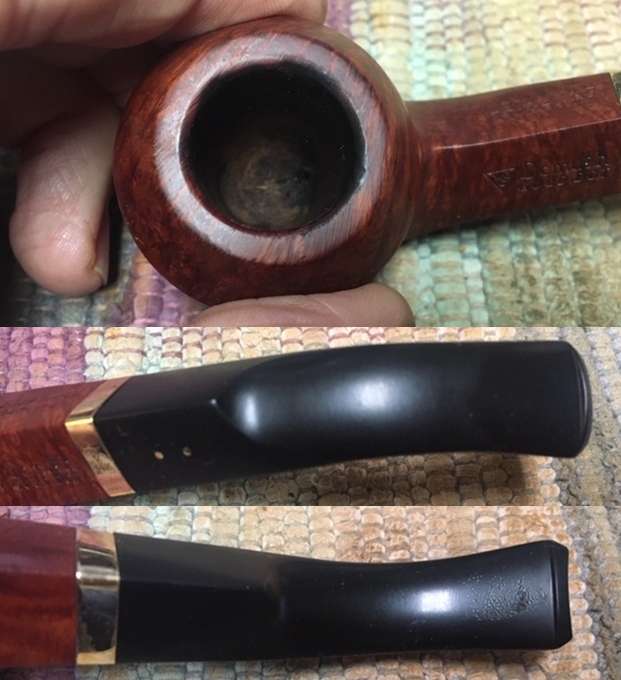
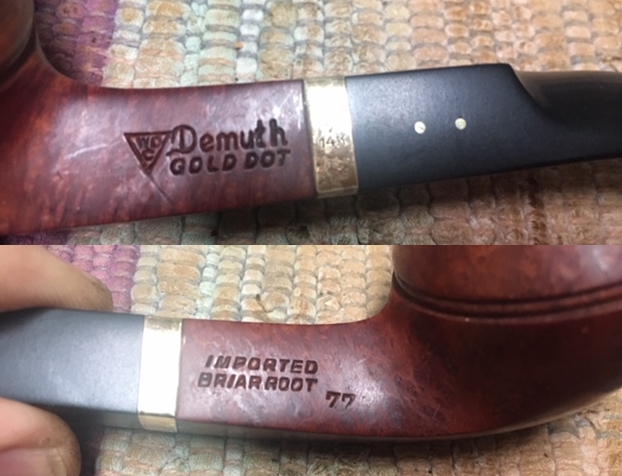
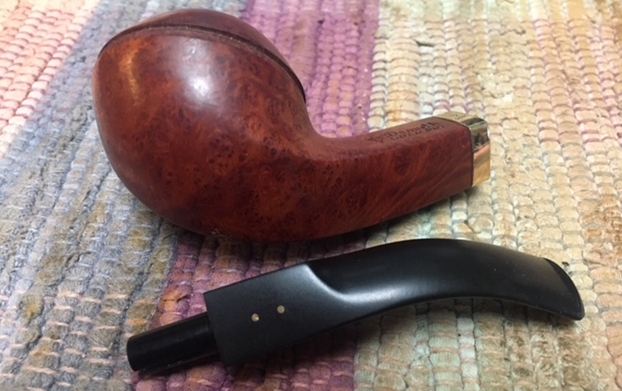
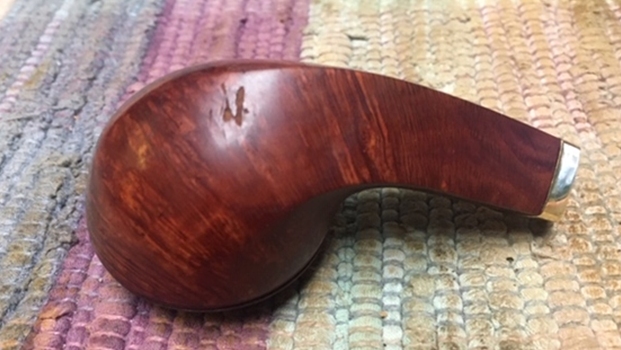
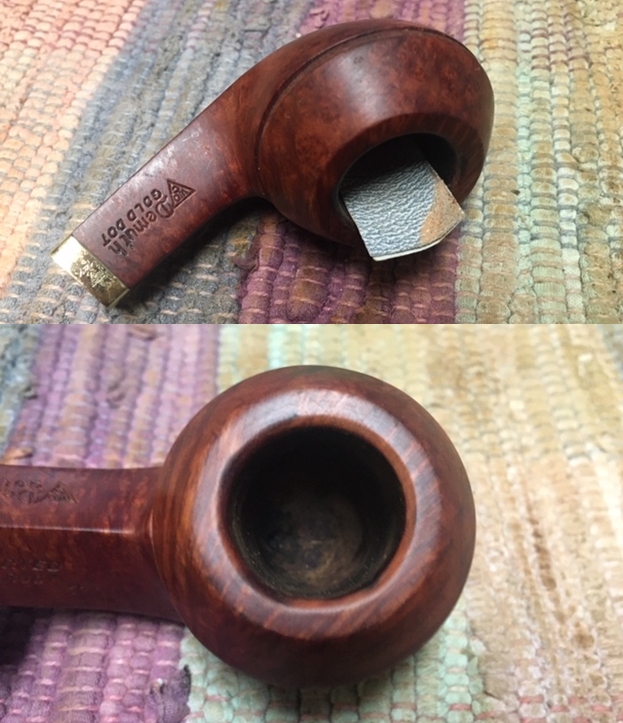
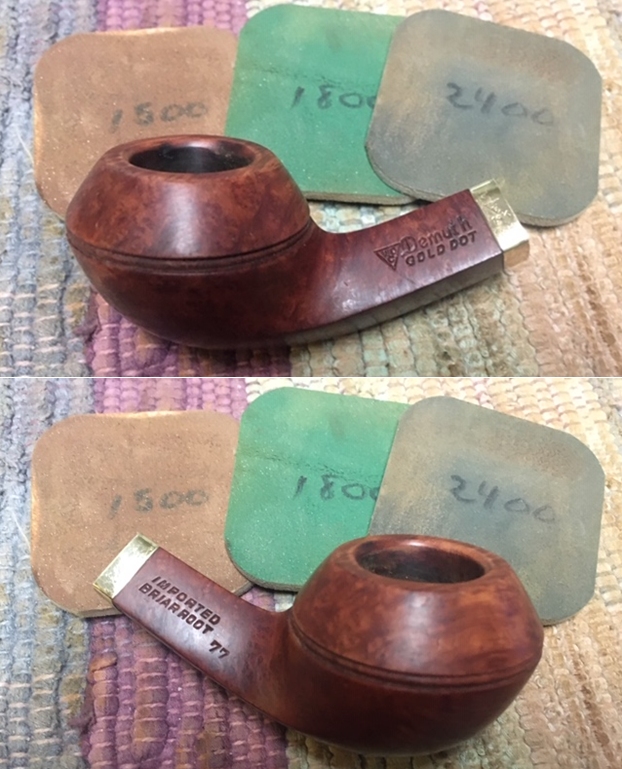
The next pipe on the table is a WDC Demuth Gold Dot Bulldog. It is a pretty pipe with a great shape. The condition is very dirty with a thick cake in the bowl and some darkening around the beveled inner edge of the rim. The previous pipeman took good care of this one. It is well smoked and other than dusty and grimy it is in decent shape. The pipe is stamped on the left side of the shank with the logo inverted equilateral triangle with letters “WDC” enclosed in it. This is followed by “Demuth” over “GOLD DOT” in block capital letters. On the right side of the shank is stamped “IMPORTED” over “BRIAR ROOT” followed by the shape number “77” towards the bowl and shank joint. A quarter inch wide gold band is on the shank end and is stamped on the left with the trademark WDC triangle over “14 K”, indicating the purity of the gold band. The ¾ bent saddle stem has two gold dots on the left side of the saddle stem. Jeff took photos of the rim top to show the condition of the bowl, rim top and edges. The cake is quite thick and there are a few spots of grime on the edges and around the cap on the bowl.He took photos around the sides and heel of the bowl to show the condition. You can see the grime in the finish and the damage on the heel. It is primarily on the right side but goes across the ridge. He included a close up photo of the damaged areas on the heel it has some deep gouges in the briar that look like it has been dropped.He took photos of the stamping on the sides of the shank and the band. You can see that it is clear and readable. You can see the 14K stamp on the band and the two dots on the stem side.The next two photos show the condition of the stem. You can see that it is lightly oxidized and has some tooth chatter on the underside. Otherwise the stem is in very good condition.I was going to do a bit of research on the brand and line but then I remembered that Paresh had worked on an identical pipe from his grandfather’s estate. I turned to the blog on rebornpipes to read what he had discovered (https://rebornpipes.com/2019/01/18/sprucing-up-the-first-of-my-wdc-a-demuth-gold-dot-77-bulldog/). I quote:
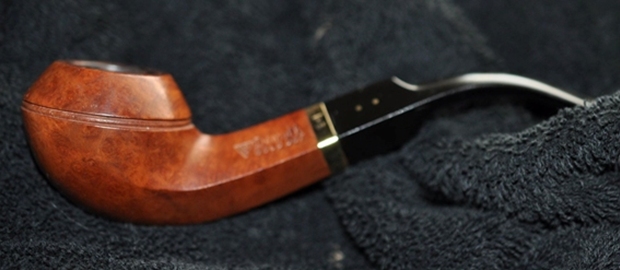
I searched pipedia.com for more information on this pipe and attempt at estimating the vintage of this pipe. Here is what I have found on pipedia.

William Demuth. (Wilhelm C. Demuth, 1835-1911), a native of Germany, entered the United States at the age of 16 as a penniless immigrant. After a series of odd jobs he found work as a clerk in the import business of a tobacco tradesman in New York City. In 1862 William established his own company. The William Demuth Company specialized in pipes, smoker’s requisites, cigar-store figures, canes and other carved objects.

The Demuth Company is probably well known for the famous trademark, WDC in an inverted equilateral triangle. William commissioned the figurative meerschaum Presidential series, 29 precision-carved likenesses of John Adams, the second president of the United States (1797-1801) to Herbert Hoover, the 30th president (1929-1933), and “Columbus Landing in America,” a 32-inch-long centennial meerschaum masterpiece that took two years to complete and was exhibited at the World’s Columbian Exposition in Chicago in 1893.

The Presidential series was the result of Demuth’s friendship with President James A. Garfield, a connoisseur of meerschaum pipes. Demuth presented two pipes to Garfield at his inauguration in 1881, one in his likeness, the other in the likeness of the President’s wife. Later, Demuth arranged for another figurative matching the others to be added to the collection as each new president acceded to the White House, terminating with President Hoover.

In early 1937, the City of New York notified S.M. Frank & Co. of their intent to take by eminent domain, part of the land on which the companies pipe factory was located. This was being done to widen two of the adjacent streets. As a result of this, Frank entered into negotiations to purchase the Wm. Demuth Co.’s pipe factory in the Richmond Hill section of Queens. It was agreed upon that Demuth would become a subsidiary of S.M. Frank and all pipe production of the two companies would be moved to DeMuth factory. New Corporate offices were located at 133 Fifth Avenue, NYC.

Demuth pipes continued to be made at the Richmond Hill plant till December 31. 1972. Then the Wm. Demuth Company met its official end as a subsidiary company by liquidation.

I came across an interesting advertisement on the same page on pipedia.com which shows the exact same pipe that I am now working on. It is the same pipe as the first pipe on the left. A close scrutiny of the picture confirms the following:

(a) The Gold Dot line of WDC pipes was offered sometime before 1941 as inferred from the bottom line of this flyer which encourages readers to “WRITE FOR NEW 1941 STYLE BOOKLET”, implying that this flyer was published prior to 1941!!

(b) The Gold Dot line of WDC pipes was at the time their top of the line product as it is the most expensive of all the pipes advertised in the flyer, retailing at $10!!Pipephil.eu too has the same pipe shown with shape # 77. Here is the link; http://www.pipephil.eu/logos/en/logo-w1.html

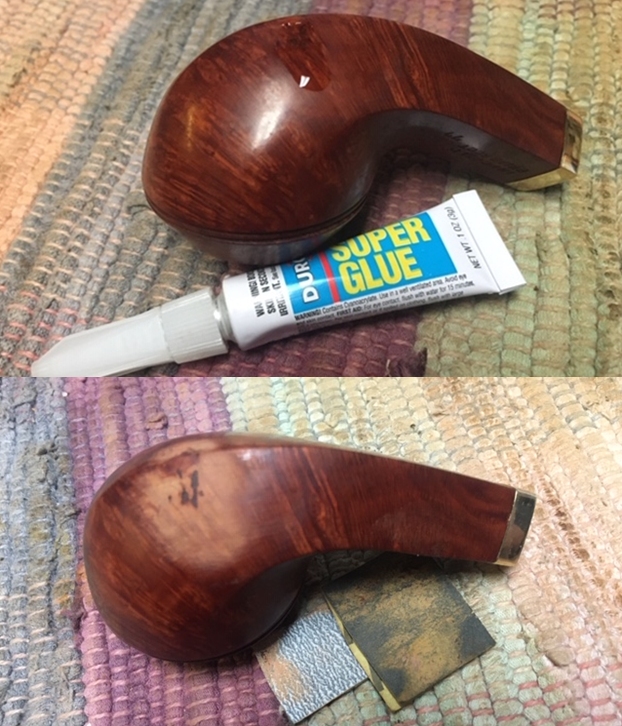
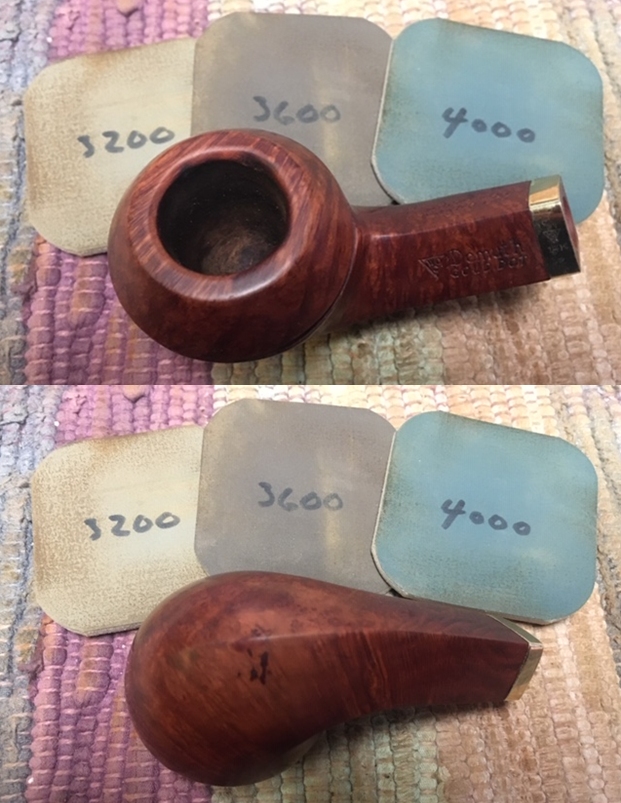
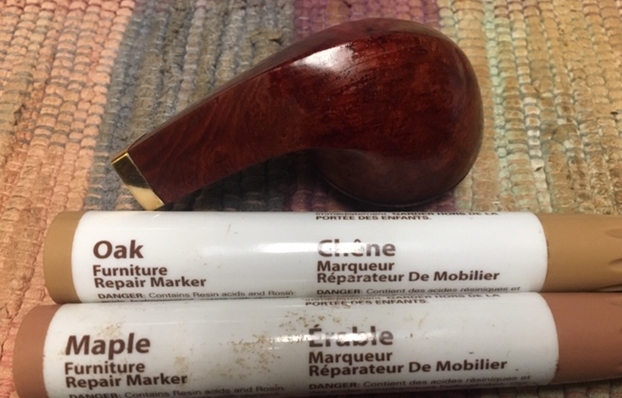
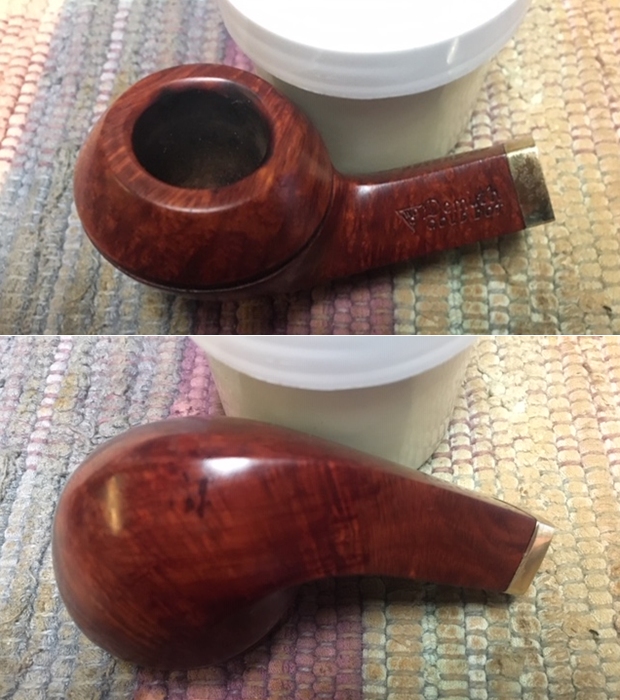
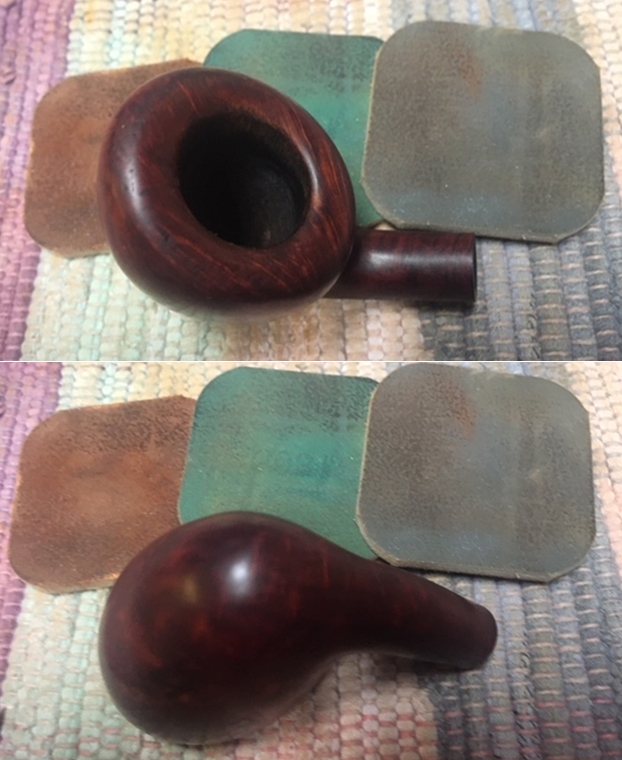
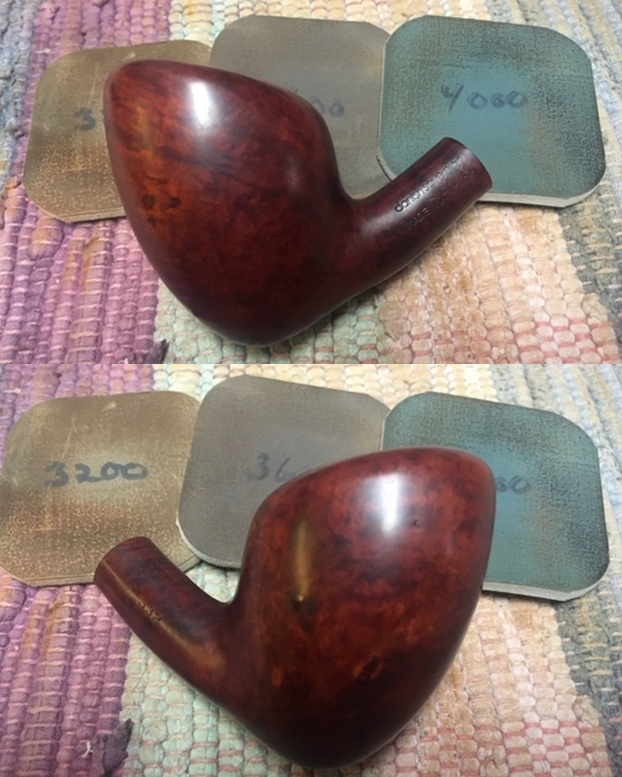
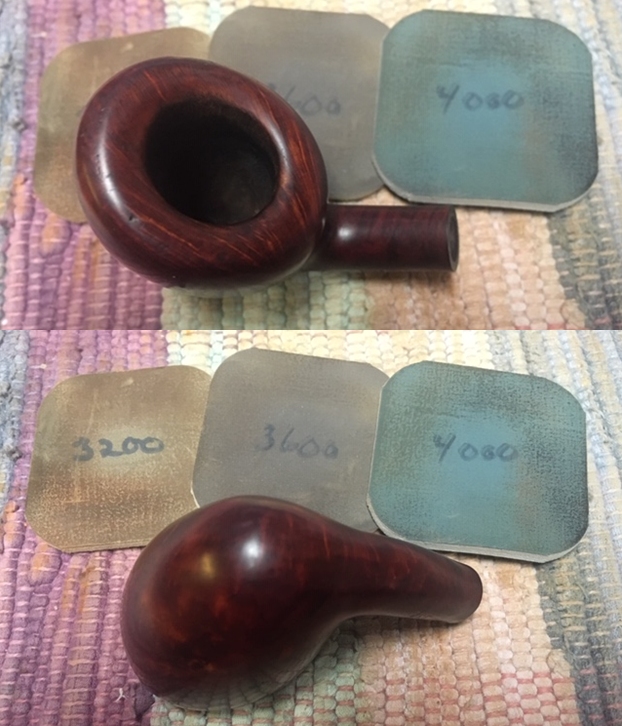
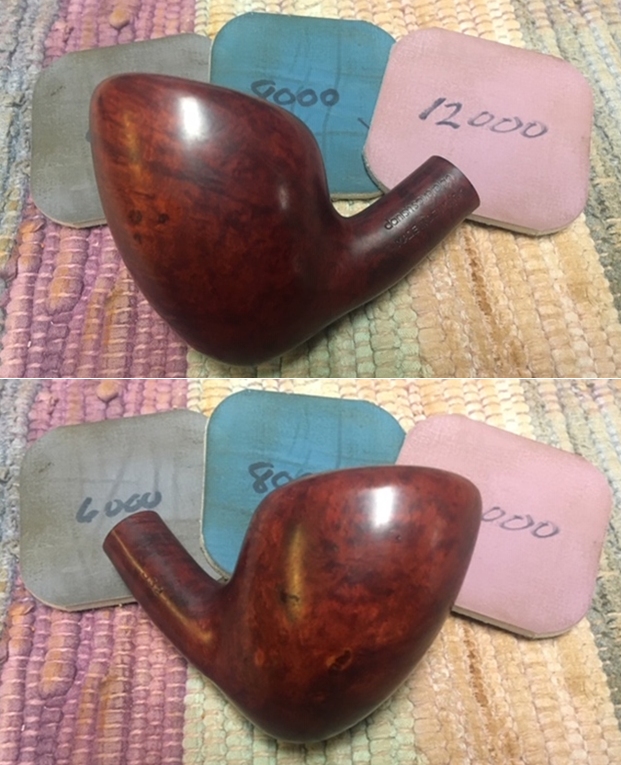
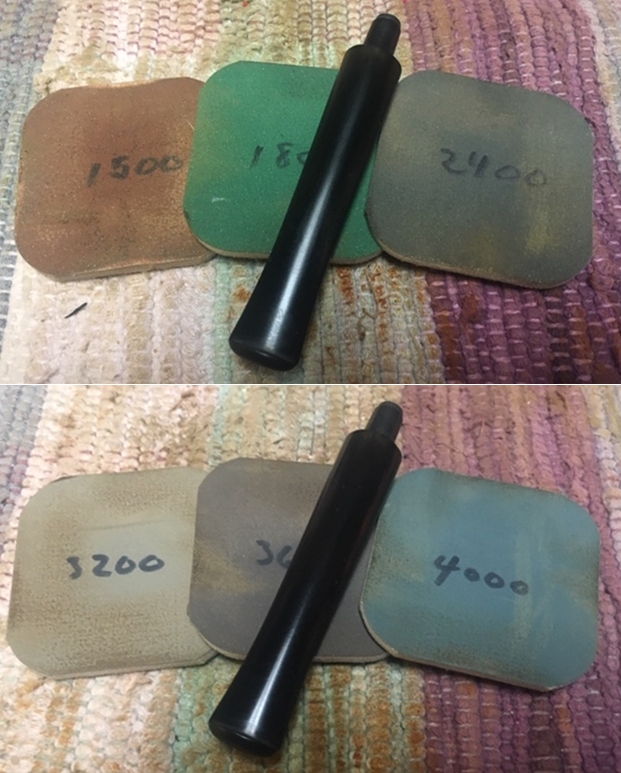
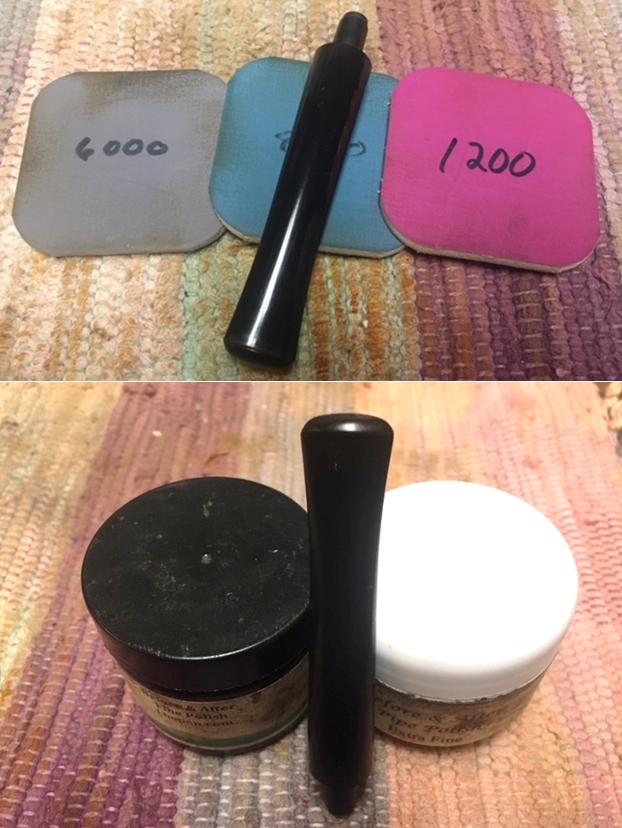
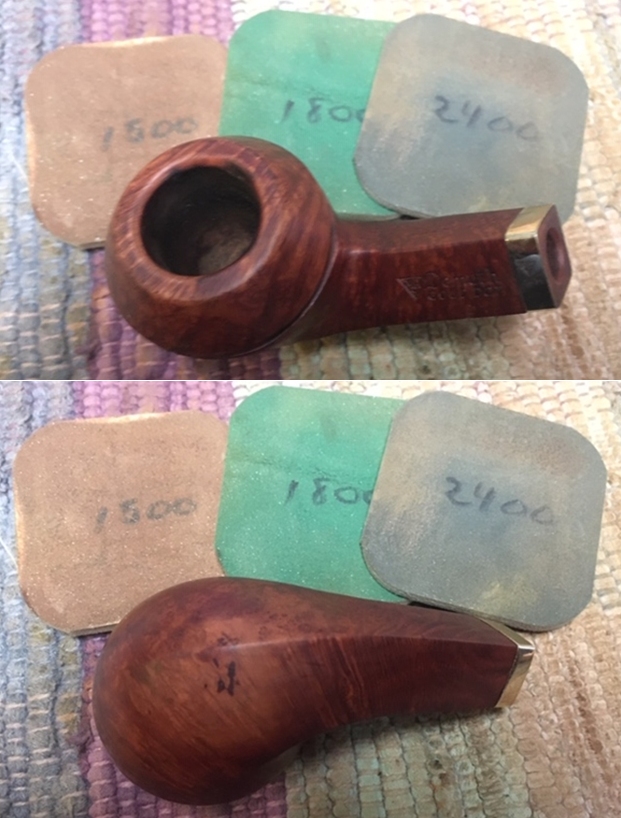
From Paresh’s research I confirmed that this WDC Gold Dot was WDC’s top tier of pipes and was made in 1940s. It is definitely a good looking pipe. Armed with that information and a clearer picture of the original pipe I turned to work on the pipe on my work table. Jeff had done a great job cleaning up the pipe as usual. He reamed the pipe with a PipNet reamer and cut back the cake back to the bare briar. He cleaned up the walls with a Savinelli Fitsall Pipe Knife. He scrubbed the interior of the bowl and shank with pipe cleaners, cotton swabs and alcohol to remove the tars and oils. He scrubbed the exterior of the pipe with Murphy’s Oil Soap and a tooth brush to remove the grime from the finish. He worked on the rim edge lava and darkening with the soap and tooth brush. He scrubbed the inside of the stem with alcohol and pipe cleaners. He scrubbed the exterior with Soft Scrub and then soaked it in Before & After Deoxidizer. He washed it off with warm water to remove the Deoxidizer. The pipe looked far better. I took photos of the pipe when I received it before I started working on it. I took photos of the bowl and rim top as well as the stem to show how clean they were. You can see the damage on the inner edge on the rear of the bowl. The stem looks clean of oxidation and the tooth marks and chatter are fairly light. I took photos of the stamping on the sides of the shank. They are clean and readable and read as noted above.    I took a photo of the pipe with the stem removed to show the overall look of stem, tenon and profile of the pipe. I noted that the tenon is metal and is made for a paper filter. I think it would fit a Medico paper filter.I decided to start my work on the pipe by addressing the damage to the heel of the bowl. I filled in the damaged areas with clear super glue. Once the repairs cured I sanded them smooth with 220 grit sandpaper and also began the polishing with 40o grit wet dry sandpaper. I turned to work on the rim top and the inner edge. I used a folded piece of 220 grit sandpaper to work on the inner edge to remove the darkening and bring it back into round. I cleaned up the beveled edge. It took a bit of work but I was able to remove the majority of it and the end product looked much better.I polished the bowl and rim with micromesh sanding pads – wet sanding with 1500-12000 grit pads. I worked over the rim top and edge of the bowl with the pads. I wiped the bowl down with a damp cloth after each pad to remove the sanding debris.       I used an Oak and a Maple stain pen to blend the repaired area on the heel of the bowl into the colour of the rest of the bowl. The match worked very well.I rubbed the briar down with Before & After Restoration Balm. I worked it into the briar with my fingertips. The product works to clean, enliven and preserve the briar. I let it sit for 10 minutes while I worked on the stem. After the time passed I buffed it with a cotton cloth to deepen the shine. The briar really comes alive with the balm.  I worked over the light oxidation on the stem and blended the tooth marks into the stem surface with 220 grit sandpaper. I started polishing the stem with 400 grit wet dry sandpaper. At this point it is starting to look much better.  I polished the vulcanite with micromesh sanding pads – 1500-12000 grit pads. I wiped it down with Obsidian Oil after each sanding pad. I used Before & After Pipe Polish – both Fine and Extra Fine to further polish the stem.   This beautiful WDC Gold Dot 77 Bulldog is a great looking pipe. The mix of brown stains highlights the mix of grain around the bowl sides, top and bottom. The finish on the pipe is in excellent condition and the contrasting stains work well with the polished black vulcanite saddle stem. I put the stem back on the bowl and carefully buffed the pipe with Blue Diamond on the buffing wheel using a light touch on the briar. I gave the bowl and stem multiple coats of carnauba wax on the buffing wheel and followed that by buffing the entire pipe with a clean buffing pad. I hand buffed the pipe with a microfiber cloth to deepen the shine. The finished WDC Gold Dot Bulldog is quite nice and feels great in the hand. Give the finished pipe a look in the photos below. The dimensions of the pipe are Length: 5 ½ inches, Height: 1 ¾ inches, Outside diameter of the bowl: 1 ¾ inches, Chamber diameter: ¾ of an inch. Thanks for walking through the restoration with me as I worked over another beautiful pipe. This pipe will be added to the American Pipe Makers section of the rebornpipes store soon. If you want to add it to your collection send me an email or a message! Thanks for your time.
Restoring another Jobey Dansk 3 Freehand


Blog by Steve Laug

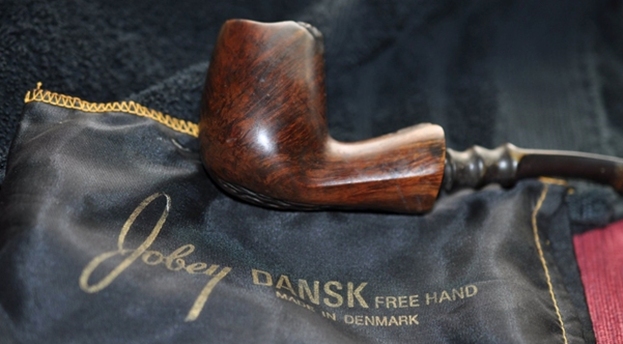
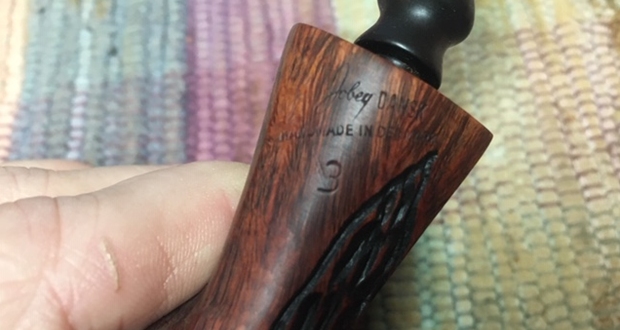
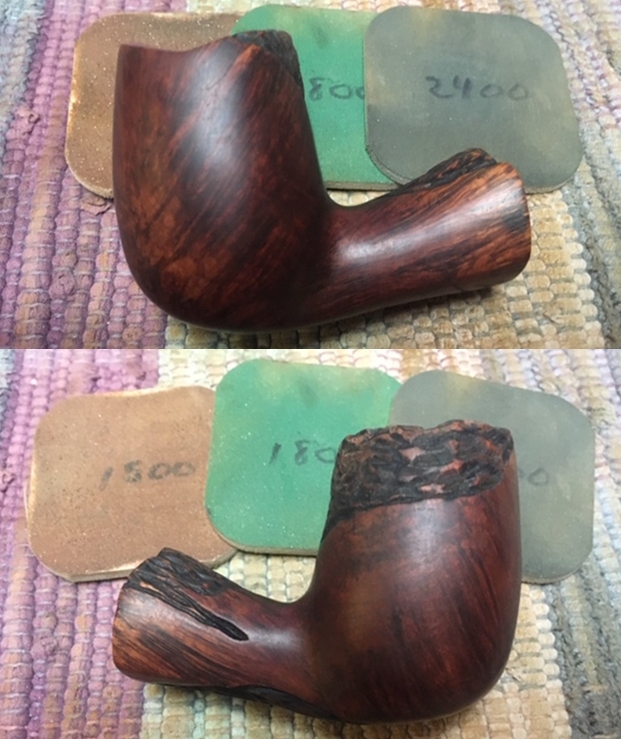
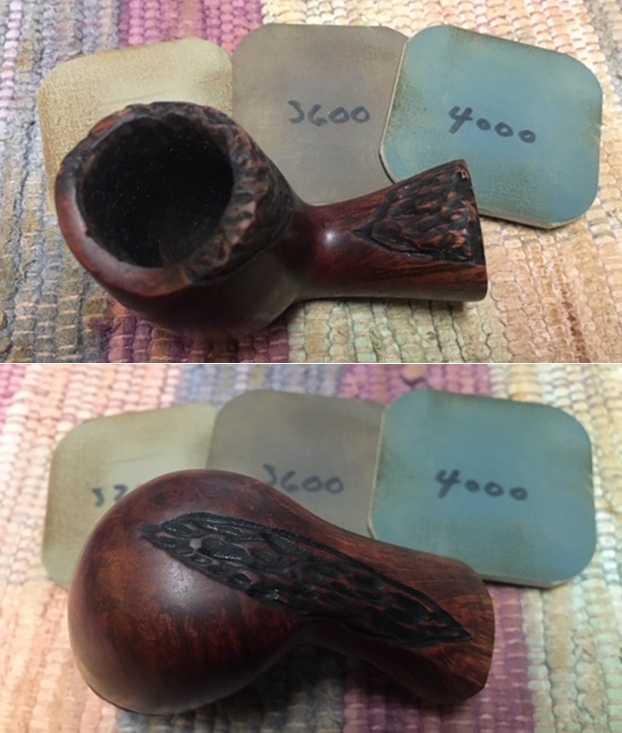
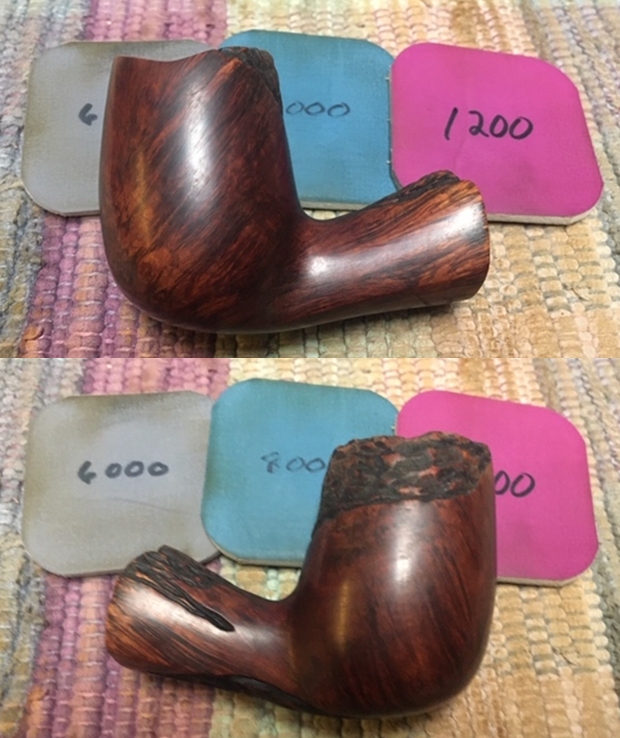
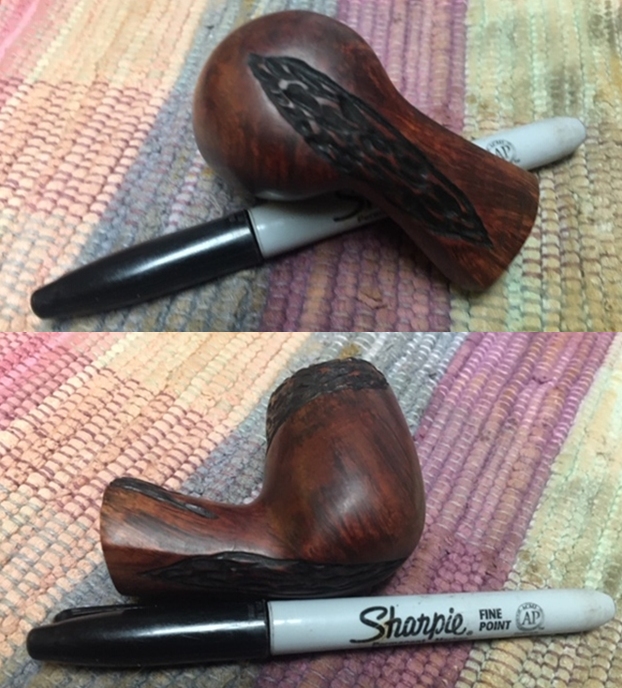
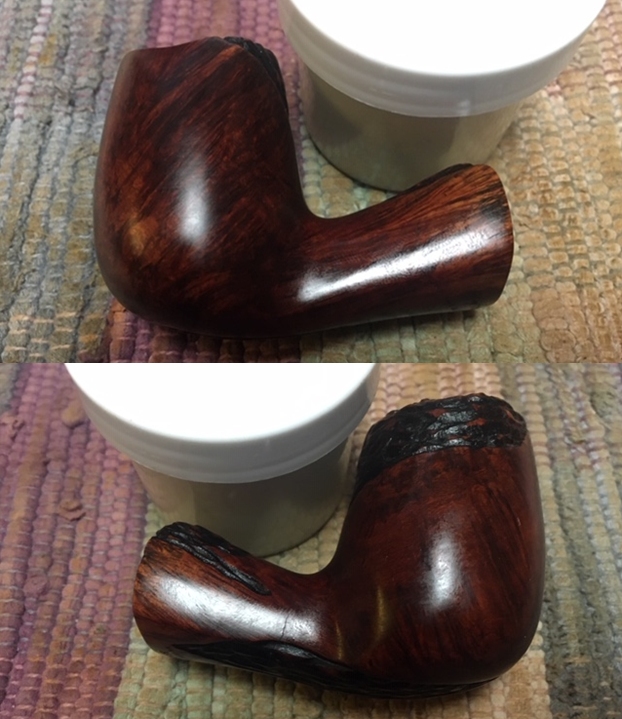
My brother Jeff picked up another Jobey Dansk 3 freehand pipe on one of his adventures pipe hunting. It had really nice grain and plateau on the top of the rim and on the end of the shank. It came with a Jobey Dansk Pipe Sock. There were rusticated spots on the right side and back of the bowl and top of the shank as well as the heel of the bowl. There was something familiar about the style of carving that reminded me of other Danish Freehand pipes I have worked on. I seemed to remember that Jobey Dansk pipes were carved by Karl Erik. The finish on this pipe was dirty with dust and lava on the plateau top. The bowl was lined with a thick cake. There was thick dust in the rustication around the bowl and shank as well as the plateau on the shank end. The smooth finish was also dirty and dull looking. The stem is a turned fancy turned vulcanite stem. The fit of the stem to the shank was snug. There were tooth marks on both sides of the stem at the button and on the smooth parts of the button on both sides. Otherwise it was a very clean stem. Jeff took of the pipe to show the overall condition of the bowl and stem. He took close up photos of the bowl and rim top from different angles to show the condition of the plateau finish. You can see the lava and build up on the rim top and the lava flowing over the inner edge of the bowl onto the plateau. It is hard to know if there is damage or if the lava protected it. The bowl has a thick cake that lining the walls and overflowing into lava.He took photos of the sides and heel of the bowl to show the lay of the grain and the rustication around the pipe. It is a nice piece of briar. The top of the bowl is craggy and rugged looking. Unique!Jeff took a photo of the stamping on the underside of the shank to capture it. It was clear and read Jobey Dansk at the top. Under that it read Handmade in Denmark followed by a large number 3.The next photos show the condition of the vulcanite stem. The first photo shows flow of the stem as a whole. You can see the tooth marks and damage both on the surface of both sides. I wanted to look at who had carved the Jobey Dansk line to confirm some suspicions I had about it. I had a feeling that the pipes were carved by a Danish carver known as Karl Erik. I looked up the Jobey listing on Pipedia (https://pipedia.org/wiki/Jobey) and found the following information. I quote a portion of the article that is pertinent as follows.

English – American – Danish – French… Information about the brand Jobey are only to be found in form of smithereens…

Probably established in England around 1920(?) the brand hiked into the USA later. In the course of time owner, distributor and manufacturer changed repeatedly. As far as known:

George Yale Pipes & Tobacco, New York (1942)

Norwalk Pipe Co., New York (1949)

Arlington Briar Pipes Corp., Brooklyn (when?)

Hollco International, New York (1969).

Weber Pipe Co., Jersey City, NJ (1970’s)

The Tinder Box, (1970’s – 80’s).

Throughout decades Jobey pipes were mainly sold in the USA, Canada and England but remained almost unknown in continental Europe. The bulk of Jobeys was predominantly made according to classical patterns and mainly in the lower to middle price range. The predominant judgment of the pipe smokers reads: “A well-made pipe for the price.” So there is hardly anything very special or exciting about Jobey pipes although a flyer from ca. 1970 assures: “The briar root Jobey insists upon for its peer of pipes is left untouched to grow, harden and sweeten for 100 years. […]Jobey uses only the heart of this century old briar and only one out of 500 bowls turned measures up to the rigid Jobey specifications.” 99.80% of cull… that makes the layman marveling!

From that information, my suspicions were confirmed. The pipe that I was working on was carved by Karl Erik Ottendahl. There were some similarities to the Karl Erik pipes that I have worked on in the past. The dating of the pipe line in the 70s fits well with the pipe I have in hand. I took some photos of the pipe before I started my part of the restoration.

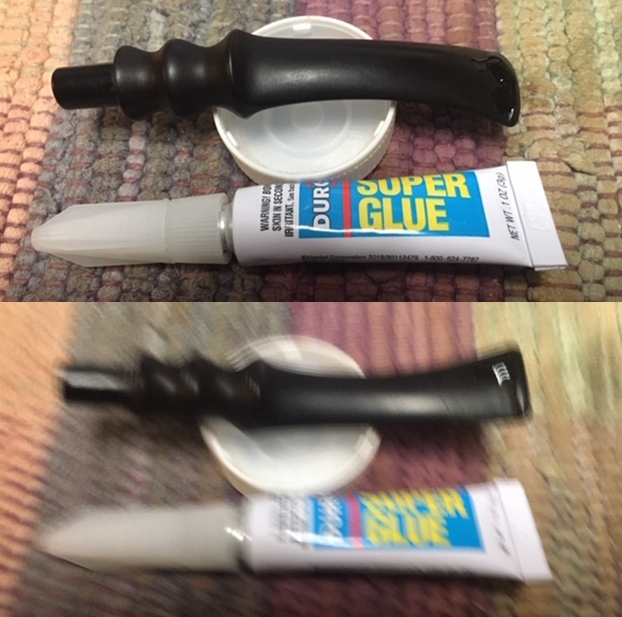
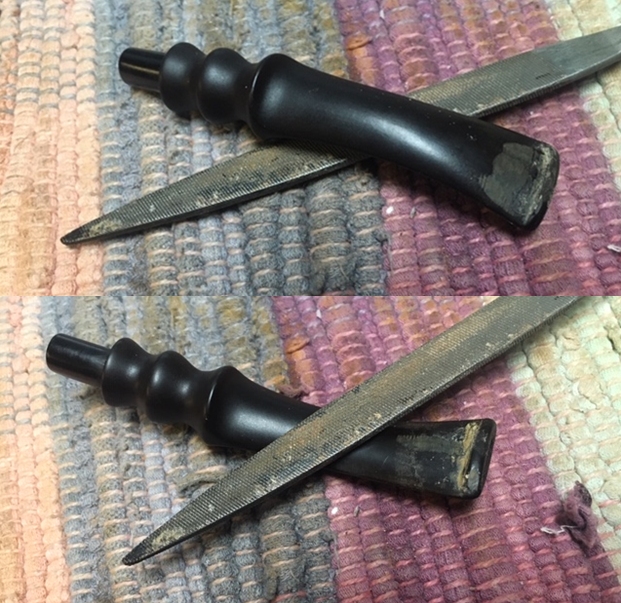
Now that I was reminded about the Karl Erik Ottendahl connection it was time to work on the pipe on my end. When I received it Jeff had once again done an amazing job cleaning the pipe. He reamed it with a PipNet pipe reamer and got rid of the cake. He cleaned up the reaming with a Savinelli Fitsall Pipe Knife so that we could see the walls of the bowl and assess for damage. He cleaned the internals of the shank and stem with alcohol, pipe cleaners and alcohol. He scrubbed the exterior with undiluted Murphy’s Oil Soap and a tooth brush. He rinsed the pipe under warm water. He dried it off with a cloth and then let it air dry. The stem was scrubbed with Soft Scrub and soaked in Before & After Deoxidizer. It came out looking very good. The finish on the bowl and the rim top cleaned up nicely. I took pictures of the pipe to show how it looked when I unpacked it. I took some photos of the rim top and stem to show the condition of them both when the pipe arrived. Overall it looked good. There is some darkening and damage to the inner edge of the bowl. The stem had some deep tooth marks ahead of the button and on the button surface on both sides.I took a photo of the stamping on the underside of the shank. It is readable and in great condition.I removed the stem from the shank and took a photo of the pipe to show the look of the pipe.I polished the bowl with micromesh sanding pads – wet sanding with 1500-12000 grit pads. I wiped the briar down after each pad with a damp cloth. The bowl is starting to look very good. With the polishing finished I used a Black stain pen to fill in the crevices of the plateau top and give some contrast to the smooth high spots. I like this look as it give the pipe a sense of dimensionality. I worked some Before & After Restoration Balm into the surface of the briar with my fingertips and into the plateau rim top and shank end with a horsehair shoe brush to clean, enliven and protect it. I let the balm sit for a little while and then buffed with a cotton cloth to raise the shine. The photos show the bowl at this point in the restoration process. I set the bowl aside and turned my attention to the stem. The stem was very clean so I filled in the tooth marks and built up the button with clear super glue and set it aside to cure. The second photo is blurry but still is clear enough to see the filled in area. Once it had cured I flattened out the repairs and sharpened the edge of the button with a needle file. I sanded out the tooth chatter and blended in the repairs with 220 grit sandpaper and started to polish it with a folded piece of 400 wet dry sandpaper. Once it was finished it began to shine.I polished the stem with micromesh sanding pads – wet sanding with 1500-12000 grit sanding pads. I wiped it down after each sanding pad with some Obsidian Oil. I finished polishing it with Before & After Pipe Stem Polish – both Fine and Extra Fine and buffed it off with a cotton cloth. This is a beautiful Jobey Dansk Hand Made by Karl Erik with a fancy, turned, black vulcanite stem. It has a great look and feel. The shape fits well in the hand with the curve of the bowl and shank junction a perfect fit for the thumb around the bowl when held. I polished stem and the bowl with Blue Diamond polish on the buffing wheel. I gave the plateau on the rim top and shank end multiple coats of Conservator’s Wax. I gave the bowl and the stem multiple coats of carnauba wax. I buffed the pipe with a clean buffing pad to raise the shine. I hand buffed it with a microfiber cloth to deepen the shine. The pipe polished up pretty nicely. The rich combination of browns and black in the smooth finishes and the plateau areas took on life with the buffing. The rich colour of the briar works well with the polished vulcanite stem. I like the grain and finished look of this Jobey Dansk pipe. Have a look at it with the photos below. The shape, finish and flow of the pipe and stem are very well done. The dimensions are Length: 5 ½ inches, Height: 2 inches, Outside diameter of the bowl: 1 ¼ wide, Chamber diameter: ¾ of an inch. This Danish Freehand is a real beauty. Thanks for walking through the restoration with me as I worked over another beautiful pipe. This one will be going on the rebornpipes store in the Danish Pipe Making Section shortly if you would like to add it to your collection. Thanks for your time.

What a Mess – Restoring a Stanwell Made Danish Sovereign 332


Blog by Steve Laug

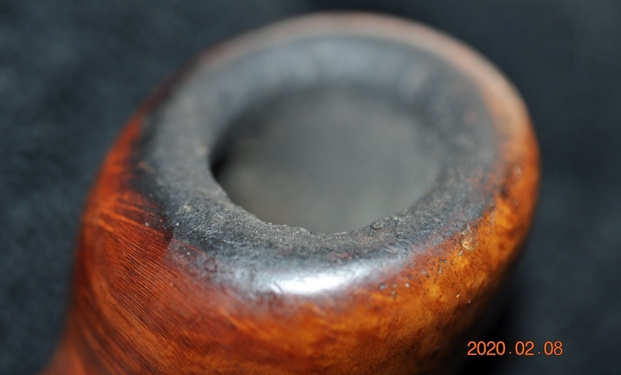
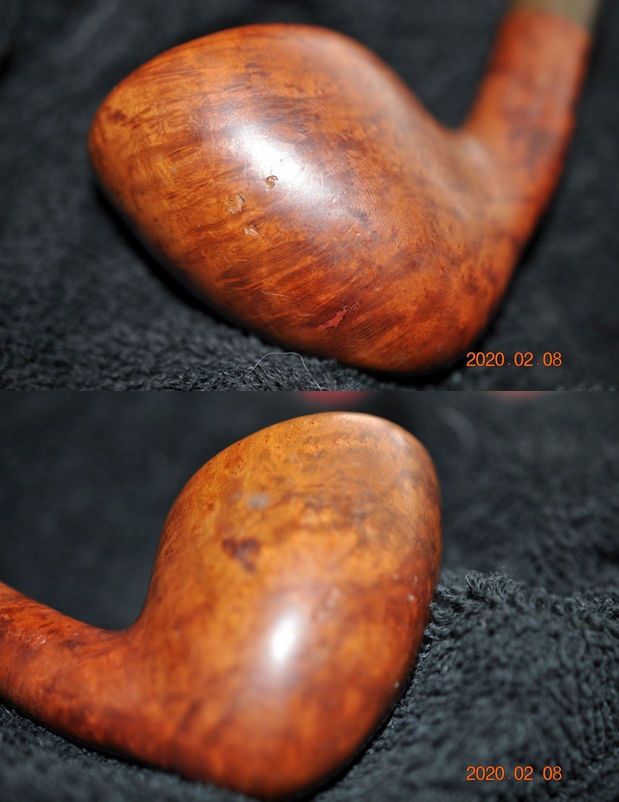
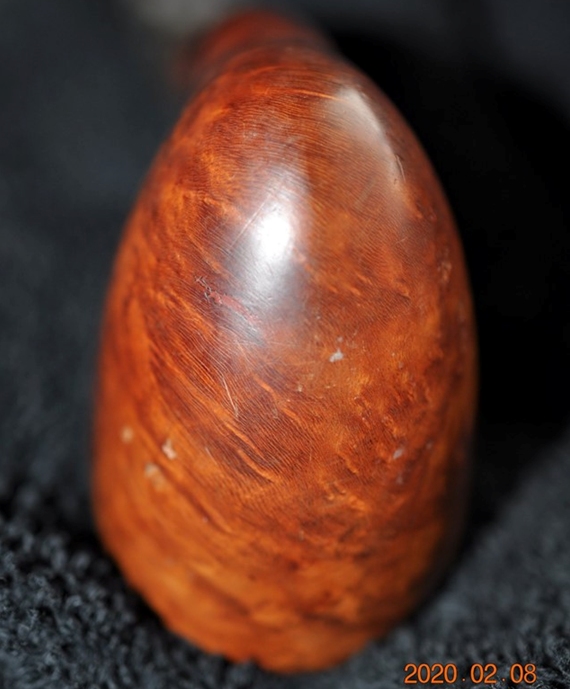
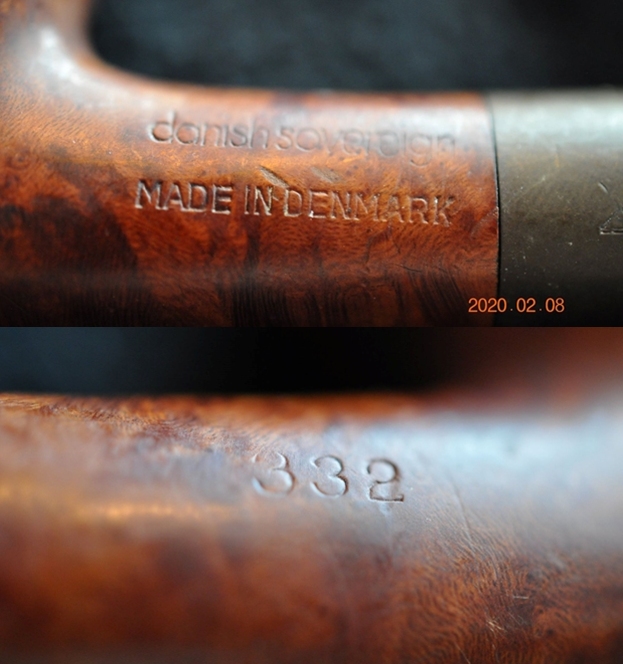
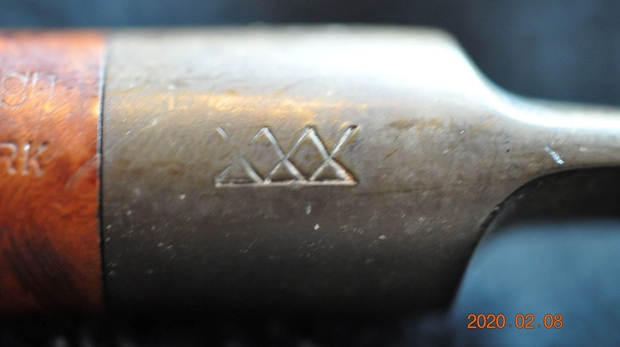
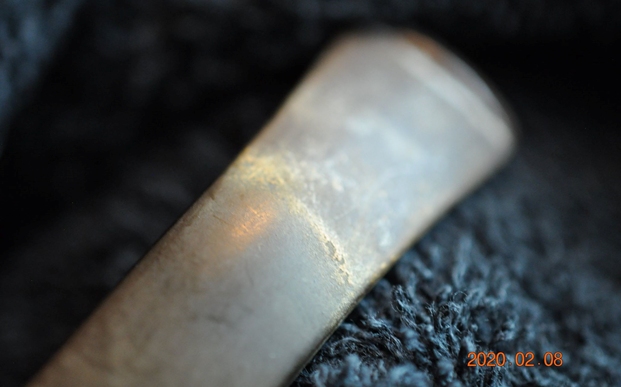
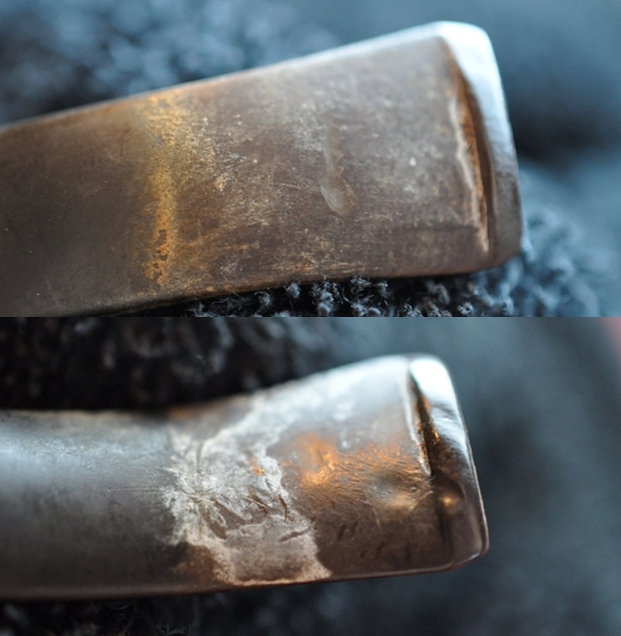
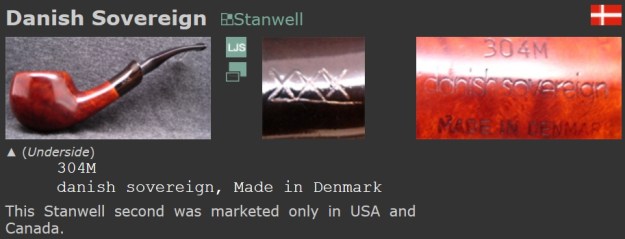
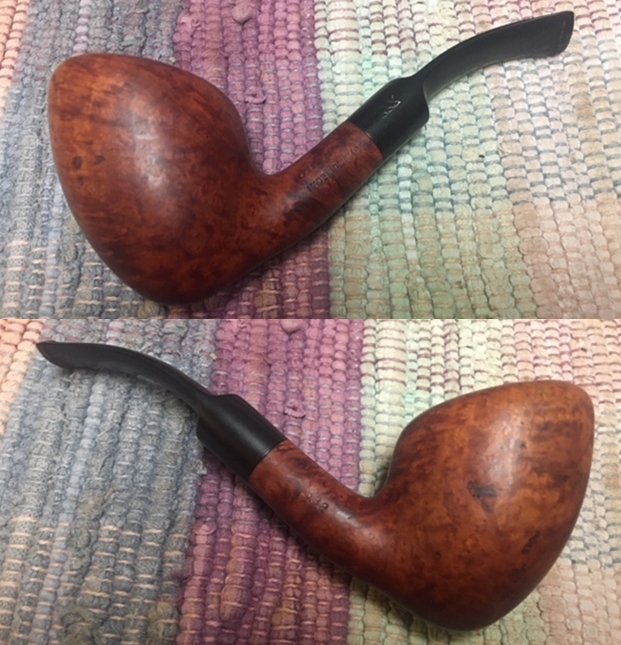
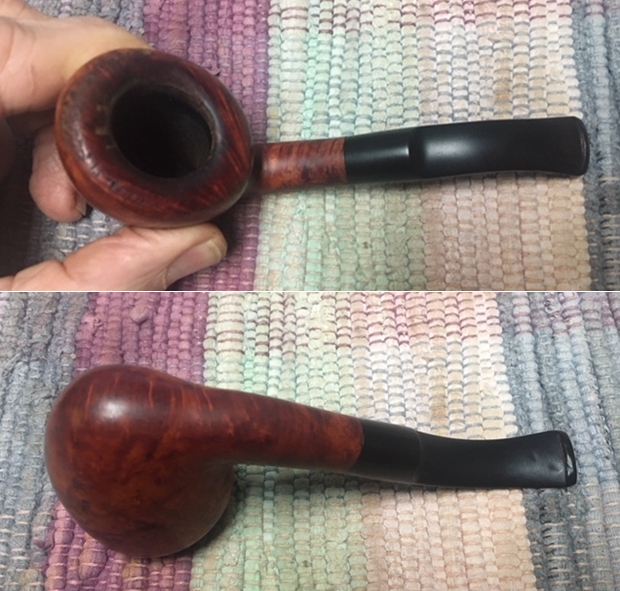
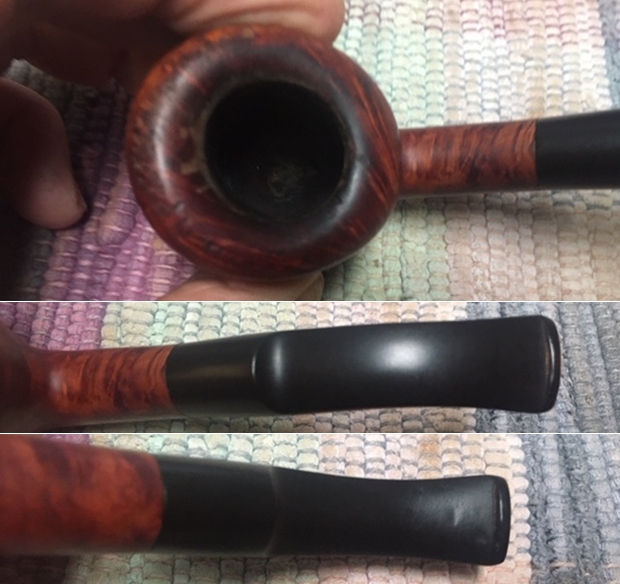
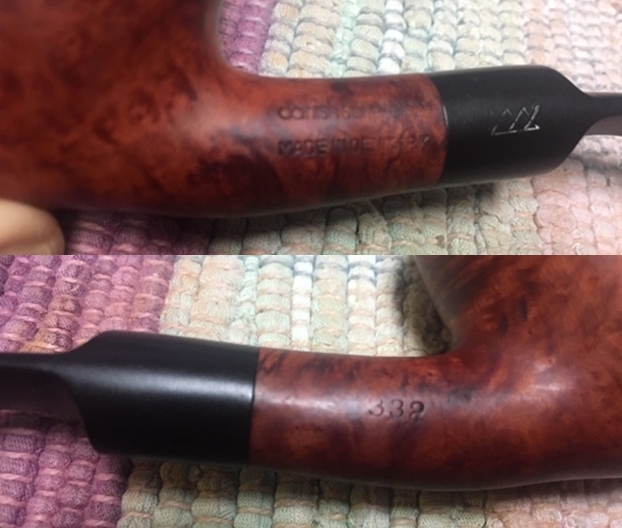
The next pipe on the table is from the next box of pipes I am working through. It is a Stanwell Made Danish Sovereign 332. The acorn/pear shaped bowl, round shank and saddle stem made up a nicely made pipe in a classic Danish shape. The smooth finish showed great grain through the ground in dirt and grime. There are also quite a few fills and deep gouges in the surface of the briar. It was stamped on the left side of the shank and read Danish Sovereign over Made in Denmark. On the right side it had the shape number 332 stamp. The finish was very dirty with a heavy coat of grime ground into the bowl and rim top as can be seen in the photos. The bowl had a thick cake with a lava overflow onto the rim top and the inner edge of the bowl. There were hash marks on the top front of the rim top and nicks around the edges. The stem was oxidized, calcified and there were tooth marks and chatter on both sides and on the top and bottom edges of the button. It was also stamped with three XXX marking it as a second. Jeff took photos of the pipe before he cleaned it up so you could see what we saw. Jeff took photos of the rim top to show lava build up around the rim, the edges and cake in the bowl.  This one was obviously someone’s favourite pipe and it was a mess. You can also see the hash marks on the front edge and top of the bowl. Jeff took some photos of the bowl sides and heel to show the absolutely dirty finish ground into the briar. It was a dirty pipe but I think it will be a beautiful one once we are finished. You can see all the damaged areas and fills on the bowl in these photos. The bowl is really quite dirty. The stamping on the sides of the shank is shown in the photos below. It is clear and read as noted above.  There was a triple XXX stamped on the left side of the stem. The stem was a good fit to the shank. It was oxidized, calcified and had debris stuck to the surface of the vulcanite. It also shows the tooth marks on the stem and on the button surface.  I turned first to Pipephil’s site (http://www.pipephil.eu/logos/en/logo-d2.html) to see what information I could find there. On the site was a pipe similarly stamped to the one that I am working on. It is clearly identified as a Stanwell second that was marketed only in the USA and Canada.I turned to Pipedia to read more about the brand (https://pipedia.org/wiki/Danish_Sovereign). There was nothing definitive there only a statement that it may be a Stanwell second line.

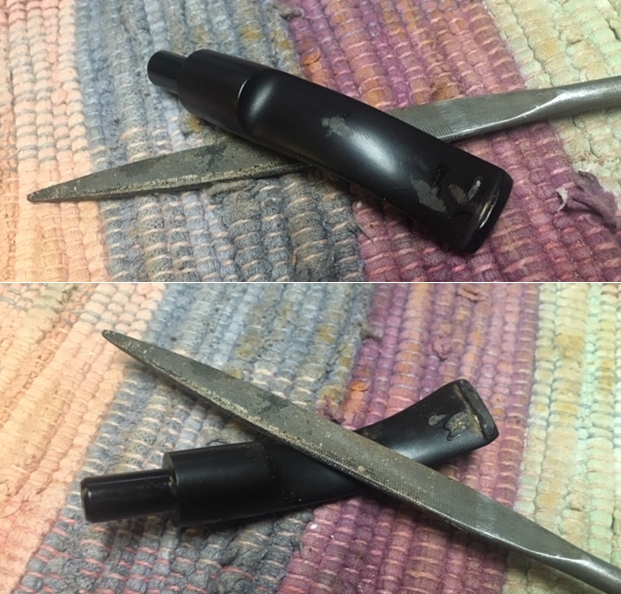
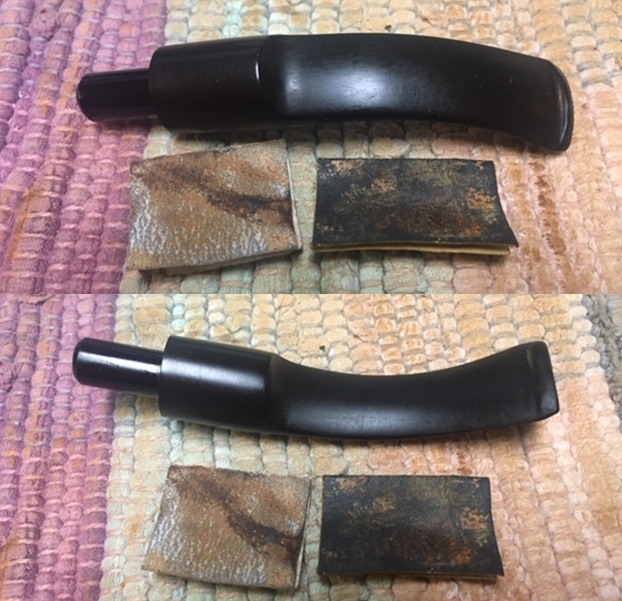
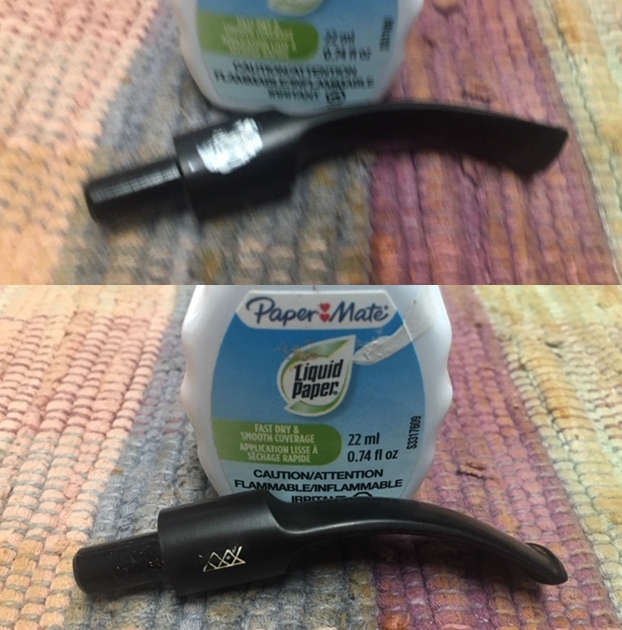
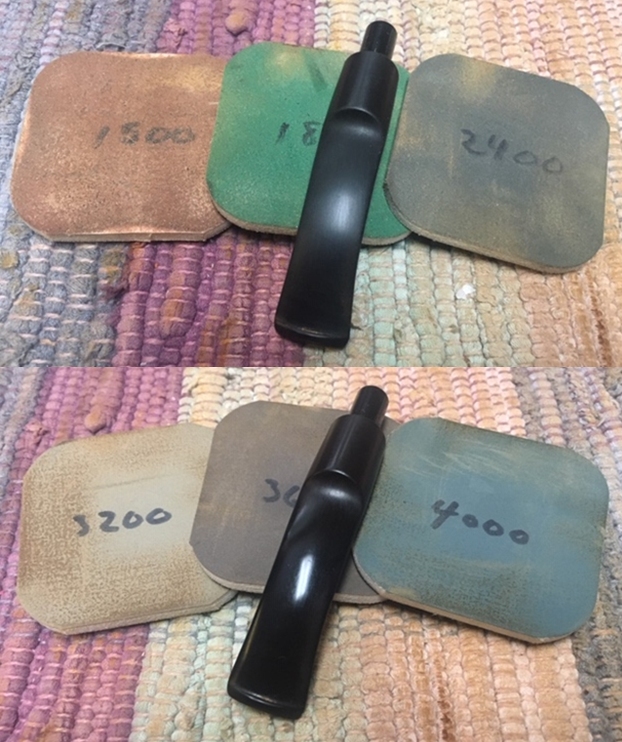
It looks I am dealing with a pipe made especially for the American and Canadian market by Stanwell. Now it was my turn to work on the pipe now. I was really looking forward to what the pipe would look like once Jeff had worked his magic. What would the rim top look like? What would the dirty bowl look like? I had no idea. When I took it out of the box I was struck great job cleaning up the pipe Jeff had done. It was impressive! He had reamed the pipe with a Pipnet piper reamer and taken the cake back to bare briar. He cleaned up the remaining cake with a Savinelli Fitsall Pipe Knife. He scrubbed the interior of the bowl and shank with pipe cleaners, cotton swabs and alcohol to remove the tars and oils. He scrubbed the exterior of the pipe with Murphy’s Oil Soap and a tooth brush to remove the grime from the finish. He worked on the rim top lava and darkening with the soap and tooth brush. He scrubbed the inside of the stem with alcohol and pipe cleaners. He scrubbed the exterior with Soft Scrub and then soaked it in Before & After Deoxidizer. He washed the stem off with warm water to remove the Deoxidizer. The pipe looked far better. I took photos of the pipe when I received it before I started working on it. I took photos of the bowl and rim top as well as the stem to show how clean they were. You can see the hash marks on the front of the rim top and the darkening and damage to the inner edge of the rim. There are nicks on the top all the way around. The stem is clean and the tooth damage on the button top and bottom edges.   I took a photo of the stamping on the underside of the shank. The stamping is readable as noted above.    I decided to start my work on the pipe by addressing the damage to the rim top and edges. I used a folded piece of 220 grit sandpaper to smooth out the inner edge and sand the darkening on the top and smoothing out the nicks and scratches and minimizing the hash marks on the front top and outer edges.    I filled in the deep gouges and nicks in the briar on both sides of the bowl with clear super glue and when the glue cured I sanded them smooth to blend them into the surrounding briar.    I stained the briar with a tan stain. I applied it to the stummel with a dauber and then flamed it with a Bic lighter. I repeated the process as often as needed until I was happy with the coverage on the briar. I set it aside to cure for several hours.    I wiped the bowl down with alcohol on a paper towel to make the stain a bit more transparent. I buffed the bowl on the buffer with Red Tripoli to polish it and get a sense of what the bowl looked like at this point in the process.    I polished the briar with micromesh – wet sanding with 1500-12000 grit micromesh sanding pads. I wiped the bowl down after each sanding pad with a damp cloth.  I rubbed the briar down with Before & After Restoration Balm. I worked it into the briar with my fingertips. The product works to clean, enliven and preserve the briar. I let it sit for 10 minutes while I worked on the stem. After the time passed I buffed it with a cotton cloth to deepen the shine. The briar really comes alive with the balm.      I set the bowl aside and turned my attention to the stem. I filled in the indentations on the button edge and built it up with clear super glue. Once the repair cured I used a needle file to reshape the button edges and also flatten the repaired areas.    I sanded the stem with 220 grit sandpaper to finish the shaping and to remove the remaining oxidation. I started polishing the stem with 400 grit wet dry sandpaper. I wiped the stem down with Obsidian Oil before further polishing it.   I used some Paper Mate Liquid Paper to touch up the white that remained in the XXX stamp on the left side of the stem.   I polished the vulcanite with micromesh sanding pads – 1500-12000 grit pads. I wiped it down with Obsidian Oil after each sanding pad. I used Before & After Pipe Polish – both Fine and Extra Fine to further polish the stem.    This Danish Sovereign 332, made by Stanwell with a saddle vulcanite stem turned out very nice. The mix of brown stains highlights the grain around the bowl sides and bottom. The rim top and edges look very good. The finish on the pipe is in excellent condition. I put the stem back on the bowl and carefully buffed the pipe with Blue Diamond on the buffing wheel. I gave the bowl and stem multiple coats of carnauba wax on the buffing wheel and followed that by buffing the entire pipe with a clean buffing pad. I hand buffed the pipe with a microfiber cloth to deepen the shine. The finished Bent Acorn is very nice and feels great in the hand. Give the finished pipe a look in the photos below. It is a nice pipe whose dimensions are Length: 5 inches, Height: 2 ¼ inches, Outside diameter of the bowl: 1 ½ inches, Chamber diameter: ¾ of an inch. Thanks for walking through the restoration with me as I worked over another beautiful pipe. This Stanwell made Danish Sovereign 332 will be going on the rebornpipes store shortly. If you are interesting in adding it to your collection let me know! Thanks for your time.

New Life for a Savinelli Extra 412KS Dublin


Blog by Steve Laug

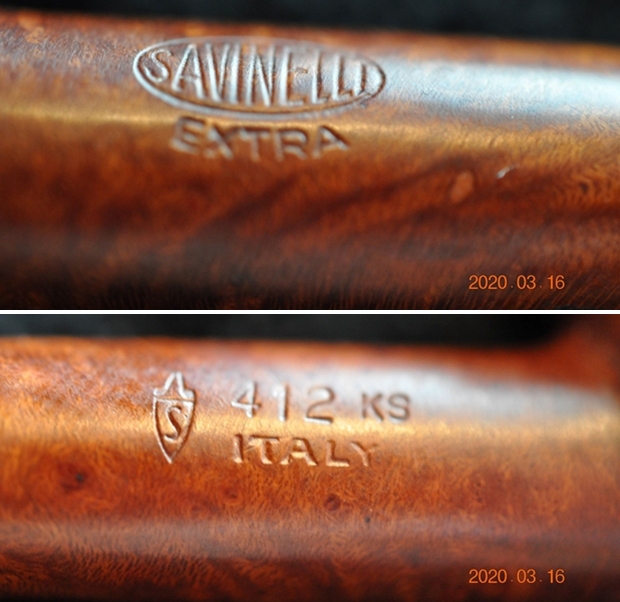
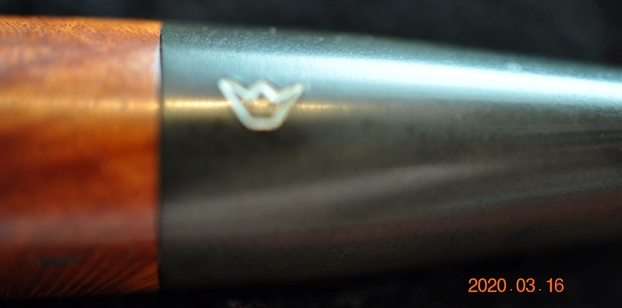
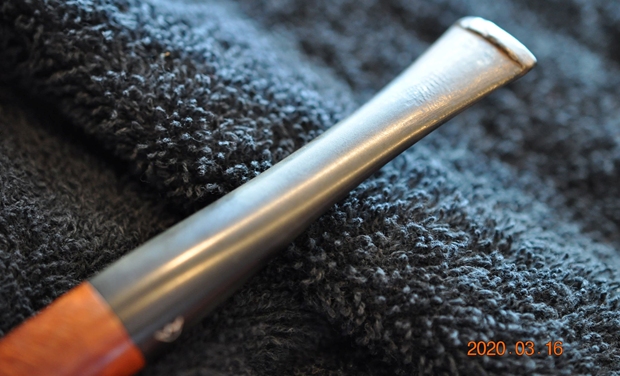
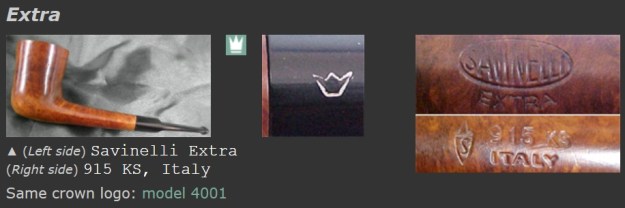
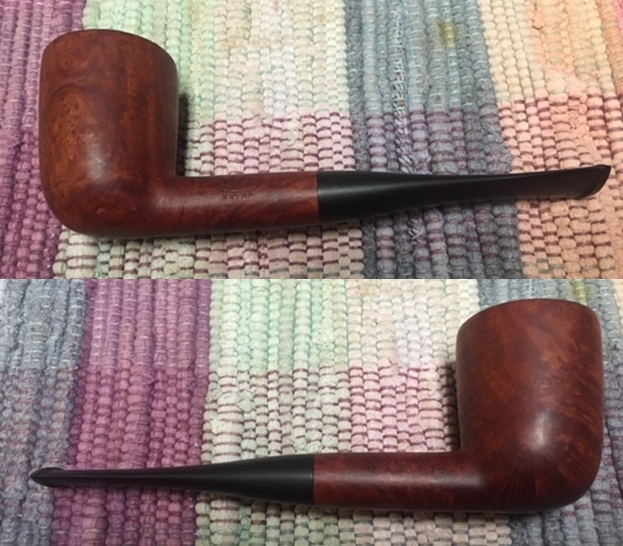
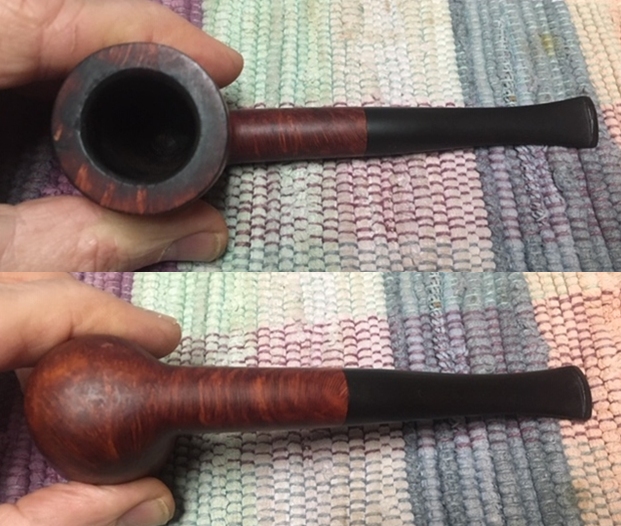
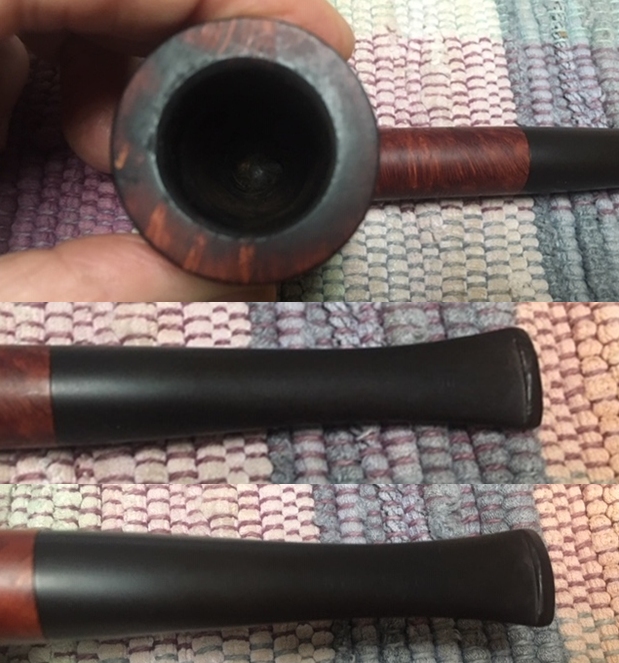
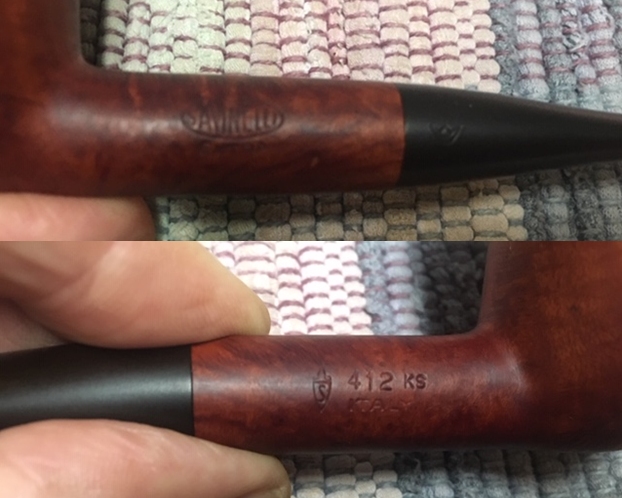
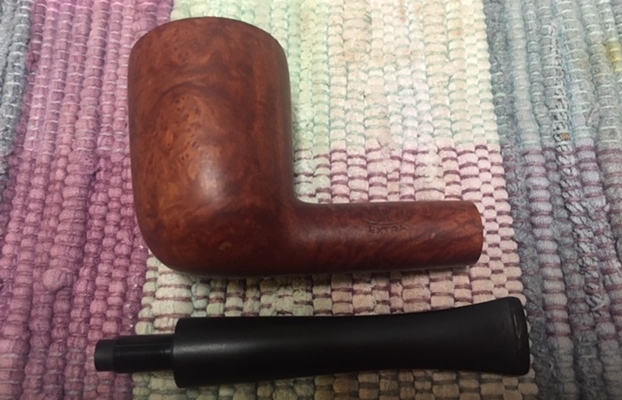
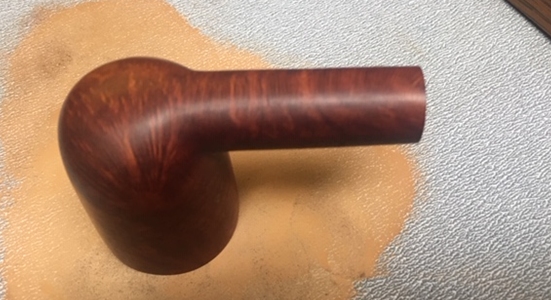
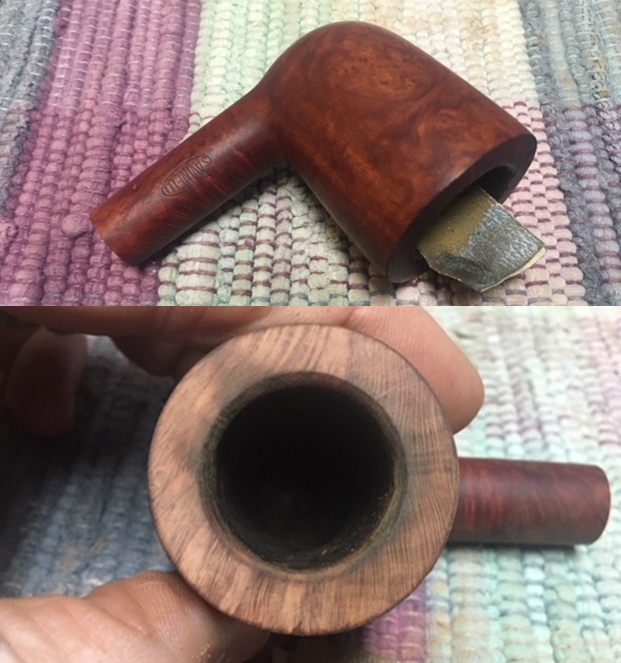
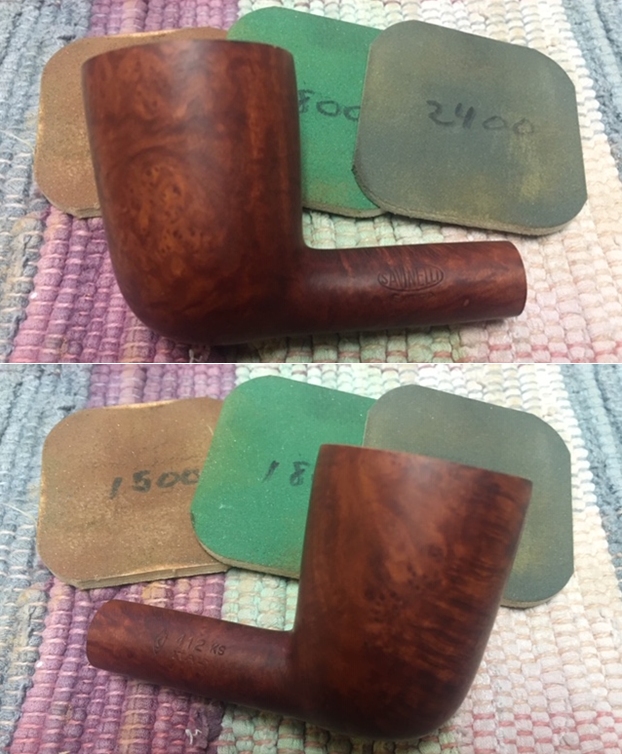
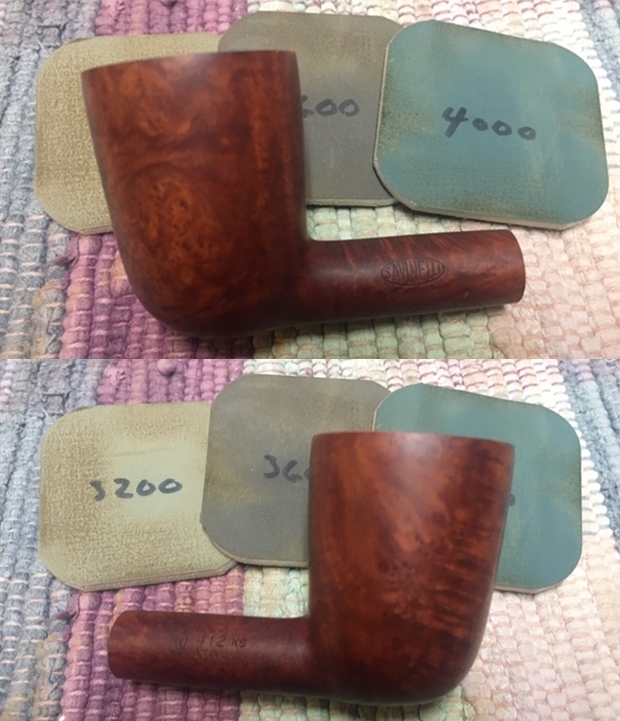
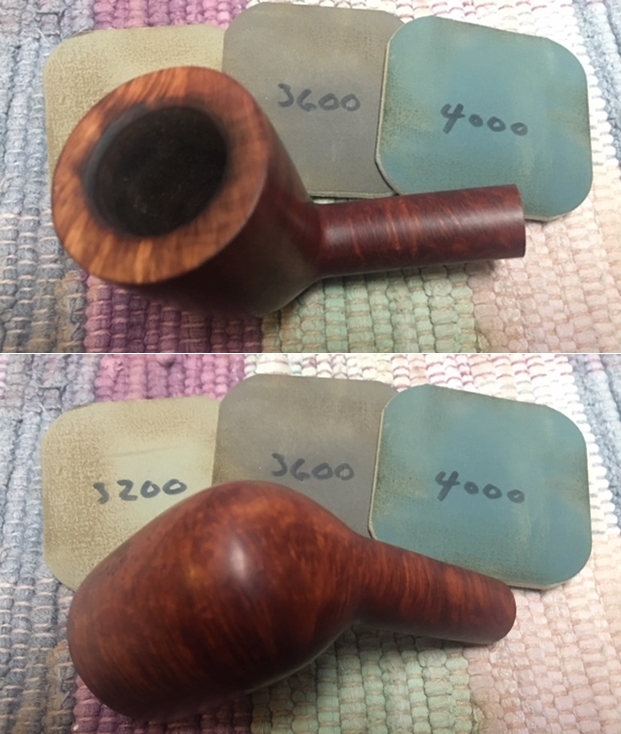
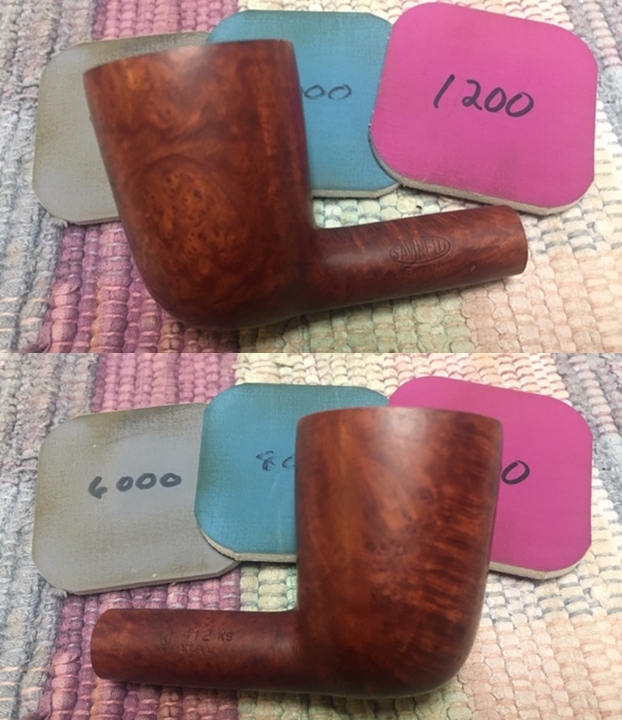
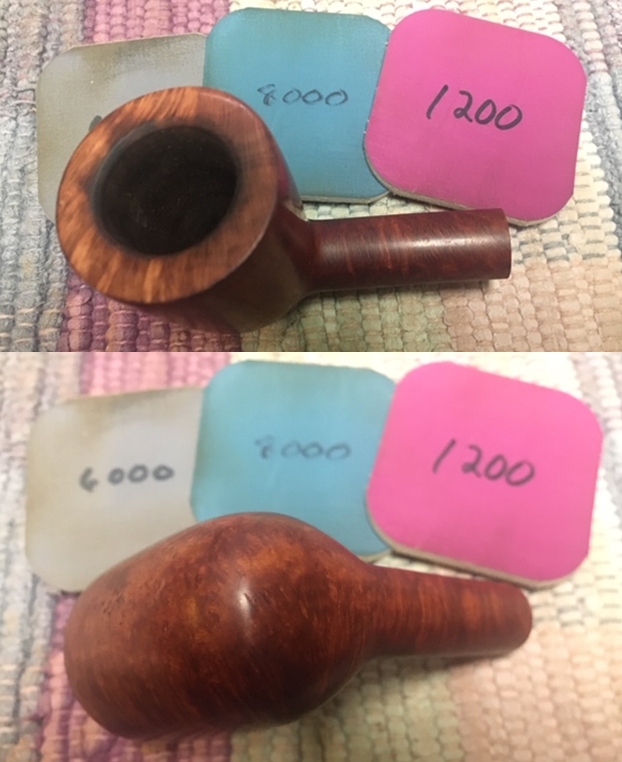
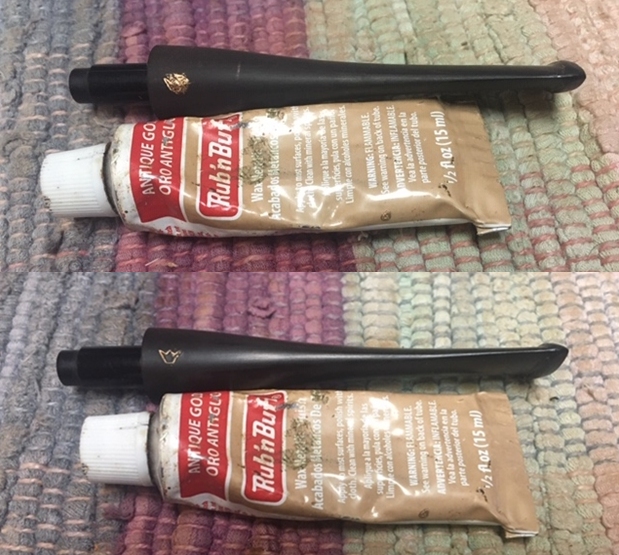
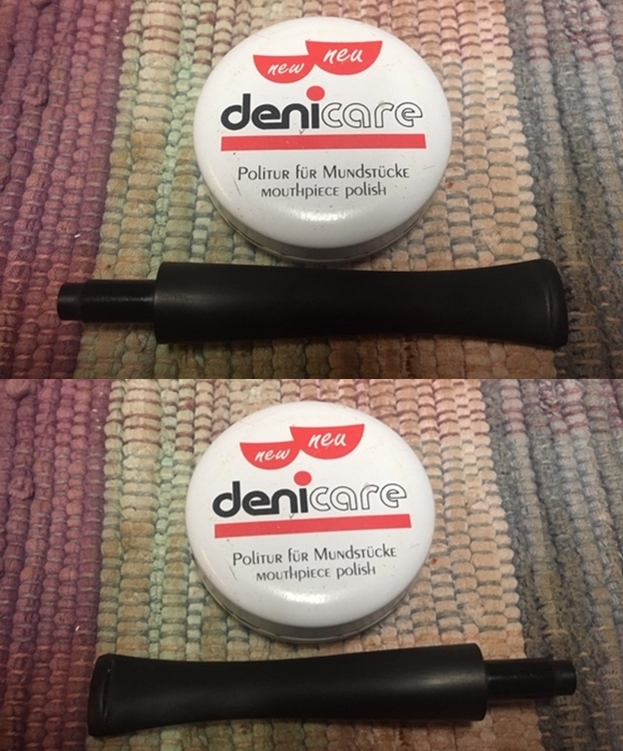
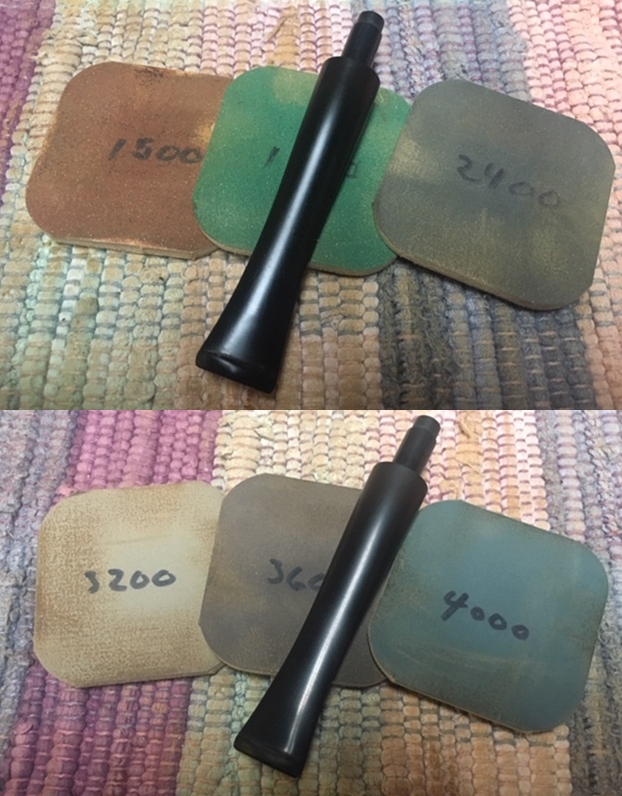
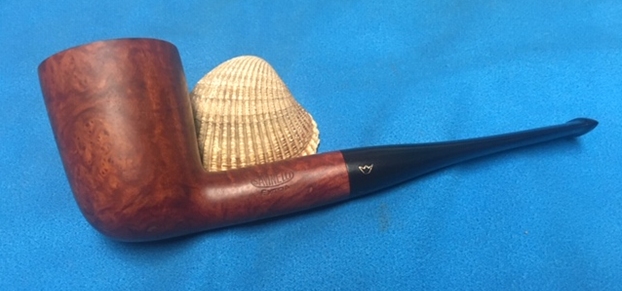
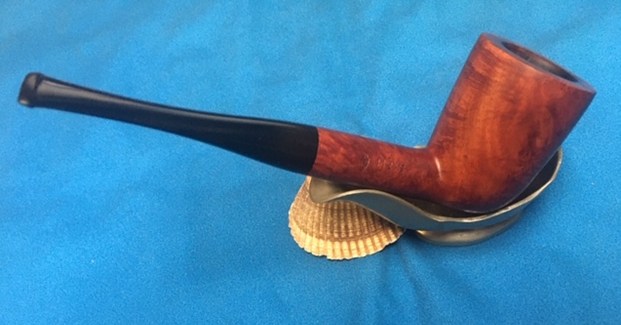
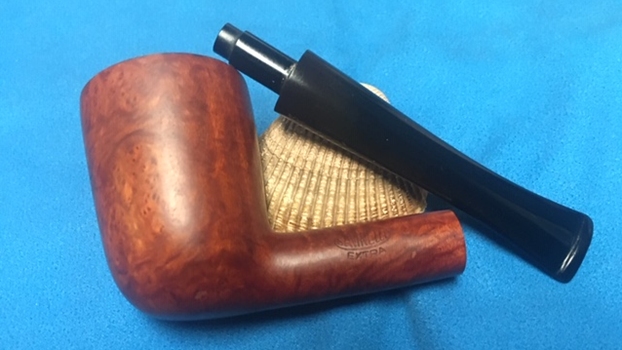
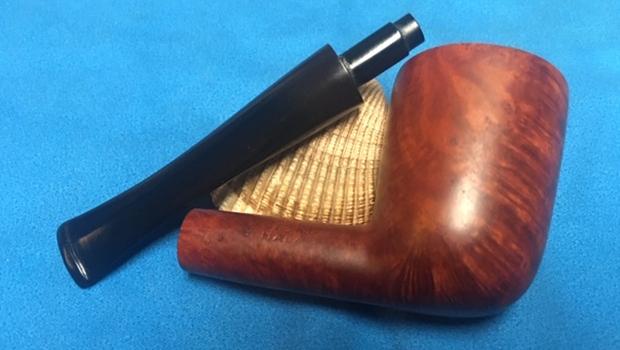
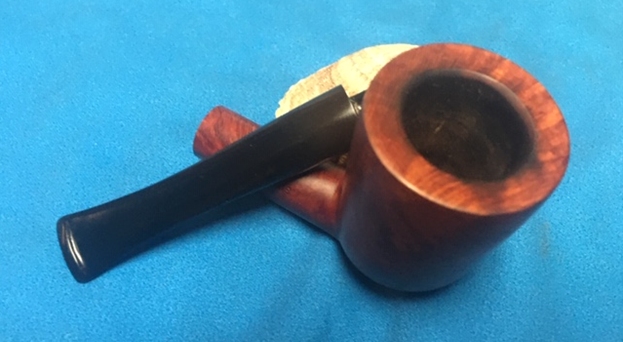
The next pipe on the table came to us from one of Jeff’s pipe hunts. It is an interesting straight Dublin shaped pipe with darkening and lava around the rim edge and top. It is stamped with a oval with SAVINELLI inside and EXTRA below that on the left side of the shank. On the right side of the shank it was stamped with the Savinelli “S” shield and the shape number 412KS over Italy. The stamping is clear and readable. The pipe has a combination of brown stains that highlighted some nice mixed grain around the bowl sides. The finish was very dirty with grime ground into the bowl. The bowl had a thick but even cake in the bowl and a heavy lava overflow on the inner edge of the top and beveled edge all around the bowl. It was hard to know what was underneath the lava and grime in terms of damage to the inner edge and the top of the rim. The taper stem was oxidized and there were tooth marks and chatter on both sides and on the top and bottom edges of the button. There was gold crown stamped on the stem. Jeff took photos of the pipe before he cleaned it up. Jeff took photos of the rim top to show the thick cake in the bowl and the lava overflow on the rim top and the beveled inner edge of the rim.  Jeff took some photos of the bowl sides and heel to show the great looking grain around the bowl. It is actually a nice looking pipe.  The stamping on the sides of the shank is shown in the photos below. They look very good and readable.  There is also a crown on the left side of the taper stem. The stem was a very good fit to the shank. It was oxidized, calcified and had debris stuck to the surface of the vulcanite. It also shows the tooth marks on the stem and on the button surface.  I turned to Pipephil (http://www.pipephil.eu/logos/en/logo-savinelli2.html) to read about the Extra Line. It is a smooth finished pipe with the same stamping on the shank and on the stem as the one that I am working on. I have included the screen capture from the site below.Armed with that information and a clearer picture of the original pipe I turned to work on the pipe on my work table. Jeff had done a great job cleaning up the pipe as usual. He reamed the pipe with a PipNet reamer and cut back the cake back to the bare briar. He cleaned up the walls with a Savinelli Fitsall Pipe Knife. He scrubbed the interior of the bowl and shank with pipe cleaners, cotton swabs and alcohol to remove the tars and oils. He scrubbed the exterior of the pipe with Murphy’s Oil Soap and a tooth brush to remove the grime from the finish. He worked on the rim top lava and darkening with the soap and tooth brush. He scrubbed the inside of the stem with alcohol and pipe cleaners. He scrubbed the exterior with Soft Scrub and then soaked it in Before & After Deoxidizer. He washed it off with warm water to remove the Deoxidizer. The pipe looked far better. I took photos of the pipe when I received it before I started working on it. I took photos of the bowl and rim top as well as the stem to show how clean they were. You can see the damage and the darkening on the inner edge and the top on the right front and the rear of the bowl. The stem looks clean of oxidation and the tooth marks and chatter are fairly light.  I took photos of the stamping on the sides of the shank. They are clean and readable and read as noted above.    I took a photo of the pipe with the stem removed to show the overall look of stem, tenon and profile of the pipe.I decided to start my work on the pipe by addressing the darkening on the rim top and the inner edge. I topped the bowl on a topping board with 220 grit sandpaper on a board. I used a folded piece of 220 grit sandpaper to work on the inner edge to remove the darkening. It took a bit of work but I was able to remove the majority of it and the end product looked much better. I polished the bowl and rim with micromesh sanding pads – wet sanding with 1500-12000 grit pads. I worked over the rim top and edge of the bowl with the pads. I wiped the bowl down with a damp cloth after each pad to remove the sanding debris.      I used an Oak stain pen to blend the cleaned rim top into the colour of the rest of the bowl. The match was perfect.I rubbed the briar down with Before & After Restoration Balm. I worked it into the briar with my fingertips. The product works to clean, enliven and preserve the briar. I let it sit for 10 minutes while I worked on the stem. After the time passed I buffed it with a cotton cloth to deepen the shine. The briar really comes alive with the balm.   I set the bowl aside and turned my attention to the stem. I decided to “paint” the stem surface to raise the dents in the vulcanite. The process worked very well.     I built up the edges of the button and filled in the small dents in both sides of the stem. Once the repairs had cured I used a needle file to recut the edge of the button. I worked over the oxidation on the stem and blended the repaired area of the button with 220 grit sandpaper. I started polishing the stem with 400 grit wet dry sandpaper. At this point it is starting to look much better.   I touched up the gold crown on the stem side with Rub’n Buff Antique Gold. I pressed the gold into the stamp and buffed it off with a cotton pad.   I rubbed the stem down with Denicare Mouthpiece Polish – a red, gritty Tripoli like substance that is a paste. I rubbed it into the surface of the stem and polished it off with a cotton pad. I have found that is a great intermediary step before polishing with micromesh pads. I am not sure what I will use once the final tin I have is gone!     I polished the vulcanite with micromesh sanding pads – 1500-12000 grit pads. I wiped it down with Obsidian Oil after each sanding pad. I used Before & After Pipe Polish – both Fine and Extra Fine to further polish the stem.   This Savinelli Extra 412KS Dublin is a great looking pipe. The mix of brown stains highlights the mix of grain around the bowl sides, top and bottom. The finish on the pipe is in excellent condition and the contrasting stains work well with the polished black vulcanite taper stem. I put the stem back on the bowl and carefully buffed the pipe with Blue Diamond on the buffing wheel using a light touch on the briar. I gave the bowl and stem multiple coats of carnauba wax on the buffing wheel and followed that by buffing the entire pipe with a clean buffing pad. I hand buffed the pipe with a microfiber cloth to deepen the shine. The finished Savinelli Extra 412KS Dublin is quite nice and feels great in the hand. Give the finished pipe a look in the photos below. The dimensions of the pipe are Length: 5 ¾ inches, Height: 2 inches, Outside diameter of the bowl: 1 ½ inches, Chamber diameter: 7/8 of an inch. Thanks for walking through the restoration with me as I worked over another beautiful pipe. This pipe will be added to the Italian Pipe Makers section of the rebornpipes store soon. If you want to add it to your collection send me an email or a message! Thanks for your time.
 

New Life for a Comoy’s Second – A Town Hall Made in England 136 Billiard


Blog by Steve Laug

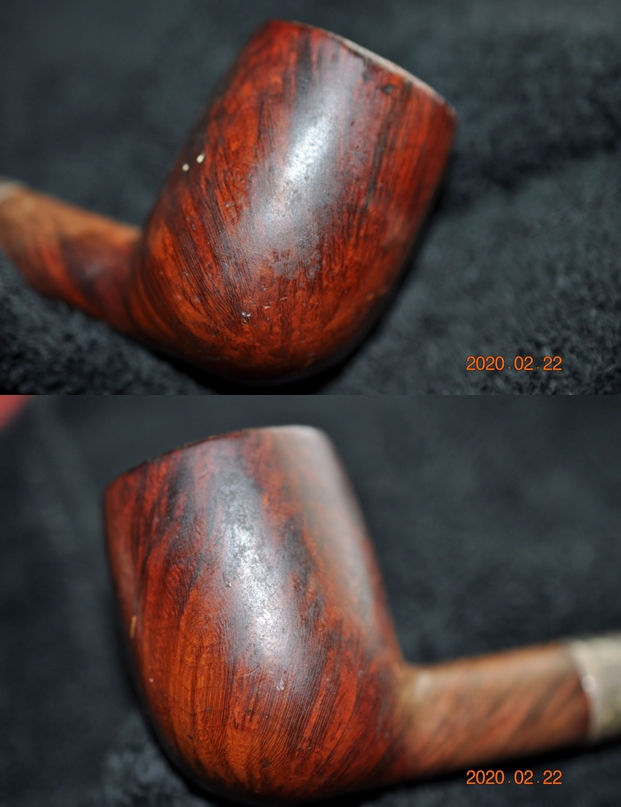
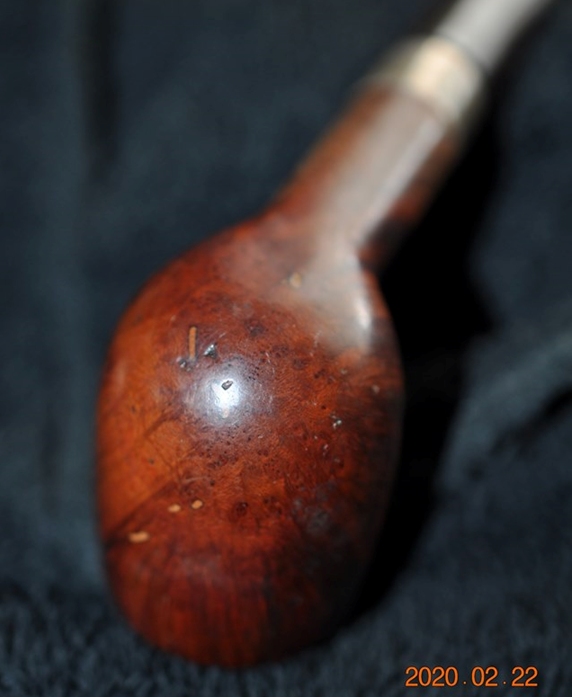
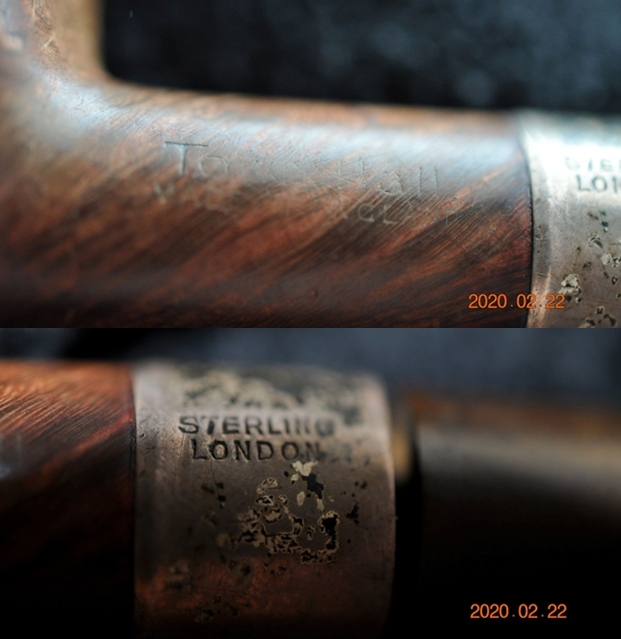
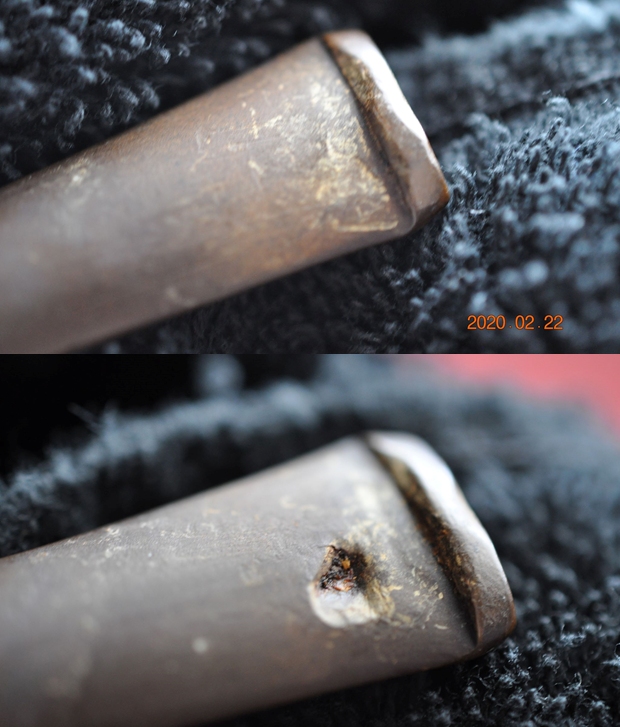
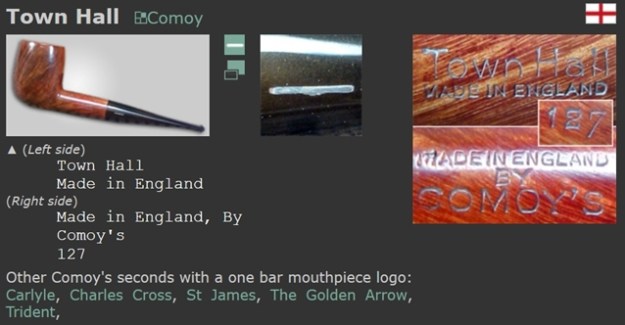
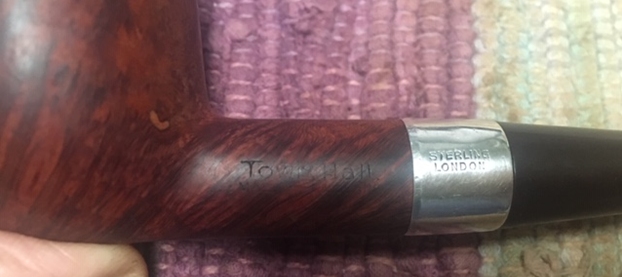
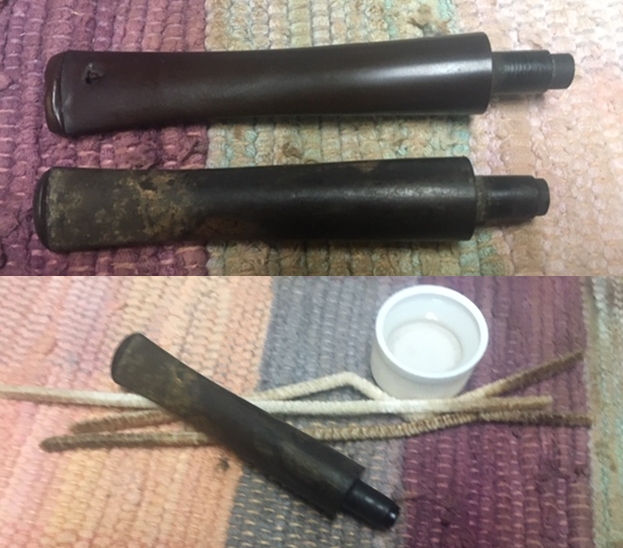
I am getting to the bottom of the current box of pipes for restoration. I think there were probably 40+ pipes in the box when I started. I am down to the last two. I took out an interesting older billiard that Jeff and I had picked up on our Oregon Coast Pipe Hunt. It was a well-shaped billiard that was absolutely filthy but there was something about it that ticked the boxes for me. The exterior of the bowl was coated with sticky oils and grime around the walls. The rim top was beat up pretty badly and there was a thick coat of lava and burn marks on the rim top and inner edge. There was a thick cake in the bowl. Between the lava and the cake overflowing the bowl it was hard to know what the inner edges looked like. The exterior edge was nicked and chipped with quite a bit of damage. The stem was oxidized and had tooth marks and chatter on both sides near the button. There was also a large hole in the underside of the stem – a large bite through that covered about half of the area ahead of the button. Jeff took photos of the pipe before he started his work on it. Jeff took some photos of the rim top from various angles to show the condition. You can see the thick lava on the top and the dust and debris as well as some damage on the rim. There is a thick cake in the bowl and lava on the inner edge. The next photos show the bowl sides and heel. The finish around the bowl was very worn and tired looking. There were spots of paint on the briar as well as quite a few fills on the heel and the front of the bowl. There was some amazing grain showing through the thick grime on the finish. The next photos capture the stamping around the shank and band. Jeff did not get a good photo of the shape number and worn stamp on the right side of the shank so I have not included that. The stamping read as noted above and they are faint but readable with a light and lens. The silver band is also stamped Sterling London.The stem was oxidized and calcified and the photos below show the tooth marks and chatter on the surface. The second photo shows the large bite through on the stem surface ahead of the button. This stem will need to be replaced.  I turned to Pipephil to try and figure out any information regarding the Town Hall brand. I was not familiar with and was hoping I would get some info (http://www.pipephil.eu/logos/en/logo-t7.html). I did indeed find out that it was a Comoy’s Second. The photo of the stamping looks like what I have. The stamp on the right side of the shank in the photo below is very faint on the pipe I am working on. I have included the screen capture of the section on the brand below. I then turned to the Pipedia article on Comoy’s pipes (https://pipedia.org/wiki/Comoy%27s). I read through the article until I came to the section entitles “Seconds made by Comoy’s”. I scrolled through the list of brands and the Town Hall was listed. (There is a typo in the name in the list as it runs the two words together.) I have emboldened and underlined the name in the list below.

Ace of spades, Ancestor, Astor, Ayres, Britannia, Carlyle, Charles Cross, Claridge, Coronet?, Cromwell, Dorchester, Dunbar, Drury Lane, Emerson, Everyman, Festival of Britain, Golden Arrow, Grand Master, Gresham, Guildhall, Hamilton (according to Who Made That Pipe), Kingsway, Lion’s Head, Lord Clive, Lumberman, Hyde Park, Lloyds, Mc Gahey, Moorgate, Newcastle, Oxford, O’Gorman, Rosebery Extra, Royal Falcon, Royal Guard, Royal Lane, Scotland Yard, St James, Sunrise, Super Sports, Sussex, The Academy Award, The Golden Arrow, The Mansion House, The Exmoor Pipe, Throgmorton, Tinder Box Royal Coachman, Townhall, Trident, Trocadero, Westminster, Wilshire

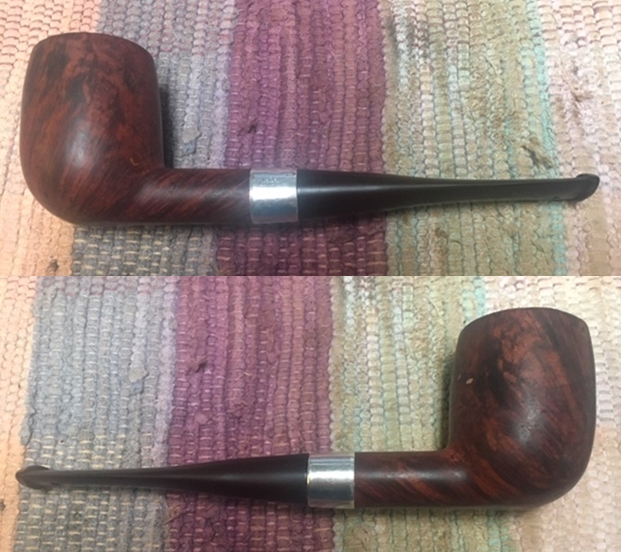
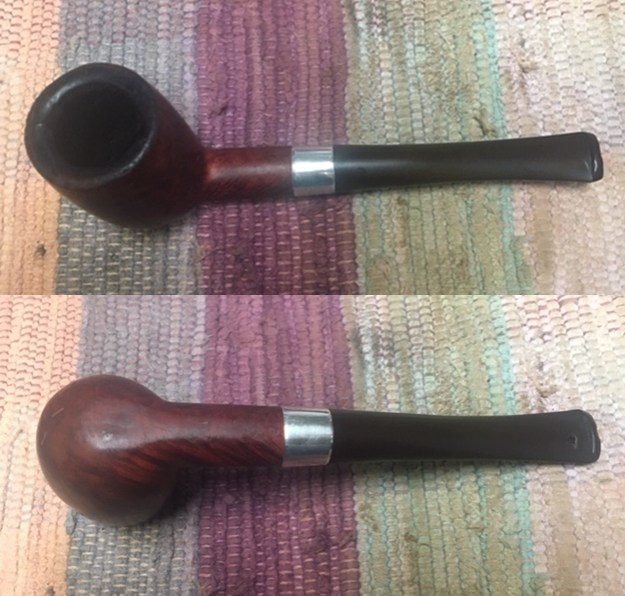
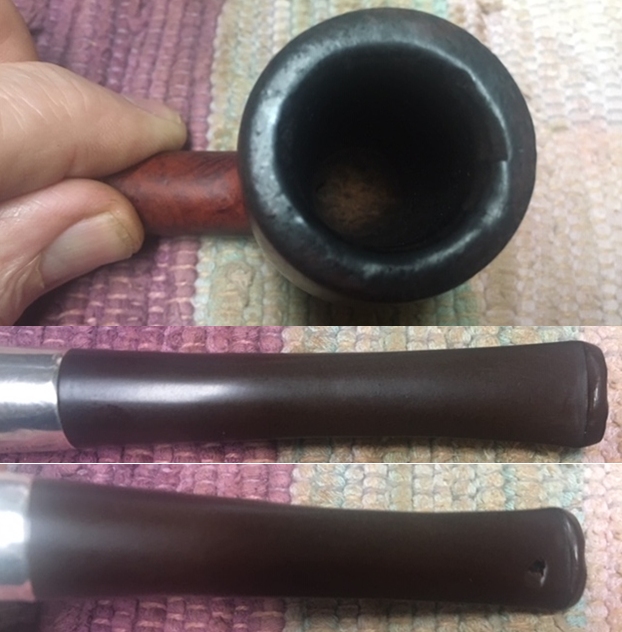
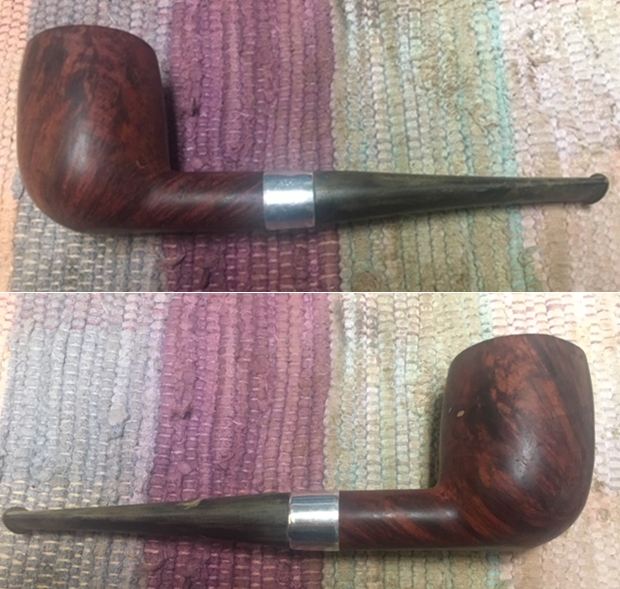
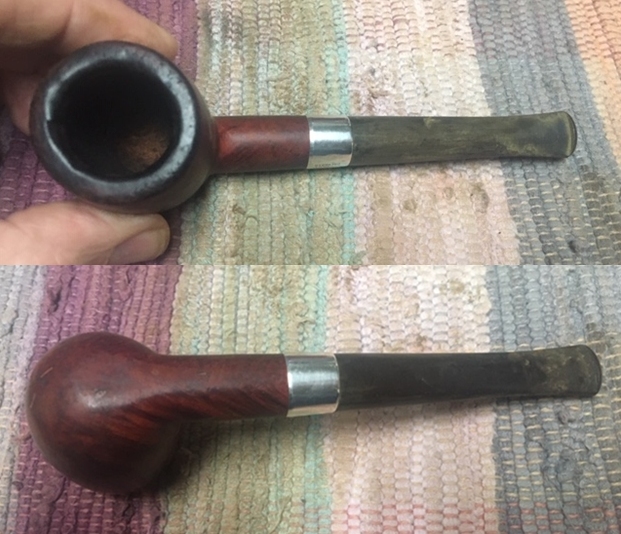
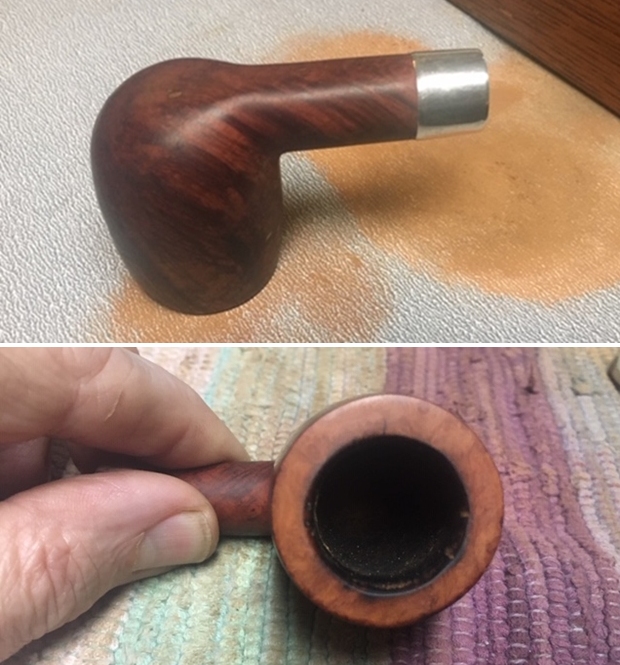
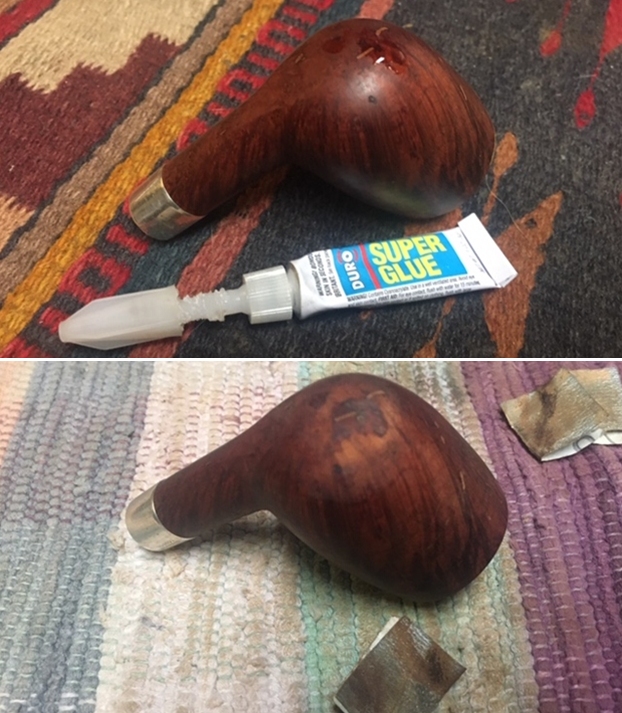
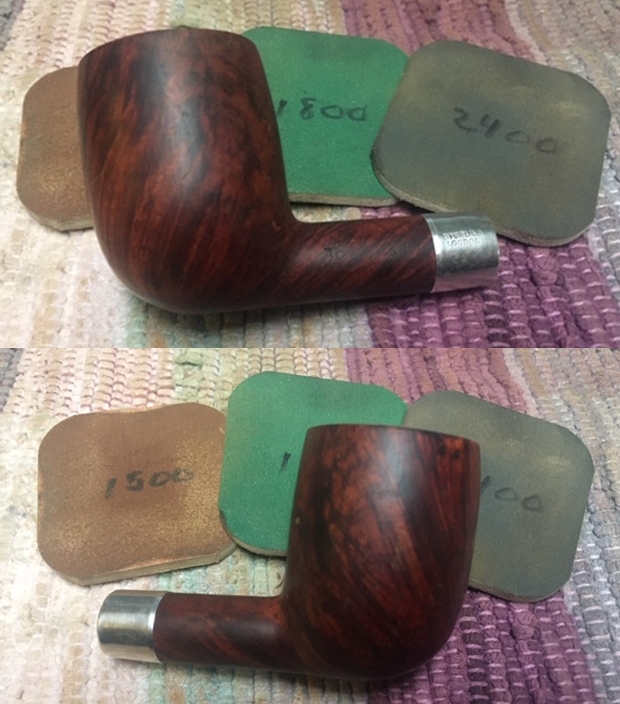
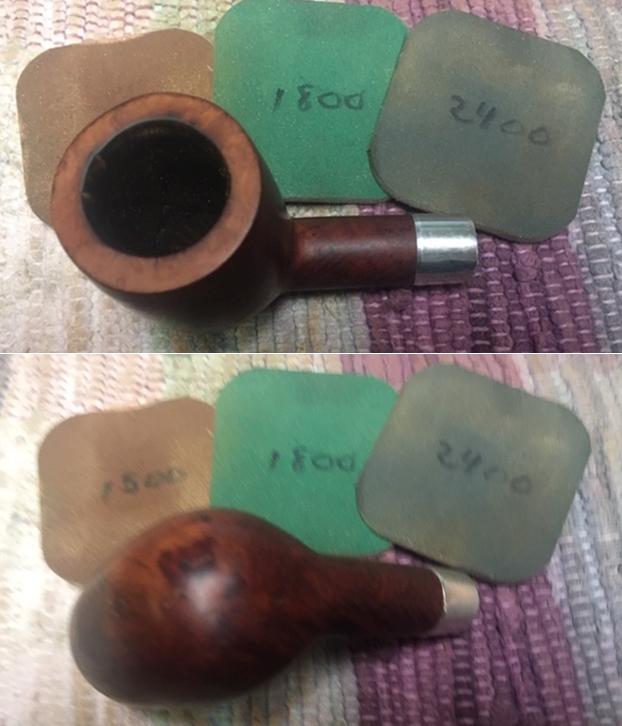
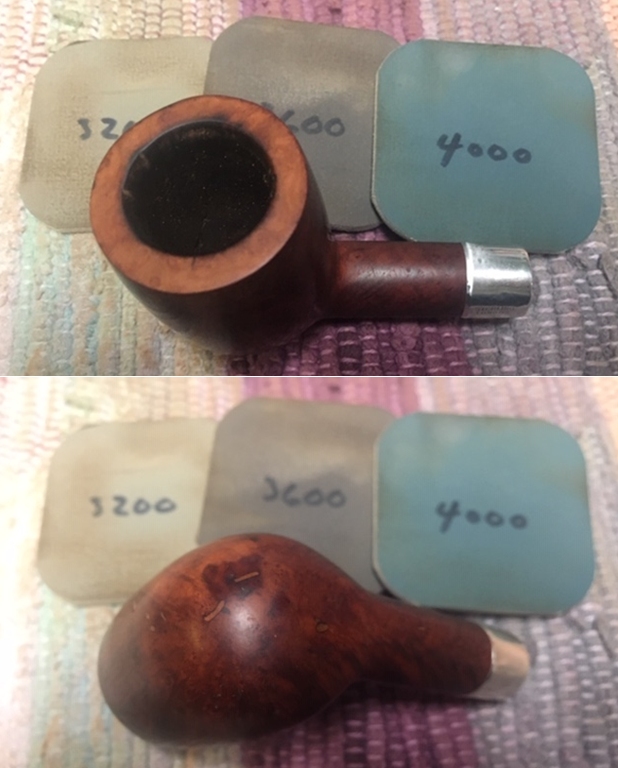
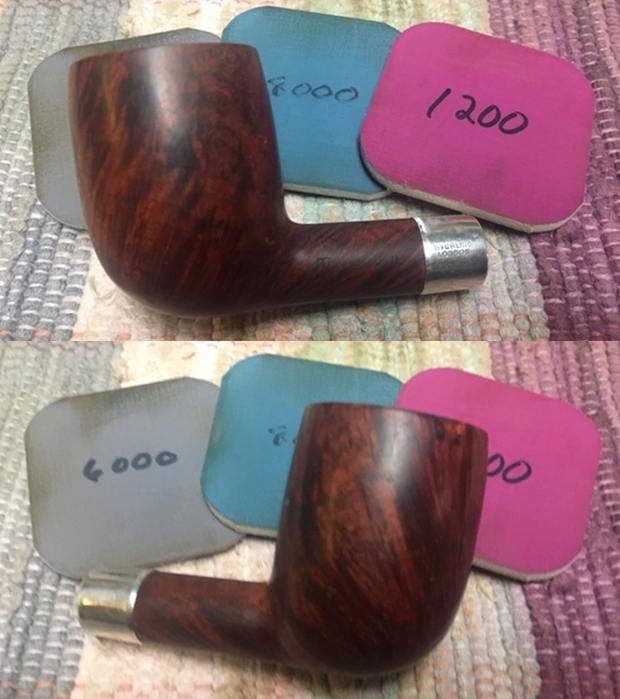
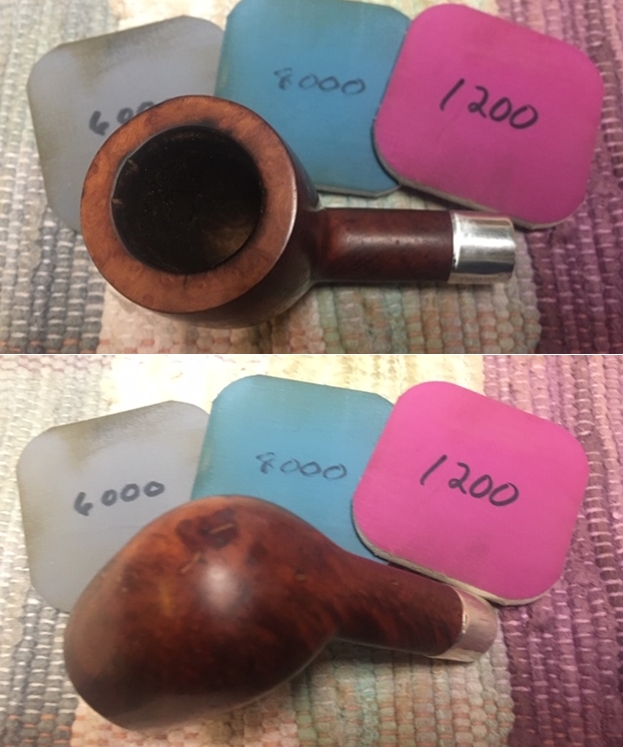
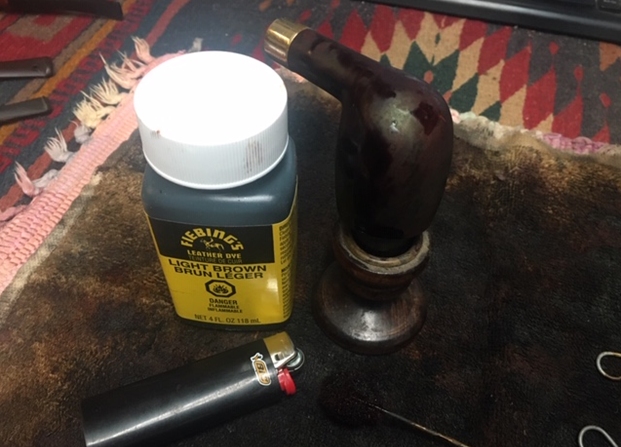
I knew that I was working on a Comoy’s Made pipe and once I read that I could see the classic Comoy’s Billiard shape and the shape number confirmed that. Armed with that information and a clearer picture of the original pipe I turned to work on the pipe on my work table. Jeff had done a great job cleaning up the pipe as usual. He reamed the pipe with a PipNet reamer and cut back the cake back to the bare briar. He cleaned up the walls with a Savinelli Fitsall Pipe Knife. He scrubbed the interior of the bowl and shank with pipe cleaners, cotton swabs and alcohol to remove the tars and oils. He scrubbed the exterior of the pipe with Murphy’s Oil Soap and a tooth brush to remove the grime from the finish. He worked on the rim top lava and darkening with the soap and tooth brush but it was in rough condition. He scrubbed the inside of the stem with alcohol and pipe cleaners. He scrubbed the exterior with Soft Scrub and then soaked it in Before & After Deoxidizer. He washed it off with warm water to remove the Deoxidizer. The pipe looked far better. I took photos of the pipe when I received it before I started working on it.  I took a photo of the rim top showing the damage to the rim top and the damage on the inner edge of the bowl. It was in rough condition. There was some darkening and nicks around the outer edge of the bowl and some burn areas on the inner edge. The stem was also in rough condition with a large bite through on the underside.I took a photo of the stamping on the shank. The stamping is clean and still readable.I decided to start with finding a new stem for the pipe. I took the stem off and looked for a replacement. I have so many pipes to work on that I am not bothering with filling in bite throughs at this point. I am leaving this to the master Paresh Deshpande to do! I found a suitable estate stem that was the right diameter and right tenon size. It is slightly shorter and a bit less tapered than the one that was on the bowl but it would work. I cleaned the airway in it with alcohol and pipe cleaners to get a good start on it then put it in place on the shank and took some pictures of the new stem. I decided to address the damage to the rim and the edges of the bowl – both outer and inner. I topped the bowl with a piece of 220 grit sandpaper. I sanded the inner and outer edges with a folded piece of 220 grit sandpaper to remove them and to remove the damages. Once it was finished it looked a lot better. There were a lot of fills around the sides and heel of the bowl. I checked them for soundness and filled in some of the more damaged ones with clear super glue. Once the repairs cured I sanded them with a piece of 220 grit sandpaper to smooth them and blend them into the surrounding briar.I polished the rim top and bowl with micromesh sanding pads – wet sanding with 1500-12000 grit pads and wiped the bowl down after each sanding pad. The fills were very obvious on this pipe and to me they were just ugly enough to bother me. I could have stained just the rim top to match but figured I would try to mask the fills a bit with a darker stain. I used what is labeled as a Light Brown stain to cover the bowl and rim. I applied the stain and then flamed it to set it in the grain of the bowl. It was dark but I think it will look good once I am finished. I let it sit for several hours then buffed it off with Red Tripoli on the buffing wheel to get a feel for what it looked like at this point. I wiped the bowl down with isopropyl alcohol to make the stain coat a little more transparent and show the grain on the bowl. I rubbed the briar down with Before & After Restoration Balm. I worked it into the briar with my fingertips. The product works to clean, enliven and preserve the briar. I let it sit for 10 minutes while I worked on the stem. After the time passed I buffed it with a cotton cloth to deepen the shine. The briar really comes alive with the balm. I set the bowl aside and turn to address the issues with the stem. The stem was in decent condition with no bite marks. It was dirty and oxidized as could be seen in the photos above. I sanded out the oxidation with 220 grit sandpaper and started polishing it with 400 grit wet dry sandpaper.I polished the stem with micromesh sanding pads – wet sanding it with 1500-12000 grit pads. I wiped it down after each pad with some Obsidian Oil to preserve the stem and to give some bite to the sanding. I finished the polishing with Before & After Pipe Polish – both Fine and Extra Fine polishes. I rubbed the stem down with the polishes and buffed it with a cotton pad. I gave it a final coat of Obsidian Oil. This Comoy’s made Town Hall 136 Billiard was one I was looking forward to seeing come together. The new light brown stain hides the fills nicely while still highlighting the grain around the bowl – sides, top and heel. The polished black vulcanite taper stem that I fit to the shank works very well with the look of the pipe. I put the stem back on the bowl and carefully buffed the pipe with Blue Diamond on the buffing wheel. I gave the bowl and stem multiple coats of carnauba wax on the buffing wheel and followed that by buffing the entire pipe with a clean buffing pad. I hand buffed the pipe with a microfiber cloth to deepen the shine. I polished the silver band with a jeweller’s cloth. The finished Billiard is quite nice and feels great in the hand. Give the finished pipe a look in the photos below. The dimensions of the pipe are Length: 5 ¾ inches, Height: 2 inches, Outside diameter of the bowl: 1 3/8 inches, Chamber diameter: ¾ of an inch. Thanks for walking through the restoration with me as I worked over another beautiful pipe. This pipe will be added to the British Pipe Makers section of the rebornpipes store soon. If you want to add it to your collection send me an email or a message! Thanks for your time.

Restoring a Second Linkman’s Dr. Grabow 9771 De Luxe Bruyere Acorn


Blog by Steve Laug

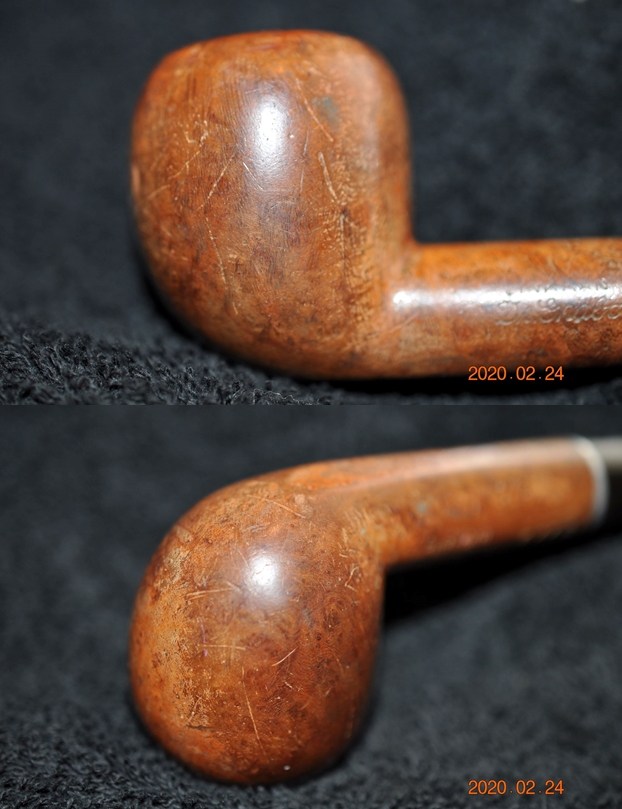
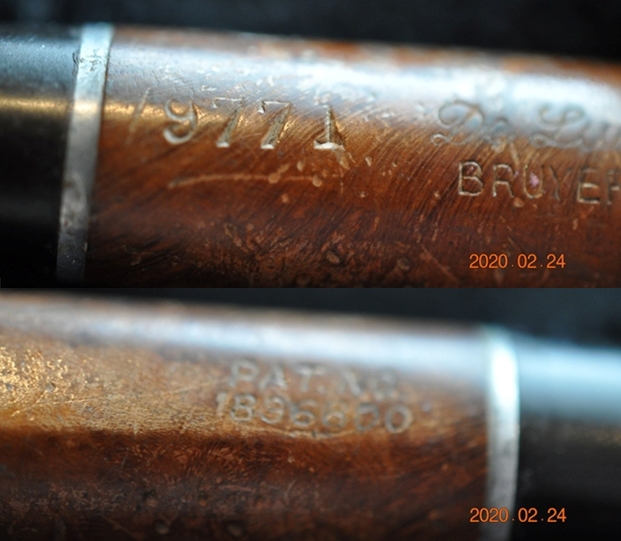
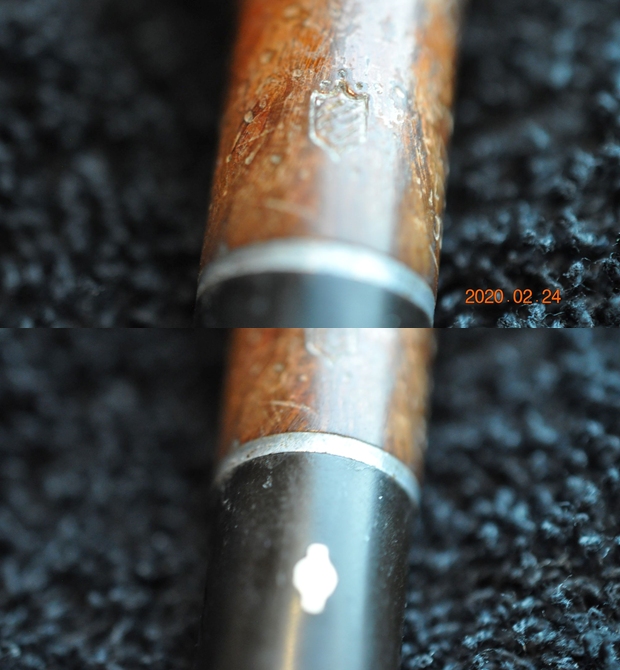
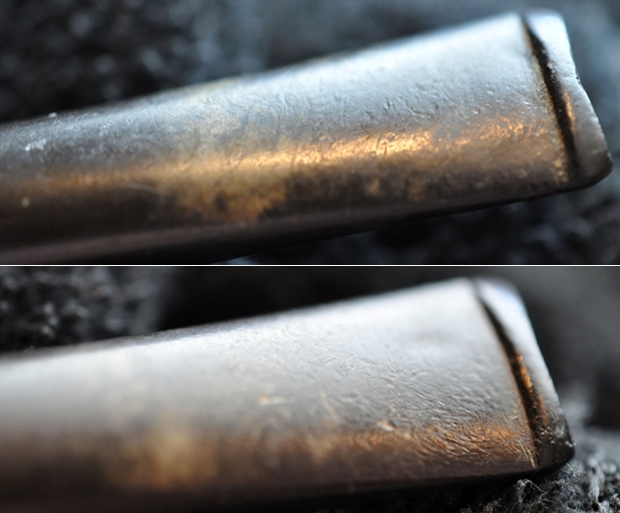
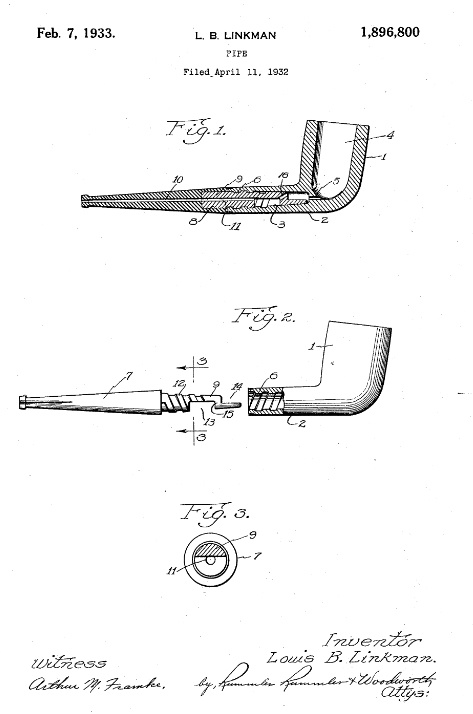
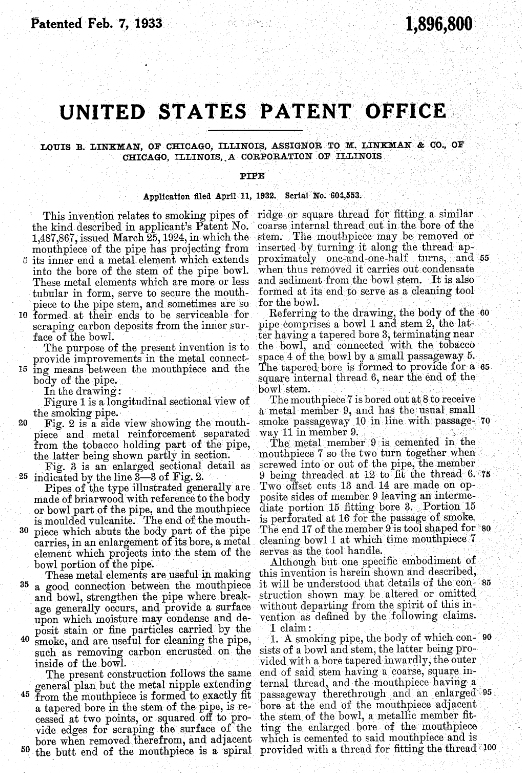
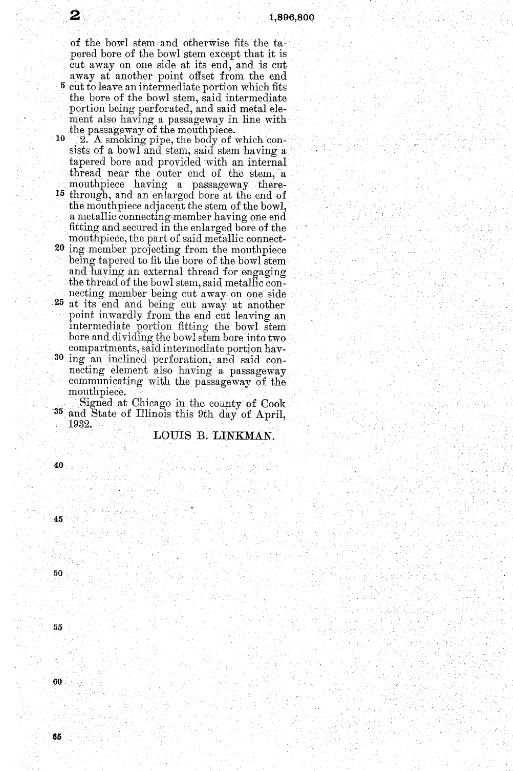
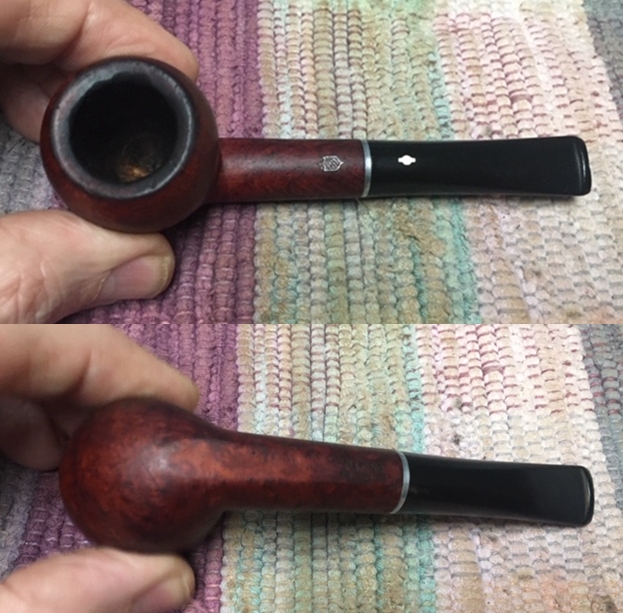
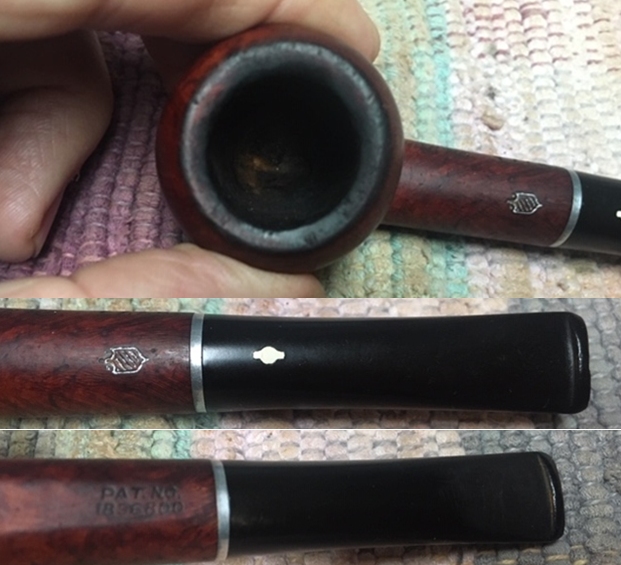
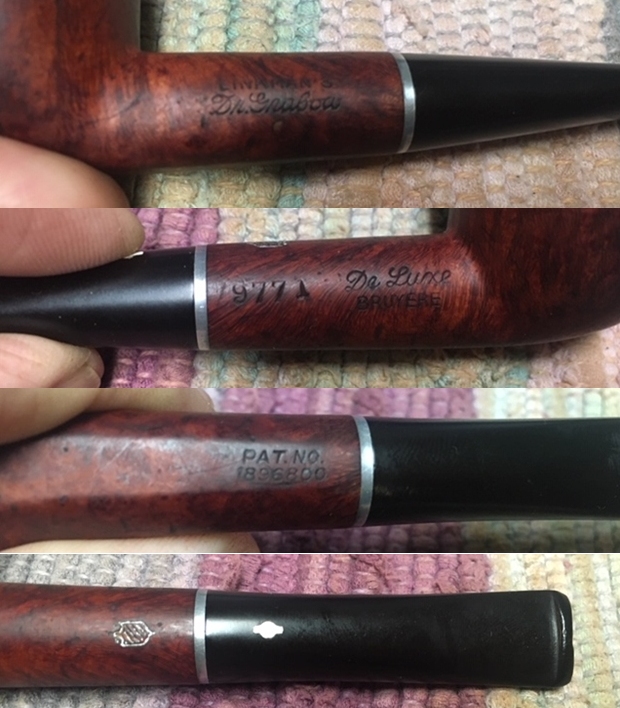
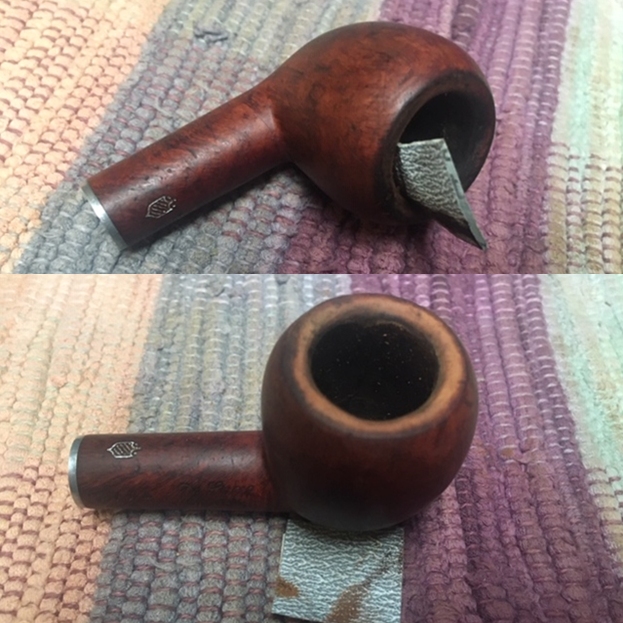
I am getting to the bottom of the current box of pipes for restoration. I think there were probably 40+ pipes in the box when I started. I am down to the last four. Two of them are Linkman’s Dr. Grabow pipes. The first Linkman’s I took out of the box and restored was a billiard. It is stamped Linkman’s Dr. Grabow on the left side of the shank and 9708 De Luxe on the right side of the shank (https://rebornpipes.com/2020/05/20/113190/). It was time to work on the second Linkman’s pipe – an Acorn shaped pipe. It was stamped the same way as the first on both sides of the shank – Linkman’s Dr. Grabow on the left and with a different shape number 9771 De Luxe Bruyere on the left side.  On the underside it bears a Patent Number 1896800. The pipe was dirty and there was some lava and burn marks on the inwardly beveled rim top and inner edge. There was a thick cake in the bowl. The exterior of the pipe was varnished and was scratched and wearing off. The stem was lightly oxidized and had tooth marks and chatter on both sides near the button. Jeff took photos of the pipe before he started his work on it. Jeff took some photos of the rim top from various angles to show the condition. You can see the thick lava on the top and the dust and debris. The varnish coat is crackling and will need to be removed. There is a thick cake in the bowl and lava on the inner edge. The varnish coat was crackling and scratched on the exterior of the bowl but there was great grain shining through. This would be a beautiful pipe once the varnish coat and grime was removed. The next photos capture the stamping around the sides of the shank. They read as noted above and they are clear and very readable. I forgot to note above that there was a worn silver chevron on the top side of the shank at the end. The topside of the stem had the propeller logo that was always associated with the Linkman brand. Jeff removed the stem from the shank and took a picture of the stinger apparatus. This time it is not missing and it is not removable but is an integral part of the tenon. Is it and earlier or a later edition of the pipe? Who knows! The stem was oxidized and calcified and the photos below show the tooth marks and chatter on the surface. They do not look deep but there a lot of them.   I have included the same information that I included in the previous restoration of the first Linkman’s Dr. Grabow for ease of reference.

I turned to Pipephil to pin down the dates of the pipe (http://www.pipephil.eu/logos/en/logo-l4.html). I have included the screen capture of the section on the brand below.The M. Linkman and Co. was established by Louis B. Linkman and August Fisher in 1898. The company closed down in the 1950s and the Dr Grabow branch was sold to Henry Leonard and Thomas Inc. Early Linkman’s pipes were stamped MLC in an oval.

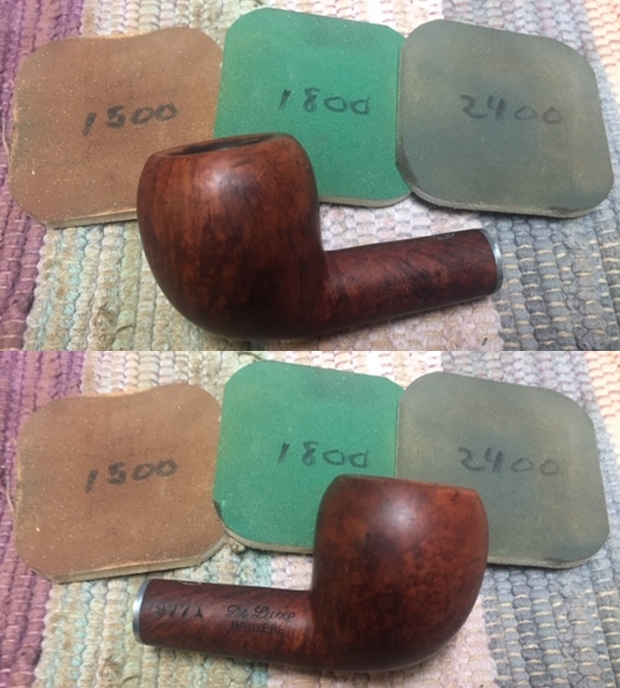
I then did a patent search on the US Government Patent site using the patent number on the underside of the shank. I found the following Patent information. It specifically refers to the stinger apparatus that is attached to the tenon. It was filed in April 11, 1932 by L.B. Linkman. I am including the full patent information below. I knew that I was working on a pipe made after Feb. 7, 1933 when the patent was granted and prior to the early 1950s when the company was closed. Armed with that information and a clearer picture of the original pipe I turned to work on the pipe on my work table. Jeff had done a great job cleaning up the pipe as usual. He reamed the pipe with a PipNet reamer and cut back the cake back to the bare briar. He cleaned up the walls with a Savinelli Fitsall Pipe Knife. He scrubbed the interior of the bowl and shank with pipe cleaners, cotton swabs and alcohol to remove the tars and oils. He scrubbed the exterior of the pipe with Murphy’s Oil Soap and a tooth brush to remove the grime from the finish. He worked on the rim top lava and darkening with the soap and tooth brush. He scrubbed the inside of the stem with alcohol and pipe cleaners. He scrubbed the exterior with Soft Scrub and then soaked it in Before & After Deoxidizer. He washed it off with warm water to remove the Deoxidizer. The pipe looked far better. I took photos of the pipe when I received it before I started working on it.  I took a photo of the rim top showing the damage to the inward bevel on the rim and the damage on the inner edge of the bowl. There was some darkening and nicks around the out edge of the bowl and some burn areas on the inner edge. The stem looks very good – light tooth marks near the button.I took a photo of the stamping on the shank. The stamping is clean and still readable.I took the stem off and took a photo of the appearance of the pipe. It is missing the stinger. It is not cut off but it is a removable one. It is missing but the draught is much better without it.I decided to address the damage to the beveled rim and the edges of the bowl – both outer and inner. I sanded it with a folded piece of 220 grit sandpaper to remove them and to remove the damages. Once it was finished it looked a lot better.I polished the rim top and bowl with micromesh sanding pads – wet sanding with 1500-12000 grit pads and wiped the bowl down after each sanding pad. I rubbed the briar down with Before & After Restoration Balm. I worked it into the briar with my fingertips. The product works to clean, enliven and preserve the briar. I let it sit for 10 minutes while I worked on the stem. After the time passed I buffed it with a cotton cloth to deepen the shine. The briar really comes alive with the balm. I set the bowl aside and turn to address the issues with the stem. I filled in the deep tooth marks on each side of the stem just ahead of the button with clear super glue. Once the repairs cured I sanded them out with 220 grit sandpaper and started polishing it with 400 grit wet dry sandpaper. I polished the stem with micromesh sanding pads – wet sanding it with 1500-12000 grit pads. I wiped it down after each pad with some Obsidian Oil to preserve the stem and to give some bite to the sanding. I finished the polishing with Before & After Pipe Polish – both Fine and Extra Fine polishes. I rubbed the stem down with the polishes and buffed it with a cotton pad. I gave it a final coat of Obsidian Oil. This older Linkman’s Dr. Grabow 9771 De Luxe Bruyere straight Acorn is another interesting piece of pipe history. The mix of brown stains highlights the mix of nice grain around the bowl – sides, top and heel. With the varnish removed the finish on the pipe is in excellent condition and the contrasting stains work well with the polished black vulcanite saddle stem. I put the stem back on the bowl and carefully buffed the pipe with Blue Diamond on the buffing wheel using a light touch on the briar. I gave the bowl and stem multiple coats of carnauba wax on the buffing wheel and followed that by buffing the entire pipe with a clean buffing pad. I hand buffed the pipe with a microfiber cloth to deepen the shine. The finished Linkman’s Dr. Grabow De Luxe Bruyere Billiard is quite nice and feels great in the hand. Give the finished pipe a look in the photos below. The dimensions of the pipe are Length: 5 inches, Height: 1 ½ inches, Outside diameter of the bowl: 1 ¼ inches, Chamber diameter: ¾ of an inch. Thanks for walking through the restoration with me as I worked over another beautiful pipe. This pipe will be added to the American Pipe Makers section of the rebornpipes store soon. If you want to add it to your collection send me an email or a message! Thanks for your time.

A Savinelli Sherwood Rock Briar 608 Bent Billiard


Blog by Steve Laug

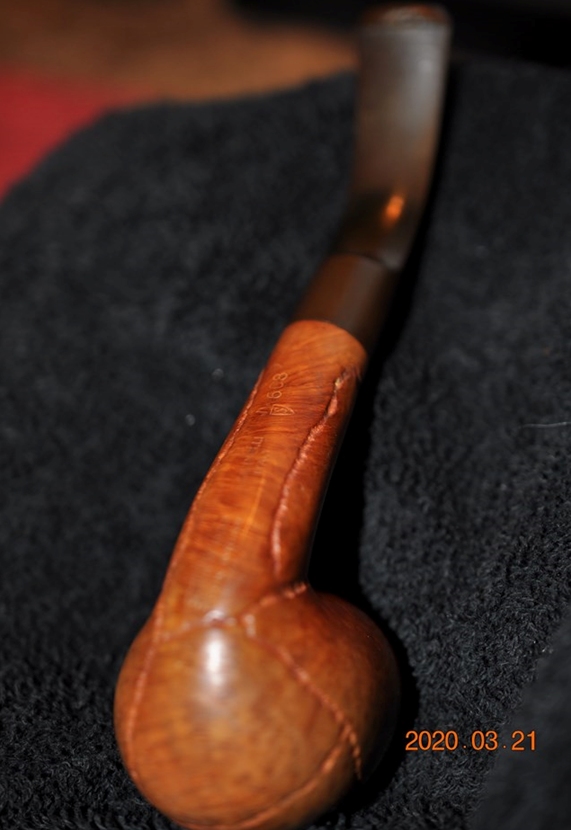
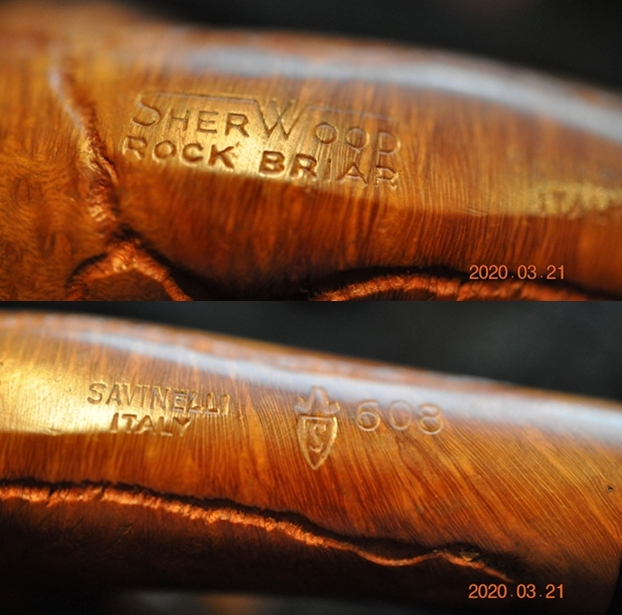
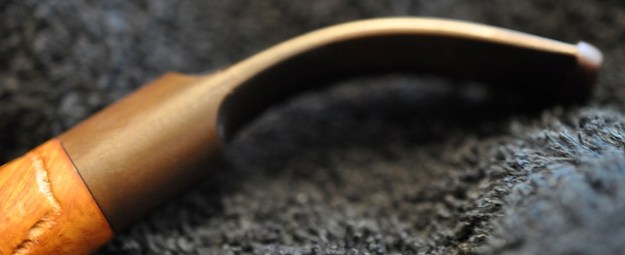
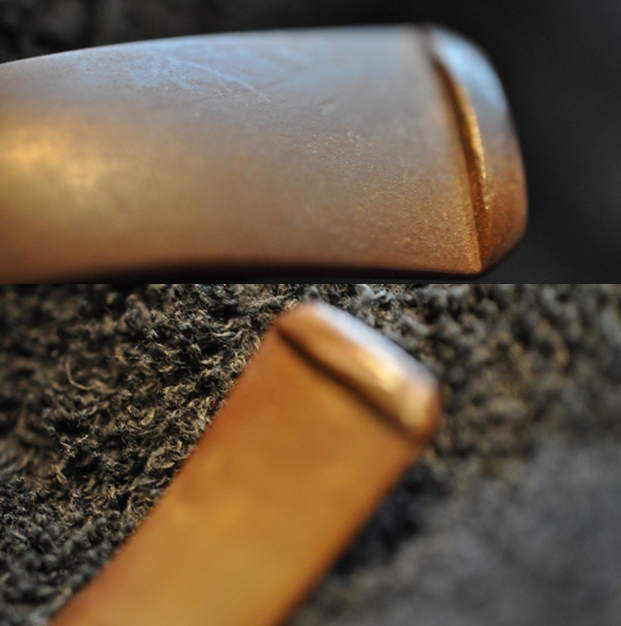
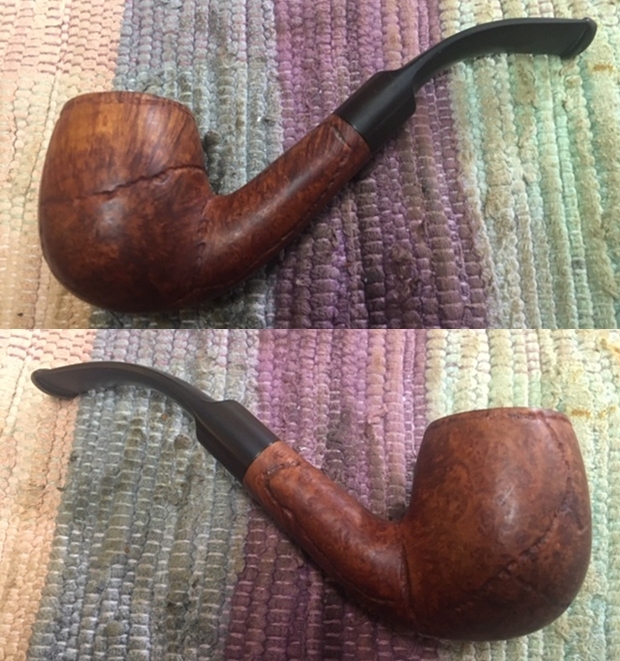
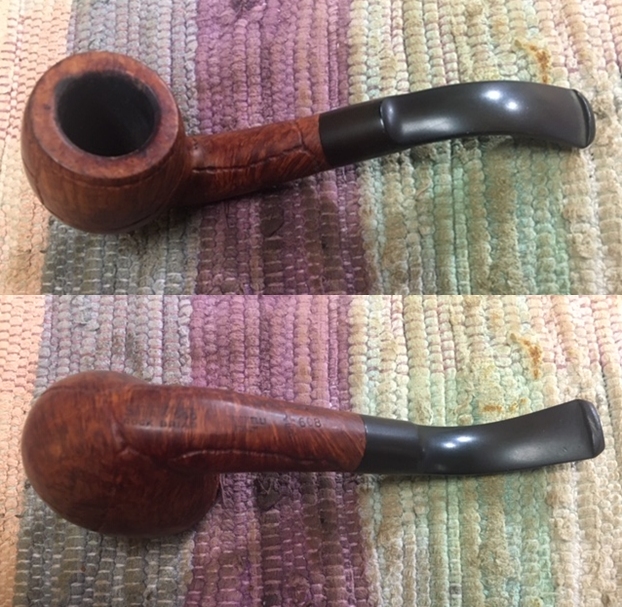
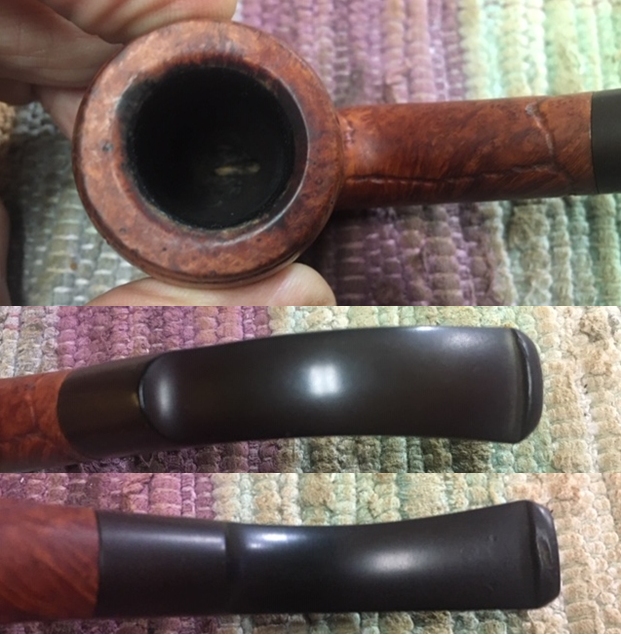
The next pipe on the table came to us from one of Jeff’s pipe hunts. It is an interestingly rusticated Bent Billiard with darkening around the rim edge and top. It is stamped with Sherwood over Rock Briar on the heel of the bowl followed by the Savinelli “S” shield and the shape number 608 over Italy on the shank. The stamping is clear and readable. The pipe has a combination of brown stains and the worm trail rustication is not only tactile but also a purposeful pattern to the finish. The finish was very dirty with grime ground into the bowl. The bowl had a thick but even cake in the bowl and a heavy lava overflow on the inner edge of the top toward the back of the bowl. There was darkening on the briar around the inner edge and the top of the rim. The saddle stem was oxidized and there were tooth marks and chatter on both sides and on the top and bottom edges of the button. There is no stamping on the stem. Jeff took photos of the pipe before he cleaned it up. Jeff took photos of the rim top to show the thick cake in the bowl and the lava overflow on the inner edge of the beveled rim.  Jeff took some photos of the bowl sides and heel to show the “worm trail” rustication around the bowl and the great looking grain as well. It is actually a nice looking pipe.  The stamping on the underside of the shank is shown in the photos below. They look very good and readable.The stem was a very good fit to the shank. It was oxidized, calcified and had debris stuck to the surface of the vulcanite. It also shows the tooth marks on the stem and on the button surface.  I am including the section from the previous blog I did o the Sherwood Rock Briar pipe that I restored. I quote:

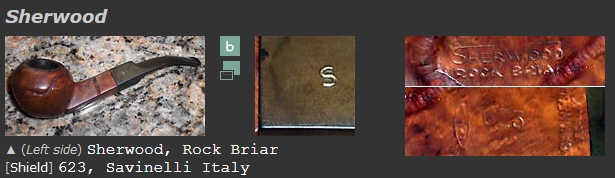
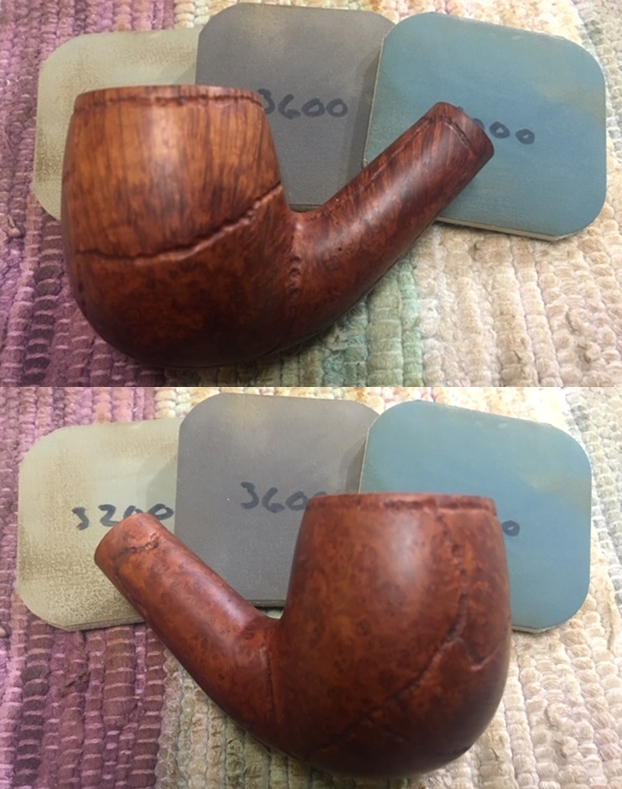
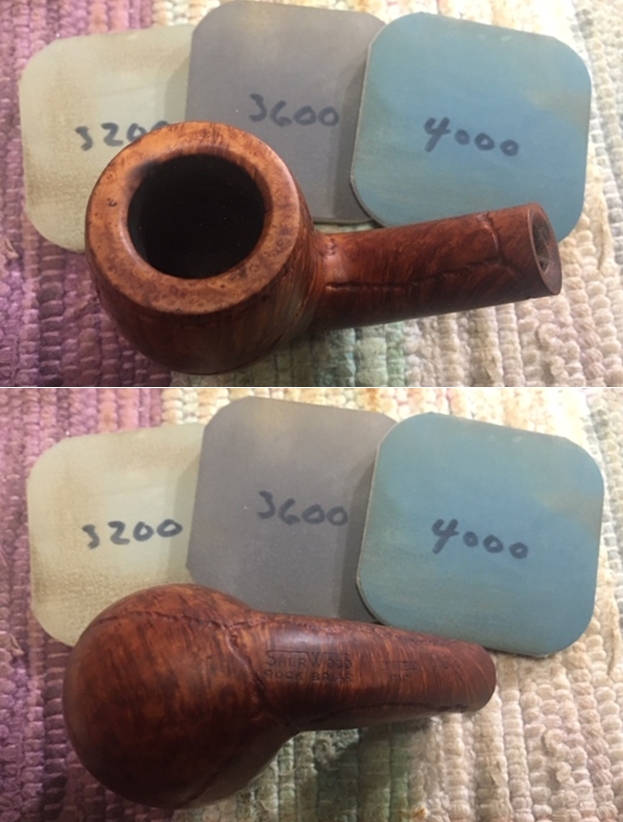
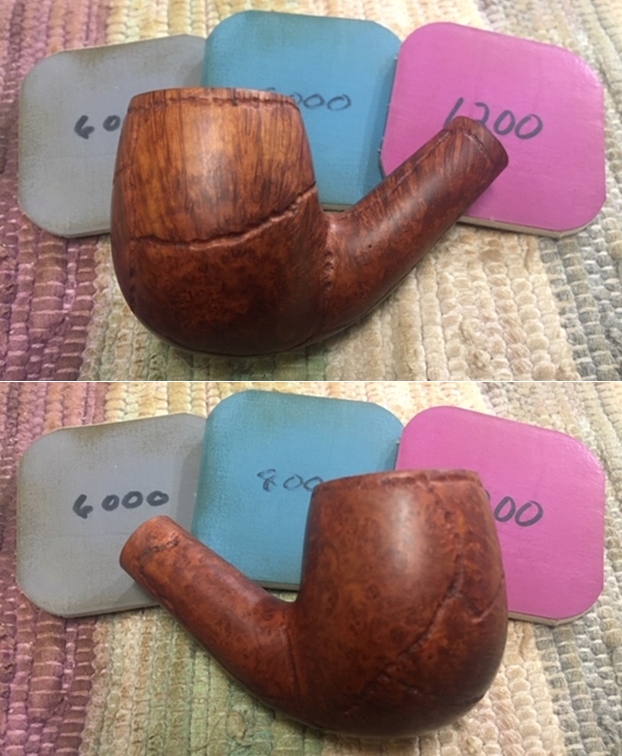
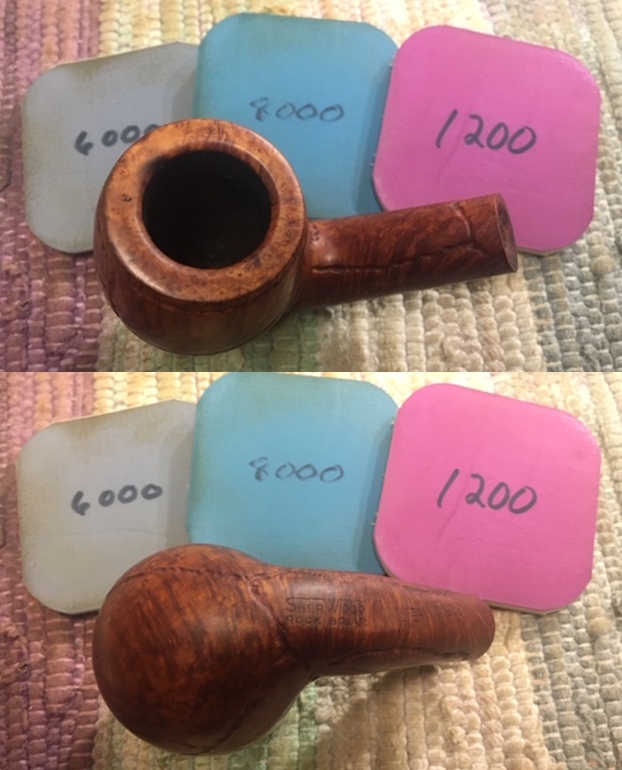
I turned to Pipephil (http://www.pipephil.eu/logos/en/logo-savinelli3.html) to read about the Sherwood Rock Briar. It is a smooth pipe with the worm trail carving around the bowl. Sometimes I wonder if it was not Savinelli’s answer to the Custombilt Craze or what Lorenzo was selling that was similar. This is definitely tamer! I have included the screen capture from the site below. Armed with that information and a clearer picture of the original pipe I turned to work on the pipe on my work table. Jeff had done a great job cleaning up the pipe as usual. He reamed the pipe with a PipNet reamer and cut back the cake back to the bare briar. He cleaned up the walls with a Savinelli Fitsall Pipe Knife. He scrubbed the interior of the bowl and shank with pipe cleaners, cotton swabs and alcohol to remove the tars and oils. He scrubbed the exterior of the pipe with Murphy’s Oil Soap and a tooth brush to remove the grime from the finish. He worked on the rim top lava and darkening with the soap and tooth brush. He scrubbed the inside of the stem with alcohol and pipe cleaners. He scrubbed the exterior with Soft Scrub and then soaked it in Before & After Deoxidizer. He washed it off with warm water to remove the Deoxidizer. The pipe looked far better. I took photos of the pipe when I received it before I started working on it. I took photos of the bowl and rim top as well as the stem to show how clean they were. You can see the darkening on the inner edge and the top on the right front the bowl. The stem looks clean of oxidation and the tooth marks and chatter are very clear in the photos.    I took a photo of the pipe with the stem removed to show the overall look of stem, tenon and profile of the pipe. There was a crimped aluminum tube in the tenon once the stem was off and it inhibited airflow and was really unnecessary.I decided to start my work on the pipe by addressing the darkening on the rim top and the inner edge. I used a folded piece of 220 grit sandpaper to work on the edge and the rim top at the front of the bowl to remove the darkening. It took a bit of work but I was able to remove the majority of it and the end product looked much better.I polished the bowl and rim with micromesh sanding pads – wet sanding with 1500-12000 grit pads. I worked over the rim top and edge of the bowl with the pads. I wiped the bowl down with a damp cloth after each pad to remove the sanding debris.   Because the bowl and rim top looked so good I decided to move on to rubbing the briar down with Before & After Restoration Balm. I worked it into the briar with my fingertips and a horse hair shoe brush to get it into the crevices. The product works to clean, enliven and preserve the briar. I let it sit for 10 minutes while I worked on the stem. After the time passed I buffed it with a cotton cloth to deepen the shine. The briar really comes alive with the balm. I set the bowl aside and turned my attention to the stem. I decided to pull the crimped tube in the tenon so I heated it with a lighter and twisted it free. Behind and under the aluminum tube there was a lot of tars and oils so I recleaned the inside of the stem with pipe cleaners and alcohol.   I worked over the oxidation on the stem and the button with 220 grit sandpaper and sanded it until I had removed it. I started polishing the stem with 400 grit wet dry sandpaper. At this point it is starting to look much better.   I rubbed the stem down with Denicare Mouthpiece Polish – a red, gritty Tripoli like substance that is a paste. I rubbed it into the surface of the stem and polished it off with a cotton pad. I have found that is a great intermediary step before polishing with micromesh pads. I am not sure what I will use once the final tin I have is gone!   I polished the vulcanite with micromesh sanding pads – 1500-12000 grit pads. I wiped it down with Obsidian Oil after each sanding pad. I used Before & After Pipe Polish – both Fine and Extra Fine to further polish the stem.   This Savinelli Sherwood Rock Briar 608 Bent Billiard is another interesting looking pipe. The mix of brown stains highlights the smooth briar between the rusticated patterns around the bowl sides, top and bottom. The finish on the pipe is in excellent condition and the contrasting stains work well with the polished black vulcanite saddle stem. I put the stem back on the bowl and carefully buffed the pipe with Blue Diamond on the buffing wheel using a light touch on the briar. I gave the bowl and stem multiple coats of carnauba wax on the buffing wheel and followed that by buffing the entire pipe with a clean buffing pad. I hand buffed the pipe with a microfiber cloth to deepen the shine. The finished Sherwood Rock Briar 608 Bent Billiard is quite nice and feels great in the hand. Give the finished pipe a look in the photos below. The dimensions of the pipe are Length: 5 ½ inches, Height: 2 inches, Outside diameter of the bowl: 1 ¼ inches, Chamber diameter: ¾ of an inch. Thanks for walking through the restoration with me as I worked over another beautiful pipe. This pipe will be added to the Italian Pipe Makers section of the rebornpipes store soon. If you want to add it to your collection send me an email or a message! Thanks for your time.

Restoring a Kriswill “Golden Clipper” Freehand Chimney


Blog by Paresh Deshpande

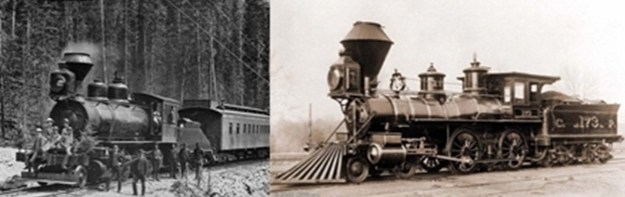
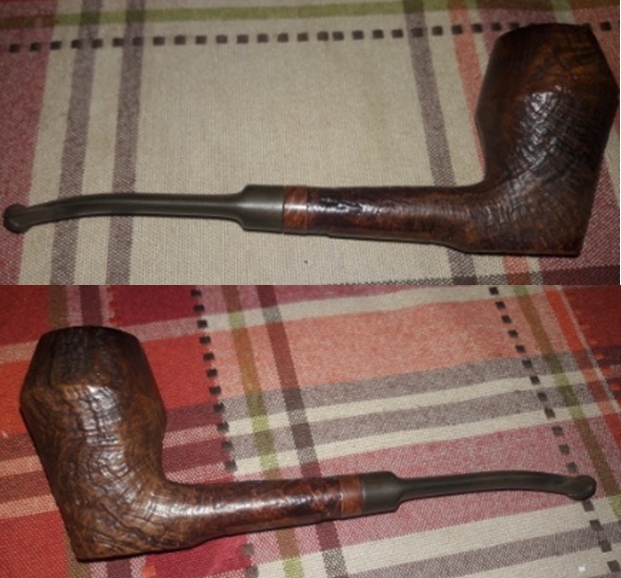
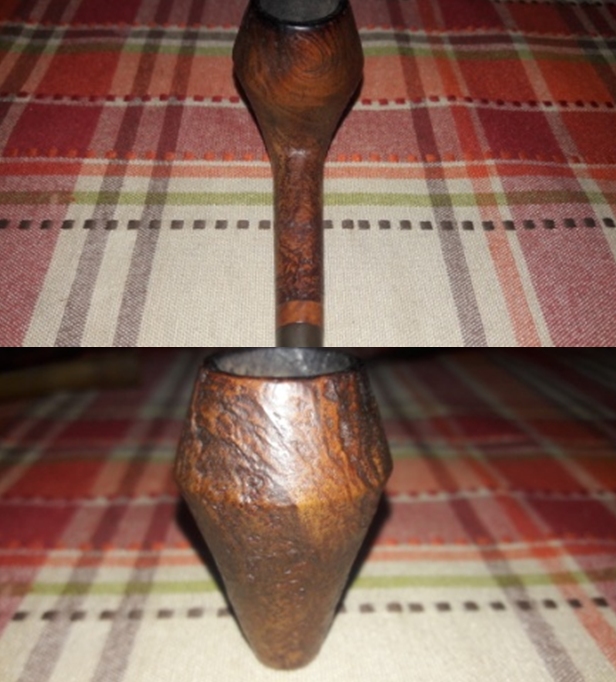
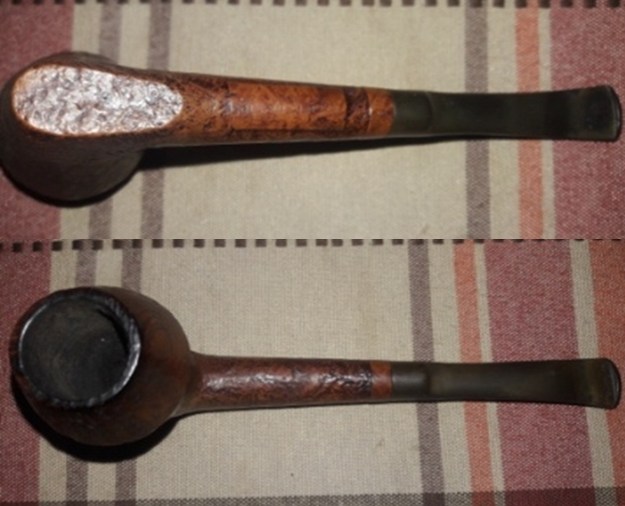
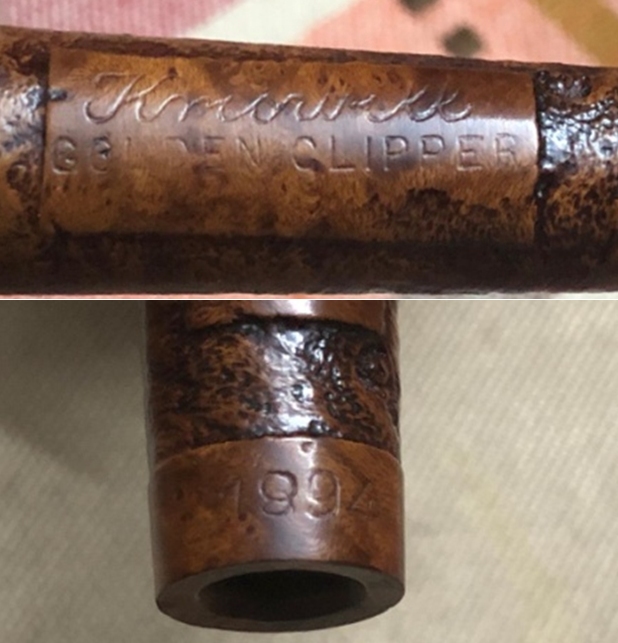
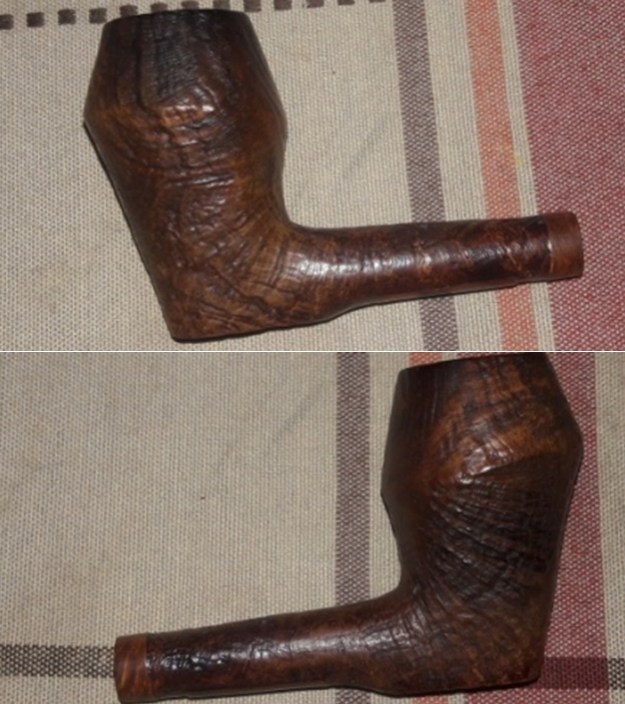
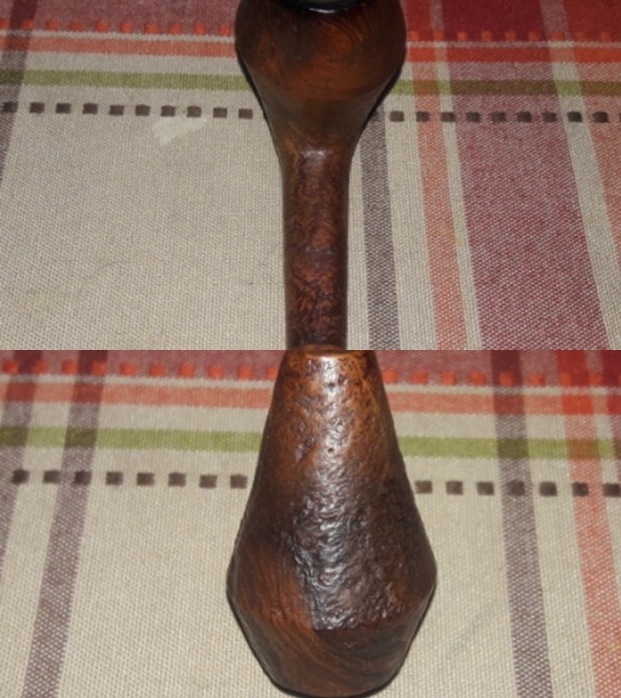
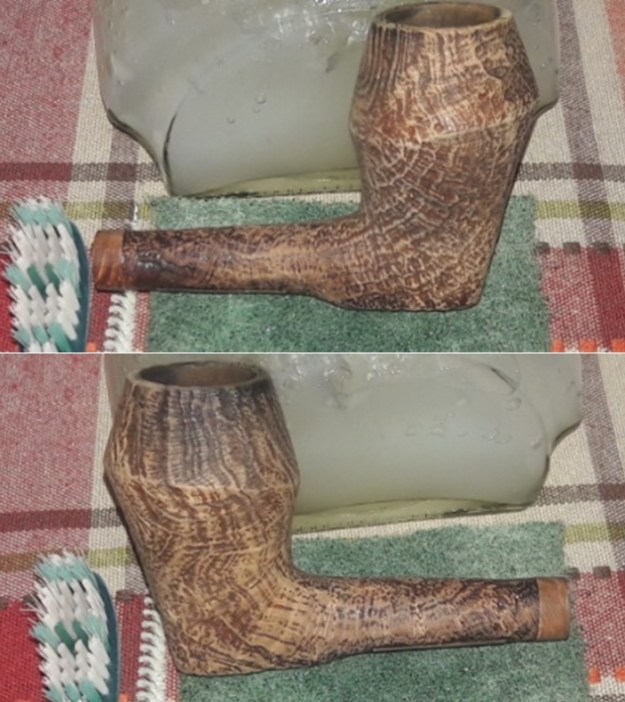
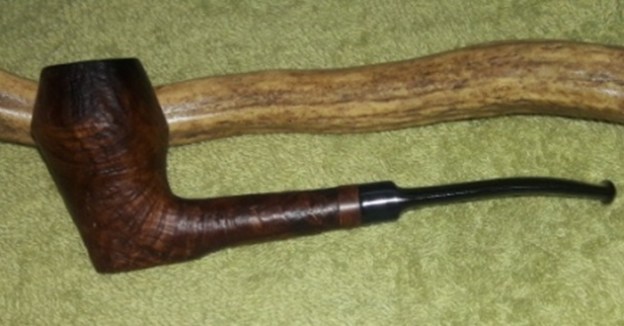
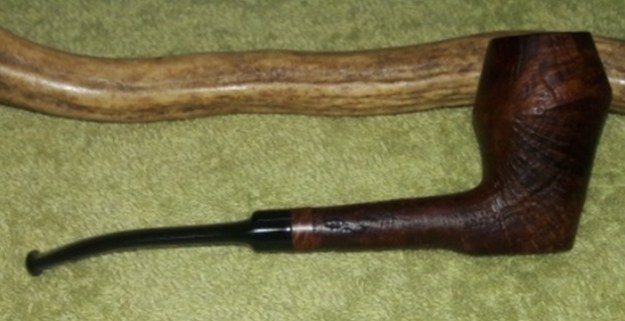
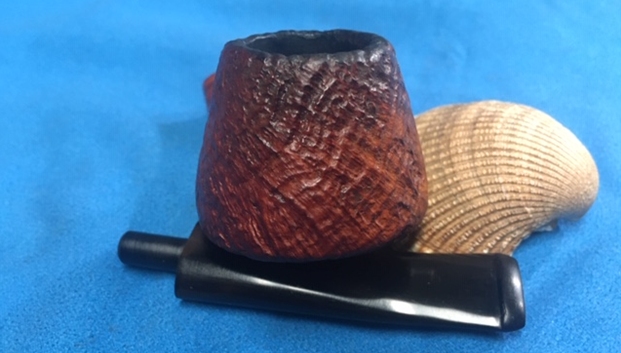
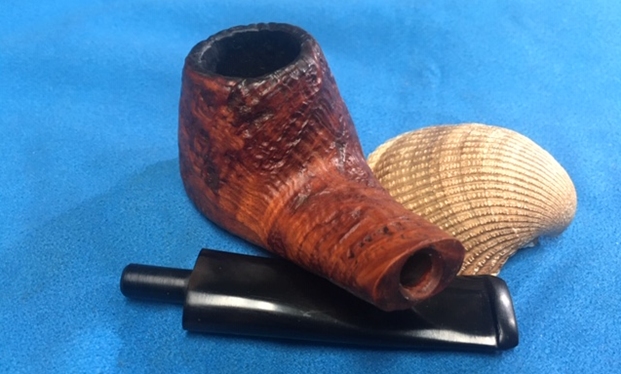
The next pipe selected for refurbishing is a uniquely shaped Danish pipe. I say unique because it has a tall chamber, rounded shank with a rim cap, a slight bent to the stem and is a sitter! It’s a shape that I had never come across and was unable to classify its shape. I shared pictures of the pipe with my Guru, Steve and he opined that it could be called a Rhodesian, stack, sitter or Bulldog as it has characteristics of all these shapes but looks like neither. Thus, we concurred that it’s most appropriate to call this pipe a freehand!!!! The bowl shape reminds me of the chimney of early steam locomotive engines with their bellowing huge plumes of smoke as they rush forward.This pipe has shallow sandblast and a natural finish (I guess) that has darkened over a period of time. For a pipe with a length of 5 ½ inches and bowl height of 2 inches and chamber depth of 1 ¾ inches, it’s pretty much ultra light weight, making it a perfect smoker to clench. The vulcanite saddle stem is thin and delicate. The shallow sandblast form the asymmetric patterns look interesting. The foot of the stummel is flat and elongated, making it a perfect sitter. A smooth briar band at the shank end breaks the monotony of the blasted surface and also provides a surface for stamping the model number. The pipe is stamped on the bottom smooth surface of the shank as “Kriswill” in script hand over “GOLDEN CLIPPER”. Further to the right towards the shank end on the smooth briar band is stamped the shape (?) code “1894”. Truth be told, the shape code stamping of the numeral 8 appears smudged. Having worked earlier on Kriswill pipes, I realized that the stamp “HAND MADE IN DENMARK” is conspicuous by its absence. The thin delicate vulcanite saddle stem is devoid of any stampings.A couple of years back I had worked on a Kriswill Golden Clipper and on a Chief. Here is the link for the Kriswill Chief write up…

https://rebornpipes.com/2018/08/04/breathing-new-life-into-a-kriswill-chief-20/. I am sure you will find it an interesting read.

I had researched the brand at that time and all that was now needed was to refresh the memory. I went through the above write up and also through the material that was available on pipedia.org and pipephil.eu. There are two facts which I wish to highlight, firstly, Prior to 1970 the stampings are in script letters on the shank and on the mouthpiece. The star on the stem and block letters on the shank were introduced from that date on”

Second, is deciphering the four digit model coding system adopted by Kriswill. The last two numerals are the model numbers for smooth finish and all sandblasted have numeral 18 preceding the model number. Thus the pipe currently on my table is a model #94 and since it is a sandblast variant, the number is 1894.

Thus from the above, the pipe that I am now working on dates to pre 1970s since the stamping is in script and the stem is sans the star.

With the provenance of the pipe satisfactorily established, I proceeded to carry out a visual inspection of the condition of the pipe in my hand. This helps me map the road to restoring the pipe by identifying the issues involved and identify methods/ options to address the same beforehand.

Initial Visual Inspection
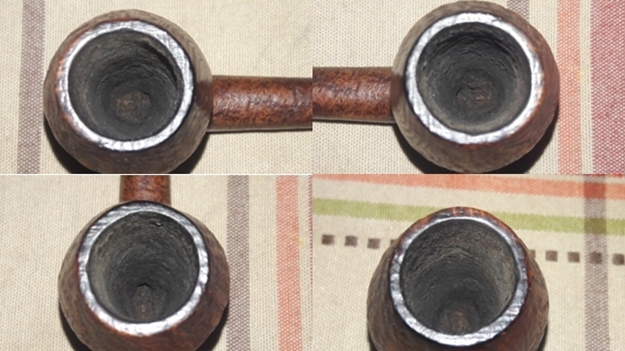
The chamber is so filled with cake that I am unable to reach the bottom of the bowl with my little finger. The build-up of the cake is heavier on the bottom half of the bowl, but overall well maintained. The condition of the inner walls of the chamber can be commented upon after the cake has been taken down to the bare briar. The rim top is thin and has the same shallow sandblast surface as the rest of the stummel, has darkened and is covered with dust, lava and grime. I don’t think that there is any charring to either of the rim edges and they appear to be in pristine condition. The chamber odors are not very strong and should be completely eliminated once the cake has been removed and the shank has been thoroughly cleaned.The stummel surface appears dull and lackluster due to the accumulated dirt, dust and grime of years of usage and subsequent uncared for storage. There are no fills or chips or nicks over the stummel surface. There are no other stummel issues that I have to deal with on this pipe. The mortise is relatively clean with small amount of oils and tars accumulated on the walls of the mortise. This should be an easy clean up job. The delicate vulcanite saddle stem is heavily oxidized. The lip has some minor bite marks on both surfaces and will need to be rebuilt and reshaped. There is some calcification seen around the lip on both the surfaces. The airway in the stem is blocked and the draw is restricted. I will need to clean it to ensure a full and open draw. The tenon and the horizontal slot show accumulation of dried oils, tars and gunk on the inside as well as on the outside, this will have to be cleaned. The Process
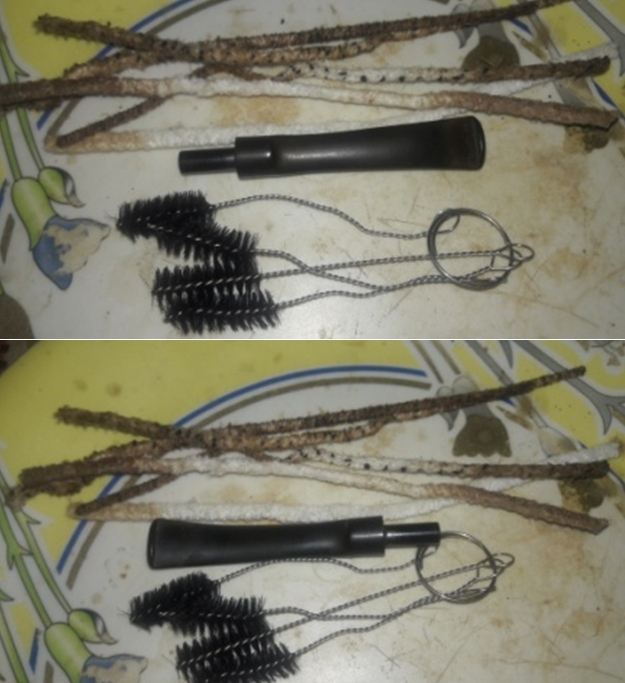
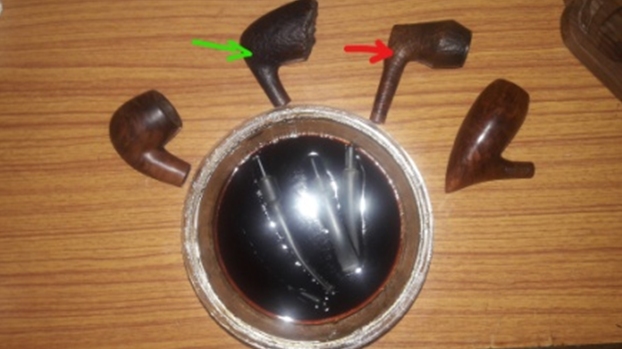
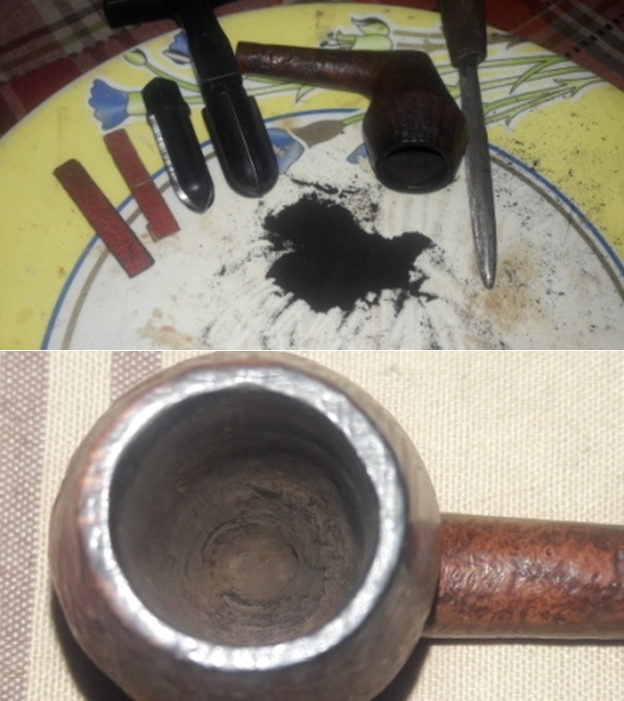
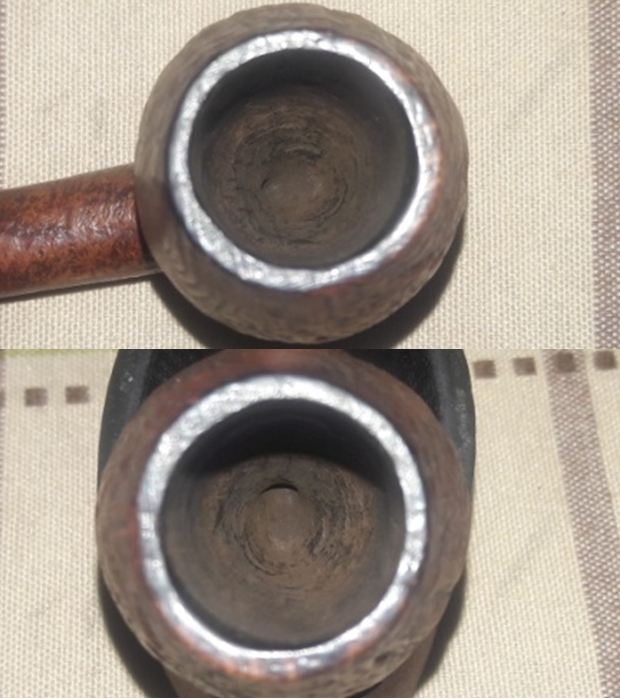
The process of refurbishing this pipe started with the cleaning of the stem. Abha, my wife, cleaned the stem air way with regular and bristled pipe cleaners dipped in 99.9% pure isopropyl alcohol. She further cleaned the stem internals with thin shank brushes and dish soap to remove the stubborn and thick gunk from within the airway. The heap of pipe cleaners and their appearance tells a sordid story. With a sharp fabricated knife, she scraped off all the dried tars and gunk from the tenon end.The stem surface was sanded down with a worn out piece of 180 grit sand paper. I have realized that following this step prior to immersion into the “Before and After Stem Deoxidizer” solution has two advantages, firstly, the stem surface oxidation gets loosened and the solution works deeper and more efficiently in pulling the deep seated oxidation from the stem surface. Secondly, the minor tooth chatter and calcium depositions are taken care of prior to the immersion. I immersed it in “Before and After Deoxidizer” solution along with the stem of other pipes in line for restoration. This solution has been developed by Mark Hoover and works to draw out all the deep seated oxidation from the surface making its subsequent cleaning and polishing a breeze. I would definitely recommend this product as it saves on to time and efforts. The pipe has been marked with a red arrow for easy identification.Abha, my wife, dealt with the cake by reaming the chamber with a Castleford pipe tool using size 1 followed by size 2 head of the reamer. Using the fabricated knife, she further scraped the cake from the bottom of the bowl and also the walls of the chamber. She was especially very careful while reaming with the knife so as not to damage the inner edge of the rim. Once the solid briar was exposed, she further smoothed the walls and removed remaining cake by sanding with a 180 followed by 220 grit sand paper. Another advantage of this process is the elimination of traces of ghosting to a great extent. She wiped the chamber with a cotton swab wetted with 99.9% isopropyl alcohol. The chamber walls are pristine and solid with no heat fissures or pits. Simultaneously I cleaned out the internals of the shank/ mortise and airway using q- tips, pipe cleaners and isopropyl alcohol. I scraped the walls of the mortise with my fabricated knife till the accumulated gunk was removed. Further cleaning of the shank internals will ensue during the external cleaning of the stummel.Thereafter, I generously rubbed “Briar Cleaner”, a product that has been developed by my friend Mark Hoover, into the external surface of the bowl and the rim top surface. It works similar to Murphy’s oil soap and needs to be applied to the stummel surface and set aside for 5- 10 minutes. The product pulls out all the dirt and grime to the surface making further cleaning easy. I am quite happy with this product. I used a hard bristled tooth brush to scrub the stummel and rim top with the solution. After the scrub with Briar cleaner solution, I washed the stummel under running warm water with anti oil dish washing detergent till clean and dried it using paper towels and soft cotton cloth. I simultaneously cleaned the shank internals with the detergent and hard bristled shank brush. The stummel surface has cleaned up nicely with the intricate sandblast patterns on full display. The stummel now looks and smells fresh and the old smells are all gone. I set the stummel aside to dry out naturally. The next morning, Abha removed the stems that had been soaking in the deoxidizer solution overnight. She cleaned the stem and the stem airway under running warm water and scrubbed the raised oxidation from the stem surface using a Scotch Brite pad and the airway with thin shank brush. She further removed the oxidation by scrubbing the stem with 0000 grade steel wool and applied a little olive oil to rehydrate the stem.I further sanded the stem surface with a folded piece of 220 and 320 grit sand papers to further remove the traces of oxidation and reduce the sanding marks and followed it with wet sanding the entire stem with 1500 to 12000 grade micromesh pads (1500 to 2400 grit micromesh pads have completely worn out and unable to order a set due to lock down and so had used 1500 and 2000 grit wet or dry sand paper). I wiped the stem with a moist cloth to remove the dust and monitored the progress being made after every three grit pads. The stem polished up nicely and had a rich deep black shine to it. I applied a little Extra Virgin Olive oil to rehydrate the vulcanite and set the stem aside.Next, I rubbed a small quantity of “Before and After Restoration Balm” in to the briar with my finger tips, working it deep in to the sandblasts and let it rest for a few minutes. The balm almost immediately works its magic and the briar now has a nice vibrant appearance with the beautiful sandblast patterns displayed in their complete splendor. The contrast of the light brown of the raised sandblast portion with the dark brown of the rest of the stummel adds an interesting dimension to the appearance of the stummel. I further buffed it with a horse hair brush. On to the home stretch!! I mounted a cotton cloth buffing wheel on to my hand held rotary tool and applied several coats of carnauba wax. I finished the restoration by giving the entire pipe a rigorous hand buffing using a microfiber cloth to raise the shine further and remove any residual wax from in between the sandblasts. The finished pipe looks amazingly beautiful and is now ready for its long second innings with me. P.S. I am not really pleased with the restoration projects that I can choose due to paucity of equipment and materials that are required. Today I realized that I have run out of the medium superglue I use and that the spare one has mysteriously hardened within the tube. With my country under lock down to arrest the spread of the COVID- 19 virus, no delivery can take place. So I am being forced to improvise and that I shall continue to do!!

The next project that I have earmarked is interesting in that it is the very first time that I shall be undertaking repairs of this nature. Be sure to read that write up and help me improve my skill sets.

I wish to thank each one for sparing their valuable time to read through this write up and praying for the health and safety of entire mankind. Stay home…stay safe!!

New Life for a Peterson’s Republic Era “Kildare” 69 Bent Billiard


Blog by Steve Laug

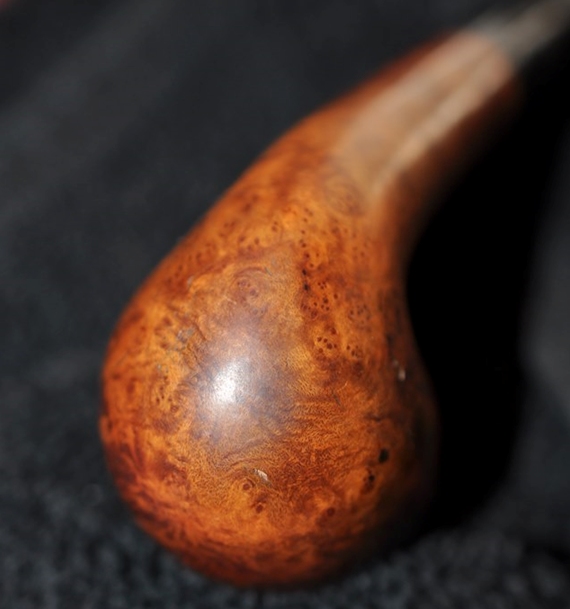
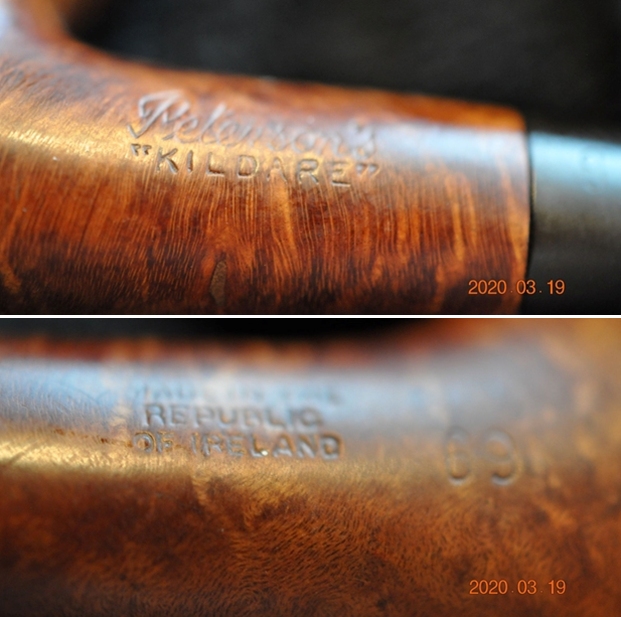
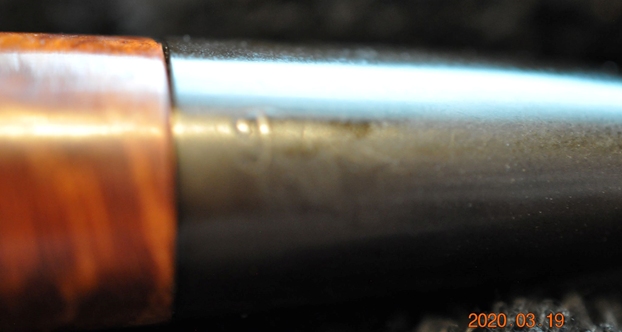
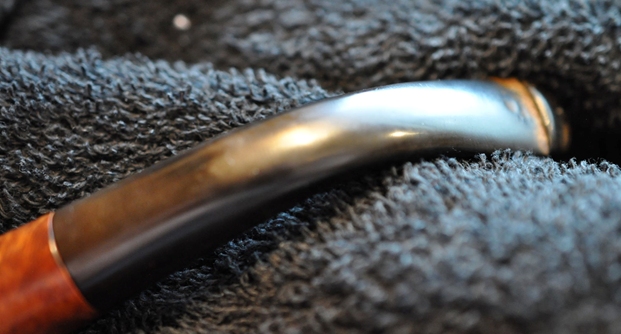
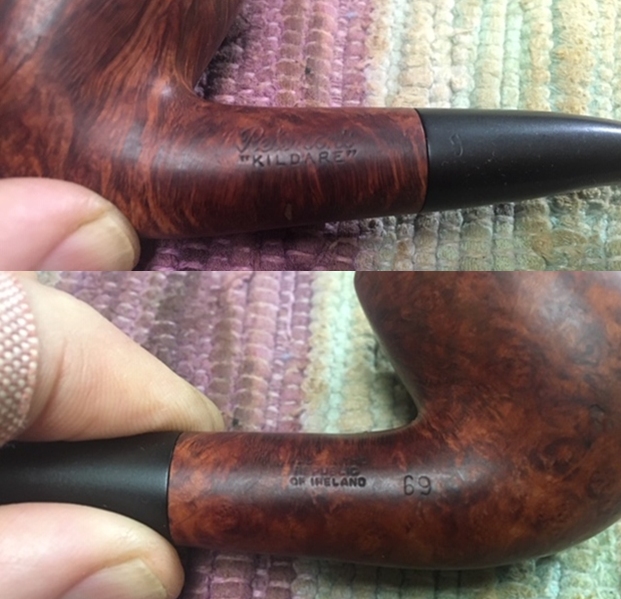
The next pipe on the table came to us from one of Jeff’s pipe hunts or auctions. It is a nicely grained and I would say beautiful Peterson’s “Kildare” 69 Bent Billiard. The finish is quite nice with at that classic Peterson’s look. The pipe was dirty, with grime and dust ground into the finish. The bowl had a thick cake in the bowl and a lava overflow on the inner edge of the rim and spilling onto the rim top in some spots. The pipe is stamped on both sides of the shank and reads Peterson’s “Kildare” on the left side of the shank. It is stamped Made in the Republic of Ireland followed by the shape number 69 on the right side of the shank. The stamping is clear and readable on the pipe. The stem was dirty and oxidized. There were tooth marks and chatter on the stem near the button on both sides and some on the surface of the button as well. There was a faint partial Peterson’s “P” on the left side of the taper stem. Jeff took photos of the pipe before he cleaned it up. Jeff took photos of the rim top to show the cake in the bowl and the relatively clean rim top and beveled edge. The photos show the rim top and bowl from various angles.He took some photos of the bowl sides and heel to show the interesting grain that was on this bowl. It is a dirty but quite beautifully crafted pipe. The stamping on the underside of the shank read as noted above. The photo shows that they are very clear and readable. The P on the left side of the stem faint and part of it not stamped into the surface of the stem. The stem was a very good fit to the shank. It was oxidized, calcified and had debris stuck to the surface of the vulcanite. There were tooth marks and chatter on both sides of the stem.  I am including the information from Pipedia’s article on Peterson pipes. It is a great read in terms of the history of the brand (https://pipedia.org/wiki/Peterson). I have included a bit of the pertinent history here.

1950 – 1989 The Republic Era  – From 1950 to the present time, the stamp for this era is “Made in the Republic of Ireland” in a block format generally in three lines but two lines have been used with or without Republic being abbreviated.

During the 1950’s and 60’s the Kapp & Peterson company was still in the ownership of the Kapp family. However 1964 saw the retiral of the company Managing Director Frederick Henry(Harry) Kapp.

With that information in hand I knew what I was dealing with in terms of the stamping and the age of this pipe. I knew from the information that the pipe was made during the Republic Era between 1950 and 1989. Pipedia then qualifies the dating as follows: From 1950 to the present time, the stamp for this era is “Made in the Republic of Ireland”. Now it was time to work on the pipe.

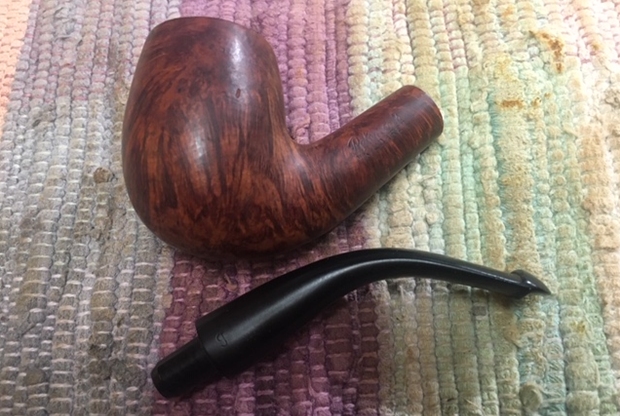
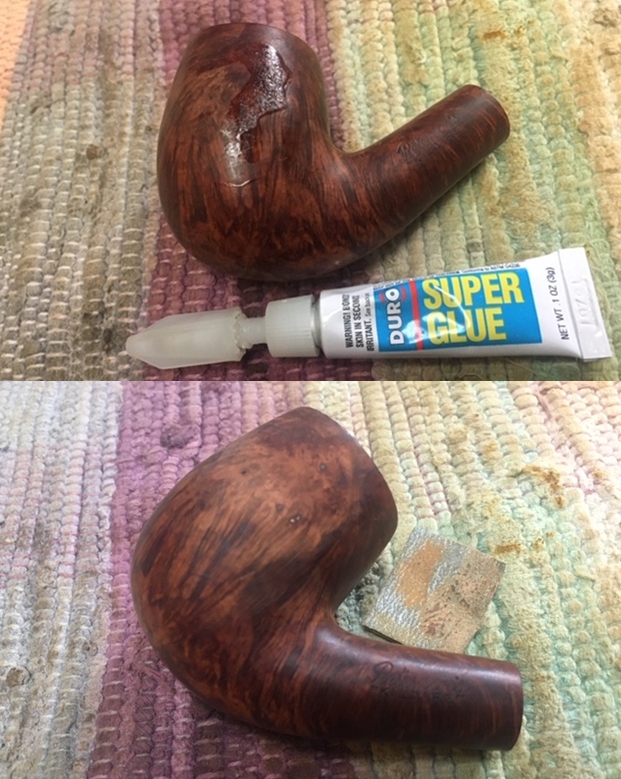
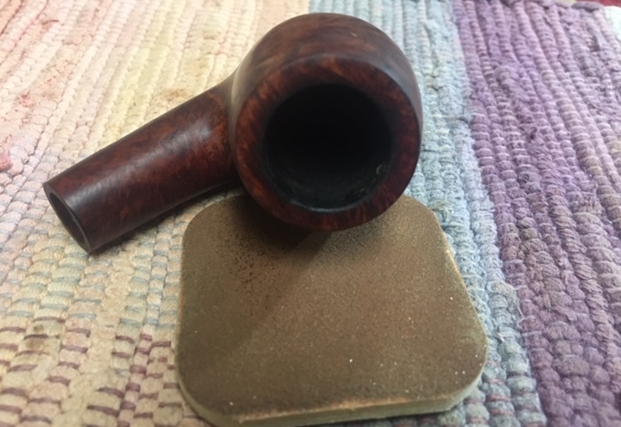
Armed with that information I turned to work on the pipe itself. Jeff had done a great job cleaning up the pipe as usual. He reamed the pipe with a PipNet reamer and cut back the cake back to the bare briar. He cleaned up the walls with a Savinelli Fitsall Pipe Knife. He scrubbed the interior of the bowl and shank with pipe cleaners, cotton swabs and alcohol to remove the tars and oils. He scrubbed the exterior of the pipe with Murphy’s Oil Soap and a tooth brush to remove the grime from the finish. He scrubbed the inside of the stem with alcohol and pipe cleaners. He cleaned the oxidized silver with Soft Scrub and buffed it off with a soft pad. He scrubbed the exterior with Soft Scrub and then soaked it in Before & After Deoxidizer. He washed it off with warm water to remove the Deoxidizer. The pipe looked far better. I took photos of the pipe when I received it before I started working on it. I took photos of the bowl and rim top to show how clean it was. There is some darkening around the inner edge and the rim top is roughened. The stem looks clean of oxidation and there are some tooth marks and chatter on both sides of the stem.The stamping on both sides of the shank was very clear and readable as noted above.I took a photo of the pipe with the stem removed to show the overall look of stem, tenon and profile of the pipe. It is a great looking pipe.There was a cluster of sandpits on the mid left side of the bowl. They were in a tight pattern and were quite deep.  I usually fill these in with a drop of clear super glue then sand the repairs smooth. This afternoon the glue came out in a large clump on the area in question. I wiped off some of the excess but the majority of it hardened very quickly. I now officially had a mess of my own making on the side of the bowl that needed to be cleaned up. I sanded the area smooth with a folded piece of 220 grit sandpaper until it had blended into the surrounding area. I sanded the rim top with a 1500 grit micromesh pad to smooth out the roughened rim top. I polished the briar with micromesh sanding pads – wet sanding with 1500-12000 grit pads and wiping the briar down with a damp cloth after each pad. I rubbed the briar down with Before & After Restoration Balm. I worked it into the briar with my fingertips and a horse hair shoe brush to get it into the deep briar. The product works to clean, enliven and preserve the briar. I let it sit for 10 minutes while I worked on the stem. After the time passed I buffed it with a cotton cloth to deepen the shine. The grain came alive with the balm. I set the bowl aside and turned my attention to the stem. I “painted” the surface of the stem to try to lift the tooth marks in the vulcanite. I was able to lift them quite a bit.There were still some marks on both sides of the stem near the button. Once the repair I flattened them with a needle file to start the process of blending them into the surrounding material. I sanded out the tooth marks and chatter on both sides of the button surface and stem with 220 grit sandpaper and began the polishing with 400 grit wet dry sandpaper.I touched up the P stamp on the left side of the stem with Paper Mate Liquid Paper and once it dried I scraped off the excess. The P stamp is far from perfect but it definitely looks better.I polished the stem with micromesh sanding pads – 1500-12000 grit pads. I wiped it down with Obsidian Oil after each sanding pad. I used Before & After Pipe Polish – both Fine and Extra Fine to further polish the stem. This Republic Era Peterson “Kildare” 69 Smooth Bent Billiard is a nice looking pipe. The combination of brown stain really highlights the grain around the bowl sides and shank. They begin to really stand out with the polishing. The finish on the pipe is in excellent condition and the contrasting stains work well to give some contrast to the pipe. The polished black vulcanite P-lip taper stem adds to the mix. With the grime and debris gone from the finish and the bowl it is really is eye-catching. I put the stem back on the bowl and buffed the pipe with Blue Diamond on the buffing wheel, carefully avoiding the stamping on the shank. I gave the bowl and stem multiple coats of carnauba wax on the buffing wheel and followed that by buffing it with a clean buffing pad. I hand buffed the pipe with a microfiber cloth to deepen the shine. The finished Bent Billiard is quite nice and feels great in the hand. Give the finished pipe a look in the photos below. I can only tell you that like the other pipes I am working that it is much prettier in person than the photos capture. The dimensions of the pipe are Length: 5 ½ inches, Height: 2 inches, Outside diameter of the bowl: 1 ¼ inches, Chamber diameter: ¾ of an inch. Thanks for walking through the restoration with me as I worked over another interesting pipe. This Peterson’s “Kildare” Bent Billiard 69 will be added to the Irish Pipe Makers section of the rebornpipes store soon. If you want to add it to your collection send me an email or a message! Thanks for your time.

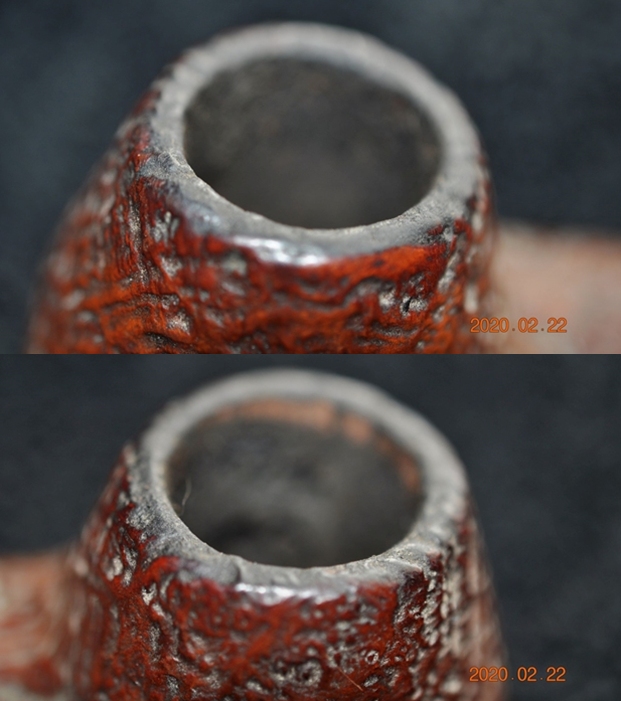
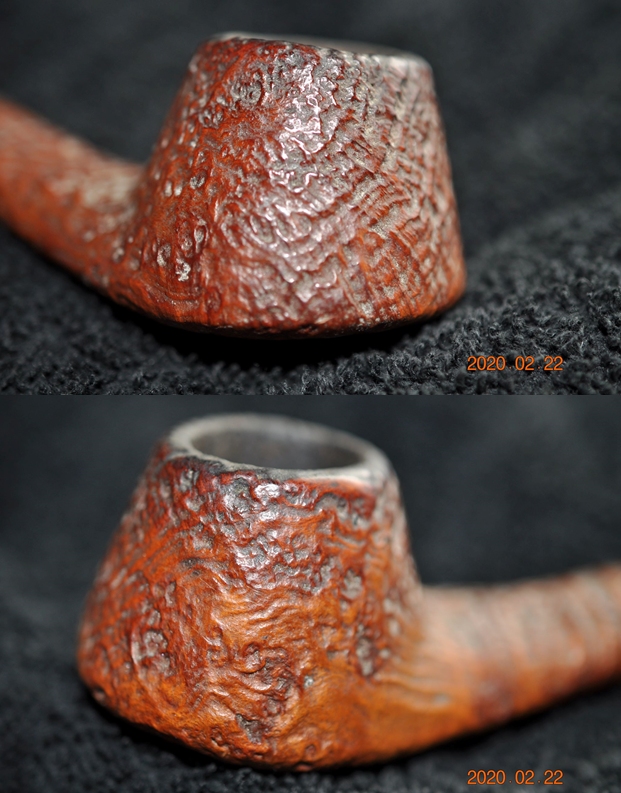
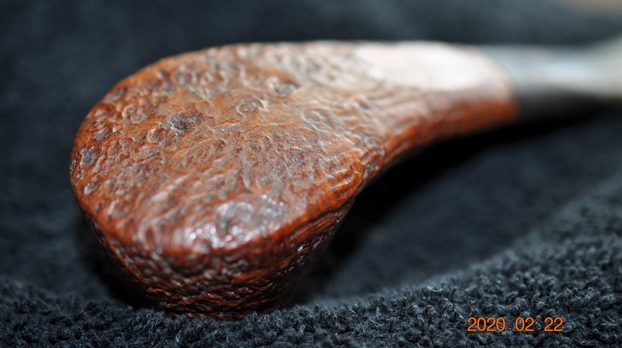
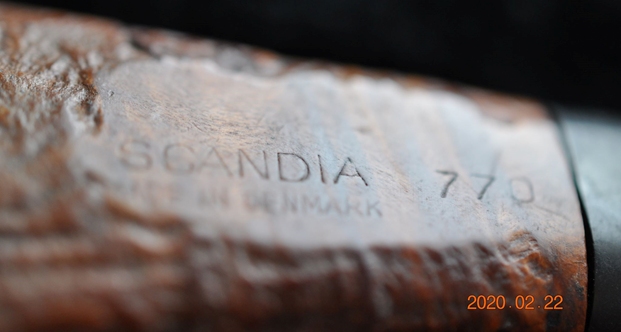
This Made in Denmark Scandia Volcano 770 was a tired looking pipe


Blog by Steve Laug

The next pipe on the table is one that was also at the bottom of the box of pipes I am working on. It is a Stanwell made Scandia sandblast pipe – a 770 Volcano shape with an oval tapered stem. The volcano shaped bowl, oval shank and taper stem made up a nicely shape pipe. The sandblast though dirt and grime showed some interesting colour mixes and the blast was very interesting.  It was stamped on a smooth panel on the underside of the shank and read SCANDIA over Made in Denmark and the shape number 770. The finish was very dirty with a heavy coat of grime ground into the sandblasted bowl and rim top as can be seen in the photos. There dust in all of the deep crevices of the blast. The bowl had a thick cake with a heavy lava overflow on the sandblasted rim top. There was too much lava on the rim top and edge to know what they looked like but more would be revealed once it was cleaned. The stem was oxidized and there were deep tooth marks and chatter on both sides and on the top and bottom edges of the button. Jeff took photos of the pipe before he cleaned it up so you could see what we saw. Jeff took photos of the rim top to show lava build up around the rim, the edges and cake in the bowl. The lava actually had filled in some of the nooks and crannies in the sandblast.   Jeff took some photos of the bowl sides and heel to show the absolutely dirty finish ground into the sandblast. It was a dirty pipe but I think it will be a beautiful one once we are finished.  The stamping on the underside of the shank is shown in the photos below. It is clear and read as noted above.  There was nothing stamped on the top of the stem. The stem was a good fit to the shank. It was oxidized, calcified and had debris stuck to the surface of the vulcanite. It also shows the tooth marks on the stem and on the button surface.  I had in my memory the thought that the Scandia brand was a Stanwell second so I quickly turned to Pipephil’s website to check it out (http://www.pipephil.eu/logos/en/logo-s4.html). I am including the following screen capture.It was my turn to work on the pipe now. I was really looking forward to what the pipe would look like once Jeff had worked his magic. What would the rim top look like? What would the dirty sandblast on the bowl look like? I had no idea. When I took it out of the box I was struck great job cleaning up the pipe Jeff had done. It was impressive! He had reamed the pipe with a Pipnet piper reamer and taken the cake back to bare briar. He cleaned up the remaining cake with a Savinelli Fitsall Pipe Knife. He scrubbed the interior of the bowl and shank with pipe cleaners, cotton swabs and alcohol to remove the tars and oils. He scrubbed the exterior of the pipe with Murphy’s Oil Soap and a tooth brush to remove the grime from the finish. He worked on the rim top lava and darkening with the soap and tooth brush. He scrubbed the inside of the stem with alcohol and pipe cleaners. He scrubbed the exterior with Soft Scrub and then soaked it in Before & After Deoxidizer. He washed the stem off with warm water to remove the Deoxidizer. The pipe looked far better. I took photos of the pipe when I received it before I started working on it.   I took photos of the bowl and rim top as well as the stem to show how clean they were. You can see that there is still some darkening to both the briar rim top and inner edge. The stem is clean and the tooth damage on both sides is very clear in the photos.I took a photo of the stamping on the underside of the shank. The stamping is readable as noted above. There is also the expected inset brass bar on the left side of the saddle.I took a photo of the pipe with the stem removed to show the overall look of stem, tenon and profile of the pipe. It really is a beautifully shaped pipe.I decided to start my work on the pipe by addressing the darkening on the briar rim top. I wiped down the entire bowl with alcohol and used a brass bristle wire brush to work over the darkened areas on the bowl top.I rubbed the briar down with Before & After Restoration Balm. I worked it into the briar with my fingertips and a horsehair shoe brush to get it into the crevices of the sandblast. The product works to clean, enliven and preserve the briar. I let it sit for 10 minutes while I worked on the stem. After the time passed I buffed it with a cotton cloth to deepen the shine. The briar really comes alive with the balm.     I set the bowl aside and turned my attention to the stem. I “painted” the stem with the flame of a Bic lighter to lift the deep dents in the surface. The dents on the top side lifted well. The underside was better than before. The button edge on the top was rough.    I filled in the remaining indentations and built up the top and bottom of the button with clear super glue. Once the repair cured I used a needle file to reshape the button edges and also flatten the repaired areas. I sanded the stem with 220 grit sandpaper to finish the shaping and to remove the remaining oxidation. I started polishing the stem with 400 grit wet dry sandpaper. I wiped the stem down with Obsidian Oil before further polishing it.   I polished the vulcanite with micromesh sanding pads – 1500-12000 grit pads. I wiped it down with Obsidian Oil after each sanding pad. I used Before & After Pipe Polish – both Fine and Extra Fine to further polish the stem.   This interestingly stained sandblast Stanwell Made Scandia 770 Volcano with a taper vulcanite stem turned out very nice. The mix of brown stains highlights the nooks and crannies of the sandblast around the bowl sides and bottom. The darkening on the rim top does not look too bad and adds a bit of contrast to the light coloured stain and the dark highlights. The finish on the pipe looks much better. I put the stem back on the bowl and carefully buffed the pipe with Blue Diamond on the buffing wheel. I gave the bowl and stem multiple coats of carnauba wax on the buffing wheel and followed that by buffing the entire pipe with a clean buffing pad. I hand buffed the pipe with a microfiber cloth to deepen the shine. The finished Volcano is very nice and feels great in the hand and can be used as a sitter with the wide base. Give the finished pipe a look in the photos below. It is a nice pipe whose dimensions are Length: 5 ½ inches, Height: 1 ½ inches, Outside diameter of the bowl: 1 ¼ inches, Chamber diameter: ¾ of an inch. Thanks for walking through the restoration with me as I worked over another beautiful pipe. This pipe will be going on the rebornpipes store shortly. If you are interesting in adding it to your collection let me know! Thanks for your time.