Tag Archives: Savinelli Products

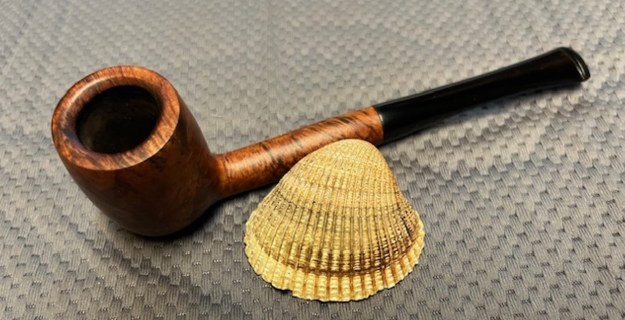
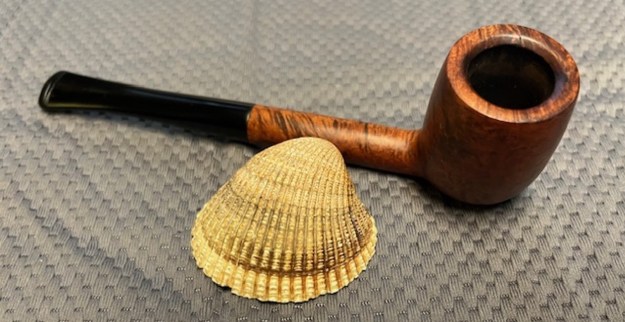
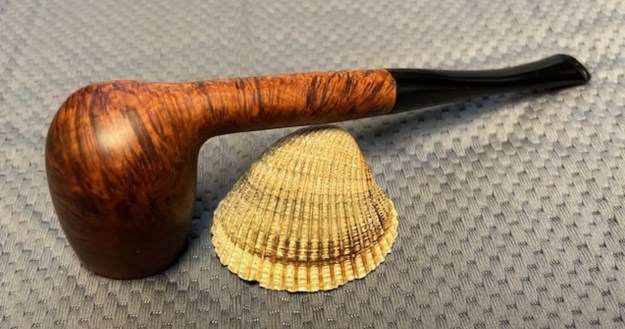
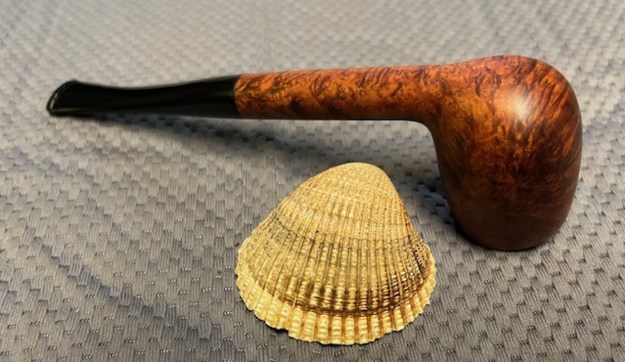
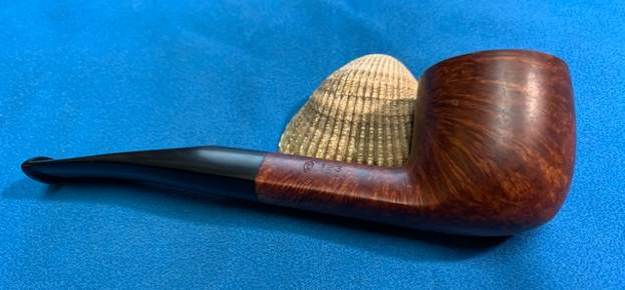
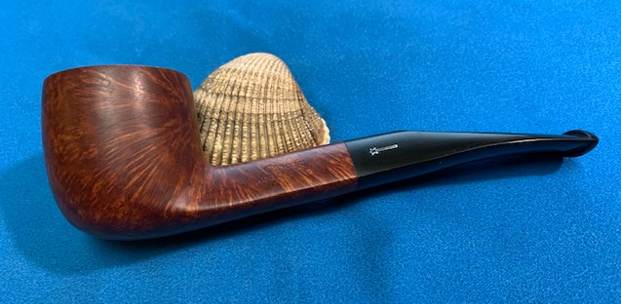
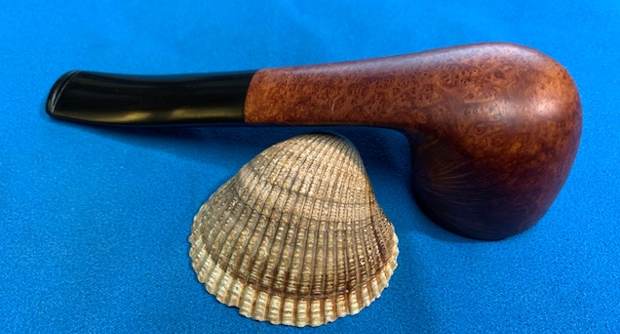
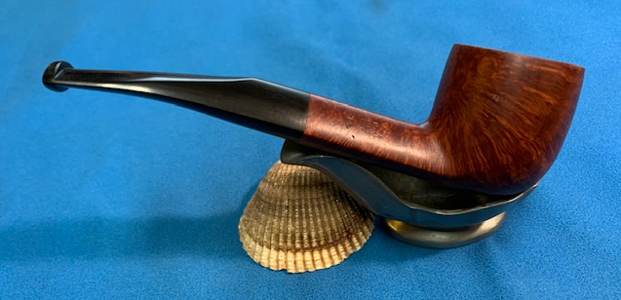
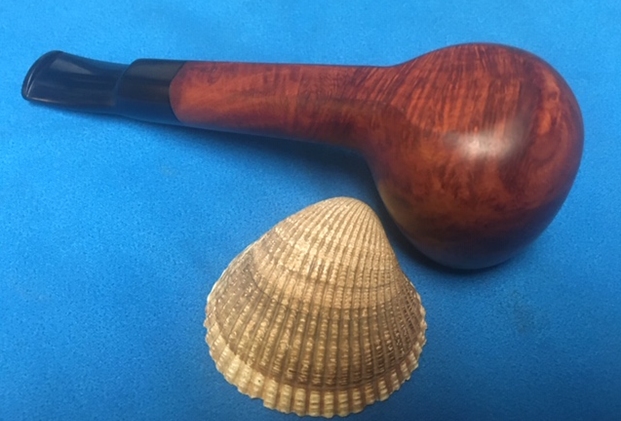
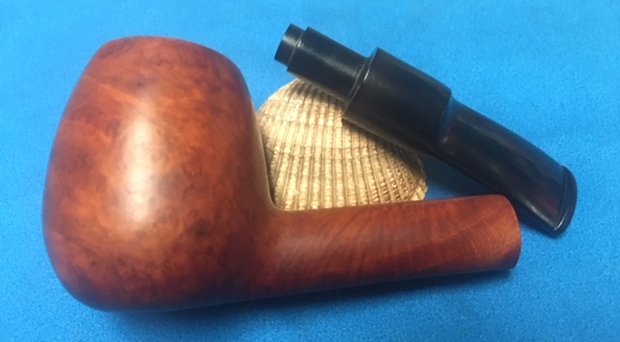
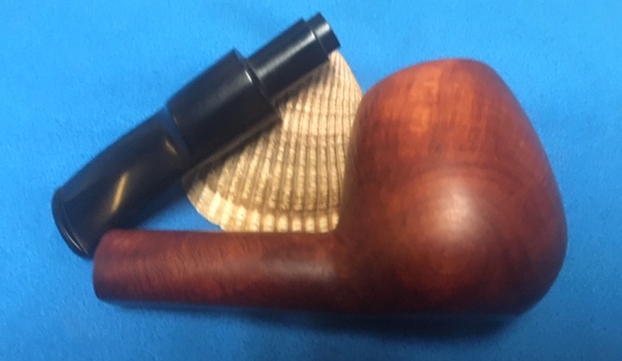
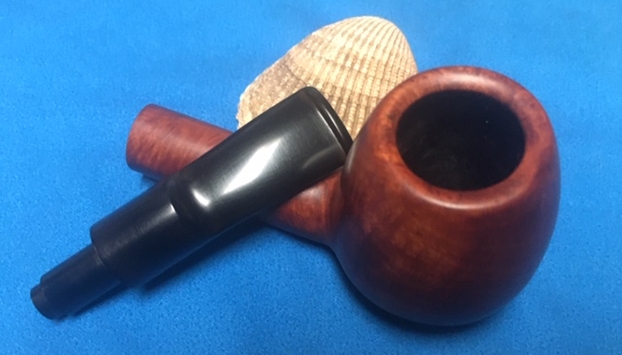
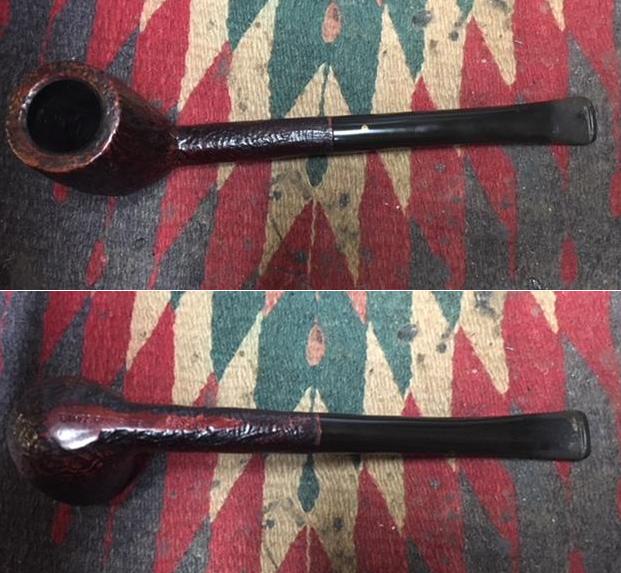
Restoring a Bings Favorite Italy Savinelli Product


Blog by Steve Laug

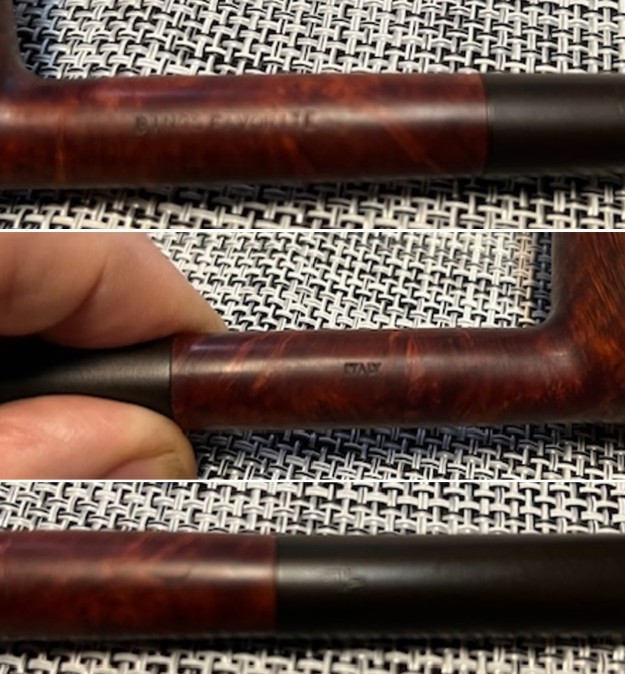
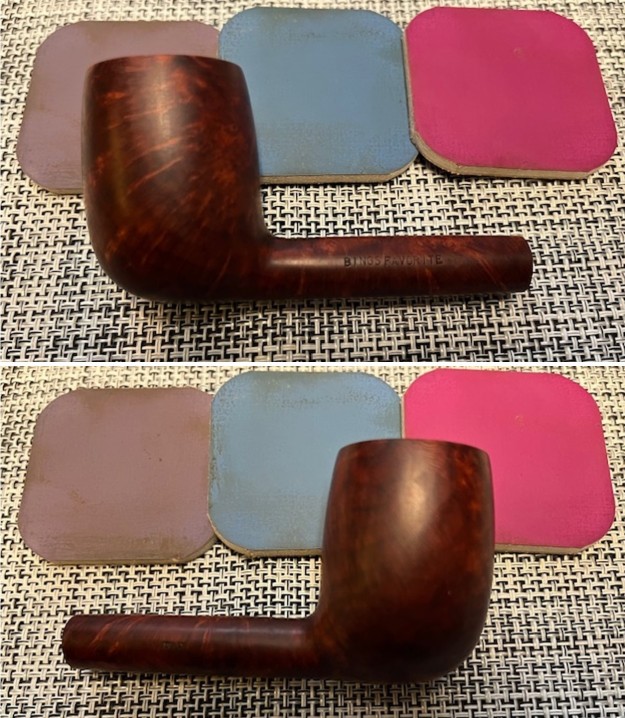
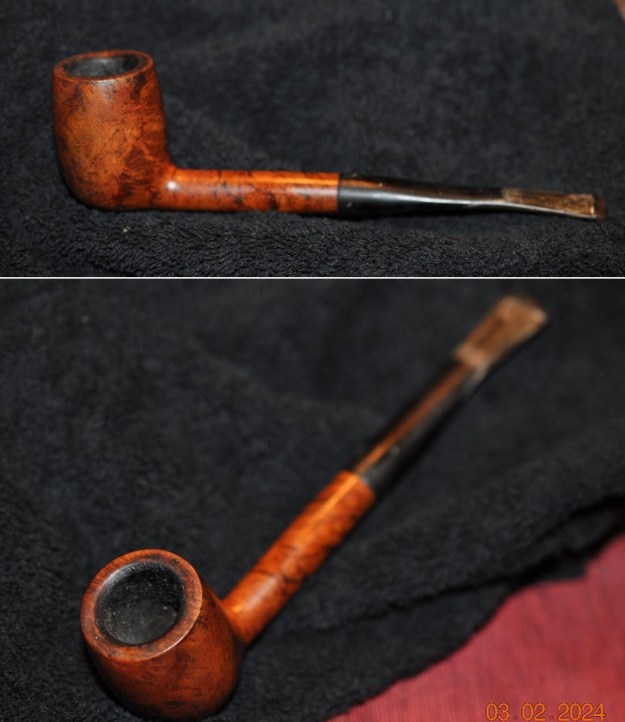
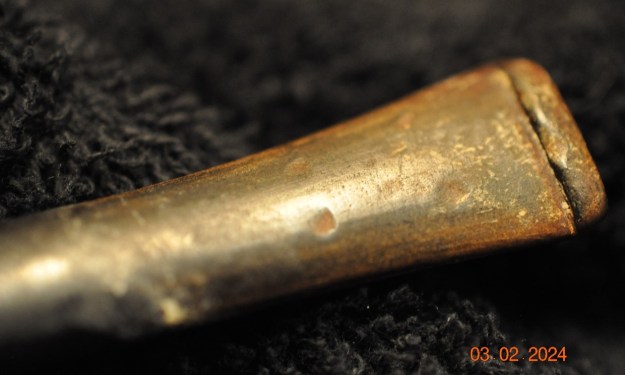
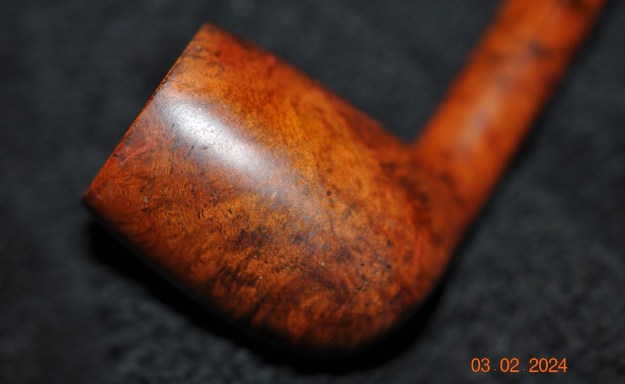
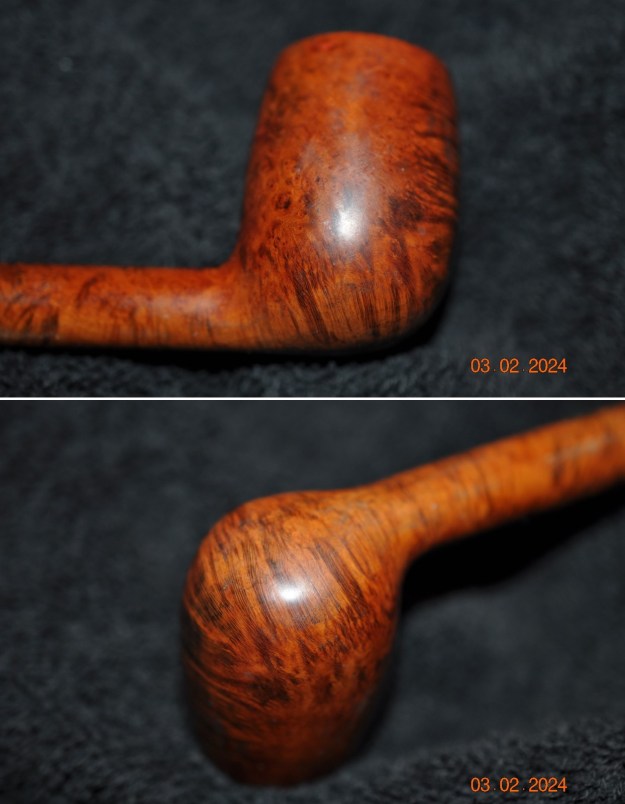
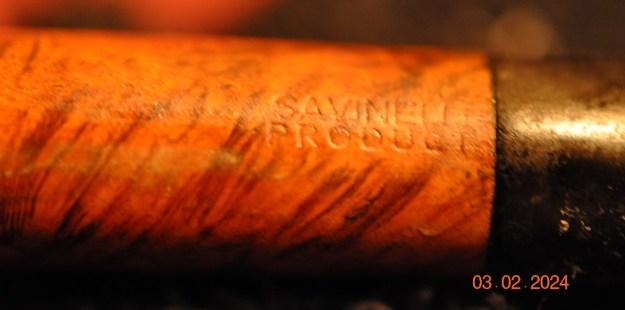
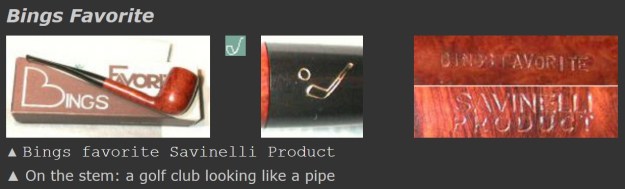
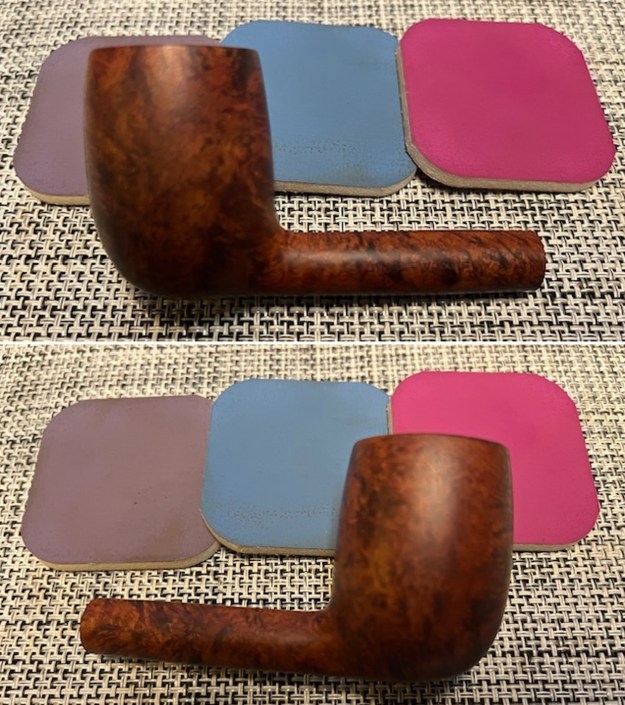
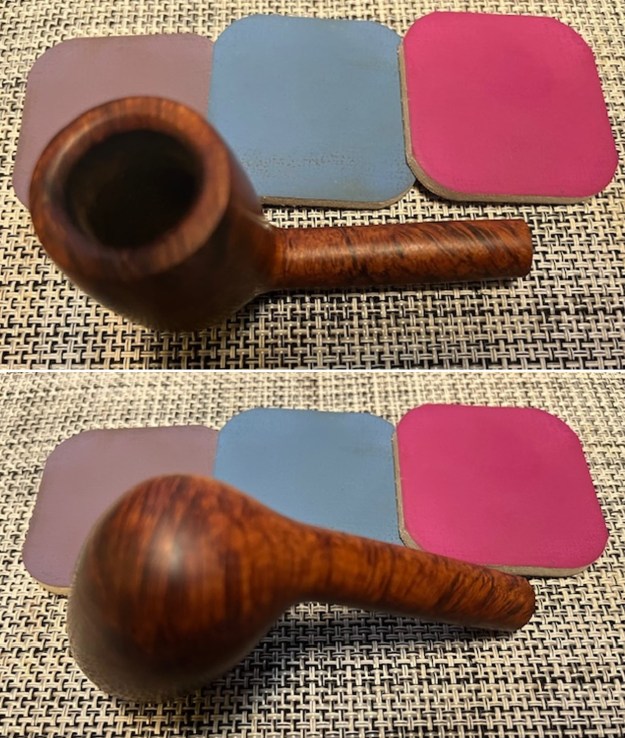
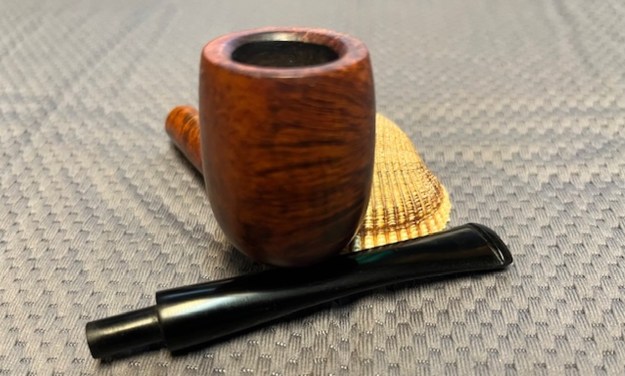
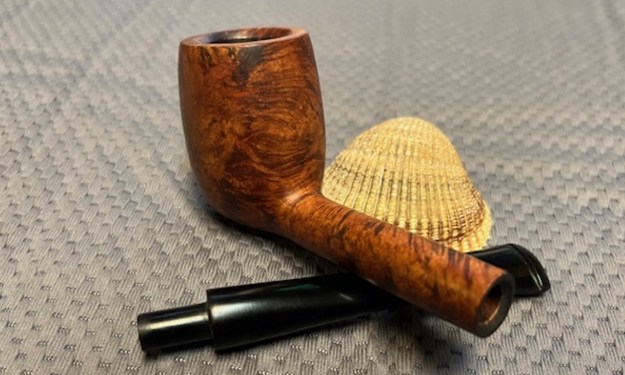
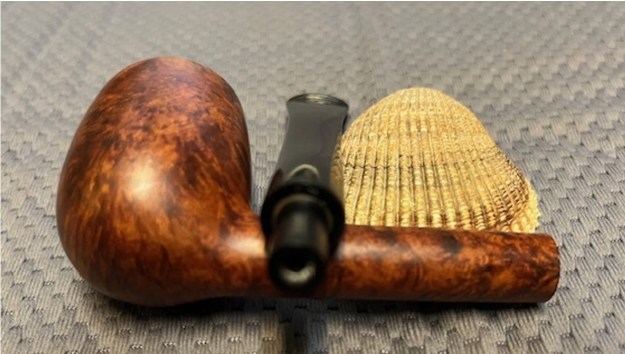
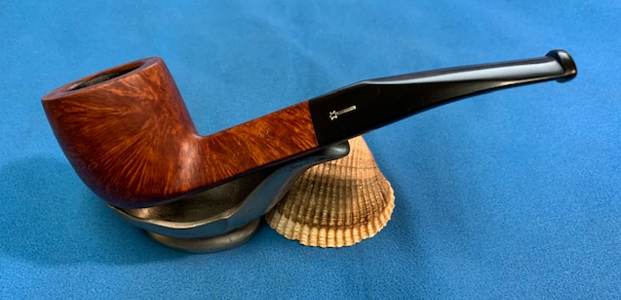
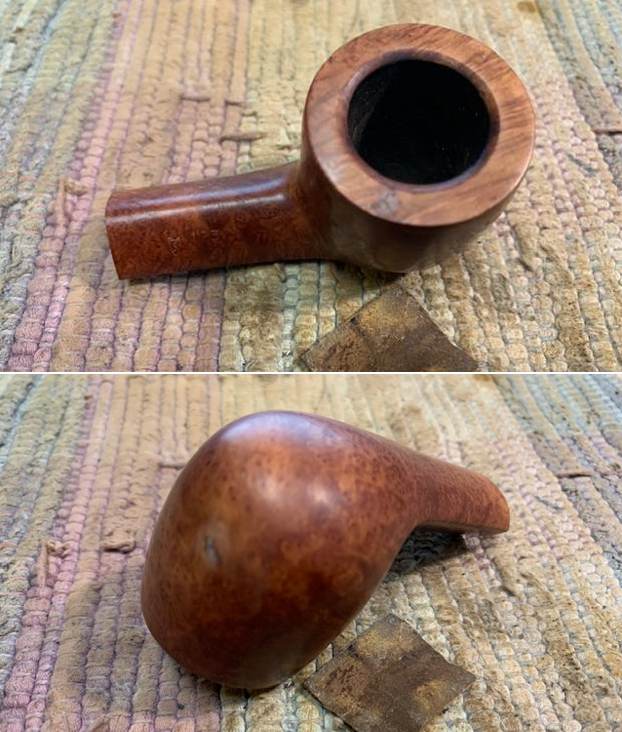
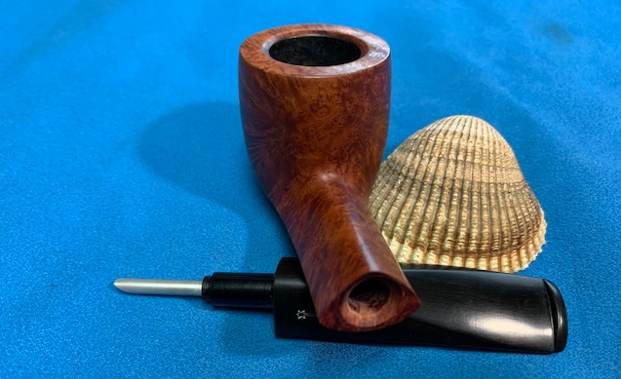
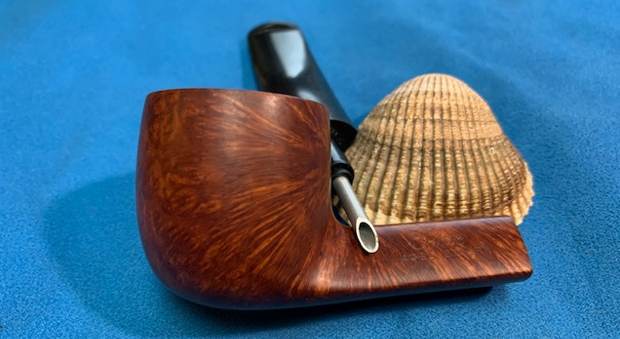
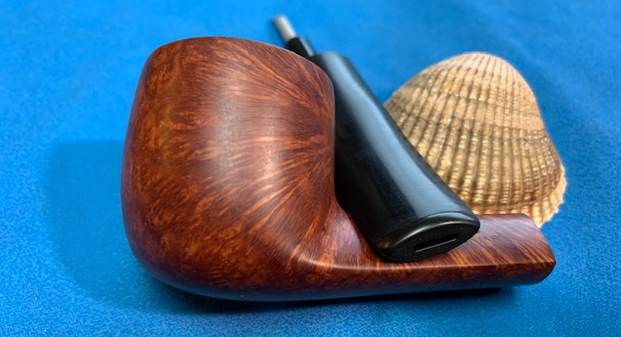
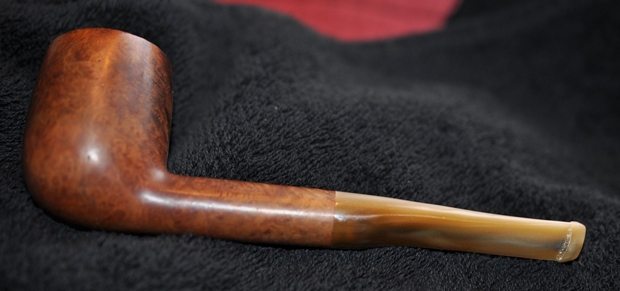
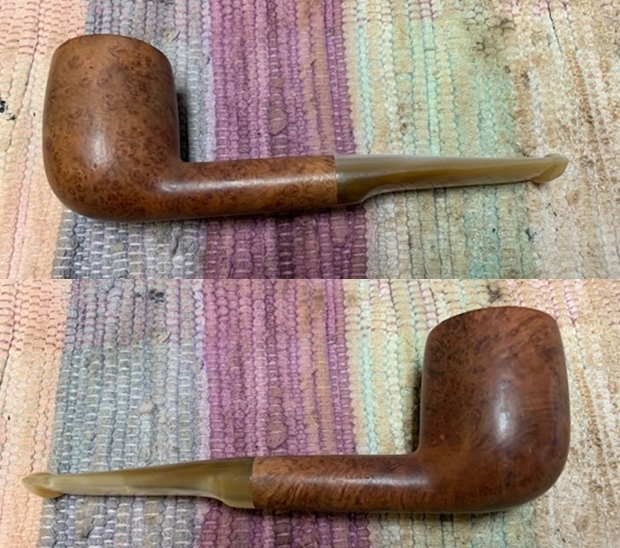
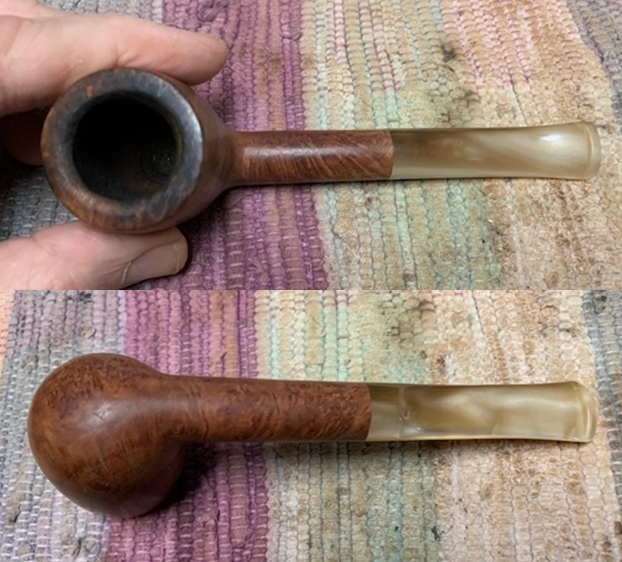
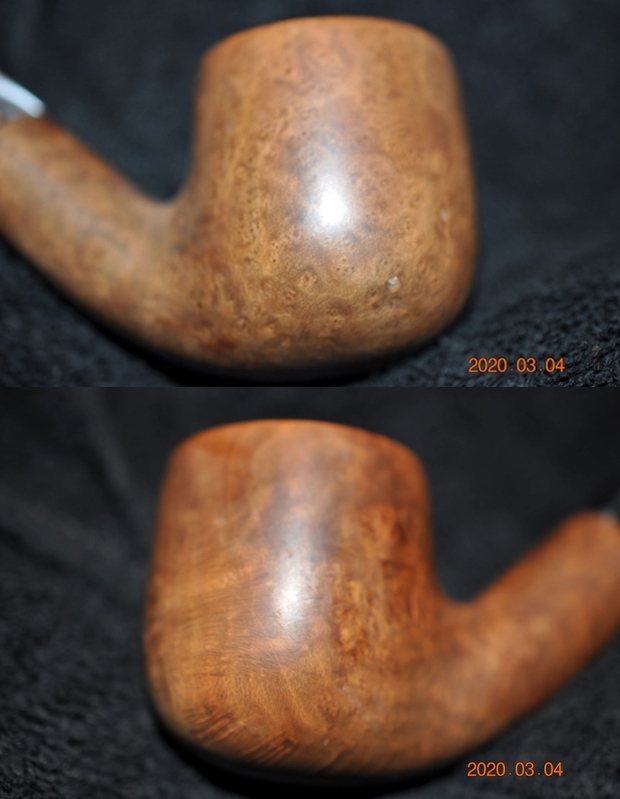
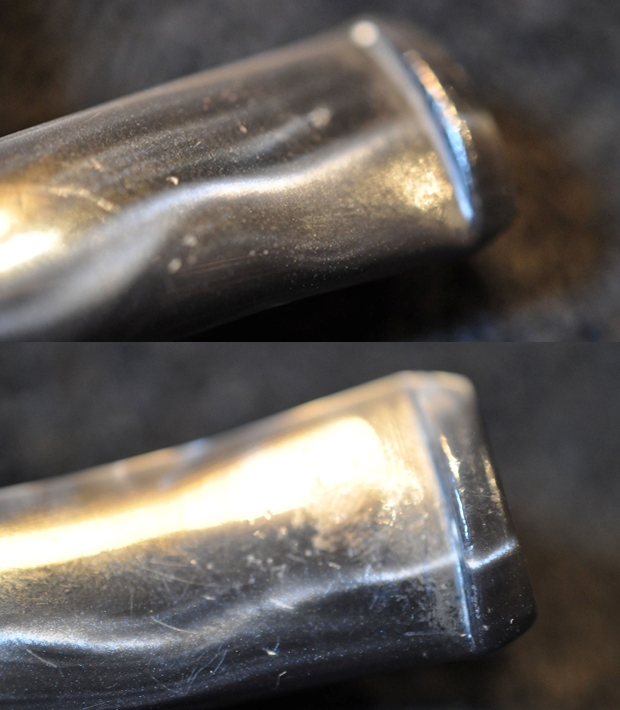
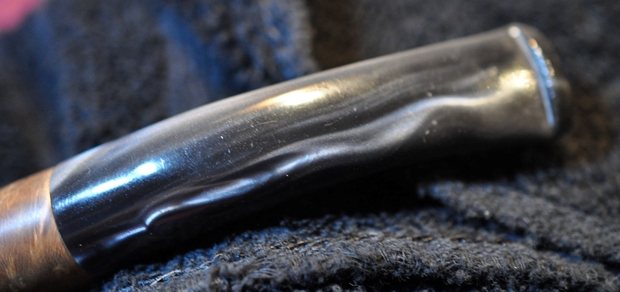
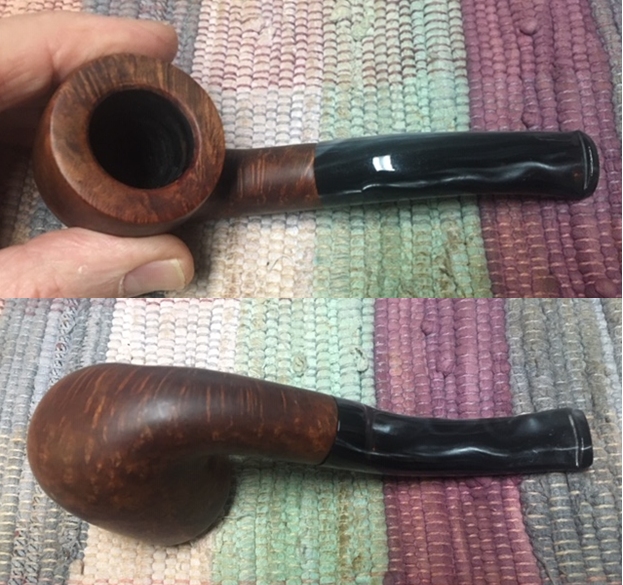
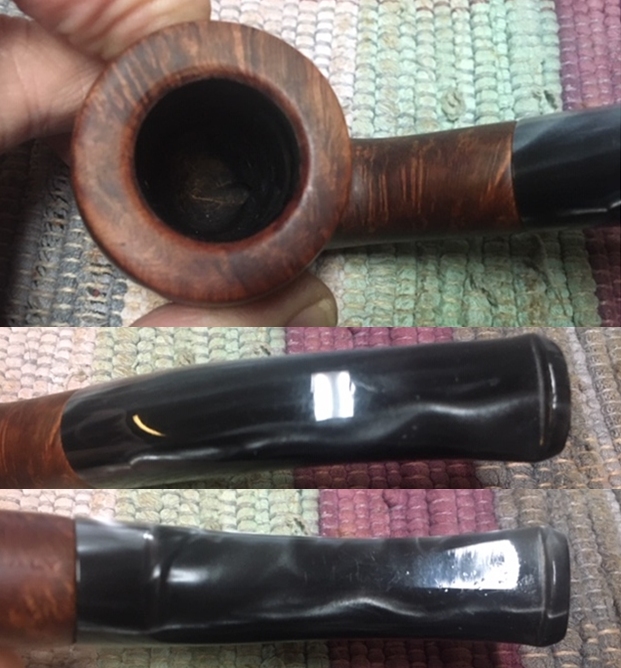
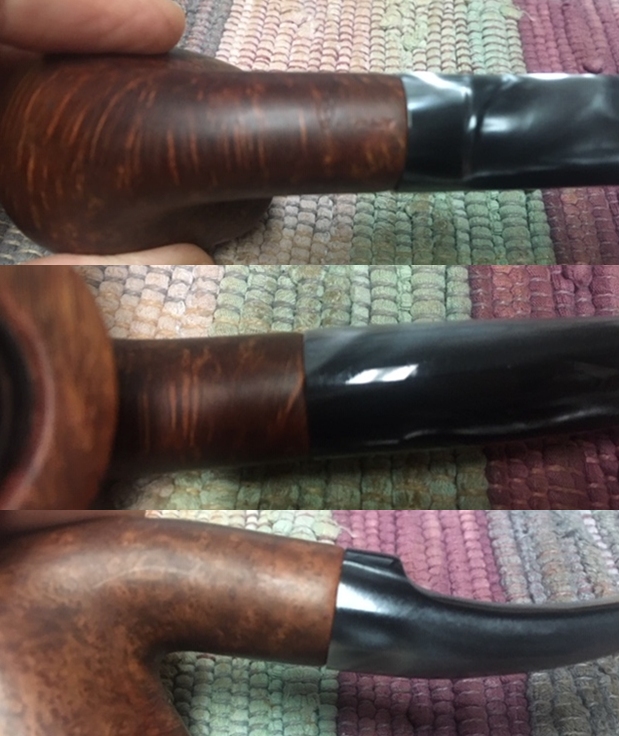
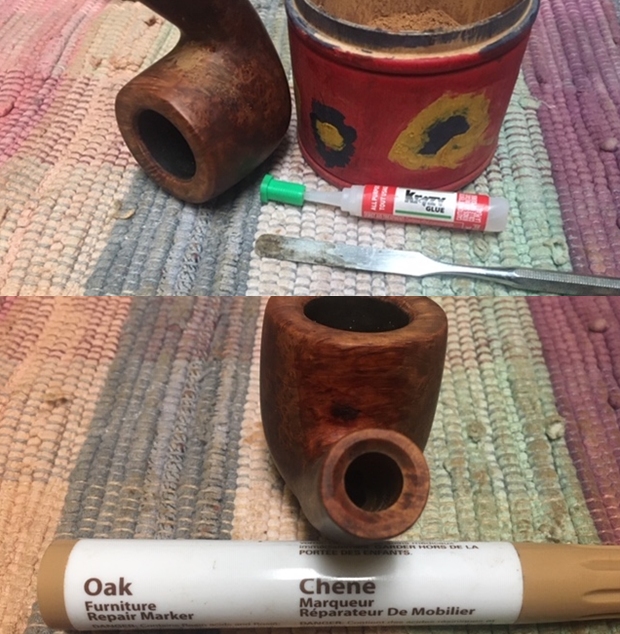
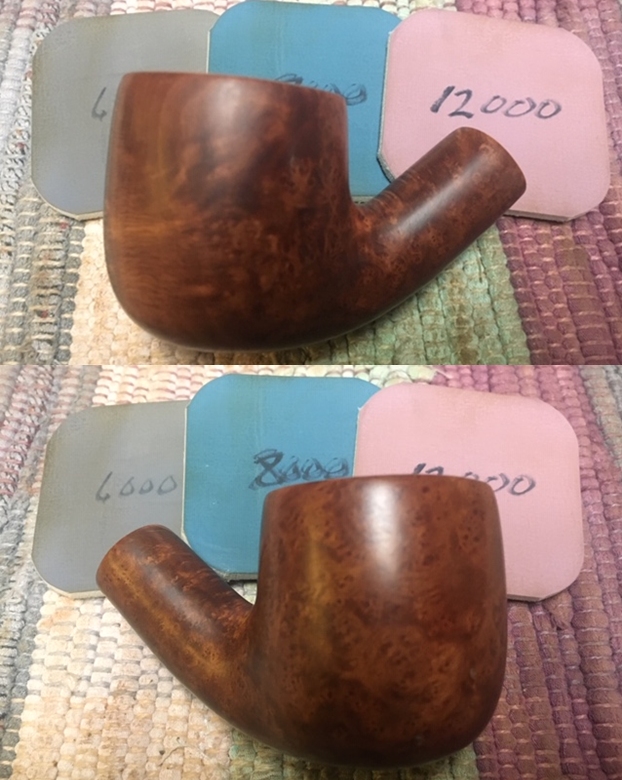
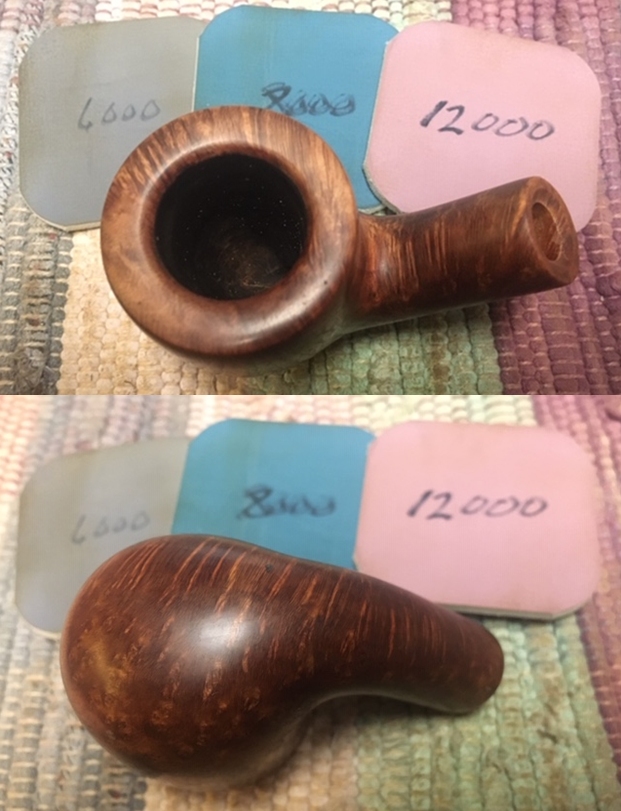
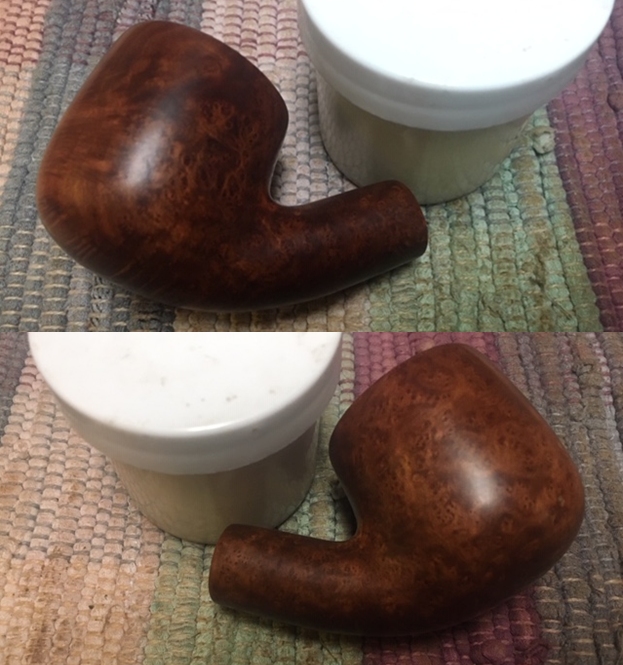
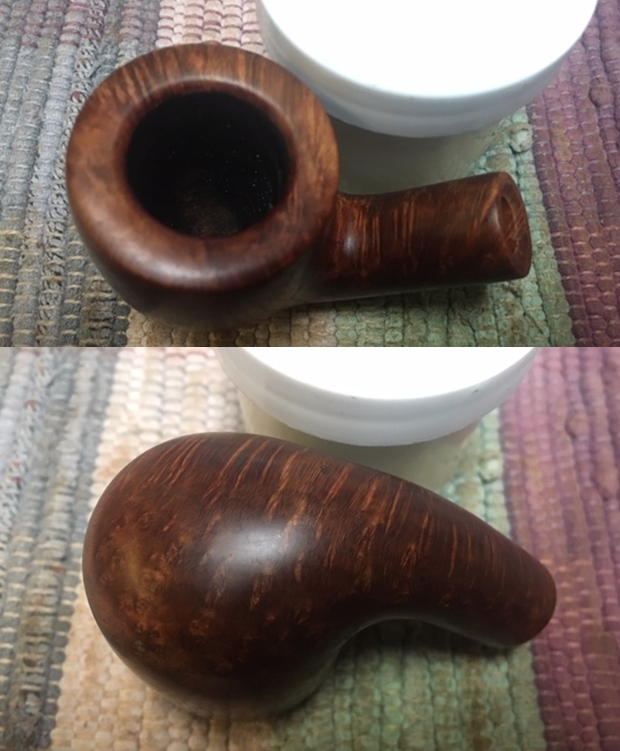
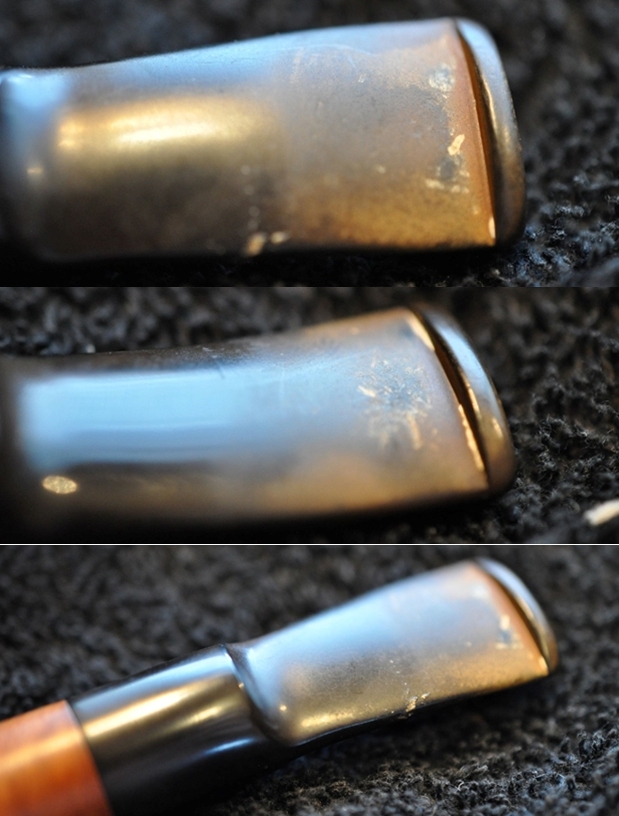
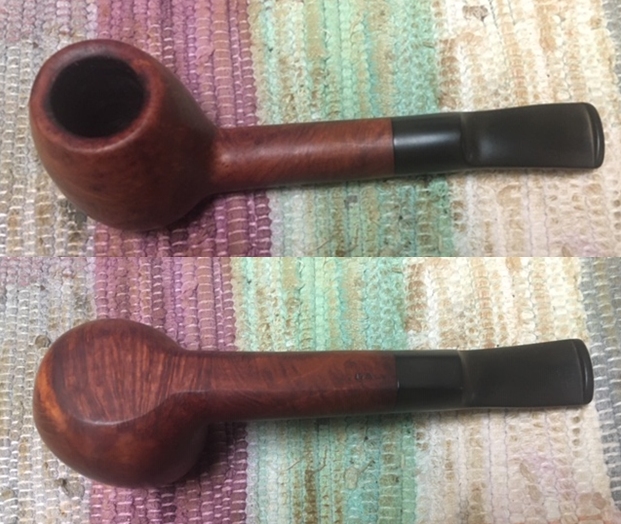
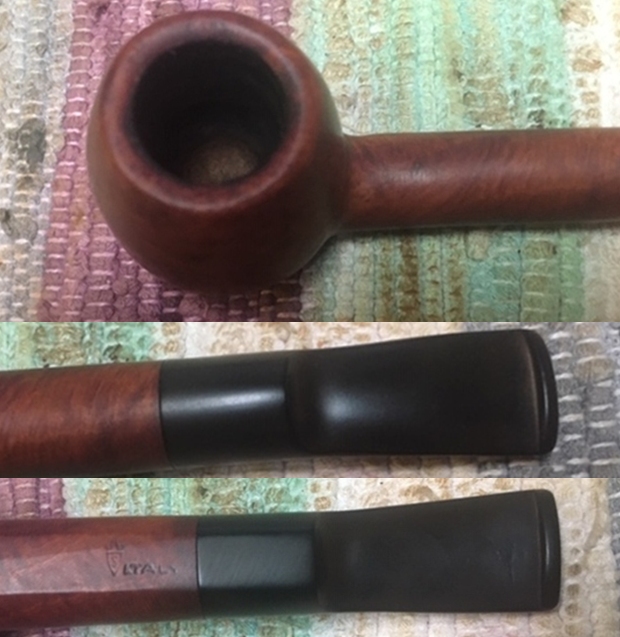
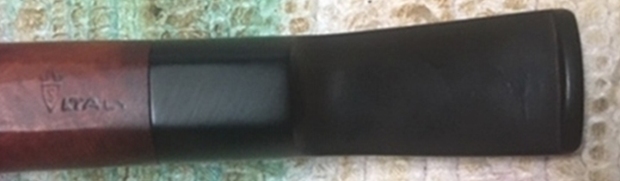
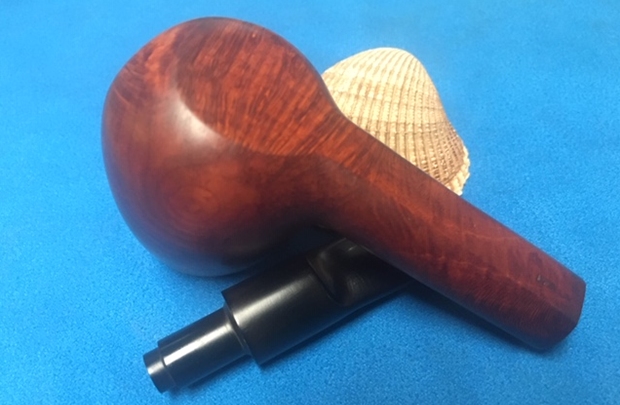
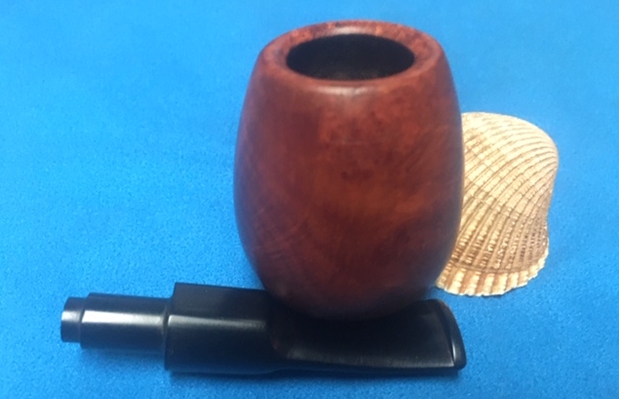
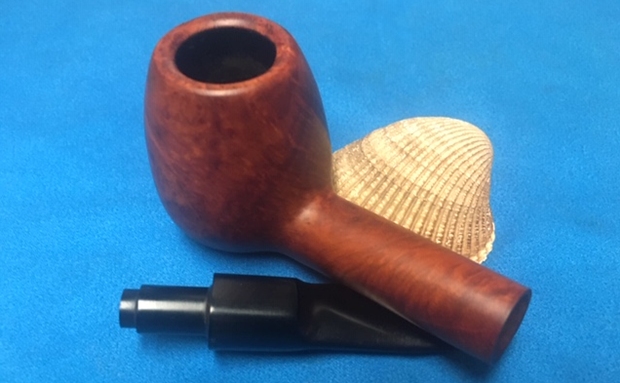
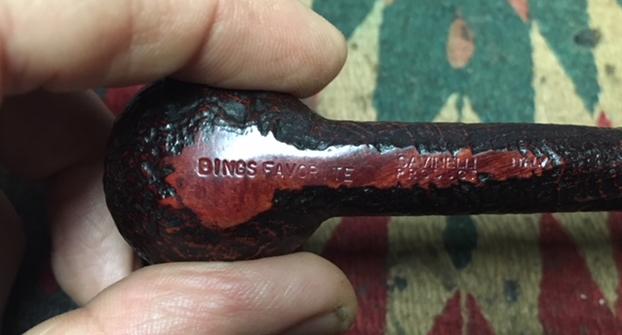
The next pipe that I am working on came from an estate sale in Oregon City, Oregon, USA we purchased on 03/21/24. It was very dirty and was a reddish, brown coloured pipe when it started. The smooth finish around the bowl was dirty and had hand oils ground into the grooves. The bowl had a moderate cake a spotty coat of lava onto the rim edge and top of the bowl. The stem was vulcanite that was very dirty and had tooth marks on both sides ahead of the button. The stem might be a replacement stem as the fit to the shank is off in terms of stem diameter being larger than the shank. The pipe was stamped on the left side of the shank and read Bings Favorite. On the right side of the shank it is stamped Italy. On the underside of the shank it was stamped Savinelli Product. Jeff took photos of the pipe so I could have a sense of what it looked like before he started his work on it. Jeff took photos of the stem surfaces and the bowl and rim to give a sense of condition of the pipe. You can see the thick cake in bowl and the spots of lava overflow on the edges and rim top of the bowl. The stem surface is very dirty, oxidized, calcified and tooth marks covered by the dirt and debris. The stem did not fit the diameter of the shank properly. It was larger than the shank and would need to be fitted. The stamp on the top of the shank is faint. He also took photos of the sides of the bowl and the heel to show the interesting grain that went around the bowl. The grain is beautiful and you can see the oils and debris in the surface of the briar. He took photos of the stamping on the sides of the shank. It is clear and readable on all the shank sides as noted above. Jeff did not capture the stamping on the right side of the shank. I turned to Pipephil’s site (http://www.pipephil.eu/logos/en/logo-savinelli1.html) to get a sense of the Bing’s Favorite. It is a Savinelli Product and it is listed in the Savinelli pipe section. I did a screen capture of the section and included it below. The stamping on the stem confirms that the stem I have is a replacement.I turned to Pipedia (https://pipedia.org/wiki/Savinelli) and after reading through the history I focused on a section entitled Editions in the “Favorite” line. I have included that section below.

We are compiling a sub-list of known editions in the “Favorite” line of Savanelli pipes, starting with those in Fred Huening’s collection. If you know of others, or have additional information about this line of pipes, please add it here, or send them to sethile.pipes@gmail.com and we can add them for you:

  • Bing’s Favorite
  • Byron’s Favorite
  • Clark’s Favorite
  • Ginger’s Favorite
  • Achille’s Favorite (apparently, I, II, and III)

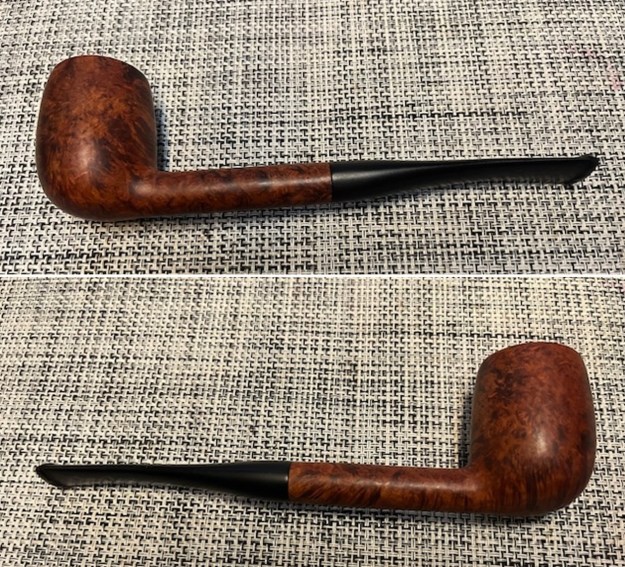
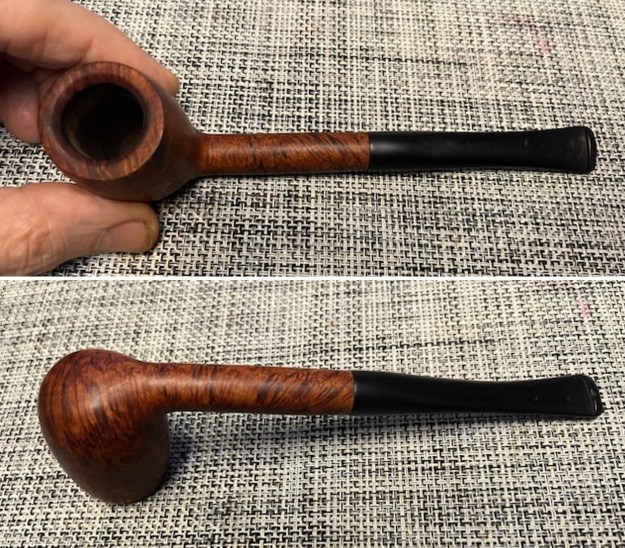
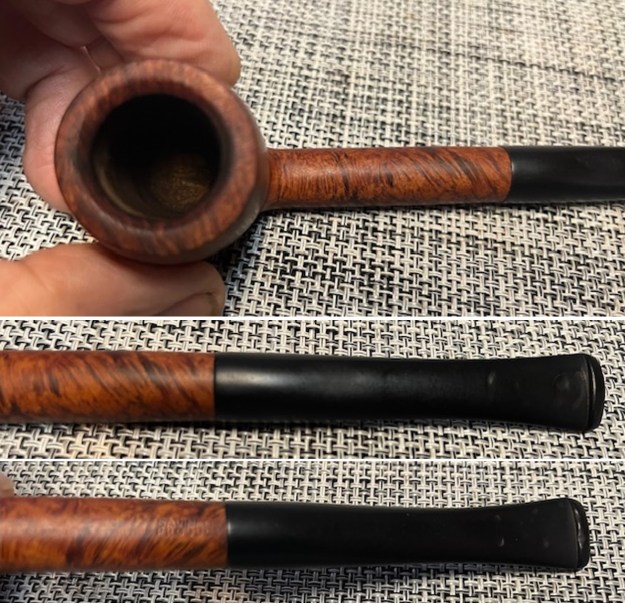
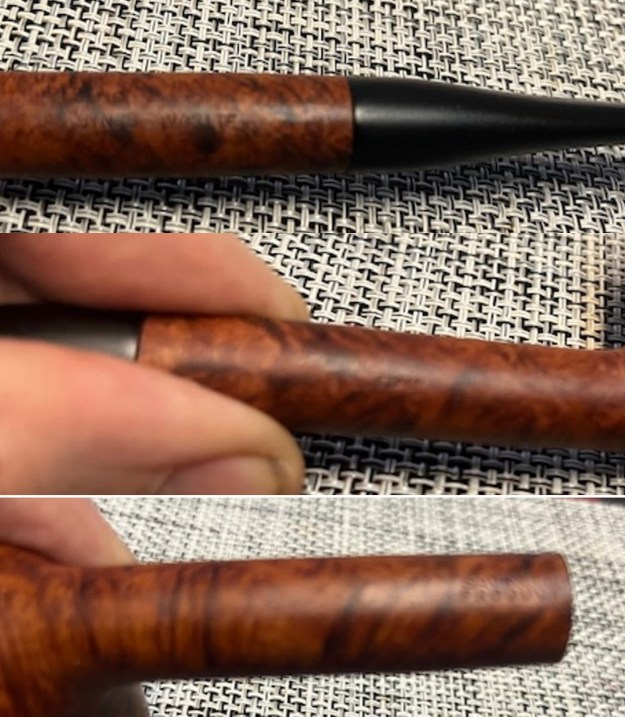
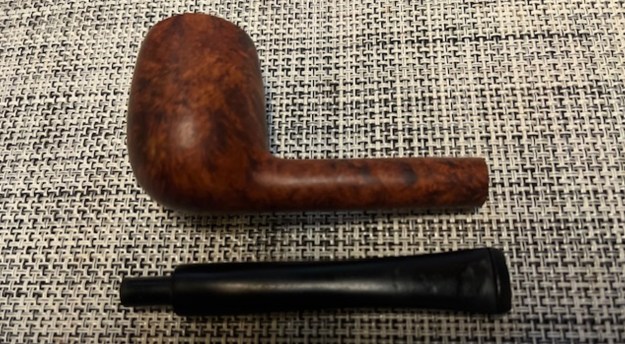
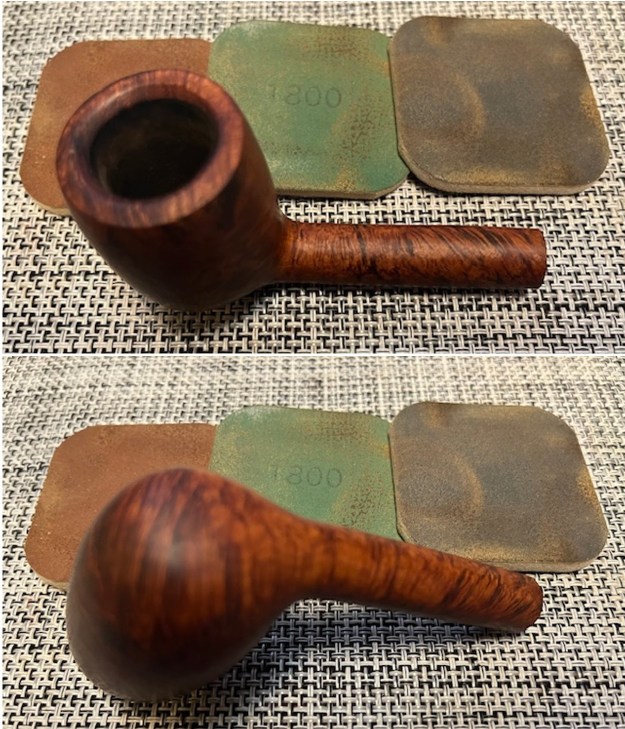
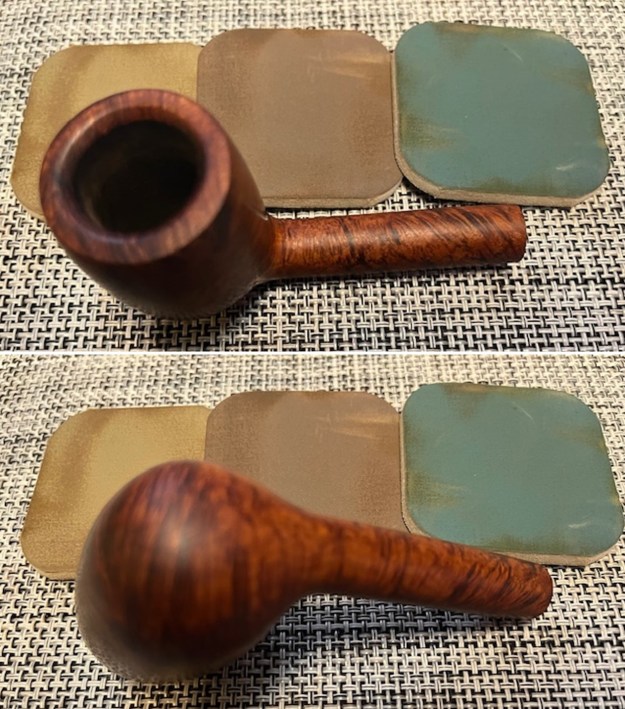
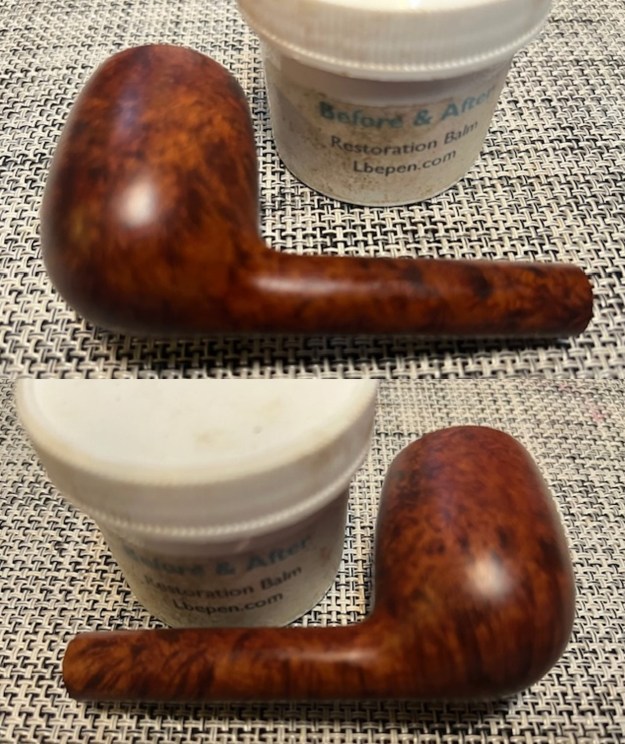
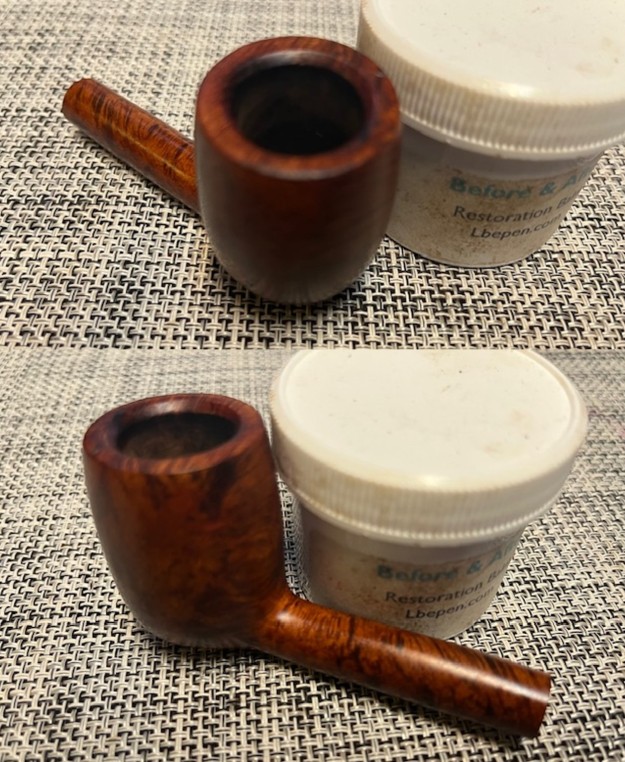
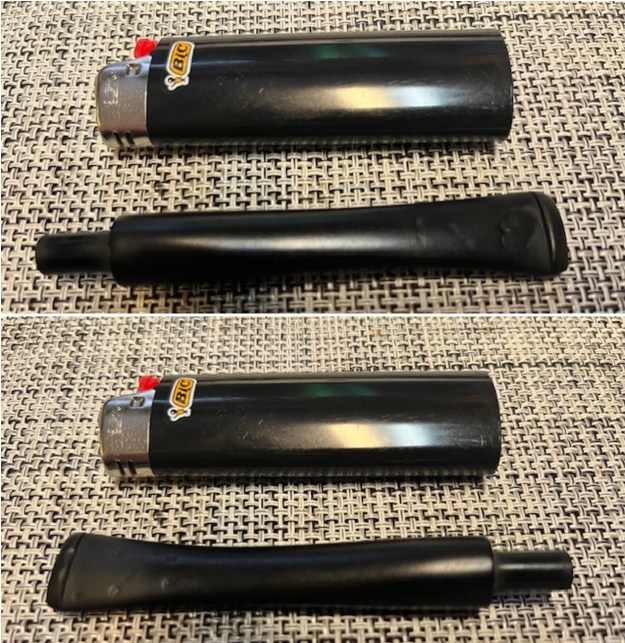
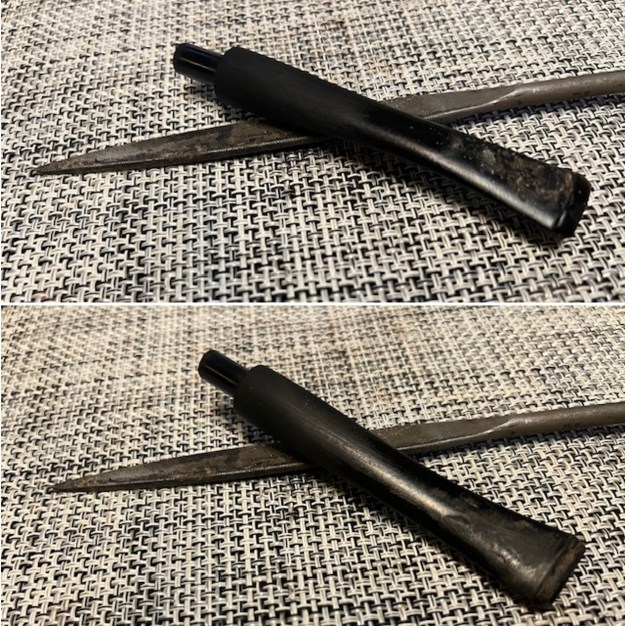
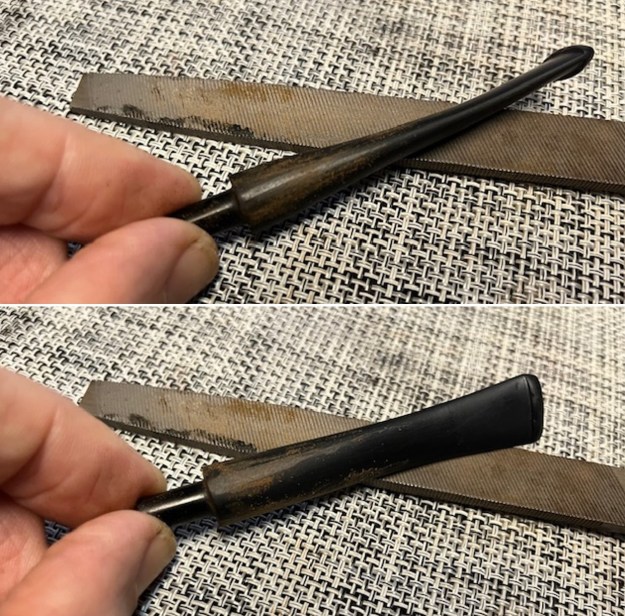
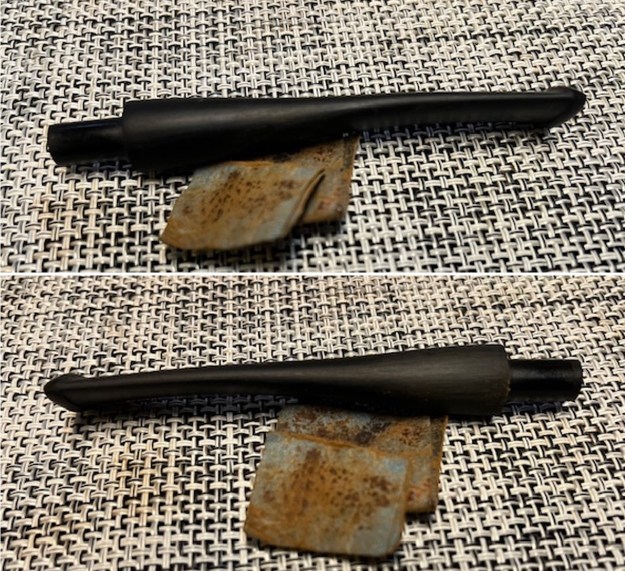
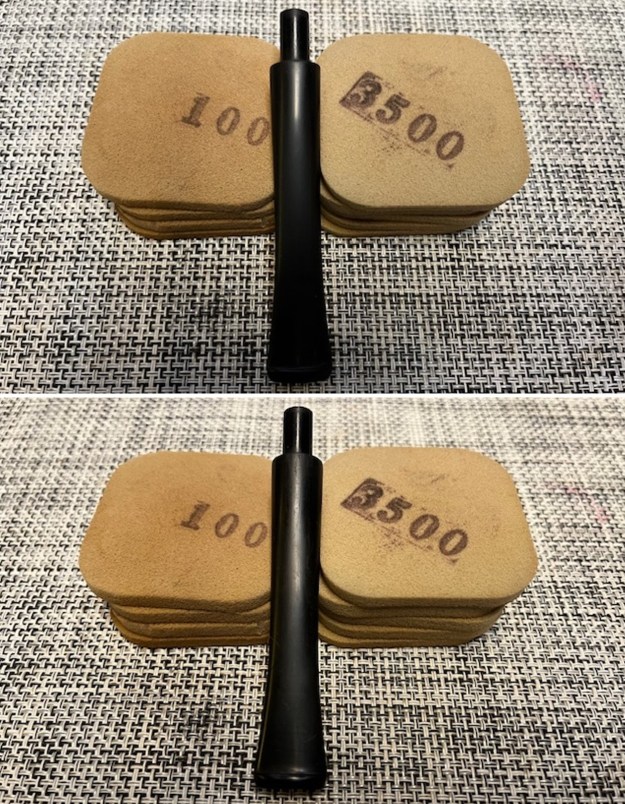
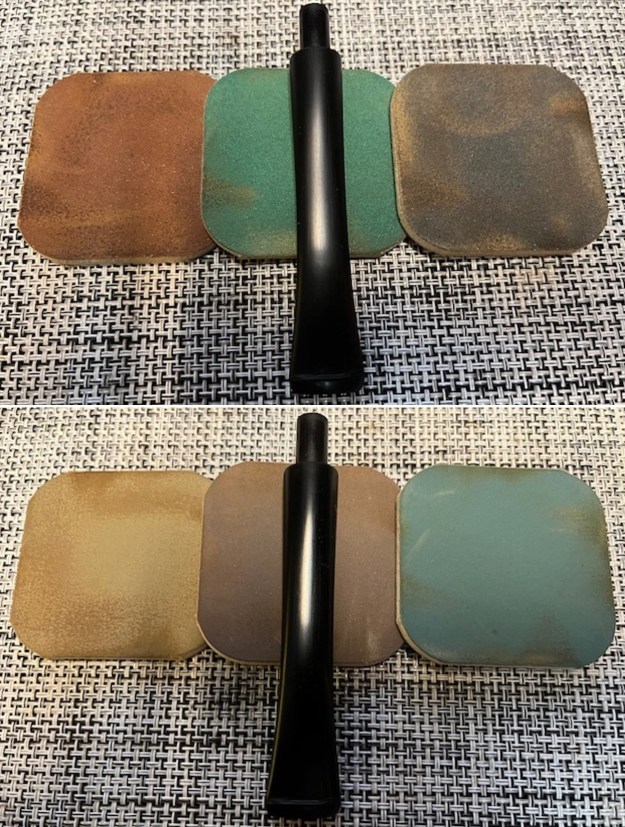
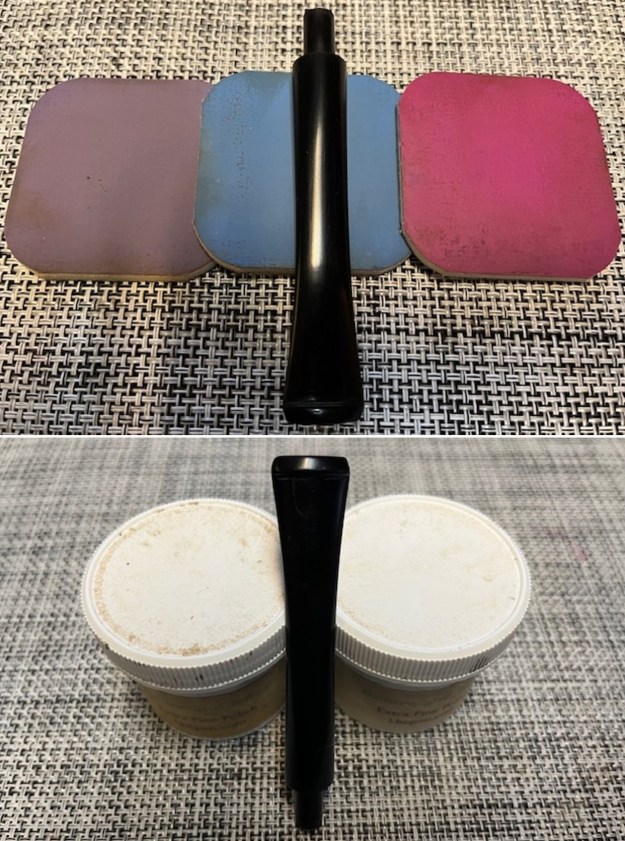
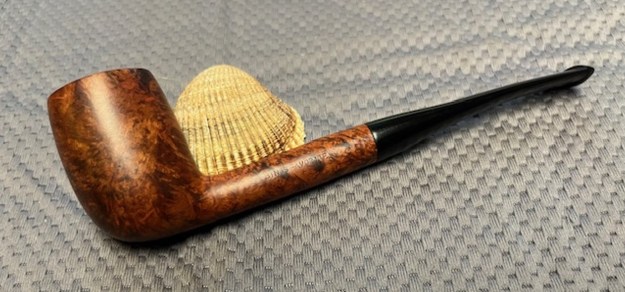
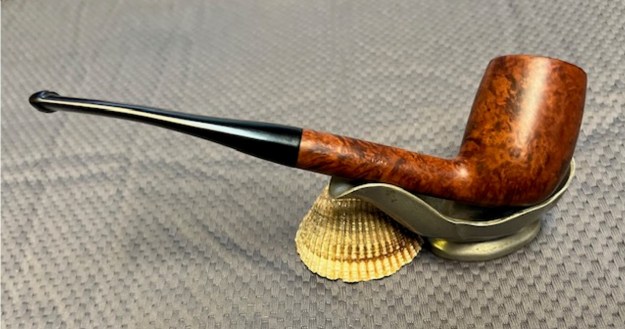
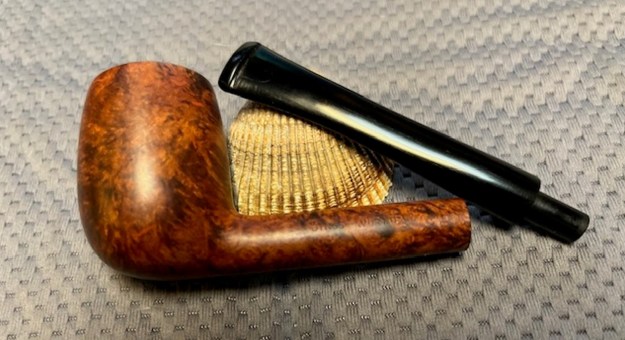
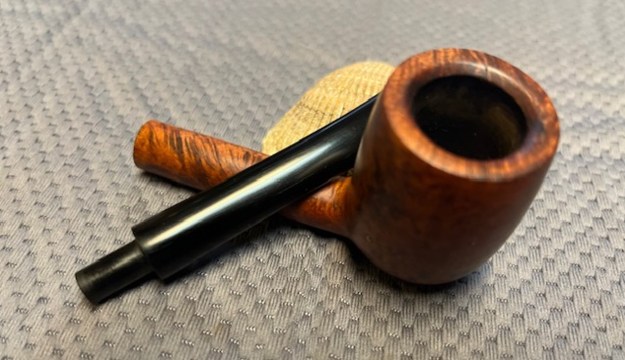
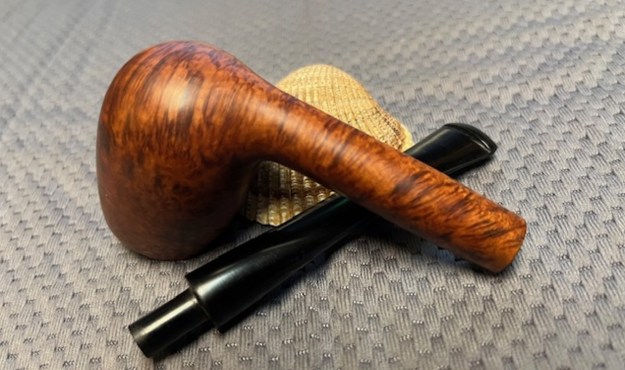
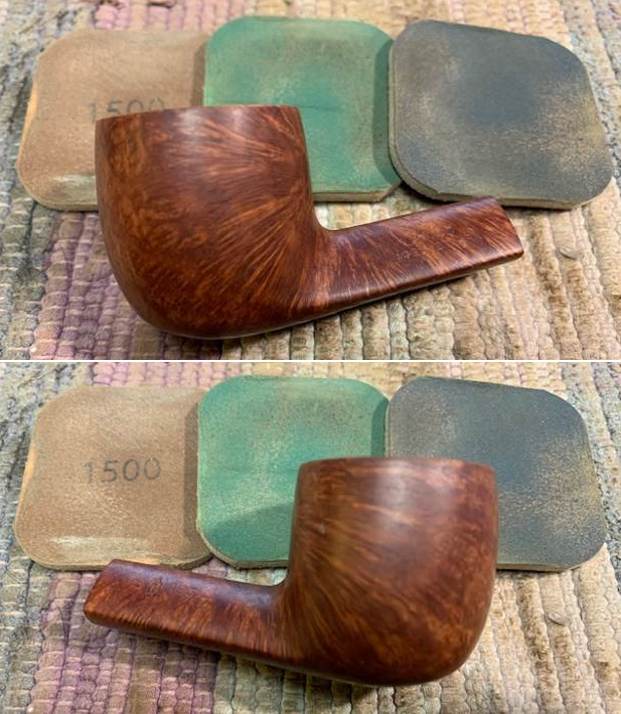
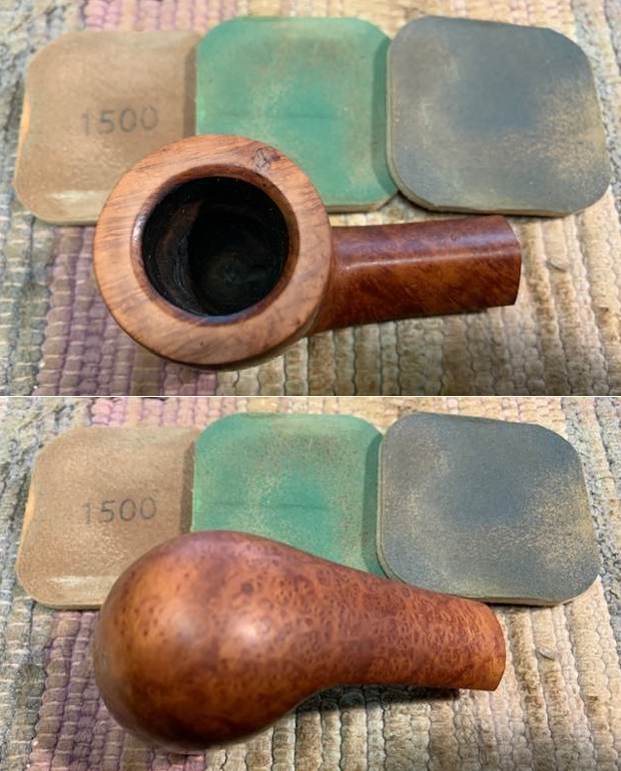
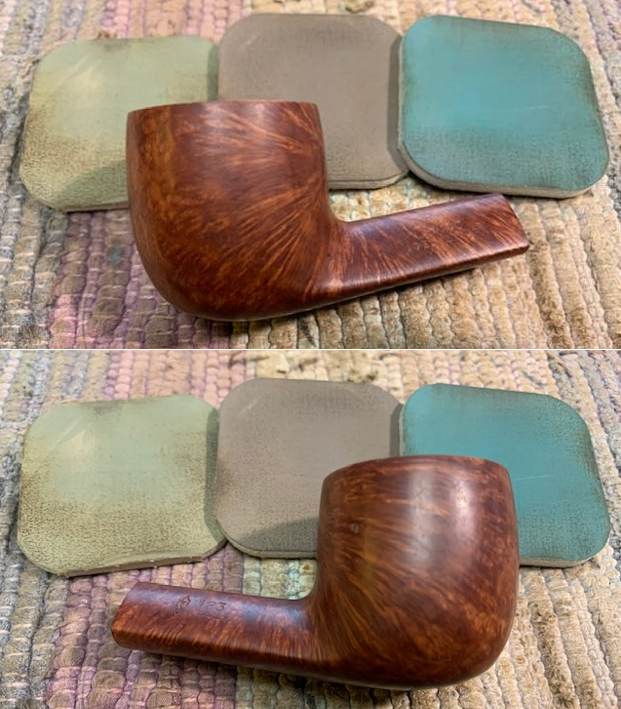
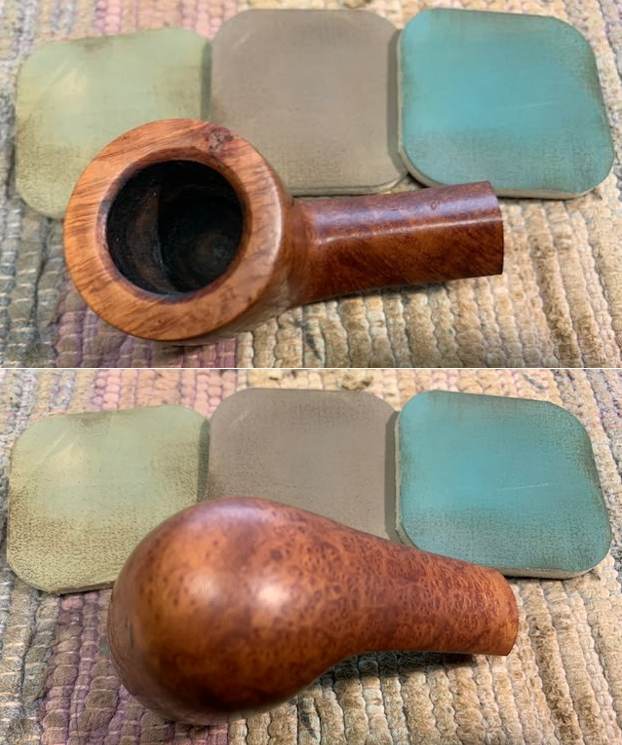
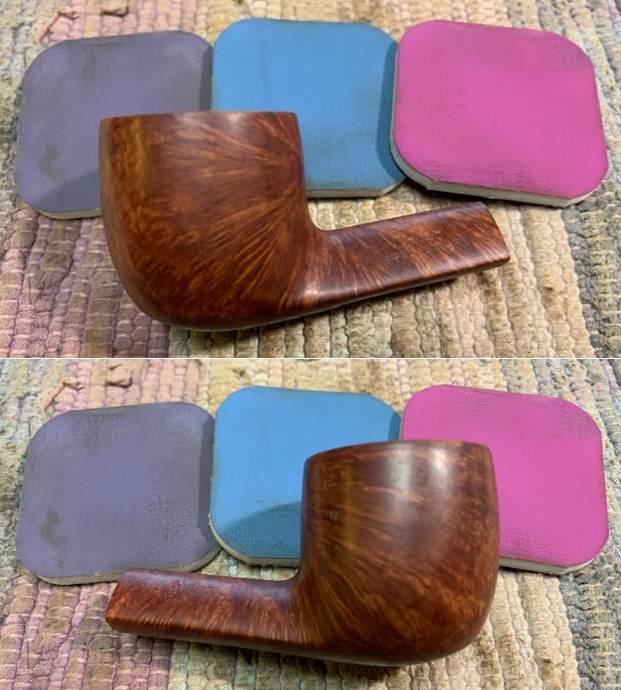
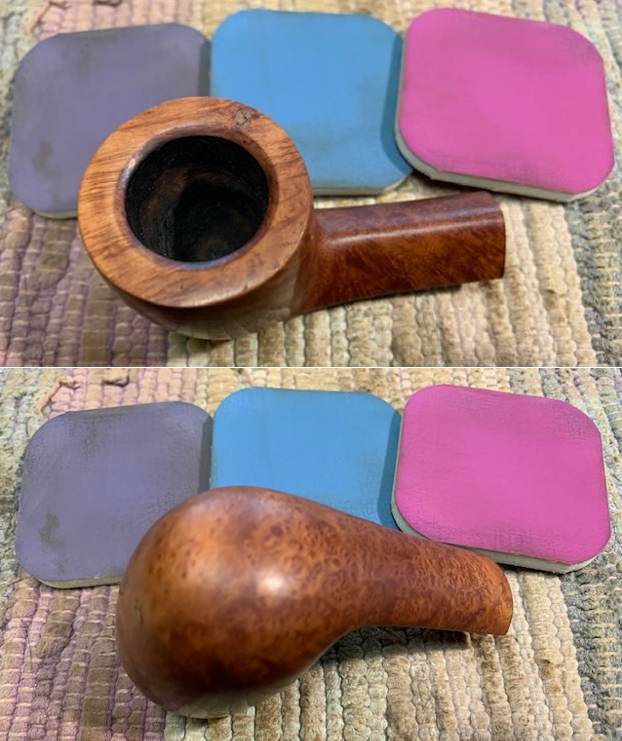
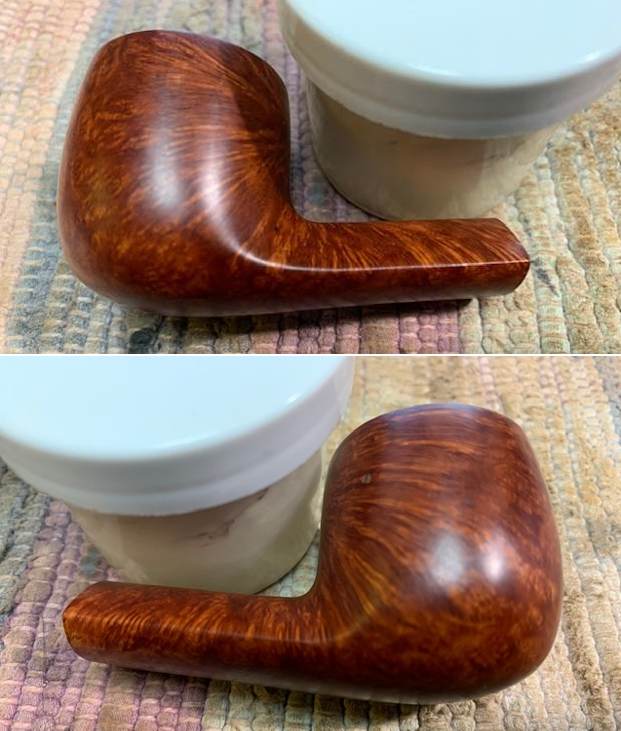
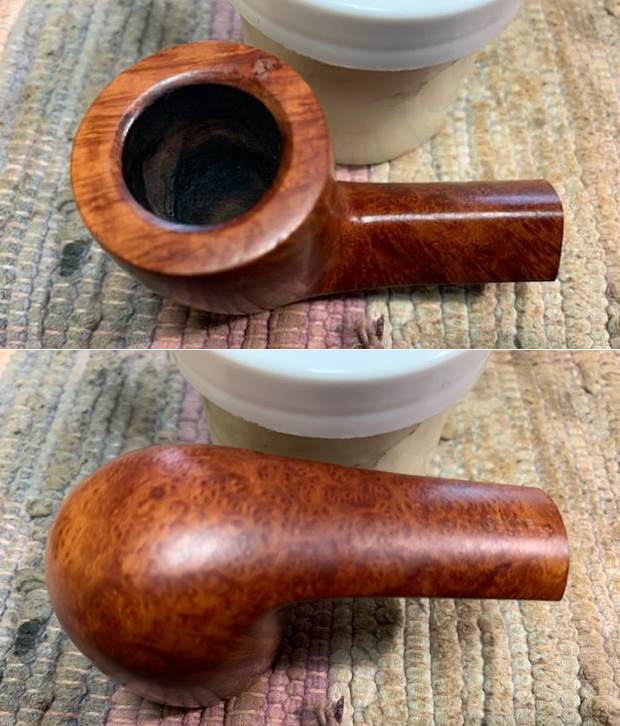
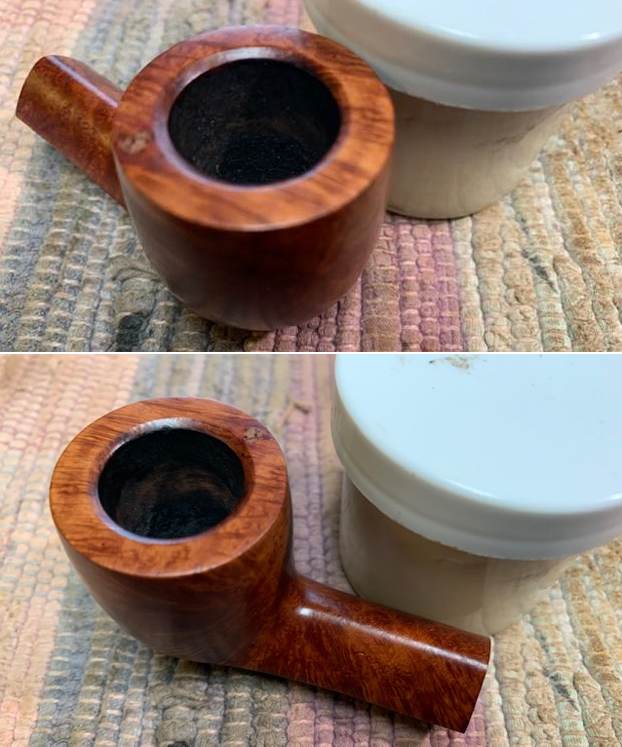
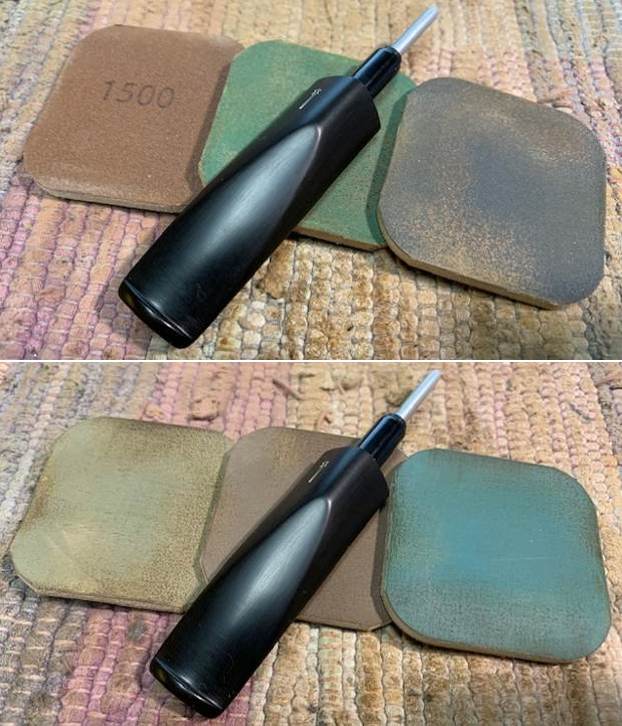
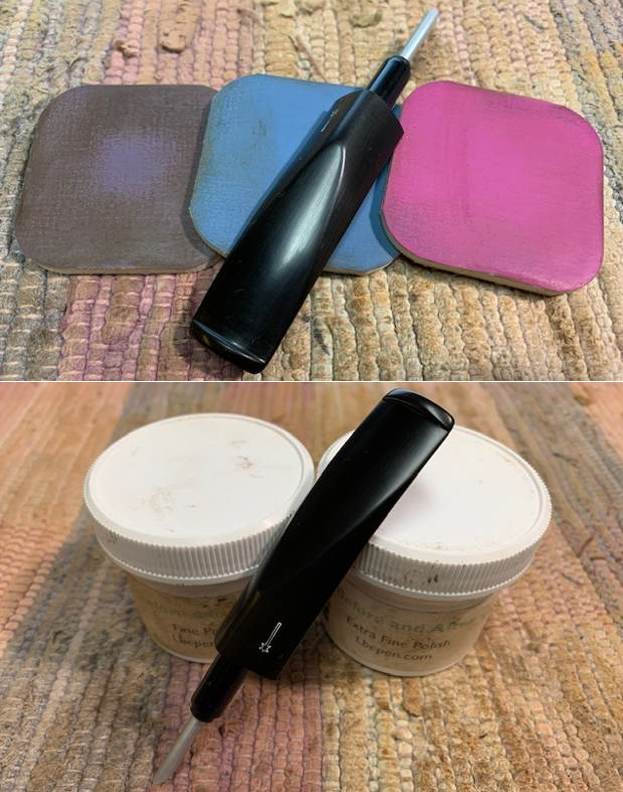
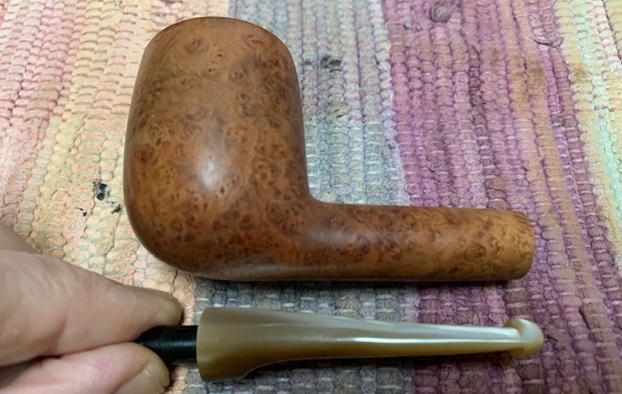
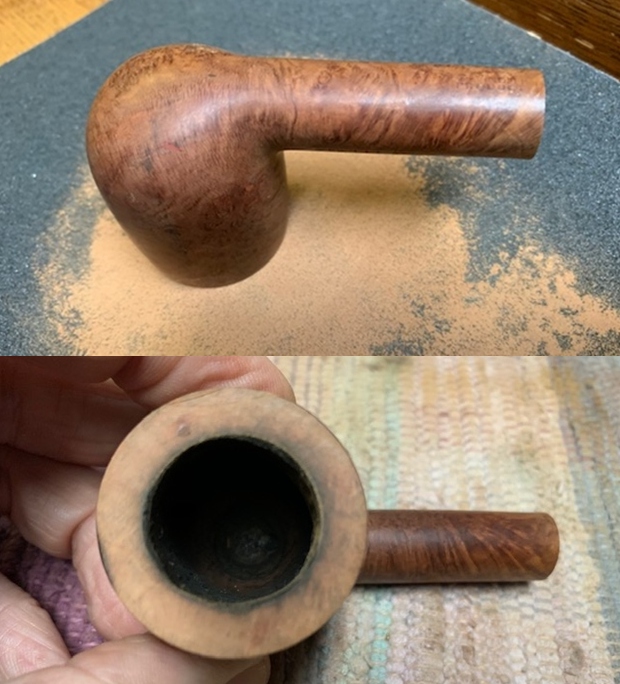
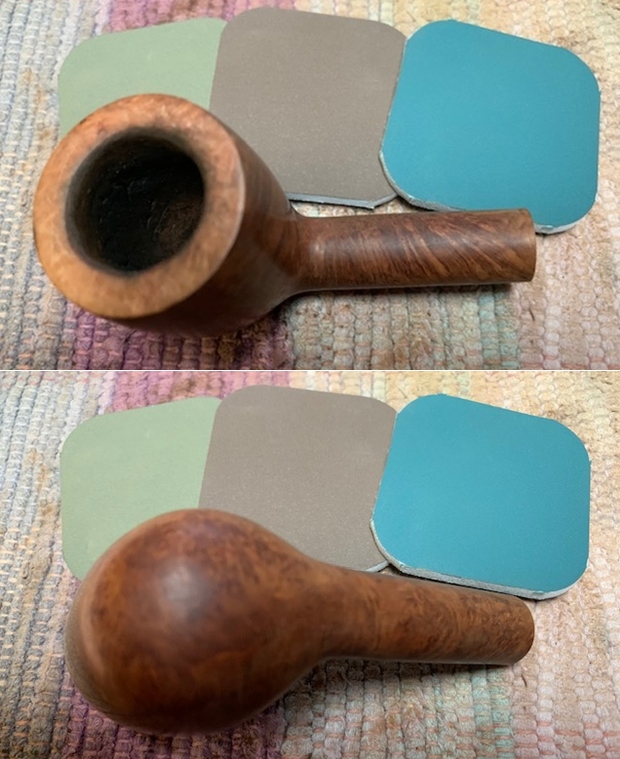
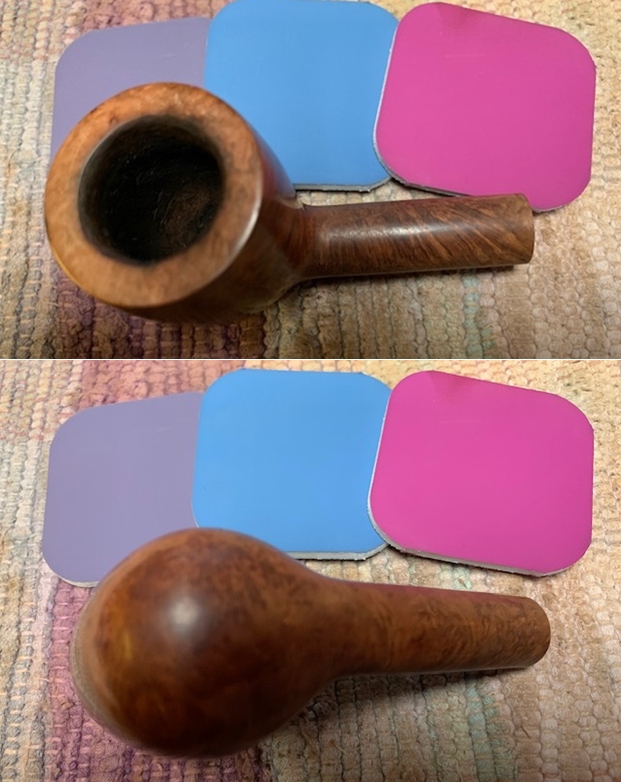
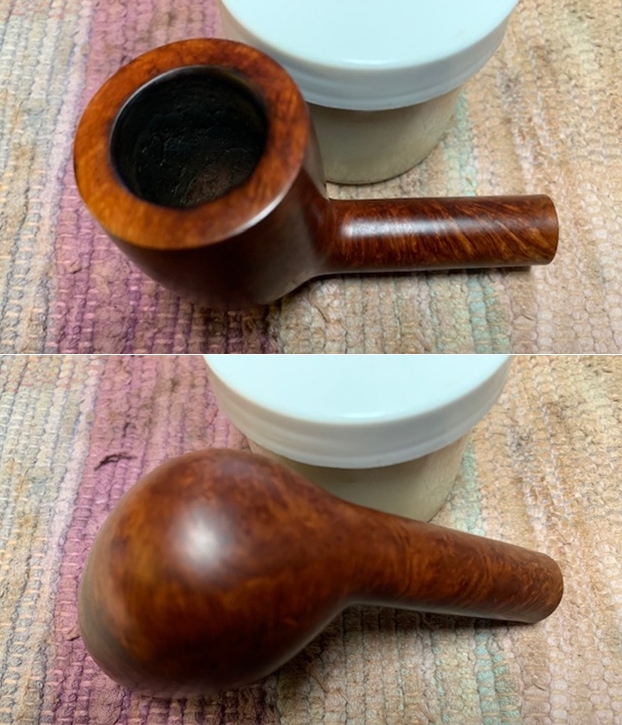
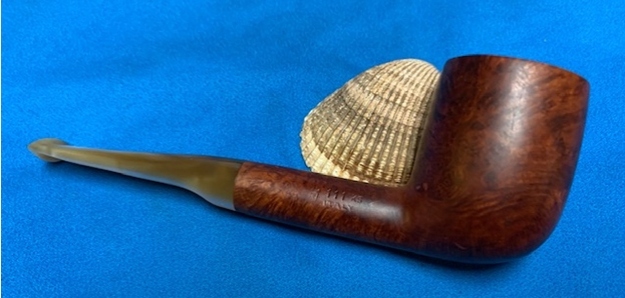
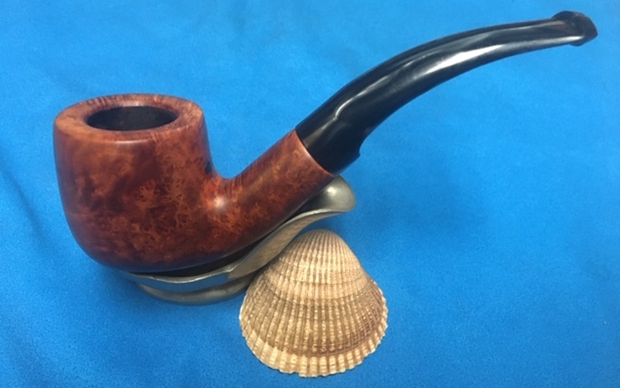
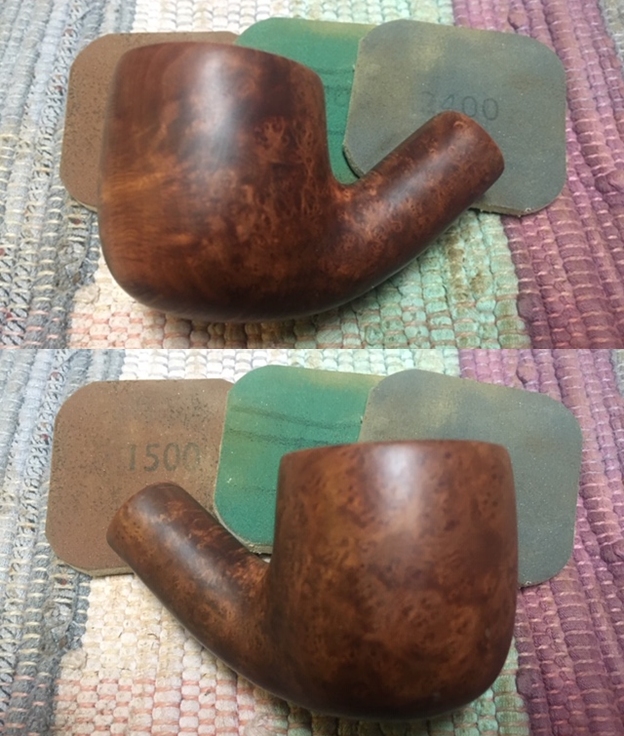
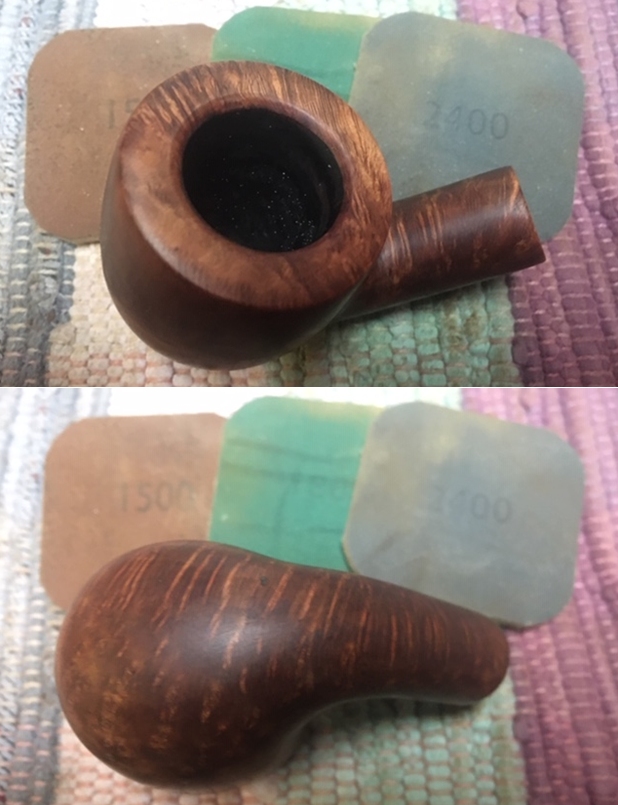
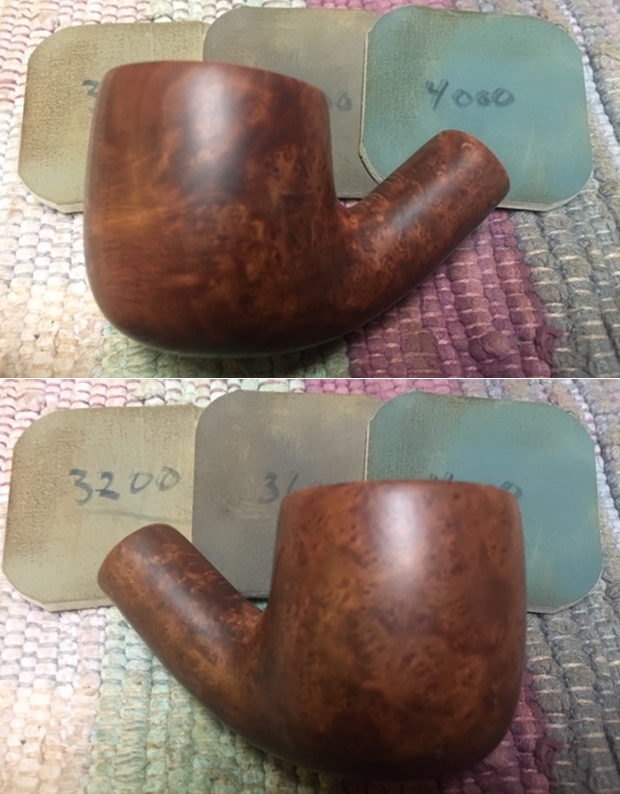
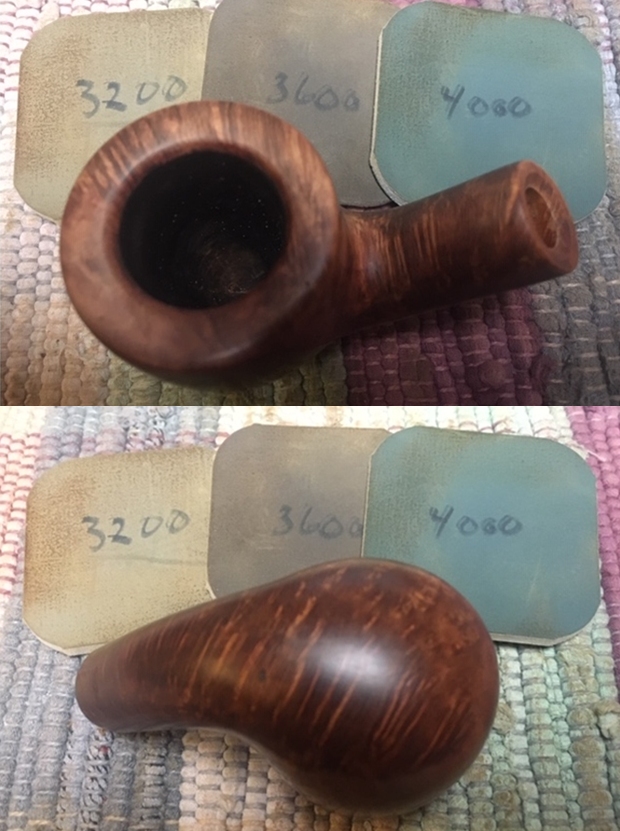
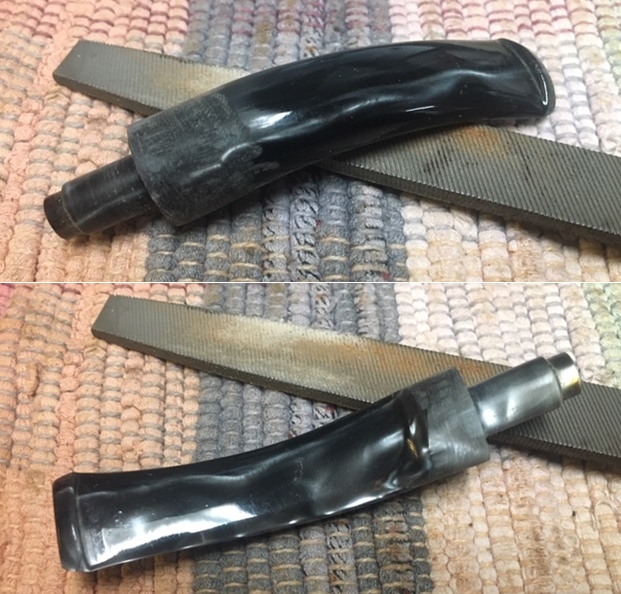
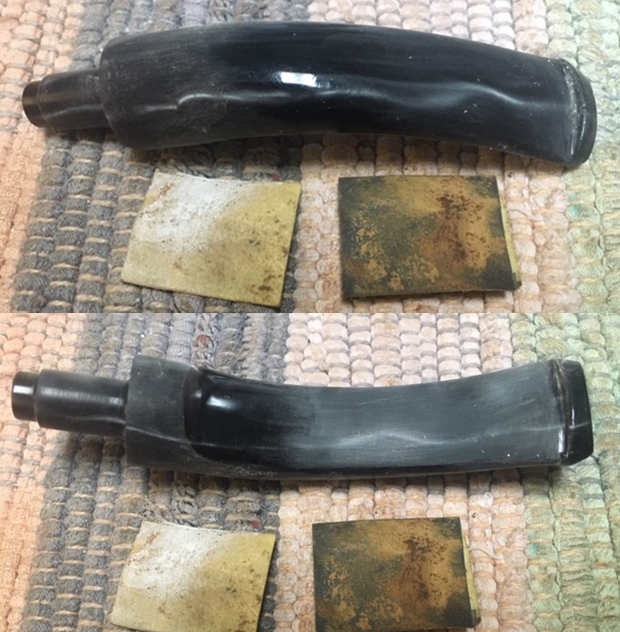
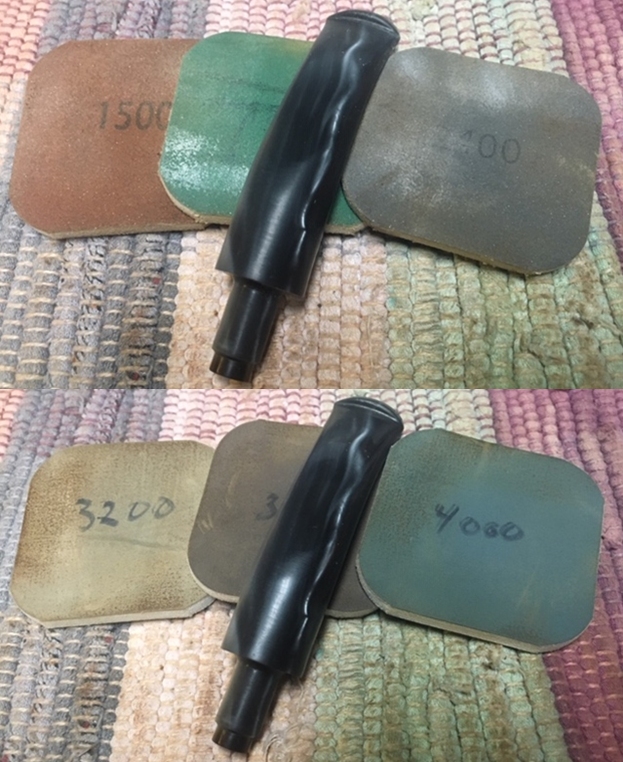
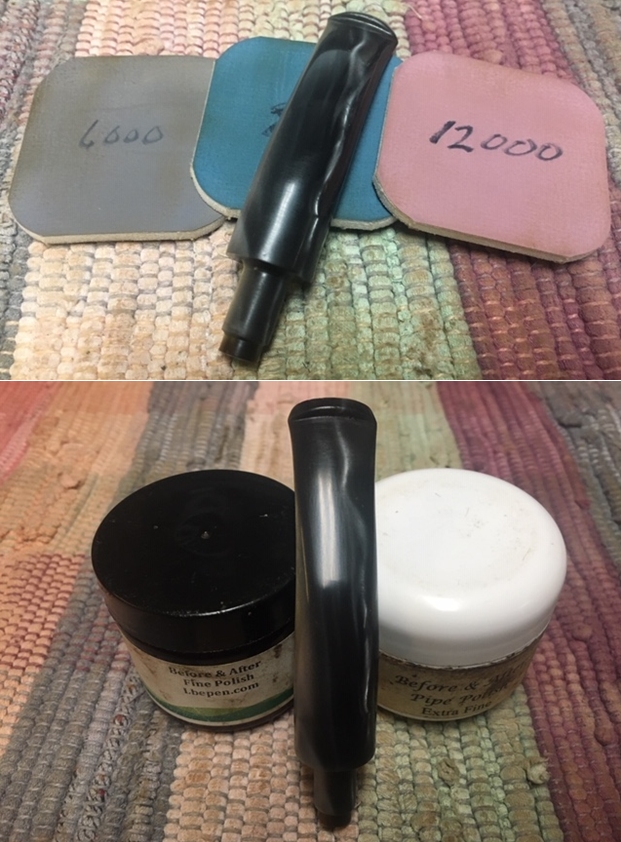
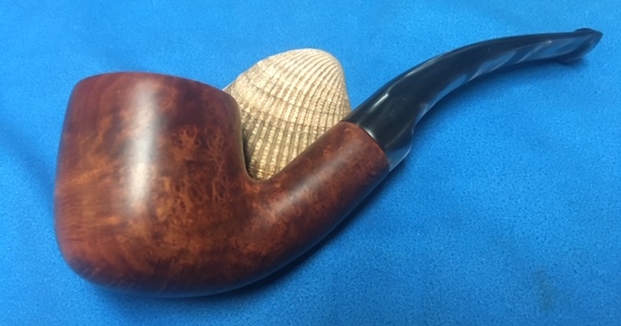
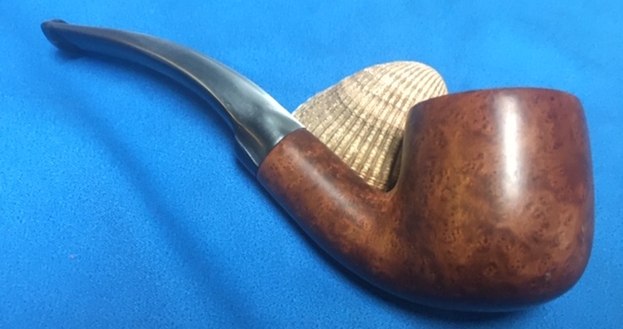
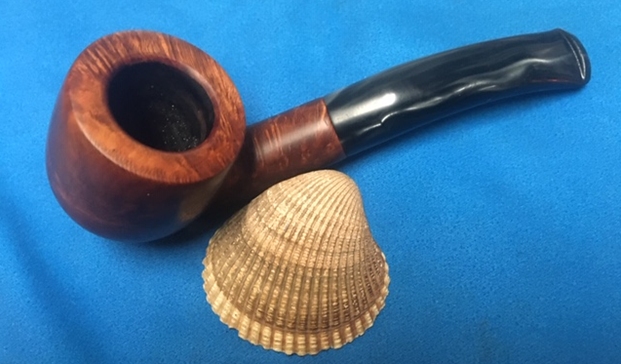
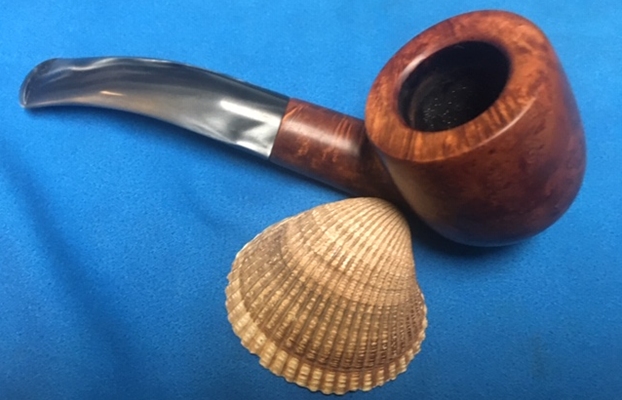
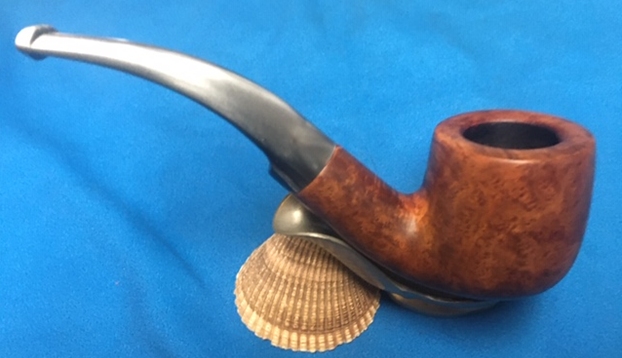
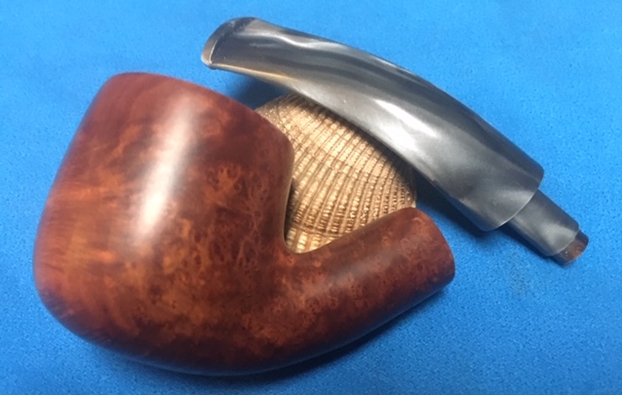
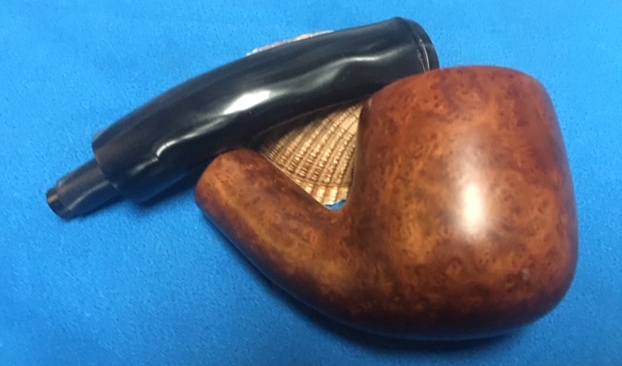
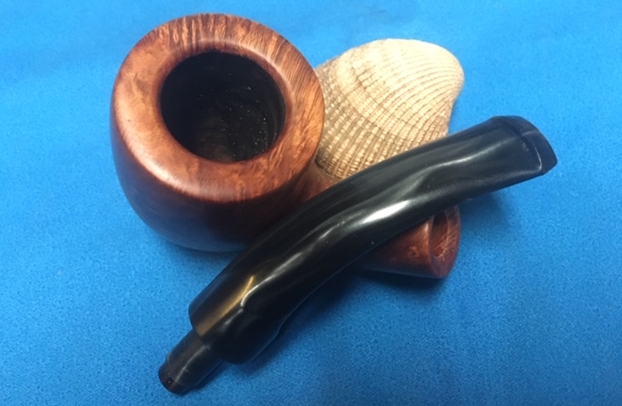
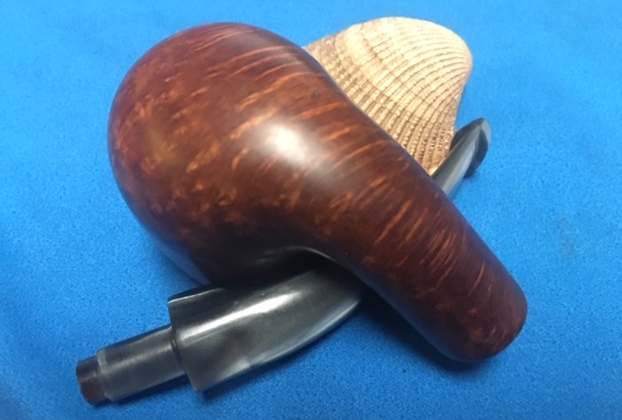
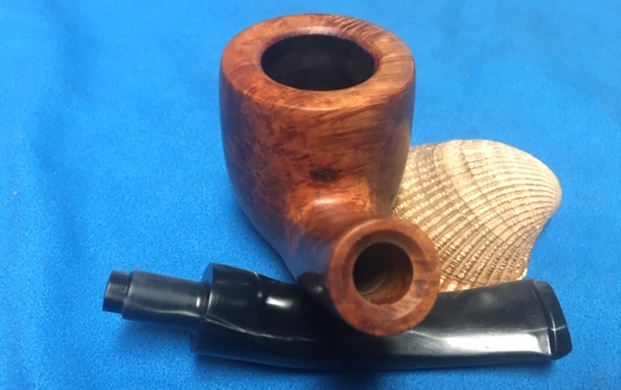
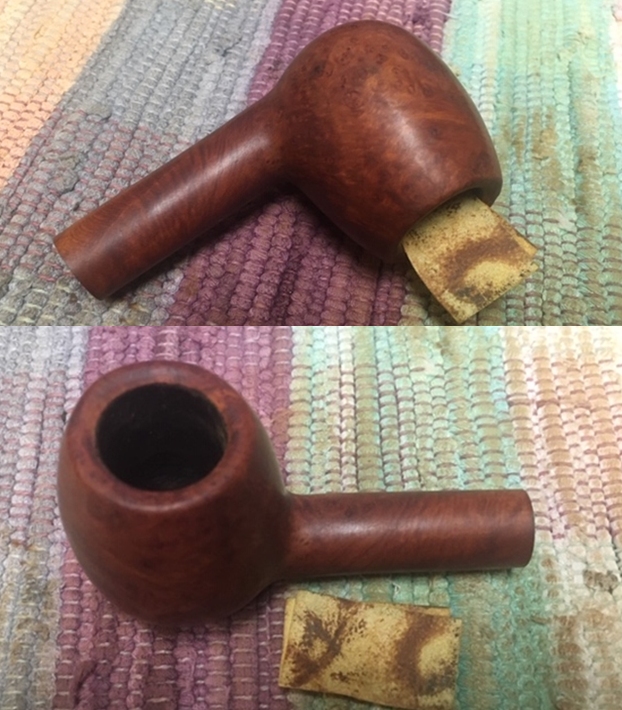
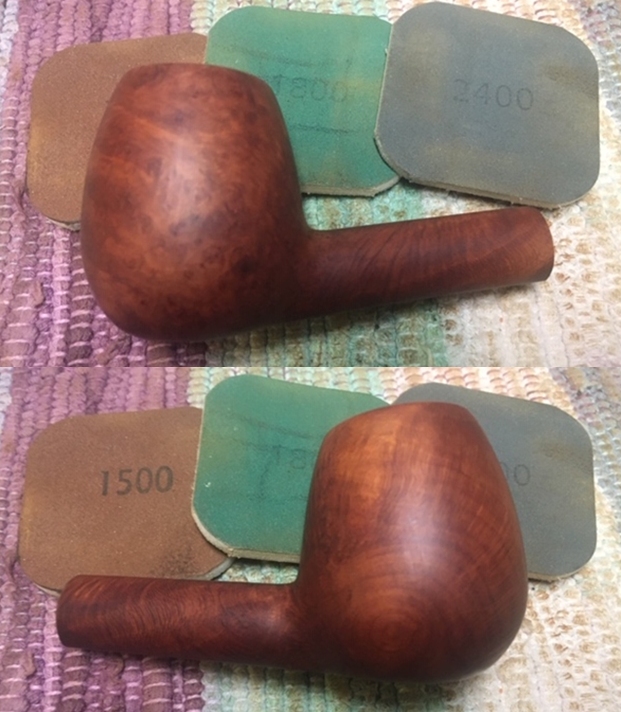
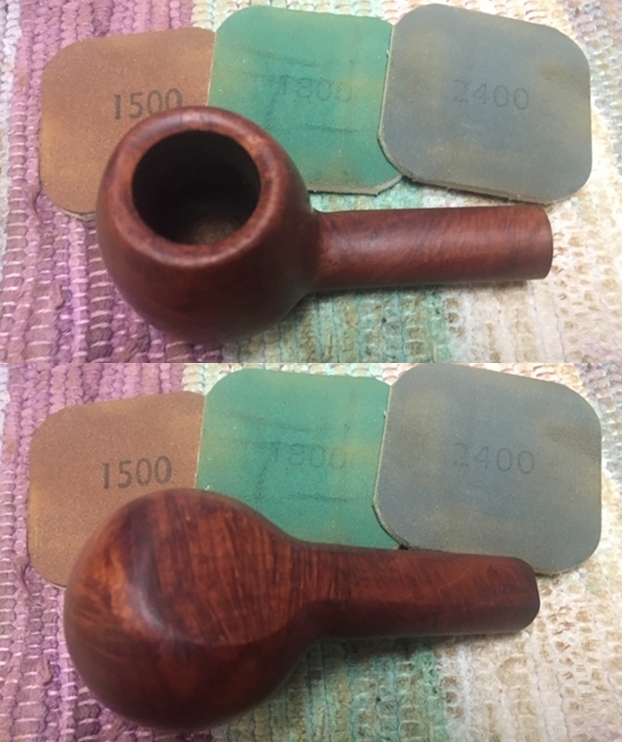
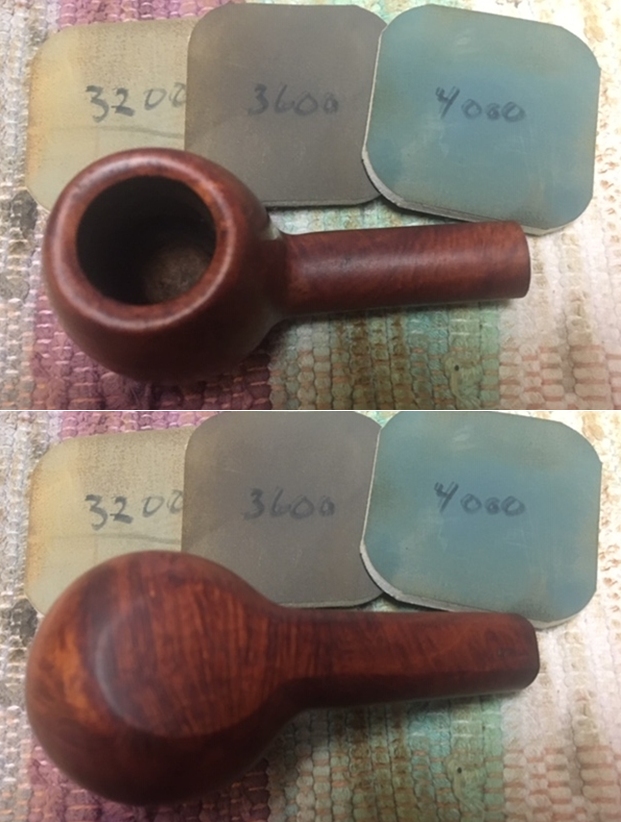
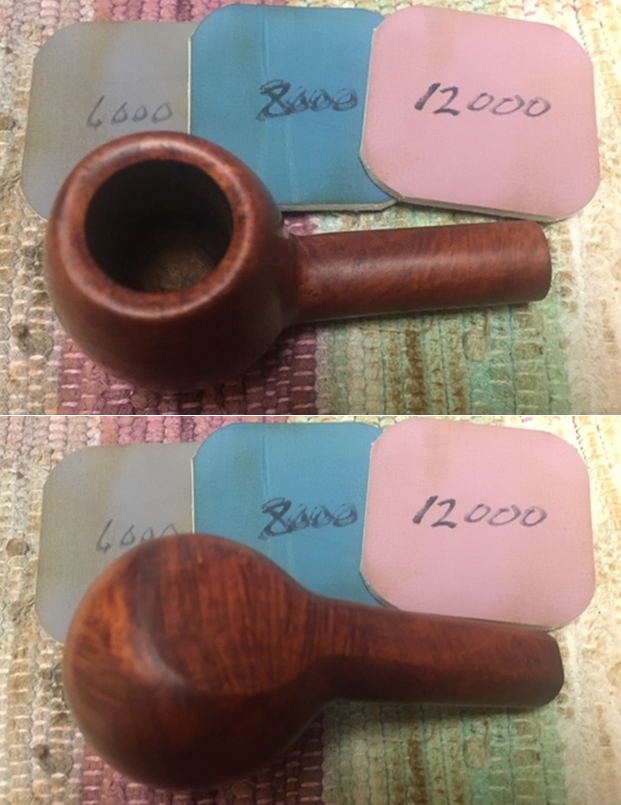
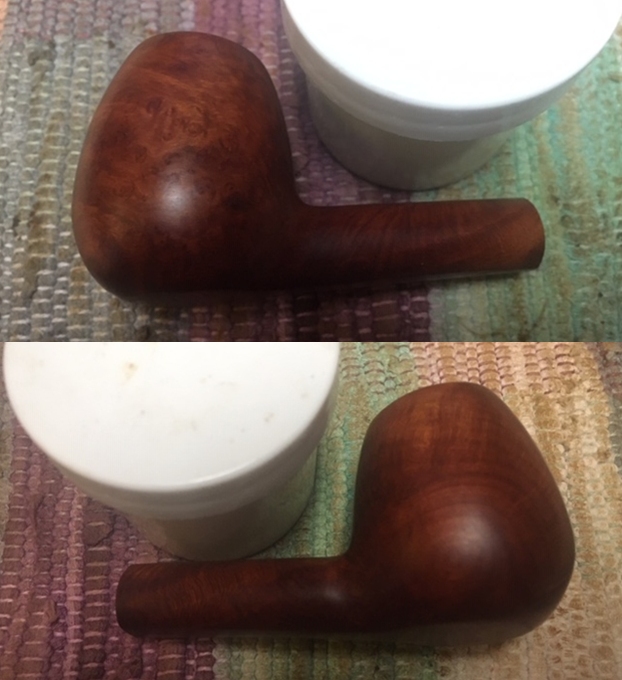
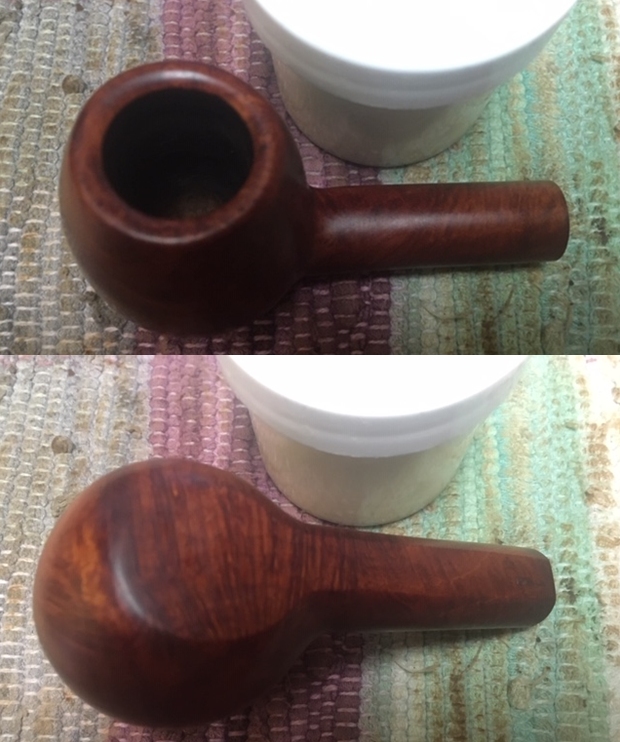
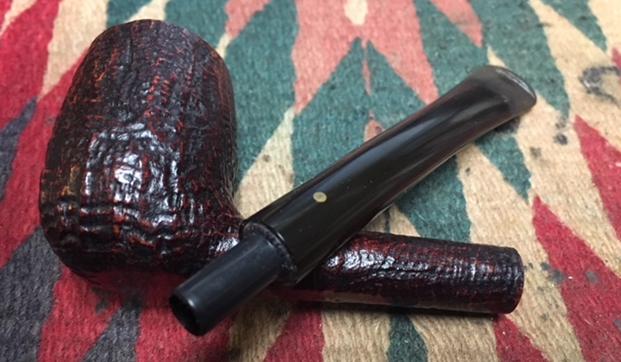
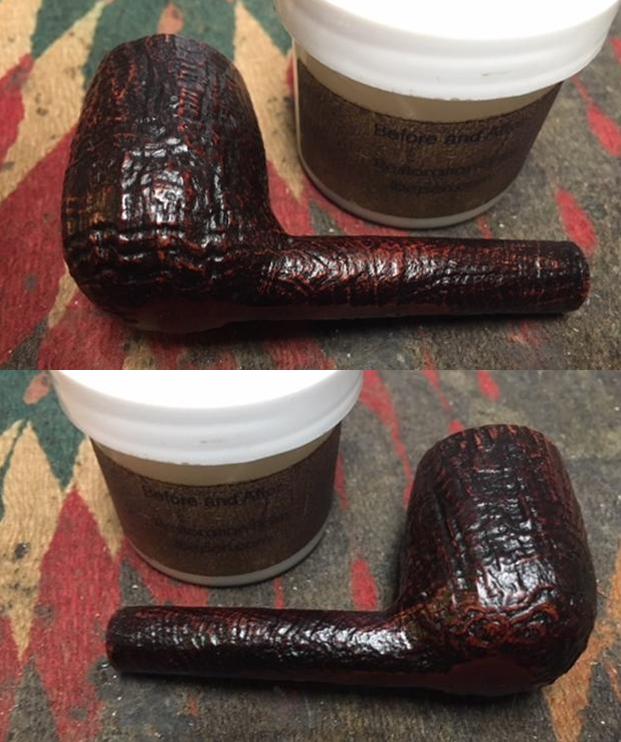
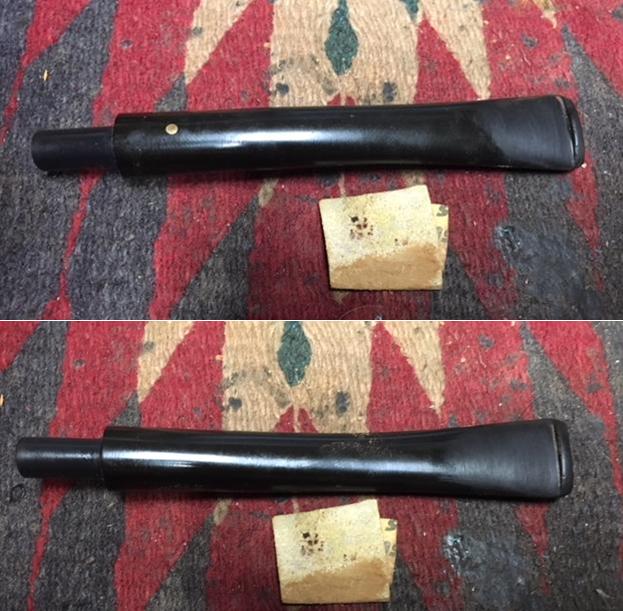
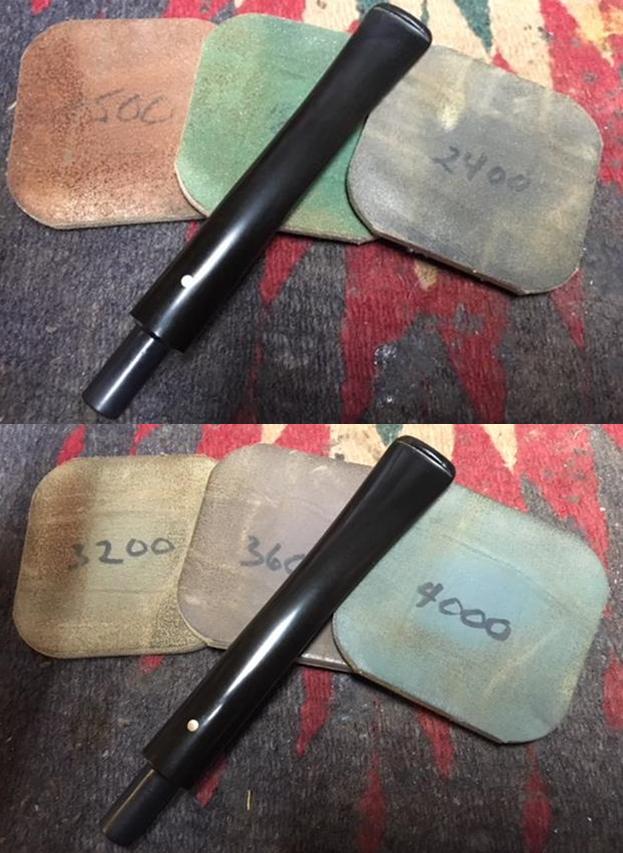
Now it was my turn to work on the pipe. Jeff had done an amazing cleanup of the pipe. He reamed the cake with a PipNet reamer and cleaned up that with a Savinelli Fitsall Pipe Knife. He scrubbed the internals of the bowl and stem with alcohol, cotton swabs and pipe cleaners. He scrubbed the externals with undiluted Murphy’s Oil Soap and rinsed the bowl off with running water. He soaked the stem in Briarville’s Pipe stem Deoxidizer and once it had soaked, rinsed it off with warm water to remove the residual solution. He dried it off and rubbed it down to remove any oxidation that was still on the stem. The pipe looked very good when I received it. I took a photo of the rim top to show the condition. You can see the clean bowl. The bowl is in excellent condition and is clean. The rim top and the inner edge was in great condition. The stem came out looking clean. There were some light tooth marks and chatter on both sides ahead of the button. I took photos of the stamping on the shank. It is faint but still very readable. There was also a very faint stamp on the stem but I am still not certain it is the correct stem because of the fit and shape of the stem. I removed the stem from the shank and took a photo of the pipe parts to show what I was working with. The pipe had cleaned up so well that I turned to polish the briar with micromesh sanding pads. I dry sanded it with 1500-12000 grit sanding pads and wiped the bowl down after each pad with a damp cloth. By the final pads the briar really had a shine. I rubbed the briar down with Before & After Restoration Balm. I worked it into the briar with my fingertips. The product works to clean, enliven and preserve the briar. I let it sit for 10 minutes then I buffed it with a cotton cloth to deepen the shine. The briar really comes alive with the balm. I set aside the bowl and turned my attention to the stem. I “painted” the stem with the flame of a lighter to soften the vulcanite and give the stem a slight bend like it must have originally had.Next, I worked on the diameter of the stem. I needed to take off the excess so that the flow between the shank and the stem was smooth. I used a flat rasp and small file to quickly remove the excess vulcanite. I sanded it with 220 grit sandpaper to clean up the file marks and smooth out the surface of the stem. I moved on to further smooth out the surface of the vulcanite. I sanded it with 320-3500 grit sanding pads to further clean up the scratches and file marks on the surface of the stem.I polished the vulcanite with micromesh sanding pads – 1500-12000 grit pads. I wiped it down with Obsidian Oil after each sanding pad. I used Before & After Pipe Polish – both Fine and Extra Fine to further polish the stem. It really took on a shine and I knew that once it was buffed it would look amazing. I put the stem back on the Bings Favorite ¼ Bent Vulcanite Stem Long Billiard and took it to the buffer. I worked it over with Blue Diamond to polish out the remaining small scratches. I gave the bowl and the stem several coats of carnauba wax and buffed the pipe with a clean buffing pad to raise the shine. I hand buffed it with a microfiber cloth to deepen the shine. The pipe polished up really well and the rim top looked good. I was happy with the look of the finished pipe. The photos below show what the pipe looks like after the restoration. The Bings Favorite Savinelli Product is a beautiful and unique take on a classic shape. The polished, reshaped vulcanite taper stem looks really good with the browns of the briar. The dimensions of the pipe are Length: 6 ½ inches, Height: 1 ¾ inches, Outside diameter of the bowl: 1 ¼ inches, Chamber diameter: ¾ of an inch. The weight of the pipe is 1.27 ounces/36 grams. This is another pipe that I will be putting it on the rebornpipes store in the Italian Pipe Makers Section shortly, if you are interested in adding it to your collection. The long shank and tall bowl look and feel great in the hand. This one should be a great smoker. Thanks for walking through the restoration with me on this beauty!

Restoring one of Gene’s Favourite Pipes – A Savinelli Made Bings Favorite Italy


Blog by Steve Laug

In January Jeff found out about an estate sale in Pocatello, Idaho, USA. It turned out that the sale was for a fellow Jeff and I had purchased pipes from in the past, Gene. He had been the owner of Outwest Tobacco in Pocatello (long closed now) and I bought tobacco and other smoking items from him in the past. As I think about it now, it seems that I had known Gene for over 30 years Jeff and I had been to his home and enjoyed coffee and a few pipes together. I have no idea how many pipes we bought on those visits as well as to the antique shop of his daughter. I know that there were many pipes. When we heard that it was Gene’s personal collection that was for sale and that he had passed away we decided for Jeff to go to the house and have a look. He went on January 25, 2024 to scope it out as we had seen his personal collection of pipes and there were definitely some among those well smoked old warriors that would be great to pick up. Perhaps there would even be one that could join my own collection in memory of Gene.

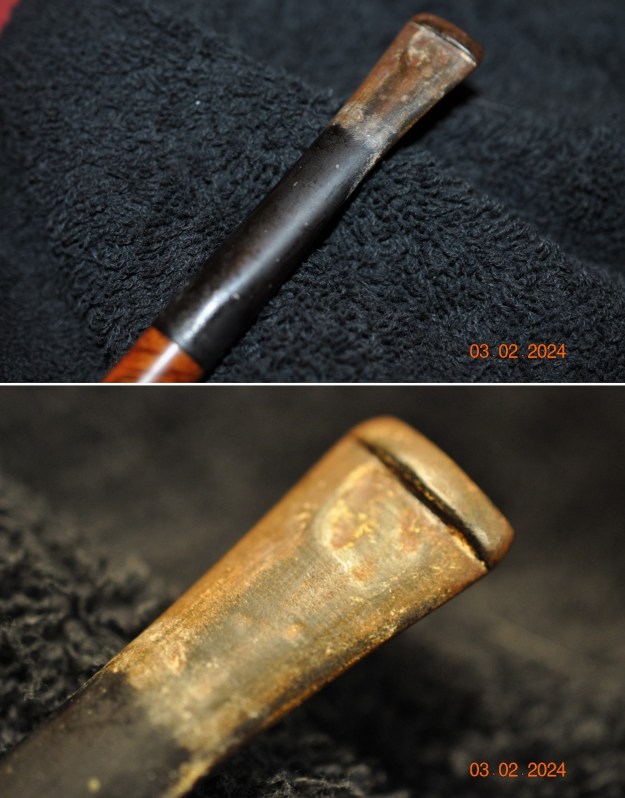
Jeff went to the house and looked through the racks, pipe bags, tobacco both bulk and tinned as well as a variety of pipes. All the pipes were well smoked and needed serious cleaning. Another one of the pipes he picked up was this Savinelli Made Bings Favorite pipes with a poorly fit replacement black vulcanite taper stem. It was very dirty and was a reddish, brown coloured pipe when it started. The smooth finish around the bowl was dirty and had hand oils ground into the grooves. The bowl had a thick cake that overflowed in lava onto the rim edge and top of the bowl. The bottom of the bowl was flattened so the pipe could be set on a desktop. The stem was vulcanite that was very dirty and had the marks of a rubber Softee Bit on the end. It had become discoloured and there was a line where the debris from smoking had accumulated along the edge and under the bit protector. The good news was that there were some deep tooth marks and chatter under the calcification and grime. The rest of the stem was dirty and had lost the characteristic shine. The pipe was stamped on the left side of the shank and read Bings Favorite. On the right side of the shank it is stamped Italy. On the underside of the shank it was stamped Savinelli Product. Jeff took photos of the pipe so I could have a sense of what it looked like before he started his work on it.Jeff took photos of the stem surfaces and the bowl and rim to give a sense of condition of the pipe. You can see the thick cake in bowl and the spots of lava overflow on the edges and rim top of the bowl. It is had to know if there is any damage as the cake and lava is quite thick. The stem surface is very dirty and you can see the area on the end of the stem where the Softee Bit had protected it from chewing though there were some previous deep tooth marks covered by the dirt and debris. I am pretty sure the stem was a replacement and it did not fit the diameter of the shank properly. It was larger than the shank and would need to be fitted. He also took photos of the sides of the bowl and the heel to show the interesting grain that went around the bowl. The grain is beautiful and you can see the oils and debris in the surface of the briar.  He took photos of the stamping on the sides of the shank. It is clear and readable on all the shank sides as noted above. I turned to Pipephil’s site (http://www.pipephil.eu/logos/en/logo-savinelli1.html) to get a sense of the Bing’s Favorite. It is a Savinelli Product and it is listed in the Savinelli pipe section. I did a screen capture of the section and included it below. The stamping on the stem confirms that the stem I have is a replacement.I turned to Pipedia (https://pipedia.org/wiki/Savinelli) and after reading through the history I focused on a section entitled Editions in the “Favorite” line. I have included that section below.

We are compiling a sub-list of known editions in the “Favorite” line of Savanelli pipes, starting with those in Fred Huening’s collection. If you know of others, or have additional information about this line of pipes, please add it here, or send them to sethile.pipes@gmail.com and we can add them for you:

  • Bing’s Favorite
  • Byron’s Favorite
  • Clark’s Favorite
  • Ginger’s Favorite
  • Achille’s Favorite (apparently, I, II, and III)

Now it was my turn to work on the pipe. Jeff had done an amazing cleanup of the pipe. He reamed the cake with a PipNet reamer and cleaned up that with a Savinelli Fitsall Pipe Knife. He scrubbed the internals of the bowl and stem with alcohol, cotton swabs and pipe cleaners. He scrubbed the externals with undiluted Murphy’s Oil Soap and rinsed the bowl off with running water. He soaked the stem in Briarville’s Pipe stem Deoxidizer and once it had soaked, rinsed it off with warm water to remove the residual solution. He dried it off and rubbed it down to remove any oxidation that was still on the stem. The pipe looked very good when I received it. I took a photo of the rim top to show the condition. You can see the clean bowl. The bowl is in excellent condition and is clean. The rim top and the front inner edge was in great condition. The stem came out looking clean. There were definitely deep tooth marks and chatter on both sides. I took photos of the stamping on the shank. It is faint but still very readable. I removed the stem from the shank and took a photo of the pipe parts to show what I was working with. The pipe had cleaned up so well that I turned to polish the briar with micromesh sanding pads. I dry sanded it with 1500-12000 grit sanding pads and wiped the bowl down after each pad with a damp cloth. By the final pads the briar really had a shine. I rubbed the briar down with Before & After Restoration Balm. I worked it into the briar with my fingertips. The product works to clean, enliven and preserve the briar. I let it sit for 10 minutes then I buffed it with a cotton cloth to deepen the shine. The briar really comes alive with the balm. I set aside the bowl and turned my attention to the stem. I “painted” the stem surface with the flame of a lighter. I was able to lift the tooth marks significantly. There were still some deep marks. I filled them in with a coat of clear CA glue and spread it across the surface with a dental spatula. Once the repairs cured I flattened them with a small file. I started the process of blending them into the surface of the surrounding vulcanite.Once I finished that work I addressed the diameter of the stem. I needed to take off the excess so that the flow between the shank and the stem were smooth. I used a flat rasp to quickly remove the excess then sanded it with 220 grit sandpaper to clean up the file marks and smooth out the surface of the stem. I moved on to further smooth out the surface of the vulcanite. I sanded it smooth with 320-3500 grit sanding pads to further blend them into the surface of the stem.I polished the vulcanite with micromesh sanding pads – 1500-12000 grit pads. I wiped it down with Obsidian Oil after each sanding pad. I used Before & After Pipe Polish – both Fine and Extra Fine to further polish the stem. It really took on a shine and I knew that once it was buffed it would look amazing. I put the stem back on the Bings Favorite ¼ Bent Vulcanite Stem Long Billiard and took it to the buffer. I worked it over with Blue Diamond to polish out the remaining small scratches. I gave the bowl and the stem several coats of carnauba wax and buffed the pipe with a clean buffing pad to raise the shine. I hand buffed it with a microfiber cloth to deepen the shine. The pipe polished up really well and the rim top looked good. I was happy with the look of the finished pipe. The photos below show what the pipe looks like after the restoration. The Bings Favorite Savinelli Product is a beautiful and unique take on a classic shape. The polished, reshaped vulcanite taper stem looks really good with the browns of the briar. The dimensions of the pipe are Length: 6 ½ inches, Height: 1 ¾ inches, Outside diameter of the bowl: 1 ¼ inches, Chamber diameter: ¾ of an inch. The weight of the pipe is 1.23 ounces/35 grams. This is another pipe that I will be putting it on the rebornpipes store in the Italian Pipe Makers Section shortly, if you are interested in adding it to your collection. The long shank and tall bowl look and feel great in the hand. This one should be a great smoker. Thanks for walking through the restoration with me on this beauty!

What A Beautiful Triangular Shank Oscar Aged Briar 123 Pot


Blog by Steve Laug

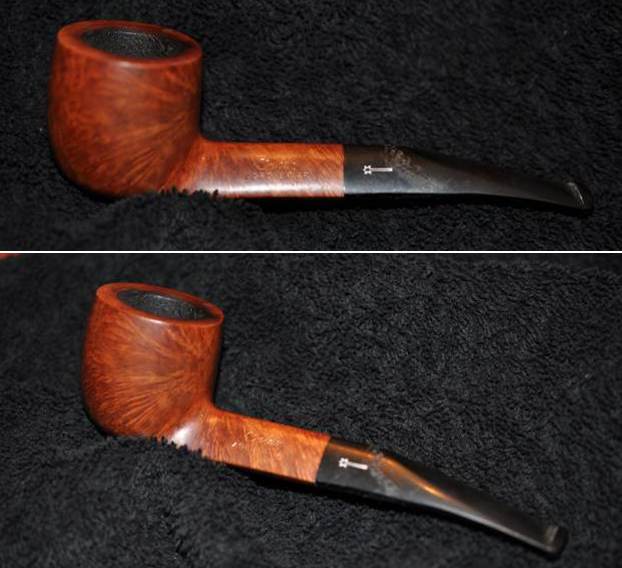
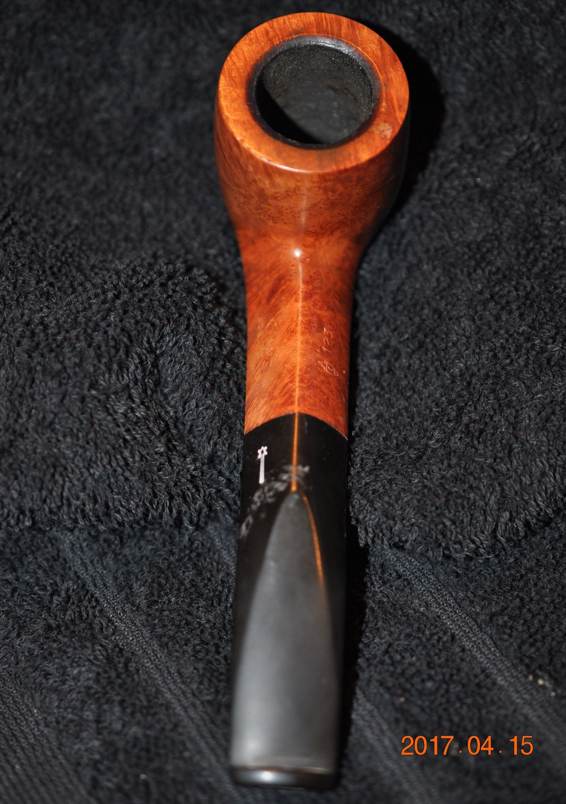
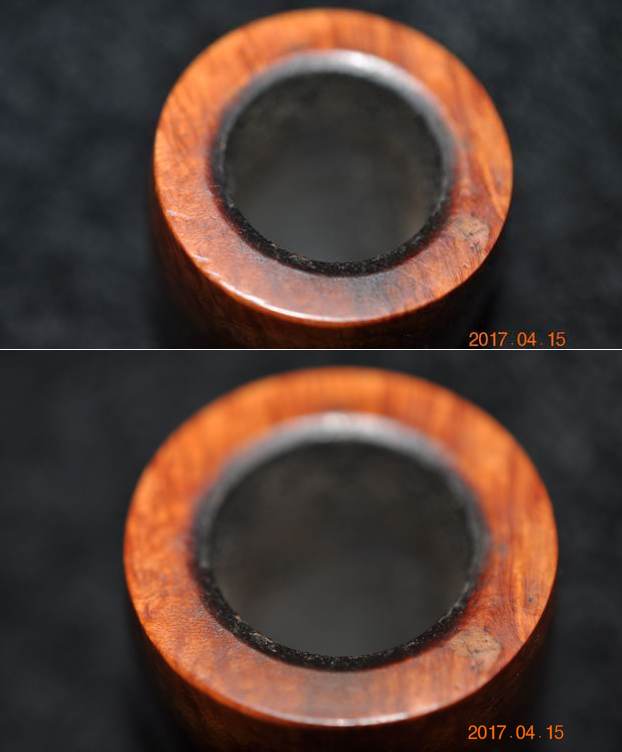
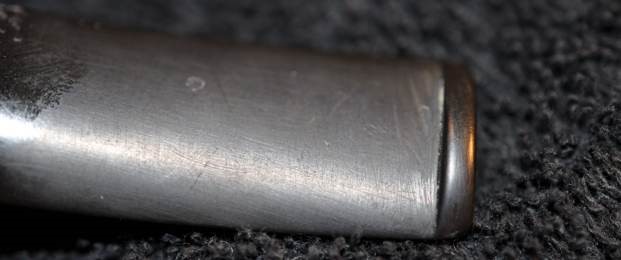
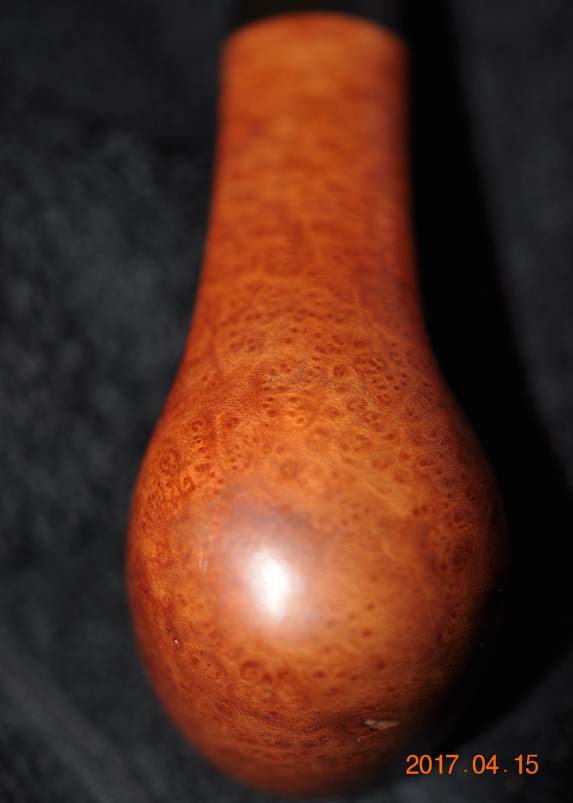
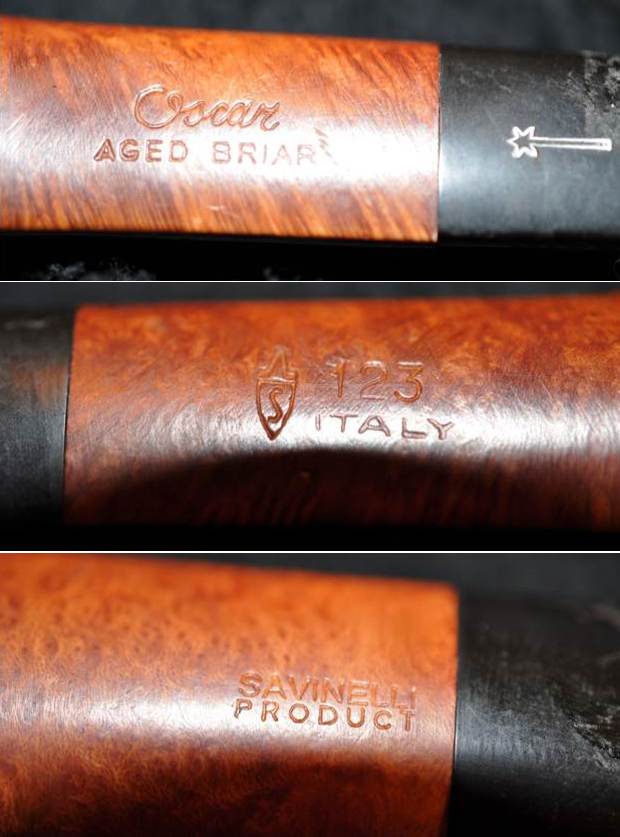
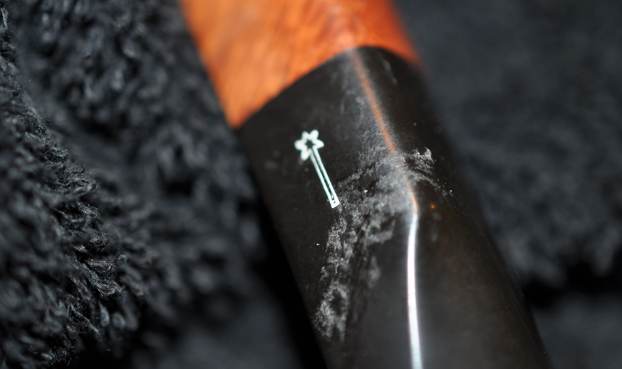
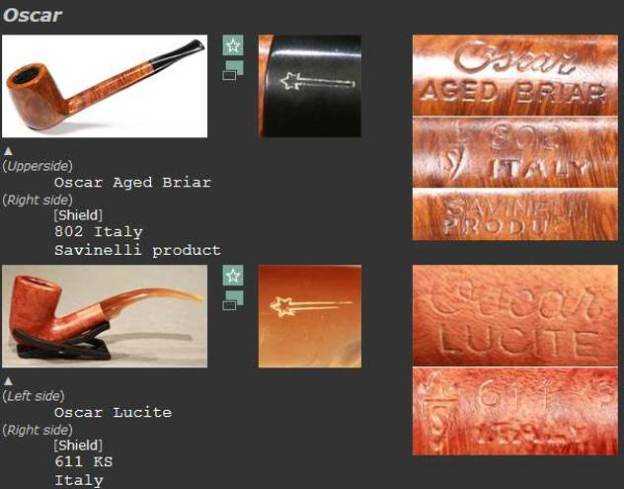
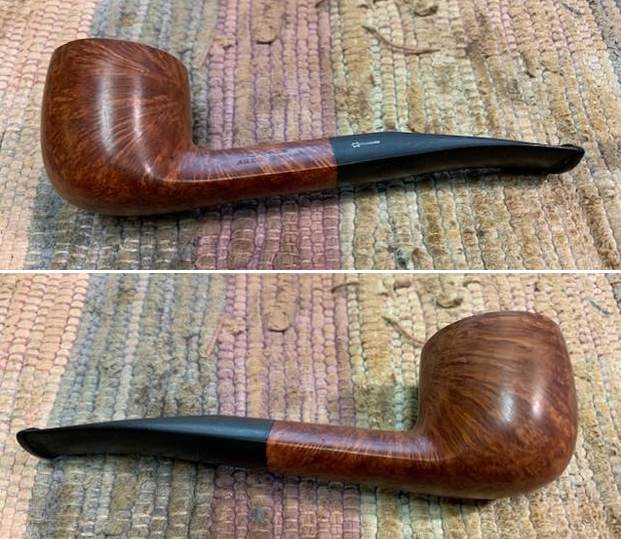
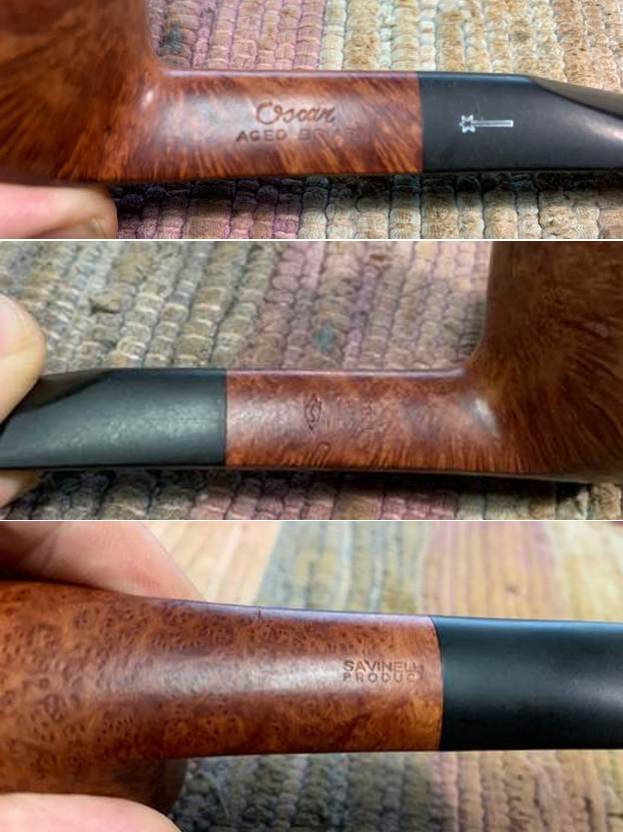
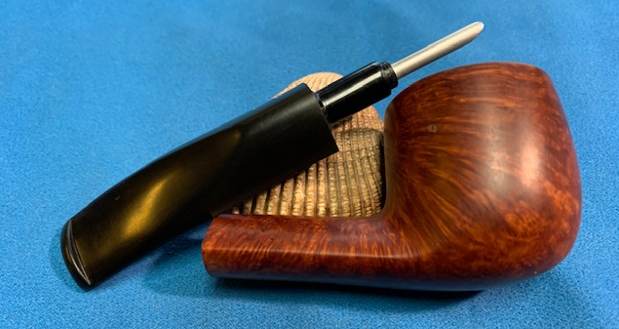
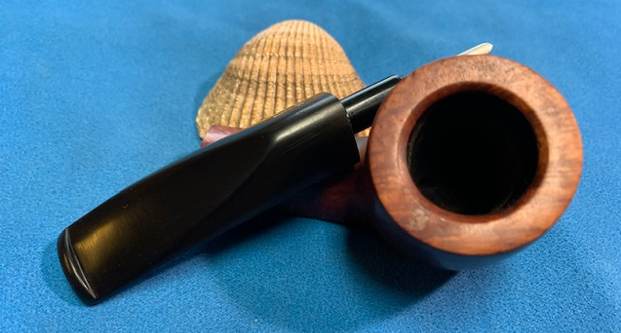
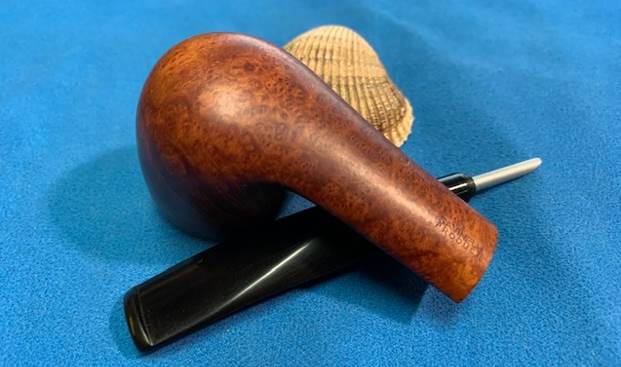
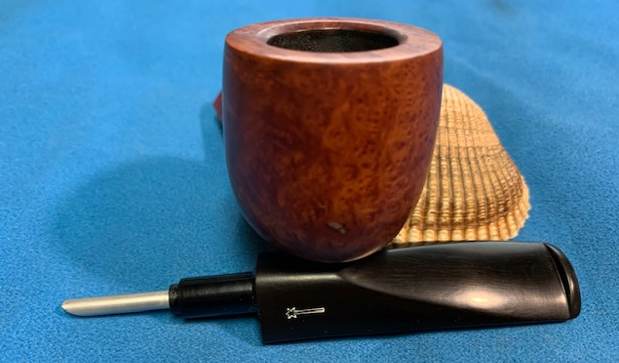
This older Savinelli Made pipe has been in my restoration queue since we picked it up from an antique store on 04/08/17 in Stevensville, Montana, USA. It is a beautifully grained pot shaped pipe with a triangular shank. It was stamped on the left side and read Oscar [over] Aged Briar. On the right side it was stamped with a Savinelli Shield S and next to that is the shape number 123 [over] Italy. On the underside of the shank it is stamped Savinelli [over] Products. The grain was quite nice peeking through the ground in grime on the briar. The bowl had a thick cake and there was some lava on the beveled inner rim of the top. The rim top was quite clean but there was a large putty fill on the right side toward the back of the bowl. The vulcanite stem was dirty and had some sticky substance from a gum label near the shooting star logo on the left side of the taper stem. There was some light tooth chatter near the button and some light oxidation. Jeff took photo of the pipe before he started his clean up work on it. I have included them below. He took some photos of the rim top to show the condition. You can see the light lava coat on the back side of the bowl top and on the beveled inner edge of the bowl. You can also see the putty fill on the rim top on the lower right side of the photos below. He also took photos of both sides of the stem to show the condition of both. He also took photos of the heel of the bowl and underside of the shank to show the birdseye grain that is clustered on the bowl. It is quite a stunning pipe. You can also see the small fill on the lower front of the bowl.Jeff took photos of the stamping around the shank sides. It is clear and readable as noted above. You can also see the shooting star Oscar logo on the left side of the stem. I turned to Pipephil’s site to learn about the Oscar (http://pipephil.eu/logos/en/logo-savinelli3.html). I did a screen capture of the section and also included the note from the side bar on the site. I quote from the side bar: Pipes from the Oscar line are not free from fillings. See also (same star logo): Savinelli Antique Shell, Savinelli Garda, Savinelli Sila.

From Pipephil I knew that the line had notable fills. The pipe I was working on had fills on the top and the front of the bowl.

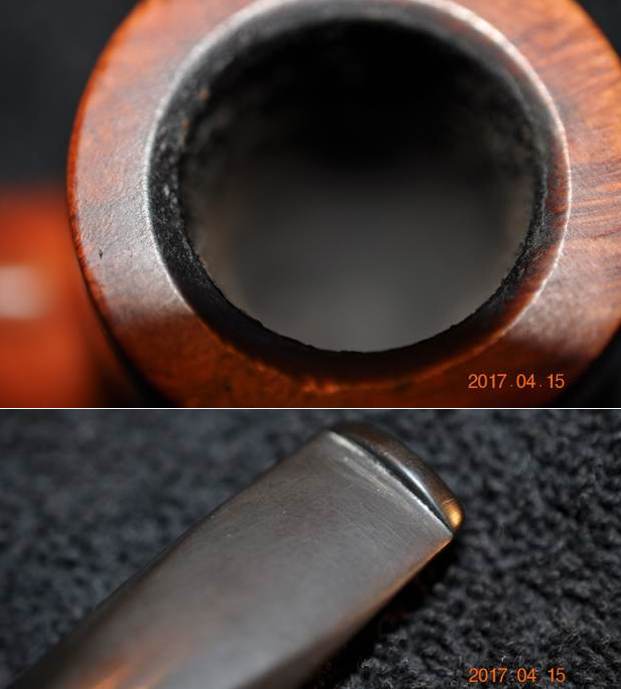
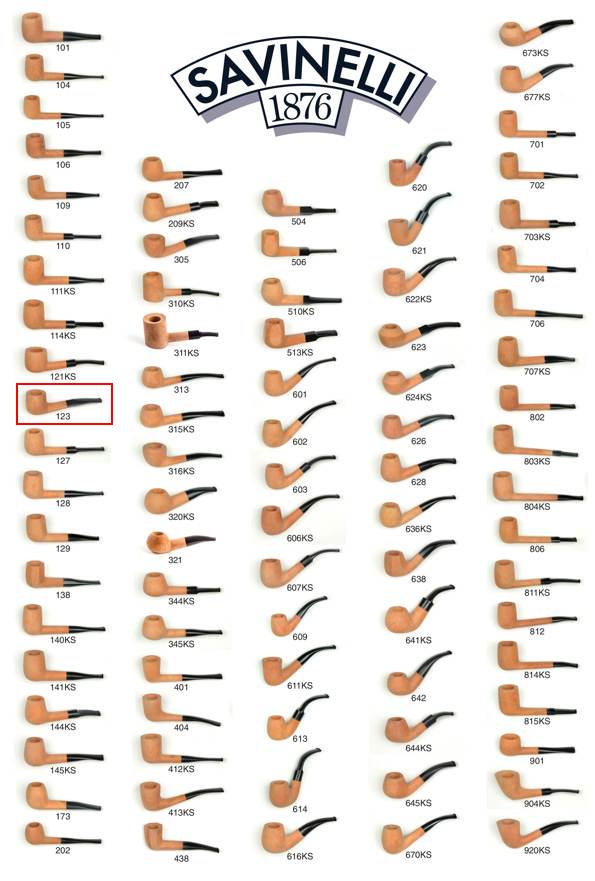
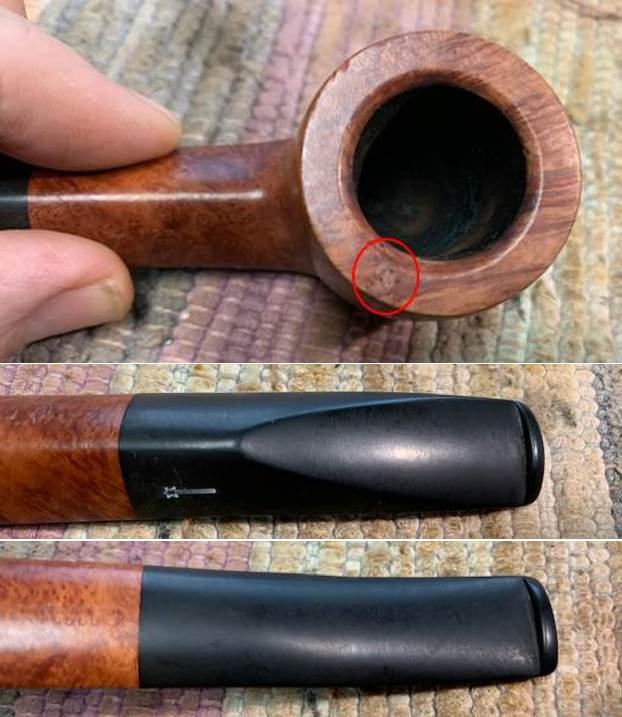
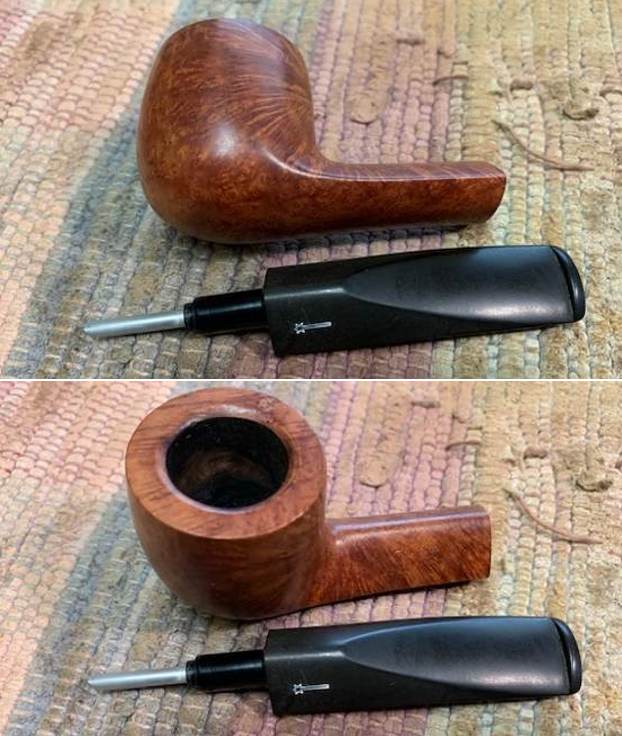
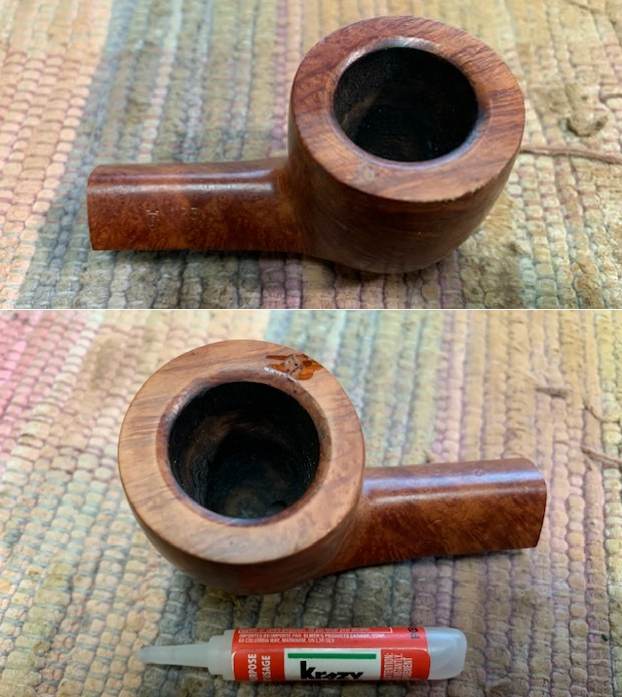
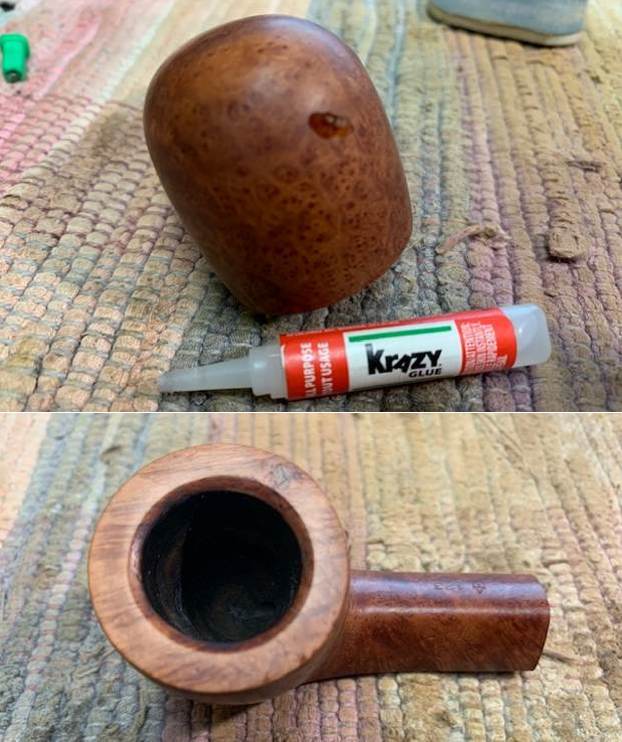
I turned to Pipedia to the link on the shape chart for Savinelli pipes looking to find the 123 shape number (https://pipedia.org/images/4/41/Sav_Shape_Chart_2017.jpg). I have included the shape chart below. I have drawn a red box around the 123 Shape. The article on Pipedia is a great history of the brand and the Oscar is listed in the various lines.Jeff had reamed the pipe with a PipNet Pipe Reamer and cleaned up the remnants with a Savinelli Fitsall Pipe Knife. He scrubbed the bowl with undiluted Murphy’s Oil Soap with a tooth brush. He rinsed it under running warm water to remove the soap and grime. He cleaned out the inside of the shank and the airway in the stem with alcohol, cotton swabs and pipe cleaners. He soaked the stem in Before & After Deoxidizer and rinsed it off with warm water. I took photos of the pipe once I got around to working on it. The rim top looked very good. There were some nicks in the outer left backside of the rim. The beveled rim top was in excellent condition. There was a large putty fill on the rear right top side of the rim that I have circled in the photo below. The stem surface had some light chatter on both sides near the button. I took photos of the stamping on the shank sides. The stamping is clear and readable as can be seen from the photos. You can also see the shooting star on the left side of the stem. I removed the stem and took a photo to give a sense of the grain and a look of the whole. The photos also show the aluminum inner tube in the end of the tenon. It is anchored and made to stay in place in the stem.I started my work on the pipe by cleaning up the fill on the rim top. I was able to even out the fill with a spot of super glue. I filled in the fill on the front of the bowl with clear super glue at the same time. Once it cured I sanded it with a folded piece of 220 grit sandpaper to blend it in. I polished the bowl and the rim top, sides and shank with micromesh sanding pads – dry sanding with 1500-12000 grit pads and wiping it down after each pad with a damp cloth. I rubbed the bowl and shank down with Before & After Restoration Balm. I worked it into the surface of the bowl sides and shank with my fingertips to clean, enliven and protect the briar. I let the balm sit for 15 minutes and then buffed with a cotton cloth to raise the shine.   I set the bowl aside and turned to work on the stem. Since it was in good condition I did not have to sand out tooth marks. I polished the vulcanite stem with micromesh sanding pads – 1500-12000 grit pads. I wiped it down with a damp cloth after each sanding pad. I used Before & After Pipe Polish – both Fine and Extra Fine to further polish the stem. I gave it a final coat of Obsidian Oil and let it dry. This Savinelli Product Oscar Aged Briar 123 Triangle Shank Pot with a vulcanite taper stem is a great looking pipe now that it has been restored. I put the stem back on the bowl and carefully buffed the pipe with Blue Diamond on the buffing wheel using a light touch on the briar. I gave the bowl and the stem multiple coats of carnauba wax on the buffing wheel and followed that by buffing the entire pipe with a clean buffing pad. I hand buffed the pipe with a microfiber cloth to deepen the shine. The finished Oscar Aged Briar 123 Pot is another one that is comfortable in the hand and feels great. Give the finished pipe a look in the photos below. The dimensions of the pipe are Length: 5 ½ inches, Height: 1 ½ inches, Outside diameter of the bowl: 1 ½ inches, Chamber diameter: 7/8 of an inch. The weight of this pipe is 40 grams/1.41 ounces. If you are interested in adding this pipe to your collection I will be adding it to the rebornpipes store in the American Pipemakers section. Send me a message or an email. Thanks for reading this blog and my reflections on the pipe while I worked on it. There are many more to come!

Fresh Life for a Savinelli Oscar Lucite 111KS Billiard


Blog by Steve Laug

The next pipe on the work table came to us 2018 from a fellow in Pocatello, Idaho, USA. It is a nice looking Billiard with cross grain and birdseye grain and has a Fancy Lucite half saddle stem. The Lucite stem fits the name on the left side Oscar Lucite. The bowl has a rich reddish brown colour combination that highlights grain. The pipe has some grime ground into the surface of the briar. The finish had a few small fills around the sides but they blended in fairly well. This pipe is stamped on the sides of the shank. On the left it reads Oscar [over] Lucite. On the right it has a Savinelli “S” Shield and next to that was the shape number 111KS [over] Italy. There is a thick cake in the bowl and an overflow of lava on the top beveled inner edge of the bowl. The rim top looks good but it is hard to be certain with the lava coat. There were some light tooth marks and chatter on both sides of the Lucite stem near the button. The pipe looks to be in good condition under the grime. Jeff took photos of the pipe before he started his cleanup. He took photos of the rim top to show the thick cake and the thick lava coat. It is hard to know what the condition of the rim top and edges is like under that thick lava. It is an incredibly dirty pipe but obviously one that was a great smoker. The acrylic half saddle stem had light tooth marks and chatter on both sides ahead of the button.   He took a photo of the sides and heel of the bowl to show the beautiful grain around the bowl and the condition of the pipe. You can see the grime ground into the surface of the briar. He took a photo of the stamping on the left side of the shank. It is clear and readable as noted above. On the underside of the shank it is stamped Savinelli Product. I turned first to Pipephil’s site to look at the Savinelli write up there and see if I could learn anything about the Oscar Lucite line (http://www.pipephil.eu/logos/en/logo-savinelli3.html). There was a listing for the Oscar Lucite and I did a screen capture of the pertinent section.I looked up the Savinelli brand on Pipedia to see if I could find the Oscar Lucite line and the 111KS Shape (https://pipedia.org/wiki/Savinelli). There was nothing that tied directly to the line I am working on. There is a detailed history of the brand there that is a good read. I also captured the shape chart and boxed in the 111KS shape in red. The shape is identical to the one that I am working on. The stem on this one is the original shape that was on the Lucite Line but there was no shooting star logo on the left side.It was time to work on the pipe. As usual Jeff had done a thorough cleanup on the pipe. He reamed the bowl with a PipNet pipe reamer and followed up with a Savinelli Fitsall pipe knife to remove the cake. He scrubbed out the mortise and the airway in the shank and the stem with alcohol, cotton swabs and pipe cleaners. He scrubbed the exterior of the bowl, rim, shank and stem with a tooth brush and Murphy’s Oil Soap to remove the oils and tars on the rim and the grime on the finish of the bowl. He rinsed it under running water. One of the benefits of this scrub is that it also tends to lift some of the scratches and nicks in the surface of the briar. He dried it off with a soft cloth. He cleaned the internals and externals of the stem with alcohol, pipe cleaners and cotton swabs. He scrubbed the stem with Soft Scrub all-purpose cleanser and rinsed it off with warm water and cleaned out the airway in the stem with alcohol. Other than the damaged rim top the pipe looked good.   I took a photo of the rim top and stem to show the condition. The rim top was in very rough condition. The rim top and the edges of the bowl had darkening, burn marks and some nicking. The Lucite half saddle stem had light tooth chatter and marks on both sides ahead of the button and on the button edges.  The stamping on the sides of the shank is clear and readable as noted above.     I removed the stem from the shank and took a photo of the pipe to give a sense of the whole. It is a nice looking billiard that should clean up very well. I started working on the pipe by dealing with the damaged rim top and edges. I topped the bowl with 220 grit sandpaper on a topping board. I worked over the rim top and inner bevel of the rim with 220 grit sandpaper. I smooth out the damage and gave the  rim top and edge a clean look that would polish out nicely. I wiped the rim top down with a damp cloth to remove the dust and debris.   I polished the briar with micromesh sanding pads – wet sanding with 1500-12000 grit pads and wiped down the bowl after each sanding pad.     I stained the rim top with an Oak stain pen to match the rest of the bowl. Once I buffed and polished the bowl it would be a perfect match. I rubbed the bowl and shank down with Before & After Restoration Balm. I worked it into the surface of the bowl sides and shank with my fingertips to clean, enliven and protect the briar. I let the balm sit for a little while and then buffed with a cotton cloth to raise the shine. The Balm did its magic and the grain stood out.  I polished the Lucite stem with micromesh sanding pads – 1500-12000 grit pads. I wiped it down with a damp cloth after each sanding pad. I used Before & After Pipe Polish – both Fine and Extra Fine to further polish the stem. The photo below shows the polished stem. This nicely grained Savinelli Made Oscar Lucite 11KS Billiard with Lucite half saddle stem is a great looking pipe now that it has been restored. The briar is clean and really came alive. The rich reddish, brown stains gave the grain a sense of depth with the polishing and waxing. The grain really popped. I put the vulcanite stem back on the bowl and carefully buffed the pipe with Blue Diamond on the buffing wheel using a light touch on the briar. I gave the bowl and the stem multiple coats of carnauba wax on the buffing wheel. I buffed the pipe with a clean buffing pad to raise the shine. I hand buffed the pipe with a microfiber cloth to deepen the shine. The finished Oscar Lucite Billiard is a beauty and feels great in the hand and looks very good. Give the finished pipe a look in the photos below. The dimensions of the pipe are Length: 5 ¾ inches, Height: 2 inches, Outside diameter of the bowl: 1 ½ inches, Chamber diameter: ¾ of an inch. The weight of the pipe is 46grams/1.62oz.Thanks for reading this blog and my reflections on the pipe while I worked on it. There are many more to come!

A Few Adjustments to a Lightly Smoked Savinelli Product Bent Pot


Blog by Steve Laug

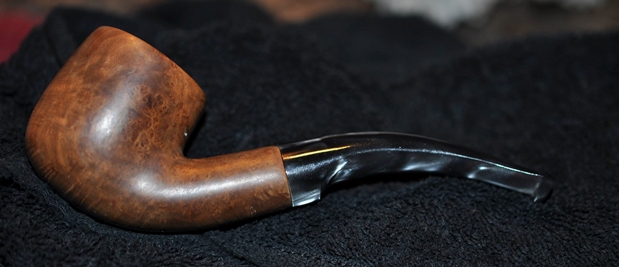
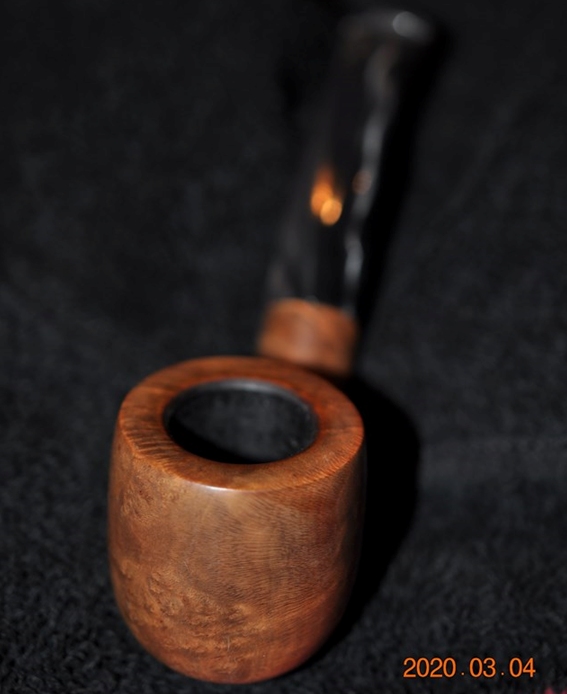
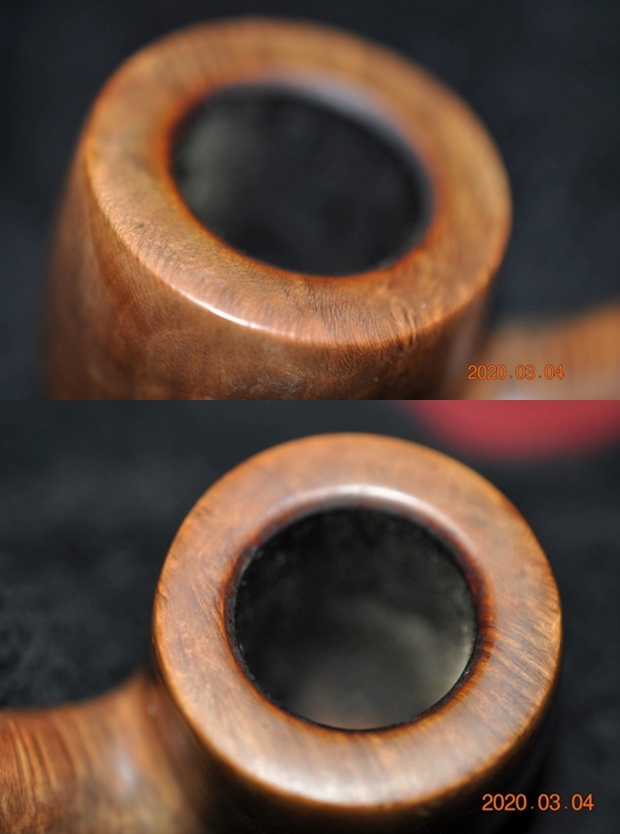
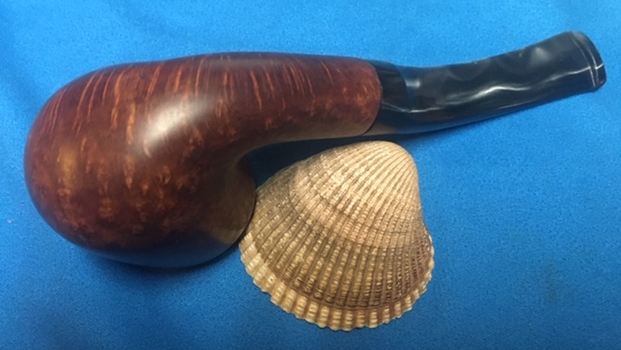
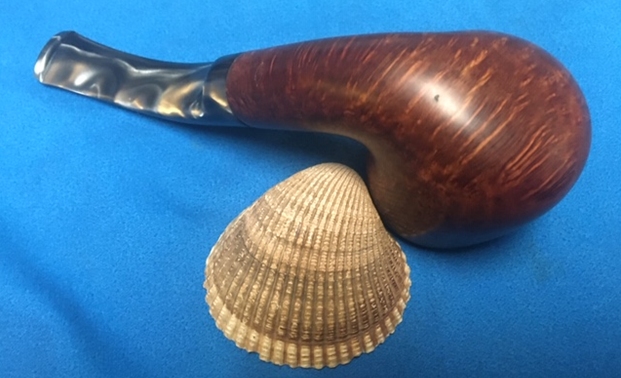
The next pipe on my table is another Savinelli Product pipe. It is stamped on the underside of the shank with the Savinelli “S” Shield and Italy. It is a dirty pipe but has some great grain that the carver built the shape around. It has a natural finish that is in good shape under the dirt and even the rim top looks good. The inner edge of the rim is darkened but the bowl is in good shape. There was no burn damage to the inner edge. There is a medium cake in the bowl but no lava coat on the rim top. The variegated silver/grey acrylic stem was not well fitted to the shank. It is the original stem but it is a pretty sloppy fit. There were light tooth marks and chatter on both sides ahead of the button. Jeff took these photos before he cleaned the pipe. Jeff took photos of the rim top from various angles to give a clear picture of the condition of the bowl and rim. It is dirty but there is no lava coat on the top and the rim edges look very good.The grain around the sides and heel of the bowl is quite interesting. It is a combination of cross grain, swirled and birdseye grain. There are some small fills on the sides and back of the bowl. Most of them seem to be solid.  The stamping on the shank is very readable as can be seen in the next photo.The acrylic stem shows tooth marks and chatter on both sides near the button. There is some wear on the edge of the button as well. The stem shows a great profile. It was time to get working on the pipe itself and see what I had to do with it. It had come back amazingly clean. Jeff had done his normal thorough clean up – reaming, scrubbing, soaking and the result was evident in the pipe when I unpacked it. I took photos of the pipe before I started my work on it. I took some photos of the rim top to show the condition of the edges and the bowl. It looked very good. The stem actually looked much better than I expected and the tooth chatter seemed to have disappeared. There were some light tooth marks just next to the button edge on both sides. I would also need to fit the stem to the shank by reduce the diameter of the stem to match the shank and adjust the fit.I took photos of the stem shank junction to show the difference in diameter. The stem is significantly wider than the shank. It fit tight to the shank but the rest of the fit was very poorly done.The bowl was going to be quite easy to work on so I started with it. The fills on the right side of the bowl were sound and tight fitting. There was a damaged fill that was pitted on the back of the bowl just above the shank bowl junction. I cleaned it out with a cotton swab and alcohol and filled it in with super glue and briar dust. When the repair had cured I sanded it smooth with a folded piece of 220 grit sandpaper. Once it was smooth I stained it with an oak stain pen to blend it into the surrounding briar.I polished the briar with micromesh sanding pads – wet sanding with 1500-12000 grit pads. I wiped the bowl down after each pad with a damp cloth to remove the dust.     I worked some Before & After Restoration Balm into the briar with my fingertips. I let the balm sit on the briar for 10 minutes the buffed it off with a soft cloth. The balm enlivens, enriches and protects the briar while giving it a deep glow. I set the bowl aside and turned my attention to the stem. I used the Dremel and a sanding drum to take off as much of the excess diameter of the stem as possible while it was on the shank. I then removed the stem and worked on it with a rasp and file to remove the rest of the excess material.I sanded the stem with 220 grit sandpaper to remove the file marks and Dremel marks on the reduced shank. I also sanded out the tooth marks and the remaining chatter on the button end of the stem. I started the polishing with 400 grit wet dry sandpaper.I polished the stem with micromesh sanding pads – wet sanding with 1500-12000 grit sanding pads. I wiped it down after each sanding pad with a damp cloth. I polished it with Before & After Pipe Stem Polish – both Fine and Extra Fine. I buffed the stem with a soft cloth to raise the shine. Once again I am at my favourite part of a restoration – finishing up a pipe! This Savinelli Made Bent Pot came out really well considering the issues with the fit of the stem when I started. I put the pipe back together and buffed it with Blue Diamond polish on the buffing wheel. I polished it with multiple coats of carnauba wax on both the bowl and stem. I buffed it with a clean buffing pad and with a hand buff with a microfibre cloth. The mix of colours and the buffing made the grain really pop once it was waxed. The mixed grain is quite stunning. The variegated silver acrylic half-saddle stem stands out in great contrast to the briar. It is a nice looking pipe. Have a look at the photos below of the finished pipe. Its dimensions are Length: 6 inches, Height: 2 inches, Outside Diameter of the Bowl: 1¼ inches, Diameter of the Chamber: ¾ of an inch. The bent pot feels great in the hand. This one will be going on the rebornpipes store later today. You can add it to your collection and carry on the trust. Let me know if you are interested in adding it. Thanks for your time.
Freshening up a Savinelli Made Egg Sitter with a Saddle Stem


Blog by Steve Laug

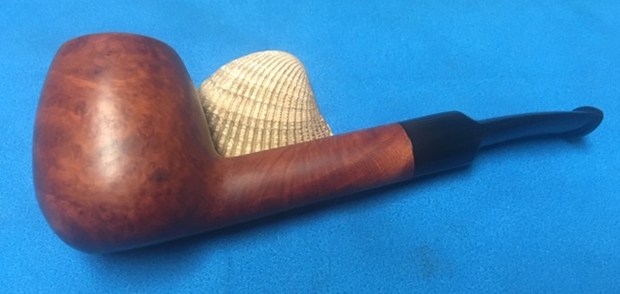
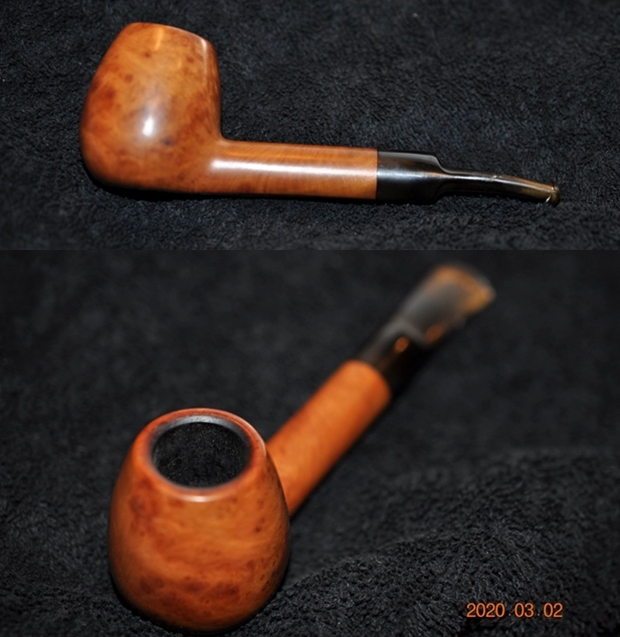
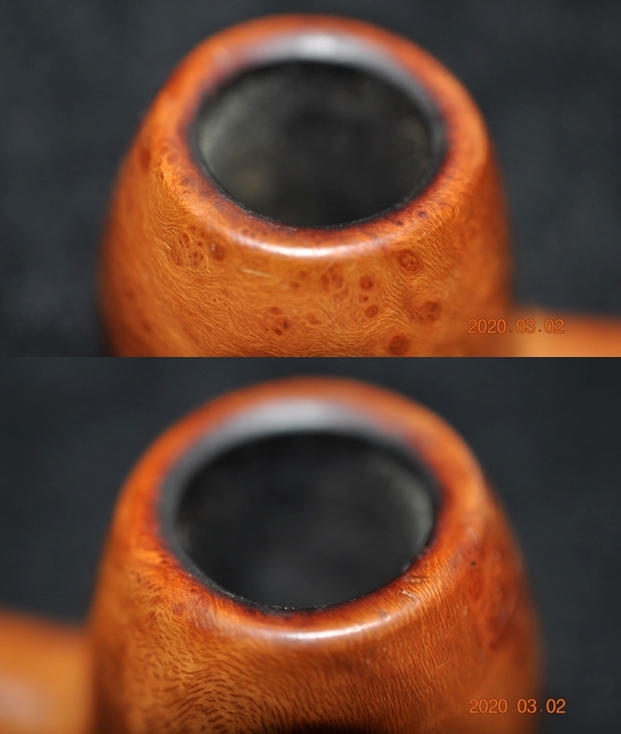
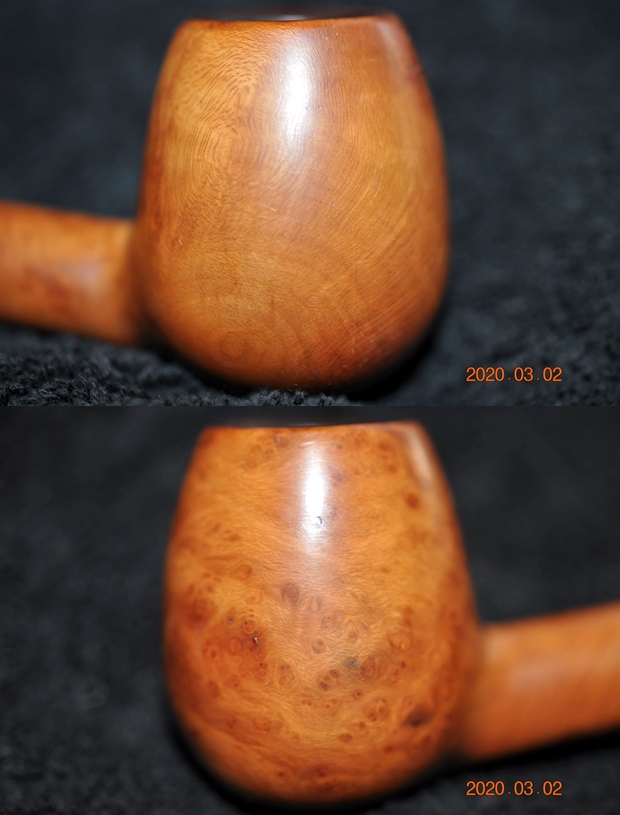
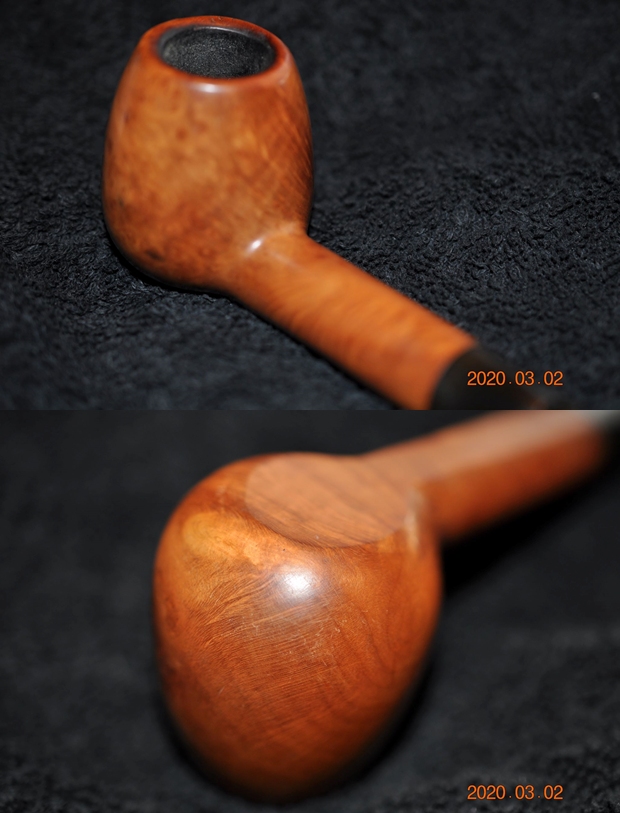
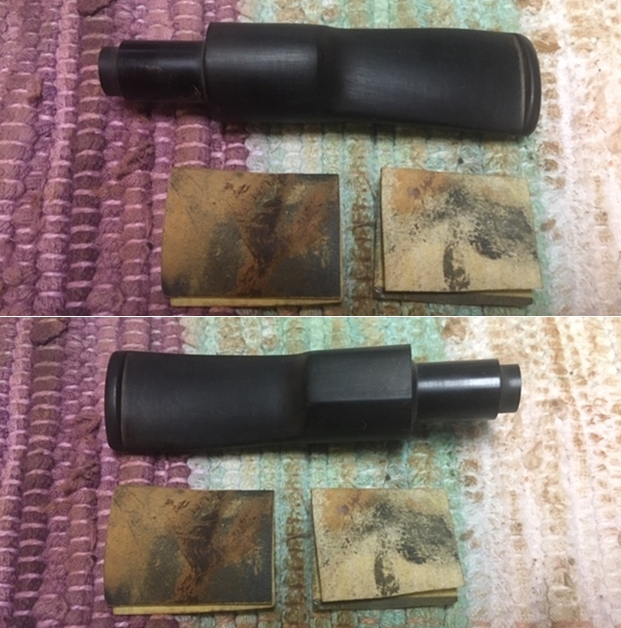
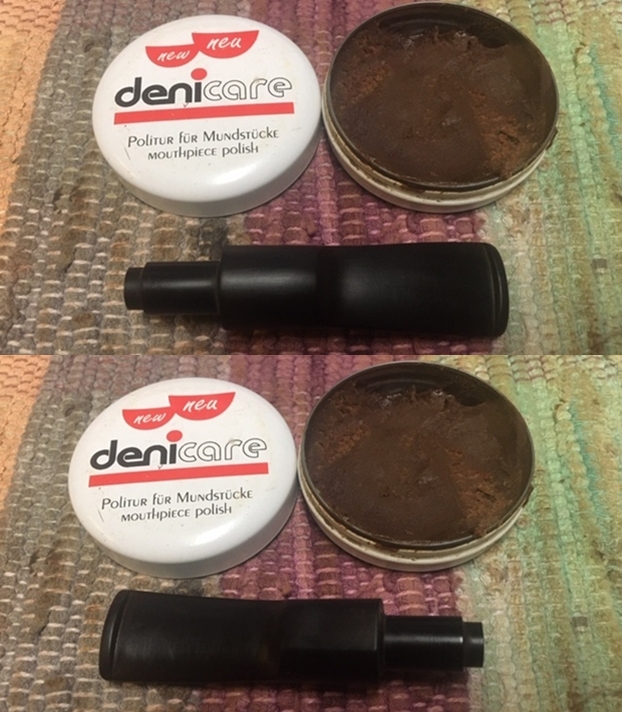
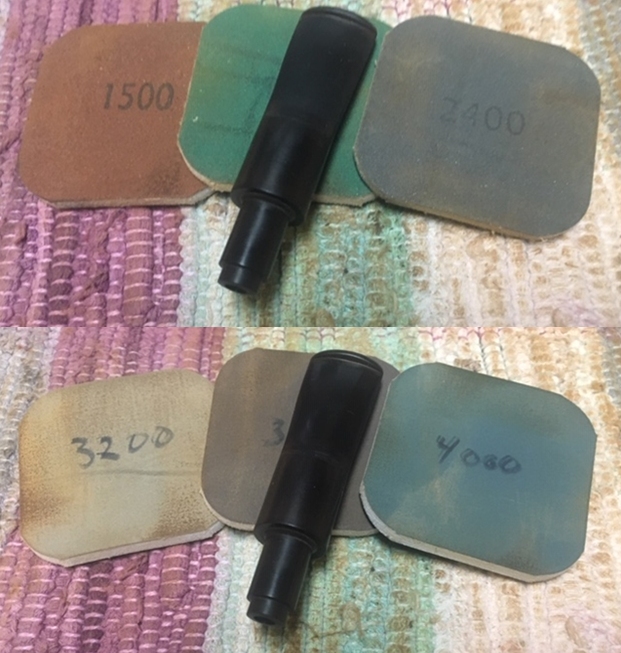
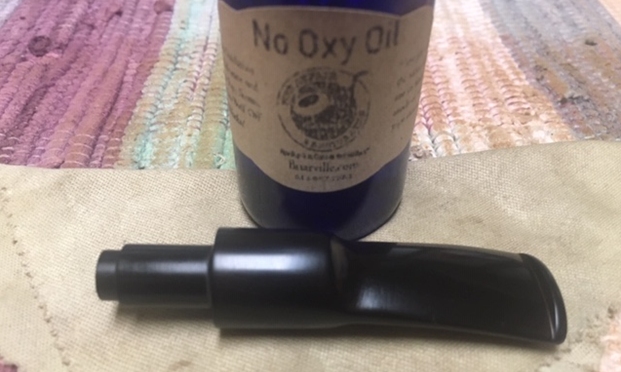
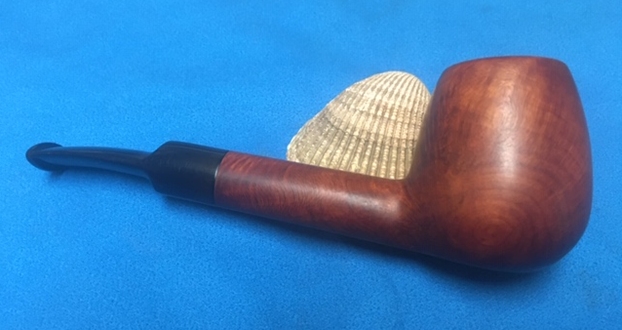
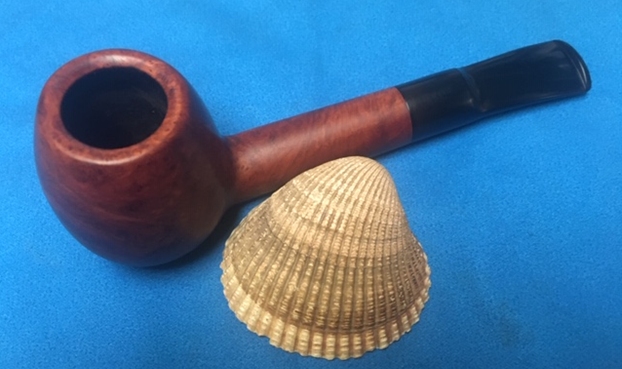
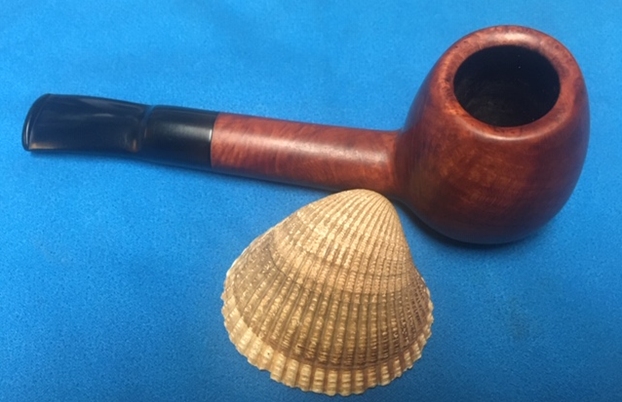
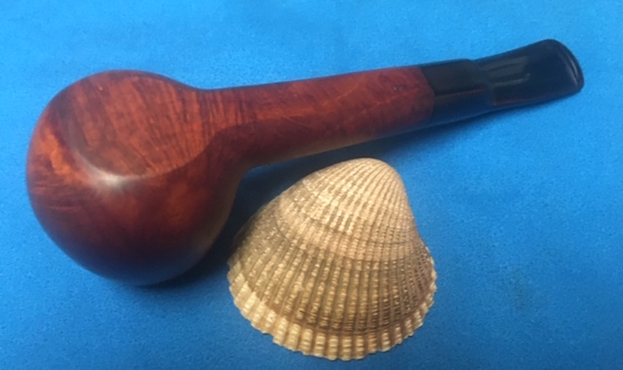
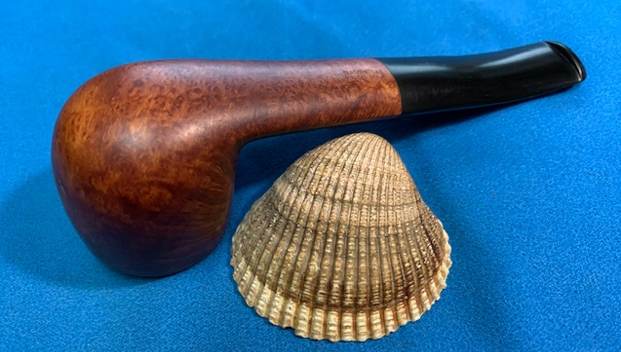
One thing that can be said for staying home and indoors is that I am able to work through the large backlog of pipes in my queue and maybe make a dent. The next pipe on the work table is an interesting egg shaped sitter with a long shank. The only stamping it bears is the Savinell “S” shield and Italy on the underside of the shank. Otherwise there is nothing else. It has a natural smooth finish on the bowl and shank. The grain is mixed but very interesting and flows up and around the bowl and shank. The round shank flows well into saddle stem. The rim top is smooth and crowned inward. There was a thick cake in the bowl and some lava on the inner edge. There was also some darkening. The pipe was dirty and tired looking. The saddle stem was vulcanite and had a slight bend in the blade. There were light tooth marks and chatter on both sides near the button. It was oxidized and spotty. Jeff took some photos of the pipe to show the general condition of the pipe before he started his clean up.Jeff took some close-up photos of the rim top and bowl from various angles to show the overall condition. It looked pretty good. There is light coat of lava around the inner edge of the bevel and some rim darkening. There were a few rough spots on the rim top on the front right. You can also see the cake in the bowl. It was a well-loved pipe and smoked a lot by the previous pipe man. Jeff took some photos of the sides and heel of the bowl to show the condition of the finish on the pipe. The photos show the beautifully grained bowl. Under the dust and grime it was a nice looking bowl. I think it will be another beautiful pipe once it is restored. He took a photo of the stamping on the underside of the shank. It was very readable and matches what was spelled out above. The next two photos show the top and underside of the stem. It is dirty, oxidized and has some tooth chatter and some tooth marks with some damage to the button edge on both sides. The third photo shows the flow of the stem and shank.This is a nice Savinelli pipe and it is fun to work on a shape I have not seen before. When I received it Jeff had once again done his usual thorough job cleaning the pipe. He reamed it with a PipNet pipe reamer and got rid of the cake. He cleaned up the reaming with a Savinelli Fitsall Pipe Knife so that we could see the walls of the bowl and assess for damage. He cleaned the internals of the shank and stem with alcohol, pipe cleaners and alcohol. He scrubbed the exterior with undiluted Murphy’s Oil Soap and a tooth brush. He rinsed the pipe under warm water. He dried it off with a cloth and then let it air dry. The stem was scrubbed with Soft Scrub and soaked in Before & After Deoxidizer. It came out looking very good. The finish on the bowl and the rim top cleaned up beyond my expectations. I took pictures of the pipe to show how it looked when I unpacked it. I took a close up photo of the rim top to show how clean it was. Jeff had been able to clean out the dust and grime on the edges of the rim top and it looked very good. The stem looked good just some light tooth chatter and several tooth marks on the button.Even the stamping cleaned up well and is still very clear and readable.The pipe was in really good shape so it was a matter of cleaning up the edges and polishing the briar. I started the work by dealing with the darkening of the inner edge and part of the bevel. I used a folded piece of 220 grit sandpaper to clean up the edge and then polished it with 400 grit wet dry sandpaper.I polished the briar with micromesh sanding pads. I wet sanded it with 1500-12000 grit pads and wiped the bowl down with a damp cloth after each pad. I worked some Before & After Restoration Balm into the briar with my fingertips. I let the balm sit on the briar for 10 minutes the buffed it off with a soft cloth. The product is a great addition to the restoration work. It enlivens, enriches and protects the briar while giving it a deep glow. I appreciate Mark Hoover’s work in developing this product. I set the bowl aside and turned my attention to addressing the issues with the stem. I sanded the surface of the stem with 220 grit sandpaper to remove the remaining oxidation and tooth chatter. I started the polishing process with 400 grit wet dry sandpaper.I polished the stem with Denicare Mouthpiece Polish from a tin of it I have in the drawer here. It is a gritty red paste (similar in grit to red Tripoli) that I rub on with my finger tips and work it into the surface of the stem and button and buff it off with a cotton pad. It gives me a bit of a head start on the polishing work.I polished the stem with micromesh sanding pads – wet sanding with 1500-12000 grit sanding pads. I wiped it down after each sanding pad with Obsidian Oil. I polished it with Before & After Pipe Stem Polish – both Fine and Extra Fine. I buffed the stem with a soft cloth to raise the shine. I wiped the stem down with Briarville’s No Oxy Oil to preserve and protect the stem surface. I am on the homestretch with this Savinelli Egg shaped sitter! Once again I am excited to finish a pipe that I am working on. I put the pipe back together and buffed it with Blue Diamond on the buffing wheel. I used a gentle touch to keep the polish from building up in the blast of the bowl. I gave the bowl and the stem multiple coats of carnauba wax. I buffed the pipe with a clean buffing pad and hand buffed it to raise the shine. It is fun to see what the polished briar bowl looks like along with the polished vulcanite stem. This Savinelli made pipe is a beautiful pipe. It is quite comfortable in hand and should be so when smoking. It is quite light and well balanced. The flat base provides the option of sitting the pipe down on a desk top. Have a look at it with the photos below. The dimensions are Length: 5 ½ inches, Height: 2 inches, Outside diameter of the bowl: 1 ¼ inches, Chamber diameter: ¾ of an inch. It is another beautiful pipe and one that will be on the rebornpipes store soon. You can find it in the section of Pipes by Italian Pipe Makers. If you are interested in adding it to your collection let me know. Thanks for walking through the restoration with me as I worked over this pipe. Thanks to each of you who are reading this blog.

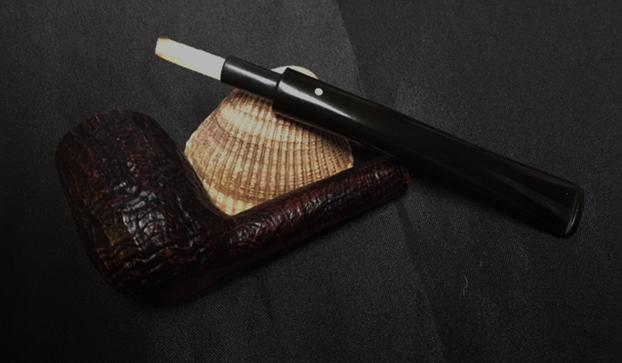
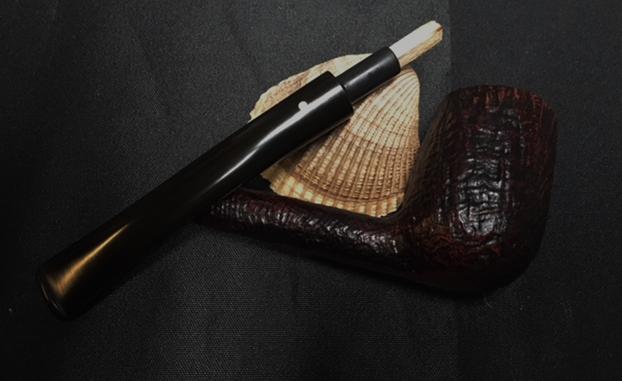
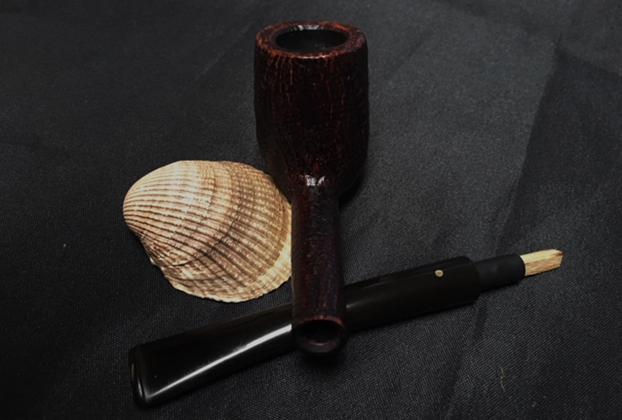
An Easy Restoration – A Savinelli Sandblast Bing’s Favorite


Blog by Steve Laug

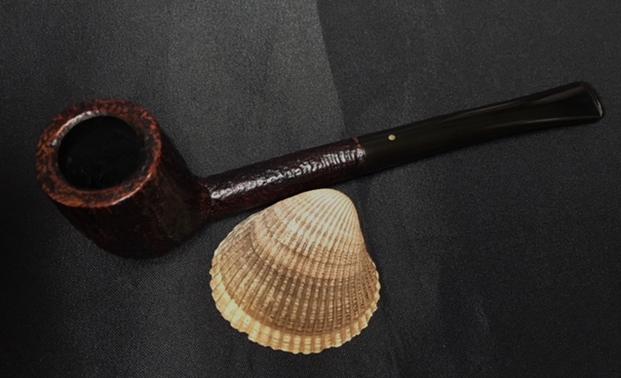
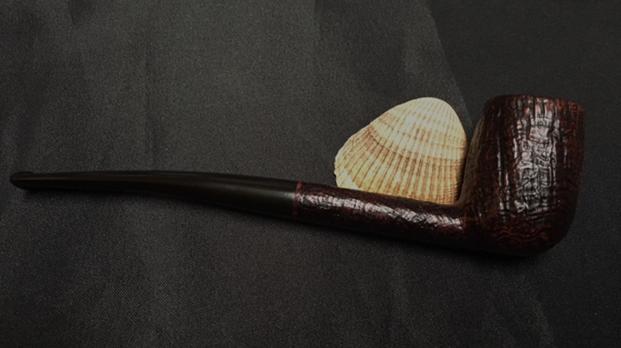
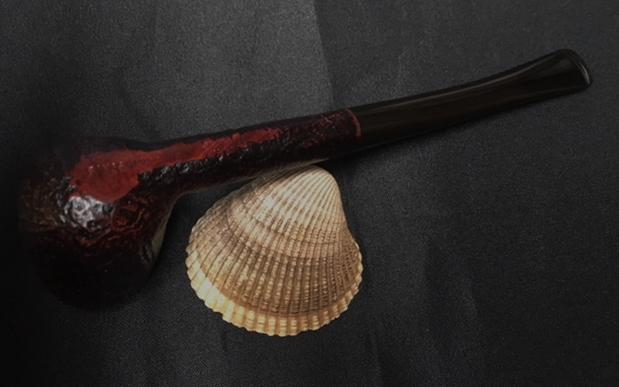
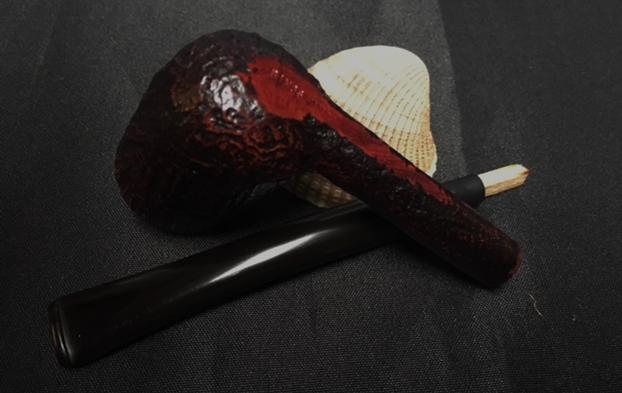
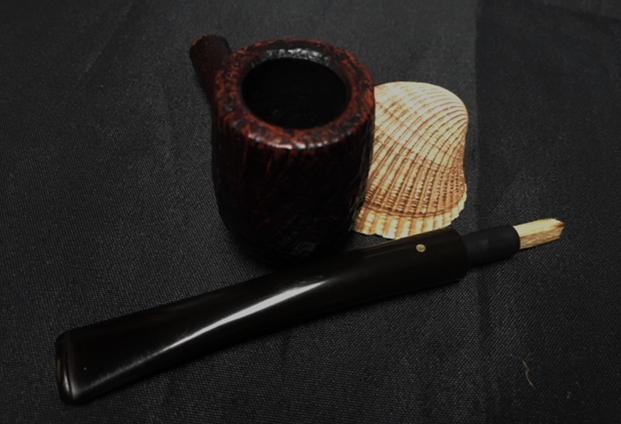
Yesterday was a great day. I finished working on three pipes, started a fourth and returned a group of four repairs to the pipeman who dropped them off for me to repair and refurbish for him. He loved the work and dropped off eight more pipes in various states from very nice and need a refresh to tired and worn. He also wanted to know if I would do a trade with him for part of the cost of labour. He had a pipe he no longer wanted in his collection so he was wondering. He took it out of his pipe bag and showed it to me. It was a Savinelli Bing’s Favorite in a sandblast finish with a vulcanite stem sporting a brass dot on the top. It was in great condition other than a little wear and oxidation on the stem. There was some light tooth chatter on both the top and underside of the stem near the button. It was drilled to take Savinelli Balsa filters or 6mm filters. I looked it over and we made a deal. I think that we were both pleased with the results. Here is what the pipe looked like when I received it. The combination of medium and dark brown stains on the bowl added a great contrast in the high and lows of the sandblast. The bowl was quite clean with very little cake. The aroma of good English tobacco lingered around the pipe and bowl. The rim top was very clean and the outer and inner edges of the bowl were in excellent condition. The stem had tooth chatter and tooth marks on both the top and underside near the button but none of them were too deep. I took close up photos of the bowl and stem to show the condition before I started the cleanup.I took a close up photo of the stamping on the smooth panel on the underside of the bowl and shank. It reads: BINGS FAVORITE followed by Savinelli Product and Italy. The stamping is clear and readable.I removed the stem to have a look at the 6mm filter tenon. It was pretty clean on the outside.I cleaned out the airway in the stem and shank and the mortise area with pipe cleaners – both regular and bristle as well as cotton swabs and alcohol. I cleaned out the wide open tenon with cotton swabs and alcohol as well. It was pretty clean so it did not take too long to clean those areas.I rubbed some Before & After Restoration Balm deep into the crevices and valleys of the sandblast, working it in with my fingertips. I buffed the bowl with a shoe brush to further work it into the finish. I buffed the bowl with a soft cloth to raise a shine. The photos below show the results at this point in the process. I set the bowl aside and turned my attention to the stem. I sanded out the tooth chatter and marks with 220 grit sandpaper blending the areas into the surround vulcanite stem. I sanded both the top and underside of the button as well to remove the light chatter on those areas as well.I polished the stem with micromesh sanding pads – wet sanding with 1500-2400 grit pads and dry sanding with  3200-12000 grit pads. I wiped the stem down with Obsidian Oil after each sanding pad. I rubbed it down with Before & After Pipe Polish – both Fine and Extra Fine to further polish the scratches. I gave it a final coat of Obsidian Oil and set it aside to dry. I have a few of the Savinelli Balsa filters around so I put on it the stem. It is a three sided stick of Balsa wood that absorbs tars and liquids on three sides. The fit is perfect. The tenon can also fit 6mm filters.I put the stem on the pipe and buffed the bowl and stem with Blue Diamond polish on the buffing wheel. I used a light touch on buffing the bowl so that the polish would not get into the sandblast. I gave the bowl several coats of Conservator’s Wax and the stem several coats of carnauba wax. I buffed the bowl and stem with a clean buffing pad to raise the shine. I hand buffed the bowl and stem with a microfiber cloth to deepen the shine. The contrasting brown stains look very good with the dark of the polished vulcanite stem. The brass dot stands out in stark contrast with the black. It is a beautiful pipe and in excellent condition. The measurements are – Length: 6 ¾ inches, Height: 1 ¾ inches, Outside Diameter of Bowl: 1 ¼, Chamber Diameter: ¾ inch. I will be putting it on the rebornpipes store shortly. If you would like to add it to your collection send me an email to slaug@uniserve.com or a message on Facebook. Thanks for reading through this restoration process. It was a fun one to work on.