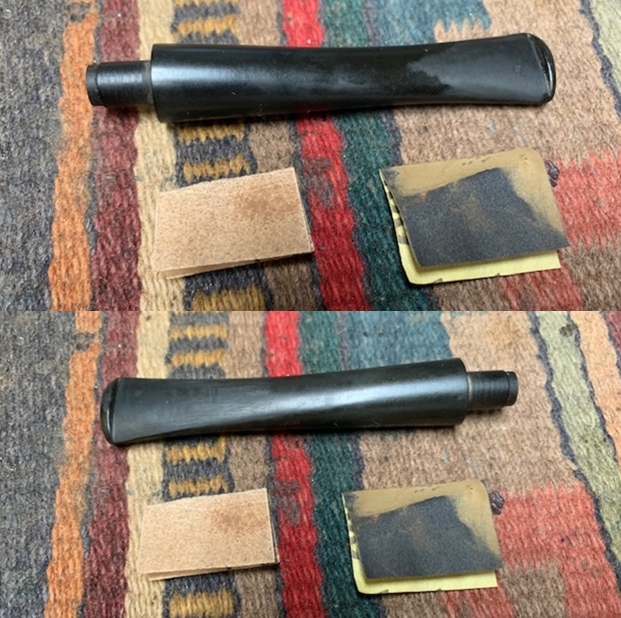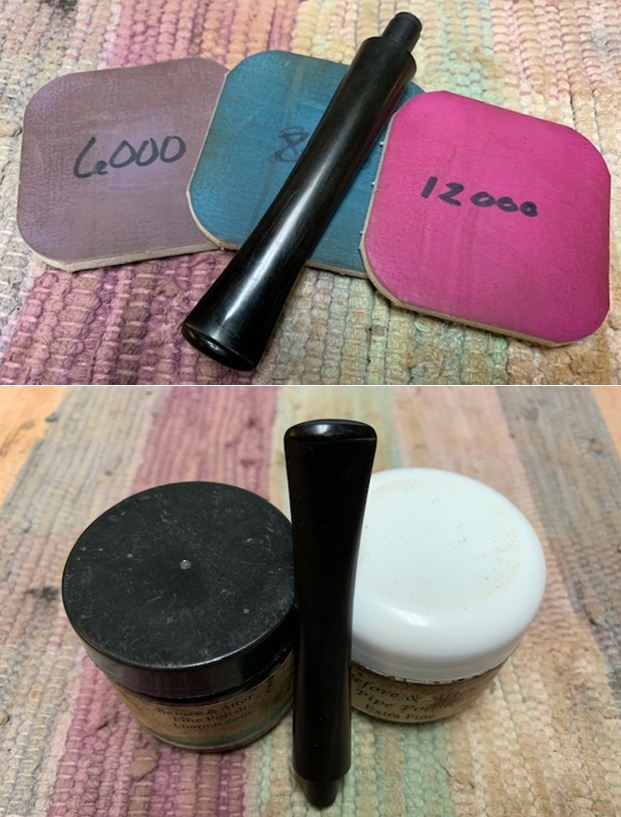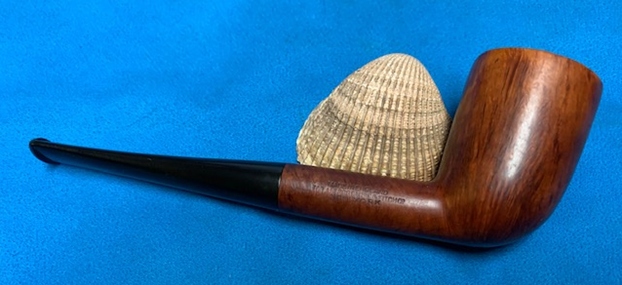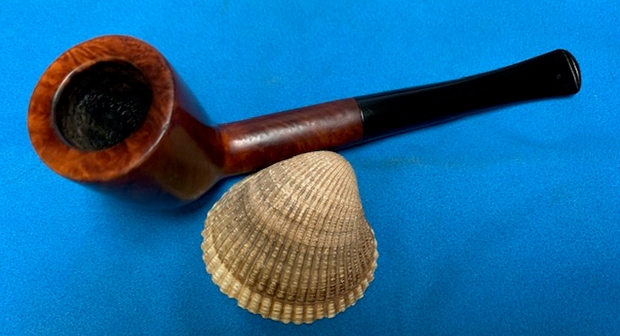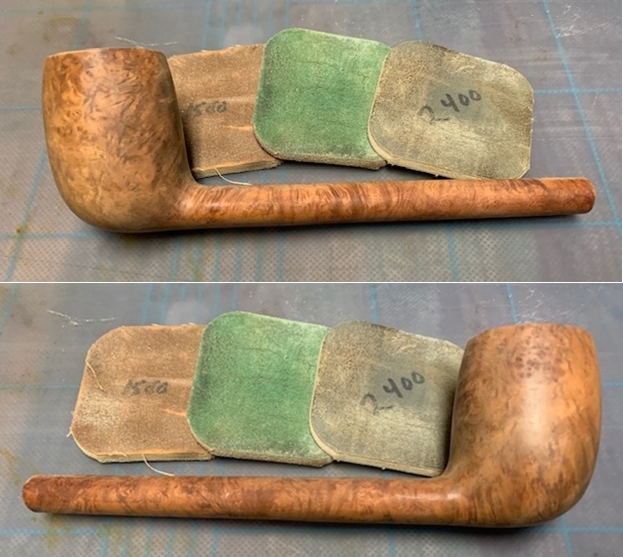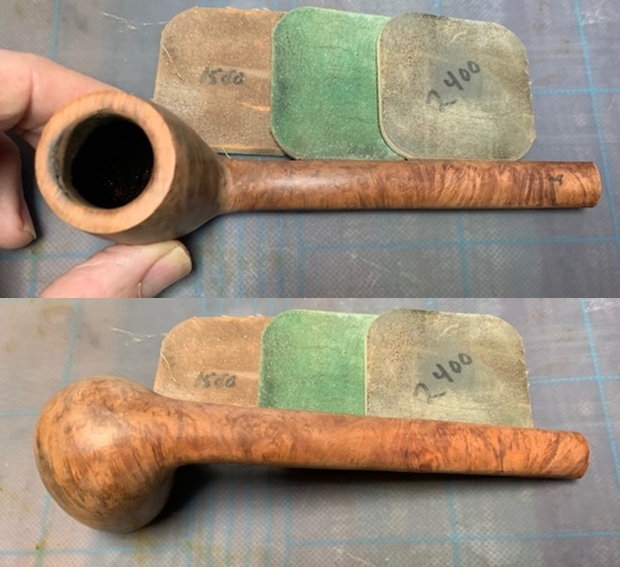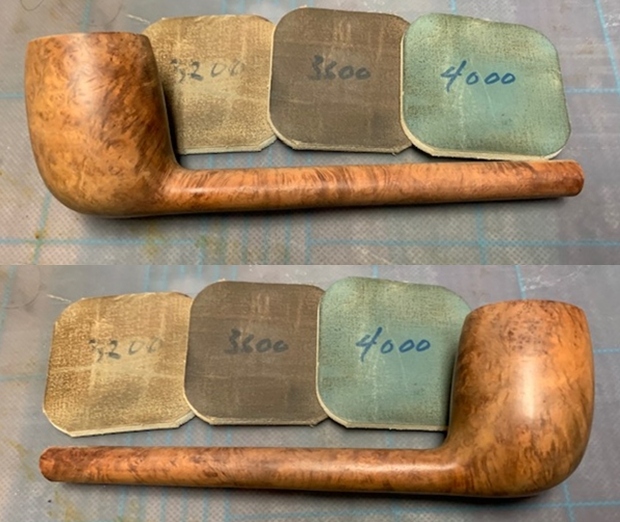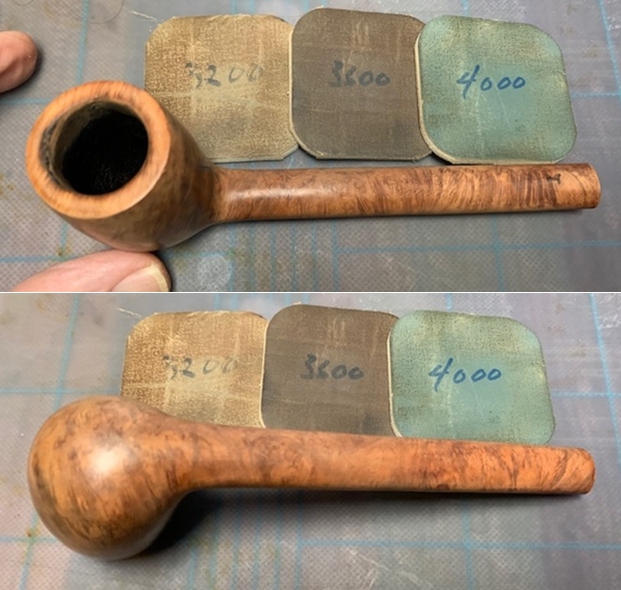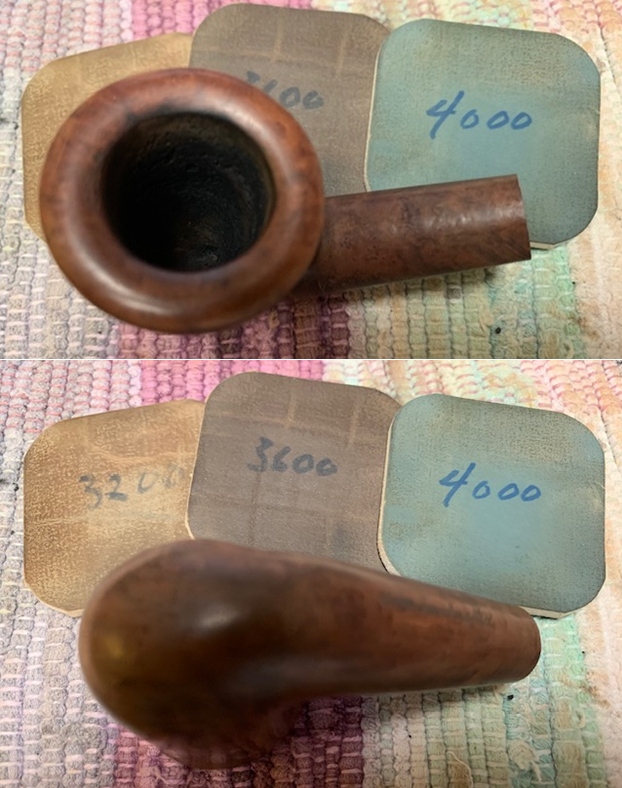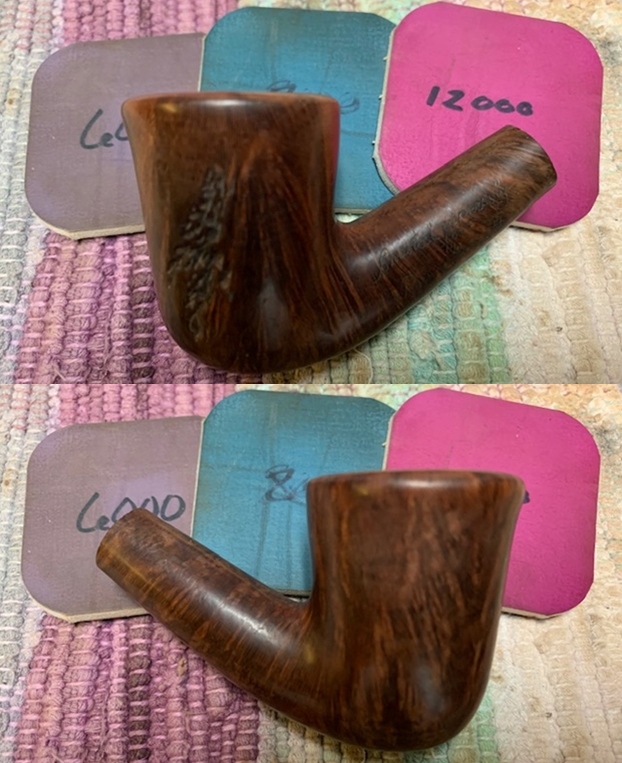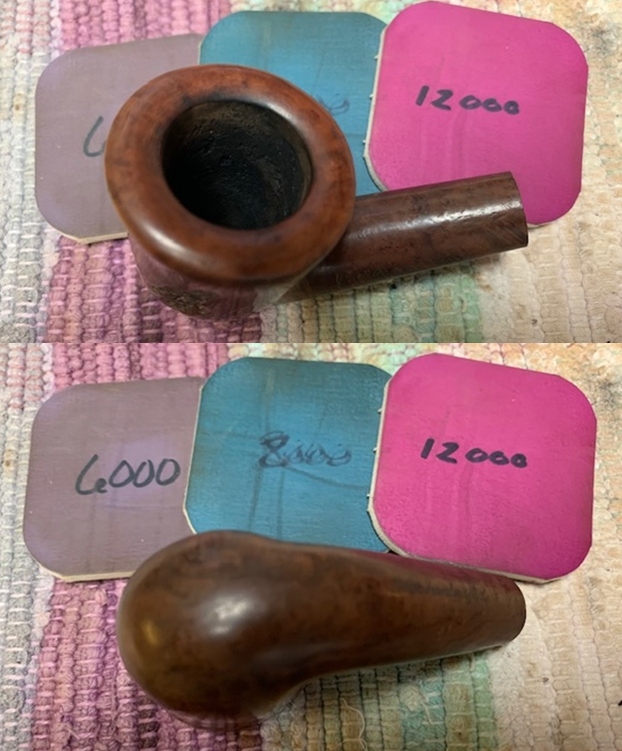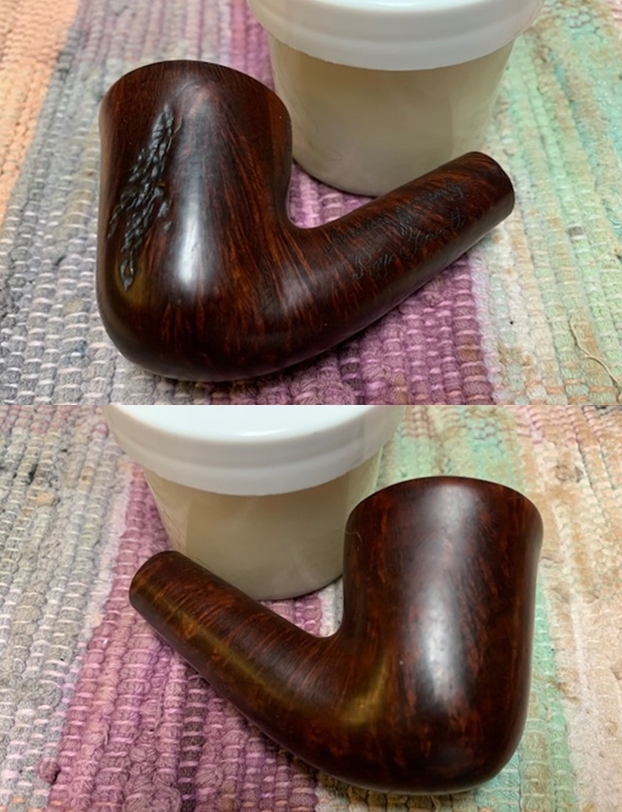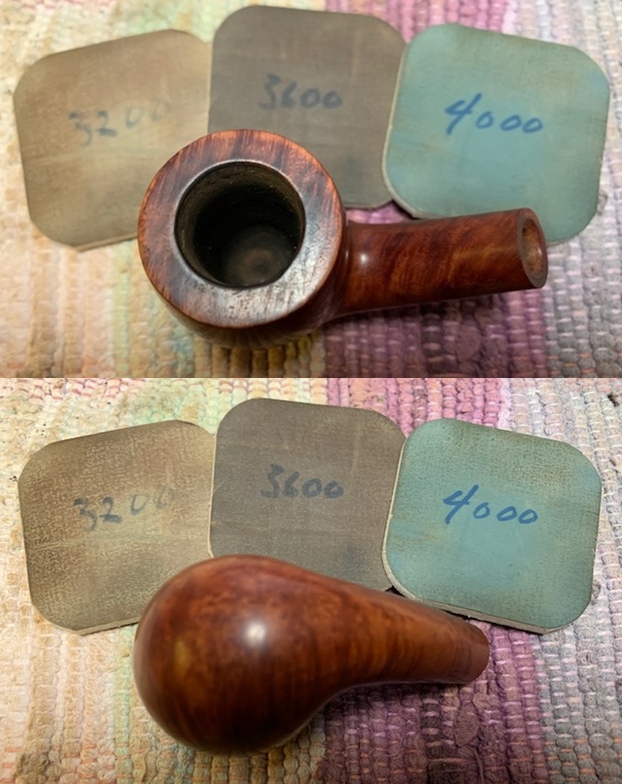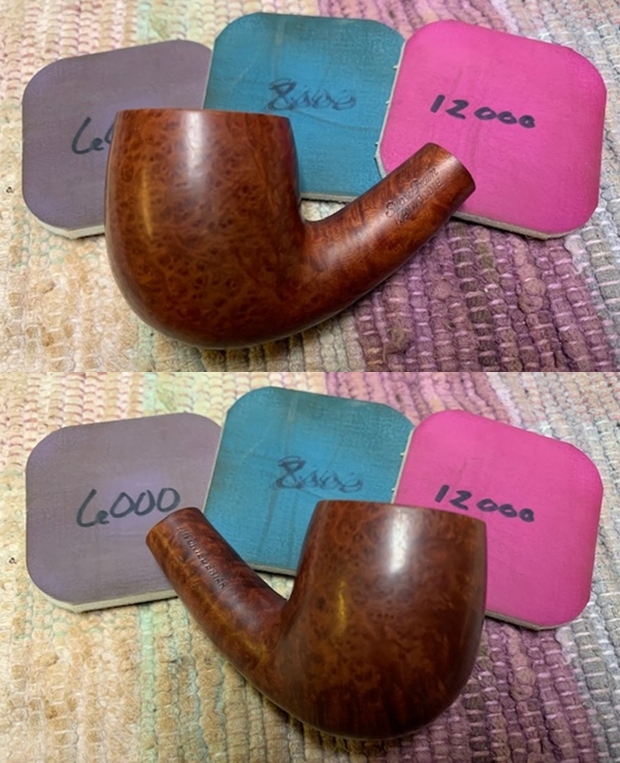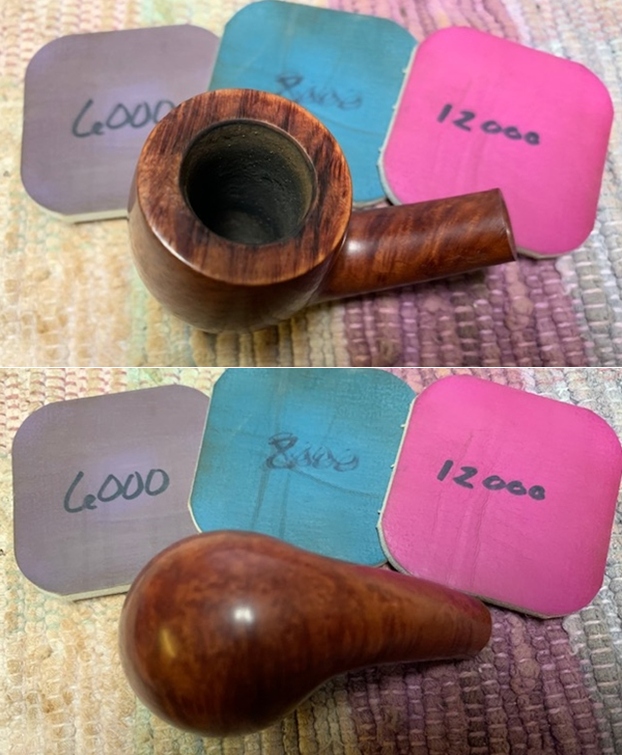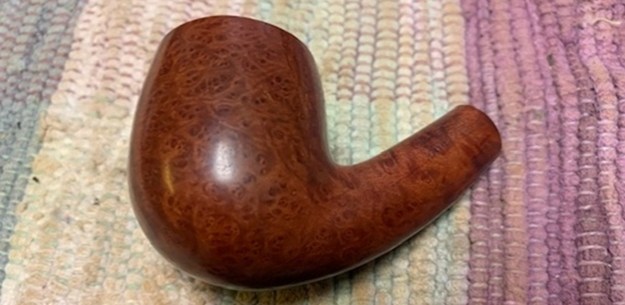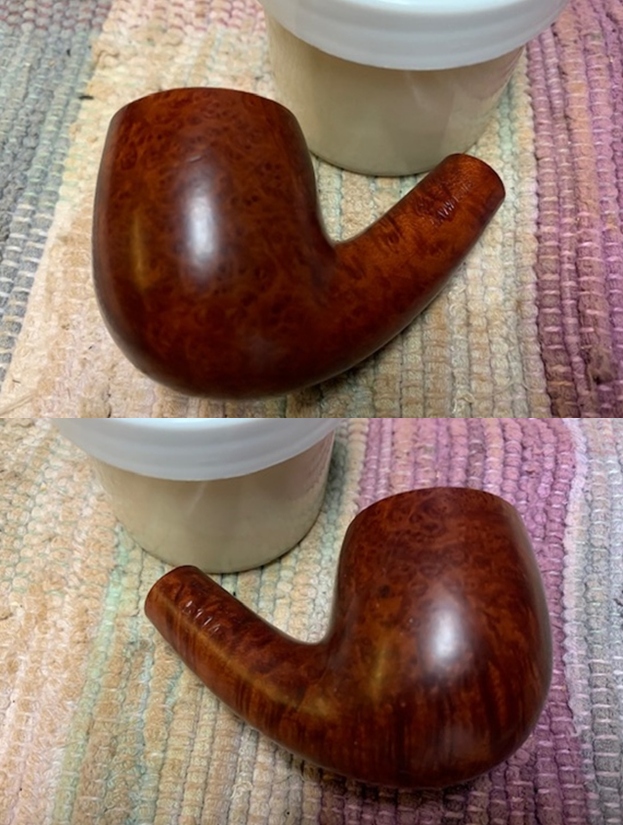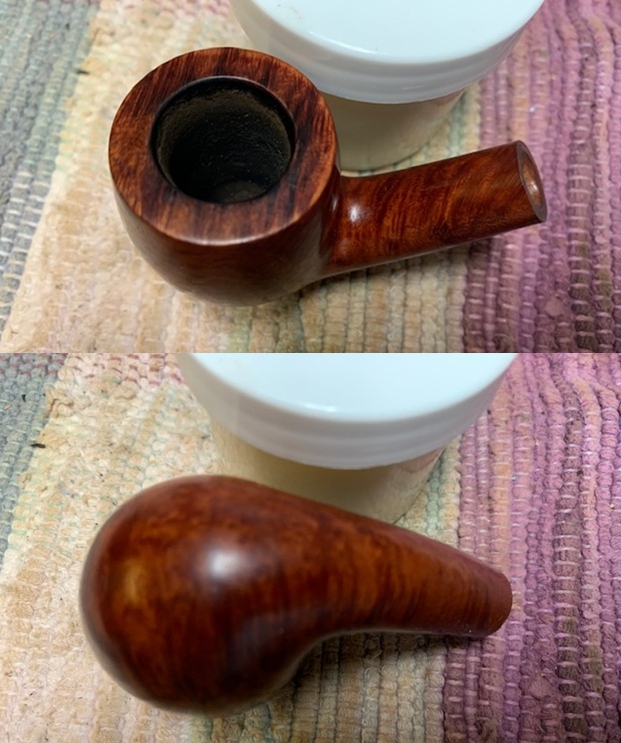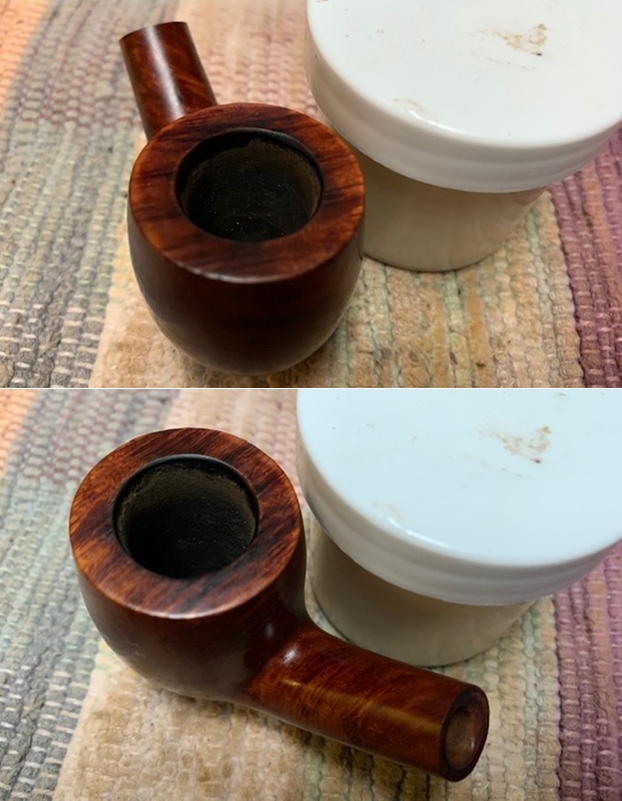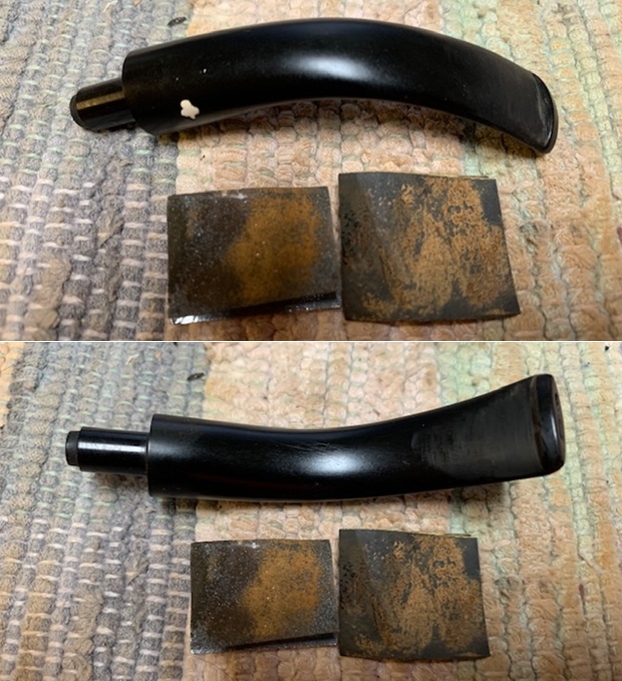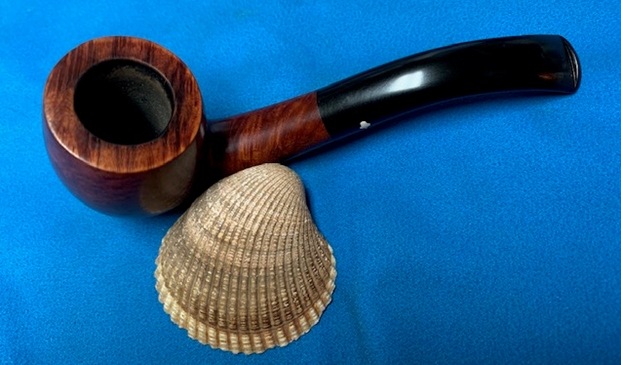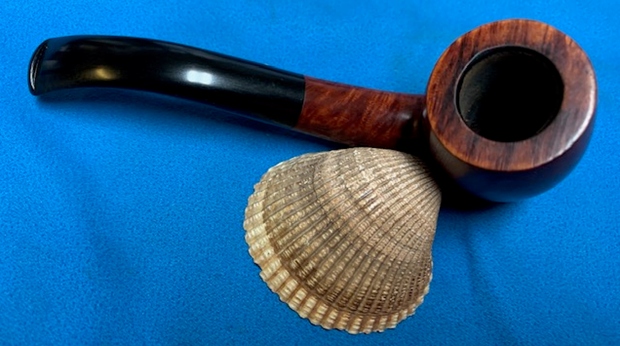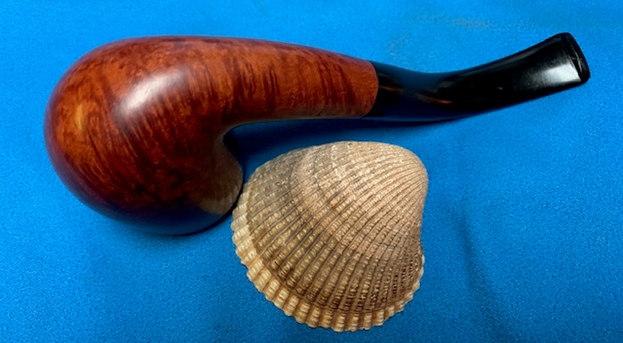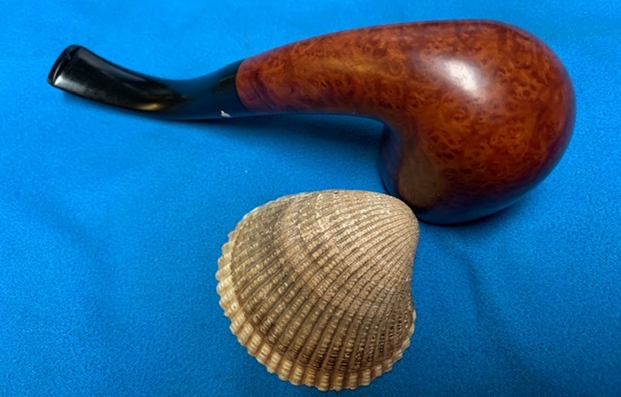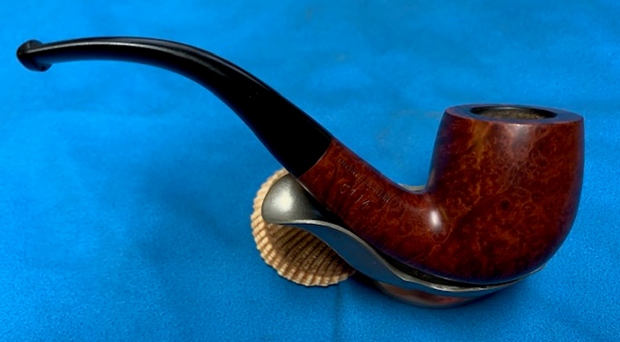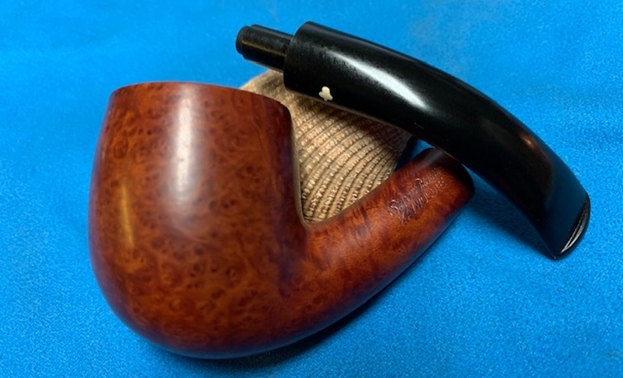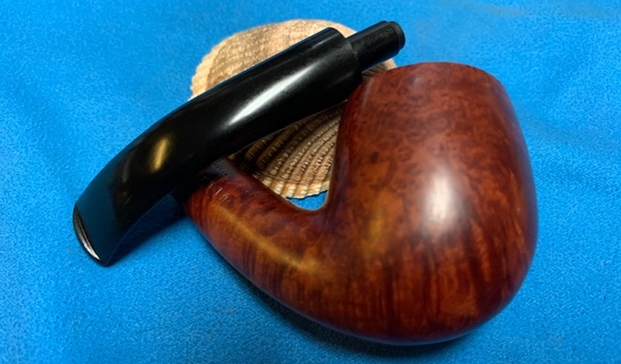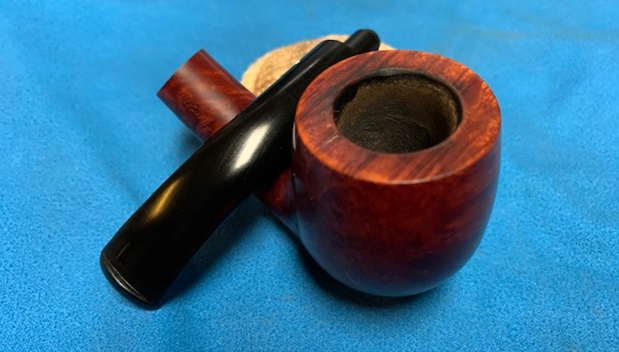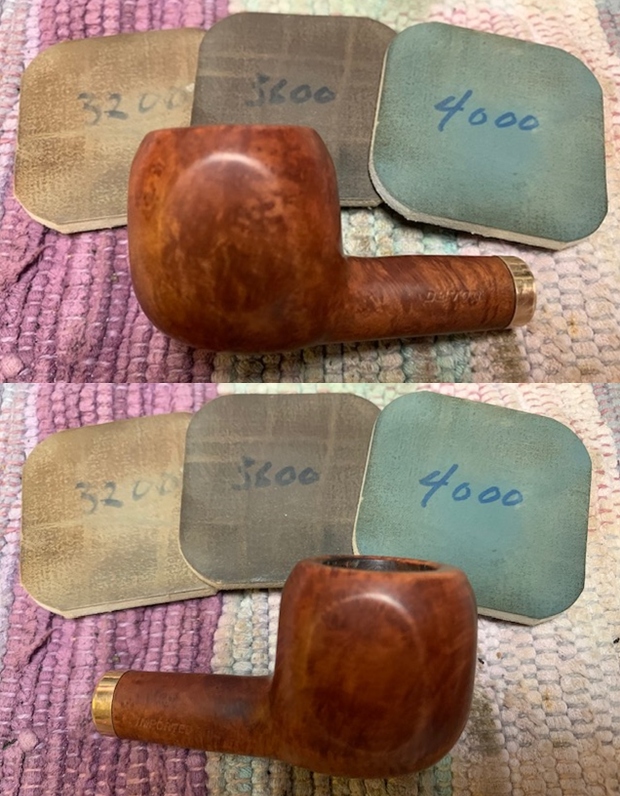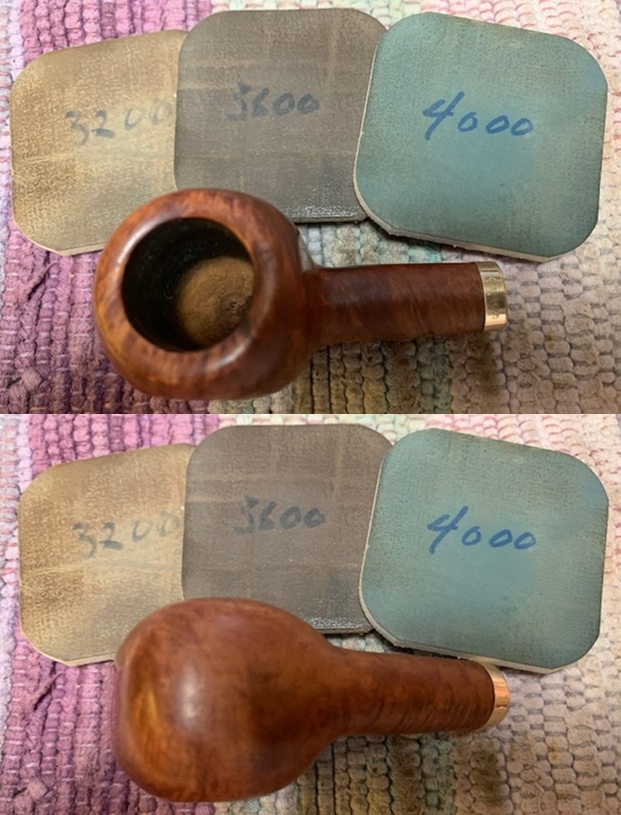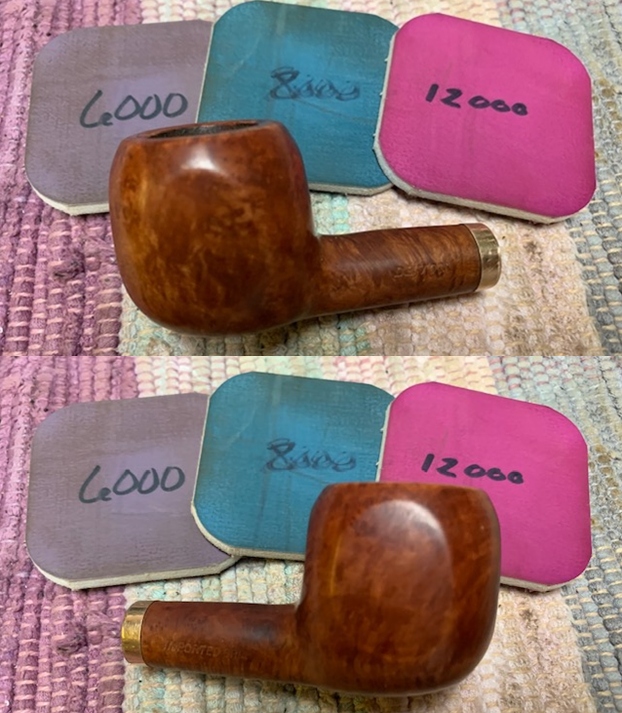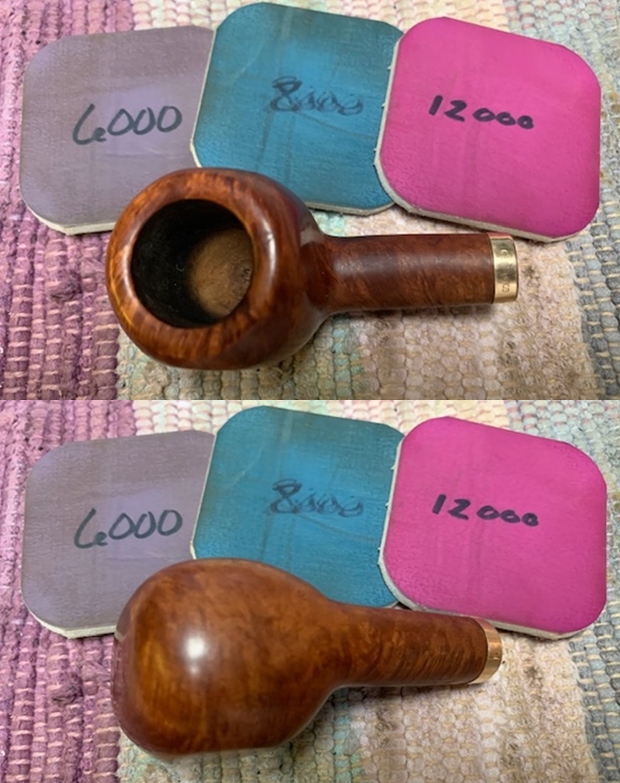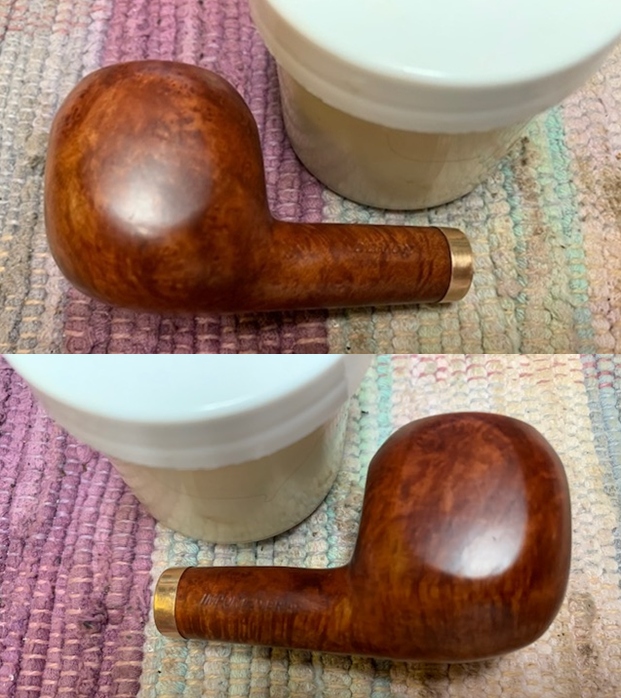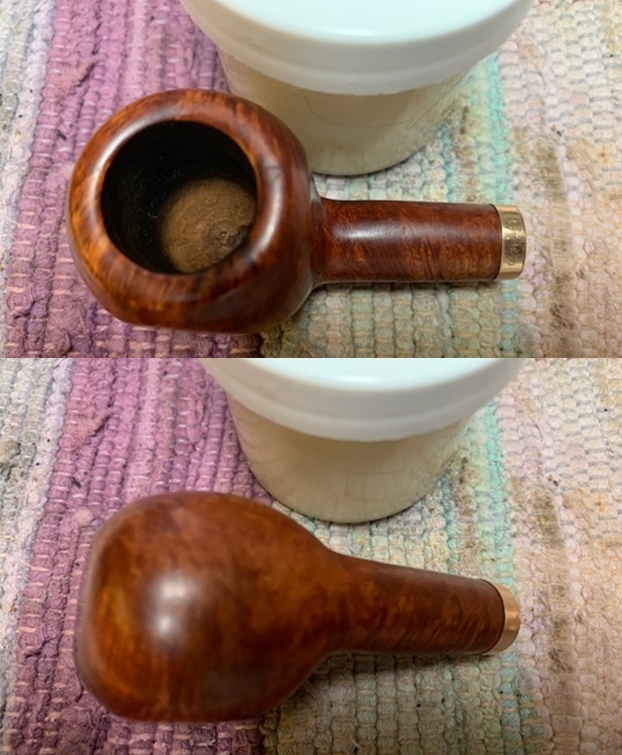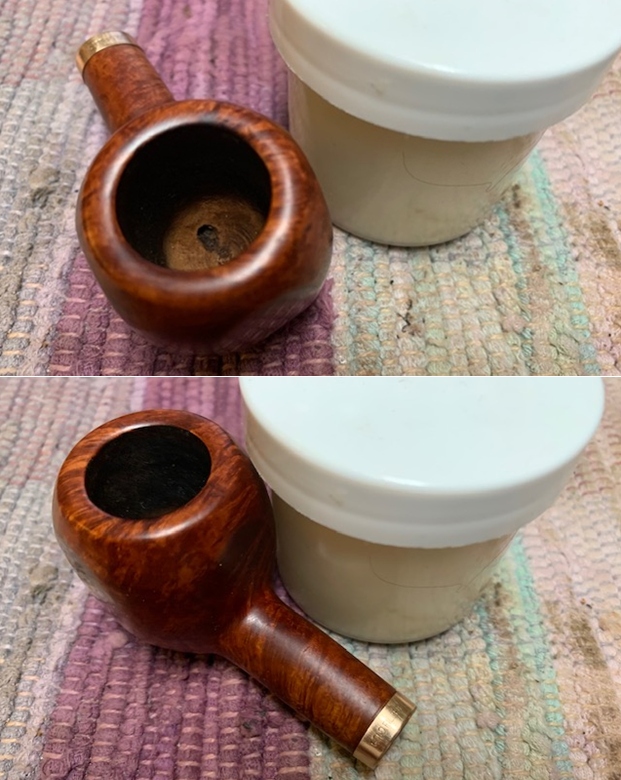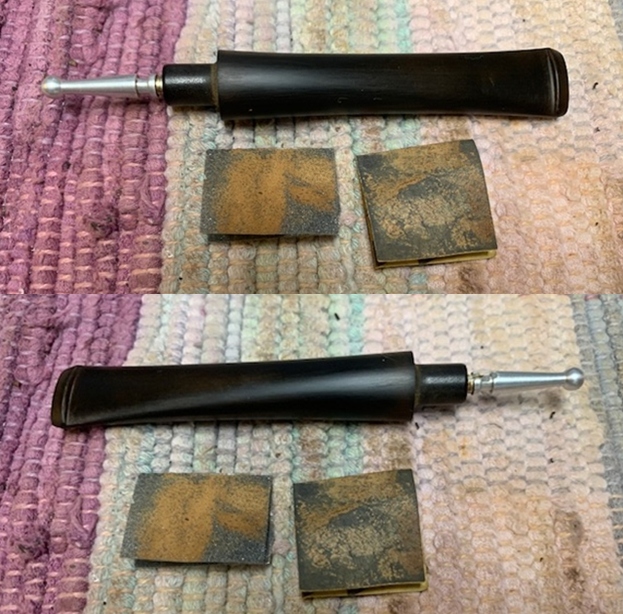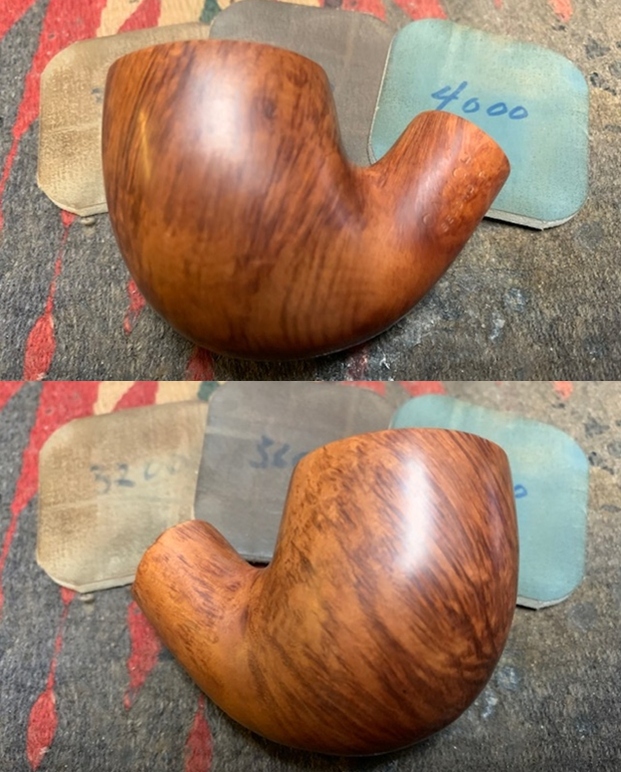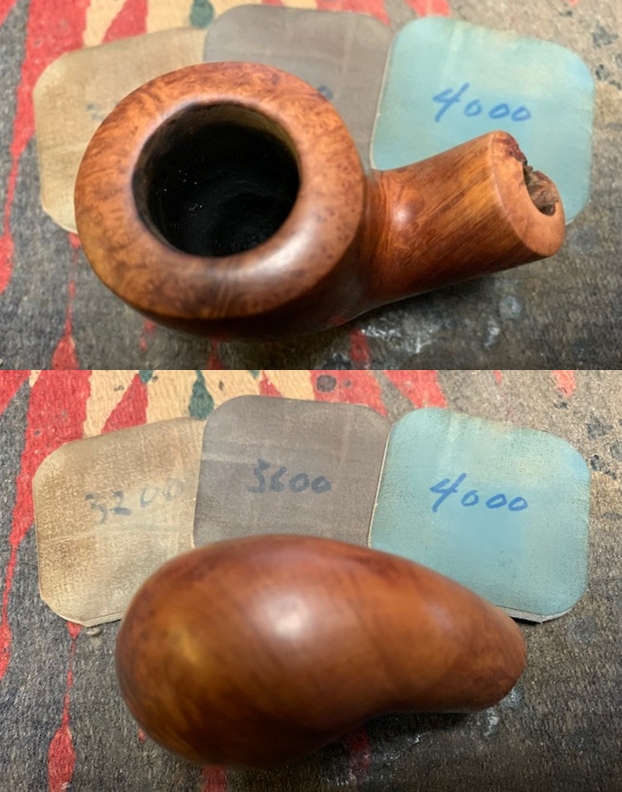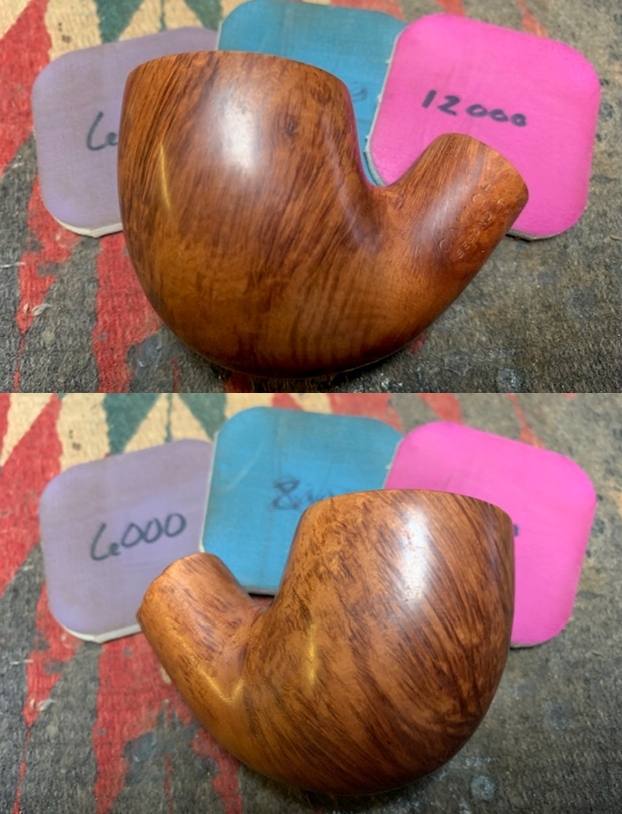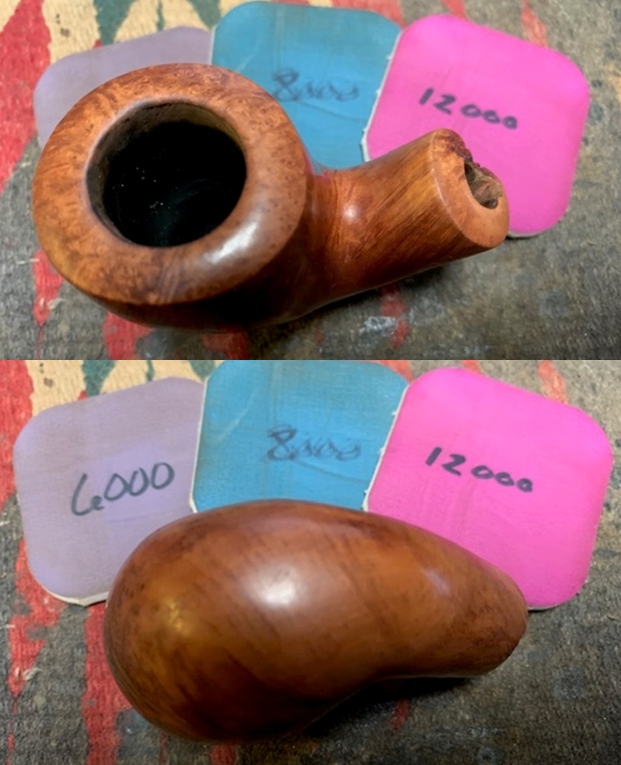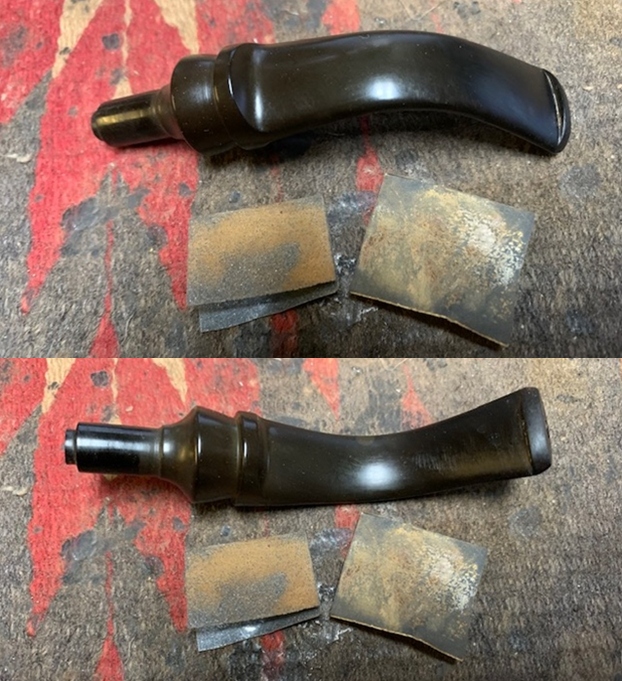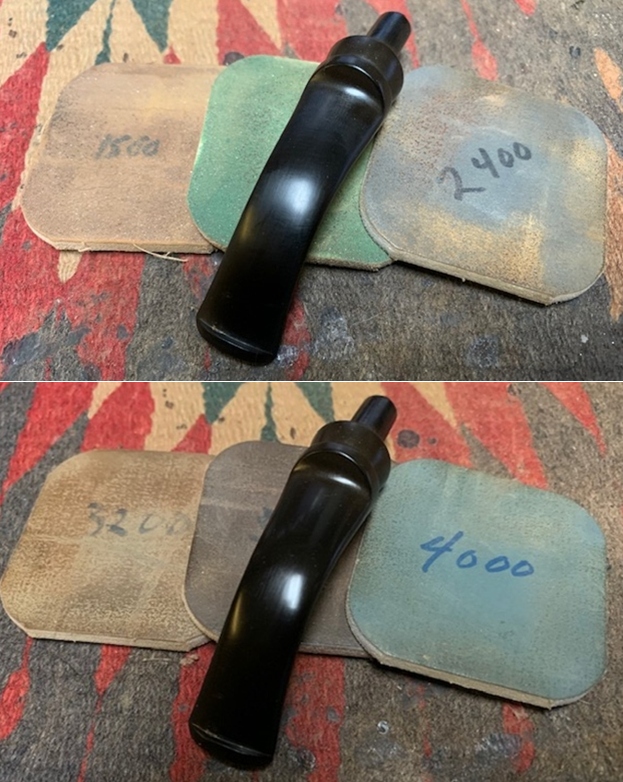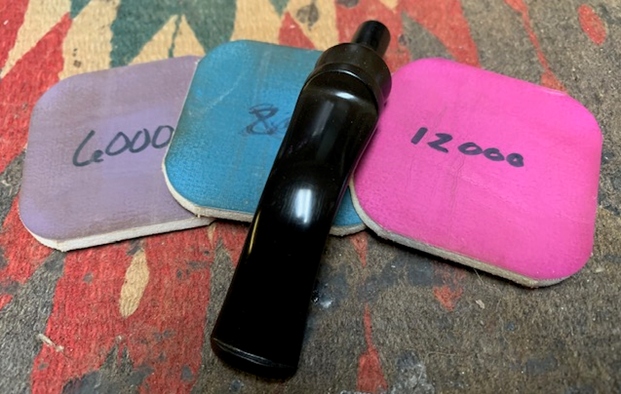
Tag Archives: sanding a stem

Life for an F&T Bruyere Dublin for Abercrombie & Fitch Co. New York


Blog by Steve Laug

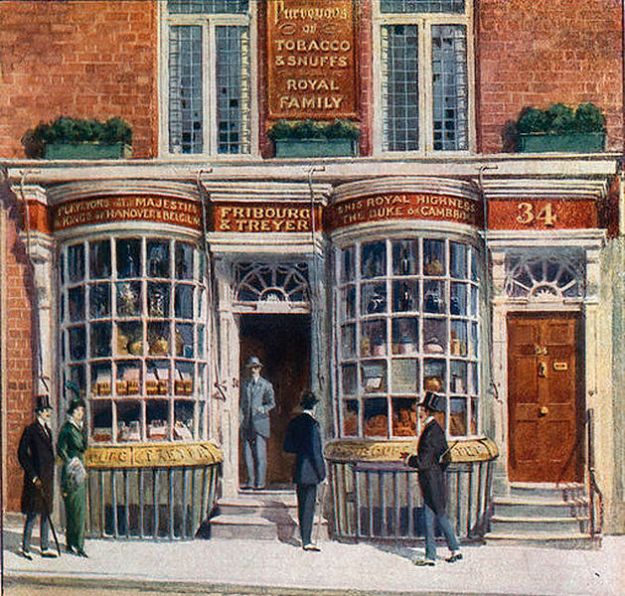
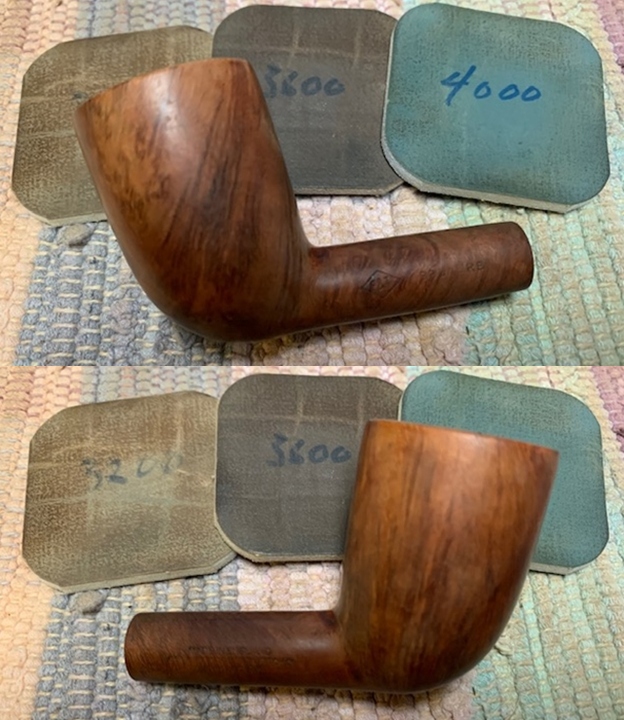
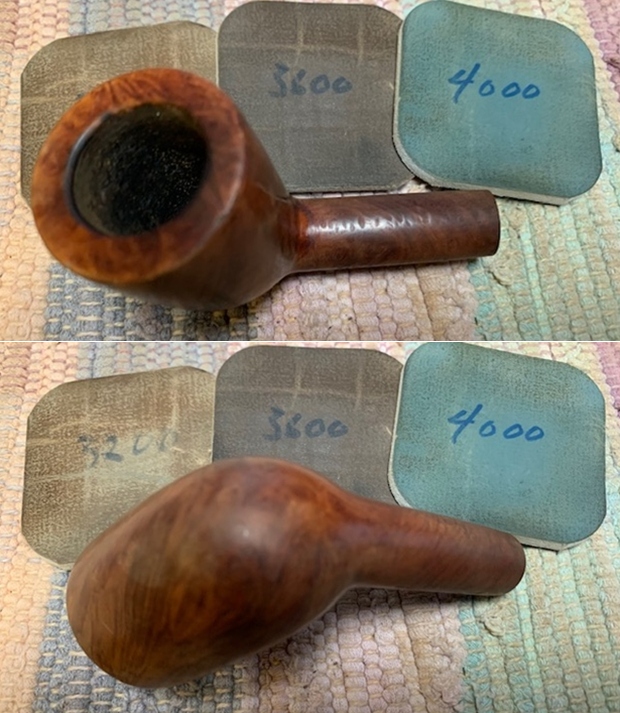
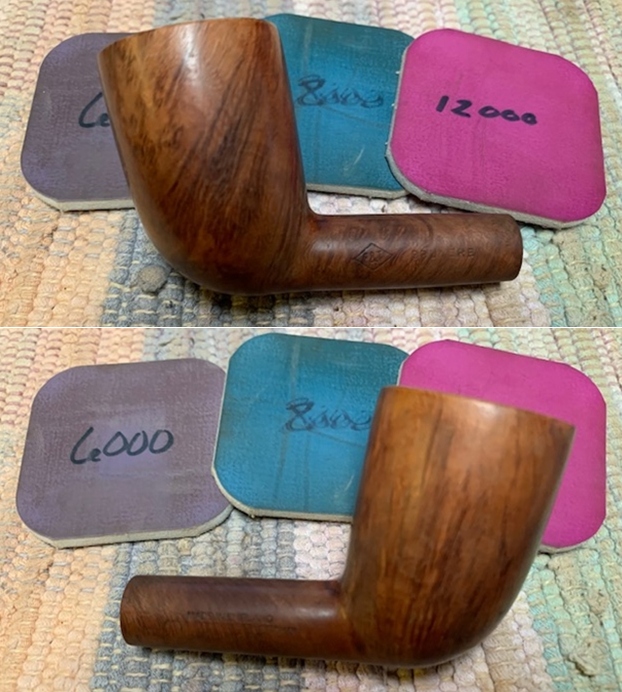
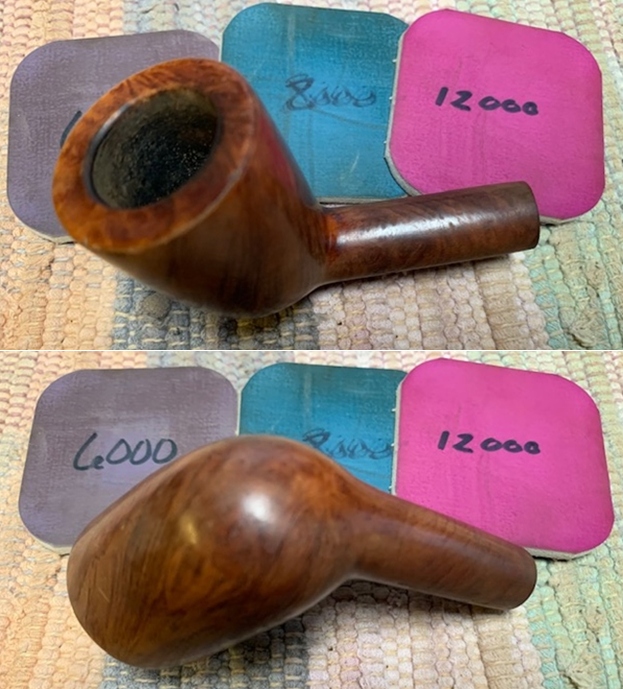
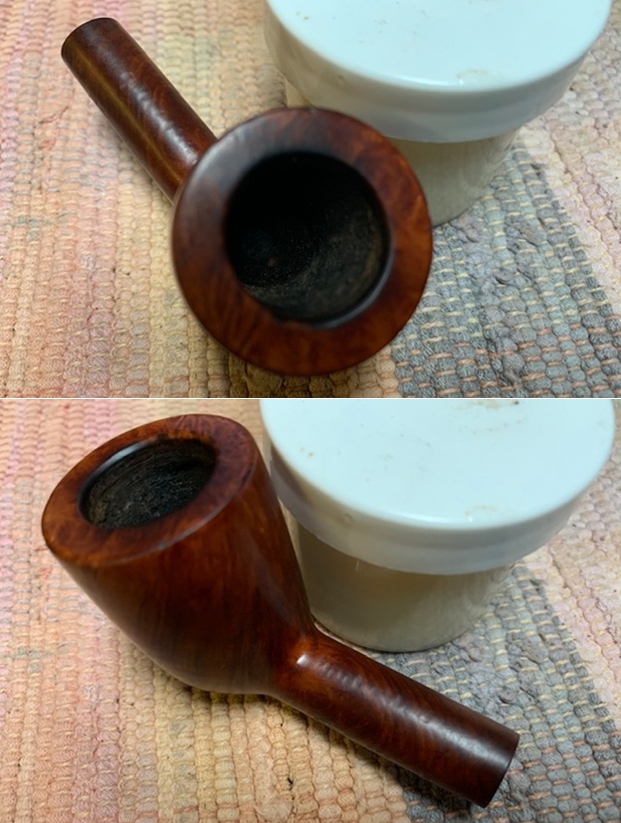
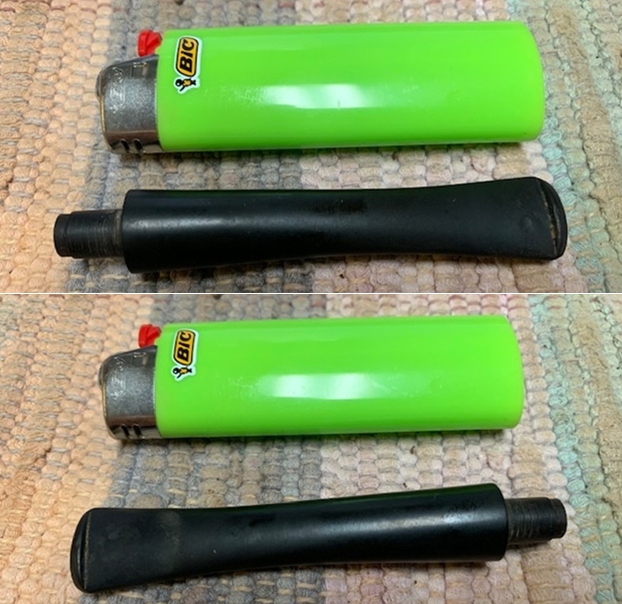
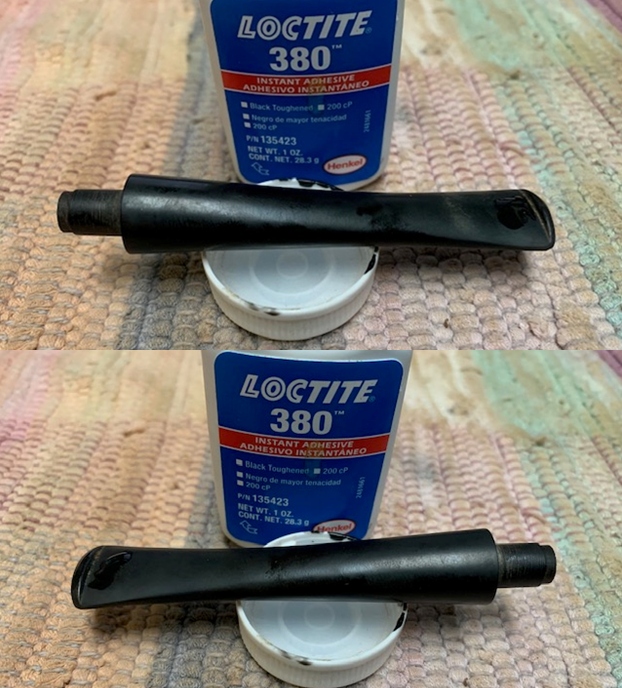
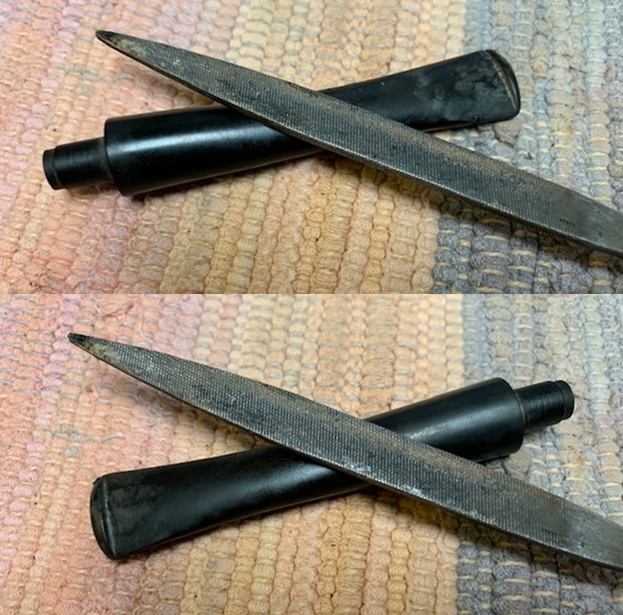
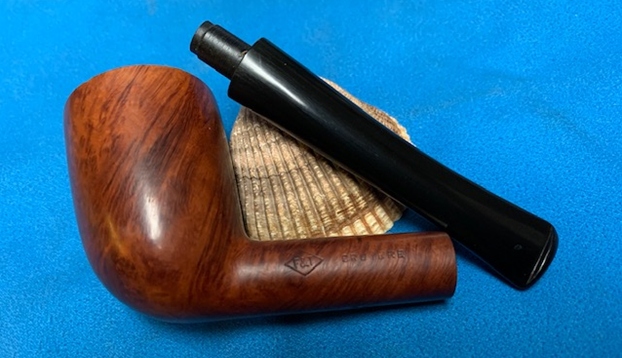
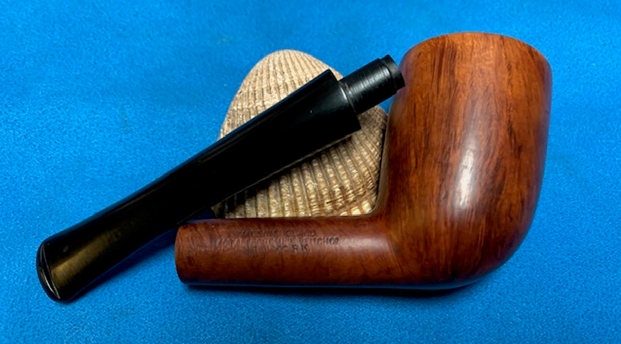
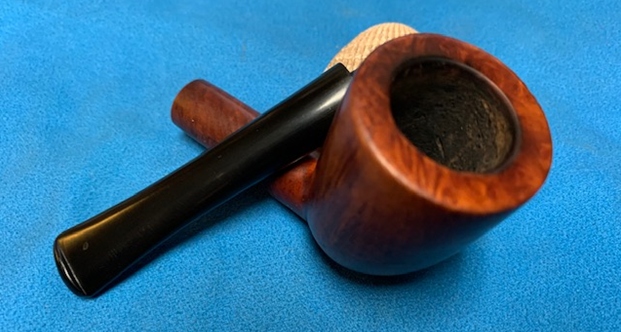
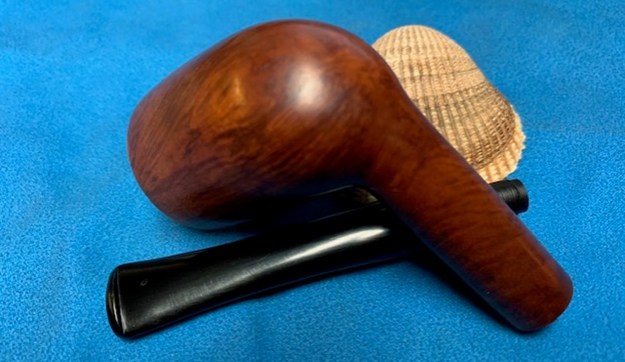
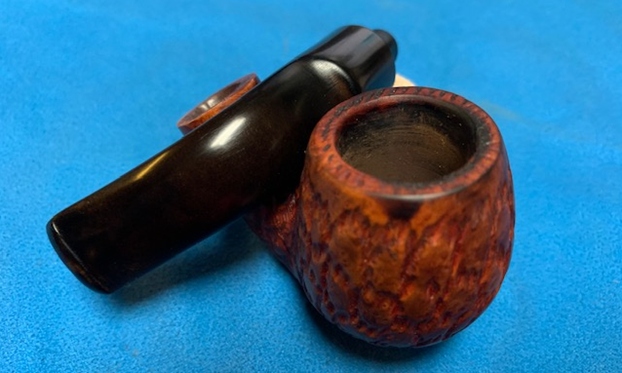
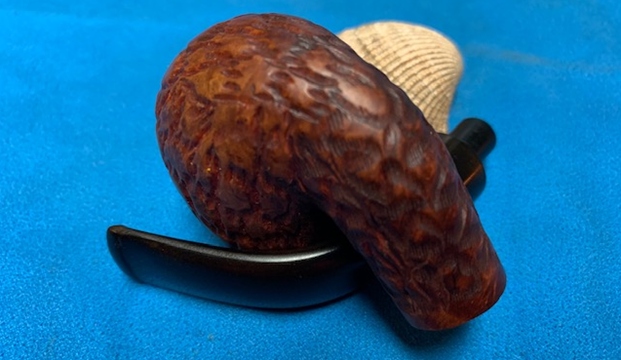
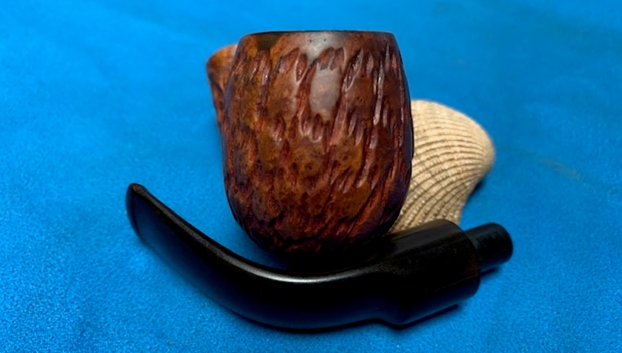
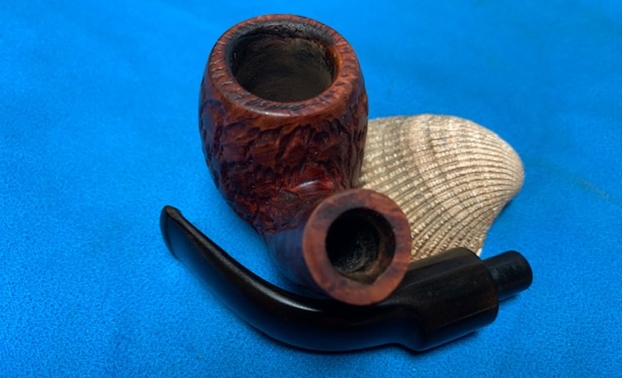
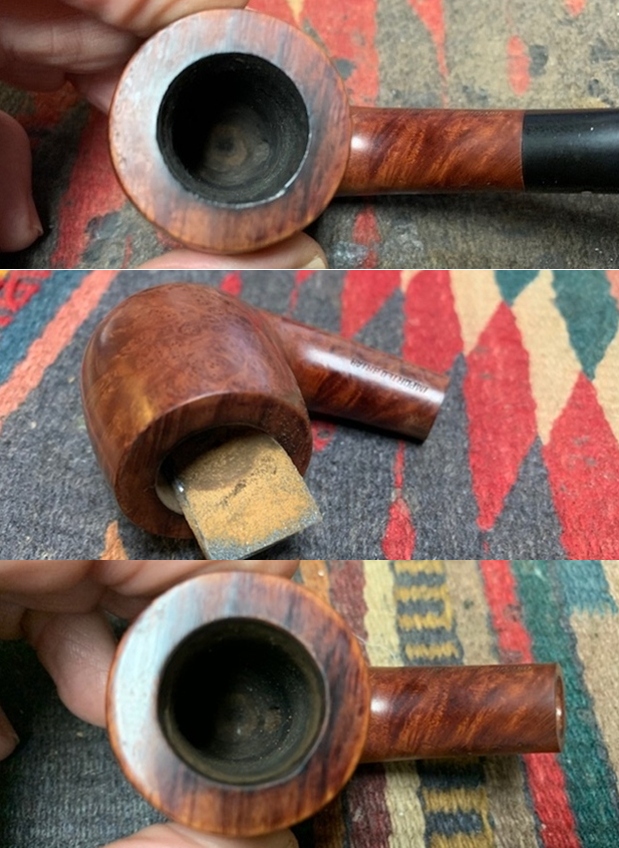
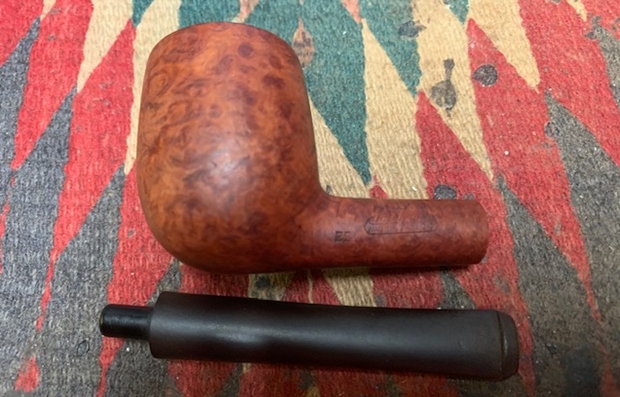
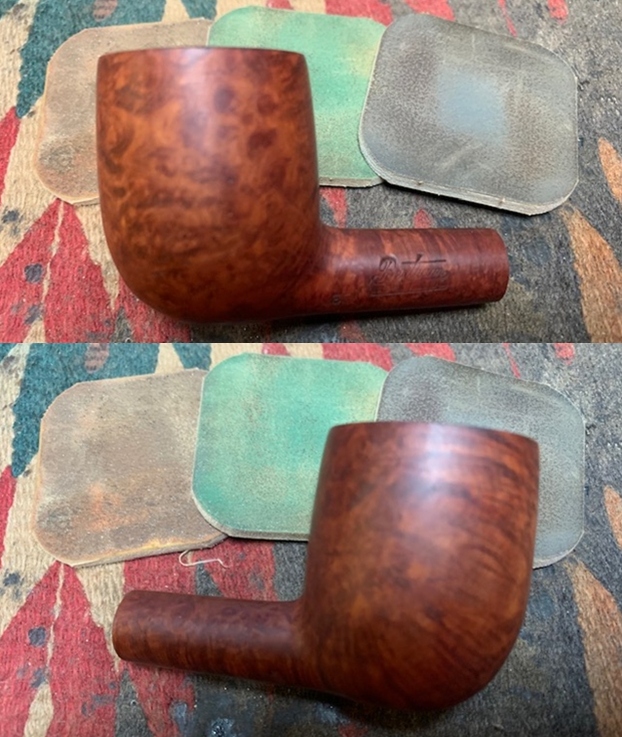
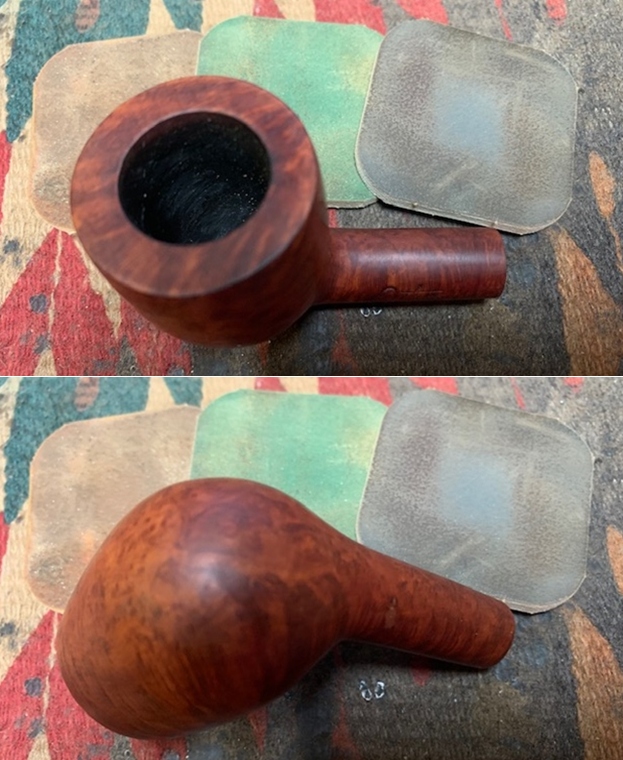
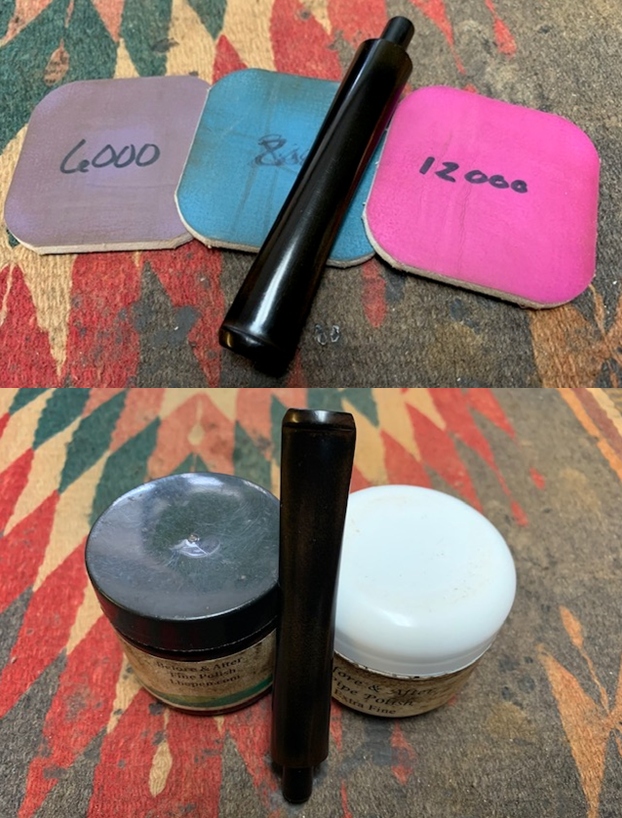
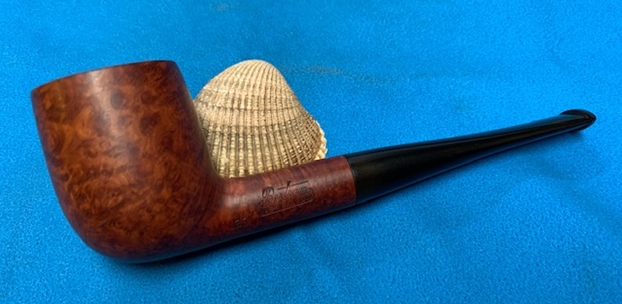
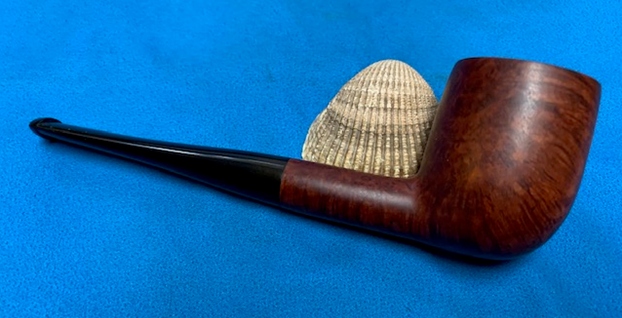
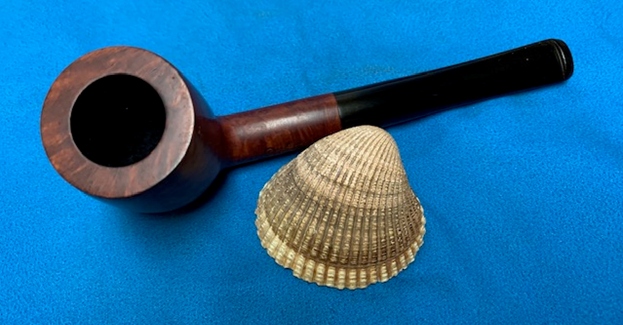
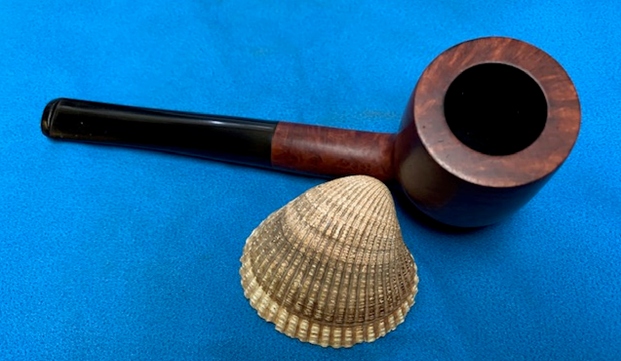
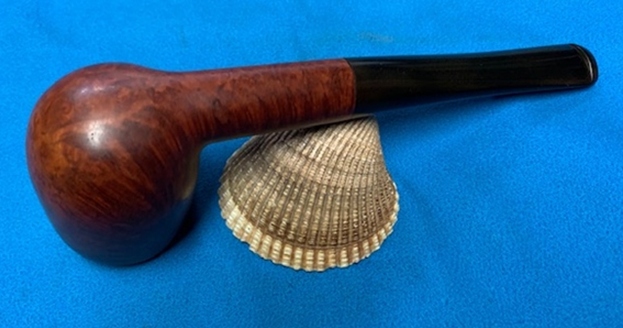
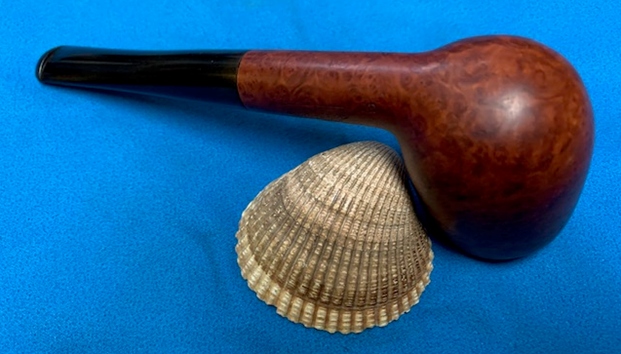
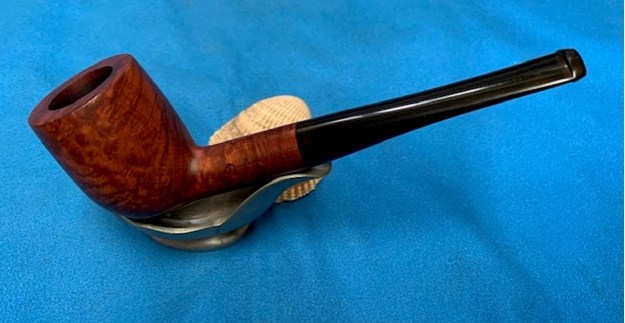
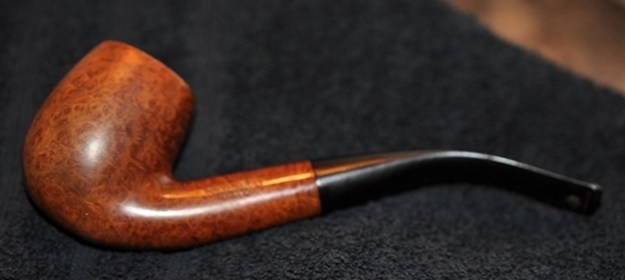
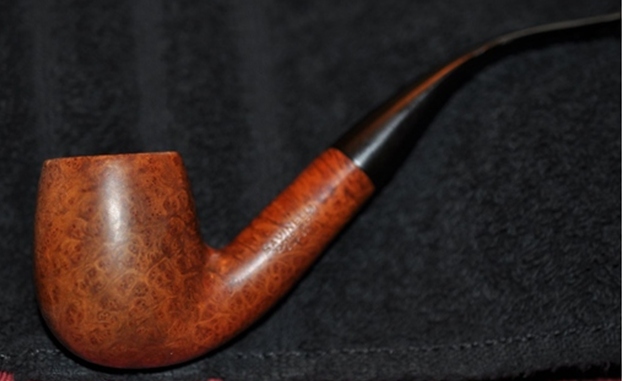
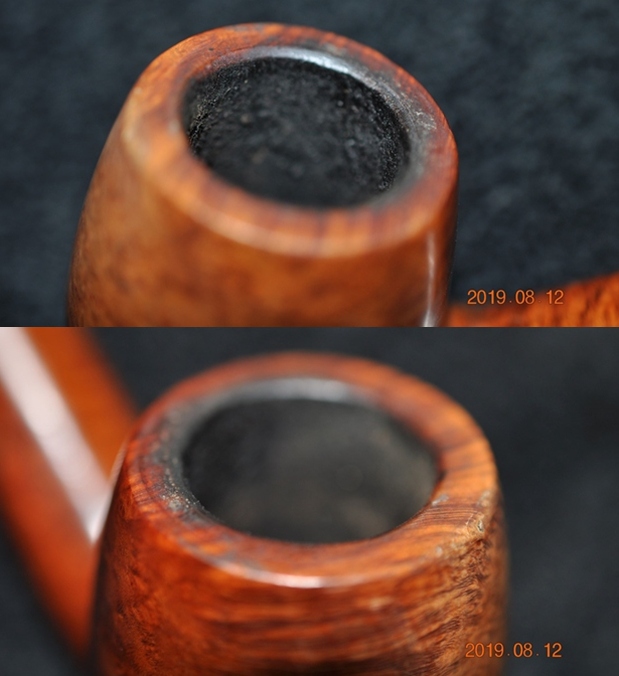
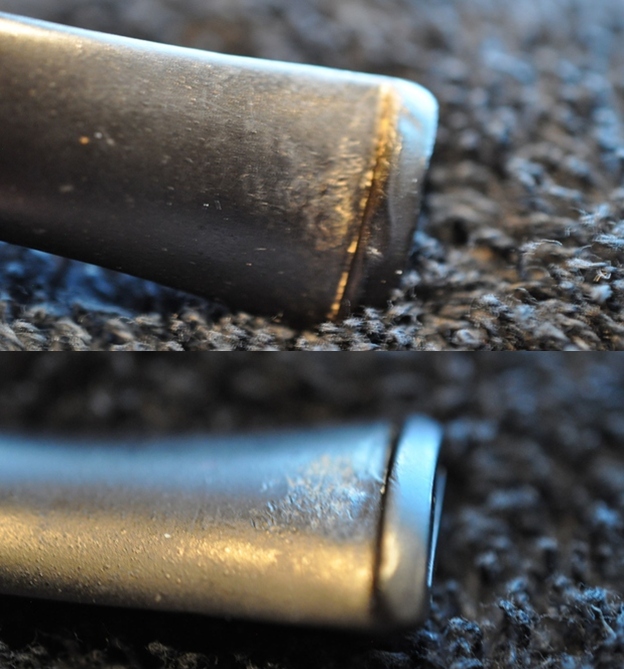
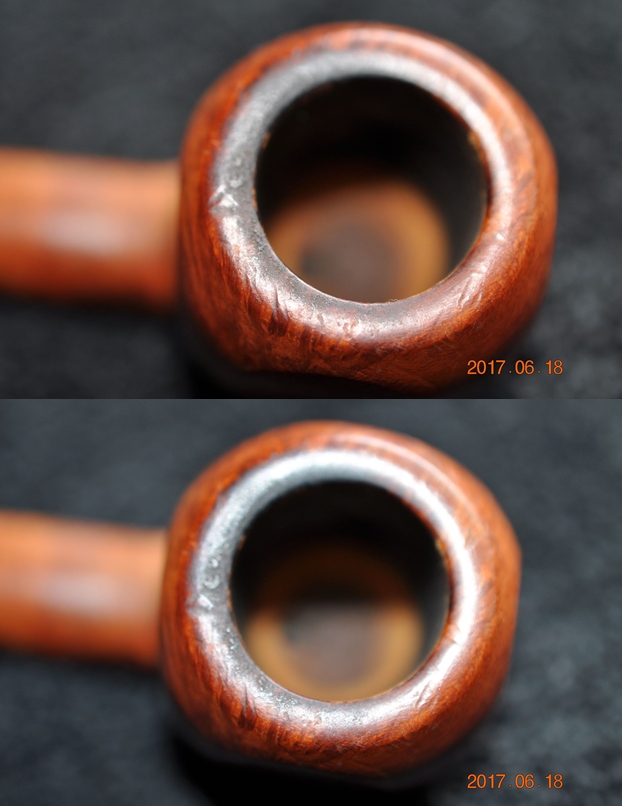
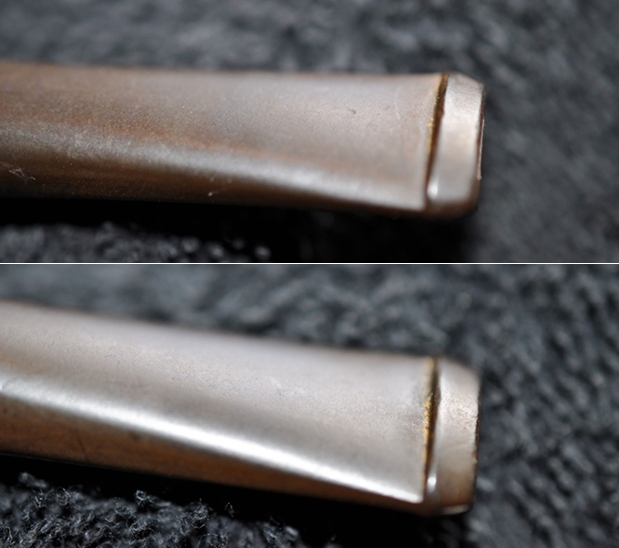
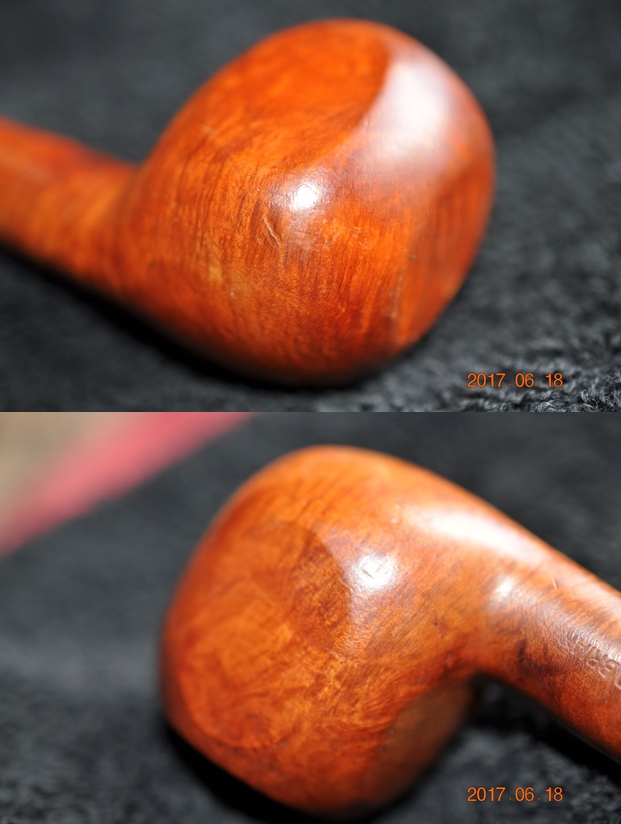
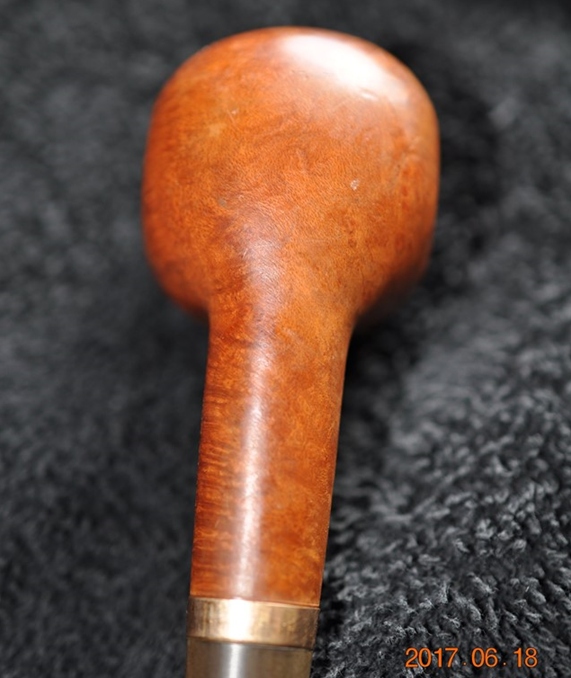
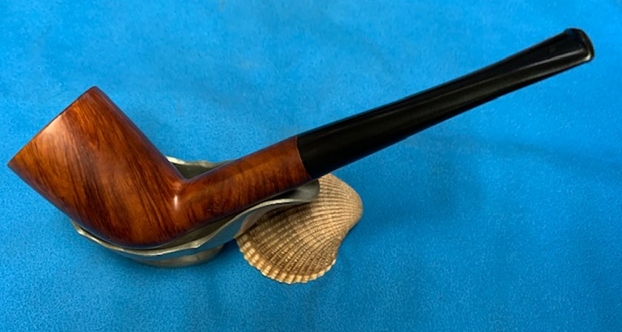
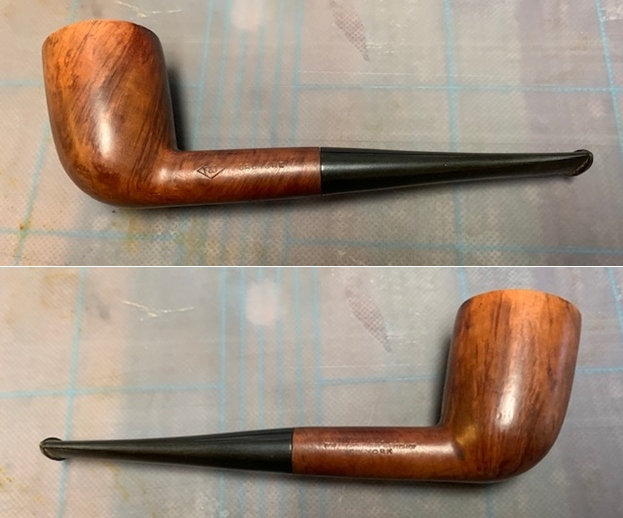
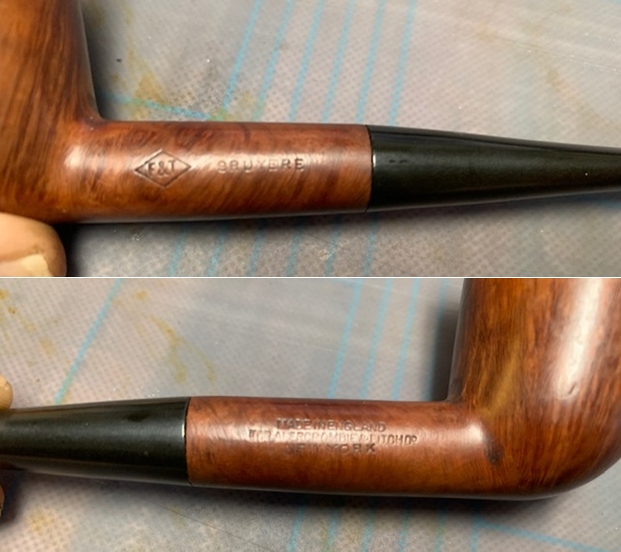
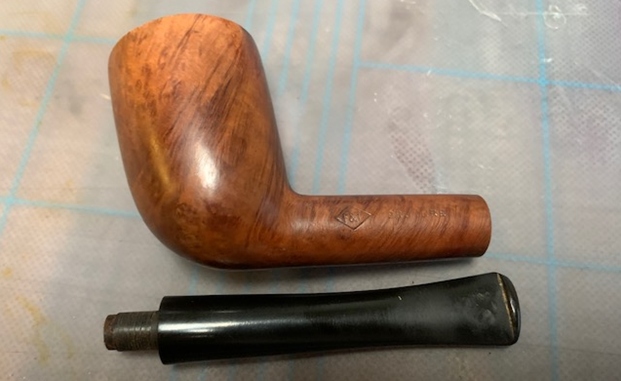
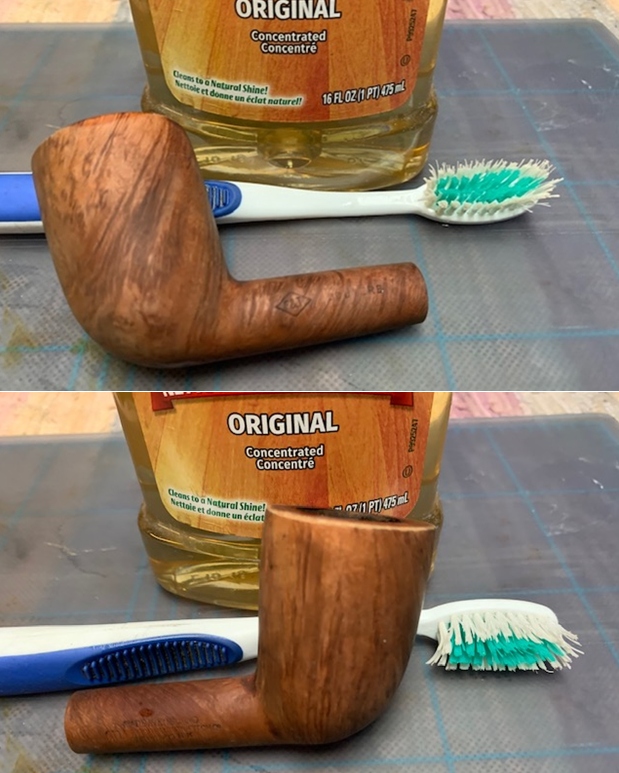
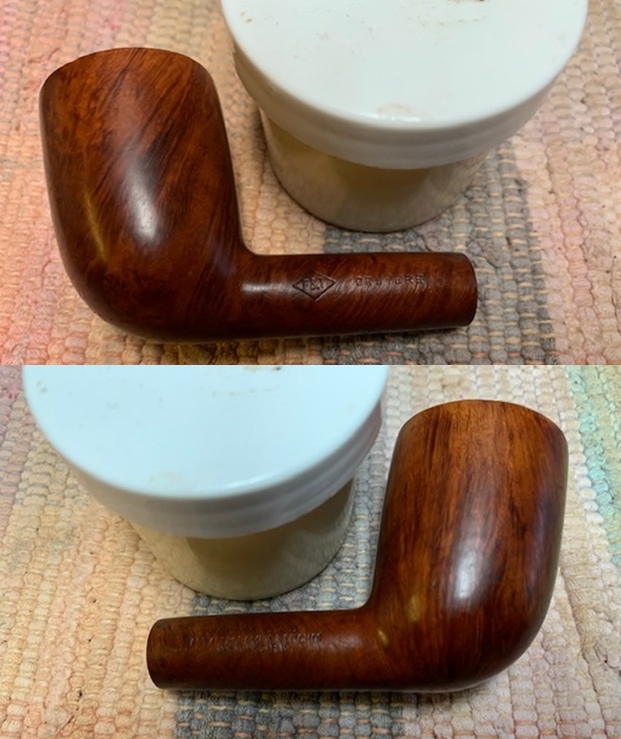
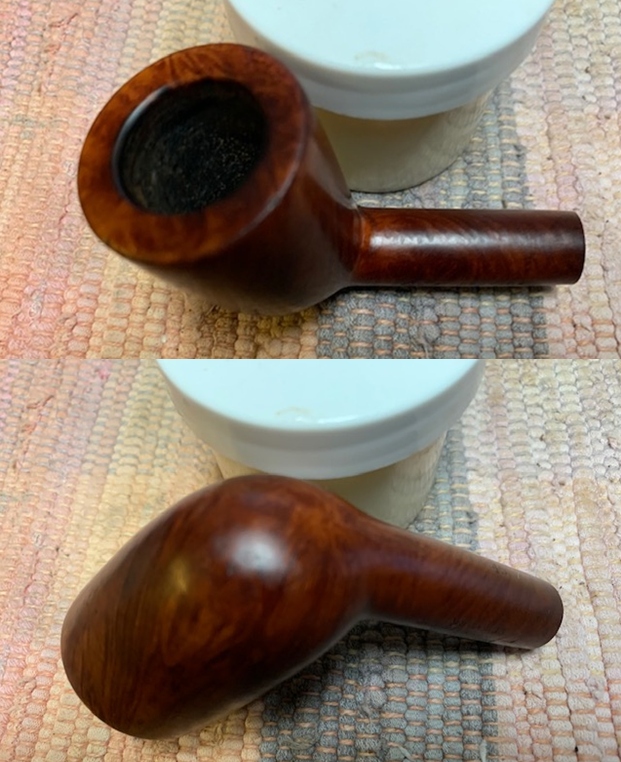
A fellow Vancouver Pipeman named Alex has been keeping me busy with working on the pipes he is picking up. He has picked up some interesting American and English made pipes. The next of those pipes is forward canted Dublin. This Dublin is quite a stunning pipe. Front what I can see it is a flawless piece of briar. The grain is mixed around the bowl and shank. The pipe is stamped on both sides of the shank. On the left side it reads F&T in a Diamond followed by Bruyere. On the right side it reads Made in London [over] For Abercrombie & Fitch Co. [over] New York. On the underside of the shank it is stamped with the shape number 45. There was a thick cake in the bowl (heavier in the bottom half of the bowl) and some darkening on the rim top. The rim top has some scratching and dents and some damage on the inner edge of the rim. The finish was very dirty with grime and oils ground into the surface of the bowl and shank. The vulcanite taper stem does not have any stamping on the top or sides. The stem was calcified, oxidized, dirty and had tooth marks and chatter on both sides near the button. Here are some photos of the pipe when I first received it.  I took a close-up photo of the rim to show the condition of the rim top, bowl and the inner edge of the bowl. You can see the thick cake in the lower half of the bowl. It also looked as if someone had started to ream the bowl and stopped. The stem had tooth damage and chatter on the button edges and the stem ahead of the button.    The stamping on the sides of the shank is shown in the photos below. It reads as noted above.         I removed the stem from the shank and took a photo of the flow of the pipe. The pipe was really going to look great once it was cleaned and polished.I turned to Pipephil’s article on Fribourg & Treyer London Made pipes because I recognized the F&T Diamond logo (http://www.pipephil.eu/logos/en/logo-f4.html). I did a screen capture of the write up on the brand.I turned to the article on the brand on Pipedia to gather information and history of the makers (https://pipedia.org/wiki/Fribourg_%26_Treyer). I have copied an illustration of the shop and included the article from Pipedia below.
Storefront scene, courtesy SmokersMag.com

Although FRIBOURG & TREYER’s closed in the 1980s and has been gone for many years, their pipes and related products continue to command the respect of pipe smokers around the globe!

FRIBOURG & TREYER’s was one of all LONDON’S GREAT OLD PIPE SHOPS established in 1720! Their primary shop was located in the HAYMARKET DISTRICT of London where they catered to the rich and famous including Royalty for nearly 300 years! While most collectors are familiar with the “Royal Appointment” accorded certain well-established businesses in England (most commonly seen on Dunhill packaging) FRIBOURG & TREYER’s not only held an identical appointment by the King of England, but they also had a similar “Royal Appointment” by the King of Belgium! From their well-known Haymarket Shop with its picturesque Bay Windows, the tobacconists blended their own line of tobaccos and snuff (and became known as “Britain’s premier snuff chandler”)! Like Astleys in London and famous American landmarks like Bertrams and Leonard’s, Fribourg & Treyer had their pipes manufactured by various unnamed pipe makers. But because of the quality of their clientele, they demanded and received the very choicest pipes!

The success of Fribourg & Treyer saw them expand to other “upper end” locations and at the height of their success they also operated shops in the equally famous Burlington Arcade as well as at Oxford and Cambridge! In the 1970s they were acquired by Imperial Tobacco and as “urban legend” has it, they could not afford to renew their lease at the Haymarket so they moved to a new location on Regent Street in London. However, that was short-lived and this famous old shop was permanently closed and its snuff and tobacco recipes sold.

Today Fribourg & Treyer is remembered primarily for its snuff and tobaccos! They supplied tobacco to pipesmokers around the world, and much like Drucquer’s in California and Garfinkel’s in Washington, D.C., their oldest blends are still vigorously pursued by knowledgeable pipesmokers today whenever they make a rare reappearance on eBay or elsewhere! (However, Fribourg and Treyer snuff and tobacco are still readily available throughout the world made by other tobacconists.)

This pipe was made by Fribourg & Treyer in London for the Abercrombie & Fitch Company in New York City. I would assume that pipe was sold by Abercrombie & Fitch along with fine tobaccos and other sundry smoking items in their Flagship Store on Fifth Avenue.

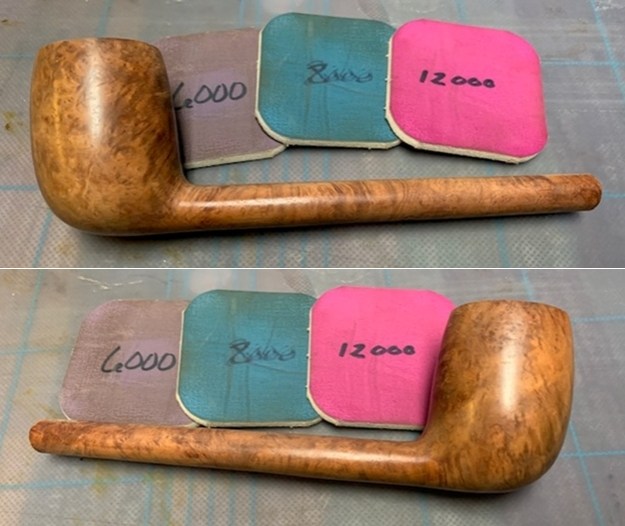
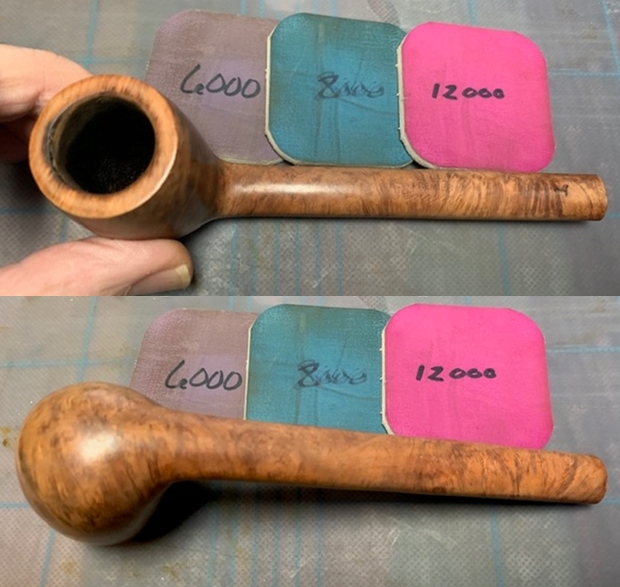
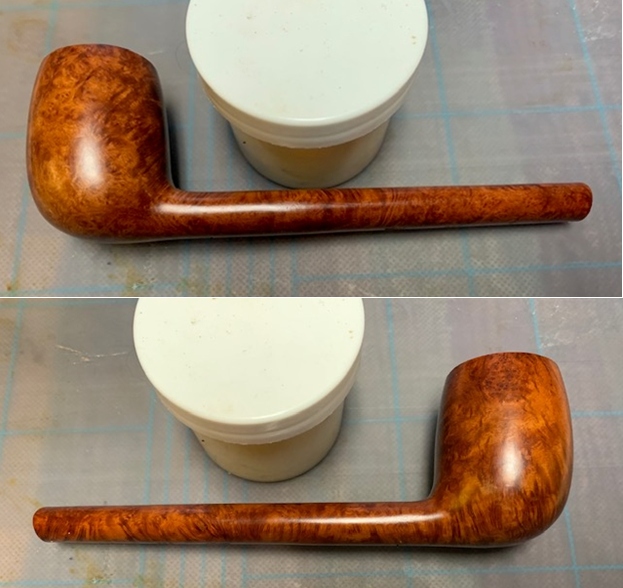
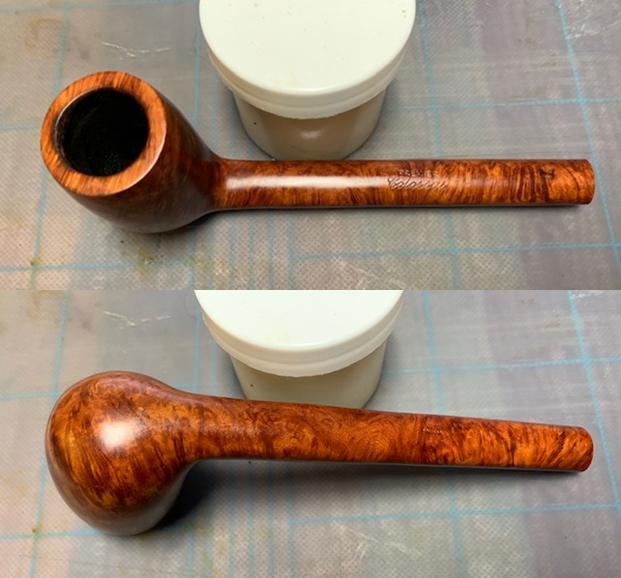
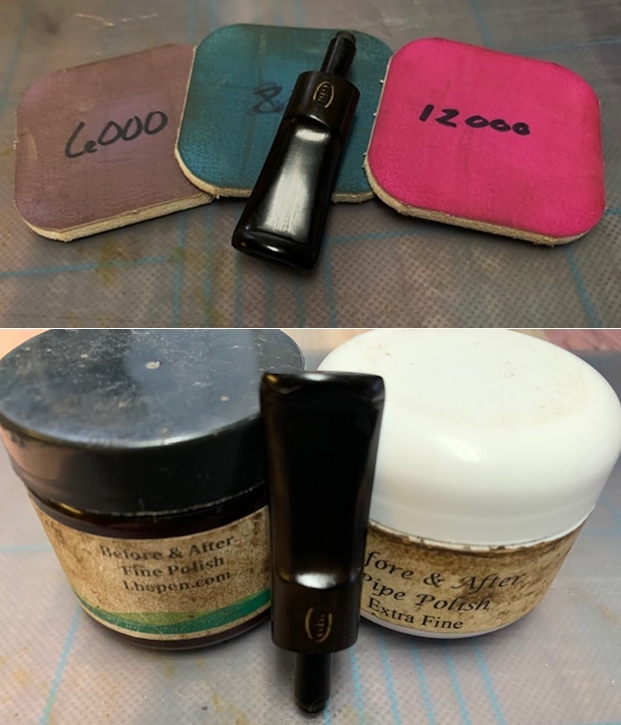
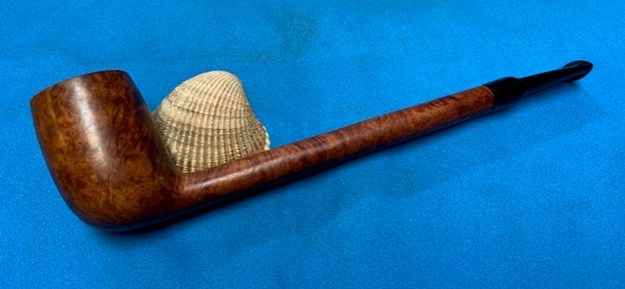
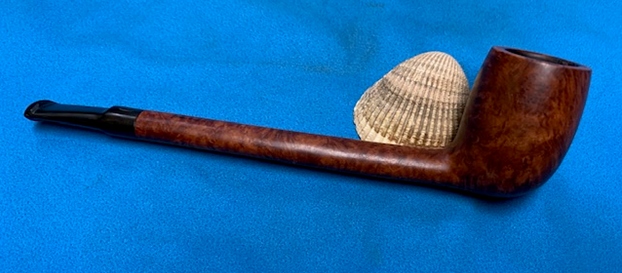
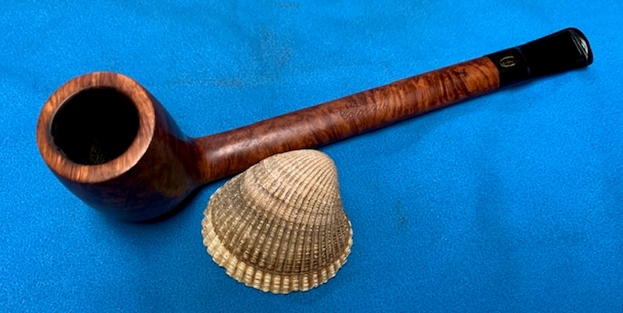
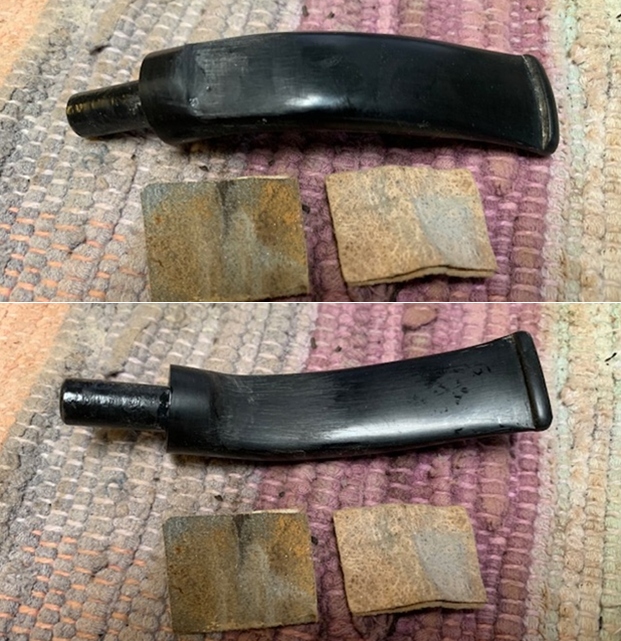
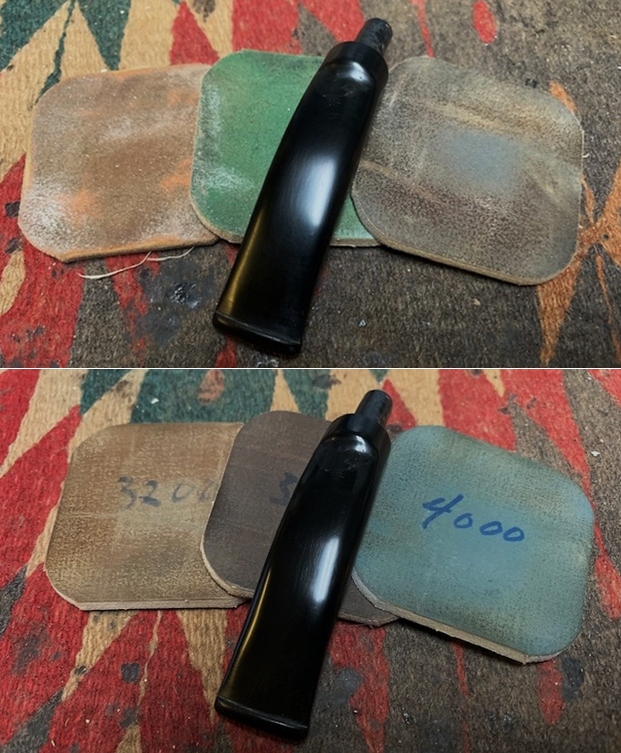
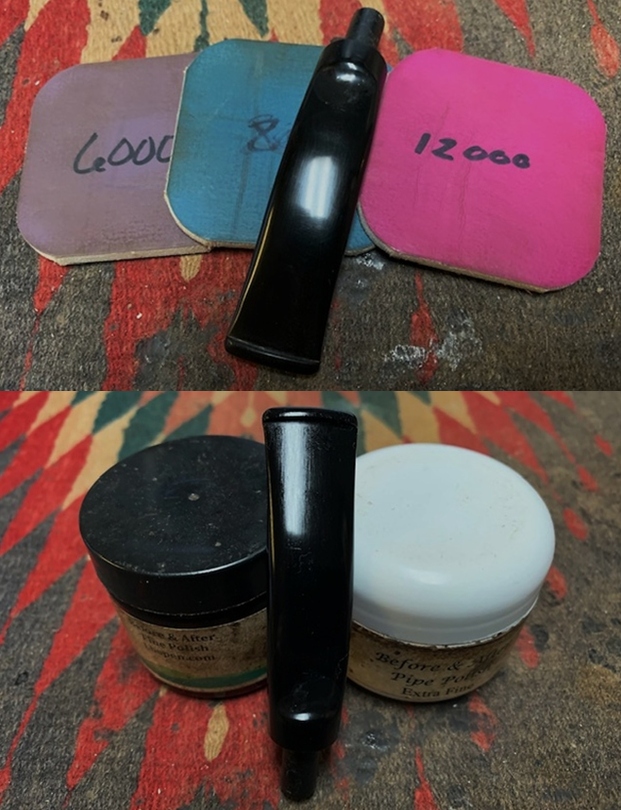
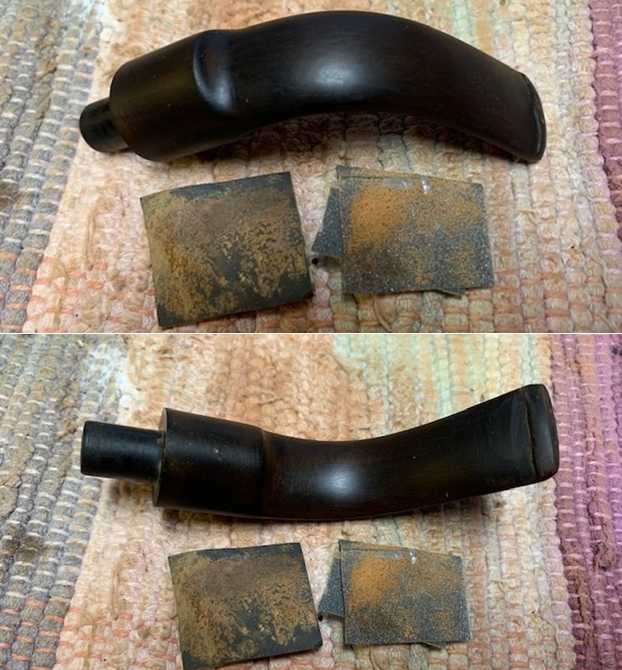
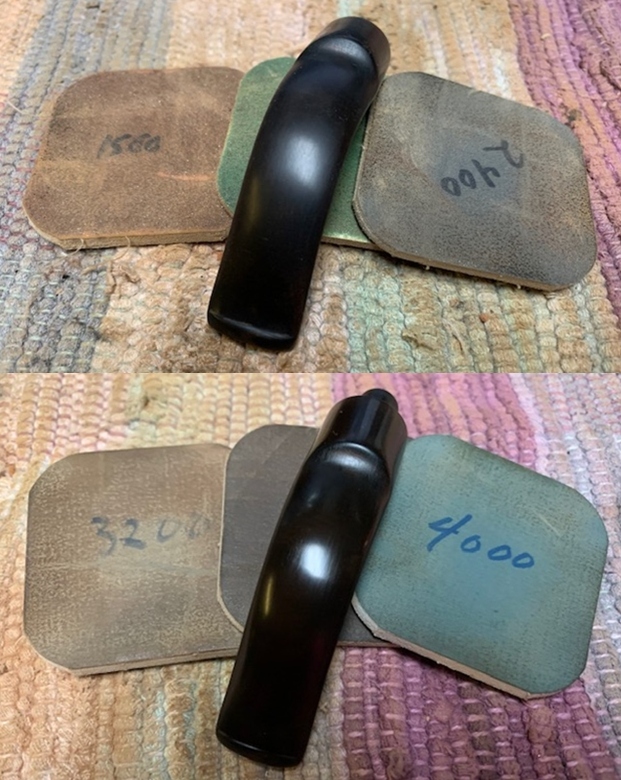
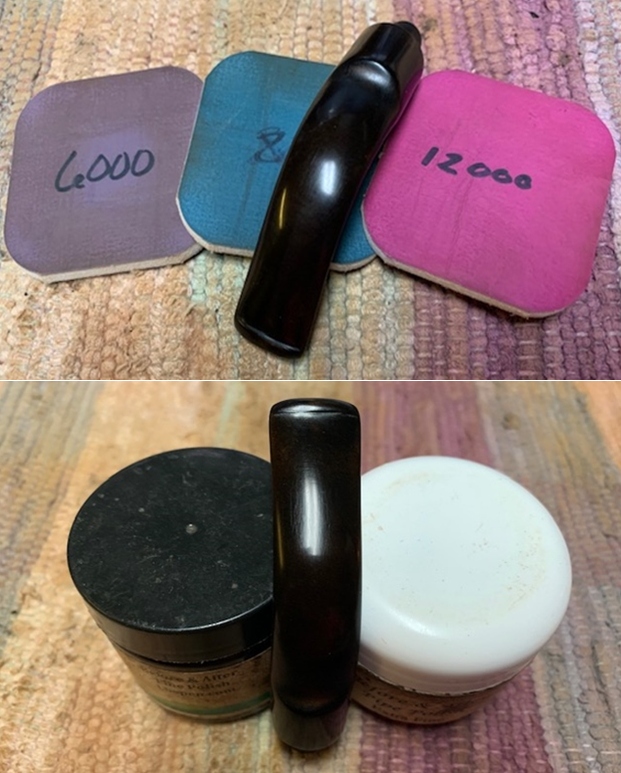
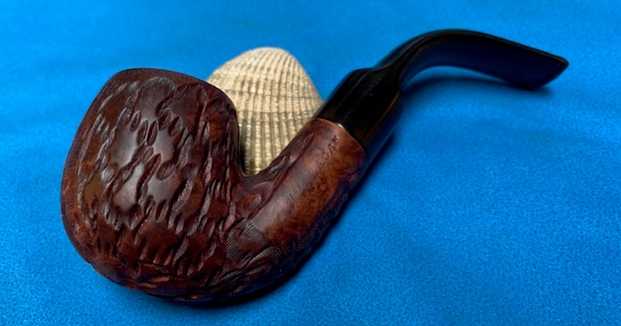
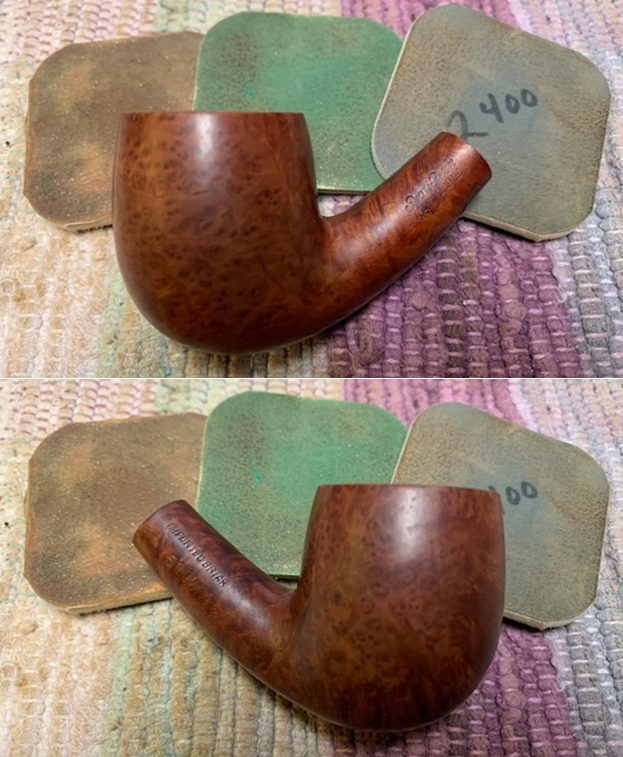
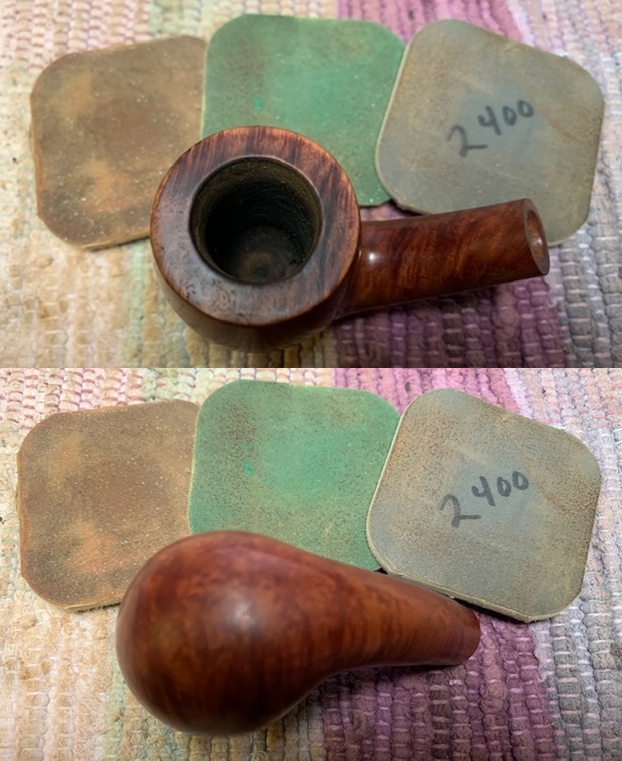
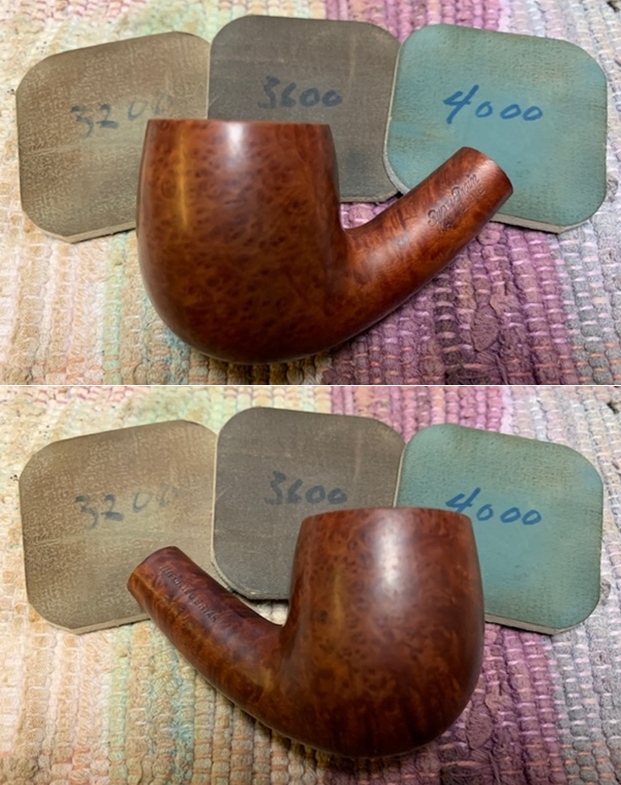
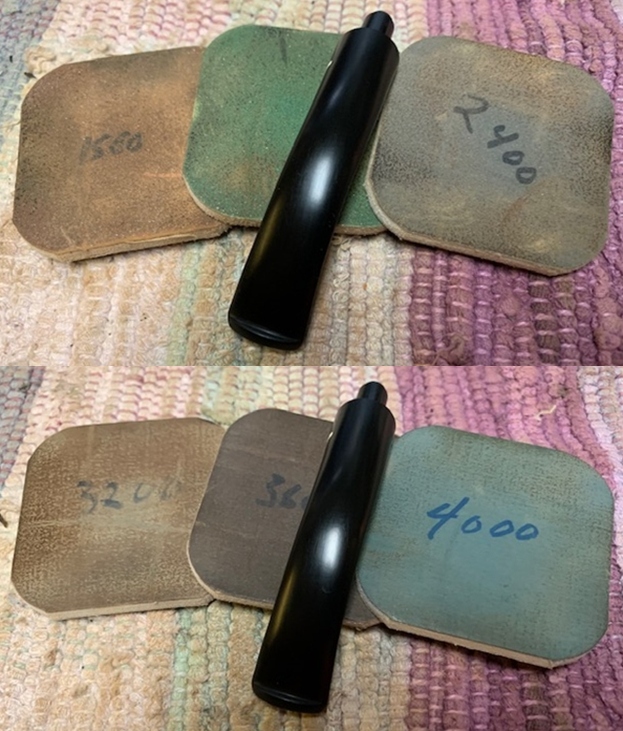
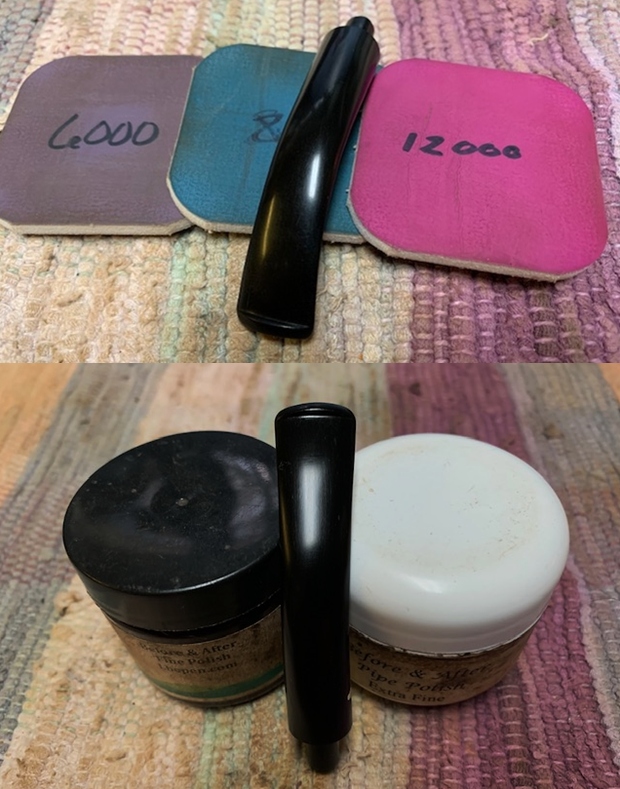
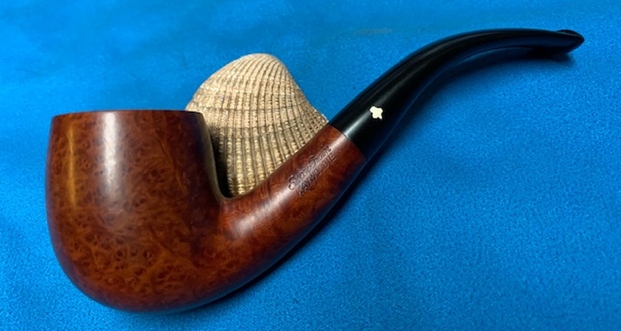
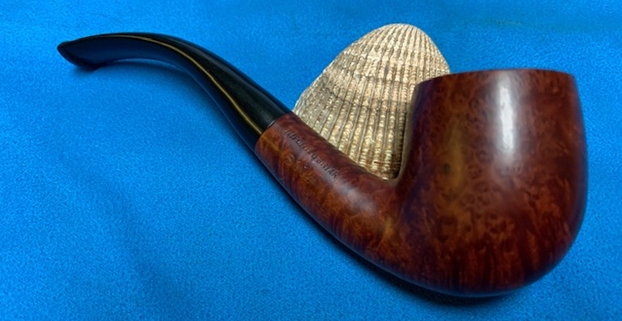
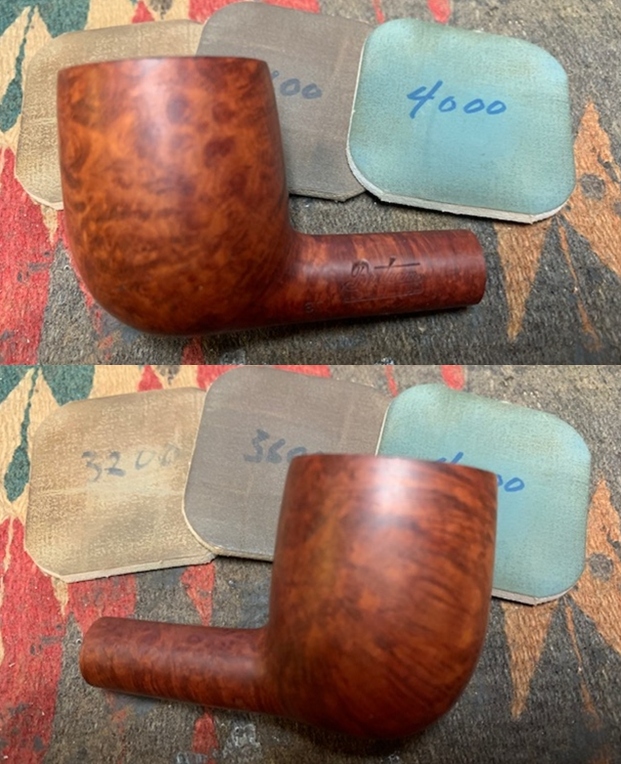
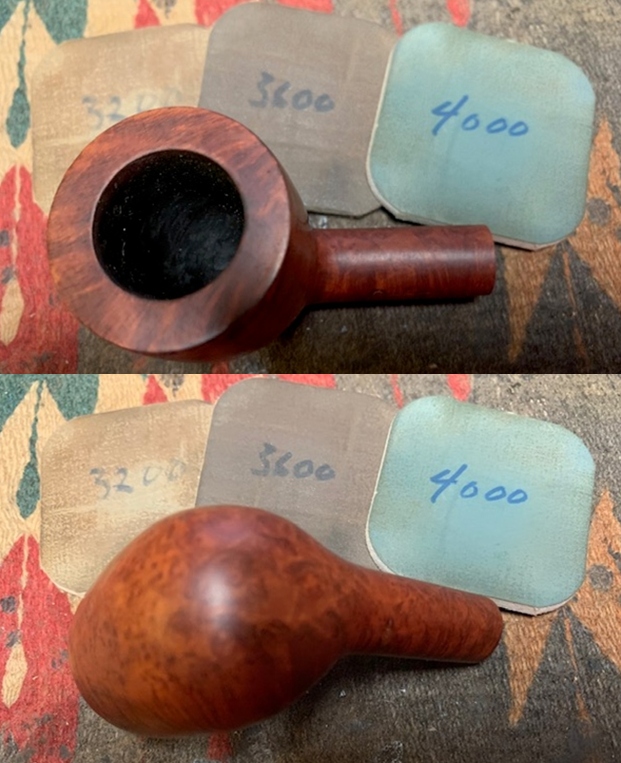
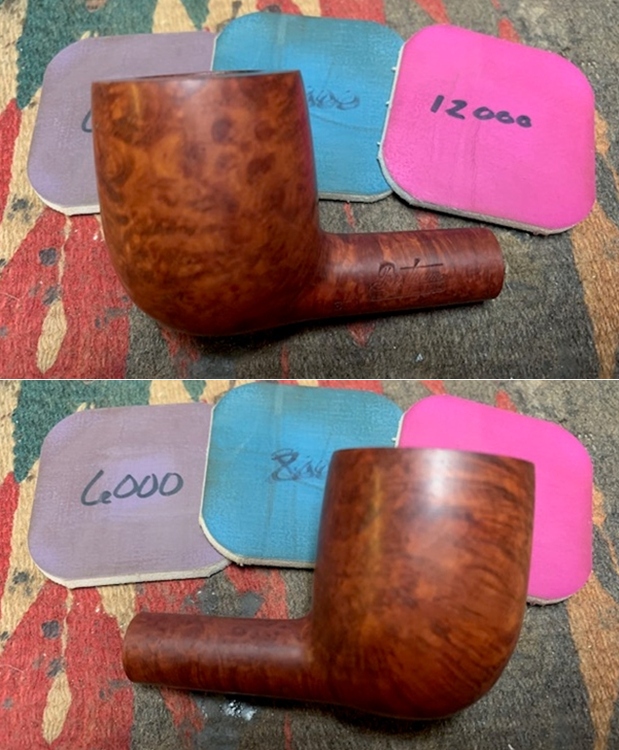
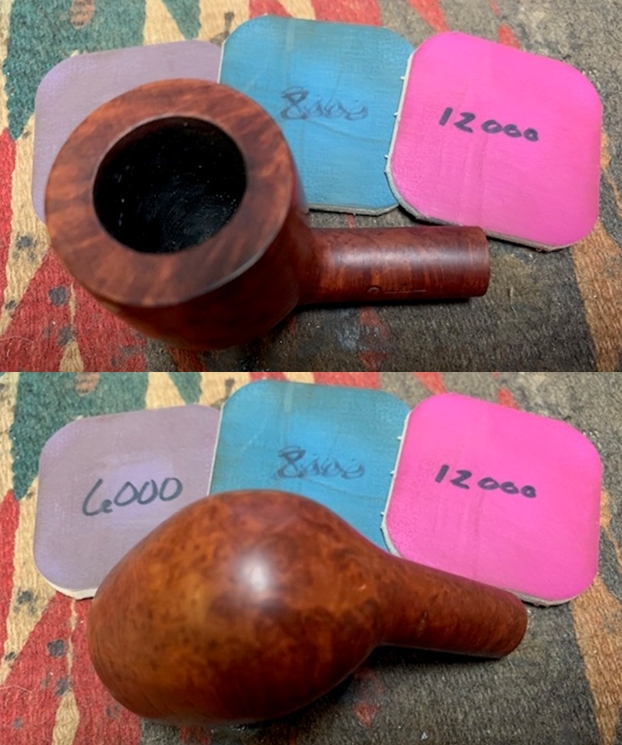
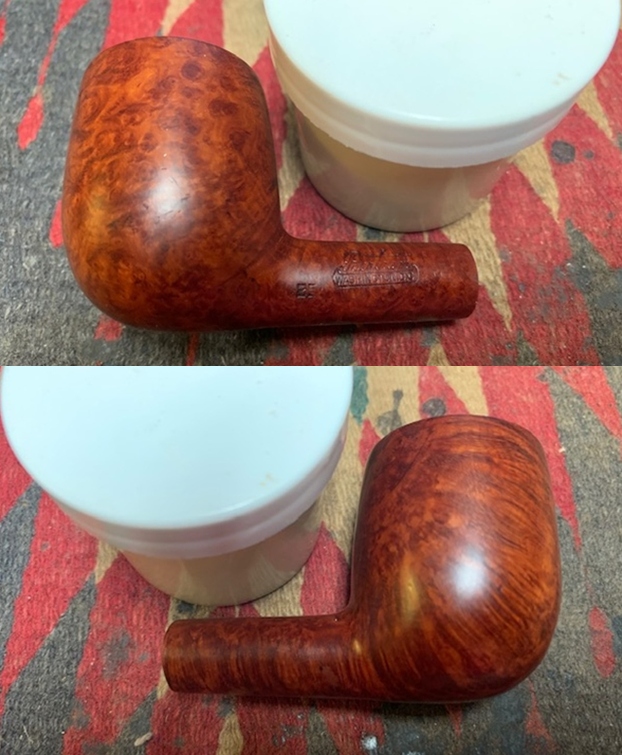
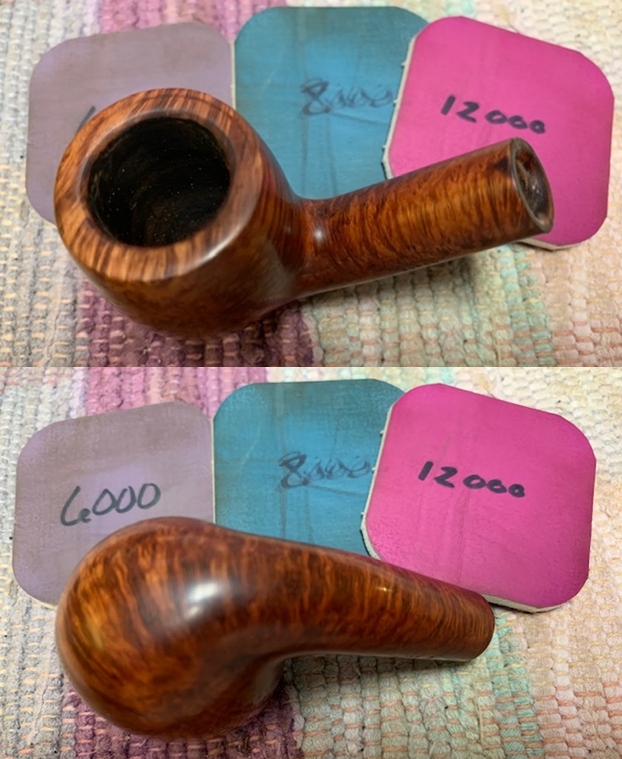
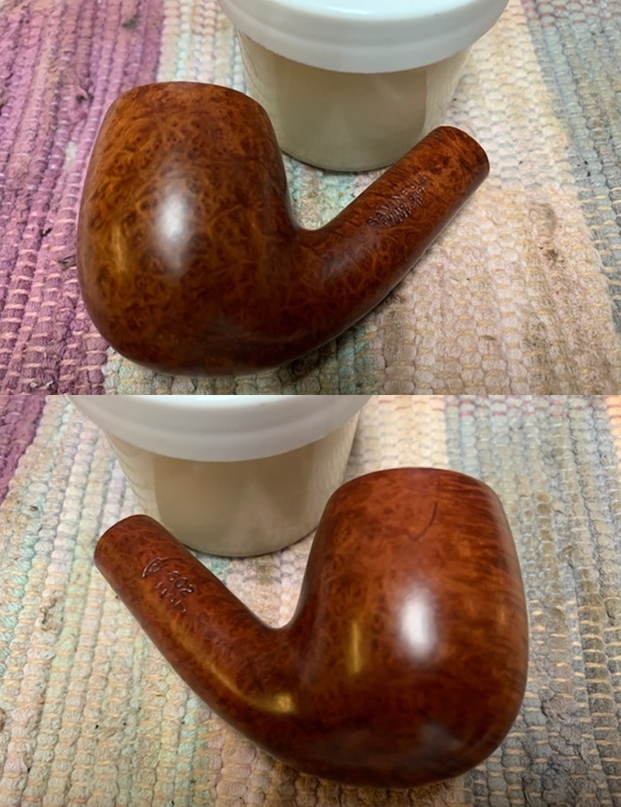
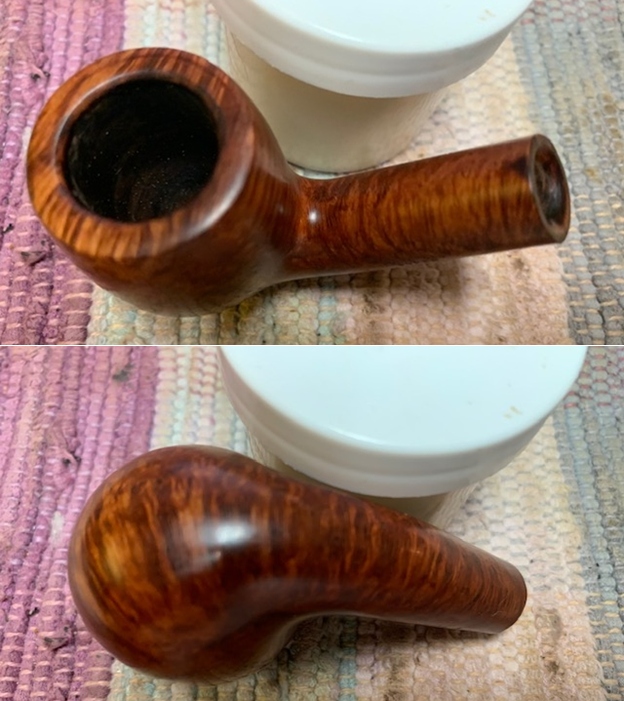
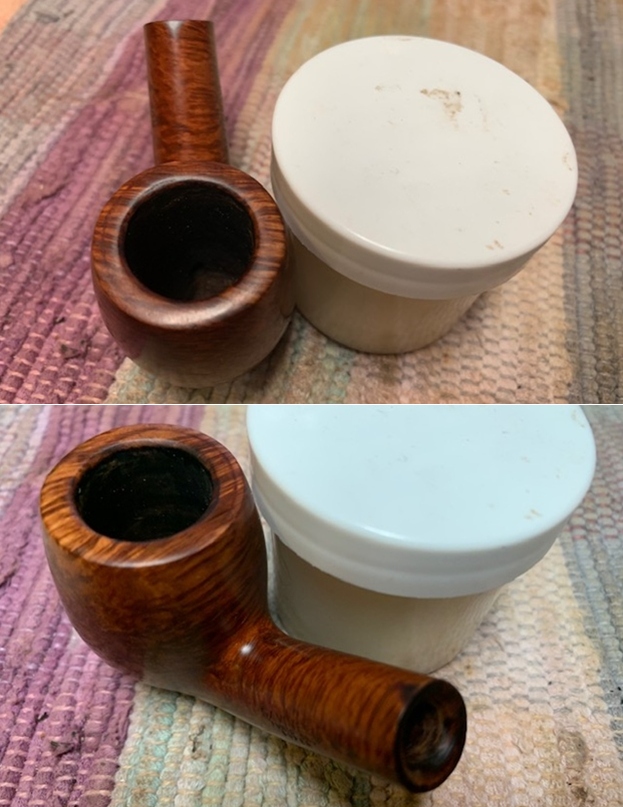
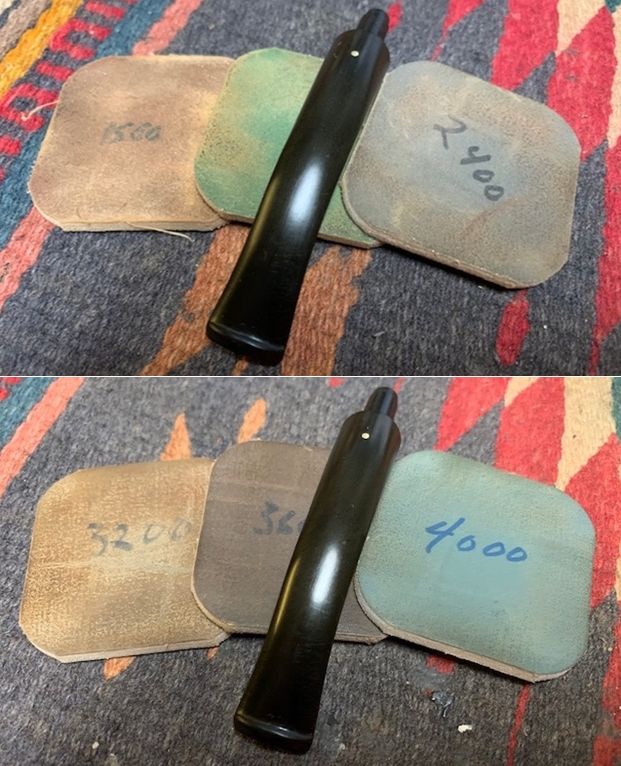
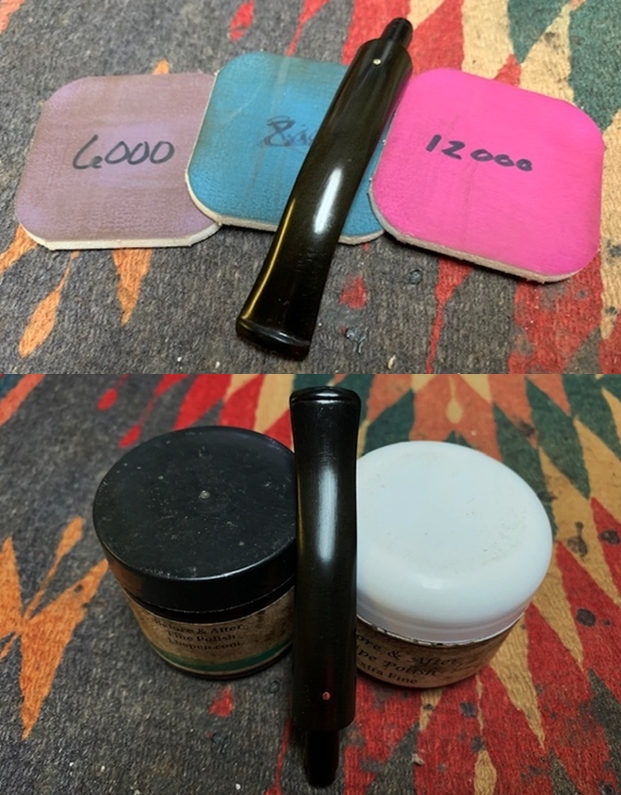
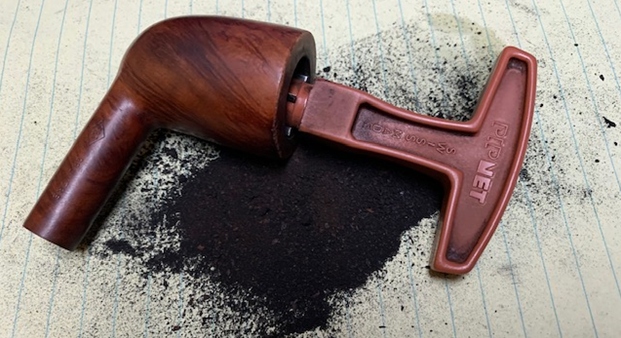
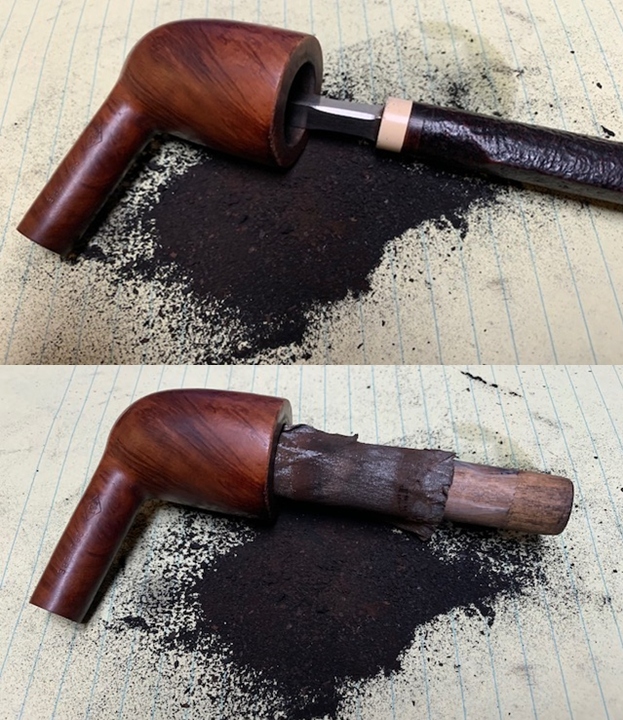
Now it was time to work on the pipe itself. I reamed the thick cake back to the walls with a PipNet pipe reamer using the first two cutting heads. I followed up – cleaning the remnants of cake on the walls with a Savinelli Fitsall Pipe Knife. The final step for me to assess the condition of the walls of the bowl is to sand it with 220 grit sandpaper on a piece of dowel. I sanded the walls smooth. I was happy with the condition of the inside walls of the chamber.    I scrubbed the exterior of the bowl with a tooth brush and undiluted Murphy’s Oil Soap to get the grime and debris out of the briar. I rinsed it with running water and dried it off with a towel. With that the outside was clean… progress!   I cleaned out the mortise, shank in the briar and airway in the stem with pipe cleaners, cotton swabs and 99% isopropyl alcohol. The pipe was dirty with lots of tars and oils.   I worked on the damage to the inner edge of the bowl with 220 grit sandpaper to remove as much of the damage as possible and bring the bowl back to round. I took a photo of the rim top after the cleanup to show the progress in cleaning up the edges.  I polished the briar with micromesh sanding pads – wet sanding with 1500-12000 grit pads and wiping the bowl down with a damp cloth after each pad. The grain is really beginning to stand out and the rim top is blending in quite well.   I worked some Before & After Restoration Balm into the surface of the briar with my fingertips to clean, enliven and protect it. I let the balm sit for a little while and then buffed with a cotton cloth to raise the shine. The following photos show the bowl at this point in the restoration process. I am very happy with the results.        I set the bowl aside and turned my attention to the stem. I painted the tooth marks in the stem with the flame of a lighter to lift them to the surface. It worked quite well but there were a few small tooth marks left in the surface.    I repaired the tooth marks in the vulcanite and rebuilt the edge of the button with Black Loctite 380 Adhesive. Once the repairs had cured I used a needle file to recut the edges of the button and flatten out the repairs.   I sanded the stem surface and button with 220 grit sandpaper to smooth out the repairs and blend them into the surface. I also worked to remove the remaining oxidation on the stem surface. I started the polishing with 400 grit wet dry sandpaper.    I polished the stem with micromesh sanding pads – wet sanding with 1500-12000 grit sanding pads and wiping it down after each pad with Obsidian Oil. I polished the stem with Before & After Stem Polish – both Fine and Extra Fine. I wiped it down a final time with Obsidian Oil when I finished.      This Fribourg and Treyer (F&T) Bruyere Dublin with a vulcanite taper stem turned out to be a real beauty. The carver at F&T really maximized the grain with the shape of the pipe. Everything about the pipe – the finish, the rim top and the cut of the briar work well to highlight the grain around the bowl. I polished stem and the bowl with Blue Diamond polish on the buffing wheel and the finish just popped and came alive. I gave the bowl and the stem multiple coats of carnauba wax. I buffed the pipe with a clean buffing pad to raise the shine. I hand buffed it with a microfiber cloth to deepen the shine. The pipe polished up pretty nicely. The pipe took on life with the buffing. The rich brown finish works well with the polished vulcanite stem. The finished pipe has a rich look that is quite catching. Have a look at it with the photos below. The shape, finish and flow of the pipe and stem are very well done. The dimensions are Length: 6 inches, Height: 2 inches, Outside diameter of the bowl: 1 ¼ inches, Chamber diameter: ¾ of an inch. The F&T Dublin made for Abercrombie & Fitch New York will back in the box of pipes that I am working on for Alex. I am looking forward to what he will think of this one. Thanks for walking through the restoration with me as I worked over another estate pipe.

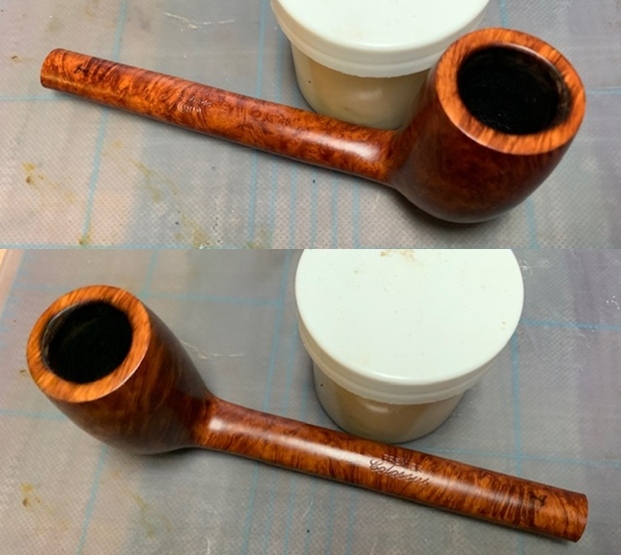
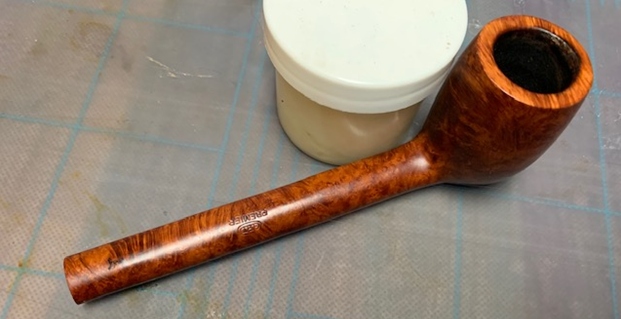
Life for a Long Shank GBD Premier Colossus 264 T Lumberman


Blog by Steve Laug

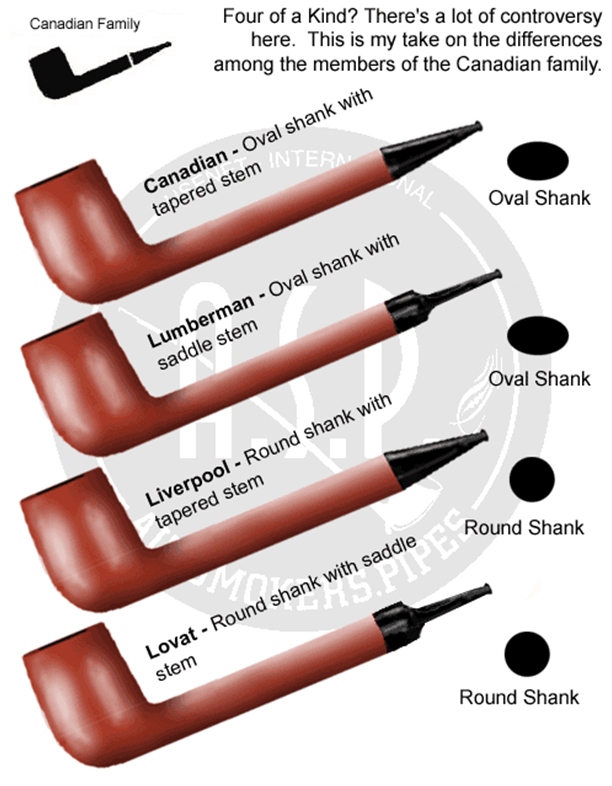
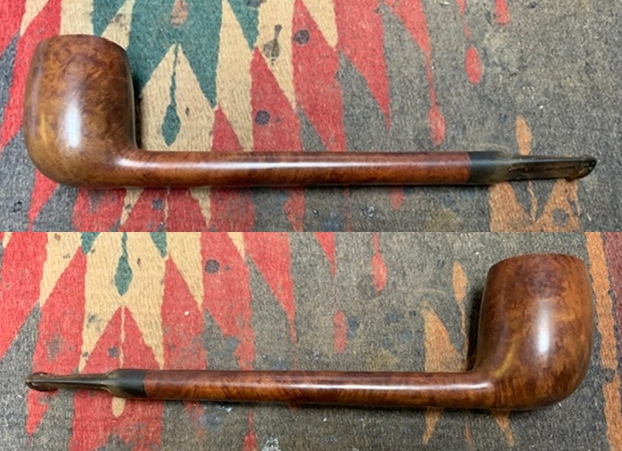
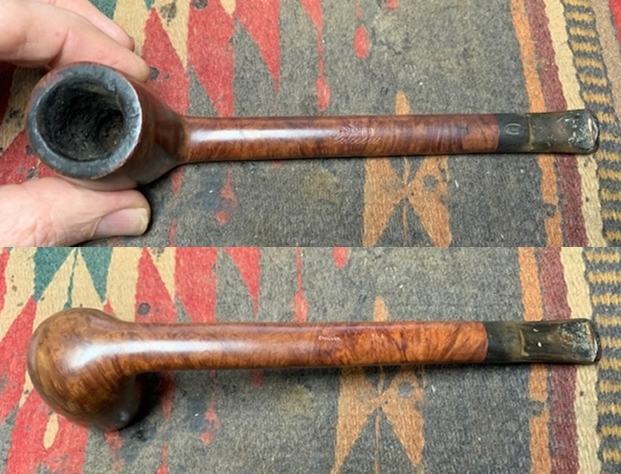
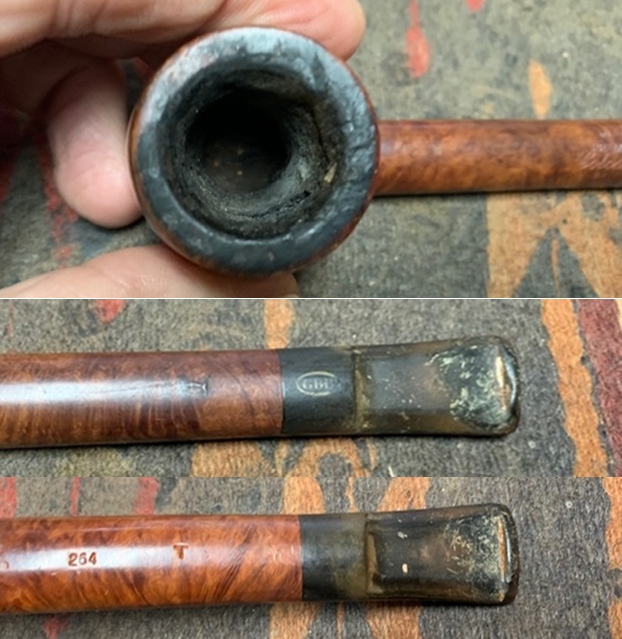
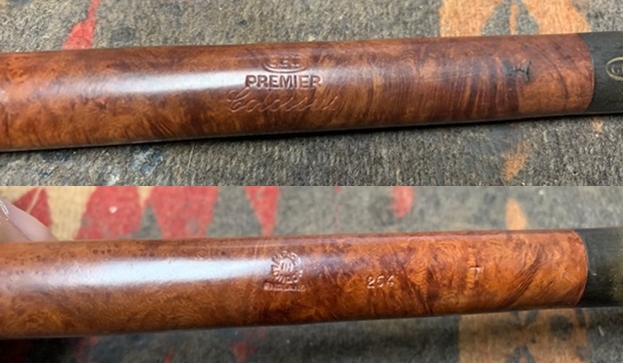
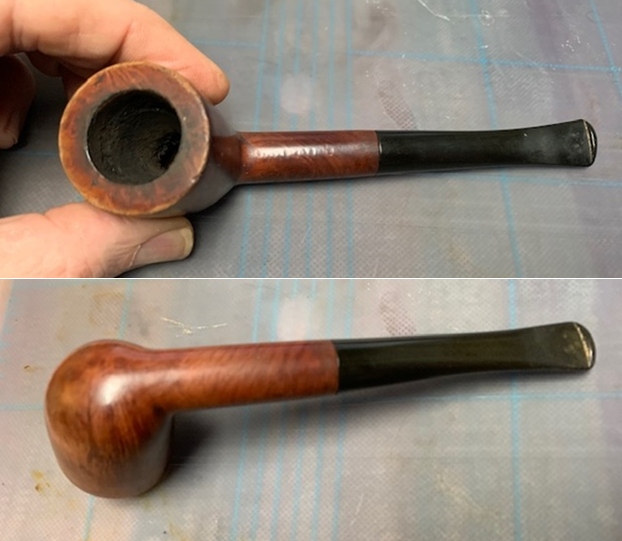
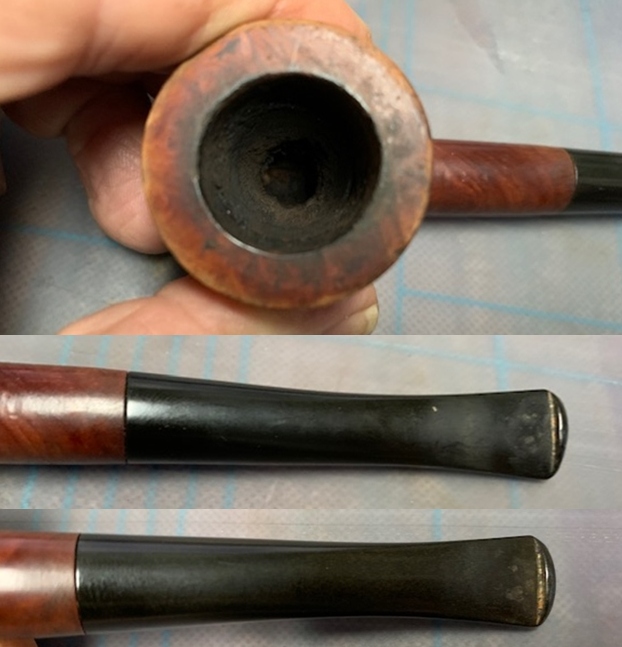
A fellow Vancouver Pipeman named Alex has been keeping me busy with working on the pipes he is picking up. He has picked up some interesting American and English made pipes. The next of those pipes is a long shank pipe that is a part of the Canadian family of pipes. The shank is oval and the stem is a saddle shaped one which makes it a Lumberman rather than a Canadian. I did a screen capture of the shapes from Pipedia (https://pipedia.org/wiki/Canadian). It is the second pipe in the picture below.This long shank GBD Lumberman is quite a stunning pipe. The pipe is one large piece of briar with no joints on the shank. From what I can see there is one flaw on the top of the shank near the end. There are some small fills around the bowl that are blended in quite well. The pipe is stamped on the top and the underside of the shank. On the topside it reads GBD in an oval [over] Premier [over] Colossus. On the underside it has a circular COM stamp that reads Made in London in a circle [over] England. That is followed by the shape number 264 with some space and then the upper case letter “T”. There was a thick cake in the bowl and lava overflowing onto the rim top. The rim top has some scratching and dents that will be more visible once the lava coat is gone. It is hard to know what the beveled inner edge looks like because of the lava. The finish was very dirty with grime and oils ground into the smooth finish. The vulcanite saddle GBD Oval logo stamped on the topside of the saddle stem. The stem was calcified, oxidized, dirty and had tooth marks and chatter on both sides near the button. Here are some photos of the pipe when I first received it.  I took a close-up photo of the rim to show the condition of the rim top, bowl and the inner edge of the bowl. It was hard to know what was going on with the rim and edges because of the cake and lava overflow. The stem was a mess with tooth damage and chatter on the button edges and the stem ahead of the button.       The stamping on the topside and the underside of the shank are shown in the photos below. It reads as noted above.  I removed the stem from the shank and took a photo of the flow of the pipe. The pipe was really going to look great once it was cleaned and polished. The long, oval shank Lumberman is a beauty.The history of GBD pipes is very well spelled out in multiple articles on Pipedia. I would encourage you to give them a read as they are well written and very readable. It is truly a grand old brand spanning France and England. I turned instead to Pipedias article on GBD’s various models (https://pipedia.org/wiki/GBD_Model_Information). I did a screen capture of the write up on the Premier Line.The pipe is a Premier which is noted above as a flagship to their pipes. It says that it is stained with a unique fiery Autumn colour combination that has a hand finished mouthpiece.
The second stamping on the top of the shank was Colossus. I knew that this stamp was used on larger or what GBD called “plus sized pipes”. I read through the above link and found the information below.

Plus Sized Pipes

In addition to the pipe line and shape information stamped on the pipe GBD also had codes for plus sized pipes. These codes in ascending order of size were…

  • Conquest
  • Collector
  • Colossus

Perspex refers to the lucite/acrylic bit material GBD used, the clear bits used on various models are Perspex. Metal rondelles were discontinued after the merger with Comoy.

From this I know that the pipe is a larger, plus sized pipe that was at the top of the plus sizes – a Colossus. The Premier was the high in the hierarchy as well. I also knew that because of the circular COM stamp and the lack of a metal rondelle that the pipe was made after the merger with Comoy.

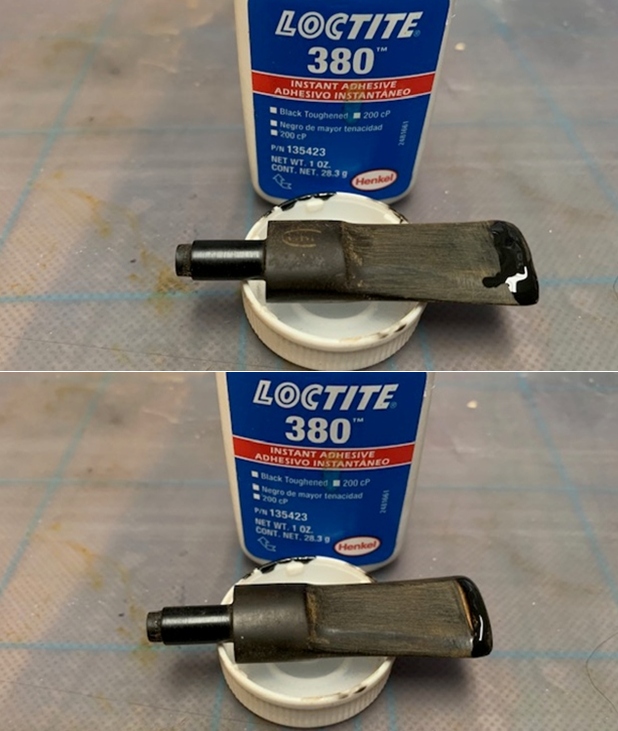
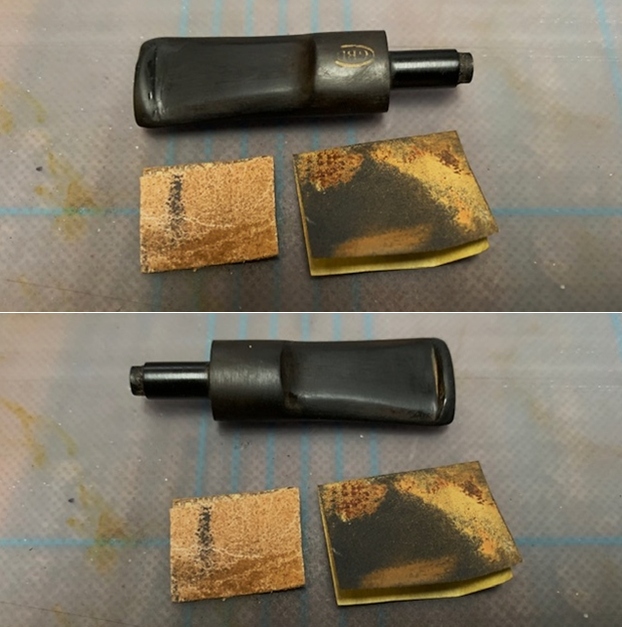
Now it was time to work on the pipe itself. I reamed the thick cake back to the walls with a PipNet pipe reamer using the first two cutting heads. I followed up – cleaning the remnants of cake on the walls with a Savinelli Fitsall Pipe Knife. The final step for me to assess the condition of the walls of the bowl is to sand it with 220 grit sandpaper on a piece of dowel. I sanded the walls smooth. I was happy with the condition of the inside walls of the chamber.     I scrubbed the exterior of the bowl with a tooth brush and undiluted Murphy’s Oil Soap to get the grime and debris out of the briar. I rinsed it with running water and dried it off with a towel. With that the outside was clean… progress!     I cleaned out the mortise, shank in the briar and airway in the stem with pipe cleaners, cotton swabs and 99% isopropyl alcohol. The pipe was dirty with lots of tars and oils.   I worked on the damage to the rim top to remove the darkening, charring and dents and nicks. I topped it on with 220 grit sandpaper to remove as much of the damage as possible. There was still some damage to the front edge of the rim. I filled in the damaged bevel with briar dust and super glue. I took a photo of the rim top after the cleanup and then worked on the beveled rim with a folded piece of 220 grit sandpaper.    I polished the briar with micromesh sanding pads – wet sanding with 1500-12000 grit pads and wiping the bowl down with a damp cloth after each pad. The grain is really beginning to stand out and the rim top is blending in quite well. I worked some Before & After Restoration Balm into the surface of the briar with my fingertips to clean, enliven and protect it. I let the balm sit for a little while and then buffed with a cotton cloth to raise the shine. The following photos show the bowl at this point in the restoration process. I am very happy with the results.             I set the bowl aside and turned my attention to the stem. I repaired the tooth marks in the vulcanite and rebuilt the edge of the button with Black Loctite 380 Adhesive. Once the repairs had cured I used a needle file to recut the edges of the button and flatten out the repairs. I sanded the stem surface and button with 220 grit sandpaper to smooth out the repairs and blend them into the surface. I also worked to remove the remaining oxidation on the stem surface. I started the polishing with 400 grit wet dry sandpaper.    I polished the stem with micromesh sanding pads – wet sanding with 1500-12000 grit sanding pads and wiping it down after each pad with a damp cloth.     This GBD Long Shank Premier Colossus Lumberman with a vulcanite saddle stem turned out to be a real beauty. The long shank and bowl is a single unit that speaks of nice, large piece of briar. GBD really maximized the grain with the shape of the pipe. Everything about the pipe – the finish, the crowned rim top and the cut of the briar work well to highlight the grain around the bowl. I polished stem and the bowl with Blue Diamond polish on the buffing wheel and the finish just popped and came alive. I gave the bowl and the stem multiple coats of carnauba wax. I buffed the pipe with a clean buffing pad to raise the shine. I hand buffed it with a microfiber cloth to deepen the shine. The pipe polished up pretty nicely. The pipe took on life with the buffing. The rich brown finish works well with the polished vulcanite stem. The finished pipe has a rich look that is quite catching. Have a look at it with the photos below. The shape, finish and flow of the pipe and stem are very well done. The dimensions are Length: 7 ½ inches, Height: 2 inches, Outside diameter of the bowl: 1 ¼ inches, Chamber diameter: 7/8 of an inch. The Premier Colossus GBD Lumberman will back in the box of pipes that I am working on for Alex. I am looking forward to what he will think of this one. Thanks for walking through the restoration with me as I worked over another estate pipe.
Restemming and Restoring a Bill Lator Handmade Bent Dublin


Blog by Steve Laug

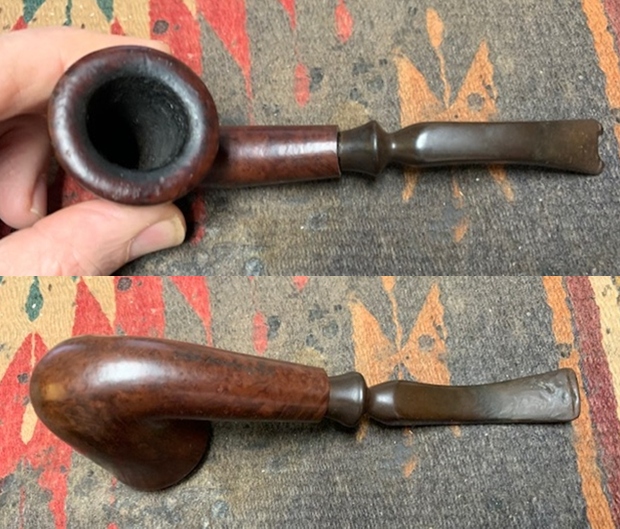
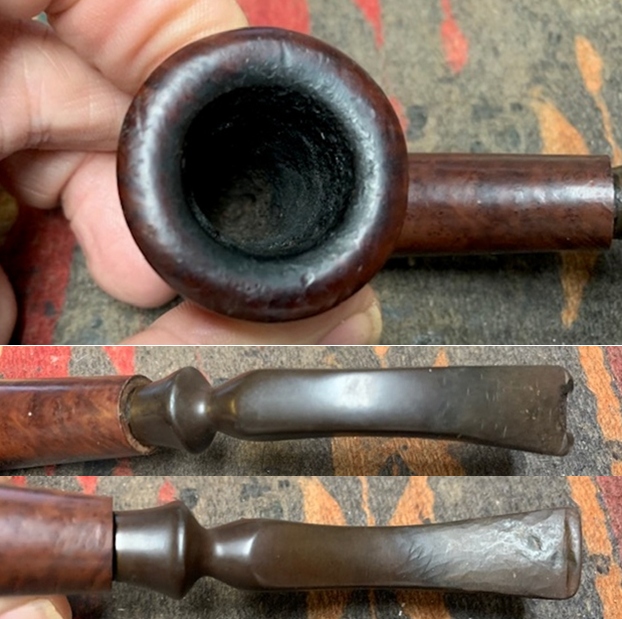
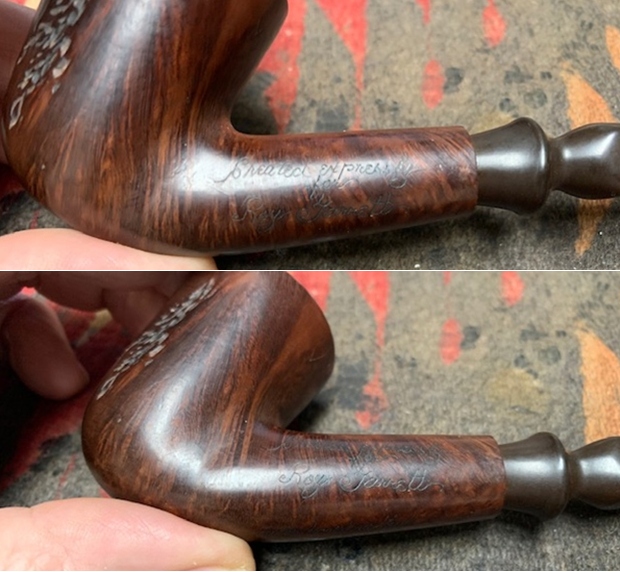
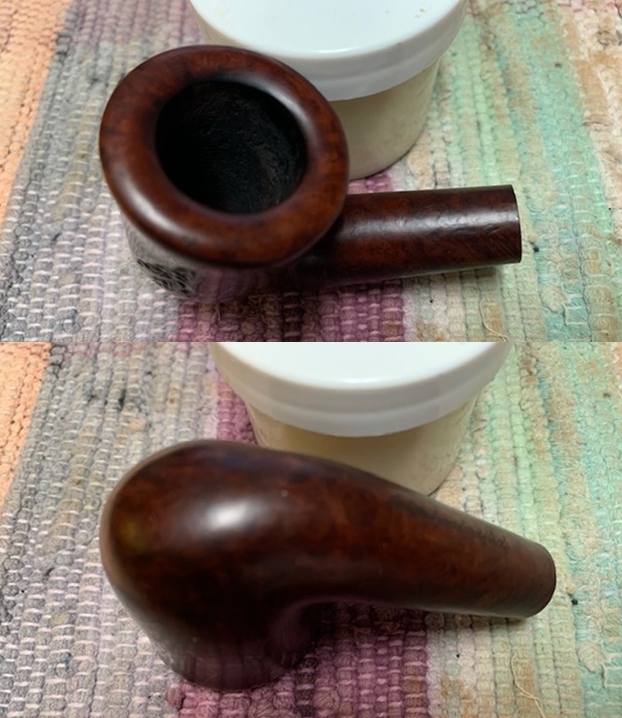
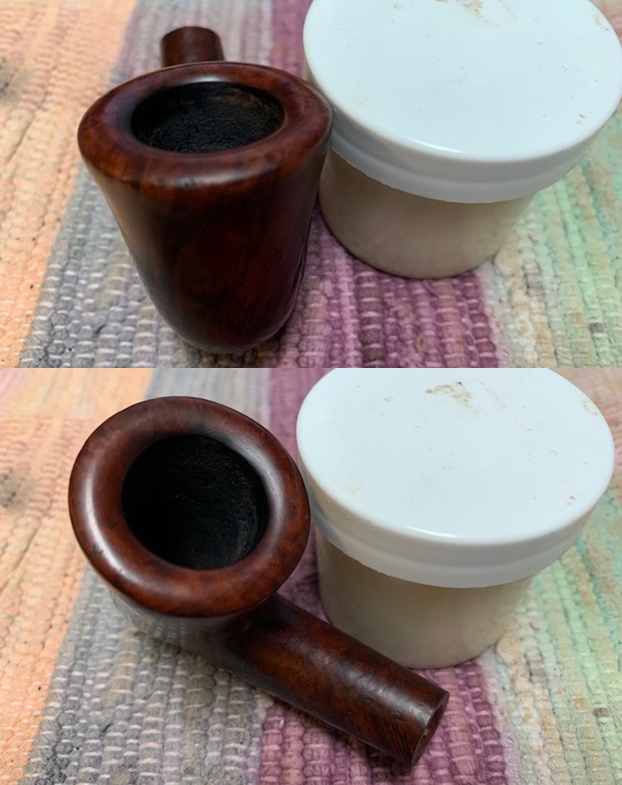
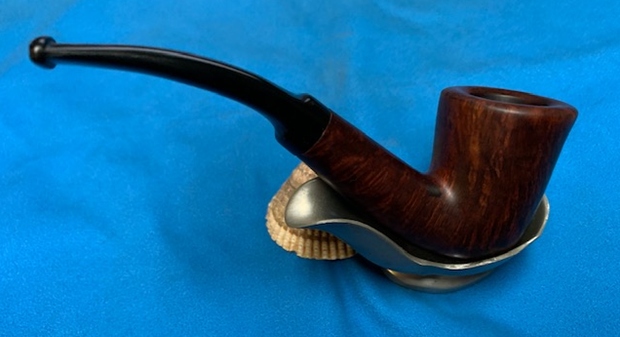
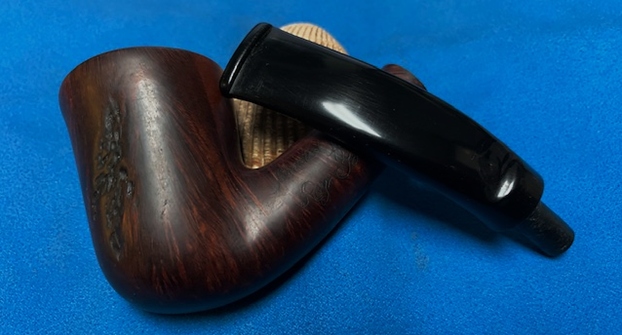
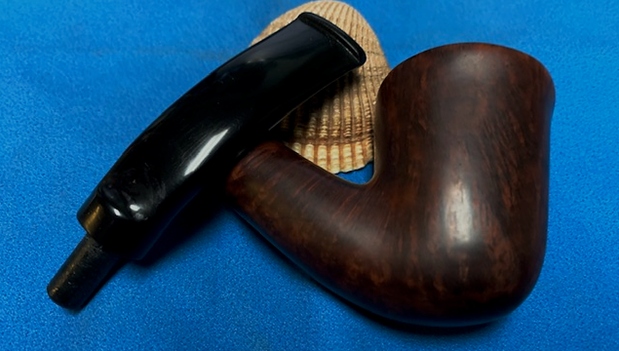
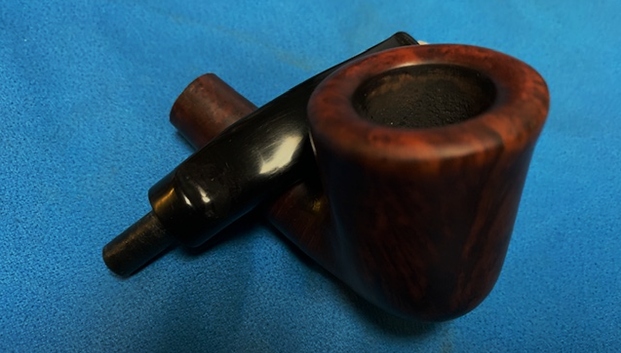
A fellow Vancouver Pipeman named Alex has been keeping me busy with working on the pipes he is picking up. He has picked up some interesting American and English made pipes. One of those is this Dublin that is engraved on the left side and underside of the shank. On the left side it reads Crafted Expressly for Roy Garrett. On the underside it reads Lator Handcrafted. It is a nice piece but has some unique features that are visible in the photos that follow. It has a sculpted/rusticated portion on the left side of the bowl and a crowned rim top. There was a thick cake in the bowl and lava overflowing onto the rim top. The rim top has some scratching and dents that will be more visible once the lava coat is gone. It appears that the edges of the bowl are in good shape – both inner and outer. The finish was very dirty with grime and oils ground into the smooth and rusticated portions. The stem did not fit well in the shank and appeared to be a replacement stem. The diameter of the stem was less than that of the bowl and left a large edge exposed on the shank end. I believe that the pipe originally had a taper stem rather than the fancy, damaged turned one that was on it when I received it. To my mind it would need to have a new stem fit to the shank. Here are some photos of the pipe when I first received it.I took a close-up photo of the rim to show the condition of the rim top and the inner edge of the bowl. The rim top had some dents and damage to it and the inner edge appeared to have some charring and darkening. The stem was an obvious replacement of necessity. It did not fit the shank and it was actually quite worn out with a chip out of the button and stem on the top side. I would need to fit a replacement.  The engraving on the left side and the underside of the shank are shown in the photos below. It reads as noted above.    I removed the stem from the shank and took a photo of the flow of the pipe. When I crafted a new stem for it I would work with the same angles to get the same look.When Alex dropped it off the first of the Lator pipes that he wanted me to work on I asked him to do a bit of research on the brand and see what he could find out about the pipemaker and the brand. He said he would and over the next couple of days sent me several emails with information that he had found out about the pipe. Here is a link to the first blog on the Canadian that is referred to in the following information (https://rebornpipes.com/2019/02/07/removing-an-annoying-whistle-from-a-handmade-canadian-by-bill-lator/).

The first email was the description given of the pipe on the SATX Pipes site – the company he purchased it from. They gave a pretty detailed description of the pipe and the stamping on the pipe.

This is a very rare handmade Canadian by Bill Lator. In addition, it bears the customer’s name on it that it was commissioned for. Bill Lator was a pipe maker from Indiana who operated two small pipe shops with his family. This particular Lator is in fine shape. Stem is shiny black and free from any chatter. Beautiful grain and color is offset by a sterling silver band. This is a non-filtered pipe. Pipe has been sanitized, polished and waxed, and comes ready to smoke. Pipe Dimensions: Length Overall: 6 1/8″ Height Overall: 1 3/4″ Width Overall: 1 1/4″ Chamber Width: 7/8″ Chamber Depth: 1 5/8″ Weight: 1.1 oz

Alex also sent along picture of a Magazine cover showing …Bing with a BL Canadian on the cover of a magazine.He also included an excerpt from a local newspaper article about the Lators from 1976:

Pipemaking is a family affair for the Bill Lator family. The family owns and operates “The Pipemaker,” 109 N. Broad. Father Bill, Sr. and all three sons, Paul, 28, Bill, Jr., 20 and Kurt, 14 have taken up the rare trade of pipemaking. According to Lator, there are only about 20 pipemakers in the United States. “And three of them are in Griffith,” he quipped. Lator said his pipe making started as a hobby, “a way to relax after a busy day as an executive.” Lator also began doing extensive research into pipe making going through a number of west coast libraries and learning everything he could. About a year ago, his friends started suggesting he open a pipe shop and after more urging by his son Paul, Lator moved to Griffith. The fame of his handmade briar pipes combined with the skills of his wife, Hellen, in blending pipe tobacco made the shop an instant success. Lator said his oldest son turns out artistic pipes, “he is the artist in the family-Son, Bill is the “perfectionist.” His creations have a machined perfection according to his father, “which appeals to certain customers.” The youngest, Kurt, is still an apprentice, learning the trade of pipemaking with the discards and making tampers. Mrs. Lator has gained a reputation as a master tobacco blender.

Alex sent a follow-up email and included a paragraph from Bill Lator’s obituary: “Bill was very artistic and in 1973 found he could make beautiful smoking pipes carved of briar. In 1975 he along with his 2 sons, Paul and Bill, opened The Pipemaker Pipe and Tobacco Shop in Griffith, Indiana. He loved that shop and all the customers. He made a very successful business that lasted 13 years. In 1986 he decided it was time for him to retire…”

From this I know that the pipe came from Bill Lator’s Griffith, Indiana Shop – The Pipemaker Pipe and Tobacco Shop. It had been made between 1975 and 1986 when Bill retired.

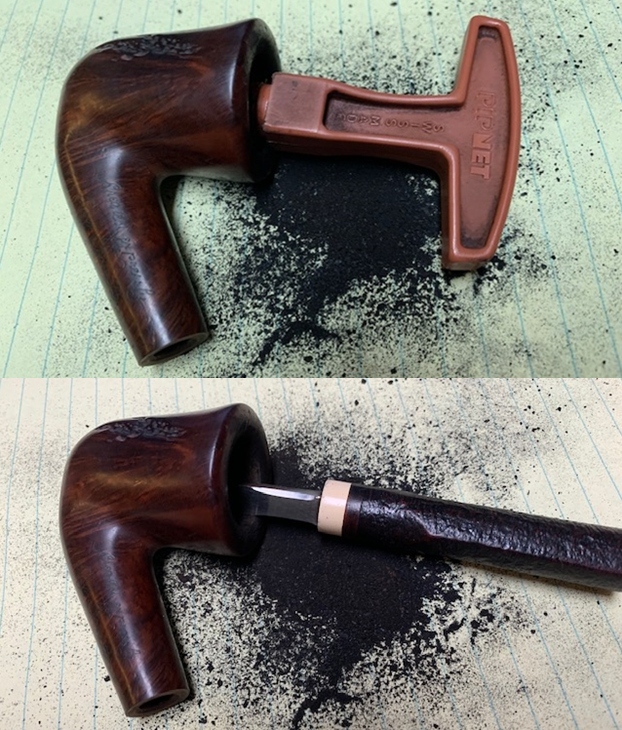
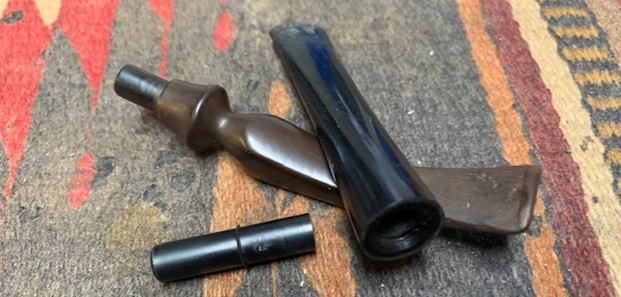
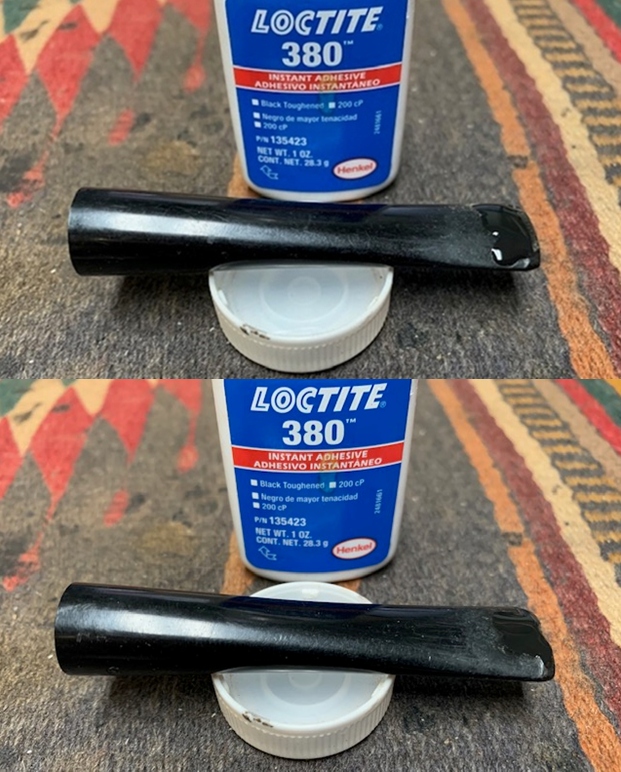
Now it was time to work on the pipe itself. I reamed the thick cake back to the walls with a PipNet pipe reamer using the first two cutting heads. I followed up – cleaning the remnants of cake on the walls with a Savinelli Fitsall Pipe Knife. The final step for me to assess the condition of the walls of the bowl is to sand it with 220 grit sandpaper on a piece of dowel. I sanded the walls smooth. I was happy with the condition of the inside walls of the chamber.  I scrubbed the exterior of the bowl with a tooth brush and undiluted Murphy’s Oil Soap to get the grime and debris out of the briar. I rinsed it with running water and dried it off with a towel. With that the outside was clean… progress!   I worked on the damage to the rim top to remove the darkening, charring and dents and nicks. I sanded it with 220 grit sandpaper and started polishing it with 400 grit sandpaper. The top is looking much better at this point.I cleaned out the shank and airway in the bowl with pipe cleaners, cotton swabs and 99% isopropyl alcohol. I would do the stem once had the replacement shaped and fit.I polished the briar with micromesh sanding pads – wet sanding with 1500-12000 grit pads and wiping the bowl down with a damp cloth after each pad. The grain is really beginning to stand out and the rim top is blending in quite well.     I worked some Before & After Restoration Balm into the surface of the briar with my fingertips to clean, enliven and protect it. I let the balm sit for a little while and then buffed with a cotton cloth to raise the shine. The following photos show the bowl at this point in the restoration process. I am very happy with the results.      I set the bowl aside and went through my stems to find one that would fit well. There was a nice acrylic stem without a tenon that was the right diameter as the shank end. I took a photo of the new stem with the one that came with the pipe. I took a photo of the tenon that would work on the stem and in the shank.  I repaired the tooth marks in the acrylic with the new Black Loctite 380 Adhesive. I set the stem aside to let the repairs cure.      I glued the new tenon in place in the stem with clear super glue. The tenon looks long but it is the same length as the mortise.I used a needle file to recut the edges of the button and flatten out the repairs. I sanded them with 220 grit sandpaper to smooth them out and blend them into the surface. I started the polishing with 400 grit wet dry sandpaper.Bending this stem was a challenge! I heated it with a heat gun and was unable to bend it. I heated it in boiling water for over 5 minutes and the bend I was able to achieve was not as much as I wanted. I repeated the process multiple times and the photo below shows what I accomplished.I am not happy with the bend. It had taken a lot of work to get to this point but I did not like what I was seeing. I went back through my can of stems to find a different stem that would work better. I found one that would work, it had the correct bend  but needed to be cleaned up and polished.I sanded the stem with 220 grit sandpaper and 340 grit sandpaper paying particular attention to the tenon and the curve of the saddle stem.       I polished the stem with micromesh sanding pads – wet sanding with 1500-12000 grit sanding pads and wiping it down after each pad with a damp cloth.   This Lator Bent Dublin with a new fit acrylic saddle stem turned out to be a real beauty. It has a unique carved rustication on the left side of the bowl and a crowned rim top that rolls from the outer edge into the bowl. Lator really maximized the grain with the shape of the pipe. Everything about the pipe – the rustication on the side, the crowned rim top and the cut of the briar work well to highlight the shape of the bowl. I polished stem and the bowl with Blue Diamond polish on the buffing wheel and the finish just popped and came alive. I gave the bowl and the stem multiple coats of carnauba wax. I buffed the pipe with a clean buffing pad to raise the shine. I hand buffed it with a microfiber cloth to deepen the shine. The pipe polished up pretty nicely. The pipe took on life with the buffing. The rich brown finish works well with the polished acrylic stem. The finished pipe has a rich look that is quite catching. Have a look at it with the photos below. The shape, finish and flow of the pipe and stem are very well done. The dimensions are Length: 5 ½ inches, Height: 2 inches, Outside diameter of the bowl: 1 ½ inches, Chamber diameter: 7/8 of an inch. The pipe will back in the box of pipes that I am working on fro Alex. I am looking forward to what he will think of this one. Thanks for walking through the restoration with me as I worked over another estate pipe.
Restoring a “Malaga” Carved Bent Billiard for Alex


Blog by Steve Laug

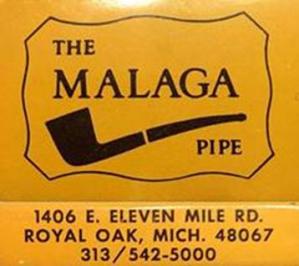
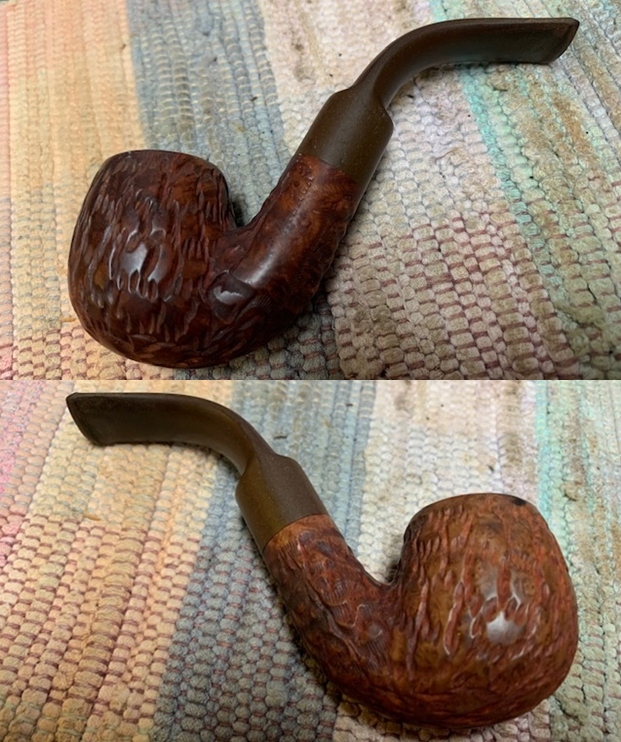
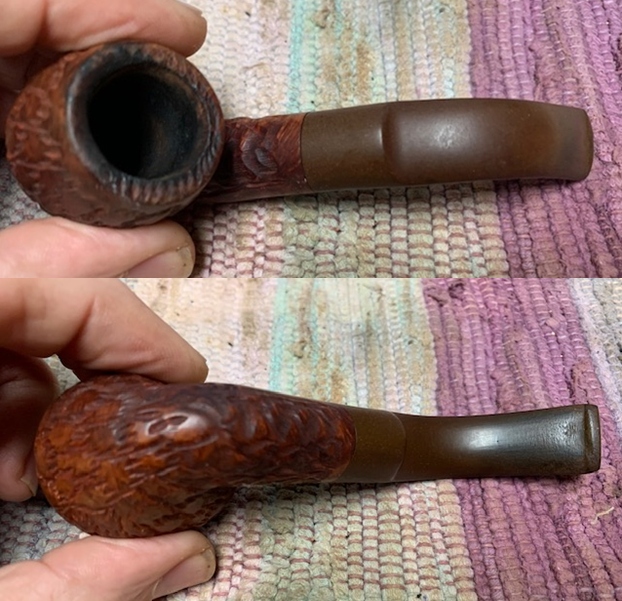
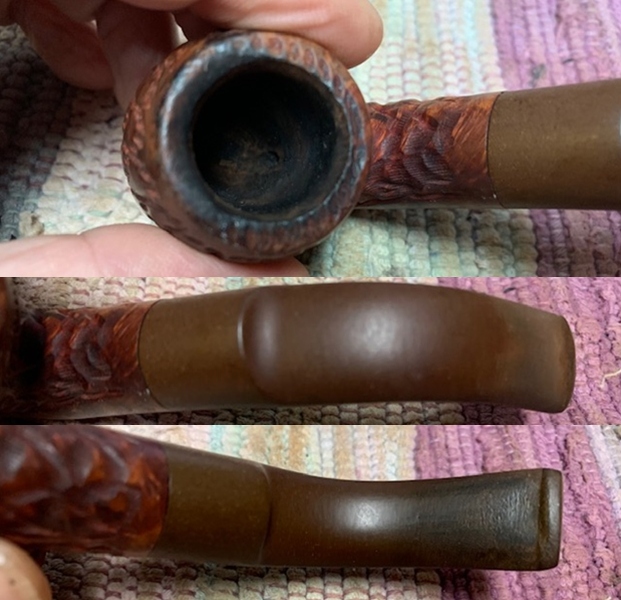
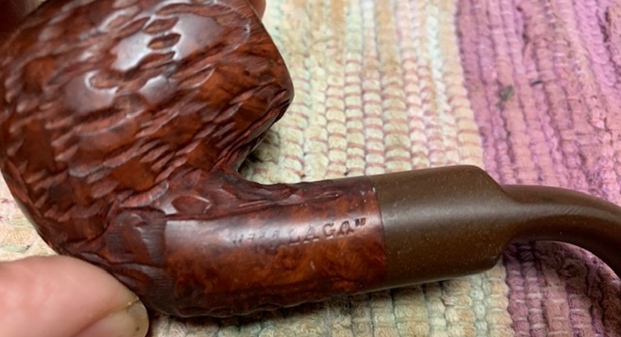
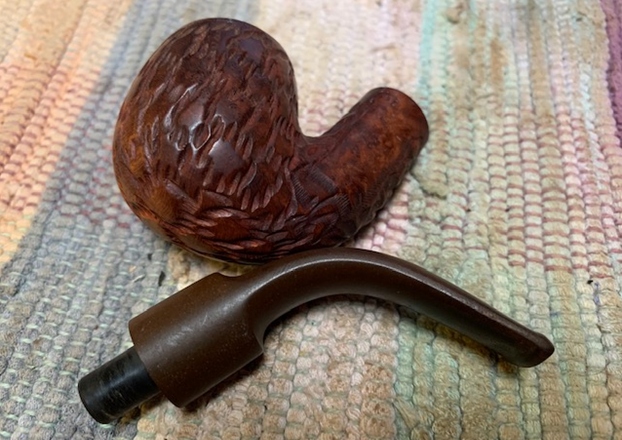
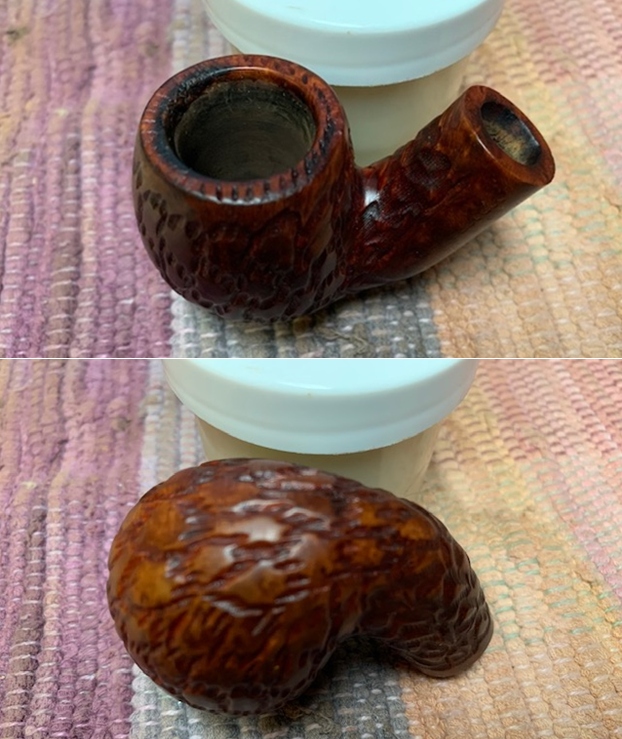
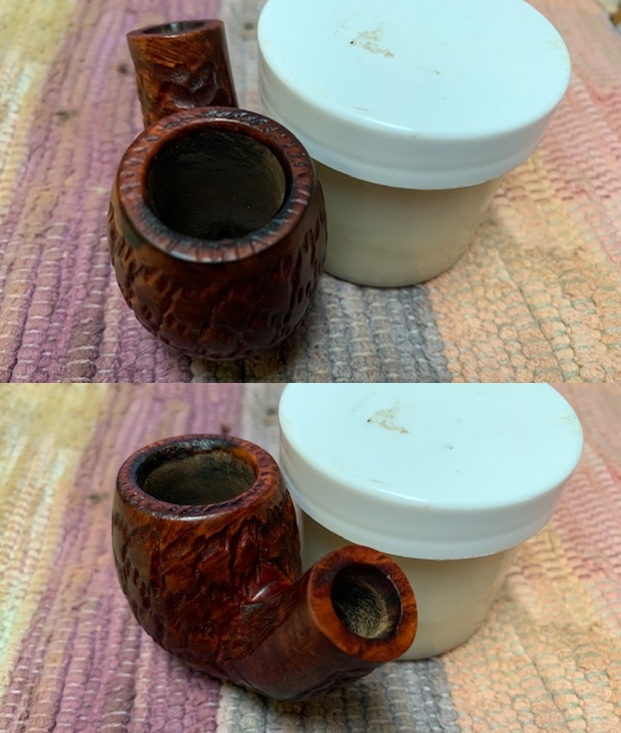
The next pipe on the table is a “Malaga” pipe that is one of Alex’s Malaga collection. It is a bent billiard with a carved rustication pattern around the bowl and shank that is unlike any of the other Malaga pipes that I have worked on. The rustication pattern is definitely interesting and from what I can see makes up for some mediocre grain. It came with a ¾ bent saddle vulcanite stem. The carver did a great job of uniquely shaping the pipe and rusticating it to give it a unique character. The bowl had a light cake that seems to have been reamed quite recently. The rim top had some significant burn damage on the inner edge and top toward the front of the bowl. The sides of the bowl and shank are very dirty with grime and oils from prolonged use. The stamping on the left side of the shank read “MALAGA”. The vulcanite stem was heavily oxidized and had tooth dents and chatter on the top and the underside of the stem. The button was worn on both sides. I took photos of the pipe before I started the cleanup work.   I took a close up photo of the bowl and rim to capture the condition of the pipe before I started my cleanup work. The rim top had some major burn damage and darkening on the front top and inner edge of the bowl. The burn marks appeared to be quite deep on the inner edge and had burned the rustication off the front top of the bowl. The stem is deeply oxidized and dirty and there is tooth damage on the surface of the stem and damage to the button edges.    I took a photo of the stamping on the left side of the shank on the smooth panel. It read as noted above.I took the stem off the shank and took a photo of the overall look of the pipe. It is quite attractive and certainly a unique rustication.I am also including the link to a blog that I wrote that gives some of the history of the Malaga brand and the Malaga Pipe Shop in Royal Oak, Michigan in the USA. I have written an earlier blog to give a little history of the Malaga Brand and the pipemaker, George Khoubesser. Here is the link – https://rebornpipes.com/tag/malaga-pipes/.That blog also includes links to a catalogue and the history of the pipemaker George Khoubesser. Follow the link to get a feel for the brand and the pipemaker.

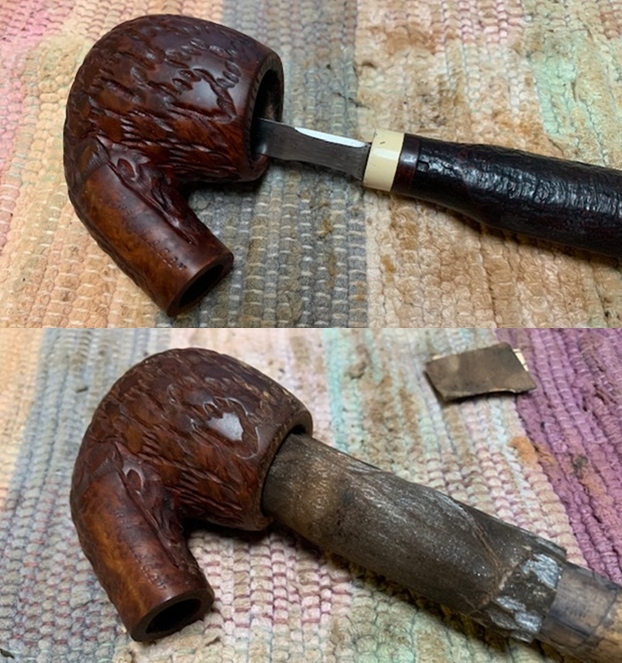
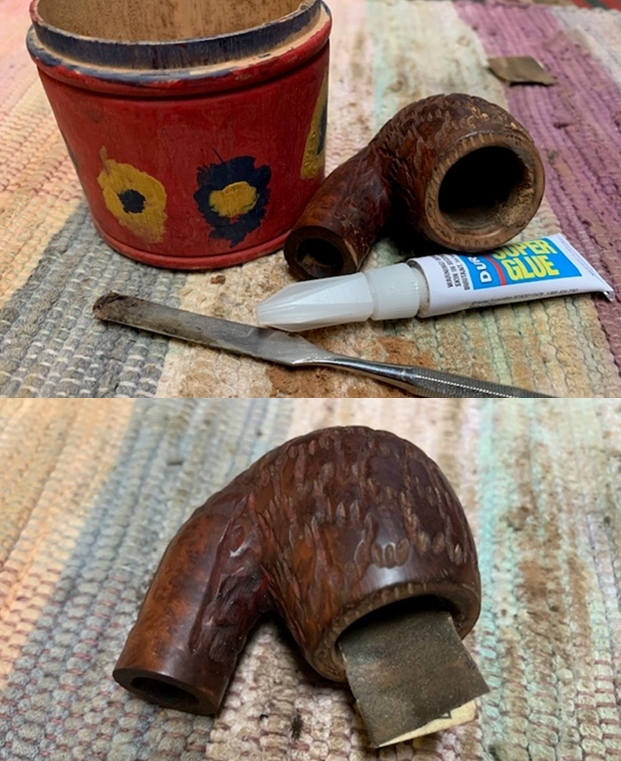
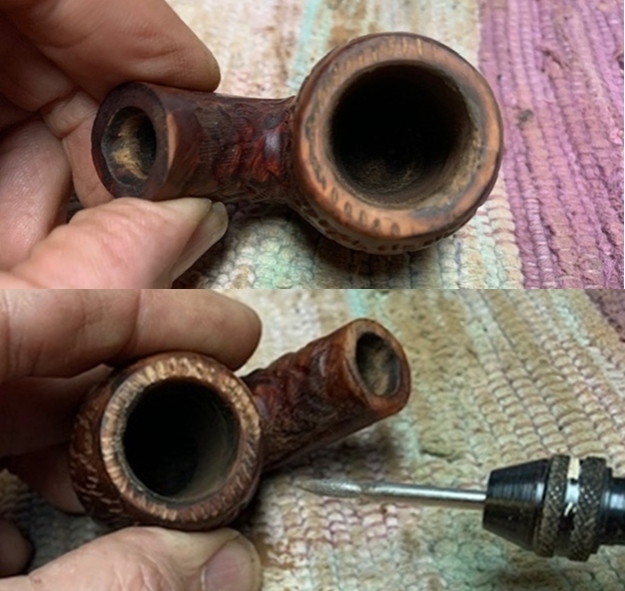
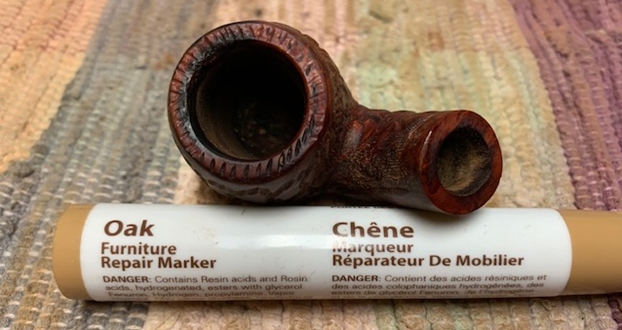
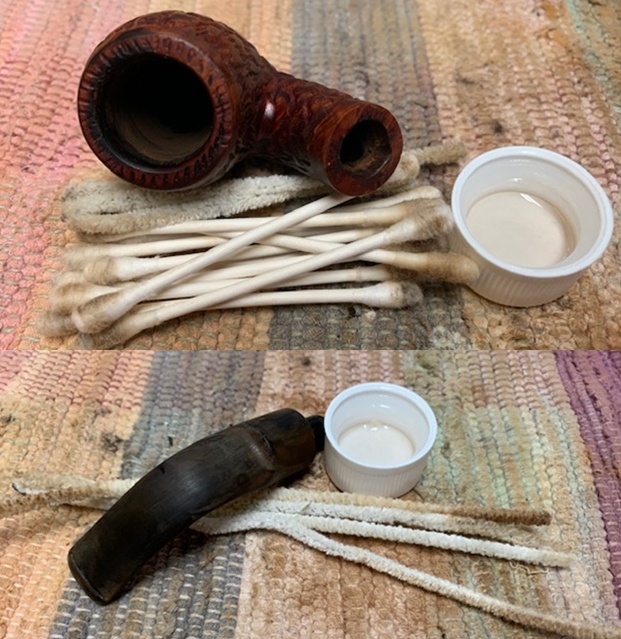
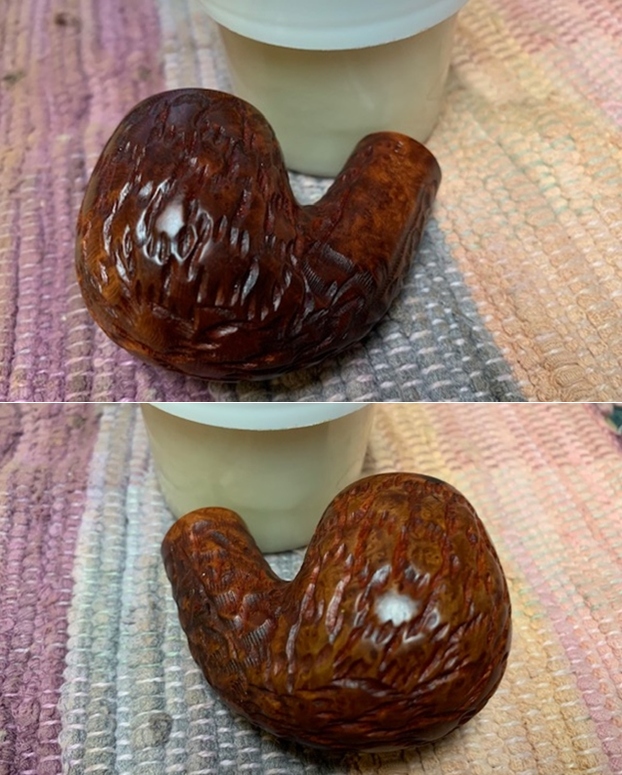
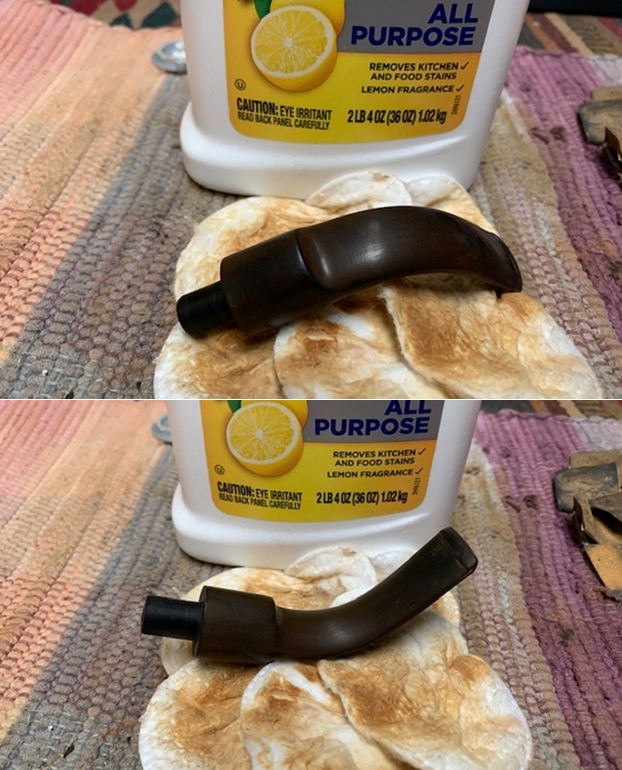
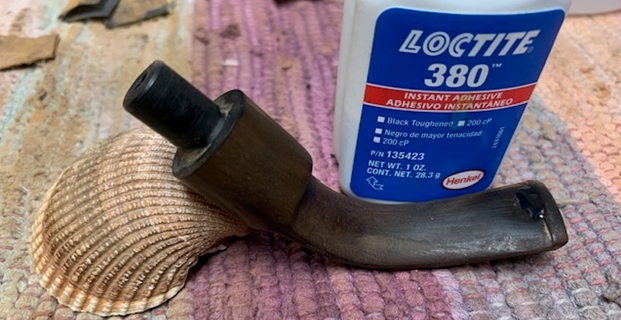
There was a light cake in the bowl so I reamed it with a Savinelli Fitsall pipe knife to remove the cake. It did not take too much work to clean out the remnants. I sanded the bowl with 220 grit sandpaper wrapped around a piece of dowel. I was happy to see that the bowl looked very good. There was no heat damage.I lightly topped the bowl with 220 grit sandpaper on a topping board. Once it was smooth I wiped the rim top down with a cotton pad and alcohol. I used super glue and briar dust to build up the damage on the rim top and inner edge of the bowl. I used a folded piece of 220 grit sandpaper to give the rim edge a slight bevel and smooth it out.I lightly topped the bowl again to smooth it out. I used a Dremel and burr to cut new grooved rustication into the bowl top to match the original rustication.  I stained the newly repaired and carved rim top with an Oak stain pen to match the rest of the surrounding briar. I was happy with the way the repair looked. I scrubbed out the mortise and the airway in the shank and the stem with alcohol, cotton swabs and pipe cleaners. Once it was finished the pipe smelled much better.   I worked some Before & After Restoration Balm into the surface of the briar with my fingertips and a horsehair shoe brush to clean, enliven and protect it. I let the balm sit for a little while and then buffed with a cotton cloth to raise the shine. The following photos show the bowl at this point in the restoration process. I am very happy with the results.   I turned to the stem and scrubbed the oxidation with Soft Scrub All Purpose cleaner. I scrubbed the surface with the cleaner and cotton pads. I was able to remove a lot of the oxidation.  I sanded out the tooth marks on the underside of the stem and was able to remove most of them. There was one larger tooth mark that remained that I filled in with Loctite 380 Black Instant Adhesive. Once the repair cured I sanded it with 220 grit sandpaper to smooth it out and to remove the remaining oxidation.I reshaped the button edges with 220 grit sandpaper and a needle file. I sanded the stem with 220 grit sandpaper to remove the remaining oxidation and started the polishing the stem with 400 grit wet dry sandpaper.   I polished the stem with micromesh sanding pads – wet sanding with 1500-12000 grit sanding pads. I wiped it down after each sanding pad Obsidian Oil. I finished by polishing it with Before & After Pipe Stem Polish both fine and extra Fine and then wiped it down with a final coat of Obsidian Oil.   This Malaga Rusticated/Carved Bent Billiard with a vulcanite saddle stem turned out to be a real beauty. It has a unique rustication around the bowl that is unlike other Malaga pipes that I have worked on. The carver really maximized that with the shape of the pipe. Everything about the pipe – the rustication on the shank and sides, the rusticated rim top and the cut of the briar work well to highlight the shape of the bowl. I polished stem and the bowl with Blue Diamond polish on the buffing wheel and the finish just popped and came alive. I gave the bowl and the stem multiple coats of carnauba wax. I buffed the pipe with a clean buffing pad to raise the shine. I hand buffed it with a microfiber cloth to deepen the shine. The pipe polished up pretty nicely. The pipe took on life with the buffing. The rich oil cured colour works well with the polished vulcanite stem. The finished pipe has a rich look that is quite catching. Have a look at it with the photos below. The shape, finish and flow of the pipe and stem are very well done. The dimensions are Length: 5 inches, Height: 1 ½ inches, Outside diameter of the bowl: 1 ¼ inches, Chamber diameter: ¾ of an inch. The pipe will back in the box of pipes that I am working on fro Alex. I am looking forward to what he will think of this one. Thanks for walking through the restoration with me as I worked over another estate pipe.
Breathing Life into a Super Grain Kaywoodie 5114 Bent Billiard


Blog by Steve Laug

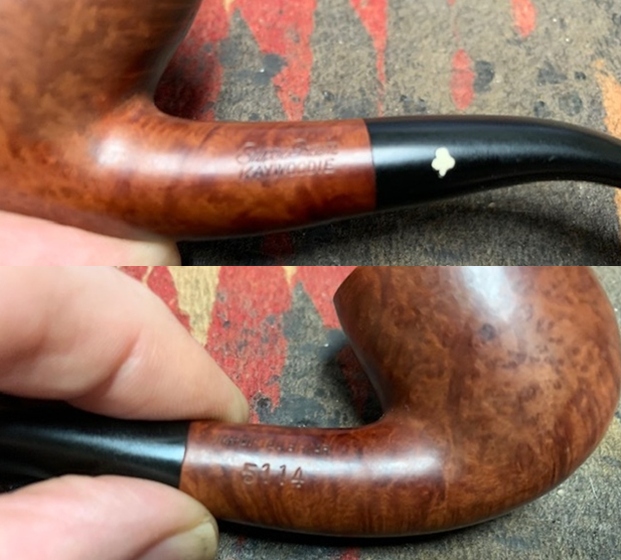
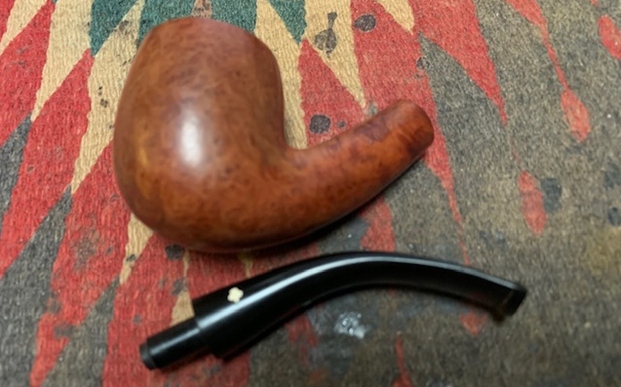
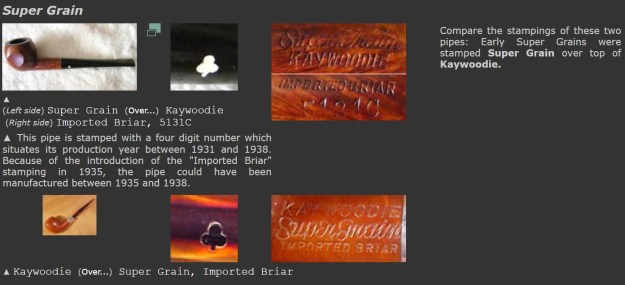
The next pipe on the table came to us from one of our pipe hunts or a trade I just cannot remember. It is a very nice Kaywoodie Super Grain Bent Billiard with a push stem. The finish is quite nice with a classic Kaywoodie smooth finish. The pipe was pretty clean with the exterior polished and dust free. The bowl had been reamed somewhere along the way and the bowl was pretty clean. There was darkening on the rim top and a bit of damage on the inner edge of the rim. The pipe is stamped on the sides of the shank and reads Super Grain [over] Kaywoodie on the left side of the shank. On the right side it reads Imported Briar [over] the shape number 5114. The stamping is clear and readable on the pipe. The stem was dirty and lightly oxidized. There were light tooth marks and chatter on the stem near the button on both sides and some on the surface of the button as well. There was the Kaywoodie White Club/Clover logo on the left side of the taper stem. I took photos of the pipe before I worked on it. I took photos of the rim top to show the cake in the bowl and the relatively clean rim top and damaged inner edge. The stem was also in decent condition other than light tooth chatter and marks.The stamping on the sides of the shank read as noted above. The photo shows that they are very clear and readable. The Clover/Club on the left side of the stem is in good condition.I took a photo of the pipe with the stem removed to show the overall look of stem, tenon and profile of the pipe. It is a great looking pipe.I knew that I was dealing with an early Super Grain because of the four digit shape number and the push stem but I wanted to know a bit more. I turned first to Pipephil’s site as it is always a quick sources of information (http://pipephil.eu/logos/en/logo-kaywoodie-2.html). I have included a screen capture of the section on the Super Grain Below.From that section I learned that indeed the pipe was older and because of the 4 digit number it was produced between 1931 and 1938. I also could narrow it down further because it also included the Imported Briar stamp which was added in 1935. So now I knew that the time frame was 1935-1938. The fact that it is stamped Super Grain above Kaywoodie also points to the early date for this pipe.

I then turned to Pipedia’s article on Grades of Kaywoodie pipes. It is helpful in placing the Super Grain in the hierarchy of Kaywoodie pipes. Here is the link to the site.  (https://pipedia.org/wiki/Collector%27s_Guide_to_Kaywoodie_Pipes#ANNOTATED_CHRONOLOGY_OF_KAYWOODIE_PIPES_.281936-1969.29).  I have included a section from the 1936 line of Kaywoodie pipe because of the time frame of this pipe noted above.

THE 1936 KAYWOODIE LINE OF PIPES

The 1936 Kaywoodie catalog lists only four grades of pipes (Table 1). These four grades, however, were available in 140 shapes (see Appendix). These 140 shapes included many that differed only in size (small, medium, large). For example, the “In-Between”, “Colt” and “Freshman” shapes listed in the Appendix were merely smaller versions of the standard shapes, and the “E-Z-Set” shapes were “flat-bottom” versions of the standard shapes.

Table 1: Kaywoodie Pipe Grades and Prices (1936)

Straight Grain: $10.00

Super Grain: $5.00

Carburetor: $4.00

Drinkless: $4.00

As shown in Table 1, the Straight-Grain pipe was Kaywoodies’ top-of-the­-line, selling for $10.00 in 1936. The Straight Grain pipe did not appear again in the catalogs reviewed in this research until 1968-69 (see Section 3.4).

The 1936 catalog shows 3 Super Grain models, selling for $5.00 each. One model is introduced as the “New Banded” Super Grain. The banded Super Grain had the white Kaywoodie cloverleaf logo in the bit and a wide metal band. The non-banded (“original”) Super Grain had the white Kaywoodie cloverleaf logo in the shank of the pipe and was offered in two finishes, virgin and miami (slightly darker than virgin). Due to the gap in catalogs used in this research, it is not known precisely when the practice of putting the cloverleaf in the shank of the Super Grains was discontinued (the 1947 catalog shows the cloverleaf on the bit). The Super Grain was later downgraded and many new grades appeared above it (see subsequent sections of this Chapter). The early (original) Super Grains are particularly interesting not only because they were high quality briars, but because they were the only Kaywoodies (in the author’s knowledge) to have the logo inlaid in the shank of the pipe.

In terms of the Kaywoodie Hierarchy the pipe fit near the top of the Grades in 1936. It sold for $5.00. That was the end of the information for me at this point so it was time to work on the pipe itself.

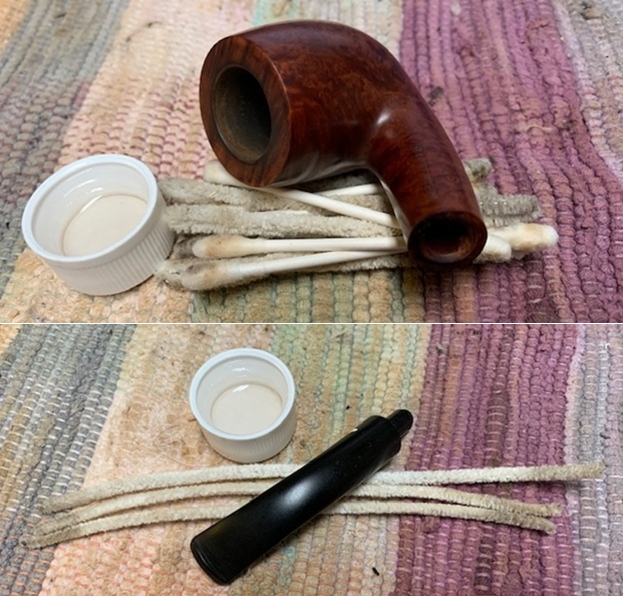
I started my work on the by cleaning out the inside of the shank. The bowl had been reamed somewhere along the way before I received it but it needed to be cleaned. I cleaned it out with alcohol, cotton swabs and pipe cleaners. I cleaned out the airway in the stem at the same time with alcohol and pipe cleaners. To bring the inner edge of the rim back into round and clean up the darkening and damage I used a folded piece of 220 grit sandpaper. I worked over the rim edge until it was smooth and clean.I polished the briar with micromesh sanding pads – wet sanding with 1500-12000 grit pads and wiping the briar down with a damp cloth after each pad. The briar began to take on a rich glow.  At this point, the bowl was clean and the briar looked very good. The rich birdseye and cross grain stood out clearly.I rubbed the briar down with Before & After Restoration Balm. I worked it into the briar with my fingertips and a horse hair shoe brush to get it into the deep crevices of the rustication. The product works to clean, enliven and preserve the briar. I let it sit for 10 minutes while I worked on the stem. After the time passed I buffed it with a cotton cloth to deepen the shine. The rustication came alive with the balm.   I set the bowl aside and turned my attention to the stem. I sanded out the tooth marks and chatter on the button surface and the stem just ahead of the button with 220 grit sandpaper. I started the polishing of the stem with 400 grit wet dry sandpaper.I polished the stem with micromesh sanding pads – 1500-12000 grit pads. I wiped it down with Obsidian Oil after each sanding pad. I used Before & After Pipe Polish – both Fine and Extra Fine to further polish the stem. This 1935-38 Super Grain Kaywoodie 5114 Bent Billiard is a great looking pipe. The smooth finish and brown stain around the bowl sides and shank make the grain just pop. The finish on the pipe is in excellent condition and the contrasting stains work well to give some contrast to the polished black vulcanite taper stem. The pipe is really quite eye-catching. I put the stem back on the bowl and buffed the pipe with Blue Diamond on the buffing wheel, carefully avoiding the stamping on the shank. I gave the bowl and the stem multiple coats of carnauba wax on the buffing wheel and followed that by buffing it with a clean buffing pad. I hand buffed the pipe with a microfiber cloth to deepen the shine. The finished Bent Billiard is quite nice and feels great in the hand. Give the finished pipe a look in the photos below. I can only tell you that like the other pipes I am working that it is much prettier in person than the photos capture. The dimensions of the pipe are Length: 5 inches, Height: 1 ¾ inches, Outside diameter of the bowl: 1 ¼ inches, Chamber diameter: ¾ of an inch. Thanks for walking through the restoration with me as I worked over another interesting pipe. This Super Grain Kaywoodie will be added to the American Pipe Makers section of the rebornpipes store soon. If you want to add it to your collection send me an email or a message! Thanks for your time.


Life for an American Made Pipe – A Bertram Washington DC 85 Billiard


Blog by Steve Laug

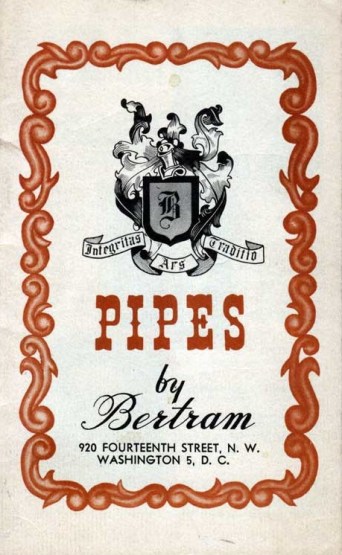
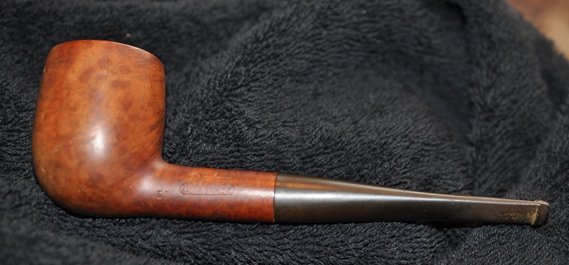
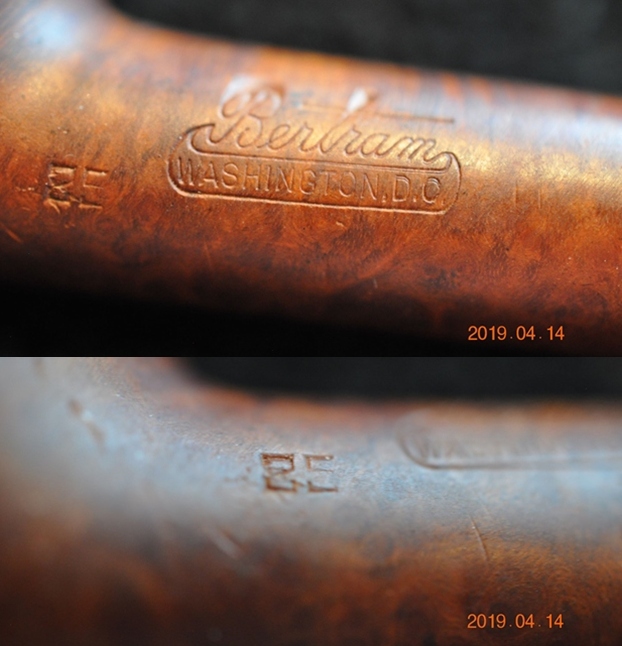
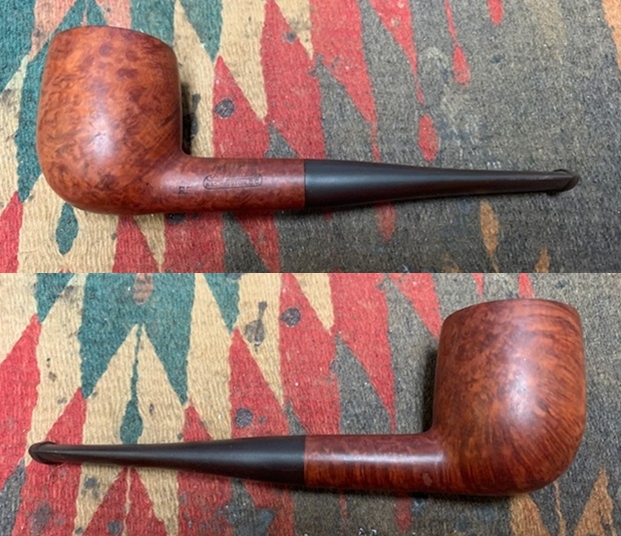
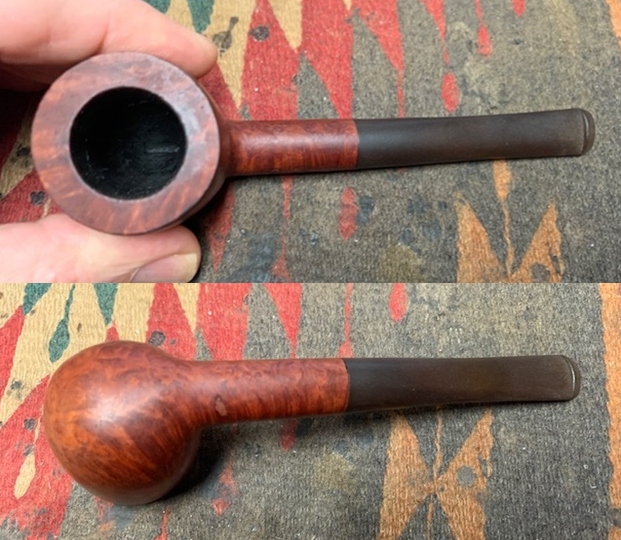
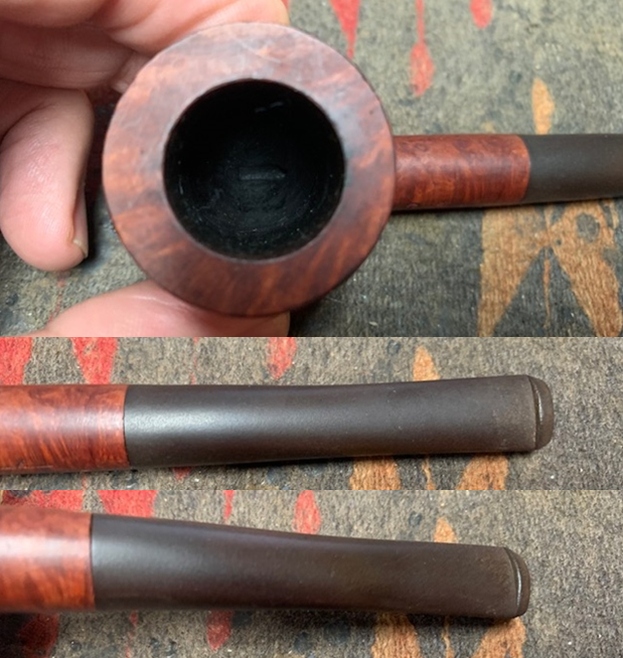
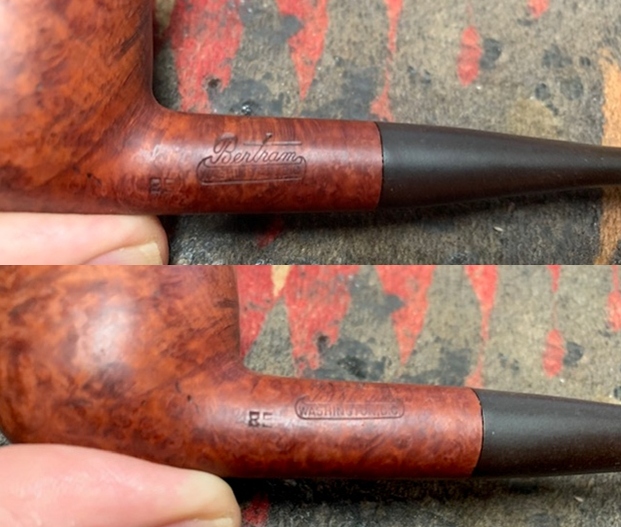
The next pipe on the work table came to me from one of our estate purchases. Between us we pick up quite a few pipes for restoration. I try to work them into the restoration queue so that I can keep them moving. We picked up over 120 Bertram pipes from an estate that a fellow on the east coast of the US was selling. This next one is from that estate – a beautifully grained Billiard 85 Grade Bertram with a tapered vulcanite stem. The pipe is stamped on the left side near the bow with the Grade 85 number followed by Bertram [over] Washington D.C. centered on the shank. The finish had a lot of grime ground into the smooth finish on the bowl and some darkening around the sides of the bowl. The bowl was thickly caked with an overflowing lava coat on the top of the rim toward the back of the bowl. The edges looked to be in good condition. The stem was oxidized, calcified, dirty and had tooth chatter and marks on the top and underside near the button. There were not markings or a logo on the taper stem. Like the rest of the Bertrams in this lot the pipes had promise but it was very dirty. Jeff took some photos of the pipe before he started his cleanup work.   He took photos of the rim top and bowl to give a clear picture of the thickness of the cake and the overflow of lava on the rim top. He also took photos of the top and underside of the stem to show the chatter and tooth marks. Otherwise the stem is quite clean.      Jeff took photos of the sides and heel of the bowl to give a picture of what the briar around the pipe looked like. There is some stunning grain under the grime.     He took photos of the stamping on the left side of the shank. It reads as noted above and is clear and readable. The grade number looks like a 25 that has been made into an 85.      As I have worked on Bertrams I have written on the brand and have included the following information. If you have read it in past blogs, you can skip over it. If you have not, I have included the link to Bertram history and information. I would recommend that if you don’t know much about them take some time to read the background. I include a link to the write up on Pipedia (http://pipedia.org/wiki/Bertram). Bertram pipes were based out of Washington DC. They were popular among famous politicians and celebrities of the time. They made many products for them from FDR’s cigarette holders to Joseph Stalin’s favorite pipe. They were considered some of the best America had to offer till they finally closed their doors in the 70s. Bertram graded their pipes by 10s and sometimes with a 5 added (15, 25, 55 etc.), the higher the grade the better. Above 60s are uncommon and 80-90s are quite rare. I have worked on one 120 Grade billiard. I have several blogs that I have written on rebornpipes that give some history and background to Bertram pipes. (https://rebornpipes.com/2015/06/16/an-easy-restoration-of-a-bertram-grade-60-217-poker/).

I have included the following link to give a bit of historical information on the pipe company. It is a well written article that gives a glimpse of the heart of the company. http://www.streetsofwashington.com/2012/01/bertrams-pipe-shop-on-14th-street.html#

From this information I learned that all of these Bertrams were made before the closure of the shop in the 1970s. This Bertram Billiard with stunning grain has one fill on the shank. This pipe has a 85 Grade stamp on it which I am sure explains the quality of the briar.

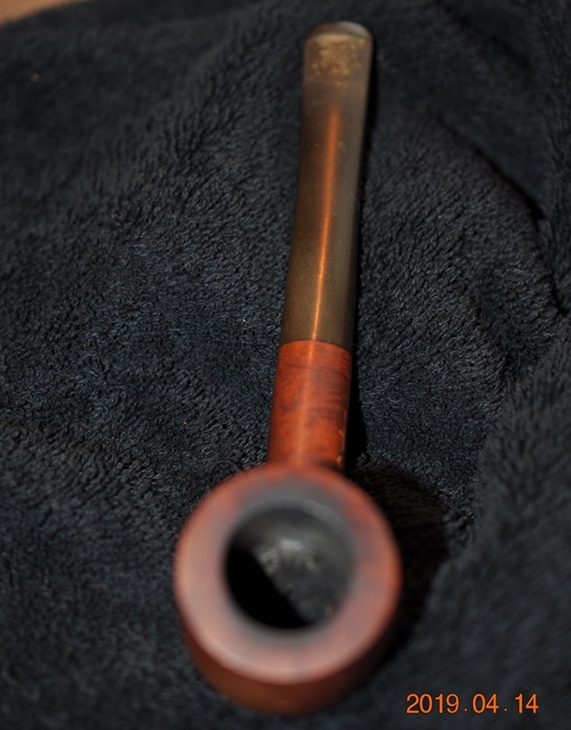
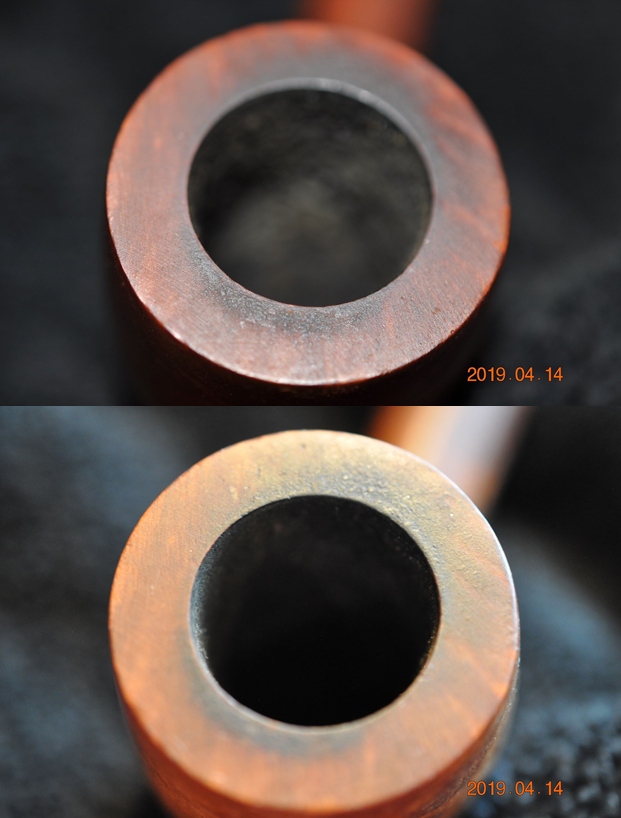
Jeff had cleaned up the pipe with his usual penchant for thoroughness. He reamed the pipe with a PipNet Pipe Reamaer and cleaned up the remnants with a Savinelli Fitsall Pipe Knife.  He scrubbed the bowl with undiluted Murphy’s Oil Soap with a tooth brush. He rinsed it under running warm water to remove the soap and grime. He cleaned out the inside of the shank and the airway in the stem with alcohol, cotton swabs and pipe cleaners. He soaked the stem in Before & After Deoxidizer and rinsed it off with warm water. I took photos of the pipe once I received it.  The rim top cleaned up really well with the lava coat removed. The inner and outer edge of the rim looked good.  The stem surface looked very good with a few small tooth marks and chatter on both sides near the button.  There was also some residual oxidation to be addressed.     I took photos of the stamping on the shank. The Bertram Washington DC is on the left side of the shank toward the top. Lower on the shank it is stamped with the Grade 85 number.   I removed the stem and took a photo of the pipe to give a sense of the whole. The stem is tapered and narrow. Now it was time to do my work on the pipe. I polished the bowl and the rim top, sides and shank with micromesh sanding pads – wet sanding with 1500-12000 grit pads and wiping it down after each pad with a damp cloth. I rubbed the bowl and shank down with Before & After Restoration Balm. I worked it into the surface of the bowl sides and shank with my fingertips to clean, enliven and protect the briar. I let the balm sit for a little while and then buffed with a cotton cloth to raise the shine.     I set the bowl aside and turned to work on the stem. I sanded it with 220 grit sandpaper to clean up the pitted, oxidized surface and to remove the tooth marks and chatter. I started polishing it with 400 grit wet dry sandpaper.   I polished the vulcanite stem with micromesh sanding pads – 1500-12000 grit pads. I wiped it down with a damp cloth after each sanding pad. I used Before & After Pipe Polish – both Fine and Extra Fine to further polish the stem.       This Bertram Washington DC 85 Billiard with a vulcanite stem is a great looking pipe now that it has been restored. I put the stem back on the bowl and carefully buffed the pipe with Blue Diamond on the buffing wheel using a light touch on the briar. I gave the bowl and the stem multiple coats of carnauba wax on the buffing wheel and followed that by buffing the entire pipe with a clean buffing pad. I hand buffed the pipe with a microfiber cloth to deepen the shine. The finished Bertram 85 Billiard fits nicely in the hand and feels great. Give the finished pipe a look in the photos below. The dimensions of the pipe are Length: 6 inches, Height: 2 inches, Outside diameter of the bowl: 1 ½ inches, Chamber diameter: ¾ of an inch. If you are interested in adding this pipe to your collection send me a message or an email. Thanks for reading this blog and my reflections on the pipe while I worked on it. There are many more to come!

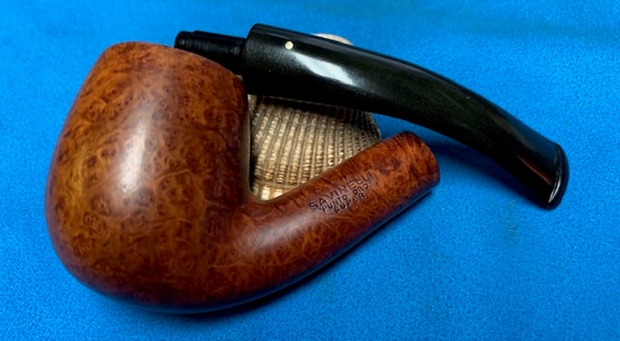
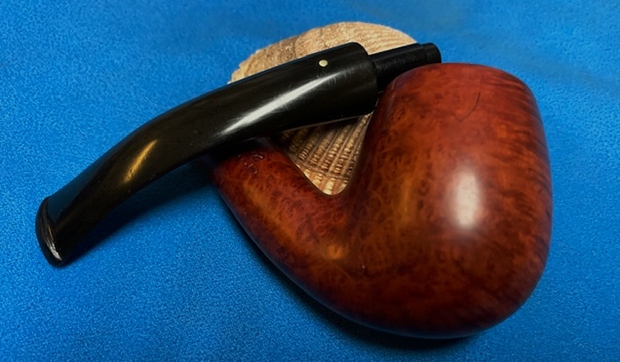
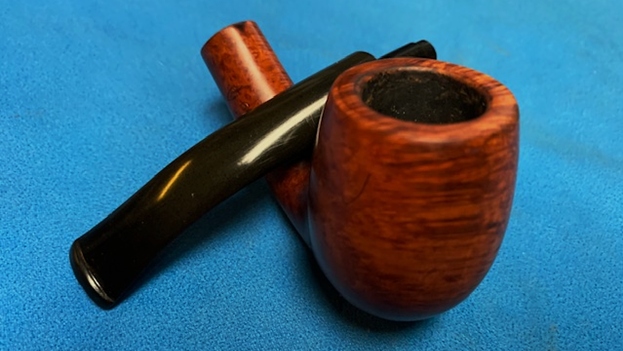
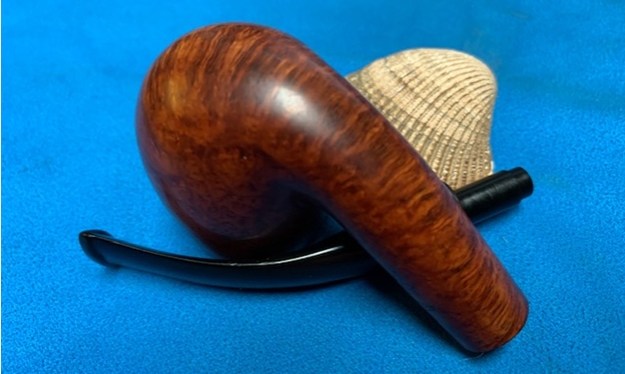
Life for a Stunning Savinelli Punto Oro Super 602 Bent Billiard


Blog by Steve Laug

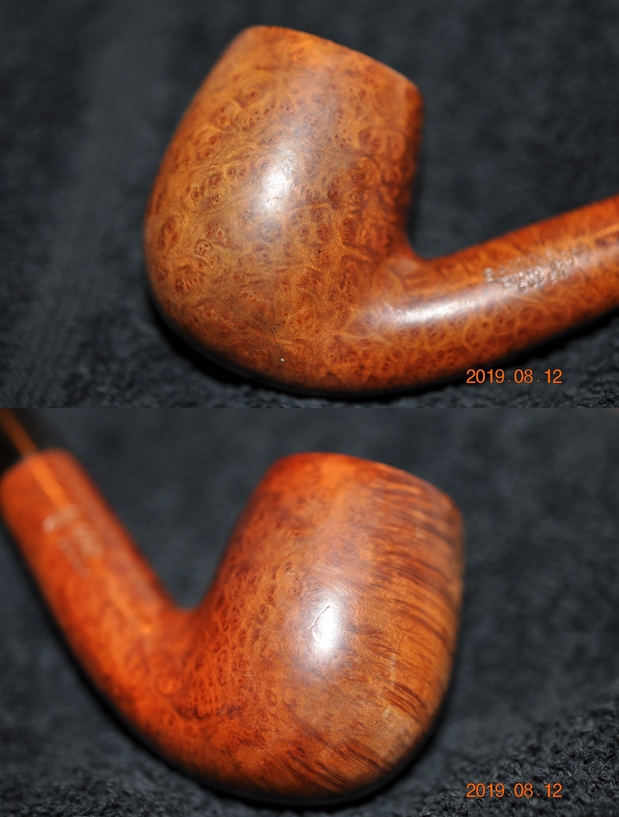
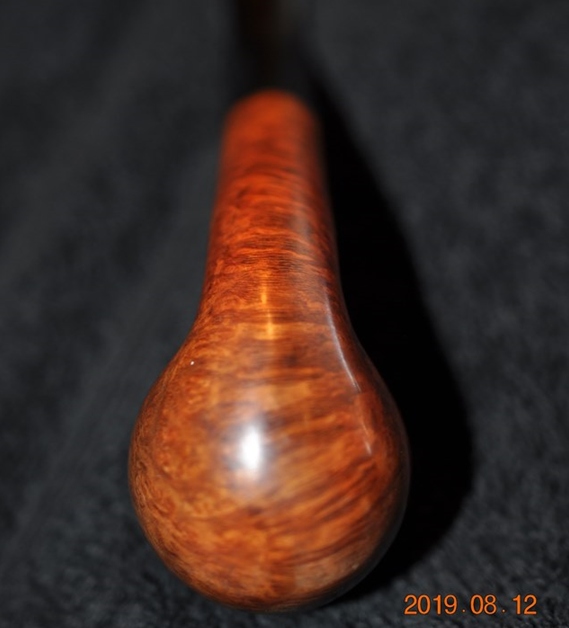
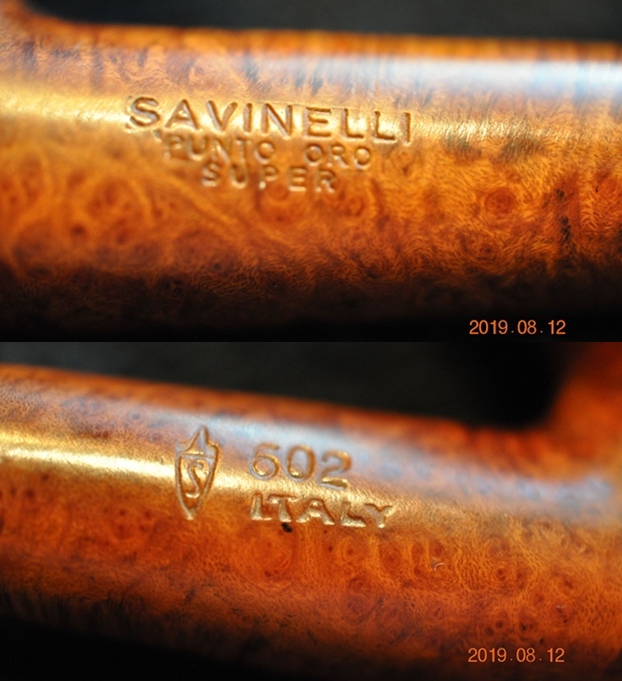
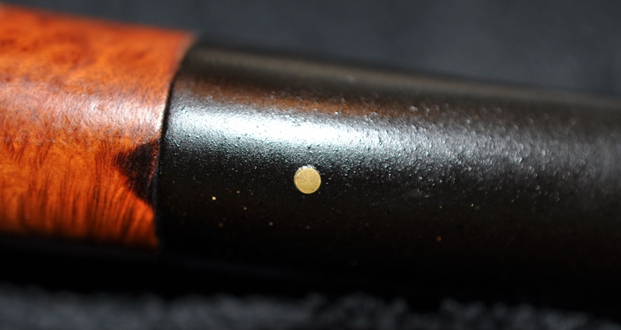
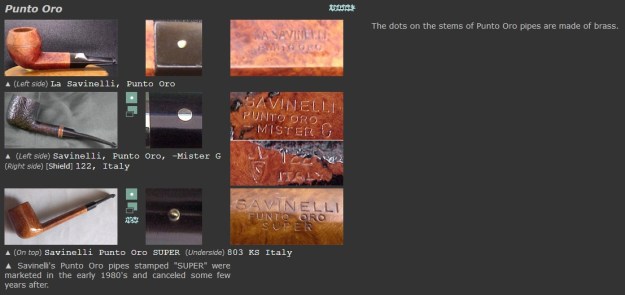
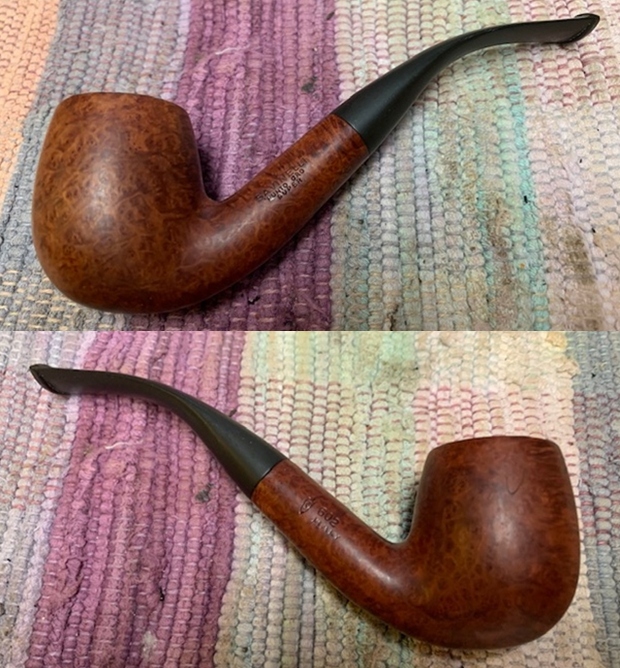
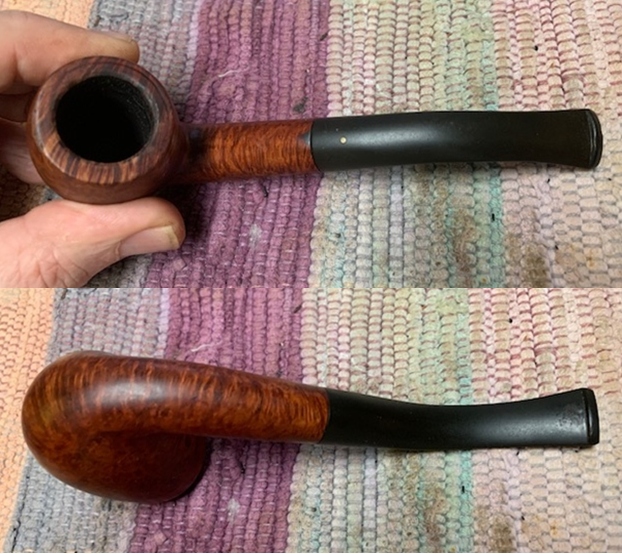
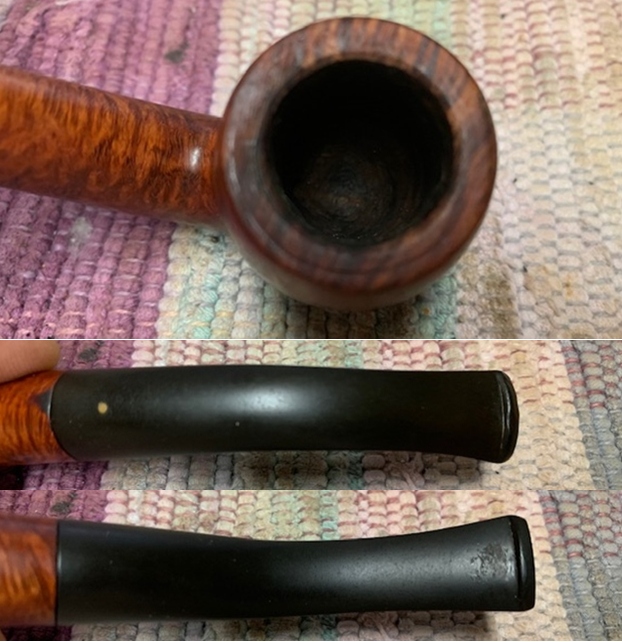
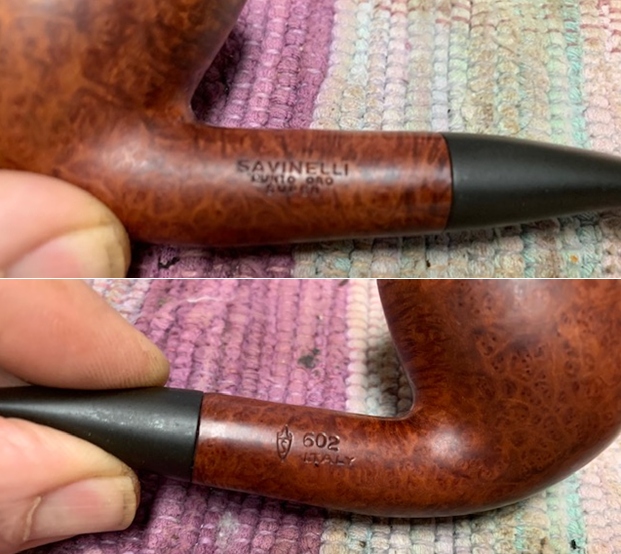
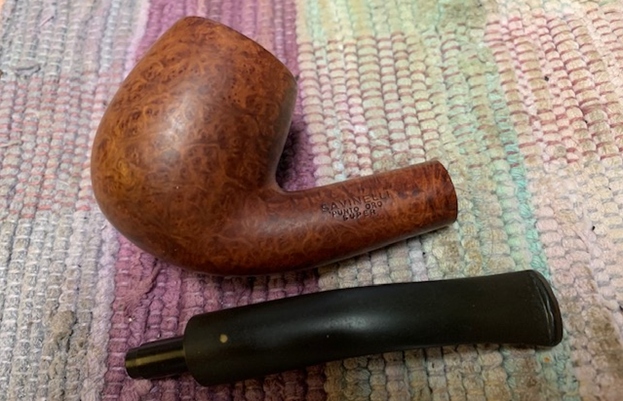
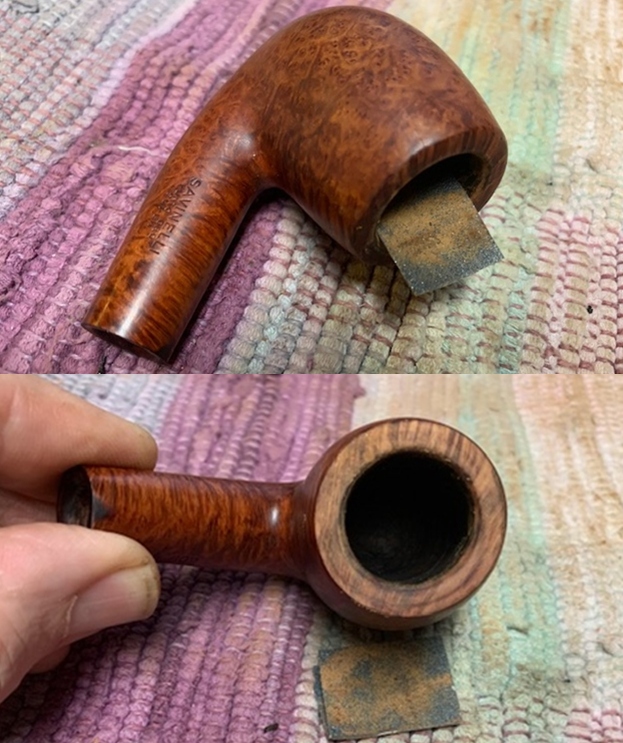
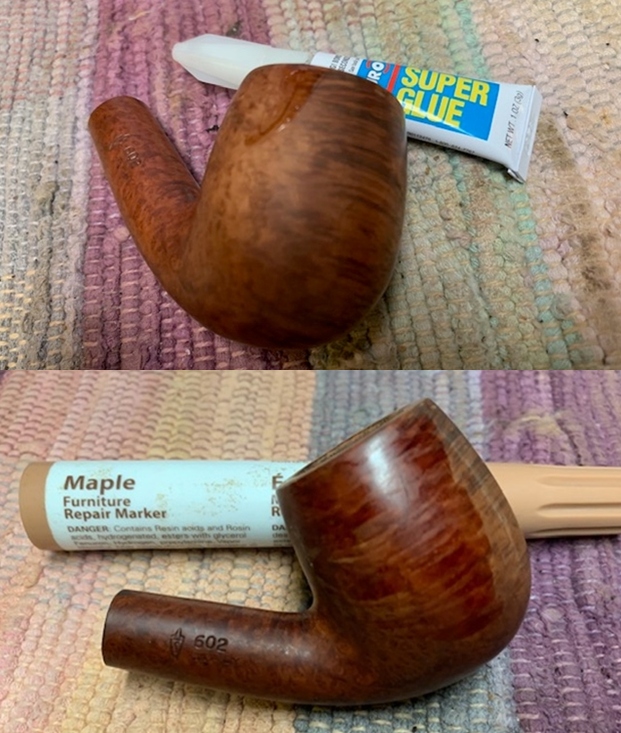
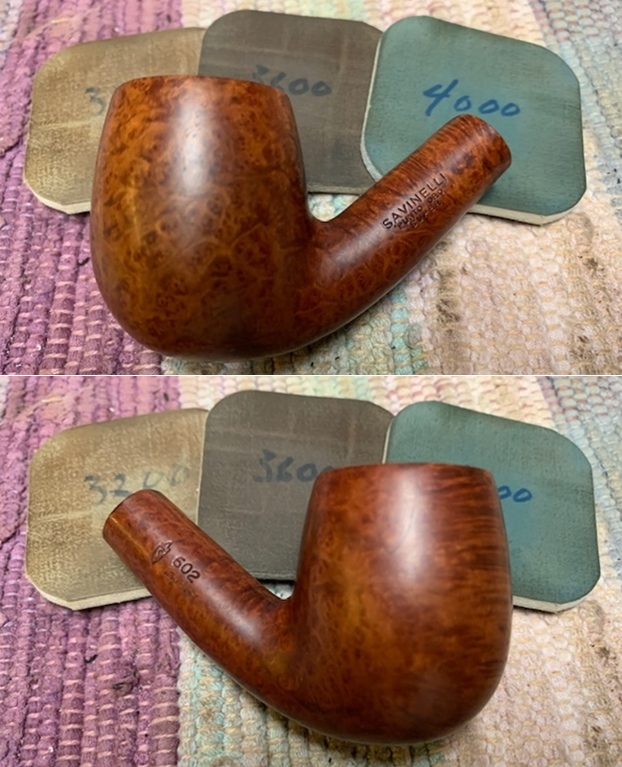
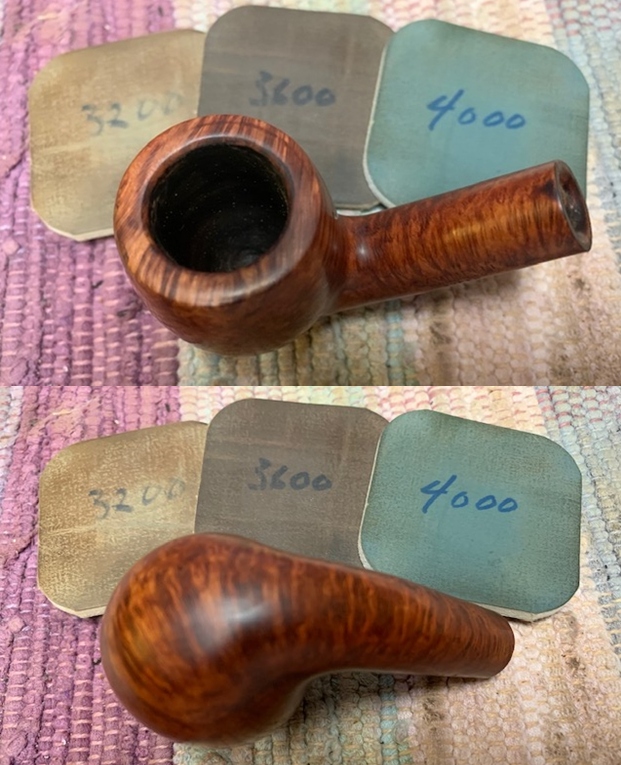
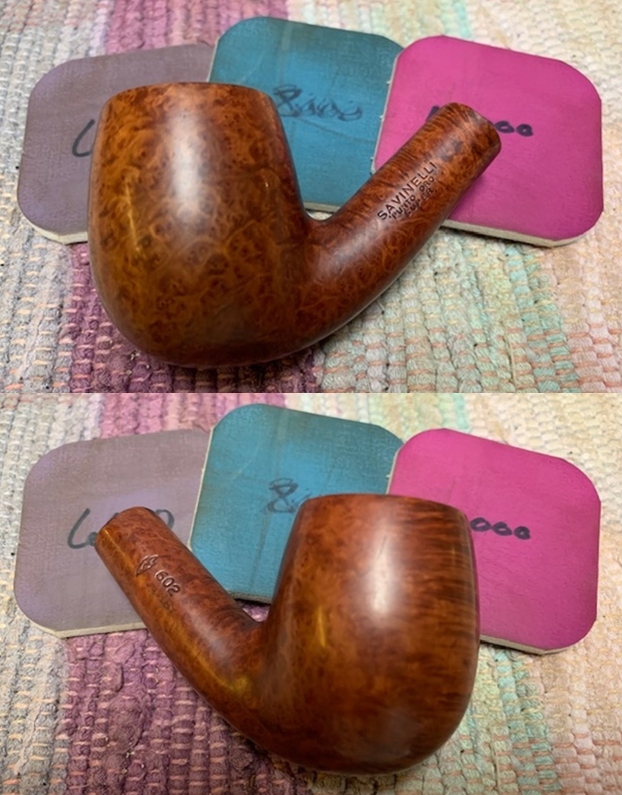
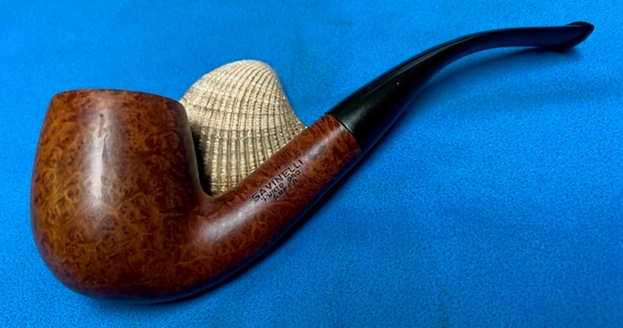
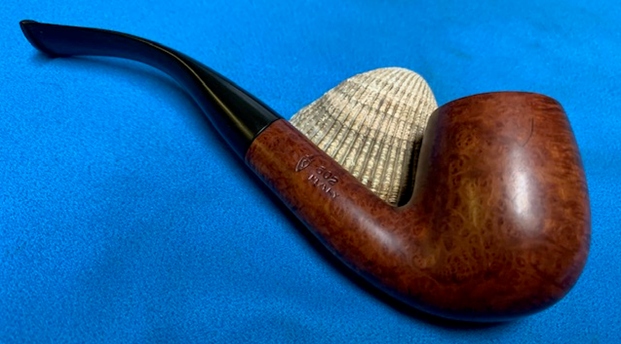
The next pipe on the work table came to us from a fellow in West Virginia. We pick up quite a few pipes for restoration from all over the world actually so it is nice to try to remember at least where we got them. You can tell if you have been reading lately I am not always good at that! Wherever we get them, I try to work them into the restoration queue so that I can keep them moving. This next one is a beautifully grained bent billiard pipe with a tapered vulcanite stem with a gold dot on top. It has been here since the summer of 2018. The pipe is stamped on the left side and reads Savinelli [over] Punto Oro [over] Super. On the right side it has a Savinelli S shield logo followed by the shape number 602 [over] Italy. The finish had a lot of grime ground into the smooth finish on the bowl and some darkening around the sides of the bowl. There were some scratches in the briar on the right side. The bowl was thickly caked with overflowing lava coat on the top of the rim. There were some scratches in the rim top but the edges looked to be in good condition. The stem was dirty, oxidized and had light tooth chatter and marks on the top and underside near the button. There was a brass dot on the top of taper stem. It had promise but it was very dirty. Jeff took some photos of the pipe before he started his cleanup work.   He took photos of the rim top and bowl to give a clear picture of the thickness of the cake and the overflow of lava on the rim top. He also took photos of the top and underside of the stem to show the chatter and tooth marks. There was damage on the surface of the button on both sides.    Jeff took photos of the sides and heel of the bowl to give a picture of what the briar around the pipe looked like. There is some stunning grain under the grime. He took photos of the stamping on the sides of the shank and band. They read as noted above and are clear and readable. He also took a photo of the “punto oro” brass dot on the top of the stem.I have worked on quite a few Punto Oro pipes over the years but this is the first that was marked Punto Oro Super. I turned to Pipephil’s site to see if he had any information that could help with the additional SUPER stamp (http://www.pipephil.eu/logos/en/logo-savinelli3.html). The last entry under the Punto Oro line fit the bill. I have included a screen capture of the section below.The last note under the pipes read as follows: Savinelli’s Punto Oro pipes stamped “SUPER” were marketed in the early 1980’s and canceled some few years after. It seems that the Super pipes were short lived.

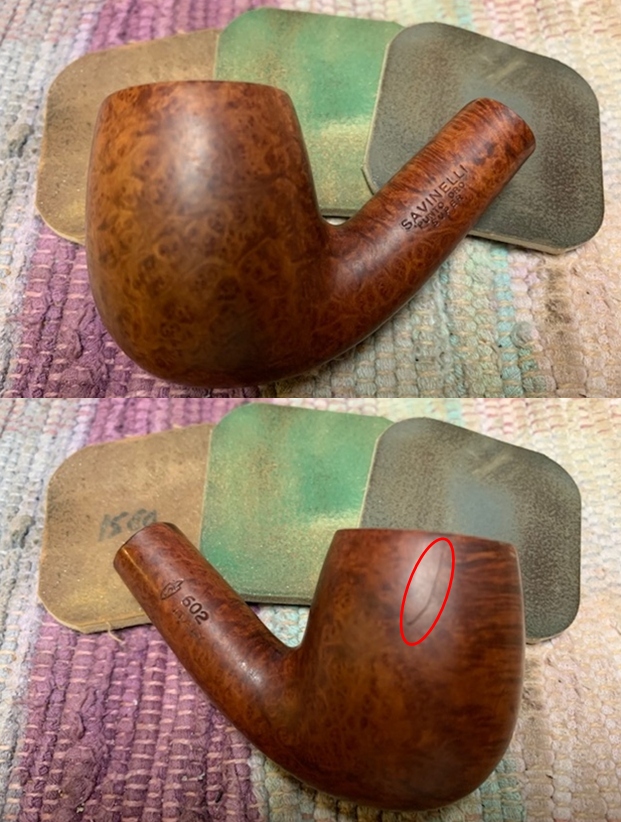
Since Jeff follows the same pattern of work in his cleanup we do not include photos but rather just a simple summary. Jeff reamed the bowl with a PipNet pipe reamer and followed up with a Savinelli Fitsall pipe knife to remove the cake. He scrubbed out the mortise and the airway in the shank and the stem with alcohol, cotton swabs and pipe cleaners. He scrubbed the exterior of the bowl, rim, shank and stem with a tooth brush and Murphy’s Oil Soap to remove the oils and tars on the rim and the grime on the finish of the bowl. He rinsed it under running water. He dried it off with a soft cloth. He was able to remove the light lava build up on the rim top and you could see the great condition of the bowl top and edges of the rim. The rim top and the edges of the bowl were in good condition other than some scratching and darkening. He soaked the stem in Before & After Deoxidizer to remove the oxidation. I took photos of the pipe before I began my part of the work. The rim top cleaned up really well with the light lava coat removed. The inner and outer edge of the rim looked good. There is some darkening and scratching on the rim top and inner edge but nothing too problematic. The stem had tooth marks and chatter on both sides near the button and damage to the button surface.  There was also a dark spot on the top of the shank at the junction of the stem and shank.  I took photos of the stamping on the shank sides. You can see that the stamping is clear and readable.    I removed the stem and took a photo of the pipe to give a sense of the whole. It really has some great birdseye on the left side of the bowl and shank.I worked on the inner edge of the rim with a folded piece of 220 grit sandpaper to smooth out the damage and clean up the bevel. I sanded the rim top at the same time to remove the scratches, nicks and damage there.  The dark spot on the top of the shank at the end appears to be a stain rather than a burn mark.I polished the bowl and the rim top, sides and shank with micromesh sanding pads – wet sanding with 1500-12000 grit pads and wiping it down after each pad with a damp cloth.  As I polished it with the first three pads (1500-2400) I found a deep scratch on the right side of the bowl. I examined it with a light and lens and it is just a gouge in the briar. I had drawn an oval around it in red in the second photo below.   I tried to steam out the scratch with limited success. I filled it in with clear super glue. Once it cured I sanded it smooth with 220 grit sandpaper. I restained the area with a Maple Stain pen to begin to blend it into the surrounding briar. I continued the polishing with the next grades of micromesh – 3200-12000 grit pads. I wiped the bowl down with a damp cloth between each pad.   I rubbed the bowl and shank down with Before & After Restoration Balm. I worked it into the surface of the bowl sides and shank with my fingertips to clean, enliven and protect the briar. I let the balm sit for a little while and then buffed with a cotton cloth to raise the shine. I set the bowl aside and turned my attention to the stem. I “painted” the tooth marks with the flame of a Bic lighter to lift them. The heat raised the dents in the vulcanite significantly. I filled in the remaining dents with black super glue. Once the repairs had cured I used a needle file to recut and reshape the button edge and flatten the repairs to begin blending them into the stem surface.  I sanded out the scratching and repairs with 220 grit sandpaper to blend them into the vulcanite and started polishing the stem with 400 grit wet dry sandpaper.  I polished the vulcanite stem with micromesh sanding pads – 1500-12000 grit pads. I wiped it down with a damp cloth after each sanding pad. I used Before & After Pipe Polish – both Fine and Extra Fine to further polish the stem.     This Savinelli Punto Oro Super 602 Bent Billiard with a taper vulcanite stem is a great looking pipe now that it has been restored. I put the stem back on the bowl and carefully buffed the pipe with Blue Diamond on the buffing wheel using a light touch on the briar. I gave the bowl and the stem multiple coats of carnauba wax on the buffing wheel and followed that by buffing the entire pipe with a clean buffing pad. I hand buffed the pipe with a microfiber cloth to deepen the shine. The finished Savinelli Punto Oro Bent Billiard fits nicely in the hand and looks very good. Give the finished pipe a look in the photos below. The dimensions of the pipe are Length: 5 ¾ inches, Height: 2 inches, Outside diameter of the bowl: 1 ¼ inches, Chamber diameter: ¾ of an inch. If you are interested in adding this pipe to your collection send me a message or an email. Thanks for reading this blog and my reflections on the pipe while I worked on it. There are many more to come!


Life for an American Made Pipe – A Devon Paneled Apple


Blog by Steve Laug

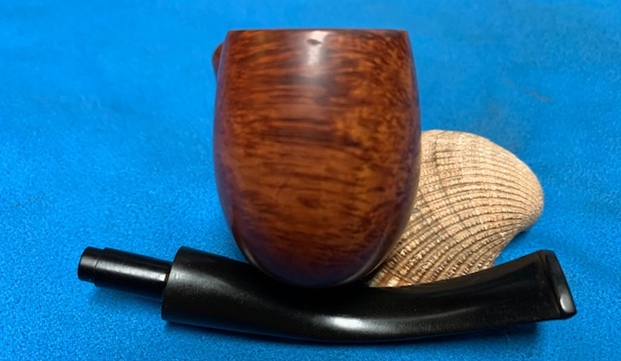
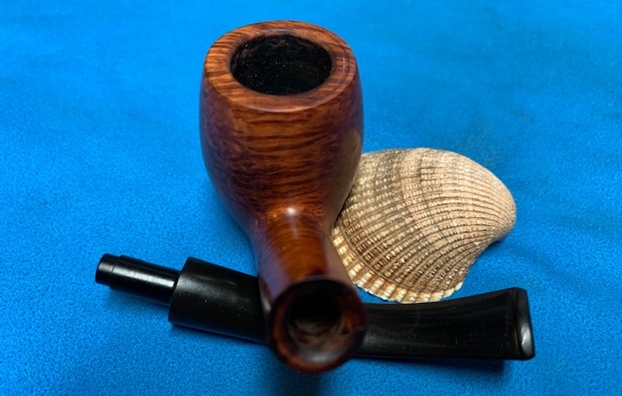
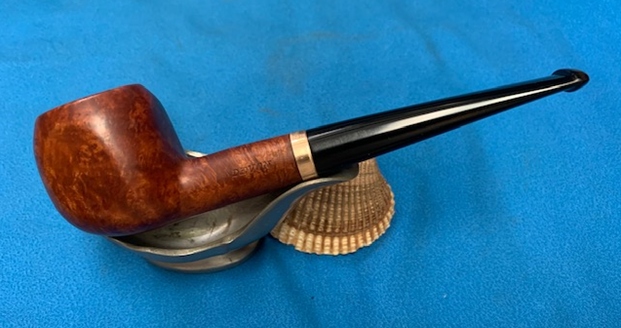
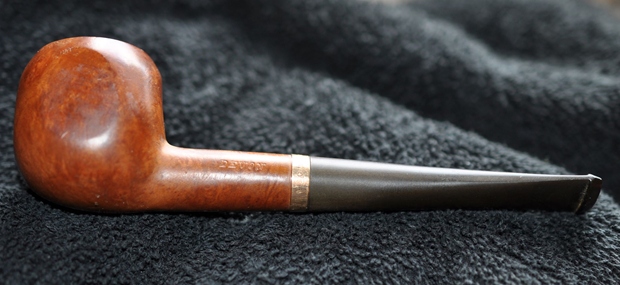
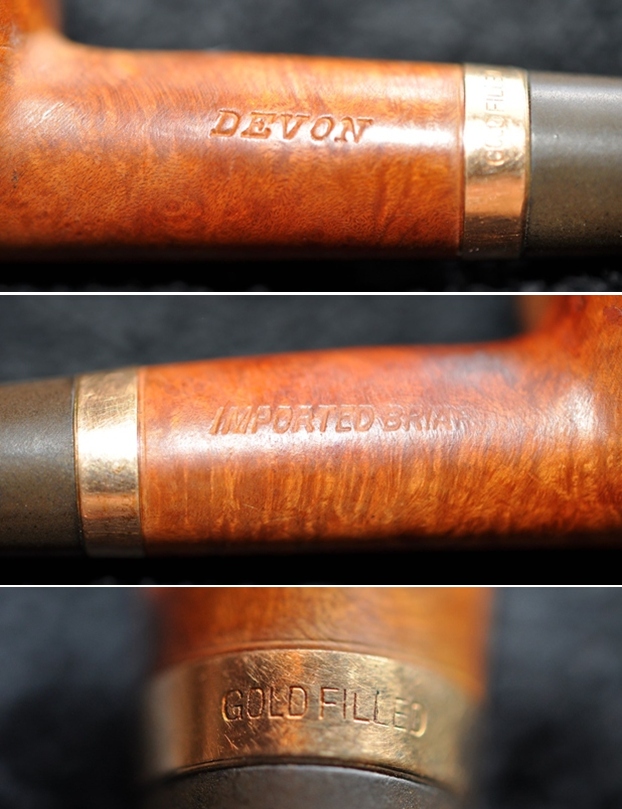
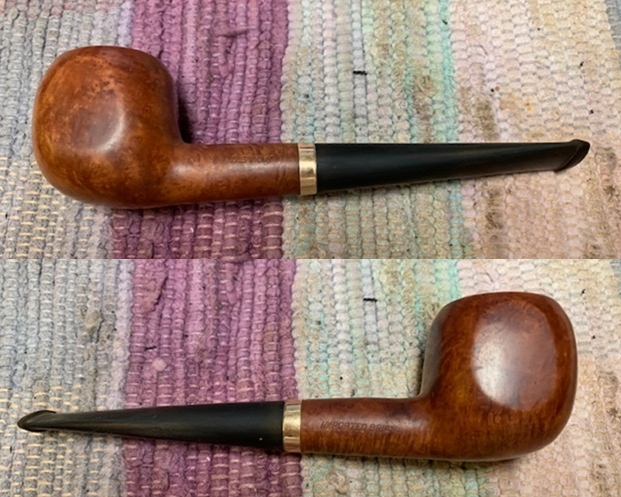
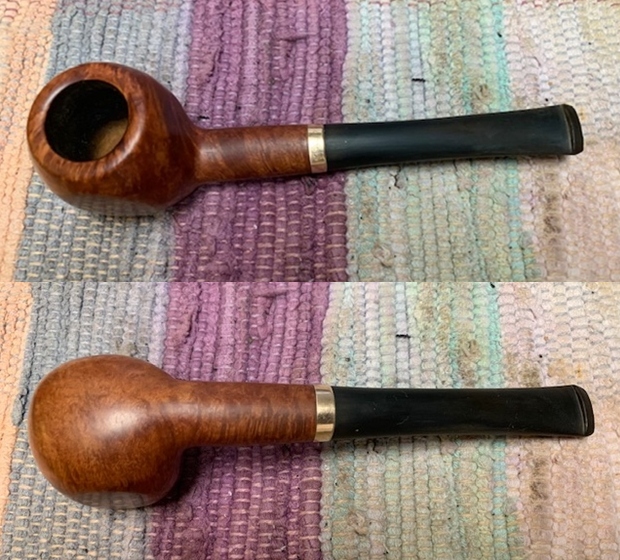
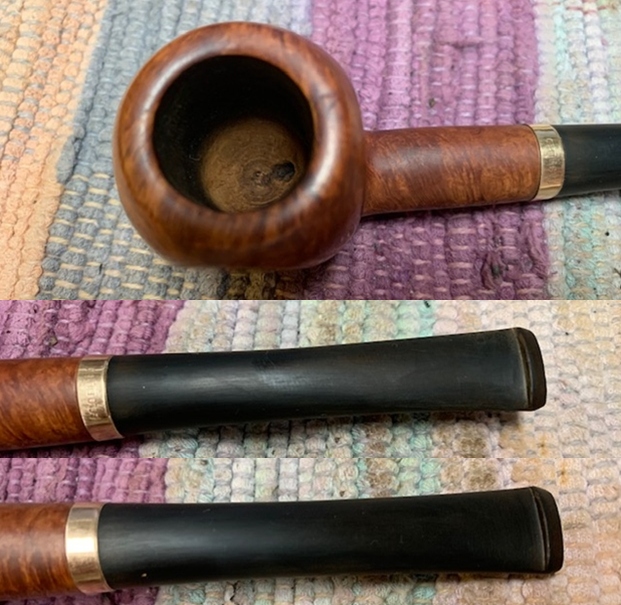
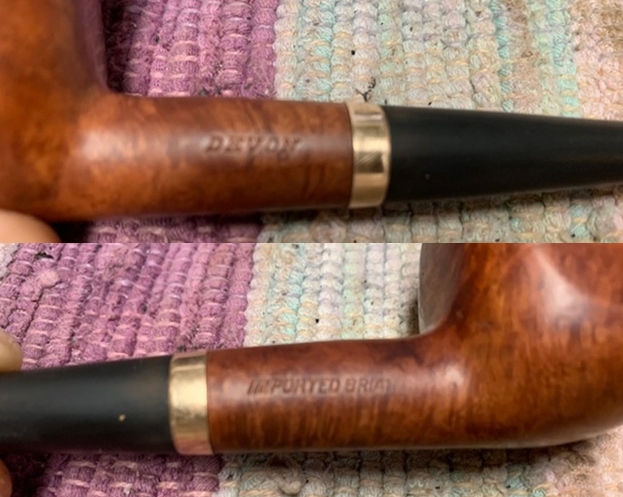
The next pipe on the work table came to me from one of our estate purchases. Between us we pick up quite a few pipes for restoration. I try to work them into the restoration queue so that I can keep them moving. This next one is a beautifully grained, paneled apple shaped pipe with a gold band and a tapered vulcanite stem. It has been here since the summer of 2017. The pipe is stamped on the left side and read DEVON. On the right side it reads IMPORTED BRIAR. The finish had a lot of grime ground into the smooth finish on the bowl and some darkening around the sides of the bowl. The bowl was actually quite clean of cake though there was a light overflowing lava coat on the top of the rim. There were some scratches in the rim top but the edges looked to be in good condition. The stem was dirty, oxidized and had light tooth chatter and marks on the top and underside near the button. There were not markings or a logo on the taper stem. It had promise but it was very dirty. Jeff took some photos of the pipe before he started his cleanup work.   He took photos of the rim top and bowl to give a clear picture of the thickness of the cake and the overflow of lava on the rim top. He also took photos of the top and underside of the stem to show the chatter and tooth marks. Otherwise the stem is quite clean.  Jeff took photos of the sides and heel of the bowl to give a picture of what the briar around the pipe looked like. There is some stunning grain under the grime.     He took photos of the stamping on the sides of the shank and band. They read as noted above and are clear and readable.     I looked on Pipedia and on Pipephil’s site for information on the brand and found nothing listed. I also checked out Who Made that Pipe but it attributed the brand to several English Pipe Making Companies but this one is obviously and American Made pipe with the Imported Briar stamp on the shank. The maker shall remain a mystery to me. It is now time to get working on the pipe.

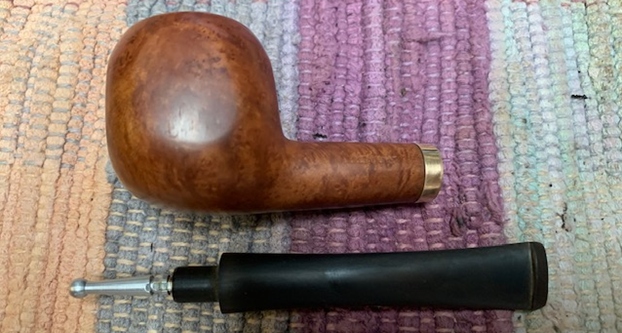
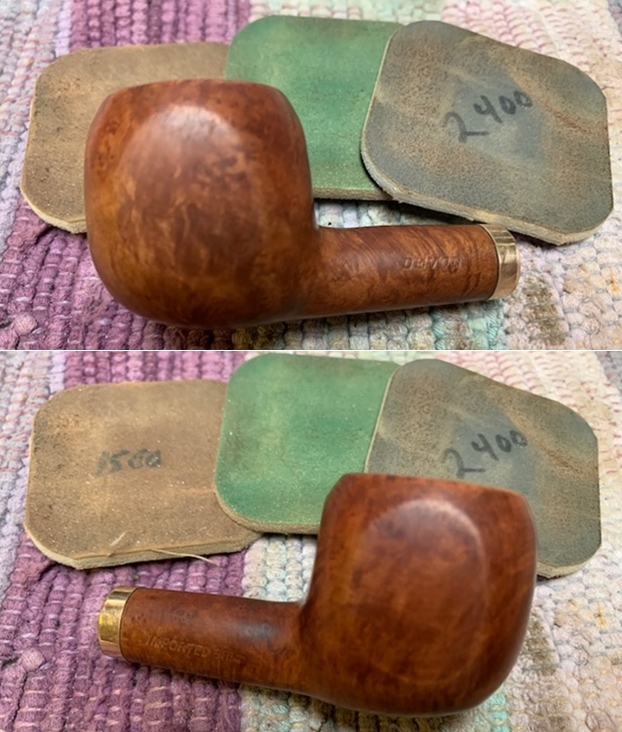
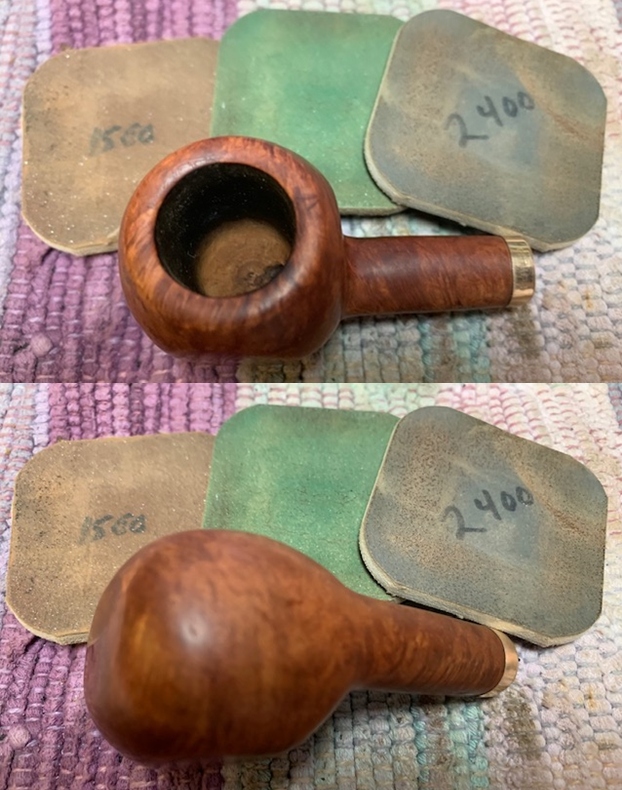
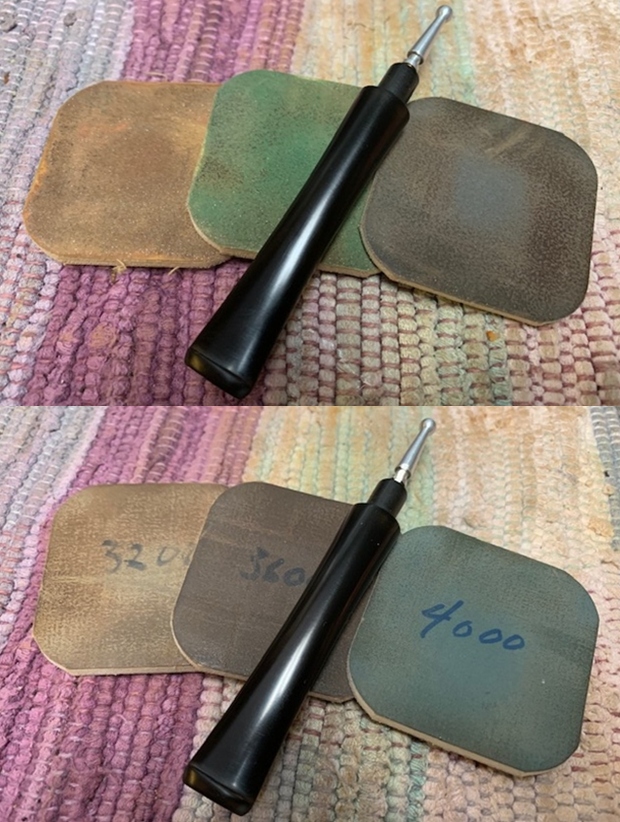
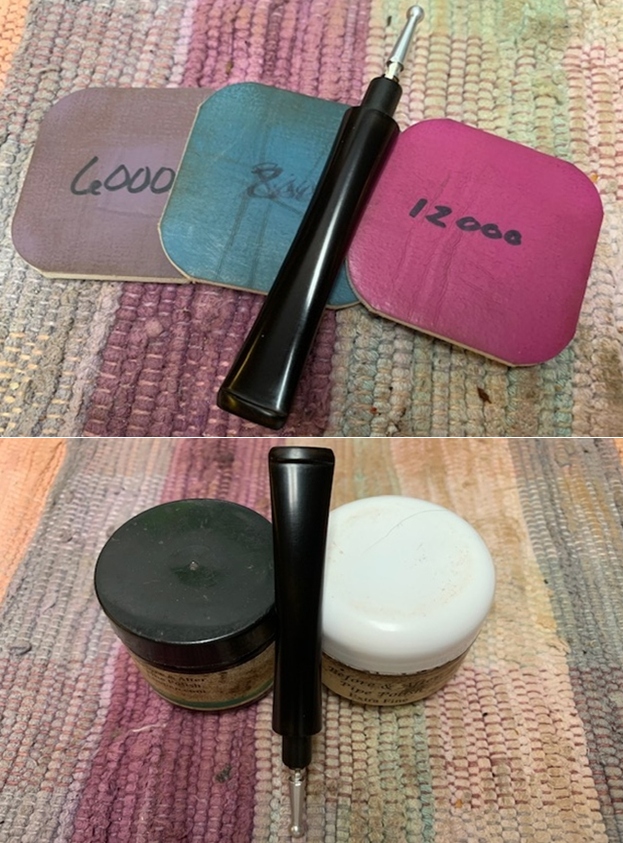
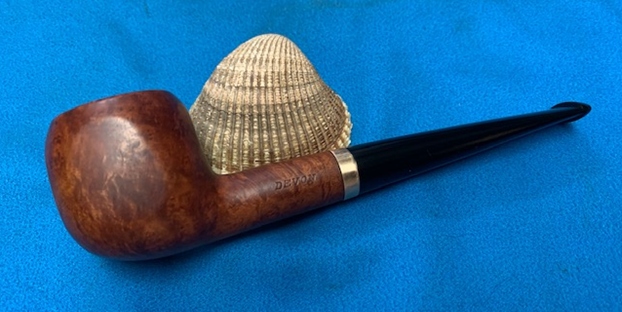
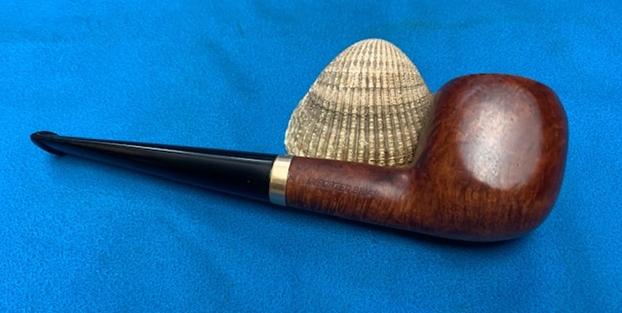
Since Jeff follows the same pattern of work in his cleanup we do not include photos but rather just a simple summary. Jeff reamed the bowl with a PipNet pipe reamer and followed up with a Savinelli Fitsall pipe knife to remove the cake. He scrubbed out the mortise and the airway in the shank and the stem with alcohol, cotton swabs and pipe cleaners. He scrubbed the exterior of the bowl, rim, shank and stem with a tooth brush and Murphy’s Oil Soap to remove the oils and tars on the rim and the grime on the finish of the bowl. He rinsed it under running water. He dried it off with a soft cloth. He was able to remove the light lava build up on the rim top and you could see the great condition of the bowl top and edges of the rim. The rim top and the edges of the bowl were in good condition. He soaked the stem in Before & After Deoxidizer to remove the oxidation. I forgot to take photos of the pipe before I started my work. What I have included is after the initial work on the stem. It gives a clear picture of the pipe at this point in the process. The rim top cleaned up really well with the light lava coat removed. The inner and outer edge of the rim looked good. The stem surface looked very good with a few light tooth marks and chatter on both sides near the button.    I took photos of the stamping on the shank sides – even though my photos are a little fuzzy the stamping is clear and readable.    I removed the stem and took a photo of the pipe to give a sense of the whole. There is a stinger in the tenon that is very clean. It is removable.Now it was time to do my work on the pipe. I polished the bowl and the rim top, sides and shank with micromesh sanding pads – wet sanding with 1500-12000 grit pads and wiping it down after each pad with a damp cloth.  I rubbed the bowl and shank down with Before & After Restoration Balm. I worked it into the surface of the bowl sides and shank with my fingertips to clean, enliven and protect the briar. I let the balm sit for a little while and then buffed with a cotton cloth to raise the shine.   I sanded out the remaining oxidation and the light tooth chatter with 220 grit sandpaper and started polishing the stem with 400 grit wet dry sandpaper.   I polished the vulcanite stem with micromesh sanding pads – 1500-12000 grit pads. I wiped it down with a damp cloth after each sanding pad. I used Before & After Pipe Polish – both Fine and Extra Fine to further polish the stem.              This US Made Devon Imported Briar Paneled Apple with a taper vulcanite stem is a great looking pipe now that it has been restored. I put the stem back on the bowl and carefully buffed the pipe with Blue Diamond on the buffing wheel using a light touch on the briar. I gave the bowl and the stem multiple coats of carnauba wax on the buffing wheel and followed that by buffing the entire pipe with a clean buffing pad. I hand buffed the pipe with a microfiber cloth to deepen the shine. The finished Devon Paneled Apple fits nicely in the hand and looks very good. Give the finished pipe a look in the photos below. The dimensions of the pipe are Length: 5 ½ inches, Height: 1 ½ inches, Outside diameter of the bowl: 1 ¼ inches, Chamber diameter: ¾ of an inch. If you are interested in adding this pipe to your collection send me a message or an email. Thanks for reading this blog and my reflections on the pipe while I worked on it. There are many more to come!


Breathing Life into a 1968 Dunhill Shell Briar LB F/T Group 4 Billiard


Blog by Steve Laug

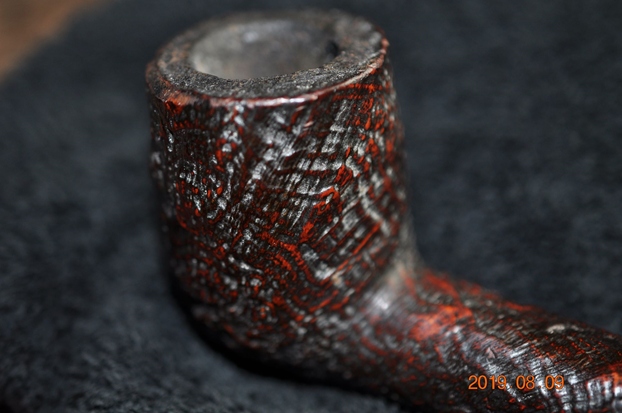
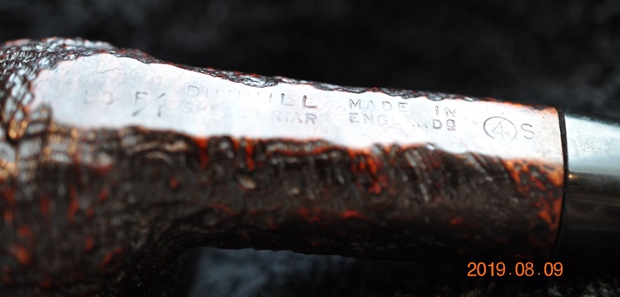
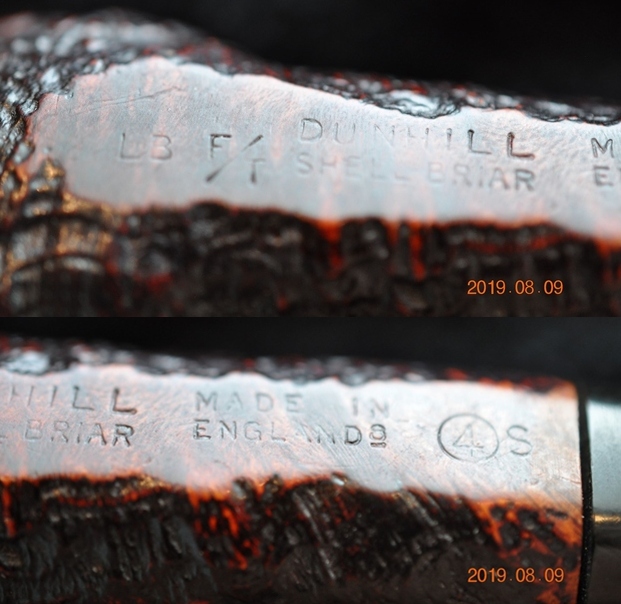
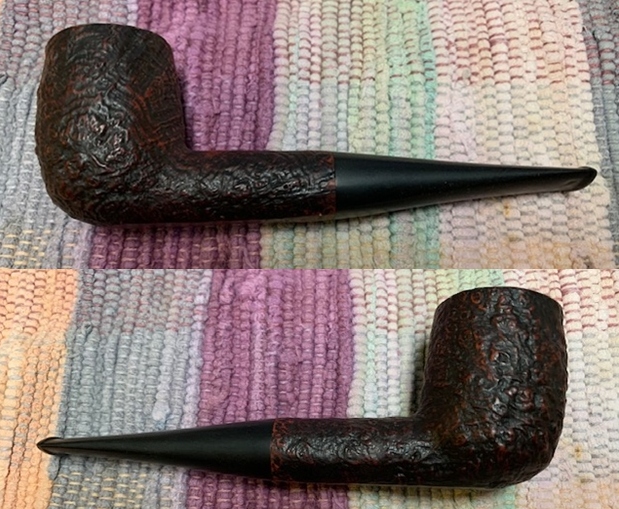
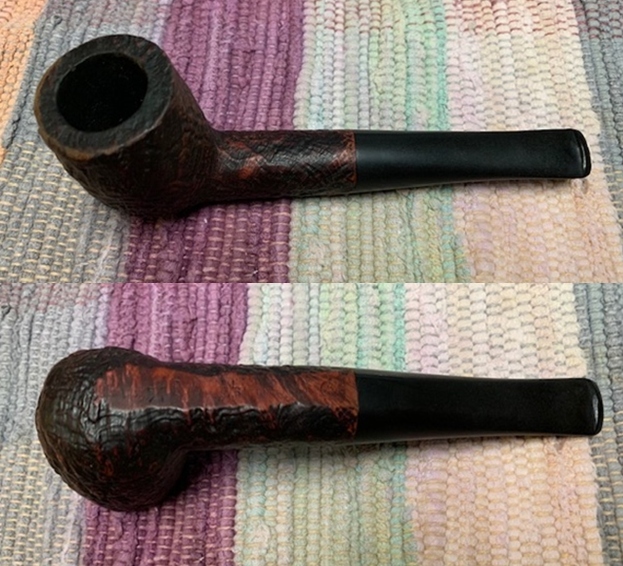
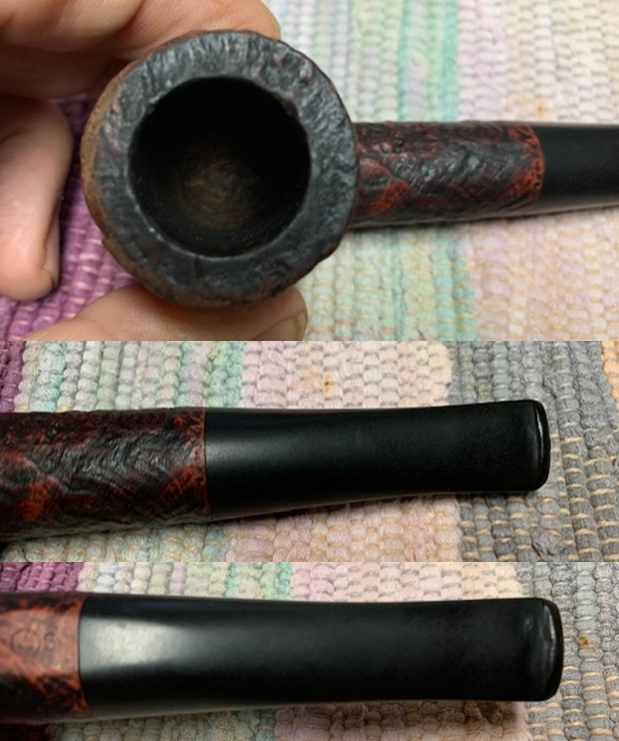
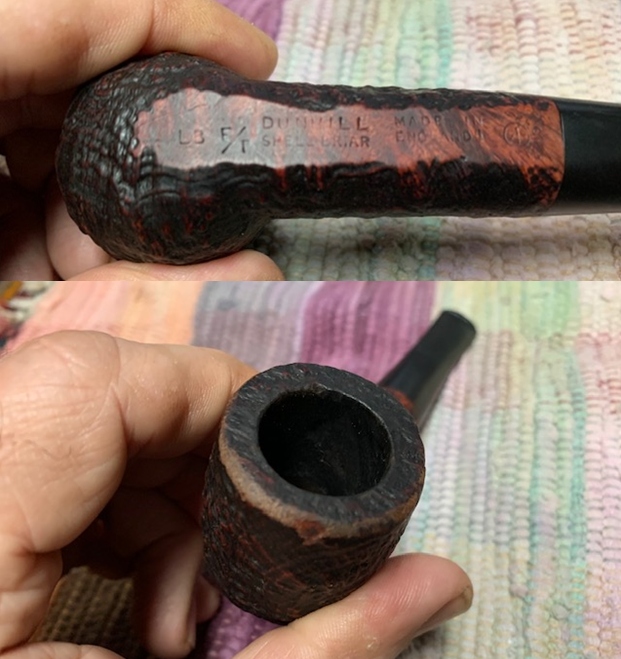
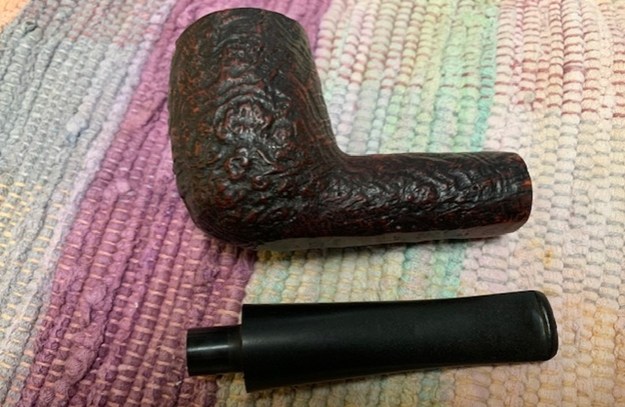
The next pipe on the table came to us from a group of pipes that Jeff and I purchased from a pipeman in late 2018. It is a Dunhill Shell Briar Billiard that is in decent condition. The stem is a replacement and I need to find an original stem for it but it works. It is stamped on a smooth panel on the underside of the shank. On the heel of the bowl it is stamped with the shape number LB F/T followed by Dunhill [over] Shell Briar followed by Made in England 8. That is followed by 4 in a circle followed by S for shell. Interpreting that stamp it is as follows: The LB is the shape for a larger thick shank billiard and the F/T is the stem shape – a Fish Tail stem. The Dunhill Shell Briar is the finish which is corroborated the S at the end of the stamping. The 8 following the D of England gives the date the pipe was made and identifies it as 1968. The stamping is clear and readable. The pipe has a mix of black, cordovan and brown stains on a sandblast finish and some amazing grain that the shape follows well. The finish was dirty with dust around the nooks and crannies of the sandblast. There was a cake in the bowl and lava on the rim top. There was damage on the front outer edge of the rim from tapping against something hard. The replacement taper stem was oxidized and had tooth marks and chatter ahead of the button.  Jeff took photos of the pipe to show what it looked like before he started working on it. He took photos of the bowl and rim top to show how clean they were and of the stem to show the oxidation, calcification and tooth marks and chatter on both sides of the stem. The photos of the sides and heel of the bowl show the deep sandblast grain on the pipe. It is a beauty under the grime and dust.    The stamping on the underside of the shank is shown in the photo below. It looks very good and readable. It reads as noted and explained above. Jeff captured the overall look in the first photo followed by some closer photos of sections of the stamp so you can read it. I turned to Pipedia’s section on Dunhill Root Briar to get a bit of background on the Duhill finishes (https://pipedia.org/wiki/Dunhill#Root_Briar). I quote:

Shell
A deep craggy sandblast with a black stain finish (usually made using Algerian briar) – the color of the stain used has varied over the years. Although there is some doubt as to them being the first to sandblast pipes, Dunhill’s Shell pipes, and the sandblasting techniques developed to create them are considered one of Dunhill’s greatest and most lasting contributions to the art of pipe making.

The documented history of Dunhill’s inception of the Shell is largely limited to patent applications — there are no catalog pages or advertisements promoting blasted pipes at the time. The preliminary work on the English patent (No. 1484/17) was submitted on October 13, 1917. The patent submission was completed half a year later, on April 12, 1918, followed by the granting of the English patent on October 14, 1918. This was less than a month before the end of The Great War on November 11th.

In 1986 Dunhill released a line of premium Shell finish pipes – “RING GRAIN”. These are high-quality straight grain pipes which are sandblasted. Initially only Ring Grain, but now in two different finishes. In 1995 the “Shilling” was introduced with Cumberland finish – it is an extremely rare series. These pipes exhibit a deeper blast characteristic of that of the 1930’s – mid-1960’s (and the limited ‘deep blast’ pipes of the early 1980s) and show a fine graining pattern. These are considered the best new Dunhills by many enthusiasts today and are very rare. The finish is sometimes described as tasting like vanilla at first, with the taste becoming more normal or good as the pipe breaks in.

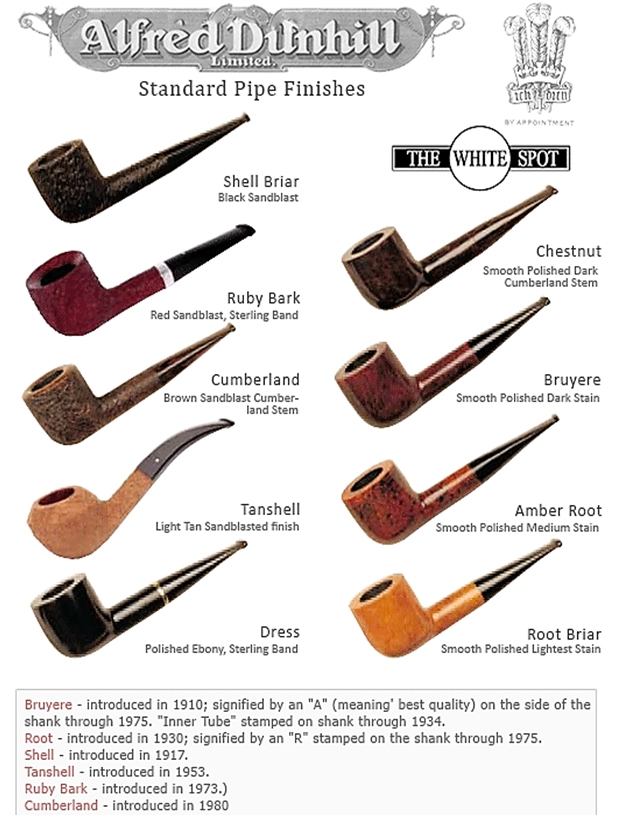
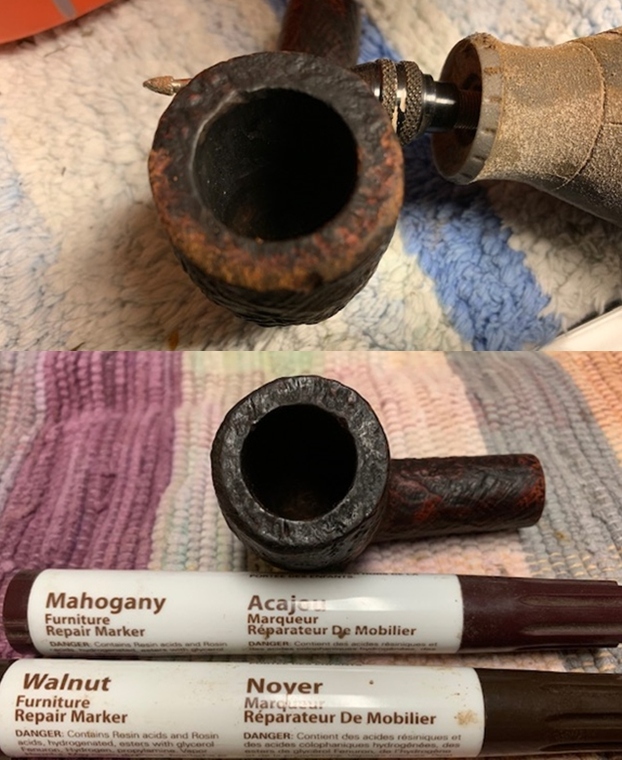
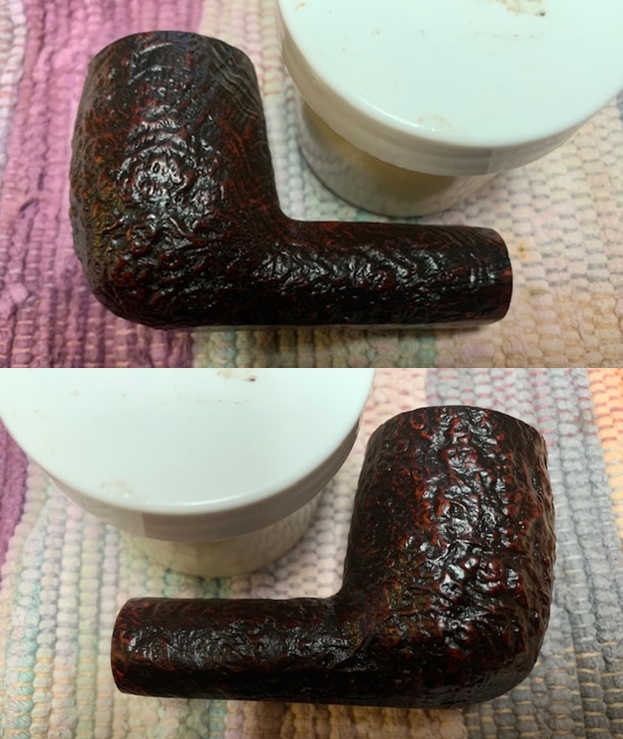
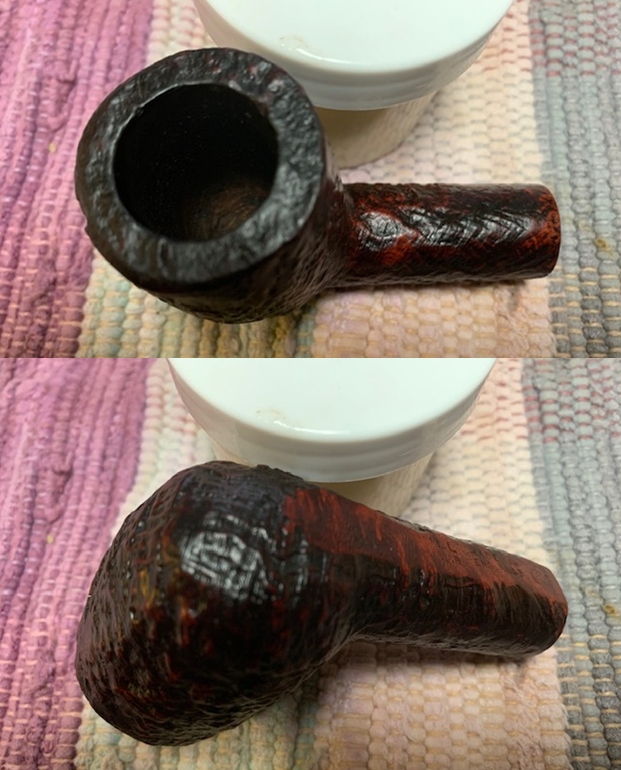
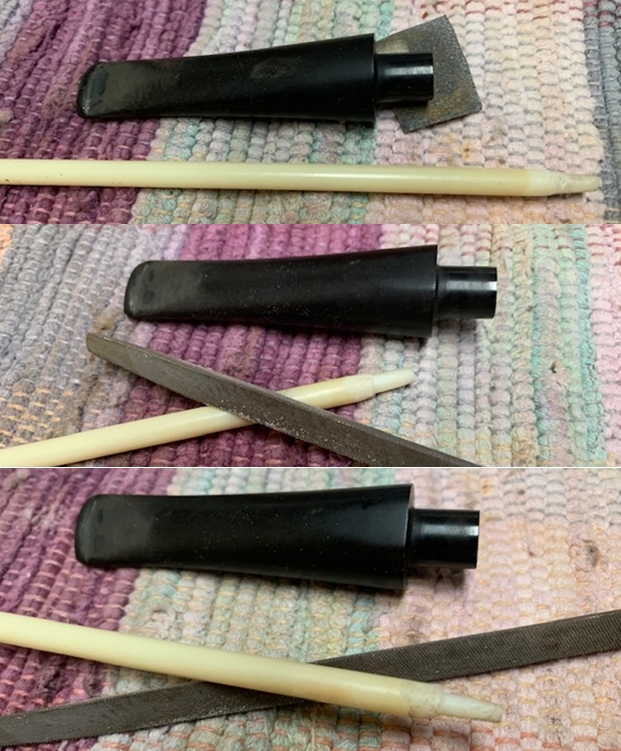
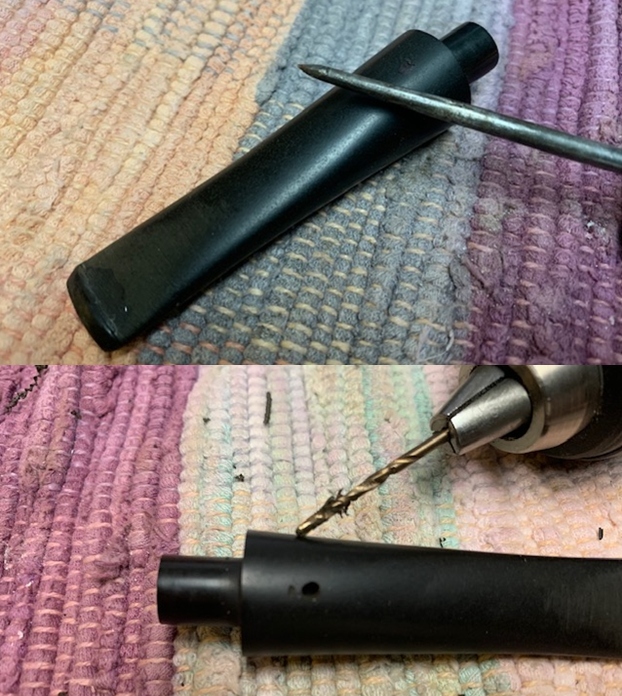
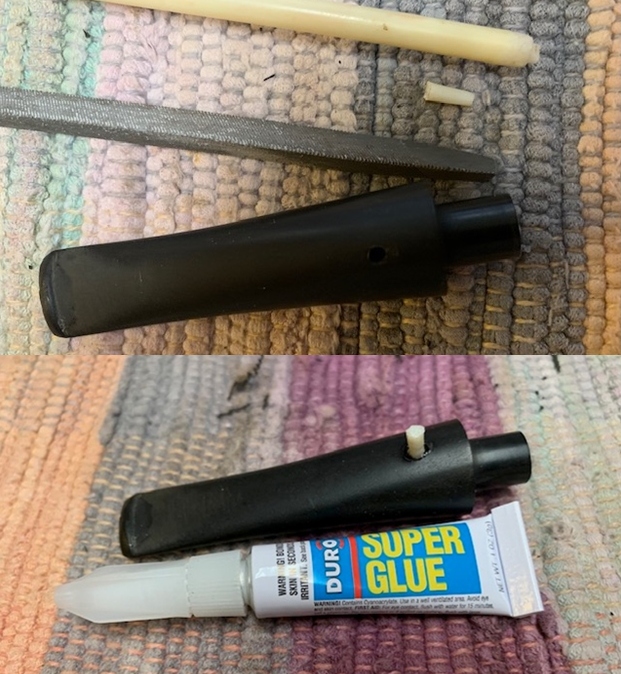
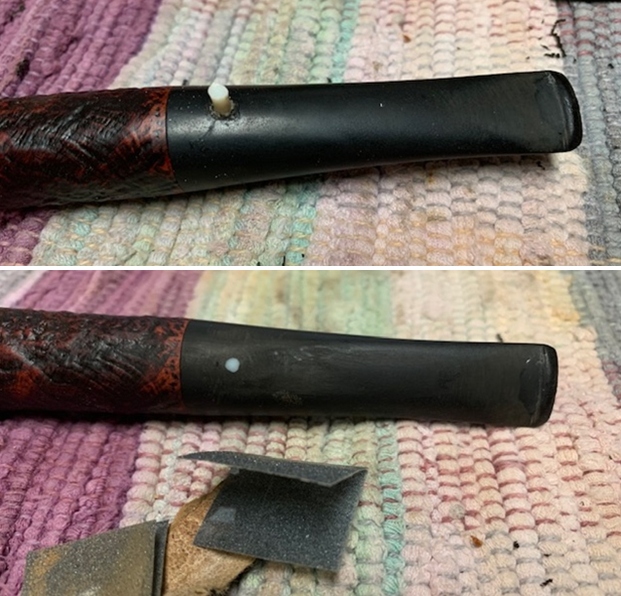
I have also included a chart from the site from Dunhill spelling out the Standard Pipe Finishes and giving short information and a timeline.I turned to work on the pipe itself. Jeff had carried out his usual thorough cleanup of the pipe. He had reamed it with a PipNet reamer to remove the cake and cleaned the reaming up with a Savinelli Fitsall Pipe Knife. He scrubbed the internals of the bowl and stem with alcohol, cotton swabs and pipe cleaners. He scrubbed the externals with undiluted Murphy’s Oil Soap and rinsed the bowl off with running water. He soaked the stem in Before & After Deoxidizer and once it had soaked rinsed it off with warm water to remove the residual solution. He dried it off and rubbed it down to remove any oxidation that was still on the stem. The pipe looked very good when I received it. I took a photo of the rim top to show the condition. You can see the damage on the front outer edge of the bowl in the photo. It is roughened and chipped. The replacement stem came out looking quite good. There are some tooth marks and chatter on both sides with deeper marks on the underside near the button.    I took a photo of the underside of the shank to show the stamping. It is clear and readable with some faint spots. I also took a photo of the damage to the front outer edge of the rim top to show the damaged areas.   I removed the stem from the shank and took a photo of the pipe parts to show what I was working with. It is a nice looking pipe.I decided to start the restoration on this one a little differently. In examining the outer edge damage to the bowl it appeared that I could work it over with a burr on my Dremel and minimize the damage by patterning the reworked surface to match the rest of the rim top. Once I worked it over I used a Mahogany and Walnut stain pen to blend the newly carved areas into the rest of the bowl finish.   With the repair completed I rubbed the briar down with Before & After Restoration Balm. I worked it into the briar with my fingertips and a horsehair shoe brush to work it into the nooks and crannies of the sandblast finish. The product works to clean, enliven and preserve the briar. I let it sit for 10 minutes while I worked on the stem. After the time passed I buffed it with a cotton cloth to deepen the shine. The briar really comes alive with the balm. I set the bowl aside and turned my attention to the stem. I “painted” the tooth marks on the stem to lift them up. I was able to lift them significantly. I filled in the remaining tooth marks with black super glue and set the stem aside to let the repairs cure. Once the repairs cured I used a needle file to recut and redefine the button edges and to smooth them out and blend them into the stem surface.  I sanded the repairs smooth and then decided to drill a spot on the top of the stem and put in a white dot. I did not do this to fool anyone just so I could get a feel of the stem looking almost right until I picked up a Dunhill stem. I used a piece of a white acrylic crochet needle to make the dot. I used a Dremel and sanding drum to take the end down to a spot. I then used a triangular shaped file to continue to take the top down to make it small enough to work for a white dot. I made the dot a little larger than normal and off just enough to give clue to the fact that it is a fake! But I am going to enjoy it anyway!    I used an awl to start a hole on the top of the stem to serve as a guide for drilling the hole to put the white spot in.    I cut off the piece of acrylic and used a file to reduce the diameter a little more with a file while I held it in a pair of vise grips. Once I had the end small enough I put a drop of super glue in the hole and pressed the piece of acrylic in the hole.     Once the repair cured I used the Dremel and sanding drum to take the pin back to the surface of the vulcanite. Once it was close to the top of the stem I used 220 grit sandpaper to smooth it out.   I sanded the repaired areas and the inserted acrylic white spot with 220 grit sandpaper to further blend them into the stem surface. I started the polishing of the stem with 400 grit wet dry sandpaper.     I polished the vulcanite with micromesh sanding pads – 1500-12000 grit pads. I wiped it down with Obsidian Oil after each sanding pad. I used Before & After Pipe Polish – both Fine and Extra Fine to further polish the stem.       This Dunhill Shell Briar LB F/T Chunky Billiard is a beautiful sandblast with the unique Dunhill Sandblast finish made in 1968. It is a great looking pipe that is in almost new condition. The dark finish that is identified as a black stain highlights some great grain around the bowl sides and the heel. It has some great rugged sandblast that Dunhill specialized in making. The finish on the pipe is in excellent condition and the repaired area on the front outer edge of the rim top looks very good. The mix of stains works well to highlight the grain. The polished black vulcanite taper replacement stem adds to the mix. With the dust gone from the finish and the bowl it was a beauty and is eye-catching. I put the stem back on the bowl and buffed the pipe with Blue Diamond on the buffing wheel being careful to not buff the stamping. I gave the bowl multiple coats of Conservator’s Wax and the stem multiple coats of carnauba wax on the buffing wheel and followed that by buffing it with a clean buffing pad. I hand buffed the pipe with a microfiber cloth to deepen the shine. The finished LB F/T Shell Briar Billiard is quite nice and feels great in the hand. Give the finished pipe a look in the photos below. I can only tell you that like the other pipes I am working that it is much prettier in person than the photos capture. The dimensions of the pipe are Length: 5 ¾ inches, Height: 2 inches, Outside diameter of the bowl: 1 ¼ inches, Chamber diameter: ¾ of an inch. Thanks for walking through the restoration with me as I worked over another beautiful pipe. If any of you have an LB stem for sale or trade let me know. Thanks for your time.


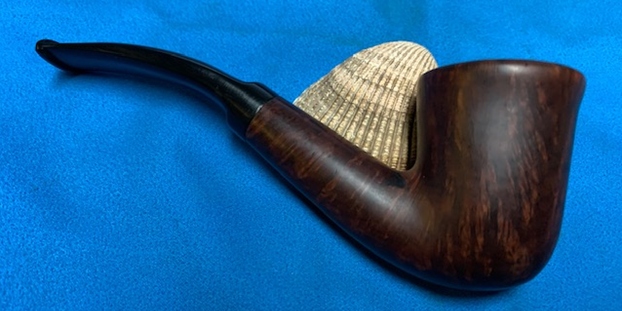
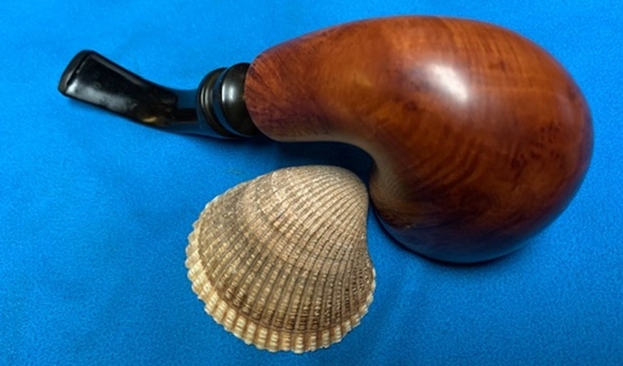
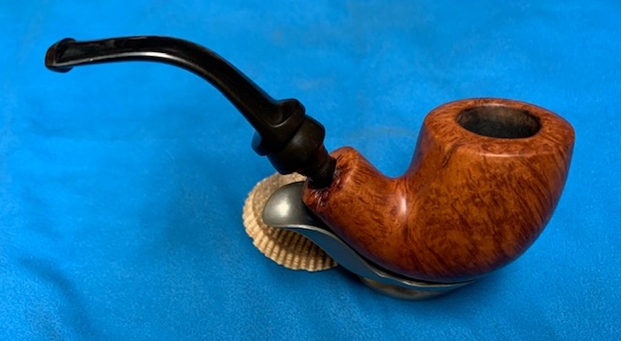
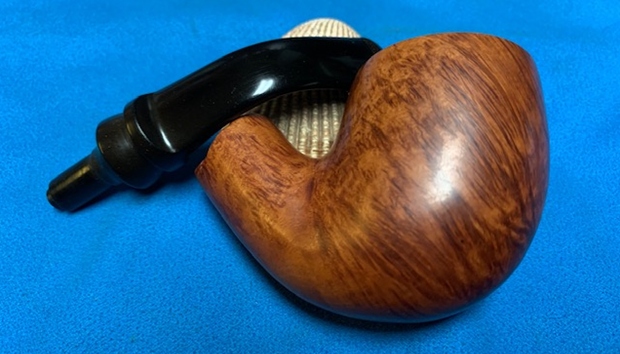
Restoring Calich  Second #7 Freehand


Blog by Steve Laug

John Calich

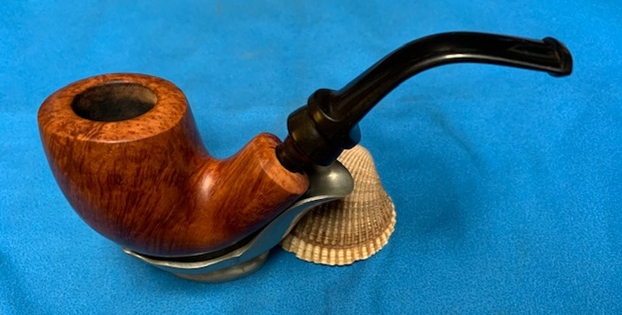
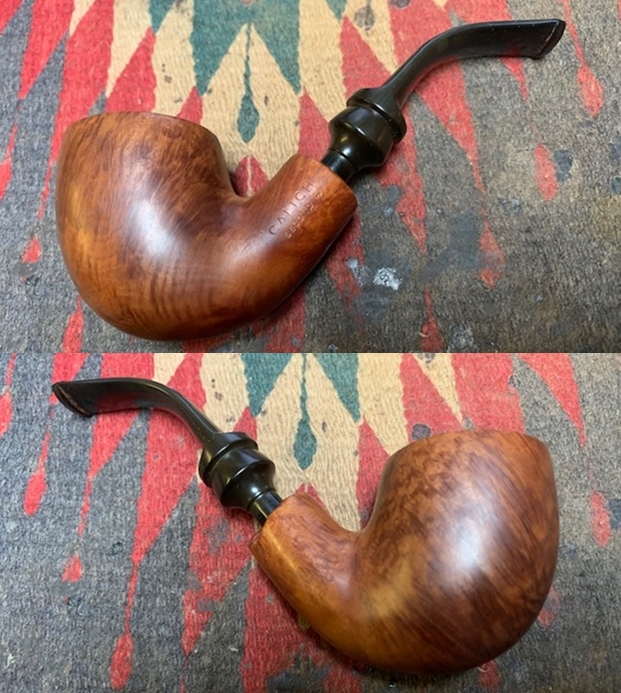
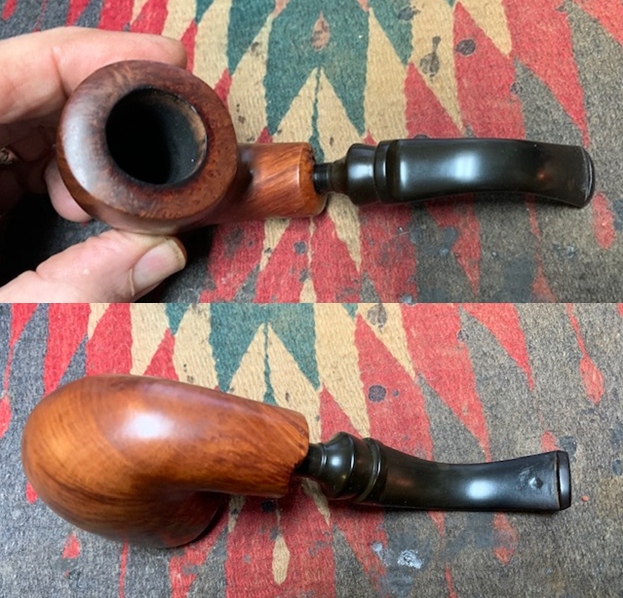
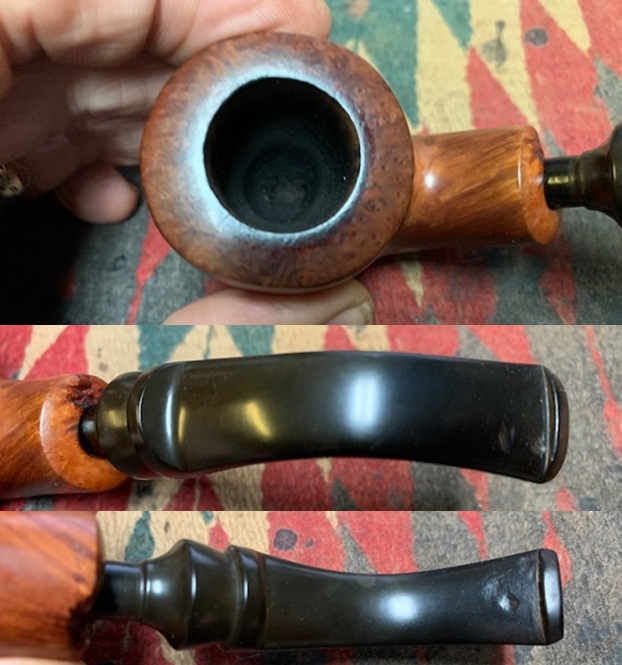
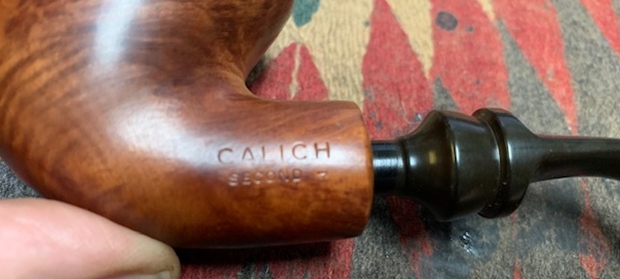
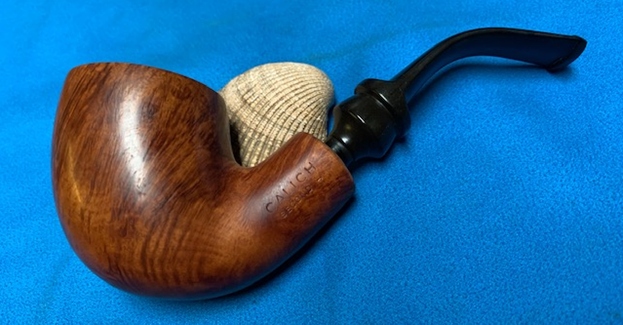
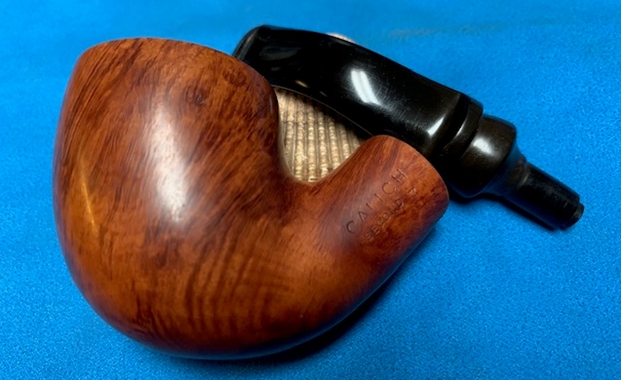
The next pipe on the work table is a pipe I traded for in a recent Boxpass here in Canada. A Boxpass is made up of samples as well as tins of tobacco that are sent around to various pipe folk to sample, take out and put back tins of tobacco or pipes. It is a great way to try tobaccos you have not had as well as to trade pipes that you want to pass on to others and take out one that you want to try out. This particular pipe came to the box from Eric who say it is a great smoking pipe that his pipe mentor picked up from John Calich himself. This one is a bent Freehand shaped pipe. It has some nice mixed grain around the bowl and shank with a vulcanite stem. It was stamped on the left side of the shank and reads Calich [over] Second followed by the number 7. The rim top is smooth and the shank end is also smooth with a patch of plateau on the right surface of the shank end. The finish was clean but was a flaw on the top back edge of the bowl on the right. There was a light cake in the bowl and some darkening and lava around the inner edge. The fancy turned vulcanite stem lightly oxidized and there was some deep tooth marks and chatter ahead of the button on both sides.

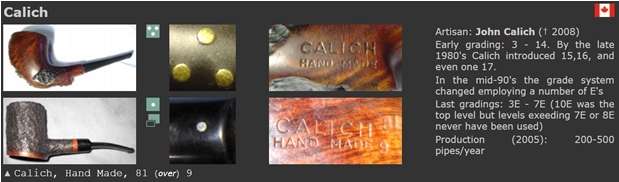
Before I started working on it I did a bit of reading about the brand to remind myself of what I knew of the maker. I turned to Pipephil’s site first (http://www.pipephil.eu/logos/en/logo-c1.html). I did a screen capture of the information on the site. I did a screen capture of the pertinent information and have included it below. I quote the side bar: Artisan: John Calich († 2008) Early grading: 3 – 14. By the late 1980’s Calich introduced 15,16, and even one 17. In the mid-90’s the grade system changed employing a number of E’s. Last gradings: 3E – 7E (10E was the top level but levels exeeding 7E or 8E never have been used) Production (2005): 200-500 pipes/year

I then turned to Pipedia and read the article on the Calich brand to remind myself of the maker (https://pipedia.org/wiki/Calich). I have included it in full below.

John Calich was one of Canada’s finest carvers. He died in July 2008.

John was a full time pipe maker for the last 40 years. Calich pipes were mostly traditional shapes. His signature style is rustication and smooth on the same pipe along with his unique skill to stain a pipe in contrasting colors. He used only top quality Grecian and Calabrian briar. The mouthpieces are hand finished Vulcanite “A”. Each pipe was entirely made by hand. John Calich was featured in the summer 2005 issue of Pipes & Tobacco.

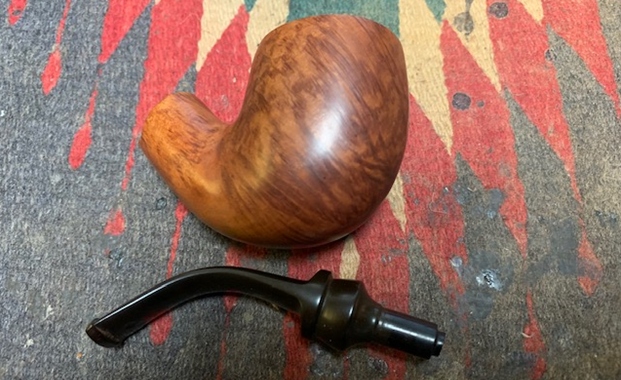
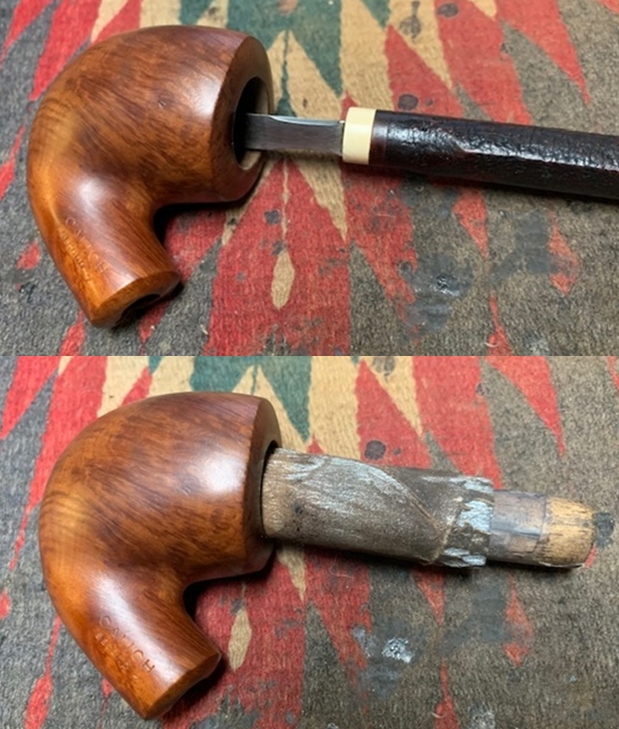
I have always appreciated John’s pipes and have quite a few in my collection. This is the first Second that I have seen and it comes with the story attached from Eric. Now it was time to clean up this pipe and get it restored. I cleaned the pipe with the methodology that Jeff and I have developed. The pipe was in decent condition when I took it out of my box so the cleanup would be straight forward. I took some photos of the pipe before I started my work on it. You can see that it is classic shaped bent billiard with a mix of grain around the bowl. The finish was surprisingly clean and quite pretty. I took some close up photos of the rim top and the stem surface. I wanted to show the condition of the cake in the bowl and look of the rim top. I also took close up photos of the stem to show the deep tooth marks, light oxidation and general condition of the stem surface.  There were deep tooth marks on the top and under side of the stem near the button.    I took a photo of the stamping on the side of the shank. It is readable as noted above. I removed the stem for the shank and took a photo of the bowl and stem to give a picture of what it looked like. I reamed the bowl to deal with a light buildup of cake around the bottom third of the bowl. The rest of the bowl was quite clean. I chose to use a Savinelli Fitsall Pipe Knife. I sanded the inside of the bowl with 220 grit sandpaper wrapped around a piece of dowel. Once I finished the bowl was smooth and clean.  I scrubbed out the internals of the shank and the airway in the stem with alcohol, pipe cleaners and cotton swabs until the pipe was clean.    The flaw on the right rear top edge needed to be dealt with.  This is probably what made the pipe a second. It was not deep but it was bothersome to my touch as I held the bowl. I filled in the flaw with clear super glue.   Once the repair cured is sanded it with 220 grit sandpaper to blend it into the surrounding surface. There was some darkening and nicks on the inner edge of the rim and the rim top. I used a folded to piece of 220 grit sandpaper to give it a slight bevel and smooth out the damage.   I scrubbed the exterior of the bowl with Murphy’s Oil Soap and a tooth brush to remove the grime on the briar. The finish looks very good with good looking grain around the bowl and shank. Once it is polished it will come to life.   I polished the briar with micromesh sanding pads – wet sanding it with 1500-12000 grit sanding pads. I wiped the bowl off after each pad with a damp cloth.   I rubbed the bowl down with Before & After Restoration Balm. I worked it into the surface of the briar with my fingertips to clean, enliven and protect it. I let the balm sit for a little while and then buffed with a cotton cloth and shoe brush to raise the shine.      I set the bowl aside and turned my attention to the stem. I filled in the tooth dents next to the button on both sides of the stem with Black Super Glue and set the stem aside to let the glue cure.   I sanded the stem surface with 220 grit sandpaper to blend in the repairs and remove the light oxidation and to blend the repairs into the surface of the stem. I started the polishing with 400 grit wet dry sandpaper.     I polished the vulcanite with micromesh sanding pads – 1500-12000 grit pads. I wiped it down with a damp cloth after each sanding pad.     This restored Calich Second 7 turned out to be a nice looking pipe. The rich medium brown stain on the pipe worked really well with the polished vulcanite fancy stem. I put the stem back on the bowl and carefully buffed the pipe with Blue Diamond on the buffing wheel. I gave the bowl and stem multiple coats of carnauba wax on the buffing wheel keeping a light touch on the buffing wheel for the bowl. I followed that by buffing the entire pipe with a clean buffing pad. I hand buffed the pipe with a microfiber cloth to deepen the shine. The finished Calich Bent Freehand is shaped to sit comfortably in the hand. Give the finished pipe a look in the photos below. The dimensions of the pipe are Length: 5 ½ inches, Height: 2 inches, Outside diameter of the bowl: 1 ½ inches, Chamber diameter: ¾ of an inch. Now that it is cleaned up it is time to load it up and enjoy a bowl. Thanks for reading this blog and my reflections on the pipe while I worked on it.