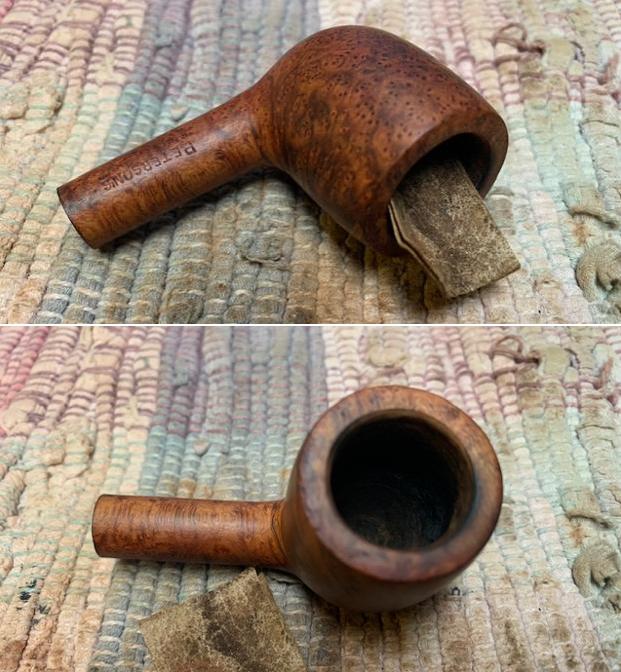
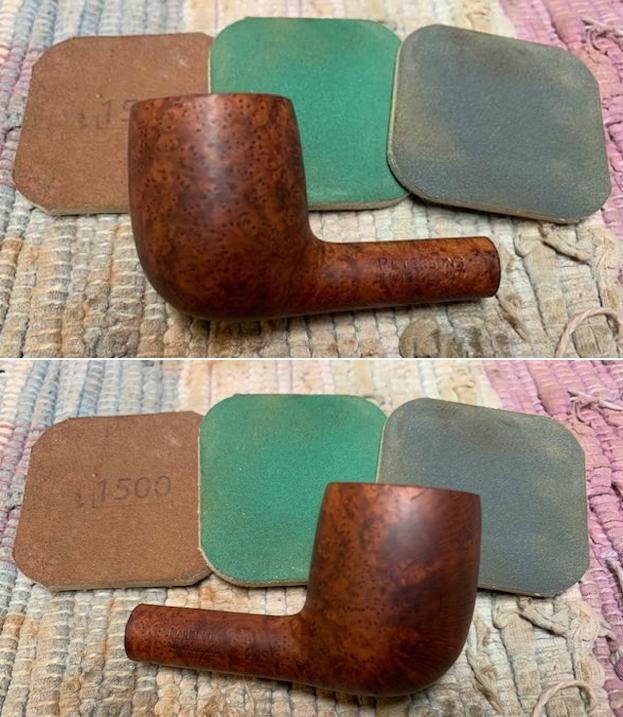
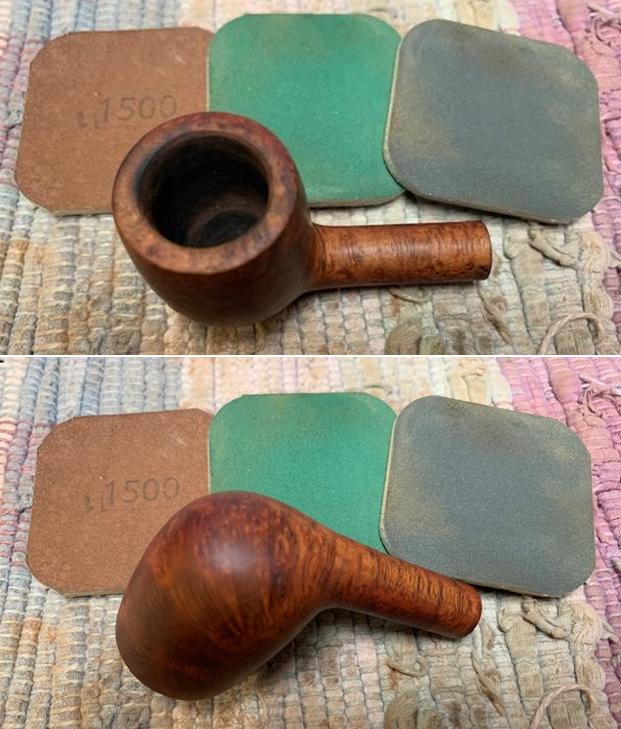
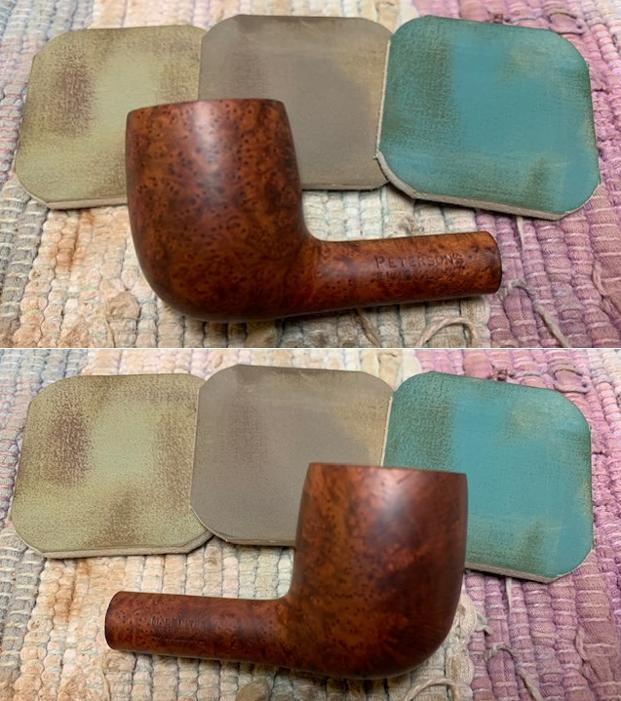
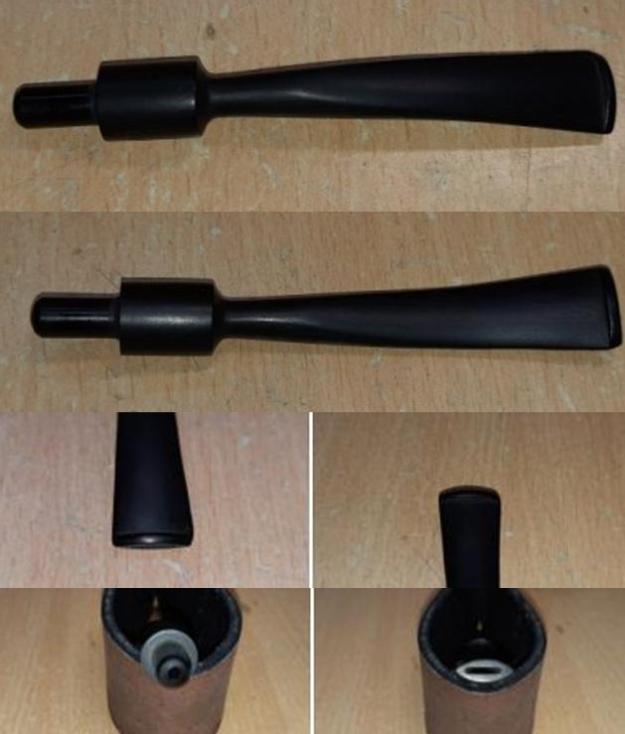
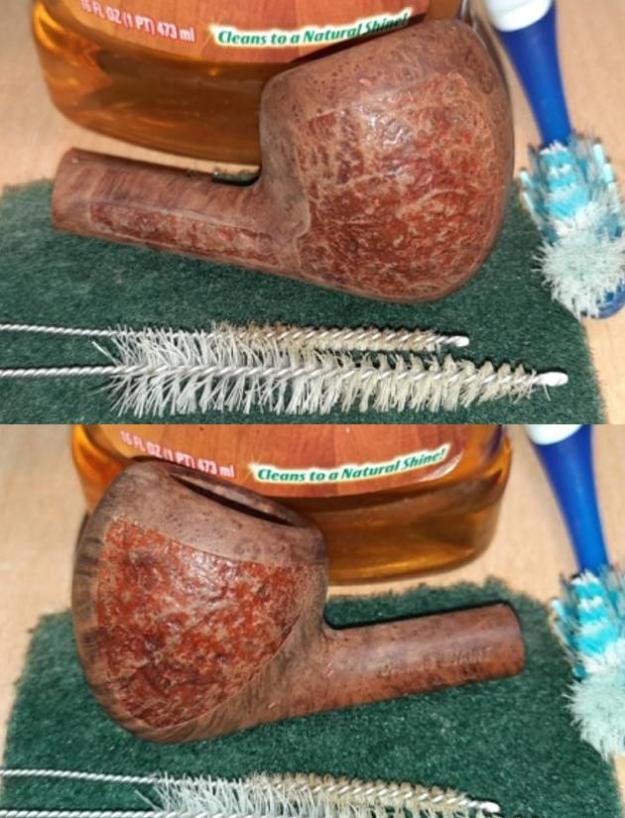
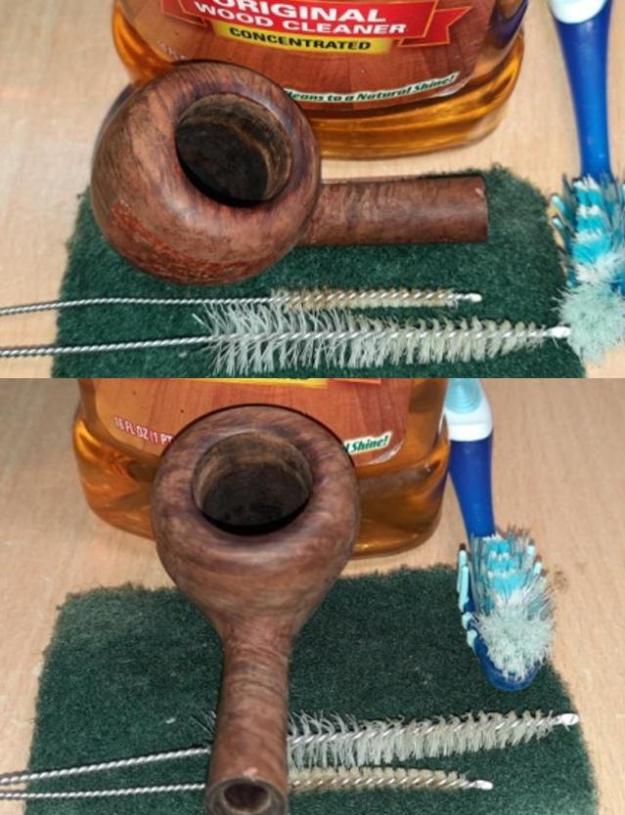
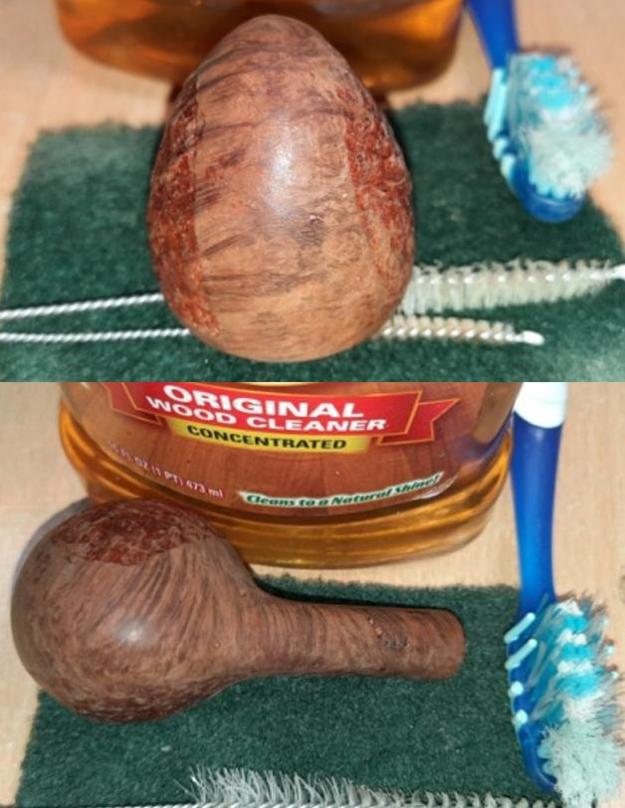
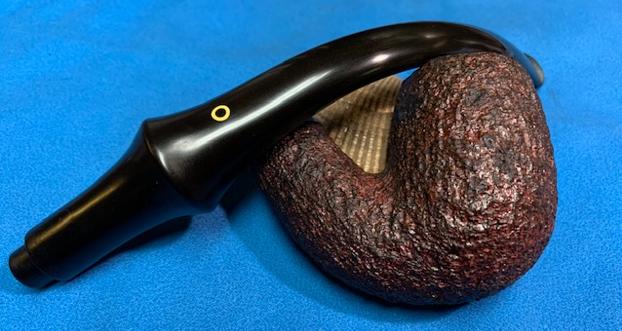
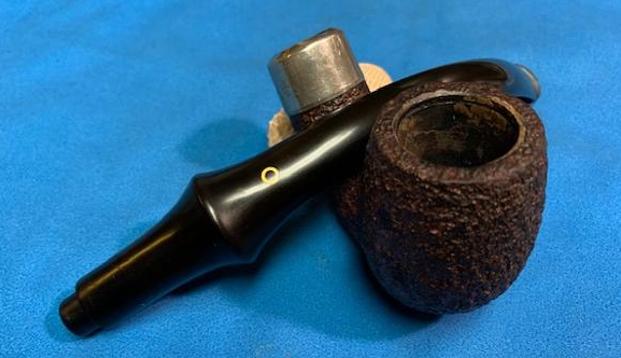
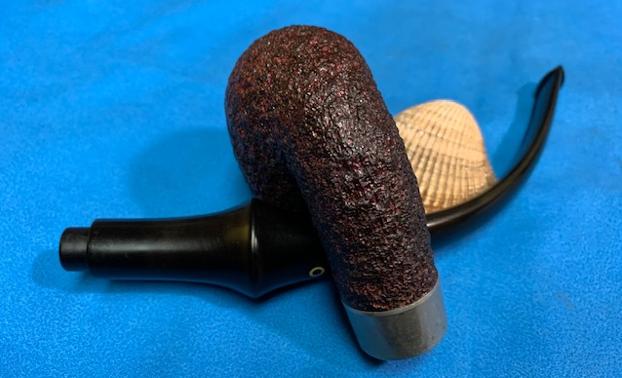
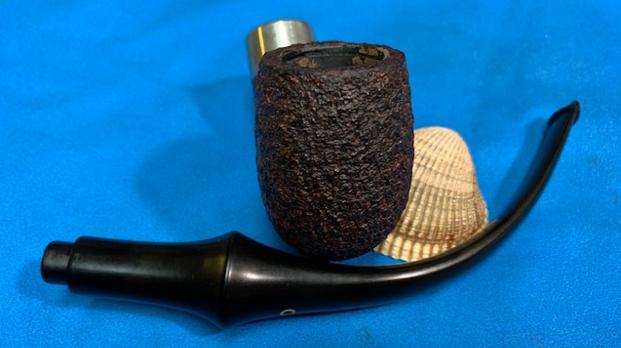
Tag Archives: sanding a stem

Restoring the 23rd Pipe from the Mumbai Bonanza – a Herter’s Angler’s Pipe #147


Blog By Paresh Deshpande

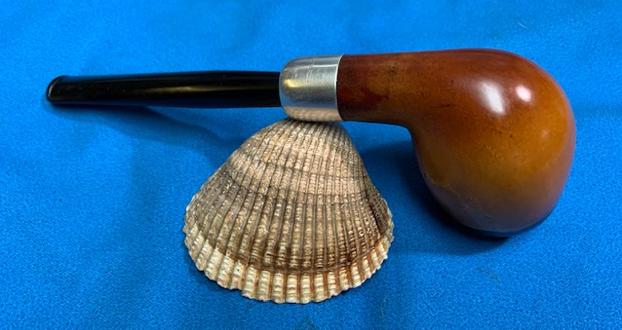
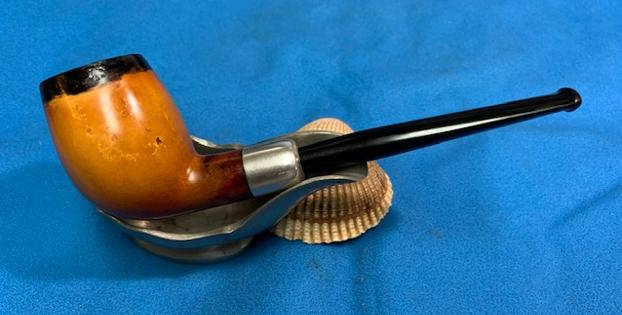
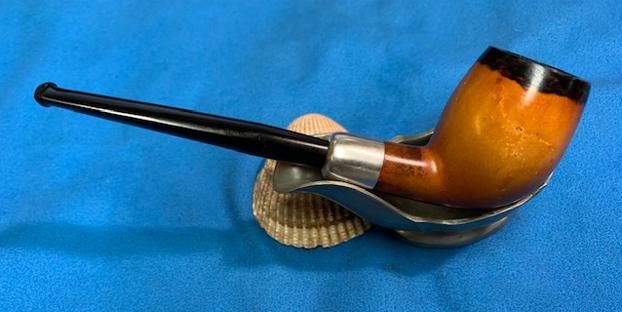
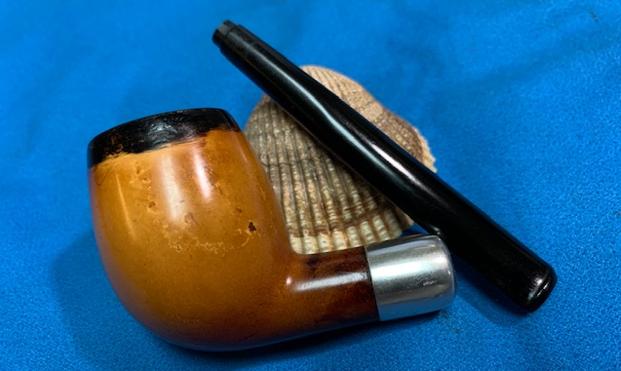
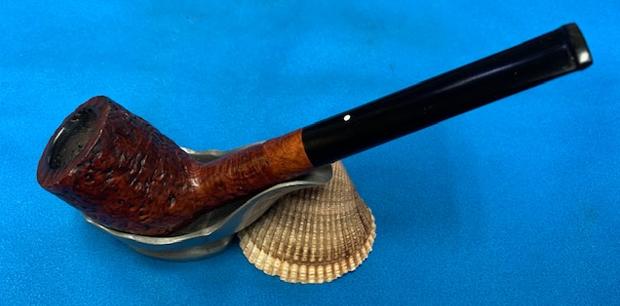
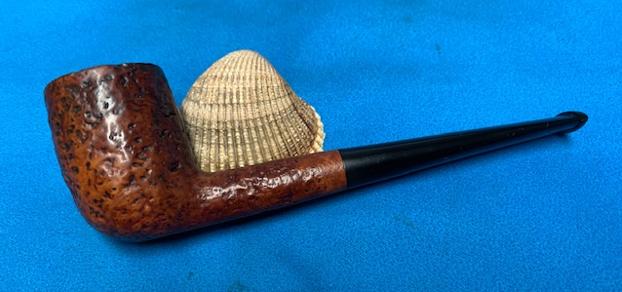
The next pipe that I had selected to work on was dictated by my desire to work on something that would be a simple and an easy project. I went through the box of pipes for restoration and selected a beautiful lightweight straight billiards that came to us in a lot which I prefer to call as my Mumbai Bonanza!

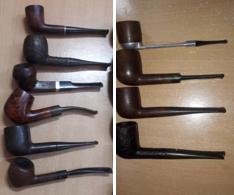
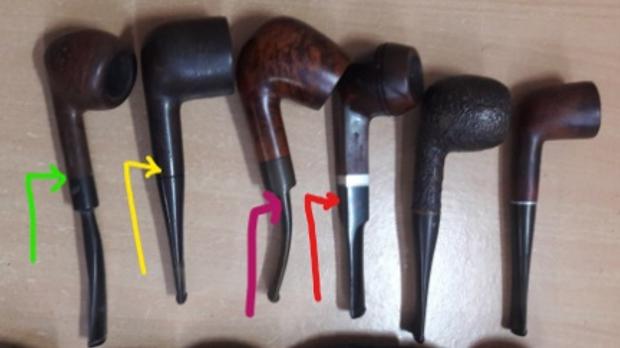
I was fortunate enough to have heeded the advice of my dear friend and mentor, Steve, and struck a deal with a junk collector from Mumbai. He did not know what he was selling and I did not know what I was buying as we reside in different cities!! The argument that Mr. Steve presented was that if not anything, I shall at least have some spare parts and this was logical. I struck a deal and here are pictures of the pipes that I received in this lot.       This lot contains some very nice collectible pipes, a few well known brands and some mediocre brands. Overall, with seven Dunhill pipes, a Preben Holm #1 FH, a couple of “Made in England” Pete System pipes, a couple of  Charatan’s Belvedere, Custom-Bilt, Stanwell and other assorted pipes, I would say that I had struck a decent haul!! This is indeed my “Mumbai Bonanza”.

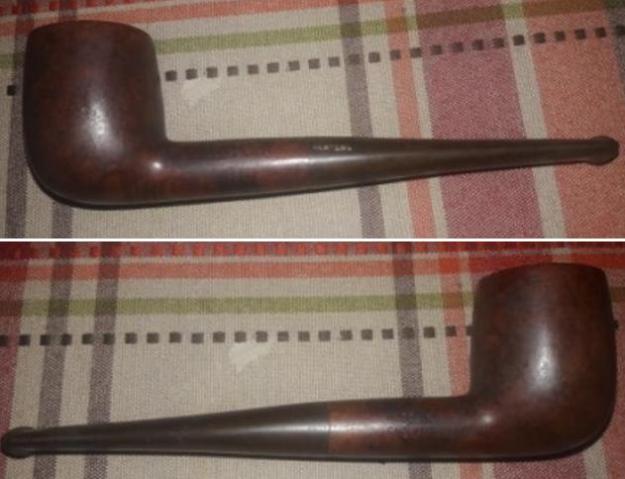
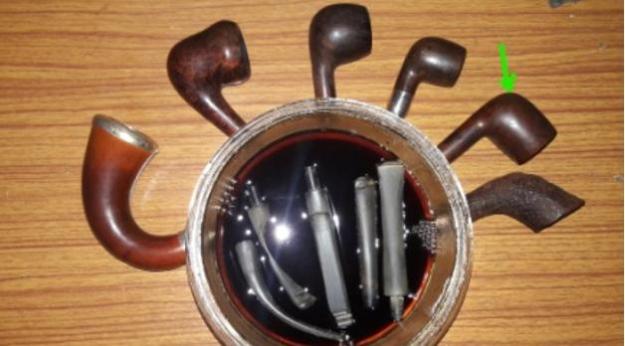
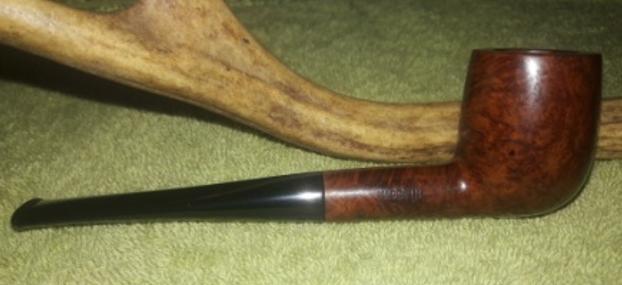
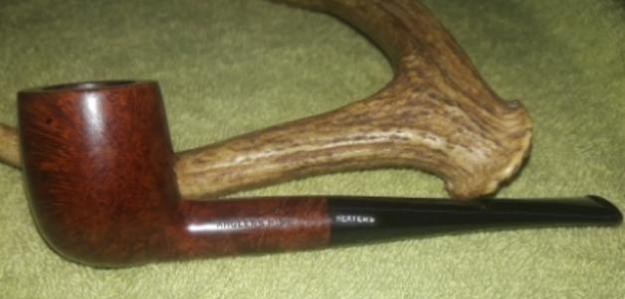
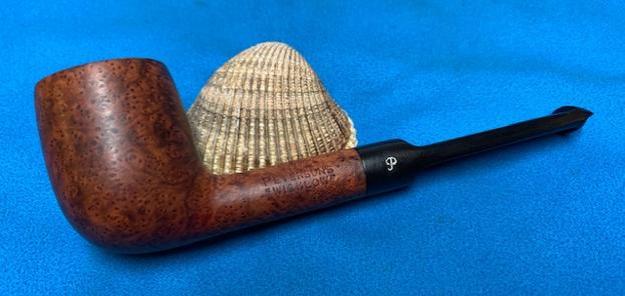
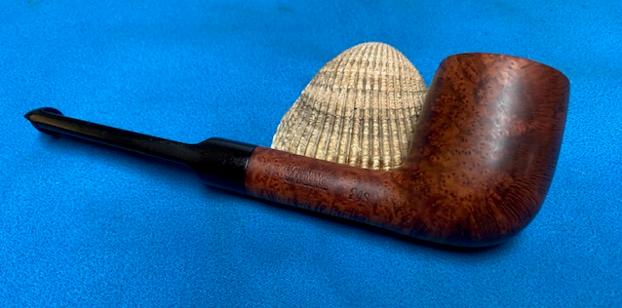
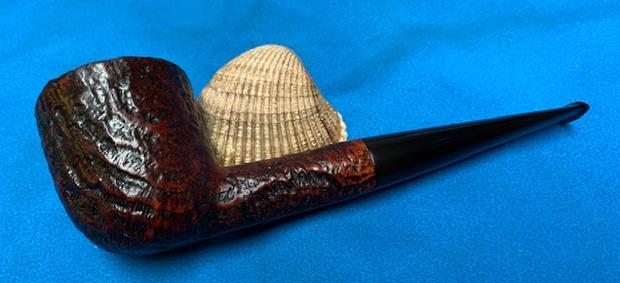
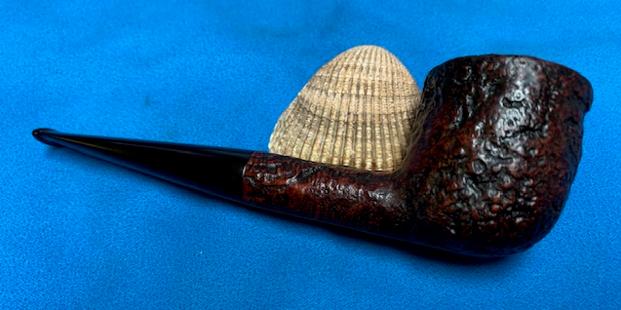
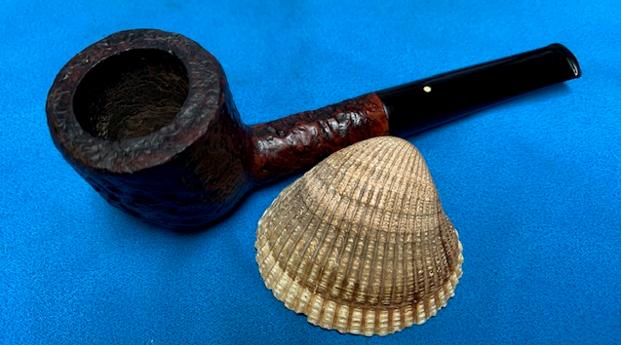
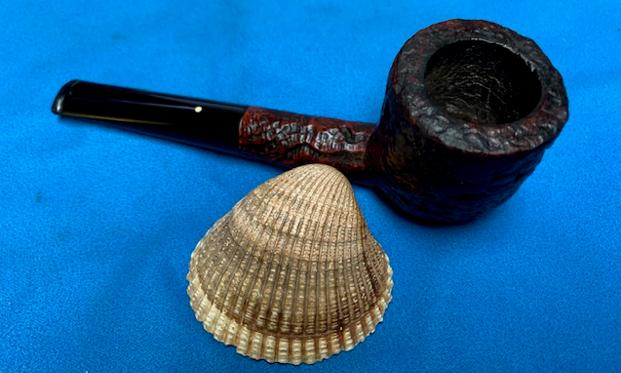
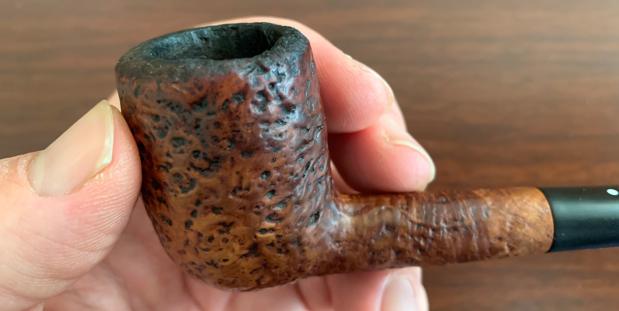
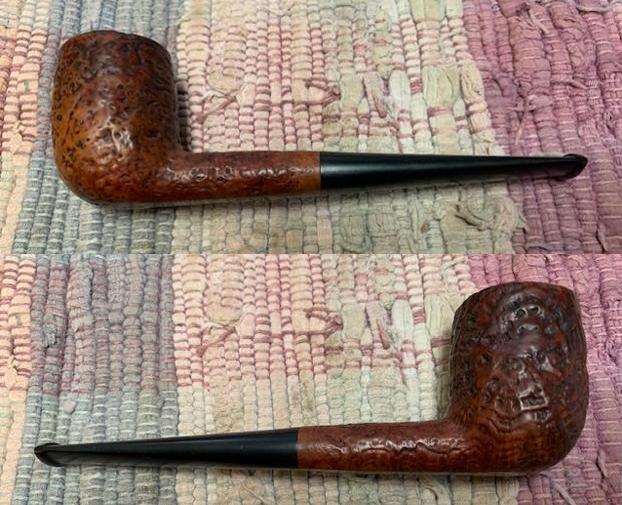
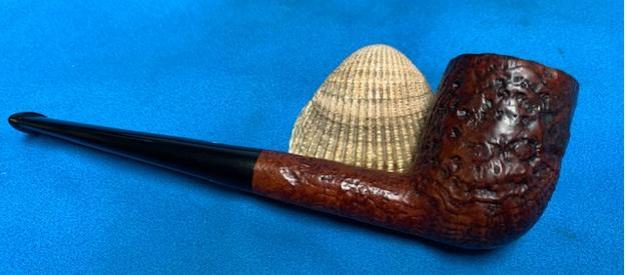
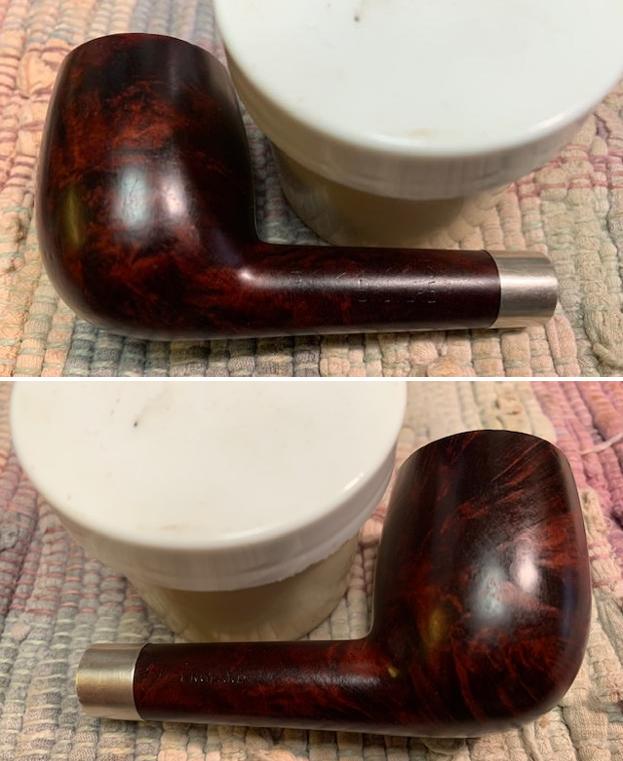
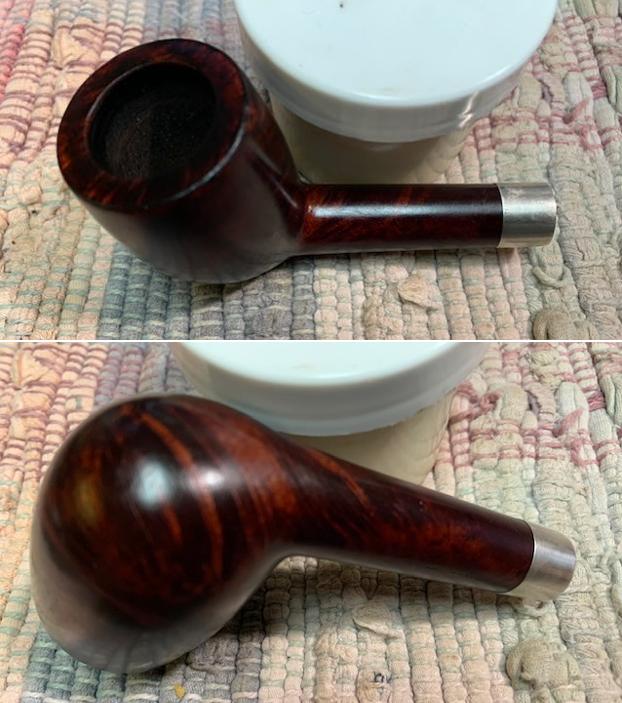
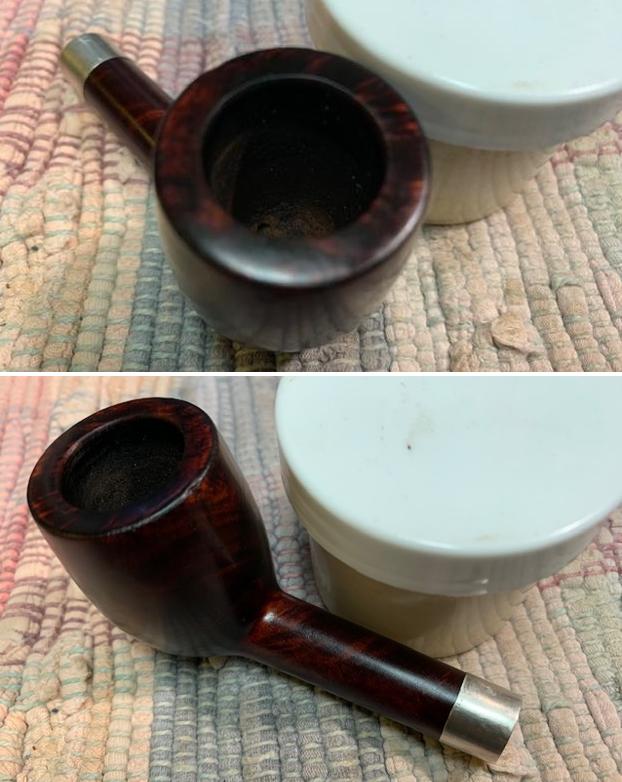
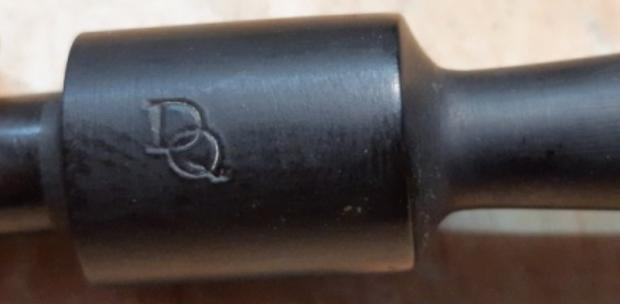
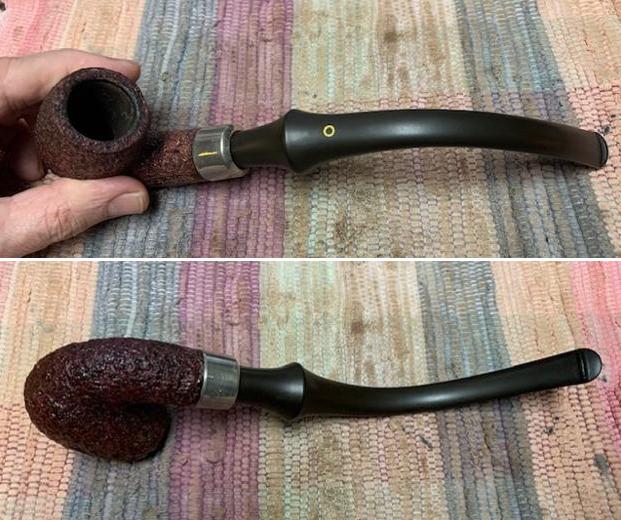
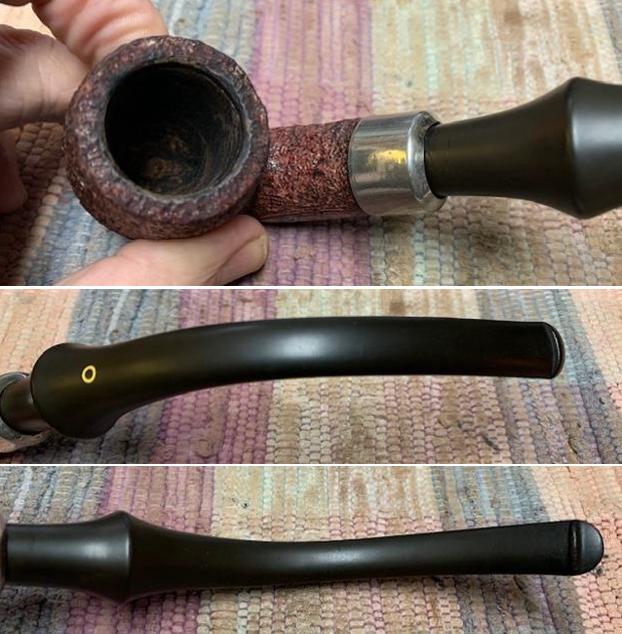
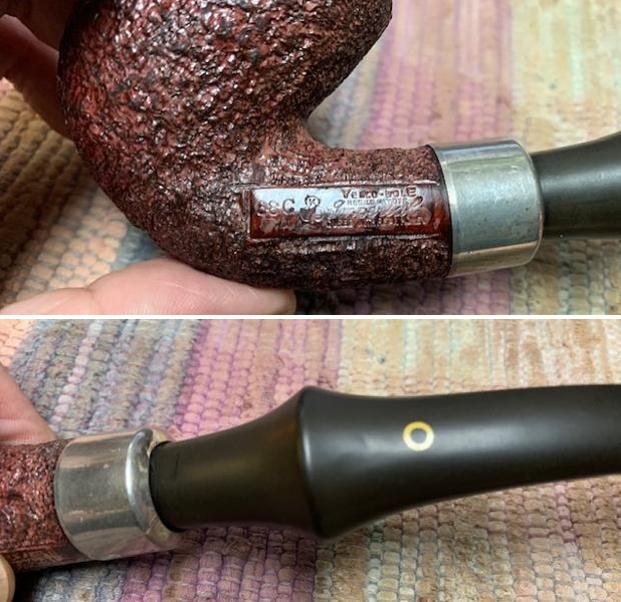
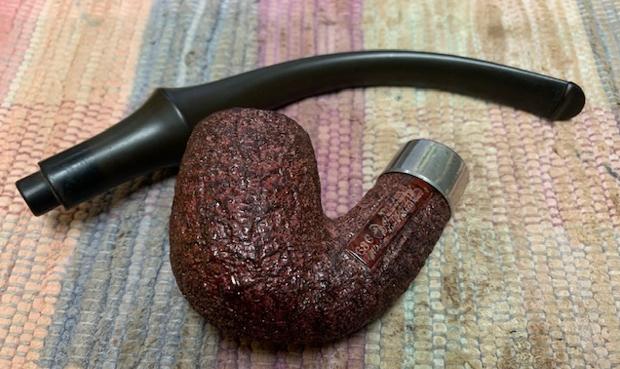
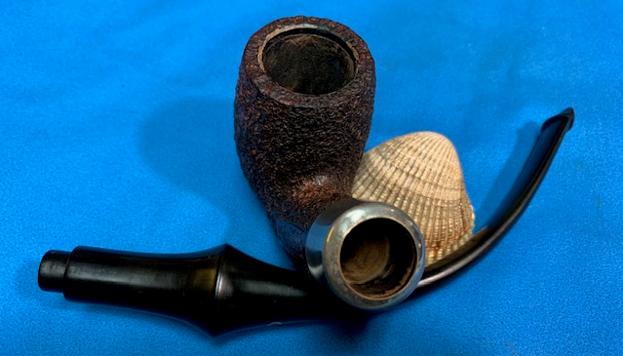
This 23rd pipe that I decided to work on from this find is a medium sized straight billiard and is indicated in green color arrow. It has a very solid feel in the hand with a very light weight to it making it ideal to clench all day long. The pipe exudes top notch quality of briar, very high quality of craftsmanship and construction with perfect proportions and classic design! It is stamped on the left of the shank as “HERTER’S” over “ANGLERS PIPE” in block capital letters. The right side of the shank bears the COM stamp “MADE IN” over “ENGLAND” followed by the shape code # 147 towards the stummel end. The stem is stamped as “HERTER’S” in block letters. All the stampings are crisp and easily readable. Since I had never heard of, let alone worked on a Herter’s pipe, I was keen to know more about this brand and if possible, establish approximate date/period for this pipe. I first turned to rebornpipes.com, as Steve has chronicled and researched many of the pipe houses and brands over the years working on pipe repairs and restoration. But unfortunately, this time around, there was no information available on this brand. Next, I turned to pipedia.org for information and there is very scant information available about the brand. The info that I gathered is reproduced below:-

Herter’s – Pipedia

Apparently this outdoor outfitting company had pipes made for them? If you have any additional information please add it here, or send it to sethile.pipes@gmail.com and we will add it for you.

Well, that’s all the info that was available about the brand, other than a few pictures of the pipes and stampings that were available, thanks to Dough Valitchka.

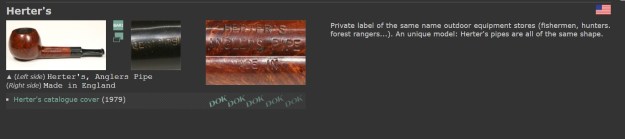
Next I turned to pipephil.eu and the only additional information I learned was I quote “Private label of the same name outdoor equipment stores (fishermen, hunters, forest rangers…). A unique model: Herter’s pipes are all of the same shape.”

I have included a screenshot of the relevant part including pictures of the pipe and stampings seen on the pipe. I disagree with the comment “Herter’s pipes are all of the same shape” as there are different shapes available as I found out later during my research.

He-Hh — Pipes : Logos & Markings (pipephil.eu)Still not satisfied with the information gained so far, I did a random search for Herter’s on the web and Google Baba provided me with enough material to learn about Herter’s. The first thing I learned was that Herter’s was a Outdoor Goods Business that was started by George Leonard Herter. The first site I visited was Wikipedia and have reproduced the particulars of George Herter. Here is the link and relevant information that I have reproduced:-

George Leonard Herter – Wikipedia

George Leonard Herter (24 May 1911 – 5 July 1994) of Waseca, Minnesota was the founder of the Herter’s outdoor goods business and an author. His best known books are the Bull Cook and Authentic Historical Recipes and Practices series (published in three volumes), which have a cult following today.[1]

In 1937 Herter took his father’s dry goods store and turned it into a mail order outdoor goods business, selling hunting and fishing items through a catalog. He later opened retail outlet stores, which pioneered the style of outdoor goods stores now operated by Cabela’s and Bass Pro Shops. The company went bankrupt in 1981.[1]

He is best known for his books, which were self-published and sold through his stores. The New York Times describes the Bull Cook series as his “magnum opus“, “a wild mix of recipes, unsourced claims and unhinged philosophy that went through at least 15 editions between 1960 and 1970.”[1]

How to Get Out of the Rat Race and Live On $10 a Month, despite its title, is an encyclopedic 656-page collection of outdoor and survival skills.

The Bull Cook series and How to Get Out of the Rat Race are credited as co-written by George Leonard Herter and his wife, Berthe E. Herter.

There is a very insightful and informative article in Star Tribune on Herter’s catalog that I came across and here is the link to that article. It is titled, “Herter’s catalog is long gone, but not forgotten”.

Herter’s catalog is long gone, but not forgotten – StarTribune.com

Before there was an Internet or a Cabela’s, Bass Pro Shop or Gander Mountain, there was Herter’s — the first outdoors gear juggernaut. Say the word “Herter’s’’ and a legion of mostly men, now middle-aged or older, in Minnesota and nationwide nod their collective heads in fond recollection. Herter’s mail-order catalogs were legendary, hundreds of pages jammed with hunting, fishing, camping and other outdoor gear that could be delivered to your doorstep. Those catalogs included lengthy descriptions, instructions and bold, often audacious claims — entertaining readers while also enticing them to buy. Herter’s was the Sears, Roebuck of the outdoor industry and was perhaps best known for its waterfowl products. Launched and headquartered in Waseca, Minn., the company was the inspiration for today’s huge mail-order and big-box outdoor retailers. And at the center of it all was George Herter, an eccentric and reclusive entrepreneur, a marketing genius who made brazen, bombastic claims to boost sales of his products. Though he died more than 20 years ago, he remains an enigma — and one of the most interesting characters in Minnesota history.

“He was an icon in Minnesota, and had a lot to do with influencing waterfowling, not only in Minnesota but throughout the United States,’’ said Doug Lodermeier, 60, of Edina, a waterfowl historian and collector who gave a presentation on Herter’s legacy Saturday at the annual Minnesota Waterfowl Association’s waterfowl symposium in Bloomington.

“It’s easy to dismiss him as a crackpot and goofball, but the reality is he was a genius,’’ Lodermeier said. “He was way ahead of his time.’’

Herter labeled most of his products “world famous” or “model perfect,” and he claimed many were endorsed by the North Star Guides Association — which didn’t exist.

Said Lodermeier: “As a kid I couldn’t wait for the Herter’s catalog to come because me and my friends just rolled on the ground reading his claims and outlandish stories. We loved it — and we bought his stuff.’’

Herter reportedly wrote all of the copy in his catalogs, instruction manuals and pamphlets and also was a prolific author — among his books: “How to Get Out of the Rat Race and Live on $10 a Month.” In a cookbook he wrote, “The Virgin Mary, Mother of Christ, was very fond of spinach.’’

Quirkiness aside, Herter built an outdoors empire, starting around 1935 in Waseca. It began as a catalog business that focused on fly-tying, but it grew to include virtually every outdoor product imaginable — and some unimaginable. Eventually Herter opened stores in Waseca, Glenwood, Mitchell, S.D., Beaver Dam, Wis., Iowa City and Iowa Falls, Iowa, and Olympia, Wash.

But after decades of success, a “perfect storm’’ led to Herter’s demise, Lodermeier said: The overexpansion of those retail stores at a time when oil prices were skyrocketing, the Gun Control Act of 1968, which prevented firearms from being bought and sold via the mail, and federal bans on the importation of some feather species Herter’s used for fly tying.

Herter’s went bankrupt in 1977, and the though the man has become mostly forgotten, his name lives on. Cabela’s now owns the brand, and customers can order an assortment of Herter’s gear and ammunition.

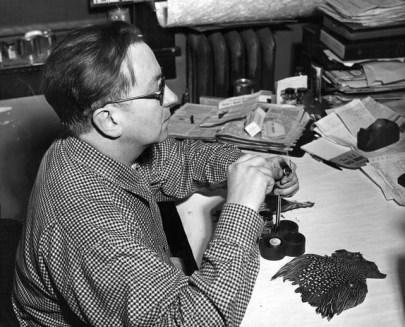
George Herter saw combat in Europe during World War II, earned a Purple Heart and may have suffered from post-traumatic stress disorder. Reclusive even at the height of his success, Herter apparently didn’t give interviews, and few photographs of him exist. The man who left an indelible mark on the outdoors industry is relatively unknown.

He died in 1994 in Minneapolis at age 83, leaving behind no autobiographies or interviews.

“I don’t want to be known and rarely tell people my right name. I never allow anyone to take my picture,’’ he wrote in one book.

With a fair idea of the enigmatic man behind Herter’s, my quest to know about Anglers Pipe and it’s place in the Outdoor Goods business, pushed me to further research. I came across a blog by Dean Smith, an Angler and collector of fishing collectible. Here is the link to the blog and certain excerpts from his researched blog.

Tackle Treasures: vintage fishing tackle collectibles

About Tackle Treasures…
When most folks think about fishing collectibles they likely conjure up images of fine bamboo rods, early reels, wooden lures with glass eyes, hand carved ice-fishing decoys or perhaps leather trimmed split willow creels. Not me …I like all of the other stuff best …gizmos, bottles, boxes, tins, medals, pins, knives, fly tying vises, advertising items and all sorts of paraphernalia with a fishing theme. Poke around the site for bit …I’m sure you’ll see the attraction after a tour.

Tobacciana | Tackle Treasures

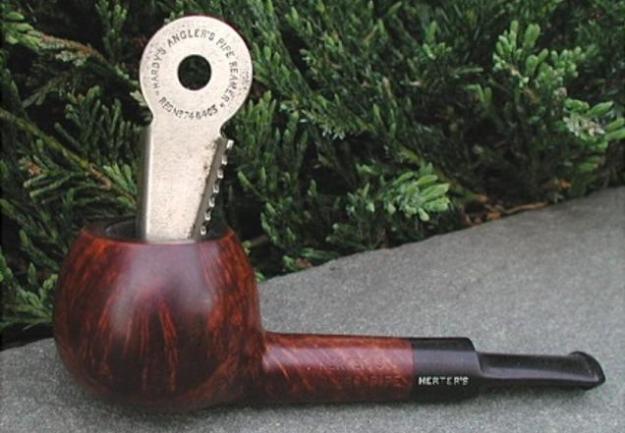
In the old days smoking and outdoor activities seemed to go hand-in-hand …thereby the vast proliferation of smoking products with angling themes. In fact, smoking was so popular that some tackle manufacturers offered smoking products and accessories. For example, both Hardy and Herter’s made “Anglers Pipes”. Now, I am not the least bit certain what distinguishes a normal pipe from an Anglers pipe …but it did give me something else to collect and that’s all that matters. Hardy also made an “Anglers Pipe Reamer” …which begs the question, would it only work on “Anglers Pipes?”

Herter’s Anglers Pipe and Hardy Brothers Pipe Reamer

I Certainly Didn’t Set Out To Collect Herter’s Anglers Pipes …But Now I Have Three …All Different (Annotations are by the owner of the blog, Mr. Dean Smith)

Thus from the above, it is now understood that the pipe on my work table was retailed by Herter’s Outdoor Goods, a mail order venture, that was started by George Leonard Herter in 1935 and which declared bankruptcy in 1977. Herter’s supplied smoking products and accessories, including pipes that were made specifically for the firm by one of the many British pipe makers.

Now that I have a fair idea of the shop from where this pipe was sold and having established the provenance, I moved ahead with the inspection and further restoration of the pipe.

Initial Visual Inspection
This lot had some highly collectible and sought after pipes. That pipes such as this one, an unknown entity amidst all the Preben Holms, Stanwells, Dunhills and Charatan’s in this lot, can make its presence felt is testimony to its quality briar, construction and the legacy of being part of American pipe history and e-commerce.

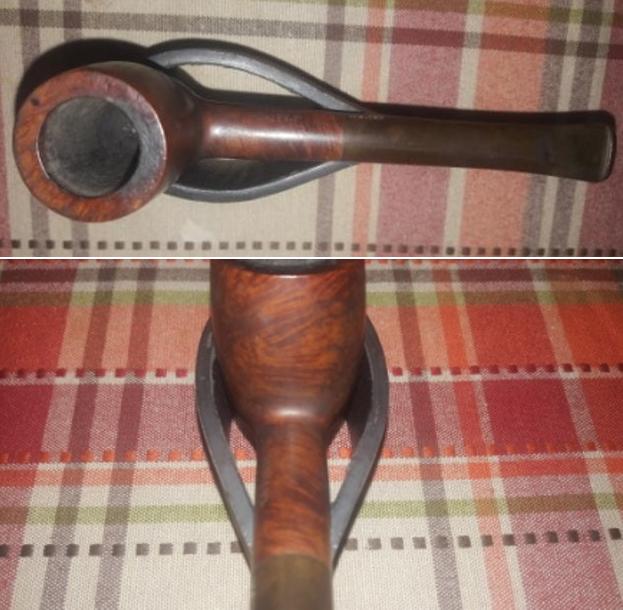
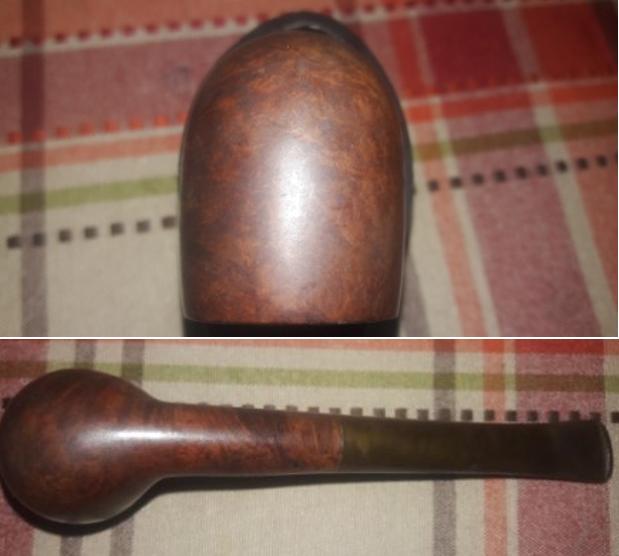
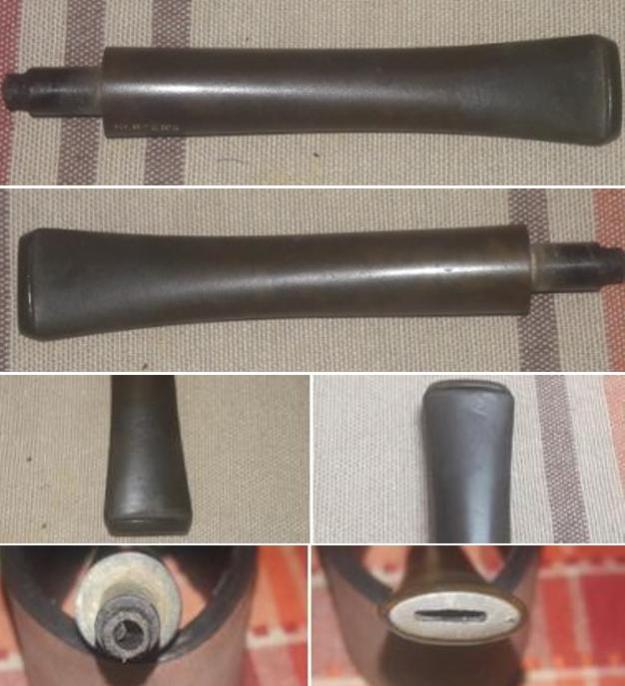
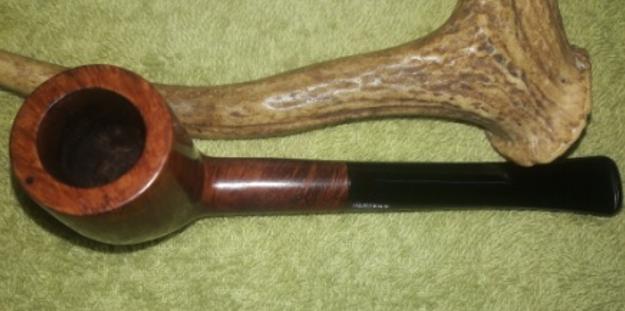
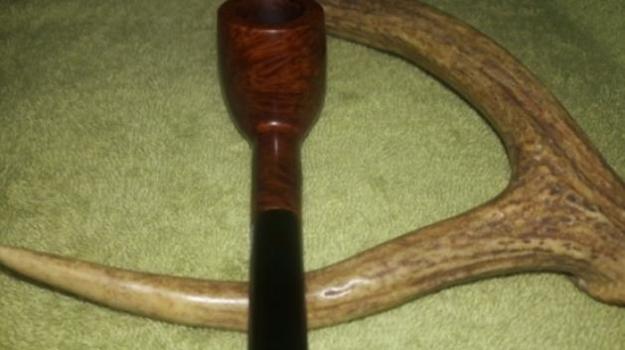
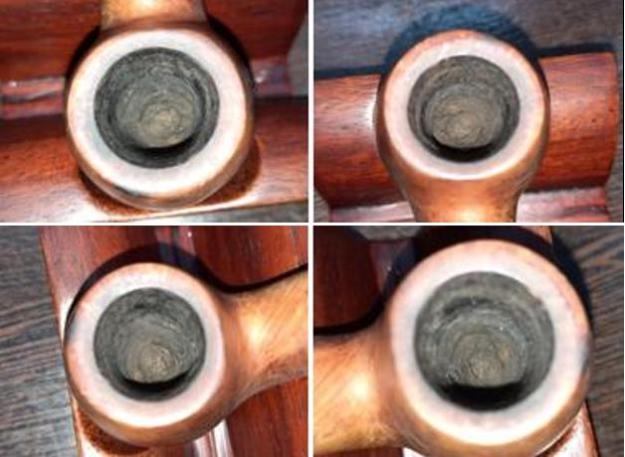
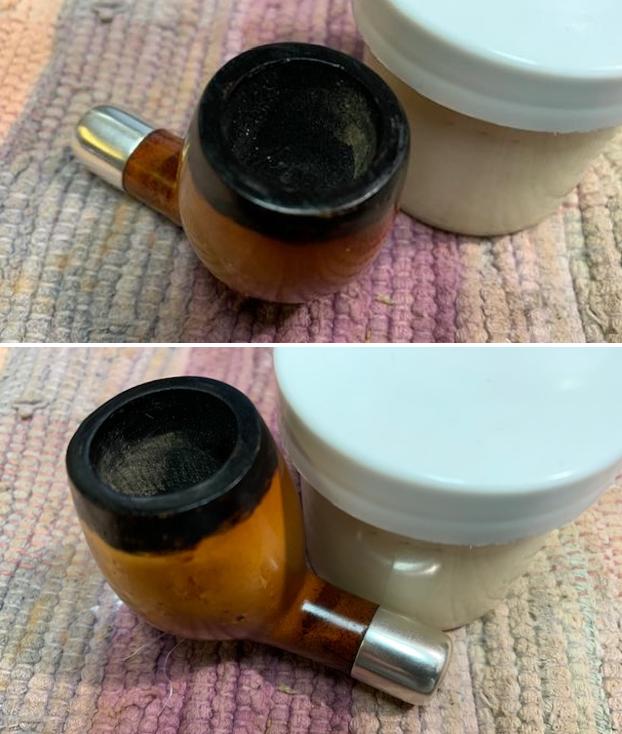
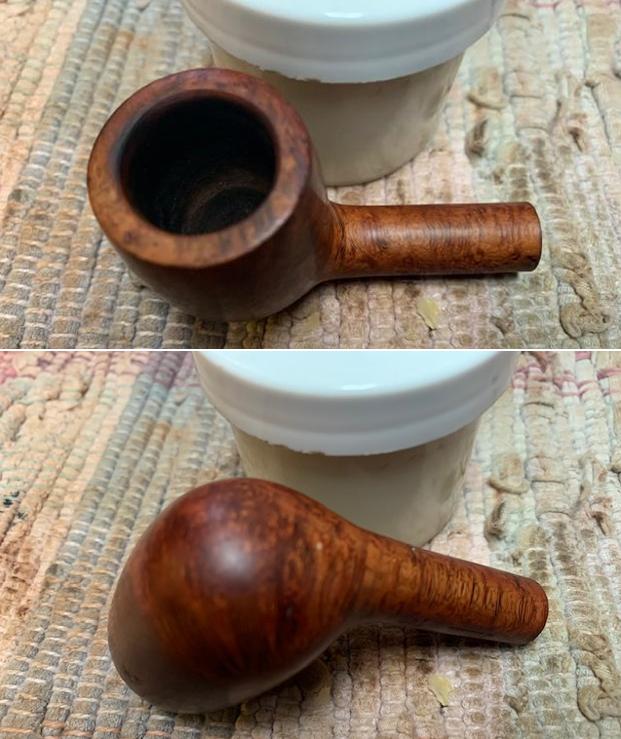
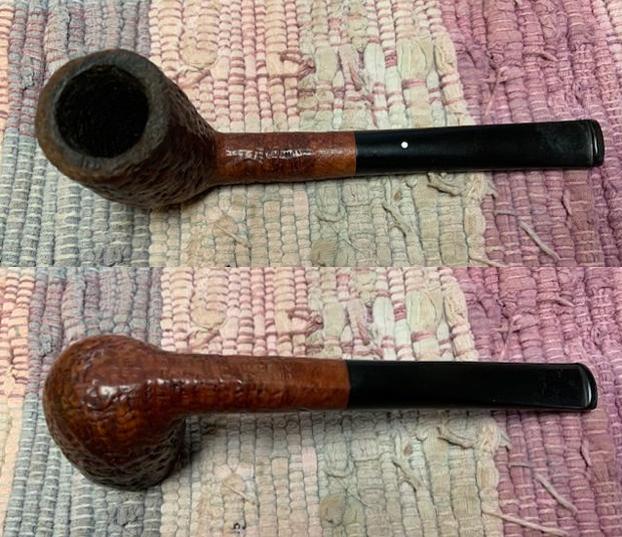
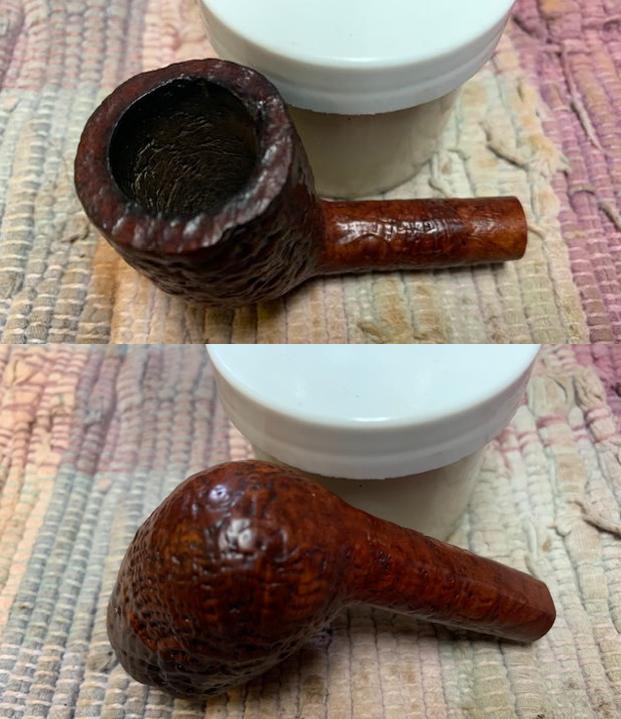
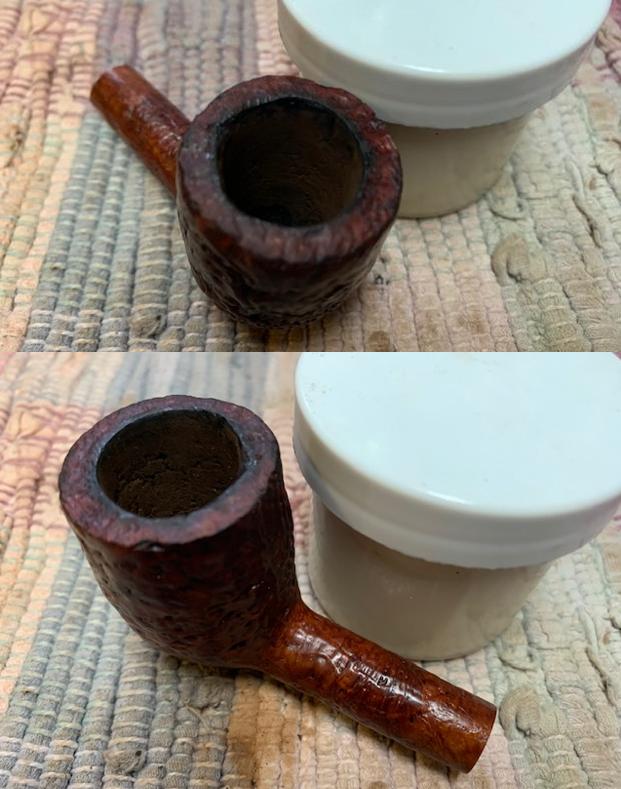
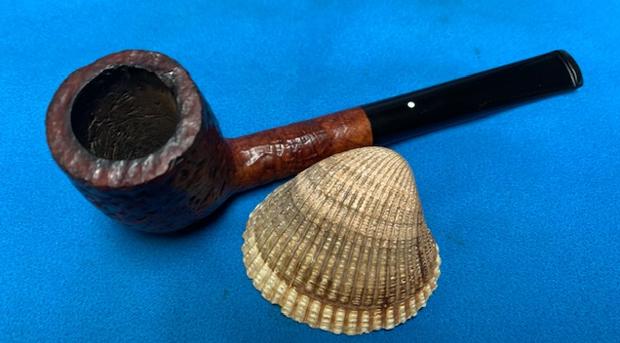
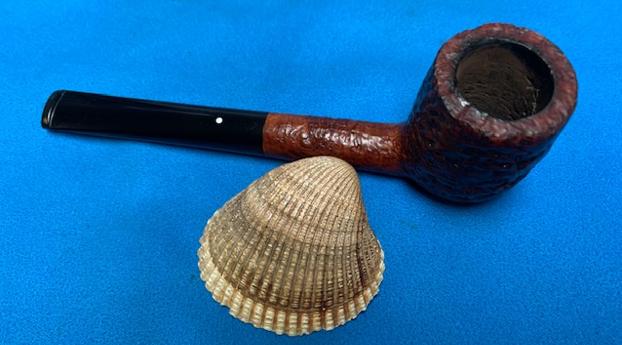
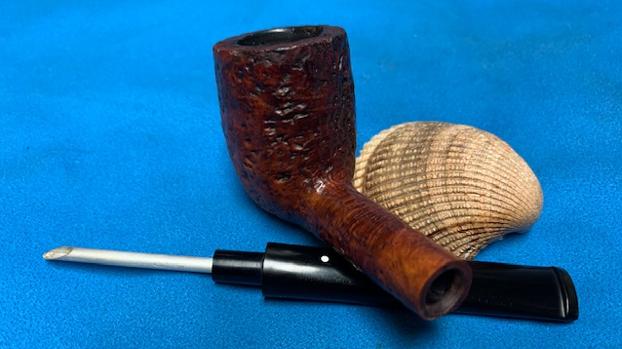
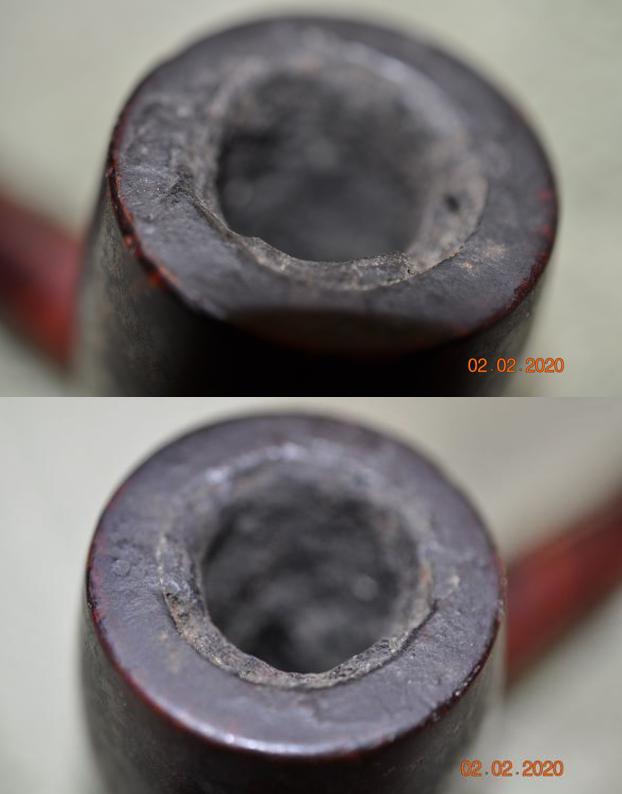
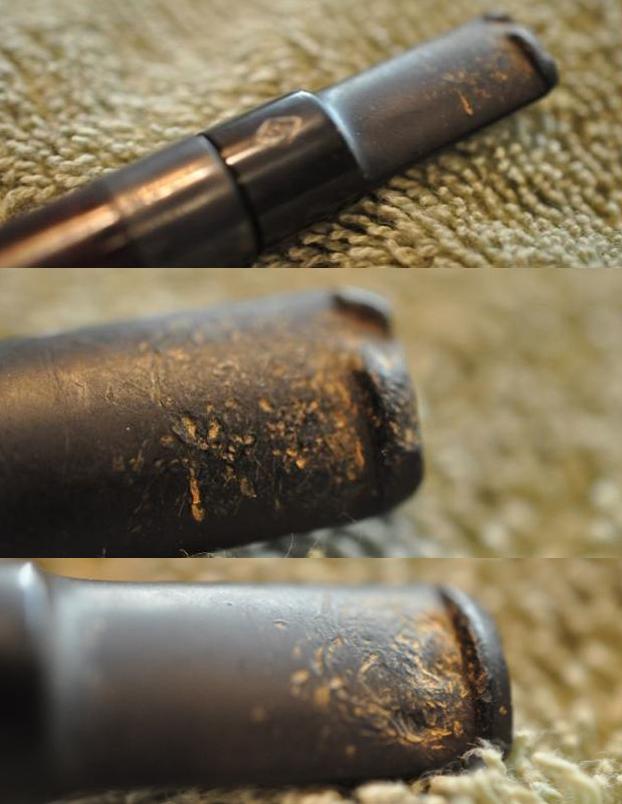
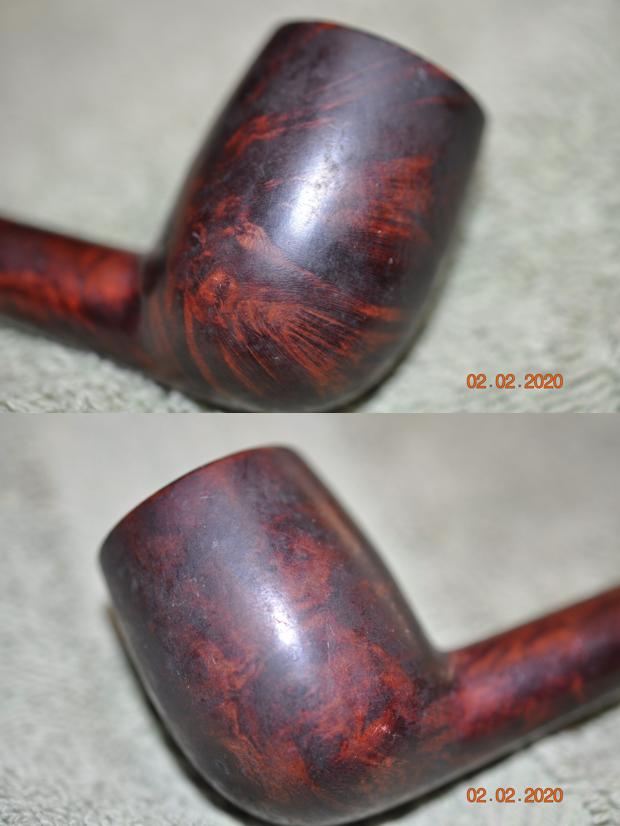
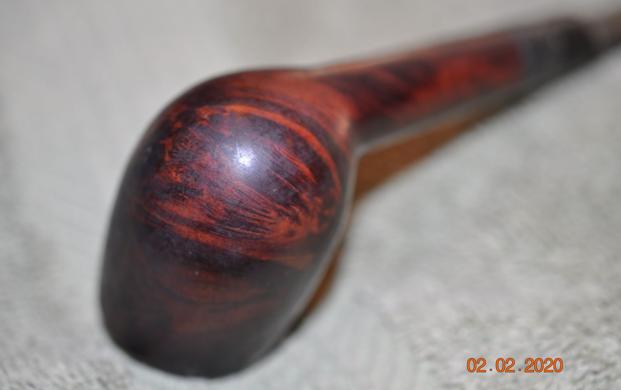
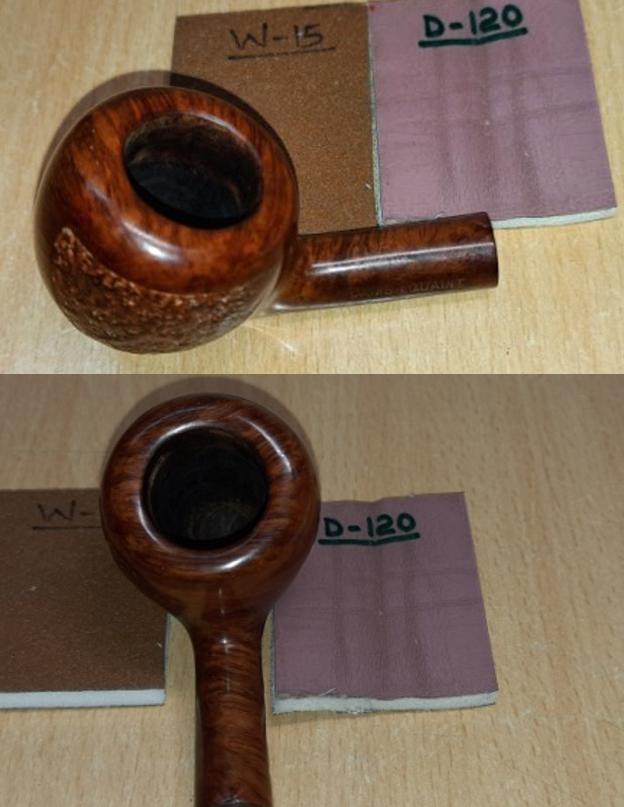
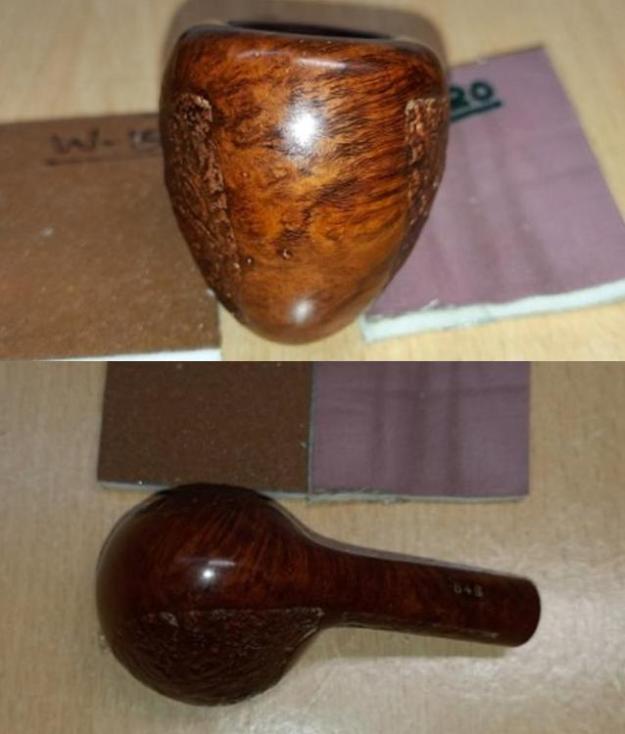
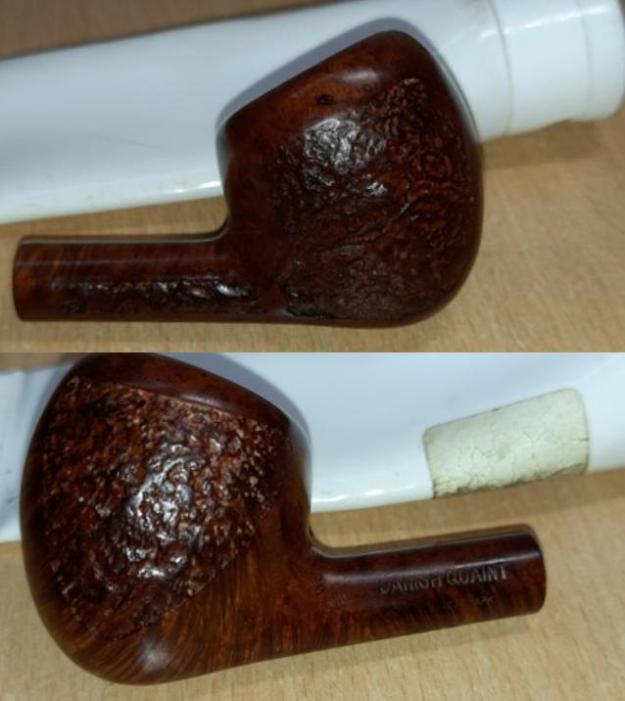
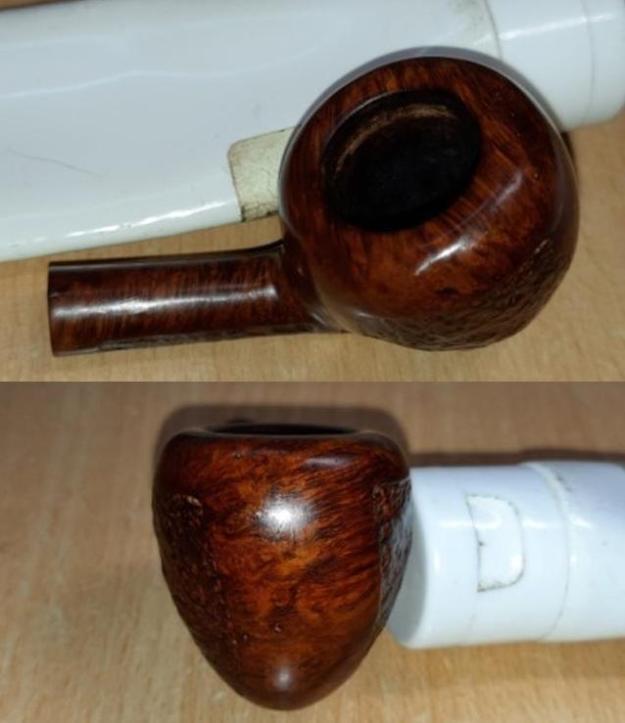
The pipe has a medium sized bowl with a straight vulcanite stem. The chamber has a thick layer of cake with lava overflow over the rim top surface. There are a few dents/dings over the rim top with the inner and outer rim edges in decent condition. The stummel surface is covered in dirt, dust and grime which hides the beautiful mixed grains of bird’s eye and cross grains. The stummel is dull and lifeless. The mortise appears to be clogged as the draw is hard and constricted. The vulcanite stem has light tooth chatter on either surface in the bite zone and is heavily oxidized. The button edges are slightly worn down with minor bite marks and would benefit from sharpening of the edges. The pipe has a very light weight which makes it ideal for outdoor activity or when you need your hands to be free. The pipe as it sits on my work table is shown below. Detailed Inspection…
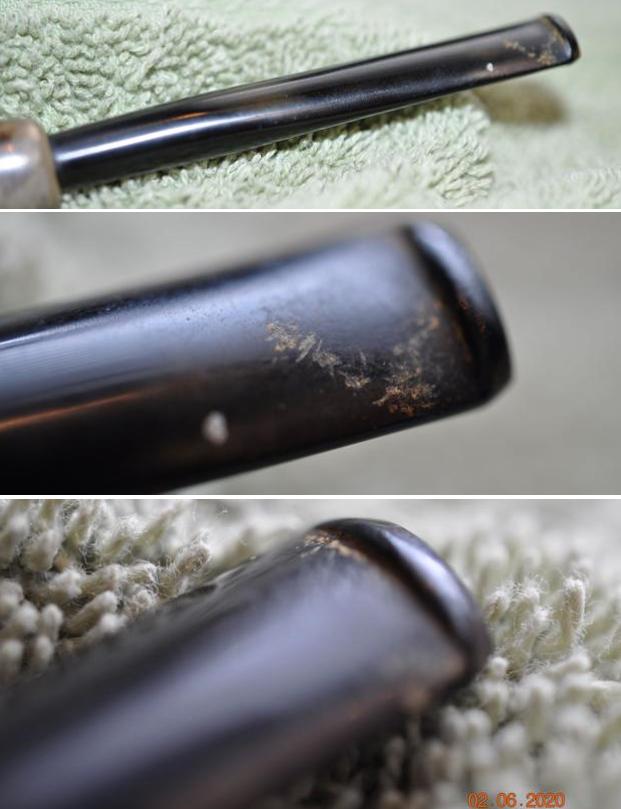
The pipe came to us in a very well smoked state and a thick layer of cake buildup is observed in the chamber. The rim top surface is covered in the thick overflow of lava in 6 ‘O’ clock direction and several dents and dings to the rim top surface can be seen, probably caused due to the tapping it must have received at the hands of the previous owner to remove the dottle. This will need to be addressed. The inner and outer rim edges are in decent condition. The draught hole is perfectly at the bottom center and should be a great smoke. The old smells should reduce once the chamber and shank internals are cleaned up.The smooth stummel surface has beautiful grain patterns with a mix of bird’s eye, cross grains and nice swirls. The stummel surface has dulled a bit and appears lifeless due to accumulation of grime, dust and dirt. The mortise and the draught hole are clogged with accumulation of oils and tars making the draw laborious. The fact that there is not a single fill in the stummel surface and it’s light weight points to a very high quality of well cured briar. The straight vulcanite stem has a slight flair out towards the slot end and is deeply oxidized with light tooth chatter on either surface in the bite zone. The insides of the slot and tenon show heavy accumulation of oils and tars. The button edges have worn out a tad bit and also have minute bite marks. The buttons could benefit from sharpening of the edges. The ‘HERTER’S’ logo needs to be refreshed.The Process
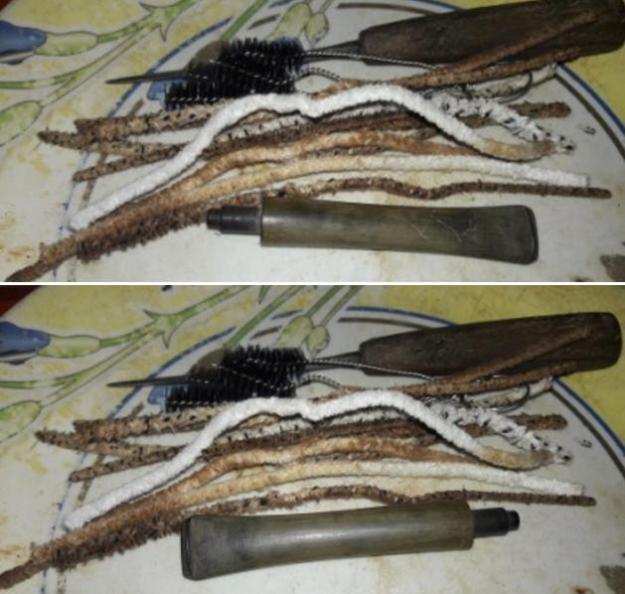
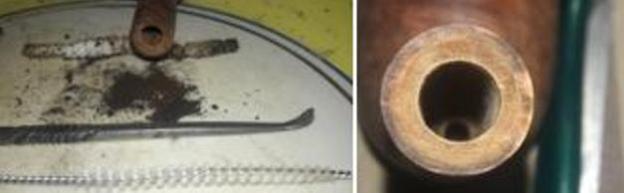
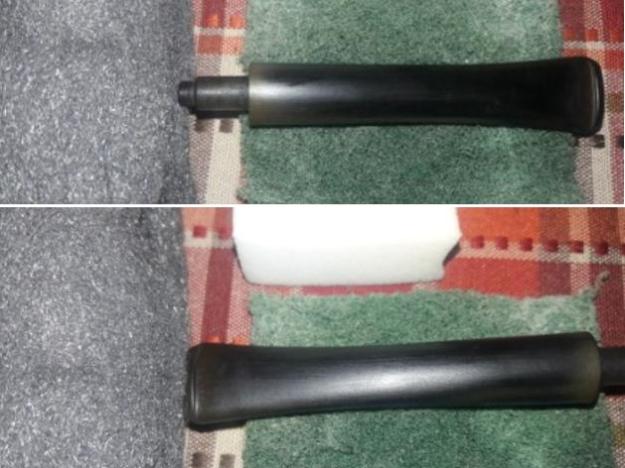
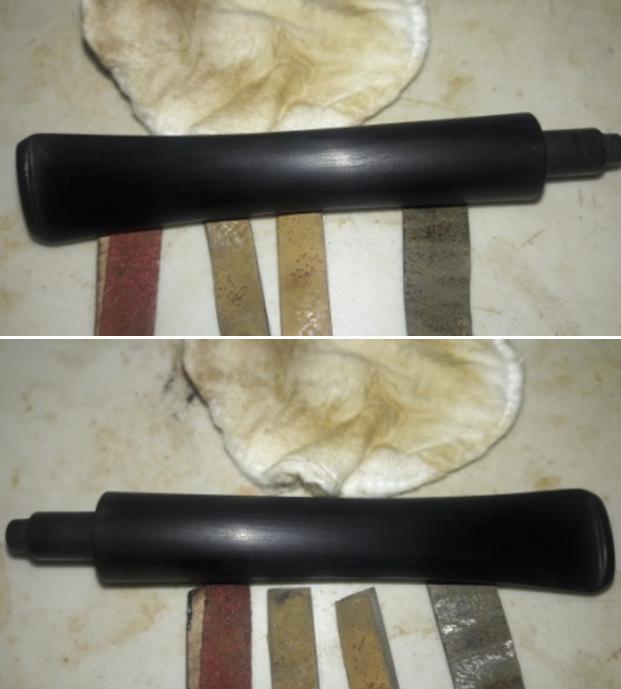
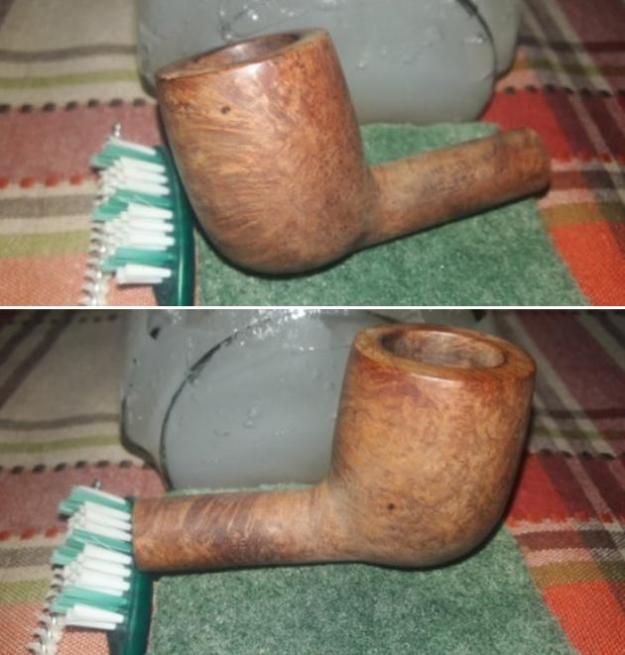
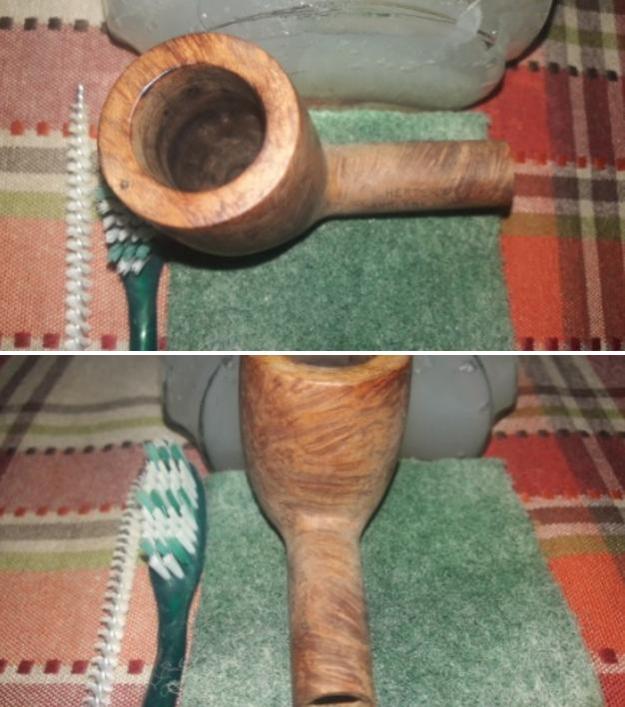
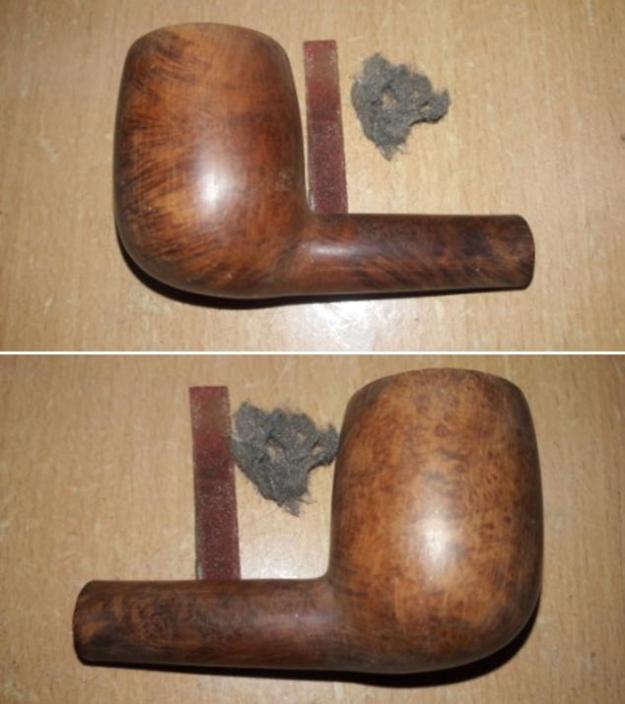
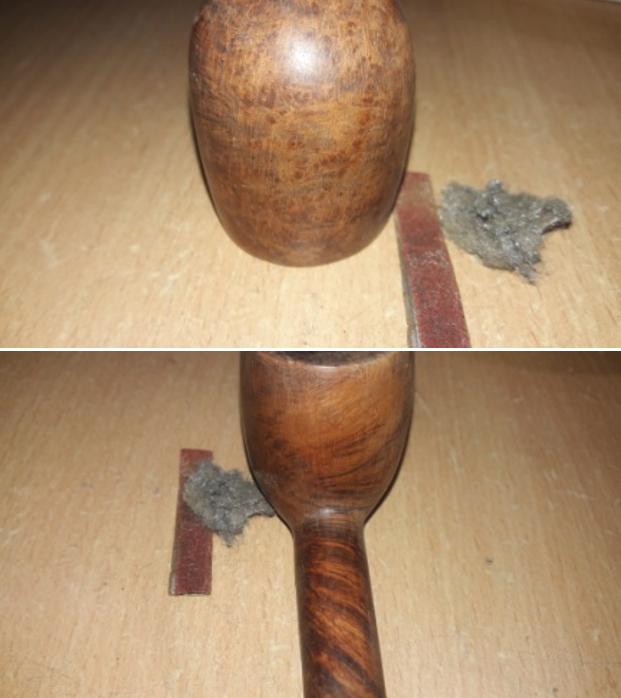
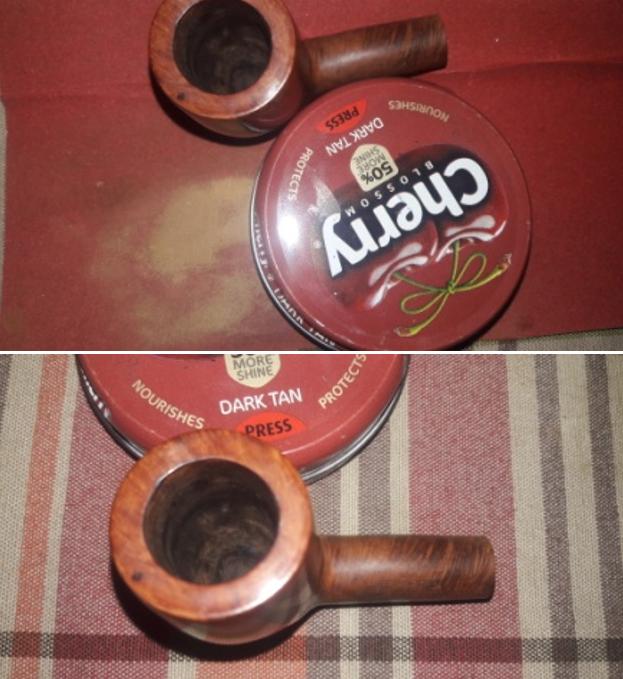
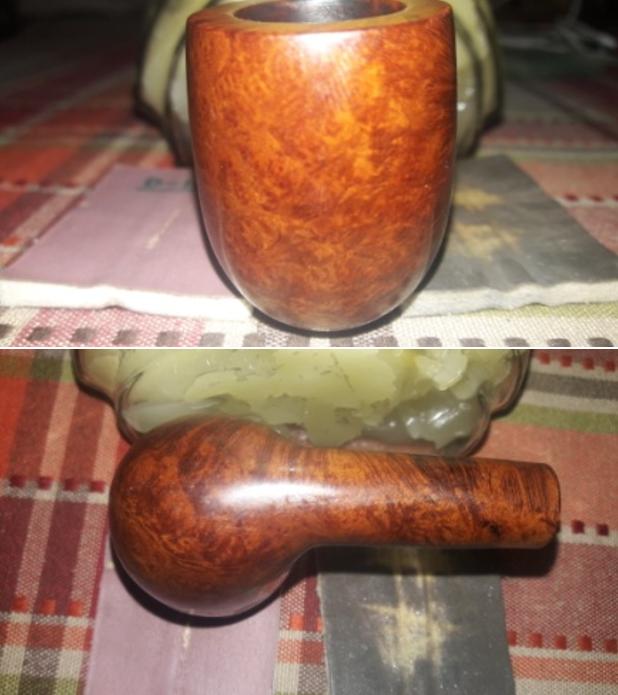
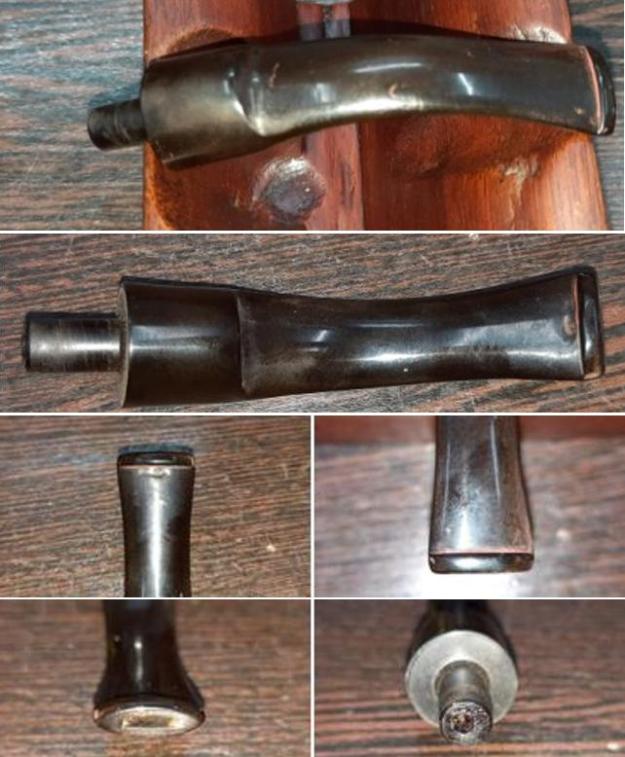
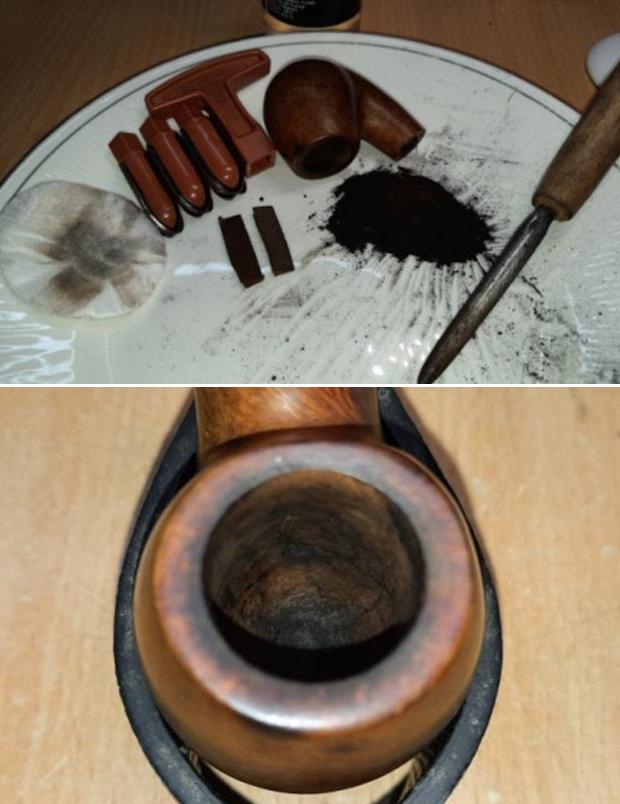
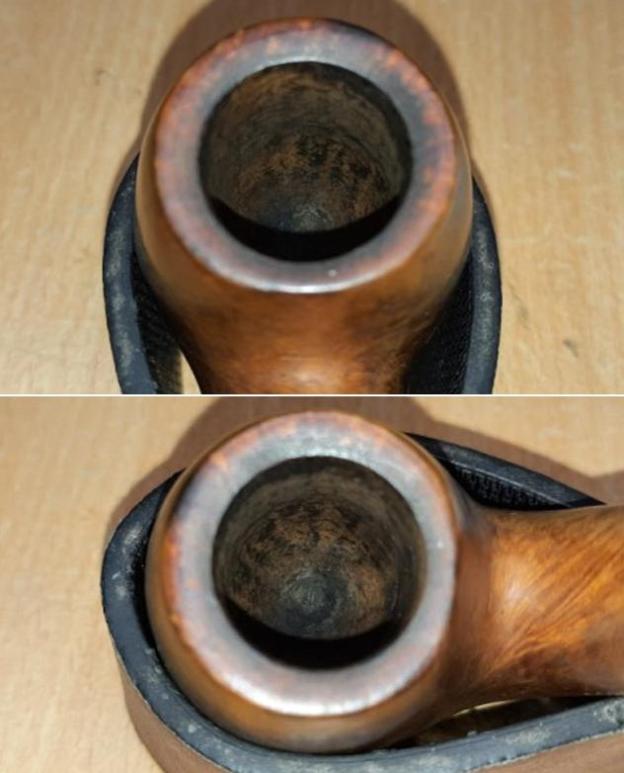
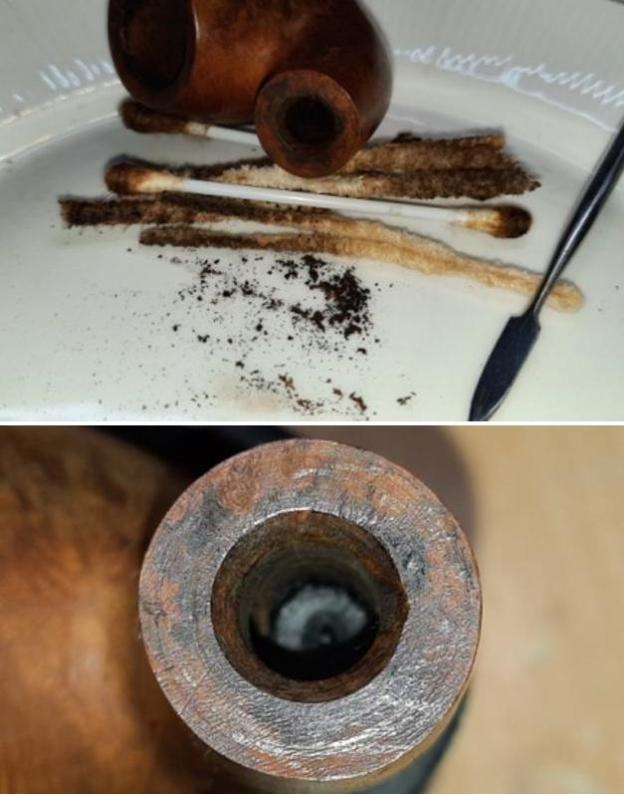
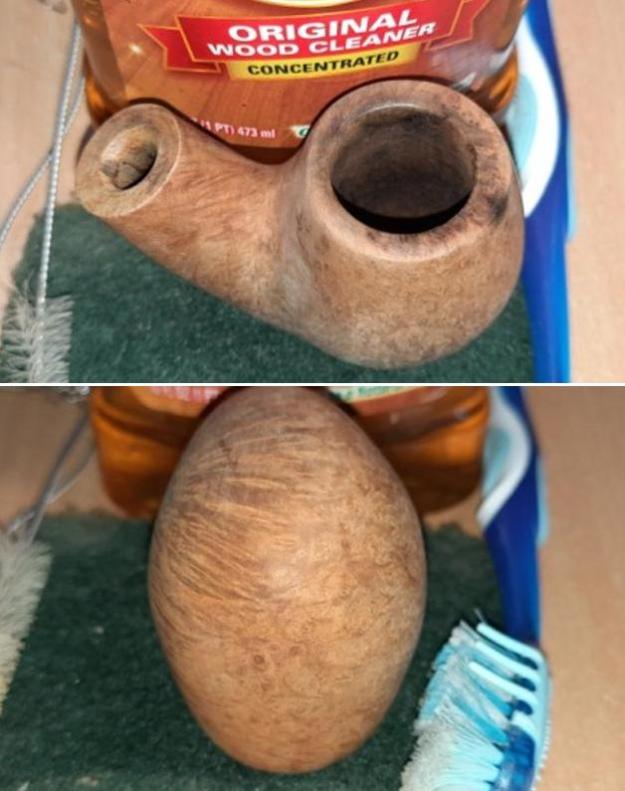
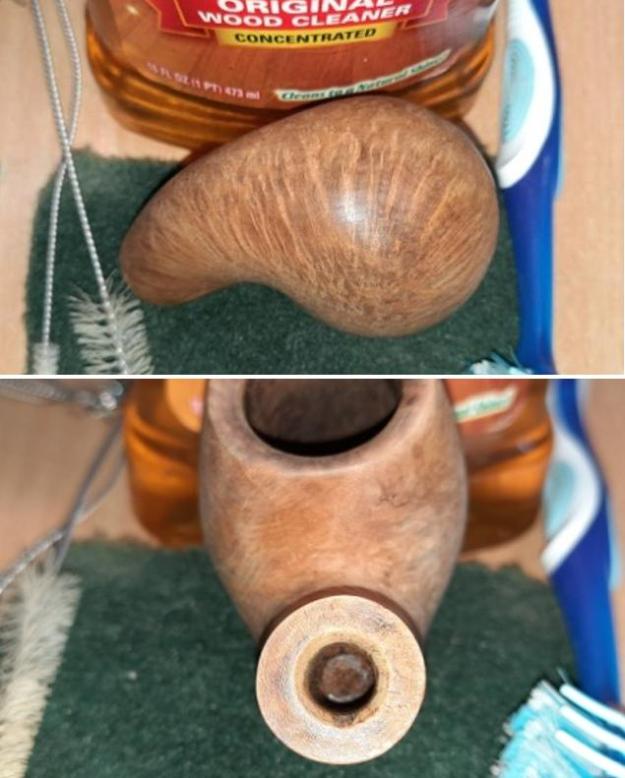
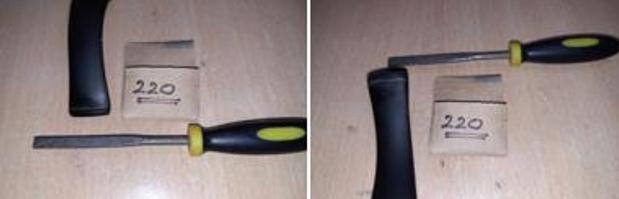
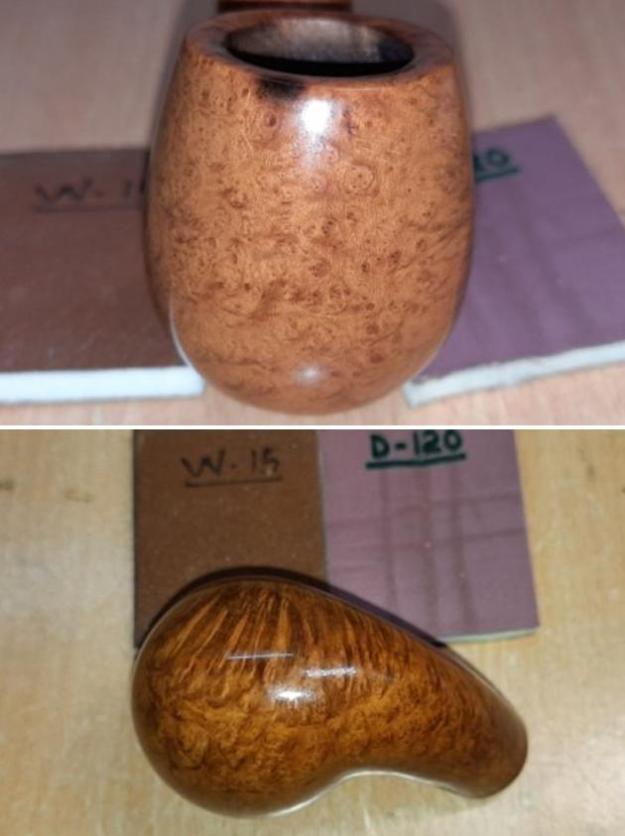
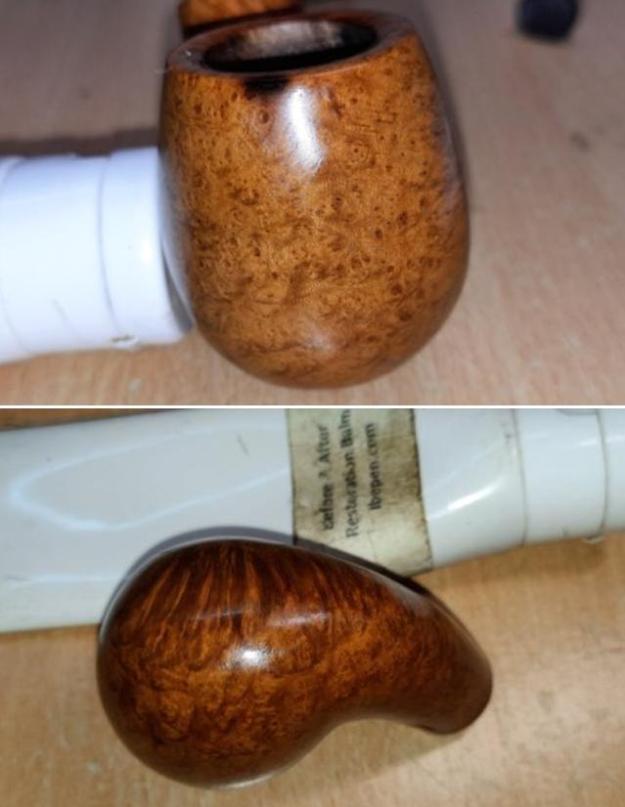
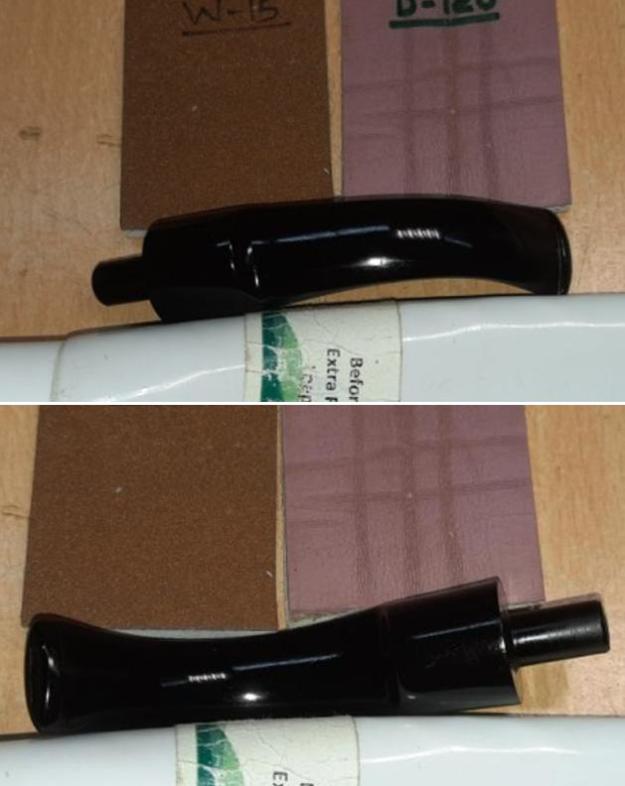
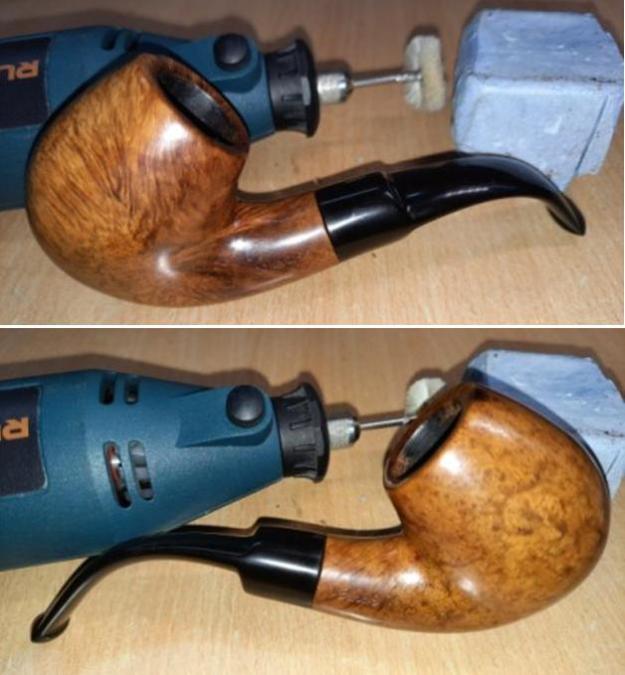
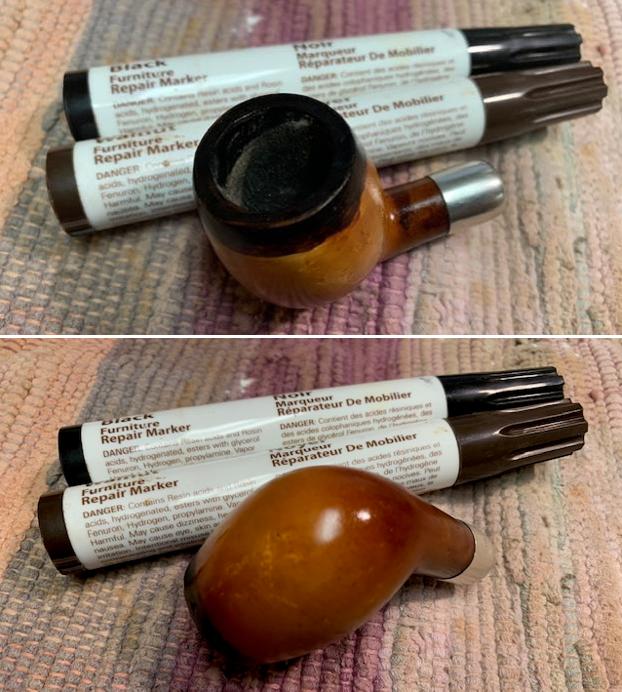
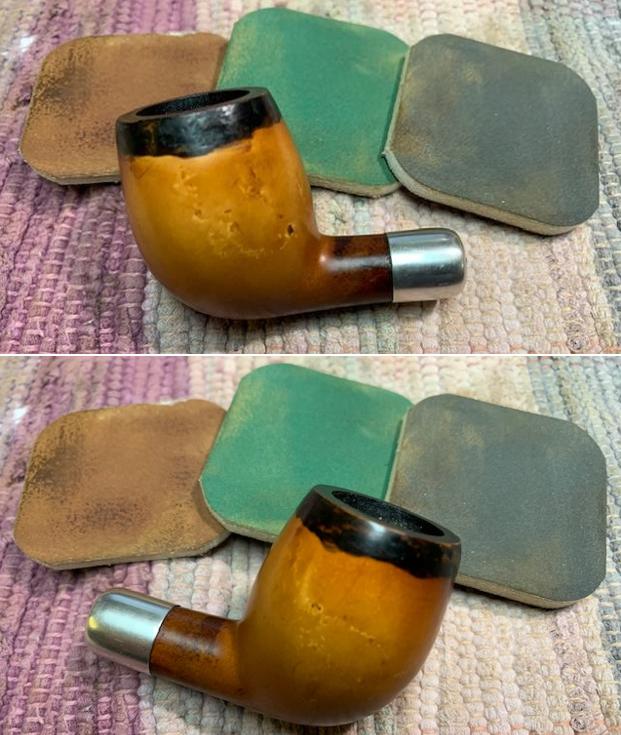
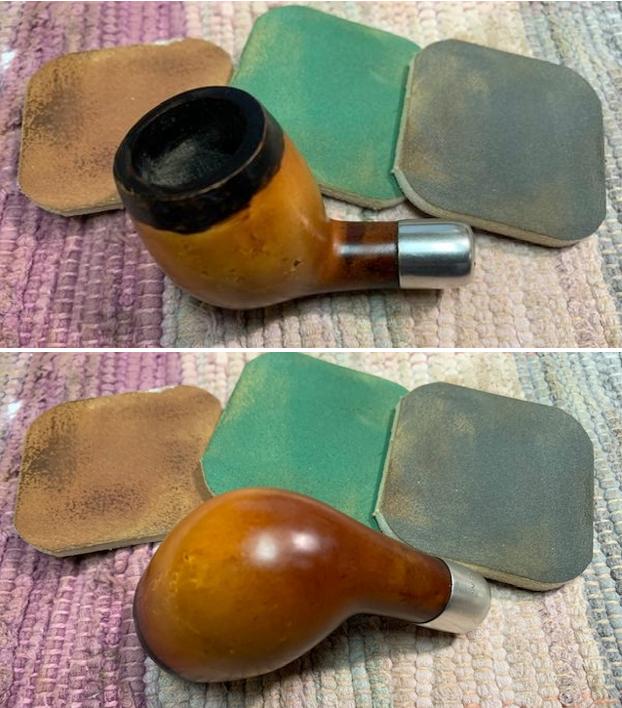
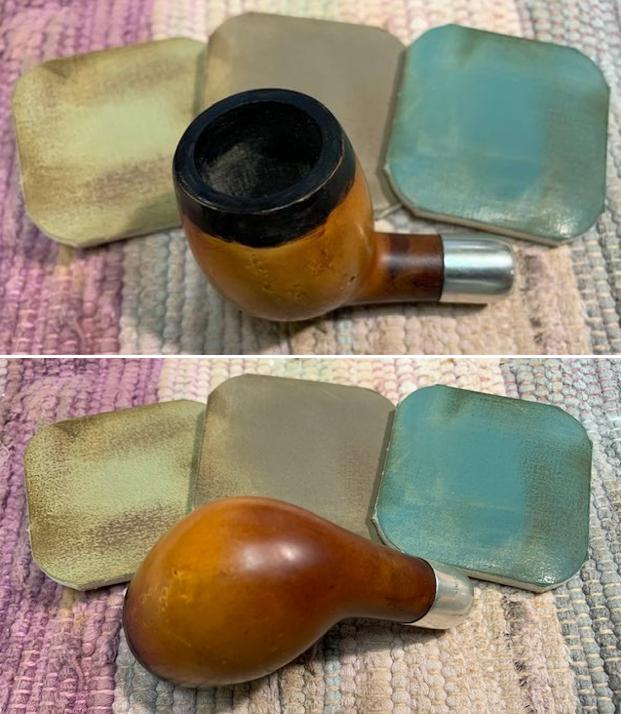
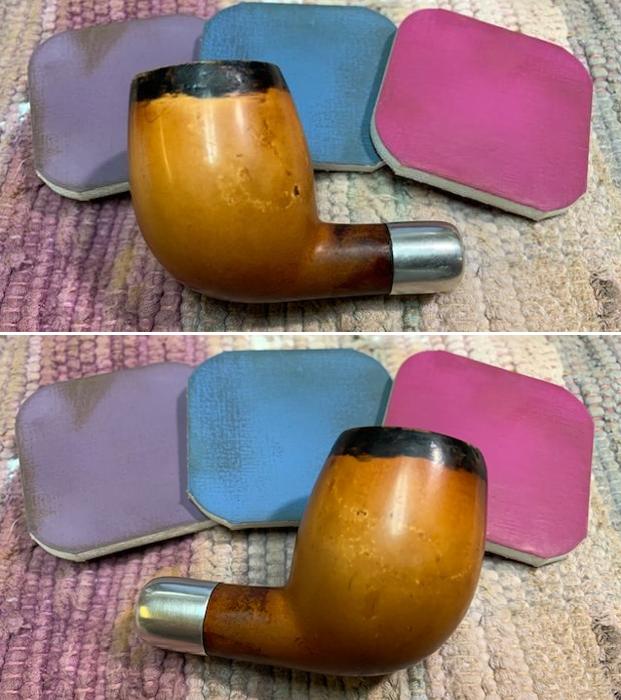
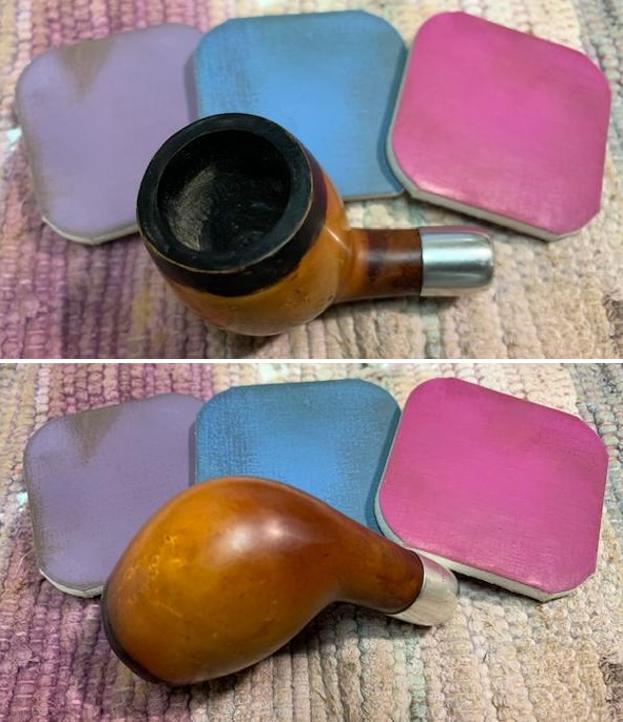
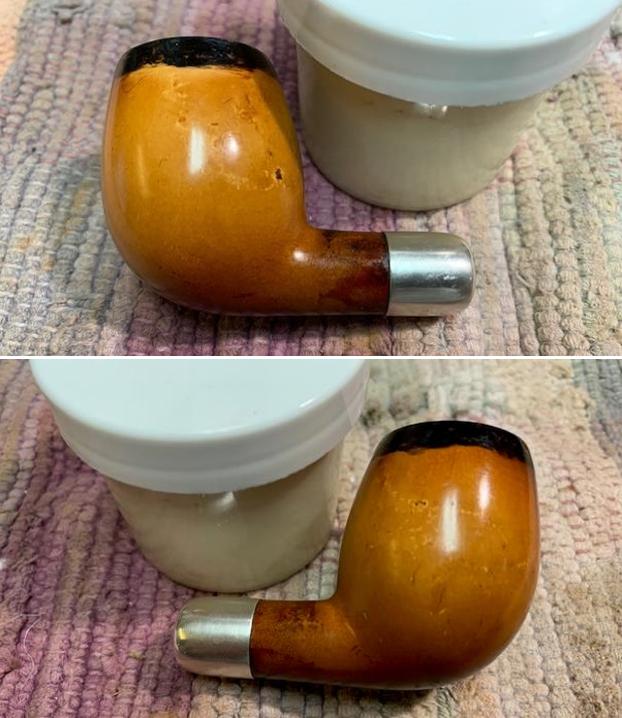
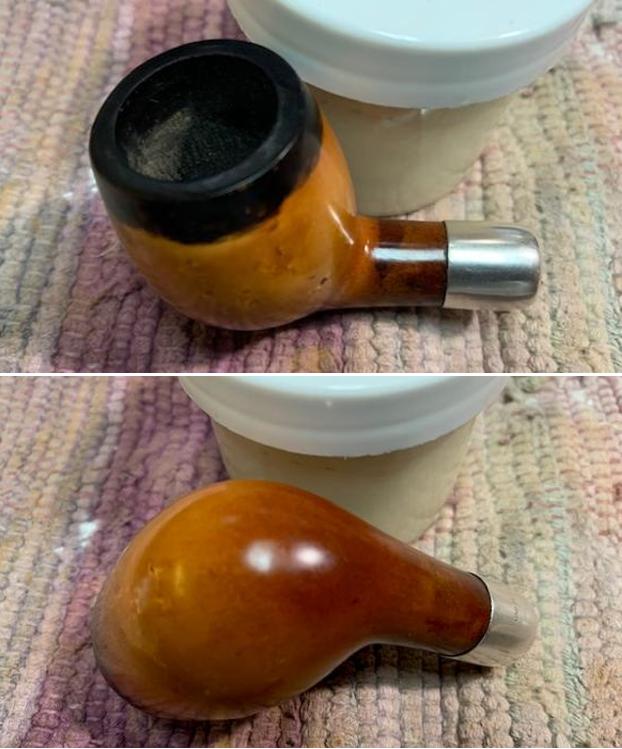
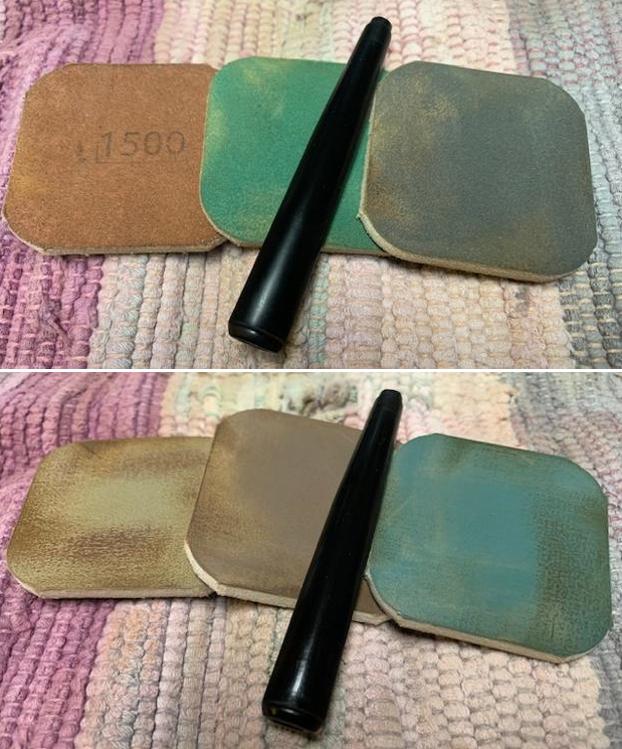
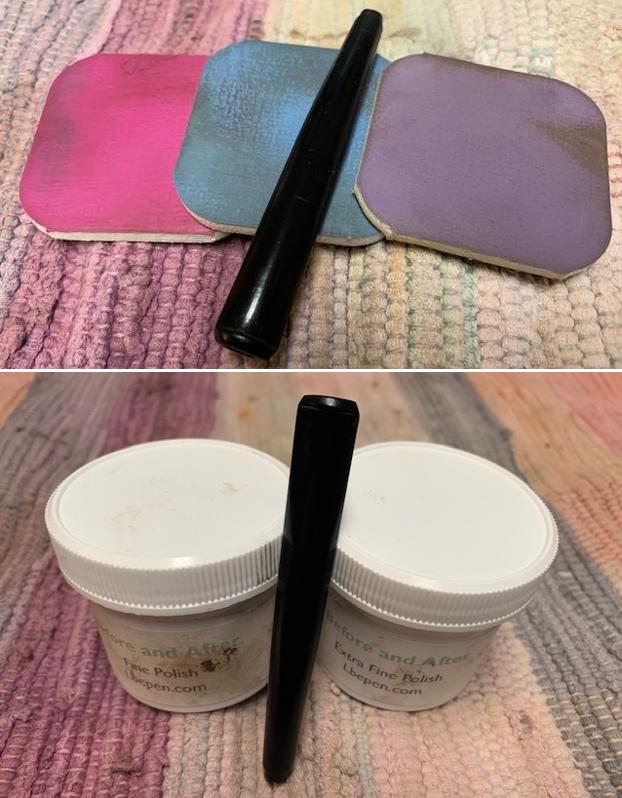
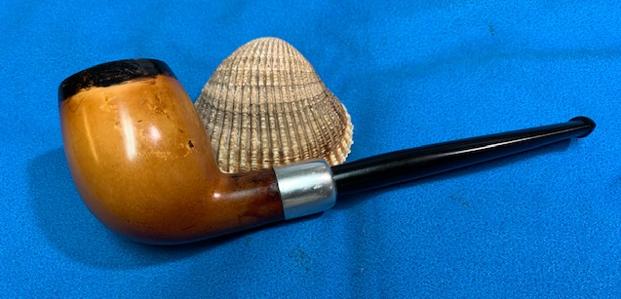
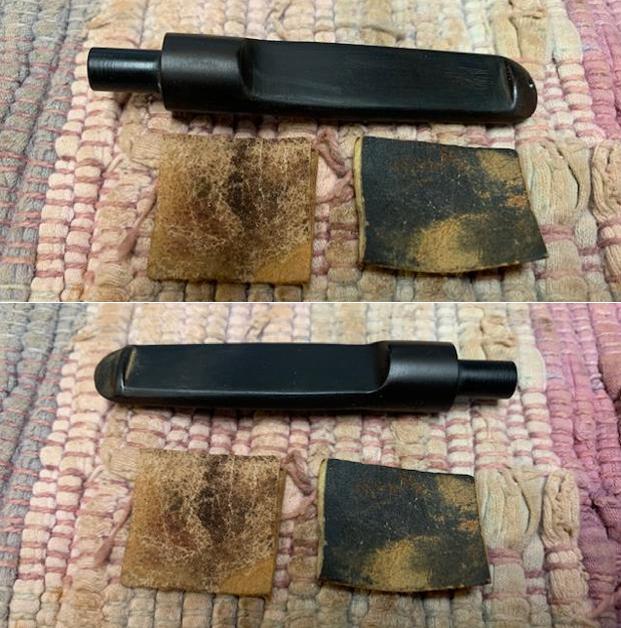
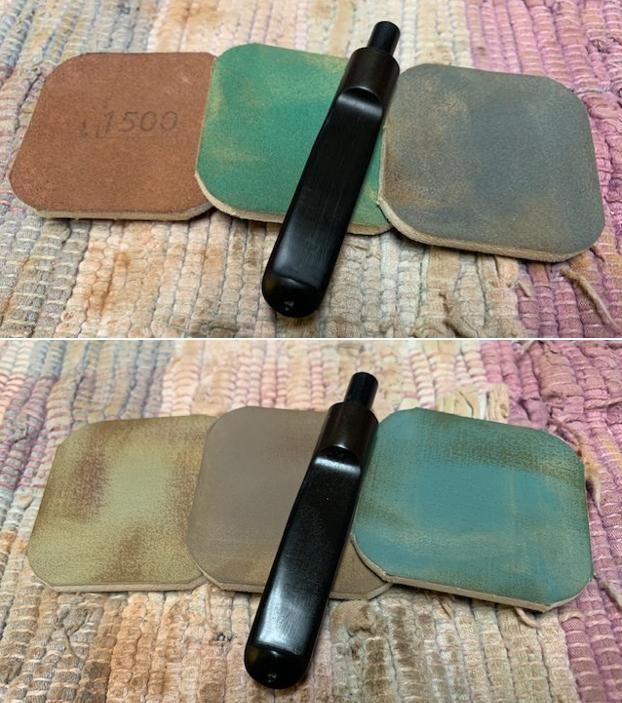
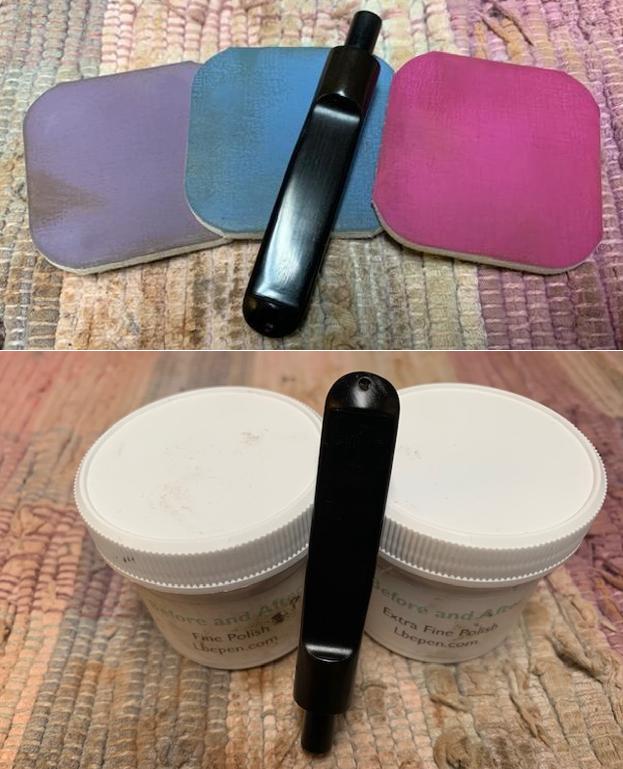
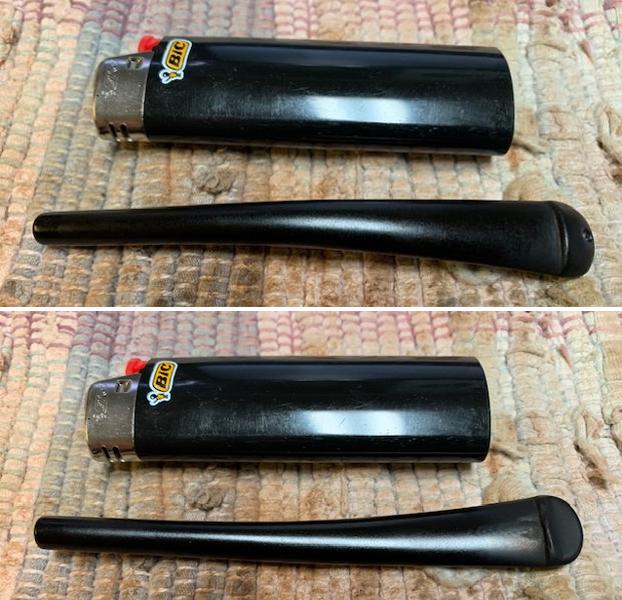
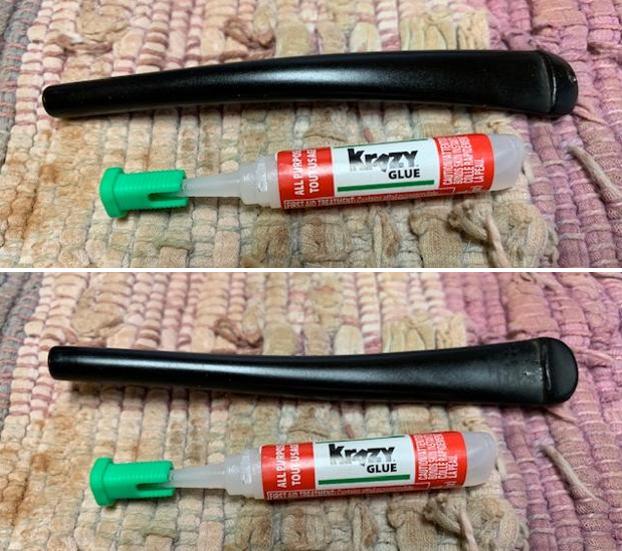
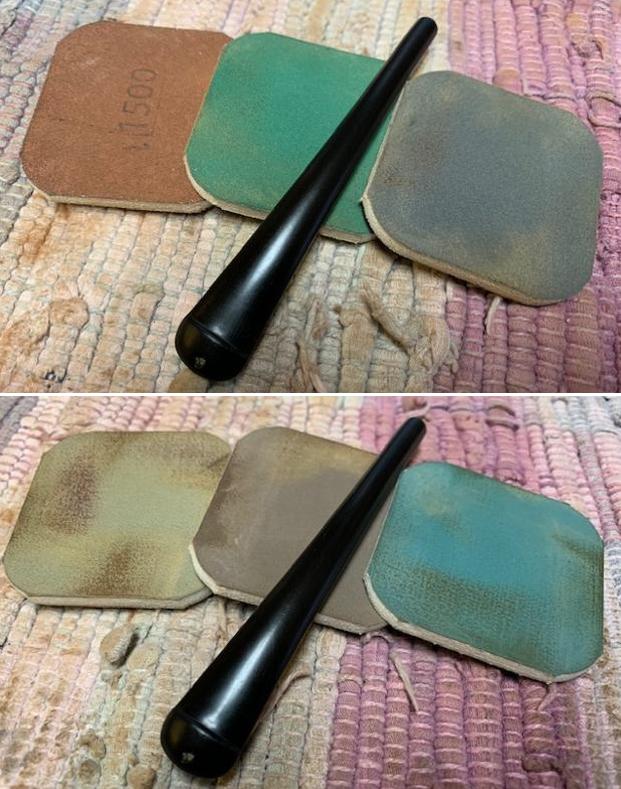
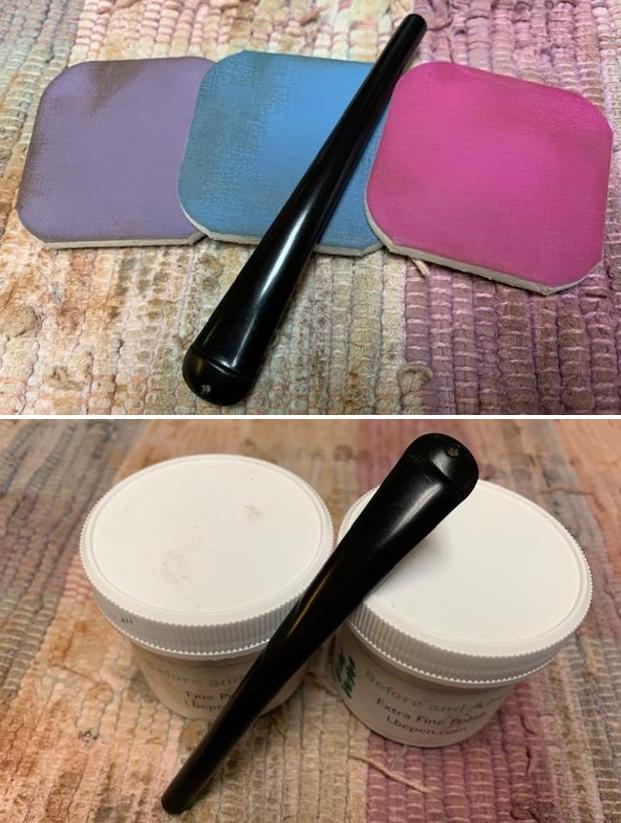
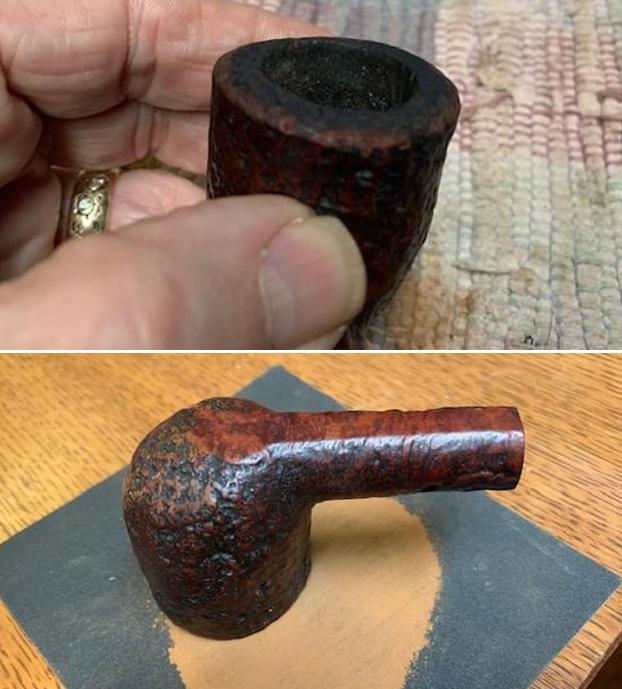
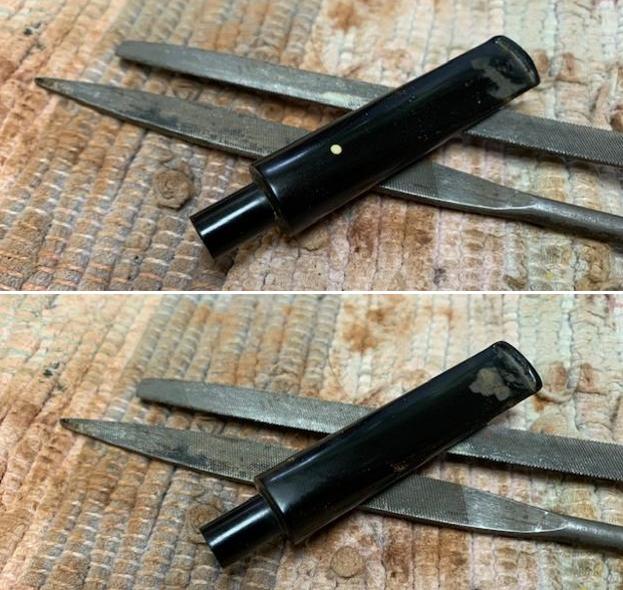
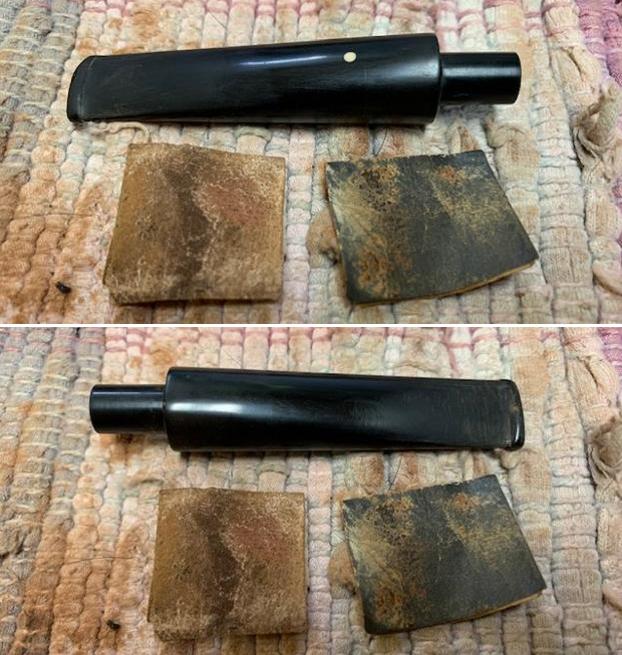
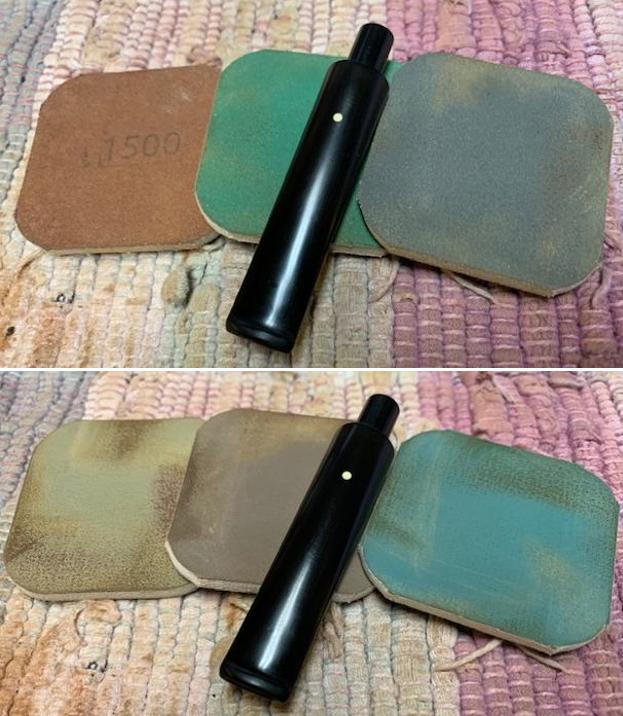
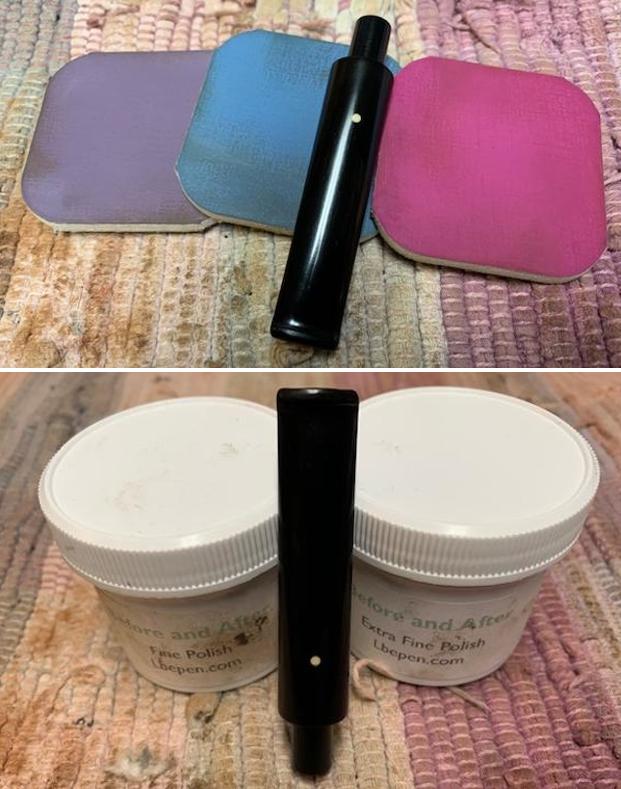
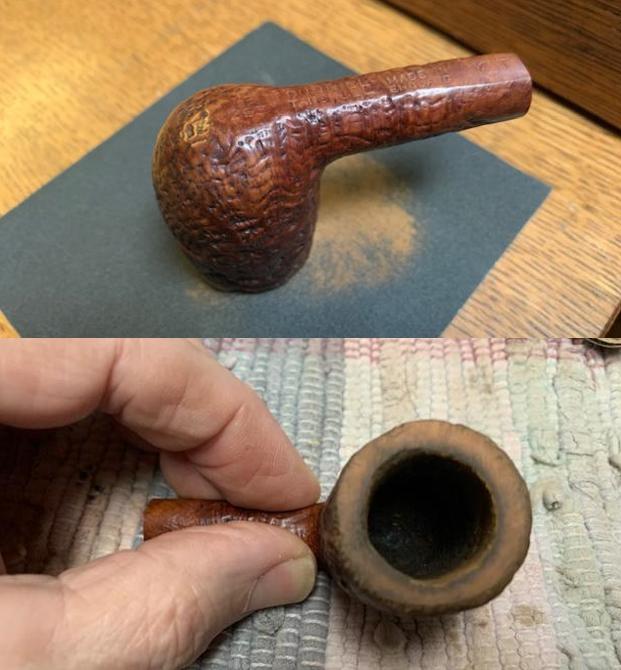
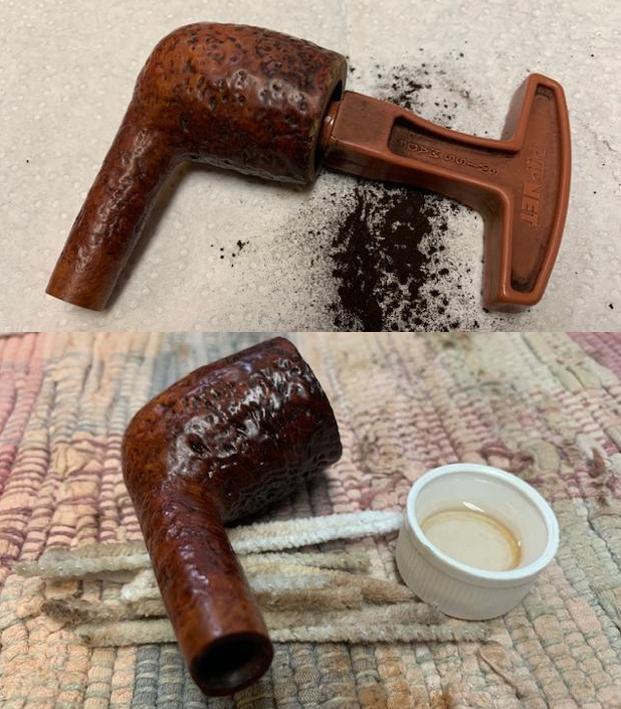
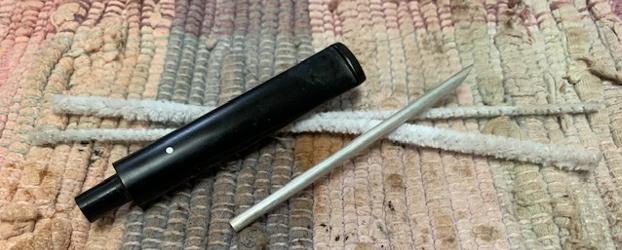
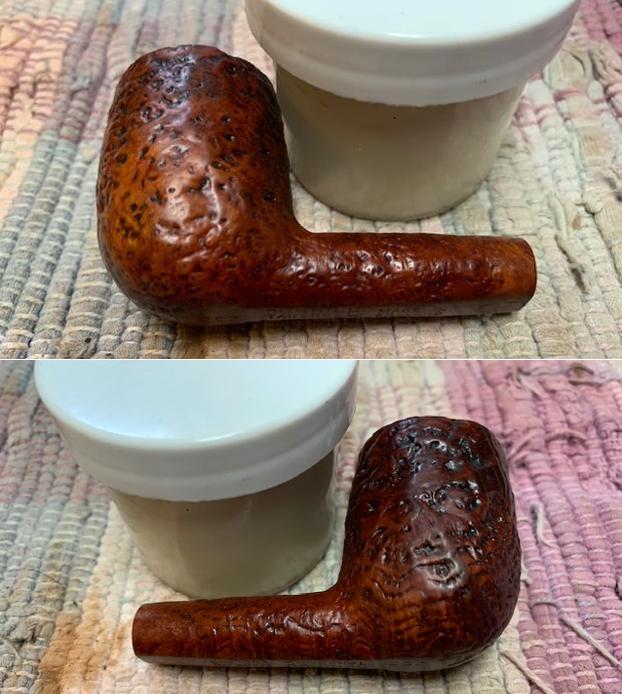
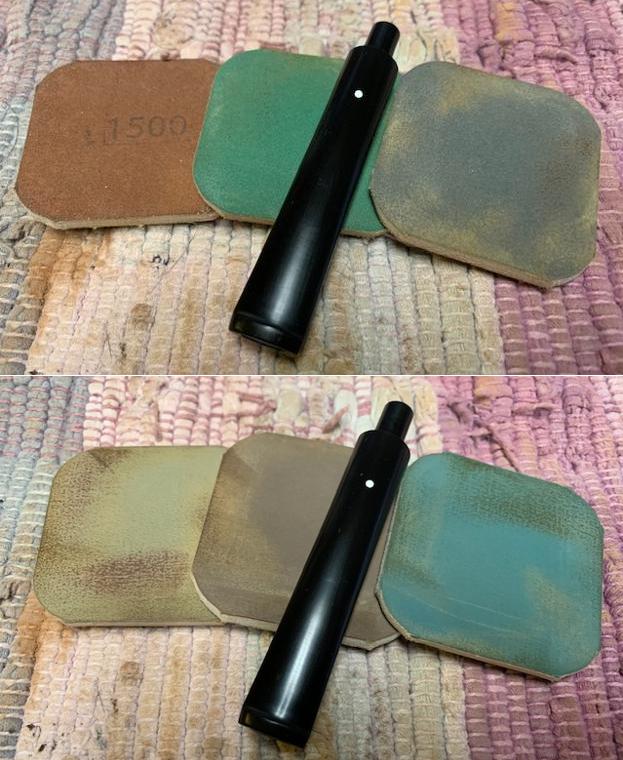
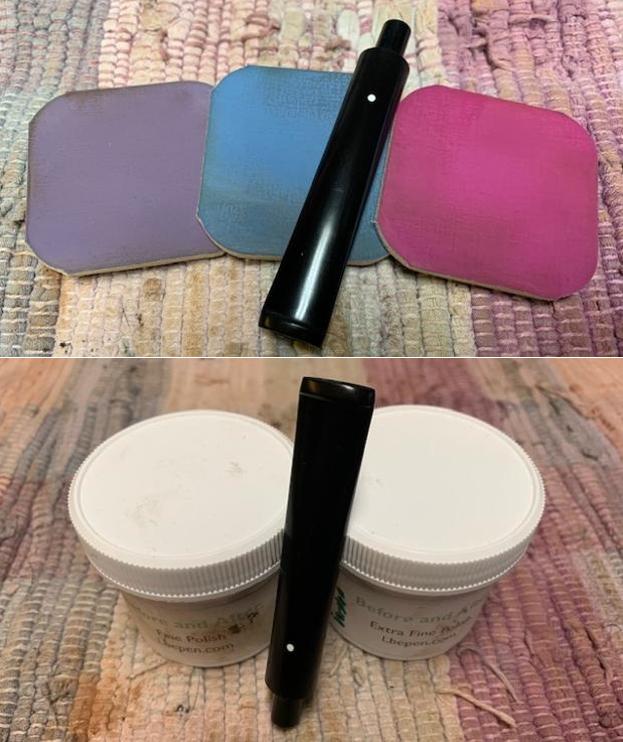
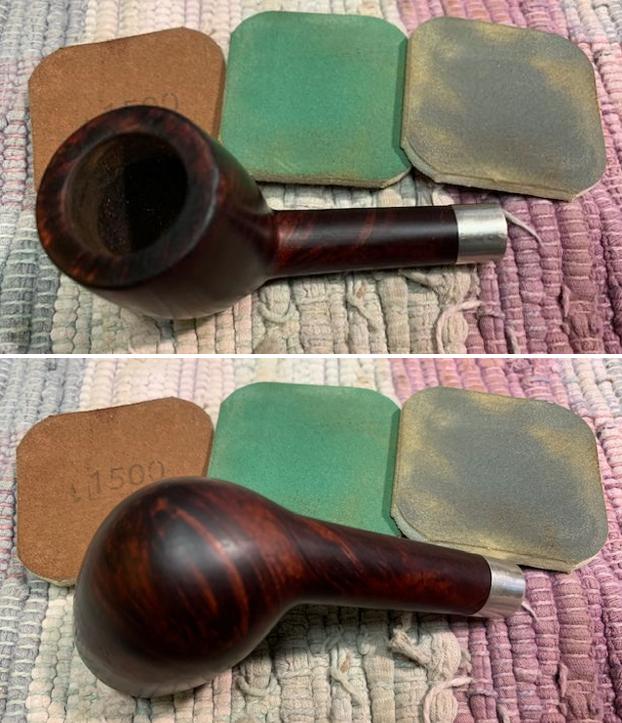
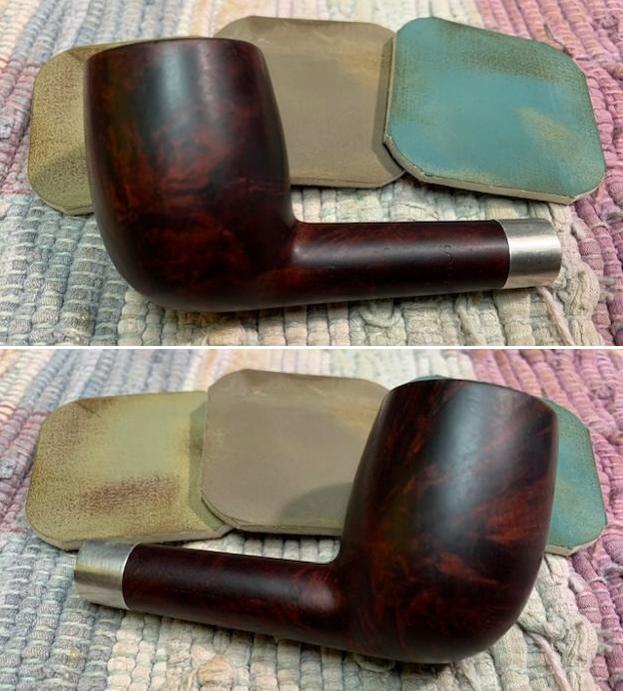
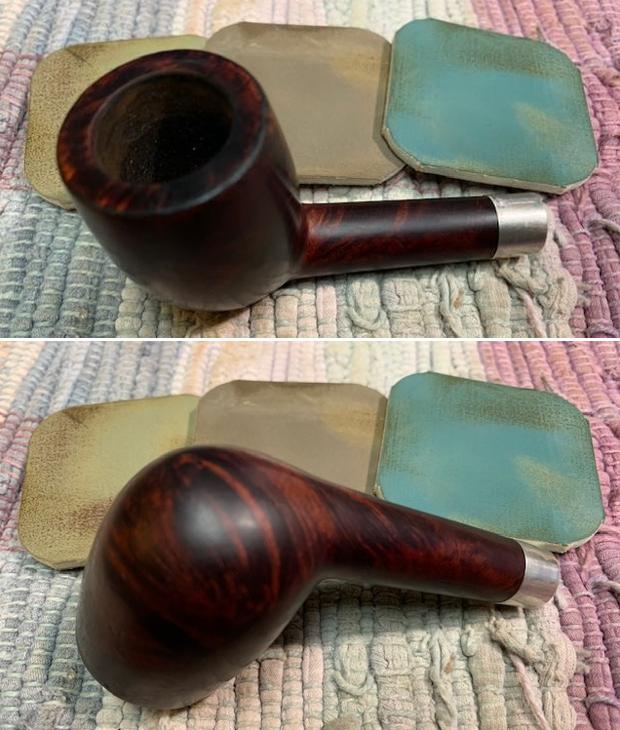
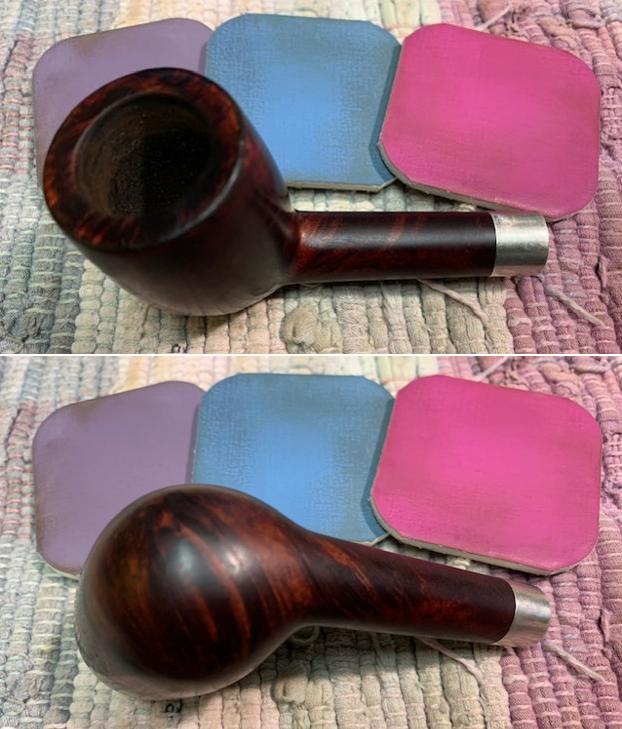
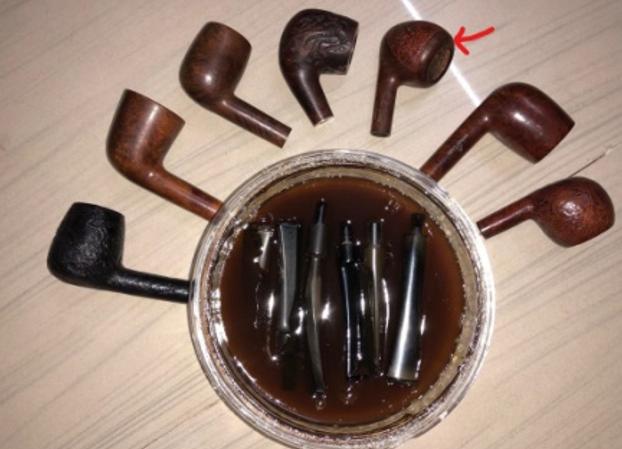
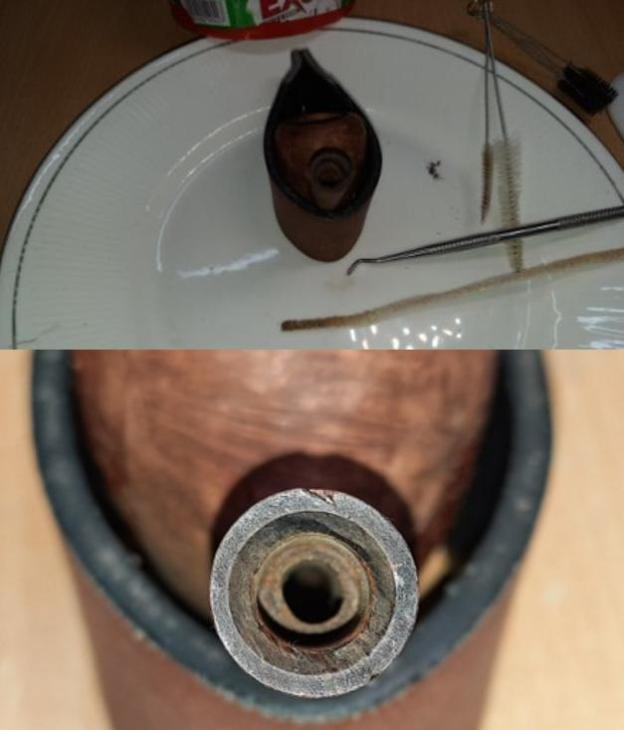
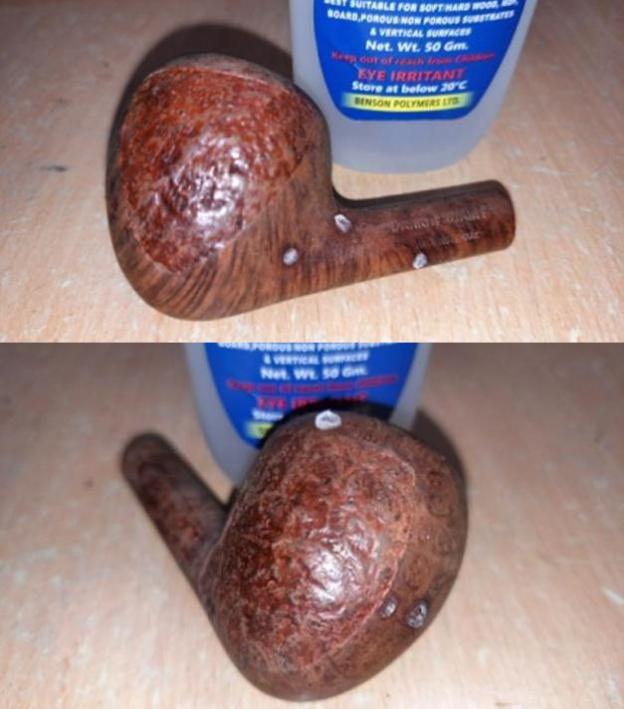
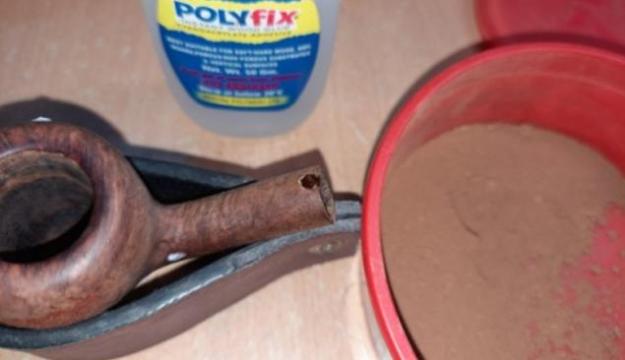
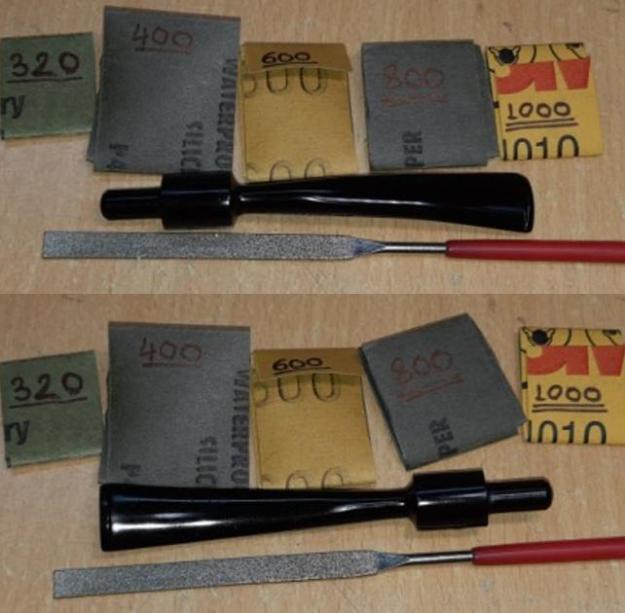
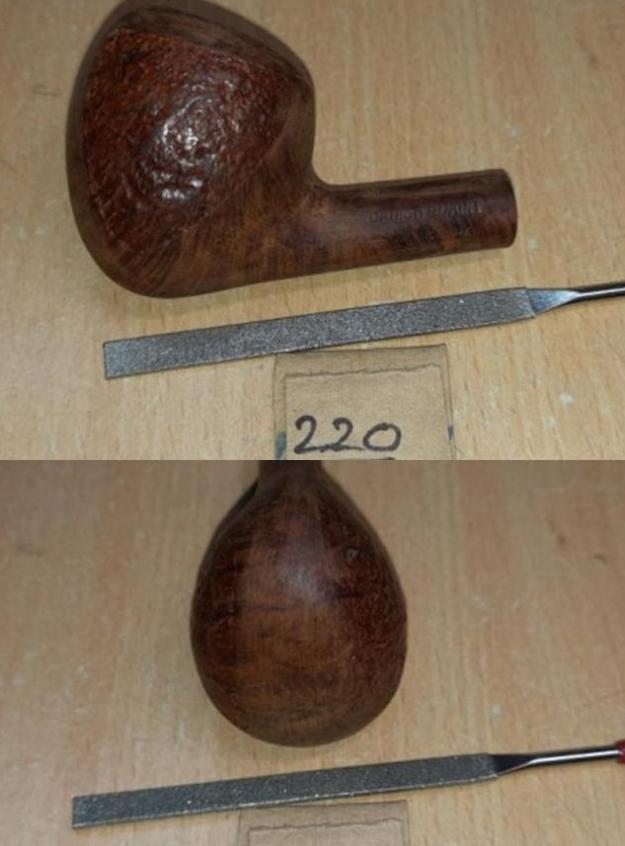
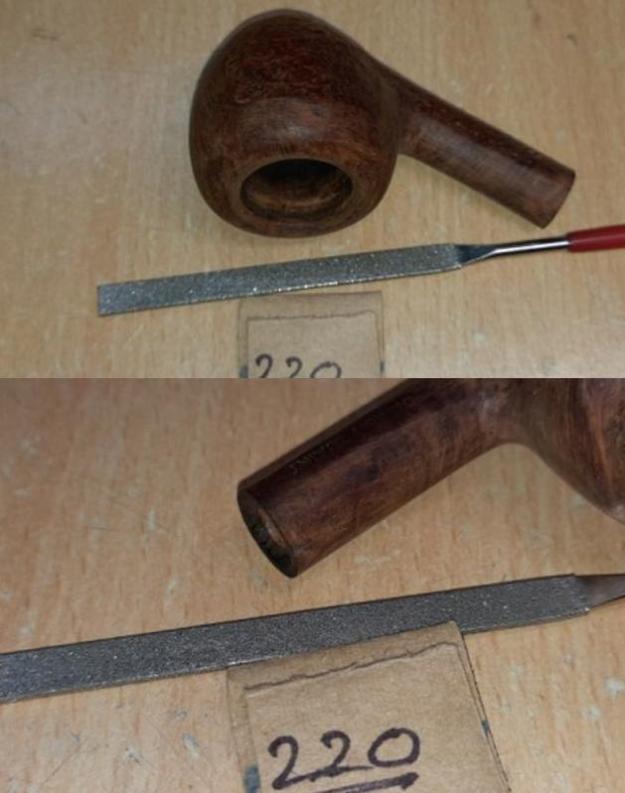
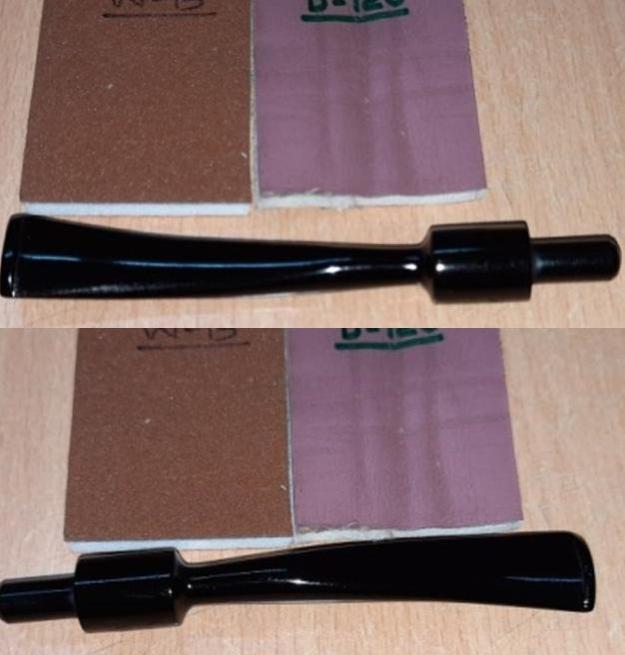
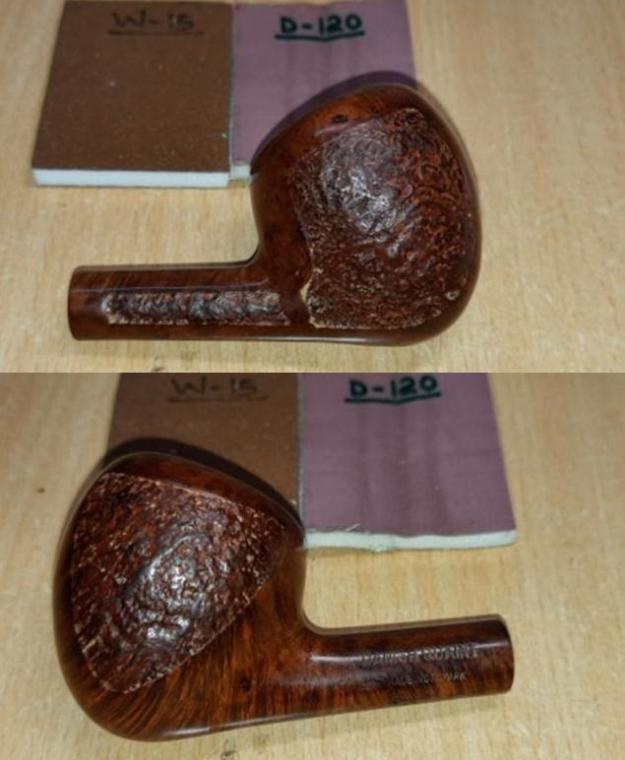
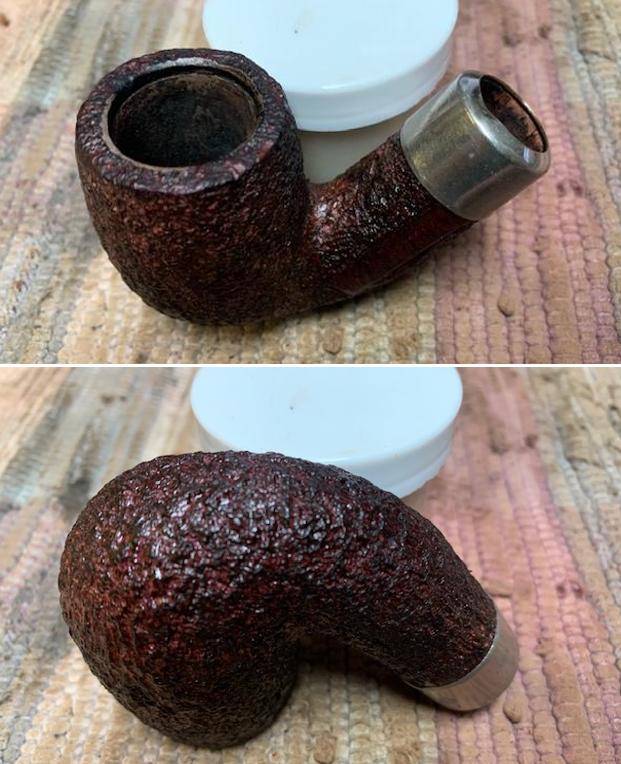
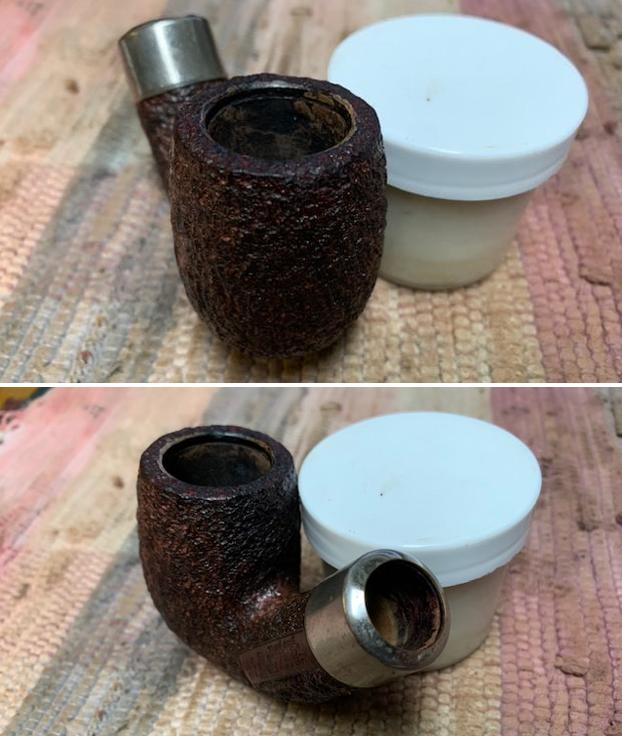
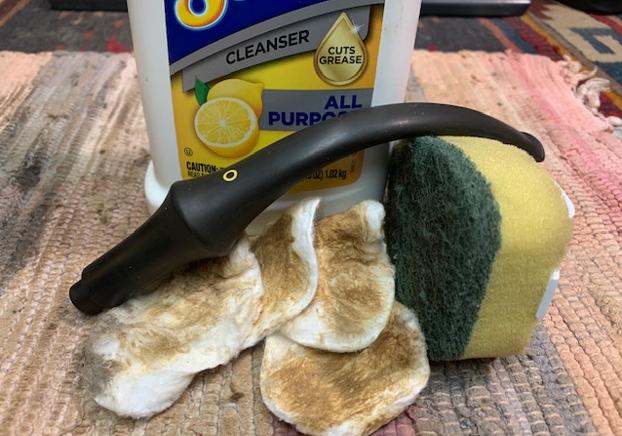
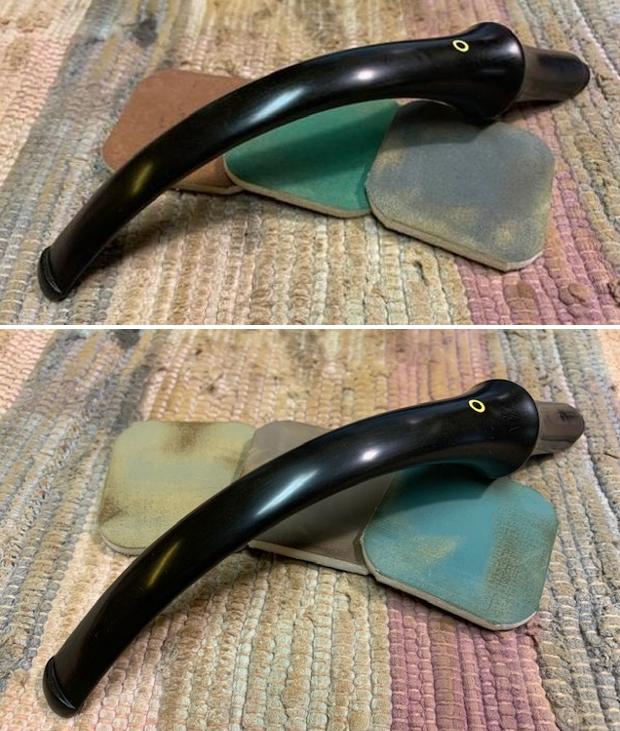
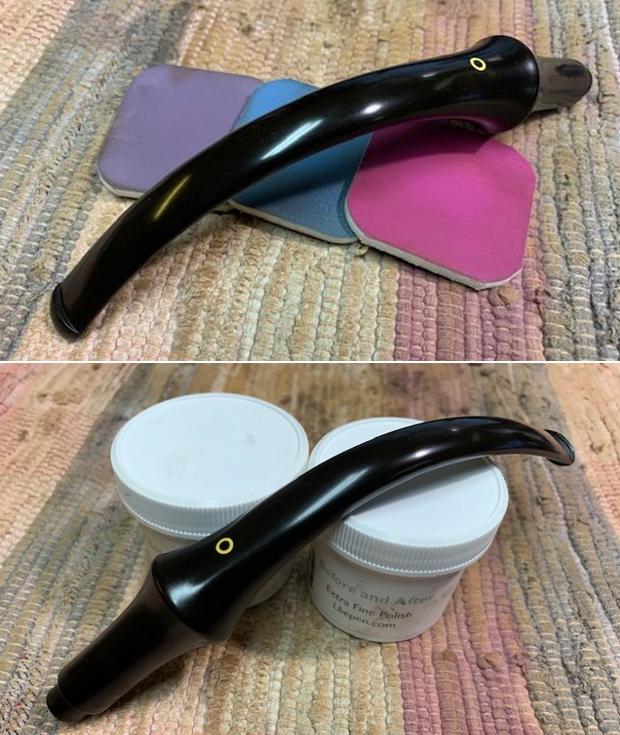
I started the restoration of this pipe by first cleaning the internals of the stem with bristled pipe cleaners and 99.9% pure isopropyl alcohol. I scraped out the dried oils and tars from the tenon end and the slot end with my fabricated knife. I followed it up by sanding the entire stem with a folded piece of 220 grit sand paper to remove the surface oxidation. It has been our (Abha, my wife and me) experience that sanding a stem before dunking it in to the deoxidizer solution helps in bringing the deep seated oxidation to the surface which in turn make further cleaning a breeze with fantastic results.  I dropped the stem in to “Before and After Deoxidizer” solution developed by my friend Mark Hoover. The solution helps to draw out heavy oxidation to the surface, making it’s further removal a breeze, while the minor oxidation is eliminated to a very great extent. The initial sanding helps to draw out the complete oxidation as the sanding opens up the stem surface that has been initially covered with oxidation. I usually dunk stems of 5- 6 pipes that are in-line for restoration and this pipe is marked with a green arrow. I generally allow the stems to soak in this solution overnight to do its work.While the stem was soaking in the deoxidizer solution, I worked on the stummel by first reaming the chamber with size 1, 2 and 3 Castleford reamer heads. I further scraped the chamber walls with my fabricated knife to remove the remaining carbon deposits. Once the cake was reamed back to the bare briar, I used a 150 grit sand paper followed by 220 grit sand paper to remove all the traces of the remaining cake and also to smooth out the inner walls of the chamber surface. Finally, to remove the residual carbon dust, I wiped the chamber with a cotton pad wetted with 99.9% pure isopropyl alcohol. I gently scraped the rim top surface to remove the lava overflow. The chamber walls are sans any damage. The dents and dings over the rim top are now amply evident. This would need to be addressed.This was followed by cleaning the mortise with cue tips, pipe cleaners and a shank brush dipped in isopropyl alcohol. I scraped the walls of the mortise with my fabricated knife to remove the dried oils and tars. The heap of gunk scraped out from the mortise walls tells the sordid saga of the condition of the shank internals. Well, the shank internals are clean and will be further cleaned once the stummel exterior is cleaned using oil soap and shank brushes.The next morning, Abha removed the stems that had been soaking in the deoxidizer solution overnight. She cleaned the stem and the stem airway under running warm water and scrubbed the raised oxidation from the stem surface using Magic Eraser followed by a Scotch Brite pad and the airway with a thin shank brush. She further removed the oxidation by scrubbing the stem with 0000 grade steel wool and applied a little EVO to rehydrate the stem.Staying with the stem refurbishment, with a flat head needle file I sharpened the button edges. I further sanded the entire stem with 220 followed by 400, 600 and 800 grit sand paper. This helps to reduce the scratch marks left behind by the more abrasive 220 grit paper. To bring a deep shine to the vulcanite stem, I went through the complete set of micromesh pads, wet sanding with 1500 to 2000 grit sandpapers and dry sanding with 3200 to 12000 grit pads. I wiped the stem with moist cloth after each pad and rubbed it down with Extra Virgin Olive oil to rejuvenate the vulcanite. I am not able to find the pictures that I had taken of the micromesh polishing and the completed stem and apologize for not including the same.With the stem refurbishment completed and the bowl internals clean, I moved on to clean the exterior of the stummel. I generously applied “Briar Cleaner”, a product that has been developed by my friend Mark Hoover, to the external surface of the bowl and the smooth rim top surface. It works similar to Murphy’s oil soap and needs to be applied to the stummel surface and set aside for 5-10 minutes. The product pulls out all the dirt and grime to the surface making further cleaning easy. I am quite happy with this product. I used a hard bristled tooth brush to scrub the stummel and rim top with the solution. After the scrub with Briar Cleaner solution, I washed the stummel under running warm water with anti oil dish washing detergent till the stummel surface was clean and dried it using paper towels and a soft cotton cloth. I deliberately cleaned the smooth rim top with a hard bristled toothbrush and set the stummel aside to dry out naturally. I simultaneously cleaned the shank internals with detergent and a hard bristled shank brush. The stummel surface has cleaned up nicely with beautiful bird’s eye and cross grain patterns on full display. With the stem fill set aside to cure, I started with cleaning of the stummel surface. With a folded piece of 220 grit sand paper, I sanded the entire stummel surface. This not only removes the stubborn dirt and grime that remains on the stummel but also evens out the minor dents and dings from the surface. I followed it up with sanding using a piece of 0000 grade steel wool. This helps reduce the sanding marks left behind by the coarser grit sand paper. These sanding marks will be completely eliminated once I am through with micromesh and Blue Diamond polish. Now that I had a fair idea of the extent of topping required to the rim surface, I topped the rim on a piece of 220 grit sand paper to even out the rim surface dents and dings. To further smooth out the scratches left behind by the abrasive 220 grit sand paper, I topped the rim surface on a piece of 400 grit sand paper. The rim top was now a shade lighter than the rest of the stummel surface and would require to be stained dark brown. Since I had packed my stuff for the impending transfer, I was without my stain pens. I remembered an old trick that Steve had taught me to darken the rim top using readily available shoe polish and so I used Dark Tan Cherry shoe polish over the rim top surface and set it out in the sun for the surface to absorb the polish. A dark spot is seen over the rim top in 11 o’clock direction and being natural to the briar I decided to let it be. I subjected the stummel to a complete cycle of micromesh polish, wet sanding with 1500 to 12000 grit pads and paid greater attention to polish the rim top surface. I wiped the stummel with a moist cloth after every grit pad to remove the sanding dust left behind by the pads. This also helps in monitoring the progress being made and provides an opportunity to take early corrective action, if required. Next, I rubbed a small quantity of “Before and After Restoration Balm” into the briar with my finger tips and worked it deep into the surface and let it rest for a few minutes. The balm almost immediately works it’s magic and the briar now had a nice vibrant appearance with the beautiful grain patterns on full display. The contrast of the dark browns of the grain with the light hues of the rest of the stummel added an interesting dimension to the appearance of the stummel. I further buffed it with a horse hair brush to further deepen the shine. To complete the restoration, I mounted a cotton cloth buffing wheel onto my hand held rotary tool and applied a coat of Blue Diamond to the stummel and the stem in order to polish out the minor scratches. With a cotton buffing wheel that I use for carnauba wax, I applied a coat of carnauba wax and continued to work on it till the complete coat of wax had been polished out. I finished the restoration by giving the entire pipe a rigorous hand buffing using a microfiber cloth to raise the shine further. The finished pipe with a natural finish to the briar looks amazingly beautiful. The pipe feels really light in the hand and has such a perfect balance in the mouth if you like to smoke your pipe clenched. I really appreciate your valuable time spent in walking the distance with me on this restoration.

Refurbishing A Second “Connoisseur, N.Y.C. Ed Burak” Pipe For My Collection.


Blog by Paresh Deshpande

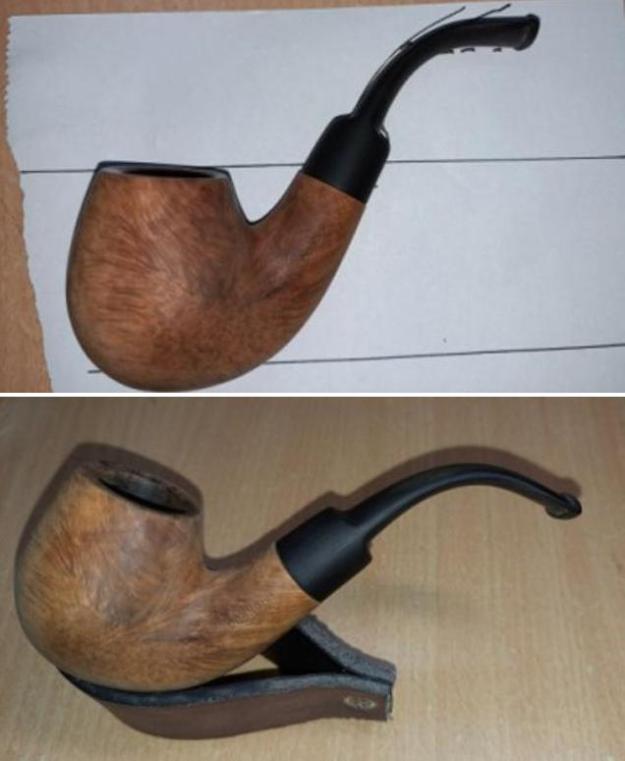
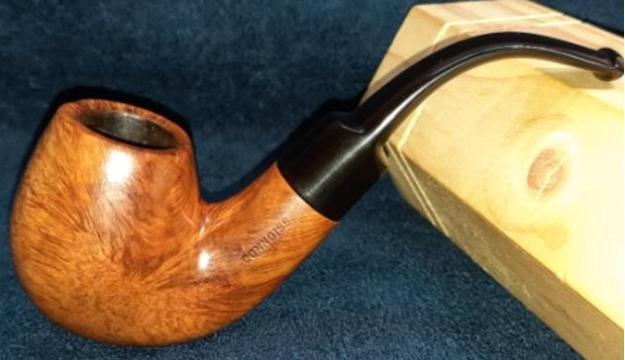
About a year back, I had practiced tenon replacement on a freehand CONNISSEUR, NYC and though the project veered off towards stem replacement, it was an enjoyable and a challenging project. Here is the link to the write up: Continuing My Practice on Tenon Replacement… Working on a Connoisseur, NYC Pipe | rebornpipes

While working on the Connoisseur pipe, I so came to appreciate the very high quality of the briar used and the perfect balance and geometry that Ed Burak, the carver, brings to his pipes that when I came across another Connoisseur I had to get it, if the price was right (I have seen pipes from Ed Burak and Tim West go for big monies). We struck a deal and the pipe made its way across the oceans to India!

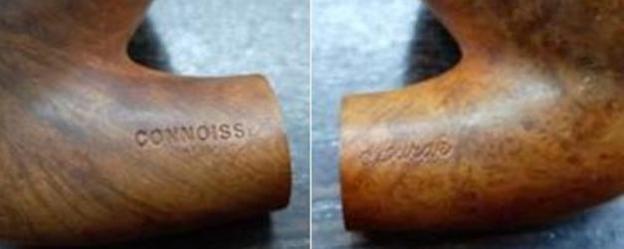
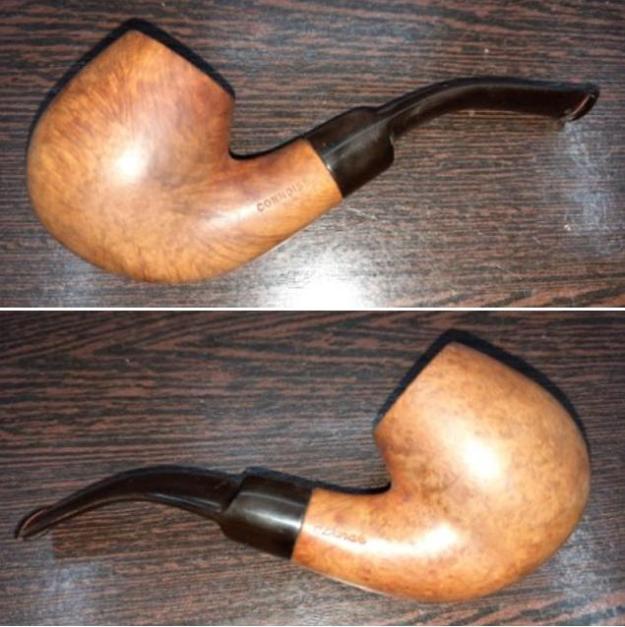
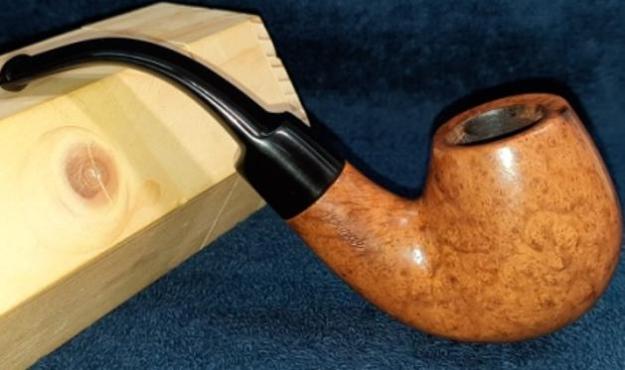
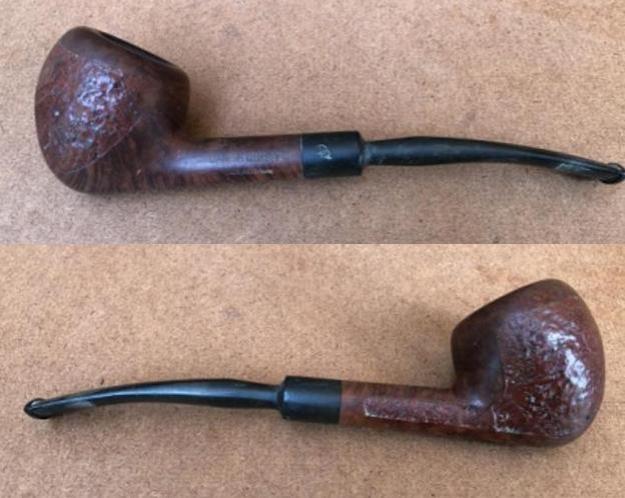
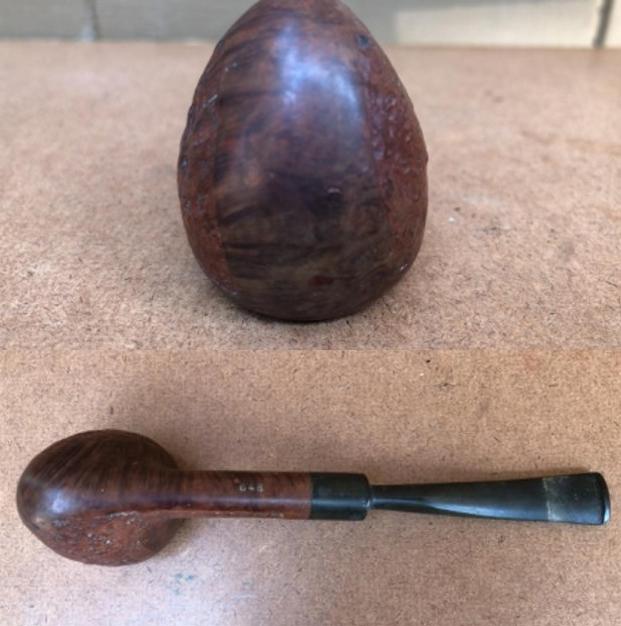
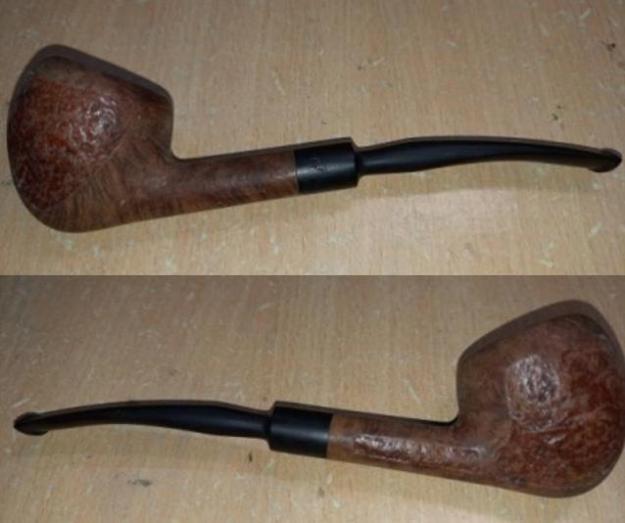
It is this pipe that is currently on my work table. It’s a well proportioned bent egg with a beautiful mix of cross and bird’s eye grains over the smooth stummel surface. It is stamped on the left of the shank as “CONNOISSEUR” over “N.Y.C”. The right side is stamped with “Ed Burak” in cursive hand. These stampings have faded in places, but are easily readable save for the letter E in Ed Burak which appears to have worn out. There is no other stamping seen on either the stummel or the stem. I had some recollection of the information I had researched about Ed Burak pipes, but to refresh my memory, I re-visited the write up as well as rebornpipes where, over the years, Steve has chronicled almost all the pipes that were and are in existence. Steve has restored and researched a pipe from this maker. Here is the link for a detailed information on this pipe; https://rebornpipes.com/2015/05/23/restoring-an-ed-burak-connoisseur-tall-stack/

Further down the write up, he also gives out the dating methodology adopted by Ed Burak and the same is reproduced for immediate reference;

I also learned on Pipephil’s website, http://www.pipephil.eu/logos/en/about-en.html that the stamping did indeed give some information that helped in identifying the period that a particular pipe was made. There I found that one may generally separate Connoisseur pipes’ date of manufacture into three periods.

From late 1960’s until 1974: no stampings
From 1974 until 1981: CONNOISSEUR over N.Y.C.
From 1981 on: CONNOISSEUR over N.Y.C. and Ed Burak’s signature.

Thus from the above information, it’s evident that this beautiful Connoisseur pipe in my hand is from the period post 1981!

Initial Visual Inspection
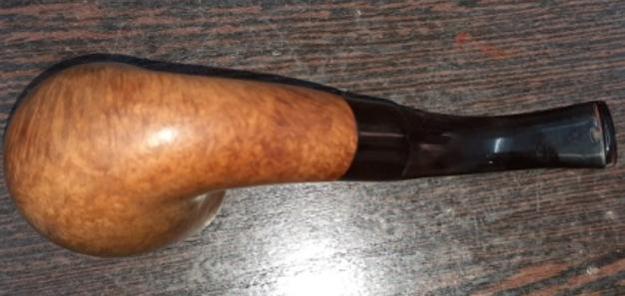
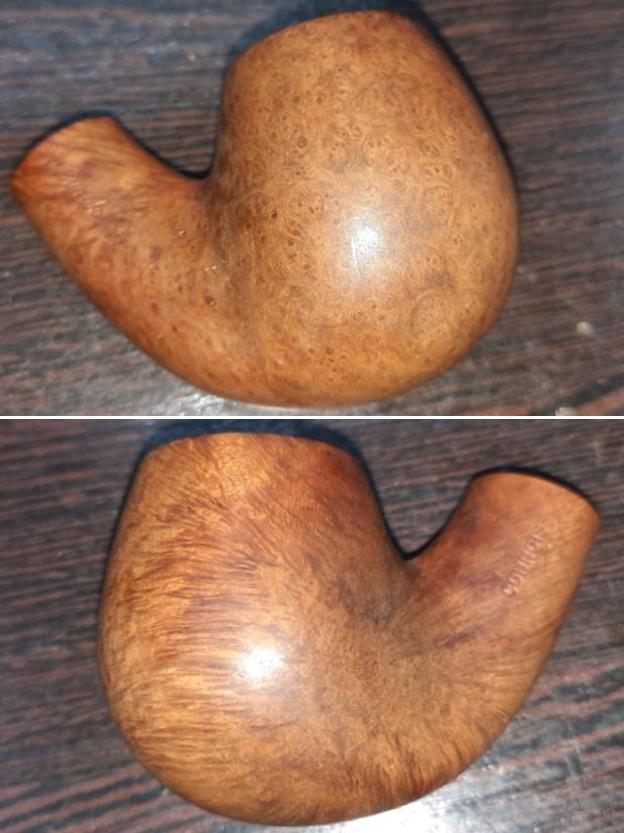
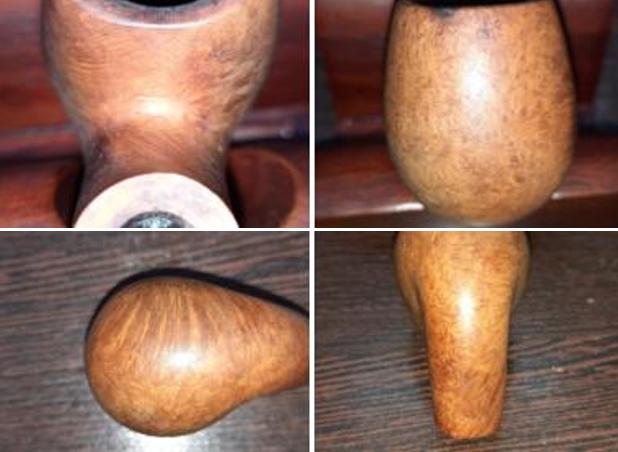
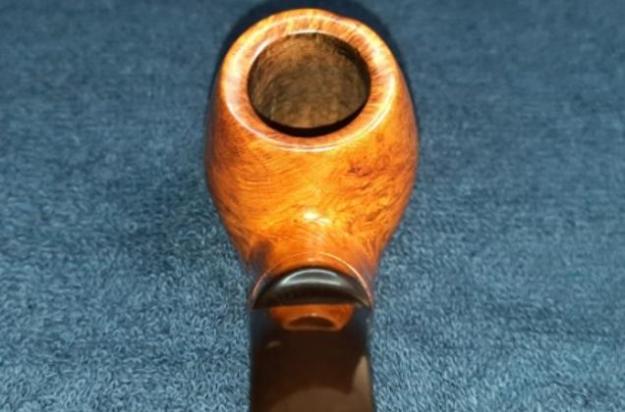
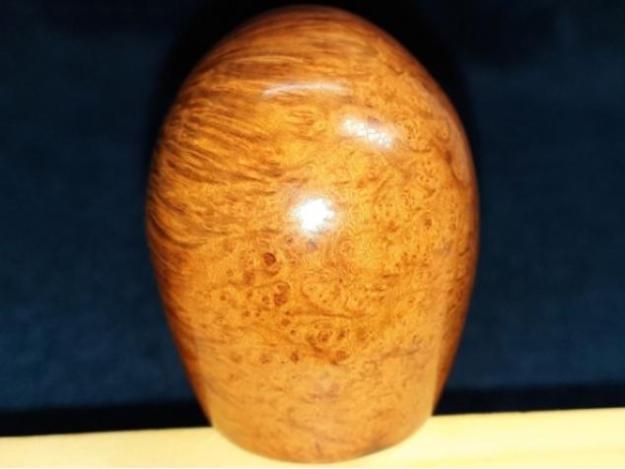
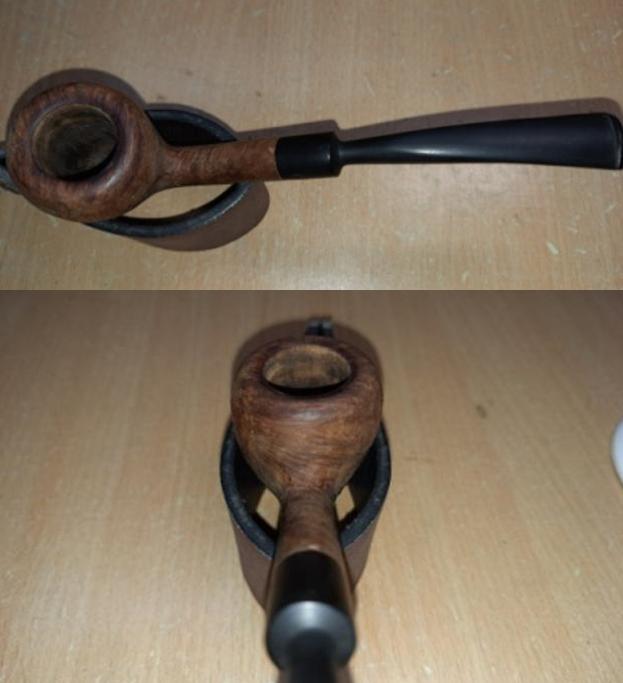
This is a well proportioned pipe with a nice hand feel and heft to it in a bent egg shape. The bend in the stem is more straightened than what it should be. The stummel has a beautiful bird’s eye and cross grains over the surface. The front of the bowl has a dark spot of charred wood on the outer rim edge. The pipe has been well smoked as evidenced by the thick layer of cake but has been well cared for. The rim top surface is clean with minimal lava overflow. The high quality vulcanite stem is oxidized and has tooth indentations and chatter in the bite zone. This was how the pipe looked when it reached me…this is a nice stout and beautiful looking pipe that should polish up nicely. Detailed Inspection…
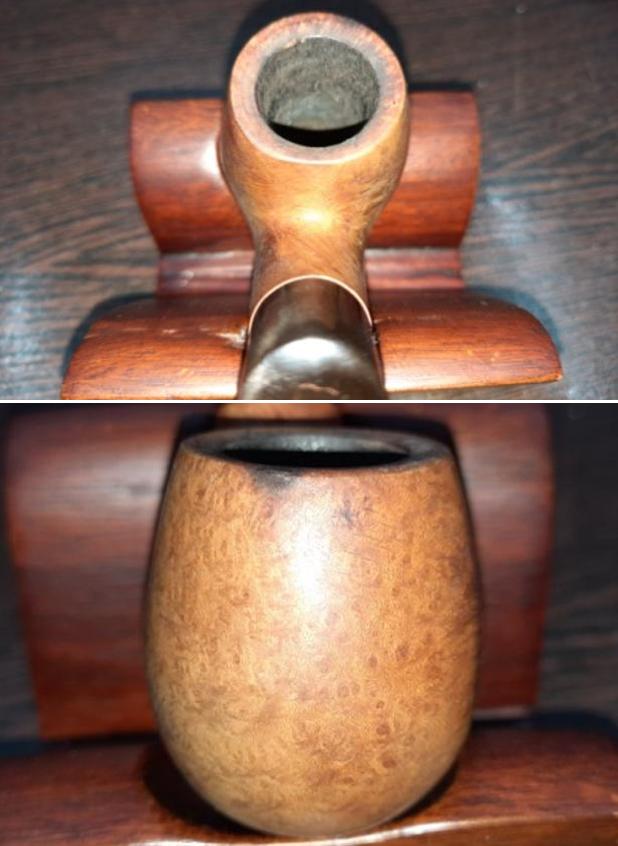
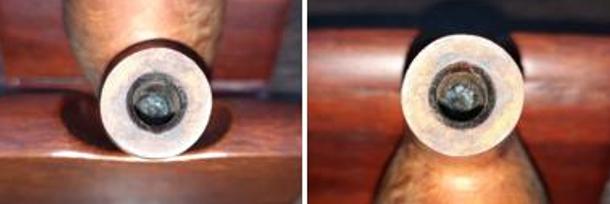
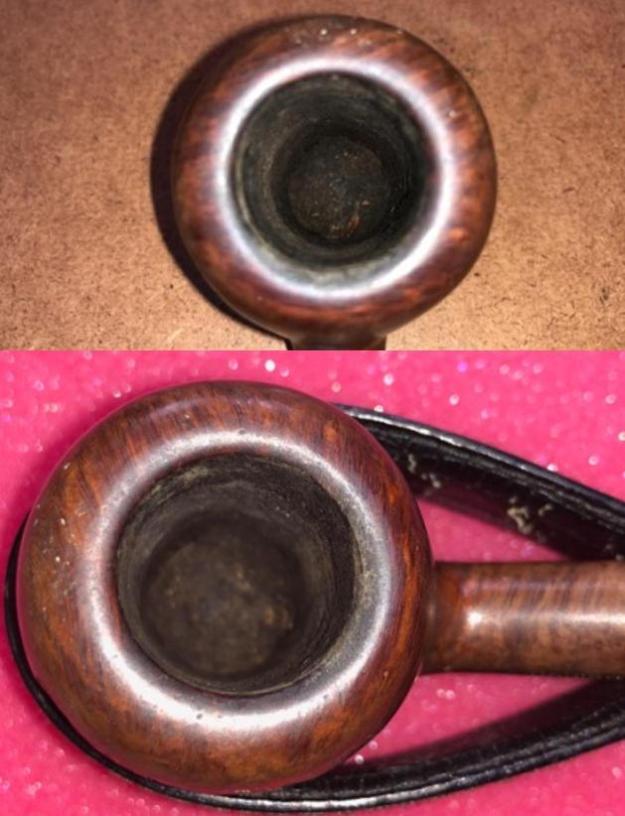
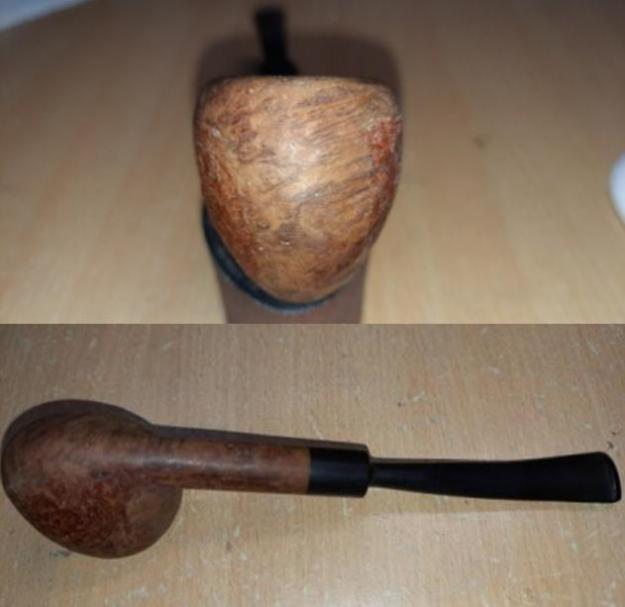
The chamber has a thick even layer of dry and hard cake. The condition of the inner walls of the chamber can be checked and ascertained only after the cake has been taken down to the bare briar. However, I do not envisage any damage to the chamber walls. There is very light lava overflow over the rim top surface. The rim top surface is slightly inward sloping and the outer edge is flattened in 6 o’clock direction. The condition of the inner rim edge is pristine. There are very strong and all pervading smells of old tobacco emanating from the chamber. Hopefully this issue should be addressed once the cake has been removed and the mortise is thoroughly cleaned.The stummel boasts of beautiful bird’s eye grains to the sides with cross grains over the front, back and extending over the shank surface. The stummel briar is without a single fill and exudes a very high quality of briar and craftsmanship. The foot of the stummel shows beautiful cross grains and is sans any damage. The stummel has a dry and dull appearance. The front of the bowl has a lightly charred spot in 1 o’clock direction on the outer rim edge. I checked the extent of the damage and was relieved to find the wood is solid to the touch and the char is not very deep seated. My guess is that the stummel must have come in contact with a burning cigarette end in an ashtray. It is fortunate that the burn mark is not very deep but unfortunately it cannot be completely eliminated. The mortise walls are dirty and the sump has accumulation of old dried oils and gunk. The ghosting smells should reduce once the mortise and sump have been cleaned out. The high quality vulcanite saddle stem has deep seated oxidation over the stem surface. A couple of nicks/ chips can be seen over the upper stem surface. Tooth indentations can be seen on the lower surface while the upper surface has minor tooth chatter in the bite zone. The button on either surfaces has a few bite marks. The horizontal slot and the tenon end shows accumulation of oils and tars. The stem profile is more straight and does not match the bent profile of the shank, making it uncomfortable to clench. This would need to be sorted out.The Process
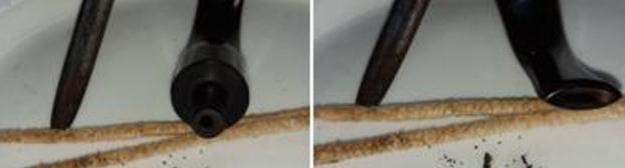
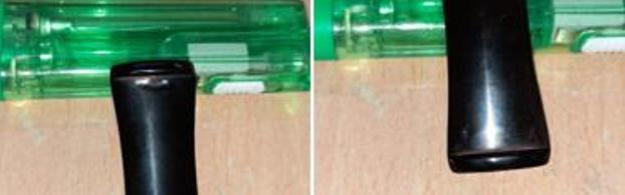
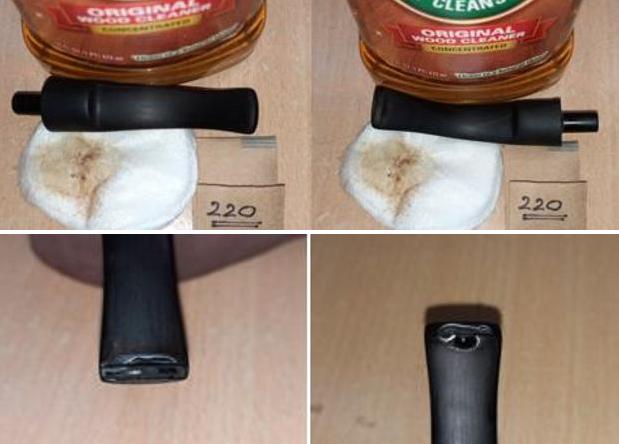
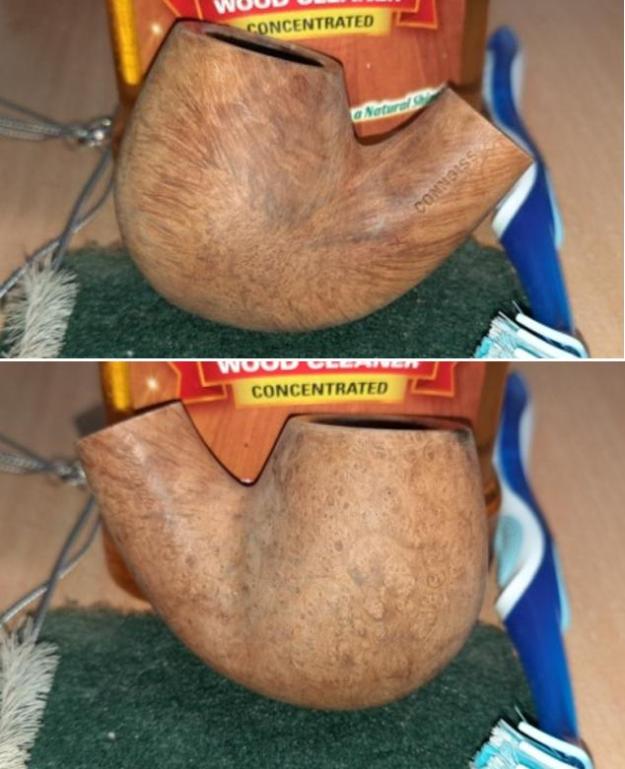
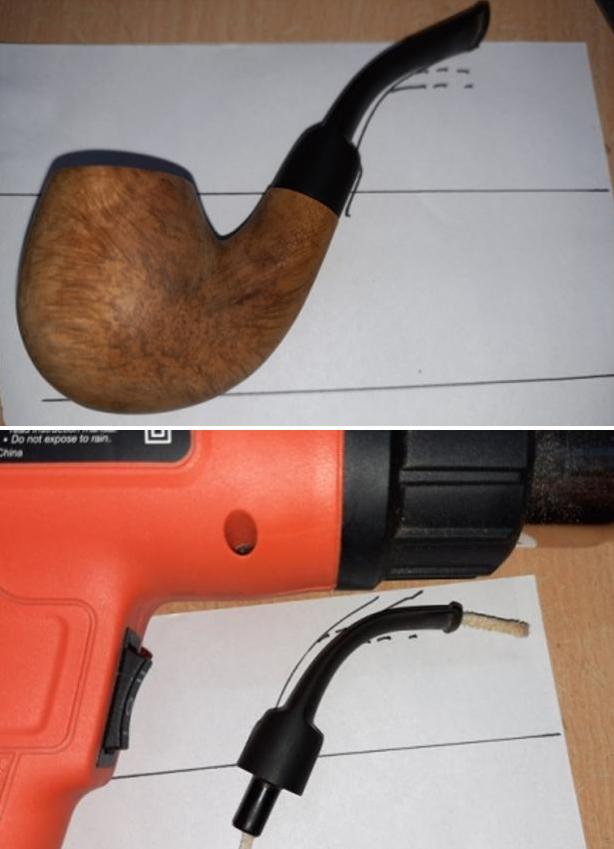
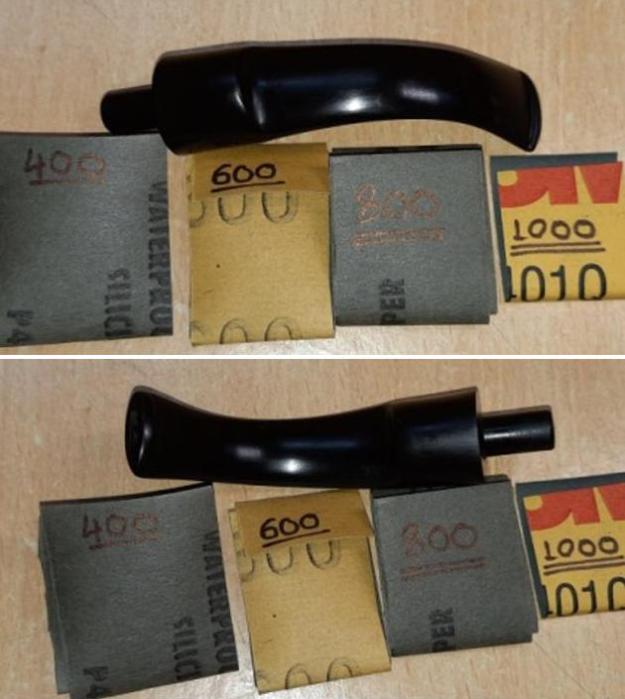
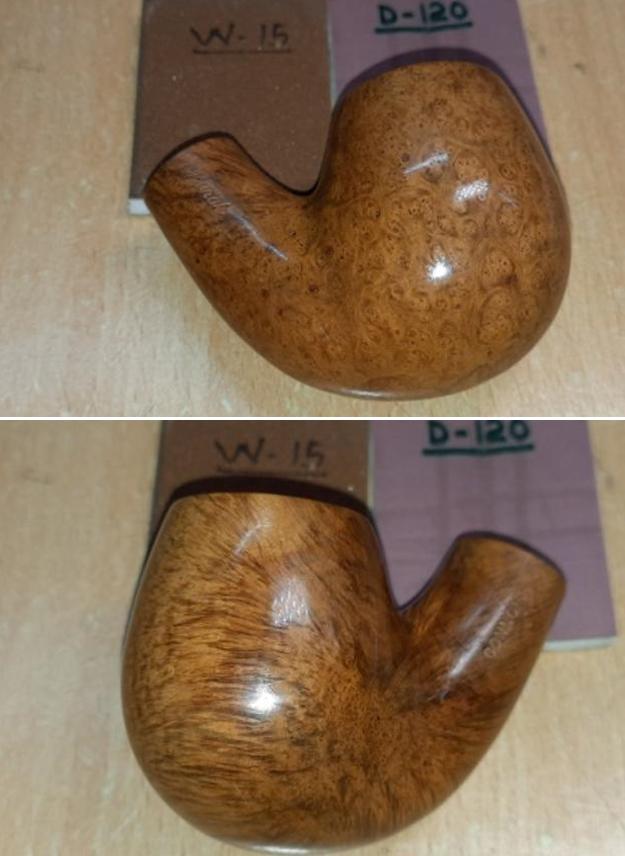
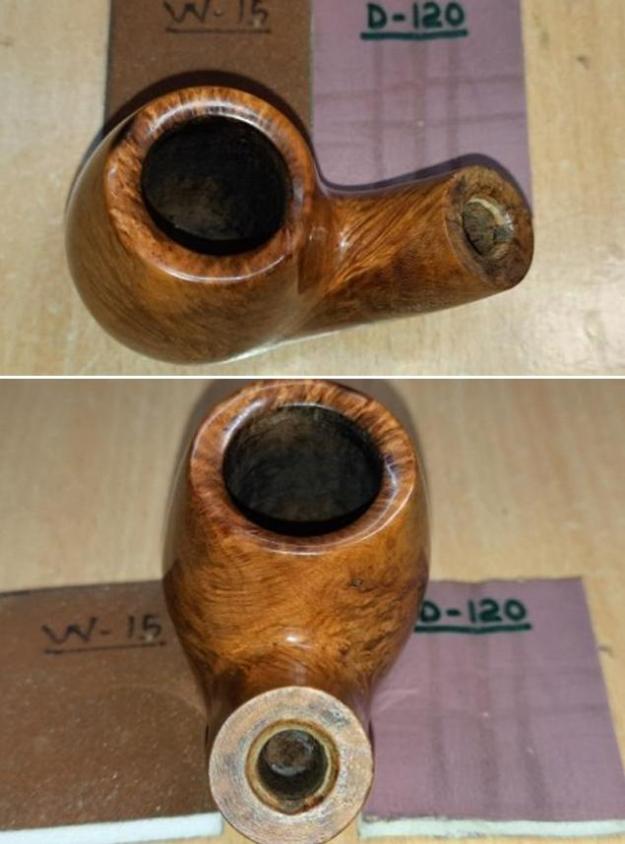
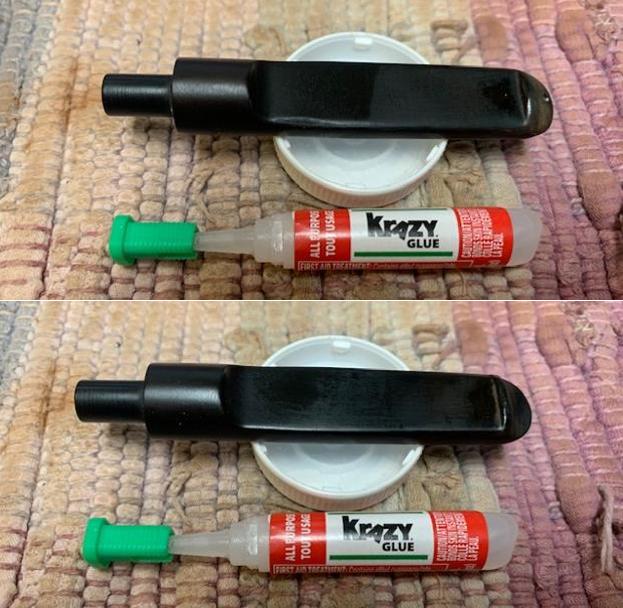
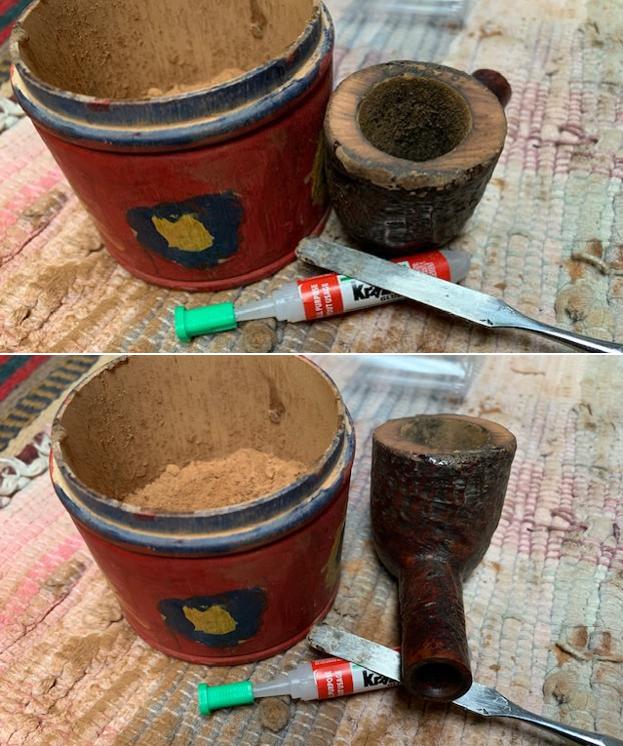
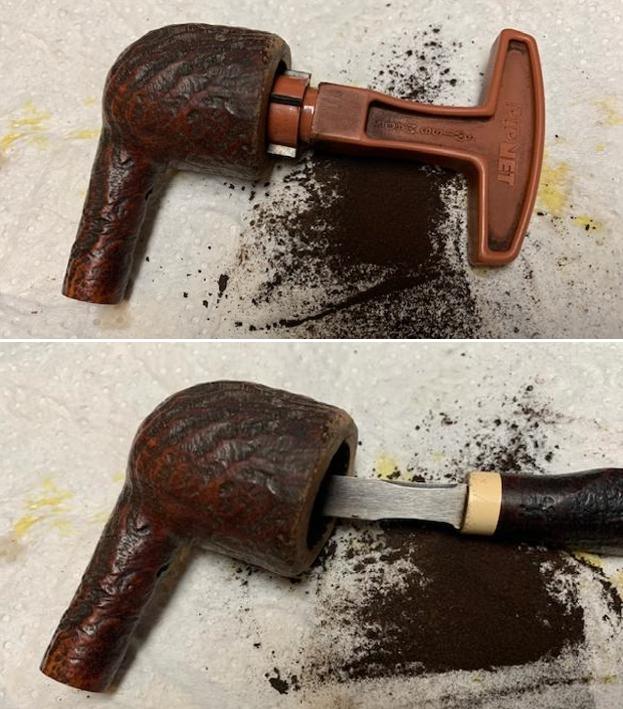
I began the process of refurbishing this pipe by cleaning the internals of the stem using pipe cleaners with isopropyl alcohol (99.9% pure). Once the stem internals were cleaned, with my fabricated knife, I scraped away all the gunk and tars from the slot and tenon end.I flamed the stem’s upper surface and the bite zone on either surfaces with the flame of a lighter to raise the nicks, tooth indentation and chatter from the stem surface. The heat did not completely raise the damage to the surface, but the damaged surface appeared much better than before. I sanded the entire stem surface with a folded piece of 220 grit sand paper to even out the raised surfaces of the stem and also to remove the oxidation from the surface. I wiped the stem surface with Murphy’s Oil soap and a cotton swab to remove the loosened surface oxidation. I filled all the deep tooth chatter and indentations and also the button edges with a mix of CA superglue and activated charcoal and set the stem aside for the fills to cure. I intended to blend these fills and also sharpen the button edges once the fill had hardened considerably.While the stem fills were curing, I worked on the stummel, reaming the chamber with my PipNet reamer using head sizes 1 to 3. Using my fabricated knife, I further reamed out the cake from places where the PipNet reamer could not reach and followed it with sanding the chamber walls with a 220 grit sand paper. I wiped the chamber with isopropyl alcohol and a cotton swab to remove all the carbon dust. This final cleaning of the chamber revealed well-seasoned solid chamber walls. Next, I cleaned the mortise with hard bristled and regular pipe cleaners dipped in isopropyl alcohol. With a dental tool, I scrapped away all the dried oils and gunk from the walls of the mortise. I cleaned the well of the mortise with q-tips dipped in isopropyl alcohol. I would continue the cleaning of the mortise during the external cleaning of the stummel surface.I scrubbed the external surface of the bowl with undiluted Murphy’s oil soap and hard bristled tooth brush and dried it using a paper towel and a soft cotton cloth. Thereafter, I cleaned the mortise and stummel surface with anti-oil dish washing soap on a shank brush and a tooth brush. I set the stummel aside to dry out naturally. Once the external stummel surface cleaning was done, I completed the stem repairs. The fills had cured nicely and I began the process of filing the fills and shaping the button end with a flat head needle file. I matched the fills and smoothed out the button edges with a folded piece of 220 grit sand paper.Next, I  moved on to shaping the stem to match the profile of the stummel before polishing the stem. I inserted a pipe cleaner through the stem’s air way to prevent it from collapsing once the stem is heated. I first straightened the stem by heating it with a heat gun. To impart the requisite bend, I drew a diagram to mark the plane of the stummel rim top, the present profile of the stem, and thereafter, the exact place and shape of the bend that was needed in dotted lines. What we have to ensure is that the bend in the stem should be parallel to the rim top. I heated the stem with my heat gun till the vulcanite became pliable and gave it the necessary bend. I held it in place till the stem had cooled down a bit and thereafter, held the stem under cold water for the bend to set. I further dry sanded the stem with 400, 600, and 800 grit sand papers and finally wet sanded with 1000 grit sandpaper. I rubbed some extra virgin olive oil into the stem and set it aside to be absorbed. The stem is now a shining piece of vulcanite.With the stem set aside, I decided to tackle the darkened rim top and the charring to the outer edge in 1 o’clock direction. I used a folded piece of 220 grit sand paper to sand the rim top surface by moving in from outer rim edge to the the inner. I sanded the charred spot to remove the charred briar and blended it with the rest of the stummel surface. Though not completely eliminated, the charred spot was greatly reduced and unfortunately will always remain as a testimony to the pipe’s journey.I polished the stummel with micromesh pads, wet sanding with 1500 to 12000 pad. I wiped the surface with a soft cloth at the end of the micromesh cycle. The stummel looked amazing with a deep shine, the beautiful bird’s eye and cross grains popping over the stummel surface. I rubbed a small quantity of “Before and After Restoration Balm” in to the briar. I rubbed this balm deep into the stummel surface with my fingers and let it rest for a few minutes. The balm almost immediately worked it’s magic and the briar now has a nice vibrant appearance with the dark brown hues of the grain contrasting with the rest of the stummel surface. I further buffed it with a horse hair shoe brush. The appearance of the stummel at this stage motivated me further to complete this project at the earliest. I set the stummel aside and all that remained was to polish the stem! I polished the stem with micromesh pads, wet sanding with 1500 to 12000 grit pads. I rubbed a little extra virgin olive oil in to the stem at the end of the micromesh polishing cycle. I completed the polishing regime of the stem by rubbing a small quantity of Extra Fine Stem polish developed by my friend Mark Hoover, and giving it a final polish with a soft cotton cloth. The stem was now nice, smooth and shiny.  To apply the finishing touch, I first mounted a cotton cloth buffing wheel on to my hand held rotary tool and applied a coat of Blue Diamond to the stummel and the stem to polish out the minor scratches.With a cotton buffing wheel that I use for carnauba wax, I applied a coat of carnauba wax to the stummel and stem and continued to work on it till the complete coat of wax was polished out. I mounted a clean cotton cloth buffing wheel and gave the entire pipe a once over buff. I finished the restoration by giving the entire pipe a rigorous hand buffing using a microfiber cloth to deepen the shine further. This CONNOISSEUR pipe with it’s beautiful grains, perfectly bent stem and great hand feel was now ready to join my modest collection of American pipes to be enjoyed for years to come. The finished pipe is shown below.

Breathing Life into a Badly Damaged Hardcastle Cased Meerschaum Egg


Blog by Steve Laug

I have finished restoring all two pipes from the collection of pipes that we purchased from the older gentleman. He sent me the photos and I was amazed at what I saw. You have seen many of the pipes that he had. These included Dunhill, BBB, Orlik, Barclay Rex, a cased Ben Wade, an H. Simmons all briar, Hardcastles and some Meerschaums. There were also some assorted others that I will get to in the days ahead. It was a great collection.

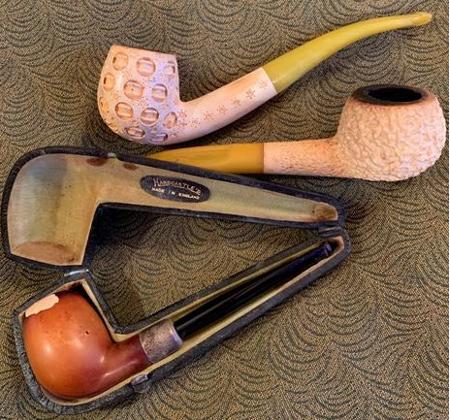
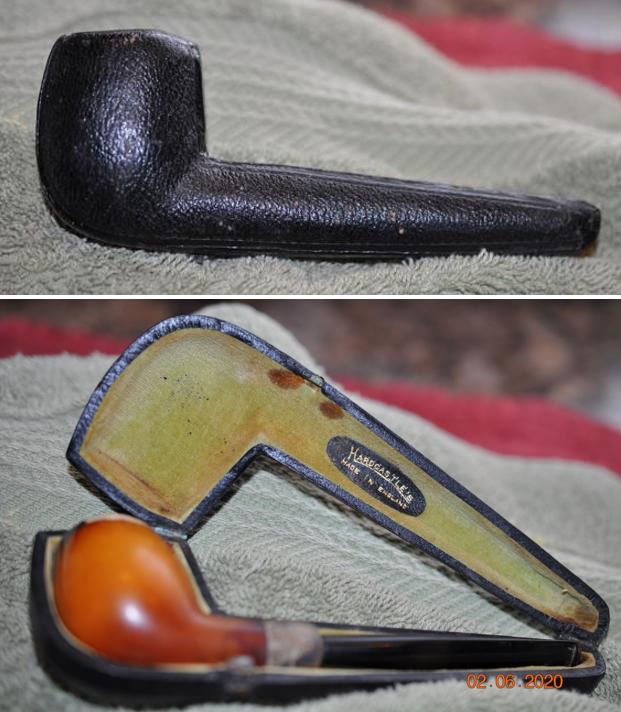
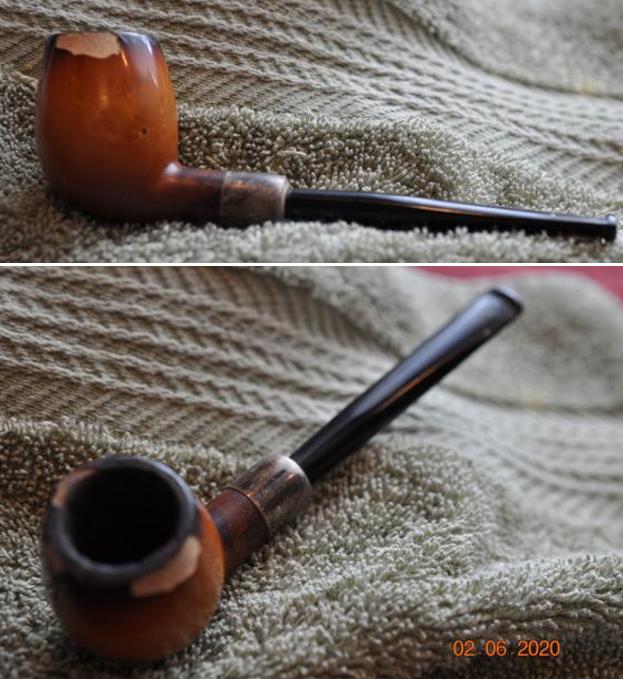
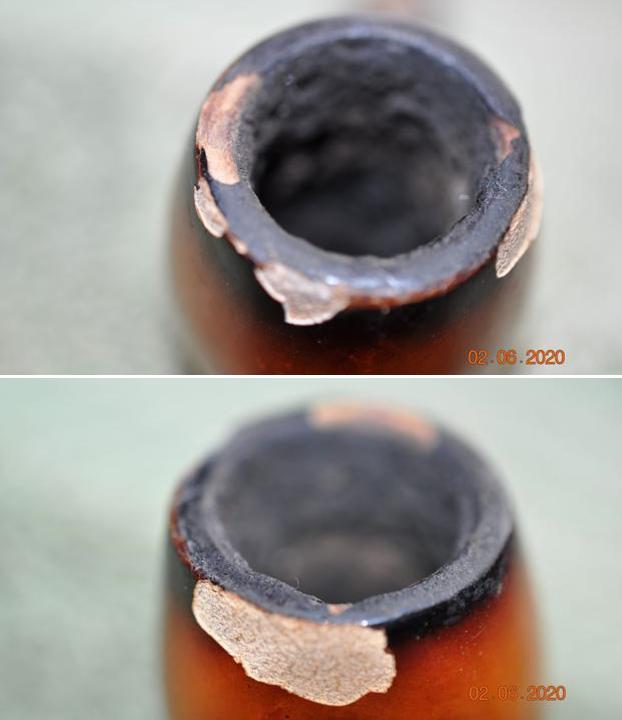
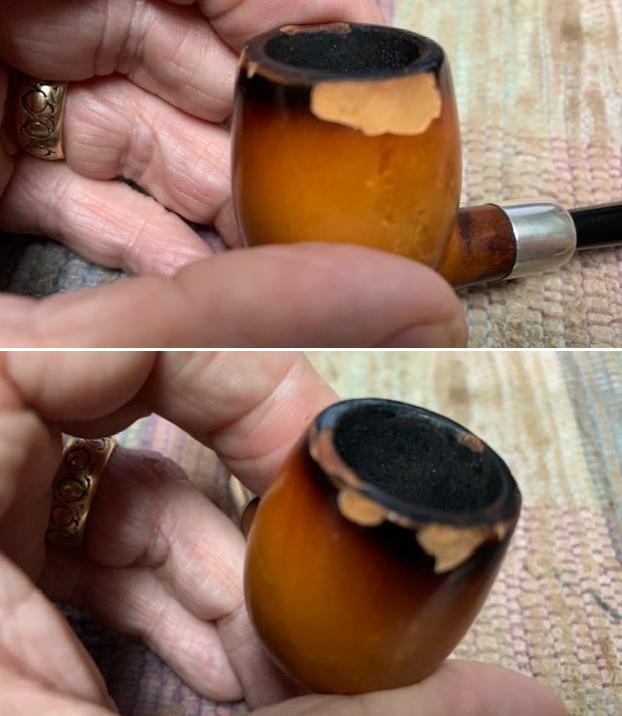
The next pipe I have chosen is a worn and damaged cased Hardscastle’s Meerschaum Egg. It had a flume around the top and down the outer edges of the bowl. It is the bottom pipe of the three meerschaum pipes in the photo above. There was a thick cake in the bowl and the rim top and edges were buried under a thick coat of lava. It was filthy both inside and out. The edges of the bowl on the top and down the sides was chipped and damaged leaving large gouges out of the sides of the bowl. The shape probably caught my eye because it is quite lovely even under the grime and wear. I think that the Hardcastle’s name made me want to try to redeem this old pipe. I have never worked on a meer like this one with this kind of damage. The stem is vulcanite and was in far better shape than the bowl. It had tooth marks and chatter on both sides ahead of the button. This was another well loved pipe that obviously been a good smoker!

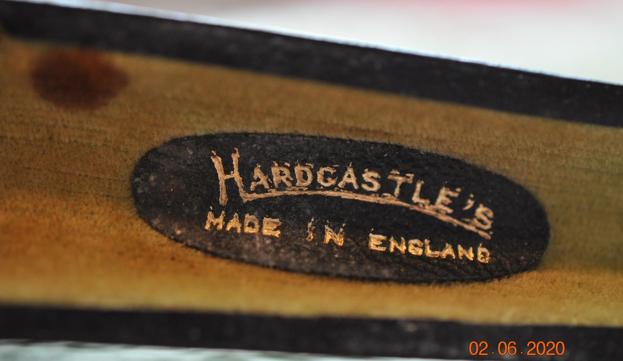
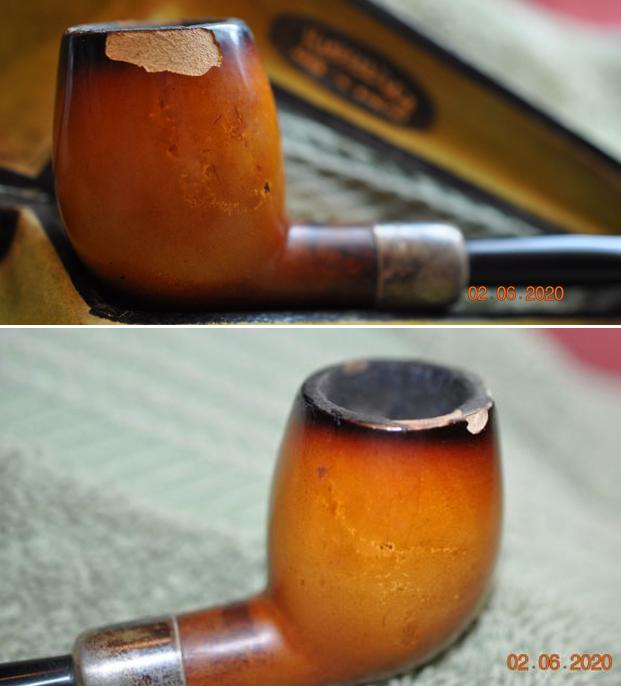
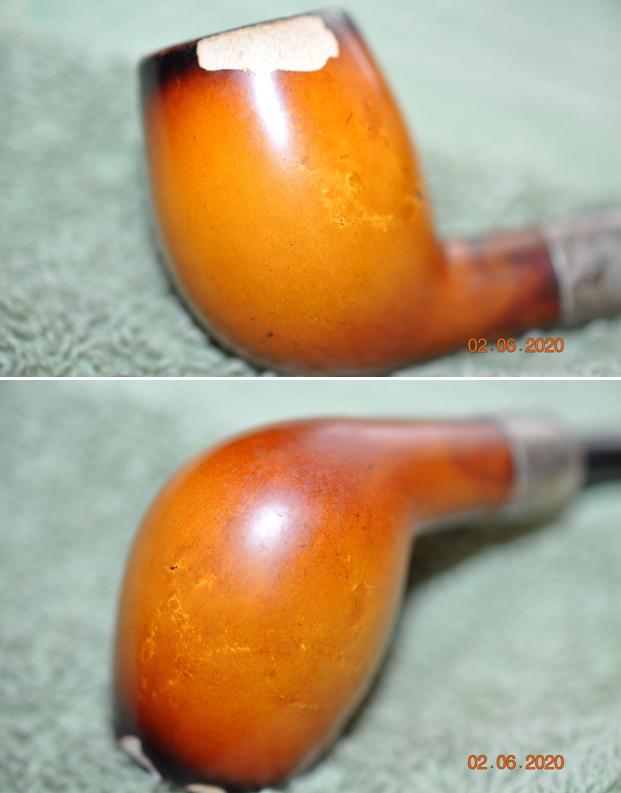
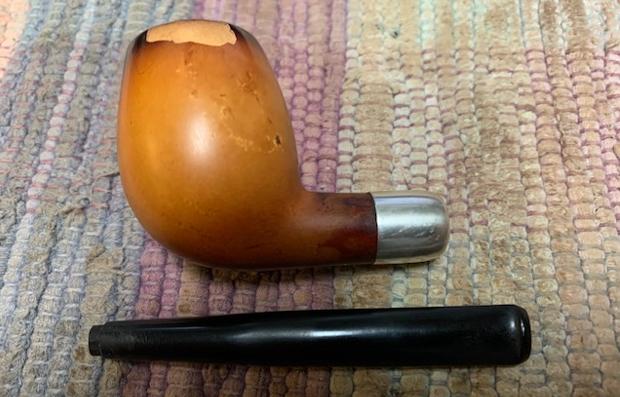
Jeff took some photos of the Hardcastle’s Case and Meerschaum egg with the lovely patina  before he worked his magic in cleaning up the pipe. It is a an interesting pipe with a lot of potential and what appears to be some great grain under the grime and debris of the years. The first three photos show the case, the pipe in the case and the stamp/logo decal on the inside of the lid that read Hardcastle’s Made In London.         Jeff took the pipe out of the case and took photos of it to show the damage to the bowl sides.Jeff took photos of the bowl, rim top to show the thickness of the cake in the bowl and the thick lava on the rim top. The rim top and inner edge are thickly covered with lava and there are large chips in the meerschaum on the rim top and on the outer edges and sides of the bowl. It really is a mess and it will be a challenge. He took photos of the top and underside of the vulcanite military bit stem showing the tooth marks and chatter on both sides. Jeff also took some photos of the Sterling Silver ferrule on the shank end to show the oxidation and condition.Jeff took photos of the sides and heel of the bowl to show the condition of the bowl and damages around the top edges. You can see the beautiful shape of the bowl and some interesting patterns in the meerschaum even through the damage, dirt and debris of many years. This Cased Hardcastle Meerschaum Egg is an interesting looking pipe. Because the old gentleman that we bought the pipes from intimated that he purchased his pipes at the Manhattan Barclay-Rex store I would imagine that he may have purchased this one from them as well. I was unable to pin down any information regarding the date this pipe so it was time to move on and work on the pipe.

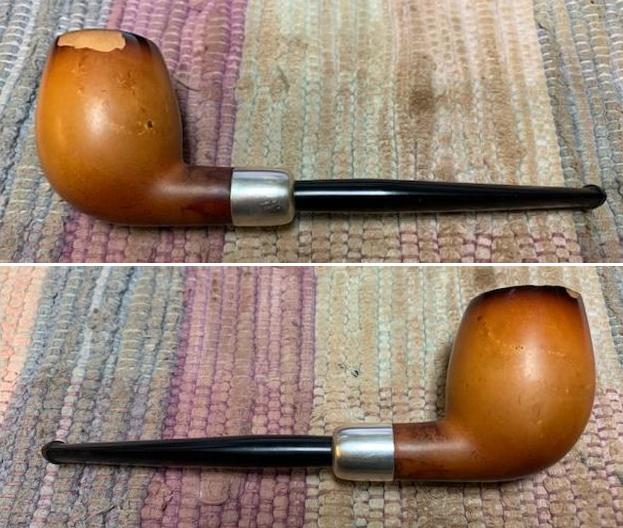
Jeff carefully cleaned the pipe so as not to damage it further. He reamed it with a PipNet pipe reamer and then cleaned up the reaming with a Savinelli Fitsall Pipe Knife. He scrubbed out the internals of the shank, stem and shank extension with alcohol, pipe cleaners and cotton swabs until the pipe was clean. He carefully scrubbed the exterior of the bowl with Murphy’s Oil Soap and a tooth brush to remove the grime and grit on the exterior of the bowl and rim top and lava on the rim top. The finish looks much better and has a deep richness in the colour that highlights the patina in the meerschaum. The damaged edges and rim top looked rough and will need some special attention. He soaked the stem in Briarville’s Pipe Stem Deoxidizer and after a soak of several hours rinsed it off. He scrubbed the vulcanite military bit with Soft Scrub to remove the residual oxidation. When the pipe arrived here in Vancouver I was amazed that it looked so good. Here are some photos of what I saw. I took some close up photos of the rim top and the stem surface. The top and inner and outer edge of the rim showed some darkening/heavy tars and damage. The stem had tooth marks and chatter on both sides near the button.I took some photos of the cleaned damaged areas around the rim top and sides to show how they looked when I received it. I would need to figure out a way to address this in my restoration. I needed time to think through the options. I set the pipe aside for a few days to ruminate on the process I would use.I removed the stem from the shank and took a photo of the parts of the pipe. After thinking through my options I decided to try to fill in the chipped and damaged areas with a mixture of Plaster of  Paris. It dries hard so once it was applied I set it aside to let the repairs harden and cure. I was not sure if it would work but I thought it was worth a try. I mixed the mud and filled in the chipped areas with a dental spatula. I apologize for the mess I made in the mixing process but it really was a pain to manage it. I let it sit for 48 hours to cure. Once the repairs cured I sanded it lightly with 220 grit sandpaper to smooth it out and blend it in. While I worked on it chunks of plaster fell out. The repair had not bonded to the meerschaum so I had to come up with a different plan. I topped the bowl and collected the sanding dust. I filled in the chipped areas with clear CA glue and sanding dust from the topping. Once it cured I sanded the repairs smooth and blended them in around the top edges of the bowl all around the top.Once I have the edges smoothed out and the rim top also smoothed out I decided to stain the rim top and the flumed area around the top outer edges of the bowl with a combination of Black and Walnut stains. It did a great job masking the repaired areas. I still needed to sand the flume to make it less uniform. I polished the smooth rim top with micromesh sanding pads – dry sanding with 1500-12000 grit sanding pads. I wiped the bowl down after each pad with a damp cloth to remove the sanding debris. I worked some Before & After Restoration Balm into the surface of the bowl and shank with my fingertips to clean, enliven and protect the briar. I let the balm sit for 15 minutes and then buffed with a cotton cloth to raise the shine. The photos show the bowl at this point in the restoration process. I polished the stem with micromesh sanding pads – dry sanding with 1500-12000 grit sanding pads. I wiped it down after each sanding pad with Obsidian Oil. I polished it with Before & After Pipe Stem Polish – both Fine and Extra Fine. I gave it a final coat of Obsidian Oil. It looks significantly better and is smooth but the repairs show! With the bowl and the stem finished I put the beautiful Hardcastle’s Straight Egg with a military bit back together and buffed it lightly on the wheel using Blue Diamond to give it a shine. I gave the stem multiple coats of carnauba wax on the wheel. I buffed the pipe with a horsehair shoe brush to raise the shine. I hand buffed it with a microfiber cloth to deepen the shine. The smooth and rusticated finish is a great looking. The dimensions of the pipe are – Length: 5 ¼ inches, Height: 1 ¾ inch, Outside diameter of the bowl: 1 inches, Chamber diameter: ¾ of an inch. The weight of this large pipe is 1.09 ounces /31 grams. This Hardcastle’s Straight Egg is another great find from this collection. It is much more beautiful in person than these photos can capture. I will be adding it to the rebornpipes store soon. If you want to add it to your collection it will make a fine smoking addition. This is another pipe that has the possibility of transporting the pipe man or woman back to a slower paced time in history where you can enjoy a respite. Thanks for walking through the restoration with me.

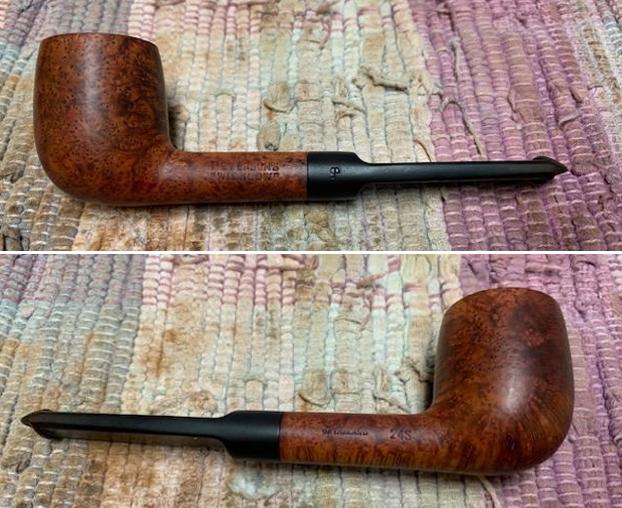
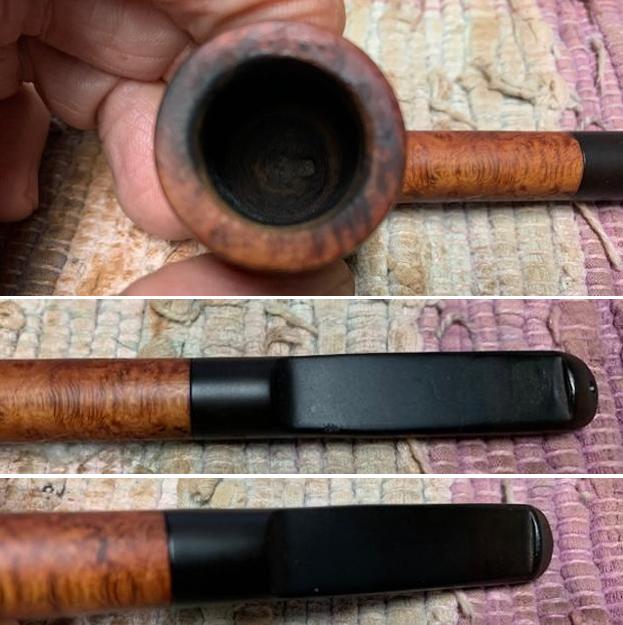
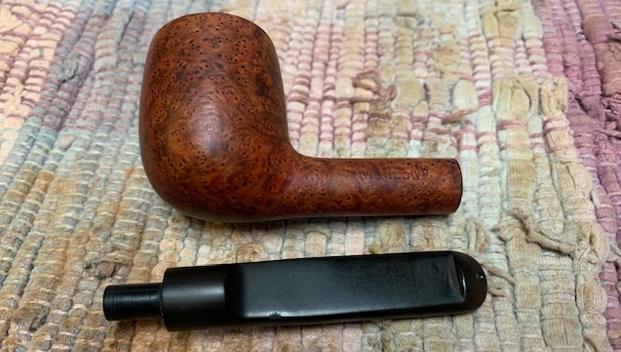
Breathing Life into a Peterson’s Republic Era “Wicklow” 24S Saddle Stem Billiard


Blog by Steve Laug

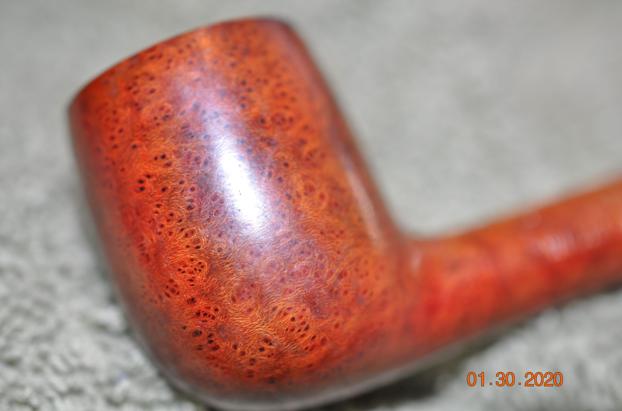
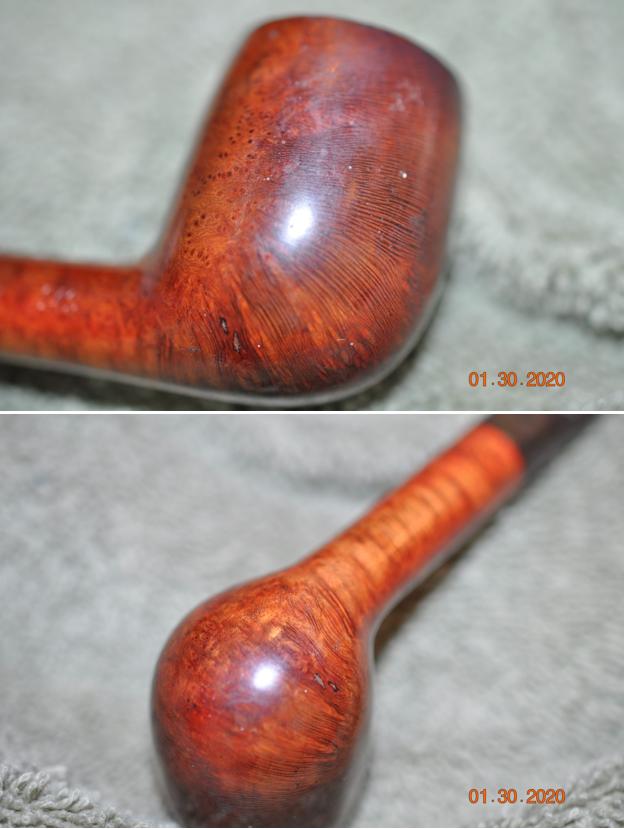
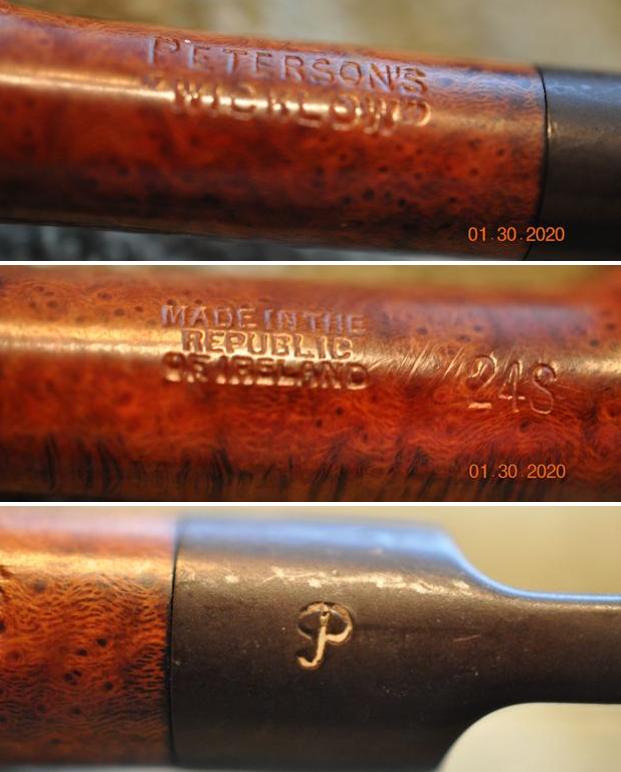
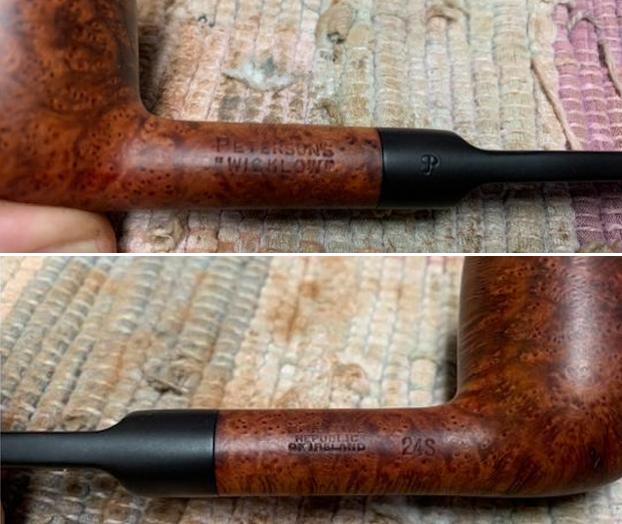
The next pipe I have chosen is smooth finished Peterson’s Saddle Stem Billiard. This Billiard has a medium brown finish around the bowl sides and shank. The pipe has great grain on the bowl and shank but was dirty. It was stamped on the left side of the shank and read Peterson’s [over] “Wicklow”. On the right side of the shank it is stamped Made in the Republic of Ireland in three lines. Next to the bowl it was stamped with the shape number 24S.  There was a thick cake in the bowl and lava on the rim top and the inner edge of the bowl. The stem was lightly oxidized and had light tooth marks and chatter on the top and underside on and near the button. The “P” stamp on the left side of the saddle stem is clear but had lost colour. Jeff took photos of the pipe before his cleanup work. They tell the story and give a glimpse of the promise that we see in this pipe. Jeff took photos of the rim top and stem to show the general condition of the pipe. The bowl is heavily caked and the rim top and edges have a thick lava overflow. The stem is lightly oxidized and has light tooth marks on the top and underside near the button.  It obviously had a Softee Bit on the stem during its lifetime as it left a mark on the stem surface. Jeff took some photos of the bowl sides and heel to show the grain that was around this bowl. It is a nice looking pipe.     He took photos of the underside of the shank to show the stamping. The stamping is readable in the photos below and is as noted above.     I am including the information from Pipedia’s article on Peterson pipes. It is a great read in terms of the history of the brand (https://pipedia.org/wiki/Peterson). I have included a bit of the pertinent history here.

1950 – 1989 The Republic Era – From 1950 to the present time, the stamp for this era is “Made in the Republic of Ireland” in a block format generally in three lines but two lines have been used with or without Republic being abbreviated.

During the 1950’s and 60’s the Kapp & Peterson Company was still in the ownership of the Kapp family. However 1964 saw the retiral of the company Managing Director Frederick Henry(Harry) Kapp.

I turned to “The Peterson Pipe” by Mark Irwin and Gary Malmberg to get some background on the Wicklow Pipe. On page 315 it had the following information on the Wicklow pipe.

Wicklow (1969-) First appearance of this line exclusive to Iwan Ries, handmade black sandblast finish with twin bore mouthpiece. In 1987 offered with a matte-brown finish, nickel band and P-lip mouthpiece; in 2011 as a custom line from Smokingpipes.com in a deep-red sandblast finish with a nickel band. In 2014 released for Italy in brown with a sterling band, vulcanite mouthpiece in fishtail or P-lip, hot-foil P.

I knew that I was dealing with a Republic Era pipe made between 1969 and the present. It is bit of anomaly in that it does not match any of the descriptions above. The one I have has a matte-brown finish but does not have a band. It does have a P-lip mouthpiece. It is also a smooth finished pipe and not sandblast. Now it was time to work on the pipe.

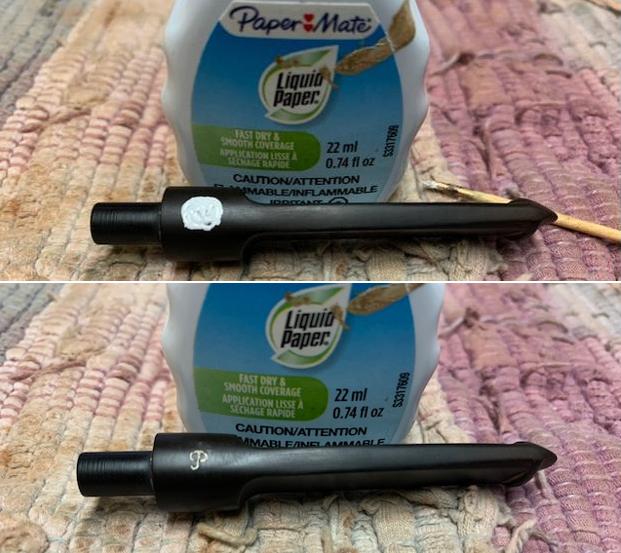
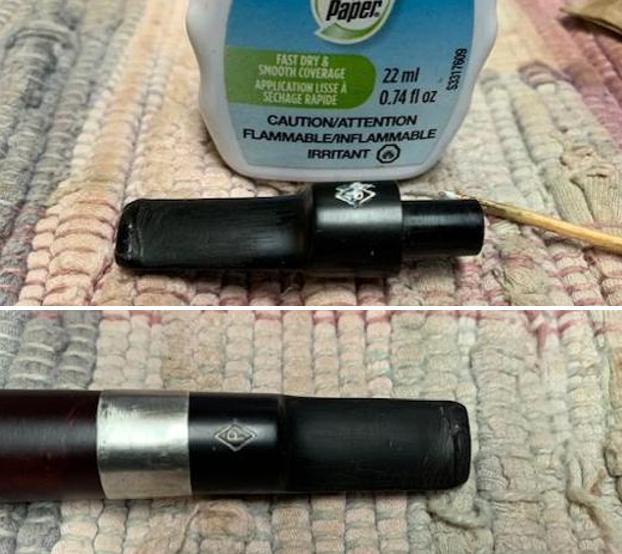
Jeff had done a great job cleaning up the pipe as usual. He reamed the pipe with a PipNet reamer and cut back the cake back to the bare briar. He cleaned up the walls with a Savinelli Fitsall Pipe Knife. He scrubbed the interior of the bowl and shank with pipe cleaners, cotton swabs and alcohol to remove the tars and oils. He scrubbed the exterior of the pipe with Murphy’s Oil Soap and a tooth brush to remove the grime from the finish. He worked on the rim top lava and darkening with the soap and tooth brush. He scrubbed the inside of the stem with alcohol and pipe cleaners. He scrubbed the exterior with Soft Scrub and then soaked it in Briarville’s Pipe Stem Deoxidizer. He washed it off with warm water to remove the deoxidizer. The pipe looked far better when it arrived. I took some close up photos of the rim top and also of the stem surface. I wanted to show how well it had cleaned up. There was some darkening on the front of the rim top and on the back as well. I also took close up photos of the stem to show the light tooth marks on the surface near the button.    I took a photo of the stamping on the sides of the shank. You can see that it is stamped as noted above. It is clear and readable.     I took the pipe apart and took a photo of the pipe. It is a good looking pipe and has some great grain around the bowl. I cleaned up the darkening on the rim top and the damage to the inside edge of the bowl with a folded piece of 220 grit sandpaper. It looked much better.   I polished the briar bowl and shank with micromesh sanding pads. I dry sanded it with 1500-12000 grit pads and wiped it down with a damp cloth after each pad.  I worked some Before & After Restoration Balm into the surface of the briar with my fingertips to clean, enliven and protect the briar. I let the balm sit for 15 minutes and then buffed with a cotton cloth to raise the shine. The photos show the bowl at this point in the restoration process. I wiped the stem down with a cotton pad and alcohol and filled in the tooth marks on both sides with clear CA glue. Once the glue dried I sanded the repair with 220 grit sandpaper to blend it into the vulcanite and then started polishing it with 400 grit wet dry sandpaper. I touched up the stamping on the “P” with PaperMate Liquid Paper. I pressed it into the stamping with a tooth pick and buffed it off with a soft cotton pad. The product works very well to give new life to the original white stamp. I polished out the light tooth marks on the stem with micromesh sanding pads – wet sanding with 1500-12000 grit sanding pads. I wiped it down after each sanding pad with Obsidian Oil. I polished it with Before & After Pipe Stem Polish – both Fine and Extra Fine.  I am excited to finish this Republic Era Peterson’s “Wicklow” 24S Saddle Stem Billiard. I put the pipe back together and buffed it with Blue Diamond on the buffing wheel. I gave the bowl and the stem multiple coats of carnauba wax. I buffed the pipe with a clean buffing pad to raise the shine. I also hand buffed it with a microfibre cloth to deepen the shine. It is fun to see what the polished bowl looks like with the grain popping all around it. Added to that the polished  black vulcanite saddle stem was beautiful. This shapely Classic Peterson’s Billiard is nice looking and the pipe feels great in my hand. It is light and well balanced. Have a look at it with the photos below. The dimensions are Length: 5 inches, Height: 1 ½ inches, Outside diameter of the bowl: 1 1/8 inch, Chamber diameter: ¾ of an inch. The weight of the pipe is 21grams/.74oz. It is a beautiful pipe and one that I soon put on the rebornpipes store I you are interested in carrying on the pipeman’s legacy. Thanks for walking through the restoration with me as I worked over this pipe. Thanks to each of you who are reading this blog.

Breathing Life a Peterson’s Republic Era Military Mount Rusticated Barrel


Blog by Steve Laug

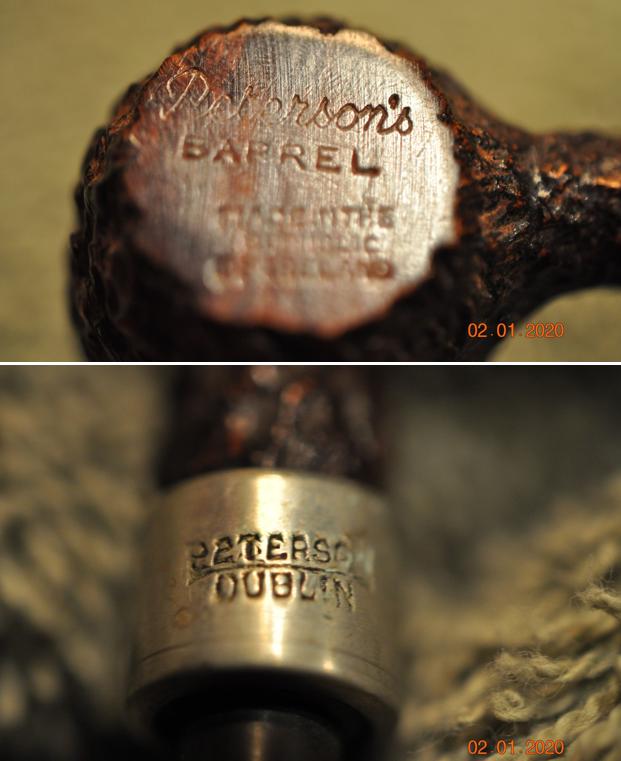
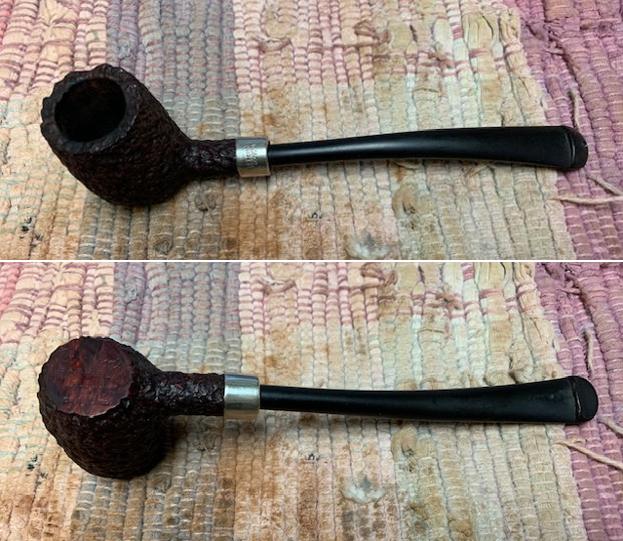
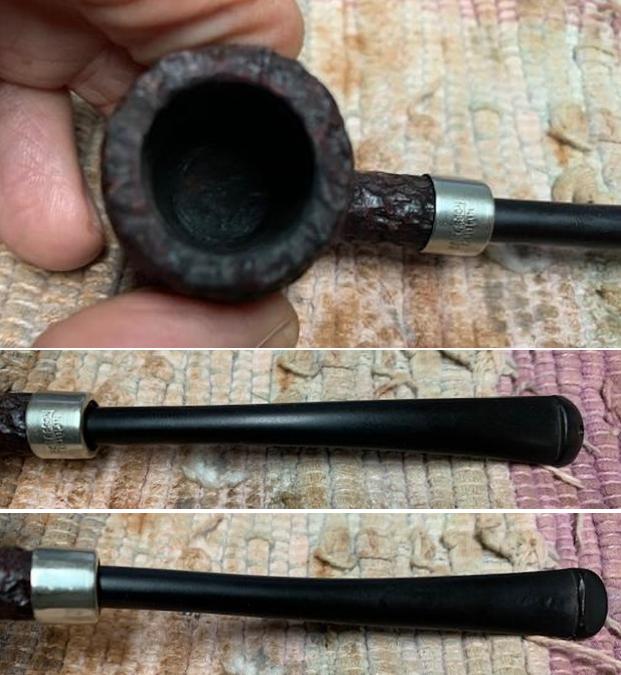
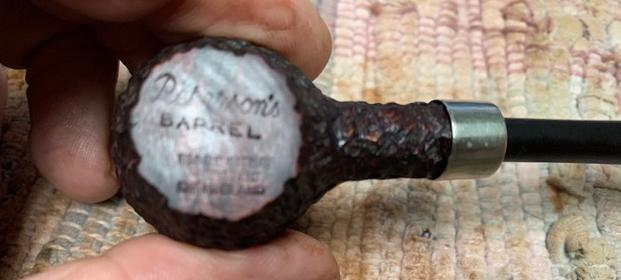
I have a chosen few more Peterson’s pipes to work on next. The pipe I have chosen is a Republic Era Peterson’s Rusticated Barrel pipe with a military mount stem. This Barrel has a mix of black and brown coloured stains on a very rustic finish around the bowl sides and short shank. It is also incredibly dirty. It also came to us from the estate of Anglican minister that was a great friend of mine here in Canada. The Barrel had a nickel ferrule on the shank that was in great condition. The finish on the bowl sides was dirty. It was stamped on the heel of the bowl and read Peterson’s [over]Barrel [over] Made in the Republic of Ireland (3 lines). The ferrule is stamped Peterson [over] Dublin. There was a moderate cake in the bowl and light spattering of lava on the rim top and the inner edge of the bowl. The stem was lightly oxidized and had light tooth marks and chatter on the top and underside on and near the button. Jeff took photos of the pipe before his cleanup work. They tell the story and give a glimpse of the promise that we see in this pipe.Jeff took photos of the rim top and stem to show the general condition of the pipe. The bowl is lightly caked and the rim top and edges have some light lava overflow. The stem is lightly oxidized and has light tooth marks on the top and underside near the button. Jeff took some photos of the bowl sides and heel to show the amazing grain that was around this bowl. It is a nice looking pipe.   He took a photo of the underside of the shank to show the stamping. The stamping reads as noted above. He also took a photo of the stamping on the ferrule.    I am including the information from Pipedia’s article on Peterson pipes. It is a great read in terms of the history of the brand (https://pipedia.org/wiki/Peterson). I have included a bit of the pertinent history here.

1950 – 1989 The Republic Era – From 1950 to the present time, the stamp for this era is “Made in the Republic of Ireland” in a block format generally in three lines but two lines have been used with or without Republic being abbreviated.

During the 1950’s and 60’s the Kapp & Peterson Company was still in the ownership of the Kapp family. However 1964 saw the retiral of the company Managing Director Frederick Henry(Harry) Kapp.

I turned to “The Peterson Pipe” by Mark Irwin and Gary Malmberg to get some background on the Barrel Pipe. On page 313 it had the following information what they called the Specialty Briars. I have summarized the various pipes that were part of the Specialty Briars below and have also included the description of the Barrel itself.

The Barrel pipe was part of a line of Specialty Briars (1945-) which was a term used to describe the following lines: Lightweight, Junior, Churchwarden, Barrel, Tankard, Calabash, Belgique  and Giant.

Barrel (1945-) P-lip or fishtail mouthpiece, smooth or rustic finish, sandblast offered in 1970

I knew that I was dealing with a pipe from the Specialty Line of Briars made between 1945 and the present. Now it was time to work on the pipe.

Jeff had done a great job cleaning up the pipe as usual. He reamed the pipe with a PipNet reamer and cut back the cake back to the bare briar. He cleaned up the walls with a Savinelli Fitsall Pipe Knife. He scrubbed the interior of the bowl and shank with pipe cleaners, cotton swabs and alcohol to remove the tars and oils. He scrubbed the exterior of the pipe with Murphy’s Oil Soap and a tooth brush to remove the grime from the finish. He worked on the rim top lava and darkening with the soap and tooth brush. He scrubbed the inside of the stem with alcohol and pipe cleaners. He scrubbed the exterior with Soft Scrub and then soaked it in Brairville’s Pipe Stem Deoxidizer. He washed it off with warm water to remove the deoxidizer. The pipe looked far better when it arrived.   I took some close up photos of the rim top and also of the stem surface. I wanted to show how well it had cleaned up. The rim top looked very good. I also took close up photos of the stem to show the tooth marks on the surface of the underside near the button. I took a photo of the stamping on the heel of the bowl. You can see that it is stamped as noted above. It is clear and readable. I took the pipe apart and took a photo of the pipe. It is a good looking pipe and has a rugged rustication around the bowl. I worked some Before & After Restoration Balm into the surface of the briar with my fingertips and a horsehair shoe brush to clean, enliven and protect the briar. I let the balm sit for 15 minutes and then buffed with a cotton cloth to raise the shine. The photos show the bowl at this point in the restoration process.    I “painted” the stem with the flame of a Bic lighter to lift the tooth marks on the underside of the stem. I filled in the remaining marks with clear CA glue. Once the glue cured I sanded the stem smooth with 220 grit sandpaper and started the polishing the stem with 400 grit wet dry sandpaper. I polished out the light tooth marks on the stem with micromesh sanding pads – wet sanding with 1500-12000 grit sanding pads. I wiped it down after each sanding pad with Obsidian Oil. I polished it with Before & After Pipe Stem Polish – both Fine and Extra Fine.   I am excited to finish this Peterson’s of Dublin Special Series Rusticated Barrel with a Military Bit Stem. I put the pipe back together and buffed it with Blue Diamond on the buffing wheel. I gave the bowl multiple coats of Conservator’s Wax and the stem multiple coats of carnauba wax. I buffed the pipe with a clean buffing pad to raise the shine. I also hand buffed it with a microfibre cloth to deepen the shine. It is fun to see what the polished bowl looks like with the rugged rustication all around it. Added to that the polished nickel ferrule and the black vulcanite stem was beautiful. This rugged Classic Peterson’s Rusticated Barrel is nice looking and the pipe feels great in my hand. It is light and well balanced. Have a look at it with the photos below. The dimensions are Length: 5 ¾ inches, Height: 1 ½ inches, Outside diameter of the bowl: 1 inch, Chamber diameter: 5/8 of an inch. The weight of the pipe is 21grams/ .74oz. It is a beautiful pipe and one that I am going to hold on to in memory of my good friend and smoke in his memory. Thanks for walking through the restoration with me as I worked over this pipe. Thanks to each of you who are reading this blog. This is another beautiful pipe that will be put on the rebornpipes store. If you are interested in adding it to your collection let me know.

Breathing Life into a 1950 Dunhill Shell Briar R Pot


Blog by Steve Laug

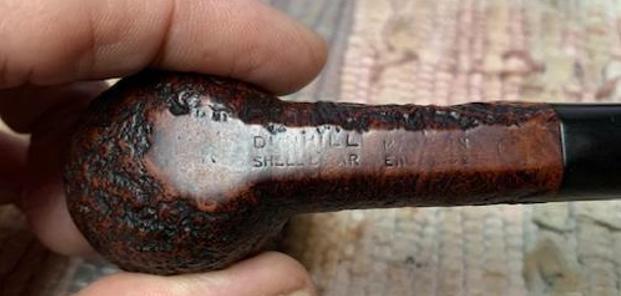
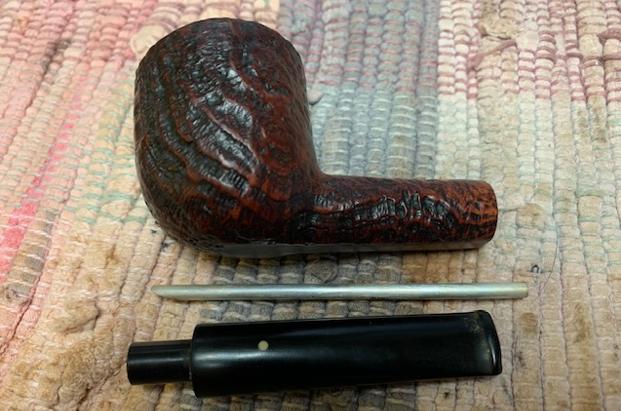
The next pipe on the table is the second one that came to me from a friend up the British Columbia Coast. It is the second of two Dunhill pipes that he found in a shop along the coast. It is a Shell Briar Pot that is worn and has a lot of damage to the rim top. It is the pipe in the front of the photo below. You can see the damage to the rim top and how the rim top is damaged at the back and the front of the rim top and the outer edge of the bowl. The photo was sent to me by Chris. When the pipe arrived I took photos of what it looked like. Chris had done some preliminary cleaning of the pipe before he sent it to me and it look quite clean. It is stamped on a smooth panel on the underside of the shank. On the heel of the bowl it is stamped with the shape number R followed by Dunhill [over] Shell Briar followed by Made in England with a superscript underlined 0. That is followed by 4 in a circle followed by S for Shell. Interpreting that stamp follows: The R is the shape for a straight stem Pot. The Dunhill Shell Briar is the finish which is corroborated the S in the circle. The underlined 0 following the D of England dates the pipe. The stamping is clear and readable. The age of the pipe and the oils in the sandblast finish has given the pipe a rich medium brown finish. There is also some interesting grain shows through the blast finish. There was still a thin cake in the bowl and a light overflow of lava on the rim top. The rim top had a lot of damage and wear on the top and outer edges.  The top was no longer flat. The vulcanite stem was lightly oxidized and had tooth marks and chatter ahead of the button. I took photos of the pipe to show what it looked like before I started working on it. I took photos of the bowl and rim top to show the thickness of the cake and the damages. The rim top and edges are a mess with lots of damage caused by beating it against a hard surface. The photos of the stem show the light oxidation and tooth marks and chatter on the surface on both sides. The stamping on the underside of the shank is shown in the photo below. It looks very good and readable. It reads as noted and explained above.I removed the stem from the shank and took a photo of the pipe parts to show what I was working with. It has potential to be a great looking pipe.  I turned to Pipedia’s section on Dunhill Shell Briar Pipes to get a bit of background on the Dunhill finishes (https://pipedia.org/wiki/Dunhill#Root_Briar). I quote:

Shell

A deep craggy sandblast with a black stain finish (usually made using Algerian briar) – the color of the stain used has varied over the years. Although there is some doubt as to them being the first to sandblast pipes, Dunhill’s Shell pipes, and the sandblasting techniques developed to create them are considered one of Dunhill’s greatest and most lasting contributions to the art of pipe making.

The documented history of Dunhill’s inception of the Shell is largely limited to patent applications — there are no catalog pages or advertisements promoting blasted pipes at the time. The preliminary work on the English patent (No. 1484/17) was submitted on October 13, 1917. The patent submission was completed half a year later, on April 12, 1918, followed by the granting of the English patent on October 14, 1918. This was less than a month before the end of The Great War on November 11th.

In 1986 Dunhill released a line of premium Shell finish pipes – “RING GRAIN”. These are high-quality straight grain pipes which are sandblasted. Initially only Ring Grain, but now in two different finishes. In 1995 the “Shilling” was introduced with Cumberland finish – it is an extremely rare series. These pipes exhibit a deeper blast characteristic of that of the 1930’s – mid-1960’s (and the limited ‘deep blast’ pipes of the early 1980s) and show a fine graining pattern. These are considered the best new Dunhills by many enthusiasts today and are very rare. The finish is sometimes described as tasting like vanilla at first, with the taste becoming more normal or good as the pipe breaks in.

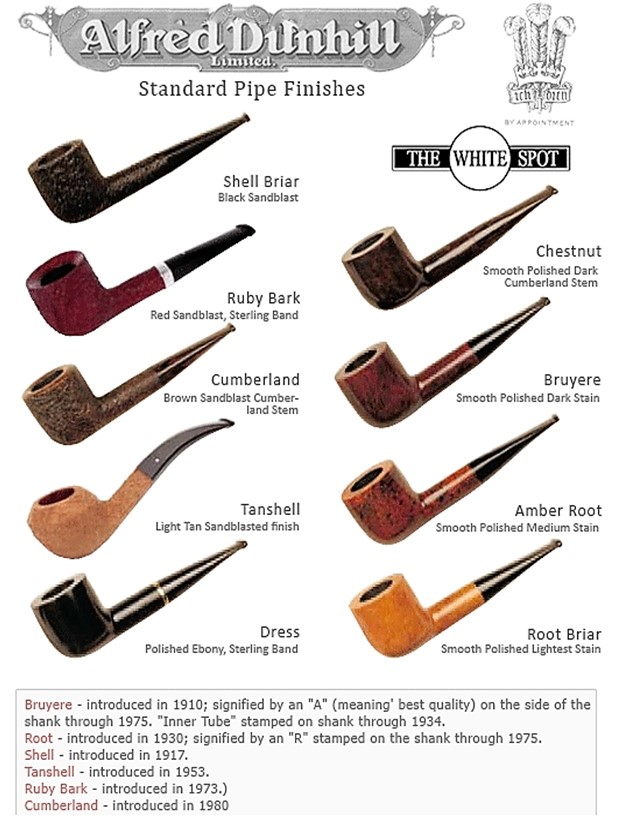
I have also included a chart from the site from Dunhill spelling out the Standard Pipe Finishes and giving short information and a timeline.

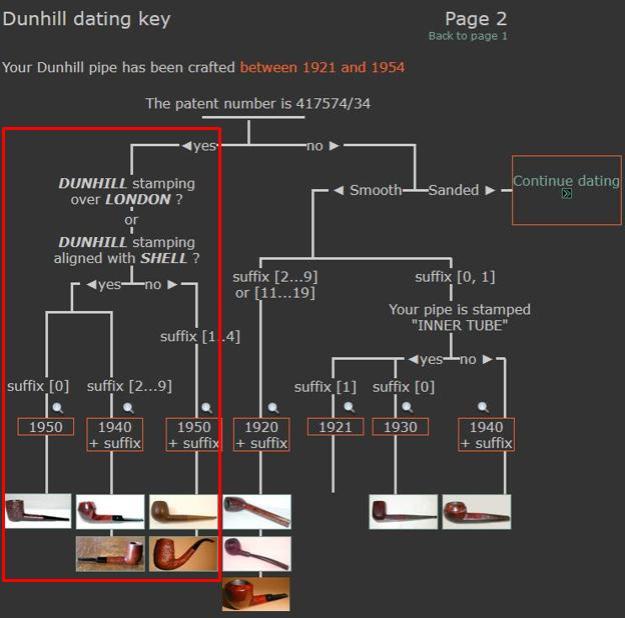
I turned to Pipephil to establish a date for a Dunhill with the stamping that was on this pipe. The date stamp 0  (http://pipephil.eu/logos/en/dunhill/cledat-en1b.html) I have marked the box below with a red box around the part of the date key that is applicable. The pipe dates to 1950.I decided to start the restoration on this one by working on the damaged rim top. I started the process by topping the bowl on a topping board and a piece of 240 grit sandpaper. My main concern was to flatten the top and remove some of the gouges and damages. I then built up the damaged areas on the front and back outer edges of the bowl with briar dust and CA glue. I wanted to raise the profile of the edge in those areas. I would rusticate them so I was not overly concerned with what it looked like at this point. I used various burrs on the Dremel to approximated the sandblast finish on the rim top and bring it back to reflect the sandblast and nooks and crannies on the sides of the bowl and shank. I stained the newly shaped rim top with an Oak and a Maple stain pen to match the colour of the bowl. I was pretty happy with the newly stained rim. It look a lot better than when I started and worked with the finish.I figured I should clean up the bowl after that work. I reamed it with a PipNet Pipe Reamer and took back the remaining cake to briar so I could check out the condition of the bowl walls. I cleaned up the remnants with a Savinelli Fitsall Pipe Knife. I cleaned out the mortise and the airway in the shank and stem with alcohol, cotton swabs and pipe cleaners. I also cleaned out the inner tube at the same time. With the repair completed I rubbed the briar down with Before & After Restoration Balm. I worked it into the briar with my fingertips and a horsehair shoe brush to work it into the nooks and crannies of the sandblast finish. The product works to clean, enliven and preserve the briar. I let it sit for 15 minutes while I worked on the stem. After the time passed I buffed it with a cotton cloth to deepen the shine. The briar really comes alive with the balm. I cleaned out the tooth marks with alcohol and filled them in with black super glue. I set the stem aside to allow the glue to cure. Once it cured I recut the edge of the button with a file and then sanded the repairs with 220 grit sandpaper to smooth them out and blend them into the rest of the stem surface. I set the bowl aside and turned my attention to the stem. I polished the vulcanite with micromesh sanding pads – 1500-12000 grit pads. I wiped it down with Obsidian Oil after each sanding pad. I used Before & After Pipe Polish – both Fine and Extra Fine to further polish the stem. This Dunhill Shell Briar R Pot is a beautiful sandblast that came out looking very good. The Shell Briar finish has a great rugged sandblast that Dunhill specialized in making. The finish on the pipe is in excellent condition. The oils off the smoker’s hands and the tan stain on the bowl works well to highlight the grain. The polished black vulcanite taper stem adds to the mix. With the dust gone from the finish and the bowl it was a beauty and is eye-catching. I put the stem back on the bowl and buffed the pipe with Blue Diamond on the buffing wheel being careful to not buff the stamping. I gave the bowl multiple coats of Conservator’s Wax and the stem multiple coats of carnauba wax on the buffing wheel and followed that by buffing it with a clean buffing pad. I hand buffed the pipe with a microfiber cloth to deepen the shine. The finished Shell Briar R Pot is quite nice and feels great in the hand. Give the finished pipe a look in the photos below. I can only tell you that like the other pipes I am working that it is much prettier in person than the photos capture. The dimensions of the pipe are Length: 5 ¼ inches, Height: 1 ¾ inches, Outside diameter of the bowl: 1 ½ inches, Chamber diameter: 7/8 of an inch. The weight of the pipe is 36grams/1.27oz. Thanks for walking through the restoration with me as I worked over another beautiful pipe. Remember we are not pipe owners; we are pipemen and women who hold our pipes in trust until they pass on into the trust of the next generation.

Breathing Life into a Dunhill Tanshell 253 Group 4 Billiard


Blog by Steve Laug

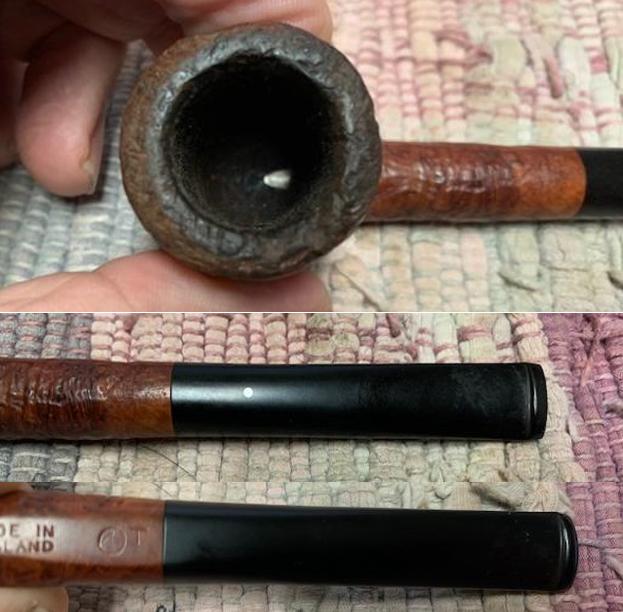
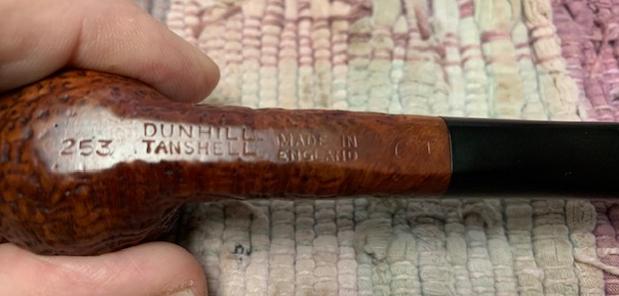
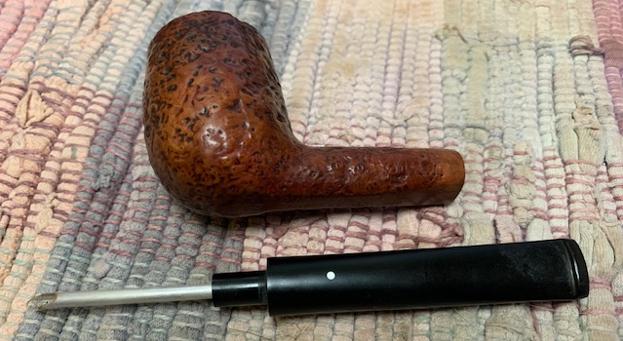
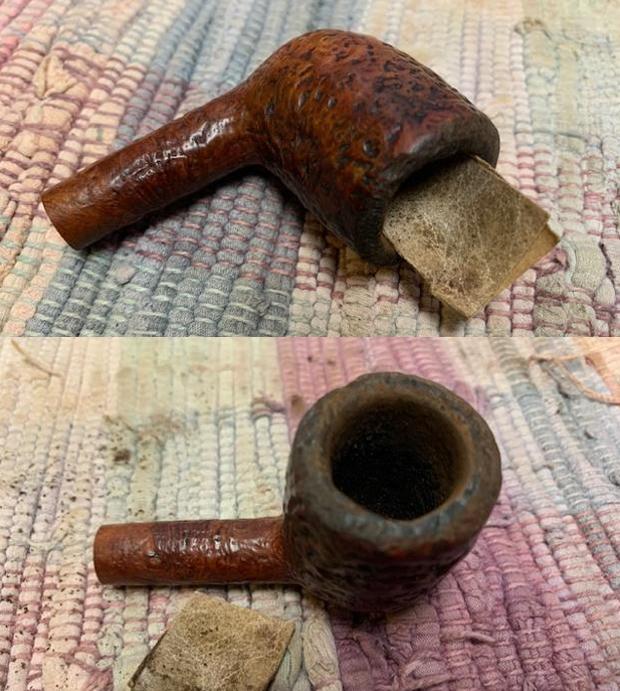
The next pipe on the table came to me from a friend up the British Columbia Coast. It is the first of two Dunhill pipes that he found in a shop along the coast. It is a Tanshell Briar Billiard that is worn and has a lot of damage to the rim top. It is the pipe at the back of the photo below. The second one is a Dunhill Shell Briar. The photo was sent to me by Chris. The second photo shows the damage to the rim top and edges. It was worn and damaged. The sandblast finish was destroyed and a chewed up top and edge was left behind.When the pipe arrived I took photos of what it looked like. Chris had done some preliminary cleaning of the pipe before he sent it to me and it look quite good. It is stamped on a smooth panel on the underside of the shank. On the heel of the bowl it is stamped with the shape number 253 followed by Dunhill [over] Tanshell followed by Made in England. That is followed by 4 in a circle followed by T for Tanshell. Interpreting that stamp follows: The 253 is the shape for a straight stem Billiard. The Dunhill Tanshell is the finish which is corroborated the T at the end of the stamping. There is no date stamp following the D of England to date the pipe. The stamping is clear and readable. The age of the pipe and the oils in the sandblast finish has given the pipe a rich medium brown finish. There is also some interesting grain shows through the blast finish. There was still a thin cake in the bowl and a light overflow of lava on the rim top. The rim top had a lot of damage and wear on the top, the inner and outer edges. The vulcanite stem was lightly oxidized and had tooth chatter ahead of the button.  I took photos of the pipe to show what it looked like before I started working on it. I took photos of the bowl and rim top to show the thickness of the cake and the lava overflow. The rim top and edges are a mess with lots of damage caused by beating it against a hard surface. The photos of the stem show the light oxidation and tooth marks and chatter on the surface on both sides. The stamping on the underside of the shank is shown in the photo below. It looks very good and readable. It reads as noted and explained above. I removed the stem from the shank and took a photo of the pipe parts to show what I was working with. It is a nice looking pipe.  I turned to Pipedia’s section on Dunhill Tanshell Pipes to get a bit of background on the Dunhill finishes (https://pipedia.org/wiki/Dunhill#Root_Briar). I quote:

Tanshell

The first lot was distributed in 1952 (usually made using Sardinian briar). The prototype was called “Root Shell “, produced in 1951. The Tanshell is a light tan sandblast. Sardinian briar was used for this sandblast. There is a distinct contrast in the sandblasts using Sardinian as opposed to Algerian briar. The Sardinian is much denser and much harder. The resulting pattern, when blasted, is far more even and regular both in terms of the surface texture and the finish.

The Tanshell was Dunhill’s fourth finish and its first major post-war line addition. Introduced in 1951/1952 the Tanshell was a naturally stained sandblasted pipe made exclusively from Sardinian briar through the 1960s. The Tanshell apparently was not simply a light stained Shell but rather was also the product of “certain processes [unrevealed] not previously employed.” Initially, it appears that the pipe was to be named the Root Shell and a stamp to that effect was ordered and received by Dunhill in May 1951. Ultimately, however, the name Tanshell was settled upon but the stamp for the Tanshell name was not received by Dunhill until the beginning of December. Thus while the Tanshell was in production in 1951 it appears that most if not all Tanshells made in that year did not enter into retail distribution until 1952 and were given a 1952 date code. Loring, J. C., The Dunhill Briar Pipe, The Patent Years and After (self-published, Chicago, 1998).

I have also included a chart from the site from Dunhill spelling out the Standard Pipe Finishes and giving short information and a timeline.I decided to start the restoration on this one by working on the damage to the inner edge of the rim. I used a folded piece of 220 grit sandpaper to give the inner edge of the rim a slight bevel to bring it back into round.  While the finished rim edge is not perfect it is far better. To deal with the damaged rim top I gently topped it on a topping board and a piece of 240 grit sandpaper. My main concern was to flatten the top and remove some of the gouges and damages.I used various burrs on the Dremel to approximate the sandblast finish on the rim top and bring it back to reflect the sandblast and nooks and crannies on the sides of the bowl and shank. I stained the newly shaped rim top with an Oak and a Maple stain pen to match the colour of the bowl. I was pretty happy with the newly stained rim. It look a lot better than when I started and worked with the finish.I figured I should clean up the bowl after that work. I reamed it with a PipNet Pipe Reamer and took back the remaining cake to briar so I could check out the condition of the bowl walls. I cleaned out the mortise and the airway in the shank and stem with alcohol, cotton swabs and pipe cleaners. I also cleaned out the inner tube at the same time. With the repair completed I rubbed the briar down with Before & After Restoration Balm. I worked it into the briar with my fingertips and a horsehair shoe brush to work it into the nooks and crannies of the sandblast finish. The product works to clean, enliven and preserve the briar. I let it sit for 15 minutes while I worked on the stem. After the time passed I buffed it with a cotton cloth to deepen the shine. The briar really comes alive with the balm. I set the bowl aside and turned my attention to the stem. I polished the vulcanite with micromesh sanding pads – 1500-12000 grit pads. I wiped it down with Obsidian Oil after each sanding pad. I used Before & After Pipe Polish – both Fine and Extra Fine to further polish the stem.  This Dunhill Tanshell 253 Billiard is a beautiful sandblast that came out looking very good. The Tanshell finish has a great rugged sandblast that Dunhill specialized in making. The finish on the pipe is in excellent condition. The oils off the smoker’s hands and the tan stain on the bowl works well to highlight the grain. The polished black vulcanite taper stem adds to the mix. With the dust gone from the finish and the bowl it was a beauty and is eye-catching. I put the stem back on the bowl and buffed the pipe with Blue Diamond on the buffing wheel being careful to not buff the stamping. I gave the bowl multiple coats of Conservator’s Wax and the stem multiple coats of carnauba wax on the buffing wheel and followed that by buffing it with a clean buffing pad. I hand buffed the pipe with a microfiber cloth to deepen the shine. The finished 253 Tanshell Billiard is quite nice and feels great in the hand. Give the finished pipe a look in the photos below. I can only tell you that like the other pipes I am working that it is much prettier in person than the photos capture. The dimensions of the pipe are Length: 5 ½ inches, Height: 1 ¾ inches, Outside diameter of the bowl: 1 ¼ inches, Chamber diameter: ¾ of an inch. The weight of the pipe is 36grams/1.27oz. Thanks for walking through the restoration with me as I worked over another beautiful pipe. Remember we are not pipe owners; we are pipemen and women who hold our pipes in trust until they pass on into the trust of the next generation.

Restoring a Parker’s Bruyere Lovat made about 1923


Blog by Steve Laug

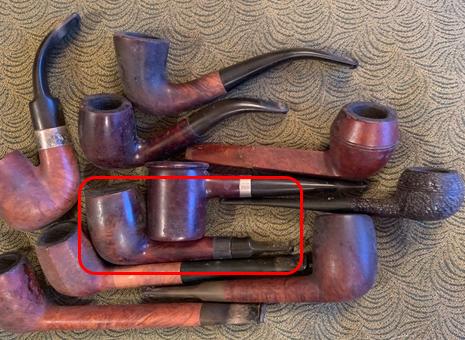
The next pipe on the work table came to us from the old gentleman who had purchased much of his wonderful collection from Barclay-Rex in New York City. He said he used to go there from his workplace to purchase tobacco and pipes. This is the last of his briar’s that I am working on. I have marked it in the photo to the left with a red rectangle around the pipe in the group of pipes above.

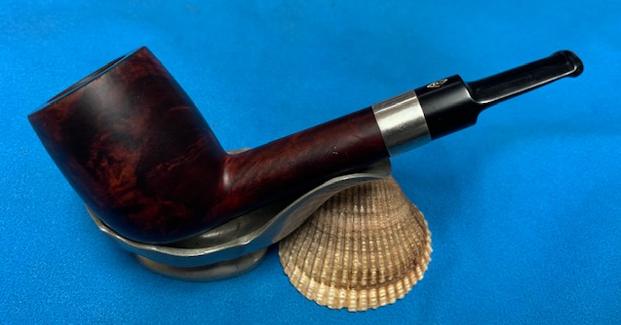
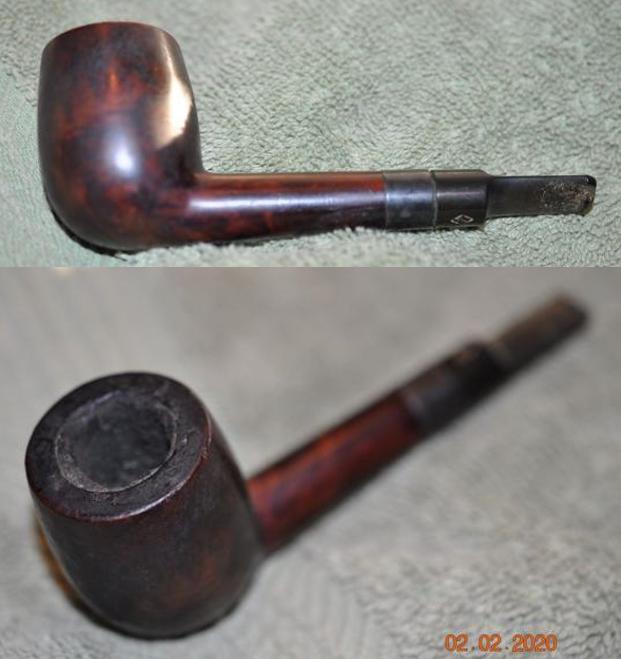
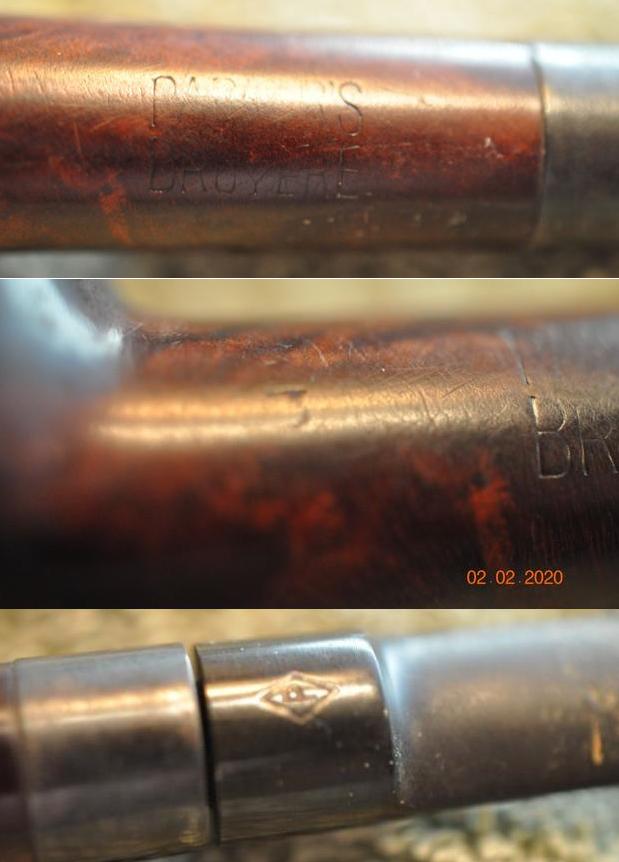
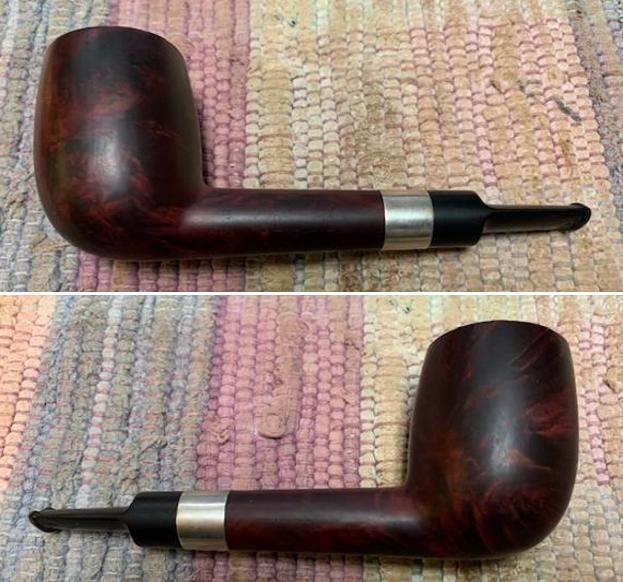
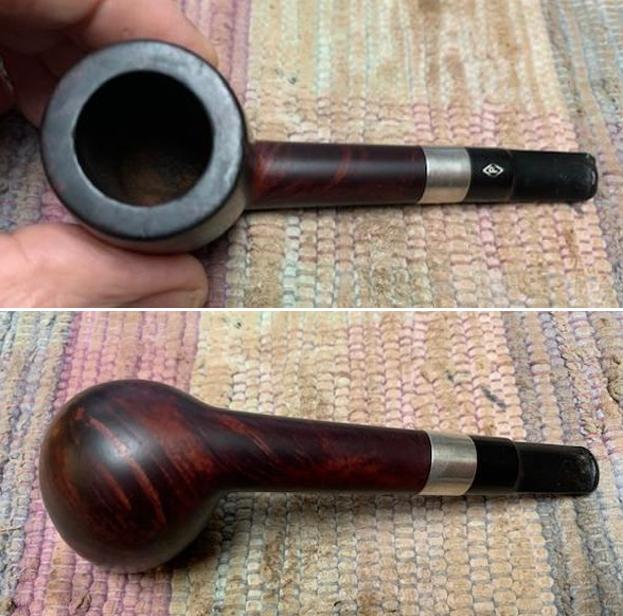
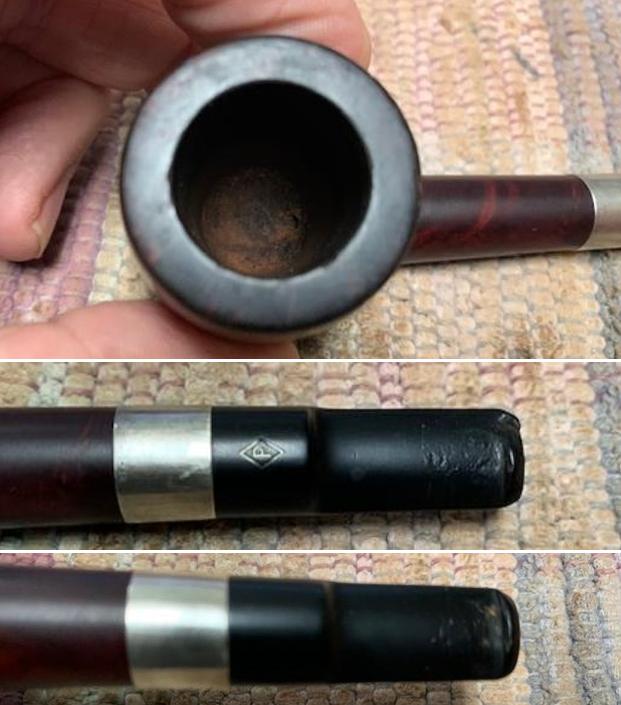
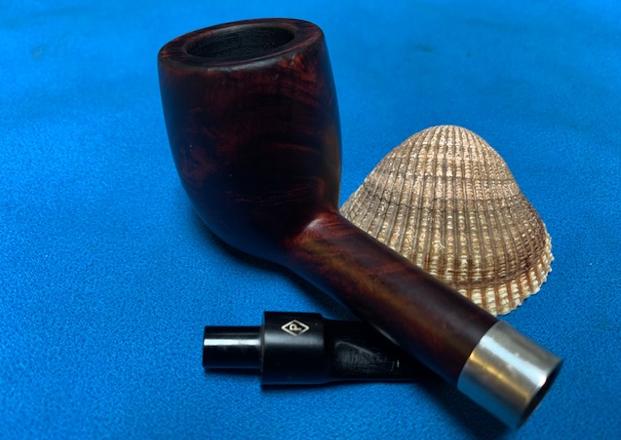
It is a nice looking Parker’s Bruyere Lovat with a Sterling Silver band and a saddle stem. The bowl has a rich reddish brown colour combination that highlights grain. The pipe has some grime ground into the surface of the briar. This pipe is stamped on the sides of the shank. On the left it reads 3 followed by Parker’s [over] Bruyere. On the right it read Made in London England. The saddle stem has a Parker “P” in a Diamond logo on the top side. There is an oxidized band on the shank that needed attention. There is a thick cake in the bowl and some overflow of lava on the edges of the rim top. The rim top looks good but it is hard to know for sure as the lava is quite thick. There were some tooth marks and chatter on both sides of the vulcanite stem near the button. The pipe looks to be in good condition under the grime. Jeff took photos of the pipe before he started his cleanup.He took photos of the rim top to show the cake and the lava coat. The inner edge of the bowl looks good. The top and outer edge also look okay. It is an incredibly dirty pipe but obviously one that was a great smoker. He also captured the condition of the stem. It is oxidized, calcified and has tooth marks and chatter on the top and underside of the stem near the button. There is a chip out of the top right side of the button. He took photos of the sides and heel of the bowl to show the beautiful grain around the bowl and the condition of the pipe. You can see the grime ground into the surface of the briar. He took photos of the stamping on the side of the shank. They are clear and readable as noted above. The photos show the left side of the shank. He did not take photos of the right side. He also included a photo of the Diamond P stamp.I turned first to Pipephil’s site to look at the Parker write up there and see if I could learn anything about the line (http://www.pipephil.eu/logos/en/logo-parker.html). There were no pipes matching the stamping on this one – Parker’s Bruyere.

I looked up the Parker brand on Pipedia to see if I could find the Parker’s Bruyere there or at least the possessive Parker’s stamping (https://pipedia.org/wiki/Parker).

Dating

Prior to Word War II, the possessive PARKER’S stamp was used. However, at least some pipes were stamped with the non-possessive as early as 1936.

Like Dunhill, Parker pipes are date stamped, but differently than Dunhill. The Parker date code always followed the MADE IN LONDON over ENGLAND stamping. The first year’s pipes (1923) had no date code; from 1924 on it ran consecutively from 1 to 19.

There is no indication of a date code for the war years. Parker was not a government approved pipe manufacturer, while Dunhill and Hardcastle were. During the war years Parker manufactured the “Wunup” pipe made of Bakelite and clay.

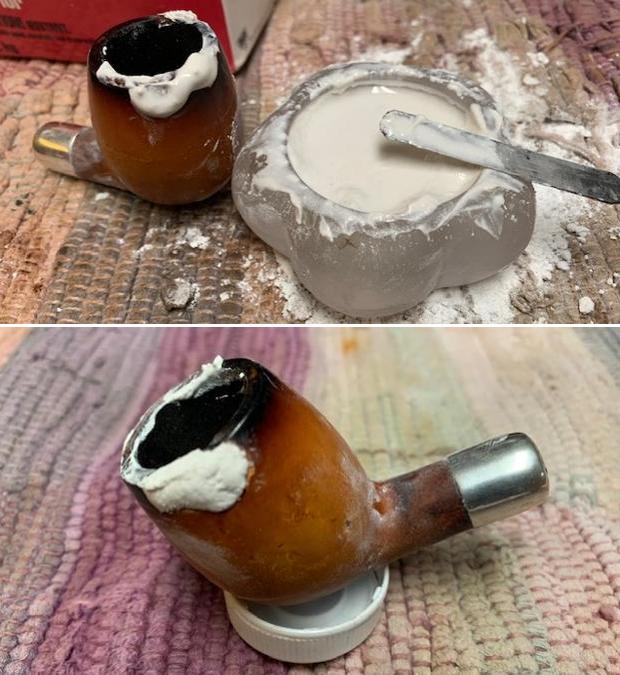
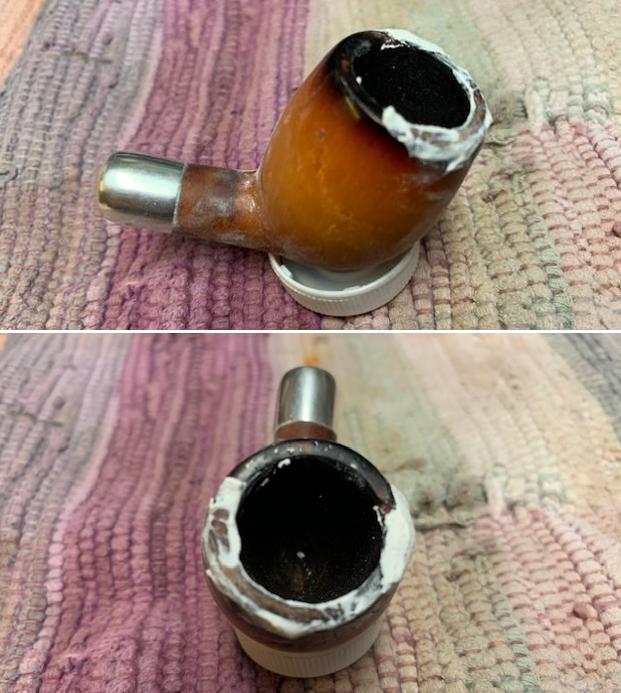
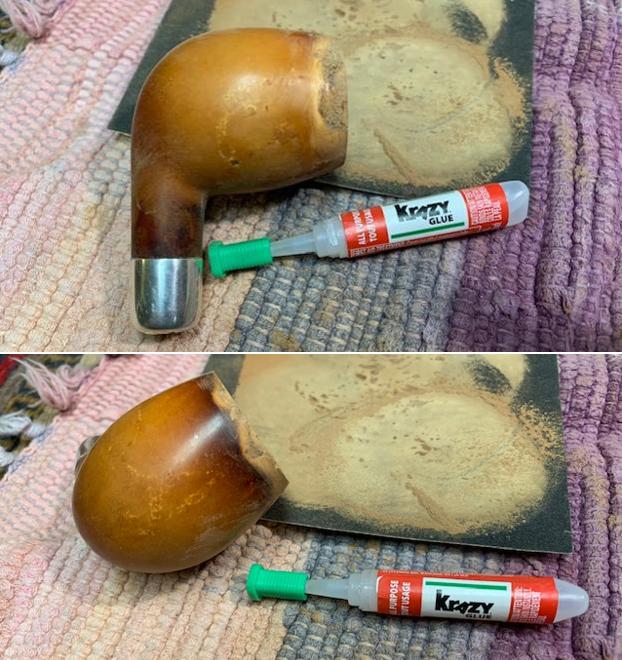
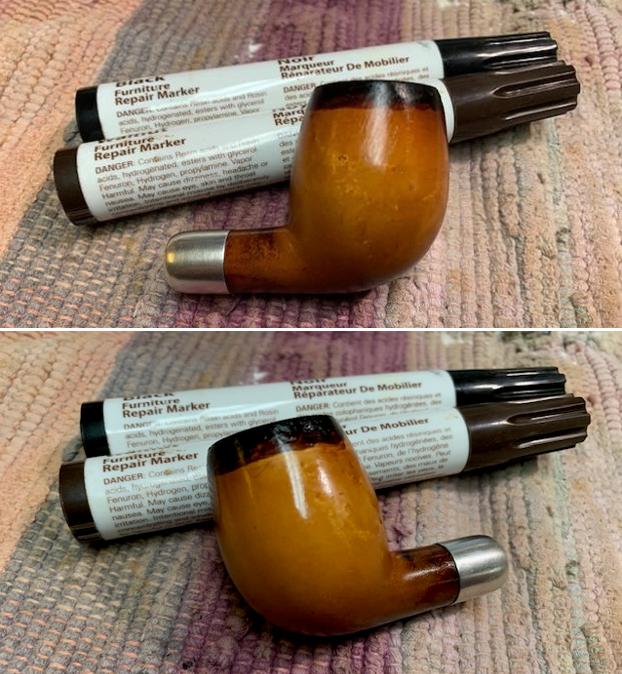
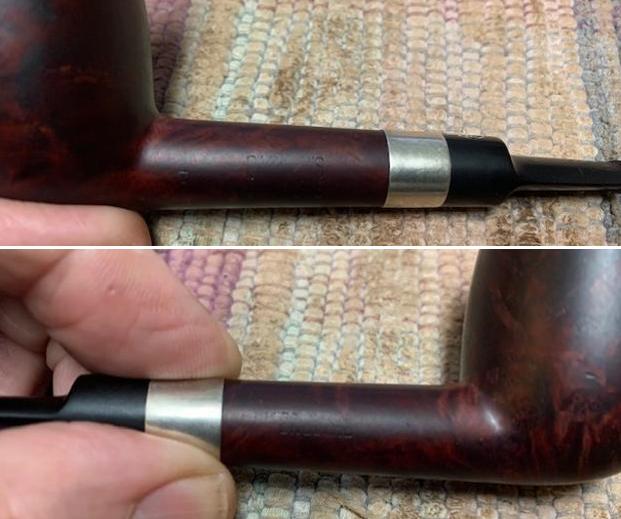
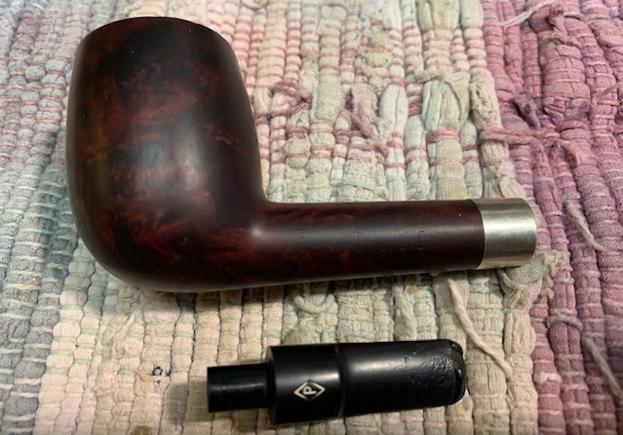
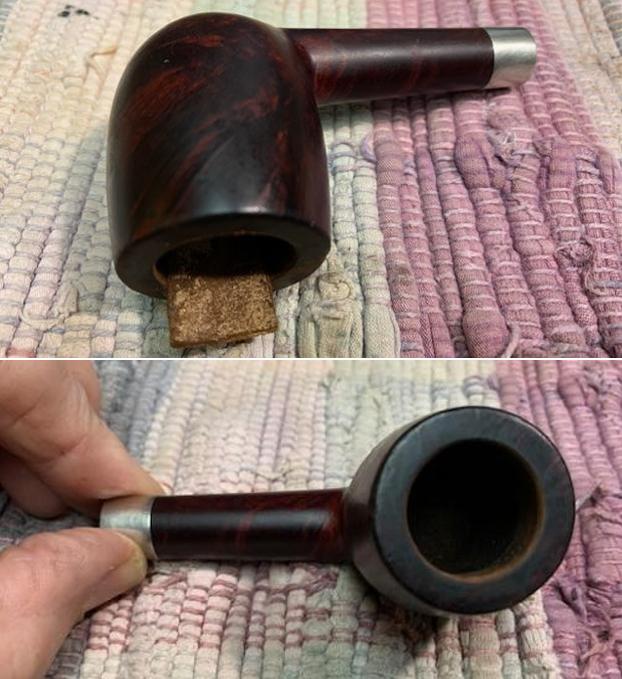
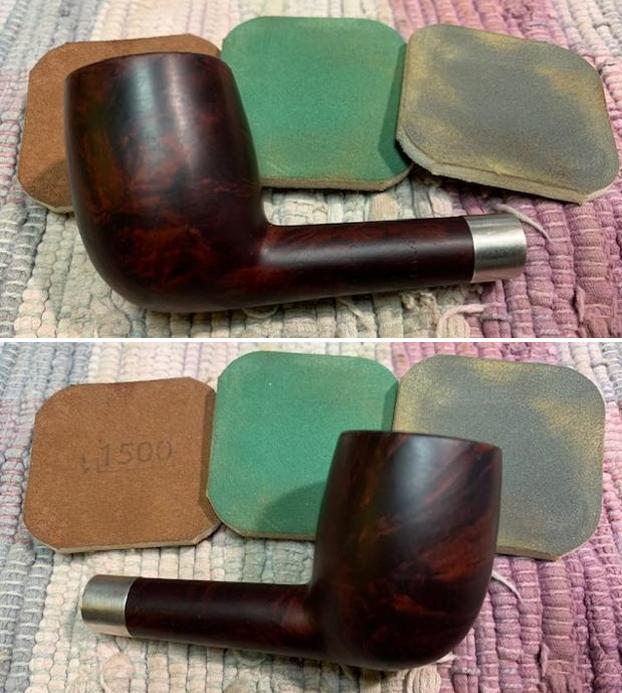
The pipe that I was working on was stamped with the possessive PARKER’S stamp which identified it as being mad prior to WWII.  There was not any date code on the right side of the shank which may have linked it to a pipe made in 1923 but definitely before 1939. The 3 on the shank side seems to have been a shape number. This is another old timer.

It was time to work on the pipe. As usual Jeff had done a thorough cleanup on the pipe. He reamed the bowl with a PipNet pipe reamer and followed up with a Savinelli Fitsall pipe knife to remove the cake. He scrubbed out the mortise and the airway in the shank and the stem with alcohol, cotton swabs and pipe cleaners. He scrubbed the exterior of the bowl, rim, shank and stem with a tooth brush and Murphy’s Oil Soap to remove the oils and tars on the rim and the grime on the finish of the bowl. He rinsed it under running water. One of the benefits of this scrub is that it also tends to lift some of the scratches and nicks in the surface of the briar. He also polished the band which appears to be silver. He dried it off with a soft cloth. He cleaned the internals and externals of the stem with alcohol, pipe cleaners and cotton swabs. He soaked the stem in Before & After Deoxidizer and rinsed it off with warm water and cleaned out the airway in the stem with alcohol. The pipe looked very good when it arrived. I took a photo of the rim top and stem to show the condition. The rim top looked very good. The inner edge of the bowl a few small nicks around the front and left side. The vulcanite taper stem had light tooth chatter and marks on both sides ahead of the button and on the button edges.  The top right side of the button had a chip missing.The stamping on the sides of the shank is clear and readable as noted above.I removed the stem and the extension from the shank and took a photo of the pipe to give a sense of the whole. It is a nice Straight Grain Billiard that should clean up very well.I reshaped the bowl edges with a folded piece of 220 grit sandpaper to remove the damaged areas from the inner edge of the bowl. I polished the briar with micromesh sanding pads – dry sanding with 1500-12000 grit pads and wiped down the bowl after each sanding pad. I rubbed the bowl and shank down with Before & After Restoration Balm. I worked it into the surface of the bowl sides and shank with my fingertips to clean, enliven and protect the briar. I let the balm sit for a little while and then buffed with a cotton cloth to raise the shine. The Balm did its magic and the grain stood out.  I set the bowl aside and turned my attention to the stem. I sanded out the tooth marks and chatter with 220 grit sandpaper. I filled the tooth marks on the stem and button with clear super glue and let it cure.   I used PaperMate Liquid Paper to fill in the Diamond P stamp on the top side of the taper stem. I let it dry the scraped off the excess with my fingernail.   I sanded the repairs smooth with 220 grit sandpaper and started the polishing process with 400 grit wet dry sandpaper. I polished the vulcanite stem with micromesh sanding pads – 1500-12000 grit pads. I wiped it down with Obsidian Oil after each sanding pad. I used Before & After Pipe Polish – both Fine and Extra Fine to further the stem. The photo below shows the polished stem. This nicely grained Parker’s Bruyere 3 Lovat with a vulcanite saddle stem is a great looking pipe now that it has been restored. The briar around the bowl is clean and really came alive. The rich brown stains gave the grain a sense of depth with the polishing and waxing. The grain really popped. I put the vulcanite stem back on the bowl and carefully buffed the pipe with Blue Diamond on the buffing wheel using a light touch on the briar. I gave the bowl and the stem multiple coats of carnauba wax on the buffing wheel. I buffed the pipe with a clean buffing pad to raise the shine. I hand buffed the pipe with a microfiber cloth to deepen the shine. The finished Parker’s Lovat is a beauty and feels great in the hand and looks very good. Give the finished pipe a look in the photos below. The dimensions of the pipe are Length: 4 ½ inches, Height: 1 ¾ inches, Outside diameter of the bowl: 1 ¼ inches, Chamber diameter: ¾ of an inch. The weight of this large pipe is 1.31 ounces /37 grams. This Parker’s Bruyere Lovat is another great find our hunts. It is much more beautiful in person than these photos can capture. I am not sure where this one will end up so I will hold onto it for a short time. This is another pipe that has the possibility of transporting the pipe man or woman back to a slower paced time in history where you can enjoy a respite. Thanks for walking through the restoration with me.


Refurbishing A Danish Quaint # 648 From The Mumbai Bonanza Lot


Blog by Paresh Deshpande

I was fortunate enough to have heeded the advice of my dear friend and mentor, Steve, and struck a deal with a junk collector from Mumbai for a pile of pipes that he had acquired. He did not know what he was selling and I did not know what quality and condition of pipes I was buying from him as we reside in different cities!! The argument that Steve presented was that if not anything, I shall at least have some spares and this was logical. I struck a deal and here are pictures of the pipes that I received in this lot. This lot contains some very nice collectible pipes, a few well known brands and some mediocre brands. Overall, with seven Dunhill pipes, a Preben Holm #1 FH, a couple of “Made in England” Pete System pipes, a couple of  Charatan’s Make “Belvedere”, Custom-Bilt, Stanwell and other assorted pipes, I would say that I had struck a decent haul!! This is indeed my “Mumbai Bonanza”.
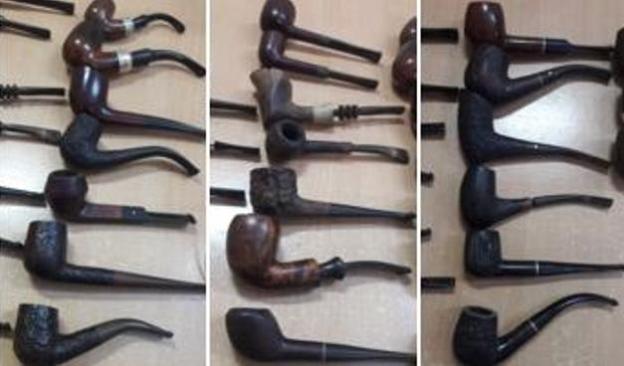
The 22nd pipe that I decided to work on from this find is a beautiful decent sized Acorn shaped DANISH QUAINT # 648 and is indicated by a green pointer.This is a beautiful Acorn shaped pipe that is partially shallow sandblasted on either sides of the stummel and shank with smooth surface on the front, and back of the bowl and on the lower and top surface of the shank that bears the stamping seen on this pipe. It is stamped on the left smooth surface of the shank as “DANISH QUAINT” over “MADE IN DENMARK”, all in block capital letters. The bottom smooth shank surface bears the shape code “648”. The vulcanite saddle stem bears the trademark logo “DQ” with the upper part of Q intertwined with the letter D. All the stampings are crisp and easily readable. The stampings, shape profile, stem styling and my reading of the Stanwell brand when I had worked on a few from my inheritance; I knew that DANISH QUAINT was a sub-brand of STANWELL. I also recollected that there was no other information available on this sub brand from Stanwell.
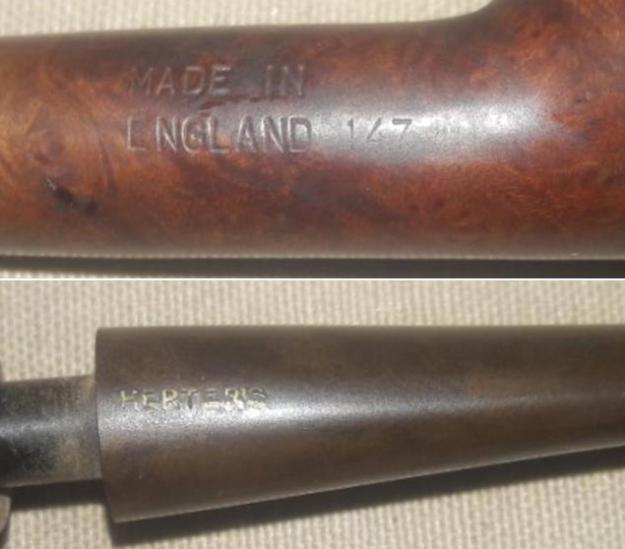
However, just to be sure, I visited pipedia.org and looked up their seconds/ sub-brands which I have reproduced below along with the link

Stanwell – Pipedia

Sub-brands / Seconds

  • Bijou(discontinued)
  • Danish Natural?
  • Danish Quaint
  • Danish Sovereign
  • Danske Club
  • Henley(discontinued)
  • Kong Christian(discontinued)
  • Majestic
  • Reddish(discontinued)
  • Royal Danish
  • Royal Guard
  • Royal Sovereign
  • Sailor(discontinued)
  • Scandia
  • Sorn(discontinued)
  • Svendson

Just out of curiosity, I checked out the Stanwell shape number chart and Designers. There is indeed shape number 48 designed by Sixten Ivarsson that matches the pipe on the work table with the only difference being this pipe is stamped as 648 and not 48. Here is the link and description of shape 48.

Stanwell Shape Numbers and Designers – Pipedia

  • Freehand, egg-shaped bowl with rounded rim, long saddle mouthpiece, by Sixten Ivarsson.

Initial Visual Inspection
The pipe that is currently on my work table is a freehand with an Acorn/ Egg shaped bowl. The stummel has shallow sandblasted patches on either sides of the bowl and on the shank and is covered in dirt and grime through which beautiful cross grains can be seen over smooth surface. There is a thick layer of cake in the chamber. The rim top is covered in lava overflow in the 6 o’clock direction. The vulcanite saddle stem is heavily oxidized with no damage to the bite zone on either surface. The buttons on both surfaces are in pristine condition. The following pictures will give the Readers an idea of the overall condition of the pipe as it sits on my work table. Detailed Visual Inspection
The pipe appears to have been a favorite of the previous piper and has been well smoked. There is a thick carbon layer over the walls of the chamber. The condition of the inner walls of the chamber will be ascertained once the cake has been taken down to the bare briar. The round smooth rim top surface is relatively clean with maximum lava overflow in 6 o’clock direction. In spite of the thick cake, the chamber odor is not strong and should be addressed once the cake has been taken down to the bare briar and the shank internals have been thoroughly cleaned.Being a sub-brand, it was expected that the stummel would have certain flaws, this one is no different and how! There are numerous tiny fills that are filled with putty (indicated with yellow arrows and circles) and many of these fills have loosened up and would require being refreshed. The stummel surface is covered in dirt and grime giving the stummel a lifeless, dull and dirty appearance. The stummel has specks of white paint spots all over the surface and in the nooks and crannies of the shallow sandblast. The mortise shows accumulation of old oils and tars which would need to be cleaned. The vulcanite saddle stem is heavily oxidized, but otherwise in a decent condition. The bite zone and the button edge on both surfaces show calcification and some minor tooth indentations. The horizontal slot and tenon opening shows accumulation of dried oils and tars. All in all, the stem presents no major damage and should be an easy clean up.Initial Cleaning By Abha…
The initial cleaning on this pipe was done by Abha, my wife (she has cleaned up around 40-50 pipes for my further restoration and I am gradually inching towards completing these pipes). She reamed out the complete cake and further smoothed out the chamber walls with a folded piece of 220 grit sand paper. She further cleaned out the internals of the shank with pipe cleaners and alcohol and cotton buds. She followed the internal cleaning of the shank with external cleaning of the stummel using Murphy’s Oil soap and hard bristled tooth brush and dried it with paper napkins and cotton cloth.Next she cleaned out the internals of the stem air way and immersed it in “Before and After Deoxidizer” solution along with the stem of other pipes in line for restoration (the pipe currently on my work table is indicated in red). Once the stem had soaked overnight, she cleaned the stem under running warm water and scrubbed the raised oxidation from the stem surface using Scotch Brite pad. She further removed the oxidation by scrubbing the stem with 0000 grade steel wool and applied a little olive oil to rehydrate the stem.Once The Pipe Is On My Work Table…
The cleaned up pipes presents a very clear picture of what needs to be done to restore this pipe to a pristine and smokable condition. I really cannot thank Abha, my wife, enough for all the help and support that she extends me in my pursuance of this hobby. A clean pipe also helps in clearly identifying the work that would be required to restore a pipe. The following pictures shows the condition of the pipe when it reached me after being cleaned. The stamping is crisp and readable as mentioned above. The shape code is just marginally below the putty fill. Whether or not to refresh this fill will be decided later. The chamber is odorless and the walls are solid without any signs of damage. The smooth round rim top surface has few dents/ dings and very minute fills. The inner and outer rim edges are in perfect condition, save for the minor fills. The stummel has cleaned up nicely and all the numerous tiny dots and few slightly larger fills are easily identifiable. I intend to address only the larger fills that have come loose. The stummel needs cleaning again as it has attracted a lot of dust and dirt since it was last washed. The mortise and shank internals will benefit from further cleaning.The stem has cleaned up really well. The stem airway, horizontal slot and tenon end are clean and air flow is open and full. There are no bite marks/ tooth chatter in the bite zone on either surfaces. The seating of the stem tenon in to the mortise is snug and sits flush with the shank face.The Process
I started the restoration with the external cleaning of the stummel. I cleaned the external surface of the stummel with Murphy’s Oil Soap and a hard bristled toothbrush. Once the stummel surface was cleaned, I rinsed the stummel under warm water. The rim top surface is now clean and without any damage. The shank and chamber cleaned up nicely and there are no traces of ghost smells. A polish with micromesh pads should highlight the cross grains on the smooth stummel surface. The large fills that have come loose will need to be refreshed. Next, I cleaned out the internals of the shank and mortise. Using my dental tool, I scraped out the dried oils, tars and gunk from the mortise. I continued further cleaning of the mortise and the shank with shank brushes and dish washing soap. I finished the cleaning by running a few pipe cleaners dipped in isopropyl alcohol through the mortise.Once I had wiped the stummel dry with paper towels and soft cotton cloth, the fills were very apparent. With a pointed dental pick, very carefully and painstakingly, I completely removed the old fills from the stummel surface. I cleaned the fills of all the debris with isopropyl in preparation of fresh fill.I filled up the gouged out spots with a drop of clear CA superglue. The larger fill at the shank end was filled with a mix of superglue and briar dust. I set the stummel aside for the fills to cure overnight. With the stummel set aside for the fills to cure, I turned to refurbishing the stem. I lightly used a flat head needle file to re-define the button edge on either surface. I followed it up by further dry sanding the stem with 320, 400, 600, 800 and wet sanding with 1000 grit sand papers to completely rid the surface of the oxidation and bring out the shine in the vulcanite. I rubbed a small quantity of Extra Virgin Olive oil in to the stem surface and set it aside to be absorbed in to the vulcanite. The stem at this point in restoration is shown below.By next day, the stummel fills were nice, hard and well set. With flat head needle file, I sand each of the fill to achieve a rough match with the rest of the surface. With a folded piece of 220 grit sand paper, I worked on each fill till I had achieved a nice blend with the rest of the stummel surface. It turned out much better than I had anticipated. I further sand the entire smooth portion of the stummel surface with the same grit sand paper to address the minor scratches and further smooth the stummel surface in preparation for a polish by micromesh pads. The rounded rim top surface looks much better at this point in restoration. Using micromesh pads, I completed the polishing of the stem by wet sanding the surface with 1500 to 12000 girt pads. I gave a final rub with “Before and After Extra Fine” stem polish compound from Mark Hoover to remove fine scratches from the stem surface. I rub a little quantity of Extra Virgin Olive oil in to the stem surface and set it aside to be absorbed by the vulcanite. The stem polished up nicely and appears as good as when new.   Next, I subjected the smooth surfaces of the stummel to a complete cycle of micromesh polish, wet sanding with 1500 to 12000 grit pads. I paid greater attention to polish the rim top surface. I wiped the stummel with a moist cloth after every grit pad to remove the sanding dust left behind by the pads. I am happy with the progress being made till now. Next, I rub a small quantity of “Before and After Restoration Balm” in to the briar with my finger tips and worked it deep in to the surface and let it rest for a few minutes. The balm almost immediately works its magic and the briar now has a nice vibrant appearance with the beautiful cross grain patterns on full display. The contrast of the dark browns of the grain with the light reddish brown hues of the rest of the stummel adds an interesting dimension to the appearance of the stummel. I further buffed it with a horse hair brush to further deepen the shine. To refresh the stem logo, I coat the stem logo with white correction ink and let it dry out completely while I polished the pipe with Blue Diamond. Once the ink had dried out, with a toothpick, I gently removed the excess ink from the surrounding surface. The logo is very crisp and looks good.To put the finishing touches, I mount a cotton cloth buffing wheel on to my hand held rotary tool and polished the stummel and stem with Blue Diamond compound. This compound helps to remove the minor scratch marks that remain from the sanding. Next, I mount another cotton buffing wheel that I have earmarked for carnauba wax and applied several coats of the wax. I mount a clean cotton cloth buffing wheel and give the entire pipe a once over buff. I finished the restoration by giving the entire pipe a rigorous hand buffing using a microfiber cloth to raise the shine further. The finished pipe with a deep brown shine to the briar looks amazingly beautiful and is now ready for its long second inning with a new piper. I would like to express my gratitude to all the readers of rebornpipes who have taken the efforts to walk through this journey with me.  Your comments and suggestions are of utmost importance as this helps me gain experience and grow in this hobby about which I am very passionate.
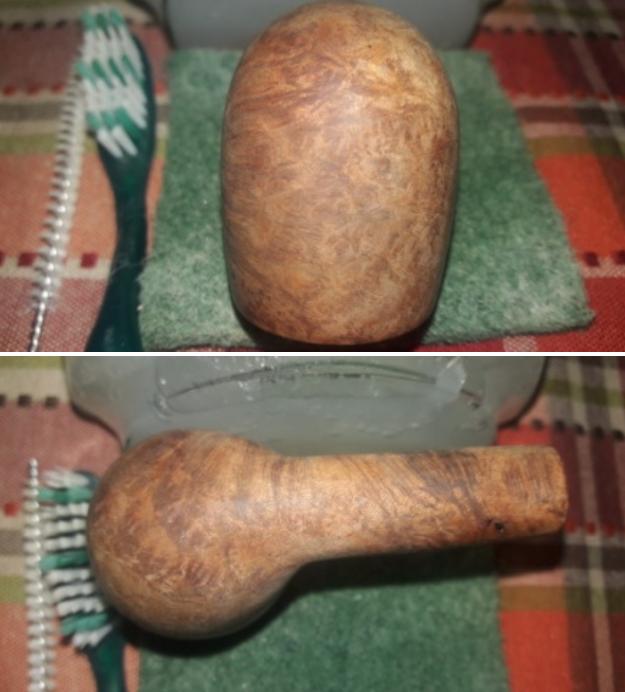
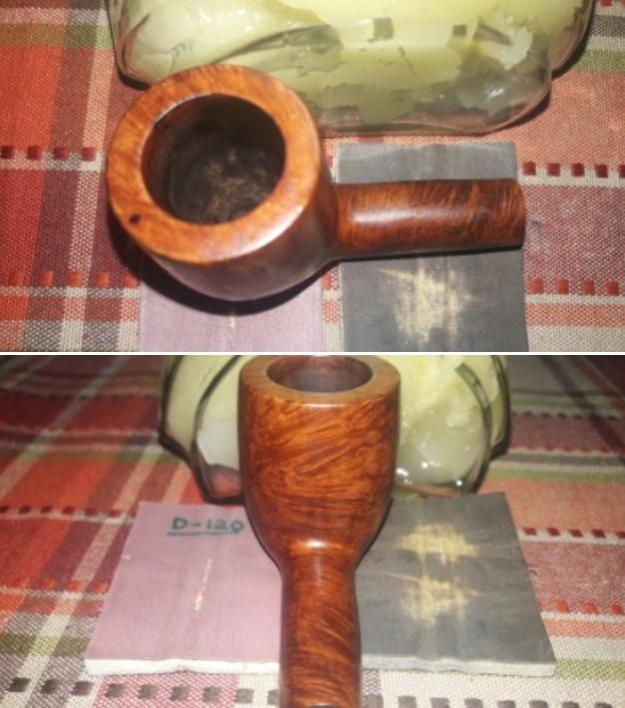
This is a very beautiful pipe with a medium sized bowl but very light in weight. It has the same design features of a well-made Stanwell pipe, but at half the cost being a sub-brand. If any reader is interested in adding this pipe to his/ her pipe rotation, feel free to contact me at deshpandeparesh@yahoo.co.in .

Praying for the health and safety of all the readers and their loved ones in these troubled times…

Breathing Life into a Rusticated KBB Yello-Bole Imperial 68C House Pipe


Blog by Steve Laug

I have only a couple more of the pipes from the old fellow’s collection left to do and they have some challenges that I need to think through before I tackle them. For a bit of a break I am doing some others that we have here in the queue. The next pipe I chose to work on came to us from an online auction back in 2018 in Wilkes Barre, Pennsylvania, USA. This pipe is also the size of a Peterson’s House Pipe  – same size and shape. It is stamped on the left side of the shank and reads 68C followed by KBB in a Cloverleaf. That is followed by Yello-Bole [over] Reg. US. Pat. Off. [over] Imperial [over] Cured with Real Honey. The stamping is clear and readable. There is also stamping on the underside of the ferrule that reads Nickel Plated and has the KBB cloverleaf logo.

The rim top and edges both look to be in good condition. There is a thick cake in the bowl and the rusticated finish is dirty and lifeless. The shank has an end cap or ferrule that is loose on the end of the shank. The shank is drilled like a Peterson’s system pipe with a sump and the entrance to the airway at the top of the mortise. The long vulcanite saddle stem very much like a KB&B Wellington style P-Lip. The airway comes out on the end of the button like those stems rather than the top like a Peterson’s stem. The stem does not have any stamping and is heavily oxidized but has light tooth chatter but no tooth marks on both sides near the button. Jeff took some photos of the Yello-Bole Imperial House Pipe before he worked his magic in cleaning up the pipe. It is a an interesting pipe with a lot of potential and what appears to be some great grain under the grime and debris of the years.   Jeff took photos of the bowl, rim top to show the thickness of the cake and the unique rustication on the surface of the rim and edges. There is some light lava on the inner edge but nothing too thick. He took photos of the top and underside of the vulcanite stem showing the oxidation, calcification, tooth marks, chatter and wear on the stem and button. Jeff took a photo of the side and heel of the bowl to show the condition of the briar. You can see the beautiful shape of the bowl and the cut glass like rustication even through the dirt and debris of many years. Jeff took photos of the stamping on the left side of the shank and the Yello-Bole circular yellow logo on the top of the stem. I turned to Pipephil’s site to see what I could find out about the brand and the timeline of the pipe (http://pipephil.eu/logos/en/logo-y.html). I found a photo of a pipe with the same stamping as the one that I am working on though it does not have the inlaid O on the briar shank. It is stamped exactly the way that the one I have – Yello-Bole, Reg US Pat Off, Imperial, Cured with Real Honey. I have included a screen capture below.I also have included a quote from the side bar on the site below.

In 1932 Kaufman Brothers & Bondy (KB&B) expanded their program consisting of KB&B pipes, Reiss-Premier and Kaywoodie as the mainstay brands by introducing the Yello-Bole line.

I turned to Pipedia (https://pipedia.org/wiki/Yello-Bole) to check out the history of the brand a bit to refresh my memory. I am including a section from the site on dating the pipes.

Tips for Dating Yello-Bole Pipes

  • KBB stamped in the clover leaf indicates it was made in 1955 or earlier as they stopped this stamping after being acquired by S.M. Frank.
  • Pipes from 1933-1936 they were stamped “Honey Cured Briar”
  • Post 1936 pipes were stamped “Cured with Real Honey”
  • Pipe stems stamped with the propeller logo were made in the 1930’s or 1940’s – no propellers were used after the 1940’s.
  • Yello Bole used a 4 digit code stamped on the pipe in the 1930’s.
  • Pipes with the Yello-Bole circle stamped on the shank it were made in the 1930’s, this stopped after 1939.
  • Pipes stamped BRUYERE rather than BRIAR it was made in the 1930’s.

This information that I found. The KBB stamped in a clover leaf indicated the pipe was made in 1955 or earlier. Further work identifies the pipe stamping “Cured with Real Honey” dates the pipe as made after 1936. The lack of a propeller logo on the stem and the lack of a yellow circle on the shank side moves it to post 1939-1940.  So I knew that the pipe was made between 1940 and 1955. Now it was time to work on the pipe.

Jeff carefully cleaned the pipe. He reamed it with a PipNet pipe reamer and then cleaned up the reaming with a Savinelli Fitsall Pipe Knife. He scrubbed out the internals of the shank, stem and shank extension with alcohol, pipe cleaners and cotton swabs until the pipe was clean. He scrubbed the exterior of the bowl with Murphy’s Oil Soap and a tooth brush to remove the grime and grit on the briar and lava on the rim top. The finish looks much better and has a deep richness in the colour that highlights the dimensions of the grain. The chip on the back of the rim top was clear and looked like a relatively easy repair. The edges looked good otherwise. He soaked the stem in Briarville’s Pipe Stem Deoxidizer and scrubbed it with Soft Scrub to remove the remnants of oxidation. When the pipe arrived here in Vancouver I was amazed that it looked so good. Here are some photos of what I saw. I took some close up photos of the rim top and the stem surface. The top and inner and outer edge of the rim look to be in good condition. The bowl is a bit oval in shape rather than round but appears to have been made that way. The stem was clean of tooth marks and had light chatter on the button surface. There was some residual oxidation on the saddle area of the stem that would need to be dealt with. I took a photo of the stamping on the side of the shank. It is readable and clear. The yellow circle on the top of the stem is inlaid and is in excellent condition.I removed the stem from the shank and took a photo of the parts of the pipe. I started my work on the pipe by regluing the nickel band on the shank end. I dabbed the shank end with white all purpose glue and pressed the ferrule back in place and aligned it to the shank.I used a worn brass bristle brush to clean up the surface of the briar. I worked over the finish around the bowl and shank to remove any of the debris and the varnish coat on the briar. I worked some Before & After Restoration Balm into the surface of the bowl and shank with my fingertips to clean, enliven and protect the briar. I let the balm sit for 15 minutes and then buffed with a cotton cloth to raise the shine. The photos show the bowl at this point in the restoration process. I set the bowl aside and turned my attention to the stem. I scrubbed the stem with Soft Scrub, a Scotch Brite scrubbing pad and cotton pads to remove the remaining oxidation on the stem. I coated the stem with the Soft Scrub and scoured it with the Scotch Brite scrubbing pad. I wiped it down with some more Soft Scrub and a cotton pads to remove the loosened oxidation.  I polished the stem with micromesh sanding pads – dry sanding with 1500-12000 grit sanding pads. I wiped it down after each sanding pad with Obsidian Oil. I polished it with Before & After Pipe Stem Polish – both Fine and Extra Fine. I gave it a final coat of Obsidian Oil. With the bowl and the stem finished I put the beautiful and unusual KBB Rusticated Yello-Bole Imperial House Pipe back together and lightly buffed it on the wheel using Blue Diamond to give it a shine. I gave the bowl multiple coats of Conservator’s Wax and the stem multiple coats of carnauba wax on the wheel. I buffed it with a clean buffing pad to raise the shine. I hand buffed it with a microfiber cloth to deepen the shine. The rustication on this pipe really is a great looking and reminds me of cut glass. The dimensions of the pipe are – Length: 9 ½ inches, Height: 2 inches, Outside diameter of the bowl: 1 ¼ inches, Chamber diameter: 7/8 of an inch. The weight of this large pipe is 3.14 ounces /89 grams. This KBB Yello-Bole Imperial House Pipe is another great find our hunts. It is much more beautiful in person than these photos can capture. I will be putting it on the rebornpipes store soon. If you would like to add it to your collection let me know. This is another pipe that has the possibility of transporting the pipe man or woman back to a slower paced time in history where you can enjoy a respite. Thanks for walking through the restoration with me.