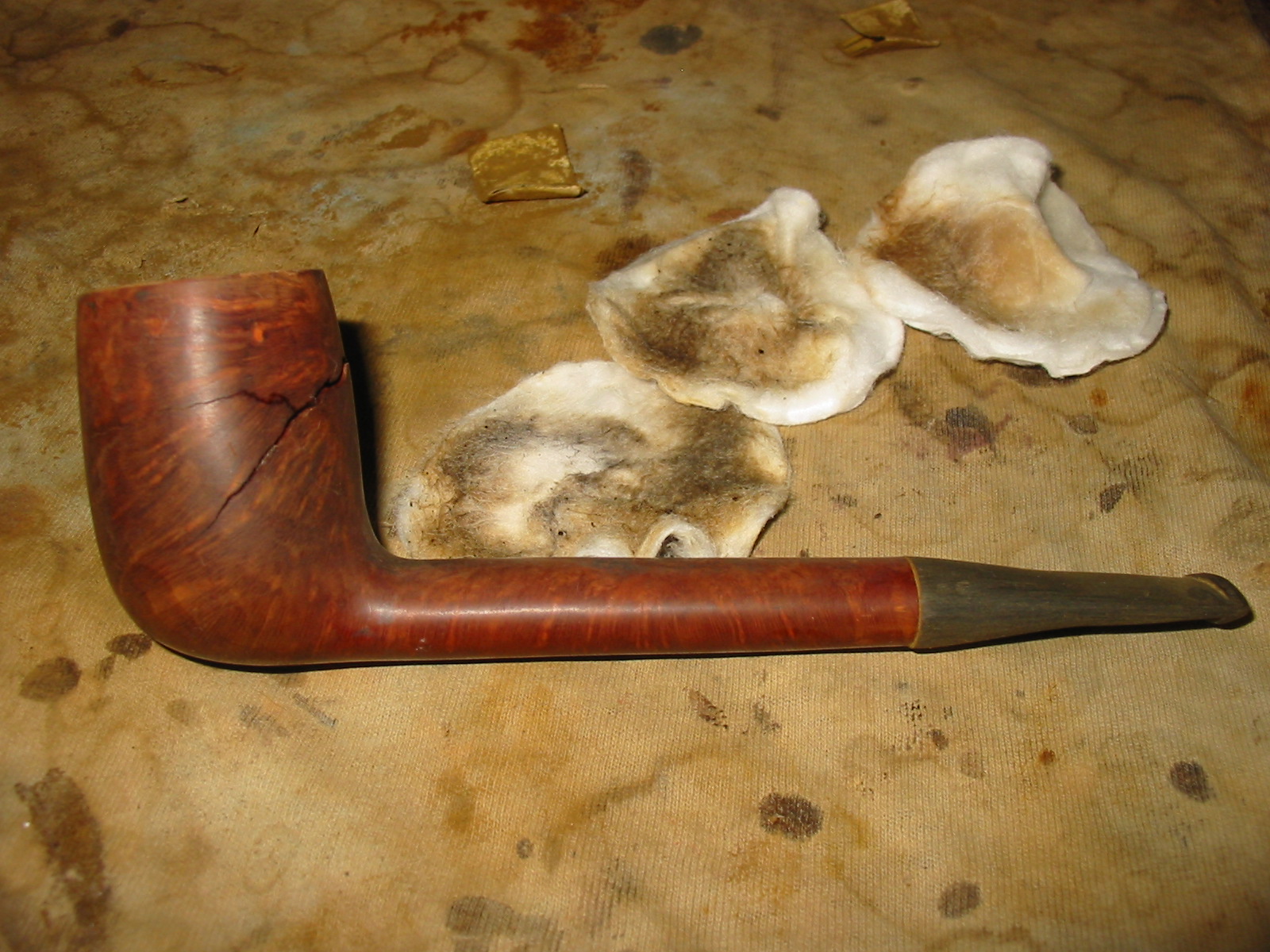
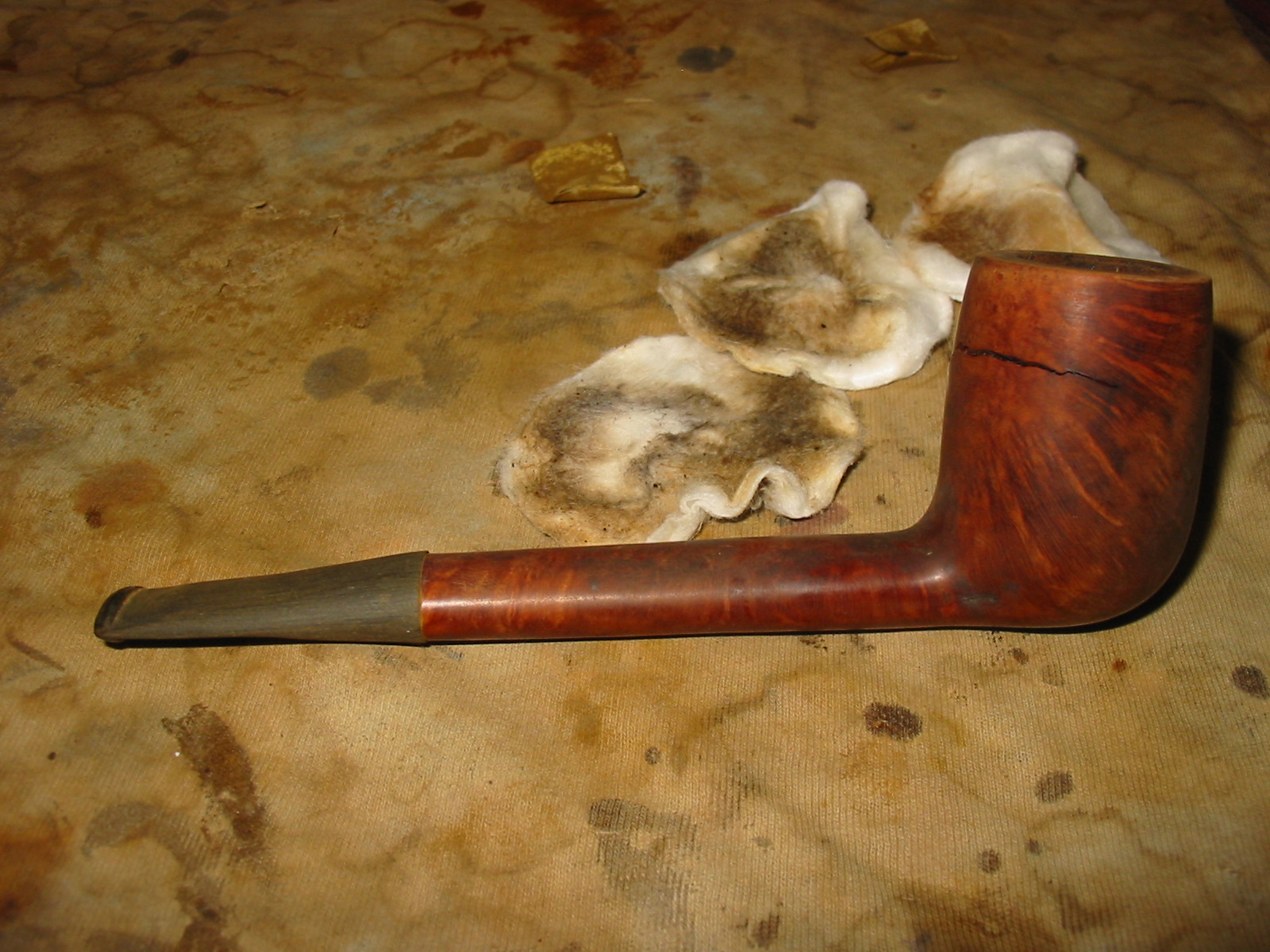
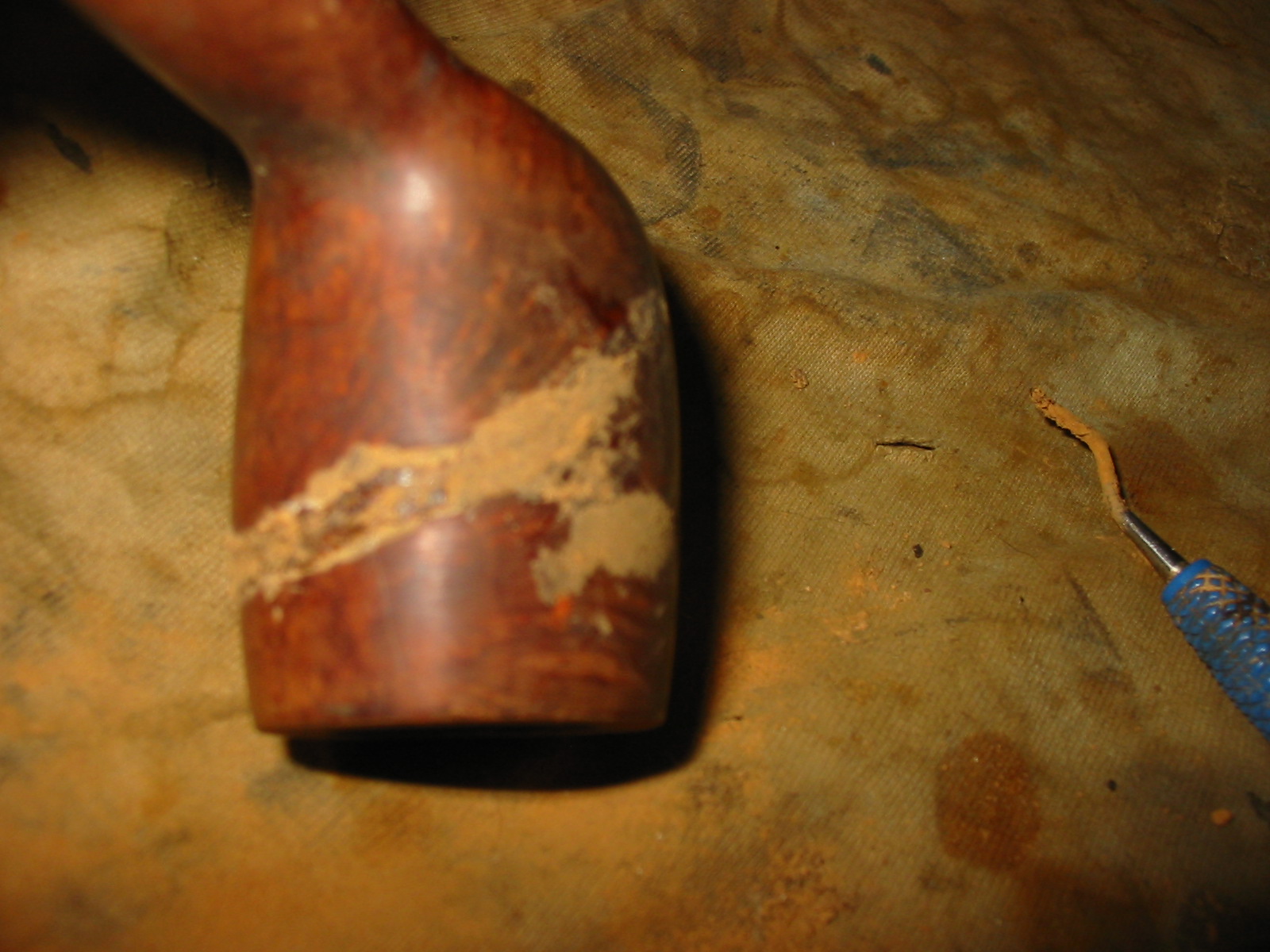
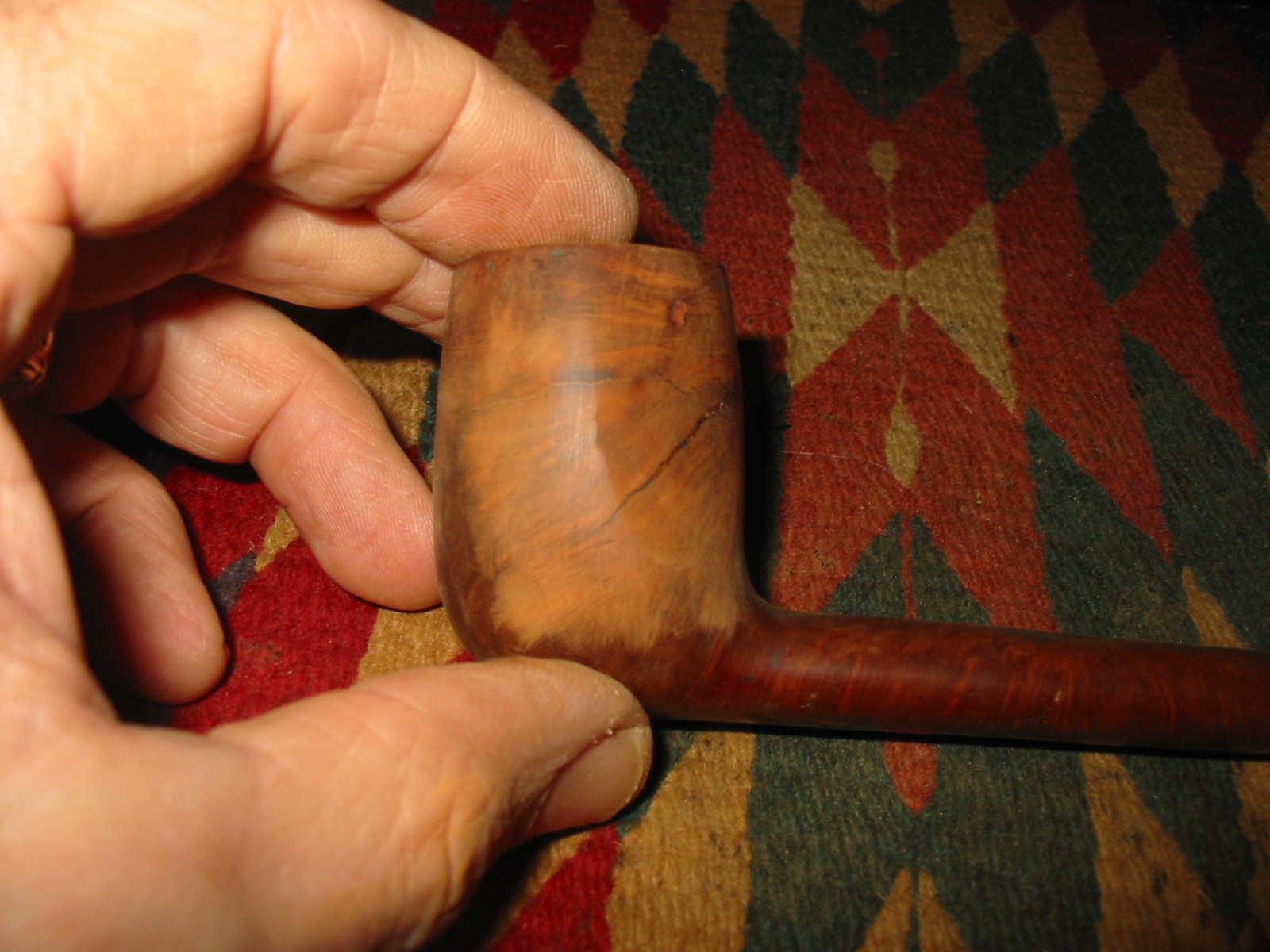
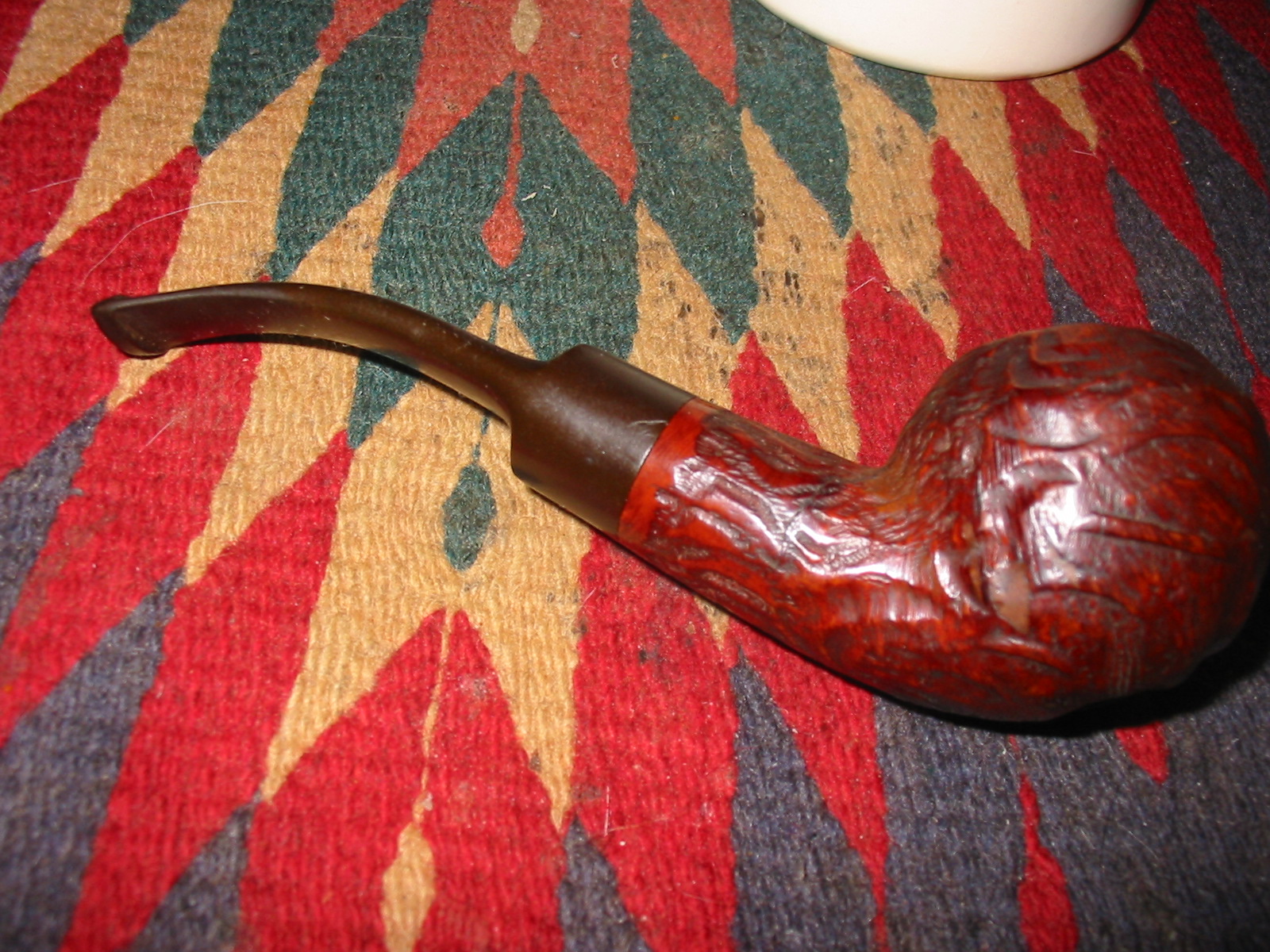
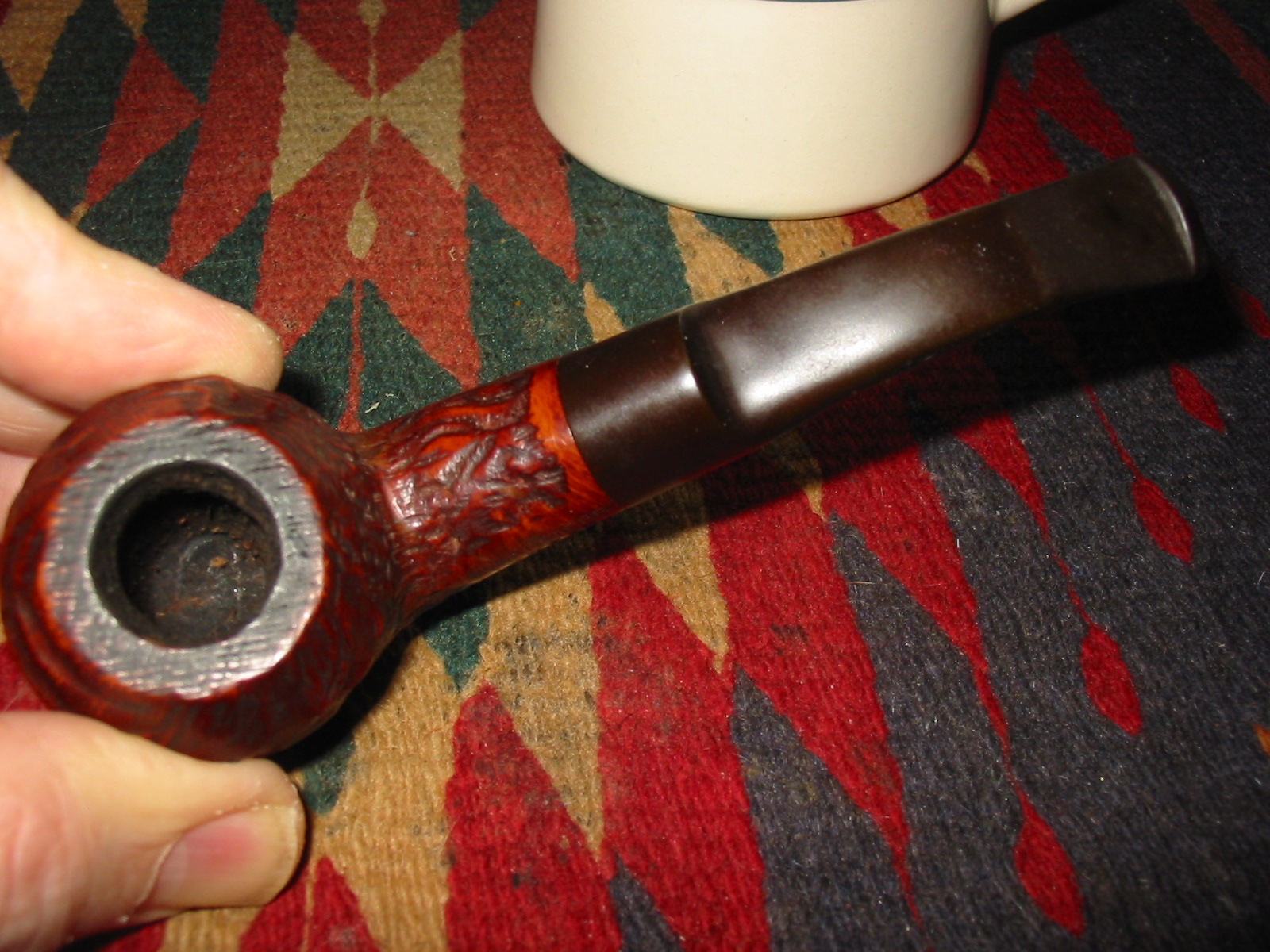
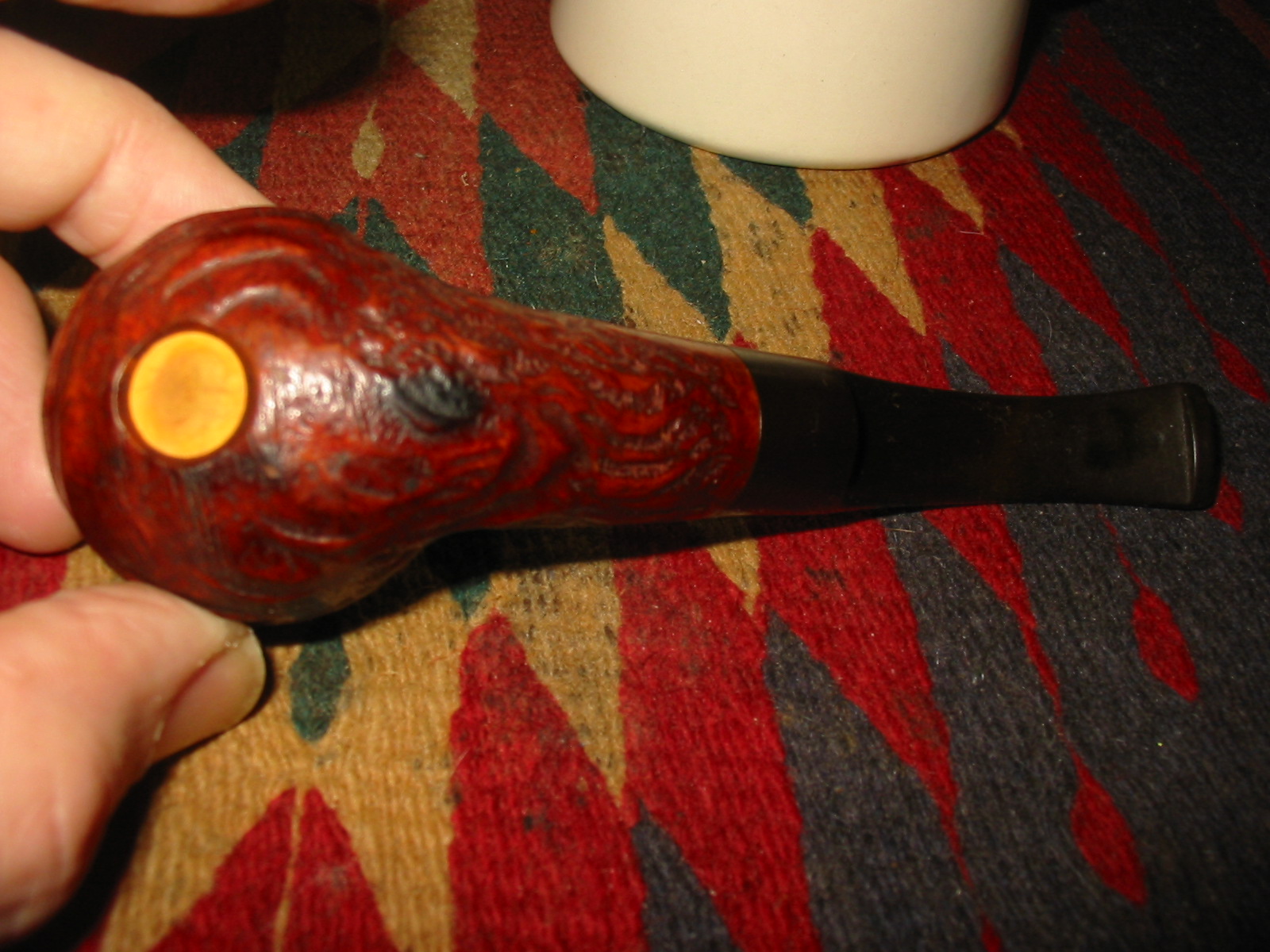
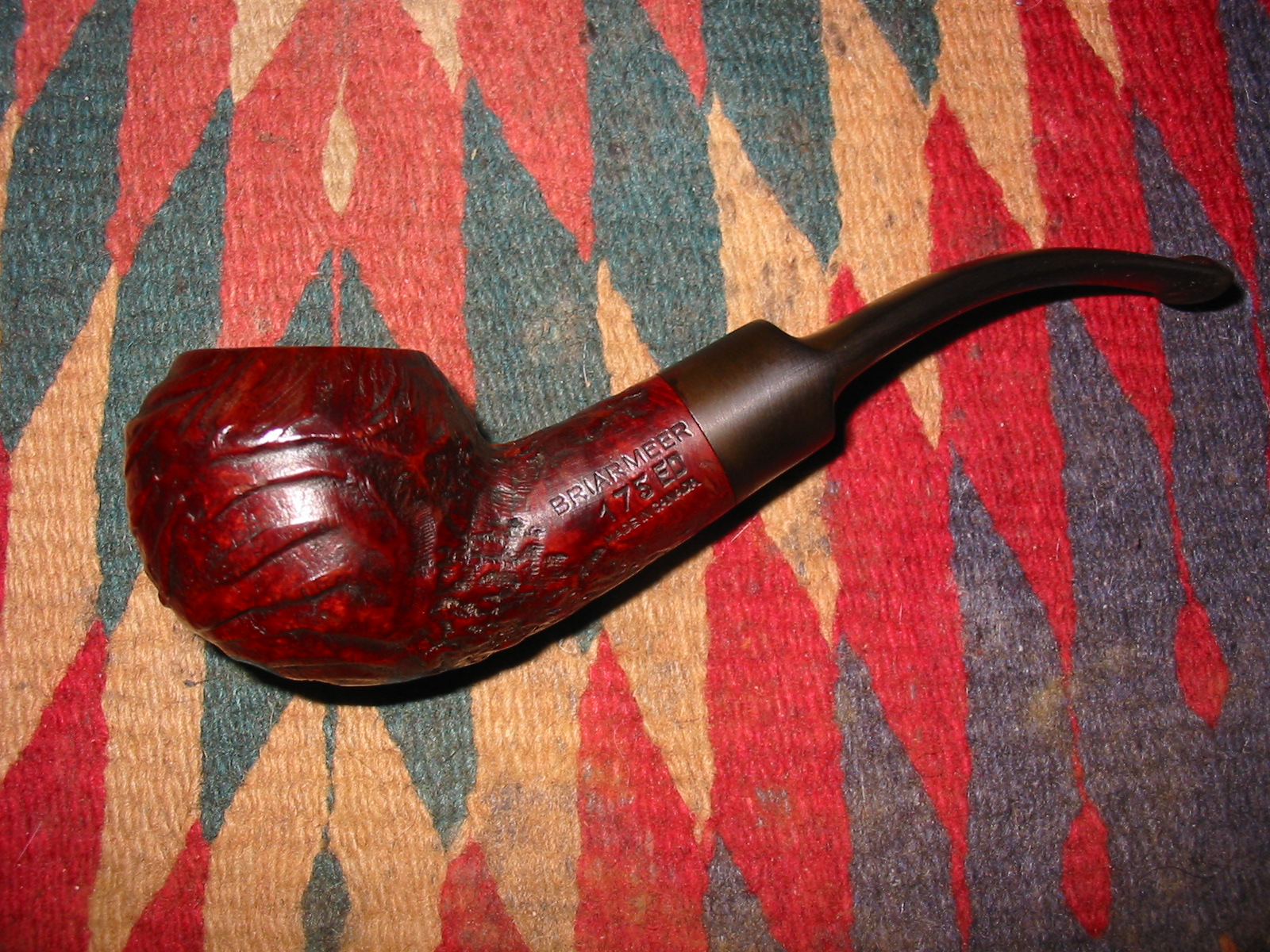
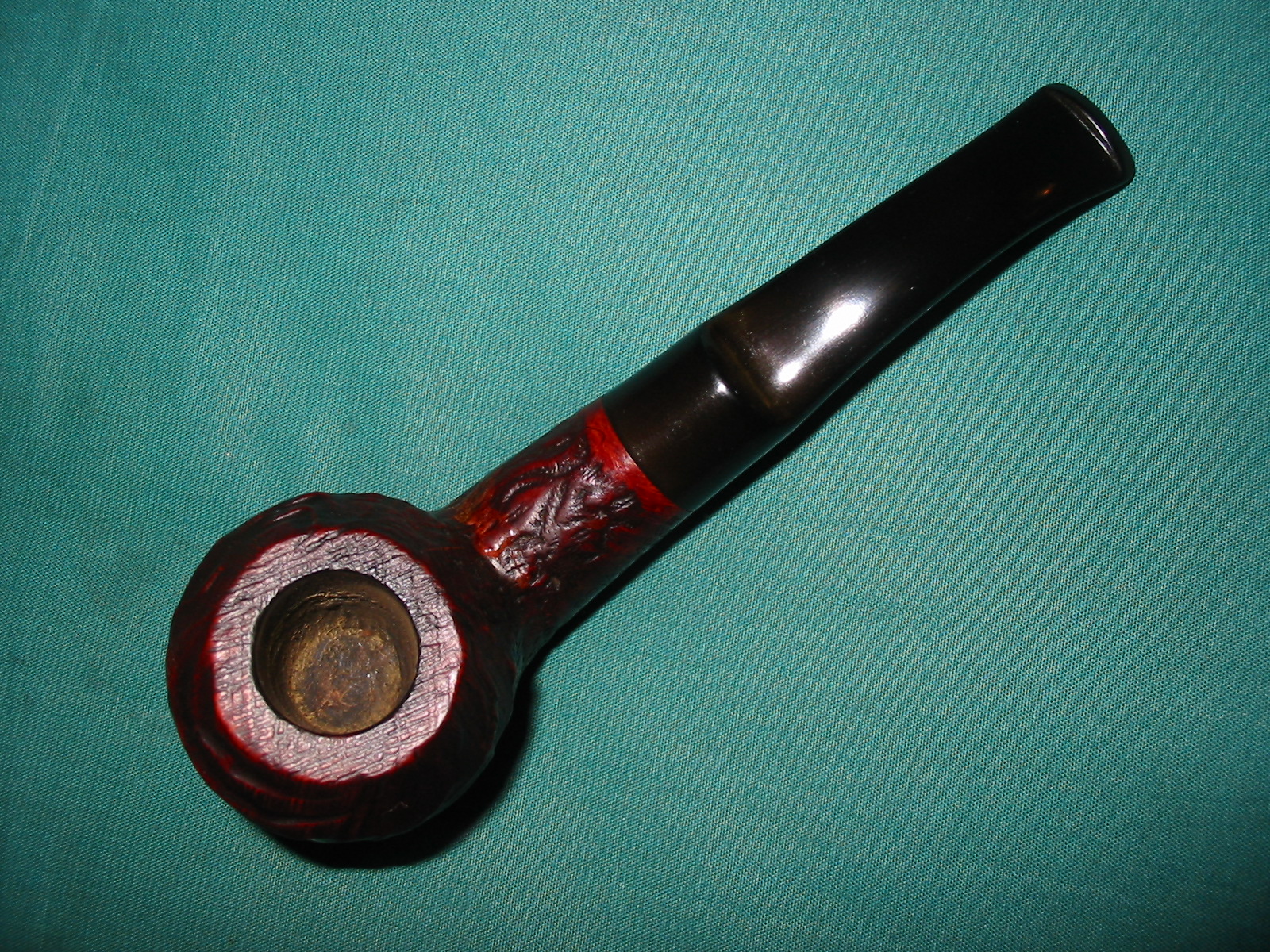
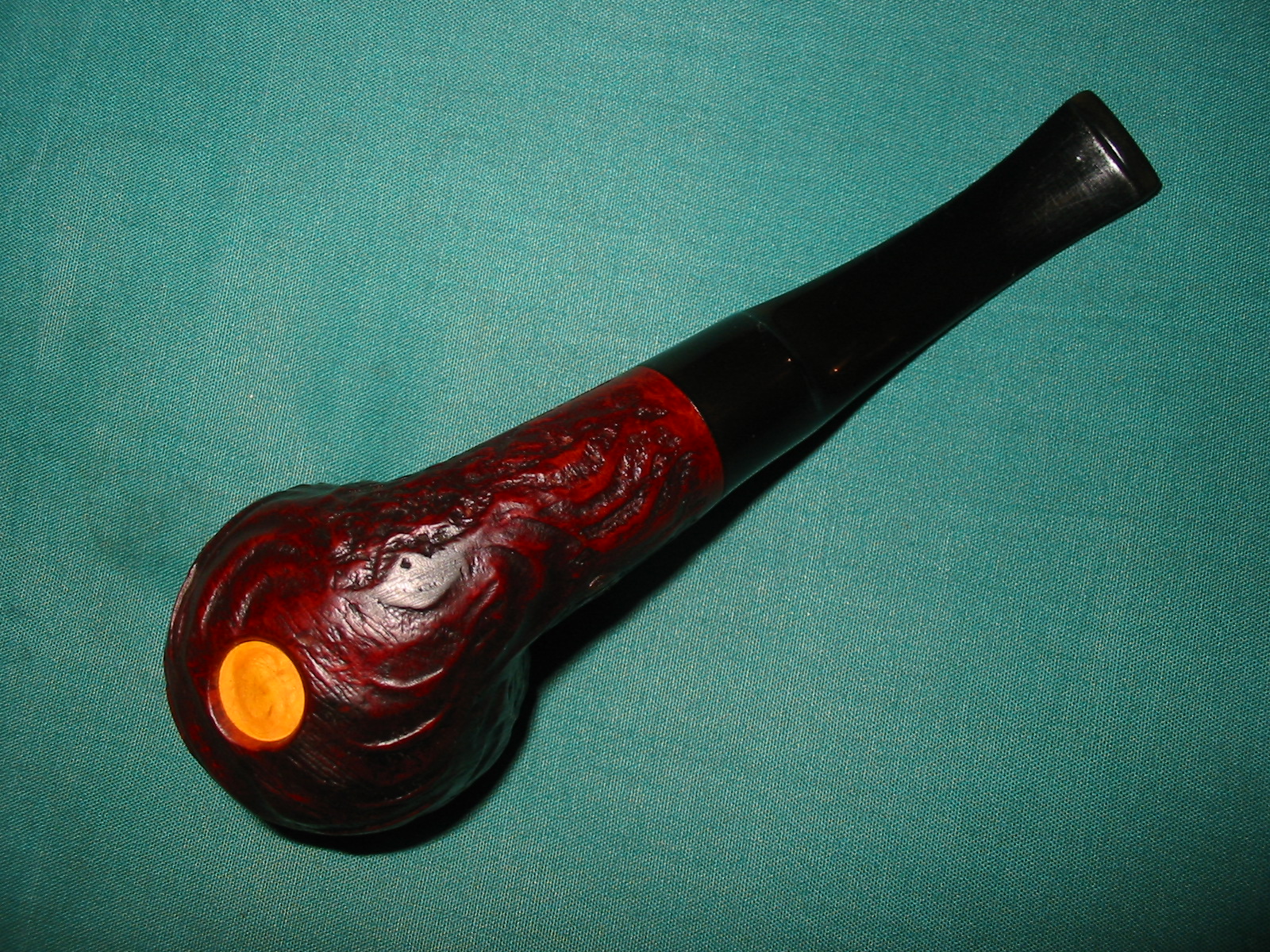
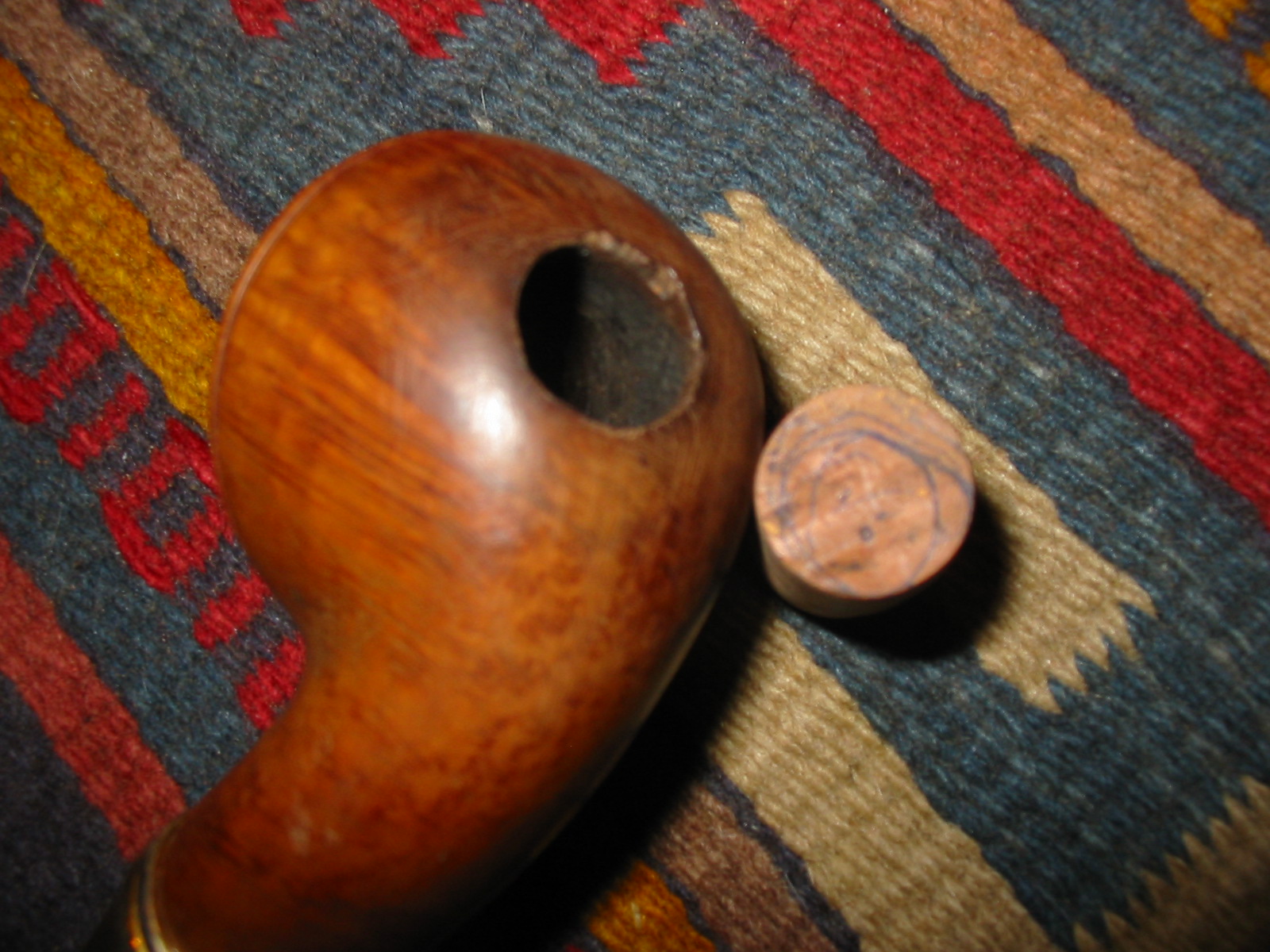
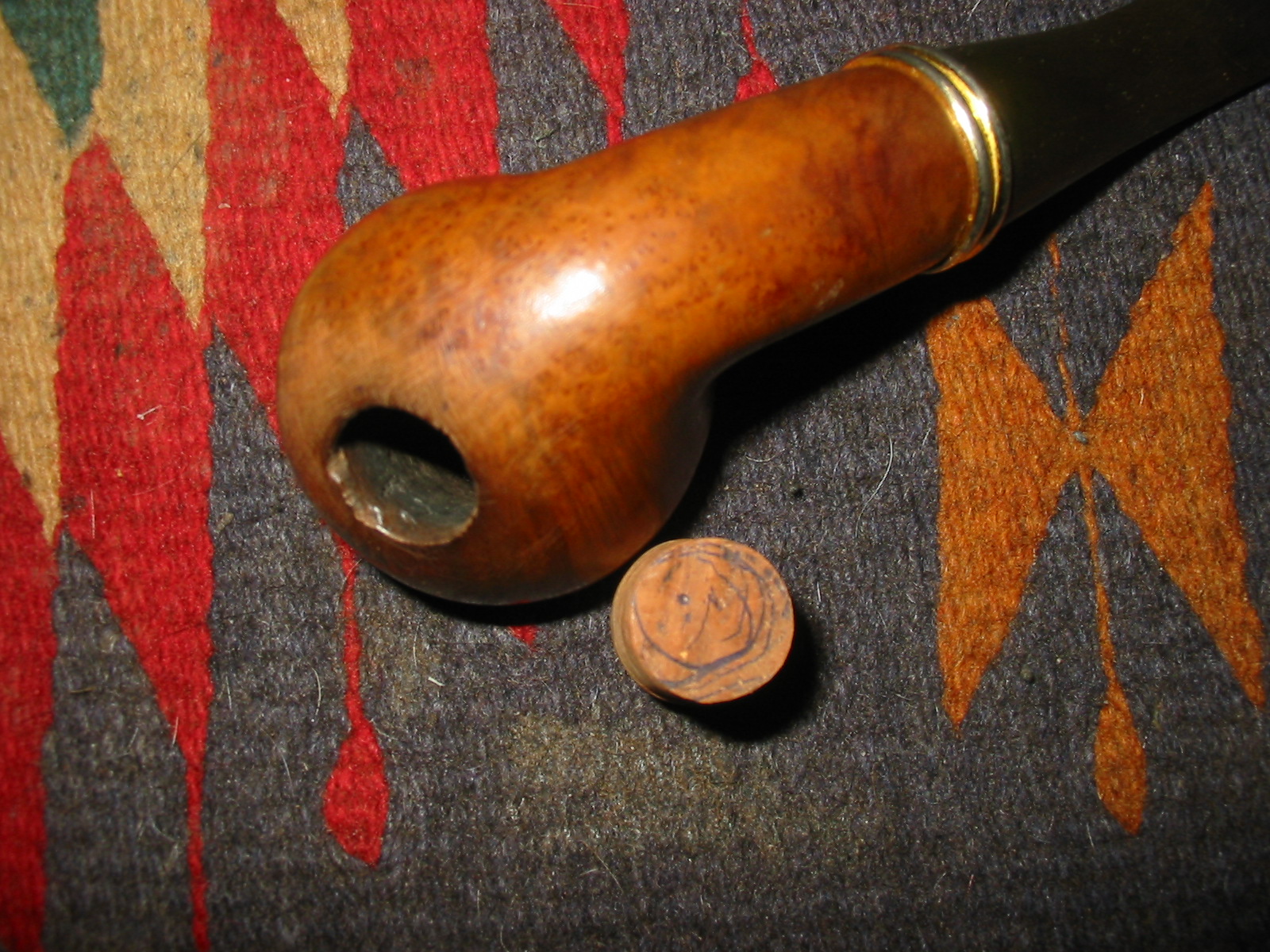
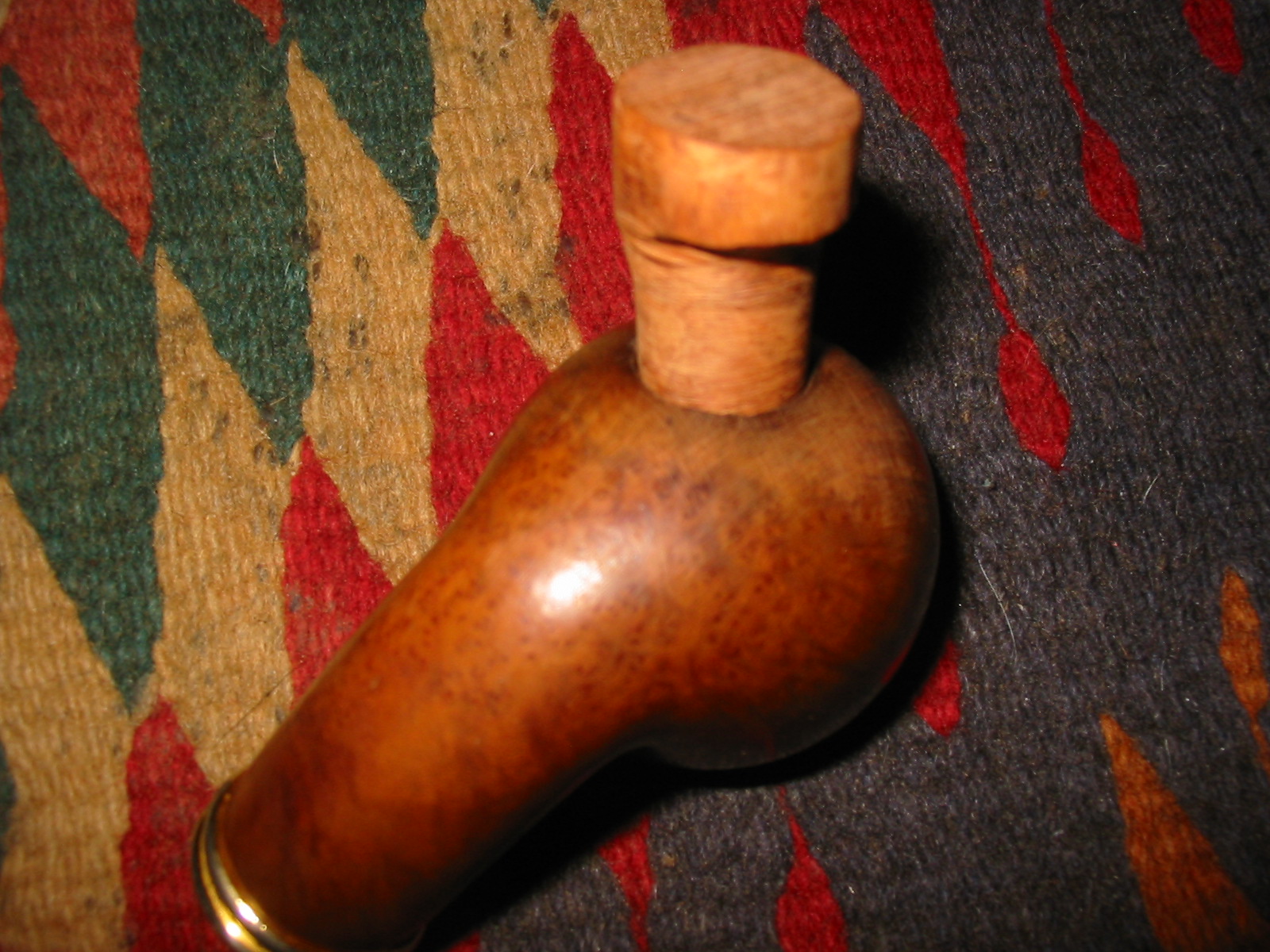
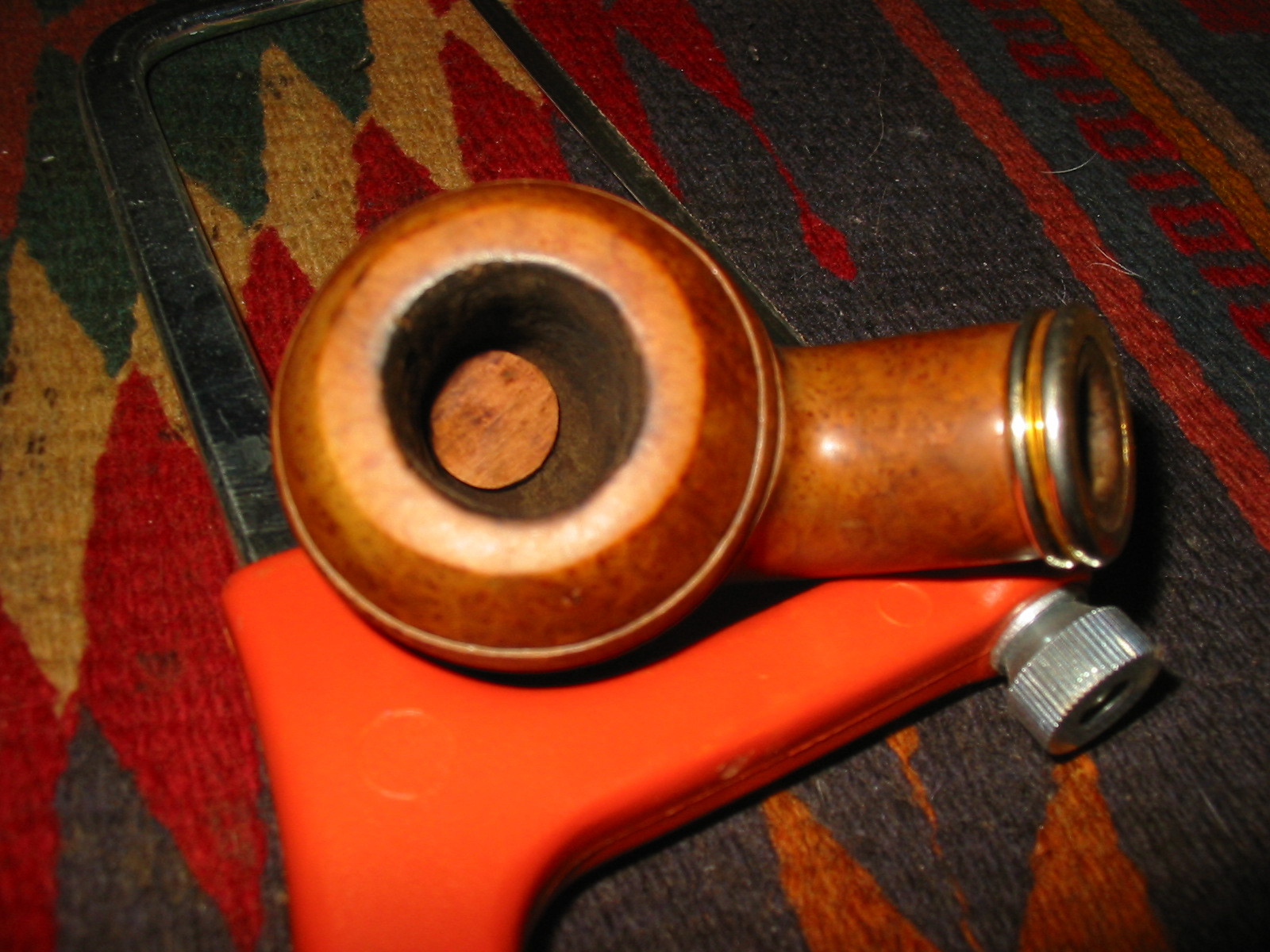
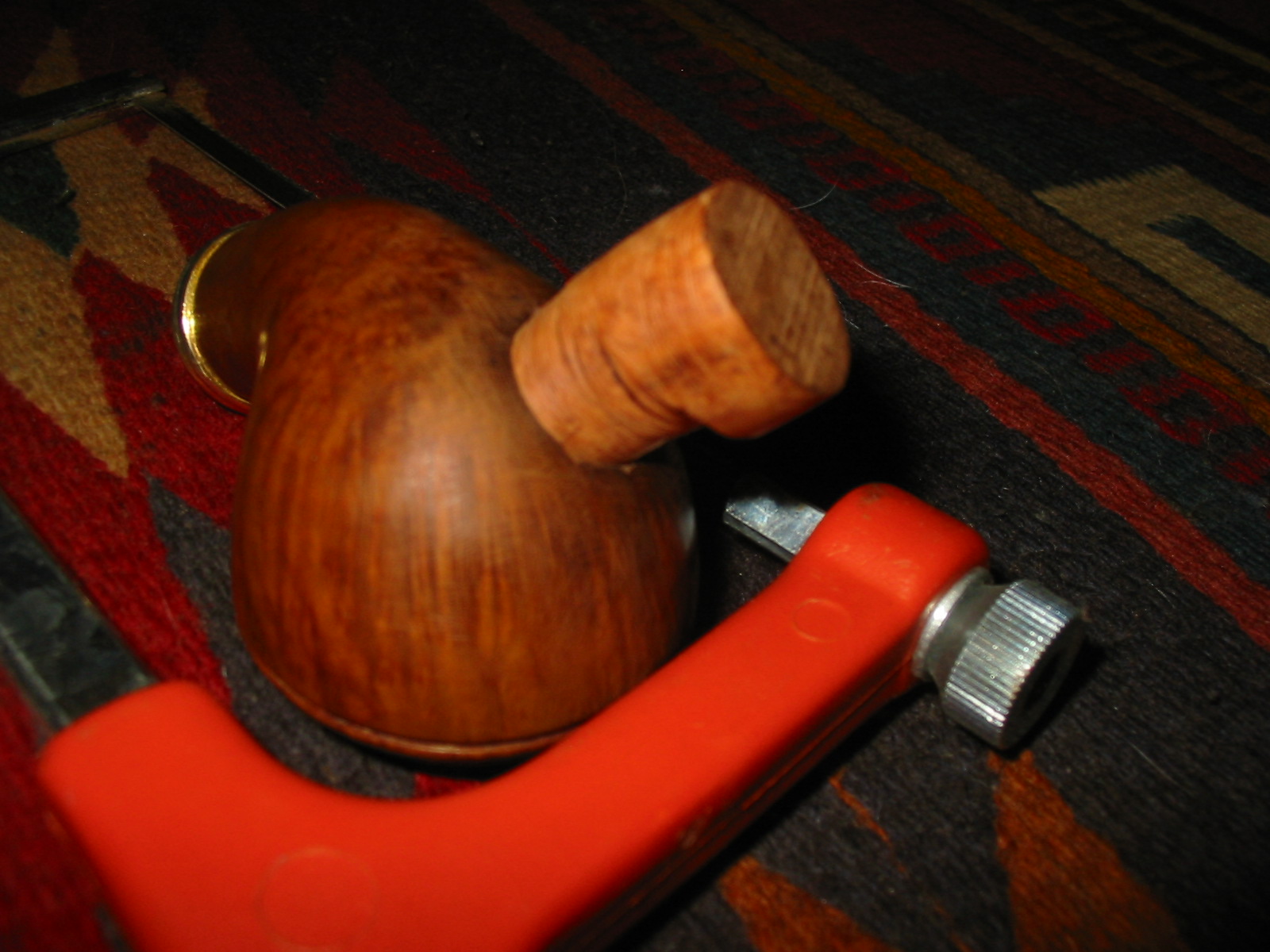
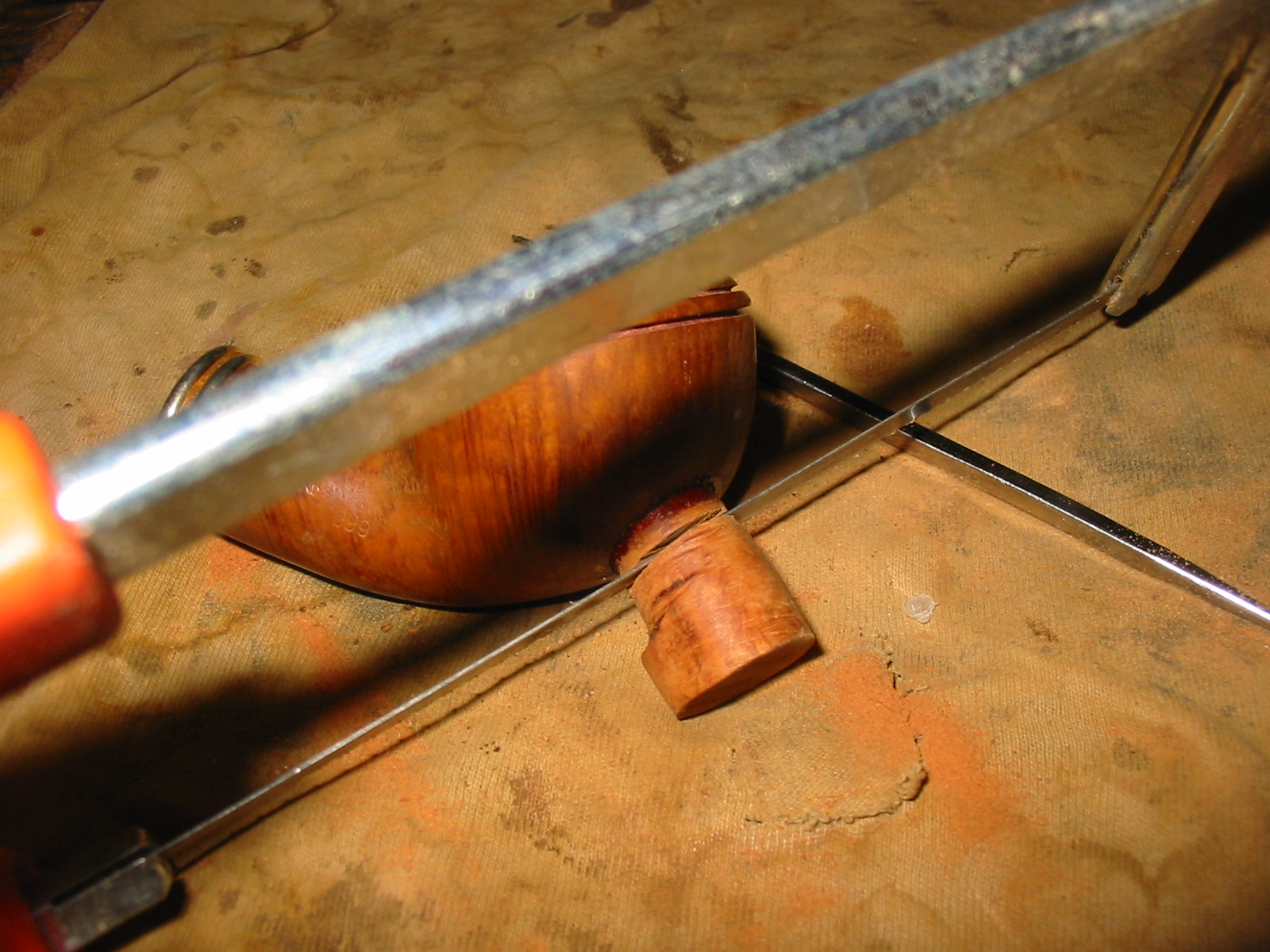
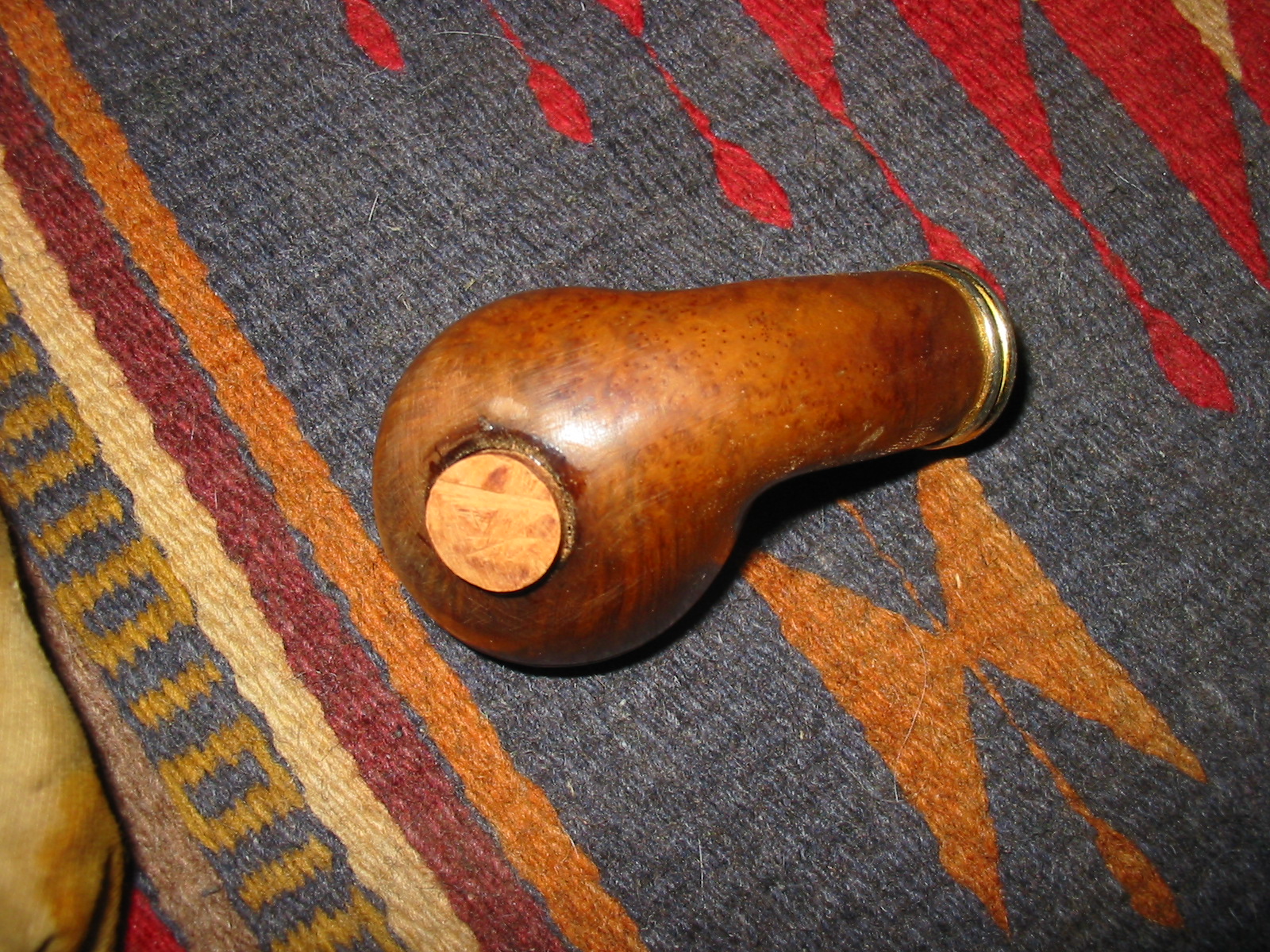
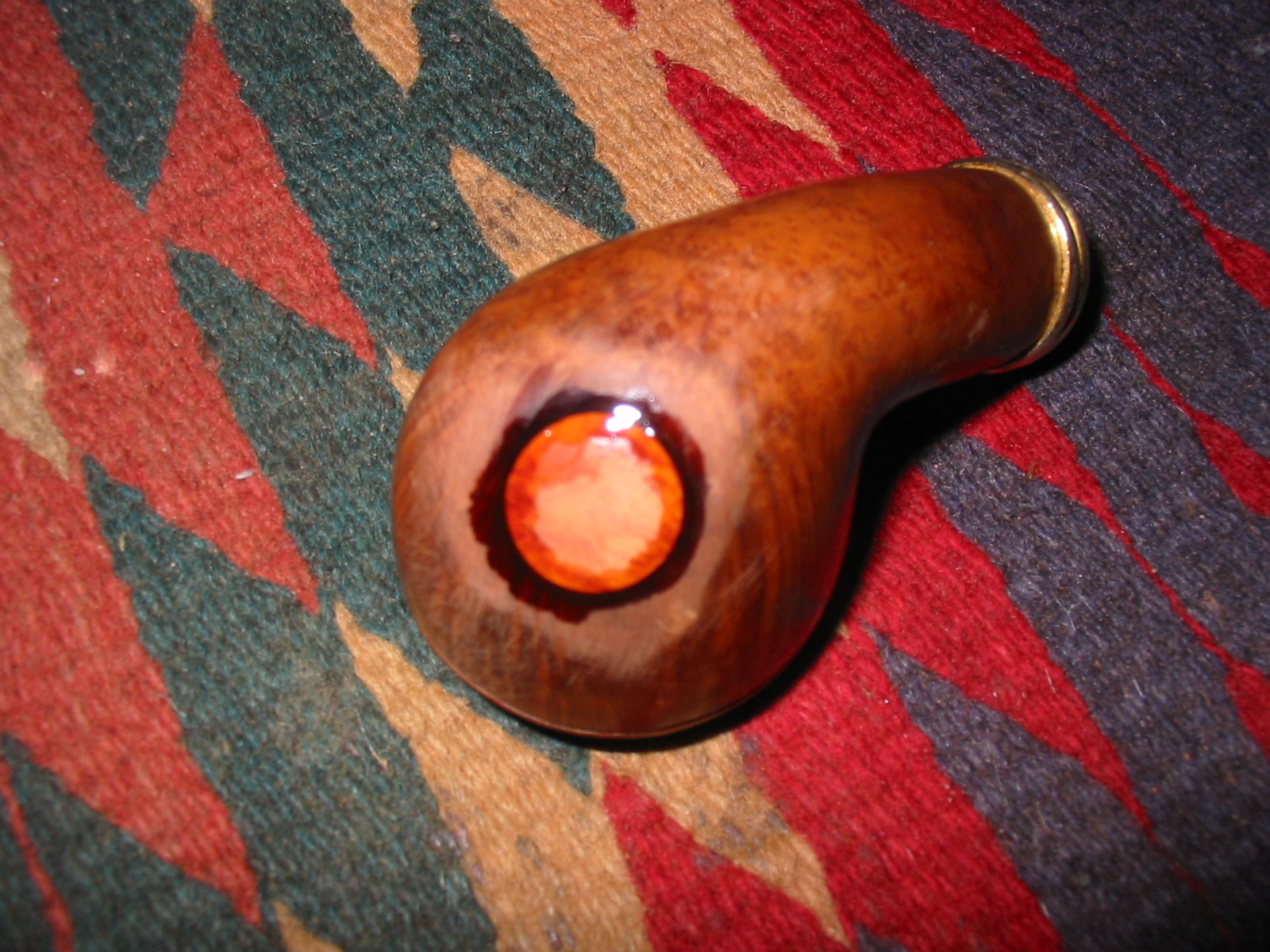
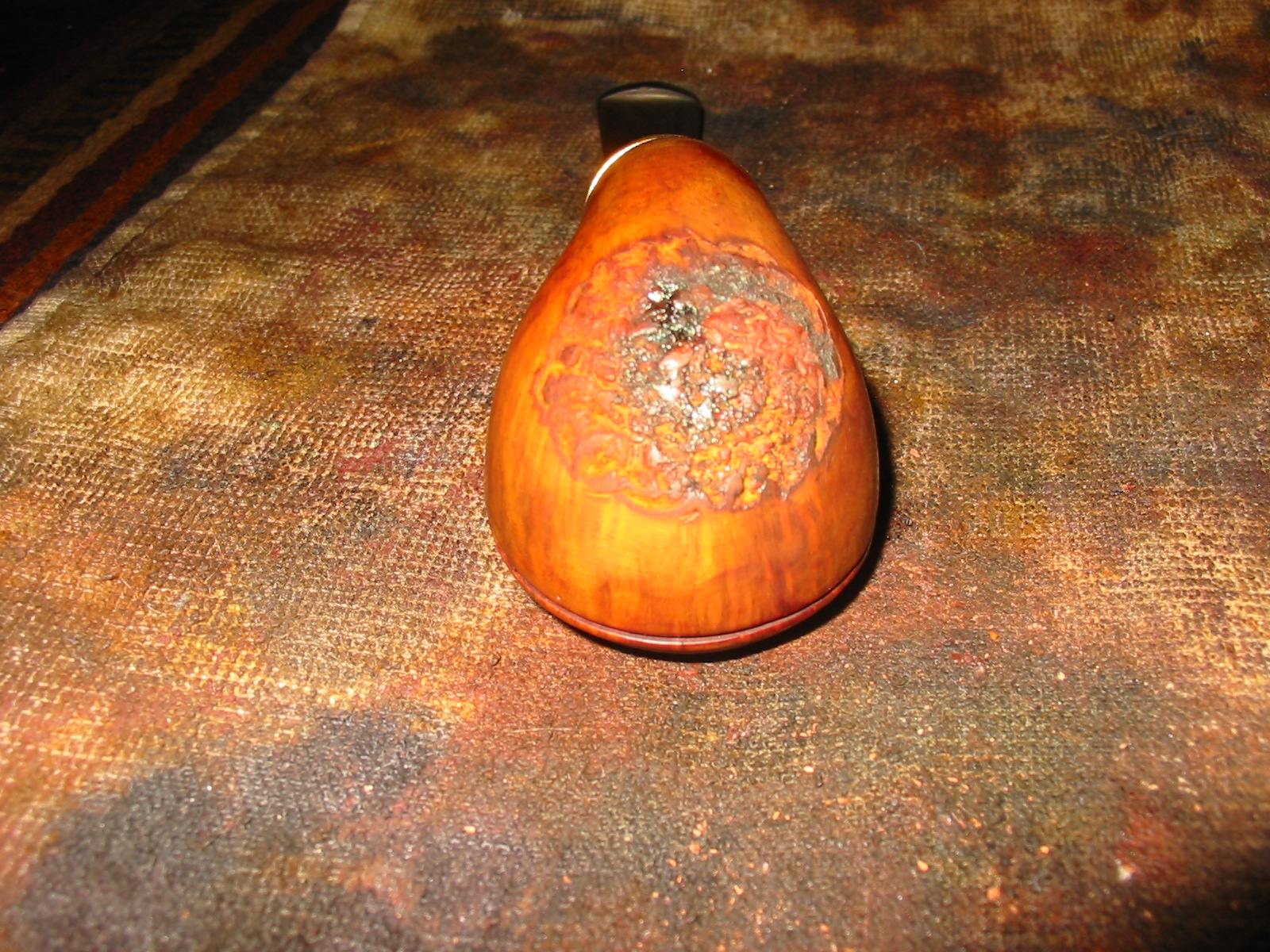
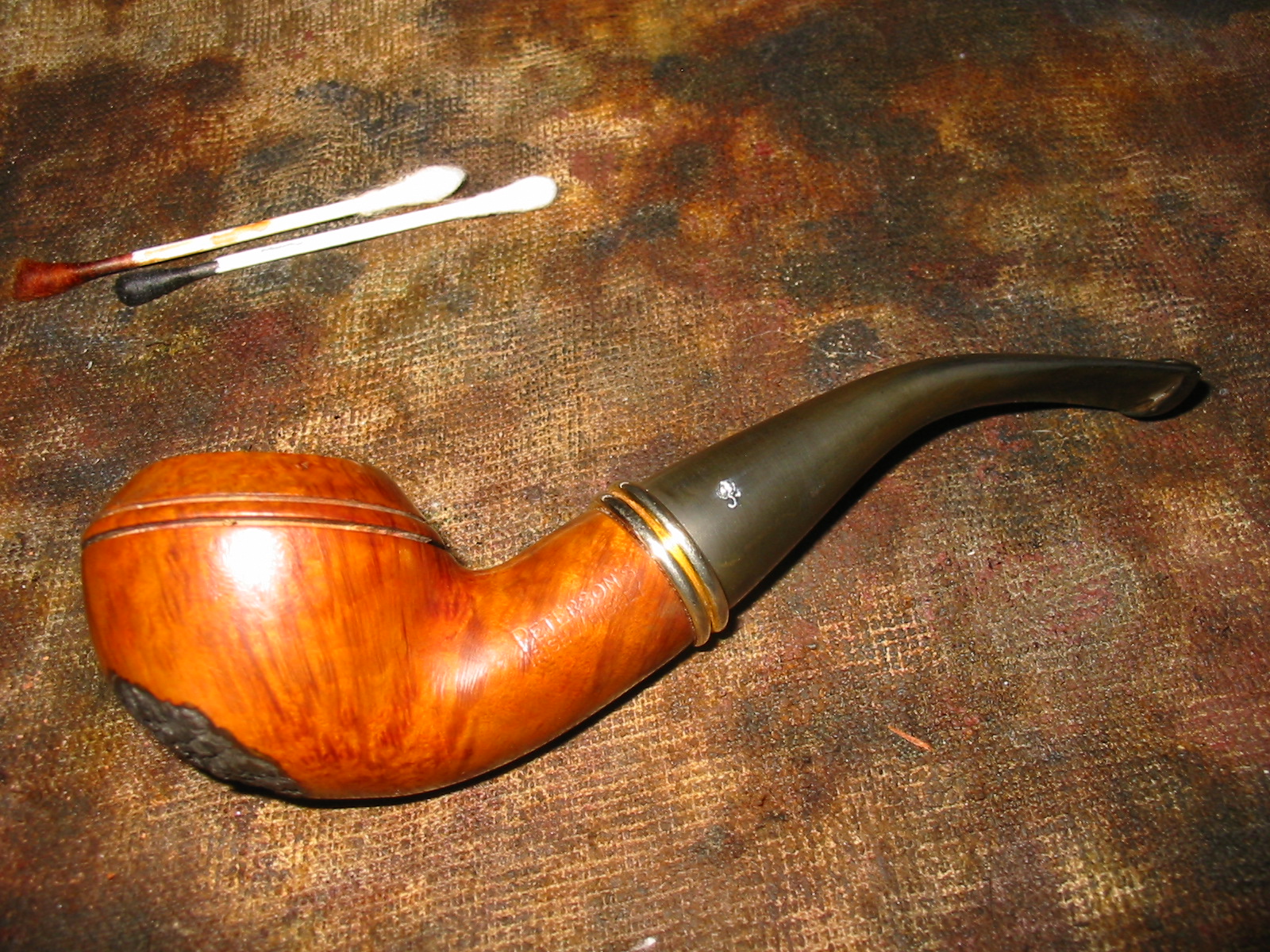
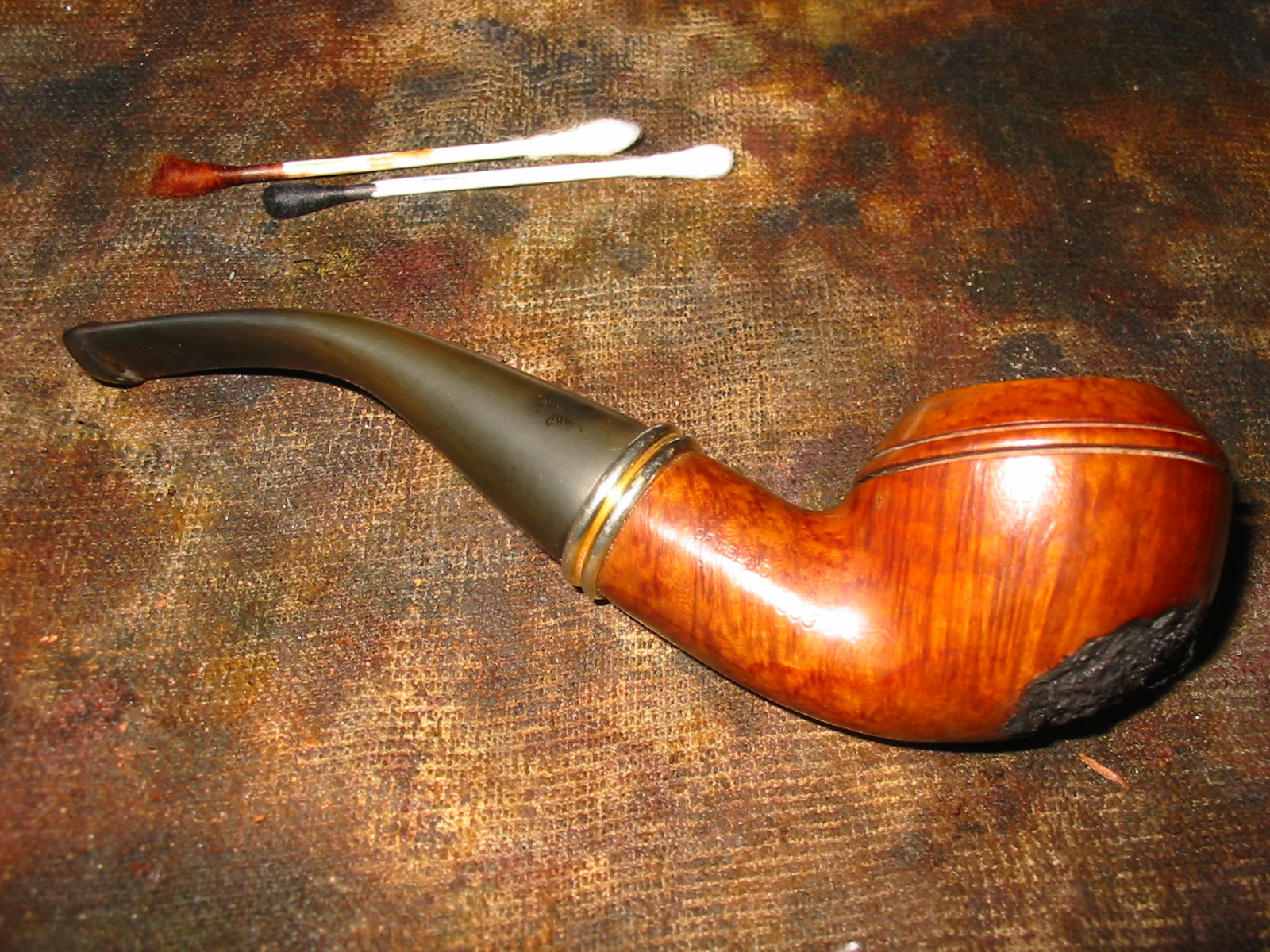
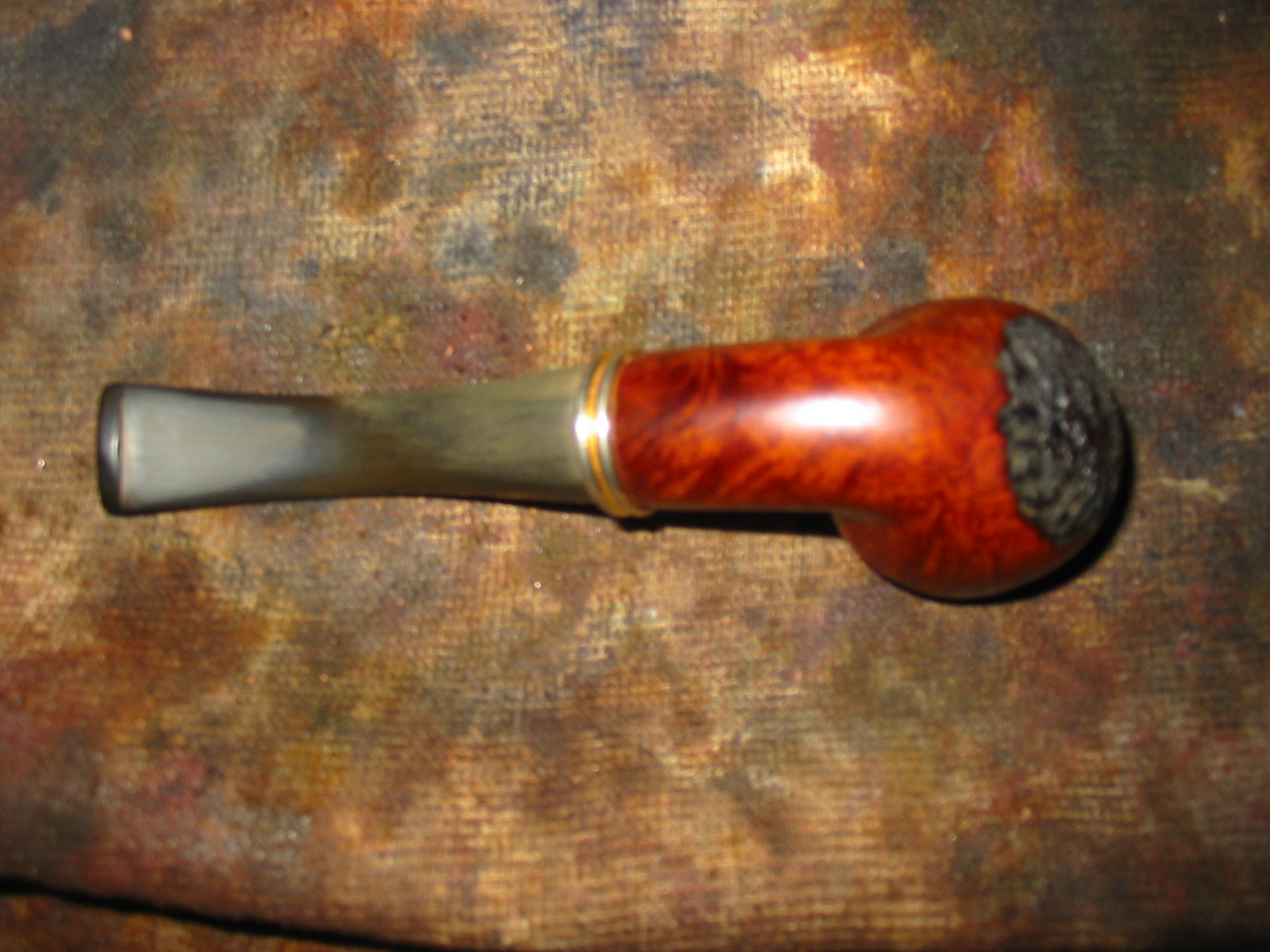
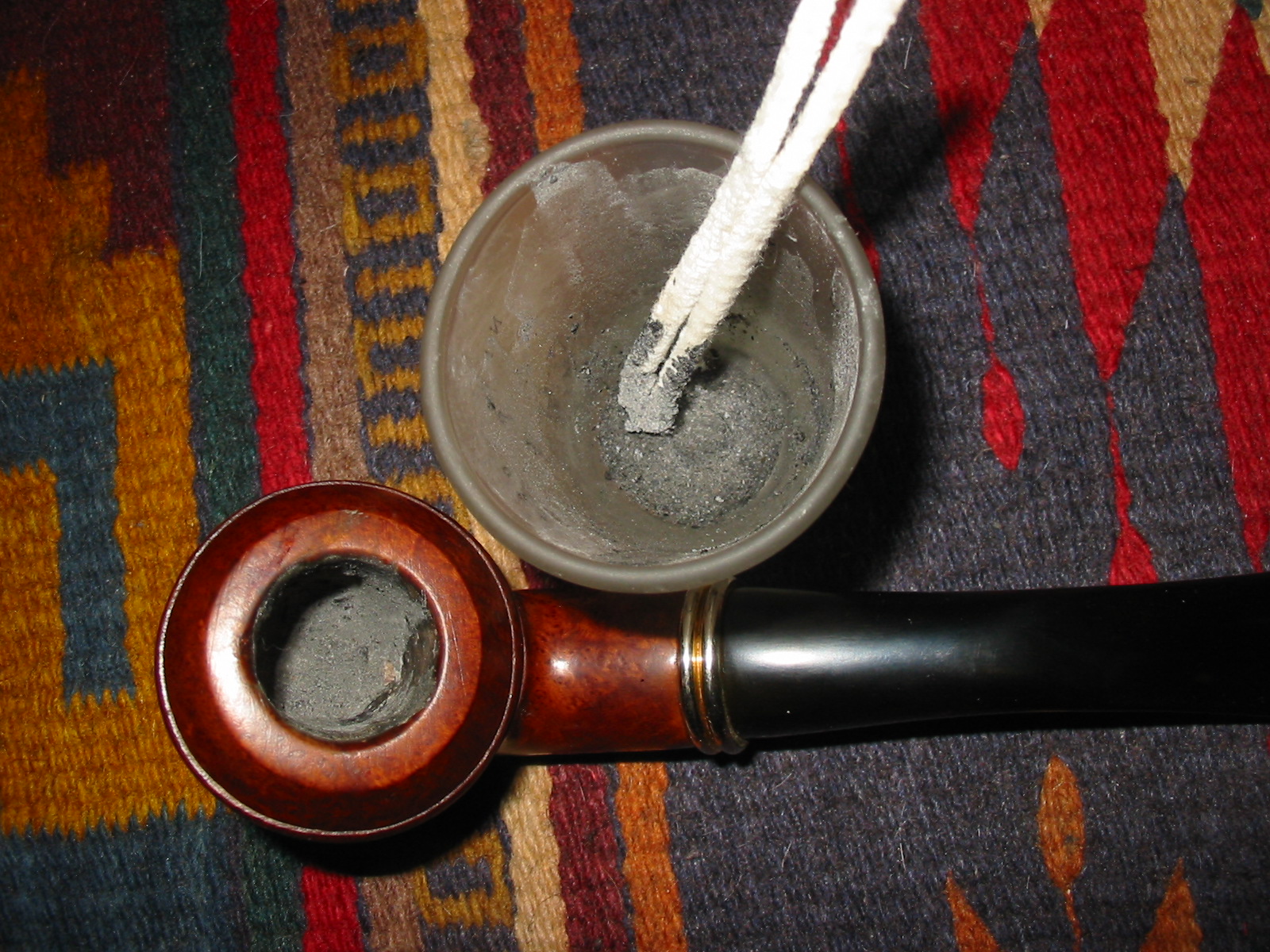
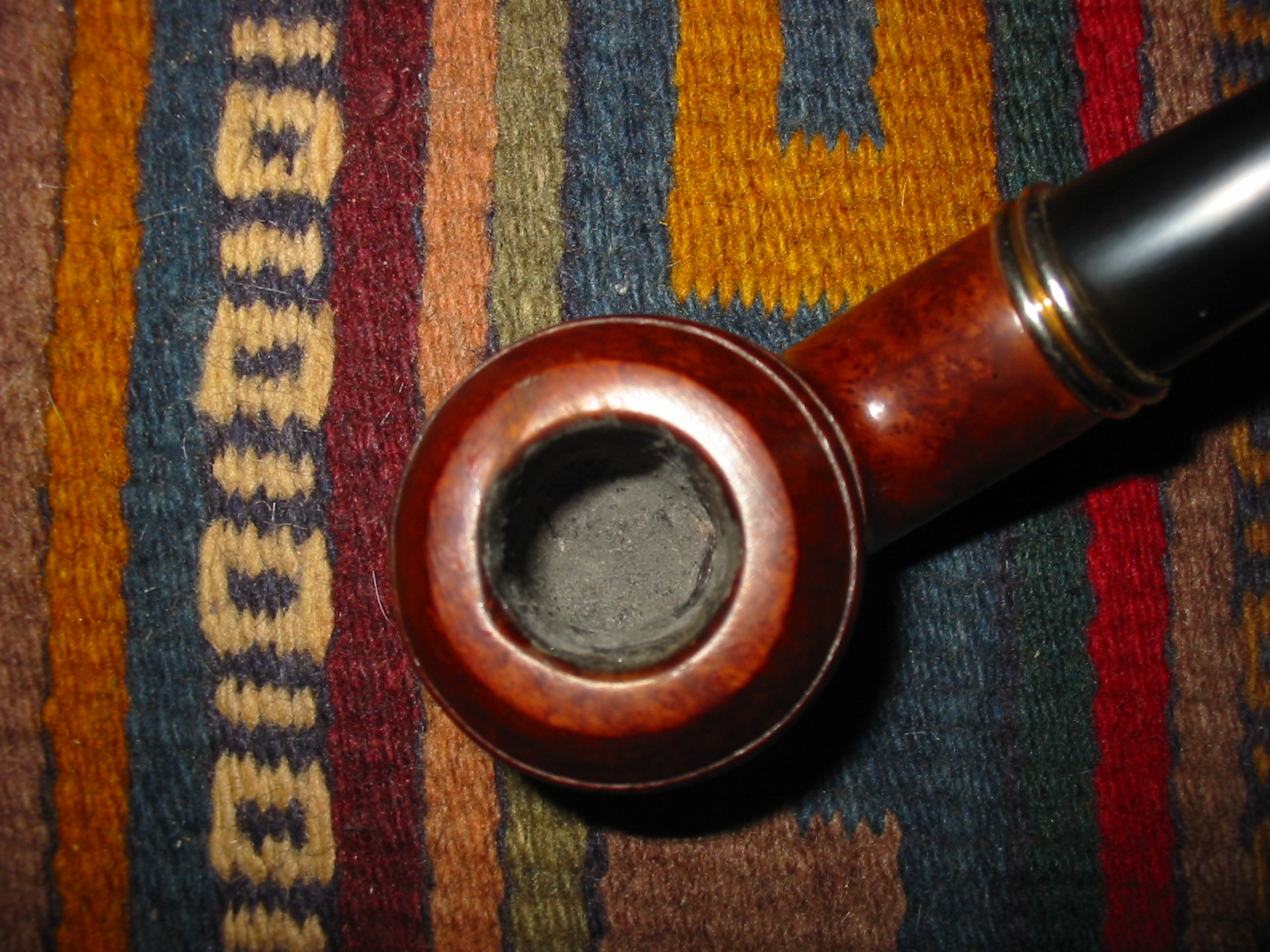
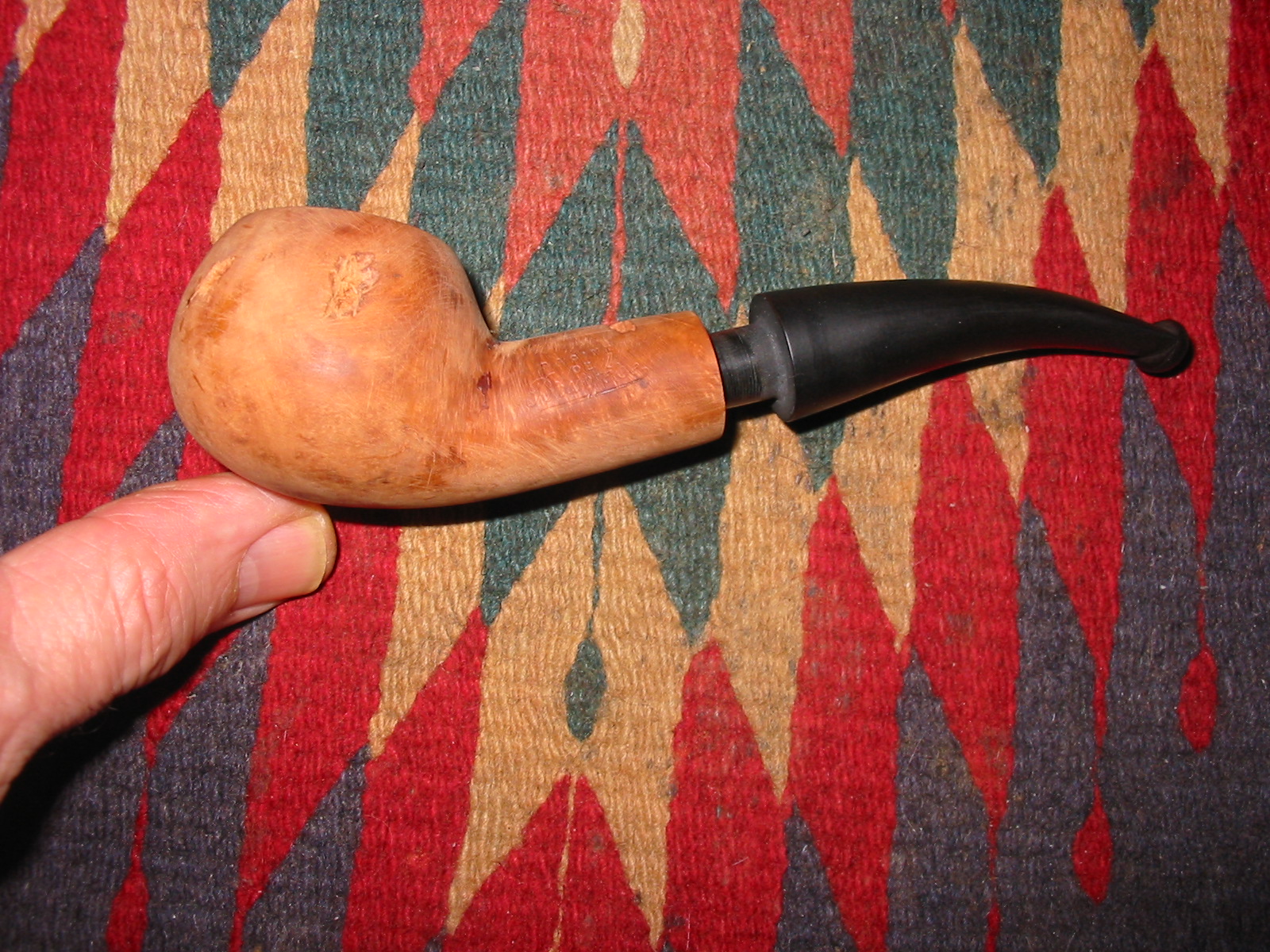
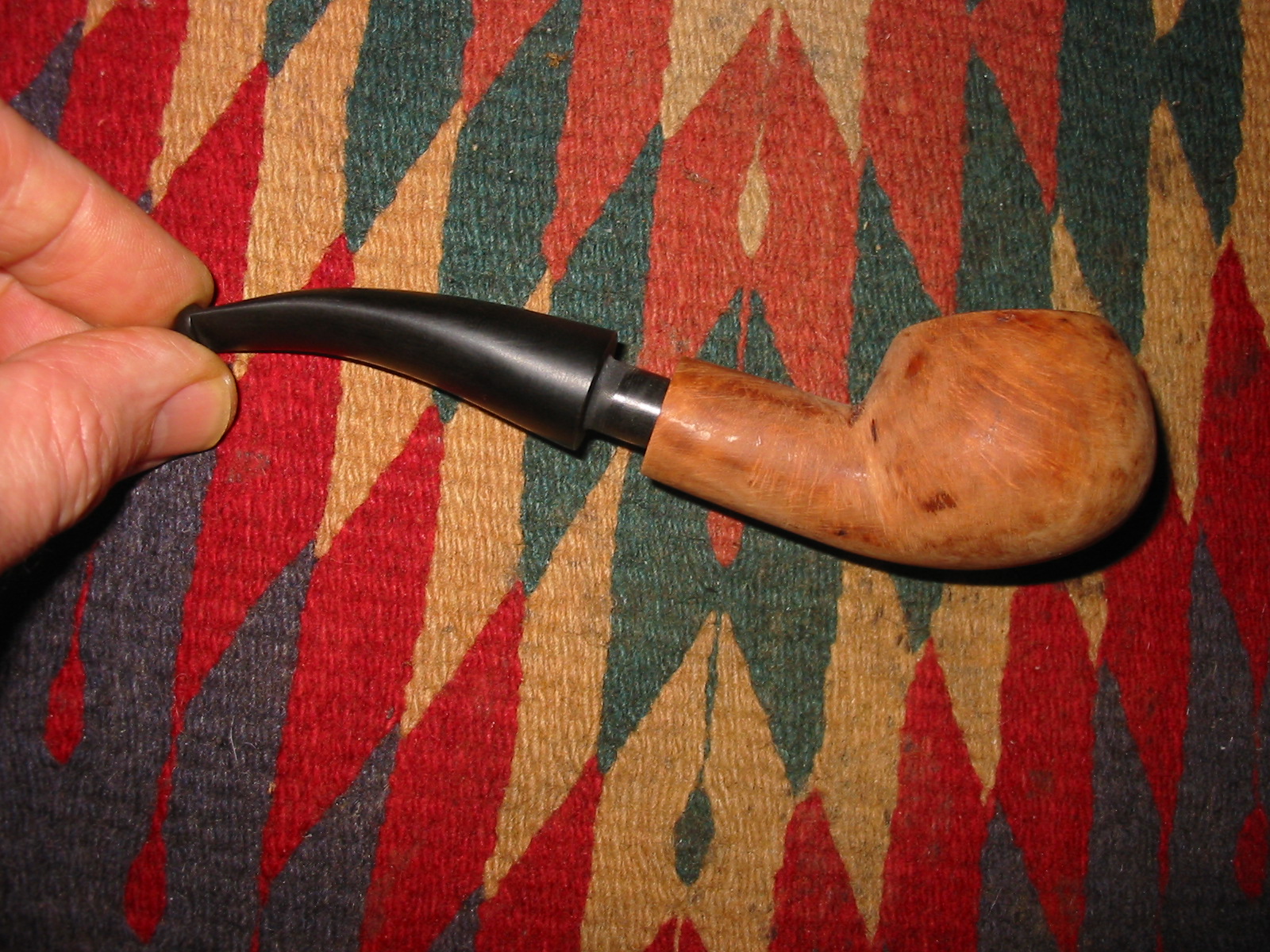
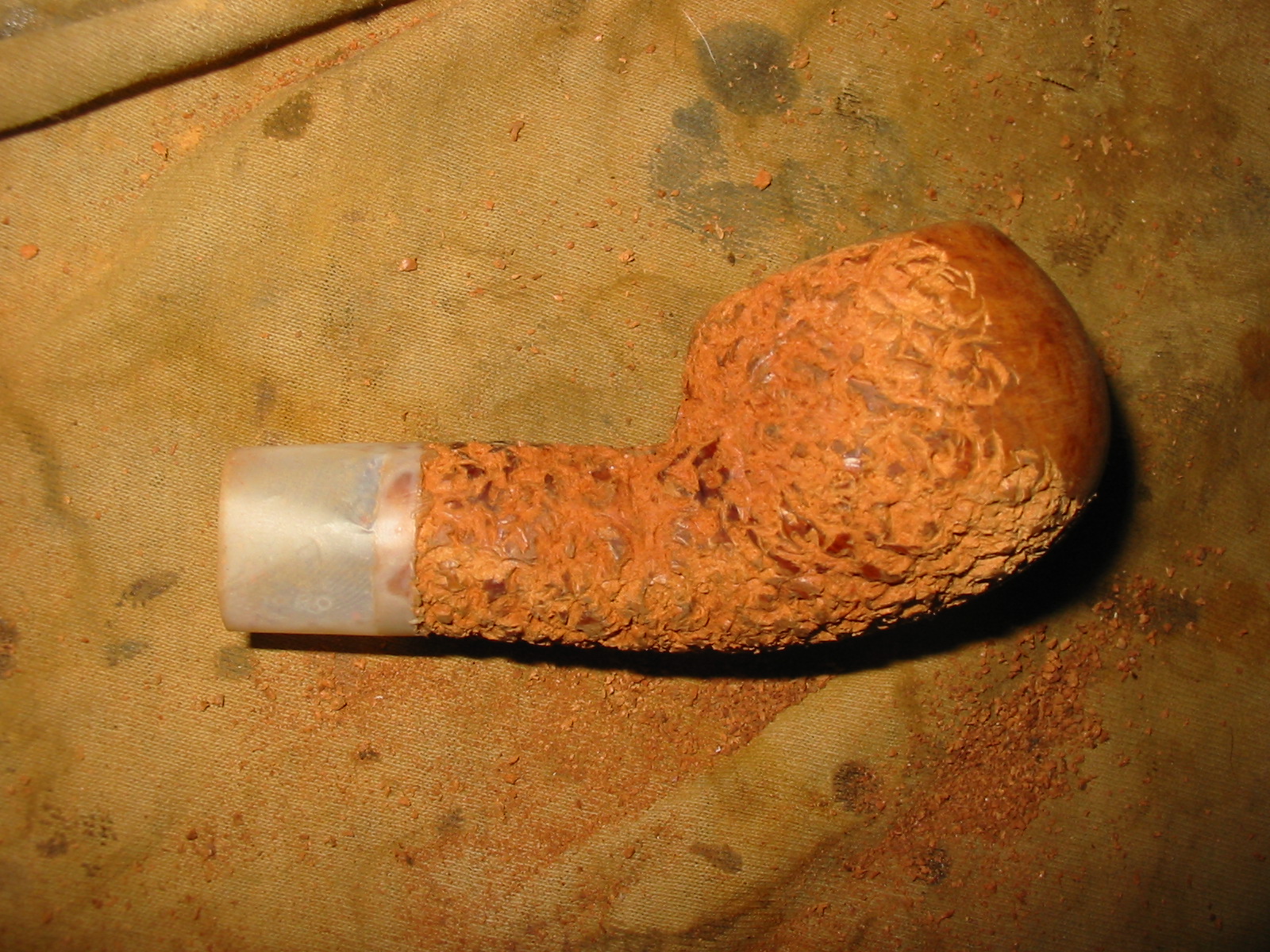
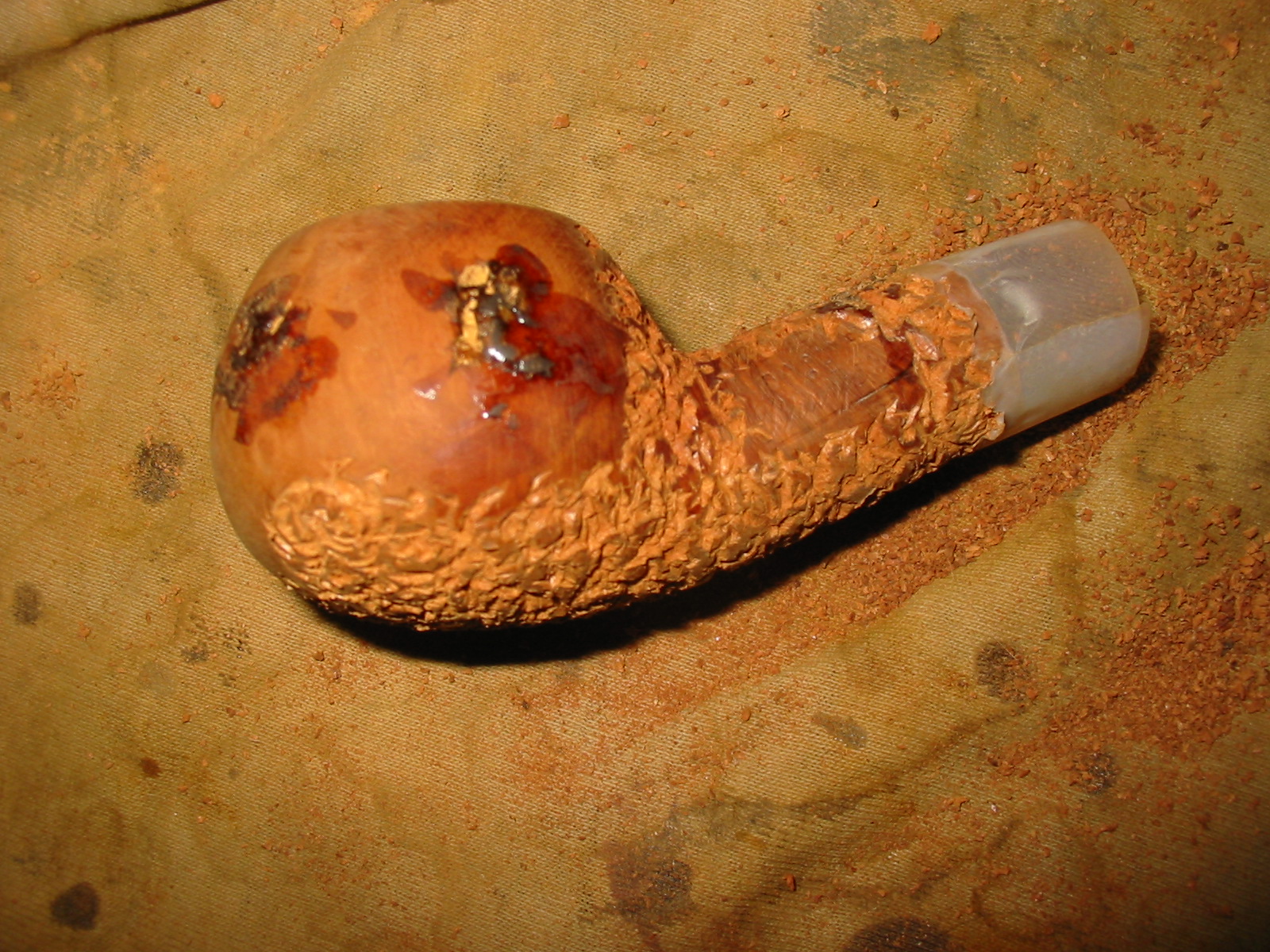
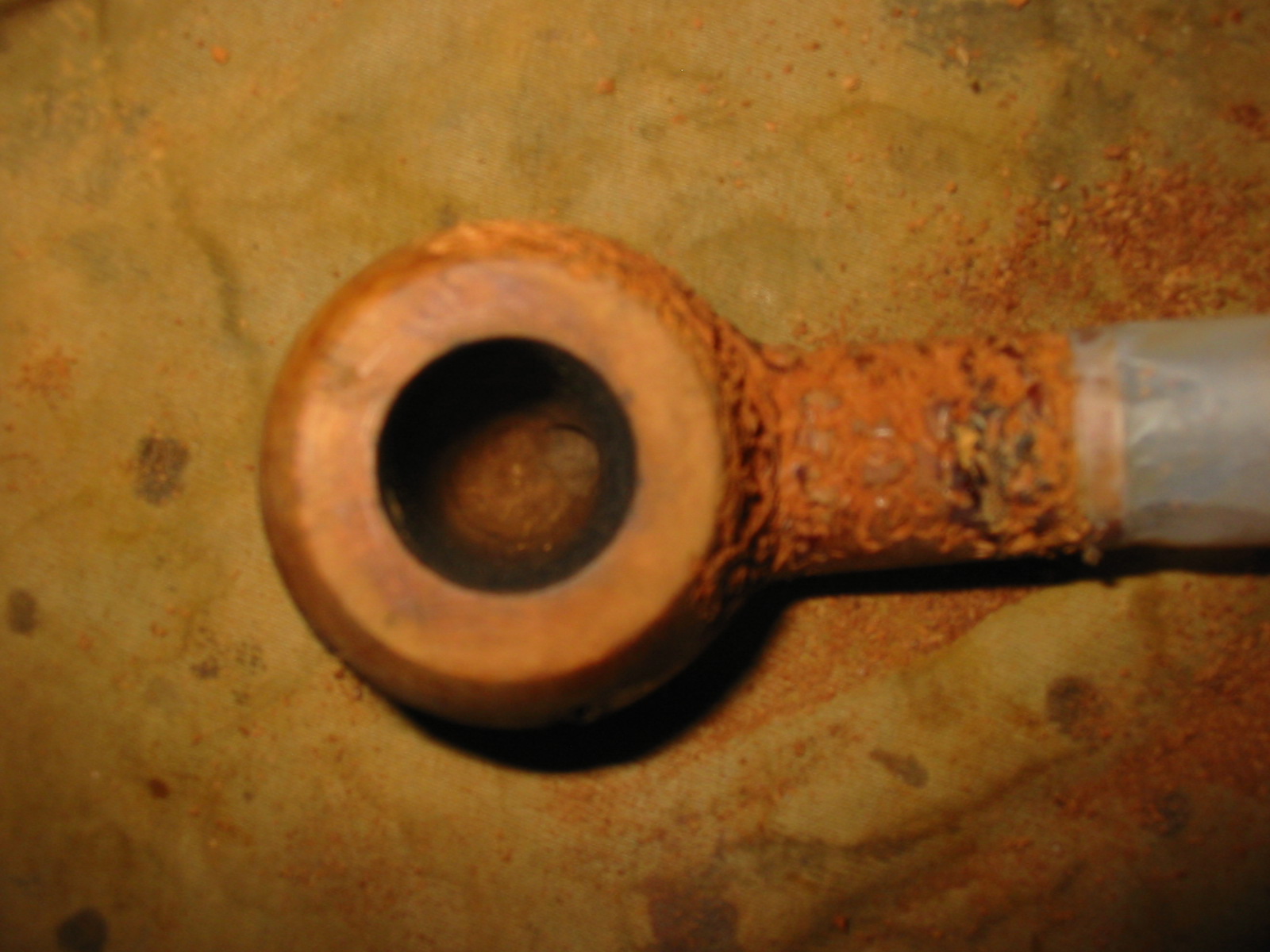
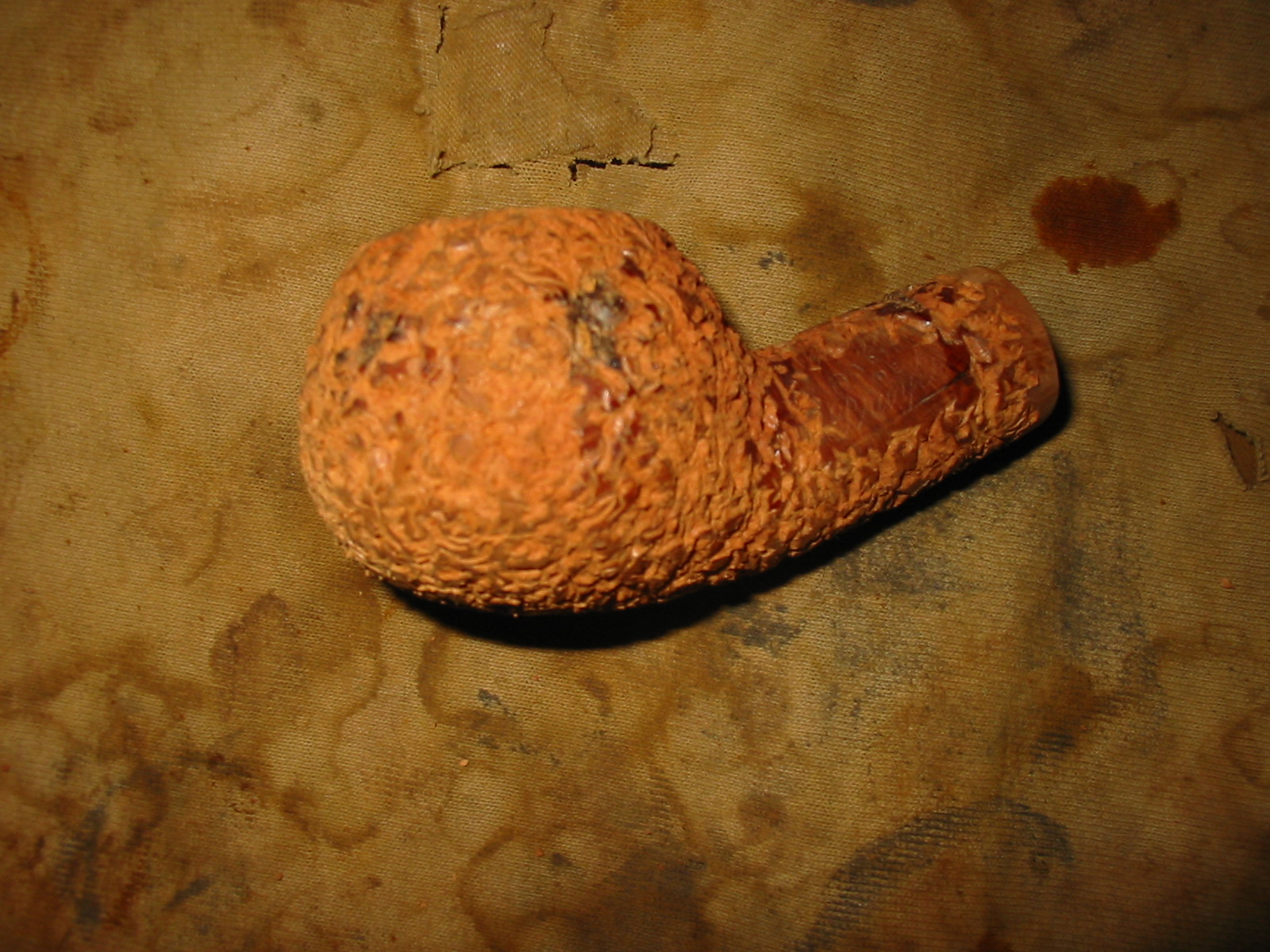
Tag Archives: restaining

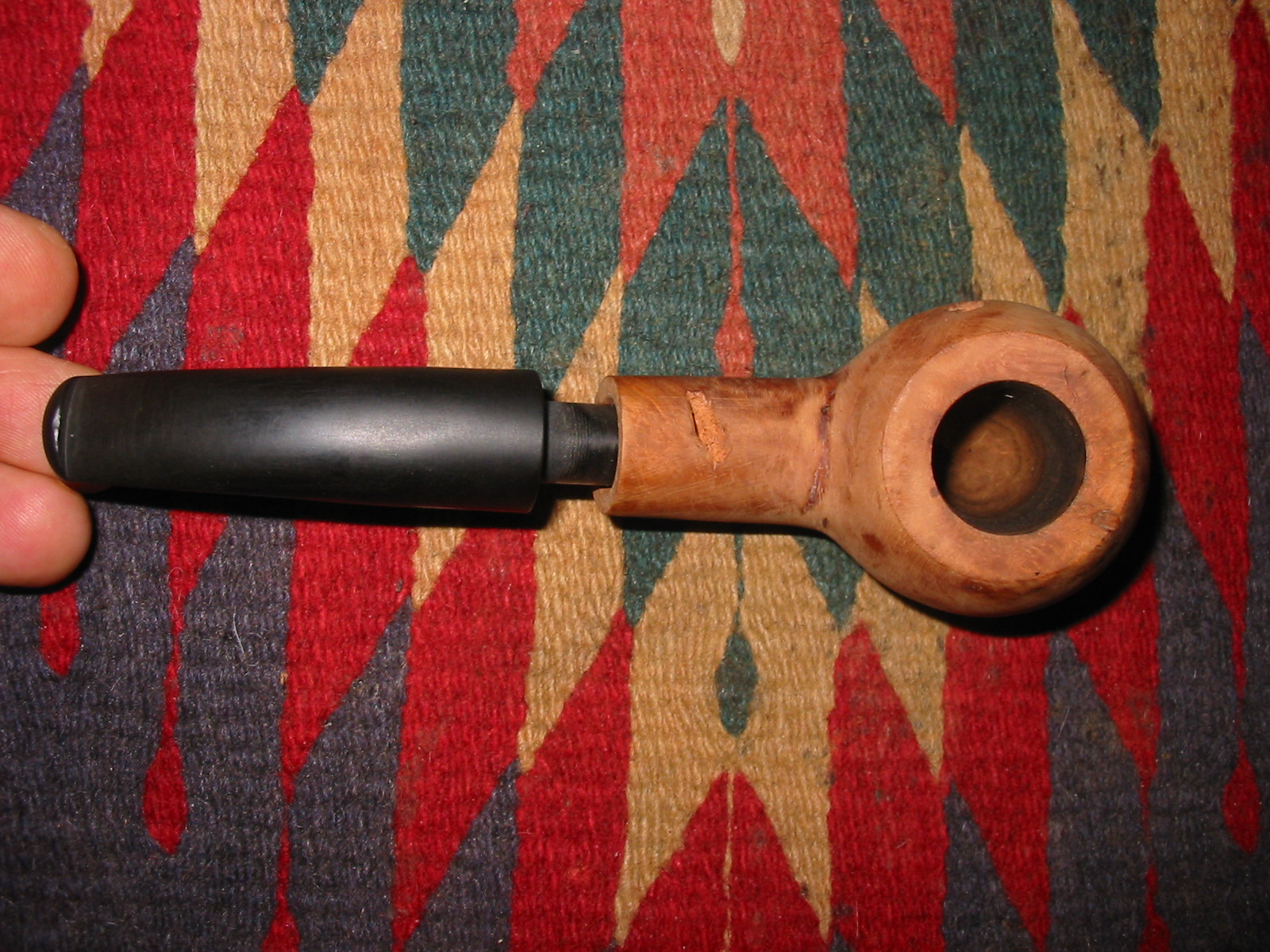
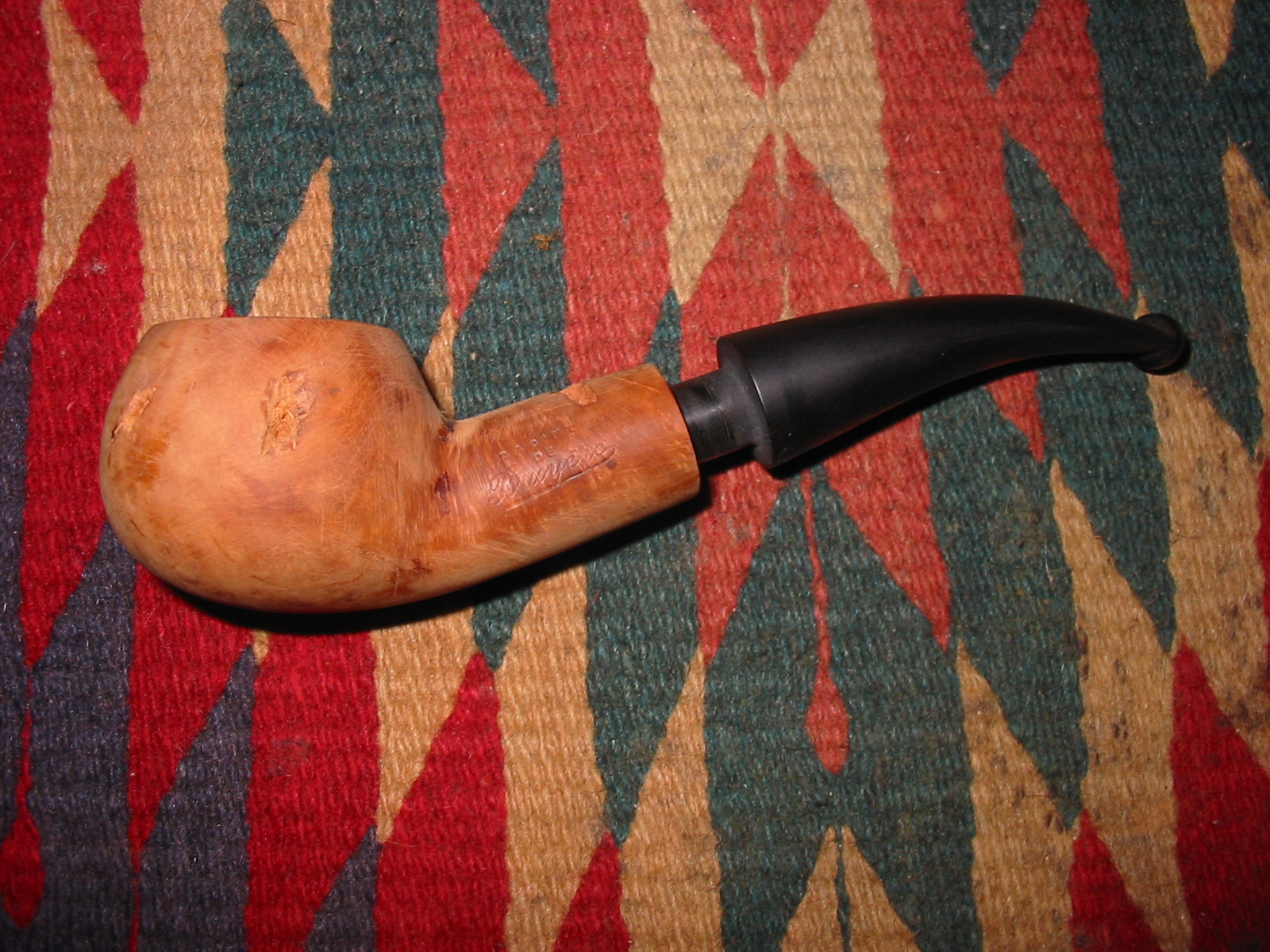
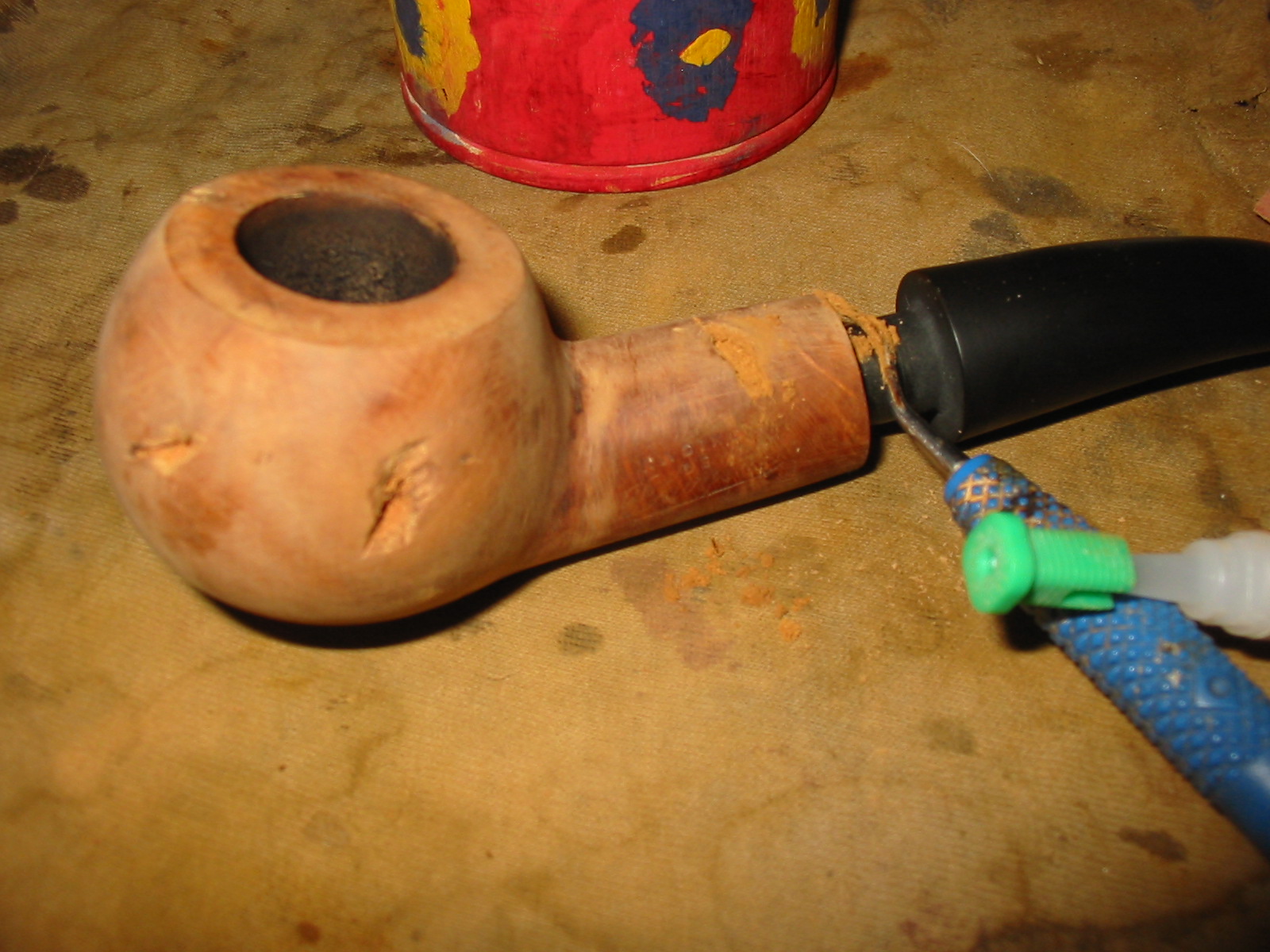
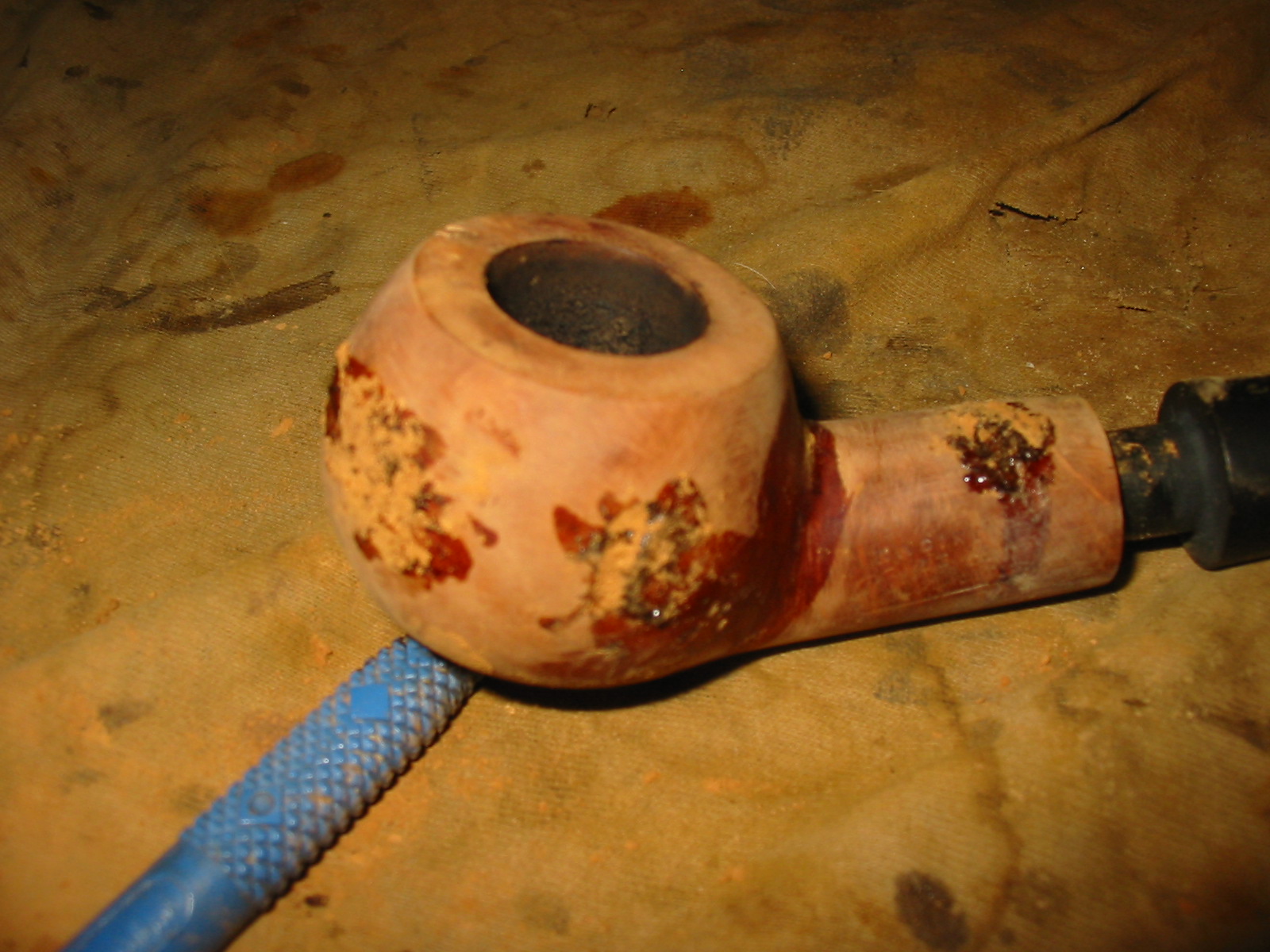
Topping a Badly Damaged Georg Jensen Bent Billiard


Blog by Steve Laug

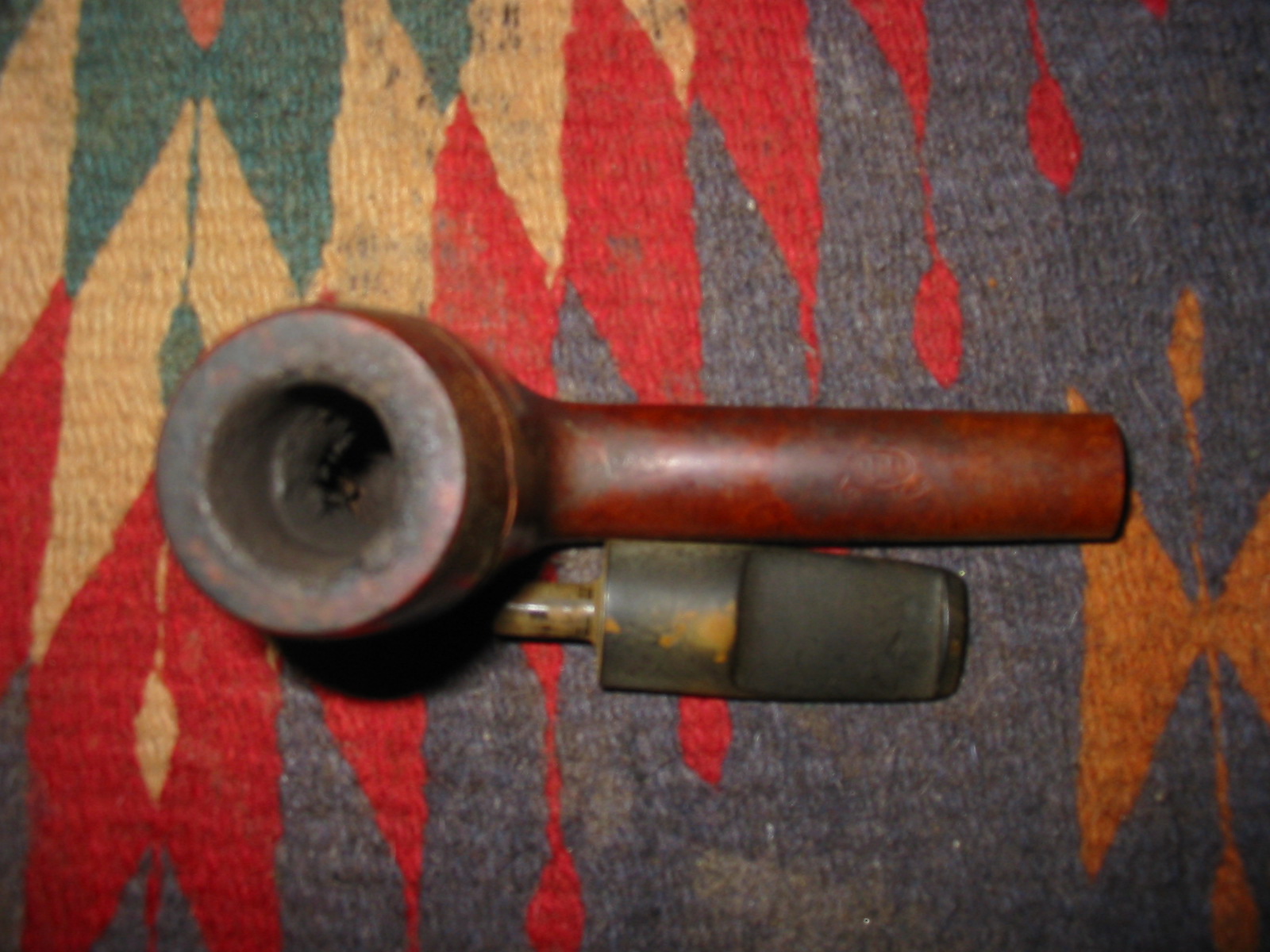
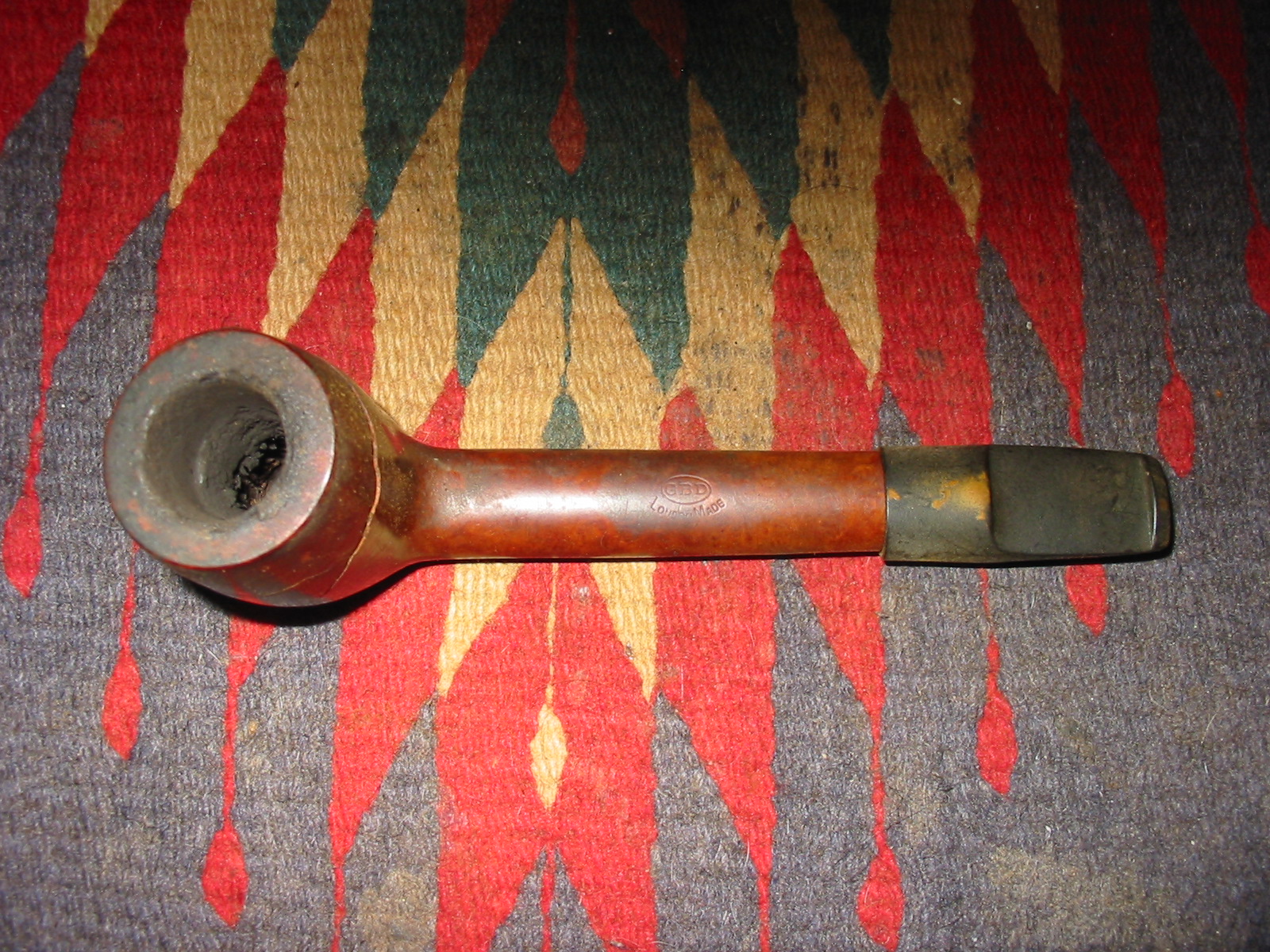
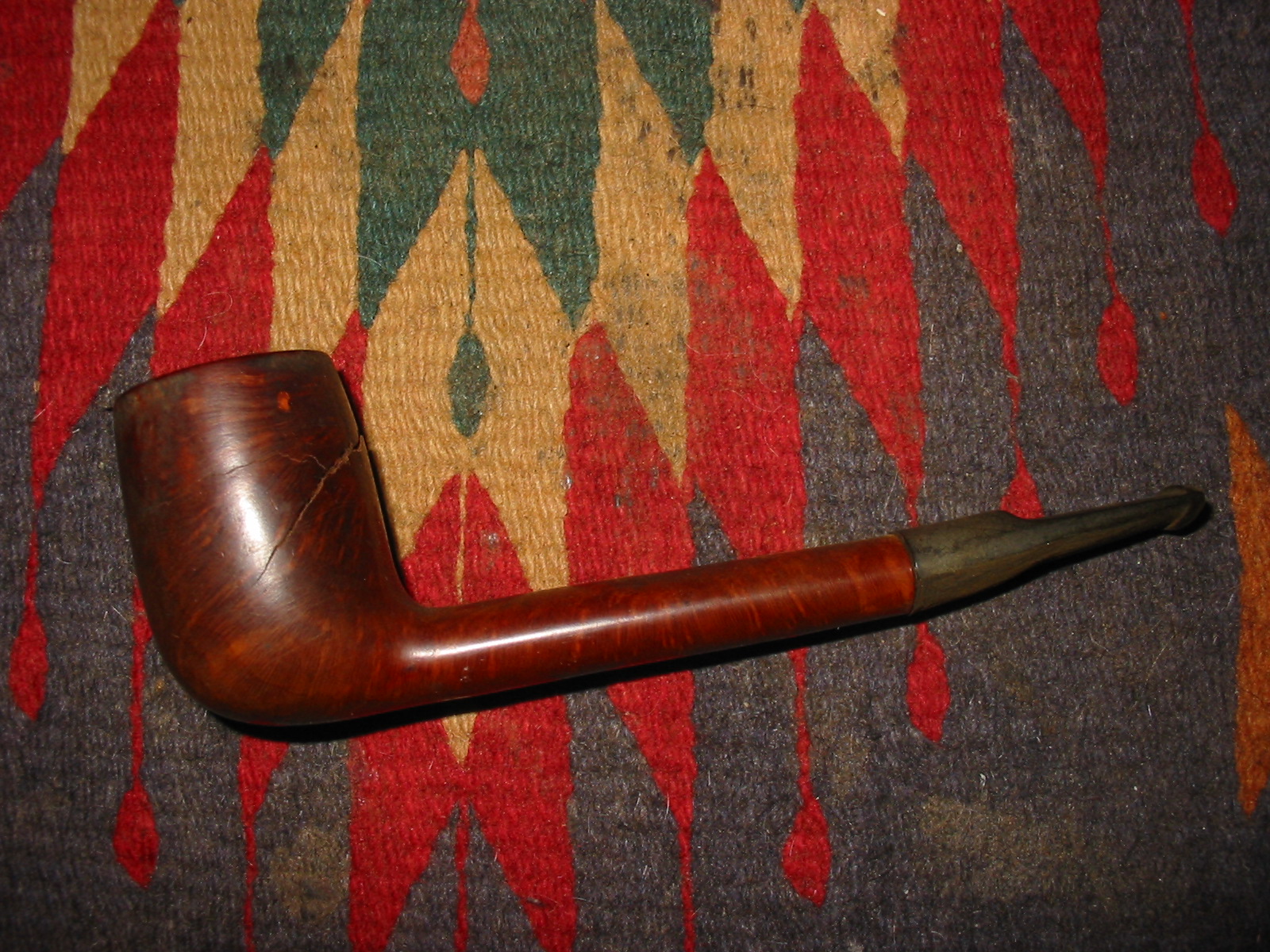
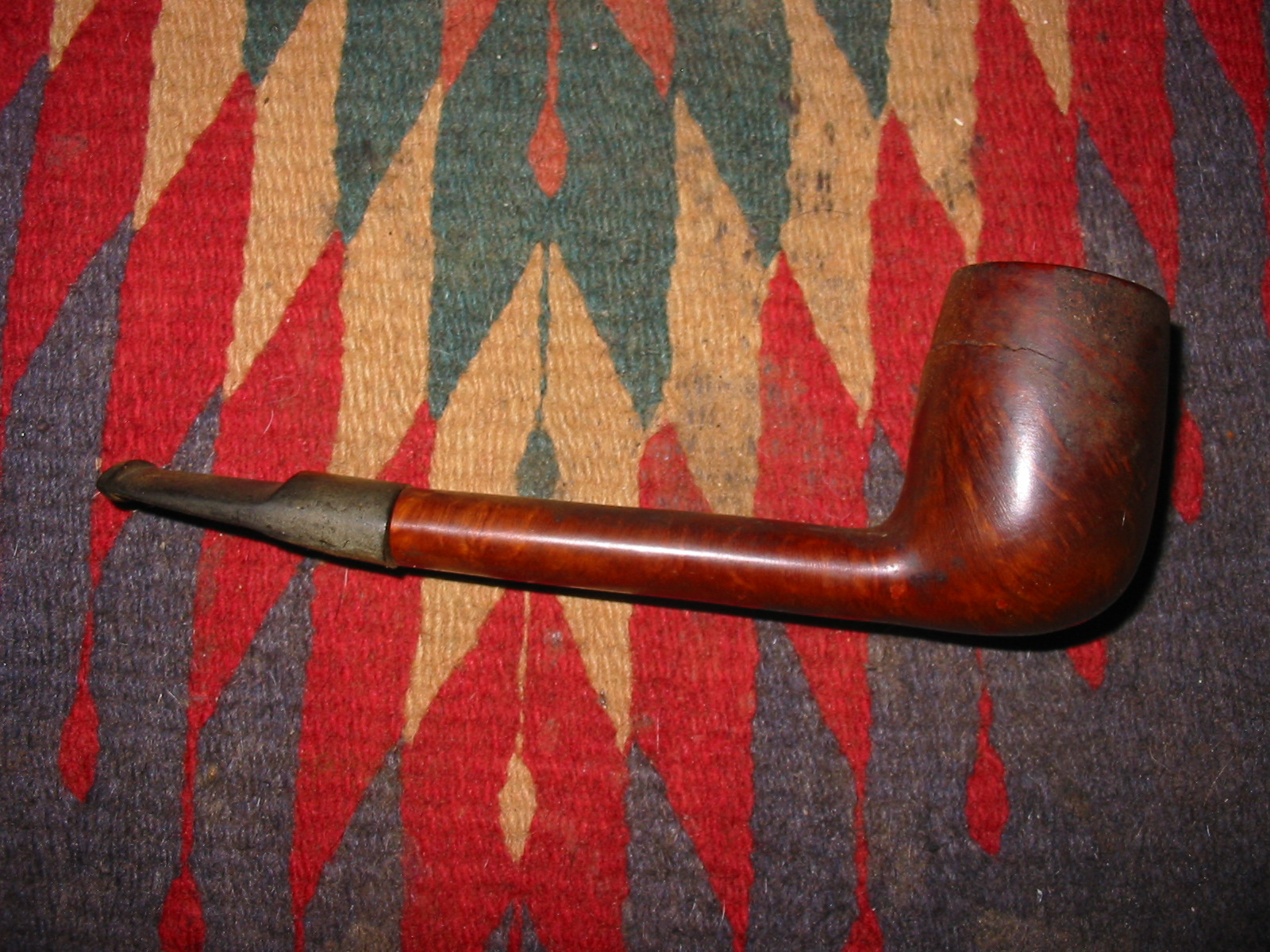
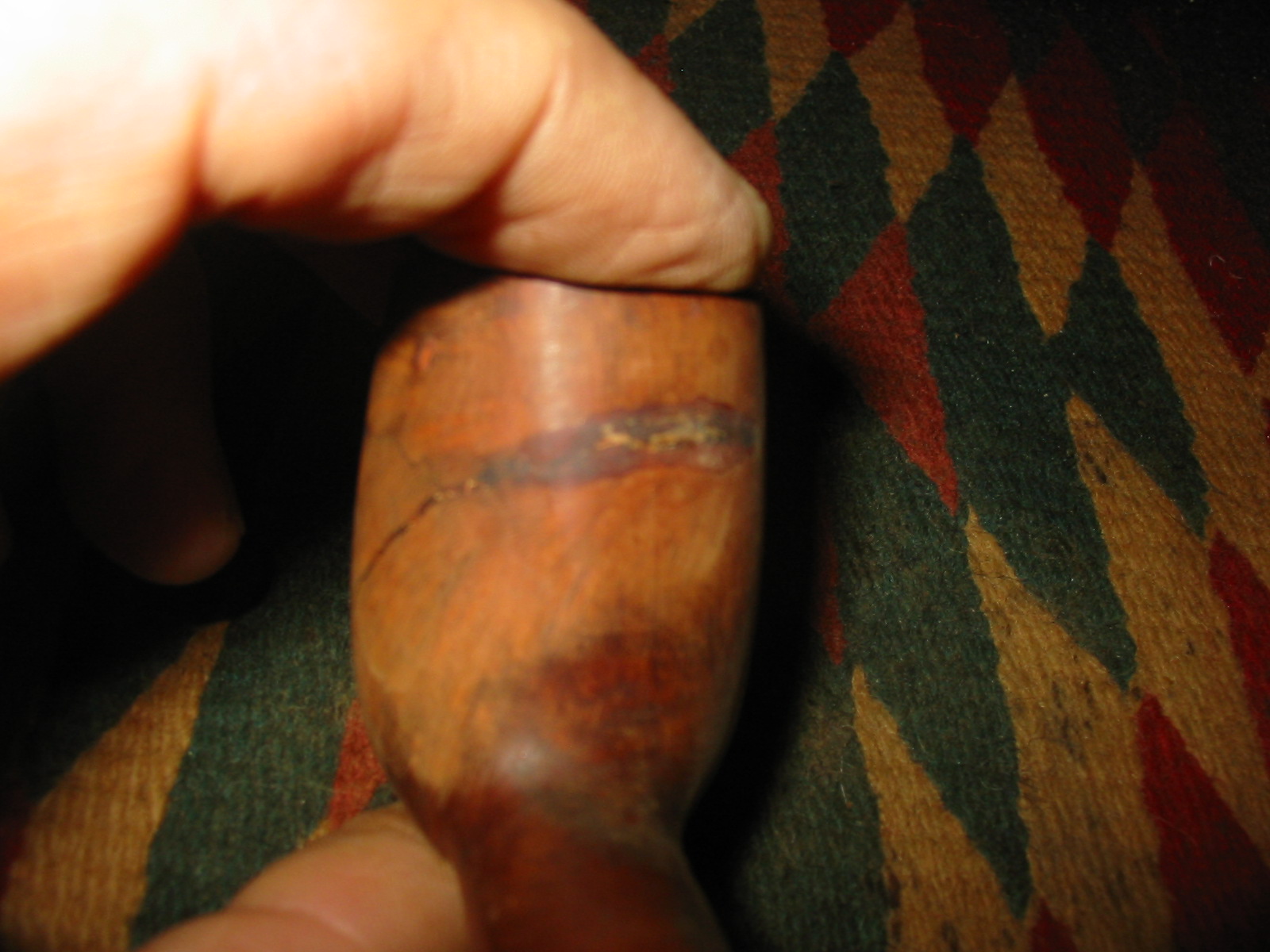
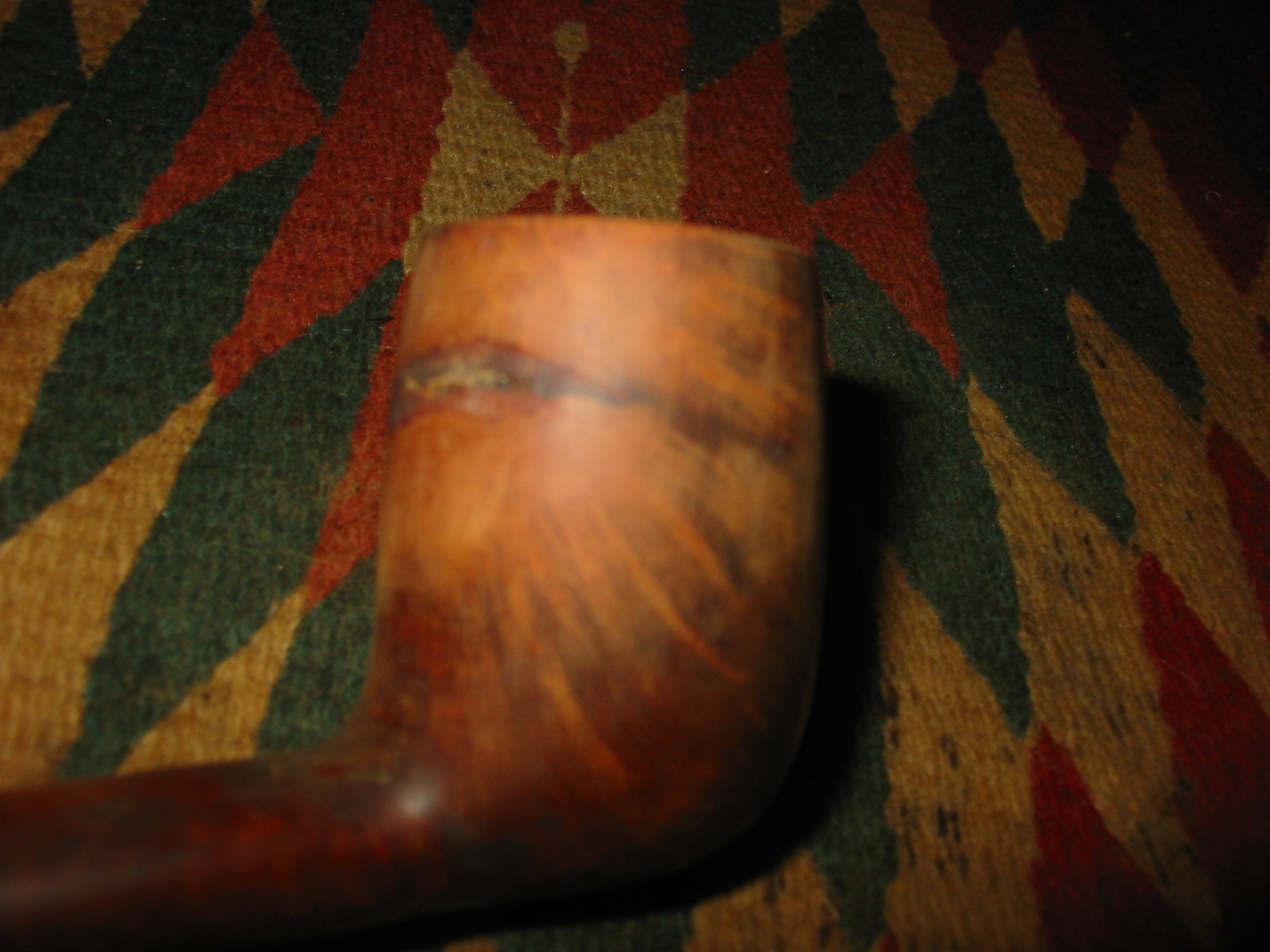
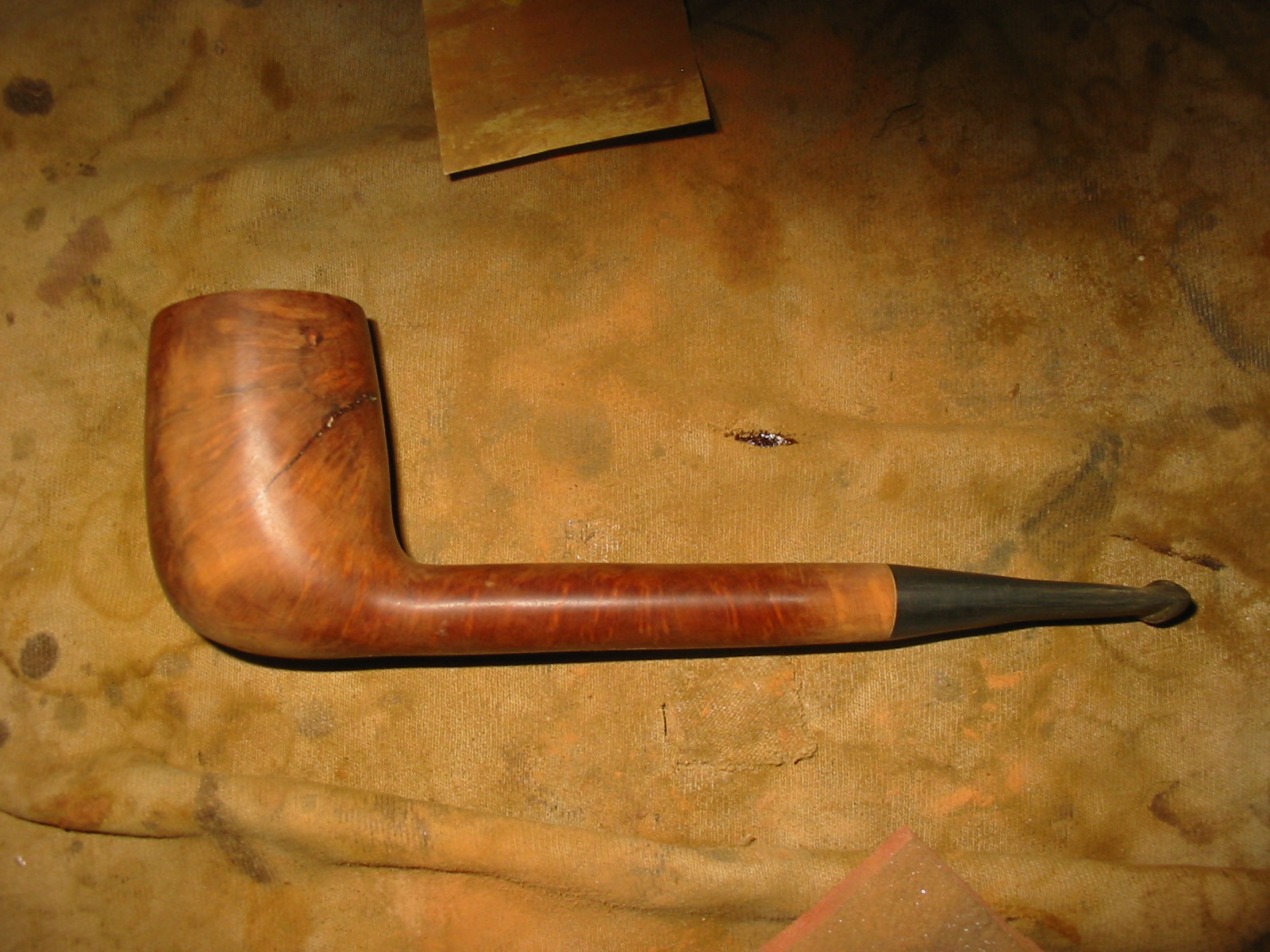
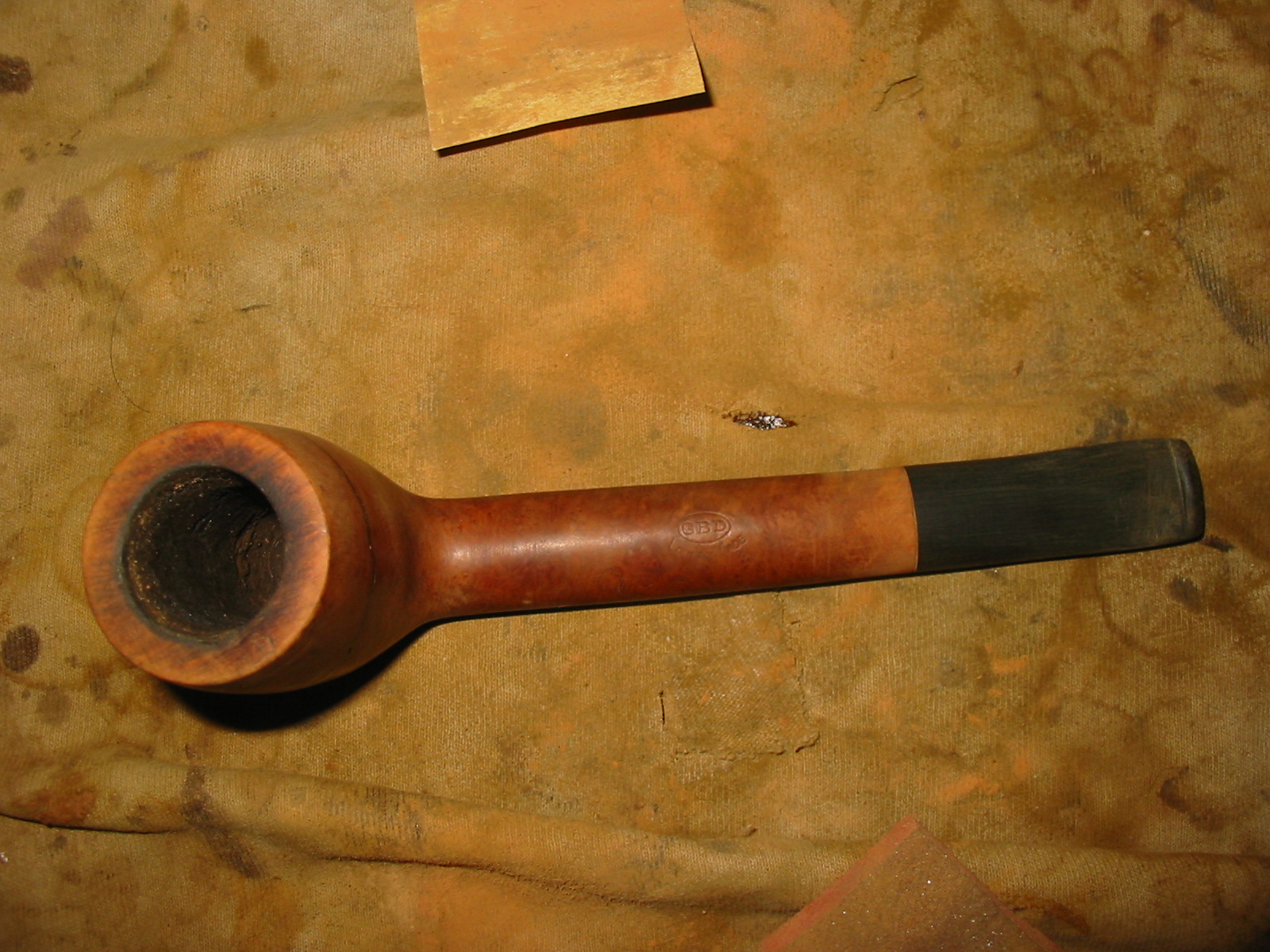
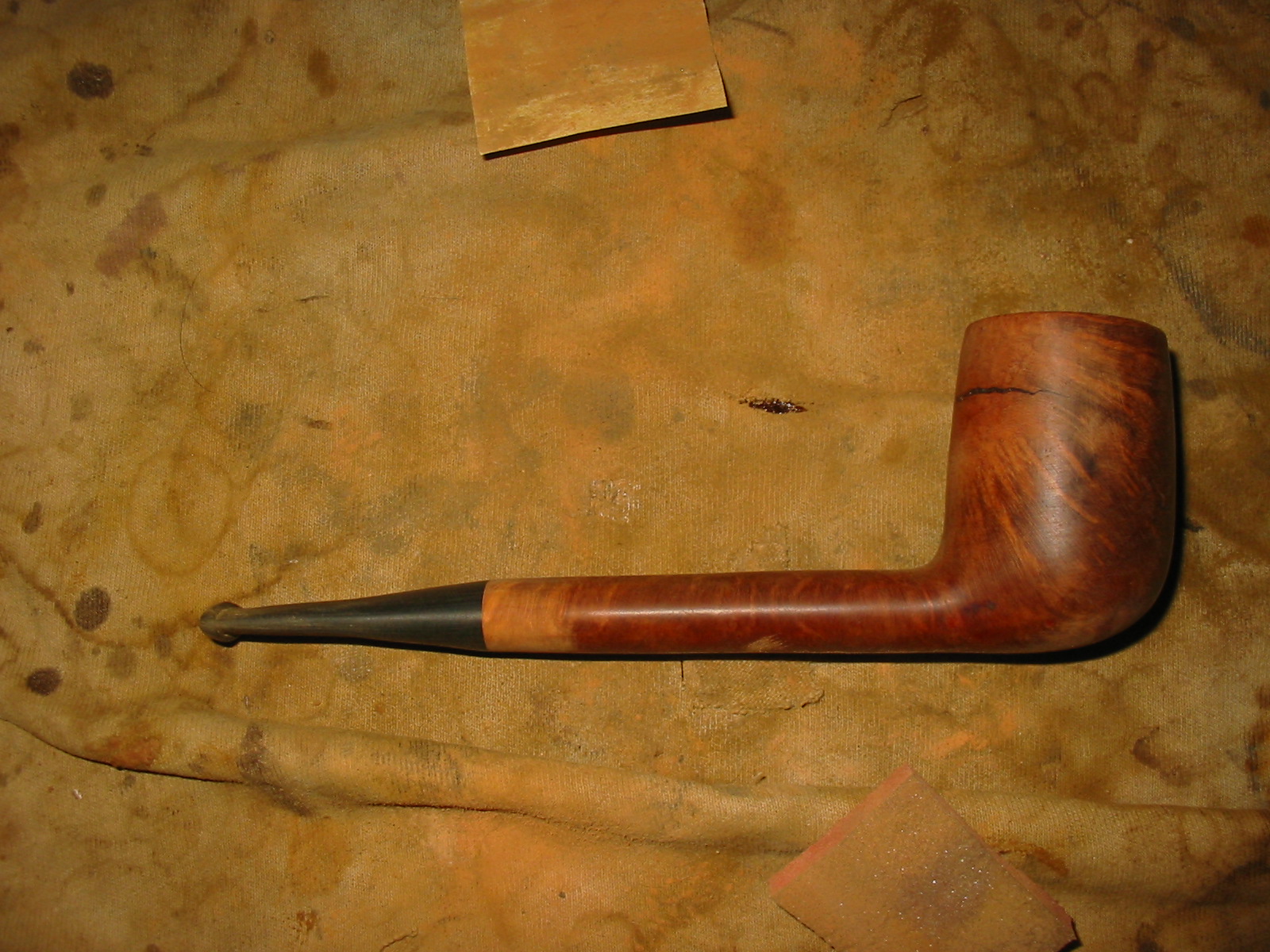
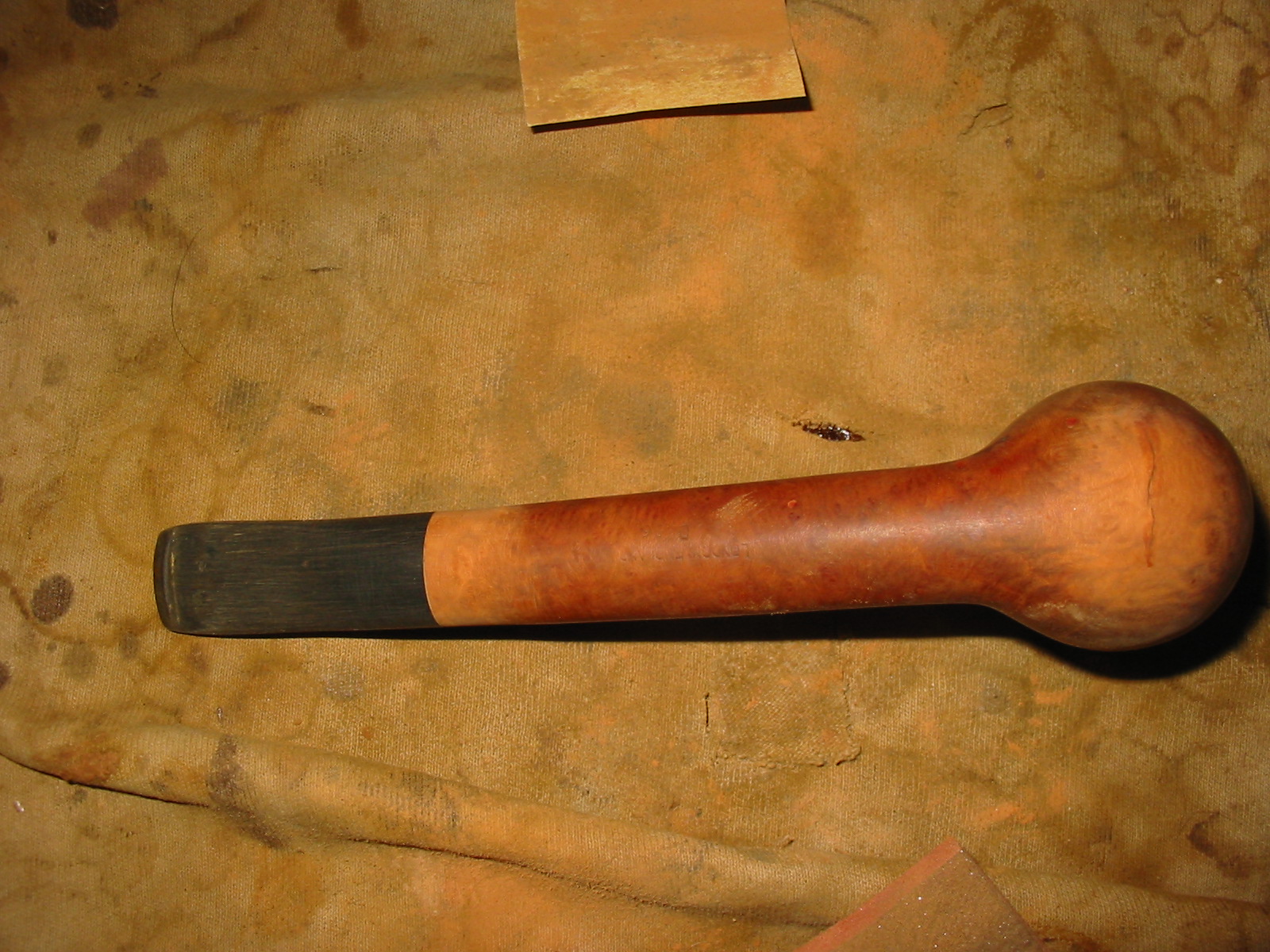
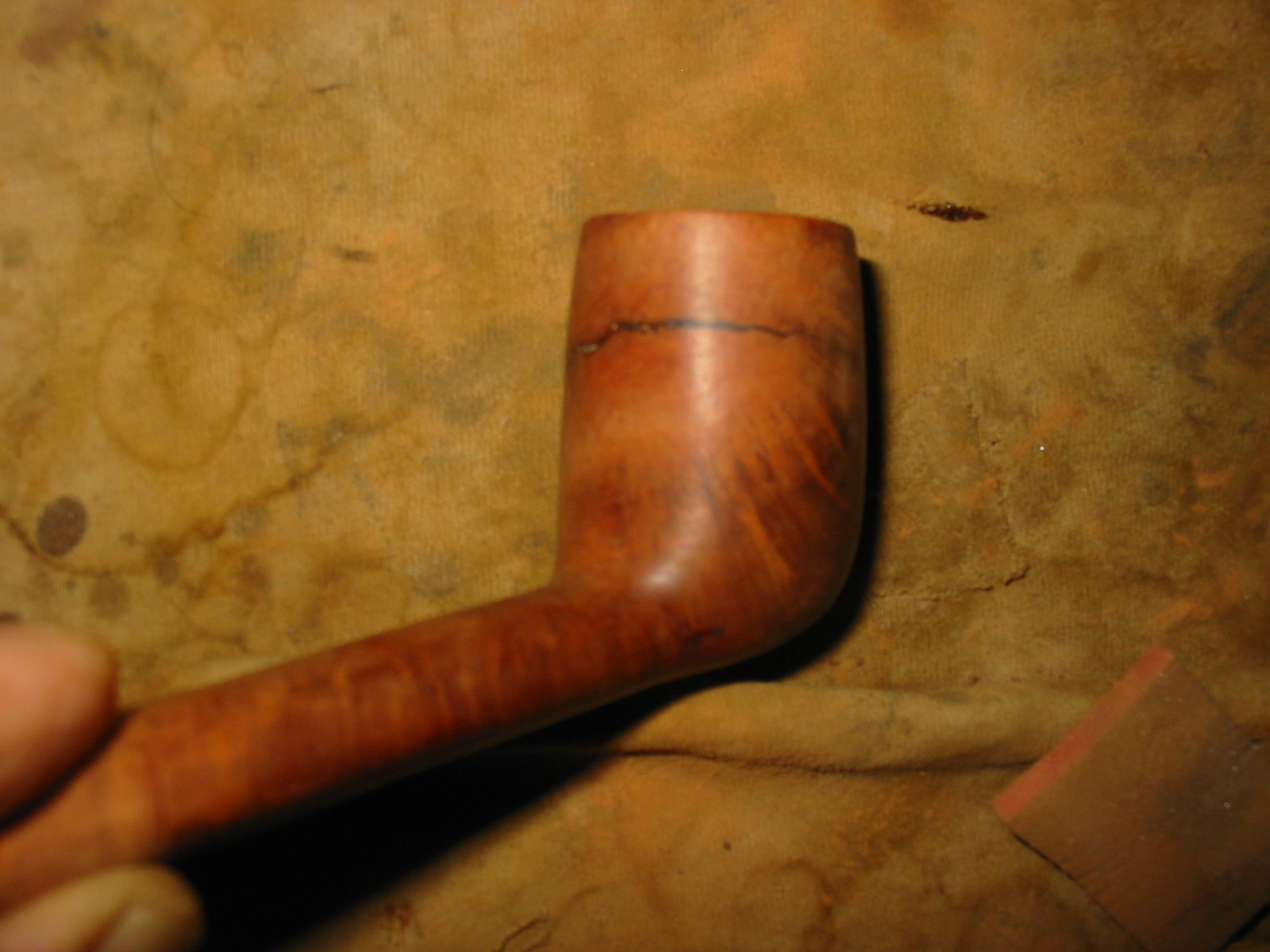
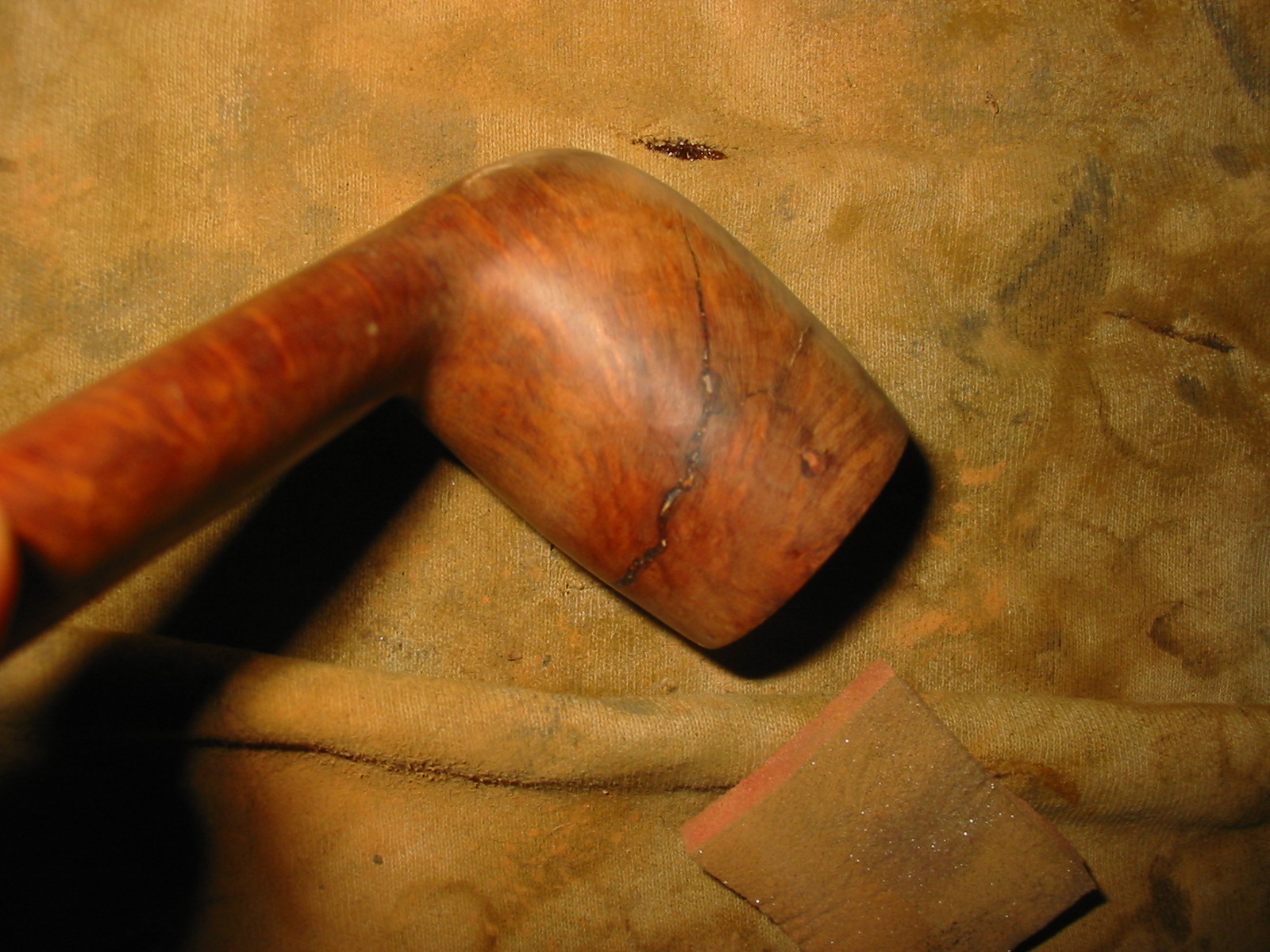
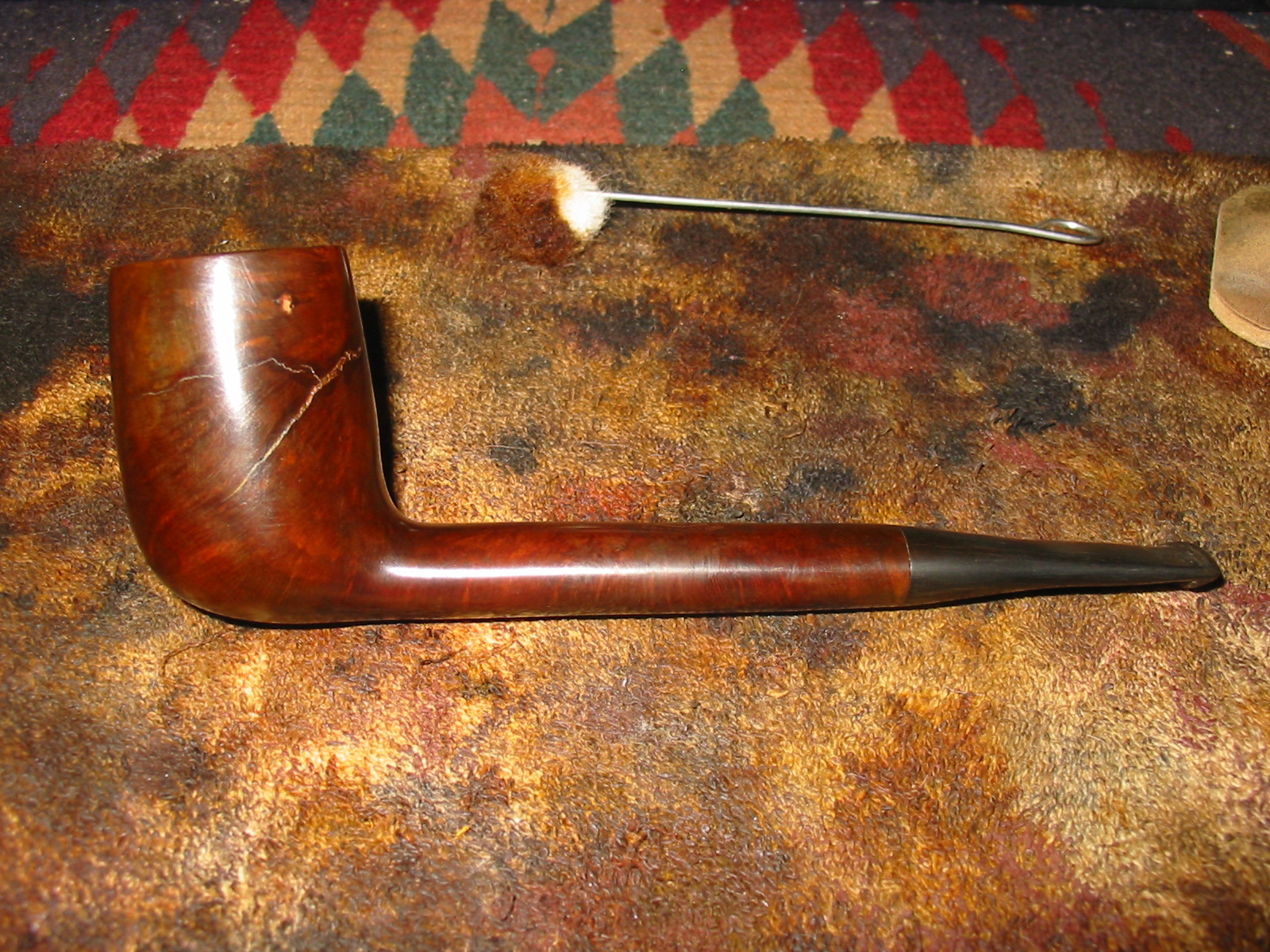
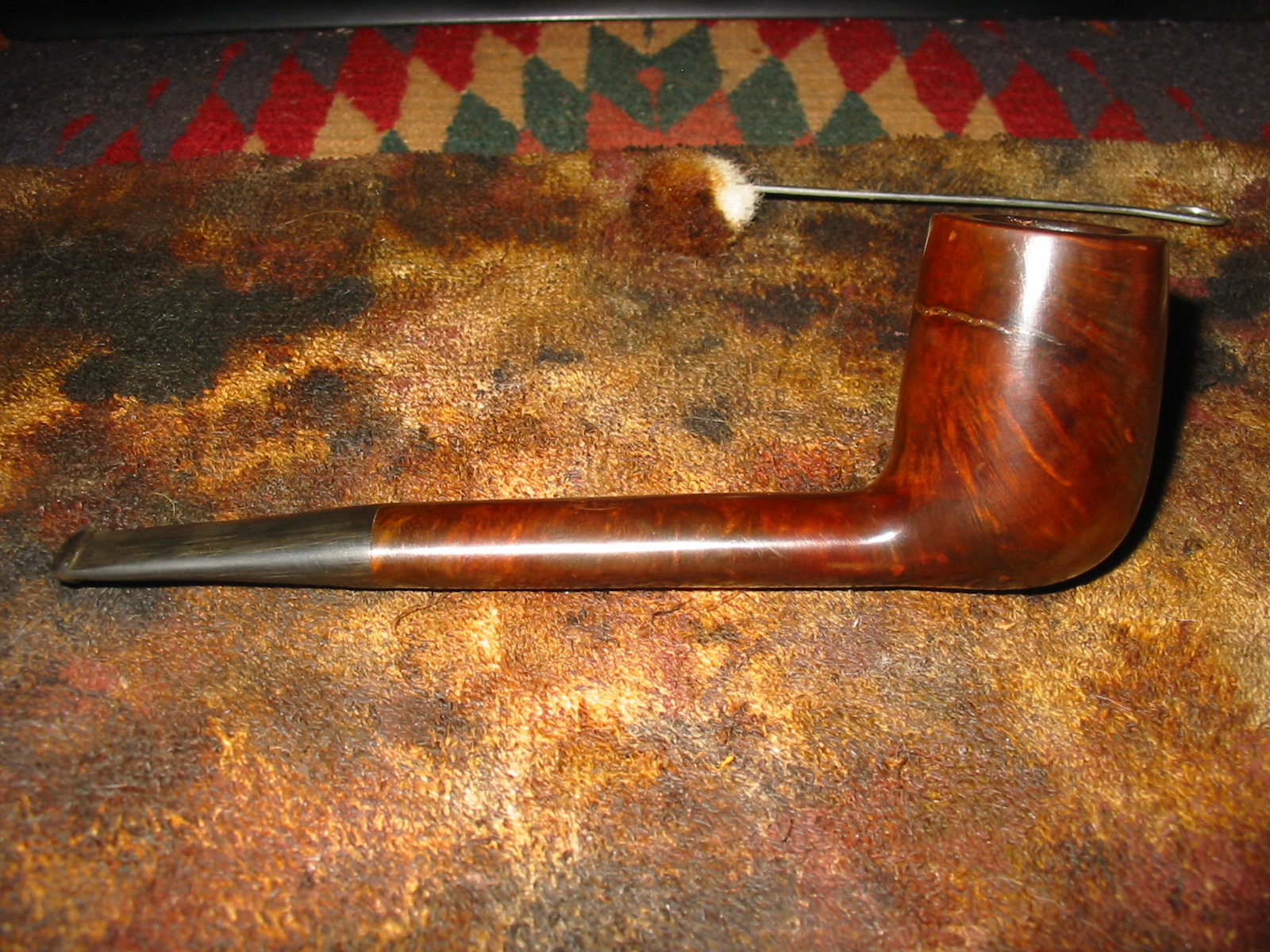
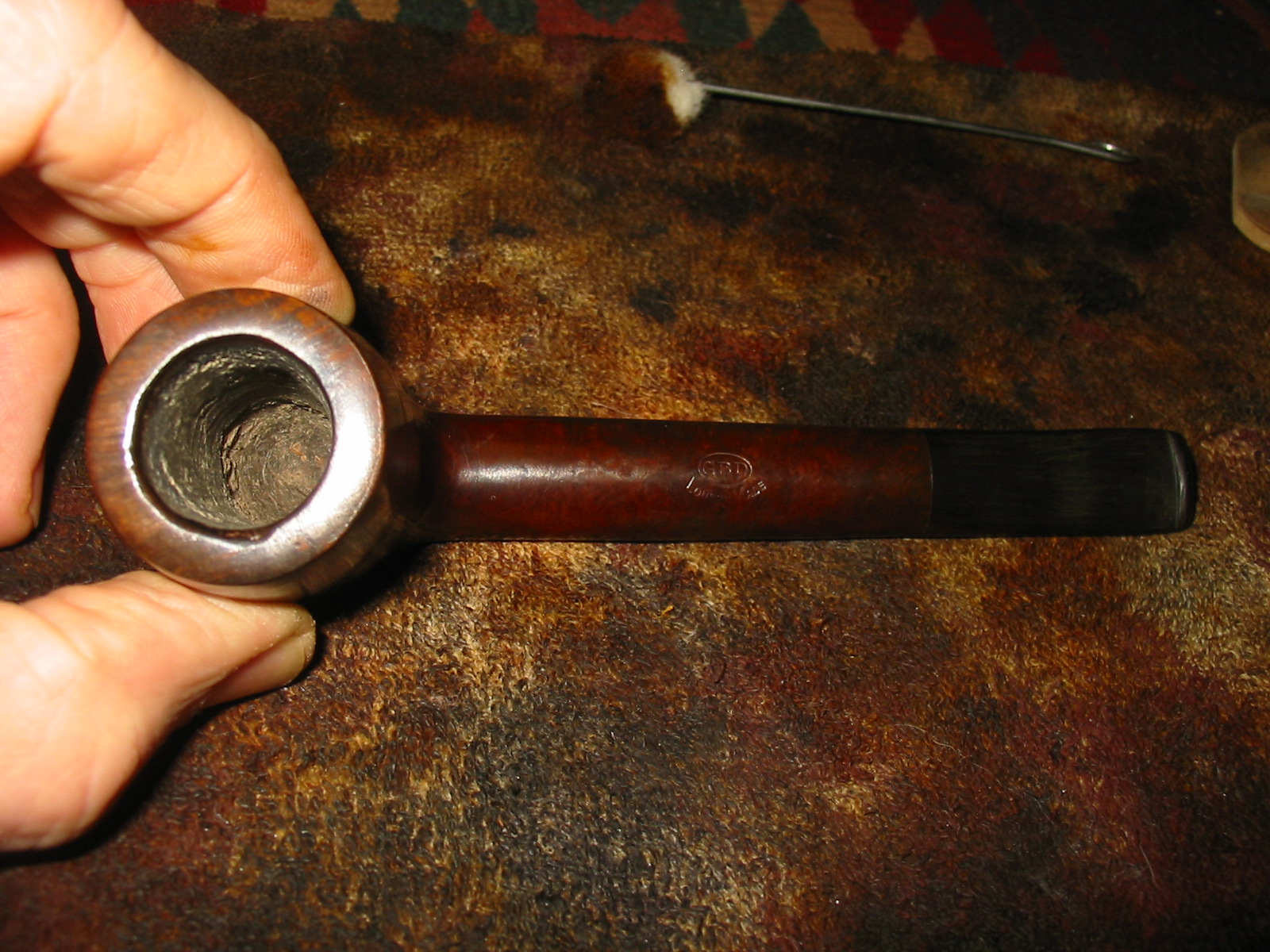
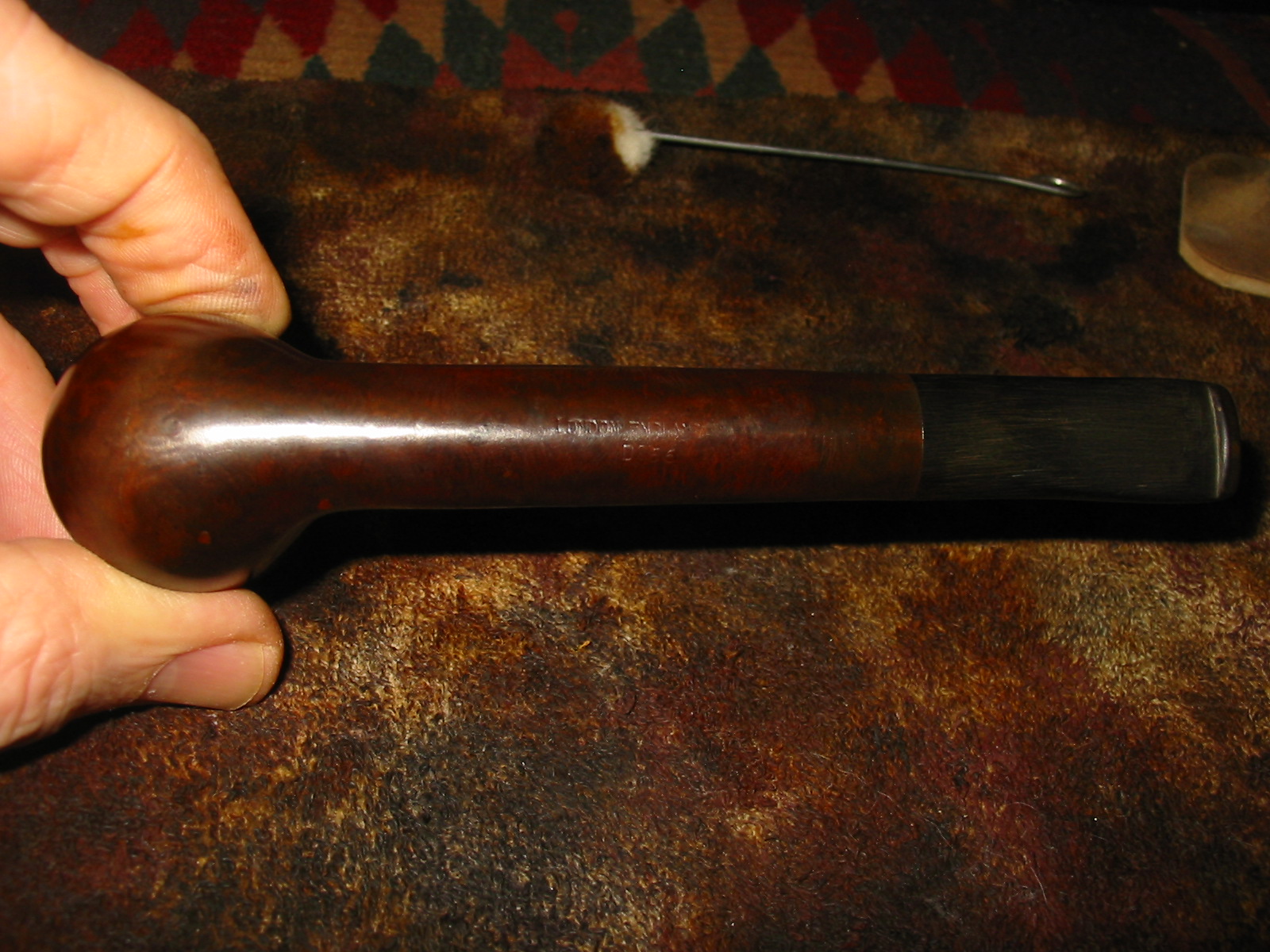
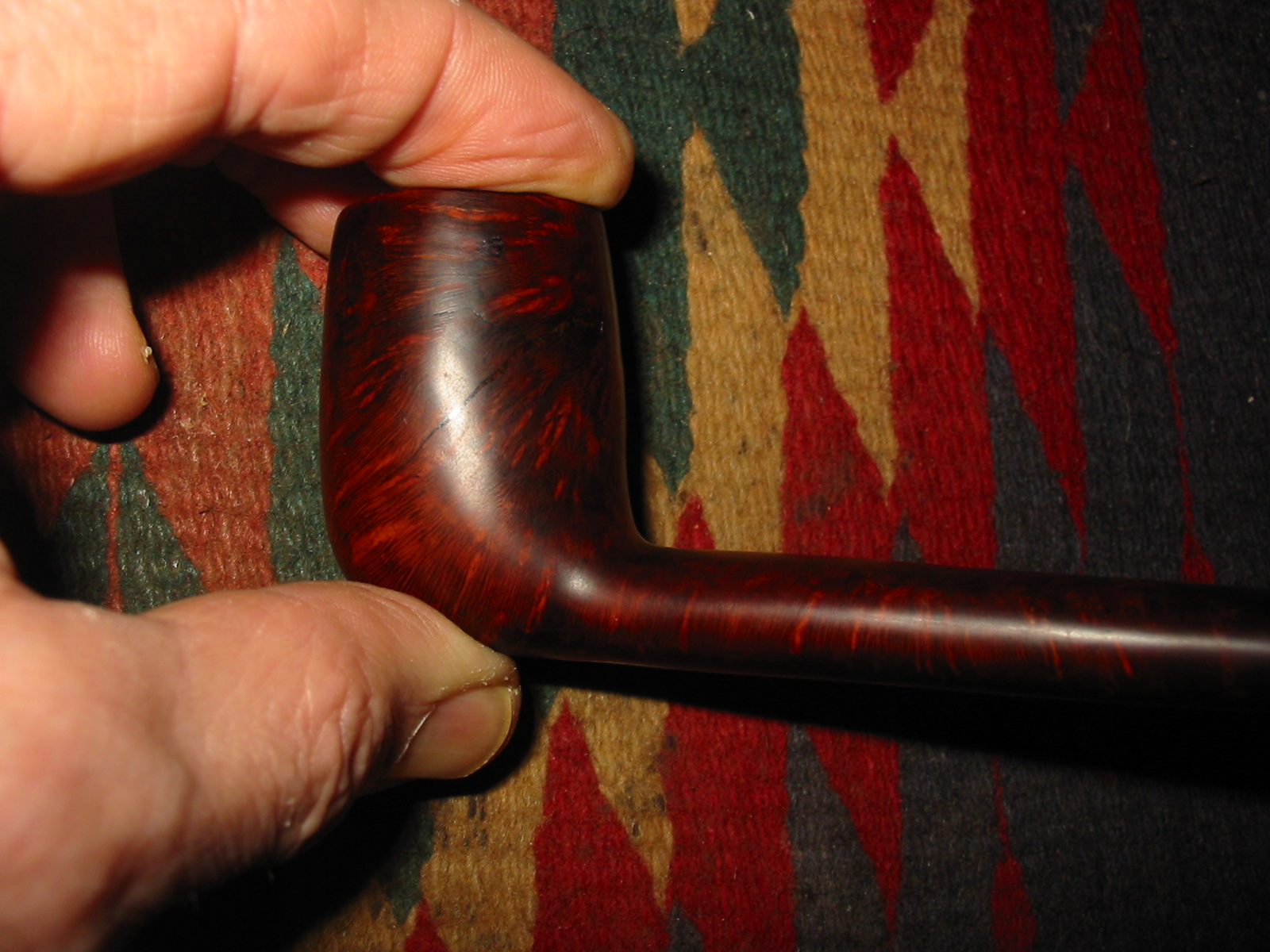
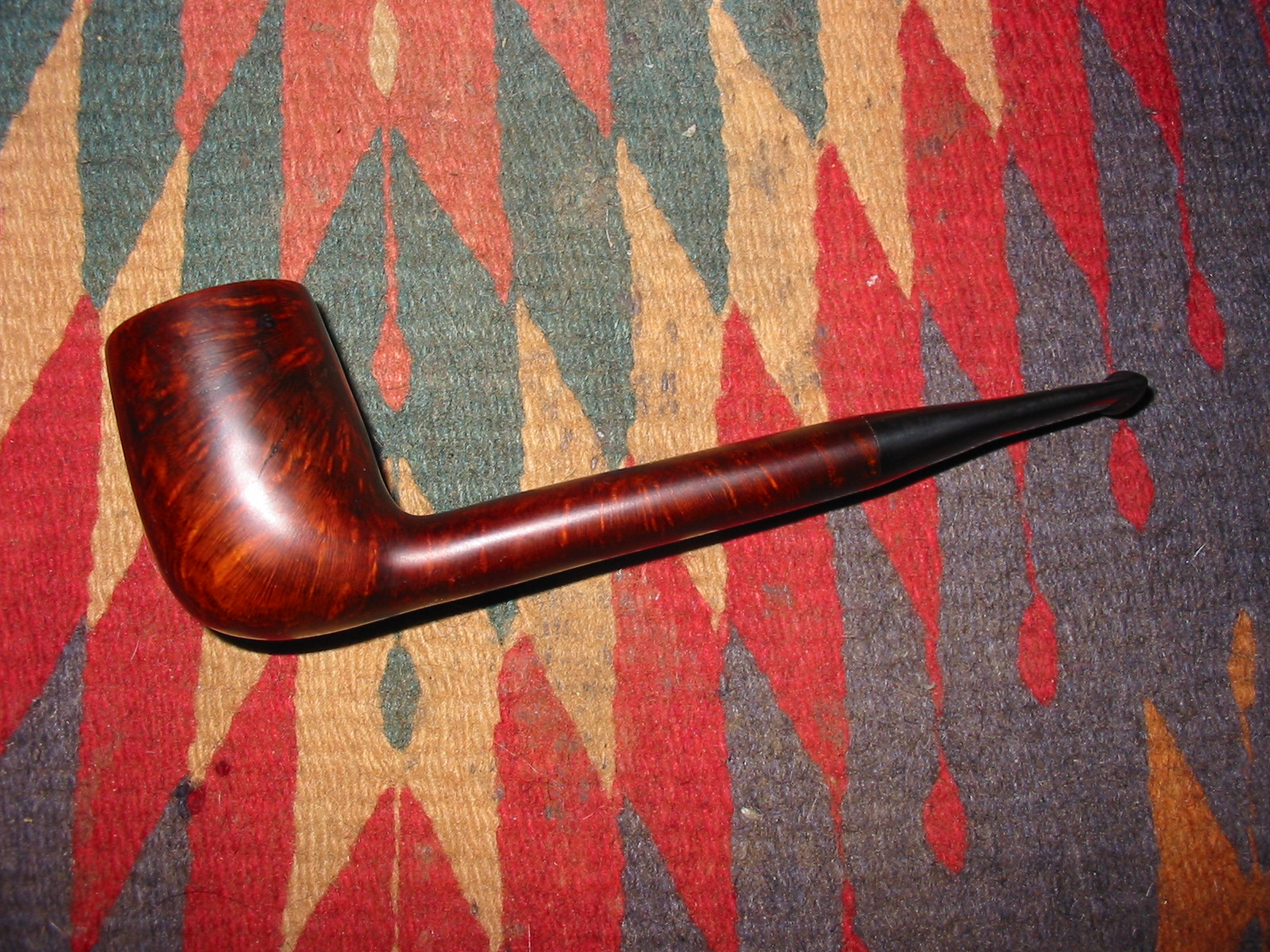
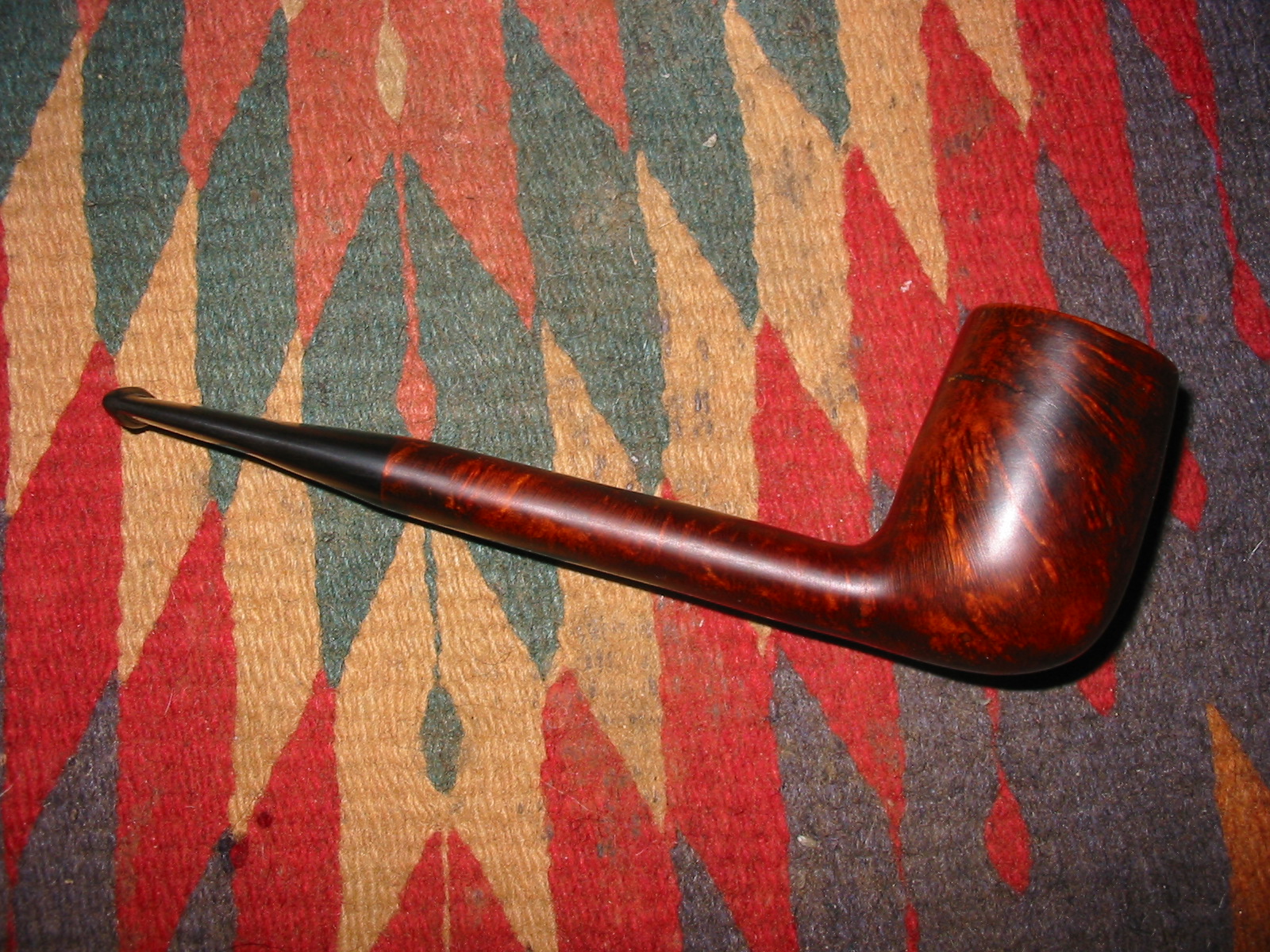
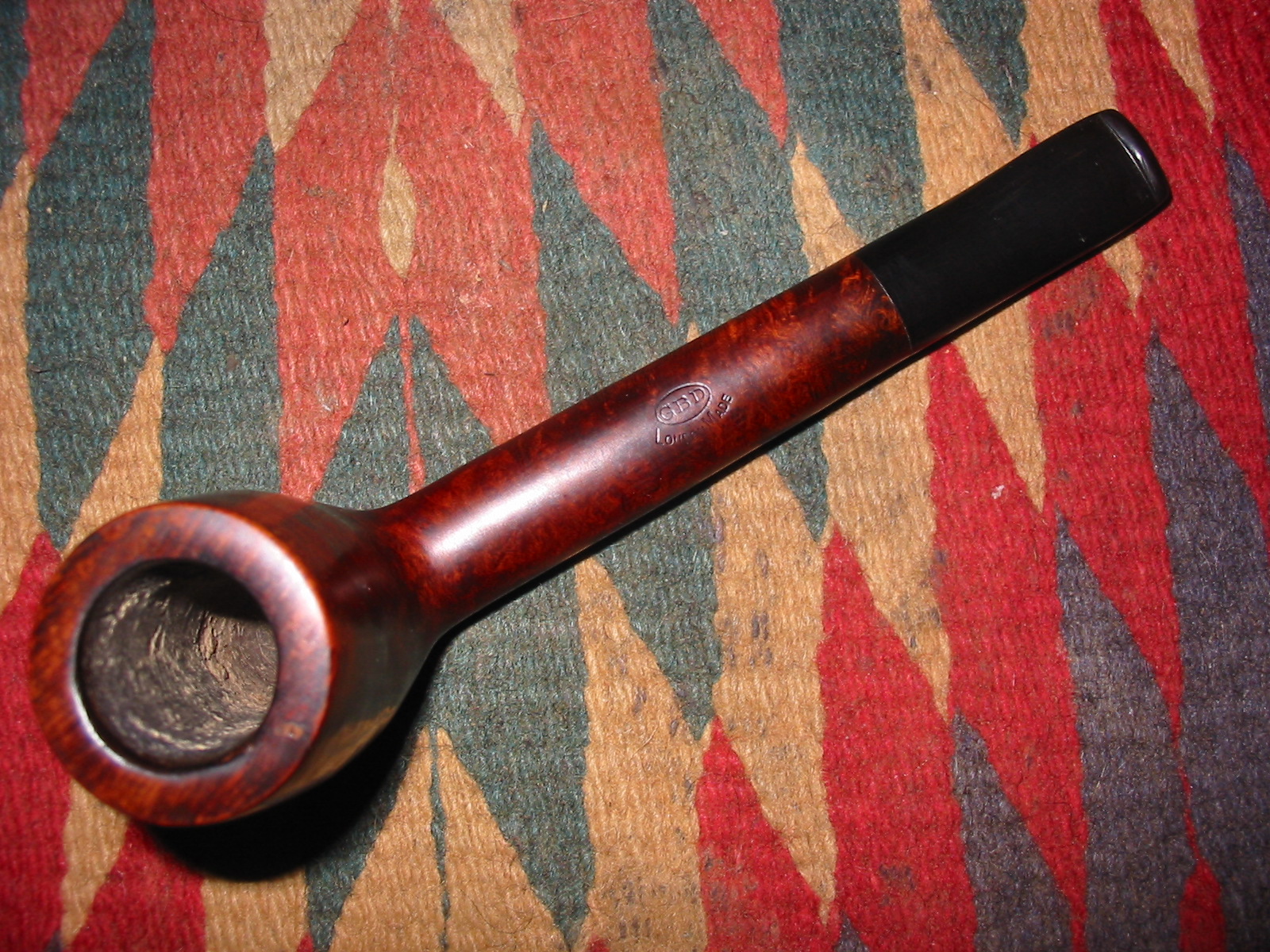
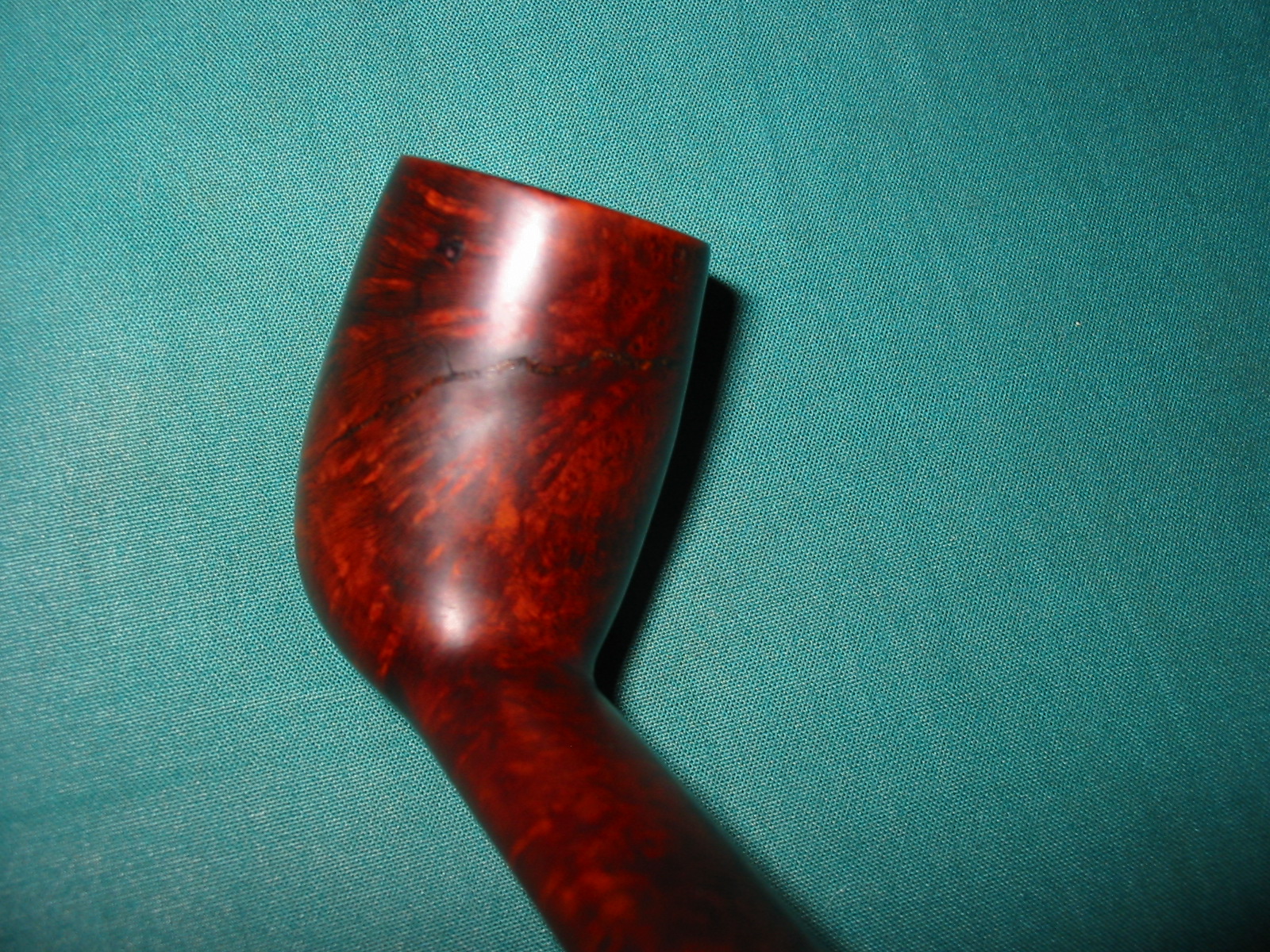
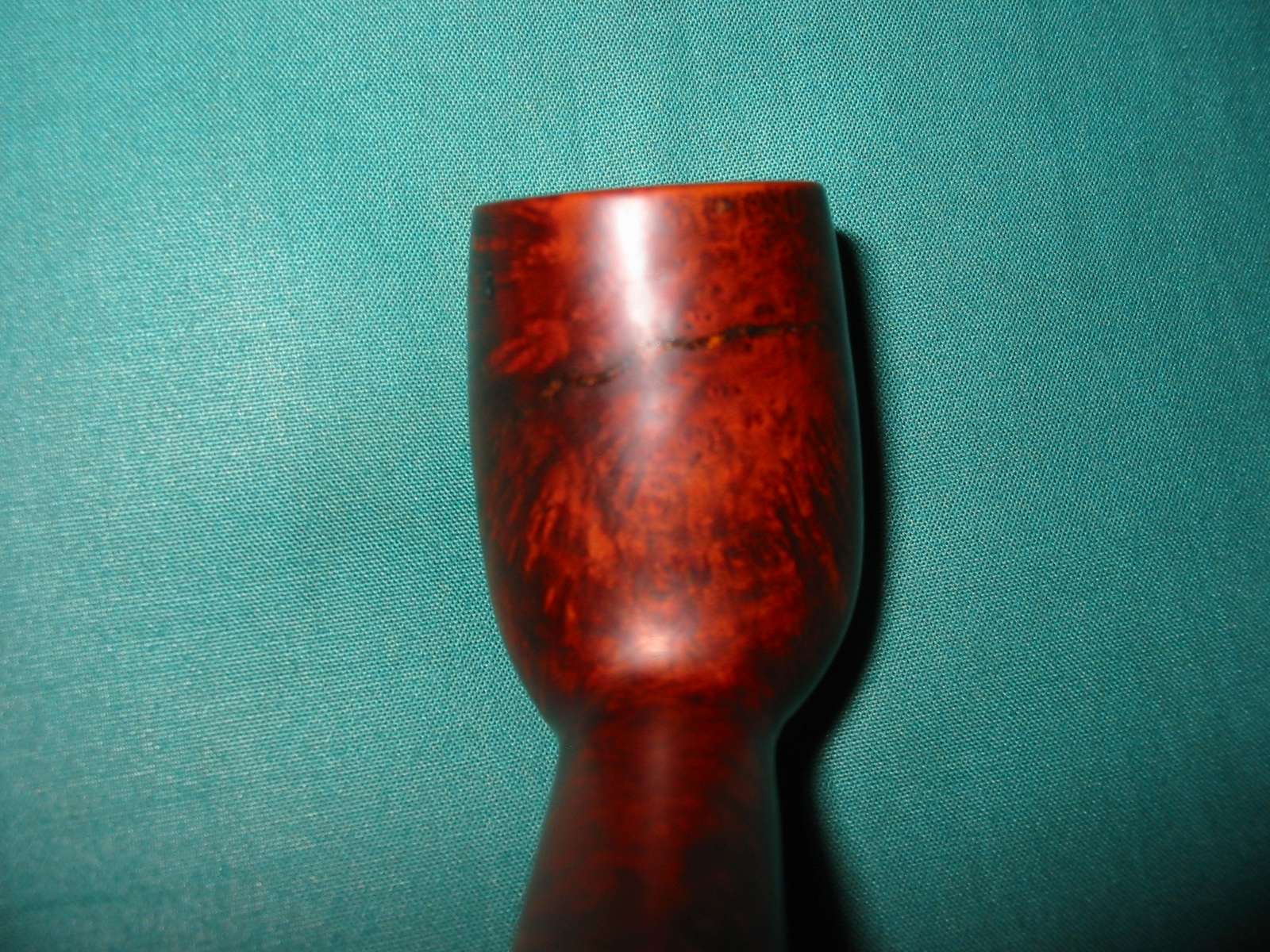
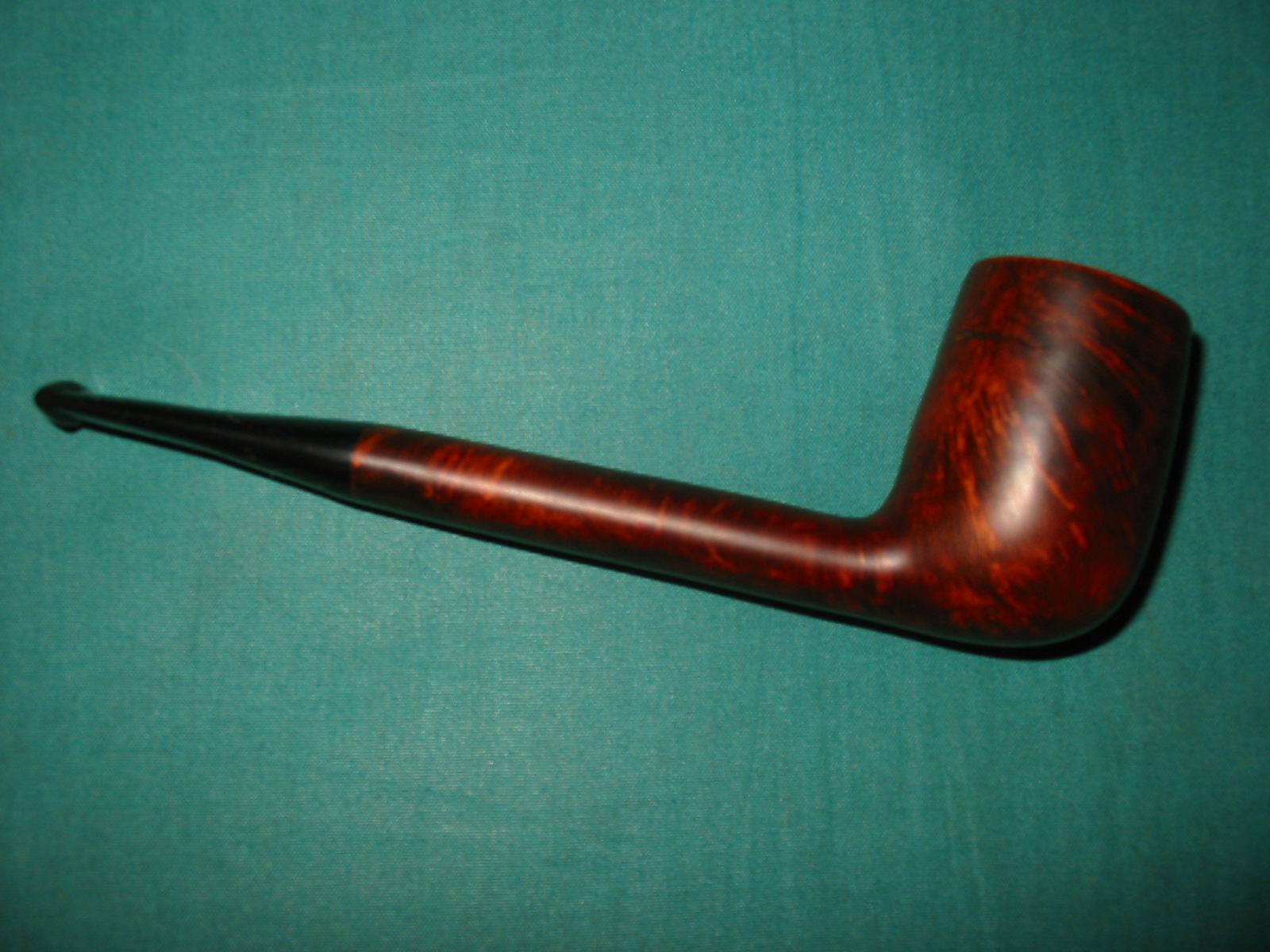
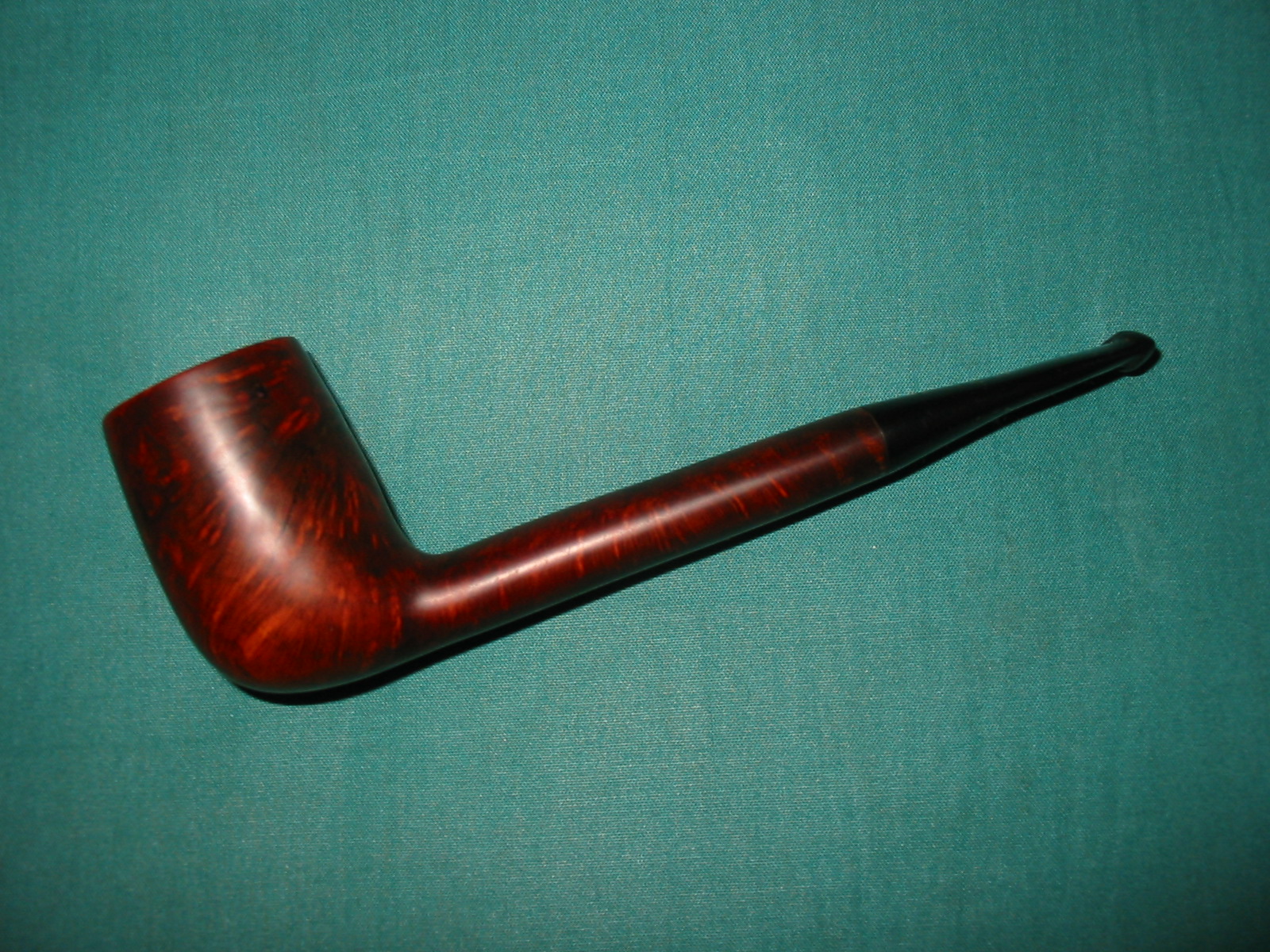
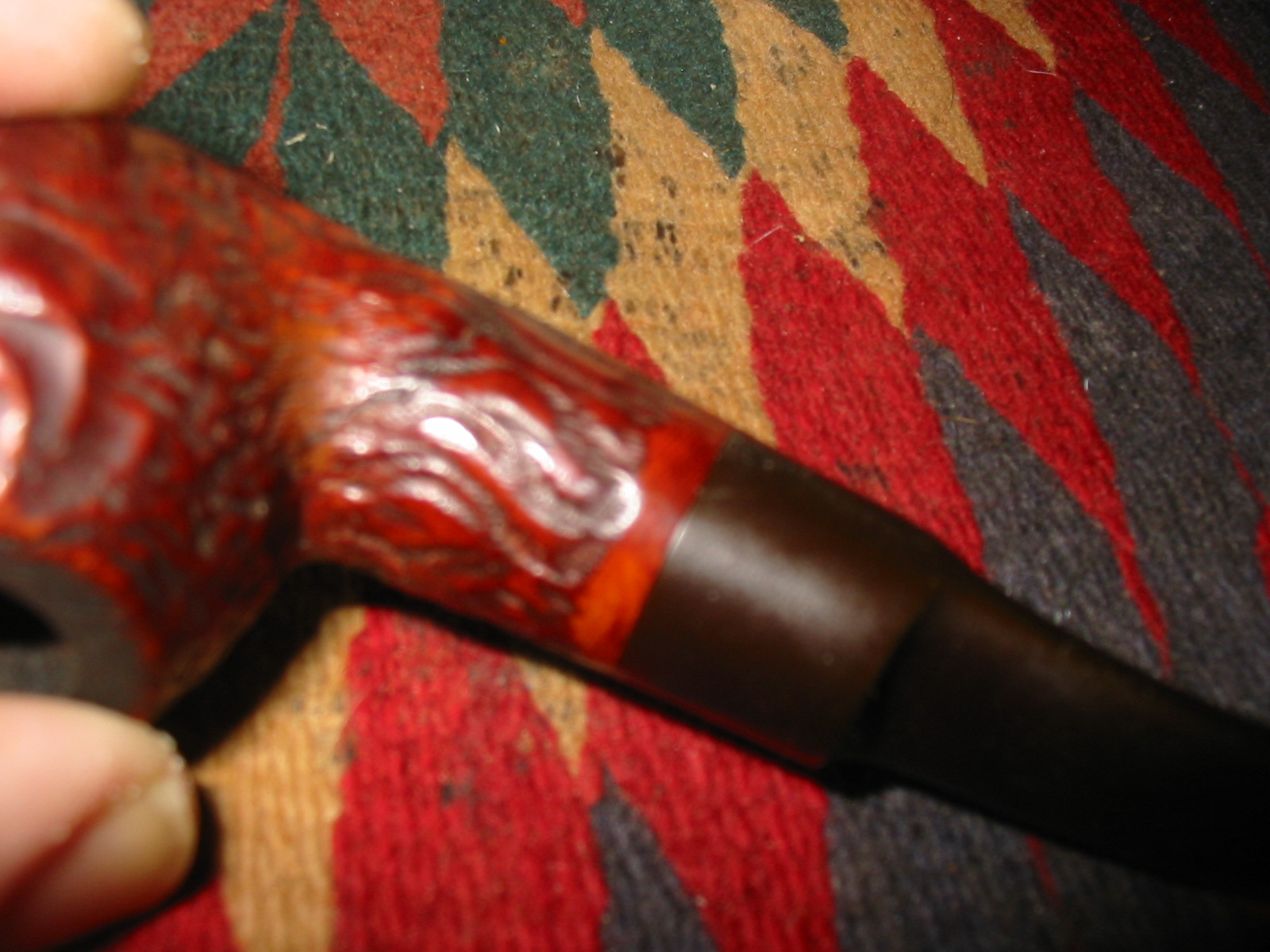
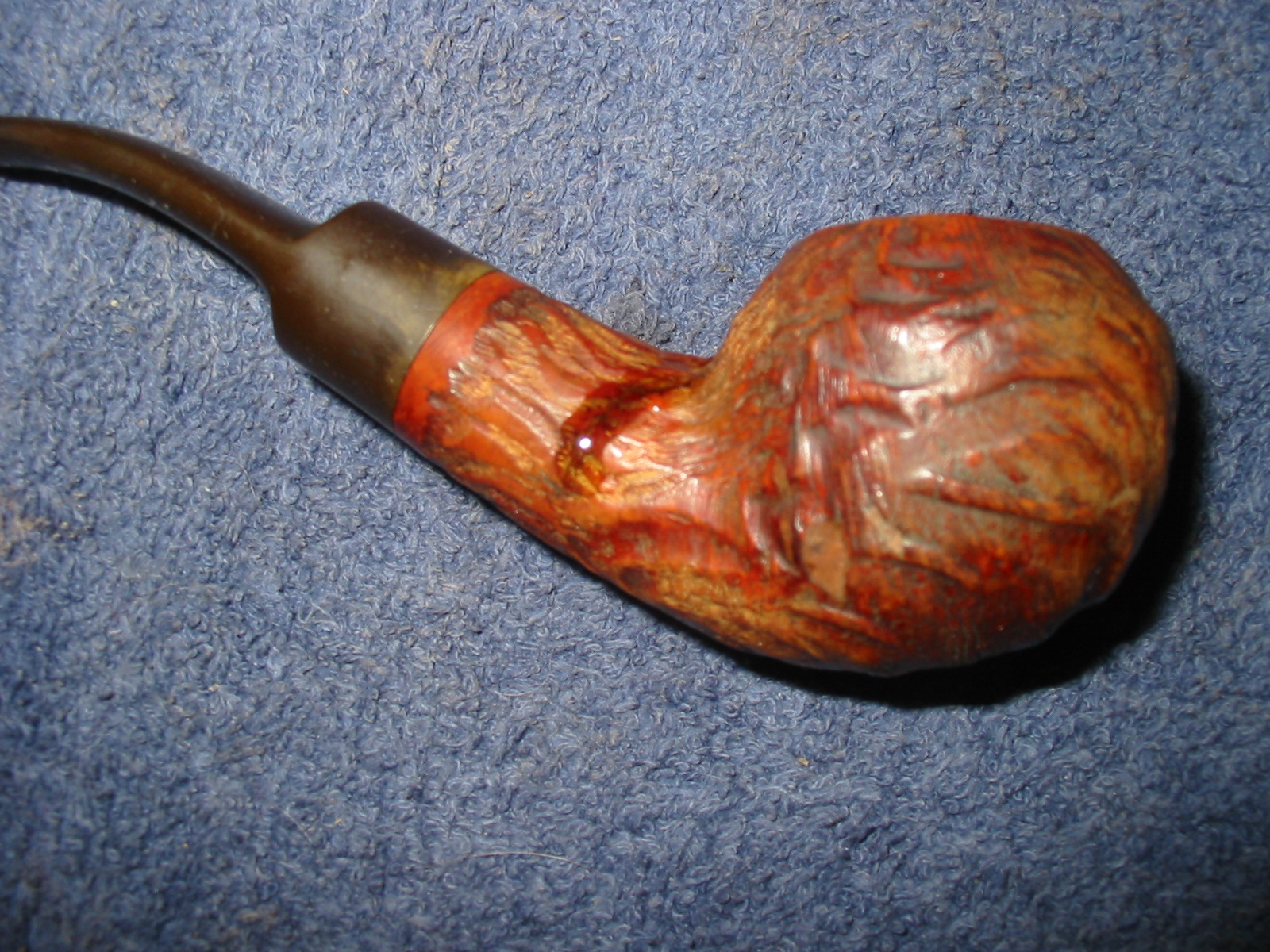
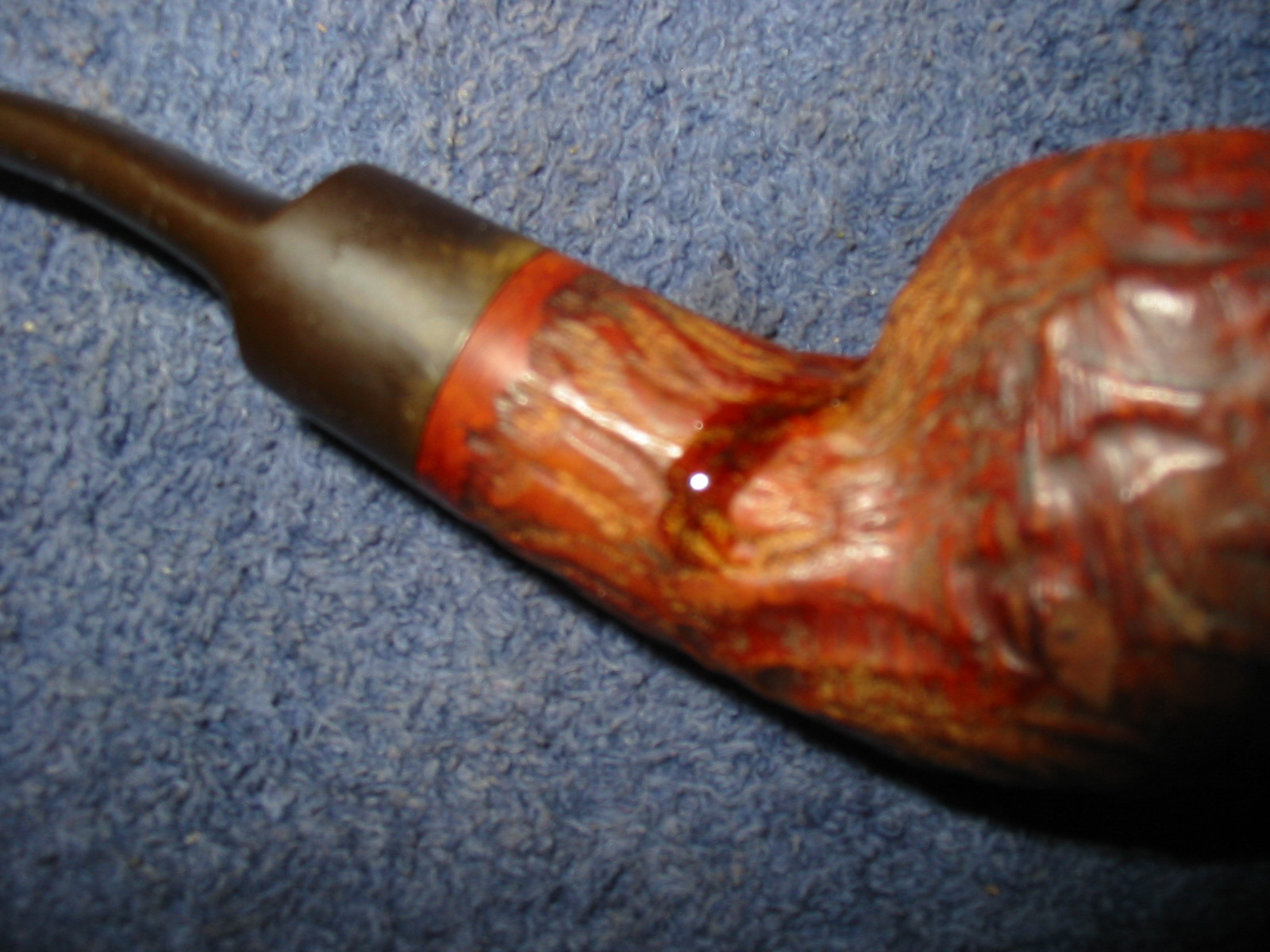
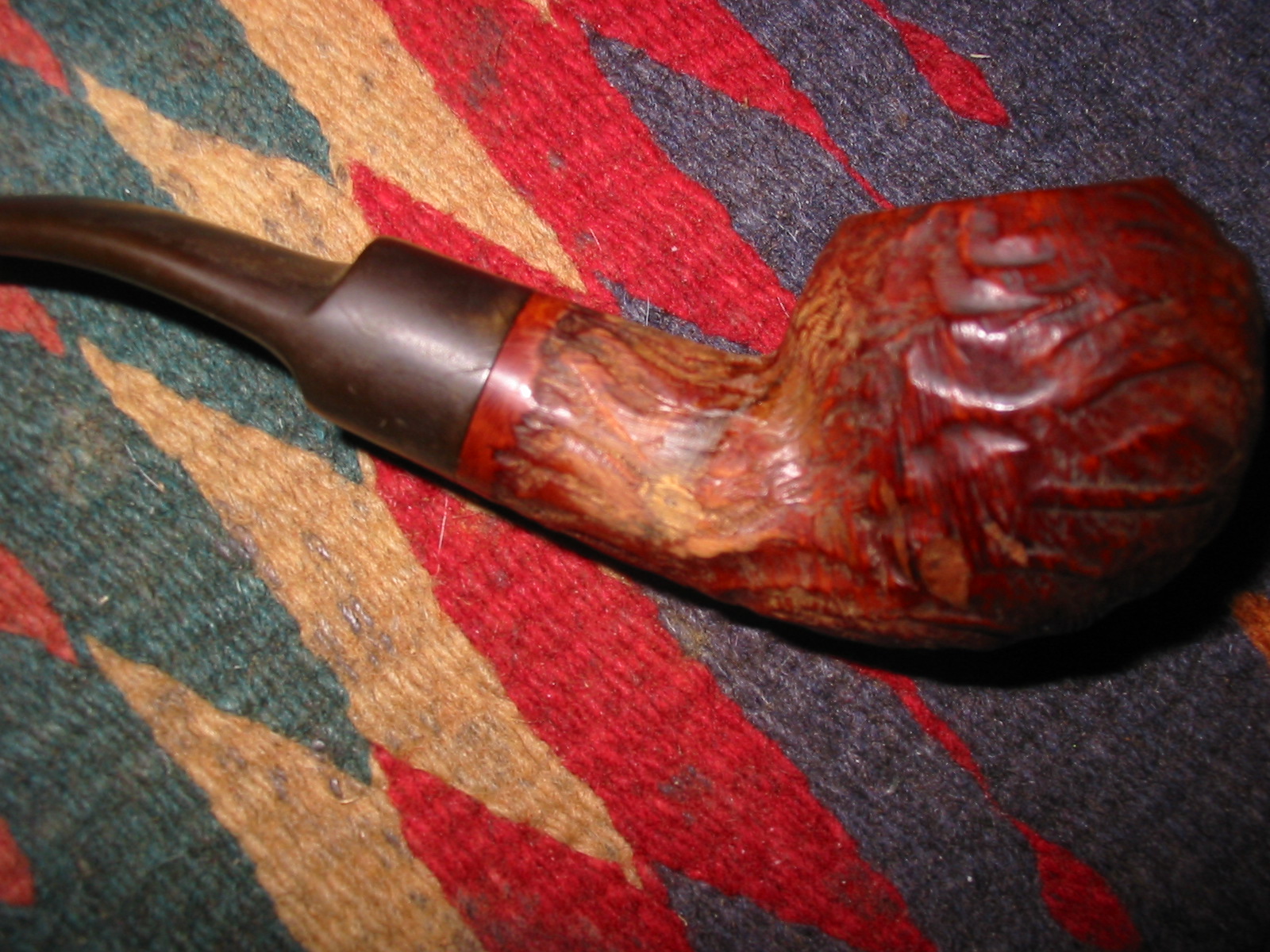
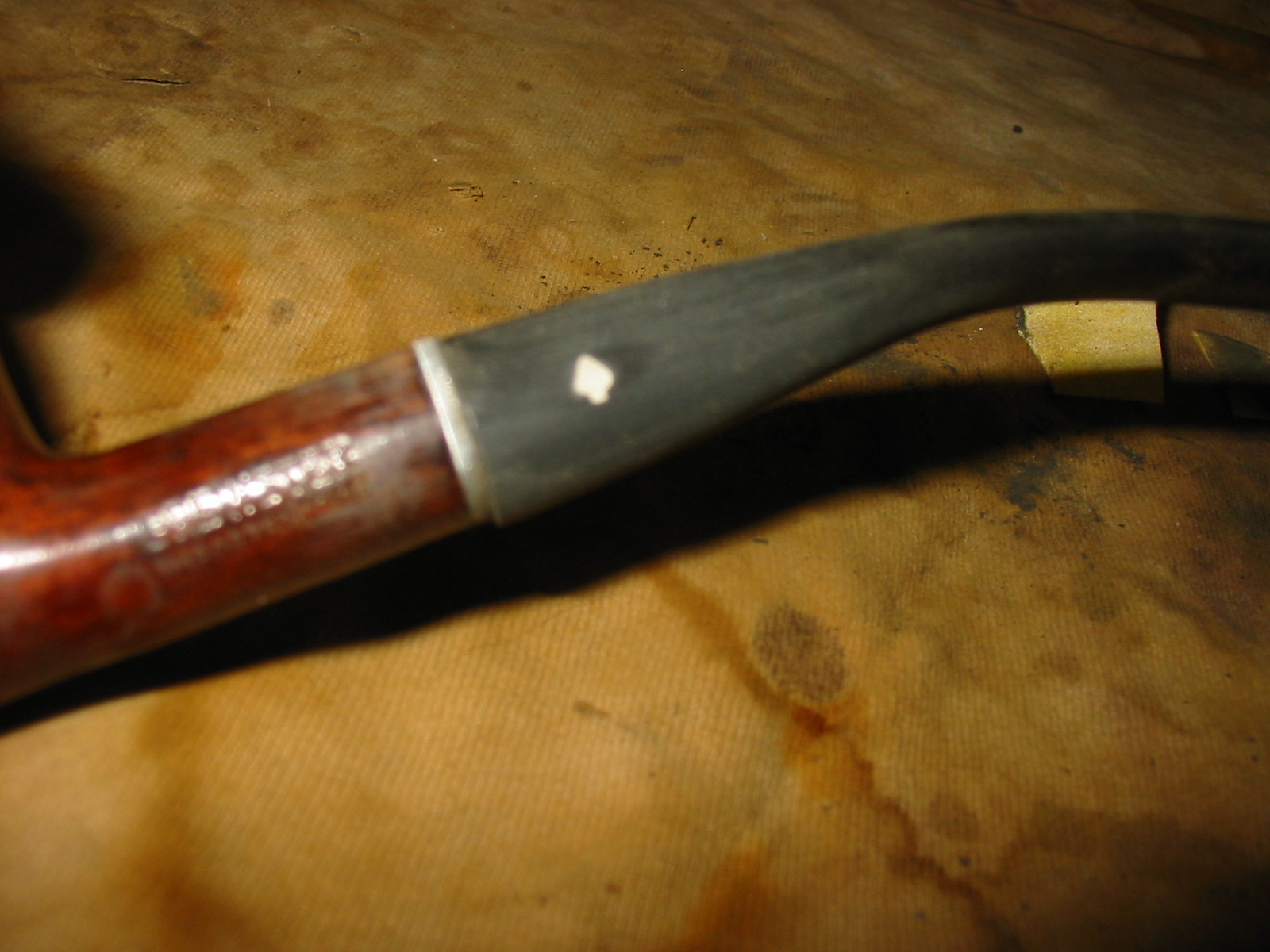
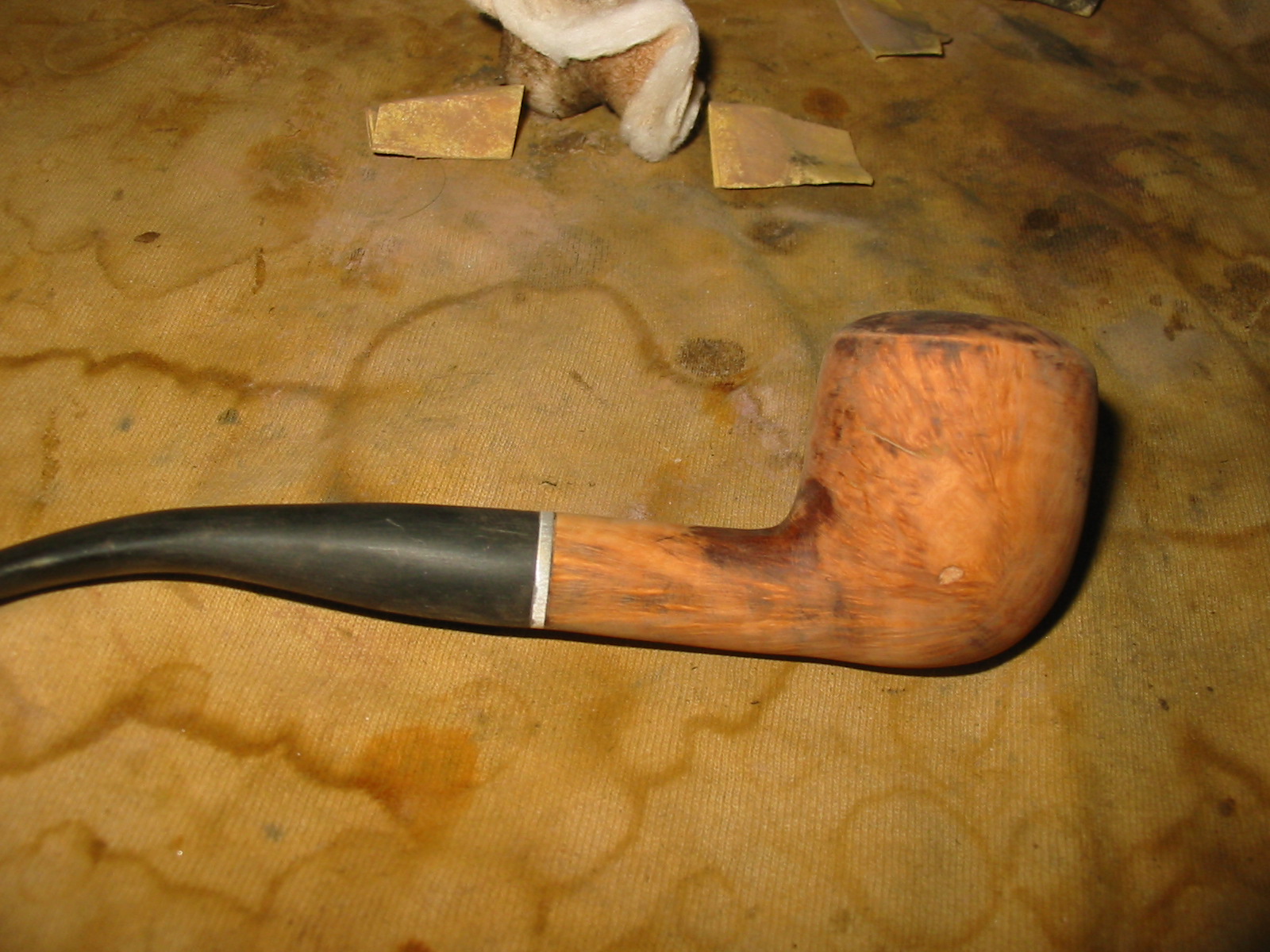
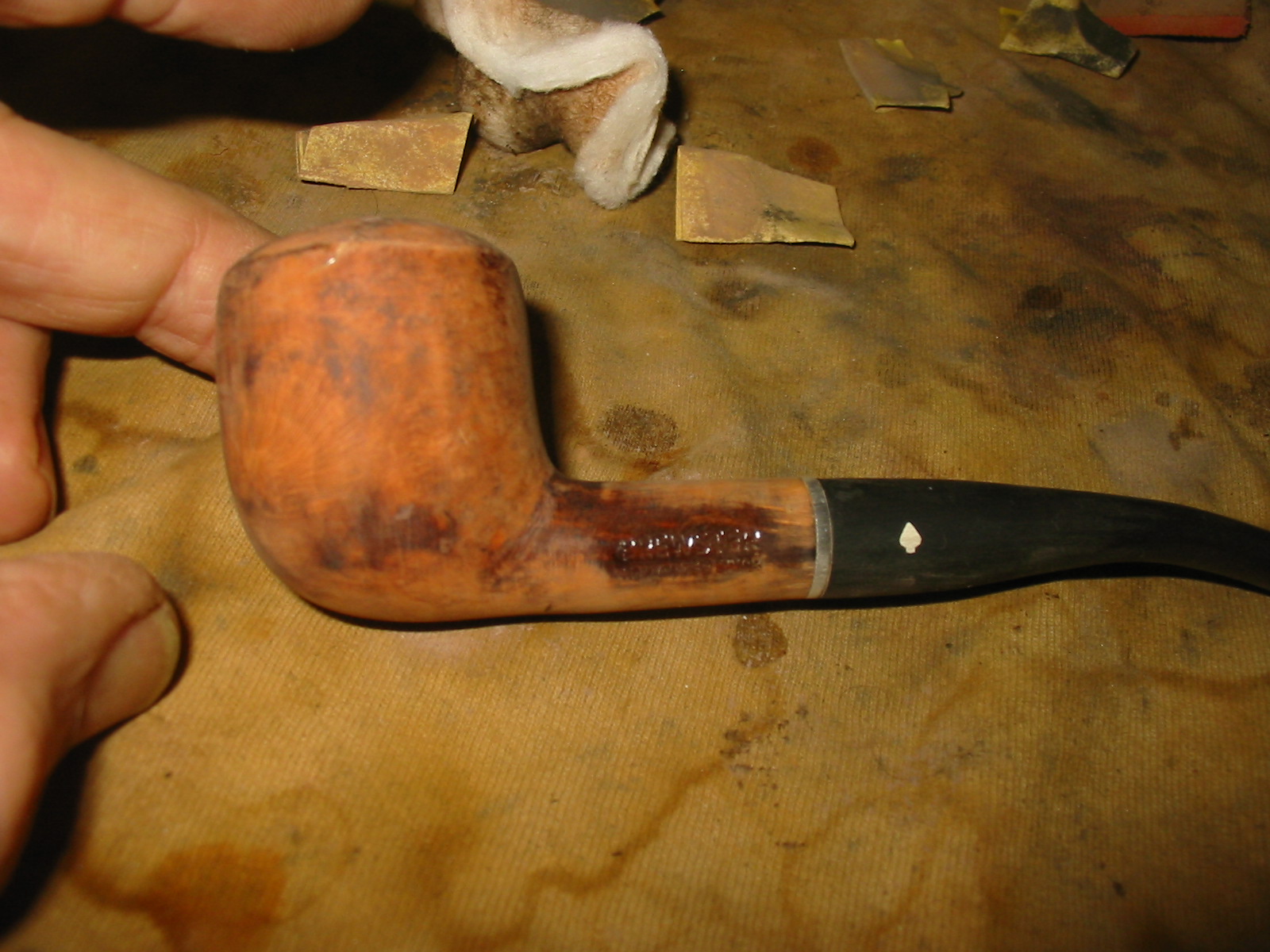
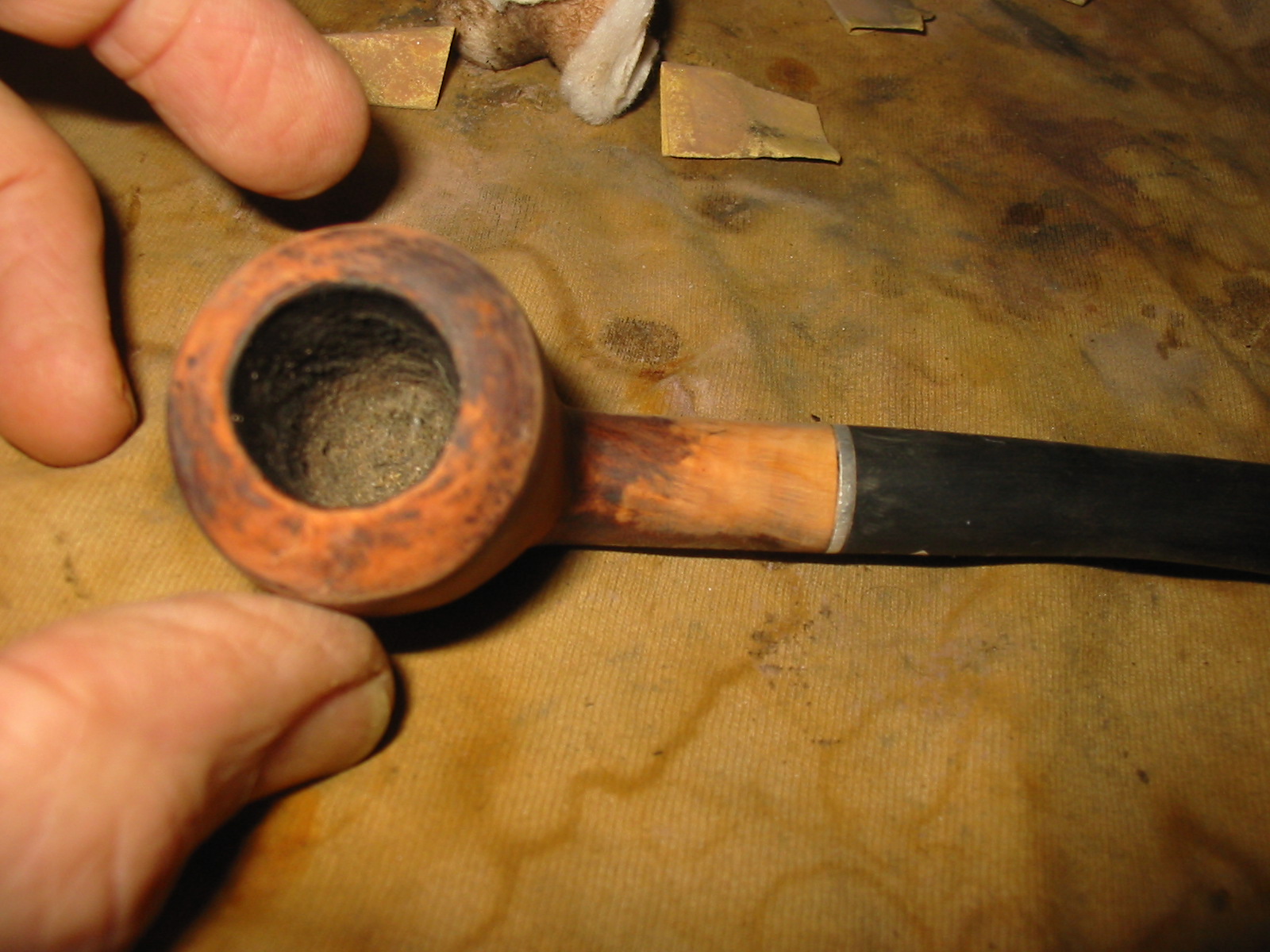
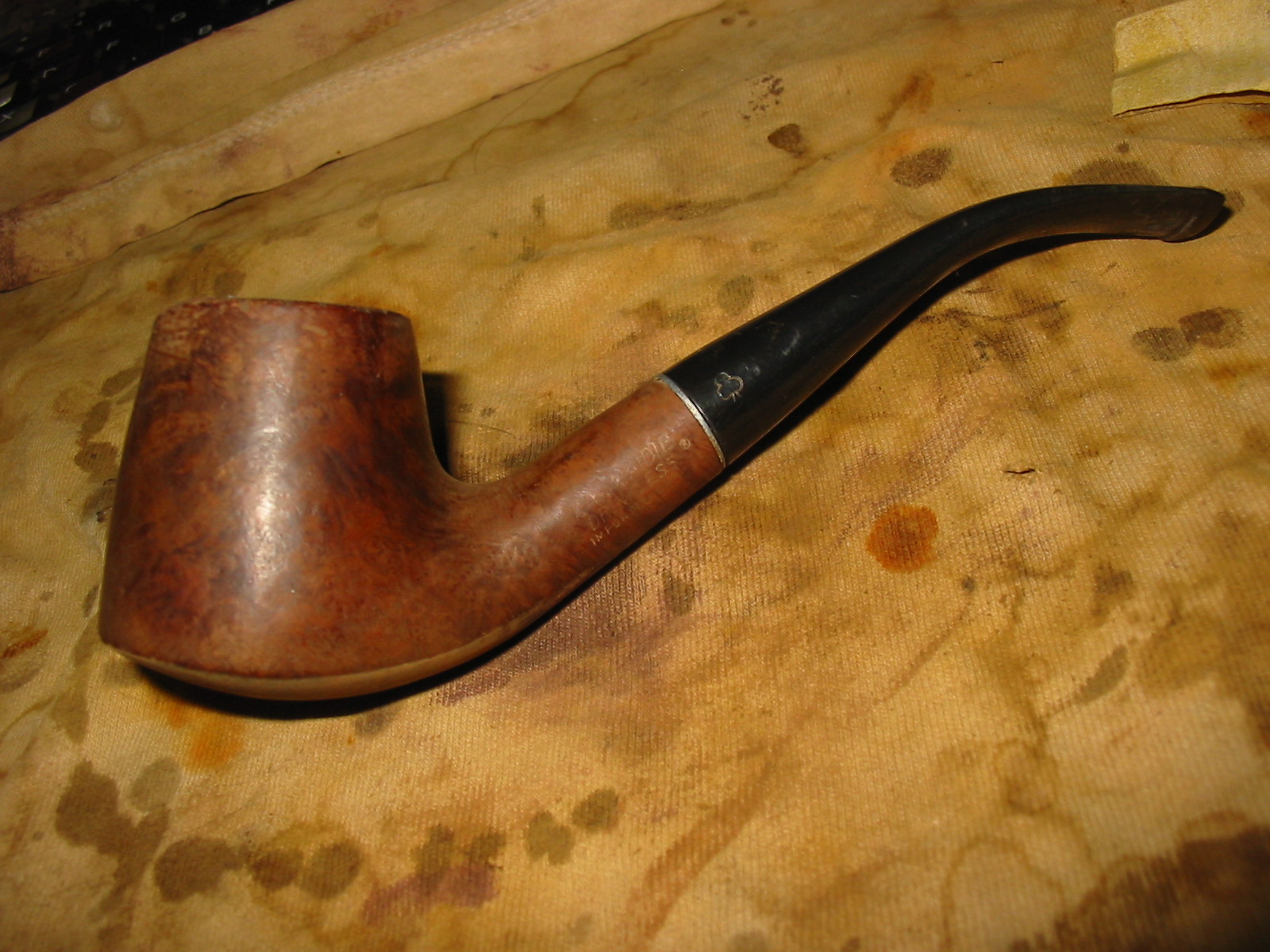
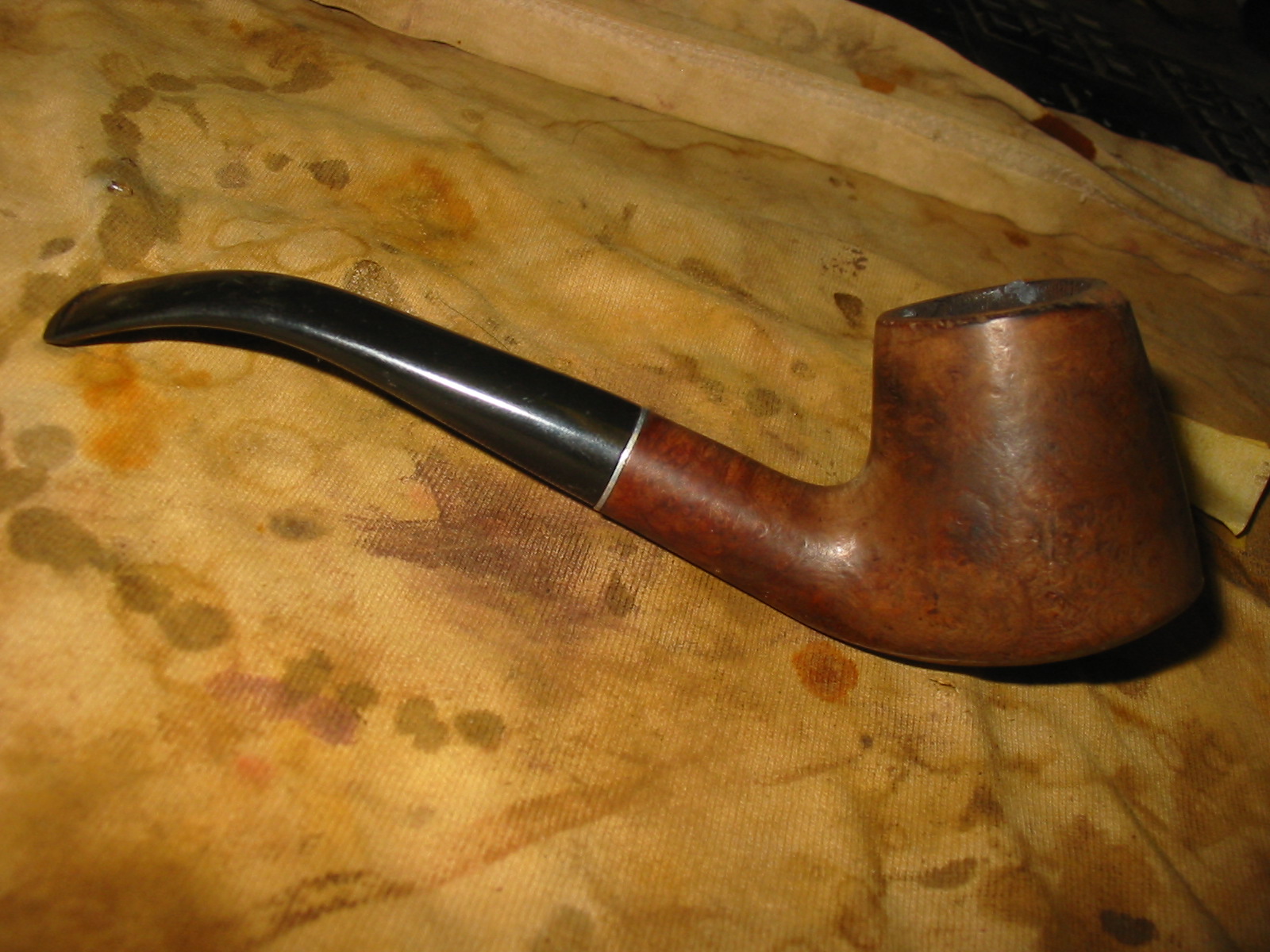
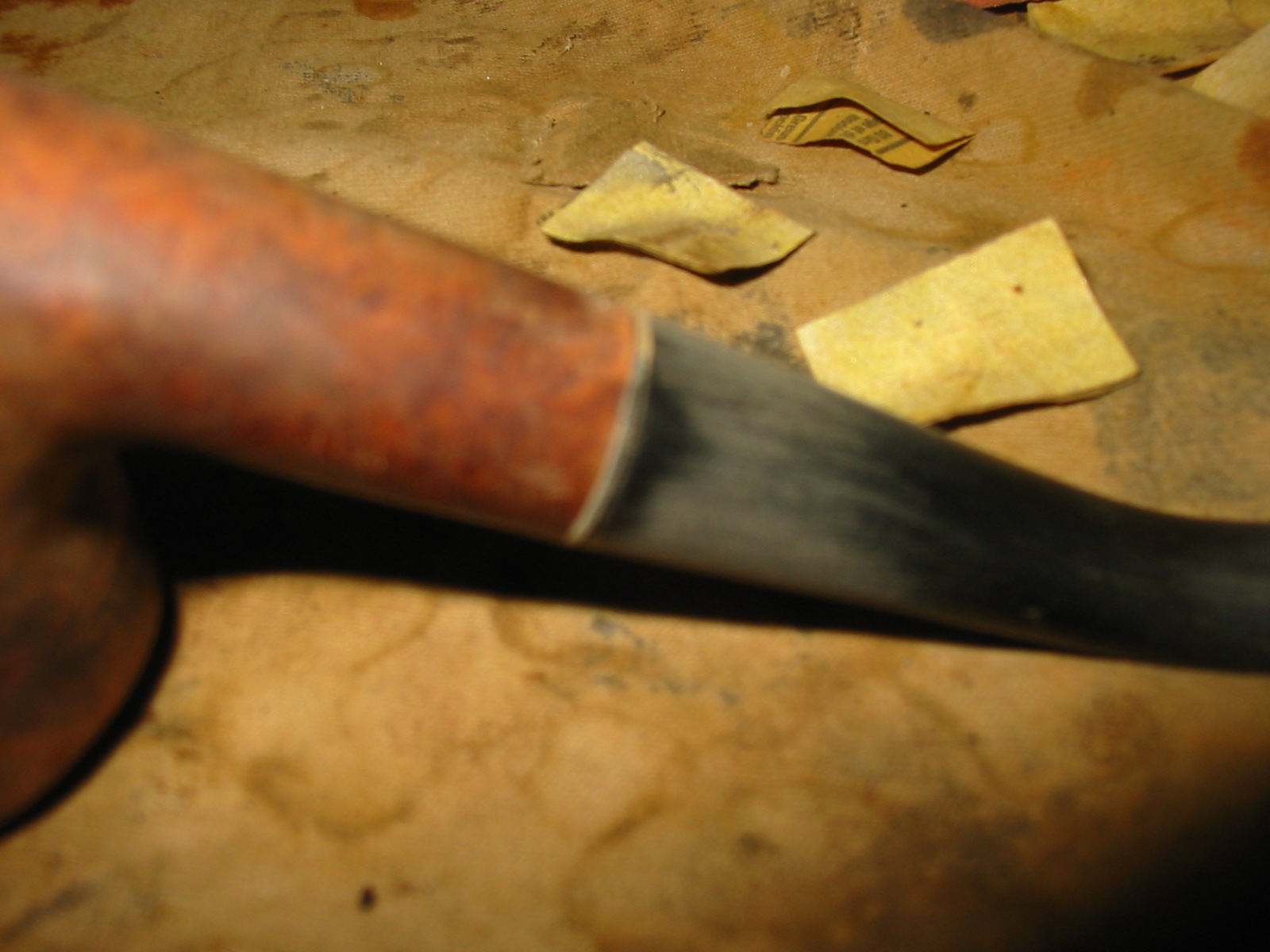
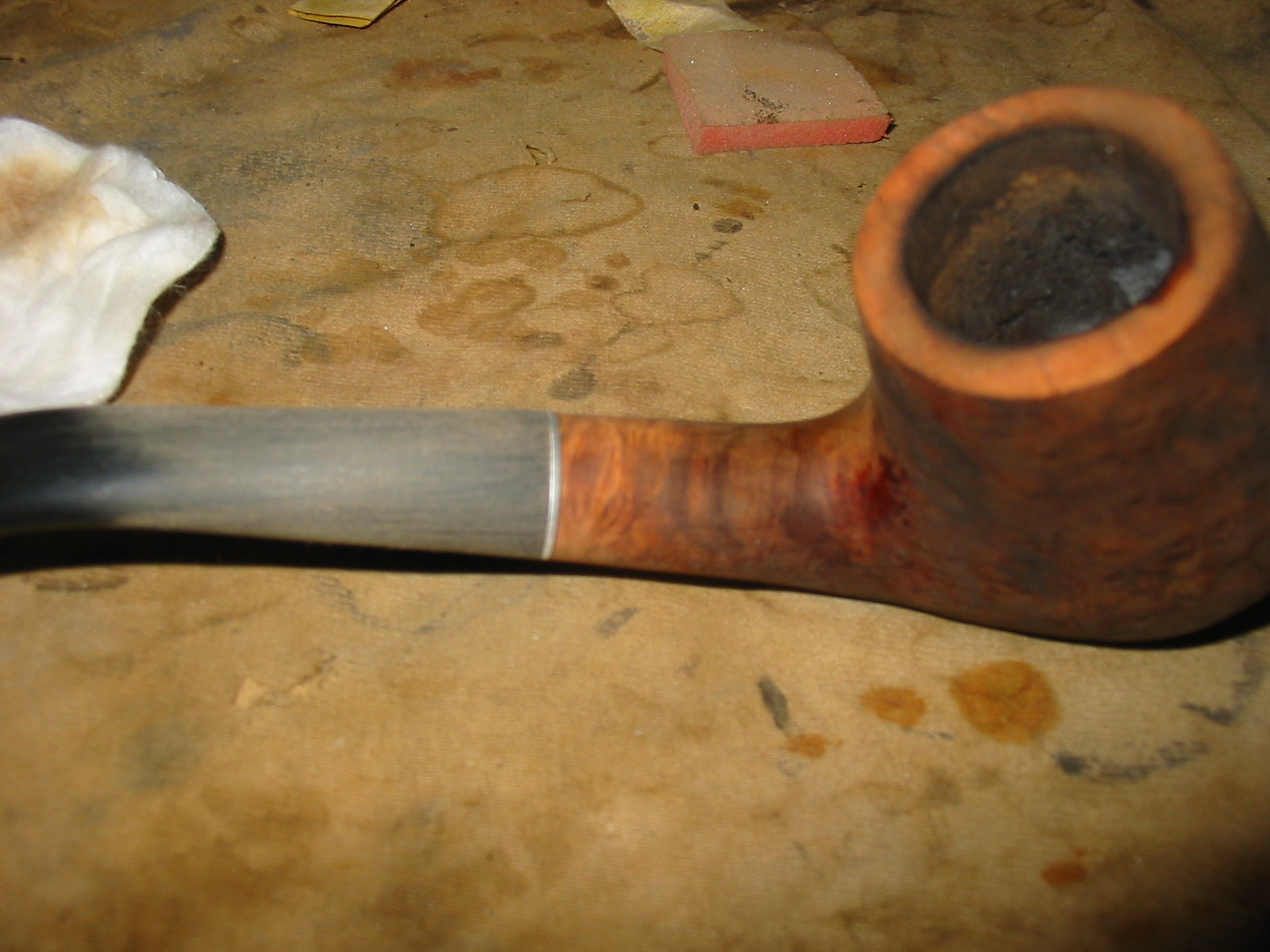
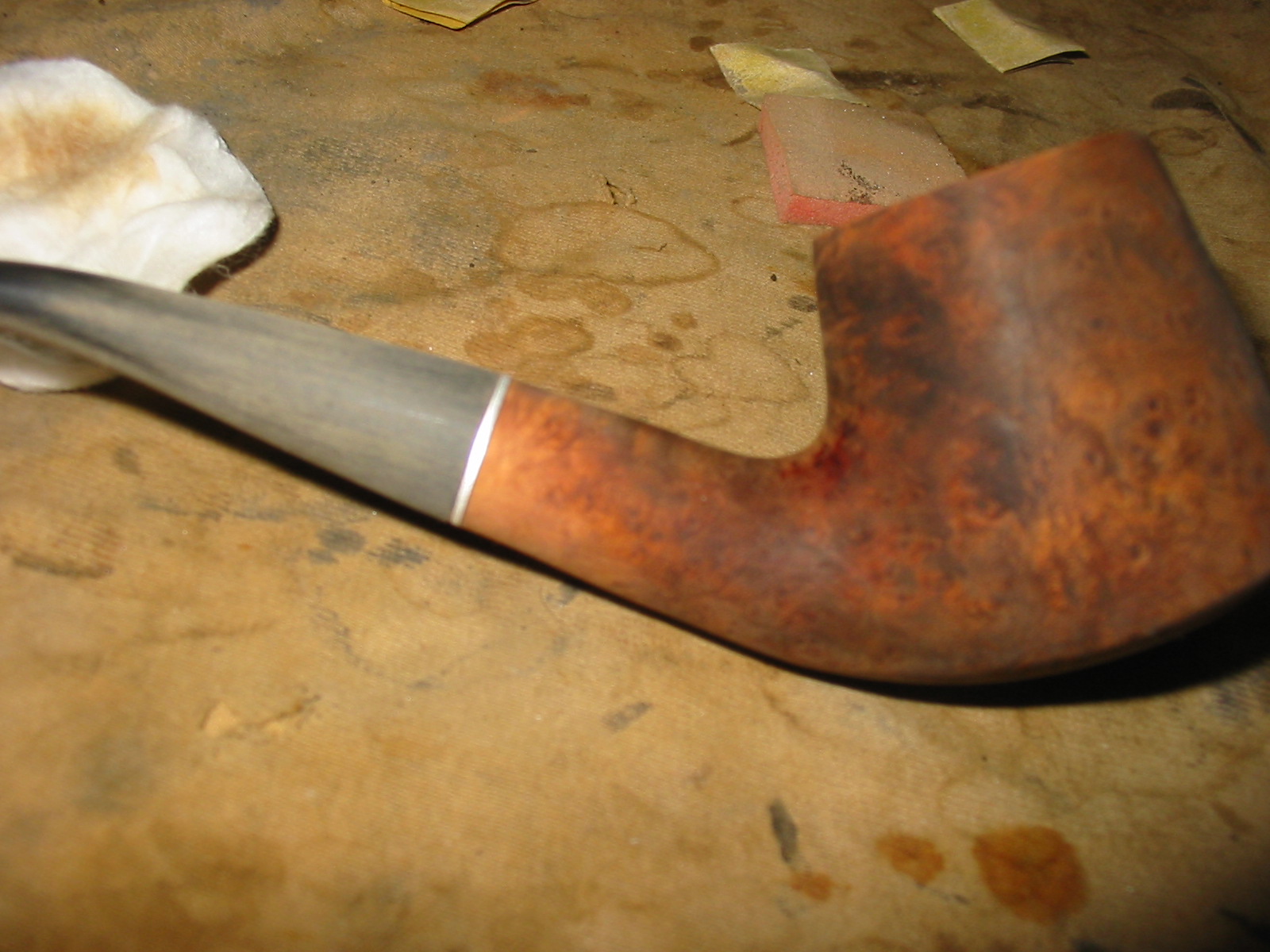
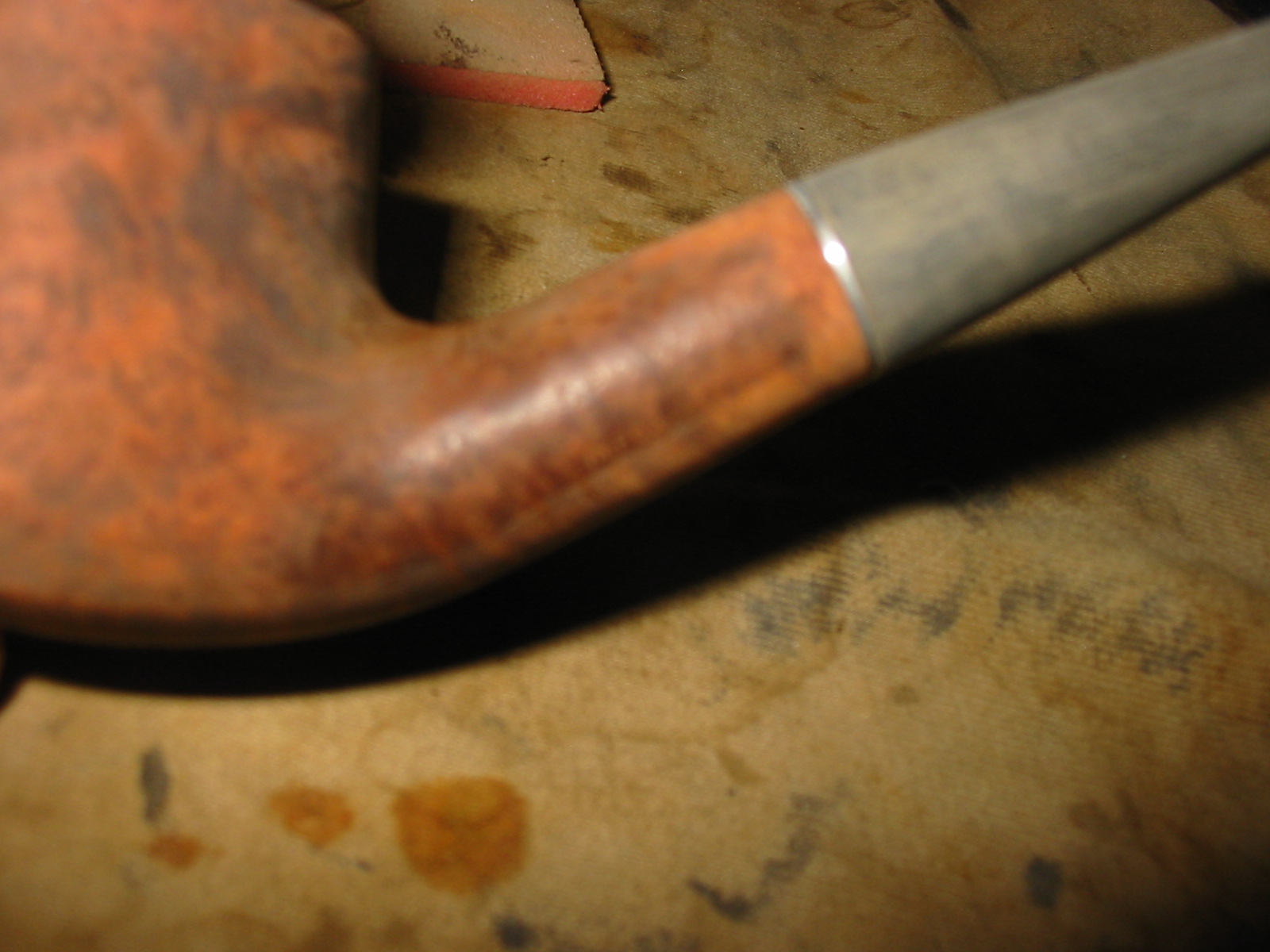
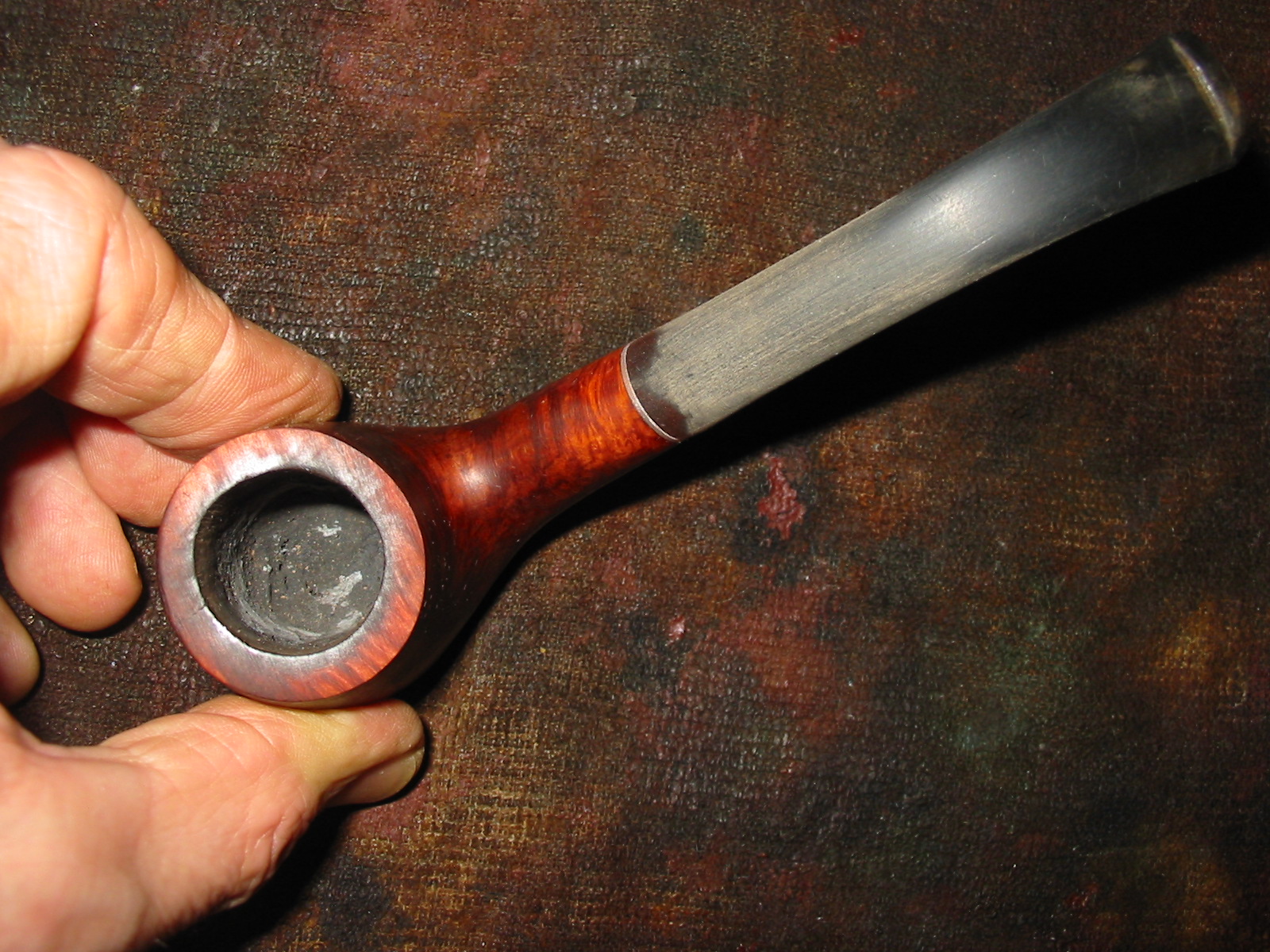
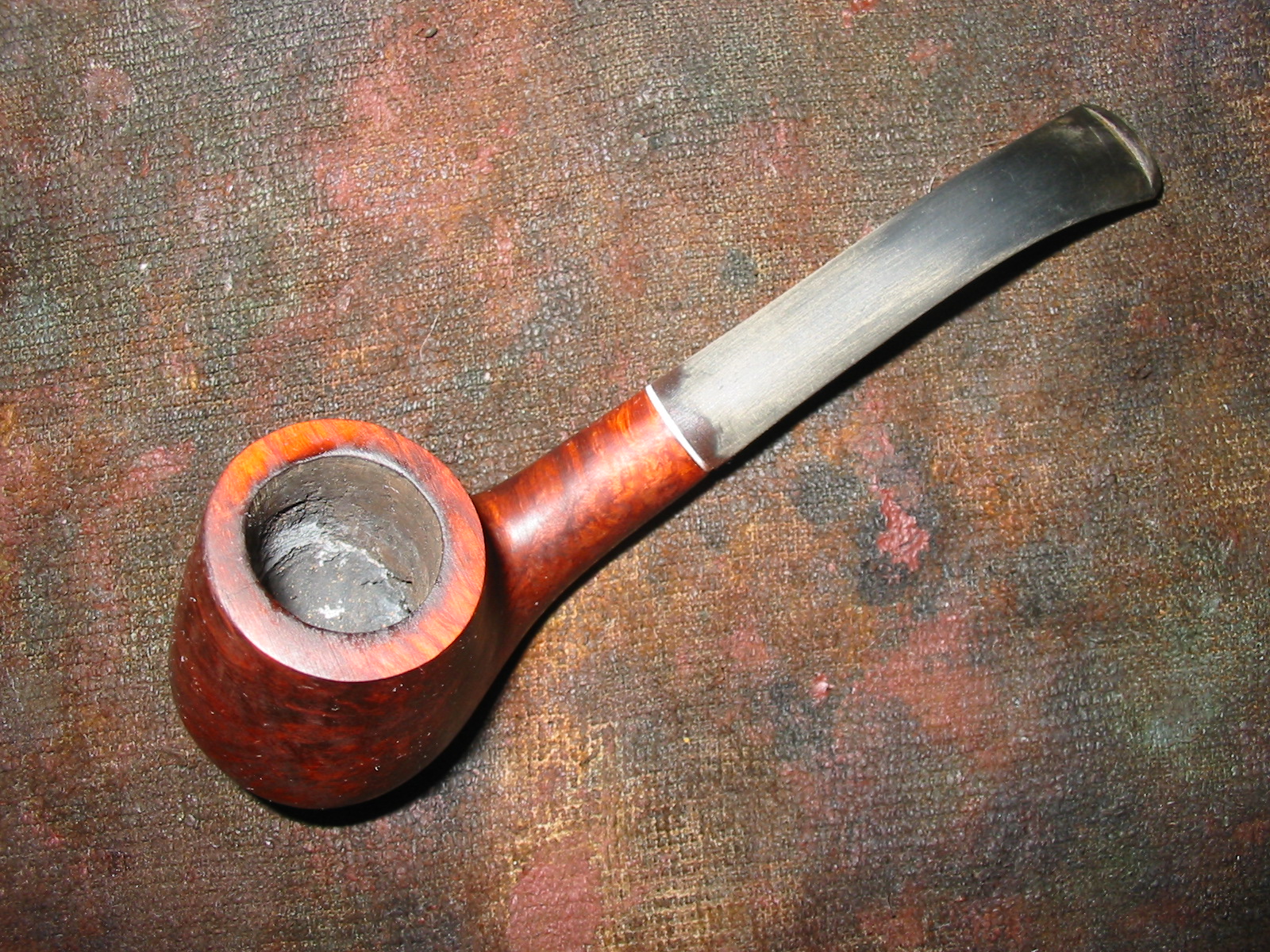
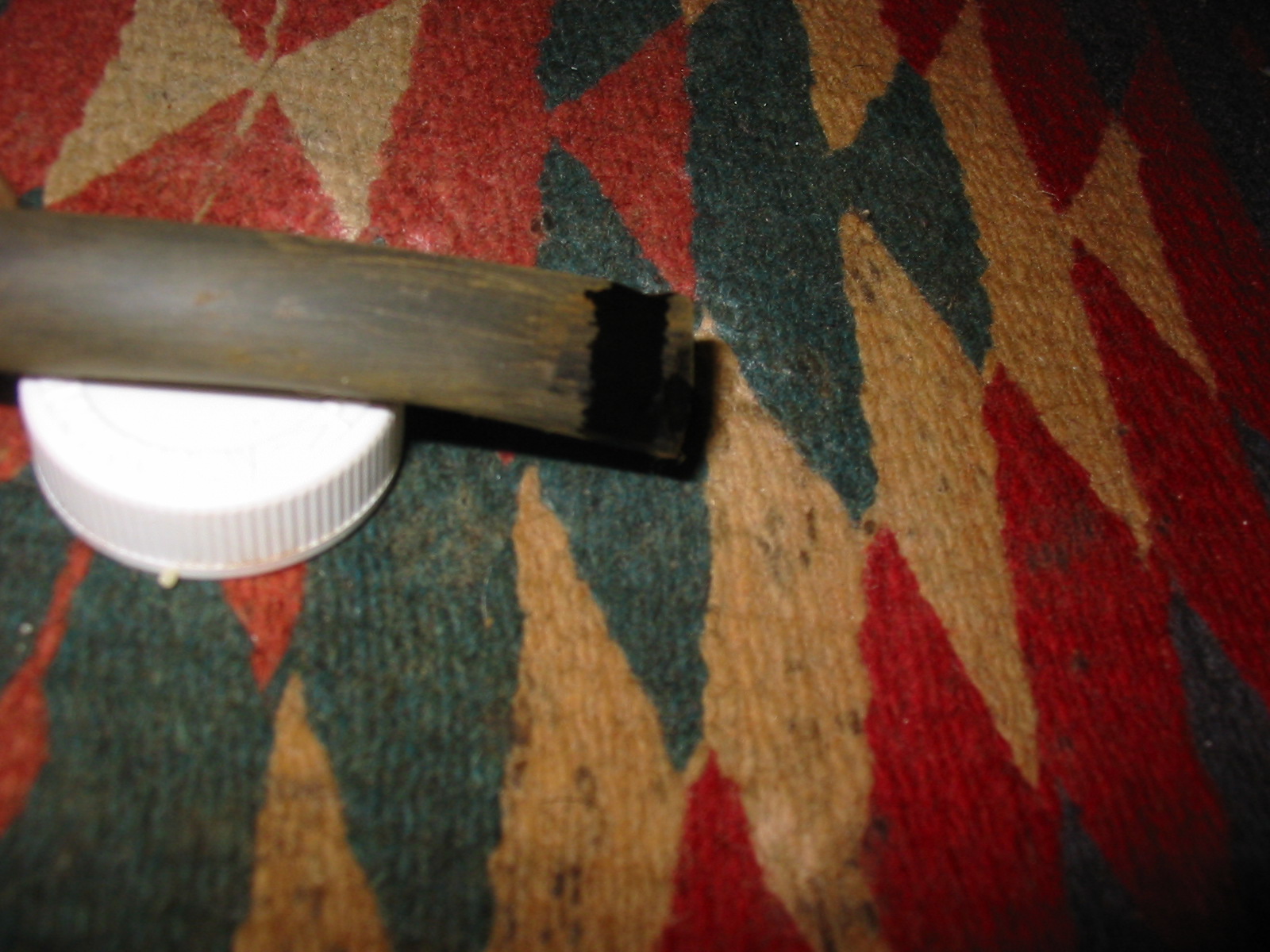
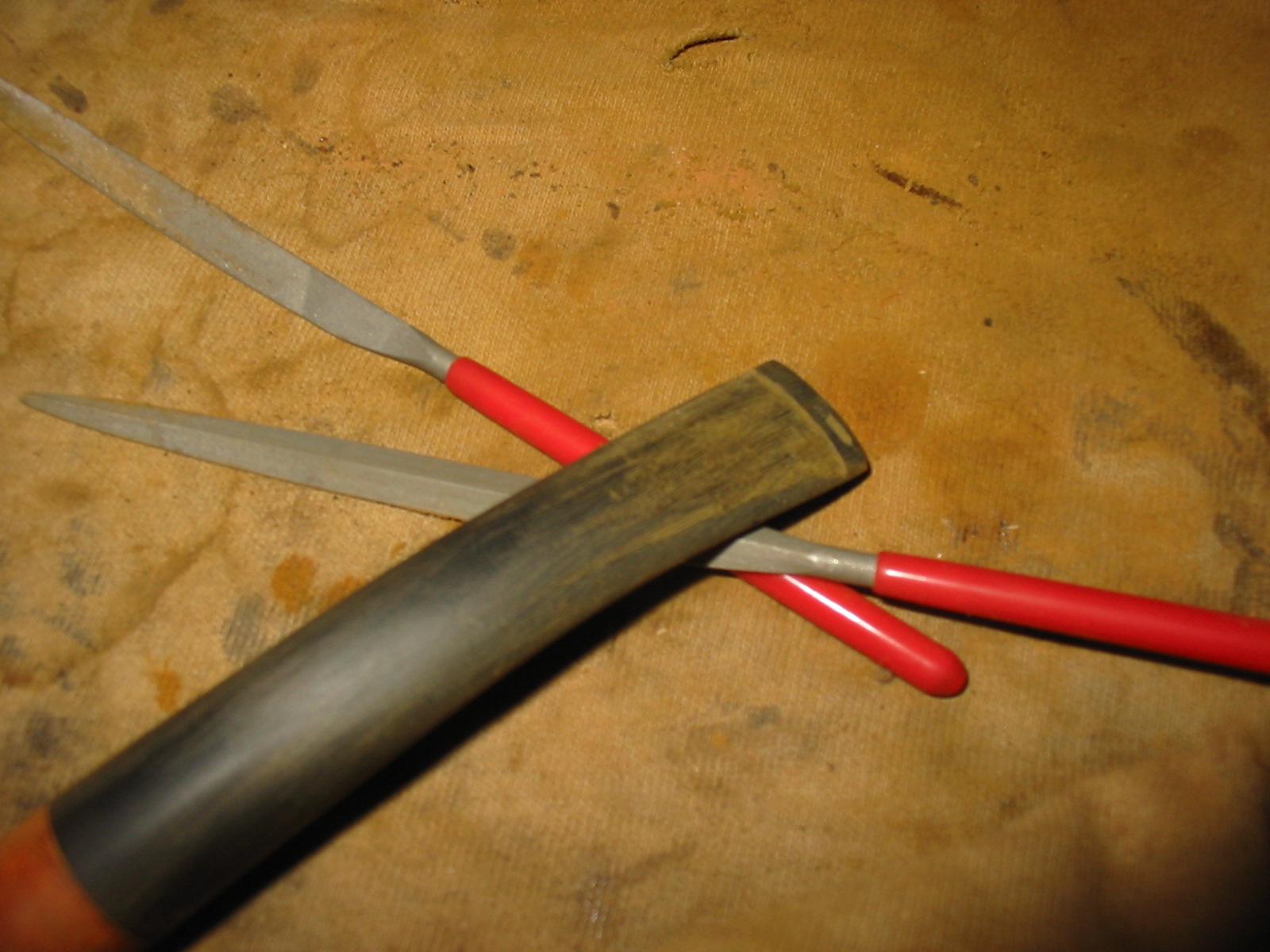
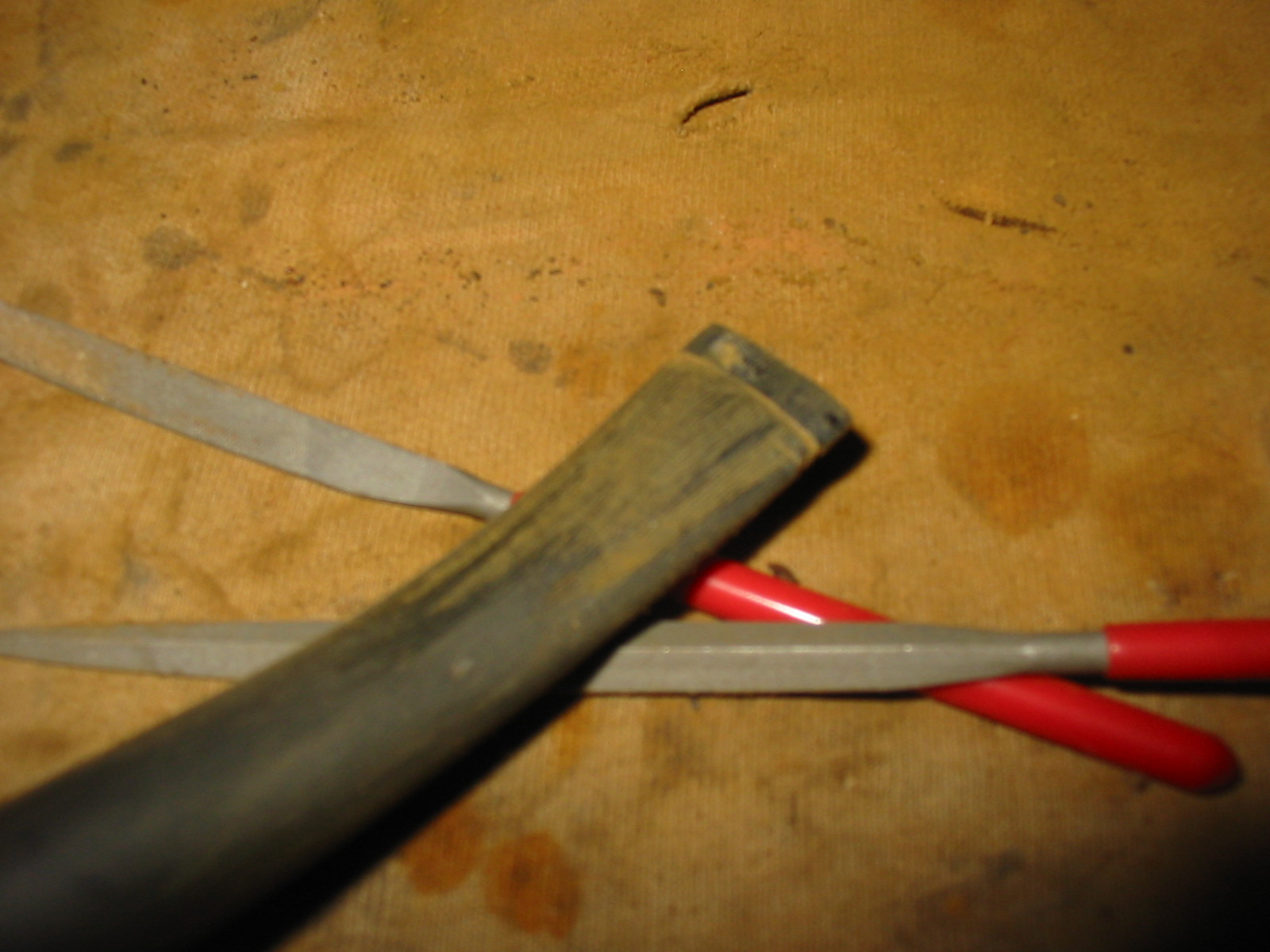
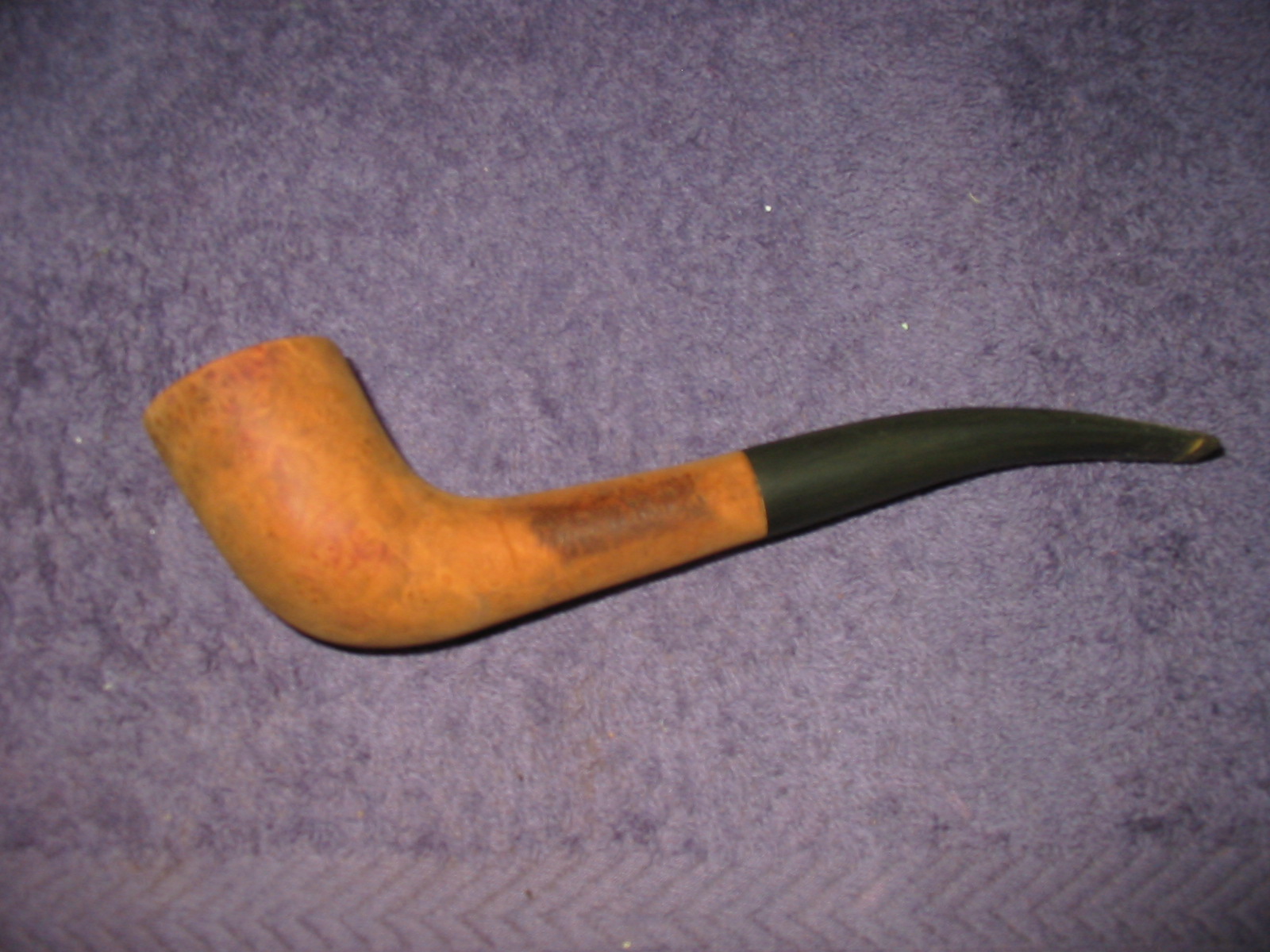
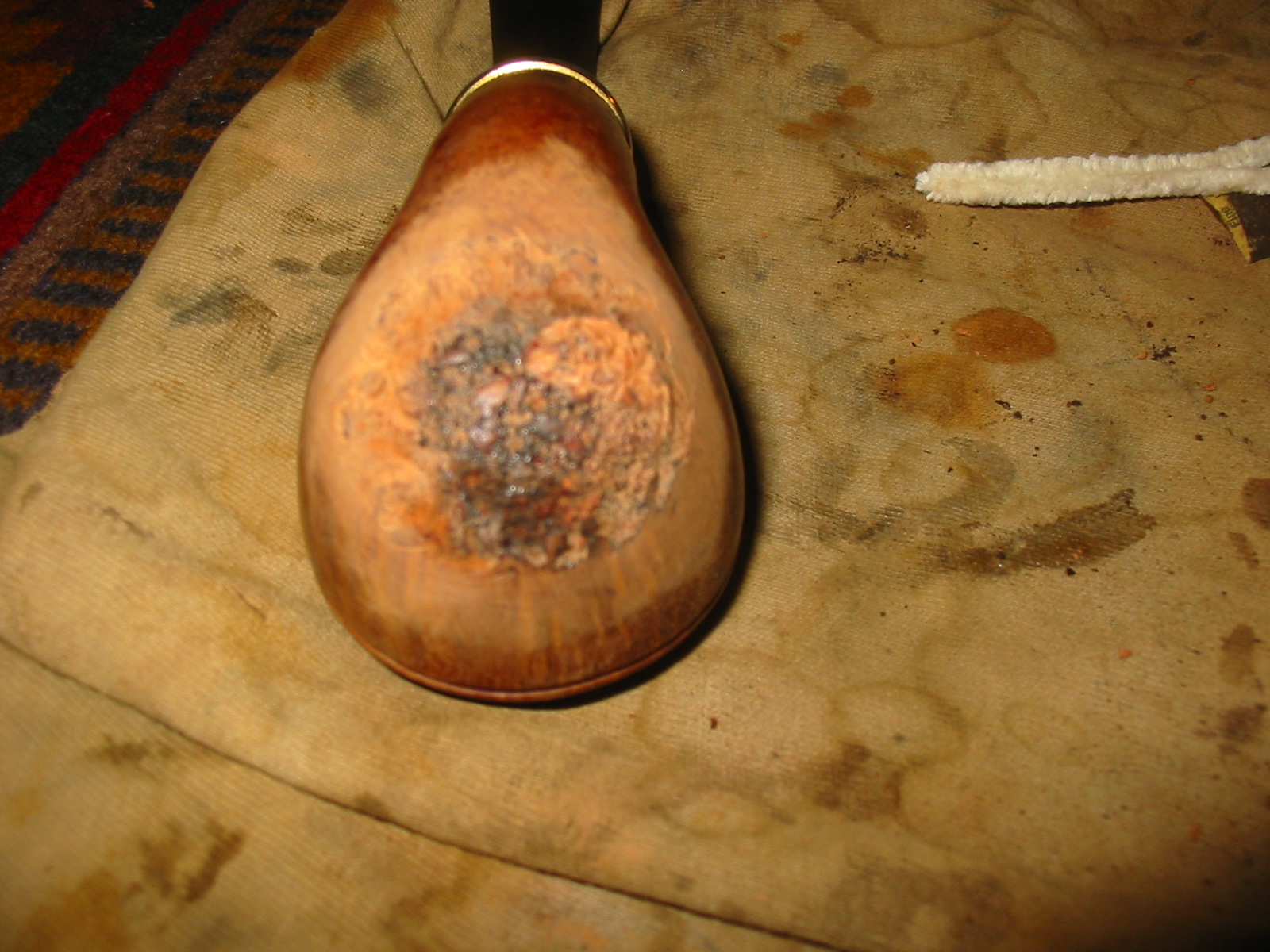
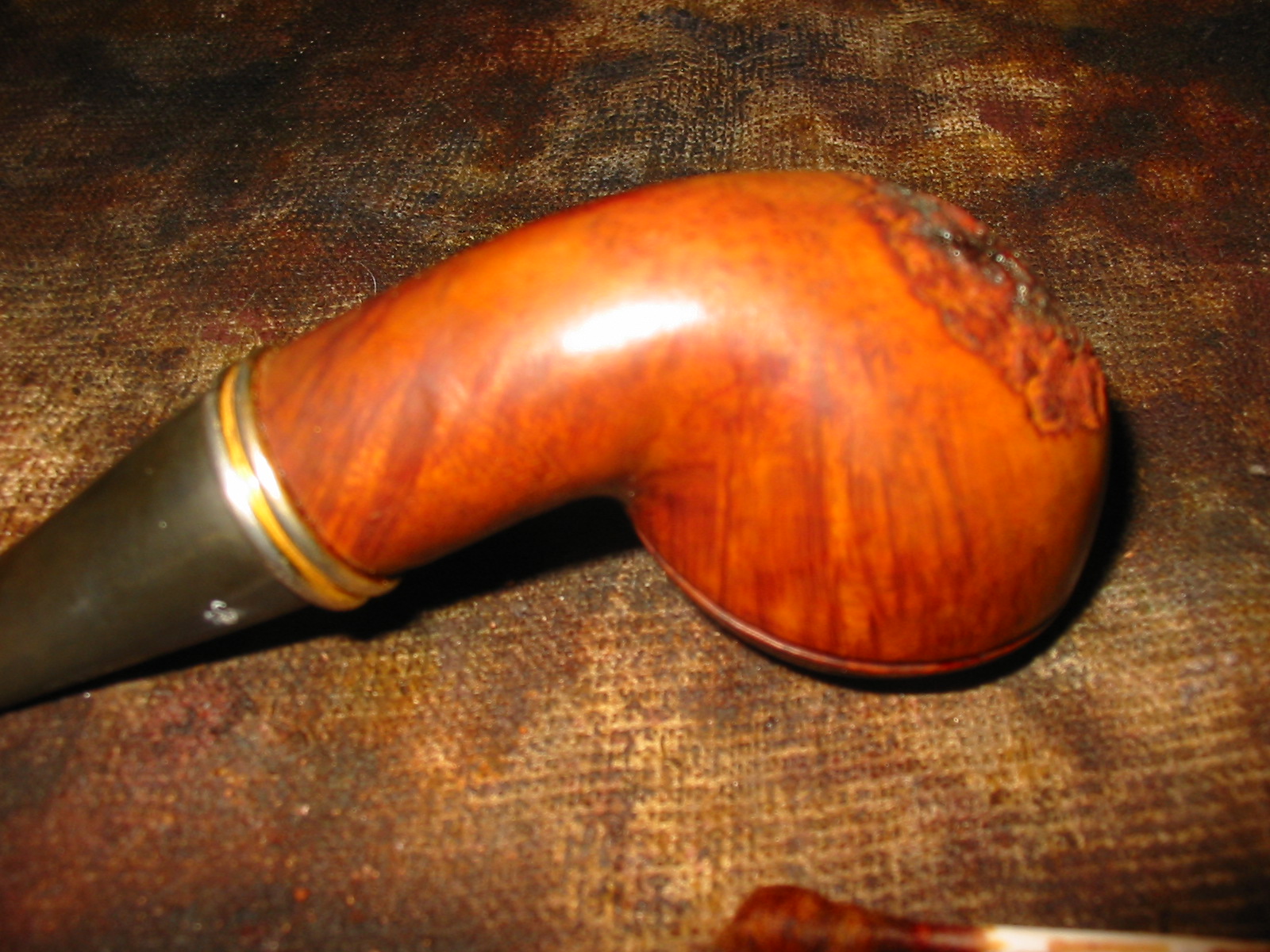
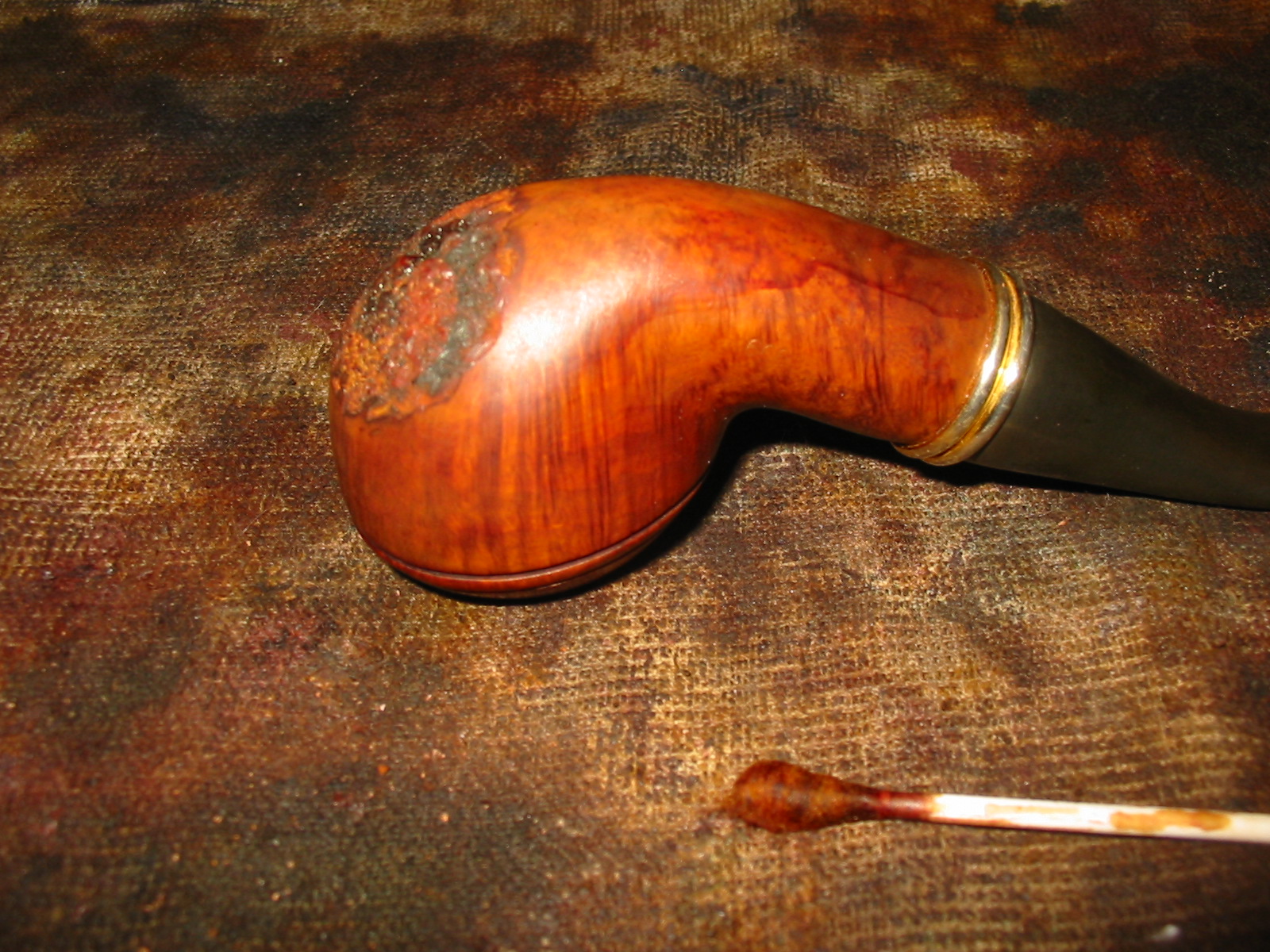
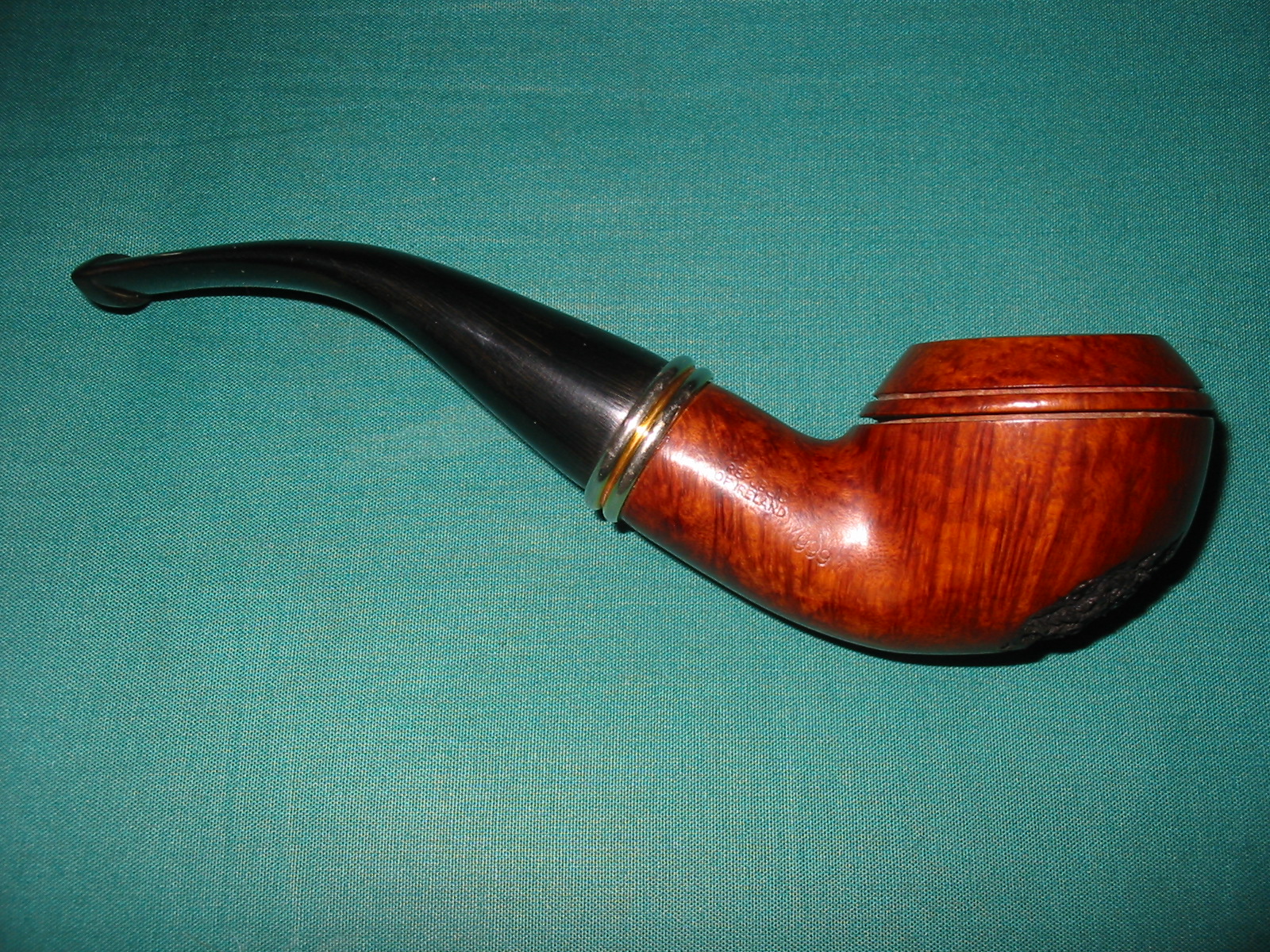
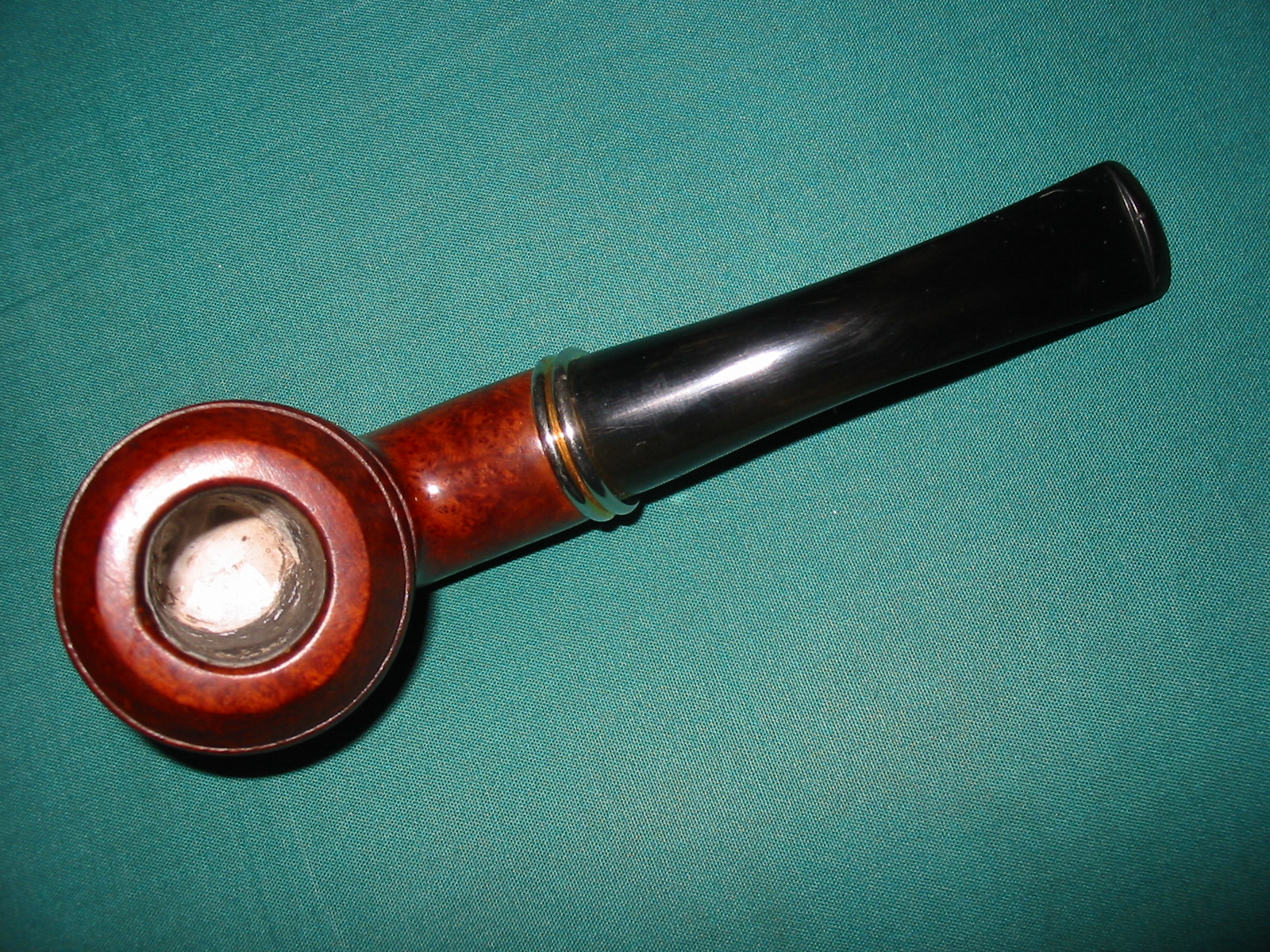
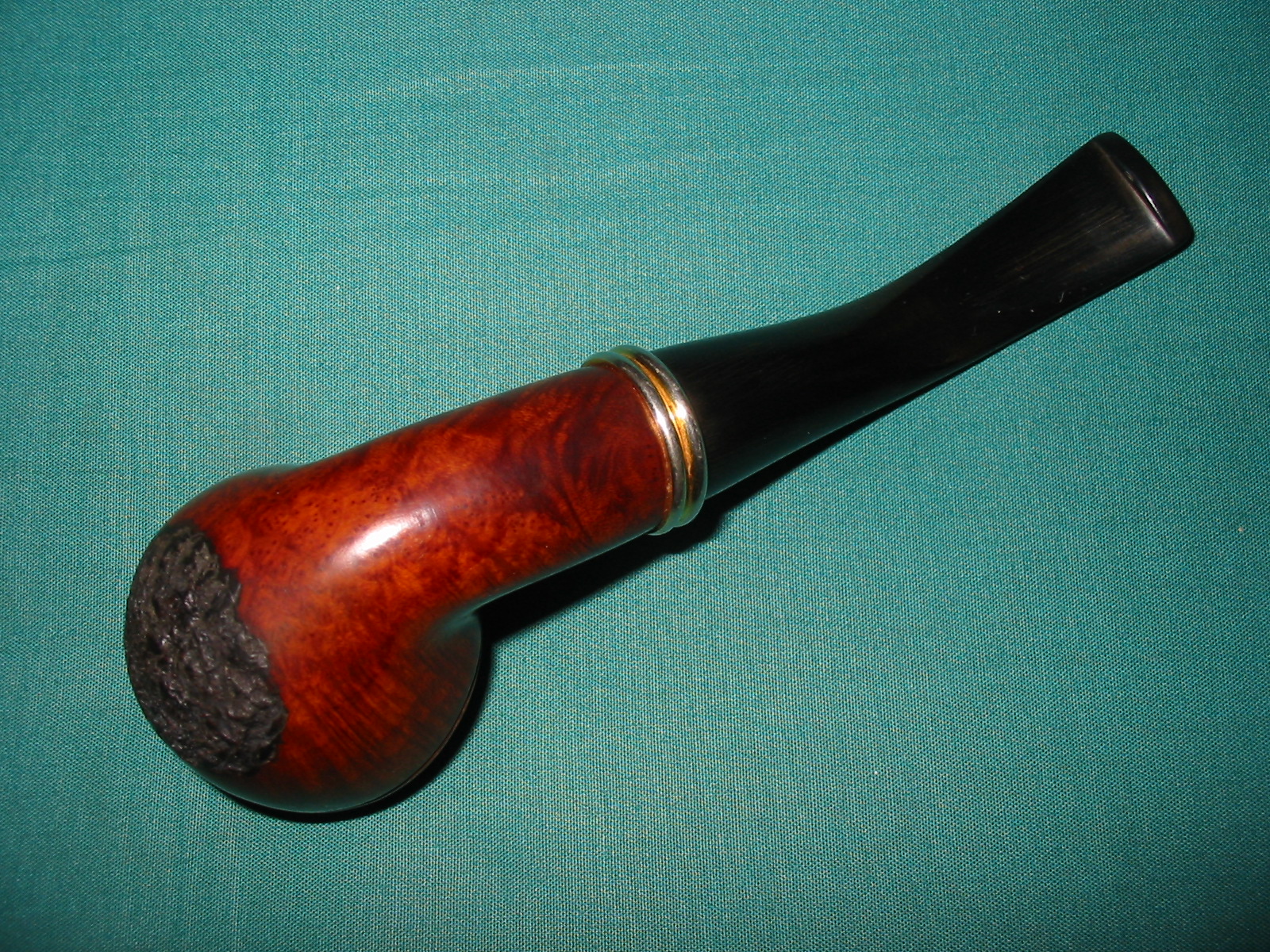
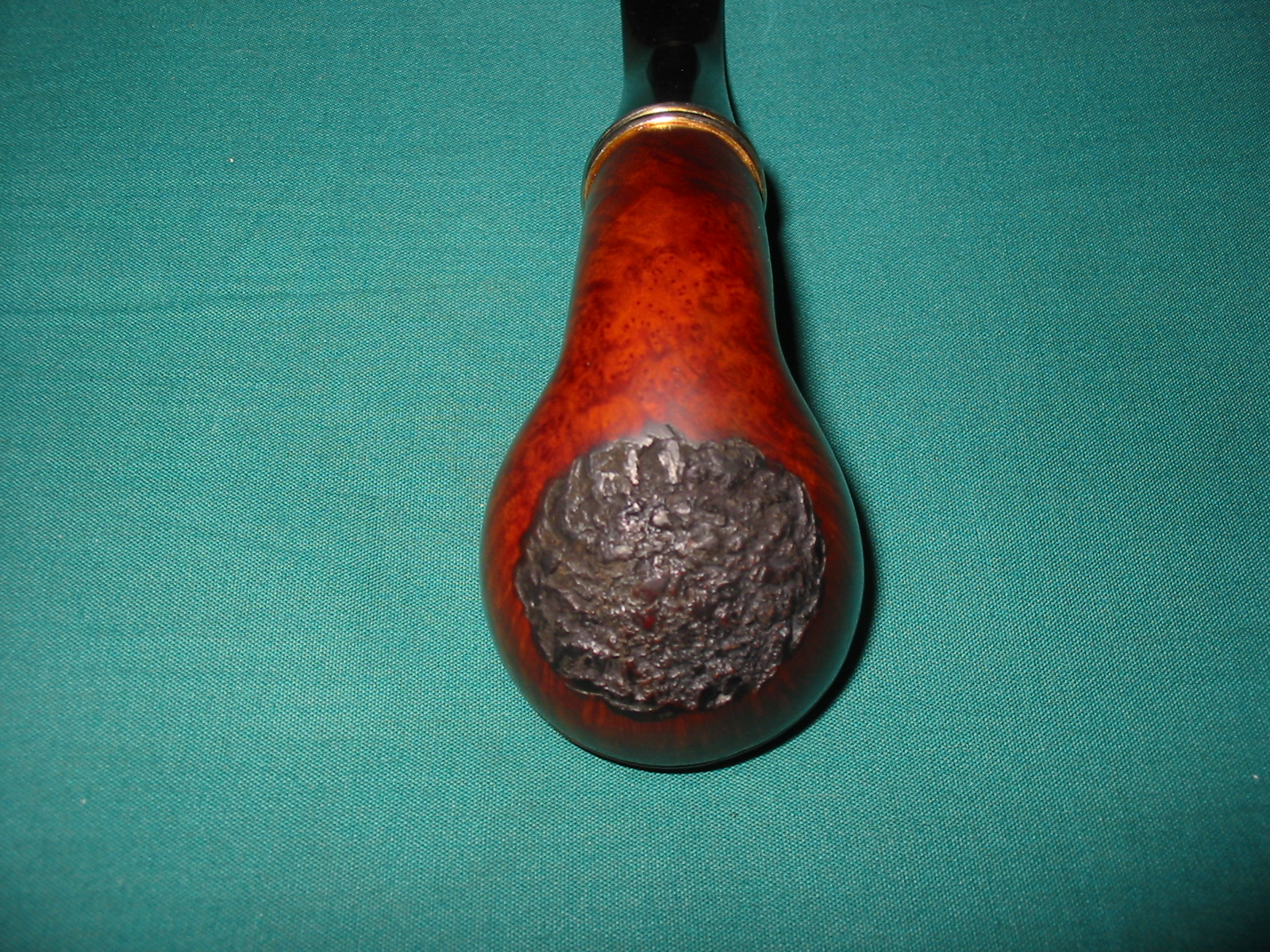
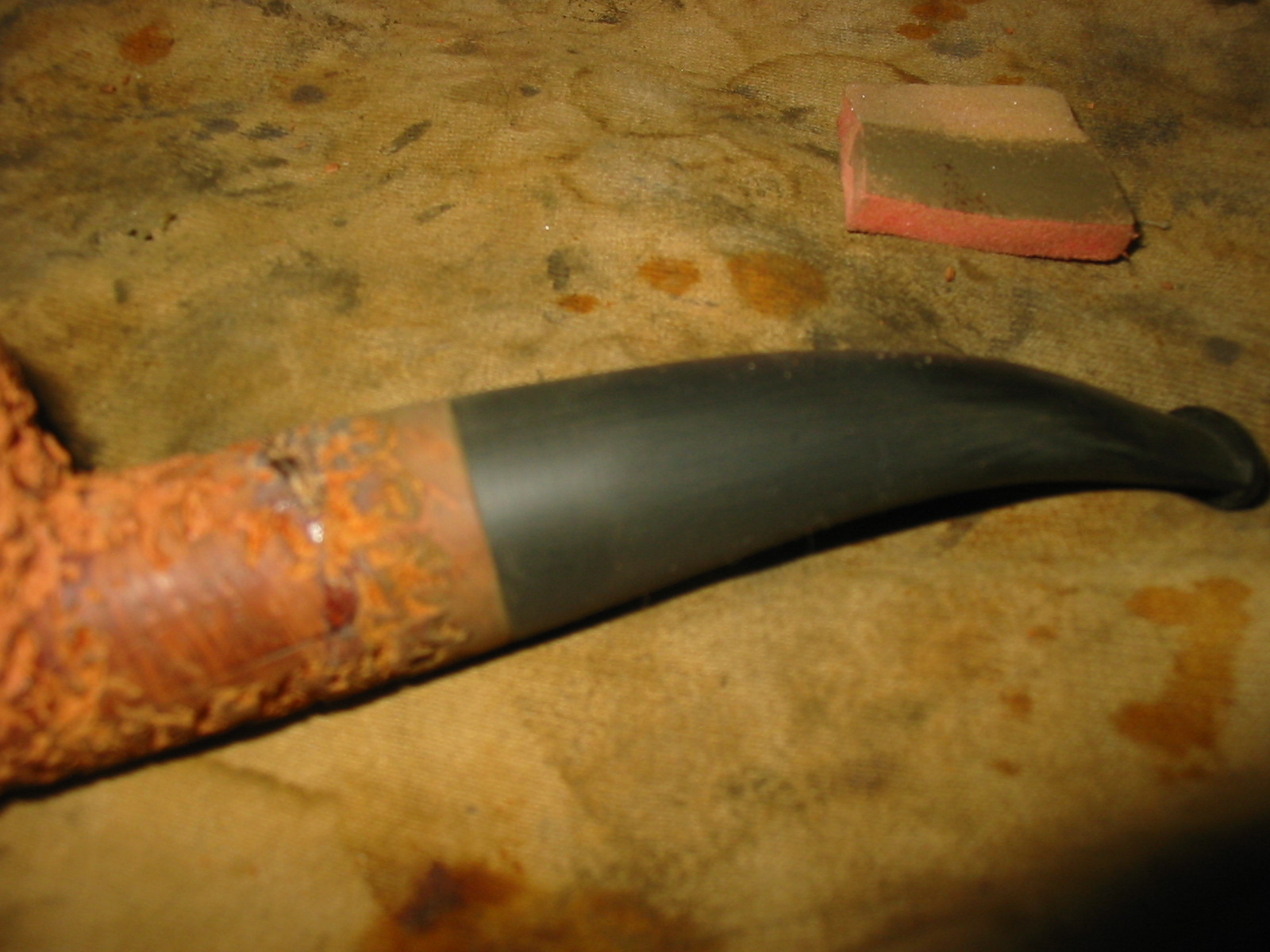
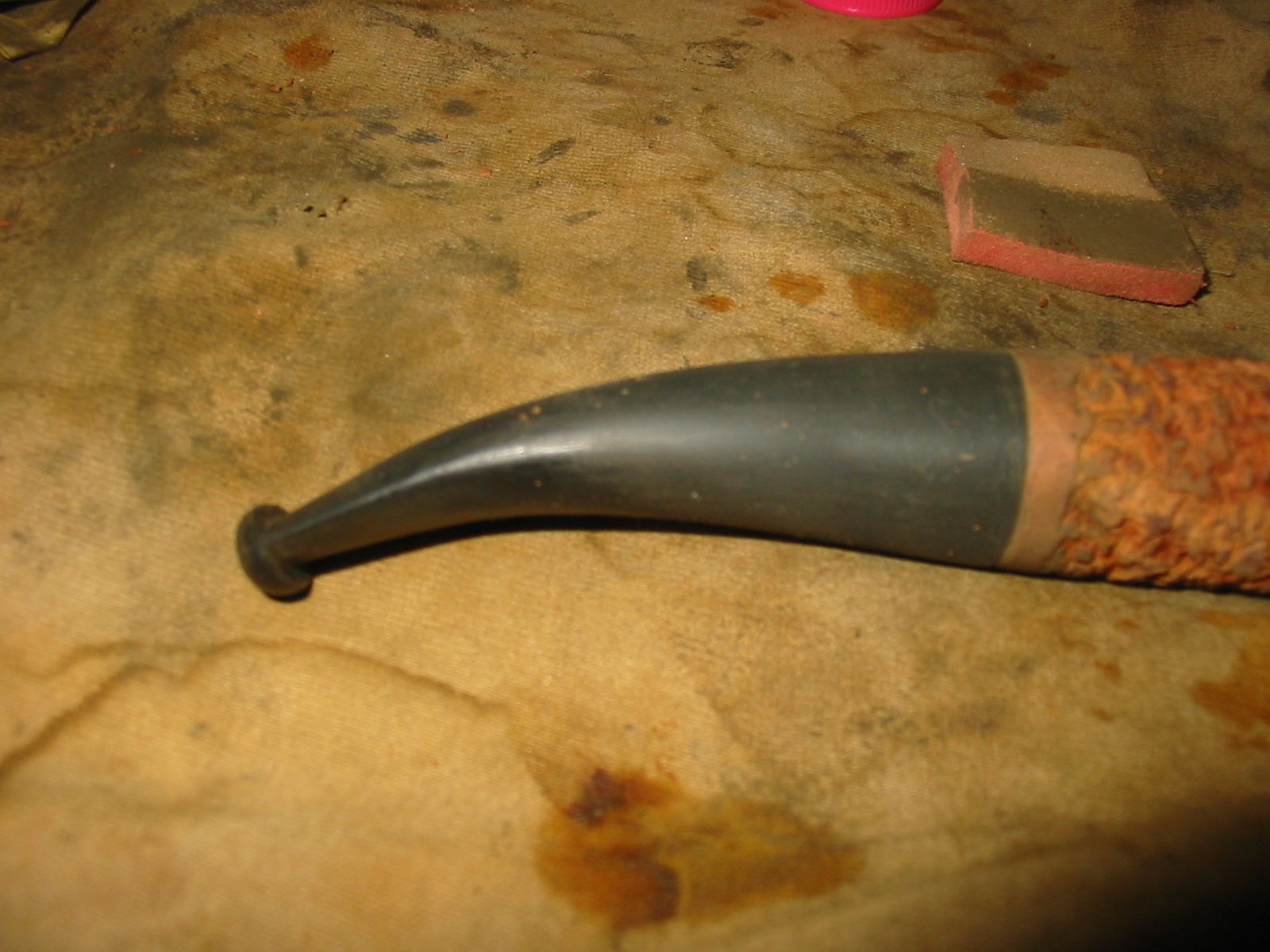
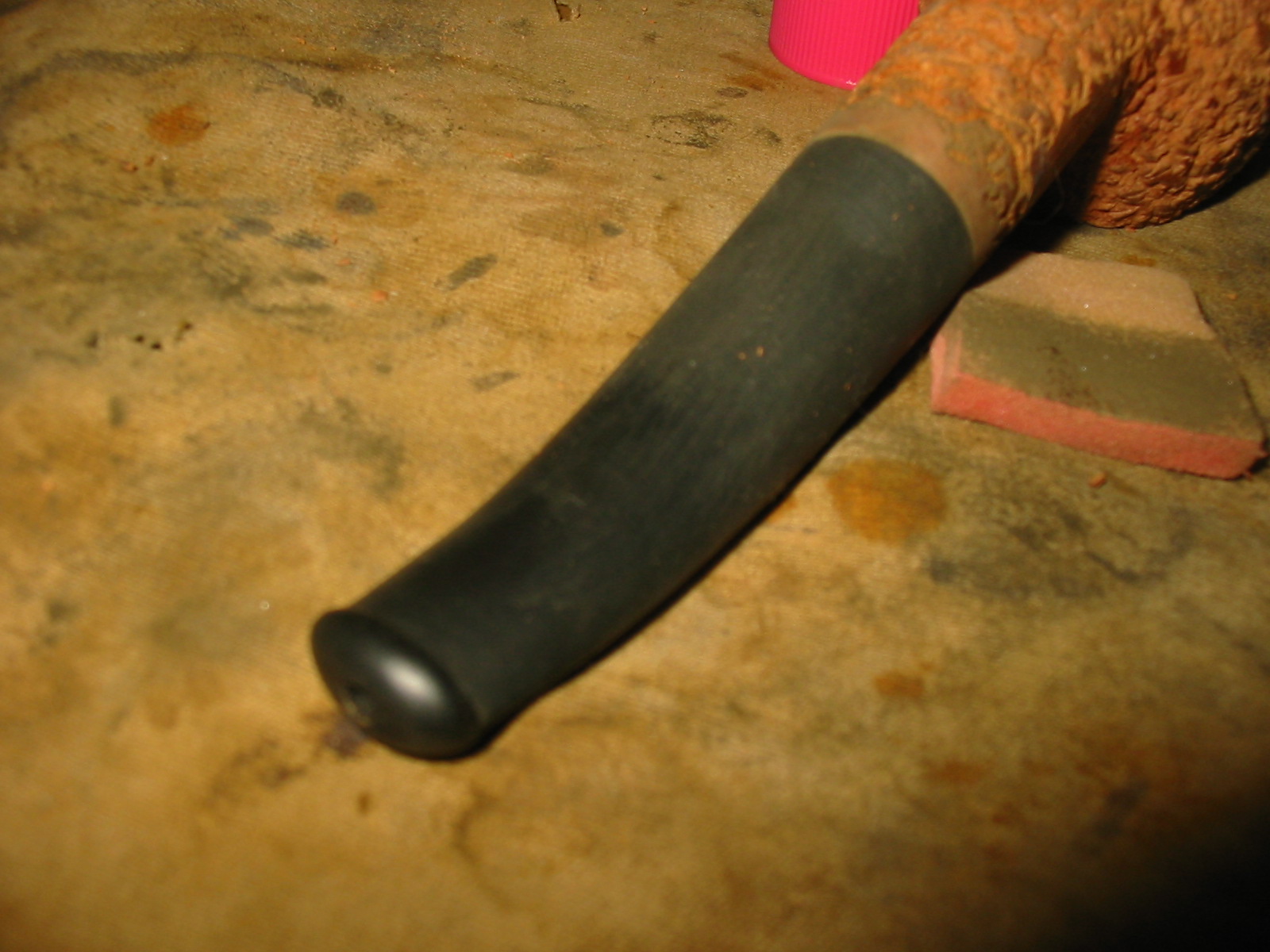
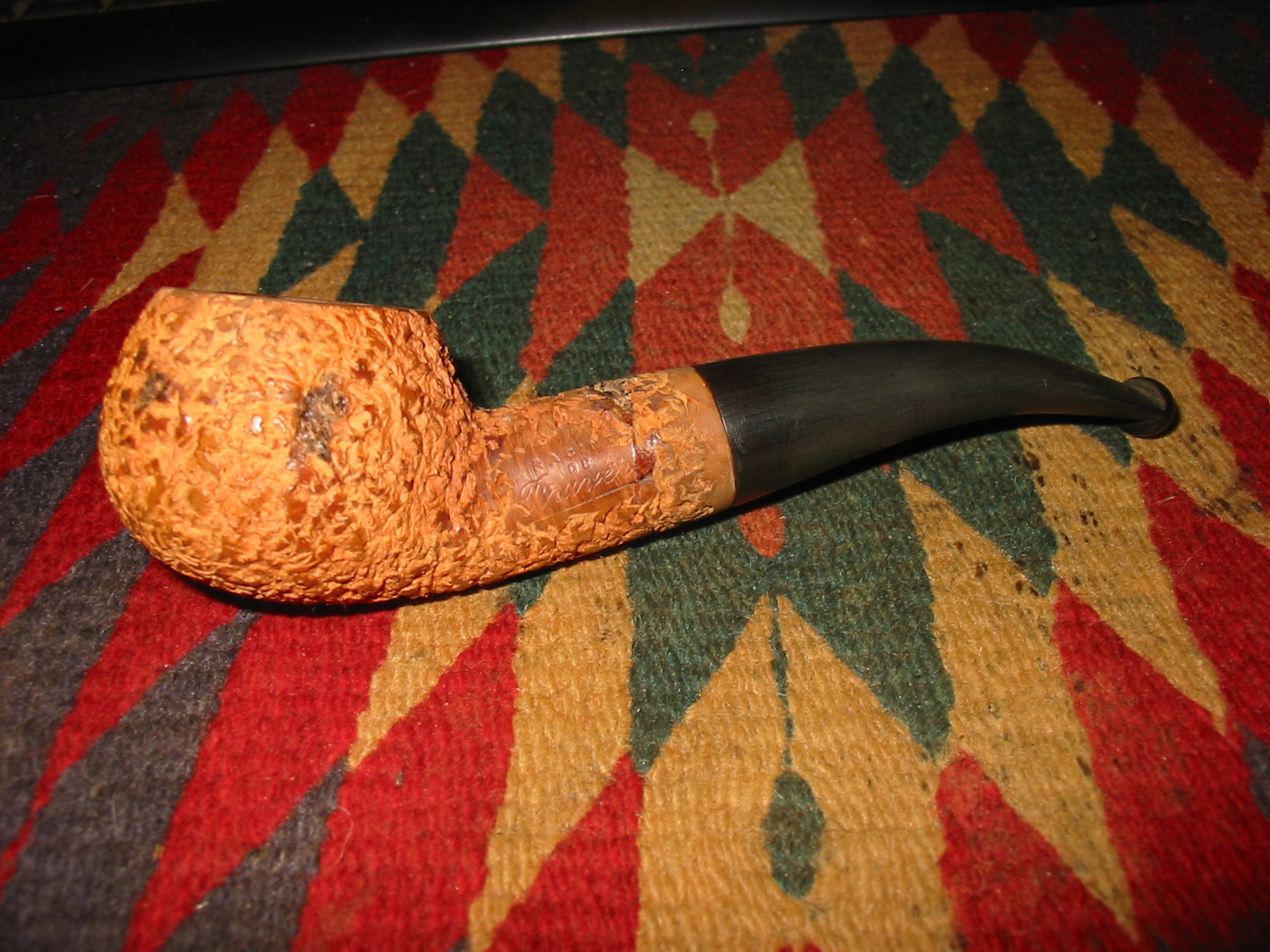
In the process of going through the box of pipes for the Vancouver Pipe Club to put back the ones I had worked on, I found another that really needed attention. I just could not leave it in the box as the damage looked awful and I knew it could look so much better. It is an oddly shaped bent billiard to me but it had a quaint quality about it that I liked. It is stamped Georg Jensen over Made in Denmark Pipes on the left side and Zenta on the right side. On the underside of the shank it is stamped 525. I am assuming that is a shape number. The stem was oxidized around the shank. The bowl had been coated with varnish – even over the grit on the surface. There were also finger prints in the varnish. The worst part of the pipe was the rim. It was worn down on the front side and the varnish had covered the rough surface of the beat up briar. It was also burned on the back inner edge of the rim and onto the rim surface. The inner edge of the rim was also damaged and nicked and gouged out of round. The stem had one tooth mark on the topside near the button.
IMG_4431

IMG_4433

IMG_4434

IMG_4435

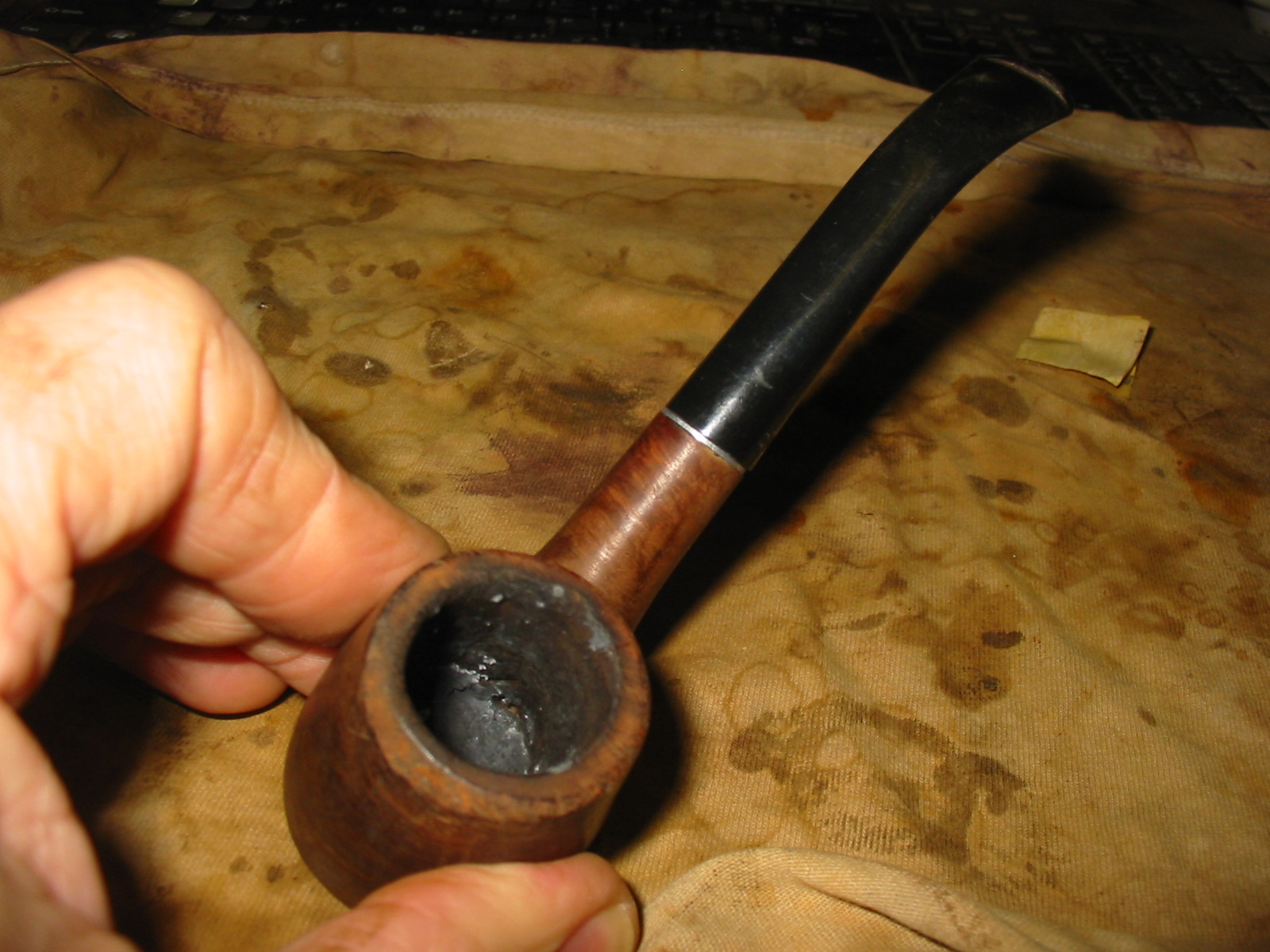
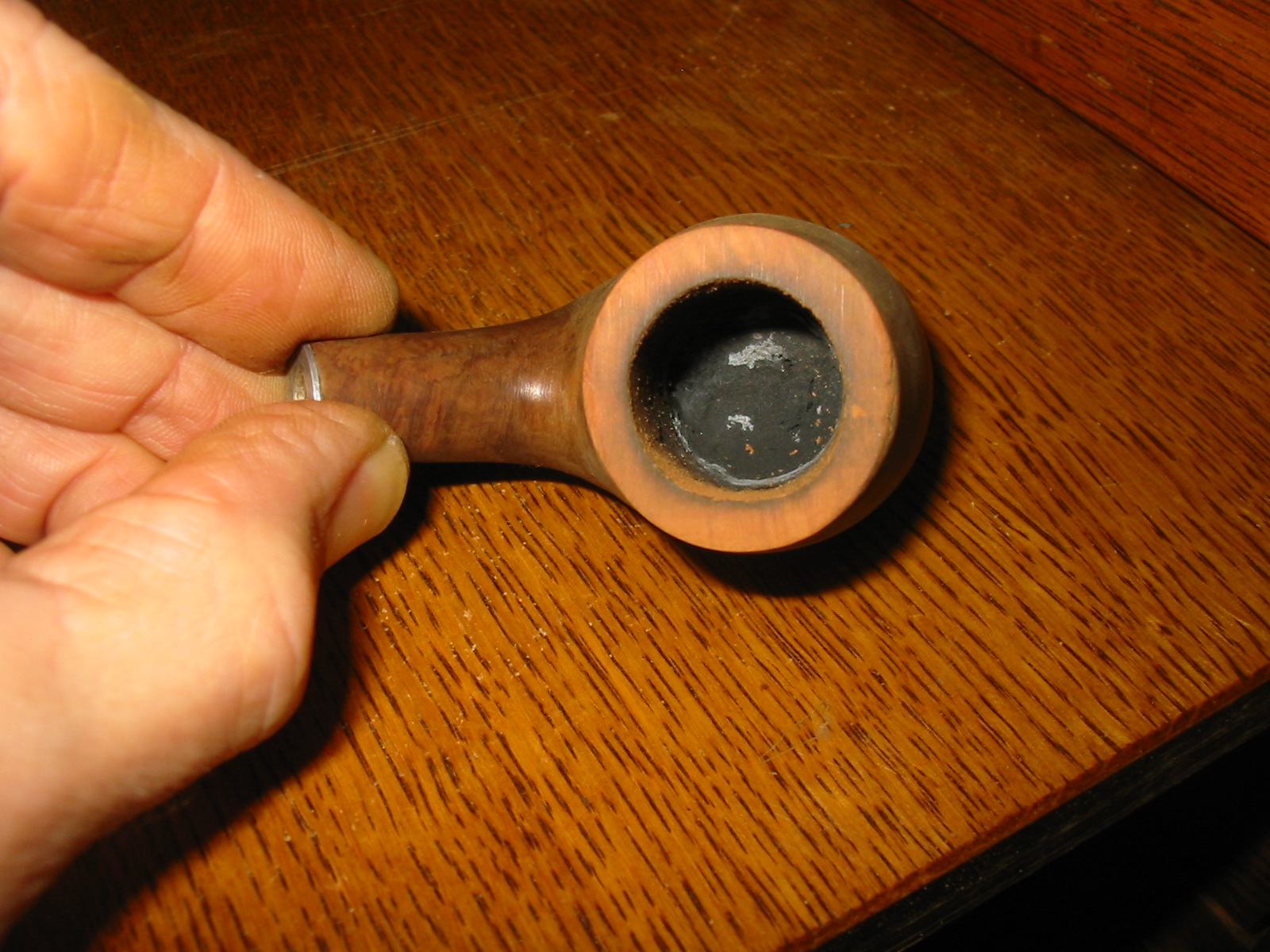
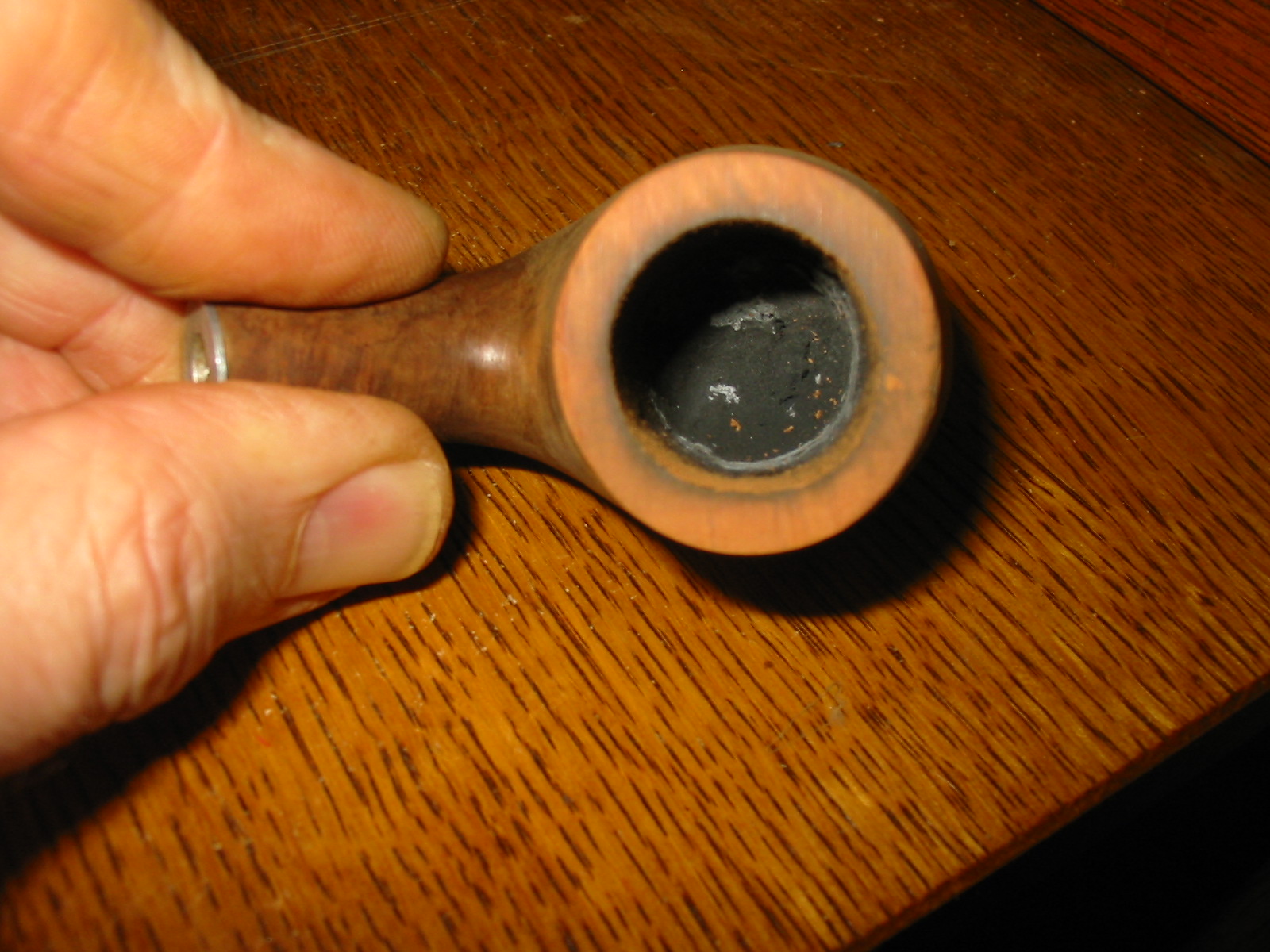
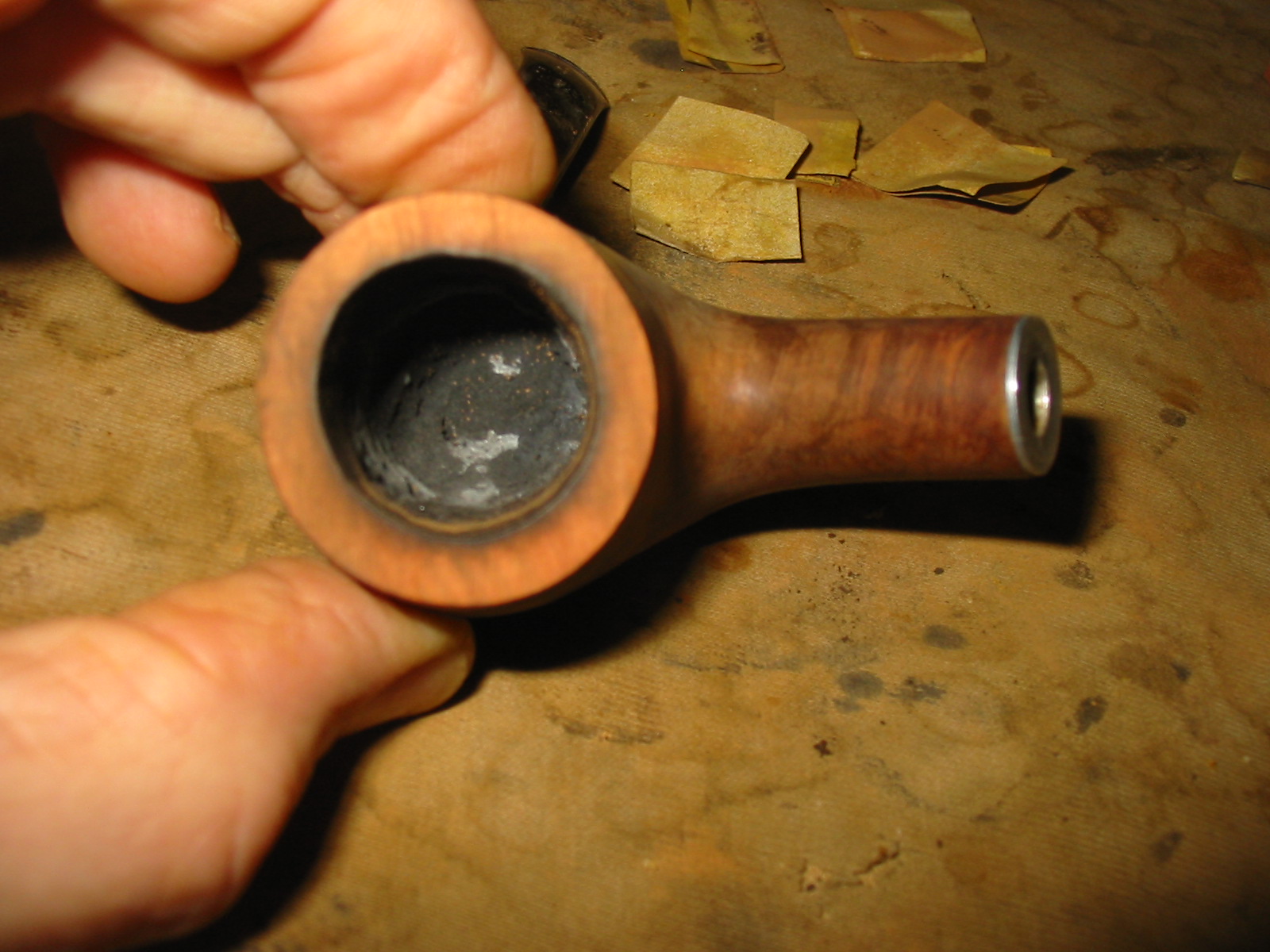
I have included the next two close-up photos to show the rim damage. The front edge is very worn, the back inner edge is burned and the inner edge of the rim is clearly gouged and marked. Fortunately the damage did not extend deeply into the bowl was limited to the top 1/8th inch of the bowl top. The bowl had also been coated with a black rubbery bowl coating. I chose to leave it as the bowl also had some gouges in the bottom from the knife that someone used to ream the bowl.
IMG_4436

IMG_4437

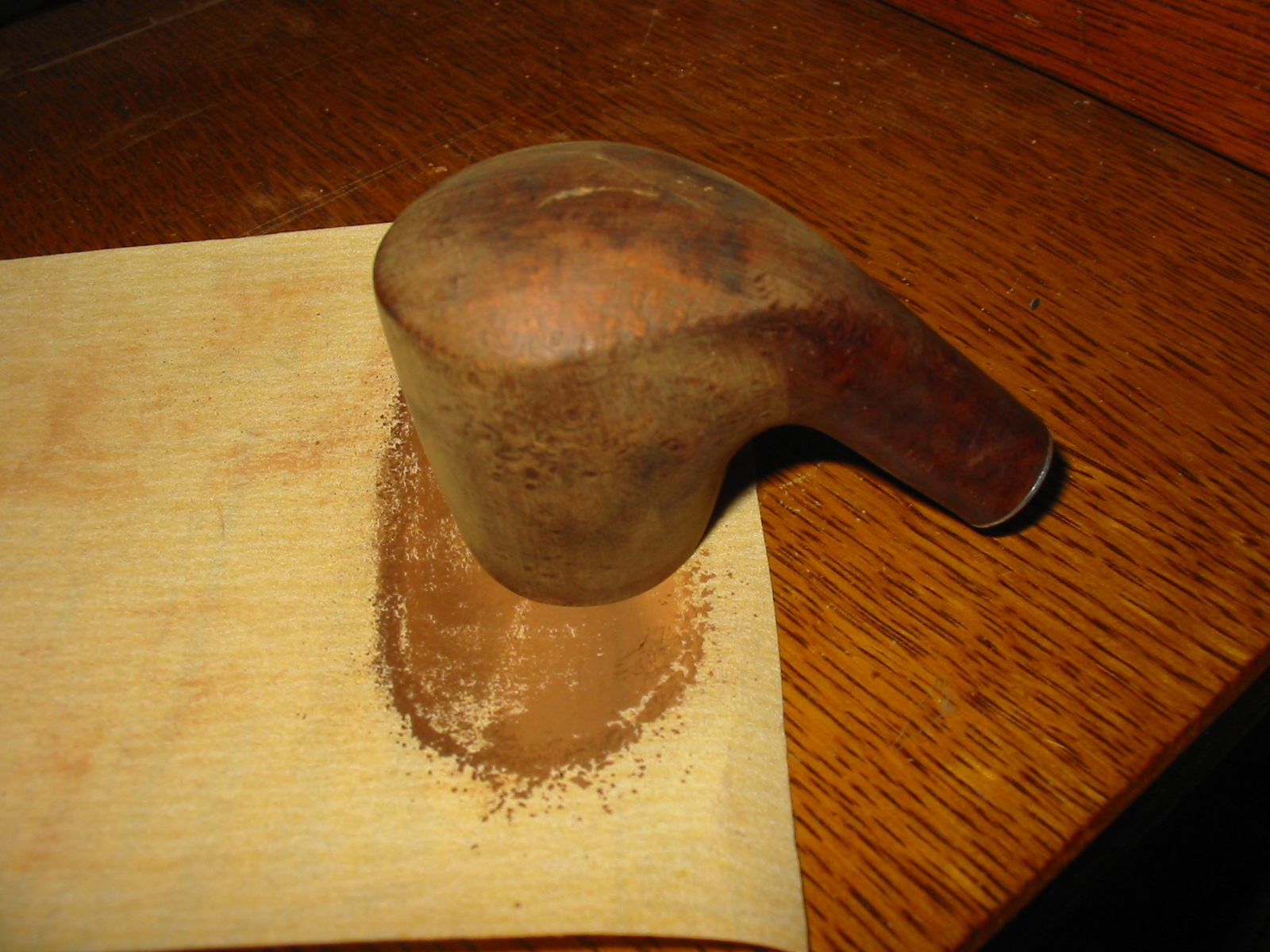
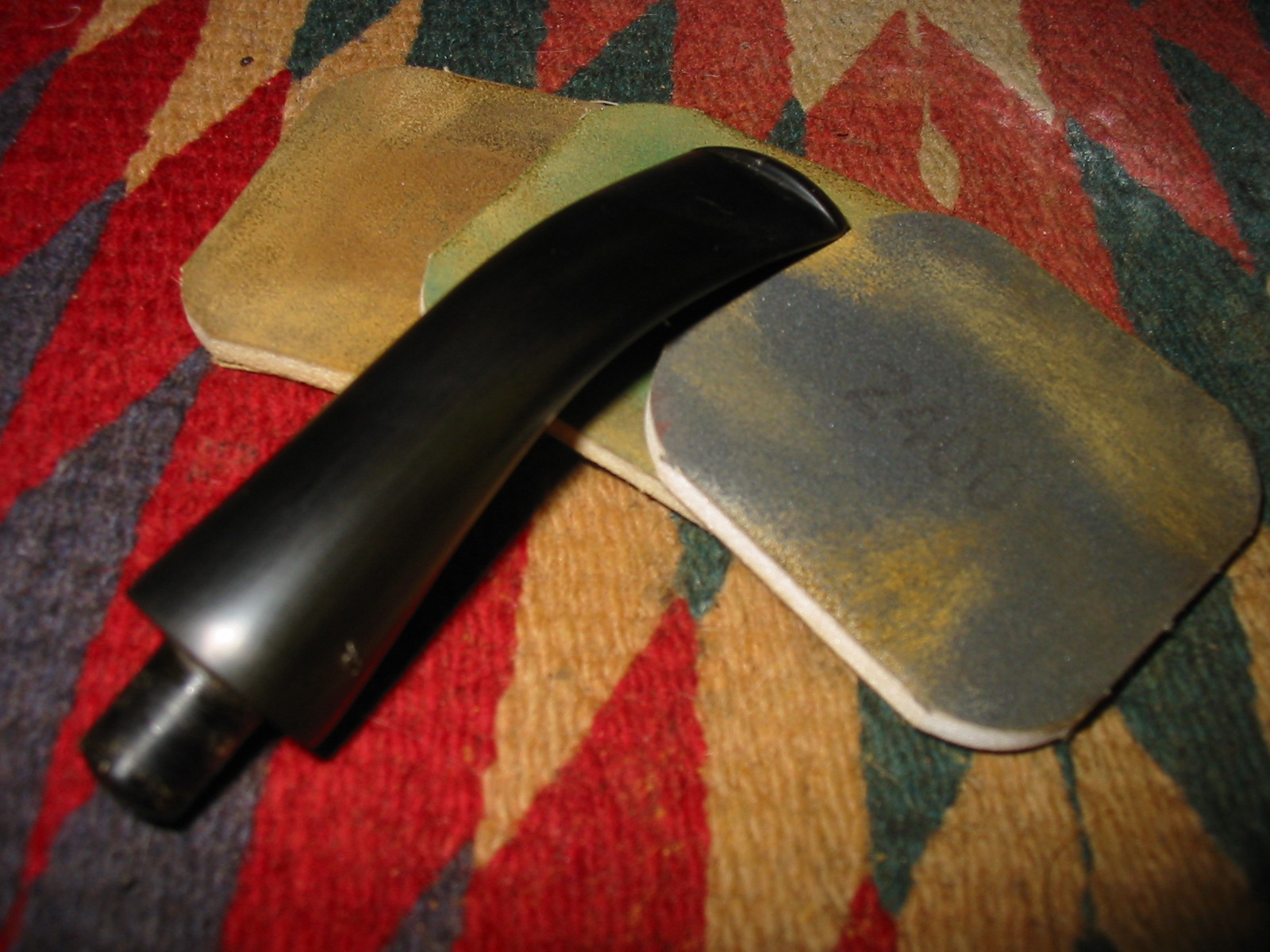
I set up my board and sandpaper that I use for topping pipe bowls and sanded the top of the rim. This one was a little tricky in that the front slope was lower than the rest of the rim. I worked the back half of the rim first to bring the height down to the same place as the highest portion of the front slope. Once I had that done it was an easy matter to proceed with topping the rest of the rim. I worked until I had removed the burn damage and the rough front edge and had a flat, smooth and rim with an even circumference.
IMG_4438

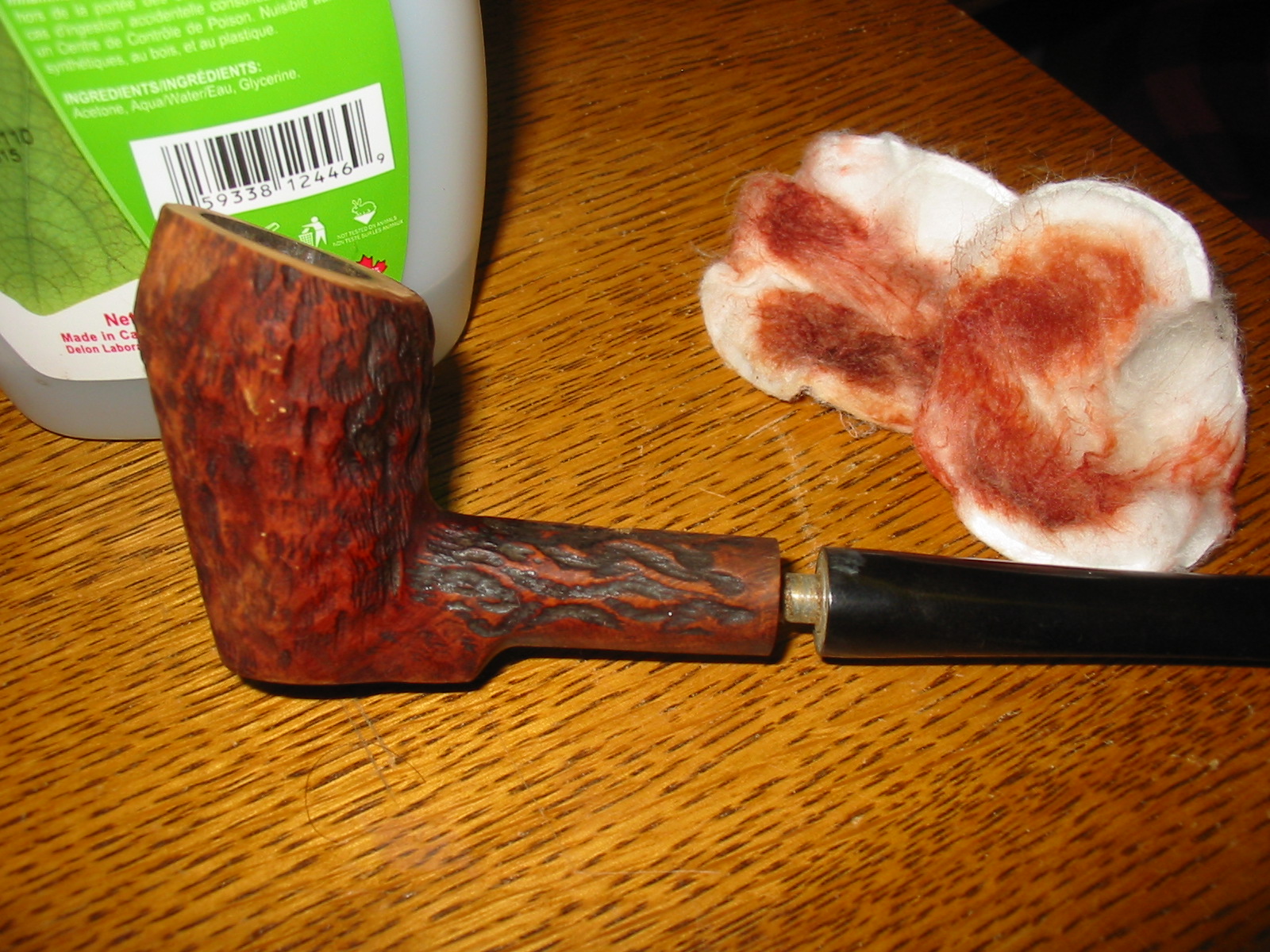
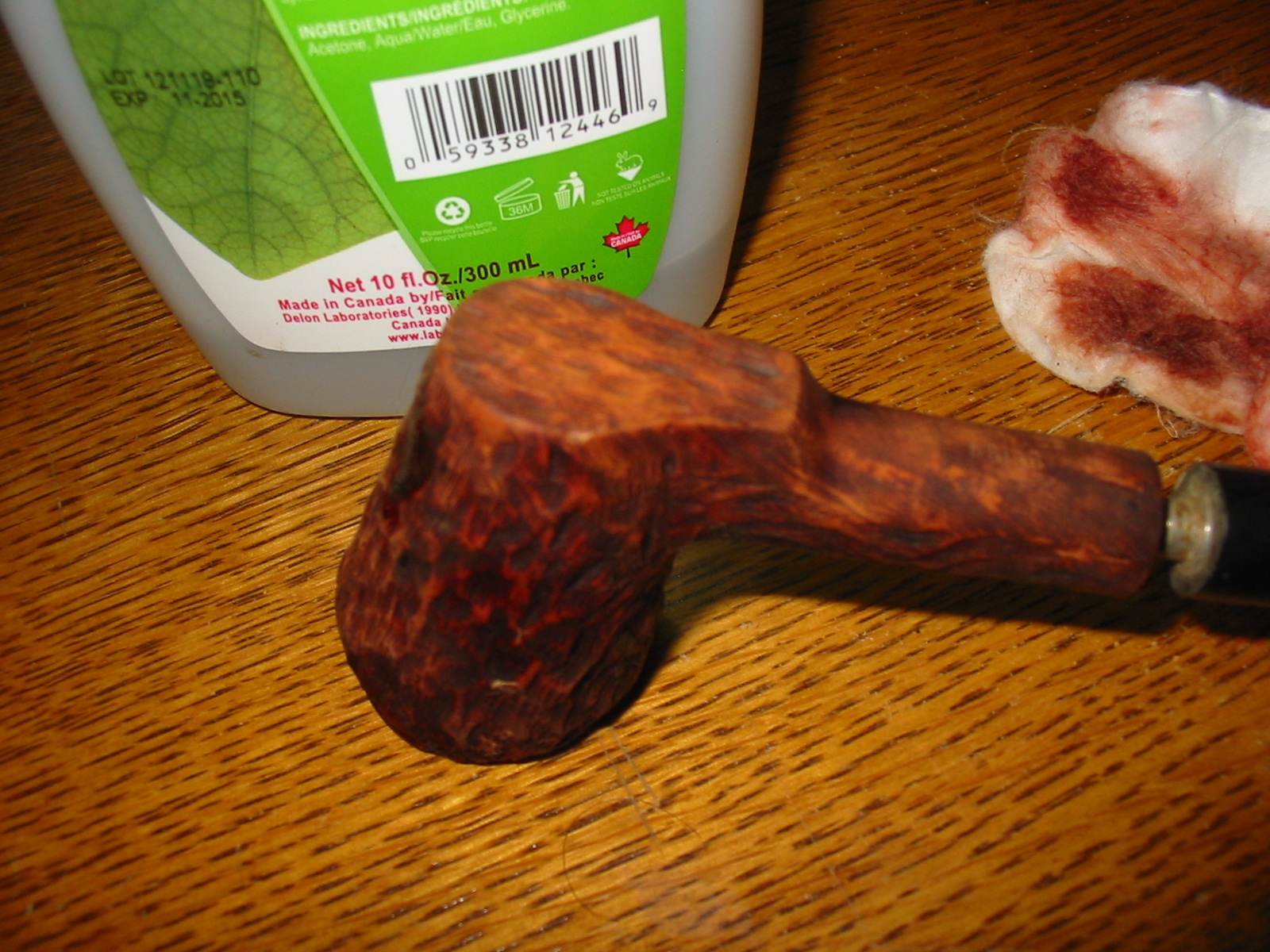
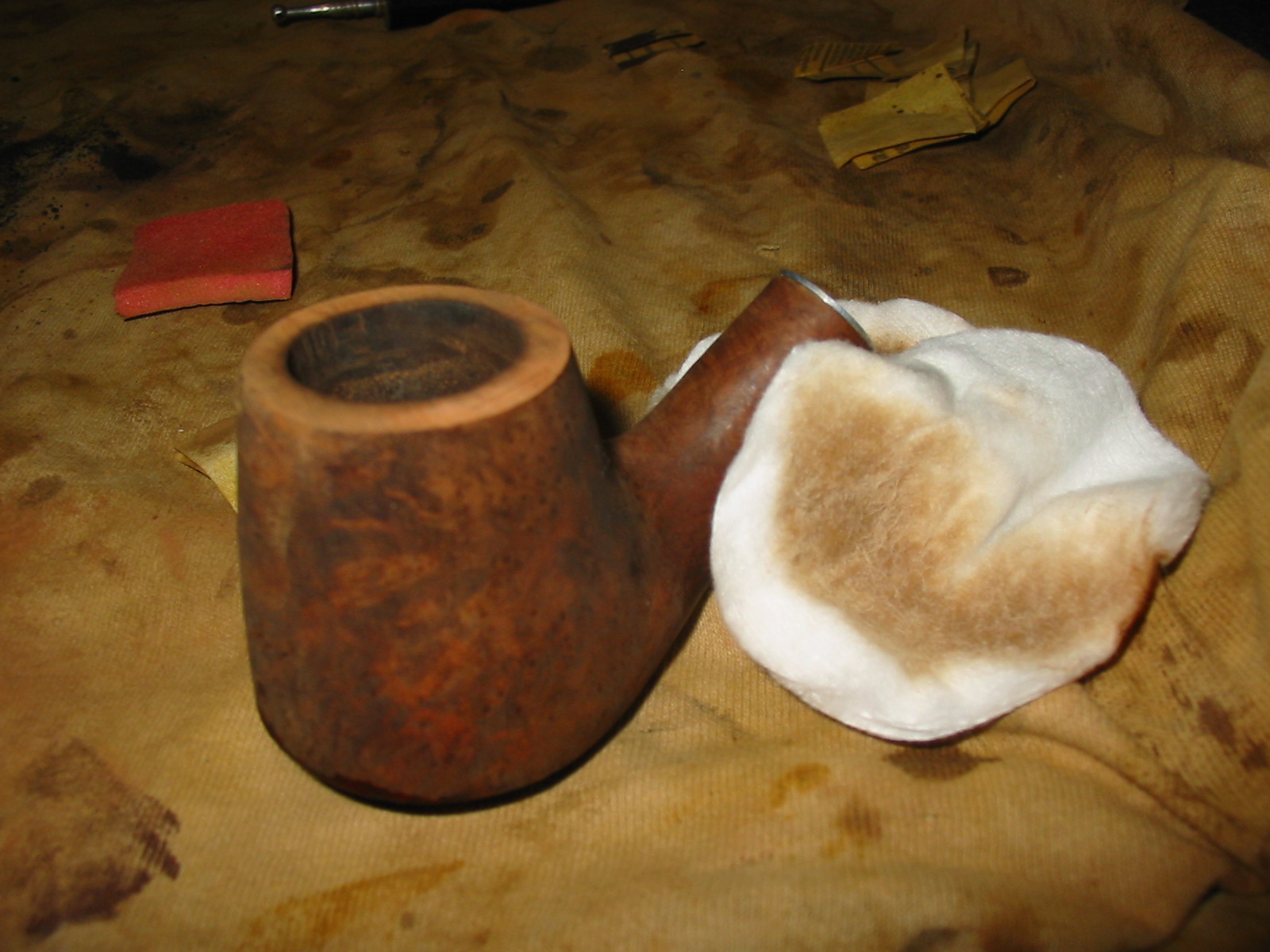
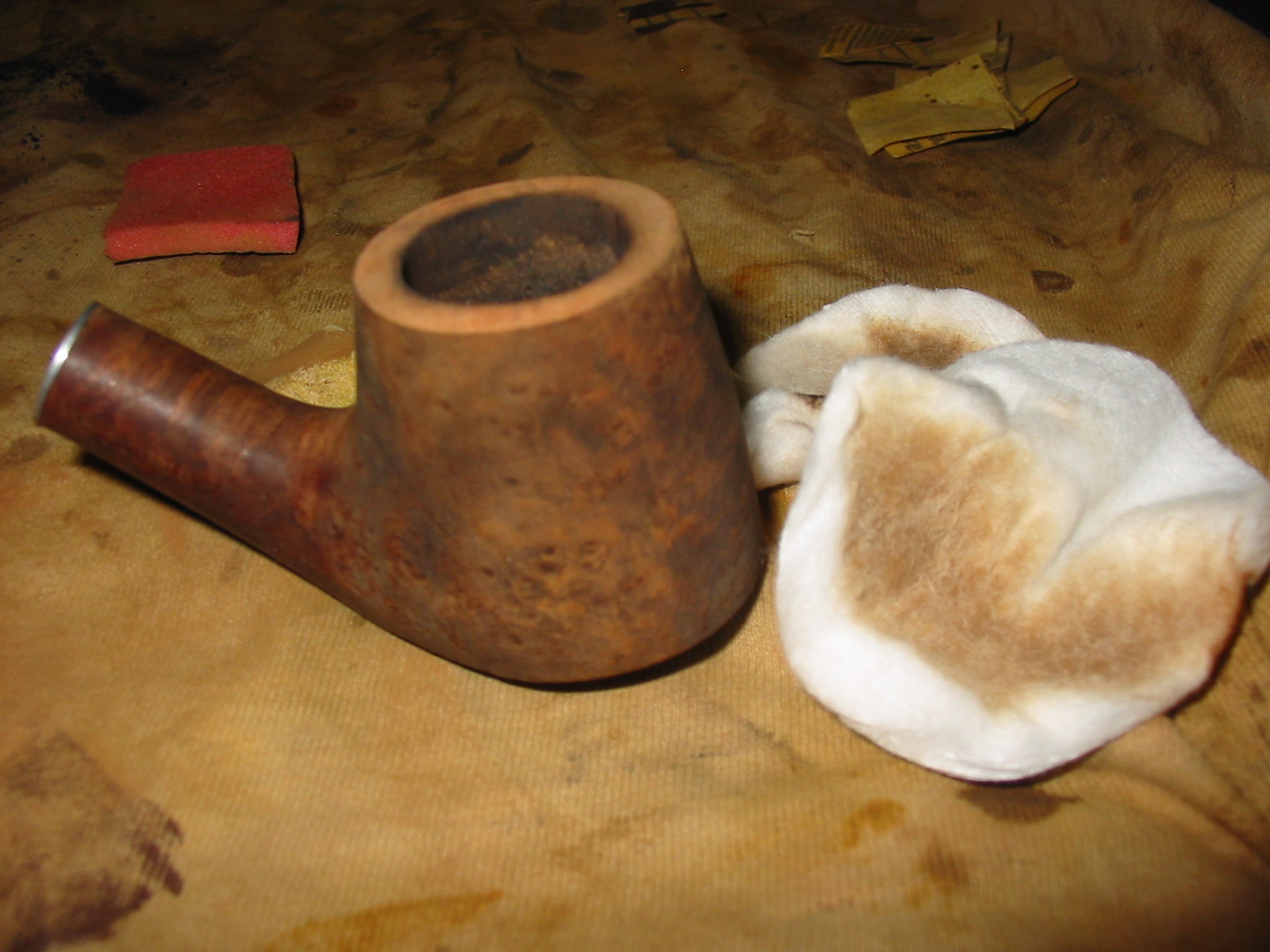
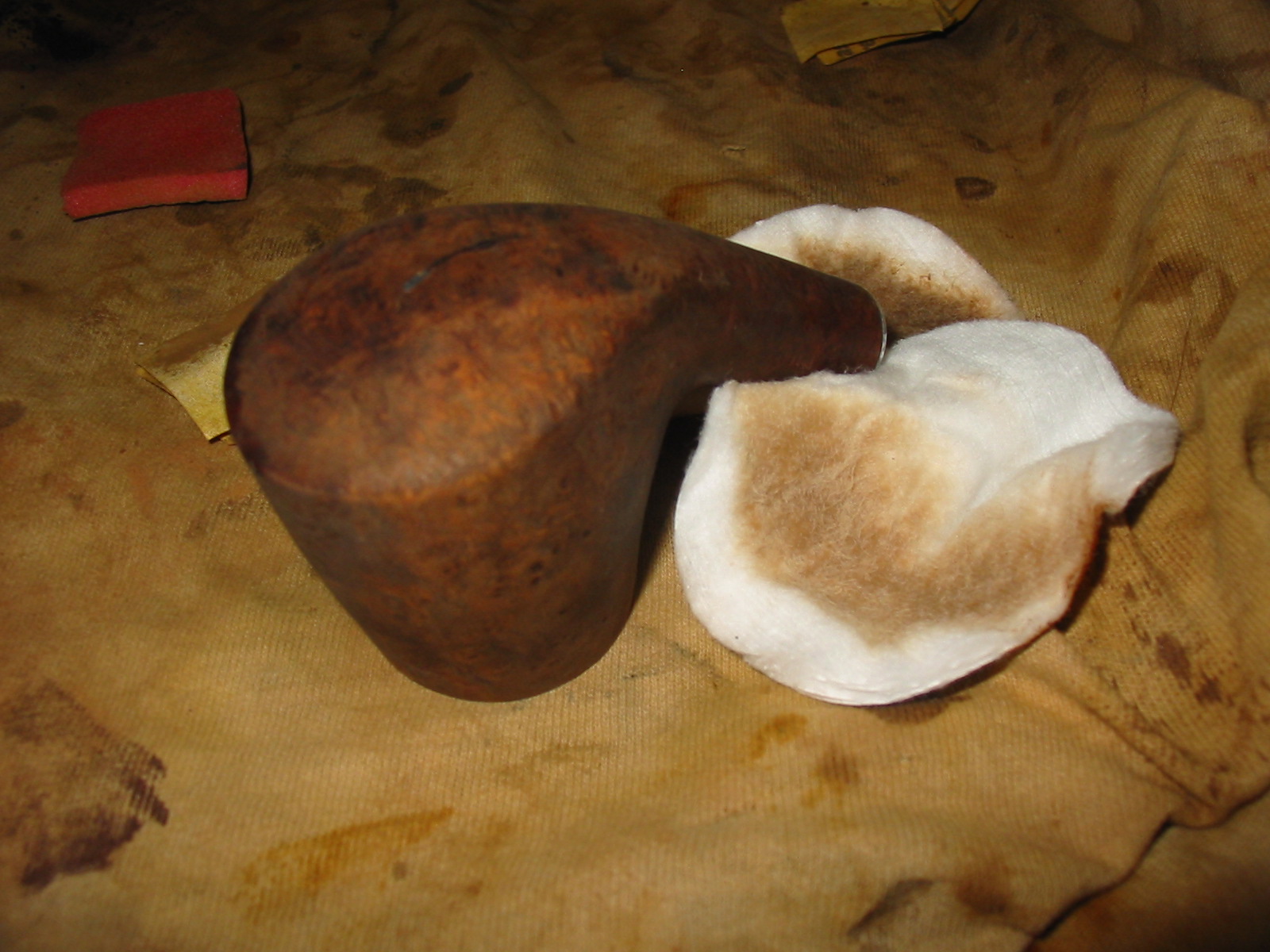
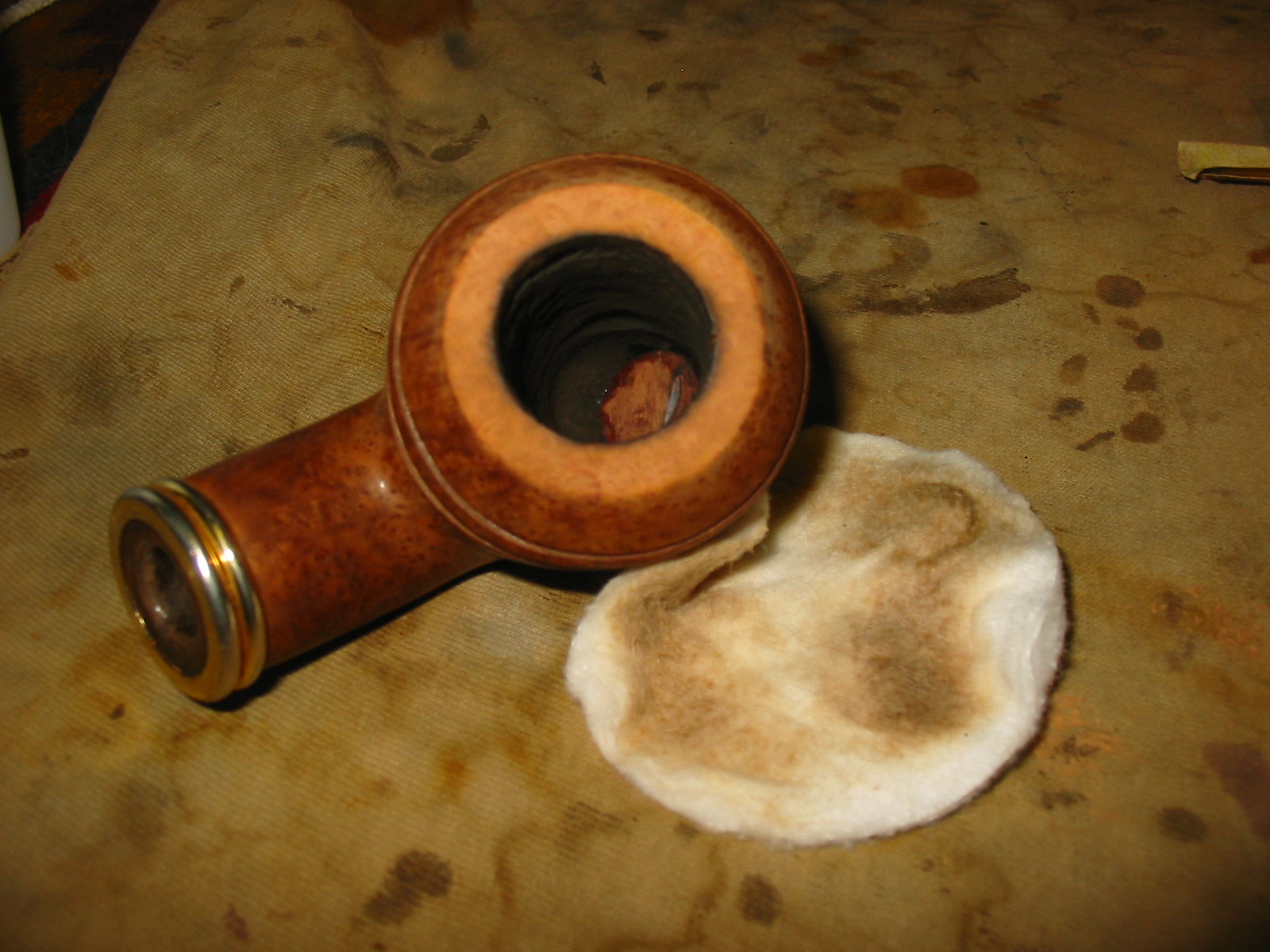
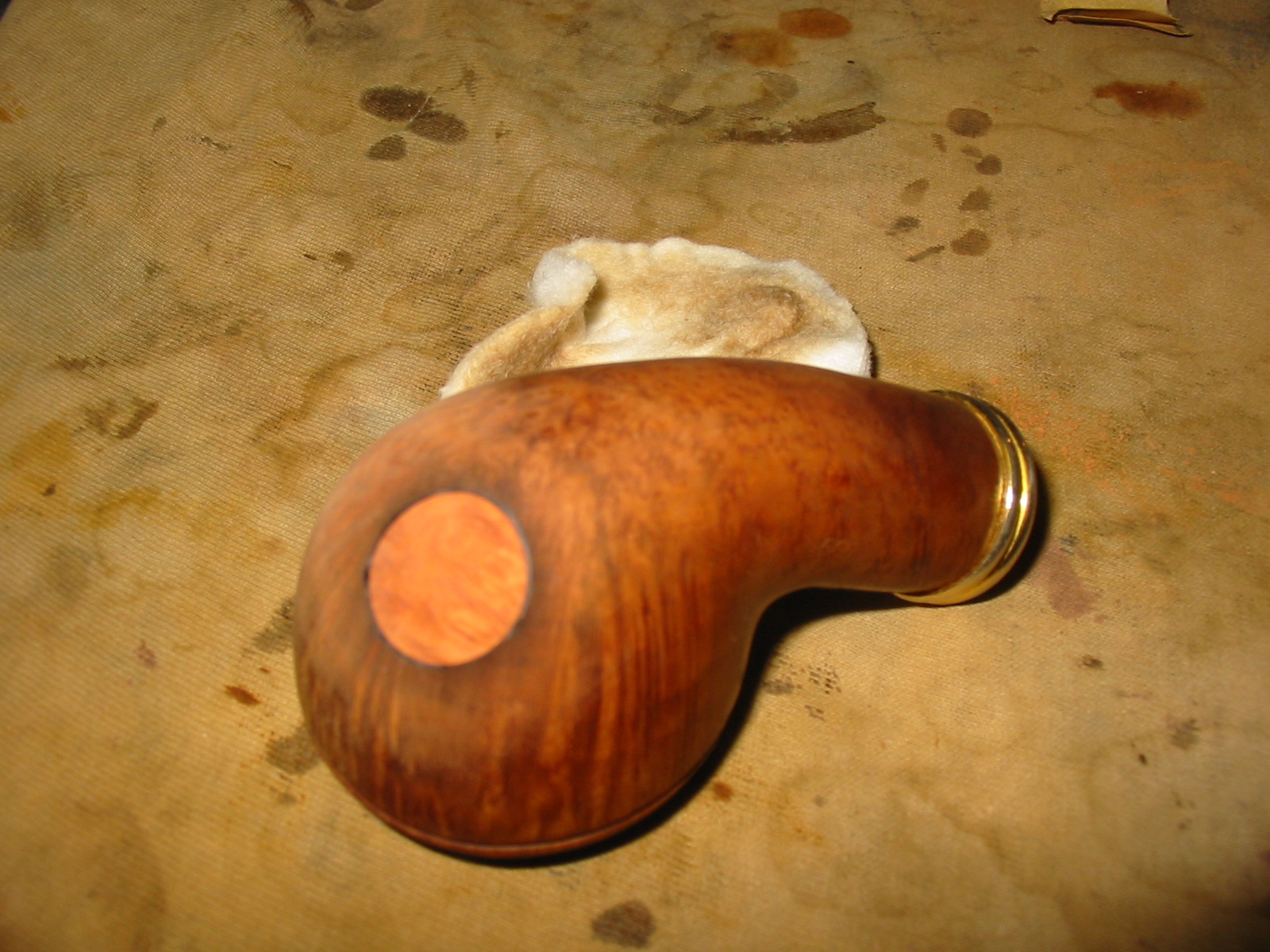
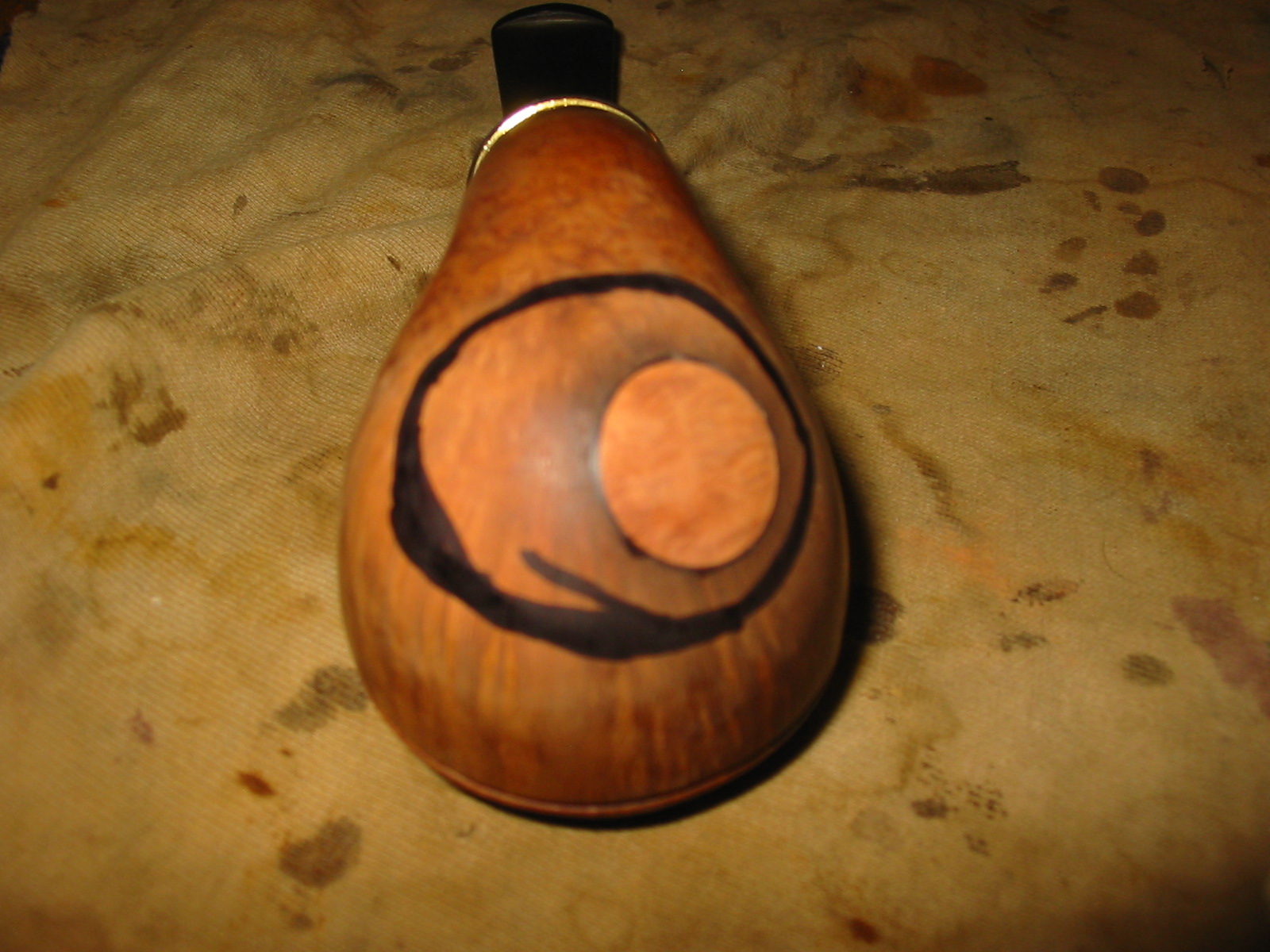
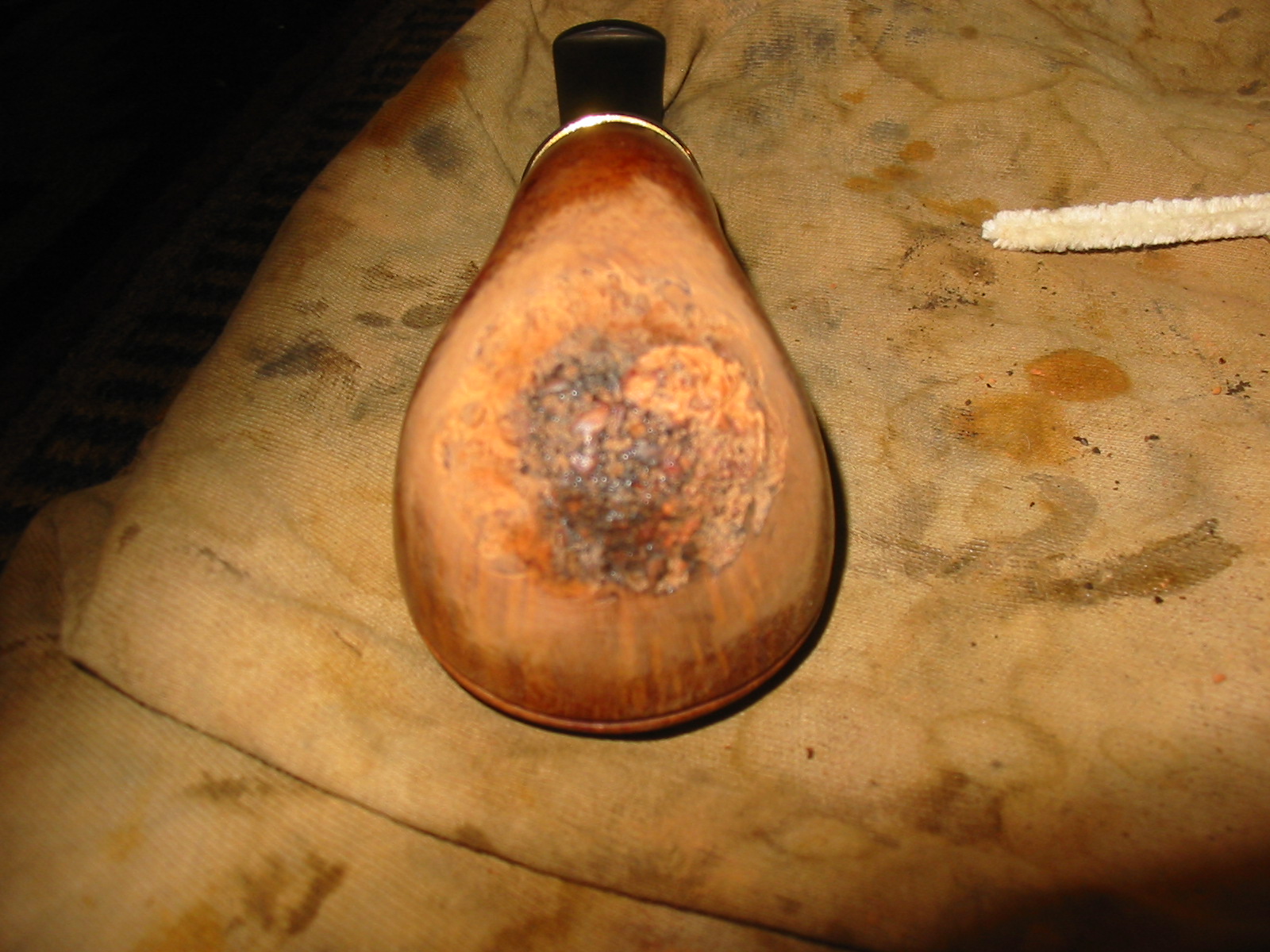
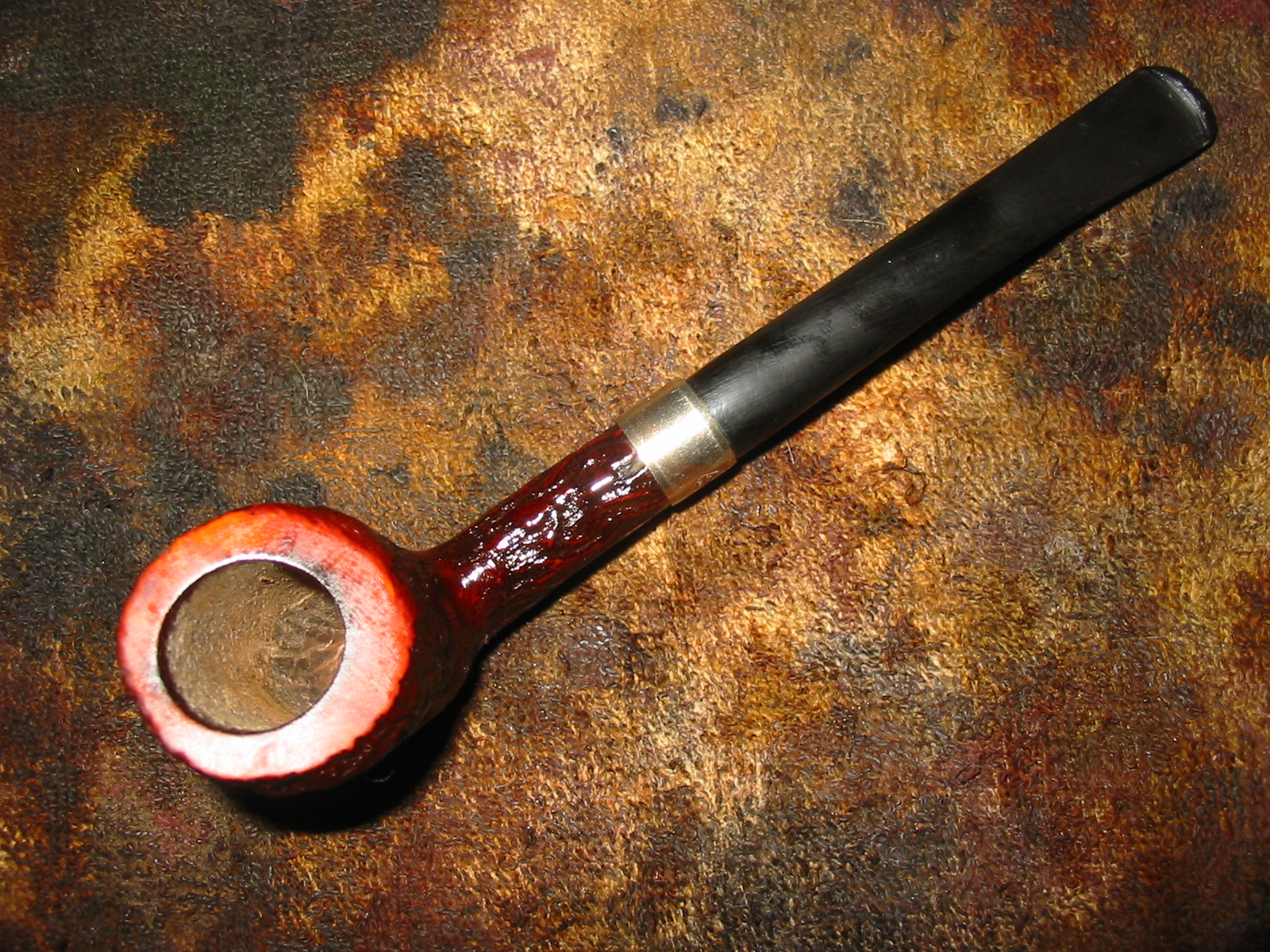
I wiped the bowl down with acetone on cotton pads to remove the varnish coat and the rest of the finish so that I could blend in the stain on the freshly topped rim with the rest of the pipe.
IMG_4439

IMG_4440

IMG_4441

IMG_4443

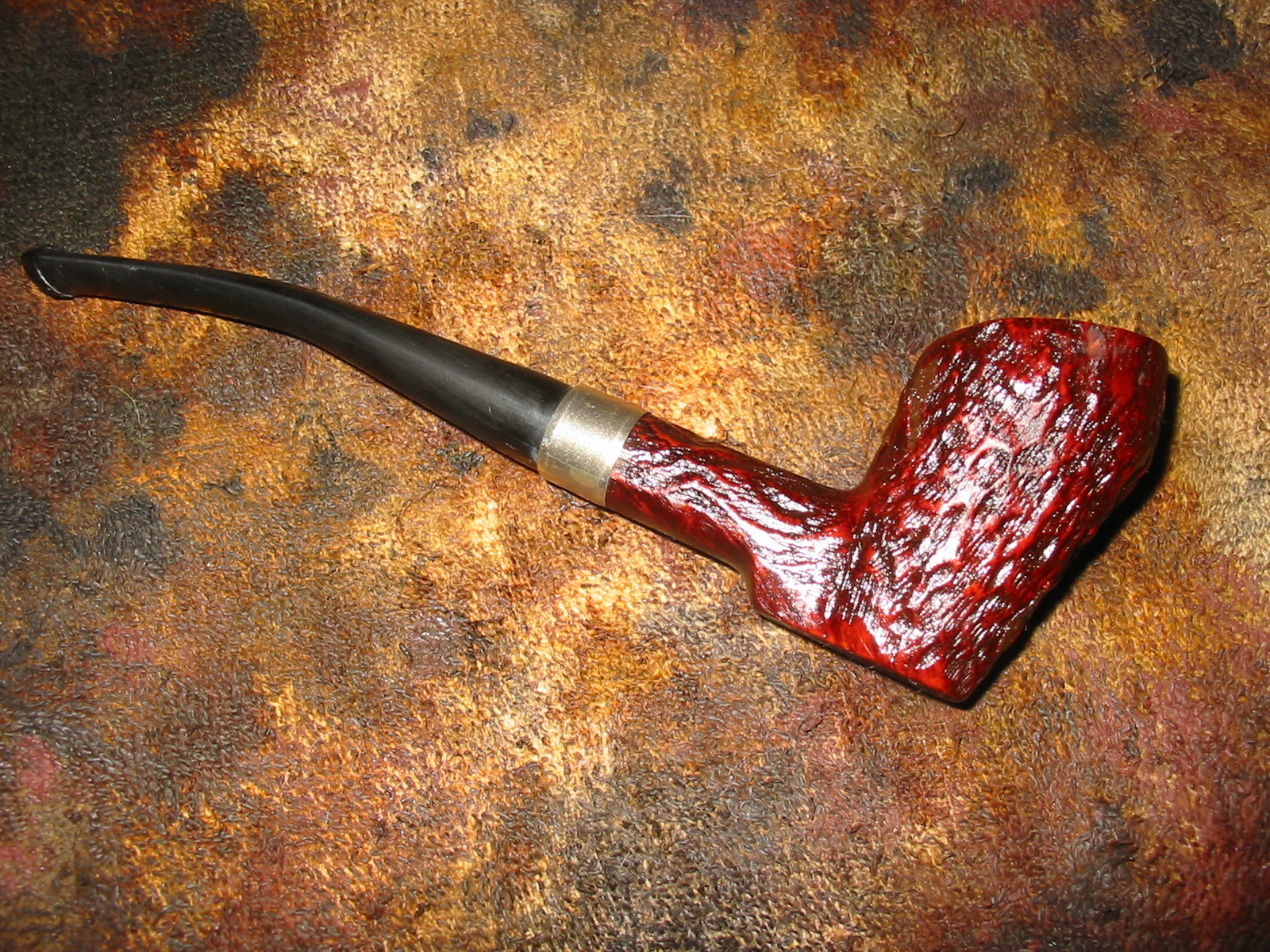
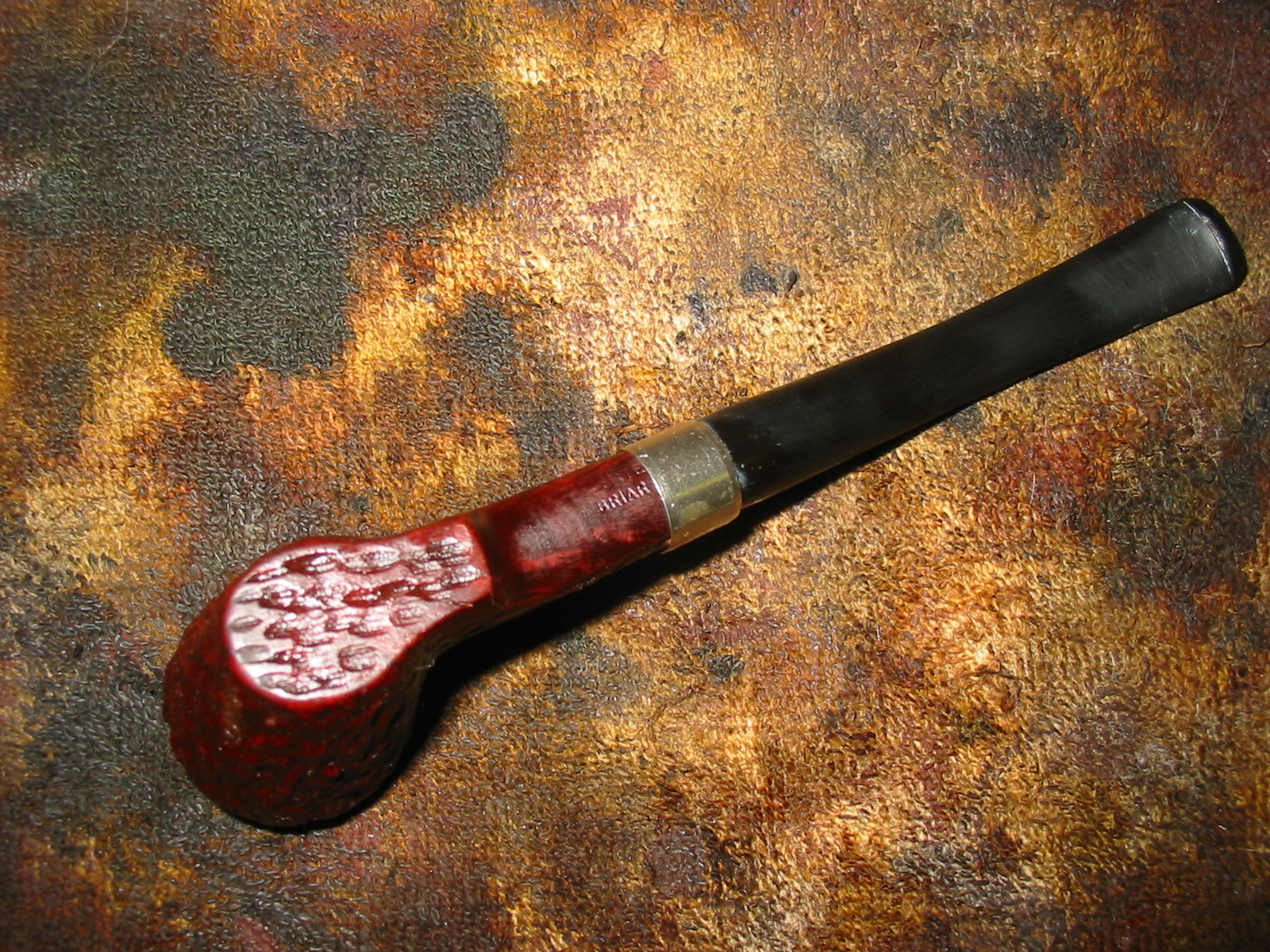
I used MinWax Red Mahogany stain to restain the pipe. I rubbed it on and then wiped it off several times until I had the even coverage I wanted on the bowl. I had buffed it with a cotton cloth to give it a slight shine and get a feel for the overall look of the stain on the bowl. I retouched the stain on the rim to darken it slightly. I lightly buffed the bowl with White Diamond and gave it an initial coat of carnauba wax.
IMG_4444

IMG_4445

IMG_4446

IMG_4447

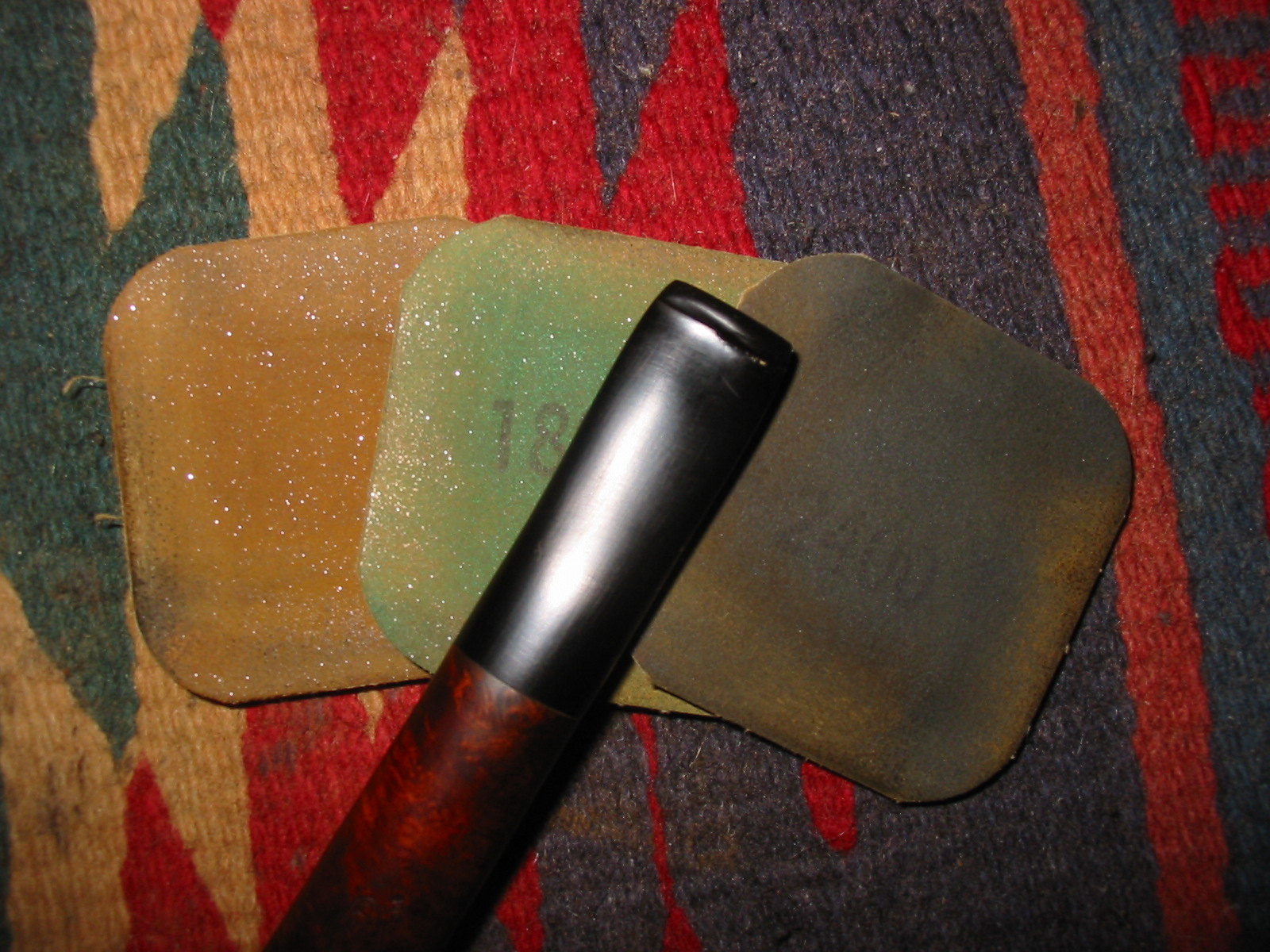
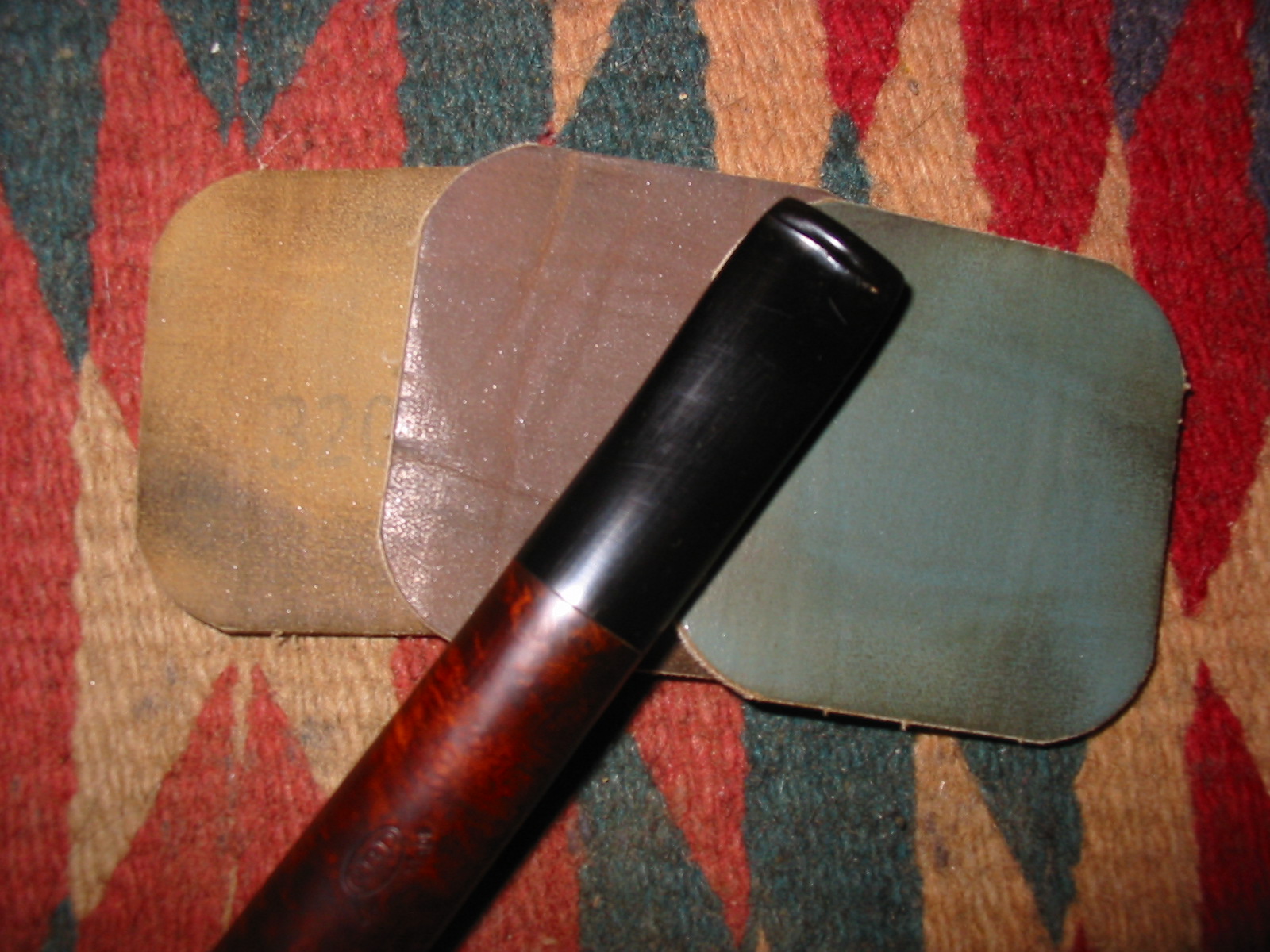
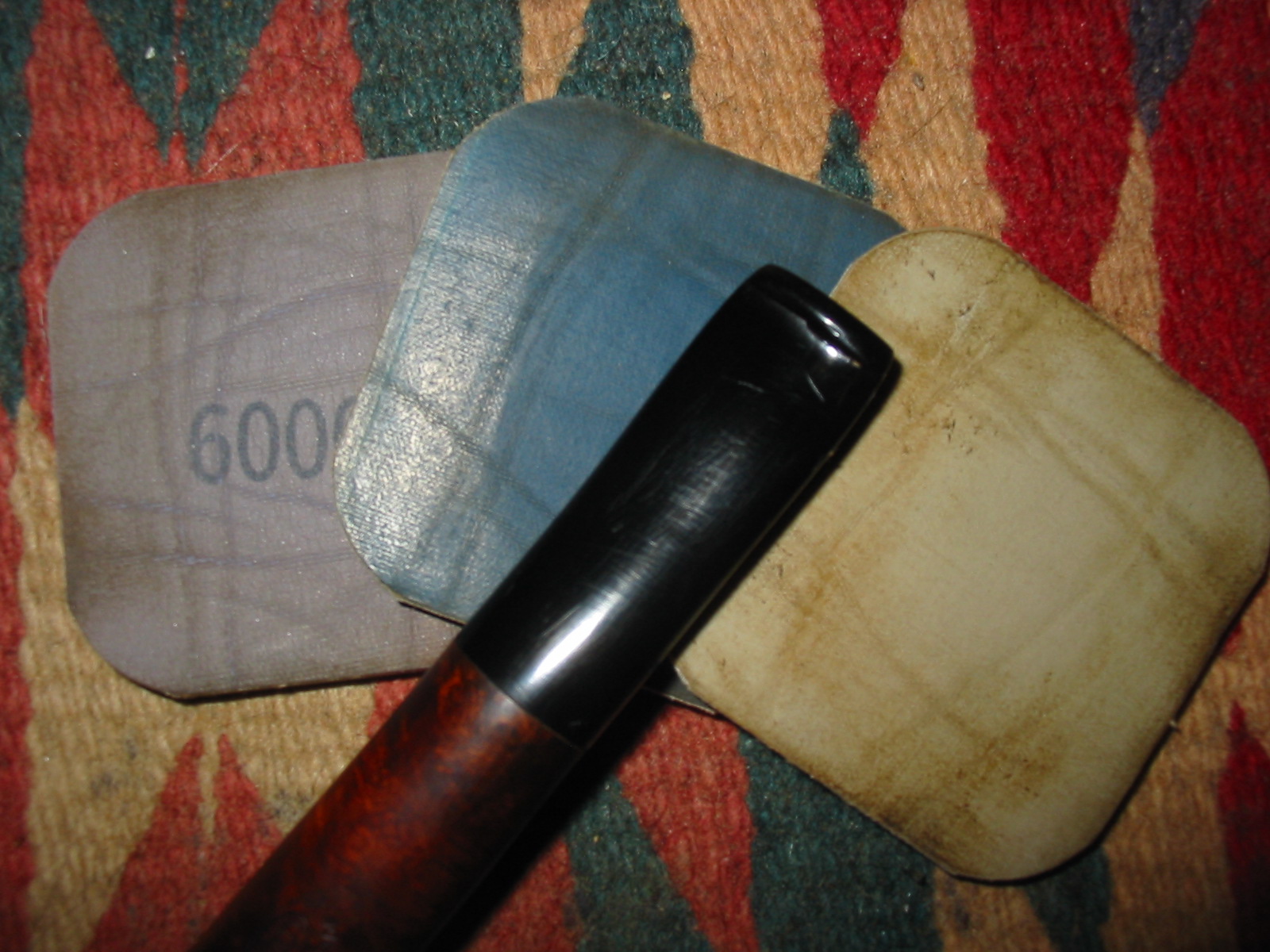
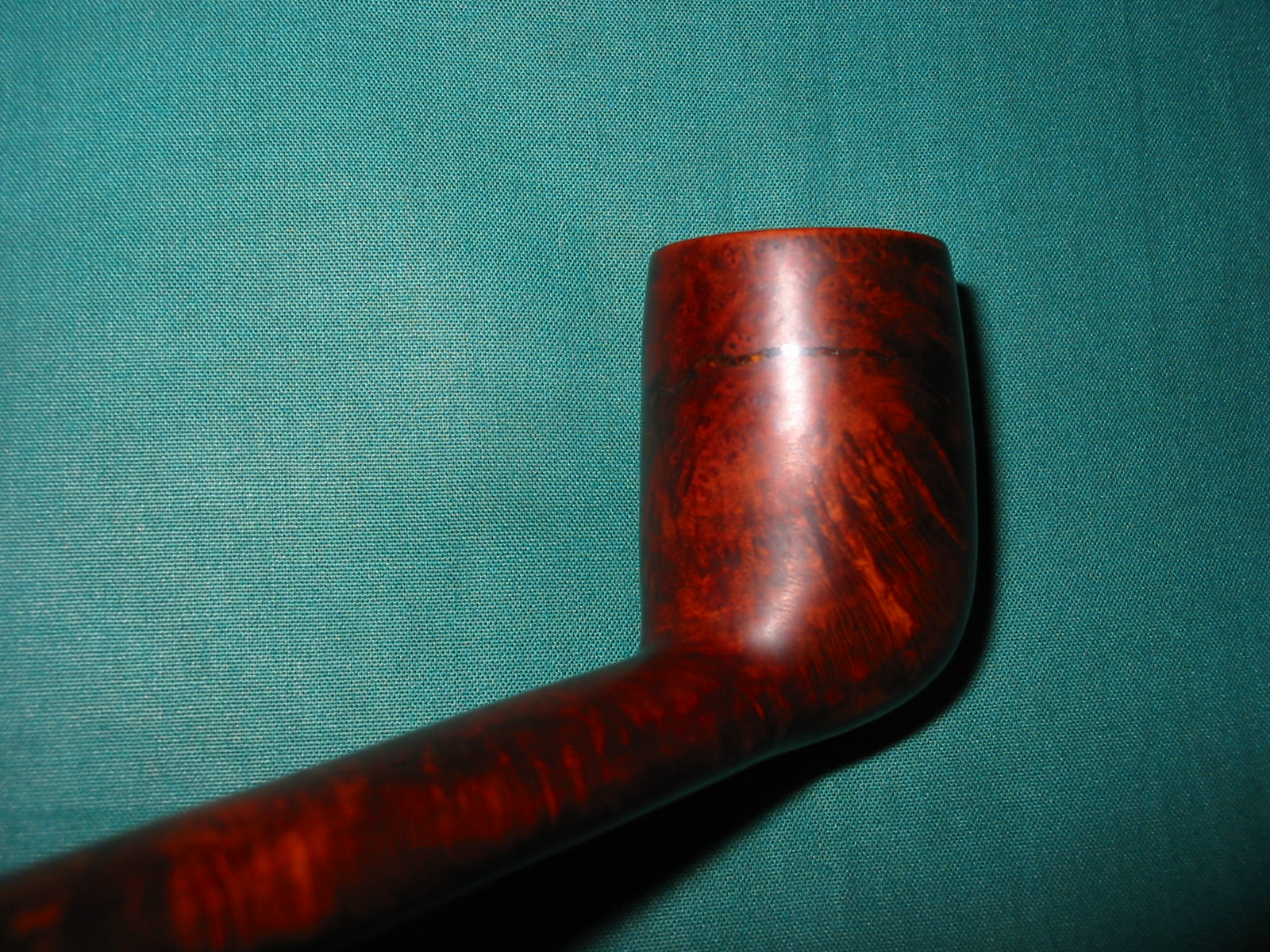
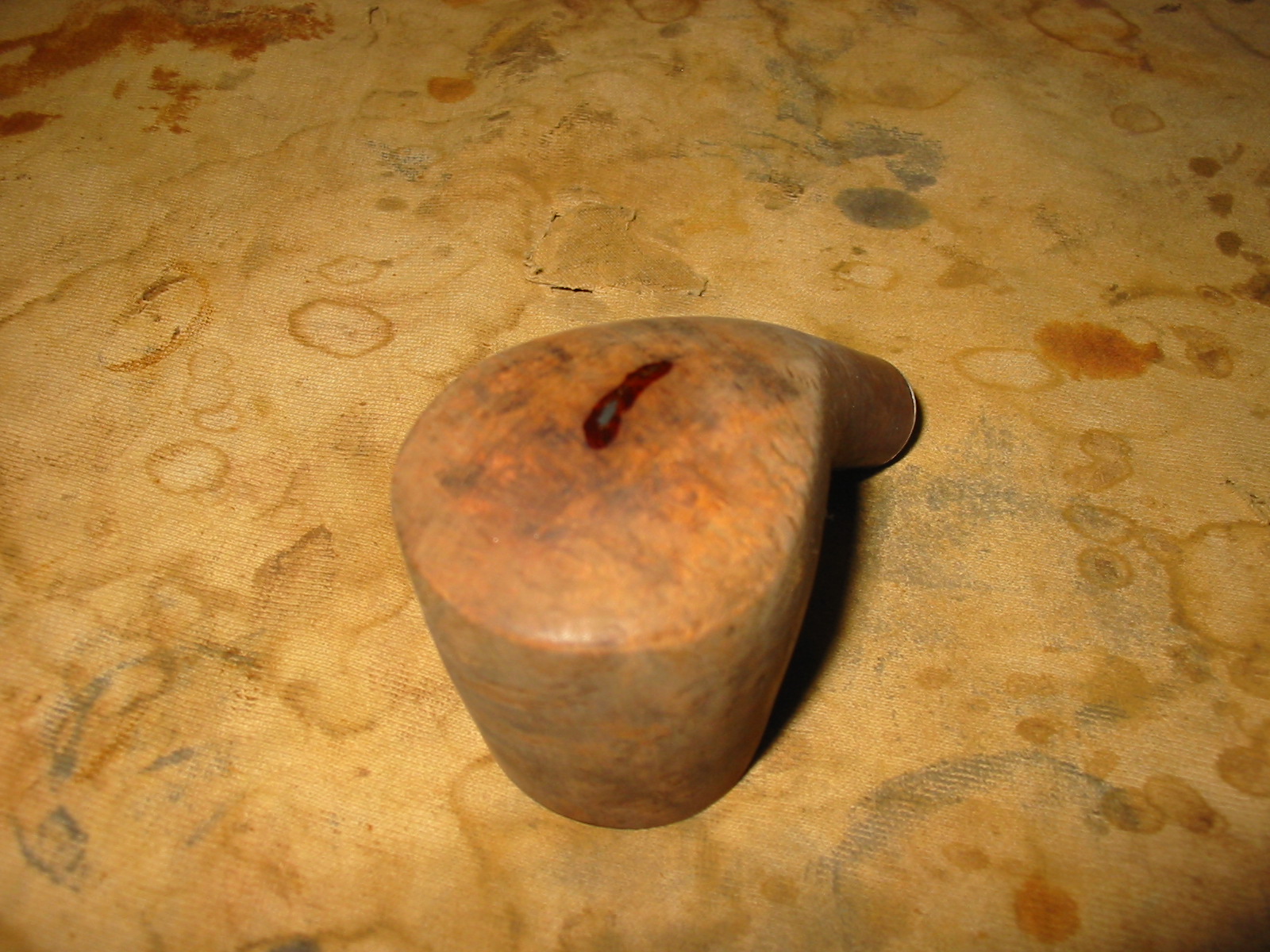
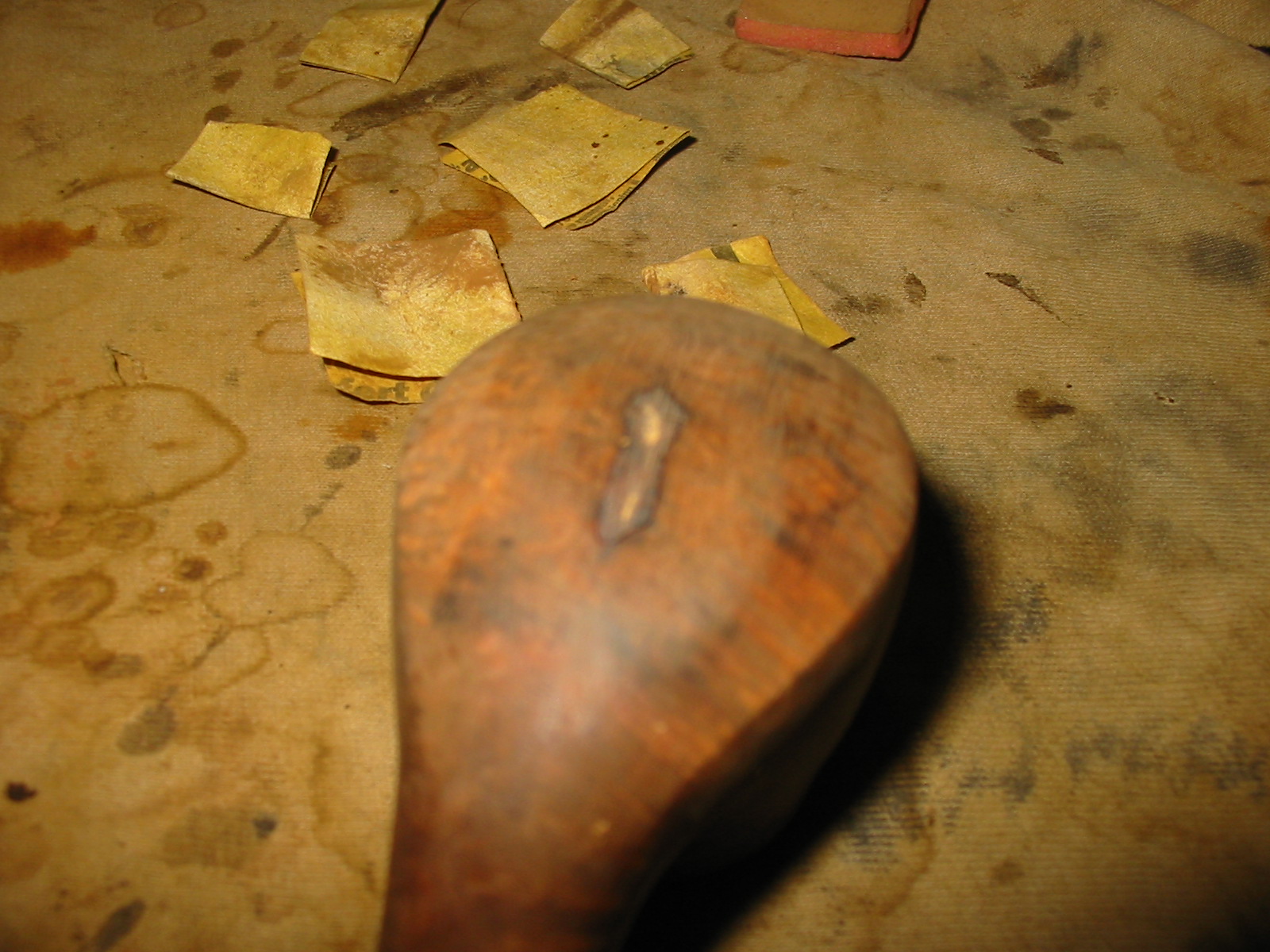
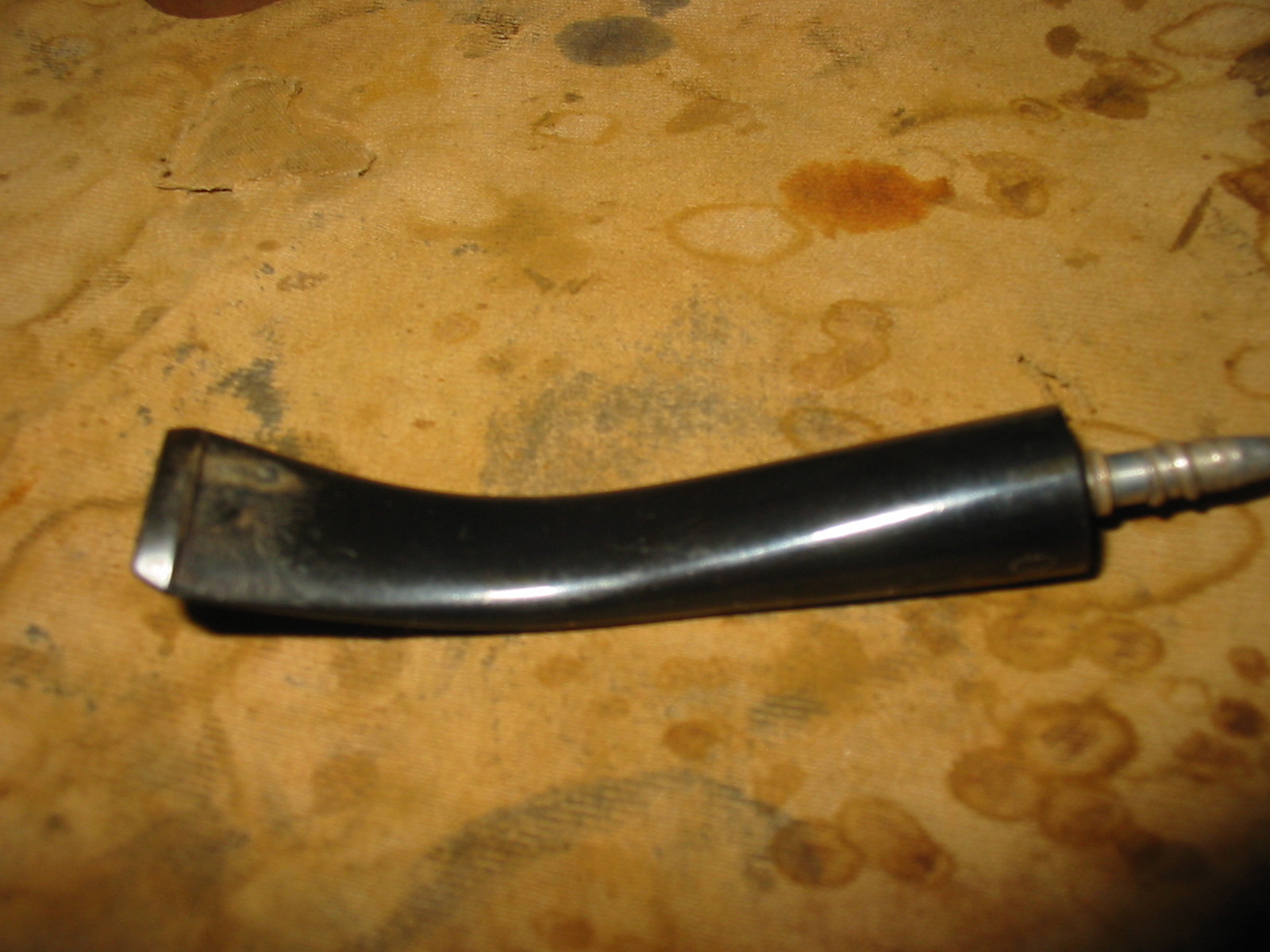
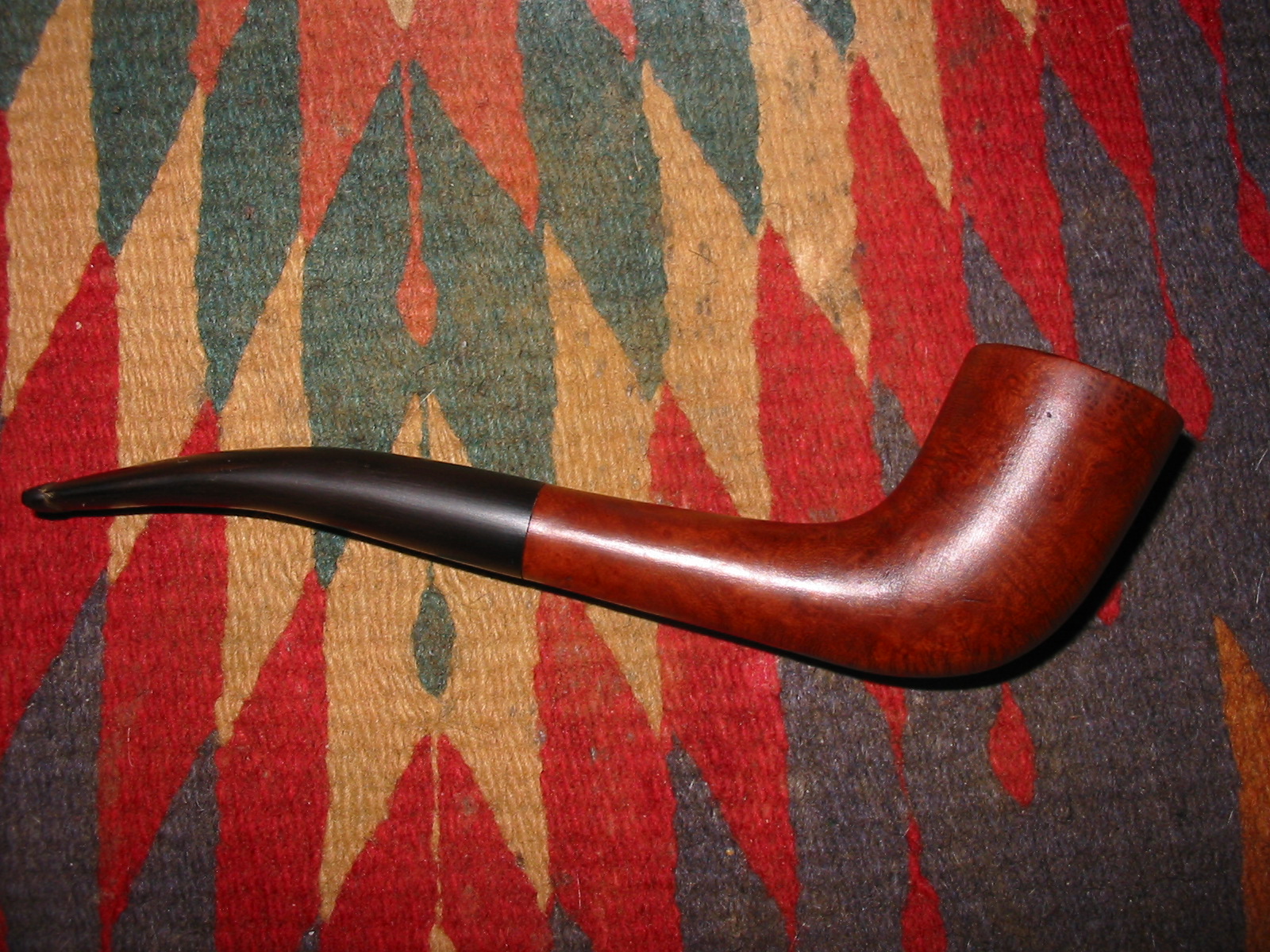
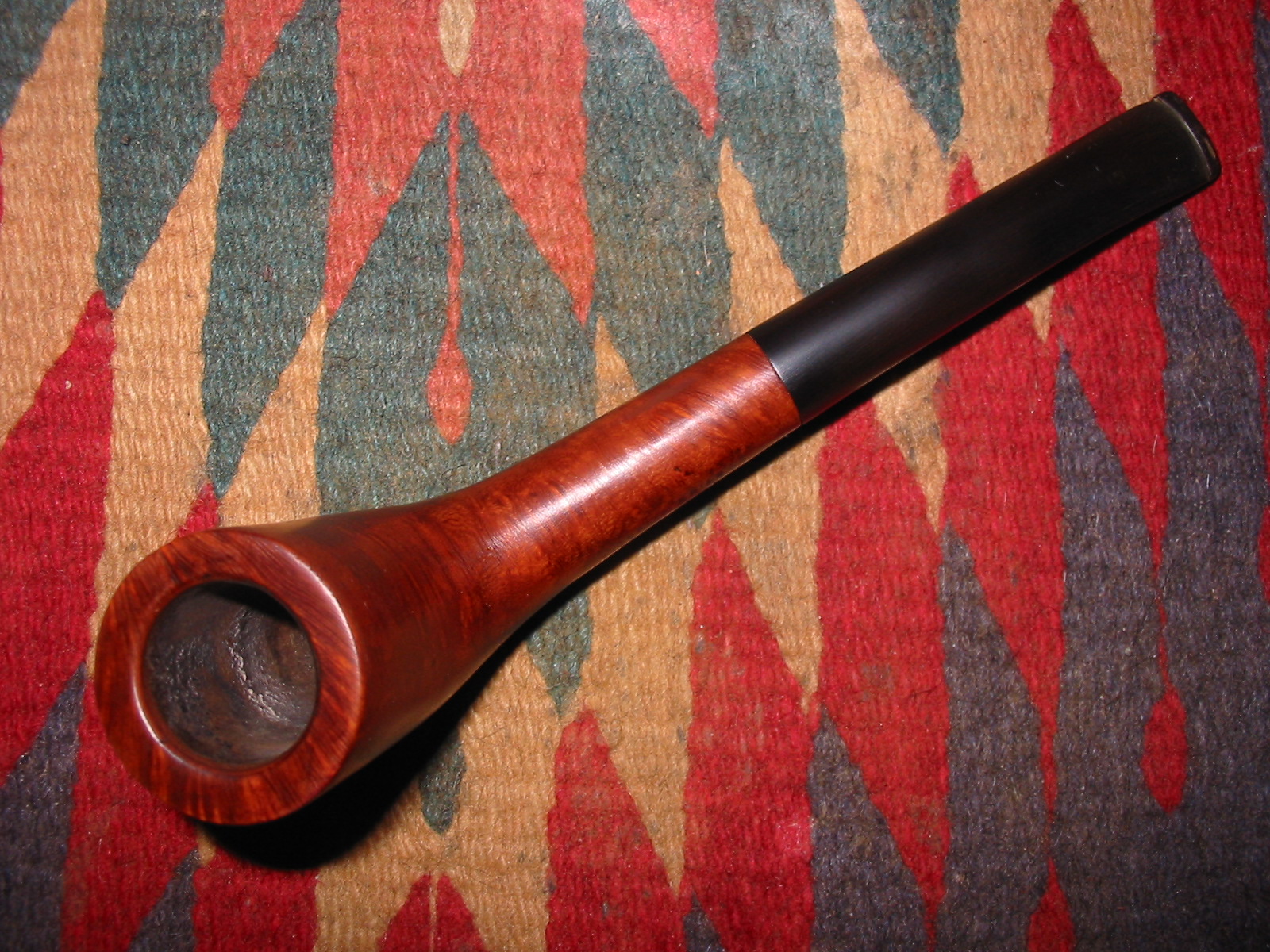
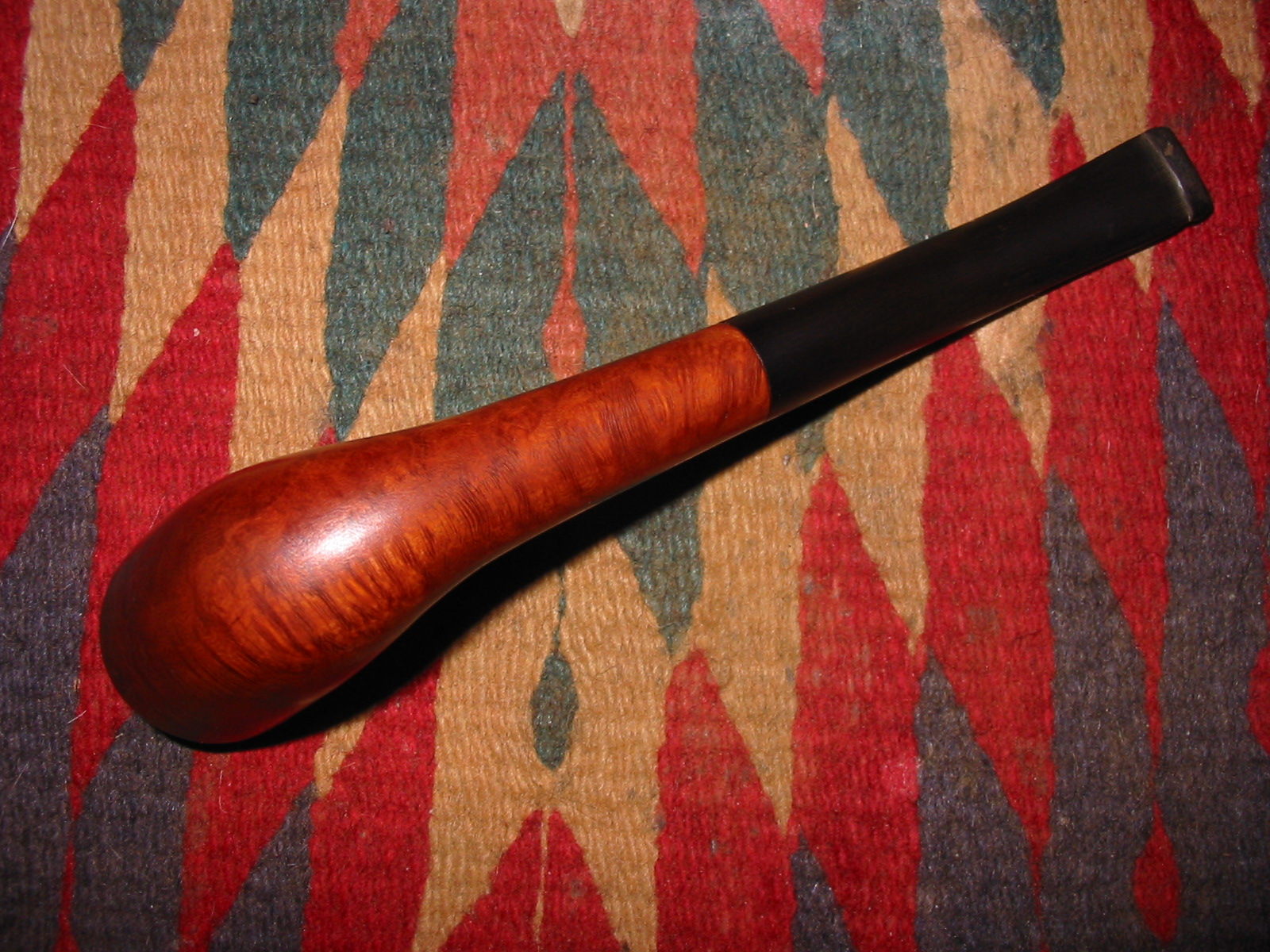
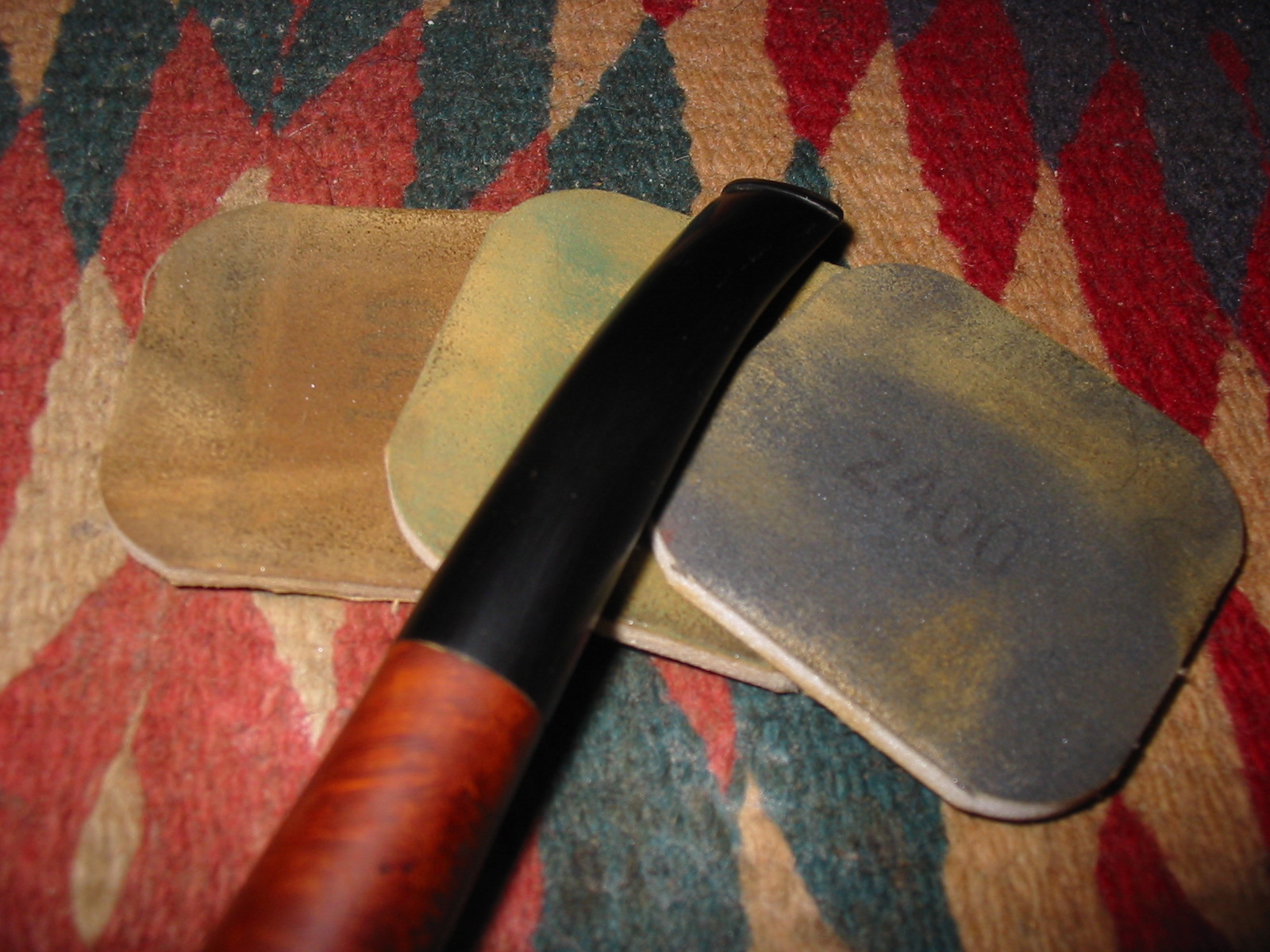
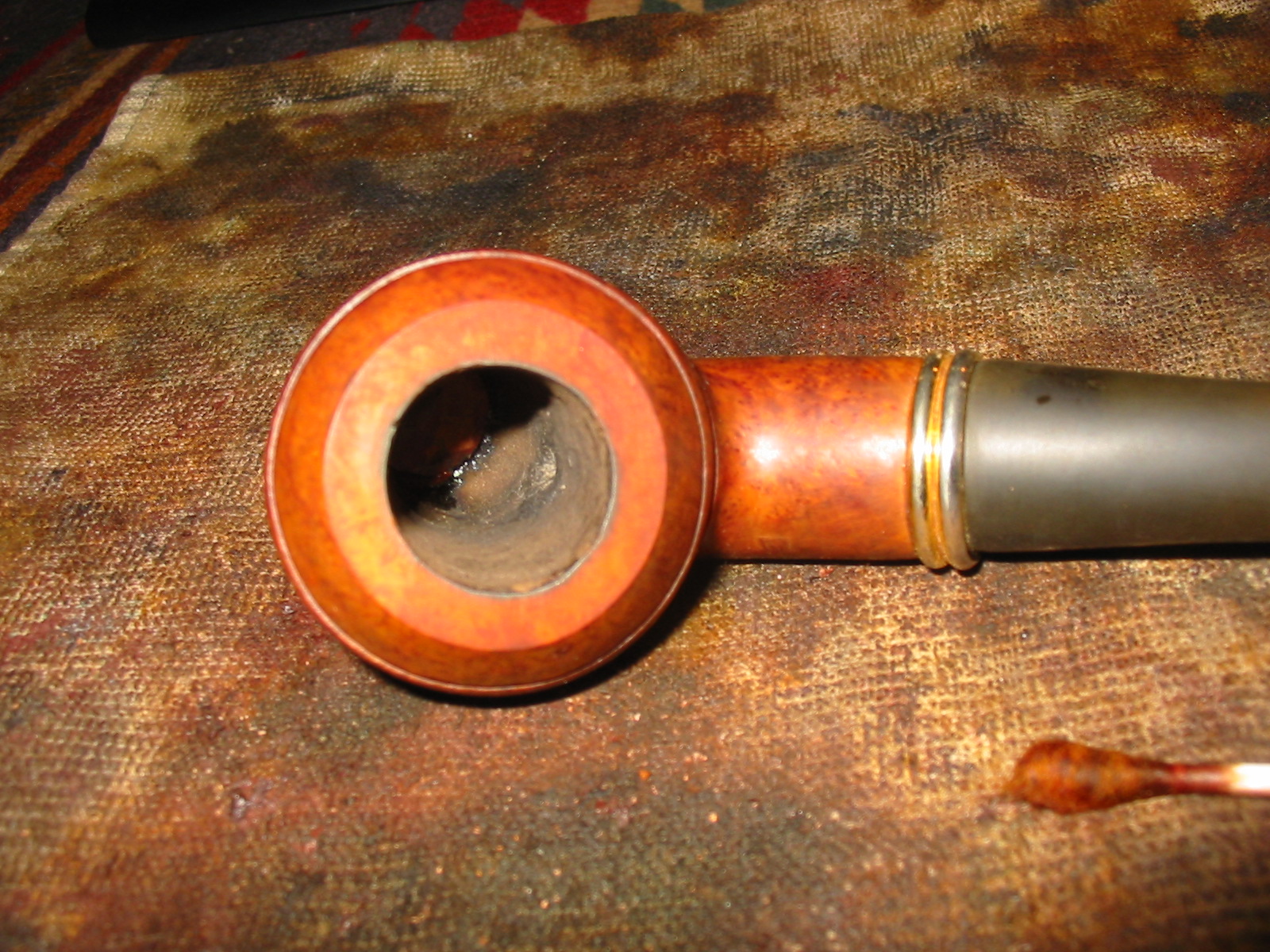
The tooth mark on the top of the stem needed to be heated to lift it as much as possible and then I used some superglue to finish the repair. I sanded it with 220 grit sandpaper to feather it into the surface of the stem. I followed that with a medium and fine grit sanding sponge. I finished the stem with my usual array of micromesh sanding pads – wetsanding with 1500-2400 grit pads and dry sanding with 3200-12,000 grit pads. I rubbed the stem down with Obsidian Oil and then buffed the pipe with White Diamond. I gave it multiple coats of carnauba wax to finish. The completed pipe is shown in the photos below. I also included a photo of the top of the rim to show the repair. The pipe is now ready to join the rest of the ones heading to the Vancouver Pipe Club. It should provide years of service to the pipeman who takes it home.
IMG_4450

IMG_4451

IMG_4452

IMG_4453

IMG_4454

Reclaiming a Mistreated Royal Danish 29 Billiard


This is the last of the Vancouver Pipe Club pipes that I decided to rework. It is stamped on the bottom of the shank near the stem Royal Danish over Made in Denmark. On the right side of the shank, mid shank it is stamped 29 which I assume is the shape number. Like the others in this lot it was coated with a thick coat of varnish. The finish under the varnish was dirty and there were finger prints in the varnish coat – like it had been handled while wet. The rim looked like someone had used it for a hammer and had a thick coat of tars on the rim under the varnish. Not only were there marks on the surface of the rim but the inner and outer edges were also rough and damaged. The stem is a replacement and it was poorly fitted to the shank. The person who had restemmed it had left the shank pitted with small divots and out of round. The stem itself was no longer round but in different spots than the shank. It had not been sanded on the underside at the shank because of the close stamping on the end of the shank. Instead it had ripples and grooves left in the vulcanite that made it feel very rough in that portion of the stem. The bowl was coated with the same black rubbery substance.
IMG_4373

IMG_4375

IMG_4378

IMG_4379

The next photo shows the condition of the rim and what led me to top the bowl and refinish this pipe. It had great overall structure but needed some TLC to bring it to the next level and make it a pleasure to have and to hold.
IMG_4380

I used 220 grit sandpaper to work on the stem shank junction and try to smooth things out. Though it is hard to see in the photos the transition was a mix of hills and valleys. It was very rough and uneven all around that portion of the top and sides of the shank. The stem itself was poorly finished as well at that point. There were sanding marks and gouges in its surface that paralleled the shank. The shoulders of the stem were rounded as well so the fit to the shank was odd. I worked on the shank stem fit before turning to the bowl rim.
IMG_4382

IMG_4383

IMG_4386

The underside of the shank was quite tedious to work on as the stamping was faint at that point and very close to the end of the shank. I had to use a folded piece of sandpaper and carefully sand the stem and shank for a good clean fit. I worked to smooth out the transition as much as possible and minimize the rounded edges of the stem. I wanted the fit to be even and tight. Once the transition between the shank and stem were smooth and the feel seamless to touch I moved on to top the bowl. I set up my topping board and a piece of 220 grit sandpaper and began to work on the top of the bowl. I sanded it until it was flat and the outer edges of the bowl were clean and sharp. I used a folded piece of sandpaper on the inner edge to clean up some of the damage and sharpen the angles.
IMG_4387

IMG_4388

IMG_4389

IMG_4390

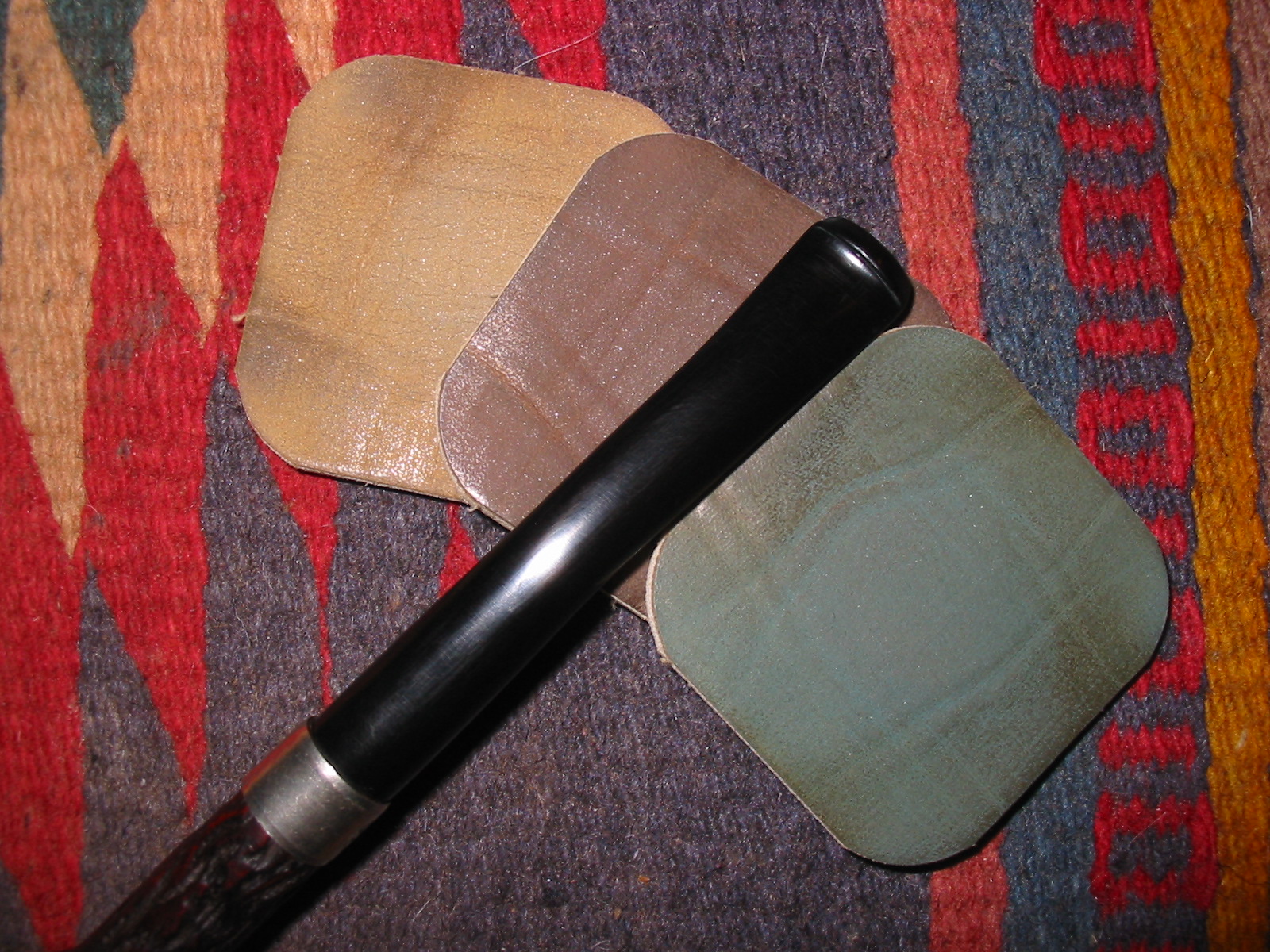
I wiped the bowl down with acetone on cotton pads to remove the varnish and the finish and bring the briar back to an even tone throughout the pipe. It always makes the staining easier when you rework the entirety of the bowl and the overall condition of this pipe demanded that kind of work.
IMG_4392

IMG_4393

IMG_4394

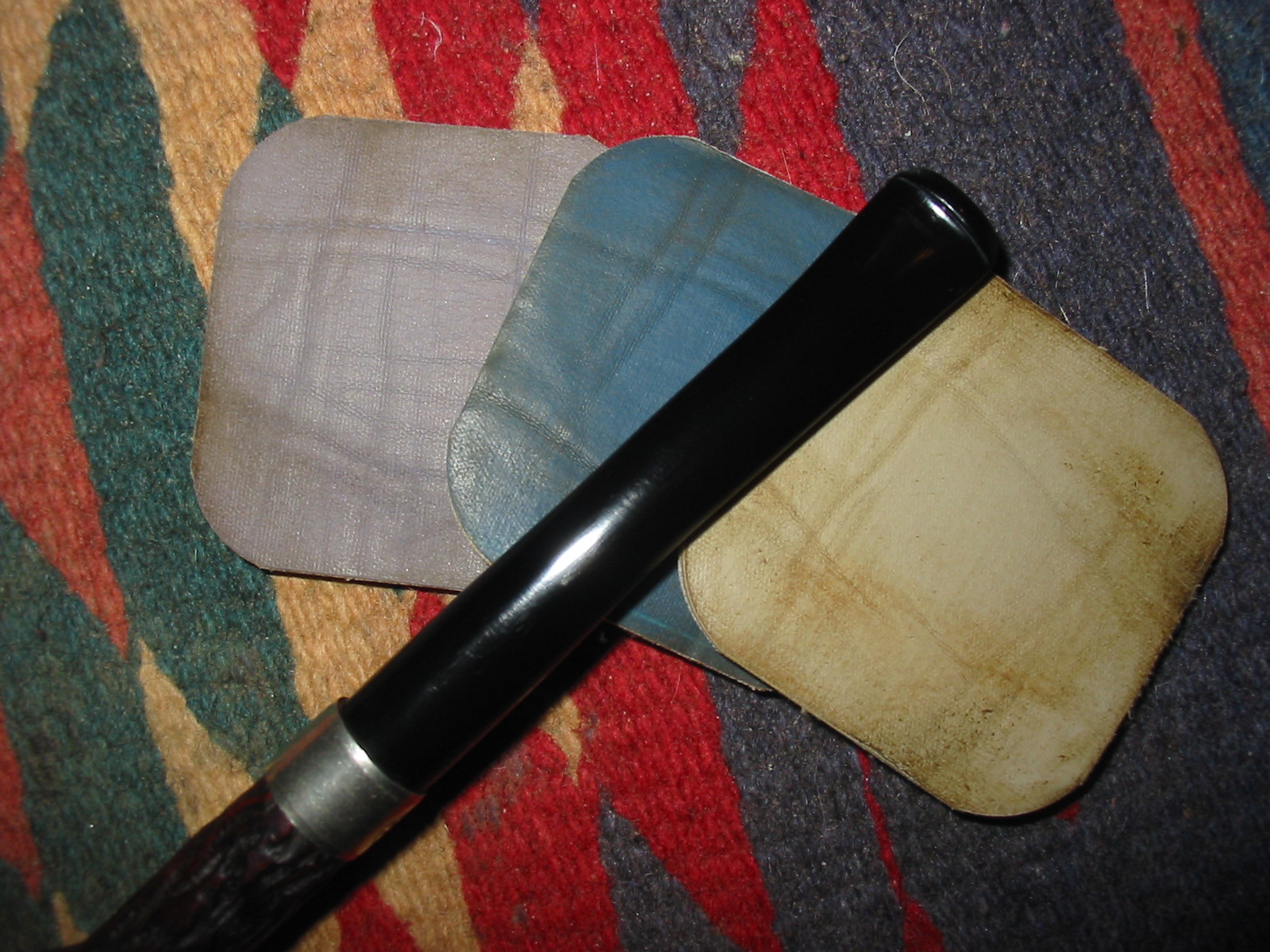
I used a MinWax Red Mahogany stain on the bowl to approximate the reddish colour of the original stain. I rubbed it on and off with a cotton pad until I had the colour I was looking for. When the stain was dry I hand buffed it with a soft cloth to bring out a shine. I set the bowl aside while I worked on the stem.
IMG_4396

IMG_4397

IMG_4398

IMG_4400

I sanded the marks out of the stem on the underside near the shank and in several spots on the taper mid stem with 220 grit sandpaper and then with a fine grit sanding sponge. I then used my usual array of micromesh sanding pads – wet sanding with 1500-2400 grit pads and dry sanding with 3200-12,000 grit pads.
IMG_4404

IMG_4406

IMG_4408

After sanding with the final grit of micromesh pads I rubbed down the stem with Obsidian Oil and then when it had dried took the pipe to the buffer. I lightly buffed the stem and bowl with White Diamond and then gave the pipe multiple coats of carnauba wax. The finished pipe is shown below and to my eye looks much better after the makeover. I think this is yet another pipe that will find a new home among the members of the Vancouver Pipe Club.
IMG_4409

IMG_4410

IMG_4411

IMG_4412

Reworking a Peterson’s Kildare X105


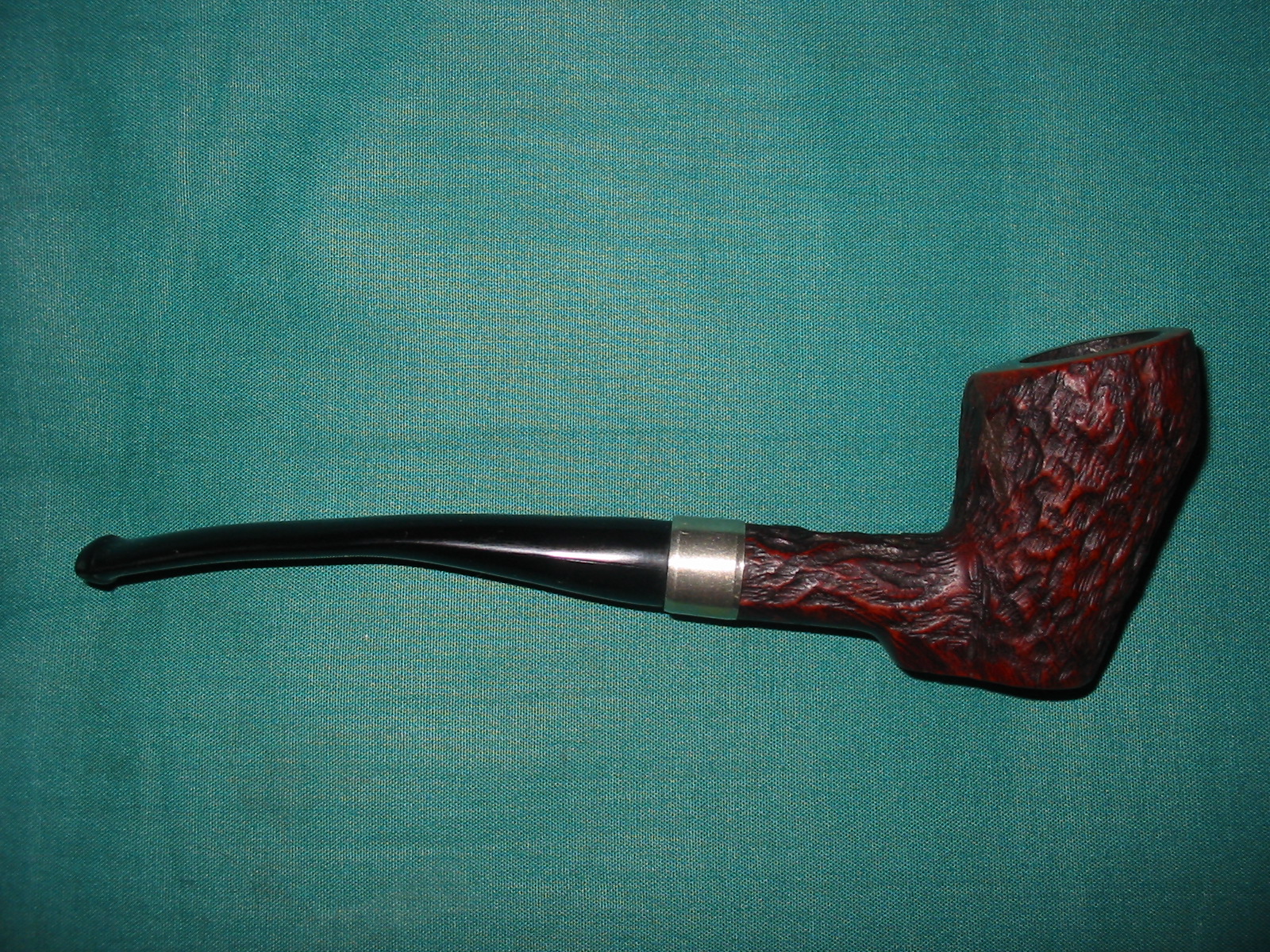
I picked up this old pipe primarily for the shape. It has the chunky look I like in a pipe. The bowl has some nice grain on it and that was attractive as well. The stamping was too faint to read in the shop but when I got home with a bright light and a loupe I was able to see the stamping more clearly – though it is very faint. The left side of the shank says Peterson’s over Kildare and the right side says Made in England and the shape number of X105 (at least that is what the stamping of the number looks like). The pipe was in decent shape and would clean up quite nicely. The finish was not too bad though the previous restorer had given it a coat of varnish or something that was quite heavy. There were finger prints still in the varnish coat. The bowl was reamed and clean and the shank quite clean. The rim had some buildup that had been varnished over which gave it a damaged appearance. The stem seems like a replacement but I cannot be sure as the fit is very well done. It was in great shape with minimal oxidation and slight pitting on the surface of the vulcanite. There were not any tooth marks or chatter.
IMG_4342

IMG_4343

IMG_4344

I decided to remove the varnish coat (it seems like I have had to do that a lot lately with the pipes I am reworking for the pipe club). I wiped down the bowl with acetone and cotton pads until I had removed the varnish and the stain. I scrubbed the rim with the acetone and pads as well to remove the buildup under the varnish. It came of quite easily and turned out to be undamaged. There was a slight darkening of the rim on the left side toward the front but no damage to the area.
IMG_4345

IMG_4346

IMG_4347

IMG_4349

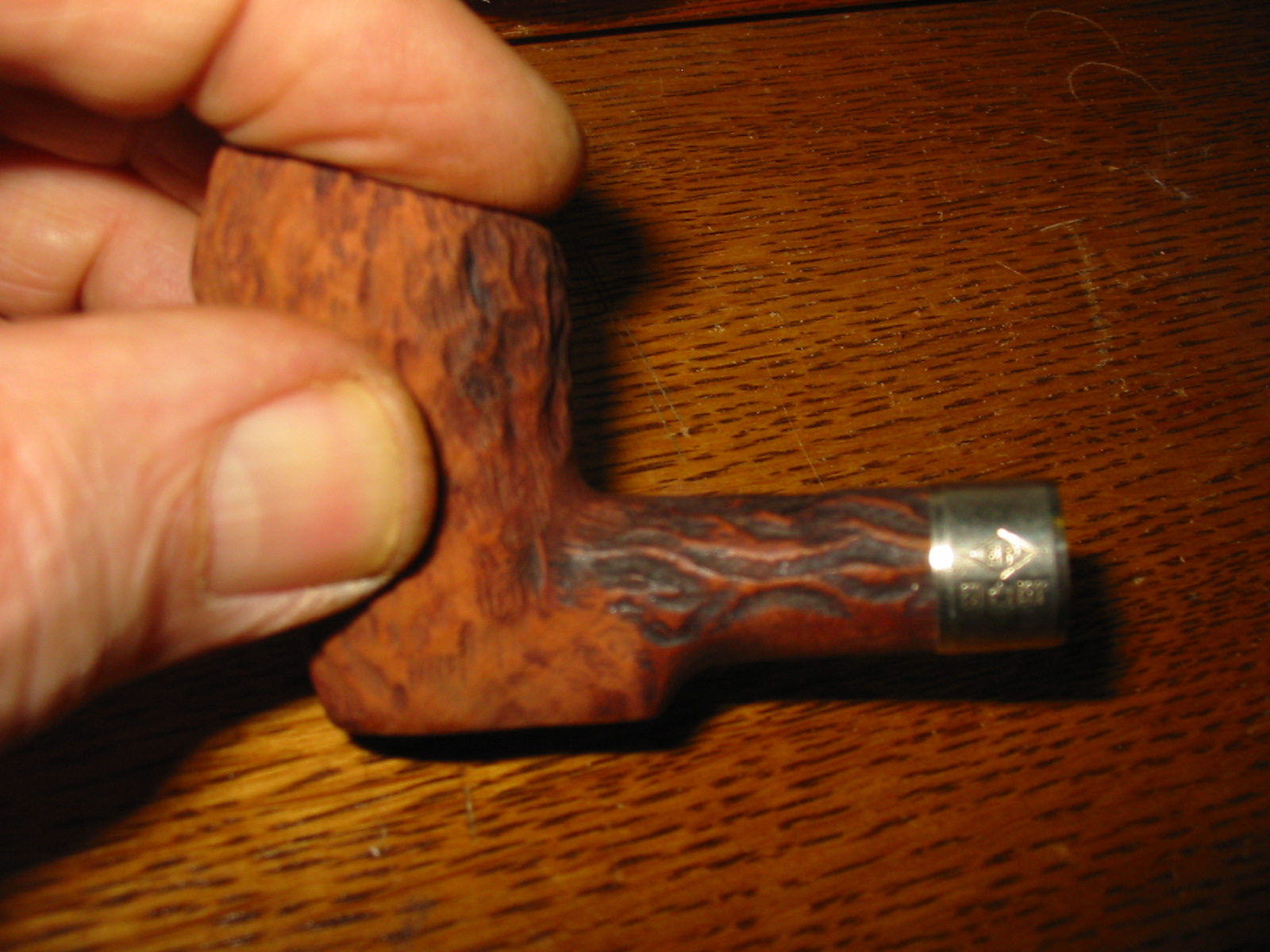
While I was working on it I remembered that I had picked up a Peterson sterling silver band that would probably fit this pipe very well. I dug it out of my box of bands and gave it a try on the shank. It fit perfectly on the shank. I like the look of the bling and the added perk of it being a Peterson stamped sterling silver band was bonus!
IMG_4350

IMG_4351

IMG_4352

I put wood glue on the shank to anchor the band (no repairs were necessary and the band was purely adornment) and pressed the band into place. I rotated it so that the Peterson engraving was on the top of the shank.
IMG_4353

I stained the bowl with MinWax Medium Walnut and Red Mahogany stain to get a reddish brown tint to the briar. I rubbed it on the pipe and then off again. I did the same with both colours. When it was dry I hand buffed it with a soft cotton cloth.
IMG_4357

IMG_4358

IMG_4359

IMG_4360

The stem was lightly oxidized and slightly pitted so I decided to work it over with the micromesh sanding pads. I used the usual method I have developed as a habit over the years and wet sanded with 1500-2400 grit pads and dry sanded with 3200-12,000 grit pads. I buffed the stem with White Diamond and rubbed in some Obsidian Oil to preserve the vulcanite.
IMG_4362

IMG_4363

IMG_4364

When the stem was done I reinserted it into the shank and buffed the entire pipe with White Diamond. I avoided buffing the silver as I find that it darkens the wheels and also the wood and vulcanite on both sides of the band. So once I had finished buffing the pipe I gave it multiple coats of carnauba wax and then buffed it with a clean flannel buff. I took it back to the work table and polished the silver band with a jeweler’s cloth and then applied some wax on the band to slow down the oxidation of the silver. The finished pipe is pictured below. I also have included a picture of the finished rim to show the cleanup results. The pipe is cleaned and ready to be smoked. The addition of the silver band worked well in my opinion and I like the finished look of the old timer quite a bit.
IMG_4365

IMG_4366

IMG_4367

IMG_4368

IMG_4369

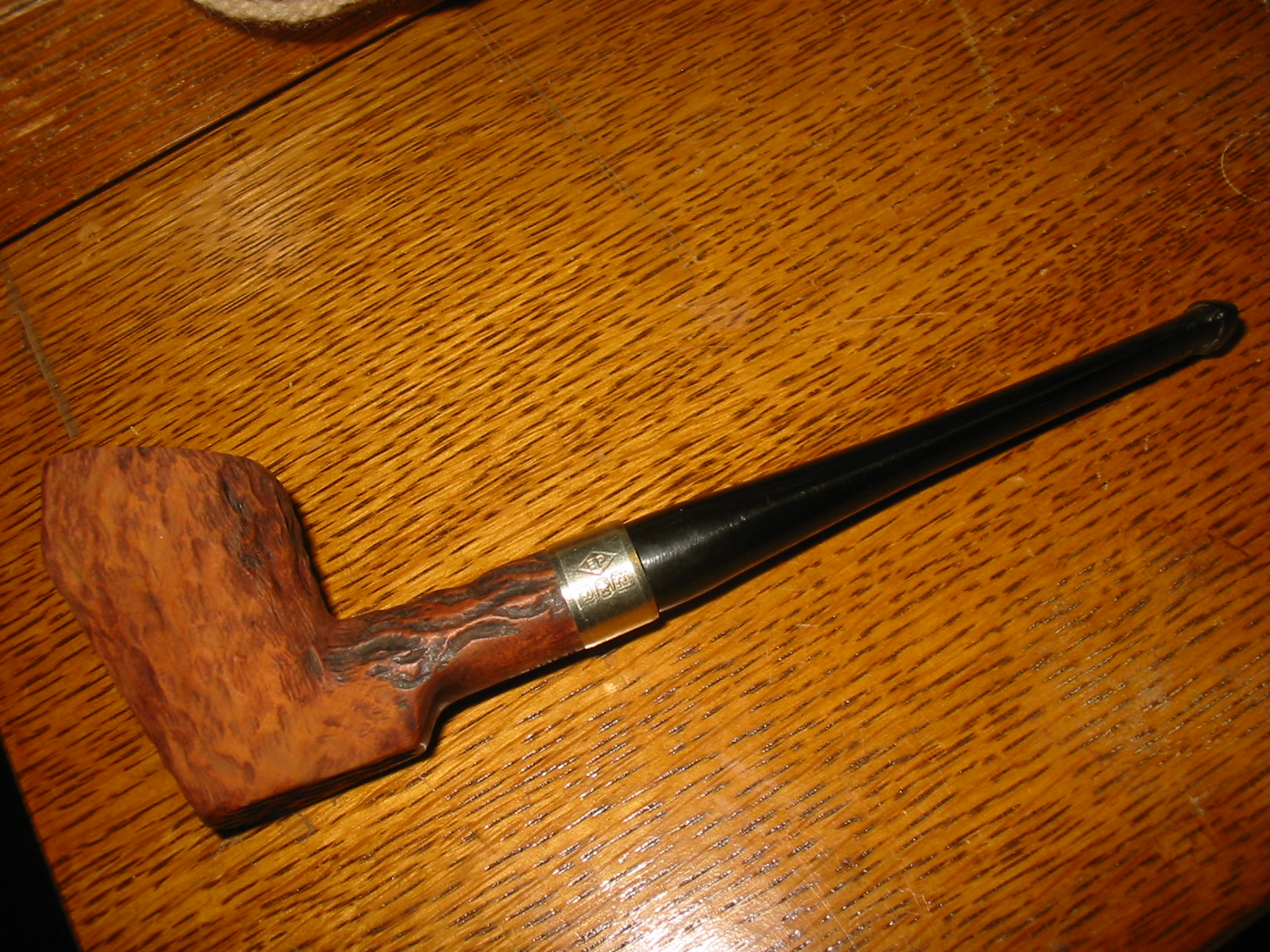
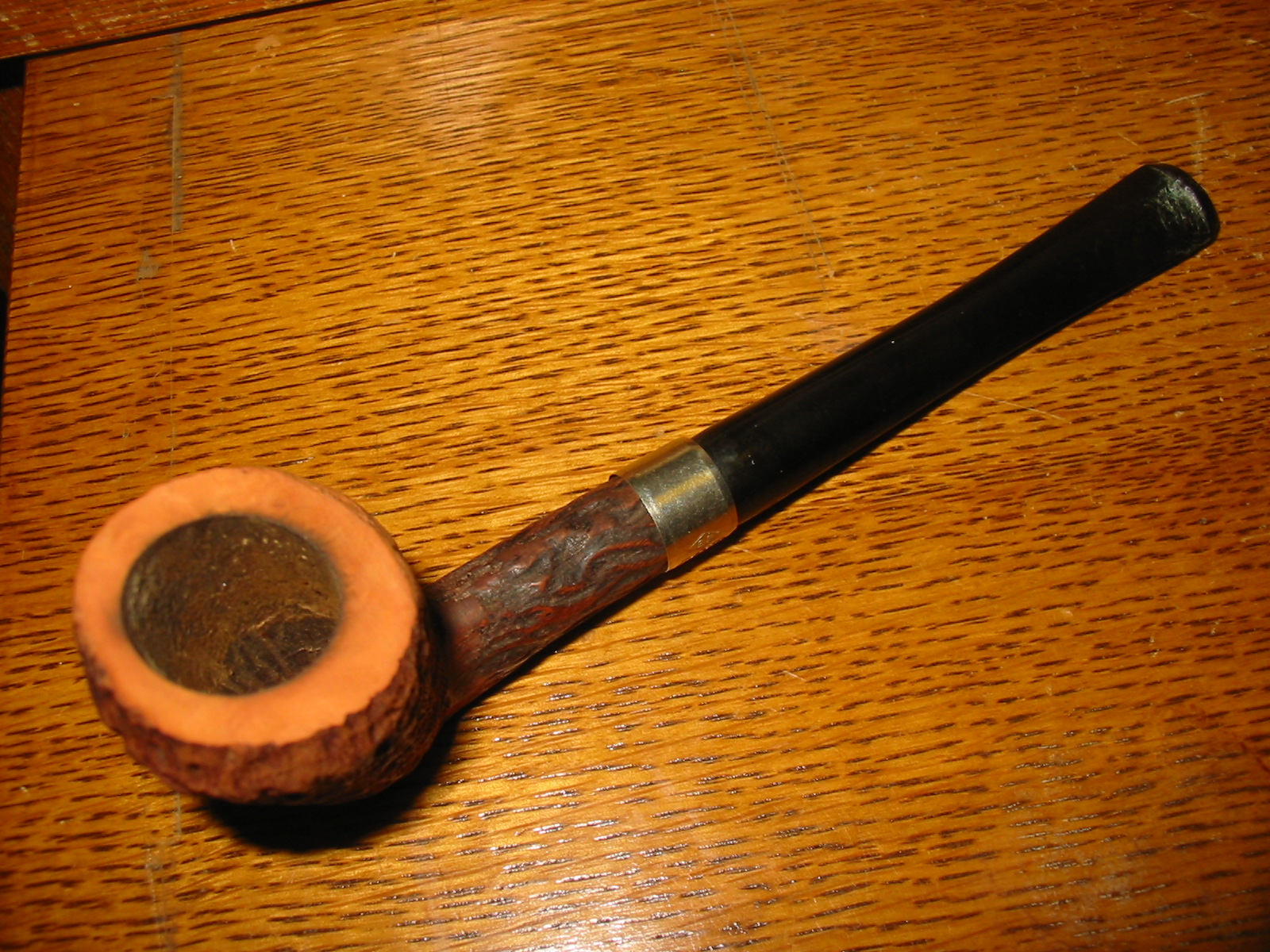
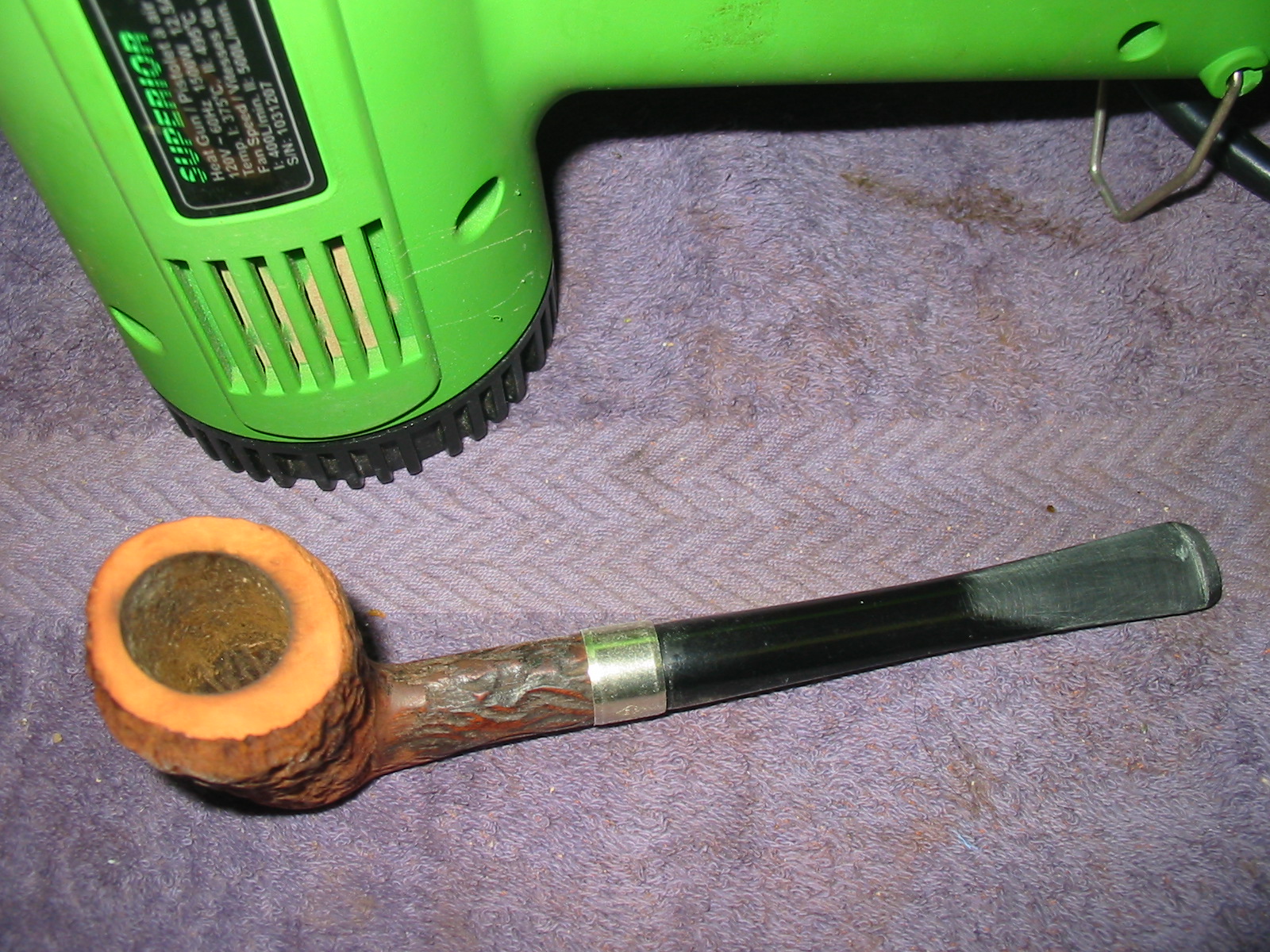
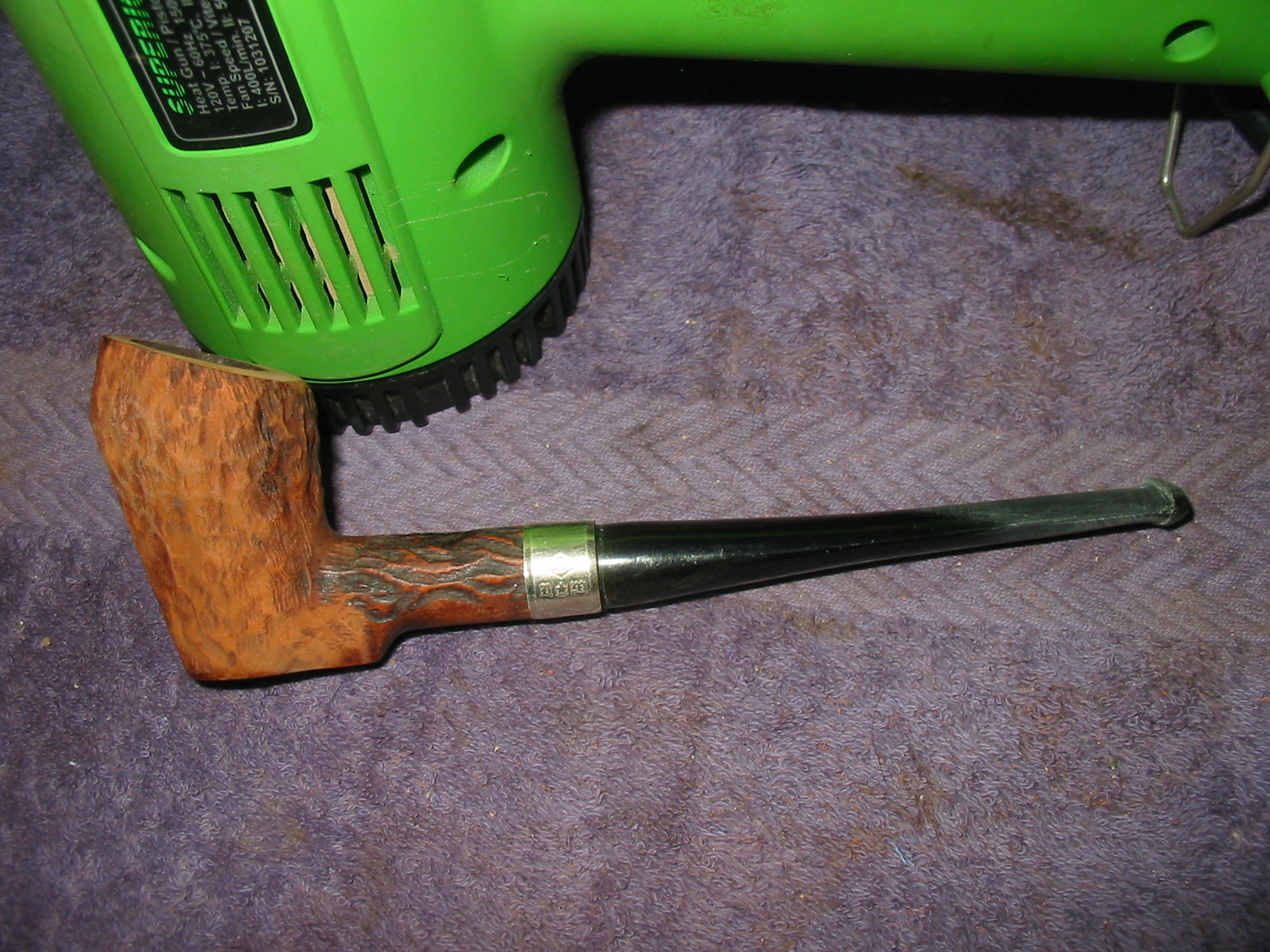
A Renovation of a Good Companion London Made Billiard


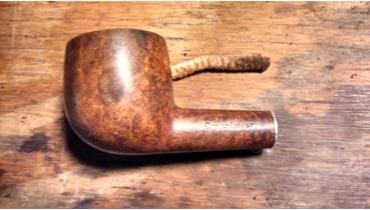
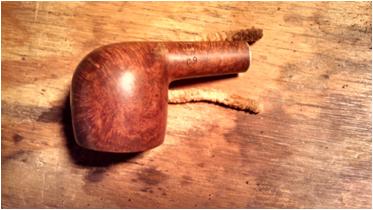
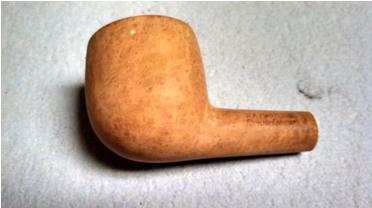
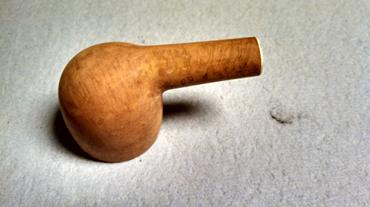
My wife and I went out for lunch on Saturday and there was an antique shop across the street from the restaurant. After eating we brave torrential downpours and ran across the street check out a shop we had not visited before. We looked through the various display cases and I found the pipe below along with a chewed up Yello-Bole billiard. The pipe was a small group 3 sized billiard. The finish was a dark brown stain on a sandblasted pipe. The left side had great grain pattern and showed deep grooves. The right side was a tight birdseye grain and the blast was shallow and close. The shank was rusticated to look like a sandblast. The stem had a slight bend but seemed be from sitting in the heat rather than intention. There was a bite through on the top surface of the stem that was large enough that it could not have been patched. The rim was originally smooth and beveled inward but the bevel had been damaged and needed to be reshaped and cleaned up. The stamping on the pipe is what ultimately made me spend the $10 to make the pipe mine. It read Good Companion over London Made on the underside of the shank. I just finished reading a new book by Mark Irwin called Pipe Companions. In it he wrote of the relationship between the pipe and the pipeman. I think it was a great coincidence to walk into a pipe stamped Good Companion. I wanted to clean it up and make it my own.
IMG_4177

IMG_4178

When I got home from the visit to the shop I took the pipe apart. The stem had a large spiral stinger apparatus in the tenon. The stem itself was badly chewed. I found a new stem for the pipe in my can of stems and worked on the tenon to make the tapered stem fit the shank.
IMG_4263

IMG_4264

IMG_4265

I pushed the newly fitted stem into the shank to have a look at the shape with a taper stem. I liked the overall look of the pipe with the new stem. I sanded the stem to remove the calcification and the oxidation on it. I also worked on the fit of the stem to the shank. I wanted the transition to be smooth and seamless. I took the stem in and out several times while I worked on it. The last time I pushed it into the shank there was a crack! I don’t know if that has happened to you but when it happens there is a sick feeling in the pit of my stomach. Here the pipe was almost ready to refinish and the stem fit well and then crack. The frustration at that moment is high level. I laid the pipe down and had a coffee while I thought about my next steps.
IMG_4266

IMG_4268

IMG_4269

IMG_4270

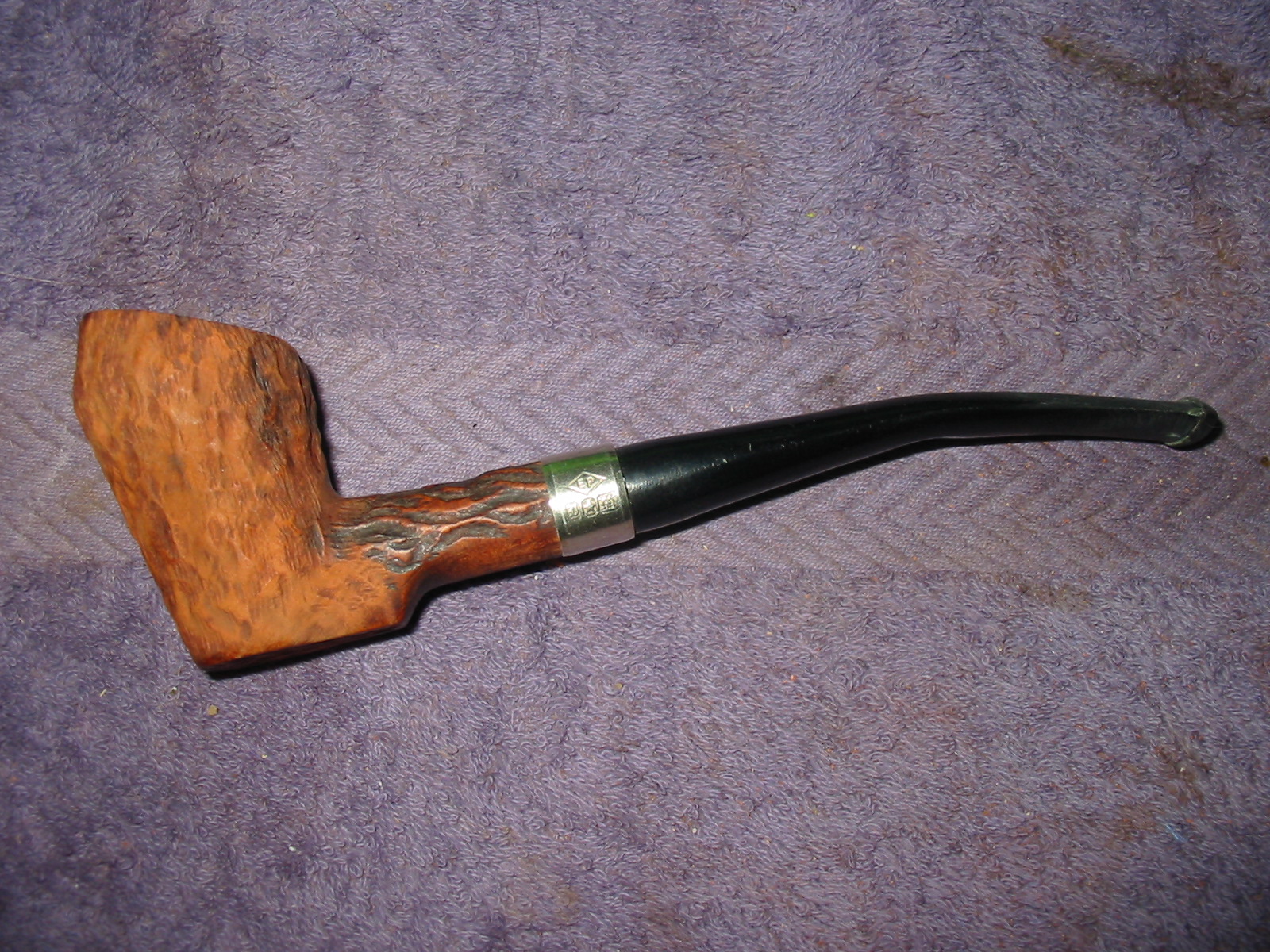
I went through the box of nickel bands that I have here and I did not have any the correct size for the shank. All of them were either too huge or too small. I did remember however that I had some brass plumbing pressure fitting pieces that would make a great band on the pipe and create a totally different look on this old pipe. Before fitting the band I worked on the bevel of the inner edge of the rim. I used a folded piece of sandpaper to smooth out the rim damage and reshape the bevel.
IMG_4271

IMG_4272

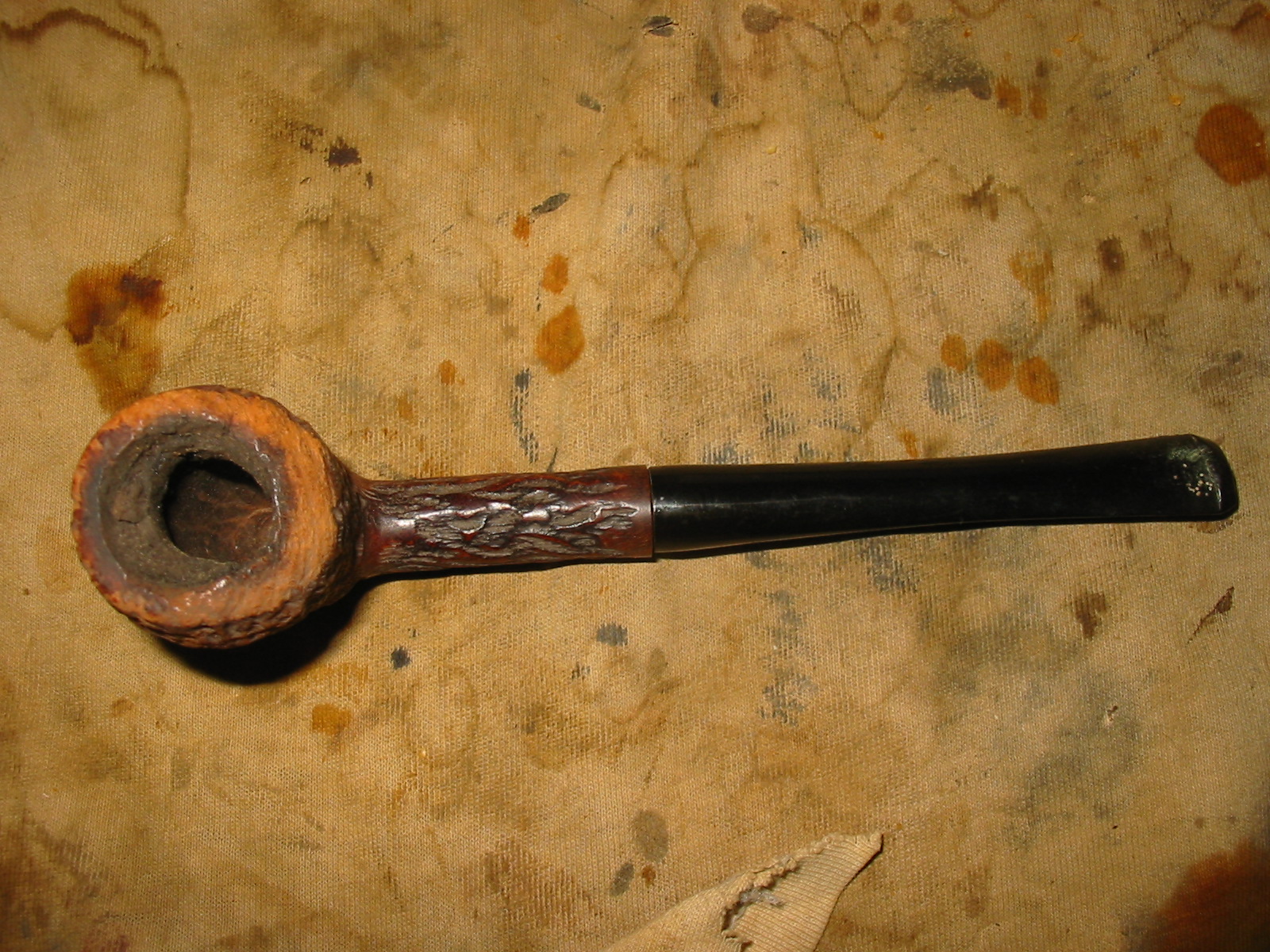
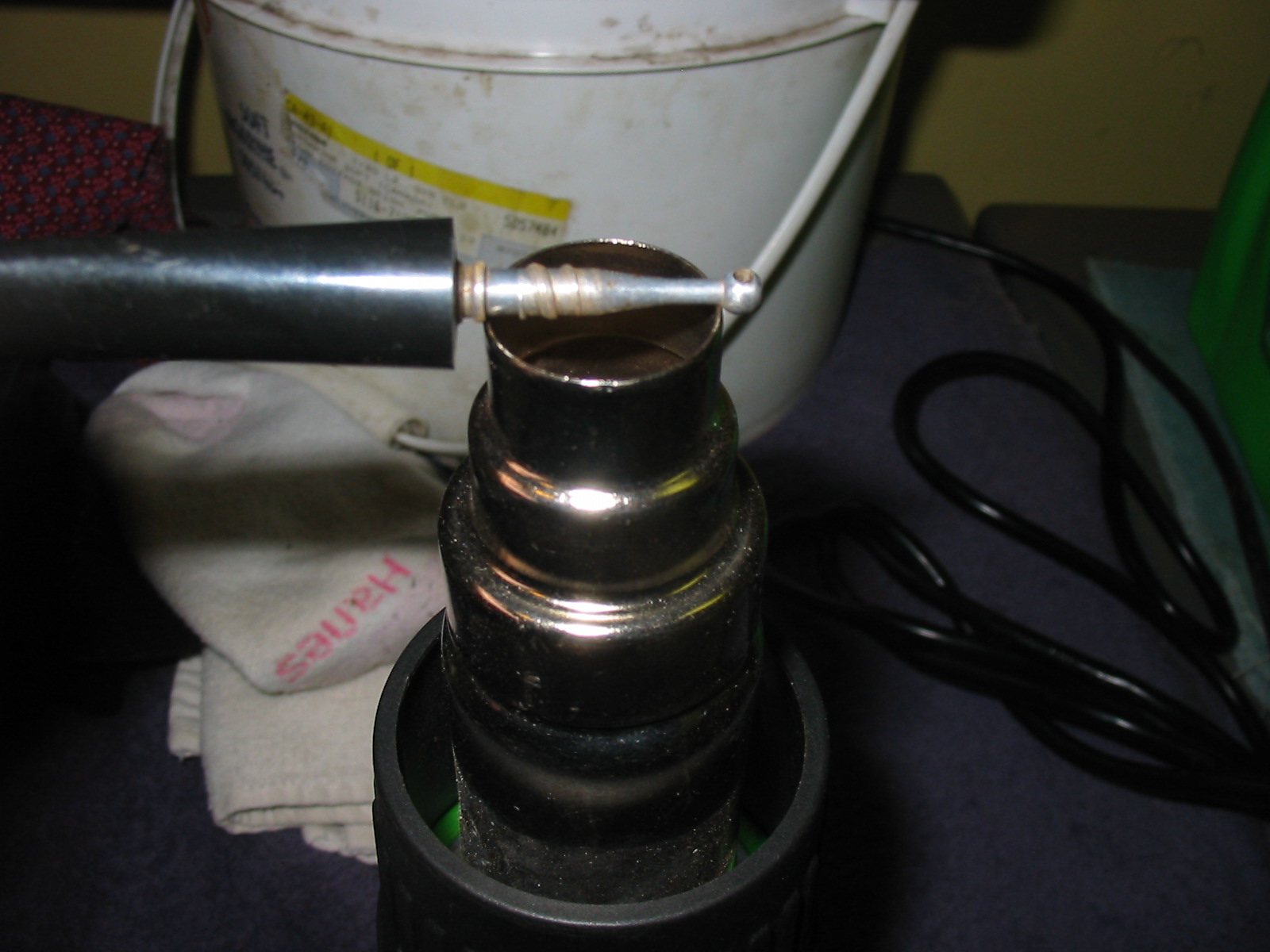
I used a Dremel and sanding drum to sand back the shank so that the band could be pressure fit against the cracked shank. I took back the rustication until the finish was gone and the shank area was smooth. When the band fit tightly on the shank I heated the brass band with a heat gun and then pressed it into place on the shank.
IMG_4273

IMG_4274

IMG_4276

IMG_4278

I pressed the band into place on the shank and then hand sanded the area in front of the band smooth so that I could rework the taper of the shank and the finish to match the rest of the pipe.
IMG_4279

IMG_4280

IMG_4281

IMG_4283

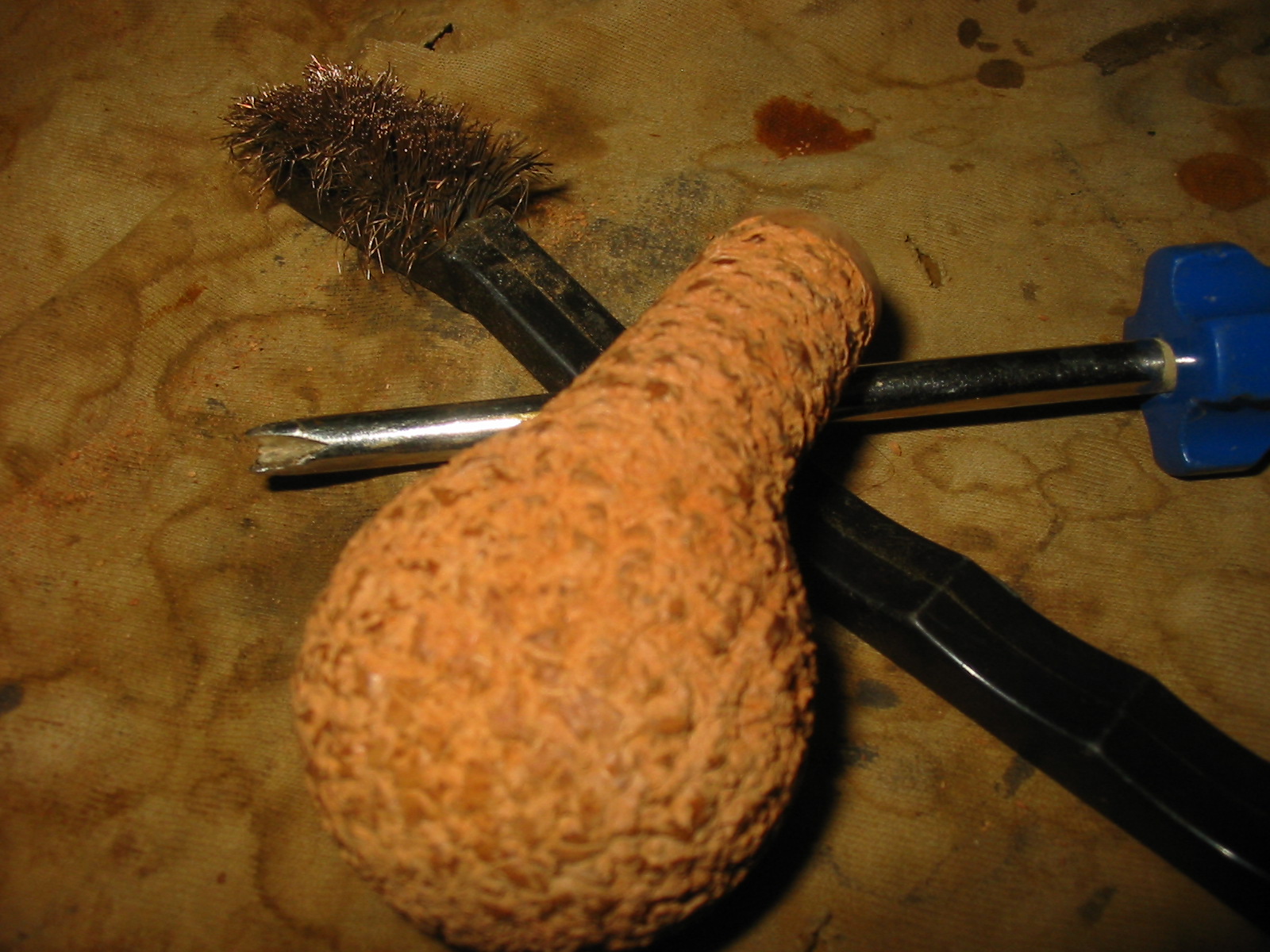
I used the two Dremel diamond cutting heads pictured below to rusticate the finish on the shank. I used the cylinder first and then the ball. I worked it into the briar to make the smooth area match the rest of the bowl.
IMG_4284

IMG_4285

IMG_4287

After rusticating the shank I stained it with a dark brown aniline stain and flamed it to set it deep within the grain. I stained the rest of the pipe as well and the rim with multiple coats of the dark brown.
IMG_4288

IMG_4289

IMG_4290

IMG_4291

Once the stain was dry on the bowl I hand buffed it with a cotton cloth and then stained it a second time with MinWax Red Mahogany stain. I rubbed it on and then rubbed it off. I repeated the process until I had the colour that I wanted.
IMG_4293

IMG_4294

IMG_4295

IMG_4296

I buffed the bowl on with White Diamond and to evenly distribute the stain coat and give the pipe a rich shine. When I had finished I worked on the stem with 220 grit sandpaper, a medium grit sanding sponge and micromesh sanding pads. I used my usual array – wet sanding with the 1500-2400 grit pads and dry sanding with the 3200-12,000 grit pads. I rubbed down the stem with Obsidian Oil and rubbed it into the vulcanite.
IMG_4297

IMG_4298

IMG_4299

I sanded the bevel on the bowl and the brass band on the shank with the 1500-2400 grit micromesh pads.
IMG_4300

IMG_4301

IMG_4302

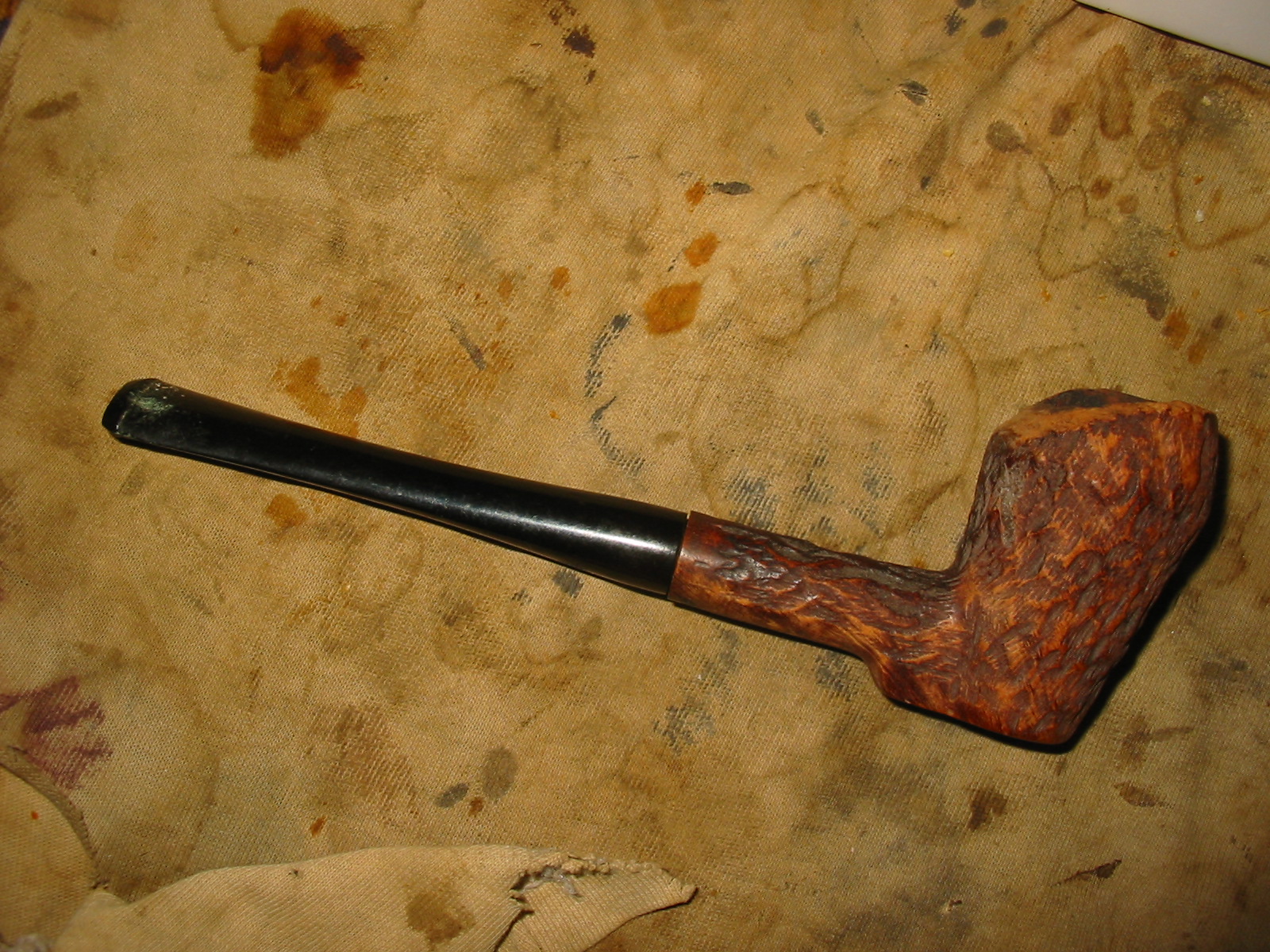
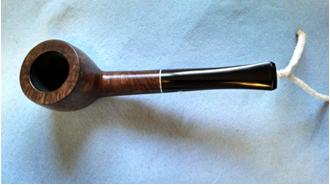
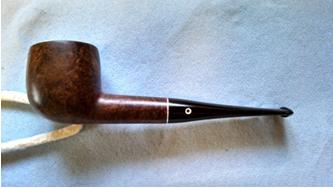
I buffed the pipe with White Diamond and then gave the stem multiple coats of carnauba wax. I used Halcyon II wax on the sandblast finish of the bowl. I buffed the pipe with a clean flannel buff. I have to say though I would have liked to keep the pipe unbanded and pristine, the crack that happened in the shank made me try something a little different. I actually like the finished look of the pipe with the brass band. The combination of the two stains give the blast finish depth that changes with different lighting and the tapered stem adds some panache to this Good Companion.
IMG_4309

IMG_4310

IMG_4311

IMG_4312

IMG_4313

Looking at the photos I decided to do a bit more work shaping the brass band. I sanded the band with 220 grit sandpaper to remove the ridges in the brass. I followed that by sanding with a medium and fine grit sanding sponge. I finished sanding the band with micromesh sanding pads from 1500-3200 grit polish it.
IMG_4314

IMG_4315

IMG_4316

IMG_4317

IMG_4318

IMG_4319

With the band finished I will give the pipe another buff to polish the handling that it received working over the stem.

Topping and Refinishing a No-name Worm Trail Billiard


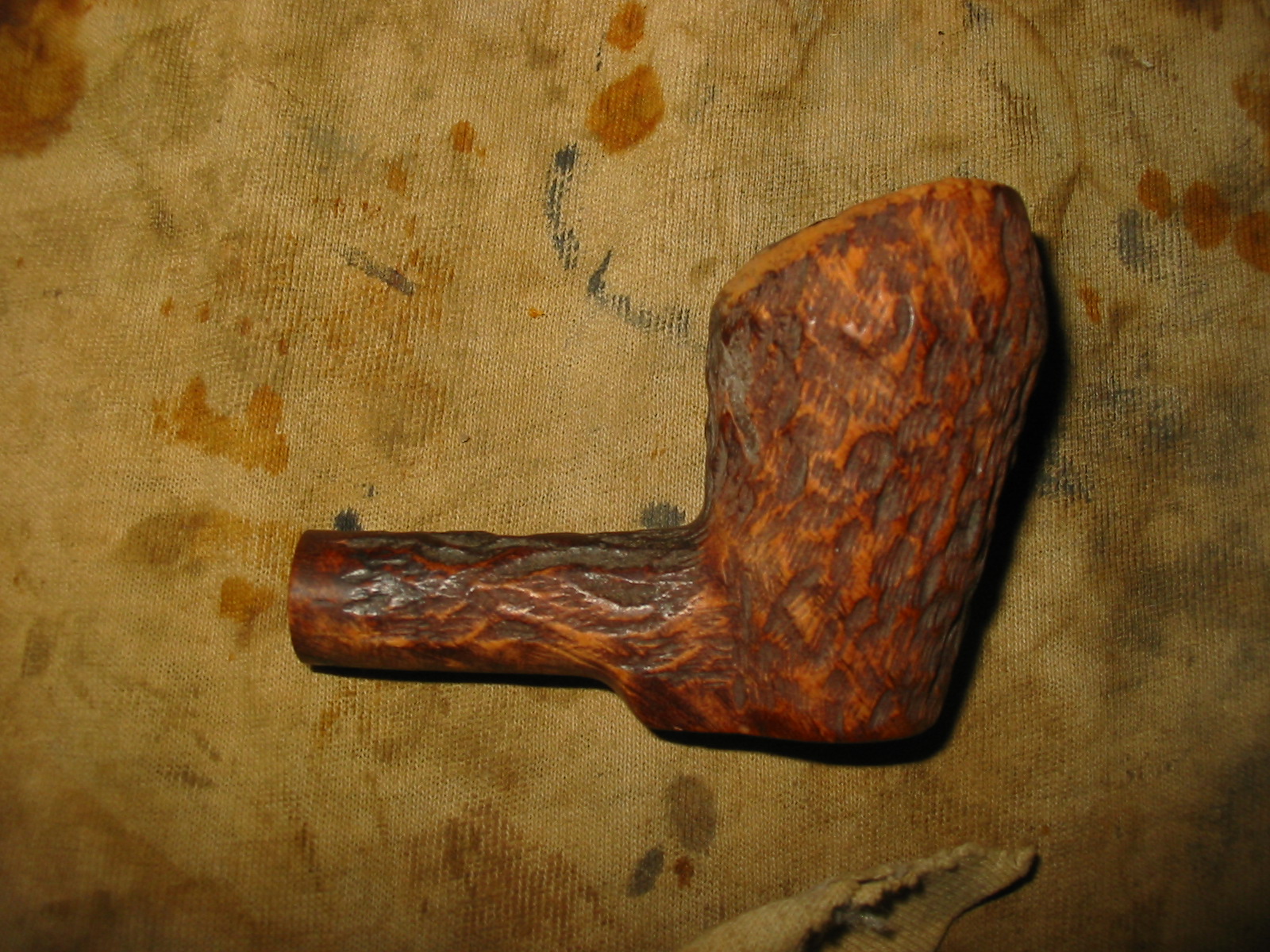
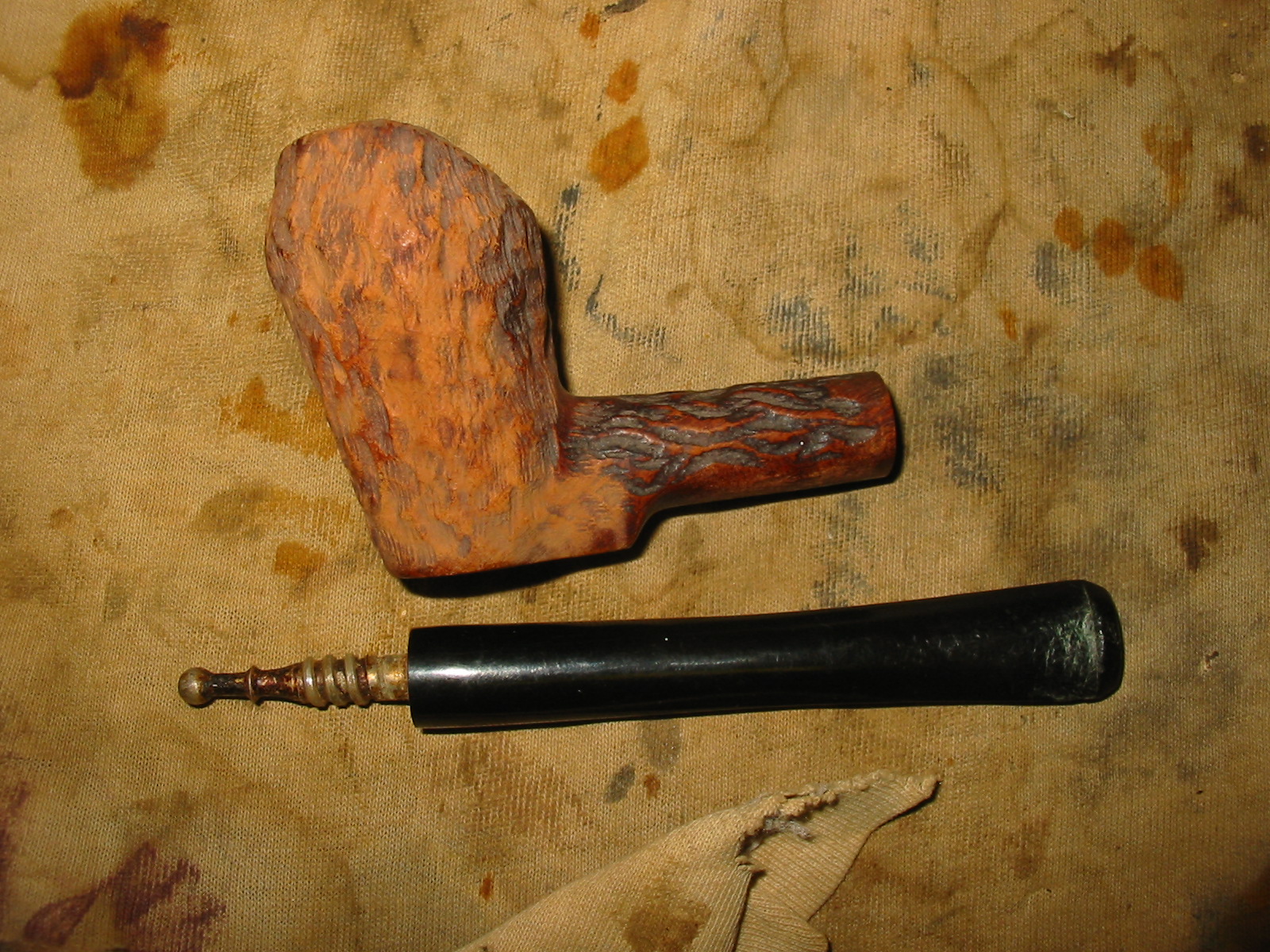
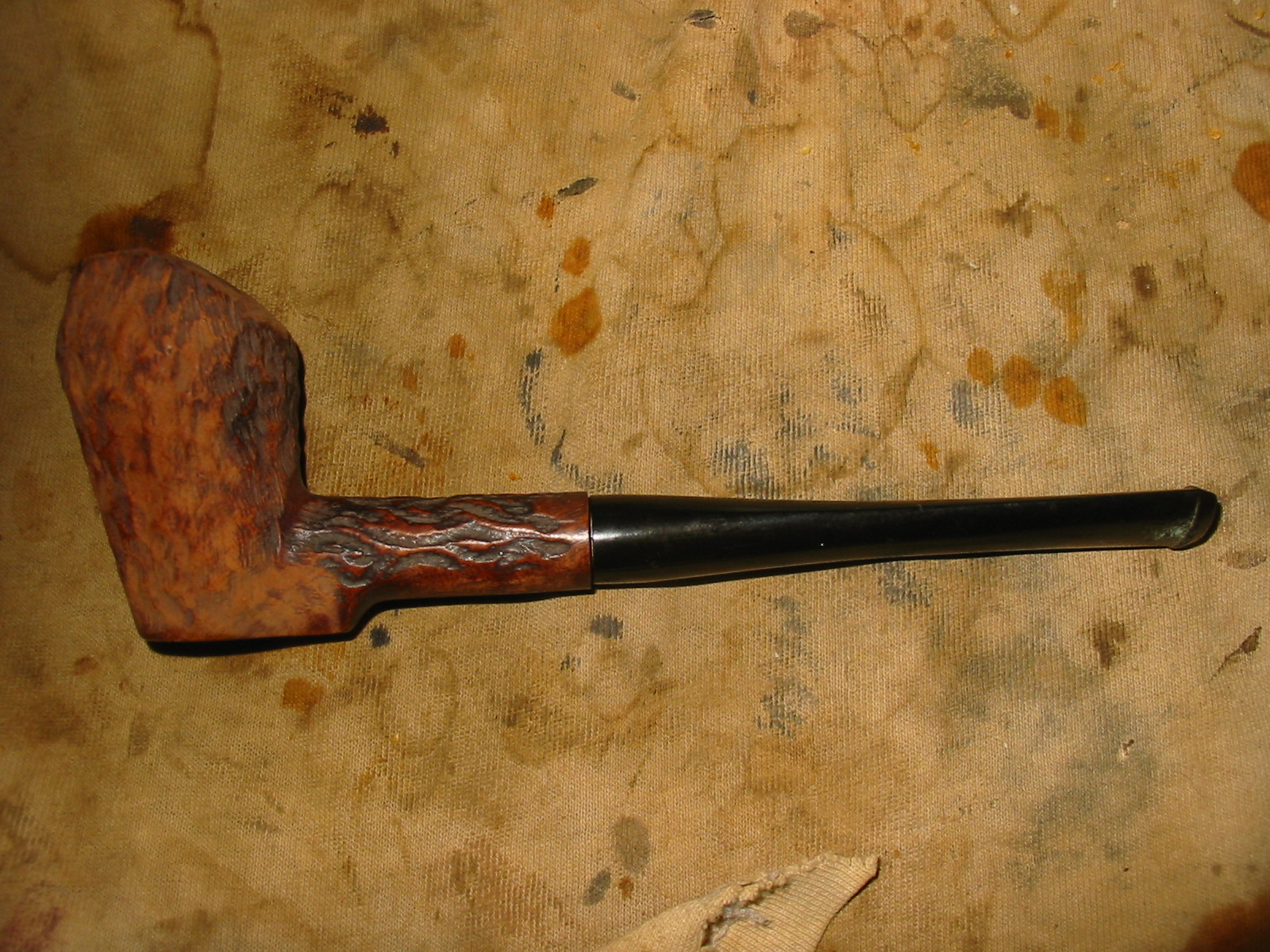
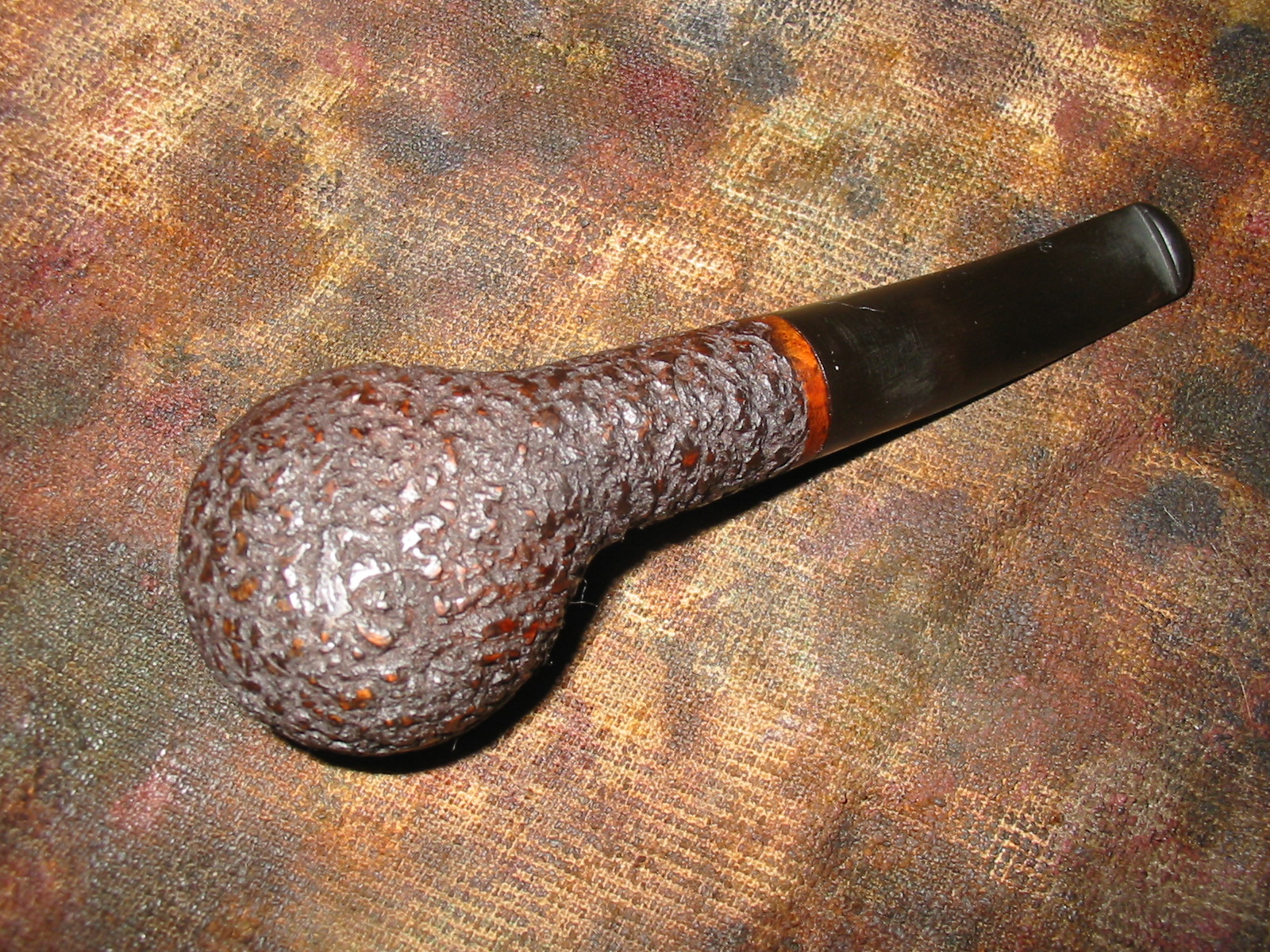
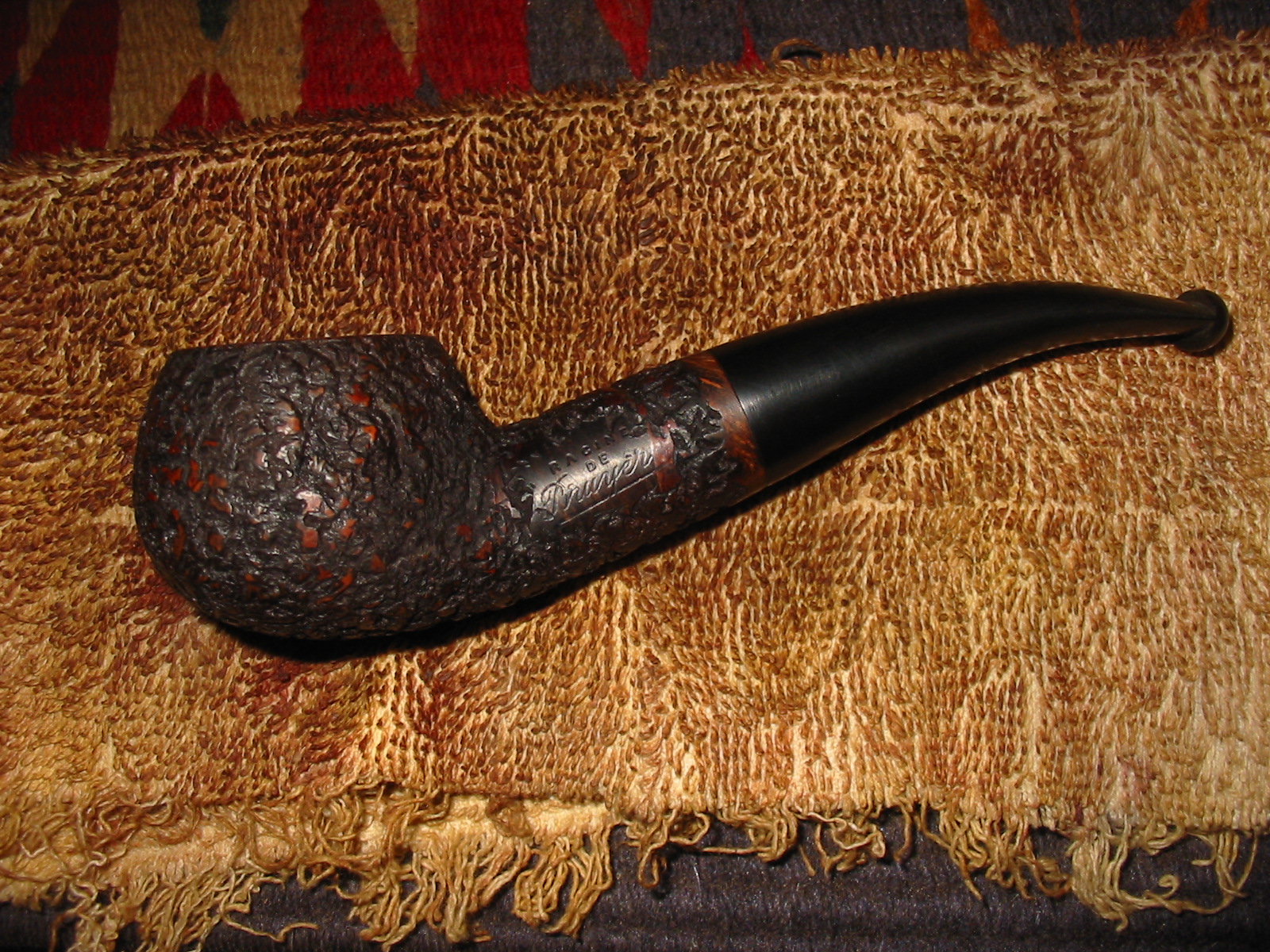
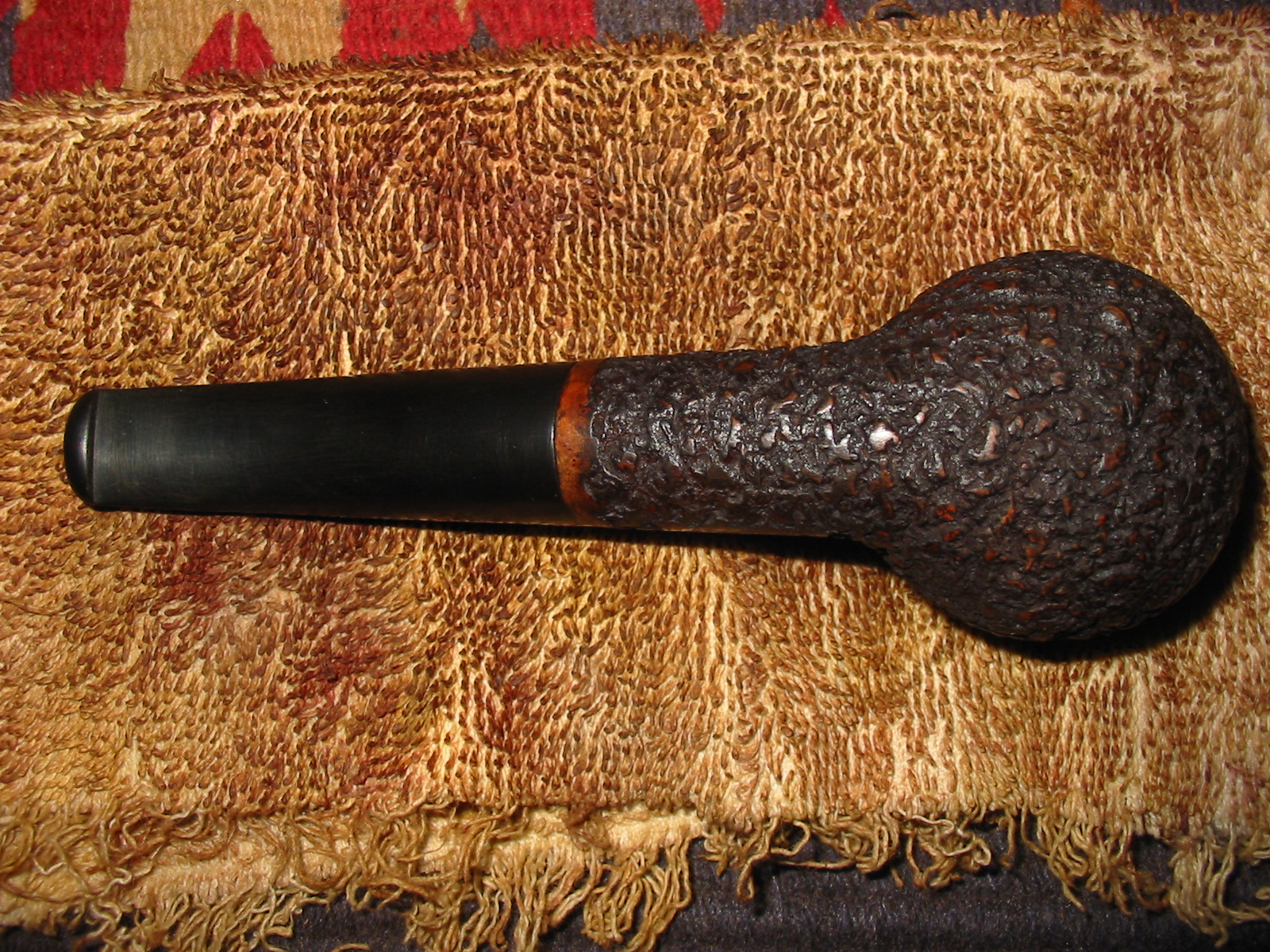
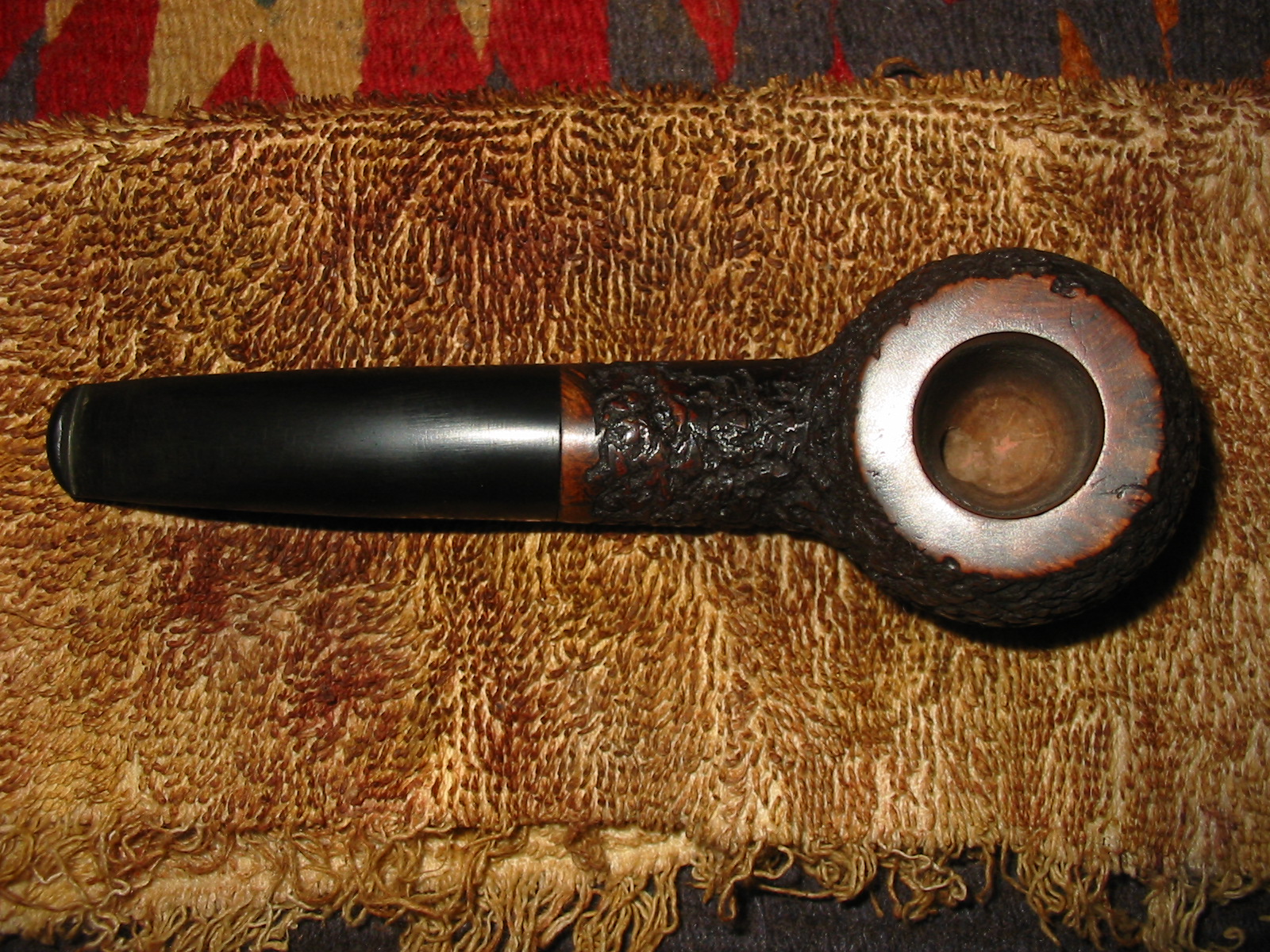
There are a few of the pipes in the Vancouver Pipe Club lot that just don’t do anything for me. One of them was this large billiard – no name. There are several others in the lot that have the same finish and bear the stamping of Partner. It has some nice wedges of smooth grained briar in between the rustication pattern on the bowl. That pattern is what really does not work for me – I call the pattern worm trails because that is what they look like to me. This old pipe has been restemmed somewhere along the way and the person who did the work sanded the shank down to fit the stem – one of my pet peeves! I think there is little that is more irritating in my work of restoration than working on pipes that have been “butchered” to make a stem fit. Why not hack the stem to fit the shank instead of the shank to fit the stem? Hmmm. I will never understand that really. But that is irreparable. The bowl itself had the standard coat of varnish over the bowl and rim – even over the buildup on the rim. The rim was a mess, lots of damage to the outer edge of the bowl and to the top and the bevel in the bowl.
IMG_4239

IMG_4240

IMG_4241

IMG_4242

I took several close-up photos of the damage to the rim to give a general idea of what I was starting with on this old pipe.
IMG_4243

IMG_4244

IMG_4245

I topped the bowl with my sandpaper and board setup. I sanded until the top was flat and the majority of the damage was minized. I also evened out the bevel on the inner edge of the rim with folded sandpaper to match all the way around the bowl.
IMG_4246

IMG_4247

IMG_4248

Once I finished with the 220 grit sandpaper I sanded the rim and bevel with a fine grit sanding block to smooth out the scratches. I wiped the bowl down with acetone on cotton pads to remove the varnish and the finish as much as possible. I also reamed the bowl with a PipNet reamer to remove the black rubbery bowl coating.
IMG_4249

IMG_4250

IMG_4252

IMG_4253

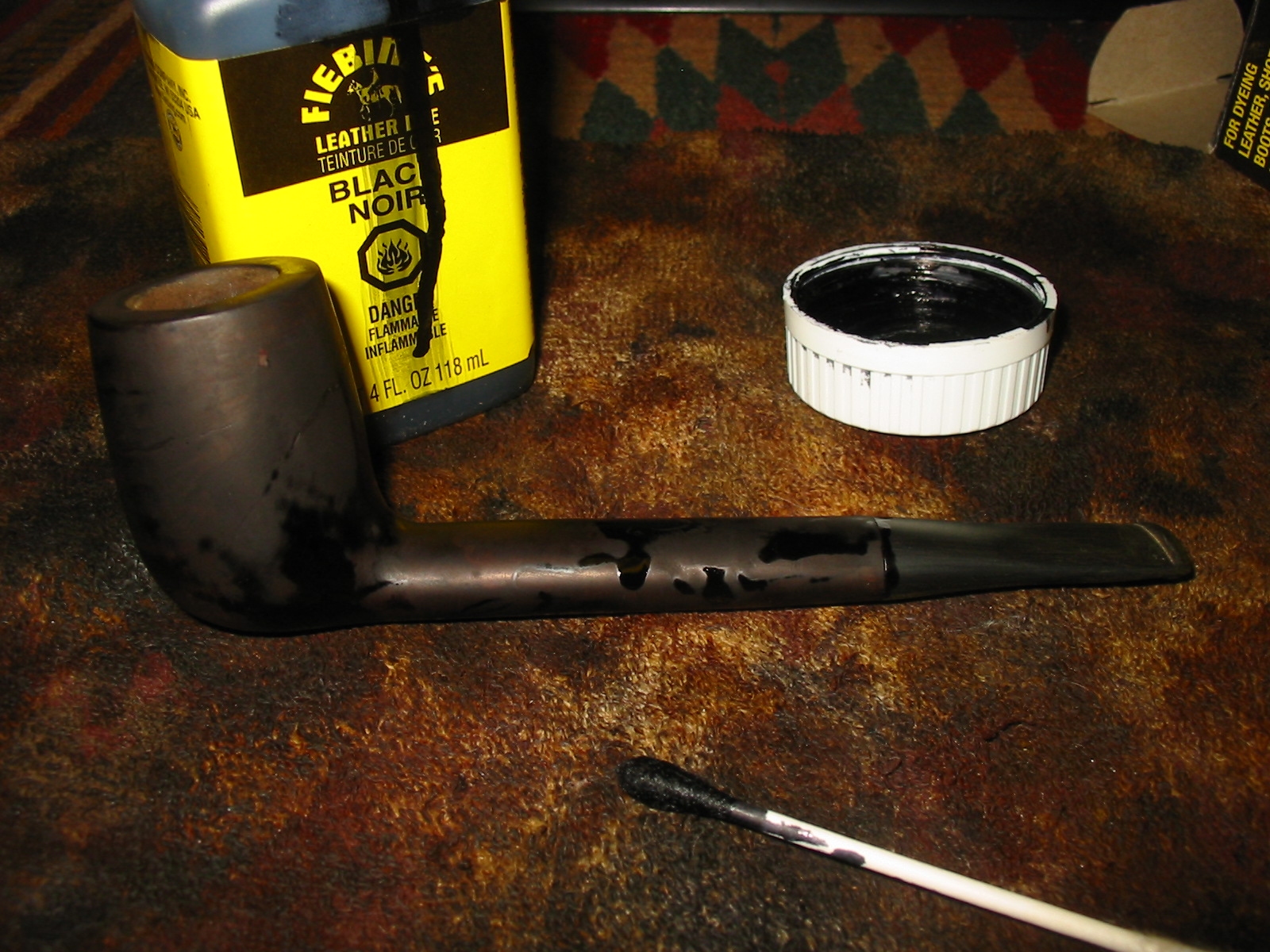
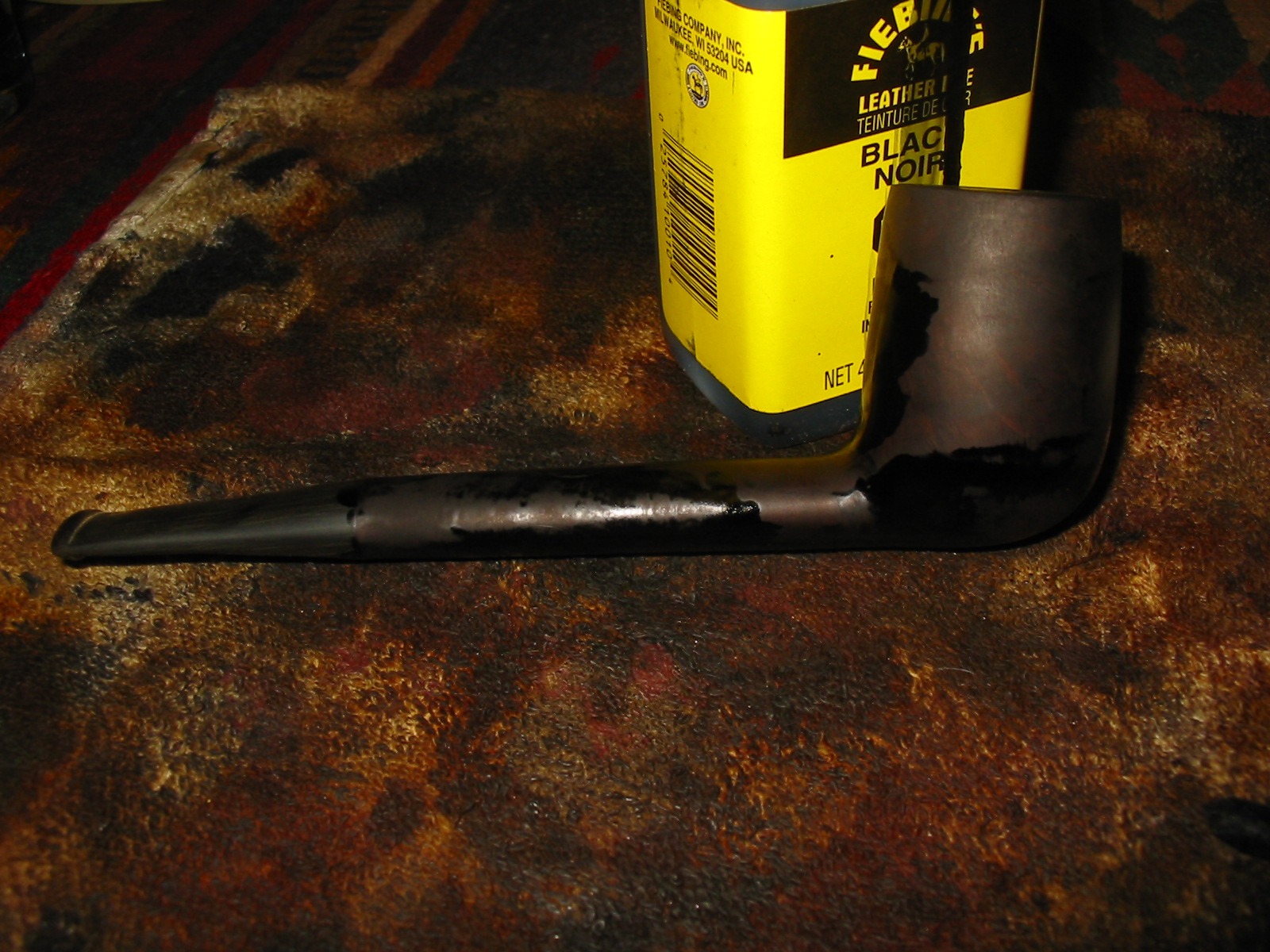
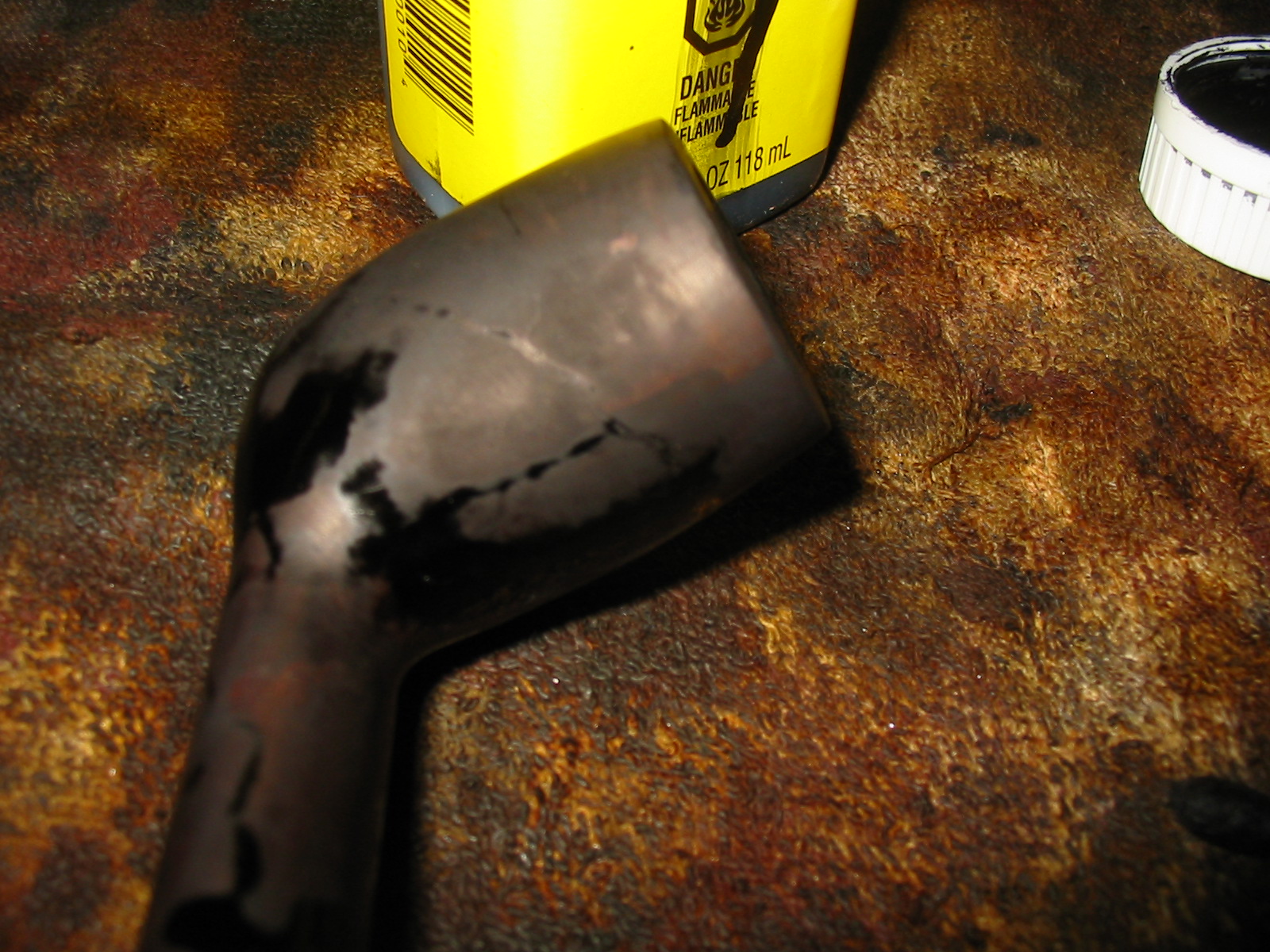
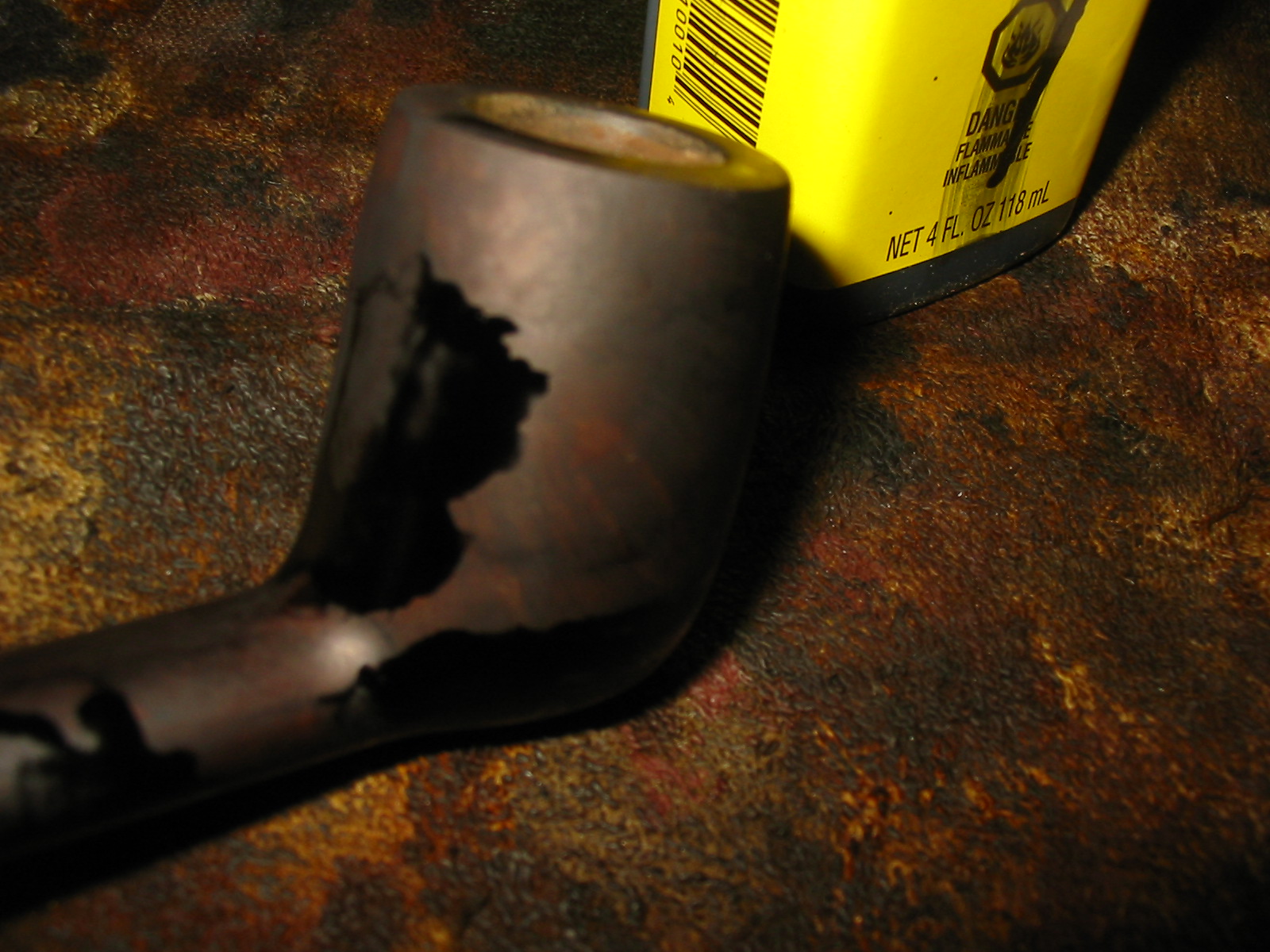
When the finish was gone, I decided to highlight the “worm trails” and give them some character in the finished bowl. I used a cotton swab and some black aniline stain to paint the trails around the bowl. To dull them a bit and lighten them I wiped them down with a cotton pad and Everclear.
IMG_4255

IMG_4257

I stained the bowl with MinWax Red Mahogany and Medium Walnut. I wanted to highlight the reds in the briar but not have it an oxblood colour so I use the two stains. I applied the red first and then the walnut stain.
IMG_4258

When the stain was dry I buffed the pipe with White Diamond on the wheel and then gave it multiple coats of carnauba wax to give it protection and a shine. The finished pipe is shown below. With the addition of this one to the Pipe Club box I am getting closer to finishing this project – I think maybe four or five left that desperately need some work and perhaps a few others that will need a touch up. Hopefully someone will like the “worm trails” more than I do.
IMG_4259

IMG_4260

IMG_4261

IMG_4262

Topped, Reshaped and Restored a Kolding Old Briar 17


This old Kolding Old Briar is also one of the pipes that belong to the Vancouver Pipe Club lot. It is stamped Kolding over Old Briar on the top of the shank and Made in Denmark over 17 on the underside of the shank. I have a very similar pipe to this one made by Stanwell – same overall shape and oval flat saddle stem. Mine is a great smoking pipe. This one appears to have been much-loved as well. As with the others in this lot it was in dire need of attention. The briar had been given the standard coat of varnish that is on all of them. The varnish is put over the top of some buildup on the rim and some significant rim damage to the top and the edges of the bowl. There was a small piece of briar missing from one spot on the left front side of the bowl’s outer rim. The inner rim also was rough. The bowl had been coated with a black rubbery bowl coating. The stem was in very good shape with no tooth marks or damage and no oxidation.
IMG_4204

IMG_4205

IMG_4206

IMG_4207

The close up photo below shows the rim damage – both burning, buildup and marks that went quite deep and broke the grain of the briar. Steaming would not work to lift the damage on this rim as it was compromised.
IMG_4208

Topping this bowl would be far more involved than the previous bowls I had topped. It needed to be topped to remove the damage to the surface, flattened to take care of the deep cuts in the briar, and then the inner edge beveled and the outer edge rounded. I set up my topping board and sandpaper and began to sand the top of the bowl.
IMG_4209

I took it down far enough to remove the damaged portions of the rim and then worked to bevel the inner edge with a folded piece of sandpaper. I sanded the rim and the inner bevel with a medium and then a fine grit sanding block. I also used the block to reshape the curve of the outer edge of the rim into the flow of the bowl.
IMG_4210

IMG_4211

IMG_4212

IMG_4214

I wiped the pipe down with acetone on cotton pads to remove the varnish and the finish on the remainder of the pipe in preparation for the new coat of stain.
IMG_4215

IMG_4216

IMG_4217

IMG_4218

I decided to use two different colours of stain to restain the pipe. The first stain was a MinWax Medium Walnut stain. I rubbed it on and then rubbed it off. I buffed the pipe with White Diamond to polish the briar before giving it the second colour of stain.
IMG_4219

IMG_4220

IMG_4222

IMG_4223

For the second stain I used MinWax Red Mahogany stain. I rubbed it into the bowl and then rubbed it off. I polished the pipe with a soft cloth. I rubbed down the stem with Obsidian Oil and hand buffed the stem.
IMG_4224

IMG_4225

IMG_4227

IMG_4228

I buffed the bowl and stem with White Diamond again and then gave the bowl and stem multiple coats of carnauba wax. I gave it a final buff with a clean flannel buffing pad. The finished pipe is shown below. It will now join the others in the Pipe Club box until I finish those that remain. I love the rounded look of the bowl top and the bevel on the rim as it adds to the feel of the pipe. I think this one will also bring a good return for the club.
IMG_4231

IMG_4232

IMG_4236

IMG_4238

Topping and Refinishing a Dansk Handvaerk Thorshammer Bruyere


This is yet another one of the Vancouver Pipe Club lot – it is stamped on the left side of the long shank Thorshammer over Bruyere. On the right side it is stamped Dansk Handvaerk. On the underside of the shank is an interesting stamping next to the stem shank junction – it reads A/ES with the / being the image of a pipe. It also has the shape number 5 on the underside. The shape is either a long shanked billiard or a long stemmed lumberman or Liverpool. When I took it out of the box the finish had a coating of varnish that had the fingerprints of the varnisher imprinted in them. The pipe has a small band of light briar near the stem. I thought that maybe this was done when the pipe was restemmed, but upon examination I believe the stem is the original. The light band could also have been a thin silver band or such but that was missing. The rim was a mess as with the majority of the pipes I am doing for the club box. The outer edge had burn marks on the right side and had been badly beaten against whatever the smoker used to empty his bowl. It was missing chunks of briar and steaming would not bring out the damage. The finish was also spotty under the varnish so I decided to strip the bowl and start over.
IMG_4180

IMG_4181

IMG_4183

IMG_4184

The picture below gives a fairly good view of the damage to the rim. In later photos of the topping process I show a few more of the damaged areas of the rim.
IMG_4185

I set up my topping board and sandpaper and began to top the bowl. I checked often to make sure that I would stop at the right point in the process. I wanted to remove as little of the height of the bowl as possible while smoothing out the damaged areas.
IMG_4186

The next two photos show the outer edge damage after a little bit of sanding on the board. It was really quite rough to the touch as I ran my fingers around the bowl.
IMG_4187

IMG_4189

I continued to sand the top of the bowl until the damage was minimized. I sanded it with a fine grit sanding block afterwards to smooth out the scratches left behind by the sandpaper. I also beveled the inner edge of the rim with a folded piece of sandpaper to smooth out that area as well. This will become visible in the later photos.
IMG_4190

I wiped the bowl down with acetone on a cotton pad to remove the varnish and the stain. I sanded the bowl with a fine grit sanding sponge to remove the stubborn varnish areas and then scrubbed it down with acetone again. Once I had the finish removed the bowl was ready to be stained.
IMG_4191

IMG_4192

IMG_4193

For ease of use, since I have a lot of these to do for the pipe club stash, I am using MinWax stain. On this one I gave it a coat of Red Mahogany stain followed by a coat of Medium Walnut stain. I rubbed them on and off to get the colour I wanted. The area at the stem junction stubbornly refused to take much of the stain no matter how much I coaxed it and heated it. In the photos below the lighter area at that point is better though still visible to me.
IMG_4194

IMG_4195

IMG_4196

IMG_4199

I rubbed down the stem with Obsidian Oil and rubbed it into the vulcanite. Once it was dry I buffed the pipe with White Diamond and then gave it multiple coats of caranauba wax to protect and give it a shine. The rim came out exceptionally well and the stain coat looks far better than when I started. The red Mahogany stain kept the red undertones that were present in the original stain coat. I finished buffing with a clean flannel buff to give it a shine. The finished pipe is shown in the photos below. It is ready to go back in the box of finished pipes for the Pipe Club. Still a few more pipes to fix and work on before I send them back to the club for sale or their fund-raising use.
IMG_4200

IMG_4201

IMG_4202

IMG_4203

Topping and Refinishing an Evident Super Billiard


This is yet another of the pipes from the lot of Vancouver Pipe Club pipes that I have been working on. This is not a brand that I have ever heard of and I cannot find any information on the web regarding it. If anyone reading this has any information on the brand please leave a comment and give us a few clues. The pipe is stamped on the left side of the shank Evident in script over Super in block print. On the right side of the shank it is stamped Old Briar. On the underside of the shank next to the stem it is stamped 760. The finish was covered with the standard varnish and the bowl coated with the black rubberized bowl coating. The rim was in very rough shape – the inner bevel was in good shape with minor nicks to it but the outer edge of the bowl had been hammered all around the top. There was also spillage from the bowl coating on the side of the bowl on the back and right side. The stem was clean other than some very minimal tooth chatter near the button. It seems to have a light stamp on the left side – the letters J.T.
IMG_4146

IMG_4147

IMG_4148

IMG_4149

I took some close up photos of the rim and edges of the bowl before and during the time I was topping it to give a clear picture of the damage that had been done to this pipe. The first photo below is a close up of the rim. It was an absolute mess and the edges of the bowl was hammered and broken.
IMG_4150

I set up my topping board and sandpaper and began the process of topping the bowl. I took some photos after I first started to show clearly the edge damage.
IMG_4153

IMG_4154

IMG_4155

IMG_4156

I topped the bowl until the majority of the rim damage was gone. I then used a folded piece of sandpaper to re-bevel the inner edge of the rim. I used a sanding block to smooth out the rough edges that remained after topping the bowl. I decided that if I were to top the bowl to totally remove all of the damage it would change the profile too dramatically so I took the majority of the damage down and then lightly rounded the outer edge of the bowl with the sanding block.
IMG_4157

I wiped the bowl down with acetone on cotton pads to remove the varnish, bowl coating spillage and old stain. I reamed the pipe with the PipNet reamer to remove the black bowl coating and cleaned up the inside of the bowl with some Everclear.
IMG_4158

IMG_4159

IMG_4160

IMG_4161

As mentioned before I have been using a MinWax Medium Walnut stain as it is quick and easy to use on these pipes that I am working through for the club. It does a great job, the colour matches the old original stain quite well and it is a simple application – rub on and off. Each successive coat adds depth and richness to the final colour.
IMG_4162

IMG_4163

IMG_4164

IMG_4165

I sanded the tooth chatter on the stem to remove it and sanded it with micromesh sanding pads to polish the stem. I took the pipe to the buffer and buffed the bowl and stem with red Tripoli and then White Diamond. Once I had finished I rubbed the stem down with Obsidian Oil and rubbed it into the vulcanite. I buffed the stem and bowl one last time with White Diamond and then gave it multiple coats of carnauba wax. I finished with a soft flannel buff on the wheel. The finished pipe is shown in the photos below. It is ready to join the other finished pipes in the box of pipes for the Pipe Club. I look forward to seeing what they do with the lot.
IMG_4167

IMG_4169

IMG_4170

IMG_4171

Topping and Restaining a Lorenzo Ascona


Blog by Steve Laug

Yet another pipe from the Vancouver Pipe Club donation was this triangular shanked Lorenzo. It is stamped on the left side of the top of the shank Lorenzo and on the bottom of the shank it is stamped Ascona over a series of numbers and letters – 42Y8716. I have no idea what the numbers mean and have been unable to find any information on them. Over the years I have had quite a few old Lorenzo’s but they always seem to find new homes as they tend to be too large to my liking. This one is a bit different – it is probably a group 4 sized bowl with a large triangular shank and saddle stem. The stem was in very good shape and still bears the cursive L logo stamped on the blade of the stem. The bowl was in very rough shape. There was a coat of varnish on the pipe and the bowl had the usual black rubbery bowl coating. The finish was an orange stain that was breaking up under the varnish and leaving light spots in the finish. The rim was beat up and all the outer edges of the bowl either were scarred or burned. The briar under the varnish is quite scratched and there are dents in the briar. I did not take the time to remove any of those other than the ones that came out through my cursory sanding of the bowl. The marks that remain are like character reminders and I decided to leave them. IMG_4125 IMG_4126 IMG_4127 IMG_4128 The close up photo below, of the top of the pipe shows the damaged rim -the rough outer edges of the bowl and the burn marks. The second photo below shows the burn damage on the side of the bowl below the edge of the rim. IMG_4124 IMG_4129 I set up my normal topping tools – a flat board and a piece of 220 grit sandpaper and began to work on the top of the bowl. I wanted to remove as much of the damage as possible and sharpen the edges of the bowl. I wanted to reduce the burn damage on the front right side of the outer rim in the process as well. IMG_4131 IMG_4130 IMG_4132 IMG_4133 I wiped the bowl down with acetone on cotton pads to remove the varnish and the spotty orange stain coat. IMG_4134 IMG_4135 IMG_4136 IMG_4137 I stained it with two MinWax stains – I used a Medium Walnut first followed by a Red Mahogany stain. I wanted a reddish hue to the pipe that was thinned and lightened by the walnut stain. Once I had finished staining it I buffed the bowl with red Tripoli to smooth out the remaining scratches and even out the stain coat. IMG_4138 IMG_4139 IMG_4141 I rubbed the stem down with Obsidian Oil and when it was dry buffed the pipe one more time with White Diamond. I finished the refinishing by giving the pipe multiple coats of carnauba wax and buffing it with a clean flannel buff. The finished pipe is pictured below. It is ready to go back with the others that have been prepared for the Club to use as they choose. IMG_4142 IMG_4143 IMG_4144 IMG_4145

Topped and Refinished a Valby Acorn


This is another one that is from the Vancouver Pipe Club lot of donated pipes. The stamping on this one is quite faint. It looks to me to be Valby. Some of the letters in the stamp over lap making it harder to read. The rim had been topped but not finished. There were still burn marks remaining on the outer edge of the rim. As with the others in this lot the finish was coated with varnish making it perpetually shiny. The rim had some as well but it was still in rough shape. The bowl had been coated with the same black bowl coating. I decided to rework the topping job, remove as many of the burn marks on the front edge of the bowl as possible and refinish the pipe. The stem was in great shape and showed no oxidation or tooth marks.
Valley1

Valley2

Valley3

Valley4

I took the photo below to show the state of the rim. The photo does not do justice to the unfinished nature of the topping. The burn marks are visible in the second photo below on the front edge of the rim both inside and outside. The rest of the rim had scratches from the previous topping and the finish was dull.
Valley5

Valley7

I topped the bowl on the flat board and sandpaper until I had removed the burned portion of the rim and had evened out the top surface. The topping from before had not taken off enough of the damaged portion to be even across the surface.
Valley6

Valley8

I wiped the bowl and rim down with acetone on a cotton pad to remove the varnish coat and the finish so that I could restain and get a good even coat of stain.
Valley9

Valley10

Valley11

Valley12

I restained the pipe with MinWax Medium Walnut stain – rubbed it on and off repeatedly until I had a good even coverage on the pipe.
Valley13

Valley14

Valley15

Valley16

When I had finished with the staining, I took it to the buffer and buffed with White Diamond to smooth out the finish and give it a shine. I chose the stain I did because of the transparency and how well it matched the original stain. I gave the pipe and stem multiple coats of carnauba wax and finish with a soft flannel buff. The finished pipe is shown below and is ready to go back in the box for the Pipe Club to sell.
Valley17

Valley18

Valley19

Valley20