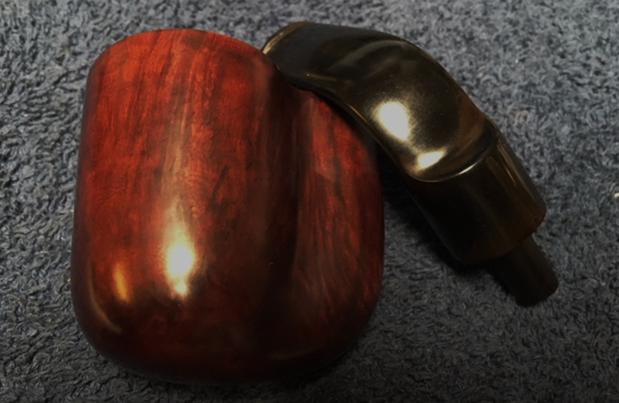
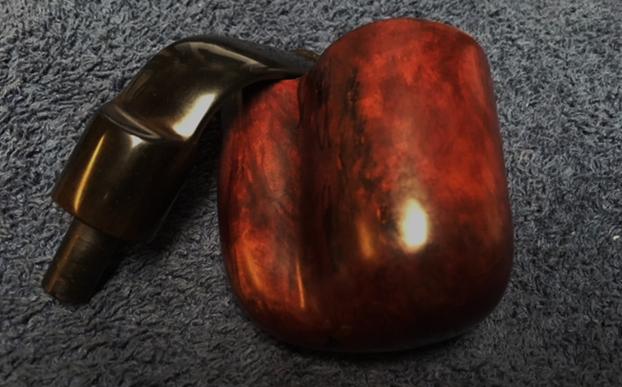
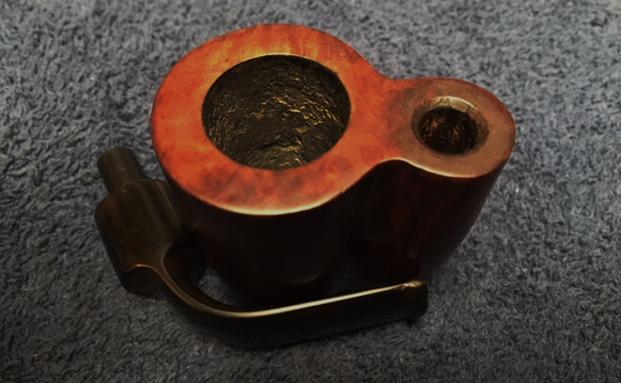
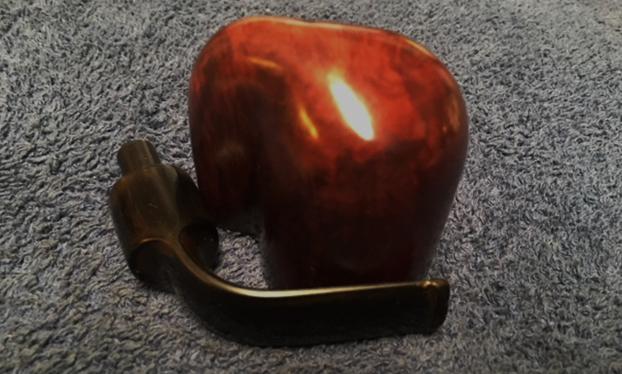
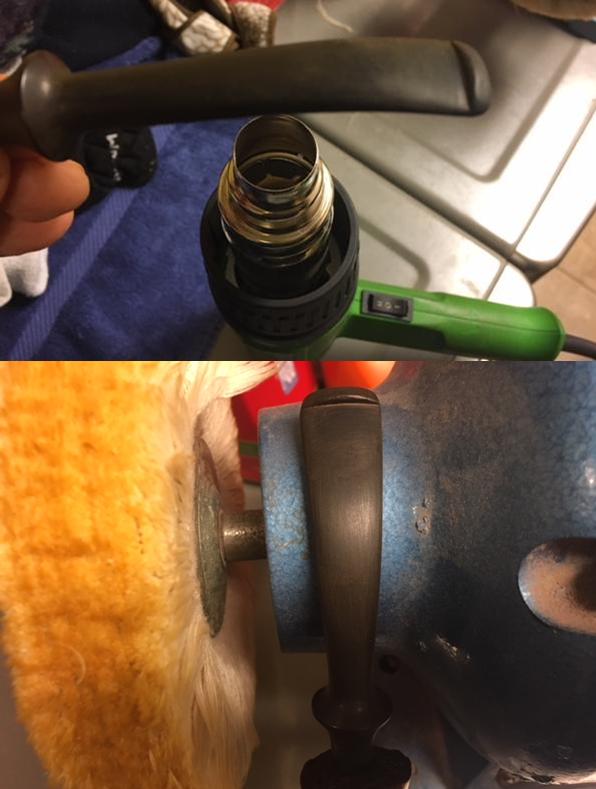
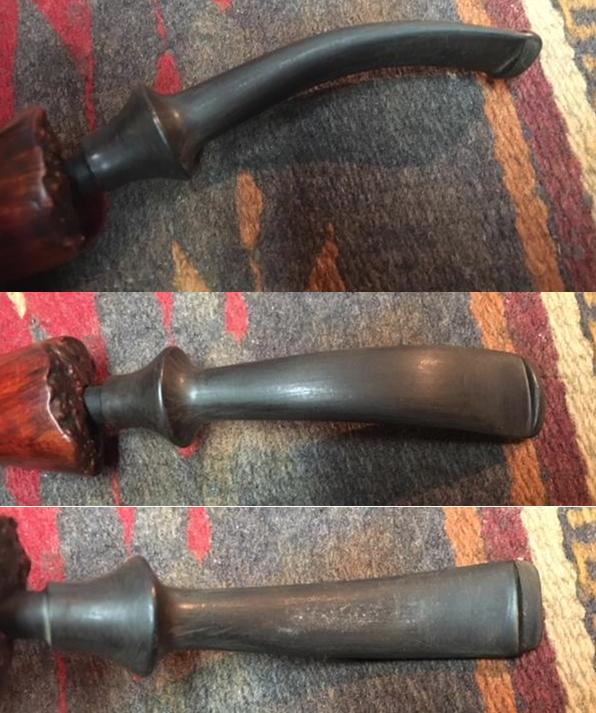
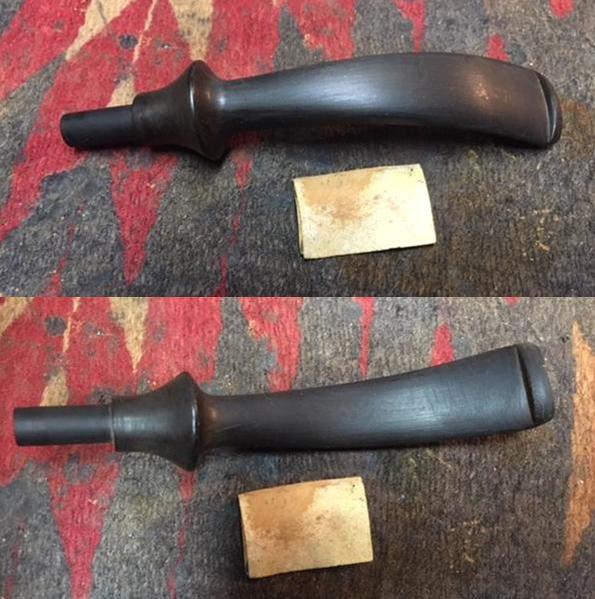
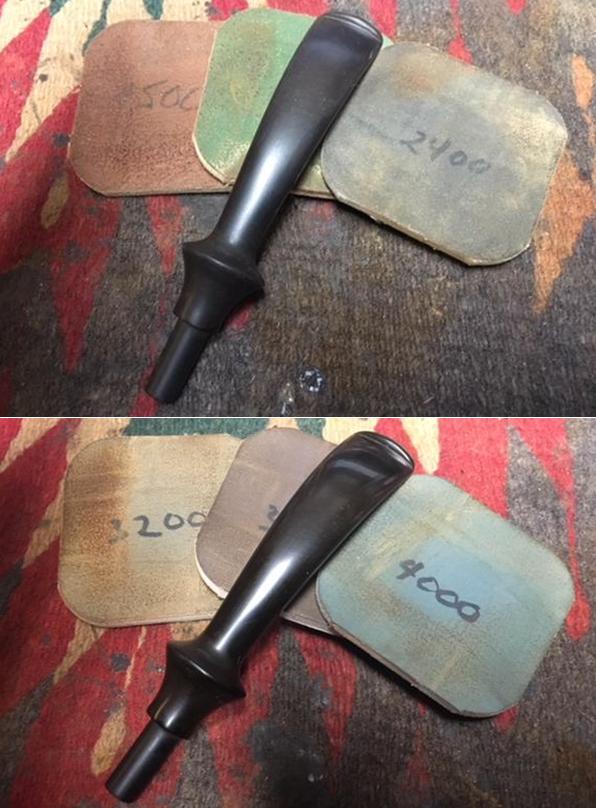
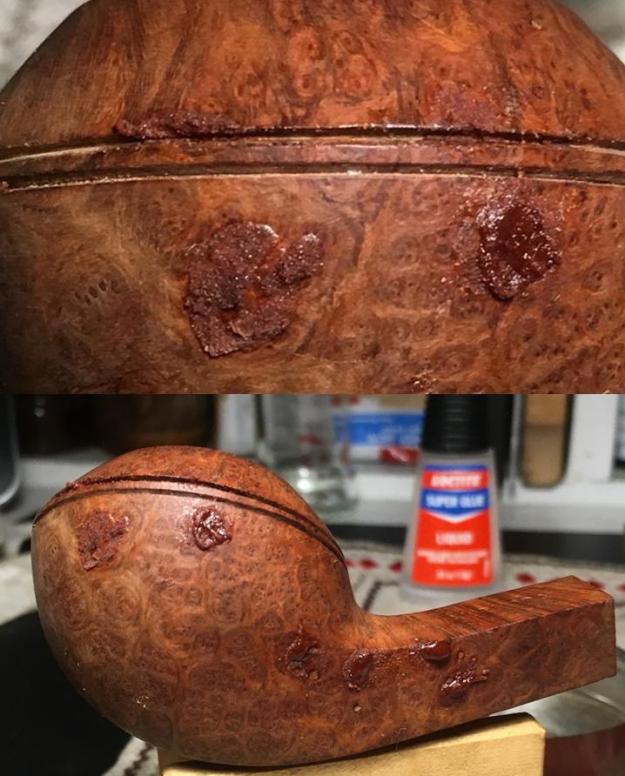
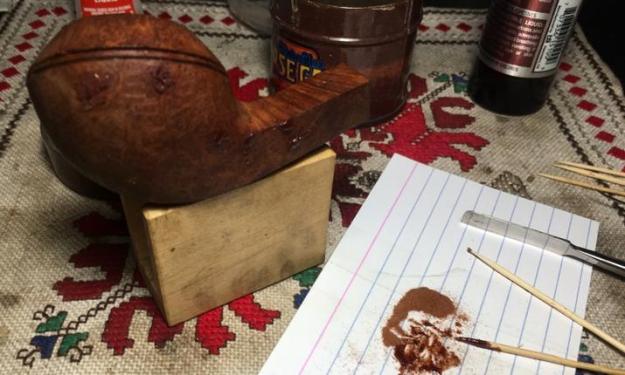
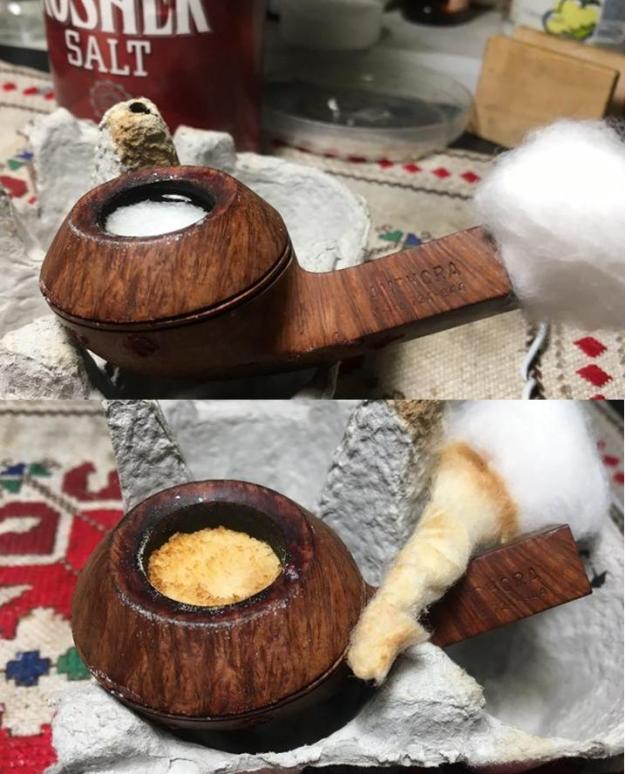
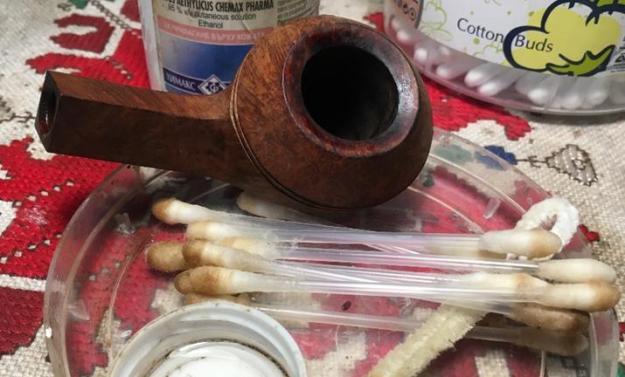
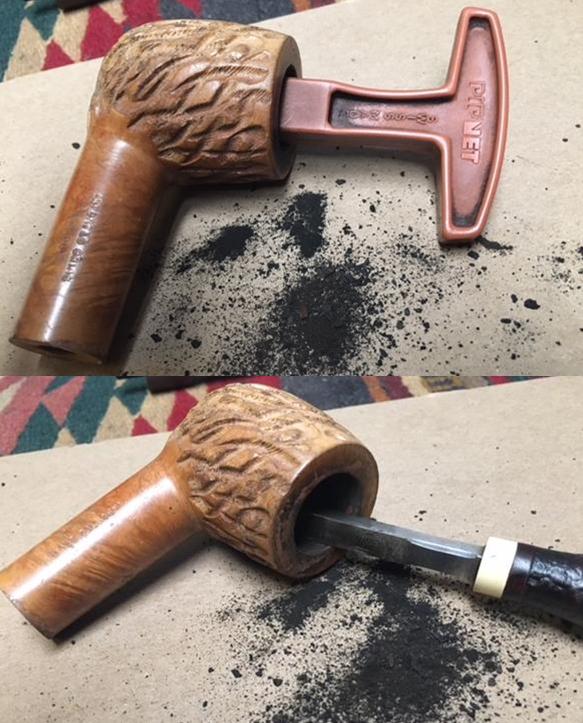
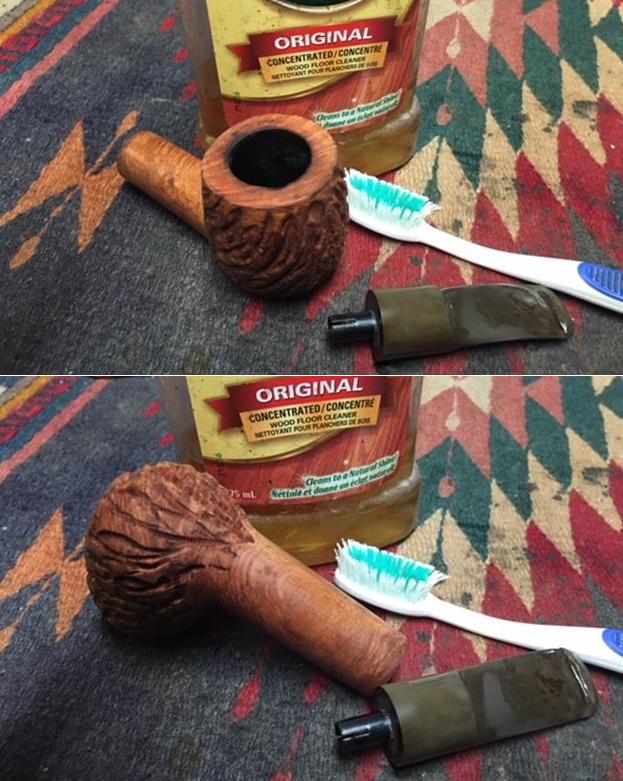
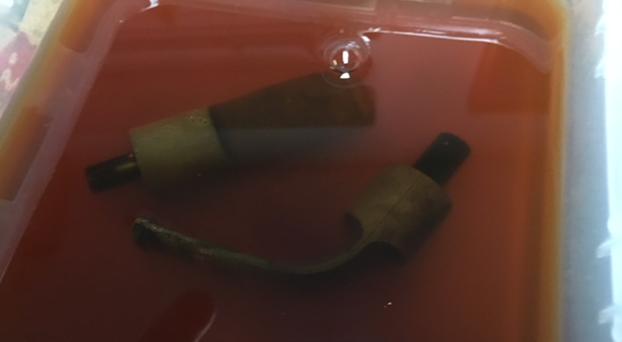
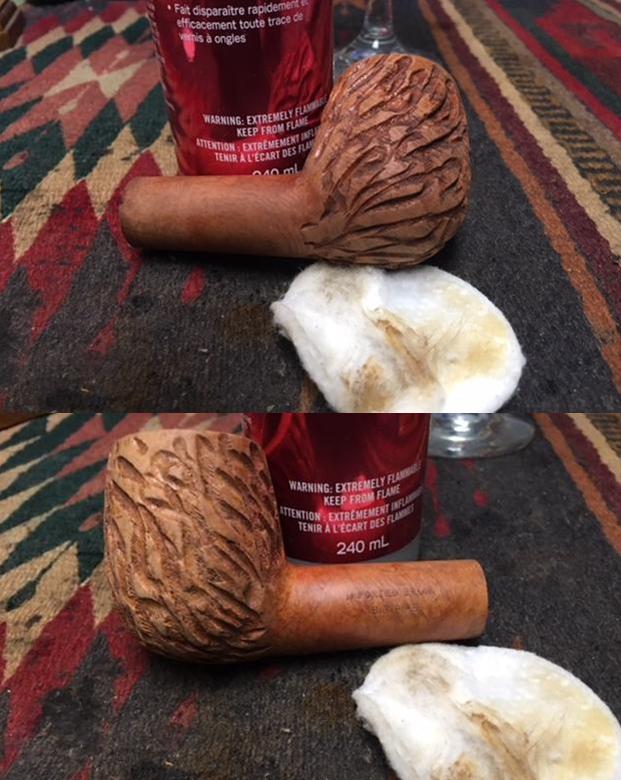
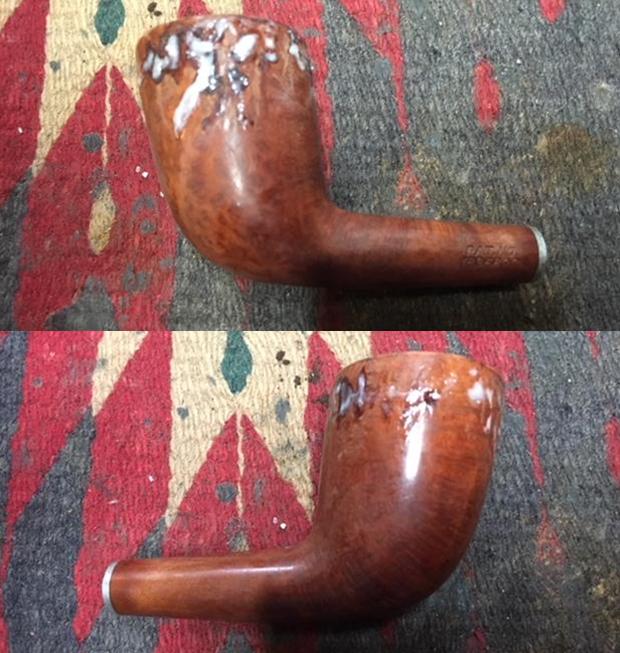
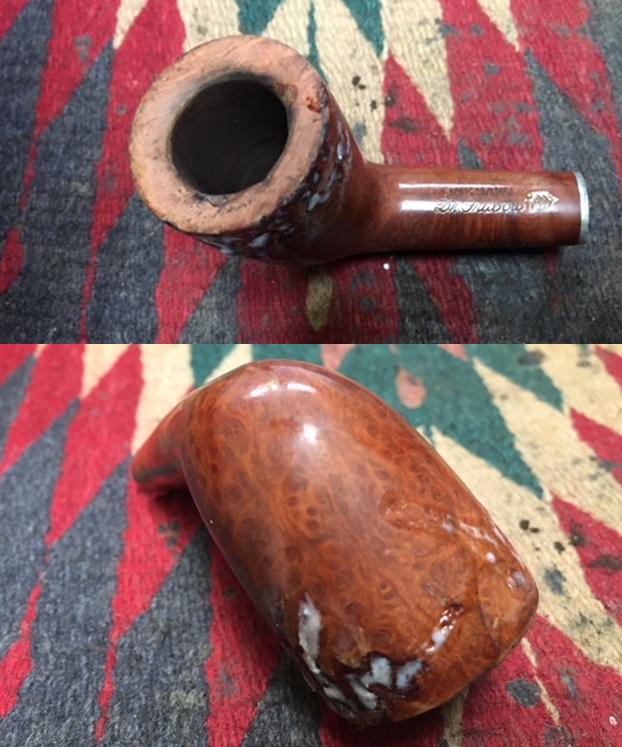
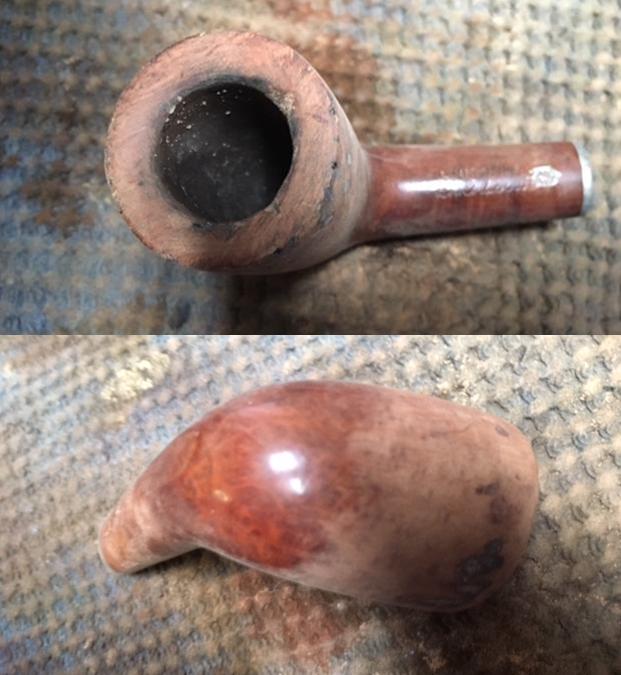
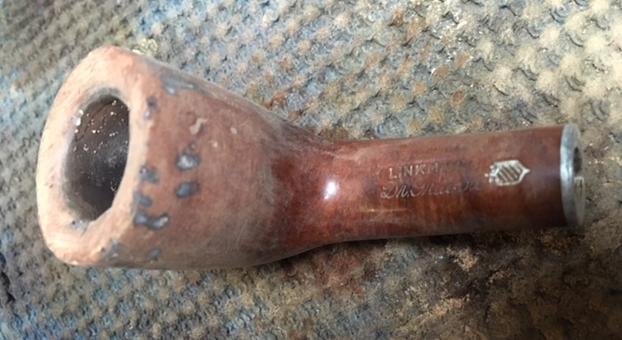
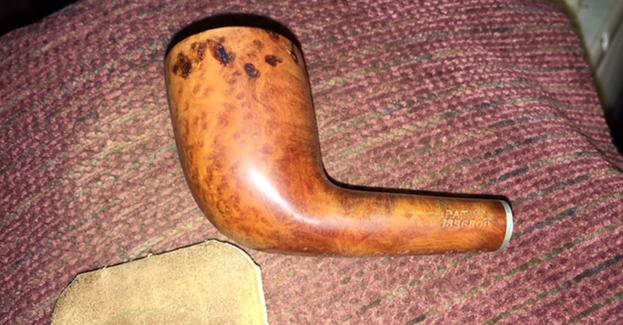
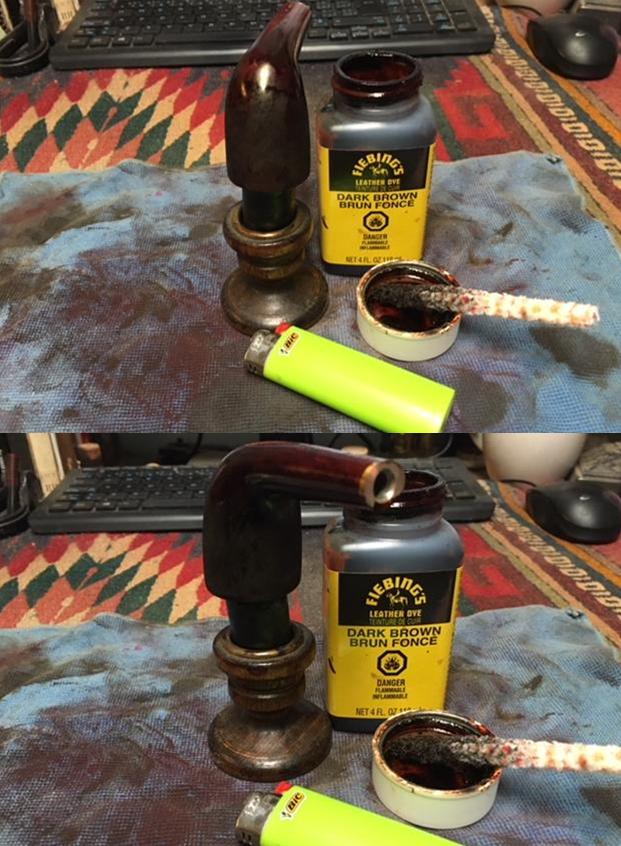
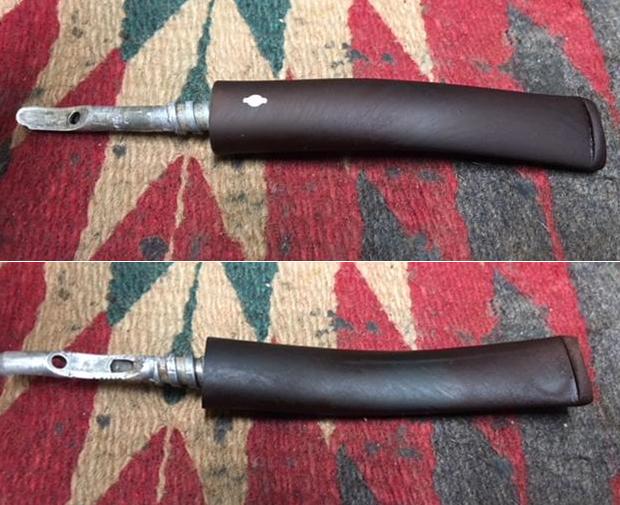
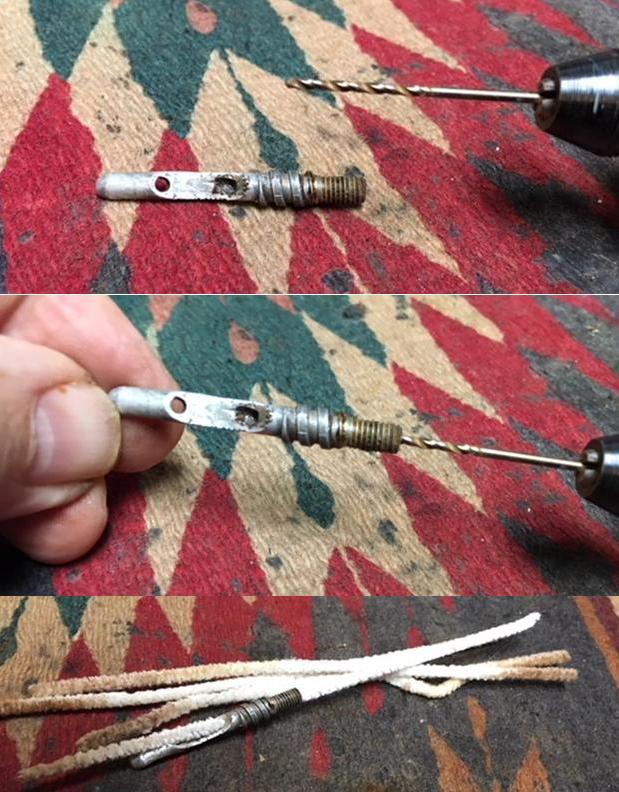
Tag Archives: restaining a bowl and rim

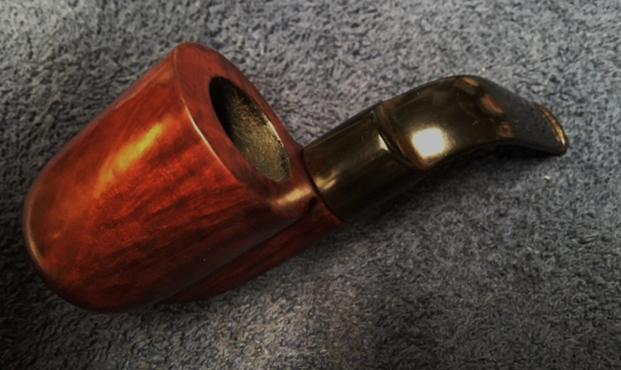
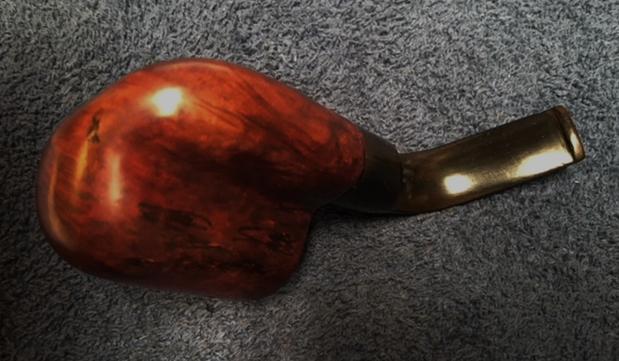
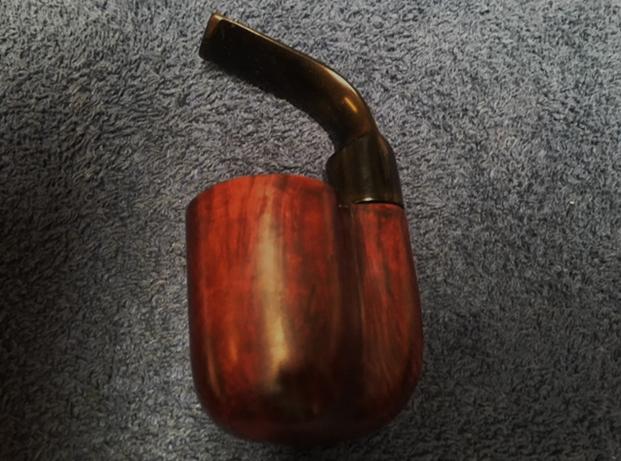
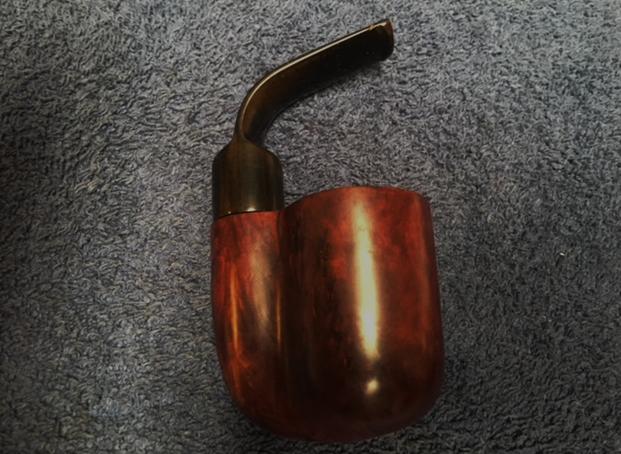
Another Athens find: Renewing a Stout Peterson System Standard 313 Republic of Ireland


Blog by Dal Stanton

Athens, Greece, has been fertile ground for me in landing some nice pipes in the Athenian ‘wild’.  An area very close to the well-known Acropolis summit and near-by Mars Hill, where the Apostle Paul gave his defense of the Christian faith, is the Monastiraki market area. I have found several keepers in this area. I was drawn to one antique shop that spilled out onto the sidewalk of a typically narrow, crowded street.  As I looked over the plethora of paraphernalia in the shop, my eye caught sight of two lonely pipes among statuettes, ash trays, jars and lamps.  Immediately I knew one was a definite possibility – a Pete.  I looked quickly to determine if it was Pre-Republic or Republic of Ireland.  It was a Republic, but seemed to carry some weight of years.  What also caught my attention was that it was on the smaller side as far as I’ve seen of Petersons.  The shape number on the right side of the shank was 313.  The other pipe keeping company with the Pete was a Bewlay London Made ‘Reject’.  Interesting.  I’m always interested in pipes with the mark, ‘Reject’. The shop owner was all business and I wasn’t as happy with the bundled deal as I had wished, but I wanted the Pete and he’s now with me here in Sofia, Bulgaria. This Peterson System Standard 313 has been in my ‘Help Me!’ basket for some time until my brother-in-law, Greg, commissioned it to be restored along with a Comoy’s Pebble Grain Modern Poker.  He and his wife, Sarah, my wife’s sister, were visiting us here in Bulgaria, and Greg trolled through my buckets of pipes until he found these two – he commissioned both when he couldn’t decide!  The Pete and the Comoy’s both benefit the Daughters of Bulgaria, helping women and girls that have been trafficked and sexually exploited.  Thanks, Greg!

With this being the first Peterson System Pipe on my worktable, I’m looking forward to learning what I can.  The first thing I did was to identify the shape number of this Peterson.  Not long-ago Steve posted on rebornpipes a very interesting Peterson of Dublin Pipe Catalogue which he thought was dated about 2010.  I enjoyed looking through it then and tucked it away in my mind for when I would bring a Peterson to the worktable.  I found the shape 313 in the Standard Quality Smooth section of the catalogue which I included below.  It’s on the far right of the first row.  The description of the Standard Quality was helpful.What I also found interesting and helpful was the description of the Peterson System Pipe.  When this design hit the market in the late 1800s it was innovative then and continues to be popular today. Two design innovations were the focus: a trap (or sump) that collected the moisture in the mortise and the well-known ‘P-Lip’ stem, which stands for ‘Peterson’.  This design was supposed to be superior by directing the smoke to the upper part of the mouth rather than burning the tongue.  It is also engineered to compress the air as it moves toward the button.  I’ve included the description and a cutout showing the design from the same catalogue.I love working on vintage pipes – I only wish they could talk and tell their stories while I restore them!  With this Peterson now on my work table, I take some pictures to chronicle his condition and to get a closer look. The nomenclature is clear.  On the left side of the shank is stamped in arched fashion, ‘PETERSON’S’ over ‘SYSTEM’ over ‘STANDARD’ in straight letters.  Above this stamp, on the nickel ferule is ‘K&P PETERSON’S’.  The right side of the shank bears the ‘MADE IN THE REPUBLIC OF IRELAND’ placing it in the Republic Era – from 1949 until the present (from the Pipedia article:  A Peterson Dating Guide; A Rule of Thumb, by Mike Leverette).I’ve also been curious about the ‘faux’ hallmarks stamped under the K&P on the ferrule.  From the same helpful Pipedia article I read this:

Before we close this section on silver hallmarks, we must address the marks that many people refer to as hallmarks. Peterson uses three marks on some of their pipes that are not silver hallmarks but are rather another Peterson logo (See Enclosure 4).

These marks are:

  • A Shamrock for the many shamrocks found in Ireland
  • A Prone Fox representing the famous fox hunts in Ireland’s history, and
  • A Stone Tower for the many hundreds of stone towers spotted throughout Ireland

Again, these are not genuine silver hallmarks. I’m indulging in a bit of history to better appreciate the K&P Peterson’s on my worktable.  Another question, “K&P”?  Again, Mike Leverette’s Dating Guide article helps with a concise history along with pictures from Pipedia’s main Peterson article:

The history of Ireland is an old and honorable one; steeped in warfare, family, racial and religious traditions. No other country can compete in comparison. However, the first couple of millennia of Irish history have no relevance to this dating guide. Should you wish to read more on the history of the Irish, I recommend “The Story of the Irish Race” by Seamus MacManus who gives a very vivid, and near as we can tell, an accurate portrayal of their history.

History pertinent to our purposes began in the year 1865; the year Charles Peterson opened a small tobacco shop in Dublin. Later in 1875, Charles Peterson approached the Kapp brothers, Friedrich and Heinrich, with a new pipe design and with this, a very long-lived partnership was formed, Kapp & Peterson. This new pipe design is the now famous Peterson Patented System Smoking Pipe. By 1890, Kapp & Peterson was the most respected pipe and tobacco manufacturer in Ireland and rapidly gaining followers in England and America. In 1898 another of Peterson’s remarkable inventions became available, the Peterson-Lip (P-Lip) mouthpiece, also known as the Steck mouthpiece. So, for the purpose of this dating guide, we will study Irish history, relevant to our pipe dating needs, from 1870s until now.

Before we start with this Peterson dating guide, an observation; the Kapp Brothers originally came from Nuremberg, Germany. They were making pipes at least as early as the 1850s (their Dublin shop opened in 1855) and in many of the shapes we now associate with Peterson since the Kapp Brothers simply took their existing shapes and incorporated Charles Peterson’ s patented design into them. From their inception, Kapp & Peterson’s goal was to make a good smoking pipe that the ordinary, common working man could afford, and we believe they have, very admirably, lived up to this.

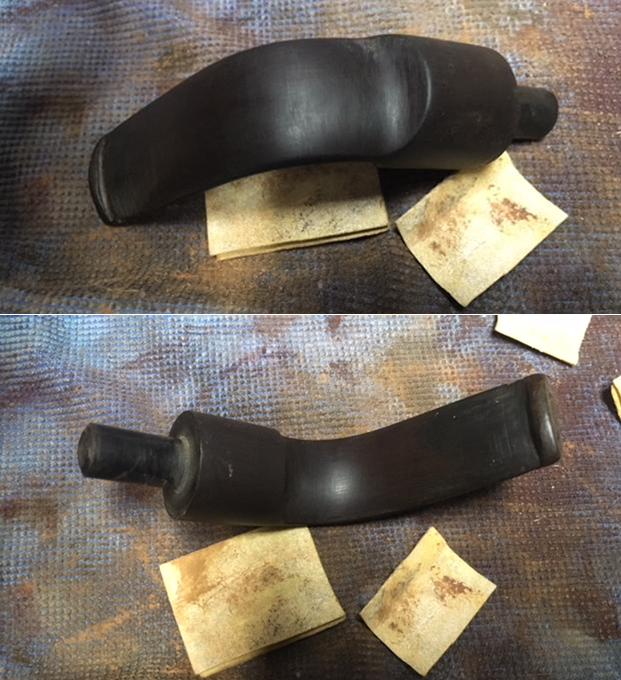
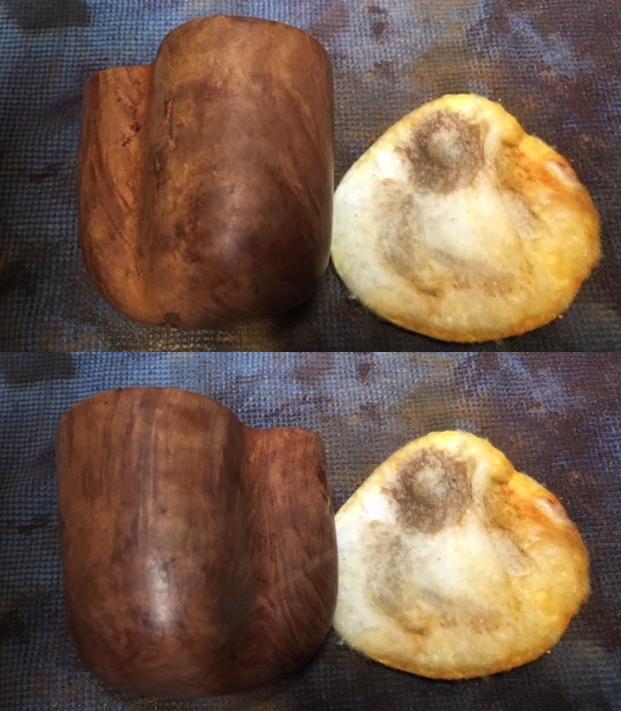
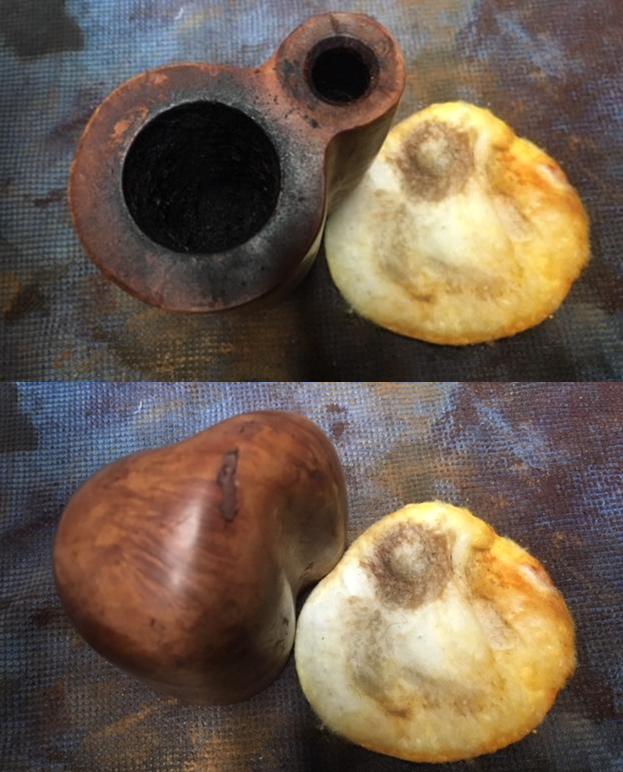
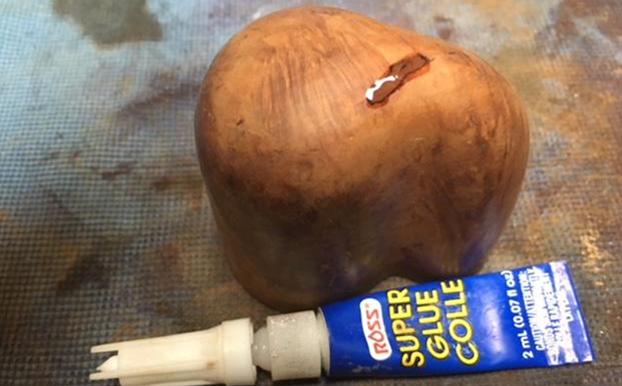
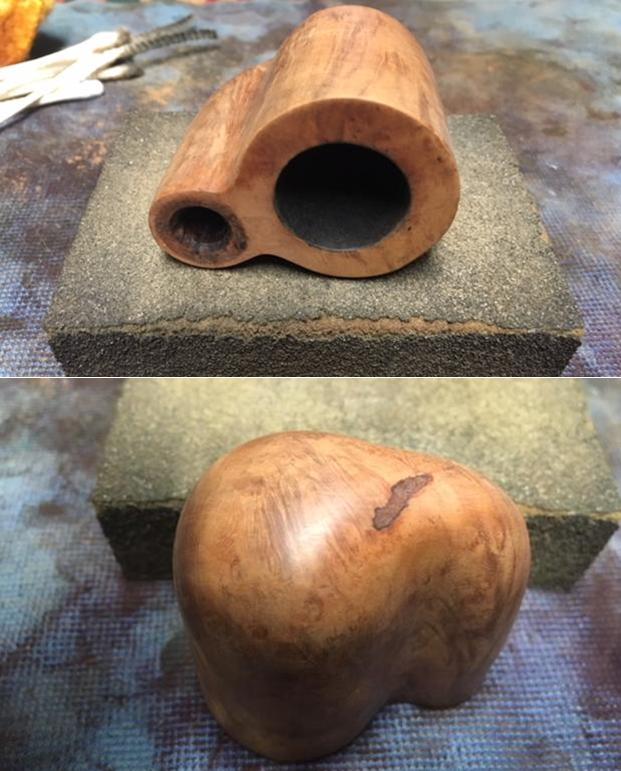
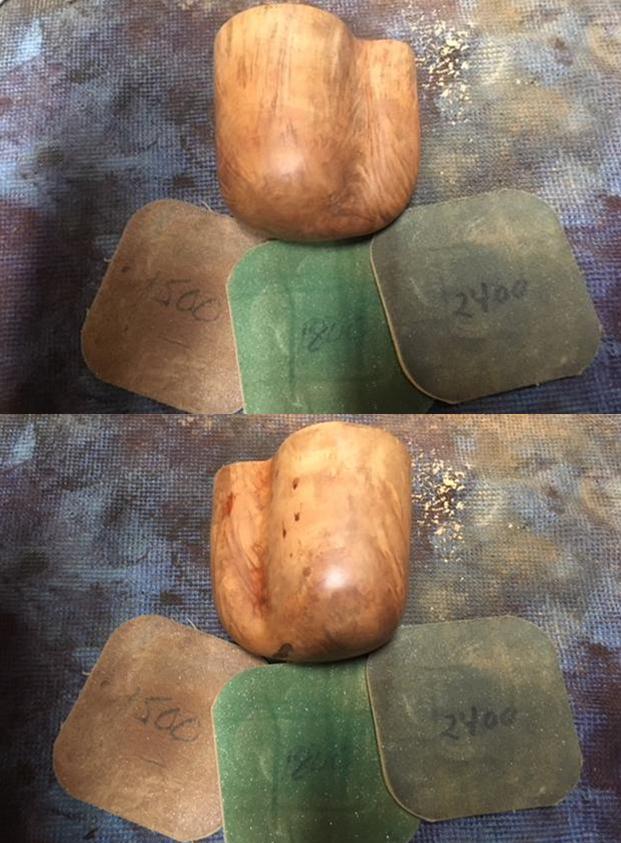
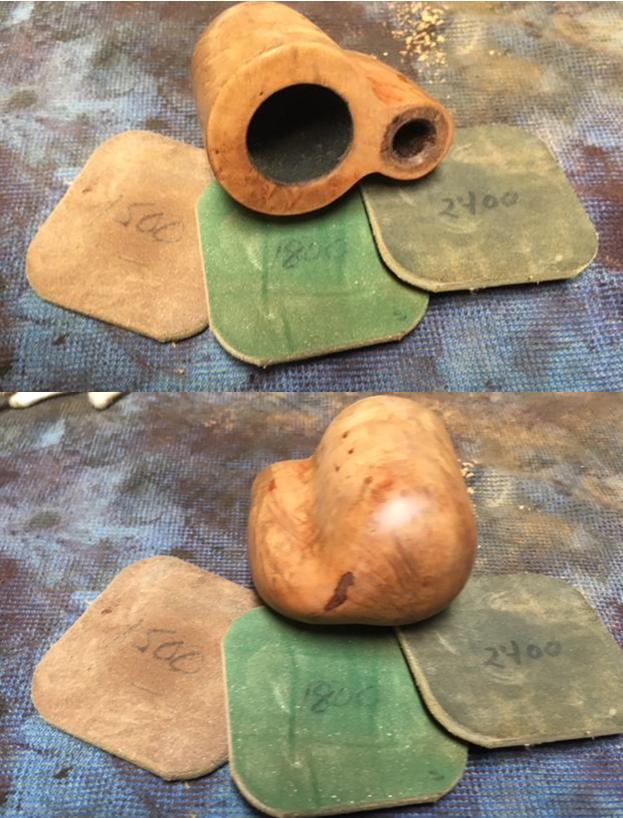
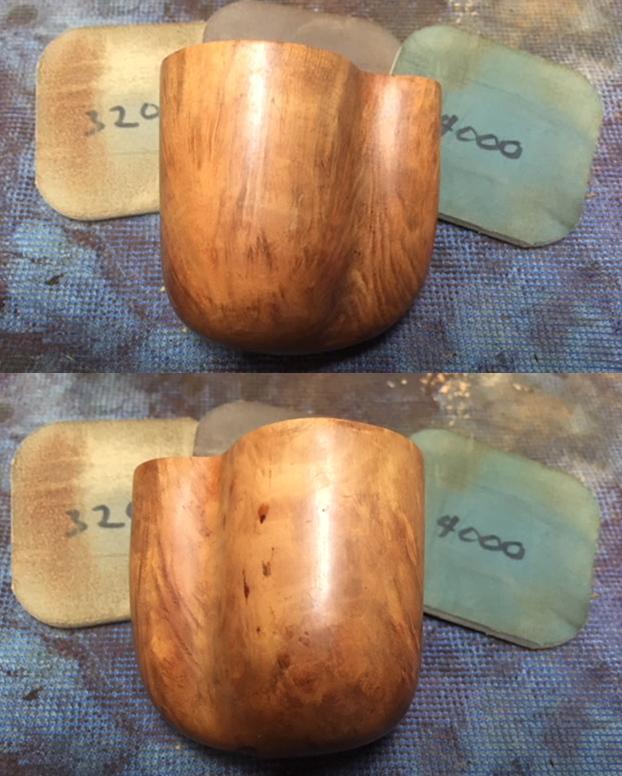
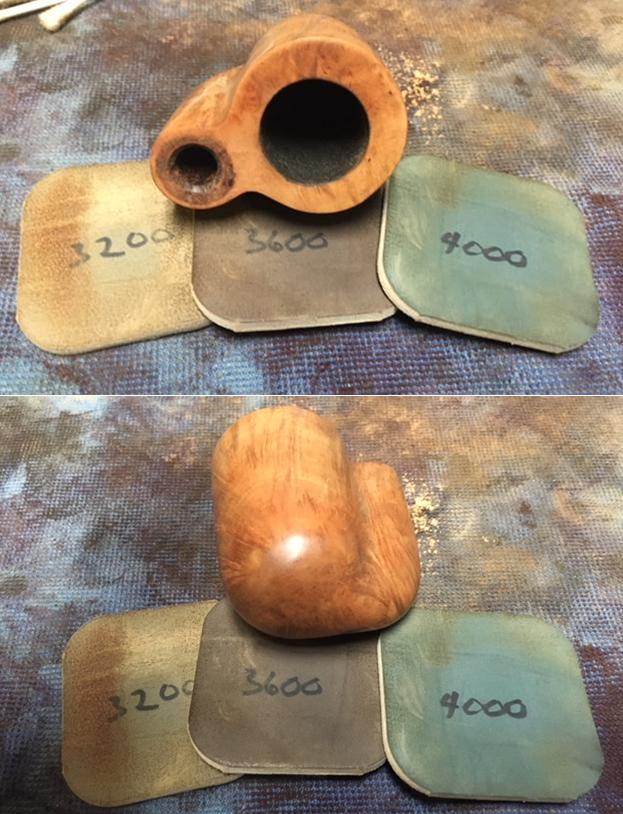
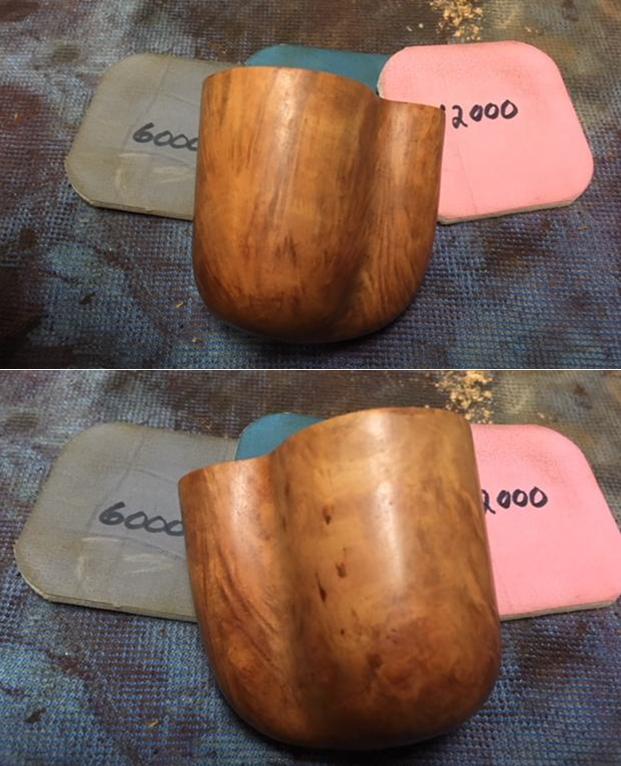
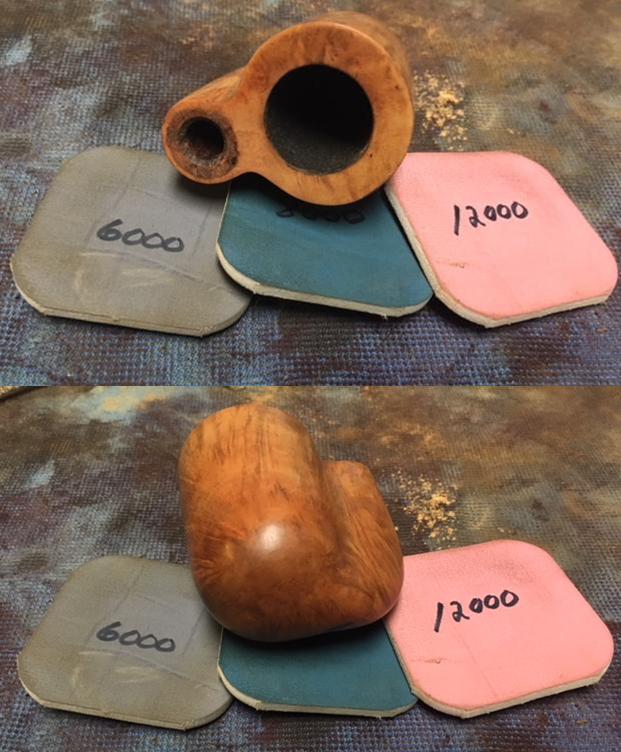
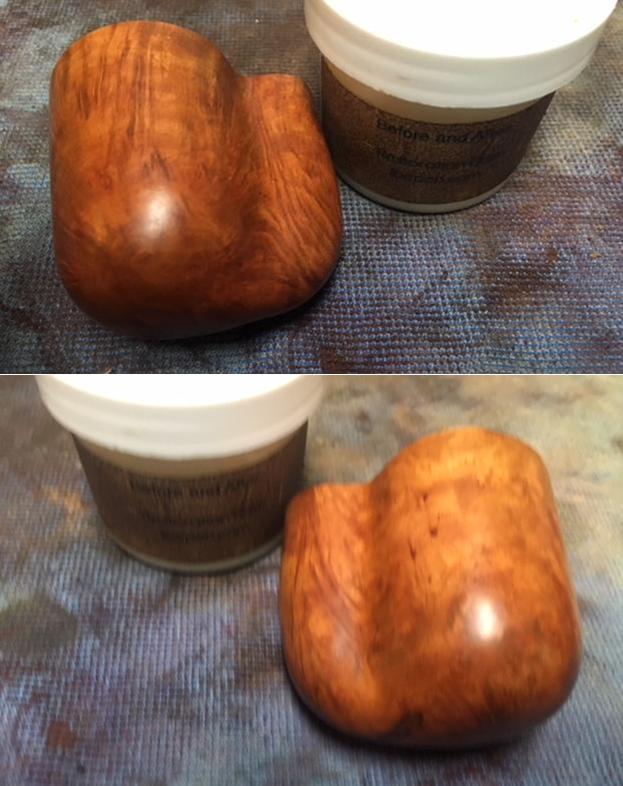
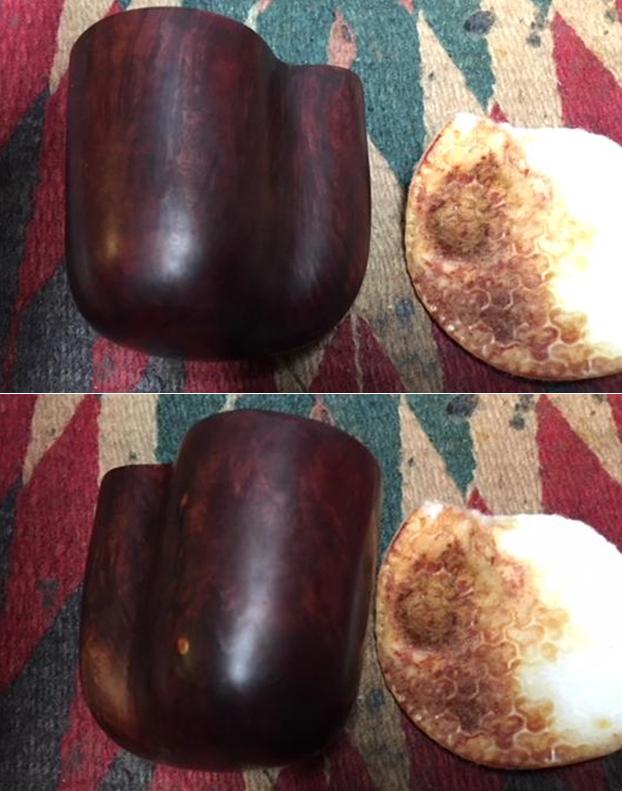
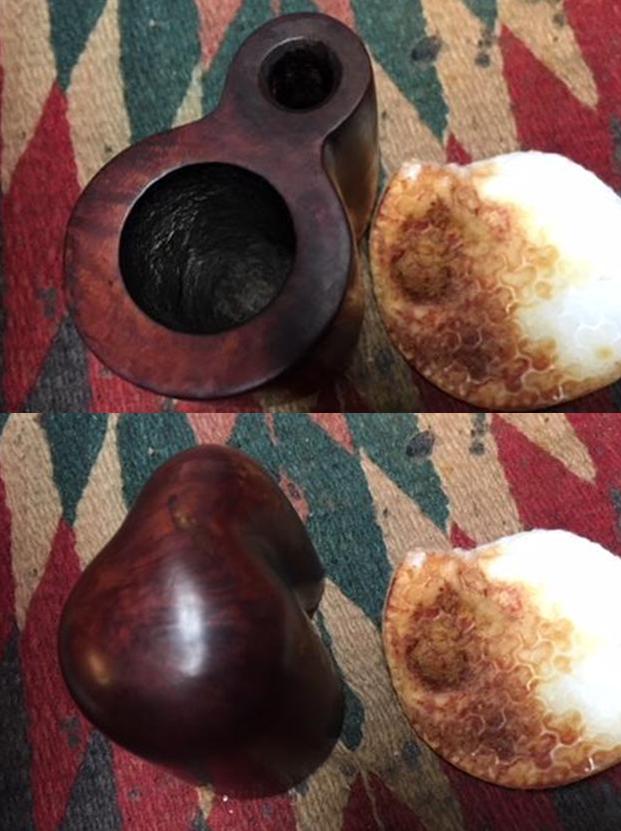
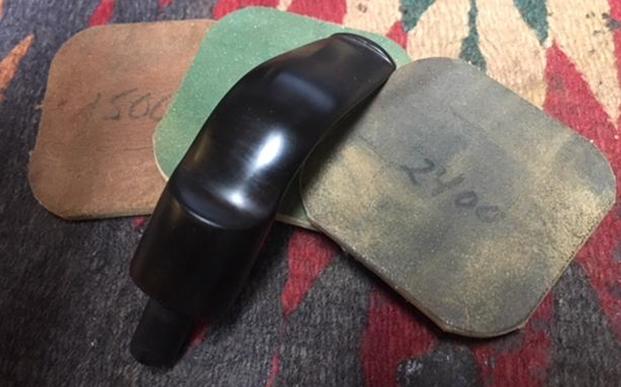
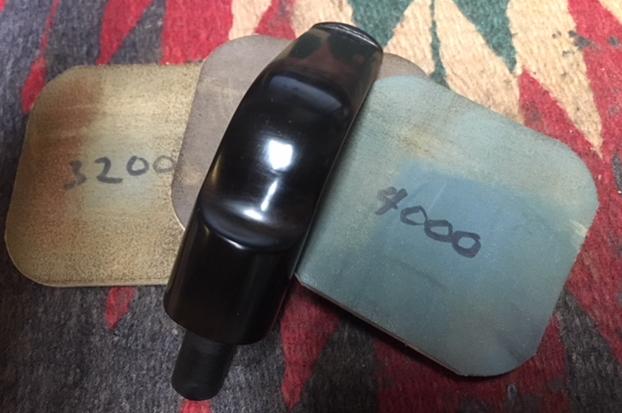
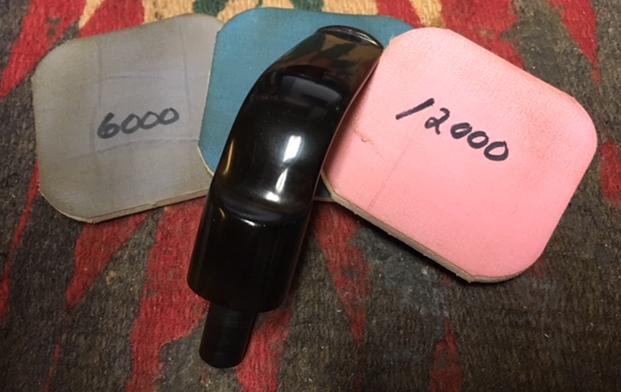
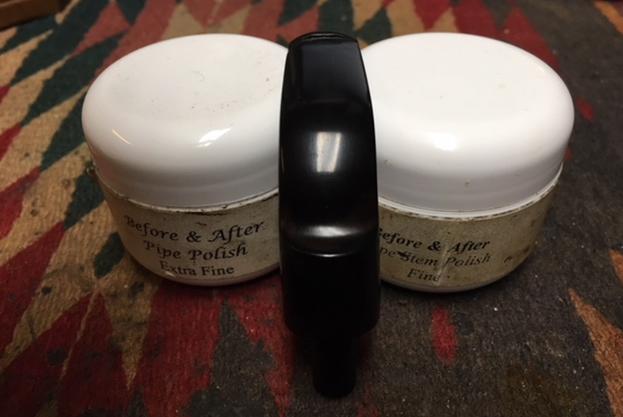
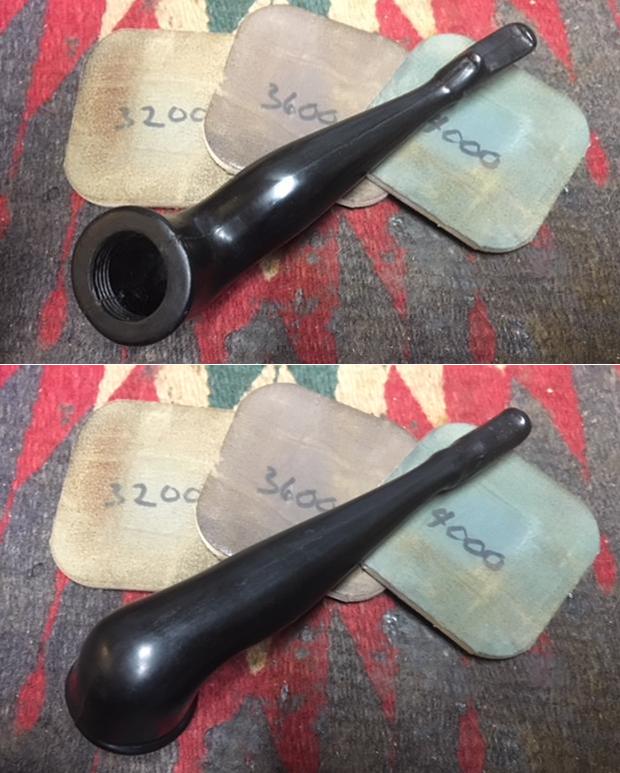
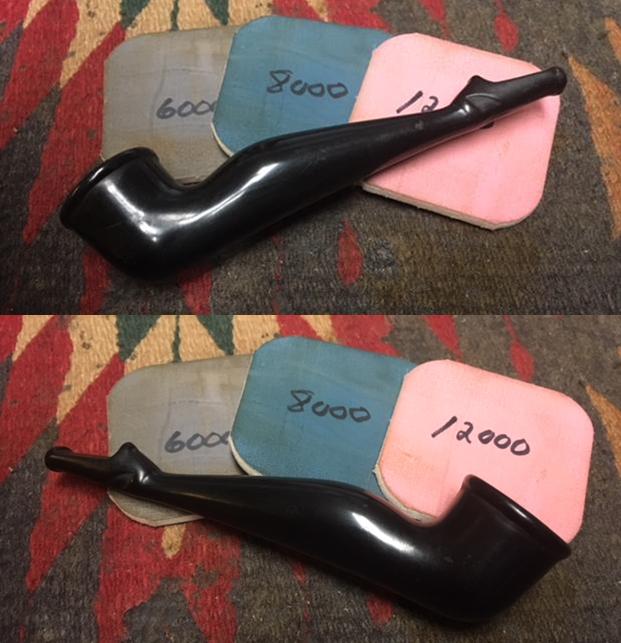
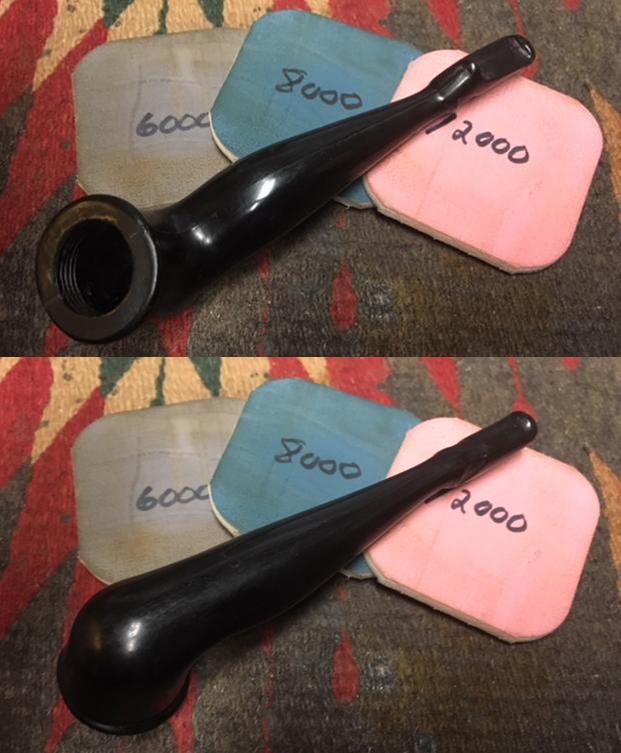
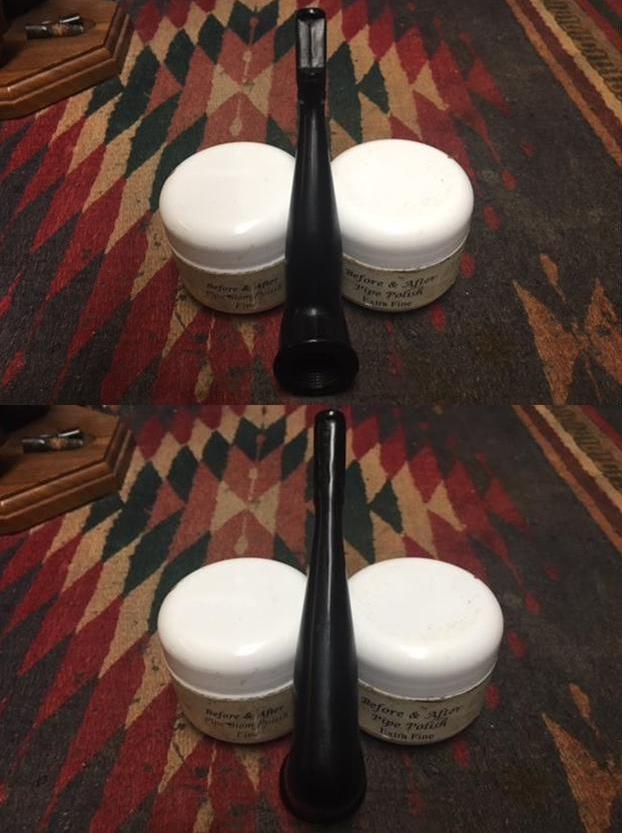
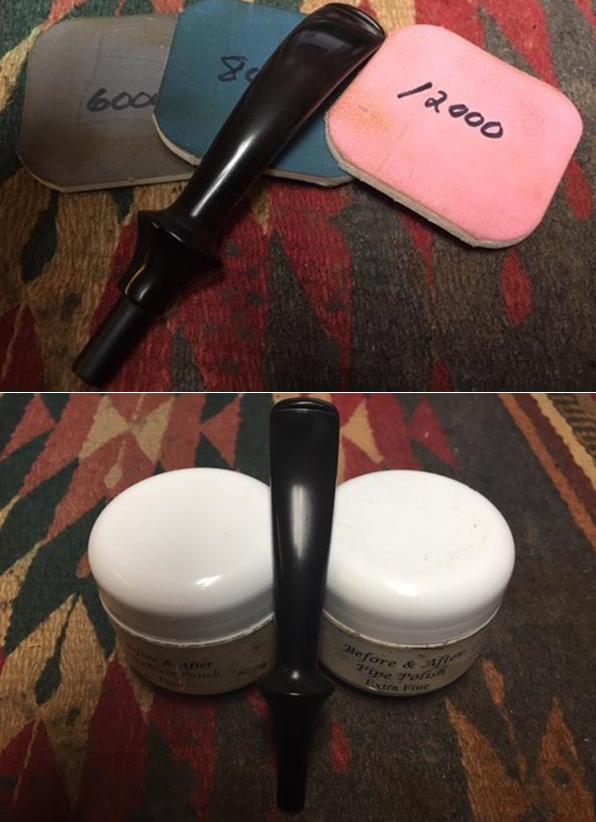
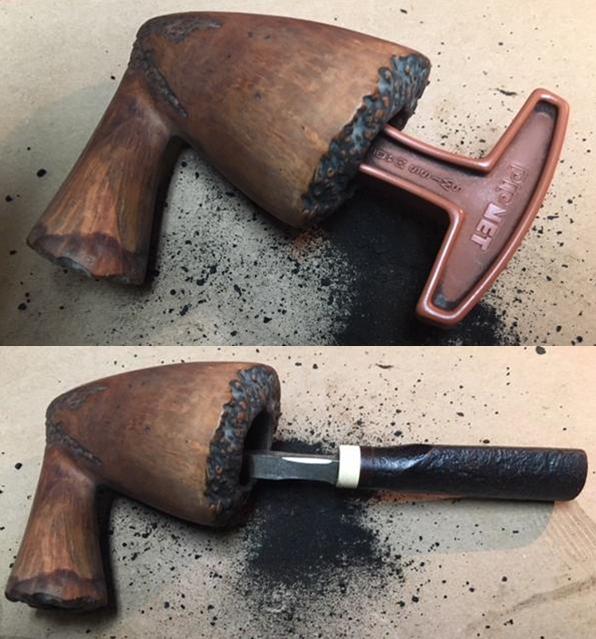
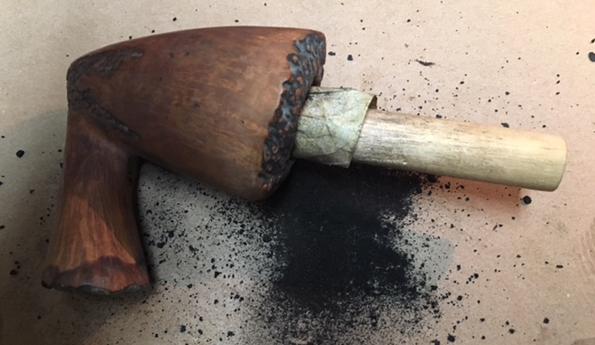
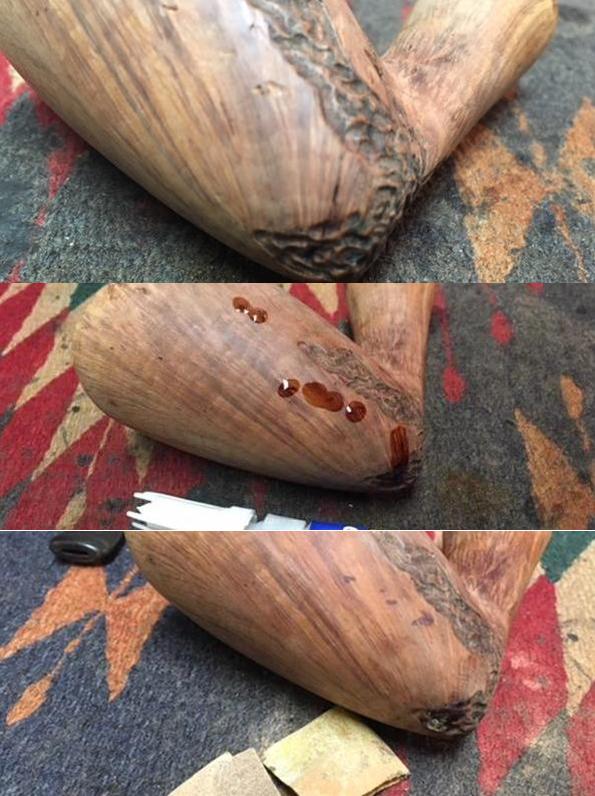
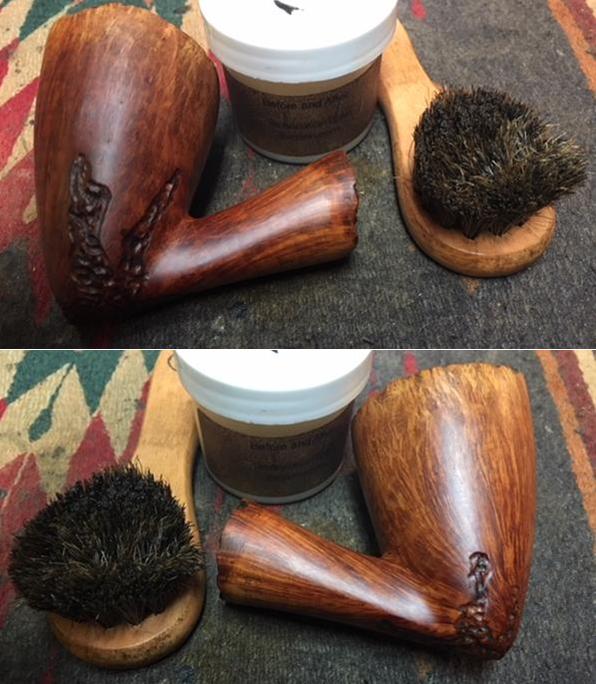
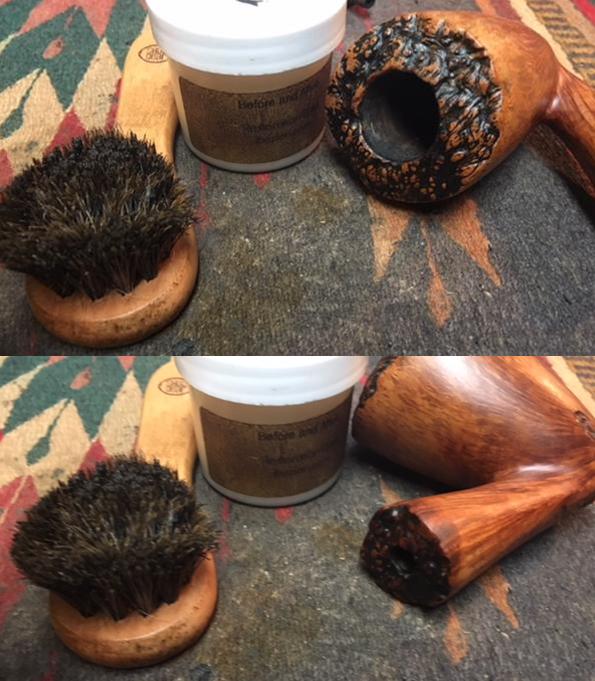
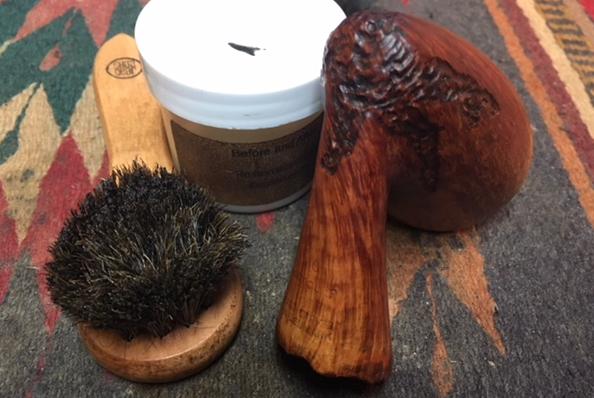
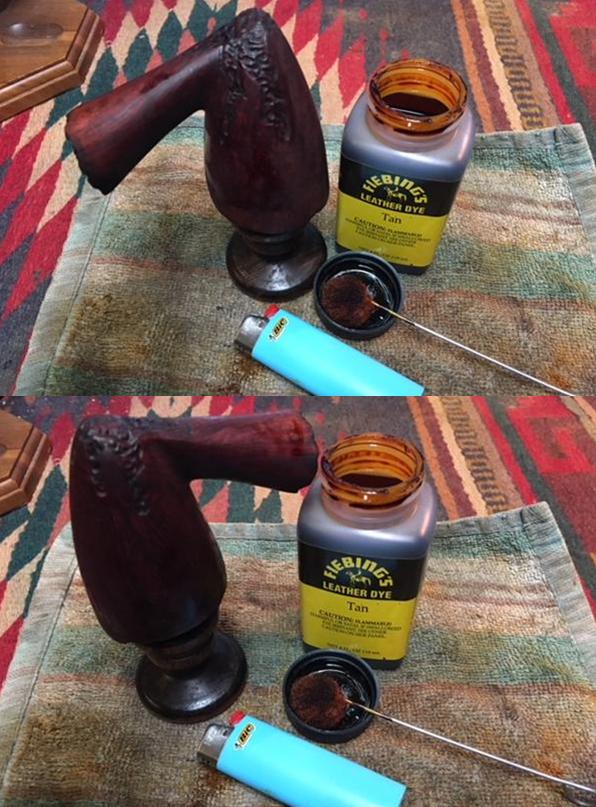
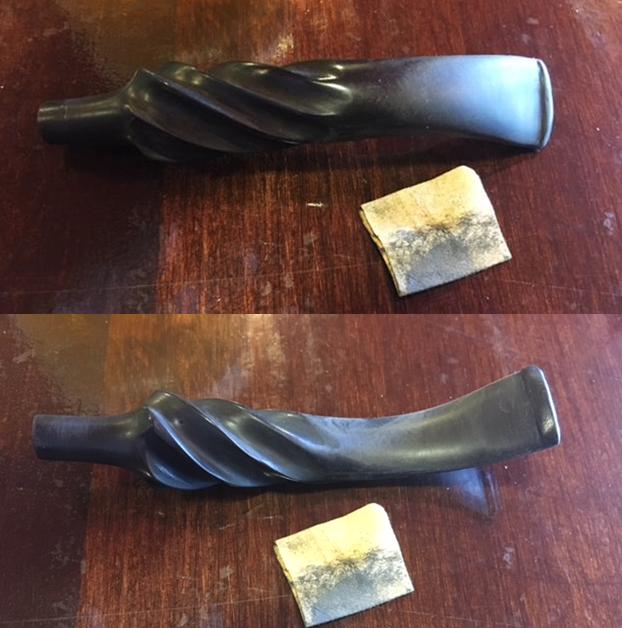
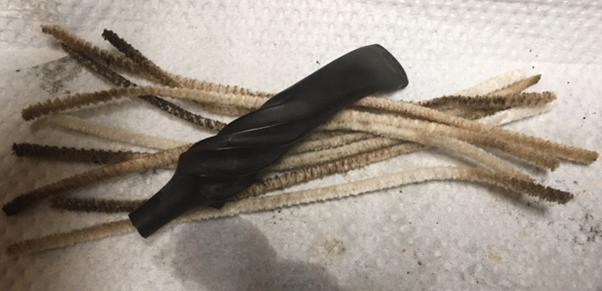
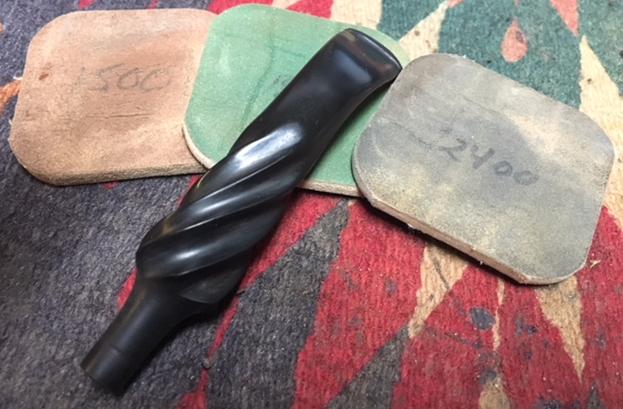
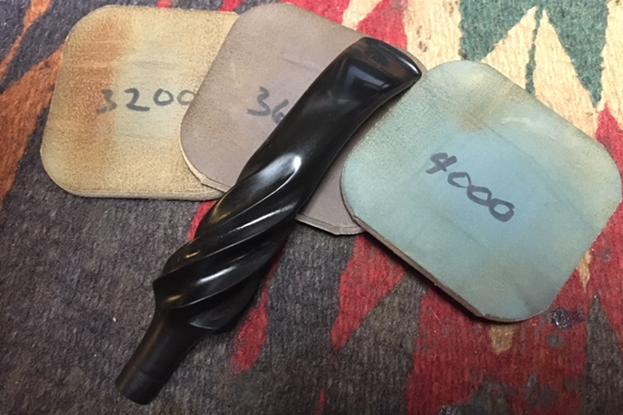
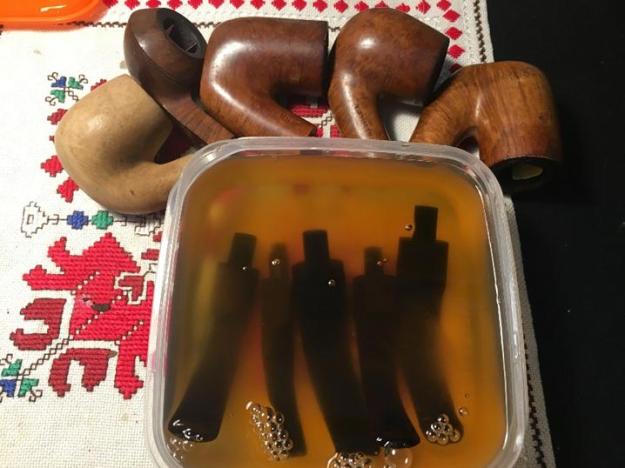
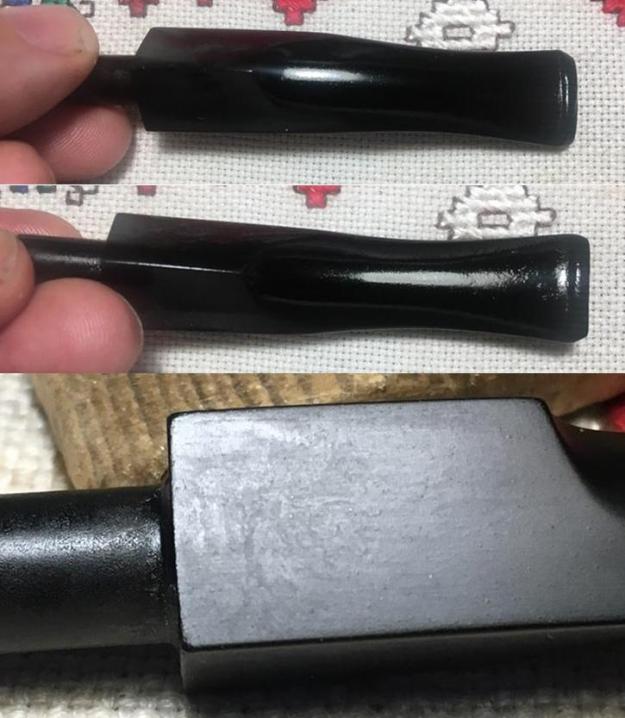
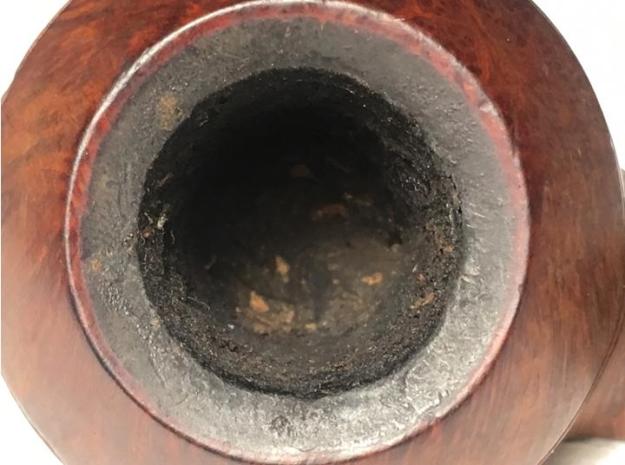
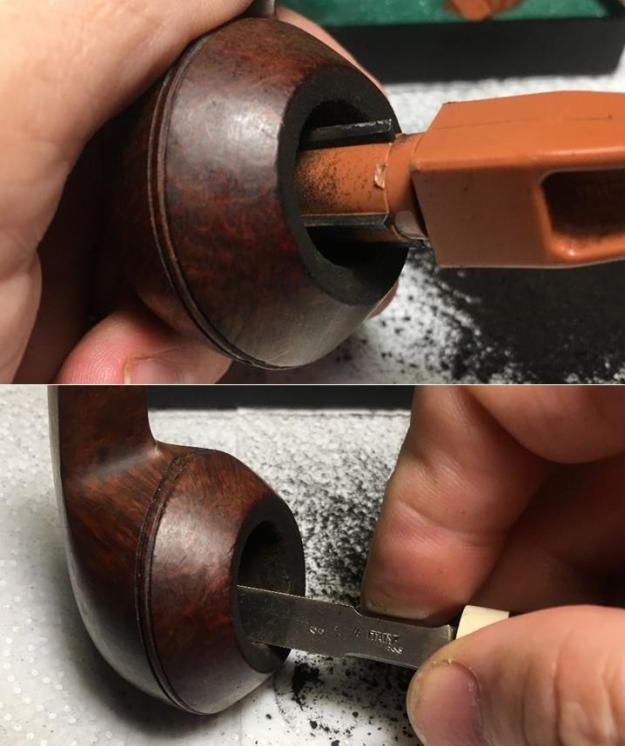
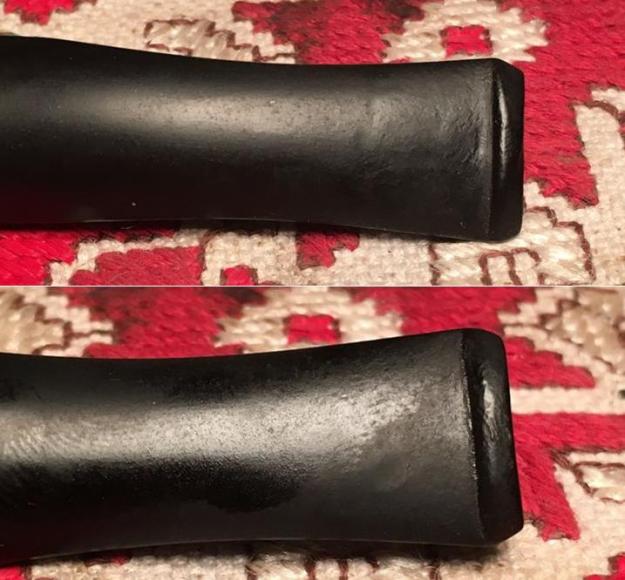
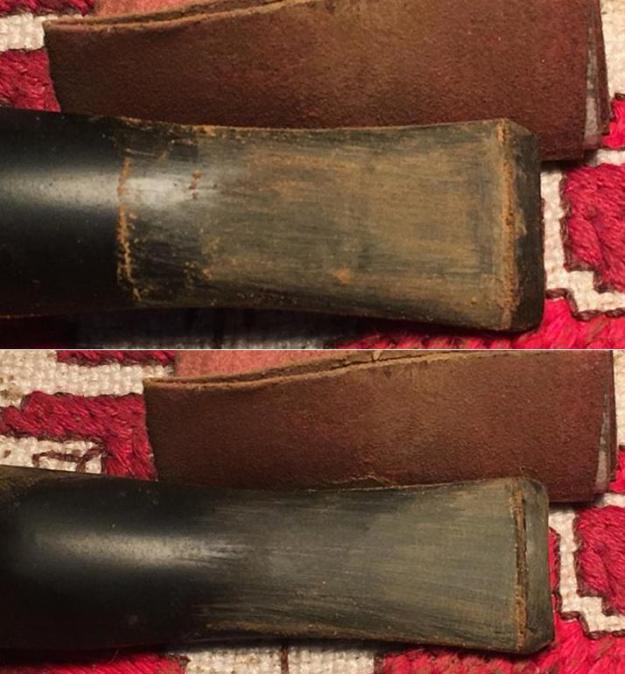
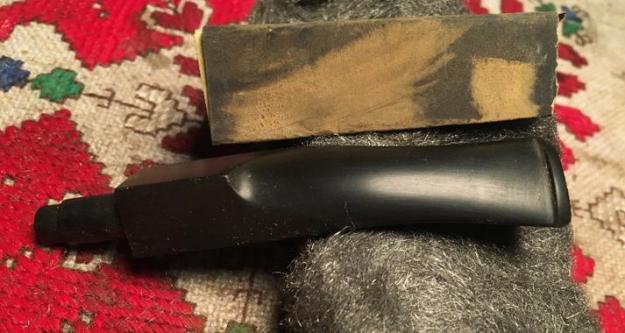
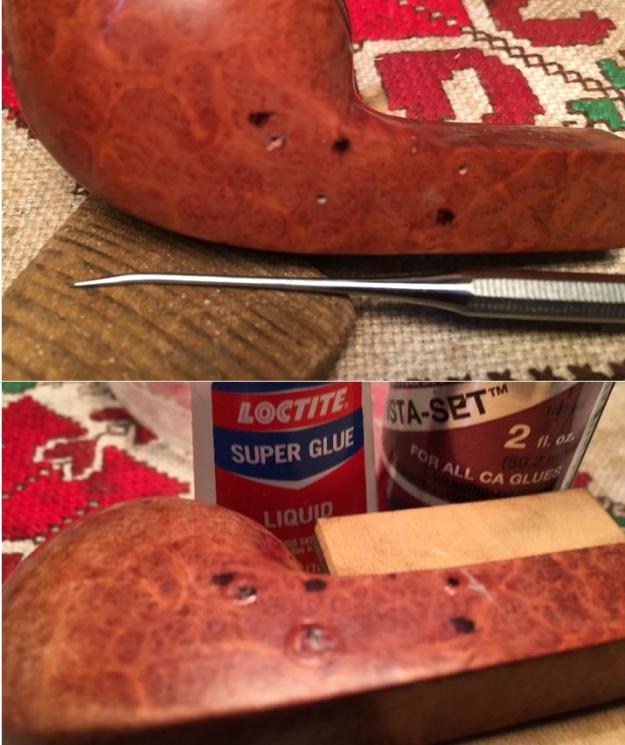
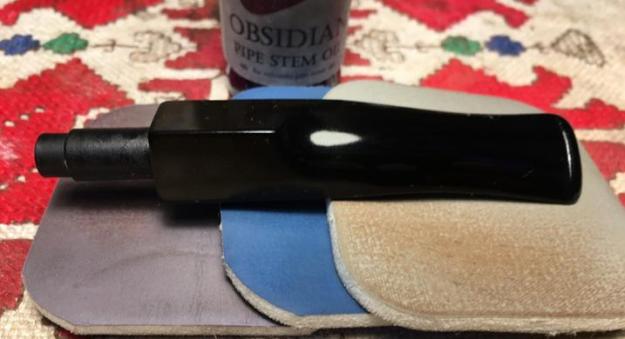
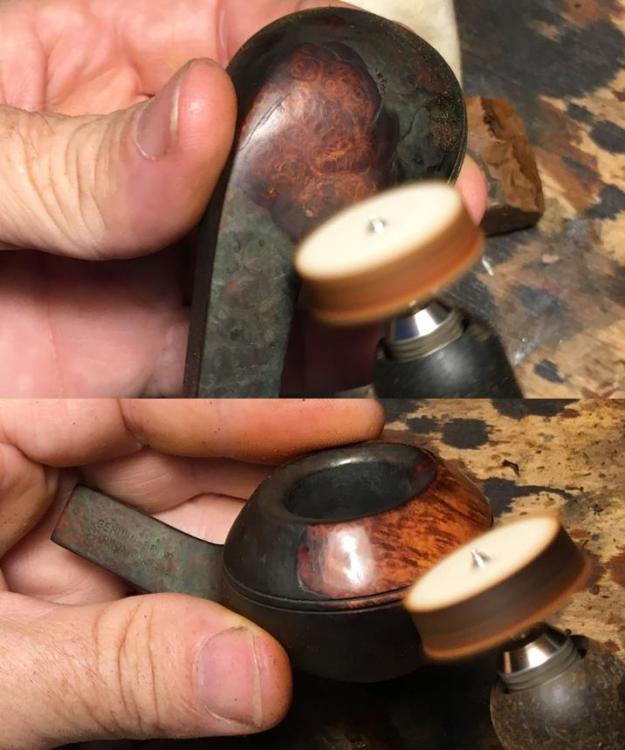
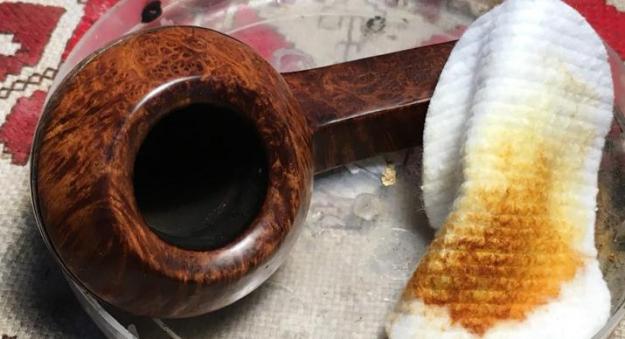
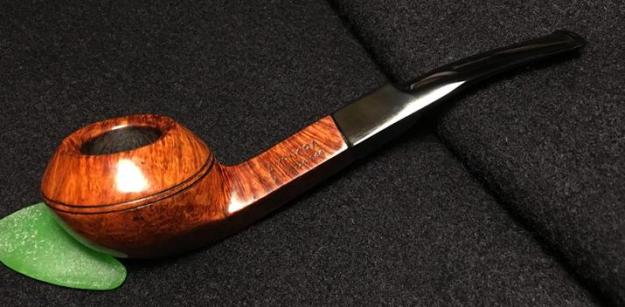
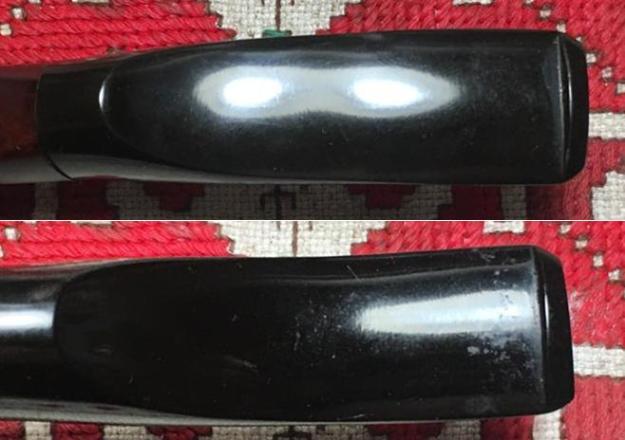
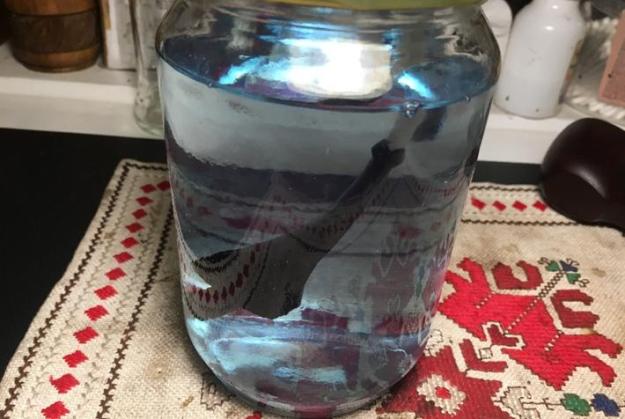
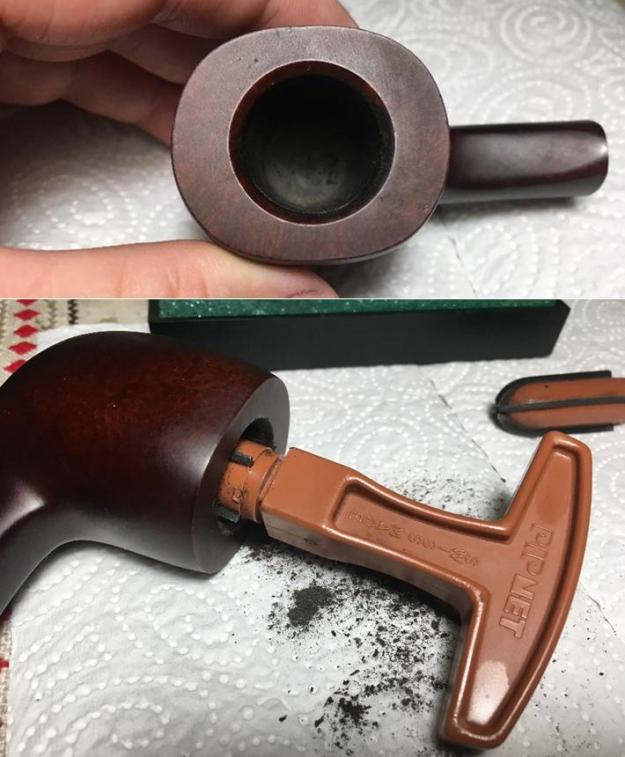
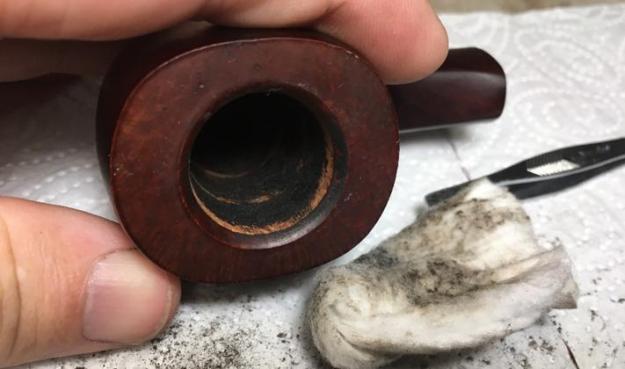
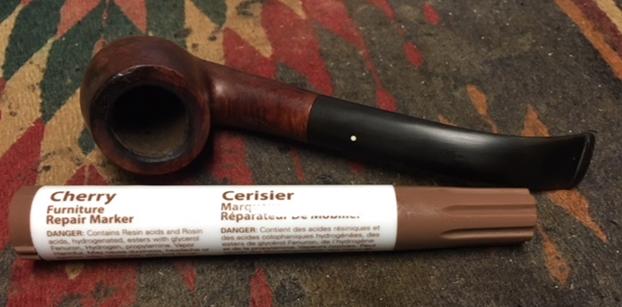
With a great admiration for the pioneering businessmen and pipe men, Kapp and Peterson, I now turn to the Peterson System Standard 313 on my table – really a quintessential working man’s pipe. It gives that kind of persona. The chamber is still loaded with the former steward’s tobacco!  Whenever I see this I wonder if this was the last bowl enjoyed on this side of life.  I’ll never know, and the Pete still isn’t talking!  The chamber has moderate cake build-up and the rim has some lava flow and some scorching.  The stummel generally is in good shape with typical marks of wear, but nothing too serious, and it is darkened with grime.  There is one fill I detect on the front, right of the stummel which I record with a picture.  The nickel ferrule has some dark areas on it which will hopefully clean up and shine up.  The System P-Lip stem has a good collection of tooth chatter, but I don’t detect any clench dents.  I begin the restoration of this Peterson by first adding the stem to a soak of Before and After Deoxidizer along with a Peretti and Comoy’s stem that are in the queue along with their respective stummels.  Before I place the stem in the Deoxidizer, I clean the internals of the System Stem P-Lip for the first time, and I now understand some of what I’ve read about the difficulty in cleaning these stems!  They are engineered to narrow down toward the button and the P-Lip draft hole is smaller than usual.  I read from the Pipedia Peterson article above that Falcon pipe cleaners are thinner and can be used well with these stems.  Good to know!  With pipe cleaners dipped in isopropyl 95% I clean the stem and this keeps the Deoxidizer from becoming soiled as quickly. I let the stem soak for several hours.  After removing the stem, I let it drain of the Deoxidizer and then wipe off the raised oxidation using cotton pads wetted with light paraffin oil.  The oxidation wipes off as a nasty brown goo.  The System stem looks good after it is wiped down well.Putting the stem to the side, with the stummel now in hand, I clean the old baccy out of the chamber.  The tobacco still has a sweet aroma to it – I’m not a tobacco blend expert or else I might hazard a guess!  Using the Pipnet Reaming Kit, I start with the smallest blade and ream the chamber removing the carbon cake down to the fresh briar.  Since the bowl diameter is smaller, I only use the first blade.  I then utilize my Savinelli Fitsall Tool, which I find to be very handy. It can remove some carbon at the floor of the chamber missed by the Pipnet blade and it scrapes the walls more closely giving me greater control.  Wrapping a piece of 240 grit sanding paper around the Sharpie Pen, I sand the chamber walls removing even more carbon residue and getting down to the briar for a fresh start. Finally, I use a cotton pad wetted with isopropyl 95% and clean the chamber of the carbon dust.  Looking at the chamber, I see no problems – it looks great. Turning to the externals, I use undiluted Murphy’s Oil Soap with cotton pads to scrub the grime off the bowl and rim.  I also use a brass brush on the rim which is dark from some scorching.  After this, I rinse the stummel with tap water.  While I was doing this, I allowed the water to run over the nickel ferrule and rubbed it with cloth to see if this would help clean it up.  There is still what looks like corrosion on the nickel-plated surface.  I’ll do some Google research later to see what the next step might be to clean the nickel safely.  I also am not able to remove the darkened briar on the rim.  I’ll need to give it a gentle topping to remove it.  While I think about these challenges, I clean the internals of the stummel.  Using pipe cleaners, cotton-buds and shank brushes dipped in isopropyl 95%, I go to work.  Well…, some time later, I’m still not 100% satisfied with the cleaning of the Peterson ‘sump’ and draft hole.  The old tar and oil gunk is thick and only after employing many weapons in the arsenal is it starting to shape up.  The sump has collected the moisturized gunk as designed.  Along with pipe cleaners, cotton buds and different sized shank brushes, I also use both a dental spatula and probe to stir up and scrape the mortise and sump walls.  I take a picture to show this frontal attack – it isn’t pretty.  Now, to continue the cleaning I’ll use the kosher salt and alcohol approach.  Using kosher salt, which does not leave a taste as iodized salt does, I fill the chamber with salt, cup the top of the bowl with my palm and give it a shake to displace the salt.  I then set it in an egg crate to keep it stable.  Using a cotton ball, I create a wick to stuff down the mortise to act as a wick drawing more of the oils and tars out of the briar.  I make the wick by stretching and twisting the cotton ball and then guiding the end down into the draft hole as far as I can get it – I use a piece of thin metal coat hanger wire to push the cotton through the draft hole.  I also push the cotton down into the sump.   Once that is done, using a large eye dropper, I fill the bowl with alcohol until it surfaces over the salt.  After a few minutes – after it’s been absorbed, I top it off again.  I set the stummel aside to soak through the night. The next morning, the salt-alcohol soak did the job!  The salt is soiled, and the cotton wick is full of tars and oils.  After dumping the expended salt in the waste basket, I wipe the bowl out with a paper towel and blow through the mortise to loosen and left-over salt.  I run a pipe cleaner and alcohol through the draft hole and a cotton bud as well in the sump and the mortise walls to make sure all is clean and I’m happy to report that it is!  From this cleaning, I think a wise practice for any Pete steward would be to clean your pipe often!  Don’t allow too much gunk to collect in the sump.Turning to the Peterson-Lip stem, I use 240 grit paper to sand focusing on the tooth chatter on P-Lip button and the upper and lower bit.  I also refresh the lines of the button contours using a flat needle file.  To erase the scratches made by the file and 240 paper, I use 470 paper.   I then employ 600 grade paper sanding the entire stem and follow this with 0000 steel wool which begins the buffing up of the vulcanite. Before moving on to using micromesh pads on the stem, I use Before and After Fine and Extra Fine Polish on the stem to enrich the vulcanite.  For each polish successively, I place a bit on my finger and work it into the vulcanite.  I then wait a few minutes and wipe each successive polish off with a cotton cloth which also buffs up the vulcanite gloss.I put the stem aside and look again at the Peterson stummel.  I have two initial challenges to solve.  The rim’s dark ring from it being scorched.  Secondly, the small fill on the right-front quadrant of the stummel.  I use a dental probe and dig at it a bit to see how solid the fill is.  Some of the fill material flaked off and left a small indentation as a result. This needs to be filled again and masked. I will patch it before moving ahead with the stummel surface.  But first, I work on the rim.  I use a chopping board with 240 grade paper on it.  To top the inverted stummel, I use uniform, easy circular motions and I don’t need to take much off – just enough to remove the scorched wood.  Switching the paper on the chopping board to 600 grade paper, I top the stummel a bit more to smooth out the 240 scratches.  I take pictures to show the progress.   I notice that there is still a bit of dark wood on the outer rim lip. I’ll take care of that when I’m sanding the stummel rounding off the edge slightly.  I’ll stain the rim’s bare briar a bit later to match the stummel’s surface. Now, to address the fill. I again use a dental probe to scrape the old fill and to remove what is not solid.  To darken the old, remaining fill, I use a cherry stain stick to darken and color the fill so that it will blend with the briar grain better – I hope!  I then apply a small drop of clear super glue to the hole.  I use a toothpick to guide the super glue to the patch – while I was doing this, the power went out and I had to finish using the sunlight coming into the open window!  I put the stummel aside and wait for the CA glue to cure and the lights and internet to come back on! I decide to work on the stem using the micromesh pads. Starting with pads 1500 to 2400 grade, I wet sand the System stem. Then, using 3200 to 4000 and 6000 to 12000 I dry sand the stem.  Following each set of 3 pads, I apply Obsidian Oil to revitalize the vulcanite.  I never grow tired of watching the pop in the vulcanite when it turns to that glassy gloss!  The Peterson-Lip System stem is looking good.  I put it aside to dry and absorb the Obsidian Oil. I turn back to the stummel.  The CA glue has cured on the patch and I begin the process of removing the patch mound by using a flat needle file.  The most important part of this process is to keep the file on the hardened glue and not slide off and to impact needlessly the neighboring briar.  I want to keep the area needing repair and refinishing as small as possible!  I file the glue mound down until it’s almost at the level of the briar surface.  Then, using a tightly rolled piece of 240 grit paper, I sand the mound further, so it is flush with the briar.  Finally, I use 600 grade paper to smooth the patch out preparing it for dye stick to blend the patch.  I think its going to blend very well with the briar. Now, to the rim.  I use 240 grit paper rolled tightly and I run it around the outer rim edge to give it a slight rounding to remove the remnants of damage on the rim.  I gently pinch the rolled paper over the rim edge with my thumb, so I create the slight bevel.  I also do the same, very lightly, to the inside rim edge.  I follow by doing the same with a rolled piece of 600 grade paper.  Finally, I take the stummel back to the topping board once more on 600 grade paper simply to redefine a crisp line around the rim after the beveling.  I think it looks great and ready for the next step. I’m hoping that I can match the dye stick color correctly!  I read on rebornpipes, Steve was restoring a Peterson System Standard and needed to use a dye stick on the rim.  He used cherry and said that it matched the Peterson schema well.  I’ll do the same and see how it goes!  I apply dye to the both the fill patch and the rim.  I wait a while for the dye to thoroughly dry before proceeding.I then sand the stummel with micromesh pads.  I wet sand using pads 1500 to 2400, and then dry sand with pads 3200 to 4000 and 6000 to 12000. To protect the Peterson’s nomenclature, I stay clear of the until the later pads – and even then, a very light touch. As you can see in the pictures above and the focused one immediately below, the nickel ferule of this Pete needs help dealing with the corrosion – it is an eyesore.  Care must be given because metals can be a bit tricky.  One approach that works for silver might turn another metal black!  After doing some quick ‘How to clean/polish nickel plating’ searching on Google, the approaches I found were helpful.  The general theme is to start conservatively and then to work more aggressively – that is, simply washing the nickel with warm water (every source warned about the need to use warm water with nickel – not hot nor cold) and a mild liquid dish detergent.  I do this to begin, and it does brighten the ferule but does not help with the corrosion.  The next step is to make a paste using baking powder (a mild abrasive and acidic) with water.  This I do next with better results.  At first, I have too much water, but eventually I find the ratio to create a thicker paste.  I then apply the paste with my thumb and work it in around the entire ferule but concentrating on the corrosive spots – the main one being over the ‘Peterson’s’ stamp. Afterwards, I gently rinse the ferule with warm water.  I like the progress, but I return to the paste and this time use a cotton pad dipped a bit into the paste and use it in a circular motion over the spot and then rinse.  I buff the ferule with a cloth and I like the results! The corrosion on the nickel is greatly reduced and the ferule looks shinier – but not pristine, still holding some scuffs from life.  I think this is good because he is an older Pete after all! The Pete is looking great.  Before moving to the final stages using abrasive compounds on the stem and stummel, I apply Before and After Restoration Balm to the stummel which has a way of enriching and deepening the briar. In keeping with the product’s name, I take some before pictures to compare with the after pictures – that always interests me.  I put some on my finger and work the Balm into the briar.  The Balm starts more liquidy and gradually firms up into a thicker, wax-like consistency.  After applying, I prop the stummel on an egg crate and let it sit for some minutes to absorb the Balm.  Then, after about 20 minutes, I wipe the Balm off, buffing up the shine with a cloth.  Then I take the ‘after’ pictures which are below for comparison.  I like the results. Because of the military style stem, I leave the stummel and stem separated as I apply compounds and wax.  I begin by mounting a cotton cloth buffing wheel to the Dremel dedicated to the application of Blue Diamond compound.  With the Dremel set to the slowest speed, I apply the compound to the stummel in a slow, patient, methodical manner.  I use the sheen created on the briar by the overhead lamp to see the compound as I move it and direct it over the surface.  For the System stem, I switch cotton cloth buffing wheels and apply White Diamond, which is a finer abrasive than Blue Diamond.  For both compounds, I don’t apply much pressure to the wheel but allow the speed and the abrasive compounds to do the work.  After the compounds, I wipe stummel and stem with a felt cloth to remove compound dust before applying the wax. Then, again changing to another cotton cloth buffing wheel, and increasing the Dremel to about 40% power, I apply a few coats of carnauba wax to both stummel and stem and complete the process with a rigorous hand buffing with a micromesh cloth to raise the shine.

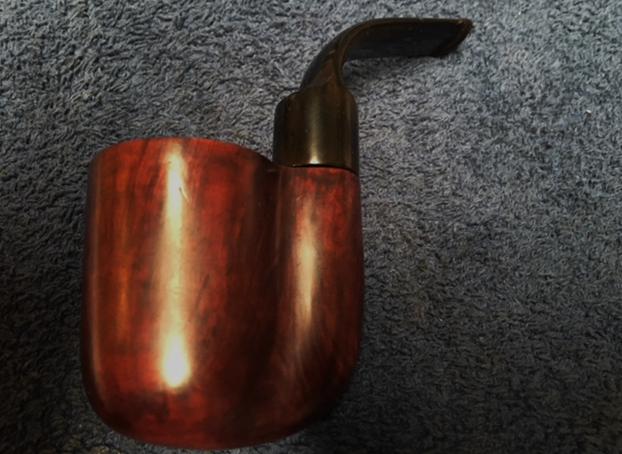
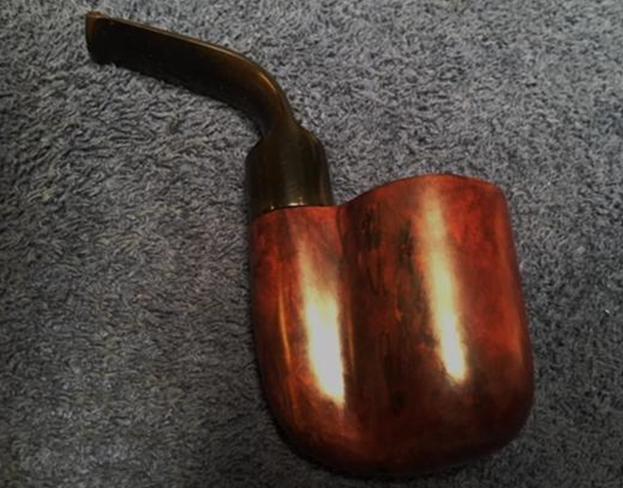
Oh my! The image that comes to my mind as I look at this Republic of Ireland Peterson, is that of a leprechaun, smoking his newly shined up pipe, doing a jig as he dances down the street!  This is the first Peterson on The Pipe Steward worktable and I’m pleased with the results and appreciate more the history of this well-known, proud Irish pipe name.  The grain of this Peterson System is surprisingly expressive and eye catching for a ‘Standard’ grade – a workingman’s pipe.  The nickel ferule came out great providing a classy transition for the military styled P-Lip System stem.  I’m pleased with the results! Greg commissioned this Peterson System Standard 313 and he will have first dibs on it in The Pipe Steward Store.  This pipe will benefit the work of the Daughters of Bulgaria – women and girls who have been trafficked and sexually exploited.  The pictures start with a before and after! Thanks for joining me! 

Restoring a Beautiful Brass S Stanwell Rhodesian


Blog by Steve Laug

I have been refreshing some pipes for a friend of mine who used to own a pipe shop and putting them on the rebornpipes store. I have worked on some higher end silver capped Peterson’s and a Peterson’s 2012 Pipe of the Year. All of them were beautiful pipes and all had some measure of attraction for me, but I was able to let them go and put them up for sale on the store. When I opened the next box to look over the pipe inside and see what I needed to do with it before posting it on the store, I was surprised. The labeling on the box could not have been clearer. It said it was a Stanwell Pipe on the lid and on the end it said it was a Stanwell Rhodesian 170. I have seen photos of the Stanwell Rhodesian but had never seen one up close and personal. I was excited to open this box and see what it contained. I took photos of the box before I opened it and also of the process of taking the pipe out and assessing its condition and the work I would need to do with it.It was a beautiful pipe even though it was dirty. As I looked at in the box I did a quick overview of its condition. The stem was oxidized and there was some calcification on the first half-inch of the stem at the button. There was light tooth chatter. The brass band was oxidized on the shank but looked solid. The sandblast portion of the bowl was dirty but the finish looked good underneath the grime. The twin rings around the bowl were dirty and filled in a bit with debris. The rim cap was smooth and dull looking. The top of the rim had a light coat of lava and some darkening. The bowl had a light cake and the pipe smelled like Lane’s 1Q – a sweet vanilla overtone pervaded the entire pipe and box.Just looking at it in the box I could see that this pipe was going to be a hard one to let go of, I can tell you that even before I start working on it. I took it out of the box and put it on the work table and took photos of it before I started to clean it up. You can see all of the points I made above regarding it s condition as you look at the following photos. I took close up photos of the rim top to show the lava and darkening and well as the thickness of the cake in the bowl. The second photo shows the stamping on the lower left side of the shank. It reads Stanwell over Rhodesian over Made in Denmark. The last two photos show the stem condition and the oxidation and tooth chatter on both sides near the button. I reamed the bowl with a PipNet reamer using the second cutting head first then progressing to the third head as it was the same size as the bowl. I wanted to trim the cake back to bare briar and clean the bowl completely. I followed up with using a Savinelli Fitsall Pipe Knife to clean up the remnants of cake. I rolled a piece of 220 grit sandpaper around my index finger and sanded the inside of the bowl smooth. With the bowl clean inside it was time to address the lava overflow on the rim top. You can see from the first photo that the inner edge of the bowl is in good condition as is the surface of the rim top. There are no dents or nicks in the briar. I lightly sanded the rim with a worn piece of 220 grit sandpaper and wiped it clean with a damp cotton pad. I was able to clean off the rim top and remove the lava and darkening. I polished the rim top with micromesh sanding pads – wet sanding with 1500-2400 grit pads and dry sanding with 3200-12000 grit pads. I wiped the rim top off after each sanding pad to remove the sanding dust. I touched up the polished rim top with a Cherry stain pen to match the colour of the rest of the smooth cap on the bowl. I let it dry and repeated the process until I was happy with the coverage. It still needed to be buffed but it matched well.I scrubbed the exterior of the bowl with Before & After Restoration Balm to clean, enliven and protect the finish of the briar. I worked it into the surface with my finger tips and buffed it with a horsehair shoe brush to work it into all the nooks and crannies of the sandblast. I buffed if off with a soft cloth and hand buffed it with the shoe brush. The photos below show the finish at this point in the process. With the outside cleaned it was time to work on the internals. I scrubbed the mortise and the airway in the shank and stem with alcohol, pipe cleaners and cotton swabs. I worked over the inside of the mortise and the airway into the bowl until the pipe cleaners and cotton swabs came out clean. I did the same with the slot and the airway in the stem. I wiped down the outside of the stem to remove the calcification with a cotton pad and alcohol.I sanded out the tooth chatter and remnants of calcification with 220 grit sandpaper and also worked on the oxidation on the surface of the stem. It was light so it did not take too much work to remove the majority of it with the sandpaper.I polished the vulcanite stem with micromesh sanding pads – wet sanding with 1500-2400 to remove the scratching left behind by the sandpaper and also more of the oxidation on the stem. I dry sanded it with 3200-12000 grit pads to polish the vulcanite and give it a real shine. When I finished I polished it with Before & After Pipe Polish – both fine and extra fine polishes. I wiped it down with a final coat of Obsidian Oil and set it aside to dry. I the polished stem and bowl with Blue Diamond to polish out the remaining small scratches. I gave the bowl multiple coats of Conservator’s Wax and the stem several coats of carnauba wax and buffed the pipe with a clean buffing pad to raise the shine. I hand buffed it with a microfiber cloth to deepen the shine. The pipe polished up pretty nicely. The finished pipe is shown in the photos below. I am sure that this one is staying with me. I look forward to carrying on the trust from the previous pipeman. The dimensions are Length: 6 inches, Height: 2 inches, Outside diameter of the bowl: 2 1/4 inches, Chamber diameter: 3/4 inches. Thanks for walking through the restoration with me as I worked over this beautiful Stanwell Rhodesian.


Restoring a Unique Comoy’s Pebble Grain 603 Modern Bent Poker


Blog by Dal Stanton

When I saw this pipe on the eBay auction block, I wanted it!  I was drawn initially by two factors – first, it was a Comoy’s Pebble Grain.  Secondly, I had never seen a Comoy’s with this shape – a very nice Bent Poker and classy to boot!  Or was it a Poker?  The seller’s tagline said: Details about Comoy’s Pre-Cadogan Pebble Grain Lightweight OOM Paul 609 Made In England.  Uh, Oom Paul?  Here is what I saw: Despite the confusing information which I decided I would sort out later, I was able to dodge last second bidders and land this beautiful, blasted Comoy’s Pebble Grain Bent Poker.  This Comoy’s has been in my ‘Help Me! Basket’ here in Bulgaria for some time waiting to unravel the confusion.  Now, fast forward to a recent visit to Bulgaria of my wife’s sister and her husband, Sarah and Greg.  It was great having family visit!  As is often the case, when people visit, they know about my sideline activity of restoring pipes for the Daughters of Bulgaria and often, people visiting our home are interested in the process of restoring, etc.  And VERY OFTEN, people desire to help the Daughters, too, and go through the MANY pipes I have in the ‘Help Me!’ basket and pick out a special pipe for them that will also benefit the Daughters.  Well, Greg caught the bug and wanted to choose ‘a’ pipe for himself which became two pipes because he couldn’t decide between the two!  He chose this Comoy’s as well as a K&P Peterson’s Republic of Ireland – both now in the queue for restoration to benefit the Daughters.  Thanks, Greg!

The one thing the eBay seller had right about this Comoy’s is that it is Pre-Cadogan, which means that it is pre-1981 the year of the merger.  The origins of Comoy from Saint-Claude, France, started in the 1820s by Francois Comoy.  His son, Henri, started the London extension of the Comoy name in 1879 with not much more than the tools of his trade – making pipes.  He is cited by Pipedia as being the author of the appellation, “London Made”.  In 1929 the company merged with the macro-concern, Oppenheimer Pipes.  With this, albeit brief history, Pipedia’s describes the present summation:

Comoy’s remained a family owned company until it was finally taken over by Cadogan Investments during the early 1980’s. Cadogan have continued to manufacture Comoy pipes to the present day and, under Michael Adler, the Comoy brand is their flagship and efforts are being made to once more re-instate the well-known quality of the brand.

Time to sort out the confusion.  I did a simple Google search for a Comoy’s pipe shapes chart which brought me PipePages.com where I found the actual shape 603 (not 609 on the eBay block), described as a ‘Modern – Bent Poker’.  The page provided information associating the Comoy’s pipe chart with the corresponding 1975 Comoy’s of London Catalog which I looked at.  The 603 is on the right, second down in the chart below.  I remember 1975!  I was in college, driving my red ‘68 VW Bug, Gerald Ford was President of the US, and it was the year Jaws hit the cinema (I think!). The catalog described the Pebble Grain line’s qualities and also provided a price list that I found interesting to see how the various Pebble Grain line shapes ranked in monetary value in 1975 – not a cheap pipe! It was tied for second in value with Comoy’s Golden Grain, behind number 1 – Comoy’s Diplomat line (See below). With the confusion dispensed, I take the 1975 Comoy’s Pebble Grain, Modern – Bent Poker, to the worktable and take additional pictures to get a closer look at this classy Comoy’s Pebble Grain Modern Poker. The heel of the Poker contains the nomenclature: ‘COMOY’S’ over ‘PEBBLE GRAIN’ over ‘MADE IN LONDON’ over ‘ENGLAND’ over ‘603’, the shape number.  According to Pipedia’s article, A History Of Comoy’s and A Guide Toward Dating the Pipes, the ‘Made in London England’ was used after WW2.  According to the same article, the ‘Inlaid C’ which this Poker has, was stopped with the Cadogan era in 1981.  So, this Comoy’s is placed after WW2 to the 1970s – the 1975 Comoy’s catalog siting seems to be confirmed.  I found this information about the inlaid C interesting:

“C” was first inlaid in the side of the mouthpiece around 1919. This was a complex inlay needing three drillings. First, a round white inlay was inserted, then the centre of the white was drilled out, and a smaller round black inlay was inserted. Finally, another drilling was made to remove the open part of the “C,” and an even smaller black inlay was inserted. This inlaid “C,” known as the “three-piece C,” was continued until the Cadogan era in the 1980s. However, the “C” in the 1920s and early 30s is much thinner and more delicate than the one post-war. Cadogan first changed the “C” to a single drilling with an inlay that had the “C” in the centre, and more recently it became a laser imprint. I have a cased pair of early 1920’ “Par Excellence” where the “C” is on top of the mouthpiece.

The picture above shows the ‘three-piece C’ detected by the drilling if you look closely.  Very cool!

The condition of the Comoy’s Pebble Grain ¾ Bent Modern Poker is pretty good.  The blasted finish is exceptional, which seems to be a hallmark of the Comoy’s name.  The surface is dirty and needs to be cleaned.  The rim has significant lava flow over it and the chamber is sporting some moderate cake buildup.  The stem has a good bit of tooth chatter but no dents that I detect.  The oxidation is deep.  I want to keep my eye that – not to progress too far finishing the stem and discover oxidation!  That is not fun.  I begin the restoration of the Comoy’s Pebble Grain by first cleaning the internals with pipe cleaners and isopropyl 95%.  I then add the stem to a Before and After Deoxidizer bath along with other stems.  After some hours, I fish out the Comoy’s stem and after allowing it to drain a bit, I wipe off the raised oxidation using cotton pads and light paraffin oil, Bulgaria’s version of mineral spirits.  The oxidation wipes off and then I buff the stem clean with the cotton pad. I run a pipe cleaner through the stem to rid the airway of Deoxidizer fluid. I follow the Deoxidizer bath by applying Before and After Fine Polish and then Extra Fine Polish to further remove oxidation and revitalize the vulcanite stem.  I put a little of the polish on my finger and work it into the vulcanite until it has absorbed well. I do the same with the Extra Fine Polish.  I wipe off each application with a cotton pad.  I take a close look and I can still see the deep greenish haze of oxidation – ugh!  Instead of immediately turning to sanding, I decide to utilize the method I’ve used in the past – an OxiClean bath.  I cover the Comoy’s ‘C’ with petroleum jelly to protect it and I put the stem in the bath with a pipe cleaner inserted in it for easier retrieval.  I leave the stem in the OxiClean bath over nite. With the stem soaking, I turn to the Comoy’s Poker stummel.  I begin by reaming the chamber to remove the moderate carbon cake buildup.  Uncovering fresh briar enables me to examine the chamber walls for cracks or crevices. Using the Pipnet Reaming Kit, I start with the smallest blade after putting paper towel down to ease on cleanup.  I use 3 of the 4 blades available to me in the Pipnet Kit – I’m surprised how large the bowl is for a smaller sized pipe.  I then scrape more carbon out of the chamber using the Savinelli Fitsall tool which is great for getting hard to reach places.  Using a Sharpie Pen, around it I wrap 240 grit paper and sand the fire chamber to expose the fresh briar.  I finish with cleaning the chamber of carbon dust with a cotton pad wetted with isopropyl 95%.  The chamber has no cracks or crevices upon inspection. Next I attack the lava flow on the rim and cleaning the stummel surface.  I use undiluted Murphy’s Oil soap with cotton pads to do the cleaning.  The rim requires the use of a brass brush which doesn’t harm the briar.  I then rinse the stummel using cool tab water careful to keep water out of the internals.  The Murphy’s cleaned the surface well – it was grimy and the old finish was lightened at different places – especially around the rim.  I take a few pictures below to show what I’m seeing. I like working on a clean pipe so I decide to do the dirty work now.  Using pipe cleaners and cotton buds dipped in isopropyl 95%, I work on cleaning the mortise and draft hole.  I find the internals pretty dirty but finally the pipe cleaners and buds are coming out fairly clean.  I like to make sure the internals are clean so I will also use the more subtle approach – kosher salt and alcohol soak.  I use kosher salt because, unlike iodized salt which leaves a taste in the wood, kosher does not.  I fill the chamber with salt and cover the top and give it a shake to move the salt around.  Then I use a cotton ball to create a wick by stretching and twisting it.  I stuff it down the mortise and place the stummel in an egg carton for stability.  Using a large eyedropper, I then fill the chamber with isopropyl 95% until it surfaces over the salt.  After a few minutes, I will top the alcohol again.  The night is late, I leave the stummel to soak over nite and I call it a day. The next morning before heading out for my workday, I need to tend to the kosher salt and alcohol soak.  The salt was discolored and the wick was wonderfully colored – it did the job that was asked of it!  I dump out the used salt in the waste basket and wipe the bowl with paper towel and a bristled brush to remove the leftover salt.  I also blow through the mortise to purge any left over salt in the mortise.  I finish by running a few pipe cleaners dipped in isopropyl 95% through the airway and I’m satisfied.  The bowl is clean!I also fish the Comoy’s stem out of the OxiClean bath.  The bath has raised more oxidation from the vulcanite.  I adjust the aperture on the iPhone camera to show better what I’m able to see with the naked eye.I attack the oxidation by wet sanding with 600 grade paper.  When it’s time to head to work, I’m still not satisfied that the oxidation was conquered and will continue tonight!I continue working on the oxidation when I return in the evening.  I continue sanding using 600 grade paper but change to dry sanding.  I also utilize a disc I fashioned to wedge up to the shank end of the stem to avoid the sanding creating a ‘shoulder’ on the stem – a rounding of the edge. I think I’m making progress.  I follow the 600 paper by buffing the stem with 0000 grade steel wool.  Through out I take a very light approach to sanding on the Comoy’s 3 piece ‘C’, though since it is an inlay, it’s not fragile – at least that is my hope!  At this point, I’m feeling better about the oxidation being subdued for the most part!Now, taking a close look at the bit area to determine tooth chatter needing to be taken care of, I see that the work dealing with the oxidation has almost cleared all the chatter.  There is still a little that will easily sand out.  I take pictures of the minor issues and then use 470 grade paper on the upper and lower bit areas removing the chatter.  I then return to 600 grade paper then 0000 steel wool to erase the tracks of the coarser papers.  The pictures show the progress. Next, using micromesh pads, I wet sand the stem using pads 1500 to 2400.  Following this I dry sand using pads 3200 to 4000 then 6000 to 12000.  Following each set of 3 pads, I apply Obsidian Oil which the vulcanite drinks up.  I think that stems require more time than any other part of the restoration process – they take lots of patience and this Comoy’s stem looks good – he’s really popping! Turning to the Pebble Grain Poker stummel, I’m looking forward to seeing how he will shape up!  The Comoy’s Pebble Grain blasted finish is second to none in my opinion – the three-dimensional perspective of the grain revealed in the blasting process gives a different kind of enjoyment.  I love to see the grain emerge in smooth briars, but a quality blasted surface, as this Comoy’s is, gives a unique grain look and touch all in one package.  Earlier when I cleaned the stummel with Murphy’s Soap, I felt like it lightened the finish at places.  With this classic pipe I want to keep it as close to the original as I can – only refreshing it where its tired.  I reached out to Steve with all his rebornpipes experience to get his input which was helpful as expected!  The working plan is to touch up areas that are worn more and exposed briar is showing.  This is especially true of the outer rim lip – through wear, the finish is thin.  I take a few pictures to mark the start. With a Cherry dye stick, which seems to be a good, subtle match, I touch up the rim as well as a few spots around the base of the shank and on the shank end.  I then apply Before and After Restoration Balm, Steve’s suggestion, by placing Balm on my fingers and working it into the crevices of the Comoy’s Poker blasted finish.  The Balm starts off more liquidy then firms up into a wax-like substance that continues to be supple.  It takes a few applications to my finger to cover the surface well.  I set it aside for a while to allow the Balm to do its thing!  I take a picture with the Balm on the stummel.  After about ten minutes, I wipe the Balm off with a cotton cloth towel until it start shining up.  I’m very pleased with the results – the Balm brought the blasted briar to a rich brown hue with the light reddish flecks that give the briar surface depth and character.I reunite the stem to the Modern Poker stummel and mount a cotton cloth buffing wheel dedicated to White Diamond compound to the Dremel.  With the speed set at the lowest for the Dremel, I apply the compound to the stem to bring out the gloss.  I don’t press hard on the wheel but allow the speed, the wheel and the compound to do the work.  After completing the application of compound to the stem, I mount a cotton cloth wheel on the Dremel to apply Carnauba wax to both the blasted stummel and stem.  What I have grown to enjoy is the up close and personal approach that I have developed with the Dremel.  I am able to apply the carnauba wax by changing the orientation of the wheel to correspond to the terrain of the blasted surface.  This allows me to apply the wax strategically and to avoid too much or too little.  After completing a couple of applications of the wax, I give the Comoy’s Poker a rigorous hand buffing with a mircromesh towel dispense any leftover wax and to raise the shine.

Oh my!  What a classic presentation of this Made in London England, Comoy’s Modern ¾ Bent Poker.  The blasted surface is beautiful – I love the 3 dimensional perspective of the grain.  The process of blasting is different from rustification.  When I started restoring pipes it took me a while to figure this out.  The blasting technique, which Comoy’s has certainly perfected over the years, gently removes the soft wood and leaves the contours of the harder wood of the grain peeks.  This leaves an intricate mosaic of grain pattern to enjoy by sight and by touch as one enjoys his (or her) favorite blend.  This vintage Comoy’s Pebble Grain 603 Bent Modern Poker is a keeper and I’m reluctantly giving him up!  A unique addition to anyone’s pipe collection.  Since Greg commissioned the Poker, he has first dibs on it when I put it into The Pipe Steward Store.  This Comoy’s Pebble Grain benefits the work of the Daughters of Bulgaria – helping women and girls who have been trafficked and sexually exploited.  Thanks for joining me!

My First Pipe Restoration – My Grandfather’s Royal Falcon


Blog by David Lasher

I was traveling this past week for work and received an email from David regarding this pipe. He sent me photos of the pipe and the write up that follows. I was glad to hear from him and see his work. The pipe is a beauty and I think you will agree with me that he did a great job on the restoration. Welcome to rebornpipes David. We look forward to hearing more from you. –Steve

My grandfather was a New England hat maker. As a chemist, he made the dyes used to color the fur and felt of Stetson hats. He collected many things, including tobacco pipes like the ones he used. I recently grabbed one from my parents’ basement. After stumbling onto your website, I jumped in with both feet and attempted to restore my first pipe, a Royal Falcon 214. The following photos document the before and after of this pipe. From the start, your website was instrumental. You even helped me determine that Royal Falcons were produced as the seconds of Comoy’s.

Beautiful color of the Briar wood bowl. Note the teeth chatter and oxidation on the stem. Also, the Falcon engraving (with missing paint).Below, the bowl after being stripped with Murphy’s Oil Soap.Substantial Teeth Chatter and oxidation on the stem.Following guidance found on rebornpipes.com, the final product is—I think—fairly decent, especially for my first pipe restoration. It isn’t perfect, but thankfully I have nine more to work on and practice with.

The stem after soaking in Oxy-Clean and scrubbing, sanding, and polishing it. Who knew that 12000 grit sandpaper even existed?The imprints on both sides of the pipe. The right side of the bowl before refinishing the wood. Before and After: The Final Result

The pipe as it sat in a basement for the last three decades. Below, the pipe today with the oxidation removed from the stem and the stem polished. The bowl was stripped, re-stained, polished, and waxed. The wood is beautiful…and complimented with the restored deep black stem featured the painted falcon.Below, the final touch…the restored (repainted) Royal Falcon imprint on the stem.This was possible only through the guidance I received from rebornpipes.com. Thank you very much!

Paresh’s Grandfather’s Pipe #7 – Charatan’s Make De Luxe 140 Billiard


Blog by Steve Laug

I have repaired 6 of the 7 older pipes (1937-1950s) left to Paresh by his Grandfather. I have enjoyed working on and researching them. His Grandfather was a pipeman who worked for the Indian Railroad. Paresh recently learned that his Grandfather smoked a pipe. This 7th pipe is a Charatan’s Make De Luxe 140 Billiard with a taper stem. I took photos of the pipe before I stated to work on it. The bowl was in rough shape with a series of cracks running down two spots on the bowl – one on the left side at the centre of the top and running down the bowl and connecting with another crack just right of the centre of the bowl at the back. It was a U shaped crack that went all the way through the bowl. The finish was dirty and the rim top had damage and lava on the rim top. The bowl was out of round. The outer edge of the bowl was damaged from knocking out against hard surfaces. The stem had tooth marks on the top and underside near the button. The stem had the CP stamped on the left side. The rim top had been cleaned and the bowl reamed. There was still some cake in the bowl. Abha (Paresh’s wife) had once again done a great job cleaning the finish. She had scrubbed it with Murphy’s Oil Soap and removed all of the debris and dust from the smooth finish. The cracks showed up on the outside of the bowl and also on the inside of the bowl. The inner edge of the bowl was damaged and slightly out of round. I also took a close up photos of both sides of the stem. You can see the tooth marks on both the top and underside of the stem just in front of the button. The surface of the stem is lightly oxidized.The stamping is readable. On the left side of the shank reads Charatan’ Make over London, England over De Luxe. Next to that is the shape number 140 next to the stem shank junction. There was no stamping on the right side of the shank. I looked up an article on determining dates of manufacture of Charatan Make pipes (https://pipedia.org/wiki/Dating_of_Charatans). That article helped me date this pipe with some level of certainty to the Rueben Era Charatan made between the years 1910-1960. I quote from the portion of the article that gave the identifying characteristics of that era. I quote in full.

Identification of a second era pipe (Rueben’s era, 1910-1960)

Pipes belonging to this period are rare, however is it possible to come across one. They can be distinguished from a pipe of the first era mainly because their larger size. Their characteristics are similar to the ones of the previous era.

1) Pipes can be larger, up to the dimension of a Dunhill group 5

2) The mouthpiece is tapered or saddle.

3) No double comfort

4) the CP logo is engraved so that the C enters the P

5) Absence of £ on the pipe shank (note that from 1955 all the pipe imported in the USA by Lane has it, however that stamping is not synonymous of the Lane era).

6) Absence of the letter X on the shape code engraved on the shank (for ex. 2502 and not 2502X)

7) Absence of letters DC after the shape number (for ex. 2502 and not 2505DC)

8) Absence of the engraving “MADE BY HAND” on the shank (introduced for the first time in 1958)

9) Presence of the writing “CHARATAN’S MAKE LONDON ENGLAND” on 2 lines

10) The CP logo is finer than in following eras

All ten of the items in the above list apply to the pipe in hand. From the stamping on the stem where the C enters the P to the missing L which places it as pre-1955 to the lack of a double comfort bit all help to place this pipe in this time period.

With that I reread Paresh’s biographical write up on his Grandfather once again. There Paresh stated that his Grandfather had visited England in 1946 and that later after 1947 the British left India for good. Many of the Superior Officers gave his Grandfather pipes as parting gifts. I am fairly confident that this was one of those gift pipes given to him around 1947. I am including his bio now as part of the background information on this pipe. Here is Paresh’s tribute.

Respected Sir,

Now that the first batch of my Grandfather’s pipes has reached you, I would like to share my memories of him with you, the aim being to provide you with an insight to his personality, the era in which he lived, and a brief history associated with the pipes that I have inherited from him.

My Grandfather, Ananta (named after an exotic seasonal white flower having lovely fragrance), was born in a small coastal town of Konkan region of Maharashtra, India, in 1918. These were very turbulent times when India’s freedom struggle against British rule was gathering momentum and the atmosphere was charged with “Quit India Movement”. Having completed his graduation from Bombay, he joined Railways in 1937. This also marked the beginning of his journey into the world of pipe smoking!!!!!

Having seen his potential, in 1945, he was sponsored by the Government to visit England, for gaining further experience and expertise in his profession. This was a period when India’s Independence was round the corner and efforts were being made to train Indians for various administrative appointments in future Independent India. He returned back to India after a year, in 1946 and with him came some pipes that he had purchased in England. I believe a few of his Petes, Barlings, Charatans and GBDs are from this visit.

In 1947, when the British finally left India for good, my Grandfather was gifted pipes by his British peers, subordinates and Superior Officers as a parting gift. He stayed in touch with a few of them over all these years, even visiting them in 1959-60. Some of his later era Charatans and Barlings and Petes are from this trip. He quit smoking in early 1970s (before I was even born!!!!) and his pipes were packed up. There were a number of pipes which were used as TINDER for lighting fires (CAN’T BELIEVE IT…… I have not overcome my grief of this loss till date!!!!!) due to ignorance!!!!!!

My Grandfather was a very strict disciplinarian and temperamental (I did not know this as he was neither when dealing with me as I am the youngest of all his grandchildren!!!!!! He was always the most understanding and loving person in my life). I later learned that in his office, he was not to be disturbed when his pipe was lit, as he would be in his thinking/ contemplating mode while it was just the opposite as he lit his pipe in the evening while at home, when he would be at his relaxed best!!!!.

The interesting part is that neither of us knew that we each smoked a pipe until after his demise in Jan 2018!!!! In our culture, to this day, smoking or alcohol consumption is socially never talked about (mute acceptance!!!). It was during his last rites that absent mindedly I lighted my pipe and looking into the flickering flames of his funeral pyre, remembered and recollected all the wonderful memories and talks that we had shared. No one said a word to me about my lighting up a pipe!!!!!! Immediately thereafter, I rejoined my duty station. A few days later, my wife, Abha, received a box from my Uncle with a note that said “Grandfather would have loved Paresh to have these”. This box contained a collection of his fountain pens and 8-10 of his pipes (since then as my folks are winding up his belongings, I have received 2-3 packets and a large number of pipes, some in decent condition and some in unspeakable state). Abha immediately messaged me with pictures of these pipes and pens. I had been collecting and restoring (no major repairs, though) fountain pens since long and immediately recognized some of them as highly collectibles, however, pipes were a totally different ball game! I was inexperienced with no knowledge/ information regarding various brands/ pipe makers, shapes and materials. I knew nothing about the value of these pipes, nothing about pipe restorations, nothing about caring for them; I mean zero knowledge about collecting pipes. I smoked some real cheap Chinese pipes which were readily and unfortunately, the only ones, available in India and some inexpensive pipes from eBay India!!!!! Also regular pipe cleaning, pipe rotation, pipe cleaners and such things were unknown to me.

Thus, to know more about the REAL pipes, I embarked upon the journey of exploring finer nuances of pipe brands/ makers, their history and watching “How to videos” on packing a pipe, cleaning, repairing and caring for ones pipes. I found it extremely interesting and satisfying. It was while meandering through this confusing quagmire of pipe world that I came across rebornpipes.com website and eventually established contact with you, Mr Steve, who has since been my mentor, guide and GURU, making this journey a wonderful and satisfying experience.

Sir, there is one more thing that I need to thank you for and that is when you asked me to write a brief about my grandfather and his pipes, I realized how little I knew about him, in fact, knew nothing, as I was not even aware that he was a “pipeman” as no one in my family ever spoke about it being taboo subject and since he had quit a long time before I was even born!!!! This led me to ask the elders in my family, questions on the subject and came to know the above details. I cannot thank you enough for prodding me to get to know my grandfather and his pipes a lot better. Sir, these pipes of his, with your help and guidance, will remain with me forever in mint condition…

I began work on the pipe by cleaning up the reaming of the bowl first with a PipNet pipe reamer. I began with the smallest cutting head and worked on cleaning up the inside of the bowl. While I cleaned it up the cracked section of the bowl came loose. I cleaned up the unbroken portion of the bowl and the broken chunk with a Savinelli Fitsall Pipe Knife to remove the remnants of cake left behind. I cleaned off the edges of the broken chunk of bowl and the remaining bowl with alcohol on cotton swabs. I used a slow curing clear super glue to repair the cracked chunk of briar. I painted the edges of the bowl and the chunk with the super glue and pressed the chunk in place in the bowl side. I held it in place until the glue had set and the chunk was firmly in place. I wiped the bowl down with alcohol on a cotton pad to wipe off the excess glue. I sanded the repaired cracks with 220 grit sandpaper and smoothed out the finish to blend in the repairs with the rest of the bowl. Once I had cleaned up the repairs I touched them up with clear super glue to fill in the divots in the repair. I sanded the bowl with 220 grit sandpaper to smooth out the repair further after the touch ups. I took pictures of the repair at this point to show the progress.I topped the bowl with 220 grit sandpaper and a topping board to smooth out the finish on the top. I removed the damaged areas, removed the glue that had squeezed out from the repairs and cleaned up the rough areas on the outer edge of the rim.I polished the bowl with micromesh sanding pads to blend the repairs into the finish of the bowl. I wet sanded with 1500-2400 grit pads and dry sanded it with 3200-12000 grit pads. I wiped it down with a damp cotton pad after each grit sanding pad. I mixed up a batch of JB Weld and applied it to the inside of the bowl with a paper clip and a folded pipe cleaner. I worked it into the inside of the cracks and lined the bowl walls all around the cracks until it was smooth. I set it aside to let it cure.Abha had done a great job cleaning out the internals of the mortise and shank with pipe cleaners, cotton swabs and alcohol. I ran a pipe cleaner through the shank to remove any of the debris that I had loosened when reaming the bowl. It was pretty clean so it did not take much as the interior was clean.I worked Before & After Restoration Balm deep into the briar of the bowl and shank to clean, enliven and protect it. I worked it in with my fingertips and set it aside for a few minutes to let the balm work. I wiped it off and buffed it with a soft cloth to polish it. The briar really began to have a deep shine and the grain began to shine through. I took photos of the bowl at this point to mark the progress in the restoration.   I worked on the inside edge of the rim with a folded piece of 220 grit sandpaper to smooth out the damage to the edge of the bowl.I stained the briar with a Dark Brown aniline stain and flamed it with a Bic lighter to set the stain. I repeated the process until I had even coverage on the bowl. I wanted to leave the stain pretty opaque to blend the repaired crack into the rest of the briar. I let the Dark Brown stain dry. Once it was dried I gave the bowl a coat of Conservator’s Wax, let it dry and then buffed the bowl by hand. I repeated the wax until the pipe looked good to my eye. I set the bowl aside and began the work on the stem. There were some deep tooth marks in the surface of the stem near button. I cleaned the areas with alcohol and filled in the marks with black super glue.  When the super glue cured I sanded it with 220 grit sandpaper to blend it into the surface of the stem. I used a needle file to sharpen the inside edge of the button.I sanded the repaired areas with 220 grit sandpaper to smooth out the repairs and blend them into the surface of the surrounding vulcanite.I cleaned out the airway on the stem with pipe cleaners and alcohol to clean out the tar and oils. It did not take much work to remove all of the remaining tars because Abha had done a really good job cleaning out the stem.I polished the stem with micromesh sanding pads – wet sanding with 1500-2400 grit sanding pads and dry sanding with 3200-12000 grit pads. I wiped the stem down with Obsidian Oil after each sanding pad and set it aside to dry. I polished it with Before & After Pipe Polish – both Fine and Extra Fine polishes. I wiped it down with some Obsidian Oil to fine the polishing process. With the stem polished I put it back on the pipe and lightly buffed the bowl and stem with Blue Diamond. I gave the bowl multiple coats of Conservator’s Wax and the stem multiple coats of carnauba wax. I buffed the pipe with a clean buffing pad to raise the shine and hand buffed it with a microfiber cloth to deepen the shine. The pipe polished up pretty nicely. I left a little oxidation around the CP stamp on the stem so as not to damage it. The finished pipe is shown in the photos below. It is the final pipe from Paresh’s Grandfather’s pipes that I finished and I will get them packed up and sent across the sea to India where he can carry on the legacy. I know that he is looking forward to having them in hand and enjoying a bowl of his favourite tobacco in memory of his Grandfather. Thanks for walking through the restoration with me as I worked this pipe over.
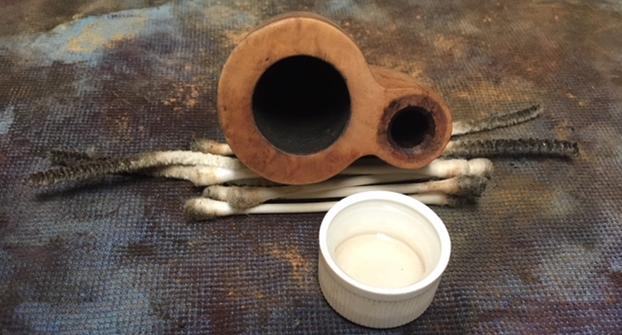
Restemming and Restoring a Tired Medico Husky Rhodesian


Blog by Steve Laug

About a week ago I received a call from a woman who had been referred to me by a pipe shop here in Vancouver. As is often the case here in Vancouver, the woman was calling on behalf of her husband. She wanted to know if I could replace a stem on her husband’s pipe. I told her to bring it by for me to have a look at. A little later the same day she showed up at the front door with a small plastic sandwich bag clutched in her hand and somewhat gingerly handed me the bag. The pipe inside was in rough shape. It had been smoked hard and had a thick gooey cake in the bowl, overflowing onto the rim and down the sides of the bowl. The rim top was damaged and slightly out of round. The stem was not even the correct stem and it was broken off. The diameter of the stem was less than the diameter of the shank. I looked at the pipe in the bag I could see the tars oozing out onto the sides of the bag. It smelled pretty sour. It was obviously either her husband’s favourite pipe or maybe his only pipe. She said he wanted a straight stem on the pipe. Could I do the work? We agreed on a price and she left the bag with me. I took the pipe out of the bag and took some before photos. I wanted to get rid of as much of the smell of the pipe as possible – believe me it was sour and it was dirty. I wiped the exterior of the bowl down with alcohol soaked cotton pads and remove the thick grime and sticky tars off the side of the bowl and as much from the damaged top as possible. Sadly I was in such a hurry to do that I forgot to take photos. Once the exterior was cleaned it was time to tackle the inside of the pipe. I scraped out the inside of the mortise with a dental spatula and remove a lot of hardened tars from the walls of the mortise. The airway into the bowl was clogged with thick tars so I used a paper clip to push through and open the airway. I cleaned out the mortise, shank and the airway into the bowl with cotton swabs, pipe cleaners and alcohol. I cleaned until the inside was clean and clear.I reamed the bowl with a PipNet pipe reamer and the second cutting head. I took the cake back to bare briar so I could check out the inside walls of the pipe. I finished cleaning up the remnants of the cake with a Savinelli Fitsall Pipe Knife. The inside walls look surprisingly good, but the top and inner edge of the rim had damage from repeated lighting of the pipe in the same spot.To minimize the damage to the top and edges of the bowl I lightly topped the bowl on the topping board with 220 grit sandpaper. I was able to remove much of the damage. I worked on the inner edge of the rim with a folded piece of sandpaper to smooth out the burn on the front right side. There was some darkening to the rim but it was solid and looked better.With the internals cleaned, the externals cleaned and rim damage minimized it was time to work on the new stem for the pipe. I went through my assorted stems and found one that would work. It had approximately the same taper that the shank had so it would continue the taper back to the button. I sanded the stem and the shank with a medium grit sanding block to make the transition very smooth. I carefully avoided the stamping on the side of the shank so that the Medico over Husky over Imported Briar was undamaged. The stem fits the shank very well and the transition from briar to vulcanite is smooth. The next series of photos show the pipe at this point in the process. The shank on the pipe was not quite round, so I had to do a bit of reshaping to get a round stem to fit it. The stem only fit one way and there was a divot where there had originally been a logo. I filled in the divot with black super glue and set it aside to cure.With the repair to the stem curing I turned my attention to the bowl. I used a Cherry Stain pen to touch up the sanded areas on the rim and the shank. The colour matched the existing colour on the rest of the bowl so I figured it would be a good match.I buffed the bowl with a soft cloth to raise a shine and blend the stains on the briar. I took the following photos to show the overall condition of the bowl at this point in the process. I rubbed the briar down with Before & After Restoration Balm to enliven, clean and protect the wood. I rubbed it in with my finger tips and worked it into the shallow blast on the bowl and the smooth areas as well. I buffed it with a shoe brush and then with a soft cloth to remove the excess balm. I sanded out the scratches in the vulcanite with 220 grit sandpaper and adjusted the fit to the shank of the pipe.I cleaned out the airway in the stem using alcohol and pipe cleaners. The stem was fortunately not very dirty so the cleanup was very simple. I polished the stem with micromesh sanding pads – wet sanding with 1500-2400 grit pads and dry sanding with 3200-12000 grit pads. I wiped the stem down after each pad with Obsidian Oil on a soft cloth. I buffed it with a soft cotton pad. This small, lightly sandblasted Medico Husky pipe looks a lot better now than it did when I started working on it.  The rim top looks much better than when I started. It was chewed up and heavily caked with lava. The newly fitted stem is high quality and shined up well. I buffed the bowl and the stem with Blue Diamond polish to raise the shine on the briar and the vulcanite. I gave the bowl and stem multiple coats of carnauba wax. I buffed the entire pipe with a clean buffing pad to raise the shine. I hand buffed it with a microfiber cloth to deepen the shine. The finished pipe is shown in the photos below. The rich brown stain allows the grain to really stand out on this little pipe and it works well with the rich black of the vulcanite stem. This restemmed Medico is ready to go back to the pipeman who sent it to me. I will be calling his wife shortly so that she can pick it up for her. Thanks for walking through the restoration with me.
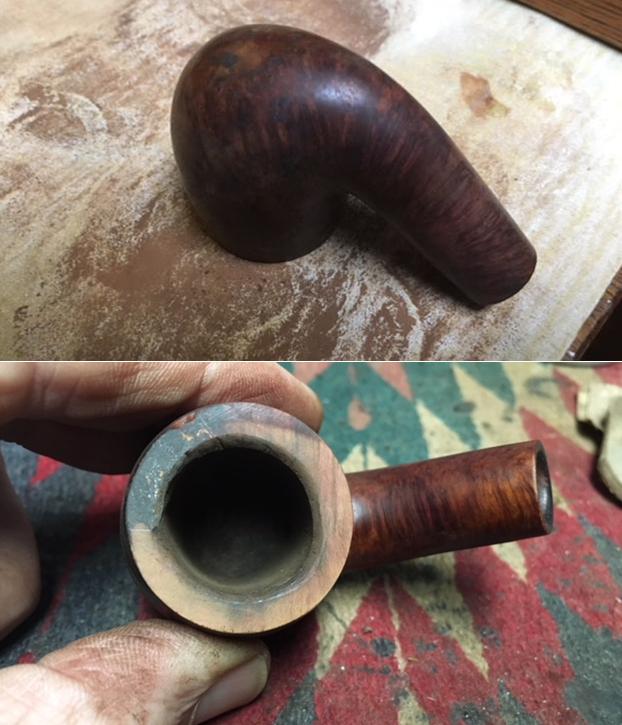
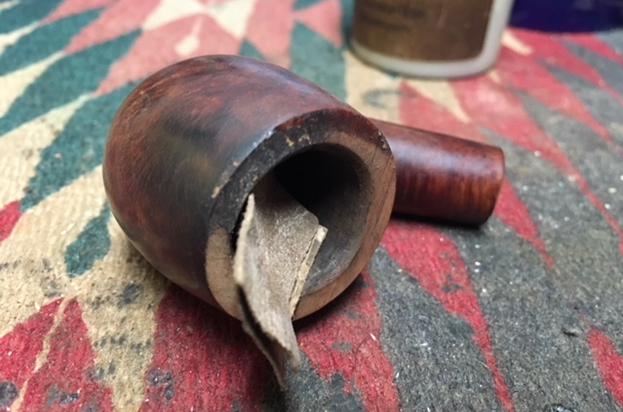
Restoring a Beautifully Carved OaK Leaf Briar Canadian


Blog by Steve Laug

My brother Jeff sent me photos of a pipe that a fellow he knows was selling. The fellow had picked it up on one of his pipe hunting expeditions. It was an intricately carved briar pipe with a horn stem. The bowl was encircled in oak leaves with acorns both fully developed and partially developed. The shank was made up of the stem of the leaves and it was held in a hand. The underside of the shank had fingers and thumb wrapped around the stem on the leaves. There was also bark of a branch. The striations of the bark ran the length of the shank to the oak leaves and stems. The top of the rim had some darkening and a thick overflow of lava on the rim top. The inside of the bowl had a thin coat of cake and some debris in the bottom of the bowl. The horn stem had tooth marks on the top and underside of the stem and some tooth chatter. On the underside there were some worm holes next to the shank/stem junction. One was fairly shallow next to the stem and the other going across the stem was quite a bit deeper. I took photos of the rim top and the stem surfaces both top and underside to show the condition of the pipe when it came to me. You can see the damage on the rim top though the bowl is still in round. There was no damage to the inner or outer edge of the rim. The buildup of lava would need to be scraped away. The stem photos show the tooth chatter on the top and underside near the button and the worm holes near the shank/stem junction.I cleaned the surface of the stem with alcohol on cotton swabs and pads to remove the grime in the holes. I dried them out and then filed them in holes with clear super glue. The small hole was quite simple to fill while the larger one across the stem was deeper and more complicated to repair. It took multiple layers of glue to fill it in until it was even with the surface of the stem. The second photo below shows the filled in holes. The glue dried and turned darker than the rest of the stem. However the surface of the stem was smooth to the touch. I sanded the repairs with 220 grit sandpaper after they had hardened to blend them into the surface of the stem. I wiped the stem down with a cotton pad to remove the sanding dust left behind on the stem surface.I lightly topped the bowl on a piece of 220 grit sandpaper on a topping board to remove the damage and the lava overflow.I rubbed Before & After Restoration Balm into the briar to enliven, clean and protect it. I used cotton swabs and folded pipe cleaners to work the Balm into all of the carved grooves. I buffed it with a soft cotton cloth. I buffed it with a shoe brush to further work the Balm into the grooves and polish it. I polished the rim top with 1500-12000 grit micromesh sanding pads to remove the scratching in the briar left behind by the sandpaper. Once it was polished I touch it up with a Cherry stain touch up pen to match the colour of the rest of the bowl. I buffed the rim top with a soft cotton cloth to bring a shine.I cleaned out the interior of the mortise, shank and airway in the shank and the stem with alcohol, cotton swabs and pipe cleaners. It was dirty but not overly so – the pipe appeared to have been lightly smoked.I polished the horn stem with micromesh sanding pads – wet sanding it with 1200-2400 grit pads and dry sanding it with 3200-12000 grit pads. Each pad brought a deeper shine to the surface of the horn. The tenon appears to be horn and it was pretty clean. I polished it with Before & After Pipe Stem Polish – both Fine and Extra Fine. I buffed the stem with a clean cotton pad. While I was in Idaho I found a cast Elk head pipe rack made by Comoy’s of London. It is a unique one and it works very well to hold this large pipe. I screwed the stem back into the shank and buffed the bowl and shank with a cotton cloth to raise a shine. I put the pipe in the Elk pipe rack and took photos of the pipe. This large, ornately carved oak leaf briar bowl and shank is quite stunning. There a places on the underside of the shank where you could see air through the space between the base of the bowl and shank and the curve of the stems held in the hand. The rim top is smooth and clean and looks much better. The horn stem is of nice quality and after the repairs it shined up well. I hand buffed the bowl and the stem with a shoe brush to raise the shine on the briar and the polished horn stem. I gave the bowl and stem multiple coats of Conservator’s Wax. I buffed the entire pipe with a shoe brush and a microfiber cloth to deepen the shine. The finished pipe is shown in the photos below. The rich brown stain allows the grain to really stand out on this little pipe and it works well with the rich colour of the horn stem. The dimensions of the pipe are: Length: 9 inches, Height: 3 inches, Outside Diameter: 1 7/16 inches, Diameter of the chamber: 7/8 inches. This intricately carved knife will fit really nicely into my collection of antique pipes. I think that this will be a great pipe to smoke and should deliver a clean dry smoke. Thanks for walking through the restoration with me.
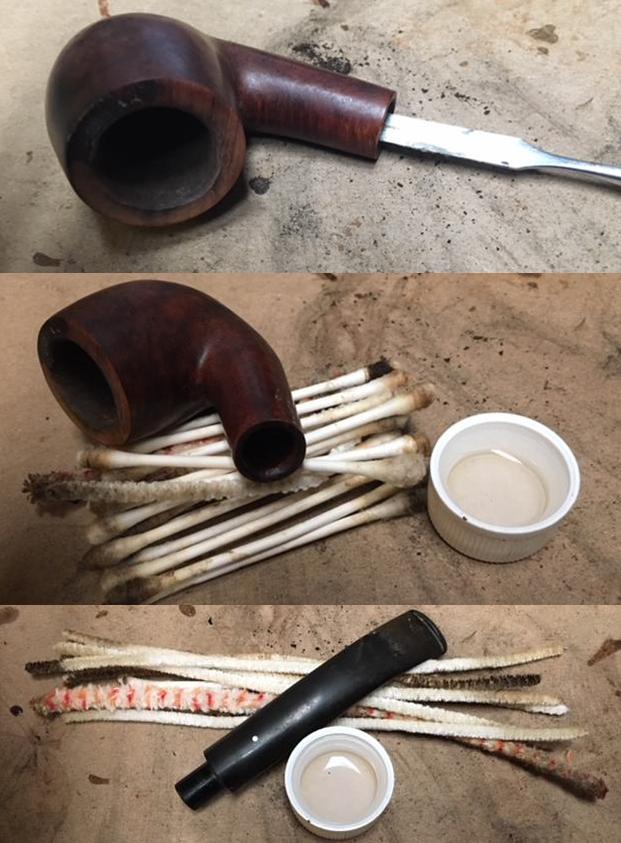


New Life for a Damaged Meerschaum-lined Dr. Grabow


Blog by Steve Laug

Not too long ago I sent a meerschaum lined pipe to Jim. He received it and sent me a note saying that he had sent two pipes to me to have a look at and refurbish. The first of them was a Bullnose shaped pot. I already restored and posted the write up of the restoration of the pipe on the blog (https://rebornpipes.com/2018/05/13/breathing-new-life-into-a-london-royal-bullmoose-pot/). The second was an interesting quarter bent Dublin that had a meerschaum lining. The pipe is stamped on the top of the shank Meerschaum-lined over Dr. Grabow and on the underside of the shank it is stamped Imported Briar. It had some nice grain on the sides of the bowl and shank. It had an oval shank. The rim top had some damage on it and the meerschaum lined bowl was heavily caked and the rim top had an overflow of lava. There were also pin holes and nicks in the rim top. The stem was lightly oxidized and there was tooth chatter on the top and the underside of the stem near the button. The top edge of the button and the bottom edge of the button also had tooth wear. The underside of the stem was stamped ITALY. The pipe that Jim sent to me was in rough shape. He said that when he received it he was turning it over in his hands and dropped it. When it hit the ground the bowl fractured on the underside along the length of the bowl and shank. There were multiple cracks. There was also a crack on the back left side of the bowl that extended from the edge of the rim to the bend in the shank. The cracks on the side of the bowl flowed through some of the large putty fills on the left rear of the bowl. There were also fills running the front of the bowl from top to bottom. The internals were dirty but it looked like the meerschaum lining was undamaged under the thick cake. I took close up photos of the rim top and the stem to show the general condition of the bowl and stem surfaces. The close up of the rim top shows the dents and caking on the lining of the bowl. There is a thick cake in the bowl and lava overflow on the top surface. The stem was in decent condition. There was some tooth chatter on the top and underside near the button. Fortunately there were no deep tooth marks in the vulcanite.I carefully reamed the meerschaum lined bowl with a Savinelli Fitsall Pipe Knife to scrape back all of the cake. I worked on the bowl lining and also the top edge of the bowl. I wrapped some 220 grit sandpaper around a Sharpie Pen and sanded the inside walls of the bowl and the rim edge.I dampened a cotton pad and scrubbed off the rim top and the meerschaum lining in the bowl. I was able to remove most of the build up and tars on the rim and bowl. I cleaned out the internals of the shank and the mortise with cotton swabs, pipe cleaners and alcohol until the interior was clean.I rubbed the bowl down with Before & After Restoration Balm to clean, rejuvenate and enliven the briar. I buffed it with a clean cotton towel to polish it. Under the grime the cracks in the bowl and shank bottom and on the side of the bowl became very visible. I took photos of the cracks on the bottom and side of the bowl. The crack on the bottom looks like a long crack but in reality it was a series of shorter cracks. The crack on the left side of the bowl flows from the rim top through two separate fills.I cleaned out the cracks with alcohol and cotton swabs to clean out the debris. I drilled small micro drill holes at the end of each crack to try to stop the spread of the crack. I filled in the cracks with clear super glue and pressed them together and let the glue dry. I sanded the repaired areas smooth to blend them into the surface of the briar around them. I used a walnut stain pen to colour the sanded areas around the repairs.I refilled some of the damaged fills on the shank/bowl junction and sanded them smooth. I touched those up with a stain pen. I stained the bowl with a light brown aniline stain to blend in the repairs and the rest of the stain on the pipe. I flamed it with a Bic lighter and repeated the process of staining and flaming it. I applied the stain to the top of the bowl with a cotton swab to avoid staining the meerschaum lining on the rim top. I wiped down the bowl with alcohol on a cotton pad to smooth out the stain on the bowl surface. It did a good job of blending into the repaired cracks on the left side of the bowl and the underside of the bowl and shank. I polished the briar with micromesh sanding pads – wet sanding with 1500-2400 grit pads and dry sanding with 3200-12000 grit pads. The photos that follow show the progress. I used a Maple stain pen to touch up the repairs one more time. I scrubbed the bowl with Before and After Restoration Balm. I rubbed it into the surface of the briar to enliven, clean and protect the briar. Buffing the balm also evened out the stain on the rim top and the repairs. I buffed the bowl with a cotton cloth to polish the briar. I set the bowl aside and turned my attention to the stem. I sanded the stem with 220 grit sandpaper to remove the oxidation on the surface of the vulcanite. I sanded out the tooth chatter and also sanded the tooth marks on both sides.I polished the stem with micromesh sanding pads – wet sanding the stem with 1500-2400 grit pads and dry sanding it with 3200-12000 grit pads. The photos show the increasing shine on the stem. I finished by polishing it with Before & After Pipe Stem Polish – both Fine and Extra Fine and hand buffed it with a soft cloth. This Meerschaum-lined Dr. Grabow Dublin turned out really well with a mix of interesting grain underneath the grime and the damaged finish. The grain really is really nice and the repaired cracks look cosmetically much better. The rim top looks much better. It should have a long life ahead of it and provide a good smoke. The vulcanite stem is high quality and shined up well. I buffed the bowl and the stem with Blue Diamond polish to raise the shine on the briar and the vulcanite. I was careful to not buff the stamping and damage it. I gave the bowl and stem multiple coats of carnauba wax. I buffed the entire pipe with a clean buffing pad to raise the shine. I hand buffed it with a microfiber cloth to deepen the shine. The finished pipe is shown in the photos below. The rich light brown stain allows the grain to really stand out on this little pipe and it works well with the rich black of the vulcanite stem. I will be sending it back to Jim in a few days. I will pack it up with his first pipe and get it in the mail to him. I know that he is looking forward to enjoying a bowl in it. Thanks for walking through the restoration with me.
Breathing new life into a London Royal Bullmoose Pot


Blog by Steve Laug

Not too long ago I sent a meerschaum lined pipe to Jim. He received it and sent me a note saying that he had sent two pipes to me to have a look at and refurbish. The first of them was a Bullmoose shaped pot. It was an interesting shaped pipe and was stamped on the left side of the shank with the words London Royal and on the right side Imported Briar. I looked on Pipephil’s website http://www.pipephil.eu/logos/en/logo-l5.html and found the following.It appears that the pipe was made by LH Stern (LHS) in Brooklyn, New York in the US. The pipe that Jim sent to me was in rough shape. The bowl had a thick cake and the rim had a lava overflow and had been hammered out on hard surfaces to the point that the bowl front at the top was beaten and damaged. The inner edge of the rim top was damaged and the bowl was out of round. The finish was in really rough condition as well. It was cloudy and looked like the pipe was water damaged. It had a 14K thin gold band on the shank end and a saddle stem that had some tooth chatter and tooth marks on both the top and underside near the button. There was a faint hat logo on the left side of the saddle. The vulcanite was lightly oxidized but otherwise the damage was quite minimal. Jim included a note in the package that said the slot was too narrow to take a pipe cleaner. The tenon was threaded and still aligned with the shank. With a pipe in this condition I am always looking for pluses. I took close up photos of the rim top and the stem to show the general condition of the bowl and stem surfaces. The close up of the rim top shows the dents and damage to the front of the rim top. The out of round bowl edge is also visible. There is a thick cake in the bowl and lava overflow on the top surface. The stem is in decent condition. There are some tooth marks on the top and underside near the button. The gold band also has some damage to the finish and the band is loose on the shank. It is not torn or split.I unscrewed the stem from the shank and the inside of the mortise and the threaded tenon was dirty and coated with thick tars and oils.I reamed the bowl with a PipNet pipe reamer. I used the third cutting head and took the cake back to bare walls. I cleaned it up with a Savinelli Fitsall Pipe Knife to remove all remaining remnants of cake.I wiped down the outside of the briar with acetone on cotton pads to remove the spotted, water damaged finish on the bowl and shank. I took photos to show how it looked at this point in the process. I topped the bowl lightly on a piece of 220 grit sandpaper on a topping board. I sanded the bowl with folded pieces of 220 grit sandpaper to remove the finish.I wiped the bowl down with alcohol on cotton pads. I filled in the damaged areas on the bowl and rim top with clear super glue.Once the glue dried I sanded the repaired areas back to smooth. I wanted to blend the repaired spots into the surface of the briar. The band was loose on the shank so I removed it and cleaned off the briar and the inside of the band so I could reglue it to the shank.I cleaned out the inside of the shank with pipe cleaners, cotton swabs and alcohol to remove the tars and oils that had built up on the threads of the metal insert and the mortise ahead of the insert.I polished the briar with micromesh sanding pads – wet sanding with 1500-2400 grit pads and dry sanding with 3200-12000 grit pads. I polished the gold band at the same time. The photos that follow show the progress. I used a Maple stain pen to touch up the sanded rim top. I scrubbed the bowl with Before and After Restoration Balm. I rubbed it into the surface of the briar to enliven, clean and protect the briar. It also evened out the stain on the rim top. I buffed the bowl with a cotton cloth to polish the briar. I used some Weldbond all-purpose white glue to reset the band on the shank. I pressed it place and aligned the 14K stamp on the band on the underside of the shank. I wiped off the excess glue with a water dampened cotton pad.I set the bowl aside and turned my attention to the stem. I sanded the stem with 220 grit sandpaper to remove the oxidation on the surface of the vulcanite. I sanded out the tooth chatter and also sanded around the tooth marks on both sides.I used needle files to open the slot in the button of the stem. I reshaped and opened it to make it easier to push a pipe cleaner through the slot. The first photo shows the slot before I had worked on it. The second one shows the opened slot.With the slot opened I was able to clean out the inside of the stem and tenon. I used pipe cleaners, cotton swabs and alcohol to clean out the oils. I scrubbed the threads on the tenon with steel wool and alcohol.I used some Rub’n Buff Antique Gold to touch up the top hat logo on the left side of the saddle stem.I polished the stem with micromesh sanding pads – wet sanding the stem with 1500-2400 grit pads and dry sanding it with 3200-12000 grit pads. The photos show the increasing shine on the stem. I finished by polishing it with Before and After Pipe Stem Polish – both Fine and Extra Fine and hand buffed it with a soft cloth. This Imported Briar London Royal Bullmoose Pot turned out to be a real beauty with a mix of interesting grain underneath the grime and the damaged finish. The grain really is quite stunning. The rim top looks much better. The vulcanite stem is high quality and shined up well. I buffed the bowl and the stem with Blue Diamond polish to raise the shine on the briar and the vulcanite. I was careful to not buff the stamping and damage it. I gave the bowl and stem multiple coats of carnauba wax. I buffed the entire pipe with a clean buffing pad to raise the shine. I hand buffed it with a microfiber cloth to deepen the shine. The finished pipe is shown in the photos below. The rich brown stain allows the grain to really stand out on this little pipe and it works well with the rich black of the vulcanite stem. I will be sending it back to Jim once I finish working on his second pipe. I will be sending it to him soon and I know that he is looking forward to enjoying his first bowl in it. Thanks for walking through the restoration with me.
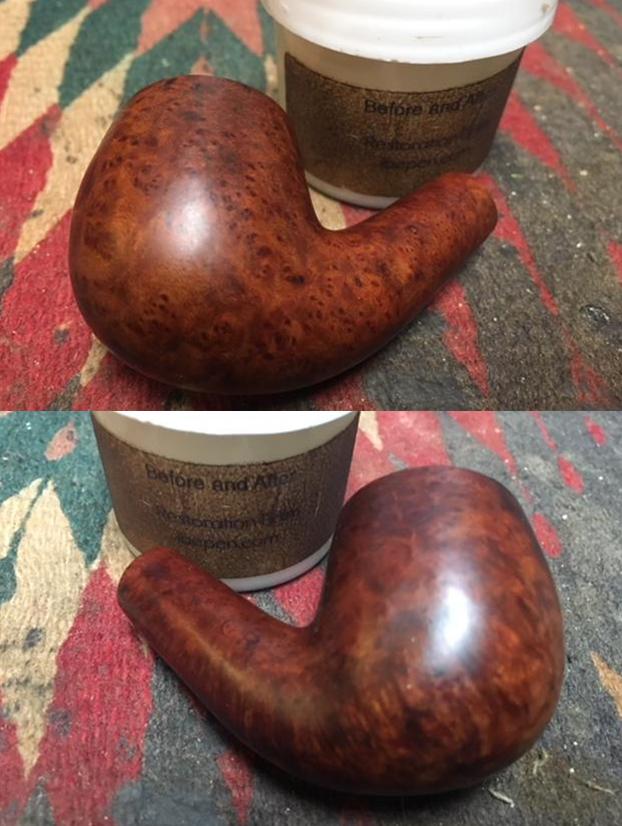
Two of Boston’s L. J. Peretti Oom Pauls Recommissioned


Blog by Dal Stanton

With all pipe man honesty, what could I do?  What would you do if faced with this staring at you on the eBay auction block?J. Peretti Co., all, looking back at me! – the pipe name that I had unintentionally started collecting and liking a lot. The seller was from Everett, Massachusetts, near Boston’s L. J. Peretti Co. Tobacconist, second oldest Tobacconist in the US. Even though Peretti Tobacconist is more known for their 1000s of custom blends of tobacco which I have enjoyed (see below presents from last Christmas from my daughter-in-law!), they have also produced pipes over the years bearing the Peretti name.  It became obvious to me that this seller had Peretti estate pipes which had belonged to a pipe man who loved Peretti pipes, and I was attracted to the Lot for all the Peretti shapes that I do not yet have in my collection.  The massive amount of briar jumping out at me also caught my eye – oh my, Oom Pauls, and some sitters that were borderline Oom Pauls with strong ¾ bent stems and the quint essential long, tight, tall bowls.  Also, in the Lot I saw a large, graceful Bent Egg, a Calabash, a gentle Half Bent Billiard and a huge, colossus of a Billiard!  I was happy to bring this Peretti Lot of 10 back with me to Bulgaria destined for the worktable. My enjoyment of Peretti pipes started Christmas of 2016 with our family gathering in Denver.  My son, Josiah, secured a proud, square shank Billiard bearing the Peretti stamp and an amputated stem from the Armadillo Antique Mall.  I found it under the Christmas tree with Josiah’s encouragement, ‘Dad, I know you can do something with it!’  And I did.  I cannibalized another stem and spliced it on the existing stem – I wanted to save the Peretti ‘P’ stem stamp at all cost!  This stout square shanked Billiard is a good smoker and a regular friend in my rotation!Doing research for the Peretti Christmas gift stem splice restoration (See: LINK), introduced me to the Peretti name which I was surprised to discover is not an Italian pipe name, as I originally assumed!  The family originally came from the southern slopes of the Swiss Alps which would have much Italian influence, just to the south. I discovered the beginning of a significant story of Americana pipe history with the establishment of the L. J. Peretti Company of Boston in 1870 (Pipedia citing: Pipes, Artisans and Trademarks, by José Manuel Lopes), the second oldest tobacco shop in the US, second only to Iwan Ries & Co. of Chicago established in 1857 (See: Link).  Going to the Peretti shop in Boston is on my bucket list where blends are still hand mixed and I’ve read that you can take your pipe and try some blends out before purchasing.  Not bad.My second Peretti found me serendipitously in Oslo, Norway, as I, along with a few other colleagues met to take in the European Biathlon finals (that’s skiing and shooting!).  Jon gave me a very sharp looking square shanked Rhodesian, also bearing the name, Peretti.  He said he wasn’t using it anymore and I welcomed this Peretti into the fold.  I now had what I started calling, the Peretti Brothers.  Here is the restoration of the Peretti Rhodesian.In the Peretti Lot of 10, I’ve already restored the Large Bent Egg and added it to my collection of Perettis.  It is a stunning pipe and fits the palm amply and nicely!  When smoking this pipe, I’ve warded off random hawkers trying to barter him away from me!  I’ve remained strong.I have been looking forward to tackling the Oom Pauls for some time.  I will add one to my collection, and the others are up for adoption and will benefit a good and worthy effort, the Daughters of Bulgaria, helping women and girls (and their children) who have been trafficked and sexually exploited.  As I approach restoring the Oom Pauls, there is no doubt as to the popularity of this shape and that everyone wants to have at least one in their collection.  In Pipedia, Bill Burney’s description of the Oom Party is helpful:He also describes that the Oom Paul is always a full bent, with a large tobacco chamber and relatively heavy.  Yet, because of the way it hangs, it is a comfortable hands-free pipe.  To me, the attraction to the Oom Paul is the solid, massive merger between the bowl and shank – it creates a hefty presence in the palm and it hangs from the mouth great with the full bent style.

I will attempt something I’ve never done before as I approach the restoration of the Oom Pauls, I’m going to tackle 2 at once – first, the Oom Paul that I’ve chosen to add to my collection and the first Oom Paul that will go in the Pipe Steward Store where a new steward will be sought!  To keep things straight and abbreviated, my Oom Paul will be ‘MOP’ and the available Oom Paul will be ‘OP’!  I want to use MOP to test the overall approach to the hue of the Oom Paul stummels, which I want to keep as close to the original Peretti scheme as much as possible. The pictures below were numbered so that I wouldn’t mix them up while in the ‘Help Me!’ basket.  Here first, is MOP: And now, OP showing beautiful horizontal grain that I think is eye catching on the large Oom Paul stummel: The forensics of all the pipes of the Peretti Lot of 10, show similarities of condition and areas of need, which point to all 10 having had a common steward.  MOP and OP both have thick cake in the long Oom Paul chamber which has run over the rim with crusty lava flow.  Both pipes show deterioration on the right side of the rim where the lighting of the tobacco was faithfully administered.  Both show consistent, tooth chatter and dents on the upper and lower bit – attesting to the great hands-free ‘hanging’ capacity of an Oom Paul but without using a bit guard!  MOP’s stem is severely oxidized, and OP’s is lightly showing oxidation.  MOP enjoys the only stem marking of all the Oom Pauls – the Peretti ‘P’ is crisp but in need of refreshing. I notice that OP’s stem is not snug against the shank and as I rub my finger over the transition from shank to the saddle stem, there is a slight hang of the stem over the shank.  On the stummel heel of OP I see a cut in the briar from some trauma.  I detect a microscopic hairline crack running from the end of the cut toward the shank (on top in the second picture below), a few millimeters.  This needs to be addressed.  I take some pictures to show the stem seating and cut on OP.On my last restoration of an Meer lined Italian Croc Skin Zulu, which has arrived in Edinburgh, Scotland, to meet his new steward, I tested the Before & After Deoxidizer and both of the stems of MOP and OP were among the volunteers for testing.  From pictures above, MOP’s ‘P’ stamped stem shows significant oxidation, while OP is in good shape.  Before & After is also supposed to be stem stamp friendly – which proved to be true.  The stems of Mop and OP are below – of the larger stems in the first picture below, the first and third.  After cleaning each stem with pipe cleaners dipped in isopropyl 95%, I placed all the stems in the Before & After Deoxidizer keeping them in order!    I left them in the soak overnight, though the directions do not require that long. One at a time, I removed them from the Deoxidizer and wiped each with a cotton pad with mineral water (in Bulgaria, its light paraffin oil) buffing each with the cotton pad until all the solution was removed and the residue oxidation.  I am pleased with how the product works.I am especially pleased to see how the Peretti ‘P’ cleaned up and rejuvenated on MOP!  The Before & After Deoxidizer is advertised to be nice to stem stamping and it seems to be the case!  A before and after picture.I then applied Before & After Fine Polish and then Extra Fine Polish.  I put a small amount on my finger and worked it into the vulcanite.  As I work it in, the vulcanite absorbs it.  The results are good causing the vulcanite to look rejuvenated.I do the same for OP’s stem.  It’s looking very nice as well!I now turn to the stummels.  The first thing for both stummels is to clean the internals, starting with reaming the deep Oom Paul chambers.  Before I can determine the condition of the chamber walls the cake will be removed down to the briar.  Using the Pipnet Reaming Kit, I start with the smallest blade, then working to the larger. I start with MOP and take a closer picture of the rim and chamber.  It’s thick and crusty.  I use 3 of the 4 blades available to remove the carbon cake.  I then scrape more of the chamber wall with the Savinelli Fitsall tool and finish with wrapping a piece of 240 grit paper around a Sharpie pen and sand the chamber.  I wet a cotton pad with alcohol and wipe the chamber clean of carbon dust.  The chamber looks great – solid, no cracks or fissures.  Pictures of MOPS: I do the same with OPs.  I take a starting picture, ream with 3 of the 4 blades in the Pipnet Kit.  I fine tune with the Savinelli Fitsall tool, sand the chamber with 240 grit paper and wipe the chamber clean of carbon dust.  The chamber wall looks good as well.  What I do see is what I noted earlier.  The rim on the right side was burned by the lighting of the tobacco and the scorched briar has eroded on that side. Now, to clean the external briar stummel and rim.  Starting with MOP, I use undiluted Murphys Oil Soap with a cotton pad to scrub the surface and rim.  I also use a brass brush to work on the thick cake on the rim.  With my Winchester pen knife, I carefully scrape the old scorched lava crust on the rim.  The stummel of MOP cleaned up nicely and no fills are detected.  The challenge will be to clean up the internal rim, removing all the scorched briar in a way that doesn’t remove a lot of good briar.  Pictures of MOP showing the progress: Now, to clean the externals of OP with Murphys Oil Soap in the same way with the same tools.  The grime is stiff, and I also use a bristled tooth brush to reach into the full bent shank area which is the beauty of an Oom Paul, but a pain to clean.  Again, after employing a brass brush on the thick lava flow on the rim, I carefully scrape using my pin knife to remove the crust, utilizing a fingernail here and there.  I then rinse OP in cool tap water and take a closer look at the stummel.  The stummel of OP cleaned up well.  Like my Oom Paul, the internal rim on OP needs to be cleaned of charred briar down to healthy wood.  I take a picture showing the start and then the cleaned stummel of OP.It was going so well until it wasn’t!  I see what no one restoring a pipe wants to see!  With difficulty I see a crack in the shank nestled in the armpit of the bend, where it’s difficult to clean.  With a magnifying glass I can see it better.  It runs from the very joint of the bend where bowl and shank meet, up the shank about ¾ of the way, but does not run to the top of the shank.  This strikes me as strange.  Most shank cracks are caused by improperly mounting or dismounting the stem and mortise, putting pressure on the thin briar at the junction and the briar gives way and cracks.  These cracks usually start from the top of the shank and run down toward the bowl.  What I’m looking at with OP is that it originates at the elbow of the bend and moves upwardly toward the top of the shank, where the stem is mounted.  My first thought is that this is good news!  It means that the integrity of the shank is still in place at the most vulnerable point – where shank and stem meet.  Yet, however this crack originated, it can continue to creep up the shank if nothing is done to arrest it.  With the magnifying glass I carefully check around the shank and mortise opening to see if there is another crack lurking, but I see nothing.  Here are the pictures of the crack discovery on OP. As I have done in the past to get more input on a challenge, with his wealth of experience shared on Rebornpipes, I send these pictures off to Steve to see what he has to say!  OP has two projects so far catalogued for the stummel – the cut on the heel and now this crack on the lower shank.   I then turn to completing the cleaning of the internals of both stummels.  Using isopropyl 95%, I employ cotton buds, pipe cleaners to clean the mortise and airway.  I also use a bristled shank brush down the airway which does a good job breaking up the tars and oils.  With the design of the drilling for the full bent Oom Paul design, the initial mortise drill going down the shank forms a trap where gunk collects.  Then, the angled airway drilling runs off the initial mortise chamber down to airhole.  To dig gunk out of the trap, I also use a dental spatula to scrape the mortise walls and trap area.  All went well for both my Oom Paul and OP.  The pictures show the results.I want to address the rim issues before moving on.  Both stummels’ rims have scorching issues around the internal lip. With MOP (remember, My Oom Paul), it is engineered slightly different from OP and is a bit smaller.  I pull out the topping board to remove a bit of the rim top to clean up as much as I can.  MOP’s full bent shank barely fits on top of the board without touching.  OP’s shank extends beyond the plane of the rim, that will be a bit more challenging to top but not impossible.  I take a picture of MOP and then take it to the topping board with a sheet of 240 grit paper on it.  I had noticed before that the shank and the plane of the rim were not perpendicular – the rim plane has a left leaning tilt, but I’m not worrying about that – I think.  To correct it would need too much briar to be removed. The more that I look at the rim plane tilt, the more I realize that it will drive me crazy when I’m smoking this guy down the road and wondering why I didn’t correct it!  Since, it IS my Oom Paul, I decide to trade some briar for a bit of sanity.  I start sanding the high right side of the rim down to bring the plane and shank into closer perpendicular alignment.  I use a flat needle file as well as a miniature sanding block to do this. With the rim in closer alignment with the shank, I first cut an internal bevel with a coarse 120 grit paper rolled up tightly.  I pinch the roll over the internal rim with my thumb and remove the charred briar and start shaping the internal lip.  I follow this with 240, 320 and then 600 papers.  Because the rim’s width is not consistent around its circumference, I also introduce a gentle rounding bevel to the external edge of the rim.  This has the effect of making the rim look more balanced and softer, hiding some of the problems with dimension.  I am very pleased with the look of the repaired rim.  The pictures show the progress!  I suppose some briar for a bit of sanity was a good trade! With MOP’s rim work finished for now, I turn to OP’s rim.  The last steward was very consistent in his practices – especially lighting his tobacco.  Again, the left side of the rim has taken the brunt of the flame which was pulled down over the side of the rim.  Pipe ladies and gentlemen, light tobacco ABOVE the chamber – not over the side!! The charring here needs to be removed to uncover healthy briar, but it will leave, as before, an imbalance in the width of the rim.  As with MOP, I take a picture at the beginning to mark the progress and to show the charred area.  I then take the topping board with 240 grit paper and lightly top it on the side of the board – the full bent shank is extending beyond the plane of the rim.  After 240, I use 600 on the board.  Thankfully, OM’s rim is in closer perpendicular alignment than was MOP’s.  After looking at the picture immediately above, I decide to take more top off to regain a precious few millimeters of rim width to help balance the appearance.  I use a miniature sanding block to sand down the surface to build up the left rim width.  I find the sanding block useful when I need to ‘steer’ the rim in a certain direction.  I still have a flat surface, but with pressure can strategically leverage the sanding. I then take the stummel back to the board with 240 and then 600 to level the rim. I think this helped to regain some rim width, but the imbalance is still evident but less so. Now, cutting a bevel as I did before with MOP, on the internal and external rim edges helps round and blend the appearance.  I use 120 grit to do the major shaping then 240, 320, and 600.  It’s as good as I can manage without taking a lot more off the top to even out the rim width.  It does work, and I move on to the next challenge.I had written to Steve earlier to get input on how to approach the crack I discovered in OP’s shank.  His response came with a picture.  I already knew that I needed to drill a counter creep hole at the top of the crack where it was obviously creeping.  Steve said that a counter creep hole was needed at the bottom as well – in the bend itself.  It will be a bit of a challenge with the angle and drilling, but I think possible.  The holes at the end of the cracks arrests the expansion of the crack.  Steve’s picture follows:The other challenge that I’ll attack at the same time is on the cut and creeping crack on the heel of OP’s stummel.  This injury will also need drilling at each end to arrest any growth in the crack or cut.  As Steve did for me, I’ve circled the points where drilling is needed.  I needed a magnifying glass to see the cracks accurately.I use the Dremel for these drillings mounted with a 1mm drill bit.  The great thing working with the Dremel is its flexibility.  The bad thing about using the Dremel, is its flexibility!  In my workspace on the 10th floor of a former Communist block apartment building, I don’t have much room.  So, the Dremel does everything for me, almost!  One of these days I will find a universal mounting system that will allow me to strap the tool in so that I can make precision movements, like this drilling project, which is more difficult in the handheld mode.  In the drilling of the holes, one does not want to break through the briar to the inner chamber or mortise!  The hole depth only needs to be 2 or so mm.  I start with the cut on the heel, the easier of the two projects.  To guide my drilling, with the use of the magnifying glass, I use the sharp point of a needle file to press a guide hole into the briar.  I then follow with drilling the shank crack holes.  The pictures show the results which turn out well despite my handheld approach! Now to apply patch material.  Again, I start with the heel repair.  Using a toothpick to guide, I apply a drop of thin Hot Stuff CA glue directly into the cut.  I want the glue to sink deeply into the fracture to sure things up.  I sprinkle some briar dust on it.  After this, on an index card, I mix a little briar dust with Hot Stuff Special T CA glue – a bit thicker.  This forms a briar dust putty that I mix and apply to the 3 holes I drilled.  I build a mound with the briar dust putty, that after cured, provides thorough coverage over the entire repair area that will be sanded down and blended. After about 45 minutes, the heel patch has set up enough for me to work on the shank crack.  Just to be on the safe side, I mask the sides of the shank to protect from CA glue accidentally running down the sides.  I am especially protective of the L J Peretti Co. stamping. As before, I place a line of thin CA glue along the crack to seep in and fill the open areas in the fracture.  Then, I mix another batch of briar dust putty using thicker CA glue and apply this on the holes and over the full length of the crack.  A toothpick acts a trowel.  It’s time to go to bed so I’ll leave the patches to cure overnight. The pictures show the patch progress on OP’s restoration. The next morning the patches have cured thoroughly and I’m ready to start filing down the patch mounds beginning with a flat edged needle file.  I’ll work down the mound starting first with the heel patch.  The key is to ride the patch mound down as far as possible with the file then switch to sand paper which will be less intrusive to the healthy briar around the patch.  When I near the briar surface with the file, I reduce the pressure I’m exerting on the file.  When down close to the briar surface, I switch to 240 grade sanding paper, again, keeping the sanding on the patch material to remove the excess patch from the briar leaving only the fills.  The patch looks good.  I will blend later. The pictures show the progress with OP. After nearly a week in Athens, Greece, attending a conference and doing some pipe hunting, I return to Sofia and to my worktable where the shank patch and sanding are waiting for me.  It will be a bit more of a challenge.  Not only because of where the crack patch is located, but because sanding in the area will impact the end of the shank, potentially affecting the stem union.  I noted before that I wasn’t satisfied the seating of the stem.  There were small gaps showing between shank base and the stem.  I also could feel lips where the shank and the saddle stem were not flush.  My plan is to address these issues as I sand down the shank crack patch.  I start first with a flat and a rounded needle file to work down the patch. I progress to the crook of the bend and file with a round needle file. When I’m close to the surface with the needle files, I then switch to 240 grade sanding paper to remove more patch material down to the briar.  Then I follow using 600 grade paper to smooth out the coarser sanding scratches and to blend. While I’m sanding in the shank area, I work on the stem/shank alignment. I previously noticed that there was ‘daylight’ between the contact point between the shank and stem.  As much as possible, I want a seamless fit between the shank and the stem.  I notice also that the vulcanite on the end of the stem is not smooth which might be contributing to the stem’s fitting issues.  I decide to ‘top’ the stem at the tenon base using a piece of wood with a hole to accommodate the tenon.  I place a piece of 240 grade sanding paper over the topping board also with a tenon hole, insert the stem and rotate it.  This enables the smoothing of the vulcanite at the tenon base and hopefully, achieve a tighter, more true contact point between stem and shank. That does the job partially – the stem is snugger, but I still see a bit of daylight through the right side of where the shank and stem meet.  To address this, I need to remove the high spot on the left side of the junction to achieve a better seating of the stem in the shank.  I use a piece of 320 grade sanding paper folded and inserted between the shank and stem over the high spot and sand down the area.  I saw this method used by Charles Lemon on Dad’s Pipes to help improve the stem connection.  This does the job very well and after working the sanding paper around the high area, the stem contact looks better.Finally, I want to smooth out the lip that is caused by an overhang of the stem which I can detect by rubbing my finger over the shank and stem junction.  On the lower shank/stem the stem is a bit over the shank.  I use 240 grit paper to sand the lip down so that there is no lip between stem and shank.  After sanding down the area, the fit of the stem is much better all around.  I like it!With the major stummel repair projects completed, I rejoin stems with the stummels of MOP and OM and look.  As I work I’m admiring the briar on these larger Oom Paul bowls.  MOP is dominated by bird’s eye pattern with lateral grain on the bow of the stummel.  While OM has striking horizontal flame grain tying both shank and bowl and culminates at the bow of the stummel with bird’s eye.  Very nice.  What I love about Oom Pauls is the ample briar real estate on display!Before I switch my focus to the stems, while I think about the next steps for the bowl restorations, I decide to augment the internal cleaning of the stummels using a kosher salt and alcohol soak.  For both MOP and OP I fill the bowls with kosher salt.  I then pull and stretch cotton balls to form ‘wicks’ that I stuff down the mortise of each stummel.  The cotton wicks act to draw out the oils and tars left behind.  This method also helps to freshen the briar for a fresher taste for the new steward.  Placing each stummel in an egg crate for stability, with a large eye dropper I fill each bowl with isopropyl 95% and wait a few minutes and top it off again.  It takes a good bit!  I then set the bowls aside for several hours to allow the salt and alcohol to do their work.Turning to the stems, I start with My Oom Paul.  I take a close-up of the upper and lower bit area of MOP.  The former steward of these Oom Pauls was a clencher.  The good news is that he didn’t chew on the button too much – it’s in good shape.  With the dents and chatter, I start by using a flame to heat and expand the dents as much as possible.  I use a cheap Bic lighter.  This does raise and soften the dents.  The before and after of upper and then lower bit pictures follow. Using 240 grit sanding paper, I sand out the dents and chatter.  I also use a flat needle file to re-establish a crisp button. After sanding, I’m able to identify the remaining dents that need to be filled.  One dent on the upper bit with also a small indentation on the button needs attention.  On the lower, two areas need more attention on the bit and a bite on the button. Using cotton pads, I clean the upper and lower bit area with alcohol before applying drops of Starbond Black Medium KE – 150 CA glue to the problem areas on the lower bit.  I will wait an hour or so before turning the bit to apply Black CA glue on the upper bit. After the Black CA cures, I work the patches down on the lower and upper bit with a flat needle file then fine tune with 240 grit paper.Now, turning to OP’s stem, I take close-ups of the upper and lower bit area to show the starting point.  Again, as with MOP, the tooth dents are on both sides.  I paint the bit with fire from a Bic lighter to expand the vulcanite and raise the tooth dents.  As before, the heating did raise the dents so that sanding becomes more effective.  Before and after pictures of the heating for upper bit and then lower bit. As before, using 240 grit sanding paper I sand out as much as possible the dents on the bit and button. I also use a flat needle file to define the button lips more.  That worked out well.  All the dents sanded out except for one small area on the lower bit.  No patch is necessary on the top. After cleaning the area with alcohol, I apply a drop of Black Medium CA Glue to the spot.  I set OP’s stem aside for a few hours for the patch to cure.  When cured I sand the patch with 240 grit paper.  The pictures show the progress with the OP’s stem. Looking back at the stummels, the kosher salt/alcohol soak did the job.  The salt and wicks have discolored indicating that the tars and oils have been drawn out.  I remove the salt, wipe the bowls out with paper towel assuring that all the salt is removed. For the sake of abbreviation in this long blog, both stems proceed through the finishing process.  I use 600 grade paper to erase the 240 grade sanding and then buff up the stems using 0000 grade steel wool.  From here, I take the stems through the full process of 9 micromesh pads from 1500 to 12000, wet sanding 1500 to 2400 then dry sanding with 3200 to 4000 and then 6000 to 12000.  Between each set of three I applied Obsidian Oil to enrich the vulcanite.  The results are good.  The Peretti ‘P’ stamped on my Oom Paul looks great.Now to the stummels.  I begin with MOP.  I start with taking a few pictures to take in the great looking bird’s eye grain.  I love the wide expanse of the briar on the Oom Paul stummel – it goes on and on.  To remove the nicks and minor scratches on the briar surface I use sanding sponges progressing from coarser, medium, and then, light. I follow the sponge sanding by doing a full regimen of micromesh pad sanding.  Using 1500 to 2400, I wet sand, then with the remaining pads, 3200 to 12000 I dry sand.  This process brings out the grain very nicely and I’m liking what I see! As I now look to the OP stummel, I’ve been going back and forth as to what to do with this stage of the process.  OP has two crack/cut repairs to blend into the finished coloring of the bowl.  It also has many normal nicks and scratches which need to be addressed.  I want to keep both L J Peretti pipes as close to the color scheme as possible, but to provide some blending cover for the cut/crack patches, I will need to darken the color some for OP.  Even so, I know that most likely, patches will still be detectable but much subdued.  My thinking now is waffling between staining my Oom Paul with a new color of Fiebing’s leather dye I brought back from the US – Saddle Tan Pro Dye.  I tested it on a raw piece of wood and I like the results.  The other approach I want to test is simply using Before and After Briar Balm or as it’s called on the label, ‘Hard Rubber Balm’.  Steve recommended this approach to me in lieu of stain.  With waffling completed, I will use the Briar Balm on MOP first to see how it turns out.  Then, for OP, which needs more blending activity, I’ll use the Saddle Tan dye. With this decided, I take a few more close-ups of OP to mark the start.  I begin preparing the briar surface using sanding sponges – from coarser, to medium, and to fine to clean the surface of scratches and nicks.  Throughout, I am careful to guard the L. J. Peretti Co. nomenclature on the shank.  As with My Oom Paul, I use micromesh pads following the sponge sanding.  I wet sand using pads 1500 to 2400, then dry sand from 3200 to 12000.  I record the progress after each set of 3.  I love this phase of the process.  The micromesh pads do a great job bringing out the fine detail of the grain.  The OP has a distinctive lateral, horizontal flame grain that spans the bowl and full bent shank.  It culminates in the front with bird’s eye grain – the perpendicular view of the horizontal flow of grain.  Very nice.  The pictures capture a bit of what I’m seeing emerge with OP. Now testing time.  I will apply the Before and After Briar Balm to MOP – My Oom Paul, to see how the briar absorbs and reacts.  I’ve seen Steve apply the balm to several pipes he’s restored on Reborn Pipes with very nice results.  The process is easy.  Apply balm to the briar and work it in with your fingers.  I take a picture of each side of the stummel to show the starting point.  I put some balm on my fingers and I work it in.  The balm is loose and oily when it first begins but as it is worked in, it thickens as it is absorbed into the briar.  After applying the balm, I wait about 10 minutes and wipe/buff the stummel with a clean cotton cloth.  The difference is noticeable – the briar has a deeper, richer appearance.  I like it! I take two ‘after’ pictures to compare.  The first picture is the right side of the bowl and the second, left.  Before the balm is on the left and after application, is on the right.  The pictures speak for themselves. Now, turning to OM, I will apply Fiebing’s Saddle Tan Pro Dye. I first wipe the bowl down with alcohol to make sure it is free of dust and dirt.  I insert a cork into the shank to serve as a handle and heat up the stummel using an air gun to expand the briar making it more receptive to the dye.  Then, I thoroughly apply the aniline based Saddle Tan dye to the stummel with a pipe cleaner and then flame the wet dye which immediately burns off the alcohol setting the pigment into the briar.  I repeat the process and flaming and set the stummel aside to rest overnight allowing the dye to set.  The good thing about aniline dye is that I can use alcohol on a cotton pad to wipe the stummel later to lighten the hue if I choose.  Another day has come to an end.Early the next morning before heading out to another full day of work, I’m anxious to ‘unwrap’ OP’s bowl that rested through the night.  I take a picture of the ‘rested’ stummel.  Using the Dremel, set to the lowest speed, I mount a felt buffing wheel dedicated to applying Red Tripoli compound.  After purging the wheel to soften it and clean it, I methodically work the wheel around the stummel ‘unwrapping’ the fired dye revealing the briar surface.  I do not apply a lot of pressure on the felt wheel but allow the fine abrasive nature of the Tripoli compound, speed of the Dremel and the felt wheel to do the work.  Since the felt buffing wheel is not flexible, I mount a cotton cloth wheel with Tripoli to reach into the crook of the shank’s bend.  I take a picture of the ‘unwrapping’ with the Tripoli compound to give an idea of what I’m seeing.At this point, I yoke both Oom Paul stummels together in the process.  I reunite stems to both and after mounting a cotton cloth buffing wheel, I leave the Dremel’s speed the same slowest setting, and apply Blue Diamond compound to both stummels and stems. When I finish, I buff each with a felt cloth to remove the compound dust from the pipes in preparation for the wax.  I mount a dedicated cotton cloth buffing wheel on the Dremel, increase the speed to about 40% and apply carnauba wax to both MOP and OP, stem and stummel.  After applying several coats of carnauba to each pipe, to finish I give both a good buffing from a micromesh cloth to deepen the shine more.
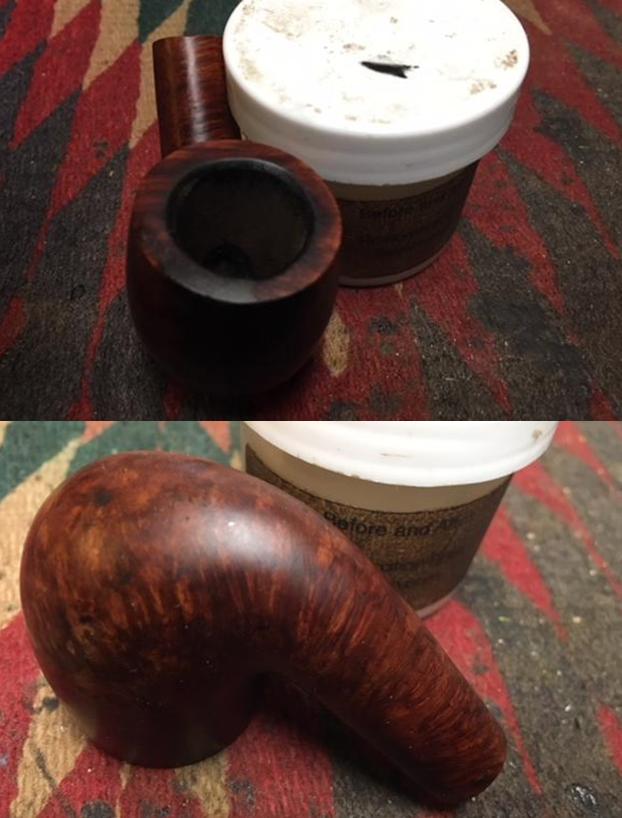
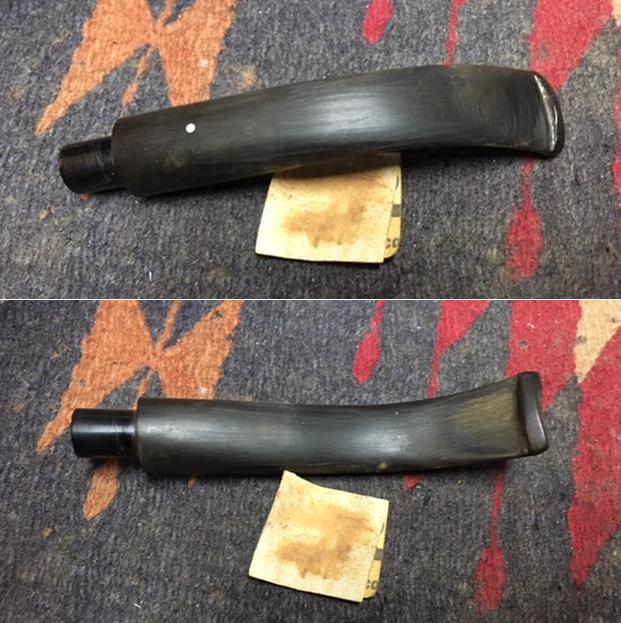
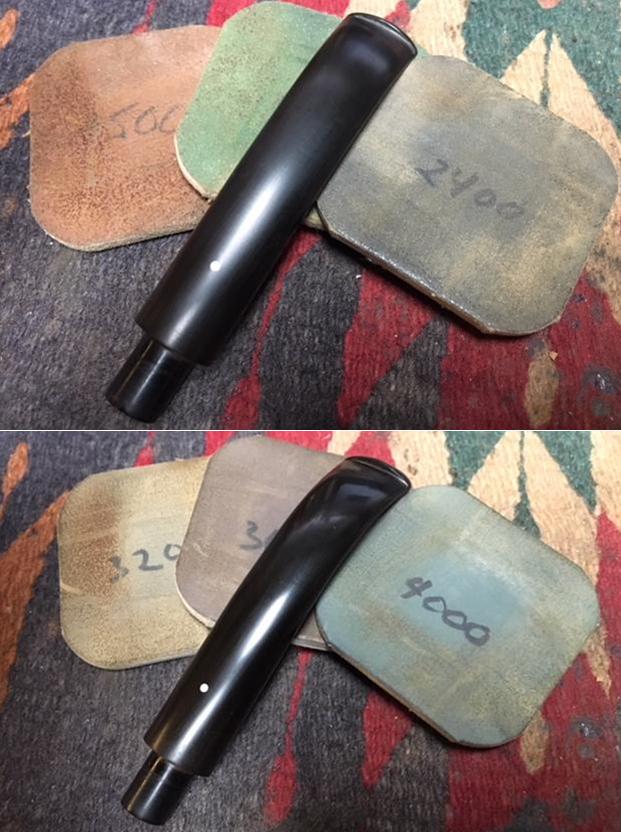
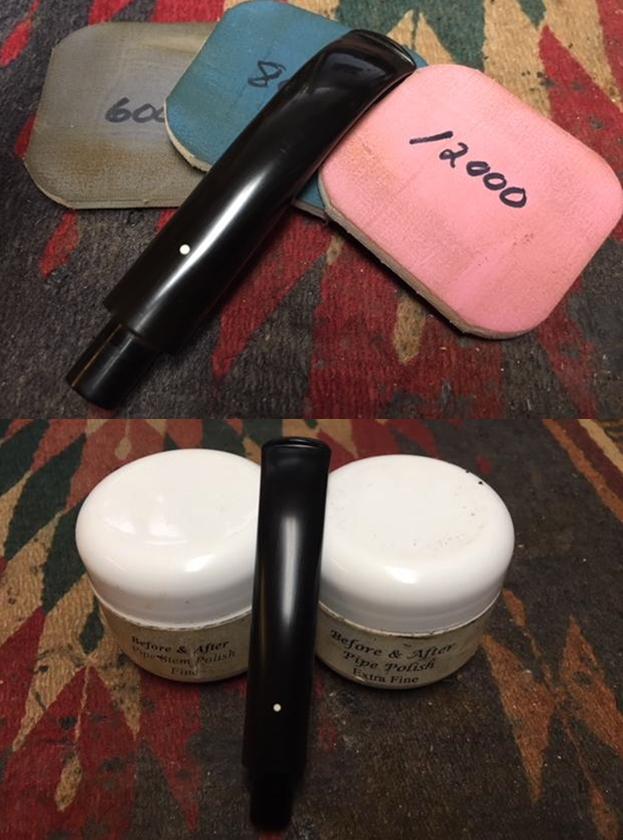
These two Oom Pauls provided some challenges in their restorations, but I am pleased with the results!  After this I don’t believe I will do another ‘double restoration’ write-up – too much!  The grain on both Oom Pauls is striking.  My Oom Paul’s finish came out well using Before and After Briar Balm and the grain is dominated by a large orchard of bird’s eye pattern.  I look forward to his inaugural smoke as I add him to my growing L. J. Peretti Co. collection.

The Oom Paul heading to The Pipe Steward Store had some challenges with cracks and cuts, and loving abuse from his former steward whose practice of lighting over the edge of the rim presented some hurdles.  The Saddle Tan finish looks great – it has masked the cut repair on the heel but not fully hidden – he takes some signs of his past life war wounds into the future! But OH MY, the lateral flame grain flowing through the stummel from the full bent shank to the front of the bowl culminating with a sprinkling of bird’s eye is striking and a beautiful example of God’s handiwork!  He’s bigger than my Oom Paul with the length (in full bent position) is 6 inches, height of the bowl: 2 ½ inches, rim width: 1 ½ inches, chamber width: 15/16 inches, chamber depth: 2 1/8 inches.  He is ready for a new steward and the adoption of this Oom Paul will benefit the Daughters of Bulgaria, our work with women and girls (along with their children!) who have been trafficked and sexually exploited.  The pictures following start with MOP and OP together, two pictures of MOP happily heading to my rack, and then the remaining pictures of the Oom Paul heading to The Pipe Steward Store!  They turned out to be a handsome pair of dudes! Thanks for joining me!