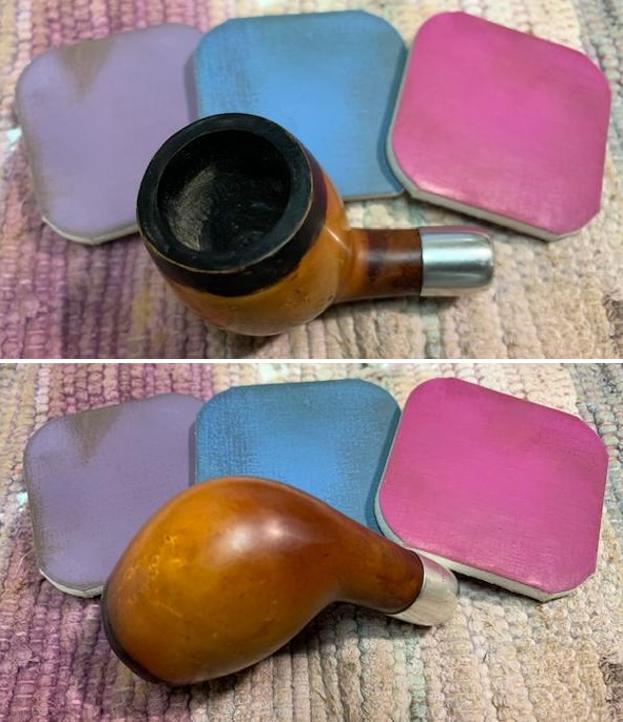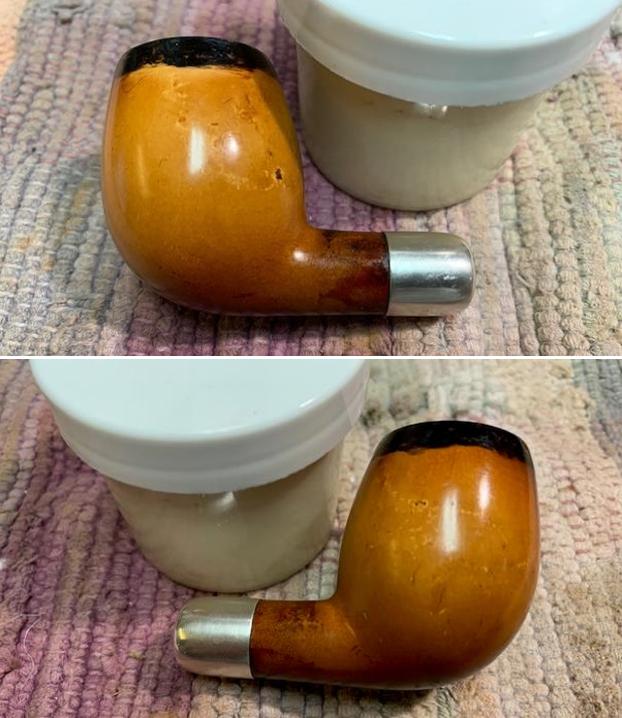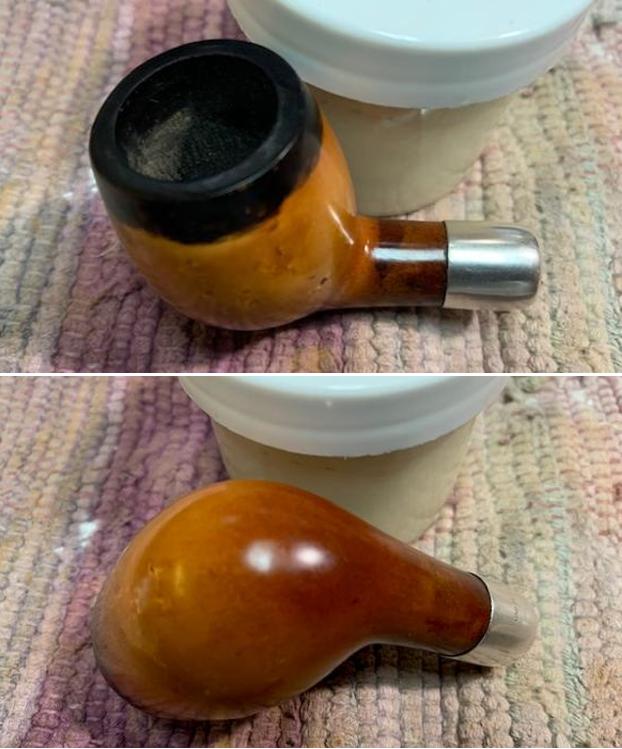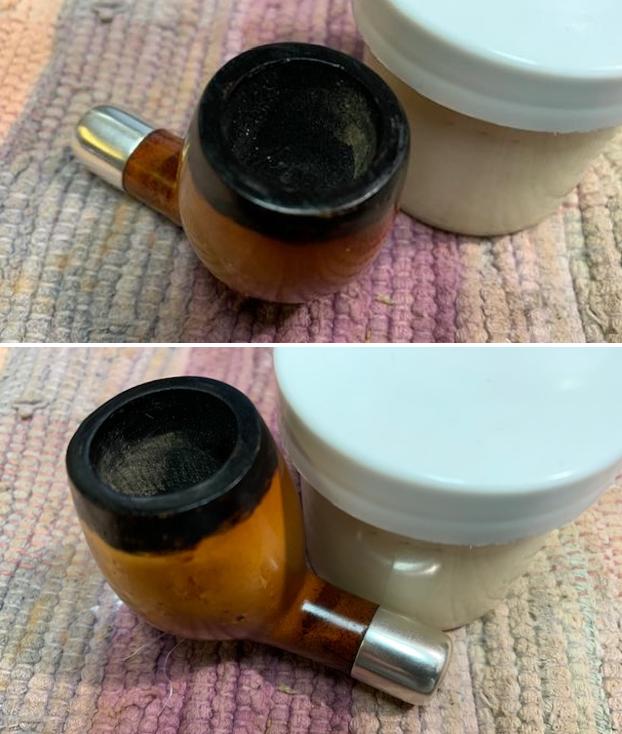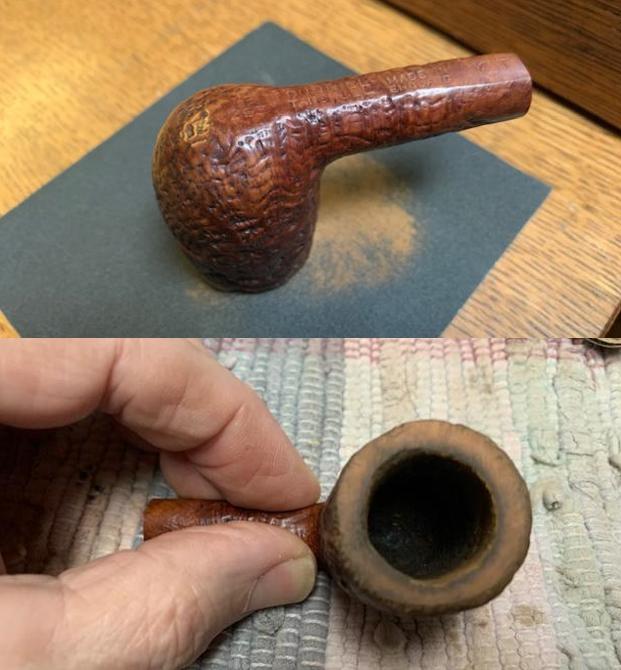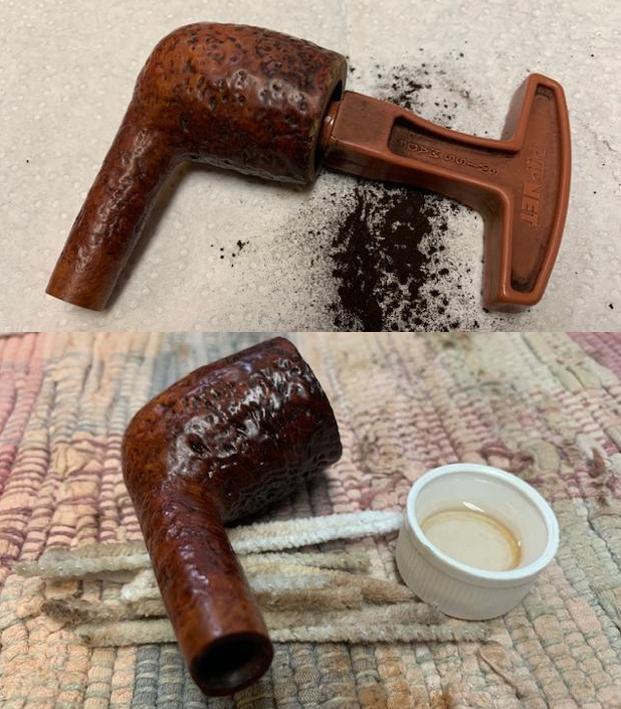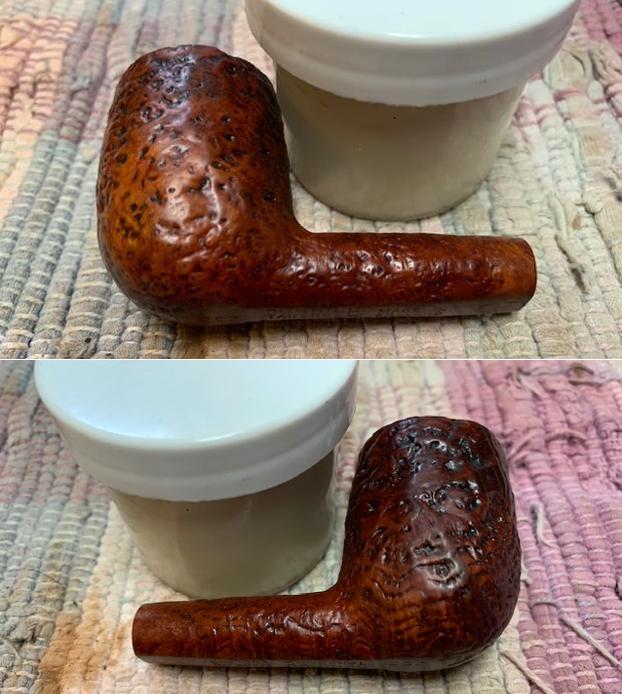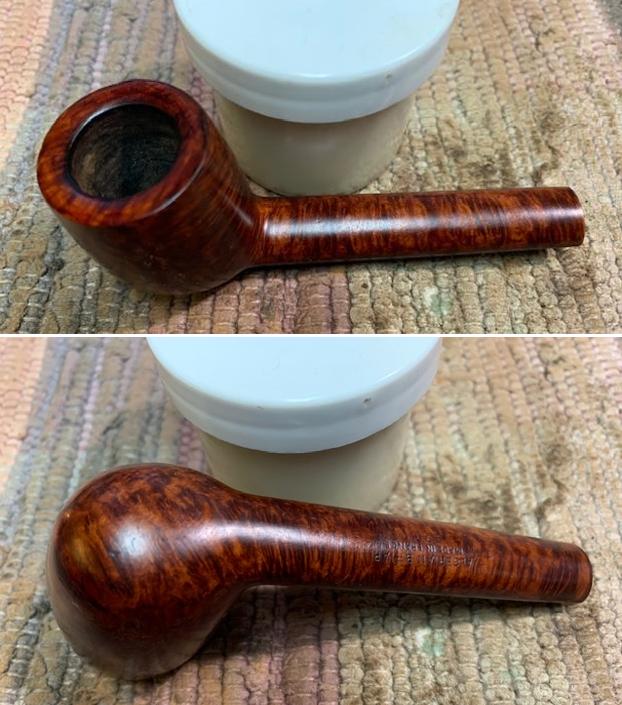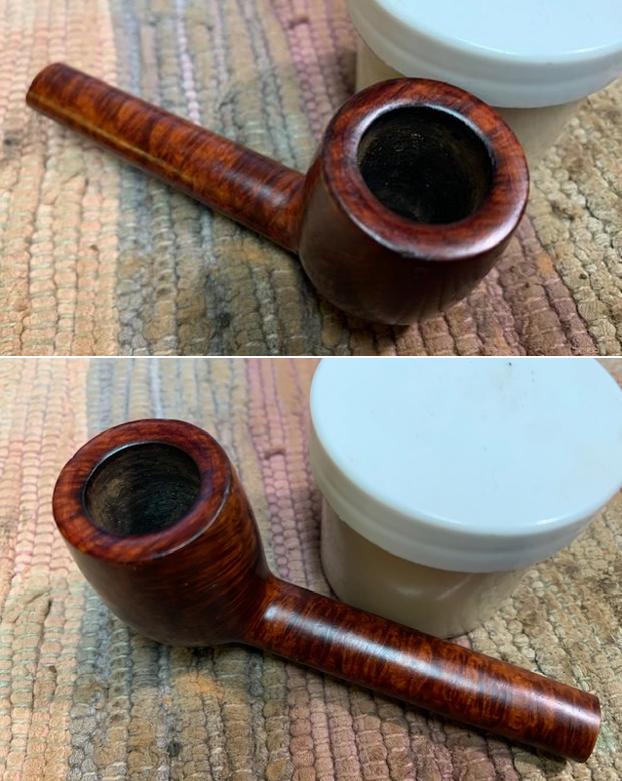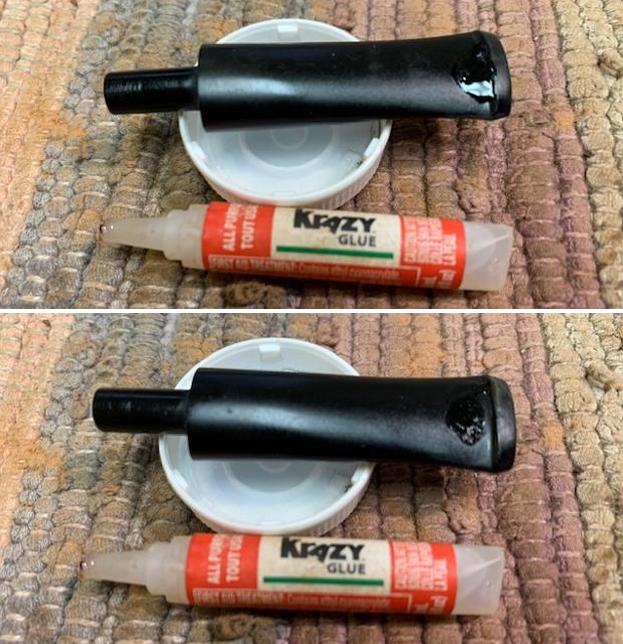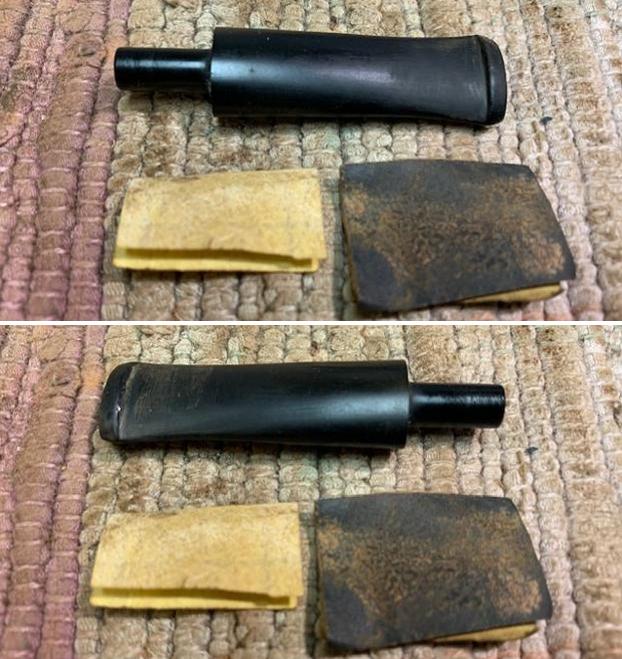
Tag Archives: restaining a bowl and rim

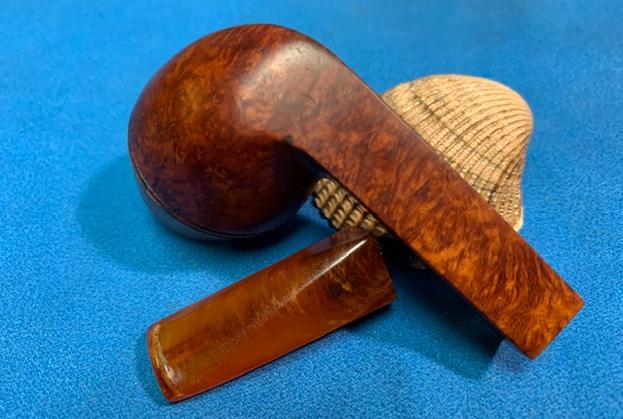
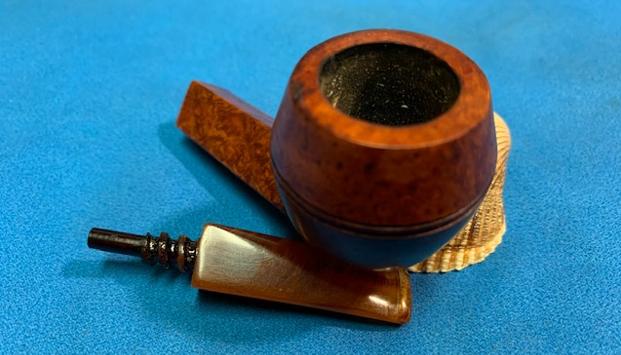
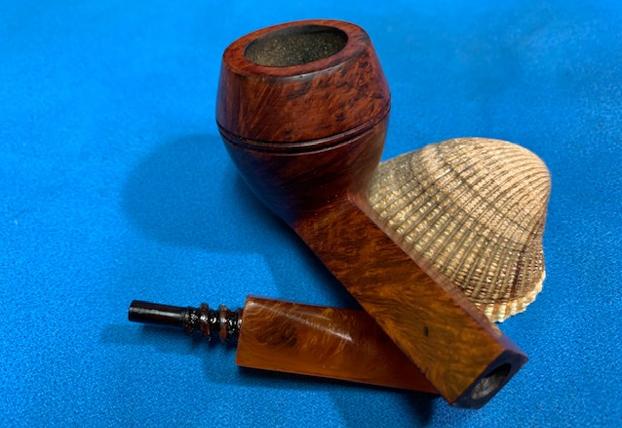
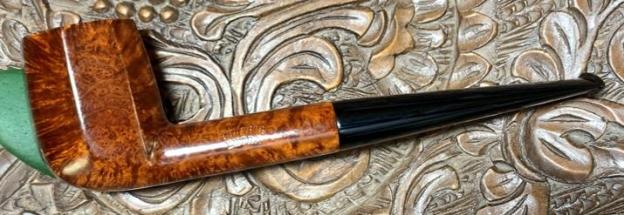
A Mobile Restoration in Florida of a Floridian Bennington Supreme Half Bent Billiard


Blog by Dal Stanton

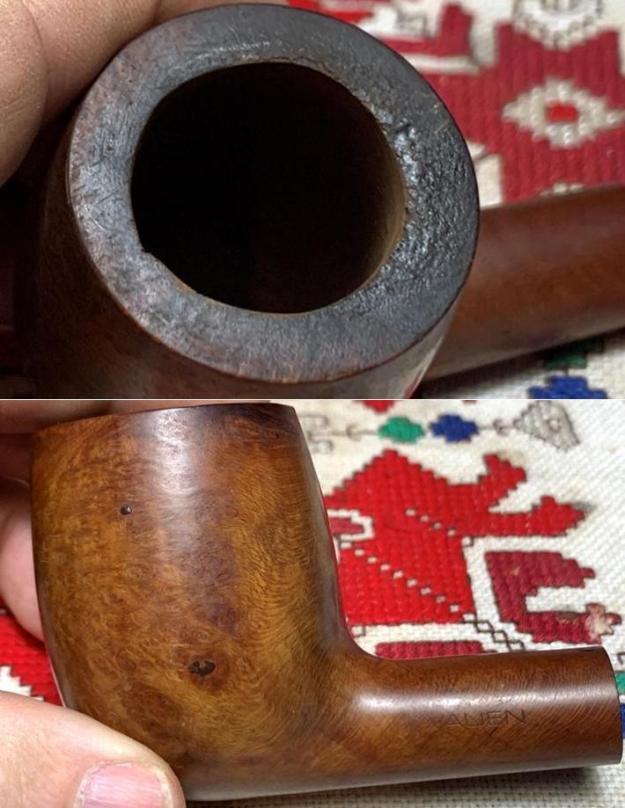
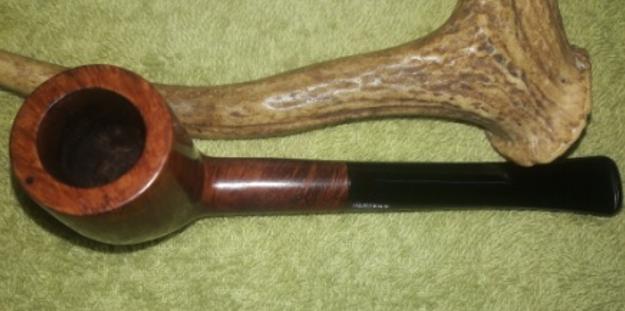
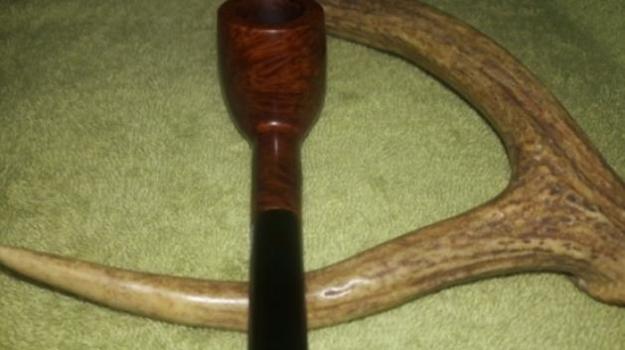
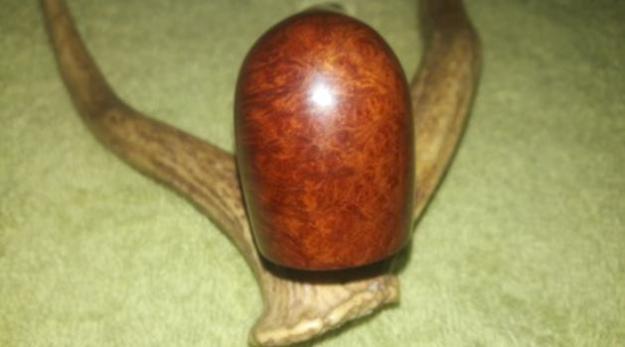
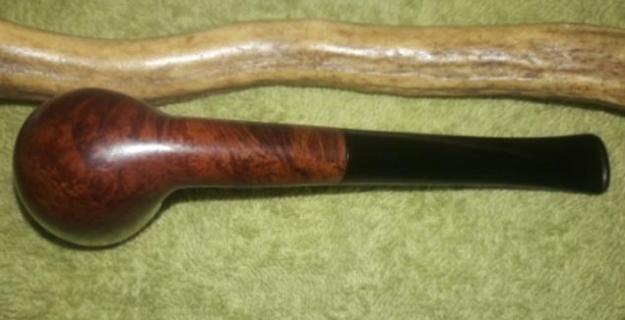
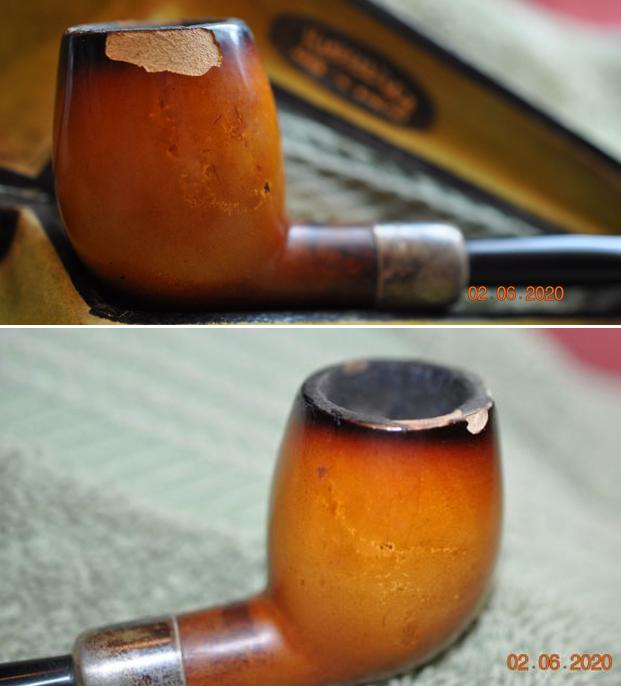
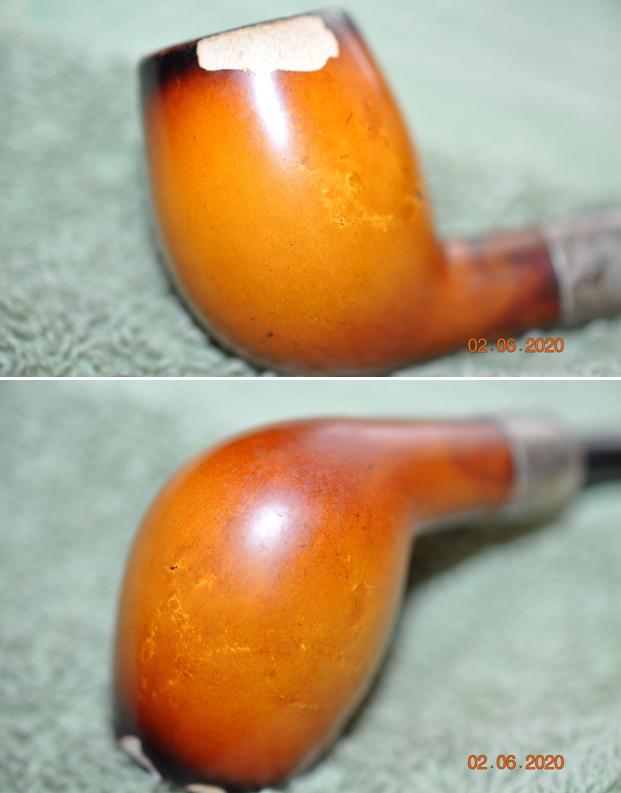
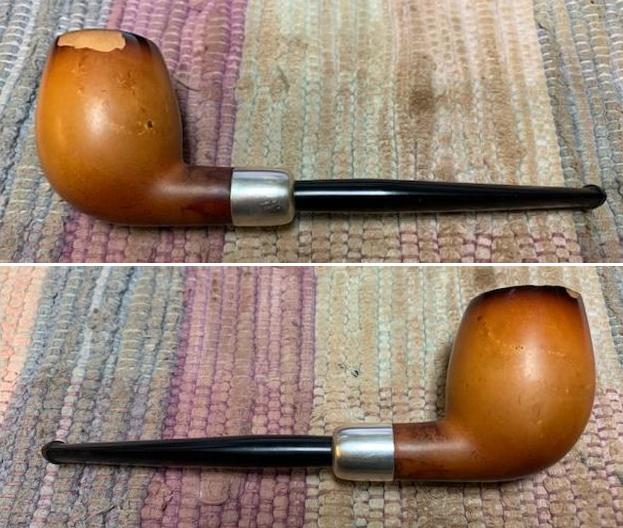
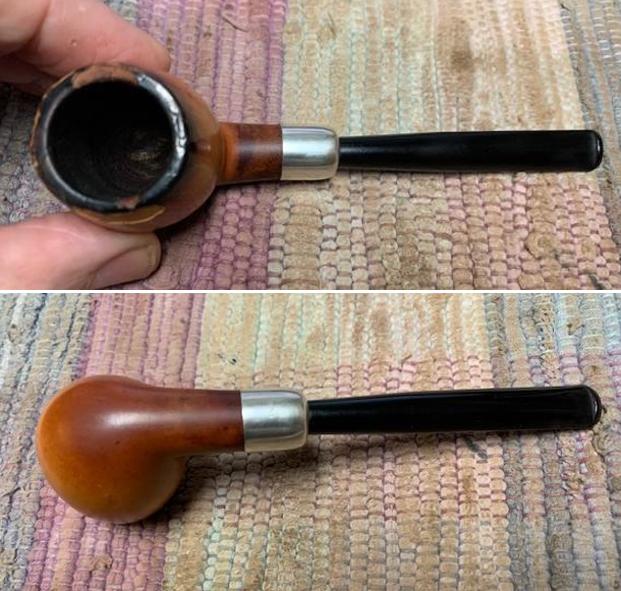
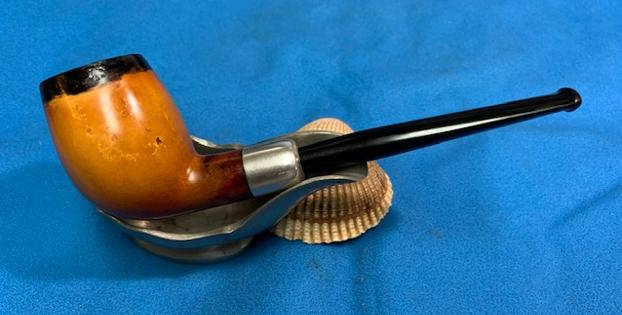
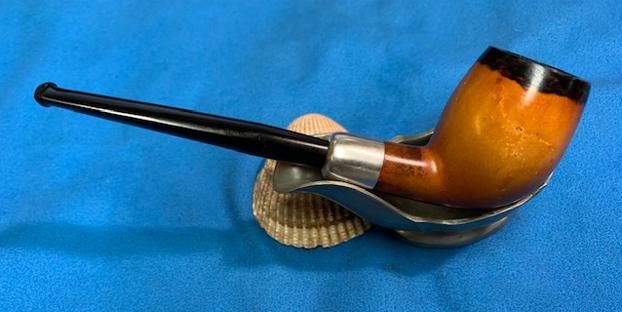
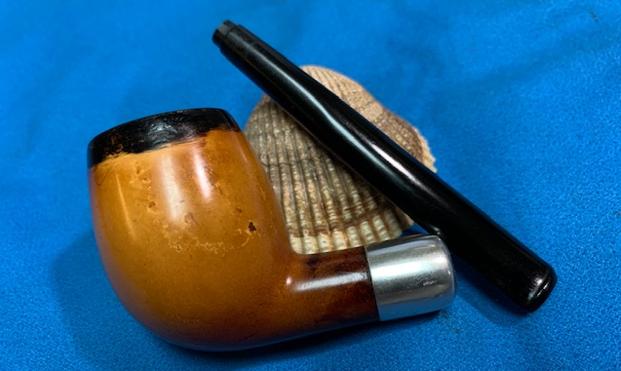
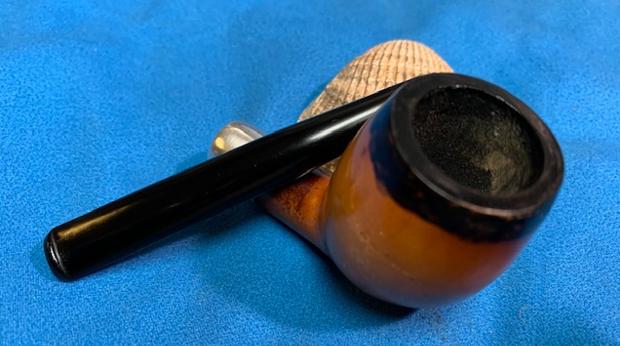
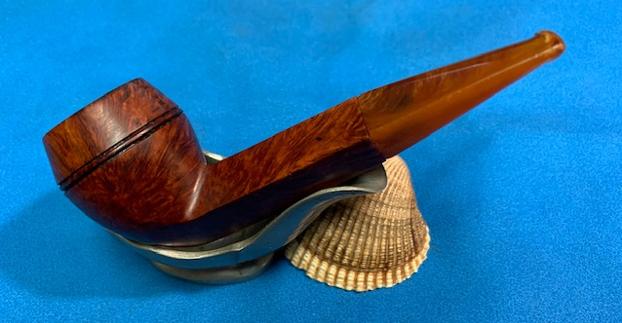
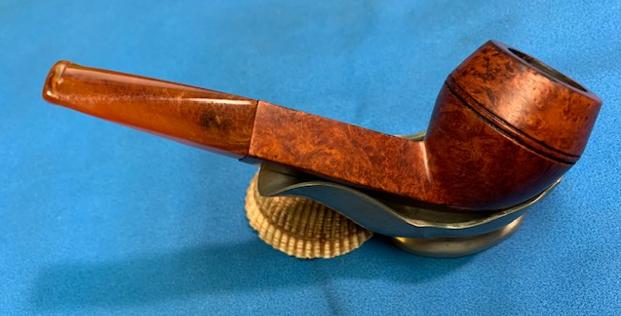
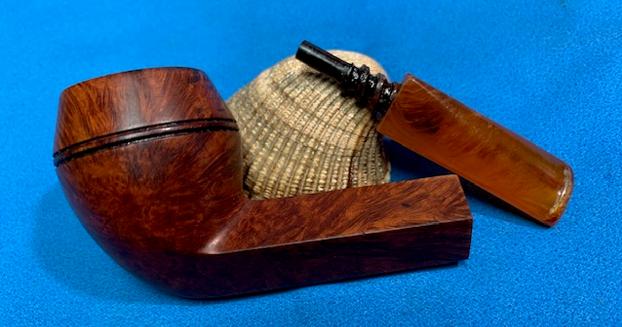
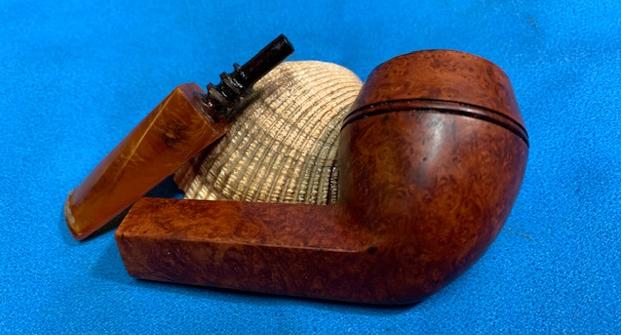
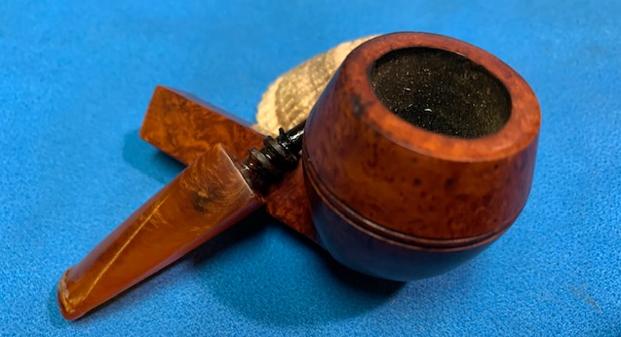
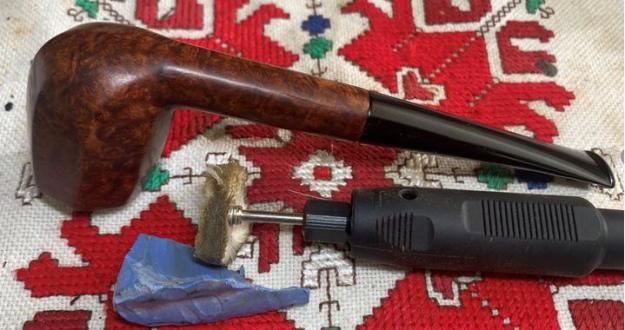
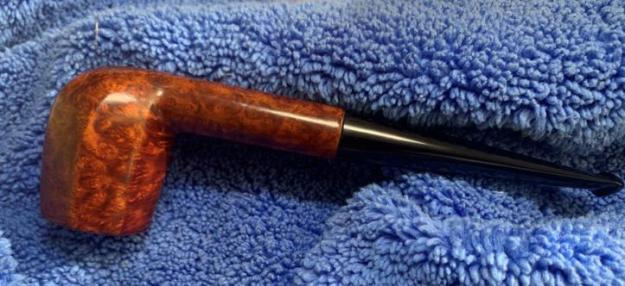
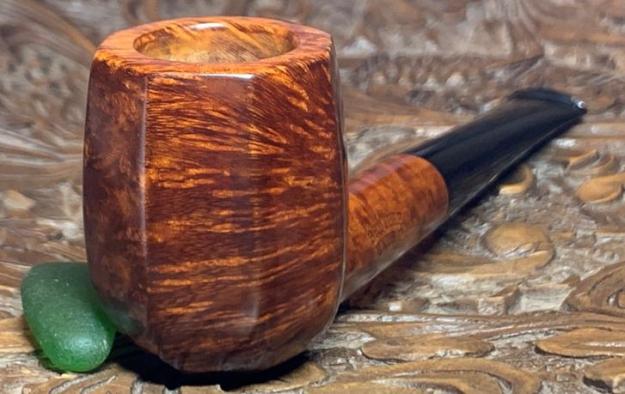
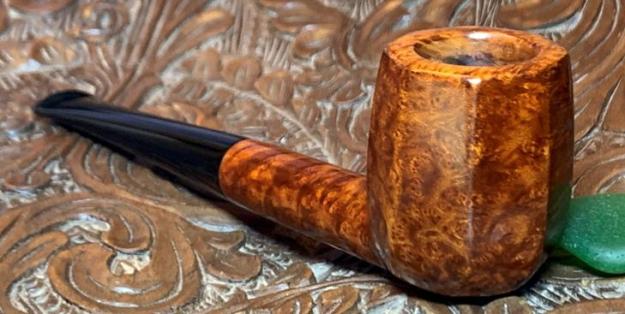
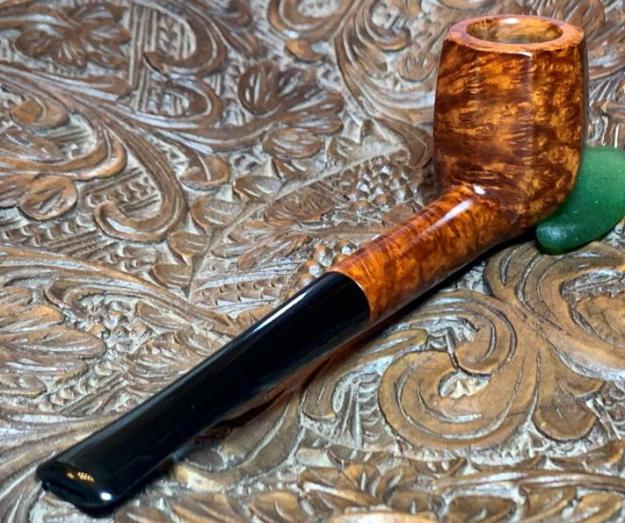
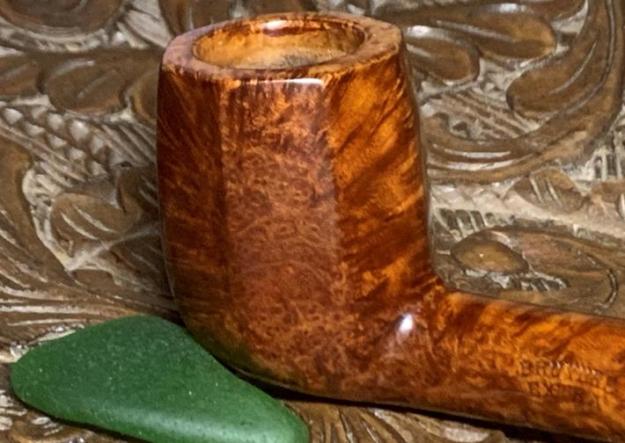
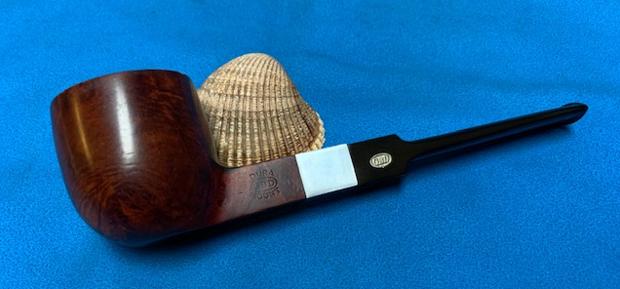
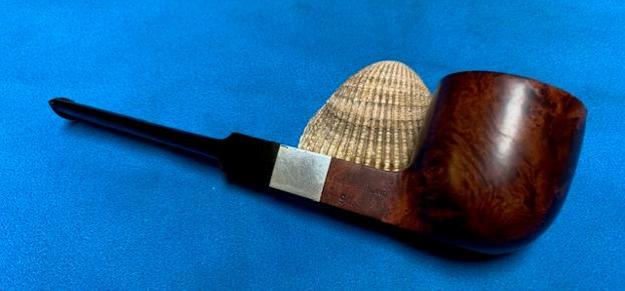
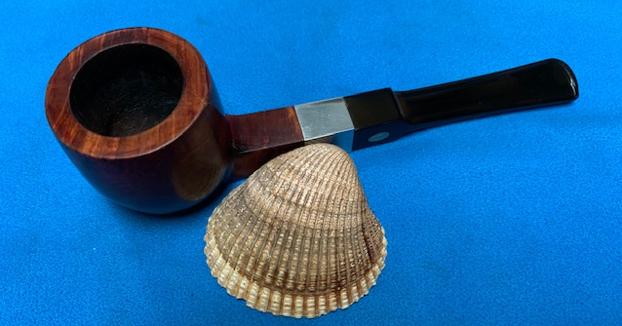
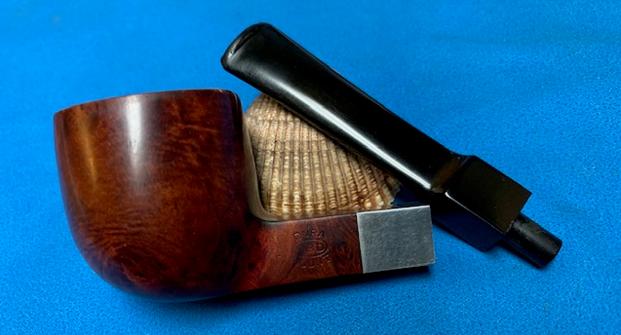
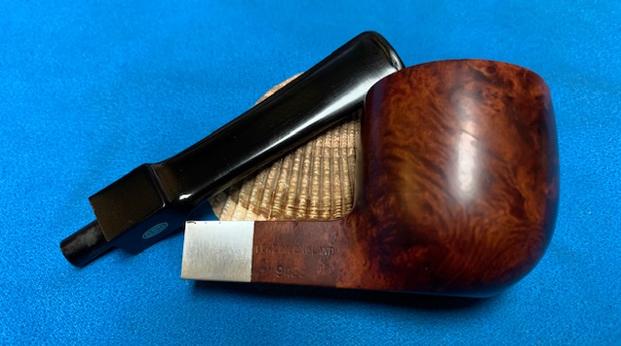
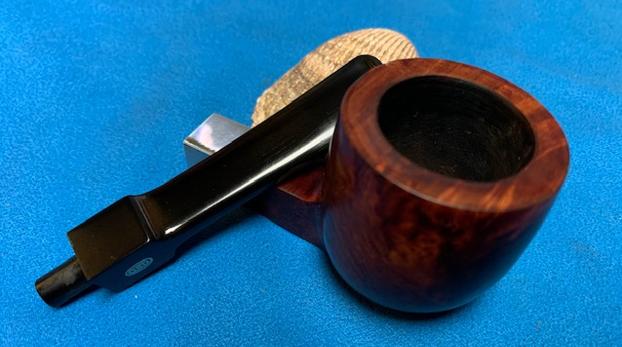
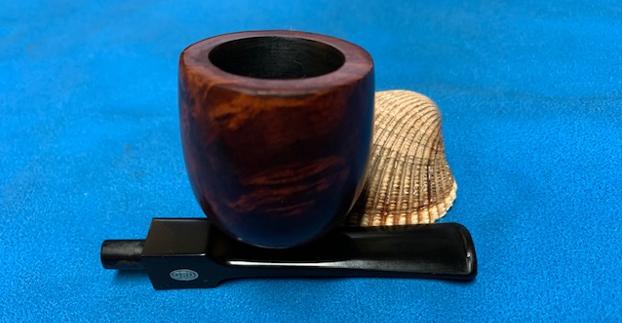
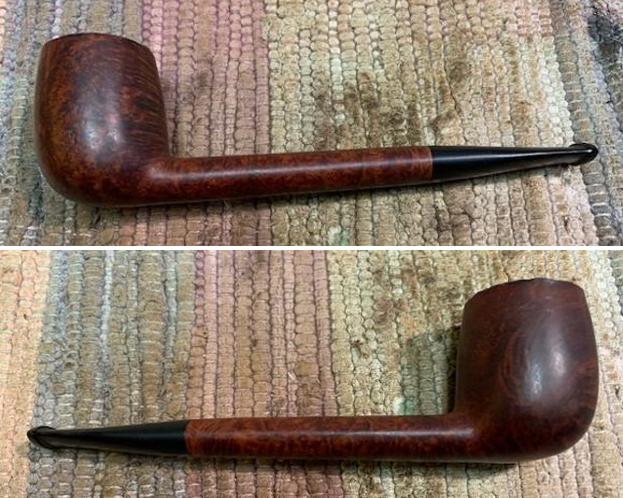
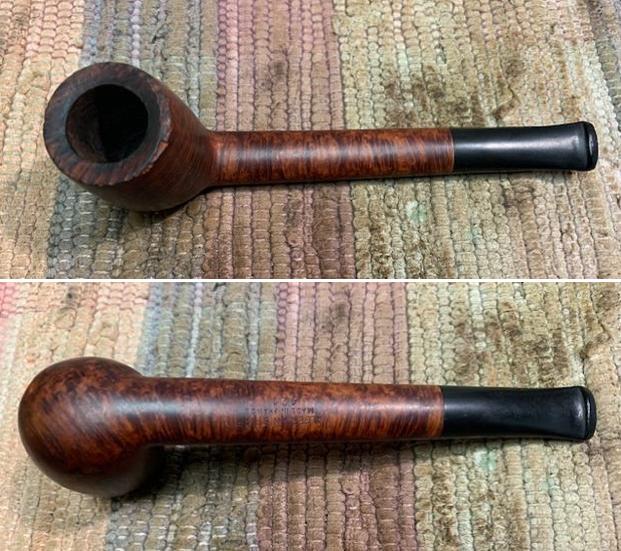
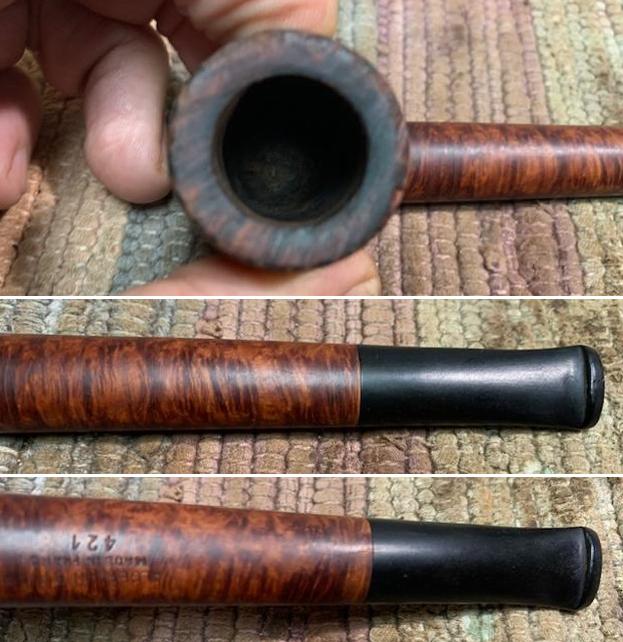
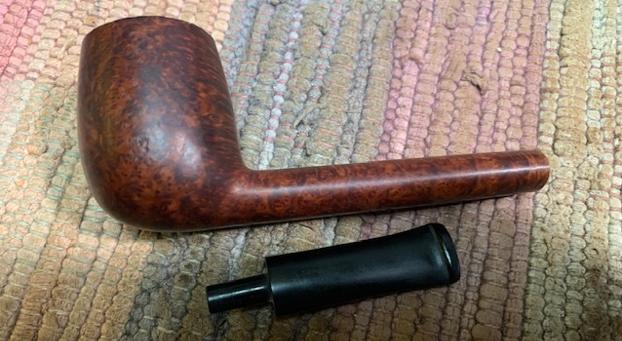
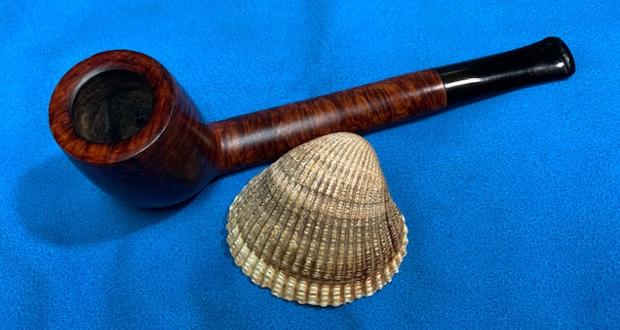
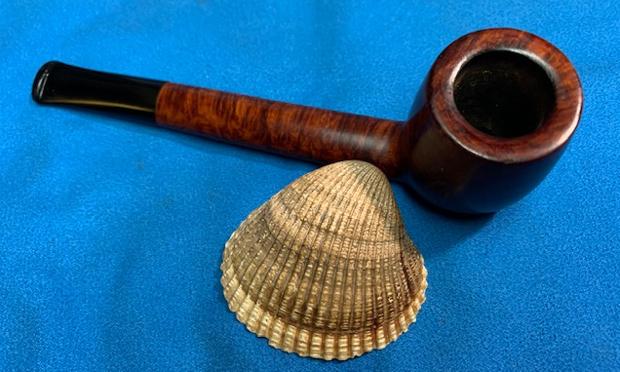
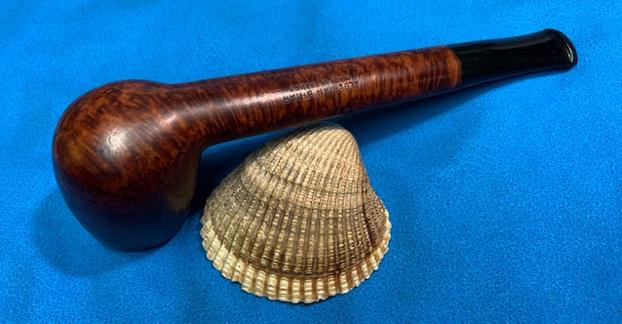
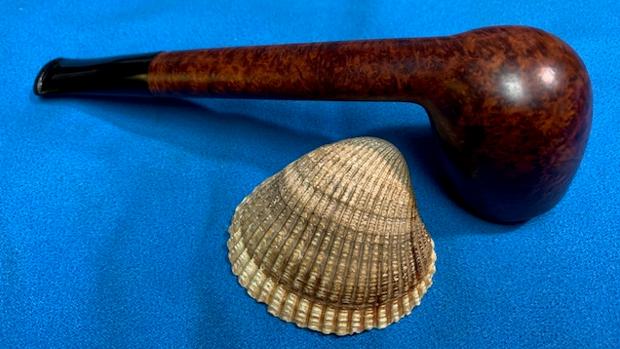
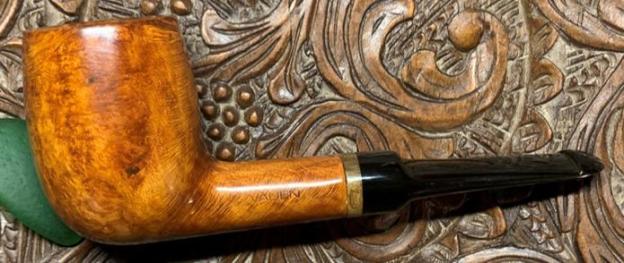
After having enough snow in Golden, Colorado, my wife and I packed up and decided that continuing to wait out COVID would be more enjoyable in sunny Florida. Staying a few weeks visiting family in Port St. Lucie, would mean thawing temperatures and sunshine.  The next pipe on my mobile worktable is an attractive half bent Billiard that I acquired in December of 2017 on the auction block from a seller in Fort White, Florida.  Fort White is a small town in north-central Florida that was named for a fort that was built there in the 1830s back when Florida was still wild and unsettled except by very rugged, tough folk and entrepreneurs who could see the possibilities.  I was surprised to find that the nomenclature on the pipe also has its origins in Florida.  Here are pictures of the Bennington Supreme Half Bent Billiard. The left flank of the shank is stamped with an old English script, ‘Bennington’ [over] SUPREME.   The stem also has a ‘B’ logo stamping.Bill saw this attractive pipe in the For “Pipe Dreamers” Only collection and reached out to me.  It was great to hear that Bill is a friend of Lizzy’s brother, Paul.  Lizzy is a colleague we worked with in Bulgaria for many gratifying years.  Lizzy’s family served in Czech Republic for several years when she was younger, and these seeds of adventure continued to fruition with her work today in Bulgaria.  Her parents have returned to Czech after several years in the US and Lizzy’s brother also worked and studied in UK and recommended The Pipe Steward to Bill – the pipe world is a small world demonstrated again!  Bill wrote these words:

I’m new to pipes, but like smoking and have always wanted one.  I looked through the pipe dreamers section and found a few I like.  I guess as a novice pipe smoker, is there any info I need to know before choosing one?  I’m basically choosing based upon the look, not necessarily how easy a particular pipe might be to smoke or whatever other things there are to consider.  I’d love some help.

I responded to Bill describing my philosophy of pipe acquisition: the Harry Potter approach:

Here’s the truth, the best way to start cultivating a collection of pipes is to simply choose one!  I subscribe to the Harry Potter school of pipe choosing 😊.  Like magic wands, the steward doesn’t choose the pipe but the pipe chooses the steward.  You have listed two very similarly shaped pipes – both classic bent Billiards.  Billiards are the most widely smoked pipes and the difference between a bent and straight billiard is obviously the stem, but more than that, the mood the steward is in.  Each pipe has its own personality, and it takes time getting used to how they smoke and what they smoke best – types of tobacco.  But your selections are great starter pipes.  My choice would probably be the Bennington Supreme because of its provenance and it appears to be a higher quality pipe from a simple glance. 

Bill commissioned the Bennington and added that Bennington, Vermont, had a special place in his affections so the Bennington Supreme would be a good match – the pipe has already been whispering to Bill!  I have never worked on a ‘Bennington’ before and was unfamiliar with the name.  I was surprised when Bennington popped up very quickly in Pipedia.  The article about Bennington revealed that the pipe on the table was a shop pipe from a tobacconist based in Florida.  I discovered that pictures on Pipedia had come from the Bennington website which was full of the shop’s history and offerings that would please both pipe men and women as well as cigar aficionados.    I include the entire Pipedia Bennington article which is cool – authentic tobacconists that mix tobaccos and provide the setting to enjoy the aromas and fellowship are an endangered part of tobacco pipe culture.  The article reads:

Bennington Tobacconist is located in Sarasota and Boca Raton, Florida, and has sold several lines of pipes over the years made by fine companies, including the Bennington Royale, made by Savinelli, the Bennington Belfast, made by Peterson, and others. 

From the company website: William Bennington founded Bennington Tobacconist in 1965. With careful consideration, the location was determined. Saint Armands Circle in Sarasota, Florida. (On the West Coast). Mr. Bennington had the foresight to institute custom hand mixed tobacco blends and hand rolled cigars. Being a family-operated tobacco shop; his three sons, Jack, Jim, and Garry grew up in the business (twenty years of experience). They learned the meaning of service, quality, and hard work.

 As the business grew, there was a need to expand the operation. A three-year search was conducted for the perfect location, which would represent the image and the market desired. The ultimate location was Boca Raton in Palm Beach County. (located on the east coast of Florida), since the city catered to an exclusively wealthy local and international clientele. An existing tobacco shop was obtained, which had been established for fifteen years in the heart of downtown Boca Raton. The shop was purchased in January 7,1980. This is where Jim Bennington became a notable presence not only in the community but in South Florida. Jim graduated from the University of Florida with a degree in Industrial Systems Engineering. Although he did give engineering a chance, the prospect of working in the family business presented a much more interesting challenge. Today anyone can pick up a phone, fax or in an e-mail put in an order in from anywhere in the World. Bennington Tobacconist is continually growing at an average rate of 20% a year. Their constant awareness of projecting the Bennington name and the quality of the product lines they carry has directed them into servicing hotels, restaurants, and country clubs. Bennington Tobacconist has extended itself very successfully in this area. Two of many, prestigious hotels now serviced are the Boca Raton Resort &Club (in Boca Raton) and the Doral Golf Resort & Spa (in Miami). Traditionally, Jim Bennington has continued to honor the family philosophy that quality products should be represented in a proper image.

I found out reading through the Bennington website that the Boca Raton shop closed in 2015 apparently falling on hard times.  The website also had links to a Facebook presence and Instagram postings, but these seemed dated with no new postings that I could see after 2017.  Questions began to rise in my mind whether the Sarasota location mentioned was still in operation.  With the website working, I assume that it is.  Of most interest to me looking at the Bennington Supreme on my worktable was the statement at the beginning of the article.  It describes Bennington shop pipes having been manufactured by name companies such as Peterson and Savinelli.  It would be interesting to see if I could find out more information about the pipe on my table – Who manufactured it and when was it manufactured for Bennington Pipe & Tobacco?  With the contact information provided in the Pipedia article (but not on the website) I decide to send an email to Bennington to see what I can find out:

Greetings, I restore vintage pipes and a beautiful Bennington half bent Billiard has come to my worktable.  You can see the work I do at www.ThePipeSteward.com where pipes are commissioned that I have collected, and the full restoration process is recorded in a writeup that is then published online.  The sales benefit the Daughters of Bulgaria a good cause that you can read about at my site.  Part of my challenge when I restore a pipe is to try, as much as possible, the tell the story of the pipe which includes its provenance.  I have read the information on Pipedia about the Bennington story (Bennington – Pipedia) and I do want to make this known in my write up.  I have looked through your website and your Facebook presence to learn what I can.  I have attached a couple pictures of the pipe I’m working on.  I know that shop pipes are manufactured by other companies and my question is whether you may have an idea when you sold a Bennington Supreme and whether you might know who made it for you?  I enjoy doing this research and have reached out to other Tobacconist and pipe names in the US and in Europe and have been very pleased at the kind and helpful responses I have received.  I know that my questions are a shot in the dark but any information you can provide would be most appreciated.  Thanks so much!

Happy piping,  Dal Stanton

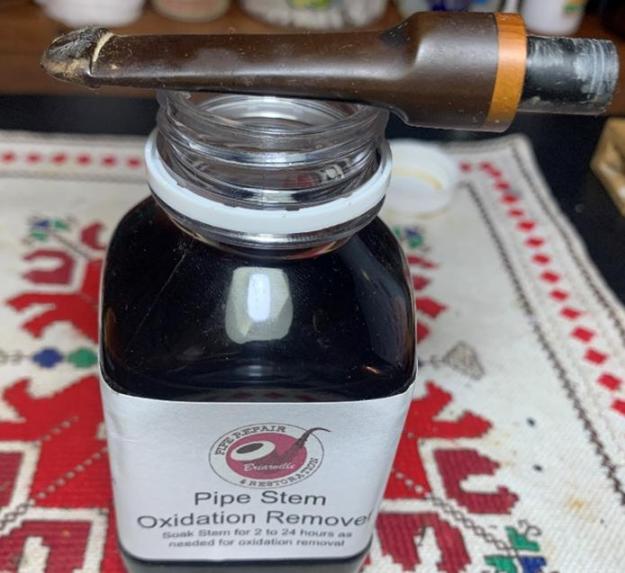
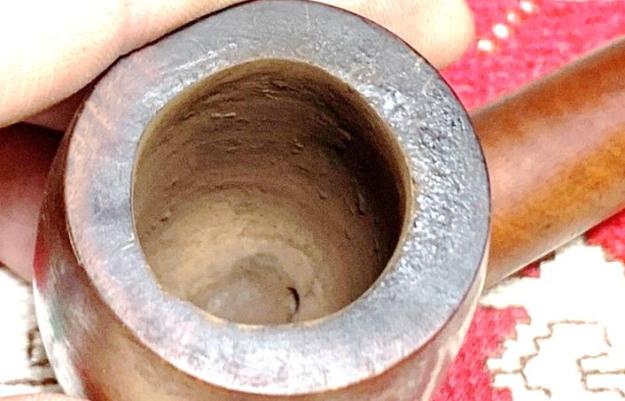
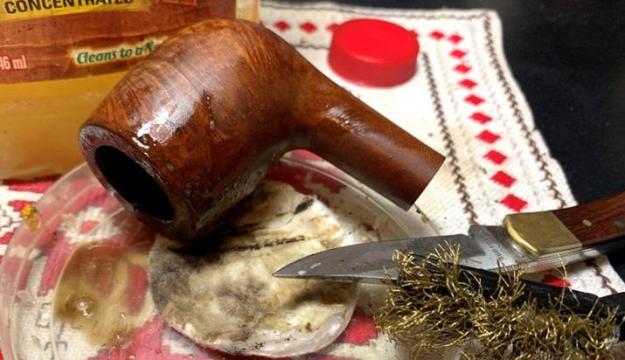
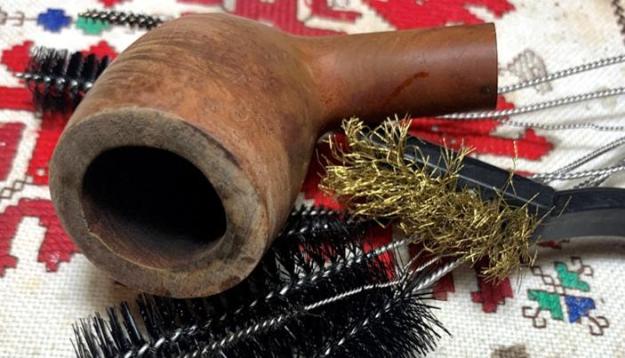
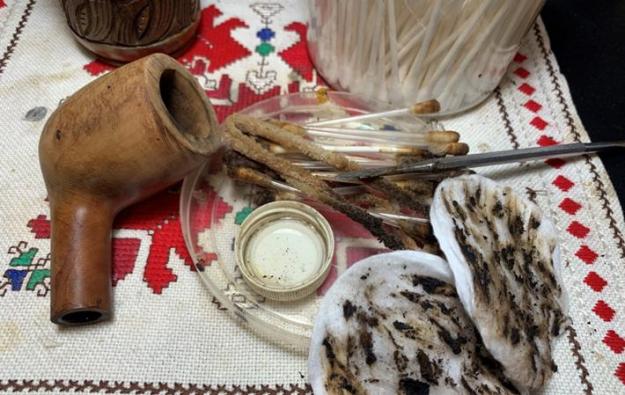
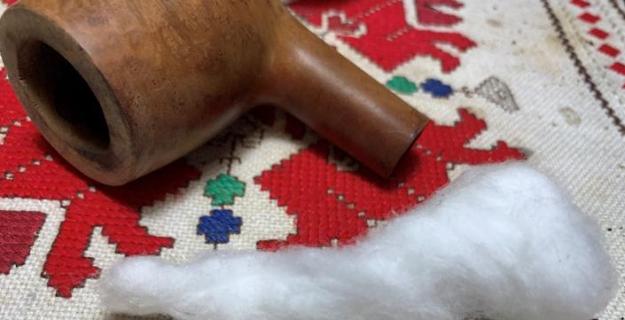
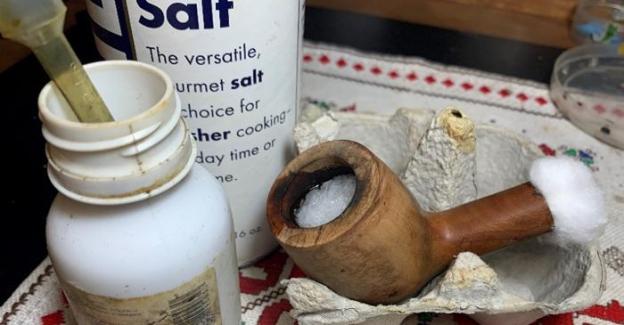
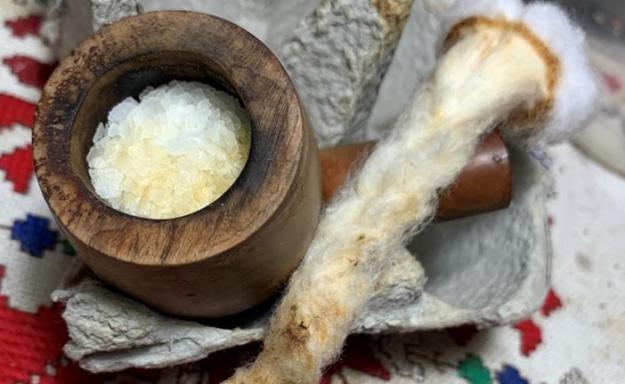
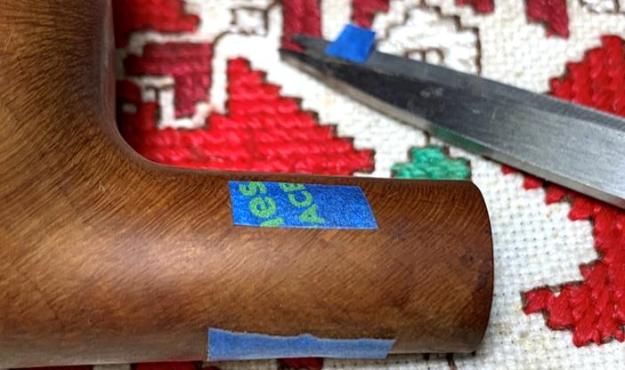
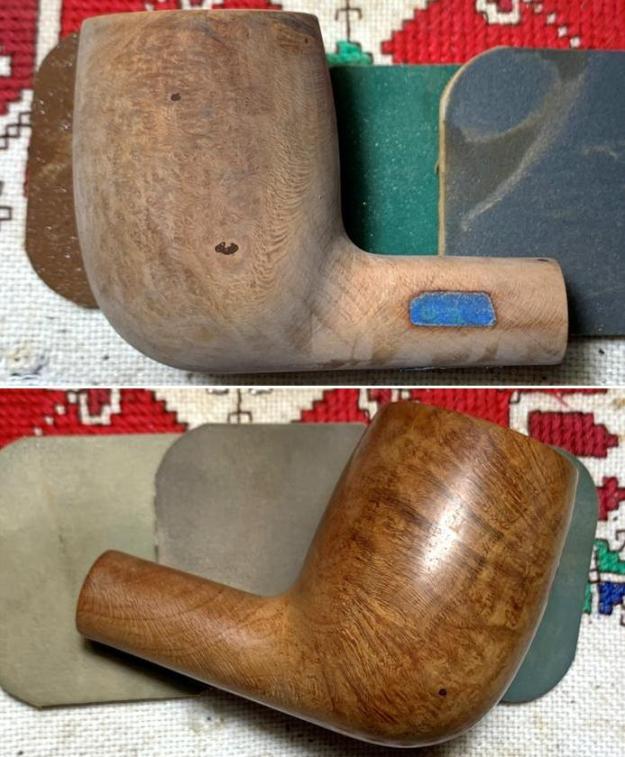
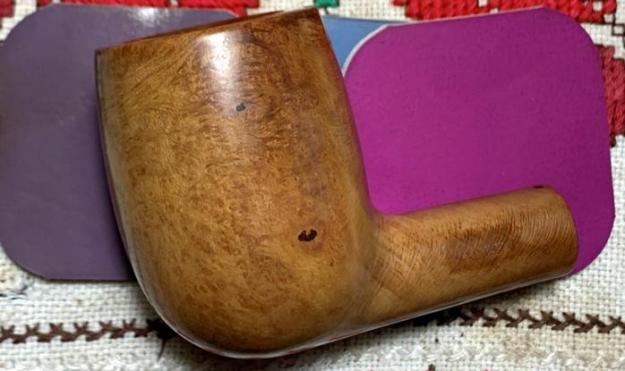
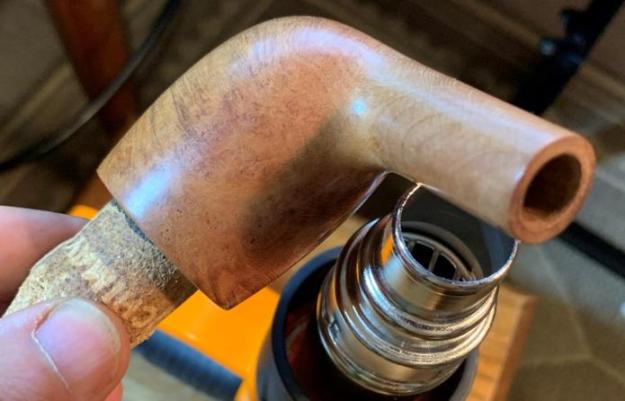
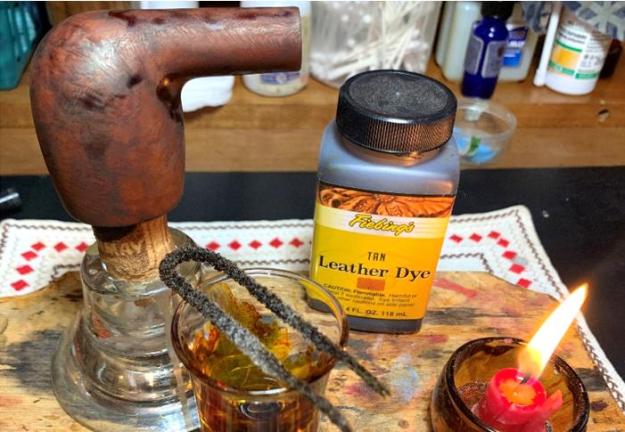
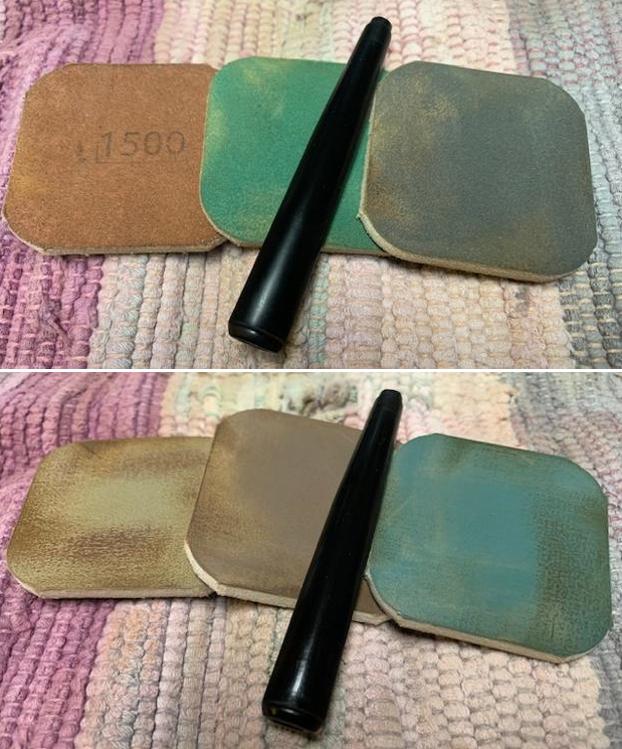
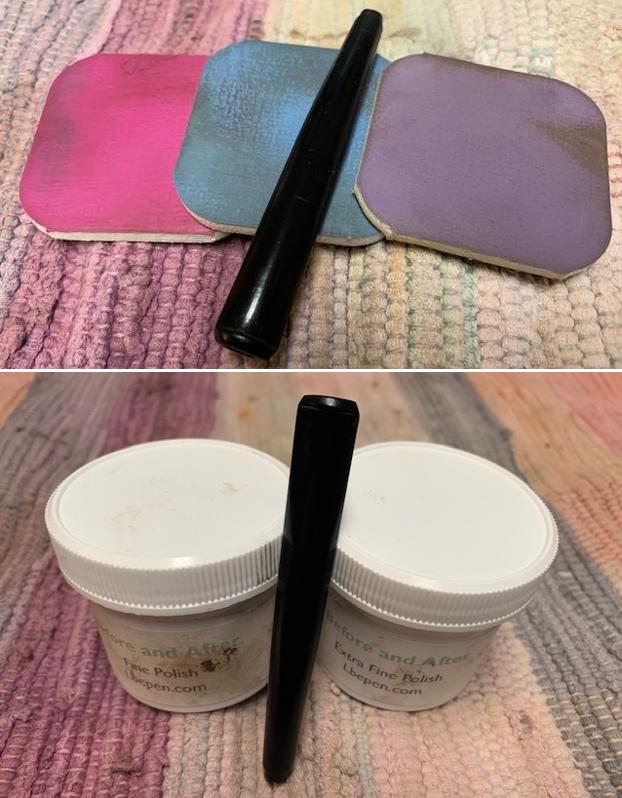
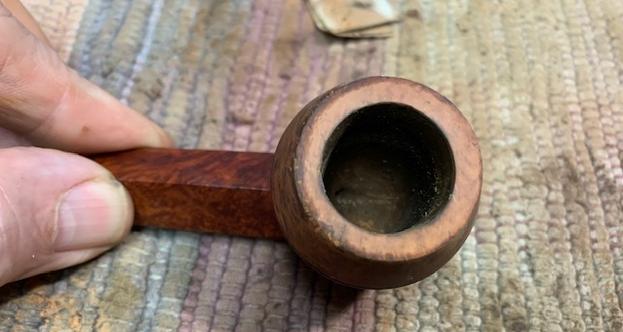
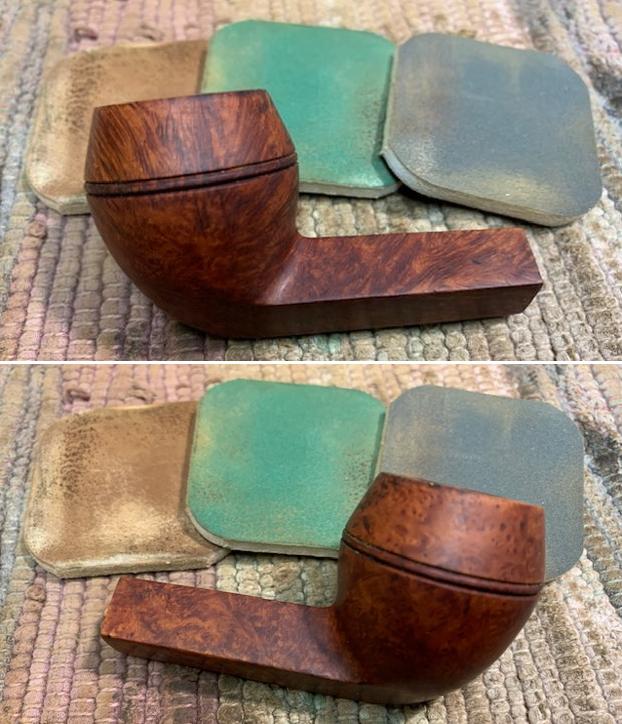
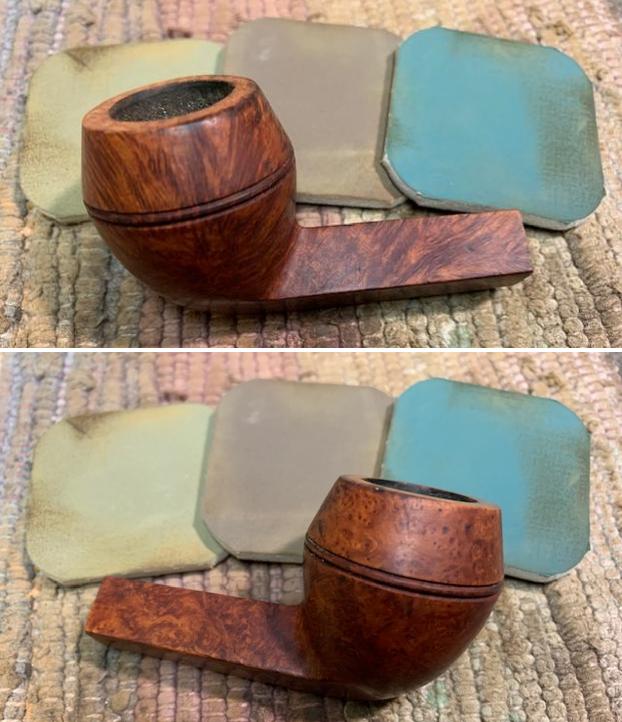
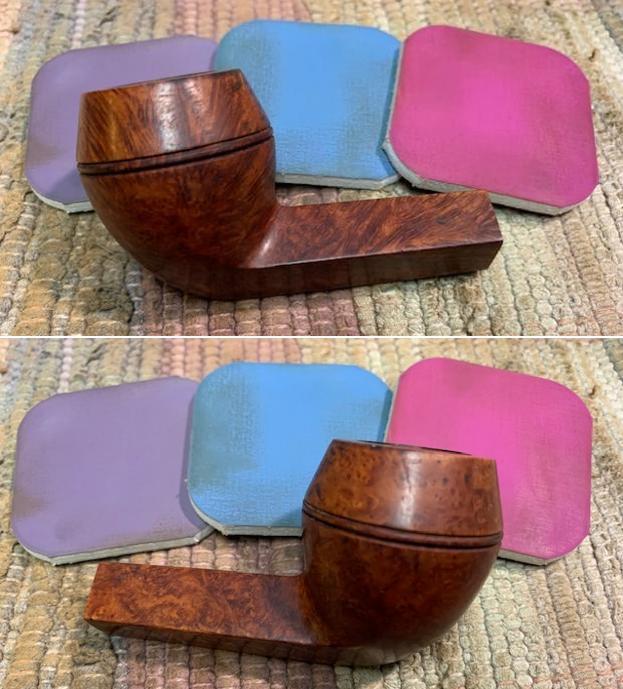
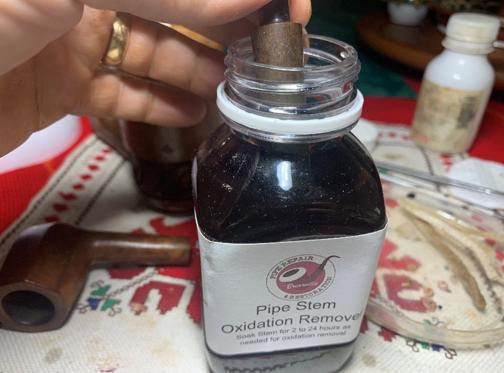
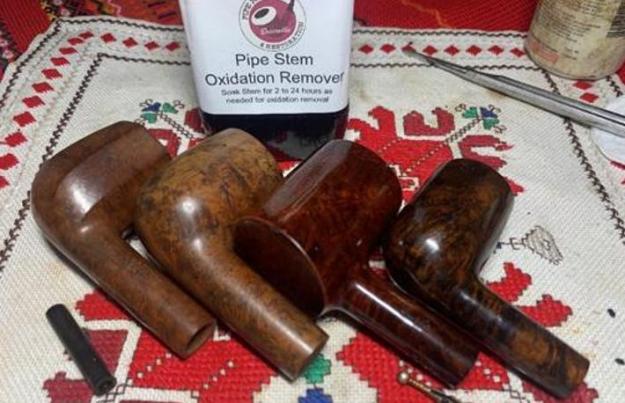
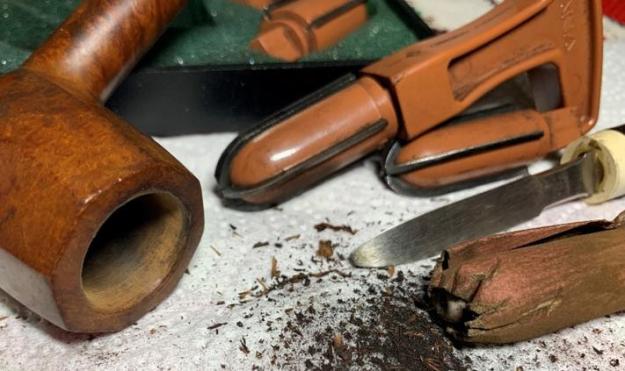
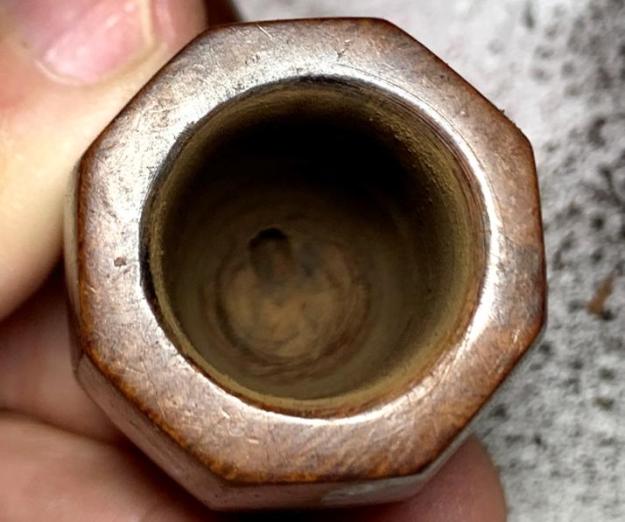
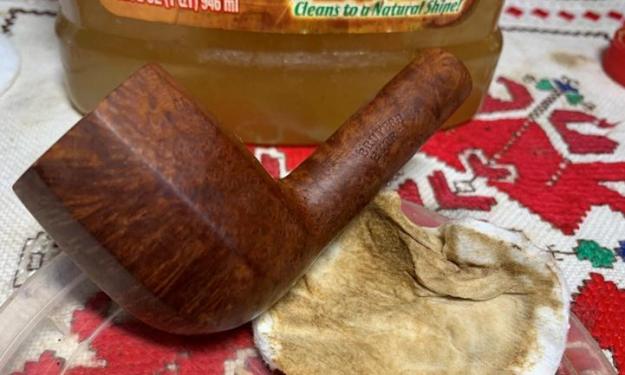
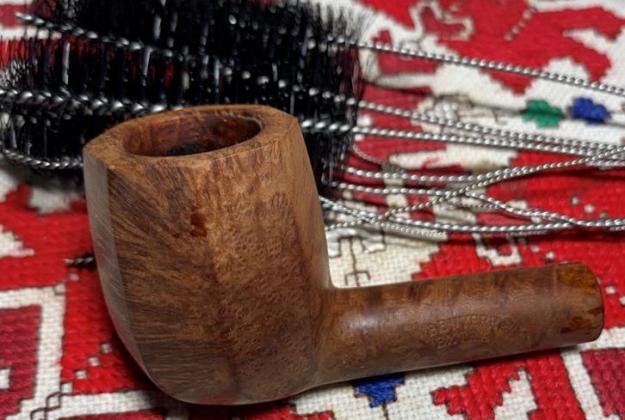
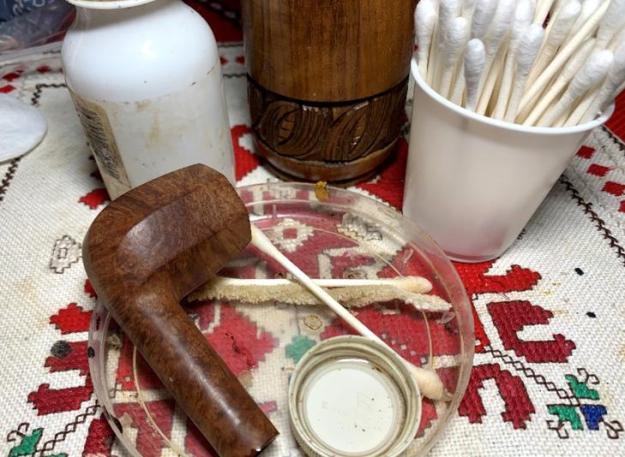
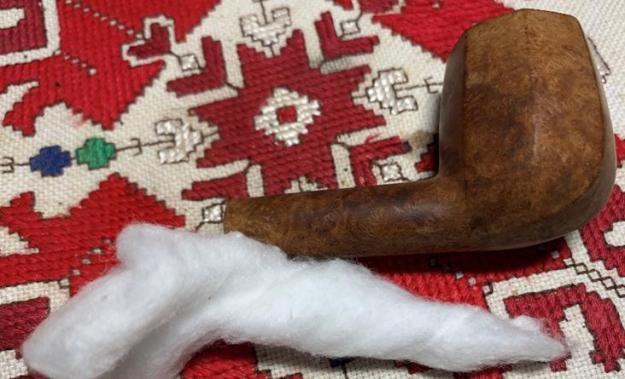
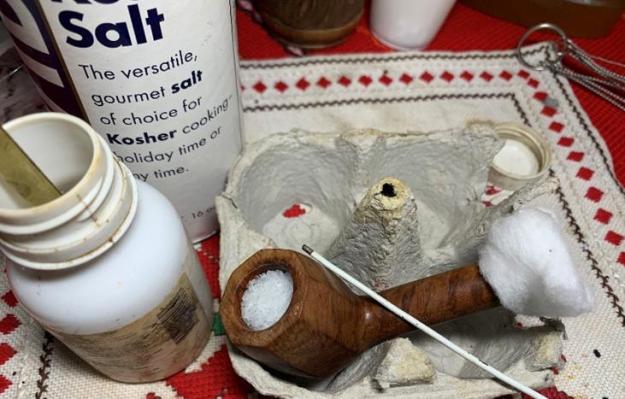
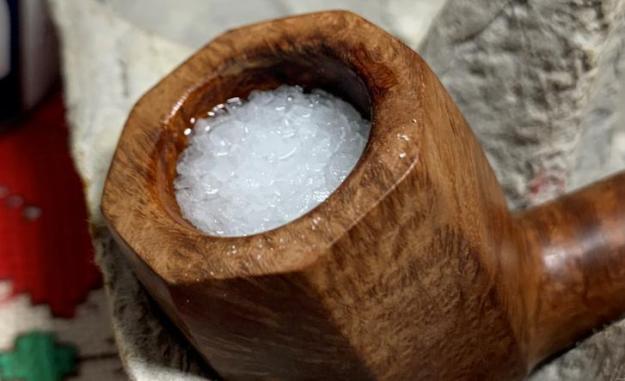
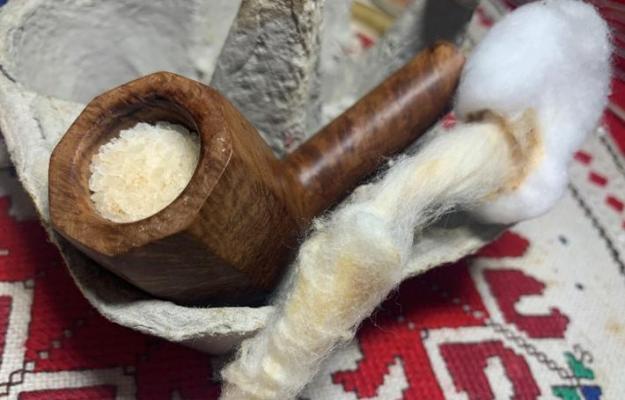
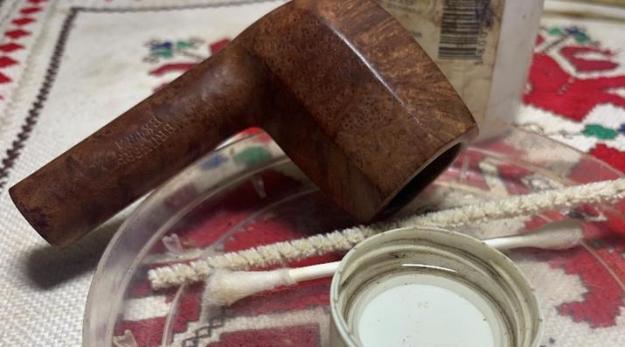
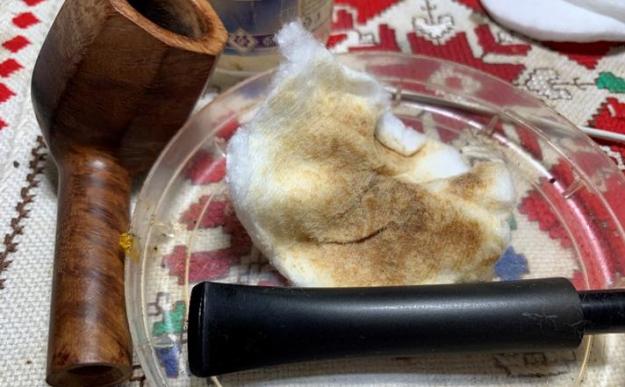
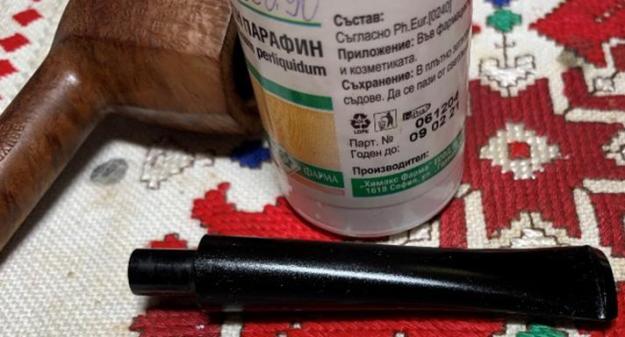
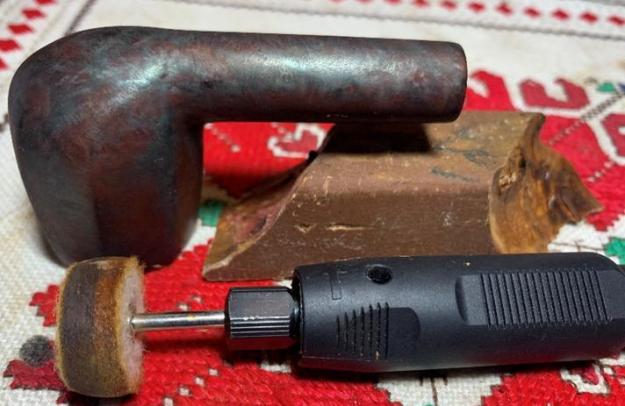
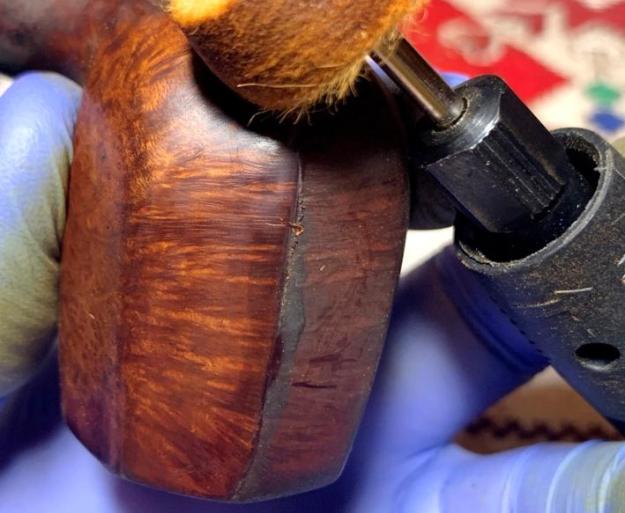
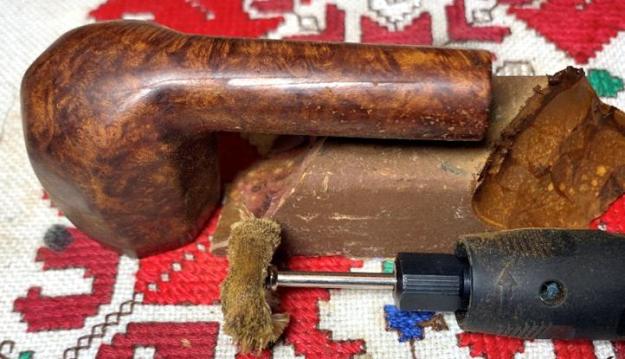
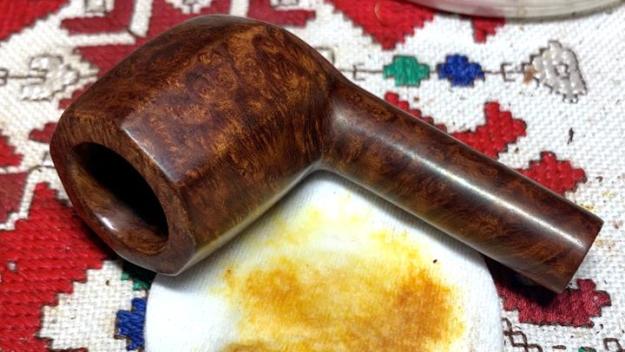
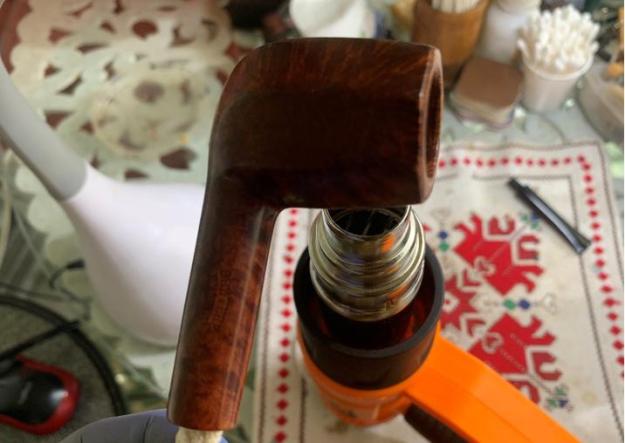
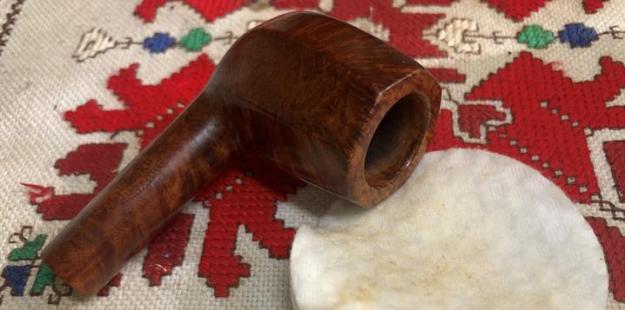
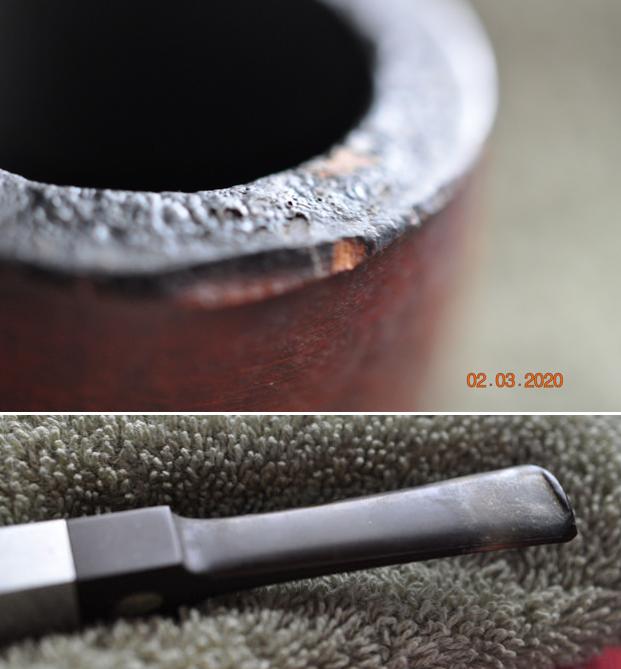
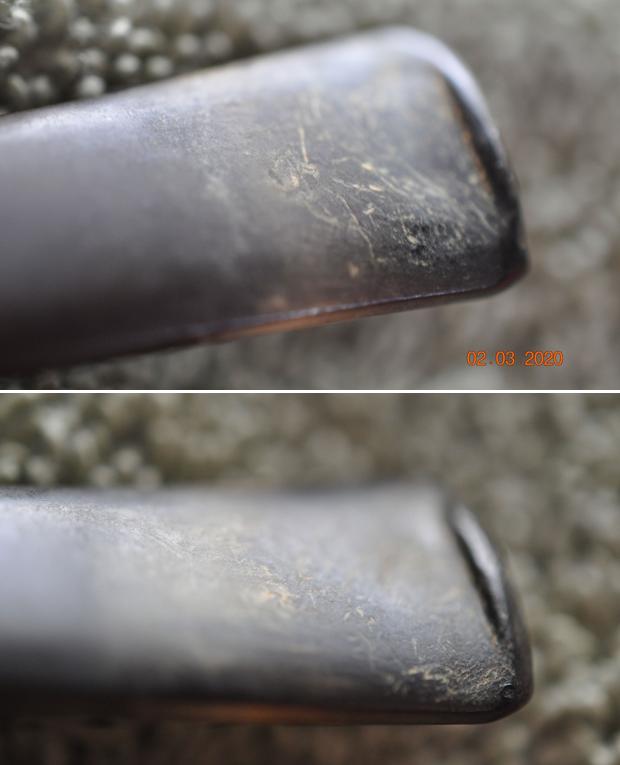
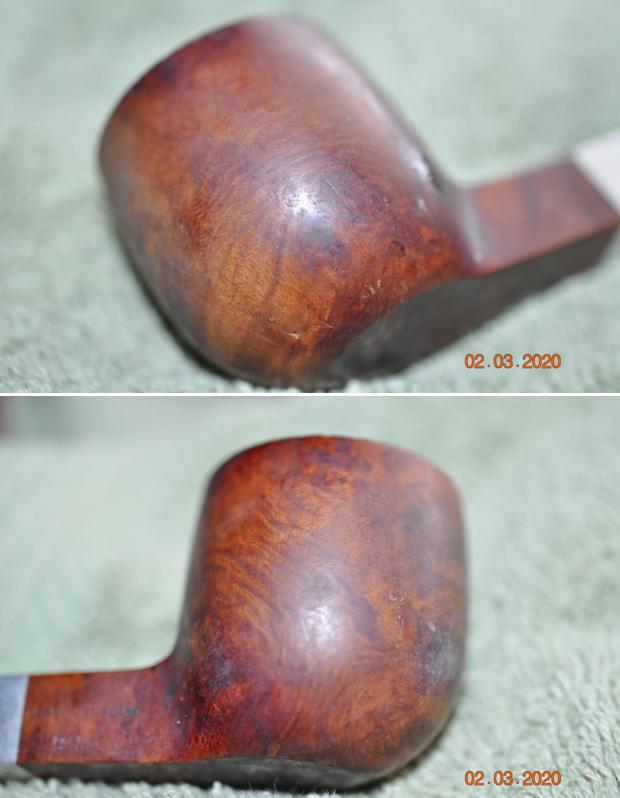
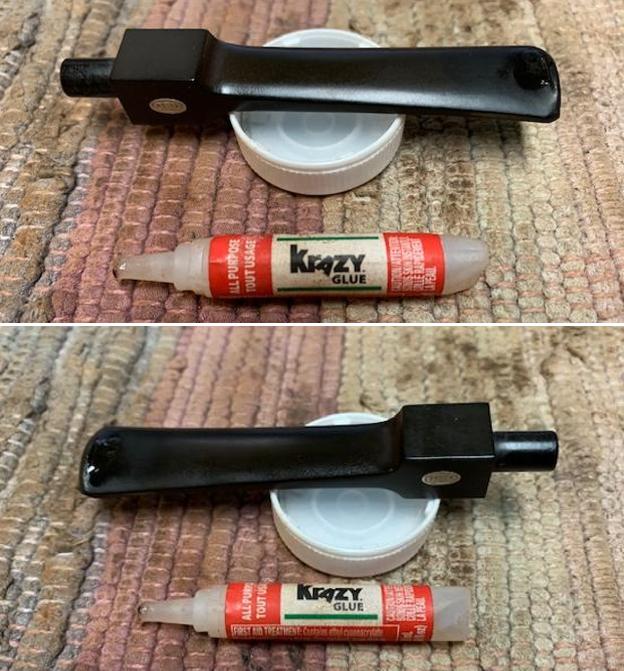
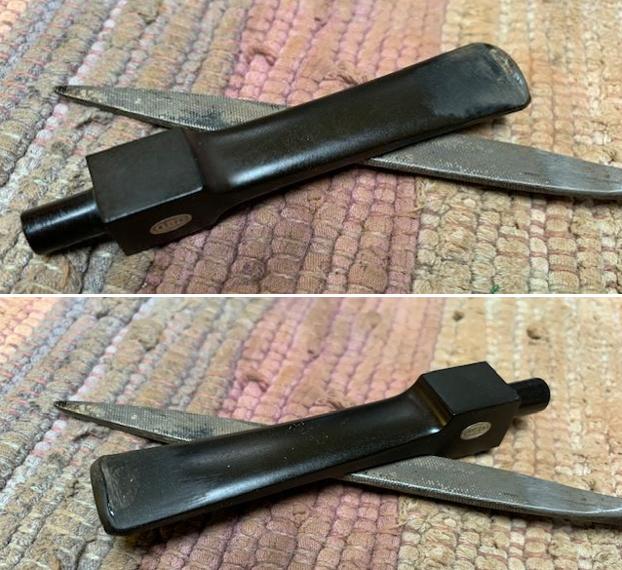
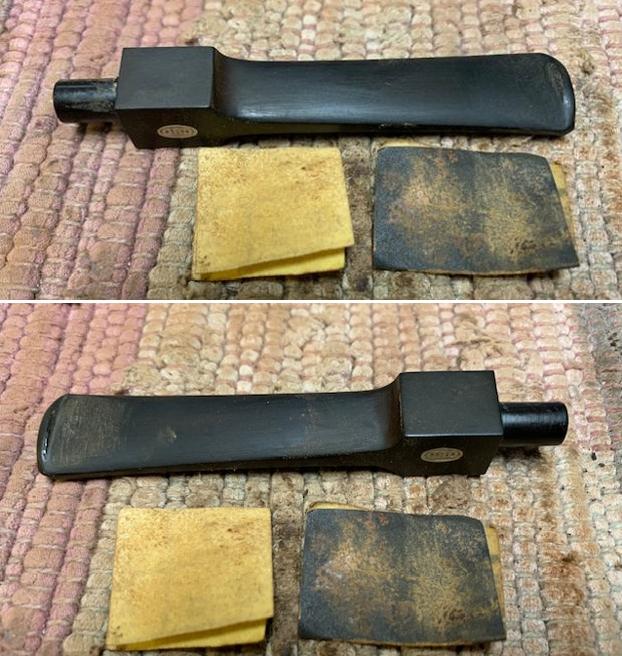
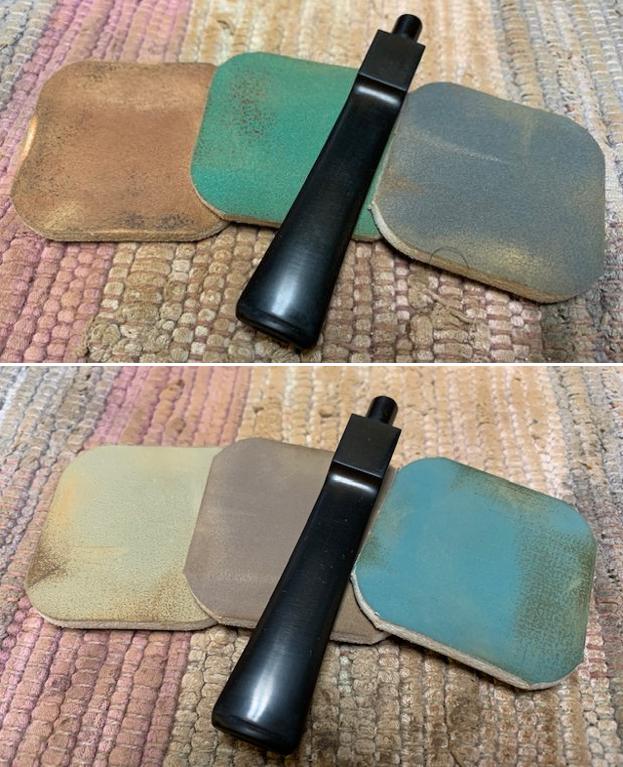
I’ll see if I get a response.  In the meantime, looking more closely at the Bennington on the worktable, I’m impressed with the quality of the pipe.  The grain of the bowl is asking to be released from under the tired, dull grime and dirt.  The chamber has light cake build up and the rim has light lava flow covering it.  The bowl looks like it should clean nicely.  I take a few additional pictures showing dents and scratches on the bowl and the rim edge.The stem’s surface is rough with almost no tooth chatter and light oxidation.  I begin the restoration of the Bennington Supreme with the cleaning of the stem.  The airway is cleaned with pipe cleaners wetted with isopropyl 99%.To address the minor oxidation I see in the stem, I continue the testing of a deoxidation product I discovered on a Facebook thread discussion.  The Briarville.com ‘Pipe Stem Oxidation Remover’ has performed well with the non-scientific testing I’ve done.  So far, oxidation has been removed for the most part and the Bennington half bent stem joins the previous testing subjects. I put the stem in the bottle of Oxidation Remover liquid for several hours.  The directions on the front label simply say to soak from 2 to 24 hours as needed. After the full 24-hour soak, the stem is removed from the liquid and first wiped with a dry cotton pad followed by a cotton pad wetted with alcohol.  The cotton pads remove a lot of the raised oxidation. The airway is also cleaned with a few pipe cleaners wetted with isopropyl 99%.  The oxidation seems to have been removed through the soaking process. Next, paraffin oil is applied to the stem to condition it and is set aside to absorb the oil.With the stem on the side, the cleaning is started on the Bennington stummel.  Starting with the light carbon cake buildup, the chamber is reamed with 2 of the 4 blade heads available in the Pipnet Reaming Kit.I started using the 3rd larger blade head, which initially fit the chamber opening, but tightened too much for comfort.  I do not want to create a ridge in the briar chamber wall nor break the blade!  After reaming the chamber, the Savinelli Fitsall Tool is used to scrape the walls and then the chamber is sanded using 240 paper wrapped around a Sharpie Pen. After wiping the bowl with a cotton pad, an inspection of the chamber shows healthy briar.  I move on.Next, the focus shifts to cleaning the external briar surface to address the lava on the rim and the grime on the bowl.  Undiluted Murphy’s Oil Soap is used with a cotton pad to scrub.  The cotton pad is joined by a brass bristled brush to address the rim.  Brass is used because it is less invasive to the briar during cleaning but gives a bit more muscle for stubborn grime on rims.The stummel is then taken to the sink and the cleaning continues with hottish water and shank brushes with anti-oil liquid dishwashing soap.  The internal mortise briar is scrubbed with the shank brushes.  After the stummel is thoroughly rinsed, it is brought back to the worktable.  The cleaning did a great job with the briar grain now being more distinct.Continuing with the internal cleaning, cotton buds and pipe cleaners wetted with isopropyl 99% are used. A small dental spoon is also used to scrape the mortise walls with little being excavated.  The internals are not uber grungy and the pipe cleaners and buds gradually surface not as soiled.  I stop the internal cleaning with the plan of continuing it later using a kosher salt and alcohol soak. After completing the main cleaning of the stummel, an inspection of the briar surface reveals a genuinely nice block of briar.  The lava was successfully cleaned off the rim revealing raw, worn briar.  Most of the old finish did not make it through the cleaning process.  There is a slight thinning of the aft quadrant of the rim.  The chamber is not in round with a few dents on the inner rim edge which create this.  I’ve marked up the next picture to show this.The next few pictures show the briar grain that has popped out after the cleaning.  I cannot see any fills and the potential of the grain being teased out even more is good.  The Bennington Supreme appears to be a high-quality piece of briar. The rim has a slight cant toward the chamber.  Before working on the stummel proper, I focus on the rim first by cutting a small smart bevel using 240 grade paper wedged with a hard backing of wood.  This is followed by the same with 600 grade paper.  The rounding of the chamber is improved, and the bevel freshens the inner rim lines.  A start picture is taken then the progressions. Before working on the briar surface, the Bennington Supreme nomenclature is covered with painter’s tape to protect it from the sanding.Next, to clean the surface of nicks and cuts and to remove older finish patches, sanding sponges are used. I use 4 sponges, starting first with the coarsest grade, then less course, medium grade then finishing with a light grade. After the sanding sponges, the full regimen of micromesh pads is applied.  Starting with wet sanding, pads 1500 to 2400 are used followed with dry sanding with pads 3200 to 4000 and 6000 to 12000.  After the first six pads are used, the painter’s tape is removed from the shank protecting the Bennington nomenclature.  The final 3 pads help to blend the resulting ‘spot’ some.  Without doubt, the briar grain is exquisite and expressive.  The right side of the stummel has a spider web pattern and the right side has a loose pattern of bird’s eye. The heel and moving up the underside of the shank are tightly woven bird’s eye patterns.  The landscape has much to see.  A decision point has arrived, and it doesn’t take long to decide.  To protect the nomenclature by covering it with painter’s tape comes at a cost.  The picture above shows the dark, almost unseemly black spot now covering the nomenclature.  I tried mitigating the spot by wiping it with first, alcohol and then acetone to see if the old dark finish would be extracted.  The picture below shows the somewhat lessened spot, but it’s still an eyesore.  Even with the spot needing to be blended, I had already contemplated applying a darker dye to the briar surface.  The purpose of this is not so much to darken the stummel, but to darken the veins of the grain to give the grain more definition.  To do this I apply Fiebing’s Dark Brown Leather Dye to the stummel to create the contrast.  After assembling the necessary components on the mobile balcony worktable, the stummel is wiped with a cotton pad wet with alcohol to make sure it is clean.  Then the stummel is warmed using the hot air gun. Warming the stummel expands the briar allowing the grain to be more receptive to the dye.  Using a folded pipe cleaner, the dark brown dye is applied in sections to the stummel then immediately ‘flamed’ using a lit candle.  The aniline dye is alcohol based and when the dye combusts the dye hue is left behind in the briar.  The process of painting the dye and flaming it is methodically applied over the stummel and rim.  When completed, the stummel is set aside to ‘rest’ for several hours – in this case, overnight. After a few hours, the stummel can be handled with the hands and I multi-task through the night.  In addition to the newly applied dye resting, the internal cleaning is continued using kosher salt and alcohol soak.  A cotton ball is stretched and twisted to form a ‘wick’ that is guided down the mortise with the help of a stiff wire.  The wick helps to draw the oils and tars from the briar through the soak.After putting the wick down the mortise to the draft hole, kosher salt is used to fill the bowl.  Kosher salt is used because it leaves no aftertaste unlike regular iodized salt.  The stummel is placed in the egg carton for stability, leveling the rim and the end of shank. The bowl is filled with isopropyl 99% using a large eye dropper until it surfaces over the salt.After about 15 minutes, the alcohol is absorbed into the salt and cotton wick and more alcohol is added to top off.  The lights are switched off and the soak continues through the night. The next morning the soiling of the salt and cotton wick show the cleaning action going on through the night.  After the expended salt is tossed in the waste, the bowl is wiped with a paper towel to remove all the remaining salt crystals.  Blowing through the mortise also helps to dislodge crystals.To make sure all is clean and to clean any remaining residue, a single cotton bud and pipe cleaner wetted with isopropyl 99% reveals a clean and refreshed mortise awaiting a new steward.  I move on.The stummel is now clean and the newly applied dye has rested through the night.  The next step is to ‘unwrap’ the crusted shell left behind by the dying and firing process.  To do this, a felt buffing wheel is mounted on the rotary tool with the speed set a bit slower at about 30% full power.  Tripoli compound, a coarser abrasive compound, is applied with the felt wheel which creates more friction. The wheel is purged often with the edge of the chopping board that I use as a lap desk while using the rotary tool. Purging the felt wheel keeps the wheel from clogging up with the crusted dye and it softens the wheel. I pause during the beginning of the unwrapping process to show the progress and results.  In the picture below you can see what I call the 3 stages of unwrapping.  On the far right of the inverted bowl, is stage one – the flamed excess dye in its original state.  To the left of this is ‘stage 2’, the wood is dark from the dye that remains after ‘plowing’ or clearing off the initial crust of ‘phase 1’.  You can see grain through this dark finish at this stage but it’s not crisp.  When I first started restoring pipes and gaining experience at dying or staining briar, I thought that this ‘phase 2’ was the goal and therefore I left a lot of dye on the stummel which resulted in hiding the grain.  I discovered that ‘phase 1’ emerged when the felt wheel and Tripoli compound continued to remove what I didn’t understand earlier, was excess dye which look like thick areas on the surface.  The result of working further down to the veins of the grain is an unbelievable luminescence that grows as the contrasted veins (soft wood that absorbs the dye) contrasts with the lighter wood (the harder wood that resists the dye).After unwrapping most of the flamed crust, a smaller felt wheel is mounted on the rotary tool to reach the closed crook junction of the 1/2 bent shank and the bowl.  The picture shows the dark area remaining to be unwrapped unreached by the larger felt wheel.One last step using the coarser Tripoli compound.  Switching from a felt buffing wheel, a cotton cloth wheel is mounted on the rotary tool with the speed increased to about 40% full power.  Again, Tripoli is applied to the stummel with the softer buffing wheel which has the effect of fine tuning the crispness of the grain vein lines.After completing the Tripoli compound, the bowl is wiped down with a cotton pad wetted with alcohol.  This removed more excess dye as well as blend the dye on the stummel.  After three rounds of Tripoli compound, the amount of dye removed by the cotton pad is not a lot.  The entire process of unwrapping the stummel to point took me about 2 1/2 hours – it’s not a fast process!The stem has been waiting for attention.  The earlier soak in the Briarville Stem Oxidation Remover worked well.  There is almost no tooth chatter but a small bite mark on both the upper and lower button.  Simple sanding will address this. There are two cuts in the side of the bit that appear to have happened in a coffee can or something.  These will be mitigated using the heating method.The side of the bit is painted with the flame of a Bic lighter and as the vulcanite expands, it regains the original condition of the surface.  With the stem flipped with the two cuts on the bottom in the picture below, the heating almost erases the marks.Continuing now with the normal process of restoring the stem, the button is refreshed using a flat needle file – upper and lower.Sanding with 240 grade paper quickly dispatches the dents on the button lips and the remaining marks of the cuts on the side of the bit. Along with the bit, the sanding is expanded over the entire stem to smooth the roughness of the vulcanite and to erase any other scratches.  I plastic disk is used to protect the stem facing from sanding over the edge of the stem – shouldering the stem. Though the entire sanding process, care is given to avoiding the stamped ‘B’ stem logo.The sanding is continued by wet sanding with 600 grade paper and then applying 0000 grade steel wool. On a roll, the sanding continues with the full regimen of 9 micromesh pads starting with wet sanding with pads 1500 to 2400.  Following this, dry sanding with pads 3200 to 4000 and 6000 to 12000.  Between each set of 3 pads, Obsidian Oil is applied to condition the stem and to guard against oxidation.  I love the pop of newly sanded vulcanite! The stem has caught up with the stummel in the sanding process.  I attempt to reunite the stem and stummel to discover that the mortise fit was a bit too tight for the tenon.  This often happens when the briar has been cleaned and expands.This is easily addressed using 240 sanding paper.  I pinch the paper around the tenon and then rotate the stem in the grips of the sanding paper which creates the abrasion to help the fit.  It doesn’t take much help.  The tenon is snug but not overly tight.  I always turn the stem the same way mounting or dismounting the stem.With the stem and stummel rejoined, another cotton cloth buffing wheel is mounted to the rotary tool with speed set at about 40% full power.  Blue Diamond compound is then applied to the entire pipe.  After applying Blue Diamond, the pipe is wiped/buffed with a microfiber cloth (I forgot my felt cloth in Colorado!) to remove the vestiges of compound dust that can crust on the surface.  I don’t want the compound dust mixing with the wax coming up.Before applying the wax, the Bennington ‘B’ stem logo needs refreshing.To do this, a small drop of white acrylic paint is applied and spread over the B.A cotton pad is this used to daub the wet paint to thin it and it dries quickly.The side of the pointed cotton bud is used to scrape off the excess paint with gentle strokes. The cotton pad finishes the job with a firm rubbing of the logo to clean the remaining excess paint.  It looks good!Another cotton cloth buffing wheel is mounted to the rotary tool with the speed set at 40% full power.  Carnauba wax is then applied to the pipe.  Following this, the pipe is given a rigorous hand buffing using a microfiber cloth.  This raises the shine and disperses wax residue remaining on the surface.Wow!  The grain on this Bennington Supreme Half Bent Billiard came out beautifully and provides quite the showcase for the eyes!  Earlier I sent an email to the Bennington email address listed in Pipedia to find out if I could find more information about this Bennington Supreme.  I received no response.  I called the phone number given to see if they were still in operation.  Unfortunately, the phone rang but it was never picked up.  I’m wondering if Bennington’s in Sarasota had the same fate as the shop in Boca.  I’m pleased with the results of the Bennington Supreme.  A classic Half Bent Billiard will serve a new steward well.  As the commissioner, Bill has the first opportunity to claim the Bennington at The Pipe Steward Store benefiting the Daughters of Bulgaria – helping women and girls who have been trafficked and sexually exploited.  Sometimes I like to start the presentation pictures with a ‘Before’ picture to appreciate fully the transformation.  Thanks for joining me! ADDENDUM – I’m pleased to include this note which arrived after posting the write up. My gratitude and thanks to the Bennington Tobacconist in Sarasota:

Hello Dal, 

We would be happy to tell you as much as possible. All we have to give is: The Supreme pipe was one of our Private label pipes which was made for us by Weber Pipes. From 1966-1984. Greek Briar,  Moderately Priced. Discontinued after Weber Pipes went out of business.  Hope this helps.

Thank You,

Bennington Tobacconist

Breathing New Life into a Italian Made Sandblast Dublin/Zulu


Blog by Steve Laug

The next pipe on the work table came to me from the same friend who mailed me the Abdulla Billiard that I just restemmed (https://rebornpipes.com/2021/03/26/resurrecting-an-abdulla-dribaccy-shark-skin-chubby-billiard/). He included a letter in the box for me. Here is what he wrote about this next pipe that I am working on.

…If you’re able to squeeze in a small one, I would appreciate your attentions to the Dublin sandblast stamped “Genuine Sandblast/Imported Briar/Italy.” I picked it up at an estate sale in Florida long ago. It had no stem, but I had Mark Tinsky make one. On the left-hand side of the bowl, you’ll see a diagonal groove in the lower portion. That groove penetrates the bowl walls, as smoke would waft through it until a cake built up. If you can repair and refinish this, I will happily pay… Baker

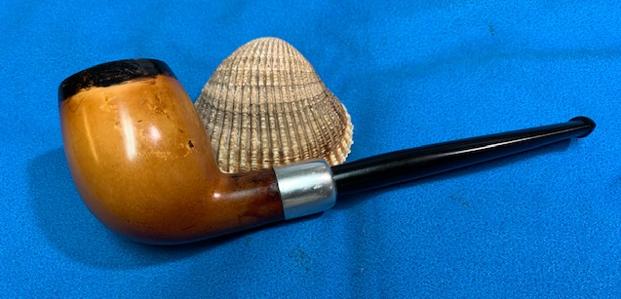
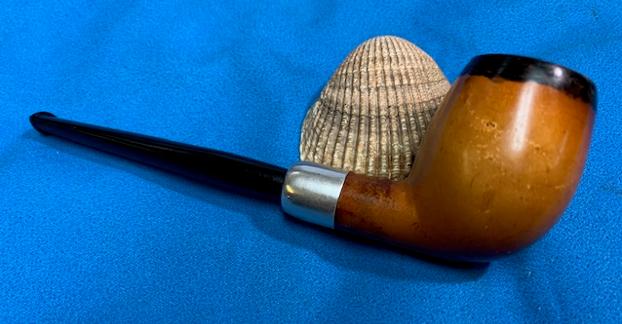
I took photos of what the pipe looked like when it arrived here in Vancouver. It looked like a bit of a workhorse that obviously must have been a great smoker. The fact that Baker had a stem made for it spoke of that fact. To me it was a pipe that I would smoke in the yard or while working on something at the work table. No worries of damaging its “delicate and costly” beauty with this pipe. It could be knocked about, dropped and stuck back in ones mouth without worrying about it. There were a lot of putty fills around the left side of the bowl and the back of the rim and on both sides and top of the shank. The bowl was thinner on the left side than the right and shank top was a bit sway back like an old horse. The band was bigger in external diameter than the shank and the end had been capped inward and had ridges on both sides that did not let the stem seat against the shank properly. The bowl had a light cake in it that I needed to remove to see where the leakage came from. The stem had a lot of tooth chatter on both sides going under the Softee bit protector. This was going to be a fun challenge. I took photos of the rim top and bowl to give a clear picture of the condition of the bowl and rim but also to show what I meant by the thinner left side. The bowl is thinner in exactly the place with it is leaking smoke. It had a light cake in the bowl. He also took photos of the stem that was on the pipe. You can see that the shank and stem have different diameters. You can see the tooth chatter and marks on the stem surface on both sides running under the Softee bit. The stamping on the underside of the shank was clear and read as Baker noted in his letter. Though not much of a pedigree, there was still some charm to the pipe.  I took a photo of the bowl with the stem removed. The stem is well made.Now it was time to work on the pipe itself. I decided to remove the band on the shank and have a look to see if there were cracks or repairs there. It was loose and the way it was made did not allow the stem to seat properly against the shank end. It bugged  me so I decided to deal with that. I went through my band and found a nice Sterling Silver band that was the right size and shape that would work. I set that aside for a bit to deal with the crack that was leaking. Once it repaired and restained the bowl and shank I would glue on the new band.  I scraped out the fill in the crack on the lower left side of the bowl. I have marked the spot with a red arrow in the photo below. I filled it in with clear CA glue and pressed it into the crack.Now it was time to clean the bowl and shank. I reamed out the light cake with a Savinelli Fitsall Pipe Knife and took it back to bare briar. I could see a small flaw in the left side of the bowl toward the lower 1/3 that matched the one on the outside of the bowl. It has spidered a bit so that the flaw was visible. I cleaned out the shank and airway to the bowl with pipe cleaners, cotton swabs and alcohol to remove the tars and oils.   I used a tooth pick to coat the shank end with all-purpose glue and pressed the band on the shank so that the Sterling Mark was on the top of the shank. Once the glue cured I took photos of the newly banded shank. (At this point I still needed to rusticated the repaired area on the left side of the bowl). I used a cylindrical burr on the Dremel to replicate the sandblast finish surrounding the repair on the side of the bowl. I also reworked the fills on the top edge of the bowl to lessen the white putty marks there a bit. I stained the bowl side and shank with a blend of Mahogany and Walnut stain pens to match the surrounding finish. The bowl is starting to look better. I cleaned out the airway and mortise with alcohol, cotton swabs and pipe cleaners. To be honest I was on a roll and almost forgot to do this step (which is why it is coming this late in the process).With the internals finished I turned to the small repair that needed to be done on the inside right wall of the bowl. I mixed a small batch of JB Weld and used my dental spatula to spread it over the small pit in the lower left wall of the bowl (shown in the second photo below). It matched the fill on the outside of the bowl. Because the flaw had spidered I covered the section of the wall with the mix. Once it cured I would sand it smooth with sandpaper wrapped around a dowel. I worked Before & After Restoration Balm into the surface of the bowl sides and shank with my fingertips and a horsehair shoe brush to clean, enliven and protect the briar. I let the balm sit for a little while and then buffed with a cotton cloth to raise the shine. The blasted finish came alive and the fills while visible look better than when I began.     I set the bowl aside and turned to work on the stem. I decided that I would remove the Softee Bit so I could remove the tooth chatter and marks. I sanded the stem surface with 220 grit sandpaper to smooth out the marks and started polishing the stem with 400 grit wet dry sandpaper.  I polished the stem with micromesh sanding pads. I dry sanded it with 1500-12000 grit pads to polish it and bring out a shine in the rubber. I wiped it down with Obsidian Oil after each pad. I polished it with Before & After Fine and Extra Fine polishes and gave it a final coat of Obsidian Oil at the end. I was pleased with the look of the stem.     This Italian Made Sandblast Dublin/Zulu is a great looking pipe now that it has been restored, repaired and rebanded. This old work horse has a lot of life in it still and should smoke well and this time out the top of the bowl rather than the top and side! The sandblast around the bowl is quite nice and highlights the grain and works well with the polished Sterling band and vulcanite taper stem. I put the stem back on the bowl and carefully buffed the pipe with Blue Diamond on the buffing wheel using a light touch on the briar. I gave the bowl several coats of Conservator’s Wax and the stem multiple coats of carnauba wax on the buffing wheel and followed that by buffing the entire pipe with a clean buffing pad. I hand buffed the pipe with a microfiber cloth to deepen the shine. The finished Sandblast Dublin//Zulu fits nicely in the hand and feels great. Give the finished pipe a look in the photos below. The dimensions of the pipe are Length: 5 ½ inches, Height: 1 ¾ inches, Outside diameter of the bowl: 1 ¼ inches, Chamber diameter: ¾ of an inch. The weight of the pipe is 26 grams/ .95 ounces. Now that I have finished this pipe I can pack it and the Abdulla for Baker and send them back to him to enjoy! Thanks for reading this blog and my reflections on the pipe while I worked on it. As always there are many more pipes to come!

Another Lincoln Work Horse Billiard – A London Made Real Sandblasted Briar


Blog by Dal Stanton

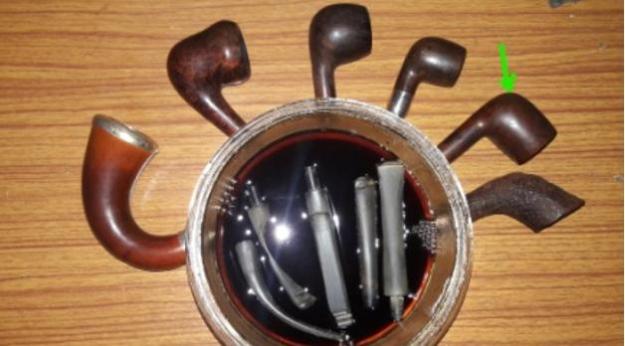
As things go, the next pipe on my worktable should have been the previous pipe on the worktable except that I got the two Lincoln Real Sand Blasted Billiards mixed up!  The first Lincoln, that was just completed turned out great (Releasing a Work Horse Billiard – A Lincoln London Style Real Sandblasted Briar), but I mistakenly thought it was the Lincoln that Byron had commissioned, but it wasn’t.  I discovered after completing the London Style, that Byron had commissioned the slightly smaller Lincoln London Made, not the Lincoln London Style which is now available in The Pipe Steward Store – a very attractive Blasted Billiard!The Lincoln London Made now correctly on the worktable affords me another opportunity to stroll down memory lane.  My wife and I were at the Bulgarian coastal city of Burgas on the Black Sea in May of 2017 strolling on the main walking street.  We visited a second-hand store that had always provided some nice pipes waiting for me to come by and bring home.  I acquired both Lincolns at the same shop in Burgas but on different trips.   When I came into the shop on this occasion, I was met with the contents of the copper pot – several pipes competing for my attention!  After going through the various pipes in the copper pot, I settled on 5 pipes.  After talking with the shop vendor and coming to agreement, we both were happy.  After bringing the newly acquired pipes home to Sofia, the 5 were placed in the For “Pipe Dreamers” Only! collection where pipe men and women can commission pipes whispering their names.  I believe that 3 of the 5 pictured have already found homes with new stewards.   The Lincoln London Made is top center in the picture below between the BC Panel and the Lindbergh Select Poker.  This straight Blasted Billiard got Byron’s attention in the ‘Dreamers Collection’ and he reached out to me asking about commissioning the Lincoln along with a few other pipes that were whispering his name.When communicating with potential commissioners of pipes, I like to ask questions to find out more about their lives and how they found out about The Pipe Steward.  I was surprised to find out again how small the pipe world is at times.  Byron is a friend of my newest daughter-in-law’s father!  Last year Katie married my son, Josiah, and they are living in St. Louis.  Before they tied the knot, Katie desired to give her father a special gift and commissioned a pipe for him.  Her Dad, Kevin, lives in the chocolate capital of the USA – Hershey, PA.  That pipe turned out well (See: My Future Daughter-in-Law Commissions a Sculpted Bent Billiard as a Gift for Her Father) and with Byron’s inquiry, I discovered that my new in-law relationship was talking up The Pipe Steward.  Thanks, Kevin!  Pictures of the classic Blasted Billiard that got Byron’s attention follow: The nomenclature is stamped on the heel’s smooth briar panel.  Stamped is, LINCOLN over LONDON MADE.  To the right of this is stamped, REAL SANDBLASTED [over] BRIAR.The Lincoln logo is stamped on the right side of the stem (the normal being on the left side) with an encircled *L* (star-‘L’-star).This was the case also with the Lincoln London Style that I just completed.  I discovered a few other Lincoln pipes listed for sale here and there on the internet and discovered that this is characteristic of all the Lincoln stems.

The inconclusive information about the origins of the Lincoln name can be seen in the write up of the Lincoln London Style (LINK).   The only UK country of manufacturing Lincoln leads I found were in Wilczak & Colwell’s ‘Who Made That Pipe?’ where these names were referenced: W. H. Carrington, Sasieni, Higgs Bros (Lincoln IMP).  In the previous research none of these leads resulted in a substantive identification.

One additional piece of anecdotal information I found is a description of a Lincoln for sale in Smoking Pipes.com showcasing a Lincoln London Made Sandblasted Billiard:

A nice, classic Billiard can be a work horse of a pipe. This Lincoln (most likely named after the town in England) should prove a good smoker when the time allows. – Adam Davidson

I found that Lincoln is a city in Lincolnshire and is described in this way (See: LINK):

Lincoln is a city in the English East Midlands. It’s known for the medieval Lincoln Cathedral, with early printed books in a Wren-designed library. Lincoln Castle houses a Victorian prison and a copy of the Magna Carta. The Museum of Lincolnshire Life has social history exhibits in Victorian barracks. The Collection is a museum displaying local archaeology. Nearby, the Usher Gallery has works by Turner and Lowry.

I enjoyed reading an article about Lincoln on Traveler.com entitled, ‘Lincoln, England: The unlikely English city that the Romans and Vikings prized’.  I found all this information interesting, but no closer to knowing why a pipe nomenclature would enshrine the name of this historic, English city.

What I concluded previously with the research of the first Lincoln was that the information is scattered regarding a concrete understanding of the company origin of the Lincoln on my worktable.  What is consistently understood is that the only examples of Lincolns are classic blasted Billiards.  They consistently present the Lincoln stem logo on the right side of the stem and they are stamped ‘London Style’ or ‘London Made’.  The feel of the Lincoln pipes would not surprise me if they were produced in the 1960s, but this is only a guess.

Looking now more specifically at the blasted Billiard on the table – it is clear why Byron commissioned this pipe – the add above describes well the pipe as a “work horse of a pipe”.  Billiards are the heavy lifters of pipes in the pipe world, no doubt.   The Lincoln London made has extremely thick cake in the chamber to the extent that it’s almost closed.  Clearing the cake build up will allow me to inspect the chamber for heating damage.  Clearing the carbon cake also allows the briar to have a fresh start.  The rim is worn, and the blasted finish is almost gone leaving a flat, dull looking rim.  The blasted surface on this Lincoln London Made is less distinct and more subtle.  The stummel surface needs cleaning from the grime collected over the years.  The stem has some oxidation, and the bit has tooth chatter and some compressions.

To begin with the restoration of the Lincoln London Made, the stem’s airway is cleaned with pipe cleaners wetted with isopropyl 99%.  It took a good bit of effort!The stem has moderate oxidation and I continue to test the new (to me) www.Briarville.com, ‘Pipe Stem Oxidation Remover’ which I found out about on a FB group.The stem is placed in the bottle and it left for several hours.While the stem is in the deoxidizer soak, work begins on the stummel.  The cake is thick and hard.  The picture below shows how the buildup closes toward the floor of the chamber.  The rim also shows some crusting of the lava overflow.The smaller chamber accommodates only one blade head of the Pipnet Reaming Kit.  Because of the amount of cake that was remaining after the smaller blade head did its job and the next larger blade would only cut about a quarter down the chamber, I pulled out my antique Kleen Reem Tool which can expand incrementally and could navigate the chamber nicely.  I landed the Kleen Reem Tool at a Flea Market my wife and I happened upon in Kentucky a few years back when we were traveling.  Cleaning the chamber continued with the Savinelli Fitsall Tool and then sanding with 240 paper wrapped around a Sharpie Pen.  After wiping the chamber with a cotton pad, I was glad to see that the briar was healthy – no burning or heating issues.Turning next to the external blasted surface, undiluted Murphy’s Oil Soap is used with a cotton pad to scrub the briar surface.  A brass bristled brush also helps to clean the rim surface.The stummel is then taken to the sink where the cleaning continues using shank brushes and anti-oil dishwashing soap.  The shank brushes are used to scrub the internals of the pipe using warm to hottish water.  After thoroughly rinsing, the stummel is back on the worktable.After the sink cleaning, the cleaning of the internals is continued using pipe cleaners and cotton buds wetted in isopropyl 99%.  The small dental spoon is used also to scrape tars and oils off the mortise walls.  It takes quite a bit of work and the buds start to lighten.  I stop for now and will continue the internal cleaning later with a kosher salt and alcohol soak through the night. With the main cleaning completed, a closer look at the stummel shows that the finish on the Lincoln is well nonexistent.  Like the Lincoln London Style before it, the rim is devoid of finish and is worn down so that there is almost no blasted texture remaining. The out rim edge is also worn and chipped at a few places.  An inspection of the blasted stummel surface reveals blotched finish remaining but basically a dull presentation. The following pictures show what I’m seeing. Looking at the rim, without doubt the rim is worn and in need of refreshing.  As with the Lincoln London Style, the challenge with the rim is solved by topping the rim to refresh the lines.  Then, to restore the blasted surface on the rim, burrs will be used to rusticate the surface to emulate the blasted surface. Starting with the rim, the chopping board is used as a topping board. After placing 240 grade paper on the board, the stummel is inverted and rotated on the paper.  The progress is checked often to make sure the plane of the rim is flat and not dipping.  After taking a start picture, the progress is shown in the following pictures. I have come to the place where I will stop topping.  There are still a few dips in the rim on the outer edge at the 5:30 and 7 o’clock positions.  I’m not concerned about these because the one at 7 o’clock is a natural indentation from the blasted grain pattern.  The process of roughing the rim surface should help to blend the other issues.Next, the rim surface is roughed up with burrs mounted on the rotary tool to emulate a blasted surface.  I start with a round burr which I randomly touch on the surface.The results look good. A random order is taking shape.Next a cylindrical burr is used to ‘dance’ on the rim surface and inscribe cuts randomly but orderly over the work of the round burr.Again, I like the results.  I’m careful to keep the burr action very conservative.  I don’t want to dig a hole and go too deep or chew off the edge of the rim inadvertently.The next step is to freshen the entire stummel with a new dye.  A cotton pad wetted with alcohol is used to wipe the surface to remove the vestiges of the old dye and to prepare for the new dye.  The color of the dye, as with the Lincoln London Style I restored previously, is a very dark hue – the residue on the pad has a strong black angle to it.  I liked the results of the last Lincoln of applying a mixture of Fiebing’s Dark Brown Leather Dye with Black also mixed in.  One difference this time around with the Lincoln London made is that I will pre-dye the bare rim first using a walnut-colored dye stick.  I do this to first ‘even up’ the rim coloring so that the whole dye application will be more balanced.Next, after assembling all the dying components on the worktable, a small amount of Fiebing’s Dark Brown Leather Dye is mixed with Fiebing’s Black in a small glass.  Then, using a hot air gun, the stummel is warmed to heat the briar so that it expands and is more receptive to the dye.Using a folded pipe cleaner, the dye mixture is painted onto the stummel blasted surface a section at a time and flamed using the lit candle.  As aniline dyes, the alcohol immediately combusts for a couple seconds and the dye pigment is left in the briar grain. After going over the stummel painting and flaming the dye, the newly dyed stummel is put aside for several hours allowing the dye to settle.  This ‘pause’ period seems to help the dye to be absorbed into the wood better and later not come off as easily through leaching.With the stummel resting, the stem is up next.  It has been soaking in the Briarville.com Pipe Stem Oxidation Remover for several hours.  I’ve been trying out this new (to me) product and so far, it’s been working well.  After the stem started soaking, I remembered that the Lincoln stem logo was in decent shape.  It will be interesting to see if the Oxidation Remover has adverse impact on the logo.  We’ll see.  After fishing out the stem, it is first rubbed with a dry cotton pad to remove the raised oxidation on the stem.  I then wet another cotton pad with alcohol and scrub the stem more.  Again, I’m pleased with the results.  The stem seems to be clear of oxidation.Unfortunately, the logo deteriorated some.  The logo impression, though, appears deep enough to receive fresh acrylic paint to sharpen it.  This we’ll do later.To help condition the vulcanite stem, paraffin oil is applied and worked in.  The stem is then set aside to absorb the oil.With the day closing, the internal cleaning is continued on the stummel with a kosher salt and alcohol soak.  The first step is to fashion a cotton wick using a cotton ball.  The cotton ball is pulled and twisted to form the wick which is inserted into the mortise to help draw the tars and oils out of the briar.A stiff wire that I took from a regular closet hanger, is used to guide the end of the cotton wick down the mortise to the draft hole.  The bowl is then filled with kosher salt which does not leave an aftertaste.  After the stummel is placed in the egg carton to keep it stable and to angle the stummel so that the top of the bowl and the end of the shank are roughly level.  Using a large eye dropper, isopropyl 99% then fills the bowl until it surfaces over the salt.  I wait about 10 minutes to top off the alcohol after it has been absorbed into the stummel.The stummel is then put aside to soak through the night.The next morning soiling is evident in both the salt and the wick indicating the process of drawing the oils and tars from the briar through the several hours of soaking.  The expended salt and wick are tossed in the waste, the bowl is wiped with paper towel and I blow through the mortise to dislodge any remaining salt crystals.To make sure all the residue is cleaned up, a few pipe cleaners and cotton buds are used to finish the internal cleaning.  A whiff of the chamber reveals a very pleasing fresh aroma – no ghosting of odors.Before working on ‘unwrapping’ the newly dyed stummel that has been ‘resting’ through the night, I continue to bring the stem up to speed.  The soak in Briarville.com’s, ‘Pipe Stem Oxidation Remover’ has done a good job it seems by what I can see now.  The upper and lower bit have tooth chatter and bite compressions which need addressing.  To minimize the chatter and compressions so that a minimal amount of sanding is necessary, I use the heating method.  I paint the bit with the flame of a Bic lighter which heats the vulcanite rubber compound and expands it to reclaim its original condition – or closer to it.  The comparison pictures of before and after show the results after painting the upper and lower bit several times.  The upper bit should need only sanding, but the lower bit, though much better than before the heating, will need a patch to fill the compression. To patch the lower bit compression, medium black CA glue is spot dropped filling the indentation.  After applying the CA glue, the stem is put aside allowing the glue to cure.Turning now to the flamed stummel which has rested through the night, its time to unwrap the crusted dye shell.  After mounting a felt buffing wheel to the rotary tool and setting the speed at about 30% full power, the coarser Red Tripoli compound is applied to the crusted blasted surface.  The felt wheel is purged often with the edge of the metal rotary tool tightening wrench to keep it softer and to clear the flamed dye that collects during the unwrapping process.Following the application of Tripoli compound with the felt wheel, the bowl is wiped with a cotton pad wetted with alcohol.  This is done to remove excess dye from the rough blasted surface.Next, Tripoli compound is applied a second time to the surface using a cotton cloth buffing wheel with the speed increased to about 50% full power.  This further sharpens the dyed blasted surface, and the cotton cloth wheel is able to reach the surface area that was not as accessible to the firmer felt wheel.Again, after the use with the cotton cloth wheel, the bowl is wiped with alcohol and more excess dye is removed.  At this point, the next step is to apply Blue Diamond compound.  With the stummel waiting, I continue with the stem to catch it up.  The black CA glue has cured on the lower bit and the excess patch material is removed using a flat needle file.  With the file, the upper and lower button lips are also refreshed. Next, 240 sanding paper is used to sand the remaining excess patch material on the lower bit as well as to remove the remaining residual tooth chatter.

Sanding with 240 paper is expanded to the entire stem, careful to guard the stem logo.  The stem is reunited with the stummel during this sanding with the plastic disk wedged between.  The disk guards the shouldering of the stem facing of the stem.Next, using 600 grade paper the stem is wet sanded.  This is followed by applying 0000 grade steel wool.The full regimen of micromesh pads is applied next starting with wet sanding using pads 1500 to 2400.  This is followed by dry sanding with pads 3200 to 4000 and 6000 to 12000.  Between each set of 3 pads Obsidian Oil is applied to condition the vulcanite and to guard against oxidation. The stem has caught up with the stummel.  After reuniting the Lincoln stem and blasted stummel, another cotton cloth buffing wheel is mounted on the rotary tool with the speed set at about 40% full power.  Blue Diamond is then applied to the pipe – stem and stummel.Following the application of Blue Diamond compound, a felt cloth is used to wipe down/buff the pipe to remove compound dust before the application of wax.Before applying the wax, the circled star-L-star stem logo needs refreshing.  All the paint has left the imprint and the good news is the imprint looks to be sufficiently distinct to hold new acrylic paint.  This was not the case with the Lincoln London Style that was last on the worktable.To begin, white acrylic paint is put over the entire stem logo.My practice is to then daub the wet paint with a cotton pad.  The result of this is that the excess paint is absorbed, and the paint dries almost immediately.A toothpick is then employed to clear the excess paint over the logo.  This is done by lightly scraping over the logo with the side edge of the toothpick.  The toothpick scrapes away the paint that is above the impression of the logo and this sharpens the logo image.  I have had times when the fresh paint is peeled up and pulled out of the impression and then needed another application of paint.  This logo did this once with a small portion of the upper ‘L’.  After using the side of the toothpick, the point of the toothpick is then carefully used to scrape off excess paint that was too close to the imprint channels to come off with the side of the toothpick.  This takes a bit of patience.  To finish, the cotton pad is run over the logo with some pressure like it is being sanded – a very gentle abrasive.  This helps to sharpen the logo even more.  The refreshed logo looks good.With the Lincoln stem stamping refreshed, another cotton cloth buffing wheel is mounted on the rotary tool maintaining the same speed of 40%.  Carnauba wax is then applied to the pipe.  When completed, the pipe is given a rigorous hand buffing to raise the shine and to disperse excess wax on the blasted surface.This second ‘work horse’ Billiard came out well.  The blasted surface has the textured flecking in the color to give it an eye appeal along with the touch.  The rim’s repair came out nicely emulating a refreshed blasted surface.  Byron commissioned the Lincoln London Made Real Sandblasted Briar and will have the first opportunity to claim him in The Pipe Steward Store benefiting the Daughters of Bulgaria.  Thanks for joining me!

Repairing a Trio of His Dad’s Pipes for a fellow here in Vancouver – Part 3


Blog by Steve Laug

Last week I received a call from a fellow pipeman, Keith here in Vancouver who had been referred to me by City Cigar, a local pipe and cigar shop in the city. He was a soft spoken gentleman who had a request for me. In January  this year his Dad died and he had three of his Dad’s pipes that he wanted restored in memory of his Dad. He also was a pipe smoker so he fully intended to enjoy them for a long time as he smoked them in his Dad’s honour. I told him to send me some photos of the pipes so I would know what I was dealing with.

I received the email below from Keith that included the photos of the pipes that he wanted me to work on. He even went to the trouble of marking the trouble with each of the pipes that needed work.

Hi Steve,

Glad your call back today, my name is Keith, I got your contact from City Cigar. My dad has three pipes include two Dr Plumb DINKY and one not sure brand. My dad passed this year January and I looking for fix those pipes which had broken and cracked, understand they are not expensive pipes but for me is priceless memory…

…Have a wonderful day!

Best regards

Keith

I called him as soon as I received the photos and talked over what I saw when I looked them over. We struck a deal and he dropped them off to me late on Friday afternoon and I started to work on them a bit over the weekend. All three pipes needed varying degrees of work on them. Two were Dr. Plumb Dinky Bent Billiards and one was a Real Briar Dublin. I decided to work on them in the order of the photos that he sent me. I completed the restoration of the first one and posted the blog (https://rebornpipes.com/2021/03/16/repairing-a-trio-of-his-dads-pipes-for-a-fellow-here-in-vancouver-part-one/). I finished the second Dr. Plumb Dinky Bent Billiard as well (https://rebornpipes.com/2021/03/17/repairing-a-trio-of-his-dads-pipes-for-a-fellow-here-in-vancouver-part-two/). Give them a read.

The third of them is Real Briar Straight Billiard. It was in rough shape with burn damage on the rim top and inner edge as well as many fills that were damaged around the bowl. There was a crack in the shank on the top side. The rim top was damaged on both the front side and there was a thick cake in the bowl. In the first two photos show what the pipe looks like as a whole. You can see the damage on the outer edge of the rim on both as well as the damage at the stem shank junction. The third photo Keith included show the damage to the rim top – he identifies it as ring damage. The crack in the top of the shank is also visible in the photo. I took pictures of the pipe when Keith dropped it off before I started my clean up work. The rim top was darkened and damaged with burn and charring on the front left rim top and inner edge. It appeared to also have been lit with a torch lighter. There were chips around the outer edge of the bowl and shrunken fills in the finish. You can also see the crack in the topside of the shank at the end of the shank. I took a close up photo of the rim to show the condition of the bowl and the rim. You can see the thick cake in the bowl and the damage to the rim top and inner edge of the bowl as noted above and shown in the photo below. The cracked shank is also visible. I also took photos of the stem to show the general condition as noted above.I took a photo of the stamping on the left side of the shank – it was clear and readable (though double stamped) and read REAL BRIAR.I removed the stem from the shank and took a photo of the pipe. There is something quite winsome about this pipe though it was a little bigger than the two Dr. Plumb Dinky Bent Billiards.  I took a photo of the crack and damaged shank. It was missing a piece of briar and was a significant issue. The stem had been held in place with a build up of wax or white glue around the tenon. Fortunately it had dried before being put on the shank.I decided to address the cracked shank first. Interestingly it turned back on itself so it was not going further up the shank. The missing chip was the other side of the crack. That made this quite simple. I squeezed the shank together and pressed some briar dust into the crack. While holding it I dribbled some CA glue in the crack and held it until the glue cured. I filled in the spots on the shank again with CA and more briar dust until they were smooth. I put a small bead of glue around the shank end and pressed the band I had chosen for the shank onto it. It was a snug fit and the glue would guarantee the fit to the shank. That was the end of the crack. I topped the bowl on a topping board using 220 grit sandpaper. I wanted to remove the damage to the rim top and minimize the damage to the inner and outer edges.I paused and took photos of the banded shank to give an idea of that it looked like repaired and banded. I finished topping the bowl and gave the inner edge a bevel to minimize the damage on the front inner edge. The pipe was beginning to look very good.I reamed the bowl with a PipNet pipe reamer and cleaned up the reaming with a Savinelli Fitsall pipe knife. I took the cake back to bare briar and the bowl looked to be in good condition under the cake.I filled in the badly damaged fills around the bowl with clear CA glue and then sanded them smooth to blend them into the surface of the briar. I sanded the bowl with 1500-2400 micromesh sanding pads to remove the shiny varnish coat and then restained the bowl with a light brown stain. I applied the stain then flamed it to set in the briar. I repeated the process until the coverage was acceptable. I set the bowl aside for an hour and let the stain coat cure.Once the stain had cured I wiped it down with a cotton pad and alcohol to make it more transparent. There was not a lot of grain around the bowl but I really wanted to give the bowl a sense of depth. I polished the briar with micromesh sanding pads – dry sanding with 1500-12000 grit pads. I wiped the bowl down after each  pad with a damp cloth. As the finish becomes more transparent I like what I see. I worked some Before & After Restoration Balm into the surface of the bowl and shank with my fingertips to clean, enliven and protect the briar. I let the balm sit for 15 minutes and then buffed with a cotton cloth to raise the shine. The photos show the bowl at this point in the restoration process.   I set the bowl aside and turned my attention to the stem. Earlier, when I was working on the first Dinky pipe I had taken the stem out of the Briarville Pipe Stem Deoxidizer Bath and dried it off with a cotton pad. It looked better. I scrubbed the softened oxidation with Soft Scrub All Purpose Cleaner and removed the remaining oxidation. I cleaned out the stem with alcohol and pipe cleaners and it was surprisingly clean. I went back and did the same with the shank and it also was relatively clean other than the debris from when I reamed the bowl.I polished the stem with micromesh sanding pads – dry sanding with 1500-12000 grit sanding pads. I wiped it down after each sanding pad with Obsidian Oil. I polished it with Before & After Pipe Stem Polish – both Fine and Extra Fine. I gave it a final coat of Obsidian Oil. With the bowl and the stem finished I put the third pipe – a Real Briar Straight Dublin, back together and buffed it on the wheel using Blue Diamond to give it a shine. I gave the bowl and the stem multiple coats of carnauba wax on the wheel. I buffed the pipe with a clean buffing pad to raise the shine. I hand buffed it with a microfiber cloth to deepen the shine. It really is a great looking pipe. The dimensions of the pipe are – Length: 5 inches, Height: 1 ½ inches, Outside diameter of the bowl: 1 ¼ inches, Chamber diameter: ¾ inch. The weight of this small pipe is .88 ounces /25 grams. This third pipe from the estate is a small Real Briar Dublin that will be another great reminder for Keith of his Dad’s pipe smoking and one that he can enjoy for a long time. With the completion of the last of the pipes I am sure he will want to pick them up soon. Once he does he will be excited to load them with a memorable tobacco and slip back into the memories of his Dad. Thanks for walking through the restoration with me.

Repairing a Trio of His Dad’s Pipes for a fellow here in Vancouver – Part Two


Blog by Steve Laug

Last week I received a call from a fellow pipeman, Keith here in Vancouver who had been referred to me by City Cigar, a local pipe and cigar shop in the city. He was a soft spoken gentleman who had a request for me. In January  this year his Dad died and he had three of his Dad’s pipes that he wanted restored in memory of his Dad. He also was a pipe smoker so he fully intended to enjoy them for a long time as he smoked them in his Dad’s honour. I told him to send me some photos of the pipes so I would know what I was dealing with.

I received the email below from Keith that included the photos of the pipes that he wanted me to work on. He even went to the trouble of marking the trouble with each of the pipes that needed work.

Hi Steve,

Glad your call back today, my name is Keith, I got your contact from City Cigar. My dad has three pipes include two Dr Plumb DINKY and one not sure brand. My dad passed this year January and I looking for fix those pipes which had broken and cracked, understand they are not expensive pipes but for me is priceless memory…

…Have a wonderful day!

Best regards

Keith

I called him as soon as I received the photos and talked over what I saw when I looked them over. We struck a deal and he dropped them off to me late on Friday afternoon and I started to work on them a bit over the weekend. All three pipes needed varying degrees of work on them. Two were Dr. Plumb Dinky Bent Billiards and one was a Real Briar Dublin. I decided to work on them in the order of the photos that he sent me. I completed the restoration of the first one and posted the blog (https://rebornpipes.com/2021/03/16/repairing-a-trio-of-his-dads-pipes-for-a-fellow-here-in-vancouver-part-one/). Give it a read.

The second Dr. Plum Dinky Bent Billiard was in better shape than the first one. There were no cracks in the bowl or shank. The issues on this pipe were caused when Keith smoked it and lit it with a cigar torch lighter. The rim top was damaged on both the right and the left sides and there was a thick cake in the bowl. In the first two photos show what the pipe looks like as a whole. On the second you can see some darkening on the right side of the outer edge of the rim. It is identical in make and shape to the previous repair. The third photo Keith included show the damage to the rim top – he identifies it as ring damage. I took pictures of the pipe when Keith dropped it off before I started my clean up work. It was much dirtier than the first pipe. The bowl had a thick cake in it and the rim top was damaged on both the right and left top and inner edges. I took a close up photo of the rim to show the condition of the bowl and the rim. You can see the damage to the rim top and inner edge of the bowl as noted above and shown in the photo below by the red arrows. I also took photos of the stem to show the general condition as noted above. There is also a deep tooth marks on both the top and the underside of the stem near the button.I took a photo of the stamping on the left side of the shank – it read the same as the first of the trio that I worked on – Dr. Plumb [over] Dinky and was clear and readable.I removed the stem from the shank and took a photo of the pipe. There is something quite winsome about this tiny pipe.I have included some information on the Dr. Plumb brand and the history in the previous blog on the first Dinky pipe (https://rebornpipes.com/2021/03/16/repairing-a-trio-of-his-dads-pipes-for-a-fellow-here-in-vancouver-part-one/). Give the blog a read if you are curious about the background.

Now it was time to work on this pipe. It was more used and dirty than the previous pipe and had different issues that I would need to address. I reamed the bowl with a PipeNet pipe reamer to remove the thick cake. I cleaned up the reaming with a Savinelli Fitsall Pipe Knife. It came out looking significantly better.I cleaned the rim top with a cotton pad and alcohol to remove the tars and oils. I rebuilt the inner edge of the bowl and the rim top using clear CA glue and briar dust. I layered it on a layer of glue, a layer of dust and repeated the process until it was even with the rest of the rim top. I used a brass bristle brush while it was still curing to match the rustication on the rest of the rim top and edge. I am happy with the way it turned out. I stained the finished rim top with a Maple stain pen to match the colour on the bowl sides. The CA and briar dust dries darker so the rim top looks darker than the over all bowl in the photos but it is not as dark as it appears. I worked some Before & After Restoration Balm into the surface of the bowl and shank with my fingertips and a horsehair shoe brush to clean, enliven and protect the briar. I let the balm sit for 15 minutes and then buffed with a cotton cloth to raise the shine. The photos show the bowl at this point in the restoration process. As I looked at these photos it dawned on me at this point that I had not cleaned the shank. I had been so busy working on the rim edge and top that I had not stopped to clean out the bowl and shank. I scrubbed it with 99% isopropyl alcohol, pipe cleaners and cotton swabs. It was quite dirty so I am glad I remembered. I wiped out the bowl with alcohol and cotton pads to remove the briar dust from the repair.I set the bowl aside and turned my attention to the stem. I removed it from the deoxidizer bath and it did not really look much better. It had the same heavy oxidation as the previous stem. I scrubbed it down with Soft Scrub and a cotton pad. I found that the oxidation was significantly softer and came off quite easily.I scrubbed out the airway in the pipe with alcohol and pipe cleaners until it was clean. It was a well used pipe. I “painted” the surface of the stem with the flame of a Bic lighter to lift the tooth dents in the vulcanite. I was able to lift the majority of them and I filled in the remaining marks with clear CA glue. Once the repairs cured I sanded them smooth with a folded piece of 220 grit sandpaper to blend them in the rest of the stem surface. I started polishing the stem with 400 grit wet dry sandpaper. I polished the stem with micromesh sanding pads – dry sanding with 1500-12000 grit sanding pads. I wiped it down after each sanding pad with Obsidian Oil. I polished it with Before & After Pipe Stem Polish – both Fine and Extra Fine. I gave it a final coat of Obsidian Oil. With the bowl and the stem finished I put the second tiny GBD Made Dr. Plumb Dinky Bent Billiard back together and buffed it on the wheel using Blue Diamond to give it a shine. I gave the bowl multiple coats of Conservator’s Wax and the stem multiple coats of carnauba wax on the wheel. I buffed the pipe with a clean buffing pad to raise the shine. I hand buffed it with a microfiber cloth to deepen the shine. It really is a great looking pipe. The dimensions of the pipe are – Length: 4 inches, Height: 1 ½ inches, Outside diameter of the bowl: 1 inch, Chamber diameter: ¾ inch. The weight of this small pipe is .85 ounces /24 grams. This second small Dr. Plumb Dinky is another great reminder for Keith of his Dad’s Pipe smoking and one that he can enjoy for a long time. Once I finish the last of the pipes I am sure he will be excited to load them with a memorable tobacco and slip back into the memories of his Dad. Thanks for walking through the restoration with me.


Releasing a Work Horse Billiard – A Lincoln London Style Real Sandblasted Briar


Blog by Dal Stanton

The next pipe on my worktable affords me the opportunity to take a trip down memory lane.  The Lincoln London Style Real Sandblasted Billiard was found along with 8 other pipes at a favorite walking street antique shop in Burgas, Bulgaria.  Burgas is located on the coast of the Black Sea near where my wife and I made our annual summer pilgrimages to the beach.  During the summer of 2017, one of the side trips we enjoyed was to go into Burgas and stroll down the main walking streets lined with shops and a favorite second-hand/antique store.   The vendor on this particular visit was fun to talk with and to finally strike a deal with to acquire the 9 pipes that made their way to the For “Pipe Dreamers” Only! collection available online for pipe men and women to commission benefiting the Daughters of Bulgaria.The Lincoln is the second pipe – the straight Billiard – from the right in the picture below.  With the Lincoln London Style now on the worktable some pictures are taken go get a closer look. The nomenclature is stamped on the heel’s smooth briar panel.  Stamped is, LINCOLN over LONDON STYLE.  To the right of this is stamped, REAL SANDBLASTED [over] BRIAR.  The Lincoln logo is interestingly stamped on the right side of the stem (the normal being on the left side) with an encircled *L* (star-‘L’-star).I cannot remember seeing a pipe logo stamped on the right side of the stem.  With my curiosity piqued, a quick search finds a few Lincoln pipes listed for sale here and there.  The confusion is captured here with this Lincoln Sandblasted at one site and the undiscerning seller simply leaving the logo upside-down where it should be – the left side!I have two Lincolns in my For “Pipe Dreamers” Only! collection.  I acquired both at the same shop in Burgas but on different trips. The two Billiards are similar with the right-sided stem logo stamping and ‘Real Sandblasted Briar’ markings.  The only difference is that the Lincoln still in the ‘Help Me!’ Basket One is marked: LINCOLN [over] LONDON MADE rather than the LONDON STYLE on the Lincoln on the worktable now.  The other small difference is that the current London Style is 6 inches in length whereas the London Made is 5 and 3/4 inches in length.

I turned to Pipehil.eu to find a lone listing for ‘Lincoln’.  The example shows a ‘London Made’ stamping and the stem logo stamping is also on the right side of the stem.  Looking to Pipedia, nothing turns up in the search bar for ‘Lincoln’.  Turning again to my prized copy of ‘Who Made That Pipe?’ by Wilczak and Colwell, a few leads emerge.The only UK leads referenced are W. H. Carrington, Sasieni, Higgs Bros (Lincoln IMP).  The W. H. Carrington listing is also referenced in Pipedia (See: Carrington).  The short article is:

H. Carrington & Co. was founded by William Henry Carrington, and located at 53 Thomas Street, Manchester among several other addresses. Carrington lists his profession as tobacconist as early as the 1891 census, following in his father John Carrington’s footsteps. The firm first registered a silver hallmark in Chester in 1888 and in Birmingham’s Assay Office in 1891. Carrington pipes in both briar and meerschaum with silver have been seen marked “W.H.C.”.

H. Carrington was in operation for nearly a century before going out of business.

The pictures shown in this article point to early examples of hallmarked silver fitments (late 1800s/early 1900s).  The article references that the company functioned for a century before closing.  The first hallmark was registered in 1888 which would suggest that the company produced pipes until the 1980s.  The company is described being in Manchester whereas the examples of Lincolns I have indicate a London origin.  I did find other examples of WHC marked pipes listed (see: LINK) but could find no current description of the W. H. Carrington & Co. nor any connection with Lincoln.

Looking for a Lincoln connection to Sasieni likewise resulted in nothing.  The Higgs Bros referenced pointed again to the late 1800s hallmark information.  Lincoln is mentioned but nothing more.  Interestingly, other listings on the same page would suggest that ‘Lincoln’ in the listing is referencing a place of origin rather than a line – Lincoln, England.  This clipping shows the scant information but with the Lincoln, England, marked as the origin.One additional piece of anecdotal information I found is a description of a Lincoln for sale in Smoking Pipes.com showcasing a Lincoln London Made Sandblasted Billiard:

A nice, classic Billiard can be a work horse of a pipe. This Lincoln (most likely named after the town in England) should prove a good smoker when the time allows. – Adam Davidson

The research is scattered regarding a concrete understanding of the company origin of the Lincoln on my worktable.  What is consistently understood is that the only examples of Lincolns are classic blasted Billiards.  They consistently present the Lincoln stem logo on the right side of the stem and they are stamped London Style or Made.  The feel of the pipe would not surprise me that it was produced in the 60s, but this is only a guess.

Looking now more specifically at the blasted Billiard on the table – the add above describes well the pipe as a “work horse of a pipe”.  Billiards are the heavy lifters of pipes in the pipe world, no doubt.  When you add the blasted surface, it is almost like adding ‘draft horse’ to the description – horses that are exceedingly strong and pull the loads that others can’t.  So, here is my horse version of this Lincoln Blasted Billiard (LINK) on my worktable!

The chamber has a thick cake build up which needs to be removed to allow fresh briar to have a clean start.  The picture is lightened to allow the chamber to be seen.The rim is worn around the edges showing raw briar and on the rear of the outer rim.  This shows a deterioration of the briar – it slopes a bit showing the damage. The blasted surface is exceptional – it’s a genuinely nice classic blasted surface.  The surface is dirty and grimy and needs cleaning.  The stem shows tooth chatter on the bit and oxidation.To begin the recommissioning of the Lincoln London Style, the focus is on the stem.  First, the stem airway is cleaned using several pipe cleaners dipped in isopropyl 99%.  It was dirty and took a bit of time.With the airway cleaned, the Lincoln stem joins other pipes’ stems in the queue in a soak using Briarville.com’s Pipe Stem Oxidation Remover as I continue to test this new (to me) product’s effectiveness. After soaking for about 24 hours, the stem is removed and using a dry cotton pad raised oxidation is wiped off the vulcanite stem surface.  This is followed by scrubbing the stem with a cotton pad wetted with isopropyl 99% to remove more raised oxidation.The stem is then treated with paraffin oil to start the reconditioning of the vulcanite.  So far, the Briarville Oxidation Remover has worked well.  I will continue to use it and see how it goes.Next, the attention turns to the stummel.  Using the Pipnet Reaming Kit, 3 of the 4 blade heads available were accommodated by the chamber measuring 1 5/8 inches deep and 7/8 inches wide.  Following the reaming, the Savinelli Fitsall Tool reaches down into the chamber to scrape more carbon cake off the walls.  Finally, 240 paper wrapped around a Sharpie Pen clears and cleans the remaining carbon.  After an inspection of the chamber, healthy briar is evident, and I move on.Transitioning now to cleaning the external surface, undiluted Murphy’s Oil Soap is used with a cotton pad. A bristled toothbrush also helps to clean the blasted briar surface and a brass wire brush helps with the rim.  Brass is used because it scrubs without being too invasive with the briar.The stummel is then taken to the sink where the cleaning continues using shank brushes and anti-oil liquid dishwashing soap.  Warm to hottish water is used to scrub the internal mortise. After a thorough rinsing the stummel is back on the worktable.Continuing the internal cleaning, a bunch of cotton buds and pipe cleaners are used as well as scraping the mortise wall with a small dental spoon.  The internals were in pretty bad shape and when the buds finally started lightening up, I decide to stop for now.  At the end of my workday, I’ll continue the cleaning by giving the stummel a kosher salt and alcohol soak through the night.  This helps to draw out the remaining tars and oils from the internal briar.After the cleaning of the external briar surface, I look at the results.  The rim’s worn and deteriorated external edge is evident in the next few pictures.  Raw briar shows the wearing, especially on the back side of the rim.The finish has been removed in large measure by the cleaning – this is not really surprising.  The pictures show the blasted surface very nicely with many bald spots of briar. I’ve come to a decision point in the restoration process.  The rim damage needs addressing.  The following two pictures focus on the damage and deterioration of the outer rim edge.  The first picture is from the steward’s perspective looking down the stem.  The back of the rim tapers down with the huge skinning of the briar.  This probably happened as the former steward knocked the stummel’s back edge on a hard surface to remove ash using the stem as a handle.The next picture is the perspective looking from the right side of the stummel.  You can easily see the disparity between the front of the rim (on the right side of the picture) and the tapered, worn off briar on the rear (the left side).  I’ve marked the angle of drop-off in the photo.Topping the stummel would be the normal call with a smooth briar stummel.  However, to top the stummel of a blasted surface means that either you leave the new rim as a smooth briar surface contrasting with the rough blasted surface – which can be a very nice and attractive option – or it means that after the topping, burrs are used to rusticate the rim seeking to emulate a blasted surface texture.  It goes without speaking, the stummel will be the recipient of a fresh application of dye to finish it.  The restoration purist, I suppose, would opt toward recreating the blasted rim without question.  I personally like the smooth/rough briar surface contrasting – it can look classy.  I decide to give some thought to the options and call it a day.

Before I do, the internal cleaning continues with a kosher salt and alcohol soak through the night.  To begin, a cotton ‘wick’ is created by pulling and twisting a cotton ball.  This wick serves to draw oils and tars out of the briar during the soak process.  The wick is guided down the mortise to the draft hole with the help of a stiff wire that I cut from a wire closet hanger.  Kosher salt then fills the chamber and the stummel is placed in an egg carton for stability through the night.  Kosher salt is used instead of regular iodized salt because it will not leave an aftertaste.  Isopropyl 99% then fills the bowl until it surfaces over the salt using a large eye dropper.  After 10 minutes or so, the alcohol is absorbed, and more alcohol is added to top it off.  The lights are then switched off!The next morning a picture shows the soiling of the cotton wick and salt showing that some cleaning activity was continuing through the several hours soak.  After clearing the expended salt to the waste, the bowl is wiped with paper towel and I blow through the mortise to make sure salt crystals were removed.  To check the cleaning, a few cotton buds wetted with isopropyl 99% confirm that the internals are clean and refreshed for a new steward.  I love the fresh smell of the chamber after using the kosher salt and alcohol soak.After sleeping on it, I decide to top the stummel and then rough it up with burrs to emulate the blasted surface.  Using the chopping board on my worktable, after taking a starting picture, the inverted stummel is rotated over 240 grade paper. I stop the rotation often to check the progress making sure that the topped plane is level and not dipping. The Billiard bowl, fortunately, has significant height and the loss of briar on the top will be negligible.  The goal is to take off as little briar as possible to erase the raw briar along the outer edge of the rim.  The raw briar indicates that the rim has worn away and deteriorated.  The aft of the rim will be the most stubborn as the deterioration is most acute there.  The pictures show the gradual process of topping the stummel. At this point, I stop the topping process.  There is still a bit of rim damage evident on the aft quadrant but I’m hopeful that after roughing the rim surface with burrs, this damage will blend away.  The topping resulted in a nicely rounded chamber and an even rim diameter – this is good! One of my briar dust donor bowls volunteers allowing me to test the burrs that I’ve chosen to use.  The general goal is to emulate a blasted surface on the rim.  The guiding principle I use is ‘less is more’ with this.  Pictures of the original Lincoln rim displayed a gentler texture on the rim and not as distinctive as the bowl surface.  You can always add MORE texture with a burr but you can’t remove it without sanding.  I first try the round burr.I gently tap the burr over a portion of the rim to see how it behaves.  I like what I’m seeing.I add to this the cylindrical burr and randomly ‘dance it’ over the previous burr’s work.  Again, I’m liking what I see.  I’m looking for more subtlety.With the dry run completed, the Lincoln takes the stage. The first phase is random taps and curves using the rounded burr.  I use a light touch to avoid deep ravines and digs.  After working around the rim, I’m liking what I’m seeing.Following with the cylindrical burr, again the movement is uniform randomness writing, dancing, and dragging gingerly over the rim surface.  The final close up shows the finished roughed surface.  I think it will blend very nicely.The next step is to apply a dark dye to refresh the blasted surface of the bowl and to cover and blend the refurbished rim.  First, the bowl is wiped with a cotton pad wetted with alcohol to clean the surface.  A few fresh pictures are taken to show the starting point of the needy blasted surface.From the pictures I’ve seen of Lincolns online and the Lincolns in my own collection, the sense I get is that the finish is very dark.  I use a dark brown base and mix a small amount of black dye with it to take it to the next level of a darker brown hue.  Fiebing’s Leather Dyes work well.  After the Dark Brown is put in a small mixing glass, a few drops of Black dye are added and mixed with the toothpick.  The toothpick coloring gives me a clue to the mixture balance.  Using the hot air gun, the stummel is warmed to open the briar and to make it more receptive to the dye.After heated, the Fiebing’s Leather Dye mixture is applied in sections moving around the bowl using a folded pipe cleaner.  With each section painted, the wet aniline dye is flamed with a lit candle immediately combusting the alcohol base of the dye.  The combustion lasts a few seconds leaving behind the embedded pigment of the dye in the briar. After painting and flaming the entire surface, including the refurbished rim, the stummel is set aside for several hours allowing the new dye to settle.Turning now to the Lincoln straight tapered stem, I take fresh pictures of the tooth chatter on the upper and lower bit.  To minimize and maybe erase most of the chatter, the heating method is used.  Using a Bic lighter, the flame is painted over the bit sides and with the heating of the vulcanite, the rubber expands and regains its original condition or in some degree.  After painting, the before pictures are compared to the after pictures to show the results.  I believe there’s some improvement, but all should be removed through sanding.  Using the flat needle file, the button lips are refreshed.  The remaining tooth chatter is removed using 240 sanding paper on the upper and lower bit.While the stummel is resting with new dye, I rejoin the stummel and stem with the sanding disk wedged between.  The disk protects against shouldering the stem facing as the 240 sanding expands to the whole stem.  During this sanding, care is given while sanding around the circled *S* stem logo.The sanding is next transitioned to wet sanding with 600 grade paper and then 0000 grade steel wool is applied. Next, the full regimen of micromesh pads is applied starting with wet sanding with pads 1500 to 2400.  This is followed with dry sanding with pads 3200 to 4000 and 6000 to 12000.  Between each set of 3 pads, Obsidian Oil is applied to condition the stem as well as help protect it from developing oxidation. After putting the stem aside, the stummel has rested through the night allowing the new dye to settle in.  To unwrap the crusted, flamed dye surface, a felt buffing wheel is mounted to the rotary tool set at about 30% full power – a bit slower to reduce the heat/friction.  Tripoli compound, a more abrasive compound, is used.I pause during the process to show the contrast and the results.  I like the natural lighter, reddish peaks appearing because of the felt wheel and Tripoli action.  Usually, with blasted surfaces, I will lightly sand the peaks of the blasted surface with a 1500 grade micromesh pad to create the lighting effect.  This effect helps to create a depth and texture contrast in the darker dye blasted surface background.  I like what I’m seeing! I rotate the wheel angle a lot to navigate the edge of the wheel to run down the crevasses to make sure the excess flamed dye is removed. After completing the application of Tripoli with the felt wheel, I change to a cotton cloth buffing wheel, increase the speed to about 50% full power and again apply Tripoli over the entire stummel.  I do this to continue removing excess dye that is compacted deeper in the crevasses missed by the firmer felt wheel.  The cotton cloth wheel can reach where the felt wheel could not. To blend the new dye and to remove excess, the bowl is wiped with a cotton pad wetted with alcohol.After reuniting the stem and stummel, a different cotton cloth wheel is mounted to the rotary tool and Blue Diamond compound is applied setting the speed at about 40% full power.  This continues to fine tune and sharpen the features in the blasted surface.Both stem and stummel are then buffed after application of the Blue Diamond compound.  I do this to remove the compound dust before applying wax.With the stem and stummel separated, I have two more micro projects to do before applying wax.  First, to prevent dye leaching onto the fingers after the pipe is put into service, the bowl is warmed with the hot air gun to emulate the heating of the bowl in service.  Often, newly dyed bowls will leach and turn fingers a nice shade of brown.  After the bowl is thoroughly heated, it is buffed with an old cotton cloth to remove more dye leaching from the briar.  I don’t think leaching can be 100% prevented, but these procedures will certainly minimize the possibility.The next mini project is seeing if the Lincoln stem logo can be refreshed.  It looks solid enough to give the acrylic paint traction.A small drop of the white acrylic paint is spread over the entire logo.It is then daubed with the cotton pad to remove excess paint and to dry it.Well…, I wish I could say, presto, and here is the refreshed Lincoln logo, but I’m not able.  The paint would not hold in the treads of the logo imprint.  The best result I achieved, unfortunately, would have drawn attention to a half-baked stem stamping.  I would rather leave it as it is than leave it looking worse.  So, after reuniting the Lincoln stem and stummel, another cotton cloth buffing wheel is mounted to the rotary tool and with the speed set to about 40% full power, carnauba wax is applied to the pipe.  After a thorough application of wax, the pipe is given a rigorous hand buffing to raise the shine and to blend any excess wax on the blasted surface.I am pleased with the rustic, classic look and feel of this Lincoln London Style Sandblasted Briar Billiard.  He is without doubt a work horse pipe and ready to go again.  I am especially pleased with the repair to the rim and the emulated blasted surface that I was able to create.  The new blasted finish, well, it rocks.  The flecked reddish highlights of the blasted peaks give depth and eye-drawing appeal to the briar surface.  The Lincoln is available to be claimed from The Pipe Steward Store benefiting the Daughters of Bulgaria – helping women and girls who were trafficked and sexually exploited.  Thanks for joining me!

Repairing a Trio of His Dad’s Pipes for a fellow here in Vancouver – Part One


Blog by Steve Laug

Last week I received a call from a fellow pipeman, Keith here in Vancouver who had been referred to me by City Cigar, a local pipe and cigar shop in the city. He was a soft spoken gentleman who had a request for me. In January  this year his Dad died and he had three of his Dad’s pipes that he wanted restored in memory of his Dad. He also was a pipe smoker so he fully intended to enjoy them for a long time as he smoked them in his Dad’s honour. I told him to send me some photos of the pipes so I would know what I was dealing with.

I received the email below from Keith that included the photos of the pipes that he wanted me to work on. He even went to the trouble of marking the trouble with each of the pipes that needed work.

Hi Steve,

Glad your call back today, my name is Keith, I got your contact from City Cigar. My dad has three pipes include two Dr Plumb DINKY and one not sure brand. My dad passed this year January and I looking for fix those pipes which had broken and cracked, understand they are not expensive pipes but for me is priceless memory…

…Have a wonderful day!

Best regards

Keith

I called him as soon as I received the photos and talked over what I saw when I looked them over. We struck a deal and he dropped them off to me late on Friday afternoon and I started to work on them a bit over the weekend. All three pipes needed varying degrees of work on them. Two were Dr. Plumb Dinky Bent Billiards and one was a Real Briar Dublin. I decided to work on them in the order of the photos that he sent me.

The first of them is a Dr. Plum Dinky Bent Billiard. It was probably in the roughest shape in many ways. It had a crack on the back right and middle of the exterior of the bowl. Neither were spread and they both had stopped cracking but they were significant. In the first photo below that  Keith sent he noted one of the cracks with the blue arrow. I inserted a second arrow (red) to show the location of the second crack. The second photo below also shows a crack in the shank on the underside as Keith noted with a blue arrow. That photo also clearly shows the crack on the back of the bowl that I have noted with a red arrow. Keith also included a photo of the side view of the pipe and the condition of the stem. The bowl had a thick coat of varnish that would need to be cleaned up before I repaired the cracks. The stem was heavily oxidized, calcified and had tooth marks on both sides just ahead of the button. The Dr. Plumb logo stamp was clear and readable.I took pictures of the pipe when Keith dropped it off before I started my clean up work. He had cleaned the bowl and removed the screen that was visible in the bottom of the bowl in the photos above. It was very clear from the cleaned pipe what needed to be addressed on this first one. The rim top was darkened and had debris in the carved finish.I took a close up photo of the rim to show the condition of the bowl and the rim. You can see the cracks as noted above and shown in the photo below by the arrows. I also took photos of the stem to show the general condition as noted above.I took a photo of the stamping on the left side of the shank – it read Dr. Plumb [over] Dinky and was clear and readable.The next two photos show the cracks (though a bit blurry the cracks are clear). I have circled the three cracked areas that will need to be dealt with and repaired.I removed the stem from the shank and took a photo of the pipe. There is something quite winsome about this tiny pipe.I turned to Pipephil’s site for see what I could find on the brand (http://pipephil.eu/logos/en/logo-d8.html). I quote the sidebar below followed by a screen capture of the pertinent section.

Brand created in 1925 by GBD’s Parisian sales manager J.B. Rubinovich. The Dr Plumb production was run by the Ruchon & Verguet and also Ropp factories (Saint-Claude – France). The brand now belongs to the English Cadogan group.I turned to Pipedia and looked up the brand (https://pipedia.org/wiki/Dr._Plumb%27s). I have included the additional information below.

The Dr. Plumb’s brand name is owned by A. Oppenheimer & Co., Limited, owners of Cadogan Investments, Ltd.. J.B. Rubinovich, GBD’s Parisian sales manager, created this brand in 1925. The pipes was produced by the Ruchon & Verguet and also Ropp factories (Saint-Claude, France). In 1962 a Dr. Plumb’s pipe sold for between C$3.95 and C$4.95, or $31.72 in 2015 U.S. dollars, and pipes can still be purchased from this brand for a similar price today.

These pipes have long been advertised as Dr. Plumb’s Perfect Pipe, that name coming from an aluminum tube system designed to keep the smoke cool and dry while at the same time permitting the “cooling chamber” to be cleaned by simply twisting the stem. While Dr. Plumb’s pipes were long made in France and stamped accordingly, they are now British made.

None of the sites included information on the Dinky line. I knew who made the pipe and where it was made but not anything about the tiny little pipes in this estate. Now it was time to work on the pipes. I removed all of the stems and dropped them in a bath of Briarville’s Pipe Stem Deoxidizer. I put the lid on the box and let them sit for 24 hours.I wiped the bowl down with acetone on a cotton pad to cut the shiny varnish coat. It took a lot of scrubbing and I was able to greatly reduce it but not remove it. With the bowl cleaned up it was time to address the cracks in the bowl and shank. I pressed some briar dust into the cracks on the back of the bowl and filled them in with clear CA glue. I did the same with the crack on the underside of the shank. I repeated the process until the repair was finished. I found the proper sized brass band for the shank end and dribbled some CA around the shank end and pressed the band in place on the shank.I filled in some of the spots that remained on the crack on the back of the bowl and then used a brass bristle brush to score the repairs to match the surrounding rustication. I also worked over the rim top at the same time with the brush. The repairs on the bowl are a little darker than the rest of the bowl but the repairs are solid. It dawned on me at this point that I had not cleaned the shank. I scrubbed it with 99% isopropyl alcohol, pipe cleaners and cotton swabs. It was quite dirty so I am glad I remembered.I worked some Before & After Restoration Balm into the surface of the bowl and shank with my fingertips and a horsehair shoe brush to clean, enliven and protect the briar. I let the balm sit for 15 minutes and then buffed with a cotton cloth to raise the shine. The photos show the bowl at this point in the restoration process. I set the bowl aside and turned my attention to the stem. I removed it from the deoxidizer bath and it did not really look much better. I scrubbed it down with Soft Scrub and a cotton pad. I found that the oxidation was significantly softer and came off quite easily.I scrubbed out the airway in the pipe with alcohol and pipe cleaners until it was clean. It was a well used pipe.I still needed to polish the stem with micromesh and buff the pipe but I had to put the stem on and have a look at the pipe. I took some photos so you could see what I see. I polished the stem with micromesh sanding pads – dry sanding with 1500-12000 grit sanding pads. I wiped it down after each sanding pad with Obsidian Oil. I polished it with Before & After Pipe Stem Polish – both Fine and Extra Fine. I gave it a final coat of Obsidian Oil. With the bowl and the stem finished I put the tiny GBD Made Dr. Plumb Dinky Bent Billiard back together and buffed it on the wheel using Blue Diamond to give it a shine. I gave the bowl multiple coats of Conservator’s Wax and the stem multiple coats of carnauba wax on the wheel. I buffed the pipe with a clean buffing pad to raise the shine. I hand buffed it with a microfiber cloth to deepen the shine. It really is a great looking pipe. The dimensions of the pipe are – Length: 4 inches, Height: 1 ½ inches, Outside diameter of the bowl: 1 inch, Chamber diameter: ¾ inch. The weight of this small pipe is .85 ounces /24 grams. This small Dr. Plumb Dinky is a great reminder for Keith of his Dad’s Pipe smoking and one that he can enjoy for a long time. Once I finish the other two pipes I am sure he will be excited to load them with a memorable tobacco and slip back into the memories of his Dad. Thanks for walking through the restoration with me.


A Mystery Pipe for Luxury – Discovering a Comoy’s St. Regis De Luxe Made in London England Apple


Blog by Dal Stanton

The large Apple now on the worktable came to me in September of 2017 in a Lot of 66 pipes from a seller in Georgetown, Texas.  The lot had belonged to a pipe man which had been donated by his family after his passing to a charitable organization to auction.  I was privileged to add these pipes to the For “Pipe Dreamers” Only! collection for other pipe men and women to commission benefitting another good cause close to my heart, the Daughters of Bulgaria – helping women and girls who have been trafficked and sexually exploited.  Many of these ‘66’ have made it to the collections of new stewards all over the world.  One pipe man, Nat, who is from South Florida, saw the St. Regis De Luxe and reached out to me about it.  Some years ago, I had met Nat briefly in my mother’s church in Stuart, Florida, and Nat had mentioned that he was the brother-in-law to one of my fellow work colleagues in Europe and my colleague (from Europe) had mentioned to Nat (in Florida) about The Pipe Steward and that Nat should have a look.  I love the fellowship of pipe men around the world!  Here are pictures of the St. Regis Nat commissioned. The nomenclature stamped on the left flank of the shank is, ST. REGIS [over] DE LUXE.  The right side of the shank is stamped the COM and shape number: MADE IN LONDON [over] ENGLAND and to the right is, 483.The saddle stem has a stamp with an ‘S’ encircled which I assume is referencing the ‘S’ of Saint.I have never worked on a St. Regis before this, and my research begins at all the normal places which offers nothing regarding a St. Regis line of pipes.  My normal beginning places, Pipedia and Pipephil.eu rendered nothing.  I looked at a variation of simply, ‘Regis’ without the ‘St.’ and still no traction.  Next, my ‘go to’ pipe bible, ‘Who Made That Pipe?’ by Herb Wilczak & Tom Colwell gave a listing for St. Regis, but it was attributed to a now-defunct Waldorf Pipe Company in the USA.  I discovered that it was a pipe factory in 1939 located in Chicago that was referenced as selling metal pipes at the same Chicago address attributed to another pipe company – Challenger Pipe Company located at 549 North Randolph Street.  An interesting trail, but for the St. Regis on my worktable with a Made in London England county of origin – Chicago was a rabbit trail.  Next, I did some ‘Hail Mary’ searches on the internet looking for a St. Regis pipe line – nothing.

In forensic research one must stay with the information at hand.  The next step in the research trail looking for some traction on the origins of the St. Regis De Luxe was the shape number.  The look and feel of the English pipe on my table takes my guessing back to at least the 1960s – just a guess.  I decided to look at the pipe shapes of English pipe makers to see if I could find a hit where the shape number 483 lined up with an Apple shape.  I looked at BBB, GBD and Ben Wade during this general period.  No hits – no ‘483s’ could be found in any of those shape lists.  I finally hit something that showed some promise – Comoy’s.  I have all these shape lists in virtual files on my computer for easy access.  The Comoy’s Shape List comes from Pipedia’s article (see: LINK).  This is a clipping of the 483-shape described as a ‘Globe’.The ‘S’ following the ‘globe’ designation points to a saddle stem which is straight (‘str.).  ‘L’ is Comoy’s ‘large’ designation.  When I first saw the ‘globe’ listing my question was, is this how the Apple shape was described when this list was compiled?  I went back to Pipedia’s page and found the picture of the basic Comoy’s shapes and hit confirmation pay dirt.Comparing the St. Regis De Luxe to the Comoy’s 483 Large Apple – Saddle looked like a positive match.  At this point, I’m thinking that St. Regis is most likely a second of Comoy’s.  The listing of Comoy’s seconds is found on Pipedia’s main Comoy’s article (see: LINK) which I’ve listed here:

Seconds made by Comoy’s

Academy Award, Ace of spades, Ancestor, Astor, Ayres, Britannia, Carlyle, Charles Cross, Claridge, Coronet?, Cromwell, Damman?, Dorchester, Dunbar, Drury Lane, Emerson, Everyman, Festival of Britain, Golden Arrow, Grand Master, Gresham, Guildhall, Hamilton (according to Who Made That Pipe), Kingsway, Lion’s Head, Lord Clive, Lumberman, Hyde Park, Lloyds, Mc Gahey, Moorgate, Newcastle, Oxford, O’Gorman, Rosebery Extra, Royal Falcon, Royal Guard, Royal Lane, Scotland Yard, St JamesSunrise, Super Sports, Sussex, The Academy Award, The Golden Arrow, The Mansion House, The Exmoor Pipe, Throgmorton, Tinder Box Royal Coachman, Townhall, Trident, Trocadero, Westminster, Wilshire

The closest listing is ‘St. James’ – no St. Regis.  These ‘seconds’ lists often give a disclaimer that the list is not exhaustive, so my thoughts are that this is a Comoy’s second that didn’t make this list.  To add further confirmation that the St. Regis was made by Comoy’s was to look at the COM stamping.  All line Comoy’s COMs are stamped with either an arched (very early), circular or rugby shape – ‘Made in England’ or ‘Made in London England’ – depending on period.  The COM on the St. Regis is a straight – ‘Made in London’ over ‘England’.  Not a rounded Comoy’s COM.  Yet, looking through the myriad of examples of pictures of seconds of Comoy’s in the same Pipedia article, the COM designs run the gamut.  All I wanted to do is find a second of Comoy’s COM to match the St. Regis’ COM design to be able to have confidence that Comoy’s did produce seconds with this COM design.  Two Comoy’s seconds,  ‘Gresham’ and ‘Astor’, provided that confidence.

At this point, I am sure I have found the ‘Lost Second of Comoy’s of London’ and I’m thinking about writing to Pipedia to add this information to the archives.  Instead, I send Steve a note describing the process of research I used, the evidence I found and my question whether the St. Regis could be a Comoy’s second?  Steve’s response came quickly and hit a home run!

Hey Dal

There are St. Regis Hotels in many locations. I am wondering if the pipe was not made by Comoy’s for a smoke shop in one of these Hotels. In days past most of the quality hotels had smoke shops in their facilities

Steve

Of course!  I could almost feel the nostalgia in Steve’s words!  I wrote back to Steve and described how when I did my earlier ‘Hail Mary’ online searches for ‘St. Regis’, the only thing that came up was information about hotels and destinations….  The most likely missing piece of the puzzle was already trying to get my attention and Steve’s email brought the puzzle into focus.  Oh, for the days when hotels had ‘smoke shops’ and one wasn’t concerned about political correctness and getting canceled for blowing smoke rings in public as is the case in today’s world!  It makes sense that the St. Regis De Luxe was a pipe made by Comoy’s of London for these luxury hotels to make available to their patrons.

This is the current St. Regis Hotel in London and a picture of a lounge area – perhaps back in the day can one imagine pipe smoke wafting….

With a better understanding of the Comoy’s origins of the St. Regis De Luxe Large Apple, I take a closer look at the condition of the pipe now on the worktable.  The pipe was well loved but apparently, not too well treated.  He’s in pretty rough shape.  The cake is very thick in the chamber with a good bit of damage to the rim and crusting.  Most of the damage is on the back side of the rim where the briar is scraped and worn down – most likely the flame lighting side.   The dip in the rear rim quadrant can be discerned from this angle.  What is also evident is that the upper quadrant of the bowl is significantly darkened around its circumference.  This possibly points to heating problems and the need of a close inspection of the chamber underneath the thick carbon buildup.The bowl is darkened from heating as well as grime on the surface that needs cleaning.  There are also several small fills which will need a closer look after cleaning the surface. The shank also shows several small fills. One fill is in the center of the COM.  This should be fun.The stem has heavy oxidation as well as calcium build up on the bit.  The bit looks like it’s been chewed pretty well.  The upper and lower bit has clinch marks, and the button has been worn down.To begin the restoration of the St. Regis De Luxe, I start with the stem.  The first step is to deal with the deep oxidation which is seen in the pictures above.  Before working on the oxidation, the stem’s airway is cleaned using several pipe cleaners dipped in isopropyl 99%.In my last write up of the Dr. Grabow Blasted Sculptura Bulldog, I tried for the first time a new product from www.Briarville.com called, ‘Pipe Stem Oxidation Remover’.  The St. Regis stem joined the Dr. Grabow stem to test the new product. The stems were put in the solution, which the smell reminded me of mouthwash, for the maximum period described in the directions on the label – 2 to 24 hours.  I wanted the stems to get the full impact of the Oxidation Remover, whatever it was.After the 24 hours, the St. Regis stem was removed and was first scrubbed with a dry cotton pad to wipe the residue that resulted through the deoxidation process.  The dry cotton pad was followed by a cotton pad wetted with alcohol to remove more raised oxidation. The stem was then conditioned using paraffin oil and set aside to dry.  Overall, I’m pleased with the result of the Briarville product and will continue to use it to see how it performs in the long term.With a bit of fear and trepidation, I turn now to the stummel.  The first step is to clear the thick carbon cake build up in the chamber.  I take a fresh picture of the thick cake to mark the starting point.The chamber is reamed with the Pipnet Reaming Kit using 3 of the 4 blade heads available.  Following this, the chamber walls are scraped with the Savinelli Fitsall Tool and finally sanded with 240 paper.  I’m wondering if this chamber has ever been reamed before this?I would be dishonest to say that I wasn’t surprised to find what was found after inspecting the chamber.  I expected to find heating veins and possibly fissures in the chamber wall.  Instead, I happily find what looks like healthy briar underneath the cake.  I’m thankful for this surprise!Next, turning to the cleaning of the rim and the briar surface, undiluted Murphy’s Oil Soap is used on a cotton pad to begin the scrubbing.  A starting picture is taken as a reminder of the dark, grimy surface.The grime on the surface was thick and a brass wired brush was used additionally to work on the rim.The stummel was then taken to the sink along with shank brushes and the internal mortise walls were scrubbed with the brushes and anti-oil liquid dishwashing soap and warm to hot water.  After a thorough rinsing, the stummel returned to the worktable.  The next picture reveals that the finish was nonexistent after the cleaning.  The darker upper part of the bowl that I thought indicated heating problems was removed during the cleaning.To continue the internal cleaning, cotton buds and pipe cleaners wetted with isopropyl 99% waged a fierce war against the thick gunk that had built up no telling how long!  A small dental spoon also excavated oils and tars off the mortise walls.  After a lot of effort, a truce was declared after the buds began to emerge lighter. I will continue the internal cleaning later at the end of the day with a kosher salt and alcohol soak through the night.Turning now to look more closely at the briar surface after the cleaning, it is no surprise that there is little if any of the old finish remaining.  The damage to the aft side of the bowl is evident and will need to be addressed.The dark shadow which I feared was darkening of the briar because of overheating turned out not to be the case.  The scrubbing generally removed the darkened area, but blotches remain on the surface.There are several small pit fills on the briar surface.  They seem to be solid after testing and probing them.  I’ll keep my eye on these as I clean the surface. One other thing that the cleaning reveals is that the chamber does have fine heating veins which are not problematic.  With the development and maintenance of a proper cake of a dime’s width, this should not develop into something worse.Next, to begin the restoration of the stummel, I begin with the rim and work downward. The following angle shows the area worn down as the rim dips on the back section of the rim.  To relevel the rim, topping will be necessary to sand down the high part of the rim to gain alignment with the dipped area. Using a chopping board and my portable topping board, a sheet of 240 sanding paper is placed on it.  With the stummel inverted, I start the process of rotating the stummel over the paper to sand down the rim to become even.  The tricky part is to keep the rim level and not to tip into the ‘soft’ dip as the stummel is rotated.After only a few rotations I stop to check the progress.  I can tell that I’m staying true to the plane of the rim because the paper is making contact only with the high briar and low dip remains out of reach of the sanding in the initial stages.The process continues slowly with a few rotations and checking to see the progress shown in the following pictures. I come to the point where the removal of more briar has diminishing returns.  The dip has been removed through the topping and the chamber is close to a good round.  The remaining dark area on the back right of the rim should be removed with the introduction of a bevel.To smooth the 240 sanding on the topping board, the paper is changed to a 600 grade paper and the stummel is rotated a few more times.  The finer sanding reveals the residual damage to the back of the rim.  There is a small fault briar running laterally in the rim. There is also a chip on the inner rim edge that is too deep for the topping to remove without taking off too much briar.Next, 240 paper is used to sand a bevel on the inner rim edge. The bevel helps to remove the charred briar on the edge as well as defining more crisply the chip on the inner lip which helps in the patching process.To address this chip, I apply briar dust putty.  Using a small amount of briar dust, it is mixed with regular CA glue on a piece of paper I have topped with scotch tape, so the glue is not absorbed.  I add a small amount of CA next to the briar dust and mix the briar dust in until it gets to the consistency of molasses. I then use the toothpick to trowel a small amount of putty onto the chip to fill it.  A small amount is applied on the rim top to fill the small crevasse running on the rim.I put the stummel aside for a few hours to have dinner – my wife just called – and to allow the patches to cure.After dinner and a few episodes on TV of our favorite, I return to the worktable and the rim patches are cured.  Using a half circle needle file, the patches are filed down flush with the briar – using the curve in the file to round the chamber side of the chip patch. Following the filing, 240 paper followed by 600 paper smooths and blends the chip patch as well as the rim top patch. It looks good.With the day ending, the internal cleaning is continued with a kosher salt and alcohol soak.  I use kosher salt because it doesn’t leave an aftertaste as does the regular iodized salt. Using a cotton ball, after stretching and twisting it to form a wick, it is then guided down the mortise to the draft hole with the help of a stiff wire.  The cotton wick helps to draw out the tars and oils from the internal briar.After the bowl is filled with salt, the stummel is placed in the egg crate to keep it stable and at the right angle – top of the bowl and the end of the shank are close to level.  Isopropyl 99% is then placed in the bowl with a large eye dropper until it surfaces over the salt.  After about 10 minutes, the alcohol is topped off after it is absorbed into the salt and cotton wick.  I put the stummel aside and turn out the lights.The next morning the soiling of the cotton wick and salt are indications that the soak process was at work.  After removing the expended salt and tossing it in the waste, the bowl is wiped with a paper towel and I blow through the mortise to make sure all the salt crystals are removed.To make sure that the internals are clean, and no residue is left behind, a pipe cleaner and 2 cotton buds dipped in isopropyl 99% are good indicators that all is clean and fresh for the new steward.  I move on.Looking now to the stummel briar surface, I will use sanding sponges to clean the myriad of nicks and stains.  To guard the very thin stampings, especially on the COM side, both shank stampings are covered with painter’s tape.   I then use 4 sanding sponges starting with a coarser grade moving to a medium and then finer sponges.  The results are good.  The grain begins to emerge through the sanding process and the surface is clearing of the nicks and dents.After the sanding sponges, I take another close look at the various small fills that are on the briar surface to make sure they are still looking good. They are solid and I move on to using micromesh pads to continue the sanding process. Starting with pads 1500 to 2400, the stummel is wet sanded.  Following this is dry sanding with pads 3200 to 4000 and 6000 to 12000.  After using 5 pads in the process, the tape over the nomenclature is removed to help blend the resulting spot. At this stage of sanding, I’m not concerned that it will cause additional deterioration to the nomenclature.  The grain is coming through very nicely.   The next step in the process of the restoration of this Comoy’s St. Regis is to apply a dye to the stummel.  With all the fills and rim repair and with the shank spots left from the taping over the nomenclature, the decision to darken the stummel was not difficult.  I will use Fiebing’s Mahogany Leather Dye to do the job.  I decide to try Mahogany which has a slight lighter and more reddish tone than my usual approach in using Dark Brown.  I picked up the Mahogany to add to the dyes I have on hand and would like to see how it behaves.  After assembling the components needed to stain the stummel, the stummel is heated using a hot air gun.  This expands the briar grain and encourages the grain to be more receptive to the hue of the dye.With the stummel heated, the dye is applied in patches with a folded pipe cleaner.  A cork makes a good handle.  The aniline dye is then ‘flamed’ with a lit candle which immediately combusts the alcohol in the dye.  This combustion then sets the dye pigment into the grain.  After methodically painting and flaming the entire stummel, the stummel is put aside for several hours allowing the new dye to settle in.With the stummel on the side resting, I turn now to the stem and take a close look.  The Briarville Oxidation Remover seems to have done a good job with no oxidation that I can see now.  The upper and lower bits have bite compressions and the vulcanite over the stem is rough.  The vestiges of the circled ‘S’ stamp are remaining, and care is needed in protecting this.  The first step to repairing the stem is to use the heating method to expand the vulcanite allowing it to regain its original condition – or closer to it.  A Bic lighter is used to paint the vulcanite surface with flame.  The comparison pictures of before and after show the results.  The bite marks on the upper and lower bit are remarkably similar.  The heating did not erase the compressions, but I believe that sanding alone will do the job – without having to patch the indentations with CA glue. A flat needle file is used first to redefine and refresh the button lips – upper and lower.Next, 240 grade paper sands out the remaining compressions in the upper and lower bit.To smooth the vulcanite, the sanding is expanded to include the entire stem.  I sand around the logo stamping and use a plastic disk to guard from shouldering the stem facing.Next, the sanding transitions to wet sanding with 600 grade paper and then applying 0000 grade steel wool.Next, the full application of micromesh pads is utilized starting with wet sanding with pads 1500 to 2400.  Following this, with pads 3200 to 4000 and 6000 to 12000, the stem is dry sanded.  Between each set of 3 pads, Obsidian Oil is applied to the stem to condition it and to guard against future oxidation.  I like the glassy pop resulting from the process. With the stem now waiting in the wings, I turn back to the stummel which has been resting for several hours after the application of Fiebing’s Mahogany Leather Dye.  This is the first time I have used Mahogany and I’m curious to see how it will render grain definition after ‘unwrapping’ the flamed crust.  Using Red Tripoli compound with a felt buffing wheel mounted to the rotary tool, the process of removing the crust of flamed dye is done with a slower speed – about 30% full power rather than my usual 40%.  I do this to reduce the heat buildup happening with the more abrasive compound and felt wheel combined together ‘bulldoze’ the surface.I enjoy the unwrapping process to watch the newly dyed grain appear.  I expected the Mahogany to have a slightly redder hue than straight dark brown and what I see looks good.   A few pictures show the process.  The veins of the grain have absorbed the dye giving a luminescent quality to the briar as the Mahogany-darkened grain contrasts with the lighter soft briar. As the felt buffing makes progress very slowly, it is purged often on a hard edge to clean it of the crusted dye collected and to soften it.Again, using Tripoli compound, a cotton cloth buffing wheel is mounted, and the speed is increased to about 50% full power and I give another round of buffing to remove more excess dye which sharpens the grain definition.  The cotton wheel is also able to reach into the crook of the shank/bowl junction to remove excess dye crust better not as accessible as well with the less flexible felt wheel.Following the Tripoli compound the bowl is wiped with a cotton pad wetted with alcohol.  This is done not so much to lighten the dye but to remove more excess and to blend the new dye. After rejoining the stem with the stummel, another cotton cloth wheel is mounted on the rotary maintaining 40% full power speed.  Blue Diamond compound is then applied to the pipe to achieve an even more brilliant shine with the lesser abrasive compound.After the Blue Diamond is applied, the entire pipe is buffed with a felt cloth.  This is done to remove the compound dust from the surfaces before application of the wax.  Before applying the wax, the stem logo needs refreshing.  By the looks of the logo, I can already tell that the left side of the logo has worn away too much and will most likely not hold the acrylic paint. Using white acrylic paint, a drop of paint is placed over the circled S.The paint is then daubed with a cotton pad to absorb the excess and dry the paint.The side of the pointed cotton bud is used to lightly scrape over the logo removing the excess surface paint from the stem surface.  What is left is what I expected – a logo not fully intact but showing some of its former condition.The home stretch!  Another cotton cloth buffing wheel is mounted on the rotary tool at 40% speed.  Carnauba wax is applied to the pipe.  After application of the wax, the pipe is given a hearty hand buffing with a microfiber cloth to raise the shine further and to disperse and excess waxy residue.This Comoy’s St. Regis De Luxe Apple certainly made a surprising reappearance!  If he could only talk!  Steve and I believe he was made by Comoy’s for the luxury hotel chain, St. Regis, back in the day when quality hotels had their own tobacconist shops catering to the customers’ needs – pipe men and cigar aficionados situated in leather chairs with drinks of choice adding to the pampered moment.  A day gone by 😊.  Nat commissioned the Comoy’s St. Regis Made in London, England, and will have the first opportunity to claim him from The Pipe Steward Store benefitting the Daughters of Bulgaria – helping women and girls that were trafficked and sexually exploited.  To recall just how far this Comoy’s St. Regis has come, a ‘before’ picture starts us off!  Thanks for joining me!
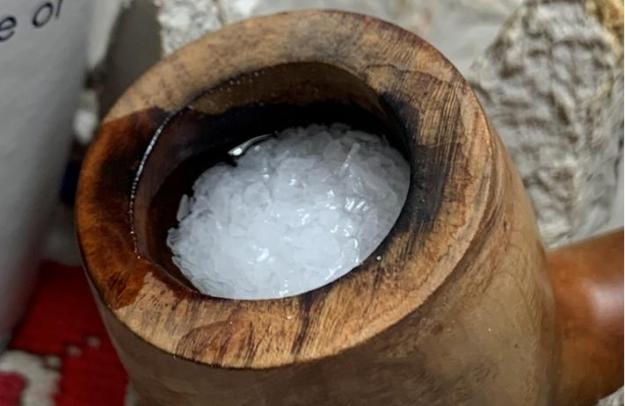
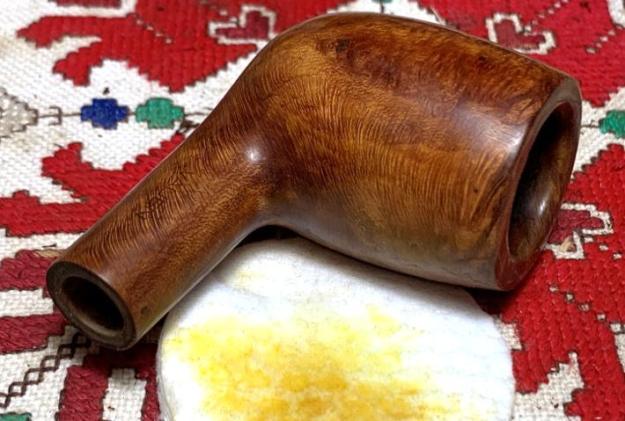
 

Half ’n Half: An Amazing Transformation Of A St. Claude Bent Billiard


Blog by Paresh

On one of my online hunts for pipes on http://www.Etsy.com/fr (French) site, I came across this beautiful full bent chubby billiard that I really liked. In fact, this pipe called out to my heart. However, the condition of the pipe was such that spending even the paltry sum the pipe commanded, did not make for a sound purchase decision and I moved ahead. A few weeks later, this same pipe again popped on my notification alert and the Seller had further offered a discount. This time around, I made the purchase and within 20 days (that’s a record speed of shipping!!), it was received by Abha and she loved the shape and its chubbiness (??). Here are a few pictures of the pipe that Abha sent me after she had received the pipe… The pipe is stamped on the left side of the shank as “ST. CLAUDE” in cursive over “BRUYERE” in capital letters. The tapered bent high quality stem is stamped as “RW” which is faintly discernible through the thick layer of oxidation that is seen on this stem.At the back of my mind I knew that St Claude is a region in France that is well known for making briar pipes. To get a more accurate and detailed knowledge of the region and the society of all pipe makers in the region, I visited pipedia.org and here is what I learned (Saint-Claude – Pipedia)

Saint-Claude is a commune in the Jura department in the Bourgogne-Franche-Comté region in eastern France and was the world capital of wooden smoking pipes crafted by hand from the mid 19th century all the way to the mid 20th century.[1]

As early as the Middle Ages an established place of pilgrimage in Eastern France was the monastery of abbot Saint Claudius. In medieval iconography Saint Claudius was the patron saint of toymakers. The town that grew servicing the pilgrims was Saint-Claude. The pilgrims arrived from all over the Christian world, and the towns people made mementos for sale and lived off business from the pilgrims. The town also produced snuff and pipe stems made of boxwood, bone, horn and amber which they sold to Switzerland, Germany, and Austria. In time Saint-Claude became a thriving centre of wooden souvenirs, gem-setting, and luxuriously-carved pipe stems. According to local legend a Saint-Claude turner named David is credited with the making the first briar pipe. The souvenir industry of Saint-Claude supplied all the manufacturing preconditions for the making of the briar pipe. The firm of Jeantet, as early as 1807, was making and selling German type porcelain pipes, Ulm-type wood pipes and meerschaums from local wood and horn. The contemporary technology determined the shape of the pipes, and they were typically composed of wood-turned parts. Local records indicate that in 1841 there were three pipe-making firms employing twenty workers. 1854 is the year ascribed to the beginning of pipes made from briar.

Further down, the article gives out the changes in the name of the organization and it’s functioning up to 2007!!! The article has a single line on the stamp “Saint- Claude”……..

Stamp “Saint-Claude”
Pipe likely made by Butz-Choquin with JP on stem.

But on my pipe, the stamping on the stem is “R.W.” and so no headway in establishing the provenance of this beauty with piece of information!!

Towards the end, however, there was some information along with a couple of pictures that really caught my attention. Here is what it says…

Saint-Claude Briar Pipe, c. 1855
The pipe illustrated here is one of those early briar pipes made from wood turnings with the same construction as the contemporary pipe stems. It appears that this pipe was marketed to the pilgrim trade. We conclude this because of its lack of finish: the horn mouthpiece is not polished and shows file marks, the grade of the briar is low with large pits whose fillings have since fallen out, the wood is enameled not polished and all the connectors are wooden or horn screws. Of interest is the lip on the horn bit, it is a button lip.Though completely unrelated to the pipe currently on my work table, it is definitely closely related to a pipe that Steve, Jeff and my family had restored during their visit to India a couple of years back. Here is a link to that particular write-up on rebornpipes.com. The similarity is there for you to see. The Final Restoration while in Pune, India – a no name Cavalier | rebornpipes

I would really appreciate if I could be helped with establishing the provenance of this pipe.

Initial Visual Inspection
Abha, my wife, had sent me a lot of 40-45 pipes that she had cleaned up and all ready for my part of restoration process and since she had liked this pipe, it naturally found its way up in to this lot. From the images that Abha had sent, the pipe appeared to be reamed and with no serious damage to the stem, save for heavy oxidation. It was the stummel that is peppered with fills and would need a ton of work.

There are no pictures that were taken to clearly show the condition of each part of the pipe, however, as I had said earlier and the pictures that I have included above, the pipe had been reamed, the mortise had been cleaned, the stem was deeply oxidized but with no serious damage. The stummel had far too many fills on right side for my liking while the left side had a couple.

Initial Cleaning By Abha…
The initial cleaning on this pipe was done by Abha, my wife. She reamed out the complete cake and further smoothened out the chamber walls with a folded piece of 220 grit sand paper. She further cleaned out the internals of the shank with pipe cleaners and alcohol and cotton buds. She followed the internal cleaning of the shank with external cleaning of the stummel using Murphy’s Oil soap and hard bristled tooth brush and dried it with paper napkins and cotton cloth.

Next she cleaned out the internals of the stem air way and immersed it in “Before and After Deoxidizer” solution (pipe is marked in yellow arrow) along with the stem of other pipes in line for restoration. Once the stem had soaked overnight, she cleaned the stem under running warm water and scrubbed the raised oxidation from the stem surface using Scotch Brite pad. She further removed the oxidation by scrubbing the stem with 0000 grade steel wool and applied a little olive oil to rehydrate the stem.Once The Pipe Is On My Work Table…
The cleaned up pipe presents a very clear picture of what needs to be done to restore this pipe to a decent and smoke worthy condition. I really cannot thank Abha, my wife, enough for all the help and support that she extends in my pursuance of this hobby. I proceed to carry out my appreciation of the work that needs to be done on this pipe to restore it. The cleaned up pipe, as I received it, is shown below. The chamber walls are without any heat fissures or pits and that’s a big relief. The rim top surface is peppered with dents and dings. The inner rim edge shows charring at 3 o’clock and 9 o’clock direction (encircled in yellow) and should be addressed, to an extent, by topping on a piece of 220 grit sand paper. There are some minute chipped spots on the outer edge and fills over the rim top surface (encircled in blue). The condition of the chamber is good and will not require much repair work. There are no ghost smells in the chamber.The stummel surface is nice and clean and this cleaned up surface makes shiver my timbers… The right side of the stummel has the semblance of aftermath of a trench warfare battle during WW1! The surface has a large number of fills, many of which have fallen away when the stummel was cleaned. However, the right side has only a couple minor fills with some decent Bird’s eye grains seen over the surface. This clear division of surface, poor on half the left, front and heel and a decent one to the half right has me in a bit of a quandary. Should I rusticate the entire stummel surface or refresh all the fills, stain it dark, polish it and that’s it? Well, I shall cross the bridge once I reach it. The mortise is clean and air flow is smooth. Abha had cleaned the sump in the shank thoroughly and there are no traces of residual oils or tars/ gunk. The tapered vulcanite stem had cleaned up nicely. The surface still has some deep seated oxidation that will have to be removed. The upper stem surface has a couple of deep bite marks at the base of the button and also in the bite zone. The lower surface has some minor tooth indentations in the bite zone. The button edges on both the surfaces need to be sharpened. The aluminum stinger is clean on the exterior but has traces of residual oils and gunk on the inside. The seating of the stem in to the mortise is loose. The Process
The first issue that I addressed in this project was that of the stem repairs. I painted both surfaces of the stem with the flame of a lighter to raise the tooth chatter and bite marks to the surface. This also helps in loosening minor oxidation from the stem surface. I sand the entire stem surface with a folded piece of a 220 grit sand paper to remove the loosened oxidation. I wiped the stem with a cotton swab and Murphy’s oil soap to further clean the surface. Even though most of the tooth indentations have been eliminated by heating the damaged stem portion, one deep indention is still seen on upper and lower surfaces in the bite zone of the stem surface. I filled the tooth indentation in the button edge on both the lower and upper stem surfaces with a mix of activated charcoal and CA superglue and set it aside for the fill to cure. With the stem fills set aside for curing, I decided to work the stummel. The other day during a Face Time video call with Steve, we discussed the best way to transform this stummel. The long and short of the discussion was that it was decided to rusticate the stummel. This would help to mask the fills and provide a very tactile feel while smoking. However, when I held the stummel and saw the beautiful Bird’s eye grains on the left, I waivered from the plan of rusticating the entire stummel. I wanted to preserve and highlight these beautiful grains while the right side was a complete mess. A thought struck me, “why not rusticate the right half while leaving the left side smooth surfaced?” I had worked on a Bari Matador Freehand that had left side sandblasted while the right was smooth and the pipe looked awesome. Here is the link to the write up for the Readers to appreciate the beauty of this pipe. A Simple Refurbishing of a Bari “Matador” | rebornpipes

Though sandblasting is not feasible given that I do not have the necessary wherewithal to do so, I thought of doing something that was within my resources and capabilities…I would rusticate the right side while leaving the left side smooth. In case the end result is not to my liking, I could always rusticate the entire stummel. With this decision finalized, I proceed with rusticating the right half of the stummel.

I drew a mental map on the look/ pattern of rustications over the stummel surface that I desired. I decided to maintain a smooth ring atop the rustication below the outer edge of the rim and also at the shank end. I used a white paper and transparent tape to mask the entire left half of the stummel, the rim top about quarter of an inch below the rim outer edge and a thin band at the shank end that I wanted to keep smooth. Covering the entire left half also covered the faint stampings seen on this pipe. From my experience, I knew that this is a very essential step as I have realized that during rusticating it is very easy to lose track and transgress over the areas and stampings which you wish to preserve. To rusticate, I firmly held the stummel in my left hand and with my right hand and began gouging out the briar. The technique is to firmly press the pointed four prongs of the modified Philips screwdriver in to the surface, rotate and gouge out the removed chunk of briar. I worked diligently till I was satisfied with the rustication and the appearance of the stummel. I cleaned the stummel surface with a brass wired brush to clear all the debris from the rustication. I decided to take a break from further rusticating the surface as the process is tiring and painful. This makes me want a better and efficient rusticating tool. I removed the demarcating tape and took stock of the progress made. I felt that the symmetry between the rusticated and the smooth surface is biased towards the smooth and also the pits and fills on the right side of the stummel are still aplenty. With a marker pen, I marked the area that would need to be rusticated further to address both the issues.  So, I got back to rusticating the remaining stummel surface along the marked line with my tool. I was extra careful not to cross the drawn line.Continuing with the stummel repairs, I removed the few old fills from the left smooth surface using a sharp dental tool and refreshed these with CA superglue and briar dust. Once satisfied that all the fills have been refreshed, I set the stummel aside for these fills to cure. While giving my right hand a rest from this task of rustication, I decided to work on the stem. The fill has cured nicely and with a flat head needle file, I sand the fill to achieve a rough match with the surrounding surface. To achieve a perfect match, I sand the filled stem surface with a 220 grit paper. Once this was achieved, I progressively moved to polishing the stem through 320, 400, 600, and 800 and finished with a 1000 grit sand paper. As expected, a clean and neat looking stem stared back at me. I rub a little Extra Virgin Olive oil into the stem surface to hydrate it and set it aside to be absorbed in to the vulcanite. Turning my attention back to the stummel, I sand down the jagged high points in the rustication to a smooth and even surface without compromising on the tactile feel to the hand. The fills too had cured and set solid. With a flat head needle file, I sand the filled spots and roughly match it with the rest of the surface. I followed it by sanding the entire left smooth surface with a folded piece of 220 grit sand paper to blend in the fills with the rest of the stummel surface.Next I decided to work on the damage to the rim top and edges. I topped the rim on a piece of 220 grit sand paper, checking frequently till I was satisfied that the darkened surface is addressed to a great extent and the rim top surface is nice, smooth and even. The inner and outer edges are still uneven, though much better than before topping, and shall be addressed subsequently.With a folded piece of a 220 grit sand paper pinched between my thumb and forefinger, I created a delicate bevel on the inner and outer edges of the rim top surface. This helps to mask and address the minor dents and dings that had remained on the rim edges after topping. I was careful so as not to alter the profile of the stummel by excessive topping or creation of the bevels. I am pretty pleased with the appearance of the rim top and edges at this stage.To further define and demarcate the rusticated surface from the smooth, I picked up a trick which Steve had used few months back when he had rusticated a bald spot in the briar and cut smart grooves around the rusticated portion. The results were fantastic. Here is the link. Rusticating a Bald Spot on the Briar on a Bjarne Bent Apple | rebornpipes

Just as I had read, I mounted a thick burr on to my rotary tool to create a broad groove between the two surfaces. However, it was easier said than done! The burr just bounced off the stummel surface and no matter how firmly I pressed down on the burr, it wouldn’t cut a groove. Another Face Time video call with Steve and the issue was resolved. The trick is to hold the burr at an angle to the surface and start at slower speeds of the tool. I followed the advice and it worked. I cut a sharp groove at the shank end, along the center of the stummel and under the outer rim edge. Looks pretty cool now! Next I polished the rim top and the smooth surfaces of the stummel using micromesh pads, wet sanding with 1500 to 12000 grit pads. I also polished the high spots in the rustication with the micromesh pads. I wiped the bowl with a moist cloth after each pad to clean the surface. I am happy with the appearance of the stummel at this point in the restoration. The stummel is now ready for a fresh coat of stain. I wanted to highlight the difference between the rusticated and the smooth stummel surface. I decided to stain the rusticated surface with a black dye which would contrast beautifully with the browns of the rim top, shank band and the rest of the smooth surface. I heated the rusticated portion of the stummel surface with my heat gun to open up the pores on the stummel so that the stain is well absorbed. I mixed black stain powder with isopropyl alcohol and liberally apply it over the heated surface, flaming it with the flame of a lighter as I went ahead to different self designated zones of the surface. This helps in the setting of the stain in the grain of the briar. I ensured that every inch of the rusticated surface is coated with the dye while the smooth surfaces are not stained. I set the stummel aside for a day to set the dye in to the briar surface. Once the stain has set in well, I again warm the stummel with my heat gun. This helps the stain to be absorbed and set further into the briar. I mounted a felt cloth buffing wheel on my rotary tool and gently buff the entire stummel surface using Red Tripoli to remove the stain crust. I wiped the stummel with a cotton swab and alcohol to remove any excess stain and followed it up by sanding the raised rustication with a folded piece of 220 grit sand paper. This is followed up by careful dry sanding of the entire stummel, especially the raised rustications with 1500 to 12000 grit micromesh pads. This lightens and highlights the high spots in the rustications.Next, I rub a small quantity of “Before and After Restoration Balm” in to the briar with my finger tips, work it deep in to the sandblasts and let it rest for a few minutes. The balm almost immediately works its magic and the briar now has a nice vibrant appearance over the smooth surface with the beautiful rusticated patterns on full display on the other half. I further buff it with a horse hair shoe brush.With the stummel set aside, I turned my attention to the stem polishing. Using the micromesh pads, I complete the polishing cycle by wet sanding the surface with 1500 to 12000 grit pads. The stem looks great with the fills nicely matched with the rest of the surface. I polish the stem with a little Extra Fine stem polish compound that has been developed by Mark Hoover to remove the last minor scratches. I rub a little quantity of Extra Virgin Olive oil in to the stem surface and set it aside to be absorbed by the vulcanite. The only issue that remains unaddressed at this stage is the issue of loose seating of the stem in to the mortise. With the flame of a lighter, I heated the tenon with the flame of a lighter till it was pliable and inserted a drill bit that was a bit larger in diameter than the tenon opening. This helps in expanding the pliable vulcanite for a snug fit. I held the tenon under cold tap water for the tenon to cool down and set the increased diameter. I also refreshed the stem stamping with a white correction pen.  To complete the restoration, I first mounted a cotton cloth buffing wheel that is dedicated for use with Blue Diamond, on to my hand held rotary tool.  I set the speed at about half of the full power and polished the entire pipe after the stem and stummel were united. The Blue Diamond compound helps to erase the minor scratches that are left behind even after micromesh polishing cycle. I followed the Blue Diamond polishing by applying several coats of carnauba wax with a cotton cloth buffing wheel dedicated to Carnauba Wax. I finished the restoration by giving the entire pipe a rigorous hand buffing using a microfiber cloth to deepen the shine further. The finished pipe looks amazingly beautiful and has undergone quite a transformation. With its perfectly balanced weight, a nice full bent shape and light weight, this is a perfect pipe for clenching while I am working in my office. This is one pipe that will make its way in to my rotation. I wish to thank our esteemed readers for sparing their valuable time to read through and any input or advice is always welcome.

Refreshing a Dr. Grabow Sculptura Blasted Bulldog while Testing a New Deoxidizer Product


Blog by Dal Stanton

My friend and fellow pipe man restorer, Dave Shane (see: The Pipery.com) donated the pipe now on the worktable, the Dr. Grabow Sculptura, along with 12 other pipes.  Dave and I worked together several years ago in Ukraine.  Our paths met again in January of 2018 when I was in the US from Bulgaria and went to his home in the Atlanta area to catch up.  After much talk, some adult beverages and of course, sharing a few bowls together, Dave gifted me these pipes to benefit the Daughters of Bulgaria.  Some have already found their way to new stewards and the Dr. Grabow (in the picture on the far right) caught the attention of another friend and fellow pipe man, Todd.
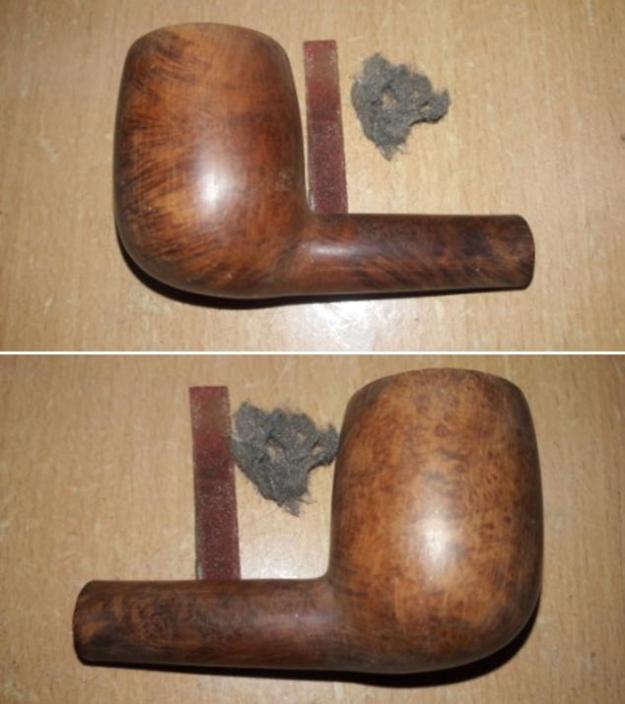
Todd has already commissioned several pipes from The Pipe Steward and is an active contributor on several Facebook groups dedicated to pipe men and women and their pipes and tobaccos.  I became aware that Todd was an attorney specializing in international issues and especially China when he commissioned his first pipes in September of 2018 while I was still living in Bulgaria.  I had written to him asking for more patience to ‘bump him’ a bit in the queue so I could restore a special pipe commissioned by Chrystal, who was visiting us in Sofia from China. Chrystal had chosen a pipe to take back to China as a special gift for her grandfather (see: A Special Gift for Her Grandfather in the People’s Republic of China – A Sculpted Rose Billiard of Italy).  It was a special visit and write up where I was able to include great pictures of Chrystal with her grandfather and his new pipe that she had sent upon her return to the People’s Republic of China.
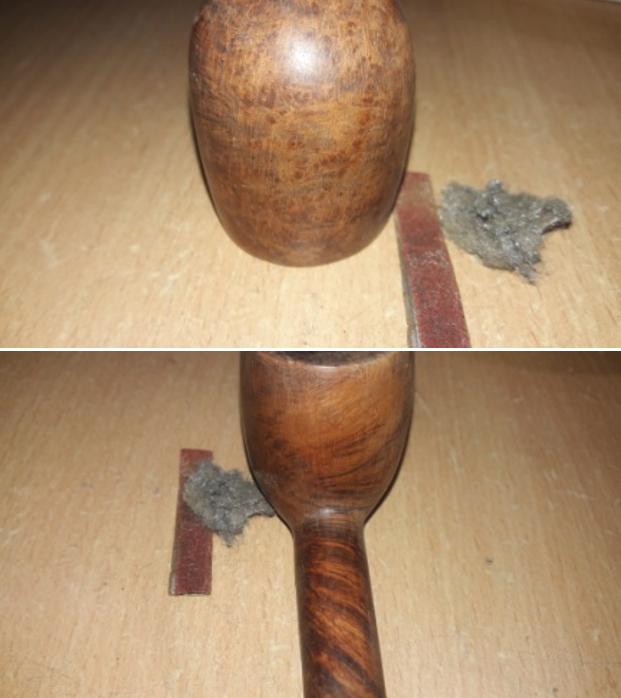
When Todd found out why he was being ‘bumped’ I then found out about his work and special focus and devotion to China as a country and culture.  Over time I have appreciated getting to know Todd more and we have made commitments to have bowls together when our paths ever get close enough!  I have restored some nice, collectable pipes for Todd and when he wrote me about commissioning the Dr. Grabow, along with a few other ‘low-end’ pipes, as he described them, I was intrigued.  Through our communications about commissioning the Dr. Grabow, I discovered that Todd and I share a similar view on the cost of a pipe not necessarily an accurate indicator of a better smoking experience.  Todd wrote:
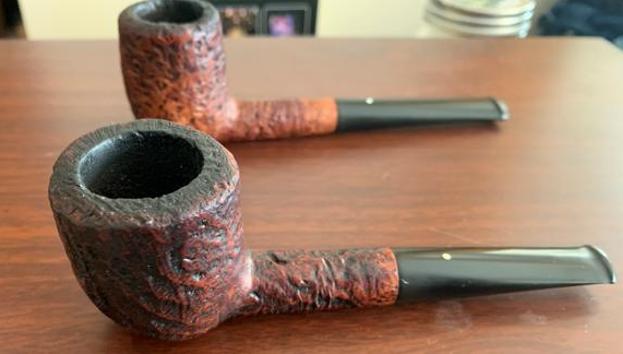
I recently acquired a couple of Dr. Grabow and Kaywoodie and other older, “low-end” pipes in good condition from eBay and found the old briar to be very tasty.  As you may know, I try to reject the snobbery inherent in every aspect of so much of life; I enjoy a $10 Wrangler shirt from Walmart as much as a $100 shirt from Brooks Brothers, if not more; it fits and looks great, and that’s my major concern; the lower price is also a big help.  Snobbery is present in this hobby also.  Pipe making at $750.00 a pop is certainly good work if you can find it.  However, in my humble experience, there seems to be negligible equivalency between price and briar quality of smoking, unless of course, Covid19 has deadened my faculty of taste. Enough of my useless pontificating.  Please take a look at those six pipes and let me know your ideas. And please remember that your fine work is well appreciated by me and, I believe, many others in our hobby.

My response to Todd’s comments expressed my agreement:
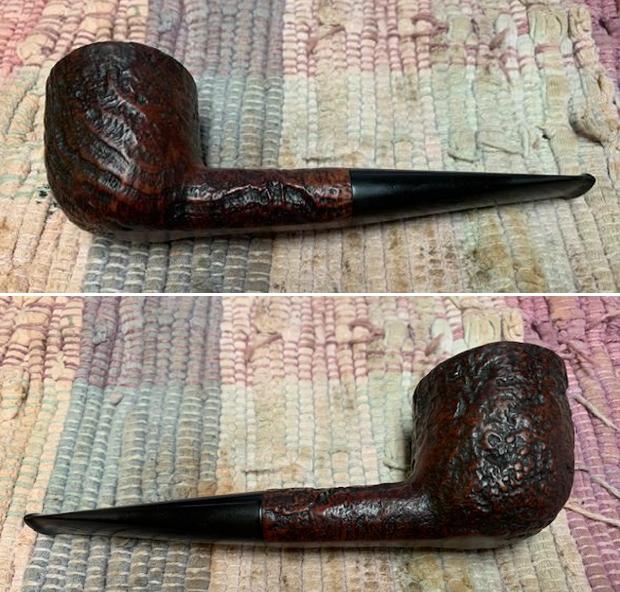
Todd, I’m in total alignment with you about named pipes vs. basket pipes not being an indicator of how well a pipe smokes.  And I think you would agree, that so many ‘low end’ pipes are only ‘low end’ because they were on more of a conveyor line when they were manufactured.  Many of my restorations show that TLC with a no name throw away can produce an absolute treasure.

I know that there are many Dr. Grabow enthusiasts out there and to call a pipe a low-end pipe does not mean a ‘cheap’ pipe!  Sometimes of course, this IS the case, but my experience has shown that with a little help, pipes that do not cost an arm and leg can look like a million and smoke just as well as the more expensive pipes out there.  This is the first Dr. Grabow that I’ve worked on that is not upgrading an Omega – Dr. Grabow’s version of a system pipe.  Here are some pictures of the Dr. Grabow Sculptura Blasted Bulldog which whispered Todd’s name in the For “Pipe Dreamers” Only! collection which he commissioned: The nomenclature is found in a smooth briar panel on the lower right panel of the Bulldog’s characteristic diamond shank.  Stamped there is, SCULPTURA [over] DR. GRABOW.  I could find no other markings.The classic Bulldog is a fun shape and always seems to rustle up images of a bulldog smoking a pipe – but not necessarily a Bulldog shape!  The blasted Sculptura looks like Grabow’s attempt at a value pipe and it’s not half bad.  The diamond shank nickel cap/extender is interesting giving this Bulldog more of an ‘elegant’ reach than the normal short, stubby reach of the classic Bulldog.  The blasted finish is not bad too and has somewhat of a ‘Dunhill’ hue going for it with the deeper reddish tones nuancing the dark finish.

Pipedia’s short comment about the Sculptura line of Dr. Grabow in the History Timeline article states that the line was introduced in 1967 and registered by HL&T in 1972 (See  Henry Leonard & Thomas Inc. for more information about company acquisitions when Linkman sold to HL&T in 1955 and operations were moved from Chicago to Greensboro, NC).  More specific information is uncovered in the Pipedia Dr. Grabow article focusing on the myriad of Grabow models, series and lines through the years:

SCULPTURA (c1967-69?) — Newest of the RJR special offer pipes. These were sandblasted in a “big” blast. The operator stood with his hands in heavy rubber gloves and blasted away grain. He could only do about 50 pieces an hour. Prior to this, most “sandblasted” pipes were tumbled in a contraption like a cement mixer using walnut shells as the media. Dr. Grabow really never got into that but waited until they could do it “right” using glass shot.

The Sculptura line was without shape numbers and was a Grabow line which was exclusively sand blasted pipes of various shapes.  We know from this article that Sculpturas were produced ‘properly’ using the processes pioneered by London’s Dunhill.  The Sculptura was considered a ‘newer’ line of pipes because they were introduced after the acquisition that moved the Grabow production from Chicago to North Carolina.  The history of the Dr. Grabow pipe name can be explored further at Pipedia’s main Dr. Grabow article (See: LINK) which is a good read describing the history.  I would be remiss if I didn’t refresh the memory of how the Dr. Grabow name started for a line of pipes and continues to be a much-loved pipe by many which can be evidenced in a quick look at The Dr. Grabow’s Collector’s Forum.   I repeat in its entirety a Pipedia article written by the grandson of the ‘original’ Dr. Grabow, entitled, The Legend of Dr. Grabow (Written October, 2005, by Paul W. Grabow, and courtesy of DrGrabow-pipe-info.com [now defunct]):

Dr. Grabow Pipes are named after Dr. Paul E. Grabow (my deceased Grandfather), a general-practitioner physician formerly with an office on the northeast corner of Fullerton and Halsted in Chicago. His youngest son was Mr. Milford P. Grabow (my Uncle) who passed away January, 2005 in Chicago. Dr. Grabow’s other son (my Father, deceased in 1979) was Dr. William S. Grabow, a dentist who practiced in Chicago and Evanston, IL.

Milford Grabow recently recounted details of the Dr. Grabow Pipe legend in a letter to me as follows:

“To start from the beginning, the old homestead was on 2348 Seminary Ave. (Chicago) before the De Paul University bought and tore down the whole area to expand the campus. Three doors north on 2400 Seminary Ave. (corner of Fullerton) was Brown’s Drug Store, one of the old fashion community Drug stores that was popular of that area and was owned by Brown the Druggist. It had the usual ice cream counter and wire chairs and tables to serve sodas and sundaes. My Father became fast friends with his fishing buddy the Druggist. Most every weeknight after dinner while Mom did the dishes, Pop would visit Mr. Brown in the back room of the store and they would have weighty discussions about world events, fishing, politics, sports, etc. while smoking their pipes. One block west on Fullerton on the corner of Racine was the large pipe factory owned by Mr. Linkman. Mr. Linkman, when he wasn’t too busy, would join the other two in their bull sessions and the three became fast friends.

It was during one of their nightly sessions that Mr. Linkman mentioned that he was coming out with a new pipe containing some innovated improvements and was looking for a name for it. He thought if it contained a Doctor’s name it would probably sell well so he asked my Father if he would mind if he could use the Dr. Grabow name as he liked the sound of it. My Father liked the idea and was flattered to have a pipe named after him. So Mr. Linkman used the Dr. Grabow name without any formal agreement but just a “friendly understanding.”

As a child in the 1940’s and 1950’s, I remember how Grandpa loved to smoke his Dr. Grabow pipes. The pipes were generously provided to him at no cost by Mr. Linkman, apparently part of the friendly understanding. Dr. Paul E. Grabow died of natural causes in 1965 at the ripe age of 97. He had a very rich and full life and I believe pipe smoking was good to him. Through the years I’ve enjoyed watching the growth of the Dr. Grabow Pipes and sharing Grandpa’s legend with the curious.

Anyone personally familiar with additional details of this legend is requested to forward input to the undersigned.

Paul W. Grabow

With a renewed appreciation for the Dr. Grabow name, I look more closely at the Blasted Sculptura Bulldog on the worktable which shows no major issues and which is why I’m calling it a ‘refresh’.  The chamber has little cake build up and the rim has grime.  What I see that is interesting is that the draft hole at the floor of the chamber looks to be a larger opening than usual. The blasted surface has had its share of nicks, cuts and dents.  Raw briar is visible here and there over the blasted surface.The nickel shank cap has a high gloss – like it was plated.  The surface is pitted, and small scratching is visible.  This should shine up nicely.The stem has significant and what I would call, deep oxidation.  The vulcanite surface is rough, and the bit has a few compressions that need addressing.  To see more clearly the oxidation, I’ve lightened the following pictures to reveal the dreaded, greenish murk of the oxidation.  Oxidation happens to rubber mostly when overly exposed to UV lighting – sunlight.  There is no way to totally protect a stem except to keep it in a UV free environment.  Saliva also encourages oxidation.As I begin the refreshing of this Dr. Grabow, I will start with the oxidation in the stem.  I’m using this write up to test a new product that I heard about on one of the Facebook groups where I post my work and converse with fellow pipe men.  In the process of restoring pipes, the issue of oxidation in vulcanite stems is always an issue and is one of the most time-consuming parts of the process of restoration.  Finding and using products that can naturally or chemically remove the oxidation is the holy grail that is sought.  When oxidation is removed like this, it reduces sanding, time spent and can guard the stem logos stamped into the stems.  The product that I’m trying for the first time comes from www.Briarville.com and is called, ‘Pipe Stem Oxidation Remover’.  The product that I have been using is Mark Hoover’s, ‘Before & After Deoxidizer’ (www.Lbpen.com) which has in my experience had mixed reviews.  What I have found with Mark’s product is that it does great with stems having minor oxidation.  However, stems with what I call ‘deep’ oxidation, seem always to need additional sanding and prep work to remove the oxidation even with use of the product.  In fairness to Mark’s Before & After Deoxidizer, in talking with pipe man, Chris from the Netherlands, who was part of the FB discussion about deoxidizer products, he shared with me that he just acquired an ‘extra strength’ version of the Before & After product that Chris said worked much better in his experience than the ‘normal’ strength.  I’ll need to reach out to Mark to find out about this!

When I decided to order the Briarville Deoxidizer product, I had already started working on the Dr. Grabow stem using Before & After Deoxidizer.  I followed the same process steps as I normally do by starting with cleaning the airway.Knowing that the oxidation is deep, I employ 0000 grade steel wool with Soft Scrub to begin the process of breaking down the oxidation.  I do this to give a ‘head start’ on the oxidation removal before putting it through the Before & After Deoxidizer paces.After thoroughly rinsing the stem, the Grabow stem is added to the Before & After Deoxidizer along with two other pipes’ stems which have already been claimed by other stewards.After allowing the stems to soak through the night, the Dr. Grabow stem is drained of the Deoxidizer fluid.  I squeegee with my fingers and using pipe cleaners and alcohol clear the liquid from the airway.I discover that the nickel stinger thankfully, can be removed from the nickel tenon.  The vulcanite is wiped down with cotton pads wetted with alcohol to remove raised oxidation.  Following this, to start conditioning the stem, paraffin oil is applied to the vulcanite stem. The results:  After the entire process using steel wool and Soft Scrub, soaking 24 hours in the Before & After Deoxidizer, the lightened pictures detect what I can see with the naked eye – the oxidation has been mitigated some, but continues to be visible predominantly around the saddle stem. block and in the bit area.  Ugh! The Briarville Pipe Stem Oxidation Remover arrived from Briarville in Florida and the only directions were on the front label stating, “Soak Stem for 2 to 24 hours as needed for oxidation removal.”  When I opened the bottle for the first time, on impulse I decided to smell the contents to see if I could discover through olfactory investigation clues to the secret mixture which was billed to add to my pipe restoration happiness.  Mark Hoover’s Before & After secrets are only described as being fully organic – made with natural ingredients.  As I sniffed Briarville’s Deoxidizer, the first thing that struck me was that it smelled like the side-chair mouth rinse my dentist provides to remove the debris of his work.  It was interesting too, that pipe man, Chris, in the Netherlands said later when texting with him, that his first impression of the product when he gave it a whiff, was that it reminded him of Listerine!  Two similar responses to the question of the secret ingredients of Briarville’s mixture.  Chris said he would test this hypothesis of mouthwash by soaking stems in Listerine to see if the results were similar.  He said he would let me know how it turned out.I decide to put the Dr. Grabow through the paces again using the Briarville Oxidation Remover even though it had been through the Before & After process.  The bottle is shaped nicely so that most stems will fit in the bottle and be covered with the solution.  The Dr. Grabow goes into the solution and I decide to give it the maximum exposure from the outset – 24 hours.  As I do with Before & After, I add two additional stems of pipes that are in the queue after cleaning their airways alone, to join the 24-hour experiment.  I decided not to ‘prep’ the stems by scrubbing with steel wool and Soft Scrub. I considered one of the two stems as having deep oxidation.  The pristine yellow color of the fluid changed gradually during the oxidation removal process.After 24 hours, the stems were removed from the Briarville Oxidation Remover including the Dr. Grabow stem.  First, using a dry cotton pad, the stem is wiped to remove raised oxidation from the stem.  A distinctive brown color is left on the pad.  Following the initial wipe with a dry pad, the stem is additionally wiped with a cotton pad wetted with alcohol to clean thoroughly. Afterwards, as I did with the Before & After evaluation, I lighten the photo to show what I also am not now seeing with my eye – residual oxidation.  I’m not seeing the oxidation compared with the second ‘before’ picture – where the oxidation was still presenting after the Before & After Deoxidation process. As usual, I then treat the stem with paraffin oil to further condition the vulcanite and put the stem aside.I know this testing is not scientific and it could be reasoned that the more positive result with the Grabow stem with the Briarville product could have been made possible because it first had been through the Before & After process.  This is true and this method of testing is experiential and open to subjective results.  However, the other stems had similar results even though they received no prep or did they first go through the Before & After process.  The set of three pictures of each stem includes in this order: 1) Enhanced picture before treatment, 2) After treatment showing the cotton pad results, and 3) After applying paraffin oil with enhanced picture to show latent oxidation.  First, the St. Regis DeLuxe stem.Next, the stem of the Bennington Supreme:Based upon these results, I have found no reason not to continue testing and using Briarville.com’s Pipe Stem Oxidation Remover and see how it goes in the long run. Generally, I’m seeing positive results where oxidation seems significantly reduced.  Again, this was not a scientific test but my desire to see how different products work!   The cost of the 8 oz. bottle was $26.98, which included mailing to Colorado.

Turning now to the stummel, the chamber has a light cake – it appears as though it had recently been reamed but I start again with a clean slate.  The chamber is reamed with the Pipnet Reaming Kit using 2 smaller of the 4 blades available.  This is followed by scraping the walls of the chamber with the Savinelli Fitsall Tool.  Finally, the chamber is sanded with 240 grade paper wrapped around a Sharpie Pen.After wiping the bowl, the inspection shows a healthy chamber with no heating problems.Transitioning to the external blasted surface, the stummel is scrubbed with a cotton pad and undiluted Murphy’s Oil Soap.  A bristled toothbrush is also used to scrub the surface, the dual dome grooves, and the rim.The stummel then goes to the sink with warm to hottish water and the internal mortise is scrubbed with shank brushes using liquid anti-oil dishwashing soap.  After the stummel is scrubbed and thoroughly rinsed, it goes back to the worktable to continue the cleaning process.The internals are fine cleaned next using cotton buds and pipe cleaners wetted with isopropyl 99%.  A small dental spoon is also helpful in scraping and excavating old oil and tar buildup on the mortise wall. After some effort, the buds emerge lighter and I stop the cleaning for now. I plan later to give the stummel a kosher salt and alcohol soak to continue to freshen the internals for a new steward.With the surface cleaning completed, an inspection shows what I saw earlier.  The finish is old and worn.  There are lightened spots showing bare briar.  The rim cleaned up nicely. It doesn’t take much consideration to give the nicely blasted Grabow Bulldog a fresh finish.  To clean the surface further, a cotton pad wetted with alcohol wipes the surface and reveals what I mentioned earlier.  The dark finish has a reddish tone which is reminiscent of the Dunhill branded color that my good friend and pipe man in India, Paresh, has almost perfected in his restorations of Dunhill pipes and shared in his blogs on rebornpipes.  This Dr. Grabow will get a dark undercoat of dark brown with just a touch of black dye added. I add the black to deepen the hue a bit.  Over this primary undercoat, a red dye will be washed.  With the components needed assembled on the worktable, after wrapping the nickel shank cap with painter’s tape, I begin by heating the stummel with the hot air gun.  The warming of the briar expands it and helps it to be more receptive to the dyes.  Fiebing’s Dark Brown Leather Dye is used and with it is mixed only a drop of Fiebing’s Black.  With a cork in the chamber to act as a handle and stand, the dye mixture is applied with a folded pipe cleaner.  After application of the dye over a small patch of the briar surface, the aniline dye is flamed with a lit candle.  The alcohol combusts in the dye burning off leaving behind in the grain the dye pigment.  After thoroughly applying the dye and flaming it, the stummel is set aside to allow the newly dyed stummel to rest letting the dye settle.Next, the stem needs some attention.  The bit has some roughness and tooth chatter.  The upper button lip has a significant compression which I’m hopeful of minimizing.  To minimize or remove the biting damage to the bit the heating method is used.  Using a Bic lighter, the bit is painted with the flame back and forth. As the flame heats the vulcanite, physics takes over and the rubber expands recapturing its former shape – at least partially.  I take before pictures and the after-heating process. The large compression on the upper button is still there but I’m hopeful that sanding alone will take care of it. Next, a flat needle file is used to refresh the button lips to improve the bite hang. The filing is followed by sanding with 240 grade sanding paper focusing first on smoothing the compressions in the bit and button and then expanded to include the entire stem.  A plastic disk is used on the tenon side of the stem to prevent shouldering – keeping the edges crisp forming of the shank union. Next, moving to less abrasive sanding, wet sanding with 600 grade paper is followed by applying 0000 grade steel wool.Following the steel wool, the full regimen of micromesh pads is used starting with wet sanding with pads 1500 to 2400.  This is followed by dry sanding with pads 3200 to 4000 and 6000 to 12000.  Between each set of 3 pads, Obsidian Oil is applied to condition the vulcanite and to guard against oxidation.  I love the pop of freshly micromeshed stems! Putting the stem to the side, the stummel has rested several hours after applying the dye undercoat.  Next, after a felt buffing wheel is mounted to the rotary tool set at about 30% full power, the flamed crust is removed from the Grabow blasted surface. Following this, a cotton pad wetted with alcohol is used to wipe the newly dyed stummel surface.  This helps to blend the dye and to remove overt, excess dye.As before, in preparation of applying the red dye overcoat, the stummel is warmed using the hot air gun.I use a red dye concentrate called TransTint which can be mixed with either water or alcohol to form the base.  I mix a small amount of alcohol with the red concentrate.  With the stummel warmed, a pipe cleaner is used to ‘wash’ the red dye over the dark undercoat.  When the blasted surface is thoroughly covered with the overcoat of red, the stummel is put aside to rest again for several hours allowing the dye to settle.After a few hours, the dye has dried enough to handle the stummel.  Before turning the lights out for the night, I continue the internal stummel cleaning with a kosher salt and alcohol soak.  Being careful not to disturb the resting dye, a cotton ball is stretched and twisted to form a ‘wick’ which is guided down the mortise to the draft hole with the help of a stiff wire.  The cotton wick helps to draw the oils and tars from the internal briar walls. After the wick is in the mortise, the bowl is filled with the kosher salt and set in an egg crate to maintain stability.  Kosher salt does not leave an aftertaste like iodized salt. The bowl is then filled with isopropyl 99% until it surfaces over the salt. After about 15 minutes, after the initial alcohol has been absorbed, additional alcohol is used to top it off.  The lights are turned off allowing the soak to do its thing through the night and the dye to continue to settle in.The next morning reveals soiling in the salt and the cotton wick indicating that the process has worked.  After removing the expended salt and wiping the bowl with a paper towel I blow through the mortise to assure that the salt crystals are removed.To make sure the internals are clean and to remove any remaining debris, a few cotton buds wetted with isopropyl 99% confirm the internals are clean and refreshed.  I move on.The red overcoat wash of red dye rested through the night.  To continue the refinishing process, a cotton cloth buffing wheel is mounted on the rotary tool and set to about 40% full power.  Using Blue Diamond compound, the buffing is applied to the blasted briar. I’m waiting to attach the stem and to apply Blue Diamond to it because this phase of Blue Diamond is for the purpose of removing excess dye.  While applying the Blue Diamond, I am also careful not to overrun onto the nickel shank cap.  Polishing the metal is reserved for another buffing wheel dedicated to this purpose.  Polishing metals with Blue Diamond compound produce a black residue that can stain the briar if one is not careful.  This is the reason for dedicated buffing wheels for different materials.After the initial application of Blue Diamond compound, the surface is wiped with a cotton pad wetted with alcohol.  The purpose of this is to reduce excess dye and to help prevent dye leeching on the hands when the pipe is put into service. After the wipe down, the stummel is again buffed with Blue Diamond compound.One final measure to minimize the possibility of the dye leeching onto the hands of the new steward when the pipe is put into service.  To emulate the heating of the pipe during its initial times put into service, the stummel is warmed with the hot air gun.While the stummel is hot, an old cotton cloth is used rigorously to hand buff the stummel picking up the final vestiges of excess dye – hopefully!  Next, another cleaner cotton buffing wheel is mounted onto the rotary tool and Blue Diamond compound is applied to the waiting stem.  The nickel stinger is also reunited to the threaded tenon after being cleaned and polished with 0000 grade steel wool. With both the stummel and stem buffed with Blue Diamond, next is buffing the nickel shank cap and stinger/tenon.  Another cotton cloth buffing wheel dedicated to metals is mounted on the rotary tool.  The speed remains at about 40% full power and the nickel is shined up using the mildly abrasive compound.After completing all the applications of Blue Diamond, a felt cloth is used to wipe/buff the entire pipe including the nickel fitments.  This is done to make sure compound dust is removed before application of the wax to the stem and stummel.The last step is to mount another cotton cloth wheel to the rotary tool maintaining the same speed.  Carnauba wax is applied to the stem and stummel avoiding the nickel shank cap.  When the wax has been applied, a microfiber cloth is used to give the pipe a rigorous hand buffing to raise the shine and to disperse excess wax.The classic Bulldog shape looks great.  The Dr. Grabow Sculptura dates to the 1960s and this one looks brand new.  The extended nickel shank cap gives the Bulldog a bit of class and the renewed blasted surface is pleasing to the eye and touch.  Todd commissioned this classic Dr. Grabow and will have the first opportunity to claim him in The Pipe Steward Store benefiting the Daughters of Bulgaria.  Thanks for joining me!