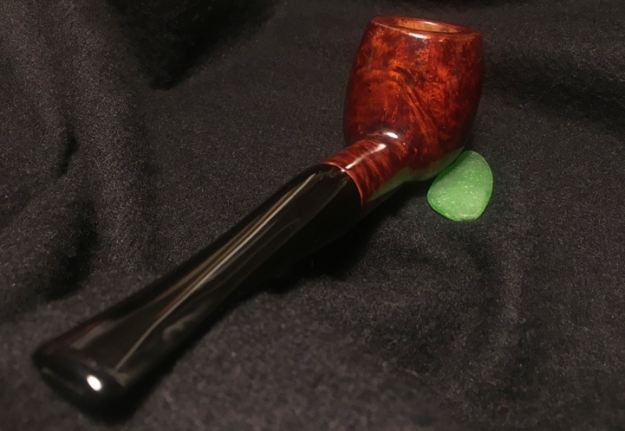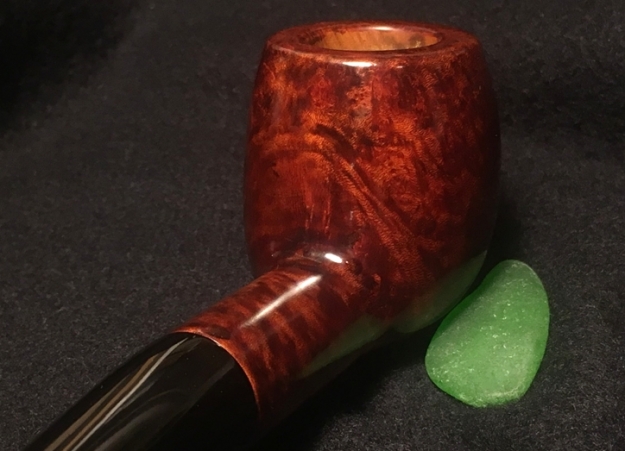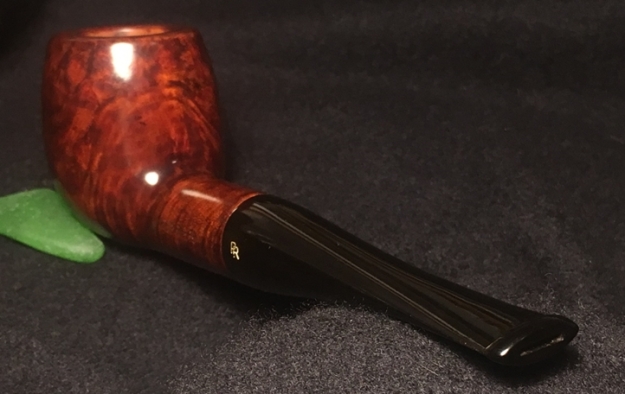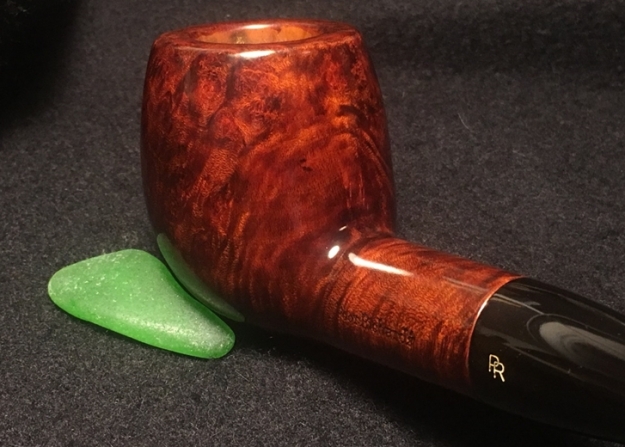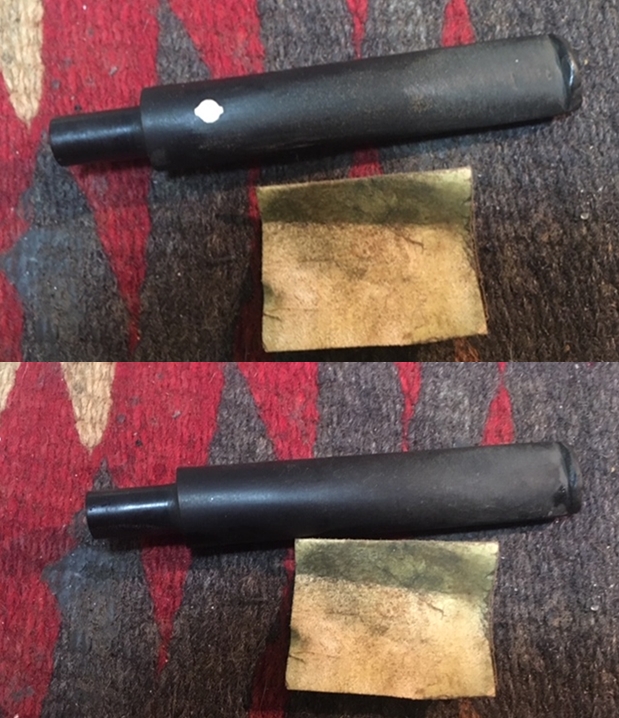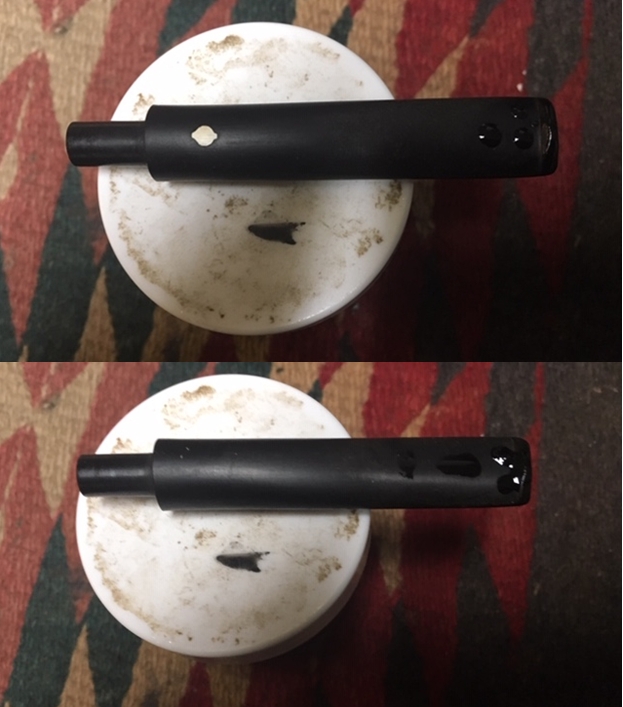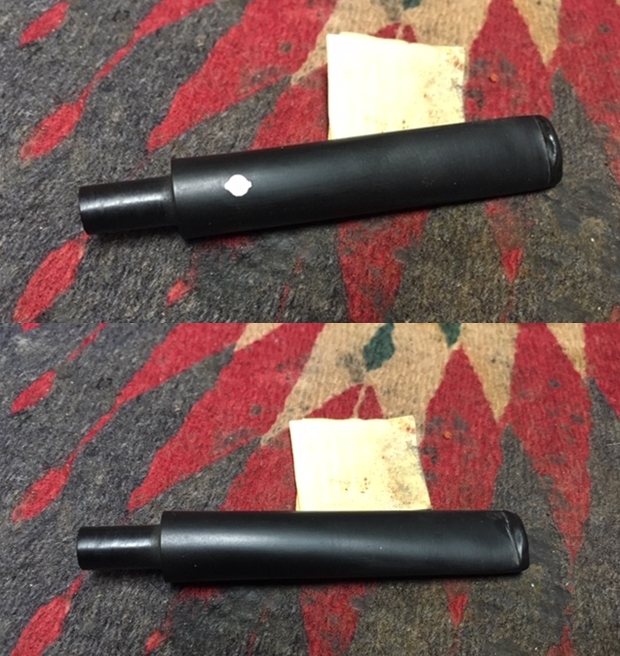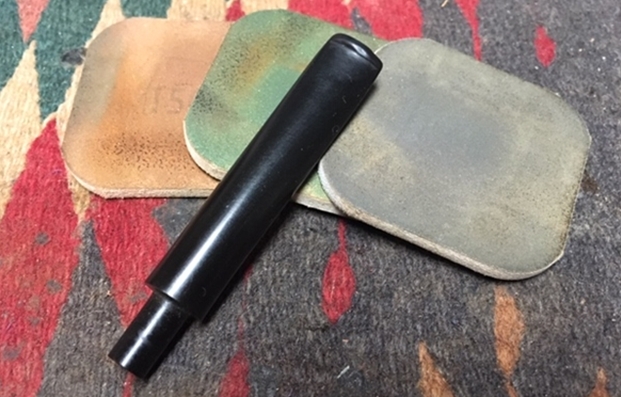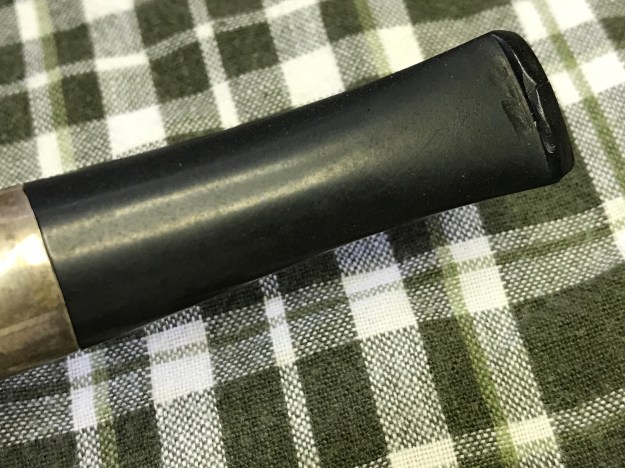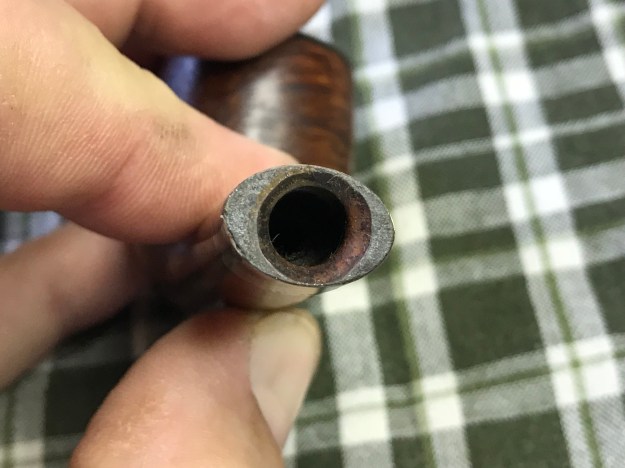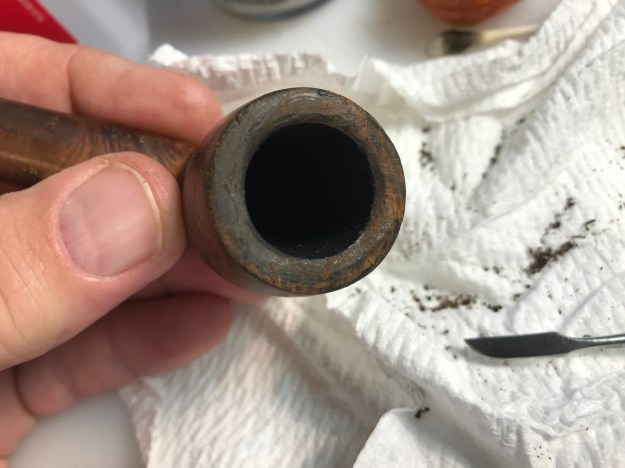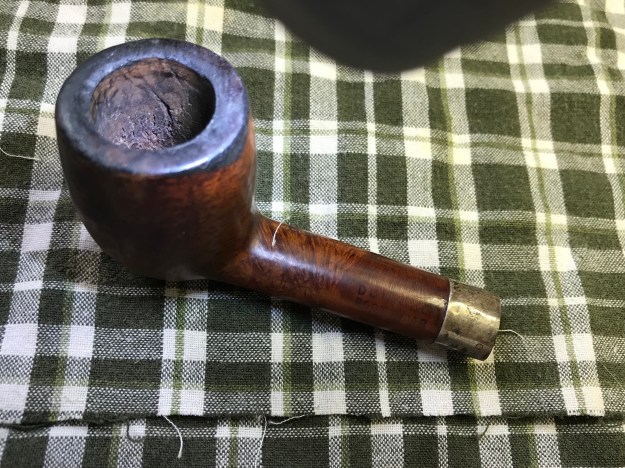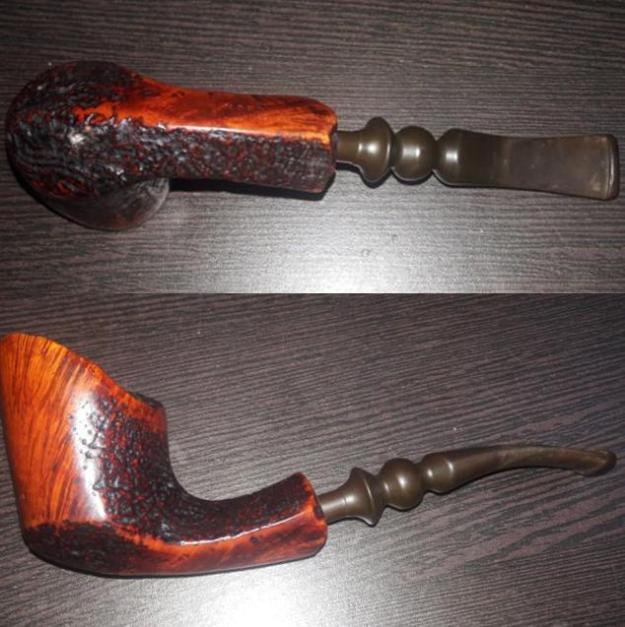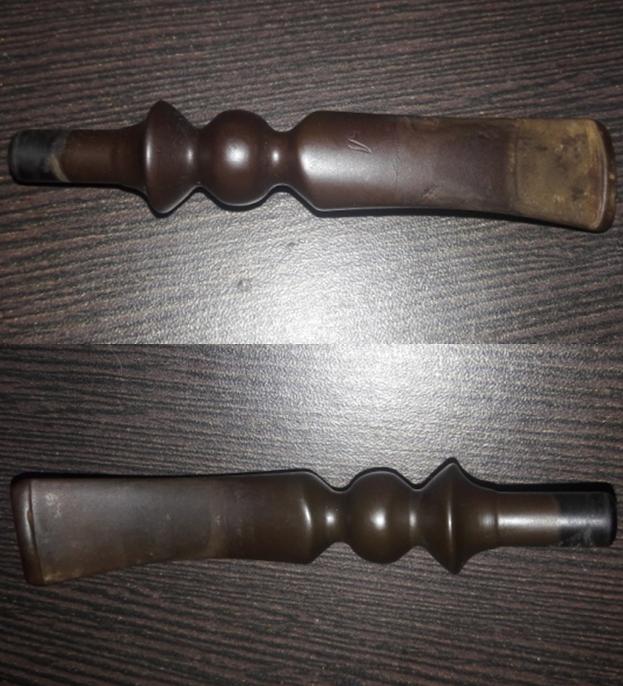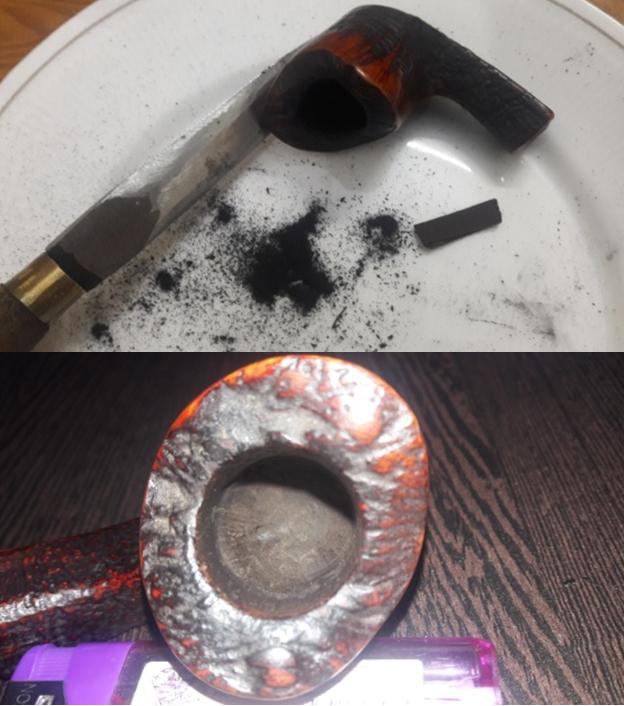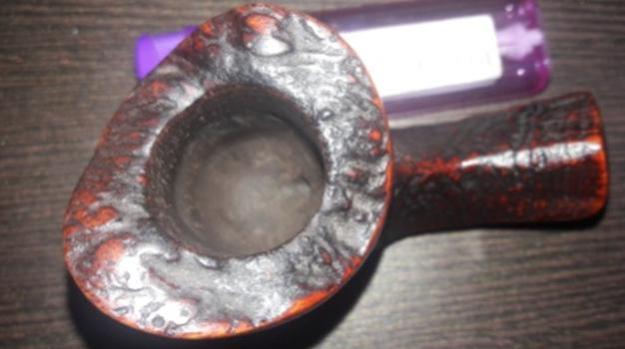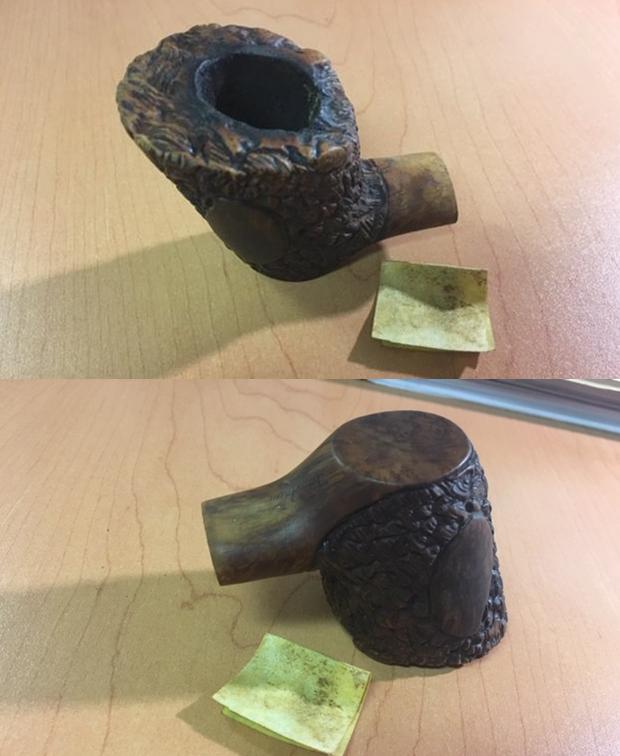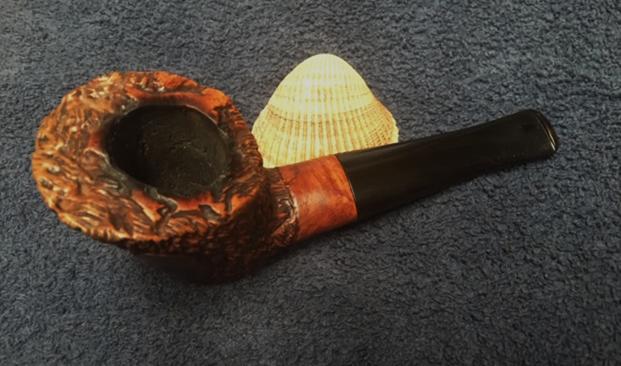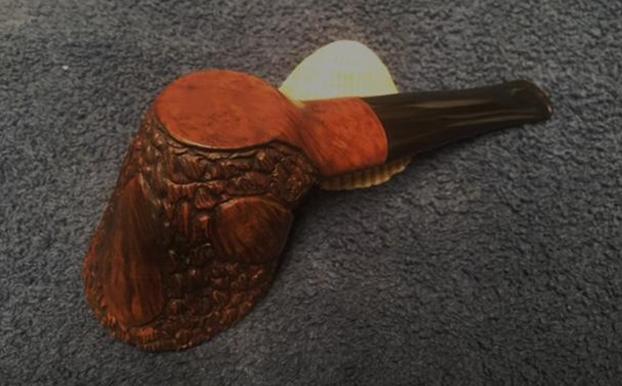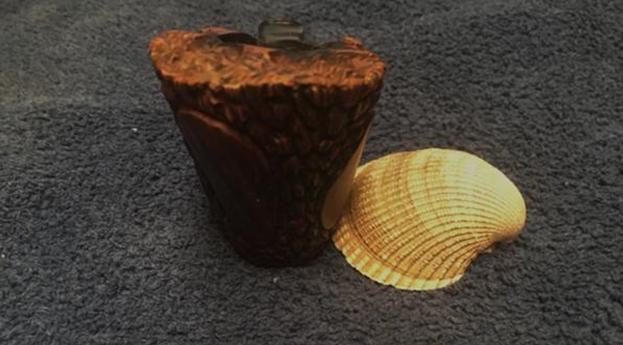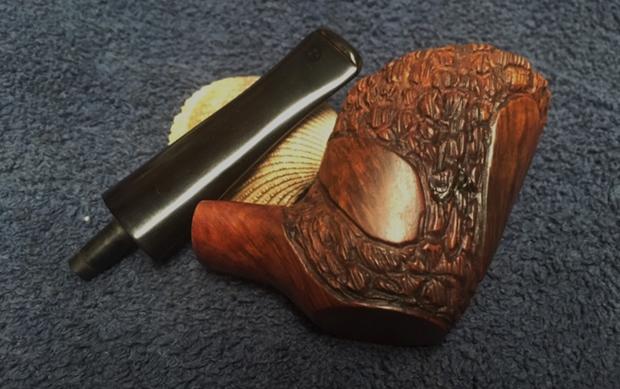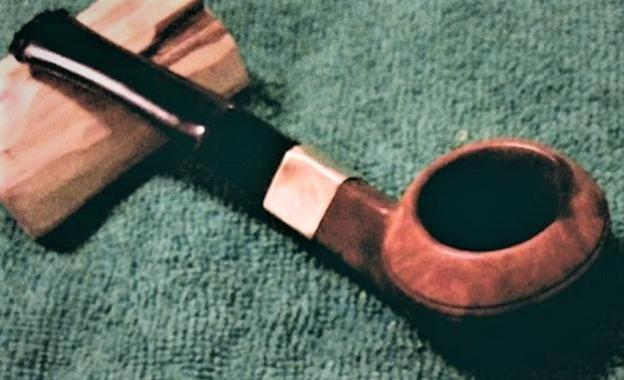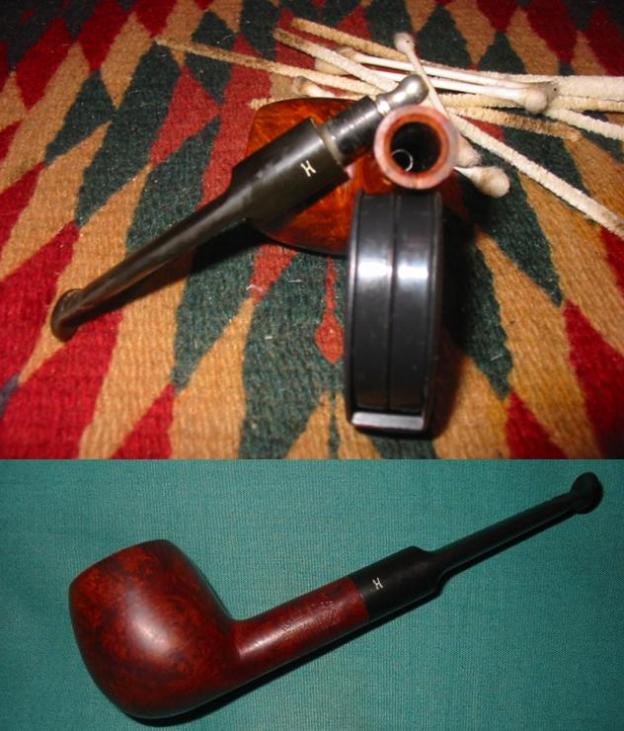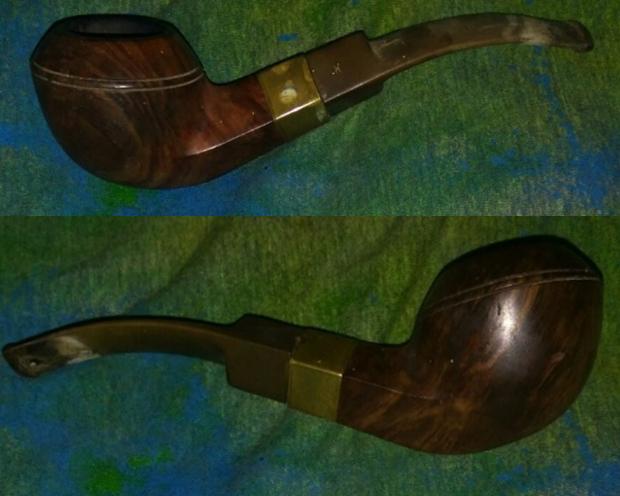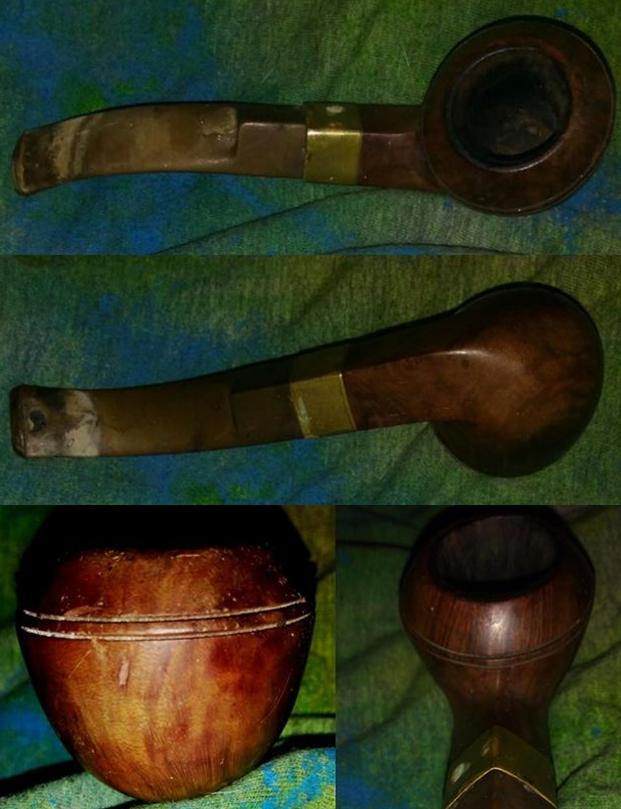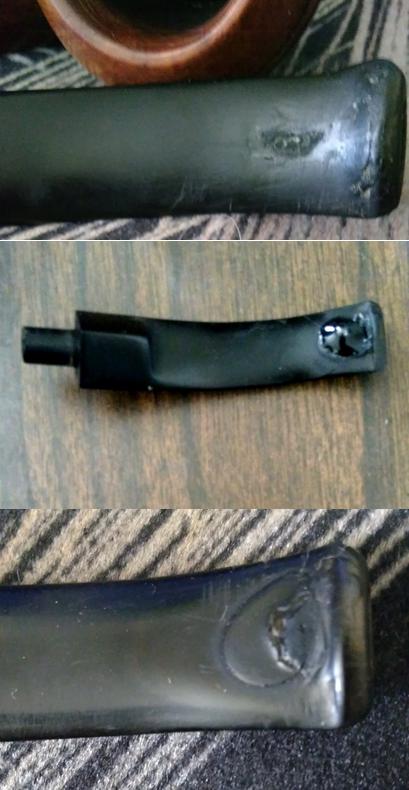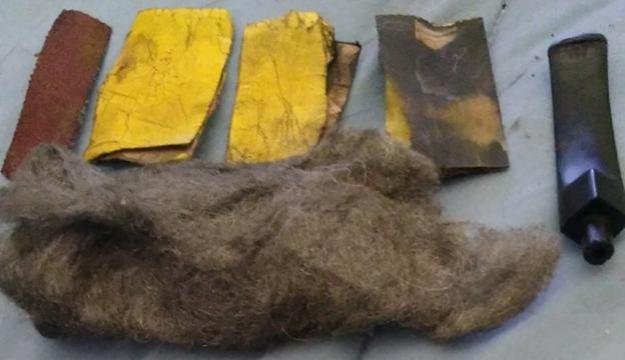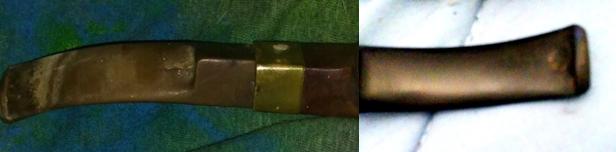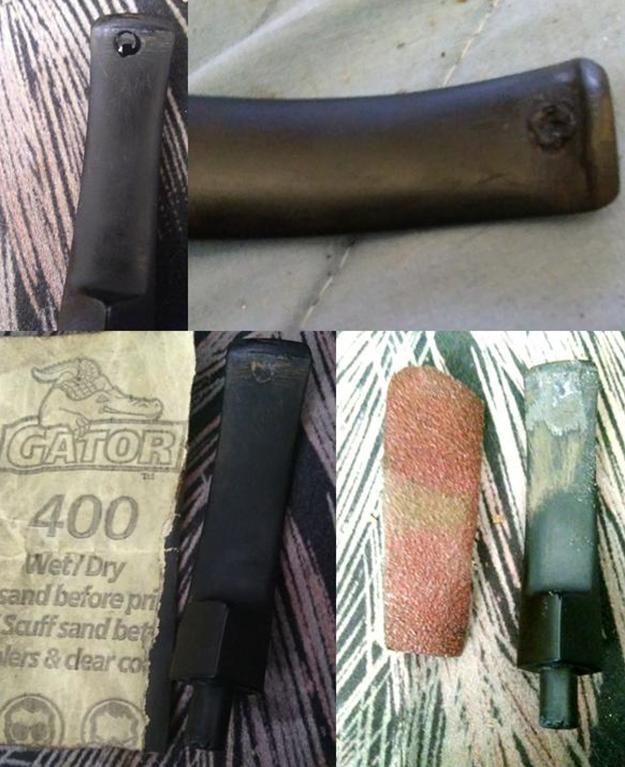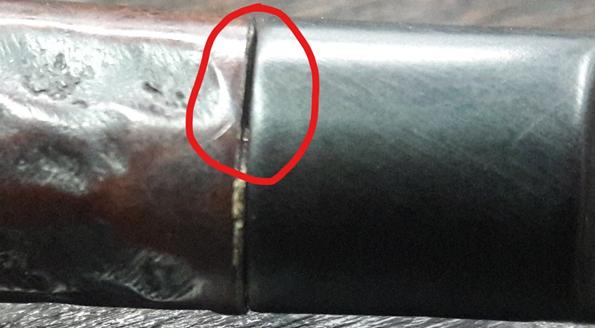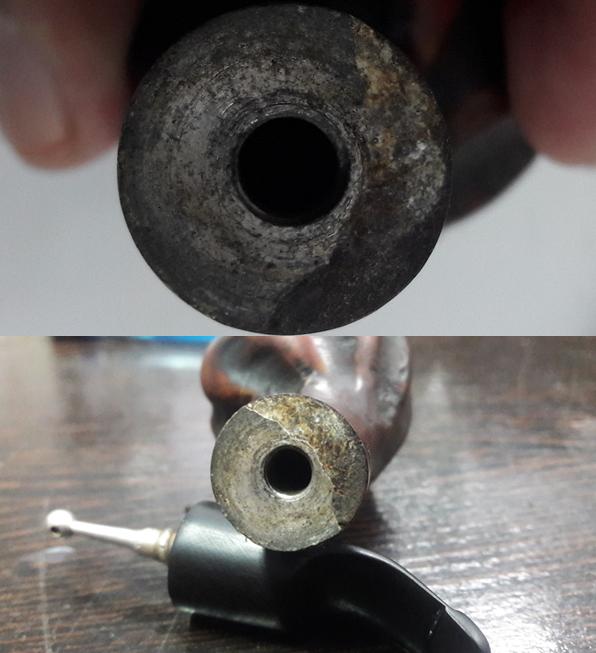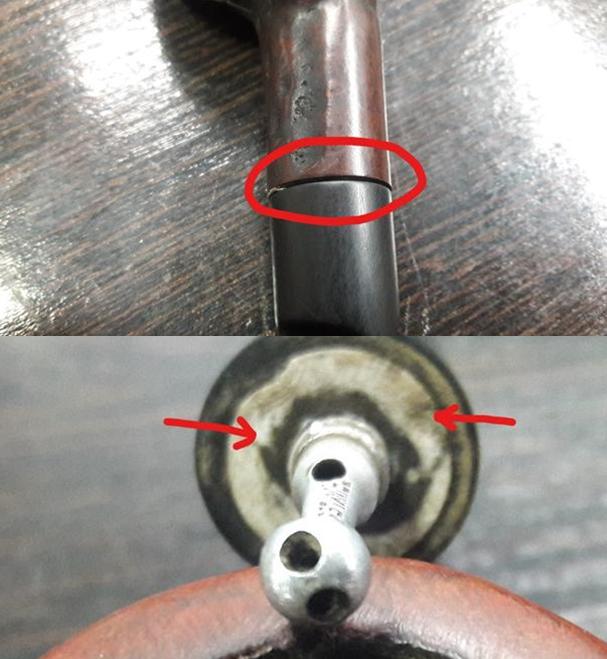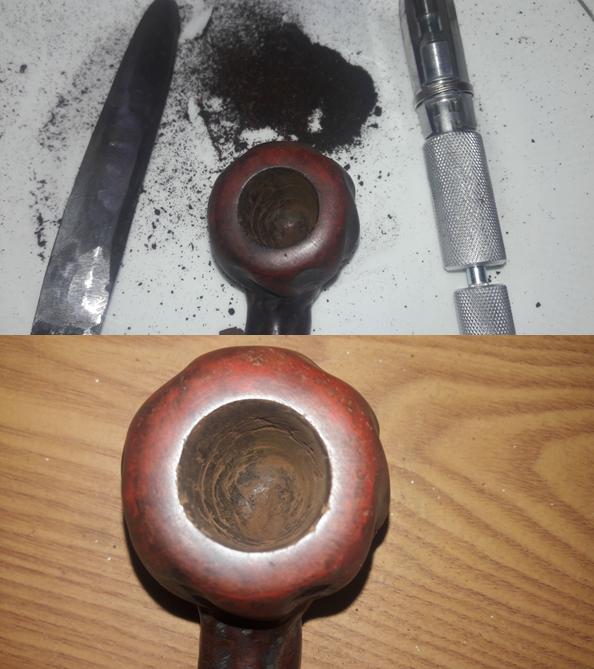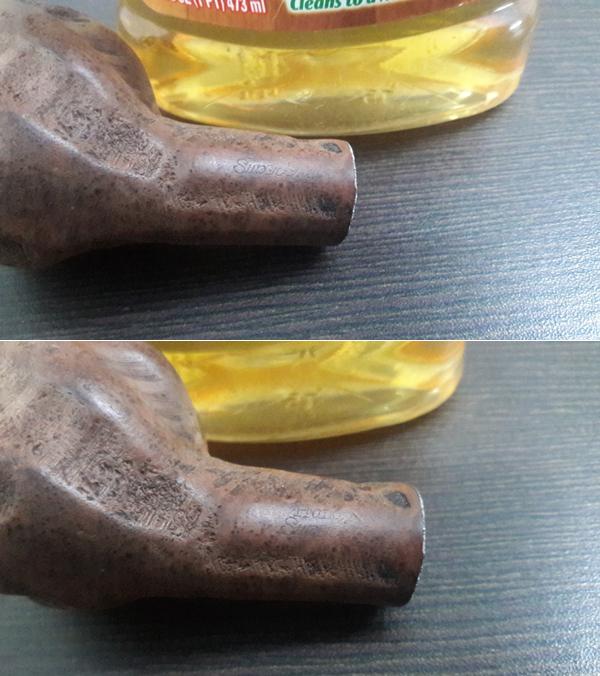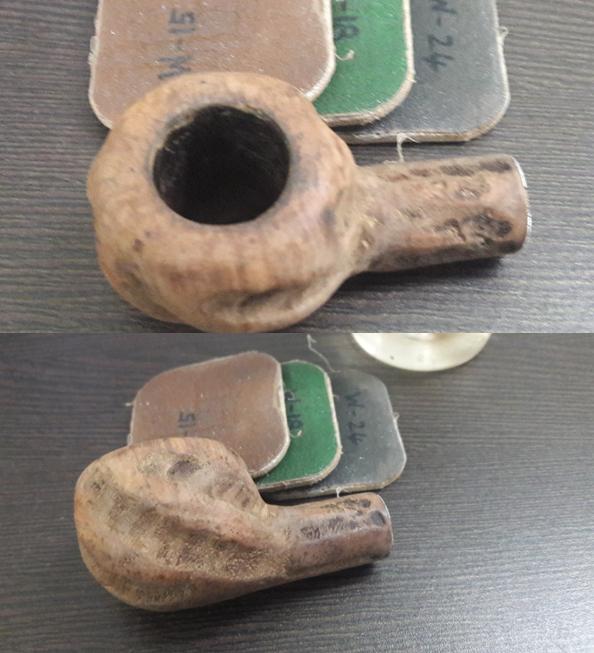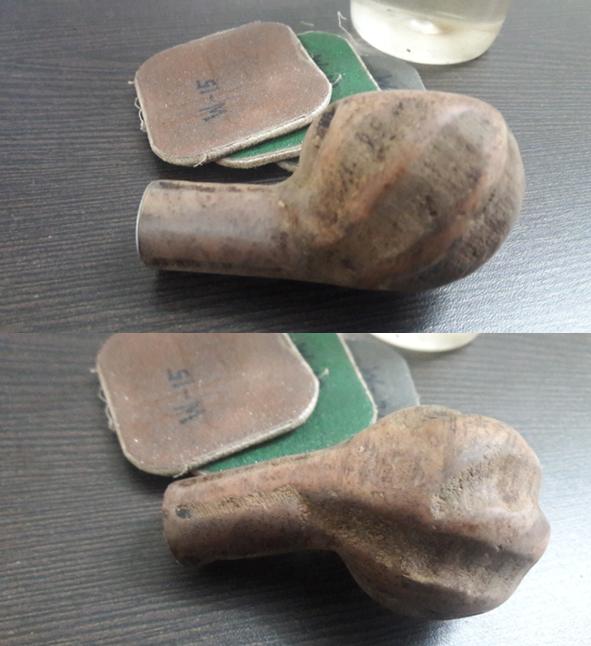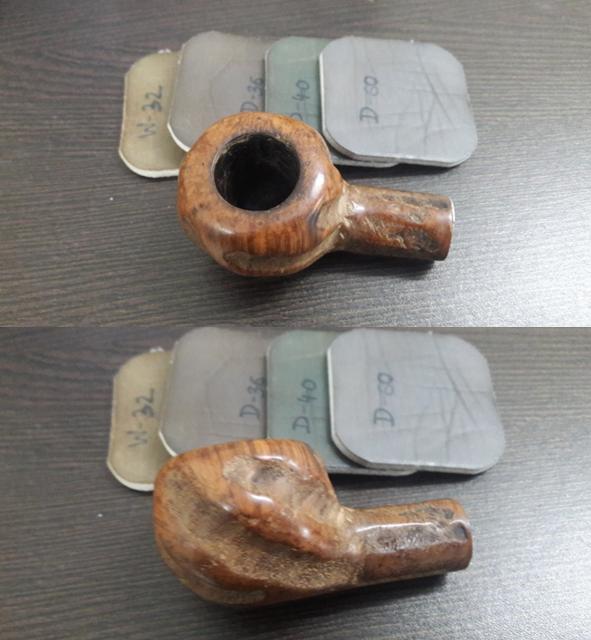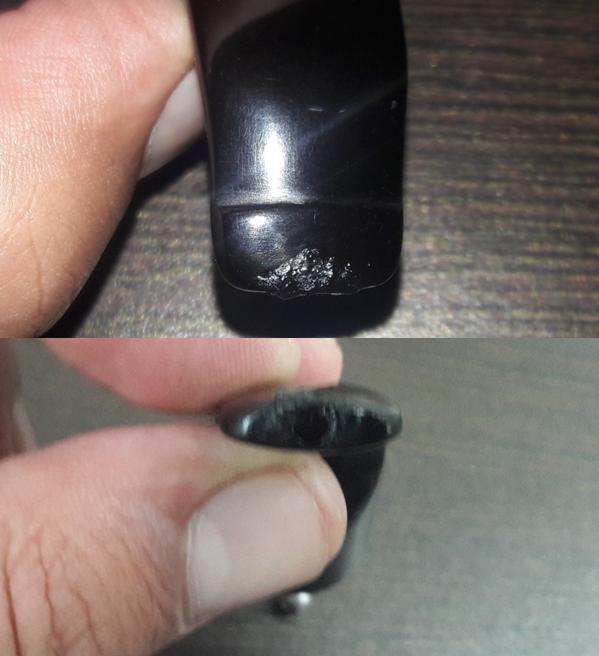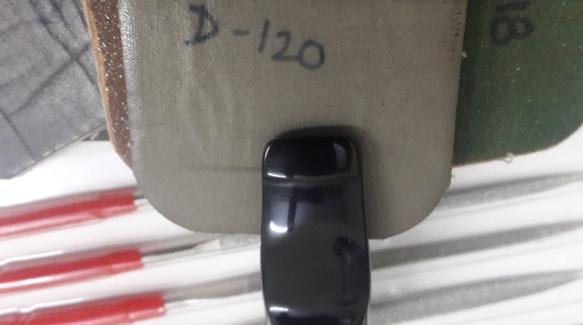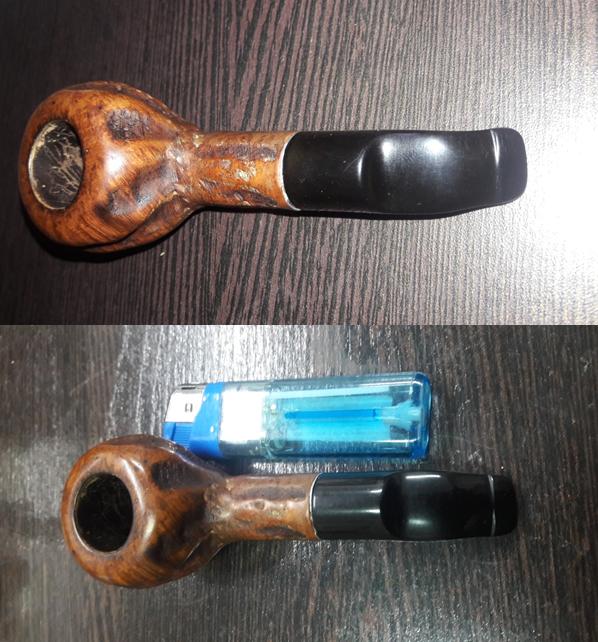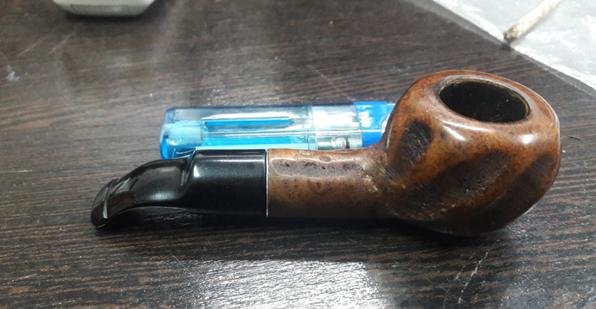
Tag Archives: repairing tooth marks

Salvaging a ‘Really’ Poor Richard’s of Italy Giant Billiard


Blog by Dal Stanton

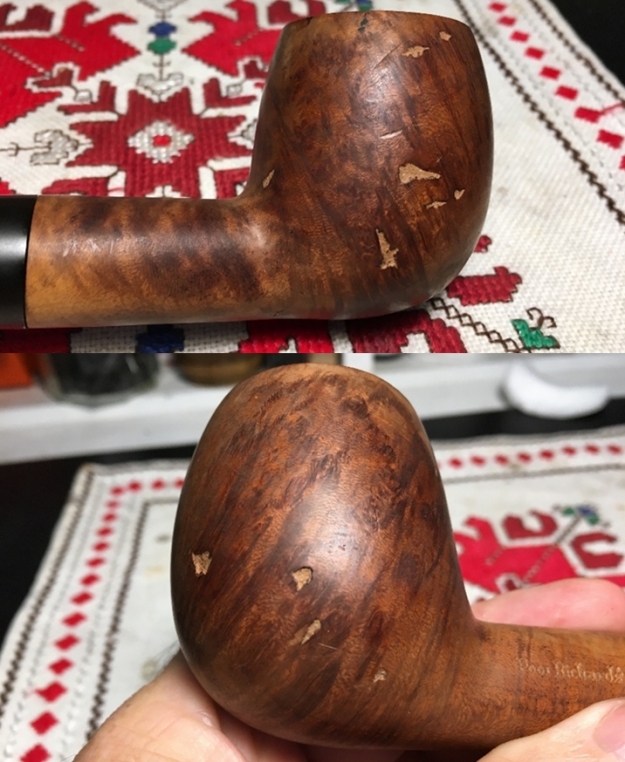
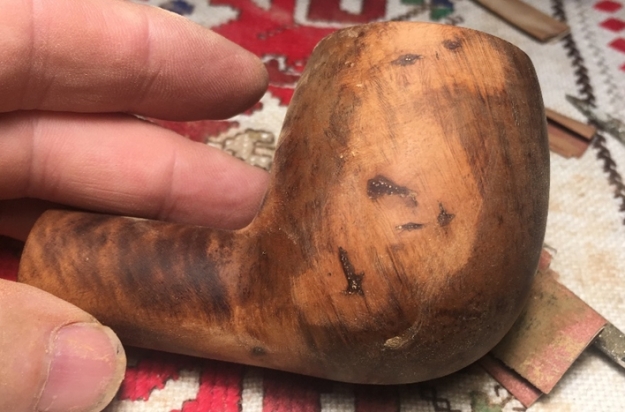
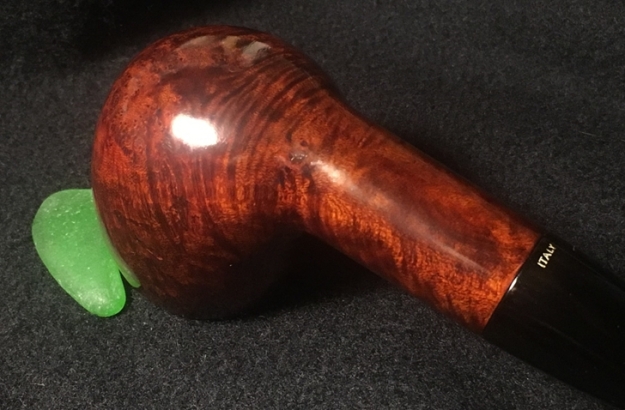
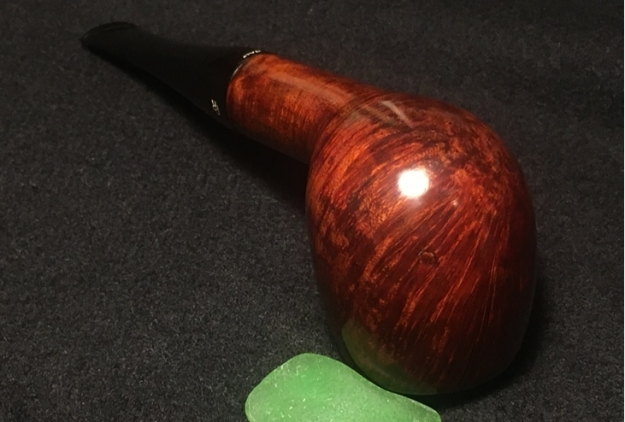
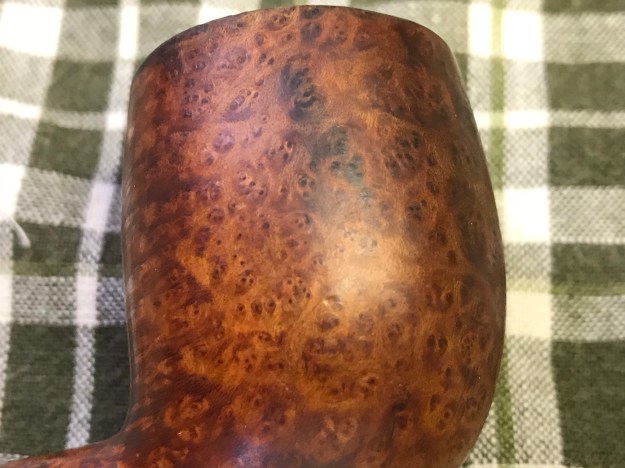
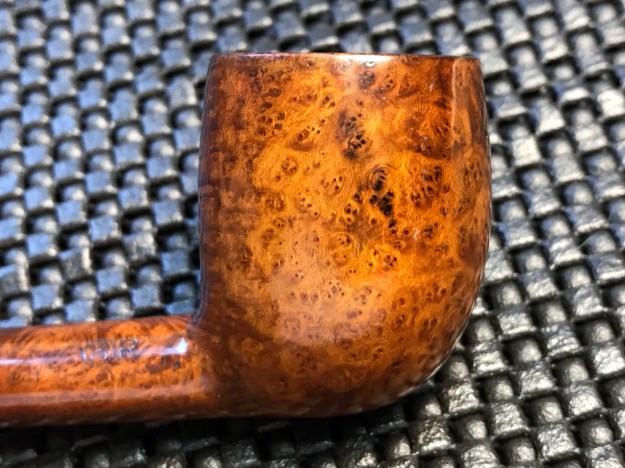
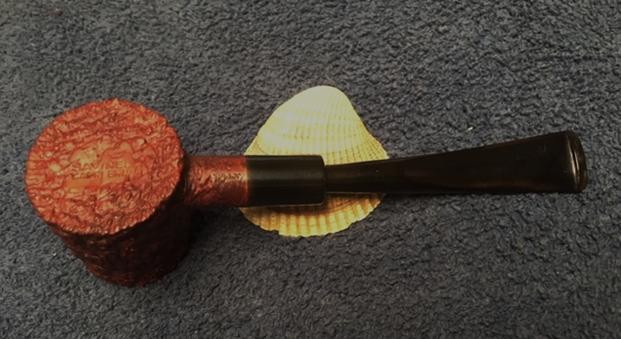
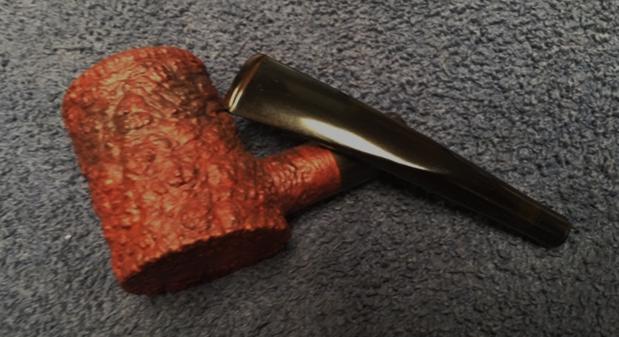
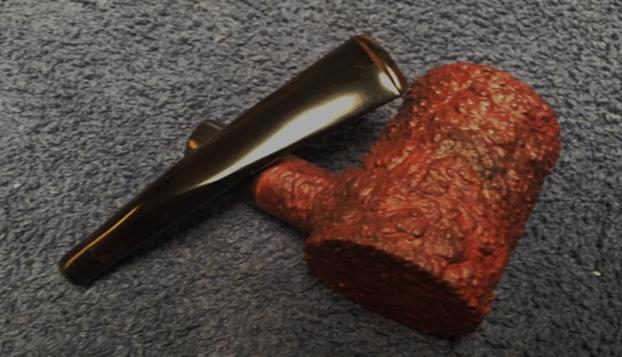
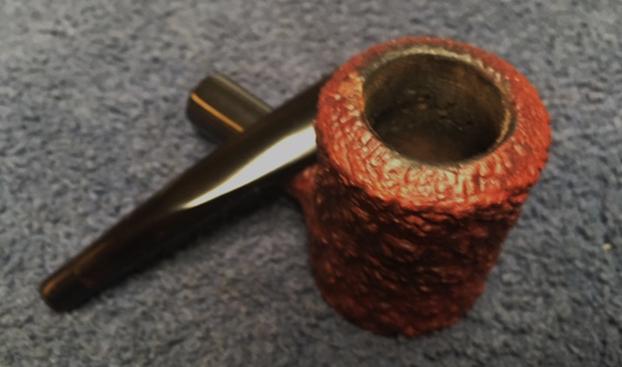
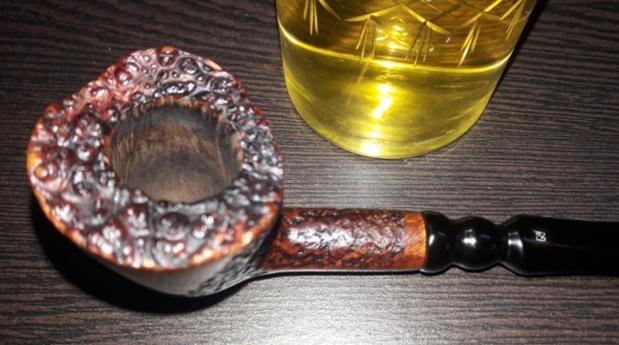
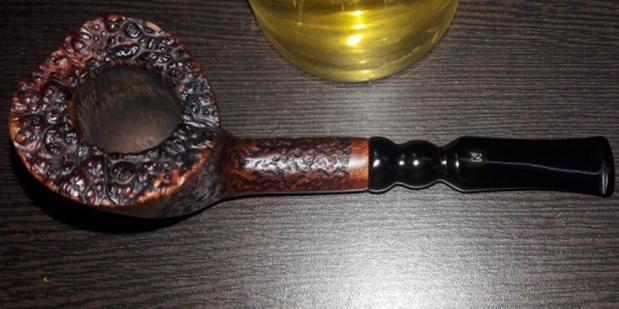
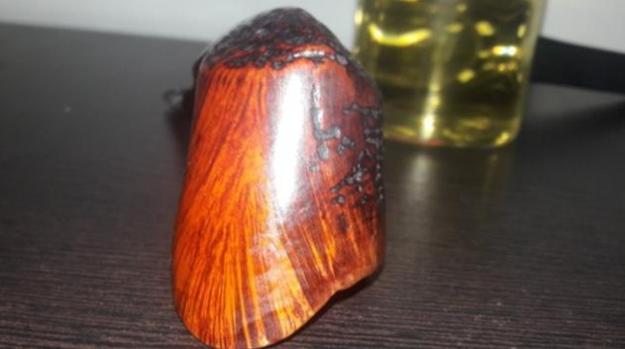
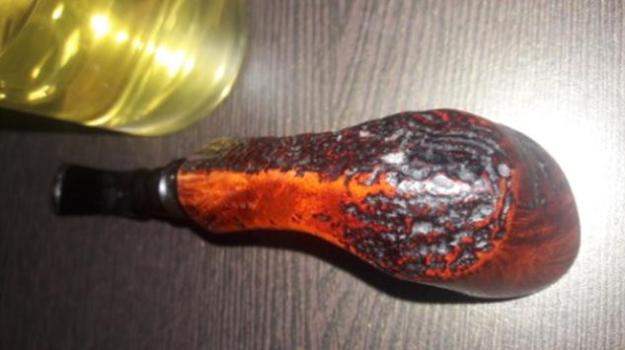
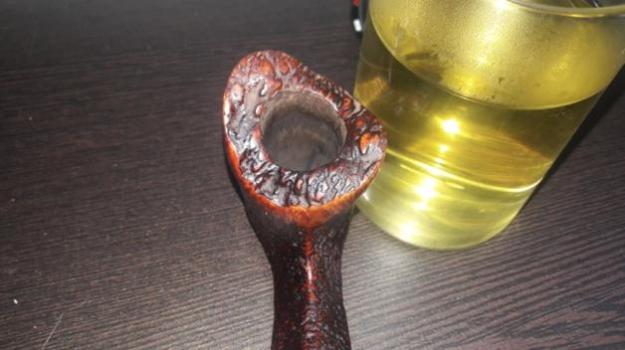
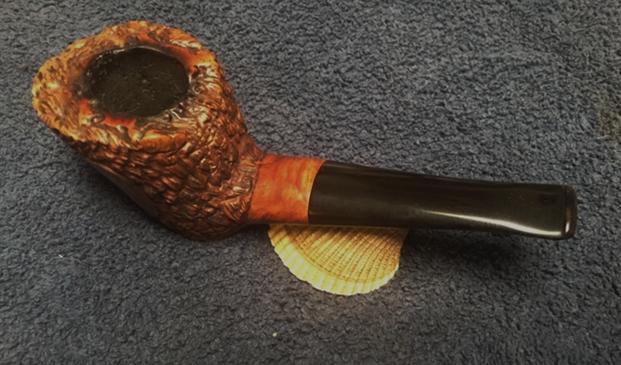
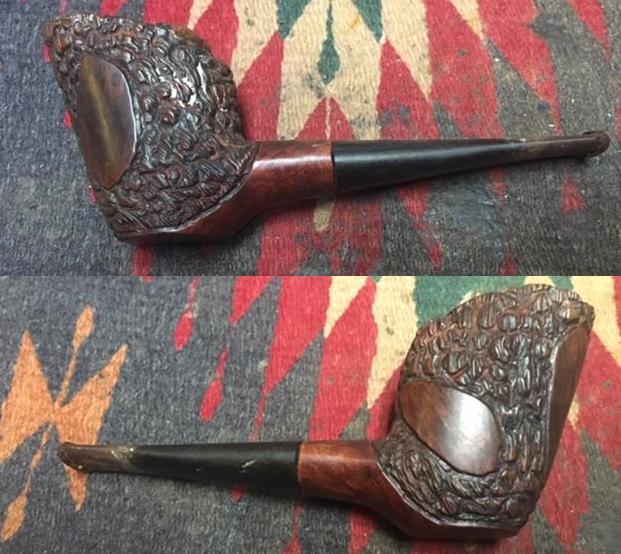
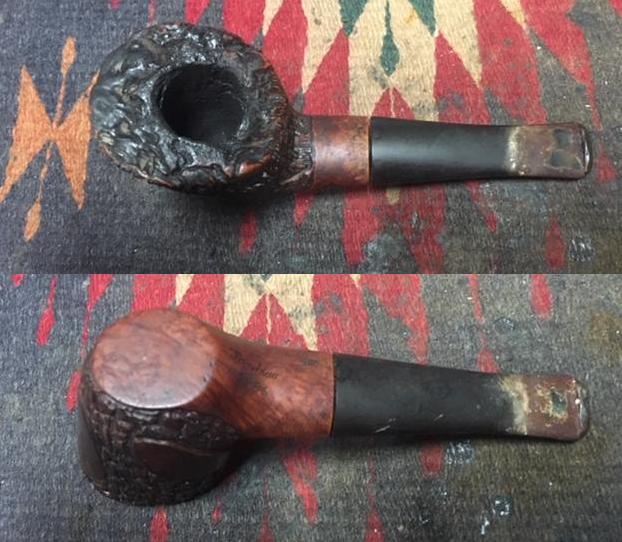
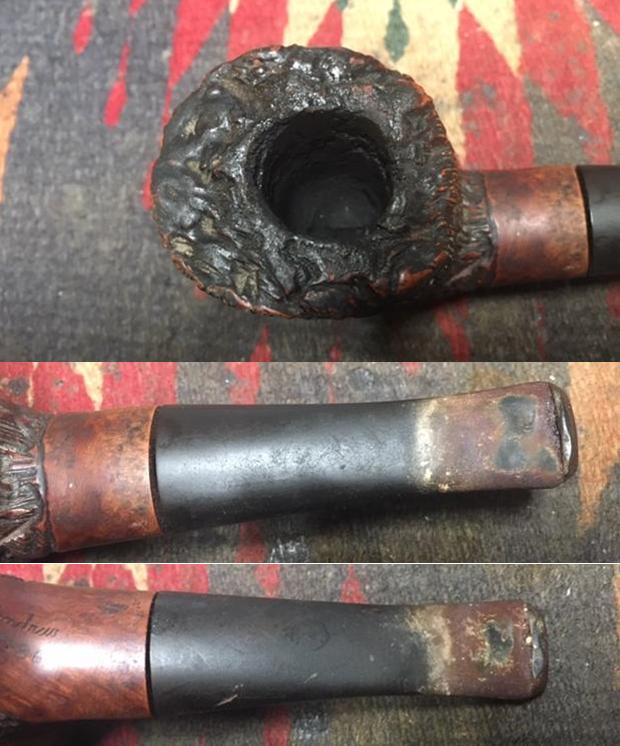
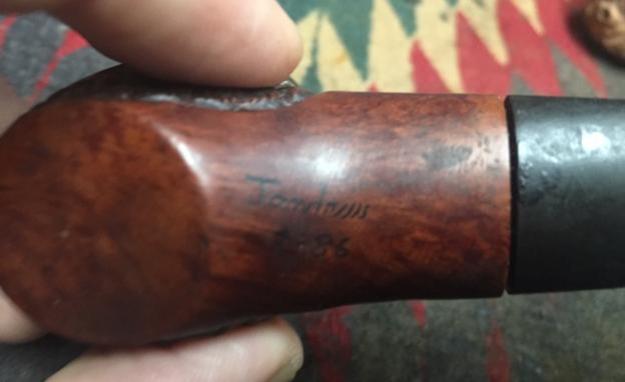
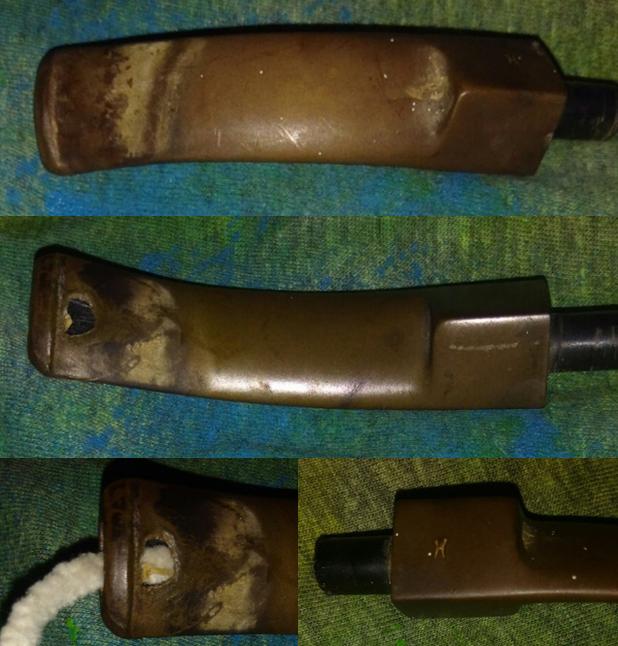
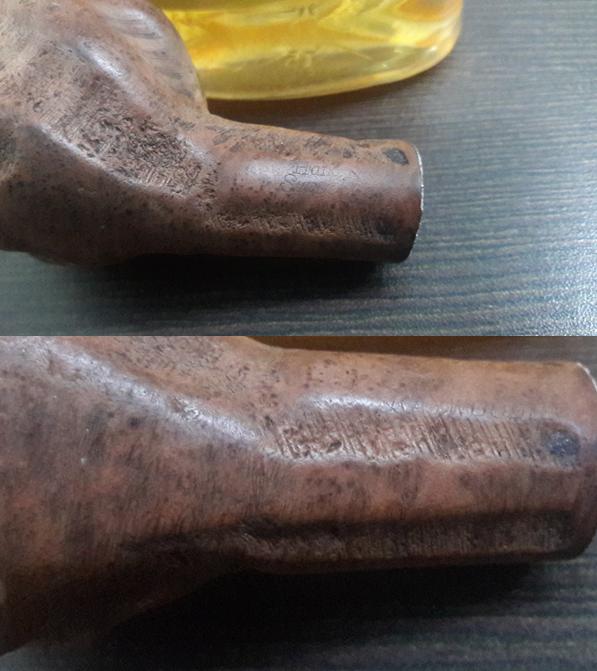
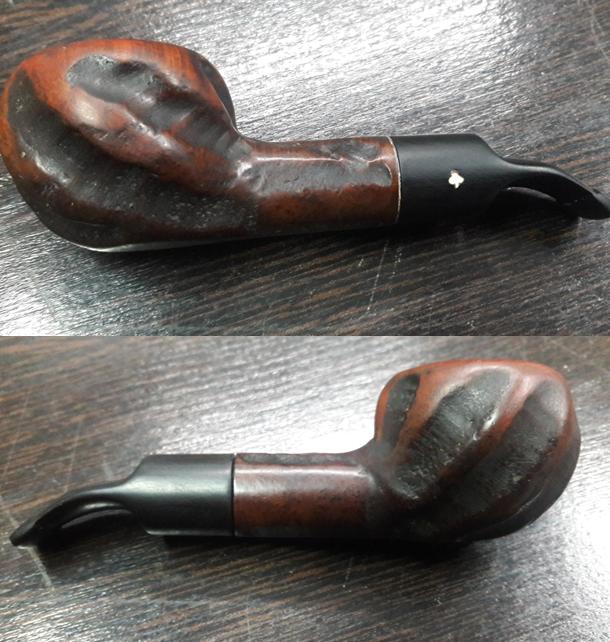
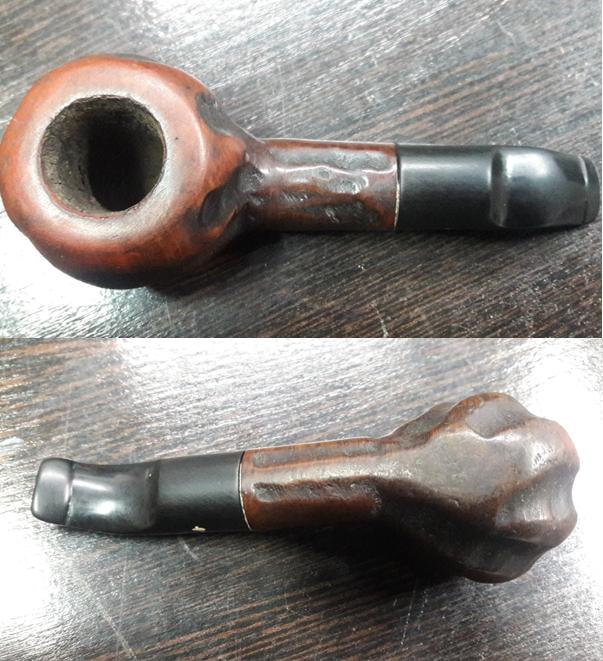
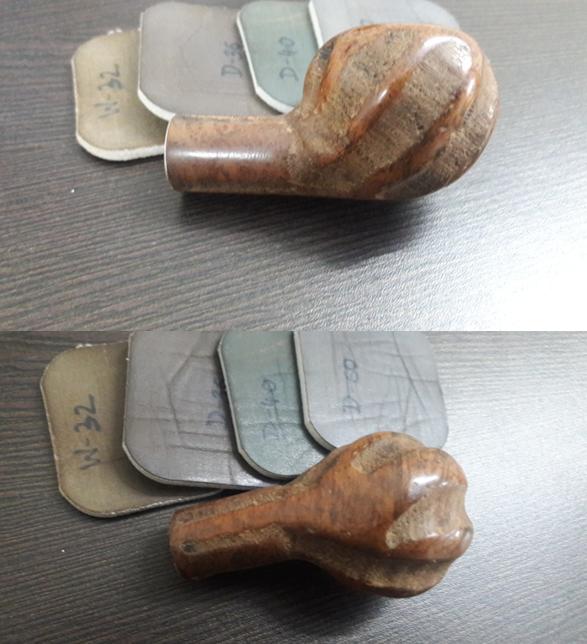
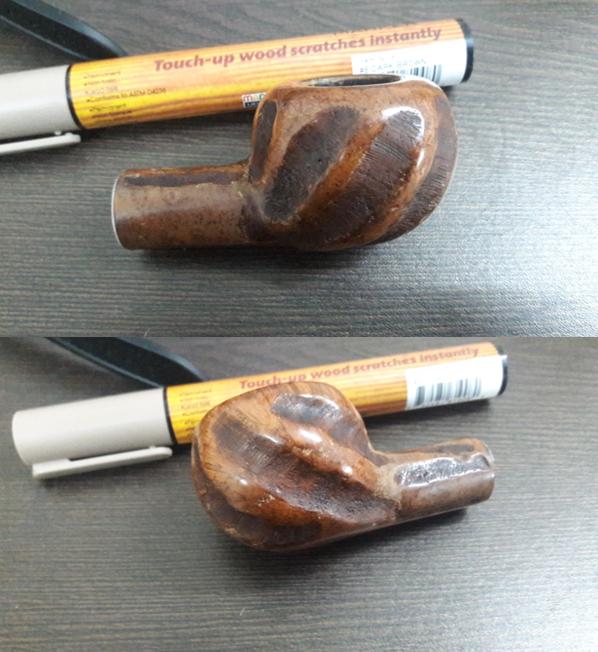
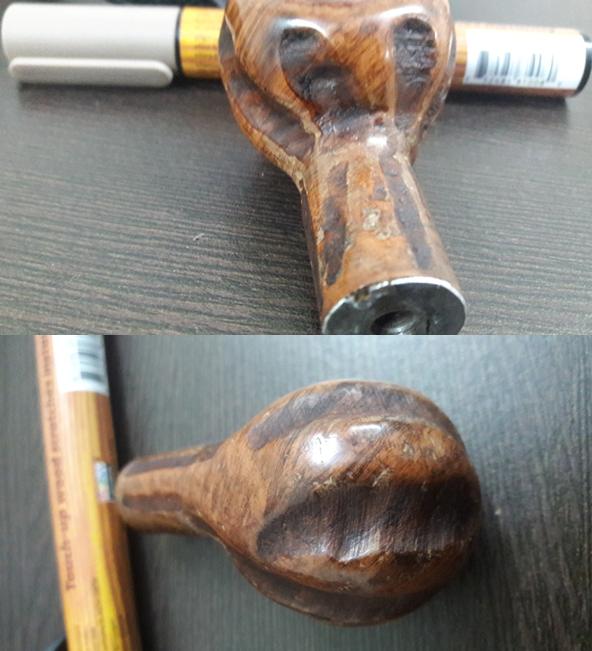
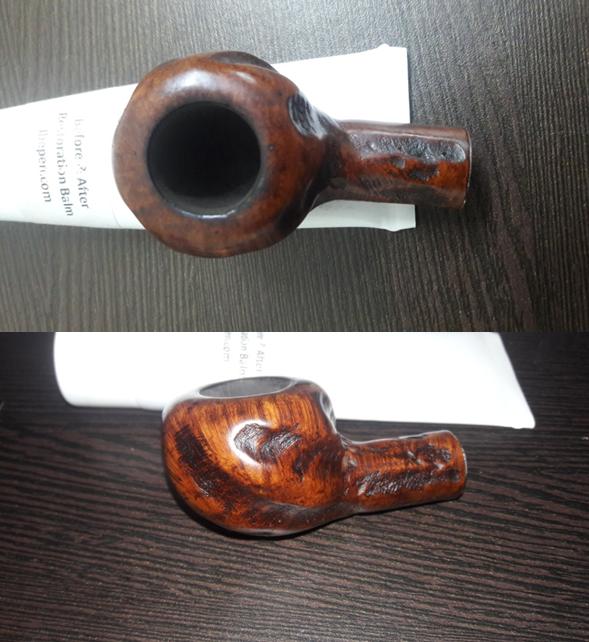
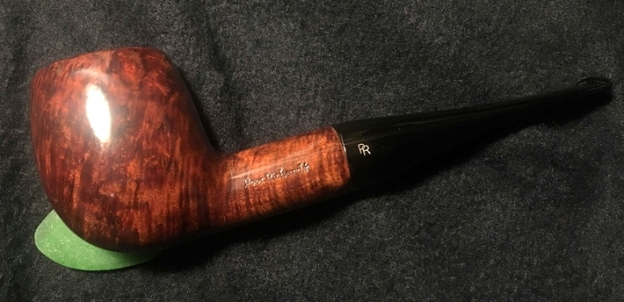
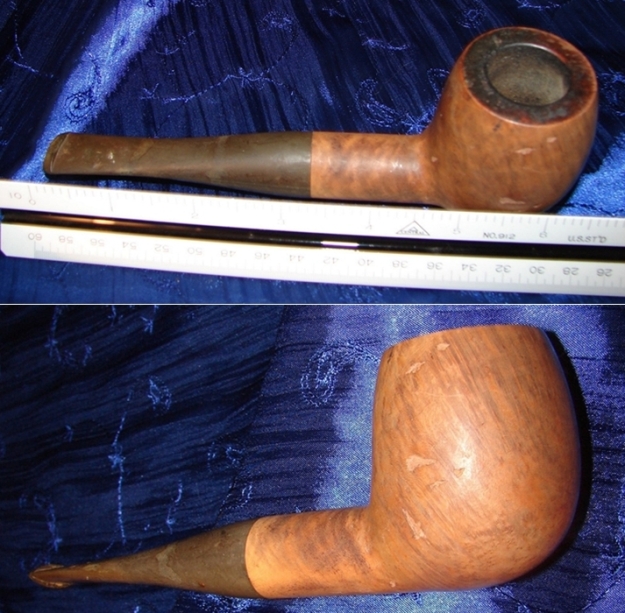
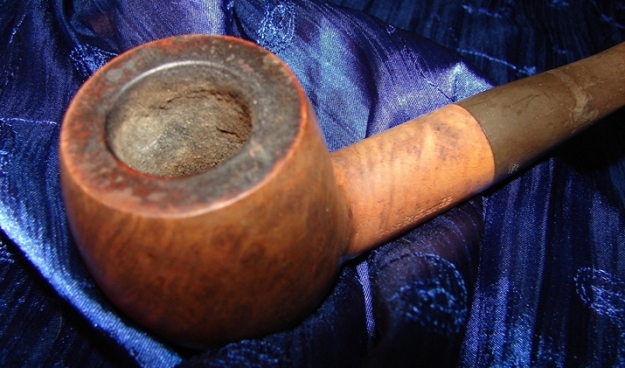
Let’s be honest. When I saw this Poor Richard’s on the eBay auction block I thought the name was a joke by the seller.  He WAS huge (L: 6 3/4”, H: 2 1/8”, Rim W: 1 1/2″, Chamber W: 7/8”, Chamber D: 1 7/8”, Weight: 74gr), no doubt, but his condition could qualify him for the title: King of the Basket Pipe Realm.  His condition was indeed poor and adding to the ‘joke’ was that he was displayed on satiny royal purple material.  But the clincher was coming. Adding insult to injury, the seller’s byline description under Poor Richard’s picture was: Poor Richard’s Classic Bulldog Large Estate Pipe Beautiful !!!  Nice  !!!  Bulldog?  I felt sorry for him.  I placed a bid and when the auction ended, it was no surprise that mine was the only bid seeking a new life for Poor Richard’s.  My wife’s response when she first saw Poor Richard’s was that Poor Richard’s dog got a hold of him!  Here are the pictures I saw. After bringing Poor Richard’s back to Bulgaria, I put him on my website in the For ‘Pipe Dreamers’ Only! section where my friend and fellow Pipe Dreamer from India, Paresh, saw him.  Poor Richard’s became the fourth pipe Paresh commissioned – all of them on the larger side and each one of them advancing our work here in Bulgaria benefiting the Daughters of Bulgaria, helping women and girls who have been trafficked and sexually exploited.
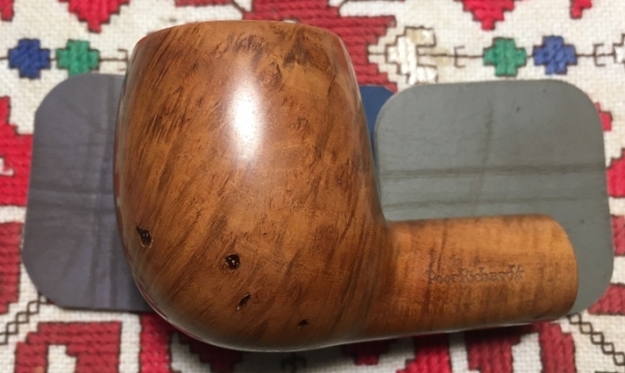
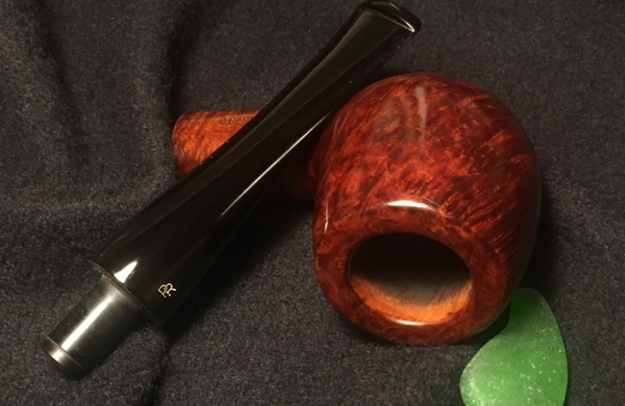
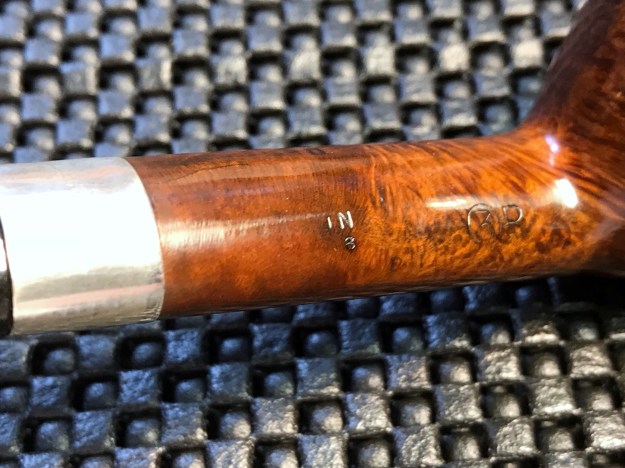
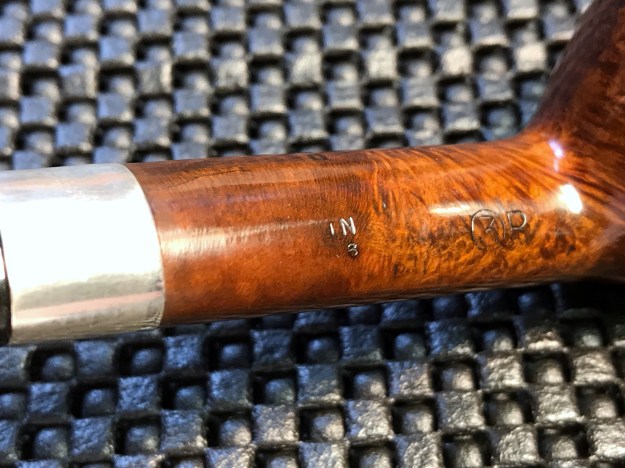
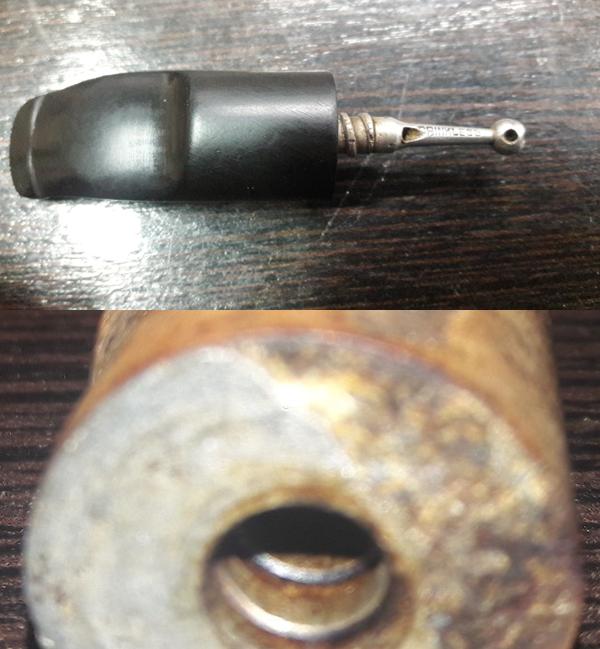
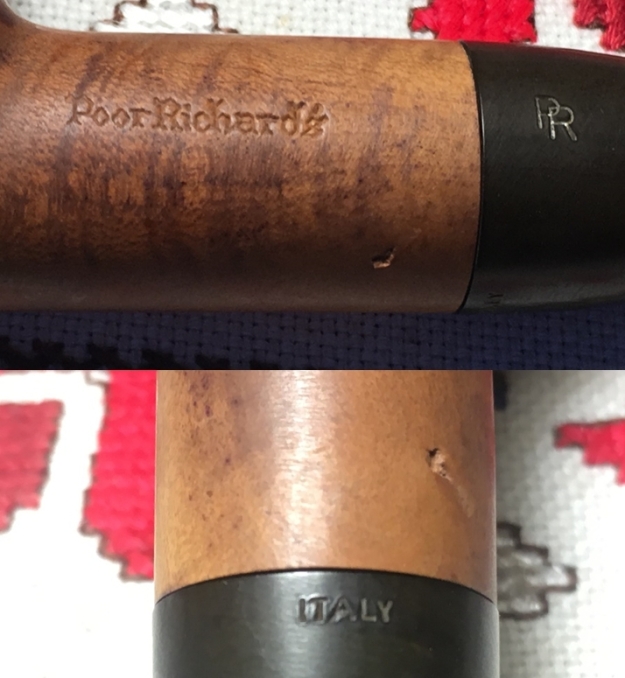
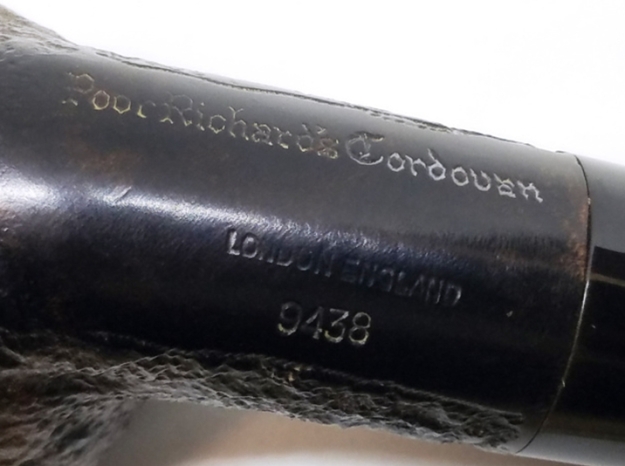
Taking more pictures on my worktable on the 10th floor of a formerly Communist ‘Block’ apartment building, the nomenclature on the left shank is ‘PoorRichard’s’ in what I call an ‘Old World’ script.  There are no other markings on the shank.  The stem is stamped with an interlocking ‘PR’.  The bottom of the stem is stamped with the COM, Italy.When I began doing the research on this Poor Richard’s, I recalled that rebornpipes’ contributor, Al Jones (aka: Upshallfan), had recently posted a restoration of a Poor Richards 9438 Cordovan Rhodesian shape.  Reading Al’s write-up was helpful because it clued me into the ‘mystery’ surrounding the origins of the Poor Richard’s name.  I noticed that our pipes shared the ‘Old World’ script nomenclature as well as the interlocking ‘PR’ stem stamp.  The obvious difference was the COMs – his, London, England and mine, Italy and his included a shape number, and mine, without.As I’ve done in the past with much benefit, I wrote to Al asking about the differences between our Poor Richard’s and what to make of the differing COMs?  His response was helpful:
Dal

Unfortunately, there is nothing but speculation about these Poor Richard pipes.  The one shop here, with that name, can’t even conclusively determine if they had shop pipes.

I suspect it was a shop pipe, made by various makers for this shop.  But a shop in Montana having shop pipes doesn’t exactly make sense either.  Usually shops with their own pipes were larger, and in metro areas, not out in the wilderness of Montana.

Poor Richard pipes are not listed in “Who Made That PIpe”, so my guess is still a shop pipe.  Perhaps that Montana shop was bigger than I presumed. 

I suspect Italian companies, like GBD made shop pipes as well.  Perhaps that one was made by Savinelli or other?  Without a shape number, it’s impossible to determine.

Have fun restoring it!

Al

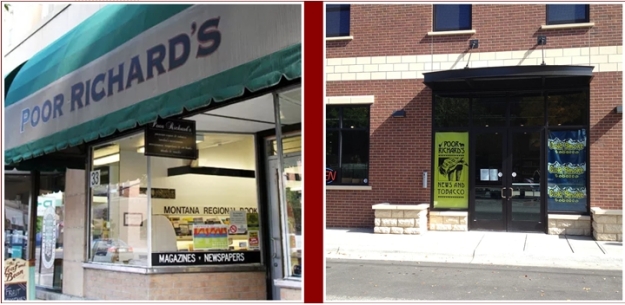
Al referenced the pipe shop in Montana that in a subsequent email he referenced that Steve had also worked on a Poor Richard’s attributed to the ‘Poor Richard’s’ pipe and tobacco shop in Bozeman, Montana. However, Al said that Steve’s Poor Richard’s pipe had a totally different nomenclature with Montana stamped on the pipe.  I found this write up on Rebornpipes and what a write up!  It was one of Steve’s and Charles Lemon’s classic collaborations including a pinning tutorial.  When these two masters get together, its fun to see the wonders happen!  (See this post which is worth the read:  A Humpty Dumpty Cross Canada Project – Could this Poor Richards Select Square Shank Billiard 9489 ever be whole again?)  Steve’s research on the Montana shop is good and saved me time and steps.  Since Steve’s write up in 2016, the website had changed and a description of Poor Richard’s history beginning in 1962 can be found here: History.  The following pictures show the shop early on and what it is today.Even with the mystery and the discrepancies with the nomenclatures, in researching different pipe shop pipes in the past (L. J. Peretti, Pipe Pub), I found that it’s common to have pipes manufactured in various places.  Another indicator that the Poor Richard’s nomenclature refers to a shop is simply because it is possessive – Richard’s, pointing to something else.  Whether there’s another Poor Richard’s shop other than the one in Bozeman, I don’t know.  This question has been lost to history.
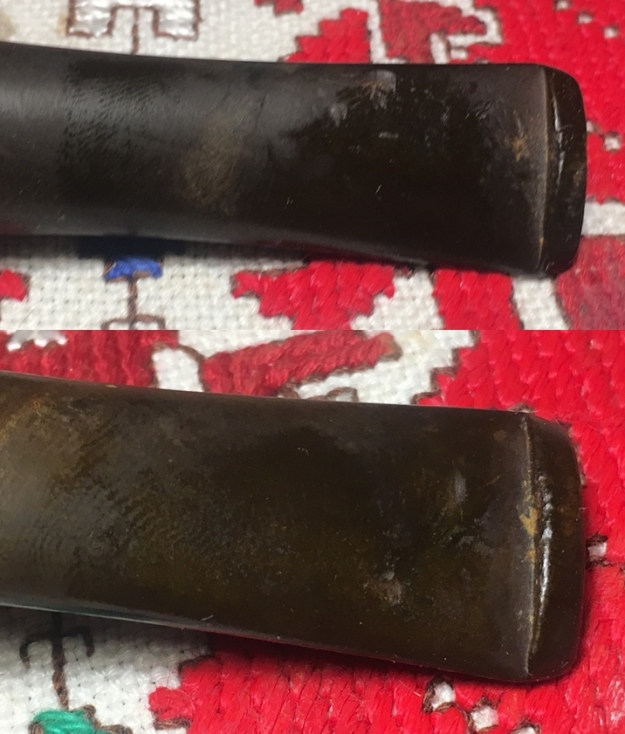
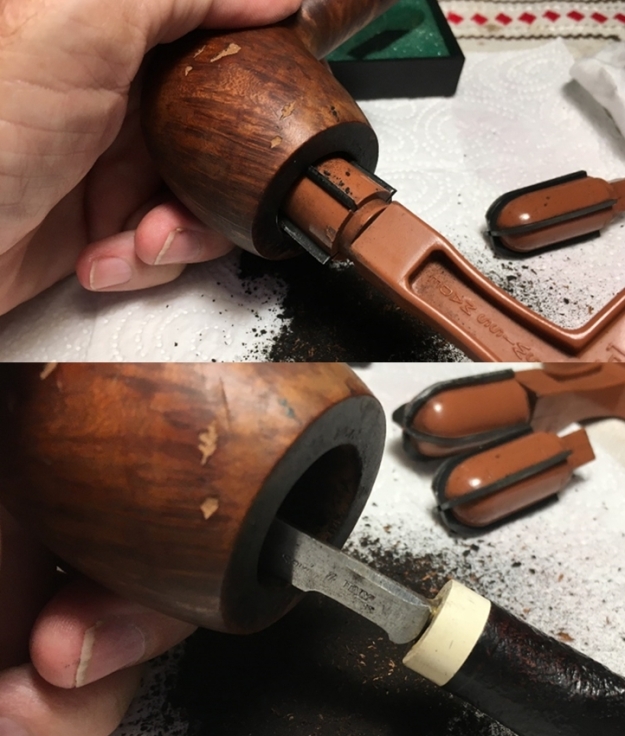
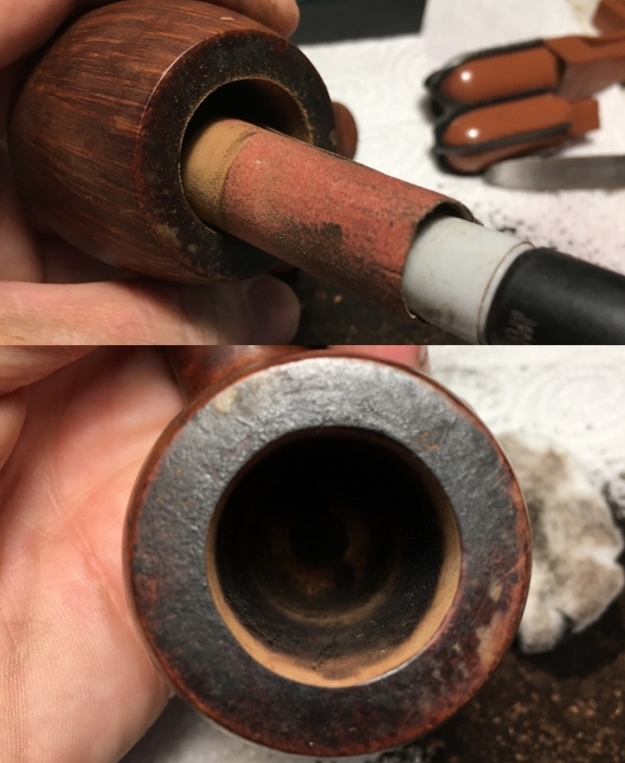
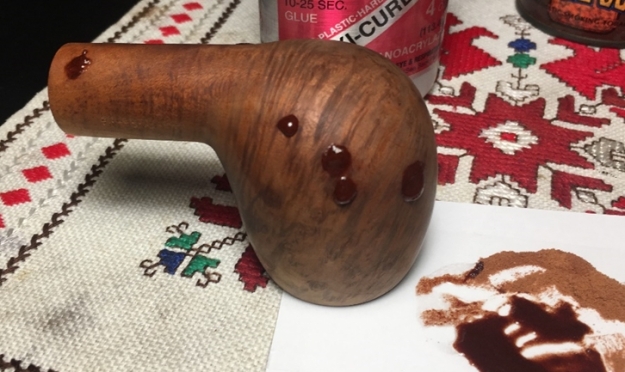
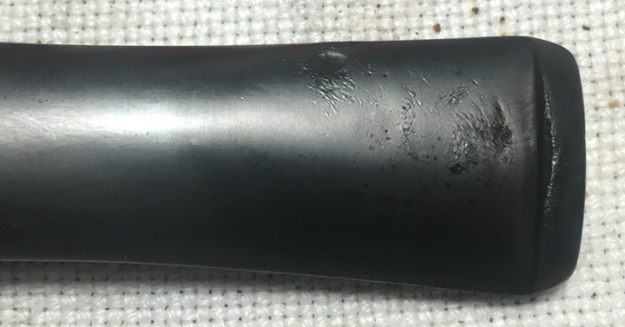
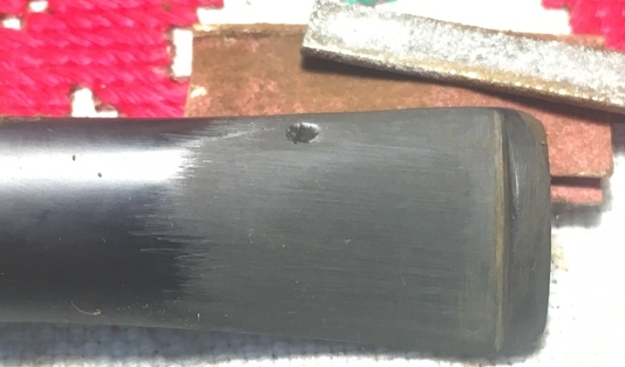
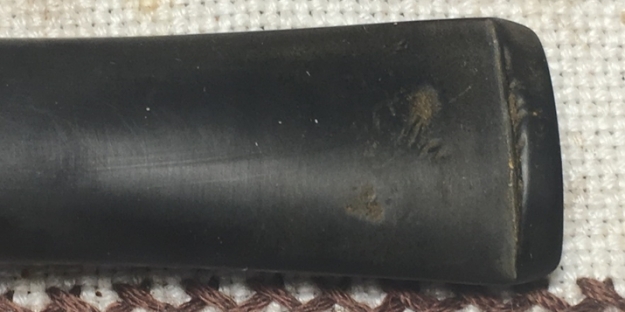
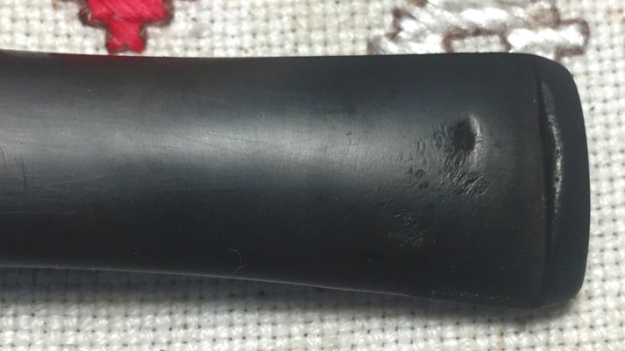
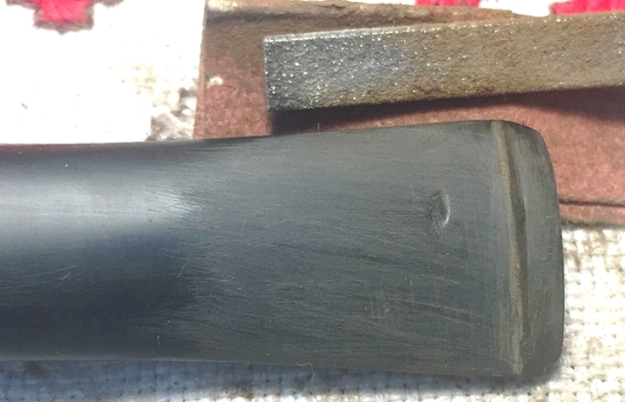
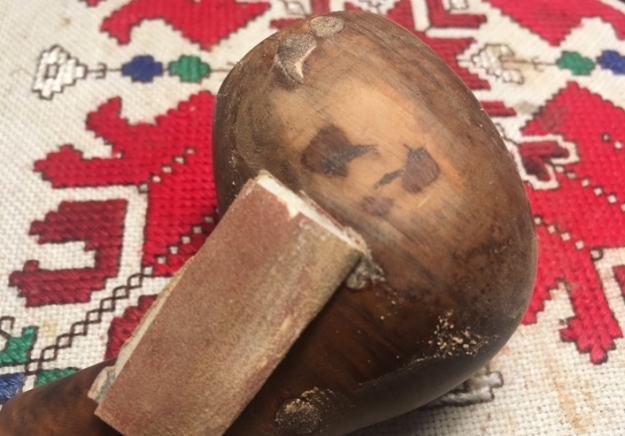
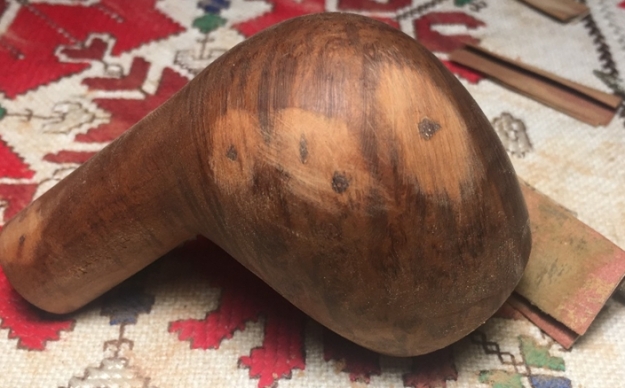
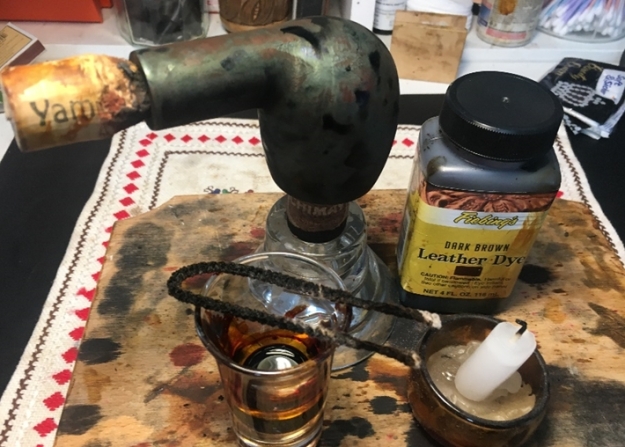
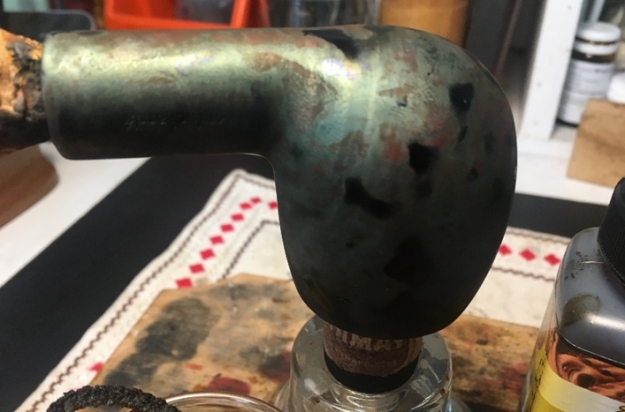
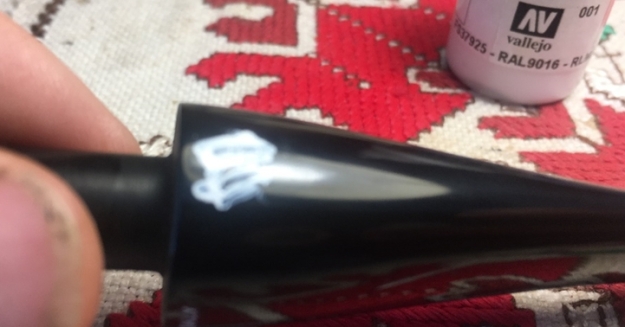
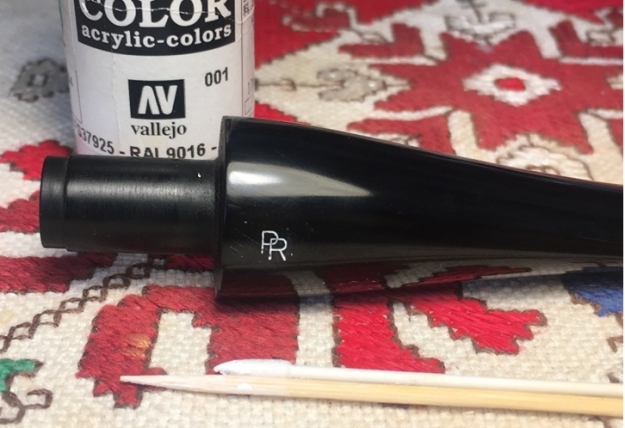
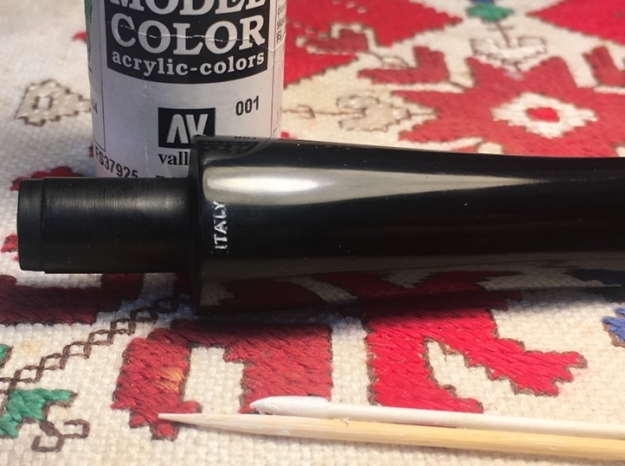
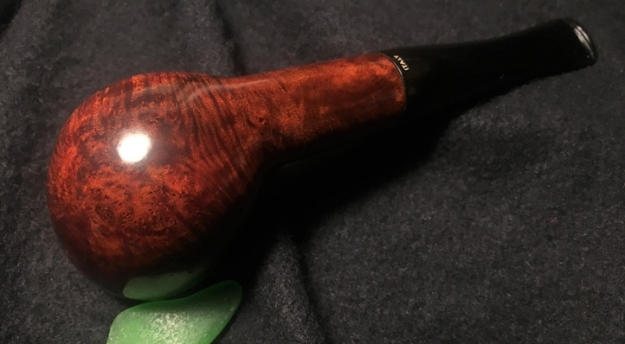
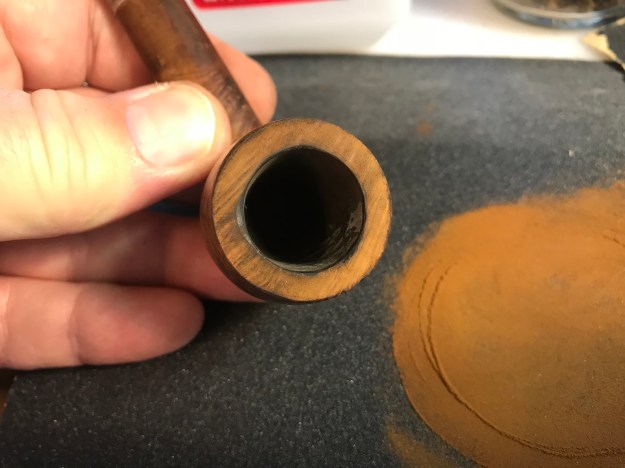
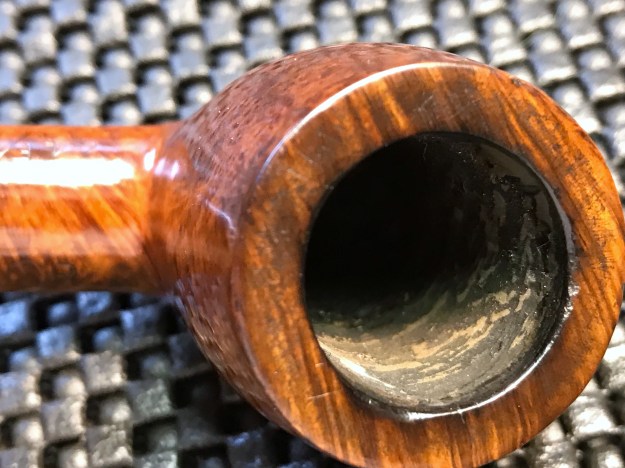
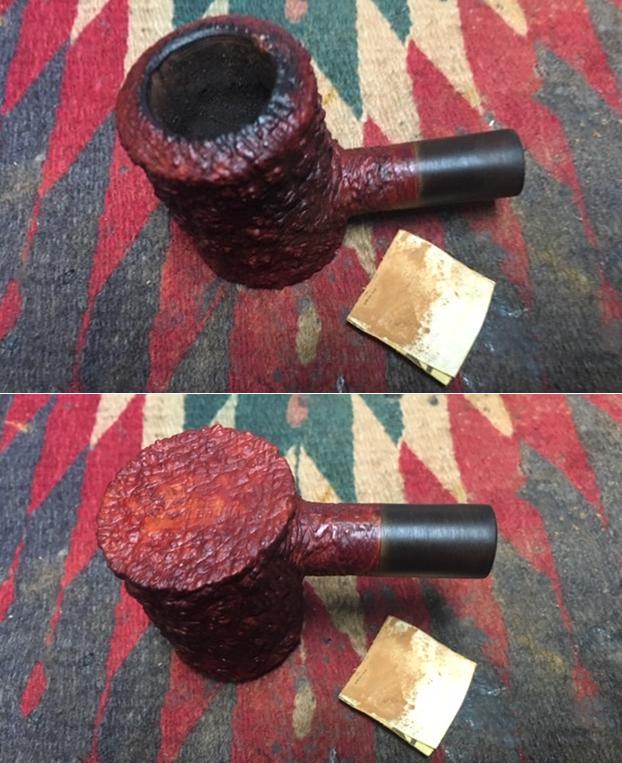
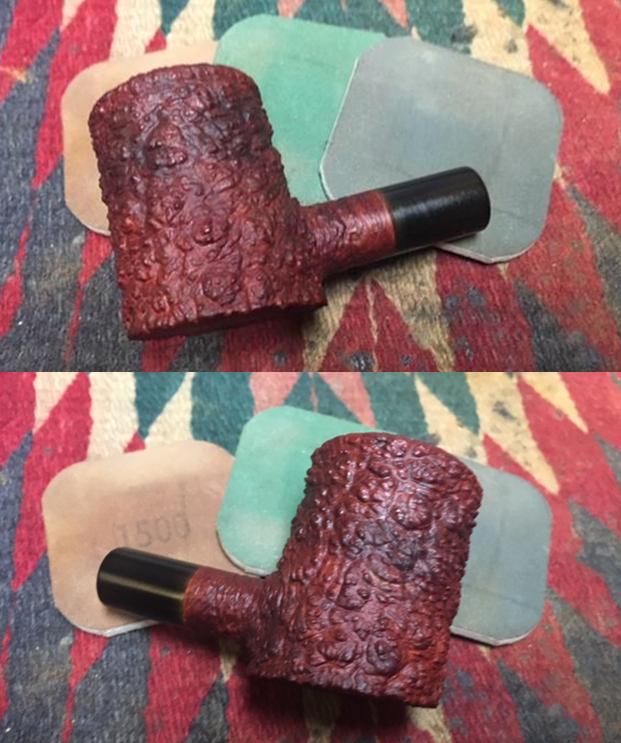
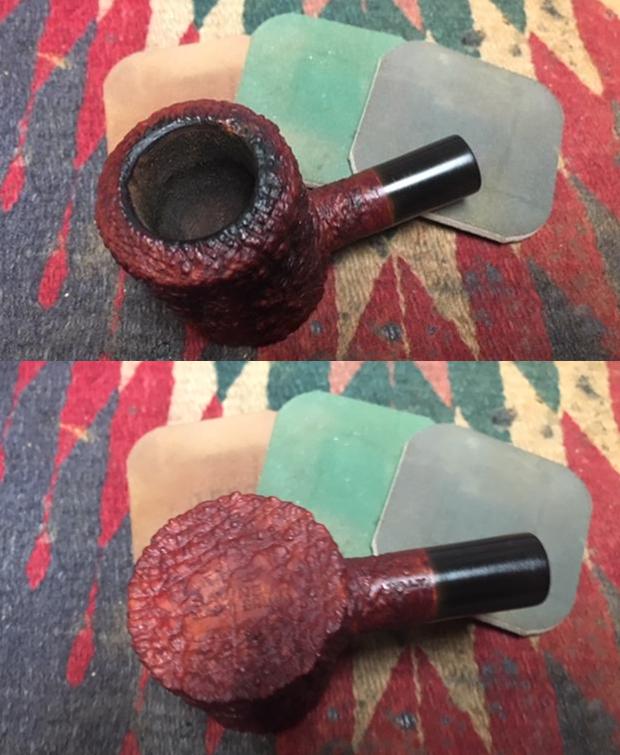
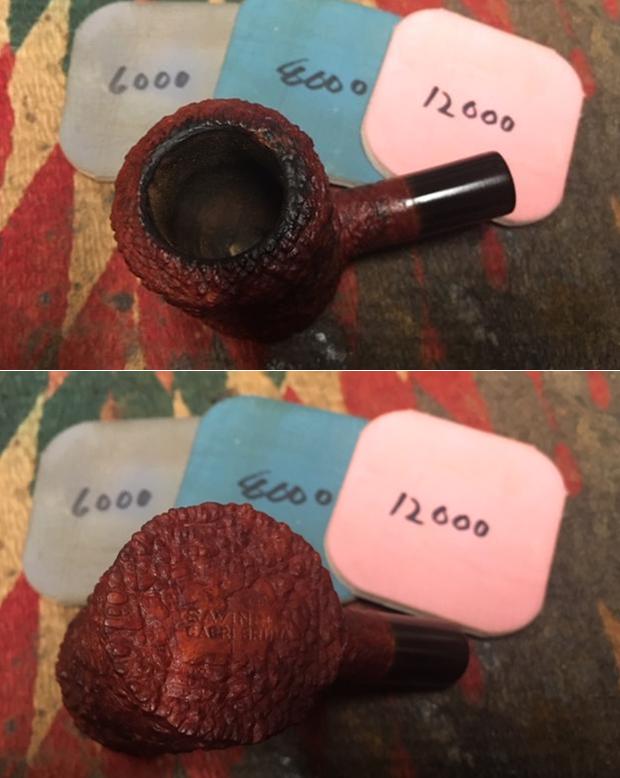
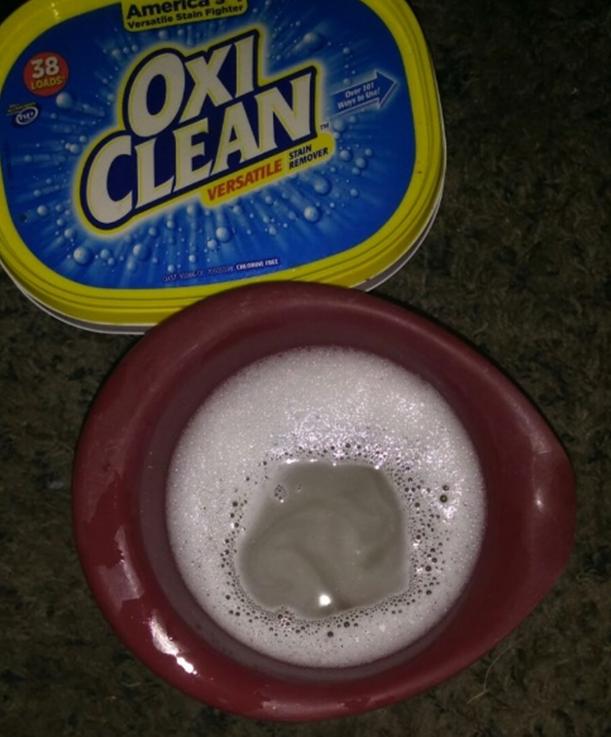
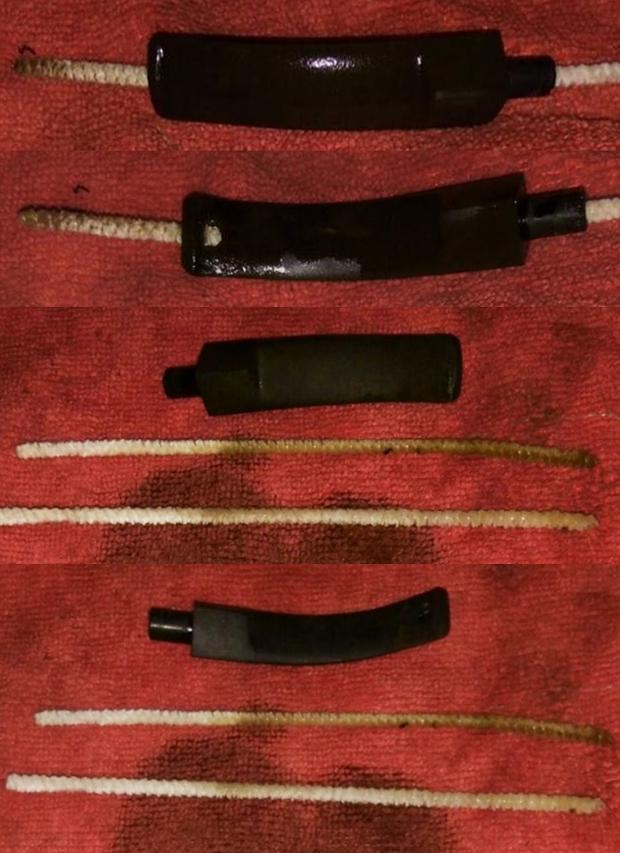
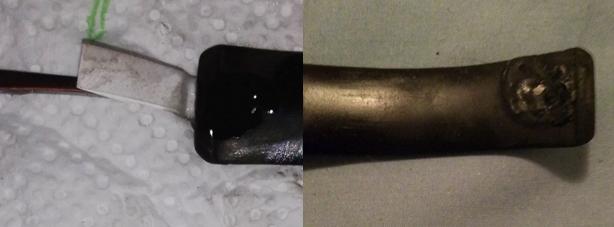
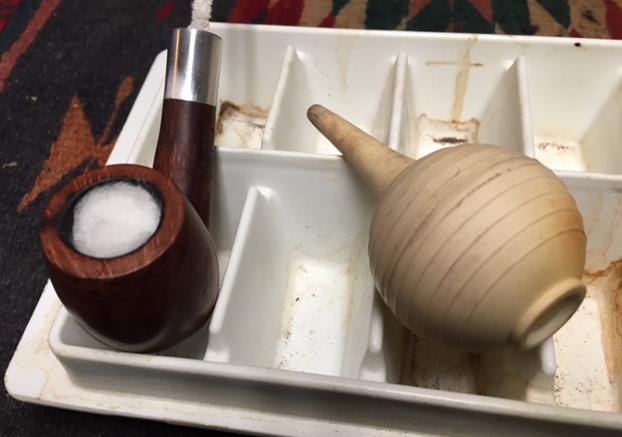
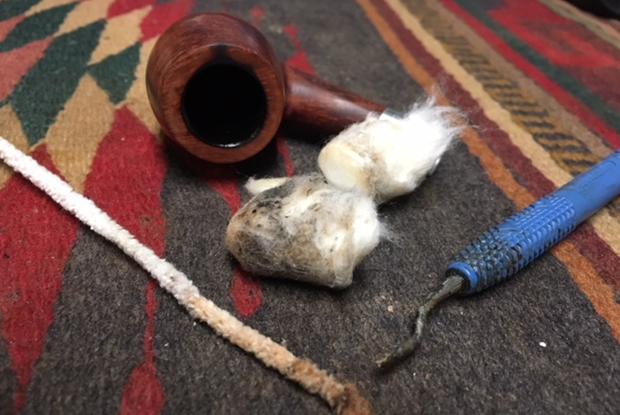
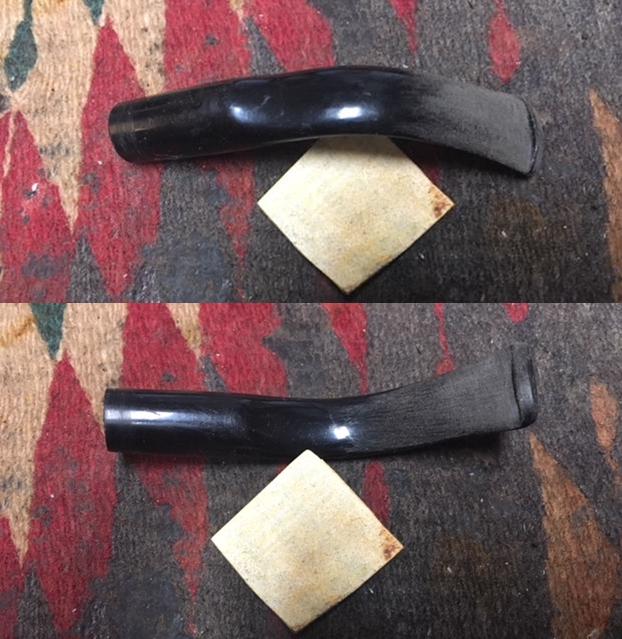
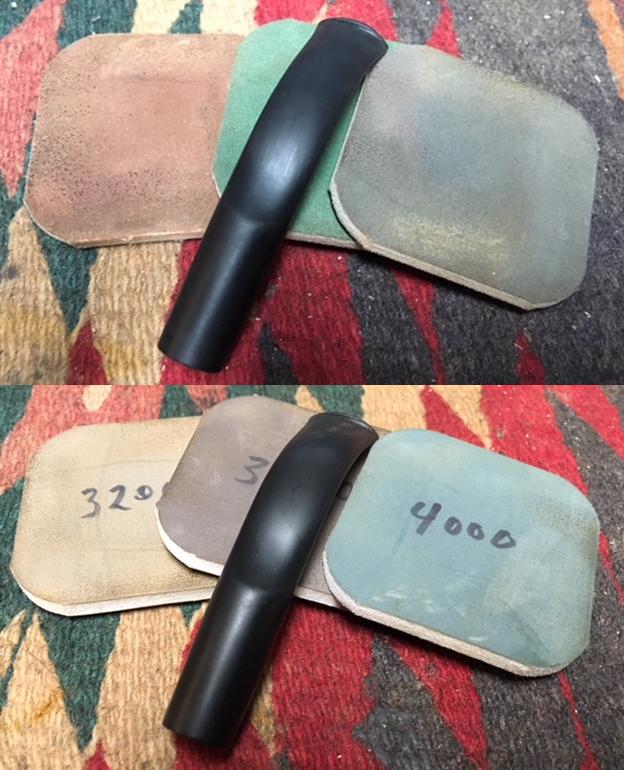
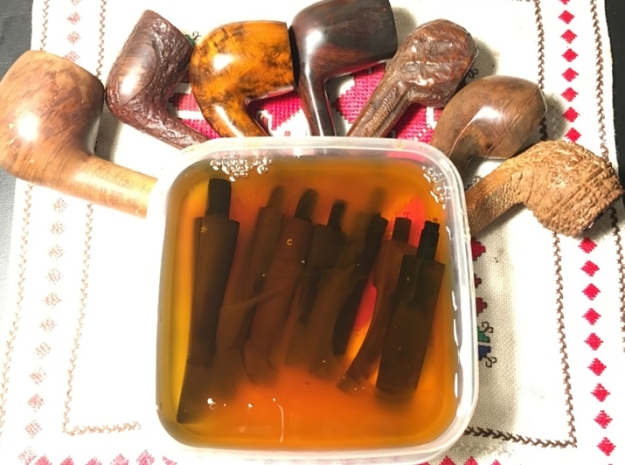
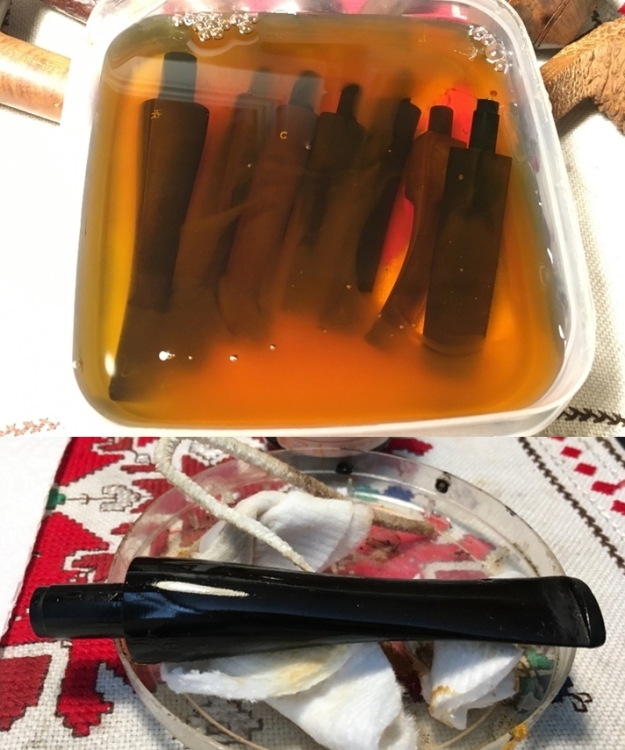
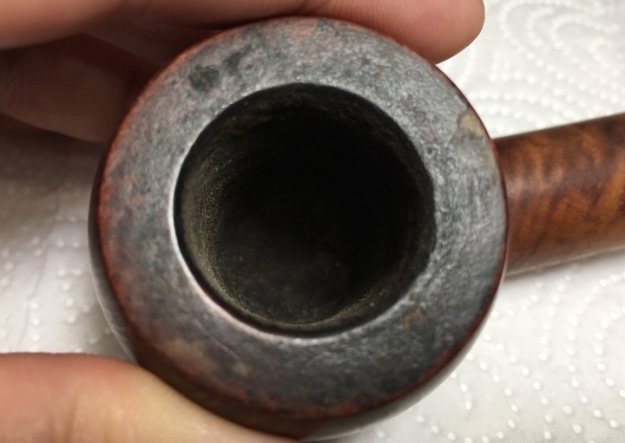
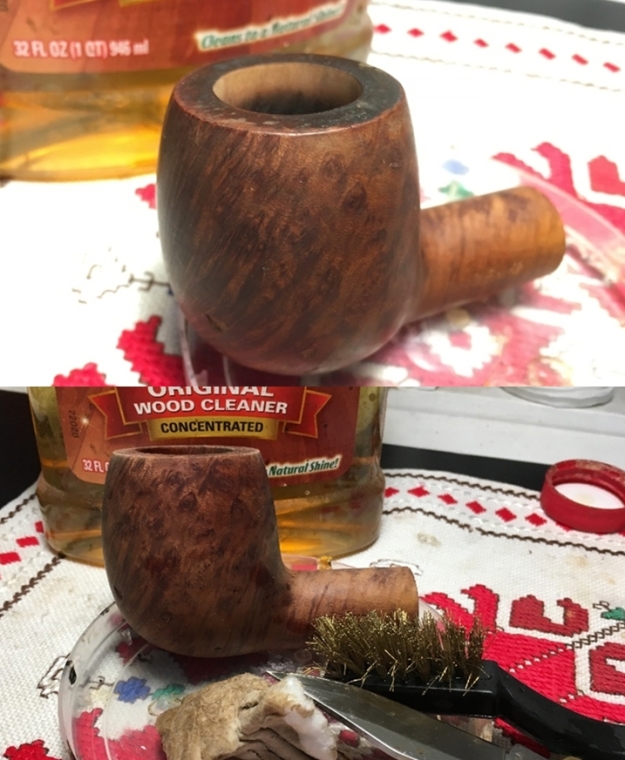
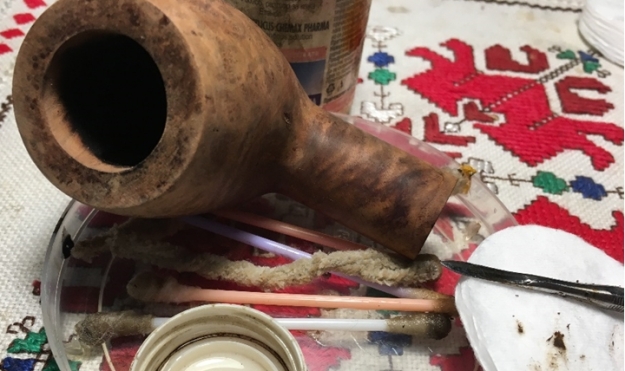
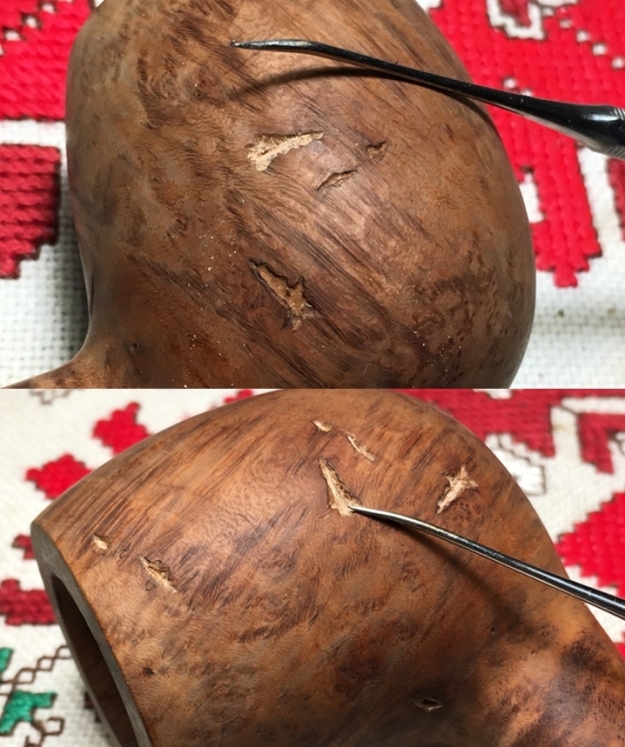
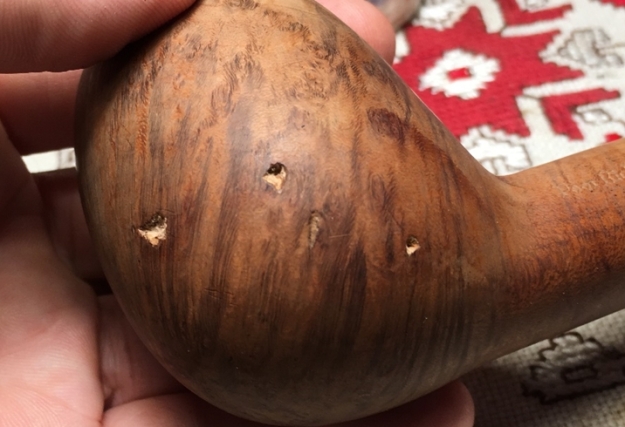
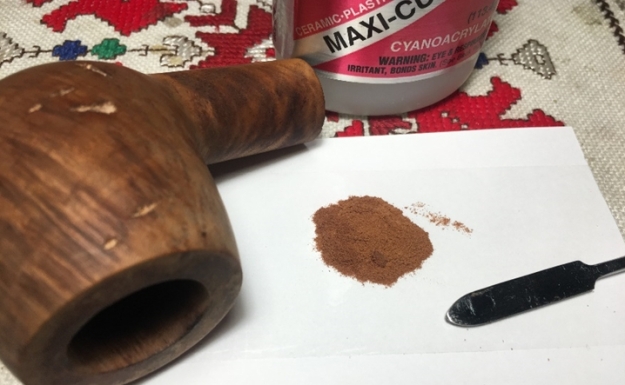
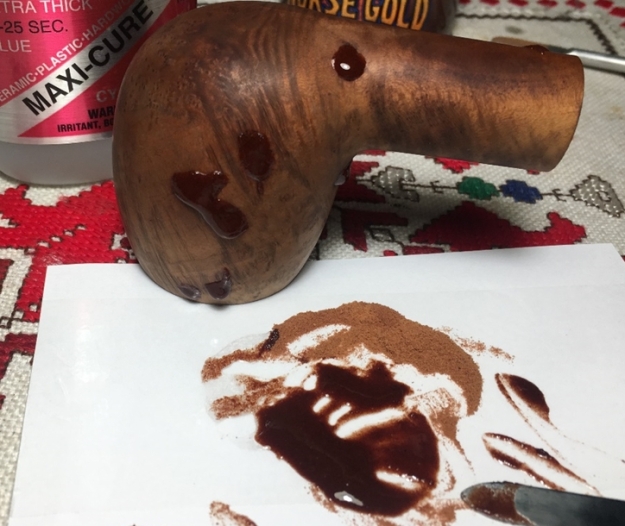
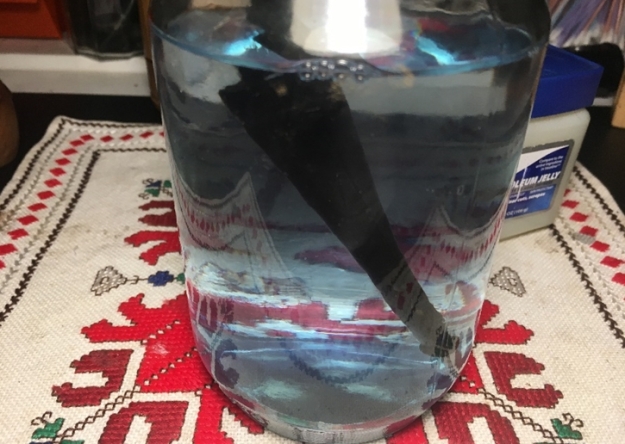
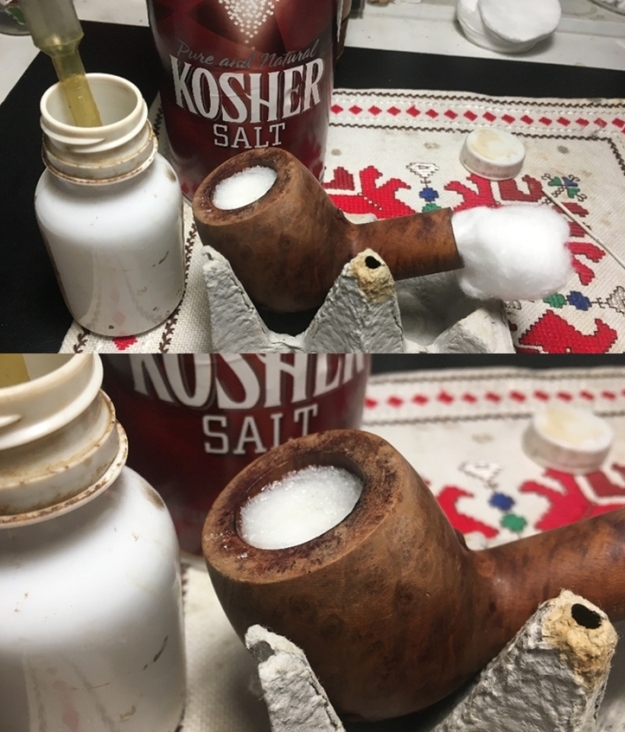
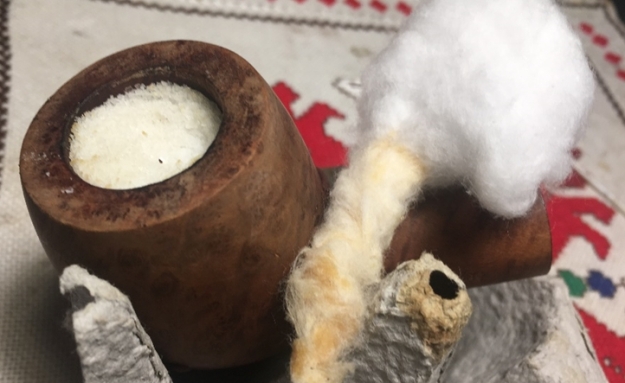
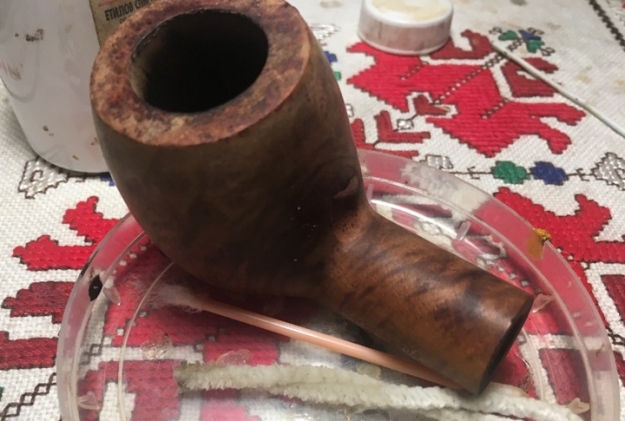
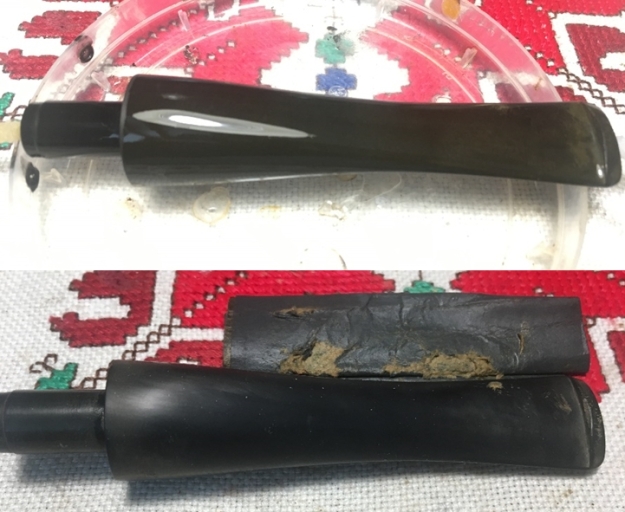
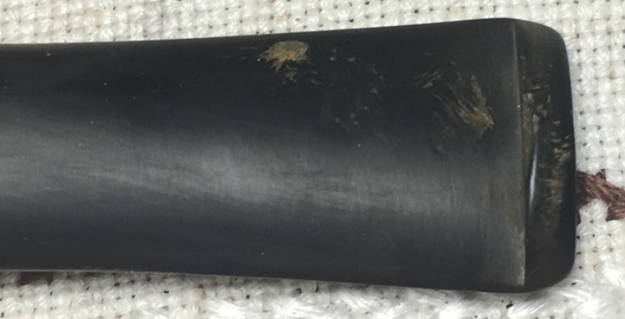
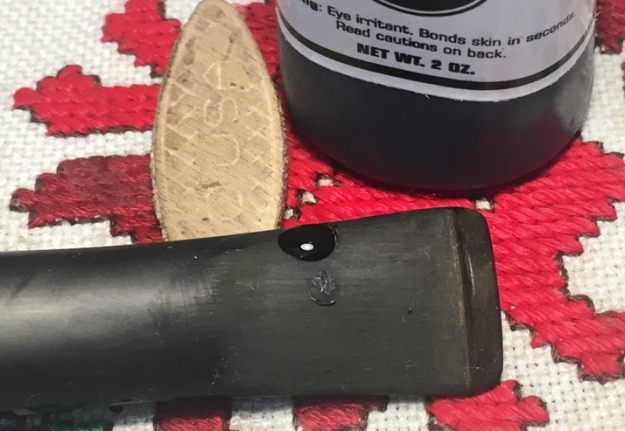
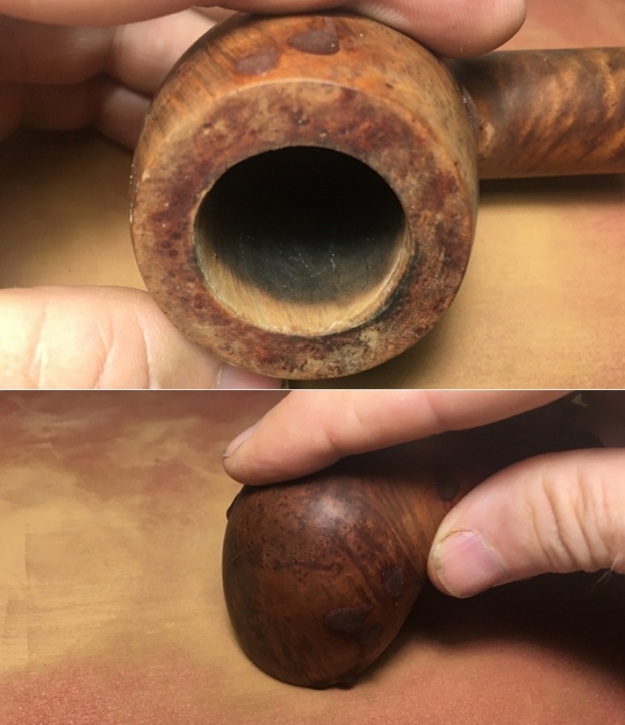
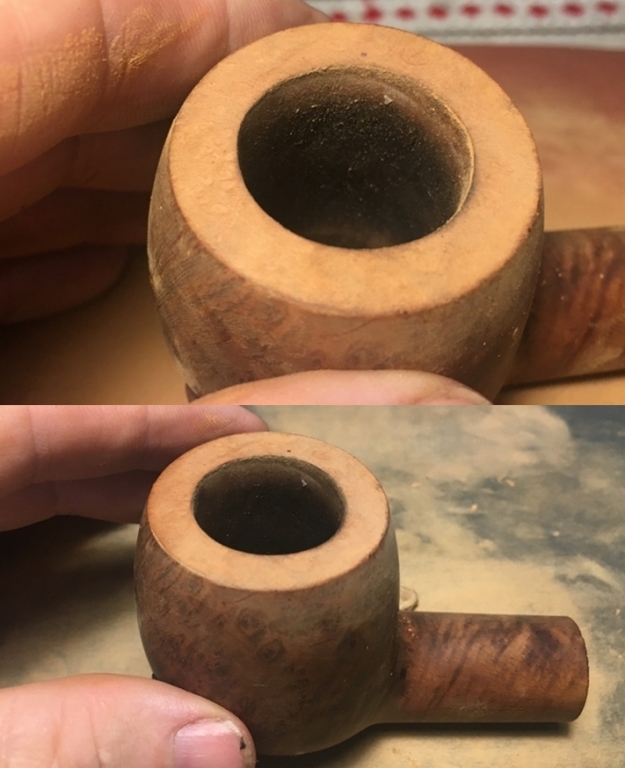
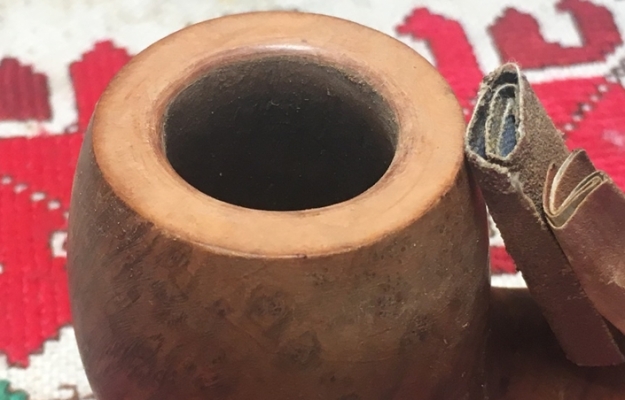
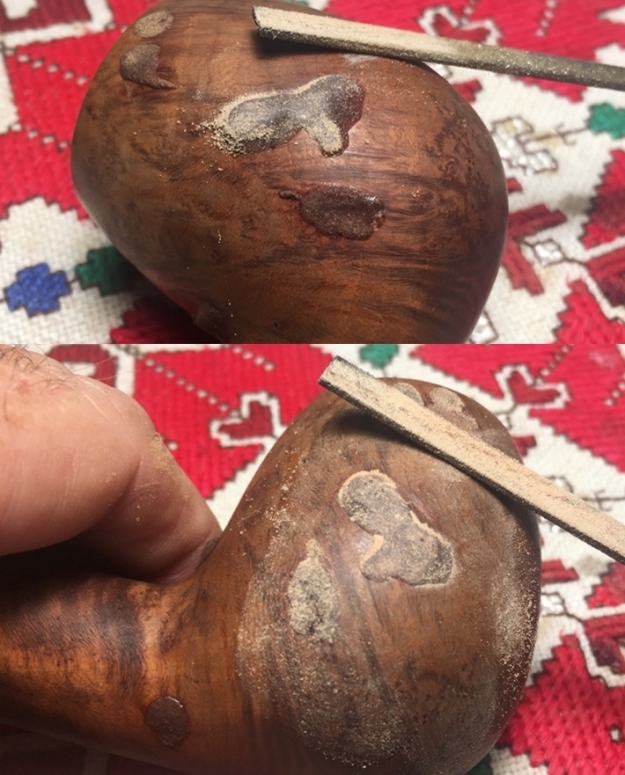
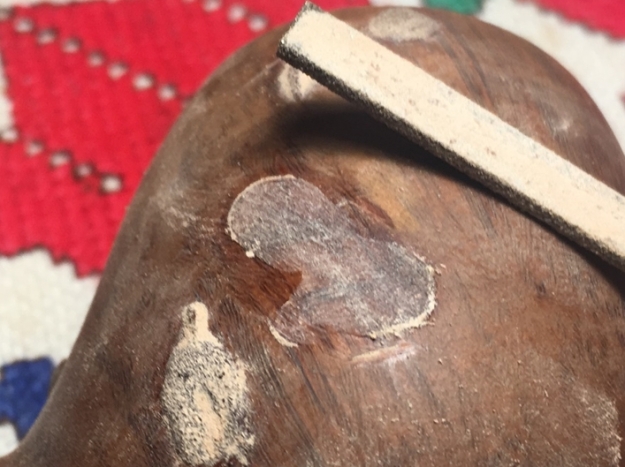
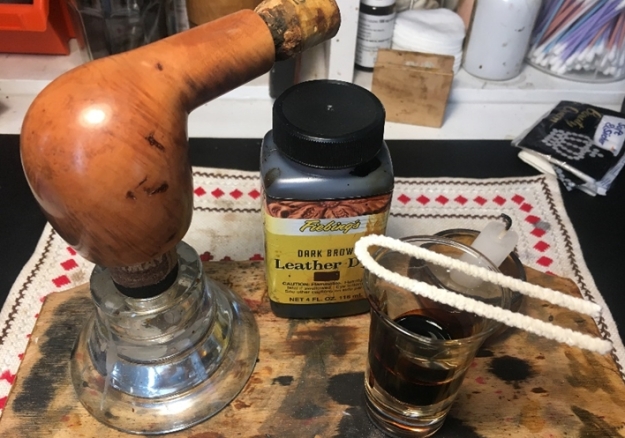
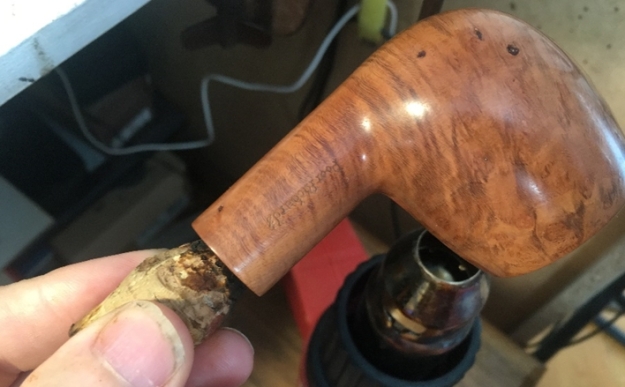
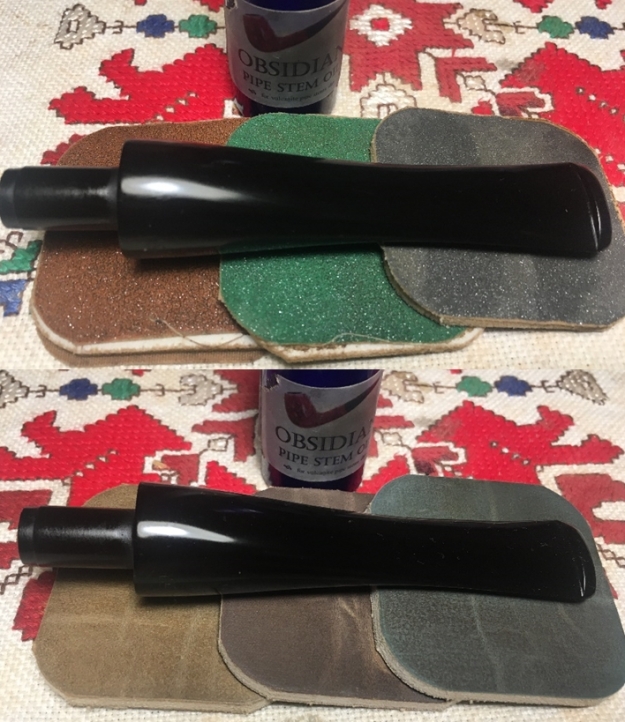
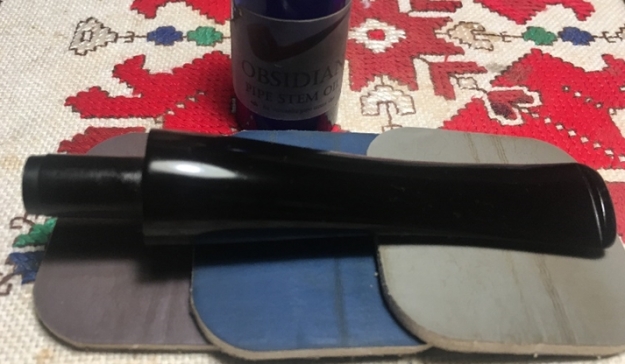
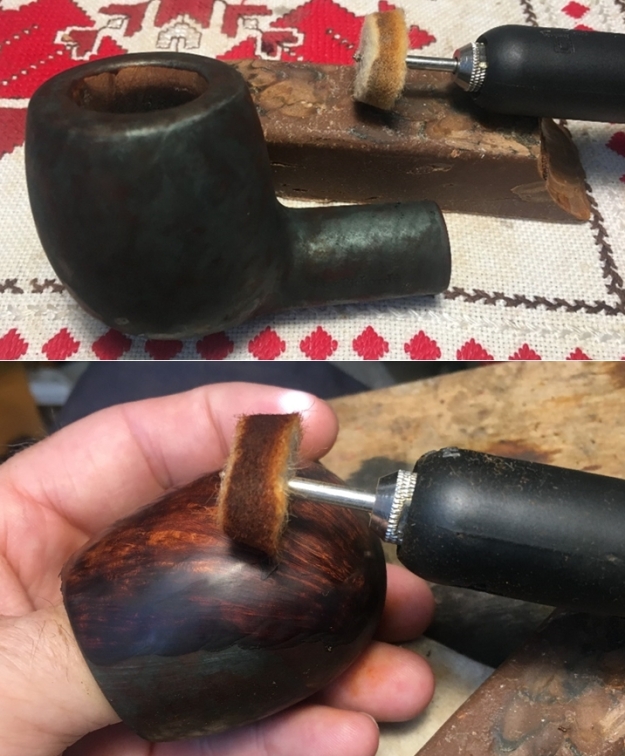
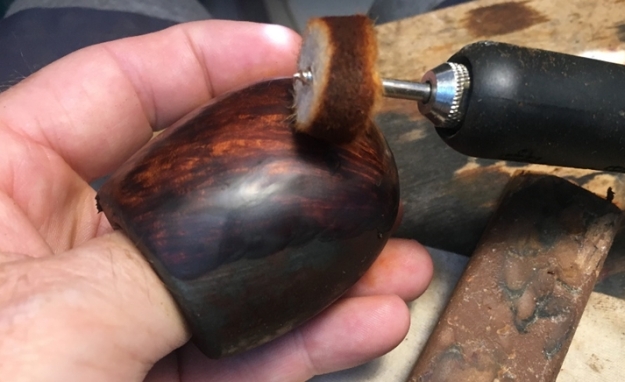
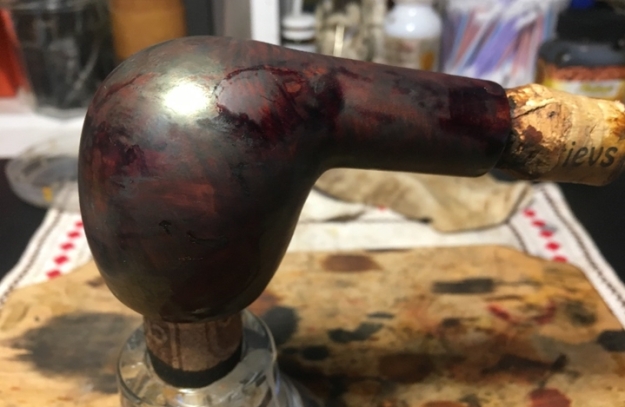
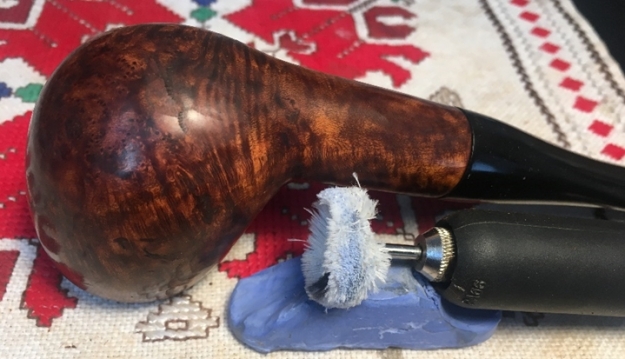
The condition of the giant Poor Richard’s before me now is poor. I take more pictures to take a closer look. The chamber has moderate cake build up that needs to be removed to inspect the condition of the chamber.  The lava flow on the rim is thick.  The stummel surface reminds one of a moonscape with all the craters in need of attention!  Along with the pits and holes there are dents and scrapes.  The oxidation on the stem is joined by bites and compressions on the lower and upper bit.  With a better understanding of the Poor Richard’s name, I begin the salvage of the giant Billiard by running pipe cleaners dipped in isopropyl 95% through the stem and then adding it to a soak of Before & After Deoxidizer along with several other commissioned pipes in the queue.  The Poor Richard’s stummel and stem are first on the left.  After letting it soak overnight, I fish out the Poor Richard’s stem and let the fluid drain off.  I then push a pipe cleaner through it to help remove the Deoxidizer.  I then wipe the stem with cotton pads wetted with isopropyl 95% to remove the raised oxidation from the vulcanite stem.  After wiping off with the alcohol, I then wipe again using a cotton pad and light paraffin oil (mineral oil) to clean and condition the stem further.  Finally, I run another pipe cleaner through the stem dipped in isopropyl 95%.  The pictures show the process. Taking the stummel, I use the Pipnet Reaming Kit to clean the chamber.  After putting paper towel down on the table for easier clean up, I start reaming using the third largest blade head since the chamber is so large.  I also use the fourth and largest blade to ream.  Following the reaming, I use the Savinelli Fitsall Pipe Tool to scrape the chamber walls removing additional carbon cake – especially down in the floor of the chamber with the difficult angles.  Then, after wrapping 240 grit paper around a Sharpie Pen, I sand the chamber walls removing additional carbon and smoothing the chamber surface.  I clean the chamber next using a cotton pad wetted with isopropyl 95%.  While inspecting the chamber, I do see some hairline heat cracks that are very small, but not serious enough to warrant repair.  Next, using undiluted Murphy’s Oil Soap I work on the external briar surface using a cotton pad.  I also use a brass wire brush on the rim to remove the lava and follow by carefully scraping the rim surface with a flat knife edge.  After scrubbing, I rinse the stummel in the sink with cool tap water.Turning to the internals, I use pipe cleaners and cotton buds dipped in isopropyl 95% to clean the mortise and airway. I also use a small dental spatula tool to scrape tars and oils off the mortise walls.  The cleaning wasn’t too bad. Later, I’ll continue cleaning the internals with a kosher salt and alcohol soak.With the internals cleaned, I now look at the stummel surface.  I have several fills to dig out and to fill.  My main tool in doing this is a sharp dental probe.  The goal is to only have a solid base in the holes – either old filler material or briar.  It takes quite a bit of time, but I move from fill to fill doing the needed excavation work. With the holes excavated, I prepare a batch of briar dust and CA glue patch to apply to the problem areas.  I scoop briar dust in a small mound on an index card and put a glob of thick CA glue next to the briar dust.  Using a dental spatula, I mix briar dust into the CA glue until I reach a thicker consistency, like molasses.  I then trowel the patch mixture into each of the holes leaving excess to be sanded down after cured.  The pictures show the process. With the Briar Dust patches curing, I turn to the stem.  After the soak in the Before & After Deoxidizer, much of the oxidation was removed.  But looking more closely, there remains oxidation but it’s much subdued. I decide to place the stem in another soak – this time with OxiClean.  I put a pipe cleaner through the stem and put it in the OxiClean to let it soak overnight.With the day ending, I continue the cleaning and refreshing of the stummel internals.  To do this I employ a kosher salt and alcohol soak.  First, I form a wick by stretching and twisting a cotton ball and with a stiff piece of wire, I stuff it down the mortise and airway.  It will serve to draw out tars and oils.  Then I fill the bowl with kosher salt and place the stummel in an egg crate to keep it stable.  With a large eyedropper, I fill the bowl with isopropyl 95% until it surfaces over the salt.  After a few minutes, I top off the alcohol as it is absorbed and turn out the lights.The next morning, there isn’t too much discoloration of the salt which means I didn’t put in enough alcohol or that the internals are clean.  The wick is darker.  I toss the expended salt into the waste, wipe the bowl with paper towel and blow through the mortise to remove remaining salt crystal.  I then use a shank brush on both the bowl and the mortise – blowing again.  Finally, to make sure all is clean and ready to go, I wet a cotton bud and pipe cleaner with isopropyl 95% and run them through the mortise and airway.  They come out clean and it’s time to move on. I put the stem in an OxiClean soak through the night and it’s time to fish it out.  I take a picture of the additional oxidation that has been raised and I take the stem to the sink and wet sand the stem with 600 grade paper to remove the oxidation.  It looks cleaner now after sanding.Looking more closely now at the bit area, there are good sized compressions.  The button also has some bite marks.  The first step is to use the heating method to see if it will expand the vulcanite reducing the severity of the compressions.  I use a Bic lighter and paint the upper- and lower-bit areas. The areas were lessoned, but not erased by heating the vulcanite. I then use 240 grade paper and sand the upper- and lower-bit areas as well as redefine the button with a flat needle file.  I take pictures of each step. First, the upper bit progress:After heating:After 240 sanding and filing:Progression of the lower bit area:After heating:After 240 sanding and filing: I’ve sanded out as much as will sand and now I will patch the areas that did not sand out.  I first wipe the stem with alcohol to clean the area.  I then apply black CA glue to the areas.  And I wait, and wait, and wait….  Well, I just discovered that Black CA glue can go flat and lose its ability to bond.  Reading the directions, is says to refrigerate to prolong shelf life.  Well, the shelf life must have been reached.  I wipe the old CA glue off and thankfully, I had purchased another bottle of Hyper Bond Black Rubber Reinforced CA glue.  I discover that the bottle mouth is larger than the squirt spouts that I have so I end up troweling a small bit of the glue on the end of a pointed dental spatula and apply it to the spot.  It works!  To advance the curing time I spray the upper and lower patches with an accelerator which does the trick.  The first picture, upper that didn’t cure and the new glue on the lower.  New bottle of glue is heading for the fridge! Next, taking a flat needle file I start filing the black CA patches staying on top of the glue mounds.  I then follow by using 240 grade sanding paper to bring the excess CA glue to flush with the vulcanite surface.  First, pictures showing the upper bit: The next step with the stem is to wet sand it with 600 grade paper then I follow by buffing the stem with 0000 steel wool to prepare the vulcanite surface for the micromesh pad phase of sanding.  The patches on the bit blended very nicely.I put the stem aside because I’m anxious to get started on the Poor Richard’s stummel.  I decide to start from the top and work down.  I will establish fresh lines for the rim and remove the surface scratches by topping the stummel.  I first use 240 grade paper on the chopping board and invert the stummel and rotate the stummel over the paper. After the 240 paper, I use 600 grade paper for another few rotations.  It looks good. To dress this Poor Richard’s up a bit, I create an internal bevel.  To me, an internal bevel softens the rim lines and is a classy touch.  I cut the bevel initially using a rolled piece of coarse 120 grade paper then follow with 240 and 600.  I simply pinch the rolls of sand paper under my thumb and rotate around the internal circumference of the rim.  I like it. Now, time to work on filing and sanding all the briar dust putty patches all over the stummel surface.  I use the flat needle file to work the mounds down to near the briar surface then I finish off with 240 grit paper, bringing the patch flush with the surface.  The pictures show the process.  Lots of filing and sanding! With the patches all repaired, I use sanding sponges to sand the entire stummel to remove additional nicks and scratches and to blend the patch areas.  I start with a coarse sponge, follow with a medium then light sponges. I like the way sponge sanding cleans up a rough bowl.Moving on to the micromesh stage, I wet sand the stummel with pads 1500 to 2400 then dry sand with pads 3200 to 4000 and 6000 to 12000.  I love the way the micromesh process teases out the briar grain. This Poor Richard’s is looking good! To mask the plethora of fills scattered on this Italian Poor Richard’s stummel, I will give him a dark stain.  I use Fiebing’s Dark Brown Leather Dye to do the job.  With it being an aniline based dye, later I can wipe the bowl with alcohol to blend and lighten as I choose.  I assemble the components used in applying dye on my worktable.  I mount a cork in the mortise to act as a handle and I pour the dye into a shot glass.  I use a folded pipe cleaner to apply the dye and a lit candle to flame the aniline dye.  I begin by wiping the stummel with alcohol to clean the surface.  I then warm the stummel using a hot air grain. This expands the briar grain aiding in it being more receptive to the dye.  Using the pipe cleaner, I then apply dye liberally to the entire stummel making sure to cover the rim well.  I then ‘flame’ the stummel with the lit candle and the alcohol immediately combusts leaving the pigment sealed in the grain.  After letting the stummel ‘rest’ a few minutes, I repeat the process of applying dye and flaming.  I then put the stummel aside to rest for several hours helping to assure that the dye is set and will not rub off later on hands when the pipe is put back into service.  The pictures show the process. With the flamed stummel resting, I turn again to the stem.  Using micromesh pads 1500 to 2400, I wet sand the stummel.  Following this, I dry sand using pads 3200 to 4000 and 6000 to 1200.  After each set of three micromesh pads, I apply a coat of Obsidian Oil to the stem to revitalize the vulcanite.  The stem is looking good. The stained stummel has rested for about 24 hours and it’s time to unwrap the flame crust. After mounting a 1 inch felt buffing wheel on the Dremel, I set the speed to the lowest RPM and apply the more abrasive compound, Tripoli, to remove the crust revealing the newly stained briar surface.  As I have refined my technique using the Dremel during the compound phases, I’ve learned that using a felt buffing wheel and Tripoli allows me to have more control over the degree of opaqueness allowed through the stain, especially when using darker stains like with this Poor Richard’s.  When I begin removing the crust with the felt wheel and the coarser Tripoli compound, the initial pass of the buffing process removes the top crusty layer, but thick, ‘blotched’ stain remains.  These blotches, or darker patches of stain hide the grain underneath.  After this first pass, my practice is to purge the wheel quickly on the side of the chopping board that is on my lap, providing the work platform for all the buffing.  After I purge the wheel of the thick stain residue from the flaming, I load more Tripoli to the felt wheel and then begin additional passes over the same area – frequently purging and reloading the felt wheel with Tripoli.  Through this process I can determine how the grain is presented.  More Tripoli buffing, the lighter hues are raised in the grain, giving more definition.  When I’m working an area where a patch is located, I tend to allow it to remain darker to enhance the masking.  After staining, I would say that this phase applying the Tripoli is the most critical for the finished look of the grain.  Why?  The coarse Tripoli combined with the coarser felt wheel does the heavy lifting by increasing the opaqueness of the stain when desired which sets the stage for the finished look.  The following less coarse compounds, such as Blue Diamond, and using the cotton wheel, provides more buffing of what is there rather than remove it.  The pictures below give a hint of what I’m describing.  For those who use a Dremel, I hope this is helpful. To blend the stained finish, I lightly wipe the stummel with a cotton pad wetted with alcohol.  I don’t need to lighten the stummel, only blend.After wiping down the stummel with the cotton pad, the Tripoli with felt wheel had lightened more than I wanted in order to provide a darker shading to blend and to mask the fills.  I decide to stain the stummel again, but the second time around, I use a cotton cloth buffing wheel and Tripoli instead of the more aggressive felt wheel.  Saving on pictures repeating the same process, here is the stummel after the second staining and flaming.  Again, I wait several hours allowing the stain to rest.Following the Tripoli compound, I mount another cotton cloth buffing wheel in the Dremel, increase the speed to about 40% full power, and apply Blue Diamond compound to both the stem and stummel which I reunite.  After completing the application of Blue Diamond, I wipe/buff the pipe with a felt cloth to remove the residual compound dust in preparation for the wax application.Before applying wax, I refresh the Poor Richard’s stem stamping, the interlocking ‘PR’ and the country of manufacturing stamp, ‘Italy’.  Using white acrylic paint, I use a pointed cotton tip to apply paint to the stamps.  While still wet I lightly wipe the excess paint off leaving the stamps filled.  It works well, and the Poor Richard’s is shaping up well! To finish the buffing stage, I mount another cotton cloth wheel to the Dremel, leaving the speed at 40%, and I apply carnauba wax to stem and stummel.  I follow by giving the pipe a rigorous hand buffing with a microfiber cloth.
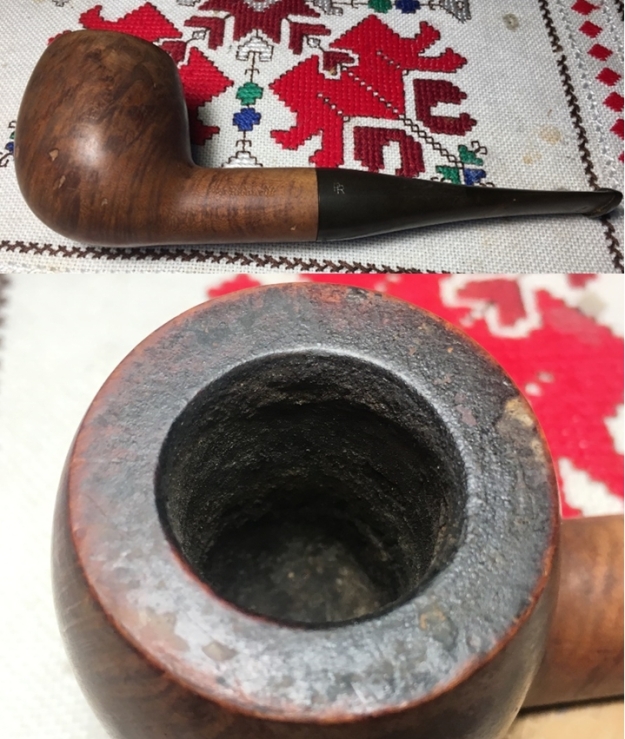
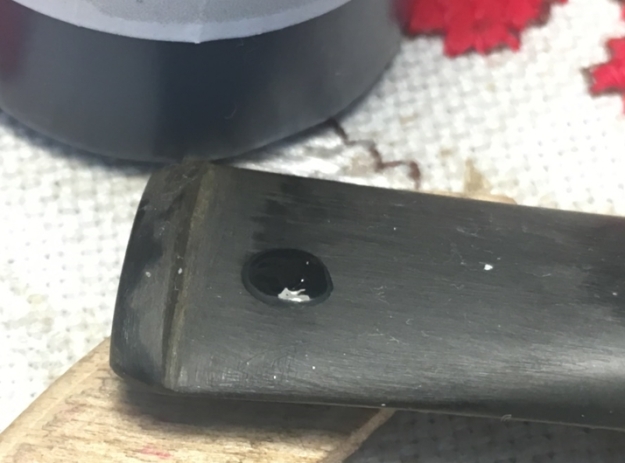
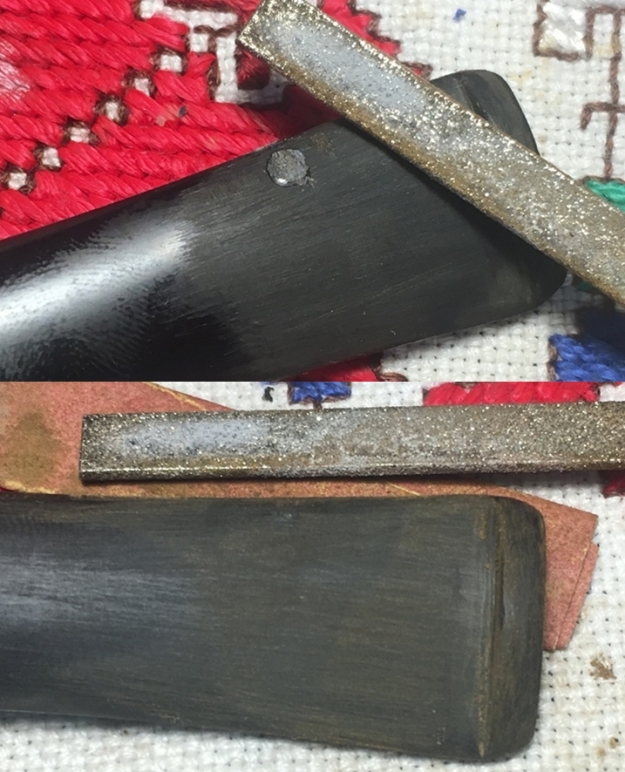
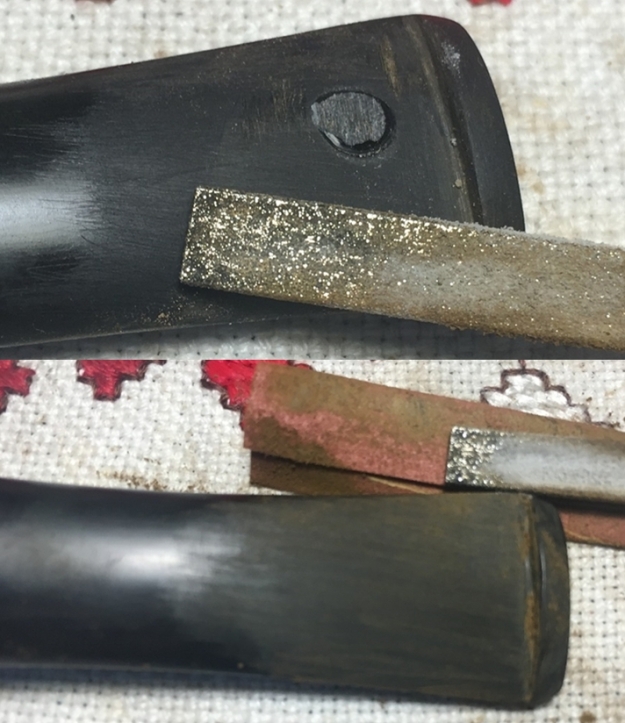
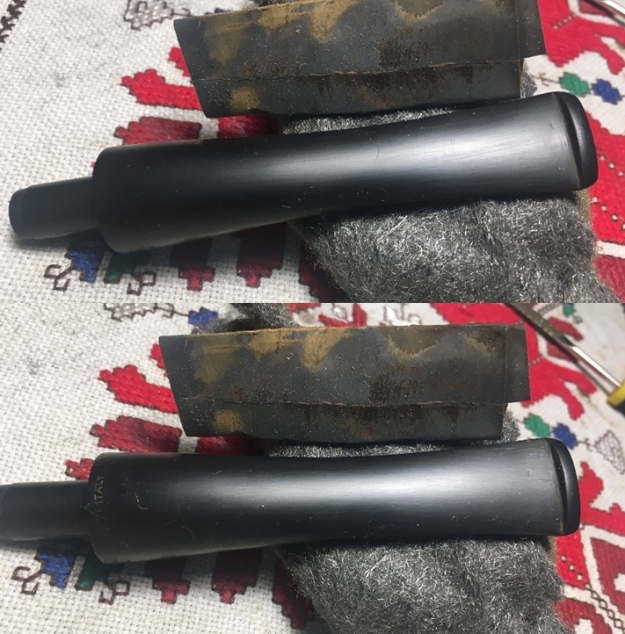
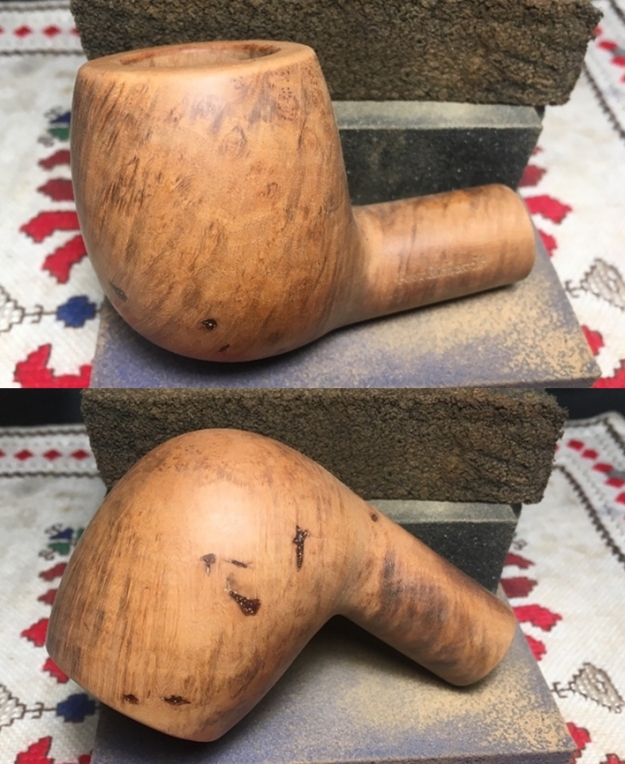
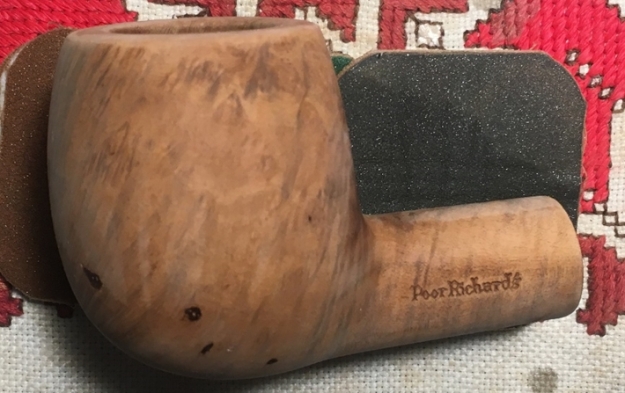
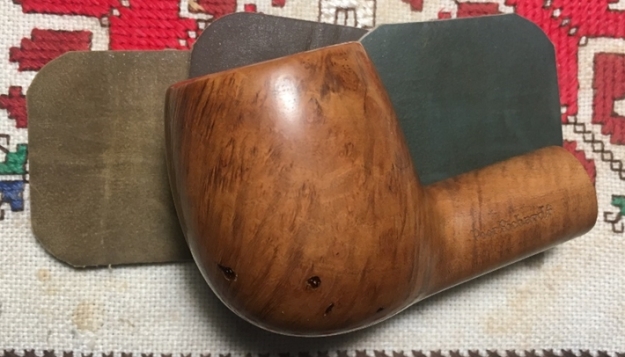
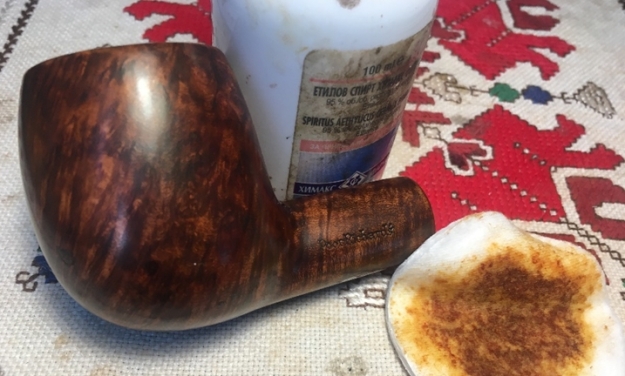
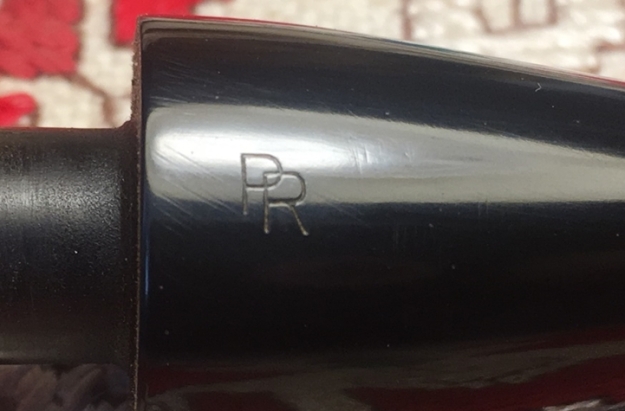
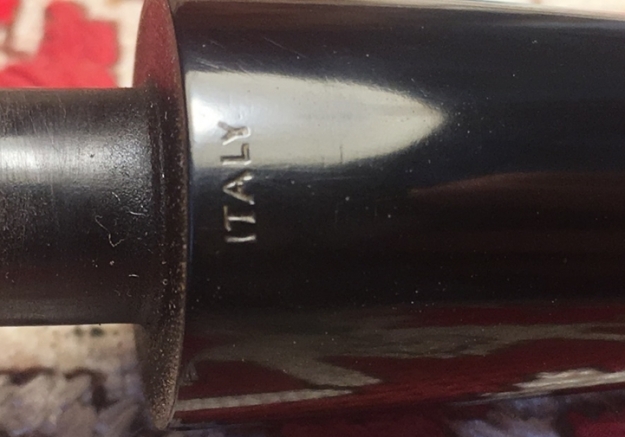
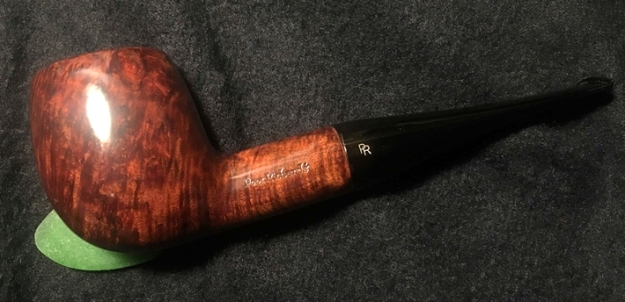
I’m pleased with the transformation of the Poor Richard’s.  The dark brown dye helped to mask the repairs done to the stummel and it looks great.  This straight Billiard is a classic shape and as large as this Poor Richard’s is, I believe it will serve its new steward well.  Paresh commissioned him from the For ‘Pipe Dreamers’ Only! section on The Pipe Steward site.  He will have first opportunity to acquire the Poor Richard’s from the The Pipe Steward Store which benefits the Daughters of Bulgaria – helping women and girls who have been trafficked and sexually exploited.  Thanks for joining me!
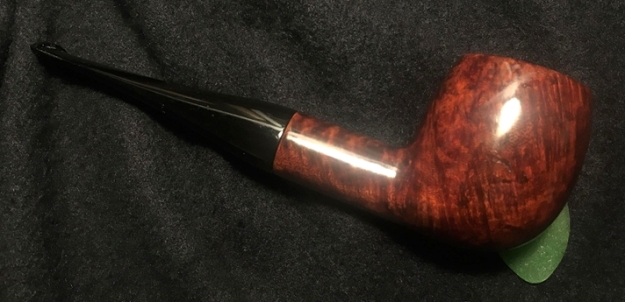
Resurrecting a Tired and Worn 1937 Dr. Grabow Special 4914 Apple


Blog by Steve Laug

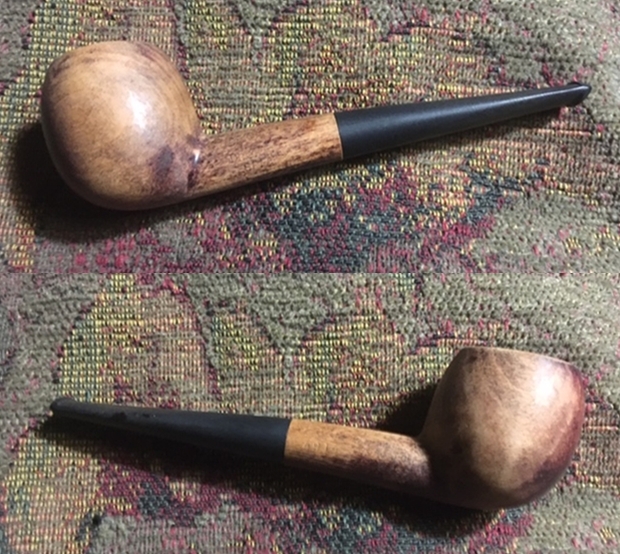
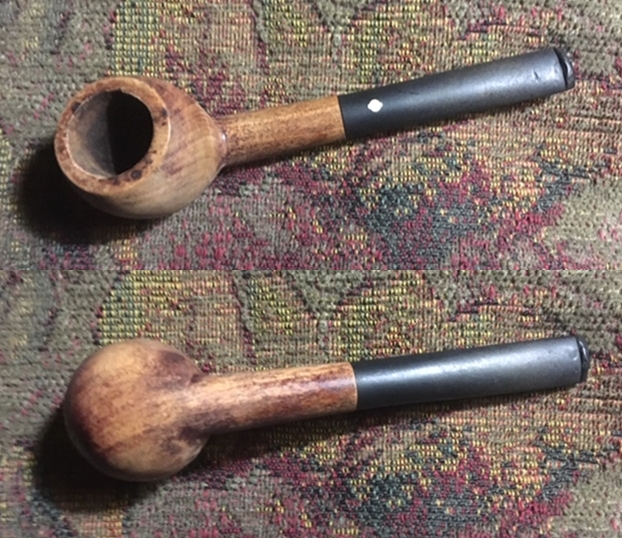
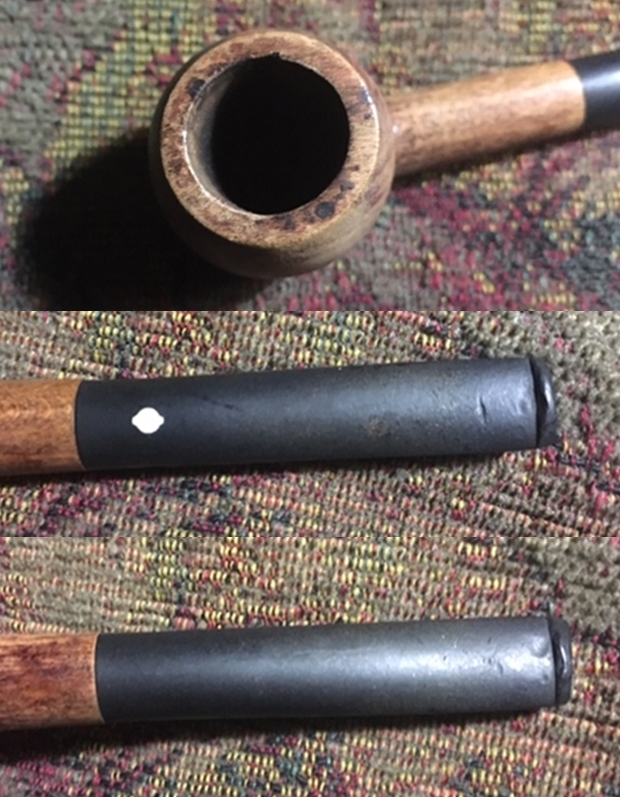
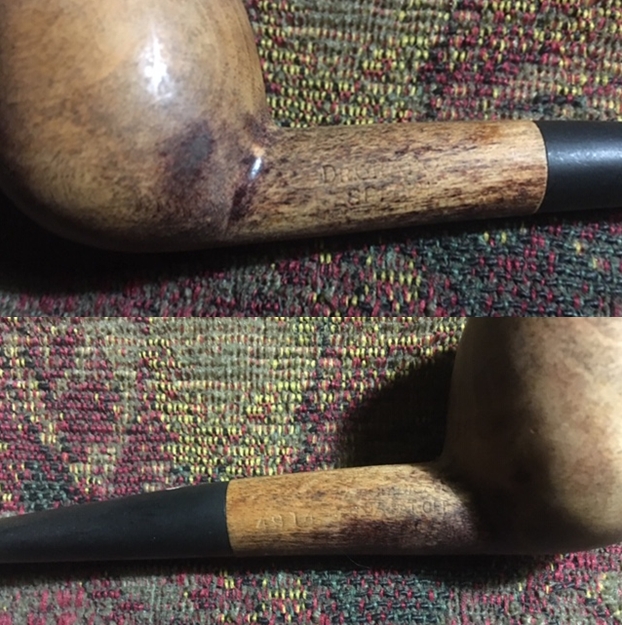
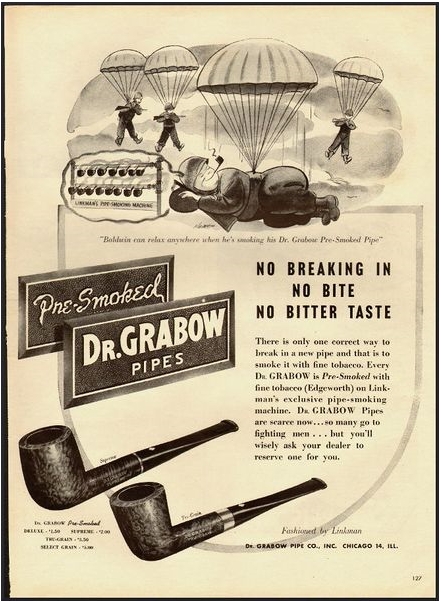
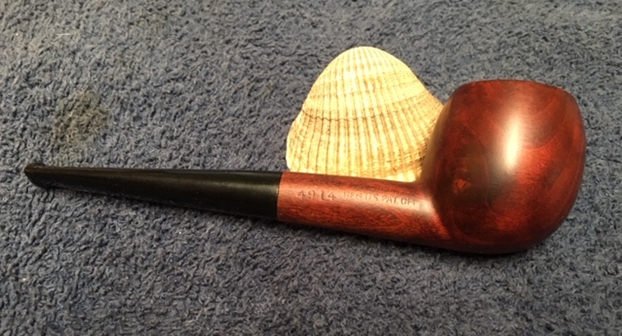
The next pipe on my restoration table is an interesting older pipe that appears to be made out of walnut or some other hard wood. It was tired and worn looking with the remnants of what appeared to be an oxblood stain in the wood. The stamping was dirty and worn but readable nonetheless. On the left side the pipe is stamped Dr. Grabow over Special and on the right side it is stamped with the shape number 4914 near the shank stem junction. That is followed by Pre-Smoked over Reg. US Pat. Off. The rim top was dirty and had some tar ground into it. The bowl had a light cake in it and there was a small nick on the inner right edge of the bowl. It had a hard rubber vulcanite stem with the white Linkman style propeller inset on the top of the stem. The rubber was quite hard and did not show signs of oxidation. There were tooth marks on the top and underside of the stem at the button. I took some photos of the pipe before I started my cleanup. I took some close up photos of the rim top and bowl to show its condition. The tar spots are on the surface. The nick is visible on the right side of the bowl. I also took photos of the stem to show the bite marks and wear on the stem.I took a photo of the stamping on both sides of the shank to show the condition. Interestingly once I cleaned the shank up and removed the stain the stamping was very readable.I looked up information on the Dr. Grabow Special 4914 pipe on Pipedia to see if I could identify the time period that the pipe came from. I had a hunch that it came out during the war years due to the alternative wood that had been used in its manufacture in place of the normal briar (https://pipedia.org/wiki/Dr._Grabow_Models_(Series,Line)_Names_Through_the_Years). Here is what I found out:

SPECIAL (or Special Italian Briar) post-1937, begins with 43, 49, maybe no number at all; DOLLAR DR. GRABOW 1937 or previous, may not be marked as such, begins with 43, 44, 49 Series 43 = Natural Finish (DG), c1937. Series 44 = Dark Finish (DG), c1937. Series 49 = Walnut Finish (DG), c1937.

Thus I knew that the pipe came out post 1937. I still had not confirmed the date of the pipe other than knowing that it was made after 1937. I did some more digging on Pipedia and found the following information that also helped pin down the date (https://pipedia.org/wiki/Dr._Grabow).

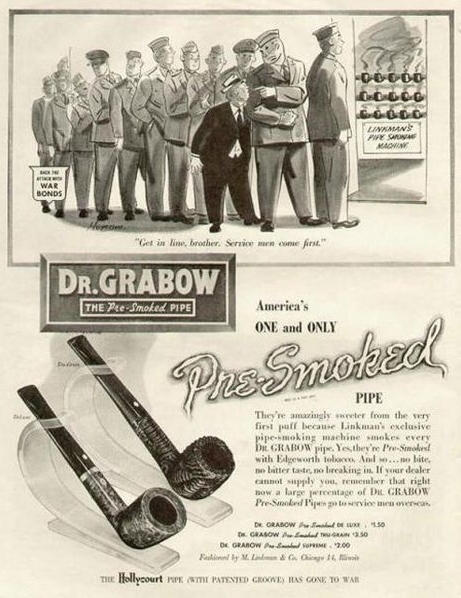
The production of the pipes started in 1930/31. In 1937 Linkman began calling his pipes “Pre-Smoked”. An ad dating from 1946 celebrates it as “America’s Most Wanted Pipes” and the text announced that each Dr. Grabow was broken in on the Linkman’s Automatic Smoking Machine with fine Edgeworth tobacco, reducing the need for the new owner to spend time breaking in his pipe. In 1949 the official name read Dr. Grabow Pipe Company Inc. with seat at W. Fullerton Avenue 1150, Chicago 14, Illinois. (Thus the Linkman factory.) Series: Special, De Luxe, Supreme, Tru’ Grain, Select Grain.

That helped to pin down when the first Pre-Smoked Pipes came out on the market. I have included a couple of advertisements from the 1940s on the Pre-Smoked pipes. The advertisements were on Pipedia courtesy of Doug Valitchka. I found a similar pipe for sale on eBay (https://picclick.co.uk/Lovely-Vintage-Dr-Grabow-Special-4914-Smokers-Pipe-372388011756.html). It could very well be a twin of the pipe that I am working on. It is also made from an alternative wood, rather than briar.

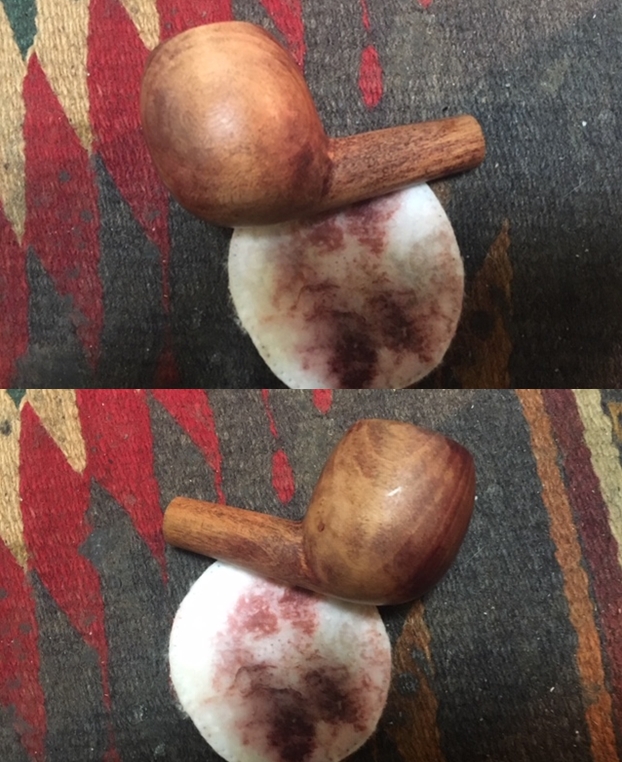
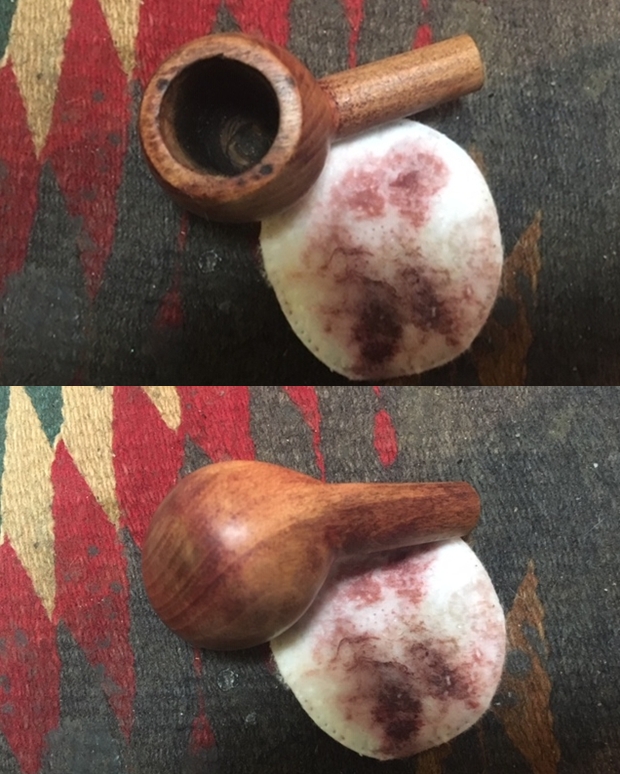
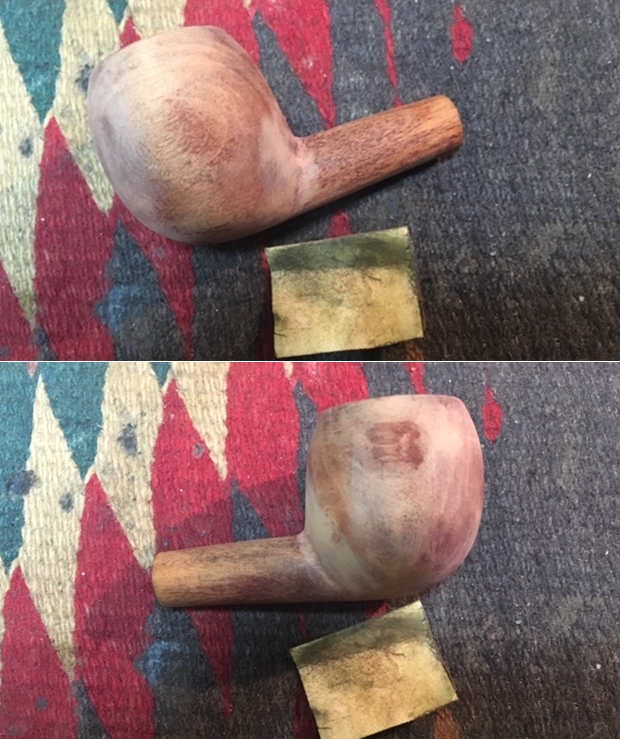
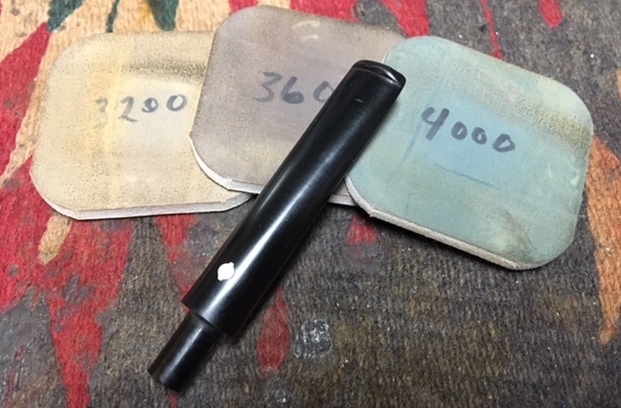
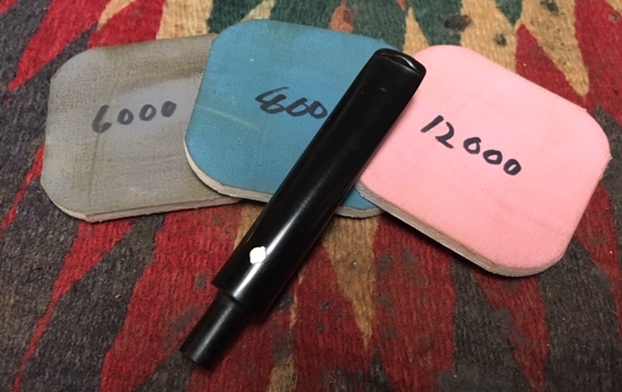
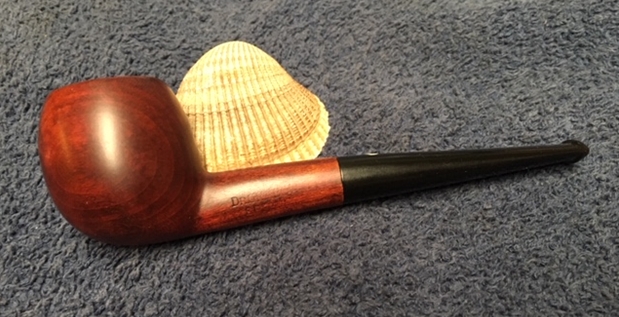
I started my restoration on the pipe by wiping down the bowl with acetone on a cotton pad to remove the remnants of the oxblood finish. I took photos of the bowl after the cleanup. I sanded the bowl with 220 grit sandpaper to remove the remaining stain. I sanded the rim top to remove the stain and tars there. I worked over the inner edge of the rim with 220 grit sandpaper to remove the damaged area on the right side. It did not take too much work to remove it. I polished the rim and bowl with micromesh sanding pads – wet sanding with 1200-2400 grit pads. The bowl began to have a rich shine.When I sanded the bowl a small red putty fill showed up on the back right side of the bowl. It was slightly pitted. I filled in the pits with clear super glue to remove the damage. I sanded it with 220 grit sandpaper and then with a 1200 grit micromesh pad.I polished the bowl with red Tripoli on the buffing wheel to smooth out the wood. I heated it and stained it with the “red” tan aniline stain. I flamed it with a lighter and repeated the process until the finish had good coverage. I also gave the bowl a coat of Danish Oil with Cherry stain to highlight the grain. I cleaned out the internals in the stem and the bowl with pipe cleaners, cotton swabs and alcohol. The shank was dirty and the debris and grime that came out made fit of the stem in the shank much tighter.I set the bowl aside and worked on the stem. I sanded the surface of the stem with 220 grit sandpaper to remove the tooth chatter and the lighter tooth marks. I cleaned it up a soft cotton pad to remove the debris. I filled in the deeper tooth marks with clear super glue to repair them. I set the stem aside to let the repairs cure. I sanded the hardened repairs with 220 grit sandpaper to blend them into the surface of the vulcanite.I polished stem with micromesh sanding pads – wet sanding with 1500-2400 grit pads and dry sanding with 3200-12000 grit pads. I wiped the stem down with Obsidian Oil after each pad. When I had finished polishing with the last pad, I gave it a final coat of Obsidian Oil and set it aside to dry. This small war era Dr. Grabow Pre-smoked apple is a unique alternative wood pipe. It has interesting swirled grain around the bowl and cross grain across the shank. The grain really is interesting. The rim top looks much better. The vulcanite stem is high quality and shined up well. I buffed the bowl and the stem with Blue Diamond polish to raise the shine on the briar and the vulcanite. I was careful to not buff the stamping and damage it. I gave the bowl and stem multiple coats of carnauba wax. I buffed the entire pipe with a clean buffing pad to raise the shine. I hand buffed it with a microfiber cloth to deepen the shine. The finished pipe is shown in the photos below. The rich oxblood stain allows the grain to really stand out while hiding the fill in the bowl side of this little pipe and it works well with the rich black of the vulcanite stem. The dimensions of the pipe are: Length: 5 1/4 inches, Height: 1 1/2 inches, Outside Diameter: 1 inch, Diameter of the chamber: ¾ of an inch. This little Linkman’s Grabow apple fits nicely in the hand and makes a great pocket pipe. Thanks for walking through the restoration with me.

The Resurrection Special: Part 1


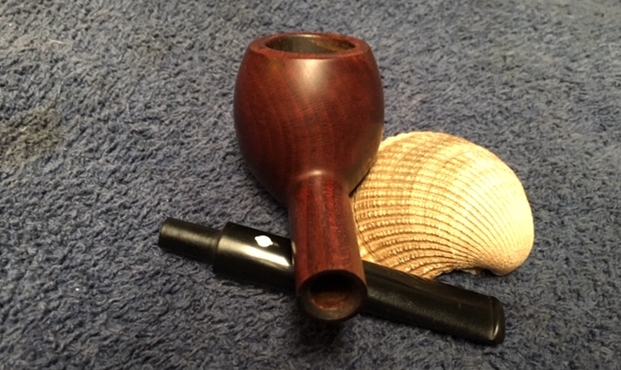
A few years back there was a thread on Pipes Magazine’s repair and restoration forum about three lots of pipes a member was giving away. The first lot was a very easy “beginner” lot, the second was slightly more challenging, and the last was called The Resurrection Special and had the most challenges. No information was given about the pipes or (as far as I recall) their issues.

The first two lots were spoken for fairly quickly but the third sat there, unloved, for a little while. After looking at the post for as long as I could stand I sent a PM to the original poster and said “I’ll bite; send them my way and I’ll see what I can do”.

When the long, medium sized box arrived on my doorstep I was excited to see what I had gotten myself into. I took them straight to the kitchen table (my wife wasn’t home so I could do that lol) and cut open the box. The contents were carefully packed in newspaper which held three bubble wrapped pipes. I was like a kid on Christmas morning getting ready to open each one!

The first pipe I opened was a lovely old Tracey Mincer Bulldog -type shape. I had seen photos of and read about Mincer’s different pipes but had never held or owned one yet.

The second pipe turned out to be a Peterson System pipe, my first both of this historic marquee and type. It was hallmarked 1973 and looked every day of it. I was a little intimidated by the work this one would take.

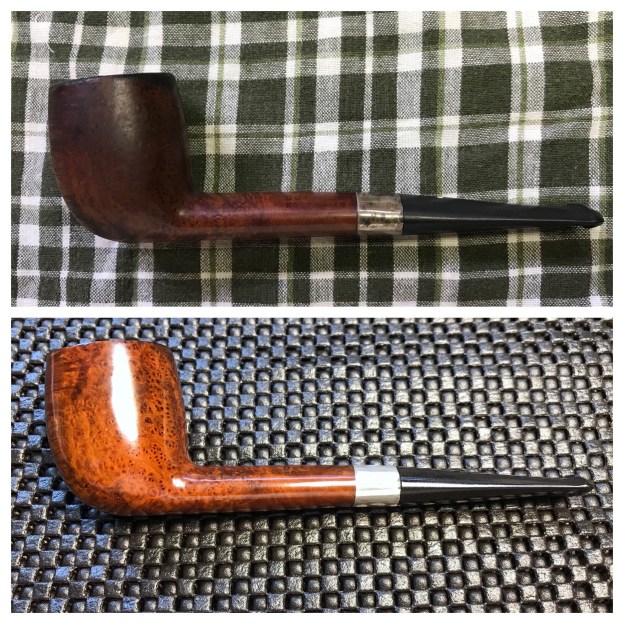
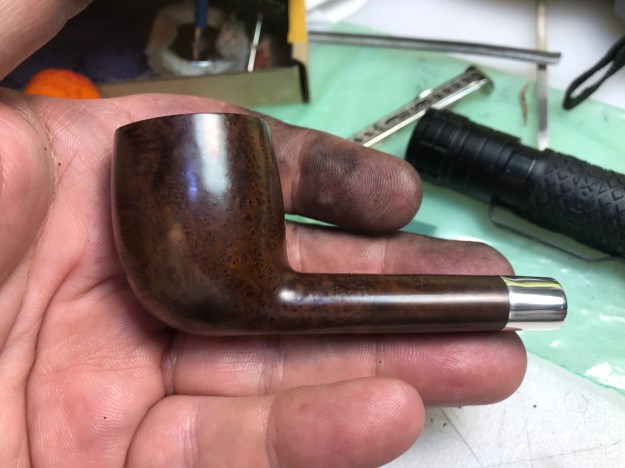
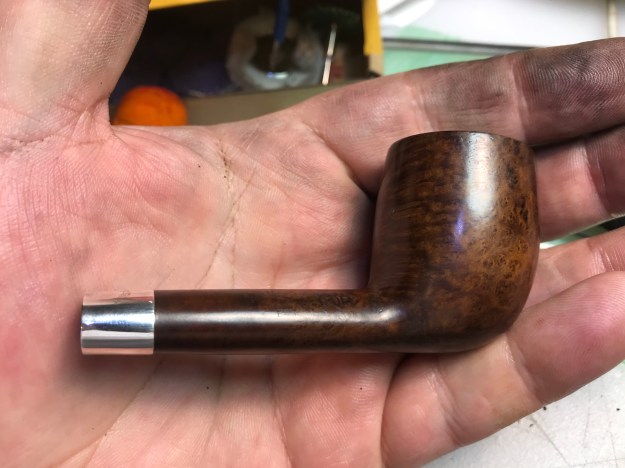
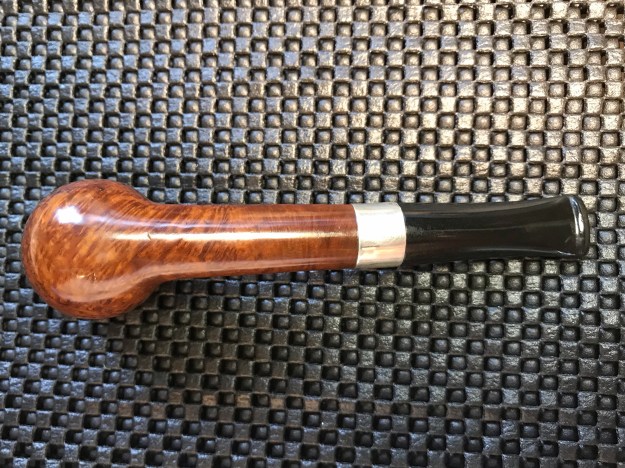
As I unwrapped the third pipe my mind was still on the Peterson and what a great pipe I hoped it would be after a lot of work went into it. The last pipe was just over medium in size I noted as the bubble wrap was peeled away. A silver band was the first thing to catch my attention, looking at the pipe upside down when it was finally out of its protective shroud.

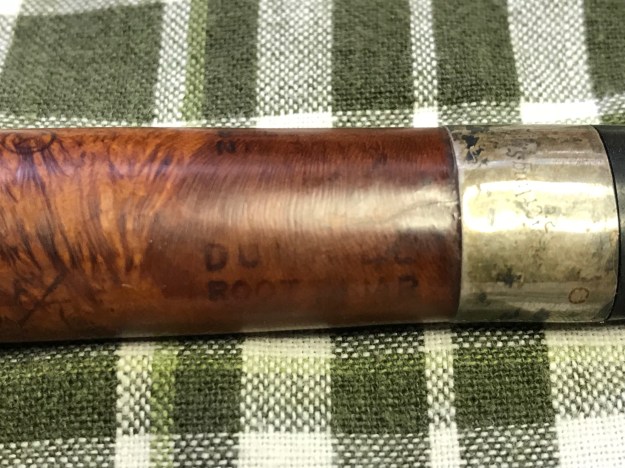
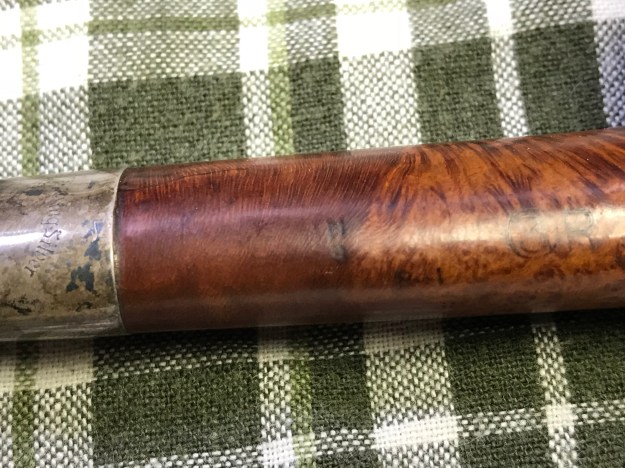
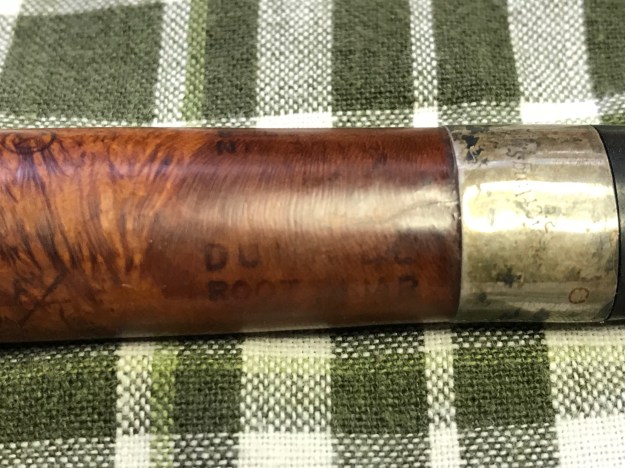
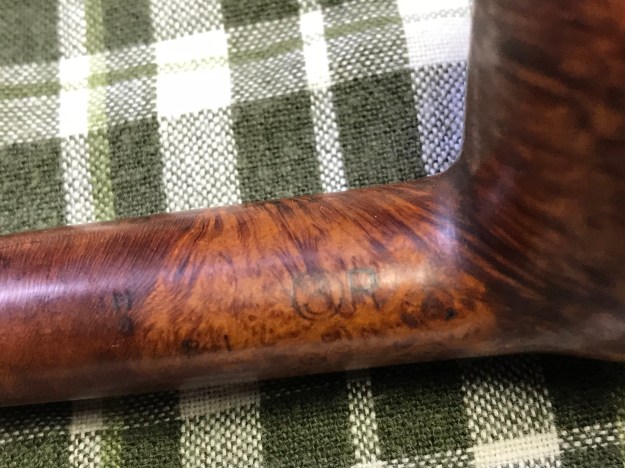
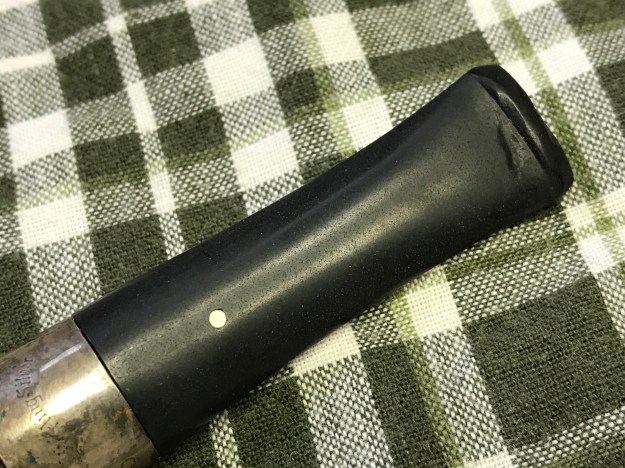
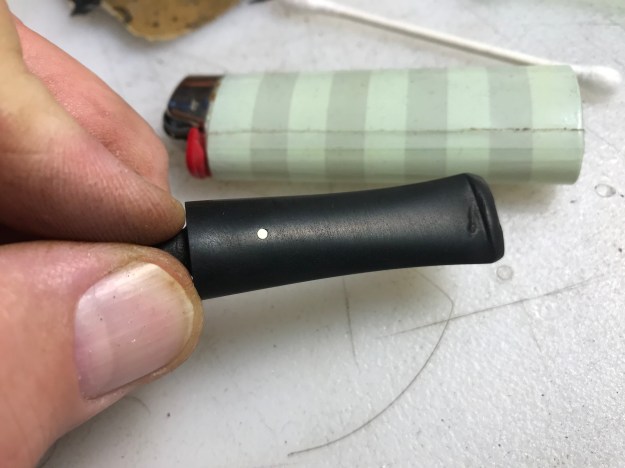
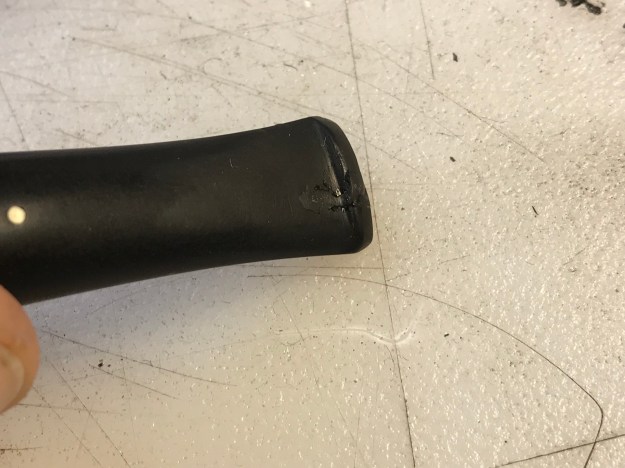
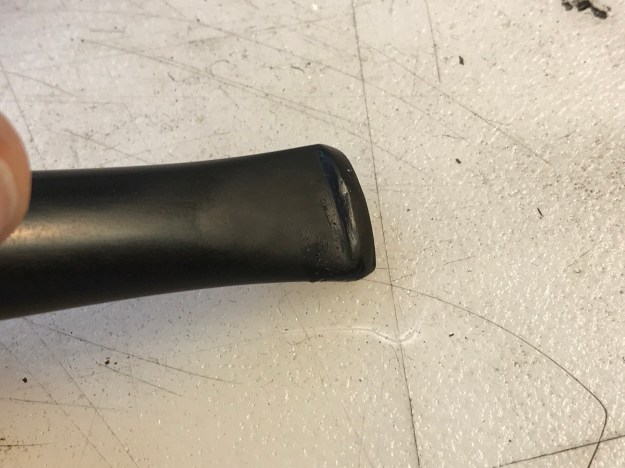
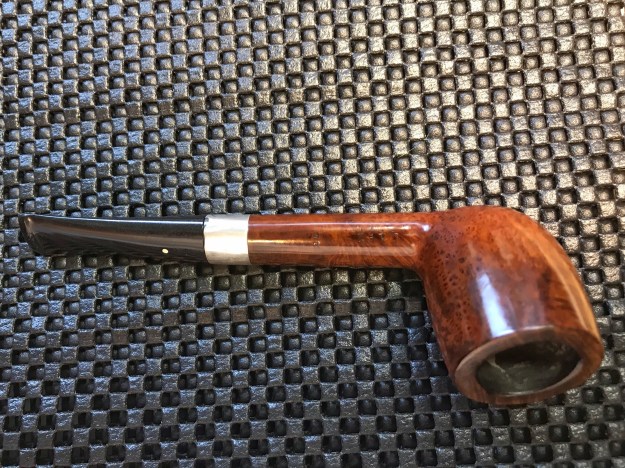
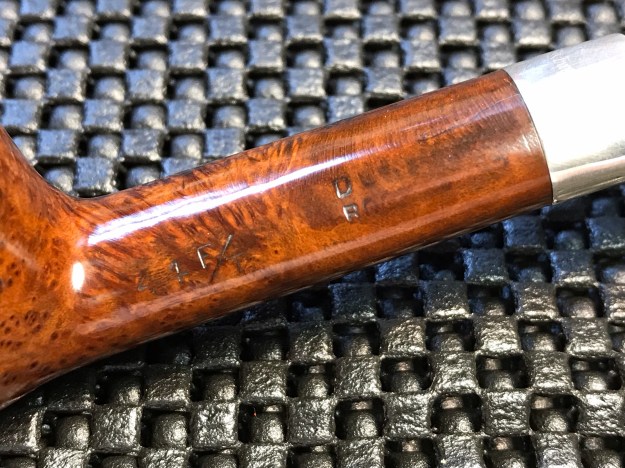
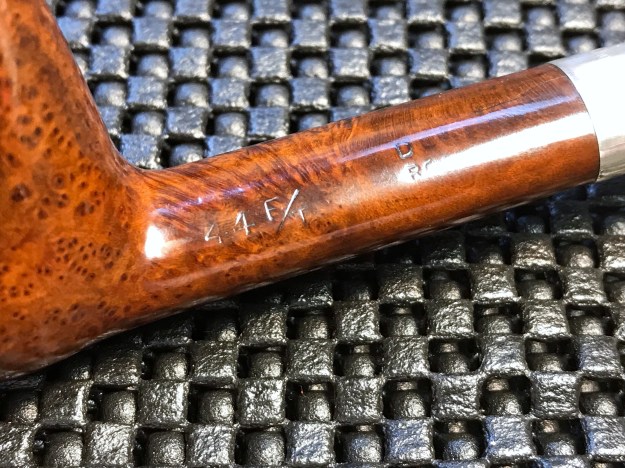
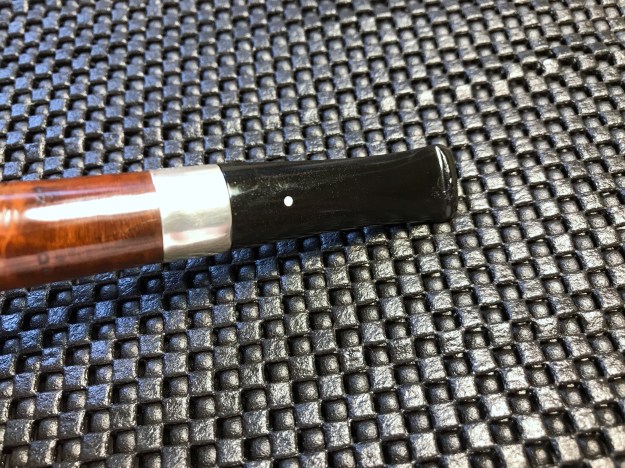
I rolled the pipe over to look for it’s stamping. That’s when I saw it: A White Dot in the stem! “Surely not”, I thought to myself, “this can’t be a Dunhill, can it?” The nomenclature was very worn but readable enough to see it was a Dunhill. I immediately went to get my loupe to see what year the pipe was made, if possible. Looking it over under magnification I found two things I’d not yet seen: enough stamping to date the pipe and that the silver band was a repair for a cracked shank.

The discovery of the crack slowed me down a bit. I went to get a flashlight to inspect the pipe closer. The crack seemed to be well repaired with the band; that was a good find. But looking at the bowl I realized there was a pretty big crack in it, too. So much for my bit of relief … I decided to check the year of the pipe’s manufacture and leave the repair thoughts aside for now.

After a quick internet search I came up with a link to a Dunhill dating chart on Pipephil’s site. It took only a moment or so to find the results but it took a bit longer for the results to sink in. If I was reading everything right, this pipe dated to 1968, which is my birth year! I was giddy as a schoolgirl at this moment… and nervous as a cat at the same time.

At this point I had not worked on any pipe as (potentially) valuable as these. I also hadn’t tried to undertake any repairs as extensive as these looked to be. After a lot of debate, I finally decided to put the lot away until I’d tackled a few more repairs and had more experience under my belt and tools in my arsenal. Over time as I repaired and restored more pipes I began to raise my confidence levels. Each project I completed had as the goal getting me ready for the Resurrection Special lot.

About when I felt it was time to take on these challenges life threw a few curveballs at me, personal issues that put most of my hobby time on hold. Fast-forward a few years, it’s time to get to the Resurrection Special lot.

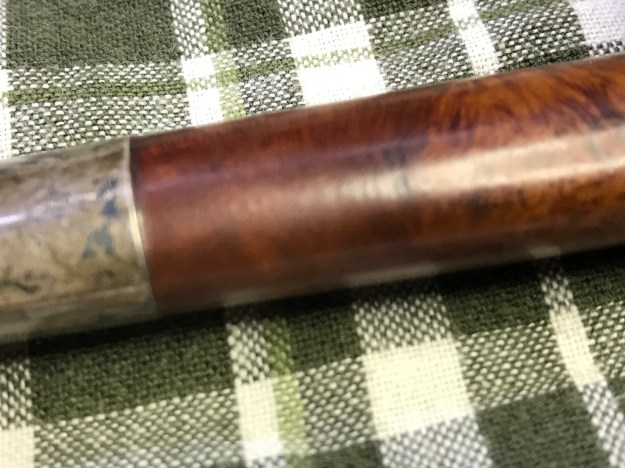
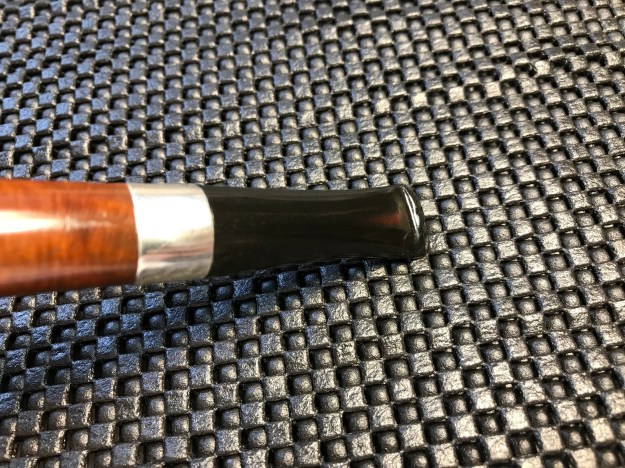
Looking more closely at the pipe when I unpacked it again I saw that much of my past inspection was correct: the shank repair and band were tight and holding well with no “feel” when I rubbed a fingernail over it, the pipe did date to 1968 as I thought, and the bowl would need work, though not as much as I thought. The pipe was very dirty, the rim being covered in a thick layer of lava. The stem had a little oxidation and some tooth dents. The silver band was tarnished.

I began with the rim; I had no idea of it’s condition under the lava and I wanted to see what I was dealing with. I used alcohol dipped cotton swabs to begin breaking down the thick layer. Once it was softened up some I used a knife-blade wax carving tool to scrape away the gunk. The rim was damaged under the lava, as I expected it to be; it would need to be topped. I decided here that I would take off as little wood as possible when I topped the bowl since I wanted to keep the shape as true as possible. I also decided that this wouldn’t be an attempt to make the pipe perfect; it (like me) had battle the scars of it’s life and I wanted to retain that character, too.

The bowl had been reamed before I received the pipe, most likely when the issue was discovered. What I had thought was a crack actually was heat fissures; they didn’t go all the way through the bowl. The outside of the bowl did have what appeared to be burns though; more on these in a bit.

I had read how Charles Lemon of Dad’s Pipes had done several successful bowl repairs with JBWeld and his own bowl coating. I messaged Charles and also looked up his article on bowl coating to try it myself. The recipe is simple: coat the bowl with maple syrup, fill it with activated charcoal powder, and wait for it to dry. (Actually there are a couple more steps, like putting a pipe cleaner in the stem, so make sure you read Charles’ article if you’re interested in trying this method.)

I mixed up some JBWeld and coated the area where the fissures were, using a toothpick to push the epoxy back into the cracks, after inserting a pipe cleaner in the shank through the air hole to keep it open. I used a pipe cleaner and my finger to smooth the repair out as well as I could. Then I sprinkled some activated charcoal powder on the wet repair and set the bowl aside for the epoxy to cure until the next day.

After the repair was dry I sanded it a little smoother with 220-grit paper. Unfortunately this took out most of the carbon I had applied so the full bowl coating would have to be done. But I waited until after all the work was completed to do that. I also topped the bowl to remove most of the rim damage using 220-grit paper.

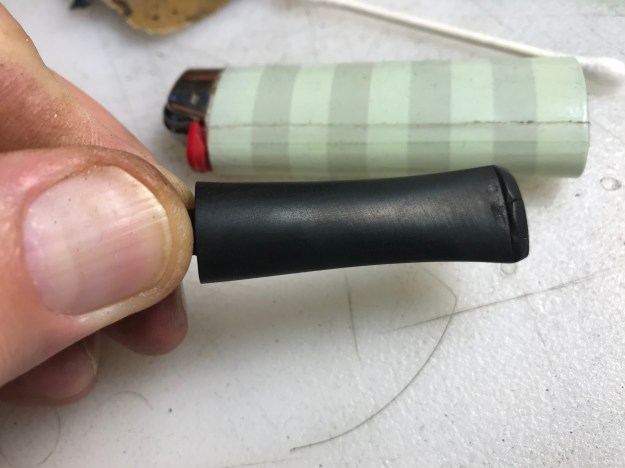
While the bowl repair was curing I worked on the stem. I started with painting the stem with a Bic lighter to raise the dents as much as possible. You can see in the photos that there were still significant dents after flaming the stem. A crack in the underside of the button also appeared after the flaming. I began filling the dents and repairing the crack/button with black CA glue at this point. The climate has been very humid here so the CA glue cured extremely slowly.

I worked on the stem in multiple sessions over a period of days to complete it due to the slow curing time. Multiple patch layers were applied and shaped with needle files, a vulcrylic file, and sandpaper until I had an acceptable repair.

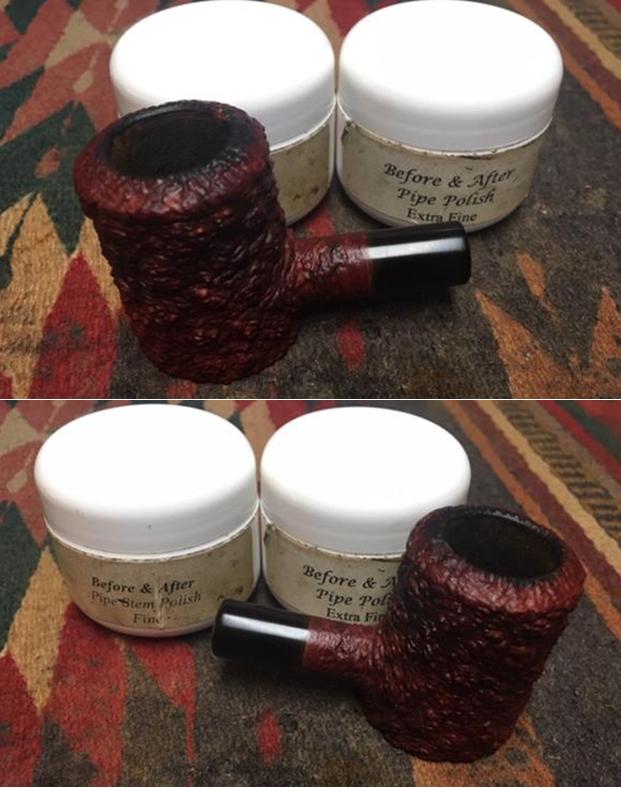
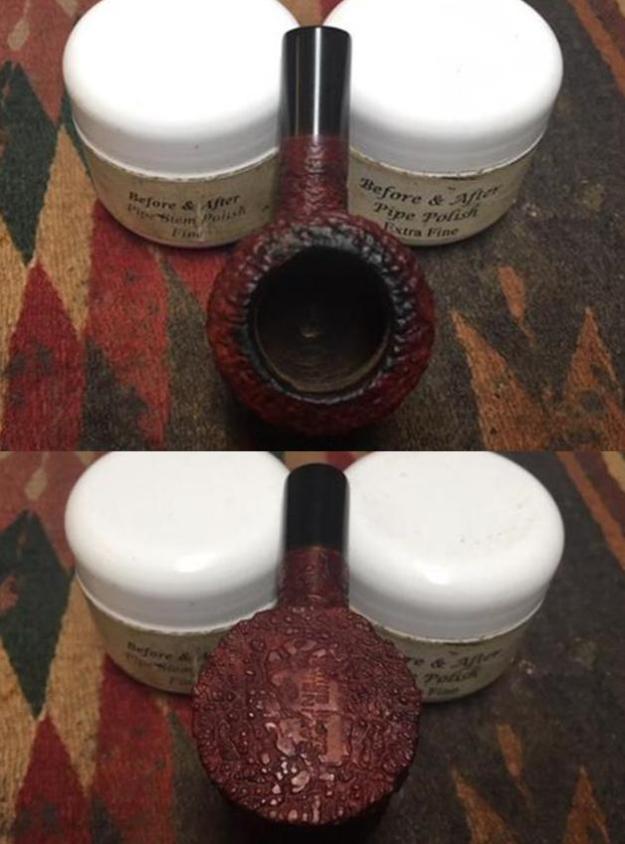
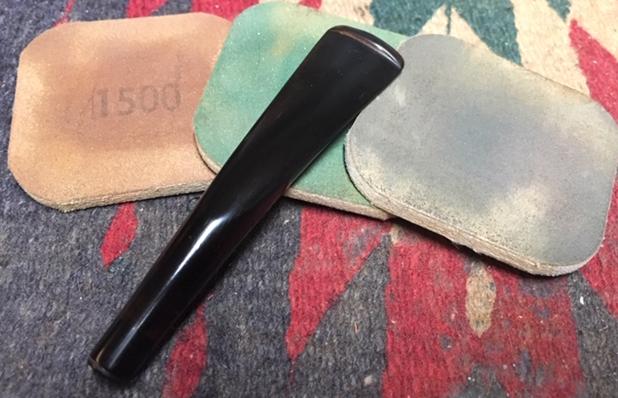
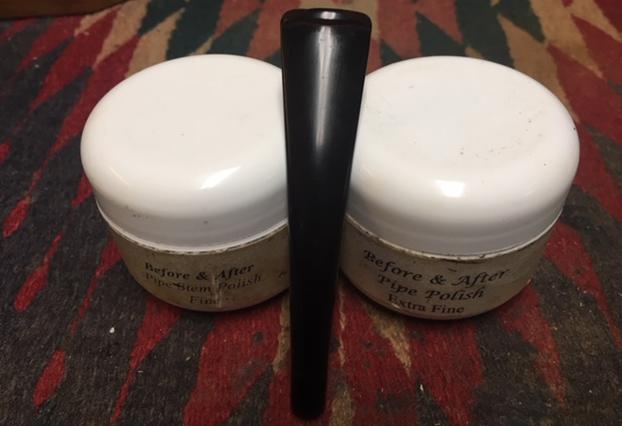
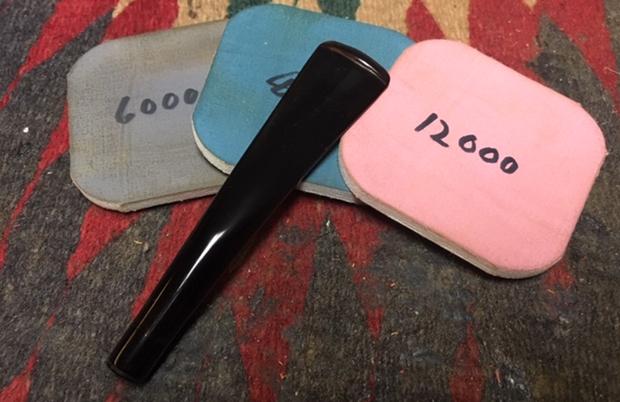
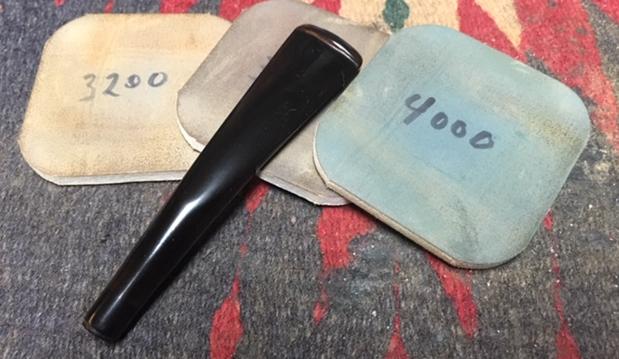
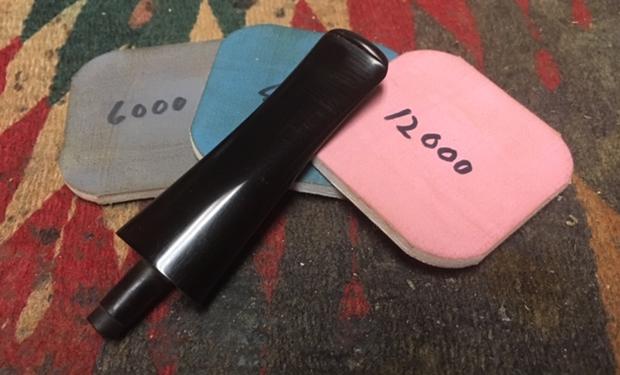
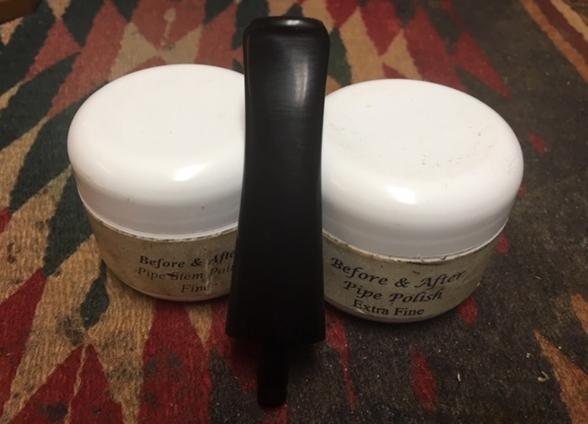
The next step was to wet sand the stem with the full range of micro mesh pads. Then I used both the fine and extra-fine Before and After Stem Polish. I buffed the stem with blue compound using a 1″ cotton wheel on my Dremel at about 13k RMP. While the stem wasn’t “perfect” it was very improved, definitely something I could live with and what I thought would go well with my goal for this restoration. It was time to get back to the stummel now.

I cleaned the surface of the briar with cotton pads and alcohol, removing the grime covering its surface. I decided to see what the pipe would look like with a gentle sanding. With 400-grit wet/dry paper I began with the rim, sanding out the scratches from topping the bowl. I began to work around the bowl with the 400- grit paper and noticed the burn mark on the side of the heat fissures seemed to be lightening so I started working at that spot. In short order the burn was all but gone. Apparently it wasn’t a burn at all but some kind of stain on the briar. As I sanded the stummel I avoided the nomenclature, and effectively the entire shank. The stamping was already terribly weak and I was not going to make it worse.

Avoiding the stamping presented another challenge: Now the shank was a different color than the bowl. I didn’t want to re-stain the pipe so I applied Before and After Restoration Balm to the wood and set it aside to work its magic for a bit.

I was surprised how well the wood blended in color after I hand buffed the balm off. It was now uniformly darkened, even the topped rim.

I had an idea that had been in the back of my head for a little while that I wanted to try on this pipe. The nomenclature being so weak, I wanted to try to enhance it if I could. But I didn’t want to try to deepen the stamping or anything of that sort. What I decided to try was applying some Rub’N Buff ebony wax. This was a brand new idea (to me) and I really didn’t know if it would work or not.

I put a small amount of the ebony wax on the shank and spread it thinly over the entire shank, continuing to buff it with my thumb until the color went from opaque to translucent. I then applied a couple of coats to the rest of the pipe until I had even coverage.

I was really happy with the results. The color was even and highlighted the grain a bit. The stamping was also strengthened I think, much better than it had started out. While still not “strong” (I don’t think that can ever be restored) it was more readable.

I buffed the stummel with Tripoli and then white diamond, both using the Dremel and 1″ cotton wheels at about 13k RMP. I then put the stem back on the pipe and gave the entire pipe several coats of Carnuaba Wax, again with the Dremel and a 1″ cotton wheel at about 15k RPM. (I find the slightly faster speed does a far better job for the Carnuaba Wax.)

I’m still waiting for the bowl coating to cure so I’ve yet to christen the pipe. But I’m very happy with the results of this project. While it may not be a perfect specimen nor hold a lot of monetary value, to me it is a prize possession; my first Dunhill, and a birth-year Dunny to boot!

New Life for a Savinelli Capri Bruna 310 Cherrywood


Blog by Steve Laug

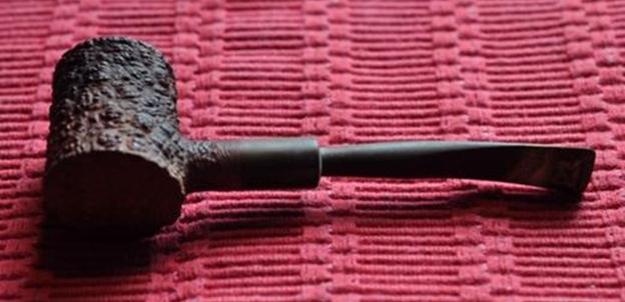
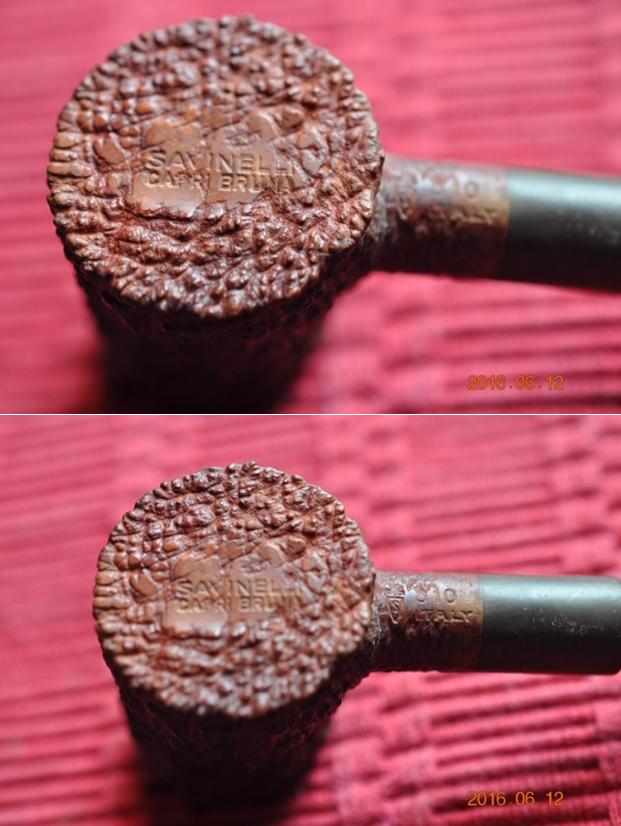
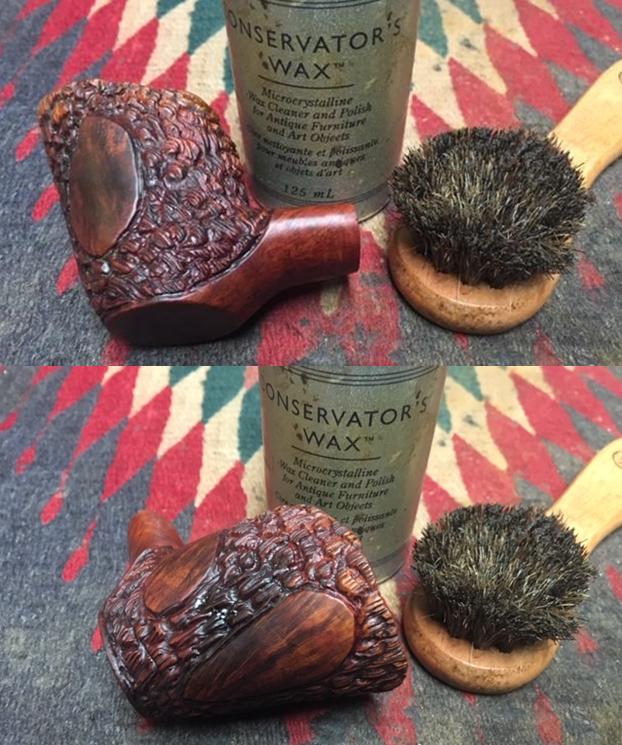
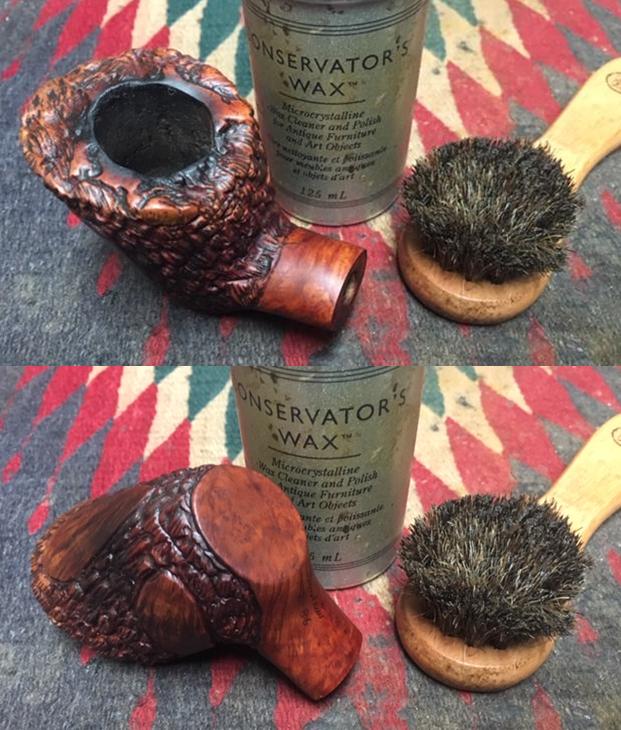
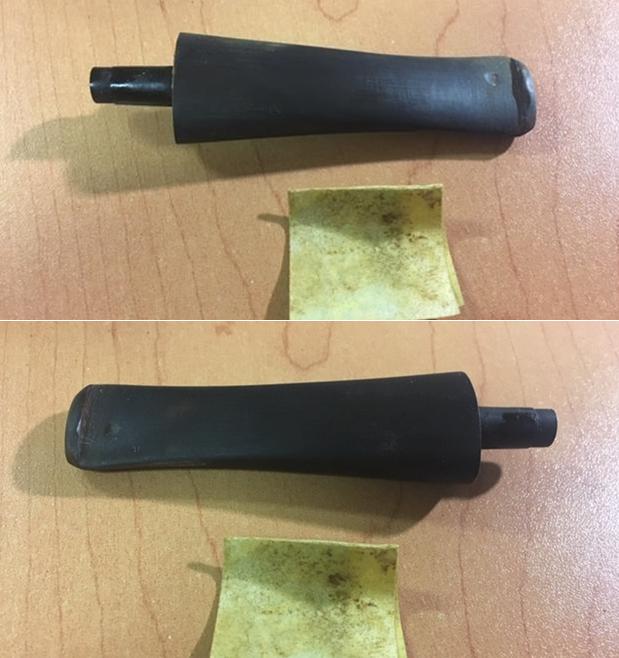
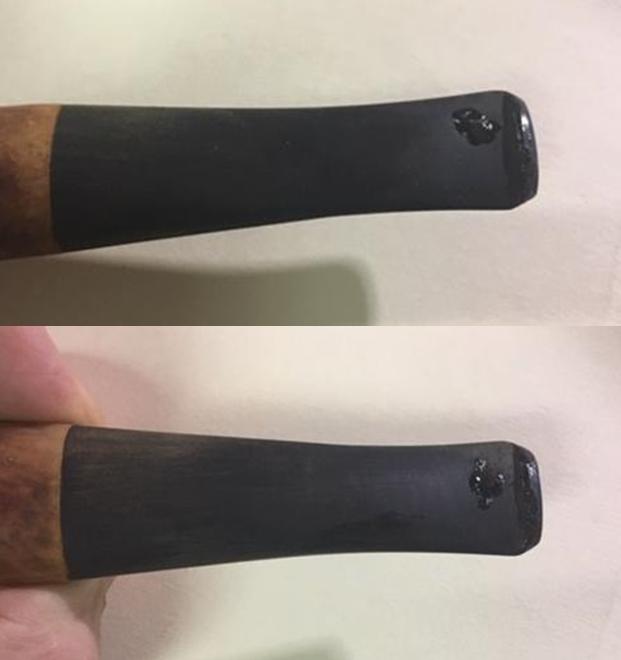
I don’t remember where Jeff picked up this old pipe but it is a shape that I like to work on. It was a mess with lava overflowing a thickly caked bowl and filling in rusticated rim top. The rusticated finish was very dirty and had darkened around the bowl where the hand had held it and where the flame of the lighter had touched the rim in the lighting process. The pipe had a classic Capri Sea Rock style rustication that was very dirty. The stem was a mess with oxidation, calcification near the button and tooth chatter and marks ahead of the button on both sides. The stem was stuck in the oxidized vulcanite shank extension due to the buildup of tars and oils. The pipe was stamped on the underside of the bowl and shank and under a bright light with magnification I could read Savinelli over Capri Bruna on the bottom of the bowl. On the shank it was stamped with the Savinelli S shield and next to that 10 (shape number) over Italy. The pipe was a oldtimer and had seen a lot of use. It was obvious to me that this pipe was some pipeman’s favourite smoker. Jeff took photos of the pipe before he started his cleanup process to show the condition it was in when he found it. The next photos show the stamping on the heel of the bowl and the shank.Jeff had scrubbed the exterior of the bowl with Murphy’s Oil soap and removed the dust and grime that had accumulated in the sea rock style rustication. The finish looked dry and tired but the rustication was in very good condition once it had been scrubbed. He had been able to remove the grime and oils from the sides of the bowl leaving it clean and evenly coloured. The rim top looked much better though some darkening remained in the grooves along the inner edge of the bowl and rim top toward the back. He reamed the bowl with a PipNet reamer and cleaned it up with a Savinelli Fitsall Pipe Knife. He cleaned the interior of the mortise and the airway in the shank and the stem with alcohol, cotton swabs and pipe cleaners. The pipe came to me clean and ready to do the restoration. The stem and shank extension were heavily oxidized. I took some photos of the pipe to show the condition at this point in the process. I took some photos of the rim top to show the darkening to the surface of the rim that I would need to spend some time on. There seemed to be some deeply ground in tars and oils almost filling in the grooves of the rustication on the top surface toward the back of the bowl. I also took close up photos of the stem and vulcanite shank extension to show the oxidation of those areas. The stem had some tooth chatter and marks on the surface near the button. There were some tooth marks in the surface of the top and underside of the button edge.I began my clean up work with the rim top. I scrubbed at the surface of the rim with a brass bristle wire brush and was able to remove much of the lava build up in the rustication. It was still darkened but looked much better.I sanded the oxidation on the shank extension with a folded piece of 220 grit sandpaper to break it down and reveal the black vulcanite underneath the surface. In handling the bowl the briar began to darken from the oils of my hands. The pipe was beginning to show some promise. I polished the vulcanite shank extension with micromesh sanding pads – wet sanding with 1500-2400 grit pads and dry sanding with 3200-12000 grit pads. I wiped the extension down after each pad with Obsidian Oil to enliven the rubber. I polished the vulcanite shank extension with Before & After Pipe Polish – both Fine and Extra Fine to give a deeper shine to the rubber. As I photographed the bowl for the above photos I could see that the rim top needed more attention. I scrubbed the top of the bowl with the brass bristle brush to remove move of the lava on the rim top. The photo shows the cleaner top surface. There is still some darkening on the right side inner edge and the back inner edge of the bowl.I rubbed the bowl down with Before & After Restoration Balm to deep clean the briar bowl and the rim top as well as the briar shank. The product works to clean, enliven and protect the briar. I hand rubbed it with my fingers, working it into the exterior of the pipe. I worked it into the rusticated surface of the briar with a horsehair shoe brush. After it had been sitting for a little while, I buffed it with a soft cloth to polish it. The pipe really began to have a rich shine. I took some photos of the bowl at this point to mark the progress in the restoration. I had removed the stem when I was working on other pipes and put it, along with two other stems to soak in a Before & After Deoxidizer bath. I left them in the bath for about 4 hours to soak and break through the oxidation. I took the stems out of the bath and rinsed them under running water and scrubbed them dry with a coarse piece of cloth. I took photos of the three stems before I continued my work. The military style bit was much cleaner and the oxidation had broken down. I flamed the surface of the vulcanite to minimize the tooth marks. It worked very well. I used some black super glue to build up the top and underside of the button and fill in the remaining tooth mark on the underside of the stem near the button. Once it had cured I filed the edge of the button with a needle file to clean that up and smooth out the sharp edge. There was some residual oxidation on the stem surface so I sanded it out with 220 grit sandpaper. I worked on it until all the oxidation and the light tooth chatter was removed.I polished the stem with micromesh sanding pads – wet sanding with 1500-2400 grit pads and dry sanding with 3200-12000 grit sanding pads. I wiped the stem down with Obsidian Oil after each pad. I polished it with Before & After Pipe Polish – both Fine and Extra Fine and gave it a final coat of Obsidian Oil. I set the stem aside to dry. I polished stem and the bowl with Blue Diamond polish on the buffing wheel. I gave the bowl multiple coats of Conservator’s Wax and the stem multiple coats of carnauba wax. I buffed the pipe with a clean buffing pad to raise the shine. I hand buffed it with a microfiber cloth to deepen the shine. The pipe polished up pretty nicely. The rustication and the vulcanite shank extension came alive with the buffing and work well with the polished black vulcanite stem. Together the pipe looks much better than when I began and has a rich look. The finished pipe is shown in the photos below. The shape, finish and flow of the pipe and stem are very well done. The dimensions are Length: 6 inches, Height: 2 inches, Outside diameter of the bowl: 1 3/8 inches, Chamber diameter: 3/4 of an inch. I will be adding this beautiful Capri Bruna Cherrywood Sitter to the rebornpipes store shortly if you are interested in adding it to your collection and carrying on the trust. Thanks for walking through the restoration with me as I worked over another Savinelli Capri. I really like the look and feel of this finish.

Restoring a Nording “Pick Axe” Freehand Pipe


Blog by Paresh Deshpande

I had just finished restoring a 1940s-1960s Kaywoodie Bent Billiard with a 4 holed stinger, also from my grandfather’s collection. I am always fascinated by “Free Hand” pipes. I feel these freehand shapes let the creativity and imaginations of a carver run riot without the bindings of the exacting demands of a classical shapes and finish.

Over a period of time, I have collected a number of freehand pipes during my not-so-long journey in to the pipe world and have realized that these freehand pipes invariably have a nice hand fit, sitting snugly in to the hands of the smoker with a nice heft to them. The most fascinating aspect of a freehand, I feel, is the carver’s desire to highlight the grains in the briar block and shape the pipe accordingly to highlight these grains.

I was fortunate to come across four estate freehand pipes, one Soren, one Ben Wade Spiral, one Nording #4 and one Nording Pick Axe shaped pipe. I discussed with my mentor and guide, Mr. Steve Laug, and after his approval on the aspects of collectability and the price point at which they were available, I purchased them about a year back!!!! Since then, these were waiting for me to work on and now that I feel slightly more confident in doing justice to these lovely pipes, I decided to work on them. The first of these pipes that is now on my work table is the Nording Pick Axe shaped freehand.

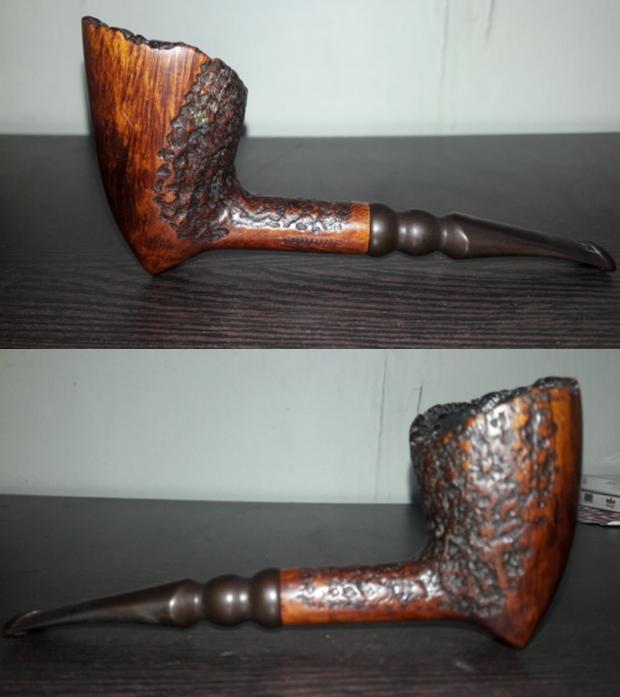
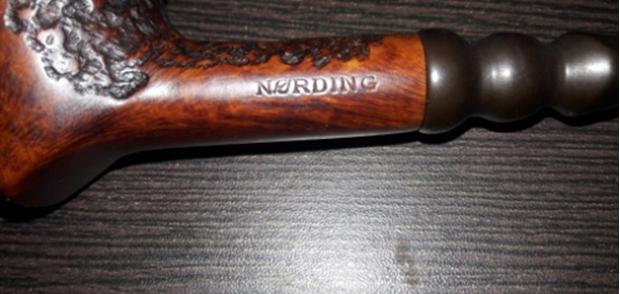
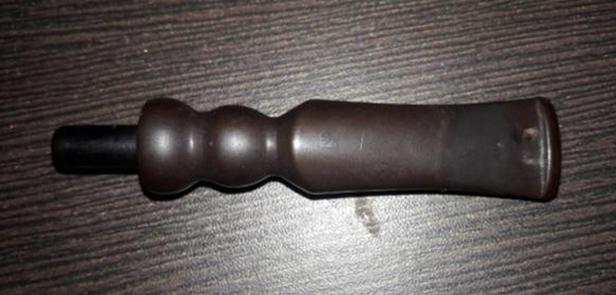
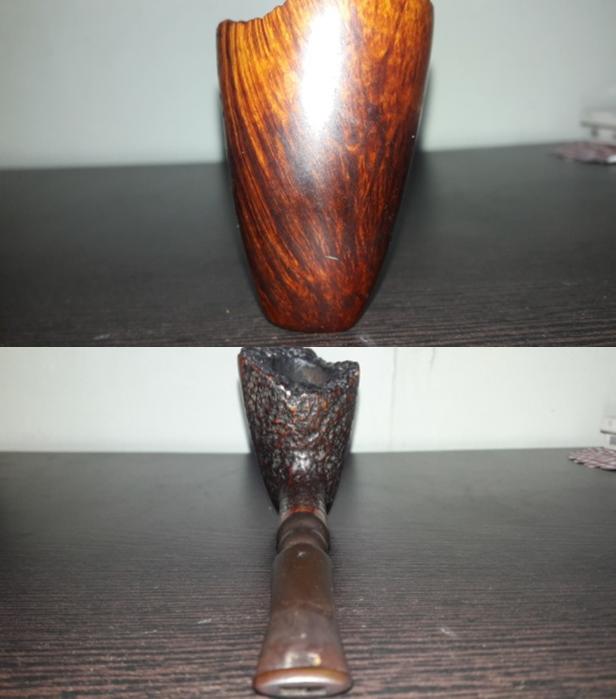
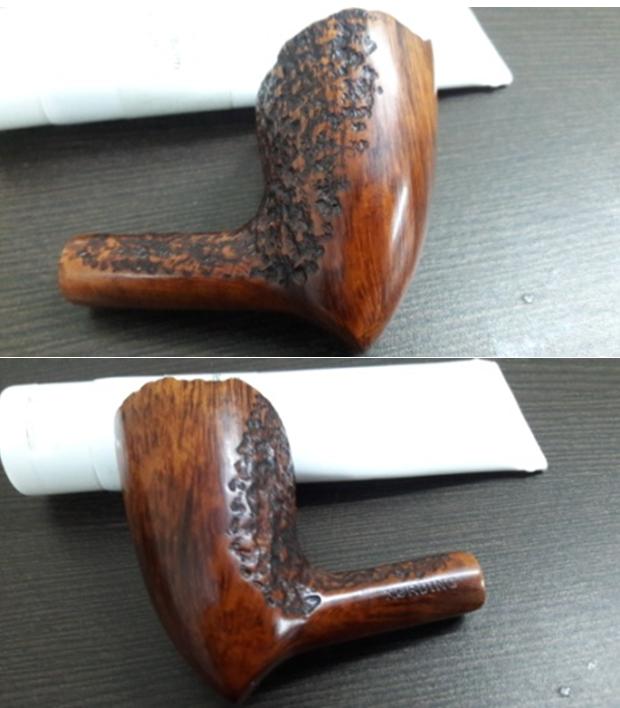
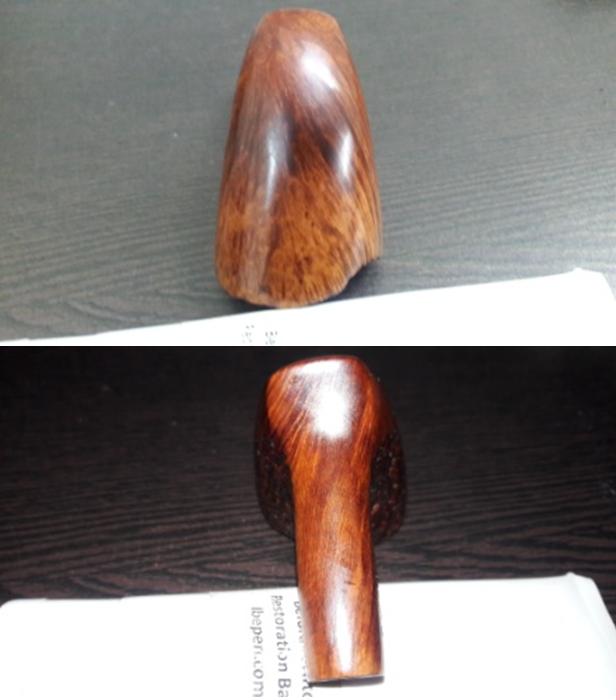
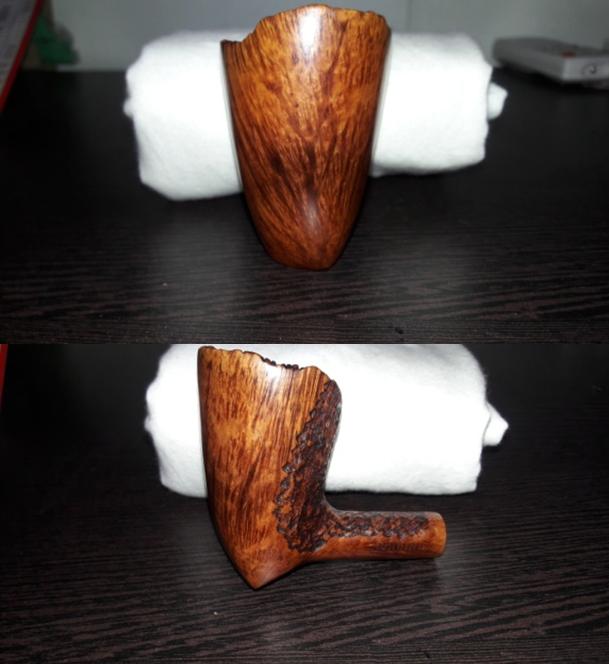
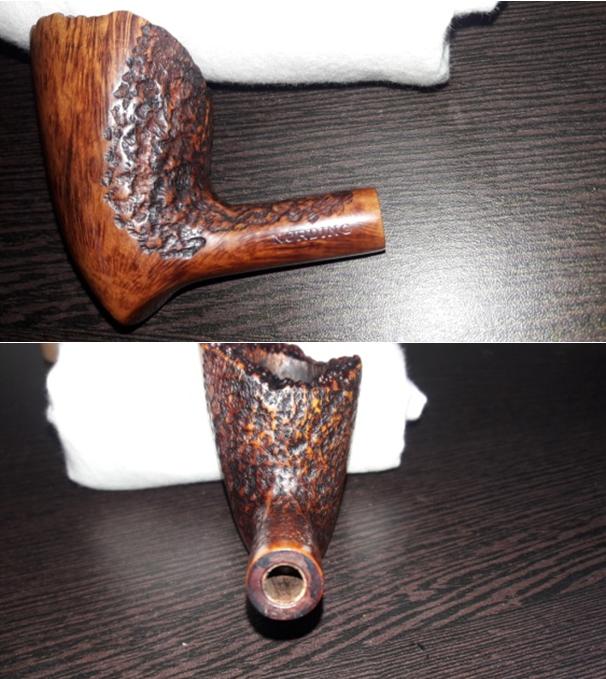
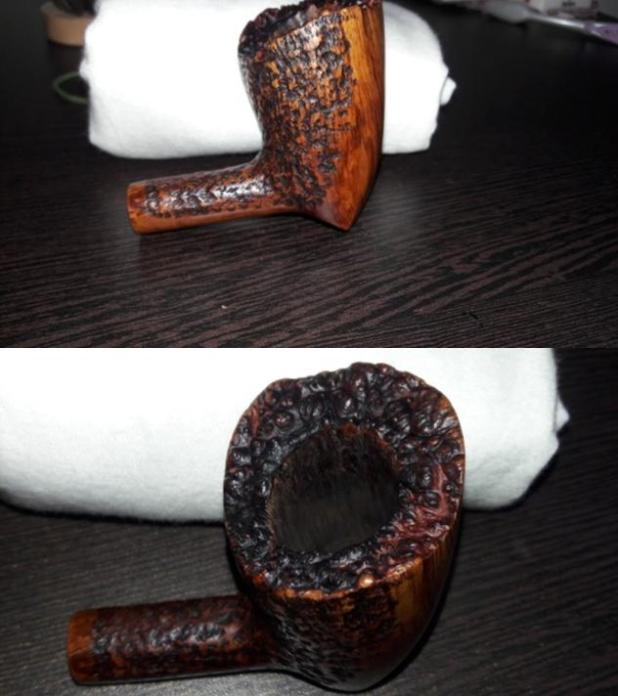
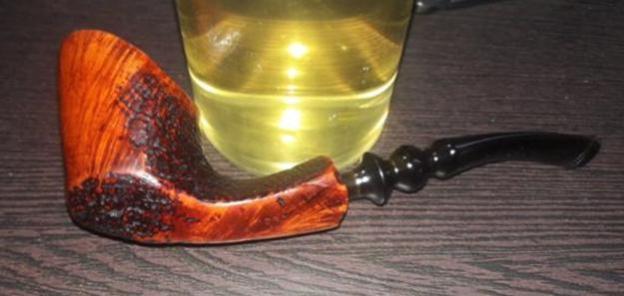
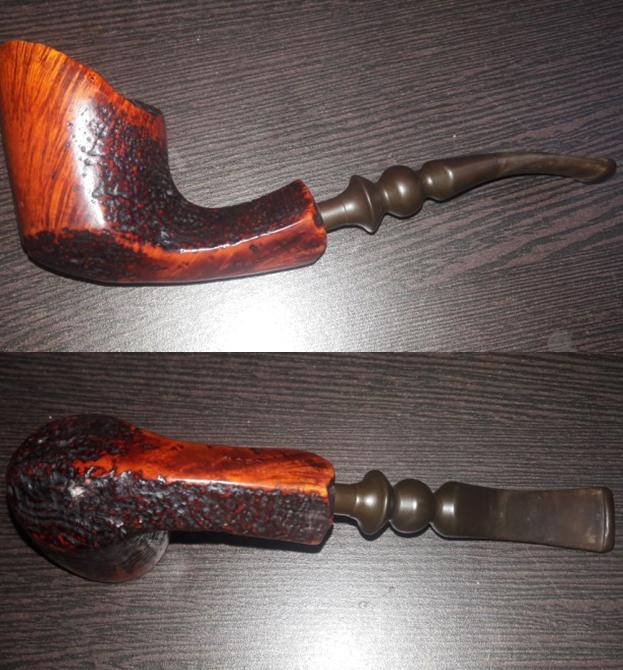
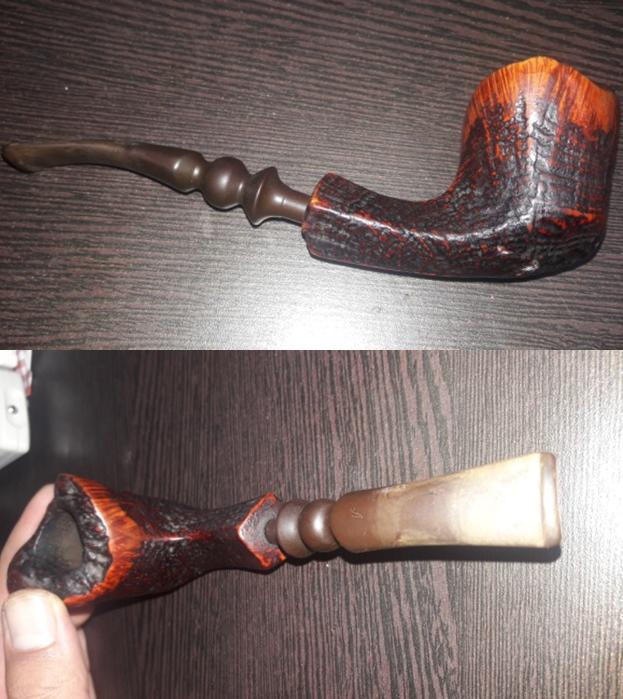
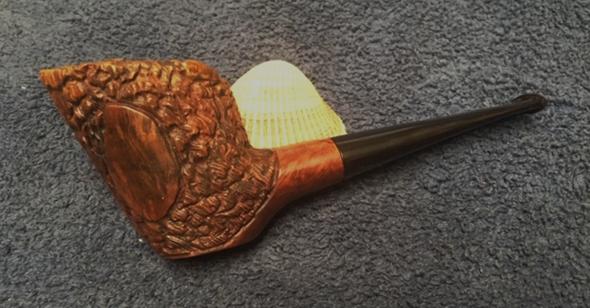
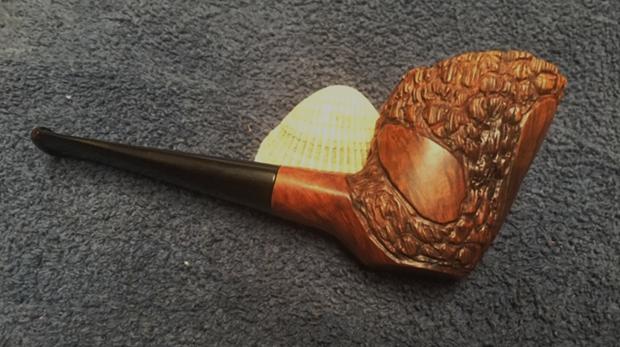
This beautiful pipe has the classical pick-axe shape with a plateau rim top. The stummel has a smooth surface with densely flame grains extending from the mid way on right side and extending mid way on left side while the remaining surface on the stummel has beautiful rustication. The smooth portions extend to the sides such that when held in the palm, all the fingers are holding the stummel along the smooth surface and one can admire the fine delicate rustications on the back while sipping your favorite tobacco. Blissful!!!!!!!!! Similarly, the top surface of the shank is rusticated extending half way through on either side while the bottom is smooth with straight grains extending from the tip of the axe towards the end of the shank.  The only stamping, “NORDING” in block capital letters, is seen on the smooth portion of the shank. The stamping is clear, crisp and easily readable. The fancy stem has a slight bent towards the lip and helps the pipe to balance straight on a table. There is the letter “N” in block capital letter, stamped on the top surface. But it is faint and hidden under the heavy oxidation.I searched the internet for detailed information on Nording pipes and this pipe shape in particular shape. Though I did not find anything particularly about this pipe, it was interesting to read how young Mr. Nording got in to the business of pipe making. It makes for a very interesting read. We must not forget to thank one Mr. Skovbo, who had a major contribution in introducing Mr. Nording in to this business!!!!!!  I have a couple of SON pipes in my grandfather’s collection which I will restore at a later date since I now know about the historical importance of these pipes!!!!!!!!!!! Here is the link for easy reference of those interested: https://pipedia.org/wiki/Nørding 

INITIAL VISUAL INSPECTION
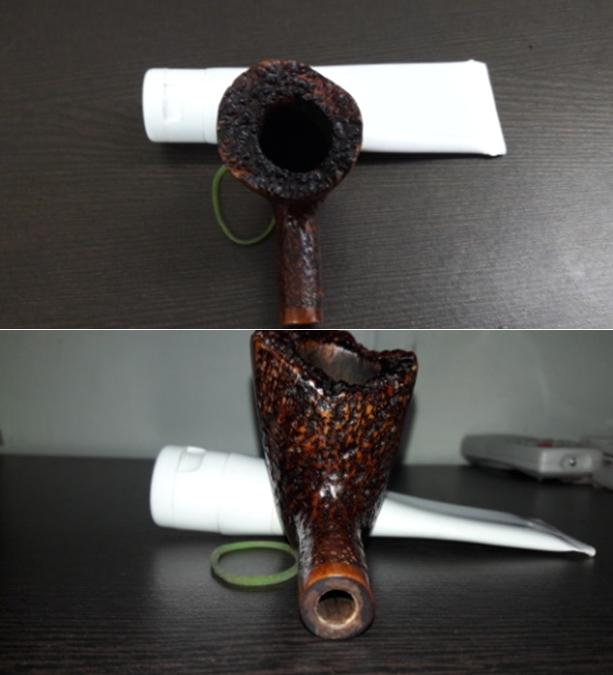
The stummel is covered in dust, oils and grime giving a dull and lackluster appearance to the bowl. The rustications on the back of the stummel are, likewise, filled with dust, dirt and grime. This will need to be thoroughly cleaned. On close scrutiny, I saw some minor superficial dents and dings on the smooth surface. Will I address it or keep it as it is as a characteristic feature of this pipe’s past life? Hell yes, I will address it!!!!! I want it to be as perfect as I can make it for its next innings with me!!!!!! The chamber is clean with a very uneven and thin layer of cake. The plateau rim top is covered with overflow of lava. The inner rim edge is crisp, even and intact. The chamber is odorless and dry to the touch. The inner wall condition of the chamber will be ascertained once the chamber has been completely reamed. However, I foresee no issues at all as the bowl feels solid to the touch.The fancy stem is heavily oxidized with tooth chatter and bite marks on both surfaces and some calcification can be seen towards the lip. There is a significant damage to the lip end in the form of a bite through hole on the upper surface and some deep bite marks on both upper and lower surface of the stem. The airway in the stem is slightly blocked. These issues will have to be addressed. On close observation, the upper surface of the stem bears the stamp “N” in block capital letter. However, this stamp is very faint and covered in thick layer of oxidation. I will attempt to restore and save this stamp.The shank, mortise and the airway is relatively clean and will only need to be sanitized.THE PROCESS
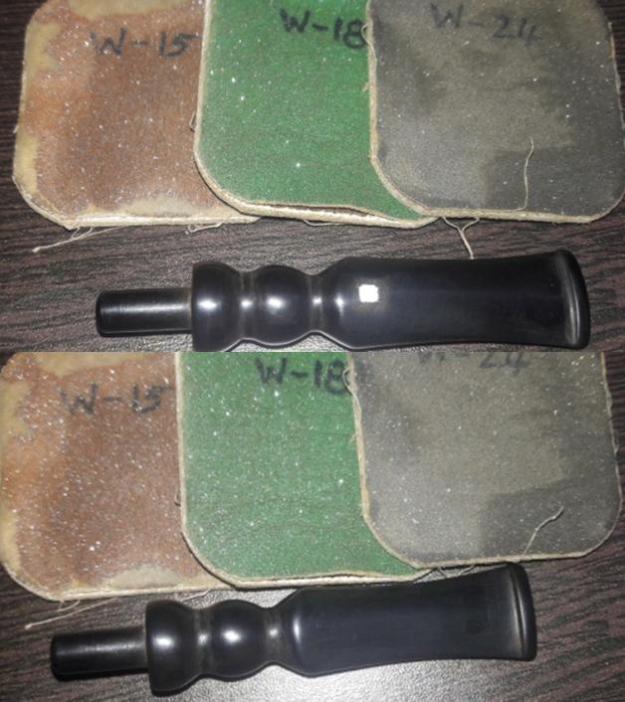
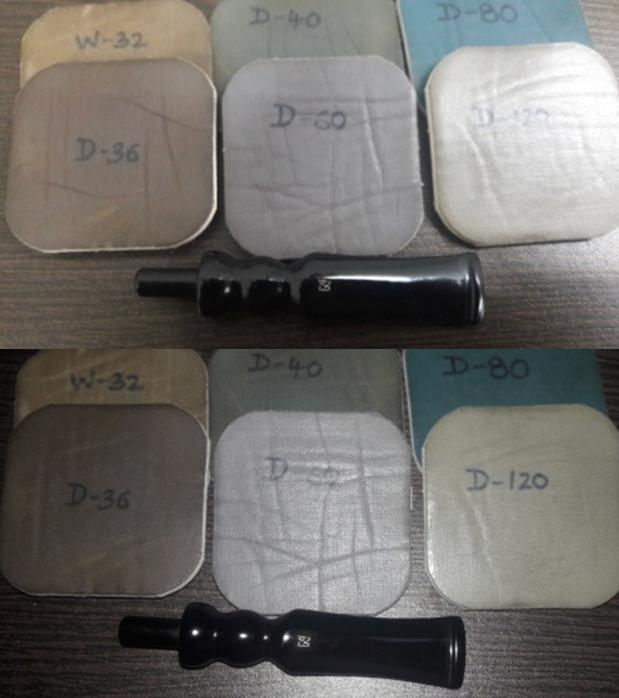
The first step that I usually follow is the reaming of the bowl. However, in this project, since the only significant damage appreciated is to the stem and would be a time consuming process to repair, I started this restoration by addressing the stem first by sanding the stem surface with a 220 grit sand paper followed by 1500 grit micromesh pad. This serves two purposes. Firstly, it evens out the surface for a fresh fill during stem repairs and secondly, I have experienced that any fill in a stem repair turns distinctly brown after micromesh sanding if the oxidation from the stem surface was not removed prior to the application of the fill. Once I was through with the sanding, I wiped the stem clean with cotton pad dipped in isopropyl alcohol. This was followed by flaming both the surfaces of the stem with a Bic lighter, concentrating more around the hole on the upper surface and the deeper bite marks on the lower surface. This helps in raising all the tooth chatter and dents to the surface.I inserted a pipe cleaner coated with Vaseline in to the stem airway before applying the fill. This helps in preventing the fill from entering and blocking the airway. I prepared a mixture of superglue and activated charcoal and applied it as evenly as possible over the hole and deep bite marks and set it aside to cure for 48 hours since the climate here is very wet and humid. While the glue was curing, I worked on the stummel, reaming out the cake with a Kleen Reem reamer, followed by a pipe reaming knife that I had fabricated. I brought the cake down to the bare briar. To further remove any traces of old cake and smooth the inner walls of the chamber, I sanded the inner wall surface with a 220 grit sand paper. As observed during initial visual inspection, I had decided to remove all the dents and dings in the stummel. I cleaned the stummel with Murphy’s oil soap, paying special attention to the plateau rim which was scrubbed with 000 grade steel wool to remove all the overflow of lava. Thereafter I sanded the smooth surfaces of the bowl with a 220 grit sand paper. Once all the dings and dents were evened out and the surface made smooth, this was followed by micromesh polishing pads, wet sanding with 1500 to 2400 grit pads. Again, I wiped the bowl with a moist cotton cloth after each pad. Thankfully there were no fills in the stummel. Once I was through with the wet sanding pads, I used the 3200 to 12000 grit pads to dry sand the stummel to a nice shine. I set the stummel aside to let it dry out naturally. I rubbed some “Before and After Restoration” balm deeply in to the stummel with my fingers. This balm helps in rejuvenating and protecting the briar wood. The immediate and incredible transformation that takes place is a worthy reward for all the efforts!!! The mixed grain can now be clearly appreciated. I let the balm be absorbed by the briar for about 15-20 minutes and then polished it with a soft cotton cloth. The bowl now looks fresh and attractive with the grains popping out any which way you look at the briar. Turning my attention to the stem, using a flat head needle file I sanded out all the fills to match the surface of the stem. I further matched the fills by sanding it with a 220 grit sand paper. I had to spot fill clear superglue into small fills which were exposed during the sanding and repeat the entire process twice. To finish the stem I went through the complete set of micromesh pads, wet sanding with 1500 to 2400 pads and dry sanding with 3200 to 12000 grit pads. I wiped the stem with a cotton swab dipped in alcohol after each pad and rubbed olive oil into the stem after every three pads. The stem looks crisp, shiny and like new. Having addressed the “appearance” aspects of this beauty, I turned my attention to the “performance” aspects to ensure that this beauty smokes as well as it looks. I thoroughly cleaned the shank internals using shank brush, pipe cleaners, qtips and isopropyl alcohol. The stem airway was cleaned using regular pipe cleaners and also bristled ones dipped in alcohol. The airway is now clean and the draw is full and open.To complete the restoration, I rubbed a minute quantity of PARAGON WAX on the smooth stummel and the stem and HALCYON WAX II on the rusticated surface. After a few seconds, using muscle power and a microfiber cloth, I polished the entire pipe to a lovely shine. The finished pipe is shown below. This one shall soon find a place in my rotation. Thank you for your valuable time spent in reading this chronicle of my journey.

Restoring a Nording # 4 Freehand


Blog by Paresh Deshpande

I had purchased four freehand pipes about a year back, and now after having worked on 30 plus pipes, and restored them to acceptable standards, I feel confident of tackling restoration of these pipes. Along the way, I learned a few techniques and honed and practiced my skills in these processes, made a few good friends and acquaintances and most importantly, have been able to preserve and restore memories of my Grand Old Man, which I cherish the most.

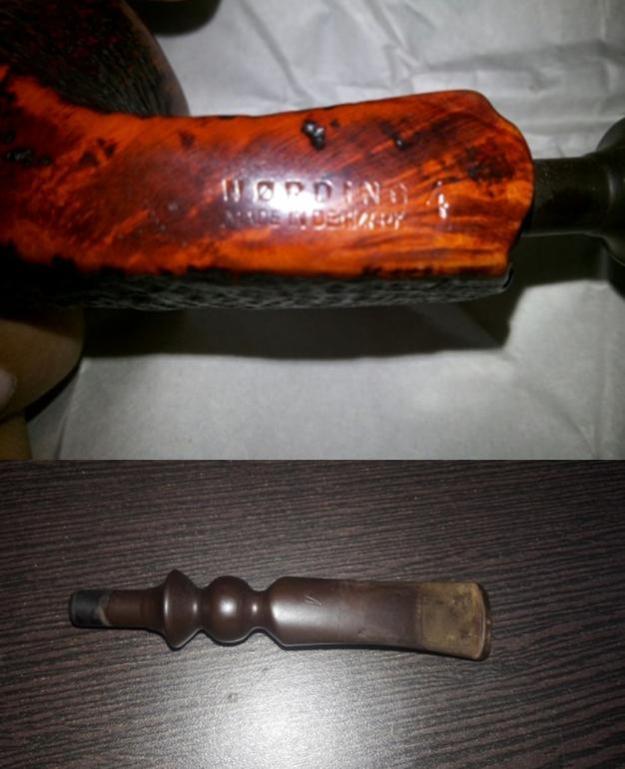
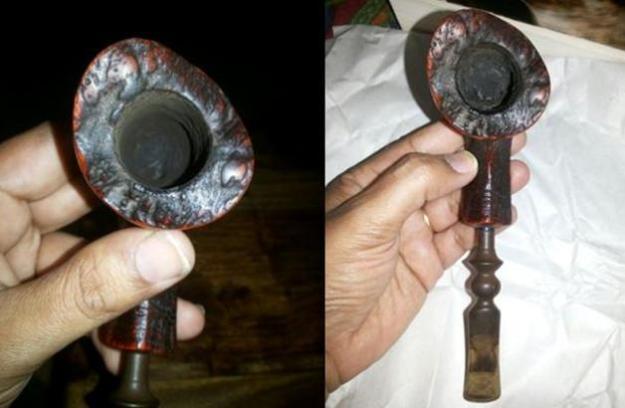
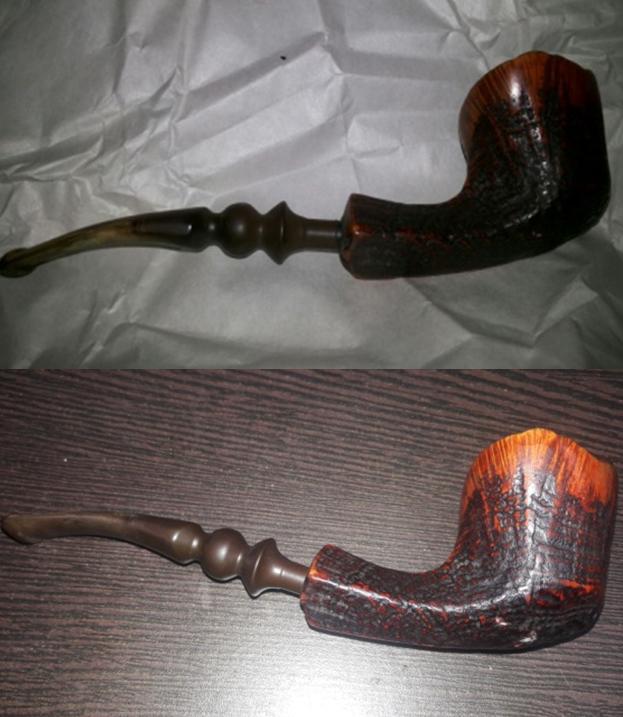
This Nording #4 now on my table is a large pipe with beautiful straight grains extending from the base of the bowl to the rim top on left 1/3 portion of the stummel and the rest 2/3 is sandblasted. The rim top curves upwards in 11 ‘O’ clock and 5 ‘O’ clock direction and forms plateau on the rim top. There is a smooth ring of briar on the bowl just below the rim top. The ring is asymmetrical and follows the shape of the rim top. The square shank is rusticated on three sides and smooth on the left side. This smooth surface bears the stamp “NORDING” over “MADE IN DENMARK” followed by a prominent number “4”. The fancy stem bears the stamp “N” in a fancy decorative and cursive hand.I was surfing the net for some additional information on this particular Nording and found that this piece closely resembles the NORDING’S RUSTIC pipe. Here is the link to Nording shapes and finishes on Tobacco Pipes. (https://www.tobaccopipes.com/nording-history/)  

INITIAL VISUAL INSPECTION
The plateau on the rim was dirty with dust and tars in the grooves of the plateau. The grooves of the sandblast were also dusty and dirty. The inside of the bowl appeared to be in good condition under the thin cake. There is an uneven build up of cake with bottom half having more cake as compared to the upper half of the bowl.The rustications on the shank and stummel is also dusty and filled with dirt and grime. The smooth portion of the stummel appears dull and lackluster due to dust and grime coating the stummel. The plateau shank end was also dirty with tars and dirt. Air does not flow freely through the shank and the mortise appears to be clogged. The stem does not seat completely in to the mortise. This will have to be cleaned.The stem is vulcanite and was oxidized and had some calcification on each side of the stem for the first inch ahead of the button. Apparently at some point in its life, it had a rubber Softee bit on the stem to protect it from tooth marks and chatter. It had done its job and there were no tooth marks or chatter on the surface of the stem. The stamping on the stem, though faded and covered under heavy oxidation, is visible and it will be my attempt to restore and highlight it to the extent possible.All in all, this appears to be a simple and straight forward clean up and polishing project, unless some gremlins and demons are unearthed during the process!!!!

THE PROCESS
I reamed the bowl with a Kleen Reem pipe reamer to take the cake back to bare briar. I cleaned up the remnants of cake in the bowl with my fabricated knife. I was careful not to be over zealous using the knife in order to prevent the walls from being gouged. I finished the cleaning of the inside of the bowl with 220 grit sandpaper wrapped around my finger. I turned it in the bowl until the bowl was smooth and clean.I scrubbed the exterior of the bowl with a tooth brush and Murphy’s Oil Soap. I scrubbed the plateau rim top with a brass bristle brush to remove the tars and oil in the grooves. I rinsed the bowl with water in the sink while scrubbing the finish with the tooth brush to remove the dust and grime. I scrubbed out the mortise with a dental spatula. I cleaned the airway in the shank and stem with pipe cleaners, cotton swabs dipped in alcohol. Once the grime was removed the pipe smelled good and looked good.I rubbed some Before & After Restoration Balm into the surface of the briar to enliven, clean and preserve it. I rubbed it in with my fingertips working it into the briar. I worked it into the plateau rim, shank end, smooth portion of the stummel and the sandblast on the sides of the shank and the bowl. I buffed it into the finish with a horsehair shoe brush. I set it aside for a little while to let the balm do its work. I buffed it off with a cotton cloth and a shoe brush. I set the bowl aside and turned my attention to the stem. I flamed the surfaces of the stem with a Bic lighter to raise very minor tooth chatter to the surface as well loosen the oxidation from the stem surface. This was followed by sanding the oxidation and the calcification on the stem with 220 grit sandpaper. I was able to remove the oxidation and the calcification.

I polished the stem using micromesh sanding pads – wet sanding with 1500-2400 grit pads and then dry sanded the stem with 3200-12000 grit pads to further polish it. After each pad I wiped it down with Extra Virgin Olive Oil to protect and enliven the stem. When I finished with the final pad I gave it the stem another coat of oil and set it aside to dry. These fancy stems, though looks fabulous and helps in accentuating overall look and shape of a freehand, are a pain to clean up and remove all the oxidation!!!! I finished this restoration by applying a small quantity of PARAGON Wax on the stem and smooth briar surface and HALCYON II wax on the rusticated surface. I let it set for a few seconds and thereafter polished it with a soft cotton cloth. The finished pipe looks nice and with the shiny black fancy vulcanite stem, the red and dark hues of the pipe are further accentuated. The finished pipe is shown below.

New Life for a Jandrew Free Hand Sitter


Blog by Steve Laug

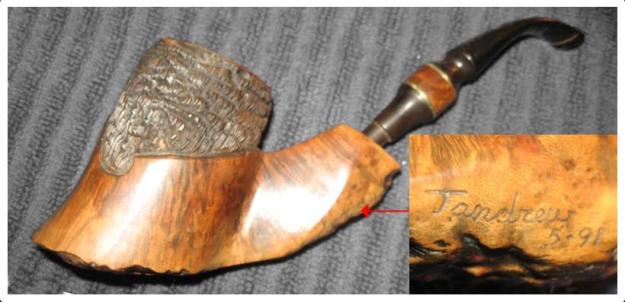
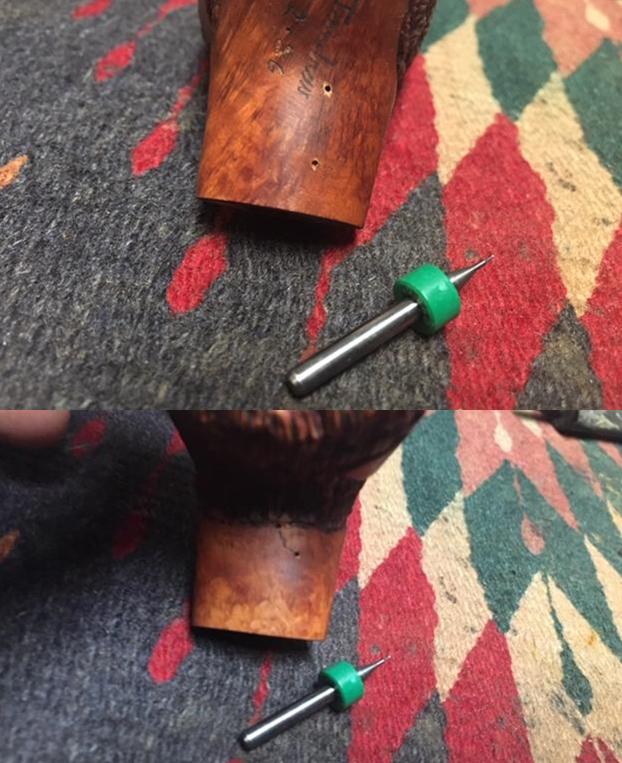
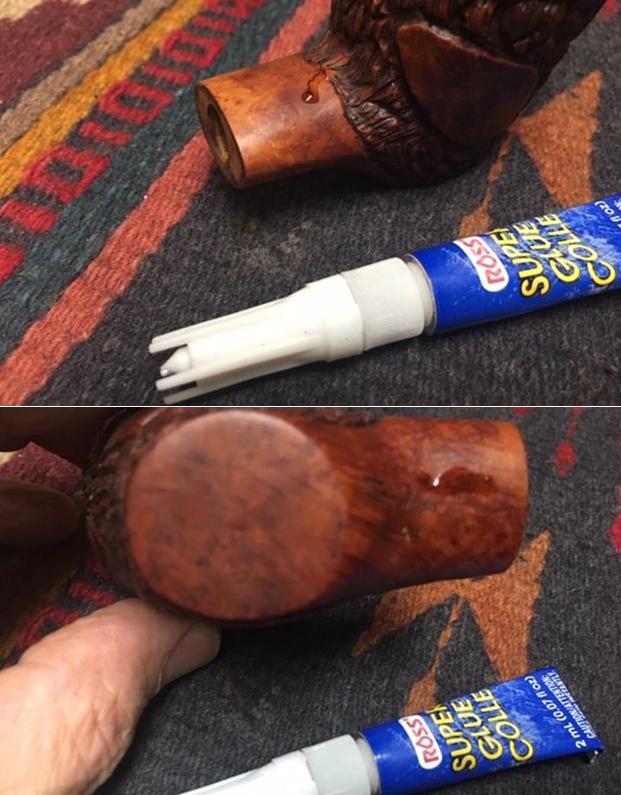
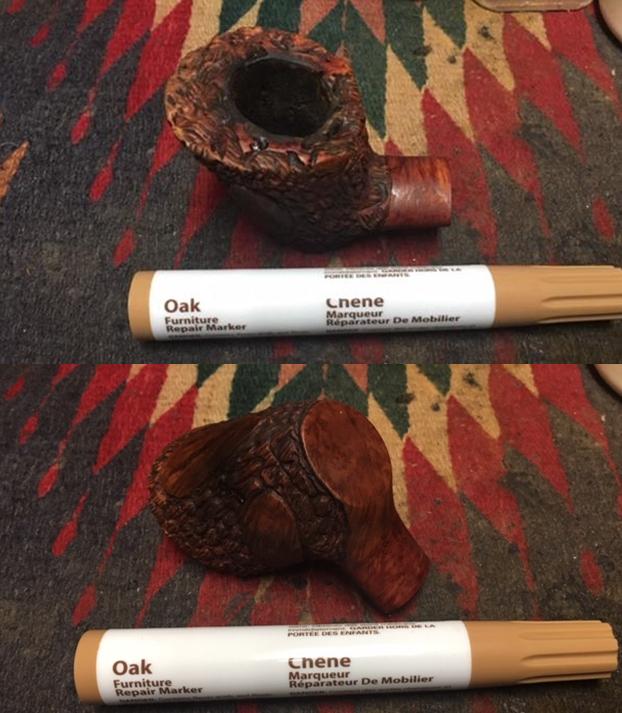
I don’t remember where this old pipe came from. It was a mess with lava overflowing the large caked bowl and filling in most of the carved plateau rim top. The rusticated finish was very dirty and hard to differentiate the smooth portions from the rustication. It appears that the bowl had been rusticated then a wire wheel had been used to striate the rustication. There were three smooth panels on the sides and front of the bowl and a smooth shank and heel of the bowl. The stem was a mess with oxidation, tooth chatter, deep tooth marks and calcification built up for over an inch of the length of the stem. The stem did not seat well in the shank due to the buildup of tars and oils. It also appeared that the tenon was slightly bent making the stem crooked (bent to the right). The pipe was stamped on the underside of the shank and under a bright light with magnification I could read Jandrew over 2-86. My assumption was that the pipe I was dealing with was a Jandrew (I have worked on other pipes made by this maker) and that it was made in February of 1086. The pipe was at least 32 years old and had seen a lot of use. It was obviously some pipeman’s favourite smoker. There was something about the pipe that captured my attention and made me want to work on it. I took some photos of the pipe before I started my cleanup work. I took some close up photos of the rim top and stem to show the condition they were in before I started. The rim top is heavily caked with lava flowing out of the thick cake in the bowl. It fills in much of the carved rim top leaving me unsure what lies underneath. I have no idea what the inner edge of the rim looks like at this point but it seems likely that it is darkened or maybe burned on the back edge. The stem has tooth marks on the top and underside near the button and on the button surface as well. There is some serious oxidation/calcification on the first inch or more of the stem. The stem fit against the shank is off as you can see from the photos and the tenon appears to be bent making the stem curve to the right side.I took a photo of the stamping to capture it and help identify the pipe. It reads Jandrew over 2-86. It is readable but faint in the middle of the stamp where the slight curve in the shank is located.I looked up the brand on Pipedia and found the following: Jandrew pipes are (or were?) made by J. Andrew Kovacs. He lived in Jerome and Cottonwood, Arizona and is said to have moved to Milwaukee, Wisconsin. https://pipedia.org/wiki/Jandrew

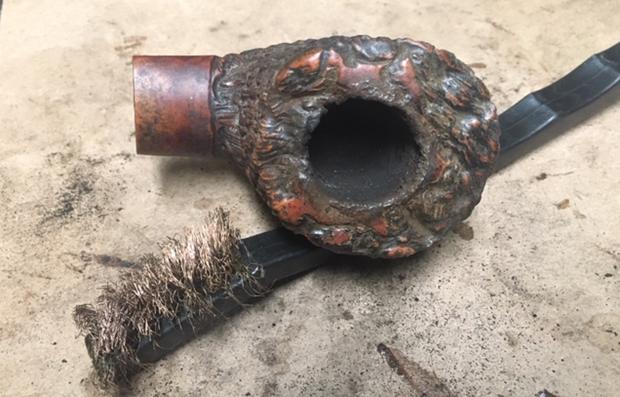
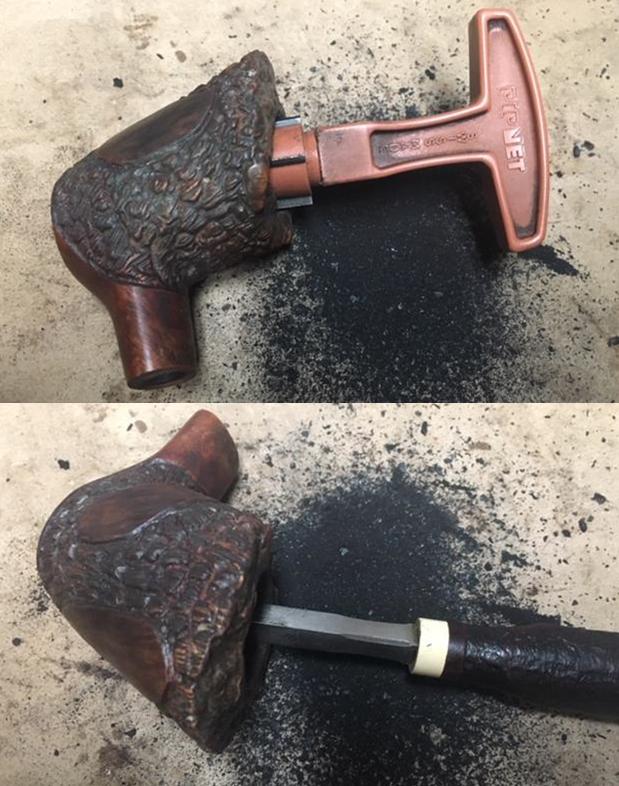
I turned to Pipephil’s site to see if I could gain a bit more information. There was no additional info but there was a photo of a pipe with the same signature and a similar date stamp on the shank. I have included that below for comparison(http://www.pipephil.eu/logos/en/logo-j1.html).I turned to the pipe to begin the cleanup. I dry scrubbed the rim top with a brass bristle brush to break the lava buildup from the crevices. This technique works wonders and the brass is soft enough not to scratch the plateau. I do not use it on smooth rims (not daring enough to give it a try as I am pretty certain it will cause scratching and make more work for myself). The photo below shows the cleaned rim top after the scrubbing.With the top cleaned it was time to ream the bowl. I reamed it with a PipNet pipe reamer using the largest cutting head. The cake was thick and hard. I carefully worked the bowl clean using the reamer. I followed that by scraping out the remaining cake in the bottom of the bowl and along the edges with a Savinelli Fitsall Pipe Knife and took the cake back to bare briar. I wrapped a piece of dowel with 220 grit sandpaper and sanded the inside walls of the bowl to smooth out the walls. With the bowl reamed it was time to scrub the exterior of the bowl. I scrubbed it with Murphy’s Oil Soap, working it into the crevices and nooks and crannies of the rustication with a tooth brush. I rinsed it under running water to remove the soap and the grime. I took photos of the pipe at this point to show the condition after cleaning.I worked some Before & After Restoration Balm into the smooth and rusticated parts of the briar on the bowl and shank with my fingertips to clean, enliven and protect the wood. I worked the balm into the nooks and crannies of the rustication and the carved rim top with a horsehair shoe brush. I let the bowl sit for about 20 minutes and buffed it off with a soft cotton cloth. I took photos of the bowl at this point in the process. The photos show the condition of the bowl at this point in the process. It was looking quite good at this point with some beautiful grain showing through on both the smooth and rusticated portions of the bowl. I scraped the tars and oils from the walls of the mortise with a pen knife. I cleaned the mortise and the airway in the shank with pipe cleaners, cotton swabs and alcohol.During the cleanup of the bowl I had noticed two small hairline cracks in the shank. There was one next to the stamping on the underside about a ½ inch long (first photo) and one on the top side of the shank from the rustication running toward the shank end for ¼ of an inch (second photo). I used a microdrill bit to drill pin holes at each end of the crack to stop it from spreading further on the shank. I was glad to see that under a bright light that the crack did not extend to the end of the shank. The repair would be straightforward.I cleaned out the crack on the top and underside with a dental pick. I filled in the drill holes and the crack on both with clear super glue and set the pipe aside to cure. Once it was cured I sanded it with 220 grit sandpaper and blended it into the finish of the shank. I touched up the stain on the shank with an Oak stain pen to blend it into the rest of the briar.I worked some Conservator’s Wax into the finish of the briar making sure it went deep into the crevices of the carved finish. I let it dry and then buffed it with a shoe brush and with a clean buffing pad. The photos below show the pipe at this point. I set the bowl aside and turned my attention to the stem. I sanded the stem with 220 grit sandpaper to remove the oxidation and the calcification build up. I worked on the tooth chatter and marks to reduce them.I cleaned the surface of the stem with alcohol and dried it off. I filled in the deep tooth marks with clear super glue and set the stem aside to let the glue cure.I sanded out the tooth chatter and marks with 220 grit sandpaper. I wiped down the stem with Obsidian Oil and cleaned out the inside of the airway to get rid of the dust and debris from the sanding. I polished the stem with micromesh sanding pads – wet sanding it with 1500-2400 grit pads and dry sanding with 3200-12000 grit pads. I wiped the stem down with Obsidian Oil after each pad. I polished the bowl with Before & After Pipe Polish – Fine and Extra Fine. I gave it a final coat of Obsidian Oil and set it aside to dry. I polished stem and the bowl with Blue Diamond polish on the buffing wheel. I gave the bowl multiple coats of Conservator’s Wax and the stem multiple coats of carnauba wax. I buffed the pipe with a clean buffing pad to raise the shine. I hand buffed it with a microfiber cloth to deepen the shine. The pipe polished up pretty nicely. The grain really came alive in both the rusticated portions and the smooth panels with the buffing and works well with the polished black vulcanite stem. Together the pipe looks much better than when I began and has a rich look. The finished pipe is shown in the photos below. The shape, finish and flow of the pipe and stem are very well done. The dimensions are Length: 6 inches, Height: 2 1/4 inches, Outside diameter of the bowl: 1 7/8 inches, Chamber diameter: 7/8 of an inch. I will be putting this freehand style pipe on the rebornpipes store shortly if you are interested in adding it to your collection. Thanks for walking through the restoration with me as I worked over this unique Handmade Jandrew pipe.

A Hardcastle Bulldog Run Roughshod over: The Original Restoration


Blog by Robert M. Boughton

Copyright © Reborn Pipes and the Author except as cited
https://www.roadrunnerpipes2k.com/
https://www.facebook.com/roadrunnerpipes/

Grace is neither gentleness nor fragility.  Grace is treating yourself, others and even inanimate objects with respect.
— Kamand Kojouri, Iranian-born novelist and poet

INTRODUCTION
A former roommate, one of Stephen King’s Constant Readers, once remarked with ridicule-tainted respect that I have always been attracted to needful things.  He was speaking of someone I met not long before then whose tragic life had left him wounded to the core, one of the results being his over-demanding, often verbally corrosive and manipulative treatment of me.  The roommate, who like almost everyone had plenty of his own flaws if less obvious and abusive, said my other acquaintance was no friend of mine.

“That may be true,” I replied, “but I’m his friend and the only one he seems to have, and I just can’t give up on him because that’s not what friends do.”

The physically and emotionally damaged person I undertook to help ended up becoming and remaining my genuine though stormy friend until he died at home 14 years later from an unusual and excruciating autoimmune disorder for which there is no cure.  He was 46.

My affinity for care-challenged pipes, therefore, should come as no surprise.  I try to avoid those with fatal flaws such as bad cracks or burnouts and for the most part reject any with serious holes in the stem, but as a restorer I prefer estate pipes that need some real attention to rehabilitate as opposed to the few I find ready to sell or to keep in my collection with minimal effort on my part.

I don’t even remember how the Hardcastle Special Selection #7 smooth bulldog came into my custody or why I chose to ignore the obvious void of vulcanite below the lip on the underside of the stem.  Other than that handicap, the pipe was nowhere near as mistreated as I’ve seen but was plagued enough by dings, scratches and other problems to keep me happy.

One final initial note: I repaired this bulldog to almost like-new condition more than a year ago but failed to blog it because of personal distractions that have left me with a large backlog.  I sold it for next to nothing to one of my present housemates who decided he wanted me to refinish it as a black dress pipe.  The same pipe is the subject of Part 2 of my series on that subject, and so I was going to include this original restoration in that blog.  But anyone who reads my harrowing account of the experience that could be called too much of a bad thing will understand why I broke the overall work into two blogs.

Intrigued by the atypical presence of a stinger in the Hardcastle, and an unusual one at that, I searched online for such phenomena with a faint hope of dating the bulldog.  Of course, at the top of the list was one of Steve’s blogs from 2014.  No other road I found led anywhere close to Rome, as it were.  Steve’s pipe is a Dental Briar brandy, bearing the Registered Design Number 857327, with a unique – or bizarre – dental stem, a system-type metal rod in the shank extending to the mortise hole, and a different short stubby little stinger of its own.  Here is the Dental Briar stinger before Steve’s restoration and the pipe after his usual fantastic work.Steve narrowed the date of manufacture to the Family Era and concluded his pipe was created from 1949-1967 using the National Registry link below.  However, looking at the same link, I see in Table 6.5 that designs numbered 548920-861679 were registered between 1909 and 1950 and suspect the 857327 might have been pre-1949 – no disrespect intended to the master!  Besides, he’s right to note that his Dental Briar could have been made at any time between its registration and 1967 when the family lost all control of the brand.  His pipe is also stamped MADE IN LONDON ENGLAND on the right shank.

I am not so fortunate.  The bulldog has no Registered Design Number or even the usual right shank nomenclature (London Made, British Made, Made in London England, Made in England).  This nomenclature is not faded, it’s just not there.  Only the left shank identifies it as a HARDCASTLE/SPECIAL SELECTION/7.  All I know for sure is that I tried it out after a basic sanitization, and it was quite good.

For a great synopsis of Hardcastle’s history, see Steve’s blog below.  Details are in the Pipedia link.

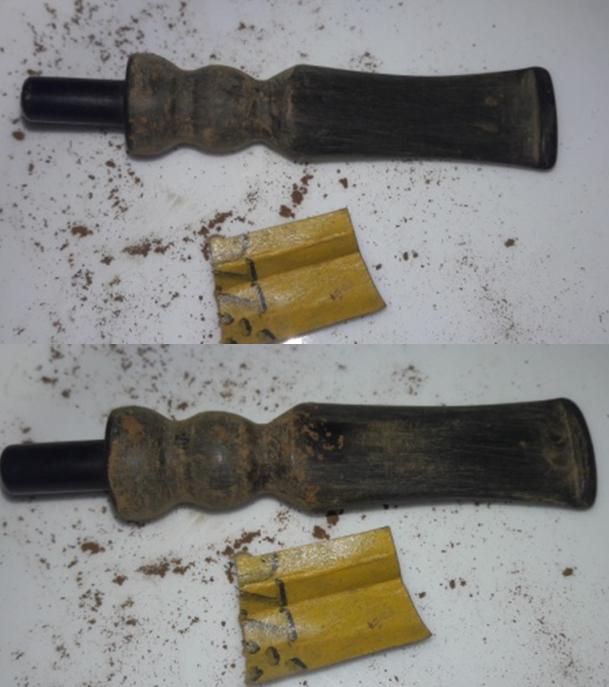
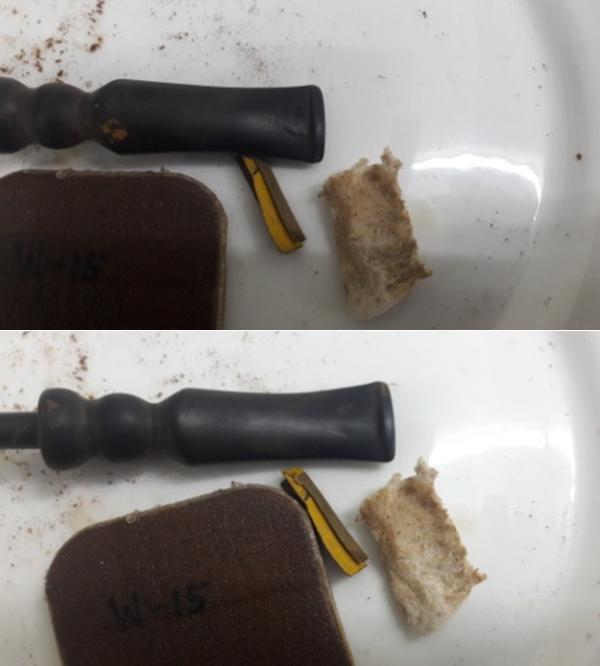
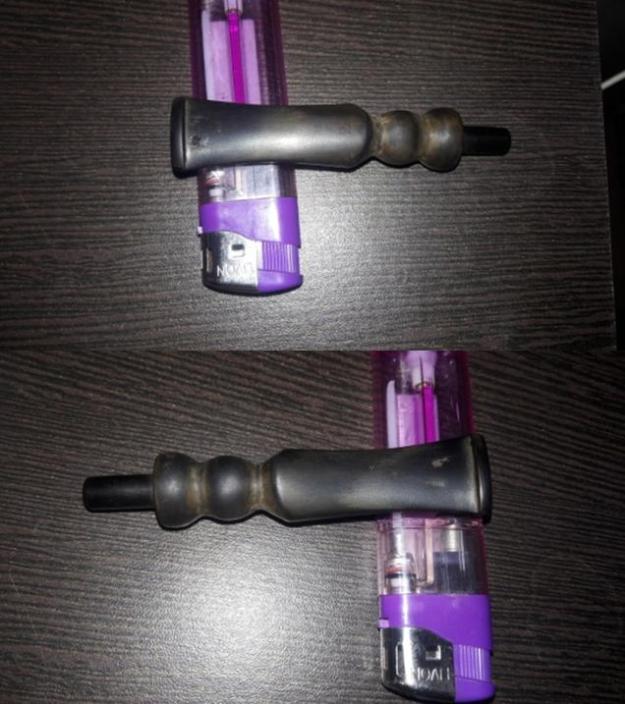
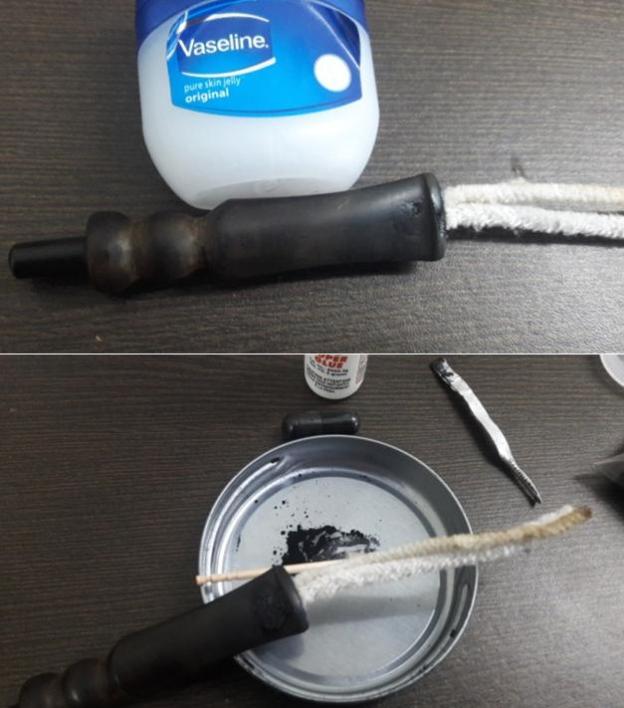
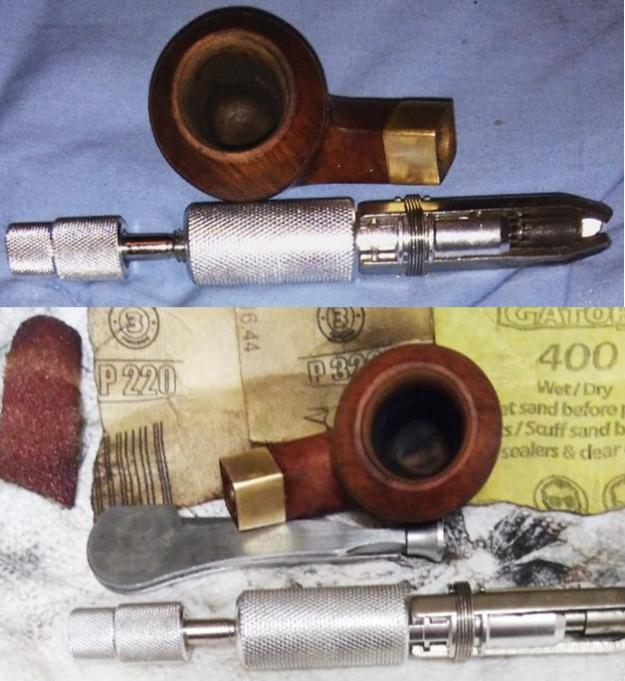
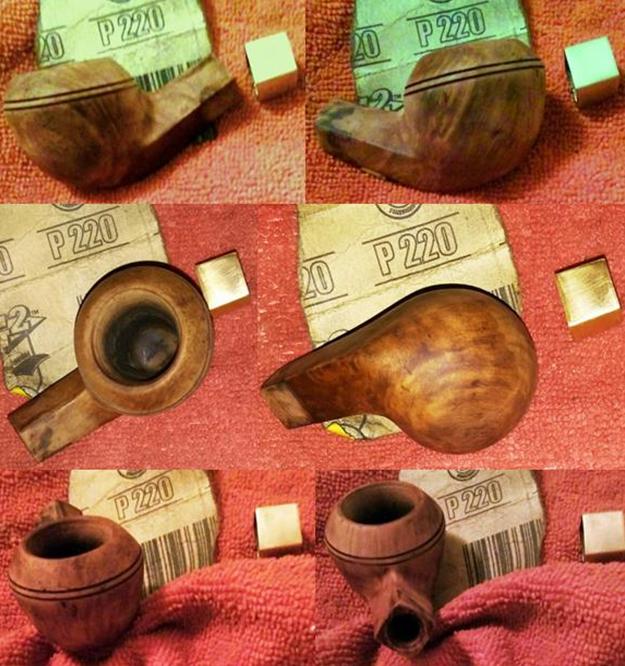
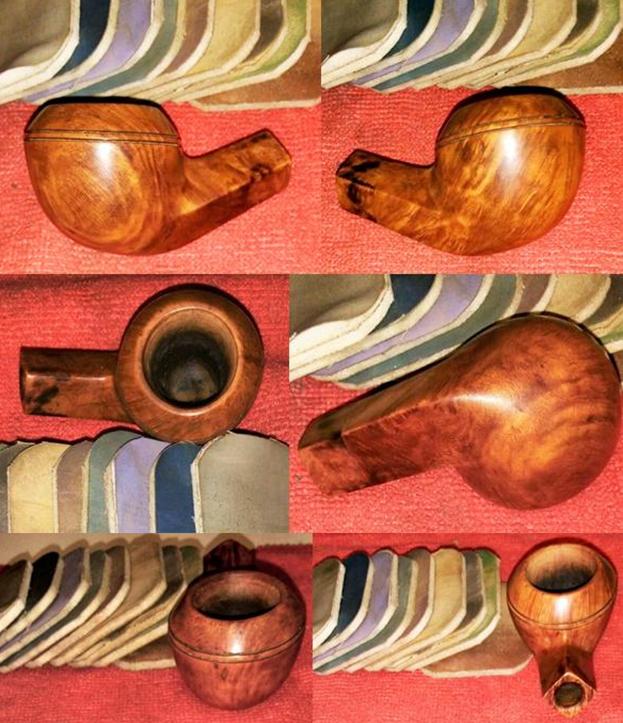
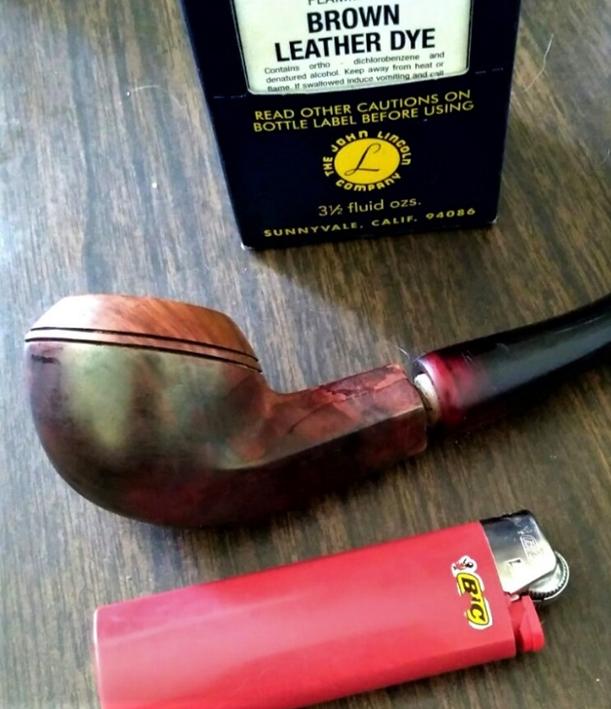
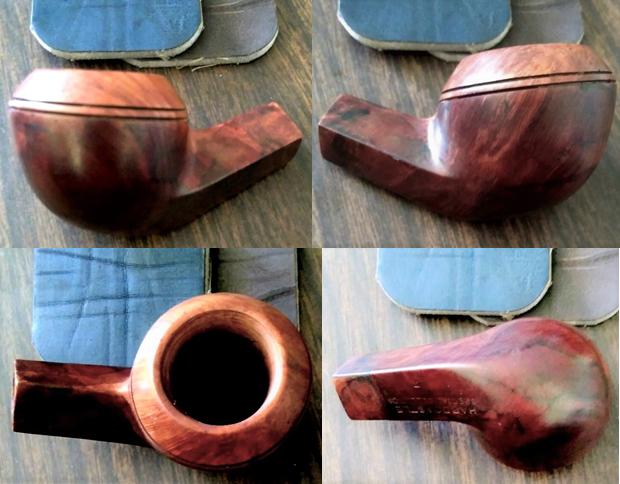
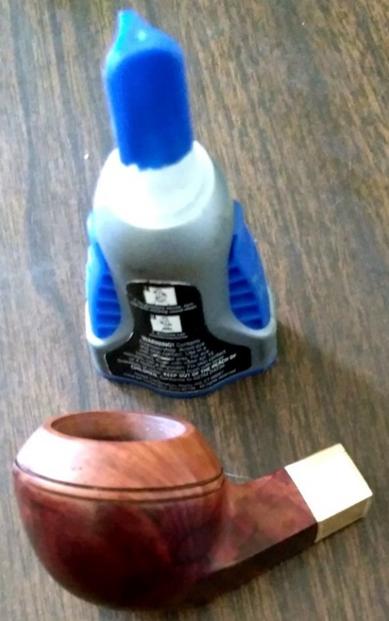
RESTORATION I would have removed the stinger anyway as useless, but it was also bent and more fragile than usual, and so I experienced even less than usual emotional distress heating the pointless thing with a Bic and twisting it out.Considering the appreciable grime, I started by swabbing the stummel first with purified water and then alcohol.  In hindsight, I should have skipped the water method that had little effect.  The blemishes stand out even more after the cleansing with alcohol.  The one shot below showing the minor rim damage, an unevenness being the only bad part, and decent chamber condition was taken with a flash and therefore looks pre-water and -alcohol cleaning.  I’m still having to do the best I can with a cell phone cam.  I used 150-, 220-, 320- and 400-grit papers to start shaping up those areas.After that I re-addressed the chamber and unevenness of the rim with a Senior Reamer and the blade from my Peterson’s Pipe Tool and made them a little better with 150-400-grit paper.I gave the shank a preliminary alcohol cleaning and retorted the pipe with a meerschaum stem that wasn’t crippled by a hole but somehow forgot to snap a pic of the latter.With 220- and 320-grit papers I was able to remove the dings and scratches as well as giving the chamber a semi-final what-fer.For some reason, the band popped off, and I still wasn’t happy with the color.  I decided to go at it once more with the 220.A full micro mesh buff made the old pipe begin to shine as it should.By now I should be somewhat known for fancying two-tones with bulldogs and Rhodesians where the top of the bowl above the two lines curves upward to the rim.  For the most part, at least, I’ve left this area lighter than the rest of the stummel, although on occasion I’ve dabbled in darkening it with, say, maroon stain.  This one screamed at me to lighten the top of the bowl as usual under these circumstances.  And so I stained the stummel below the lines with Lincoln brown leather dye, flamed it and after letting it cool took off the char and a little of the darker color with 8000 and 12000 micro mesh pads.  By the way, I was alarmed when I got a look at the first pic below and noticed what to every appearance seems to be a wicked and poorly repaired crack in the shank.  I assure everyone it’s a trick of the light or whatever, as the other pics prove. Gluing the band on again was a formality after buffing it on the electric wheel.Okeydokey, then.  There could be no more avoiding the chomped and degraded stem with its hole on the underside and other shortcomings. I had already given it an OxiClean soak, and it wanted repair.  Just to get an idea of what the stem would look like when finished, I gave it a quickie micro mesh rub.   I cut a little strip of card stock from the business leftover of someone with whom I didn’t care to do any more business and lubed it and a very small tweezers with a dab of petroleum jelly.  I inserted both into the mouth opening of the stem, with the cleaner behind the paper, until they were firmly in place inside the airway to a point just below the hole.  Finding my trusty old vulcanite stem that was long ago destroyed by another stem abuser, I shaved some fine flakes onto a small piece of paper with one side of a narrow, relatively smooth triangle rasp.

This was where I had to be prepared to act fast: I moved the flakes into a pile and added a few drops of black Super Glue, stirred the two into a gritty paste and scooped up a gob with the part of a three-piece pipe tool made for clearing tobacco from the chamber.  As fast as possible without making a mess, I slapped the goop liberally over the hole and set it aside to dry, removing the card stock and tweezers when the vulcanite mixture was dry on the inside but still a little wet on the outside.It’s a good thing I have an excellent recall of what I did in a particular restoration because the photographs I took of this project were more jumbled and duplicated than those from any other pipe on which I’ve worked.  I had so many of the same thing from alternate angles and differing clarity, for example, that I had to delete quite a few to make sense of it.  I concluded this was because of two things, trying different ways to get a good shot with my poor cell phone camera at the time and lack of sleep during the process.  It’s clear, excuse the pun, that some of the “best” are quite indistinct.  The following photos, as a result, are incomplete, but I always have the words to describe what I did.

For example, after the previous step, I started sanding with 150-grit paper and then smoothed it up with 220-, 320- and 400.  A common, less serious groove resulted, and I added more of the black Super Glue/vulcanite mix and let it dry again.  The mixture settled in well.That’s when I got serious with the sanding, using 150-, 220-, 320- and 400-grit paper and super fine “0000” steel wool.There’s still a small lump visible under the lip that I handled with as little abrasion as possible before the stem was done.  And that was it – for the bottom side.  I still had the top to do.  In every way other than the hole in the bottom, the top was worse, although it only needed a dab of black Super Glue/vulcanite solution to fill a small divot following the same initial OxiClean soak and a more vigorous sanding before filling a small divot with.  Considering again the top of the stem when I received it, close up, notice the wear below the square shank fitting before the rest of the work. The stem never quite fit the shank, which had been given a replacement band somewhere along the way, not to mention the band was damaged. After beginning to re-sand the bottom of the stem, the original hole caved in again.  Accepting defeat, I chose a new bulldog stem I had that needed serious filing at first and then sanding of the 9mm tenon to fit the shank. I bent the stem.  That required heating the stem – with a pipe cleaner inserted through the airhole – at 210° F. for about 15 minutes and bending the nice and pliant material over a complex tool.

Remembering the cell phone photos were atrocious and I had to edit them using every halfway adequate means of adjustment available with my so-called photo editor to show any similarity whatsoever to the actual result, here one last time is the stummel as it in fact looked when it was one step from completion before electric buffing.And these are the final photos of the pipe.  The most offensive discrepancies to me are the obscurity of the two-tone and the lack of shine the pipe had.  The bad twist on the stem in the fifth shot of the rear is all on me!
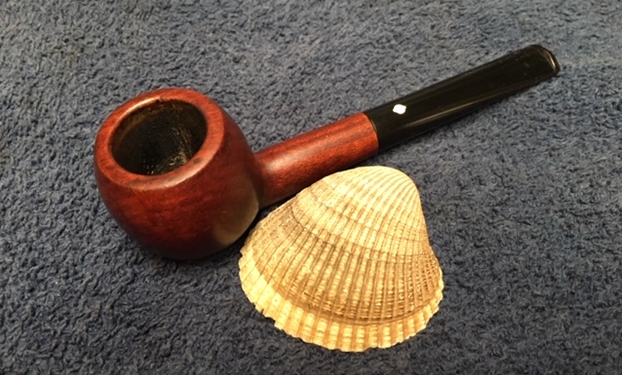
CONCLUSION
This blog being the occasion of my official announcement in this forum of my new webstore on  my own site, https://www.roadrunnerpipes2k.com/, is unfortunate in that the depictive presentation almost convinced me to give up any idea of writing the blog.  The poor quality and lack of photographs, as well as other stated reasons, were overwhelmingly opposed to the idea of even trying.  Then I thought of the work I put into the briar and the stem alone. In the end, I know how smooth, golden brown and at least hardly blemished the Hardcastle bulldog looked when I was done with it.  Whether anyone else does is of no importance to me.

SOURCES
https://rebornpipes.com/2014/06/27/a-unique-piece-of-pipe-history-almost-lost-a-hardcastles-dental-briar-reg-design-no-857327/
http://www.nationalarchives.gov.uk/help-with-your-research/research-guides/registered-designs-1839-1991/
https://pipedia.org/wiki/Hardcastle

Restoring my Grandfather’s…what the…A Kaywoodie?????


Blog by Paresh Deshpande

Yes!! That is what exactly my thought was, when I looked closely at the small pipe in my hand that I had selected as my next project for restoration. Those who have read my previous write ups on pipe restoration would know that I have inherited a large number of pipes from my grandfather dating between the periods from 1940s to 1970s. I had not come across a single Kaywoodie pipe in the two boxes I had opened, one box still remaining unopened!!!

I have restored two Custom-Bilt pipes from this collection to date, one from 1938-41 era (https://rebornpipes.com/2018/06/02/restoring-my-grandfathers-custom-bilt-pipe/) and second from the Wally Frank era(https://rebornpipes.com/2018/07/20/restoring-a-wally-frank-era-custombilt-sitter-633/), the third Custom-Bilt billiard from 1938-41 era was sent to Mr. Steve of rebornpipes fame to sort out tenon issues and have fallen in love with Custom-Bilt pipes since thereafter!!!! I had picked this pipe assuming it to be a Custom-Bilt and it was only on close scrutiny was it reveled that this was a Kaywoodie!!!!! I deliberately rummaged through the pile again and sure enough, there was another Kaywoodie Bent Billiard with 4 holed stinger in relatively unsmoked condition. It seems my grandfather never took a liking for these Kaywoodie pipes!!!!!

This Kaywoodie Pocket Pipe, now on my work table, has similar large finger like vertical rustications with very thin horizontal lines ensconced within these large vertical rustications. These thick vertical rustications extend upwards and end short of the rim top, giving the rim top a flat smooth surface. These rustications can be seen extending all around the shank on top and bottom, save for smooth surfaces on either sides of the shank. The smooth surface on the left side of the shank bears the stamping “Handmade” over “Super Grain” in cursive hand, over “KAYWOODIE” in block capital letters. The right side of the shank bears the stamp “IMPORTED BRIAR”. All these stampings are thin, worn out but readable under bright light with a magnifying glass. The ¾ bent saddle stem bears the trade mark “Clover leaf” symbol.This pipe comes with a four-holed threaded stinger which screws into the shank. This stinger is stamped with “DRINKLESS”. There is an aluminum spacer ring separating the shank end from the stem end when threaded in. On closer observation, it can be seen that a portion of this spacer, closer to the mortise opening, extends into the mortise and is threaded which matches with the stinger threads.I took all these observation and searched pipedia.com for history of this brand, models and attempt at dating this pipe. This site has detailed information on Kaywoodie pipes, including the history of origin, about the owners of the brand and also various important links to “Collector’s Guide to Kaywoodie Pipes” and “Kaywoodie’s Logos and Markings: Clover variations since 1919”. Here is what was revealed as extracted from pipedia.com:-

Kaywoodie was the name a pipe offered by Kaufman Brothers & Bondy Company (KBB), first appearing in February of 1919. The Dinwoodie pipe, also by KBB, appeared in November of 1919. Sometime before 1924, the Dinwoodie had been discontinued and the Kaywoodie name was beginning to be used on an extensive line of pipes that ultimately would be the name of the company. The origin of the name Kaywoodie is a combination of the K from Kaufman and wood, as in briar. Not much is known of the original KBB company other than it was started in 1851 by the German born Kaufman brothers when they opened a small pipe shop in the Bowery section of New York City. In the back room of this shop, they made their first pipes. From this meager beginning, the Kaywoodie name and organization was to emerge.

When one of the men from the New York office got “gold fever”, he carried a large supply of pipes with him to California that he sold along the way. This early “national distribution” did much to build the reputation of KBB. By the late 1800’s, branches of KBB were opened in Chicago, Atlanta, San Francisco and St. Louis with family and friends acting as agents. The trademarks, for the inlaid cloverleaf and the cloverleaf with the KBB initials inside, were issued in 1881. KBB’s pipes became more popular and were in constant demand by the end of the century. Orders were streaming back east and KBB needed to move to larger manufacturing facilities. By 1915 the move was made to larger facilities in the old Union Hill section of Union City, New Jersey. The salesroom offices were located at 33 East 17th. Street, New York. When the Kaywoodie pipe was first introduced by KBB it came with a hand cut rubber mouthpiece fitted with an aluminum Inbore Tube. This device was to “assure a clean, cool smoke.” Other KBB pipes such as Ambassador, Heatherby and Melrose also had the Inbore tube. The early Drinkless Kaywoodies from 1924 through 1931 had push bit stems. In 1931, after three years of research, the new Drinkless Kaywoodies with the synchro-stem, (threaded drinkless screw-in mouthpiece) were introduced. The drinkless attachment was advertised as cooling the smoke from 850 degrees in the bowl to 82 degrees when it entered the mouth. By the mid 1930’s, all Kaywoodie’s came with the screw mounted Drinkless attachment. (Export Kaywoodies, available briefly from 1950-1955, had push bit stems and were available in all the same shapes and finishes as the drinkless versions.)

Throughout much of the 1940’s, 50’s and 60’s, the Kaywoodie family of pipes consisted of 11 basic grades of briar pipes; though new grades were frequently added to the line and some older grades were discontinued or downgraded. These 11 basic grades of pipes, listed in ascending order of quality, were:

  1. Drinkless
  2. Hand-made Super Grain
  3. Super Grain
  4. Relief Grain
  5. Flame Grain
  6. Silhouette
  7. Oversize Kaywoodies
  8. Meerschaum Inlaid Kaywoodies
  9. Connoisseur
  10. Ninety-fiver
  11. Centennial

Thus from the above, I can safely infer that this pipe was a higher grade Kaywoodie from the 1940s to 1960s.

INITIAL VISUAL INSPECTION
The finish looked a lot like the classic Kaywoodie take on Tracy Mincer’s Custom-Bilt pipes. The carved worm trails seen on the stummel and shank is filled with dust, dirt and grime of years of smoking and thereafter years of uncared for storage. The grime and dirt is so strongly entrenched in to these carved worm trails that it appears black and solidly smooth to the touch. I could see 3-4 small dings and dents on one of the fingers of the raised portion of the stummel. This will need to be addressed. There is a decent layer of cake inside the bowl which is dry and hard to the touch. The smooth rim top is clean and devoid of any apparent damage. The condition of the inner walls of the chamber can be ascertained after the cake has been reamed out. The inner edge of the rim shows minor uneven surface, however, the outer edge of the rim is clean and without dents or dings. The short ¾ bent saddle stem has smooth upper and lower surfaces without any tooth chatter or bite marks. This is unlike any other pipe stem I have seen that had belonged to my grand old man. The four holed stinger is clean, however, the holes appear to be clogged. This was confirmed as air did not flow when I tried to blow through the stem. May be that has been the reason that this pipe was not as extensively used by him. The inlaid white clover leaf is clean and prominent with a tiny portion of the top of the leaf missing!! But it is so tiny chip that it is not immediately visible. The lips are worn out and may need to be reconstructed; again I am not sure about this as there is no damage as such. There is an aluminum spacer between the stem and the shank which breaks the monotony of the pipe. However, it is broken on the right side leaving an ugly gap between the shank and stem. The remaining portion of the aluminum spacer was crumbling and breaks merely to the touch. This needs to be addressed. There is a circular band of white tape or some such material at the end of the stinger where it meets the stem. This is something which is not correct and the reason for it having been placed needs to be checked. THE PROCESS
First and foremost in any restoration of pipe, I start with reaming the chamber with a Kleen Reem pipe reamer. However, in this instance, the cake was dry, tightly packed and very hard. I feared breaking the reamer and resorted to the use of my fabricated knife. After a struggle, I was able to take the cake down to the bare briar. I sanded the inner walls of the chamber with 150, 220 and 600 grit sand paper to completely remove the remaining cake and smooth out the walls. Alas, I observed some superficial gouges on the wall surface due to the use of knife. I would need to address this by coating the chamber walls with pipe mud at a later stage. I cleaned the mortise and internals of the shank with cue tips, pipe cleaners and alcohol. Since the major challenge appreciated in this restoration project was the construction of a new aluminum spacer, I decided that is where I would start!!!! To address this issue, I identified three options, as under, which were available to me:

(a) Coat the entire spacer, including the broken portion, with superglue, building it up in layers and then sanding it to flatten it on a topping board. This coat of superglue will also stabilize the remaining original spacer.

(b) Fabricate an aluminum spacer out of a regular aluminum washer and replace only the broken portion of the spacer.

(c) Replace the entire spacer with the new fabricated aluminum spacer.

I discussed these options with my mentor, Mr. Steve Laug. As is his trademark style of tutoring, his suggestion was, “I would go with the first option”!!!!! He further clarified that the spacer also enters the mortise and has threads for the “synchro-stem” (threaded drinkless screw-in mouthpiece). Thus, I concluded that exercising the third option was best avoided if I wished to avoid ruining the pipe!!! That left me with following either first option or the second option. Any other sane student would have followed the advice of his mentor (which I had been doing up to this point!!!). However, I, for some reason, was convinced that the end result of exercising the second option would result in a better finish and thus embarked on the arduous journey of replacing only the broken portion of the original spacer with the fabricated aluminum washer.

I began the process by shaping the new aluminum washer to match the size, shape and thickness of the original spacer. I was not very meticulous about the size and thickness as the same would, in any case, have to be perfectly matched by sanding it down with needle files. The following pictures will tell the story of the entire process of constructing this spacer. However, what these pictures do not tell you is the long back breaking hours involved, the strain to which eyes were subjected, precise and controlled movements of the needle files and agony experienced whenever the needle file inadvertently scraped the crumbling original spacer, causing it to chip. When I was satisfied with the fit and finish of the new spacer, I applied an even coat of superglue over the entire surface and very painstakingly re-aligned all the broken pieces of the original spacer and also the new fabricated spacer over the coat of the superglue and set it aside to cure overnight. Next day I evenly applied another coat of superglue over the entire spacer and again set it aside to cure so as to stabilize the spacer repairs and even out the surface. Once the glue had sufficiently cured, I topped the surface on a topping board to even out the glue. To further smooth out the surface and ensure a transparent, even and smooth surface, I polished the surface with micromesh pads, wet sanding with 1500 to 2400 grit pads and dry sanding with 3200 to 12000 grit pads. I frequently wiped the surface with a moist cloth to remove the glue dust. I was able to maintain just sufficient thickness of the coat so as not to disturb the alignment of the stem with the shank while stabilizing and protecting the spacer. I was very satisfied with the results. Now with the spacer taken care of, I start working on the stummel. I thoroughly clean the stummel with undiluted Murphy’s oil soap and a hard bristled tooth brush scrubbing the rustications clean of all the lodged dirt, dust and grime. I had seen a few dents and dings on one of the fingers of the stummel rustication and wanted to address it. I began by sanding the stummel and raised portion of the rustications with a 600 grit sand paper followed by 800 grit sand paper. I had used very light hand so as not to lose too much briar (though at the end I realized that I should have used a bit more force since at the end of the process, these dents and dings were still very much visible!!!!!!). This sanding was followed by polishing with micromesh pads, wet sanding with 1500 to 2400 grit pads and dry sanding with 3200 to 12000 grit pads. I wiped the bowl down with a moist cloth after each pad to remove all the sanding dust. As I was going through the micromesh pads, I was thinking of adding some twist to the finish and remembered that Mr. Dal Stanton, a gentleman I often turn to for some interesting pipe related conversations and advice, had refurbished a Tom Howard rusticated tomato pipe for me. He had darkened the crevices of the rustications with a dark stain pen and the contrast was eye catching, to say the least. I wanted to have a pair of pipes with this finish and decided to give this Kaywoodie the same treatment. I discussed with Mr. Dal Stanton who wholeheartedly explained the technique of achieving this finish and also gave me some very fine and pragmatic advice which I shall cherish on this journey. I stained the crevices in the rustications with a dark brown stain pen and set it aside for the stain to set in to the crevices. After the stain had set, I rubbed a small quantity of “Before and After” restoration balm in to stummel and set it aside for a few minutes to let the balm work its magic on the briar wood. The balm works to bring back the shine and pours life in to the briar. I buff the stummel with a horse hair shoe brush followed by a nice hand polish with a soft cotton cloth. I liked the way the stummel has finished. To address the superficial gouges in the chamber created by use of knife during reaming, I prepared a mixture of pipe ash and yogurt of putty consistency and applied a coat to the inner walls of the chamber. Once the coating had cured, I gently sand the walls with a 220 grit sand paper to a smooth and even surface. With this, the stummel is all completed. Once the stummel had been finished and set aside, I turned my attention to the stem. There was not much work on this stem since it was sparingly used with only light signs of oxidation and no bite marks or tooth chatter. I start by sanding with micromesh pads, wet sanding with 1500 to 2400 grit pads and dry sanding with 3200 to 12000 grit pads. I wiped the stem with a cotton swab dipped in alcohol to remove the sand dust and rub a small quantity of Extra Virgin olive oil and allow it to be absorbed in to the stem. The stem is now nice and shiny. The next thing to address was the blocked stem. I tried cleaning the airway in the stem with pipe cleaners dipped in alcohol, but the pipe cleaner would not go in the complete distance. There was gunk and tars which had accumulated inside the airway and in the holes too!!!! Using a straightened paper clip, I probed and cleaned all the holes on the stinger. I tried to blow through the stem, but I realized that it was still blocked. I tried pushing the paper clip through the airway and then there was this small sound of a crack!!!!!! Aargh……..the upper lip now has a chip!!!!! Undaunted by this temporary setback, I continue with the clearing of the blocked stem. Finally, I am able to dislodge the block and now the air flows freely through the stem.To address this chip, I firstly insert a regular pipe cleaner coated with Vaseline in to the air way. This prevents the charcoal and glue mix from dribbling in to the air way blocking it. I mix a small quantity of activated charcoal and CA superglue and spot apply it over the chipped surface. Once I have ensured that the complete surface is coated with the mix, I set it aside to cure overnight. The next evening, I file the filling with a needle file and match it to the surface of the stem. To further match the filling with the rest of the stem surface, I sand the fill with a 220 grit sand paper followed by micromesh polish pads. The stem is now nice and shiny again with a free flow of air through the airway. I finished this restoration by applying a small quantity of Halcyon II wax and rubbed it deeply in to the stummel with my fingers. A few minutes later, I polished it with a soft cotton cloth using muscle power. The stummel now has a nice deep shine to it and the grains on the rim top and raise portion of the rustication can be seen in its full glory. I re-attach the stem and then relies that the stem is off center to the shank!!!! My God, this one was giving me a hard time. I removed the white sticky tape that was stuck around the stinger at the stem end and tried the fit. The fit had improved but it was still off centre. Again, to address this issue, I was presented with two options of either sanding the coating of superglue over the spacer till the off center was corrected or heat the stinger till the glue fixing the stinger in the stem was loosened and turn the stinger in to the mortise till the issue was addressed. I decided to go with the second option as I feared losing the coating of superglue over the spacer and thus exposing the brittle original to further chipping. I heated the stinger with the flame of a Bic lighter so that the glue holding the stinger would loosen a bit and fitted the stem in to the mortise, tightening it till the stem and shank were perfectly aligned. I let the stinger sit in this position till it had cooled down and the glue had hardened again. Now the fit of the stem and the shank is perfectly aligned. Here are the pictures of the finished pipe and hope that this long write up has been an enjoyable read. Thank you for walking with me through this restoration as I attempt to preserve the legacy of my beloved grand old man!!!!!


Restoring a Keyser Hygienic Patent from a Garden Shed in England


Blog by Steve Laug

Not too long ago I received an email from through the rebornpipes site. I am actually getting quite a few emails each week which I find a pleasure to read and answer. They range from questions on restoration to those regarding estate pipes. This one was interesting to me in that it was about a brand of pipes that I have worked on and enjoyed in the past. I have included the initial email and subsequent ones below to give you the context of the ongoing interaction on this pipe. I thoroughly enjoyed the interchange with Mrs. C. Howard and look forward to being able to send her photos of the restored pipe.

Hello. Clearing out our shed today my husband came across a couple of old pipes, one of which is a Keyser Hygienic, which I have now read about, on your website, how you clean and refurbish them. For my husband and his crewmate in the London Ambulance Service in the 70’s, smoking a pipe was just another one of their fads (with motorbikes at that time, they rather fancied themselves, too, as facsimiles of Starsky & Hutch!) so although tooth-marked, not badly for the amount of time they were in use, I would think. My husband’s reaction to ‘turfing out’ unwanted things is to take it all to the dump, whereas mine is to locate useful ‘homes’ for items that are still serviceable and would serve a useful purpose. I see that you are on the look-out for Keyser pipes and wondered if you would like this one. It would only go to charity anyway and I would rather donate it to you – it would be no difficulty for me to post, if you wanted it. I also have a Duncan Mini Dent pipe; if you would like this also I could send it at the same time. I have washed both of them but, obviously, your attention to that aspect would be done best by you. I look forward to hearing from you. – Yours sincerely – Mrs. C. Howard

I immediately wrote her back and told her I would be delighted to receive the pipes and would gladly pay her for the postage from England to Canada. She replied:

Hello Mr Laug,

I was very pleased to hear your response and will post both pipes to you as soon as I’ve wrapped them.  There will be no need for a refund of postage; I’ll be happy just to know the pipes are being re-located from my shed, ignored and unloved, to a good home where they will get both!

My husband and I loved Vancouver when we visited, particularly enjoying the trip over to Vancouver Island to see Mrs. Butchart’s Gardens and where my aunt and uncle had moved to years ago.  We especially, too, liked the laid-back nature of the Canadian people.

However, I shall get these pipes posted asap and hope you enjoy the final result of your labours in refurbishing them. With best wishes – Mrs. C. Howard

Once again I replied thanking her for her kindness in gifting and sending the pipes to me. I looked forward to receiving them from her and working on them to restore them to their former glory.

Hello Mr Laug,

Just to let you know that you should be receiving the pipes in the not-too distant, since I posted them off yesterday, the 23rd. Optimistically, it won’t be too long before they arrive at your door.  I hope I don’t sound like an Amazon rep, although I rather fall down on being able to provide you with parcel tracking details, et al! – Kind regards. Mrs. C. Howard

To me this kind of information is priceless and gives me the background on the pipes when I work on them. I like to picture in my mind the pipe man who smoked them. In this case the information made me wonder how many more pipes are sitting in garden sheds around the world, having been discarded when the pipesmoker decided to lay them down. Thank you Mrs. C. Howard for the foresight you had in rescuing these pipes.

When the box arrived in Vancouver I wrote Mrs. C. Howard and let her know they arrived safely. I opened her parcel and found the contents were well wrapped and had come undamaged. The Keyser Hygienic pipe that I am working on came in its original box shown below. At this point I did not have any idea of either the shape or the condition of the pipe but I had never seen a boxed version so I was excited to see what was inside.I opened the box to find a bent billiard, the original Keyser Brochure and a nice note from Mrs. C. Howard. I include her note in the photo below.I took the pipe out of the box to have a look at it. It was worn but in decent condition. The finish was faded and the grain barely visible but underneath it looked to be interesting. The rim top was coated with a thick coat of lava and the bowl had a cake. The aluminum shank end was coated with what looked like silver polish and it was on the briar as well. The stem was clean but had tooth chatter and some deeper tooth marks on the underside near the button. I took photos of it before I started my work on the pipe. I took photos of the stamping on both sides of the shank. It was in great condition and very readable. You can also see the polish on the aluminum and in the letters of the stamp. The left side reads Keyser Hygienic over Patent. The right side reads London Made.I took close up photos of the rim/bowl and the stem to show the condition of the pipe when it arrived.The stem was tightly inserted in the stem and the polish and grime held it firmly in place. I carefully twisted the stem while holding tightly onto the aluminum ferrule. It came out with a bit of effort. I took a photo of the pipe at this point and also of the shank and stem end to show the apparatus inside and the condition of the interior of the pipe.I set the pipe aside and took photos of the brochure that was packed with the pipe in the box. The front page of the piece was interesting in both the advertising speak and the cutaway diagram of the pipe. The first photo shows the overall look of the brochure cover while the two that follow that show the details. I opened the brochure and found a great shape chart of the options available for the smoker who purchased a Keyser Hygienic pipe. I have not seen one of these before. I will try to scan the entire brochure soon and post it on the blog separately.On the backside of the brochure were instructions on the care of the pipe.It is quintessential British and reads:

Smoked by Connoisseurs.

The Care of the pipe.

The following suggestions will enable the owner of a KEYSER HYGIENIC PIPE to obtain the best results.

In the early stages it is advisable to only half fill the bowl and smoke slowly, increasing the amount of the charge after the first few pipefuls. Never refill on top of a half smoked charge. Always allow the bowl to cool before refilling.

As a wet heel does not form in the bowl of a KEYSER HYGIENIC PIPE it is recommended that each charge is smoked right to the bottom, allowing the bowl to carbon evenly and preventing waste of tobacco.

It is inadvisable to allow carbon to become more that 1/8 inch in thickness, as expansion of carbon when hot may result in cracking the bowl. When the carbon lining becomes too thick, reduce it, but do not remove it entirely; leave a carbon lining of about 1/16 inch.

The trap of the Keyser Hygienic Pipe should be emptied frequently; hold the pipe in a vertical position, remove vulcanite and pour out the moisture. The pipe should be cleaned regularly with ordinary pipe cleaners, and the vulcanite only should be rinsed occasionally with a non-flammable cleaning fluid and dried off with a pipe cleaner; on no account should water or steam be used.

The practice used by our forefathers of treating their clay pipes with alcohol and other liquids  should not, on any account, be used on a briar pipe as it has a serious detrimental effect upon the smoking qualities and life of briar and may result in cracking the bowl.

The KEYSER HYGIENIC PIPE is designed to prevent moisture, tobacco and ash being drawn into the mouth and to prevent, also, moisture entering the bowl and a wet wad of tobacco forming which is always wasted.

It is due to the patent stem – fitted exclusively to the KEYSER HYGIENIC PIPE – that the whole of the tobacco can be smoked, thereby preventing waste and showing a considerable saving. The absence of moisture permits the bowl to carbon right to the bottom, ensuring a sweet, clean, wholesome smoke, free from the moisture with which pipe smoking is usually accompanied.

Each pipe is produced individually and is an outstanding example of a product upon which Engineers and Pipe Craftsman work in harmony.

MANUFACTURED BY
MERTON PIPES (LONDON) LTD
UNIT 17, 784/792 HIGH ROAD
LONDON N17 0DA, ENGLAND
AND KEYSER MANUFACTURING CO

Scientifically designed – Made by British Craftsmen Printed in England

Over the past years I have picked up quite a few Keyser Hygienic pipes. As you can see from the above information they are made in England. I had read that the pipes were sold exclusively in South Africa. They were designed to be virtually indestructible for farmer pipe smokers in SA. All versions of the pipe have the same stem – one size fits all. I had thought that they were made of nylon and rubber or some combination that is a proprietary form of vulcanite developed by Keyser Manufacturing Co. They are tough and take tooth wear very well but are hard to buff as the heat from a buffer can easily melt the stem surfaces.

In my previous restorations I included the photo below. It came from the web and pictures a cutaway picture of the pipe and the unique condensing chamber that makes up the patented portion of the pipe. The shank has an aluminum condensing chamber with a tube in the centre that lines up with the tube inside the stem. It is pointing downward (or in the case of this pipe to the left side so that the air swirls around in the chamber formed by the military bit stem and the shank. Moisture is trapped and the smoke is cool and dry without loss of flavour.After processing all of the information that came with the Keyser Hygienic Pipe I thought I would “be manly! Restore a pipe! I started by reaming the bowl with a PipNet reamer working my way through the first two cutting heads to take the cake back to bare briar. I really wanted to see the bowl walls and check them for damage. I cleaned up the walls with a Savinelli Fitsall Pipe Knife and then wrapped 220 grit sandpaper around a dowel and sanded the walls of the bowl. The inside walls were in excellent condition. I examined the rim surface and saw burn marks on the inner and outer edges as well as some nicks and damage to the briar. I decided to lightly top the bowl on a topping board with 220 grit sandpaper. It did not take much to remove the damaged areas and burned edges. The second photo below shows the cleaned rim top.I wiped down the surface of the bowl to remove some of the opacity of the stain. The stain appeared to be a dark to medium brown but what wiped off was oxblood or cordovan. I would never have guessed that looking at the pipe. Underneath there were what looked like nicks on the left side of the bowl but turned out to be small fills. There was some beautiful grain on the pipe that I wanted to highlight. With the exterior and the bowl clean it was time to address the condenser chamber in the shank and stem. It took some maneuvering to get the pipe cleaners through the aluminum tubes in the shank and the stem but I was successful in removing the tars and oils that had built up in both spots. There was still a musty garden shed smell to the pipe so I kept cleaning until it was fresh. Later I would do a cotton ball and alcohol soak to further remove that smell.I rubbed down the exterior of the bowl and rim with Before & After Restoration Balm. I have been using this product for about ½ a year now and really like the way it cleans, enlivens and protects the briar. I rubbed it on with my finger tips and worked it into the finish of the briar. I set the bowl aside for about 10 minutes while I did other things and then buffed it off with a soft cloth. The state of the bowl can be seen in the photos below. After buffing off the balm I could see that the rim needed some more work but decided to address the remnants of the garden shed smell first. I filled the bowl with cotton balls, stuffing them deep in the bowl. I inserted a pipe cleaner in the tube in the shank to wick out the oils and filled the bowl with 99% isopropyl alcohol to draw out the oils and tars in the briar. I used an ear syringe to fill the bowl. I know if you read the brochure from KEYSER HYGIENIC above it said not to use alcohol, but I have found over the last 20+ years of pipe cleaning that it does a great job. I set the bowl aside in an old ice-cube tray, much stained from years of abuse and let the alcohol and cotton balls do their magic.I came back to the pipe several hours later and the cotton balls had absorbed a lot of tars and oils. You can see the effect in the cotton in the picture below. The pipe cleaner had wicked out some more of the tar from the tube as well. The pipe smelled fresh and clean with the garden shed smell removed for good.I cleaned up the darkening and burn mark on the inner edge of the rim with 220 grit sandpaper. I gave the edge a slight bevel to blend in the damaged area on the rim. I like the look a slight bevel gives a bowl.I used 220 grit sandpaper to sand out the tooth marks and chatter on both sides of the stem near the button.I polished the stem with micromesh sanding pads – wet sanding with 1500-2400 grit pads and dry sanding with 3200-12000 grit pads. I wiped the stem down after each pad with Obsidian Oil. I polished it with Before & After Pipe Stem Polish – both fine and extra fine and buffed it with a cotton pad. I gave it a final coat of Obsidian Oil and set it aside to dry. I carefully polished stem with Blue Diamond to polish out the remaining small scratches. I used a very light touch so as not to damage the stem. I buffed the bowl with Blue Diamond as well – a bit more vigorously. I gave the bowl and the stem multiple coats of carnauba wax. I buffed the pipe with a clean buffing pad to raise the shine. I hand buffed it with a microfiber cloth to deepen the shine. The pipe polished up pretty nicely. What remained of the original colour came alive with the buffing and works well with the polished aluminum ferrule and the polished black vulcanite stem. Altogether the pipe has a rich look. The finished pipe is shown in the photos below. The shape, finish and flow of the pipe and stem are very well done. The dimensions are Length: 6 inches, Height: 1 3/4 inches, Outside diameter of the bowl: 1 1/8 inches, Chamber diameter: 5/8 of an inch. Not sure what I am going to do with this one – probably enjoy it but keep an eye open because it well could end up on the store. Thanks for walking through the restoration with me as I worked over this well-made Keyser Hygienic Bent Billiard Patent pipe.