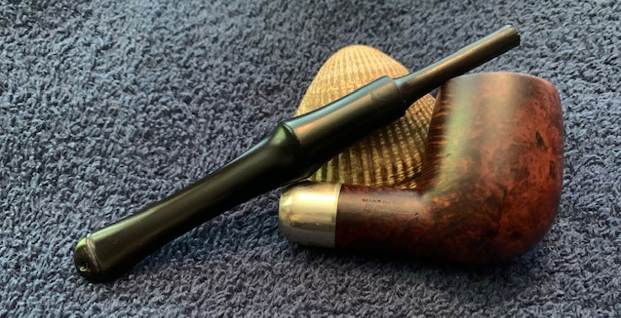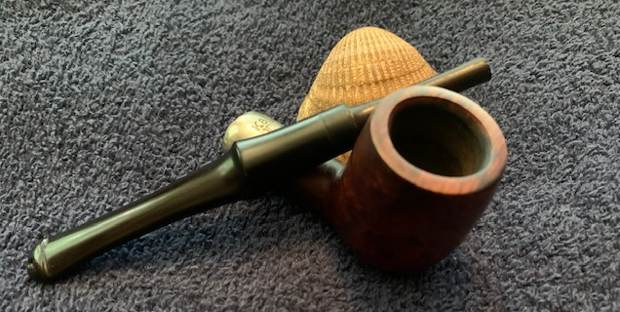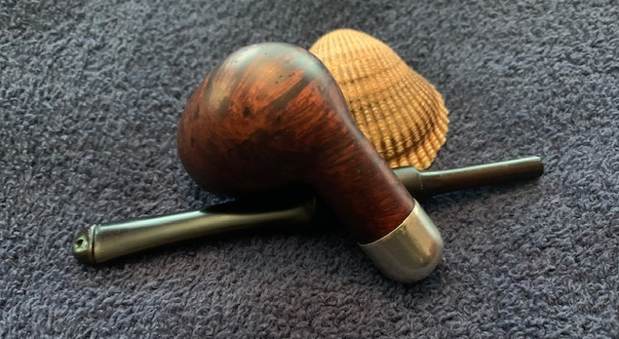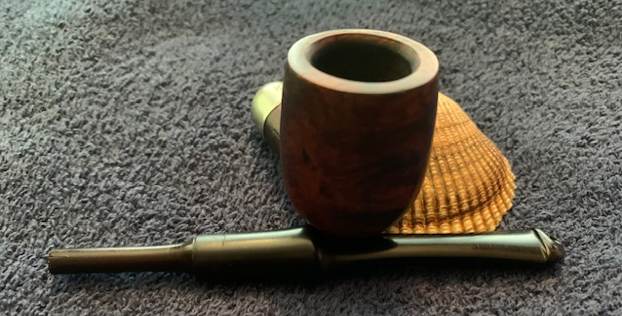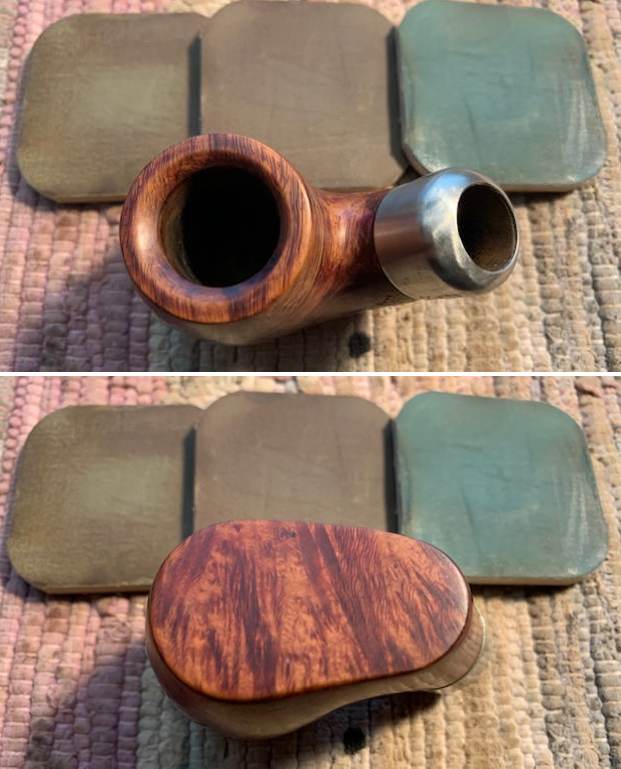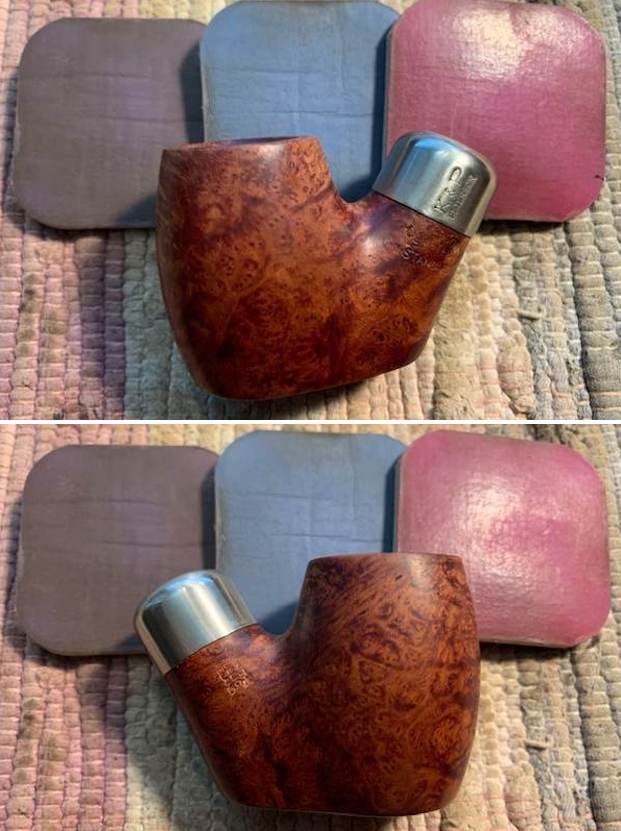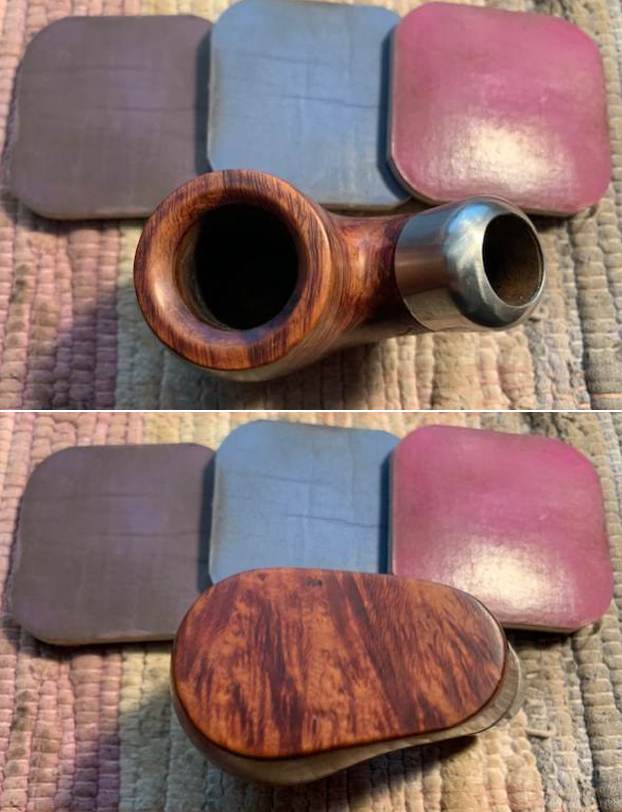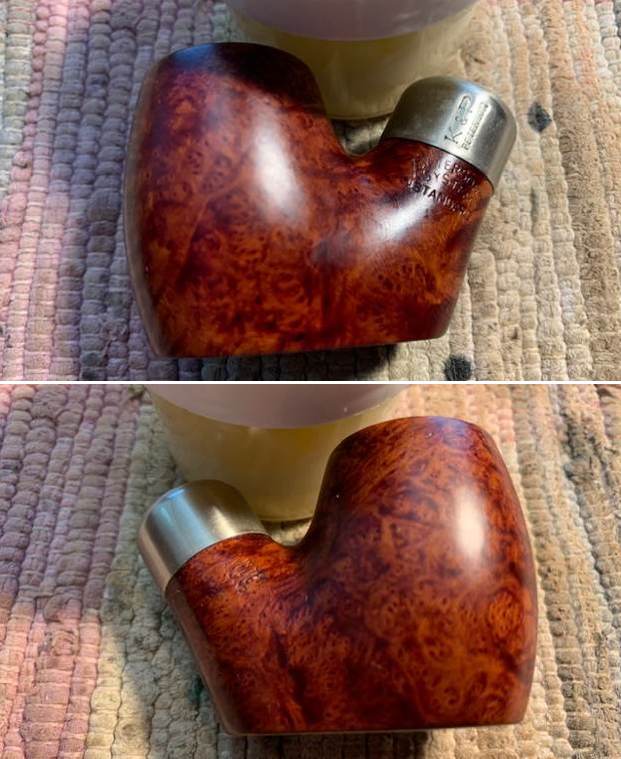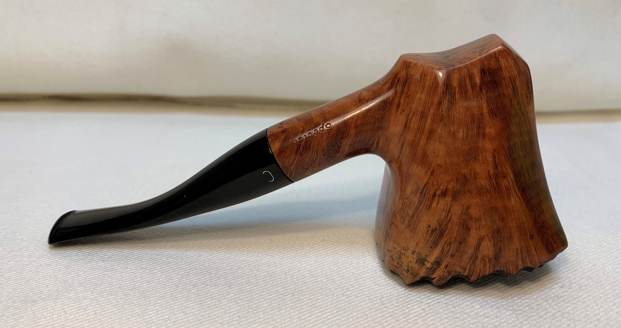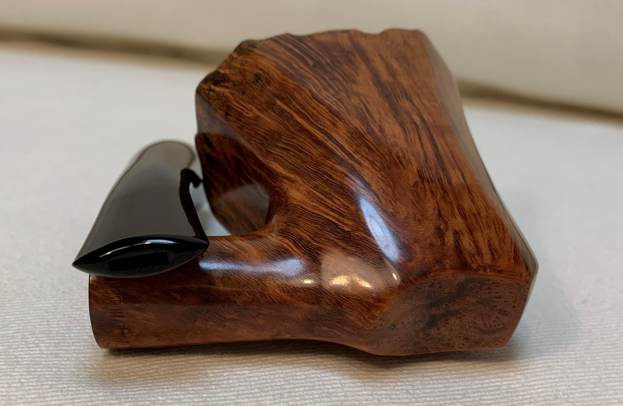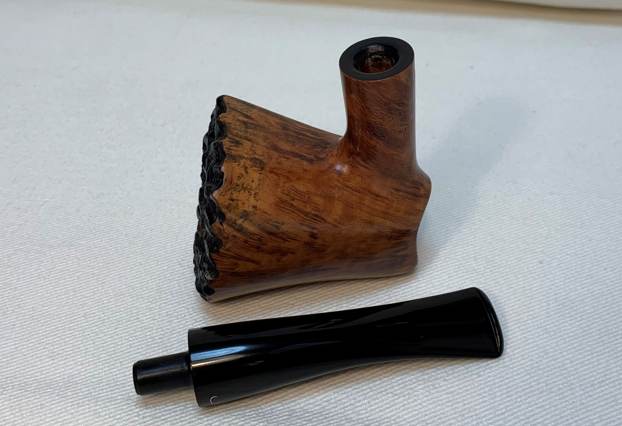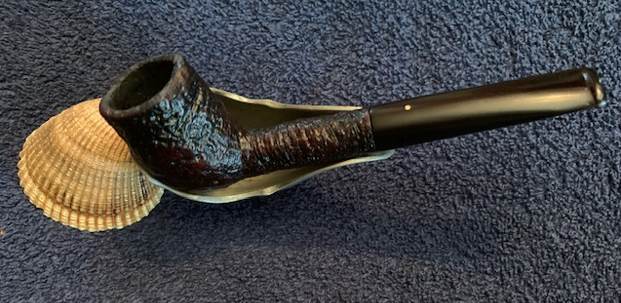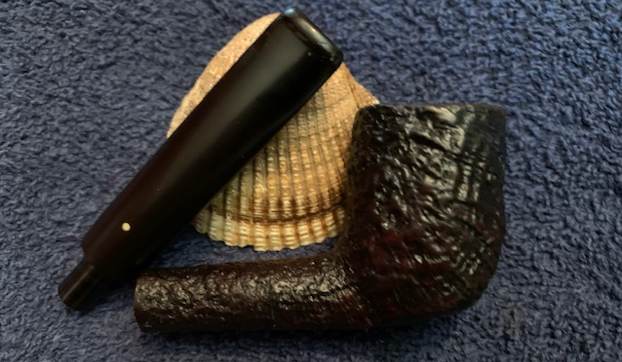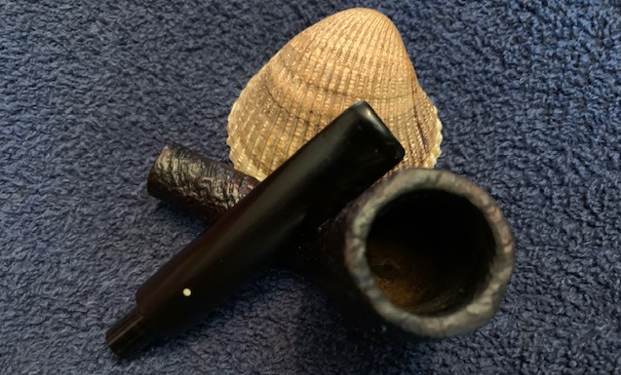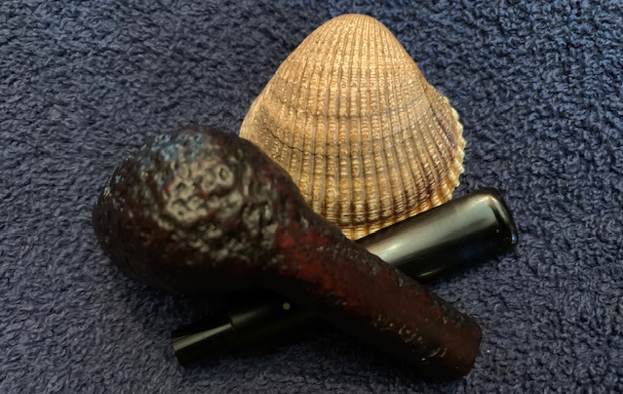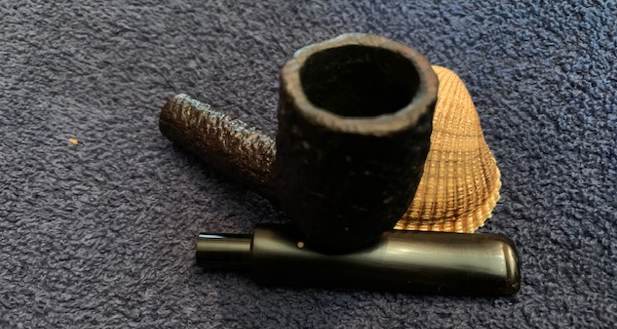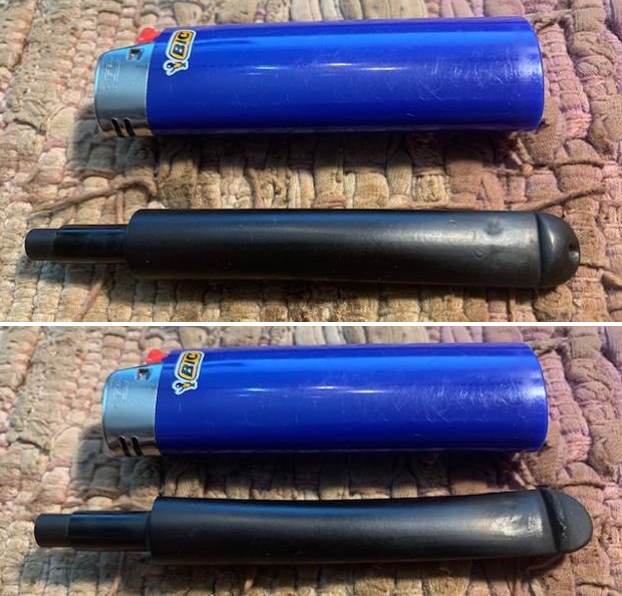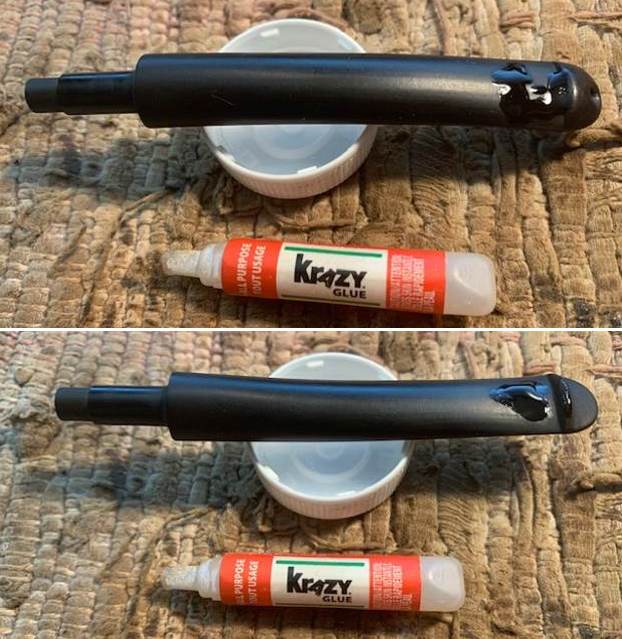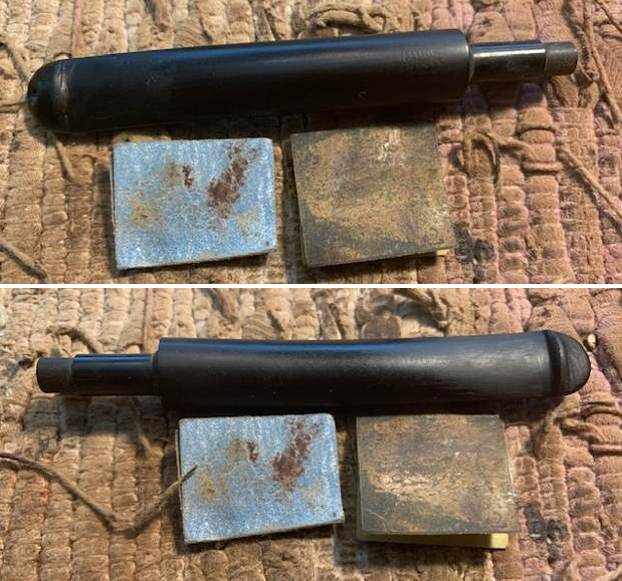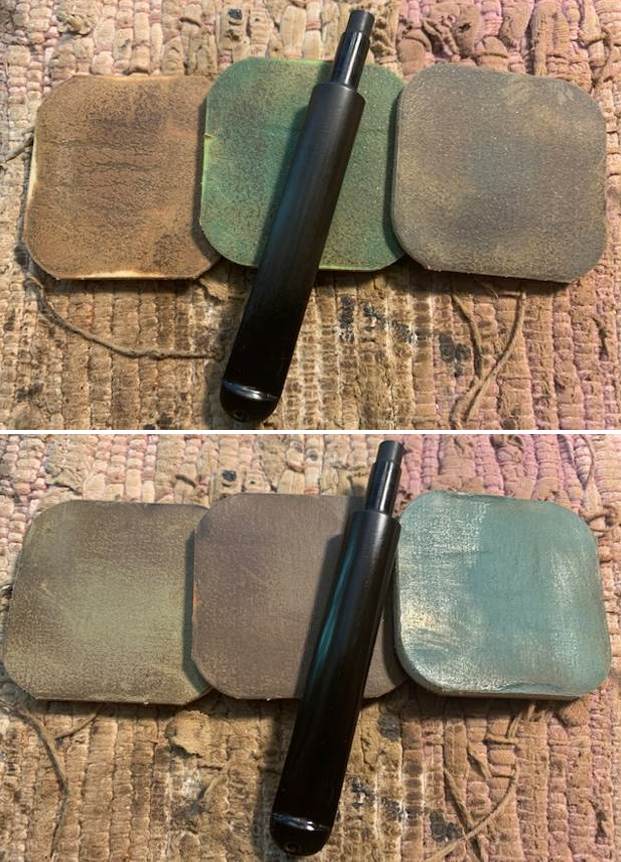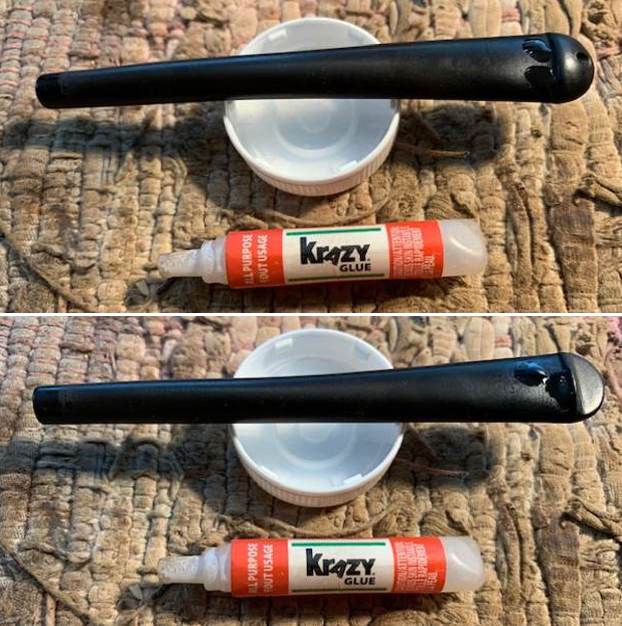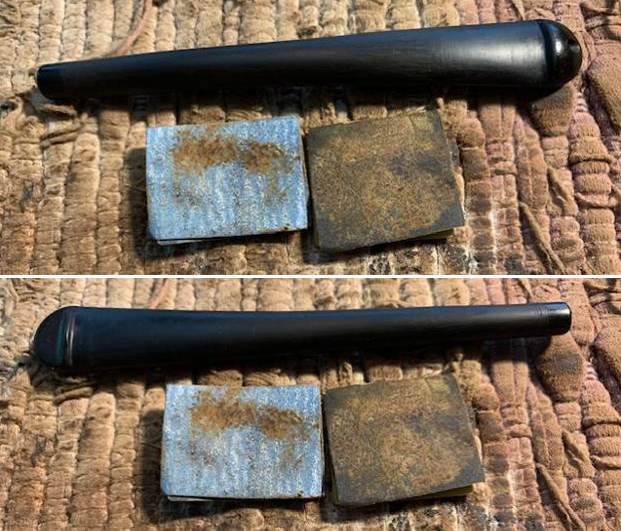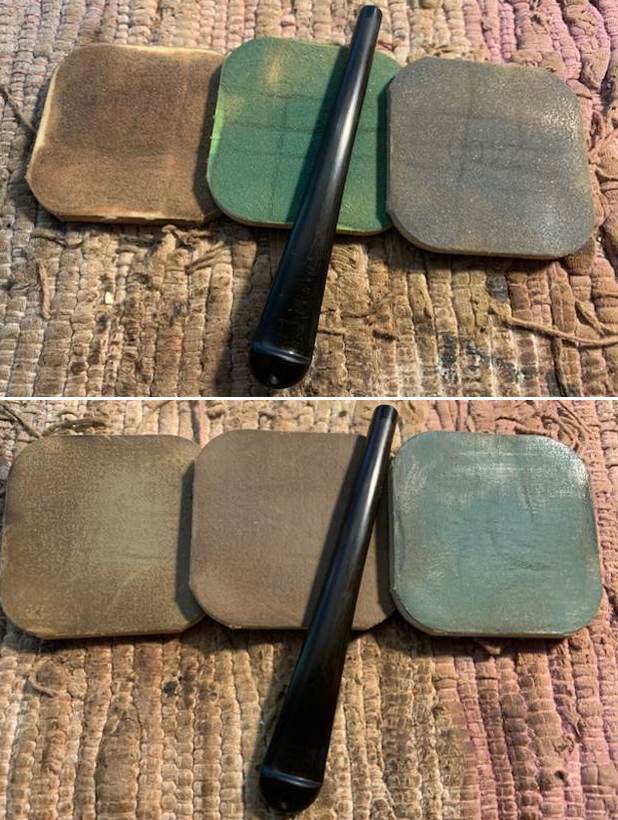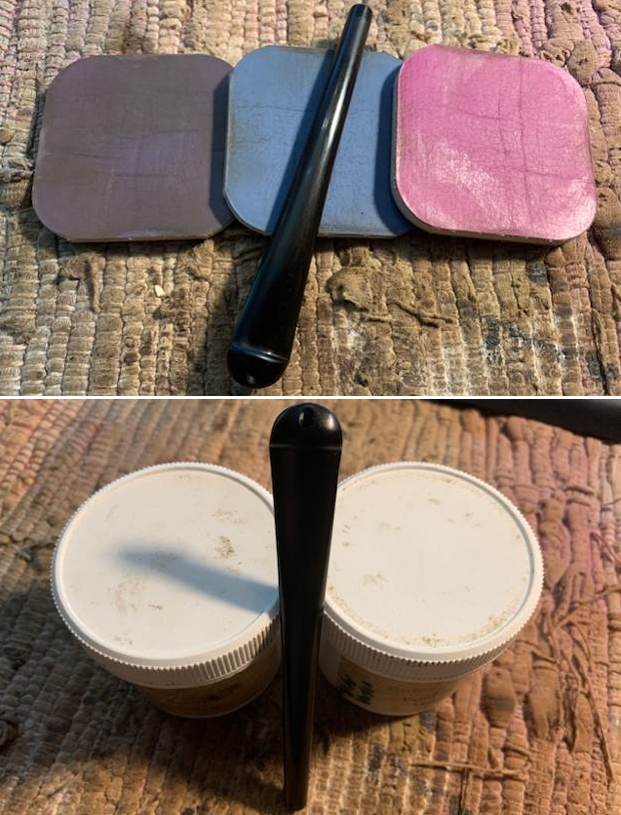
Tag Archives: repairing bite marks

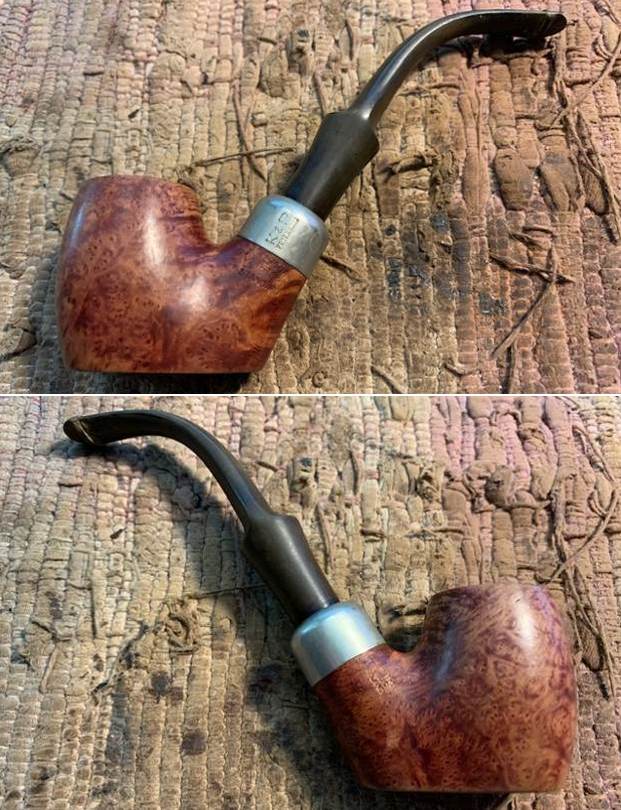
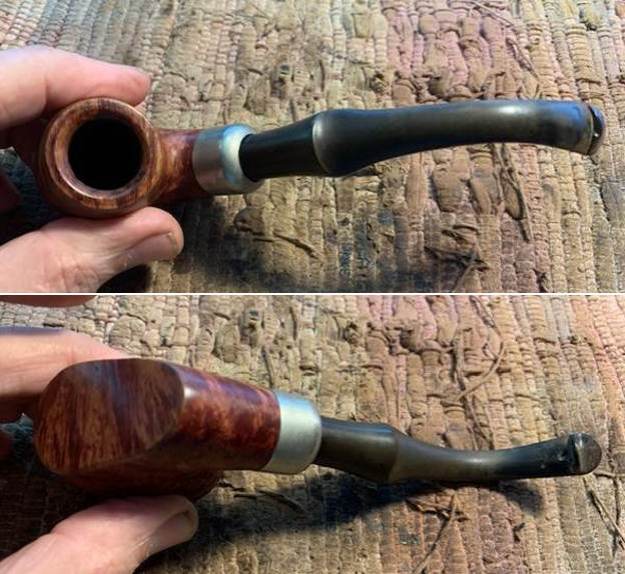
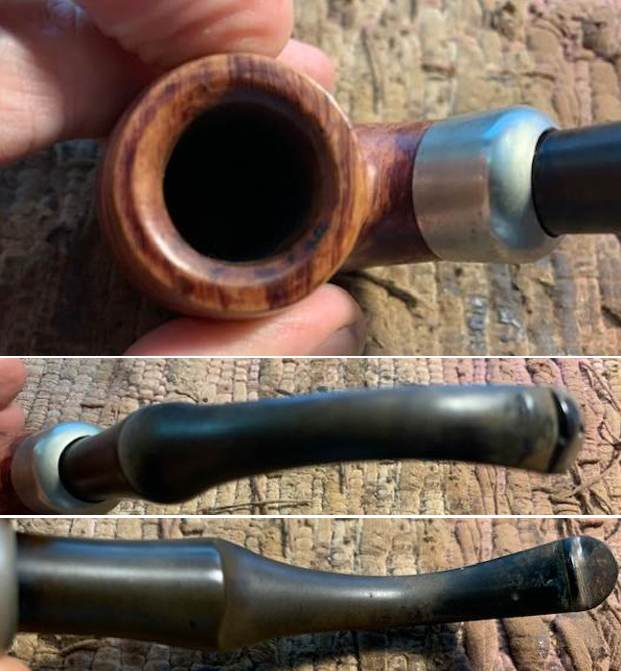
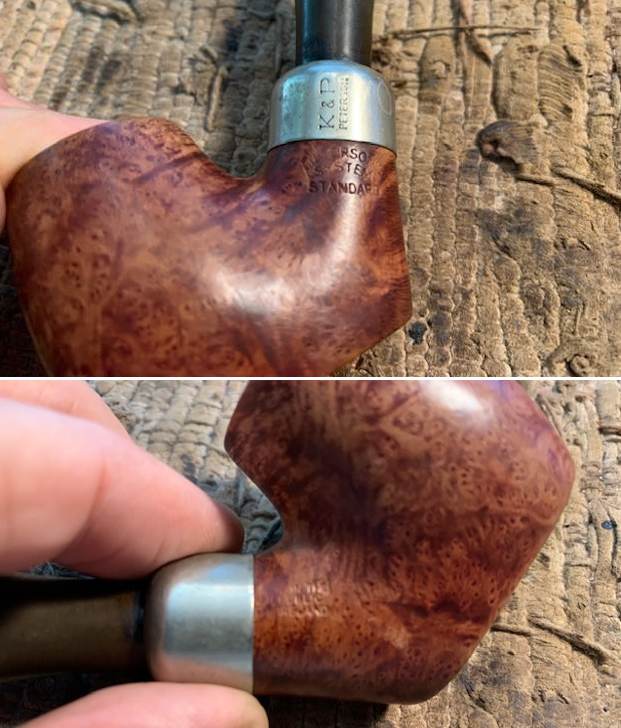
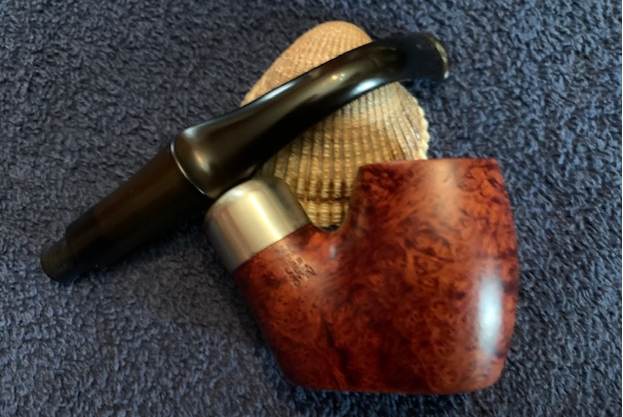
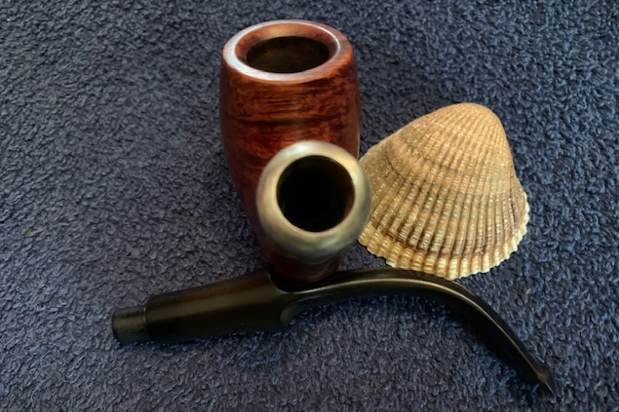
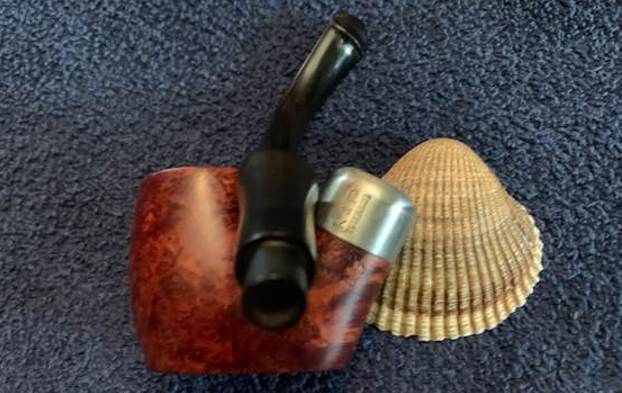
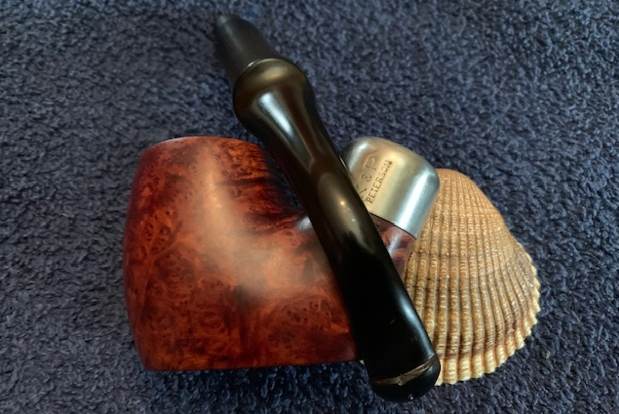
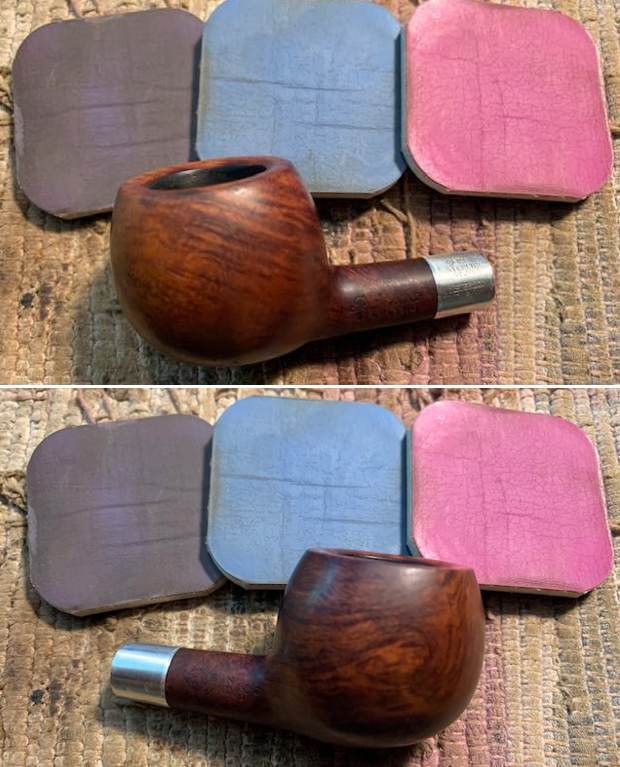
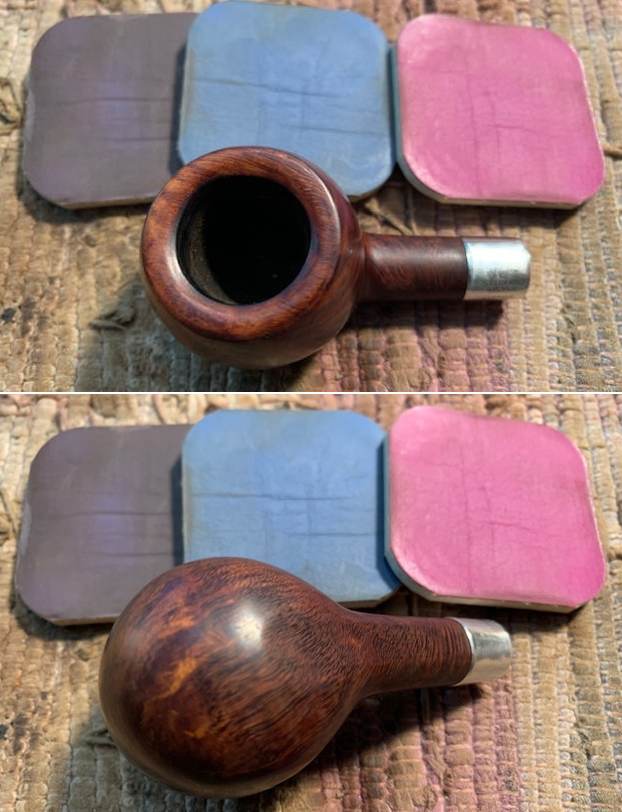
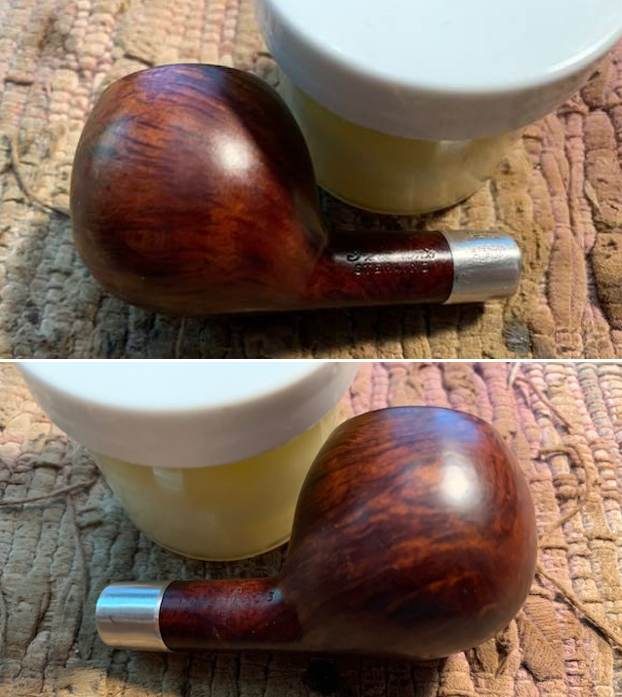
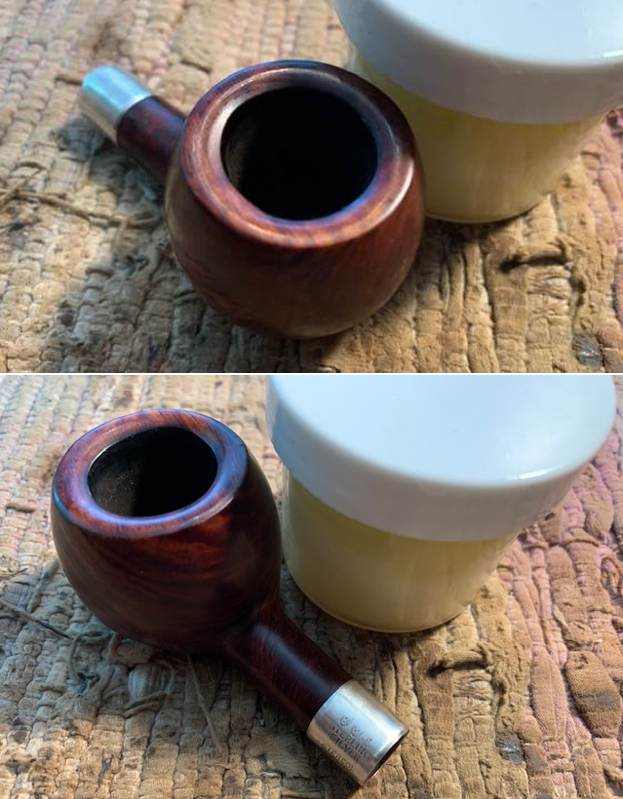
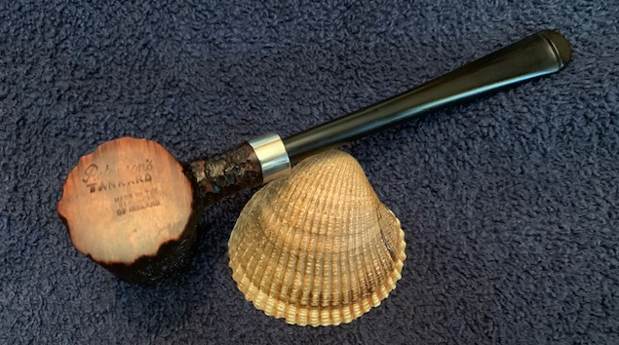
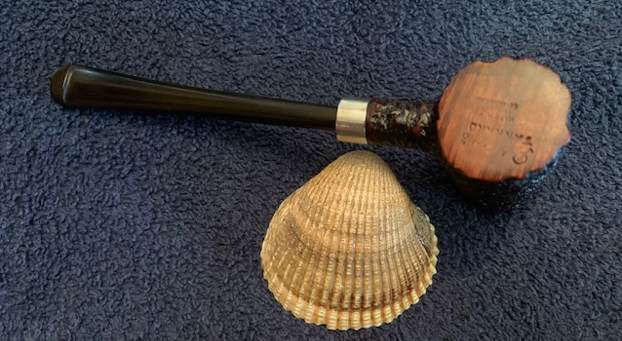
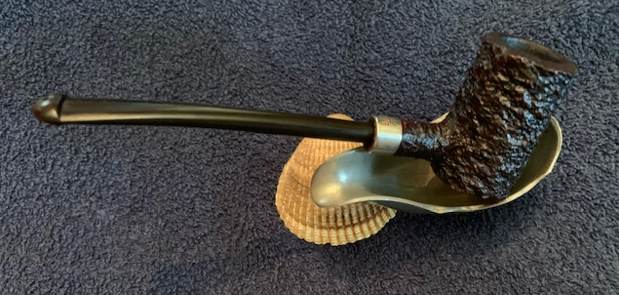
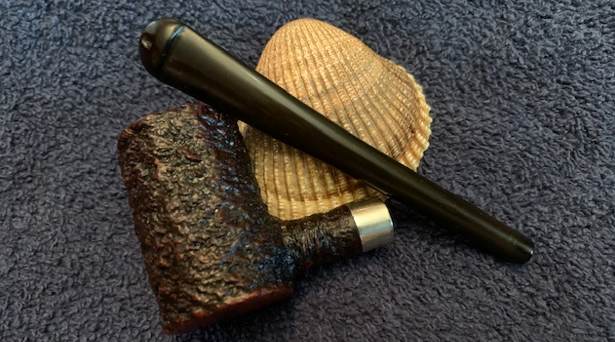
Fresh Life for a Republic Era Peterson’s Tankard


Blog by Steve Laug

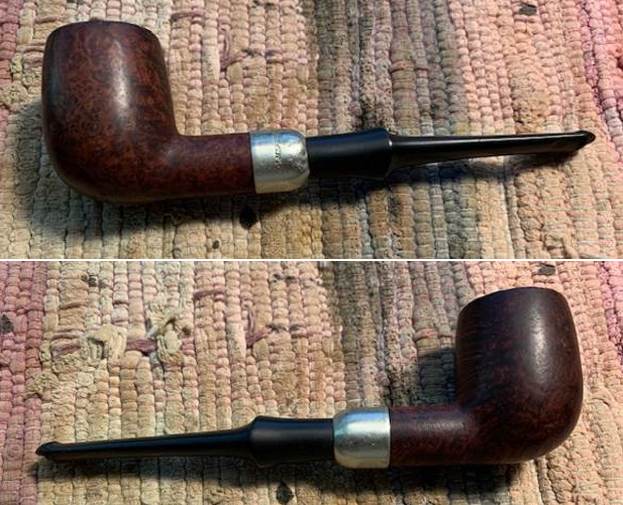
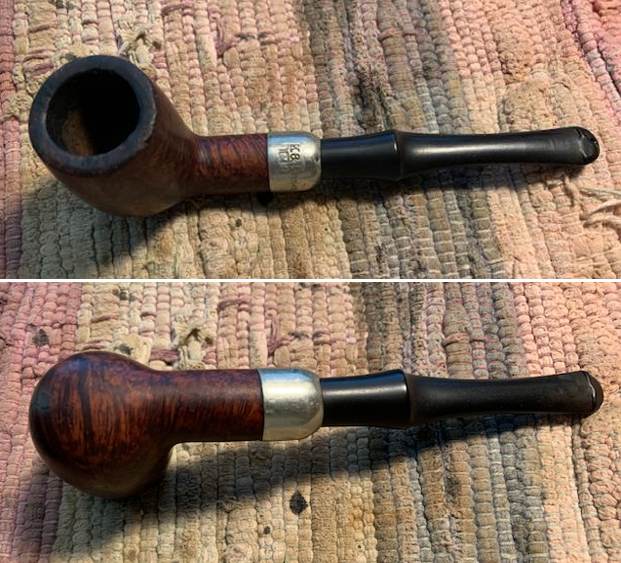
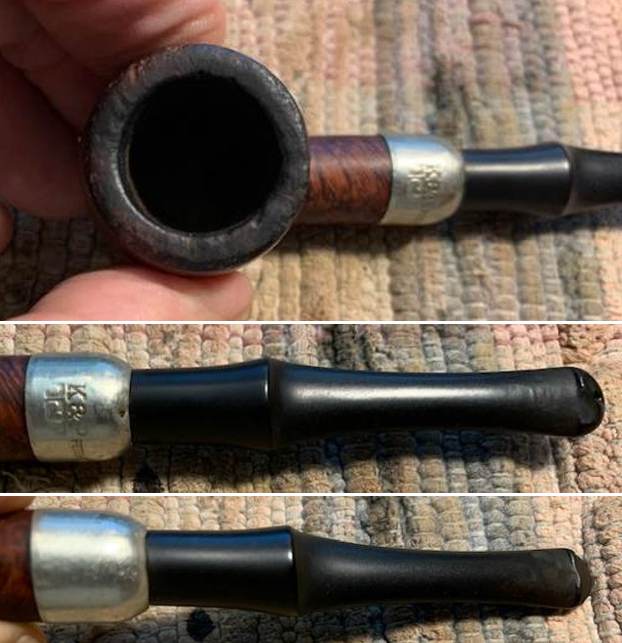
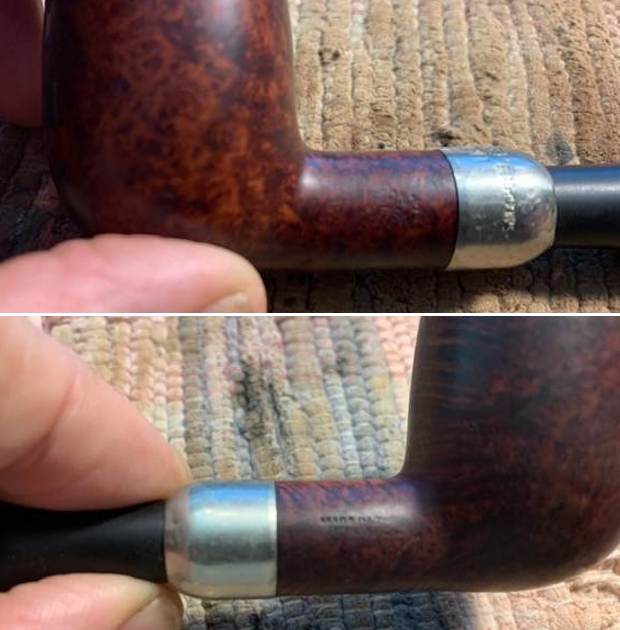
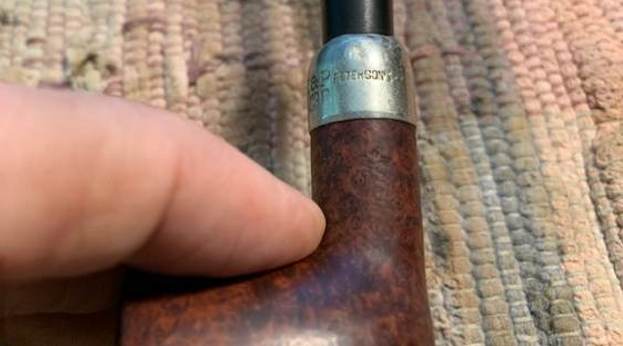
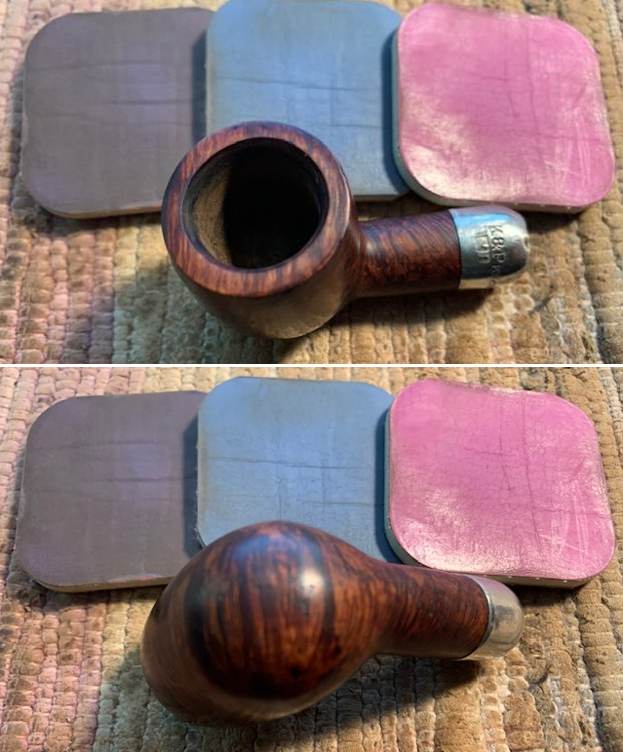
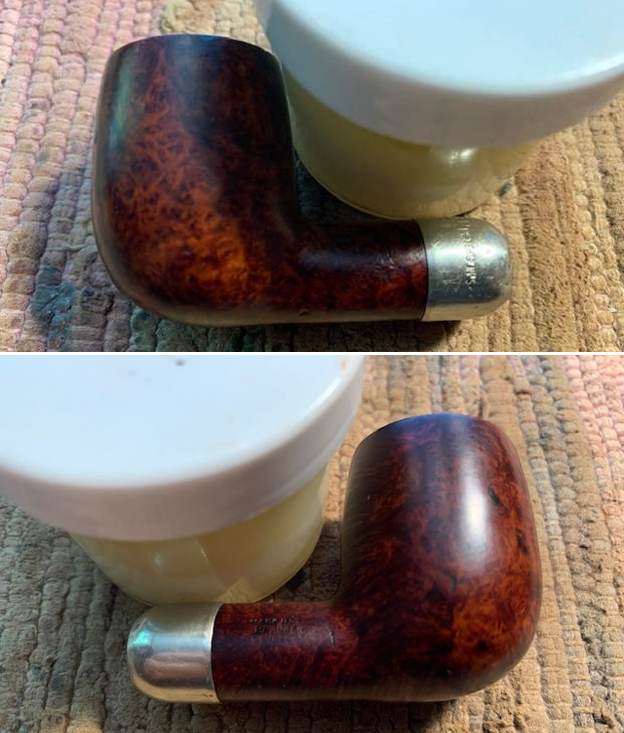
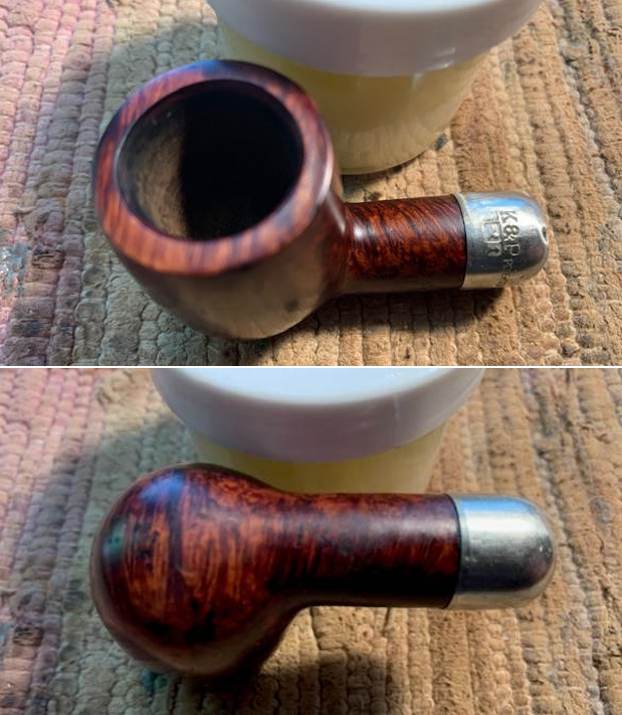
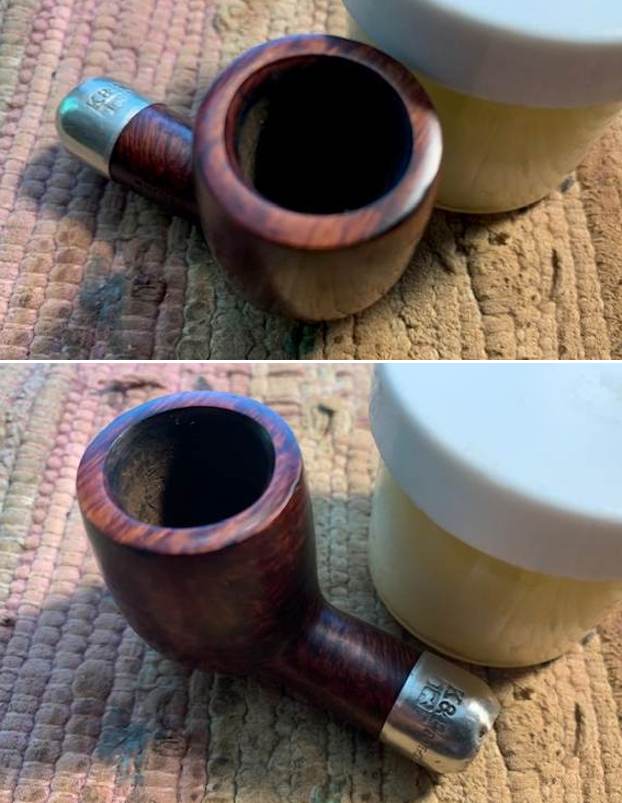
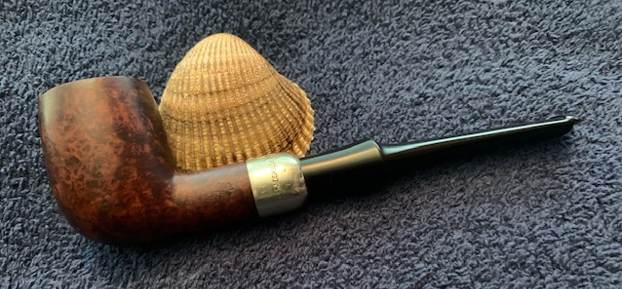
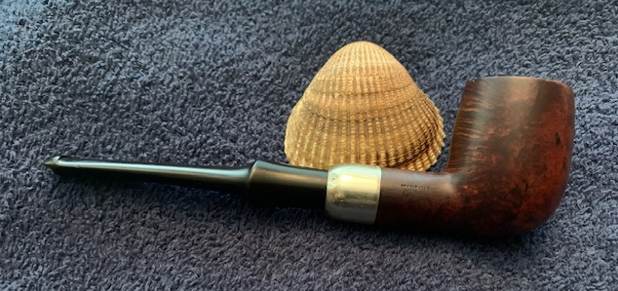
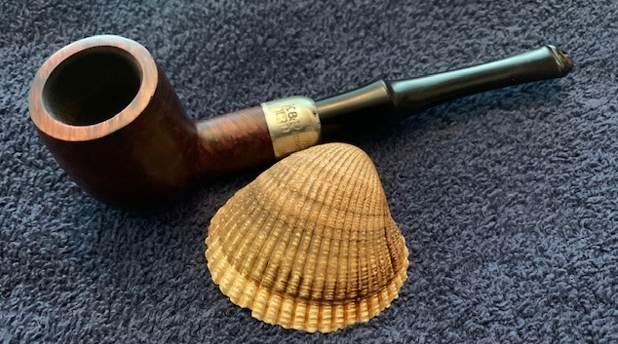
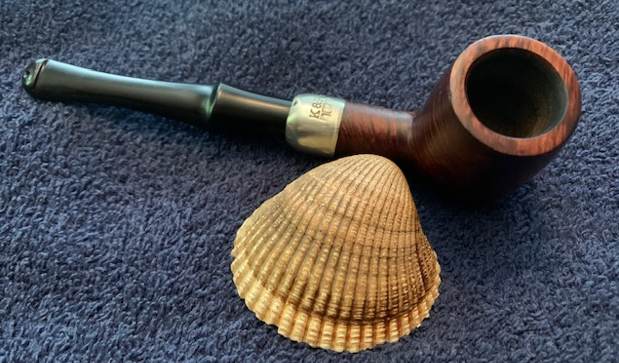
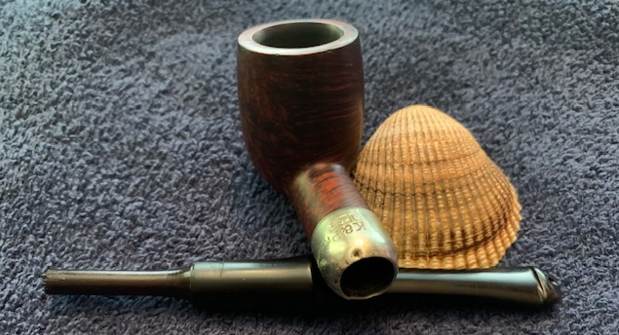
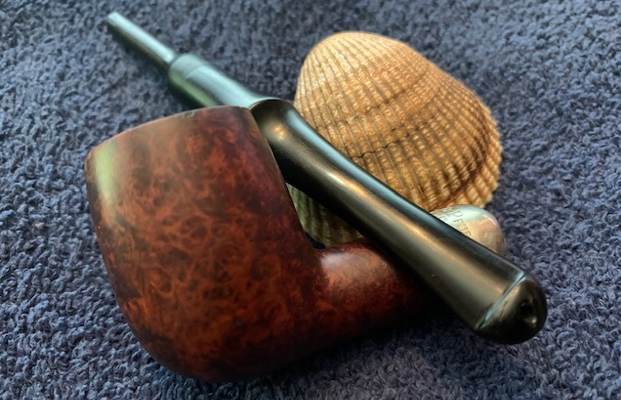
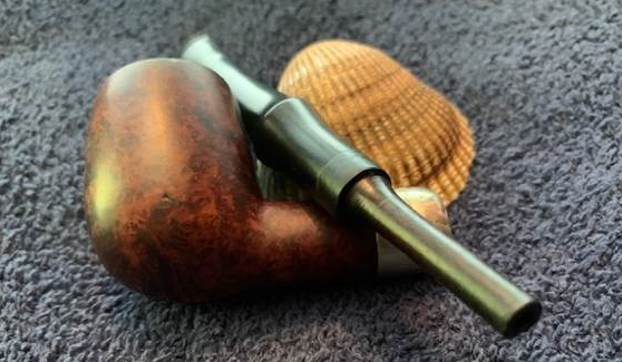
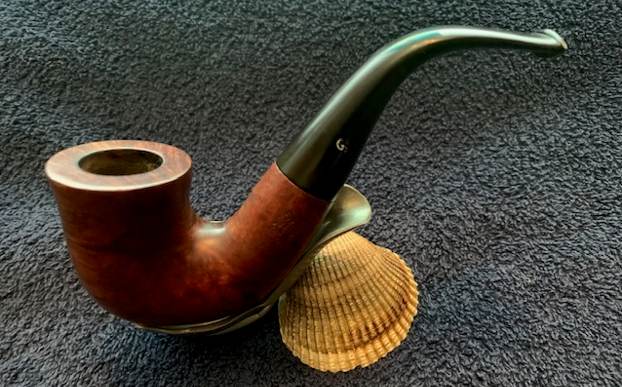
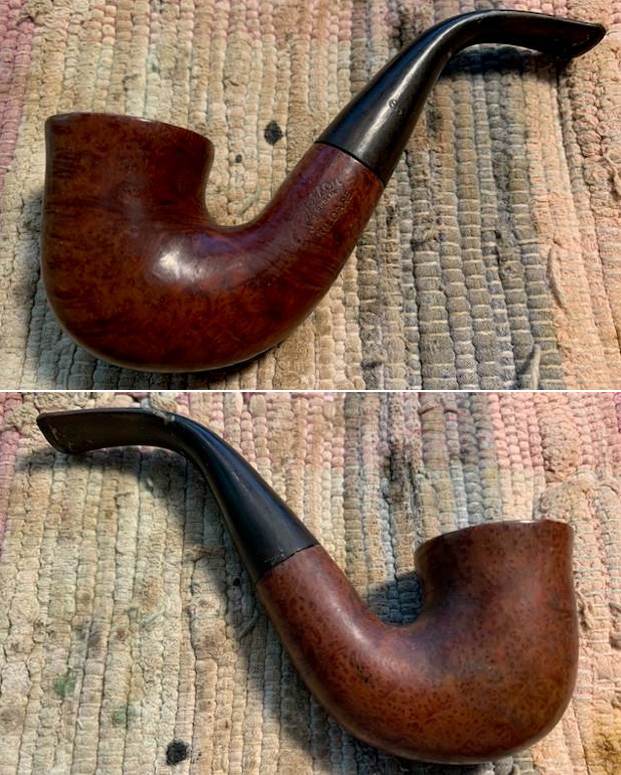
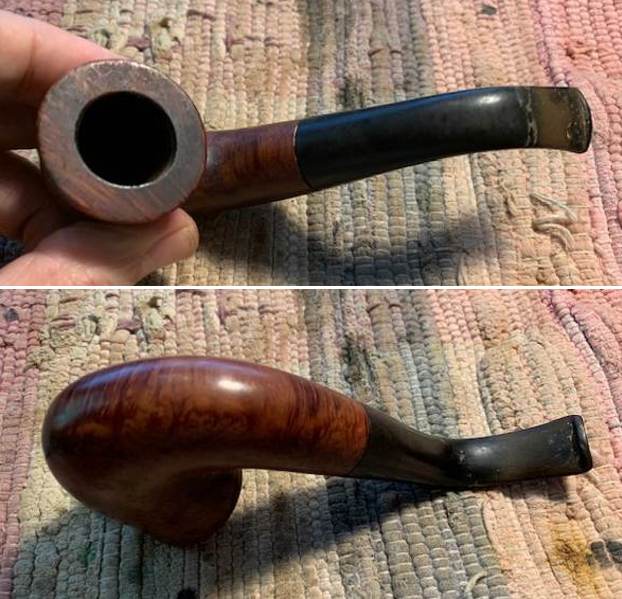
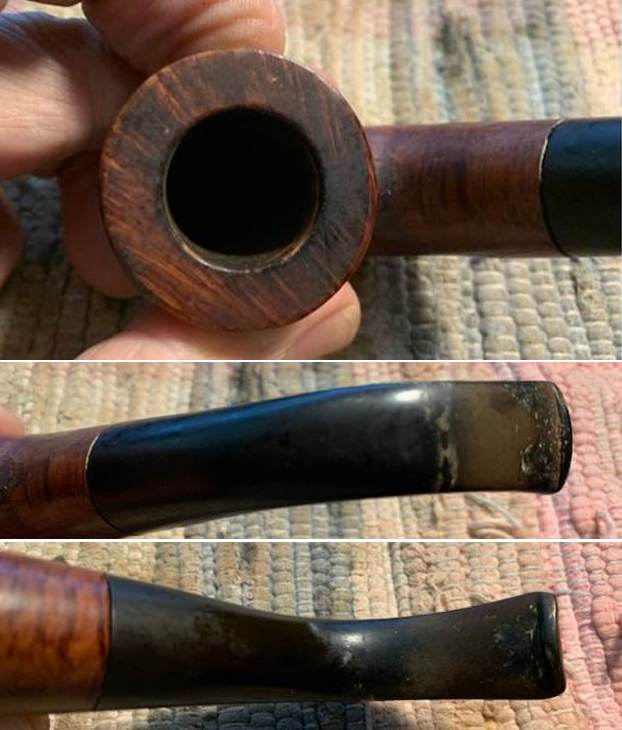
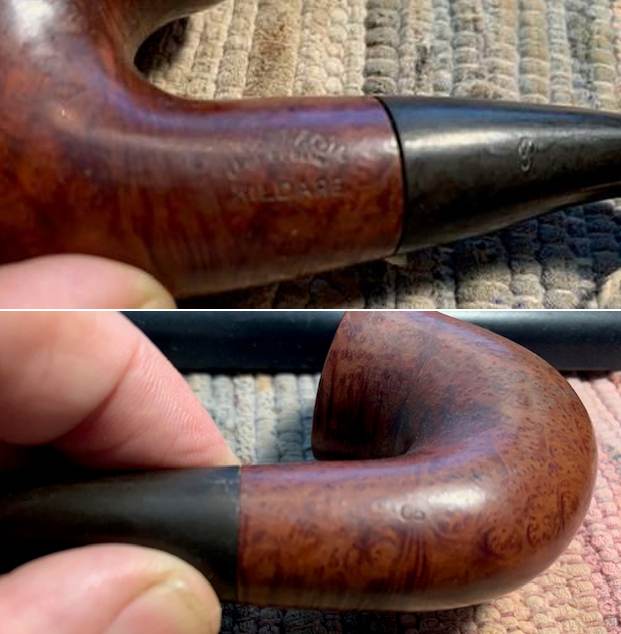
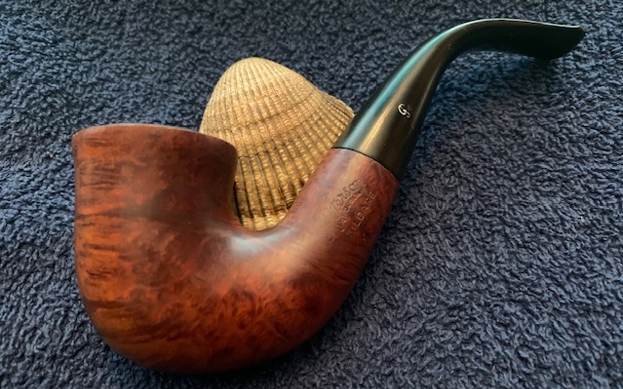
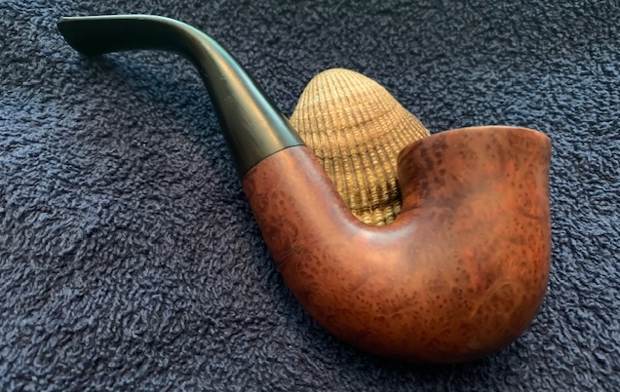
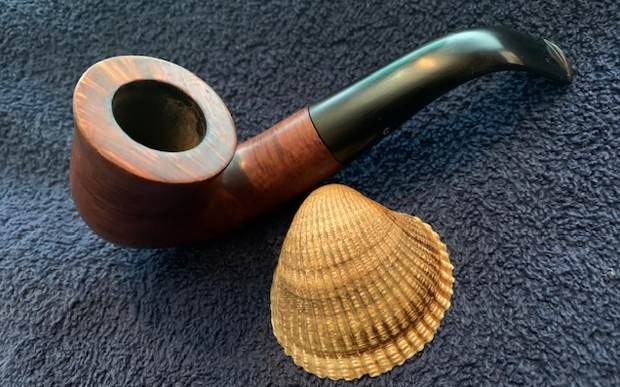
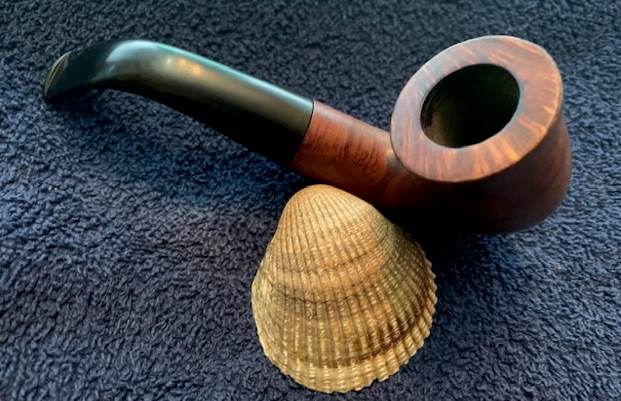
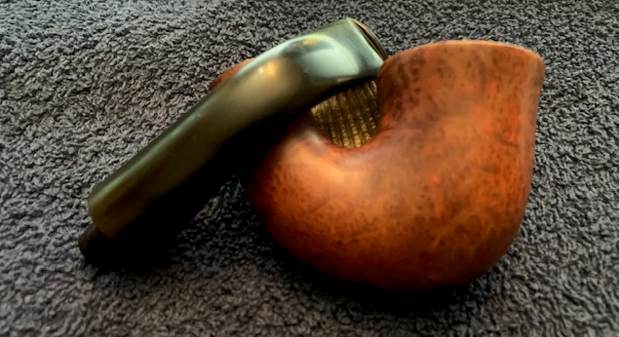
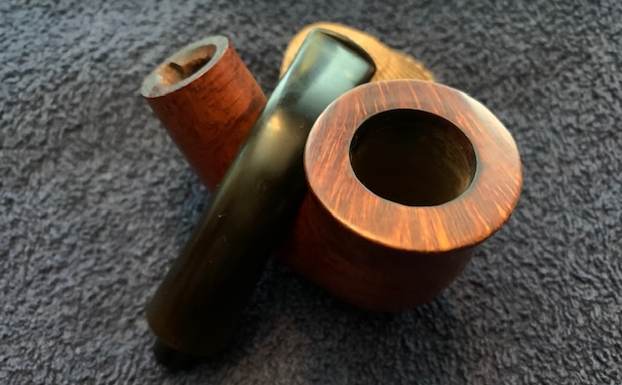
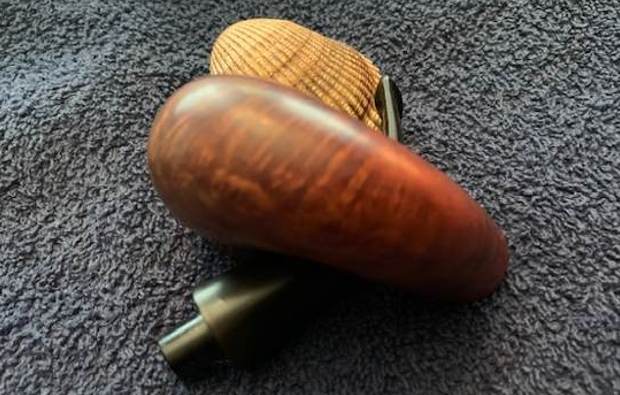
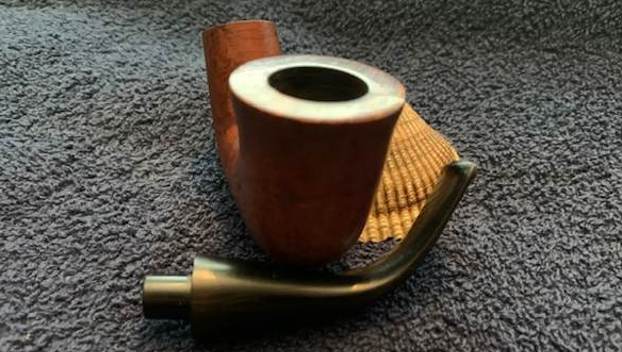
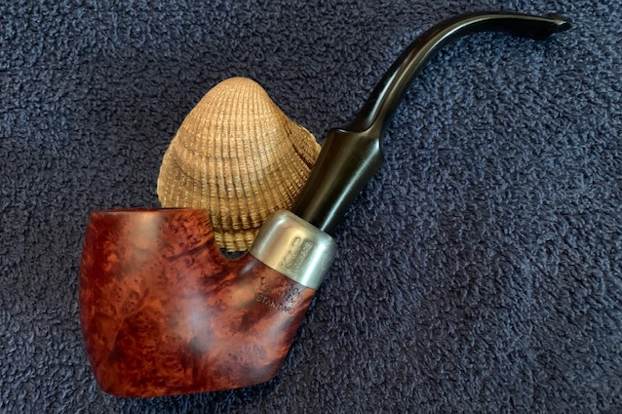
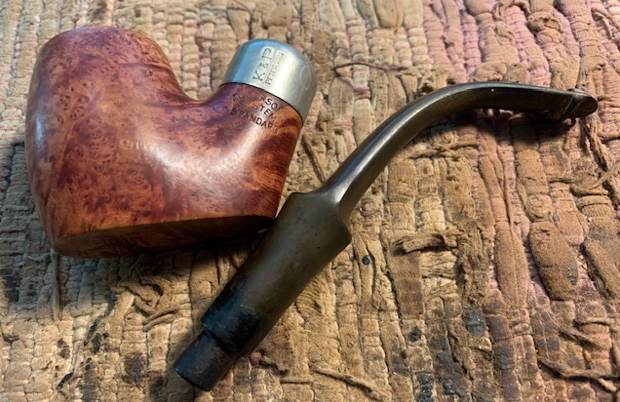
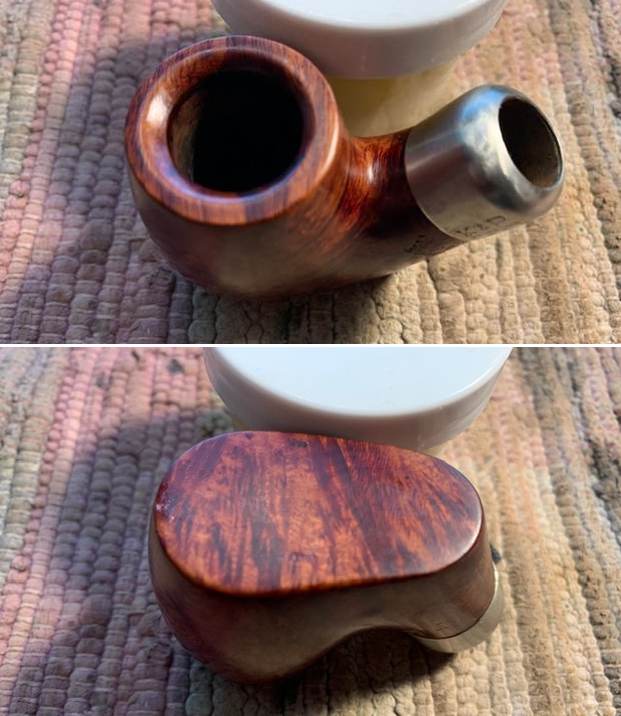
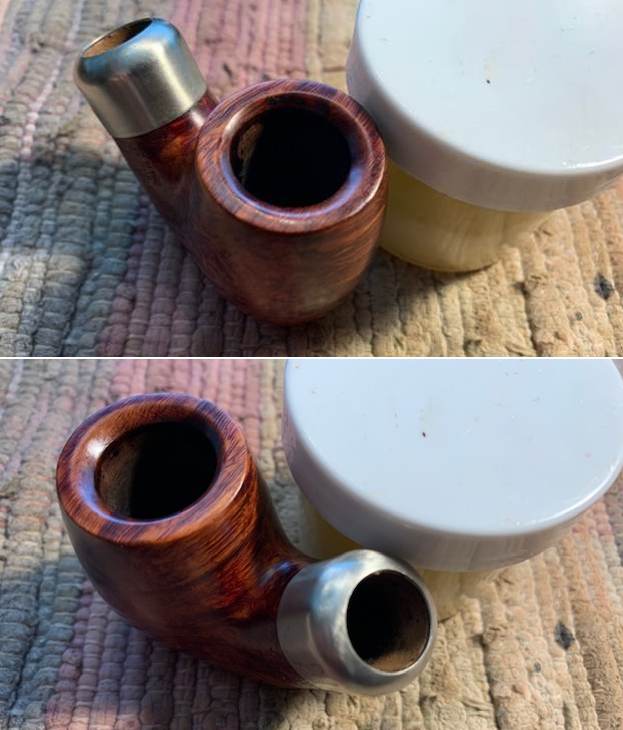
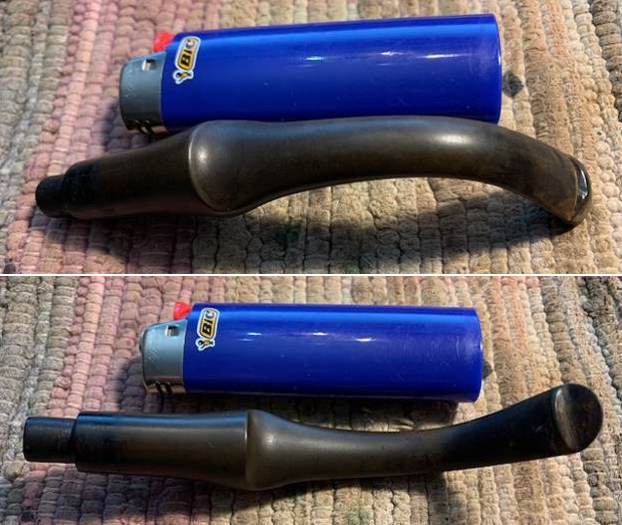
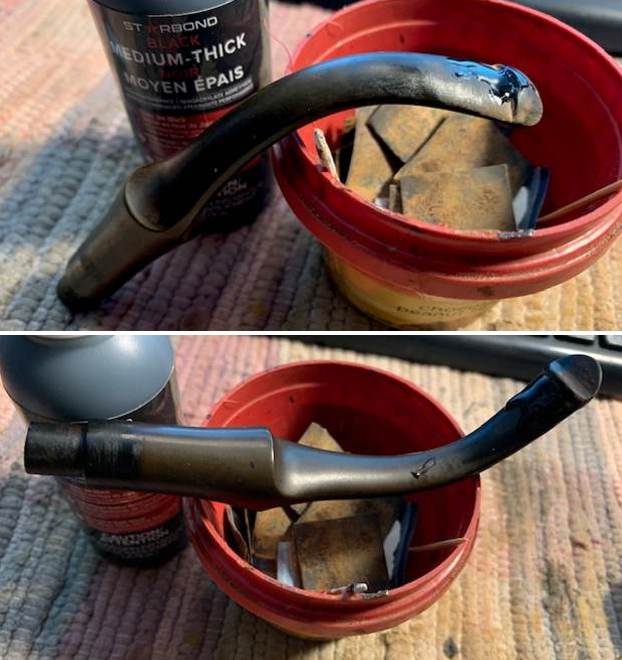
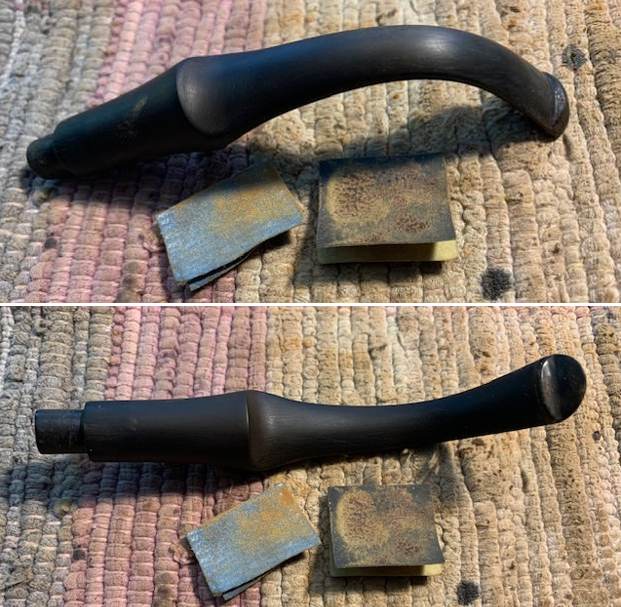
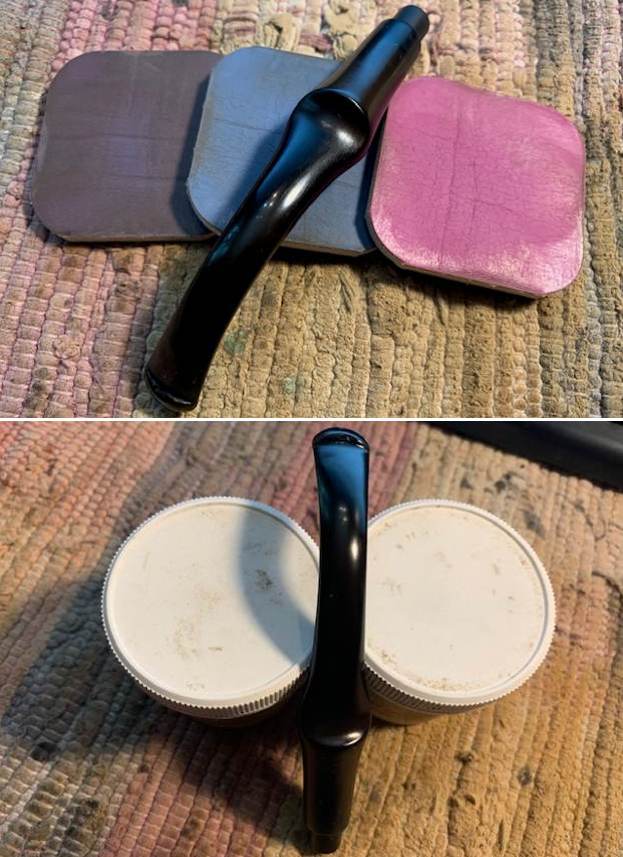
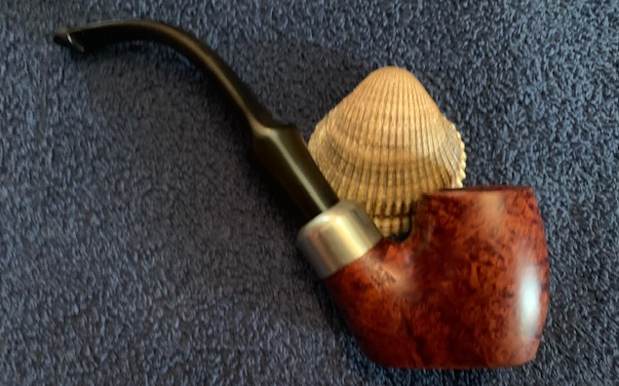
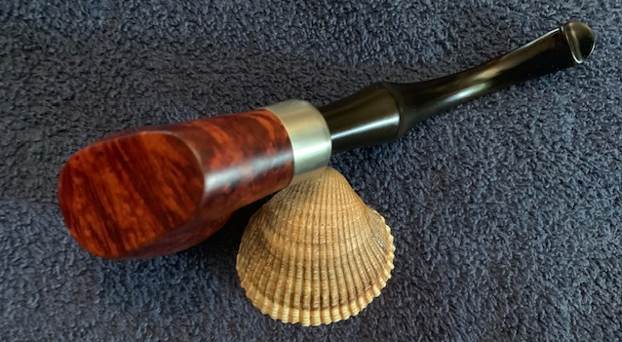
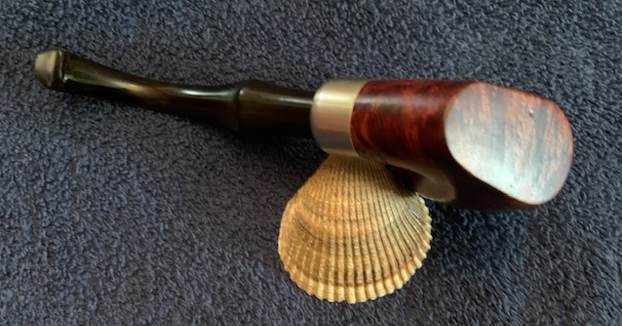
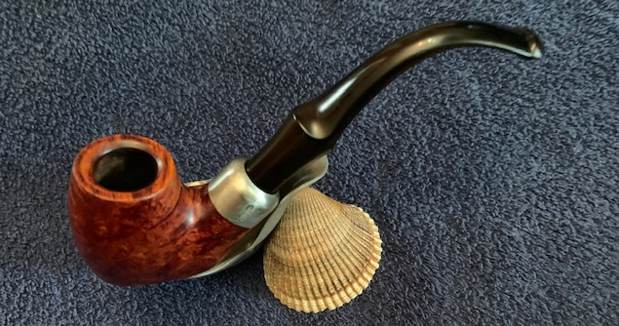
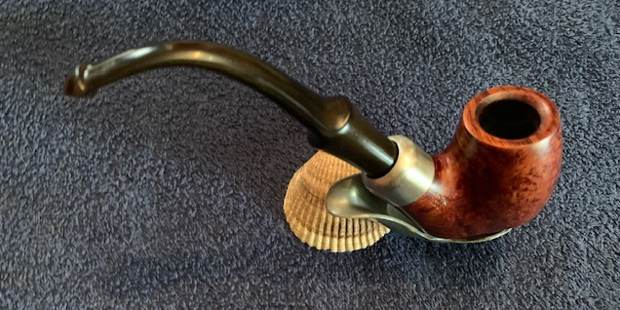
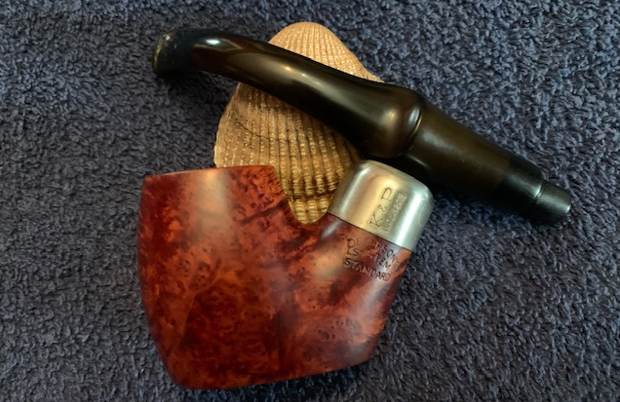
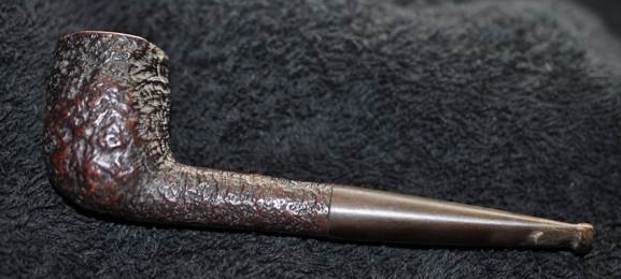
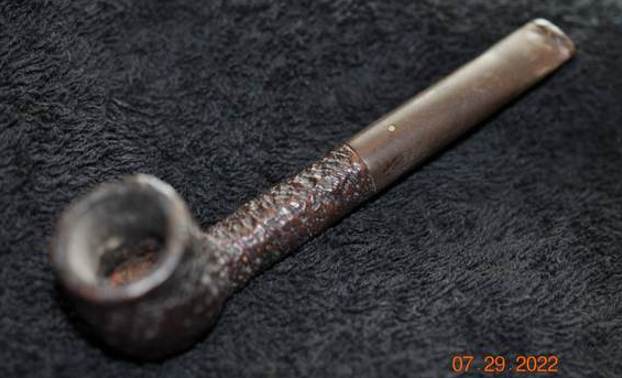
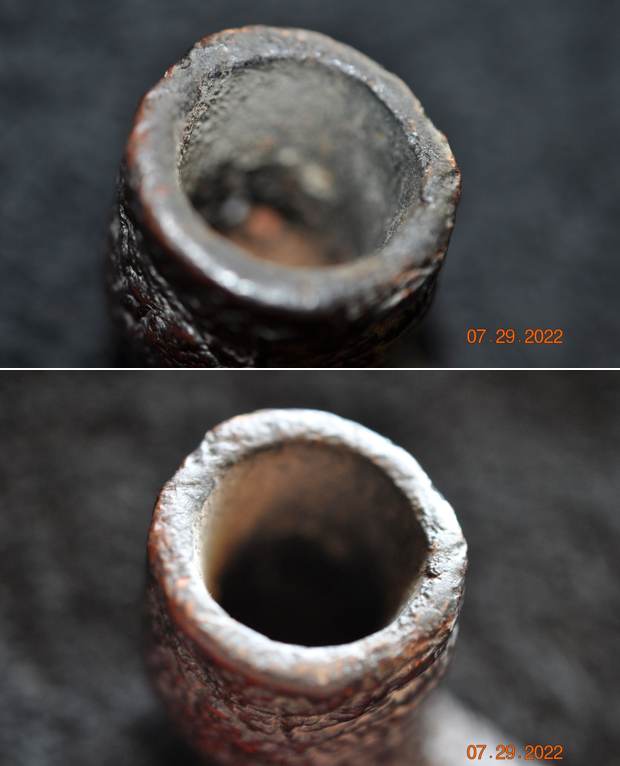
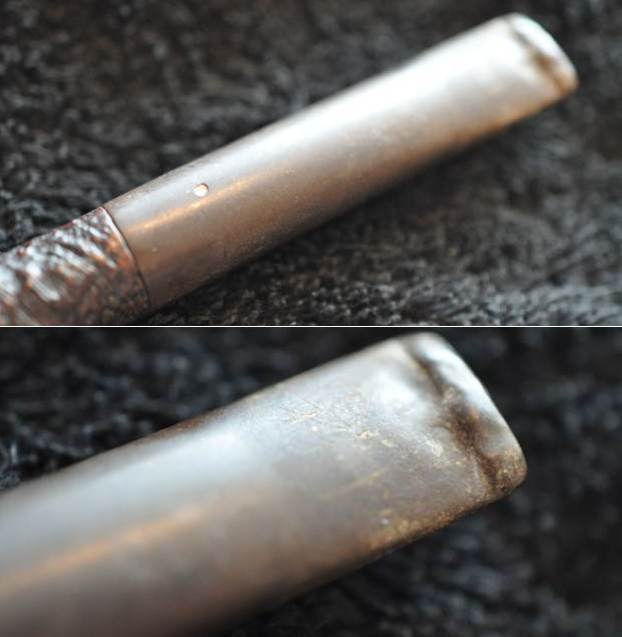
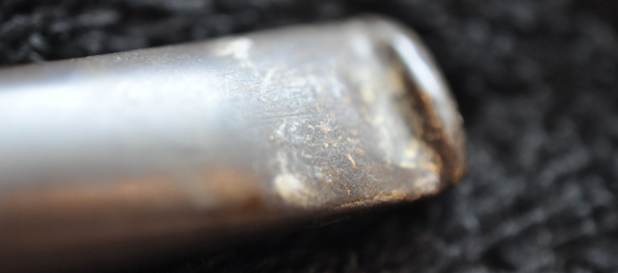
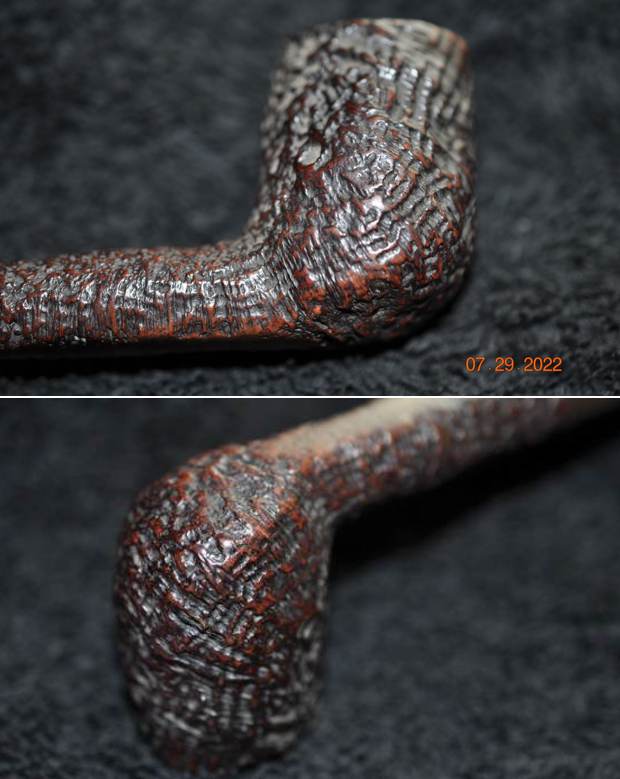
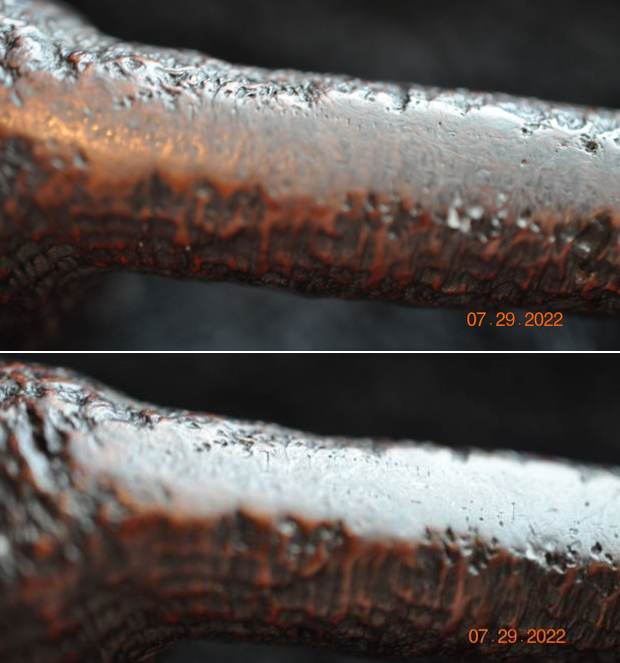
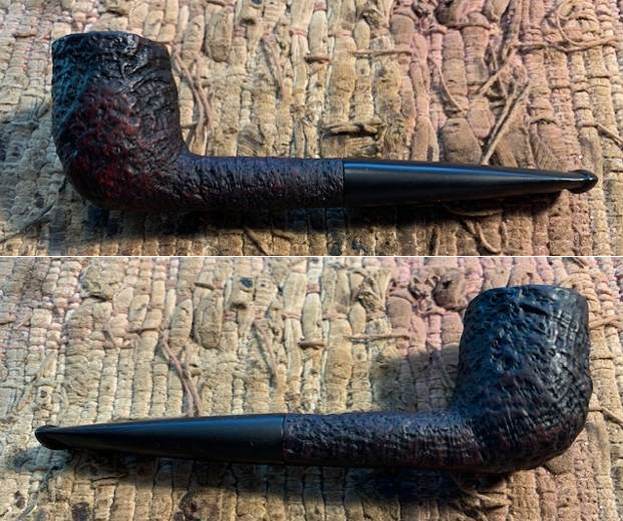
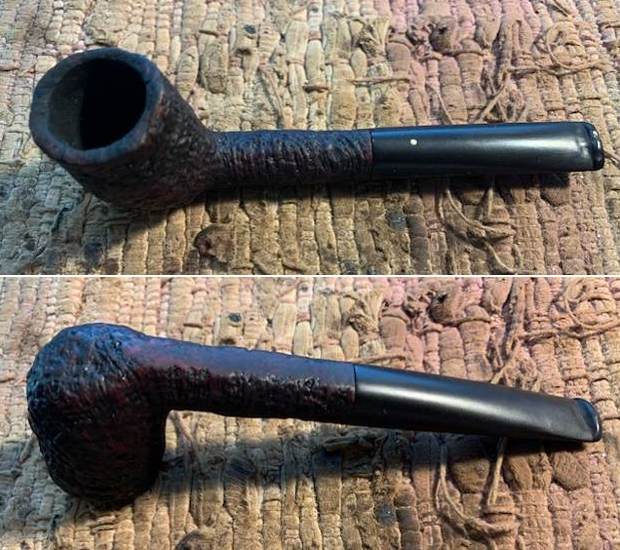
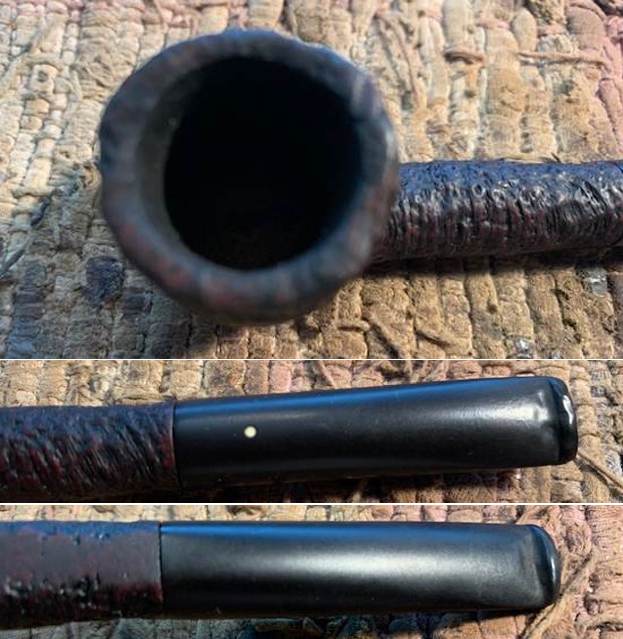
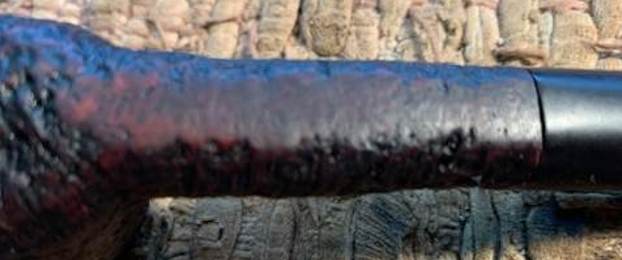
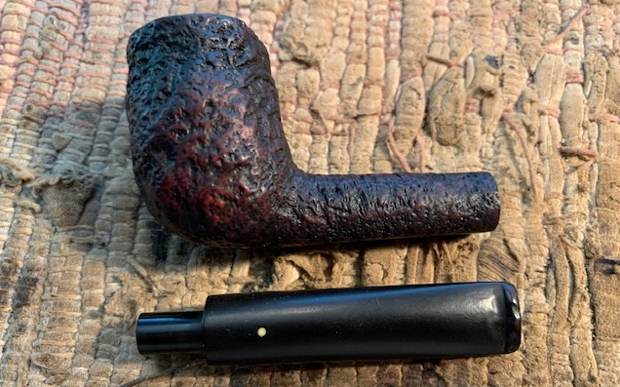
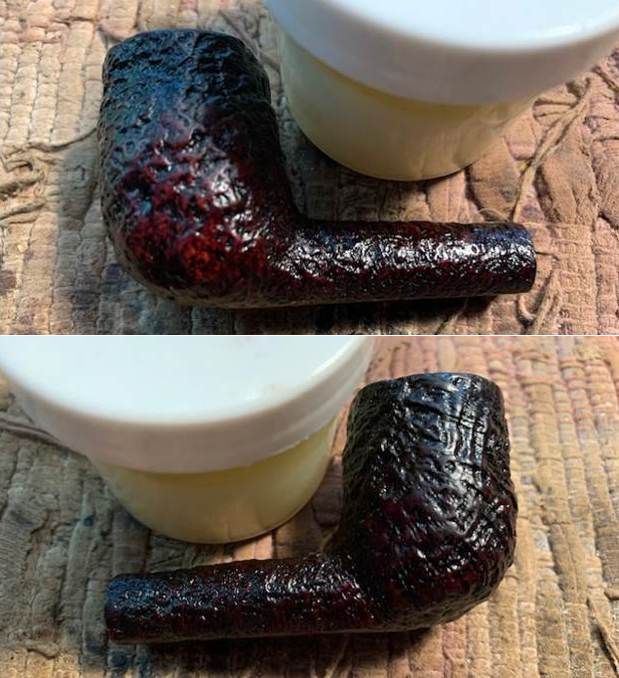
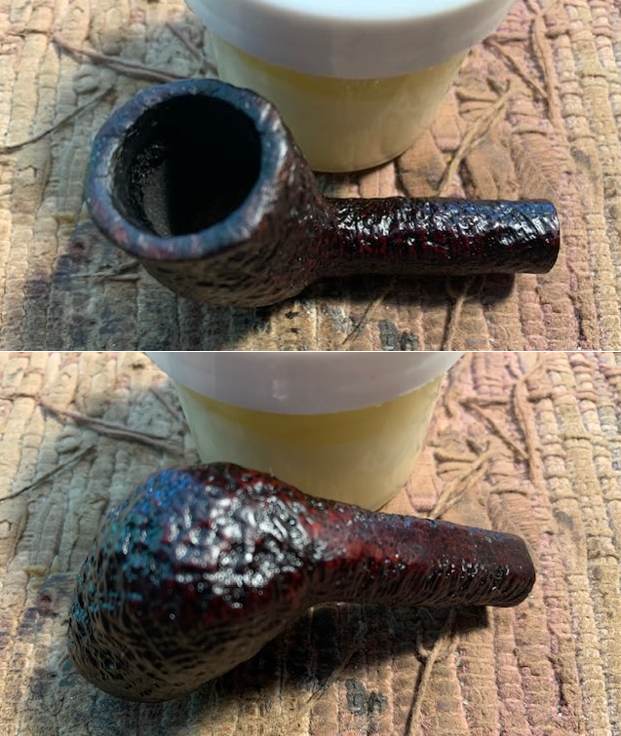
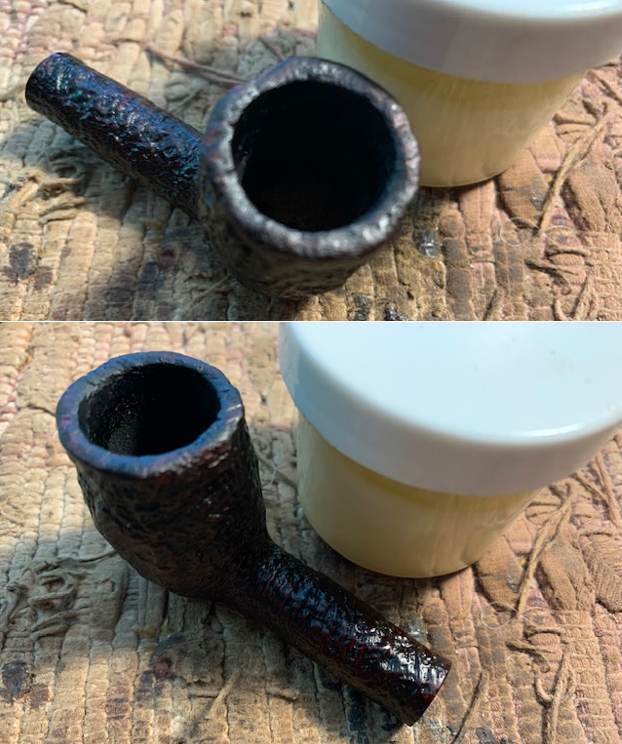
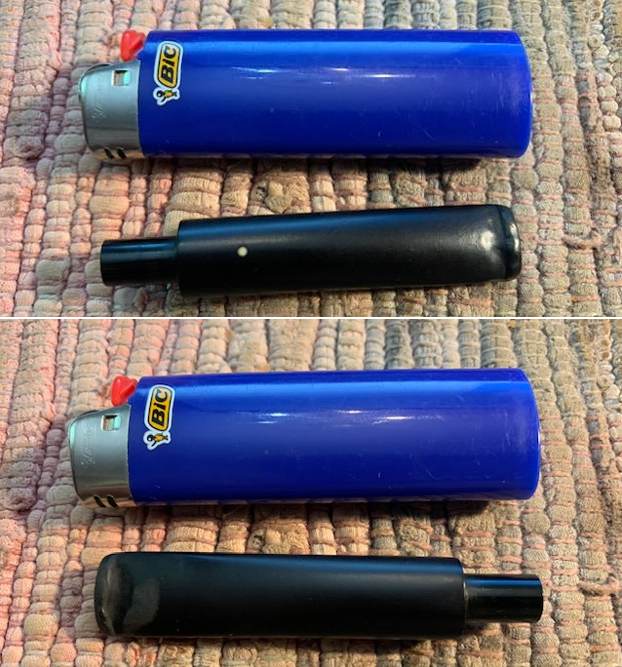
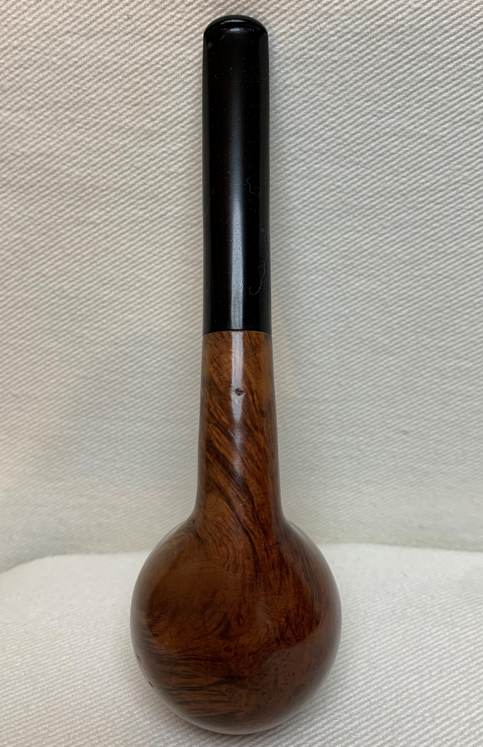
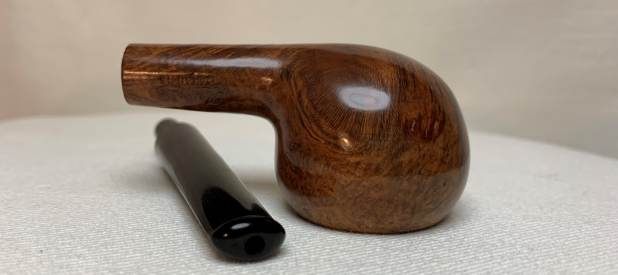
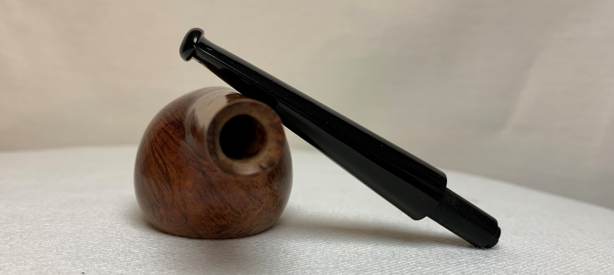
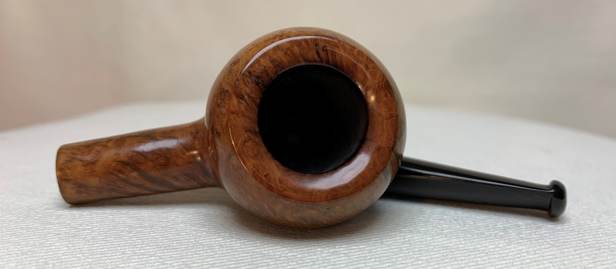
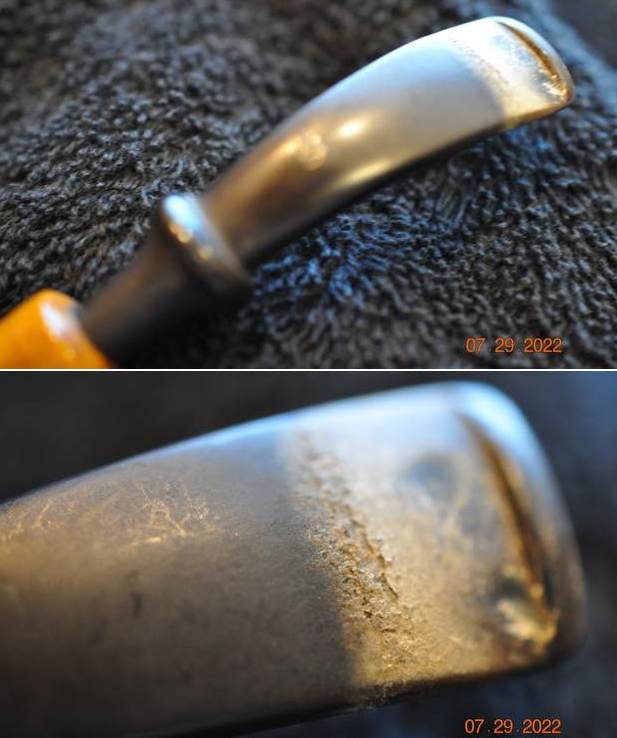
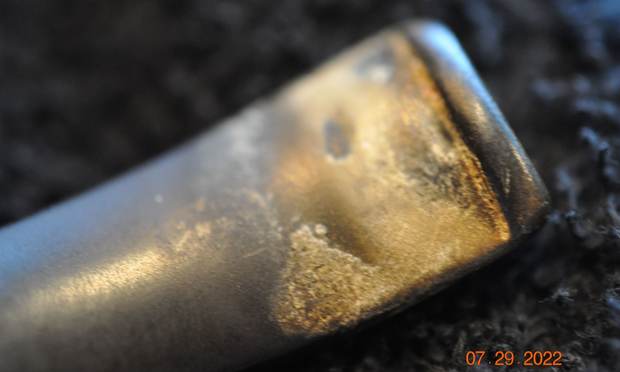
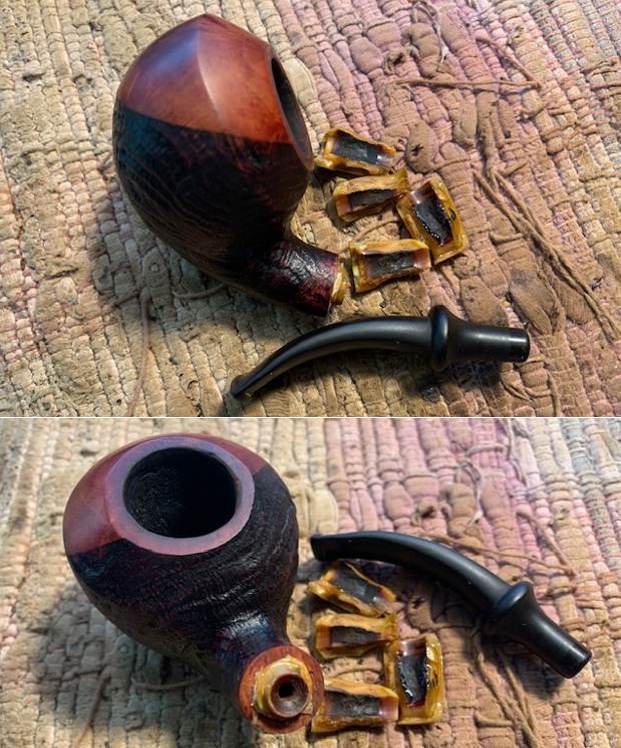
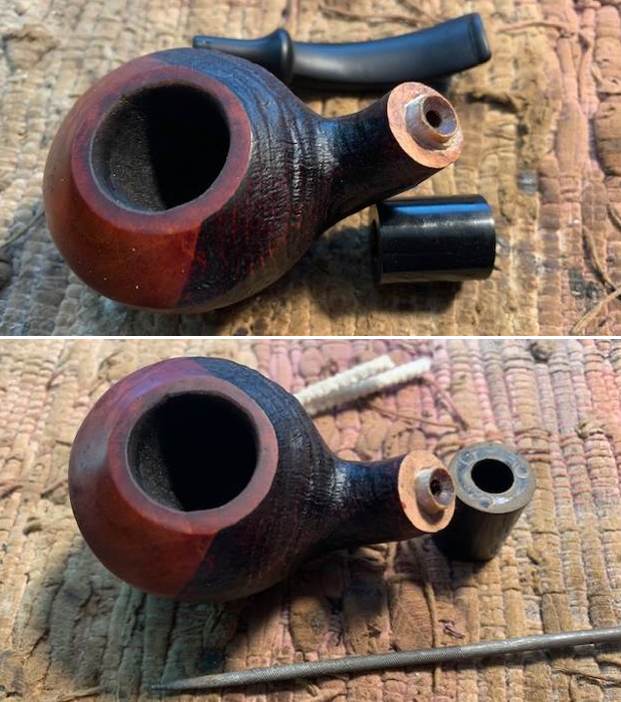
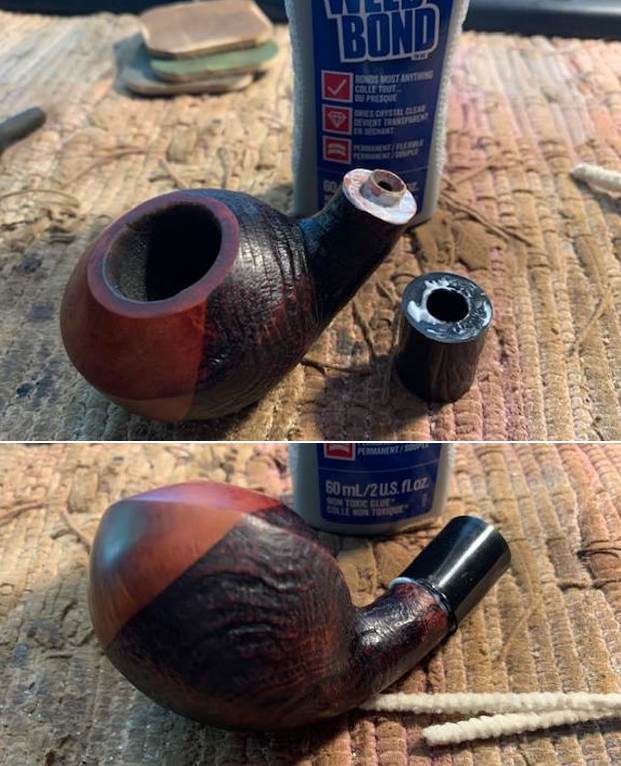
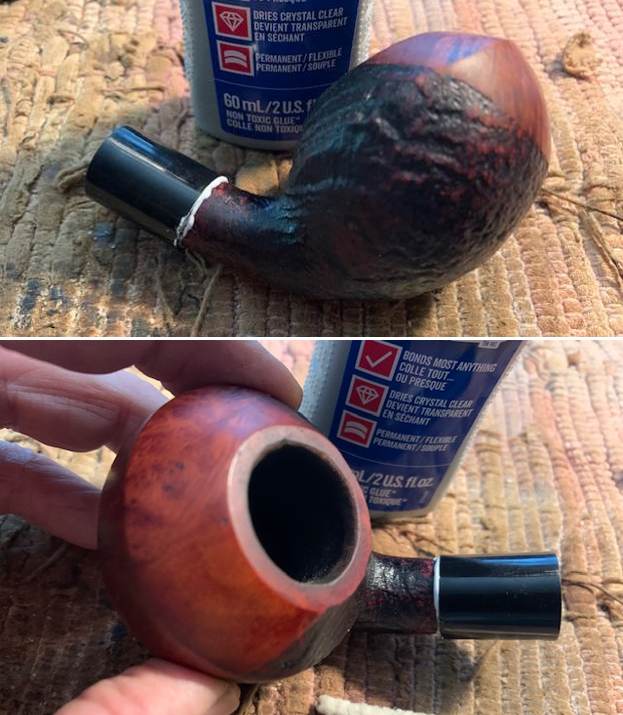
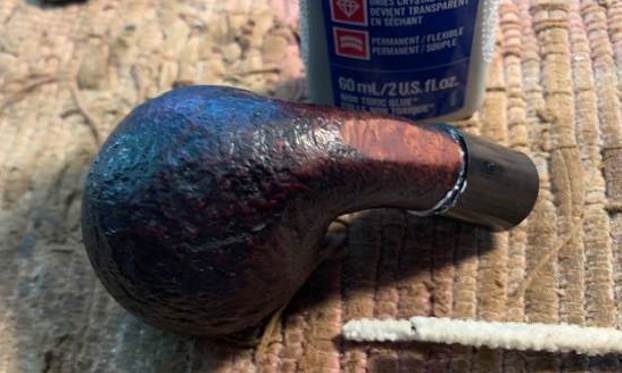
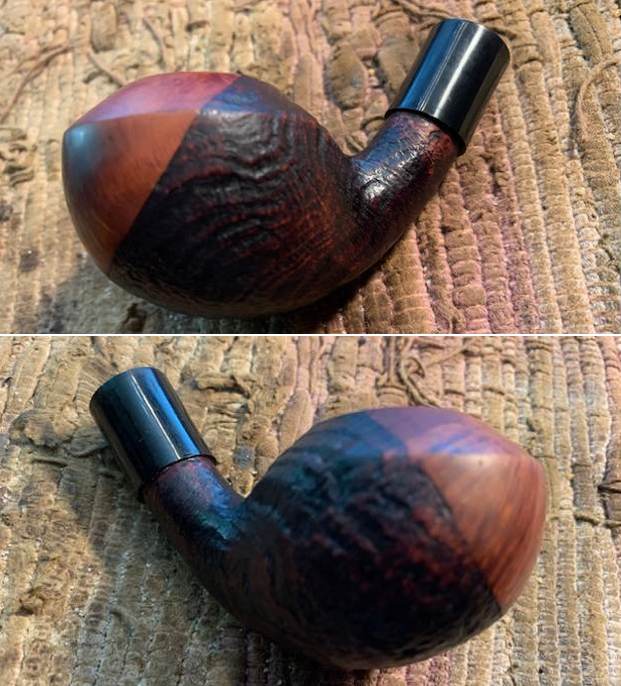
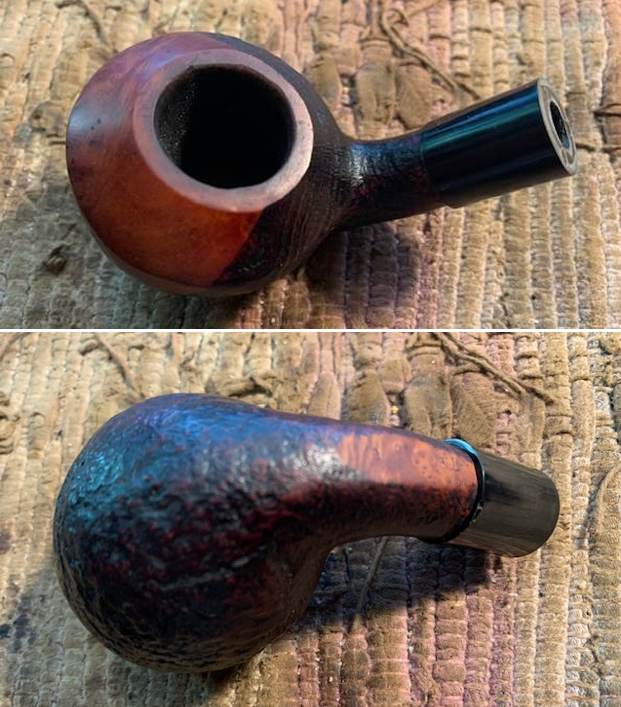
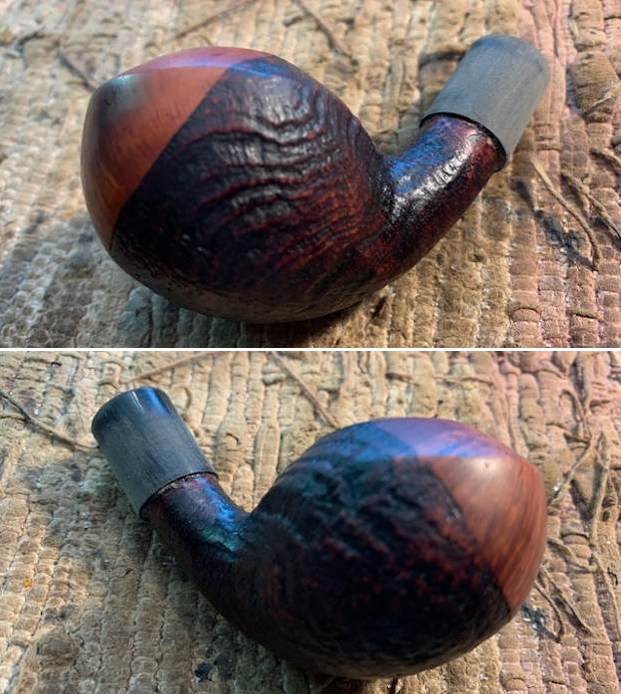
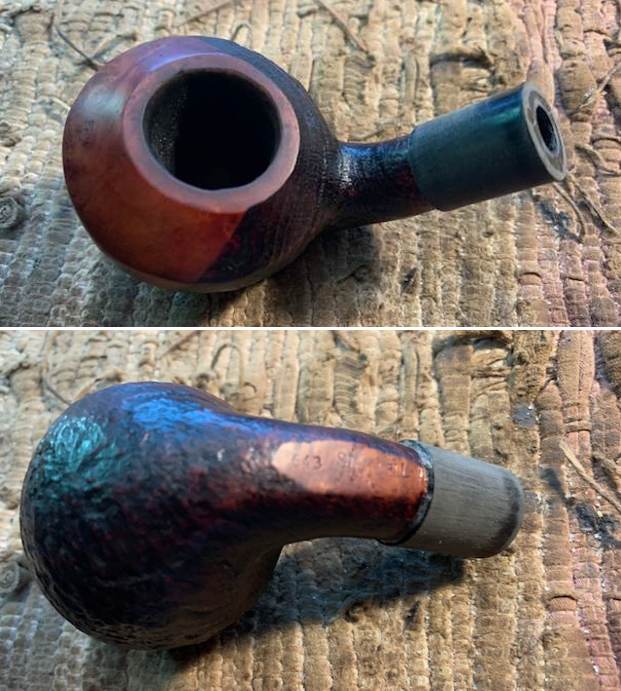
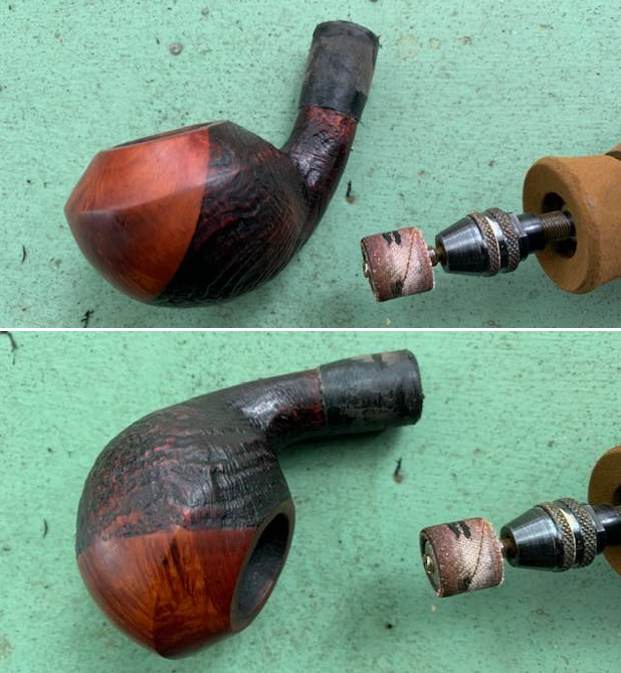
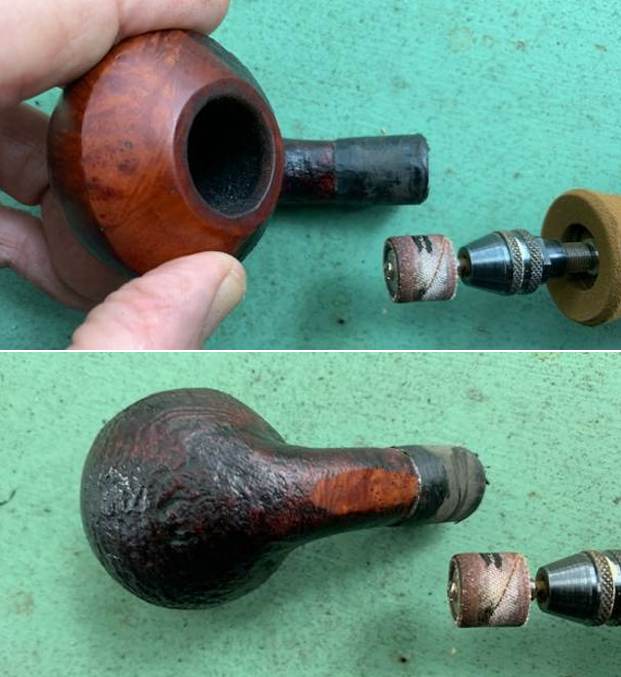
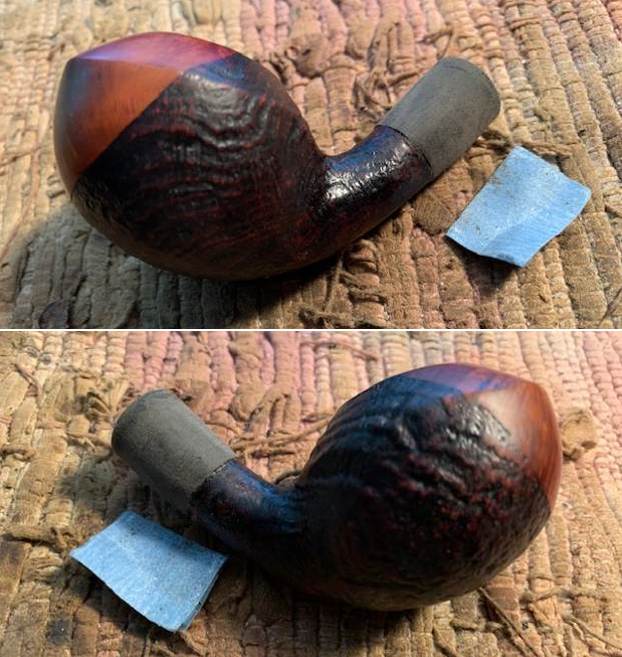
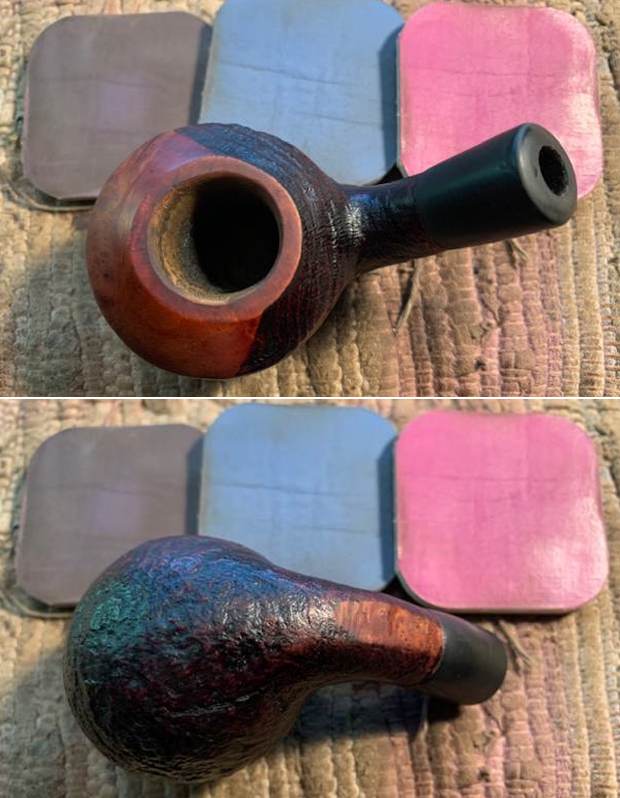
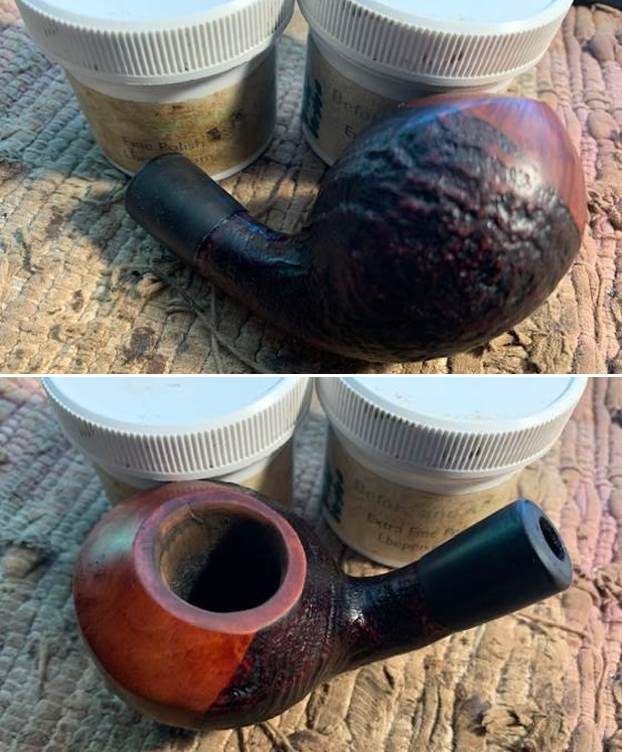
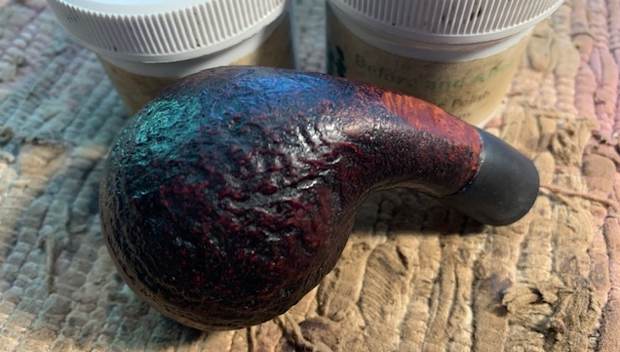
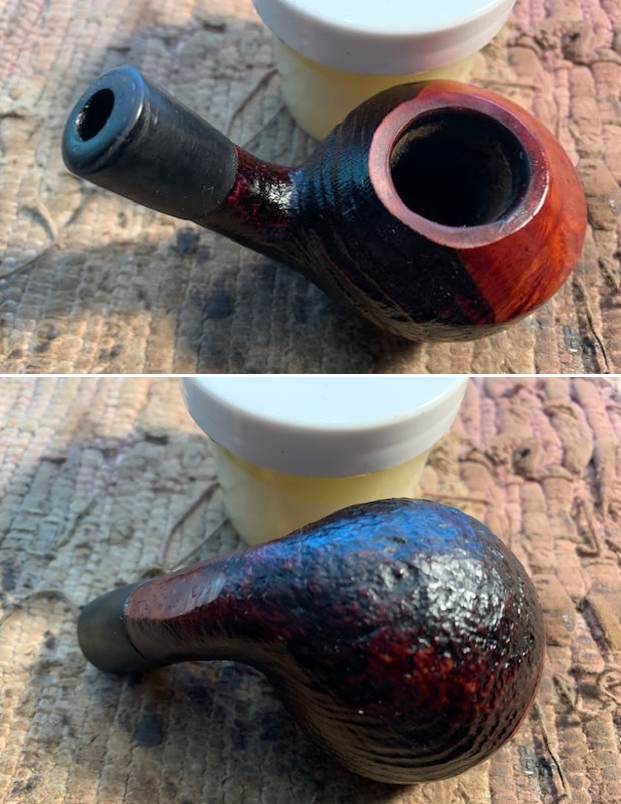
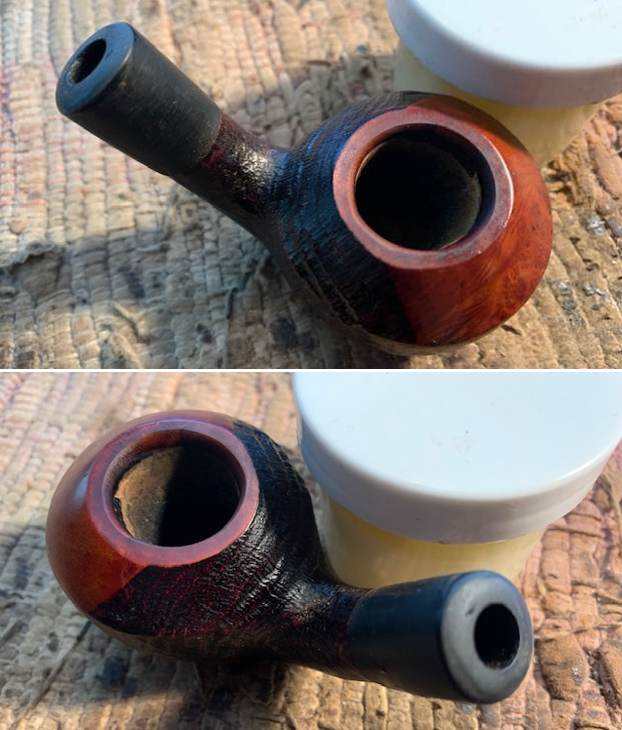
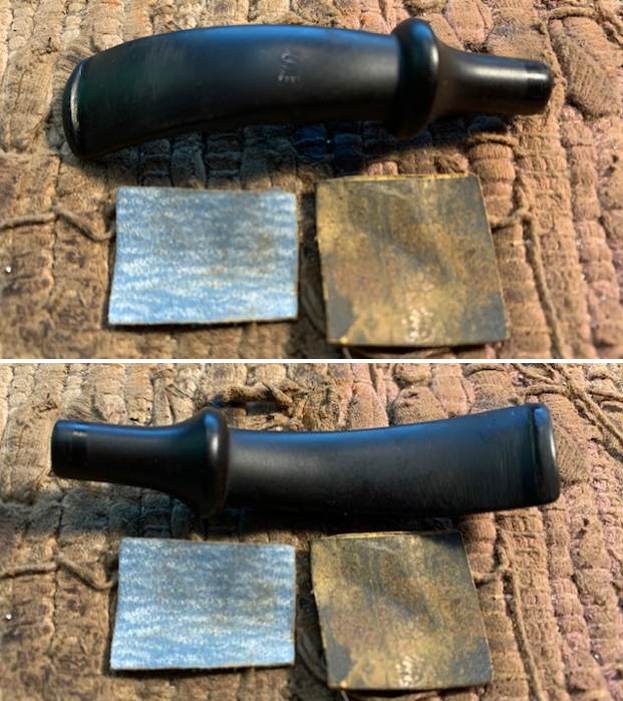
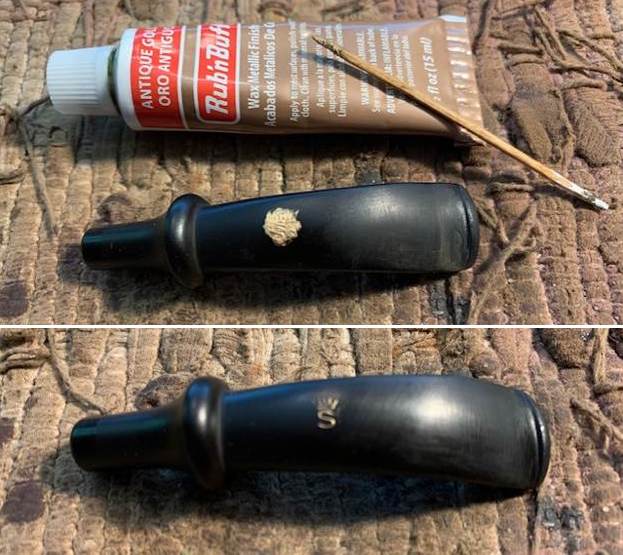
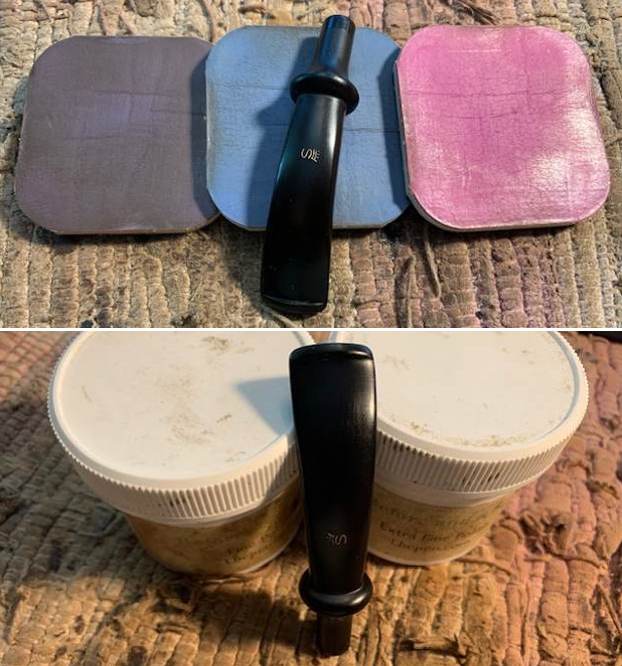
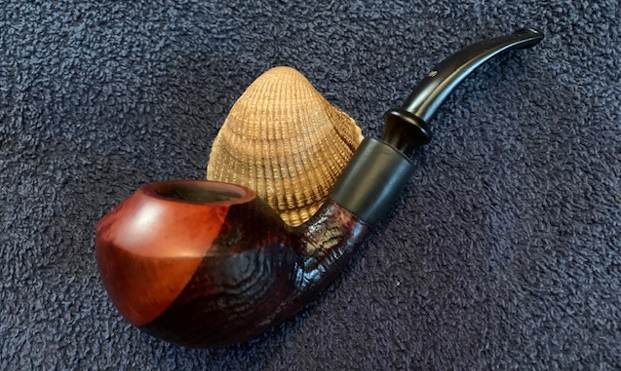
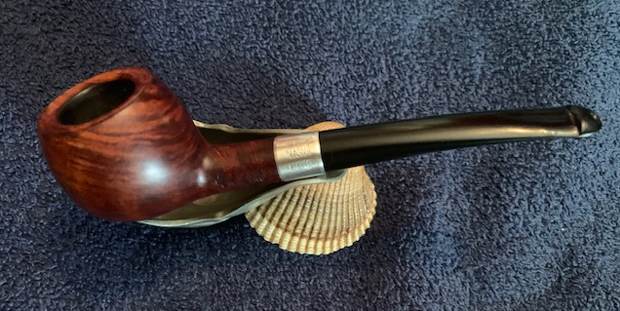
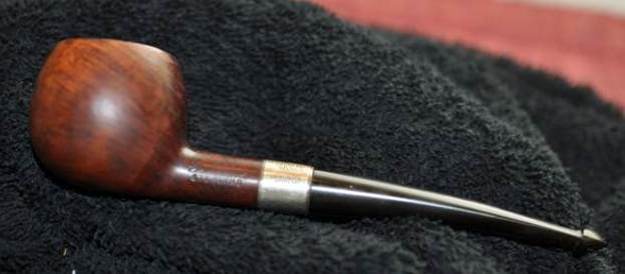
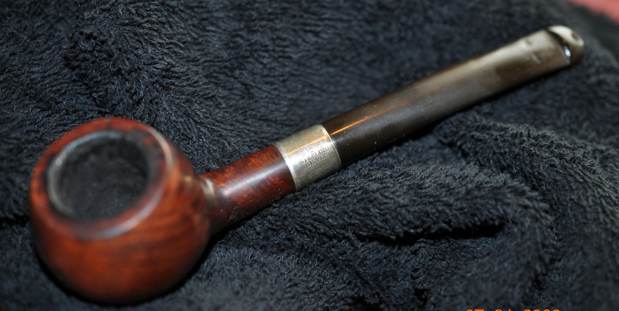
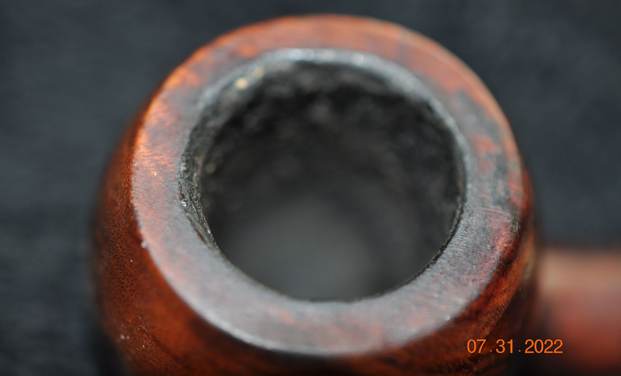
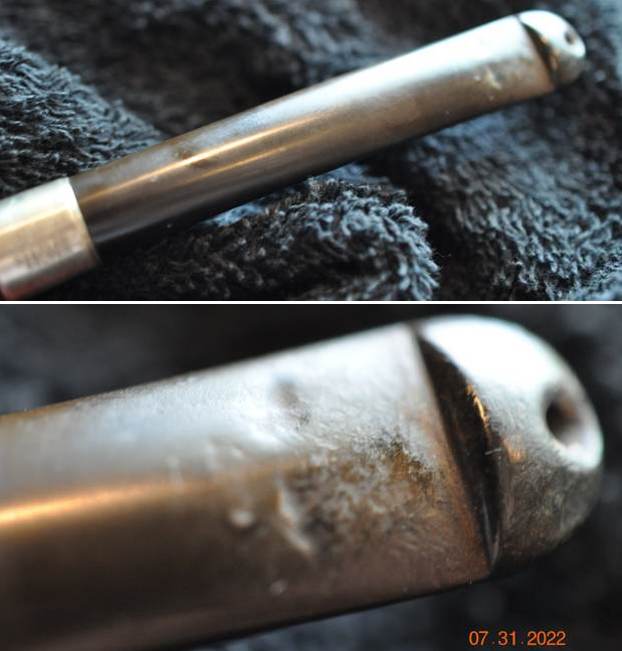
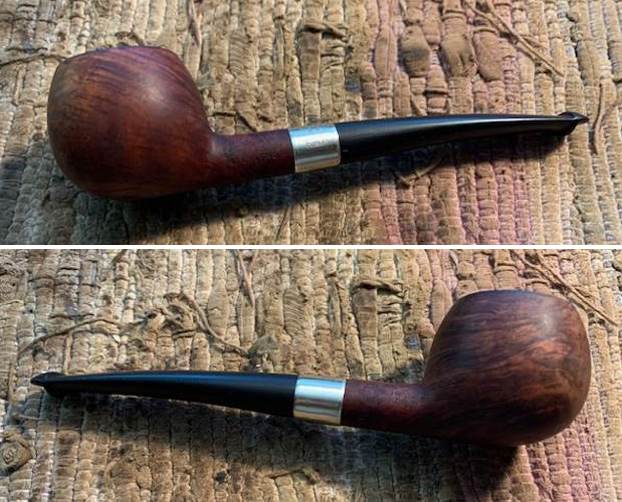
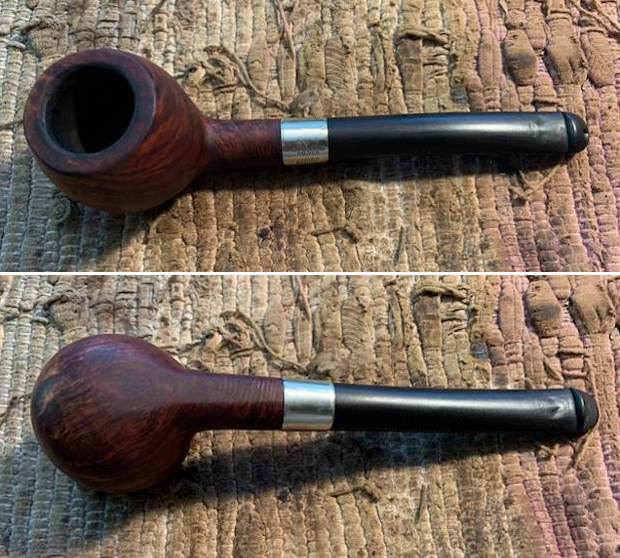
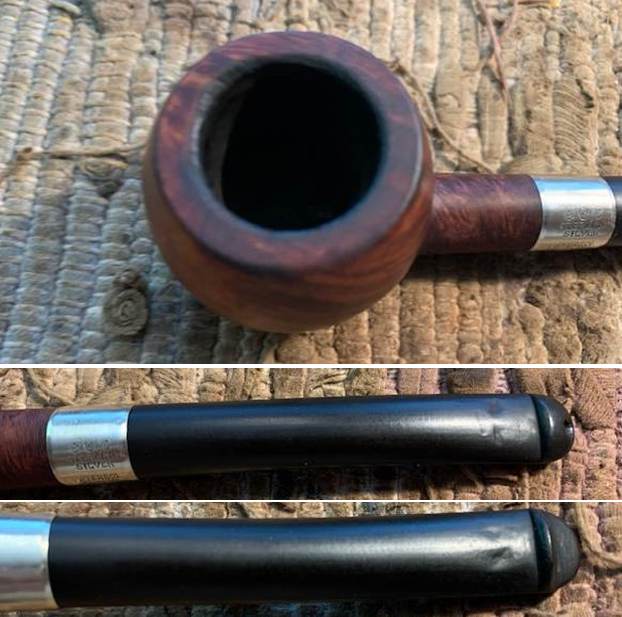
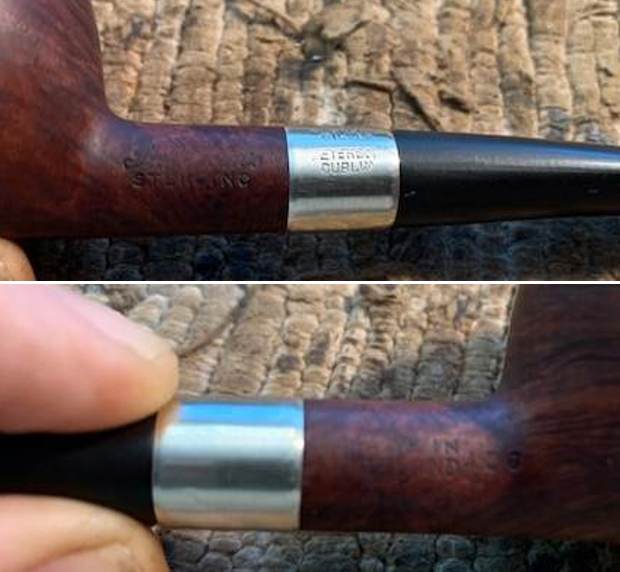
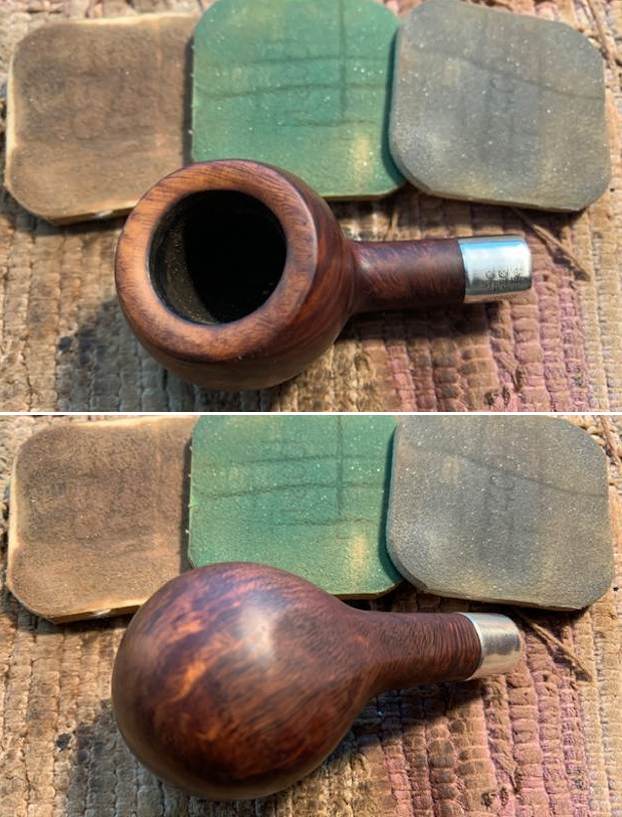
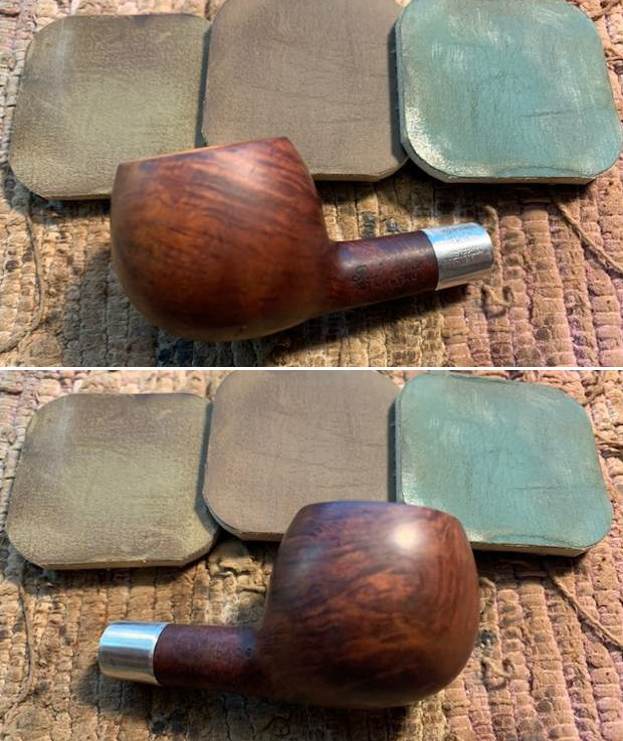
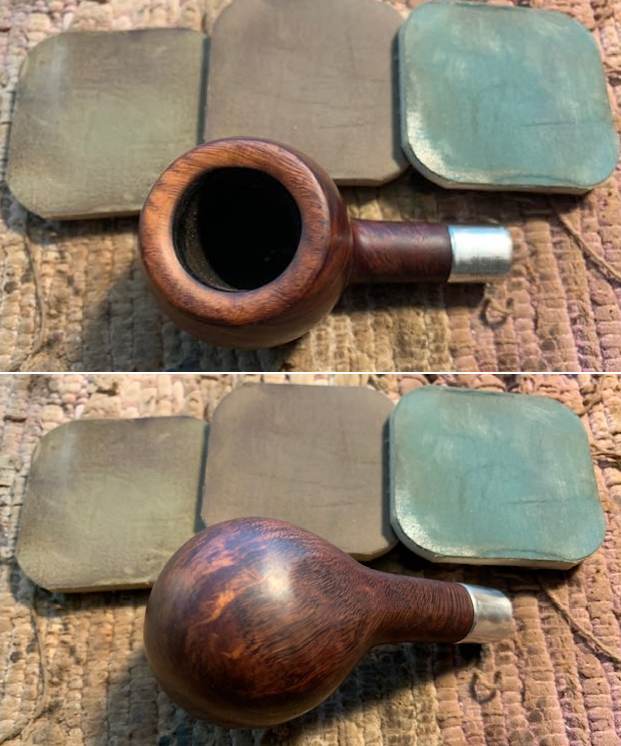
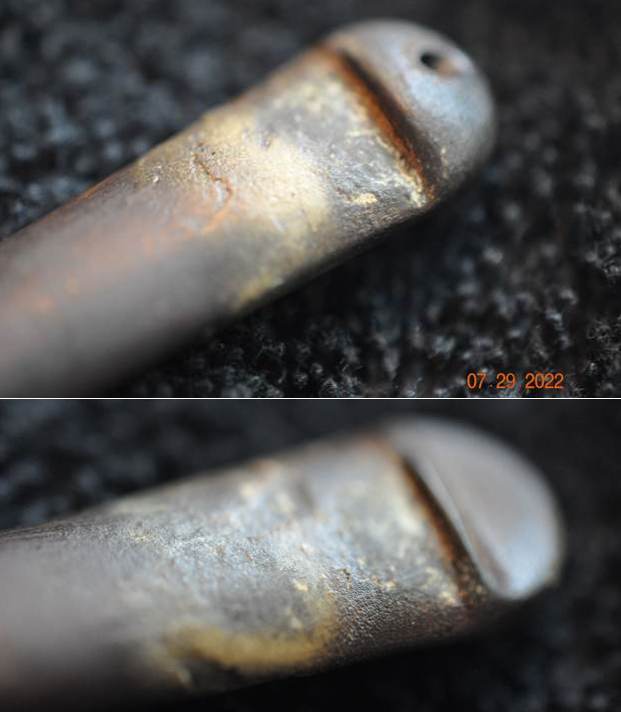
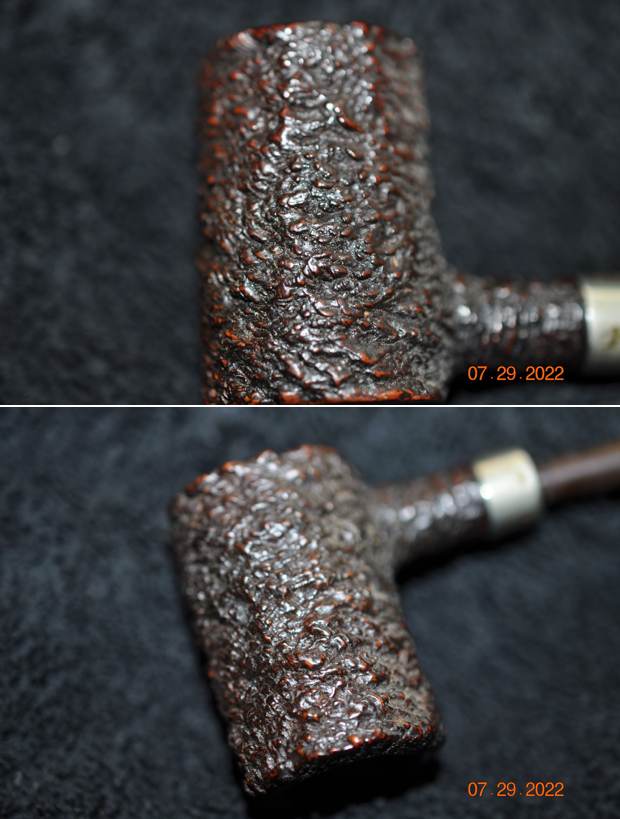
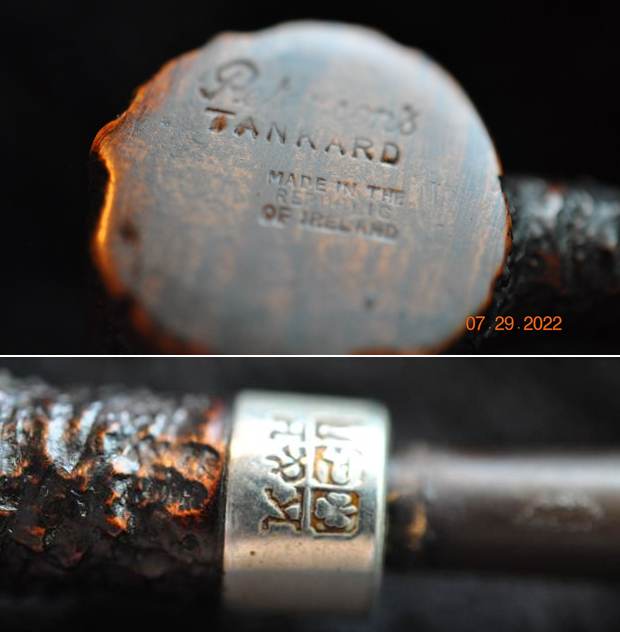
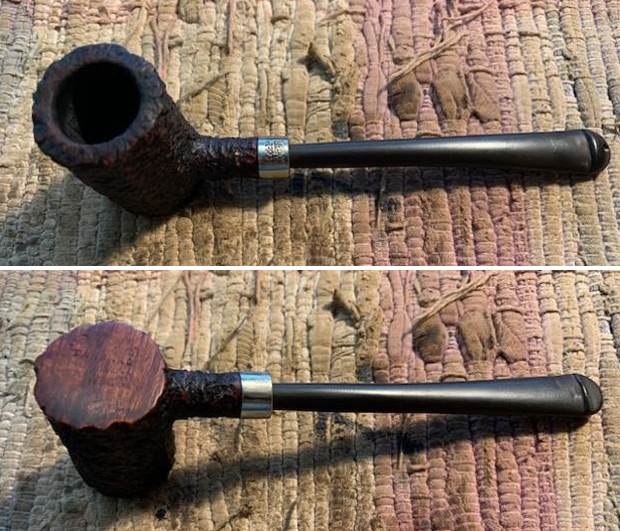
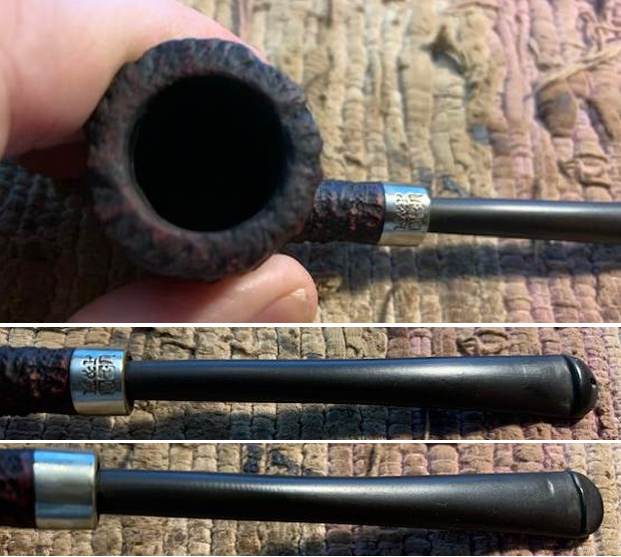
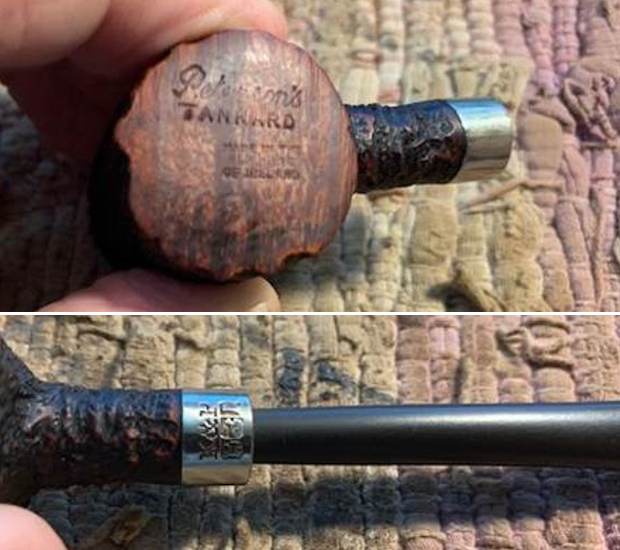
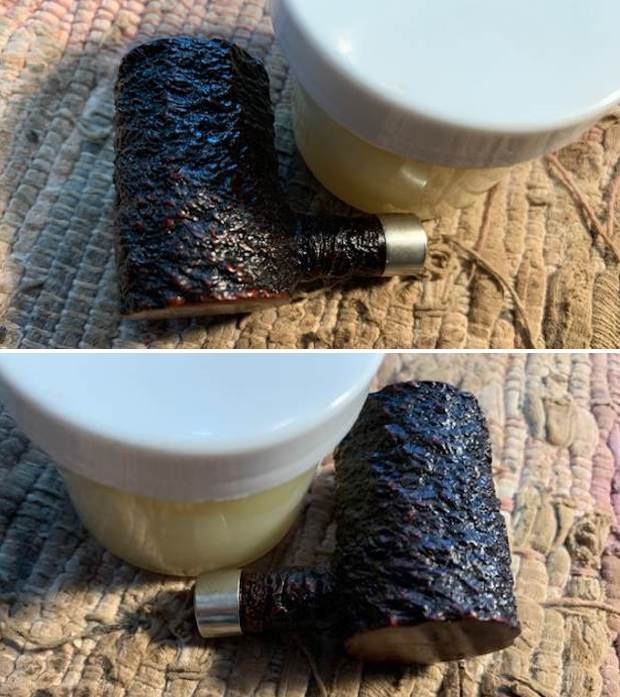
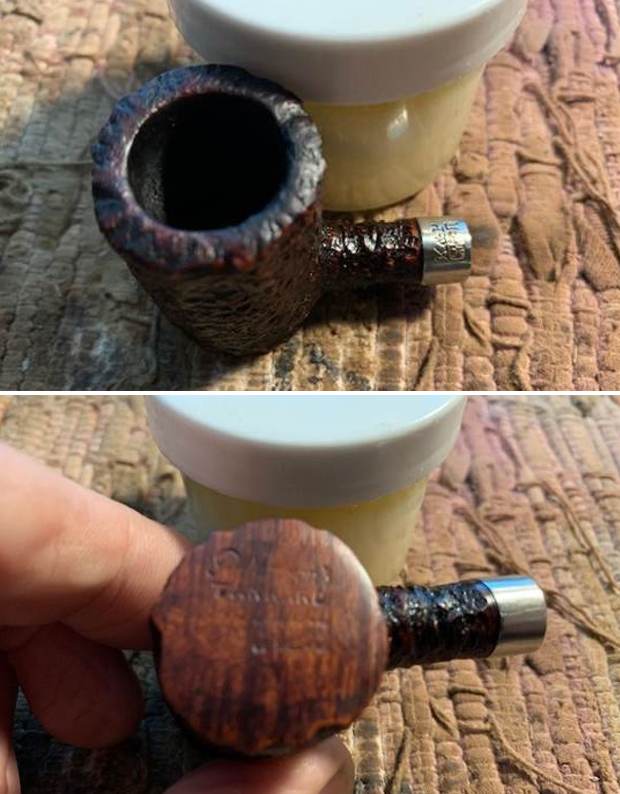
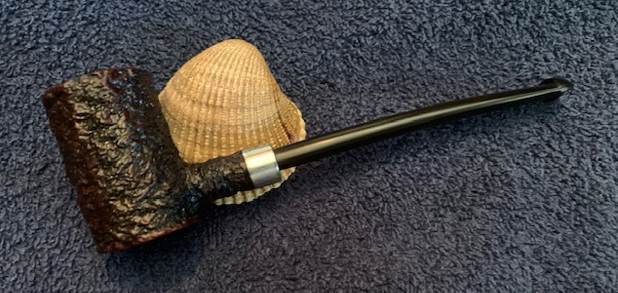
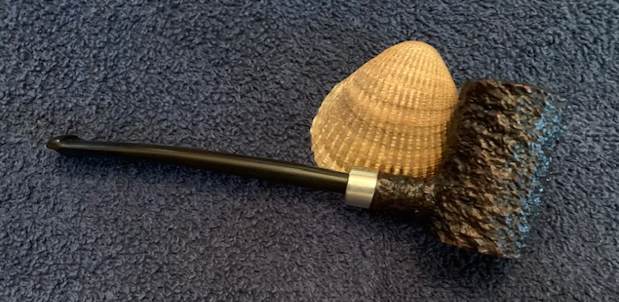
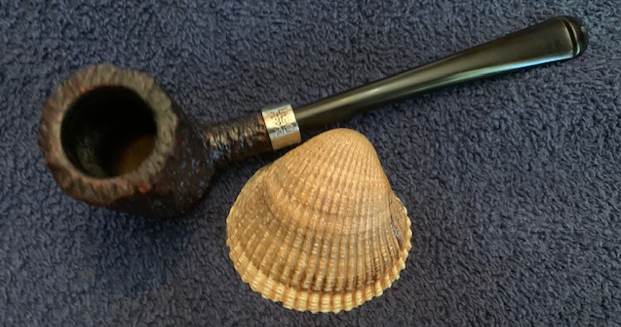
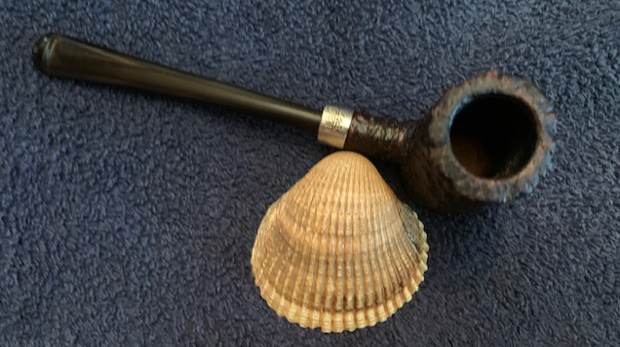
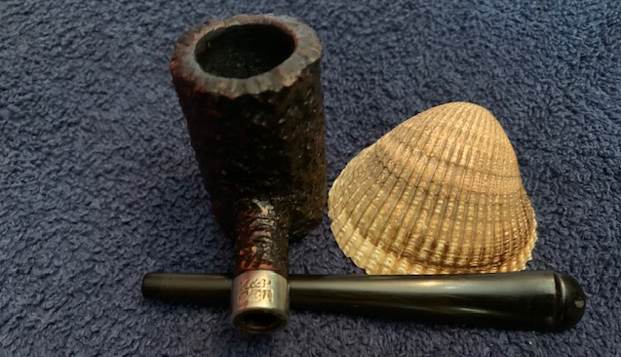
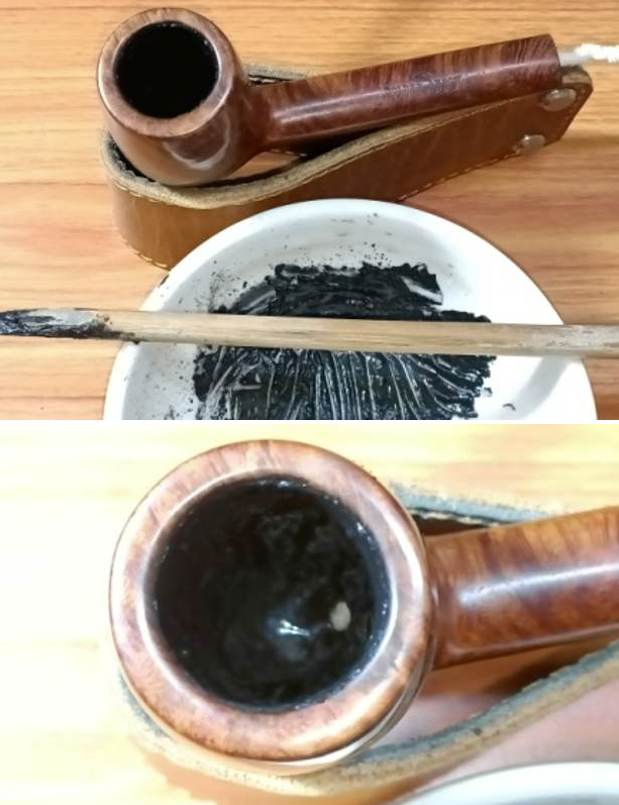
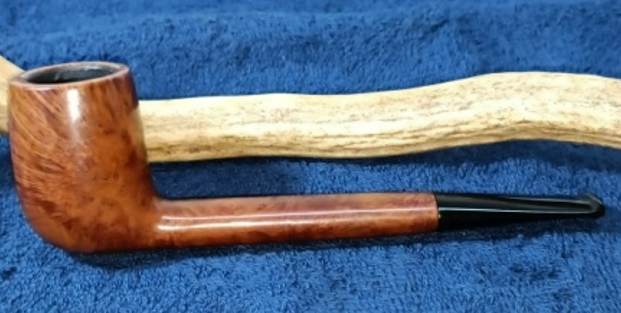
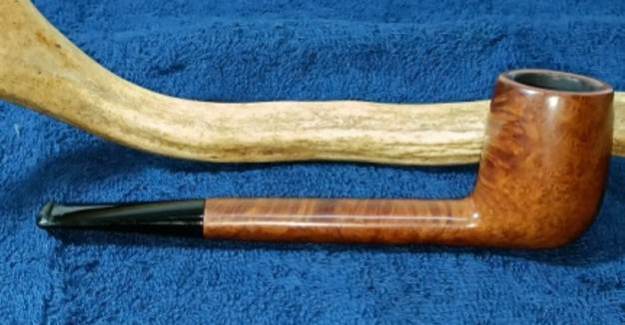
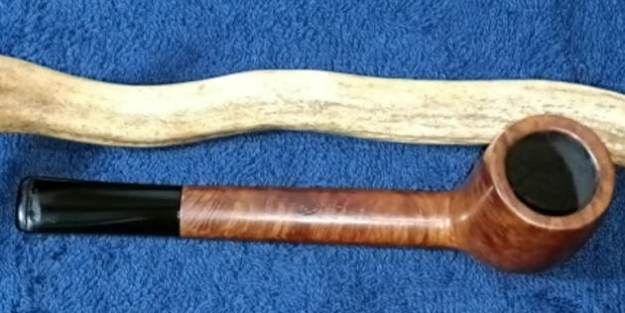
The next pipe I have chosen is a Peterson’s Rusticated Tankard pipe that was purchased on 05/10/22 from an antique mall in Astoria, Oregon, USA. This Tankard has a dark coloured stain on a very rustic finish around the bowl sides and short shank. It is also incredibly dirty. The Tankard had a nickel ferrule on the shank that was in great condition. The finish on the bowl sides was dirty. It was stamped on the heel of the bowl and read Peterson’s [over] Tankard. Under that it is stamped Made in the Republic of Ireland in three lines. The nickel ferrule is stamped K&P over three symbols – a Shamrock, a recumbent Lion, and a Tower. There was a thick cake in the bowl and thick lava overflowing over onto the rim top and the inner edge of the bowl. The stem was oxidized, calcified and had light tooth marks and chatter on the top and underside near the button. Jeff took photos of the pipe before his cleanup work. They tell the story and give a glimpse of the promise that we see in this pipe. Jeff took photos of the rim top and stem to show the general condition of the pipe. The bowl is heavily caked and the rim top and edges have a thick lava overflow filling in the rustication. The stem is oxidized, calcified and has light tooth marks on the top and underside near the button. Jeff took some photos of the bowl sides and heel to show the amazing rustication that was around this bowl. It is a nice looking pipe.    He took photos of the underside of the shank to show the stamping. The stamping is readable in the photo below and is as noted above. He also took a photo of the band. I am including the information from Pipedia’s article on Peterson pipes. It is a great read in terms of the history of the brand (https://pipedia.org/wiki/Peterson). I have included a bit of the pertinent history here.

1950 – 1989 The Republic Era – From 1950 to the present time, the stamp for this era is “Made in the Republic of Ireland” in a block format generally in three lines but two lines have been used with or without Republic being abbreviated.

During the 1950’s and 60’s the Kapp & Peterson Company was still in the ownership of the Kapp family. However 1964 saw the retiral of the company Managing Director Frederick Henry(Harry) Kapp.

I turned to “The Peterson Pipe” by Mark Irwin and Gary Malmberg to get some background on the Tankard Pipe. On page 313 it had the following information what they called the Specialty Briars. I have summarized the various pipes that were part of the Specialty Briars below and have also included the description of the Tankard itself.

The Tankard pipe was part of a line of Specialty Briars (1945-) which was a term used to describe the following lines: Lightweight, Junior, Churchwarden, Barrel, Tankard, Calabash, Belgique  and Giant.

Tankard (1945-) P-lip or fishtail mouthpiece, smooth or rustic finish, sandblast offered in 1970

I knew that I was dealing with a Republic Era pipe made between 1950 and the present. Now it was time to work on the pipe.

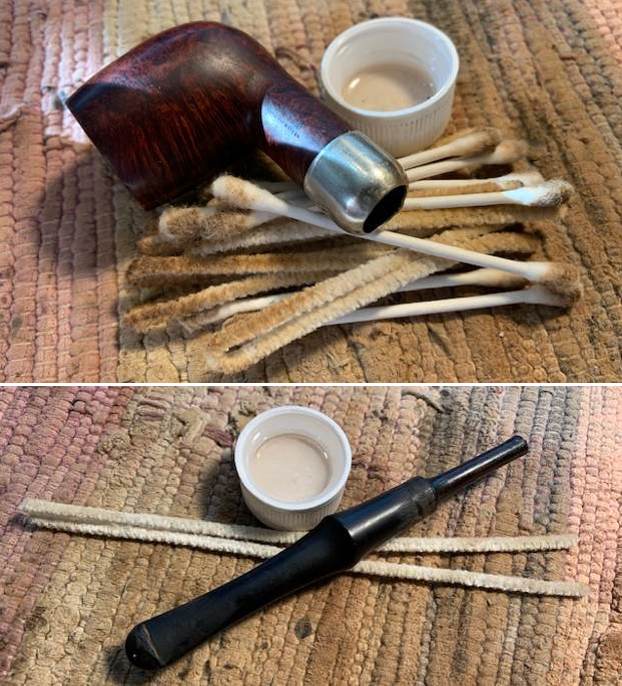
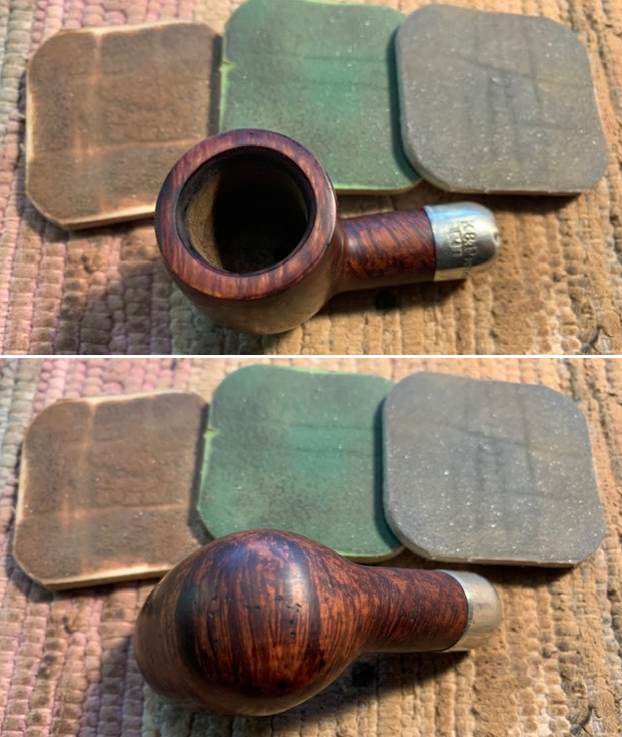
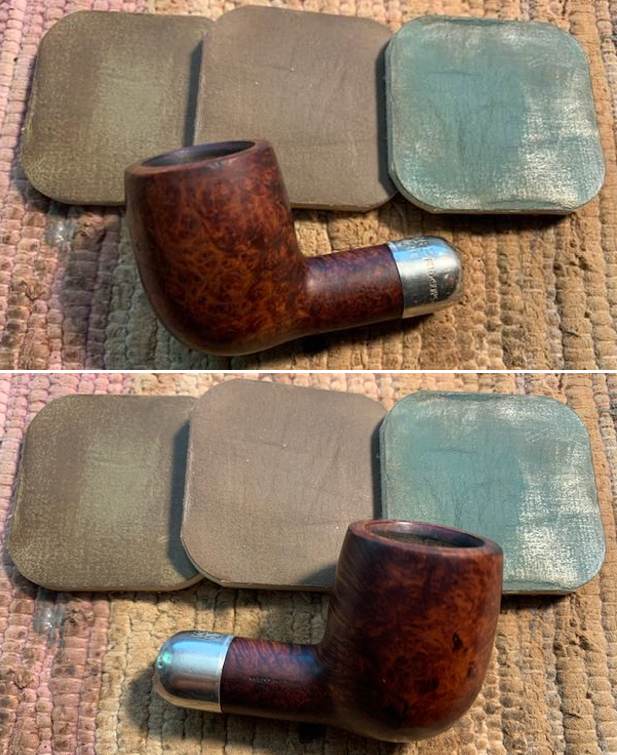
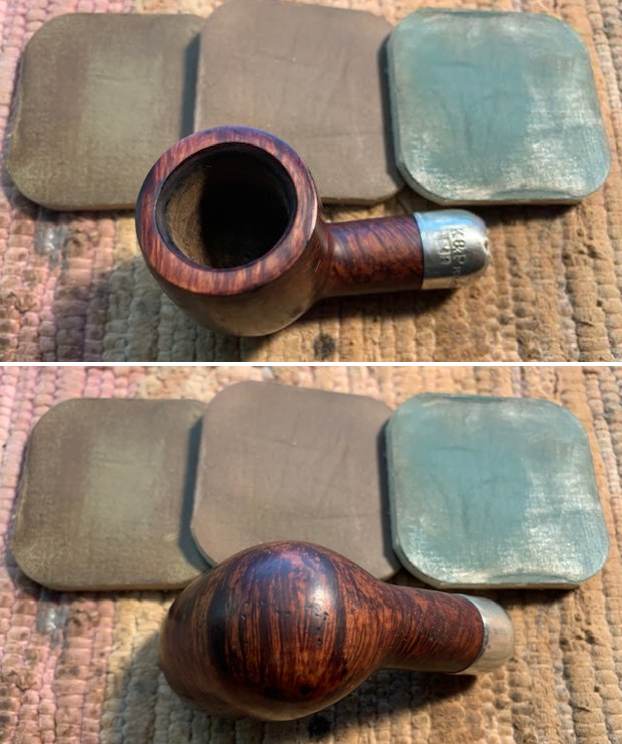
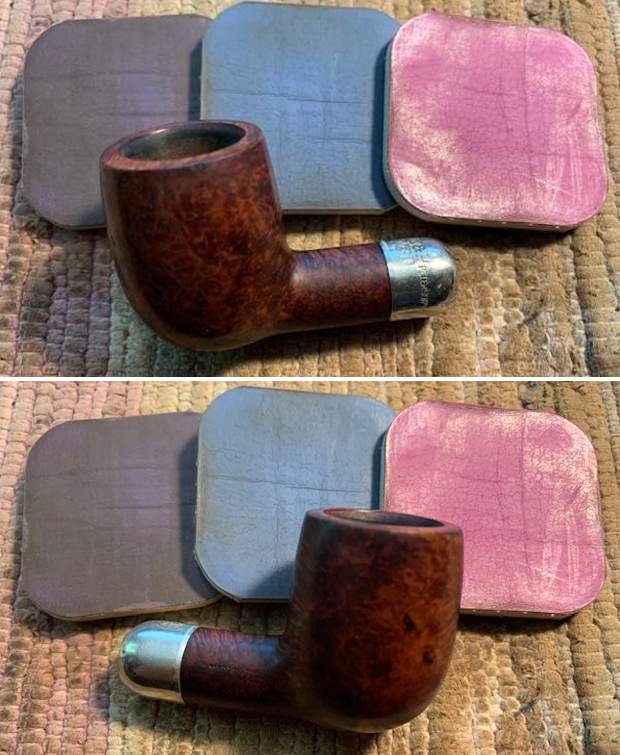
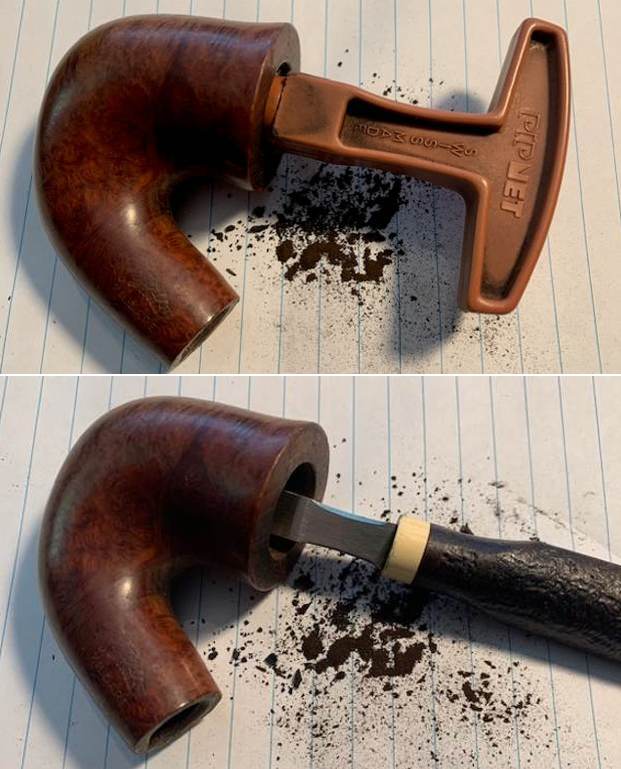
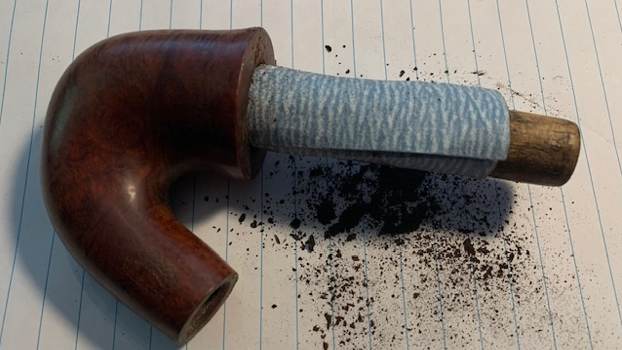
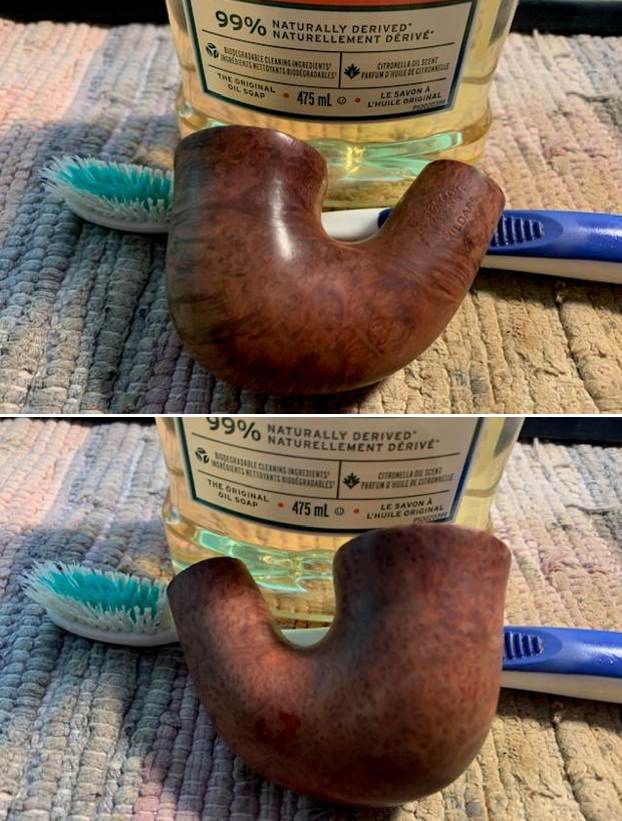
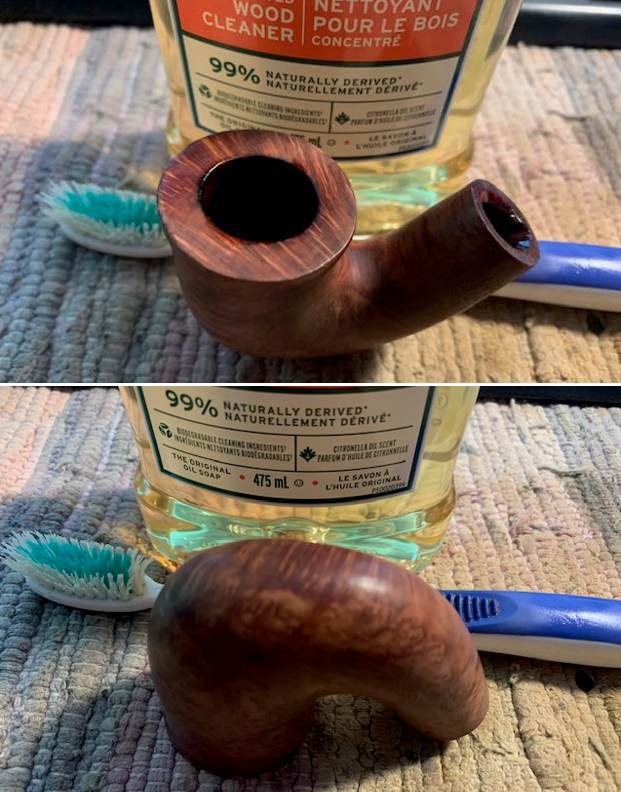
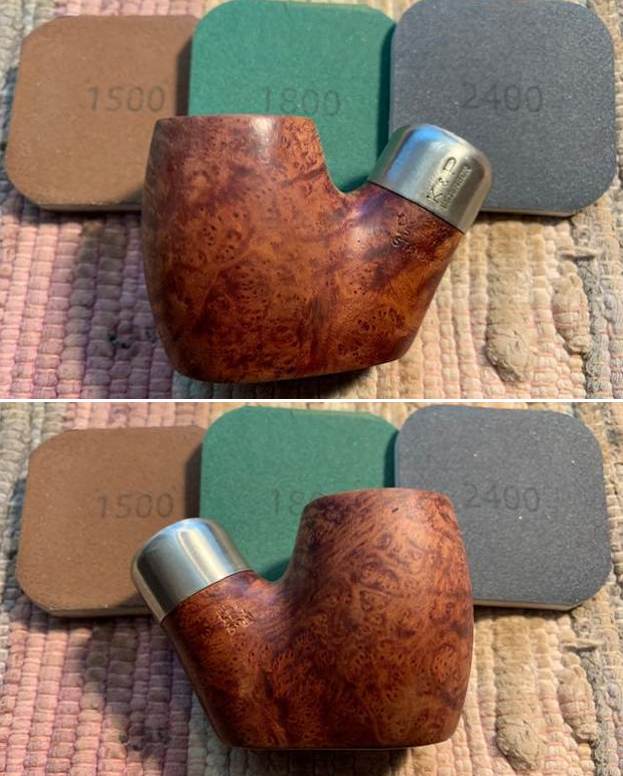
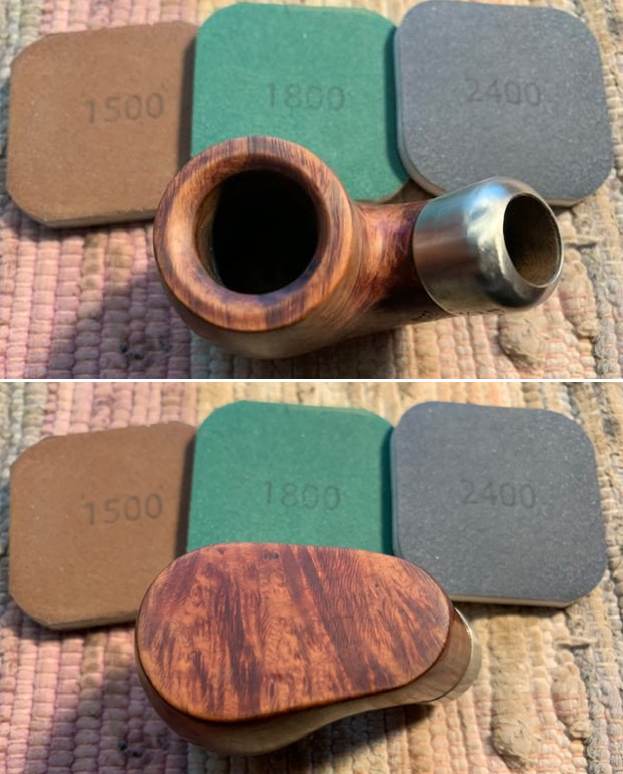
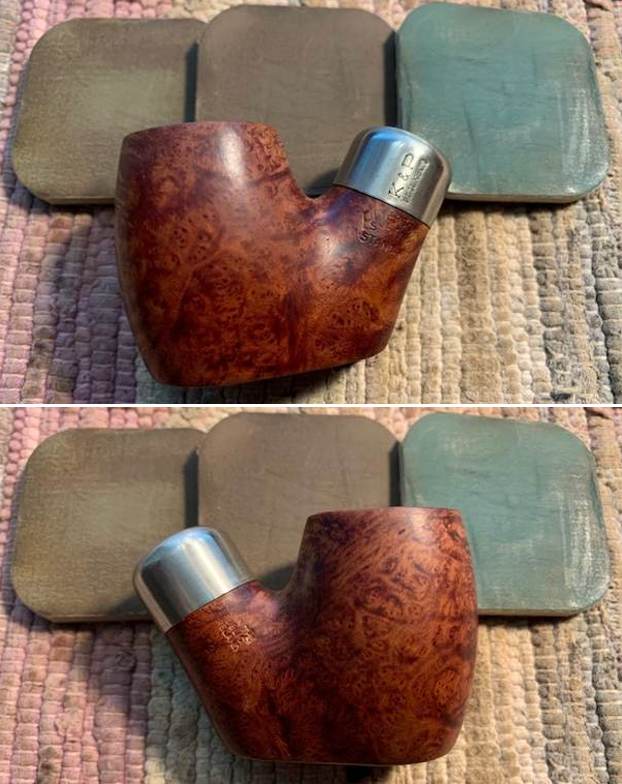
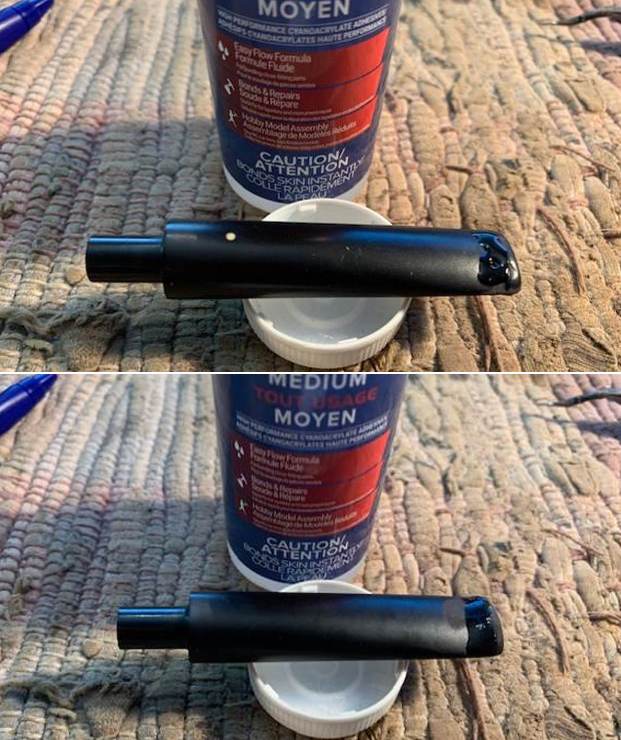
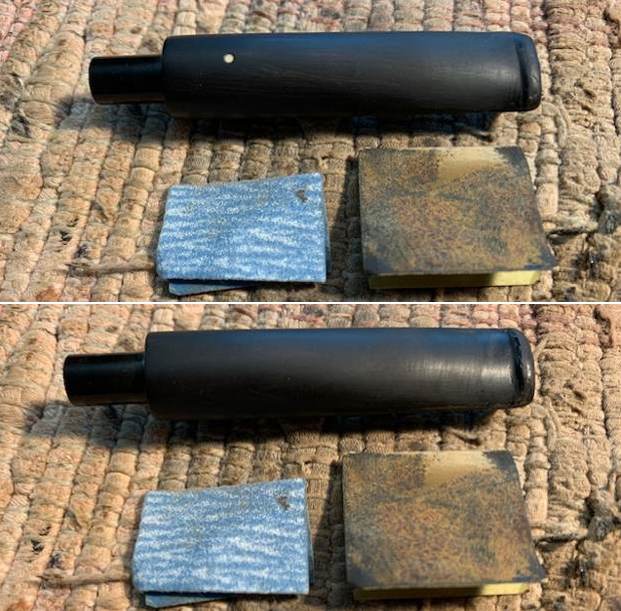
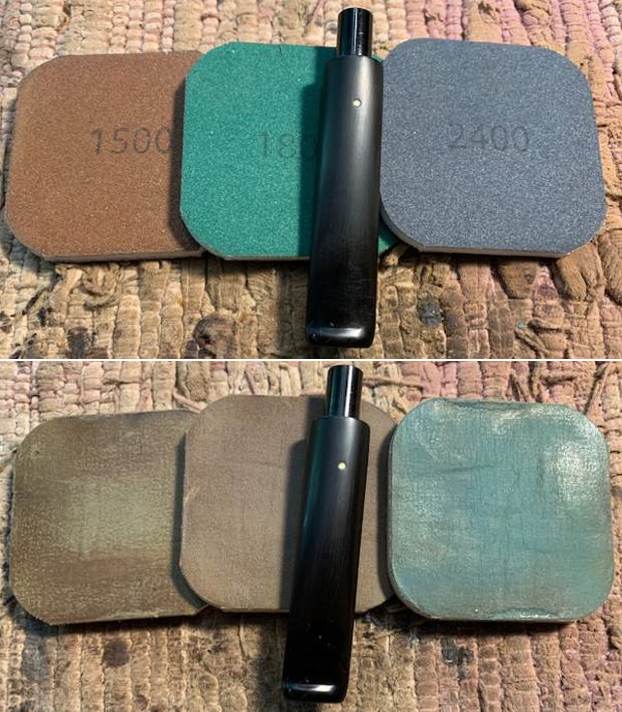
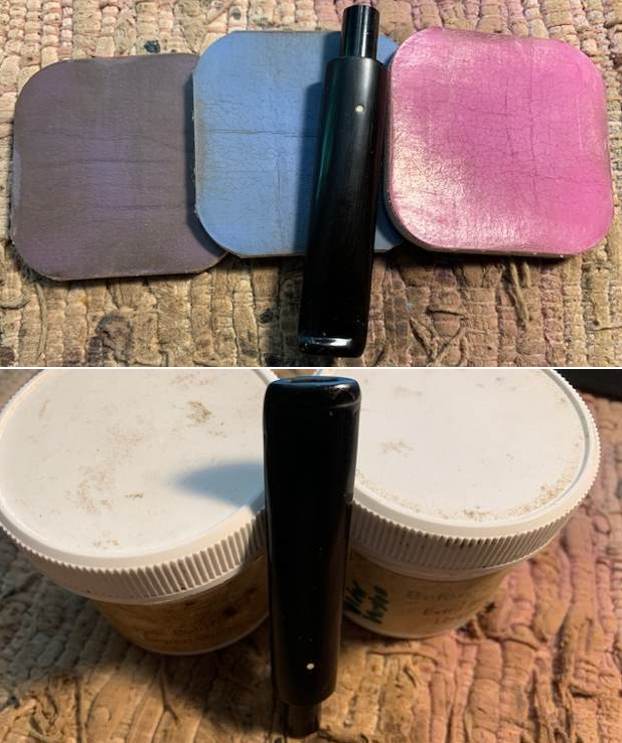
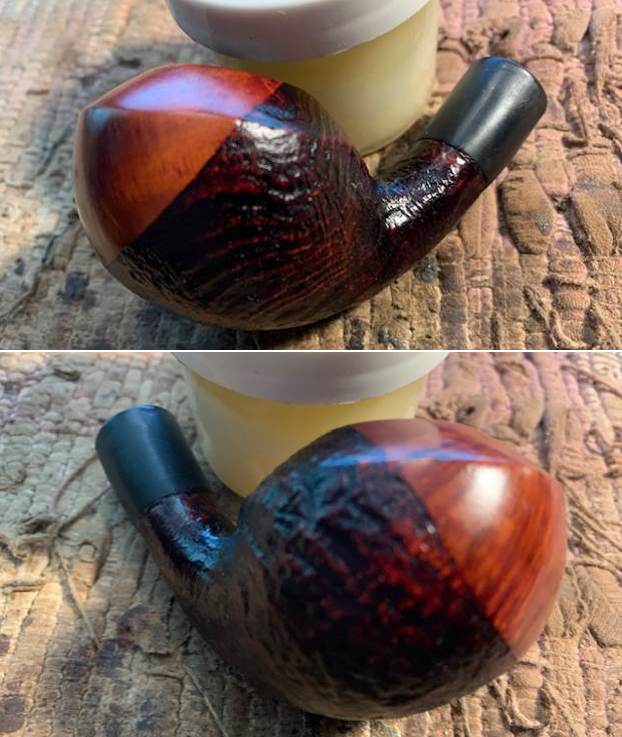
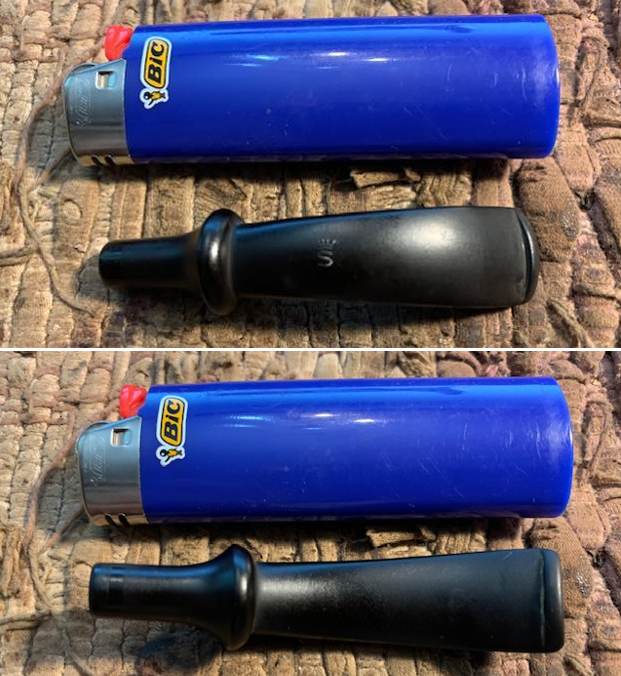
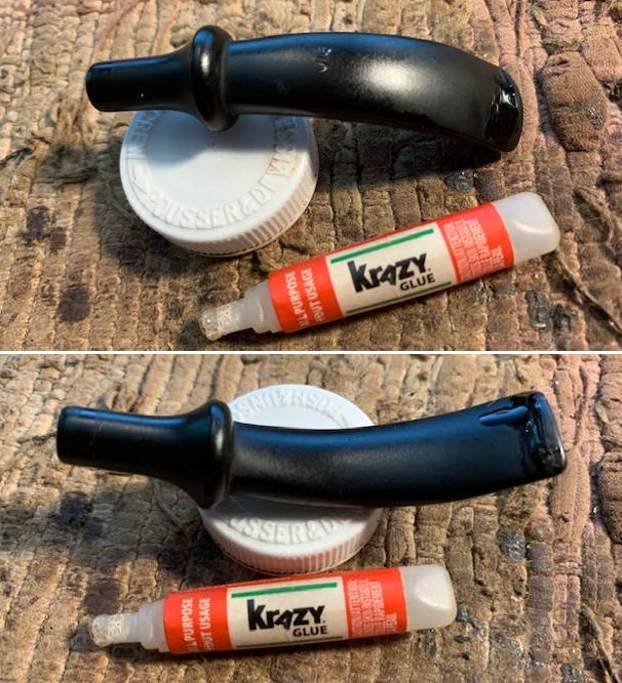
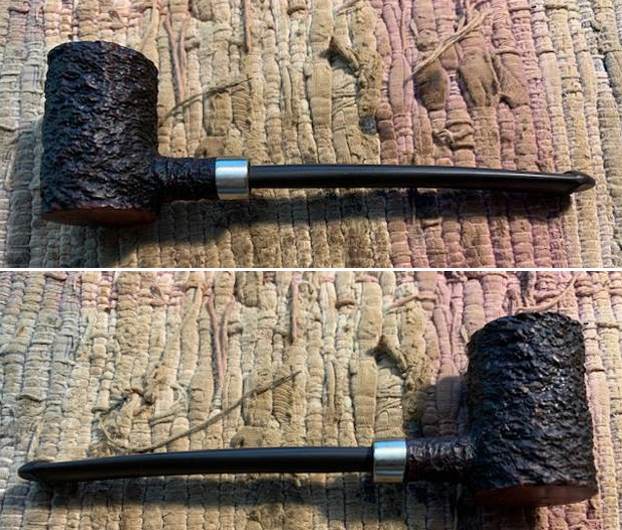
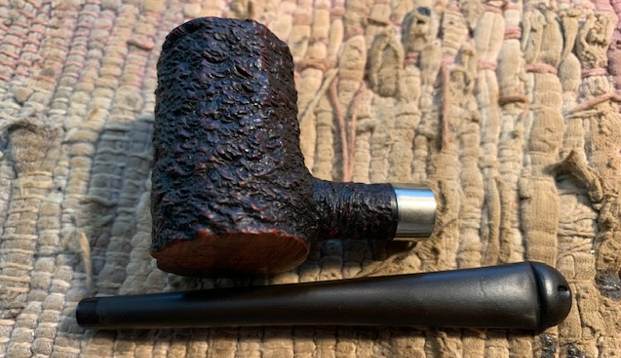
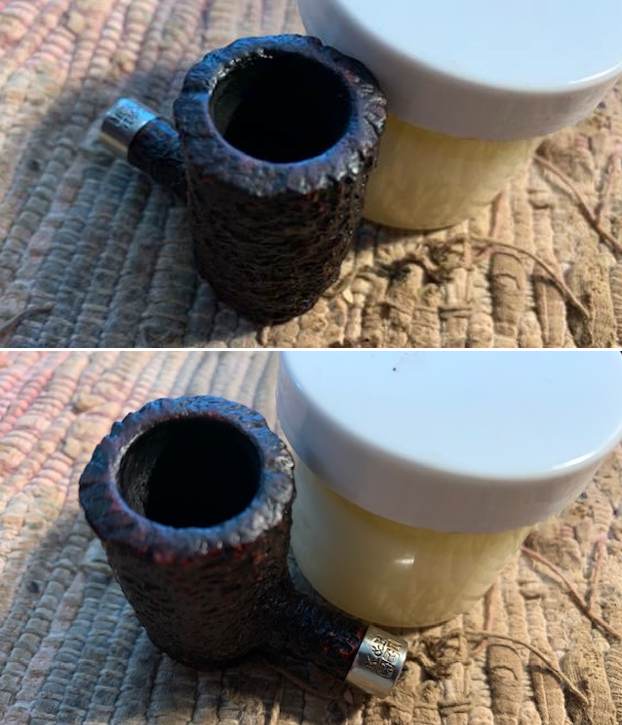
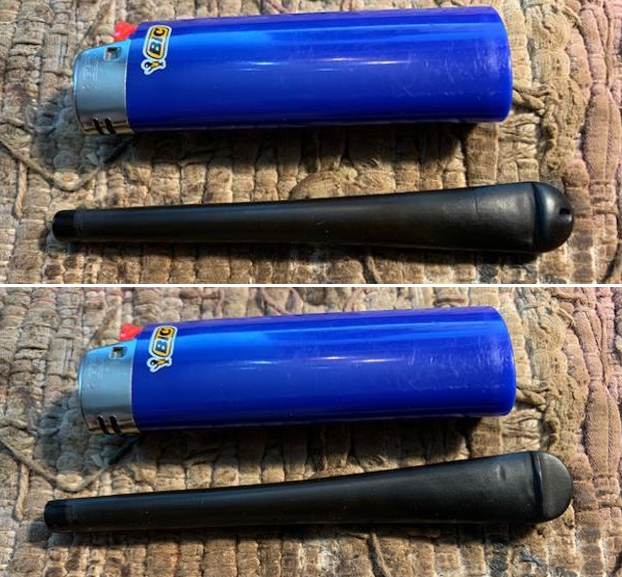
 Jeff had done a great job cleaning up the pipe as usual. He reamed the pipe with a PipNet reamer and cut back the cake back to the bare briar. He cleaned up the walls with a Savinelli Fitsall Pipe Knife. He scrubbed the interior of the bowl and shank with pipe cleaners, cotton swabs and alcohol to remove the tars and oils. He scrubbed the exterior of the pipe with Murphy’s Oil Soap and a tooth brush to remove the grime from the finish. He worked on the rim top lava and darkening with the soap and tooth brush. He scrubbed the inside of the stem with alcohol and pipe cleaners. He scrubbed the exterior with Soft Scrub and then soaked it in Before & After Deoxidizer. He washed it off with warm water to remove the Deoxidizer. The pipe looked far better when it  arrived. I took some close up photos of the rim top and also of the stem surface. I wanted to show how well it had cleaned up. The rim top looked very good. I also took close up photos of the stem to show the light tooth marks on the surface near the button. I took a photo of the stamping on the heel of the bowl. You can see that it is stamped as noted above. It is clear and readable.  I took the pipe apart and took a photo of the pipe. It is a good looking pipe and has a rugged rustication around the bowl. I worked some Before & After Restoration Balm into the surface of the briar with my fingertips and a horsehair shoe brush to clean, enliven and protect the briar. I let the balm sit for 15 minutes and then buffed with a cotton cloth to raise the shine. The photos show the bowl at this point in the restoration process.   I set the bowl aside and turned my attention to the stem. I “painted” the surface of the stem with the flame of a lighter to lift the tooth marks. I was able lift many of them. I filled in the remaining marks with clear CA glue. I set the stem aside to cure. Once it cured I flattened the repairs with 220 grit sandpaper.   I polished out the light tooth marks on the stem with micromesh sanding pads – wet sanding with 1500-12000 grit sanding pads. I wiped it down after each sanding pad with Obsidian Oil. I polished it with Before & After Pipe Stem Polish – both Fine and Extra Fine.  I am excited to finish this Republic Era Peterson’s Special Series Tankard. I put the pipe back together and buffed it with Blue Diamond on the buffing wheel. I gave the bowl multiple coats of Conservator’s Wax and the stem multiple coats of carnauba wax. I buffed the pipe with a clean buffing pad to raise the shine. I also hand buffed it with a microfibre cloth to deepen the shine. It is fun to see what the polished bowl looks like with the rugged rustication all around it. Added to that the polished nickel ferrule and the thin black vulcanite stem was beautiful. This rugged Classic Peterson’s Tankard is nice looking and the pipe feels great in my hand. It is light and well balanced. Have a look at it with the photos below. The dimensions are Length: 5 ¾ inches, Height: 1 ¾ inches, Outside diameter of the bowl: 1 inch, Chamber diameter: 5/8 of an inch. The weight of the pipe is 23 grams/.78 ounces. This pipe will be going on the rebornpipes store in the Irish Pipemakers Section soon. If you are interested in adding it to your collection. Thanks for walking through the restoration with me as I worked over this pipe. Thanks to each of you who are reading this blog.

Transforming a Sad Looking Comoy’s Second “The Golden Arrow”


Blog by Paresh Deshpande

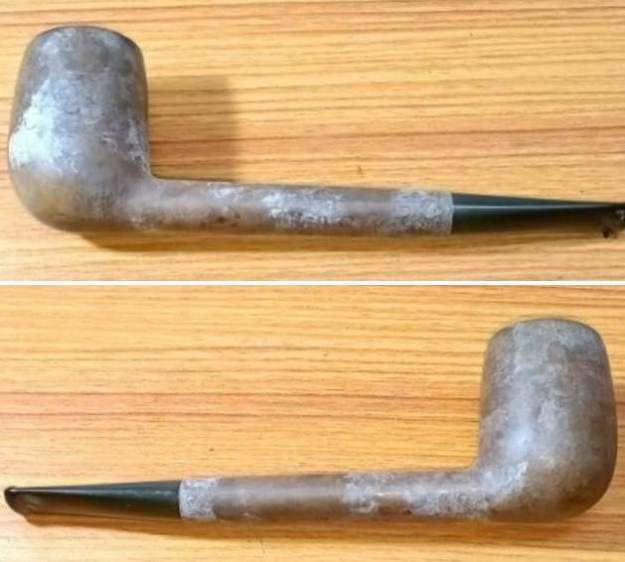
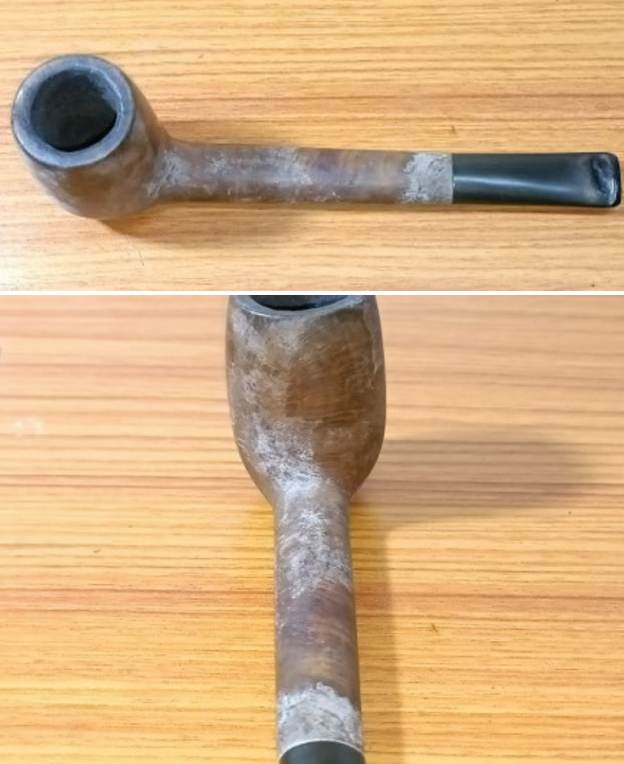
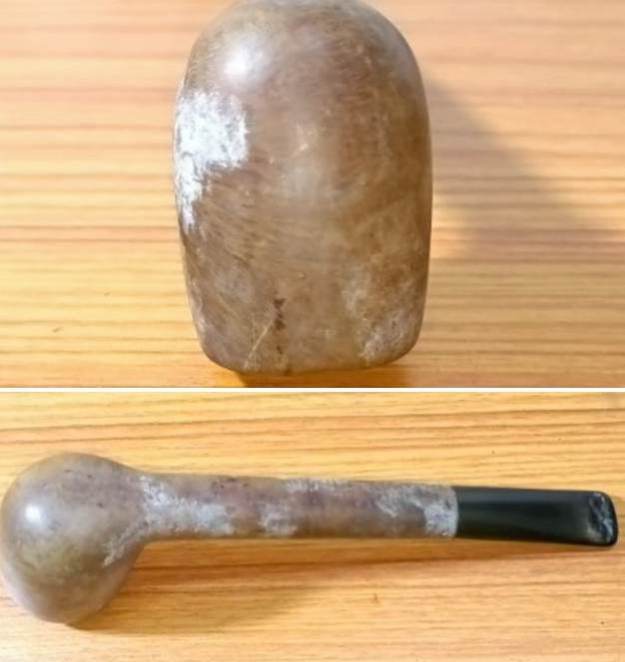
It’s been a while that I had worked on any of my inherited pipes and decided to fish out one from the last remaining large box that I had received a few years back. The pipe that I selected to work on is a very sad and tired looking Canadian with an oval shank that just shouted as being an English made pipe.

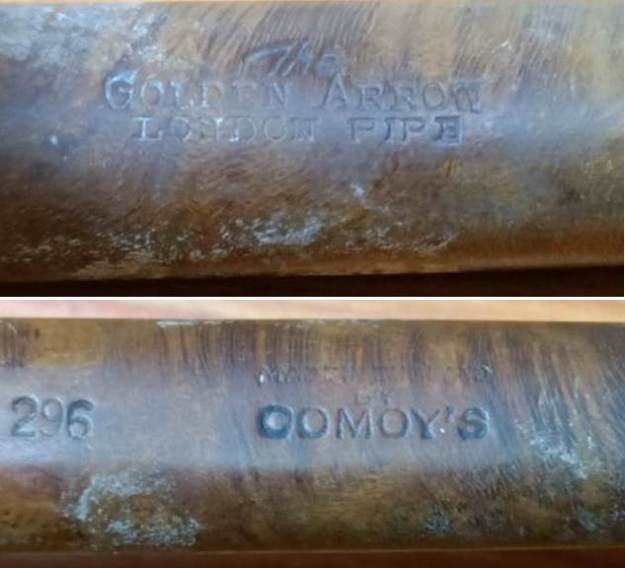
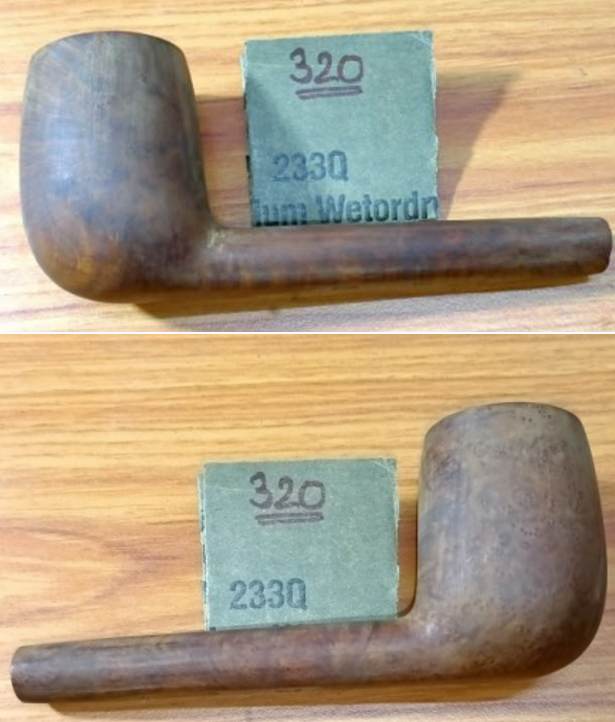
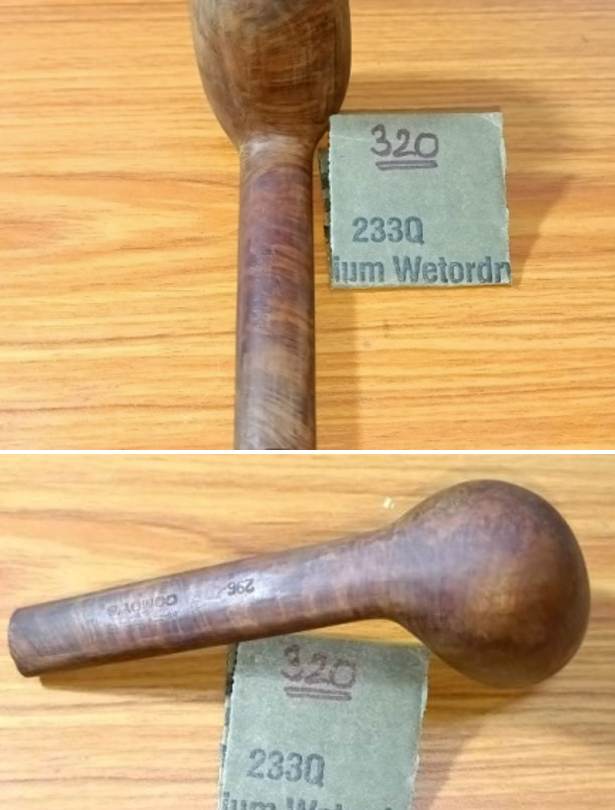
The entire stummel is covered in dull grey patches of water stain, dust and grime through which some great cross grains over the front, aft and shank surface, awaits exposure. The pipe is stamped upper flat surface of the oval shank as “The” over “GOLDEN ARROW” over “LONDON PIPE”. The underside of the shank is stamped, starting from bowl end to shank end, with shape code “296” followed by “MADE IN ENGLAND” over “BY” over “COMOY’S”. The COMOY’S stamp is in simple block letters without serif, letter C is the same size as the rest of the letters and with an apostrophe before letter S. The stem is without any stem logo.   I have a keen interest in studying and collecting English made pipes and in this quest, I have read up as much material as I could lay my hands on and still continue on this path till date. Pipedia.org has detailed information on the origins of Comoy’s brand; it’s dating guidelines and shape chart, all aspects well supported with pictures of pipes, stampings and old flyers/ catalogues. Here is the link to the article (https://pipedia.org/wiki/Comoy%27s)

After refreshing my knowledge and based on the stamping on the pipe, I know that I am working on a Comoy’s Seconds from the 1950-1960s. This is based on the way COMOY’S is stamped, firstly, the stamp is in simple block letters without any serifs, secondly, the letter C is the same size as the rest of the letters and lastly, presence of an apostrophe before the letter S.

Furthermore, G L Pease, in his research on Comoy’s states that “Sometime in the 60’s, it the serifs were returned to the “COMOY’S” lettering, though, as mentioned above, the typeface is not as fancy as the earlier one”. (http://www.glpease.com/Pipes/Comoy.html)

At the end of the article on Comoy’s on pipedia.org, is a link to Comoy’s shape number chart. The chart tells me that the shape # 296 as seen on this pipe corresponds to a large straight Canadian with oval shank/ stem.

With the provenance of the pipe now established, I moved ahead with my initial visual inspection.

Initial Visual Inspection
The stummel is covered in dirty grayish white water stains and the surface appears dull and lifeless. The first look would dissuade anyone from even considering it for restoration. However underneath all that grime and stains, lurked a solid beautiful 60/ 70 year old English pipe. The stummel surface has a couple of scratches and dings/ dents. The chamber has a decent layer of uneven carbon cake with the lava overflowing over the rim top surface. Under the coat of lava, the rim top surface appears uneven. The inner rim edge appears uneven and charred. The mortise is filthy and shows accumulation of ash and oils and gunk. The smells of old tobacco inside the chamber and mortise are strong and acrid. It seems that my grand old man was out to prove to the world that the tapered vulcanite bite proof stem was anything but bite proof. The stem has some seriously deep tooth indentations on either surface in the bite zone. The stem would require major efforts to reconstruct the bite zone, including the buttons. Following pictures will give you a general idea of the condition of the pipe before I start my work on resurrecting the pipe. Detailed Inspection
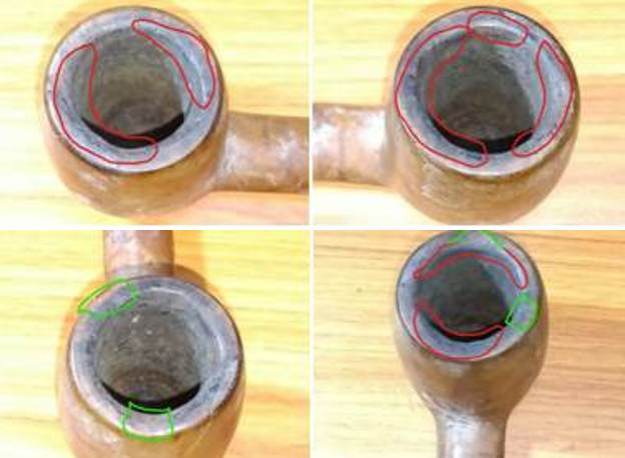
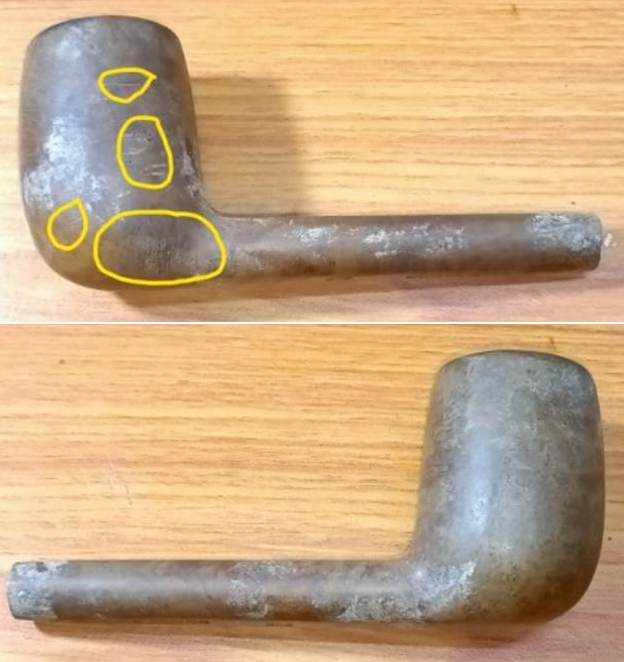
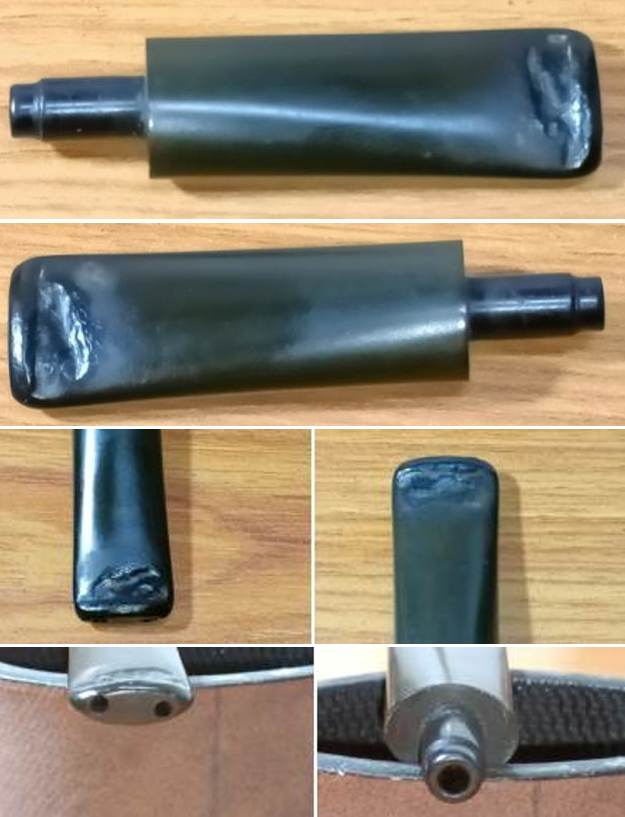
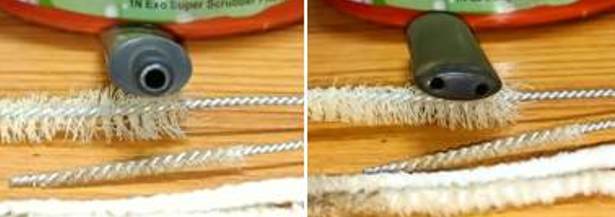
The chamber has a decent layer of cake that is even all around. The condition of the walls of the chamber will be ascertained once the cake has been evened out. Given the solid feel and even color of the stummel, the probability of serious damage like a burn out or deep heat fissures to the walls is a distant possibility. The rim top surface is uneven and signs of having been knocked against hard edges is evident at 12 o’clock and 4 o’clock directions where the surface is chipped (enclosed in green). The beveled inner rim edge appears charred in 12 o’clock to 9 o’clock and 4 o’clock to 6 o’clock direction (enclosed in red) and is uneven along the complete edge. The outer rim edge has a few minor dings and chipped surfaces and should be easily addressed by sanding. The smells of old tobacco are pretty strong and would need to be addressed.The entire stummel is covered in dirty grey white water stains and grime, a result of the pipe being stored in some damp place for years. The stummel appears to be dull and lifeless beneath all the grime and water stains. However, beautiful cross grains can be seen along the surface underneath the grime. There a number of small scratches and road rash marks on the surface can be seen, notably over the left side of the bowl (marked in yellow). The shank is dirty and clogged with old ash, oils and tars.   The twin bore tapered vulcanite stem is deeply oxidized and has significantly deep bite marks on both upper and lower surfaces of the stem. The buttons too are damaged and rendered out of shape due to the bite marks. The airflow through the stem is laborious and could be either due to the compression of the airway due to the bite marks or could be due to accumulation of old oils, tar and gunk in the airway. I have purchased GORILLA CA glue as I had read rave reviews about it and am excited to try it out.    The Process
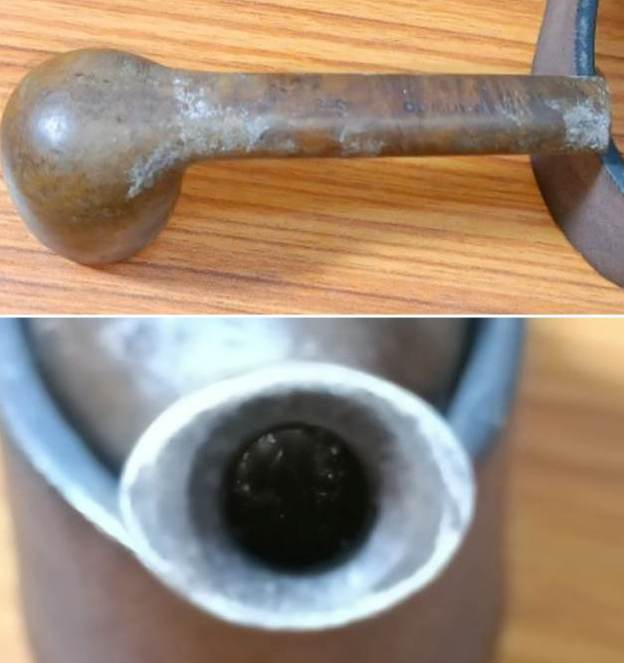
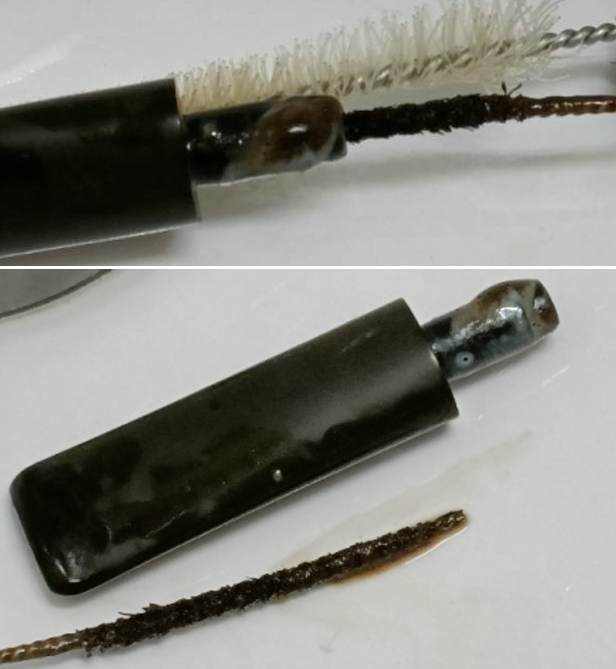
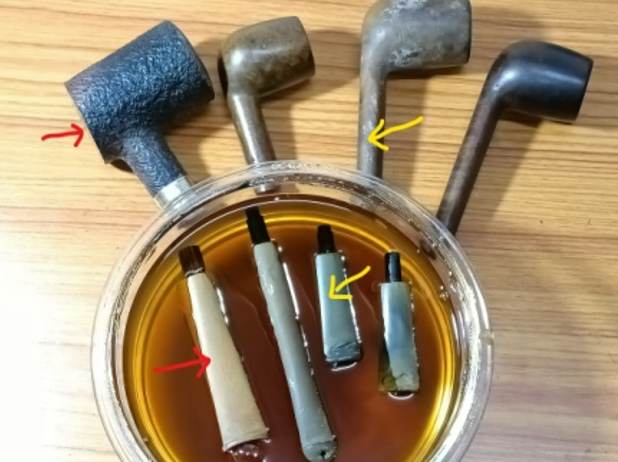
The first repair that I decided to tackle was the damaged stem. Before I could proceed with actual repairs, I cleaned the stem internals first. Using a thin shank brush and anti-oil dish washing soap, I cleaned the stem airway. The airway was filthier than I had imagined as can be judged from the following pictures. I took me a considerably long time, but eventually the airway was clean. I ran a couple of pipe cleaners through the stem to confirm that the airway was clean and also to dry it out. With the stem internals now clean, I moved to external cleaning of the stem surface by dunking the stem into “Before and After Deoxidizer” solution developed by my friend Mark Hoover. The solution helps to draw out heavy oxidation to the surface making it’s further removal a breeze, while the minor oxidation is eliminated to a very great extent. I usually dunk stems of 5-7 pipes that are in-line for restoration and the THE GOLDEN ARROW is marked in yellow arrow. I generally allow the stems to soak in this solution overnight for the solution to do its work.With the stem soaking in the deoxidizer solution, I moved on to reaming the chamber with my PipNet pipe reamer. I started the reaming process with head size 2 of the PipNet reamer blade and progressed through to head size 3. I used my fabricated knife to remove cake from areas inaccessible to the reamer blades and completed the process of removing the cake by sanding the walls smooth with a folded piece of 180 grit sandpaper. I wiped the chamber with a cotton swab wetted with alcohol to clean the residual carbon dust. The chamber walls are solid and a few minor thin heat veins are visible on the aft and right side of the walls of the chamber. I shall give the chamber a bowl coating as a precautionary measure against future damage. Next, I cleaned the mortise by scraping out all the dried oils and tars from the walls with a dental tool. I further cleaned the mortise using bristled and regular pipe cleaners dipped in alcohol.Continuing with the internal cleaning of the chamber and mortise, I subjected it to a salt and alcohol bath. I used cotton balls which is an at par substitute as I have realized over the years. I drew out a wick from the cotton and along with a folded regular pipe cleaner; inserted it into the mortise and through the draught hole and further into the chamber. Thereafter, I packed the chamber with cotton balls to about quarter of an inch below the rim inner edge and soaked the cotton balls with isopropyl alcohol up to the brim. About half an hour later, the level of alcohol had gone down, having being absorbed by the cotton. I topped it up once again and set it aside overnight. By next afternoon, the cotton and alcohol had drawn out all the remaining oils/ tars from the chamber and mortise and loosened out any residual cake and tar build up, fulfilling it’s intended task. I removed the cotton balls and ran pipe cleaners through the mortise to clean out all the loosened tars and gunk. Using my fabricated tool, I scraped out the entire loosed gunk from the mortise and further cleaned it with alcohol and q-tips. The large blobs of now moistened gunk that was removed from the mortise should give the readers an idea of how filthy the mortise was when I started the process of cleaning. The chamber now smells clean and fresh. I set the stummel to dry out naturally.    I cleaned the external surface of the stummel with undiluted Murphy’s oil soap and a hard bristled toothbrush. I cleaned the smooth rim top surface with the soap and Scotch Brite pad. The prominent dip on outer rim edge in the 12 o’clock direction is now clearly visible (marked in red). I thoroughly cleaned the mortise with shank brush and anti-oil dish washing soap. The mortise is now thoroughly cleaned and fresh. With the internal and external surface of the stummel now nicely cleaned, I fished out the stem that had been soaking in the Before and After deoxidizing solution for nearly 24 hours. I first scrubbed the stem surface with a Scotch Brite pad. I followed this scrubbing with a nice cleaning of the surface using a 0000 grade steel wool. I rinsed the stem under running water to rid the stem of the thick solution. I ran a couple of pipe cleaners to remove the deoxidizer solution from the airway.Continuing with the stem refurbishing, I heated the bite zone with the flame of a lighter to raise the tooth indentations to the surface. Though the results were not what were expected, the vulcanite was raised a little. The button edges and deeper tooth indentations on either surface of the stem were filled with a mix of CA superglue and activated charcoal powder and set aside for the fill to cure. I would like to bring out here that I had purchased a new tube of Gorilla Superglue gel after reading rave reviews and it was this glue that I had used to prepare the mix to fill in the tooth indentations. That this was a bad purchase for me personally became amply evident later during the restoration process. While the stem fills were set aside to cure, I addressed the damage to the rim top surface of the stummel by topping it on a piece of 220 grit sandpaper. I frequently checked the progress being made as I had no desire to lose any briar estate than was absolutely necessary. Once satisfied with the result, I wiped the rim top surface with a moist cloth. The uneven darkened rim top had been addressed completely, however, the beveled inner rim edge was still dark and the chamber was still slightly out of round (though greatly reduced) with slight charring visible in the 12 o’clock direction. I addressed this issue by simply running a piece of 220 grit sand paper along the inner rim edge bevel, till the darkening was eliminated.Next, I addressed all the dings over the stummel surface by steaming them out by heating my fabricated knife on a candle and placing it on a wet towel covering the dents. The generated steam pulls the dents to the surface leaving behind a slightly discolored and uneven patch. I evened out the discoloration and stummel surface by sanding the entire surface with a piece of 320 grit sandpaper. At this stage in restoration, I turned over the stummel to Abha, my wife, for her to work her magic in polishing the stummel while I turned my attention to the stem repairs.

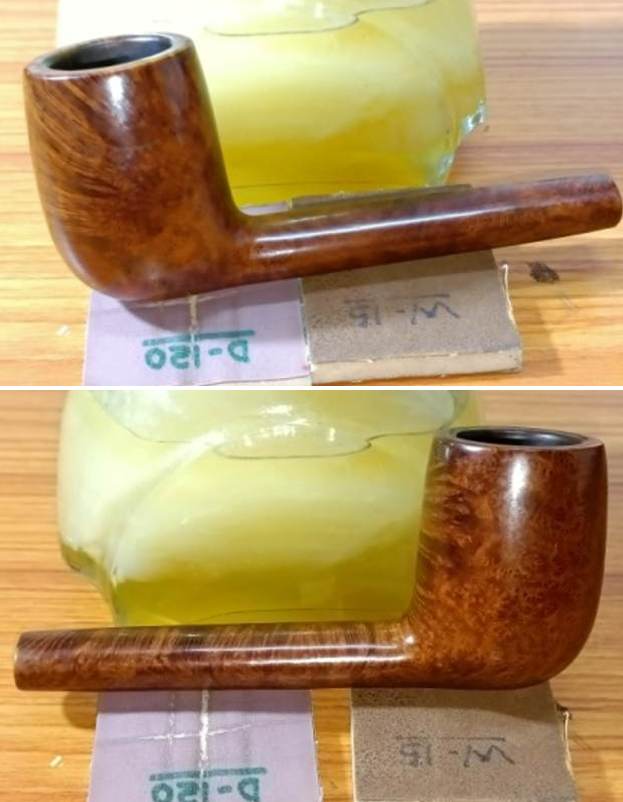
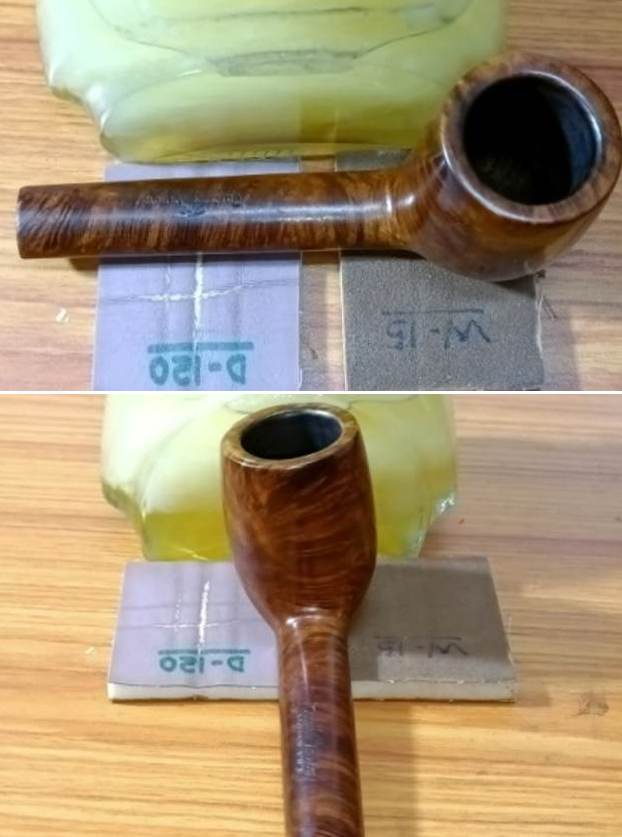
The stem repair fills had cured nicely and I moved ahead with the process of filing and shaping the button end with a flat head needle file. For a better blending, I further sanded the entire stem with 220. At this stage, the fills appear as ugly grey patches that are very uneven. I hoped that further sanding with progressively higher grit sandpapers would help in blending of the repairs.I continued to dry sand the entire stem with a folded piece of 400 followed by 600 and 800 grit sandpaper and further progressed to wet sanding with 1000, 1500 and 2000 grit sand papers. However, the fills still appear dirty grey and a closer look showed the entire filled surface peppered with numerous tiny air pockets. I refilled the patches with a fresh mix of CA superglue gel and activated charcoal and set the stem aside.During the time that I was struggling with the stem repairs, Abha completed the polishing of the stummel by wet and dry sanding the surface with 1500 to 12000 grit micromesh pads. She massaged a small quantity of B & A Restoration balm and set it aside for 10 minutes for the briar to rehydrate. Thereafter, she gave a rigorous hand rub using a microfiber cloth. The appearance of the stummel at this point is truly satisfying. Once the stem refills had cured completely, I went through the complete process of sanding and shaping the fills using a needle file followed by sanding with sandpapers as described above. Though the finish is better this time around, the coloration of the patch still remains a light shade of grey and easily discernible against the rest of the stem surface. I would like to inform our esteemed readers that I had to go through the complete repairs six times before this attempt and for the sake of brevity, I deliberately kept it short. Yet, the results are not what I expected and have been achieving consistently with other brands of superglue. There was only one more issue that needed to be addressed and one that could not be ignored, being a functional issue. After I had reamed and sanded the chamber walls, I had observed very minor and superficial web of thin heat fissures/ pits all along the chamber walls. I addressed this by mixing activated charcoal and plain yogurt to a thicker consistency, just enough that it would spread easily and applied it evenly all along the chamber walls after inserting a folded pipe cleaner through the draught hole to keep it open. Once dry and set, this will not only protect the walls but also aid in faster buildup of cake.   To apply the finishing touches, I mounted a cotton cloth buffing wheel on to my hand held rotary tool and applied a coat of Blue Diamond to the stummel and the stem to polish out the minor scratches. With a cotton buffing wheel that I use for carnauba wax, I applied a coat of carnauba wax and continued to work on it till the complete coat of wax had been polished out. I mounted a clean cotton cloth buffing wheel and gave the entire pipe a once over buff. I finished the restoration by giving the entire pipe a rigorous hand buffing using a microfiber cloth to raise the shine further. The finished pipe looks beautiful and is ready to be added to my collection of inherited pipes. Thanks to all readers of rebornpipes who have spared a moment of their invaluable time in reading through this write up and as is always, your suggestions and advice are always welcome. P.S. – The opinion that I have expressed about the Gorilla CA superglue Gel is my personal opinion based on my personal experience. There are definitely others who have had fantastic results using this product, but not me.

Resurrecting A Loewe “Sloane”


Blog by Paresh Deshpande

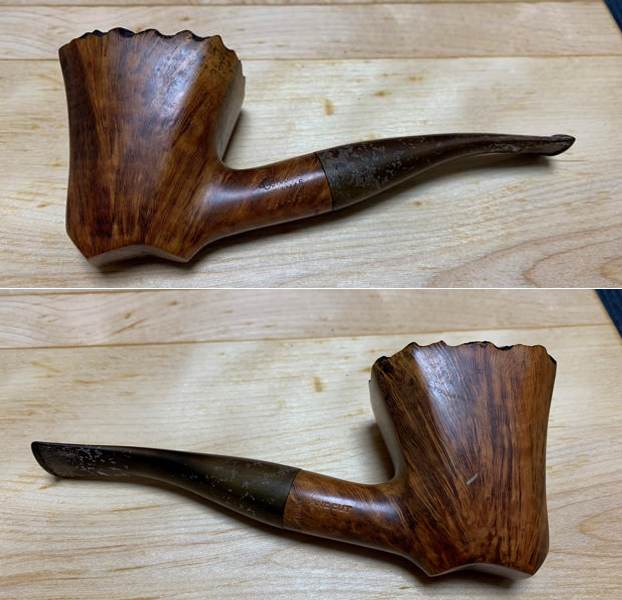
The next pipe is also from my inheritance and is similar to the “THE GOLDEN ARROW” that I had worked on earlier. This too is a large Canadian with an oval shank and flat stem. The stummel is covered in dirt and grime accumulated over the long years of uncared for storage. Through all the grime, beautiful cross grains and swirls can be seen and are waiting to be unraveled. This pipe is stamped on the top flat surface of the oval shank as “L & Co” in a lozenge while the right side of the shank edge is stamped as “LOEWE” over “LONDON. W”. The bottom of the oval shank is stamped “SLOANE”. The stem is sans any stampings.  I have worked on Loewe & Co. pipes before and also have many in my personal collection and I am fairly well versed with this brand. However, I visited pipedia.org and refreshed my memory with the history of the pipe, dating guide and shape names. The 1930s Loewe catalog is an interesting read and also has a  pipe stamped exactly as the one currently on my work table. Here is the link to the catalog: (https://pipedia.org/images/8/88/Loewe_pipes_1930.pdf).

However, further down on pipedia.org is a link to the 1967 Loewe catalog and it has no mention of the shape name SLOANE!

I have reproduced the details relevant to dating this pipe as found on pipedia.org below.

1920-1955 middle Haymarket era

Left shank: – L & Co. (in oval)

Right shank: – Loewe London W.

Underside of shank: – shape name Made in England (encircled) this may just have been on export pipes

*Prior to 1955 Loewe had no series, stamping only the shape name on the underside of the shank.

Thus, the pipe currently on my work table dates to pre-1955.

Initial Visual Inspection
The entire pipe is covered in dirt and grime and is sticky to the touch. There are dark patches on either sides of the bowl that would need to be checked thoroughly. There is a thick layer of cake in the chamber with lava overflowing the rim top surface. The inner rim edge is chipped and damaged giving the chamber an out of round appearance. The outer rim edge too has a number of minor chipped surfaces. The mortise is clogged and the vulcanite stem is deeply oxidized with deep tooth indentations in the bite zone. The button edges are damaged due to bite marks and would need to be rebuilt and reshaped. The pictures below would give you the general idea as to the condition of the pipe. Detailed Inspection
The chamber has a thick layer of even cake with overflow of carbon over the rim top surface. The condition of this Loewe, like all other Loewe pipes that I have inherited, has seen extensive use. Such extensive use, without proper care and maintenance, may cause heat related issues along the chamber walls. Here, the condition of the chamber wall will be known once the cake is taken down to bare briar. The inner rim edge is uneven and has suspected charring at 6 o’clock direction and between 9 o’ clock to 11 o’ clock on the left and also between 1 o’ clock and 3 o’ clock directions on the right side. The inner rim damage is encircled in yellow. The outer rim edge too has not been spared any punishment. There are minor dents/ dings and chipped surfaces all along the outer rim edge, likely as a result of knocking against a hard surface to remove the dottle. The outer rim damage is encircled in red. The extent of the damage to the chamber walls and rim of this pipe will be clear once the cake is completely taken down to the bare briar and the rim top surface is free of all the accumulated crud. The ghost smell are very strong and would need to be addressed.The stummel surface is covered in dirt/ grime and feels sticky to the touch. The surface has darkened considerably on either side of the bowl (enclosed in pastel blue) and at the rear and would need to be examined up close once the stummel is thoroughly cleaned both internally as well as externally. I suspect there is a crack (encircled in green) on the right side of the bowl within the darkened area (or it could even be a scratch) and needs to be verified. However, beneath the dull grime layer, beautiful cross and bird’s eye grain await being brought to the fore. Heavy accumulation of old oils, tars, ash and gunk is seen in the mortise as expected. The tapered vulcanite stem is heavily oxidized and has deep bite marks on both the lower and upper surface in the bite zone. The button edges are deformed as a result of these tooth indentations and would need to be reconstructed. My last project had thrown up some bad experiences about the end results of using the Gorilla superglue that I had recently purchased and will try it out again this time around. If the results are not up to standard, this and the other tubes will find their way out the door. The slot and tenon end show presence of dried gunk and would need to be thoroughly cleaned. The Process
I started the process of restoration by first cleaning the stem internals with anti-oil dish cleaning soap and thin shank brushes. I scrubbed the stem surface with the soap using a Scotch Brite pad, firstly to rid the surface of old oils and gunk and secondly to remove the loose surface oxidation. I ran a couple of pipe cleaners through the stem airway to remove all the traces of soap and dry out the stem internals.Next, I moved to external cleaning of the stem surface by dunking the stem into “Before and After Deoxidizer” solution developed by my friend Mark Hoover. The solution helps to draw out heavy oxidation to the surface making it’s further removal a breeze while the minor oxidation is eliminated to a very great extent. I usually dunk stems of 5-7 pipes that are in-line for restoration and the LOEWE SLOANE is marked in blue arrow. I generally allow the stems to soak in this solution overnight for the solution to do its work.The next afternoon, Abha fished out the stem from the deoxidizer solution and scrubbed it with a Scotch Brite pad to get rid of the loosened oxidation from the surface. She followed this scrub with a second scrub using 0000 grade steel wool and this helped in further removal of raised oxidation from the surface and even out the minor scratches resulting from using the Scotch Brite pad. She rinsed the stem under warm running water to completely remove the solution from the airway and slot end. She ran a couple of pipe cleaners to remove the last traces of residual deoxidizer solution from the airway and dry out the airway.  With the external and internal cleaning of the stem completed, Abha handed over the stem to me to complete the repairs. Continuing with the stem refurbishing, I heated the bite zone with the flame of a lighter to raise the tooth indentations to the surface. Though the results were not what were expected, the vulcanite was raised a little leaving behind two deep tooth compressions on either surfaces. The button edges and deeper tooth indentations on either surfaces of the stem were filled with a mix of CA Gorilla superglue and activated charcoal powder and set aside for the fill to cure. I really hope that this time around I get better results with using this new CA glue. Once the stem fills had cured completely, I moved ahead with the process of filing and shaping the button end with a flat head needle file. For a better blending, I further sanded the entire stem with 220. However, my worst fears came true…..I saw grey patches with air pockets, just as I had observed earlier while working on The Golden Arrow. I think the Gorilla glue does not work for me and I shall discard it after I get my regular brand of superglue in next few days. I continued to dry sand the entire stem with a folded piece of 400 followed by 600 and 800 grit sandpaper and further progressed to wet sanding with 1000, 1500 and 2000 grit sand papers. However, the fills still appear dirty grey and a closer look showed the entire filled surface peppered with numerous tiny air pockets. I refilled the patches with a fresh mix of CA superglue gel and activated charcoal and set the stem aside. After the stem refills had cured completely, I went through the complete process of sanding and shaping the fills using a needle file followed by sanding with sandpapers as described above. Though the finish is better this time around, the coloration of the patch still remains a light shade of grey and easily discernible against the rest of the stem surface. It should be noted here that just like The Golden Arrow that I had restored earlier, I had to go through the complete repairs six times before this attempt and for the sake of brevity, I deliberately kept it short. Yet, the results are not what I expected and have been achieving consistently with other brands of superglue. I rubbed a small quantity of EVO into the stem surface and set it aside for the vulcanite to absorb and hydrate. With the stem repairs completed, save for the polishing cycle, I started with the stummel repairs. I started with reaming the chamber with my PipNet pipe reamer using head size 1 of the PipNet reamer blade and progressed through to head size 2. I used my fabricated knife to remove cake from areas inaccessible to the reamer blades and completed the process by sanding the walls smooth with a folded piece of 180 grit sandpaper. I wiped the chamber with a cotton swab wetted with alcohol to clean the residual carbon dust. The reasons for darkened sides of the bowl that I had noted during my detailed inspection were now evident. There are signs of charring to the walls of the chamber on the sides and at the bottom of the bowl. Also there are a few heat lines along the walls of the chamber. All these issues are indicated by green arrows.I gave a preliminary cleaning to the mortise and shank internals using q-tips and pipe cleaners dipped in alcohol. I shall continue with thorough cleaning of the shank internals during the external cleaning of the stummel. Next, I cleaned the external surface of the stummel with undiluted Murphy’s oil soap and a hard bristled toothbrush. I cleaned the smooth rim top surface with the soap and Scotch Brite pad. The darkened areas over both sides of the stummel and the rim top surface are now clean, exposing the gremlins hidden beneath the layer of dirt. I followed up the external cleaning of the stummel with internal cleaning of the mortise and shank using anti oil soap and shank brushes.  This external cleaning of the stummel has now clearly defined the suspected crack that I had noted during my detailed inspection (encircled in yellow). Also the internal cleaning of the chamber has brought the charring of the sides of the chamber walls to the fore (encircled in green). I now need to ascertain if this external crack is a direct result of the observed damage to the walls of the chamber. If it is so, it’s a clear sign of this crack developing into a burn out due to the thinning of the chamber walls.   Continuing with the internal cleaning of the chamber and mortise and also to ascertain if the external crack over the stummel surface is a result of the damage to the chamber walls, I subjected it to a salt and alcohol bath. I used cotton balls which is an at par substitute as I have realized over the years. I drew out a wick from the cotton and along with a folded regular pipe cleaner; inserted it into the mortise and through the draught hole and further into the chamber. Thereafter, I packed the chamber with cotton balls to about quarter of an inch below the rim inner edge and soaked the cotton balls with isopropyl alcohol up to the brim. About half an hour later, the level of alcohol had gone down, having being absorbed by the cotton. I observed that the alcohol had seeped out from the crack (encircled in yellow) as can be seen from the picture below. This needs to be addressed. However for now, I topped it up once again and set it aside overnight.By next afternoon, the cotton and alcohol had drawn out all the remaining oils/ tars from the chamber and mortise and loosened out any residual cake and tar build up, fulfilling its intended task. I removed the cotton balls and ran pipe cleaners through the mortise to clean out all the loosened tars and gunk. Using my fabricated tool, I scraped out the entire loosed gunk from the mortise and further cleaned it with alcohol and q-tips.While I was working on the stummel, Abha polished the stem by wet sanding the surface with 1500 to 12000 grit micromesh pads. She applied a little EVO to the stem surface for it to be absorbed in to the rubber. Though the grey repair patches are visible in the pictures, it is not so glaring in person.Staying with the stummel repairs, I first decided to stabilize the crack. I marked the end points of the cracks and drilled counter- holes using 1 mm drill bit mounted on a hand held rotary tool. I filled the crack and counter-holes with clear CA superglue and set it aside to cure.A while later, once the crack fills had sufficiently hardened; I addressed the rim top darkening and unevenness by topping the surface on a piece of 220 grit sandpaper. I frequently checked the progress being made as I hate to lose briar more than what is absolutely necessary. The chamber now appears more out of round than before and would be addressed by creating a bevel over the inner rim edge.With a folded piece of 220 grit sandpaper pinched between my forefinger and thumb, I imparted a nice bevel to the inner rim edge. This masked the out of round appearance of the chamber and also eliminated the minor charring over the edges.   Next, to protect and isolate the chamber walls from coming into direct contact with the burning tobacco and prevent a burn out, I coated the walls of the chamber with an even layer of J B Weld. J B Weld is a two-part epoxy Cold Weld in two tubes; hardener and steel which are mixed in two equal parts (ratio of 1:1) with hardening time of 5-6 minutes and complete curing time of 6-8 hours. I poured the contents of the two tubes on to a plastic sheet and mixed it well. I inserted a petroleum jelly coated regular pipe cleaner through the draught hole to prevent it from getting blocked due to the J B Weld mix. I applied this mix, as evenly as possible, over the entire chamber wall surface. I worked fast to ensure an even coat over the chamber walls before the weld could harden and set the stummel aside for the application to harden and cure overnight. The J B Weld coat had hardened completely by next day evening. I mounted a sanding drum onto my hand held rotary tool and setting the speed to half of the full RPM, I sanded the excess coat from the chamber walls. To further fine tune and keep the coat to a minimum thickness, I further sanded the coat with a 220 grit sand paper till I had a coat of a thickness that was just sufficient to protect the briar underneath. Here is how the chamber appeared at this stage.At this same stage, I also sanded and evened out the fills over the crack with a flat needle file and further matched it by sanding it with a piece of 220 grit sandpaper. Unfortunately, I missed out on taking pictures of this process.

Abha completed the polishing of the stummel by wet sanding the surface with 1500 to 12000 grit micromesh pads. She wiped the stummel with a moist cloth in between the pads to gauge the progress being made. She massaged a small quantity of Before & After Restoration balm and set it aside for 10 minutes for the briar to rehydrate. Thereafter, she gave a rigorous hand rub using a microfiber cloth. The stummel now has a nice vibrant shine to it with the beautiful cross grains and bird’s eye grains resplendent in all their glory. I just can’t thank Abha enough for her help in polishing the stems and stummel of all the pipes that I restore. After I had protected the heel and the walls of the chamber with a coat of J B Weld, it was necessary to prevent this coat from coming into contact with the burning tobacco. I addressed this by mixing activated charcoal and plain yogurt to a thicker consistency, just enough that it would spread easily and applied it evenly all along the chamber walls after inserting a folded pipe cleaner through the draught hole to keep it open. Once dry and set, this will not only protect the walls but also aid in faster buildup of cake. I set the bowl aside for the bowl coat to cure for 72 hours.72 hours later, to apply the finishing touches, I mounted a cotton cloth buffing wheel onto my hand held rotary tool and applied a coat of Blue Diamond to the stummel and the stem to polish out the minor scratches. Next, I mounted a cotton cloth buffing wheel and setting the speed to ¼ of the full power, I applied a coat of carnauba wax over the stummel and the stem. I worked the complete pipe till the time all the wax was used up for polishing the stummel and the stem. The pipe now boasts of a beautiful and lustrous shine. I vigorously rubbed the pipe with a microfiber cloth to deepen the shine and also to clean away any residual wax that had been left behind. I am very happy with the way this beauty has turned out. P.S. I am personally not happy with the way the stem repairs have turned out and will surely rework on it once the CA glue that I regularly use reaches me in next couple of weeks.  A big thank you to all the readers of this write up for sparing your valuable time and hope for your continued patronage. Until the next write up, be safe and healthy…

Restoring a Unique Jobey Designer Bent Egg Sitter


Blog by Steve Laug

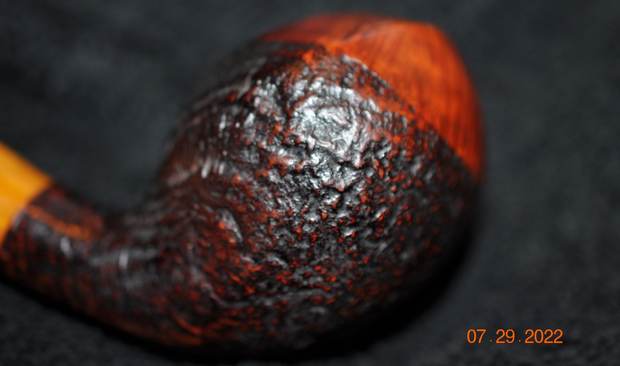
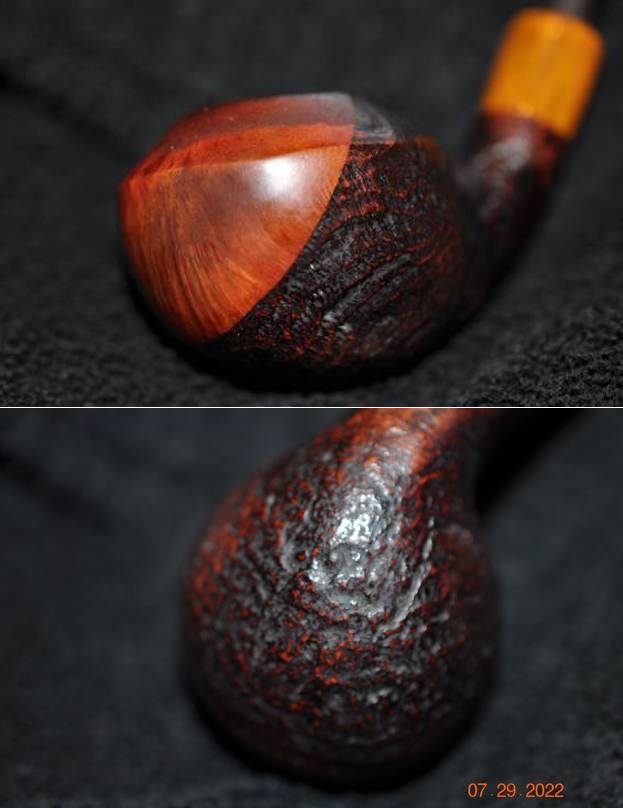
The next pipe on the table was purchased on 05/10/22 from an antique mall in Astoria, Oregon, USA. This unique Jobey has a flat base with a short tail that stabilizes the sitter. It has a rugged, finish that looks like a combination of sandblast and rustication (blastication) with lots of nooks and crannies in the briar. The top of the shank and the upper 1/3 of the bowl are smooth briar. The come together and really are quite beautiful! The pipe is stamped on a smooth panel on the topside of the shank and reads Jobey [over] Designer. The valleys and ridges of the “blasticated” grain showing through the grime and dirt are a mixture that leaves a rich texture. It had rich dark and medium contrasting brown stains that do not look too bad. There was a thick cake in the bowl with remnants of tobacco stuck on the walls. There was a lava overflow on the crowned top of the rim and covering the inner edge. It was hard to know if the rim edges were damaged. It was a beautiful pipe that was dirty and tired looking but there was a thick coat of shiny varnish or shellac covering the whole thing. The stem was golden variegated acrylic that had fancy turnings on the saddle. The tenon was the patented Jobey Link System that was developed to protect the shank. There was a hairline crack on the top of the stem where the tenon fit but it was not open and was very fine. There were tooth marks and chatter on the stem near the button on both sides. There is a brass Jobey oval logo on the top of the stem identifying it as a Jobey pipe. Jeff took photos of the pipe before he cleaned it up. He took photos of the bowl and rim top to show the cake in the bowl and the lava build up on the rim top and edges of the bowl. It was thick and hard but hopefully it had protected the rim and edges from damage. It was hard to know for sure from the photos. Jeff took photos of the top and underside of the stem showing the tooth chatter, scratching on the stem surface and wear on the edges of the button. The airway in the stem was stained with the tars and oils that would need to be cleaned up. Jeff took photos of the sides and heel of the bowl to show the condition of the finish. You can see the rugged dark look of the blastication. There is a lot of dust and grime filling in the valleys. The smooth portions on the top 1/3 of the bowl, the underside of the shank and foot as well as the patch on the top of the shank.  He took a photo of the stamping on the smooth panel on the topside of the shank. The stamping was readable as you can see from the photos and read as noted above. He also captured the logo brass insert on the top of the stem.  I turned to Pipedia to see if I could find a Jobey Designer or any information on the line  (https://pipedia.org/wiki/Jobey). Along with the history of the brand that is there which you can read if you are interested there was also a photo of the same pipe that I am working on with a dark stem rather than the yellow of the one on the table. The shape and stamping are identical so I have included them below. I am also including and advertisement that was included on the site. I have included it below along with an enlargement of the section on Jobey Designer pipes. The Designer series combines real craftsmanship with a unique pipe design. This perfectly balanced briar features a smooth walnut finish, complemented by a golden Lucite stem. It sold for $50USD

Now it was time to work on the pipe. Jeff reamed it with a PipNet pipe reamer and cleaned up the reaming with a Savinelli Fitsall Pipe Knife. He scrubbed out the internals of the shank and stem with alcohol, pipe cleaners and cotton swabs until the pipe was clean. He scrubbed the exterior of the bowl with Murphy’s Oil Soap and a tooth brush to remove the grime and grit on the briar and the lava on the rim top. The finish looks very good with good looking sandblast around the bowl and shank. Jeff scrubbed the stem with Soft Scrub and rinsed it with running water. When the pipe arrived here in Vancouver for the second stop of its restoration tour it looked a lot better. The airway in the stem still had some darkening and would need to be cleaned up some more. I took photos before I started my part of the work. I took some close up photos of the rim top and also of the stem surface. I wanted to show what cleaned bowl and rim top looked like. The rim top and edges looked very good. I also took close up photos of the stem to show the light tooth marks and the staining in the airway on the stem.  The hairline crack is in the darkened spot near the shank end.I took a photo of the stamping on the topside of the shank and it is clear and readable. I also took a photo of the Jobey oval brass inset on the top of the stem.  I took the stem off the shank and took a photo to give a clear picture of the pipe from the left side profile and the top looking down. It is a really pretty pipe.I wiped down the briar with acetone on a cotton pad to remove the shiny varnish coat. It took some scrubbing but the grain really stood out on the smooth portion much better. I polished the extension with micromesh sanding pads – dry sanding with 1500-12000 grit pads. I wiped the surface off after each pad to remove sanding debris. It is becomes more shiny with each sanding pad.  I rubbed the bowl down with Before & After Restoration Balm. I worked it into the surface of the briar with my fingertips and a horsehair shoe brush to clean, enliven and protect it. I let the balm sit for 10 minutes and then buffed with a cotton cloth and shoe brush to raise the shine. Mark Hoover’s Balm is a product that I have come to appreciate and one I use on every pipe I have been working on. I set the bowl aside and turned my attention to trying to get some of the tars from the stem. I removed the Jobey Link Tenon from the stem and worked it over with cotton swabs, pipe cleaners and alcohol. It was amazing how much grit and grime came out of the stem. I then used some Soft Scrub on the pipe cleaners and continued to work on the airway and was able to remove a lot of it. I flushed it a final time with alcohol. It was much better when I finished. The only draw back (if it is one) is that the hairline crack was very visible after cleaning.There was a tooth mark that was deep on the top left side of the stem next to the button. There was also a small crack in the turned area of the stem and top. I filled both of them both in with clear CA glue and set the stem aside to cure. Once it cured I sanded the repaired areas smooth with 220 grit sandpaper and started polishing it with 400 grit wet dry sandpaper. I polished the Lucite stem with micromesh sanding pads – 1500-12000 grit pads. I wiped it down with a damp cloth after each sanding pad. I used Before & After Pipe Polish – both Fine and Extra Fine to further polish the stem. This Unique Jobey Designer Egg Sitter turned out to be a great looking pipe. The mix of dark stains highlights the smooth and rusticated portions around the bowl sides, top and bottom. The golden coloured acrylic stem works very well with the natural and dark finish on the bowl. I put the stem back on the bowl and carefully buffed the pipe with Blue Diamond on the buffing wheel using a light touch on the briar. I gave the bowl and the stem multiple coats of carnauba wax on the buffing wheel. I buffed the entire pipe with a clean buffing pad followed by hand buffing with a microfiber cloth to deepen the shine. The finished full bent Jobey Designer Bent Egg Sitter fits nicely in the hand and feels great. Give the finished pipe a look in the photos below. The dimensions of the pipe are Length: 5 ¾ inches, Height: 2 inches, Outside diameter of the bowl: 1 ¼ inches, Chamber diameter: ¾ of an inch. The weight of the pipe is 2.26 ounces/64 grams. I will be adding it to the American Pipe Makers Section on the rebornpipes store soon. If you are interested in carrying on the pipeman’s legacy with this pipe send me a message or an email. Thanks for reading this blog and my reflections on the pipe while I worked on it.
Cleaning Up a Lovely French Made GBD Sandblast Avoriaz 816 Oval Shank Billiard


Blog by Steve Laug

Over the years Jeff and I have picked up many different GBD pipes from a variety of lines that all have a very English look and feel to them. We have also picked up quite a few that are from the French factory before the move to England. This pipe was purchased from an estate on 06/13/22 from Fort Myers, Florida, USA. The finish on the pipe is a sandblast that is deep but smooth and follows the grain around the pipe. The mix of black and brown stains of the briar looks very good with the black of the saddle stem. The rim top is crowned with a bevel inward and has some great grain. It was hard to know if there was damage with the thick cake in the bowl and the veritable eruption of lava over the top of the rim. The finish was quite dirty with grit, grime and oils ground into the surface of the bowl and shank. The shank is stamped on a smooth panel on the underside of the shank and reads GBD in an oval [over] Avoriaz. Next to the shank/stem junction there is the shape number 816 [over] France. The vulcanite saddle stem was lightly oxidized and well dented with tooth marks and chatter on both sides near the button. There is a GBD brass oval roundel on the top of the saddle stem. Jeff took photos of the pipe to capture its condition when it arrived at his place. It was going to take some work to bring this one back to life. But both of us thought that it would be worth it. Jeff took photos of the rim top and bowl that show the cake and overflowing lava on the top and edges of the bowl. It is really hard to know what it looks like under all of that. We have learned that it will either be badly damaged or it will have been well protected. Only cleaning it off would reveal which result was on this pipe. The stem had a lot of tooth chatter and marks that are clear in the photos that follow. There is some oxidation and the calcification on the stem surface. He took photos of the sides and heel of the bowl to show condition of the briar. You can see the dust and debris ground into the bowl. The rim edge and top have some very nice grain. The sandblast is actually quite different. I wonder if it isn’t manipulated when blasting. It has a unique look to it. He took photos of the stamping on the underside shank. It was clear and readable as noted above. The brass GBD roundel looked good as well.   I always like to be able to set the pipe I am working on in its historical setting so I turn to Pipedia (https://pipedia.org/wiki/GBD) and read through the brand history. Toward the middle of the article I found what I was looking for. I quote below:

The Paris factory moved to Saint-Claude in 1952. Since 1981 the majority of GBD pipes come from the English factory.

The premium lines of GBD offered very good values, and are considered amongst the most affordable high end pipe of the 1960’s and earlier and a rival in quality, design, and price to Dunhill. Smokers’ Haven was the main retail supplier for GBD’s in the US until the early 1980’s.

GBD produced consistently well made pipes, almost entirely of Algerian or Grecian briar. In the late 1960’s to late 1970’s, they introduced the “Collector” and “Unique” lines, made primarily by Horry Jamieson, who had carved for Barling for many years, and was skilled in freehand design. Older GBD pieces are excellent smokers and unique in design. They did an excellent executions of classic pipe shapes, as well as some beautiful freehands in the “Unique” line. [2]

The following list comprises the better grades in descending order:

The pipe I am working on was stamped Avoriaz (not listed in the GBD line list) and with a shape number that is not on the list either. It is stamped France, thus I knew that it was made either in Paris before 1952 or in St. Claude after that date and before 1981 when production moved to England.

I wondered about whether Avoriaz was a French word or a region. I did a quick search on Wikipedia and found what I was looking for (https://en.wikipedia.org/wiki/Avoriaz). I quote the introduction to the article on Avoriaz, a French Mountain Resort.

Avoriaz (French: [avoʁija], Franco-Provençal: [aˈvɔʁja, aˈvɔʁi])[1] is a French mountain resort in the heart of the Portes du Soleil. It is located in the territory of the commune of Morzine. It is easily accessible from either Thonon at Lake Geneva or Cluses station on the A40 motorway between Geneva and Chamonix. Either way one follows the D902, Route des Grandes Alpes,[2] to Morzine and then the D338 running from Morzine to Avoriaz. Snow chains are often necessary. Avoriaz is built on a shelf high above the town of Morzine, which is among the pioneering towns of skiing with its first lifts dating back to the early 1930s. Today Avoriaz is one of the major French ski destinations catering for all standards of skiing and ranks among the top snowboarding destinations of the world. Apart from snow-based pursuits, Avoriaz is also a centre for trekking, golf, VTT (mountain biking) and other outdoor activities during the summer. Cars are forbidden in Avoriaz. The resort is designed to be fully skiable. Other transport around the resort includes horse-drawn sleighs and snowcats during winter.

Now it was time to work on the pipe itself. Jeff had cleaned up the pipe with his usual focus on detail. He reamed the pipe with a PipNet pipe reamer and removed the rest of the cake with a Savinelli Fitsall Pipe Knife. He scrubbed the exterior of the bowl with undiluted Murphy’s Oil Soap with a tooth brush and was able to remove the thick lava build up on the rim top. He rinsed it under running warm water to remove the soap and grime. He cleaned out the inside of the shank and the airway in the stem with alcohol, cotton swabs and pipe cleaners. He rubbed down the stem with Soft Scrub – an all purpose cleaner that works well to remove oxidation and calcification on a vulcanite stem. He soaked it in Briarville’s Stem Deoxidizer and rinsed it off with warm water. I took photos of the pipe once I received it. The rim top cleaned up really well. The crowned rim top, inner and outer edges of the bowl looked very good. The rim top and inner edge has some darkening on the back side of the bowl but there was no burn damage. The stem surface looked good with some small, deep tooth marks and chatter on both sides near the button. I took a photo of the stamping on the underside of the shank. It was readable as noted above.I removed the stem and took a photo of the pipe to give a sense of the whole.  I polished the crowned rim top with micromesh sanding pads – dry sanding with 1500-12000 grit sanding pads. I wiped it down after each pad with a damp cloth to remove the sanding debris and dust.  I rubbed the bowl and shank down with Before & After Restoration Balm. I worked it into the surface of the bowl sides and shank with my fingertips. I worked it into the deeper parts of the blast with a horse hair shoe brush. The product works to clean, enliven and protect the briar. I let the balm sit for a little while and then buffed with a cotton cloth to raise the shine. I set the bowl aside and turned my attention to the stem. I “painted” the surface of the stem with the flame of a lighter to lift the tooth marks. It worked very well and many of the marks lifted. I filled in the remaining marks with clear CA glue and let the repairs cure. I sanded the stem with 220 grit sandpaper to blend the repairs into the stem surface. I started the polishing with 400 grit sandpaper.    I polished the vulcanite stem with micromesh sanding pads – 1500-12000 grit pads. I wiped it down with Obsidian Oil after each sanding pad. I used Before & After Pipe Polish – both Fine and Extra Fine to further polish the stem.  This French Made GBD Avoriaz 816 oval shank saddle stem Billiard is a great looking pipe now that it has been restored. The rich contrasting brown stained finish around the bowl is quite beautiful and highlights the sandblast grain. The stain and finish works well with the polished vulcanite stem. I put the stem back on the bowl and carefully buffed the pipe with Blue Diamond on the buffing wheel using a light touch on the briar. I gave the bowl and the stem multiple coats of Conservator’s Wax and buffed the entire pipe with a clean buffing pad. I hand buffed the pipe with a microfiber cloth to deepen the shine. The finished GBD Avoriaz 816 sits nicely on the desk top and in the hand. Give the finished pipe a look in the photos below. The dimensions of the pipe are Length: 5 ¾ inches, Height: 2 inches, Outside diameter of the bowl: 1 ½ inch, Chamber diameter: 7/8 of an inch. The weight of the pipe is 56 grams/1.98 ounces. I will be putting it on the French Pipe Maker section of the rebornpipes store shortly. If you are interested in adding this pipe to your collection send me a message or an email. Thanks for reading this blog and my reflections on the pipe while I worked on it. There are many more to come!

Restemming and Reclaiming a worn and tired No Name Billiard


Blog by Steve Laug

Though I am not currently not taking on new work but trying to catch up on my backlog of pipes I have a commitment to doing repairs for customers of our local pipe shop. I have worked on several pipes for the pipeman who dropped this pipe and two others off at my house on Tuesday morning. All three had the tenons snapped off in the shank and two with broken or damaged stems. All three were heavily smoked with cakes almost completely filling in the bowls. It always make me wonder how one can fill a bowl when cake is so thick my finger would not fit in the bowl. The exterior of all three bowls were heavily caked with tars, oils and grime ground into the finish. The pipes reeked of the aromatic tobaccos that had been smoked in them. My wife bagged the three pipes and sealed them until I could get to them.

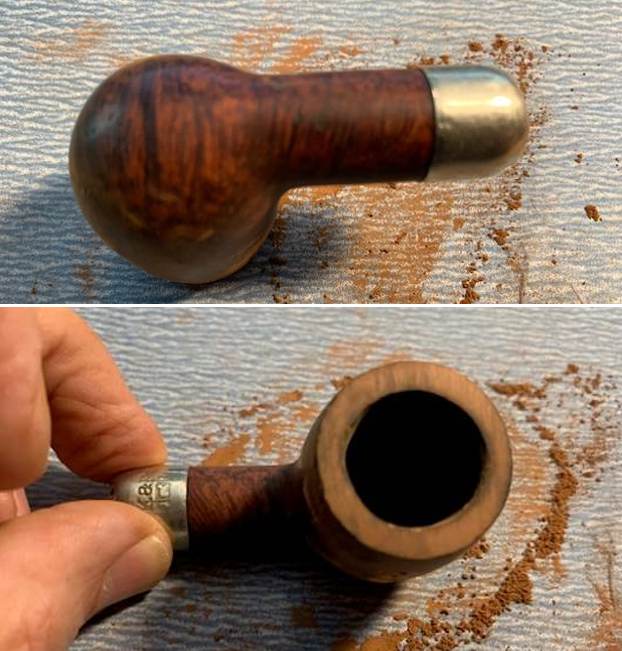
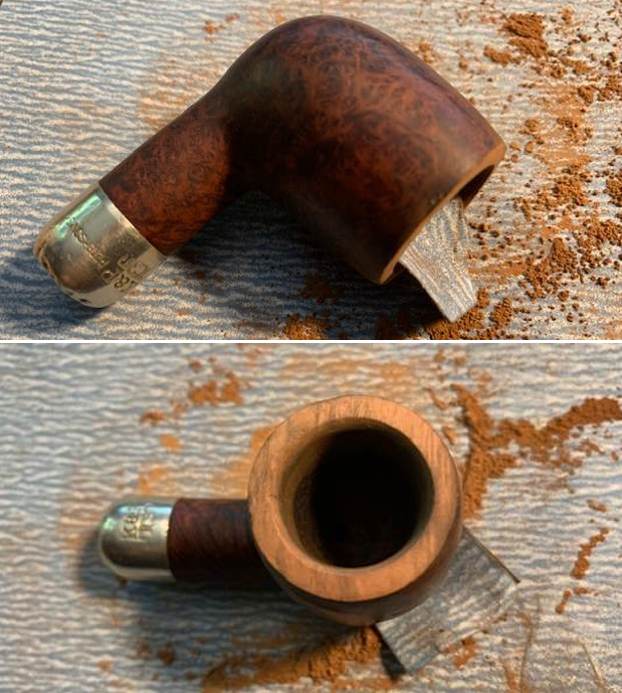
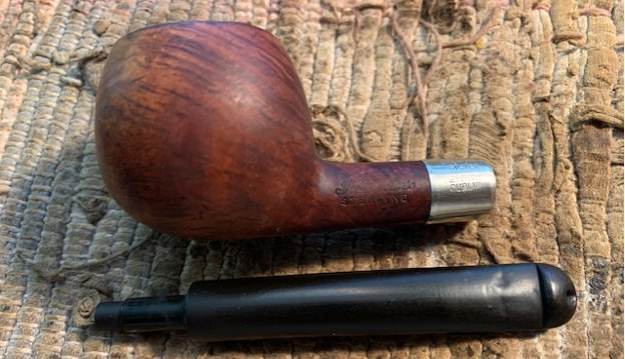
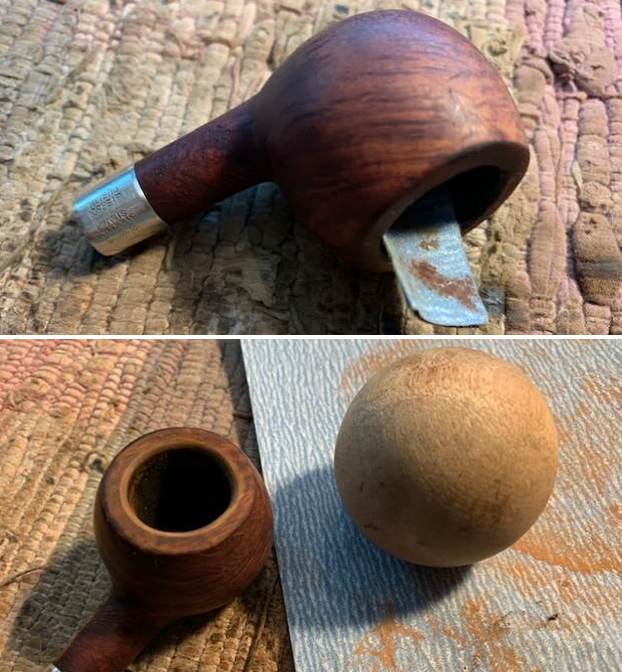
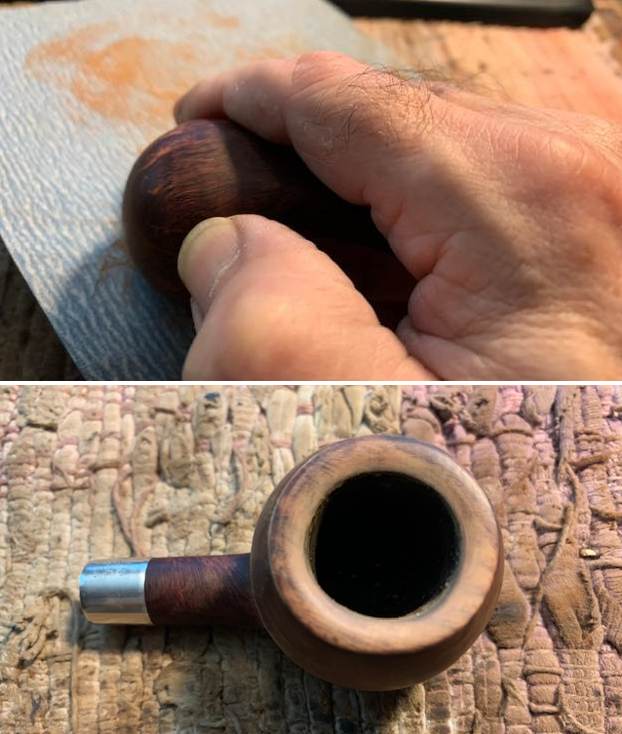
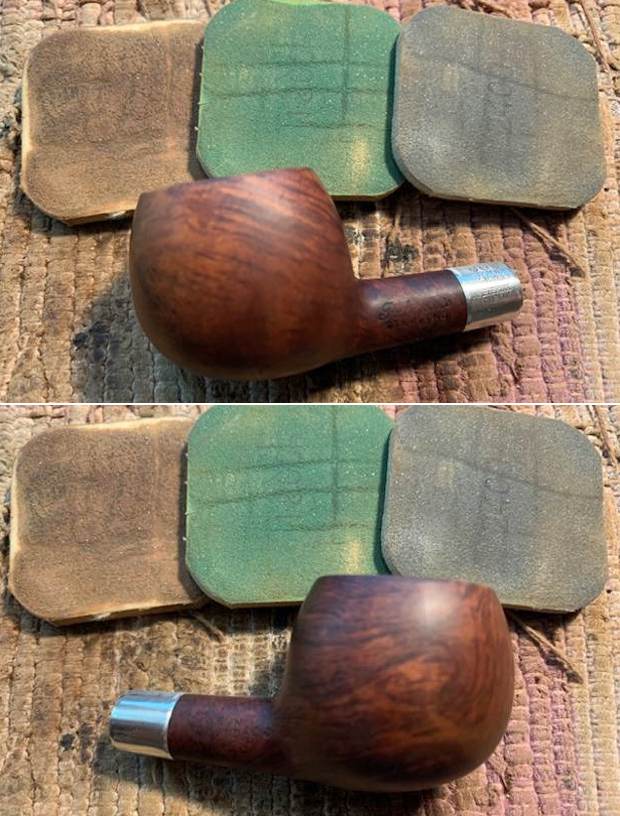
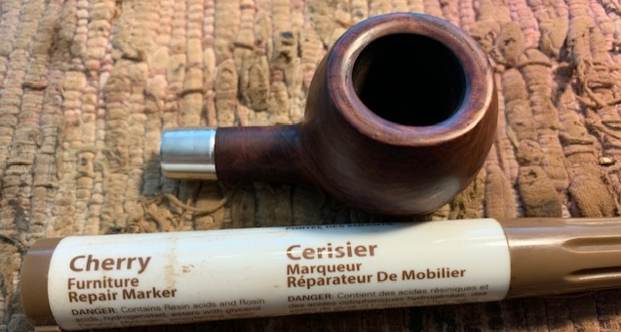
I decided to work on this billiard first. I opened the bag and removed both the bowl and the stem. It was a real mess. I took photos of the bowl to show its condition before I started on it. I took my normal foursome of photos and then added a few extra to show the heavy grime on the bowl sides, the cake in the bowl and the snapped tenon in the shank. Somewhere along its journey the pipe had been banded. Something about it makes me think it may well have been that I had banded and restemmed for the fellow quite a few ago. I did a bit of searching on rebornpipes for the blog but could not find it. In the big picture is did not matter but I am always very curious. I tried to pull the broken tenon and was not surprised that it was stuck in the shank. I put the bowl in the freezer and let it sit for 30 minutes. Once I removed it I used a screw turned into the airway to wiggle the tenon out of the shank. It actually came out quite easily. I went through my stems and found one that matched the broken one that had been included in the bag. I took a photo. I would need to reduce both the length and the diameter of the tenon to get a snug fit in the shank. It had a lot of potential but would take work to lift the dents in the stem and fit it to the pipe. Here is a photo of the bowl with the broken stem and the new one.Now it was time to clean it up so I could work on it. I like restoring clean pipes so that was going to be a lot of work but worth it to me to get rid of the grime. I reamed the bowl with a PipNet reamer using the largest cutting head. I cleaned up the reamer with a Savinelli Fitsall PipeKnife. I sanded the walls of the bowl with 220 grit sandpaper wrapped around a piece of dowel. There was a small mountain of carbon. I scrubbed the externals of the pipe to remove the heavy oils and tar build up on the bowl. It took a lot of elbow grease using a tooth brush and Murphy’s Oil Soap. I worked on it until the grime washed away with running water. It looks much better at this point.  With the externals cleaned I turned my attention to the internals. I scrubbed the shank and the airway in the bowl and stem with pipe cleaners, cotton swabs and isopropyl alcohol until it was clean. It was a mess.I topped the bowl to prepare it for reworking the damage to the inner edge of the bowl. I used briar dust and super glue to build up the heavily damaged areas around the edge. I layered it in place in the damaged area with a dental spatula. The second photo below shows the repair.I cleaned up the rough edge of the inner edge with a folded piece of 220 grit sandpaper. I wanted to smooth it out before working on the inner bevel of the bowl. I used a wooden ball and 220 grit sandpaper to give the bowl a bevel. The final photo of the four below shows the repaired and reshaped rim edge. I stained the rim top and edges with an oak stain pen to match the colour of the bowl. With the micromesh polishing it would be a good match.I polished the bowl with micromesh sanding pads – dry sanding with 1500-12000 grit pads and wiping it down after each pad with a damp cloth. It looks far better than it did before even with the many fills in the briar around the bowl.   I worked some Before & After Restoration Balm into the surface of the briar with my fingertips. The balm works to clean, enliven and preserve the briar. I let it sit for 10 minutes then buffed it off with a soft cloth. It is a beautiful pipe. The bowl looks surprisingly good when you consider what it looked like when I started. I set the bowl aside and turned my attention to the stem. I sanded the surface of the stem and then “painted” the surface of the stem with the flame of a Bic lighter to lift the tooth marks and scratches. I was able to lift many of them. I used clear super glue to fill in those that remained. I sanded the surface of the stem with 220 grit sandpaper to smooth out the repairs and started the polishing with 400 grit wet dry sandpaper. I also sanded the tenon with 220 grit sandpaper to reduce the diameter of the tenon and get a snug fit. I polished the stem with micromesh sanding pads – dry sanding with 1500-12000 grit pads. I wiped the stem down after each pad with some Obsidian Oil. I finished hand polishing it with Before & After Pipe Stem Polish – Fine and Extra Fine. I rubbed it down with another coat of Obsidian Oil and let it dry. The stem really was beginning to look very good.   This was a very beat up No Name Straight Billiard and now with its newly fit tapered black vulcanite stem it looks far better than when I started. The reworked rim top works very will with the rest of the bowl. I polished the bowl and the stem with Blue Diamond polish on the buffing wheel. I gave the bowl and the stem multiple coats of carnauba wax. I buffed the pipe with a clean buffing pad to raise the shine. I hand buffed it with a microfiber cloth to deepen the shine. The pipe polished up pretty nicely. The brown stain makes the grain just sing and it works well with the polished vulcanite stem. Have a look at the photos below. The shape, finish and flow of the pipe and stem are very well done. The dimensions are Length: 6 inches, Height: 2 inches, Outside diameter of the bowl: 1 ½ inches, Chamber diameter: 7/8 of an inch. The weight of the pipe is 60 grams/ 2.12 ounces. Once I finish restemming the other two pipes the three will be going home with the fellow who dropped them off. Thanks for walking through the restoration with me as I worked over this pipe.

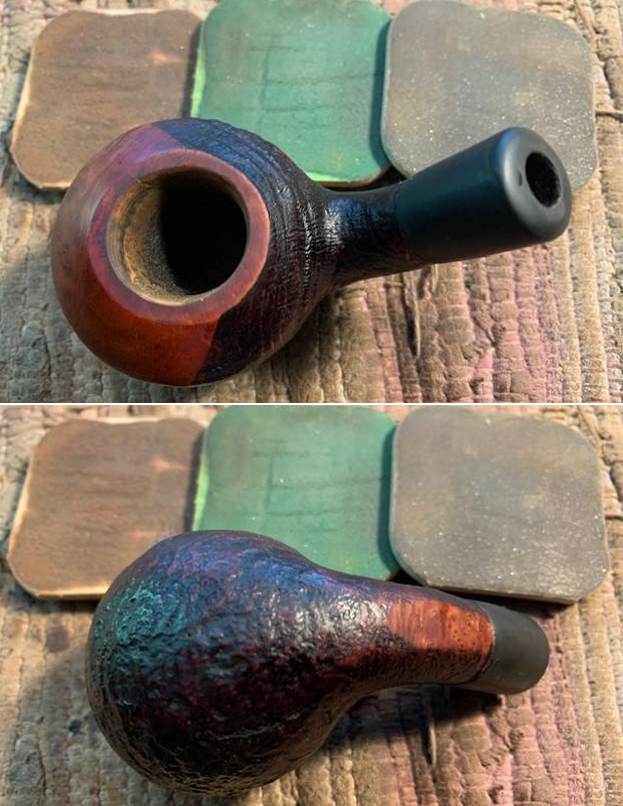
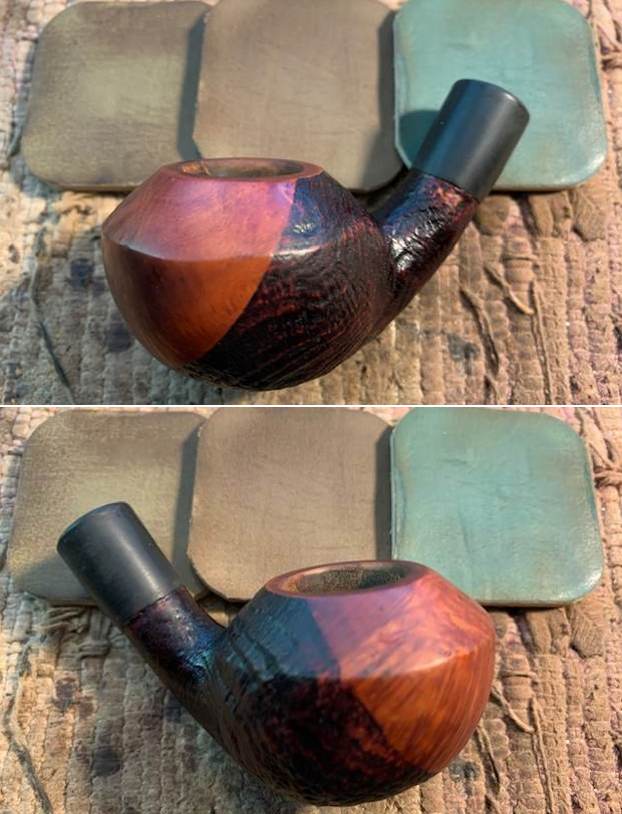
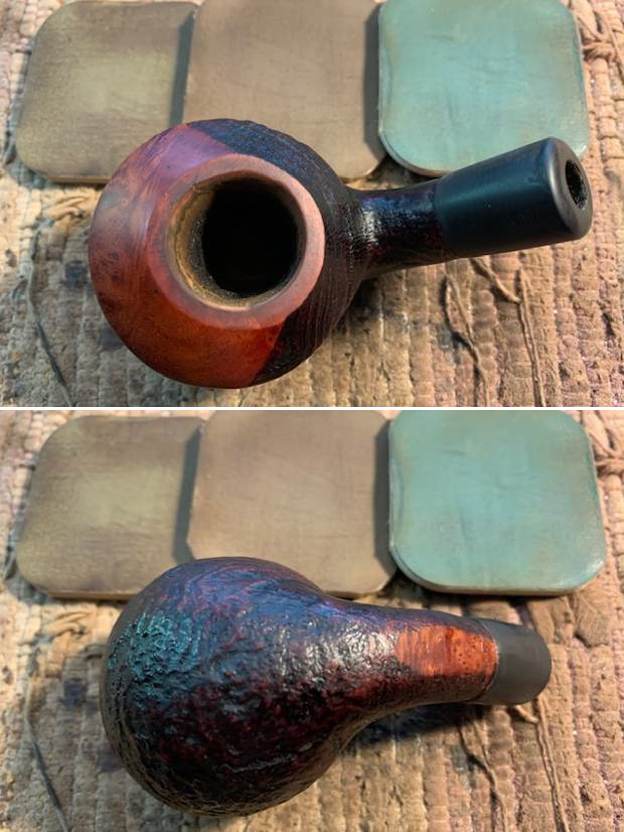
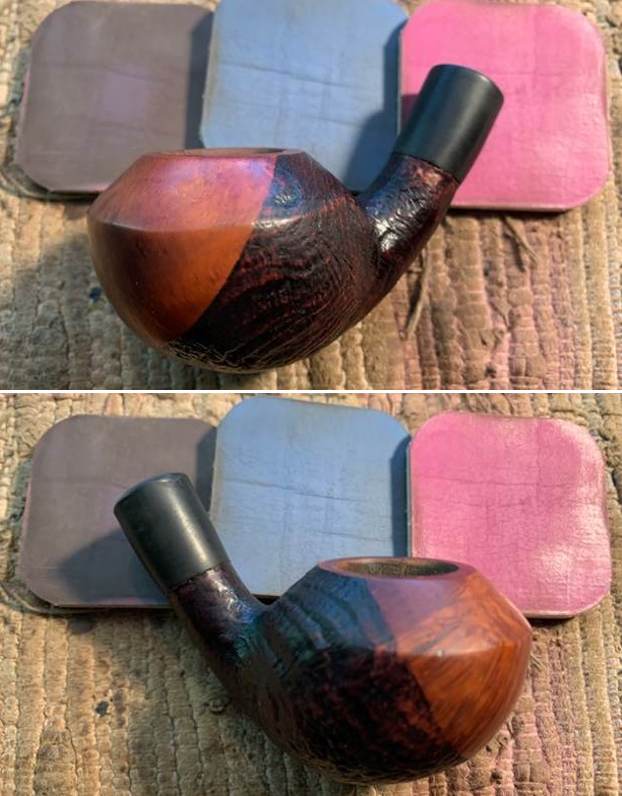
Cleaning up a Preben Holm made Monte Verde Twin Finish Freehand


Blog by Steve Laug

The next pipe on the table was purchased from an estate lot on 06/13/22 from Fort Myers, Florida, USA. It has that verve that I have come to associate with pipe made by Preben Holm and the fellow we purchase this lot from obviously love Preben Holm pipes because we acquired several from him in this lot from the IIS pipes to a Danish Pride still to come. They are unique and beautiful. The pipe is stamped on a smooth panel on the underside. It reads Monte Verde over Made in Denmark by Hand. Underneath that there is a script stamp that reads Twin Finish. I have refurbished several Monte Verde pipe so if you are interested in the brand here is a link to one I did back in 2019 that is very similar to this one (https://rebornpipes.com/2019/02/09/new-life-for-a-preben-holm-monte-verde-twin-finish-freehand/). It was quite dirty, like the rest of the pipes in this collection. There was a thick cake in the bowl and a heavy lava overflow on the rim top that filled in the rustication. The inner and outer edges of the bowl looked very good. The stem had some light tooth marks and chatter on both sides near the button but really was in quite remarkable condition. Jeff took photos of the pipe before he started his cleanup process. The next photos show a close up of the bowl and rim top as well as both sides of the stem. You can see the thick cake in the bowl and heavy overflow of lava on the rim top. The close up photos of the stem show the light tooth marks in the surface near the button on both sides. He took photos of the sides and heel of the bowl to show the look the double rustication on the sides and heel of the bowl. The curved shape of the pipe makes it a tall Dublinesque Stack but the rustication gives it a tactile look that can only mean an added dimension to the pipe when it is smoked.  The next photos show the stamping on the underside of the shank and the top of the saddle stem. It is quite clear and legible. The top of the stylized saddle stem has a Crown MV stamped into the surface. It appears to have originally been gold.   I turned to Pipephil’s site to get a read on the brand (http://pipephil.eu/logos/en/logo-m6.html). It confirms that the Monte Verdi line was made by Preben Holm. The pipe in the photo had a very similar rustication to the Monte Verdi I was working on. I did a screen capture of the section on Pipephil. I have included it below.   There were also photos that were included on Pipephil of what this particular pipe looked like when it left Denmark. The rustication around the bowl and shank is very similar. The pipe I have does not have a shank extension but otherwise the finish is much the same. The pipe in the photo had a fancy turned vulcanite stem. The stem on the one I have in front of me is the original stem on the pipe and it is a fancy double saddle pearlized acrylic or Lucite stem.I also Googled the brand and found a thread on Pipes Magazine about the brand that gave me some more information (http://pipesmagazine.com/forums/topic/monte-verde-pipes). I include that below.
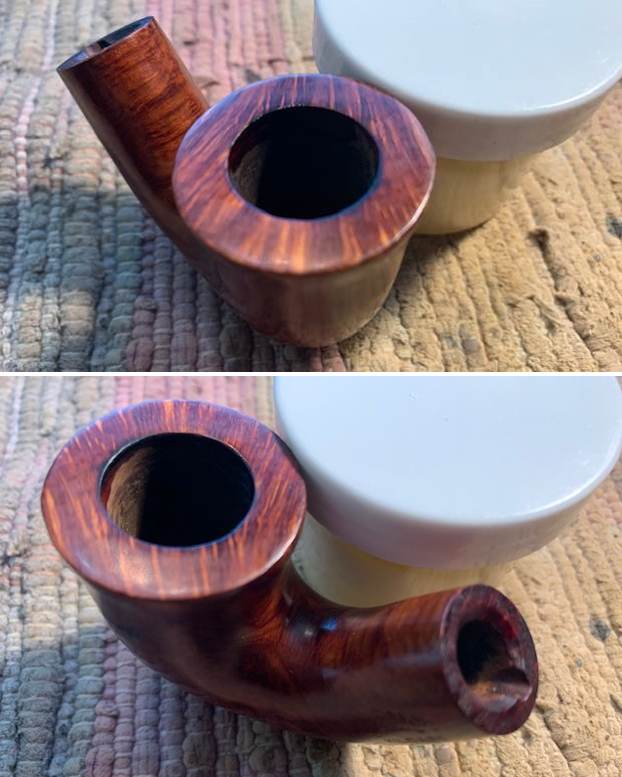
The Monte Verdi line was indeed a pipe style offered by Holm. It usually features heavily blasted and rusticated briar and smaller group sizes than some of his other lines. Some refer to this line as a “second”, but it provided an outlet for briar that had flaws and therefore unsuitable his other lines. Holm marketed many different lines featuring a variety of finishes in both stains and carvings and this is merely one of those. The ones I own are good pipes and smoke well. The blast finish is very interesting to look at and the tactile sensations make it fun to hold.

Jeff reamed the bowl with a PipNet pipe reamer and followed up with a Savinelli Fitsall pipe knife to remove the cake. He scrubbed out the mortise and the airway in the shank and the stem with alcohol, cotton swabs and pipe cleaners. He scrubbed the exterior of the bowl, rim, shank and stem with a tooth brush and Murphy’s Oil Soap to remove the oils and tars on the rim and the grime on the finish of the bowl. He rinsed it under running water. He dried it off with a soft cloth. He was able to remove most of the lava build up on the rim top and you could see a little remaining in the depths of the rustication. He cleaned out the inside of the stem with pipe cleaners, cotton swabs and alcohol. He scrubbed the surface o the stem with Soft Scrub Cleanser. The stem looked very good. I took photos of the pipe to show its condition before I started my work on it. I took close up photos of the bowl and rim top as well as the stem. You can see the condition of the rim top and bowl in the first photo. Jeff was able to remove almost all of the tar and oils but there was some deep lava in the rustication at the back of the rim. The Lucite stem had light tooth chatter and tooth marks on the top and underside of the stem near and on the button surface. The swirled browns, tans, blacks and greys of the Lucite looked good with the variegated browns of the briar.   I also took a photo of the stamping on the underside of the shank. The stamping is very clear and readable. You can also see the scratches in the smooth finish of the area in the photo below.I removed the stem from the shank and took a photo of the parts. It is a nice looking pipe with the flumed top, the rugged double rustication and the double saddle smoky acrylic stem.I started by working on the rim top. I used a brass bristle wire brush to clean off the remaining lava debris on the rim top. I was able to remove all of the remaining debris and the rim top looked really good. The deep rustication and the second wire rustication gave the pipe a very unique look.With the rim top cleaned I worked some Before & After Restoration Balm into the rusticated surface of the briar with my fingertips to clean, enliven and protect it. It took some time to really get it into the grooves and valleys of the rustication but I was able to work it in. I used a shoe brush to make sure it was deep in the grooves. I let the balm sit for 10 minutes and then buffed it with a cotton cloth to raise the shine. The following photos show the bowl at this point in the restoration process. The bowl and the rim top look really good and the darkening and lava are gone. I am very happy with the results.  I set aside the bowl at this point and turned my attention to the stem. I repaired the tooth marks with clear super glue. Once the glue cured I sanded the repairs with 220 grit sandpaper to blend them into the rest of the stem surface. I polished the sanding marks with 400 grit wet dry sandpaper. The photos tell the story. I touched up the stamping on the saddle portion of the stem with some Rub’n Buff Antique Gold. I let it dry in the stamping for a bit then buffed it off with a cotton pad. It looked much better. The MV was legible and the crown looked good. The side of the M was a little faint as the stamping was worn. I polished the Lucite stem with micromesh sanding pads – wet sanding with 1500-2400 grit sanding pads and dry sanding it with 3200-12000 grit sanding pads. I wiped it down after each sanding pad with a damp cloth. I polished it with Before & After Pipe Stem Polish and wiped it down a last time with the damp cloth.  This beautiful, double rusticated Preben Holm carved Monte Verde Twin Finish Large Freehand is a special looking pipe and it feels amazing in the hand. I polished stem with Blue Diamond polish on the buffing wheel. I gave the bowl multiple coats of Conservator’s Wax and the stem multiple coats of carnauba wax. I buffed the pipe with a clean buffing pad to raise the shine. I hand buffed it with a microfiber cloth to deepen the shine. The pipe polished up pretty nicely. The multi-coloured grain shining through the rustication came alive with the buffing. The rich contrasting brown colour works well with the polished swirling brown, tan, black and white Lucite stem. The finished pipe is a beauty and feels great in the hand. Have a look at it with the photos below. The dimensions are Length: 6 ½ inches, Height: 3 inches, Outside diameter of the bowl: 2 inches, Chamber diameter: 1 inch. The weight of the pipe is 2.75 ounces/ 78 grams. I will be putting this Monte Verde by Preben Holm on the Danish Pipe Making Section on the rebornpipes online store soon. It is such an interesting tactile pipe and if you have been looking for a freehand then this might be the one for you. Thanks for walking through the restoration with me on this interestingly shaped Preben Holm Hand made pipe.
Restoring another IIS – A Smooth Full Bent Hand Made Freehand


Blog by Steve Laug

This smooth Freehand is another pipe says very clearly that it is a Preben Holm pipe. The unique shape that really chases the grain to give a sense of vertical and horizontal grain of the briar with plateau on the right side of the heel and  the underside of the shank all say it is another Holm to me. This pipe was purchased from an estate lot on 06/13/22 from Fort Myers, Florida, USA. It is stamped Hand Made [over] In [over] Denmark on left side of the heel of the bowl on the fin and across from it on the bottom of the heel – below the plateau portion it is stamped IIS. The shape of the bowl with the angles of the carving are unique and the way the grain flows give a sense of fluidity to the pipe. The finish is stained with rich mixture of brown stains that give a sense of depth to it. It was another filthy pipe with grime ground into the smooth finish and dust and debris in the plateau portions. The rim top has a heavy lava overflow on the top and edges coming from a thick cake in the bowl. The fancy turned vulcanite stem was heavily oxidized and calcified with tooth marks and chatter on both sides ahead of the button. Jeff took photos of the pipe before he started working on it. It is another beauty.He took close up photos of the uniquely shaped bowl and rim top from different angles to show the condition of the bowl and the rim top. You can see the thick cake in the bowl and the thick overflow of lava on the rim top and on the inner edge of the bowl. He took photos surface of the vulcanite stem to show the oxidation, calcification and tooth chatter and marks on both sides ahead of the button. He took photos of the sides and heel of the bowl to show how the plateau is situated on the heel of the bowl and the underside of the shank. The straight, flame and mixed grain on the right side of the bowl stands out through the grime on the shank and the sides of the bowl. The geometric angles of the bowl shape make the pipe function as a sitter.  Jeff took photos of the stamping on the heel of the bowl to capture it. It was clear and readable as noted above. I quote from a previous restoration I did recently on a IIS sandblast Freehand wrote a blog on (https://rebornpipes.com/2022/08/14/restoring-a-beautiful-iis-sandblast-fancy-carved-freehand/). I quote from that blog below.
I turned to Pipedia to see what I could find out about the IIS brand (https://pipedia.org/wiki/IIS). The article there was shrouded in mystery and gave several options on the maker. I quote:

Pipes marked with IIS and sometimes IS are reported to be made by Karl Erik, and can be found on many private label pipes, such as the one below, marked “John Crouch” for the Scottish Merchant & Tobacconist out of Alexandria Virginia. Others have reported pipes marked IIS, or perhaps the IS in particular, were seconds made by Preben Holm.

I googled for further information and found a pair of IIS pipes on etsy that were sold with notes by the maker (https://www.etsy.com/listing/504709353/ii-s-hand-made-in-denmark-tobacco-pipes). I found it interesting and quote part of it as follows:

There are some mixed ideas about the II S trademark. Spoke to a few about it and than searched the web. Could have been made by Karl Erik while employed by Preben Holm, or sold in US only pipes or could have been made by Preben Holm. In any case they are a very unique pair. Nice works of art. Here is some info that was shared with me and I will include to help solve any mysteries.

KE’s old grading used numbers ascending from 4 to 1. The entirely hand made one of a kind pieces were stamped “Ekstravagant”. Quite simple.

But then there are the II S stamped pipes! (And furthermore seen so far II SM, I S, I M and I B.) Three fairy tales, often told:

  • II S stands for the initials of a pipe maker who worked for Preben Holm before he changed to KE. (Karl Erik)
  • II S pipes are a second brand of KE. Nonsense comparing the quality of II S and normal KE pipes!
  • II S was used when there was no space for stampings otherwise.

I believe that the pipe was made by Preben Holm during the height of his work on pipes. I wonder if it is possible that they were made in the period before he changed from stamping them with his name and to Ben Wade due to issues with his importer in the US. I am not sure but I think that works well in terms of the data.

When I received it from Jeff this past week it incredibly better that the above photos show. It was clean and the finish had life. He reamed it with a PipNet pipe reamer and got rid of the cake. He cleaned up the reaming with a Savinelli Fitsall Pipe Knife so that we could see the walls of the bowl and assess for damage. It was in good condition. He cleaned the internals of the shank and stem with cotton swabs, pipe cleaners and alcohol. He scrubbed the exterior with undiluted Murphy’s Oil Soap and a tooth brush. He rinsed the pipe under warm water. He dried it off with a cloth and then let it air dry. He scrubbed the stem with Soft Scrub and soaked it in Briarville’s Stem Deoxidizer. He rinsed it with warm water and dried it off with a soft cloth. It came out looking very good. The finish on the bowl and the rim top cleaned up nicely. I took pictures of the pipe to show how it looked when I unpacked it. I took some photos of the rim top and stem to show the condition of them both when the pipe arrived. Overall it looked good. The oxidation on the stem had come off very well and the tooth marks and scratches in the finish were visible next to the button edge. I took a photo of the stamping on the underside of the shank. It was clear and readable as noted above.  I removed the stem from the shank and took a photo of the appearance of the parts. You can see how the grain flows around the bowl.I polished the bowl with micromesh sanding pads – dry sanding with 1500-12000 grit pads and wiping it down after each pad with a damp cloth. I worked some Before & After Restoration Balm into the surface of the briar. To get it into the nooks and crannies of the plateau I used a shoe brush and worked it deeply into the grooves. The balm works to clean, enliven and preserve the briar. I let it sit for 10 minutes then buffed it off with a soft cloth. It is a beautiful pipe. The bowl looks amazing. It is a beautiful pipe. I set the bowl aside and turned my attention to the stem. I sanded the surface of the stem and then “painted” the surface of the stem with the flame of a Bic lighter to lift the tooth marks and scratches. I was able to lift many of them. I used clear super glue to fill in those that remained. I sanded the surface of the stem with 220 grit sandpaper to smooth out the repairs and started the polishing with 400 grit wet dry sandpaper. I polished the stem with micromesh sanding pads – dry sanding with 1500-12000 grit pads. I wiped the stem down after each pad with some Obsidian Oil. I finished hand polishing it with Before & After Pipe Stem Polish – Fine and Extra Fine. I rubbed it down with another coat of Obsidian Oil and let it dry. The stem really was beginning to look very good.   This is another beautiful Hand Made in Denmark IIS by Preben Holm, a full bent with a fancy, turned, black vulcanite stem. It has a great look and feel. The feet on the heel of the bowl make it a sitter that is well balanced. The shape fits well in the hand with the curve of the bowl and shank junction a perfect fit for the thumb around the bowl when held. I polished stem with Blue Diamond polish on the buffing wheel. I gave the smooth bowl and plateau portions on the heel and the underside of the shank end and the stem multiple coats of carnauba wax. I buffed the pipe with a clean buffing pad to raise the shine. I hand buffed it with a microfiber cloth to deepen the shine. The pipe polished up pretty nicely. The rich combination of stains makes the grain just sing and it works well with the polished vulcanite stem. Have a look at the photos below. The shape, finish and flow of the pipe and stem are very well done. The dimensions are Length: 6 inches, Height: 2 ¼ inches, Outside diameter of the bowl: 1 ½ inches, Chamber diameter: ¾ of an inch. The weight of the pipe is 73 grams/ 2.57 ounces. Thanks for walking through the restoration with me as I worked over this pipe. It will be going on the rebornpipes store in the Danish Pipe Making Section shortly if you would like to add it to your collection.

Restoring an old WDC Sandblast Thorobred Kerly Briar Broken In


Blog by Steve Laug

This deep and rugged sandblast Billiard is a beautiful pipe. The grain around the bowl has been sandblasted and left with deep grooves and mountains. Jeff picked the pipe up on 07/01/22 from an online auction in Manorville, New York, USA. It is stamped on the underside of the shank and reads WDC in a triangle followed by Thorobred [over] Kerly Briar [over] Broken In. The sandblast grain follows the flow of the carved briar. The finish is stained with dark colours – black and dark brown that give depth to its finish. It was filthy with dust and debris ground into the grooves around the sides of the bowl. The rim top has a heavy lava overflow on the top and edges coming from a thick cake in the bowl. The tapered hard rubber stem has a red triangle WDC logo inset on the topside. It was lightly oxidized and calcified with tooth marks and chatter on both sides ahead of the button. Jeff took photos of the pipe before he started working on it. It really is a beauty. He took photos of the rim top and the stem to show the condition. You can see the thick cake in the bowl and overflow of lava on the rim top. The photos of the stem show the tooth marks and damage in the hard rubber on the top and underside ahead of the button. Jeff took photos of the sandblast finish around the bowl sides to show the deep and flowing rustication around the bowl. You can also see the dust and debris in the grooves of he blast. Jeff took photos of the stamping on the underside of the shank to capture it. It was clear and readable as noted above. I turned to Pipedia (https://pipedia.org/wiki/William_Demuth_Company) and read a quick history of the brand. I have included it below.

William Demuth. (Wilhelm C. Demuth, 1835-1911), a native of Germany, entered the United States at the age of 16 as a penniless immigrant. After a series of odd jobs he found work as a clerk in the import business of a tobacco tradesman in New York City. In 1862 William established his own company. The William Demuth Company specialized in pipes, smoker’s requisites, cigar-store figures, canes and other carved objects.

The Demuth Company is probably well known for the famous trademark, WDC in an inverted equilateral triangle. William commissioned the figurative meerschaum Presidential series, 29 precision-carved likenesses of John Adams, the second president of the United States (1797-1801) to Herbert Hoover, the 30th president (1929-1933), and “Columbus Landing in America,” a 32-inch-long centennial meerschaum masterpiece that took two years to complete and was exhibited at the World’s Columbian Exposition in Chicago in 1893…

…In 1897 Ferdinand Feuerbach joined the Demuth company and by 1903 had become the production manager. Feuerbach is credited with developing Demuth’s popular Royal Demuth and Hesson Guard Milano pipelines. He left in 1919, when Sam Frank Sr. needed an experienced pipe man to run his pipe factory, located at 168 Southern Blvd., in the Bronx. Feuerbach and Frank had been close friends since Frank started his own business in 1900 and was closely associated with the sales staff of WDC, selling their line of pipes…

In early 1937, the City of New York notified S.M. Frank & Co. of their intent to take by eminent domain, part of the land on which the companies pipe factory was located. This was being done to widen two of the adjacent streets. As a result of this, Frank entered into negotiations to purchase the Wm. Demuth Co.’s pipe factory in the Richmond Hill section of Queens. It was agreed upon that Demuth would become a subsidiary of S.M. Frank and all pipe production of the two companies would be moved to DeMuth factory. New Corporate offices were located at 133 Fifth Avenue, NYC.

Demuth pipes continued to be made at the Richmond Hill plant till December 31. 1972. Then the Wm. Demuth Company met its official end as a subsidiary company by liquidation. Demuth’s mainstay pipe, the Wellington continued to be offered in the S.M. Frank catalog until 1976. In the mid-80’s, the Wellington even made a brief return as a direct to the consumer offer.

I also have included a photo of a Billiard with the same stamping and deep sandblast as the pipe I working on.When I received it from Jeff this past week it did not look like the same pipe. It was clean and the finish had life. He reamed it with a PipNet pipe reamer and got rid of the cake. He cleaned up the reaming with a Savinelli Fitsall Pipe Knife so that we could see the walls of the bowl and assess for damage. It was in good condition. He cleaned the internals of the shank and stem with cotton swabs, pipe cleaners and alcohol. He scrubbed the exterior with undiluted Murphy’s Oil Soap and a tooth brush. He rinsed the pipe under warm water. He dried it off with a cloth and then let it air dry. He removed the Softee Bit and then scrubbed the stem with Soft Scrub and soaked it in Briarville’s Stem Deoxidizer. He rinsed it with warm water and dried it off with a soft cloth. It came out looking very good. The finish on the bowl and the rim top cleaned up nicely. I took pictures of the pipe to show how it looked when I unpacked it. I took some photos of the rim top and stem to show the condition of them both when the pipe arrived. Overall it looked very good. The oxidation on the stem had come off very well and the tooth marks chatter in the surface of the stem were visible.   I took a photo of the stamping on the underside of the shank. It was clear and readable as noted above.I removed the stem from the shank and took a photo of the appearance of the parts. It is a beauty.The bowl was in great condition so I worked some Before & After Restoration Balm into the surface of the briar. To get it into the nooks and crannies I used a shoe brush and worked it deeply into the grooves. The balm works to clean, enliven and preserve the briar. I let it sit for 10 minutes then buffed it off with a soft cloth. It is a beautiful pipe.  The rugged finish on the bowl looks very good at this point. It is a beautiful pipe. I set the bowl aside and turned my attention to the stem. I “painted” the surface of the stem with the flame of a Bic lighter to lift the tooth marks and scratches. I was able to lift many of them. I used clear super glue to fill in those that remained. I sanded the surface of the stem with 220 grit sandpaper to smooth out the repairs and started the polishing with 400 grit wet dry sandpaper. I used a coffee mug with water to heat the stem end and bend it. I put the stem and the mug in the microwave and heated it for 2 minutes until it was boiling. I let the stem sit for a few moments then removed it from the water and bent it to the angle I wanted. I set the angle with cold water. I dried it off and set it aside to work on further. I polished the stem with micromesh sanding pads – dry sanding with 1500-12000 grit pads. I wiped the stem down after each pad with some Obsidian Oil. I finished hand polishing it with Before & After Pipe Stem Polish – Fine and Extra Fine. I rubbed it down with another coat of Obsidian Oil and let it dry. The stem really was beginning to look very good. This is a beautiful WDC Thorobred Kerly Briar Broken In Bent Billiard with a thick hard rubber, black stem. It has a great look and feel. The flat bottom makes it a sitter that is well balanced. The shape fits well in the hand with the curve of the bowl and bend of the shank making a great pipe to hold. I polished stem with Blue Diamond polish on the buffing wheel. I gave the sandblast bowl and plateau on the rim top and shank end multiple coats of Conservator’s Wax. I gave the stem multiple coats of carnauba wax. I buffed the pipe with a clean buffing pad to raise the shine. I hand buffed it with a microfiber cloth to deepen the shine. The pipe polished up pretty nicely. The rich combination of black and dark brown stains gave the sandblast a sense of depth. The pipe took on life with the buffing. The rich colour of the briar works well with the polished stem. Have a look at it with the photos below. The shape, finish and flow of the pipe and stem are very well done. The dimensions are Length: 5 inches, Height: 1 ½ inches, Outside diameter of the bowl: 1 inch, Chamber diameter: ¾ of an inch. The weight of the pipe is 39 grams/ 1.38 ounces. This Danish Freehand is a real beauty. Thanks for walking through the restoration with me as I worked over another beautiful pipe. This one will be going on the rebornpipes store in the American Pipe Makers Section shortly if you would like to add it to your collection. Thanks for your time.

Restoring a Beautiful IIS Sandblast Fancy Carved Freehand


Blog by Steve Laug

Everything about this large sandblast Freehand says that is it a Preben Holm pipe. The unique shape that really chases the grain to give a sense of vertical and horizontal grain of the sandblast says Holm to me. Jeff picked the pipe up on 06/26/22 from an online auction in Kansas City, Missouri, USA. It is stamped Hand Made [over] In [over] Denmark [over] IIS. The shape of the bowl with the angles of the carving are unique and the depth of the sandblast give a sense of fluidity to the pipe. The finish is stained with dark colours – black and purple that make it have a depth to its finish. It was filthy and the plateau rim and shank end was the same. The dust and debris is quite heavy around the sides of the bowl. The plateau rim top has a heavy lava overflow on the top and edges coming from a thick cake in the bowl. The fancy turned vulcanite stem was heavily oxidized and calcified with tooth marks and chatter on both sides ahead of the button. Jeff took photos of the pipe before he started working on it. It really is a beauty. He took close up photos of the uniquely shaped bowl and rim top from different angles to show the condition of the bowl and the plateau rim top. You can see the thick cake in the bowl with the flakes of tobacco stuck to the walls. You can also see the overflow of lava on the rim top and on the inner edge of the bowl. He took photos surface of the vulcanite stem to show the oxidation, calcification and tooth chatter and marks on both sides ahead of the button. He took photos of the sides and heel of the bowl to show a deep and rugged sandblast that really makes the mix of grain stand out through the grime on the shank and the sides of the bowl. The geometric angles of the bowl shape are really quite stunning and interesting.  Jeff took photos of the stamping on the underside of the shank to capture it. It was clear and readable as noted above.I turned to Pipedia to see what I could find out about the IIS brand (https://pipedia.org/wiki/IIS). The article there was shrouded in mystery and gave several options on the maker. I quote:

Pipes marked with IIS and sometimes IS are reported to be made by Karl Erik, and can be found on many private label pipes, such as the one below, marked “John Crouch” for the Scottish Merchant & Tobacconist out of Alexandria Virginia. Others have reported pipes marked IIS, or perhaps the IS in particular, were seconds made by Preben Holm.

I googled for further information and found a pair of IIS pipes on etsy that were sold with notes by the maker (https://www.etsy.com/listing/504709353/ii-s-hand-made-in-denmark-tobacco-pipes). I found it interesting and quote part of it as follows:

There are some mixed ideas about the II S trademark. Spoke to a few about it and than searched the web. Could have been made by Karl Erik while employed by Preben Holm, or sold in US only pipes or could have been made by Preben Holm. In any case they are a very unique pair. Nice works of art. Here is some info that was shared with me and I will include to help solve any mysteries.

KE’s old grading used numbers ascending from 4 to 1. The entirely hand made one of a kind pieces were stamped “Ekstravagant”. Quite simple.

But then there are the II S stamped pipes! (And furthermore seen so far II SM, I S, I M and I B.) Three fairy tales, often told:

  • II S stands for the initials of a pipe maker who worked for Preben Holm before he changed to KE. (Karl Erik)
  • II S pipes are a second brand of KE. Nonsense comparing the quality of II S and normal KE pipes!
  • II S was used when there was no space for stampings otherwise.

I believe that the pipe was made by Preben Holm during the height of his work on pipes. I wonder if it is possible that they were made in the period before he changed from stamping them with his name and to Ben Wade due to issues with his importer in the US. I am not sure but I think that works well in terms of the data.

When I received it from Jeff this past week it did not look like the same pipe. It was clean and the finish had life. He reamed it with a PipNet pipe reamer and got rid of the cake. He cleaned up the reaming with a Savinelli Fitsall Pipe Knife so that we could see the walls of the bowl and assess for damage. It was in good condition. He cleaned the internals of the shank and stem with cotton swabs, pipe cleaners and alcohol. He scrubbed the exterior with undiluted Murphy’s Oil Soap and a tooth brush. He rinsed the pipe under warm water. He dried it off with a cloth and then let it air dry. He removed the Softee Bit and then scrubbed the stem with Soft Scrub and soaked it in Briarville’s Stem Deoxidizer. He rinsed it with warm water and dried it off with a soft cloth. It came out looking very good. The finish on the bowl and the rim top cleaned up nicely. I took pictures of the pipe to show how it looked when I unpacked it.  I took some photos of the rim top and stem to show the condition of them both when the pipe arrived. Overall it looked good. The oxidation on the stem had come off very well and the tooth marks and scratches in the finish were visible. I took a photo of the stamping on the underside of the shank. It was clear and readable as noted above.I removed the stem from the shank and took a photo of the appearance of the parts. You can see how large the pipe is in the photos.The bowl was in great condition so I worked some Before & After Restoration Balm into the surface of the briar. To get it into the nooks and crannies I used a shoe brush and worked it deeply into the grooves. The balm works to clean, enliven and preserve the briar. I let it sit for 10 minutes then buffed it off with a soft cloth. It is a beautiful pipe. The rugged finish on the bowl looks amazing. It is a beautiful pipe. I set the bowl aside and turned my attention to the stem. I sanded the surface of the stem and then “painted” the surface of the stem with the flame of a Bic lighter to lift the tooth marks and scratches. I was able to lift many of them. I used clear super glue to fill in those that remained. I sanded the surface of the stem with 220 grit sandpaper to smooth out the repairs and started the polishing with 400 grit wet dry sandpaper. I polished the stem with micromesh sanding pads – dry sanding with 1500-12000 grit pads. I wiped the stem down after each pad with some Obsidian Oil. I finished hand polishing it with Before & After Pipe Stem Polish – Fine and Extra Fine. I rubbed it down with another coat of Obsidian Oil and let it dry. The stem really was beginning to look very good.   This is a beautiful Hand Made in Denmark IIS by Preben Holm with a fancy, turned, black vulcanite stem. It has a great look and feel. The flat bottom makes it a sitter that is well balanced. The shape fits well in the hand with the curve of the bowl and shank junction a perfect fit for the thumb around the bowl when held. I polished stem with Blue Diamond polish on the buffing wheel. I gave the sandblast bowl and plateau on the rim top and shank end multiple coats of Conservator’s Wax. I gave the stem multiple coats of carnauba wax. I buffed the pipe with a clean buffing pad to raise the shine. I hand buffed it with a microfiber cloth to deepen the shine. The pipe polished up pretty nicely. The rich combination of black and purple stains gave the sandblast and plateau depth. The pipe took on life with the buffing. The rich colour of the briar works well with the polished vulcanite stem. Have a look at it with the photos below. The shape, finish and flow of the pipe and stem are very well done. The dimensions are Length: 7 inches, Height: 3 ¼ inches, Outside diameter of the bowl: 2 ¼ wide x 3 inches long, Chamber diameter: 1 inch. The weight of the pipe is 103 grams/ 3.63 ounces. This Danish Freehand is a real beauty. Thanks for walking through the restoration with me as I worked over another beautiful pipe. This one will be going on the rebornpipes store in the Danish Pipe Making Section shortly if you would like to add it to your collection. Thanks for your time.