Tag Archives: repairing bite marks

Restoring a Lovely Danish Pickaxe


Blog by Kenneth Lieblich

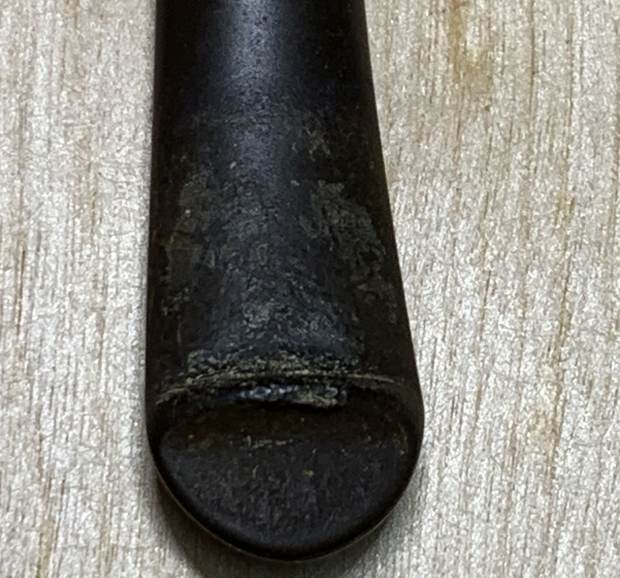
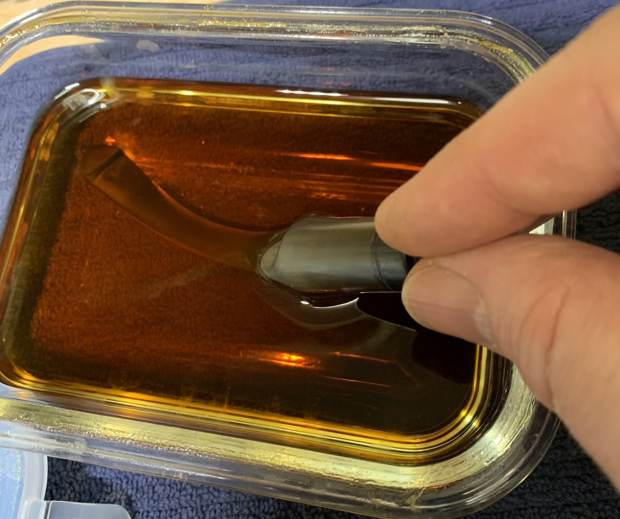
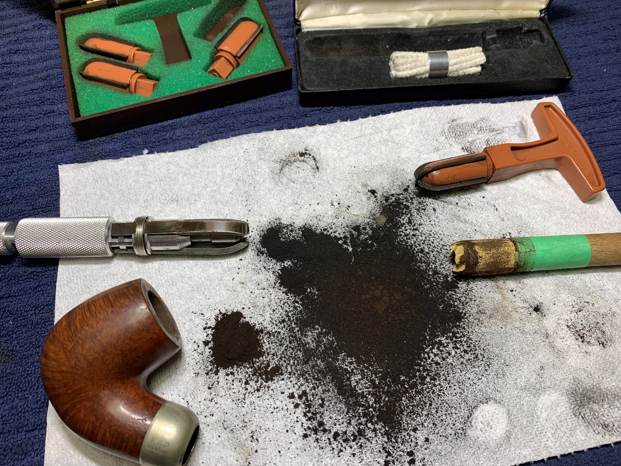
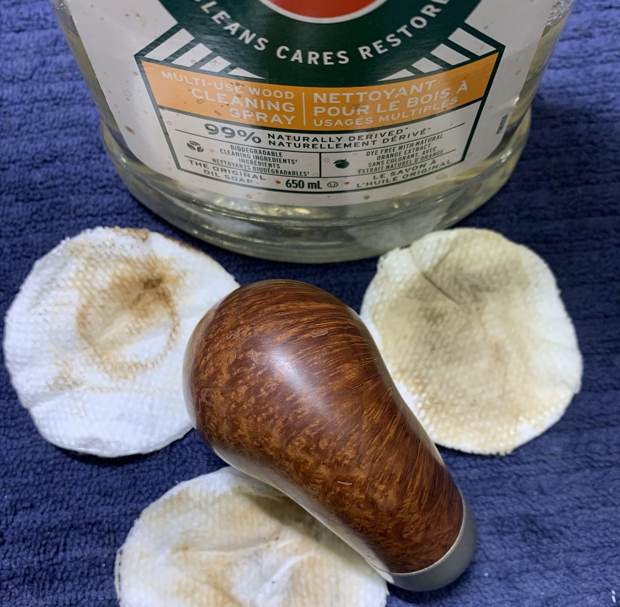
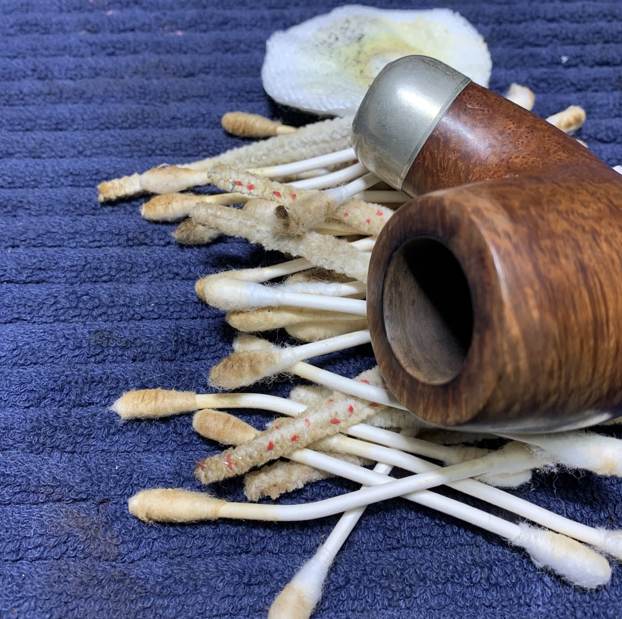
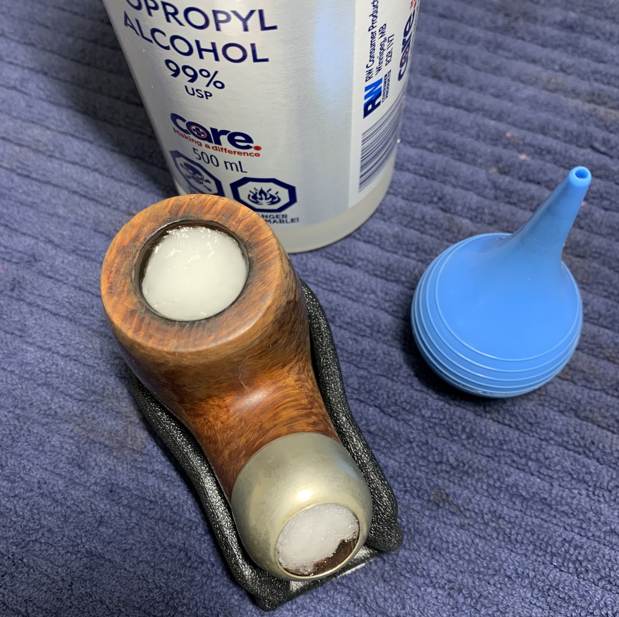
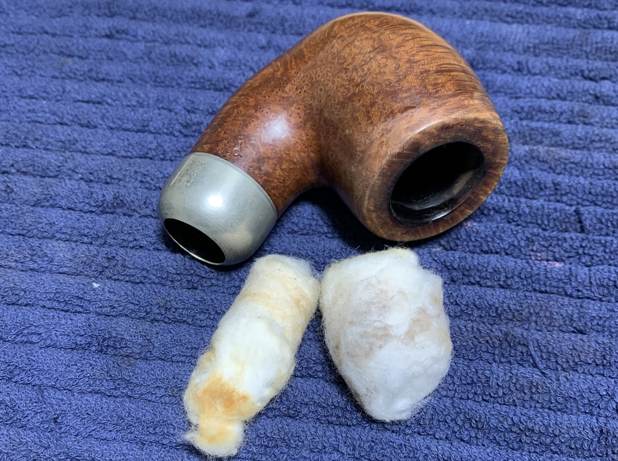
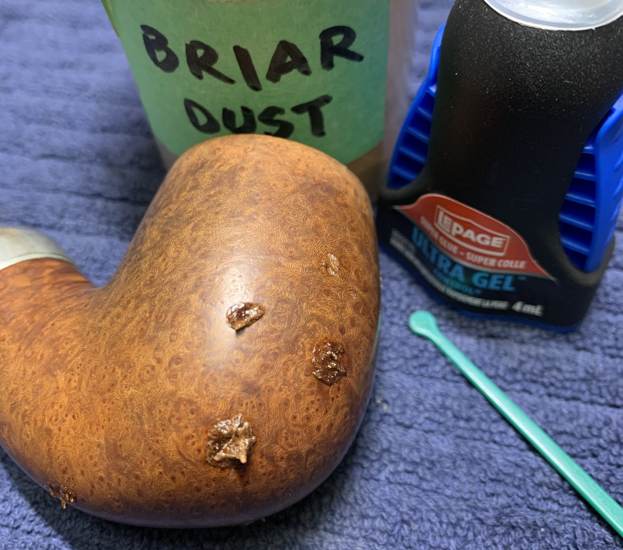
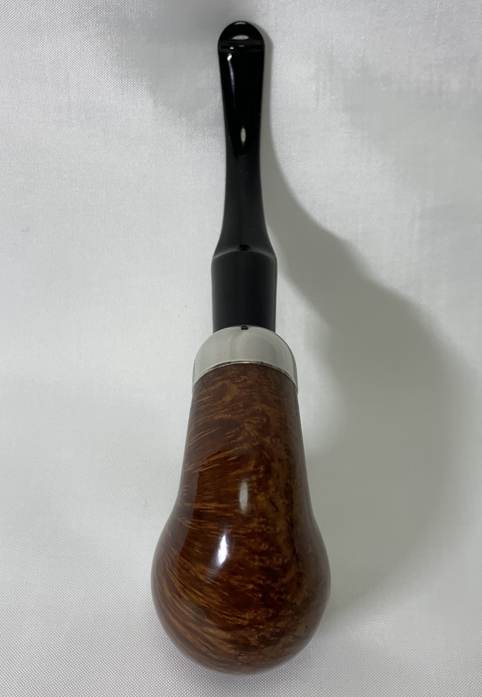
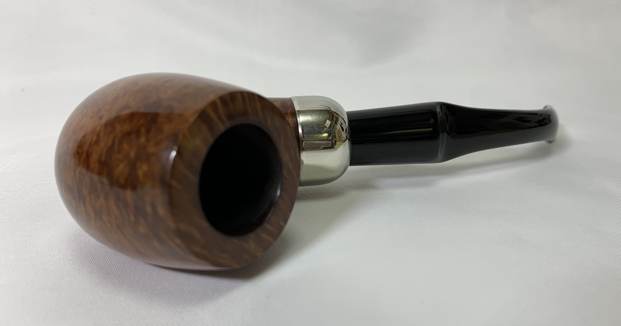
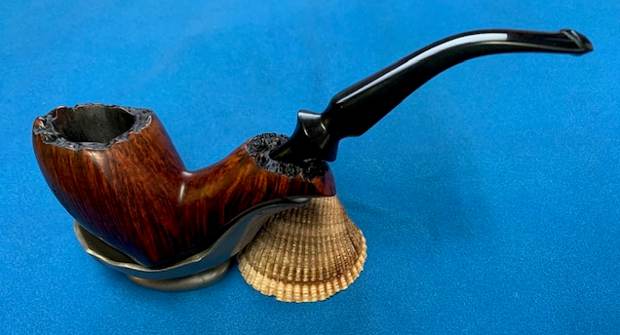
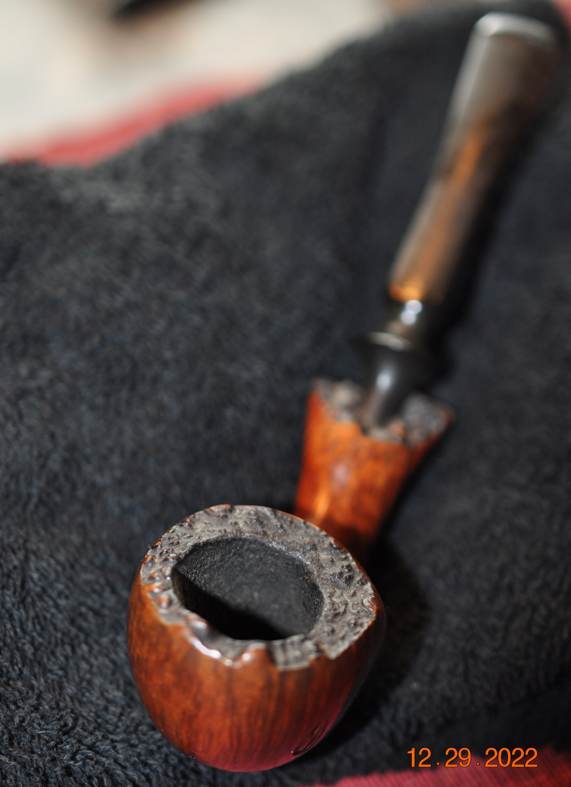
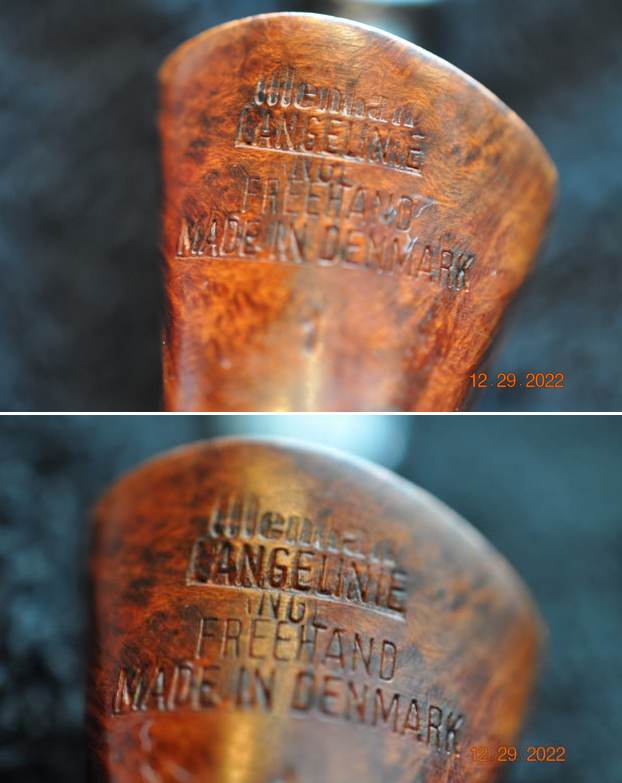
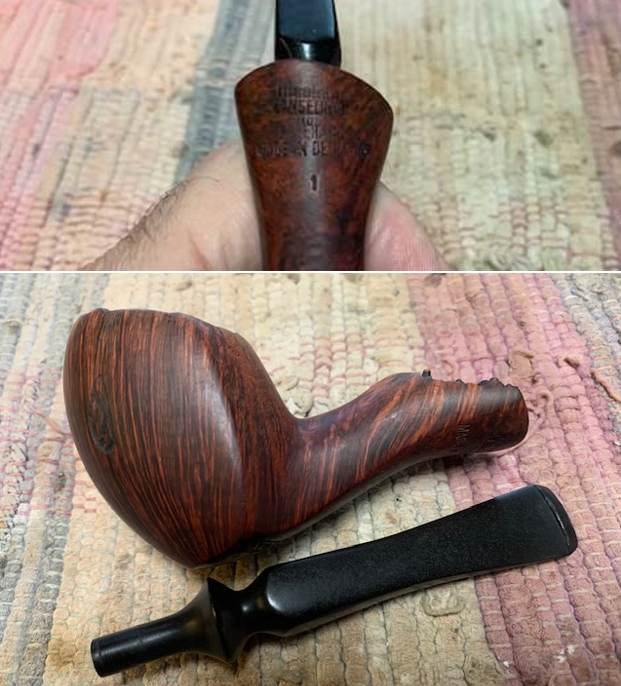
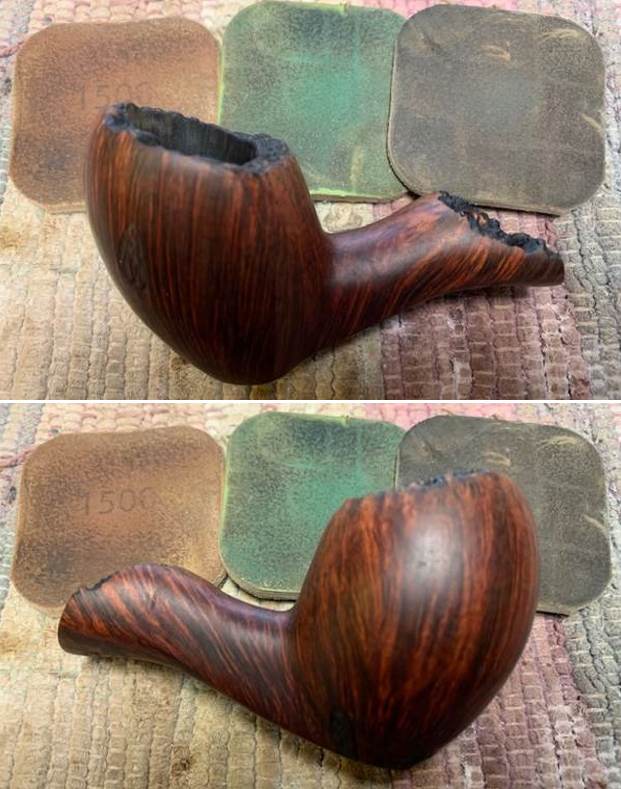
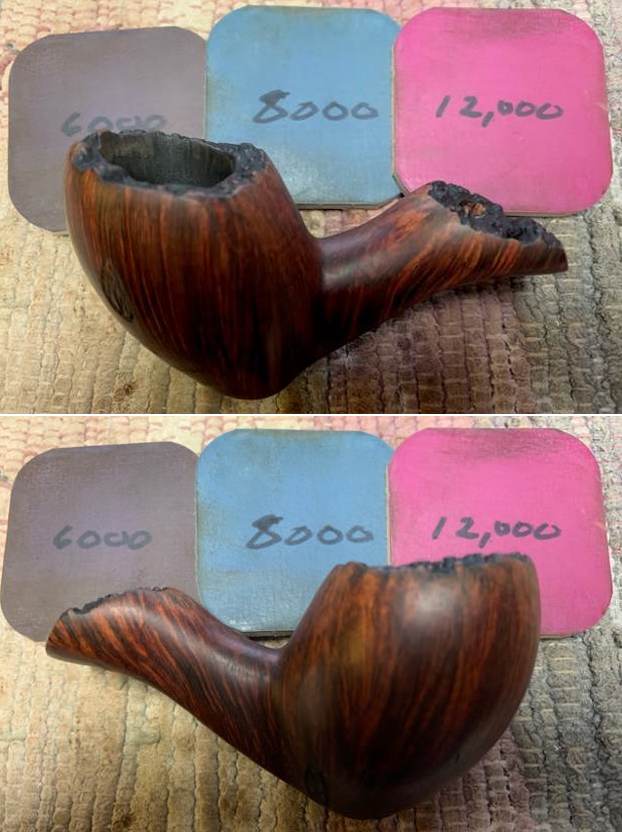
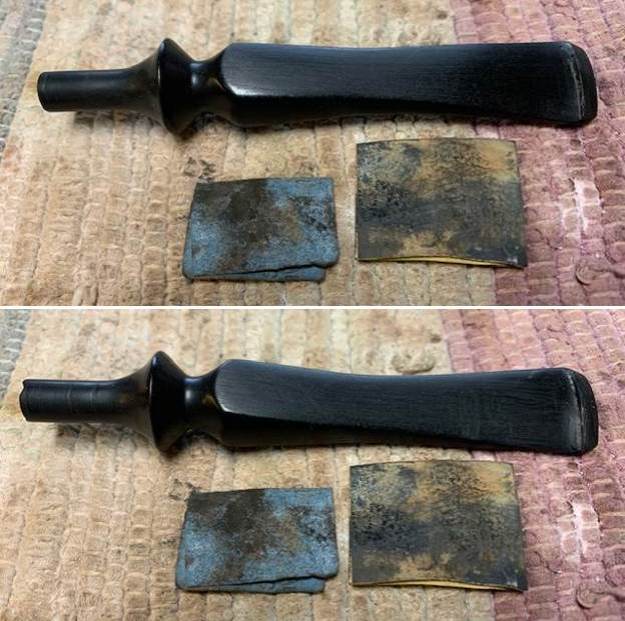
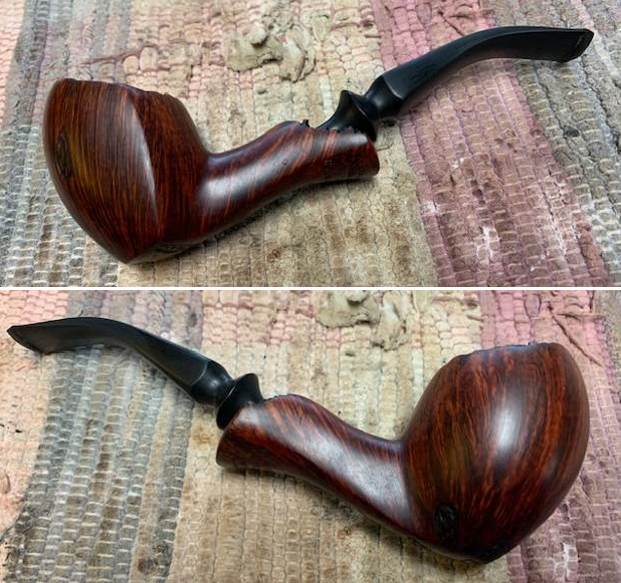
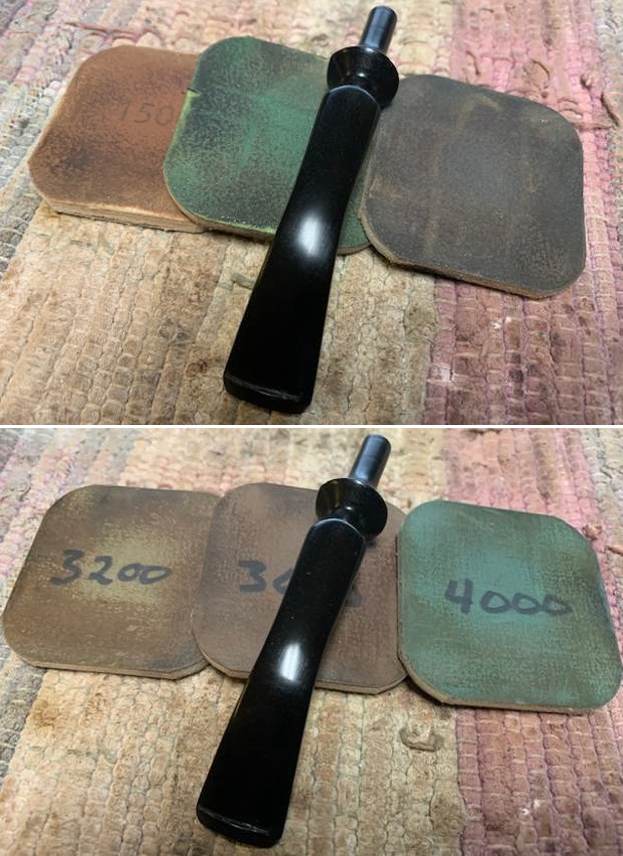
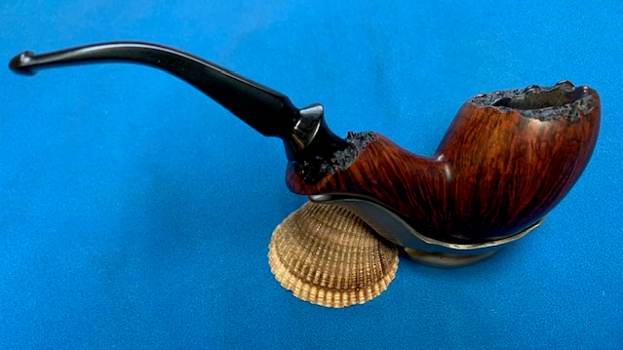
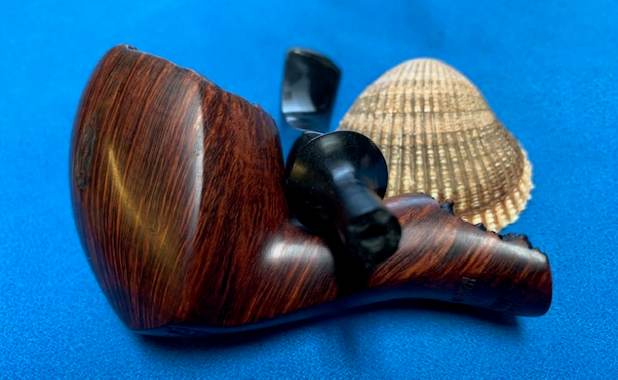
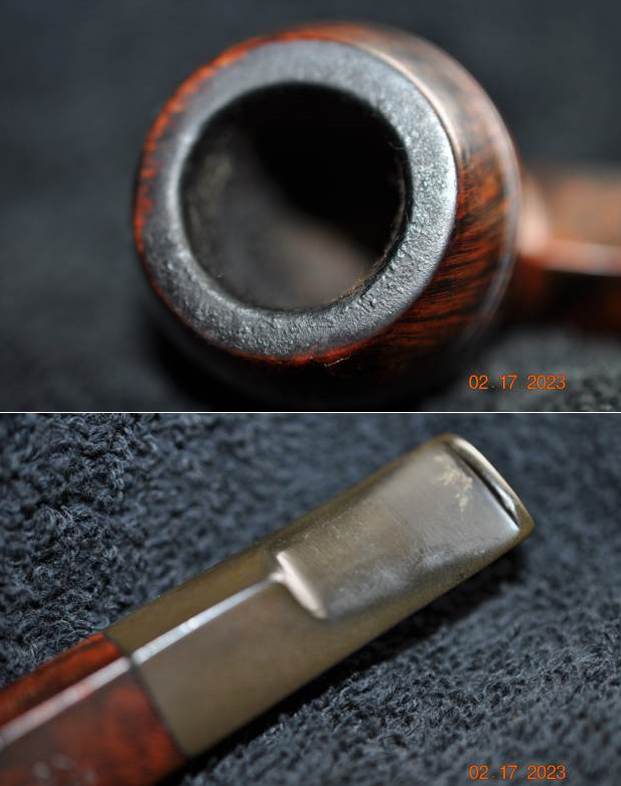
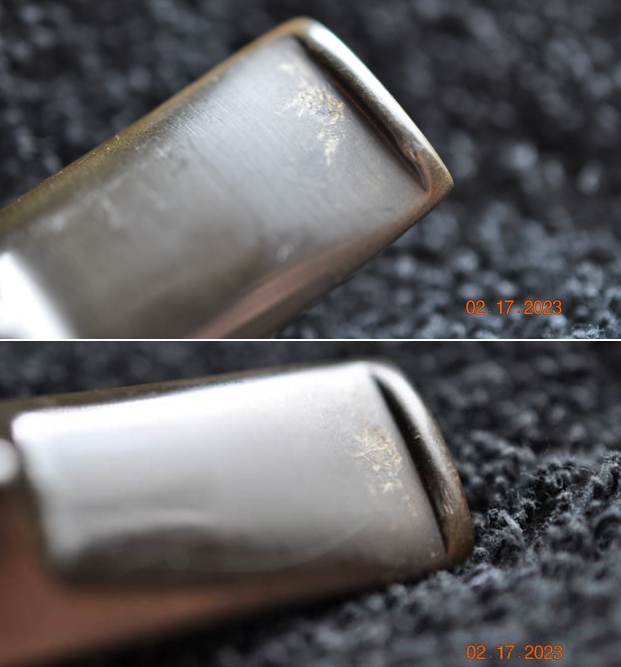
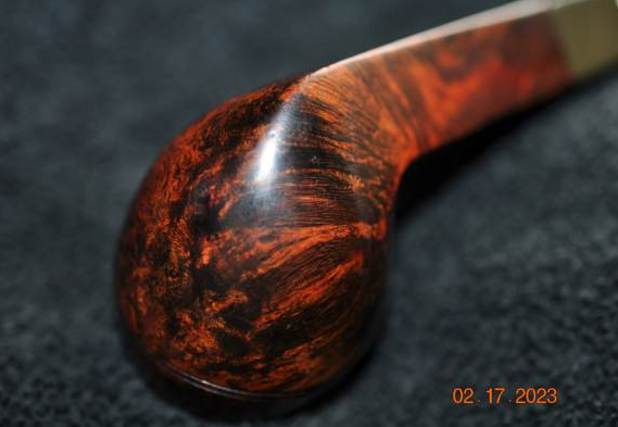
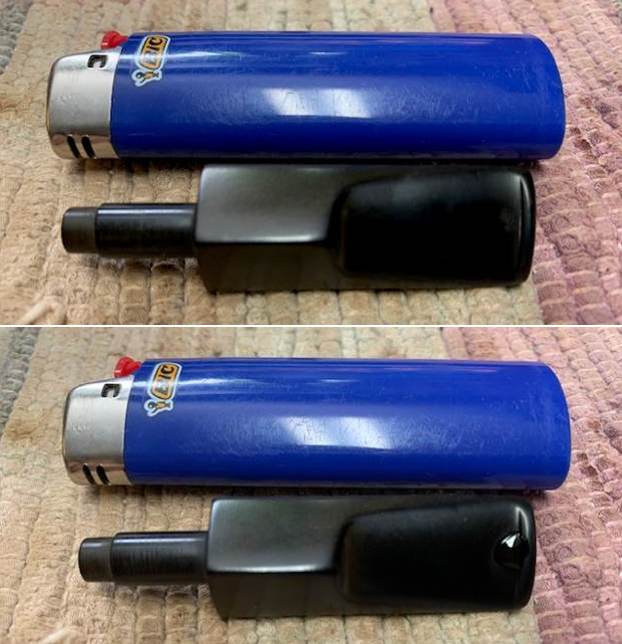
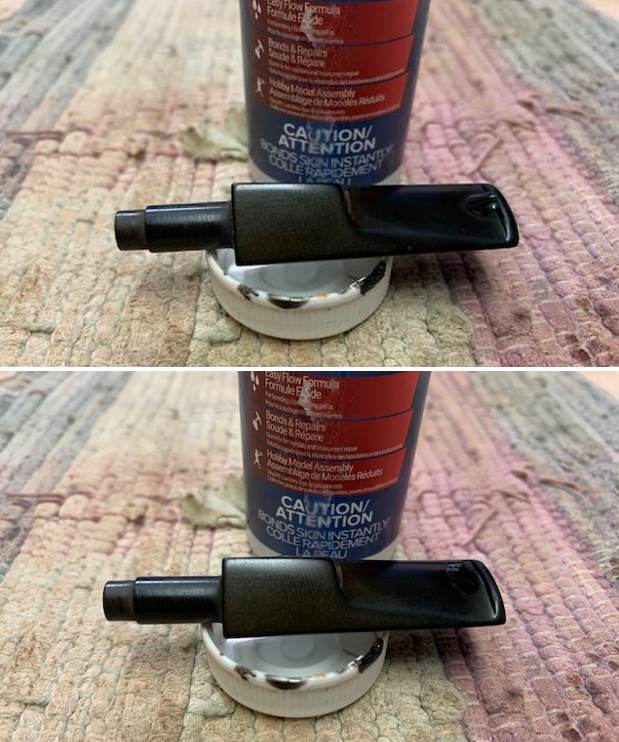
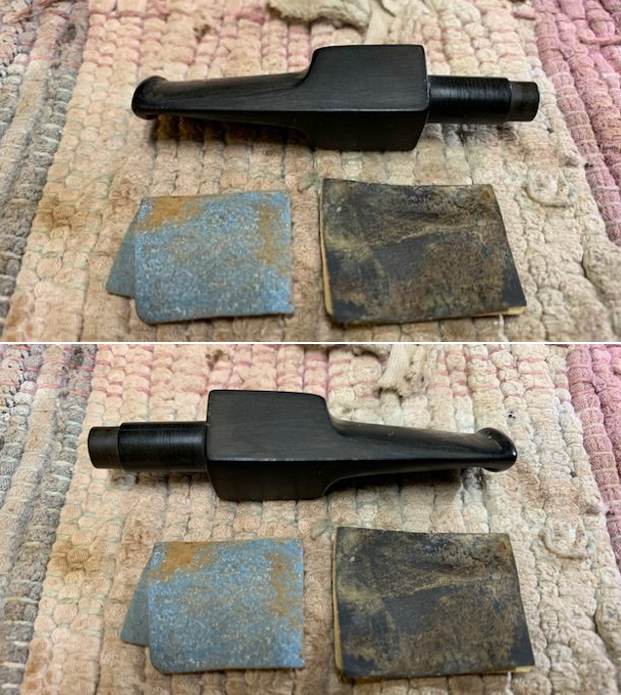
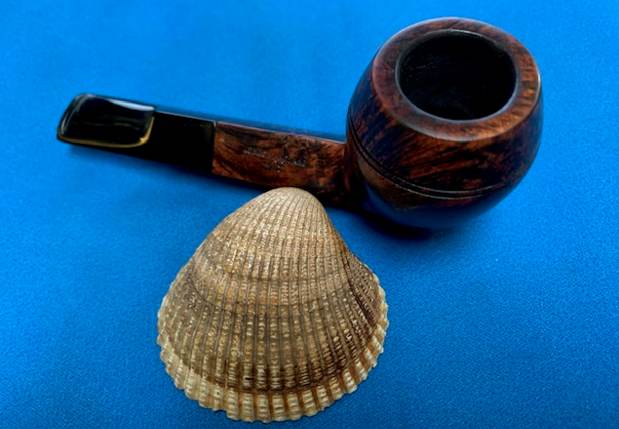
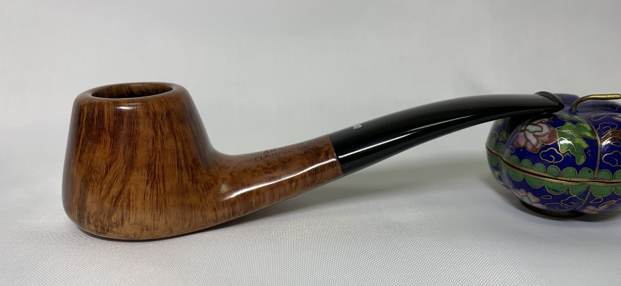
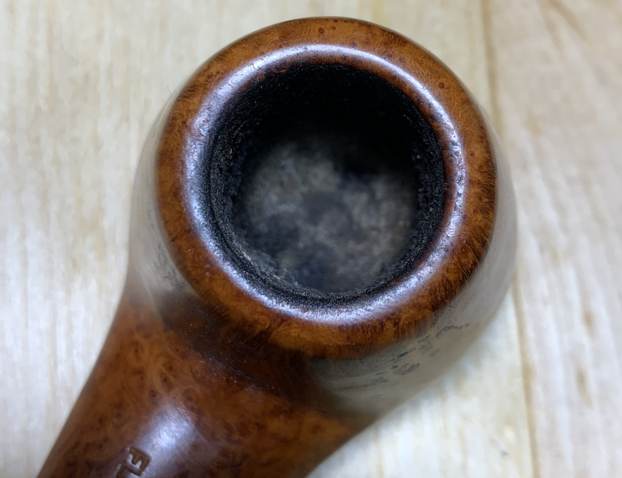
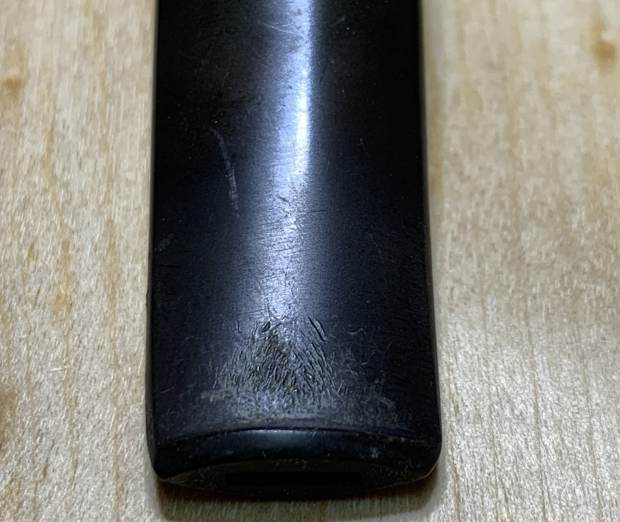
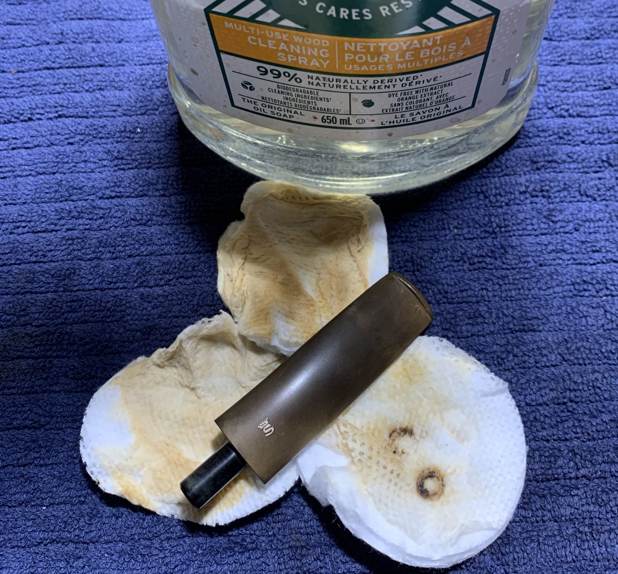
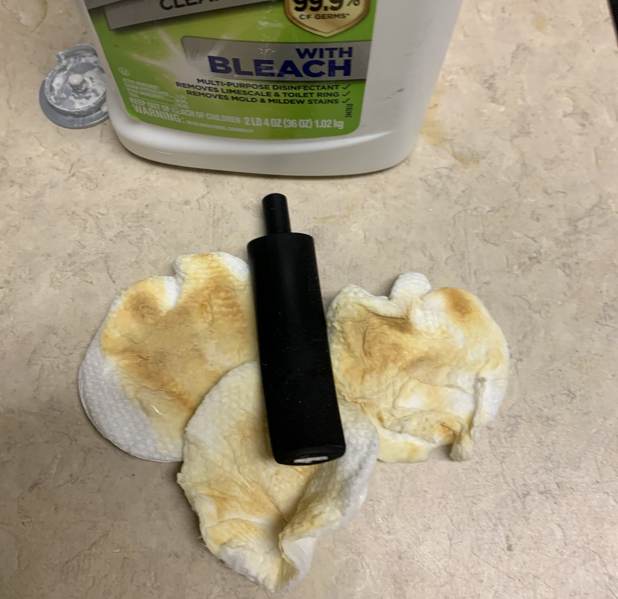
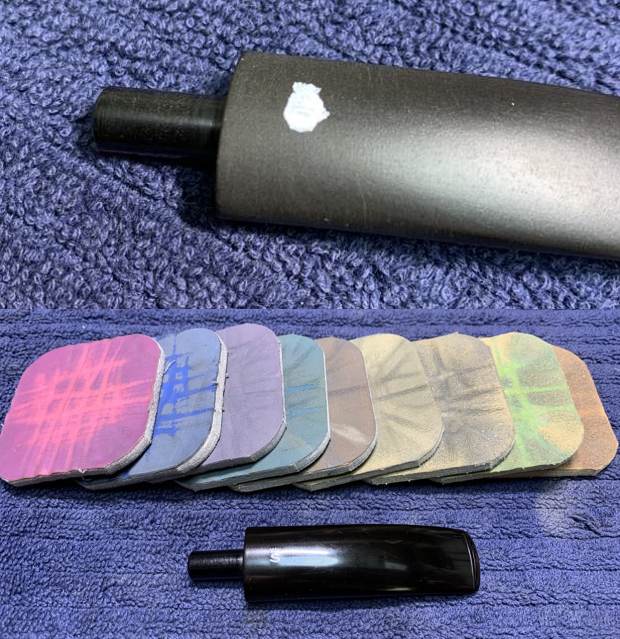
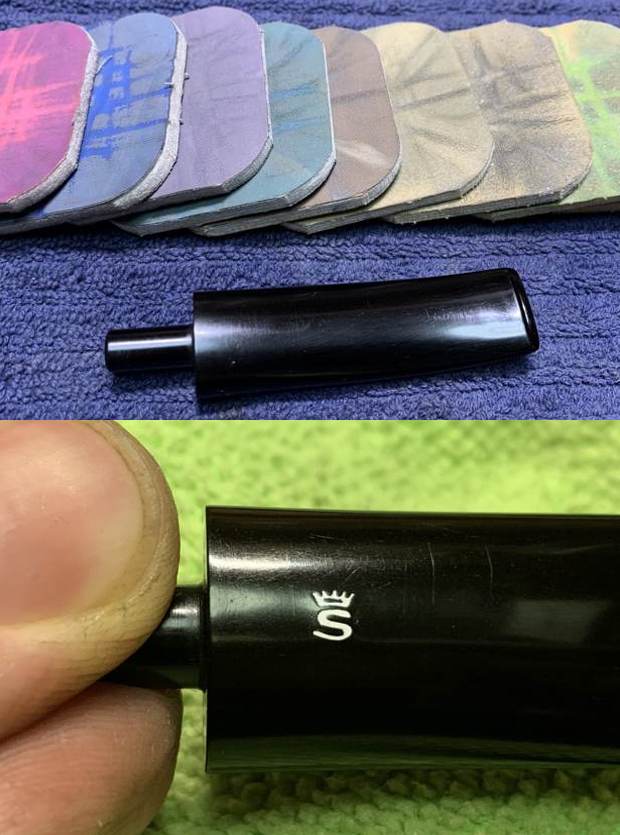
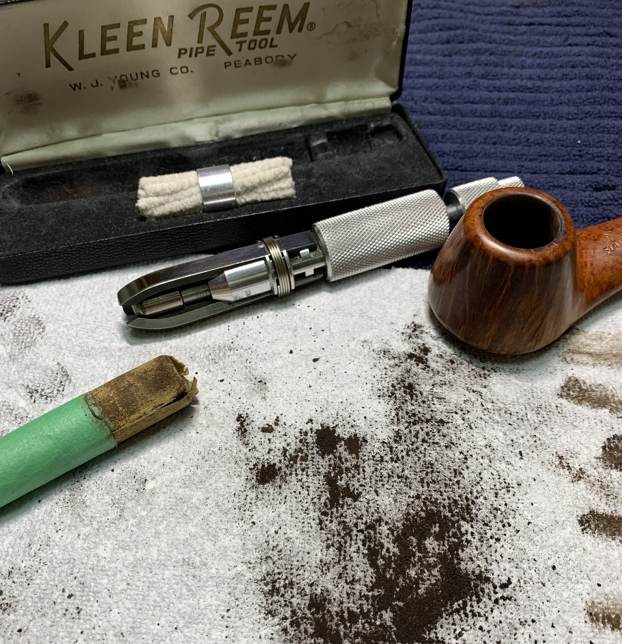
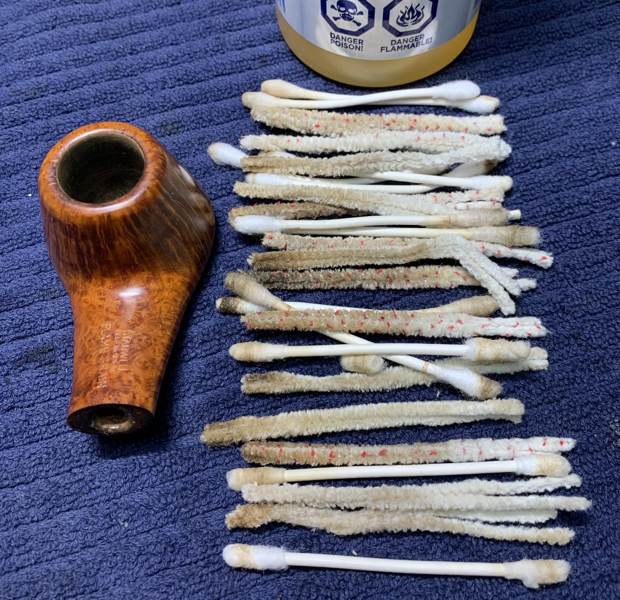
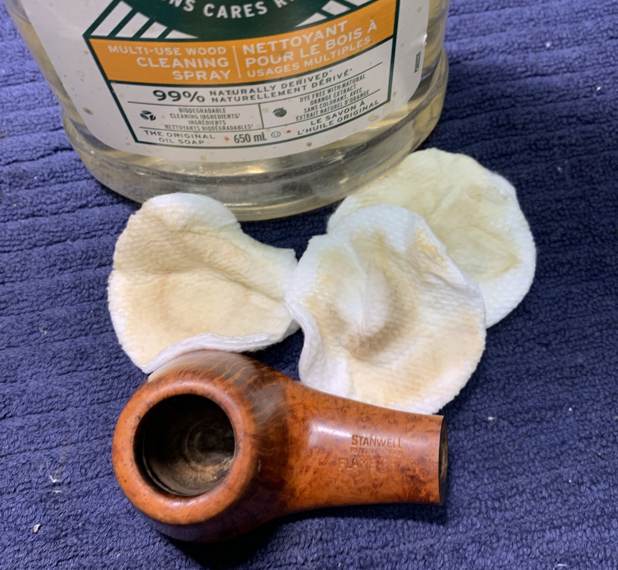
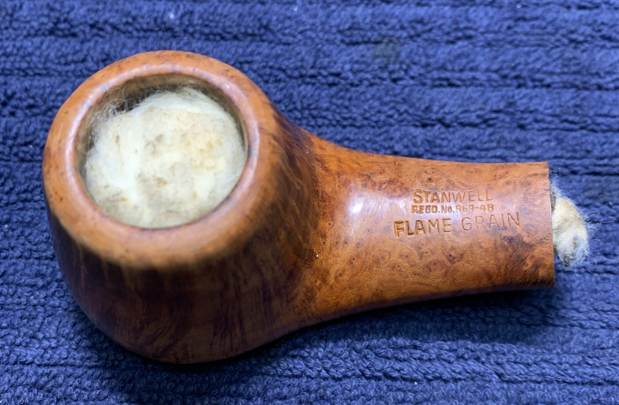
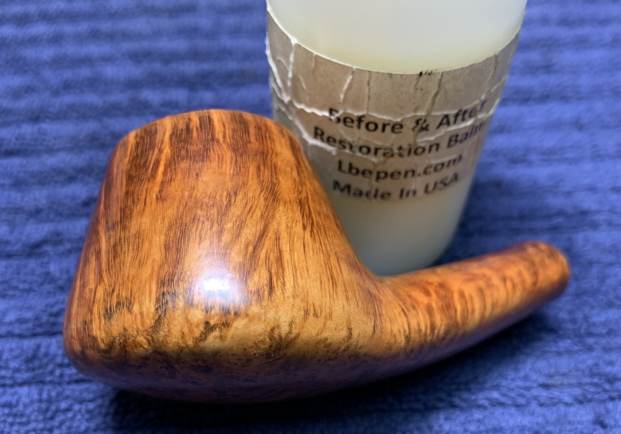
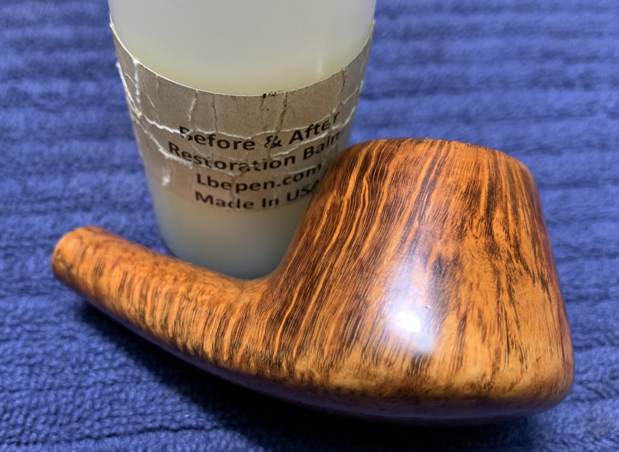
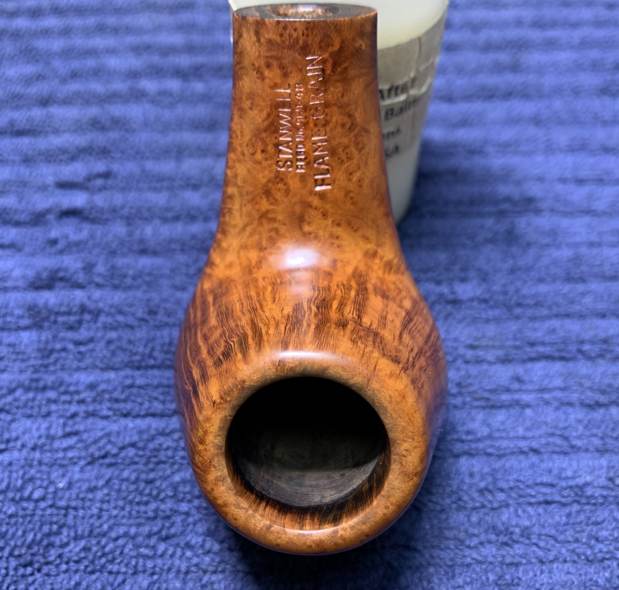
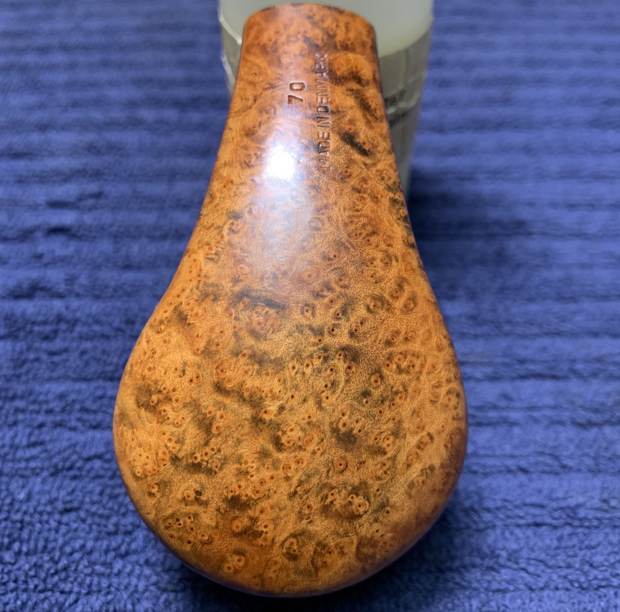
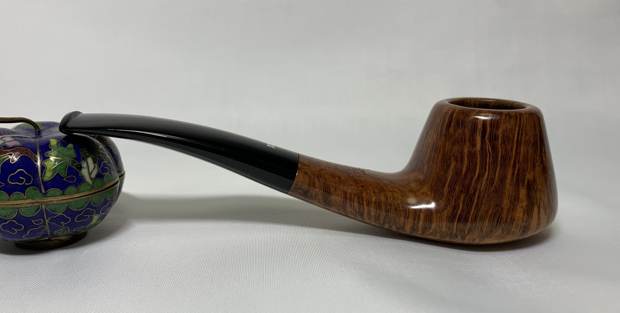
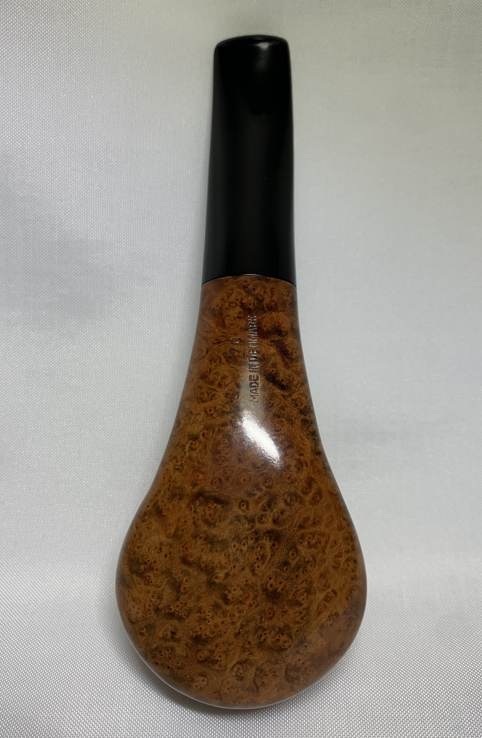
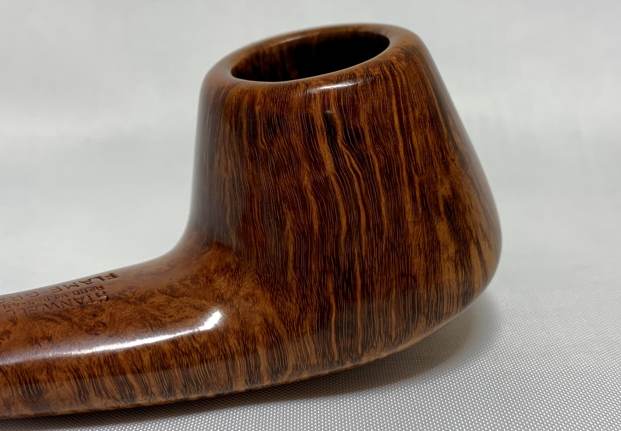
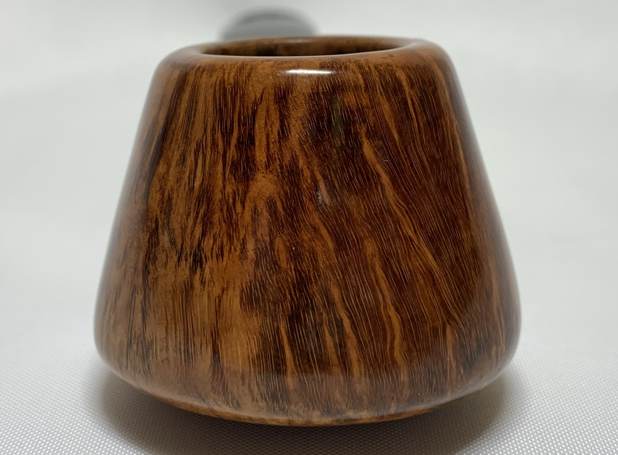
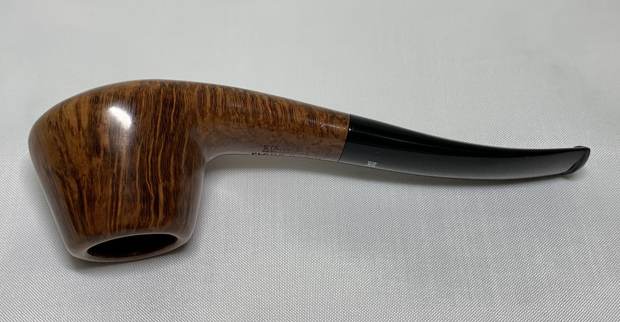
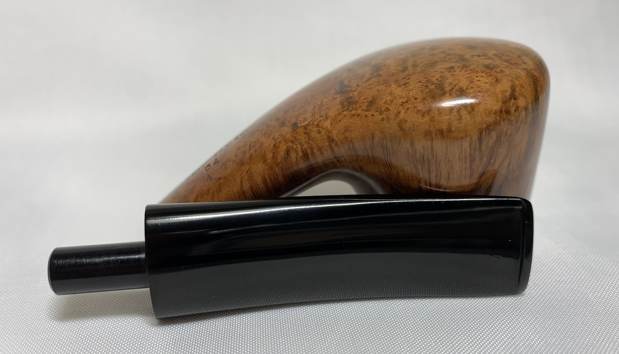
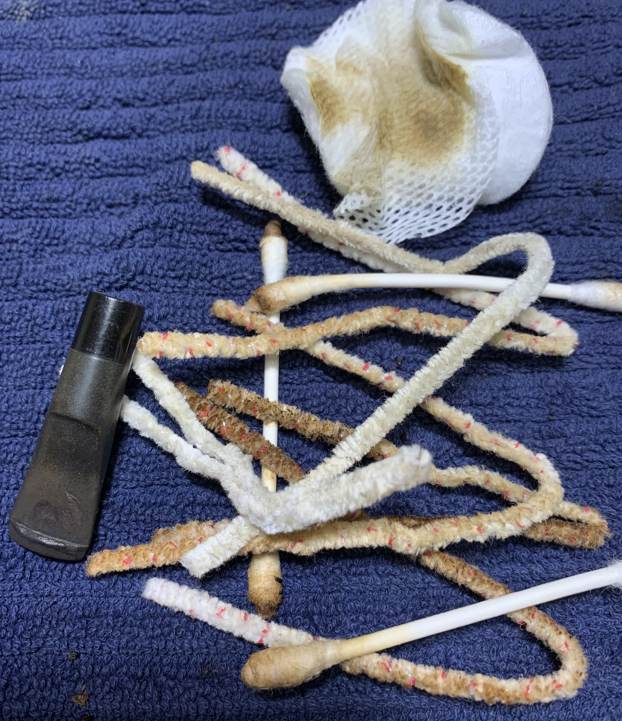
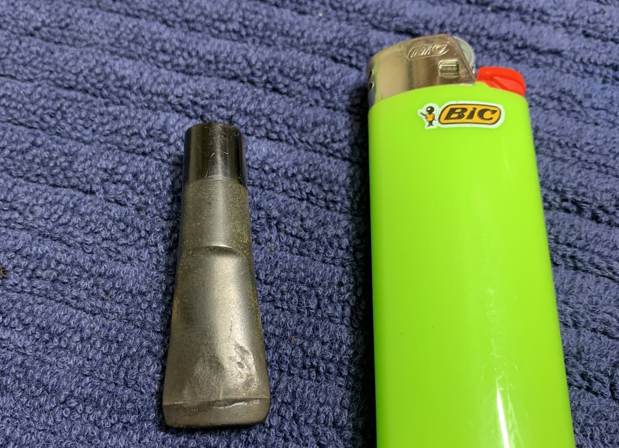
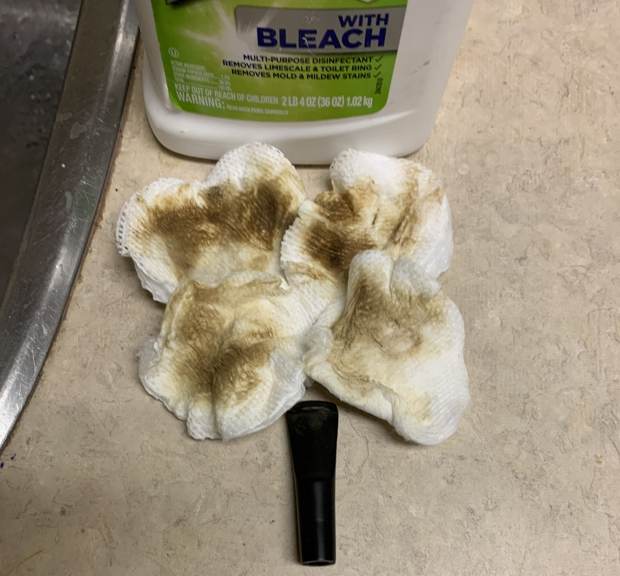
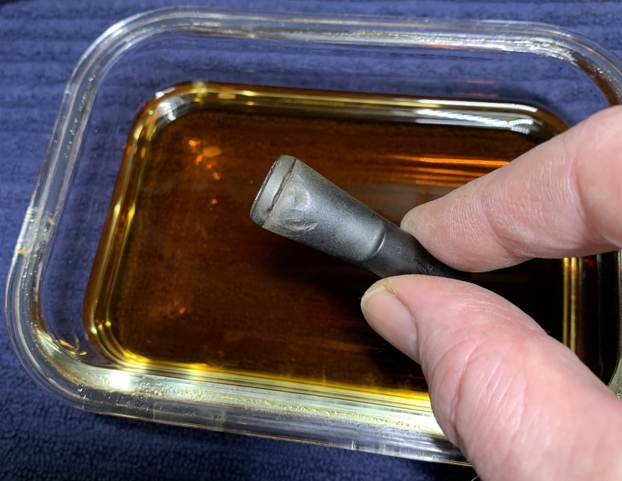
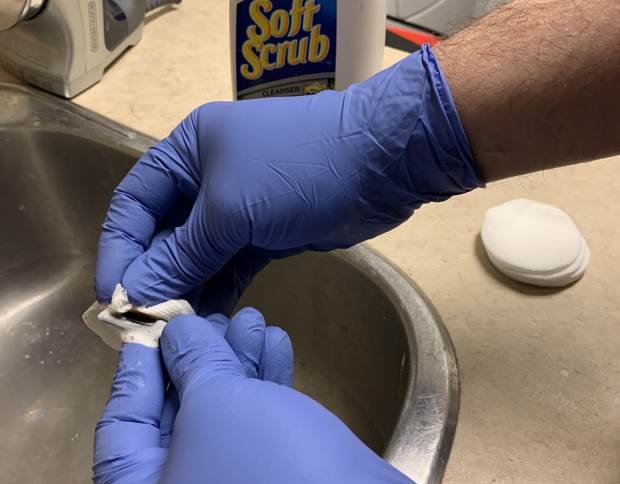
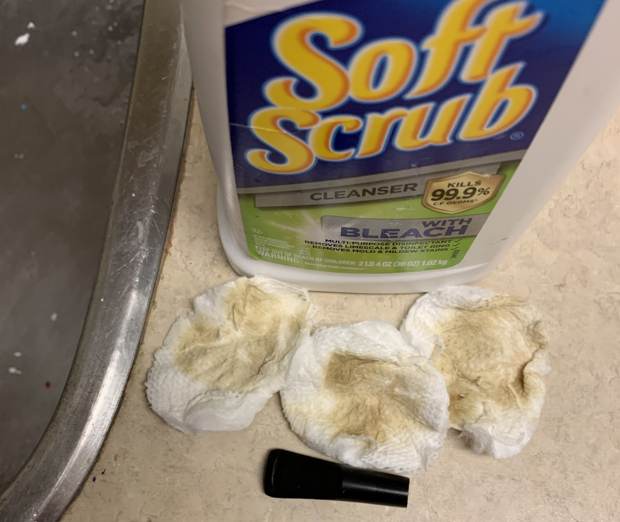
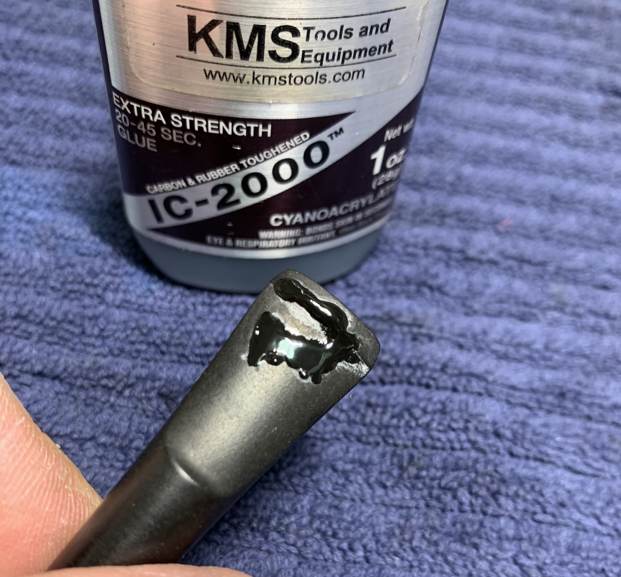
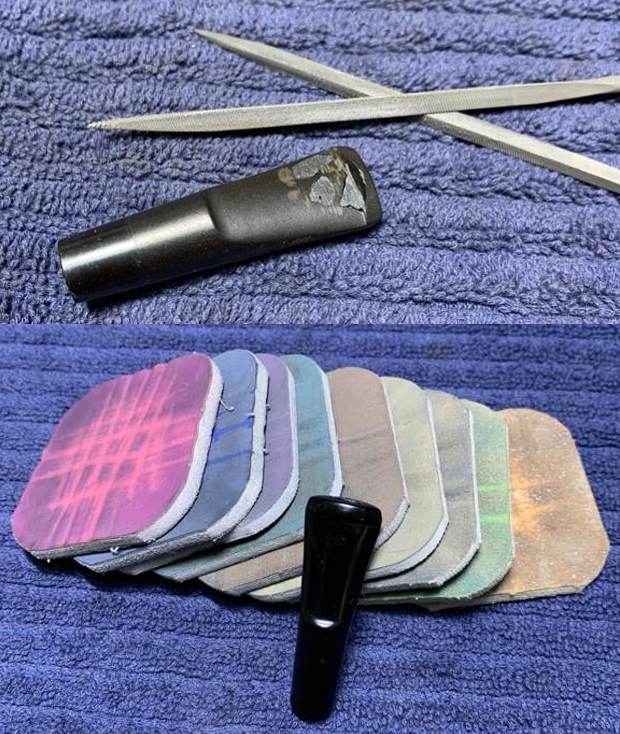
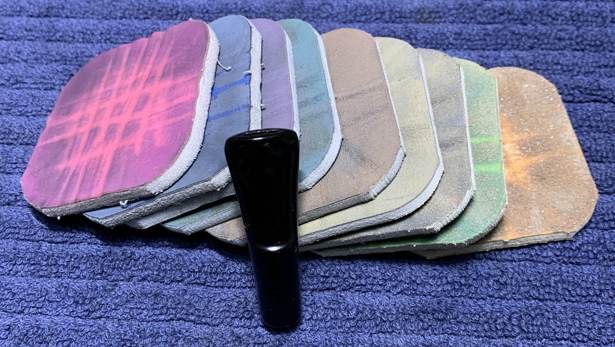
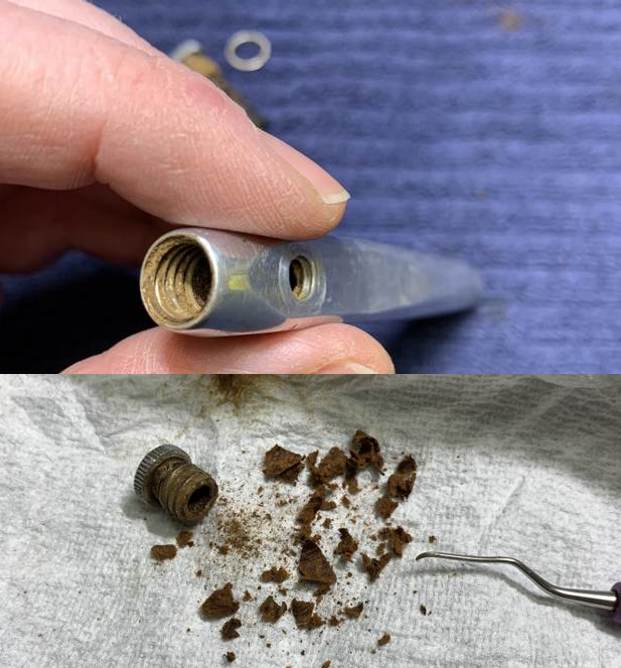
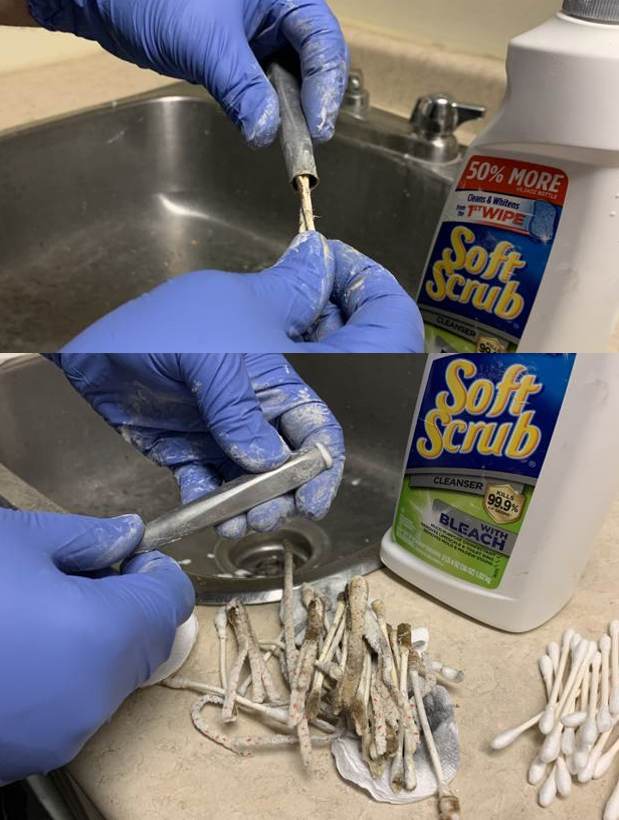
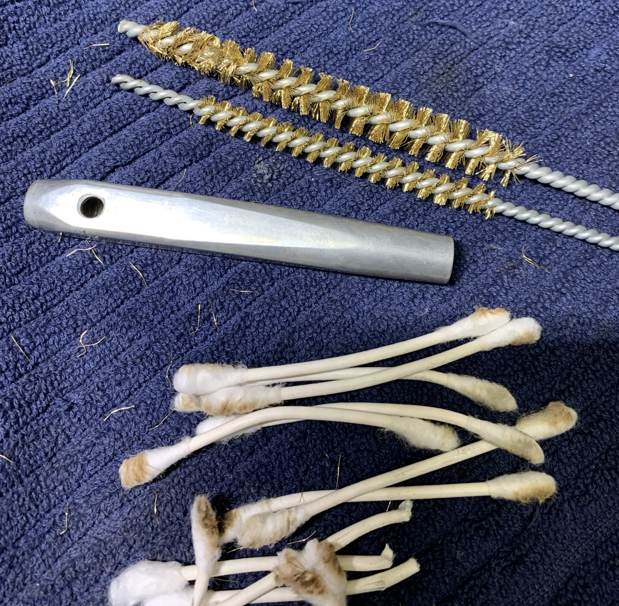
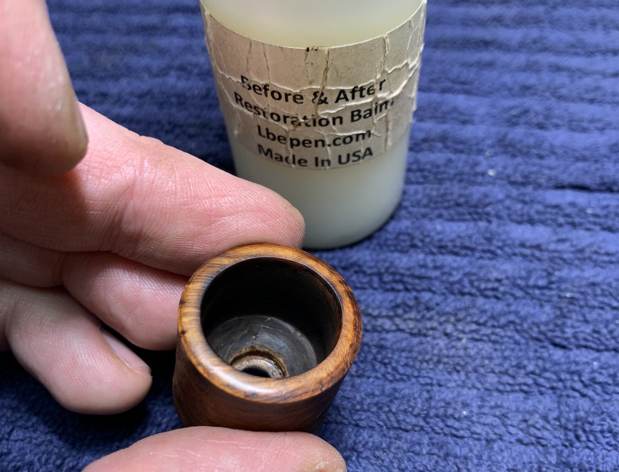
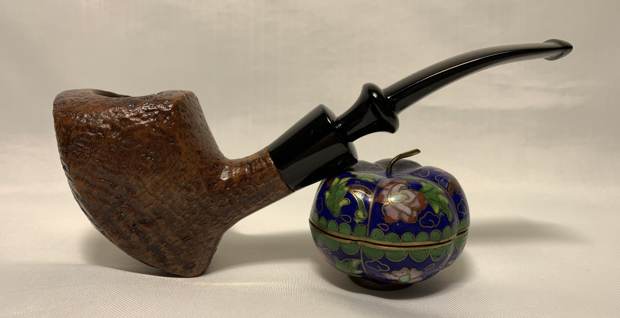
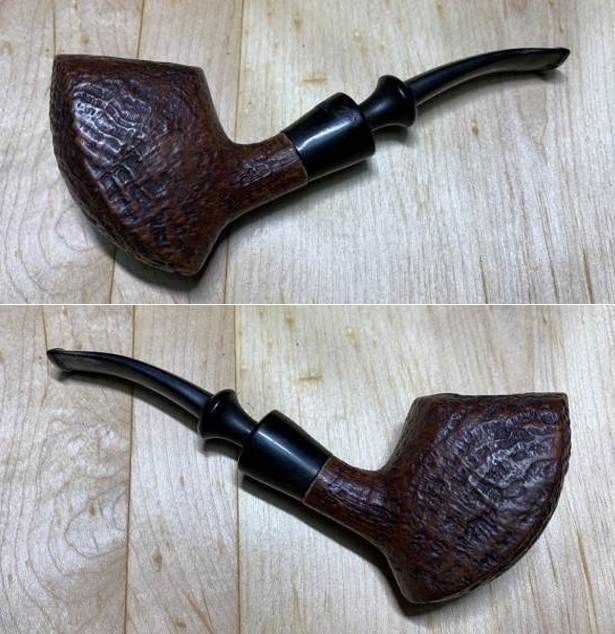
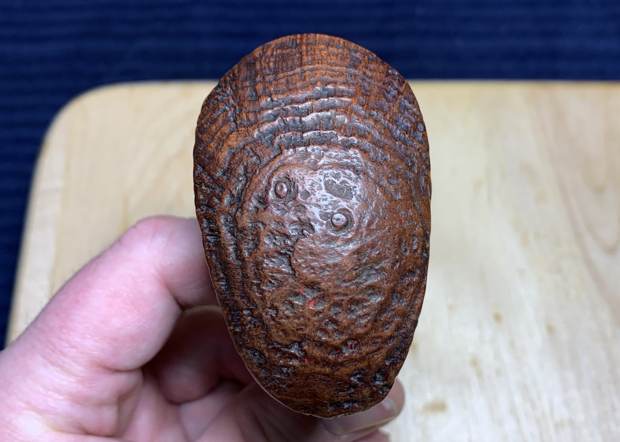
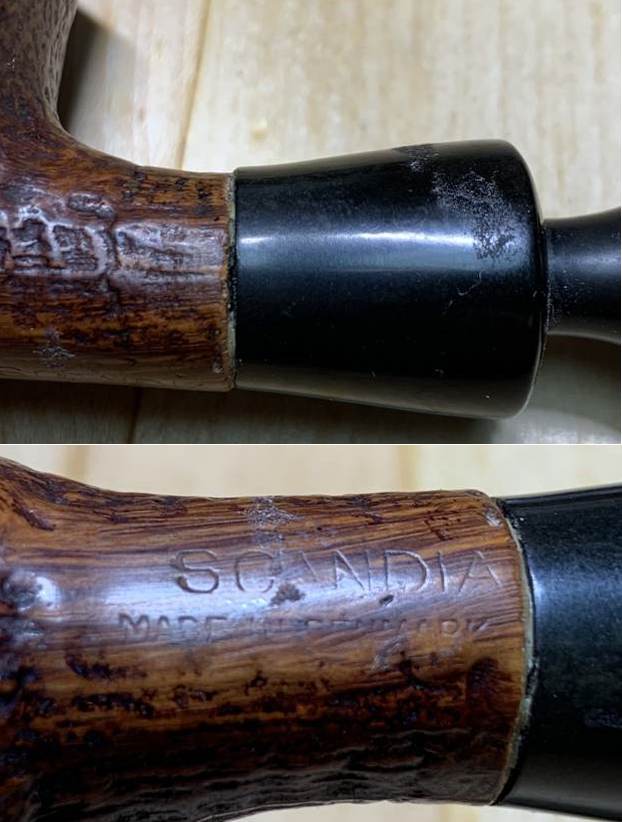
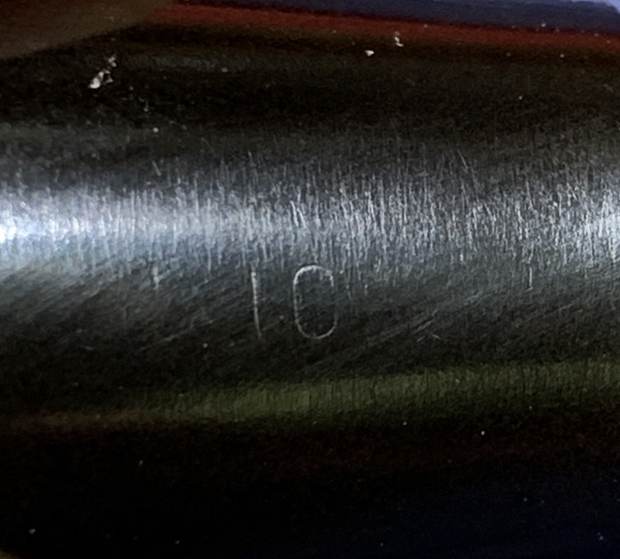
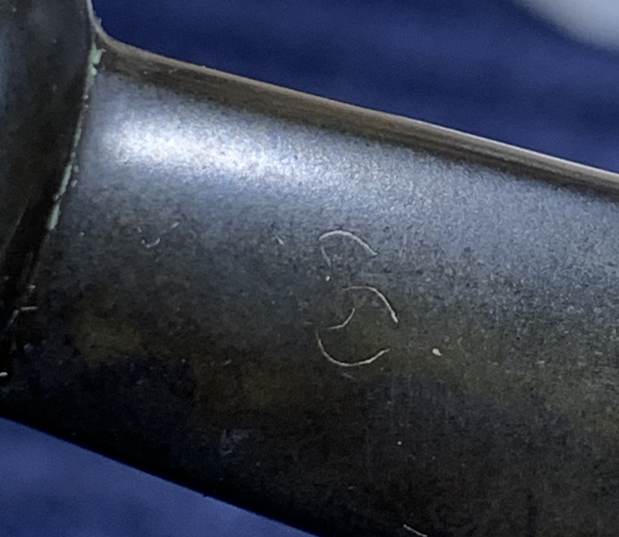
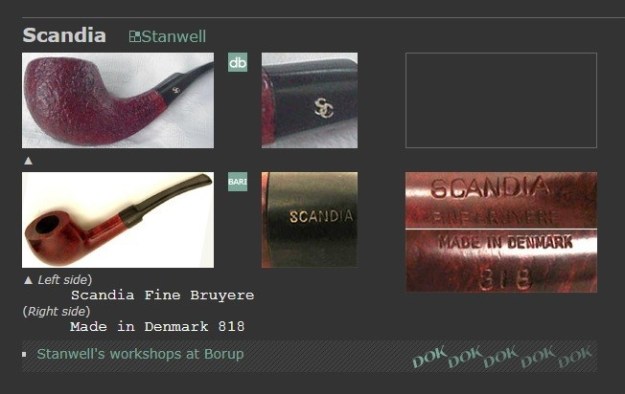
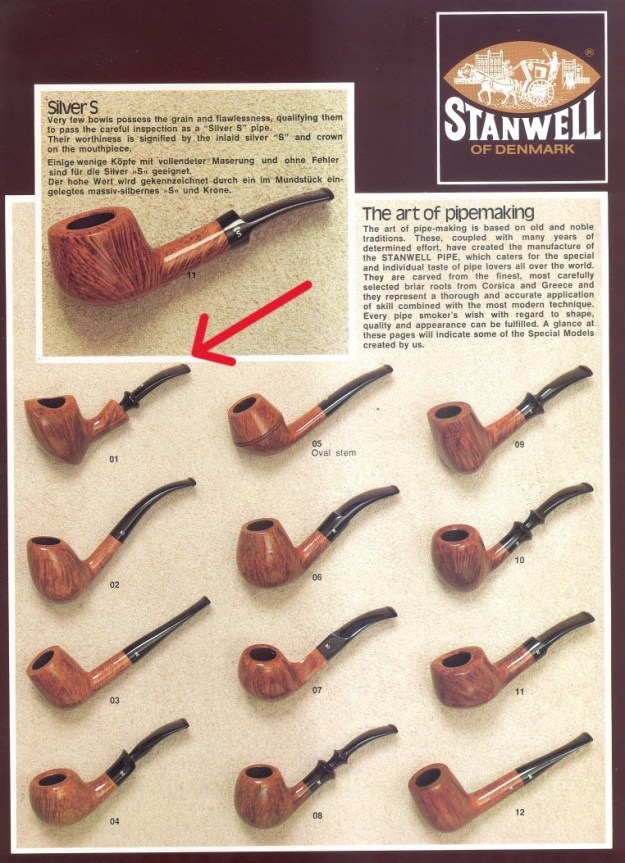
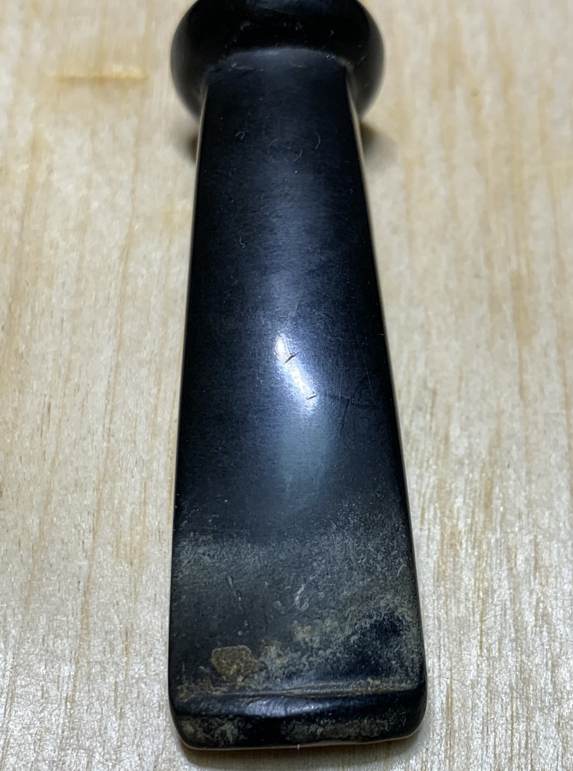
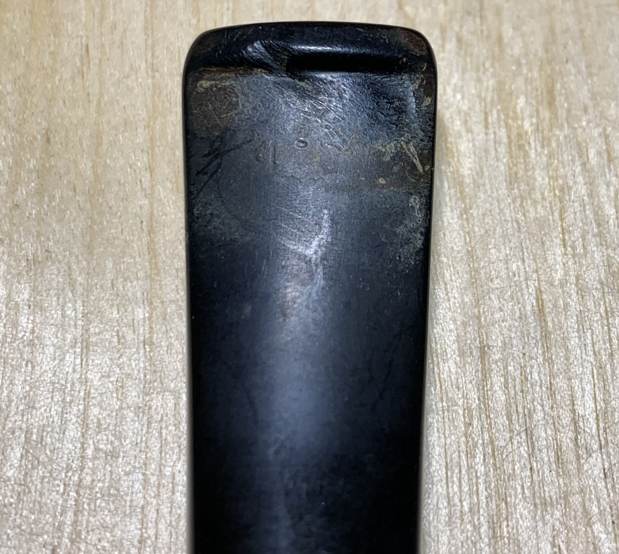
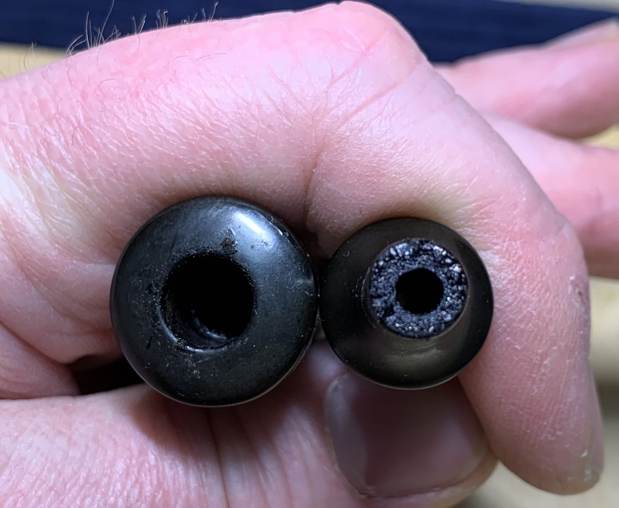
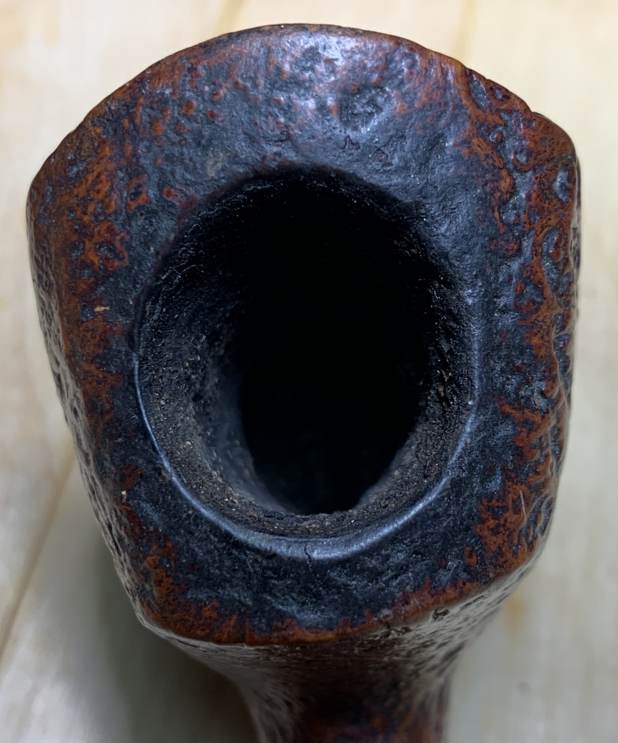
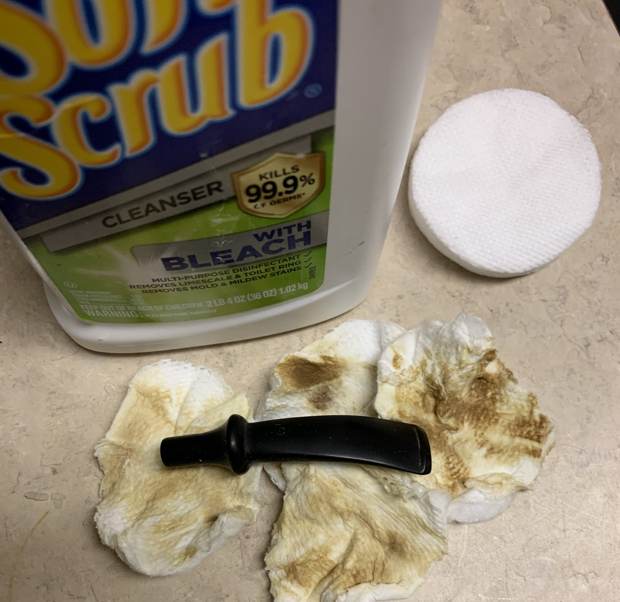
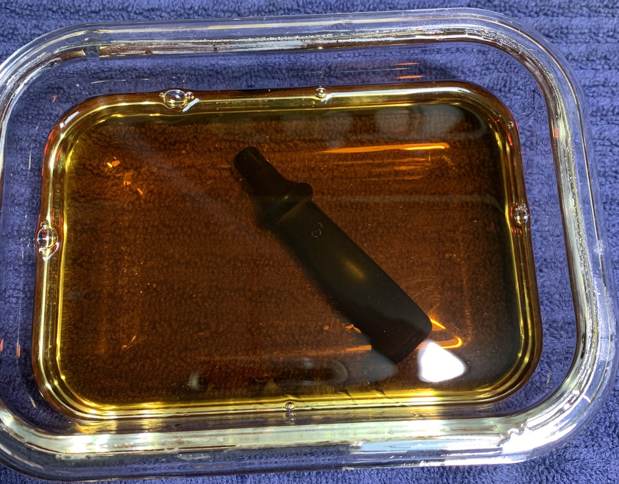
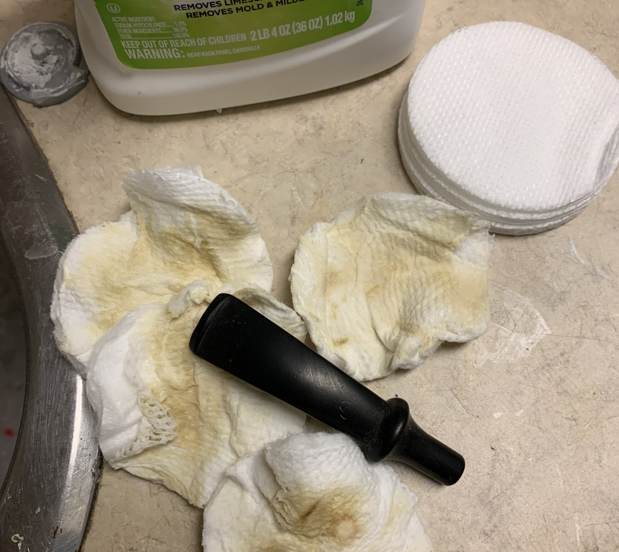
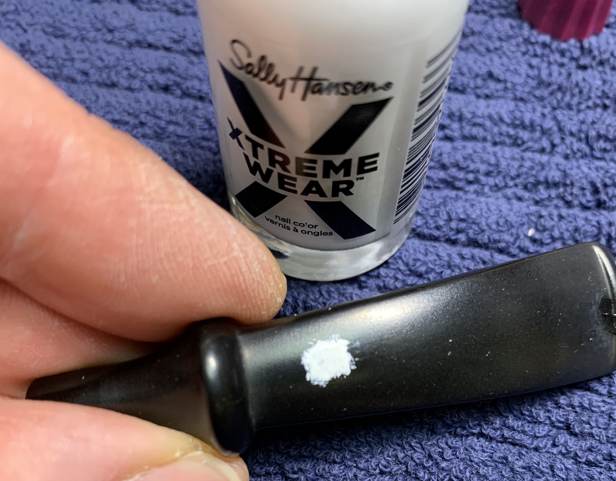
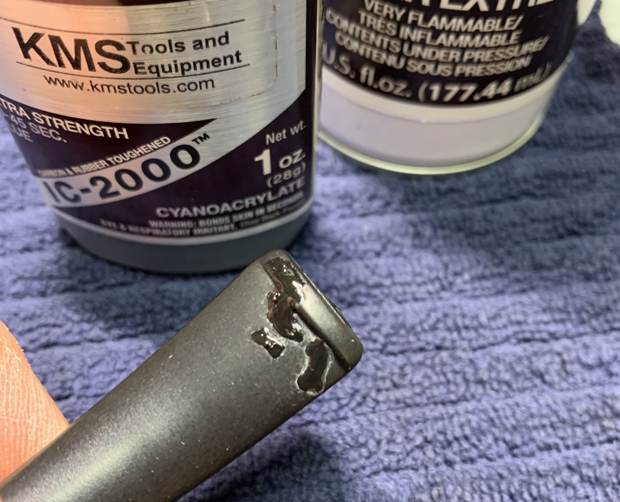
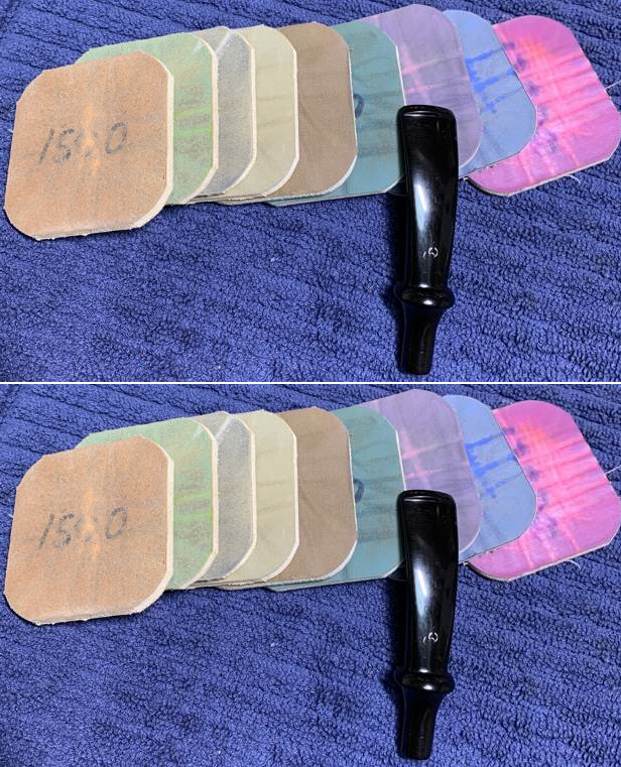
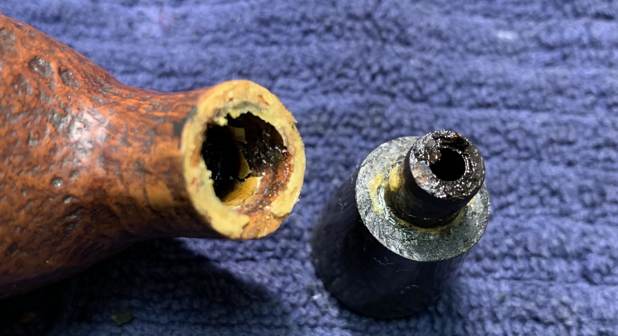
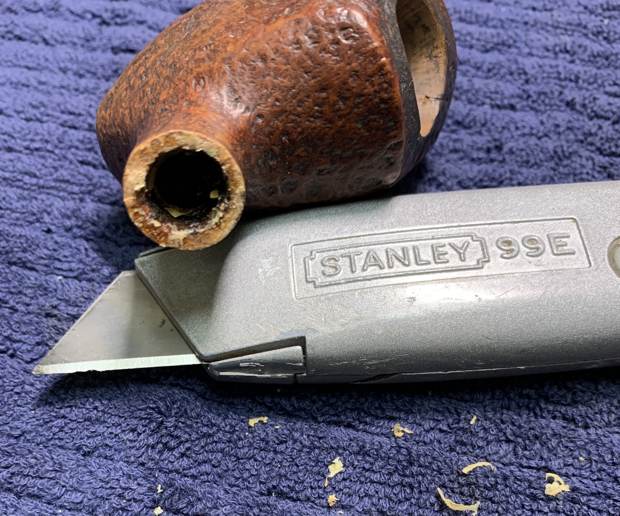
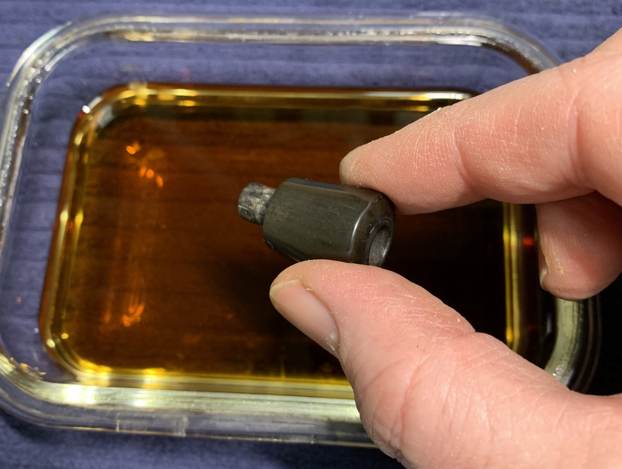
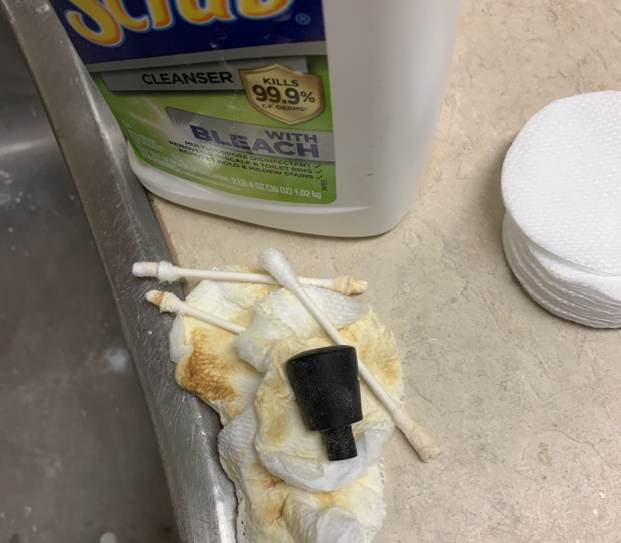
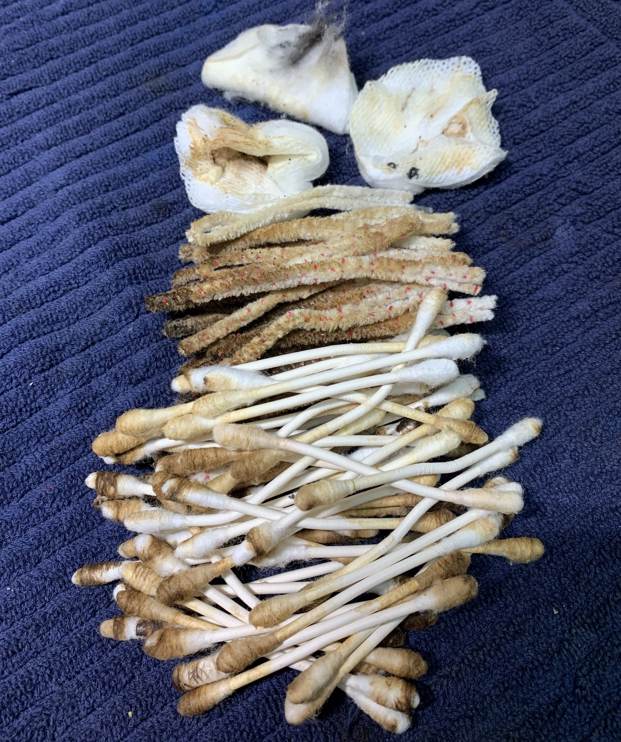
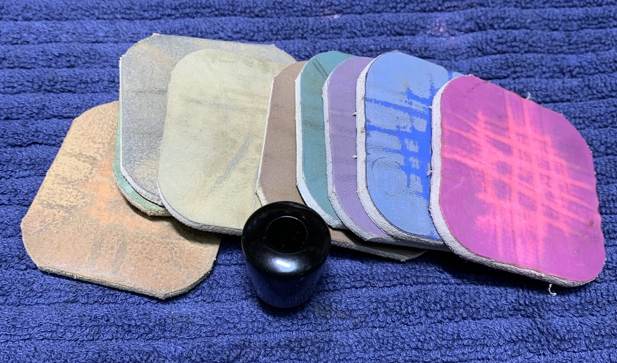
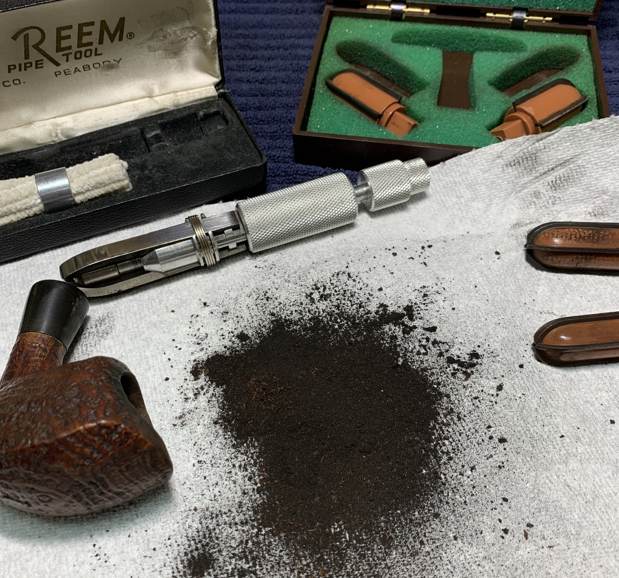
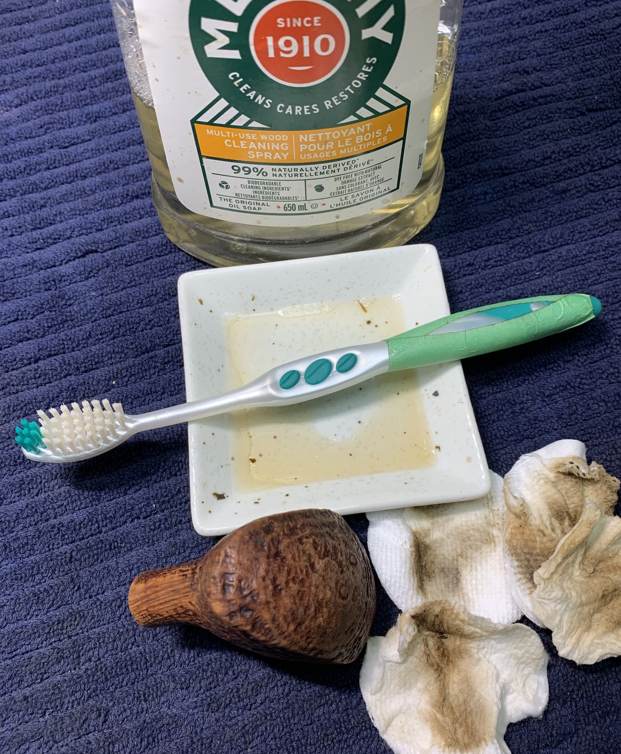
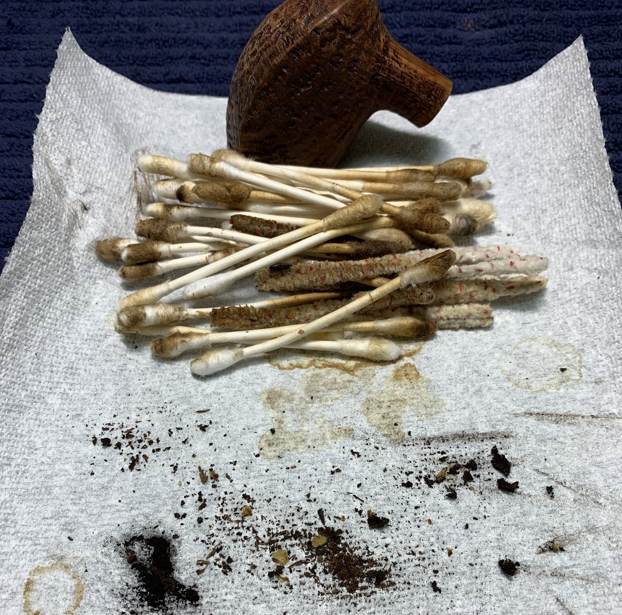
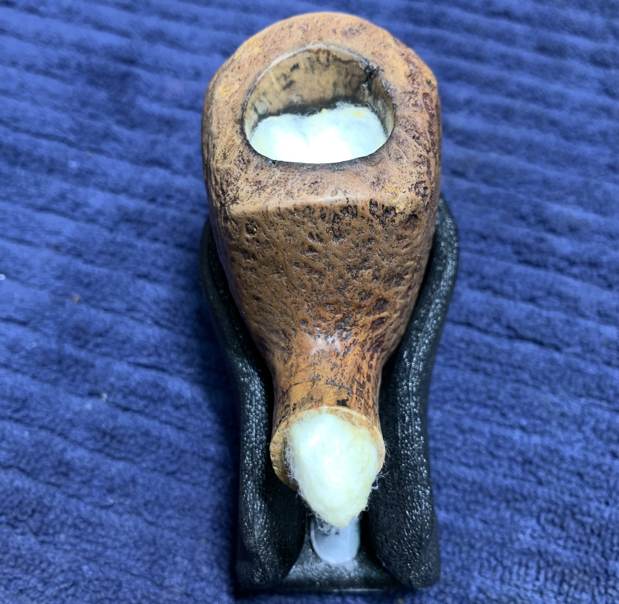
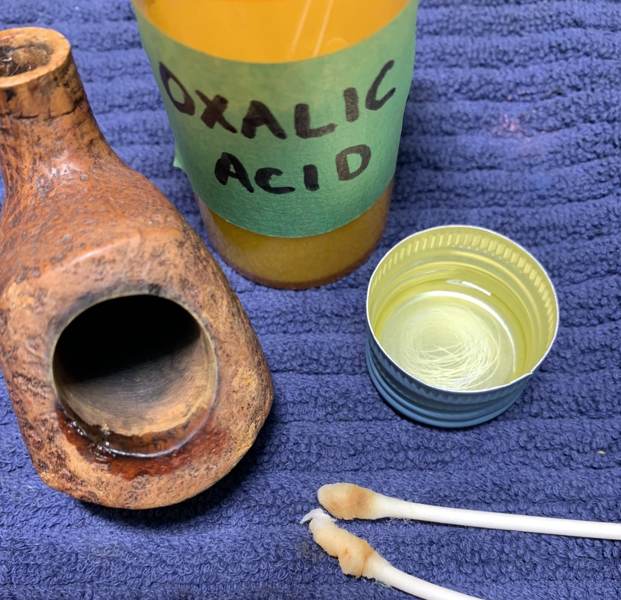
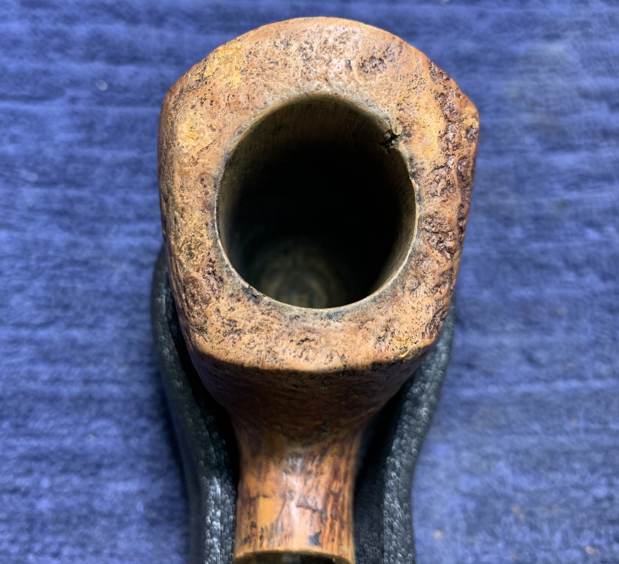
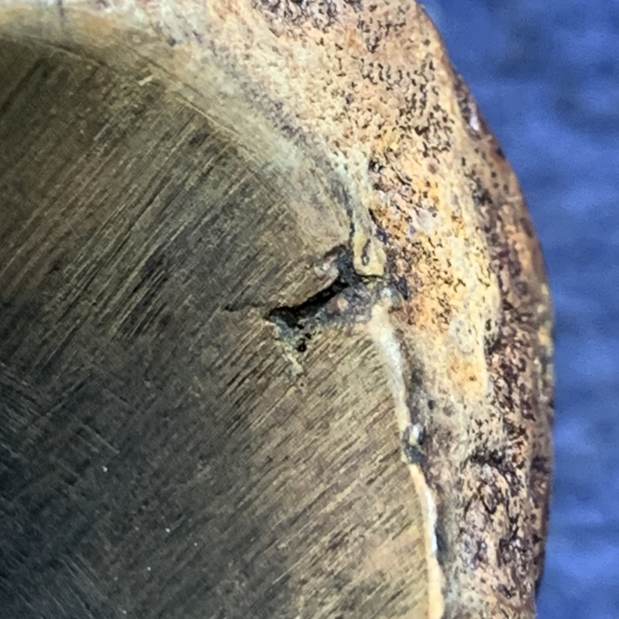
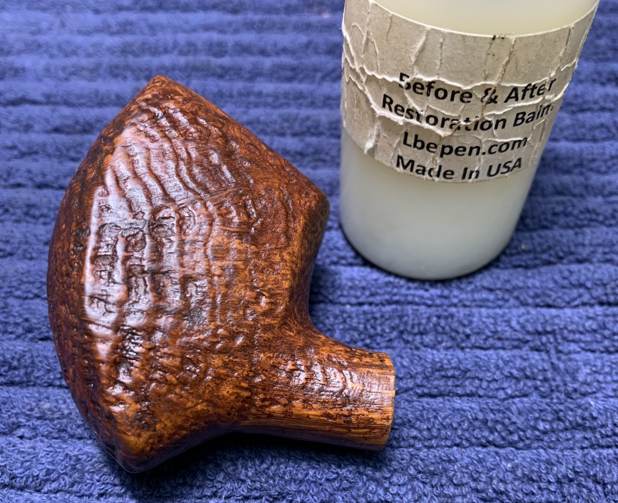
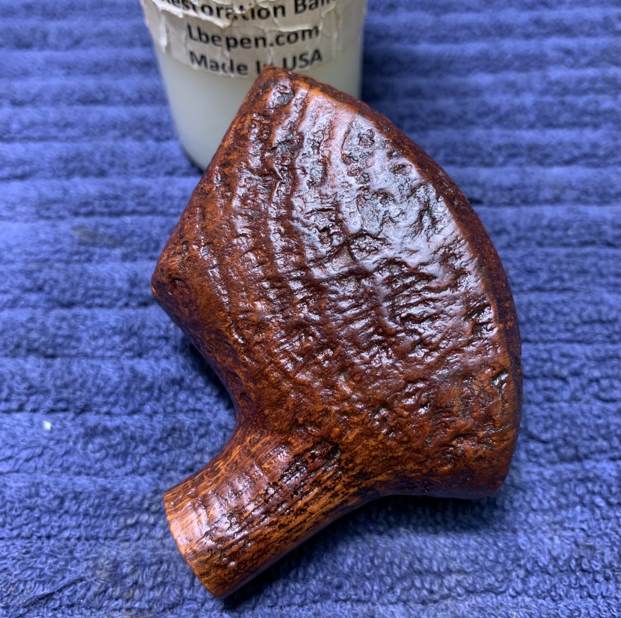
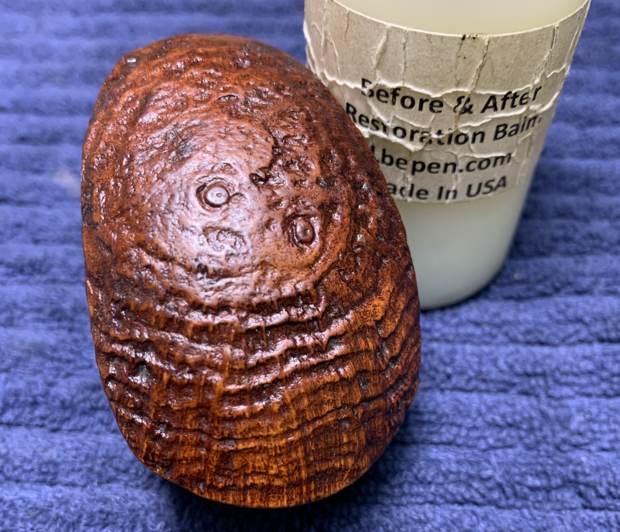
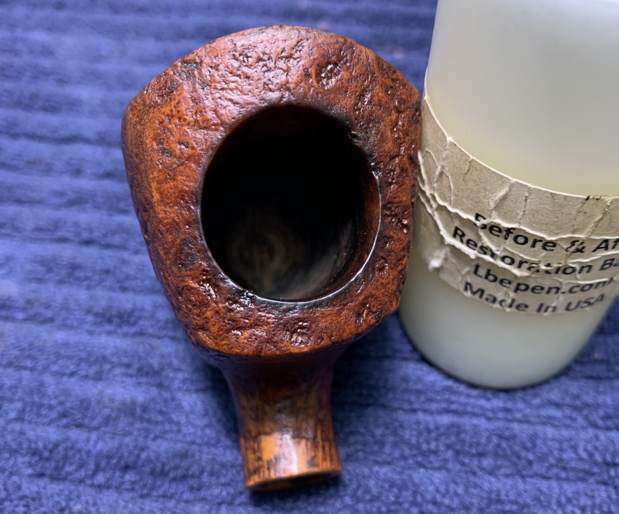
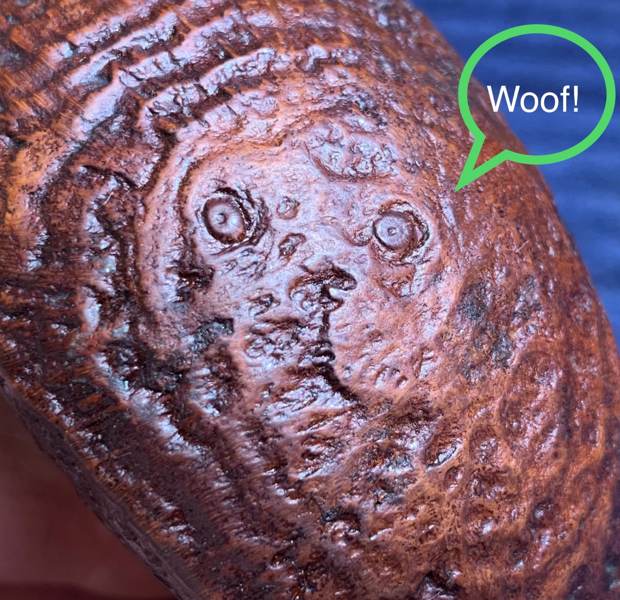
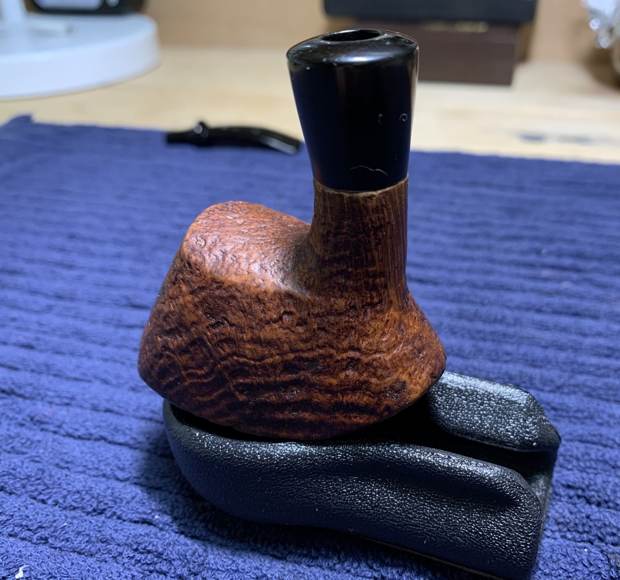
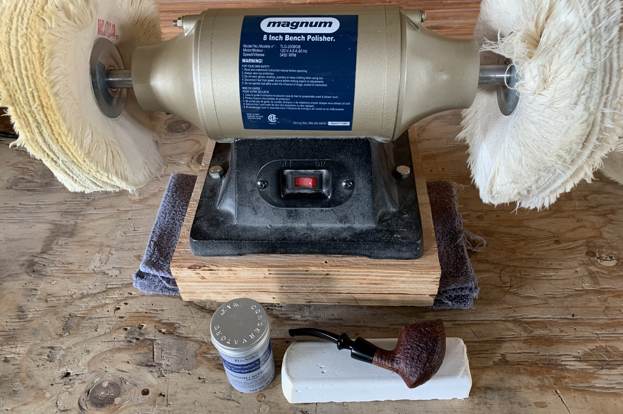
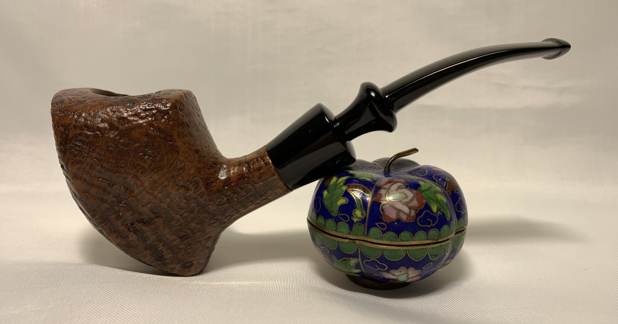
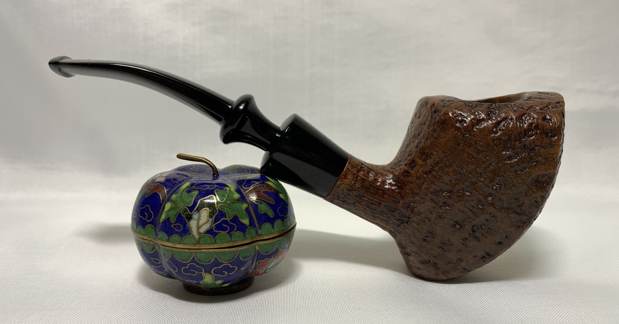
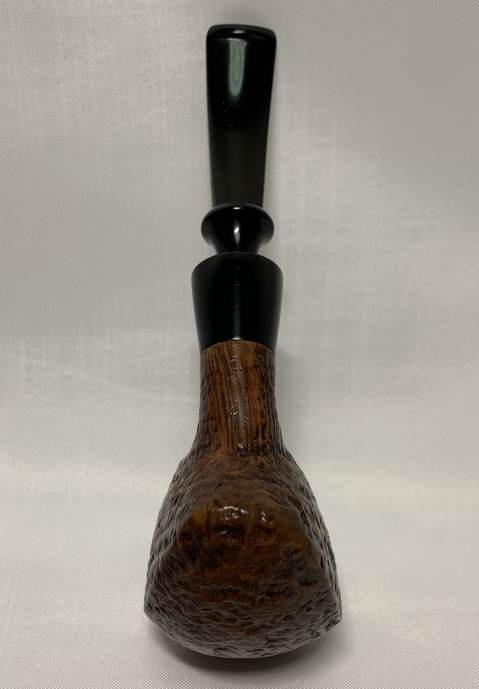
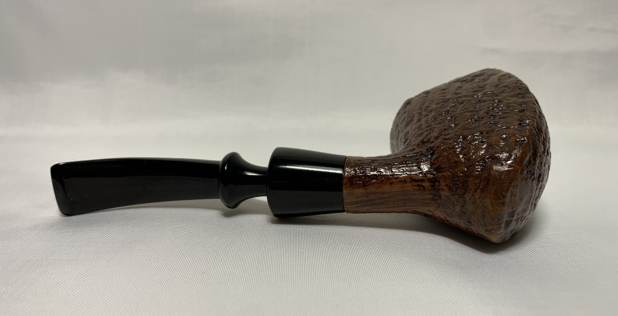
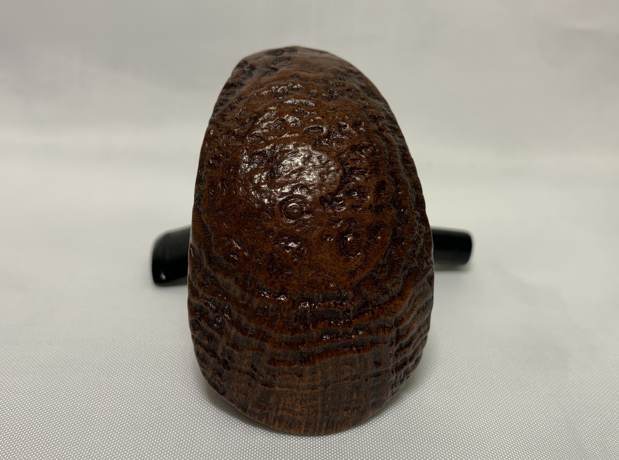
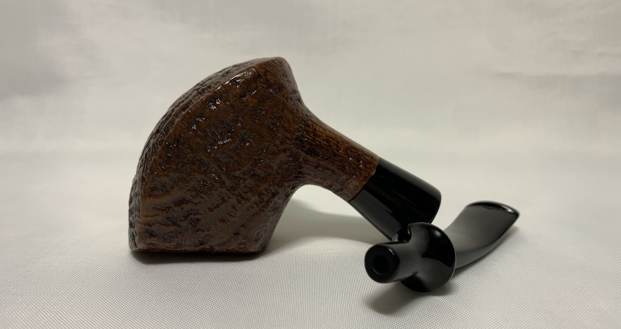
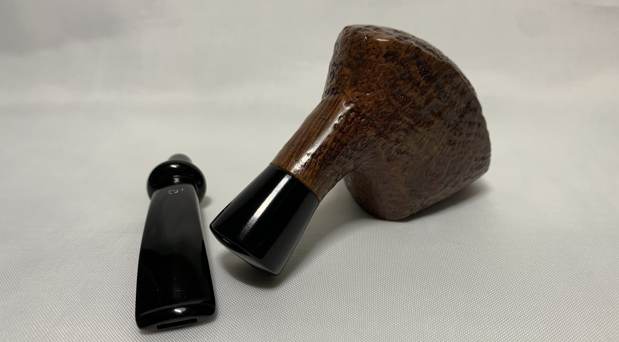
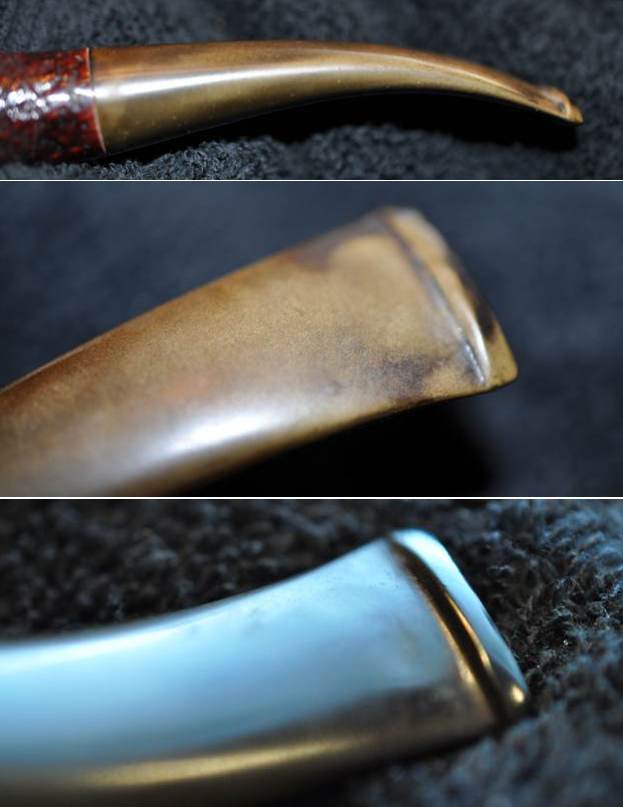
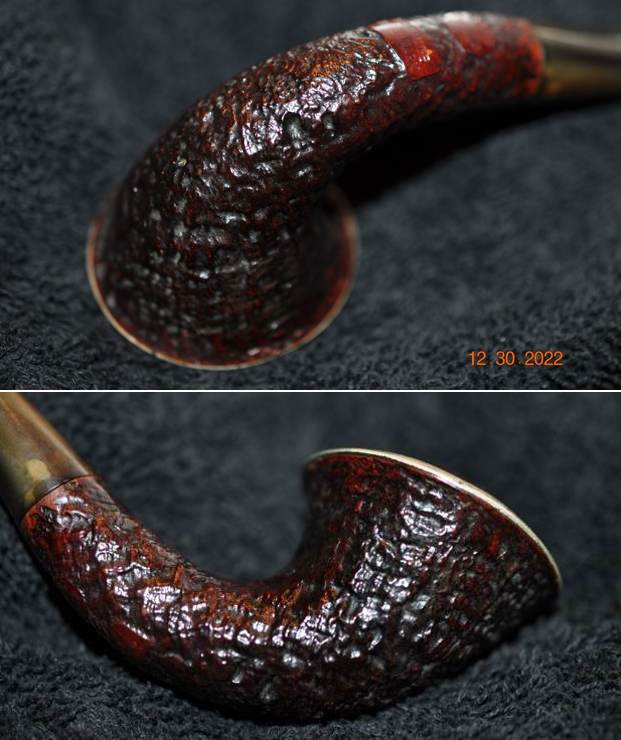
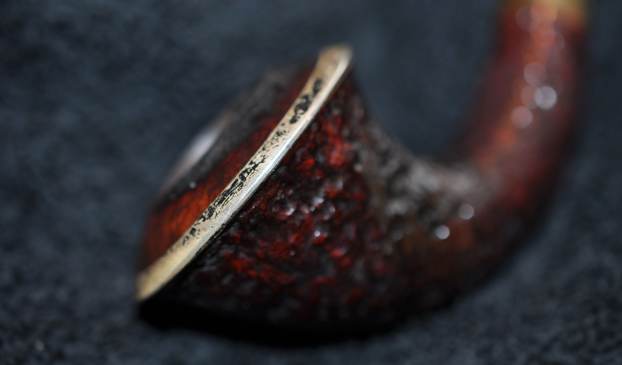
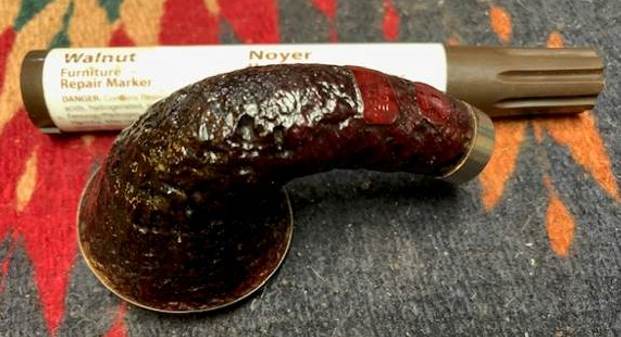
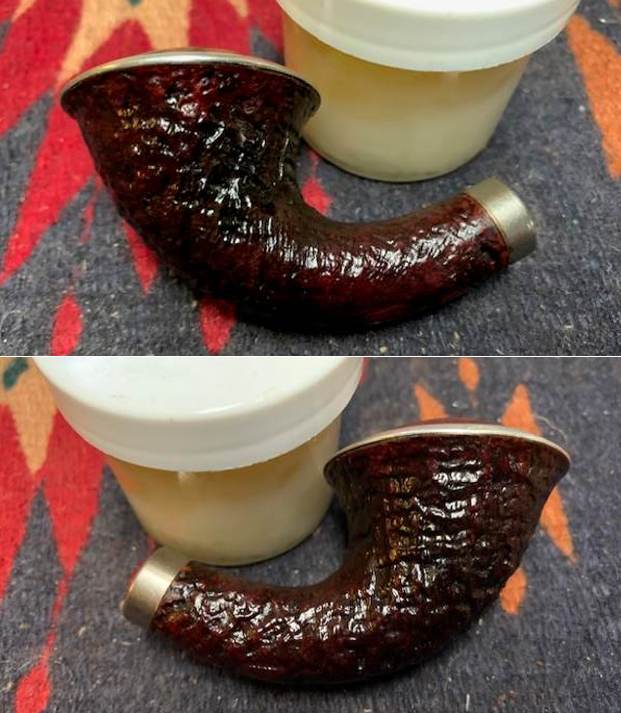
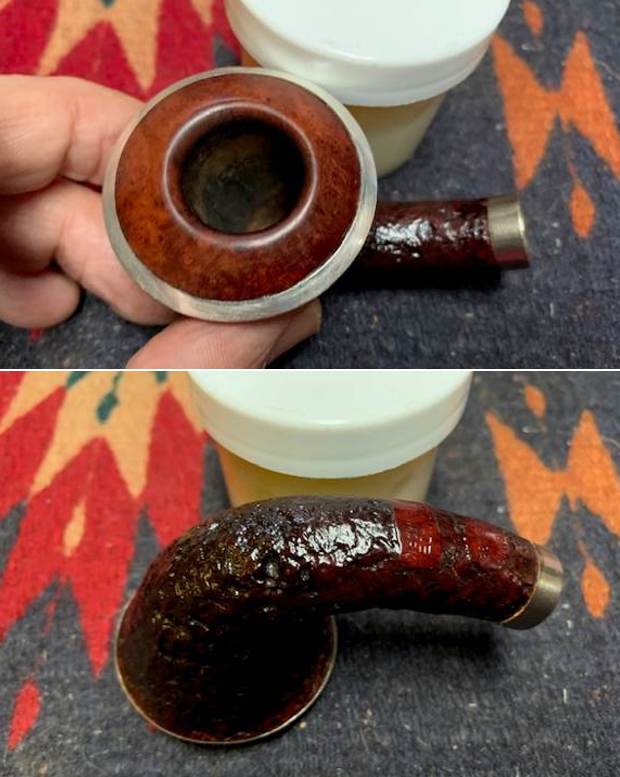
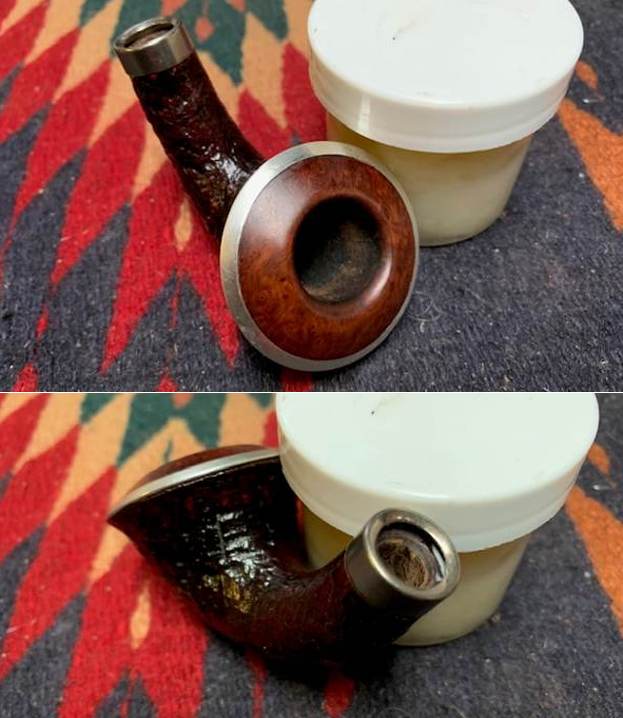
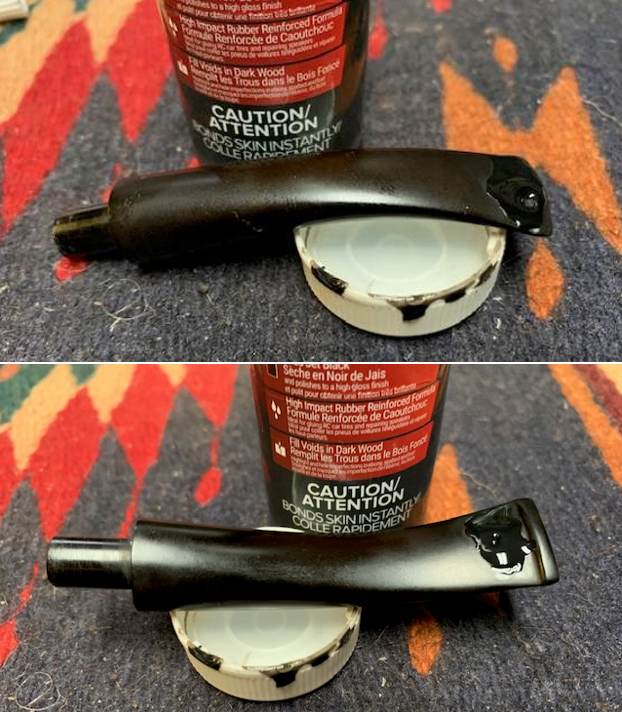
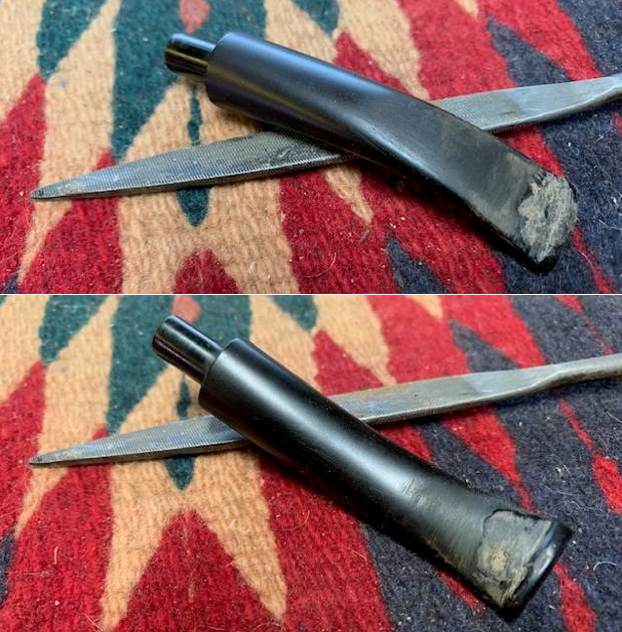
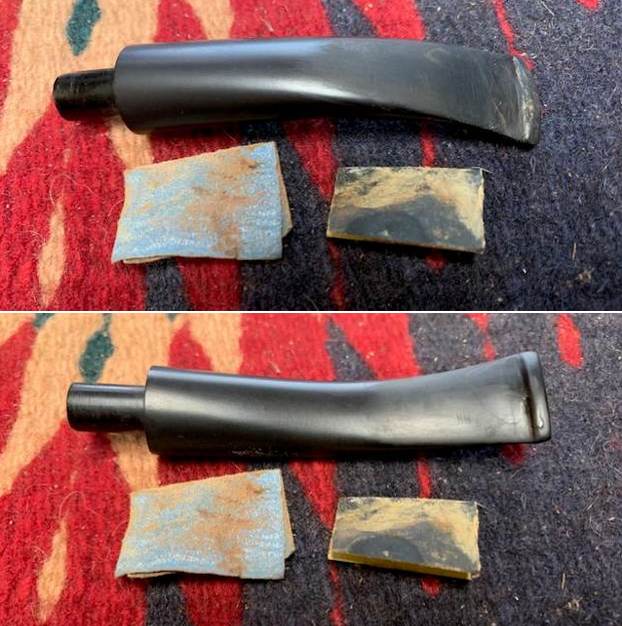
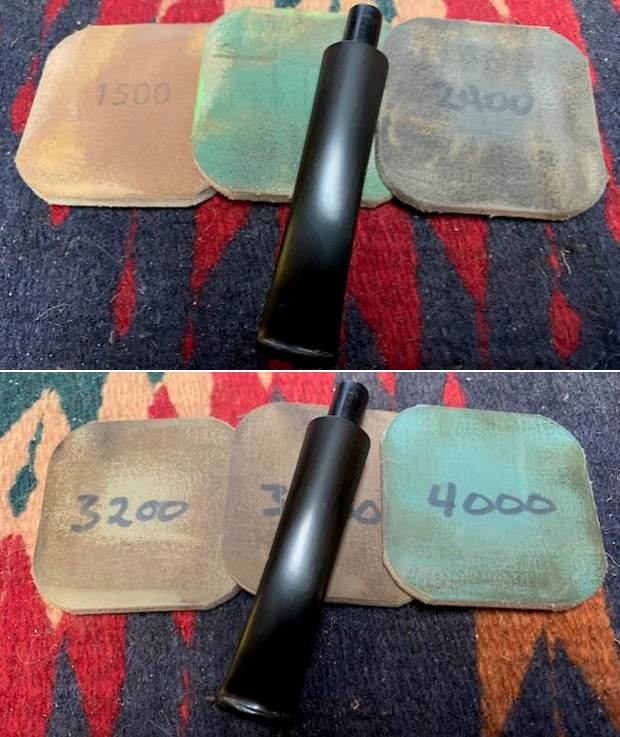
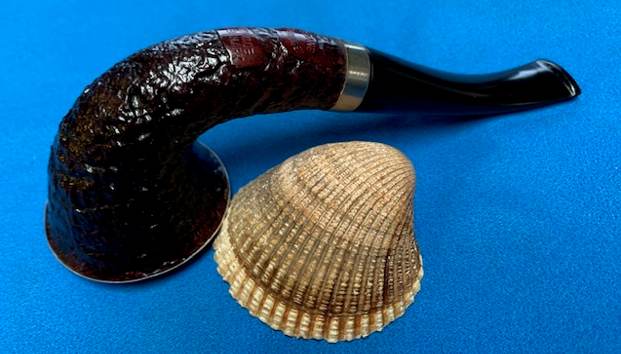
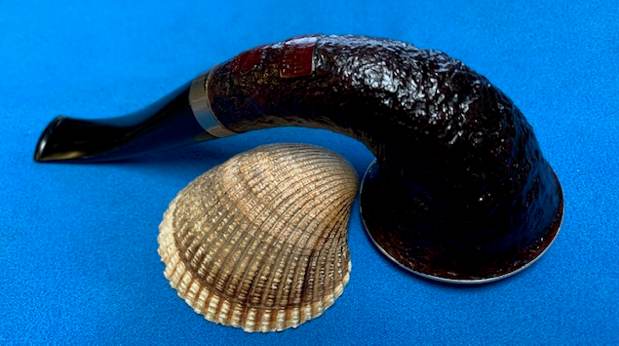
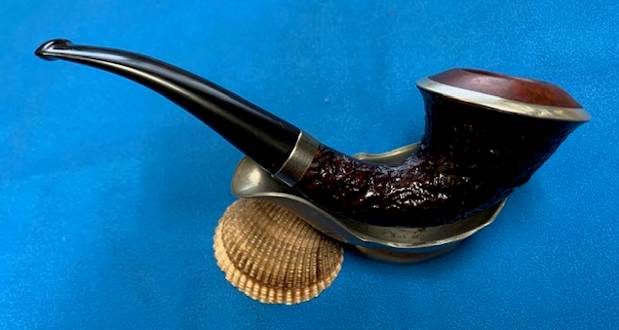
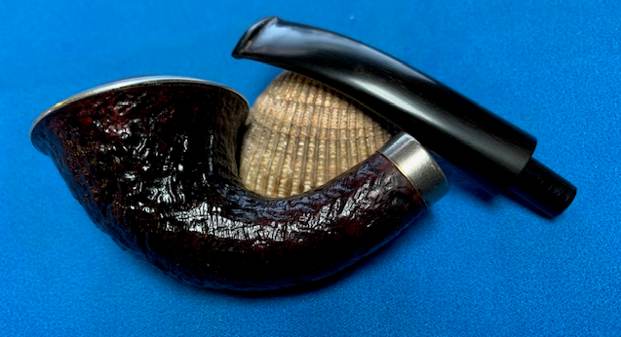
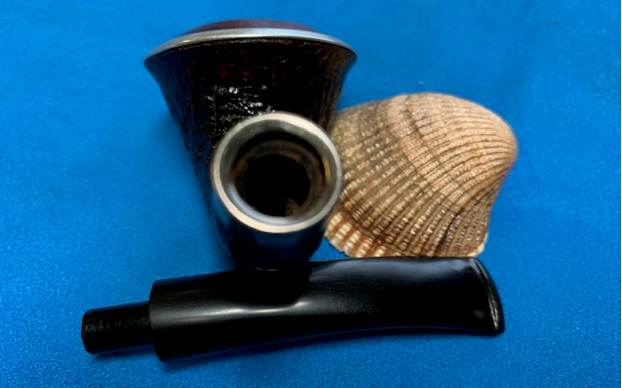
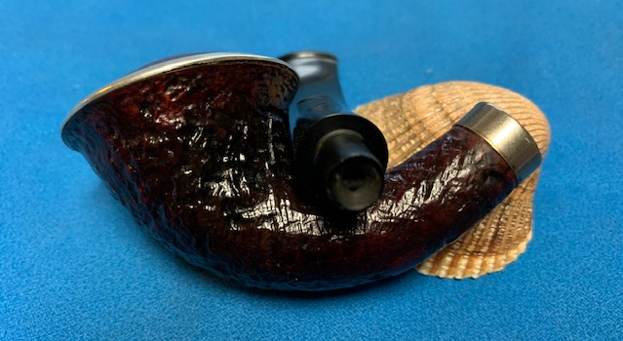
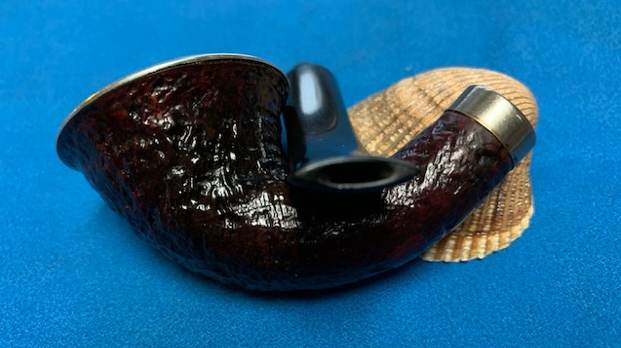
Next on the chopping block is a beautiful Danish pipe from Scandia. This terrific pipe came to me from an antique shop in the Fraser Valley (an area to the east of Vancouver). The price was reasonable, so I had to have it. The pipe is beautiful and a great example of Danish pipe-making. The pipe is a Danish pickaxe pipe by Scandia, produced from the esteemed pipemaker, Stanwell. The pickaxe is a very attractive shape and this one is no exception. It really makes an impression. It has beautiful, sandblasted briar from the bowl, down the shank and transitions into the vulcanite ferrule. It also has a fantastic push stem. The underside of the shank reads Scandia [over] Made in Denmark. There is a faint marking on the ferrule, which appears to show “10” or possibly “1C”. I don’t think this is a shape number, for reasons I will explain momentarily. Finally, the stem’s top also has the SC, indicating the Scandia make. Both Pipedia and Pipephil list Scandia as being a Stanwell sub-brand or second (and not much else), as per the photo below.Meanwhile, Pipedia has a good amount of information on the Stanwell brand and its history. I certainly recommend looking it over: https://pipedia.org/wiki/Stanwell.Despite the (possible) number 10 on the ferrule, I went to check the list of Stanwell shapes, here on Reborn Pipes, and I found that this definitely did not match. However, I did find something that was a match! Shape 1b is listed as “Freehand, Pick Ax, push mouthpiece, by Sixten Ivarsson. (1975)”. To further confirm this, here is a page from an old 70s or 80s Stanwell catalogue which clearly shows the same shape of pipe with the matching shape number. I think we can safely assume that this is a pickaxe, designed by the legendary Sixten Ivarsson.Anyway, this really is a good-looking pipe. No major issues to resolve – just a few minor ones. The stem was dirty, and some small scratches. There were a couple of significant bite marks, as well as some oxidation and calcification on the vulcanite. The rim on the stummel was blackened and burnt – that would need to be addressed. The insides were fairly dirty and would need some work to clean out. There was also a small nick along the inside edge of the rim. The stem was first on my list. I wiped down the outside of the stem with Murphy’s Oil Soap on some cotton pads. I also took a BIC lighter and ‘painted’ the stem with its flame in order to lift the bite marks and dents. Unfortunately, this didn’t really work, but I have ways of sorting this out. Then, I cleaned out the insides of the stem with pipe cleaners and isopropyl alcohol.Once this process was done, I used SoftScrub and cotton pads to wipe down the stem before throwing it in the Pipe Stem Oxidation Remover overnight. The following day, I cleaned all of the de-oxidizing mess and again scrubbed with SoftScrub on some cotton pads to remove the leftover oxidation. This worked well. I used some nail polish to restore the letters SC on the stem. I painted the area carefully and let it fully set before proceeding. These letters were too worn to be fully restored, but they definitely looked better after I worked on them.Before I moved on to the Micromesh pads, I built up the dents on the stem with cyanoacrylate adhesive and let them fully cure.I used my miniature files to ensure that the repairs keep the shape and look like they should. I then sanded the stem down with 220-, 400-, and 600-grit sandpapers to meld seamlessly into the stem. I did the same to the remaining tooth marks. I then used all nine Micromesh pads (1,500 through 12,000 grit) to bring out the lovely black lustre on the stem. I also used Obsidian Pipe Stem Oil in between each pad scrubbing.I repeated all of the above procedures for the vulcanite ferule, which only came off the stummel after applying heat and some gentle force. On to the stummel, and the usual cleaning procedures were in order for this pipe. I used both the PipNet Reamer and the KleenReem to remove the built-up cake and take the bowl down to bare briar, as I wanted to ensure there were no hidden flaws in the walls of the bowl. Fortunately, there were none.I then proceeded to clean out the insides of the shank with Q-tips, pipe cleaners, and isopropyl alcohol. There was lots of filth inside this stummel, and it took a good number of pipe cleaners etc. to sort that out. I followed that up by cleaning the insides with some dish soap and tube brushes. I then moved on to cleaning the outside of the stummel with Murphy’s Oil Soap and some cotton pads. That removed any latent dirt. I decided to de-ghost the pipe in order to remove any lingering smells of the past. I thrust cotton balls into the bowl and the shank and saturated them with 99% isopropyl alcohol. I let the stummel sit overnight. This caused any remaining oils, tars and smells to leach out into the cotton. The bowl was nice and clean after this.As I mentioned earlier, there were some small burn marks on the rim of the stummel that also needed to be addressed. Some of this was removed by the Murphy’s. For the burns that remained, I took some oxalic acid on a Q-tip and rubbed and rubbed. As you will see, the treatment worked reasonably well and the rim was improved. Some would remain, but that is part of the history of this pipe. I completed this step by gently sanding the interior rim edge to remove any remnants that remained. Then I addressed the nick on the rim by filling it with cyanoacrylate adhesive and briar dust. I sanded it down and made it look great. After this, the entire stummel was treated to a rub-down with all nine Micromesh pads (1,500 through 12,000 grit). A light application of Before & After Restoration Balm brought out the best in the stummel’s sandblast. There is some beautiful wood on this Danish pipe! In fact, as I was working, my youngest child came to watch me for a bit and said, “Is that a doggy?” I wasn’t sure what she meant, but she grabbed the stummel and pointed this out. That’s pretty funny!I glued the ferrule back I place and then it was off for a trip to the buffer. A dose of White Diamond and a few coats of conservator’s wax were just what this pipe needed. I had to be especially careful with the bench polisher, since the edges had a tendency to catch on the buffing wheels. This pipe was a delight from the start and its beauty only increased through the restoration process. This pipe is elegant, light, and incredibly comfortable to hold. Finally, I am pleased to announce that this pipe is for sale! If you are interested in acquiring it for your collection, please have a look in the ‘Danish’ pipe section of the store here on Steve’s website. You can also email me directly at kenneth@knightsofthepipe.com. The approximate dimensions of the Stanwell are as follows: length 5½ in. (140 mm); height 2½ in. (64 mm); bowl diameter 1⅝ in. (41 mm); chamber diameter ¾ in. (19 mm). The weight of the pipe is 1⅝ oz. (47 g). I hope you enjoyed reading the story of this restoration as much as I enjoyed restoring it. If you are interested in more of my work, please follow me here on Steve’s website or send me an email. Thank you very much for reading and, as always, I welcome and encourage your comments.

Breathing New Life into a Lovely S. Bang Calabash


Blog by Steve Laug

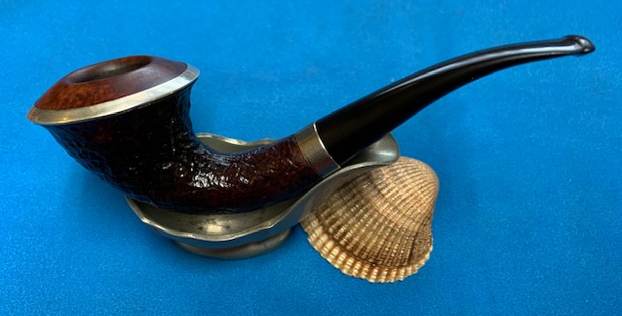
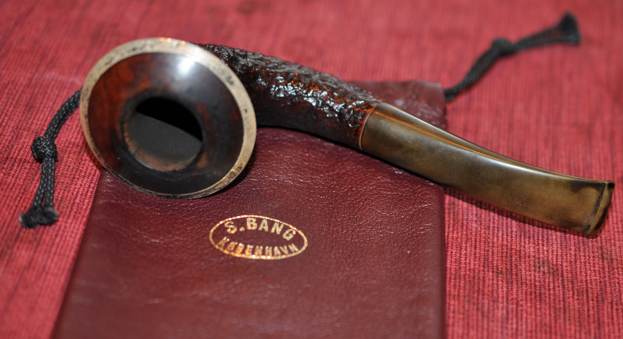
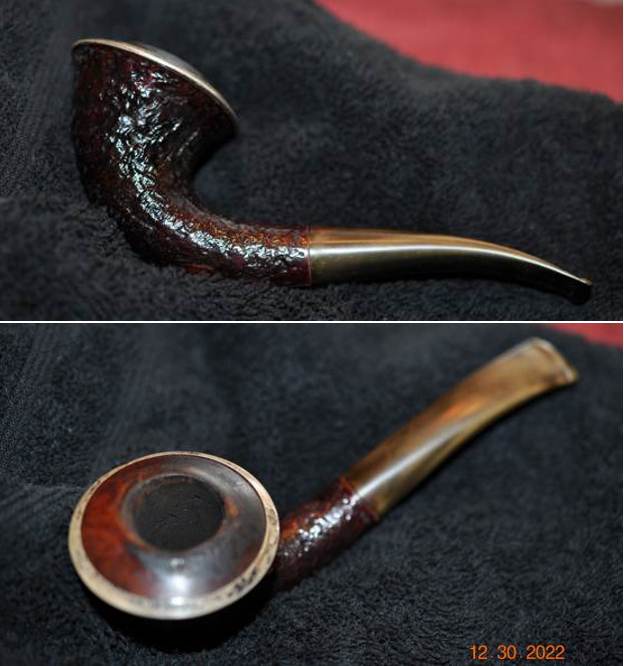
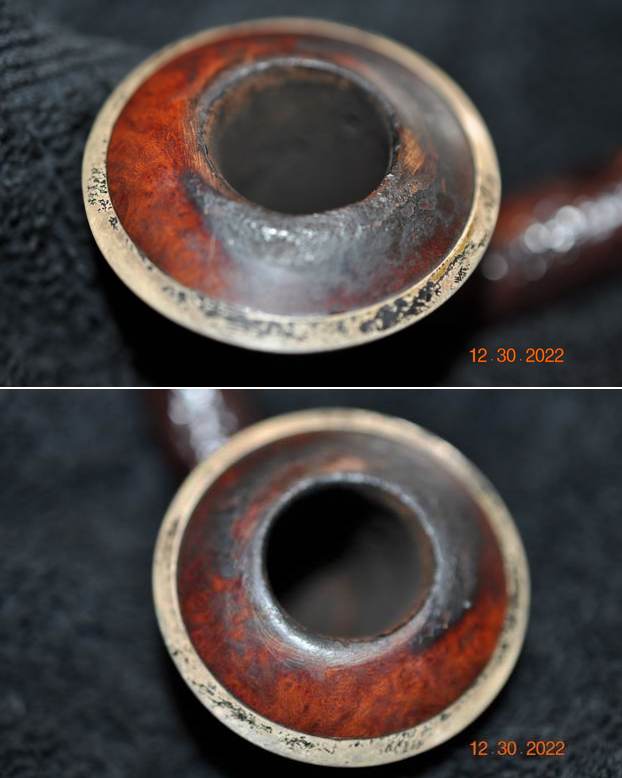
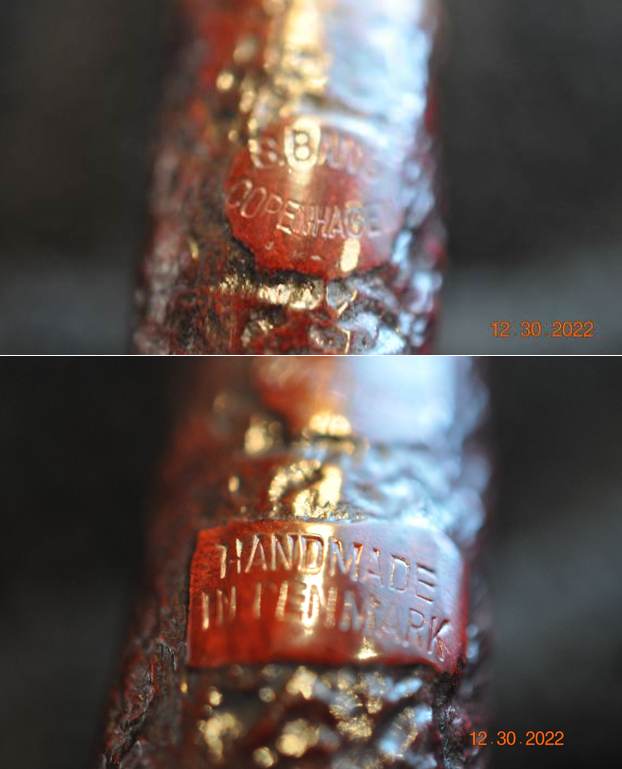
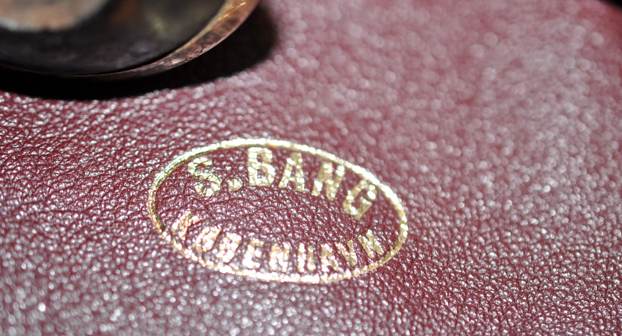
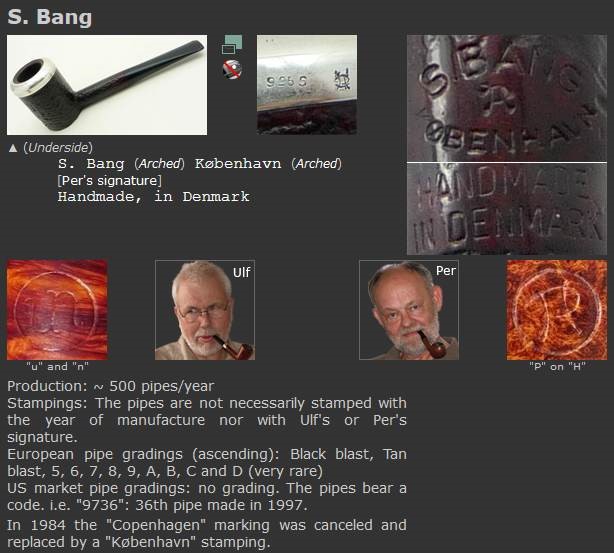
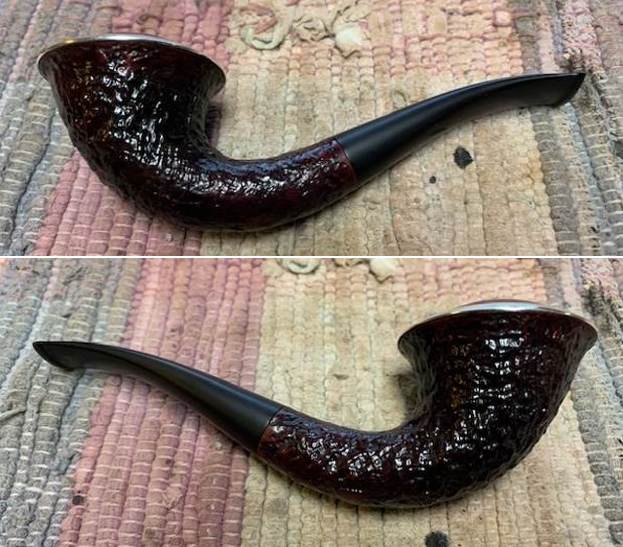
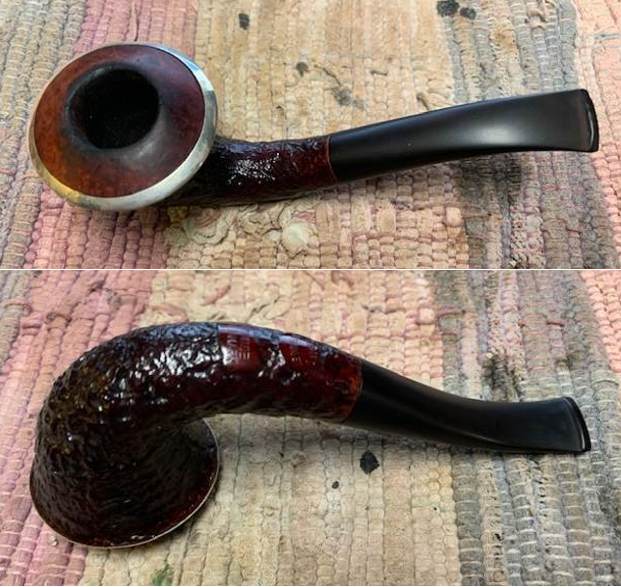
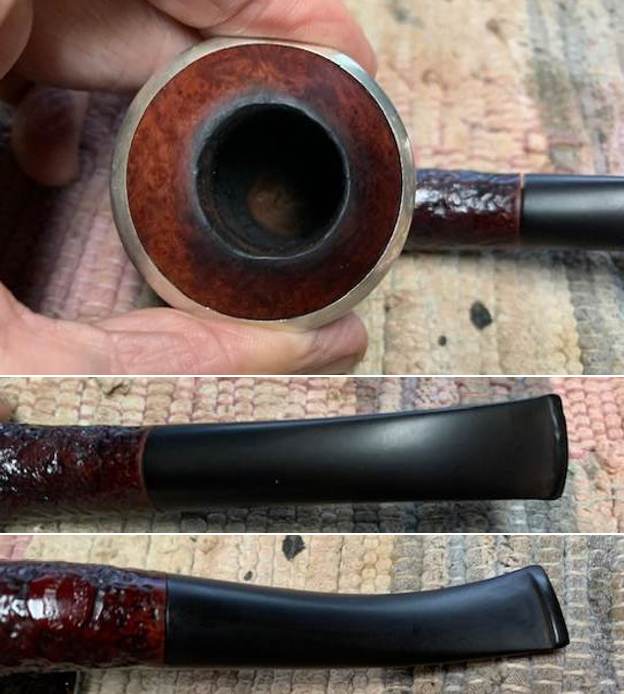
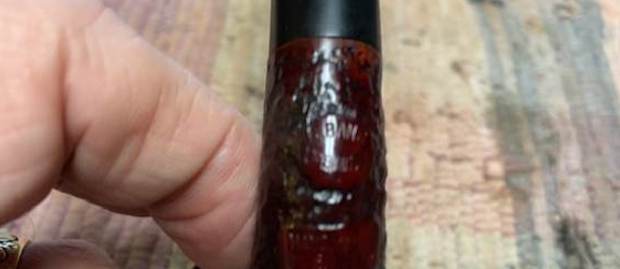
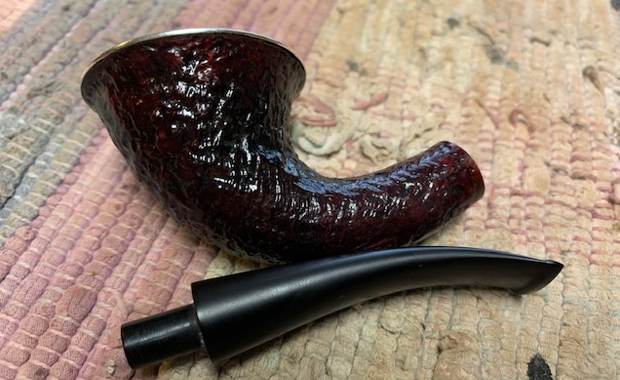
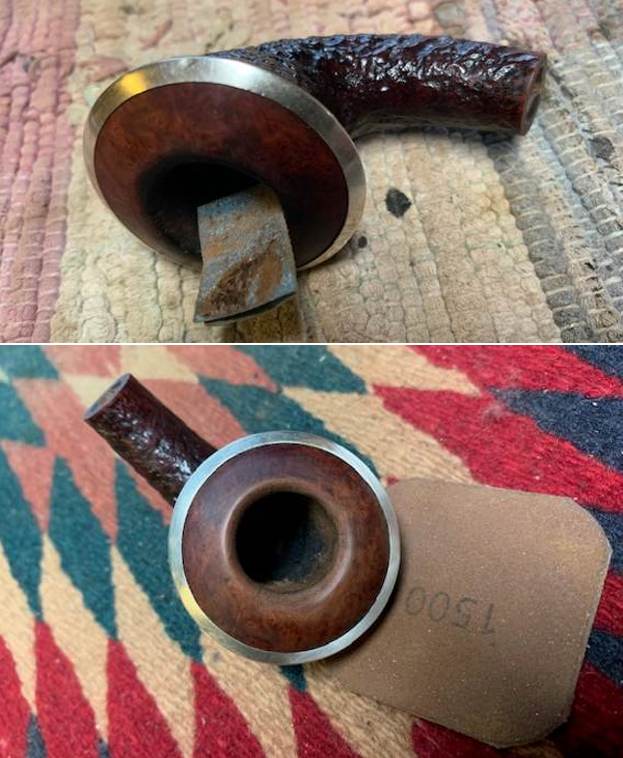
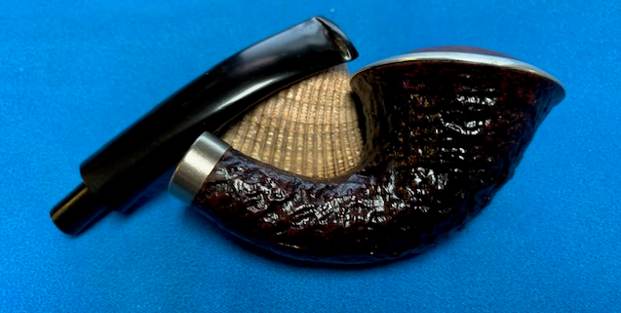
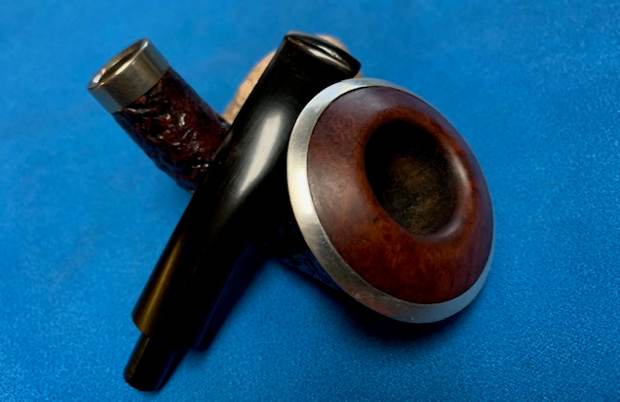
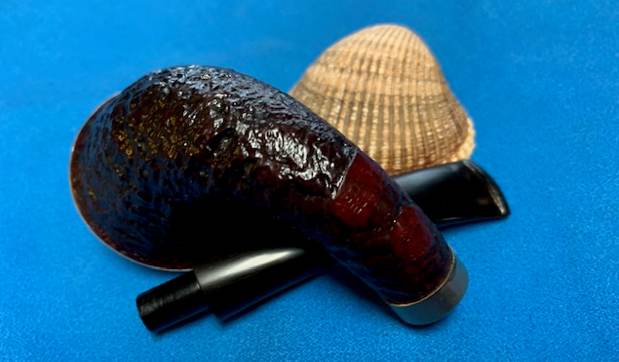
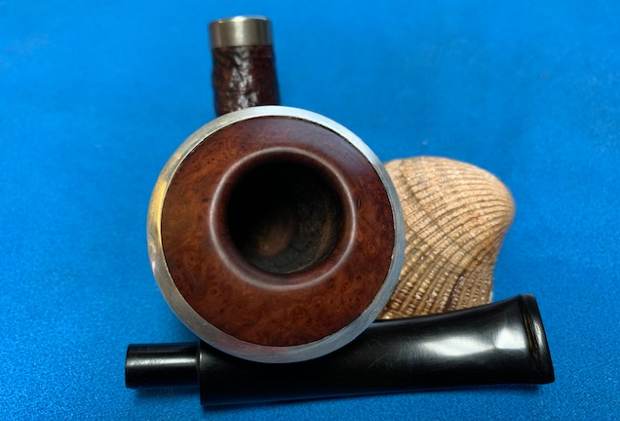
The next pipe was another surprise to Jeff and me when we bought it from the fellow in Copenhagen, Denmark on November 10, 2022. It is a sandblast Calabash with a smooth rim top and a silver ring around the outer edge of the bowl. The stem is vulcanite and the ring is Sterling Silver. The pipe is stamped S. Bang [over] Copenhagen on a smooth oval on the underside of the shank. Under that is over another smooth patch, a rectangle stamped with Handmade [over] In Denmark. The Sterling Silver around the outer edge of the bowl is not stamped. The bowl had a thick cake with some lava overflow on the rim top and inwardly beveled inner edge of the bowl. There was some damage on the inner edge and bevel. The silver was oxidized and darkened. The finish on the bowl was dirty but also seemed to have a very shiny coat on it. The vulcanite taper stem is oxidized, dirty and had tooth chatter and marks on the top and underside of the stem ahead of the button. It came with a leather bag stamped S. Band over Kobenhavn in gold on the front of it. Jeff took these  photos of the pipe before he started his cleanup work. He took photos of the rim and bowl to show the thick cake and lava coat covering the rim top. It really was filthy and a mess. The photos show the damage to the rim top and beveled inner edge. There are also scratches on the rim top at the front and back of the bowl. He also took photos of the stem surfaces to show its overall condition when it arrived. The photos of the sides and heel of the bowls show beautiful blast around the bowl and shank sides. The rich brown stains highlights the grain and adds depth to the finish. It shows some promise. He also took photos of the stamping on the smooth panels on the underside of the shank. It took several photos to capture the stamp on the curve but they were clear and read as noted above. The leather pipe sock is stamped in gold and reads as follows:To help me understand the stamping a bit more I turned to Pipephil’s site and read what it said about S. Bang pipes (http://pipephil.eu/logos/en/logo-s1.html). I have included a screen capture of the section below as well as the side bar information below the capture. Sven Bang opened his tobacco and pipe shop in 1968 in Copenhagen. He was more a business man than a pipe carver and began to hire pipemakers. About half a dozen succeeded each other in his workshop during the 1970’s (Ivan Holst Nielsen, Jan Wideløv, Phil Vigen…). At least Per Hansen and Ulf Noltensmeier stayed and when Sven retired in 1983 they took over the company (in 1984) keeping its name.

I knew from that the pipe I have was made for the European market and was known as a Black Blast. I also knew that it was made before 1984 when the stamp Copenhagen was replaced with Kobenhavn. It is also the time when Ulf and Per took over the company so it was made by one of them.

To close my understanding of the pipe I turned to Pipedia (https://pipedia.org/wiki/S._Bang). I quote the section from the article where the company changed hands from S. Bang to Hansen and Noltensmeier in 1984. It is a great read so I have included it below.

Svend Bang retired in 1984. Evidently he felt a great deal of pride in the product that he initiated throughout his career and retirement and until his death in 1993.

Once Hansen and Noltensmeier took over the company (in 1984) they knew it was best to retain the S. Bang name – the two carvers always shared the same philosophy about that. Noltensmeier and Hansen were determined to maintain top quality at the expense of increased numbers. The only change they made concerns the stamping on the pipes changing from the English version “COPENHAGEN” to the Danish “KOBENHAVN”.

Still, they are two separate carvers, with their own styles and preferences. Each makes his own pipes – there is no “assembly line” construction at S. Bang. They bounce ideas off of each other, of course, and admit that when problems arise in a pipe, it is nice to have a partner to discuss them with.

Though they carve pipes as individuals, there are similarities in their work. All Bang pipes are made with black, hand-cut vulcanite stems.

The same engineering is used by both carvers as well. The shape and size of the tobacco chambers vary according to size and design of the pipe, but each carver follows the same design guidelines for choosing the proper chamber dimensions. The smoke channel is always engineered for optimum performance.

Bang pipes are noted for the high definition and fine contrast in the grain. They undergo a double staining process to achieve that effect. The technique makes the grain leap from the bowl of the pipe, making well-grained wood become extra ordinary. The same coloring, however, will produce different results in different pieces of briar, making each pipe truly individual.

Per Hansen is the designated sandblasting artist for the team. He personally takes those pieces that are to be sandblasted to Stanwell, and is permitted to use the sandblasting equipment himself. That is the only S. Bang process, though, that is not executed by the individual carver of each pipe. Everything else, including the famous S. Bang silverwork, is done in the shop by each of the carvers on his own pipes.

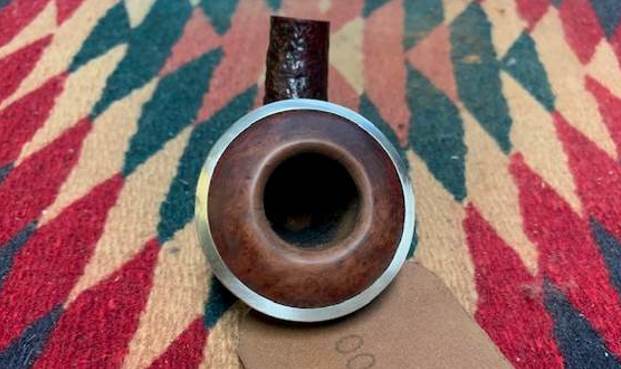
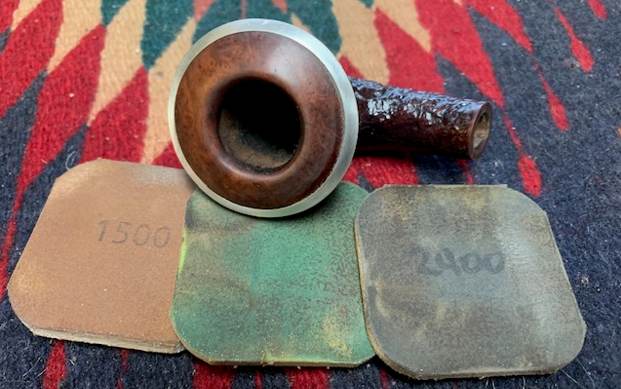
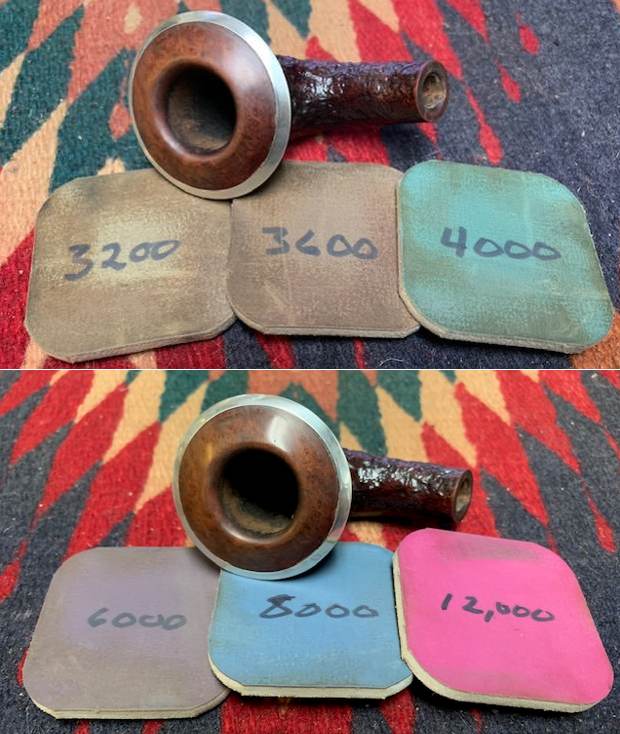
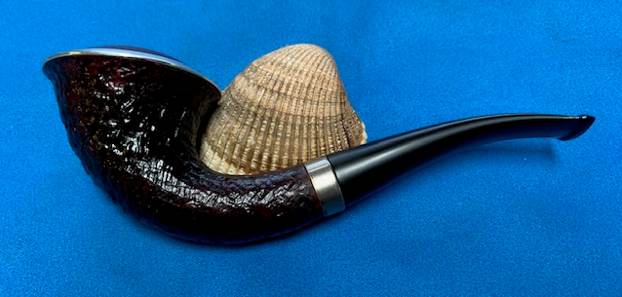
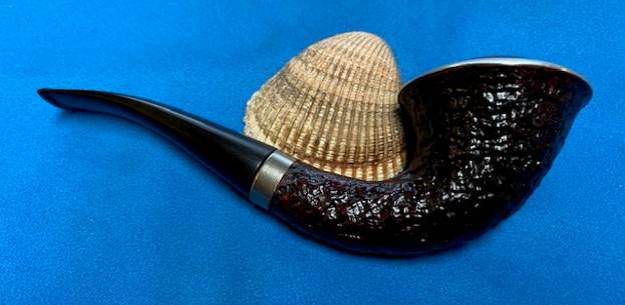
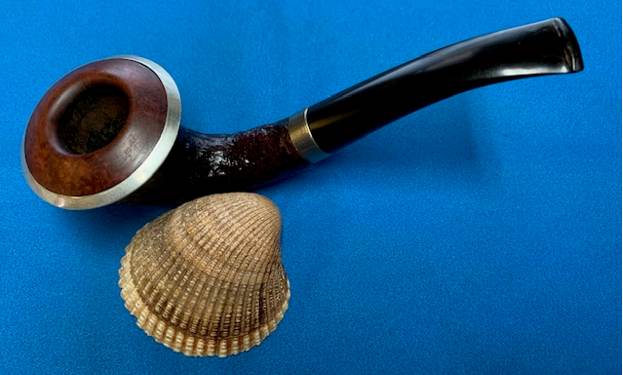
Jeff cleaned up the pipe for me. He reamed the bowl with a PipNet pipe reamer and cleaned it up with a Savinelli Fitsall Pipe Knife. He scrubbed the exterior with Murphy’s Oil Soap and a tooth brush to clean off the grime off the finish and the overflow of lava on the rim top. The cleaning had removed the debris on the rim top. He cleaned up the internals of the shank, mortise and stem with pipe cleaners, cotton swabs and alcohol to remove all of the oils and tars in the pipe. He soaked the stem in Before & After Deoxidizer and was able to remove much of the oxidation, calcification. When it arrived here in Vancouver it was a clean pipe and I knew what I had to work with. I took photos of it before I started my part of the restoration. I took a photo of the rim top and the stem to show their condition once it arrived in Canada. Jeff was able to clean up the cake and the lava overflow that was shown in the rim and bowl photos above. The rim top and the inner edge of the bowl showed some damage to the inner edge and top toward the front of the bowl. He was also able to get rid of the grime and grit in the surface of the briar. The stem looked better, though there were tooth marks and chatter on both sides near the button.I took a photo of the stamping on the underside of the shank. It reads as noted above.I removed the stem from the shank and took a photo of the parts to give a sense of what the pipe looks like.I started my work on the bowl by dealing with the burn damage on the inner edge and rim top. I followed the bevel on the inner edge and removed the burn damage while cleaning the bevel using 220 grit sandpaper. Once I got the bevel cleaned up and the rim damage removed I burn and the scratches on the rim top with 220 grit sandpaper. I smoothed out the repairs with a 1500 grit micromesh sanding pad. I polished the rim top and silver rim edge with micromesh sanding pads – dry sanding with 1500-12000 grit pads. I wiped it down after each sanding pad with a damp cloth to remove the sanding debris. I rubbed the bowl and shank down with Before & After Restoration Balm to deep clean them. The product works to clean, enliven and protect the briar. I worked it in with my fingers to get it into the briar. I let it sit for 10 minutes then I wiped it off and buffed it with a soft cloth. The briar really began to have a rich shine. While I was rubbing it down with the Balm a chunk of the shank fell out in my hand. There must have been cracks in the shank as the stem was loose before. It is frustrating when that happens. I repaired the cracks with clear CA glue and pressed the piece back into the shank.Once the repair cured I sanded the shank end smooth to hold a silver band. I sanded the depth of the band and removed half of the depth of the band. It would look good once it was pressed in place on the shank end. I coated the shank end with all purpose glue and heated and pressed the band on to  the shank end. I stained the sanded areas on the shank just ahead of the band with a Walnut stain pen to blend them into the surrounding briar. It looks very good. I rubbed the bowl and shank down once again with Before & After Restoration Balm to deep clean them. The product works to clean, enliven and protect the briar. I worked it in with my fingers to get it into the briar. I let it sit for 10 minutes then I wiped it off and buffed it with a soft cloth. The briar really began to have a rich shine. I set aside the bowl and turned my attention to the damage on the stem. I painted the stem surface with the flame of a lighter to lift the tooth marks. I lifted them some. I filled in what remained of the marks on both sides with black CA glue. I set it aside to cure. Once the repairs cured I flattened them out with a small file. I sanded the repairs with 220 grit sandpaper to blend them into the stem surface. I started polishing it with 400 grit wet dry sandpaper.  I polished the stem with micromesh sanding pads – dry sanding with 1500-12000 grit pads. I wiped the stem down after each pad with a damp cloth to remove the sanding dust. I gave it a further polish with Before & After Stem Polish – both Fine and Extra Fine. I finished by wiping the stem down with a final coat of Obsidian Oil and set it aside to dry. I put the stem back on the S. Bang Black Sandblast Calabash and took the pipe to the buffer. I buffed the bowl and stem with Blue Diamond to polish the briar and the vulcanite. Blue Diamond does a great job on the smaller scratches that remain in both. I gave the bowl and the stem several coats of carnauba wax and buffed the pipe with a clean buffing pad to raise the shine. I hand buffed it with a microfiber cloth to deepen the shine. Considering the mess the pipe was when we received it and the surprise of a cracked shank that appeared in the cleanup, I am amazed at how well it turned out. The finished pipe is shown in the photos below. This is a beautiful S. Bang Sandblast Calabash – the vulcanite taper stem and rim top and sandblast finish combine to give the pipe a great look. The newly fitted silver band and the polished black, vulcanite stem looks really good with the rich grain standing out on the bowl and shank. The dimensions of the pipe are Length: 5 ½ inches, Height: 1 ¾ inches, Outside diameter of the bowl: 1 ¾ inches, Chamber diameter: ¾ of an inch. The weight of the pipe is 1.48 ounces/43 grams. This beautiful S. Bang will be staying with me for awhile. Thanks for walking through the restoration with me on this beauty!

Cleaning up another Dark Sandblast Stanwell Sterling Silver Billiard


Blog by Steve Laug

The next pipe I am working on was purchased on 01/10/2023 as part of another group of pipes from a fellow in Copenhagen, Denmark. This was another tired and dirty pipe but it had a great sandblast on the bowl and shank and a smooth rim top. The only mark on the pipe is on the silver band on the shank that reads Stanwell [over] Silver. The pipe is classic Danish Billiard. There were tars and oils ground into the valleys and crevices of the sandblast. The bowl had a thick cake that flowed over the top of the rim in a thin coat of a lava and some damage to the top and inner edge of the bowl. The stem was a black vulcanite taper stem with a silver Crown S logo on the left side. It was oxidized, calcified and had tooth marks and chatter on both sides ahead of the button. I think it would clean up to be a beautiful pipe. Jeff took photos of the pipes before he started his clean up work.  He took photos of the rim and bowl to show the thick cake and lava coat covering the rim top. It really was filthy and a mess. You can also see the rim top and inner edge damage in the photos. He also took photos of the stem surfaces to show its overall condition when it arrived. The photos of the sides and heel of the bowls show beautiful blast around the bowl and shank sides. The rich brown stains highlights the grain and adds depth to the finish. It shows some promise. He also took photos of the stamping on the silver band. It took several photos to capture the stamp on the curve but they were clear and read as noted above. Jeff cleaned up the pipe for me. He reamed the bowl with a PipNet pipe reamer and cleaned it up with a Savinelli Fitsall Pipe Knife. He scrubbed the exterior with Murphy’s Oil Soap and a tooth brush to clean off the grime off the finish and the overflow of lava on the rim top. The cleaning had removed the debris on the rim top. He cleaned up the internals of the shank, mortise and stem with pipe cleaners, cotton swabs and alcohol to remove all of the oils and tars in the pipe. He soaked the stem in Before & After Deoxidizer and was able to remove much of the oxidation, calcification. When it arrived here in Vancouver it was a clean pipe and I knew what I had to work with. I took photos of it before I started my part of the restoration. I took a photo of the rim top and the stem to show their condition once it arrived in Canada. Jeff was able to clean up the cake and the lava overflow that was shown in the rim and bowl photos above. The rim top and the inner edge of the bowl showed some damage to the inner edge and some darkening on the rim top. He was also able to get rid of the grime and grit in the surface of the briar. The stem looked better, though there were tooth marks and chatter on both sides near the button. I tried to capture the Stanwell Sterling on the silver band. It is clearer in person than is shown in the photo. I removed the stem from the shank and took a photo of the parts to give a sense of what the pipe looks like. I started my work on the bowl by working on the damage to the inner edge of the bowl and the darkening on the rim top and outer edge with 220 grit sandpaper. I was able to clean it up nicely.I polished the smooth rim top with micromesh sanding pads – dry sanding with 1500-12000 grit pads. I wiped the briar down after each pad. I rubbed the bowl and shank down with Before & After Restoration Balm to deep clean them. The product works to clean, enliven and protect the briar. I worked it in with my fingers to get it into the briar. I let it sit for 10 minutes then I wiped it off and buffed it with a soft cloth. The briar really began to have a rich shine. I took some photos of the bowl at this point to mark the progress in the restoration. It is a beautiful bowl. I set aside the bowl and turned my attention to the damage on the stem. I “painted” the surface of the stem with the flame of a lighter to lift them as much as possible. I filled in the ones that remained with clear CA glue and set it aside to cure. I used a small file to flatten the repairs and recut the button edge. I sanded the stem smooth with 220 grit sandpaper and started polishing it with 400 grit wet dry sandpaper. I polished the stem with micromesh sanding pads – dry sanding with 1500-12000 grit pads. I wiped the stem down after each pad with a damp cloth to remove the sanding dust. I gave it a further polish with Before & After Stem Polish – both Fine and Extra Fine. I finished by wiping the stem down with a final coat of Obsidian Oil and set it aside to dry. I put the stem back on the Stanwell Sterling Sandblast Billiard and took the pipe to the buffer. I buffed the bowl and stem with Blue Diamond to polish the briar and the vulcanite. Blue Diamond does a great job on the smaller scratches that remain in both. I gave the bowl and the stem several coats of carnauba wax and buffed the pipe with a clean buffing pad to raise the shine. I hand buffed it with a microfiber cloth to deepen the shine. Considering the mess the pipe was when we received it I am amazed at how well it turned out. The finished pipe is shown in the photos below. This is a beautiful Stanwell Sterling Sandblast Billiard – the vulcanite taper stem and rim top and sandblast finish combine to give the pipe a great look. The polished black, vulcanite stem looks really good with the rich grain standing out on the bowl and shank. The dimensions of the pipe are Length: 5 ½ inches, Height: 1 ¾ inches, Outside diameter of the bowl: 1 1/8 inches, Chamber diameter: ¾ of an inch. The weight of the pipe is 1.27 ounces/36 grams. This is another pipe that I will be putting on the rebornpipes online store in the Danish Pipe Pipemaking Companies Section shortly, if you are interested in adding it to your collection. Thanks for walking through the restoration with me on this beauty!

Discovering Beautiful Grain on this dirty Stanwell Sterling Silver 97 Reg. No. 969-48 Liverpool


Blog by Steve Laug

The next pipe I am working on was purchased on 01/10/2023 as part of another group of pipes from a fellow in Copenhagen, Denmark. This was another tired and dirty pipe that was a unique shape. The pipe is stamped on the left side and reads Stanwell [over] Regd. No. 969-48. On the right side it is stamped with the shape number 97. On the underside of the shank it is stamped Made in Denmark. The pipe is an interesting look shape I would call a Liverpool. It is long shank and round with a taper vulcanite stem. There were tars and oils ground into the surface of the briar. The silver band on the shank was original and was stamped Sterling [over] Silver. The bowl had a thick cake that flowed over the top of the rim in a thin coat of a lava and some damage to the inner edge of the bowl. The stem was a black vulcanite taper stem without a logo on the side or top. It was oxidized, calcified and had tooth marks and chatter on both sides ahead of the button. I think it would clean up to be a beautiful pipe. Jeff took photos of the pipes before he started his clean up work.  He took photos of the rim and bowl to show the moderate cake and lava coat covering the rim top. It really was filthy and a mess. You can also see the rim top and inner edge damage in the photos. He also took photos of the stem surfaces to show its overall condition when it arrived. The photos of the sides and heel of the bowls show beautiful grain  around the bowl and shank sides. The rich brown stains highlights the grain and adds depth to the finish. It shows some promise. He also took photos of the stamping on the sides of the shank and the band. They were clear and read as noted above. Jeff cleaned up the pipe for me. He reamed the bowl with a PipNet pipe reamer and cleaned it up with a Savinelli Fitsall Pipe Knife. He scrubbed the exterior with Murphy’s Oil Soap and a tooth brush to clean off the grime off the finish and the heavy overflow of lava on the rim top. The cleaning had removed the thick coat on the rim top. He cleaned up the internals of the shank, mortise and stem with pipe cleaners, cotton swabs and alcohol to remove all of the oils and tars in the pipe. He soaked the stem in Before & After Deoxidizer and was able to remove much of the oxidation, calcification. When it arrived here in Vancouver it was a clean pipe and I knew what I had to work with. I took photos of it before I started my part of the restoration. I took a photo of the rim top and the stem to show their condition once it arrived in Canada. Jeff was able to clean up the cake and the lava overflow that was shown in the rim and bowl photos above. The rim top and the inner edge of the bowl showed some damage to the inner edge and some darkening on the rim top. He was also able to get rid of the grime and grit in the surface of the briar. The stem looked better, though there were tooth marks and chatter on both sides near the button. I took photos of the stamping on the sides of the shank and the underside show that it is clear and readable. I tried to capture the Stanwell Sterling on the silver band (first photo below). It is clearer in person than is shown in the photo.I removed the stem from the shank and took a photo of the parts to give a sense of what the pipe looks like.I started my work on the bowl by working on the damage to the inner edge of the bowl and the darkening on the rim top and outer edge with 220 grit sandpaper. I was able to clean it up nicely.I polished the briar with micromesh sanding pads – dry sanding with 1500-12000 grit pads. I wiped the briar down after each pad. I rubbed the bowl and shank down with Before & After Restoration Balm to deep clean them. The product works to clean, enliven and protect the briar. I worked it in with my fingers to get it into the briar. I let it sit for 10 minutes then I wiped it off and buffed it with a soft cloth. The briar really began to have a rich shine. I took some photos of the bowl at this point to mark the progress in the restoration. It is a beautiful bowl. I set aside the bowl and turned my attention to the damage on the stem. I “painted” the surface of the stem with the flame of a lighter to lift them as much as possible. I filled in the ones that remained with clear CA glue and set it aside to cure. I used a small file to flatten the repairs and recut the button edge. I sanded the stem smooth with 220 grit sandpaper and started polishing it with 400 grit wet dry sandpaper. I polished the stem with micromesh sanding pads – dry sanding with 1500-12000 grit pads. I wiped the stem down after each pad with a damp cloth to remove the sanding dust. I gave it a further polish with Before & After Stem Polish – both Fine and Extra Fine. I finished by wiping the stem down with a final coat of Obsidian Oil and set it aside to dry. I put the stem back on the Stanwell Sterling 97 Lovat Reg. No. 969048 Liverpool pipe and took the pipe to the buffer. I buffed the bowl and stem with Blue Diamond to polish the briar and the vulcanite. Blue Diamond does a great job on the smaller scratches that remain in both. I gave the bowl and the stem several coats of carnauba wax and buffed the pipe with a clean buffing pad to raise the shine. I hand buffed it with a microfiber cloth to deepen the shine. Considering the mess the pipe was when we received it I am amazed at how well it turned out. The finished pipe is shown in the photos below. This is a beautiful Stanwell Sterling 97 Reg. No. 969-48 Lovat – the vulcanite taper stem and rim top and smooth finish combine to give the pipe a great look. The polished black, vulcanite stem looks really good with the rich grain standing out on the bowl and shank. The dimensions of the pipe are Length: 5 inches, Height: 1 ½ inches, Outside diameter of the bowl: 1 1/8 inches, Chamber diameter: ¾ of an inch. The weight of the pipe is .99 ounces/28 grams. This is another pipe that I will be putting on the rebornpipes online store in the Danish Pipe Pipemaking Companies Section shortly, if you are interested in adding it to your collection. Thanks for walking through the restoration with me on this beauty!

Discovering Beauty under the grime on a Stanwell Sterling Silver Billiard


Blog by Steve Laug

The next pipe I am working on was purchased on 01/10/2023 as part of another group of pipes from a fellow in Copenhagen, Denmark. This was another tired and dirty pipe that obviously had been someone’s favourite smoker. The pipe has no stampings on the shank sides. The silver band is stamped Stanwell Sterling. The dark brown sandblast finish was dirty and tired looking but showed some great grain in the blast. There were tars and oils ground into the surface of the briar. The silver band on the shank was original and was stamped Sterling [over] Silver. The bowl had a thick cake that flowed over the top of the rim in a thick coat of a lava in the sandblast top. The stem was a black vulcanite taper stem with a silver Crown S on the left side. It was oxidized, calcified and had tooth marks and chatter on both sides ahead of the button. There was also a small bite through on the top and underside ahead of the button. I think it would clean up to be a beautiful pipe. Jeff took photos of the pipes before he started his clean up work.  He took photos of the rim and bowl to show the moderate cake and lava coat covering the rim top. It really was filthy and a mess. He also took photos of the stem surfaces to show its overall condition when it arrived. You can see the two bite throughs on both sides of the stem. The photos of the sides and heel of the bowls show beautiful grain in the sandblast around the bowl and shank sides. The rich brown stains highlights the grain and adds depth to the finish. It shows some promise. He also took a photo of the stamping on the left side of the Sterling Silver Band and a photo of the inlaid Crown Silver S on the left side of the stem. It read as noted above. Jeff cleaned up the pipe for me. He reamed the bowl with a PipNet pipe reamer and cleaned it up with a Savinelli Fitsall Pipe Knife. He scrubbed the exterior with Murphy’s Oil Soap and a tooth brush to clean off the grime off the finish and the heavy overflow of lava on the rim top. The cleaning had removed the thick coat on the rim top. He cleaned up the internals of the shank, mortise and stem with pipe cleaners, cotton swabs and alcohol to remove all of the oils and tars in the pipe. He soaked the stem in Before & After Deoxidizer and was able to remove much of the oxidation, calcification. When it arrived here in Vancouver it was a clean pipe and I knew what I had to work with. I took photos of it before I started my part of the restoration. I took a photo of the rim top and the stem to show their condition once it arrived in Canada. Jeff was able to clean up the cake and the lava overflow that was shown in the rim and bowl photos above. The rim top and the inner edge of the bowl was in surprisingly good condition. He was also able to get rid of the grime and grit in the surface of the briar around the sandblast. The stem looked better, though there were deep tooth marks and chatter on both sides near the button as well as a small bite through on each side ahead of the button. I took a photo of the stamping on the left side of the Sterling Band. It was clear and readable as noted above.I removed the stem from the shank and took a photo of the parts to give a sense of what the pipe looks like.I started my work on the bowl by going over the sandblasted rim top with a brass bristle wire brush. It removed the remaining dust and debris from the sandblast. It gave the finish a better and cleaner look. I rubbed the bowl and shank down with Before & After Restoration Balm to deep clean them. The product works to clean, enliven and protect the briar. I worked it in with my fingers to get it into the briar. I let it sit for 10 minutes then I wiped it off and buffed it with a soft cloth. The briar really began to have a rich shine. I took some photos of the bowl at this point to mark the progress in the restoration. It is a beautiful bowl. I set aside the bowl and turned my attention to the damage on the stem. I took a photo of the bite through on the top and underside of the stem just ahead of the button. You can see the small bite through on the top of the stem and the larger hole in the underside of the stem. They will need to be filled in and smoothed out and reshaped.I greased a folded pipe cleaner with Vaseline Petroleum Jelly and inserted it into the airway in the button. I filled in the holes on both sides with black CA glue and set it aside for the repairs to cure.I removed the pipe cleaner from the airway and set aside the stem to let the repairs cure. Once they cured, I flattened them out with a flat file and then sanded them with 220 grit sandpaper to blend them into the surface of the stem. I started the polishing with 600 grit wet dry sandpaper. I polished the stem with micromesh sanding pads – dry sanding with 1500-12000 grit pads. I wiped the stem down after each pad with a damp cloth to remove the sanding dust. I gave it a further polish with Before & After Stem Polish – both Fine and Extra Fine. I finished by wiping the stem down with a final coat of Obsidian Oil and set it aside to dry. I put the stem back on the Stanwell Sterling Sandblast Billiard pipe and took the pipe to the buffer. I buffed the bowl and stem with Blue Diamond to polish the briar and the acrylic. Blue Diamond does a great job on the smaller scratches that remain in both. I gave the bowl and the stem several coats of carnauba wax and buffed the pipe with a clean buffing pad to raise the shine. I hand buffed it with a microfiber cloth to deepen the shine. Considering the mess the pipe was when we received it I am amazed at how well it turned out. The finished pipe is shown in the photos below. This is a beautiful Stanwell Sterling Sandblast Billiard – the vulcanite taper stem and rim top and sandblast finish combine to give the pipe a great look. The polished black, vulcanite stem looks really good with the rich browns standing out in the sandblast. The dimensions of the pipe are Length: 5 ¾ inches, Height: 1 ½ inches, Outside diameter of the bowl: 1 ¼ inches, Chamber diameter: ¾ of an inch. The weight of the pipe is 1.23 ounces/36 grams. This is another pipe that I will be putting on the rebornpipes online store in the Danish Pipe Pipemaking Companies Section shortly, if you are interested in adding it to your collection. Thanks for walking through the restoration with me on this beauty!

Is it possible to give this Horribly Abused Stanwell 1986 POY Dublin New Life?


Blog by Steve Laug

The next pipe I am working on was purchased on 11/14/2022 as part of a group of pipes from a fellow in Copenhagen, Denmark. This was a horribly tired and dirty pipe with a lot of wear and tear and obviously it had been someone’s favourite smoker. The pipe has an identifying plate on the left side of the shank that reads Stanwell [over] 1986. There was no other stamping on the shank and the silver plate confirmed for me that it was a Stanwell Pipe of the Year. The dirty sandblast finish on this was worn and tired looking. There were tars and oils ground into the surface of the briar. The silver band on the shank was an later addition to address a crack in the shank on the underside. one showed some nice grain around the bowl and shank and though it was a little dirty it was a nice looking pipe. The bowl had a thick cake that flowed over the top of the lightly crowned rim in a thick coat of a lava and showed potential damage on the top and the inner edge. The stem was a black vulcanite saddle stem with a silver Crown S on the left side of the saddle. It had some deep and wide tooth marks and chatter on both sides ahead of the button. There was also some oxidation and calcification on both sides of the stem. For me the question was would it clean up well enough to make it worth doing a thorough restoration. Time would tell once it was cleaned up and I had a chance to look it over. Jeff took photos of the pipes before he started his clean up work.  He took photos of the rim and bowl to show the heavy cake and thick lava coat covering the rim top. It really was filthy and a mess. He also took photos of the stem surfaces to show its overall condition when it arrived. The photos of the sides and heel of the bowls show beautiful grain around the bowl and shank sides. The sandblast is nicely done and highlights the grain. The brown stain on the briar adds depth finish on the pipe and makes the grain really stand out. It shows some promise. He took a photo of the crack in the underside of the shank. It had been repaired before but the band had slipped off a bit and the crack had opened up. He also took a photo of the stamped silver plate on the left underside of the shanks. It reads as noted above. Jeff cleaned up the pipe for me. He reamed the bowl with a PipNet pipe reamer and cleaned it up with a Savinelli Fitsall Pipe Knife. He scrubbed the exterior with Murphy’s Oil Soap and a tooth brush to clean off the grime off the finish and the heavy overflow of lava on the rim top. The cleaning had removed the thick coat on the rim top. He cleaned up the internals of the shank, mortise and stem with pipe cleaners, cotton swabs and alcohol to remove all of the oils and tars in the pipe. He soaked the stem in Before & After Deoxidizer and was able to remove much of the oxidation, calcification. When it arrived here in Vancouver it was a clean pipe and I knew what I had to work with. I took photos of it before I started my part of the restoration. I took a photo of the rim top and the stem to show their condition once it arrived in Canada. Jeff was able to clean up the incredibly thick cake and the lava overflow that was shown in the rim and bowl photos above. The rim top showed damage on the surface and the inner edge of the bowl was in rough condition. It was chipped and out of round. He was also able to get rid of the grime and grit in the surface of the briar around the sandblast. The last photo of the three below shows the crack in the shank. The stem looked better, though there were deep tooth marks and chatter on both sides near the button. I took a photo of the stamping on the silver plate on the left side of the shank to show that it was readable and undamaged by the cleanup work.I removed the stem from the shank and took a photo of the parts to give a sense of what the pipe looks like.I started my work on the inner edge and rim top with a folded piece of 220 grit sandpaper. I was able to remove that damage on the rim top and bring the inner edge back into round. It looked much better. (I also filled in the remnants of the crack on the underside of the shank with clear CA glue to further strengthen the  previous repair. I forgot to take pictures of this step.)I started polishing the smooth rim top with micromesh sanding pads. I wet sanded it with 1500-12000 grit pads. I wiped the bowl down after each pad with a damp cloth. The crowned rim top began to take on a rich shine and grain was beginning to stand out. I wet sanded with all of the pads and wiped the bowl down after each pad with a soft cloth. I used an oak stain pen to touch up the stain on the rim top to match the other smooth portions of the bowl and shank.I rubbed the bowl and shank down with Before & After Restoration Balm to deep clean the finish on the bowl and shank. The product works to clean, enliven and protect the briar. I worked it in with my fingers to get it into the briar. I used a horsehair shoe brush to work it into the sand blast. I let it sit for 10 minutes then I wiped it off and buffed it with a soft cloth. The briar really began to have a rich shine. I took some photos of the bowl at this point to mark the progress in the restoration. It is a beautiful bowl. I polished the silver band and plaque on the side of the shank with a jewelers cloth to remove the slight remaining oxidation and to protect and preserve it. I set the bowl aside and worked on the stem at this point in the process. The stem sat straight in the shank but the fit was thicker on the right side of the shank rather than the left side. I would need to reduce the diameter of the stem on the right side to get a more centered fit. I sanded the side with a piece of 220 grit sandpaper to reduce the diameter on that side. At the same time I filled in the deep tooth marks with clear CA glue. I flattened the repairs with a small file. And sanded the smooth with 220 grit. I started polishing the whole stem with 600 grit sandpaper until the sanding marks were gone. I polished the stem with micromesh sanding pads – dry sanding with 1500-12000 grit pads. I wiped the stem down after each pad with a damp cloth to remove the sanding dust. I gave it a further polish with Before & After Stem Polish – both Fine and Extra Fine. I finished by wiping the stem down with a final coat of Obsidian Oil and set it aside to dry. I put the stem back on the Stanwell Pipe of the Year 1986 Dublin Calabash pipe and took the pipe to the buffer. I buffed the bowl and stem with Blue Diamond to polish the briar and the acrylic. Blue Diamond does a great job on the smaller scratches that remain in both. I gave the bowl and the stem several coats of carnauba wax and buffed the pipe with a clean buffing pad to raise the shine. I hand buffed it with a microfiber cloth to deepen the shine. Considering the mess the pipe was when we received it I am amazed at how well it turned out. The finished pipe is shown in the photos below. This is a beautiful Stanwell POY 1986 – the vulcanite saddle stem and crowned rim top and sandblast finish combine to give the pipe a great look. The polished black, vulcanite stem looks really good with the rich browns standing out in the sandblast. The dimensions of the pipe are Length: 5 inches, Height: 2 inches, Outside diameter of the bowl: 1 ½ inches, Chamber diameter: ¾ of an inch. The weight of the pipe is 1.34 ounces/38 grams. This is another pipe that I will be putting on the rebornpipes online store in the Danish Pipe Pipemaking Companies Section shortly, if you are interested in adding it to your collection. Thanks for walking through the restoration with me on this beauty!

Restoring a Filthy Knute of Denmark Freehand A


Blog by Steve Laug

Jeff and I purchased this pipe on 8/3/2022 from a fellow in Carlsbad, California, USA. It is hard smoked freehand with a plateau rim top and shank end. The pipe is stamped on the underside of the shank and reads Knute [over] of Denmark. The stem has no stamp on it and is a fancy turned vulcanite one that fits the shank well. There was a heavy cake in the bowl and lava overflowing onto the plateau rim top. The finish showed some nice grain around the bowl and shank even through the grime that was ground into it. The stem was oxidized, calcified and there were tooth marks and chatter on both sides of the stem ahead of the button. Jeff took photos of the pipe before he started his clean up work. He took photos of the rim and bowl to give a sense of what he was dealing with. He also took photos of the stem surfaces to show the condition of the stem when it arrived. The photos of the sides and heel of the bowl show beautiful carving around the bowl and shank sides. The brown stain adds depth finish on the pipe. Even under the grime it is a unique piece. He also took photos of the stamped name on the underside of shank. It reads as noted above. Before I started my work on the pipe I wanted to remind myself of the provenance of the pipe. I remembered that it was linked to Karl Erik as the earlier pipe I worked on was. I wanted to know where this pipe fit into the Karl Erik lines so I turned to the first of two sites that I always check to gather information on a brand.  I turned to the first source of information site – Pipephil’s (http://www.pipephil.eu/logos/en/logo-k3.html) got a quick overview on the brand once again connecting it to Karl Erik.I turned then to Pipedia (https://pipedia.org/wiki/Karl_Erik). Pipedia had this great picture of Karl Erik Ottendahl and I decided to include it here as a reminder of the artisan who first carved and released this pipe. Reminded of the tie to Karl Erik I knew a bit about the pipe at hand. I turned to address the pipe itself. There it is clearly identified and linked to Karl Erik Ottendahl. It is designated as a second and frequently having rustication.

Jeff cleaned up the pipe for me. He reamed the bowl with a PipNet pipe reamer and cleaned it up with a Savinelli Fitsall Pipe Knife. He scrubbed the exterior with Murphy’s Oil Soap and a tooth brush to clean off the grime off the finish and the heavy overflow of lava on the rim top. The cleaning had removed some of the black stain on the rim top. He cleaned up the internals of the shank, mortise and stem with pipe cleaners, cotton swabs and alcohol to remove all of the oils and tars in the pipe. He soaked the stem in Before & After Deoxidizer and was able to remove much of the oxidation. When it arrived here in Vancouver it was a clean pipe and I knew what I had to work with. I took photos of it before I started my part of the restoration. I took photos of the rim top and the stem to show their condition once it arrived in Canada. Jeff was able to clean up the incredibly thick cake and lava overflow that was shown in the rim and bowl photos above. The plateau and the inner edge of the rim look quite good. He was also able to get rid of the grime and grit in the surface of the briar. The stem looked better, though there was some residual oxidation in the grooves of the turned portion. There were tooth marks and chatter on both sides near the button. I have noticed on some repairs that folks don’t pay much attention to the stamping when they are restoring a pipe. To me this is a critical part of the restoration to leave undamaged as it is the only link we have to who made the pipe. I took a photo of the stamping on the underside of the shank to show that it was readable and undamaged by the cleanup work. Someone had put white paint in the stamp but that was not original.I removed the stem from the shank and took a photo of the parts to give a sense of what the pipe looks like.I started my work on the bowl by removing the white paint that was in the stamping on the underside. I used a cotton pad and acetone to loosen the paint and a brass bristle wire brush to remove it from the stamping.I started polishing the briar with micromesh sanding pads. I wet sanded it with 1500-12000 grit pads. I wiped the bowl down after each pad with a damp cloth. The bowl began to take on a rich shine and grain was beginning to stand out. I wet sanded with all of the pads and wiped the bowl down after each pad with a soft cloth. I rubbed the bowl and shank down with Before & After Restoration Balm to deep clean the finish on the bowl and shank. The product works to clean, enliven and protect the briar. I worked it in with my fingers to get it into the briar. I used a horsehair shoe brush to work it into the plateau top and shank end.  I let it sit for 10 minutes then I wiped it off and buffed it with a soft cloth. The briar really began to have a rich shine. I took some photos of the bowl at this point to mark the progress in the restoration. It is a beautiful bowl. I set the bowl aside and worked on the stem at this point in the process. I filled in the tooth marks in the top and underside of the stem ahead of the button with clear CA glue. Once it cured I used a small file to flatten the repairs and reshape the button edge. I sanded the repairs with a folded pieces of 220 to remove the marks and the light brown colouration on the stem surface. I sanded them with 600 grit sandpaper until the marks were gone and the oxidation was gone. I wiped it down with Obsidian Oil. I polished the stem with micromesh sanding pads – dry sanding with 1500-12000 grit pads. I wiped the stem down after each pad with a damp cloth to remove the sanding dust. I finished by wiping the stem down with a final coat of Obsidian Oil and set it aside to dry. I put the stem back on the Knute of Denmark Freehand pipe and took the pipe to the buffer. I buffed the bowl and stem with Blue Diamond to polish the briar and the vulcanite. Blue Diamond does a great job on the smaller scratches that remain in both. I gave the bowl and the stem several coats of carnauba wax and buffed the pipe with a clean buffing pad to raise the shine. I hand buffed it with a microfiber cloth to deepen the shine. The pipe polished up really nicely with a great contrasting stain look to the briar. The finished pipe is shown in the photos below. This is a beautiful Karl Eric Made Knute of Denmark Freehand – the fancy turned stem and plateau shank end give the pipe a great look. The polished black vulcanite stem looks really good with the rich browns standing out in the grain. The dimensions of the pipe are Length: 5 ½ inches, Height: 2 ¼ inches, Outside diameter of the bowl: 1 ¼ inches, Chamber diameter: 3/4 of an inch. The weight of the pipe is 1.73 ounces/49 grams. This is another pipe that I will be putting on the rebornpipes online store in the Danish Pipemaking Companies Section shortly, if you are interested in adding it to your collection. Thanks for walking through the restoration with me on this beauty!

Breathing New Life into a House of Robertson Rusticated Horn


Blog by Steve Laug

The next pipe on the table was purchased on EBay on 12/20/22 from a fellow in Abita Springs, Louisiana, USA. When Jeff received the pipe he took photos of it to capture what it looked like when he removed it from the box. The pipe was dirty but underneath all of the grime it seemed like it has a great carving around the bowl and shank. The rim top and edges of the bowl had some wear and tear but was redeemable. There was a thin cake in the bowl and a light overflow on the top and edges. The fit of the stem to the shank was off and the diameter of both was slightly different. It had an odd stem set up with what looked like a shank extension with the stem glued into it. The angle of the shank was not straight to the stem was custom fitted against the shank in terms of angles. The tenon fit well in the mortise. There were tooth marks on both sides of the stem ahead of the button and on the button surface itself. Jeff took the following photos of the pipe to show its condition when he received it. He took photos of the rim and bowl to give a sense of what he was dealing with. He also took photos of the stem surfaces to show the condition of the stem when it arrived. The photos of the sides and heel of the bowl show beautiful carving around the bowl and shank sides. The brown stain adds depth finish on the pipe. Even under the grime it is a unique piece. He also took photos of the etched name on the left side of shank. It reads House of Robertson.The pipe has the name House of Robertson roughly hand-etched on the left side of the shank with an engraving tool. I am including the information that I found when I received my first of the House of Robertson Pipes. I found a link on Pipedia (https://pipedia.org/wiki/Robertson) that gave me the only information I could find on the brand. I include that in total as it is interesting to read.

“House of Robertson” was in business for many years, but alas, closed their doors in 1999. They were located in Boise, Idaho. They are noted for making rather large and interesting pipes. Thayne Robertson was a Master Mason, AF & AM, and started the shop about 1947 and his son Jon started working there in 1970 when he finished college, along with Thayne’s daughter. Thayne and his son started making the big pipes at that time, and made them together until 1987 when Thayne passed away. Jon kept the store and his sister moved on to other things. The House of Robertson appears to have closed around 1999.

Jeff had thoroughly cleaned up the pipe. He reamed the pipe with a PipNet Pipe Reamer and cleaned up the remnants with a Savinelli Fitsall Pipe Knife. He scrubbed the bowl with undiluted Murphy’s Oil Soap with a tooth brush. He rinsed it under running warm water to remove the soap and grime. He cleaned out the inside of the shank and the airway in the stem with alcohol, cotton swabs and pipe cleaners. He scrubbed the exterior of the stem with Soft Scrub to remove the grime and calcification. He soaked the stem in Before & After Deoxidizer and rinsed it off with warm water. The pipe looked very good when it arrived here in Vancouver. I took a photo of the bowl and rim top to show how clean the bowl and the rim top were. You can also see the damage on the rim top and inner edges of the bowl. I took photos of the stem surface to show the condition and tooth marks and chatter on both sides ahead of the button. You can also see how the stem and shank to not fit well together in terms of diameter.I took a photo of the clear and readable stamping on the left side of the shank. I removed the stem from the shank and took a photo of the pipe parts. It is another unique piece. I decided to start my work on the pipe by addressing the fit of the stem to the shank. With the stem in place on the shank I sanded the shank and stem fit to have a smooth transition. It took a lot of work to get it very smooth. Fortunately, the shank end was smooth so I did not have to damage the rustication on the shank. Once I finished sanding the transition was smooth and the fit was right. I then used a folded piece of 220 grit sandpaper to clean up the inner edge and give it a slight bevel inward. Doing that hid the damage on the inner edge of the bowl and blended it into the surface.Now it was time to polish the smooth portions of the bowl and shank with micromesh sanding pads – dry sanding with 1500-12000 grit pads. I wiped the bowl down after each  pad to remove the grit. The bowl began to take on a rich shine. It is a beauty. I gave the bowl a light coat of Restoration Balm and sanded the smooth portions further. The pipe took on some charm and the grain shone through. I worked Before & After Restoration Balm deep into the nooks and crannies of the carvings to clean, enliven and protect the briar. I hand rubbed it with my fingers and worked it into the finish with a horsehair shoe brush. I wiped it off with a soft cloth. I buffed the bowl with a cotton cloth to polish it. It really began to have a deep shine in the briar. I took some photos of the bowl at this point to mark the progress in the restoration. I set the bowl aside and turned my attention to the stem. I sanded the shape of the saddle and the tooth marked areas with 220 grit sandpaper and started polishing it with 600 grit wet dry sandpaper. I polished the stem with micromesh sanding pads – 1500-12000 grit pads. I wiped it down with a damp cloth after each sanding pad. I used Before & After Pipe Polish – both Fine and Extra Fine to further polish the stem. I put the House of Robertson Rusticated Horn back together and worked the pipe over on the buffing wheel using Blue Diamond to lightly polish the stem. I buffed the bowl with a light touch so as not to get any of the buffing compounds in the grooves of the rustication. I buffed the stem to raise the gloss on the vulcanite. I gave the bowl and the stem multiple coats of carnauba wax. I buffed the entire pipe with a clean buffing pad to raise the shine. I hand buffed it with a microfiber cloth to deepen the shine. The finished HOR Rusticated Horn is shown in the photos below. The medium brown stains on the well grained briar worked well with the black of the vulcanite stem. The polishing and the reworking of the stem material left this a beautiful and interesting looking pipe. The dimensions of the pipe are: Length: 7 inches, Height: 2 ¼ inches, Outside Diameter: 1 ¼ inches, Diameter of the chamber: ¾ inches. The weight of the pipe is 2.36 ounces/68 grams. This would be a great addition to the collection of a House of Robertson aficionado. Thanks for looking.

Trying to Breathe Life into a House of Robertson Drinking Horn


Blog by Steve Laug

This very beat up, large, long House of Robertson Horn Shape Pipe is the next pipe I chose to work on. We purchased it on EBay on 10/31/22 from a seller in Abita Springs, Louisiana, USA. It is quite different from the other pipes from this Boise based store that I have worked on. It is a Horn that is stamped on the left side of the shank and reads House of Robertson (two lines). On the right side it is stamped Duello. On the underside of the shank it is carved with what looks like a helmet or a cup. There is carved branch with grapes on the back top of the bowl. There was a carved object on the underside of the shank that allows the pipe to be a sitter. It seems to look like a twisted vine carved into the bottom of the bowl. I am including photos below that were included by the seller in his EBay listing. The first two show the sides of the bowl.The next series of photos show the grain around the bowl and the stamping on the shank sides.He included photos of the stamping on the sides of the shank and the carving on the underside of the shank.The stem had tooth marks and wear on both sides ahead of the button and on the surface of the button itself.He included a photo of the bowl with the stem removed. It is a pipe with a lot of potential.The pipe has the name House of Robertson roughly hand-etched on the left side of the shank with an engraving tool. I am including the information that I found when I received my first of the House of Robertson Pipes. I found a link on Pipedia (https://pipedia.org/wiki/Robertson) that gave me the only information I could find on the brand. I include that in total as it is interesting to read.

 “House of Robertson” was in business for many years, but alas, closed their doors in 1999. They were located in Boise, Idaho. They are noted for making rather large and interesting pipes. Thayne Robertson was a Master Mason, AF & AM, and started the shop about 1947 and his son Jon started working there in 1970 when he finished college, along with Thayne’s daughter. Thayne and his son started making the big pipes at that time, and made them together until 1987 when Thayne passed away. Jon kept the store and his sister moved on to other things. The House of Robertson appears to have closed around 1999.

When Jeff received the pipe he took photos of it to capture what it looked like when he removed it from the box. The pipe was dirty but underneath all of the grime it seemed like it has some nice grain around the bowl and shank. The rim top and edges of the bowl had been badly abused and beat up and showed chips and wear. There was a thick cake in the bowl and an overflow on the top and edges. There were a lot of scratches and cuts in the briar around the bowl sides and shank. The carving of the vine and grapes at the back top of the bowl is quite damaged as is the “carved vine” on the bottom of the bowl. The pipe has seen a lot of rough travel since the day it left Robertson’s pipe shop in Boise, Idaho. The fit of the stem to the shank is snug and looks good. There were casting marks on the left and right sides of the stem at the shank union that make me think it is a replacement stem. There is also a chipped area on the underside of the shank where it appears the stem had been pried away at some point. The tenon on the stem was incredibly short given the depth of the mortise. There were tooth marks on both sides of the stem ahead of the button and on the button surface itself. Jeff took the following photos of the pipe to show its condition when he received it.The next close-up photos show the condition of the bowl and the rim top. They show the cake in the bowl and the lava overflowing onto the rim top. You can also see how beat up the rim top is. It is in rough condition. The edges are also chipped and damaged. The photos of the stem show the tooth mark and tooth marks on both sides of the stem. The photos of the sides and heel of the bowl show the grain and the nicks and scratches around the bowl and shank. The brown stain adds depth finish on the pipe. Even under the grime it is a unique piece.He also took photos of the carving on the underside of the shank. You can see the damage on the front side of the carving.The next photo shows the etched name on the left side of shank. It reads House of Robertson. On the back top of the bowl you can see the condition of what appears to be a grape vine. The more I looked at it the combination of grape vines, grapes and the thick branch on the underside of the shank make me think that the pipe is a drinking or wine horn. The shape is very reminiscent of the shape of the horn. It would really help if the stem had a bend in it. The carved vine on the rim edge, the carved chunk of fine on the underside seem to point in this direction.Jeff had thoroughly cleaned up the pipe. He reamed the pipe with a PipNet Pipe Reamer and cleaned up the remnants with a Savinelli Fitsall Pipe Knife. He scrubbed the bowl with undiluted Murphy’s Oil Soap with a tooth brush. He rinsed it under running warm water to remove the soap and grime. He cleaned out the inside of the shank and the airway in the stem with alcohol, cotton swabs and pipe cleaners. He scrubbed the exterior of the stem with Soft Scrub to remove the grime and calcification. He soaked the stem in Before & After Deoxidizer and rinsed it off with warm water. The pipe looked very good when it arrived here in Vancouver. I took a photo of the bowl and rim top to show how clean the bowl and the rim top and inner edges of the bowl. I took photos of the stem surface to show the condition and tooth marks and chatter on both sides ahead of the button. You can see the chip or dented area where the stem meets the shank in the third photo below.I took photos of the stamping on the shank sides (left, right and underside). It is readable as noted above and though faint is clear.I removed the stem (note the short tenon) from the shank and took a photo of the pipe parts. It is a unique piece. The bowl needed a lot of work. I would need to rework the rim top and the inner and outer edge of the bowl and the also sand out the deep gouges, scratches and file marks in the briar on the sides of the bowl. It really was a refinishing nightmare. I decided to start my work on the bowl by addressing the damaged rim top and edges. I topped the bowl to get a flat surface to start on. I used a topping board and 220 grit sandpaper. I then used a wooden ball and 220 grit sandpaper to give the inner edge a bevel inward. Doing that hid the damage on the inner edge of the bowl and blended it into the surface. I sanded the bowl sides and shank with a folded piece of 220 grit sandpaper to smooth out and minimize the scratches and marks on the briar of the bowl and shank. It was beginning to look much better. I wiped the bowl and rim top down with alcohol and cotton pads to remove the debris and the heavy stain coat that hid the grain. Once I had wiped it down the grain really stood out. I used a medium and fine grit sanding pad to sand the bowl and rim top further. Once finished the pipe really started to show promise that I was hoping for in an other other wise mess of a pipe. The grain stood out better and the carving on top back of the bowl was clearly a vine and grapes. It looked much better.I needed a break from sanding the bowl so I set it aside and turned my attention to the stem. To start my work on it I decided to heat it and give it a slight bend in keeping with the look of the horn. When it was flexible I bent it and it snapped off in my hand – utter frustration!! That set me back a bit but in the long haul it was much better as I could use a stem with a longer tenon and a better fit to the shank. I went through my can of stems and found a stem with the right bend, the right tenon sized and length for the shank and that would only need a little adjustment to the diameter to make it fit.I put the stem on the shank and took photos of the new look of the pipe. You can see that the diameter of the stem is slightly larger than the diameter of the shank. But I liked the look of the new stem and the angles of the bend it really is looking like a drinking/wine horn. I sanded the diameter of the stem with 220 grit sandpaper to reduce it to the same diameter as the shank. Once the stem was adjusted in diameter it looked very good. I sanded the entire stem including the light tooth chatter at the button with 220 grit sandpaper to smooth out the stem.I removed the stem from the shank and continued sanding out the tooth marks and chatter at the button and smoothing out and shaping the shank end of the stem. Once I was happy with the fit and look of the stem I started polishing it with 600 grit wet dry sandpaper. I took photos of the underside of the shank stem junction to show the damage that I noted above – the chip out of the underside of the shank. It made the fit against the underside of the shank a challenge that gave me two options to address. I could either use the topping board to flatten it or I could put a thin band on the shank.I tried to top the shank end a bit on the topping board with 220 grit sandpaper but it did not solve the problem as the chip went quite deep into the underside. I decided to go with a thin brass band on the shank end to repair the damage on the end of the shank. I heated the band and pressed in place on the shank. It gave the shank a flat face for the stem to sit against. I liked the look of the bling and the fit of the stem against it. (A passing comment. Can you see the wine cup in the stamp on the shank in the first photo. I put the fitted stem in place on the shank and took photos of the look of the pipe at this point in the process. It looks far better than when I started. Now it was time to polish the bowl and shank with micromesh sanding pads – dry sanding with 1500-12000 grit pads. I wiped the bowl down after each  pad to remove the grit. The bowl began to take on a rich shine. It is a beauty. I used a Black stain pen to darken the vine and the grapes on the back side of the bowl and the stamping on the shank sides to highlight the House of Robertson and the Duello stamp. Once they were stained I used the remainder of the micromesh pads to clean up the excess black. I worked Before & After Restoration Balm deep into the nooks and crannies of the carvings to clean, enliven and protect the briar. I hand rubbed it with my fingers and worked it into the finish with a horsehair shoe brush. I wiped it off with a soft cloth. I buffed the bowl with a cotton cloth to polish it. It really began to have a deep shine in the briar. I took some photos of the bowl at this point to mark the progress in the restoration. I polished the stem with micromesh sanding pads – 1500-12000 grit pads. I wiped it down with a damp cloth after each sanding pad. I used Before & After Pipe Polish – both Fine and Extra Fine to further polish the stem. I put the House of Robertson Drinking Horn back together and worked the pipe over on the buffing wheel using Blue Diamond to lightly polish the stem. I buffed the bowl with a light touch so as not to get any of the buffing compounds in the grooves of the rustication. I buffed the stem to raise the gloss on the vulcanite. I gave the bowl and the stem multiple coats of carnauba wax. I buffed the entire pipe with a clean buffing pad to raise the shine. I hand buffed it with a microfiber cloth to deepen the shine. The finished HOR Drinking Horn is shown in the photos below. The medium brown stains on the well grained briar worked well with the brass band and the bent black of the vulcanite stem. The polishing and the reworking of the stem material left this a beautiful and interesting looking pipe. The dimensions of the pipe are: Length: 7 inches, Height: 2 inches, Outside Diameter: 1 ¼ inches, Diameter of the chamber: 7/8 inches. The weight of the pipe is 1.69 ounces/ 48 grams. This would be a great addition to the collection of a House of Robertson collector.  If you are interested in adding it to your collection it will be on the rebornpipes store in the American (US) Pipemakers Section shortly. Thanks for looking.
Restoring a Curt Rollar American Reg No. 1284/CR6 Oom Paul


Blog by Steve Laug

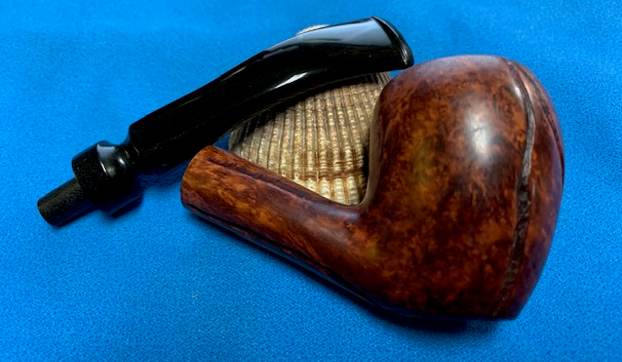
It is a rainy Sunday for me here in Vancouver so I decided to work on one of the other pipes in the restoration box. This one is an Oom Paul from American Smoking Pipes (Mark Tinsky). The smooth finish on this pipe, around the bowl and shank has a mix of grain highlighted by the brown stain. The pipe is stamped on the underside of the shank near the stem/shank junction and reads American in an oval [over] Reg. No. [over] 1284/CR6. The pipe was a well used pipe when Jeff received it. There was dust and grime ground into the finish of the bowl. The brown stains highlights some beautiful grain under the dirt. The bowl was lightly caked and there was a light overflow of lava on the smooth rim top. The inner edge looked to be in good condition. The saddle stem is vulcanite and was dirty, oxidized and had light tooth marks, chatter and scratches on both sides ahead of the button and on the button itself. There is a Silver Star in clear acrylic inlaid on the left side of the saddle stem. Jeff took photos of the pipe before he started his clean up work on it. He took photos of the bowl and rim top to show what they looked like before his clean up. You can see the scratches in the smooth rim top. The inner edge also shows some damage. He also took some of the stem to show the condition of both sides. The photos of the sides and heel of the bowl show the faded stain and the grain around the bowl and shank. The brown stain adds depth finish on the pipe. Even under the grime it is a real beauty. The stamping on this one was on the underside of the shank and is shown in the photos below. It is clear and readable as noted above. The third photo shows the inlaid American Smoking Pipe Five Point Star in a brass circle is visible in the first photo. I have collected and smoked Mark Tinsky’s pipes for over 30 years now and thoroughly enjoy them. I cannot speak highly enough about the quality and craftsmanship of his pipes. I have pipes made by Mark and by Curt Rollar in my collection and both are great smokers and pipes that reach for regularly in my choice of pipes. I turned to his website for a quick summary of the history of the brand (http://www.amsmoke.com/Index%20Folder/PipeHist.html). I quote from the site as it is a short, concise history.

The American Smoking Pipe Co. was formed in 1978 by Mark Tinsky and Curt Rollar. Both started making pipes for Jack Weinberger ( JHW Pipes ) while in high school and throughout college. Determined to blaze their own path, they formed their own company- its goal to create unique pipes, lightweight and comfortable, where attention to detail was the rule not the exception. Exulting in their new freedom, they carved out new shapes that were balanced between the radical freehand era of the 70’s and the board pipe look of other conservative companies. Hungry for recognition, they stormed the Eastern and Southern shops looking for markets to sell their pipes. Many hidebound retailers refused to try something new, preferring to sell, well, what has always sold before. However, their pipes did take root in many shops and the business thrived.

They continued expanding their pipe making capabilities, adding employees to help finish the pipes. In 1990, over a disagreement over how much to expand, Curt Rollar left the company. This put a break on expansion and coupled with a U.S. recession and rising anti-smoking fervor served to limit production to supplying existing retailers, thus ending a decade of growth. With pipes sales in decline, we turned to pipe repair as a way to supplement revenues. Finding that we liked fixing things, American concentrated on pipe repair. While working hard at repair and manufacture American is ready once again to expand its markets through its existing network of shops serviced by pipe repair.

The pipe I am working on is stamped with a Reg. No. 1284/CR6 as noted above. The stamp tells me that the pipe was most likely made in December of 1984. The CR stamp signifies that the pipe was carved by Curt Rollar. The 6 likely is the size of the pipe as it is quite large. This tells me that it is an older American pipe. Now it was time to work on the pipe.

Jeff had thoroughly cleaned up the pipe. He reamed the pipe with a PipNet Pipe Reamer and cleaned up the remnants with a Savinelli Fitsall Pipe Knife. He scrubbed the bowl with undiluted Murphy’s Oil Soap with a tooth brush. He rinsed it under running warm water to remove the soap and grime. He cleaned out the inside of the shank and the airway in the stem with alcohol, cotton swabs and pipe cleaners. He scrubbed the exterior of the stem with Soft Scrub to remove the grime and calcification. He soaked the stem in Before & After Deoxidizer and rinsed it off with warm water. The pipe looked very good when it arrived here in Vancouver. I took a photo of the bowl and rim top to show how clean the bowl and the rim top and inner edges of the bowl. I took photos of the stem surface to show the condition and tooth marks and chatter on both sides ahead of the button.I took photos of the stamping on the shank sides (left and underside). It is readable as noted above and though faint is clear. I took a photo of the Silver Star with a black background logo on the stem as well. It is in excellent condition.I removed the stem from the shank and took a photo of the pipe parts. It is quite a stunning piece.I started my work by polishing the bowl and shank with micromesh sanding pads – dry sanding with 1500-12000 grit pads. I wiped the bowl down after each  pad to remove the grit. The bowl began to take on a rich shine. It is a beauty. I rubbed the bowl down with Before & After Restoration Balm. I worked it into the surface of the briar with my fingertips and a shoe brush to get it in the grooves. It works to clean, restore and preserve the briar. I let it do its magic for 15 minutes then buffed it off with a cotton cloth. The pipe looks incredibly good at this point in the process. I set the bowl aside and turned my attention to the stem. I “painted” the surface of the stem with the flame of a Bic lighter. I filled in the remaining marks with clear CA glue. Once it hardened I flattened them out with a small file. I sanded the stem with 220 grit sandpaper to blend them into the rest of the vulcanite stem. I set the bowl aside and turned my attention to the stem. I polished the stem with micromesh sanding pads – 1500-12000 grit pads. I wiped it down with a damp cloth after each sanding pad. I used Before & After Pipe Polish – both Fine and Extra Fine to further polish the stem. This American Reg. No. 1284/CR6 Oom Paul is a great looking pipe now that it has been restored. The brown stains really highlights the grain and the polished finish is stunning. I put the stem back on the bowl and carefully buffed the pipe with Blue Diamond on the buffing wheel. I gave the bowl and the stem multiple coats of carnauba wax on the buffing wheel and followed that by buffing the entire pipe with a clean buffing pad. I hand buffed the pipe with a microfiber cloth to deepen the shine. The finished American Curt Rollar Oom Paul fits nicely in the hand and feels great. Give the finished pipe a look in the photos below. The dimensions of the pipe are Length: 5 inches, Height: 2 inches, Outside diameter of the bowl: 1 ½ inches, Chamber diameter: 7/8 of an inch. The weight of the pipe is 77 grams / 2.72 ounces. I will be adding the pipe to the American (US) Pipe Makers Section of the rebornpipes store. If you are interested in purchasing this pipe send me a message or an email. Thanks for reading this blog and my reflections on the pipe while I worked on it.