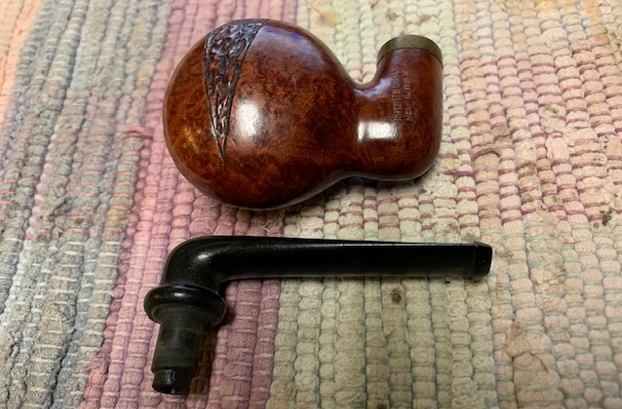
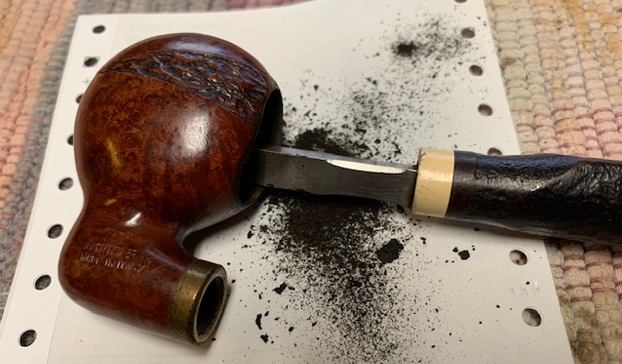
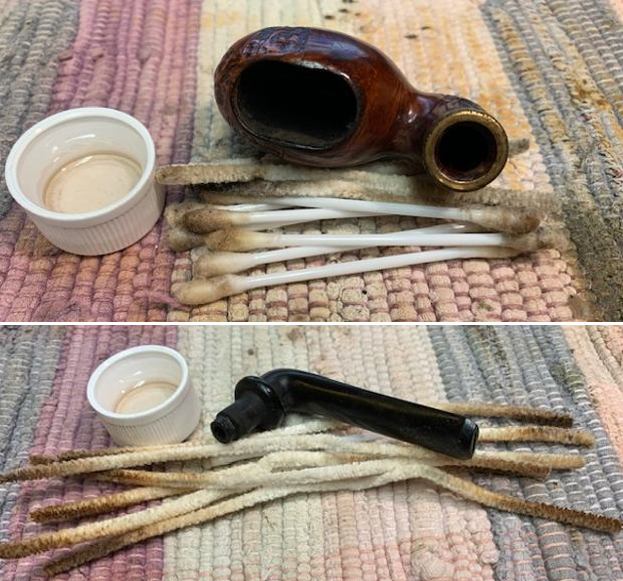
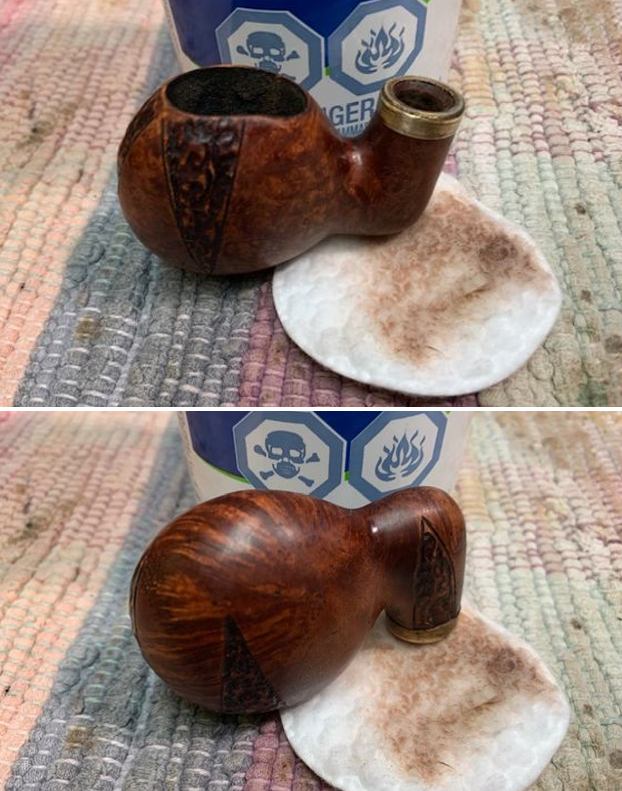
Tag Archives: removing tooth marks

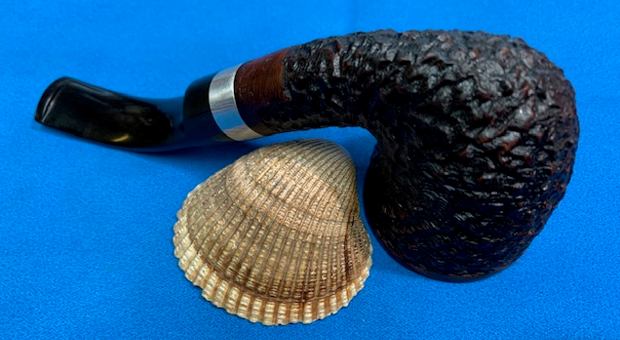
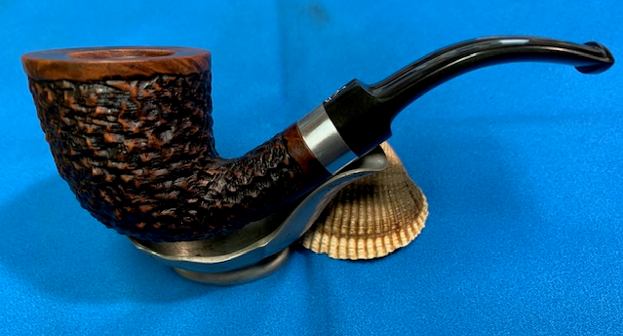
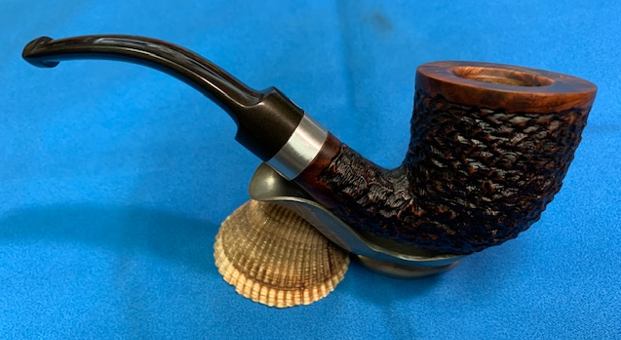
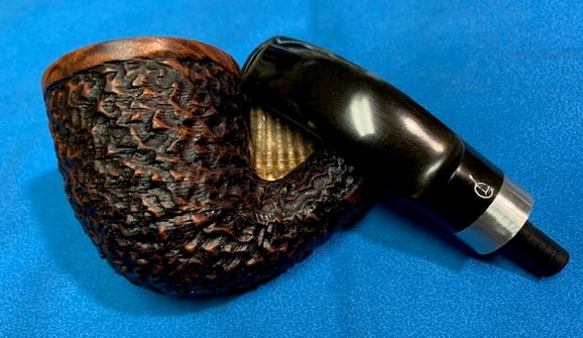
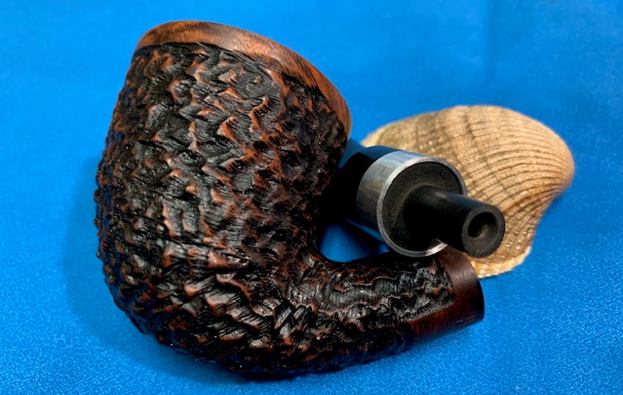
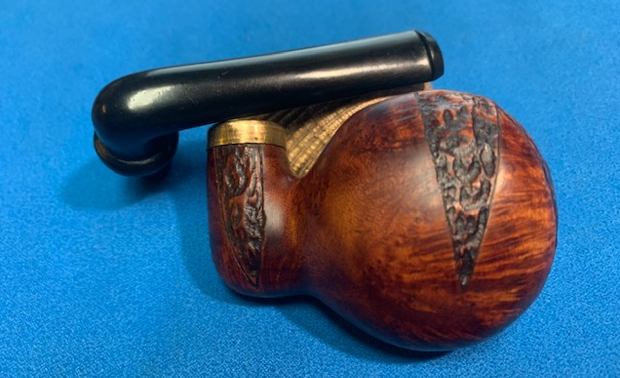
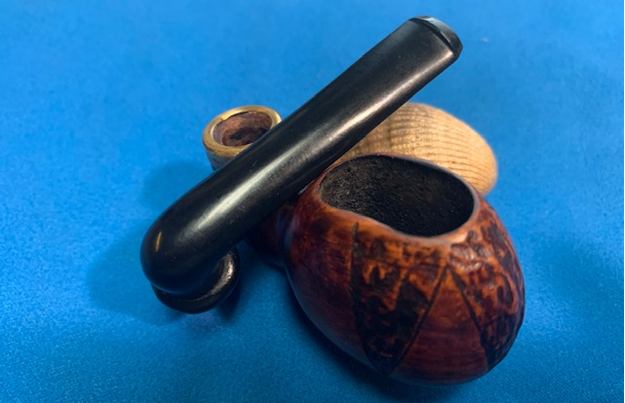
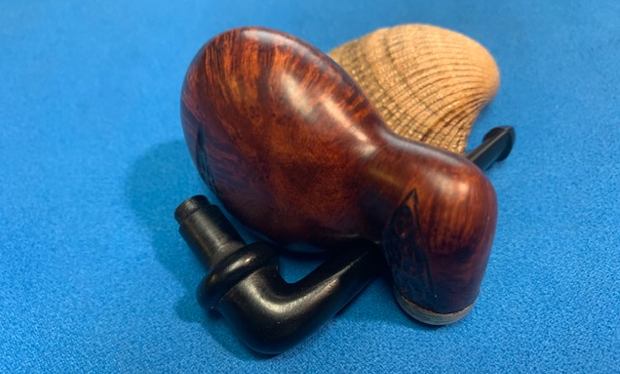
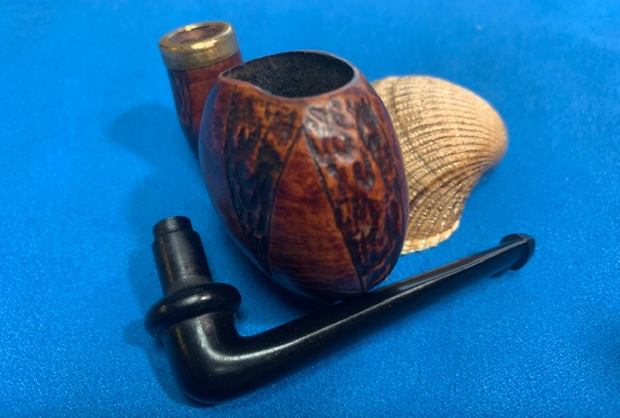
New Life for a Beautiful Rusticated Jirsa 167 Calabash


Blog by Steve Laug

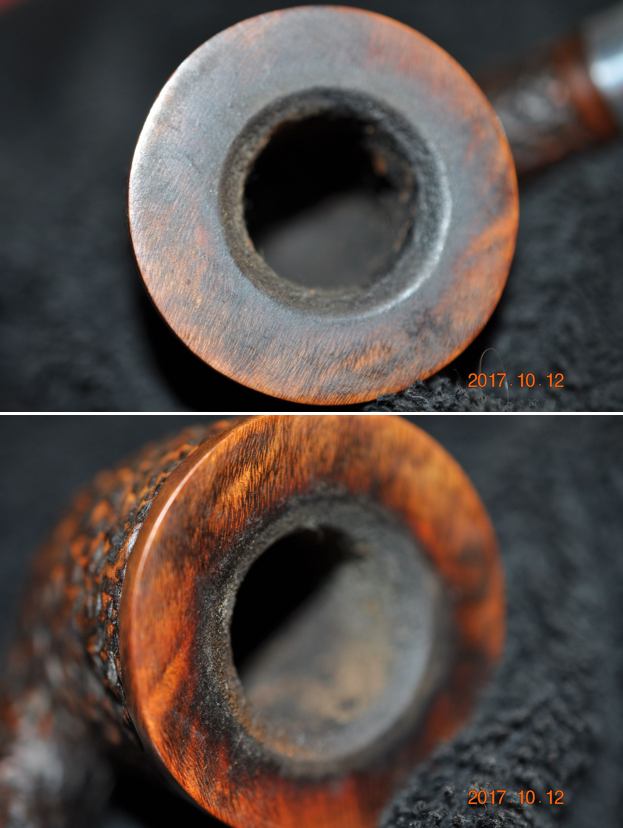
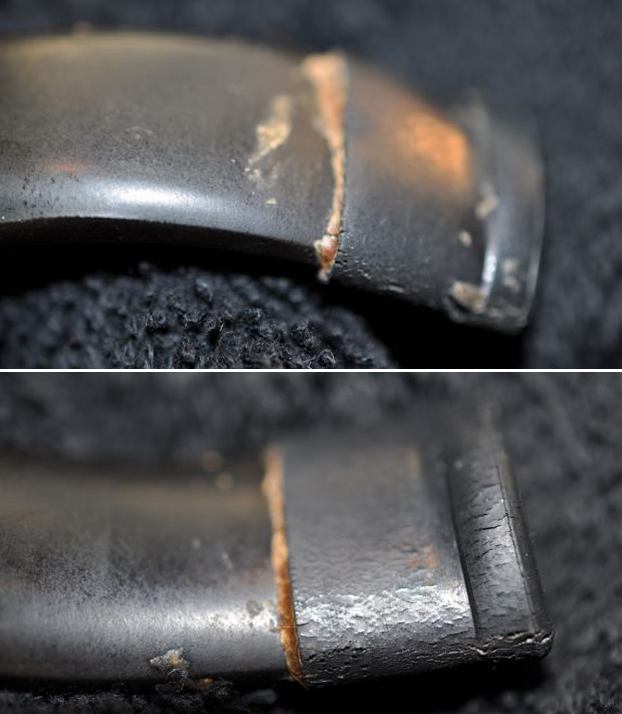
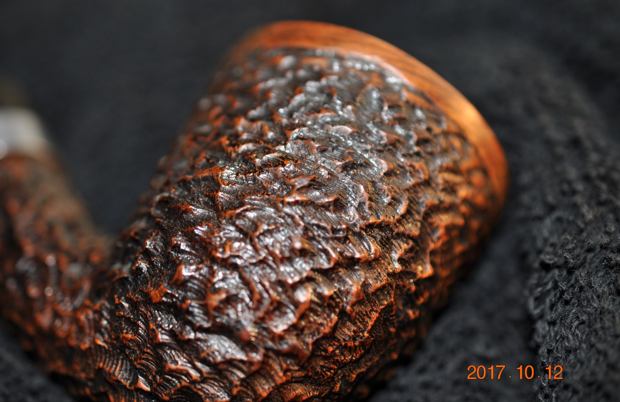
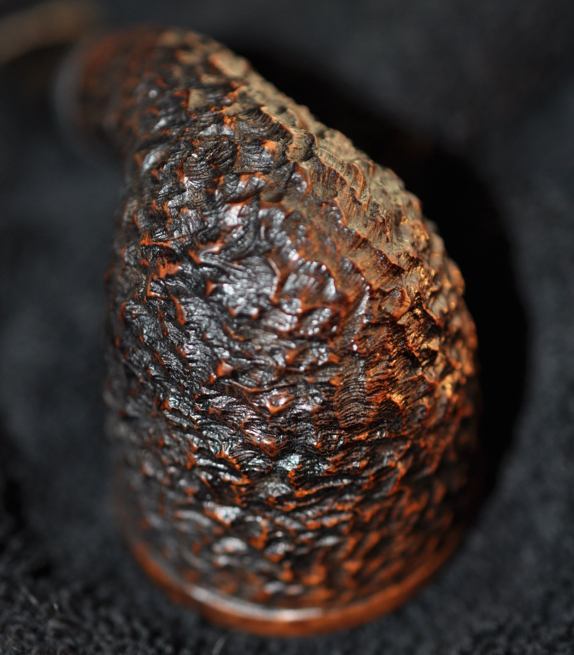
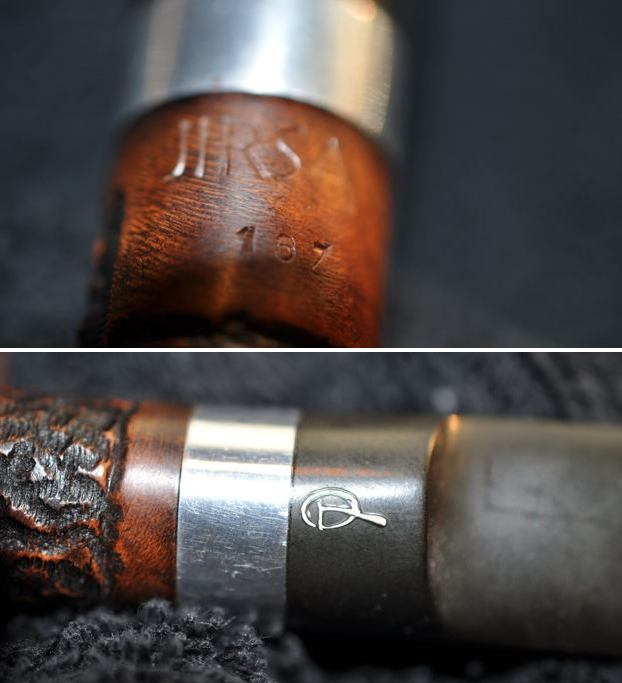
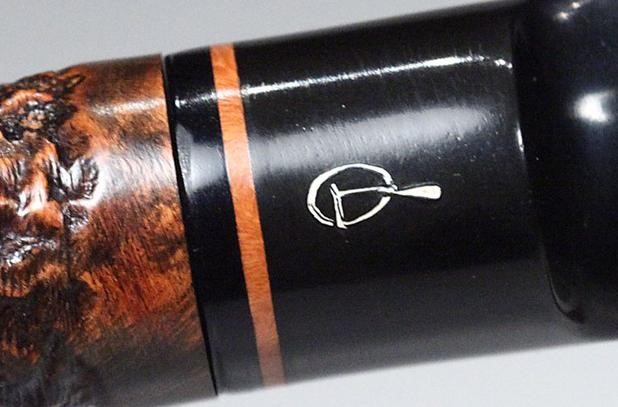
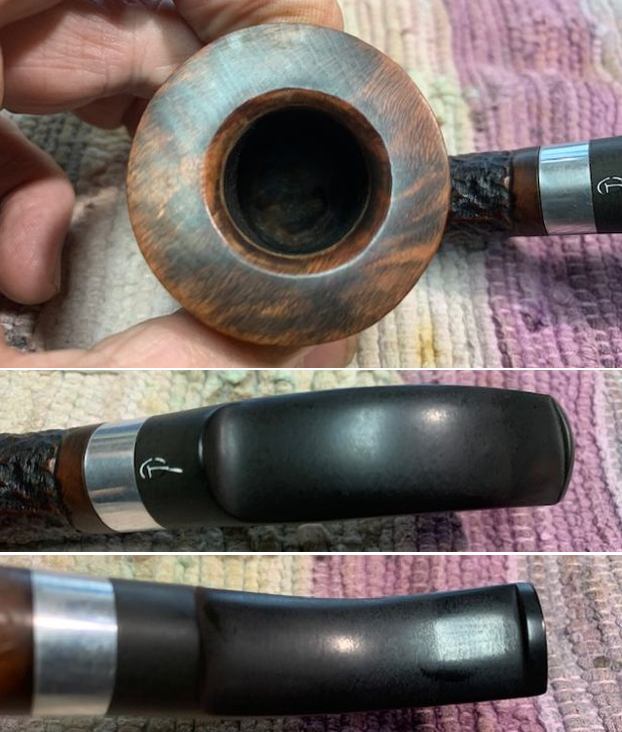
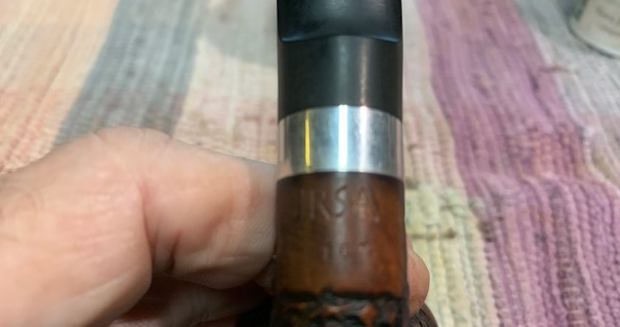
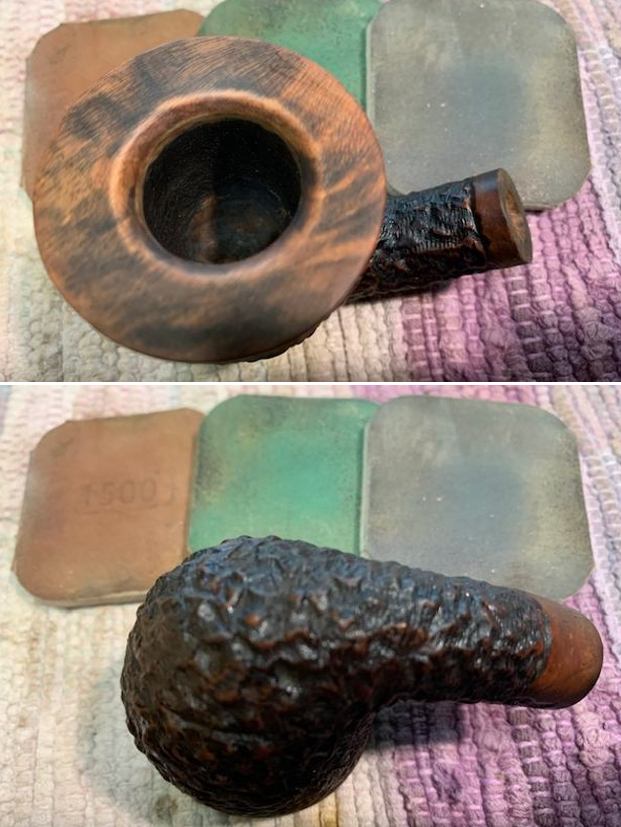
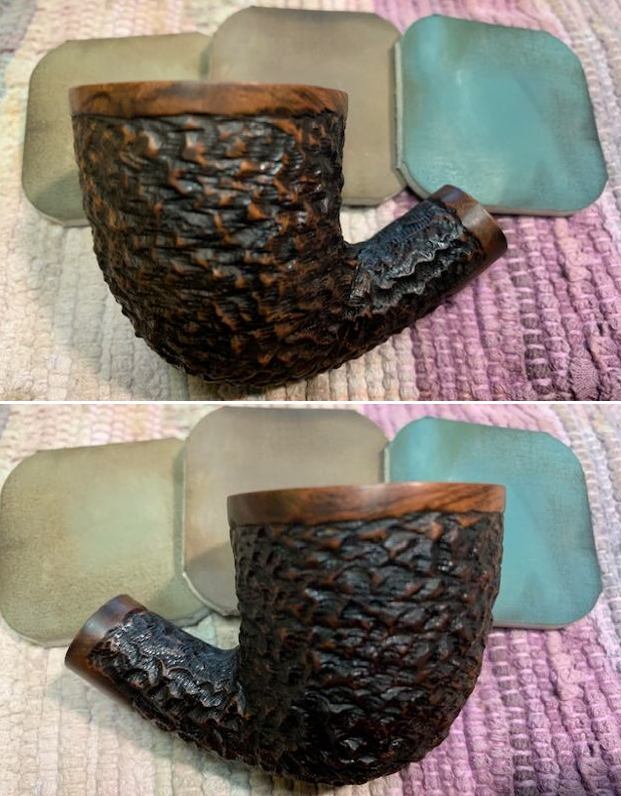
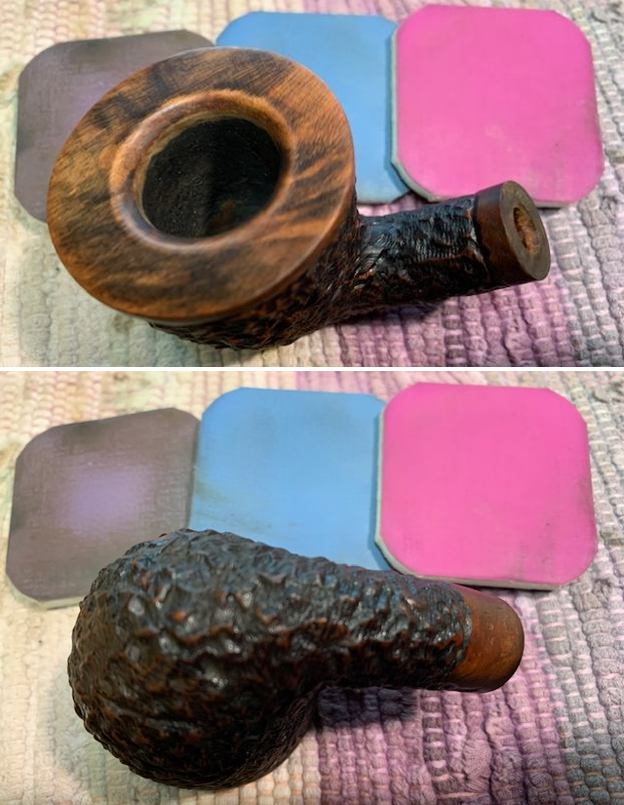
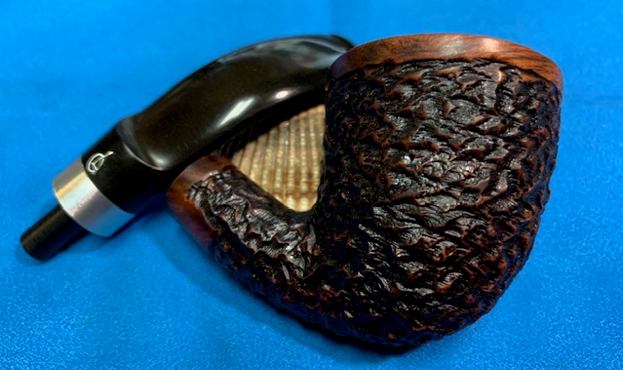
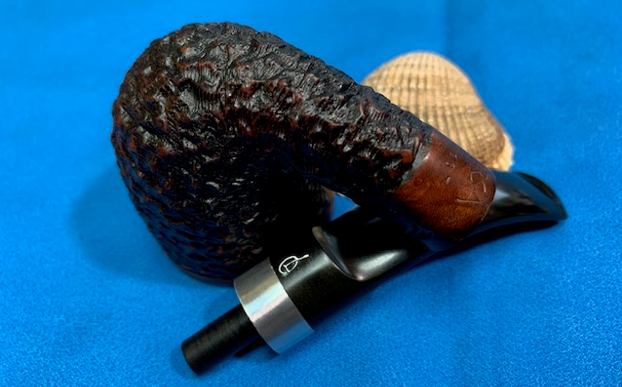
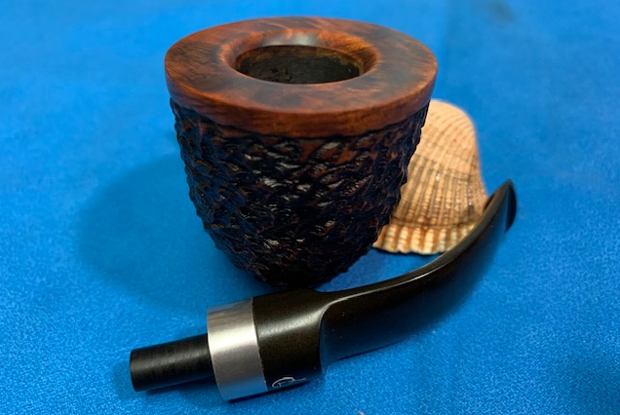
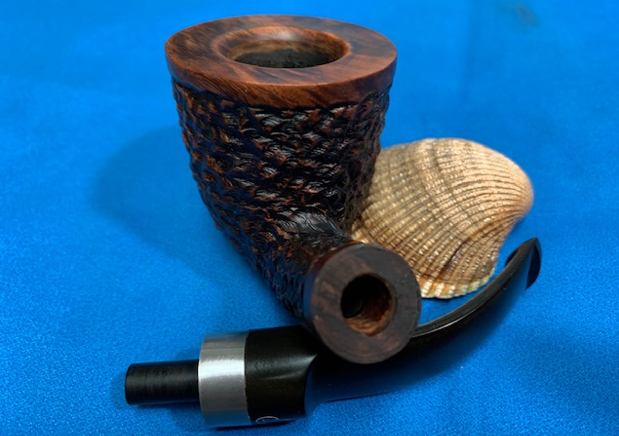
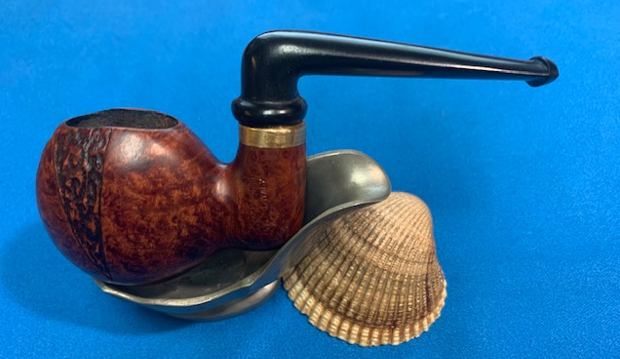
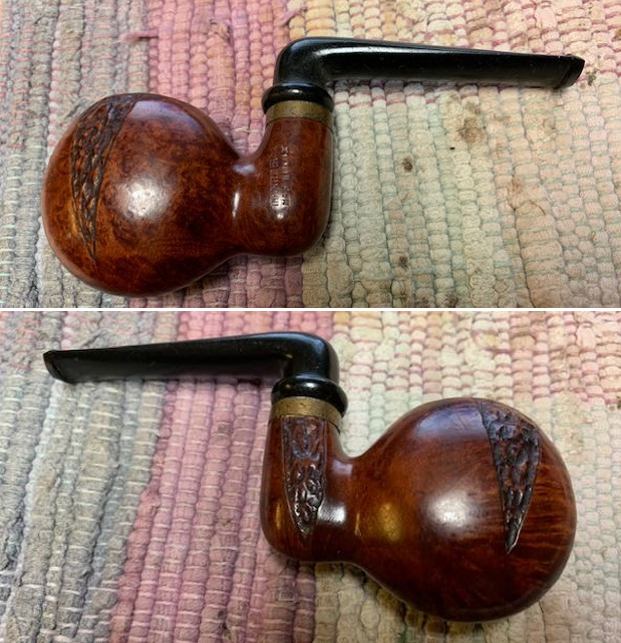
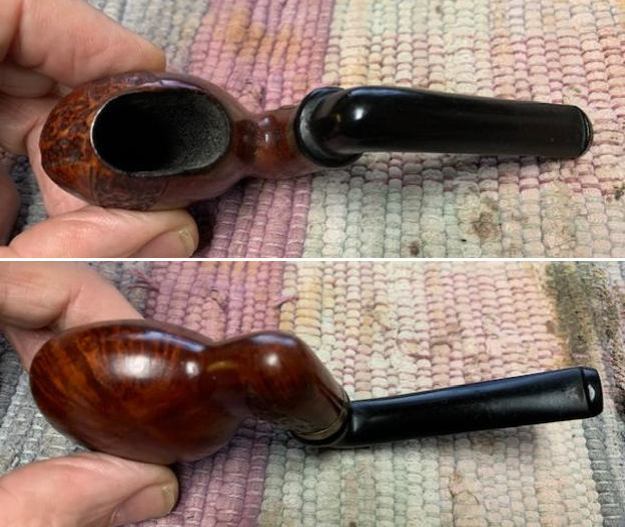
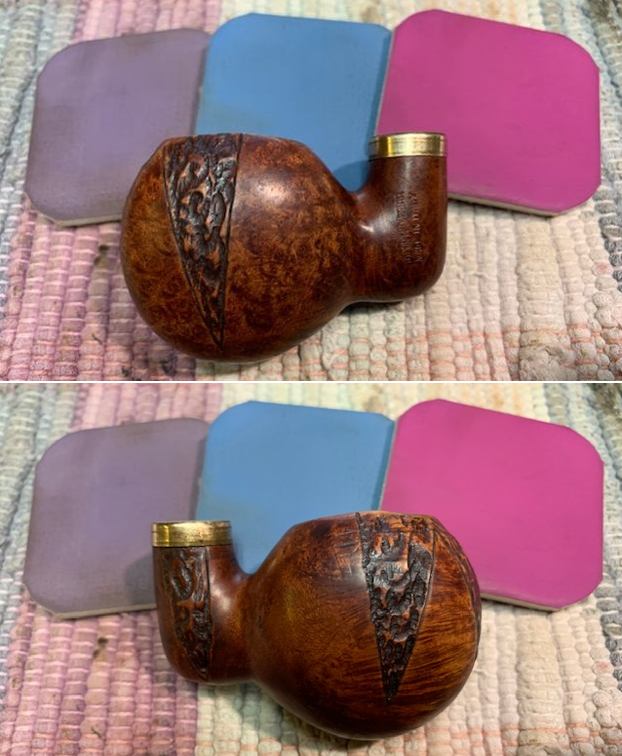
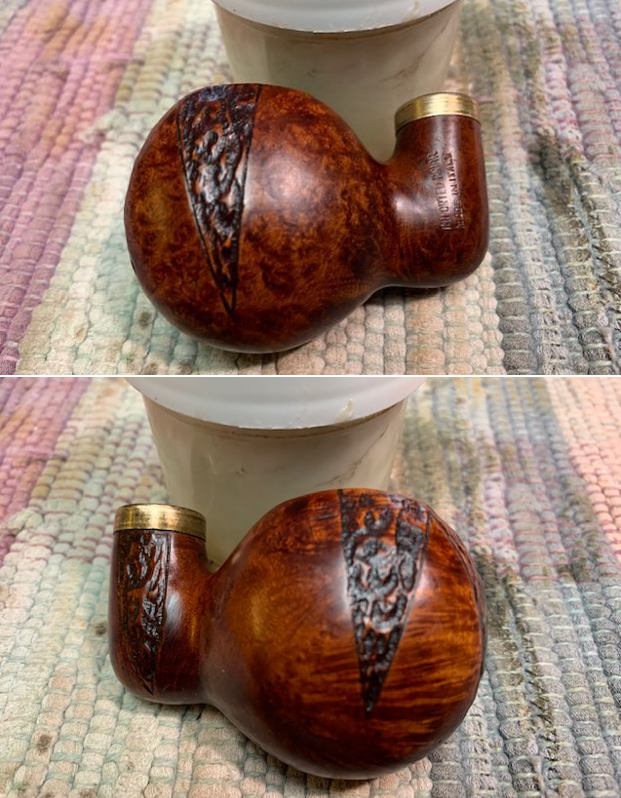
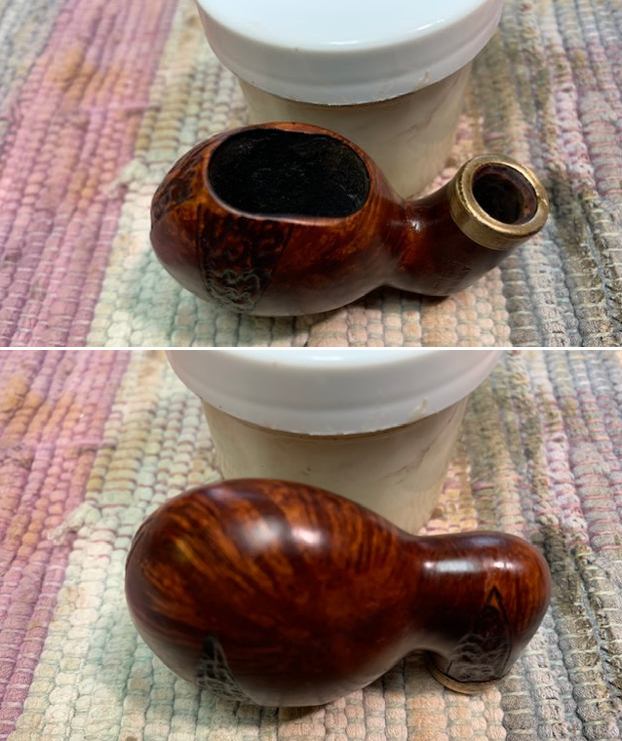
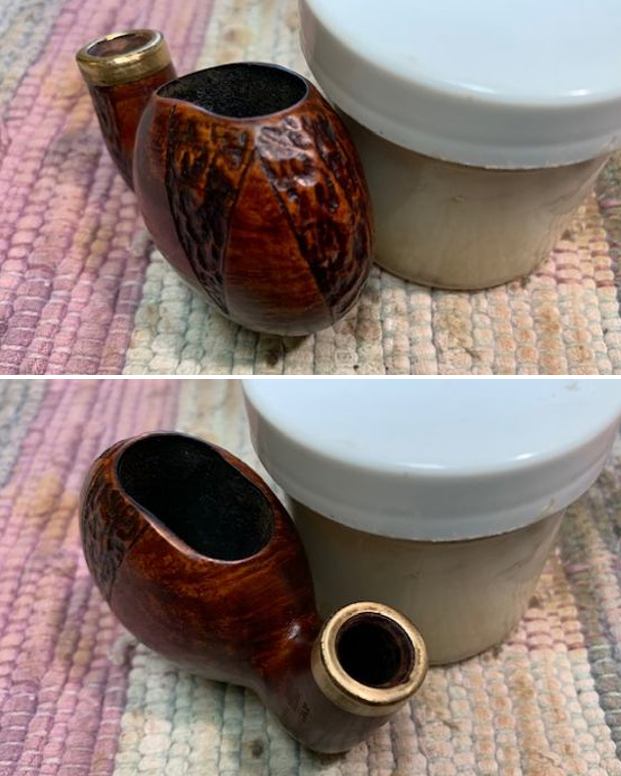
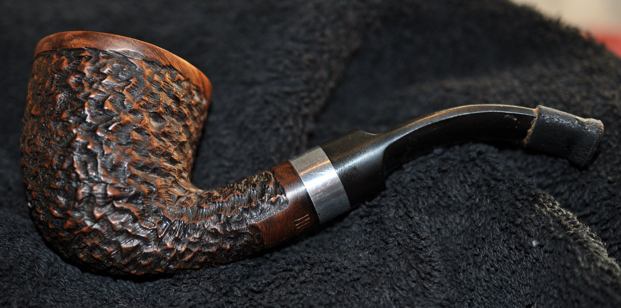
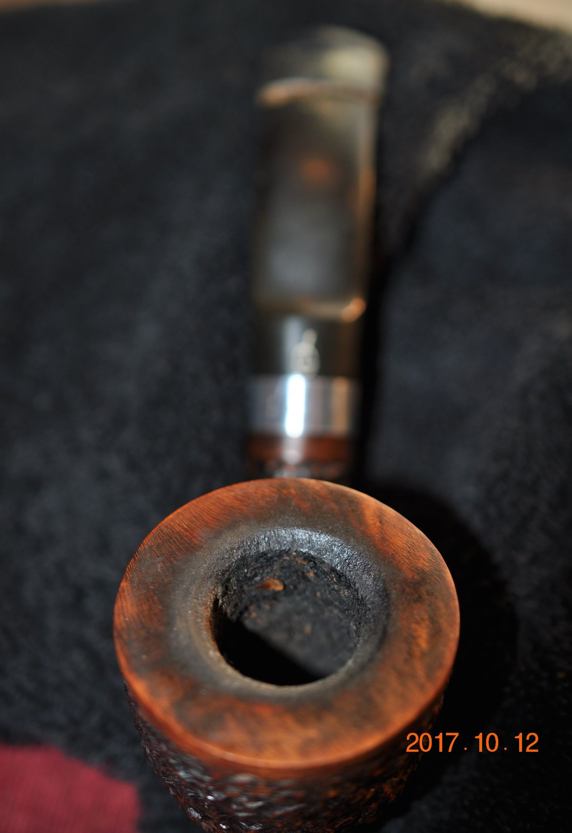
I am back to a few other pipes that have been here for a long time. You can see from the photos that Jeff took that it came to us back in 2017 and maybe earlier. It is about time I got around to working on it because it really is quite nice. Jeff purchased this pipe from an antique mall in Sandy, Utah, USA. It had an interesting rusticated brown finish with a smooth band and rim top and a smooth band at the shank. The bowl was classic Calabash shape. There was a thick cake in bowl and lava on the rim top and the inner bevel. The finish was filthy with grit and grime ground into the surface of the briar. The pipe is stamped on the underside of the shank Jirsa [over] the shape number 167. The polished aluminum band is a part of the stem. The stem surface was oxidized and had a rotting Softee bit with a lot of awful looking sludge built up around it. The Jirsa logo on the topside of the saddle stem looked pretty good. Jeff took photos of the pipe before he started his clean up work. I like to have an idea of how the pipe was smoked before we got it and what the bowl and rim top looked like. Jeff always takes some photos of the bowl and rim from various angles to show what it looked like. He took photos of the stem with and without the Softee bit to show the condition. He took photos of the sides and heel of the bowl to give a sense of the rustication on the pipe. The next two photos show the stamping on the underside of the shank. It is clear and readable as noted above. Jeff also captured the Jirsa Logo stamp on the topside of the saddle stem. The band is part of the stem.I did a quick scan of rebornpipes and found a link to the Jirsa Octagonal Panel that I had restored (https://rebornpipes.com/2021/05/01/rebirthing-an-oldrich-jirsa-bent-octagonal-panel-138-billiard/). Rather than start over in my research on the brand I am quoting from that blog and the work I did there.
I turned to Pipephil’s site to see what he had on the Jirsa brand (http://pipephil.eu/logos/en/logo-j2.html). He had an entry that I did a screen capture of and also the following information on the brand. Artisan: Oldrich Jirsa (born 1962) makes pipes since 1994.I turned to Pipedia for more information on the brand (https://pipedia.org/wiki/Jirsa). I quote from the article below.

Jirsa is a Czech Republic brand owned by the family company headed by the artisan Oldrich Jirsa. They use Ebonite and Cumberland stems. Best Grading: SG (Grain), three stars. Symbol: stylized J coming out of an oval. I knew that I was working on a Czech made pipe by Oldrich Jirsa. The stem on the one I was working on was vulcanite and had a built in metal adornment on it. Now it was time to work on the pipe.

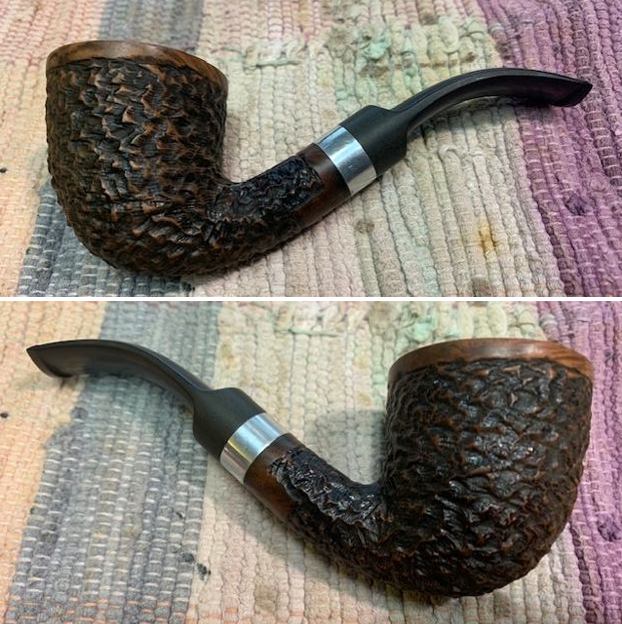
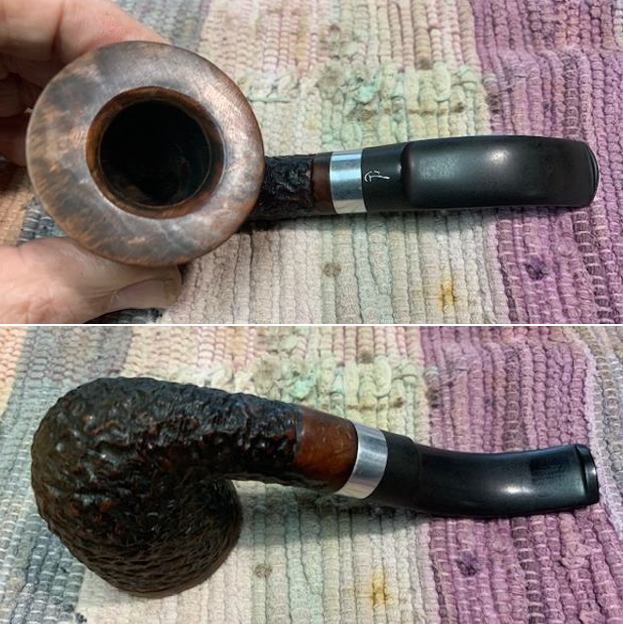
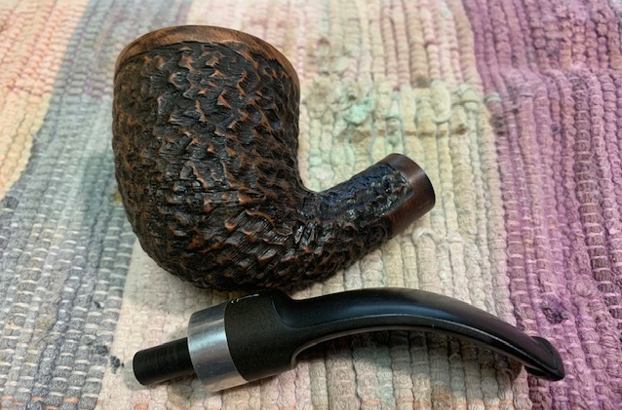
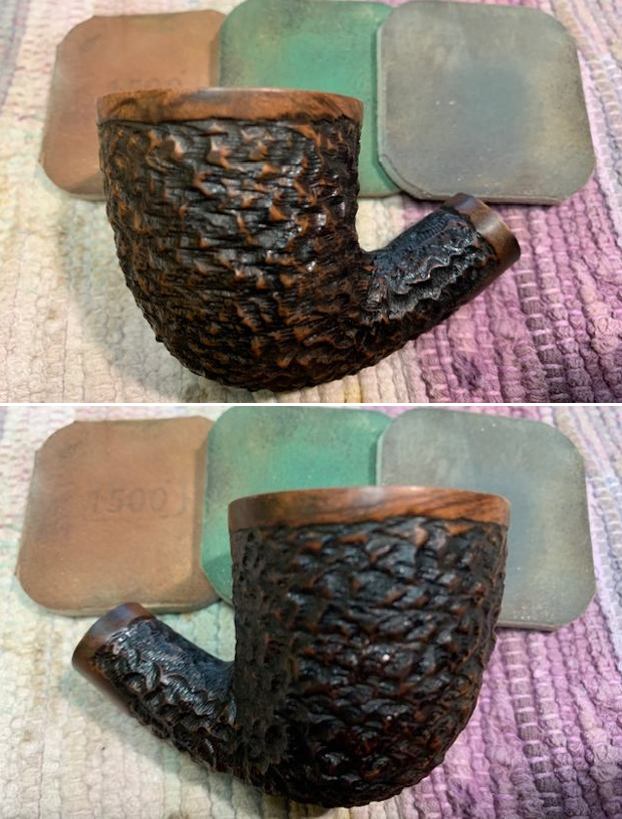
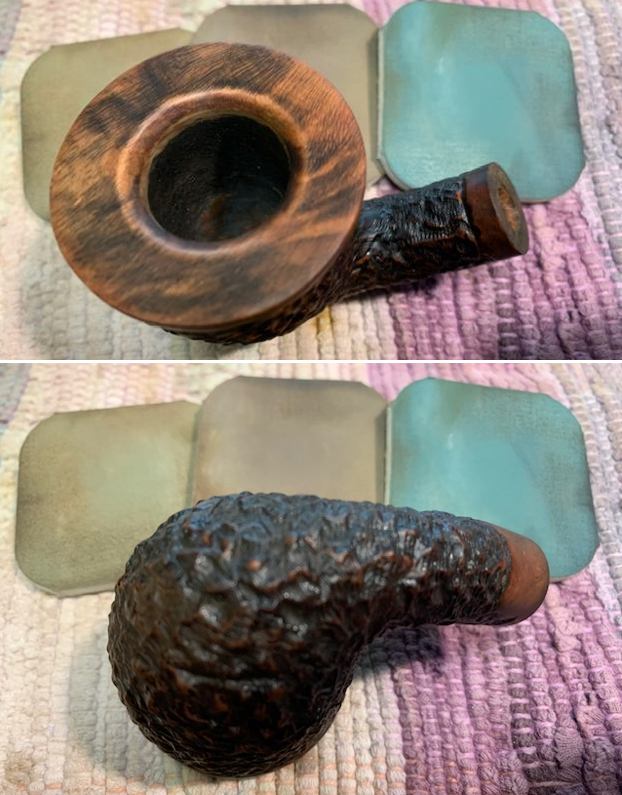
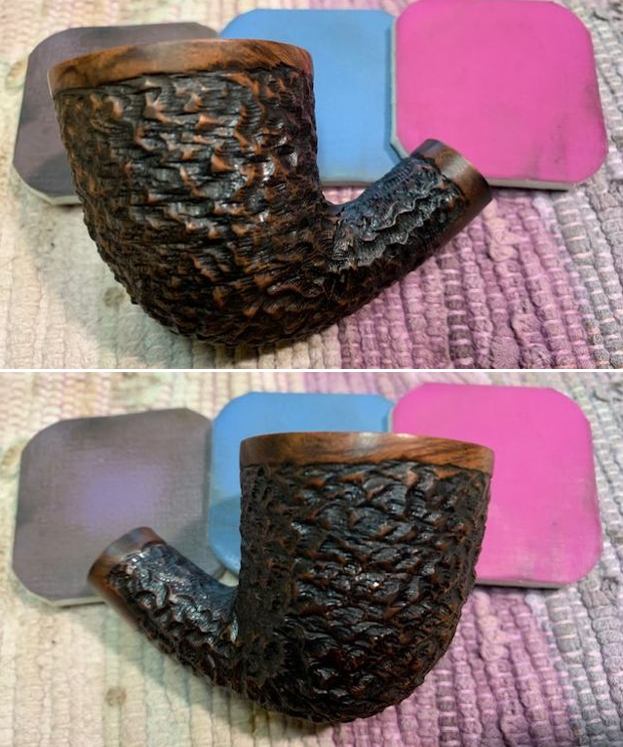
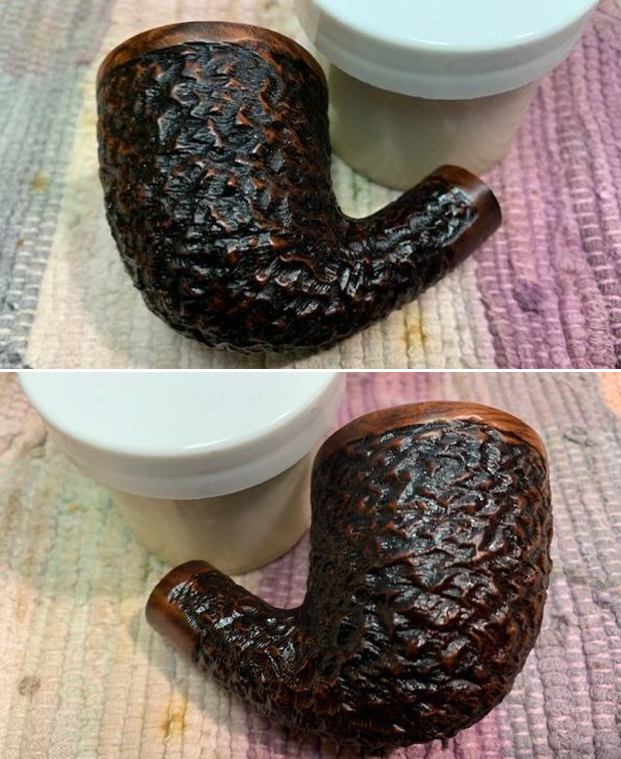
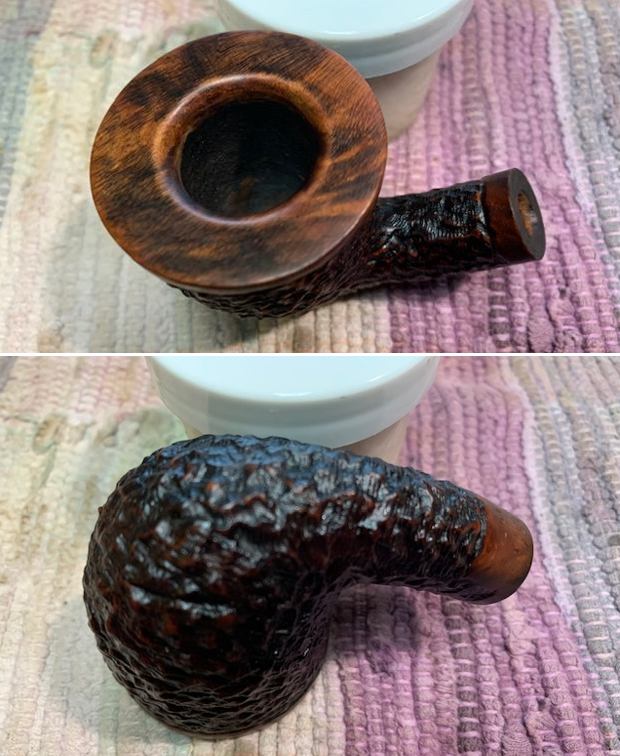
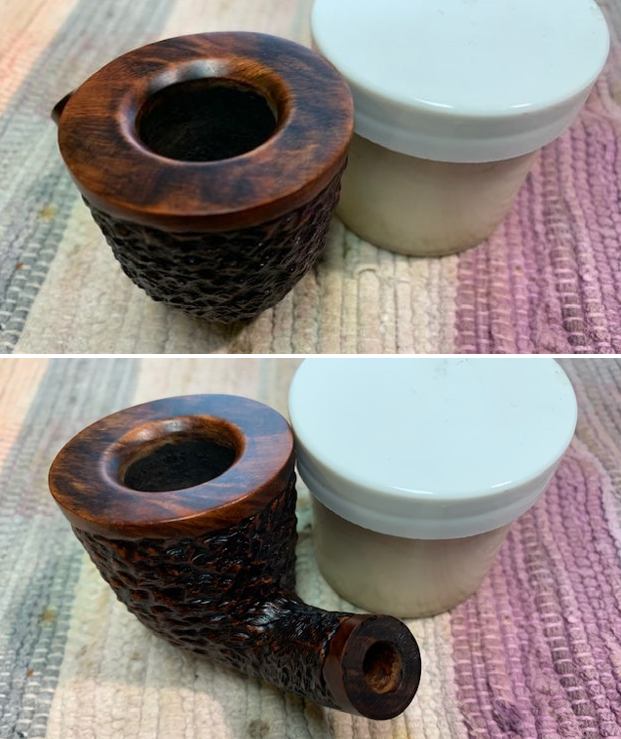
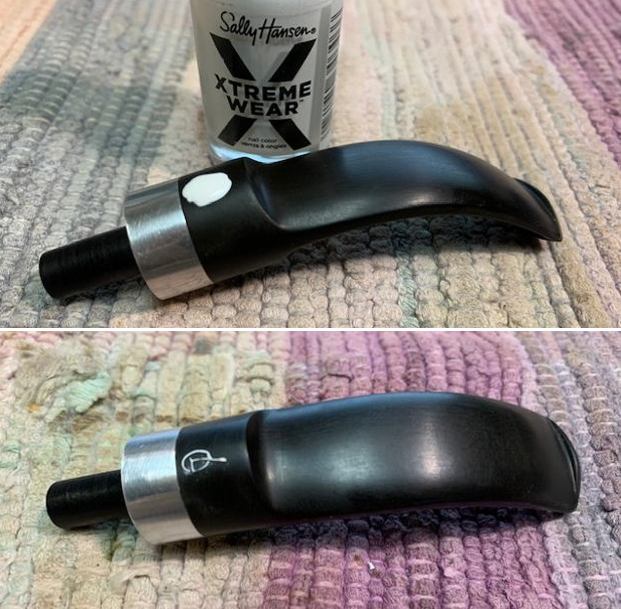
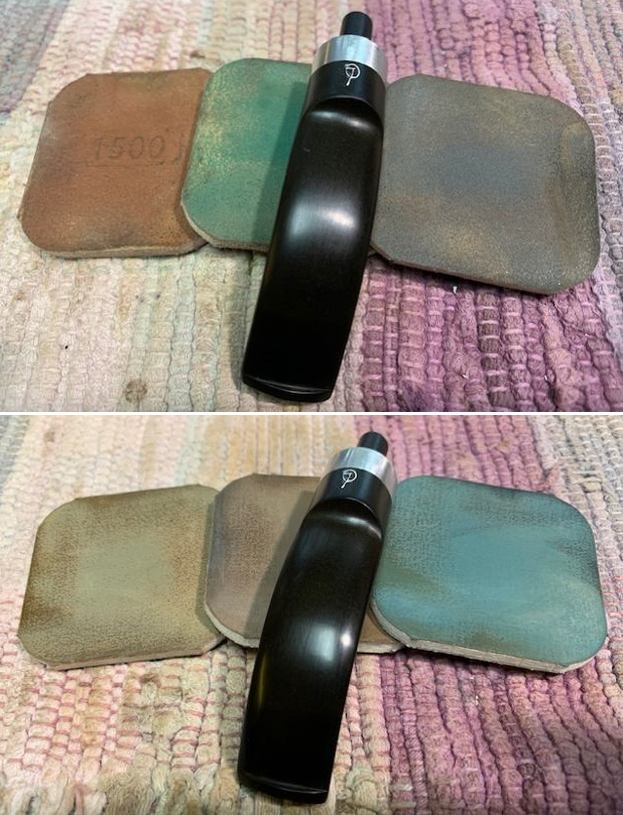
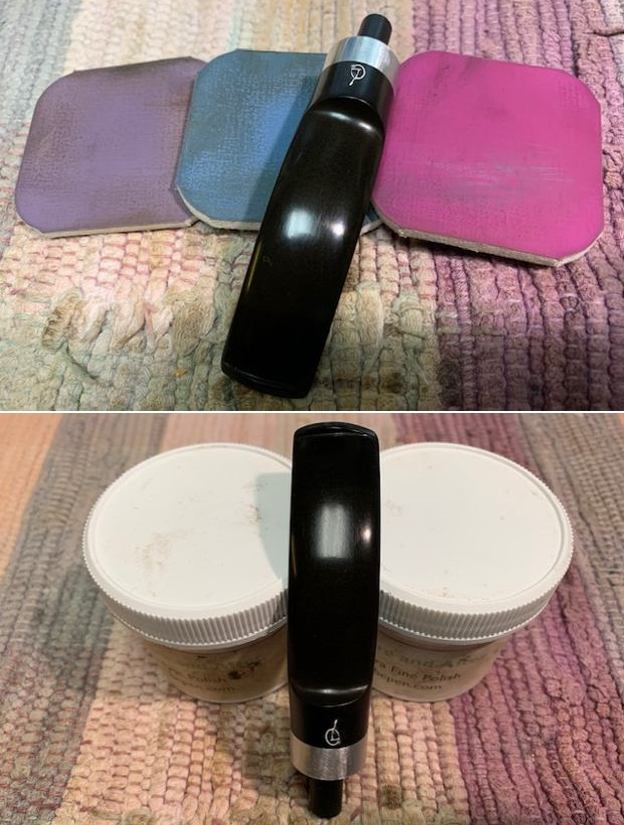
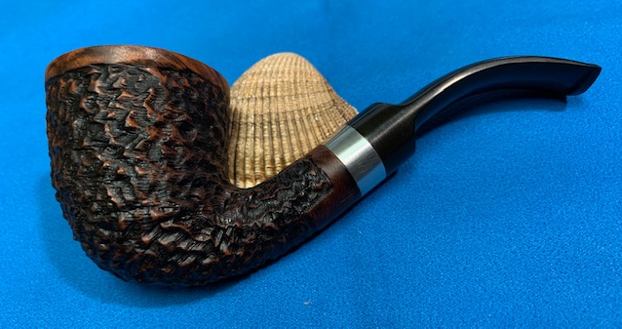
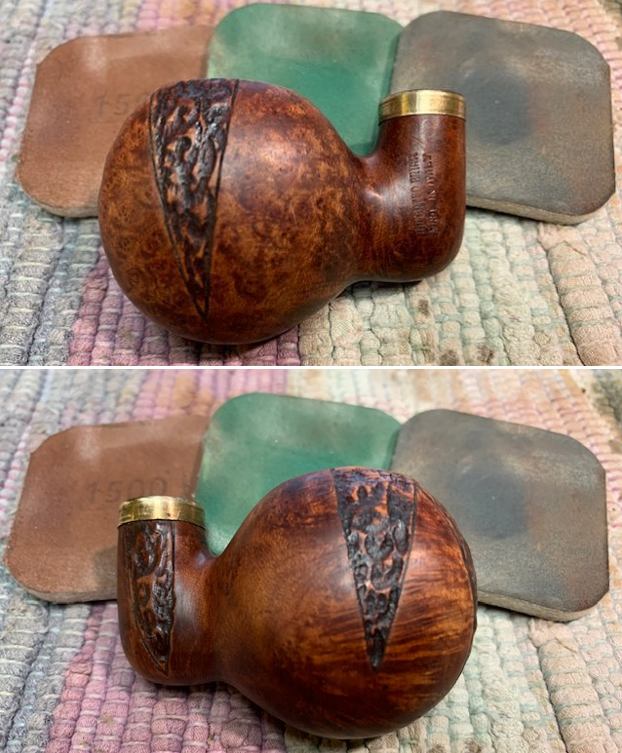
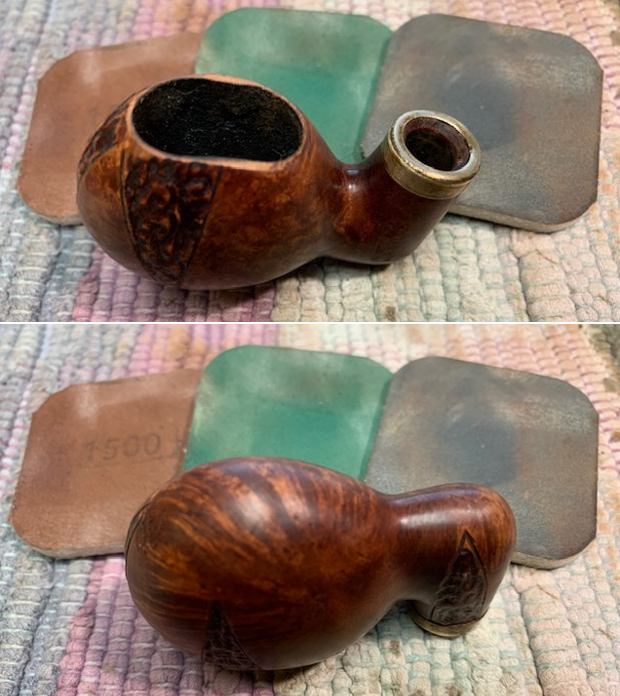
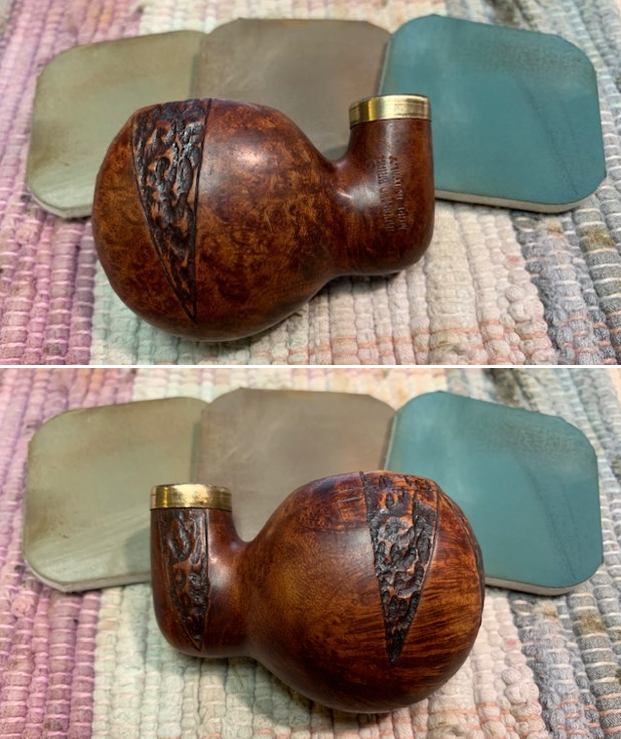
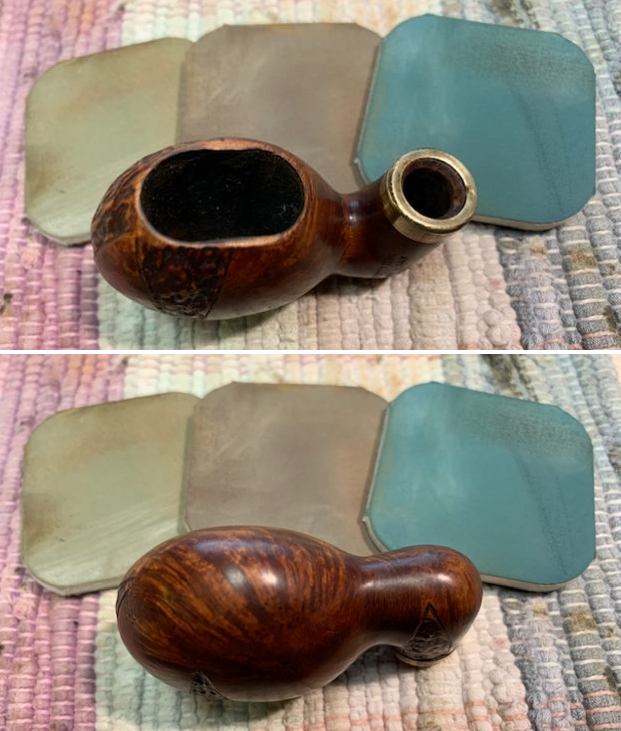
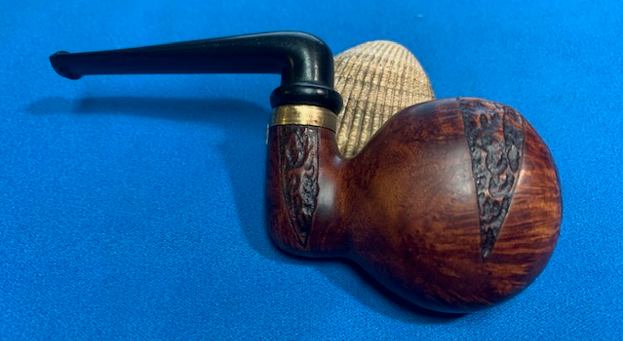
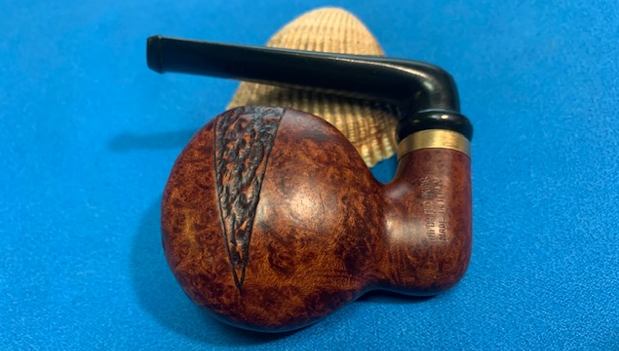
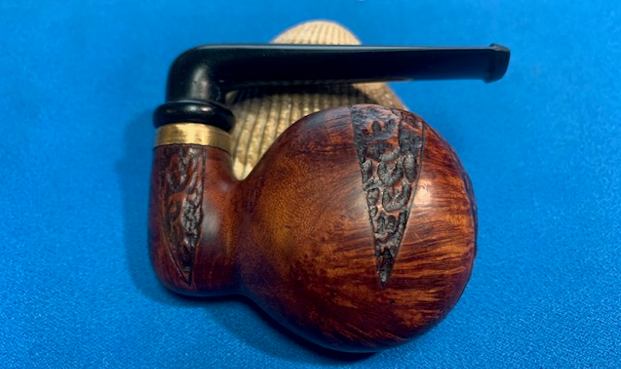
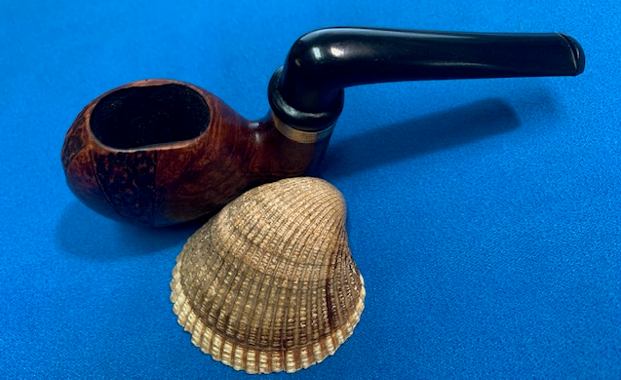
Jeff had done a great cleanup on the pipe. He reamed the bowl with a PipNet pipe reamer and followed up with a Savinelli Fitsall pipe knife to remove the cake. He scrubbed out the mortise and the airway in the shank and the stem with alcohol, cotton swabs and pipe cleaners. He scrubbed the bowl exterior with a tooth brush and Murphy’s Oil Soap to remove the grime on the finish of the bowl and the lava from the rim top. He rinsed it under running water. One of the benefits of this scrub is that it also tends to lift some of the scratches and nicks in the surface of the briar. He dried it off with a soft cloth. He cleaned the internals and externals of the stem with alcohol, pipe cleaners and cotton swabs. He soaked the stem in Before & After Pipe Stem Deoxidizer and rinsed it off with warm water and cleaned out the airway in the stem with alcohol. When I received it the pipe looked very good. I took a photo of the rim top and stem to show the condition. The rim top and the beveled inner edge and outer edge of the bowl were in good condition. The stem was vulcanite and there was some light tooth chatter on both sides ahead of the button. The stamping on the pipe is clear and readable as noted above. The Jirsa logo on the stem is deep and needs to be repainted with white.I removed the stem from the shank and took a photo of the pipe to give a sense of the whole. I polished the smooth portions of the briar with 1200-1500 micromesh sanding pads and wiping it down with damp cloth after each sanding pad. As I worked through the cycle of pads the shine developed with each change of pad. The pipe looks very good. I rubbed the bowl and shank down with Before & After Restoration Balm. I worked it into the surface of the bowl sides and shank with my fingertips and a horsehair shoe brush to clean, enliven and protect the briar. I let the balm sit for 10 minutes, then buffed with a cotton cloth to raise the shine. The Balm did its magic and the grain on the smooth portions stood and the rustication showed depth. I set the bowl aside and turned my attention to the stem. I touched up the BC stamp on the left side of the stem with white acrylic nail polish. I worked it into the stamp with a tooth pick and then sanded off the excess once it had dried with a 1500 micromesh sanding pad.I polished the stem and built in band with micromesh sanding pads – 1500-12000 grit pads. I wiped it down with Obsidian Oil after each sanding pad. I used Before & After Pipe Polish – both Fine and Extra Fine to further polish the stem. The photos below show the polished stem. This Czech Rusticated Jirsa 167 Calabash with a vulcanite stem is a great looking pipe now that it has been restored. The rich browns of the stain made the grain and rustication come alive with the polishing and waxing. I put the stem back on the bowl and carefully buffed the pipe with Blue Diamond on the buffing wheel using a light touch on the briar. I gave the bowl multiple coats of Conservator’s Wax and the stem multiple coats of carnauba wax on the buffing wheel. I buffed the entire pipe with a clean buffing pad to raise the shine. I hand buffed the pipe with a microfiber cloth to deepen the shine. The finished Jirsa 167 Calabash really is a beauty and fits nicely in the hand. Give the finished pipe a look in the photos below. The dimensions of the pipe are Length: 5 ¾ inches, Height: 2 inches, Outside diameter of the bowl: 1 ¾ inches, Chamber diameter: 7/8 of an inch. The weight of the pipe is 2.08 oz./59 grams. This beauty will be going on the rebornpipes store in the Pipes from Various Makers section. Let me know if you are interested in adding it to your collection. Thanks for reading this blog and my reflections on the pipe while I worked on it. There are many more to come!

Breathing Life into a Johs Hand Made Danish Dublin


Blog by Steve Laug

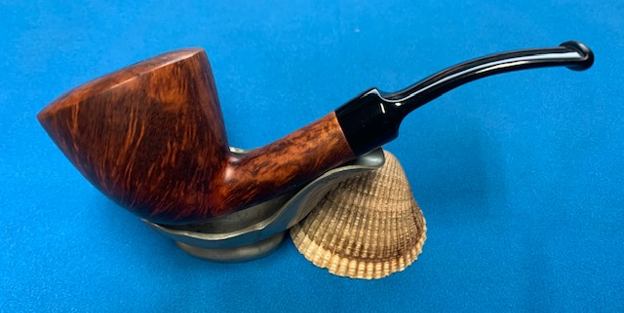
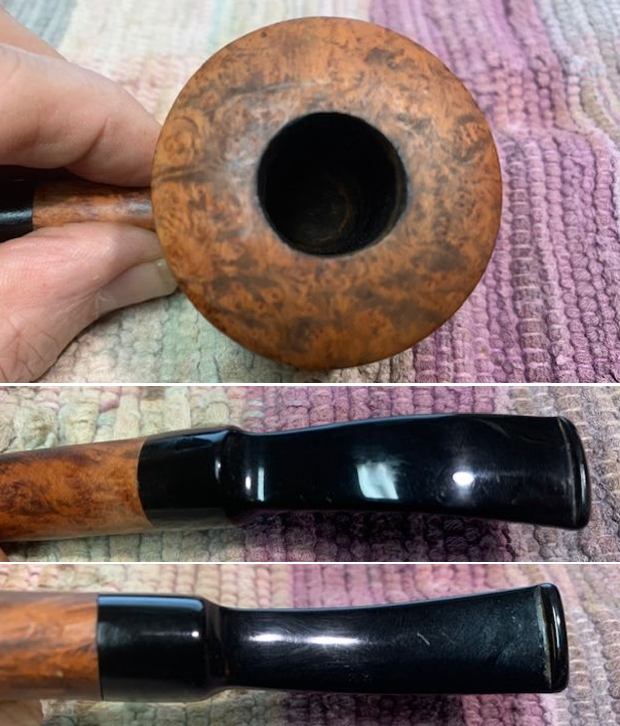
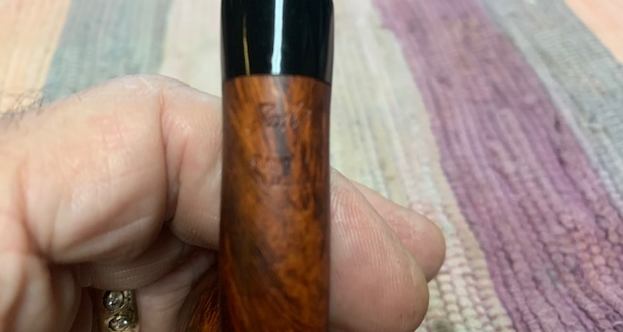
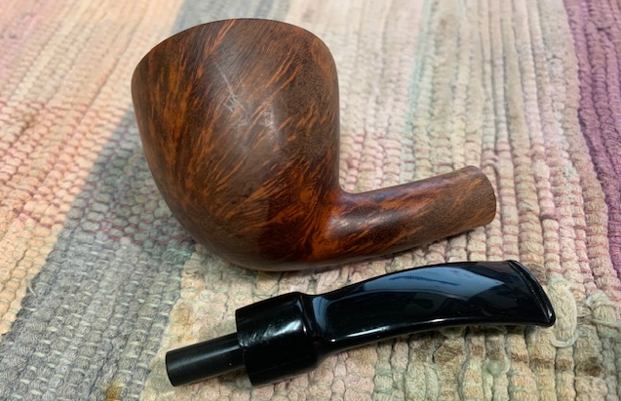
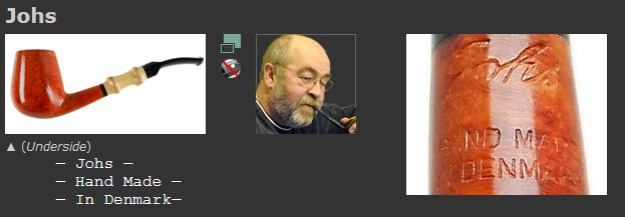
I was going through my boxes of pipes this weekend sorting out pipes for new grab bags and came across several that I wanted to work on right away. I find that I have so many sitting in boxes right now that I easily forget what is in the boxes. A periodic tour of the boxes brings and interesting string of pipes to the table. The first of these is a nice looking  large bent Dublin that is stamped on the underside of the shank and reads Johs in script [over] Hand Made [over] In Denmark. The stamping is faint but readable under a lens and light. The pipe was very well made and the grain though dull with time had promise. The bowl was clean and reamed and the rim top looked very good with no damage on the top or outer edges. The inner edge has some damage that makes it slightly out of round. The stem looks like it is acrylic and has some light tooth chatter near the button on both sides of the stem. Jeff and I cannot remember when or where we picked this one up. I know that Jeff cleaned it as it had been reamed and cleaned and showed signs of his clean up methodology.  The rim top is quite stunning. It is wide and has some great birdseye grain around the top. You can see the damage on the inner edge of the bowl where a lighter left behind some burn marks. It is slightly out of round. The outer edge looks very good. The stem has light tooth chatter on both sides near the button.I took a photo of the stamping on the underside of the shank. It reads as noted above. You can see that it is a bit faint but it is still readable.I took the stem off the shank and took a photo of the pipe to show the overall look of this beauty. It has some great grain around the bowl and I am pretty sure the stem is acrylic.I turned to Pipephil’s site to get a bit of background on Johs. I know that I had read this before but I could not remember the connection to the Danish Pipe Making circle. It was a great short read (http://pipephil.eu/logos/en/logo-j3.html). I have included a screen capture of the info there. I have also copied the side bar information for it concise introduction to the maker.Artisan: Mogens Johansen has carved pipes for Bjarne during 15 years. When Bjarne Nielson passed away “Johs” established on his own in 2008.

I turned then to Pipedia for more information on the brand and was awarded with a great write up. There was a quick introduction and then a fairly long article from the book, Scandinavian Pipemakers by Jan Andersson (https://pipedia.org/wiki/Johs). I quote in part.

Mogens Johansen and his wife Doris operate a pipe and tobacco shop named Gaden Pibemagerie in the small hamlet Ravenhøj, not far from Frederikshavn. Mogens, he calls himself Johs as a pipemaker, makes his classical Danish freehands in the adjacent workshop…

Likely many pipe smokers have smoked a pipe made by Mogens Johansen without realizing it. For many years he made pipes for Bjarne Nielsen, and those pipes were not stamped with his name. So apart from tourists visiting his workshop in Frederikshavn, few knew who Johs was. But in 2008, when Bjarne died so suddenly and unexpectedly, Johs had to make his name known and start selling his pipes on his own. A natural first step toward becoming known was to visit the pipe show in Chicago, and he did so that same year. When sellers learned that Johs had made pipes for Bjarne, who had a very good reputation, it was not hard for him to find interested dealers…

In the late 1980s Johs met Peter Hedegaard, a meeting of great importance for Johs. The beautiful pipes Peter made inspired Johs, and Peter gave him valuable advice and suggestions. The two of them became close friends, and that probably was a contributing factor for Peter to move from Helsingor to Frederikshavn in the early 2000s.

As time passed, Johs spent more and more time in his cellar, where he had his tools and machines, and finally he decided to try making a living from pipe making. He rented an old stable, situated in the backyard where he lived, and started to make pipes full time. Most of them were sold to German tourists. But in 1992 Johs started to work for Bjarne Nielsen and continued until Bjarne passed away.

…There he makes 800 – 1000 pipes a year, and most of them are sold to dealers in the USA. Despite the large production, Johs says that he probably has enough briar to last for the rest of his life, as he bought the entire stock Bjarne left behind. And it was huge. He also has a lot of ebonite and, except for a few pipes with stems from Cumberland, all his pipes have ebonite stems. Adornments from many different materials are quite frequently used.

Johs’s pipes are stamped Johs. Handmade in Denmark. The sandblasting is performed in Peder Jeppesen’s workshop.

Jeff had obviously done a thorough job cleaning and reaming this pipe so when I brought I to the table it was very clean. I polished the briar with micromesh sanding pads – dry sanding with 1500-12000 grit pads. I wiped the bowl down after each pad with a damp cloth. The bowl really began to take on a shine. I worked some Before & After Restoration Balm into the surface of the smooth briar with my finger tips. The product is amazing and works to clean, enliven and protect the briar. I let it sit on the briar for 10 or more minutes and then buff it off with a soft cloth. It really makes the grain really stand out clearly. When I put the above pictures in I noticed that I had missed a little burn damage on the inner edge of the bowl at the backside. The bowl was slightly out of round. I dealt with that now! I used a folded piece of 220 grit sandpaper to smooth out the edge and then gave it another coat of restoration balm. It looked a lot better.I set the bowl aside and turned my attention to the stem. There was nothing more to deal with there than tooth chatter so I was able to polish it out with micromesh sanding pads. I dry sanded with 1500-12000 grit pads to bring those areas near the button back to smooth and give them a shine. I put the pipe together – the bowl with its polished stem. This restored and polished Johs Hand Made Danish Dublin is quite stunning. The grain around the bowl came alive with the polishing. I used Blue Diamond on the buffing wheel on both the bowl and stem.  I gave the bowl and the stem mulitple coats of carnauba wax on the wheel then buffed it with a clean buffing pad to raise the shine. I hand buffed it with a microfibre cloth to deepen the shine. The attractive Johs Dublin feels great in the hand. It is lightweight for its size and the contrast in the browns of the briar and the polished vulcanite stem is quite beautiful. The dimensions of the pipe are Length:5 ¾ inches, Height: 2 inches, Outer diameter of the bowl: 2 inches, Chamber diameter: ¾ of an inch. The weight of the pipe is 1.73 ounces/49 grams. It really is a beauty. I will be putting it on the rebornpipes store in the Danish Pipe Makers section shortly if you are interested in adding it to your collection. Thanks for walking through the restoration with me. Cheers.

Restemming a No Name (Anonymous) Oval Shank Sandblast Billiard


Blog by Steve Laug

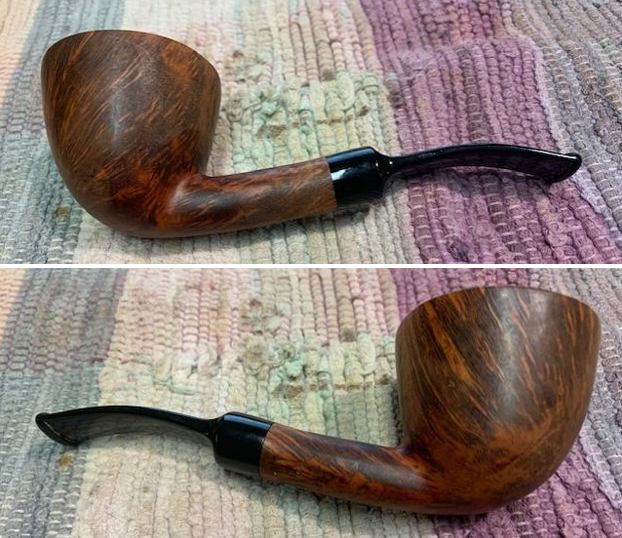
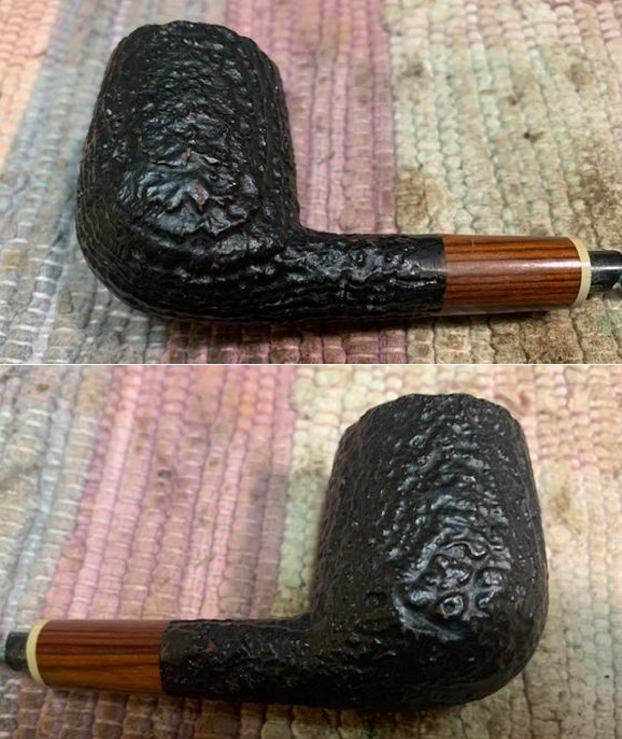
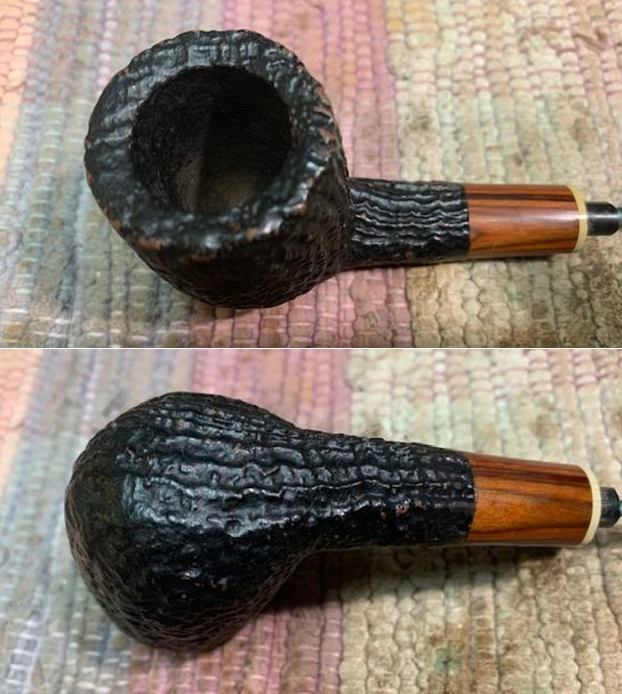
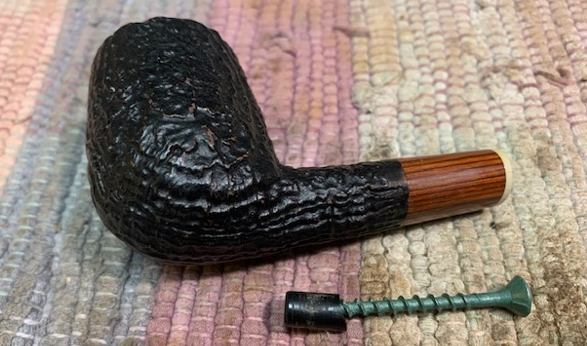
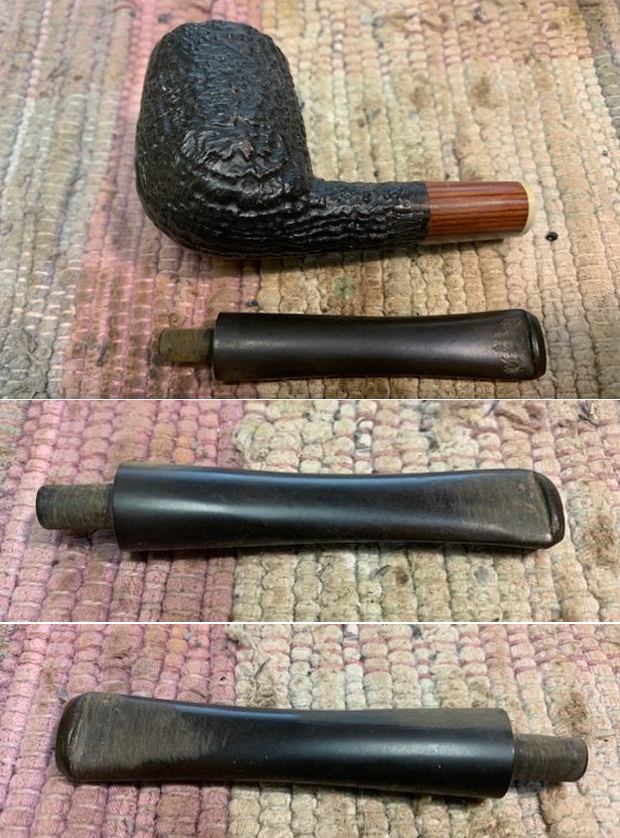
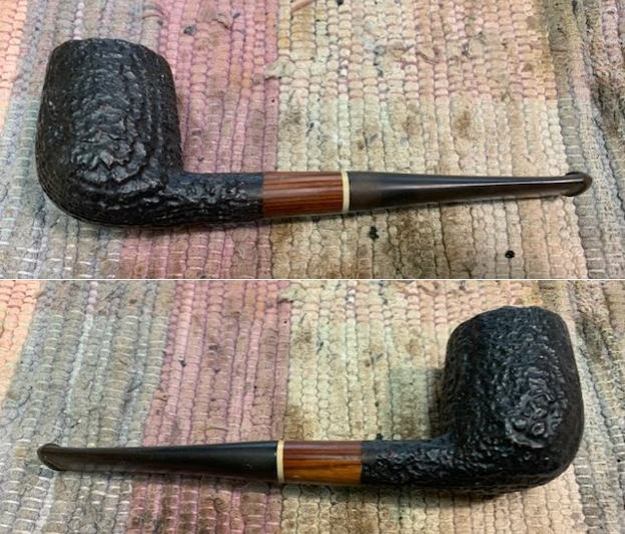
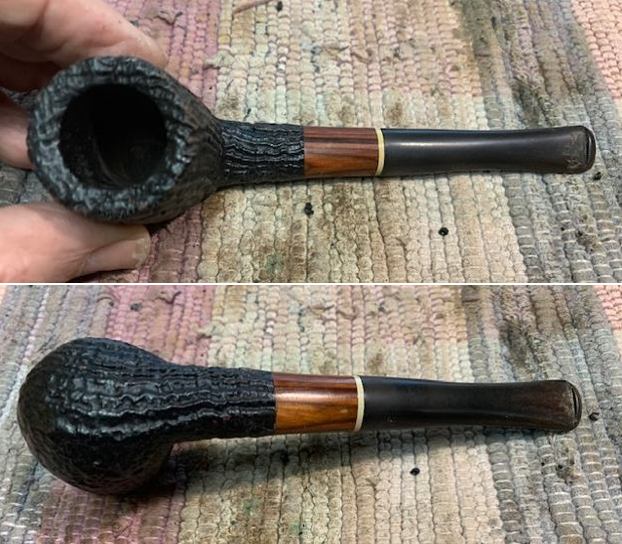
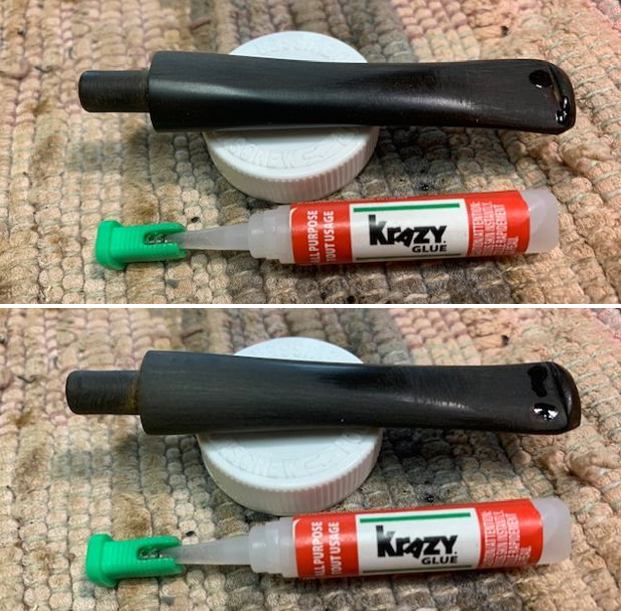
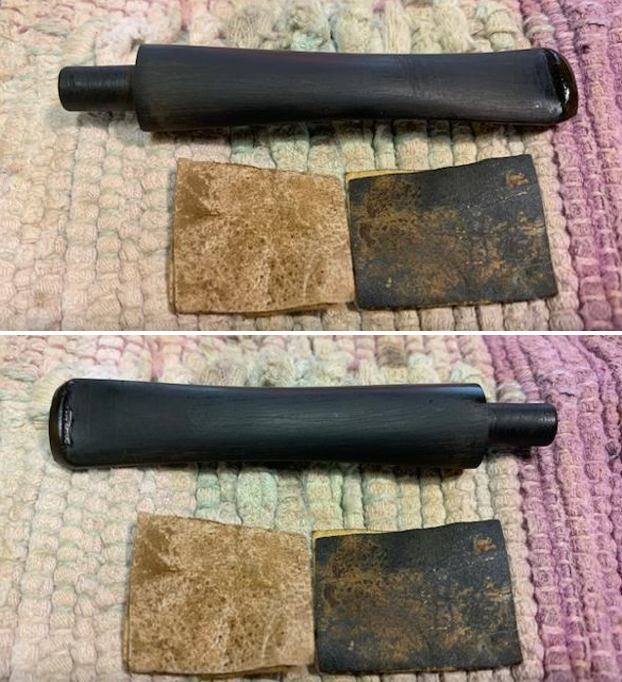
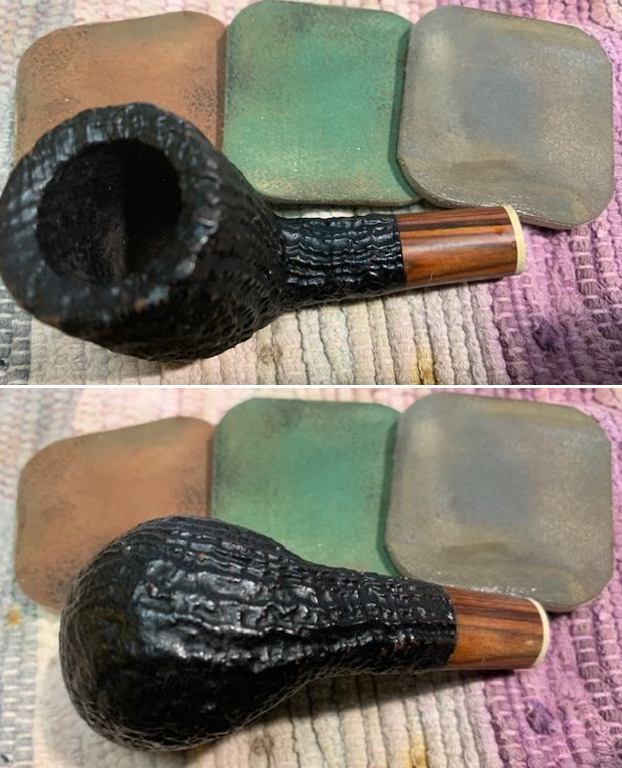
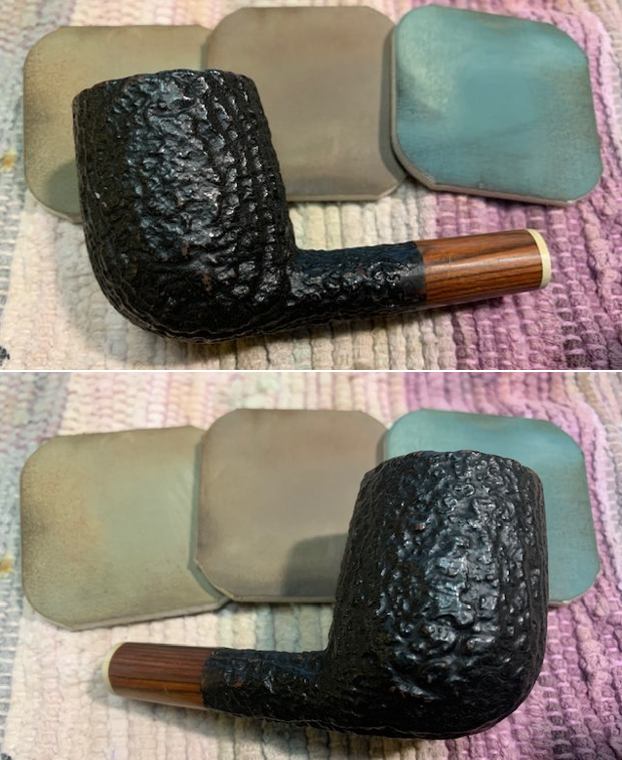
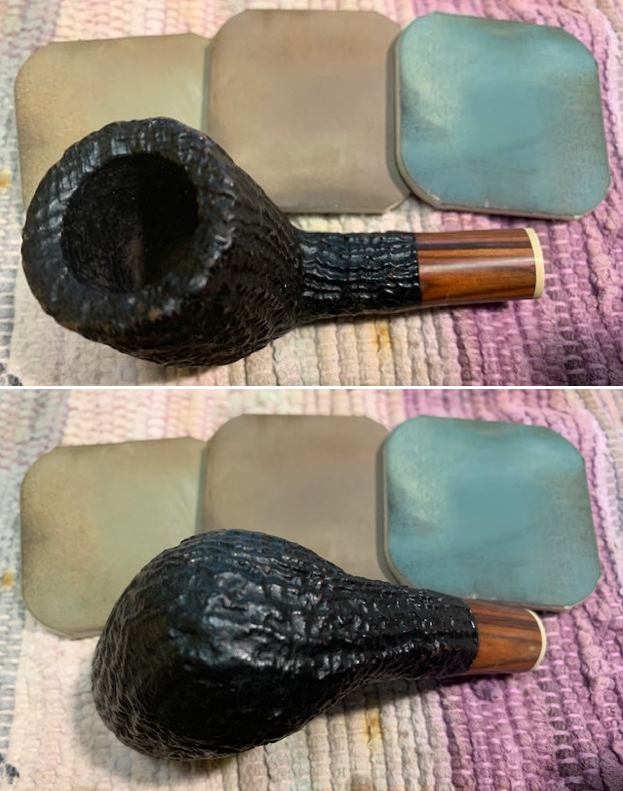
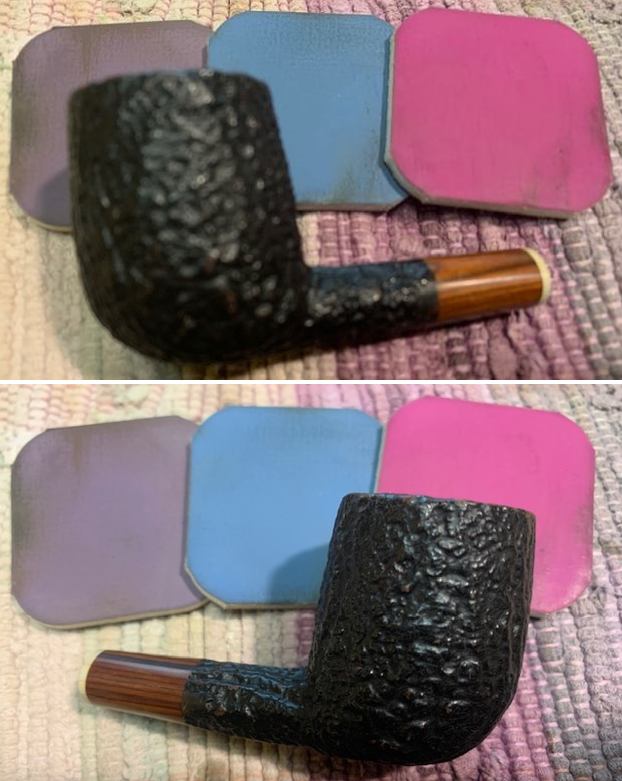
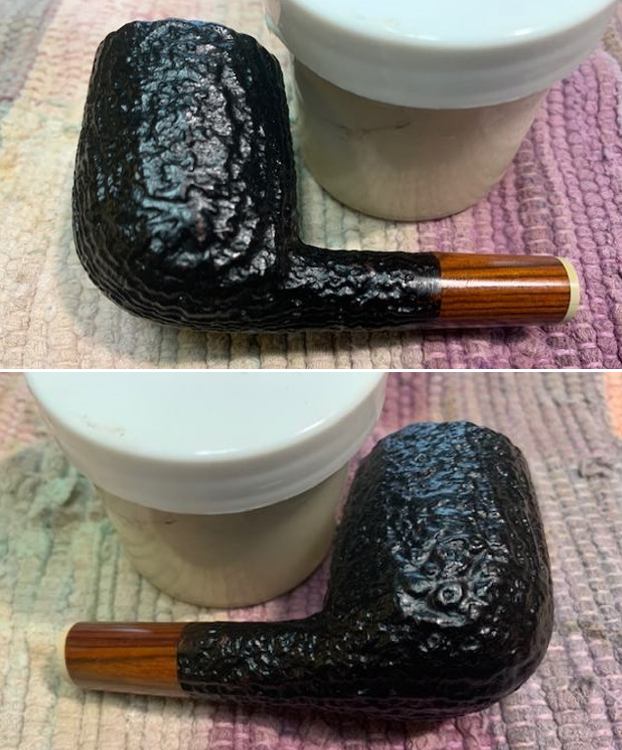
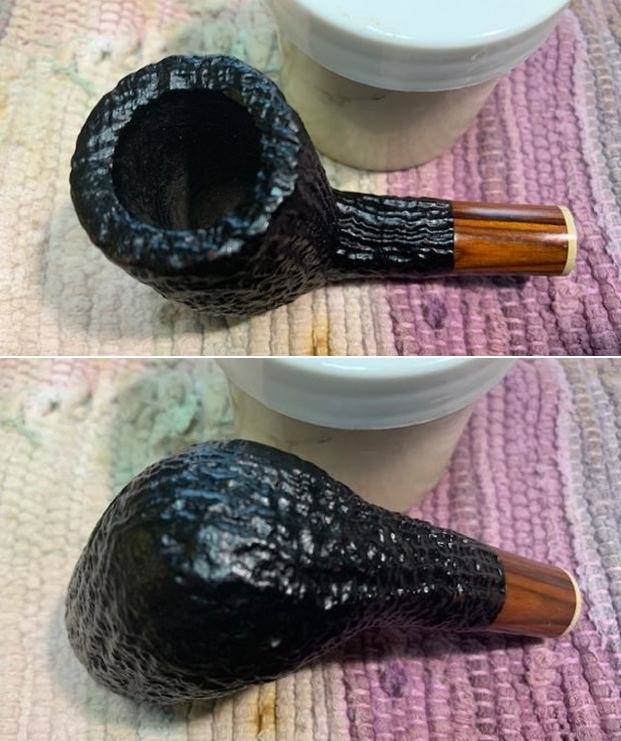
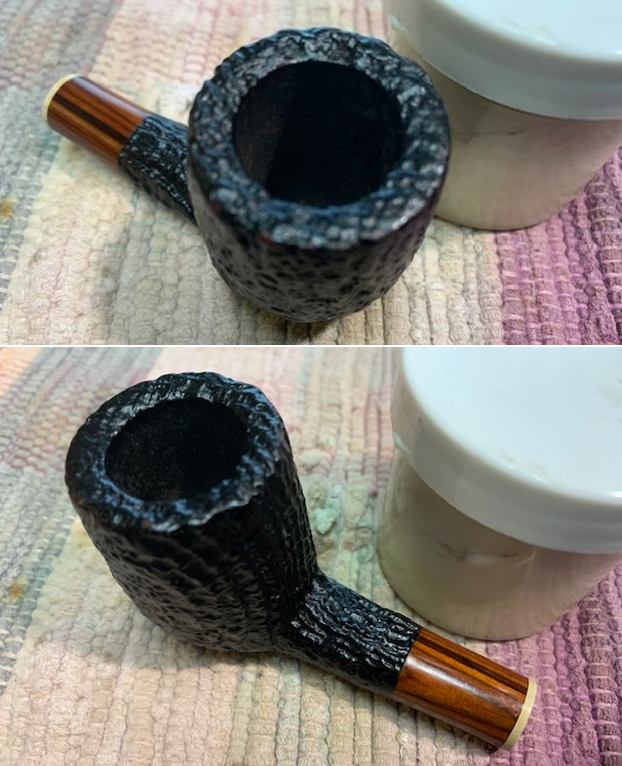
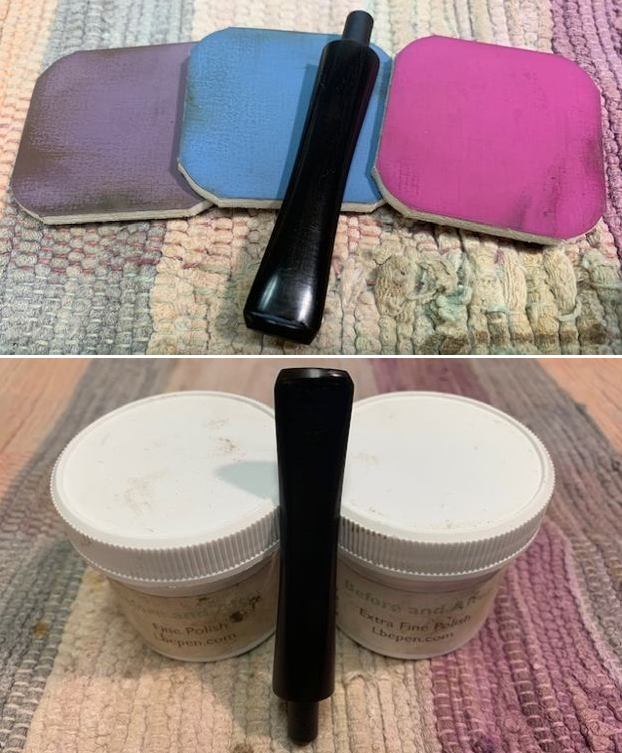
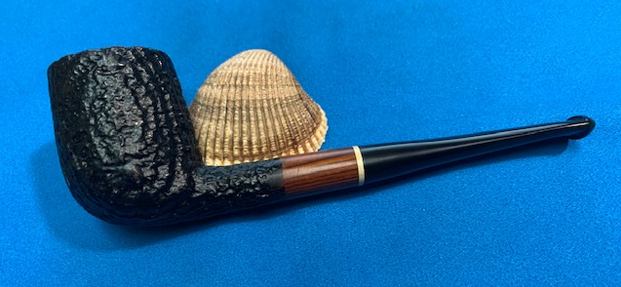
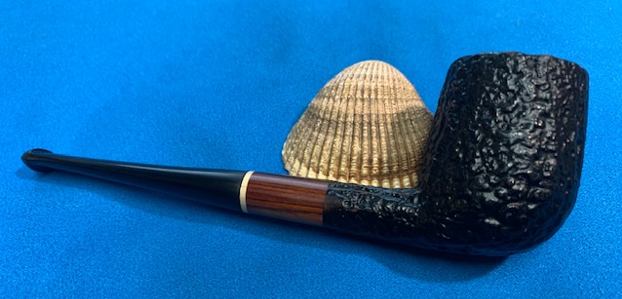
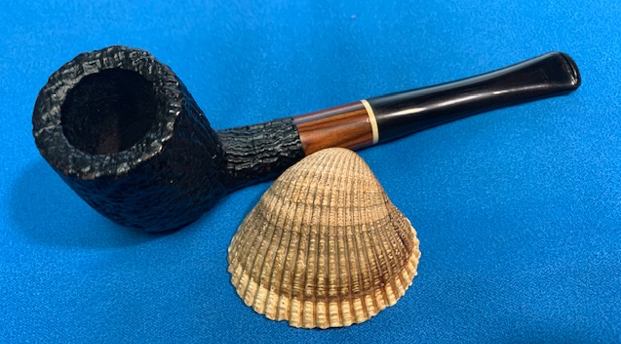
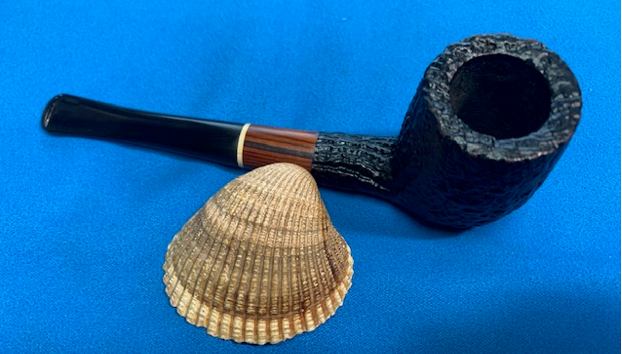
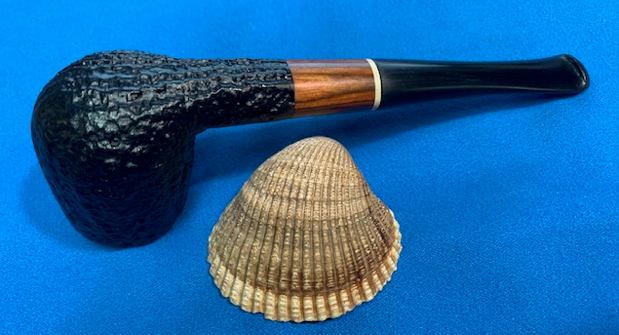
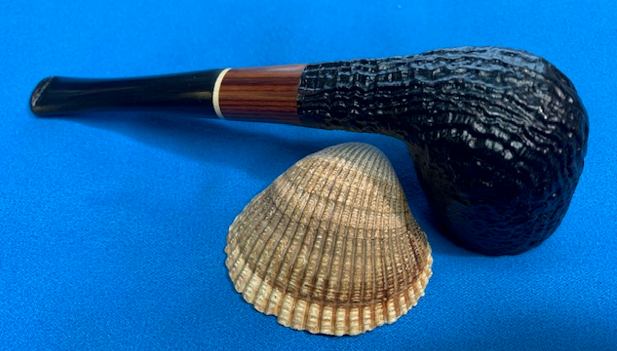
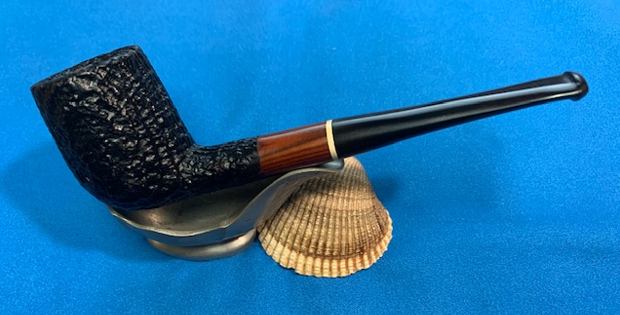
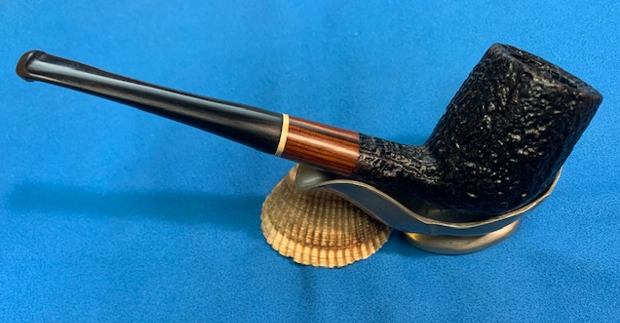
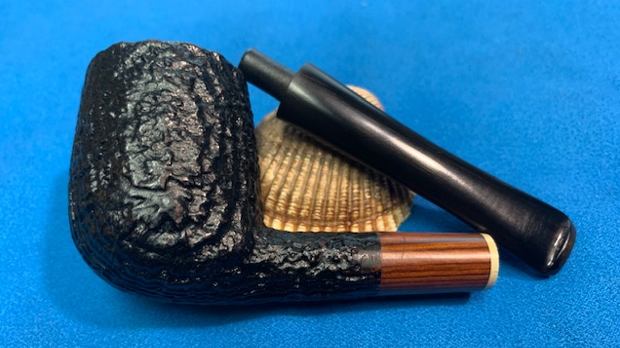
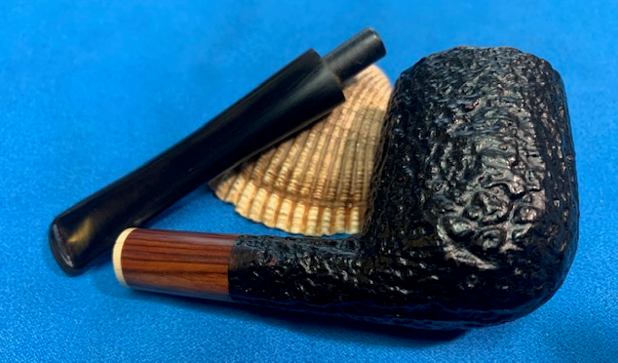
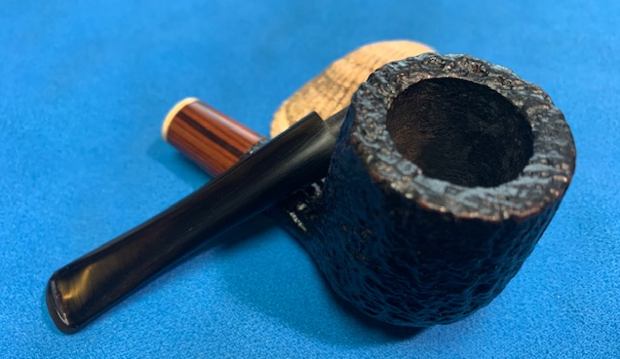
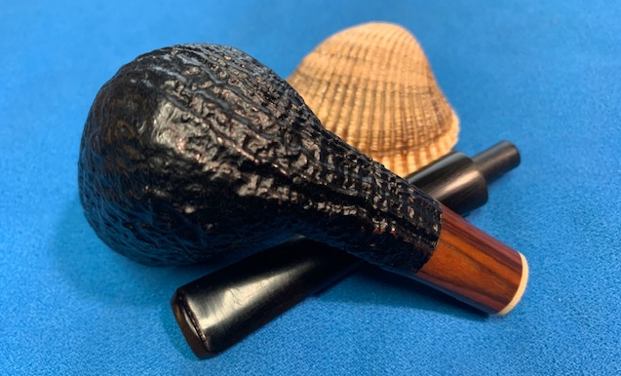
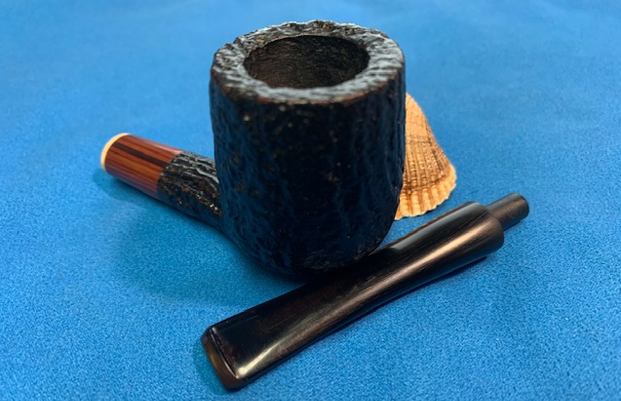
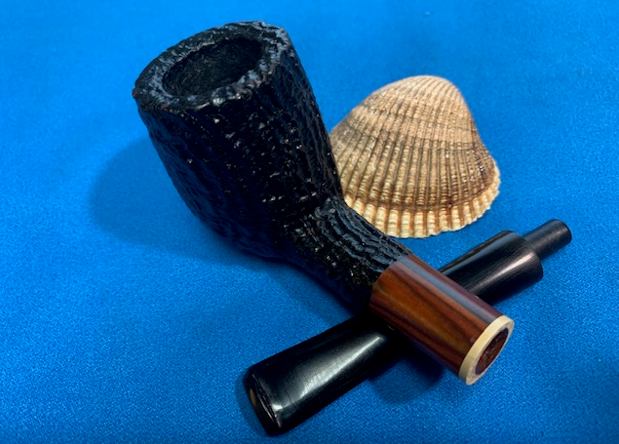
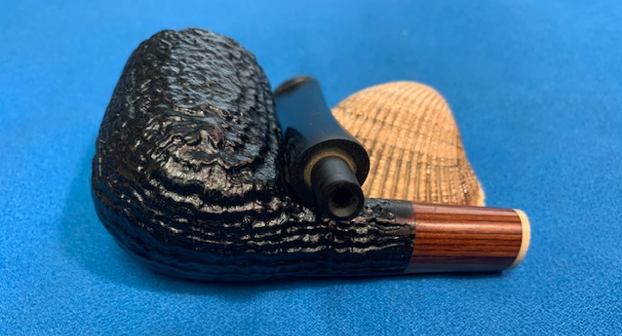
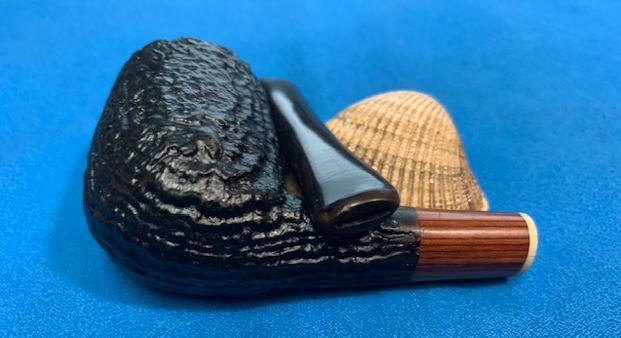
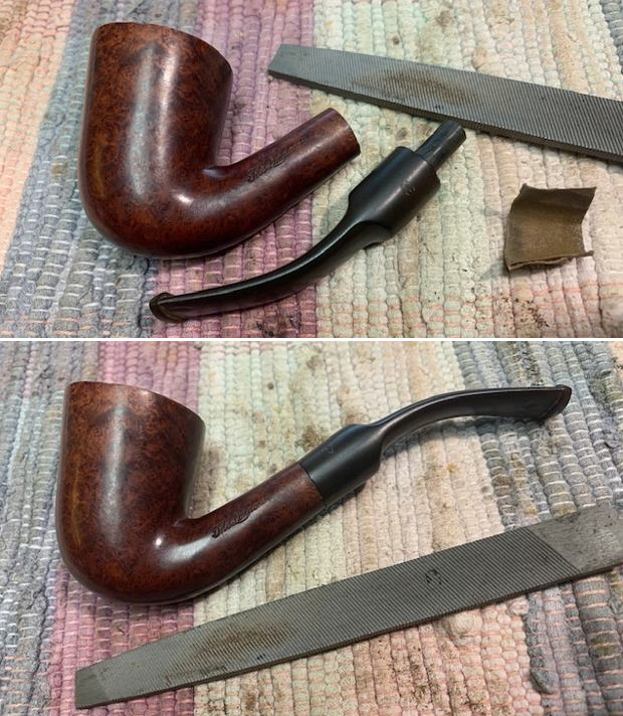
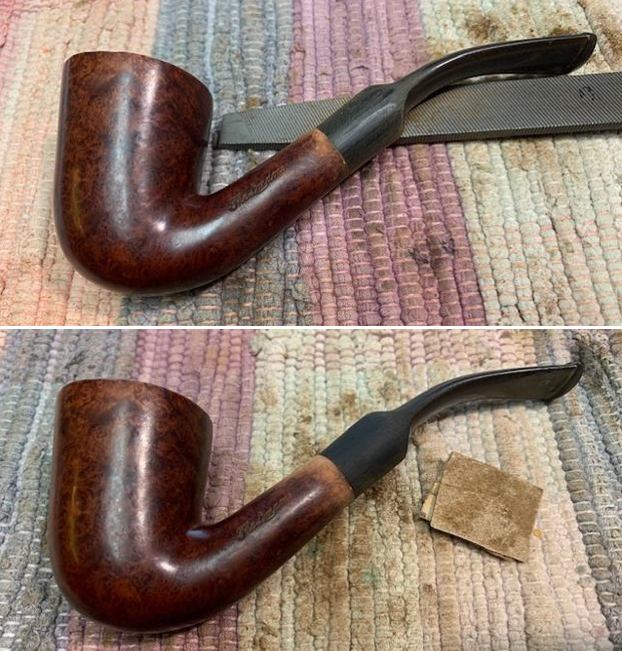
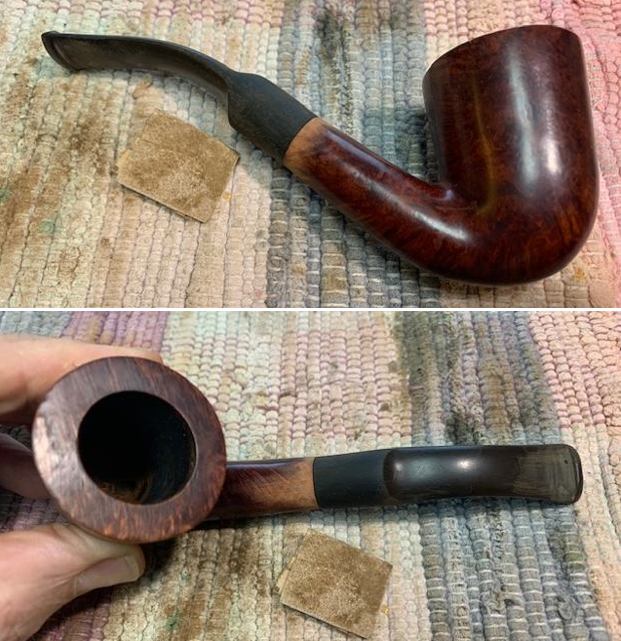
The next pipe is bowl that I have had in the box for a very long time. The rugged and very tactile sandblast really caught my eye and the cocobolo shank extension (at least it looks like that to me) and the thin ivory coloured spacer looked really good. I figured some day I would restem it and bring it back to life again. Since I am in the mood to restem a few pipes today turned out to be that day! It had a broken tenon in the shank when I put it away but the stem had disappeared long before it arrived in my care. The sandblast is very visible in the photos below. The pipe was very clean with no cake in the bowl and a decent finish in good condition. The cocobolo wood shank extension was lightly scratched but otherwise in good condition. It really is a beautiful looking oval shank Billiard. (I had already started wiggling out the broken tenon when I remembered to take these photos.)    I started to work on the pipe quickly as there was no stamping or identifying features that I could dig into regarding the maker of the pipe. The first thing that had to be done was to remove the broken tenon from the shank. I used a drywall screw with coarse threads to lock into the airway in the tenon and remove it. It took a bit of wiggling to do so but it came out.I went through a can of stems that I have here and almost immediately found one that looked like it would work with the pipe. I took some photos of it. There were some tooth marks and chatter on both sides near the button. The tenon fit perfectly. The stem was a little wide on the right side and would need to have the shape reduced to fit snugly against the shank like the left side. Otherwise it was a perfect fit. I have to say that does not happen very often but it keeps me picking up used stems because one day “I will need them!”. In the second and third photo below I gave them a quick sand to see how deep the tooth marks were. I was pleasantly surprised.I wiped off the stem with some Obsidian Oil and put it in place in the shank. I took photos of the fit to the shank to give a clear picture of what the stem looked like. It would only take a bit of adjusting on the right side and clean up of the tooth marks. It would be a great looking pipe with the addition of this stem. I moved on to sand the shape of the stem fit it evenly to the shank. The stem diameter needed more work so I worked on it with 180 grit sandpaper to match it to the right side of the shank. I sanded it with 220 grit sandpaper to smooth it out. I repaired the tooth marks on each side o f the stem at the same time. I smoothed out the repairs with 220 grit sandpaper. I started the polishing of the stem with 400 grit wet dry sandpaper. I set the stem aside and polished the cocobolo shank extension with micromesh sanding pads – dry sanding with 1500-12000 grit pads and wiping it down with a damp cloth after each pad. It really began to shine.I worked some Before & After Restoration Balm into the surface of the smooth briar with my finger tips. The product is amazing and works to clean, enliven and protect the briar. I let it sit on the briar for 10 or more minutes and then buff it off with a soft cloth. It really makes the grain sing. I set the bowl aside and turned my attention back to the stem. I polished the stem with micromesh sanding pads – dry sanding with 1500-12000 grit pads. I wiped the stem down after each pad with a cloth and Obsidian Oil. I finished the polishing with Before & After Pipe Stem Polish – both Fine and Extra Fine. I gave it a final coat of Obsidian Oil. I put the pipe together – the bowl with its new stem. This restored and restemmed No Name (Anonymous) Sandblast Oval Shank Billiard is quite stunning and I think the chosen stem works well with it. The sandblast on the bowl came alive and showed the depth of the crevices with the polishing. I used Blue Diamond on the buffing wheel on both the shank extension and stem (carefully avoiding the bowl so as not to fill in the crevices). I gave the bowl multiple coats of Conservator’s Wax and the stem carnauba wax on the wheel then buffed it with a clean buffing pad to raise the shine. I hand buffed it with a microfibre cloth to deepen the shine. The attractive Anonymous Sandblast Billiard feels great in the hand. It is lightweight and the contrast in the browns of the briar, the cocobolo shank extension and the polished vulcanite stem is quite amazing. The dimensions of the pipe are Length:5 ¾ inches, Height: 1 ¾ inches, Outer diameter of the bowl: 1 ¼ inches, Chamber diameter: ¾ of an inch. The weight of the pipe is 1.34 ounces/38 grams. It really is a beauty. I will be putting it on the rebornpipes store in the American Pipe Makers section shortly if you are interested in adding it to your collection. Thanks for walking through the restemming and the restoration with me. Cheers.

Restemming & Restoring a Bertram 60 Bent Bulldog


Blog by Steve Laug

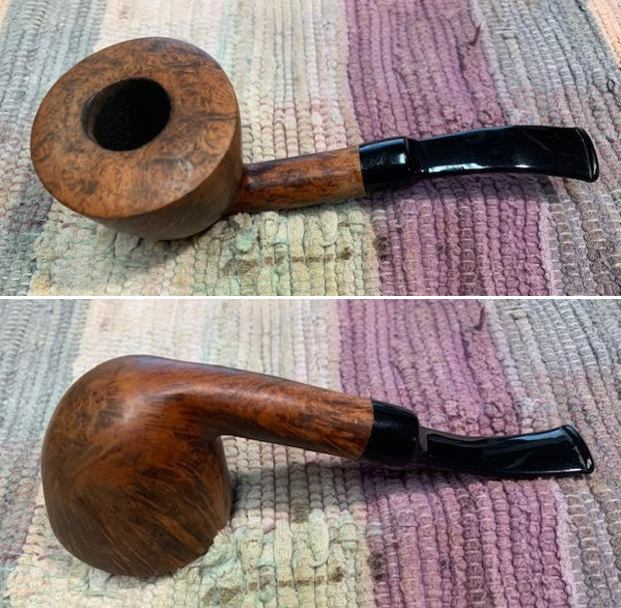
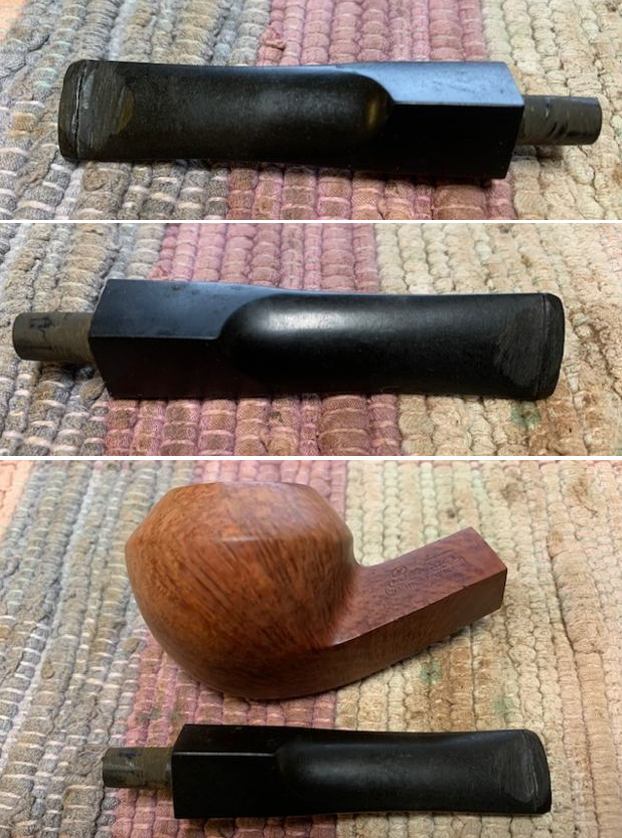
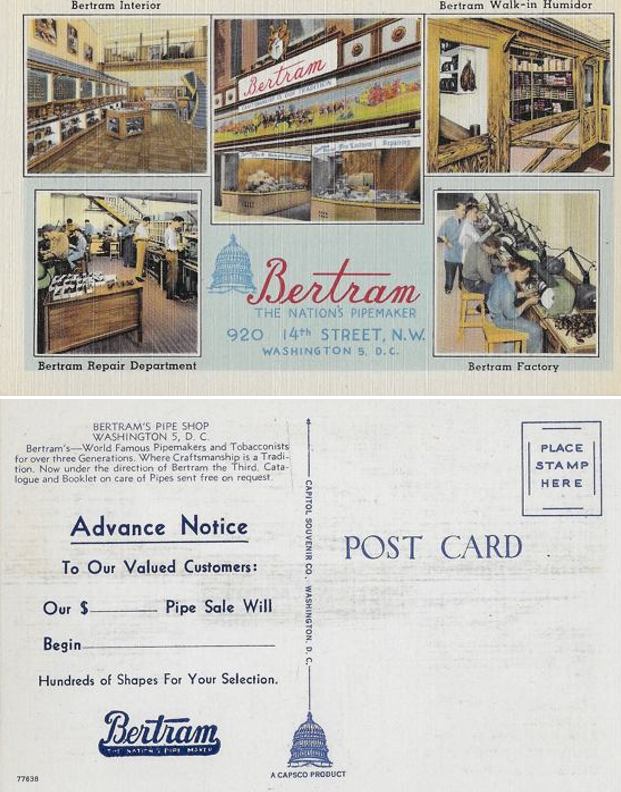
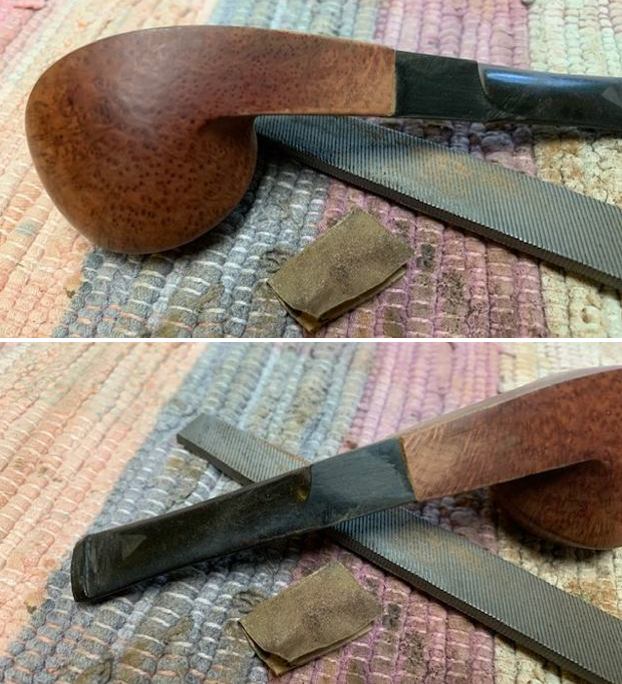
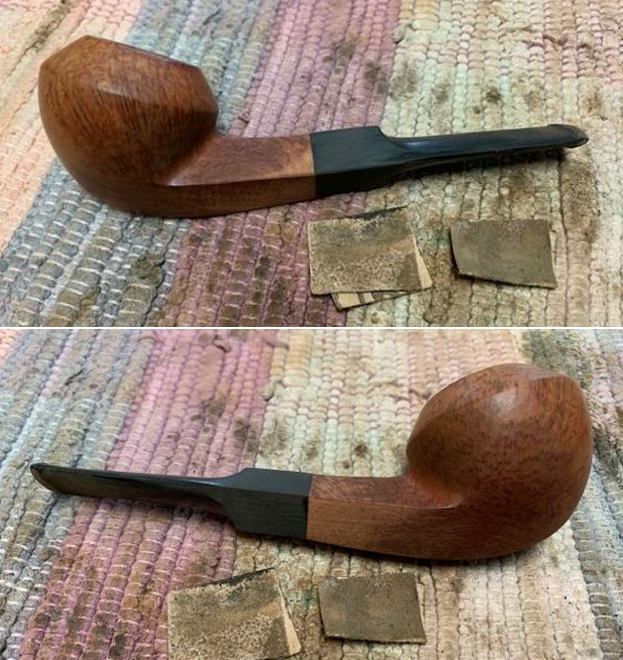
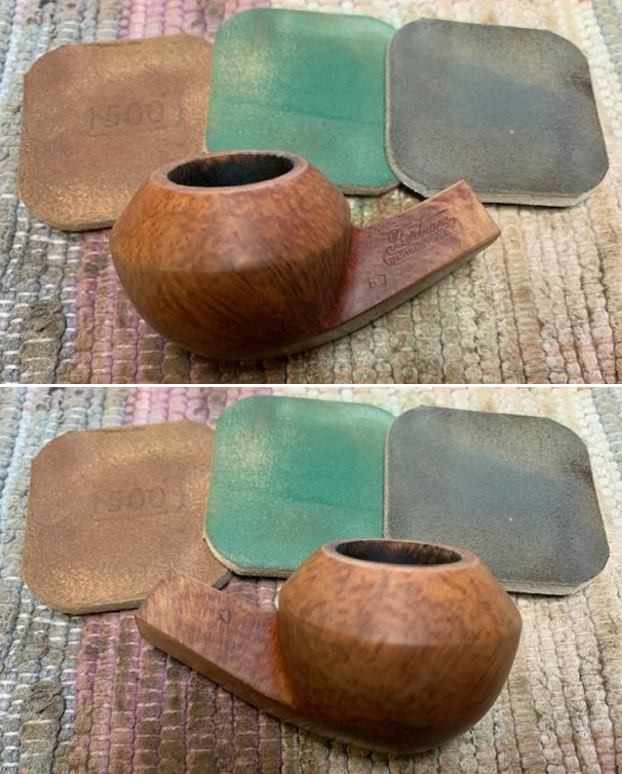
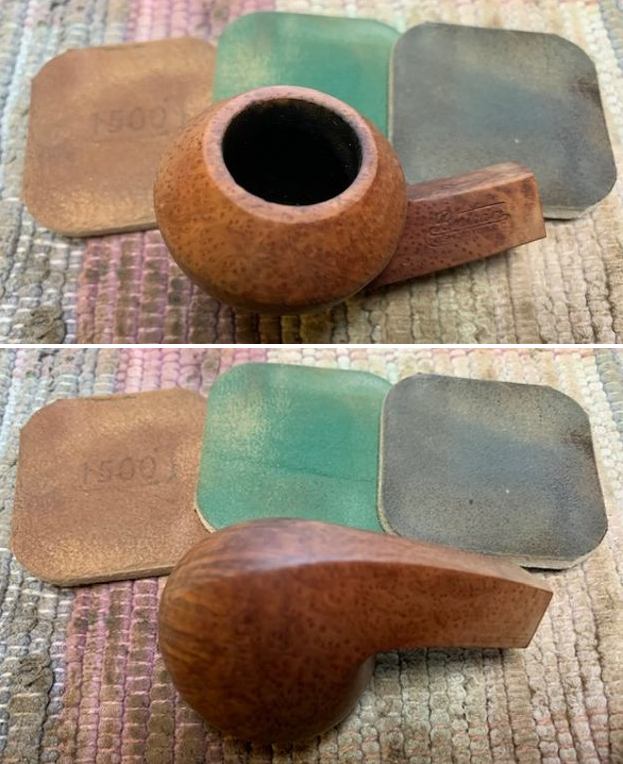
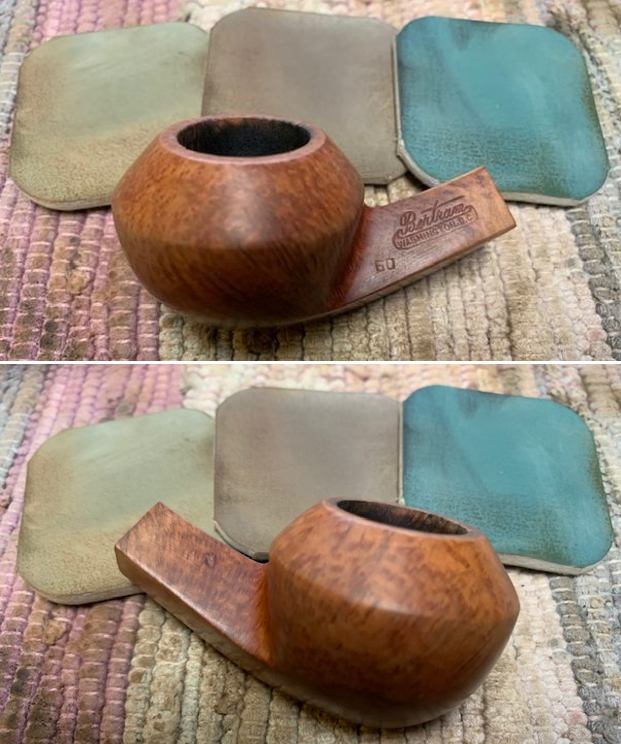
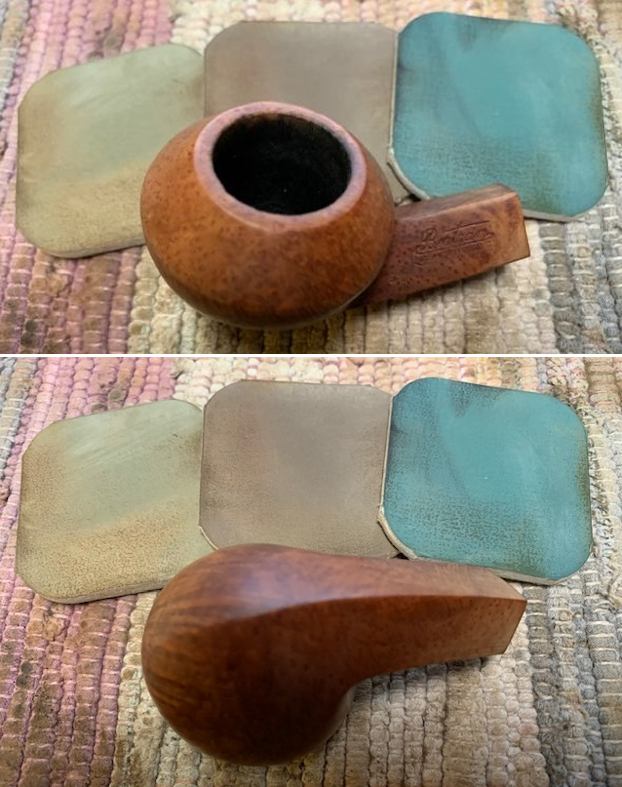
Sometimes the repetitive work on similar pipes and stems gets tiring to me and to alleviate the inevitable boredom I change things up a bit to refresh me. I have a box of stummels (bowls) here that I periodically go through and see if I have a potential stem that would fit them. Sunday afternoon I went through the box and picked out two bowls and found workable stems for them both. They were in different states of need but all had been thoroughly cleaned before I boxed them up. The pipe I chose to work on next is a nicely grained Bulldog stummel. The bowl looked very good. The grain around the sides was quite nice and a mix of flame and birdseye grain. There was one small fill on the right side of the shank but it was in good condition. The rim top was in excellent condition with a bit of darkening toward the rear of the bowl. The interior of the bowl was clean and there were not any chips, cracks or checking on the walls. The finish was dull and bit and tired but still quite redeemable. The stamping on the pipe was clear and readable. On the left side it read Bertram in script [over] Washington DC in a ribbon. The grade 60 stamp was on the same side near the bowl/shank junction. I took some photos of the bowl before I started to work on it.   I took a photo of the stamping on the left side of the shank. It reads as noted above and is clear and readable.I went through some of stems and found this diamond saddle style stem that was close to the right diameter and had a tenon that would work as well. It has some file damage on the surface near the button but it would clean up well. I also took a photo of the stem and bowl together to give a sense of the look.The pipe is a Bertram from the Bertram Pipe Shop in Washington DC. I have posted a lot of different blogs on the brand so the information available is quite accessible. I am including pic of a post card that a reader of the blog sent me. It is a great memento that I love to spend time looking at. I started my work on the pipe by fitting the new stem to the shank. I trimmed down the tenon diameter slightly with a file so that the fit in the shank was snug. The stem diameter needed more work so I worked it with a file to match it to the shank. I sanded it with 220 grit sandpaper to smooth it out. I removed the stem and polished the briar (bowl and sanded shank end) with micromesh sanding pads – dry sanding with 1500-12000 grit pads and wiping it down with a damp cloth after each pad. It really began to shine. I restained the shank end where I had sanded it to make the transition to the new stem smooth with an Oak stain pen. The colour was a perfect match. Once the bowl was buffed the newly stained section will blend in even better. I worked some Before & After Restoration Balm into the surface of the smooth briar with my finger tips. The product is amazing and works to clean, enliven and protect the briar. I let it sit on the briar for 10 or more minutes and then buff it off with a soft cloth. It really makes the grain sing. I set the bowl aside and turned my attention to the stem. I flattened out the file marks as much as possible with a flat file. I knew I would not remove them this way but I wanted make them flatter. I filled in the deeper cut marks with clear CA glue and once it was hard smoothed out the repairs with 220 grit sandpaper and started polishing the stem with 400 grit wet dry sandpaper. I polished the stem with micromesh sanding pads – dry sanding with 1500-12000 grit pads. I wiped the stem down after each pad with a cloth and Obsidian Oil. I finished the polishing with Before & After Pipe Stem Polish – both Fine and Extra Fine. I gave it a final coat of Obsidian Oil. I used my heat gun to bend the vulcanite stem to match the angles of the bowl and give it a proper Bent Bulldog look. I put the pipe together – the bowl with its new stem. This restored and restemmed Bertram Washington DC Grade 60 Bent Bulldog is a real beauty and I think the chosen stem works well with it. The grain on the bowl came alive with the buffing. I used Blue Diamond on the buffing wheel on both the bowl and stem. I gave both multiple coats of carnauba wax on the wheel then buffed it with a clean buffing pad to raise the shine. I hand buffed it with a microfibre cloth to deepen the shine. The Bertram Bent Bulldog feels great in the hand. It is lightweight and the contrast in the browns of the briar and the polished vulcanite stem with the popping grain on the mixed brown stained bowl is quite amazing. The dimensions of the pipe are Length:5 ½ inches, Height: 1 ¾ inches, Outer diameter of the bowl: 1 ¾ inches, Chamber diameter: ¾ of an inch. The weight of the pipe is 1.31 ounces/37 grams. It really is a beauty. I will be putting it on the rebornpipes store in the American Pipe Makers section shortly if you are interested in adding it to your collection. Thanks for walking through the restemming and the restoration with me. Cheers.

Restemming & Restoring a “The Londoner” Bent Dublin


Blog by Steve Laug

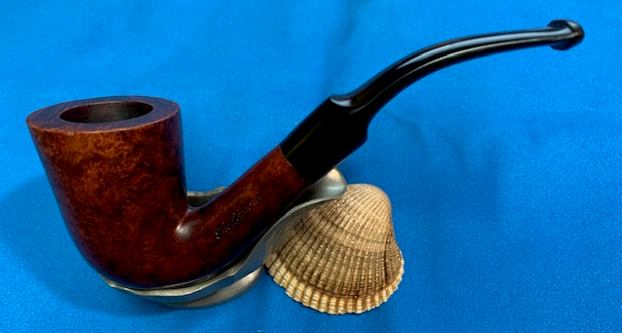
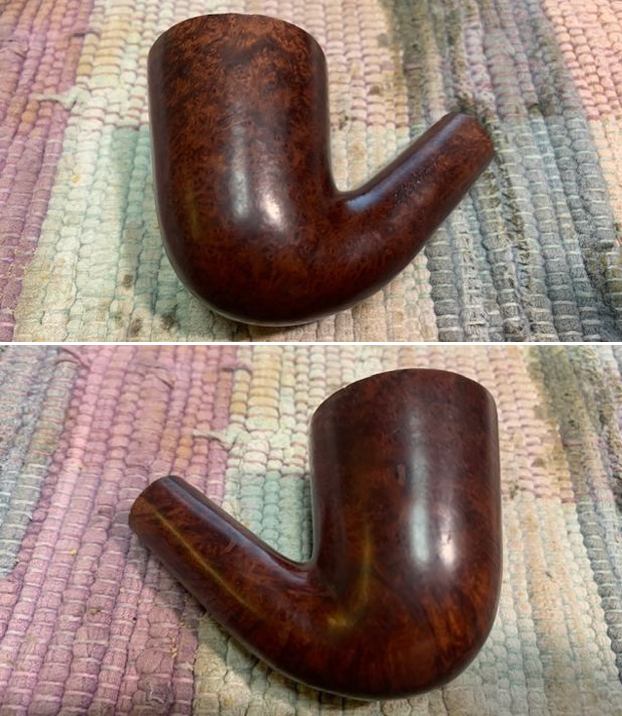
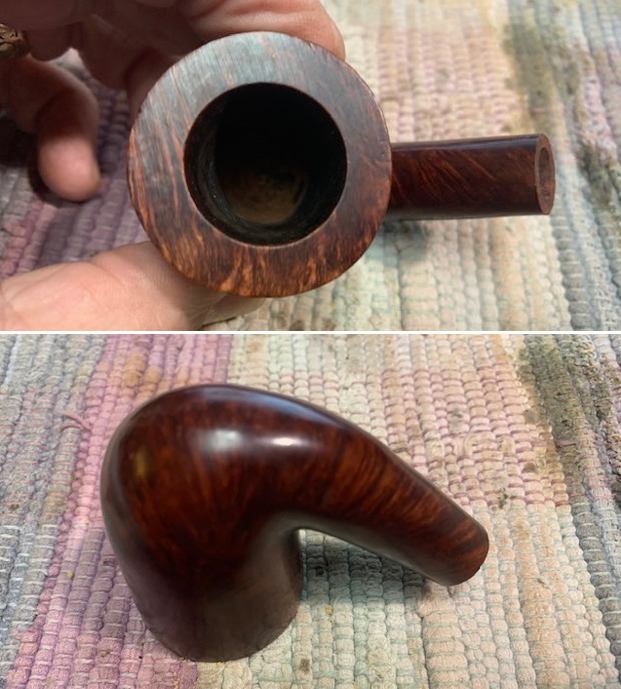
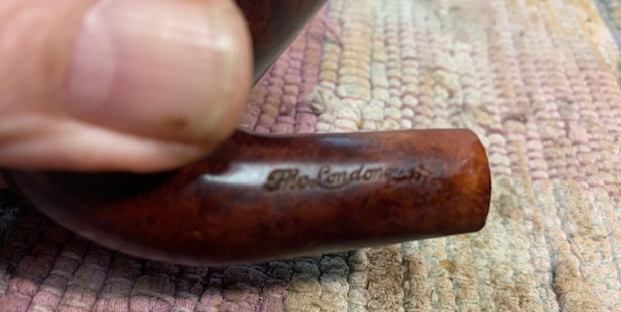
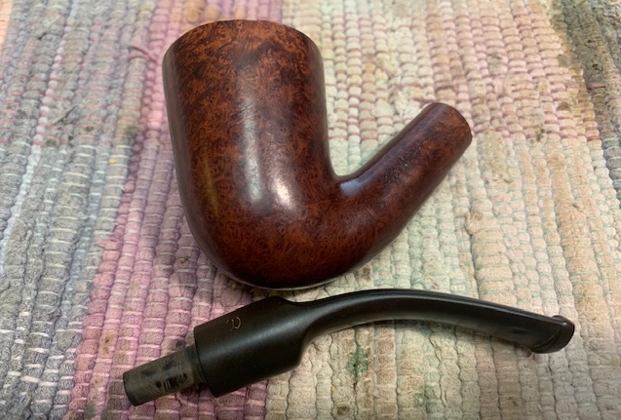
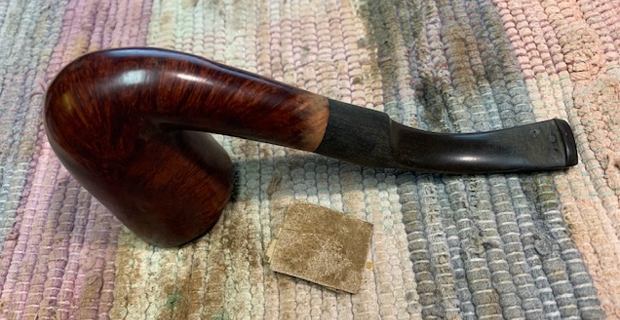
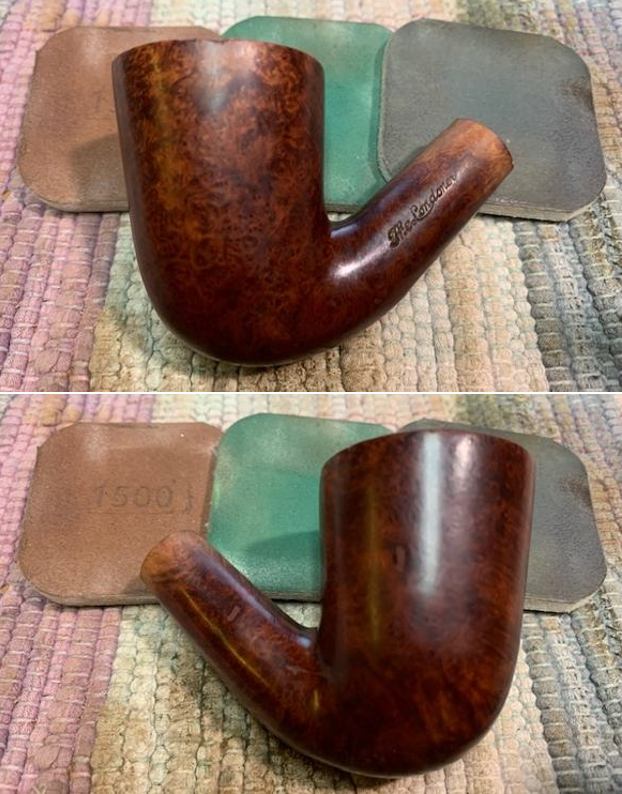
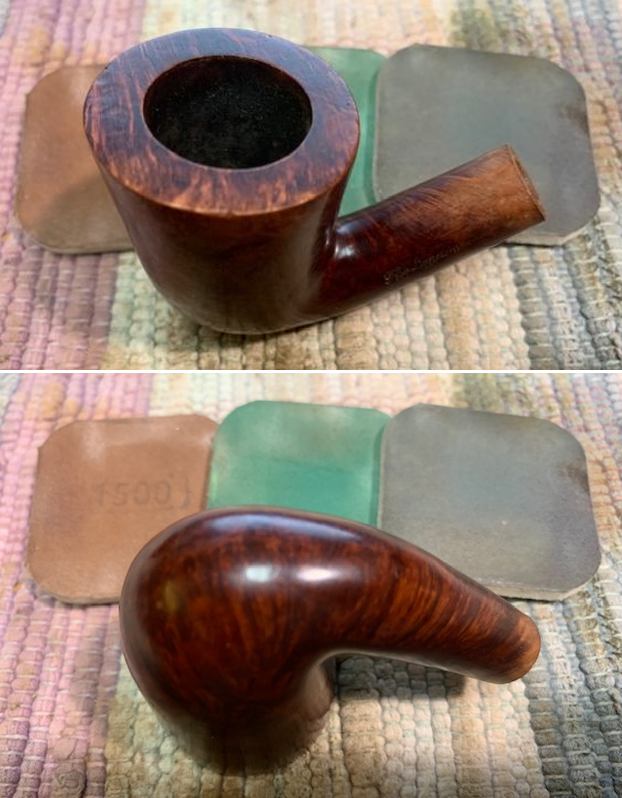
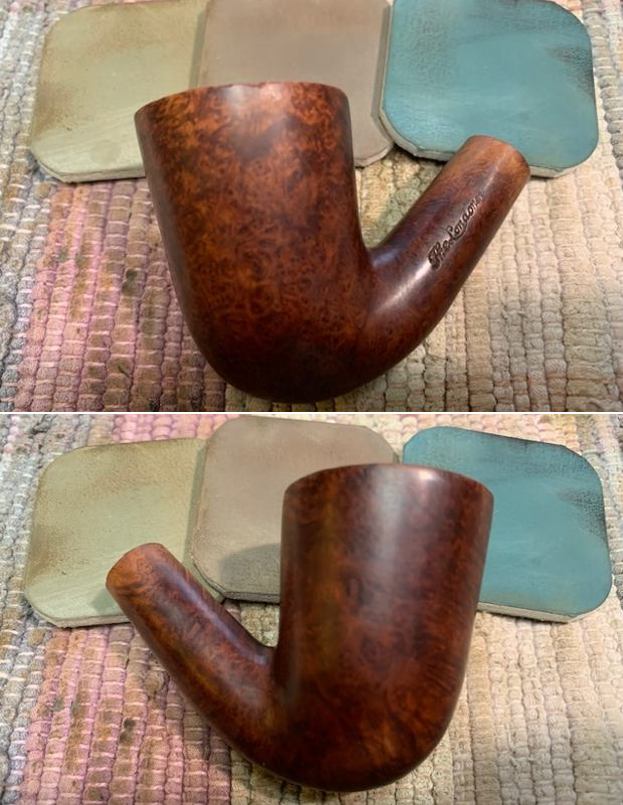
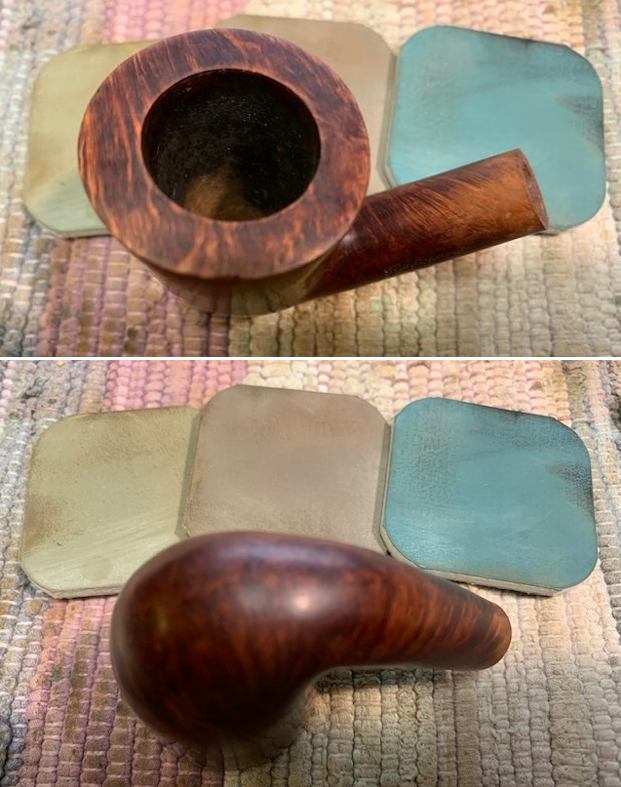
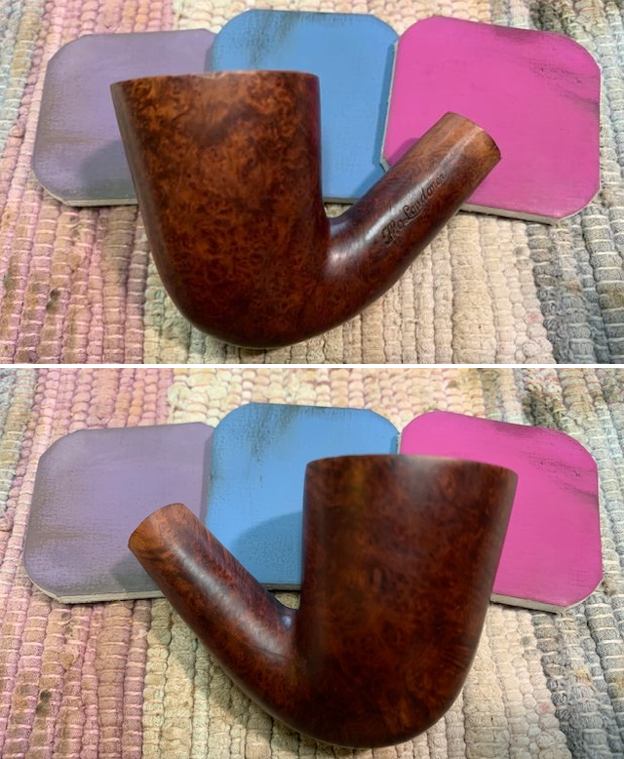
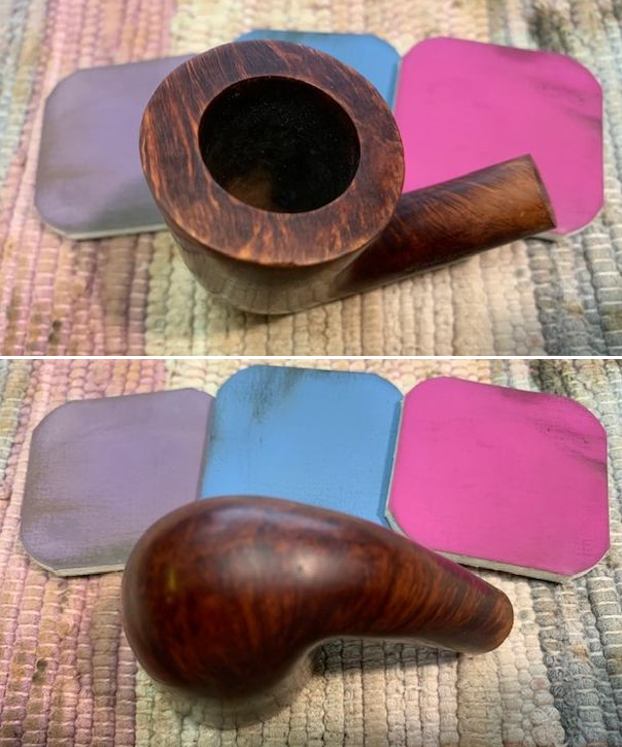
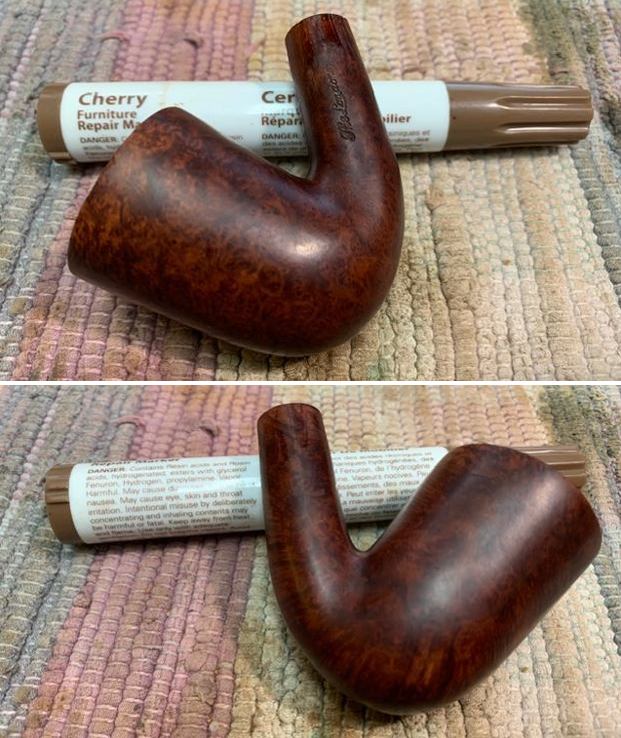
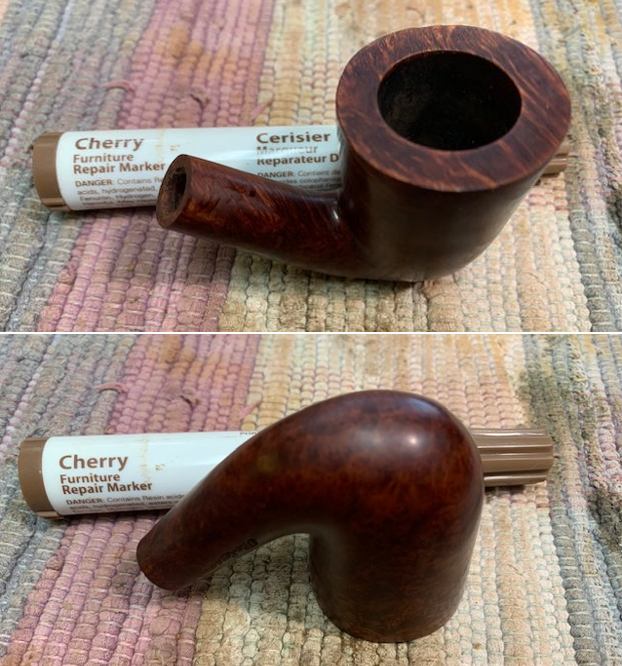
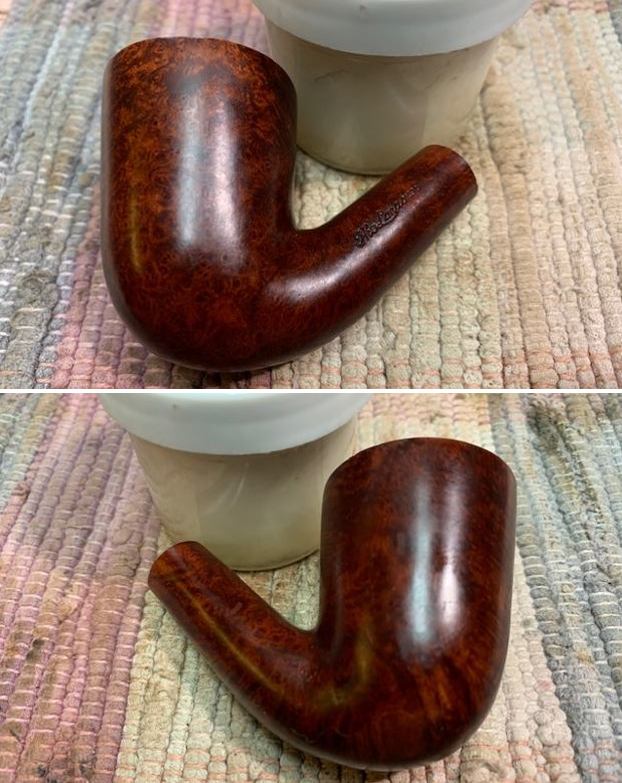
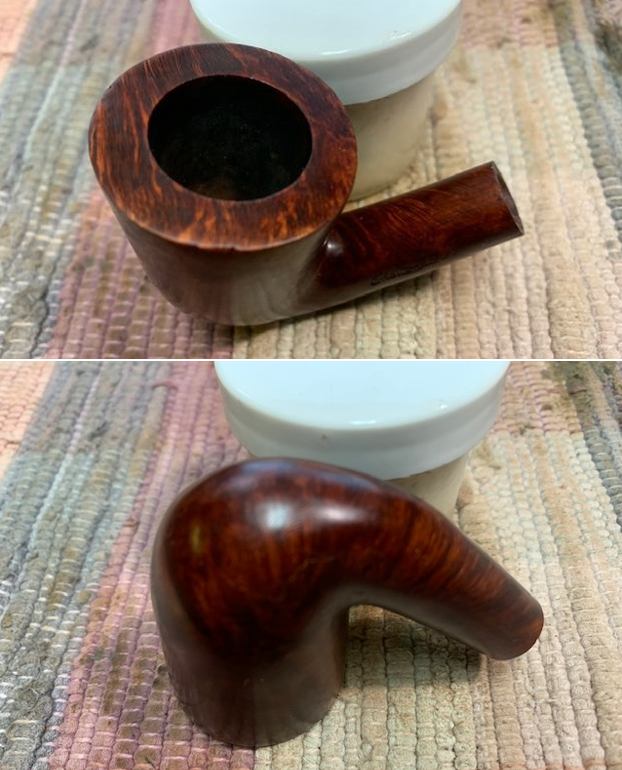
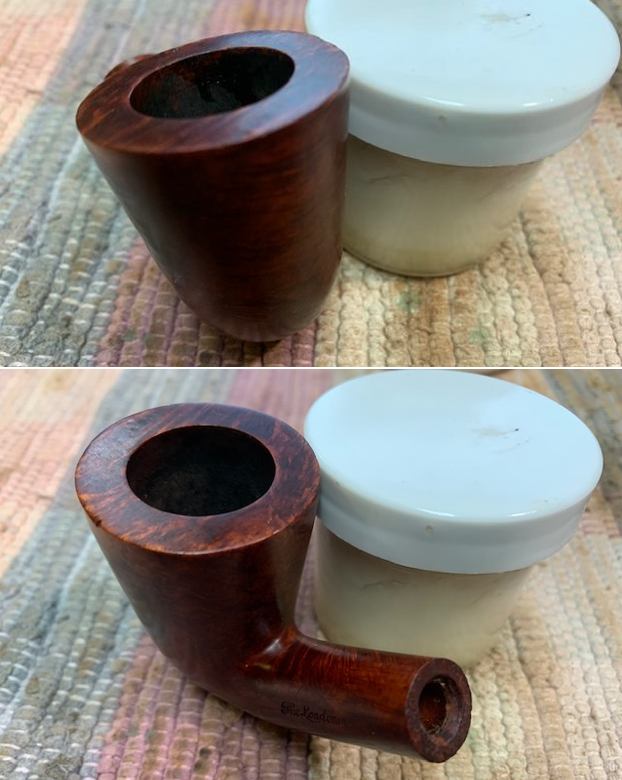
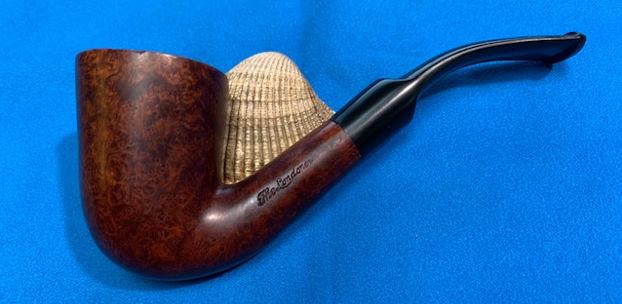
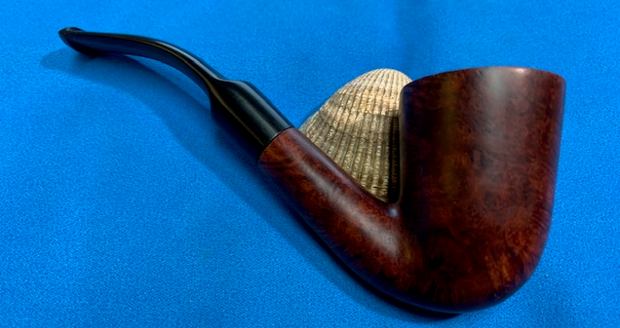
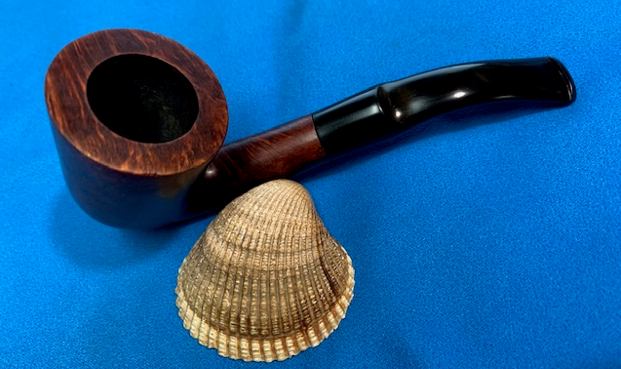
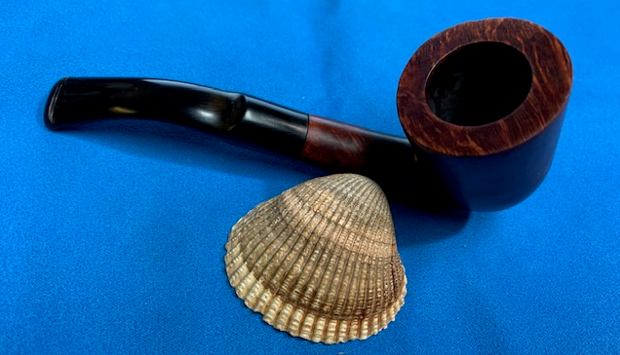
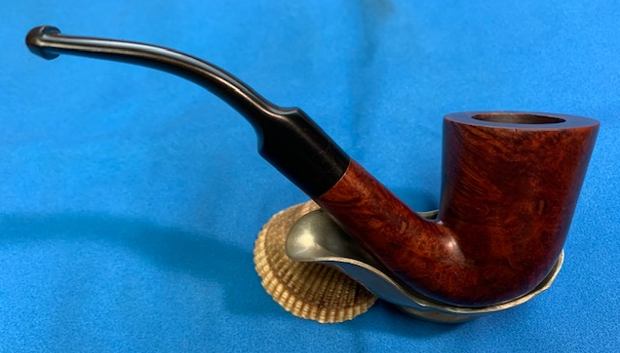
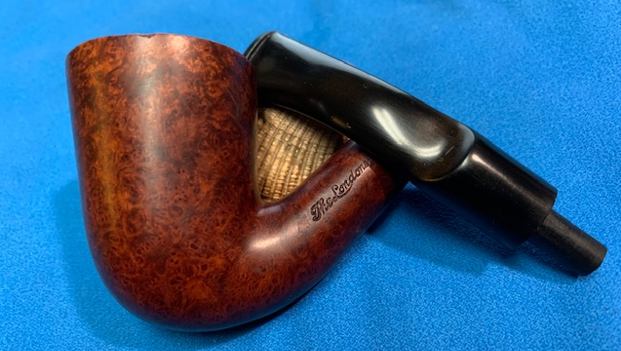
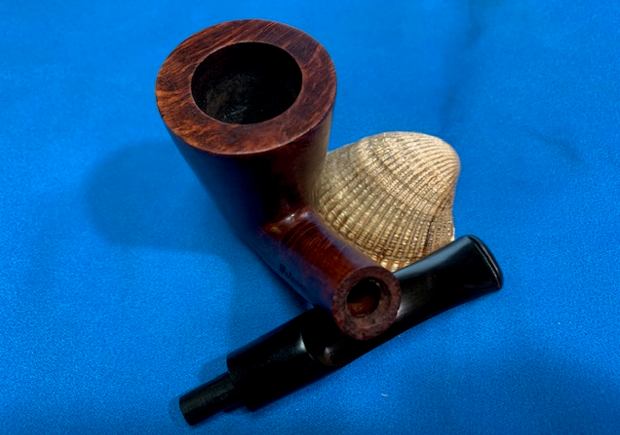
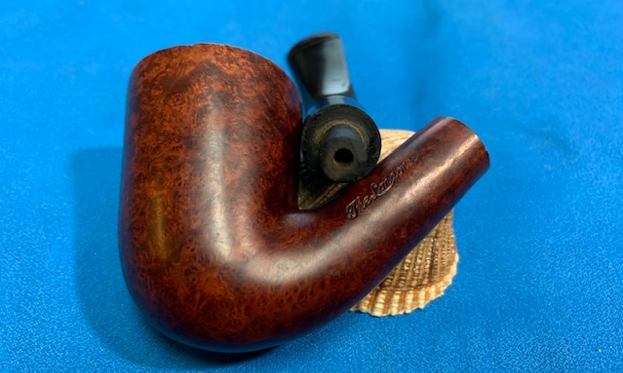
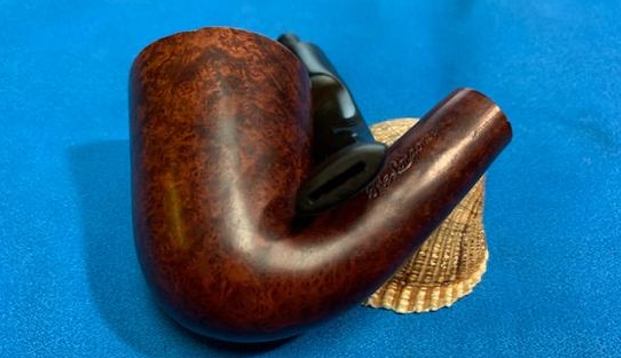
Sometimes the repetitive work on similar pipes and stems gets tiring to me and to alleviate the inevitable boredom I change things up a bit to refresh me. I have a box of stummels (bowls) here that I periodically go through and see if I have a potential stem that would fit them. Sunday afternoon I went through the box and picked out two bowls and found workable stems for them both. They were in different states of need but all had been thoroughly cleaned before I boxed them up. The pipe I chose to work on first is a lovely Bent Dublin stummel. The bowl looked very good. The grain around the sides was quite nice and a mix of flame and birdseye grain. There were a few fills on the right side of the bowl and shank but there were in good condition. The rim top was in excellent condition. The interior of the bowl was clean and there were not any chips, cracks or checking on the walls. The finish was dull and bit and tired but still quite redeemable. The stamping on the pipe was clear and readable. On the left side it read The Londoner in script and there are no other stamping on the pipe. I took some photos of the bowl before I started to work on it.   I took a photo of the stamping on the left side of the shank. It reads as noted above and is clear and readable.I went through some of stems and found this saddle style stem that was close to the right diameter and had a tenon that would work as well. It has a few tooth marks and chatter near the button but it would clean up well.The pipe is stamped “The Londoner” which is not listed with that style of stamp on either Pipephil or Pipedia. There was a Londoner made by Barlings but it is stamped differently than this one and does not have the article in front of the name. So the maker of the pipe remains a mystery for now. Now it is time to work on the pipe.

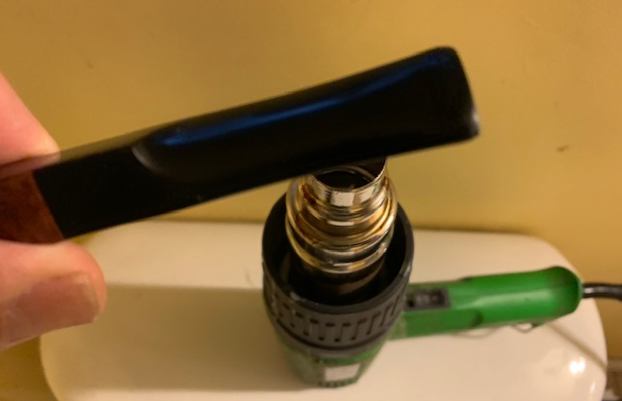
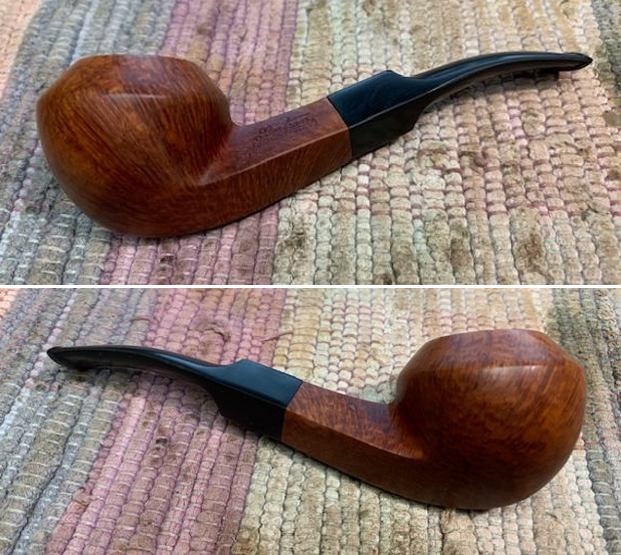
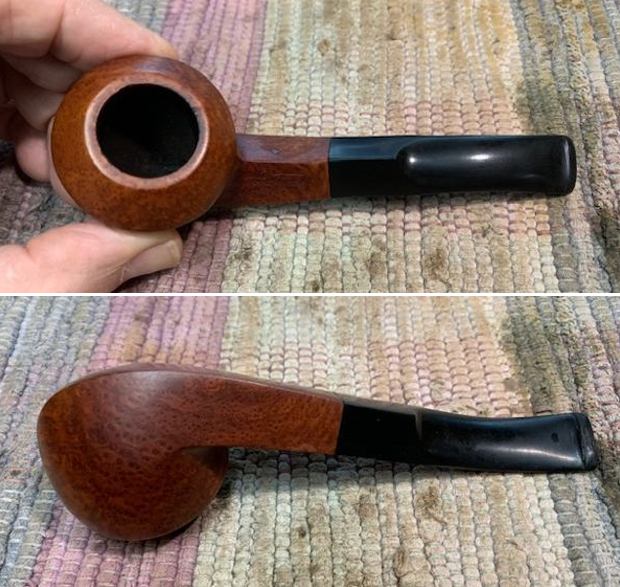
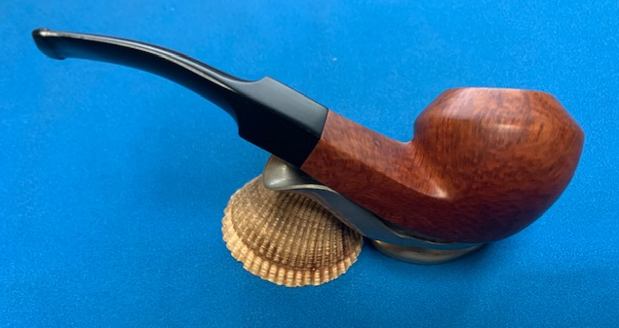
I started my work on the pipe by fitting the new stem to the shank. I trimmed down the tenon diameter slightly with a file so that the fit in the shank was snug. The stem diameter needed more work so I worked it with a file to match it to the shank. I sanded it with 220 grit sandpaper to smooth it out. I removed the stem and polished the briar (bowl and sanded shank end) with micromesh sanding pads – dry sanding with 1500-12000 grit pads and wiping it down with a damp cloth after each pad. It really began to shine. I restained the shank end where I had sanded it to make the transition to the new stem smooth with a Cherry stain pen. The colour was a perfect match. Once the bowl was buffed the newly stained section would blend in well. I worked some Before & After Restoration Balm into the surface of the smooth briar with my finger tips. The product is amazing and works to clean, enliven and protect the briar. I let it sit on the briar for 10 or more minutes and then buff it off with a soft cloth. It really makes the grain sing. I set the bowl aside and turned my attention to the stem. I “painted” the stem surface with a Bic lighter flame to raise the tooth marks (no pictures). I was able to lift some of them to the surface. I filled in the remaining spots with clear CA glue and once it was hard smoothed out the repairs with 220 grit sandpaper and started polishing the stem with 400 grit wet dry sandpaper. I polished the stem with micromesh sanding pads – dry sanding with 1500-12000 grit pads. I wiped the stem down after each pad with a cloth and Obsidian Oil. I finished the polishing with Before & After Pipe Stem Polish – both Fine and Extra Fine. I gave it a final coat of Obsidian Oil. I put the pipe together – the bowl with its new stem. This restored and restemmed “The Londoner” Bent Dublin is a real beauty and I think the chosen stem works well with it. The grain on the bowl came alive with the buffing. I used Blue Diamond on the buffing wheel on both the bowl and stem. I gave both multiple coats of carnauba wax on the wheel then buffed it with a clean buffing pad to raise the shine. I hand buffed it with a microfibre cloth to deepen the shine. “The Londoner Dublin” feels great in the hand. It is lightweight and the contrast in the browns of the briar and the polished vulcanite stem with the popping grain on the mixed brown stained bowl is quite amazing. The dimensions of the pipe are Length:5 ½ inches, Height: 2 inches, Outer diameter of the bowl: 1 ½ inches, Chamber diameter: 7/8 of an inch. The weight of the pipe is 1.62 ounces/46 grams. It really is a beauty. I will be putting it on the rebornpipes store in the British Pipe Makers section shortly if you are interested in adding it to your collection. Thanks for walking through the restemming and the restoration with me. Cheers.

The Prince of Pipes


Blog by Kenneth Lieblich

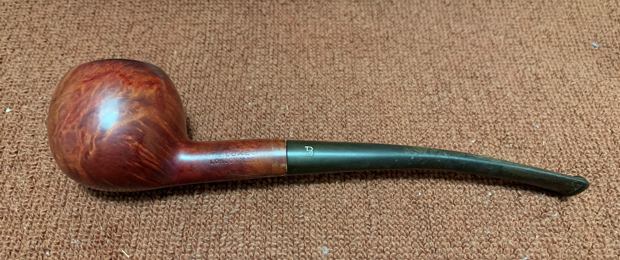
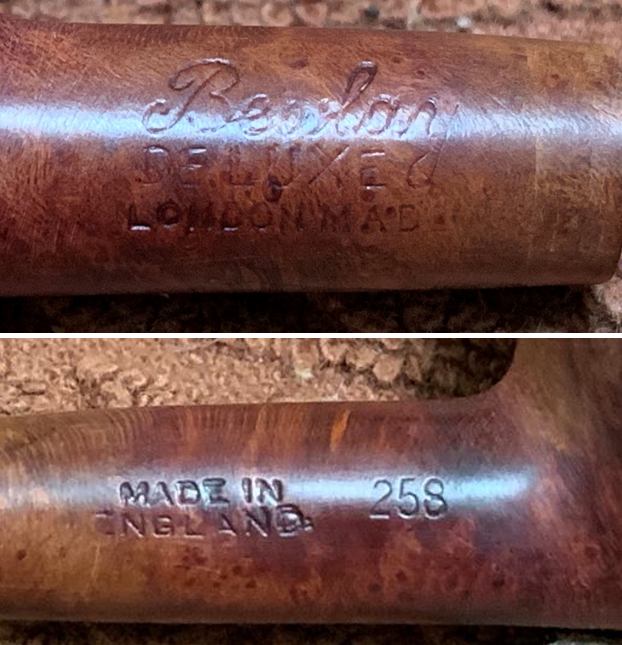
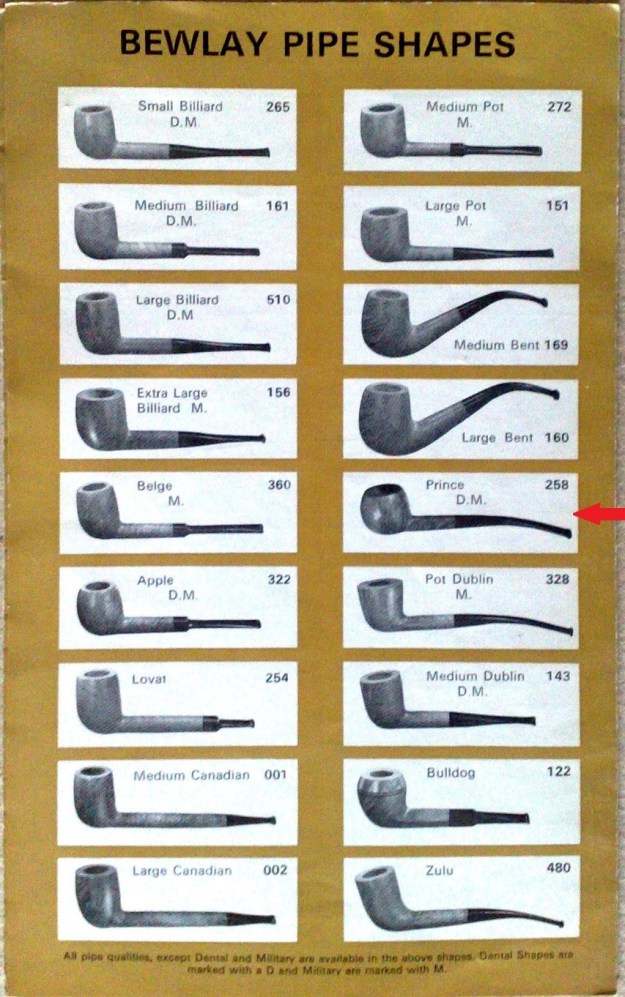
One of my dearest friends contacted me recently to inquire if I could repair and restore a pipe that belongs to his father. His father told me that the pipe had been given to him by his wife (my friend’s mother) as a graduation gift in 1967. I was only too happy to oblige – not just to help my friend, but to raise this beautiful pipe back to life. The pipe is from The House of Bewlay and is a Prince shape. Just as an aside, the shape was named after Prince Albert, the Prince of Wales, who later became King Edward VII (1841–1910). What a gorgeous pipe! I must admit that the prince is one of my favourite pipe shapes (and possibly my outright favourite). This one is the epitome of elegance in pipe smoking. The pipe’s markings read Bewlay [over] Deluxe [over] London Made. The other side of the pipe read Made in [over] England and the shape number, 258. This corresponds nicely with a Bewlay catalogue from the late 60s, as you can see in the photo below. One additional piece of information that was useful was the date of the gift: 1967. This certainly gives us a good idea of the time period from which this pipe dates. Let us read a bit more about Bewlay from the Pipedia article:

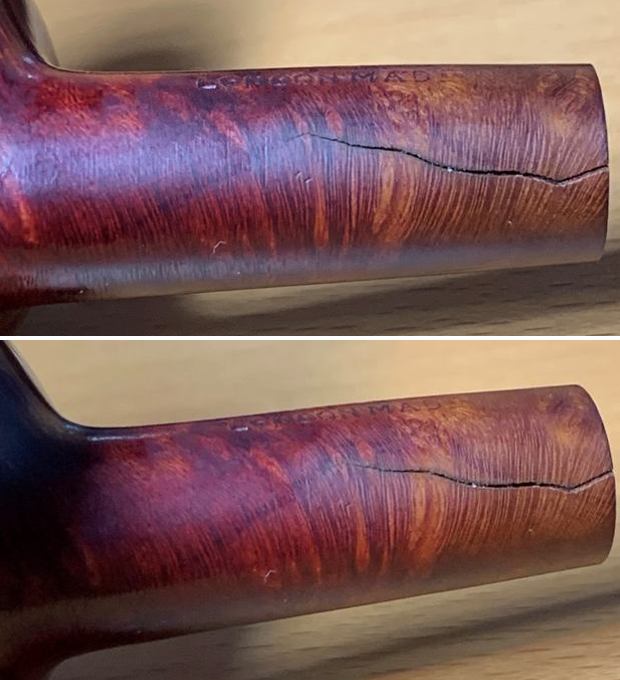
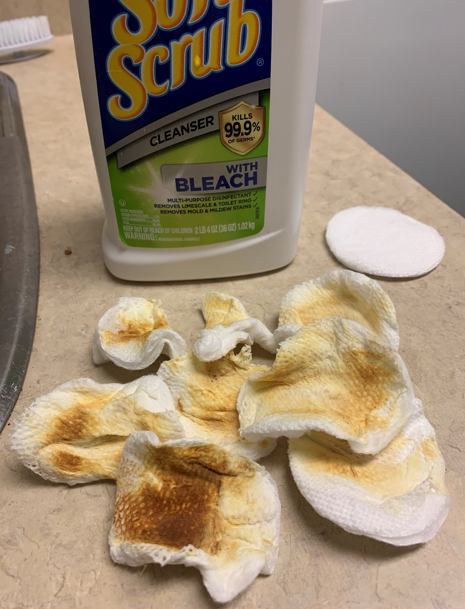
The English brand of Bewlay & Co. Ltd. (formerly Salmon & Gluckstein Ltd.), was in business from the early 20th century until the 1950s. The brand ended up being sold and taken over by Imperial Tobacco Co. The shop chain closed in the 1980s but there seems to be one shop still in business on Carr Lane in the city of Hull. Bewlay pipes were made by prestigious firms. Notably Barling, Charatan, Loewe & Co., Sasieni, Huybrecht, and Orlik. So understandably, the English considered a Bewlay pipe a quality pipe.Anyway, on to the pipe – and what a beauty it was. However, it was not without its issues. The stummel had the following problems: lava on the rim, a notable burn to the rim, plenty of cake in the bowl, strange stain patterns, and – most serious of all – a nasty crack to the shank. Meanwhile, the stem had its own set of problems: the ‘B’ logo was nearly obliterated, some oxidation and calcification, and minor tooth marks and dents. This pipe was not going to be too tough, but I needed to be especially careful to ensure the crack would be repaired perfectly – so it could be used for many years to come. The stem was first on my list. I took a BIC lighter and ‘painted’ the stem with its flame in order to lift the tooth marks. This was reasonably successful in raising the dents. Then, I cleaned out the insides of the stem with pipe cleaners and isopropyl alcohol. It was dirty, but not too bad and I went through a decent number of pipe cleaners in order to clean it up. I also soaked the stinger in lemon-infused isopropyl alcohol. This loosened everything up and I was able to clean it up very nicely. Once this process was done, the stem went for an overnight soak in the Before & After Hard Rubber Deoxidizer. The following day, I cleaned all of the de-oxidizing sludge off with alcohol, pipe cleaners, et cetera. The oxidation had migrated to the surface and would be fairly straightforward to remove. I scrubbed vigorously with SoftScrub to remove the leftover oxidation. Before I moved on to the Micromesh pads, I built up the small dents on the stem with cyanoacrylate adhesive and let them fully cure. I then sanded it down with 220-, 400-, and 600-grit sandpapers to meld the repair seamlessly into the stem. This ensures that it keeps its shape and looks like it should. I then used all nine Micromesh pads (1,500 through 12,000 grit) to bring out the lovely black lustre on the stem. I also used Obsidian Pipe Stem Oil in between each pad scrubbing.I then took the opportunity to repair the “B” logo on the stem. It had faded – both by loss of paint over time and also by fingers inadvertently smoothing out the “B” over time. So, I added some acrylic paint with a paint brush, let it dry, and buffed it to make it look good. The “B” is back, but, as later photos reveal, a little bit has disappeared into history.

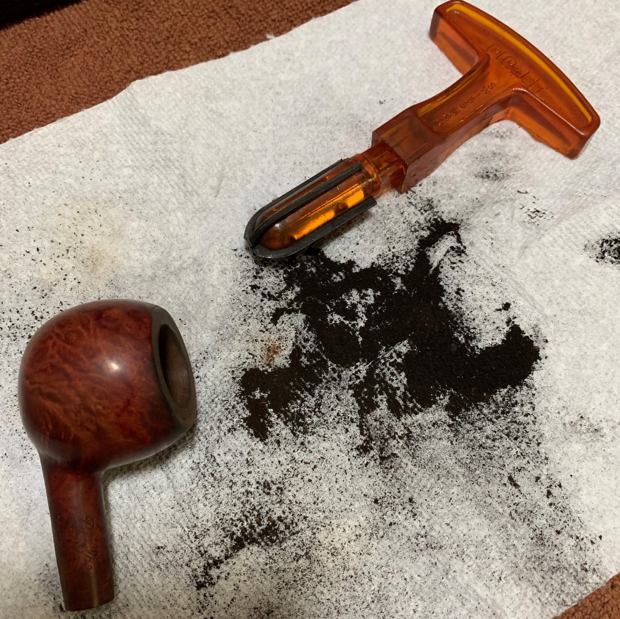
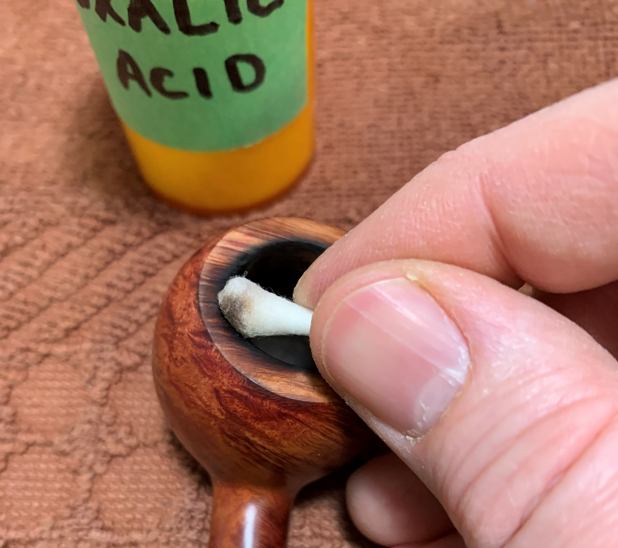
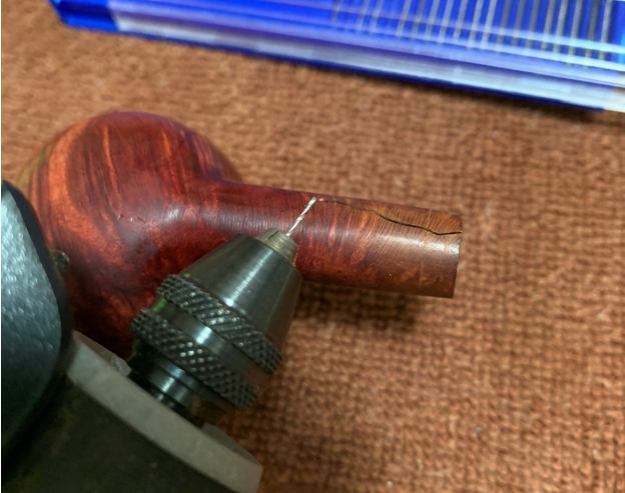
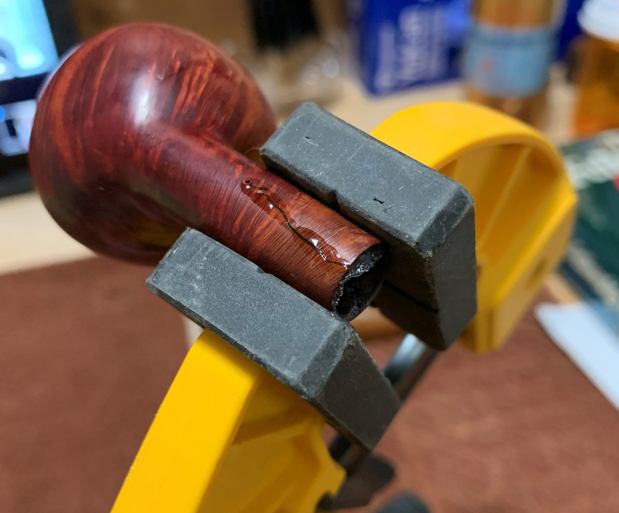
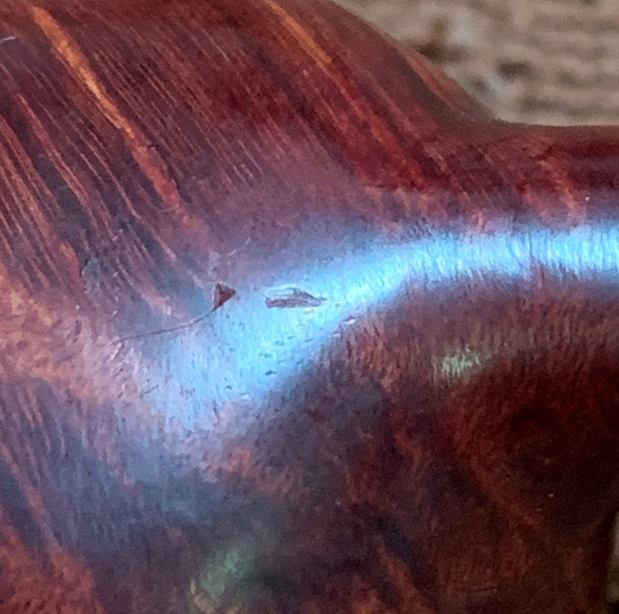
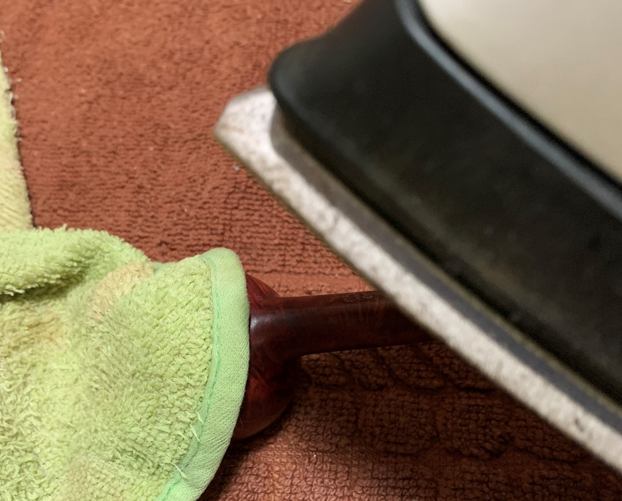
On to the stummel, and the usual cleaning procedures were in order for this pipe. I used both the PipNet Reamer and the KleenReem to remove the built-up cake and followed that with 220-grit sandpaper to remove as much as I could. I wanted to take the bowl down to bare briar to ensure there were no hidden flaws in the walls of the bowl. Fortunately, there were none. I then proceeded to clean out the insides of the shank with Q-tips, pipe cleaners, and isopropyl alcohol. There was some nastiness inside this stummel, but fortunately not too much – it only took a handful of pipe cleaners etc. to sort that out. I followed that up by cleaning the insides with some dish soap and tube brushes. I then moved on to cleaning the outside of the stummel with Murphy’s Oil Soap and some cotton pads. That removed any latent dirt. By the way, I deliberately did not de-ghost this pipe – I wanted to leave as much of the original tobacco essence as I could for the owner.As I mentioned earlier, there was some lava and a substantial burn on the rim of the stummel that also needed to be addressed. In order to minimize the impact of both, I “topped” the pipe – that is to say, I gently and evenly sanded down the rim on a piece of 220-grit sandpaper. This effectively removed the lava and most the damage, without altering the look of the pipe. However, I had to stop short of removing it all, otherwise the look of the pipe would have been altered. For the remaining bits of burn, I took some oxalic acid on a Q-tip and rubbed and rubbed and rubbed! The burn site did improve but never fully disappeared. It would be a permanent feature of the pipe going forward. I took solace from the fact that the burn did not affect the integrity of the wood. I then took a solid wooden sphere, wrapped sandpaper around it, and gently sanded the opening of the tobacco chamber. This was to achieve on the inner part of the rim the same thing that I achieved by “topping” on sandpaper. On to the major issue with this pipe: the crack in the shank. Naturally, Steve had the answers to all of this pipe’s problems. He explained that my first step was to ensure that the crack would not continue to creep after I had repaired it. To that end, I took a micro-drill bit, inserted it in my Dremel, and very carefully drilled a hole right through the wall of the shank. This was quite nerve-wracking, but it worked perfectly. I then needed to apply cyanoacrylate adhesive to the crack in order to seal and repair it. First, however, I used a Q-tip and a folded pipe cleaner to coat the inside of the shank with petroleum jelly. This would prevent the adhesive from dripping inside the shank and creating further problems. That done, I carefully applied a bead of adhesive to the tiny hole and the length of the crack. Finally, I clamped it shut and let it sit overnight to cure. This was a great success – obviously, the crack would always be visible, but I was really pleased with how the repair looked.Before moving on to sanding, there were a couple of small nicks on the underside of the stummel that I needed to sort out. I dug out my iron and a damp cloth to try and raise the nicks. The hot and moist steam created can often cause the wood to swell slightly and return to shape. There was some movement – not a lot, but it was better than doing nothing. I filled the remaining divots with cyanoacrylate adhesive. Now, with the crack repaired and the nicks filled, it was time to sand down the stummel. Just like the stem, I used all nine Micromesh pads (1,500 through 12,000 grit) to sand everything smooth. A light application of Before & After Restoration Balm brought out the best in the stummel’s grain. All of the work I had done to this point had taken its toll on the colour of the wood. Originally, there was a lovely sort of brownish-Burgundy colour on this pipe, and I wanted to restore this as best I could – and I also wanted to ensure that we got rid of that weird mottling. In order to bring back some life to this pipe, I opted for aniline dye. I dragged out some of Fiebing’s Oxblood Leather Dye, but it looked too reddish to me. Instead, I experimented with mixing to see what I could come up with. I made my own concoction of Oxblood and Medium Brown dyes, painted the stummel, and then applied flame in order to set the colour. Furthermore, since it is an alcohol-based dye, I was able to adjust the colour to my liking by applying my own isopropyl alcohol to the colour. Let it sit overnight and it worked like a charm!Then it was off for a trip to the buffer. A dose of White Diamond and a few coats of carnauba wax were just what this pipe needed. Now that the wood was looking all spiffy, I had to circle back and complete the repair on the crack in the shank. It needed a tight-fighting band to ensure that the crack would never open up again. I went to my jar of bands and picked one that looked good. I heated it up and then messed it up! See the photos. I did not apply even pressure as I was attaching the band, so it went mush. Fortunately, I had more bands and I did a much better job of getting the next one on. I glued it in place and let that set. It looked very dapper. I polished up the band with a 12,000-grit MicroMesh pad. I also went back to the buffer with both the stem and stummel, gave them a final application of White Diamond and carnauba wax, and brought out that lovely shine.In the end, what a beauty this pipe is! It is an elegant pipe, from a very fine maker. It obviously meant a great deal to its owner, and I was delighted to bring it back to life. Once the pipe was returned to its owner, he told me that it looked better than when it was new! Although I am not sure I agree with that, I am very pleased that he is very pleased. As I mentioned before, the prince is one of my favourite shapes and it was great fun to work on this one. I hope you enjoyed reading the story of this pipe as much I as I did restoring it. If you are interested in more of my work, please follow me here on Steve’s website or email me directly at kenneth@knightsofthepipe.com. Thank you very much for reading and, as always, I welcome and encourage your comments.

Cleaning up an Interesting Italian Made Folding Pocket Pipe


Blog by Steve Laug

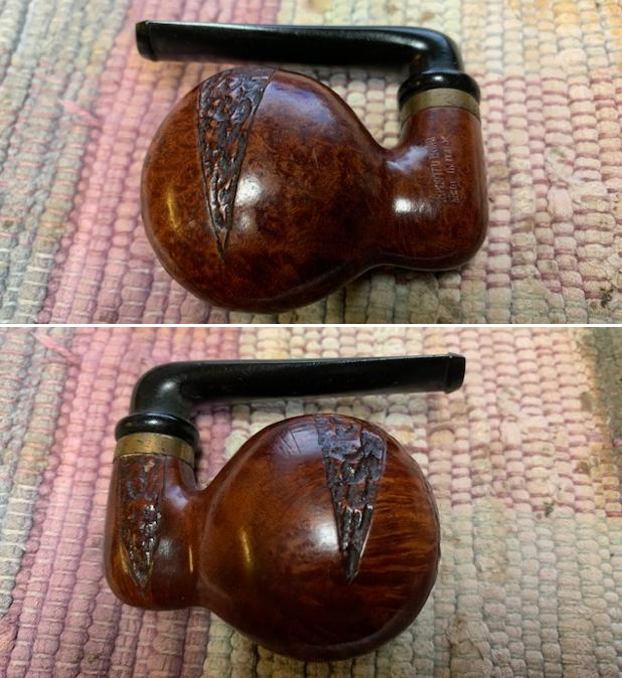
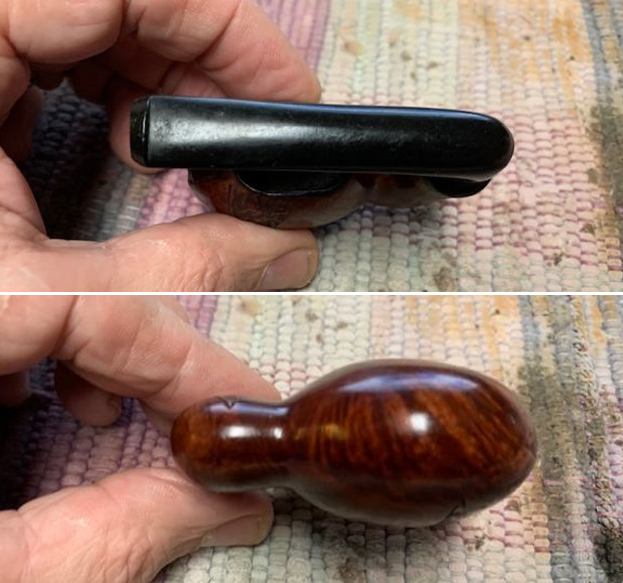
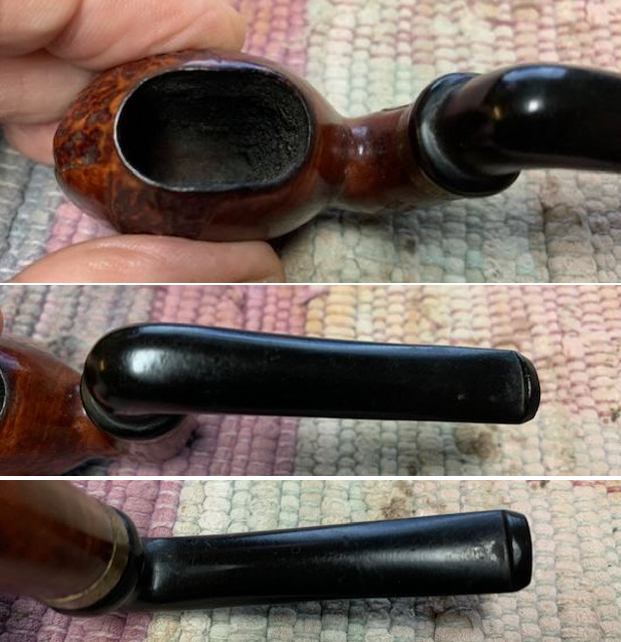
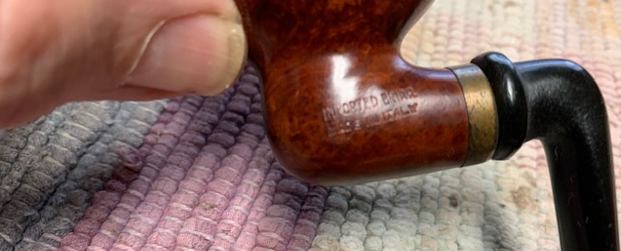
The next pipe on the worktable is another interesting piece of pipe history that comes from the bag of old unsmoked and lightly smoked pipes that I have been working on intermittently. It is a folding Pocket Pipe with an oval bowl. The bowl is lightly smoked. Surprisingly it is in better shape than many of these old timers. The pipe is dirty but there is some amazing grain around the sides and wedges of rustication look good as well .The stem is hard rubber which makes me think is a bit older than some similar pipes with vulcanite stems. It has a push tenon from the same material that is part of the stem. Other than some tooth chatter on the stem surface the stem is in really good shape. A short description would be that it is an Italian made lightly smoked Folding Pocket Pipe with a hard rubber stem. It is stamped on the left side of the shank and reads Imported Briar [over] Made in Italy. I would guess that the pipe was made by Savinelli as I have seen several very similar pipes shaped like this one made by them. The rim top was dirty and the inner edge had some lava. The exterior of the bowl was dirty and dusty and band was oxidized. Grain stood out in the smooth portions around the bowl sides and bottom and the interesting rustication wedges worked well. There was tooth chatter on both sides of the stem ahead of the button but nothing deep. I took some photos of this interesting Pocket Pipe extended and folded to show the condition when we received it. It was dusty, dirty and had some grime worked into the surface of the briar from being shuffled around a lot since it was made. I took close up photos of the bowl and rim top and the stem to show their condition. You can see the thin cake on the bowl sides and the thin lava on the rim top. The stem looks good with light chatter and tooth marks on both sides. I took a photo of the stamping on the left side of the shank. You can see that it is somewhat faint but still readable.I removed the stem from the shank and took a photo of the parts to give a sense of the beautiful proportions of this nice little pipe. It is going to take a little work but I think it will be quite stunning once it is restored.I reamed the bowl with a Savinelli Fitsall Pipe Knife to deal with the oval shape of the chamber. I scraped out the thin and uneven cake until the walls were clear. They looked very good. There was no heat damage or checking present. I cleaned out the mortise and the airway in the shank and stem with pipe cleaners, cotton swabs and isopropyl alcohol. The stem was an interesting challenge due to the right angle bend but it is now clean.I scrubbed off the shiny varnish coat on the bowl and shank with alcohol and a cotton pad. It came off quite easily and the grain really stood out. It is a nice piece of briar.I polished the briar with micromesh sanding pads – dry sanding with 1500-12000 grit pads. I wiped the bowl down after each pad to check and make sure there was progress. By the end the there was a rich shine to the bowl.I rubbed the bowl and shank down with Before & After Restoration Balm. I worked it into the surface of the bowl sides and shank with my fingertips to clean, enliven and protect the briar. I let the balm sit for 10 minutes, then buffed with a cotton cloth to raise the shine. The Balm did its magic and my colours worked well.I set the bowl aside and addressed the tooth chatter in the hard rubber stem. I sanded it out with 220 grit sandpaper and started the polishing with 400 grit wet dry sandpaper.I polished out the scratches in the surface of the stem with micromesh sanding pads – 1500-12000 grit pads. I was able to remove the tooth chatter on both sides. I wiped it down with Obsidian Oil after each pad. I used Before & After Pipe Polish – both Fine and Extra Fine to further polish the stem. I gave it a final coat of Obsidian Oil and set it aside to cure.This interesting Italian Made Folding Pocket Pipe was fun to work on. I love the final touches that make it sing. I put the bowl and stem back together to have a look at the whole with the newly fit band on the shank. I carefully buffed the bowl and stem with Blue Diamond on the wheel. I gave it several coats of carnauba wax and buffed the pipe with a clean buffing pad to raise the shine. I hand buffed it with a microfiber cloth to deepen the shine. It is fun to see what the polished bowl looks like with the polished shank band and the black, hard rubber stem. This richly finished Pocket Pipe is light weight and it is clean and ready load up with a favourite tobacco. Have a look at it in the photos below. When extended its measurements are Length: 4 ½ inches, Height: 1 ¾ inches, Outside diameter of the bowl: 1 inch x 1 ¼ inches, Diameter of the chamber: ½ inch x 1 inch. The folded measurements are Length: 3 inches, Height: 2 ¼ inches, Diameter of the outside and the chamber remain the same. The weight of the pipe is 33 grams/1.13 oz. I will be putting it on the rebornpipes store in the Italian Pipe Makers section if you wish to add it to your collection. Thanks to each of you who are reading this blog. Remember we are not pipe owners; we are pipemen and women who hold our pipes in trust until they pass on into the trust of the next generation.

Another Old Timer – a Lightly Smoked but Beat up French Briar Apple


Blog by Steve Laug

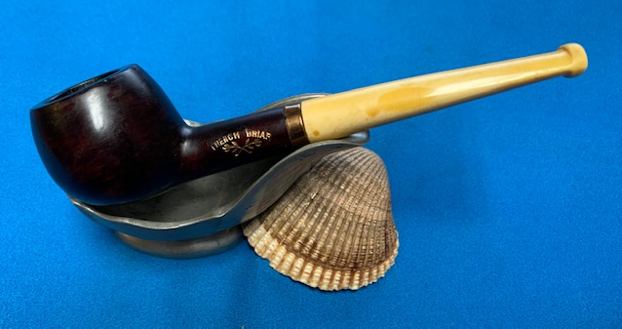
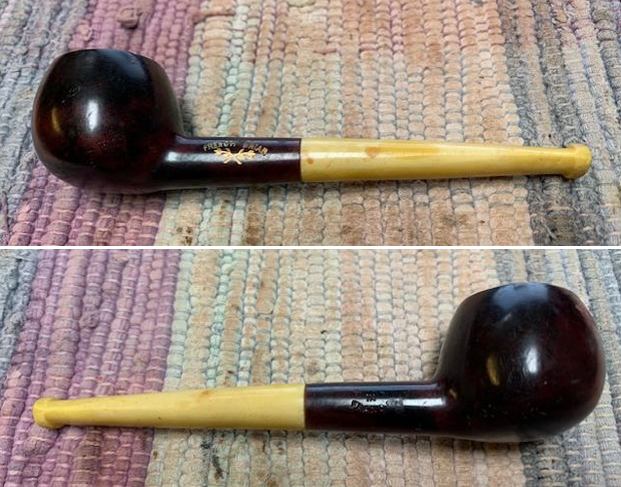
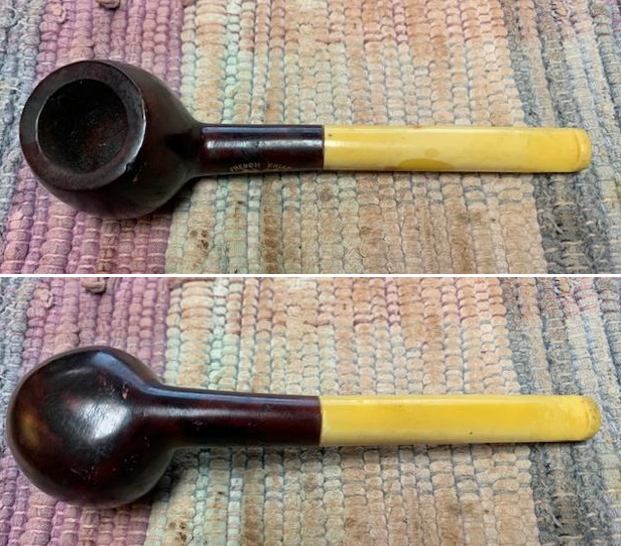
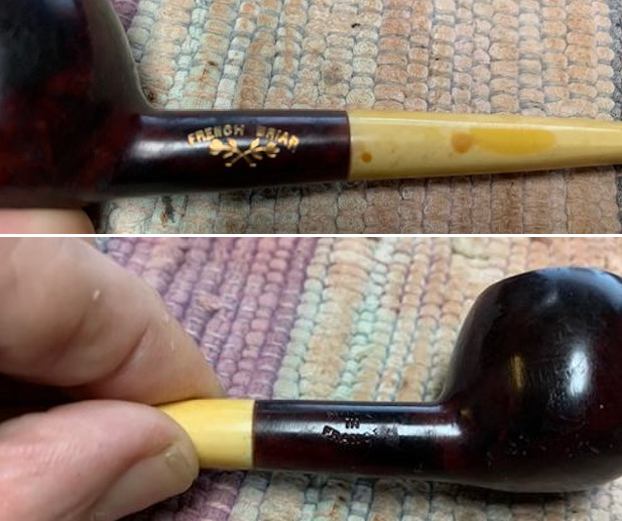
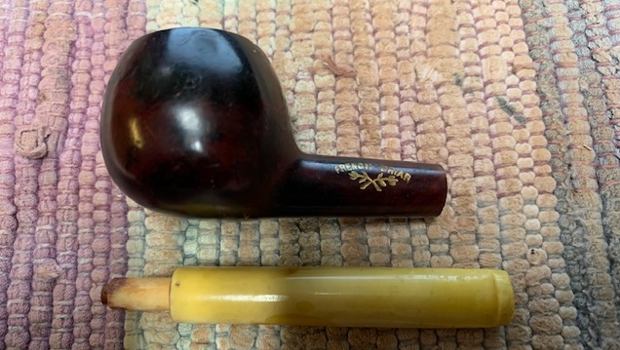
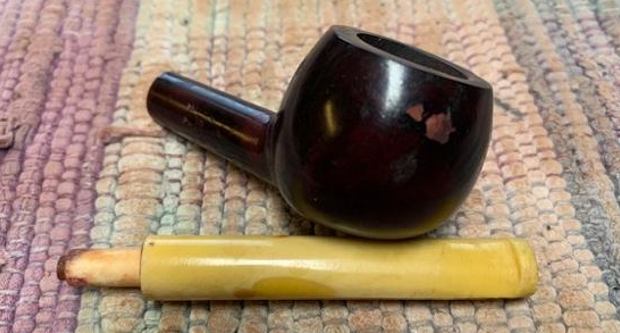
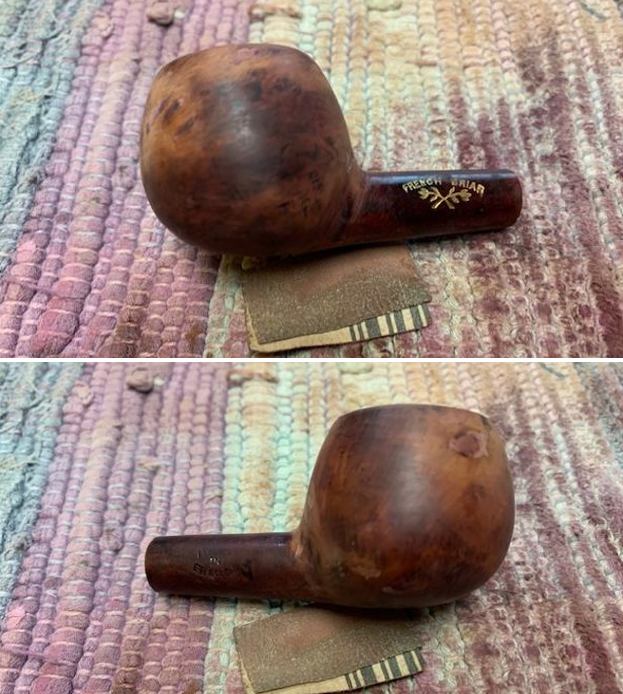
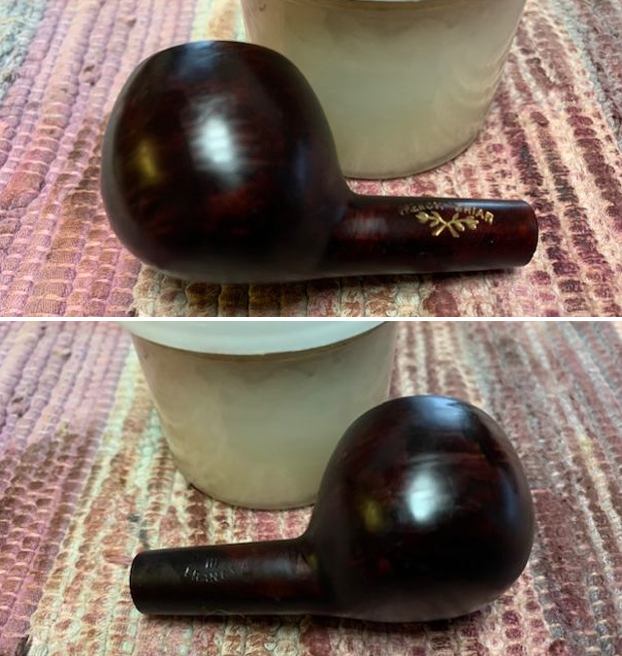
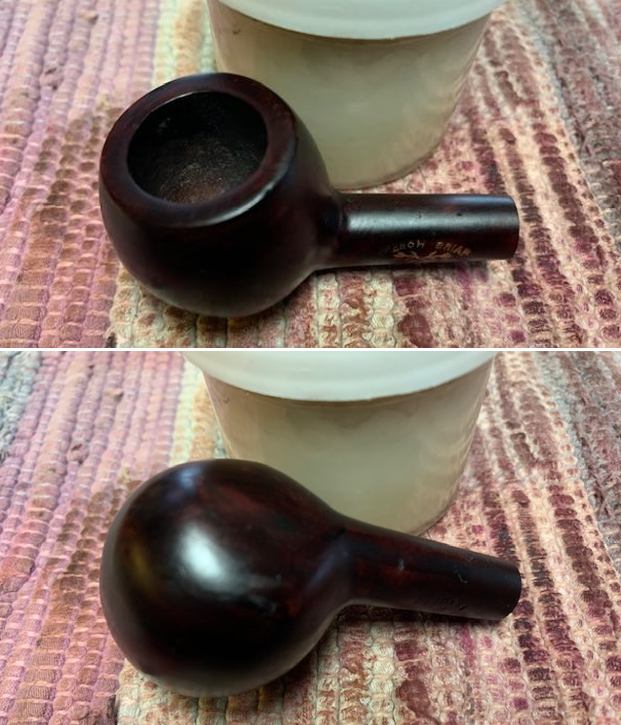
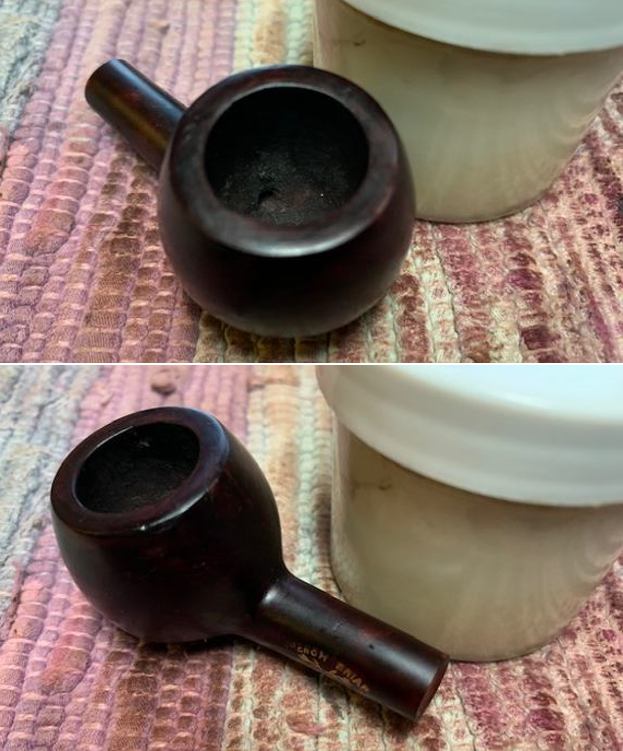
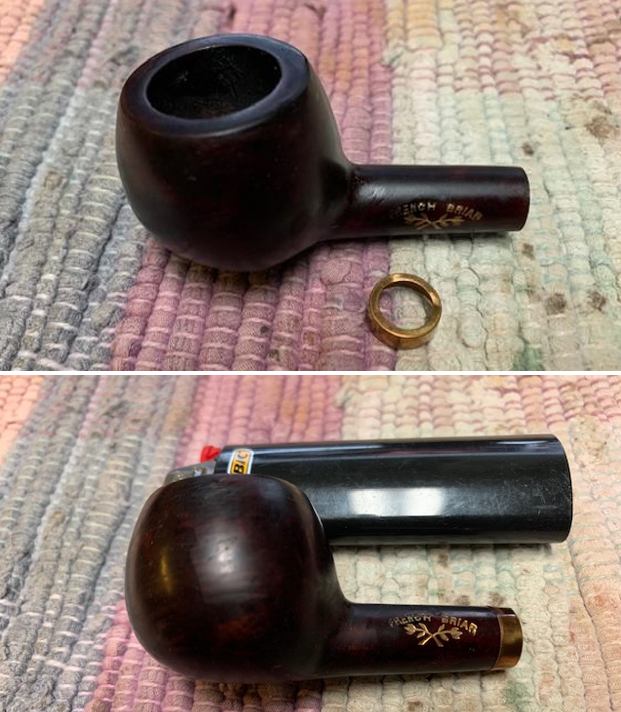
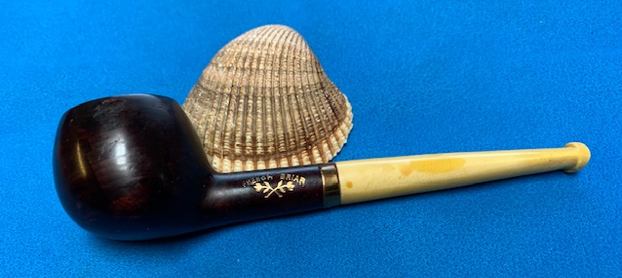
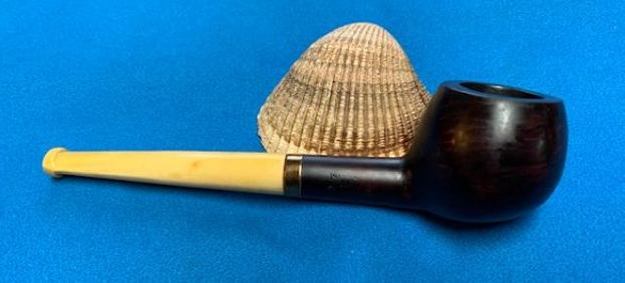
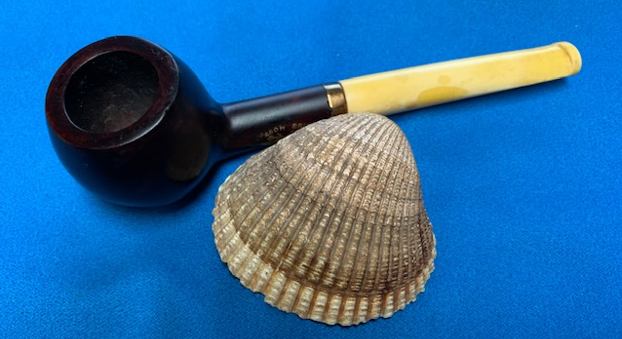
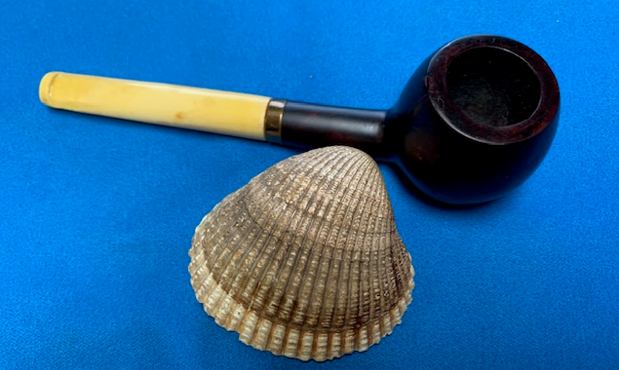
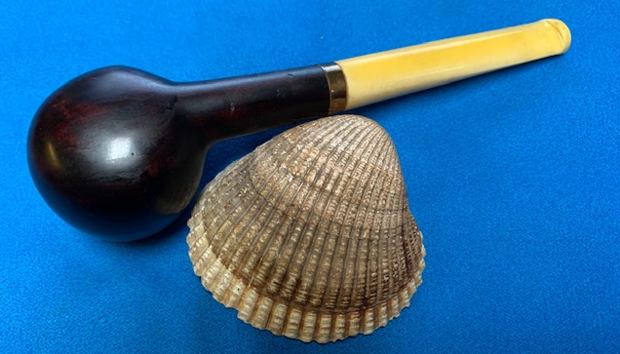
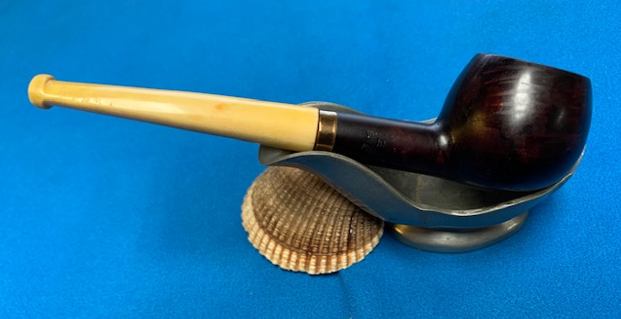
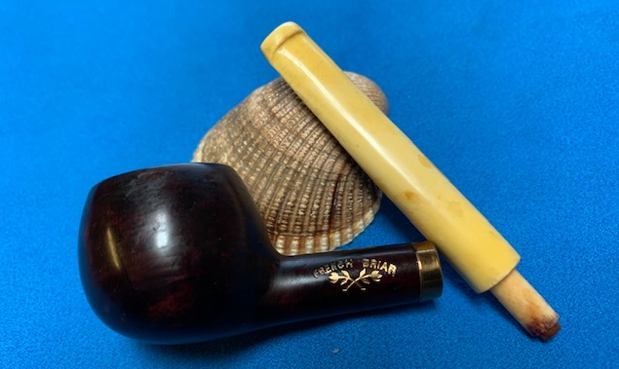
The next pipe on the worktable is another interesting piece of pipe history that comes from the bag of old unsmoked and lightly smoked pipes that I have been working on intermittently. It is a straight Apple. The bowl is lightly smoked. Like the others in this lot the briar of the bowl is nicked and chipped from being shuffled through the lives and boxes of a lot of people over the years. Some of the chips have broken through the finish and the rim top is also worn and dirty. The stem is made of an ivory coloured material that appears to be made of Bakelite. It has a push tenon from the same material that is part of the stem. Other than some tooth chatter and some staining on the stem surface the stem is in really good shape. A short description would be that it is an French made lightly smoked Apple with a Bakelite stem that is connected to the shank with a integrated push tenon. It is stamped on the left side of the shank and reads French Briar arched over a pair of crossed leaves. All are stamped in gold. On the right side of the shank it is stamped Made In France in a football shape with “IN” in the middle. The pipe is a bit of a mystery really with the stamping but as you have seen in the previous two C.P.F. pipes it seems that pipes of this time period often bore the French Briar stamp which I am assuming refers to Algerian Briar.

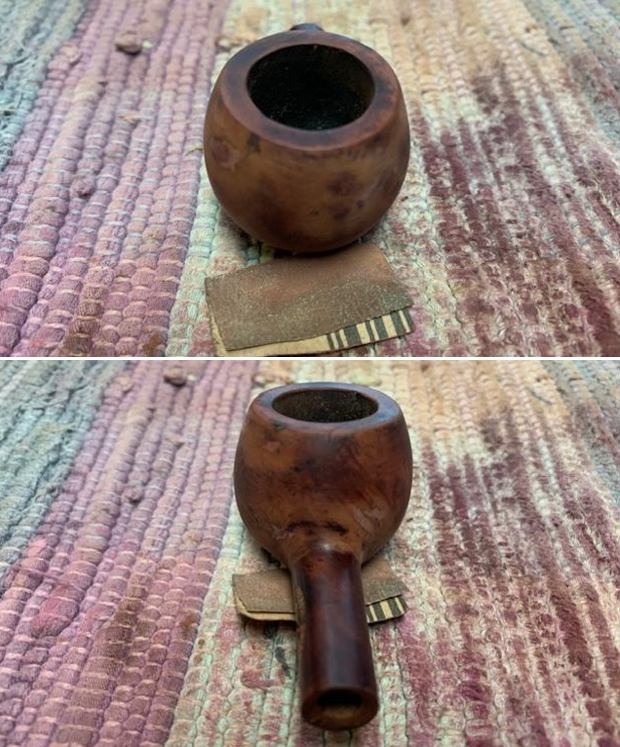
This pipe was probably in the worst condition of any of the older pipes that I have been working on recently. The rim top was dirty and the inner edge was a little chipped. The exterior of the bowl was a mess. The stain was opaque and I could not see any grain through it. There were a lot of nicks chips in the briar of the bowl sides. The odd thing is that the chips were very light coloured. My first thought was that it was briar but the more I looked the more I wondered if they were not putty fills. The gold stamping is clear and readable. The stem is a mottled and spotted butter coloured Bakelite. It had a lot of brown stain spots on the surface that were deep in the material and would not come out. There was tooth chatter on both sides ahead of the button but nothing deep. It has an orific button (round airhole) on the end of the button. I took some photos of the pipe to show the condition when we received it. It was dusty, dirty and had some grime worked into the surface of the briar from being shuffled around a lot since it was made. I took close up photos of the bowl and rim top and the stem to show their condition. You can see the drilling is centered in the bottom of the bowl You can also see the clean briar of the bowl sides. The stem looks odd with the mottled look of the stains on it.I took photos of the stamping on the left and right sides of the shank. You can see that they are somewhat faint on the right side but are still readable.I removed the stem from the shank and took a photo of the parts to give a sense of the beautiful proportions of this nice little pipe. It is going to take some work but I think it will be quite stunning once it is restored. I took a photo of the chipping on the front of the bowl. You can see why I thought that they were briar underneath the top coat of the heavy, dark finish. There were all around the bowl and at the shank/bowl junction on the right side. It really was a bit of a mess in terms of the finish.
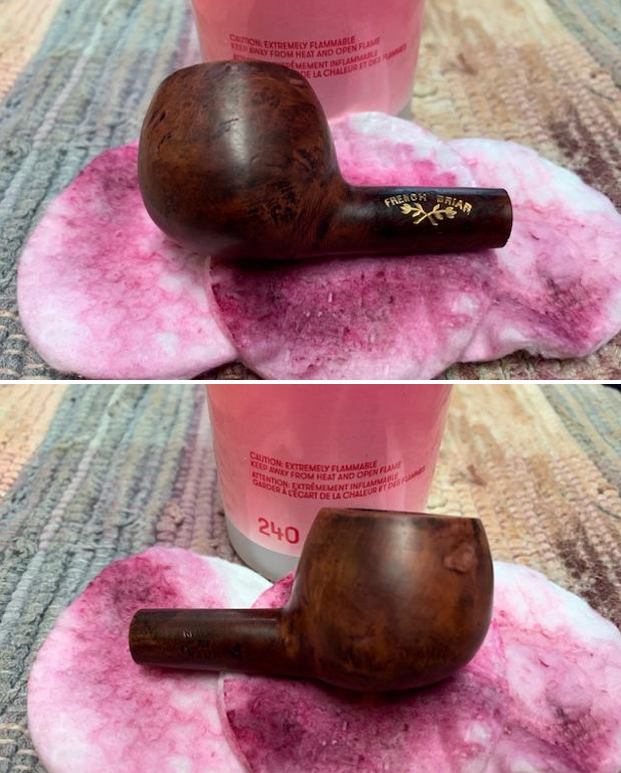
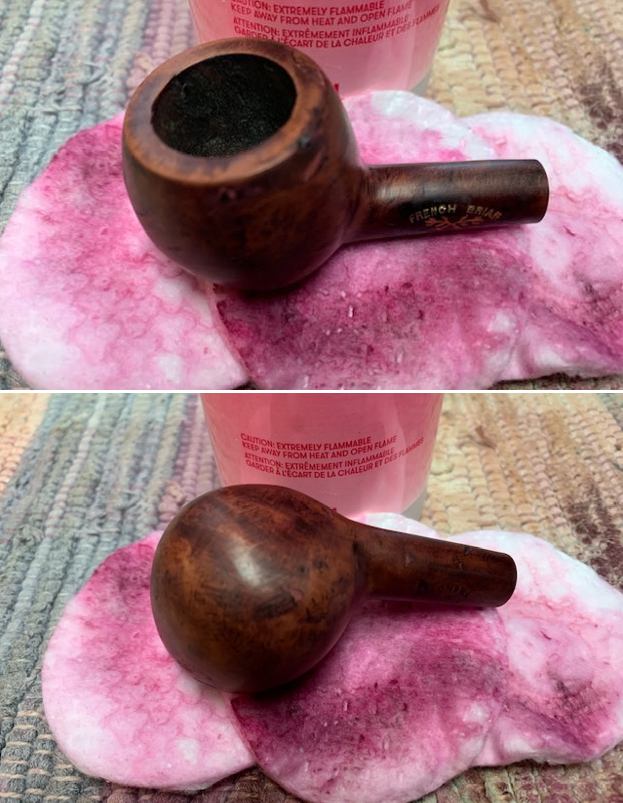
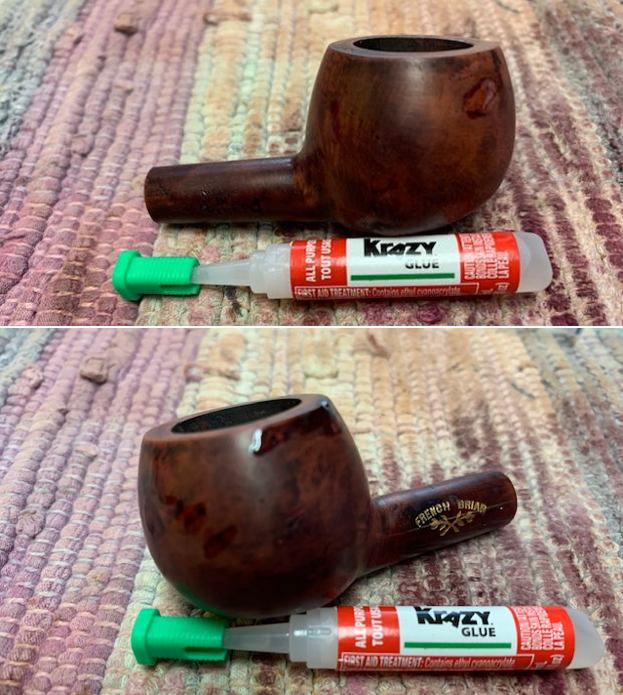
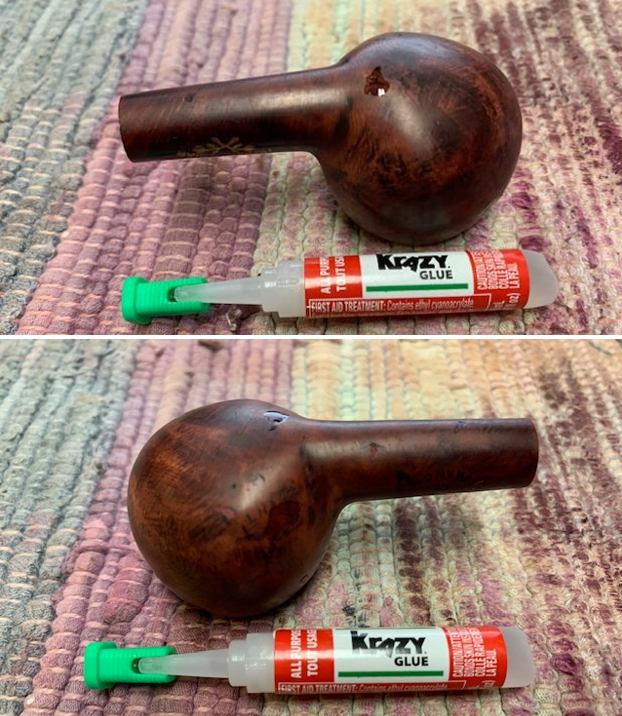
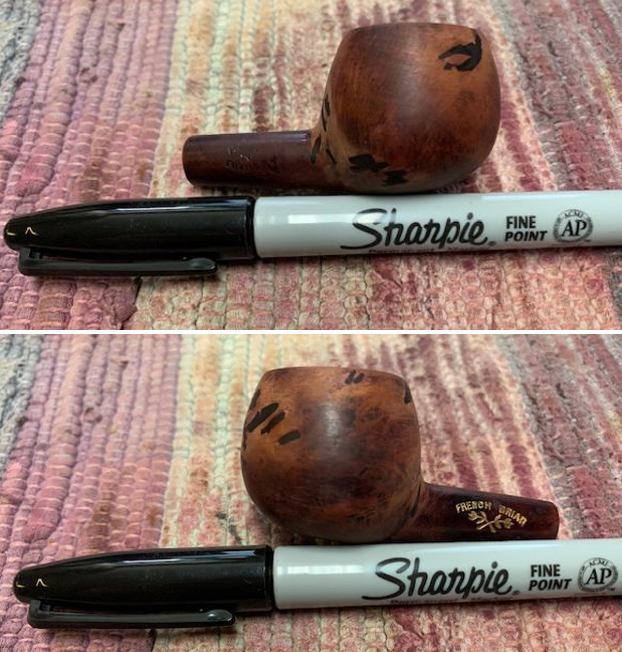
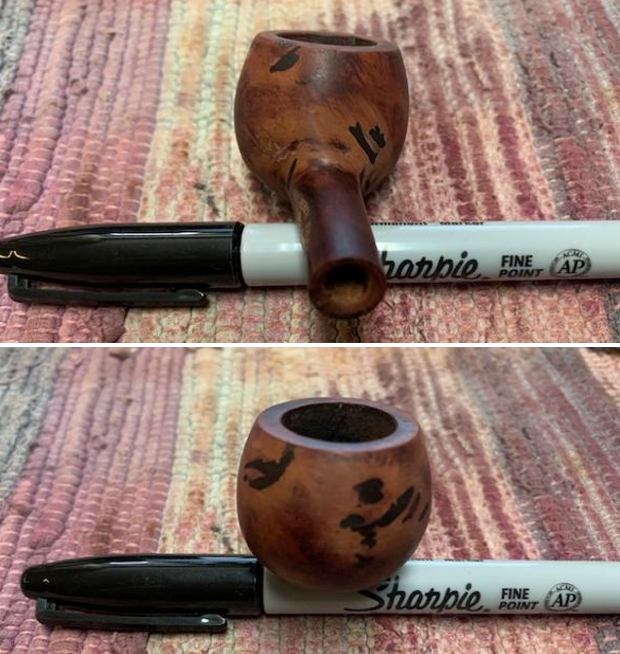
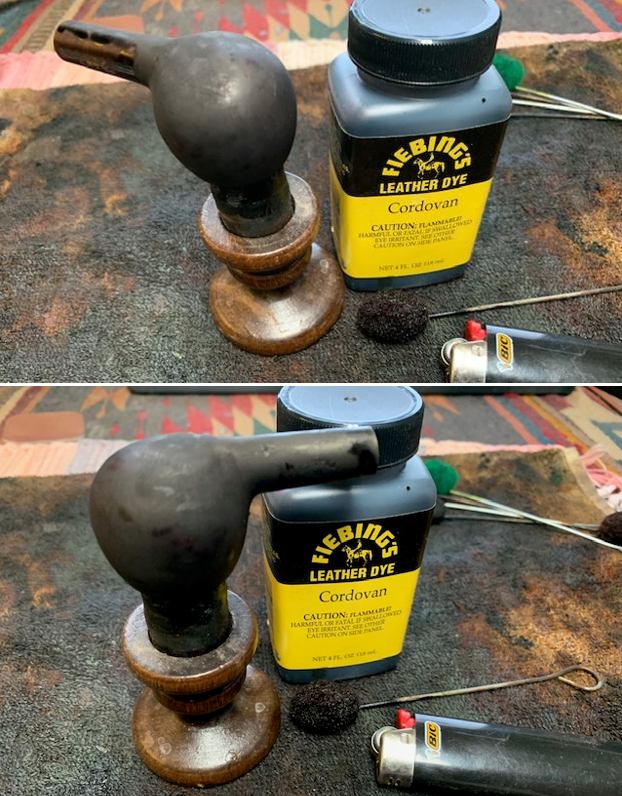
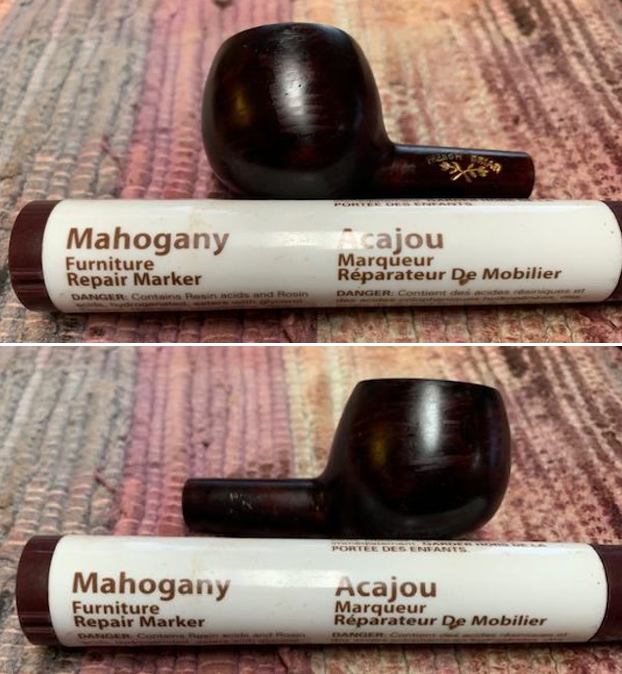
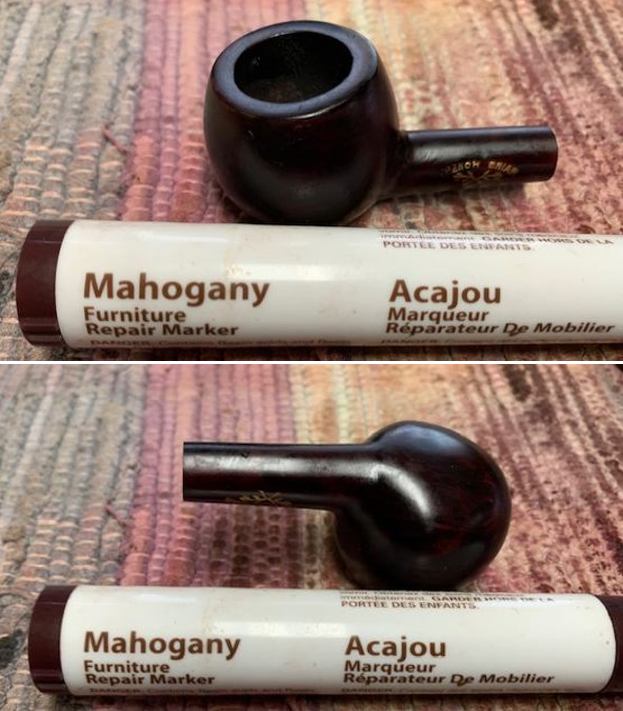
To deal with the damage around the bowl and shank I would need to remove the heavy finish. I am always nervous to do so as you never know what you will find with it gone. There was a reason for the thick, dark, opaque finish. But like a fool I proceeded to move ahead and wiped down the bowl and shank with acetone to break up the finish. With the opaque finish gone all of the ugly chips and marks in the finish stood out for what they were. If you look closely at the next four photos you can see all the ugly putty fills in the finish. There were at least 20 or more fills in the briar. Some were loose and chipped and some were tight and undamaged. I had definitely opened up Pandora’s Box with this clean up!! I repaired the chipped and damaged fills with clear CA glue. I was blown away by how many fills there were in this piece of briar. It really was an example of the “art of the fill”! I smoothed out the repairs with 220 grit sandpaper. I followed that with the full regimen of micromesh sanding pads. Of course in my frustration with the fills I forgot to take photos of the polishing cycle with the pads. I polished the briar with micromesh sanding pads and dry sanded with 1500-12000 grit pads. I wiped the bowl down after each pad to check and make sure there was progress. By the end the bowl was smooth and ready to stain.Now it was time to see what I could do with stain to blend in those ugly fills and give the bowl the same kind of deep reddish finish that it had before I stripped it off. I have my own process for doing this. I first used a black Sharpie pen to work on the fills in the briar. I usually work across them with various lines to approximate the grain patterns.The next step in the process was to stain the bowl with Fiebing’s Cordovan stain. I applied it with a dauber and flamed it to set the stain in the briar. I repeated the process until the coverage was solid.Once the stain had dried I wiped it off with alcohol on a cotton pad to remove the excess and blend the black and cordovan together. When I finished I stained the bowl with a Mahogany stain pen. I used it like a brush and painted the entirety of the bowl and shank with the pen. I was getting close to the colour I was aiming for – the one that I had removed! To further blend the stains together I rubbed the bowl and shank down with Before & After Restoration Balm. I worked it into the surface of the bowl sides and shank with my fingertips to clean, enliven and protect the briar. I let the balm sit for 10 minutes, then buffed with a cotton cloth to raise the shine. I repeated the process and let it sit another 10 minutes then buffed it off. The Balm did its magic and my colours worked well. The fills were hidden and the bowl looked good.Almost all of the old timer I have been working on have had brass or nickle bands. I decided to see what a brass band would add to the appearance of this old one. I have a bag of older style brass bands that work well. I heated the band and pressed it onto the shank. I like the looks of it.I polished out the scratches in the surface of the Bakelite with micromesh sanding pads – 1500-12000 grit pads. I was able to remove the tooth chatter on both sides. I also was able to minimize some of the stains on the surface. It was still odd looking. I wiped it down with Obsidian Oil after each pad. I used Before & After Pipe Polish – both Fine and Extra Fine to further polish the stem. I gave it a final coat of Obsidian Oil and set it aside to cure.I really enjoyed refurbishing this old French Briar Apple because I love the final touches that make it sing. I put the bowl and stem back together to have a look at the whole with the newly fit band on the shank. I carefully buffed the bowl and stem with Blue Diamond on the wheel. I gave it several coats of carnauba wax and buffed the pipe with a clean buffing pad to raise the shine. I hand buffed it with a microfiber cloth to deepen the shine. It is fun to see what the polished bowl looks like with the lacy shank band and the buttery coloured Bakelite stem. This richly finished Apple is light weight and it is clean and ready load up with a favourite tobacco (if you purchase it and decide to smoke this 100+ year old unsmoked pipe). Have a look at it in the photos below. As noted above, Its measurements are Length: 5 inches, Height: 1 ¼ inches, Outside diameter of the bowl: 1 inch, Diameter of the chamber: ¾ of an inch. The weight of the pipe is 24 grams/.85 oz. I will be putting it on the rebornpipes store in the French Pipe Makers section if you wish to add it to your collection. Thanks to each of you who are reading this blog. Remember we are not pipe owners; we are pipemen and women who hold our pipes in trust until they pass on into the trust of the next generation.

Reconditioning and Refinishing a Neerup Denmark Structure 3 Bent Pot


Blog by Steve Laug

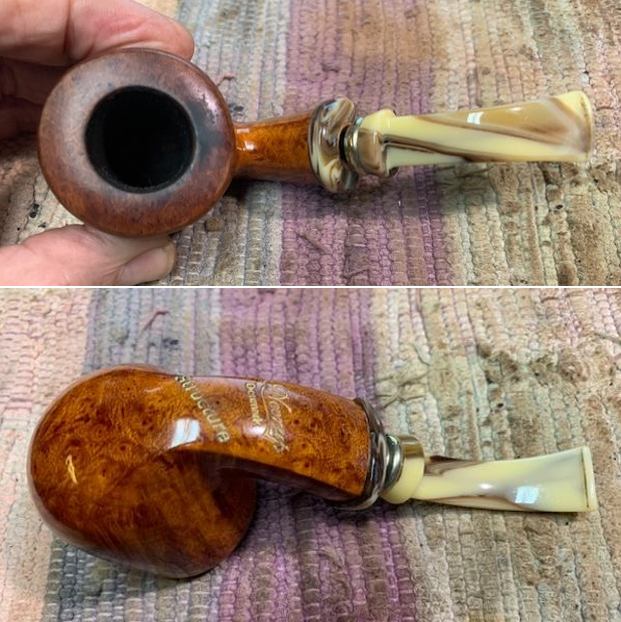
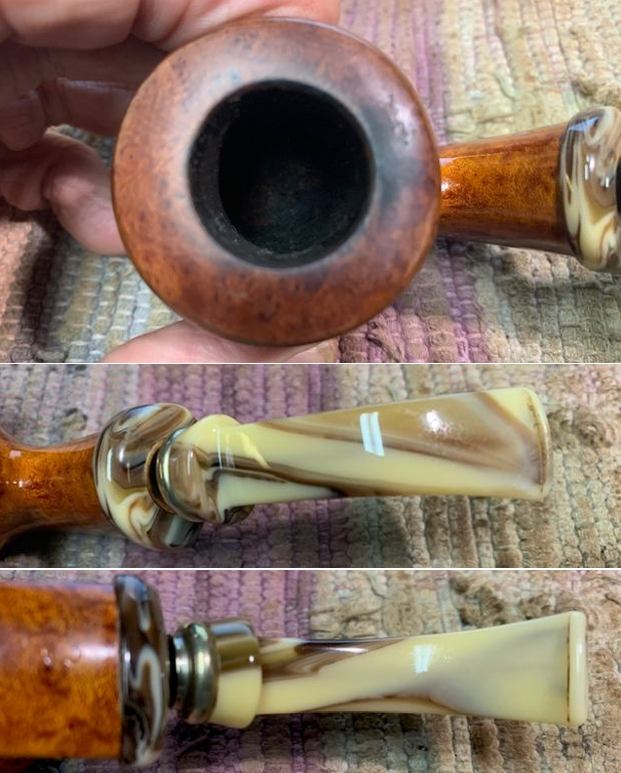
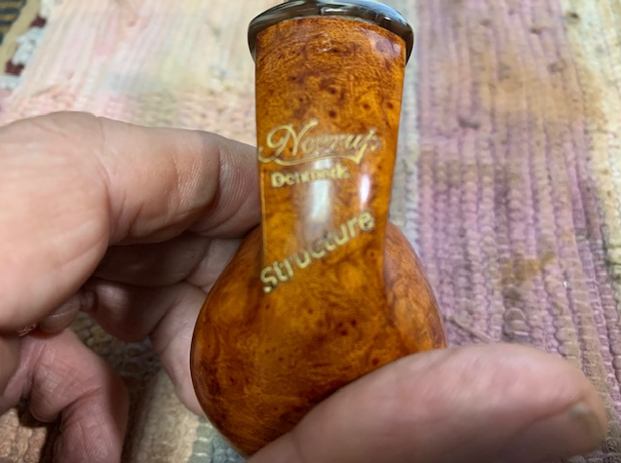
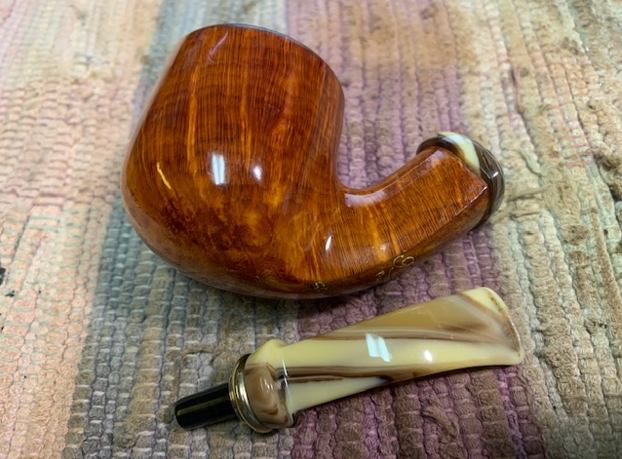
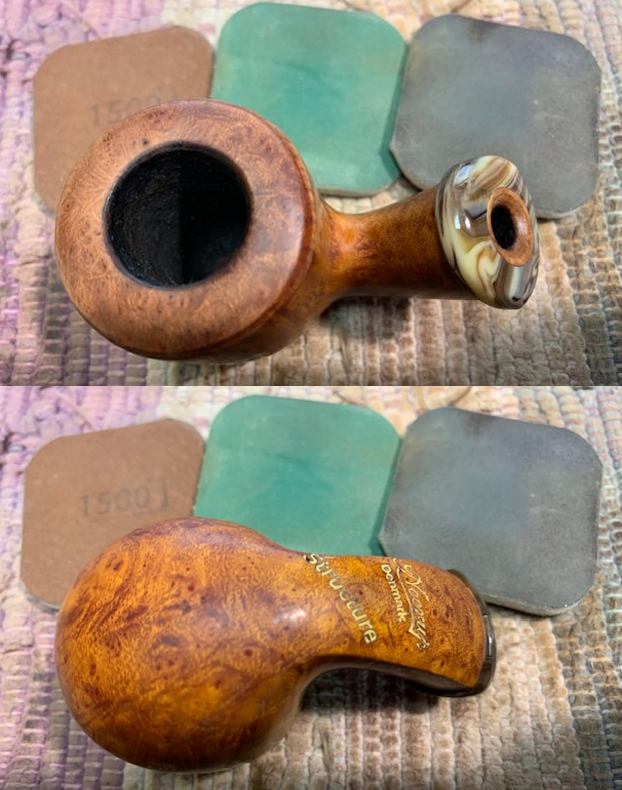
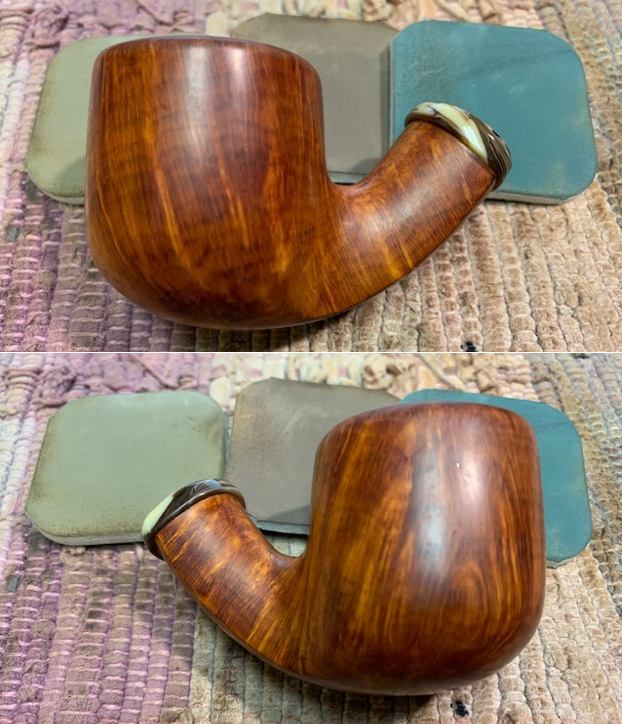
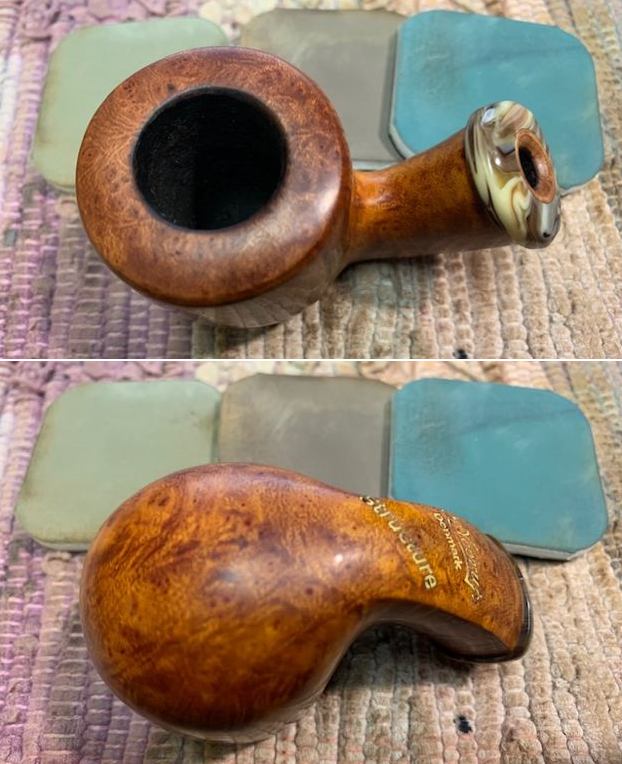
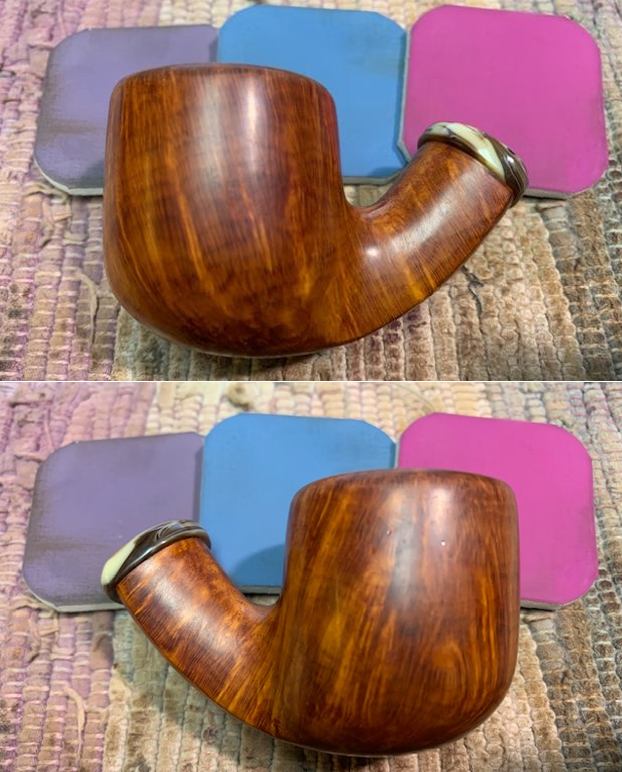
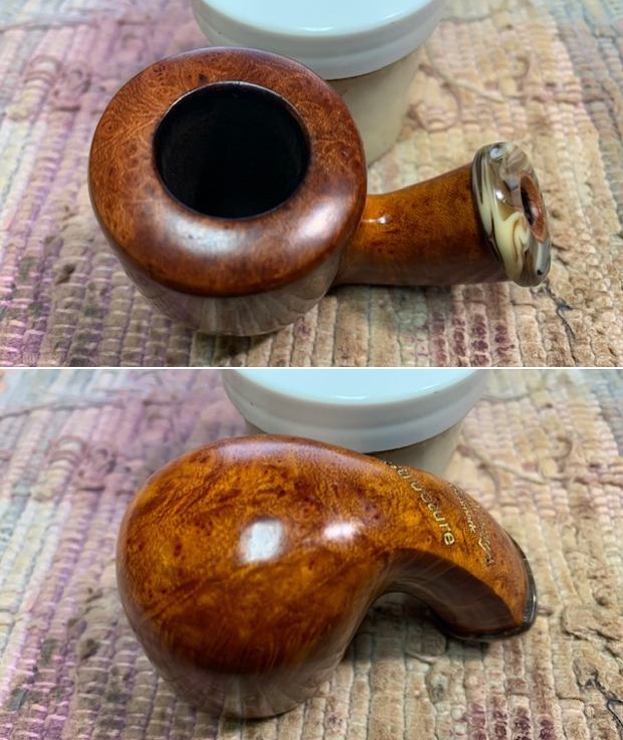
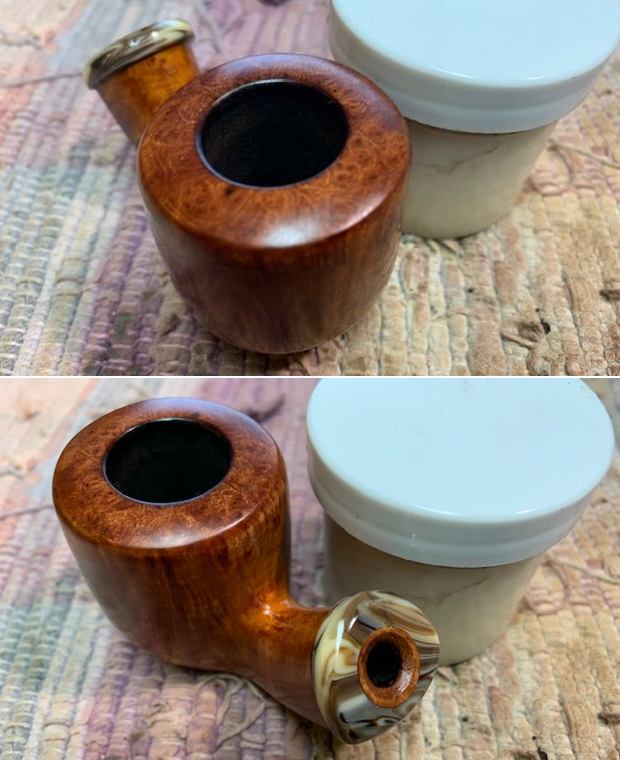
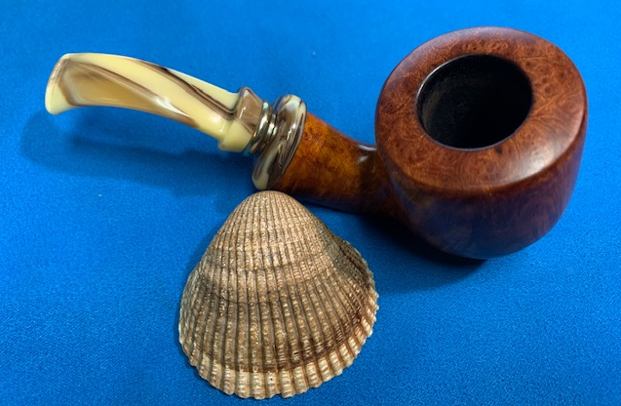
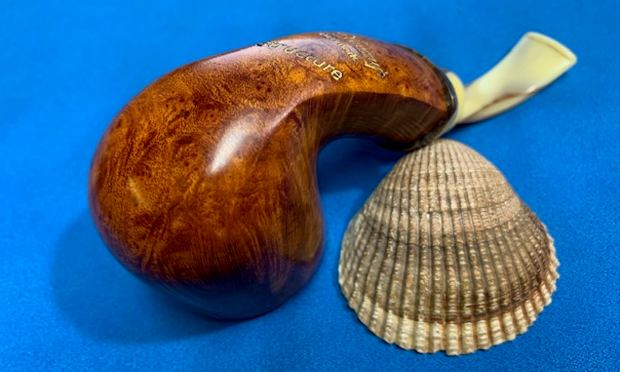
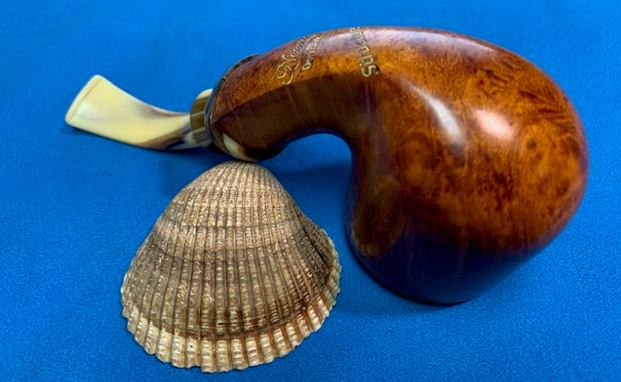
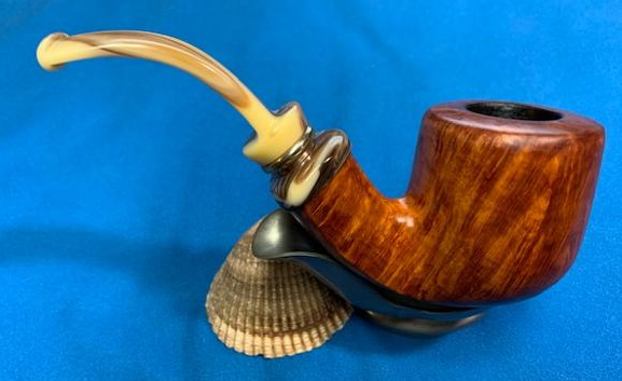
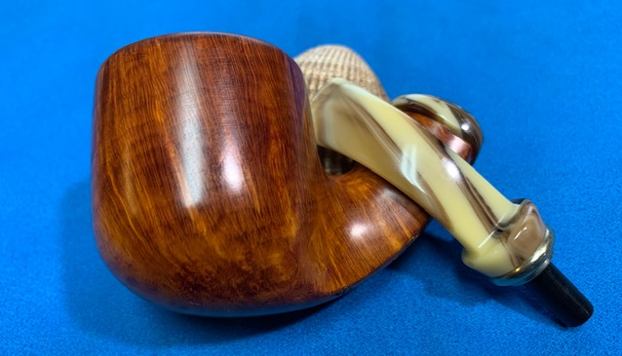
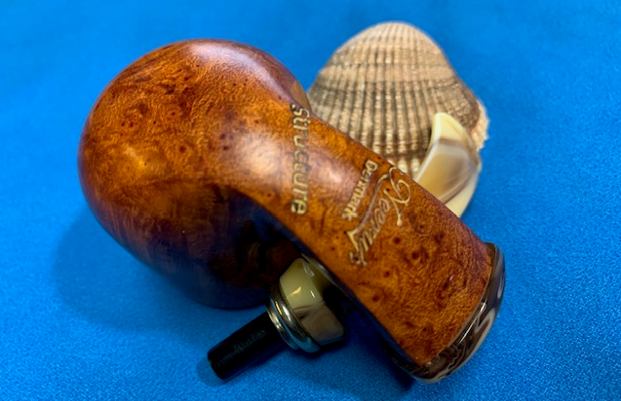
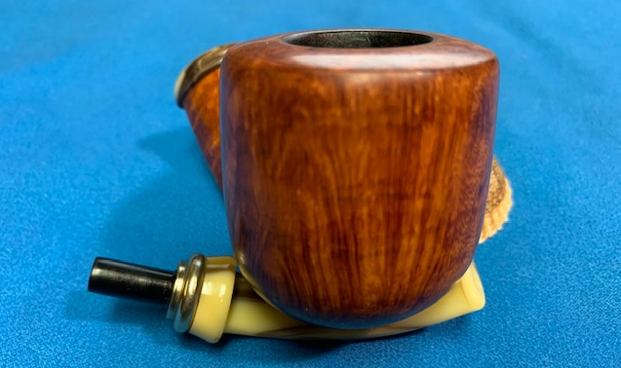
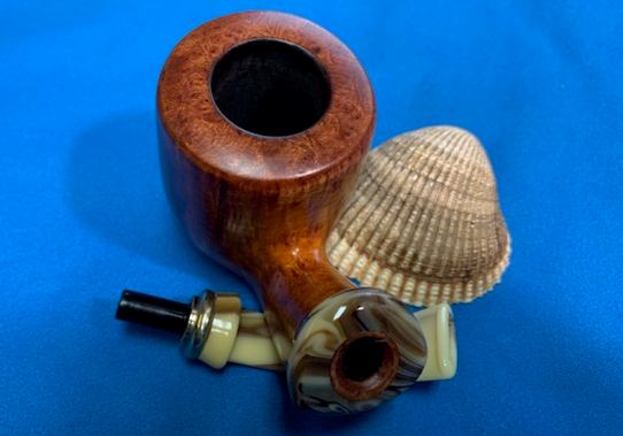
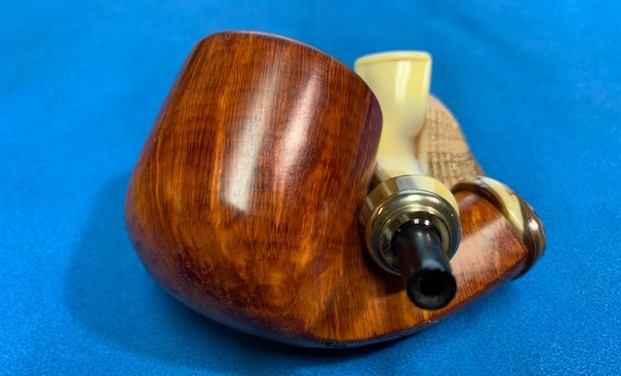
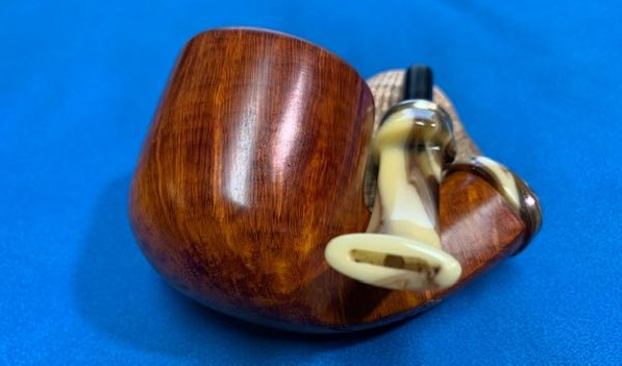
The friend who dropped off the Peterson 1994 POY 999 for repair also dropped off this interesting looking Neerup. [I have written about the restoration of the Peterson POY 999 previously (https://rebornpipes.com/2021/08/12/restoring-a-petersons-of-dublin-1994-pipe-of-the-year-in-a-999-shape/)]. I have several Neerup pipes in my collection but none of them had this thick varnish or urethane coat on them. It was a bit odd in that the top did not have a coat and the top outer edge was also devoid of the shiny coat. There are some odd nicks in the sides of the bowl but they only seem to be in the plastic coat rather than the briar. The pipe has a light cake in the bowl. The rim top has some darkening and lava build up that will need to go. The pipe is stamped on the underside of the shank and reads 3 [over] Neerup in script with a gold foil fill [over] Denmark with gold [over] Structure. The shank end has a acrylic band that matches the stem. The stem has a polished nickel band on the stem and the tenon is Delrin. The acrylic stem has tooth marks and chatter on both sides ahead of the button. I took close up photos of the rim top and bowl as well as the surfaces of the stem to show their condition. You will see what I noted above.I took a photo of the stamping on the underside of the shank. It is clear and readable as noted above. The number 3 is the only portion of the stamping that does not have gold in the stamp.I removed the stem from the bowl to give a sense of the proportion of the pipe. It really is a nice piece of briar that is well shaped. The acrylic shank adornment and the stem match are a feature that has grown on me as I have worked on it.Even though I have several Neerup pipes I have not spent much time learning about them and their maker. I turned to Pipedia (https://pipedia.org/wiki/Neerup) and read about the maker, Peder Jeppesen. I quote the article that he wrote on Pipedia below and have included the photo of him that was there.

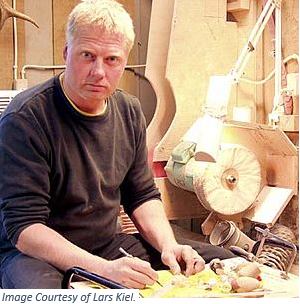
My name is Peder Jeppesen (full name Peder Christian Jeppesen) and my pipemaker name is Neerup, which is an old family name. (Neerup is the family name of one of his grandmothers.) I live with my family in Lejre, near one of the oldest city’s in Denmark called Roskilde.

I have made pipes for nearly 25 years; I started at Karl Erik Ottendahl, and continued after this at legendary Erik Nørding, from whom I learned all steps of pipe making and decoration work.

It has always been my dream of the future to make pipes in my own name and design. (The dream came true when Jeppesen could buy some machinery and other equipment from the closed down pipe factory of Georg Jensen.) Now that this is a reality, I would like to introduce my pipes to all pipe smokers.

Pipe production, together with rock music, is to me a kind of therapy, which gives me good inspiration. I also get great ideas and inspiration when I am fishing, running or biking in the beautiful nature around me.

My pipes are produced in briar from Corsica, Greece or at rare times Morocco. The stems are made in black acrylic, sometimes in Cumberland or amber.

When I am designing a model, I concentrate on the proportions between the bowl, shank and mouthpiece. It’s important that the pipe has a perfect balance

The smoke-qualities in a Neerup pipe are given by a deep and well finished tobacco chamber, the perfectly drilled and centered smoke channel, the stem tenon fit to it’s mortise, and a mouthpiece with plenty of air and a pleasant bit.

To meet my costumer’s demands, I use a lot of time to get ideas for decorations that make my pipes interesting and unique. Nearly all the pipes I make have some kind of decoration on the shank, the stem or at the top of the bowl.

The silver-work I use are made in registered 925 sterling silver, and are hand made by a competent silver and jewel smith. I also use different kinds of exotic wood, that I mix with black rings and art amber, but it’s important to me that the decorations are well fitted and make the pipe beautiful and harmonic.

The finish of the pipes is done by concentrated grinding, sanding, buffing and polishing, that keep the pipe and its colors nice and shiny for a long time.

I hope my pipes will have your attention – all comments are welcome.

Today, working as an independent pipemaker, Jeppesen feels obligated to the art of his instructors and tries to develop this further. Truely in the spirit of Karl Erik Ottendahl and Nørding he is one of these few Danish pipemakers, who, despite of high skills and great experience, offer fine pipes, which can be afforded by average wage-earners. Meanwhile his pipes also found acknowledgment in the United States and Japan.

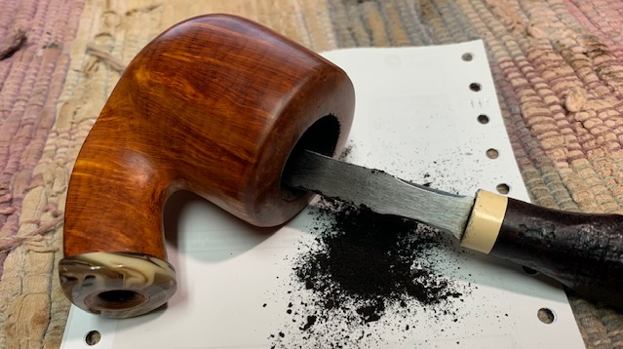
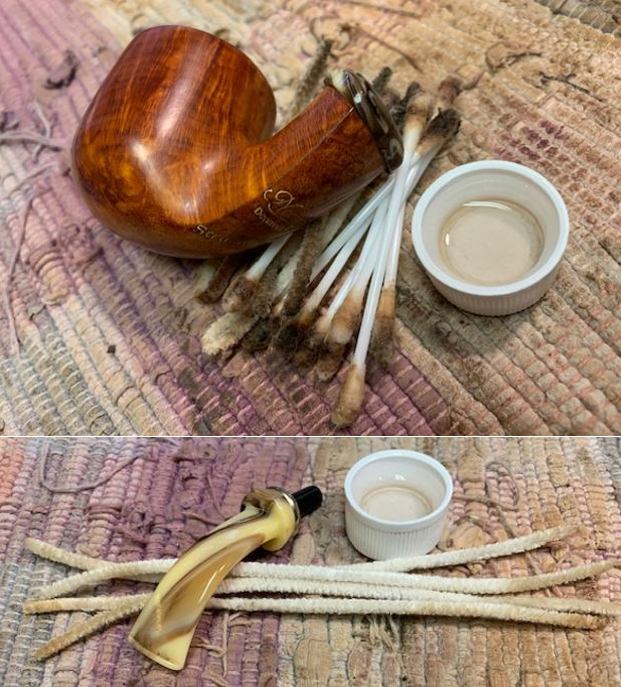
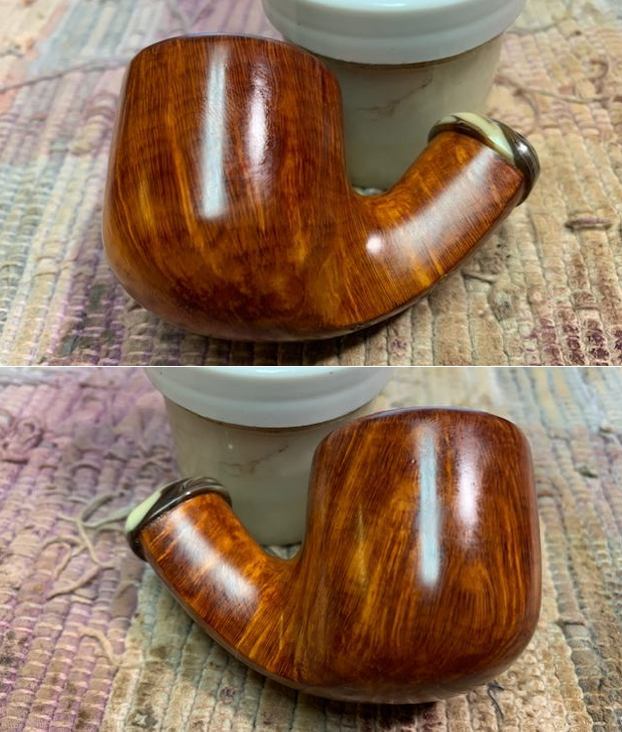
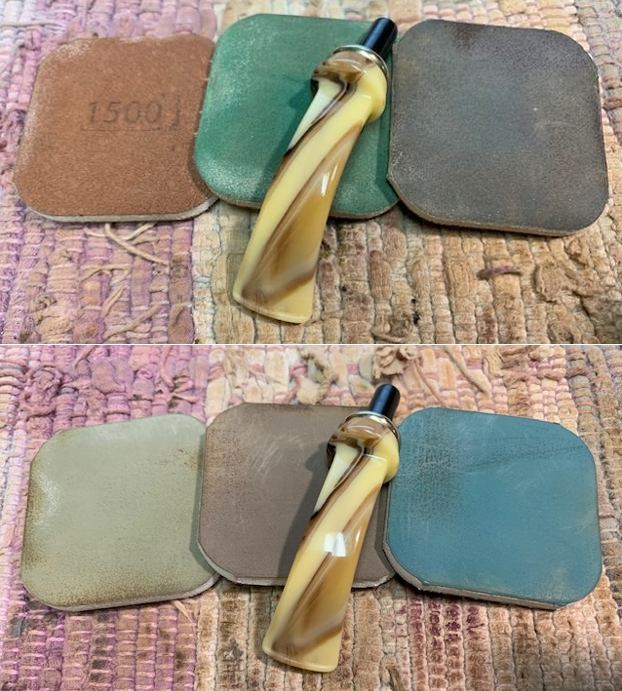
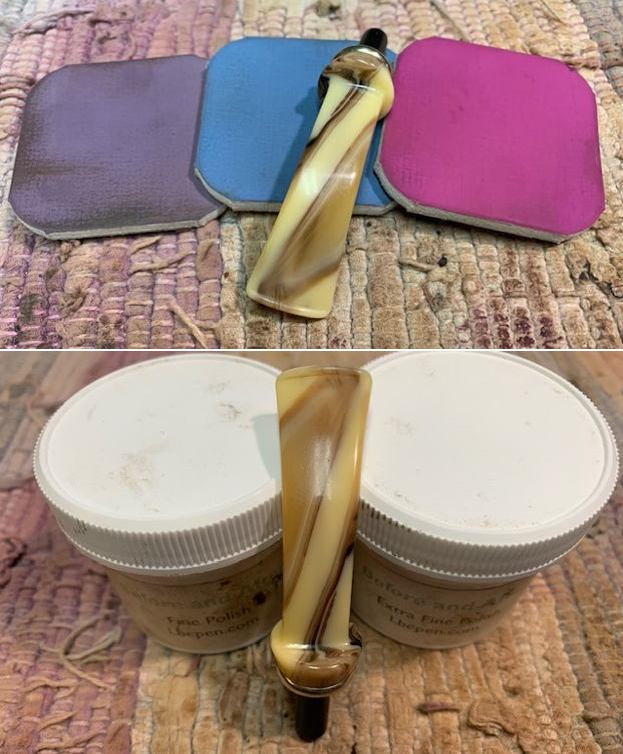
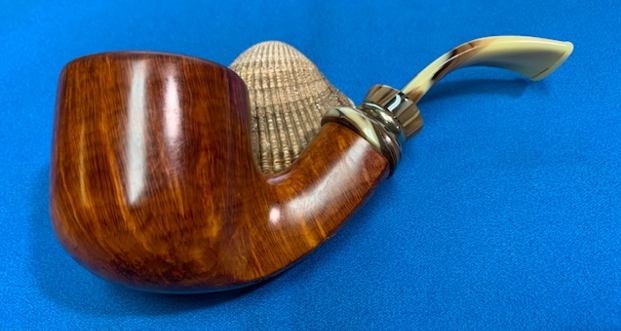
Now that I had a clear idea about the background to the pipe and the pipemaker I turned my attention to the pipe itself. I decided to remove the thick shiny coat. I broke the shine with 1500 grit micromesh. Once I had broken the finish I wiped the bowl down with acetone on a cotton pad. I was careful not to damage the gold stamping on the underside of the shank or the acrylic shank end. I used the acetone to remove the tar and lava on the rim top at the same time. With the shine removed the grain really is quite stunning. I polished the briar further to remove remnants of the shiny finish. I used micromesh sanding pads and dry sanded with 1500-12000 grit pads. I wiped the bowl down after each bad to check and make sure there was progress. By the end the bowl was taking on a natural shine and the grain really stood out. Sometimes I get so focused on what is in front of me that I can forget some steps! Sheesh!! I finished the polishing then looked at the bowl and smelled it. The pipe was quite dirty. I reamed out the thin cake in the bowl as it was quite crumbly. I used a Savinelli Fitsall Pipe Knife and scraped it back to the walls. I cleaned out the mortise and the airway in the shank and stem with alcohol, pipe cleaners and cotton swabs. It was a dirty pipe. Man I am glad I remembered when I did. It smells much better at this point. I rubbed the bowl and shank down with Before & After Restoration Balm. I worked it into the surface of the bowl sides and shank with my fingertips to clean, enliven and protect the briar. I let the balm sit for 10 minutes, then buffed with a cotton cloth to raise the shine. The Balm did its magic and the grain stood out on the briar.I polished out the tooth marks and chatter with micromesh sanding pads – 1500-12000 grit pads. I wiped it down with a damp cloth after each sanding pad. I used Before & After Pipe Polish – both Fine and Extra Fine to further polish the stem. It really is a nice looking piece of acrylic. This Neerup Denmark Structure 3 Bent Pot carved by Peder Jeppesen combines a great looking piece of briar with a swirled mix of brown/cream/ivory acrylic stem to make a beautiful pipe. The removal of the thick shiny coat allows the grain to come alive with the polishing and waxing. I put the stem back on the bowl and carefully buffed the pipe with Blue Diamond on the buffing wheel. I gave the bowl and the stem multiple coats of carnauba wax on the buffing wheel and followed that by buffing the entire pipe with a clean buffing pad. I hand buffed the pipe with a microfiber cloth to deepen the shine. The finished Neerup Structure Bent Pot really is a beauty and fits nicely in the hand and looks very good. Give the finished pipe a look in the photos below. The dimensions of the pipe are Length: 5 inches, Height: 2 inches, Outside diameter of the bowl: 1 ¾ inches, Chamber diameter: ¾ of an inch. The weight of the pipe is 2.05oz./58grams. Thanks for reading this blog and my reflections on the pipe while I worked on it. There are many more to come!

New Life for a Great Looking Tinder Box Vintage 91 Canadian


Blog by Steve Laug

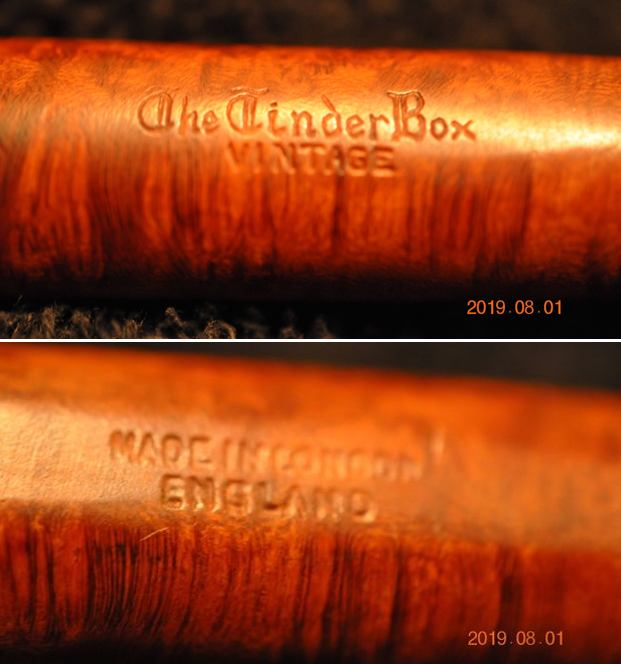
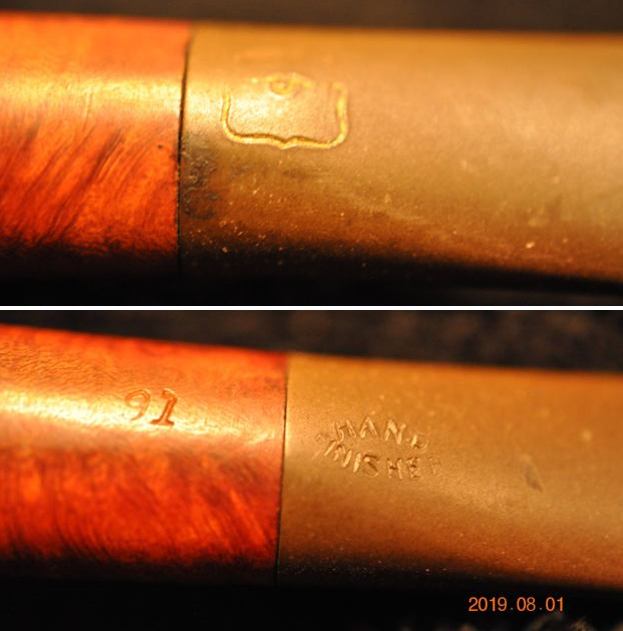
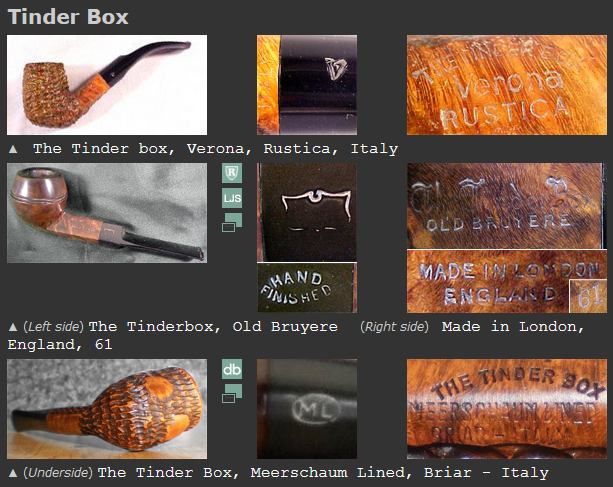
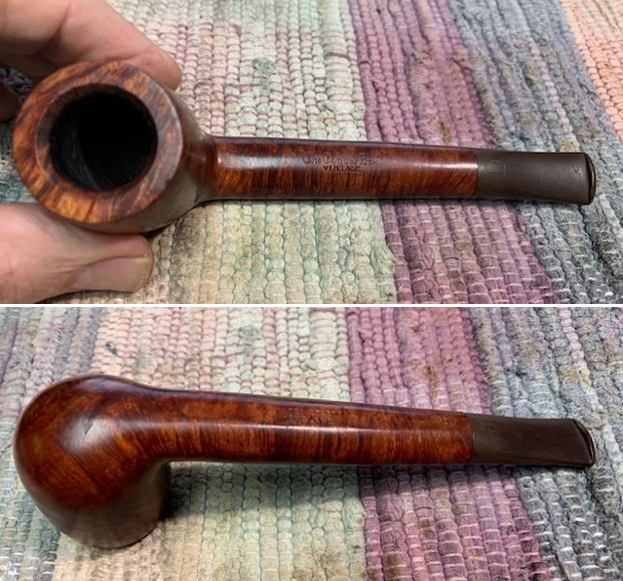
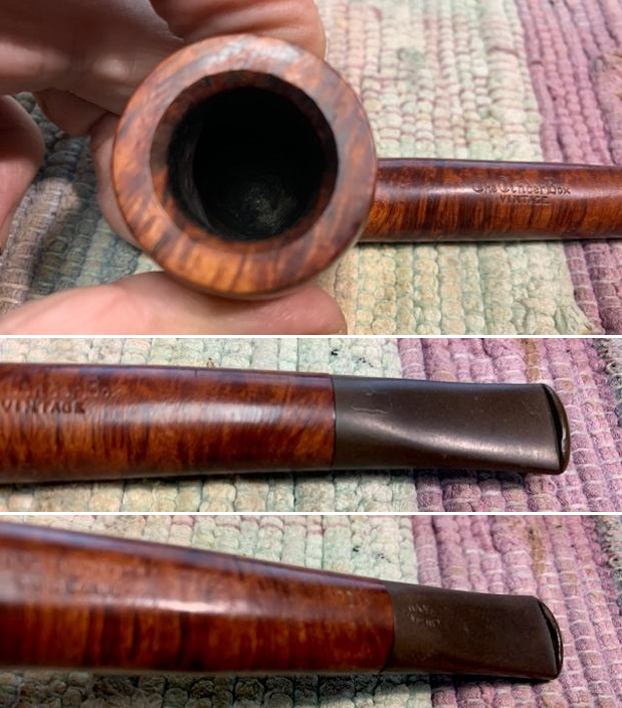
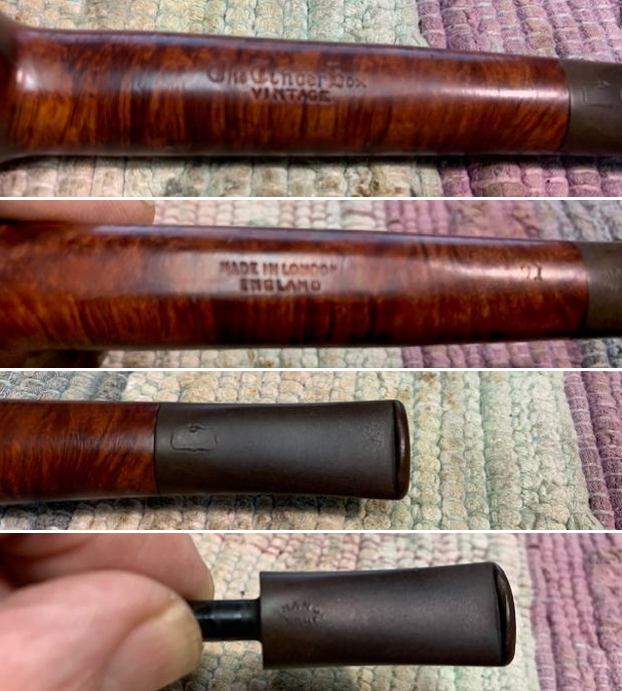
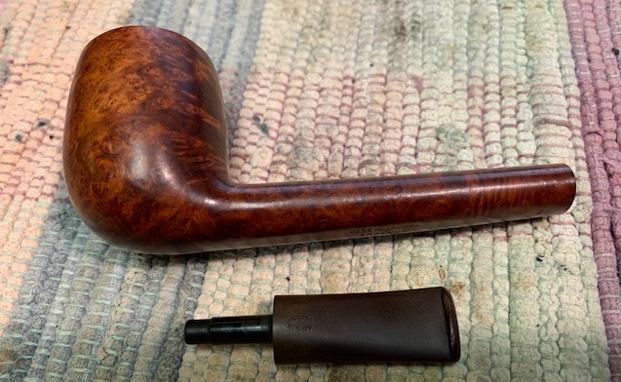
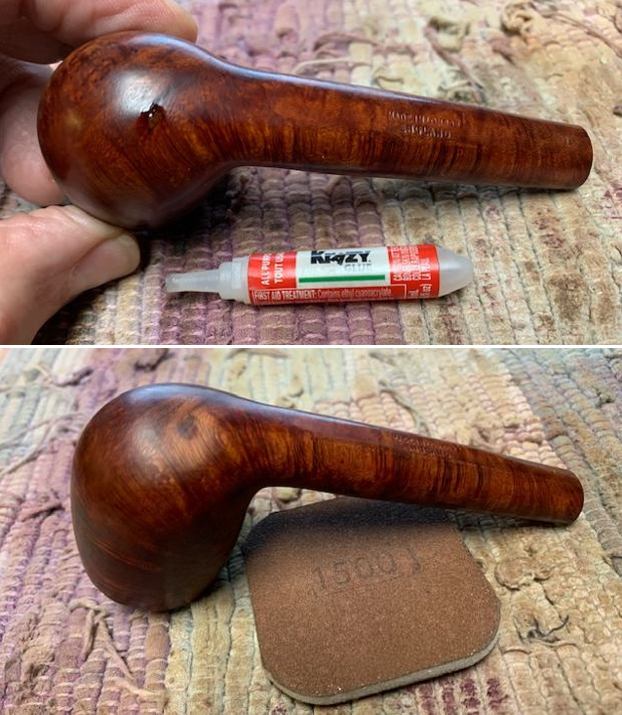
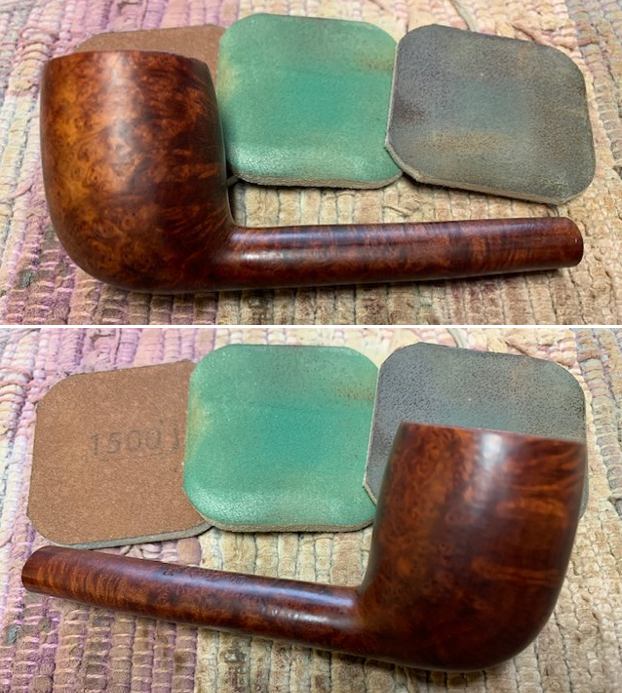
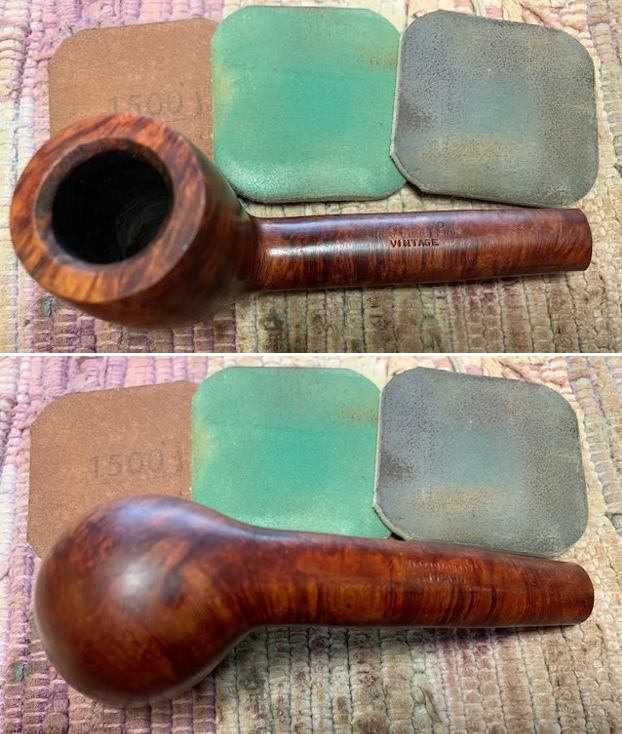
I have had this next pipe sitting in a box next to my desk for several weeks now and finally decided this afternoon to work on. It is not a particularly tough restoration so I am not sure why I was dragging my heels. Maybe I just wanted a change of pace for a while. But the Labour Day weekend is almost over and I have time to work on at least one more pipe so why not this one. We purchased the pipe on an online auction from Vanceburg, Kentucky, USA. It had an interesting rich brown finish that really highlighted some nice grain around bowl. It was a nice looking Canadian and would look even better once cleaned up. There was a thick cake in bowl and lava on the rim top and the inner bevel. The finish was filthy with grit and grime ground into the surface of the briar. The pipe is stamped on the topside of the shank and read The Tinder Box [over] Vintage. On the underside it was stamped MADE IN LONDON [over] ENGLAND. The shape number 91 was at the shank/stem junction. The stem was oxidized and had light tooth marks and chatter on both sides at the button. The Tinder Box logo was stamped on the topside of the taper and was faded and only the frame was clear. On the underside of the stem it was stamped HAND arched over FINISHED. Jeff took photos of the pipe before he started his clean up work. I like to have an idea of how the pipe was smoked before we got it and what the bowl and rim top looked like. Jeff always takes some photos of the bowl and rim from various angles to show what it looked like. The stem looked very good under the oxidation.He took photos of the sides and heel of the bowl to give a sense of the grain on the pipe.The next photos show the stamping on the top and underside of the shank. It is clear and readable as noted above. Jeff also captured the remnants of the Tinderbox logo stamp on the topside of the taper stem and the Hand Finished stamp on the underside. I remembered that The Tinder Box Tobacconist had several pipe companies in Europe make pipes for them so I looked them up on Pipephil’s site (http://pipephil.eu/logos/en/logo-t6.html). I found a listing with three examples shown in the screen capture below. The pipe I am working on is stamped like the second one, the Bulldog below. The only difference is the one I have is stamped Vintage instead of Old Bruyere and is a shape 91 instead of a 61. All the other identifying stamps are the same.I turned to Pipedia for more information on the potential pipe makers for the company (https://pipedia.org/wiki/Tinder_Box). I quote below.
The Tinder Box was the chain of tobacco stores started by Edward Kolpin, Sr., who carved Ed’s Hand Made pipes. The store, eventually sold to a Canadian conglomerate, eventually reached 200 retail outlets by 2007, and in the 40 years it operated on a large scale a great number of pipes were made for The Tinder Box by well respected makers. A few include the Tinder Box Unique, made by Charatan, Christmas Pipes by Ascorti, and the Tinder Box Noble and Exotica, made by Shalom Pipe Factory, Mauro Armellini did make the Verona and Napoli lines.

Ed Kolpin, Jr., opened a small tobacco, pipe, and cigar store in Santa Monica, the Tinder Box, in 1928. Later it moved to its current location in 1948 where it began serving the many Hollywood celebrities living nearby. Part of the attraction were the famous pipes handmade by Kolpin himself. In 1959 Kolpin began a tobacco-store franchise, at first locally and then by the mid-1960s there were Tinder Box stores in malls across America. The franchise business was sold in the 1970s, but Kolpin still owns and operates the original store as of 2003.[1]

The stamping Made in London [over] England made me wonder if it was not made by Charatan as noted in the quote in red above. Now it was time to work on the pipe.

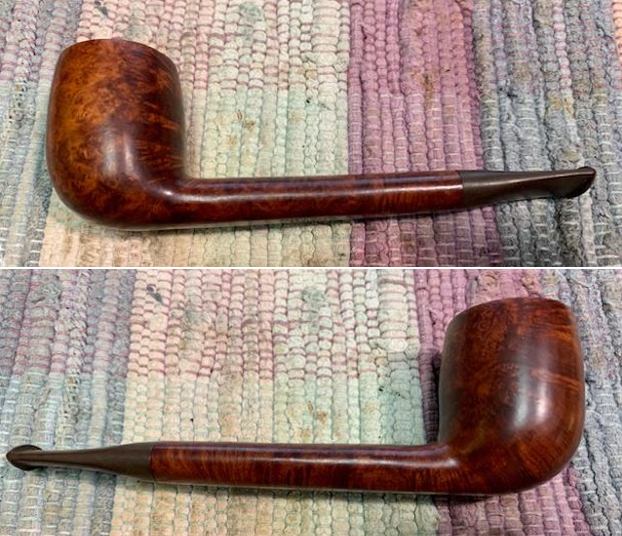
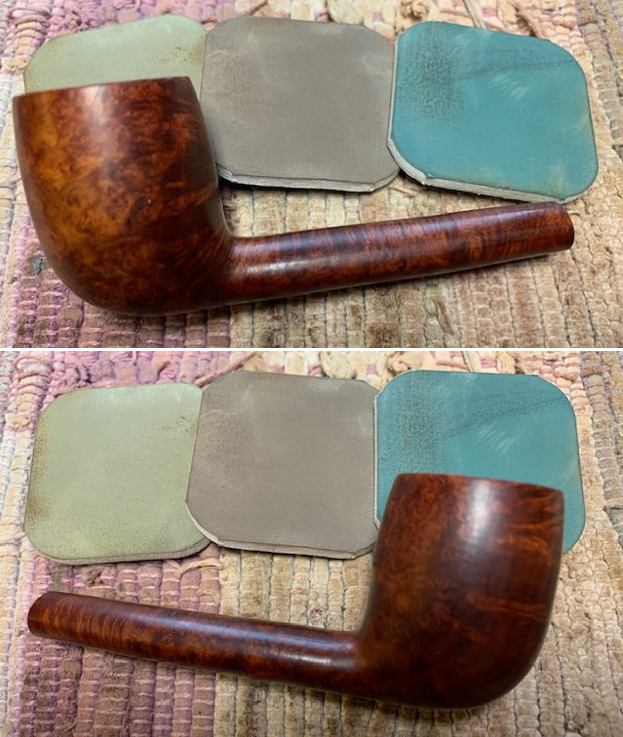
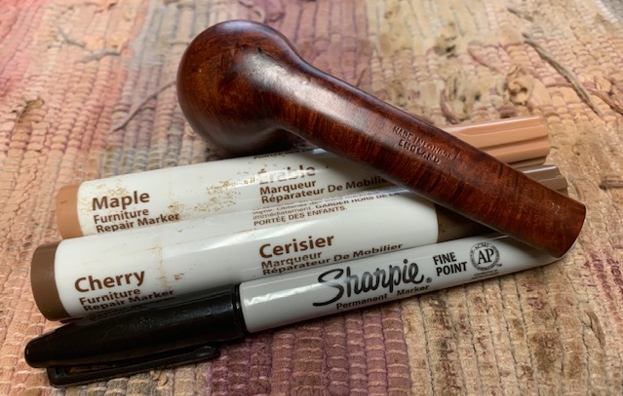
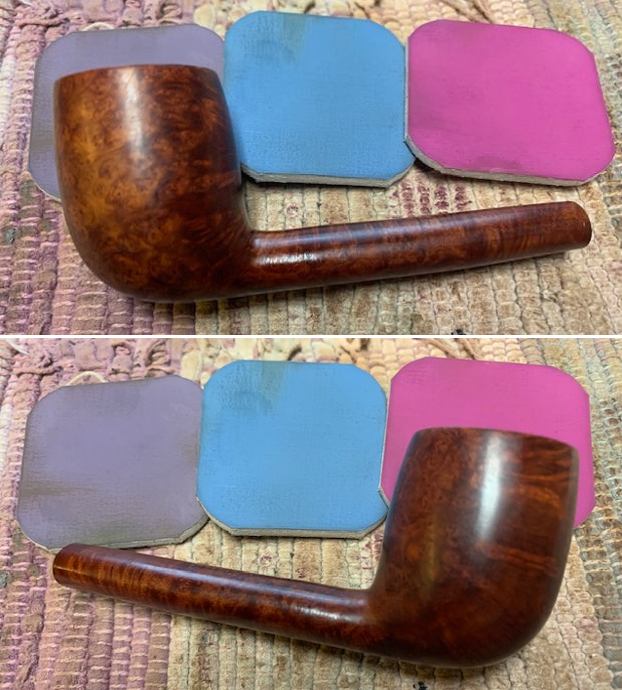
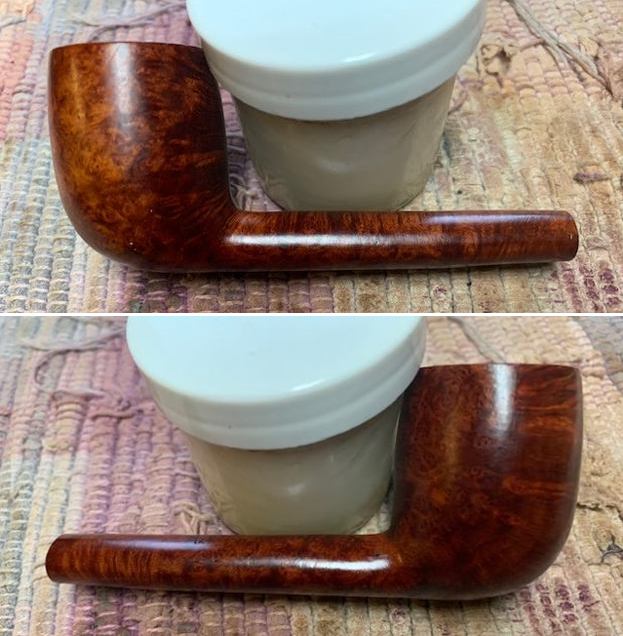
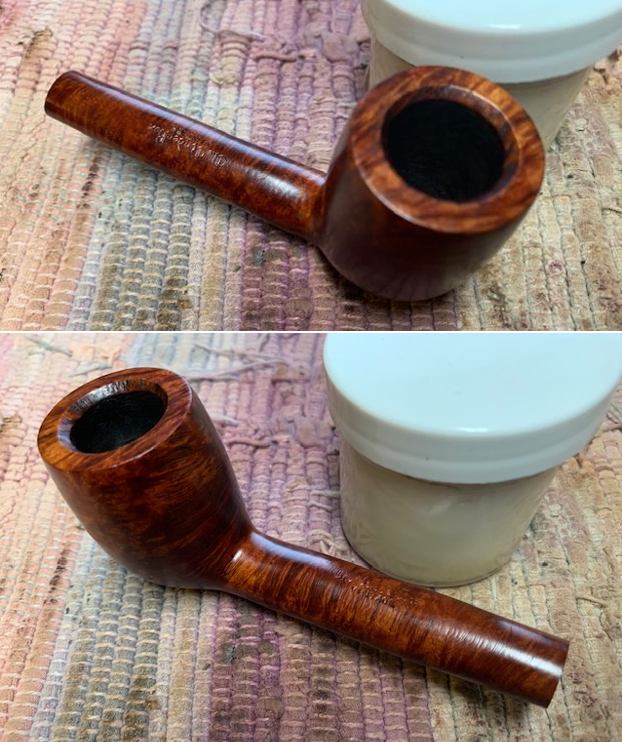
I turned my attention to the pipe itself. Jeff had done a great cleanup on the pipe. He reamed the bowl with a PipNet pipe reamer and followed up with a Savinelli Fitsall pipe knife to remove the cake. He scrubbed out the mortise and the airway in the shank and the stem with alcohol, cotton swabs and pipe cleaners. He scrubbed the bowl exterior with a tooth brush and Murphy’s Oil Soap to remove the grime on the finish of the bowl and the lava from the rim top. He rinsed it under running water. One of the benefits of this scrub is that it also tends to lift some of the scratches and nicks in the surface of the briar. He dried it off with a soft cloth. He cleaned the internals and externals of the stem with alcohol, pipe cleaners and cotton swabs. He scrubbed the stem with Soft Scrub to remove some of the oxidation and then soaked it in Before & After Pipe Stem Deoxidizer and rinsed it off with warm water and cleaned out the airway in the stem with alcohol. When I received it the pipe looked very good other than a remnant of oxidation.  I took a photo of the rim top and stem to show the condition. The rim top and the beveled inner edge of the bowl were in good condition. The stem was vulcanite and there were some light tooth marks and chatter on both sides ahead of the button and on the button itself. There was also some remaining oxidation.The stamping on the pipe is clear and readable as noted above. The stamping on the stem is faint but is still readable.I removed the stem from the shank and took a photo of the pipe to give a sense of the whole. I started my work on this pipe by repairing a small fill that had shrunk on the heel of the bowl. I filled it in with clear CA glue and when it had cured I polished the repair with a 1500 grit micromesh sanding pad.Once the repair cured I polished the briar with 1500-12000 micromesh sanding pads and wiping it down with damp cloth after each sanding pad. As I worked through the cycle of pads the shine developed with each change of pad. The pipe looks very good.      I restained the repaired area on the bottom of the bowl with a combination of Maple, Cherry and a Black Sharpie Pen. Then I went back to sanding with 6000-12000 grit pads. I rubbed the bowl and shank down with Before & After Restoration Balm. I worked it into the surface of the bowl sides and shank with my fingertips to clean, enliven and protect the briar. I let the balm sit for 10 minutes, then buffed with a cotton cloth to raise the shine. The Balm did its magic and the grain stood out on the briar. I set the bowl aside and turned my attention to the stem. There was a lot of deep oxidation remaining in the stem that needed attention. I scrubbed it with Soft Scrub and cotton pads and removed a lot of the oxidation.I polished it with micromesh sanding pads – 1500-12000 grit pads. I wiped it down with Obsidian Oil after each sanding pad. I used Before & After Pipe Polish – both Fine and Extra Fine to further polish the stem. The photos below show the polished stem. I tried to touch up the stamping on the stem and it was not deep enough to hold acrylic/gold. Nothing really worked so I decided to leave it alone. There is also some remaining oxidation around the stamping on the top and underside that I reduced as much as possible without damaging the faint stamping. This The Tinder Box Vintage 91 Canadian with a vulcanite stem is a great looking pipe now that it has been restored. The rich browns of the stain made the grain come alive with the polishing and waxing. I put the stem back on the bowl and carefully buffed the pipe with Blue Diamond on the buffing wheel using a light touch on the briar. I gave the bowl and the stem multiple coats of carnauba wax on the buffing wheel and followed that by buffing the entire pipe with a clean buffing pad. I hand buffed the pipe with a microfiber cloth to deepen the shine. The finished Tinder Box Vintage Canadian really is a beauty and fits nicely in the hand and looks very good. Give the finished pipe a look in the photos below. The dimensions of the pipe are Length: 5 ½ inches, Height: 1 ¾ inches, Outside diameter of the bowl: 1 ¼ inches, Chamber diameter: ¾ of an inch. The weight of the pipe is 1.20oz./34grams. This beauty will be going on the rebornpipes store in the English Pipe Makers section. Let me know if you are interested in adding it to your collection. Thanks for reading this blog and my reflections on the pipe while I worked on it. There are many more to come!