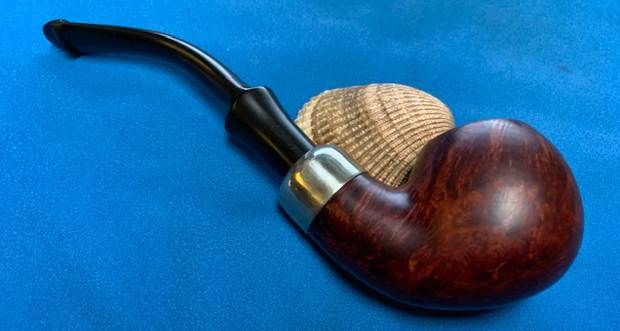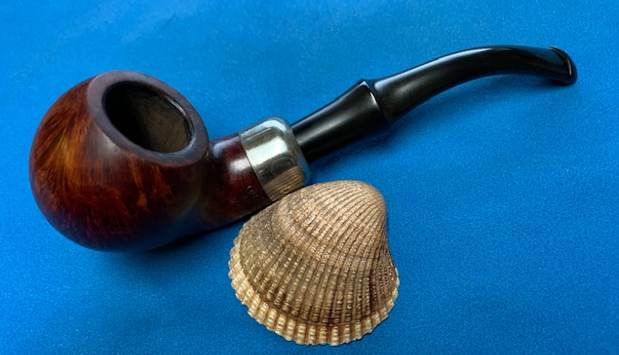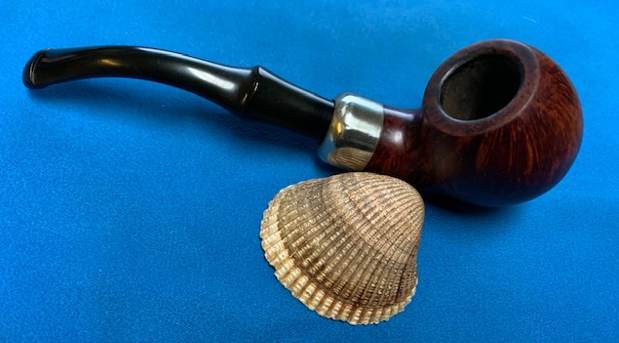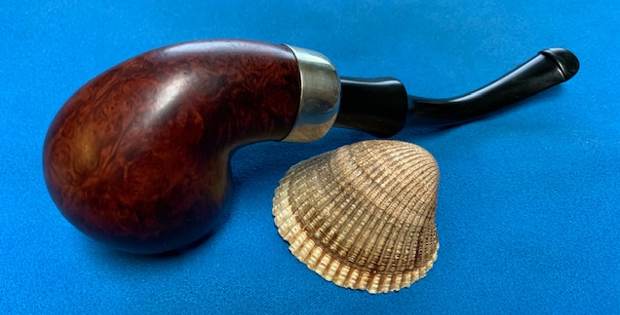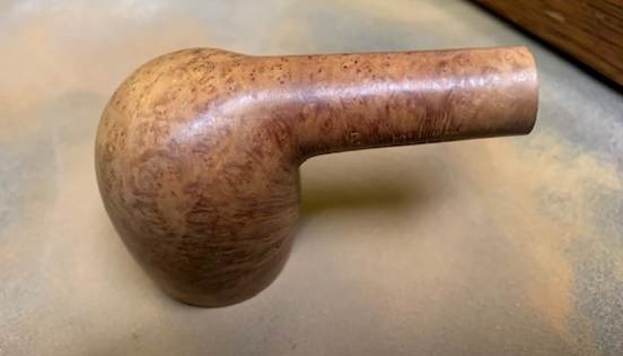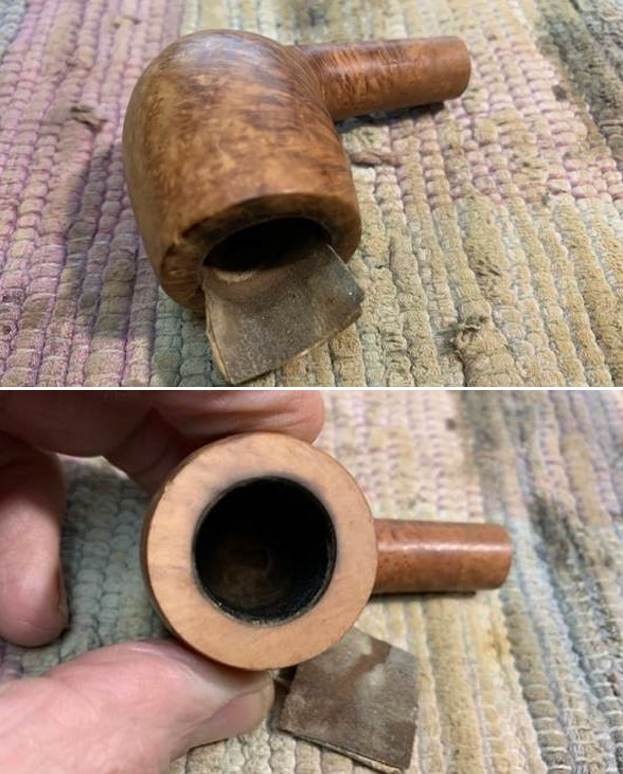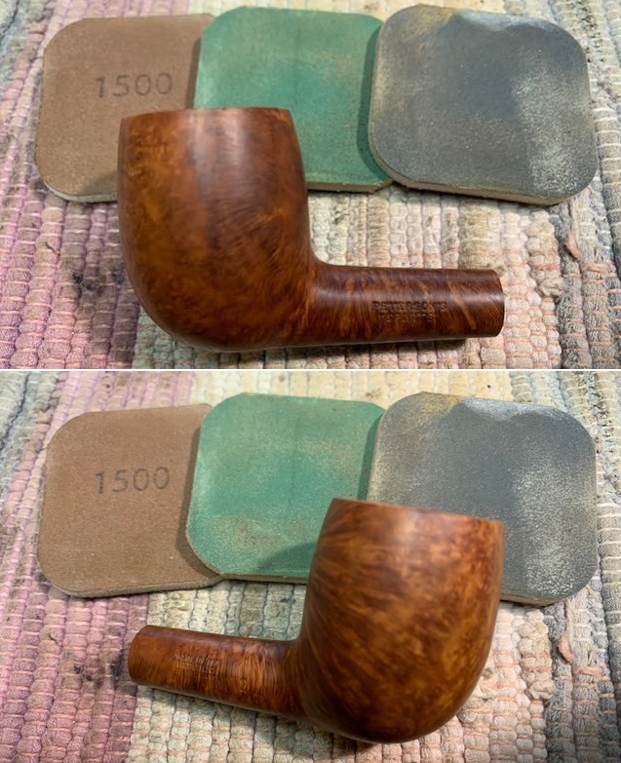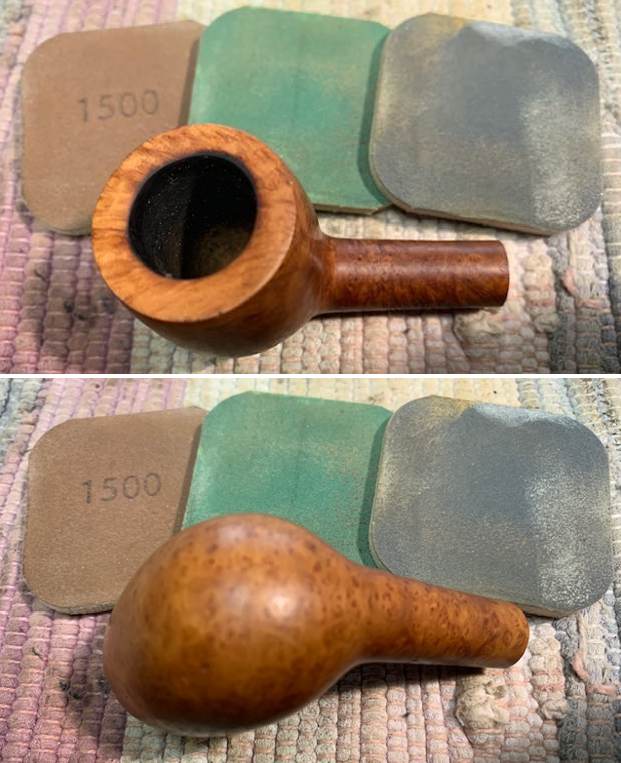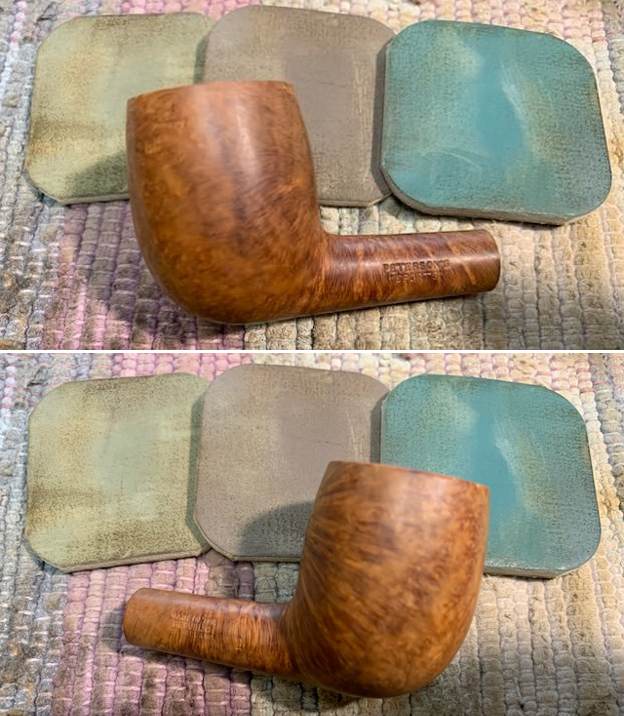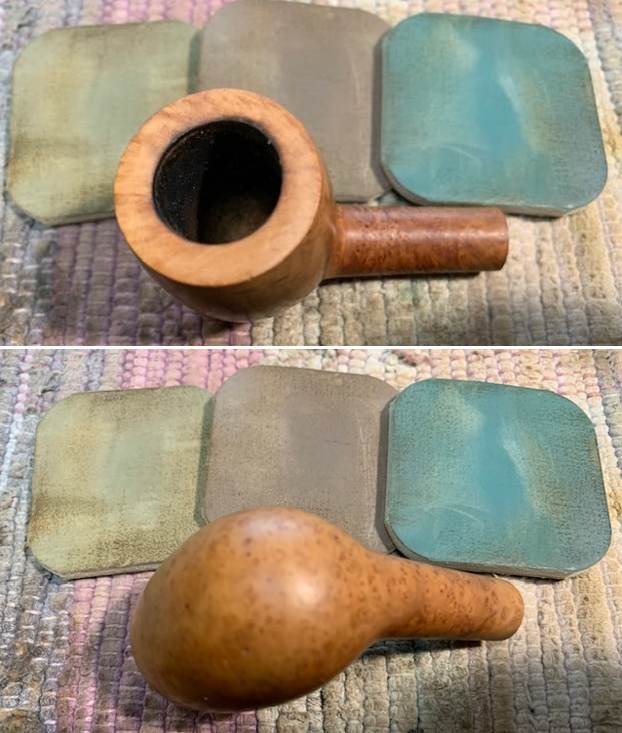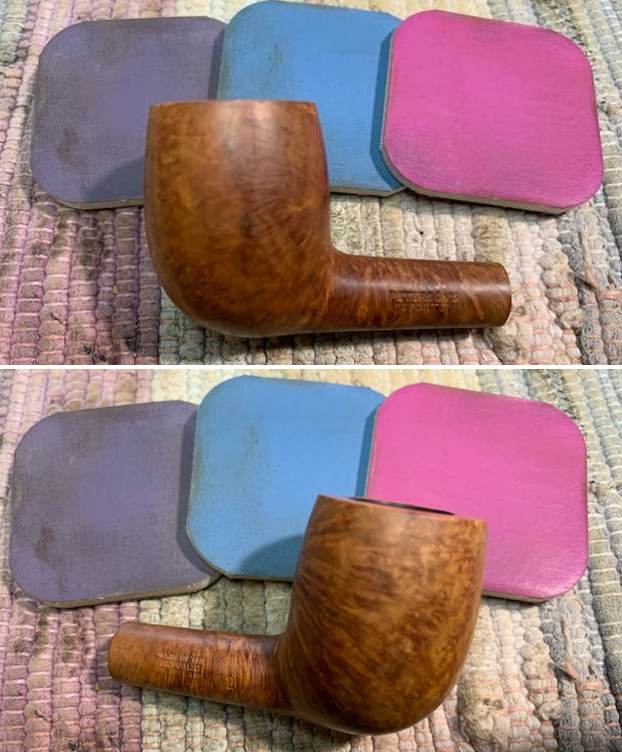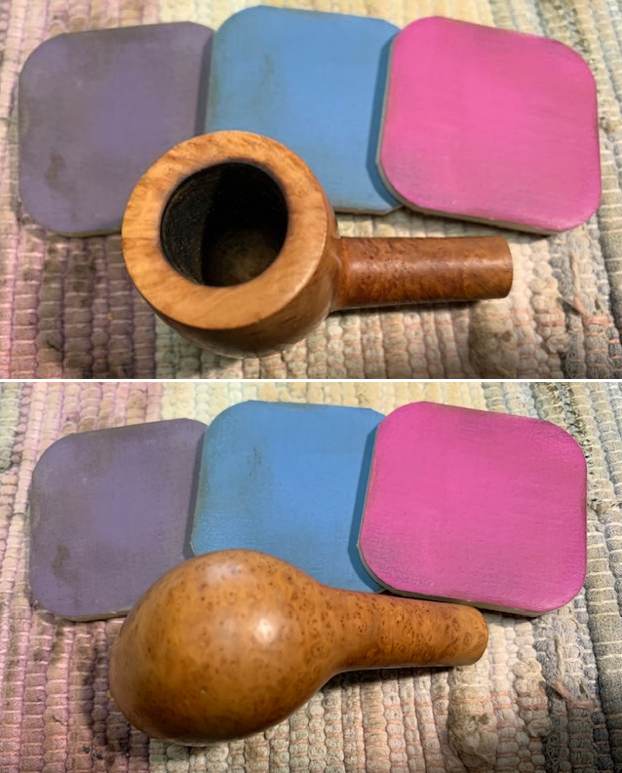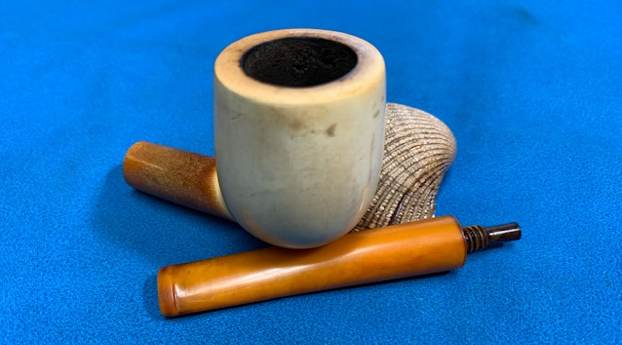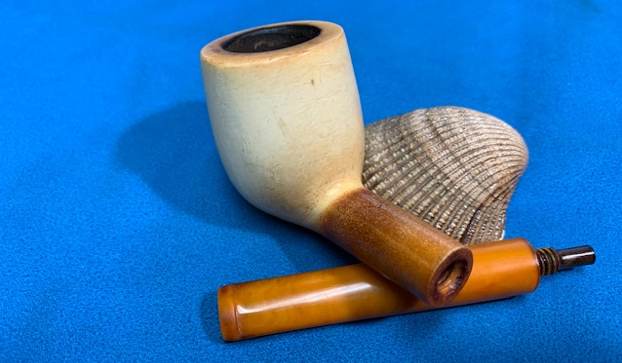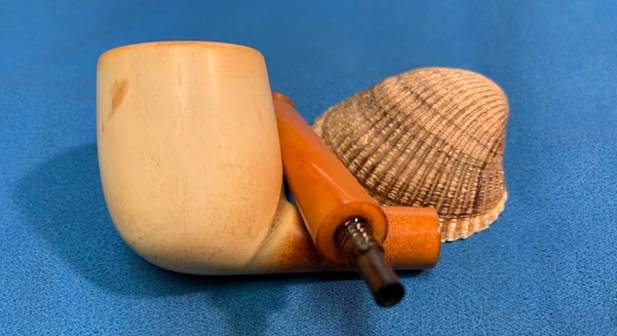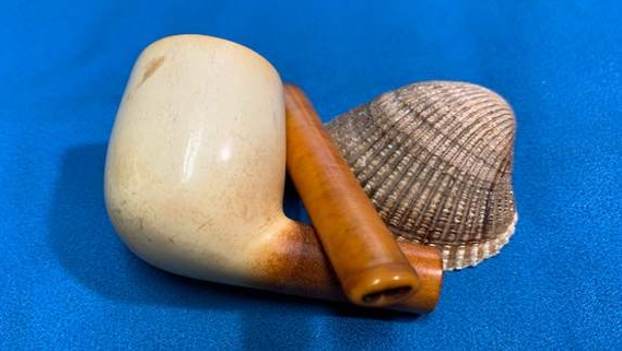
Tag Archives: removing tooth marks

A Decorated Veteran


Blog by Kenneth Lieblich

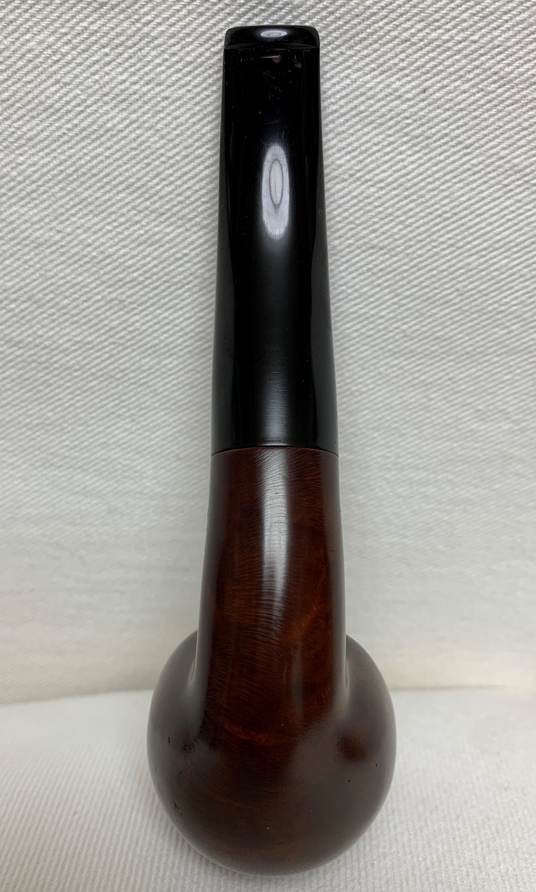
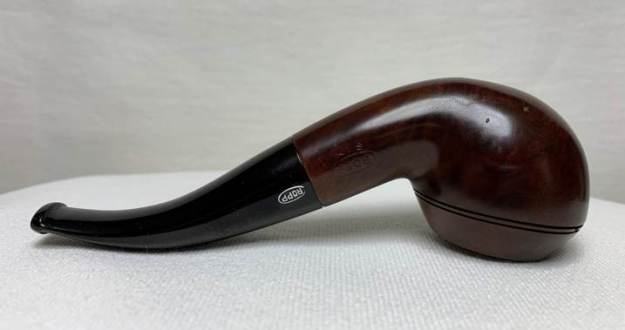
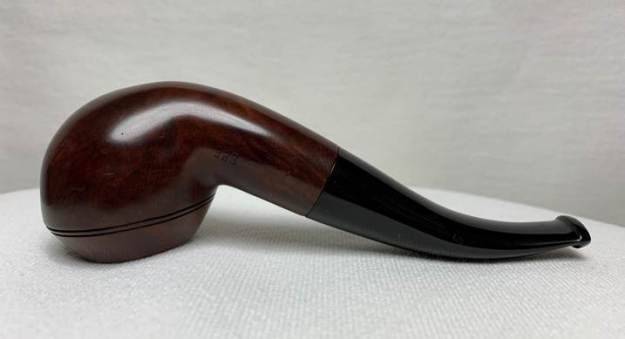
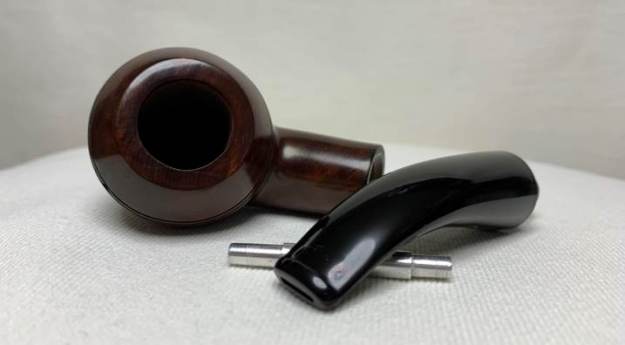
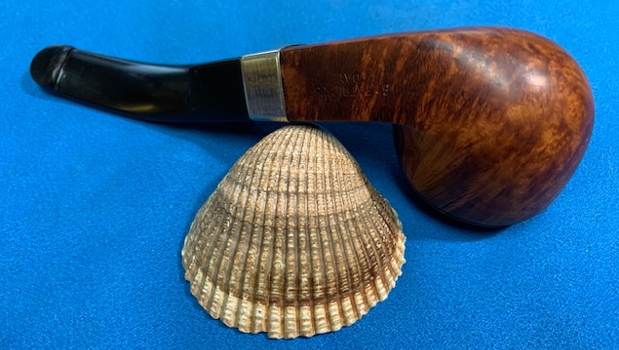
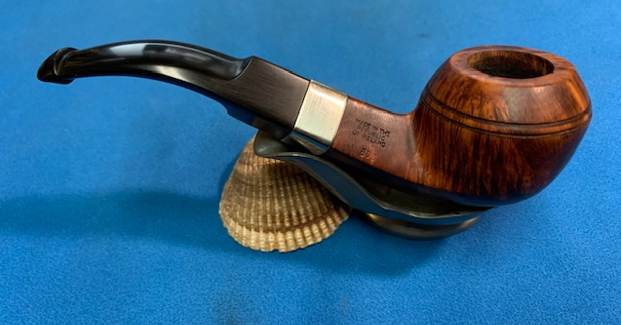
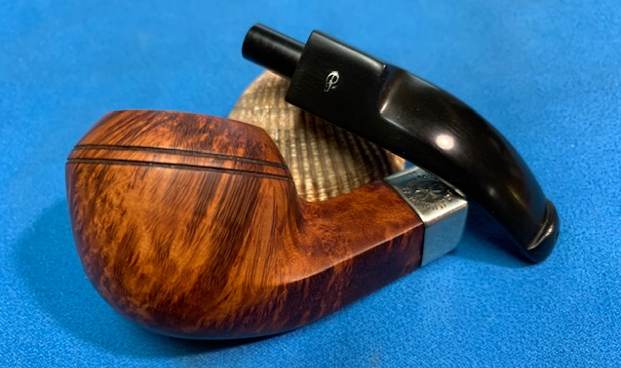
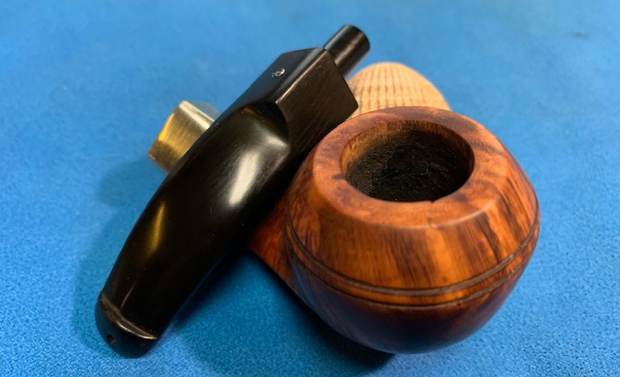
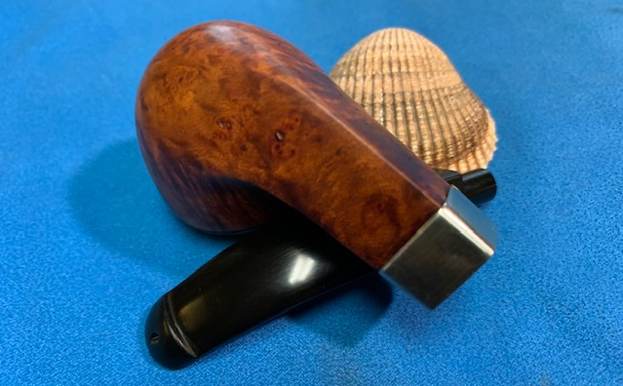
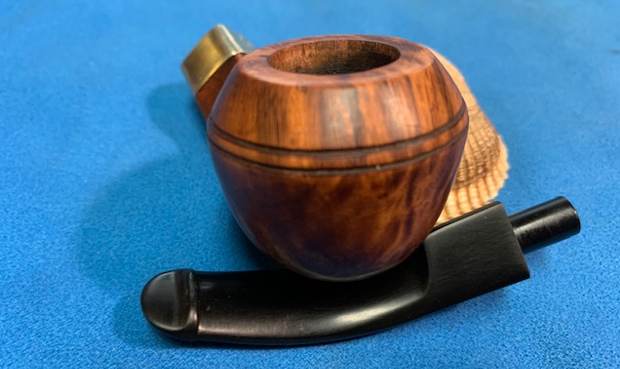
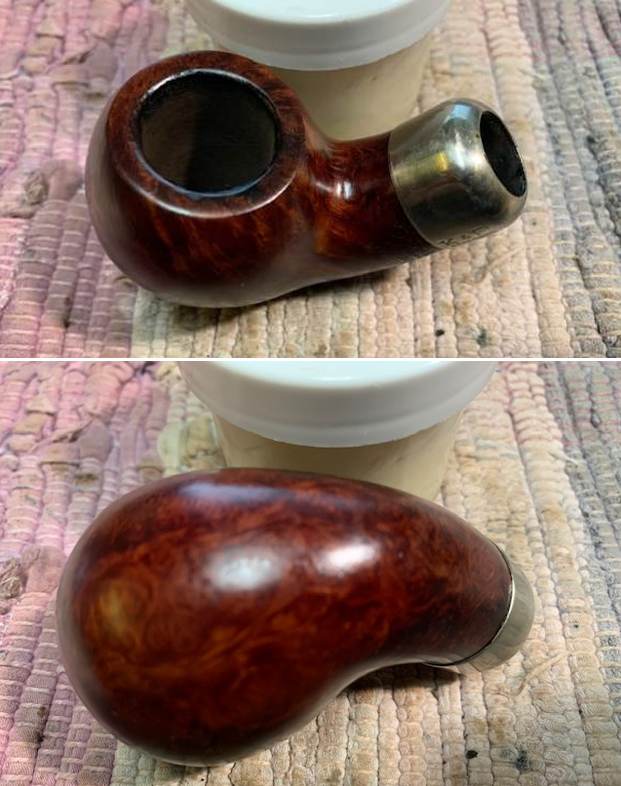
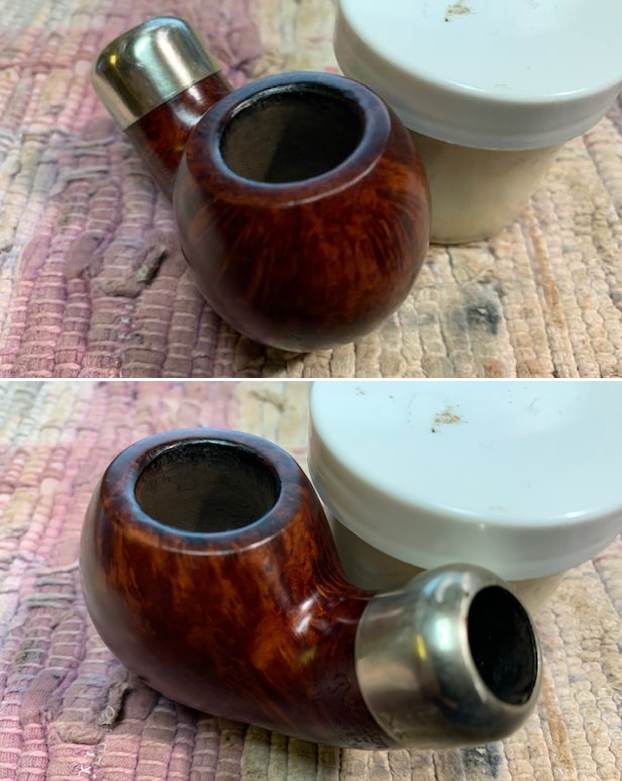
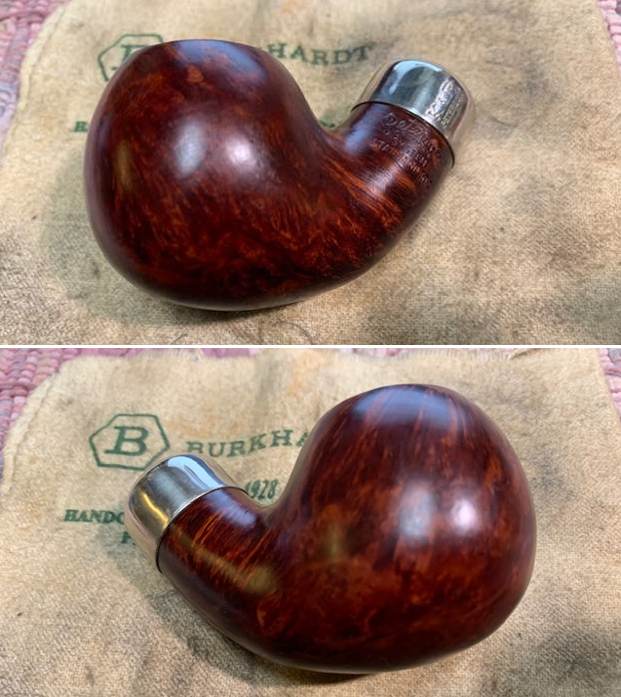
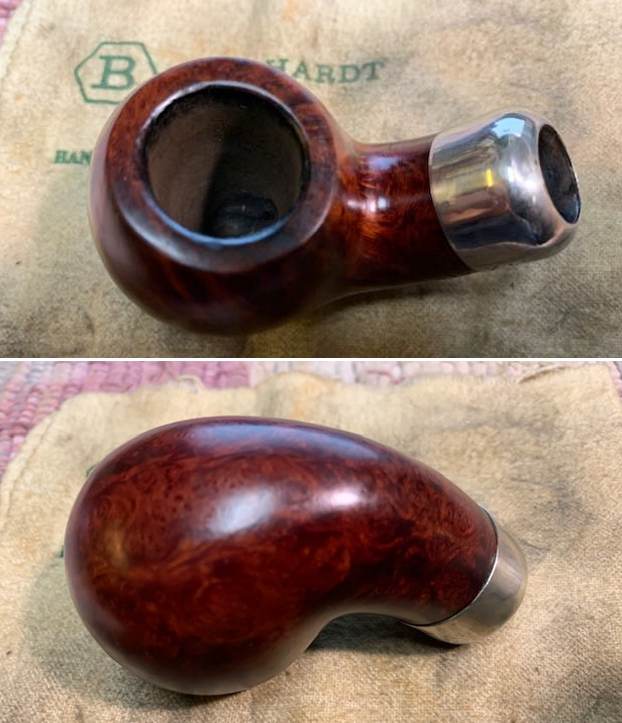
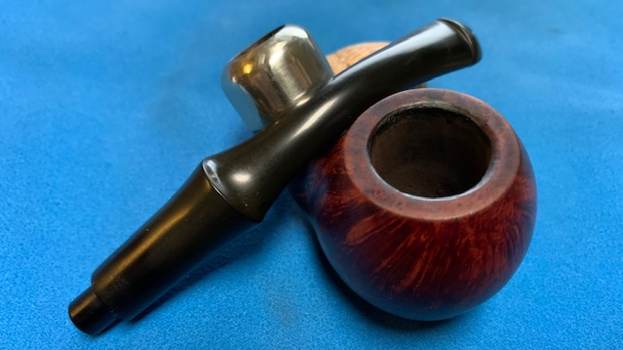
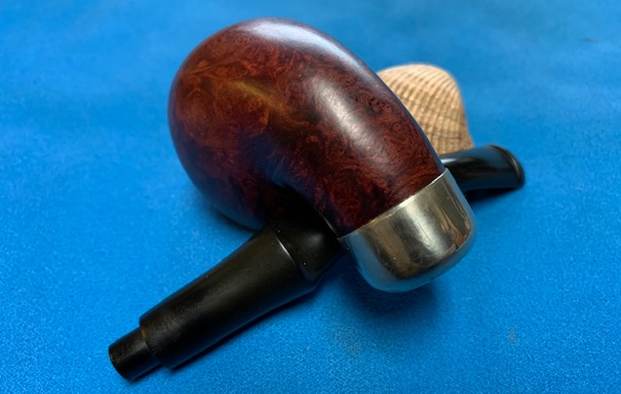
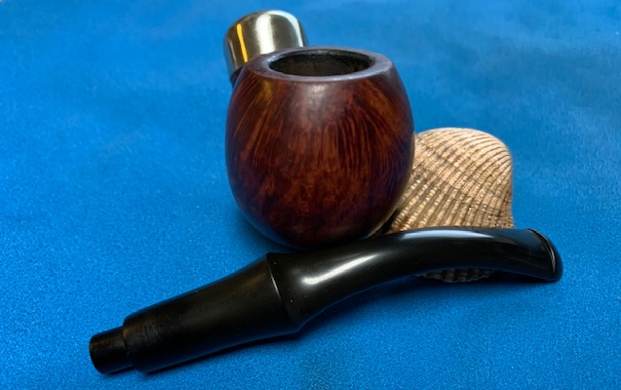
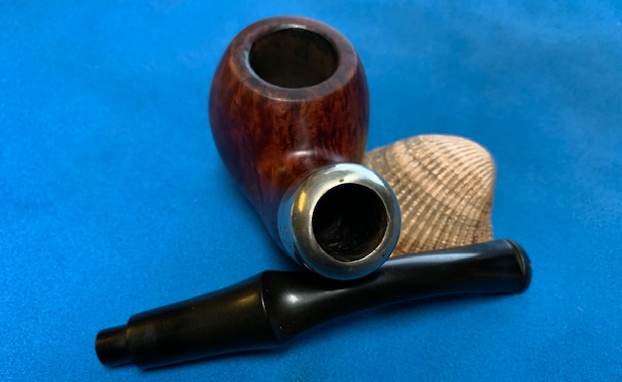
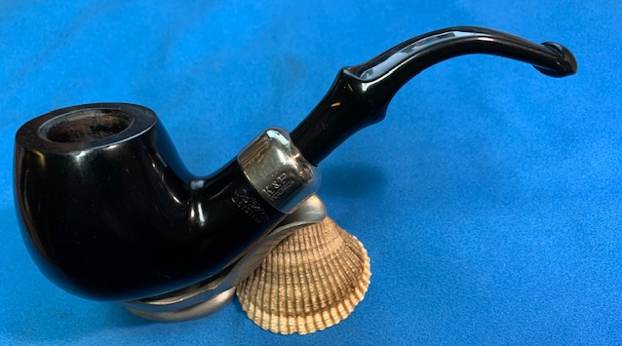
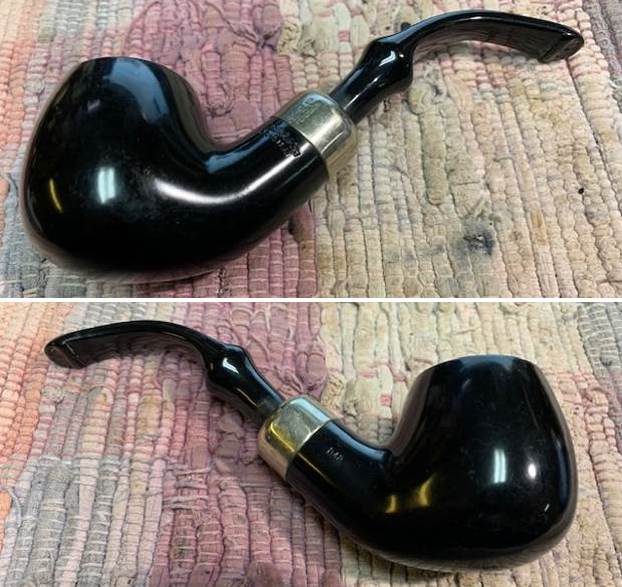
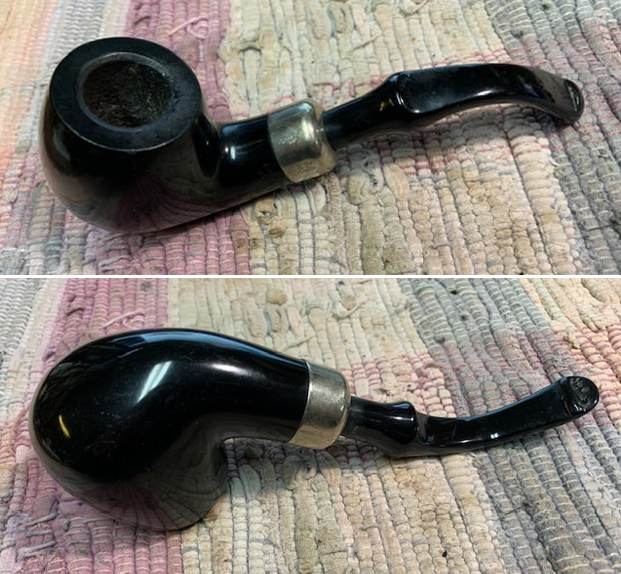
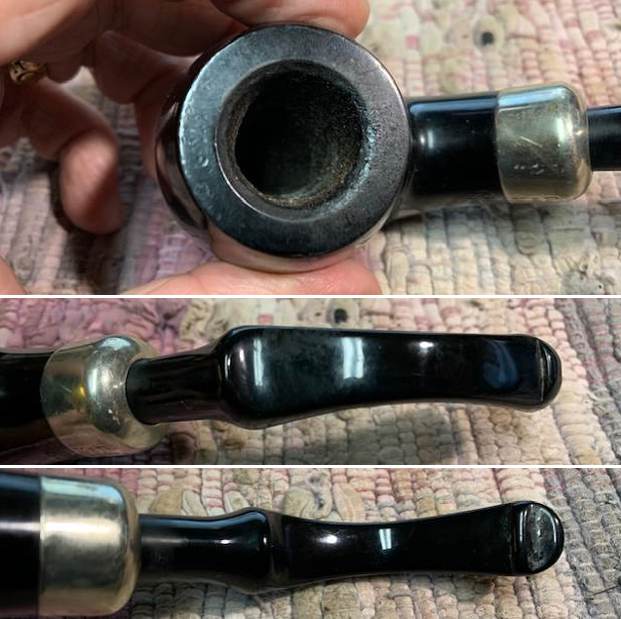
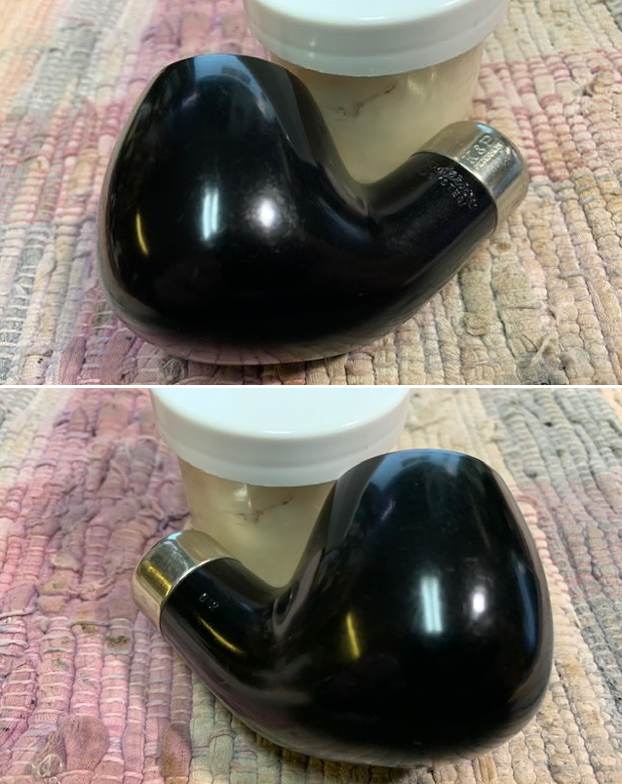
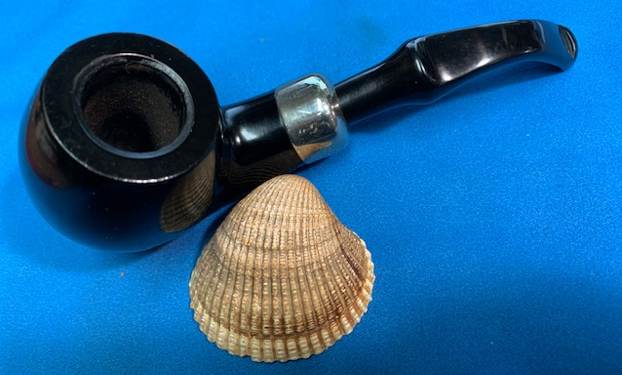
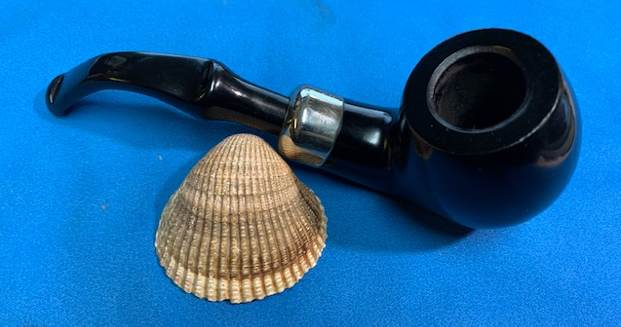
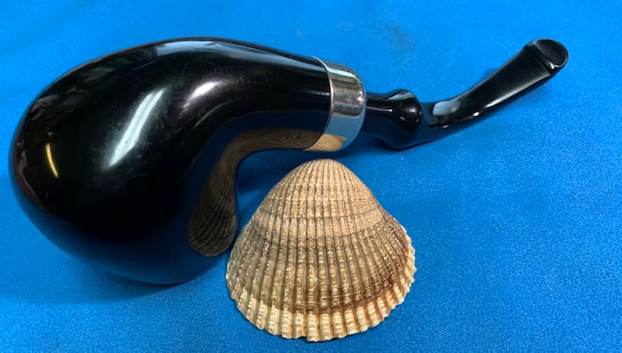
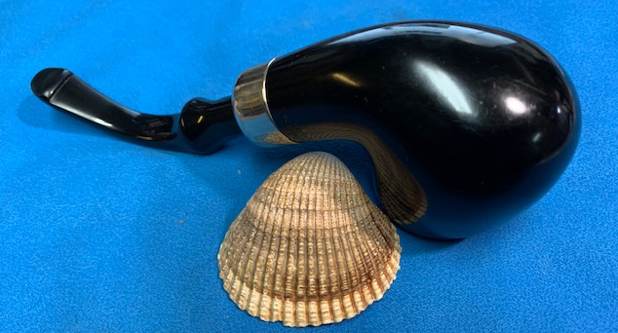
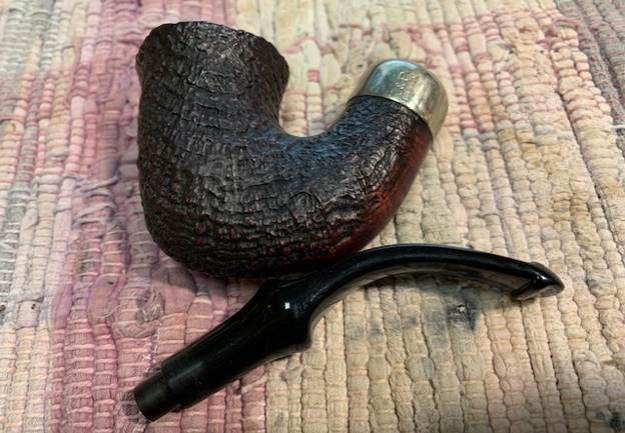
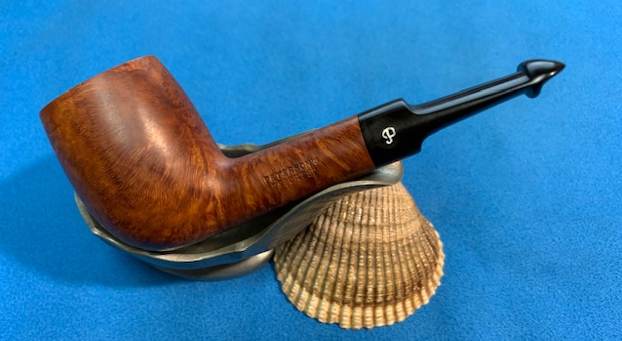
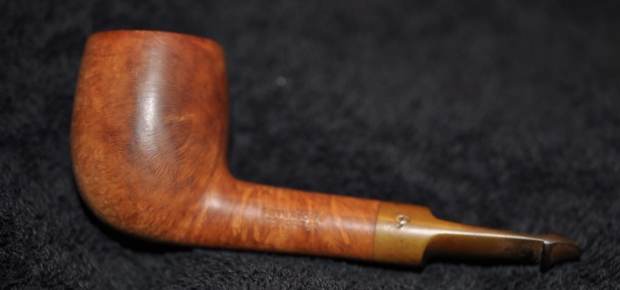
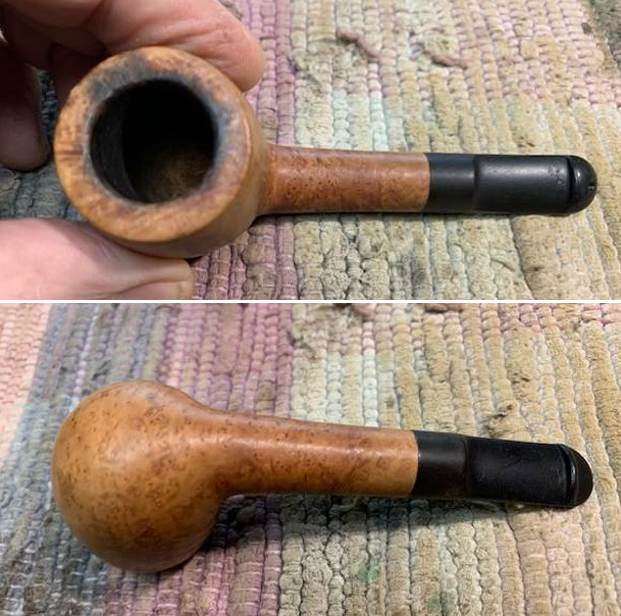
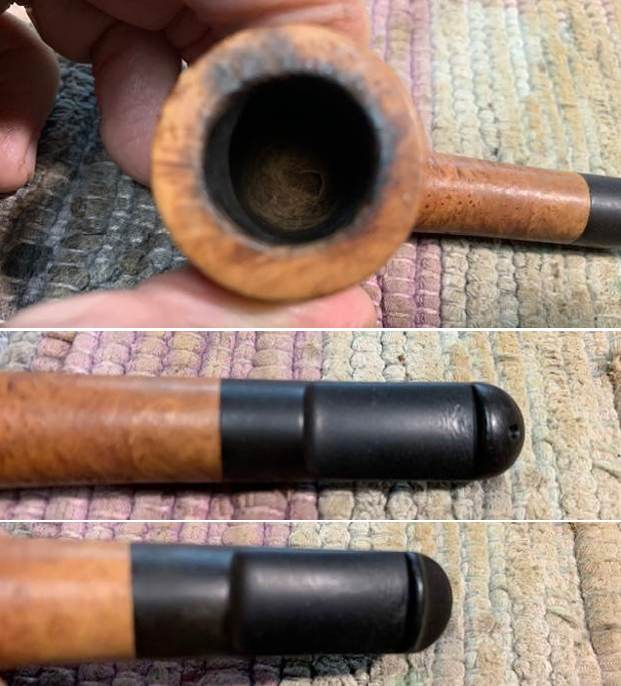
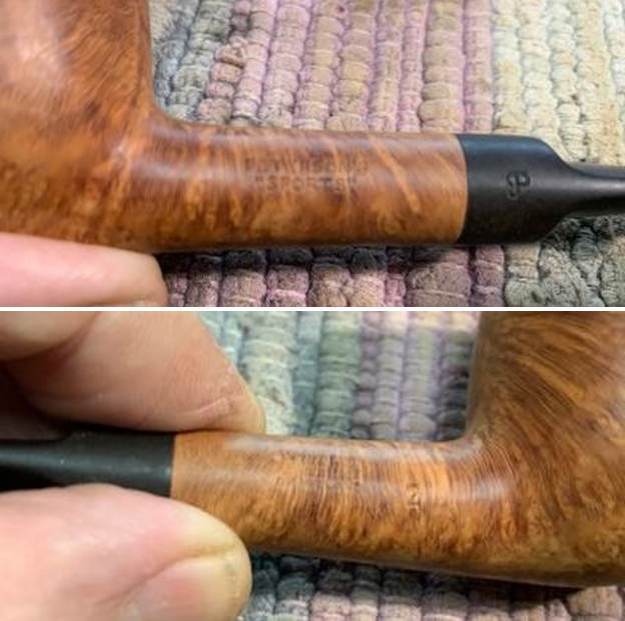
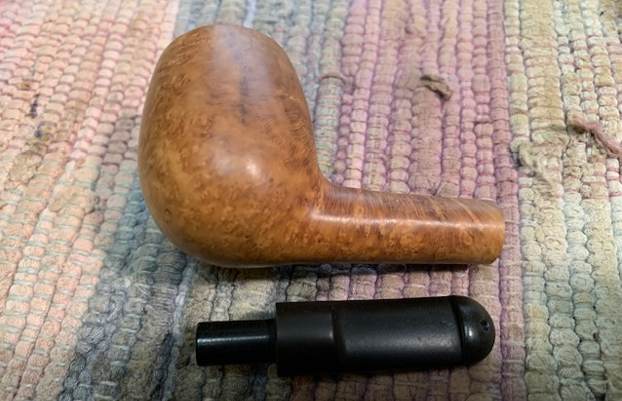
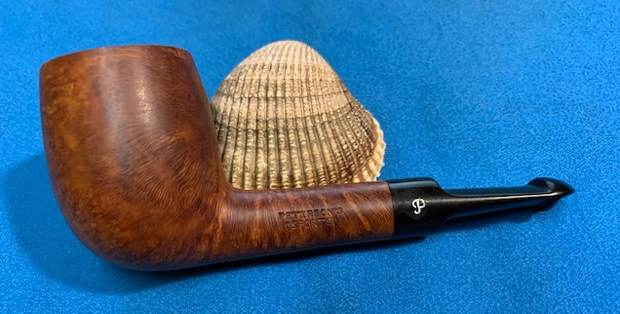
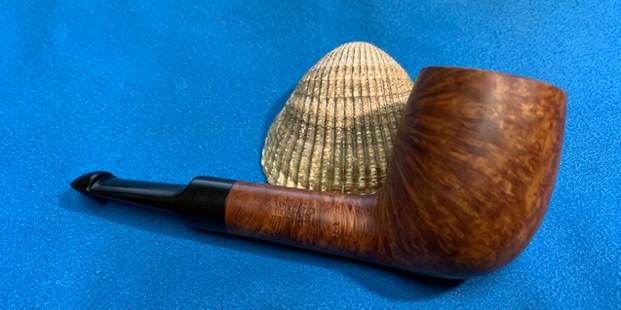
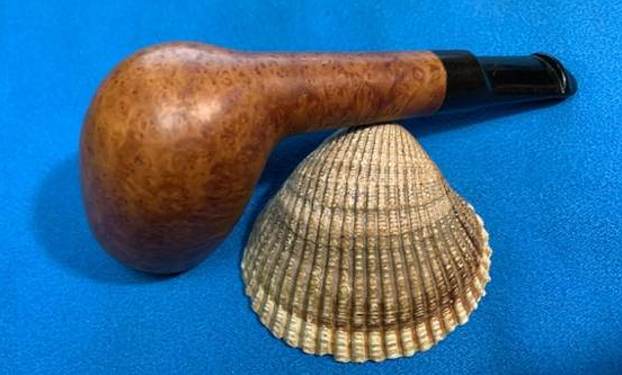
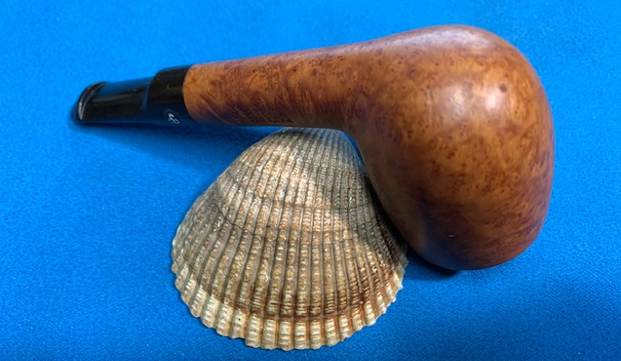
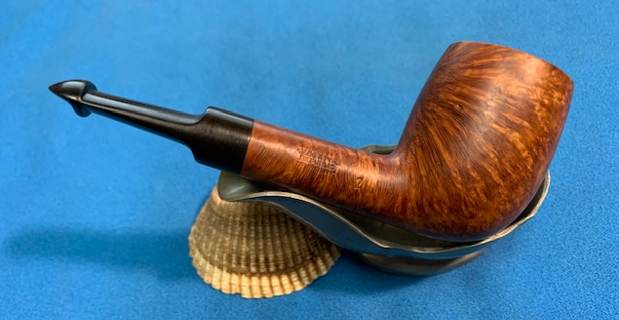
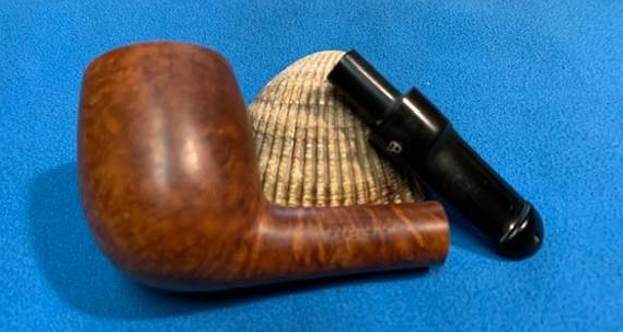
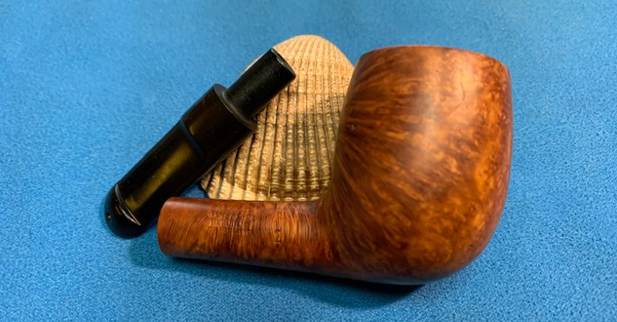
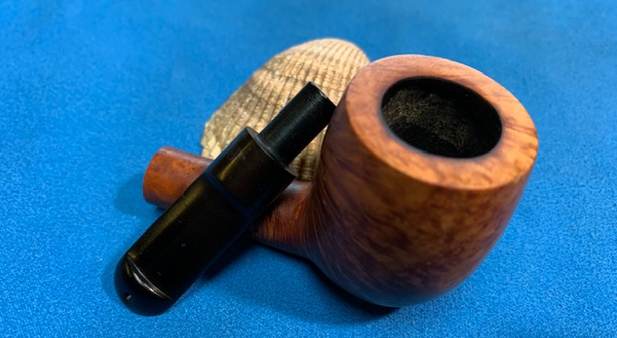
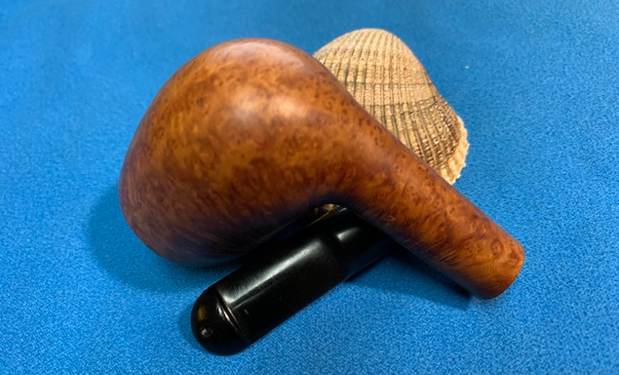
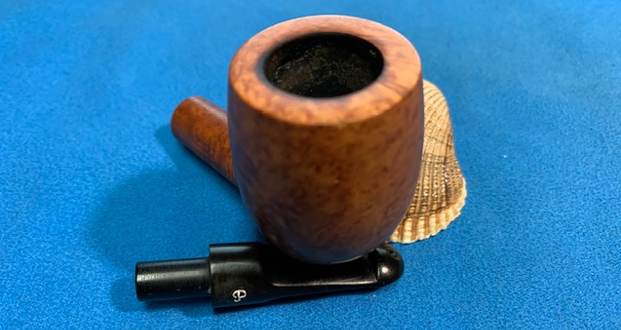
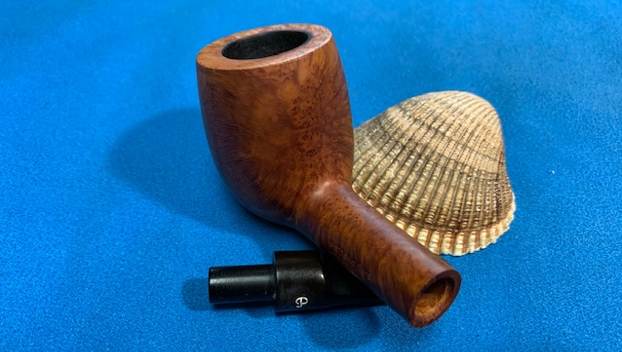
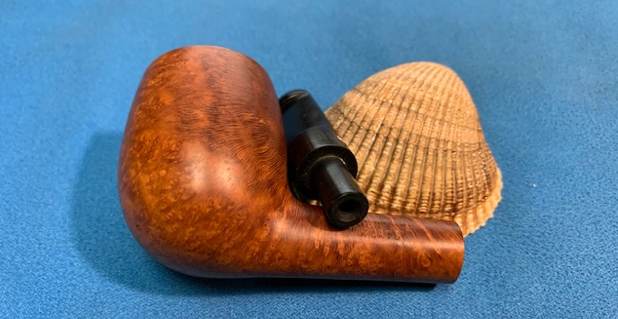
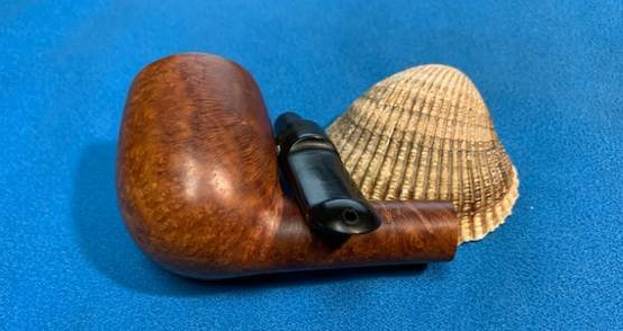
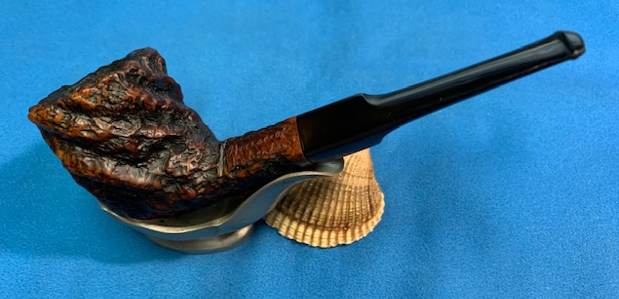
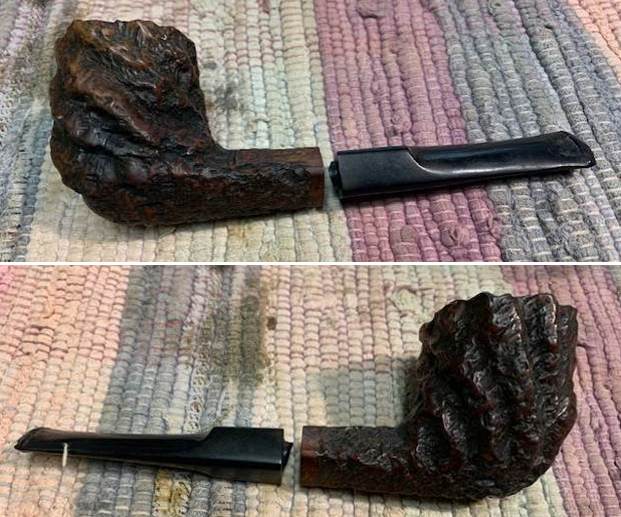
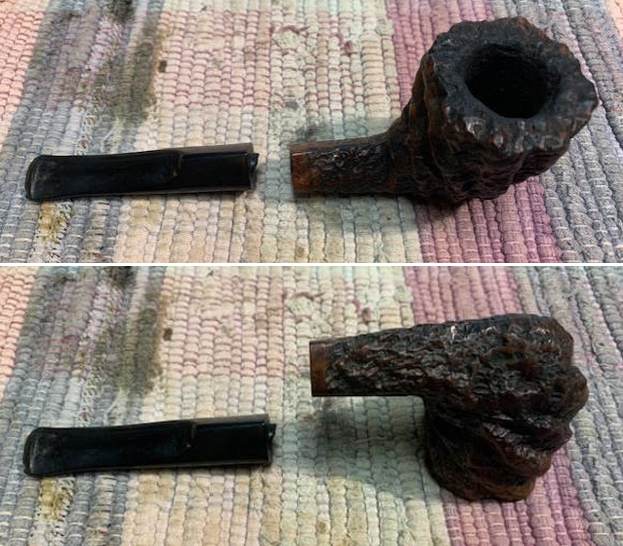
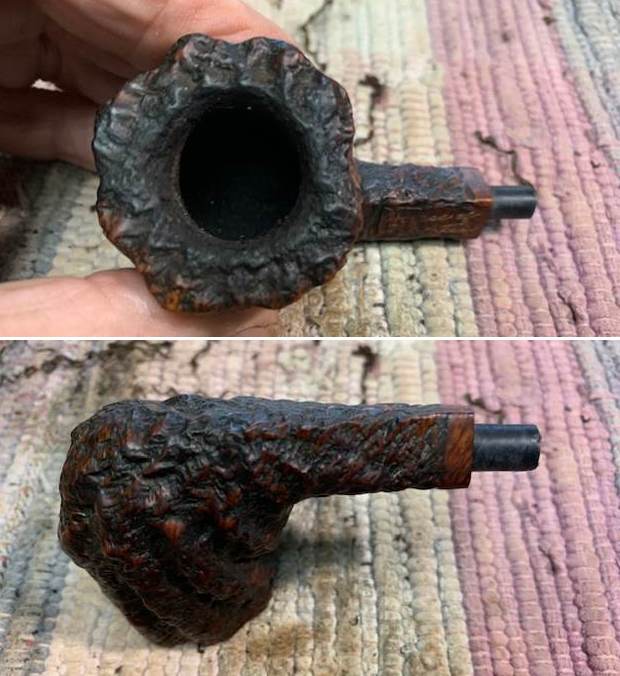
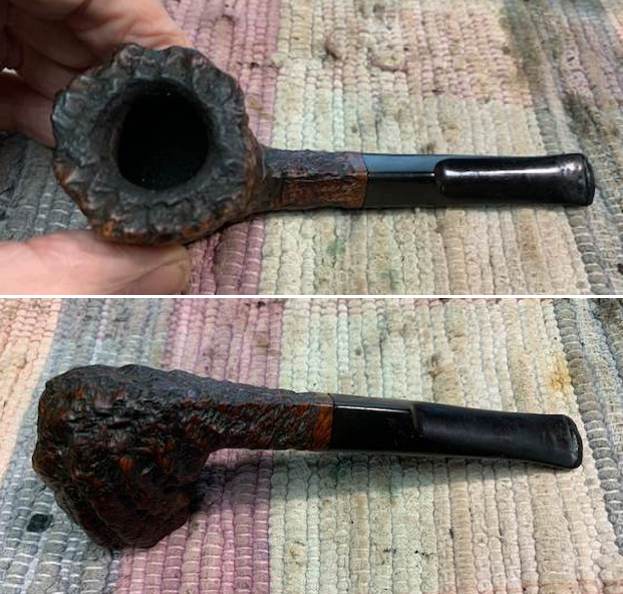
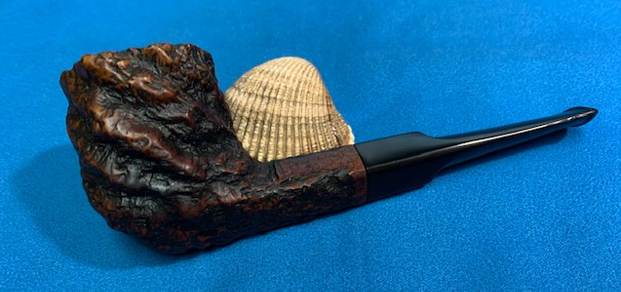
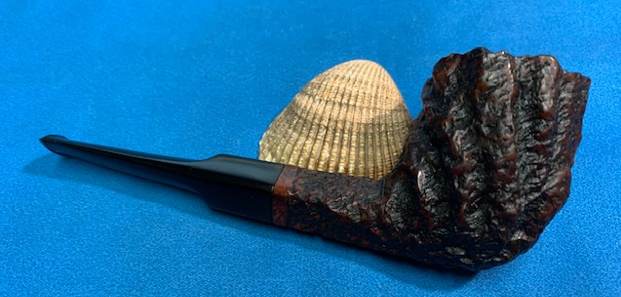
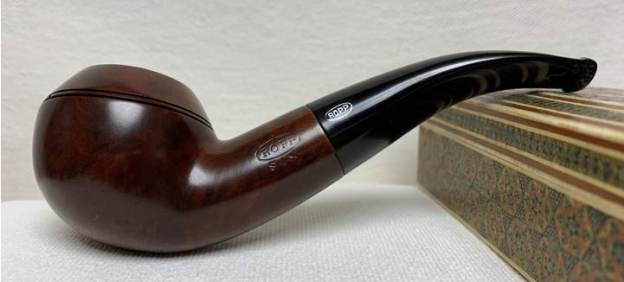
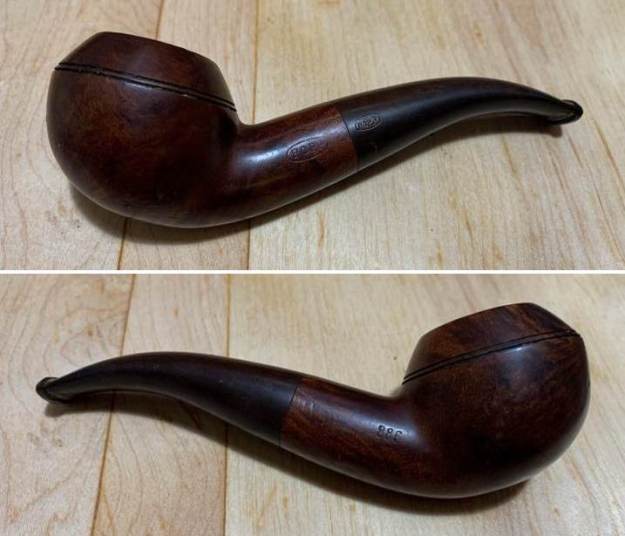
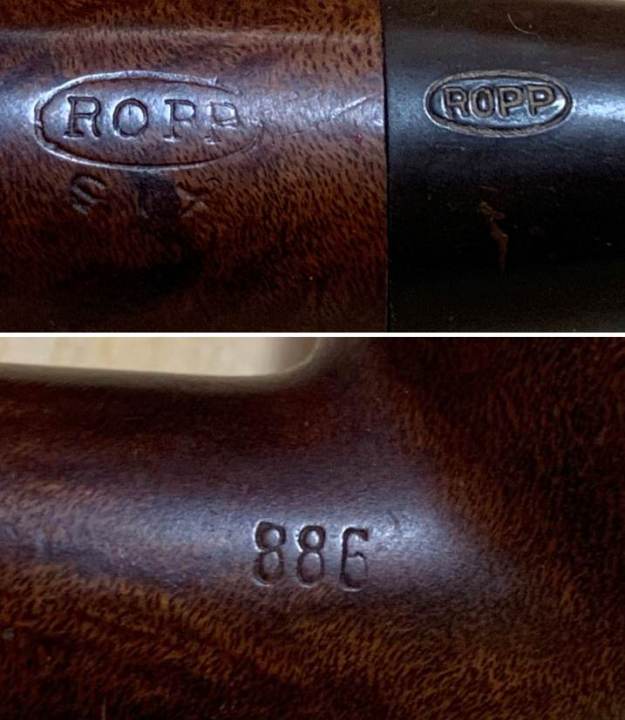
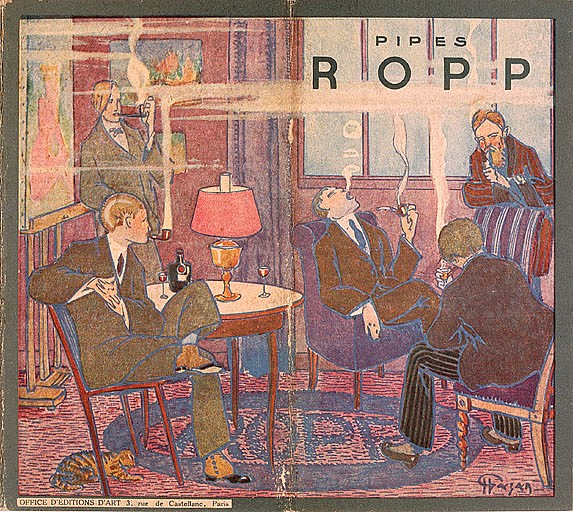
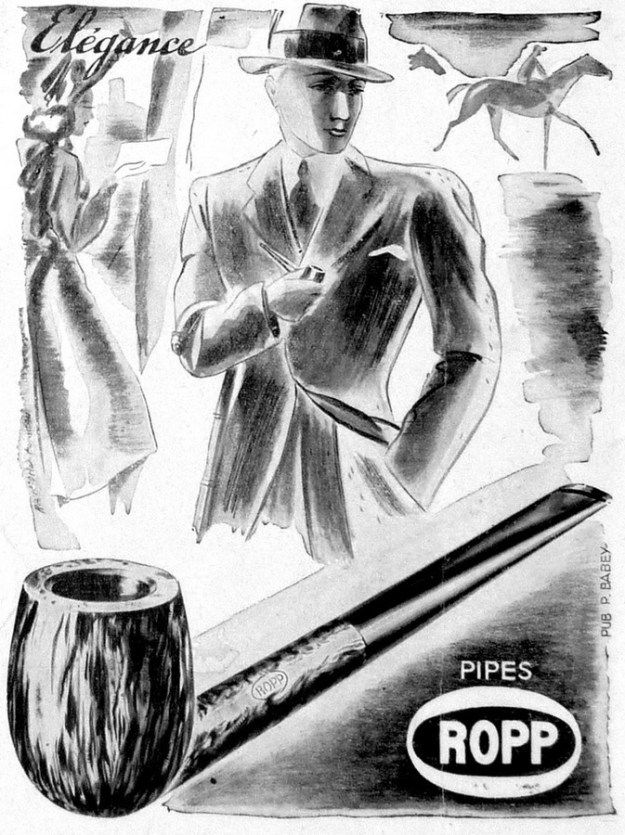
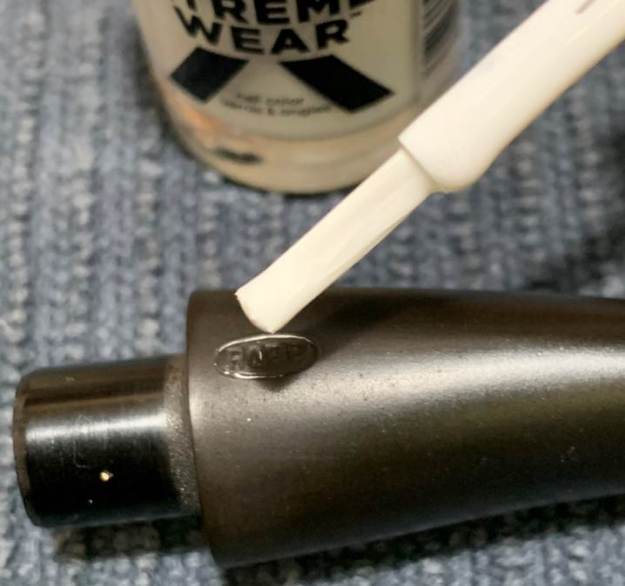
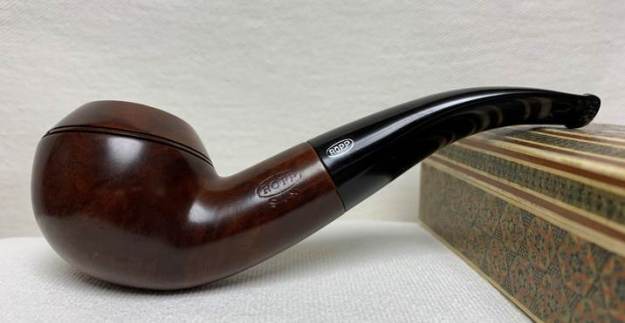
Next on the chopping block is this superb Ropp Six. It comes from a group of pipes I purchased from France. I love this pipe. I have a particular interest in French pipes and pipeworks, and I grabbed this one to restore for my collection. This is an old, old pipe with a few wounds (i.e. a veteran pipe with decorations) and needs just a little help to come back to life. This pipe was made by the venerable French pipe company, Ropp. Ropp has been around for a long time and their early pipes are really quite wonderful (the less said about their modern pipes, the better). The markings on the left-hand side of the shank read Ropp [over] Six. The right-hand side of the shank reads 886, presumably the shape number. Also, on the stem, there is the Ropp logo: Ropp, encircled in an oval.This pipe shape is a Rhodesian – a variation of the classic Bulldog. A Rhodesian will have a cylindrical shaped shank, not a diamond shank like the Bulldog. This is a really pretty pipe and feels very comfortable in the hand.
From Pipedia, here is a very brief history of the Ropp company:

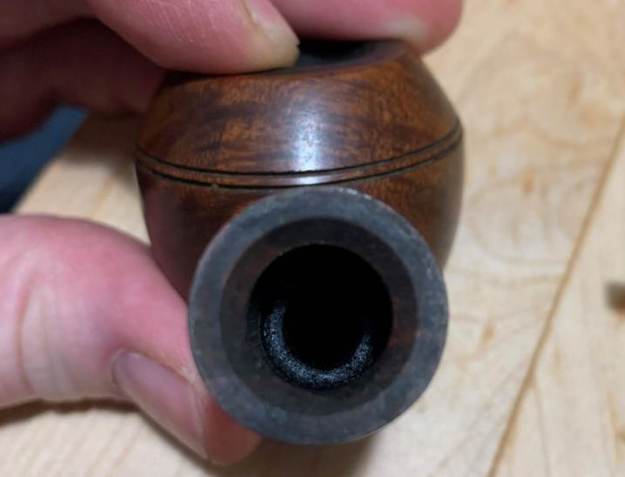
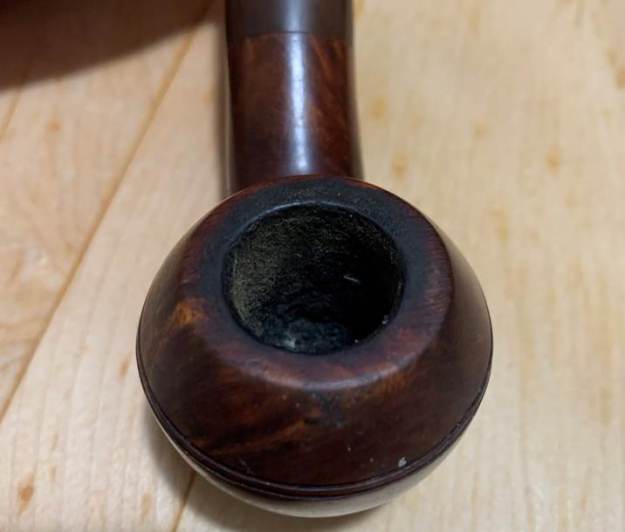
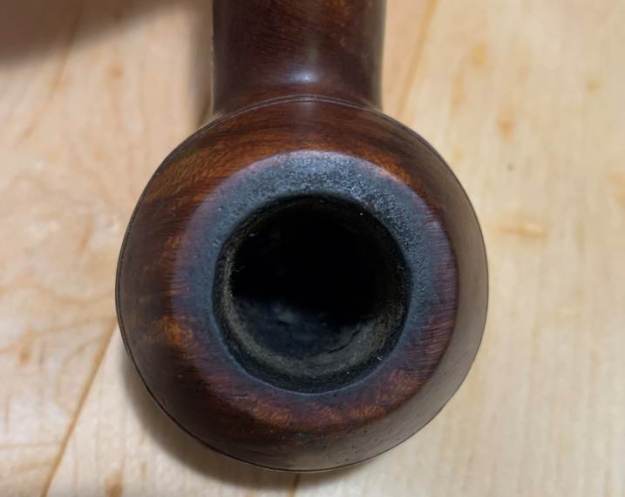
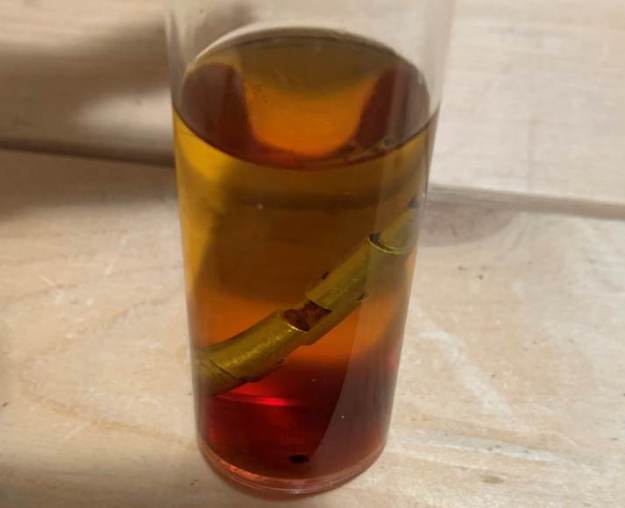
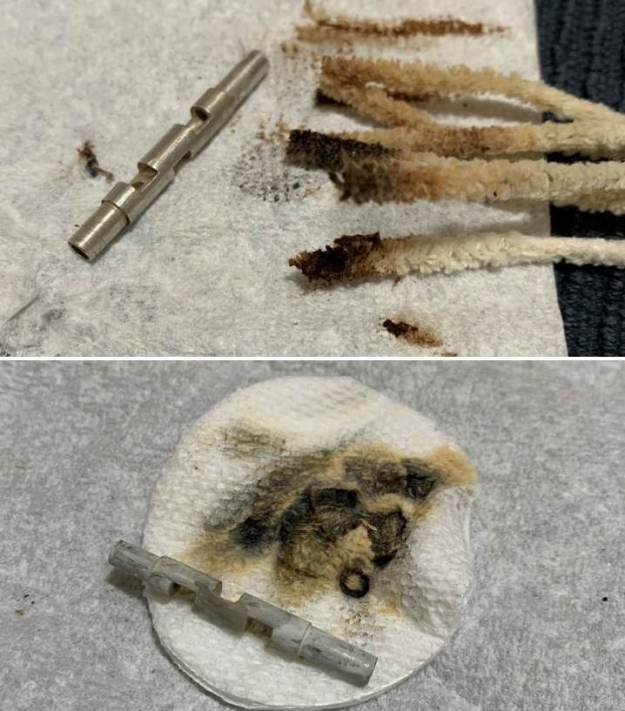
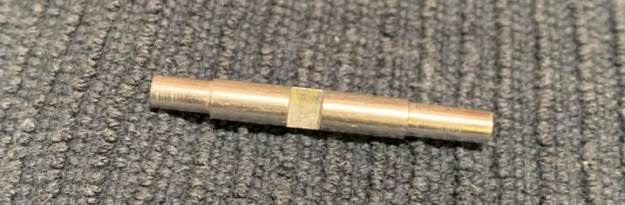
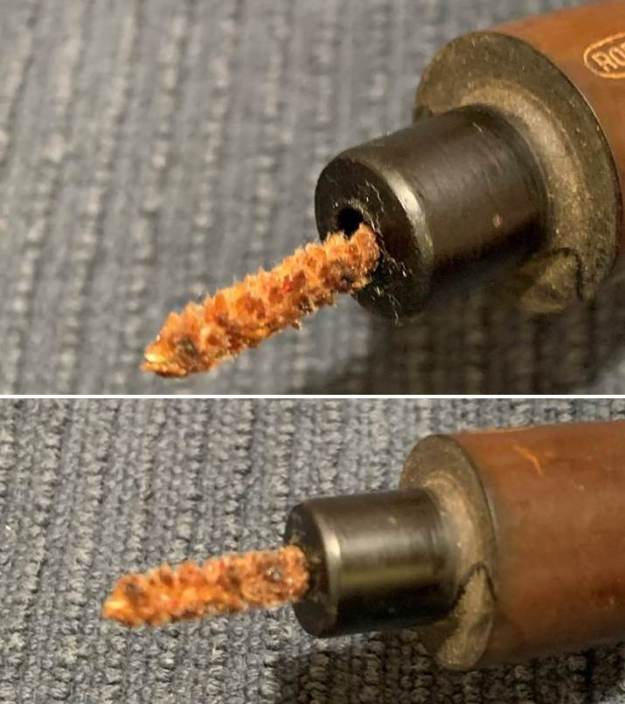
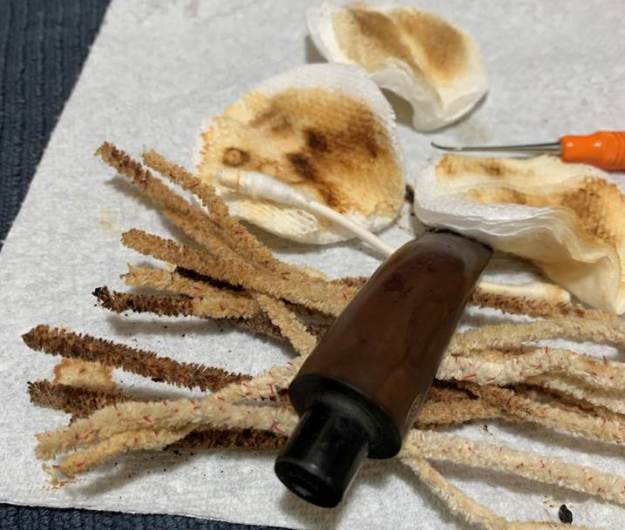
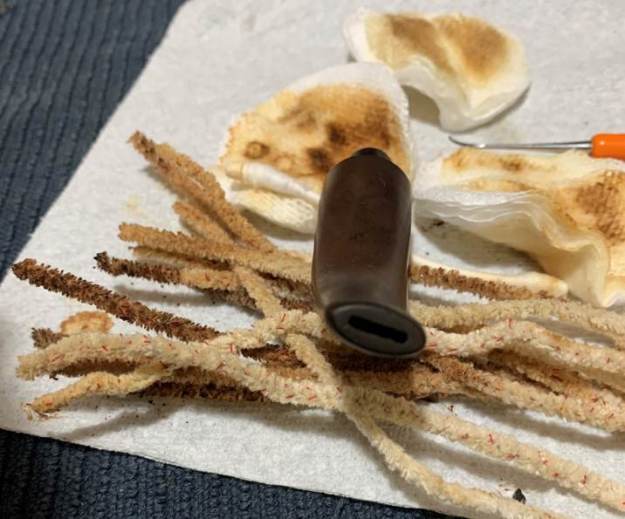
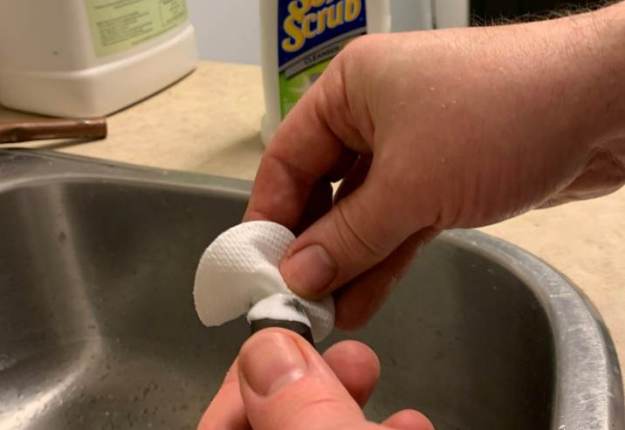
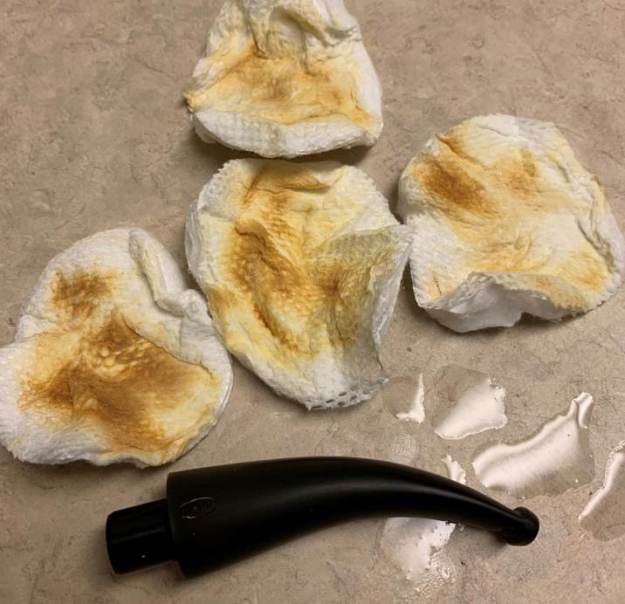
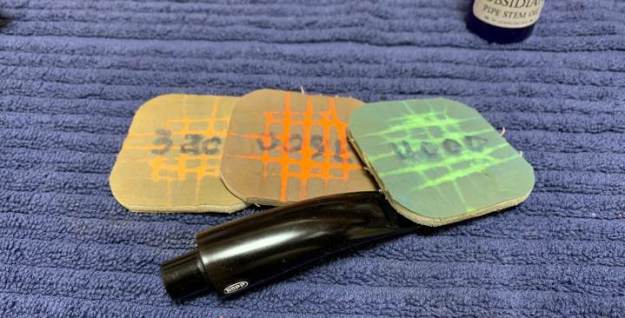
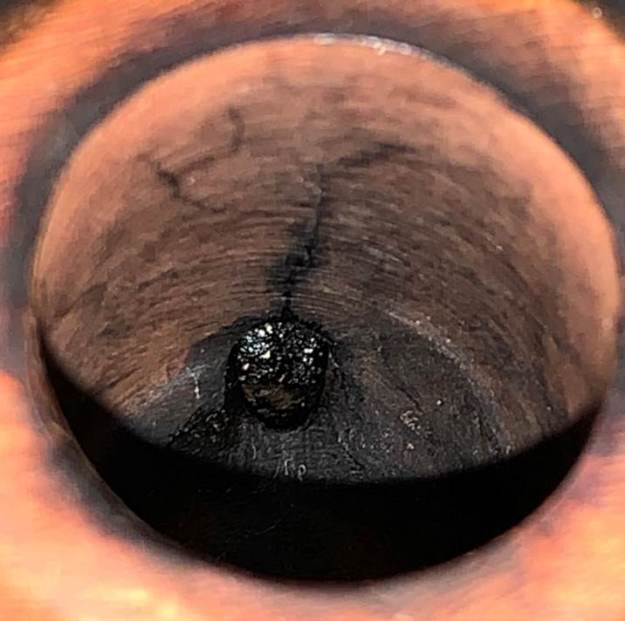
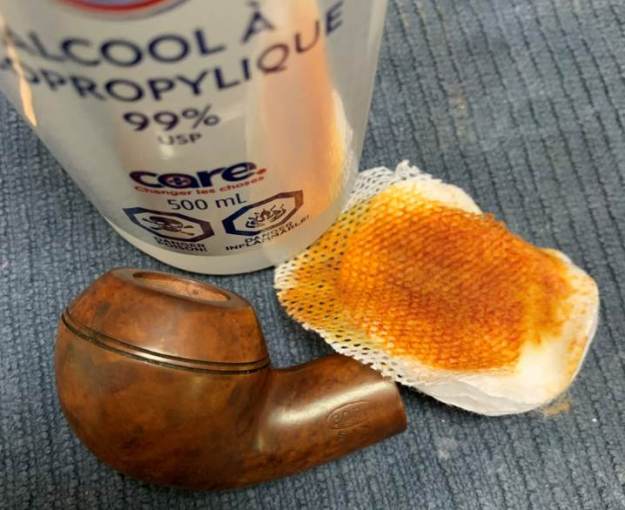
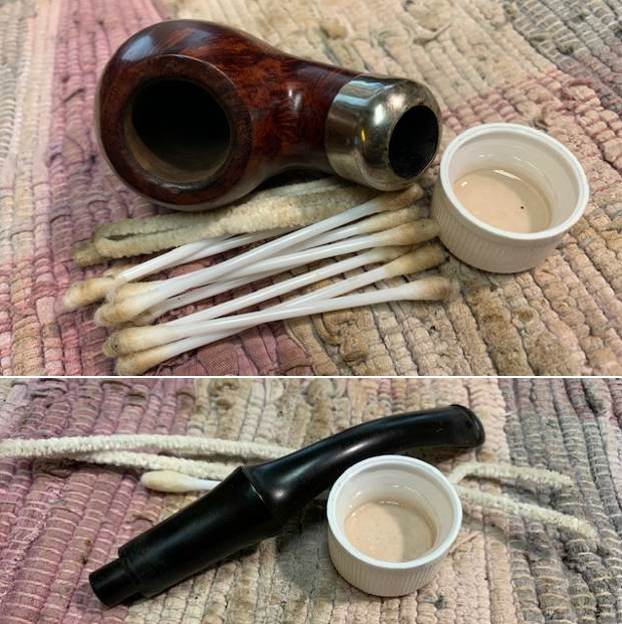
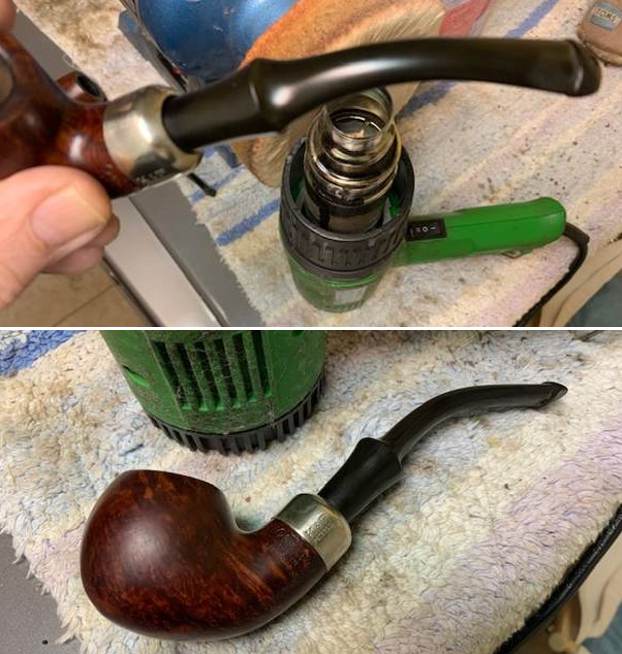
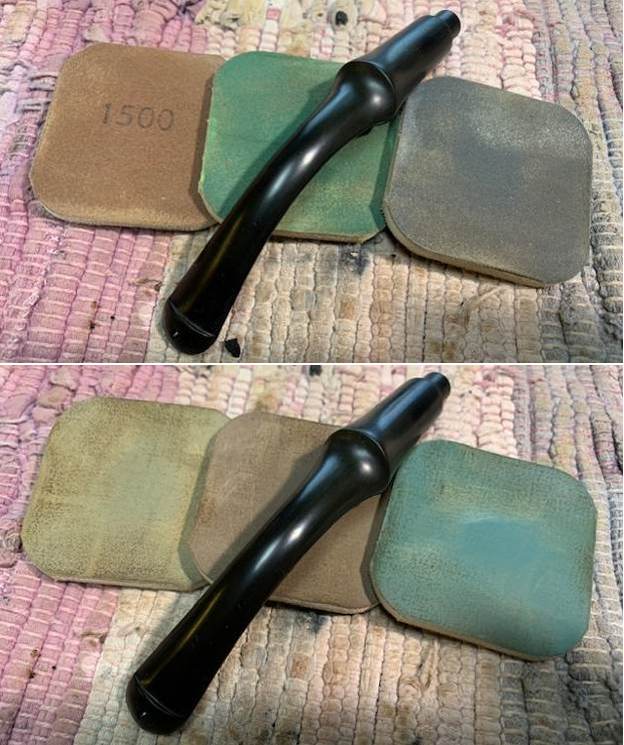
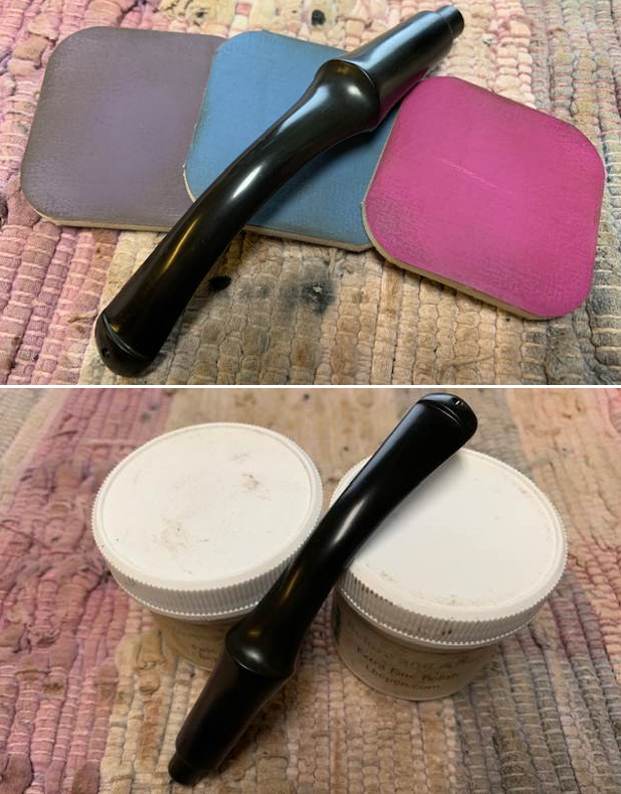
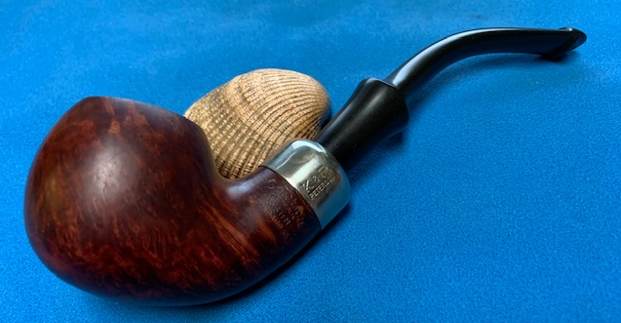
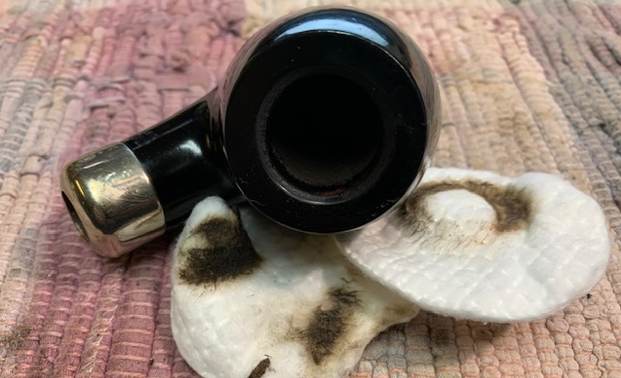
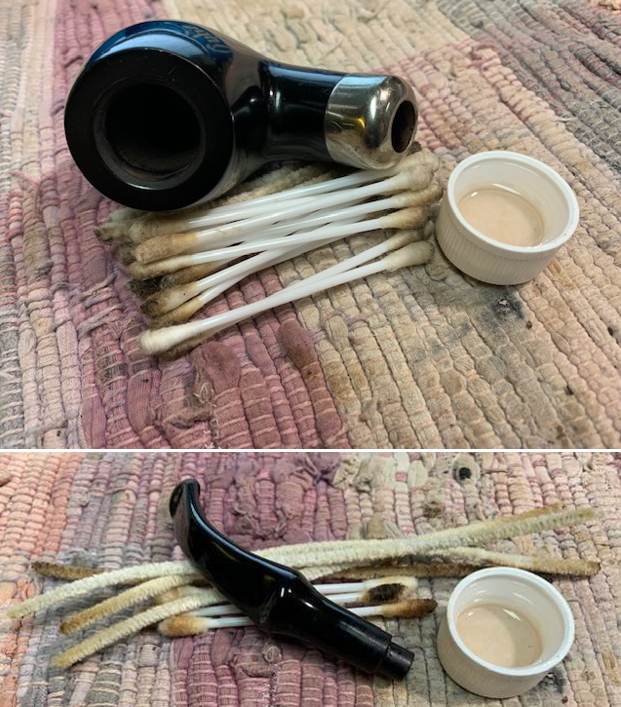
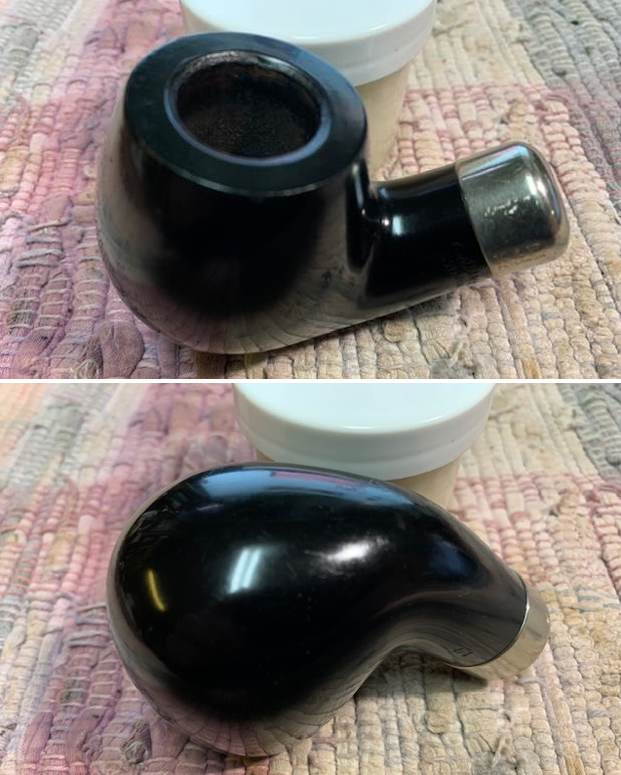
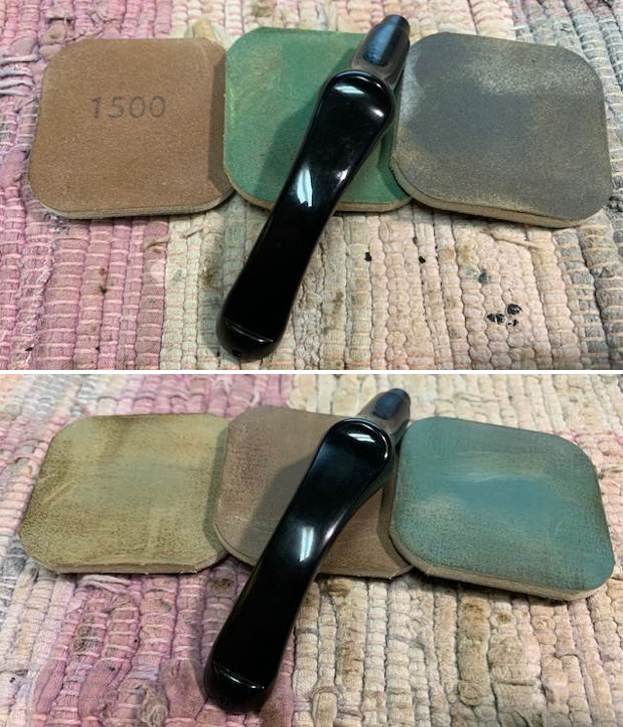
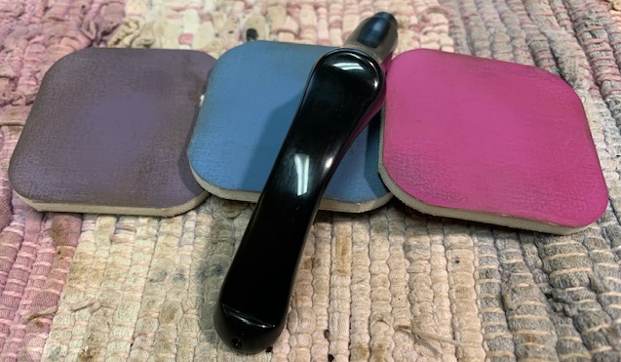
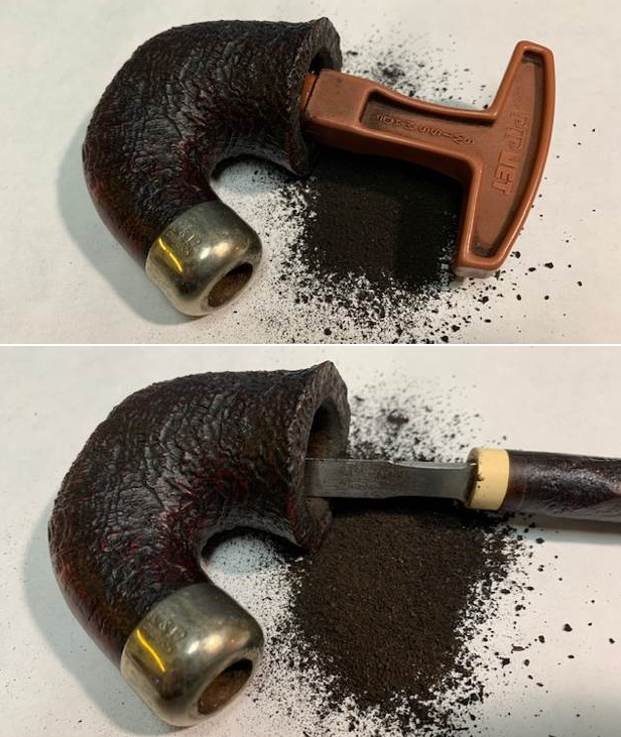
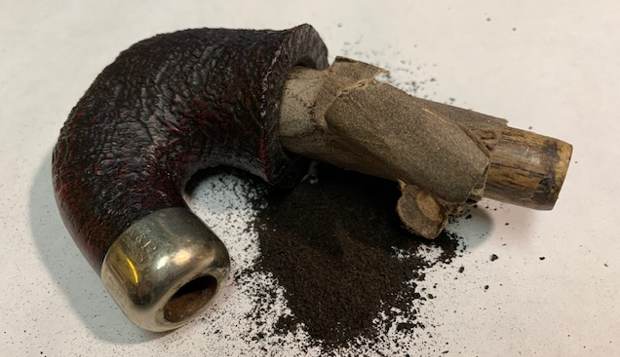
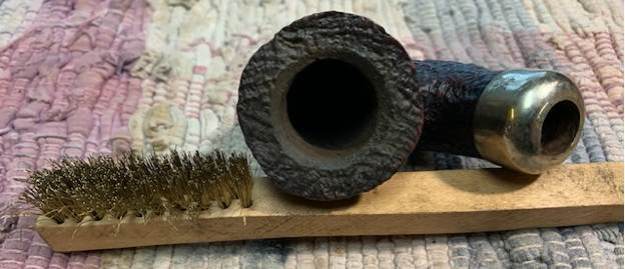
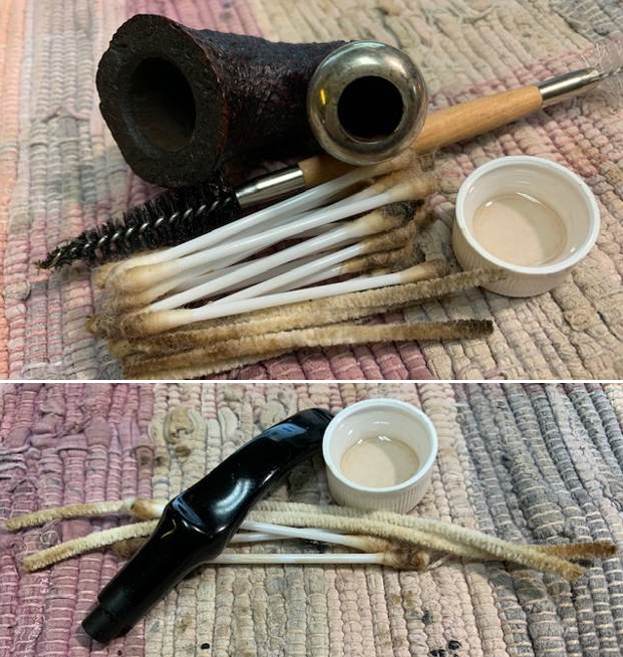
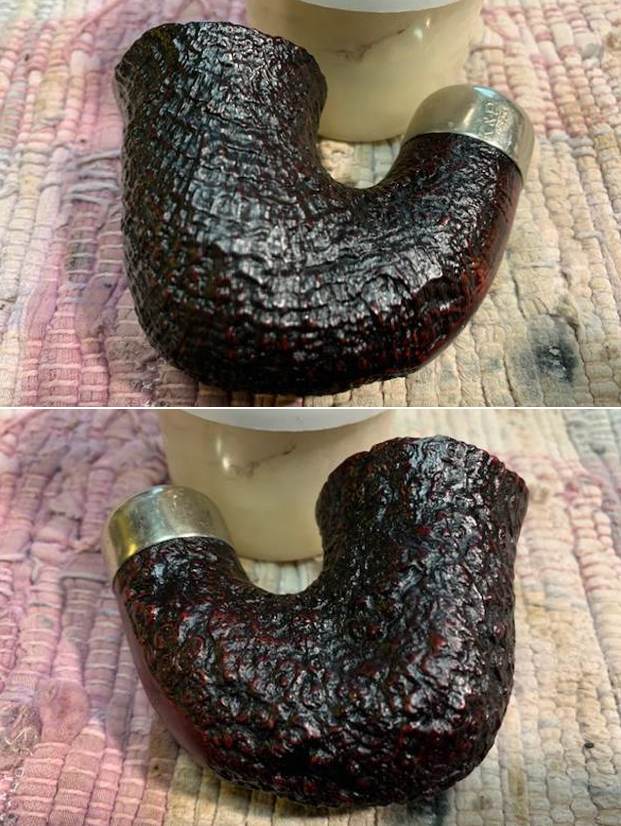
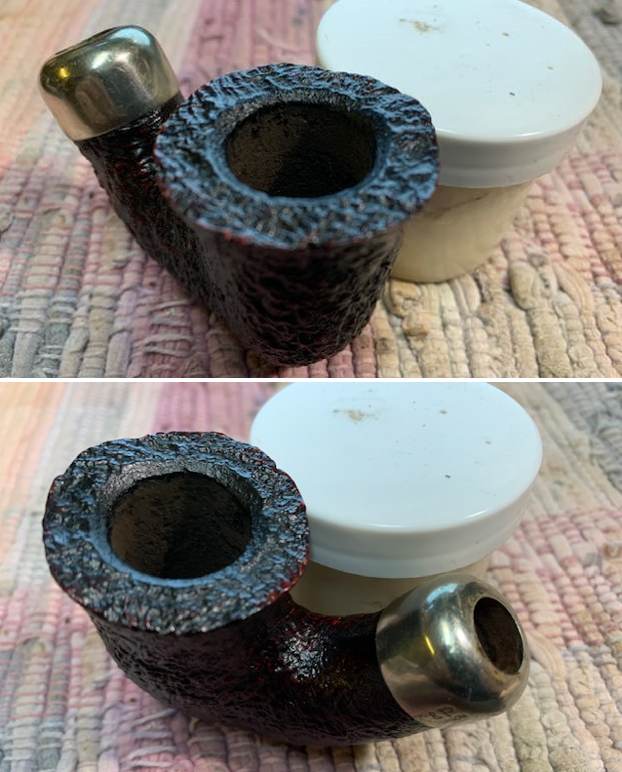
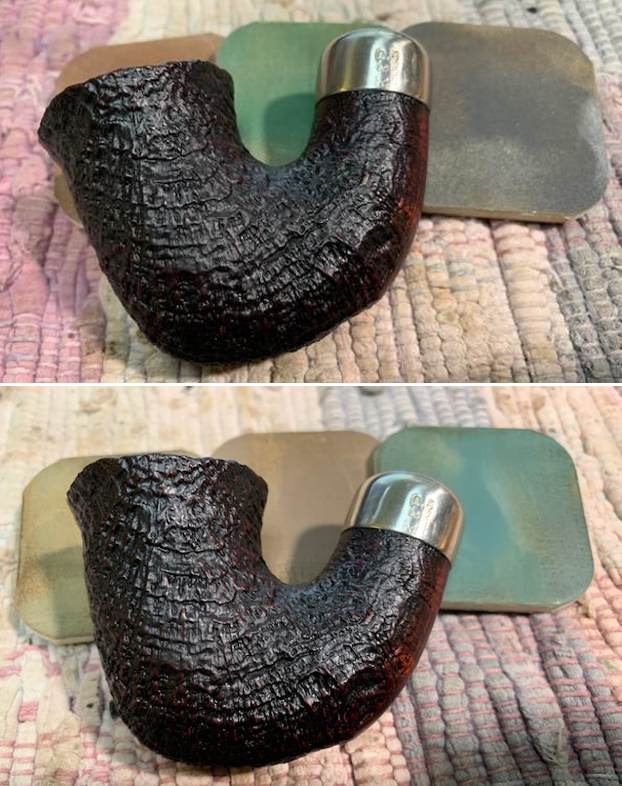
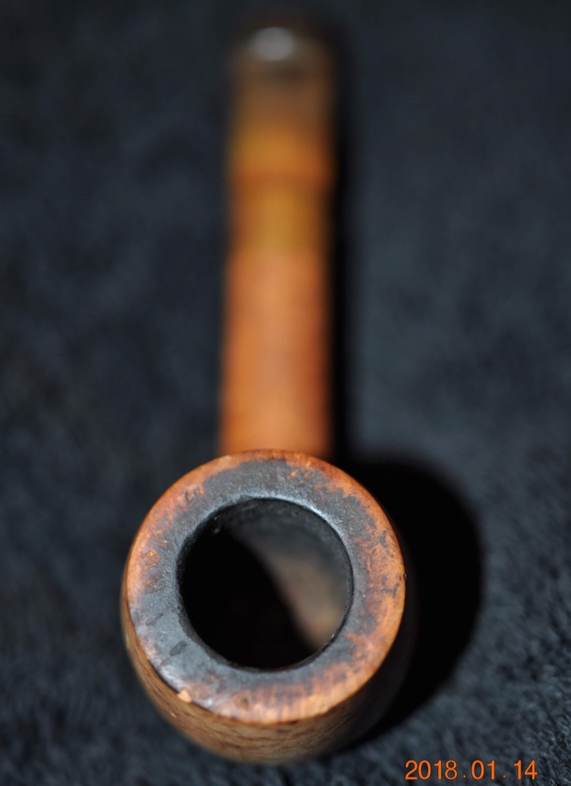
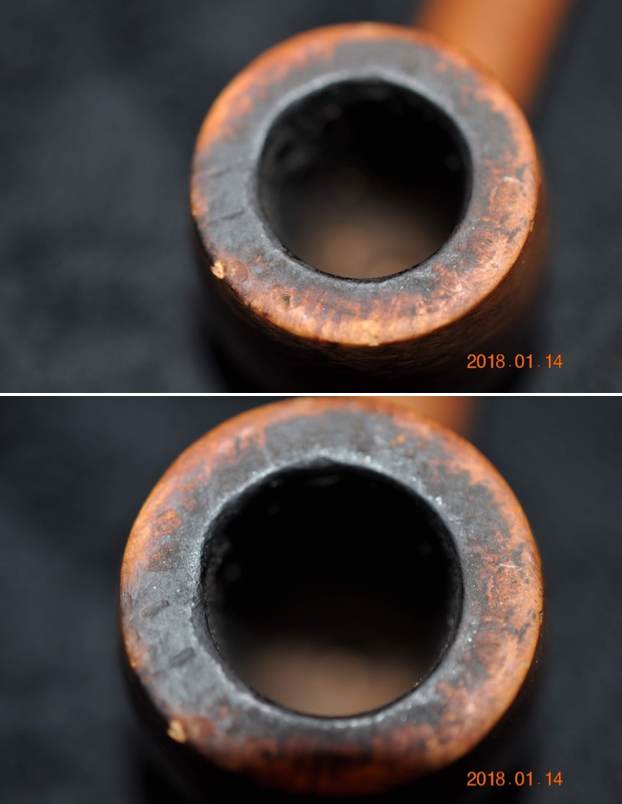
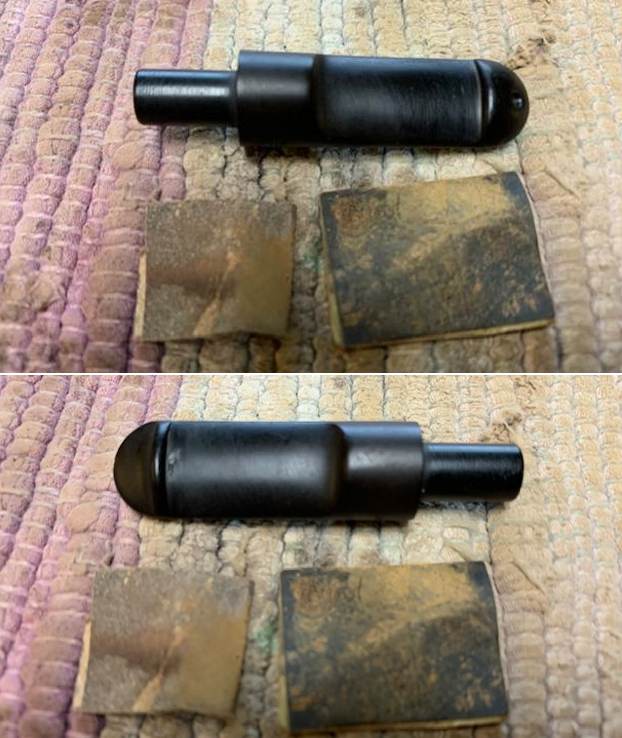
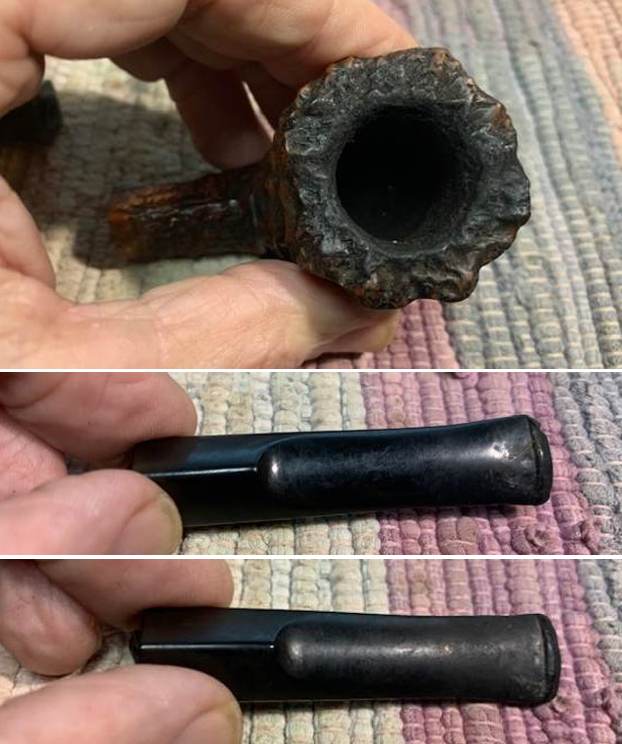
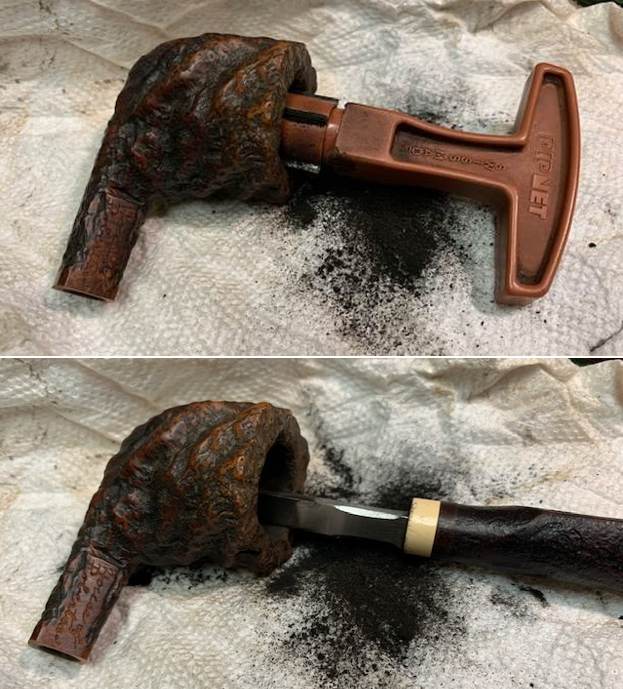
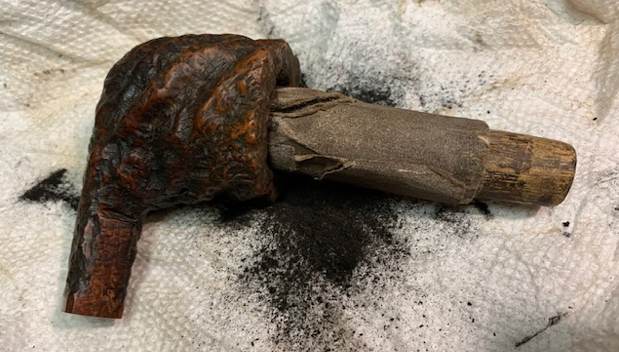
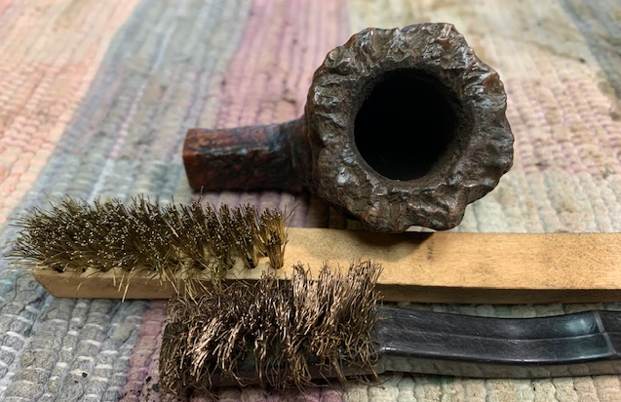
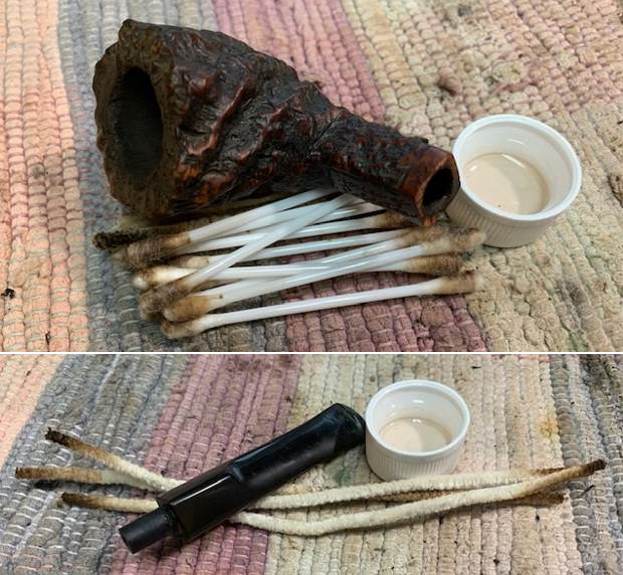
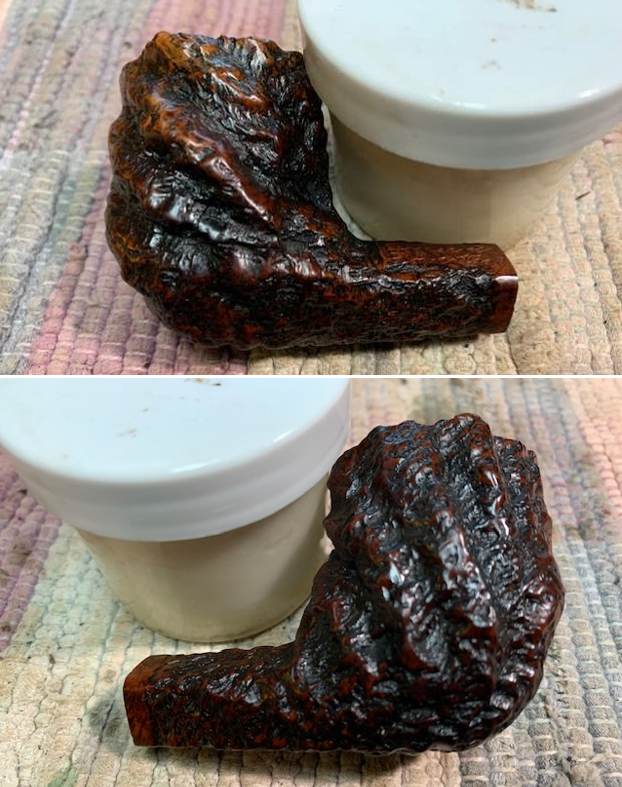
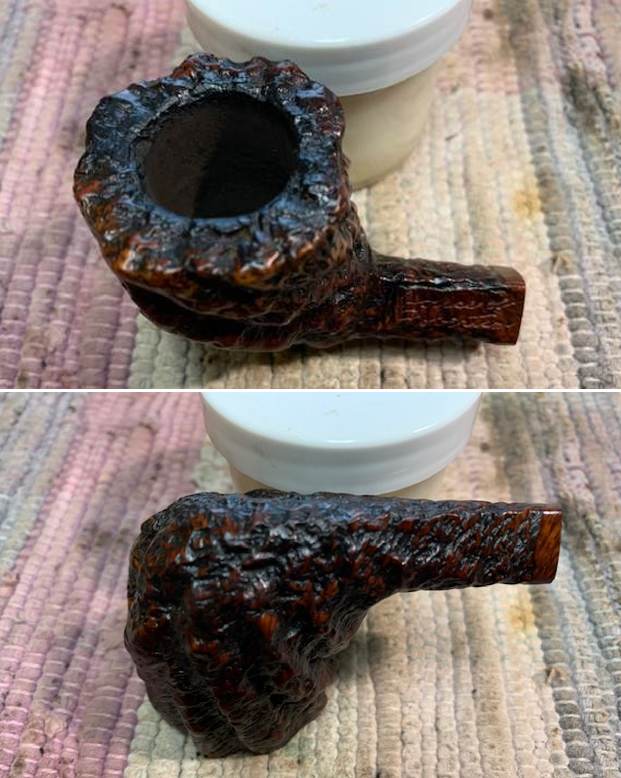
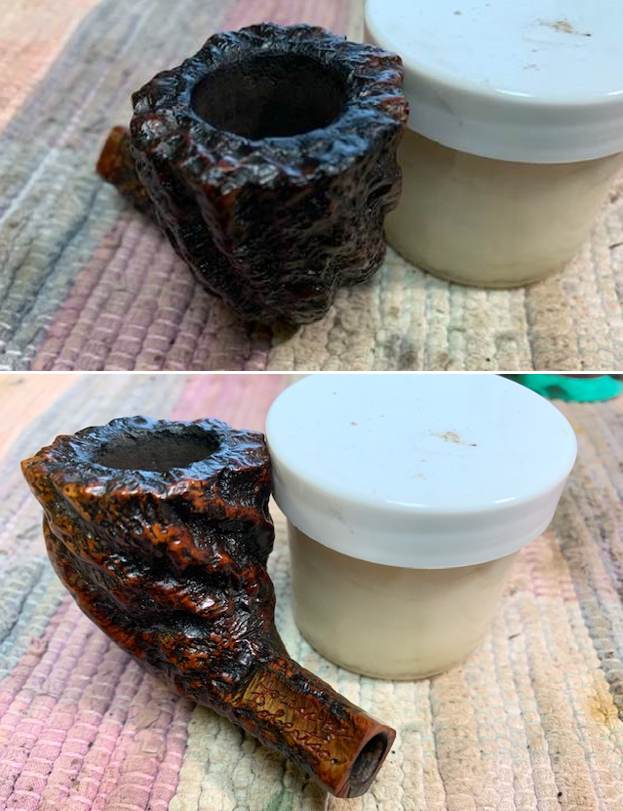
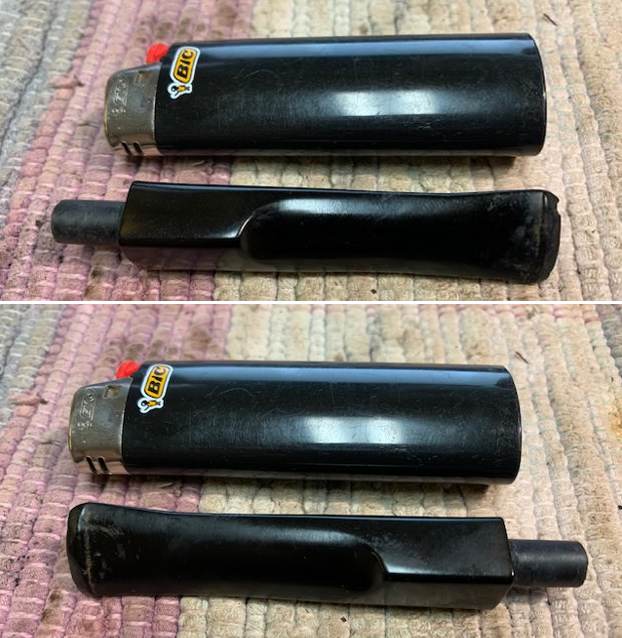
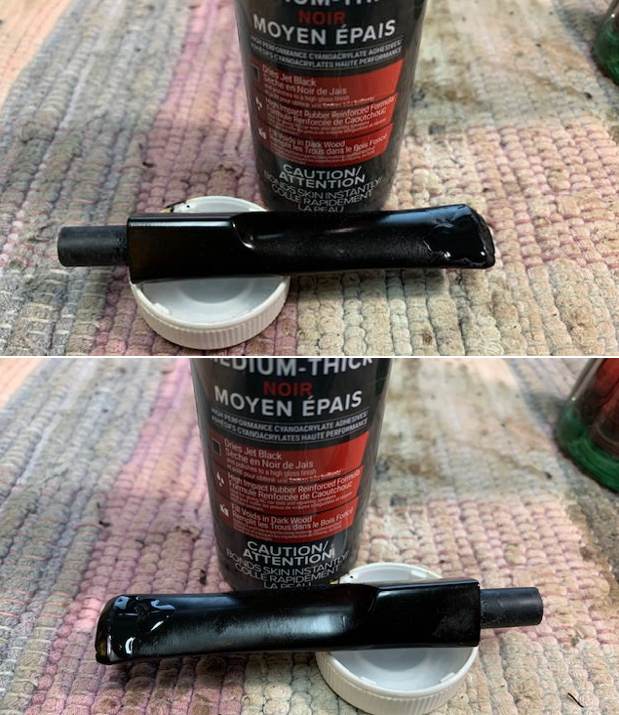
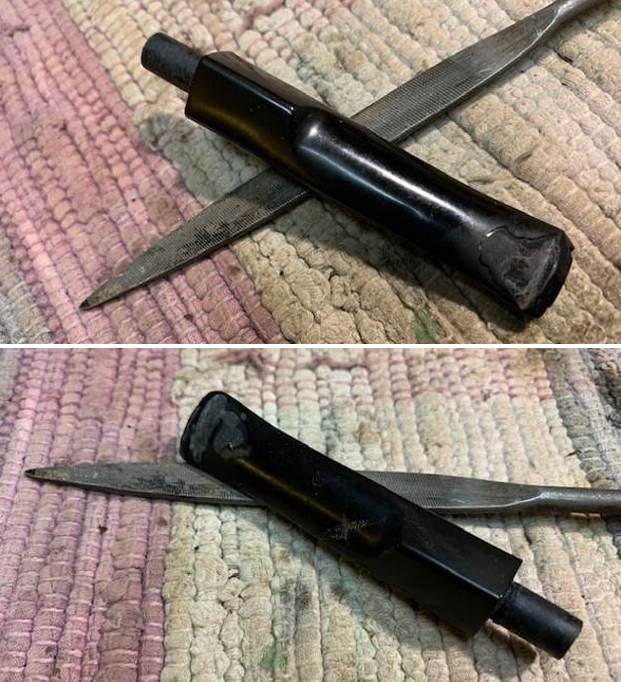
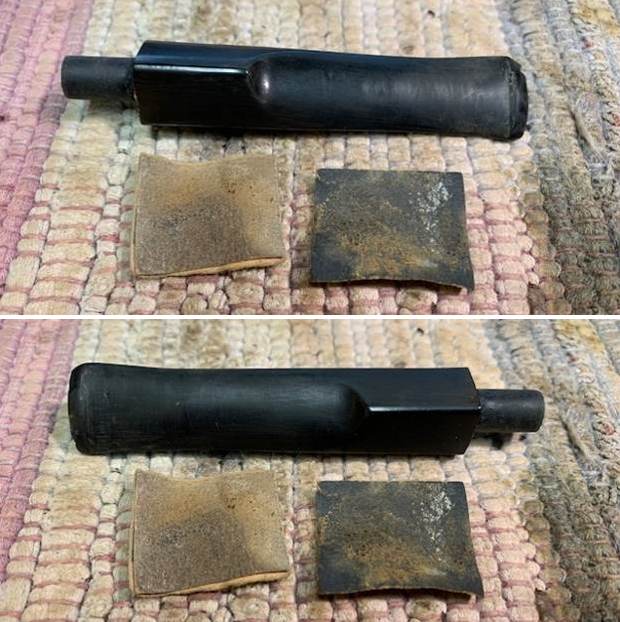
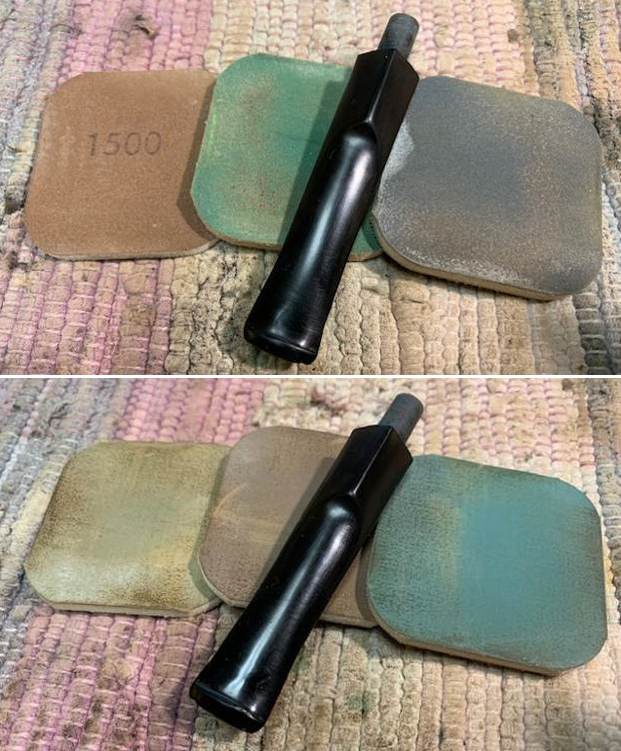
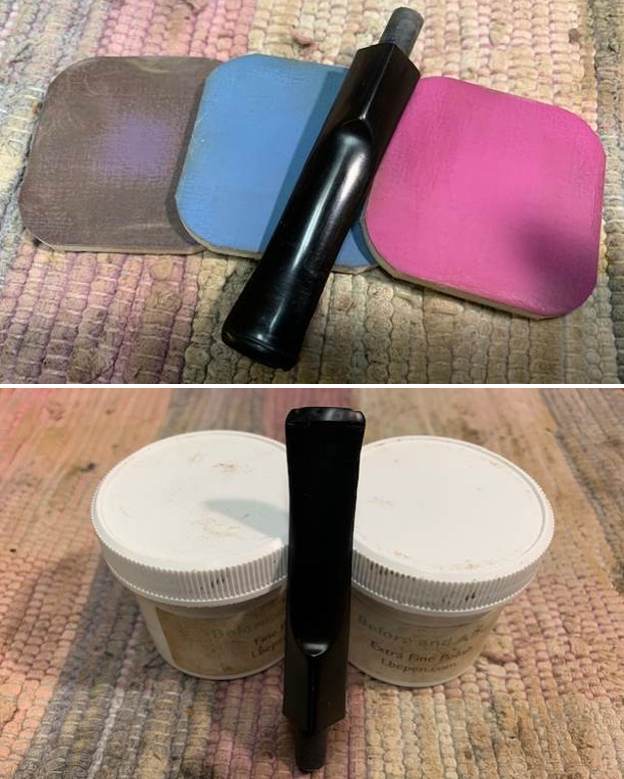
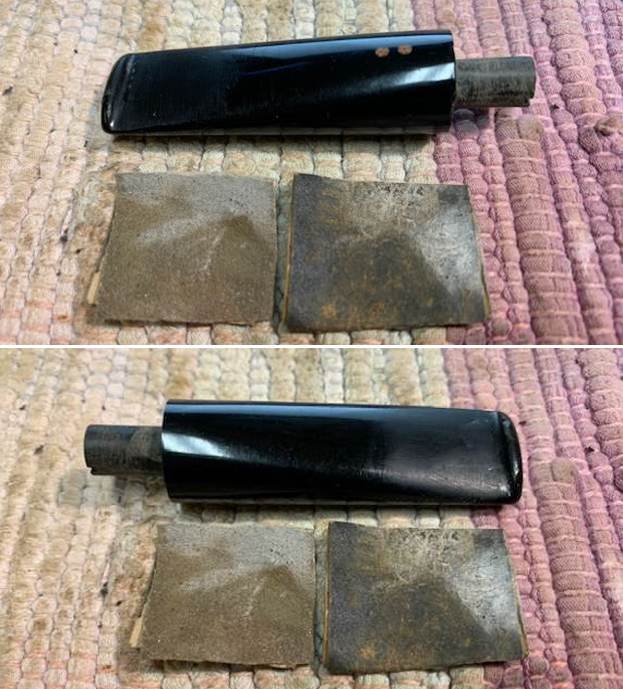
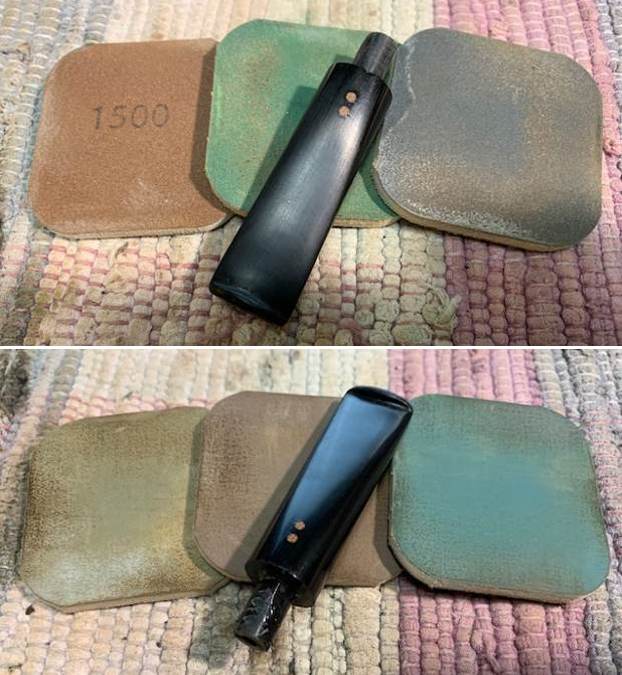
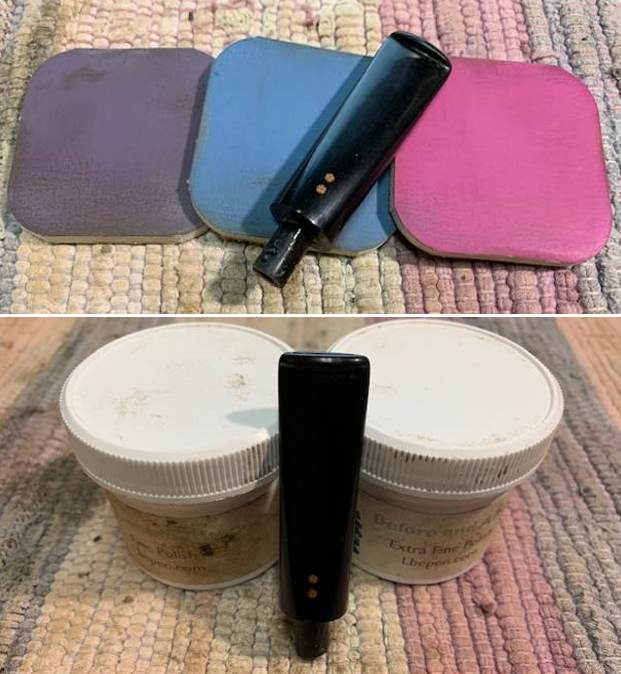
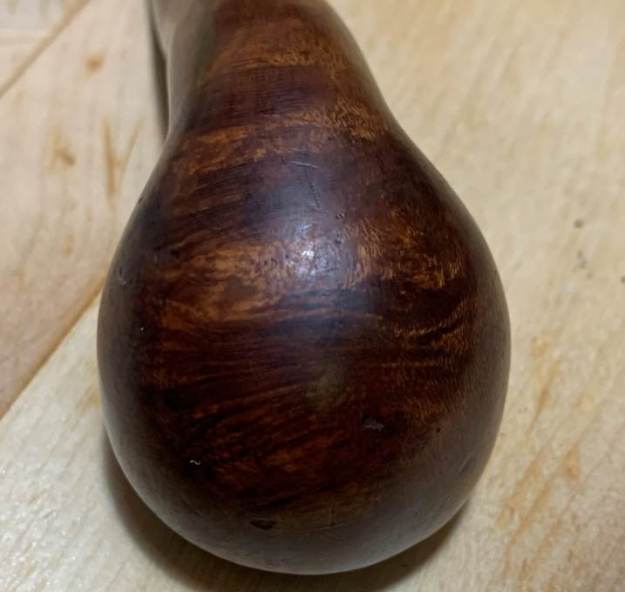
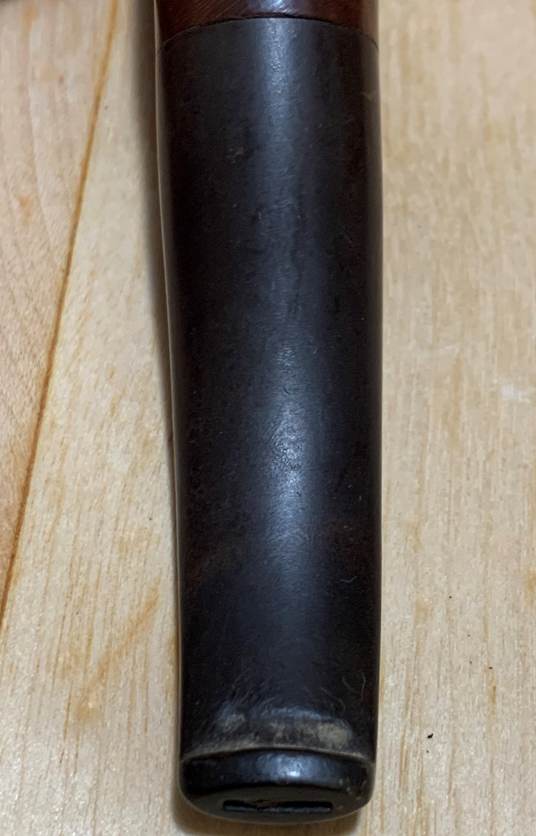
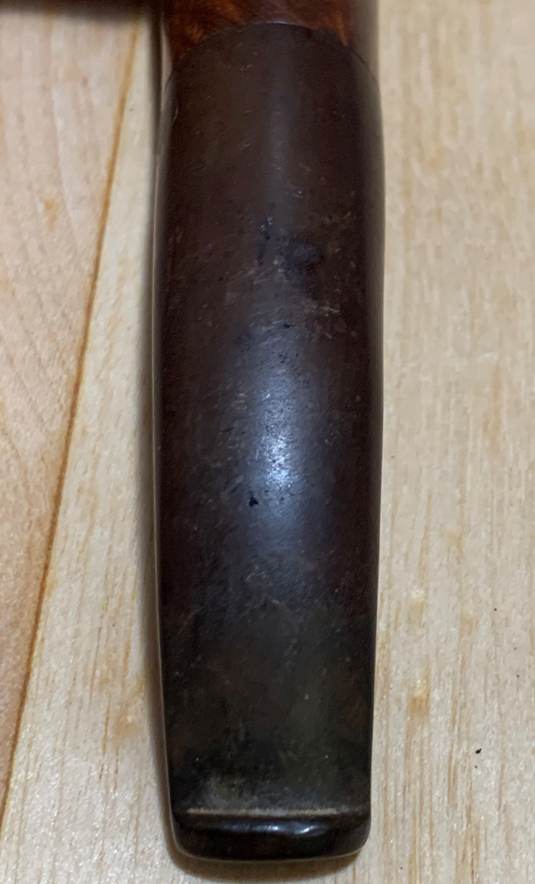
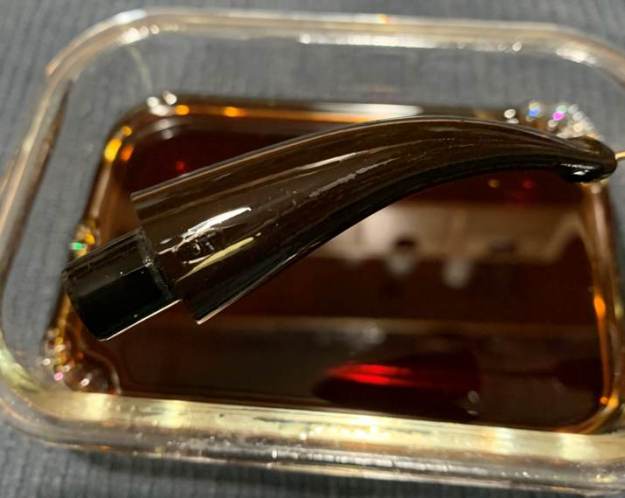
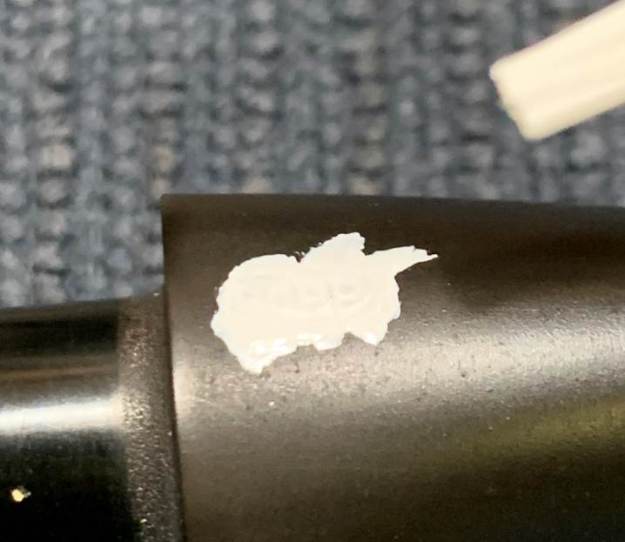
Eugène-Léon Ropp (1830–1907) acquired a patent for the cherrywood pipe in 1869. In 1870, he established a workshop to manufacture such pipes in Bussang, in the Vosges mountains. Around 1893, his business moved into the former mill of Sicard (part of the community of Baume-les-Dames in Upper Burgundy. The pipes were a big success in export as well. Shortly before 1914, Ropp designated A. Frankau & Co. (BBB) to be the exclusive distributor in the UK and its colonies. Probably in 1917, a workshop in Saint-Claude in the rue du Plan du Moulin was acquired to start the fabrication of briar pipes. In 1923, another small building in Saint-Claude, serving as a workshop for polishing, was added. Cherrywood pipes were the mainstay of Ropp until the company finally closed down in September 1991. The company was taken over by Cuty-Fort Entreprises in 1994. On to the pipe: it was in decent shape, but it had a few issues. The stem had a bit of oxidation and calcification, but – mostly notably – it had substantial bite marks, top and bottom. The stummel also had a few issues. The outside of the bowl had some scratches and a couple of fills that needed to be addressed. These are the “decorations” I referred to in the title of this article. There was lava and debris on the rim, and a few burn marks too. The inside was pretty dirty too – it would need a thorough cleaning. The stem was first on my list. This stem has a stinger in it – and it was being quite stubborn about coming out of the tenon! I opted to warm the stem and stinger with my heat gun and this provided just enough softening of the internal goo to allow me to pull it out. The stinger then went for a soak in some lemon-infused isopropyl alcohol. I let it set for several hours and then cleaned it off and it looked much improved. I then finished it with some metal polish and moved on. I wiped down the outside of the stem with Murphy’s Oil Soap on some cotton pads. I also took a BIC lighter and ‘painted’ the stem with its flame in order to lift the bite marks and dents. This was not successful at all in raising the damage. More work would need to be done. Then, I cleaned out the insides with pipe cleaners and isopropyl alcohol. Even the bore was clogged with debris! It took an awful lot of work to get this clean! Once this process was done, the stem went for an overnight soak in the Pipe Stem Oxidation Remover. The following day, I cleaned all of the de-oxidizing mess off with alcohol, pipe cleaners, et cetera. The oxidation had migrated to the surface and would be fairly straightforward to remove. I scrubbed with SoftScrub on some cotton pads to remove the leftover oxidation. After this, I used some nail polish to restore the Ropp logo on the stem. I painted the area carefully and let it fully set before proceeding. I built up the dents on the stem with cyanoacrylate adhesive and let them fully cure. On this occasion, I actually built up several layers of the glue over a few days. I must admit, it was an annoying and frustrating process because, at this stage, it never looked quite right. I then sanded the adhesive down – first with a small file – then with 220-, 400-, and 600-grit sandpapers to meld seamlessly into the stem. I then used all nine Micromesh pads (1,500 through 12,000 grit) to bring out the lovely black lustre on the stem. I also used Obsidian Pipe Stem Oil in between each pad scrubbing. On to the stummel, and the usual cleaning procedures were in order for this pipe. This stummel was a bit of a mess inside, so I first decided to ream out the bowl. I used both the PipNet Reamer and the KleenReem to remove the built-up cake and followed that with 220-grit sandpaper to eliminate as much as I could. I took the bowl down to bare briar, as I wanted to ensure there were no hidden flaws in the walls of the bowl. There were some very thin craze lines inside the bowl, but they were small enough that I elected to leave them as they were. I then proceeded to clean out the insides of the shank with Q-tips, pipe cleaners, and isopropyl alcohol. There was considerable filth inside this stummel and it took a lot of cotton to get it clean. I followed that up by cleaning the insides with some dish soap and tube brushes.
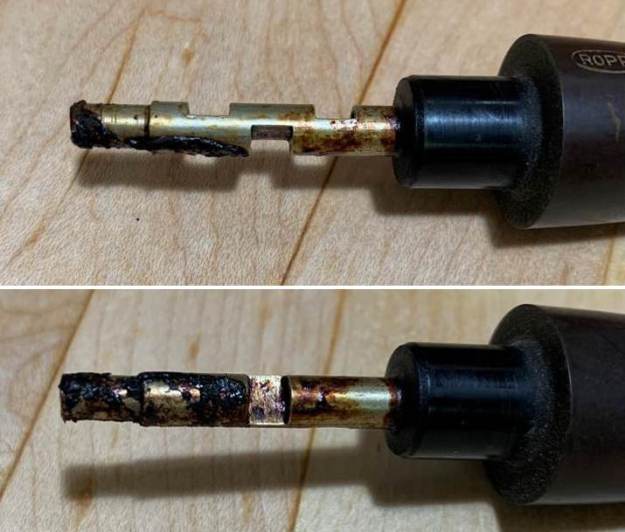
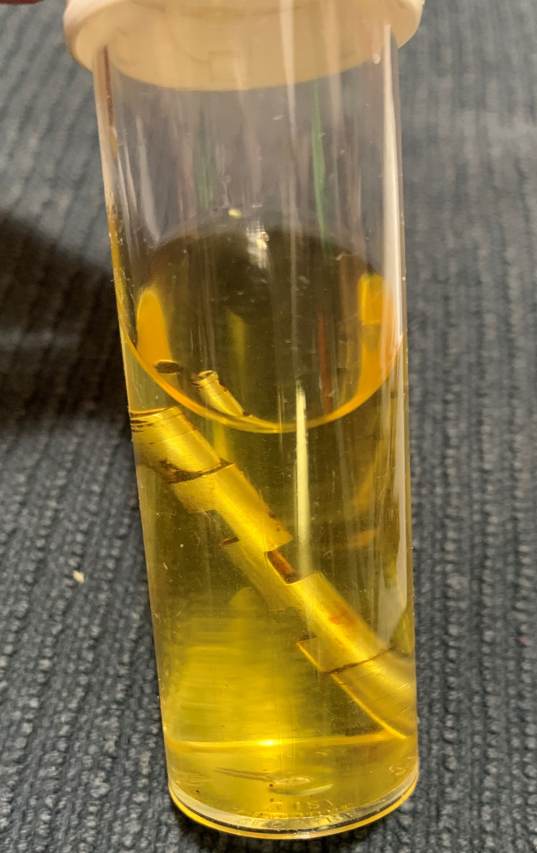
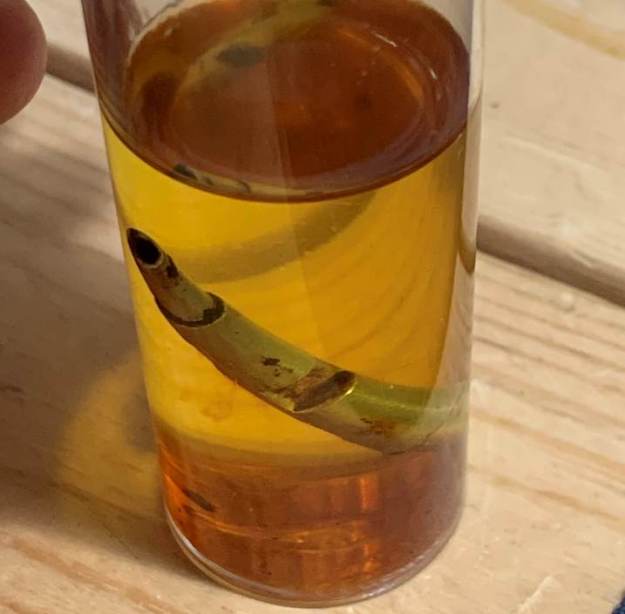
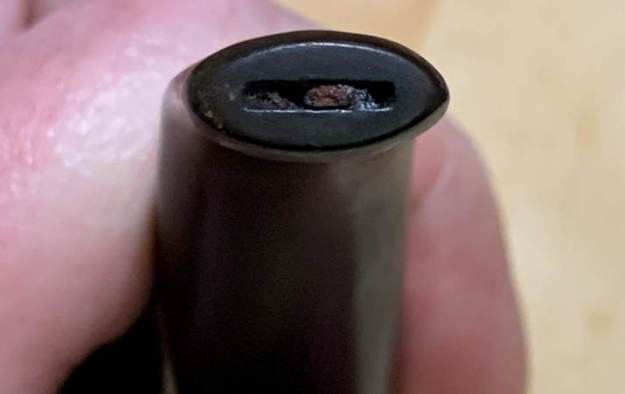
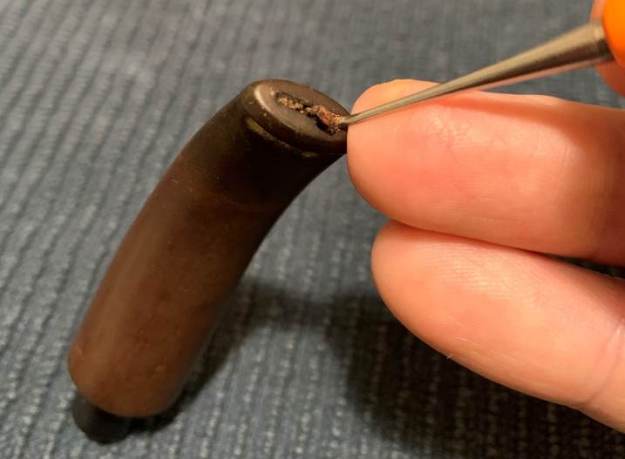
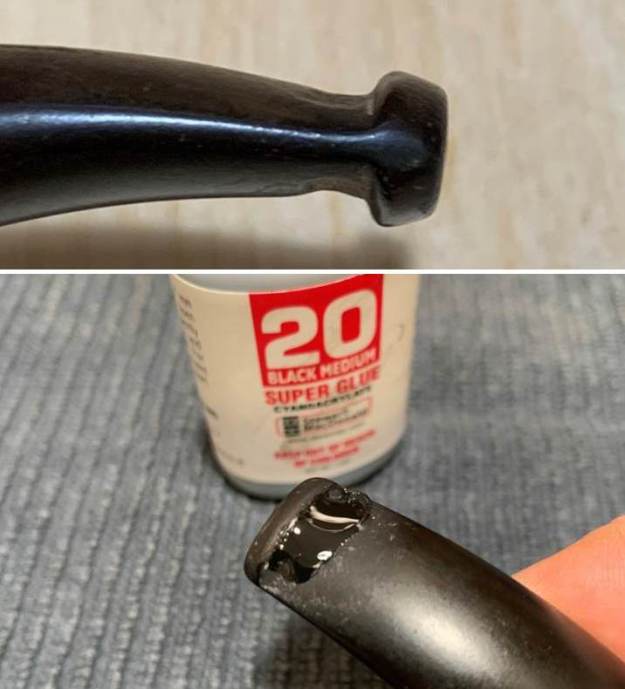
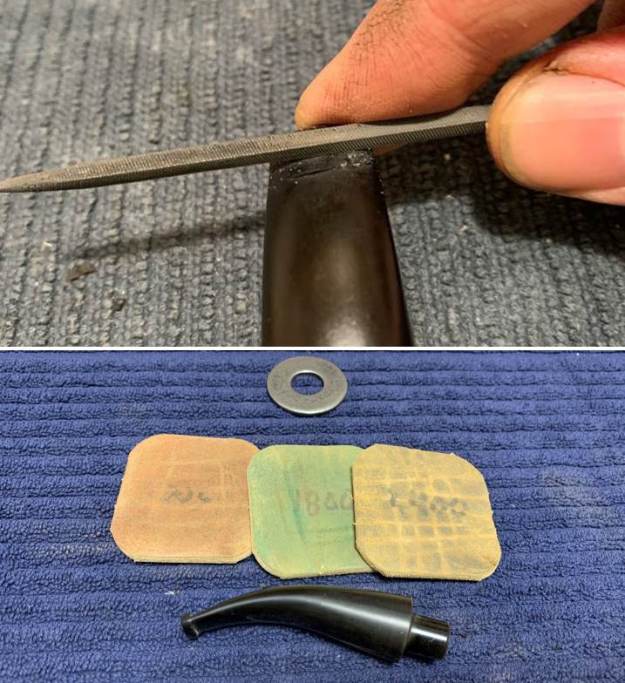
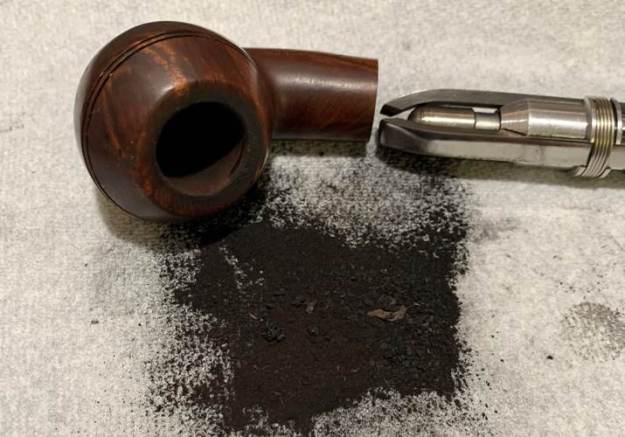
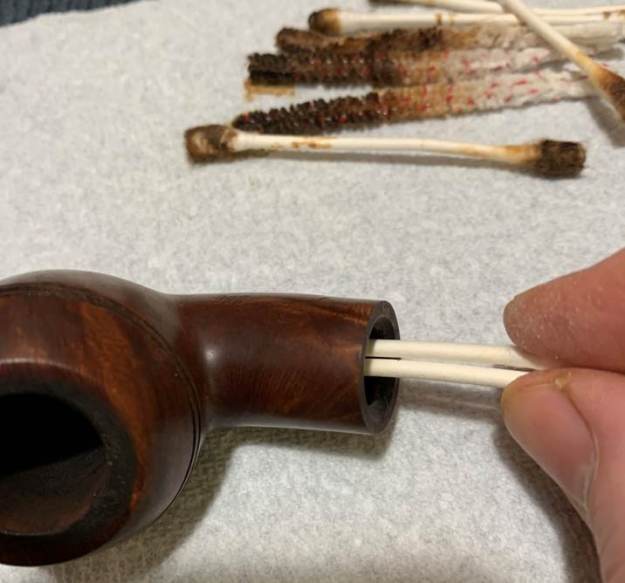
I used a small butter knife to gently chip away at the lava on the rim. I then used more Murphy’s with a scrub brush to remove any remainder. This actually worked quite well. I then moved on to cleaning the outside of the stummel with Murphy’s Oil Soap and some cotton pads. That removed any latent dirt that blighted the wood.

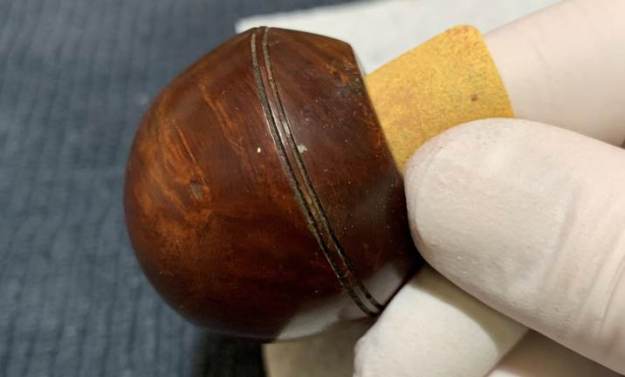
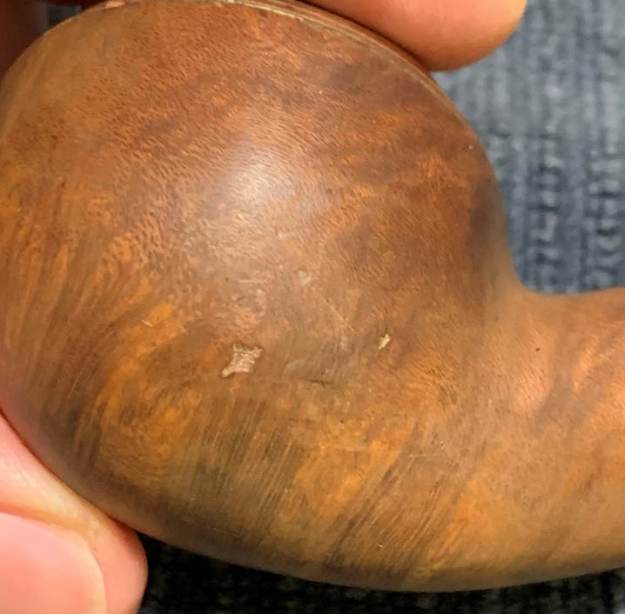
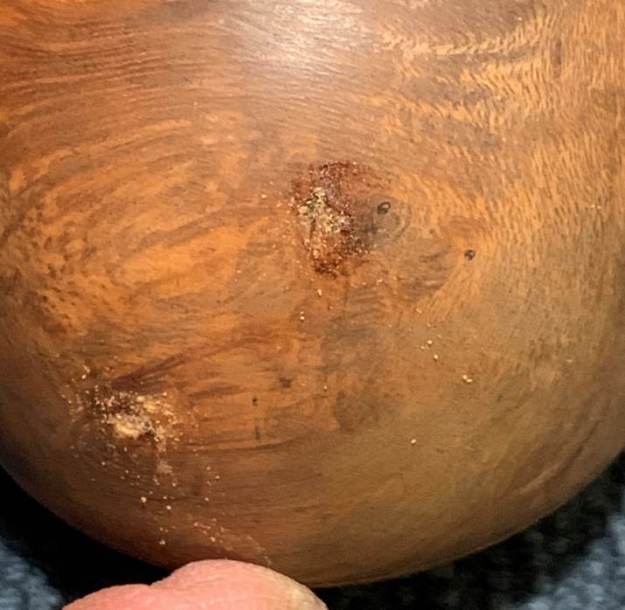
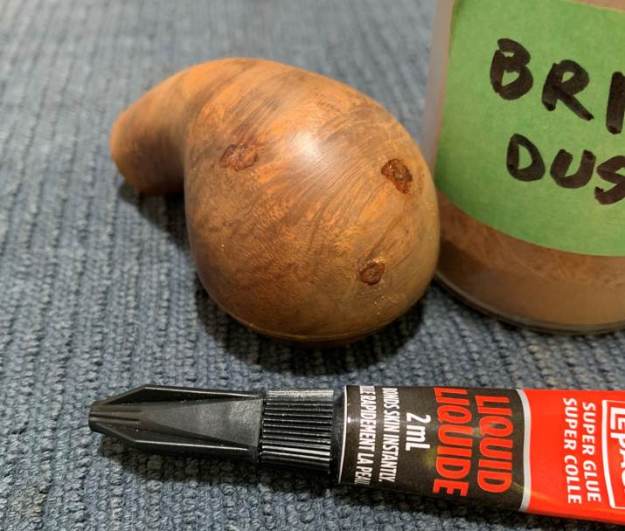
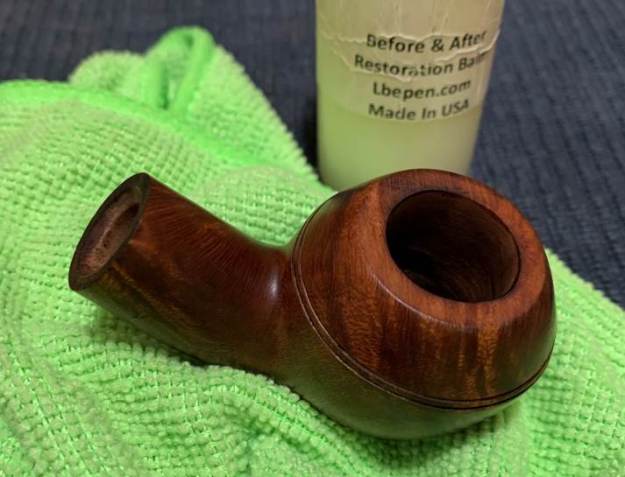
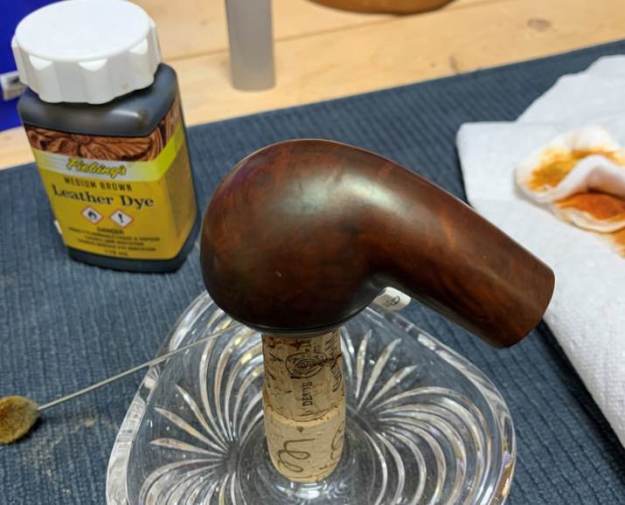
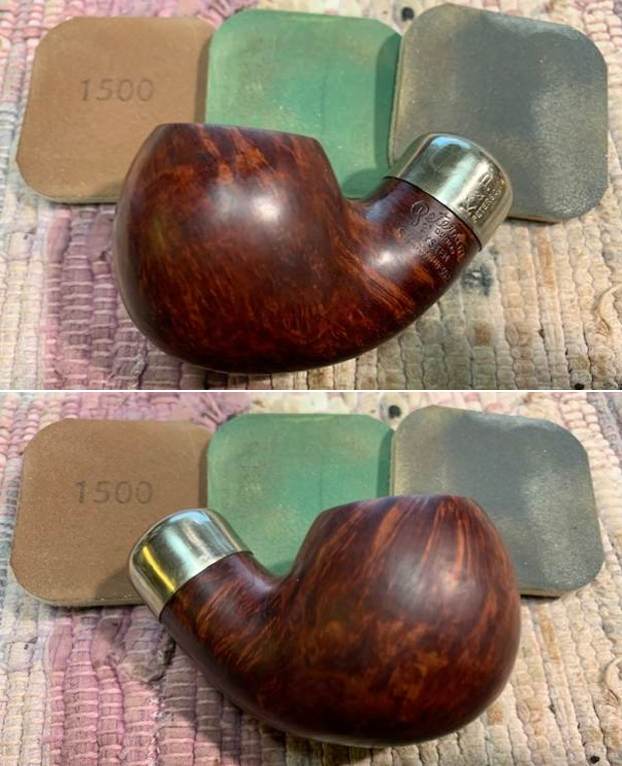
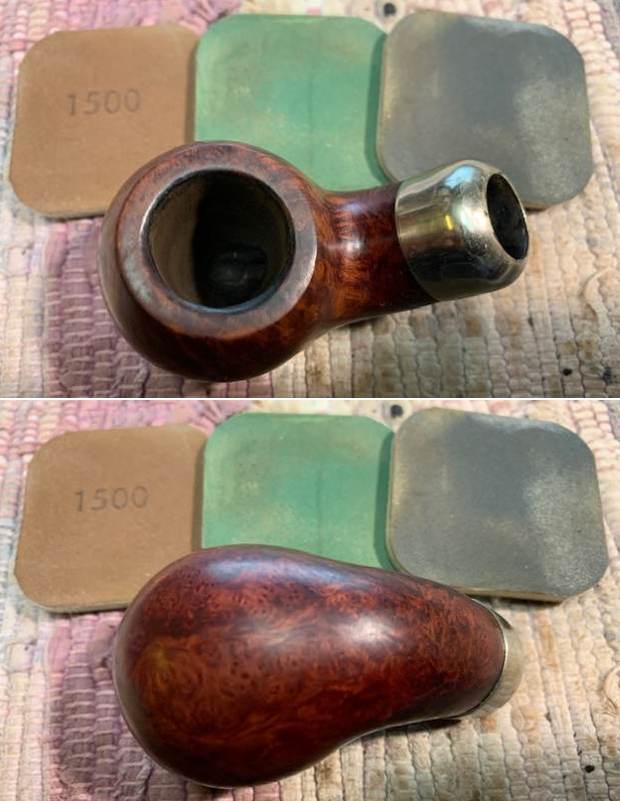
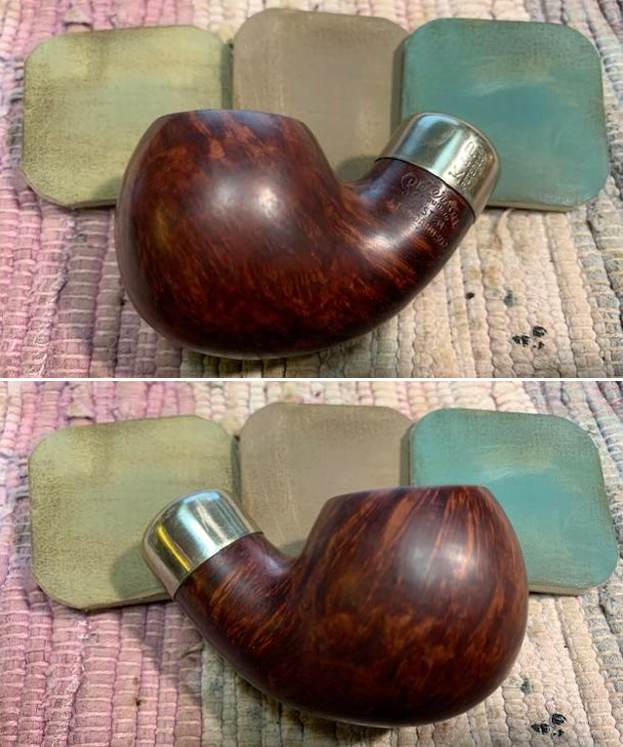
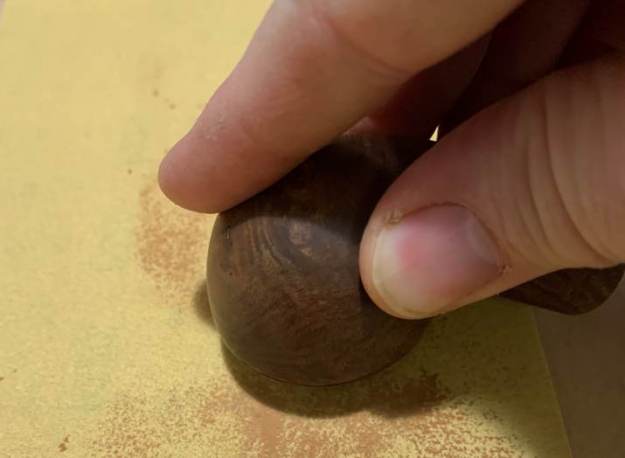
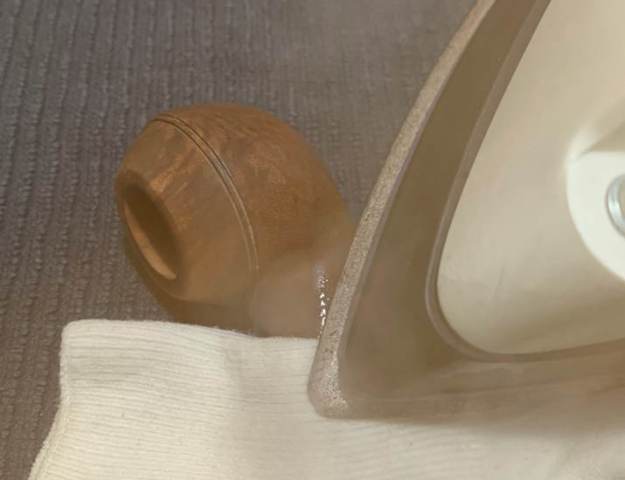
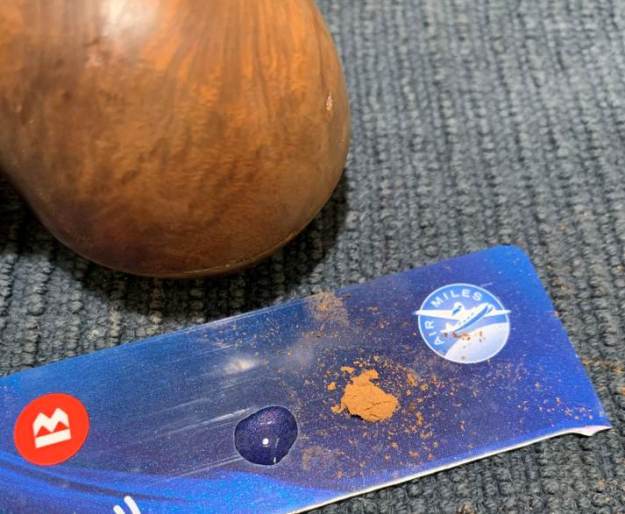
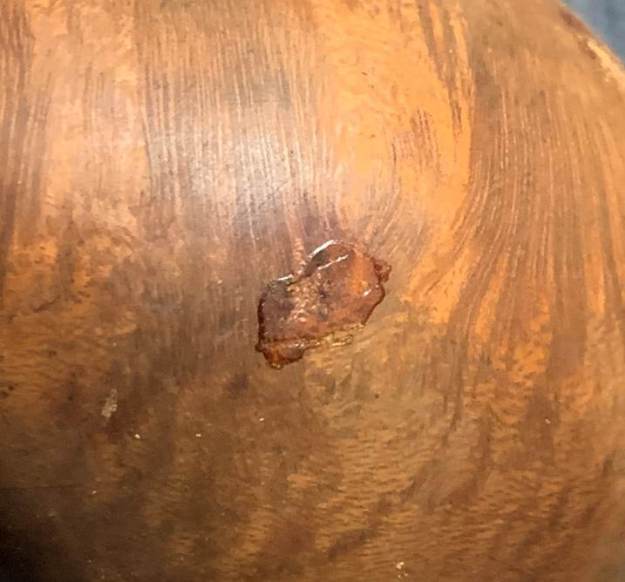
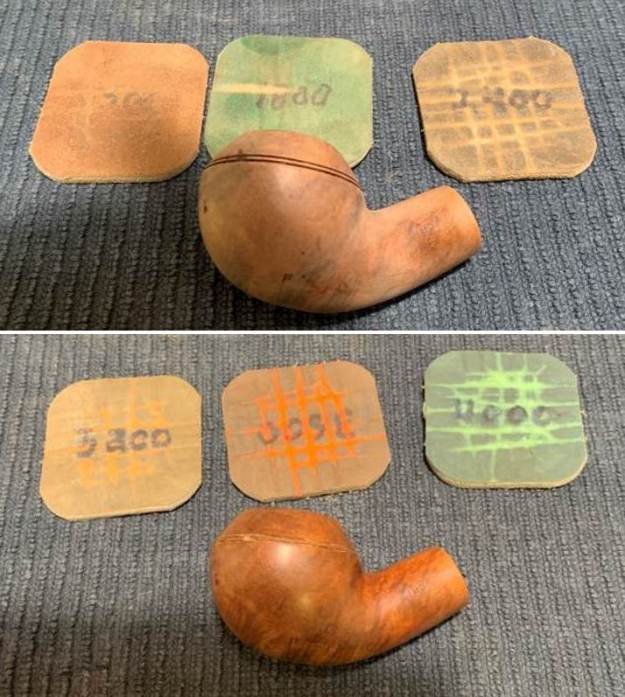
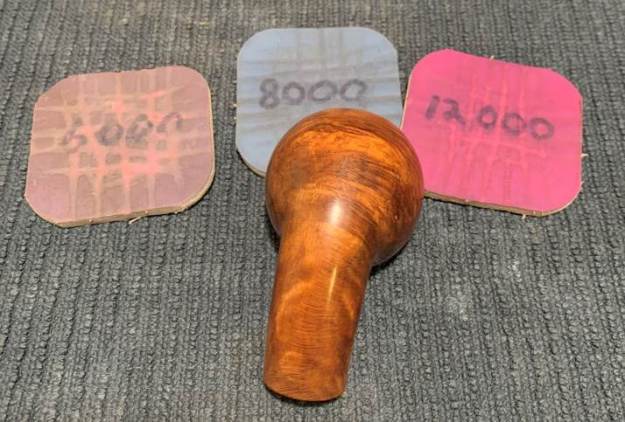
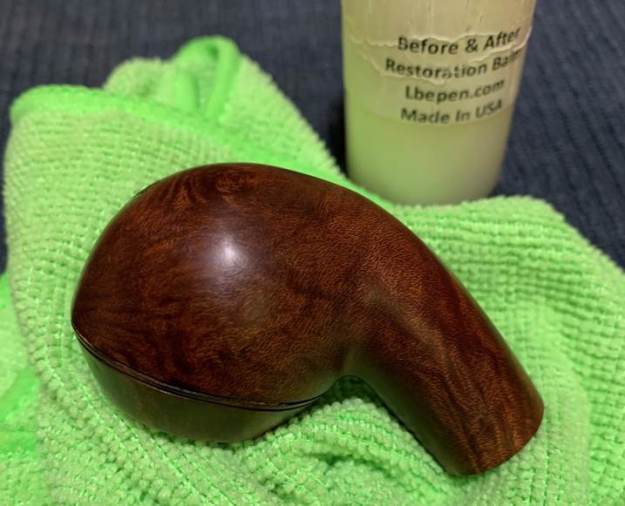
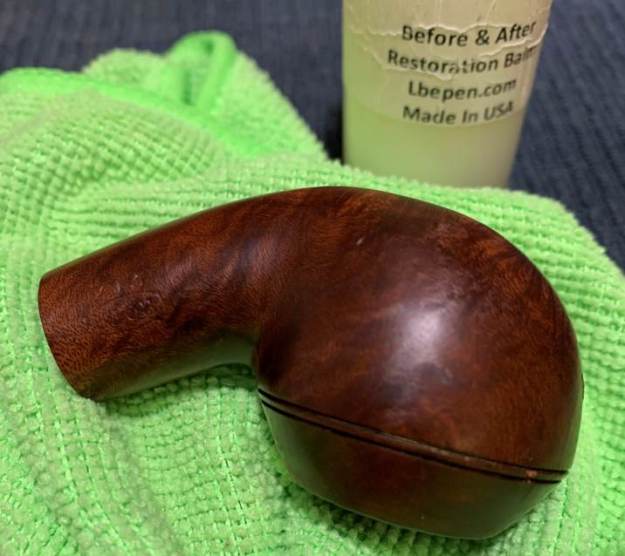
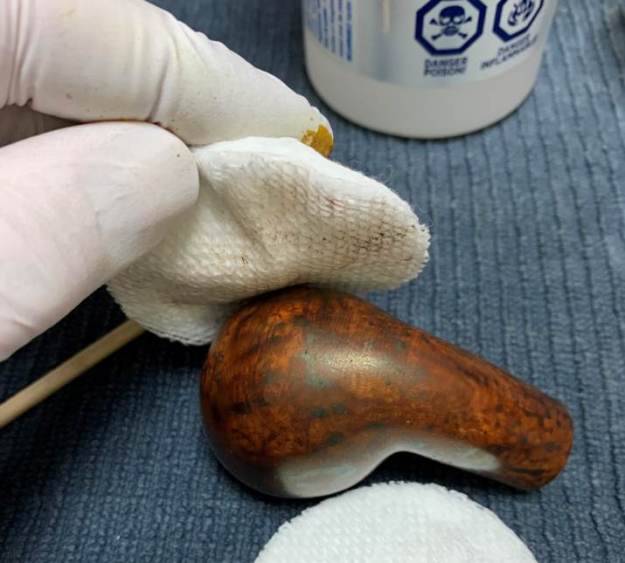
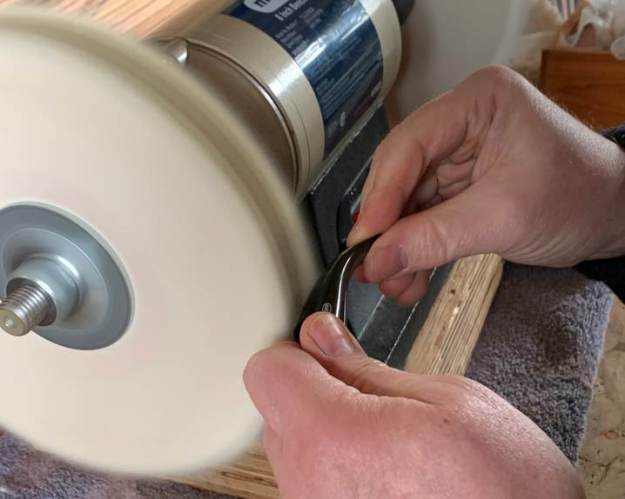
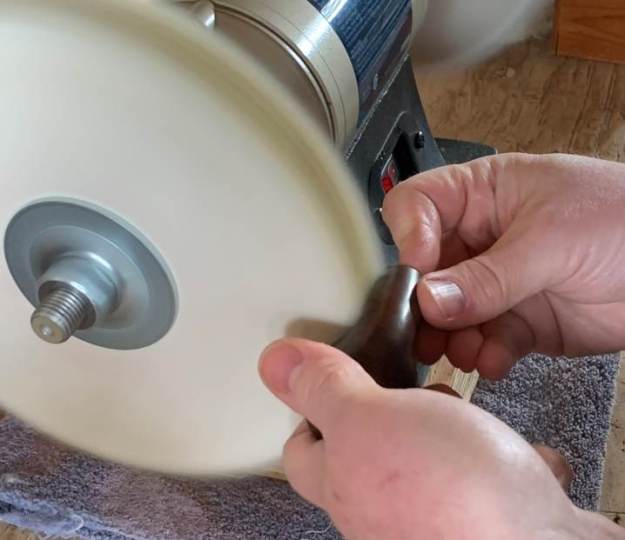
In order to remove the remaining burns and nicks on the rim, I “topped” the pipe – that is to say, I gently and evenly sanded down the rim on a piece of 220-grit sandpaper. This effectively removed the damage, without altering the look of the pipe.Having completed that, I was able to address the small nicks on the stummel. I dug out my iron and a damp cloth to try and raise the nicks. The hot and moist steam can often cause the wood to swell slightly and return to shape. There was some movement – not a lot, but it was better than doing nothing. The repair was not perfect, but the remaining scratches would be improved by sanding.I lined the fills with cyanoacrylate adhesive and briar dust. After letting them cure, I sanded the fill repairs down with 200-, 400-, and 600-grit sandpaper. I then used all nine Micromesh pads (1,500 through 12,000 grit) on the stummel to finish it off. After that, a light application of Before & After Restoration Balm brought out the best in the stummel’s grain. There is some beautiful wood after all. It is a very handsome, decorated veteran. In order to accentuate the external beauty of this pipe, I opted for aniline dye. I applied some of Fiebing’s Medium Brown Leather Dye. As usual, I applied flame from a BIC lighter in order to set the colour. I then added a second coat – just to make sure. What a difference that made! It looked so much better with a fresh coat of stain. I applied some more Before & After Restoration Balm and then it was off for a trip to the buffer. A dose of White Diamond and a few coats of carnauba wax were just what this pipe needed. The lovely shine made the wood very attractive. This is a very handsome pipe and will provide many years of smoking pleasure. This is a wonderfully crafted pipe and has a very elegant feel to it. It took some work, but I am proud of it and the final product suits me to a T. It retains some wounds from battle, but, as Steve would say, they are part of this pipe’s story. This is one pipe that I am keeping for myself and adding to my collection. I am sure that I will be enjoying this one for many years to come. I hope you enjoyed reading the story of this pipe as much I as I did restoring it. If you are interested in more of my work, please follow me here on Steve’s website or email me directly at kenneth@knightsofthepipe.com. Thank you very much for reading and, as always, I welcome and encourage your comments.
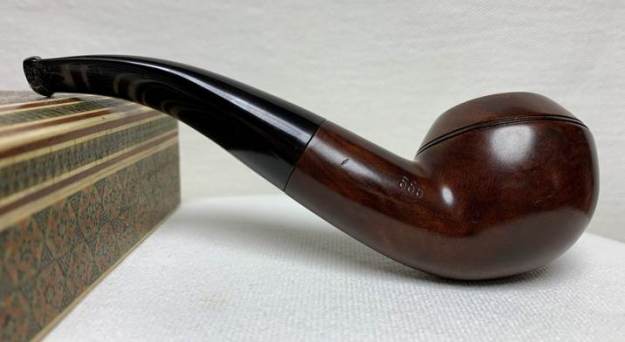
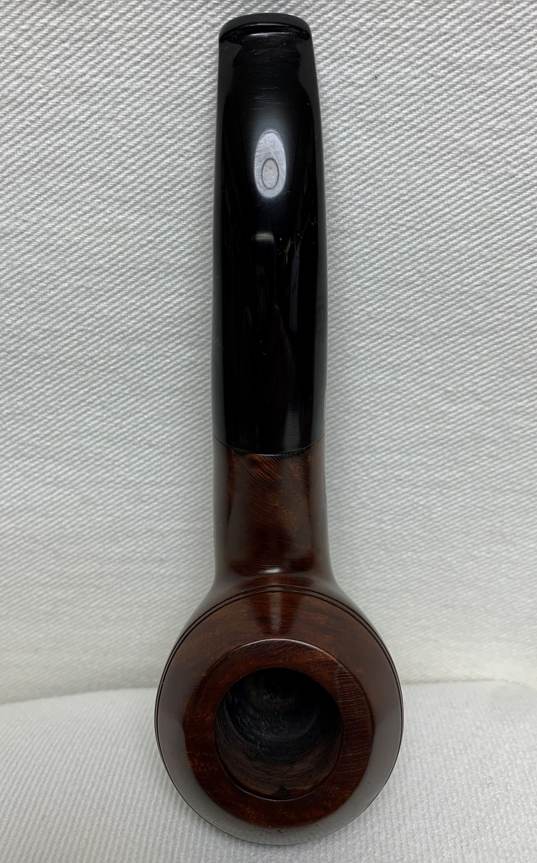
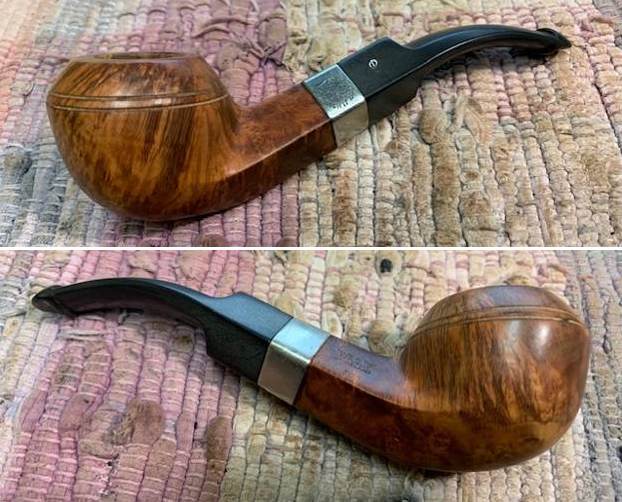
Restoring a March 17, 2000 St. Patrick’s Day 80S Bent Bulldog


Blog by Steve Laug

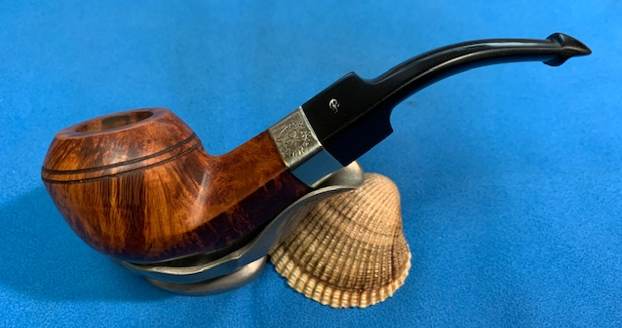
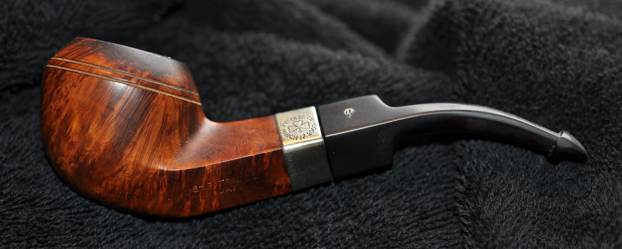
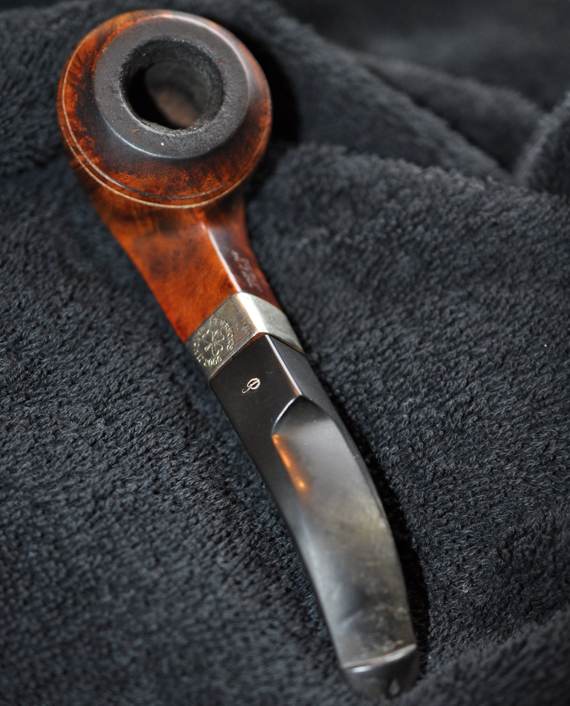
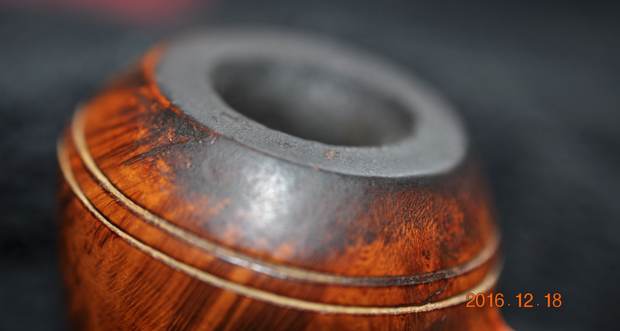
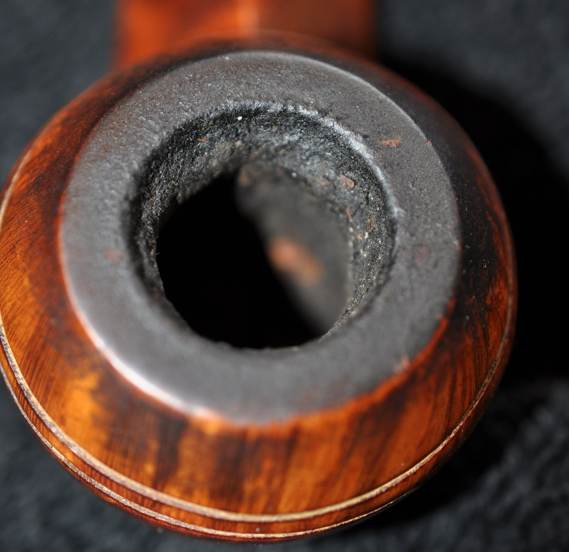
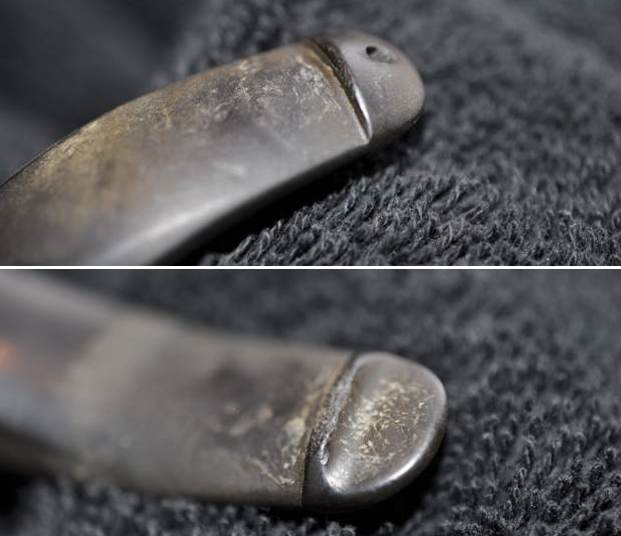
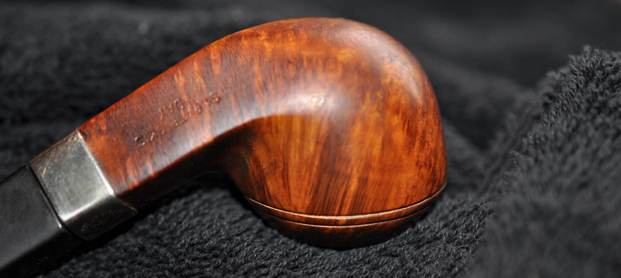
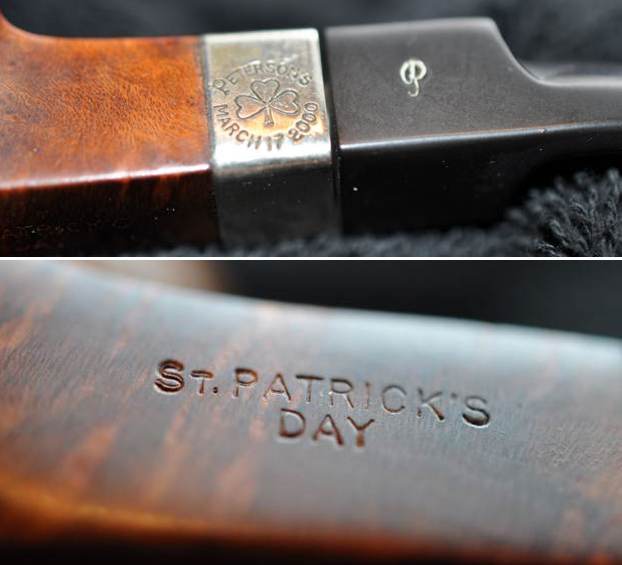
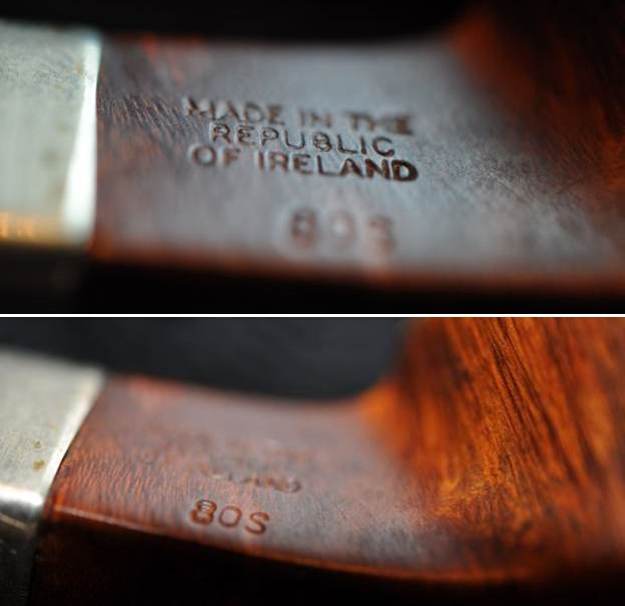
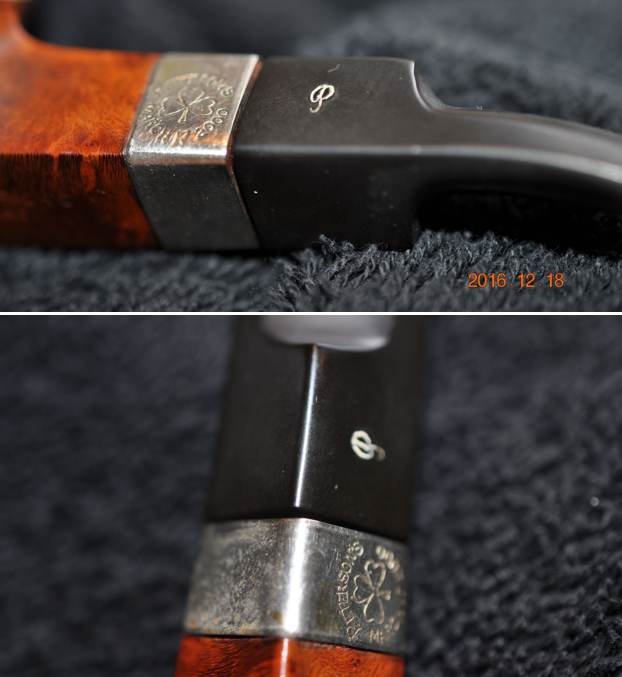
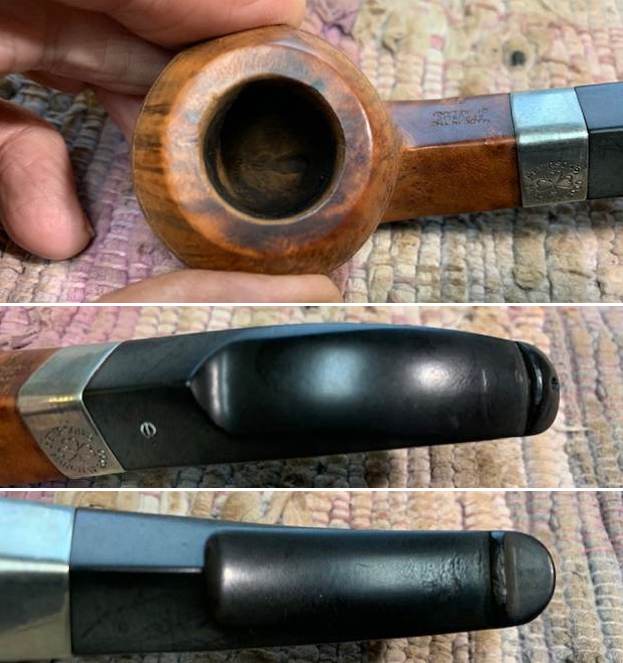
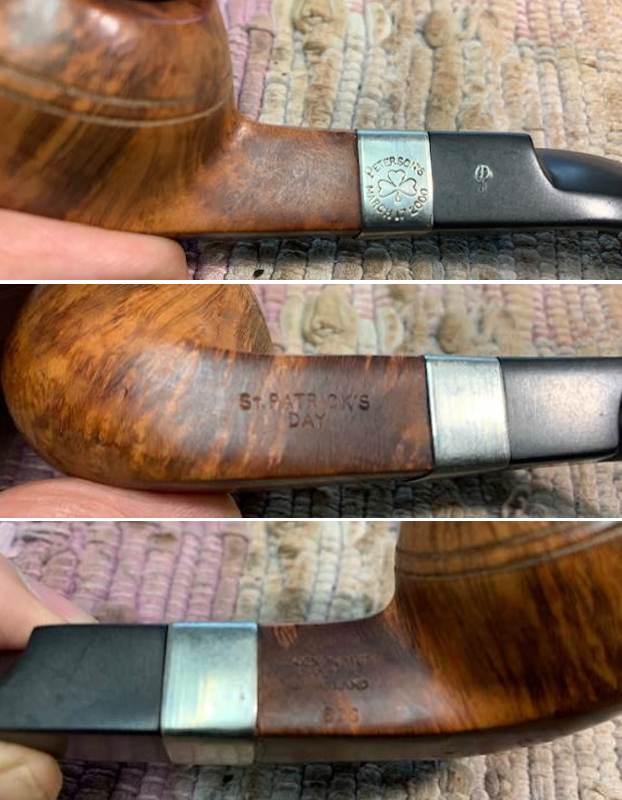
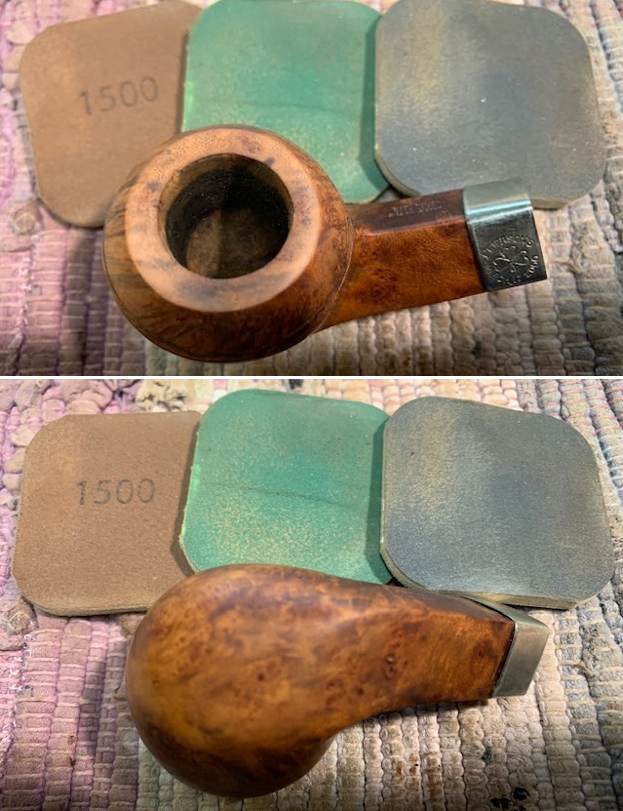
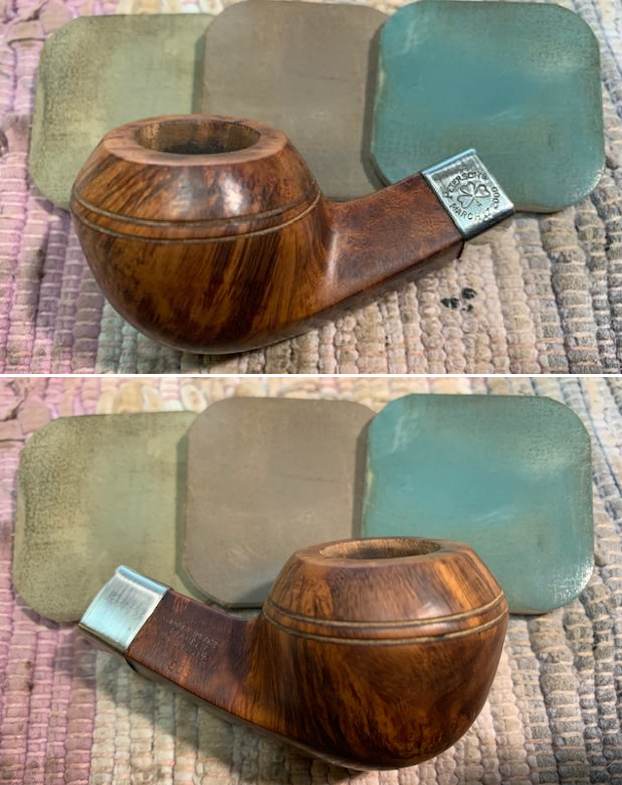
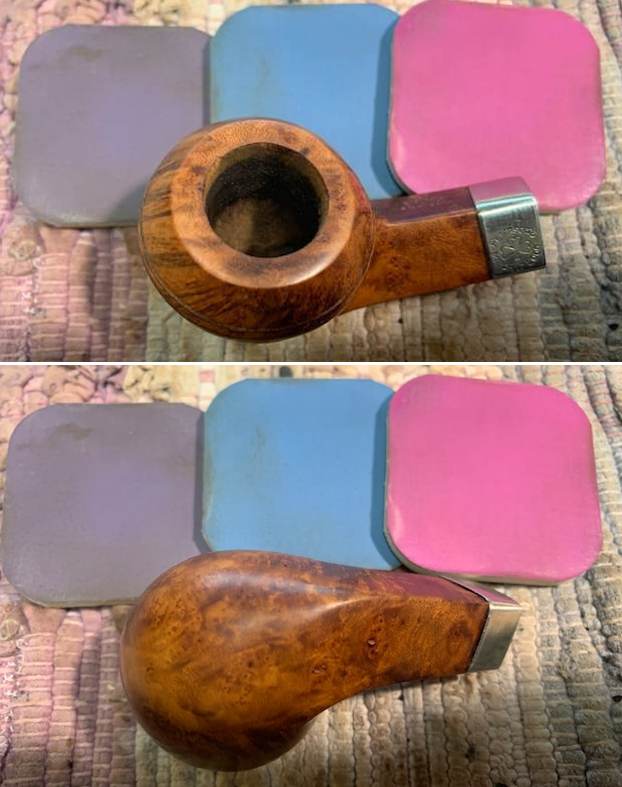
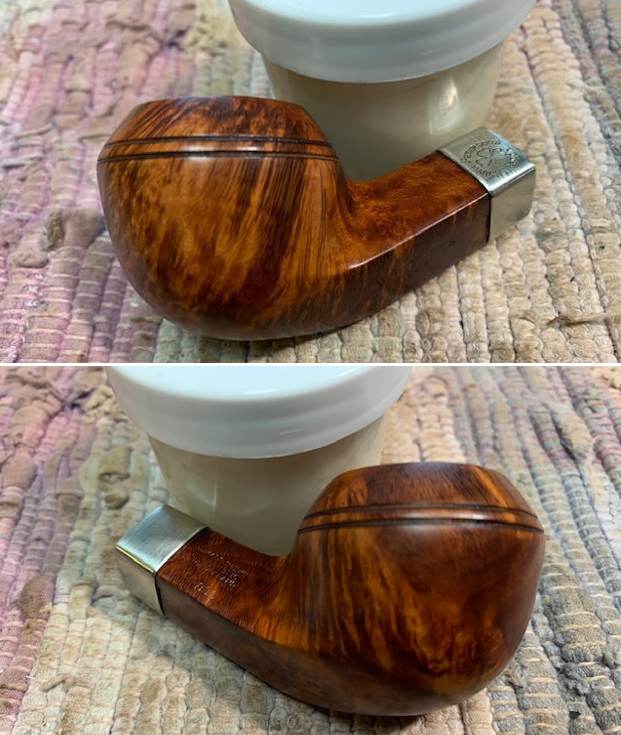
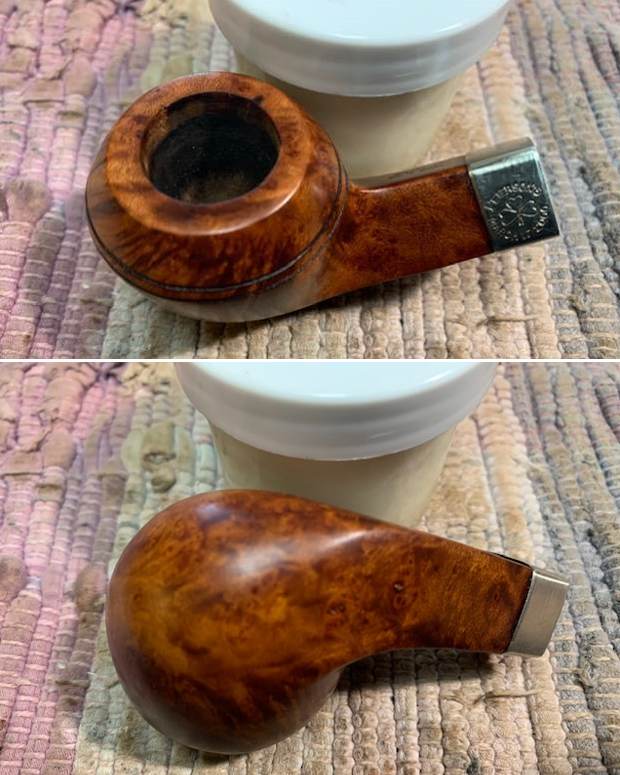
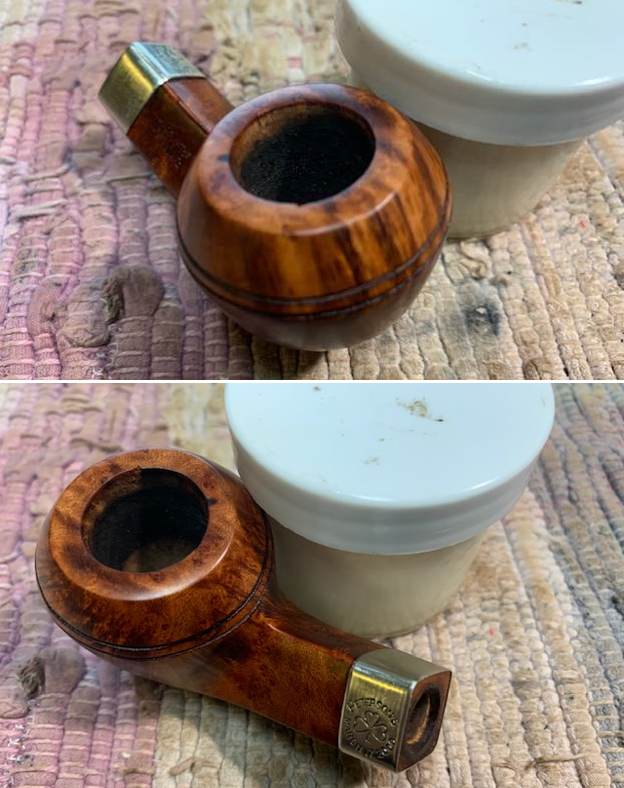
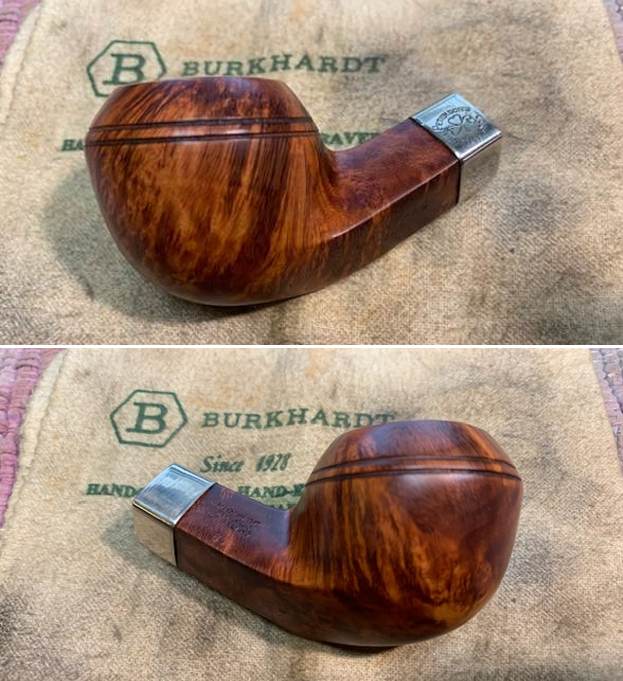
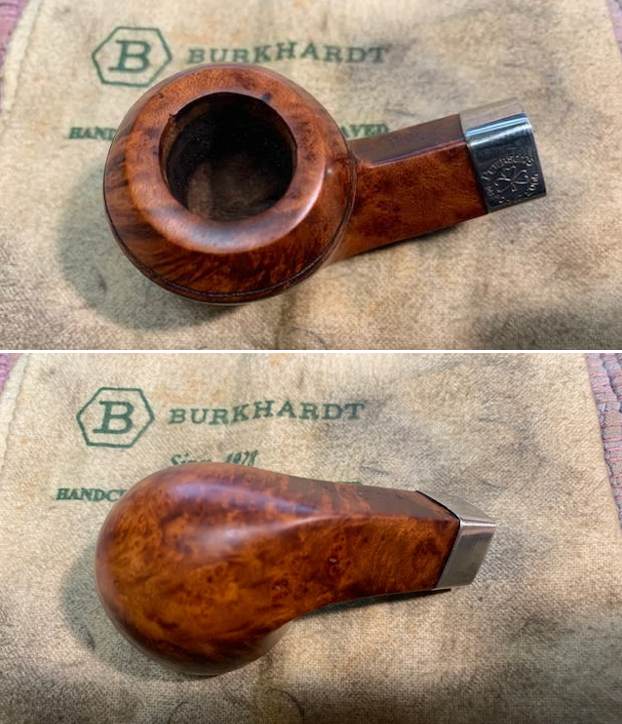
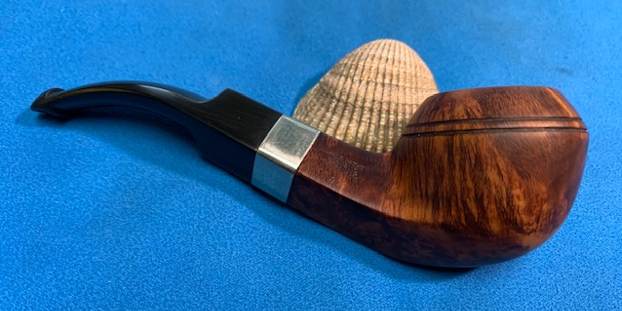
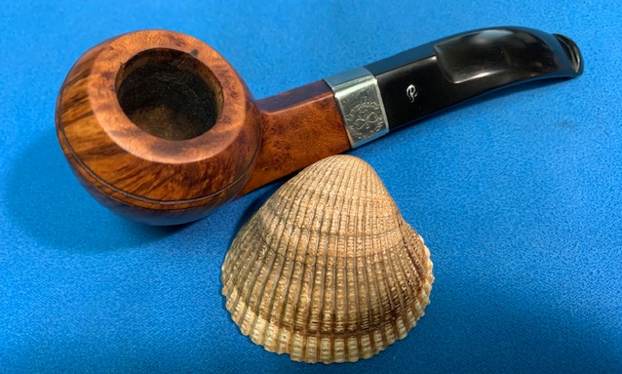
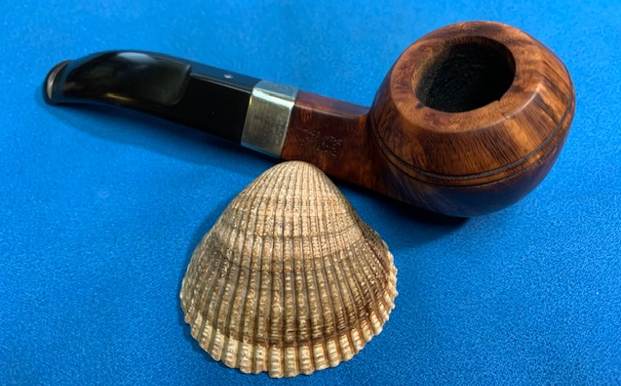
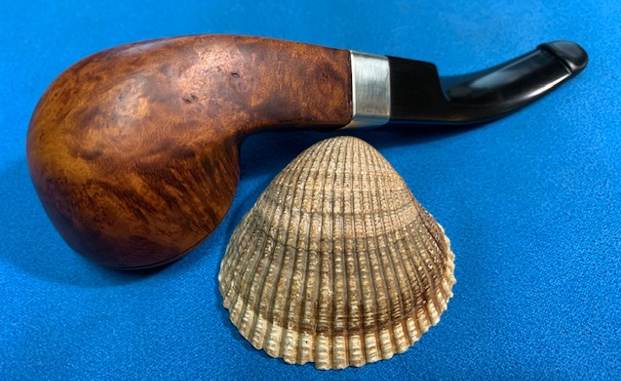
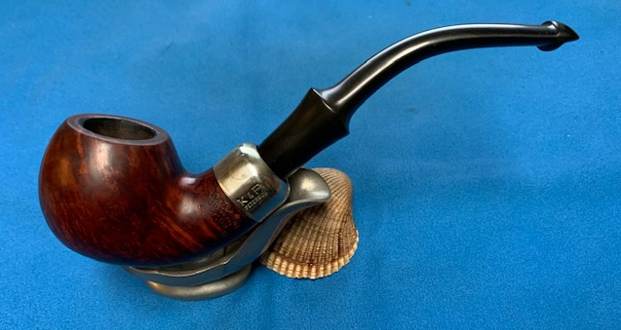
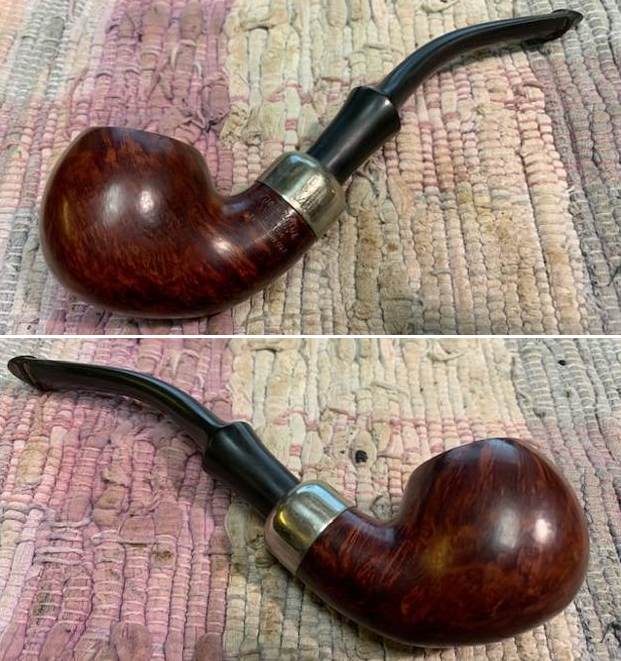
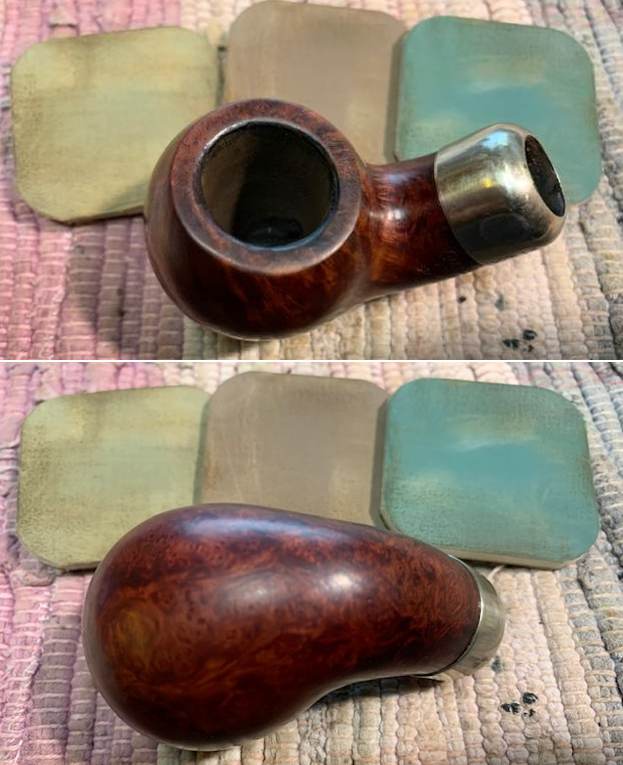
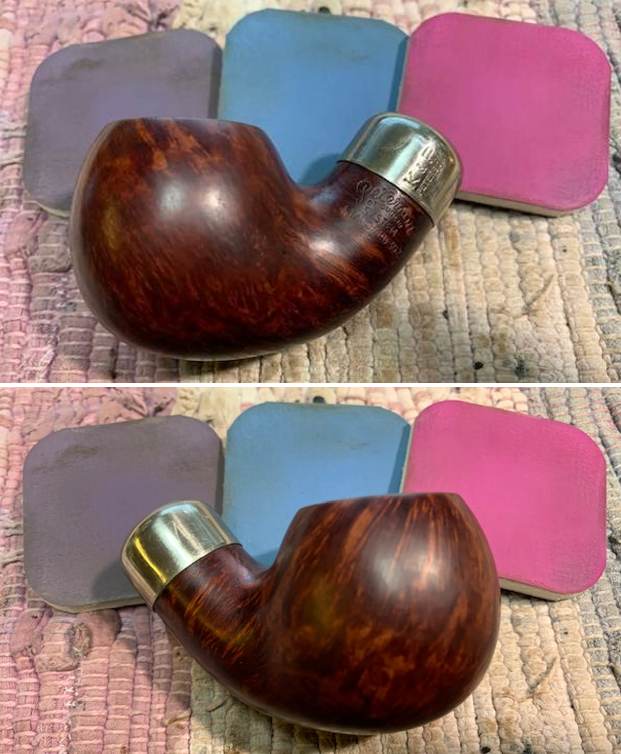
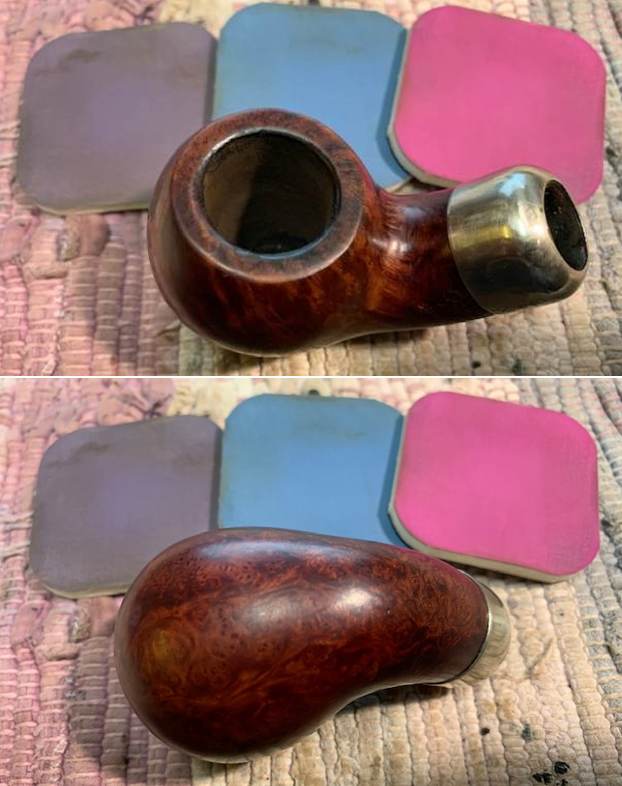
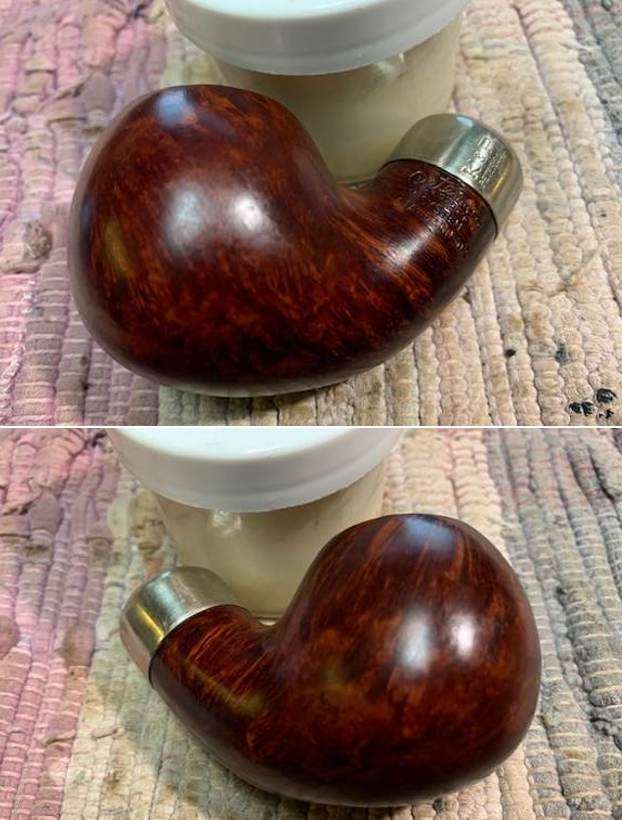
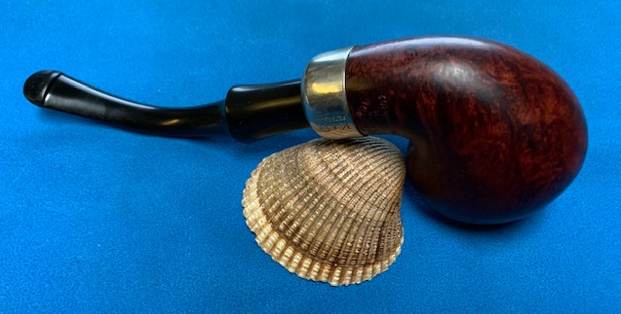
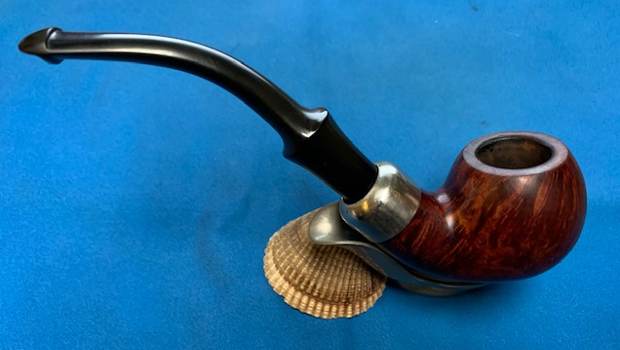
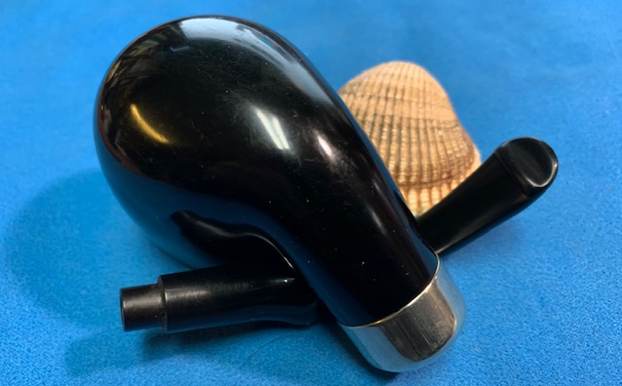
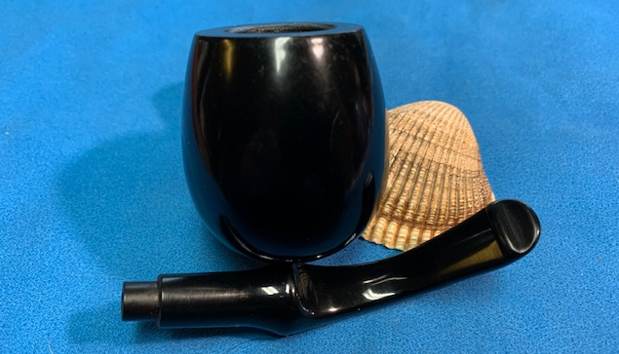
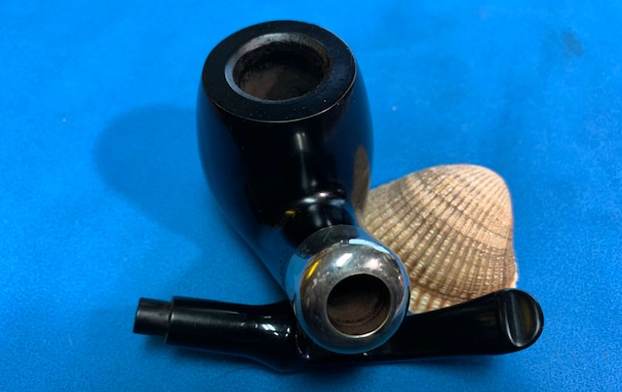
The next pipe has been sitting here since we picked it up on Ebay on December 6, 2016. It came to us from Aurora, Colorado, USA and I am finally getting around to working on it. It is a nice Republic Era St. Patrick’s Day Bulldog. It is stamped on the left underside of the diamond shank and reads St. Patrick’s Day. On the right side it reads Made in the Republic of Ireland (three lines) over the shape number 80S. The nickel band was in great condition and was stamped and had a Shamrock with the words Peterson’s March 17, 2000 in a circle around it. The bowl was heavily caked with a thick lava overflow on the rim top and edges. It flowed down the sides of the cap. I was hoping that the lava coat had protected the rim top and cap from significant damage but only cleaning it up would tell the full story. The finish was dirty but had some nice grain around the sides. The stem had a Peterson’s “P” logo stamped on the top of the left side of the saddle. It was lightly oxidized and had a lot of tooth marks and chatter on both sides ahead of the button. Jeff took photos of the pipe before he cleaned it up. Jeff took a photo of the rim top and bowl to show its condition. The cake is the bowl is thick and the lava on the rim and down the cap is also quite thick. The stem had tooth marks and chatter ahead of the button and quite a way up the stem surface. It was also lightly oxidized. Jeff captured some of the beautiful grain around the pipe with the next photo of the left side and heel of the bowl. It is really quite nice.He took photos of the stamping on the nickel band and the sides of the shank. It is clear and readable as noted above.  I am including the link to the Pipedia’s article on Peterson pipes. It is a great read in terms of the history of the brand (https://pipedia.org/wiki/Peterson).

Mark Irwin has a great visual history of the St. Patrick’s Day Pipes from Peterson on his rich Peterson’s Pipenotes site (https://petersonpipenotes.org/tag/st-patricks-day-pipe-2000/). He states there regarding the year 2000 issue as follows:

In 2000, the SPD series settled into a familiar and long-running guise: some variant of brown-hued smooth bowl and a nickel band with Peterson’s over a shamrock over March 17 and the year. The 2000 SPDs also featured the beloved P-Lip vulcanite mouthpiece…

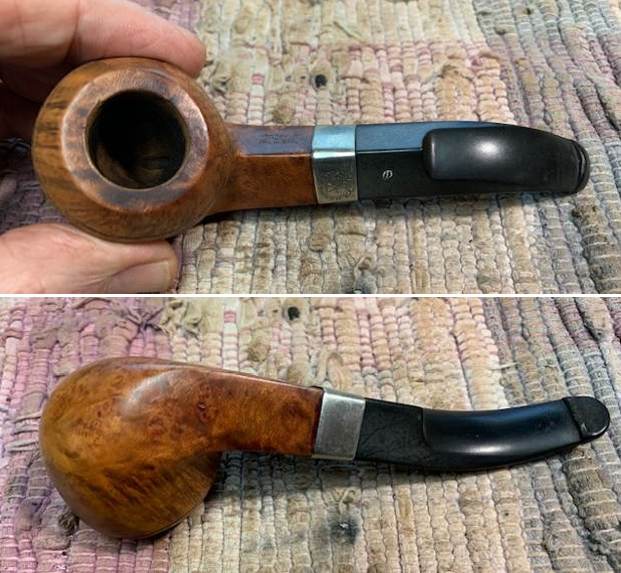
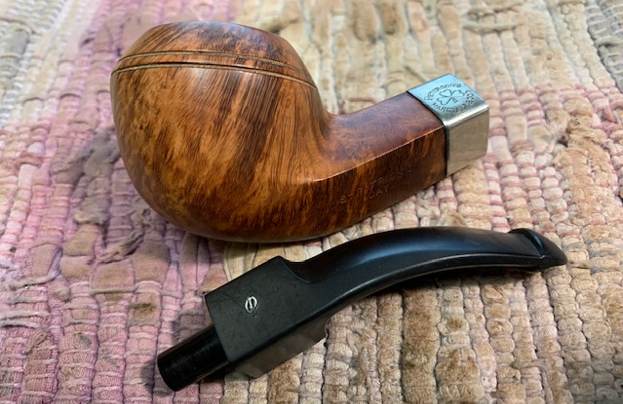
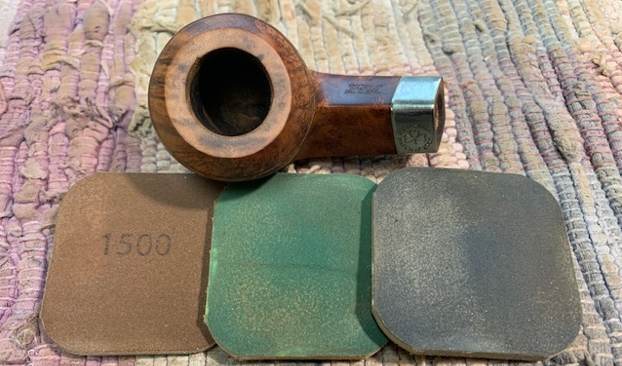
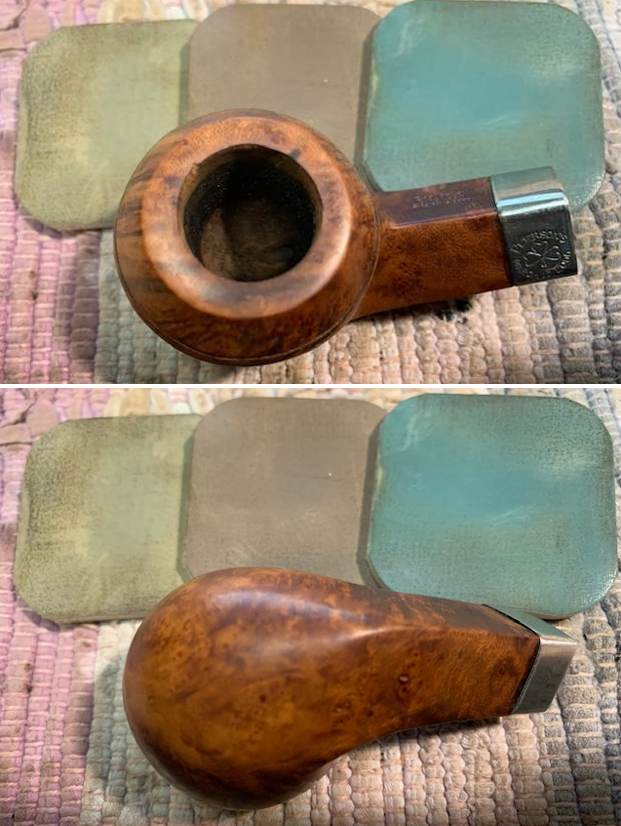
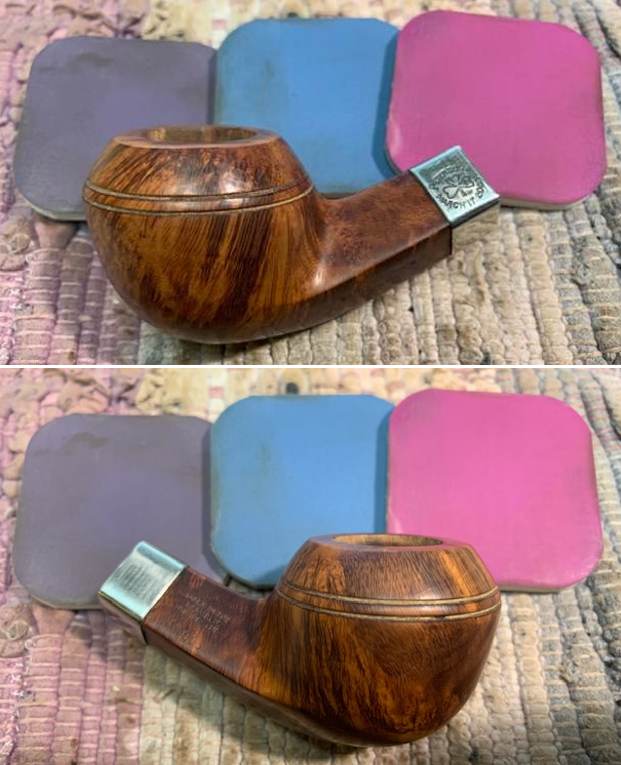
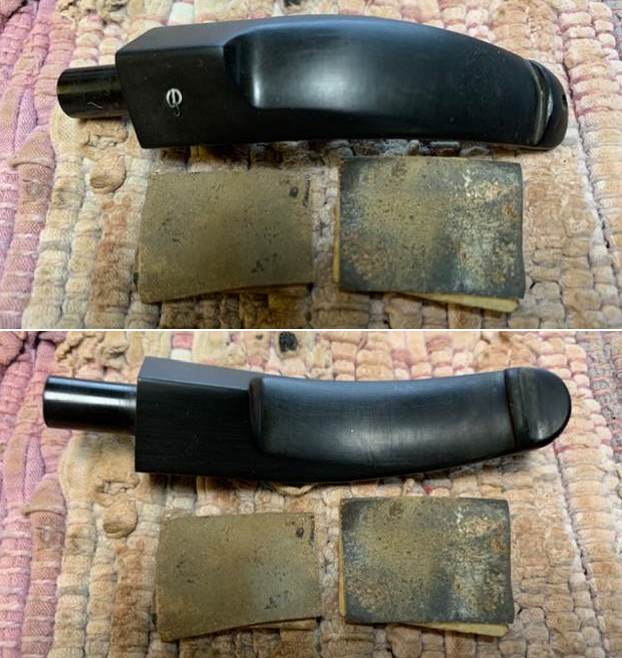
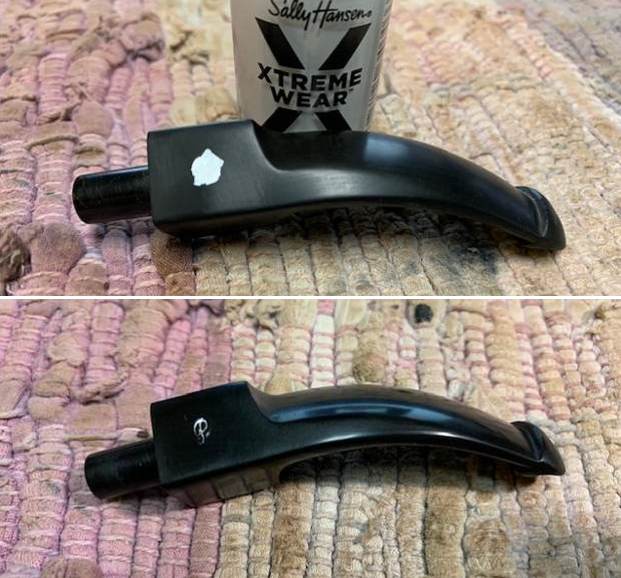
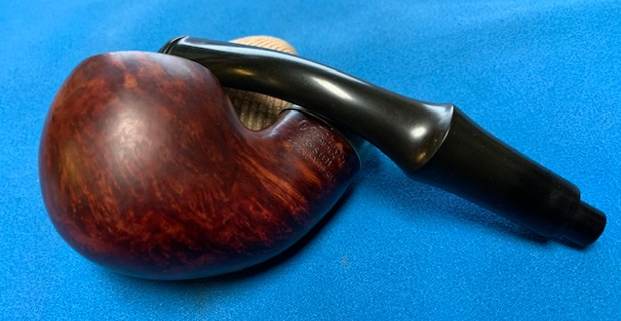
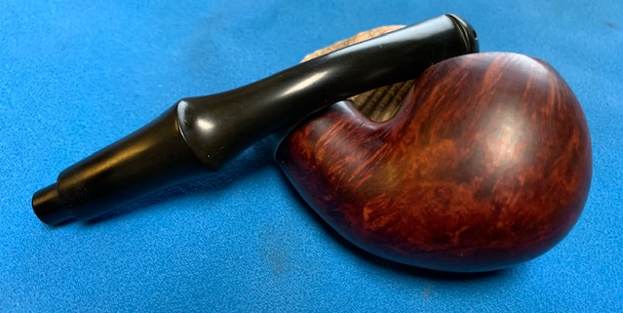
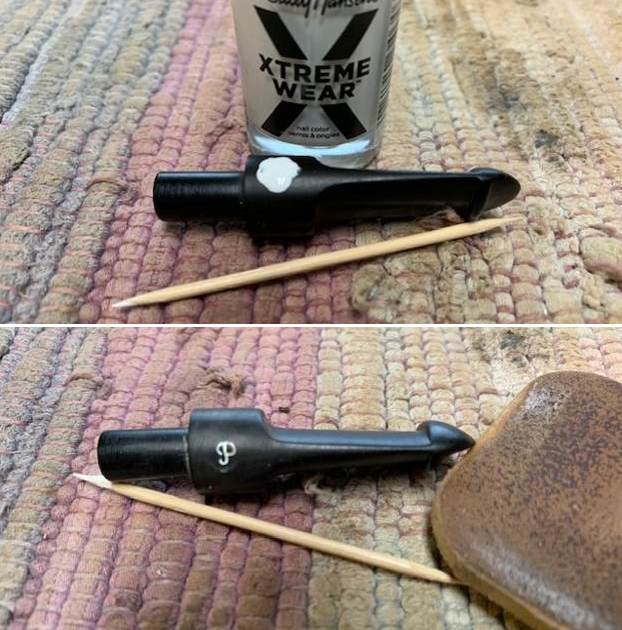
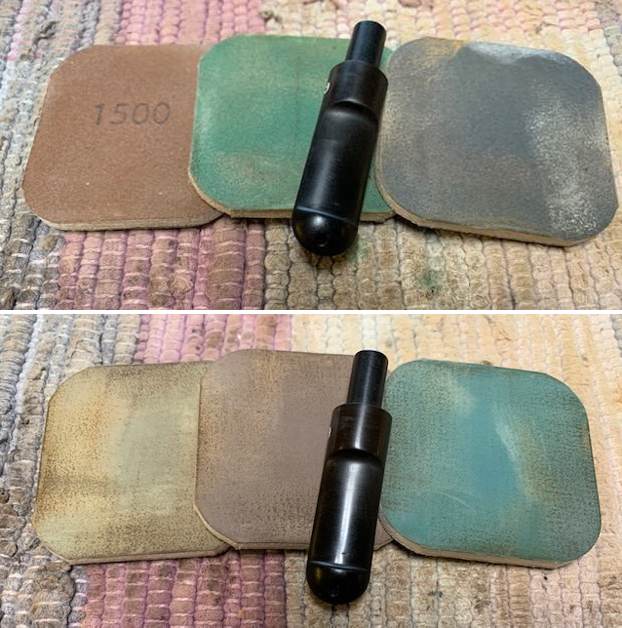
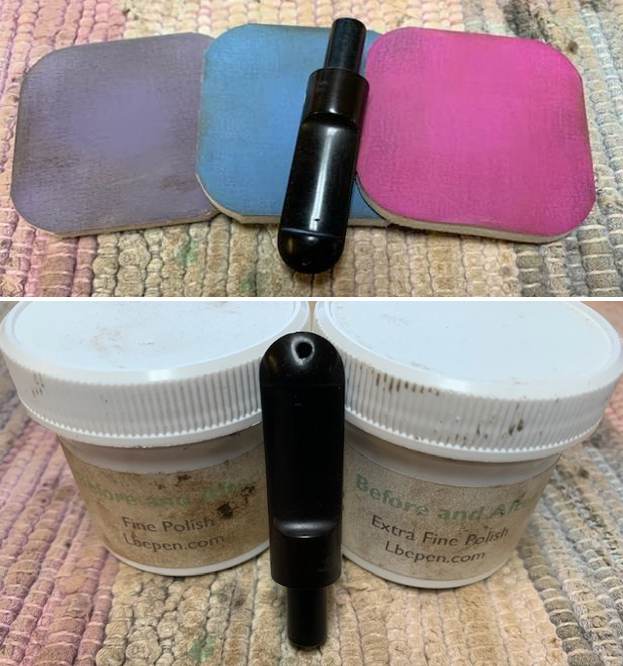
Armed with that it was time to work on the pipe. Jeff had cleaned up the pipe as he normally does. He reamed it with a Pipnet Reamer and cleaned up the reaming with a Savinelli Fitsall Pipeknife. He scrubbed out the inside of the airway in the shank and stem with alcohol, pipe cleaners and cotton swabs. He scrubbed the exterior of the bowl with undiluted Murphy’s Oil Soap to remove the grime that was ground into the briar on the cap, rim and bowl. It came out looking very good. He scrubbed the stem with Soft Scrub and then soaked it in Before & After Deoxidizer. He rinsed it off and recleaned it. I took the following pictures when it arrived. It is a beautiful pipe that will come alive with buffing and polishing. I took photos of the rim top and the stem to show the condition of them both. The rim top is very clean and there is some darkening on the rim top on the back and left side. The rim edges looked very good. The stem is free of oxidation and other than the tooth marks and chatter it is in good condition. I took photos of the stamping on the band and the shank sides. It is clear and readable as noted above. The “P” logo is faded and will need to be touched up.I took a photo of the bowl and stem separated to give a sense of the shape and form of this lovely 80S Bent Bulldog.Because the pipe was in such clean condition I could start with my work without doing all the cleanup I have been doing lately. To start on this one I worked on the darkening of the rim top to match the rest of the briar. I used the 1500-2400 grit micromesh to accomplish this.I polished the briar with micromesh sanding pads – dry sanding with 1500-12000 grit pads. I wiped it down with a damp cloth after each pad. I used it to clean off the rim top at the same time.   I worked some Before & After Restoration Balm into the surface of the briar with my fingertips to clean, enliven and protect the briar. I let the balm sit for 15 minutes and then buffed with a cotton cloth to raise the shine. The photos show the bowl at this point in the restoration process. I polished the nickel band with a jewelers cloth give it a shine and to remove the oxidation. I set the bowl aside and turned my attention to the stem. I sanded out the tooth marks on the button and ahead of the button with 220 grit sandpaper and wiped it down with Obsidian Oil once I finished. I started the polishing with 400 grit wet dry sandpaper. I repainted the “P” stamp on the left side with some white acrylic nail polish. I brushed it on and scraped off the excess with a fingernail. I lightly sanded it with a 1500 micromesh sanding pad and wiped it down with Obsidian Oil.I polished the stem with micromesh sanding pads – dry sanding with 1500-12000 grit pads and wiping it down after each pad with Obsidian Oil. I finished polishing it with Before & After Fine and Extra Fine polish. I gave it a final coat of Obsidian Oil and set it aside to dry. This Late Republic Era Peterson’s St. Patrick’s Day March 17, 2000 shape 80S Bent Bulldog is a great looking pipe now that it has been restored. The grain around the bowl is quite beautiful and the stain makes it really stand out. The finish works well with the polished vulcanite saddle P-Lip stem. I put the stem back on the bowl and carefully buffed the pipe with Blue Diamond on the buffing wheel using a light touch on the briar. I gave the bowl and the stem multiple coats of carnauba wax on the buffing wheel and followed that by buffing the entire pipe with a clean buffing pad. I hand buffed the pipe with a microfiber cloth to deepen the shine. The finished St. Patrick’s Day 2000 Bent Bulldog sits nicely in the hand and feels great. Give the finished pipe a look in the photos below. The dimensions of the pipe are Length: 5 ¾ inches, Height: 1 ½ inches, Outside diameter of the bowl: 1 ½ inches, Chamber diameter: ¾ inch. The weight of the pipe is 48 grams/1.69 ounces. I will be putting it in the Irish Pipe Makers section of the rebornpipes store shortly. If you are interested in adding this pipe to your collection send me a message or an email. Thanks for reading this blog and my reflections on the pipe while I worked on it! I appreciate your support.

Restoring a Republic Era Peterson’s System Standard Bent 307 Billiard


Blog by Steve Laug

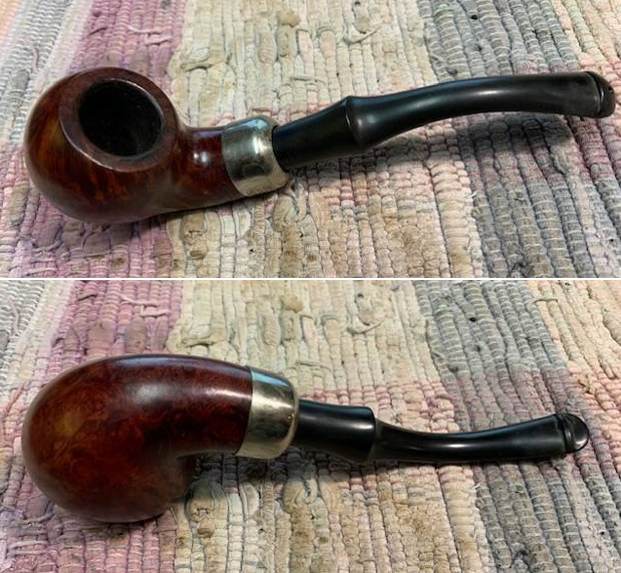
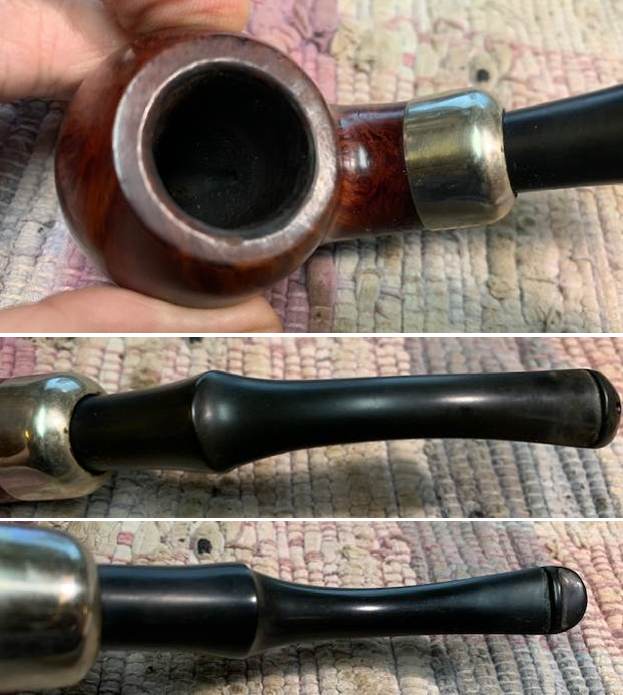
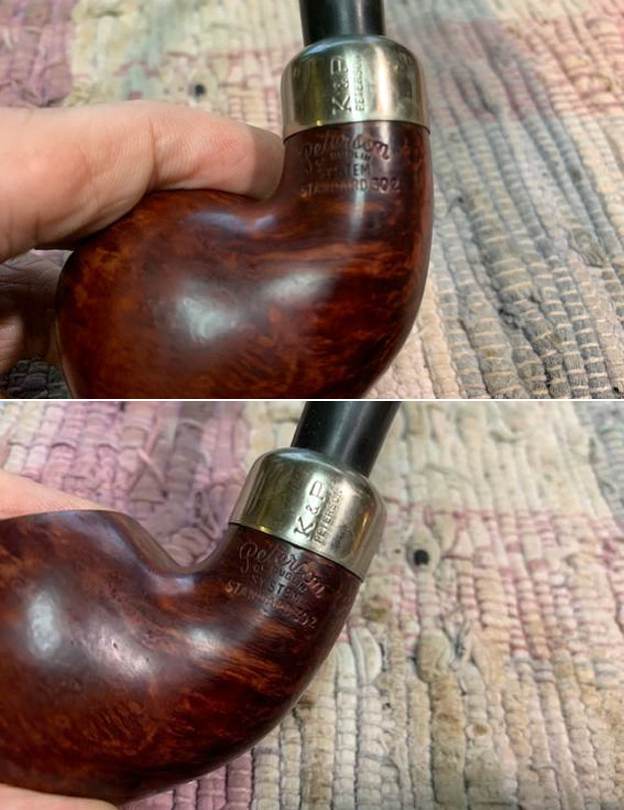
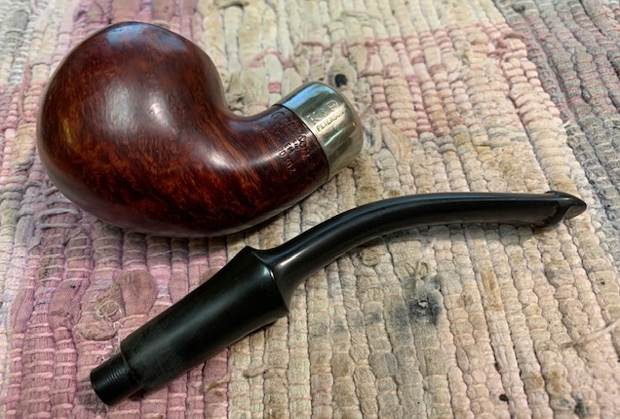
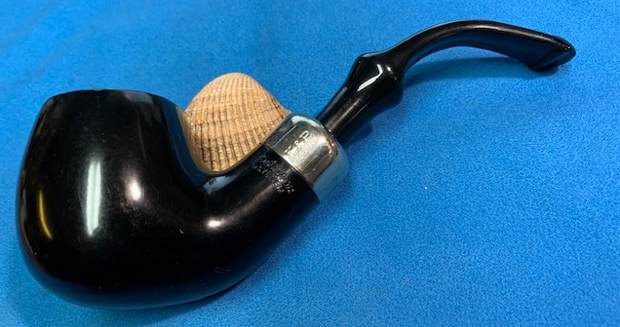
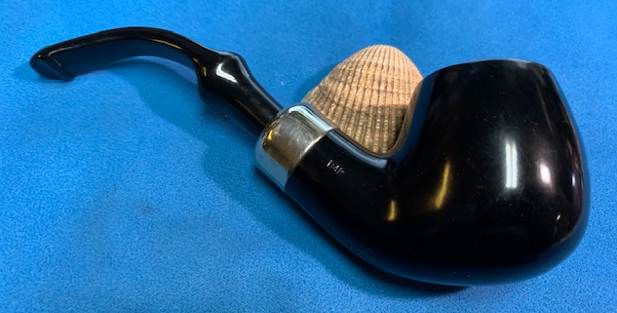
The next pipe I have chosen is another smooth finished Peterson’s System – this time a System Standard shape 307. It was the fourth of four pipes that came to me from a friend for work. This one also had very loose stem that did not seem to hold on in the shank that he wanted me to have a look at as well as cleaning and freshening it up. The stem had also straightened out a bit over time and needed to be rebent. The finish was smooth with some nice grain around the sides and shank. There was one noticeable fill on the left side near the rim top. The pipe was stamped on the left side of the shank and read Peterson’s [arched over] System [over] Standard. On the right side it was stamped Made in the Republic of Ireland in three lines over the shape number 307. It was in good condition when I brought it to the table. There was a heavy cake in the bowl and some light lava and darkening on the rim top. The nickel ferrule was in good shape but had some scratches that would need to be polished. It is stamped as well and reads K & P [over] Peterson on the left. The vulcanite stem was unstamped and in good condition. There was some oxidation, calcification and light chatter near the button that would polish out. It also was in need of being bent again. I took photos of the pipe before I started my work.   I took photos of the rim top and stem to show the general condition of the pipe. The bowl is heavily caked and the rim top and edges have a thick lava overflow. The stem looks good but it has tooth marks on the top and underside near the button. I took photos of the stamping on the left shank side. It reads as noted above. I also tried to capture the stamping on the ferrule and it is clear and readable.    I removed the stem and took a photo of the pipe to have a look at the parts and overall look.I am including the link to the Pipedia’s article on Peterson pipes. It is a great read in terms of the history of the brand (https://pipedia.org/wiki/Peterson).

I turned to work on the pipe itself. I started my clean up by reaming the bowl with a PipNet reamer and cut back the cake back to the bare briar. I cleaned up the walls with a Savinelli Fitsall Pipe Knife. I finished the cleaning of the bowl with a piece of dowel wrapped in 220 grit sandpaper. I smoothed out the bowl walls and checked for cracks and flaws. All looked very good.   I scrubbed the interior of the bowl, shank and stem with pipe cleaners, cotton swabs and alcohol to remove the tars and oils. It was full of tars and oils that with a bit of work came clean. I cleaned up the rim top and the beveled inner edge with a piece of 220 grit sandpaper. I removed the burn damage and darkening on both and it looked better.  I stained the pink putty fill with a Brown and Black Sharpie Pen. It blended in much better than the pink had before.I polished the briar with micromesh sanding pads – dry sanding with 1500-12000 grit pads. I wiped it down with a damp cloth after each pad. I used it to clean off the rim top at the same time. I worked some Before & After Restoration Balm into the surface of the briar with my fingertips to clean, enliven and protect the briar. I let the balm sit for 15 minutes and then buffed with a cotton cloth to raise the shine. The photos show the bowl at this point in the restoration process.    I polished the nickel ferrule with a jewelers cloth give it a shine and to remove the oxidation.    I set the bowl aside and turned my attention to the stem. I decided to bend it to the correct angle so I heated it with a heat gun to soften it and then bent it so that it sit correctly in the shank. It looked much better.   I sanded out the tooth marks on the button and ahead of the button with 220 grit sandpaper and adjusted the fit of the tenon end to the taper of the shank. I started the polishing with 400 grit wet dry sandpaper.  I polished the stem with micromesh sanding pads – wet sanding with 1500-12000 grit sanding pads. I wiped it down after each sanding pad with Obsidian Oil. I finished polishing it with Before & After Pipe Stem Polish – both Fine and Extra Fine. I gave it a final coat of Obsidian Oil and let it dry before buffing.   I am excited to finish this Peterson’s System Standard 302 Bent Apple. I put the pipe back together and buffed it lightly with Blue Diamond on the buffing wheel. I gave the bowl and the stem multiple coats of carnauba wax. I buffed the pipe with a clean buffing pad to deepen the shine. I hand buffed the pipe with a microfiber cloth to further raise the shine. It is fun to see what the polished bowl looks like with deep sandblast all around it. Added to that the polished black acrylic stem was beautiful. This System Standard 302 Bent Apple is great looking and the pipe feels great in my hand. It is light and well balanced. Have a look at it with the photos below. The dimensions are Length: 6 inches, Height: 2 inches, Outside diameter of the bowl: 1 ½ inches, Chamber diameter: ¾ of an inch. The weight of the pipe is 63 grams/2.26 oz. It is a beautiful pipe and the fourth of the four I am working on for my friend. Now that they are all finished they will be sent back to him. Thanks for walking through the restoration with me as I worked over this pipe. Thanks to each of you who are reading this blog.

Restoring a Peterson’s System Standard Bent 302 Apple


Blog by Steve Laug

The next pipe I have chosen is another smooth finished Peterson’s System – this time a System Standard shape 302. It was the third of four pipes that came to me from a friend for work. This one had very loose stem that did not seem to hold on in the shank that he wanted me to have a look at as well as cleaning and freshening it up. The stem had also straightened out a bit over time and needed to be rebent. The finish was smooth with some nice grain around the sides and shank. It was stamped on the left side of the shank and read Peterson’s [arched over] System [over] Standard followed by the shape number 302. It was in great condition when I brought it to the table. There was a heavy cake in the bottom half of the bowl and some light lava on the rim top. The nickel ferrule was in good shape but had some scratches that would need to be polished. It is stamped as well and reads K & P [over] Peterson on the left. The vulcanite stem was unstamped and in good condition. There was some oxidation, calcification and light chatter near the button that would polish out. I took photos of the pipe before I started my work.   I took photos of the rim top and stem to show the general condition of the pipe. The bowl is heavily caked and the rim top and edges have a thick lava overflow. The stem looks good but it has tooth marks on the top and underside near the button. I took photos of the stamping on the left shank side. It reads as noted above. I also tried to capture the stamping on the ferrule and it is clear and readable. I removed the stem and took a photo of the pipe to have a look at the parts and overall look.I am including the link to the Pipedia’s article on Peterson pipes. It is a great read in terms of the history of the brand (https://pipedia.org/wiki/Peterson).

I turned to work on the pipe itself. I started my clean up by reaming the bowl with a PipNet reamer and cut back the cake back to the bare briar. I cleaned up the walls with a Savinelli Fitsall Pipe Knife. I finished the cleaning of the bowl with a piece of dowel wrapped in 220 grit sandpaper. I smoothed out the bowl walls and checked for cracks and flaws. All looked very good. I scrubbed the interior of the bowl, shank and stem with pipe cleaners, cotton swabs and alcohol to remove the tars and oils. It was full of tars and oils that with a bit of work came clean. I polished the briar with micromesh sanding pads – dry sanding with 1500-12000 grit pads. I wiped it down with a damp cloth after each pad. I used it to clean off the rim top at the same time.   I worked some Before & After Restoration Balm into the surface of the briar with my fingertips to clean, enliven and protect the briar. I let the balm sit for 15 minutes and then buffed with a cotton cloth to raise the shine. The photos show the bowl at this point in the restoration process.   I polished the nickel ferrule with a jewelers cloth give it a shine and to remove the oxidation.    I set the bowl aside and turned my attention to the stem. I decided to bend it to the correct angle so I heated it with a heat gun to soften it and then bent it so that it sit correctly in the shank. It looked much better.   I polished the stem with micromesh sanding pads – wet sanding with 1500-12000 grit sanding pads. I wiped it down after each sanding pad with Obsidian Oil. I finished polishing it with Before & After Pipe Stem Polish – both Fine and Extra Fine. I gave it a final coat of Obsidian Oil and let it dry before buffing.   I am excited to finish this Peterson’s System Standard 302 Bent Apple. I put the pipe back together and buffed it lightly with Blue Diamond on the buffing wheel. I gave the bowl and the stem multiple coats of carnauba wax. I buffed the pipe with a clean buffing pad to deepen the shine. I hand buffed the pipe with a microfiber cloth to further raise the shine. It is fun to see what the polished bowl looks like with deep sandblast all around it. Added to that the polished black acrylic stem was beautiful. This System Standard 302 Bent Apple is great looking and the pipe feels great in my hand. It is light and well balanced. Have a look at it with the photos below. The dimensions are Length: 6 inches, Height: 2 inches, Outside diameter of the bowl: 1 ½ inches, Chamber diameter: ¾ of an inch. The weight of the pipe is 63 grams/2.26 oz. It is a beautiful pipe and the second of the four I am working on for my friend. Once the other two are finished it will be sent back to him. Thanks for walking through the restoration with me as I worked over this pipe. Thanks to each of you who are reading this blog.

Restoring a Peterson’s System Bent Dress Black B42


Blog by Steve Laug

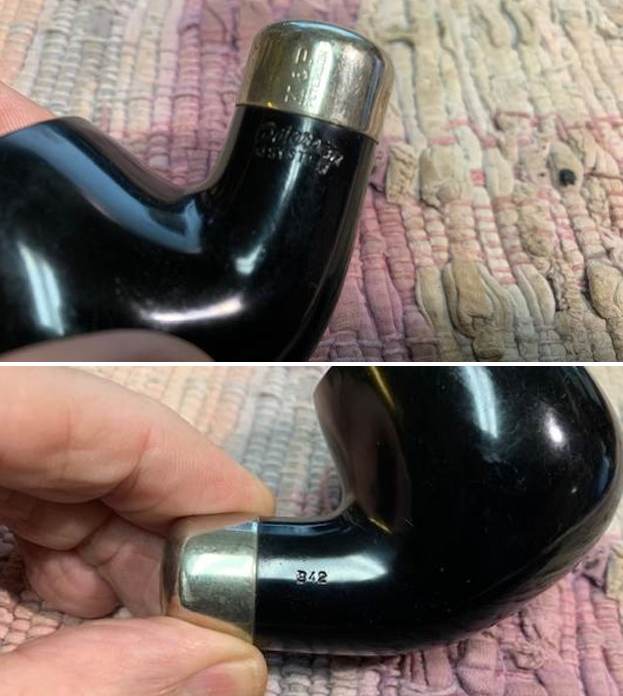
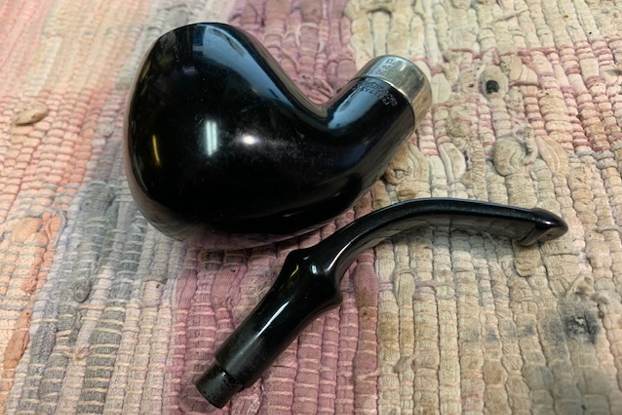
The next pipe I have chosen is another smooth finished Peterson’s System – this time a B42 (Brandy) in Dress Black. It was the second of four pipes that came to me from a friend for work. This one had very loose stem that did not seem to hold on in the shank that he wanted me to have a look at as well as cleaning and freshening it up. The finish was smooth and painted with a dress black. It was stamped on the left side of the shank and read Peterson’s [arched over] System. On the right side of the shank it is stamped with the shape number B42. It was in great condition when I brought it to the table. There was a heavy cake in the bowl and some lava on the rim top. The nickel ferrule was in good shape but had some scratches that would need to be polished. It is stamped as well and reads K & P [over] Peterson on the left. The stem appears to be acrylic (perhaps a replacement) and was unstamped and in good condition. There was some light chatter on and near the button that would polish out. I took photos of the pipe before I started my work. I took photos of the rim top and stem to show the general condition of the pipe. The bowl is heavily caked and the rim top and edges have a thick lava overflow. The stem looks good but it has tooth marks on the top and underside near the button. I took photos of the stamping on the shank sides. It reads as noted above. I also tried to capture the stamping on the ferrule and it is readable but the photo just could not capture it well.    I removed the stem and took a photo of the pipe to have a look at the parts and overall look.I am including the link to the Pipedia’s article on Peterson pipes. It is a great read in terms of the history of the brand (https://pipedia.org/wiki/Peterson).

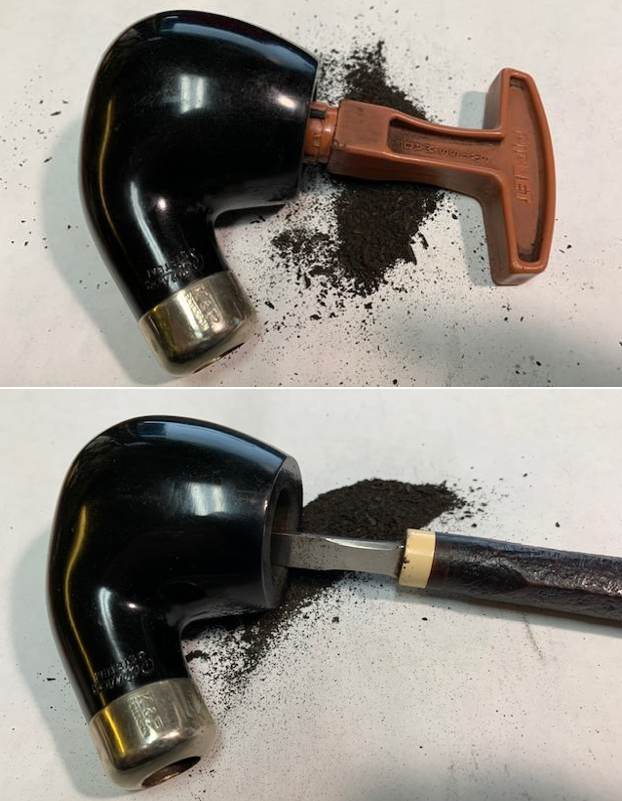
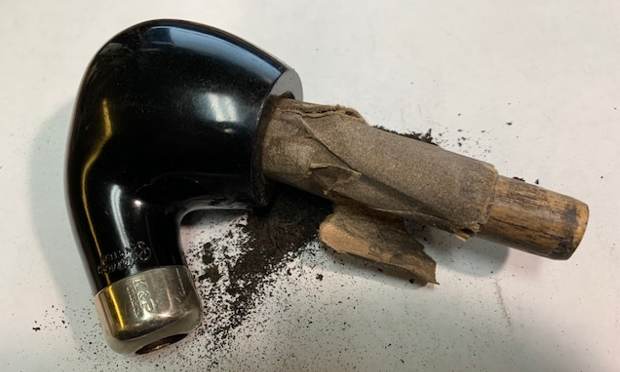
I turned to work on the pipe itself. I started my clean up by reaming the bowl with a PipNet reamer and cut back the cake back to the bare briar. I cleaned up the walls with a Savinelli Fitsall Pipe Knife. I finished the cleaning of the bowl with a piece of dowel wrapped in 220 grit sandpaper. I smoothed out the bowl walls and checked for cracks and flaws. All looked very good. I cleaned off the build up on the rim top with damp cotton pads and was able to remove all of the lava on the rim. It actually looked very good.I scrubbed the interior of the bowl, shank and stem with pipe cleaners, cotton swabs and alcohol to remove the tars and oils. It was full of tars and oils that with a bit of work came clean.   I worked some Before & After Restoration Balm into the surface of the briar with my fingertips to clean, enliven and protect the briar. I let the balm sit for 15 minutes and then buffed with a cotton cloth to raise the shine. The photos show the bowl at this point in the restoration process.      I polished the nickel ferrule with a jewelers cloth give it a shine and to remove the oxidation.   I set the bowl aside and turned my attention to the acrylic stem. I sanded out the tooth marks in the surface of the stem on both the top and underside with 220 grit sandpaper and started the polishing process with 400 grit wet dry sandpaper.  I also sanded the area on the shank end for the first inch to clean it up and make the taper match the shank taper. I polished it as well with the 400 grit wet dry sandpaper.I polished the stem with micromesh sanding pads – wet sanding with 1500-12000 grit sanding pads. I wiped it down after each sanding pad with Obsidian Oil. I am excited to finish this Peterson’s System B42 Dress Black Bent Brandy. I put the pipe back together and buffed it lightly with Blue Diamond on the buffing wheel. I gave the bowl and the stem multiple coats of carnauba wax. I buffed the pipe with a clean buffing pad to deepen the shine. I hand buffed the pipe with a microfiber cloth to further raise the shine. It is fun to see what the polished bowl looks like with deep sandblast all around it. Added to that the polished black acrylic stem was beautiful. This Dress Black System B42 is great looking and the pipe feels great in my hand. It is light and well balanced. Have a look at it with the photos below. The dimensions are Length: 6 inches, Height: 2 inches, Outside diameter of the bowl: 1 ½ inches, Chamber diameter: ¾ of an inch. The weight of the pipe is 83 grams/2.93 oz. It is a beautiful pipe and the second of the four I am working on for my friend. Once the other two are finished it will be sent back to him. Thanks for walking through the restoration with me as I worked over this pipe. Thanks to each of you who are reading this blog.

Restoring a Peterson’s of Dublin System Standard 2 XL315 Bent Calabash


Blog by Steve Laug

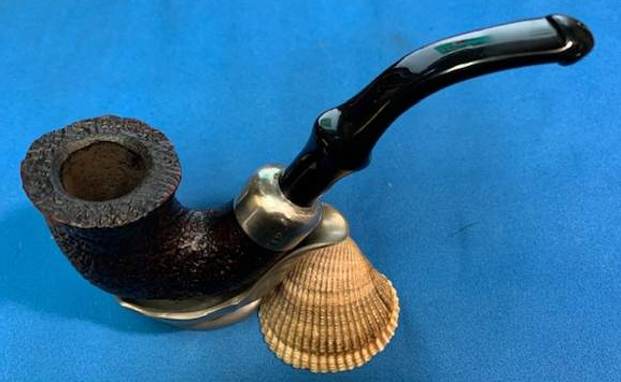
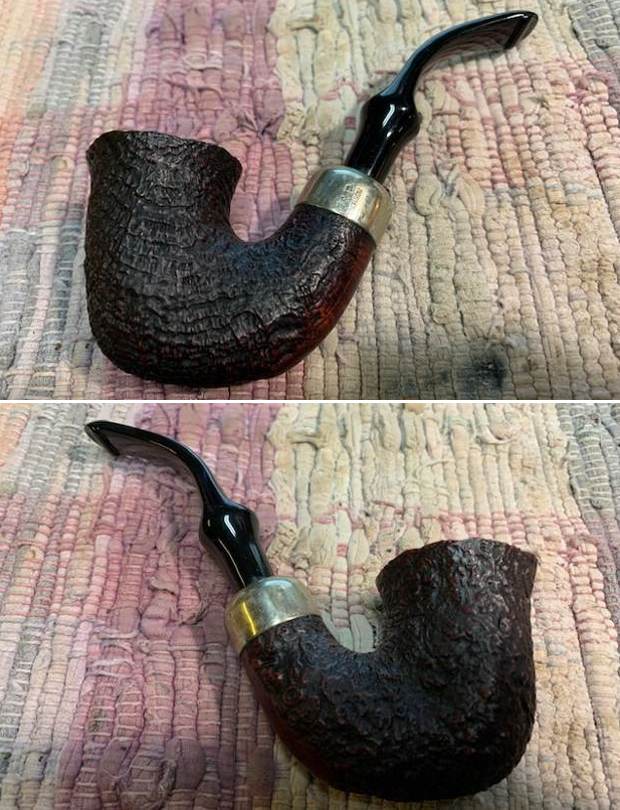
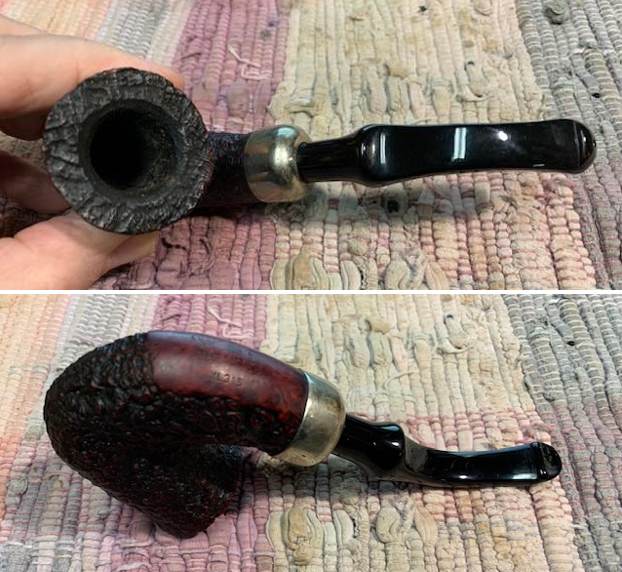
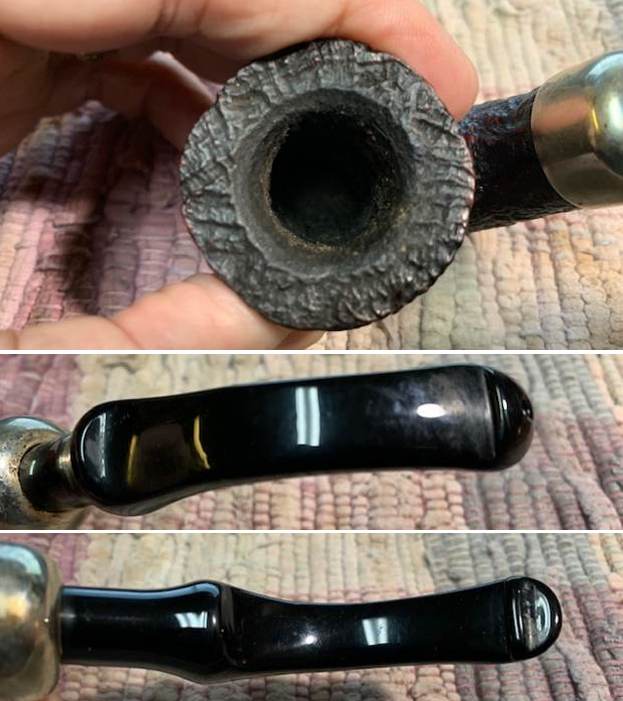
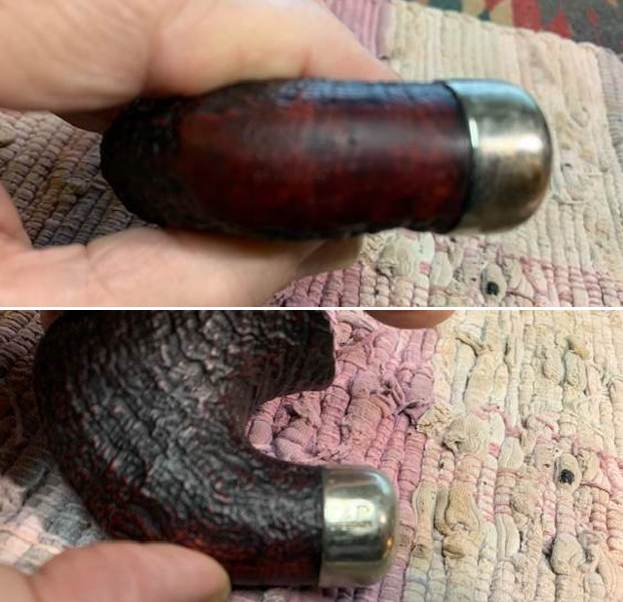
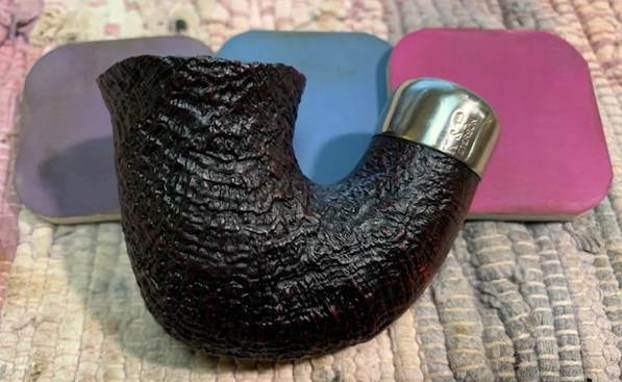
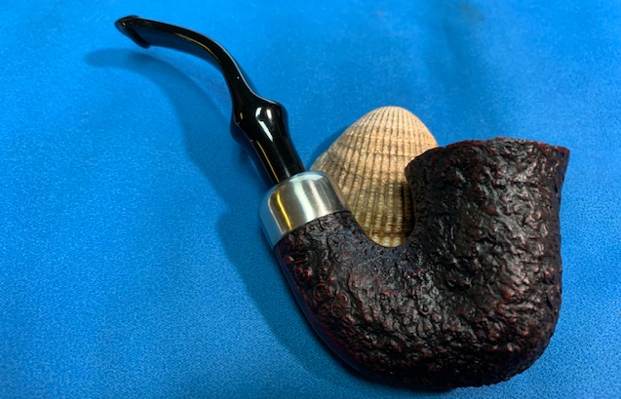
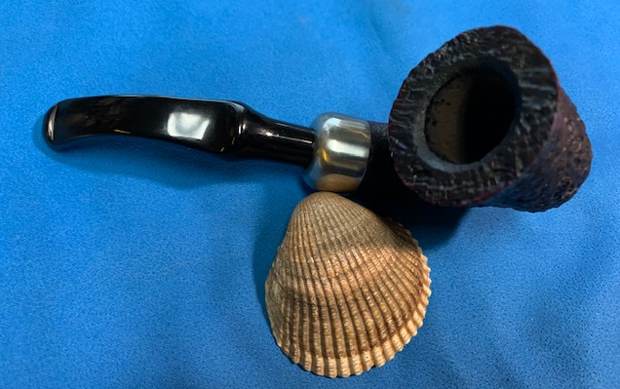
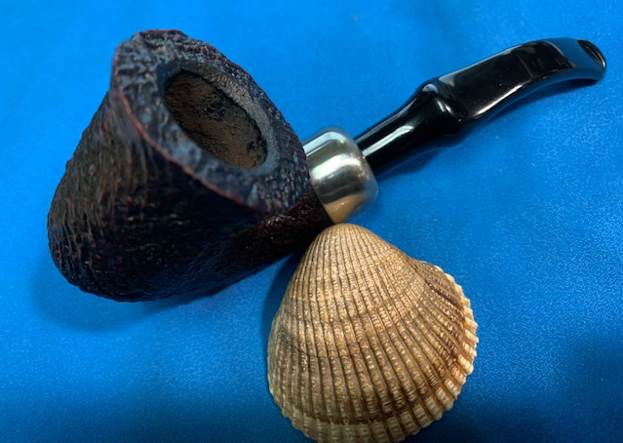
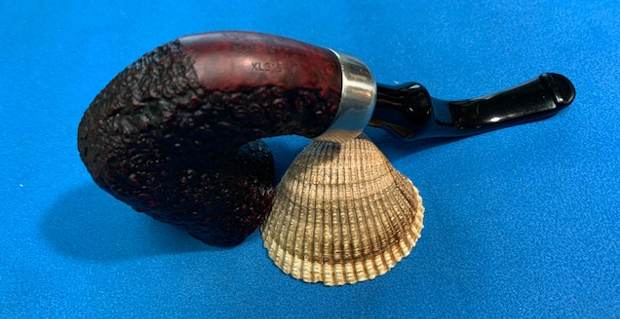
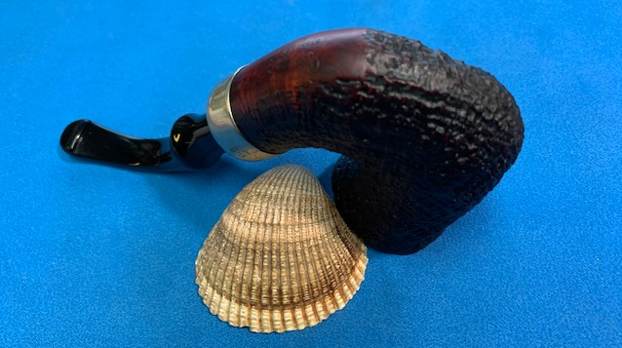
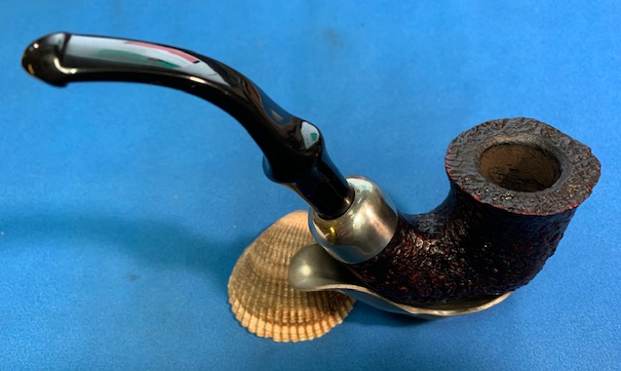
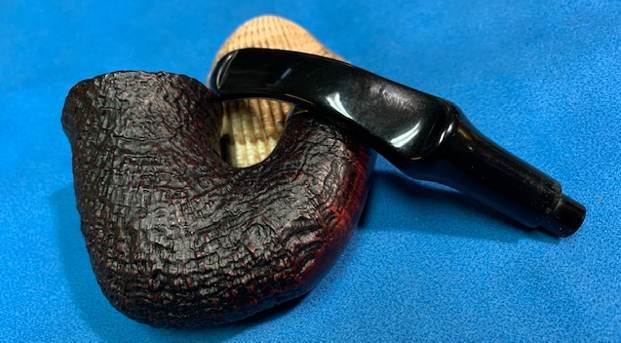
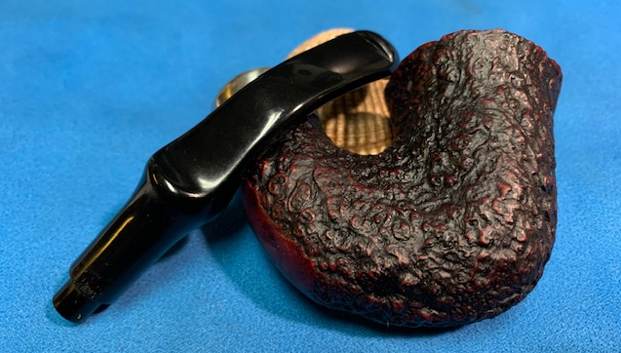
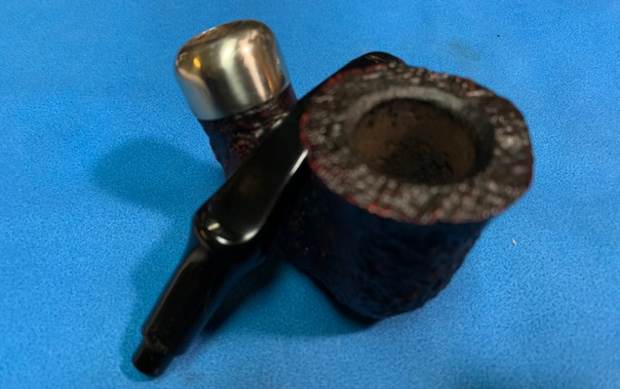
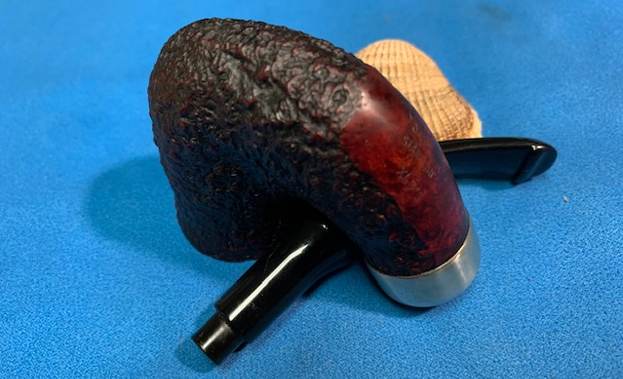
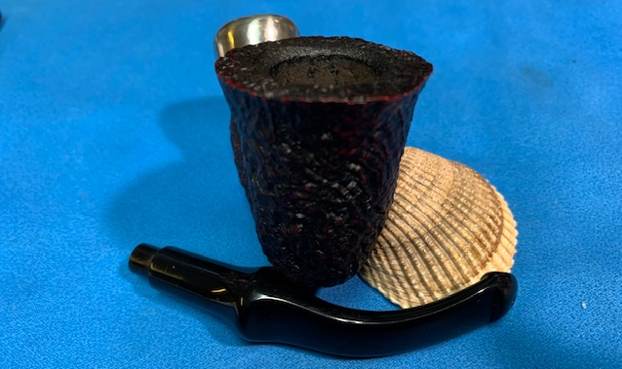
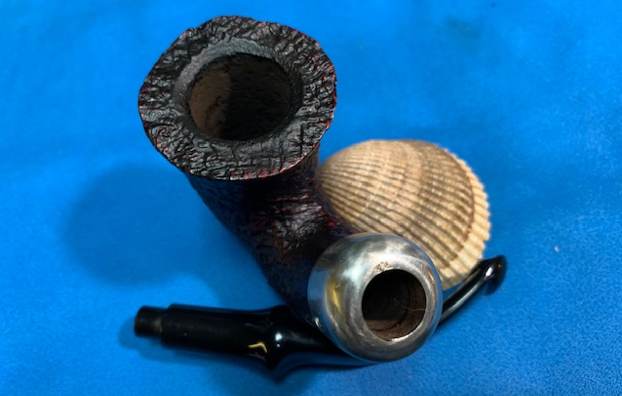
The next pipe I have chosen is a Peterson’s System Standard 2 XL315 sandblast bent Calabash. It was one of four pipes that came to me from a friend for work. This one had very loose stem that did not seem to hold on in the shank that he wanted me to have a look at as well as cleaning and freshening it up. The finish is deeply sandblasted and tactile with some grim in the finish and some lava on the rim top. It was stamped on the underside of the shank and read Peterson’s [arched over] of Dublin [over] System Standard followed by a 2 [over] the shape number XL315. It was in great condition when I brought it to the table. There was a heavy cake in the bowl and some lava in the sandblast on the rim top. The nickel ferrule was in good shape but scratches that would need to be polished. It is stamped as well and reads K & P [over] Peterson on the left. The stem was unstamped and was in good condition. There was some light chatter near the button that would polish out. I took photos of the pipe before I started my work. I took photos of the rim top and stem to show the general condition of the pipe. The bowl is heavily caked and the rim top and edges have a thick lava overflow. The stem is lightly oxidized and has tooth marks on the top and underside near the button. I tried to take photos of the underside of the shank to show the stamping but the stamping is quite faint though readable with a lens. It reads as noted above. I also tried to capture the stamping on the ferrule and it is readable but the photo just could not capture it well.    I removed the stem and took a photo of the pipe to have a look at the parts and overall look.I am including the link to the Pipedia’s article on Peterson pipes. It is a great read in terms of the history of the brand (https://pipedia.org/wiki/Peterson).

I turned to “The Peterson Pipe” by Mark Irwin and Gary Malmberg to get some background on the Peterson’s Of Dublin pipes. On page 298 it had the following information.

Dublin 1906-2003 Although Dublin appears under Peterson’s on many pipes over the decades, it has served mostly as part of the brand name. The word first appeared on pipes hallmarked 1906-11 Stamped Peterson’s over Patent over Dublin. The simpler Peterson’s over Dublin first appeared on pipes hallmarked 1912 after the expiration of the patent. Illustrations of pipes in the ’37 catalogue show a random dispersion of the stamp Peterson’s over Of Dublin together with the ordinary Peterson’s over Dublin on every model offered. Specimens of the former will either bear an Irish COM or London Made over England COM and almost certainly date from 1945-62. It was first mentioned in print as part of a model name in ’68 price list, as K&P Dublin, in ’92 for a Danish market line and in 2017.

The stamping of Peterson’s Of Dublin is very broad and cannot really help pin down the date on the pipe. However, XL315 shape came out in 1998 so the pipe is definitely post 1998.

I started my clean up of the pipe by reaming it with a PipNet reamer and cut back the cake back to the bare briar. I cleaned up the walls with a Savinelli Fitsall Pipe Knife. I finished the cleaning of the bowl with a piece of dowel wrapped in 220 grit sandpaper. I smoothed out the bowl walls and checked for cracks and flaws. All looked very good. I cleaned off the build up in the sandblast on the rim top with a brass bristle brush. I was able to leave it absolutely clean.I scrubbed the interior of the bowl, shank and stem with pipe cleaners, cotton swabs and alcohol to remove the tars and oils. It was full of tars and oils that with a bit of work came clean.   I worked some Before & After Restoration Balm into the surface of the briar with my fingertips and a horsehair shoe brush to clean, enliven and protect the briar. I let the balm sit for 15 minutes and then buffed with a cotton cloth to raise the shine. The photos show the bowl at this point in the restoration process.      I polished the nickel ferrule with micromesh sanding pads – using 1500-12000 grit pads. I wiped it down with a jewelers cloth to polish it and remove the oxidation. I sanded the area on the shank end of the stem for the first inch to clean it up and make the taper match the shank taper.

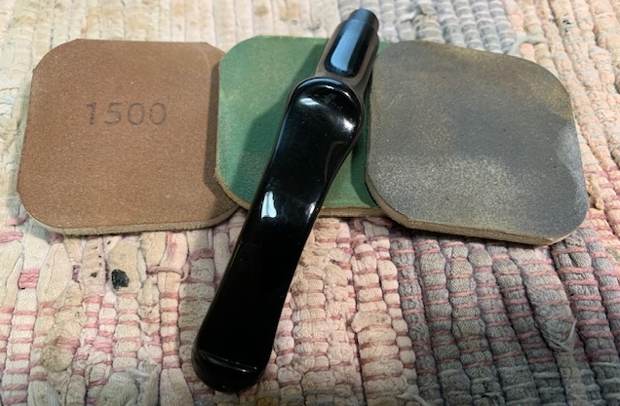
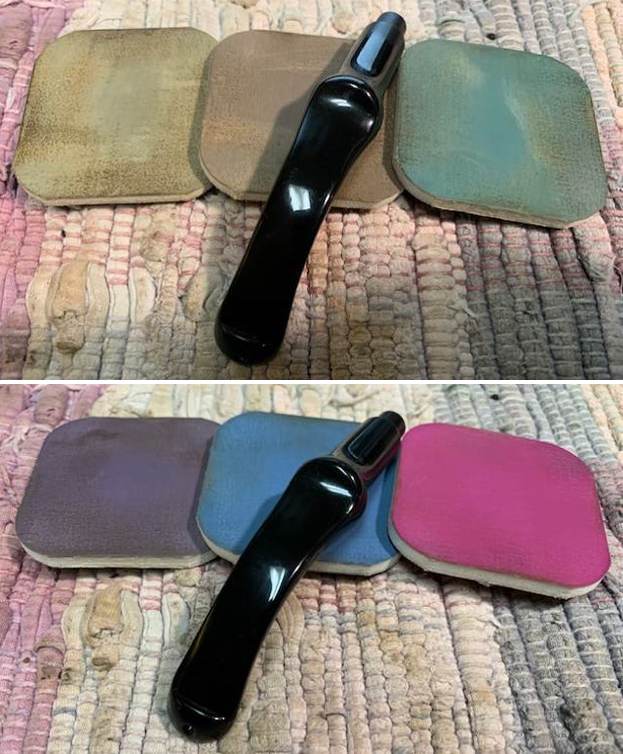
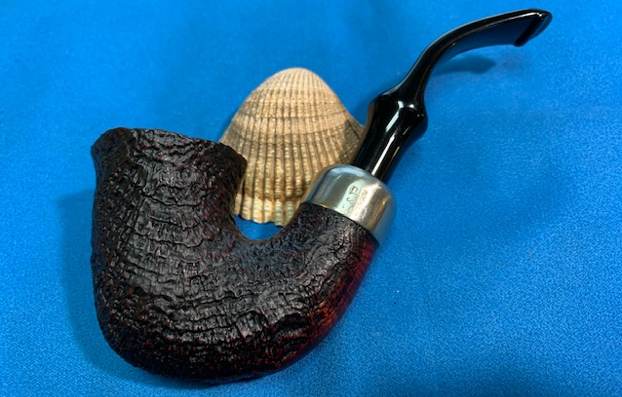
I polished the stem with micromesh sanding pads – wet sanding with 1500-12000 grit sanding pads. I wiped it down after each sanding pad with Obsidian Oil.  I am excited to finish this Peterson’s Of Dublin System Standard 2 XL315 Bent Calabash. I put the pipe back together and buffed it lightly with Blue Diamond on the buffing wheel. I gave the bowl multiple coats of Conservator’s Wax and the stem multiple coats of carnauba wax. I buffed the pipe with a clean buffing pad to deepen the shine. I hand buffed the pipe with a microfiber cloth to further raise the shine. It is fun to see what the polished bowl looks like with deep sandblast all around it. Added to that the polished black vulcanite stem was beautiful. This sandblast System Standard 2 XL315 is great looking and the pipe feels great in my hand. It is light and well balanced. Have a look at it with the photos below. The dimensions are Length: 6 inches, Height: 2 inches, Outside diameter of the bowl: 1 ½ inches, Chamber diameter: ¾ of an inch. The weight of the pipe is 54 grams/1.90 oz. It is a beautiful pipe and the first of the four I am working on for my friend. Once the other three are finished it will be sent back to him. Thanks for walking through the restoration with me as I worked over this pipe. Thanks to each of you who are reading this blog.

Restoring a Republic Era Peterson’s “Sports” 2 Lovat


Blog by Steve Laug

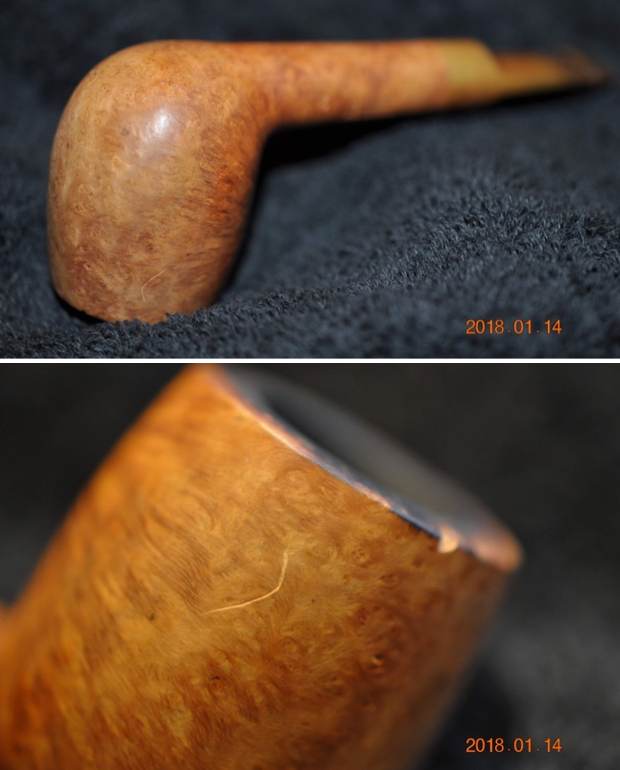
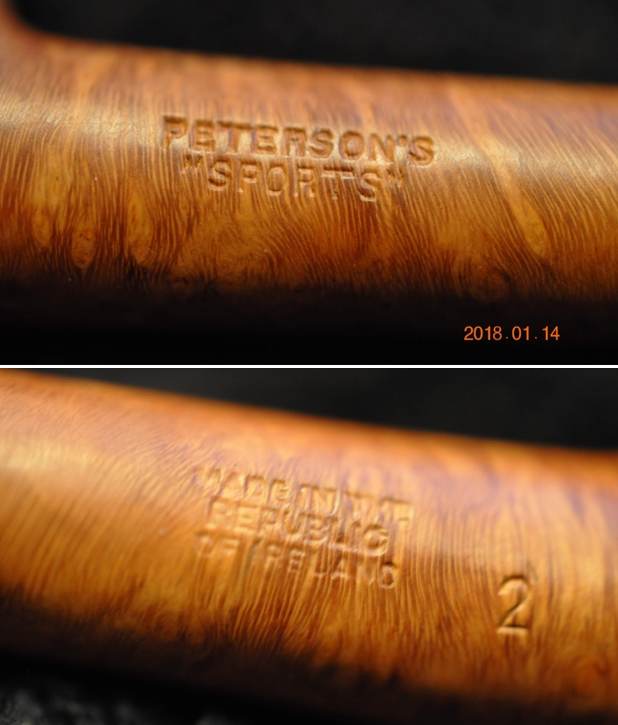
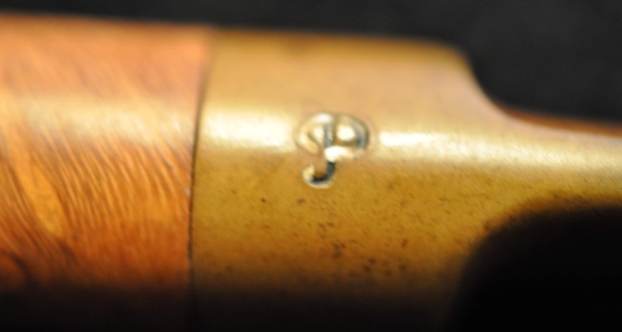
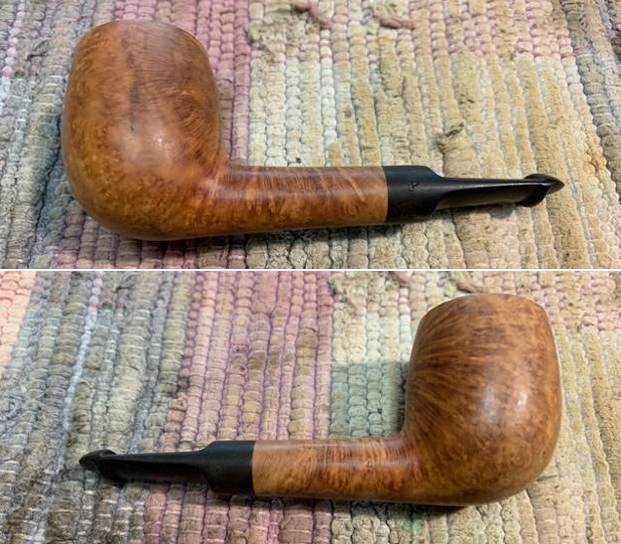
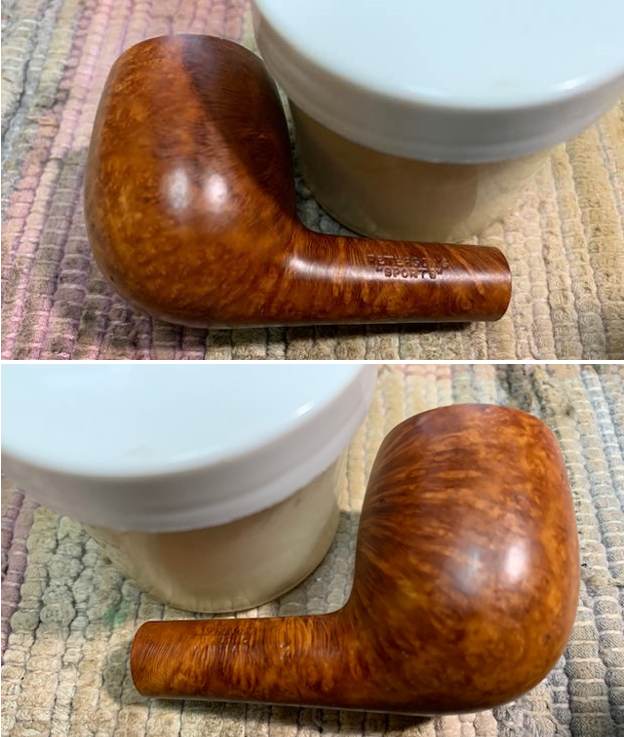
The next pipe I have chosen is smooth finished Peterson’s Small Lovat shaped pipe that had a bit of a bland looking finish but had some good looking grain around the bowl sides and shank. It also came to us from eBay on January 1, 2018 from Bellingham, Washington, USA. This Lovat did not have a nickel ferrule on the shank end. It was stamped on the left side of the shank and read Peterson’s [over] “Sports”. It was stamped on the right side and reads Made in the Republic of Ireland (3 lines). Next to the bowl it is stamped 2. The pipe was in filthy condition when he brought it to the table. The finish was dirty with grime ground into the briar sides and rim. There was a thick cake in the bowl and there was some burn damage to the rim top and the inner edge of the rim. The stem was oxidized, calcified and had tooth marks and chatter on the top and underside on and near the button. Jeff took photos of the pipe before his cleanup work. They tell the story and give a glimpse of the promise that we see in this pipe. Jeff took photos of the rim top and stem to show the general condition of the pipe. The bowl is caked and the rim top and edges show quite a bit of damage around the bowl, inner and outer shank. There were no photos of the stem but I have it in hand and it had tooth marks on both sides ahead of the button. You can also see from above photos that the stem was oxidized.Jeff took some photos of the bowl sides and heel to show the amazing grain that was around this bowl. There were also some nicks in the outer edge of the rim and scratches on the briar. It is a nice looking pipe.     He took photos of the sides of the shank and stem side to show the stamping. The stamping is worn but is still readable in the photos below and is as noted above.     I am including the link to the Pipedia’s article on Peterson pipes. It is a great read in terms of the history of the brand (https://pipedia.org/wiki/Peterson).

I turned to “The Peterson Pipe” by Mark Irwin and Gary Malmberg to get some background on the Peterson’s Sports. On page 313-314 it had the following information.
“SPORTS” (1947-) A “Sport” is traditionally a compact pipe made for smokers engaged in athletic pursuits, most notably equestrian riders who do not want the bowl to bounce up and down. Six shapes described in 1947 shape chart. Occasional later catalogs show as many as 11 shapes. Last  appeared in shape chart in ’98, but still made in small numbers. Recorded specimens are stamped MADE IN IRELAND (forming a circle) or MADE IN THE over REPUBLIC over OF IRELAND. See Outdoor and Outdoor Sportsman.
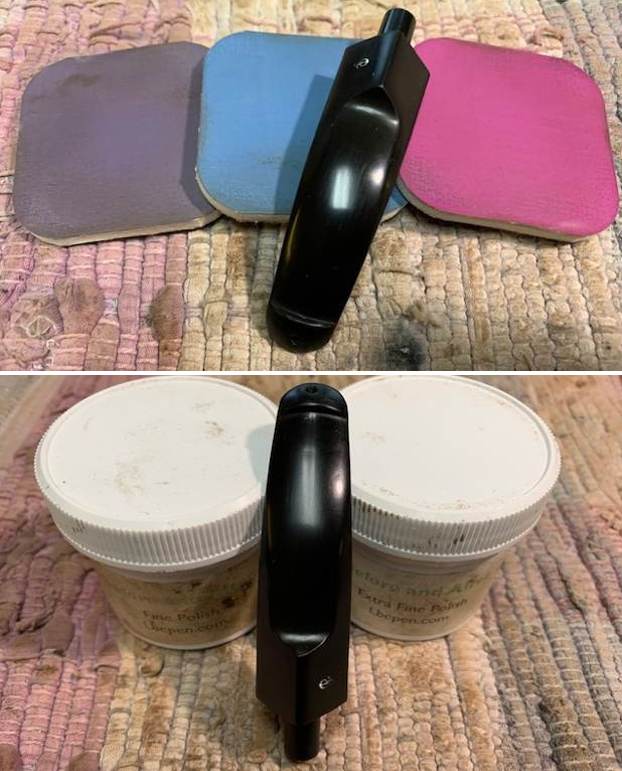
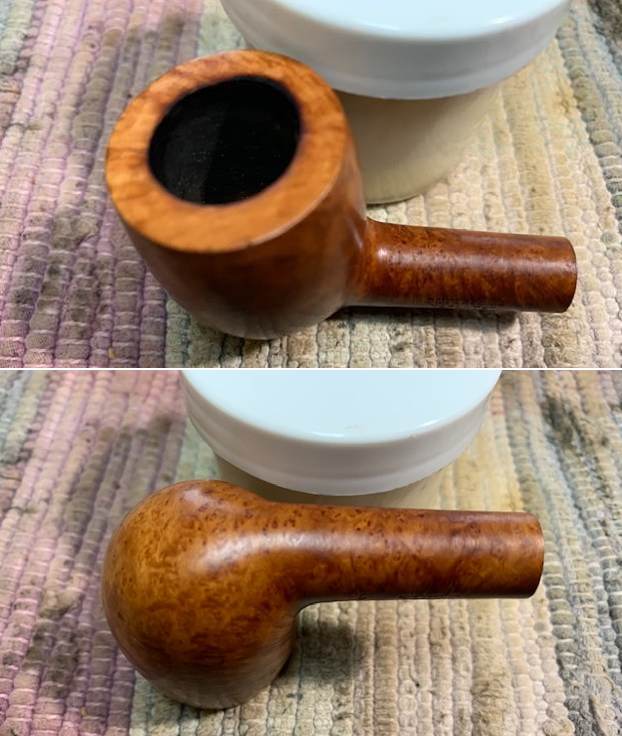
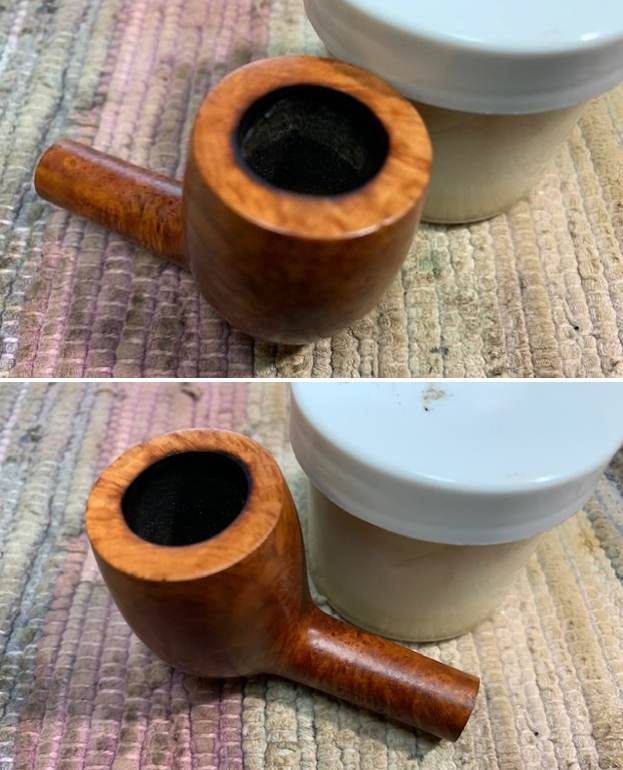
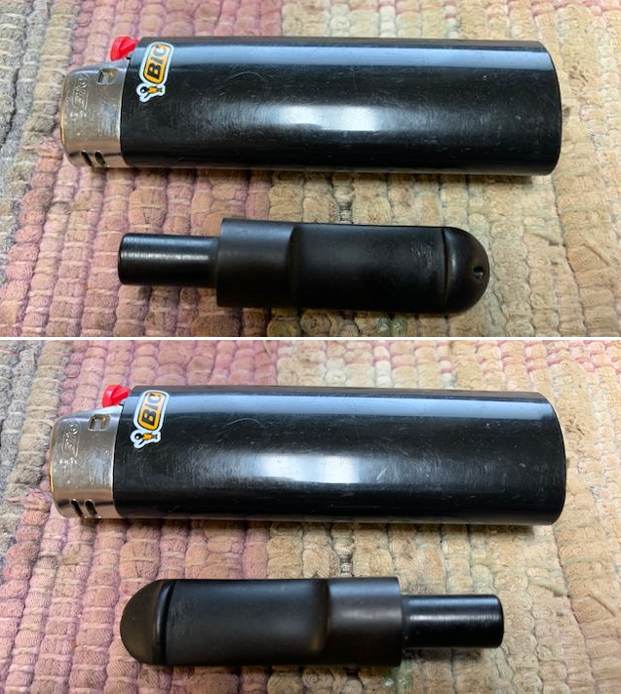
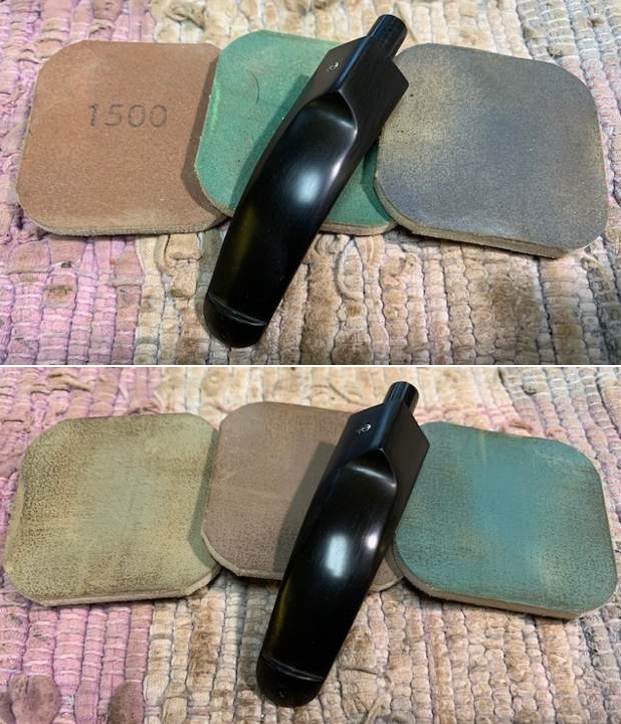
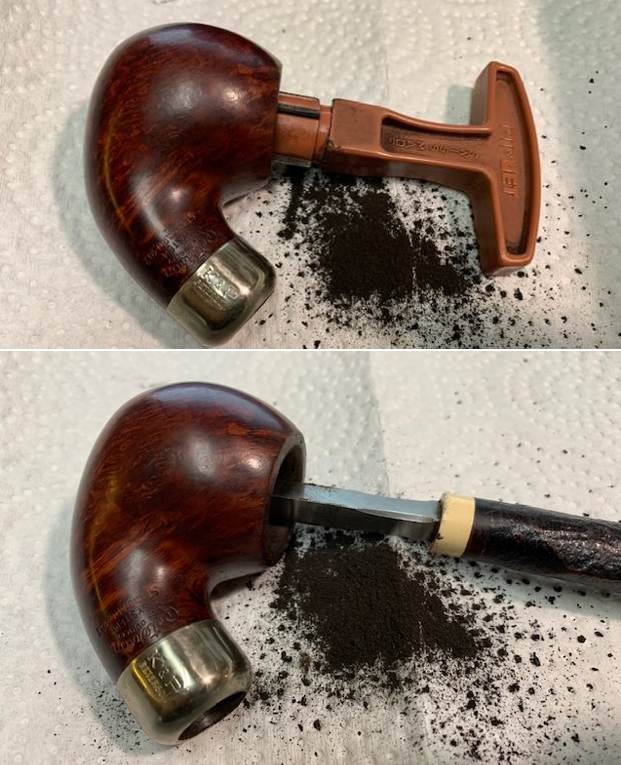
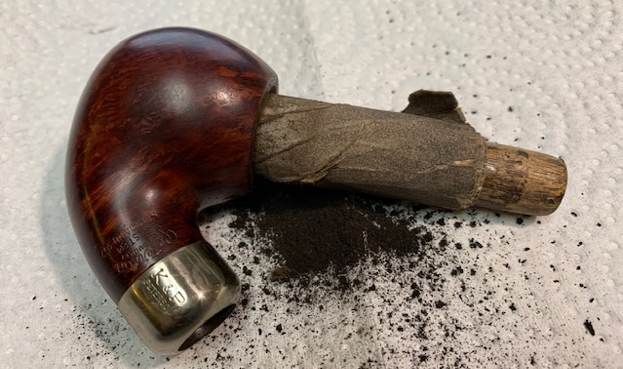
Now it was time to work on the pipe. Jeff had done a great job cleaning up the pipe as usual. He reamed the pipe with a PipNet reamer and cut back the cake back to the bare briar. He cleaned up the walls with a Savinelli Fitsall Pipe Knife. He scrubbed the interior of the bowl and shank with pipe cleaners, cotton swabs and alcohol to remove the tars and oils. He scrubbed the exterior of the pipe with Murphy’s Oil Soap and a tooth brush to remove the grime from the finish. He worked on the rim top lava and darkening with the soap and tooth brush. He scrubbed the inside of the stem with alcohol and pipe cleaners. He scrubbed the exterior with Soft Scrub and then soaked it in Before & After Deoxidizer. He washed it off with warm water to remove the deoxidizer. The pipe looked far better when it arrived.    I took some close up photos of the rim top and also of the stem surface. I wanted to show how well it had cleaned up. The rim top had some looked quite good and the inner and outer edges had some darkening and damage. I also took close up photos of the stem to show the tooth marks on the surface near the button. I took photos of the stamping on the sides of the shank. You can see that it is stamped as noted above. It is clear and readable.     I removed the stem and took a photo of the pipe to have a look at the parts and overall look. I decided to address the damage to the edge of the bowl and the rim top first. I topped the bowl on a topping board with 220 grit sandpaper to smooth out the damage to the rim top. I used a folded piece of 220 grit sandpaper to give the inner edge of the bowl a slight bevel to accommodate the burned areas and blend them into the surrounding briar. I polished the briar with micromesh sanding pads – dry sanding with 1500-12000 grit sanding pads. I wiped the bowl down with a damp cloth after each sanding pad.   I worked some Before & After Restoration Balm into the surface of the briar with my fingertips to clean, enliven and protect the briar. I let the balm sit for 15 minutes and then buffed with a cotton cloth to raise the shine. The photos show the bowl at this point in the restoration process.    I set the bowl aside and turned my attention to the stem. I “painted” the stem surface with the flame of a lighter to lift the tooth marks and chatter on both sides. I was able to lift most of them. I sanded the remaining tooth marks smooth with 220 grit sandpaper and started polishing the stem with 400 grit wet dry sandpaper. I used some white acrylic fingernail polish to touch up the “P” stamp on the left side of the saddle stem. I worked it into the stamp with a tooth pick. Once the acrylic had dried I scraped off the excess leaving the “P” stamp white. It looked quite good.   I polished the stem with micromesh sanding pads – wet sanding with 1500-12000 grit sanding pads. I wiped it down after each sanding pad with Obsidian Oil. I polished it with Before & After Pipe Stem Polish – both Fine and Extra Fine. I gave it a final rub down with Obsidian Oil and set it aside to dry.       I am excited to finish this Republic of Ireland Made Peterson’s “Sports” 2 Lovat. I put the pipe back together and buffed it with Blue Diamond on the buffing wheel. I gave the bowl and the stem multiple coats of carnauba wax. I hand buffed the pipe with a clean buffing pad to raise the shine. It is fun to see what the polished bowl looks like with beautiful mixed grain all around it. Added to that the polished black vulcanite stem combined with the bowl and made a stunning pipe. This smooth Classic Older Peterson’s “Sports” 2 Lovat is great looking and the pipe feels great in my hand. It is light and well balanced. Have a look at it with the photos below. The dimensions are Length: 4 inches, Height: 1 ¾ inches, Outside diameter of the bowl: 1 ¼ inches, Chamber diameter: ¾ of an inch. The weight of the pipe is 28 grams/.95 oz. It is a beautiful pipe that I will soon be putting on the rebornpipes store in the Irish Pipe Makers section. If you are interested in adding it to your collection send me an email or a message. Thanks for walking through the restoration with me as I worked over this pipe. Thanks to each of you who are reading this blog.
Restoring an Aged Real Meerschaum Billiard


Blog by Steve Laug

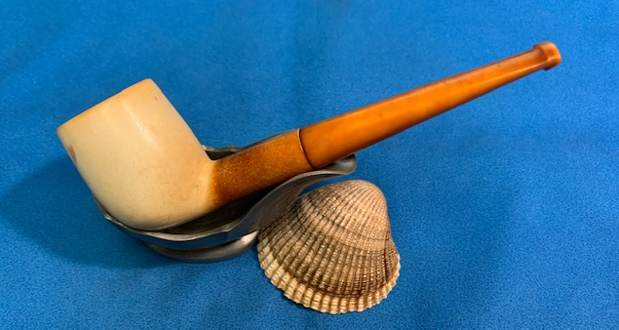
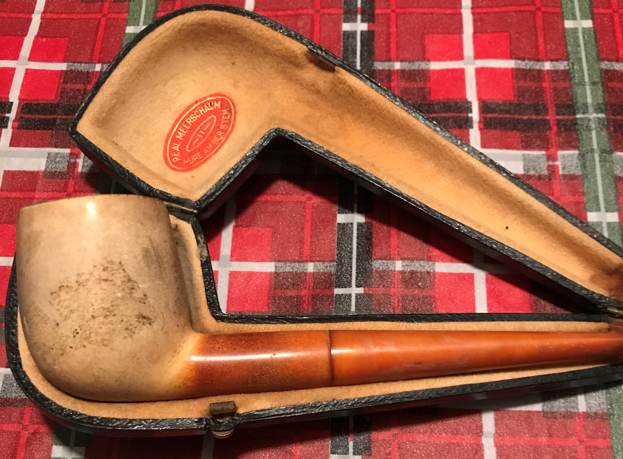
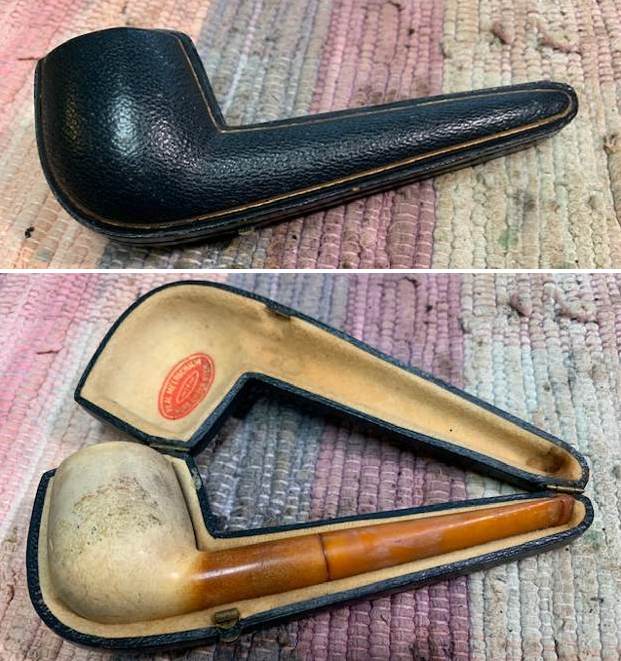
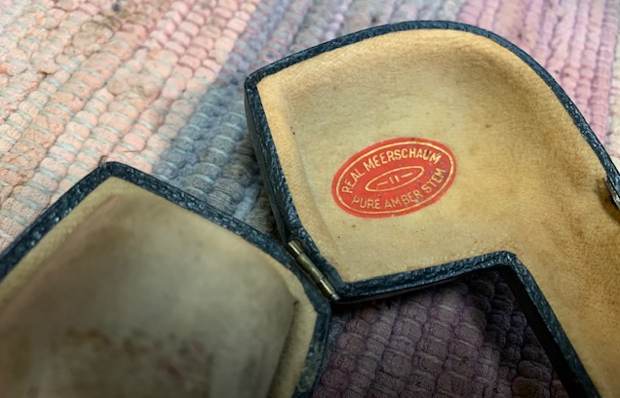
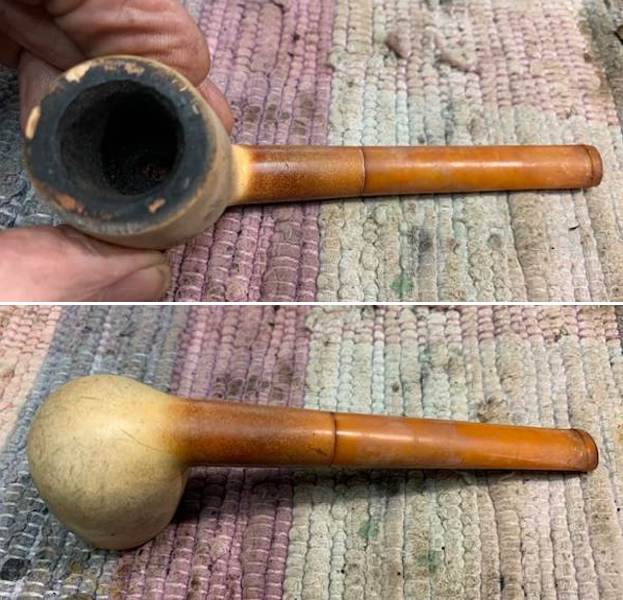
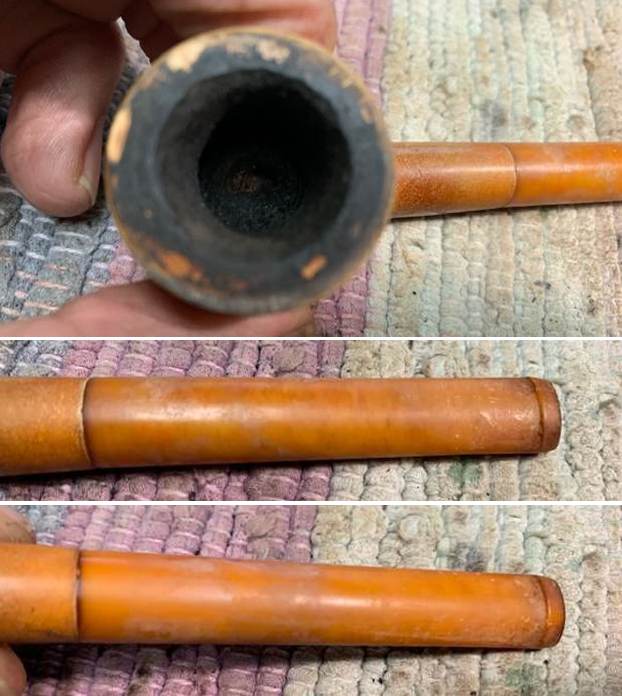
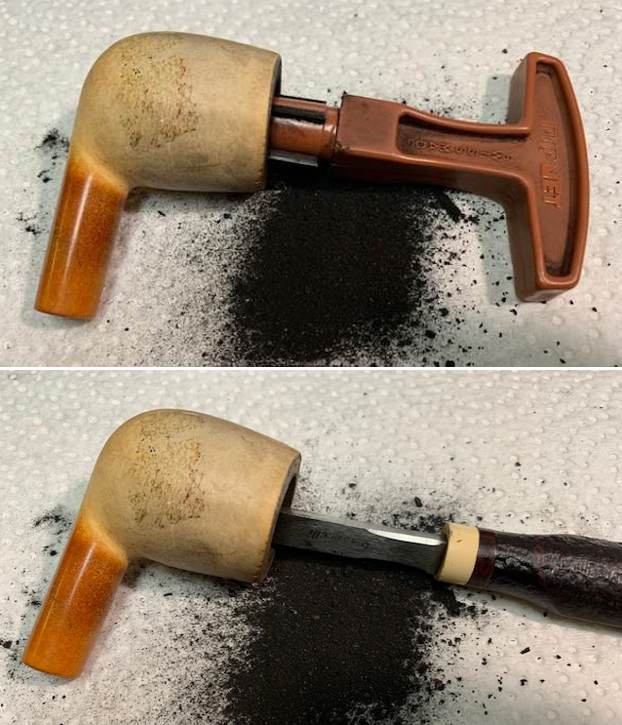
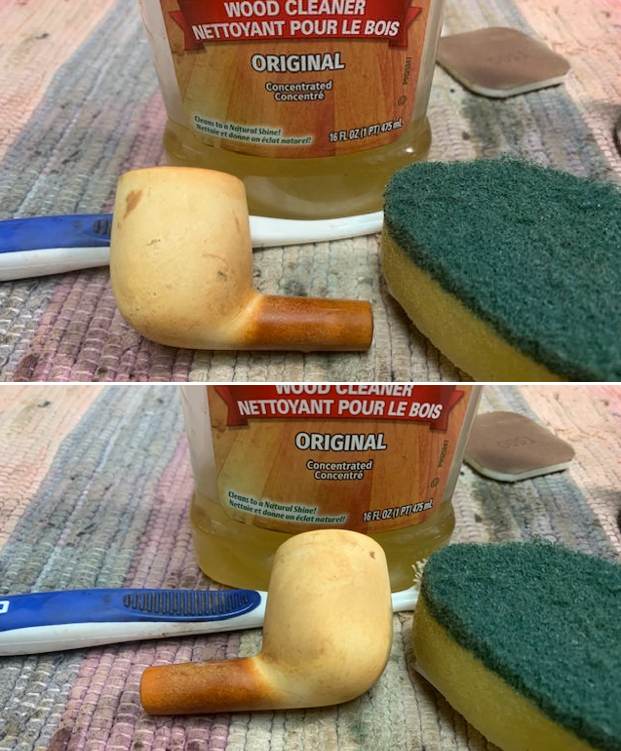
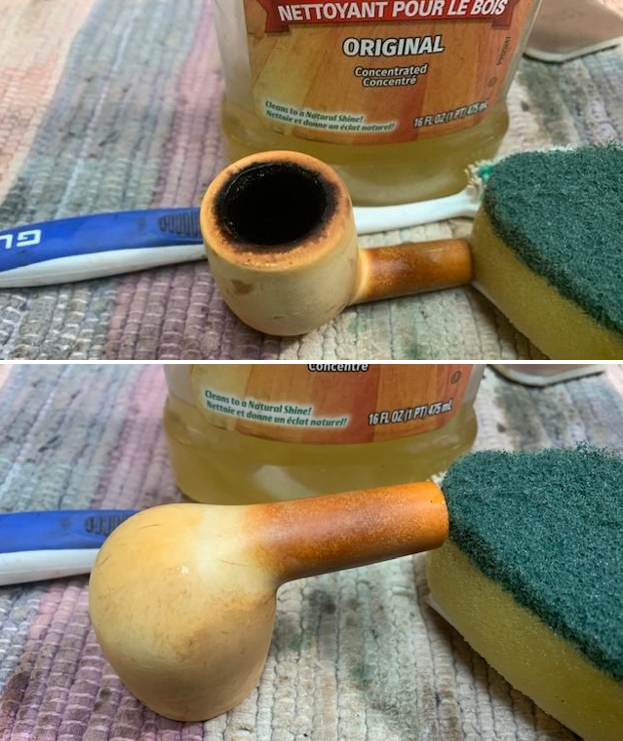
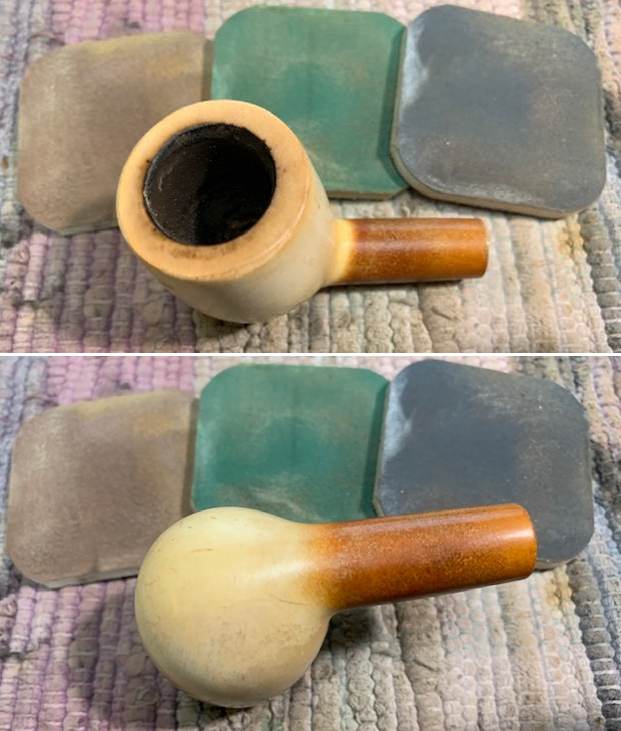
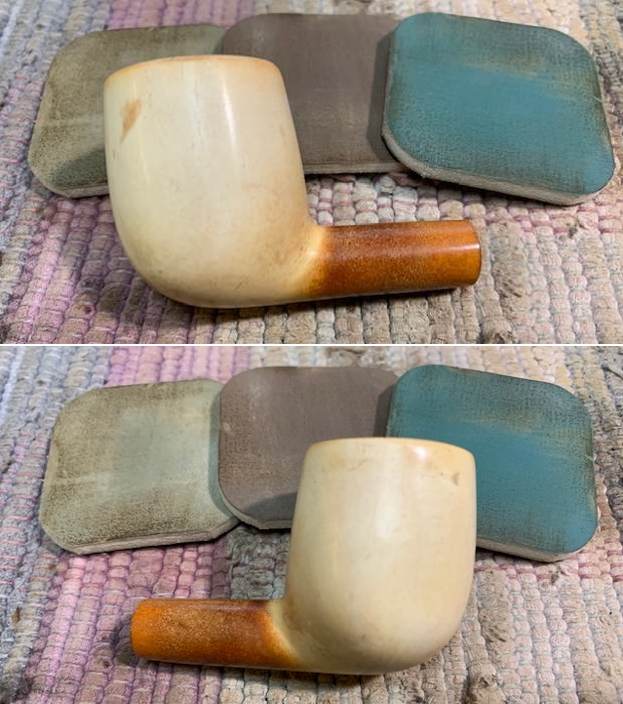
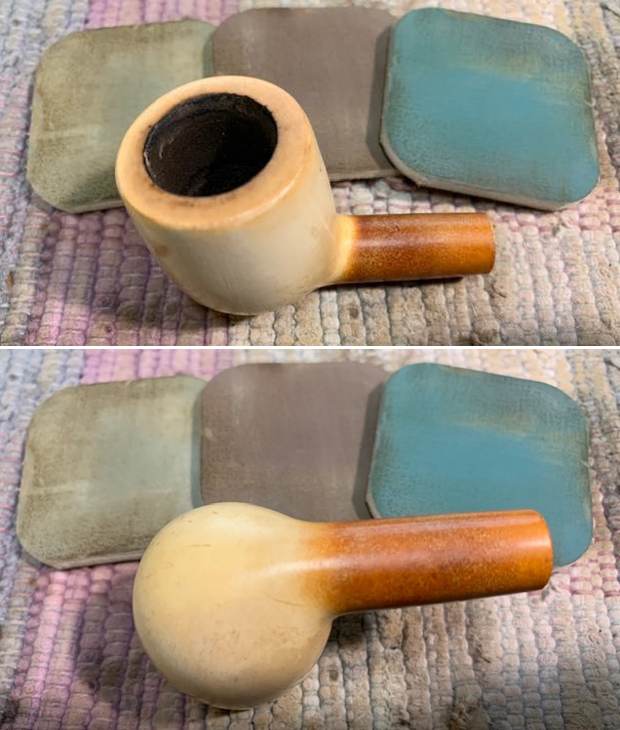
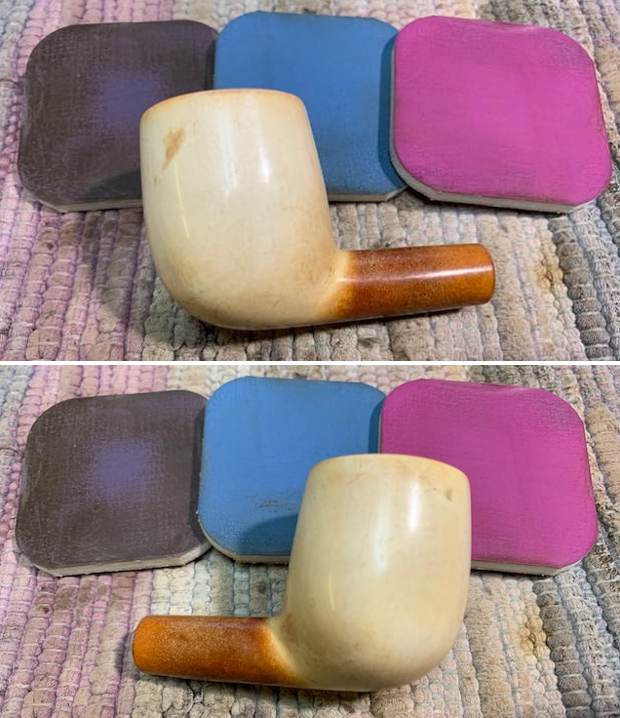
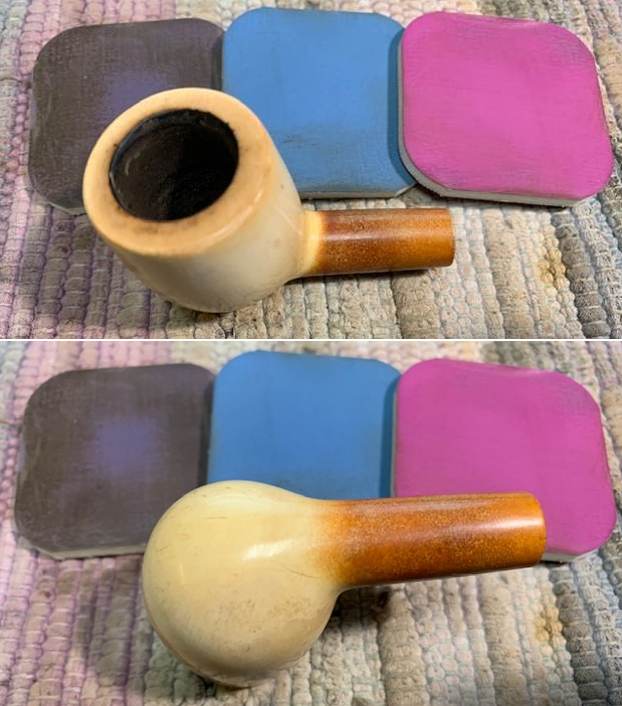
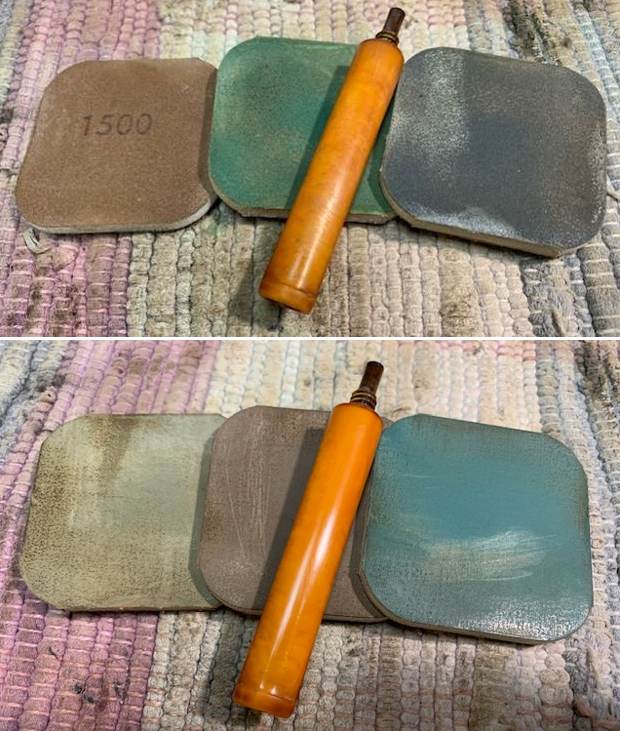
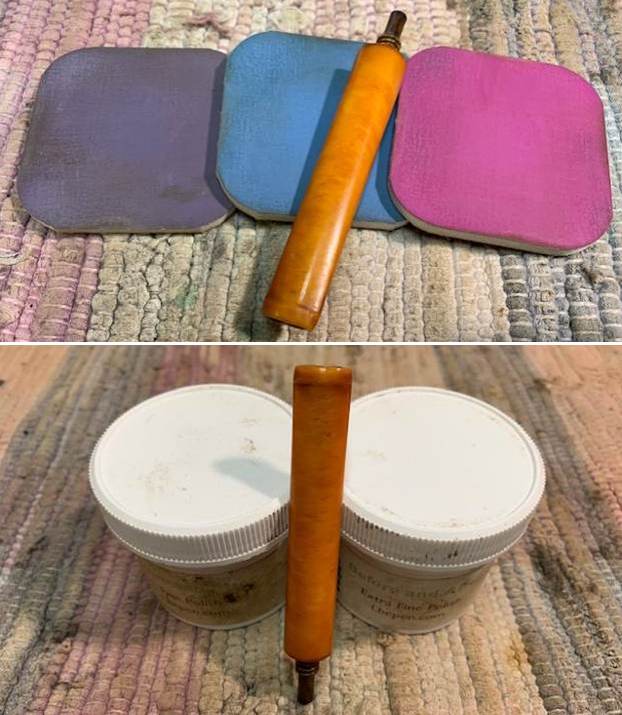
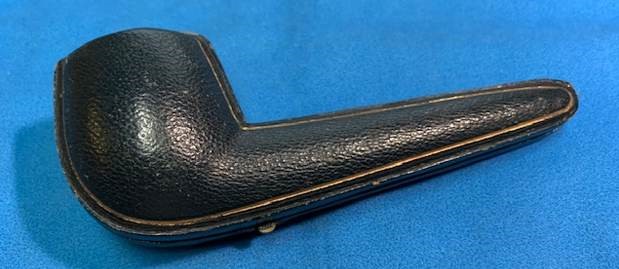
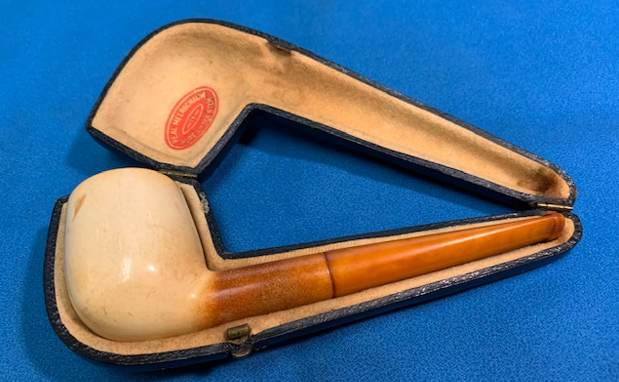
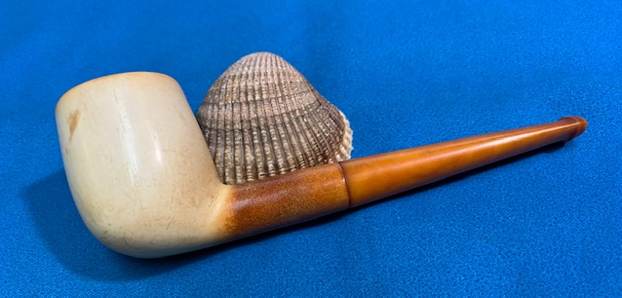
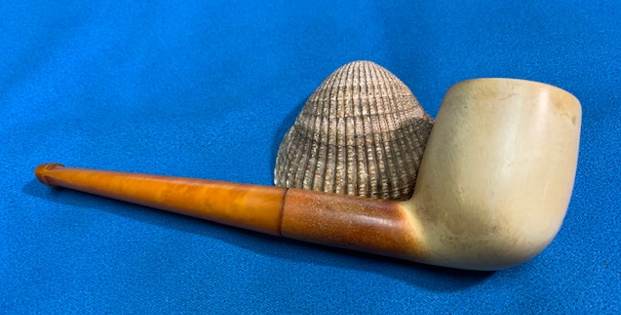
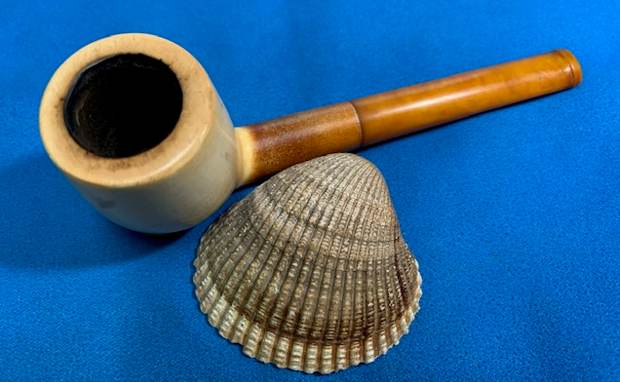
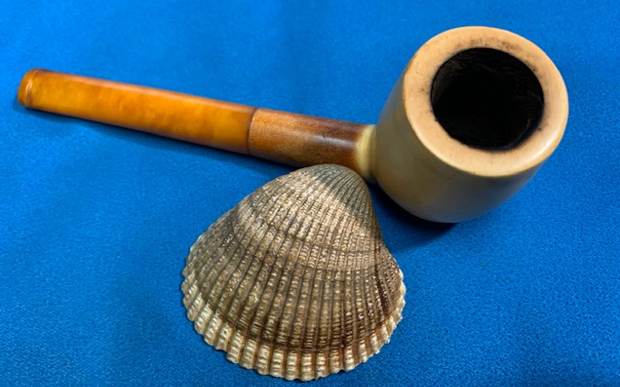
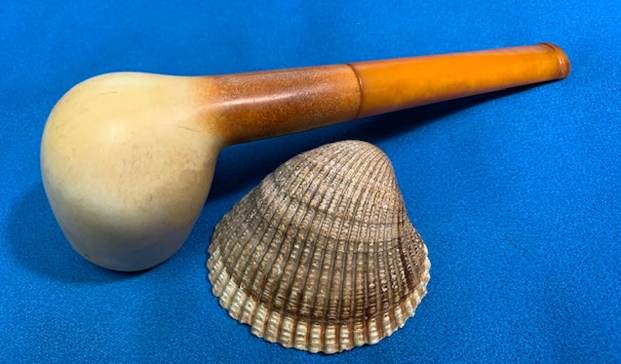
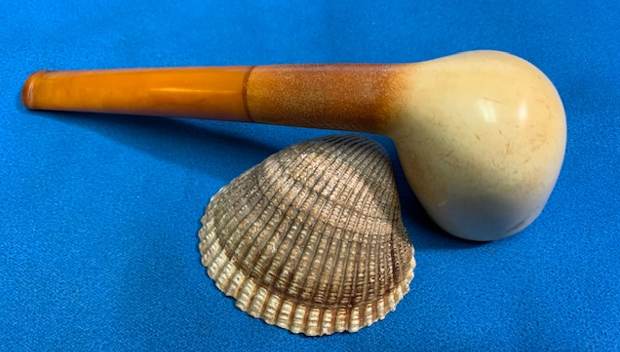
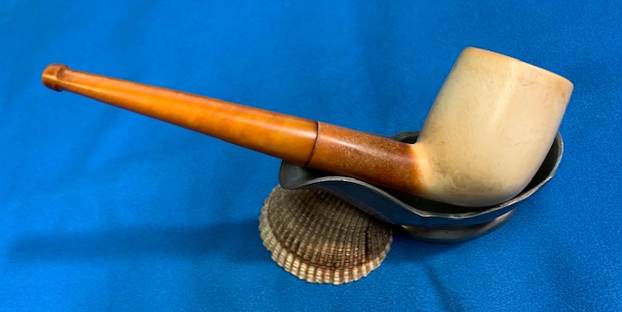
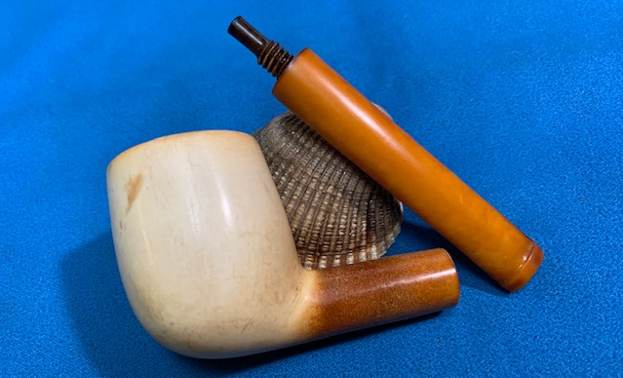
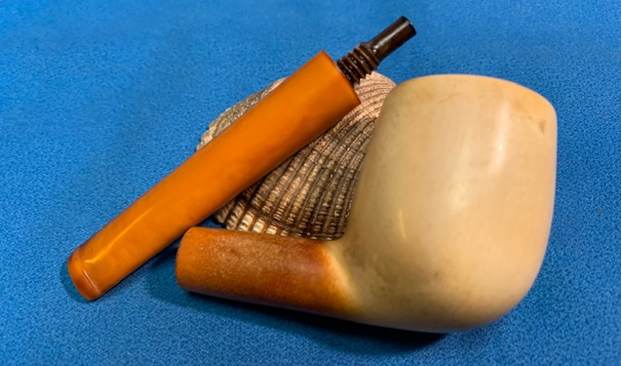
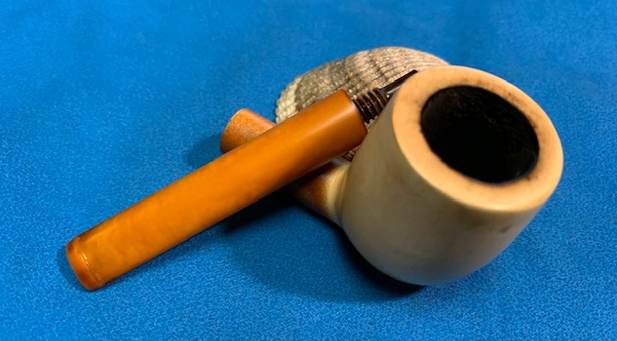
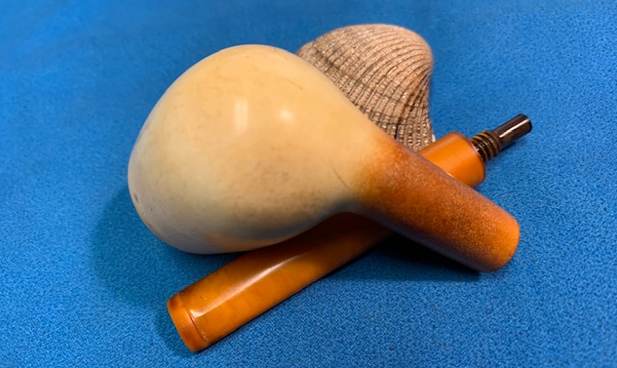
The next pipe came to me as a referral by a local pipe and cigar shop. I have not met the owner as he left it in my mailbox for me to work on. The well made leather case has no markings or stampings on it. It is just a nicely made, fitted leather case for a meerschaum. Inside the case the lid had a red and gold seal in the lid and read Real Meerschaum arched over an oval with the words Pure Amber Stem arched beneath it. When I open the case the stink was old and musty like the pipe had been sitting in the back of some old timers drawer. It was not moldy smelling but it had that odd smell that I have come to associate with things stored in a damp basement or attic or maybe an old box of stuff. It definitely was musty! The case is fitted to lightweight meerschaum billiard. I took photos of the case before I opened it and of the pipe inside after it was opened. The case has a red oval logo on the lid that read Real Meerschaum arched over Pure Amber Stem. I was looking forward to working on this one and seeing what was underneath the debris and mustiness of time. I took the pipe out of the case. The pipe inside was filthy with a thick overflowing cake in the bowl that reeked of mustiness. There was a thick overflow of tars/lava on the top and inner edge of the bowl The finish was dirty with sticky grime and dust on the surface and no shine at all. There were some spots of hardened tar on the bowl sides as well. Underneath the filth there was some developing patina around the bowl and shank. The stem was really dirty as well. There was dust and debris o the surface and some light dusting that looked like mildew. The surface was hard and in good condition with no bite marks or chatter on either side. The slot had a thick build up of tars like the rim top. It was hard to know what it looked like under the grime but it had the feel of either amber or an Amberoid. The stem had swirls in the amber like the Amberoid I had found on Andreas Bauer Meerschaum pipes. The stem had a threaded bone tenon that was filthy and would need some work but it was in good condition otherwise. I took photos of the pipe before I started my work on it. I took photos of the rim top and the stem to show the condition. You can see the issues on the rim top and stem as I noted above. There are also some light scratches on the rim top itself. It should clean up quite well.I carefully reamed the pipe with a Pipnet Reamer, followed by a Savinelli Fitsall Pipe Knife. There was still some thick cake on the bottom of the bowl that I could not reach or penetrate with the two reamers.I scrubbed the bowl with undiluted Murphy’s Oil Soap with a tooth brush. I worked on the rim top with a Scotch Brite pad to break up the lava coat. I rinsed it under warm water to remove the soap and grime. I then turned back to do some more reaming of the bowl. There was a hard thick coat of cake on the bottom of the bowl. I used a Kleen Reem Pipe reamer to remove the cake on the bottom of the bowl. I sanded out the inside of the bowl with a piece of dowel wrapped with 220 grit sandpaper. I took the cake back to bare meerschaum. I cleaned out the inside of the shank and the airway in the stem with alcohol, cotton swabs and pipe cleaners. I kept at it until I was able to remove the tars and oils and to minimize the mustiness of the smell of both.I polished the smooth meerschaum with micomesh sanding pads – wet sanding with 1500-12000 grit pads. I worked on the darkening of the rim top at the same time. I wiped the bowl down after each pad with a damp cloth. I set the bowl aside and turned my attention to the stem. I polished out the chatter and faint tooth marks with micromesh sanding pads. I dry sanded it with 1500-12000 pads and wiped the bowl down after each pad with a cloth and Obsidian Oil. I finished polished it with Before & After Fine and Extra Fine stem polish. I wiped it down with the cloth and Obsidian Oil one final time and set aside to dry. This No Name Real Meerschaum Billiard with an Amber Taper stem is a beautiful pipe. With the addition of the beeswax the meerschaum took on a slightly darker patina. The polished light weight meerschaum that shines through the polished finish is stunning. I put the stem back on the bowl and carefully buffed the pipe with a clean buffing pad. I hand buffed the pipe with a microfiber cloth to deepen the shine. The finished Meerschaum Billiard fits nicely in the hand and feels great. Give the finished pipe a look in the photos below. The dimensions of the pipe are Length: 5 inches, Height: 1 ½ inches, Outside diameter of the bowl: 1 ¼ inches, Chamber diameter: ¾ of an inch. The weight of the pipe is 24 grams/ .81oz. One I finish posting this blog I will contact the owner and let him know it is finished. Perhaps I will get to meet him when he picks it up but we shall see. In a time of COVID and E-Transfers it is possible to do business without contact. Ah well! Thanks for reading this blog and my reflections on the pipe while I worked on it. There are many more to come!

Replacing a tenon and restoring a House of Robertson Rusticated Dublin


Blog by Steve Laug

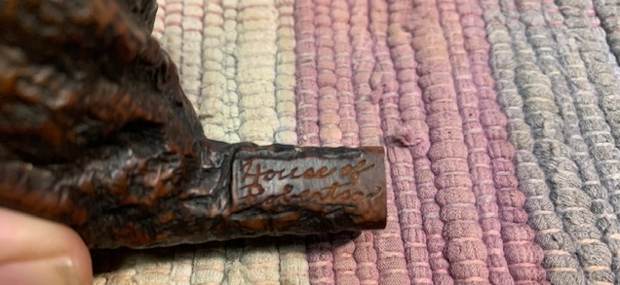
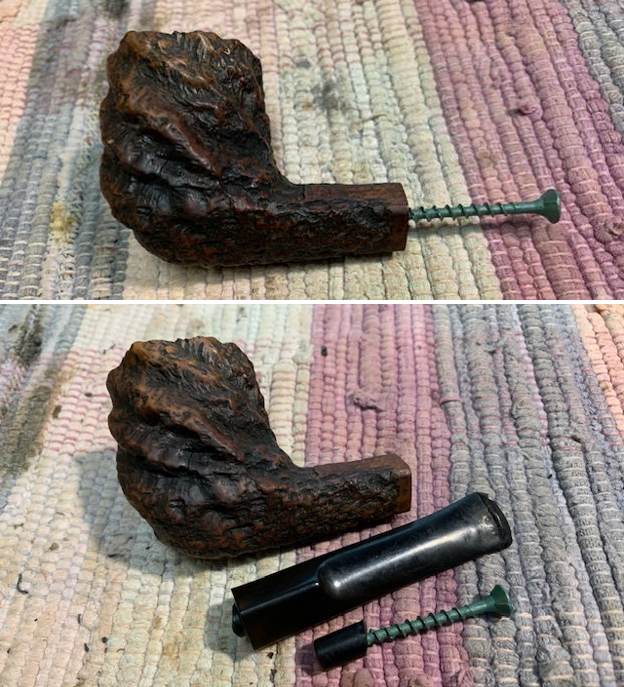
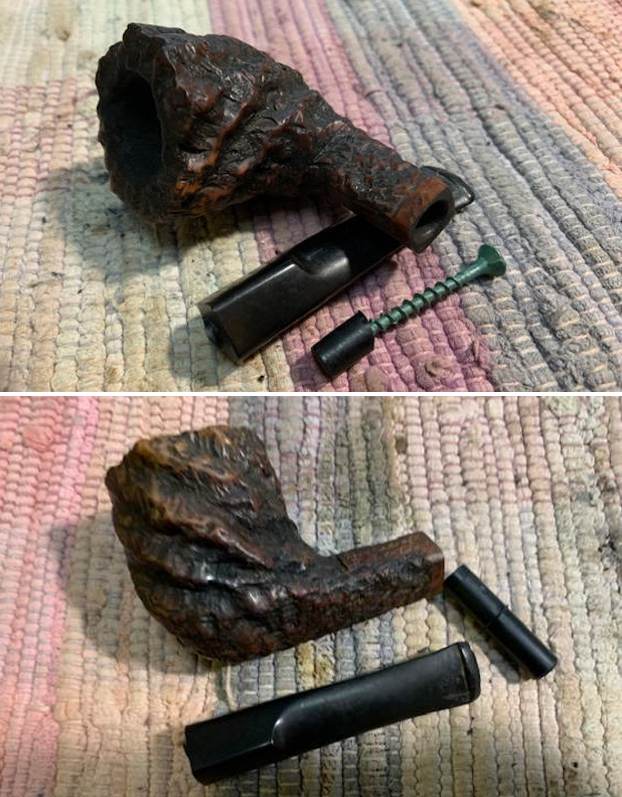
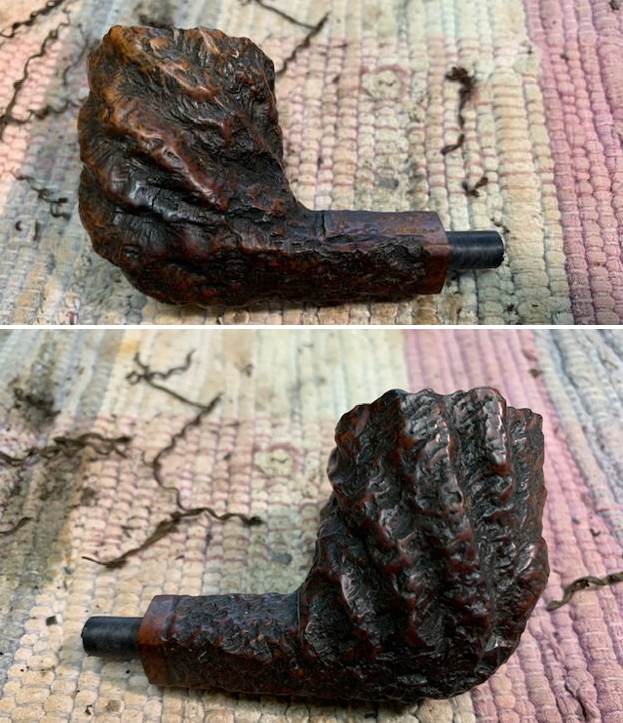
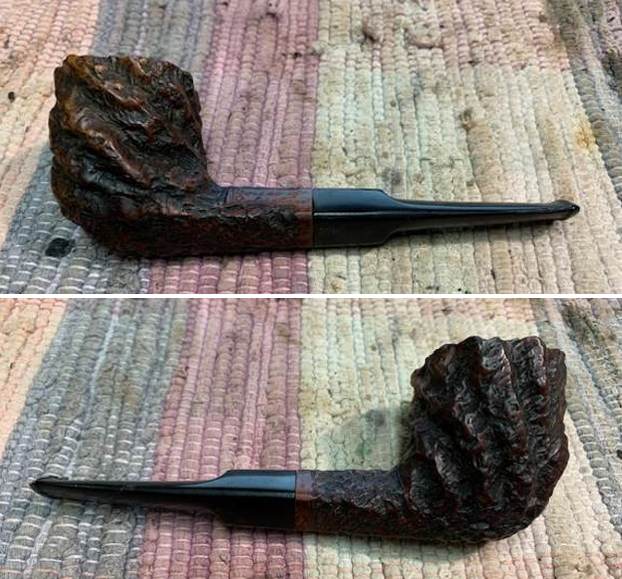
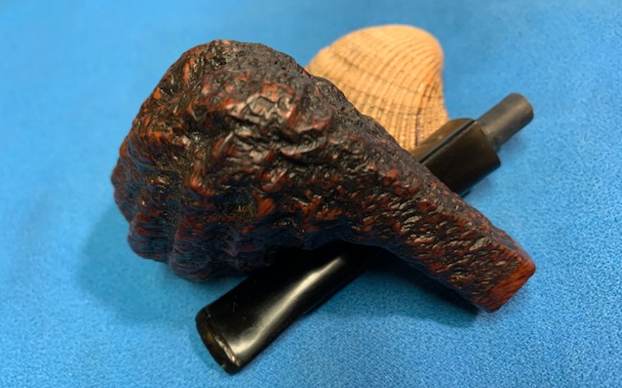
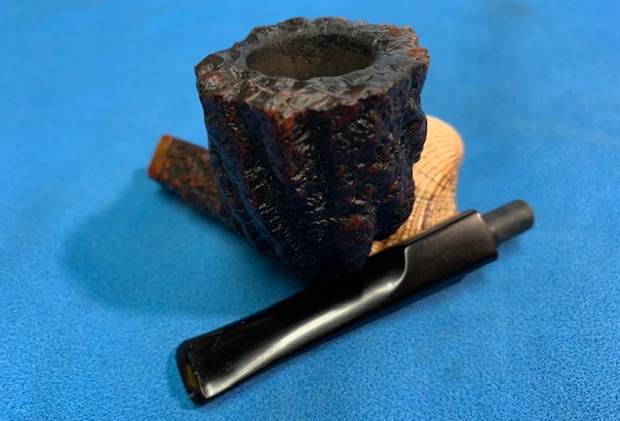
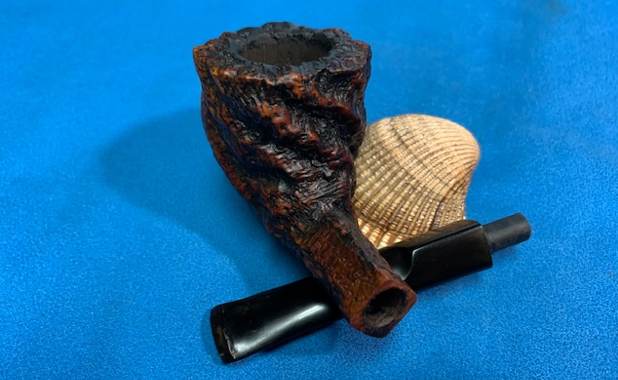
The next pipe on the table is a House of Robertson Rusticated Dublin with a tapered, vulcanite Bite Through stem. The rustication on the briar is very tactile and deep. There are grooves around the bowl and shank and those have been deeply rusticated. The pipe is stamped on the left side of the diamond shank and reads House of [over] Robertson. It really is a beautiful pipe and the rustic finish works very well with the diamond twin bore saddle stem. The fellow who sent it to me is a previous customer and in his box were two pipes with a snapped tenon – the Radice (which I have repaired already) and this House of Robertson. This one was quite dirty with a thick cake in the bowl and overflowing onto the rim top. There was some burn damage on the inner edge of the rim around the bowl and the pipe was dull and dusty. The tenon had snapped off cleanly at the shank end with no damage to the briar. The stem had tooth marks on both the top and underside ahead of the button and was also dirty. I took some photos of the pipe before I started my work on it. I took a close up photo of the rim top to show the condition of the bowl and inner edge. You can see the damage on the inner edge of the rim. It will become more evident once the bowl has been reamed and cleaned. The photos of the stem show the tooth marks and chatter on both sides near the button.I took photos of the stamping on the left side of the diamond shank to capture how the classic House of Robertson signature looked.House of Robertson pipes were made by Thayne Robertson in Boise, Idaho. He did some beautiful work and all had the etched stamp on them. I have worked on many of these pipes over the years and done the research on the brand previously. Here is a link to one of the pipes where I have included background information (https://rebornpipes.wordpress.com/wp-admin/post.php?post=60954&action=edit&classic-editor).

“House of Robertson” was in business for many years, but alas, closed their doors in 1999. They were located in Boise, Idaho. They are noted for making rather large and interesting pipes. Thayne Robertson was a Master Mason, AF & AM, and started the shop about 1947 and his son Jon started working there in 1970 when he finished college, along with Thayne’s daughter. Thayne and his son started making the big pipes at that time, and made them together until 1987 when Thayne passed away. Jon kept the store and his sister moved on to other things. The House of Robertson appears to have closed around 1999. https://pipedia.org/wiki/Robertson

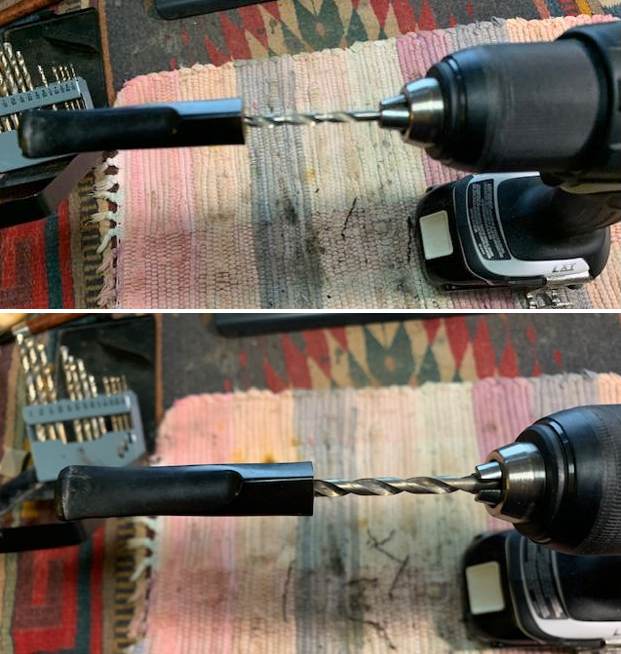
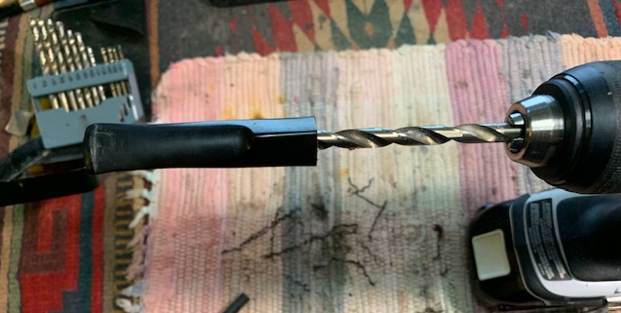
I began my work on this pipe by pulling the broken tenon from the shank. I generally use a dry wall screw and twist it into the airway of the broken tenon and wiggle it free. This one was stuck. I put it in the freezer while I had lunch and afterward it came out quite easily. I went through my replacement tenons and found one that would work on this stem. I sanded the broken end of the tenon remaining on the stem with a sanding drum on my Dremel. I also sanded the diameter of the new tenon at the same time to get a good fit in the shank. I took photos of the tenon in the shank at this point to show the fit. I drilled out the airway on the stem with successively larger drill bits to accommodate the tenon. The last bit was ¼ inch which is perfect for the tenon. I slipped the stem over the tenon and took photos of the pipe at this point. It looks very good. With that done I turned my attention to the bowl. I reamed it with a PipNet reamer and took the cake back to briar. I cleaned up the remnants with a Savinelli Fitsall pipe knife. I sanded the bowl walls with a piece of dowel wrapped with 220 grit sandpaper. I cleaned up the rim top with a brass bristle wire brush to remove the lava in the sandblast and a bit of the burn damage on the inner edge of the bowl.I cleaned out the internals on the stem and shank with pipe cleaners, cotton swabs and alcohol until they were clean.I rubbed down the bowl with Before & After Restoration Balm to clean, enliven and protect the briar. I worked it into the blast with a horsehair shoe brush. I let it sit and do its magic for 10 minutes and then buffed it off with a soft cloth.I set the bowl aside and turned my attention to the vulcanite stem. I glued the new tenon in the shank with black super glue. While it cured, I “painted” the surface of the vulcanite stem with the flame of a lighter to lift the tooth chatter and marks. Many of them lifted significantly with the heat. Those that remained I filled in with black super glue and set the stem aside to cure. Once it had cured I flattened out the repairs with a small flat file. I sanded them with 220 grit sandpaper to further flatten them out and blend them into the surrounding area. I started polishing the stem with 400 grit wet dry sandpaper. I polished the vulcanite bite through stem with micromesh sanding pads – dry sanding with 1500-12000 grit pads. I wiped the stem down after each pad with Obsidian Oil. I finished the polishing with Before & After Stem Polishes – both Fine and Extra Fine. I wiped the stem down with a cloth impregnated with Obsidian Oil to protect and give the deep shine to the stem. I was happy to be finished with this beautiful House of Robertson Rusticated Diamond Shank Dublin. The vulcanite stem fit well and looked good with the rich finish of the rusticated bowl and shank. I lightly buffed the pipe with Blue Diamond on the buffing wheel and gave the bowl and shank multiple coats of Conservator’s Wax. I buffed it with a clean buffing wheel to raise the shine. I hand buffed it with a microfiber cloth to deepen the shine. The House of Robertson’s Dublin is a great looking pipe that has an amazing looking rustication. The dimensions of the pipe are Length: 5 ½ inches, Height: 2 inches, Outer Diameter of the bowl: 1 ½ inches, Diameter of the chamber: ¾ of and inch. The weight of the pipe is 42 grams/1.48 ounces. I will be packing it up to send back to my friend in Idaho along with the first pipe – the Radice Silk Cut Billiard. Thanks for reading the blog.

Replacing a tenon and restoring a Radice Silk Cut Billiard


Blog by Steve Laug

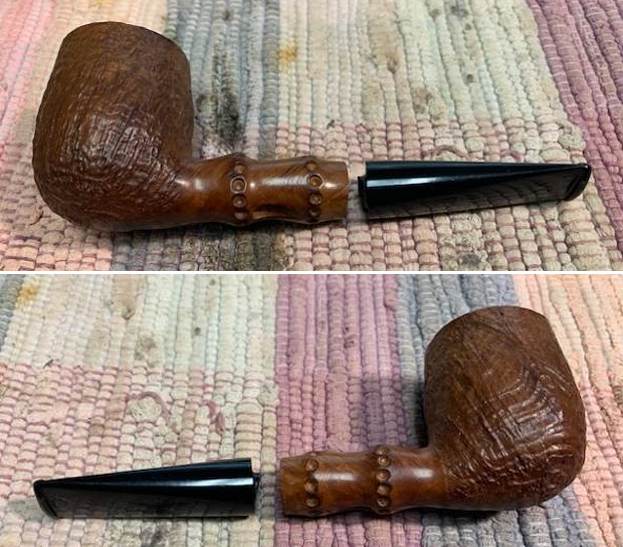
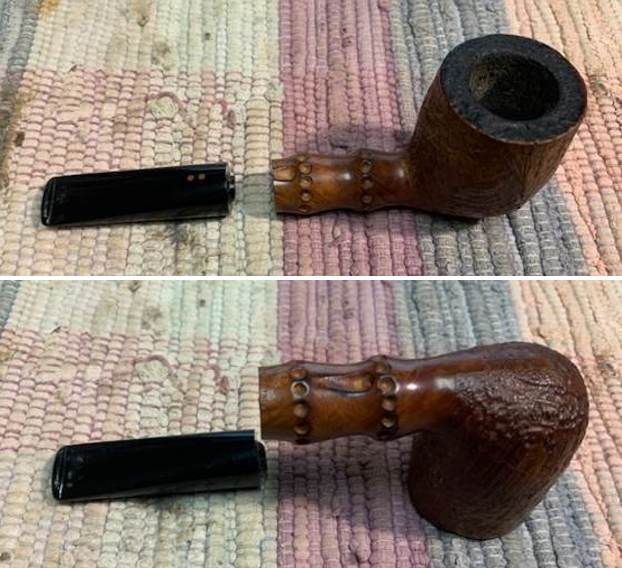
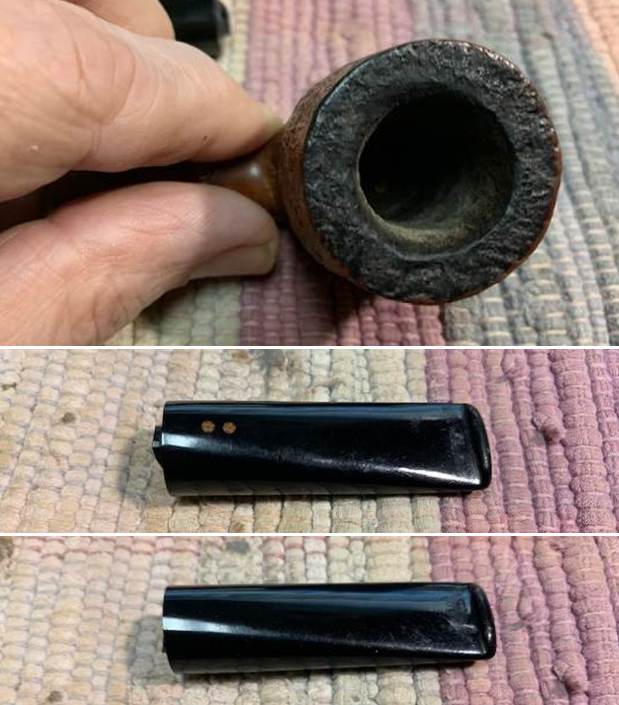
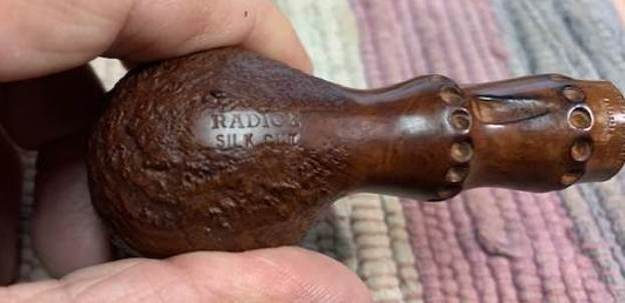
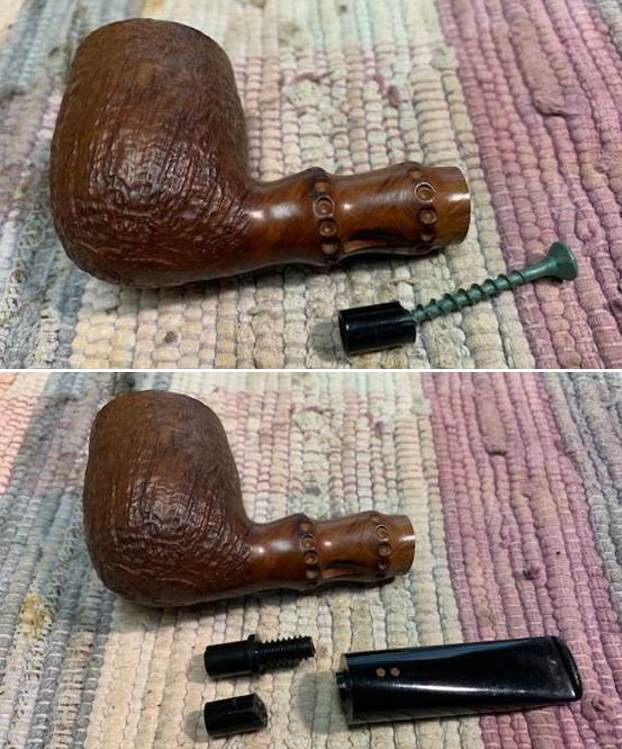
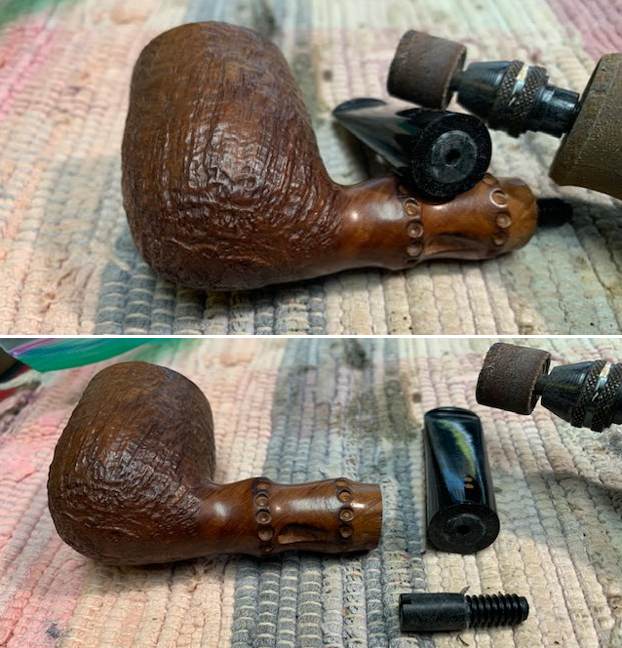
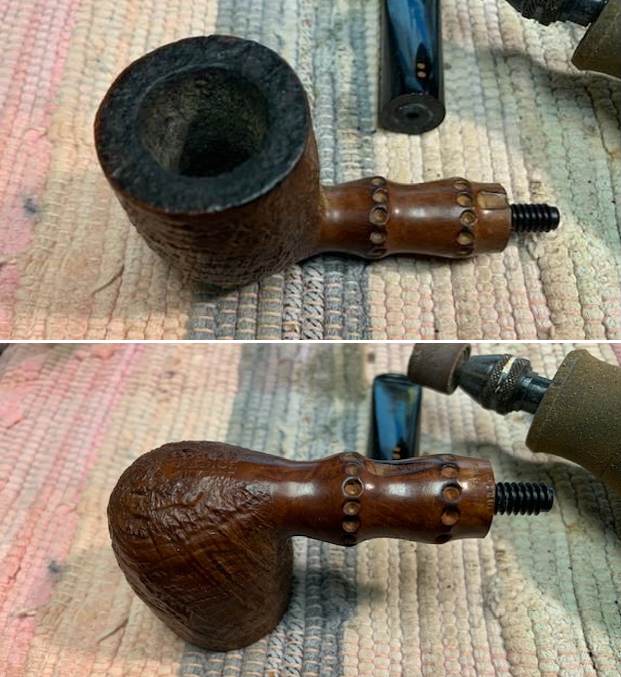
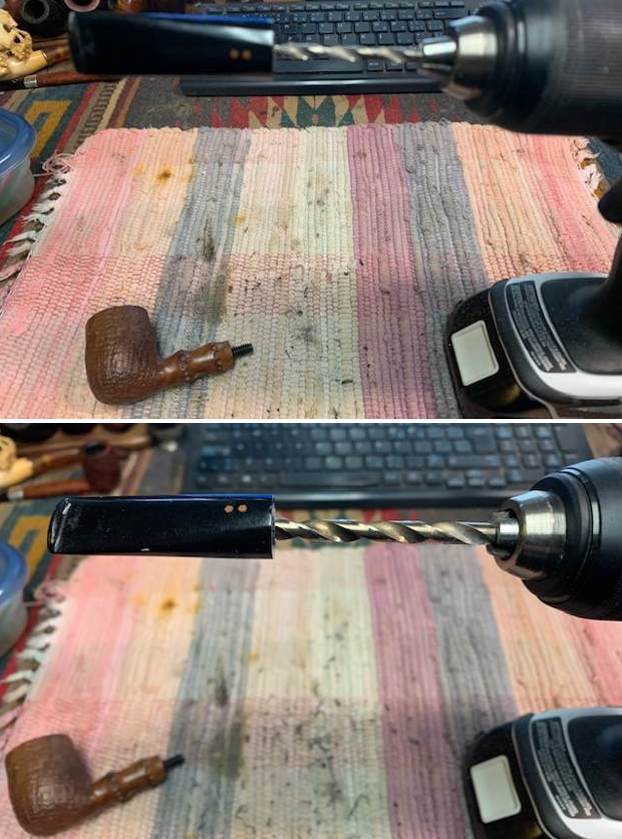
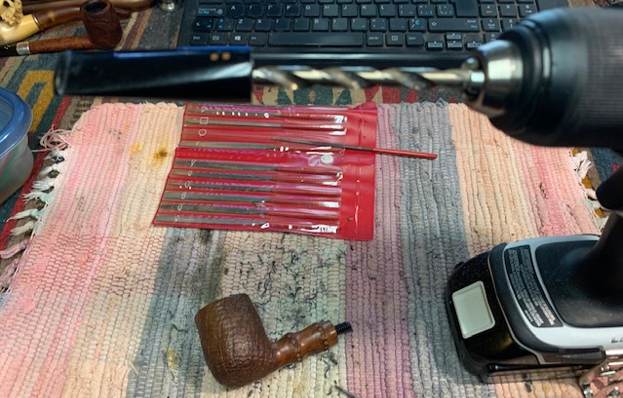
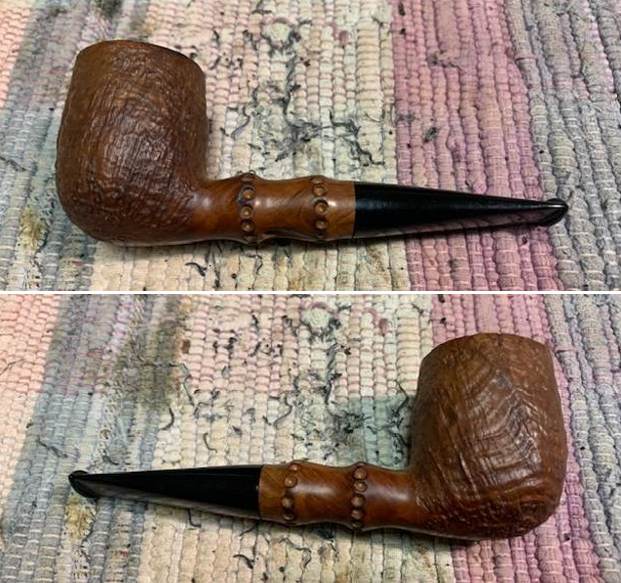
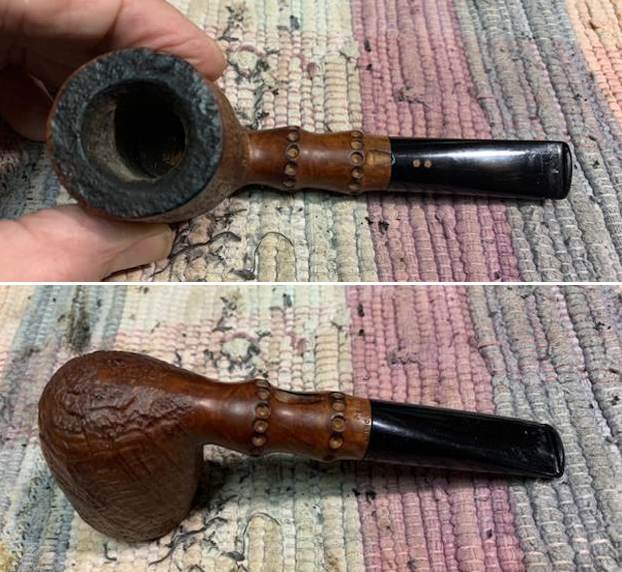
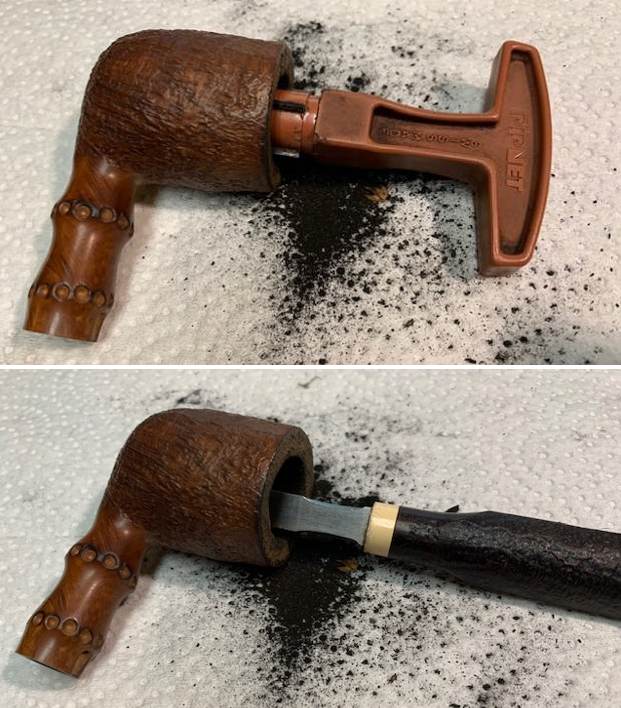
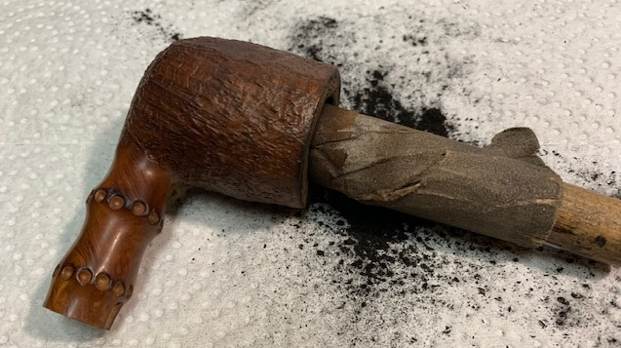
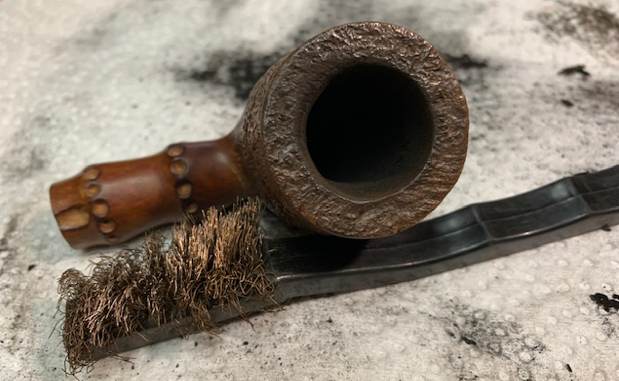
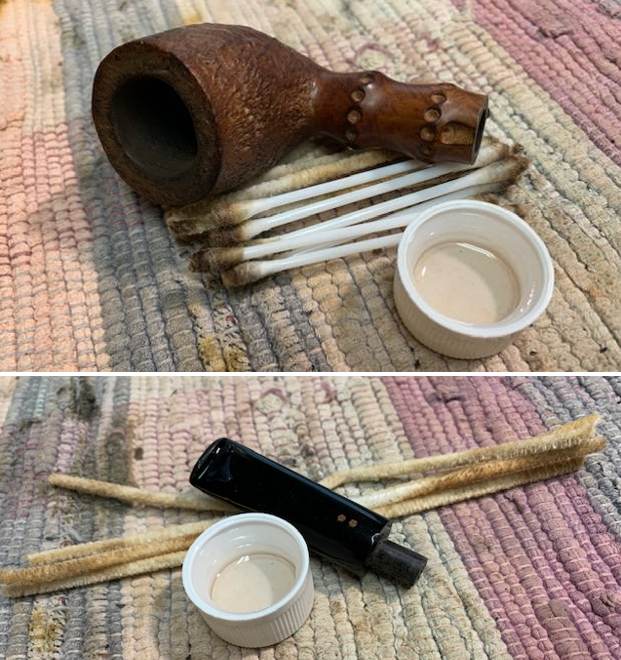
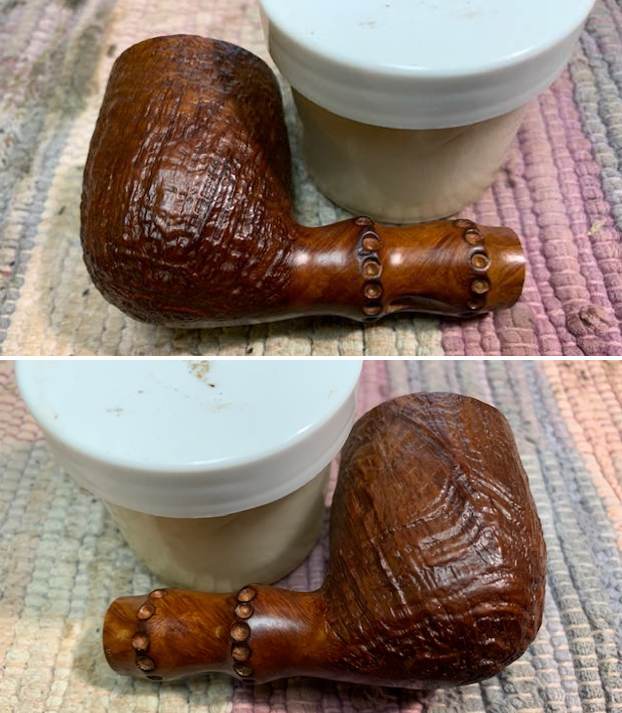
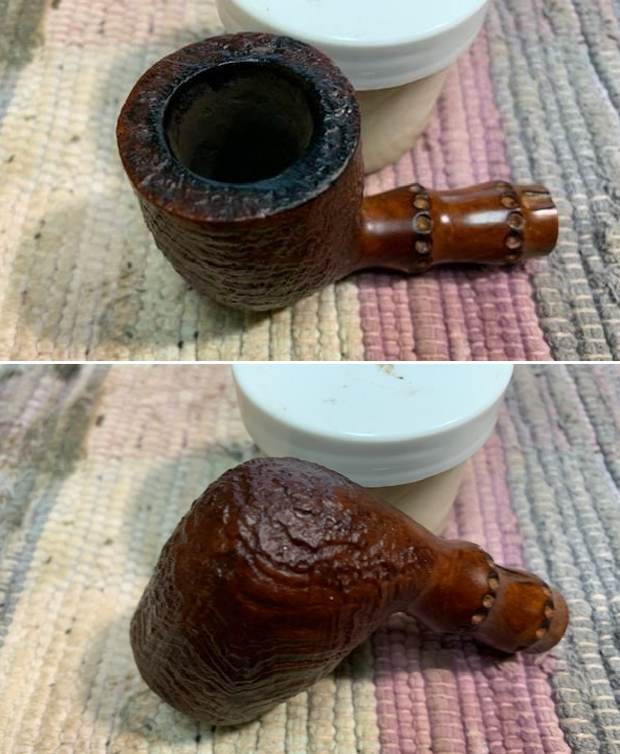
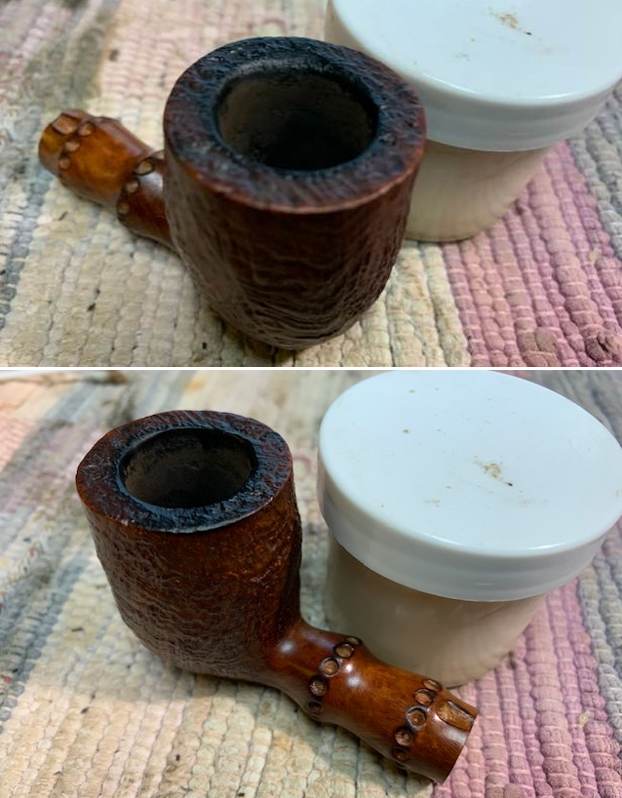
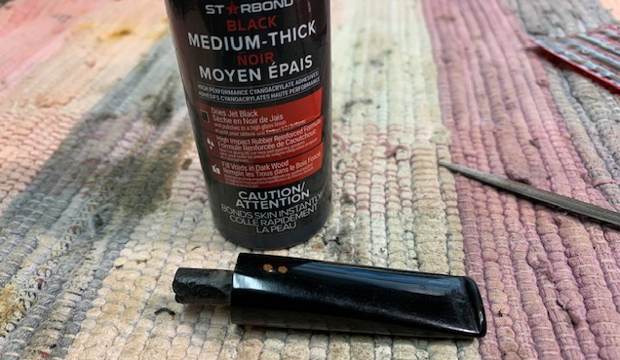
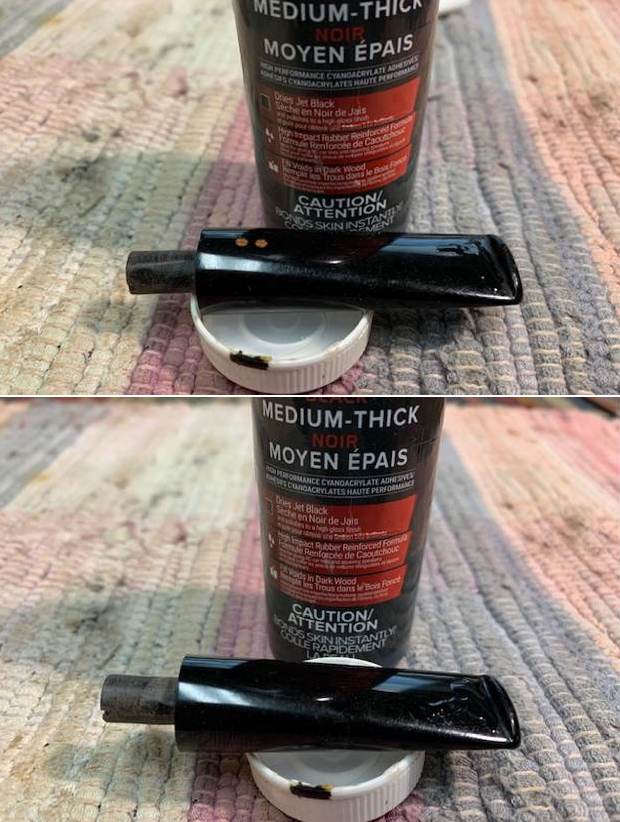
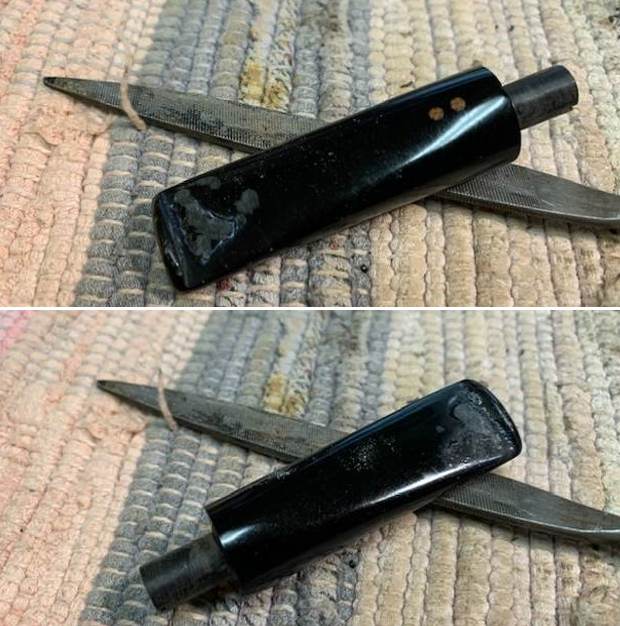
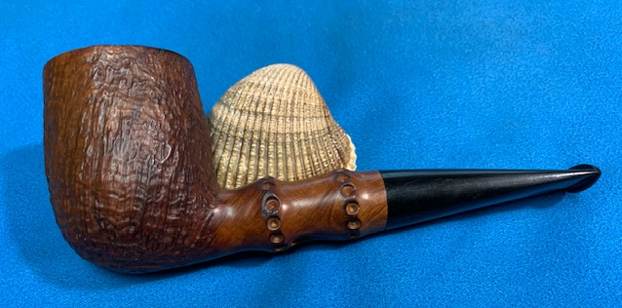
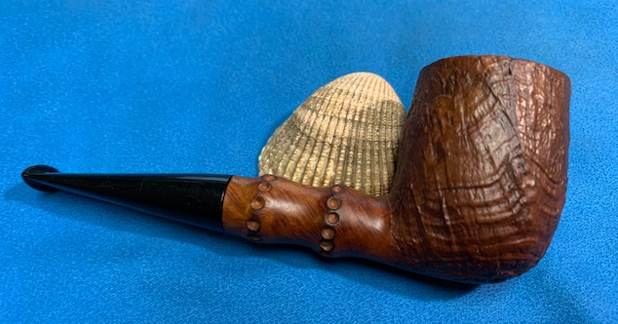
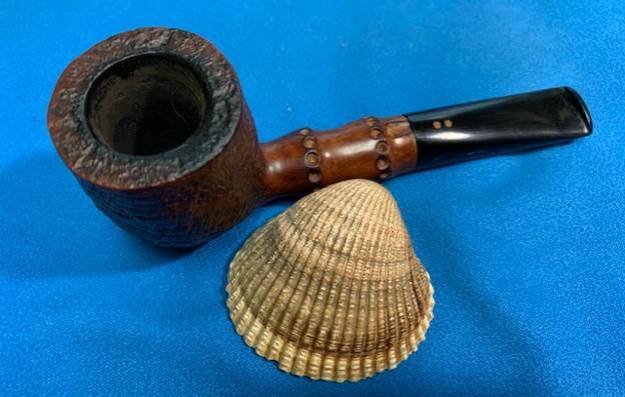
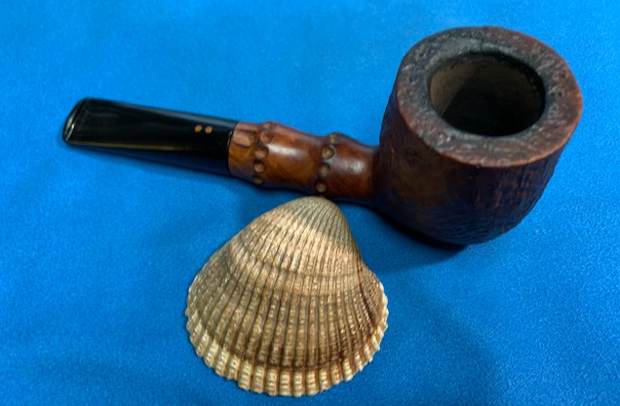
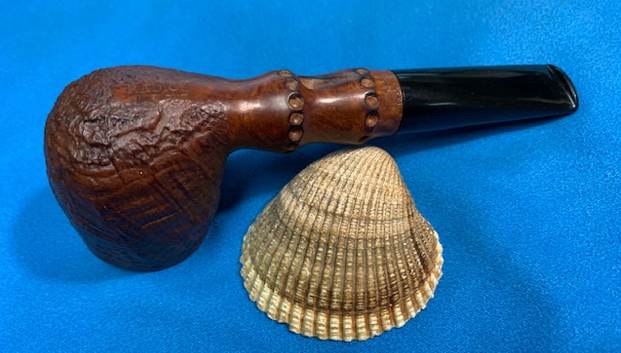
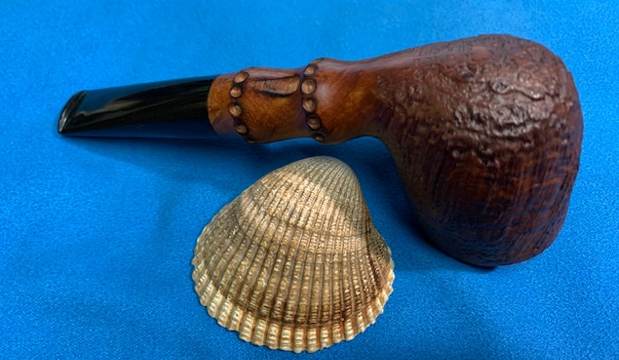
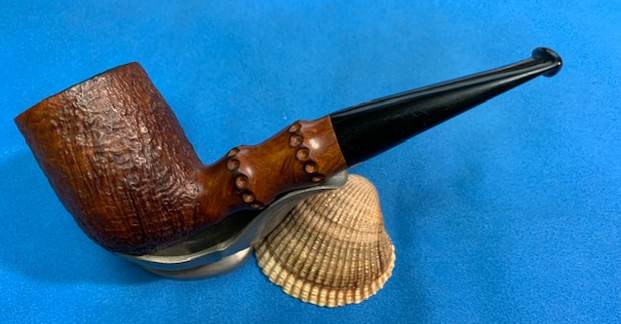
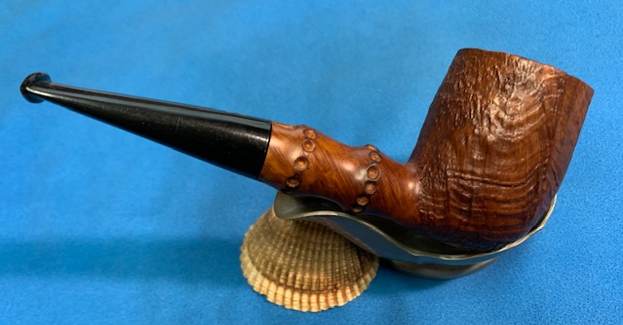
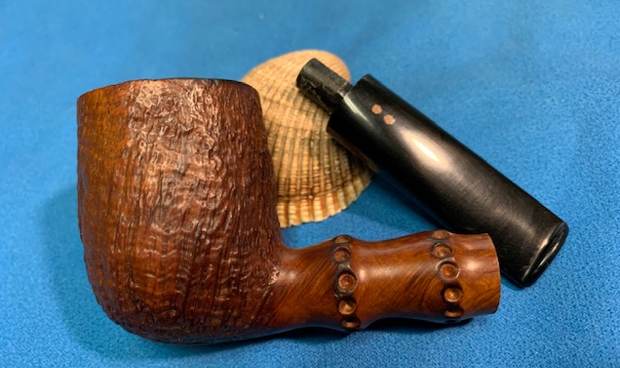
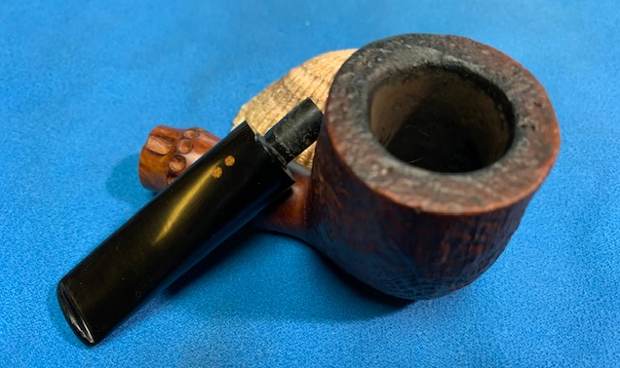
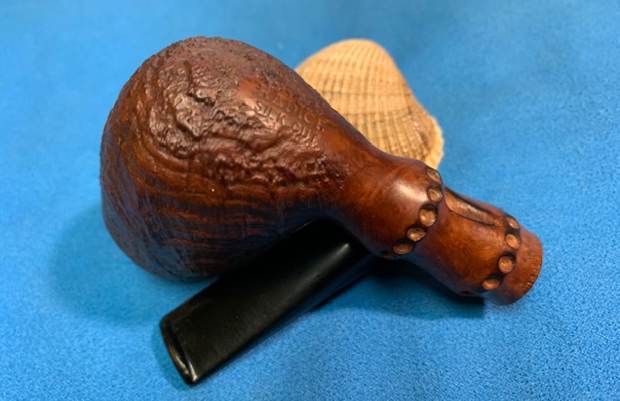
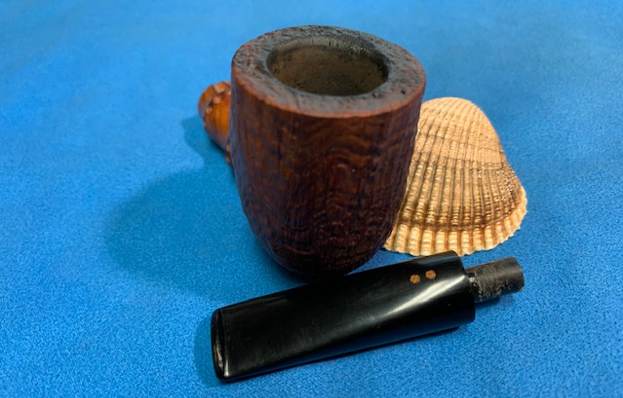
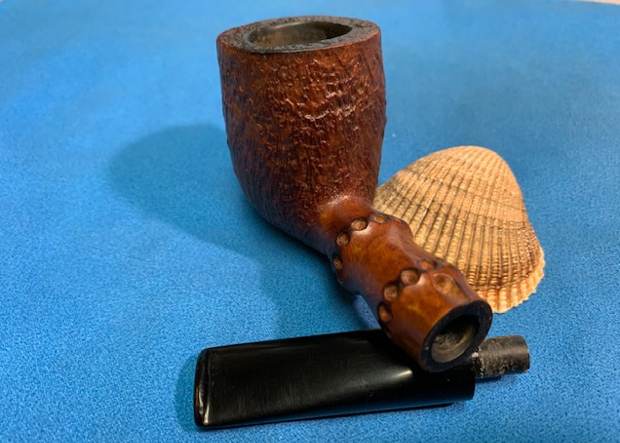
The next pipe on the table is a Radice Sandblast Billiard with a faux Bamboo shank. The briar has been carved to look like a piece of Bamboo but is actually briar. The pipe is stamped on the heel and reads Radice [over] Silk Cut and on the underside of the shank end it reads Hand [over] Made in Italy. It really is a beautiful pipe and the combination of “Bamboo” and the sandblast works really well the tapered acrylic stem. The fellow who sent it to me is a previous customer and in his box were two pipes with a snapped tenon – the Radice and a House of Robertson. This one was quite dirty with a thick cake in the bowl and overflowing onto the rim top. There was some burn damage on the inner edge of the rim at the back of the bowl and the pipe was dull and dusty. The tenon had snapped off cleanly at the shank end with no damage to the briar. The stem had tooth marks on both the top and underside ahead of the button and was also dirty. I took some photos of the pipe before I started my work on it. I took a close up photo of the rim top to show the condition of the bowl and inner edge. You can see the damage on the back inner edge of the rim. It will become more evident once the bowl has been reamed and cleaned. The photos of the stem show the tooth marks and chatter on both sides near the button.I took photos of the stamping on the heel of the bowl and the shank end to capture how it looked.I began my work on this pipe by pulling the broken tenon from the shank. I generally use a dry wall screw and twist it into the airway of the broken tenon and wiggle it free. This one came out quite easily. I went through my replacement tenons and found one that would work on this stem.I sanded the broken end of the tenon remaining on the stem with a sanding drum on my Dremel. I also sanded the diameter of the new tenon at the same time to get a good fit in the shank. I took photos of the tenon in the shank at this point to show the fit. I drilled out the airway on the stem with successively larger drill bits to accommodate the threaded end of the tenon. The last bit was ¼ inch which is perfect for the tenon. I slipped the stem over the tenon and took photos of the pipe at this point. It looks very good. With that done I turned my attention to the bowl. I reamed it with a PipNet reamer and took the cake back to briar. I cleaned up the remnants with a Savinelli Fitsall pipe knife. I sanded the bowl walls with a piece of dowel wrapped with 220 grit sandpaper. I cleaned up the rim top with a brass bristle wire brush to remove the lava in the sandblast and a bit of the burn damage on the back inner edge of the bowl.I cleaned out the internals on the stem and shank with pipe cleaners, cotton swabs and alcohol until they were clean.I rubbed down the bowl with Before & After Restoration Balm to clean, enliven and protect the briar. I worked it into the blast with a horsehair shoe brush. I let it sit and do its magic for 10 minutes and then buffed it off with a soft cloth. I set the bowl aside and turned my attention to the acrylic stem. I glued the tenon in the stem with Black Super Glue. While it cured I worked on the tooth marks in the stem.I cleaned up the tooth marks with alcohol and a cotton swab. I filled them in with black super glue and set it aside to cure.Once it had cured I flattened out the repairs with a small flat file. I sanded them with 220 grit sandpaper to further flatten them out and blend them into the surrounding area. I started polishing the stem with 400 grit wet dry sandpaper. I polished the acrylic stem with micromesh sanding pads – dry sanding with 1500-12000 grit pads. I wiped the stem down after each pad with a damp cloth. I finished the polishing with Before & After Stem Polishes – both Fine and Extra Fine. I wiped the stem down with a cloth impregnated with Obsidian Oil to protect and give the deep shine to the stem. I was happy to be finished with this beautiful Radice Silk Cut Billiard. The stem fit well and looked good with the rich finish of the sandblast bowl and faux bamboo shank. I buffed the pipe with Blue Diamond on the buffing wheel and gave the bowl and shank multiple coats of Conservator’s Wax. I buffed it with a clean buffing wheel to raise the shine. I hand buffed it with a microfiber cloth to deepen the shine. The Radice is a great looking pipe that ticks all of my boxes. The dimensions of the pipe are Length: 5 inches, Height: 2 inches, Outer Diameter of the bowl: 1 ½ inches, Diameter of the chamber: 7/8 of and inch. The weight of the pipe is 48 grams/1.69 ounces. I will be packing it up to send back to my friend in Idaho once I finish the second pipe he sent. Thanks for reading the blog.