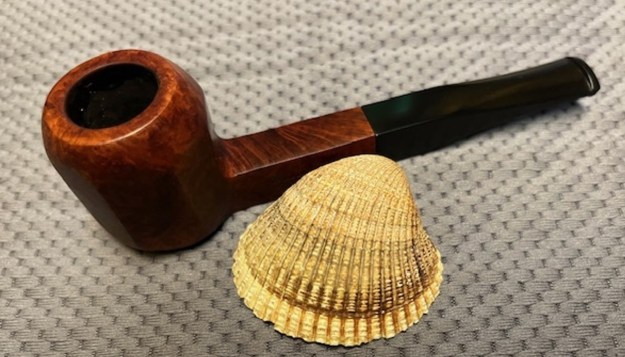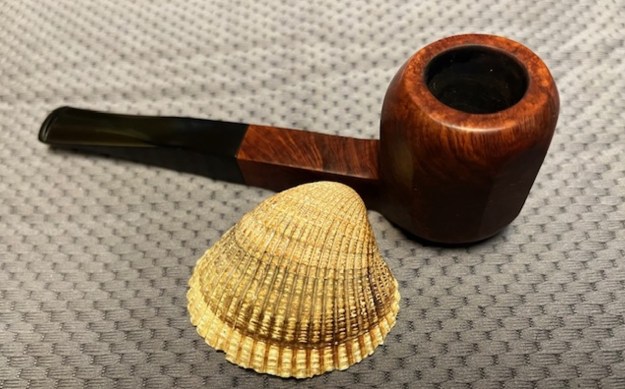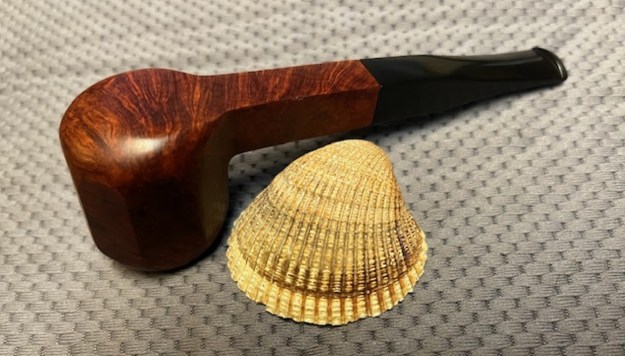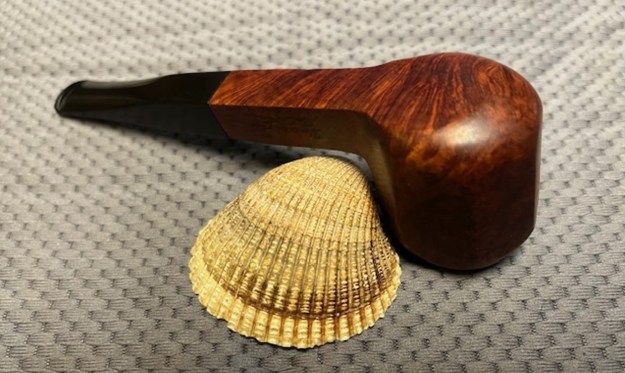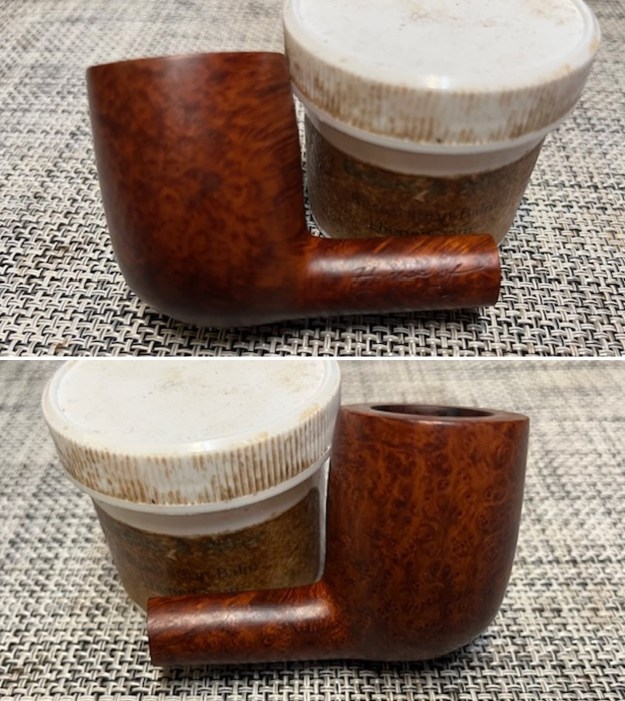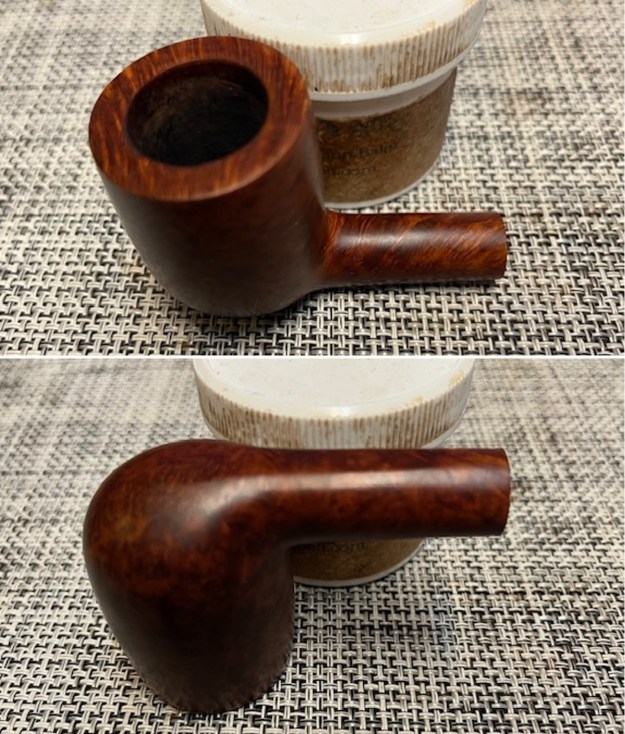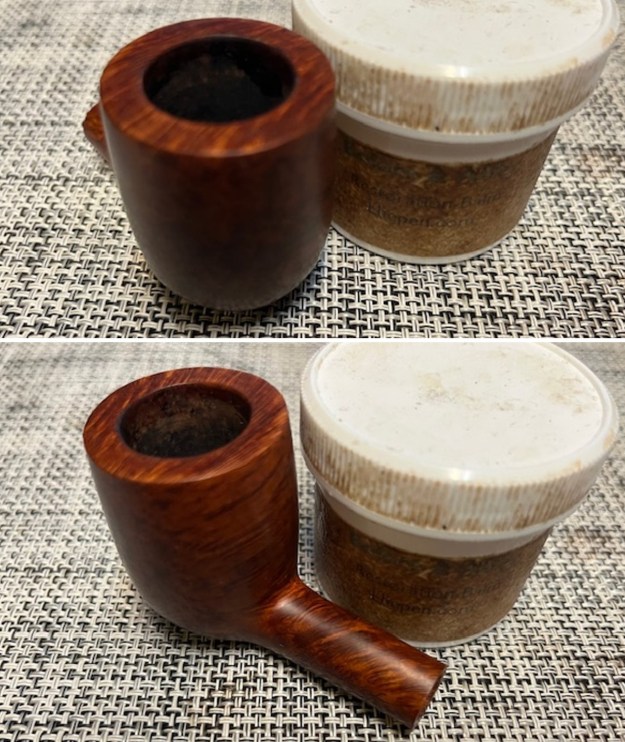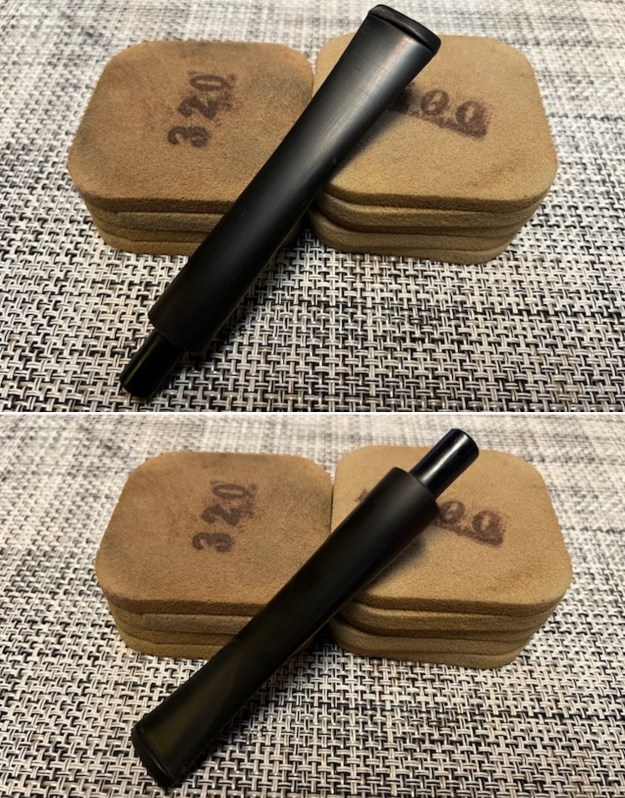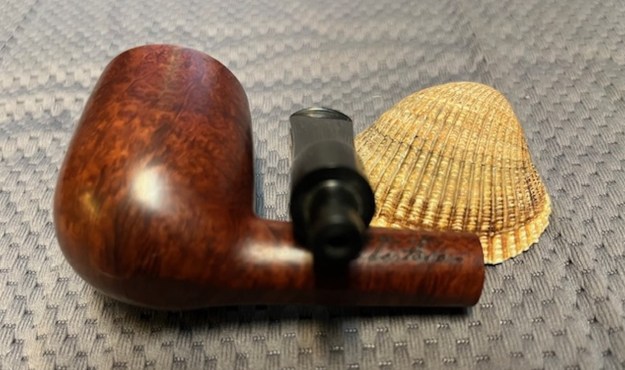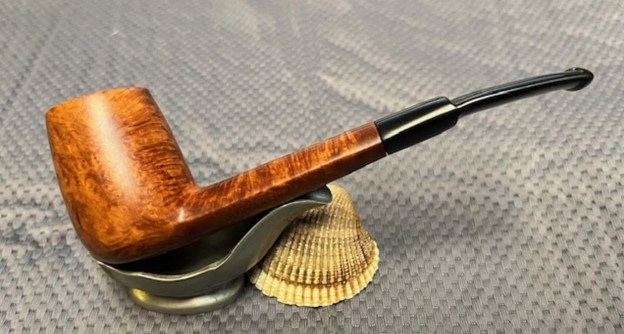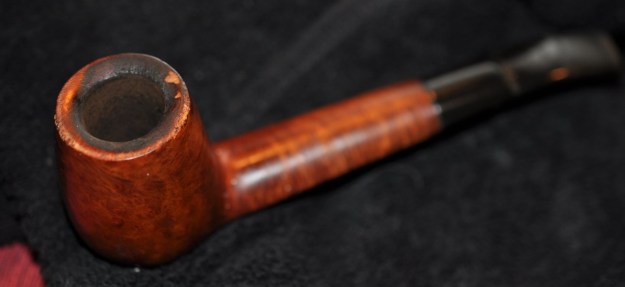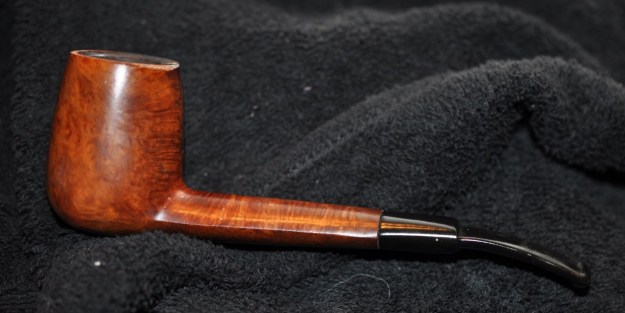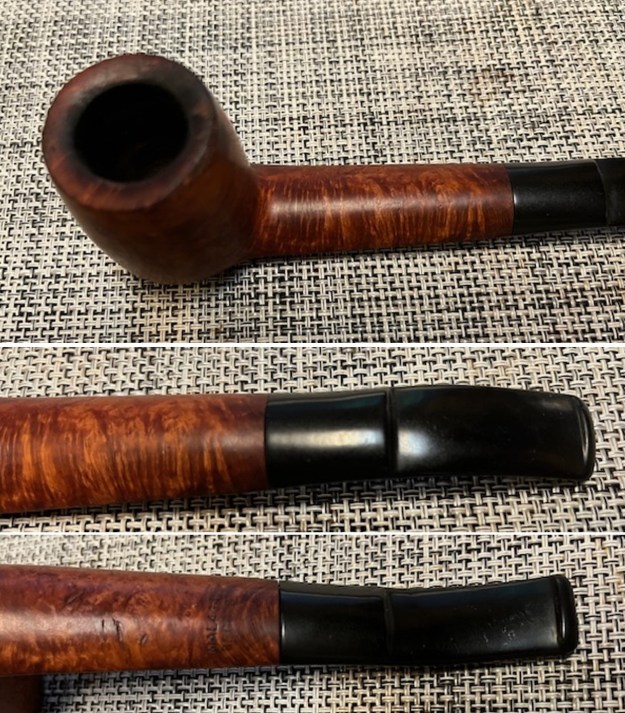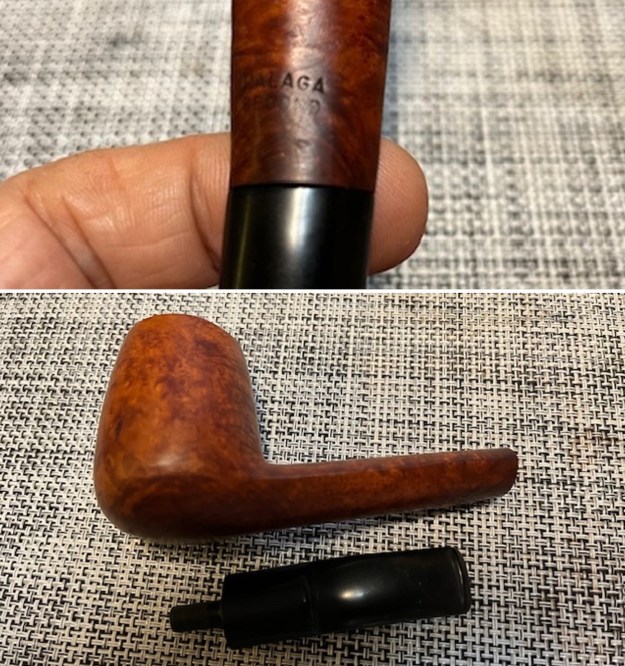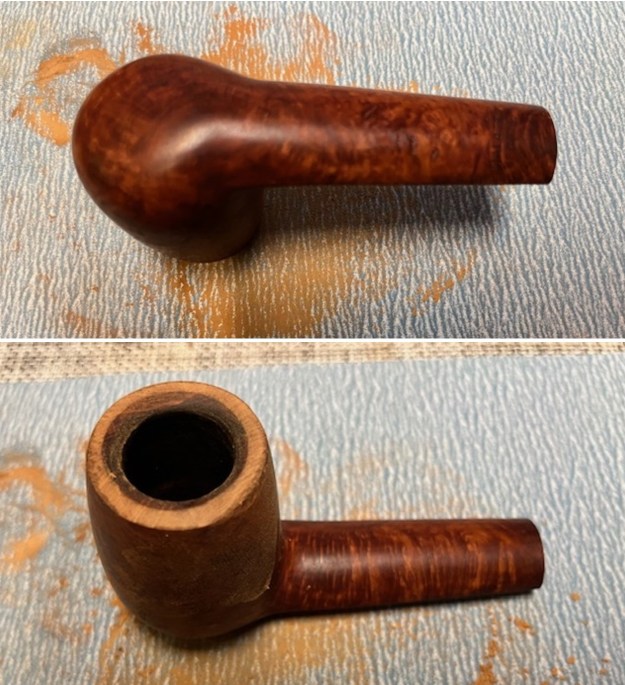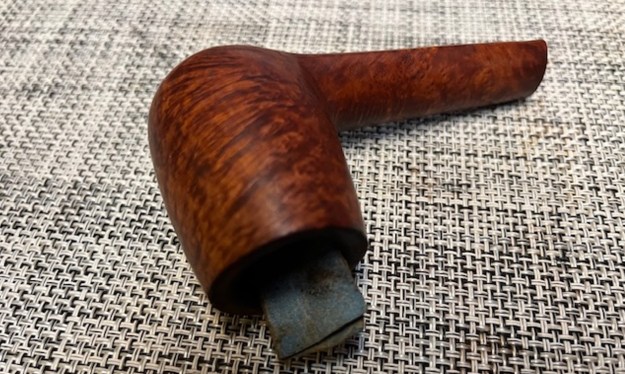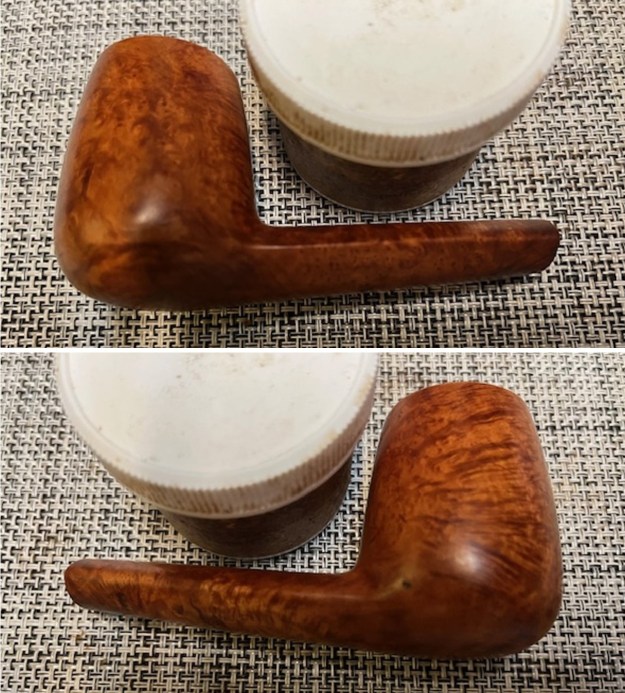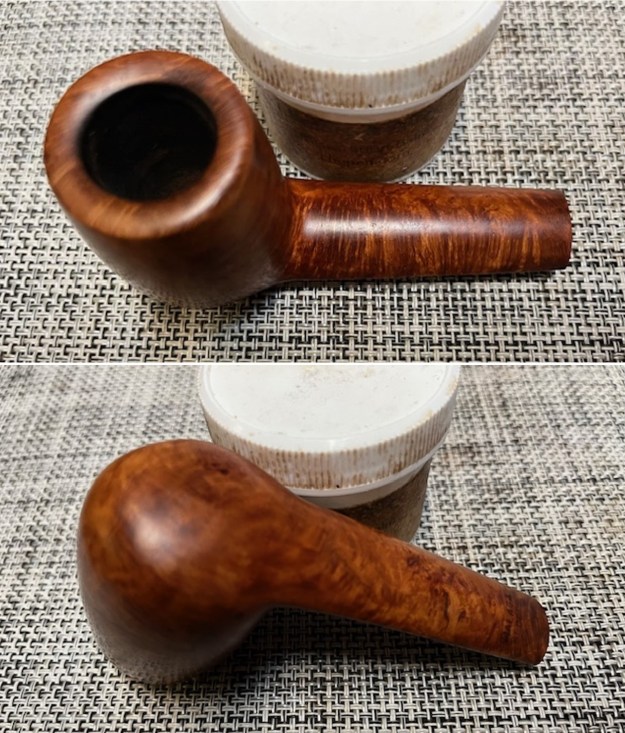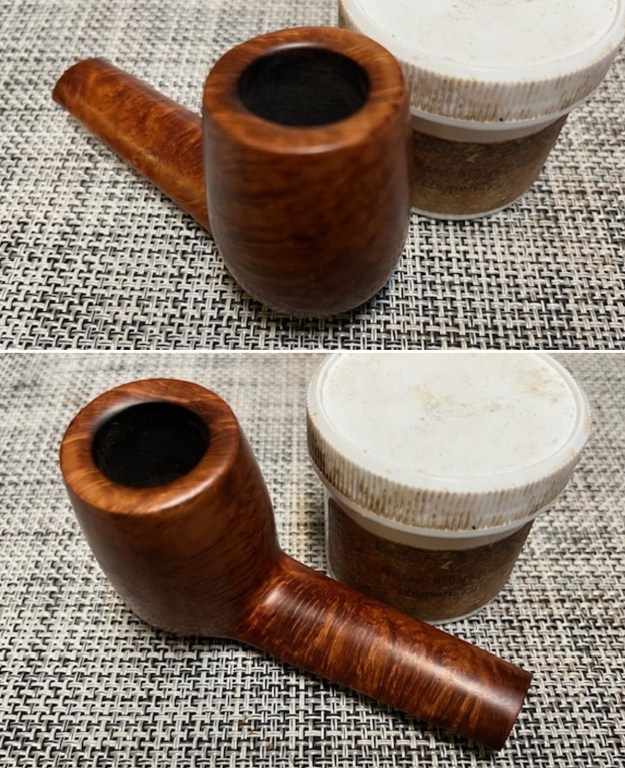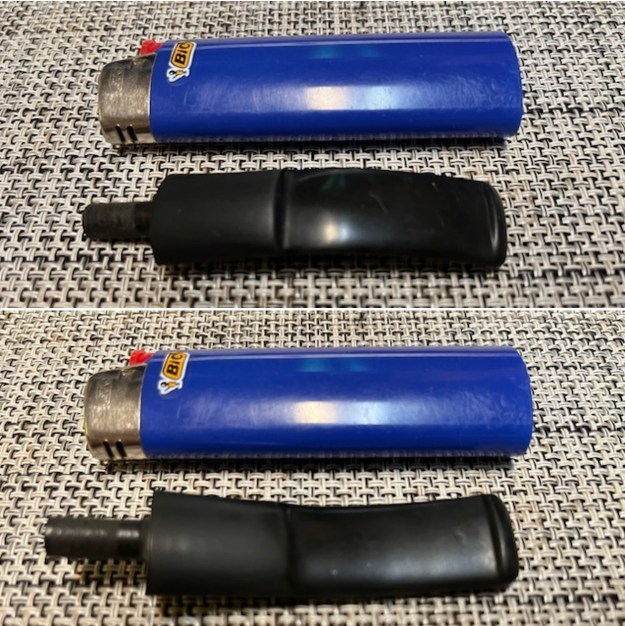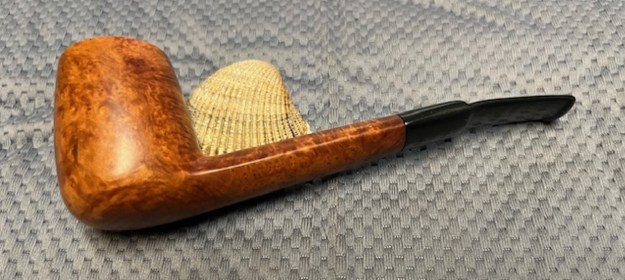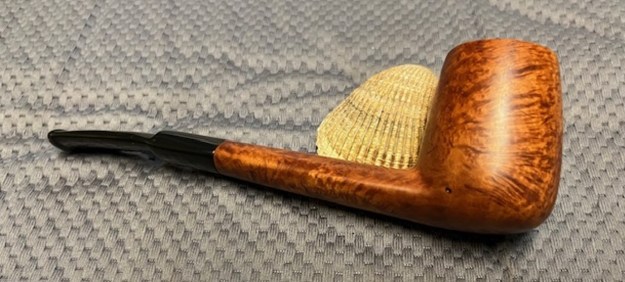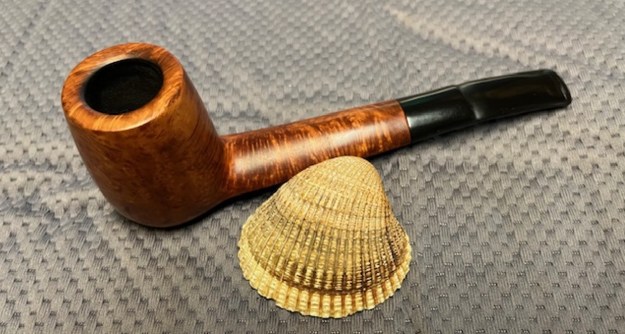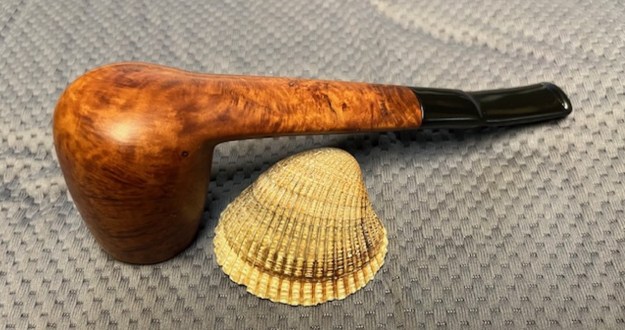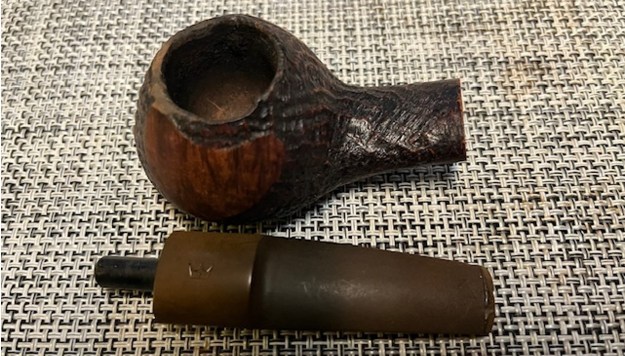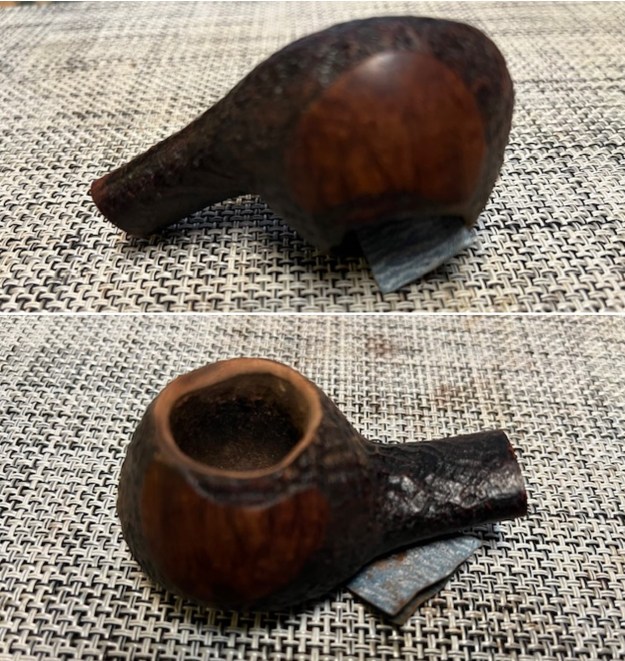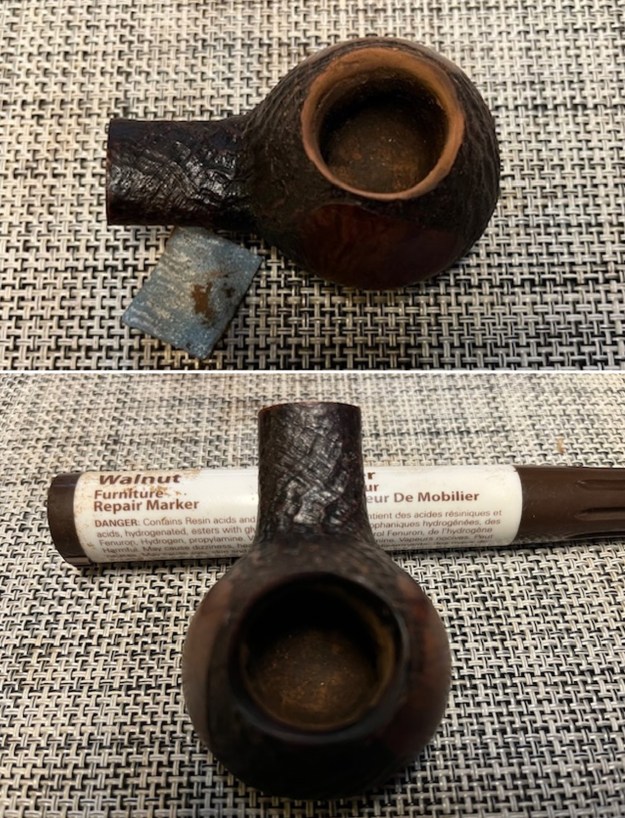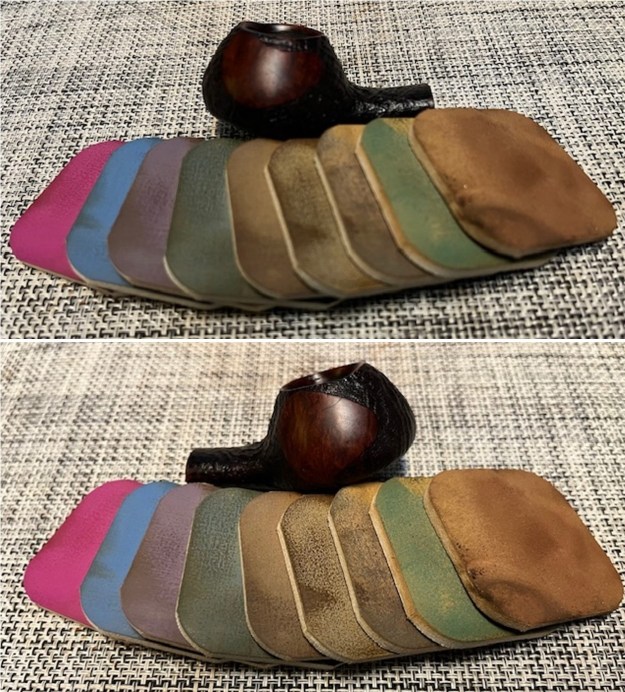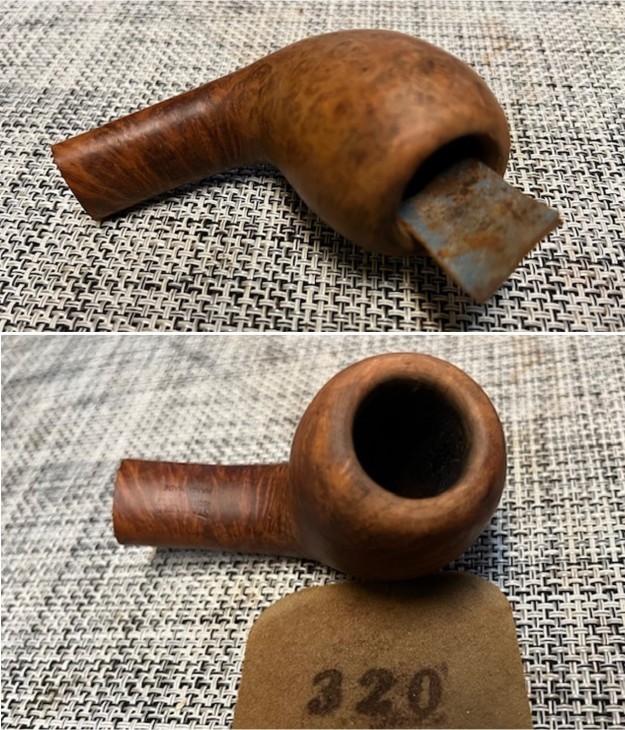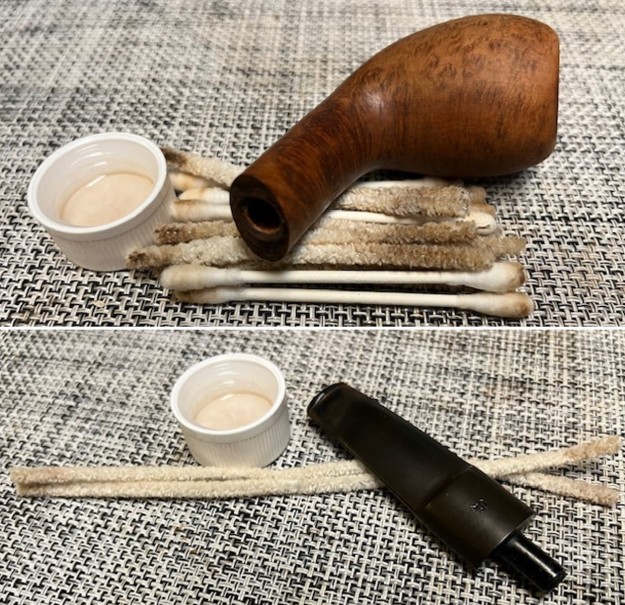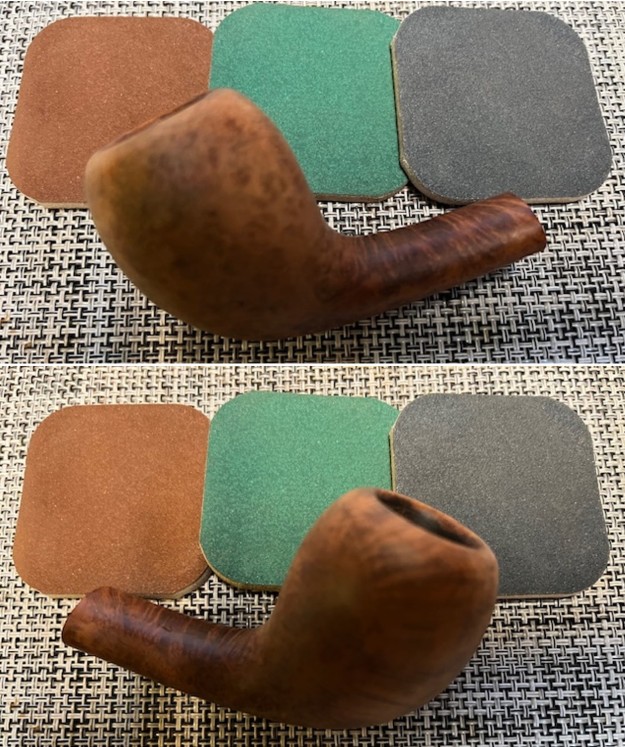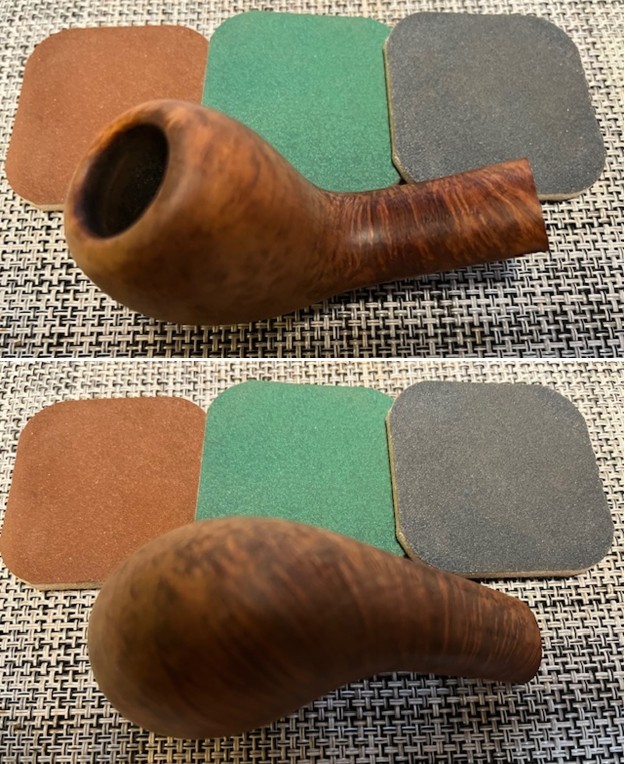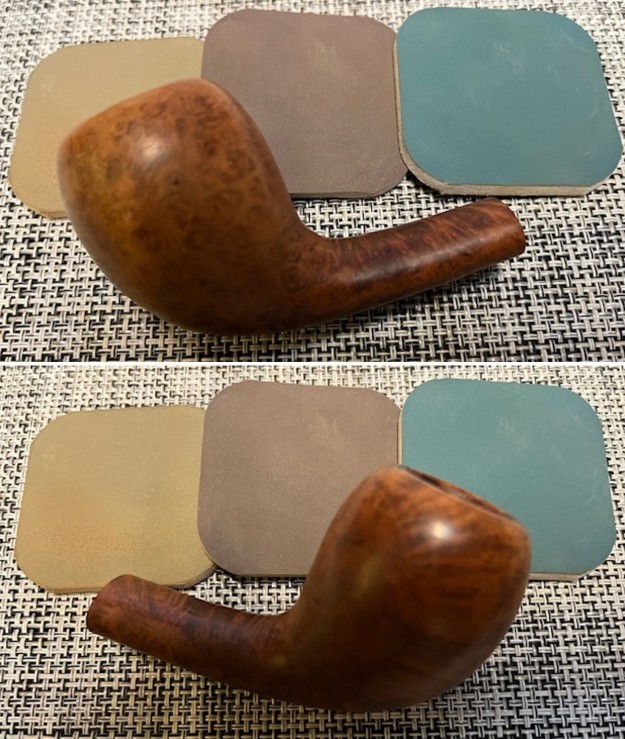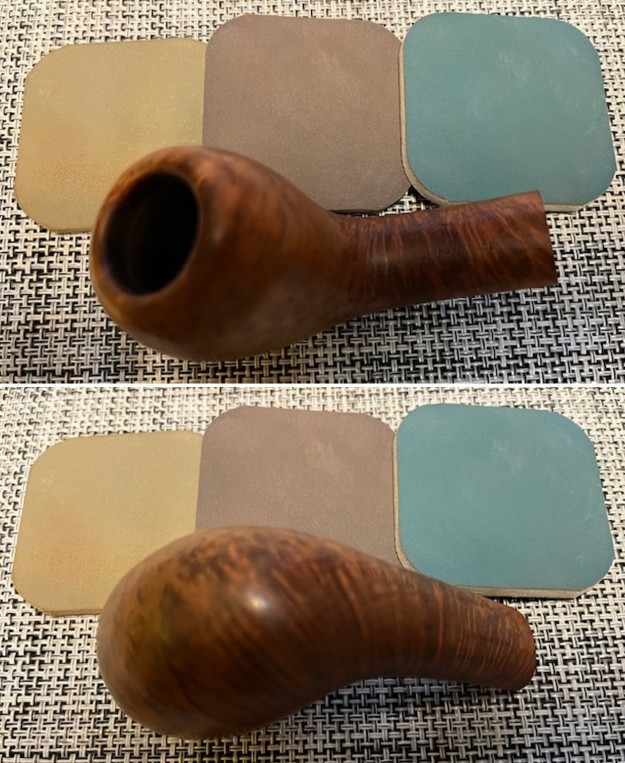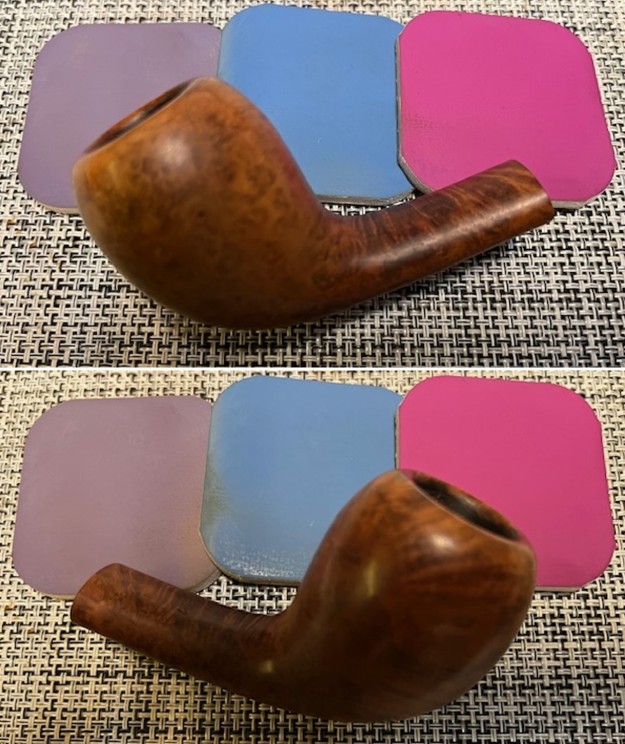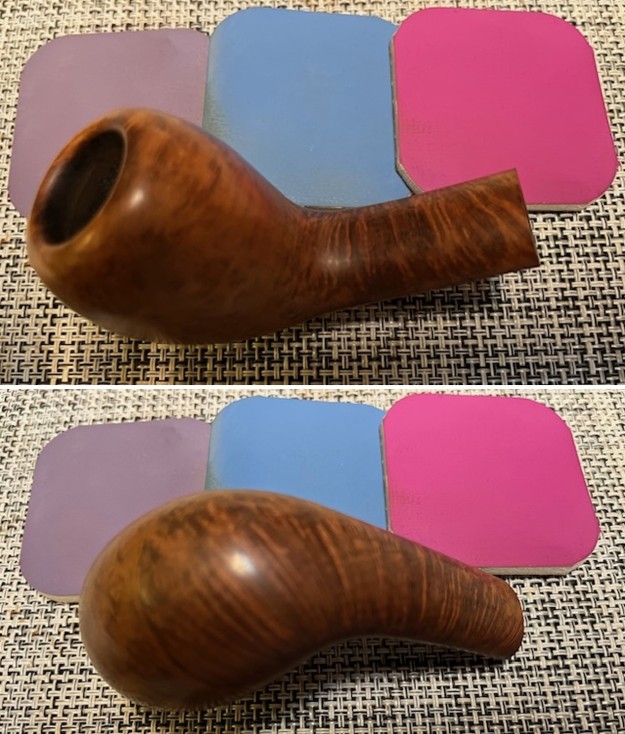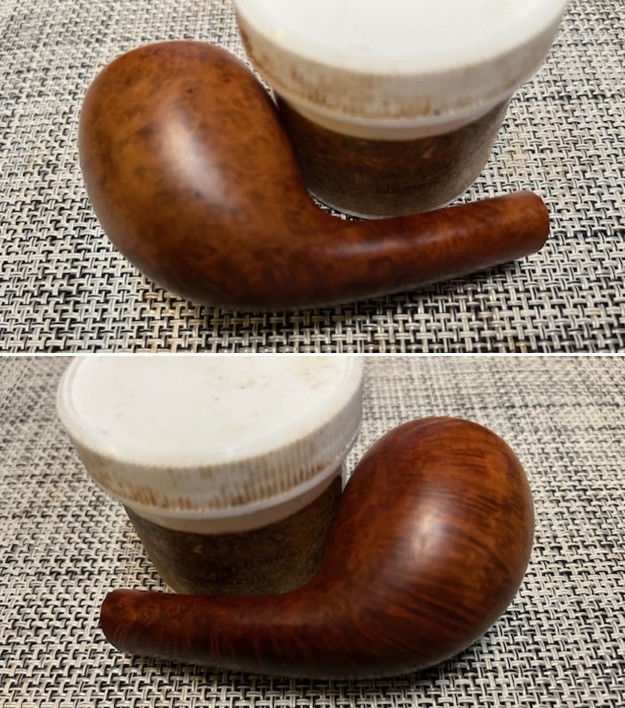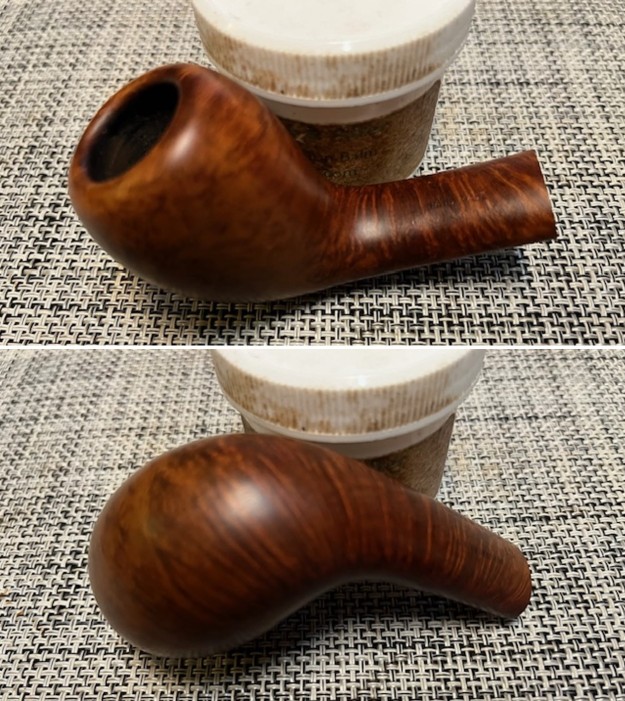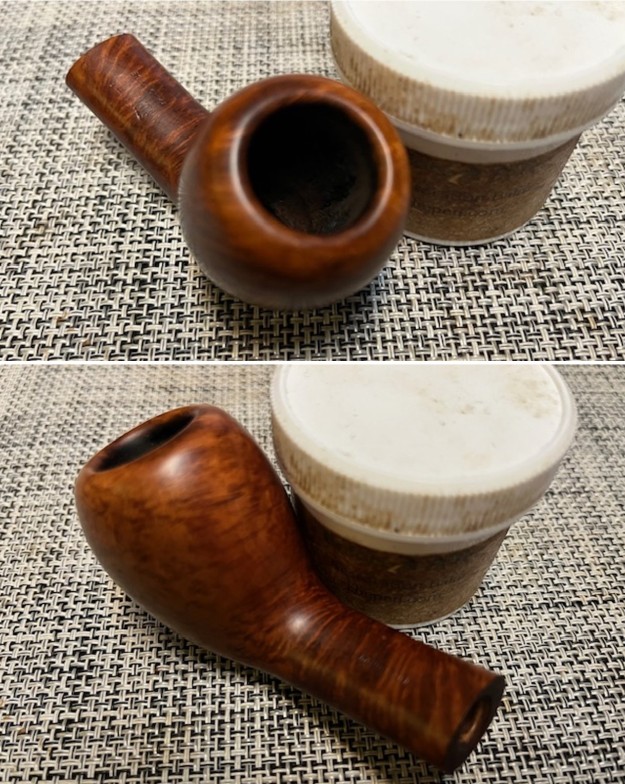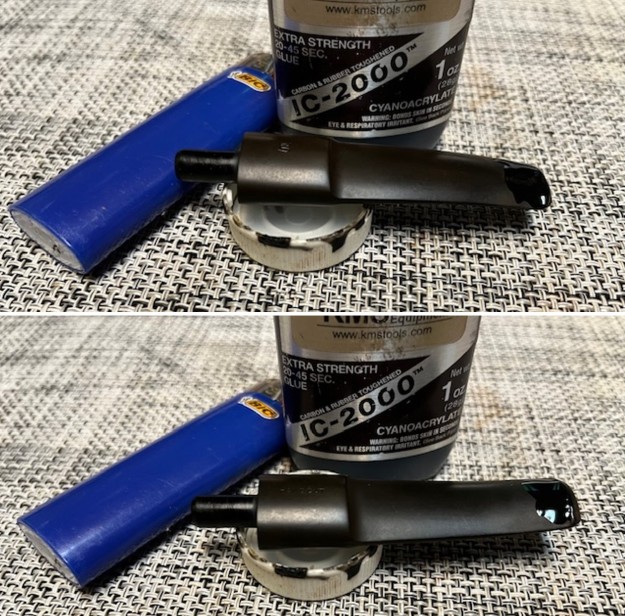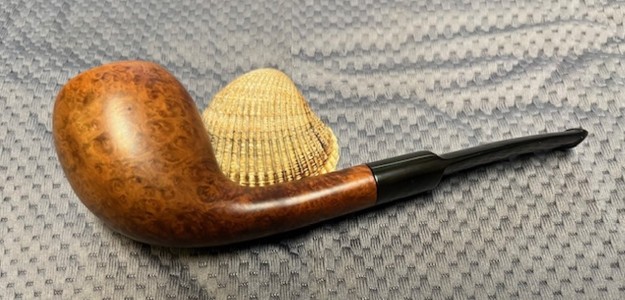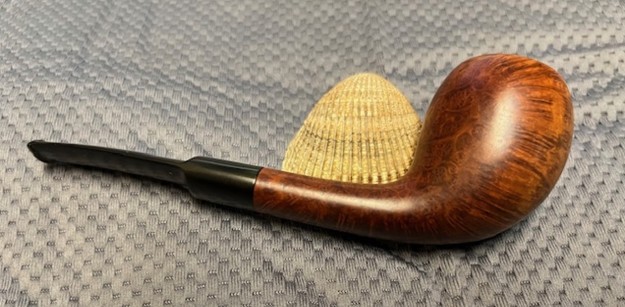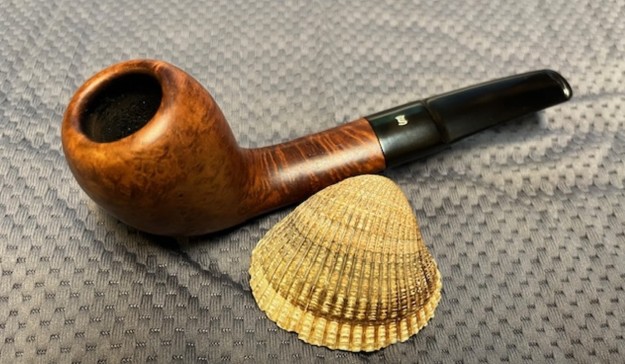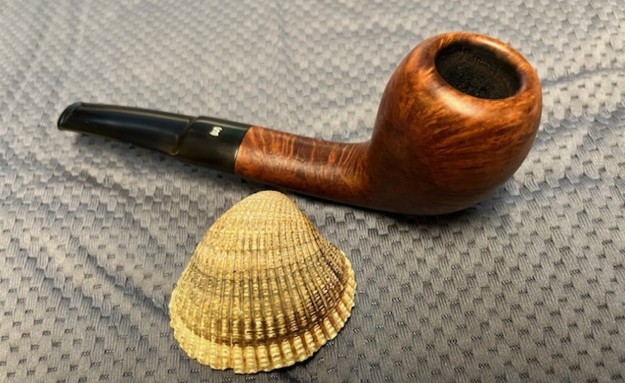
Tag Archives: removing oxidation

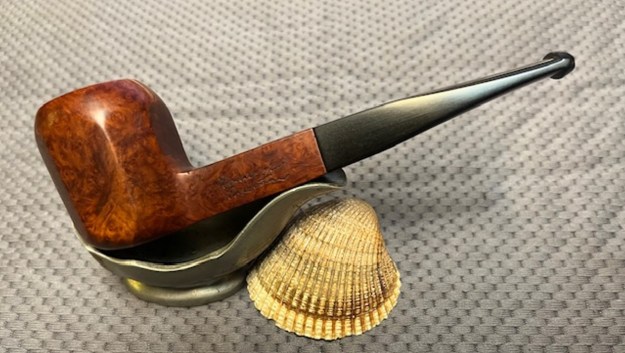
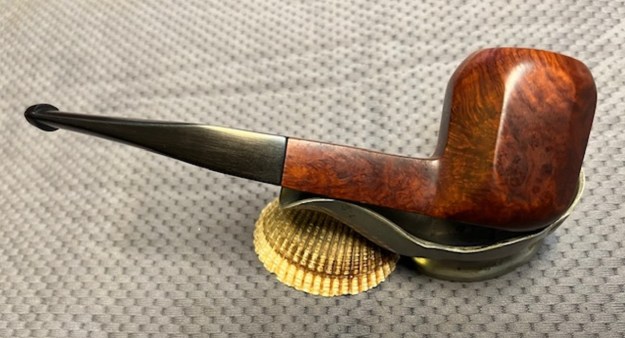
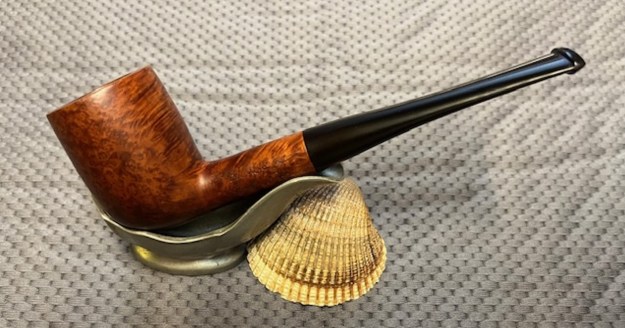
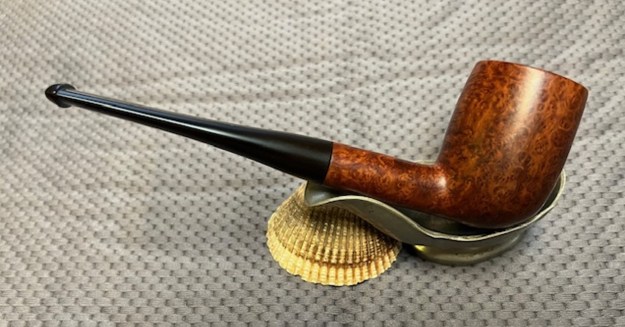
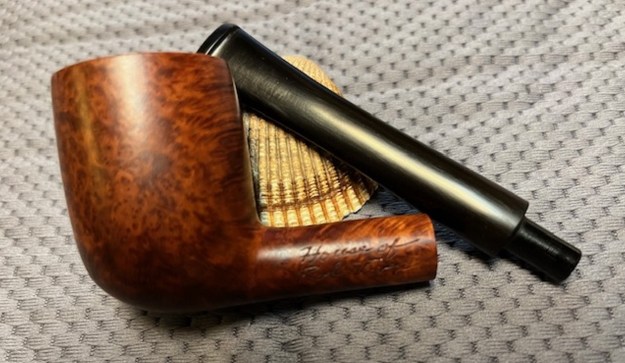
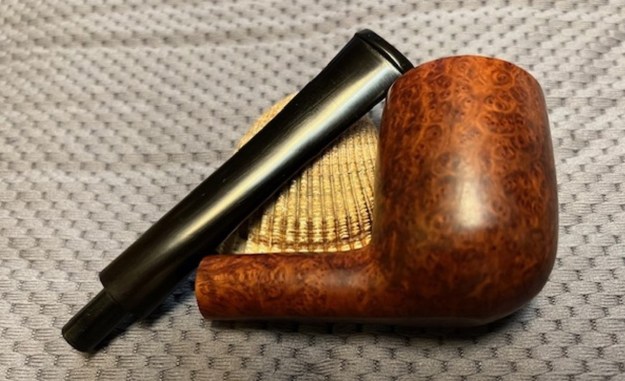
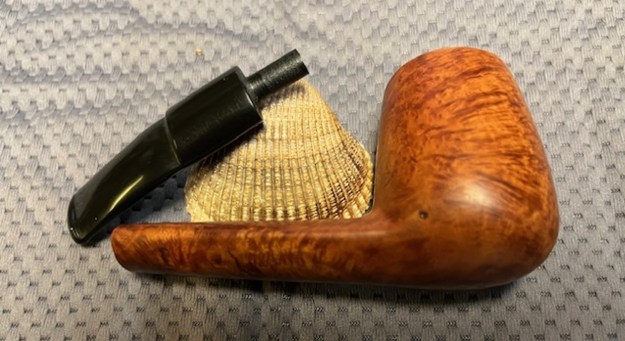
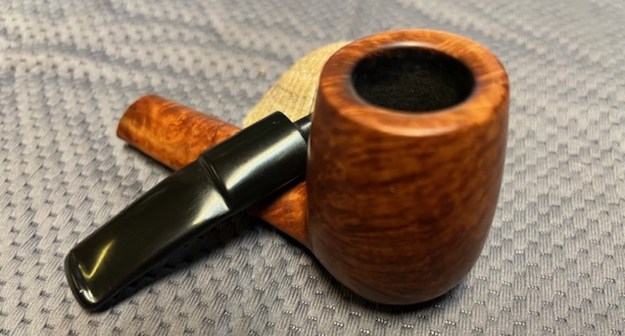
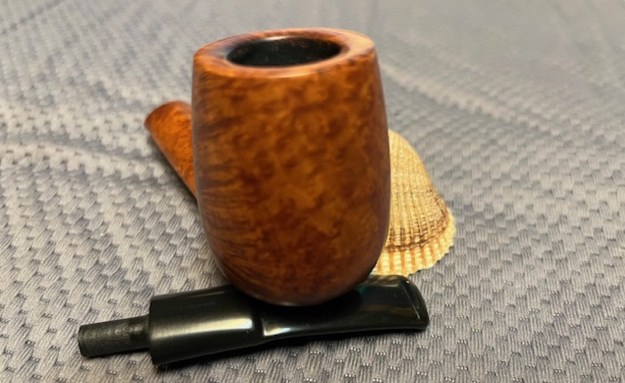
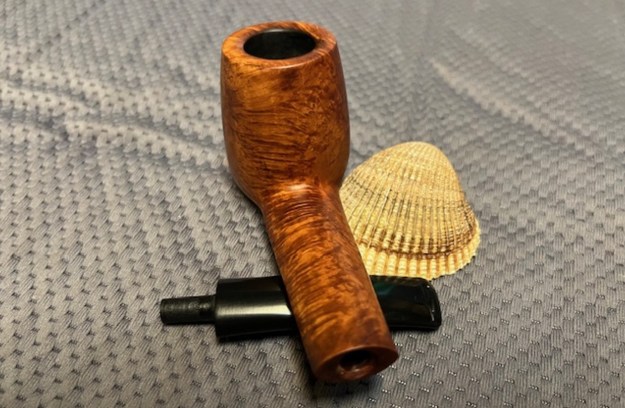
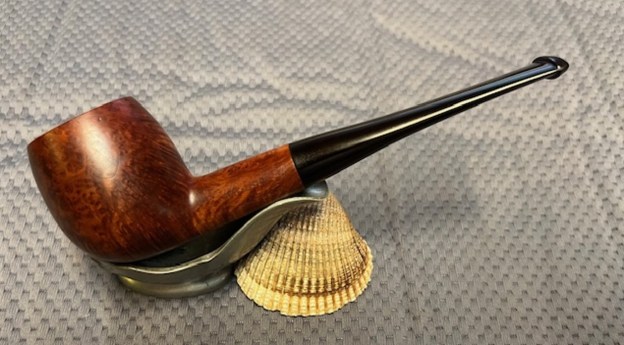
What a Beautiful taper stem Apple from the House of Robertson


Blog by Steve Laug

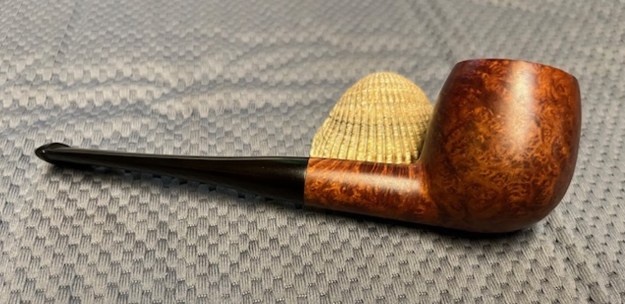
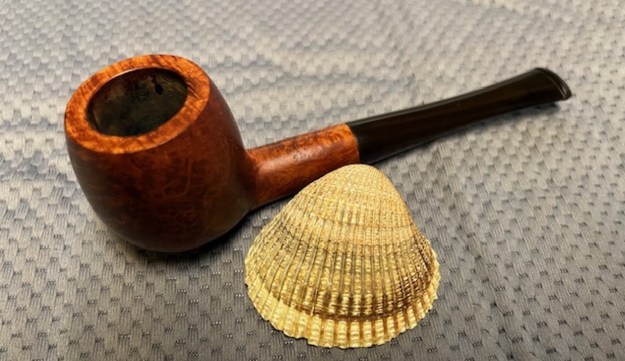
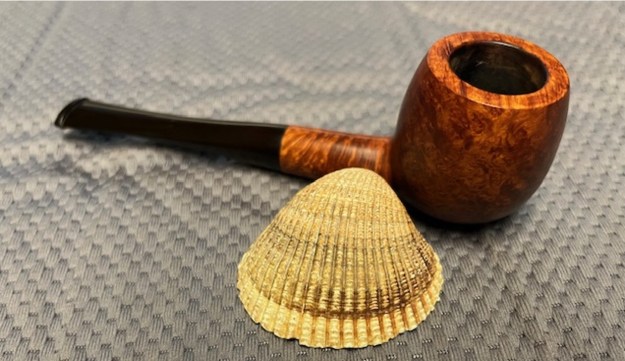
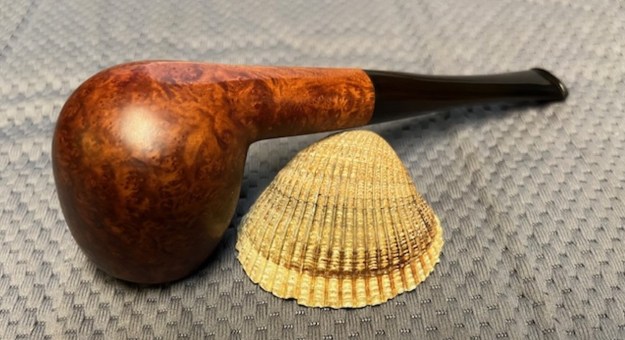
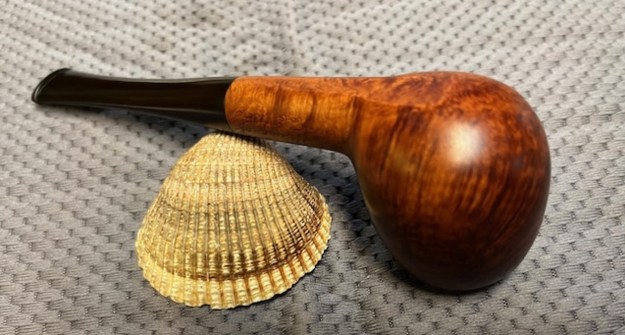
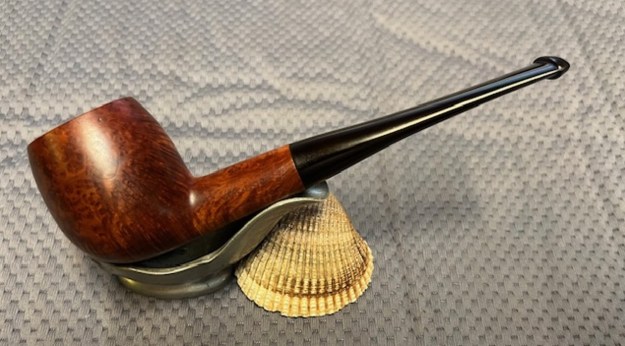
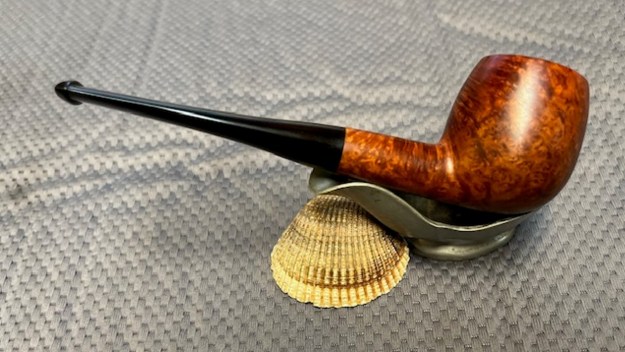
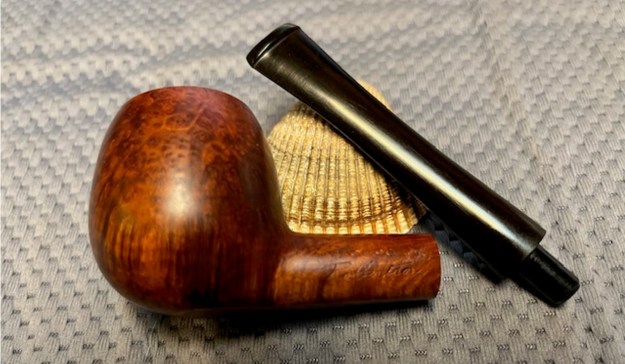
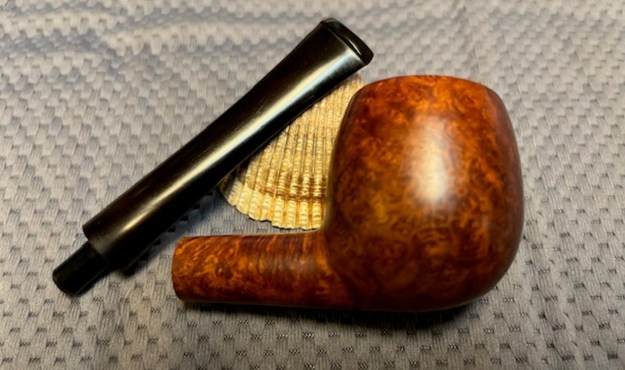
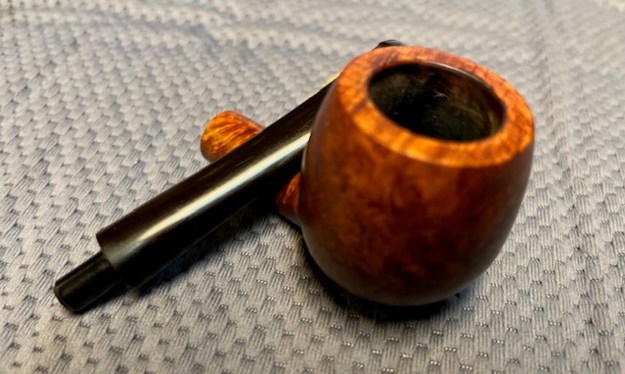
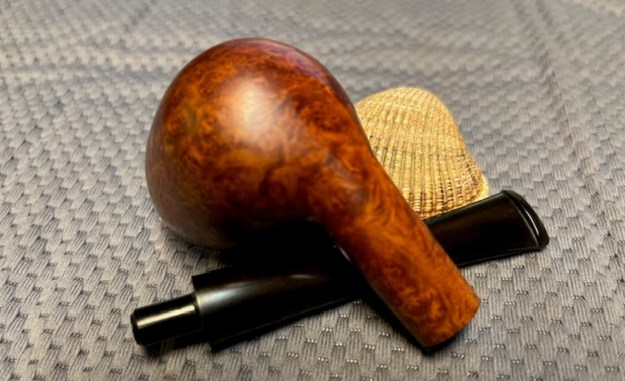
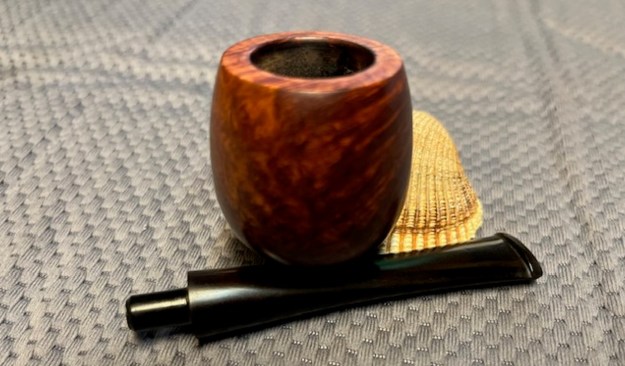
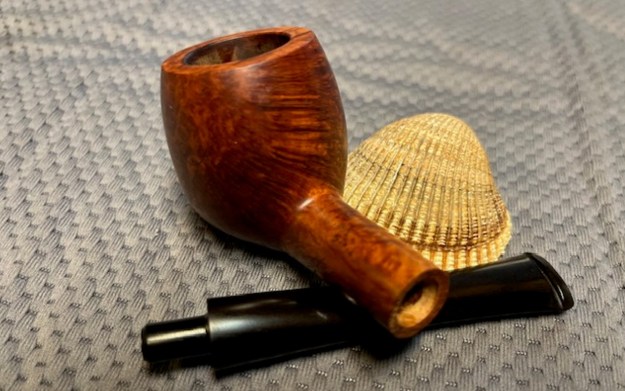
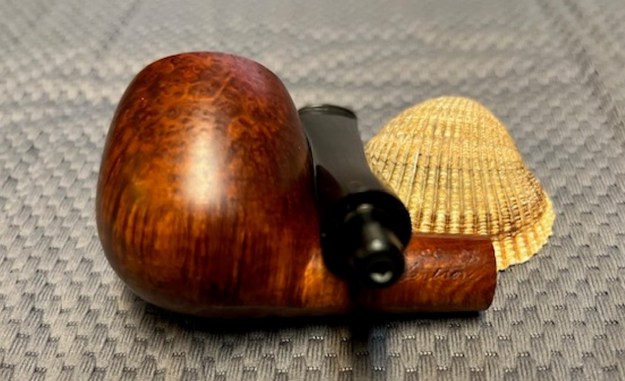
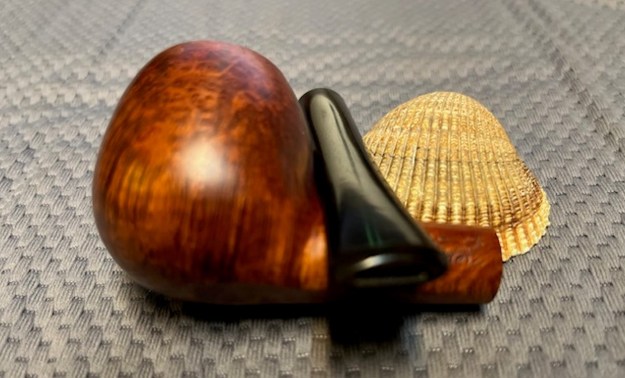
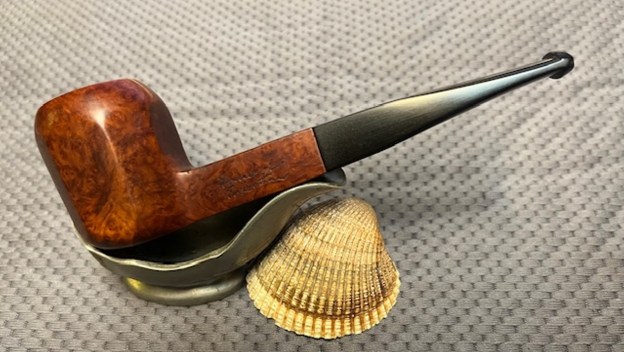
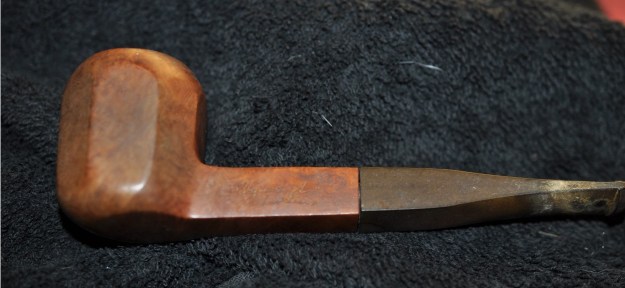
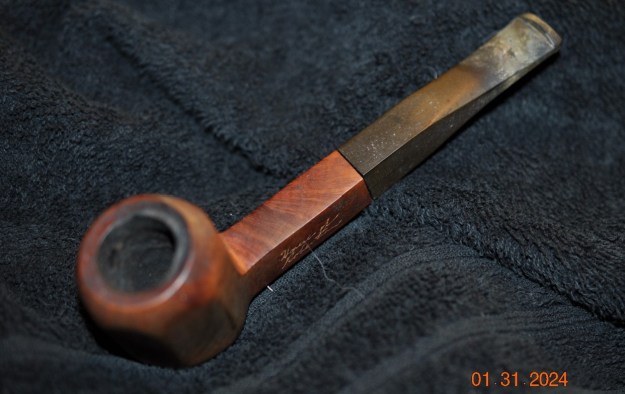
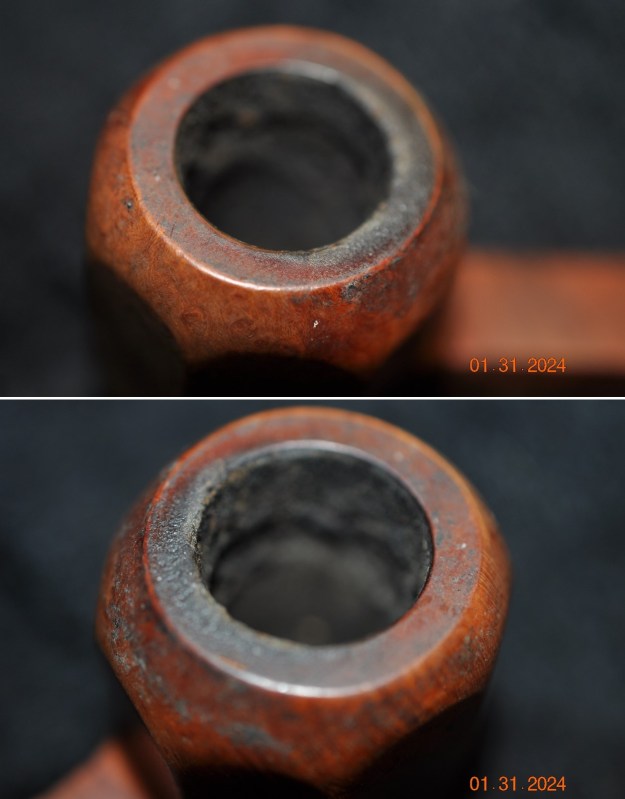
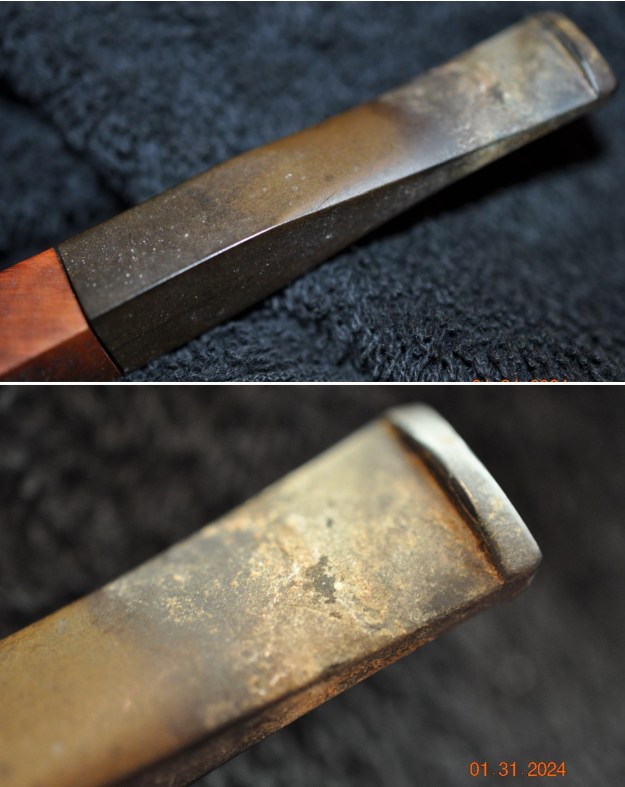
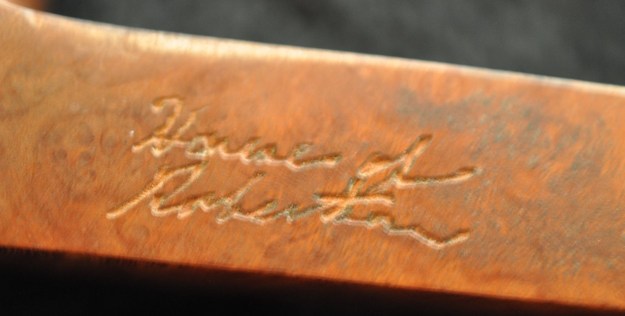
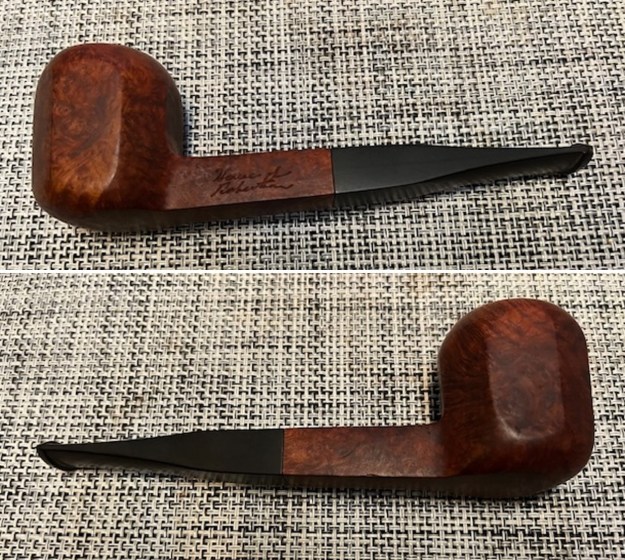
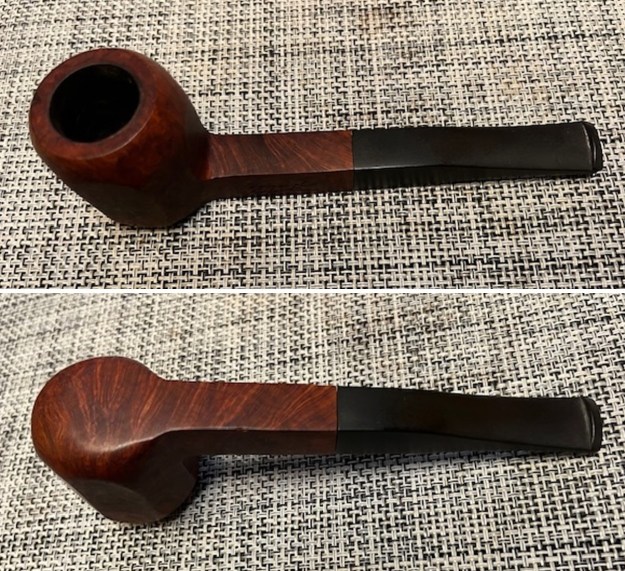
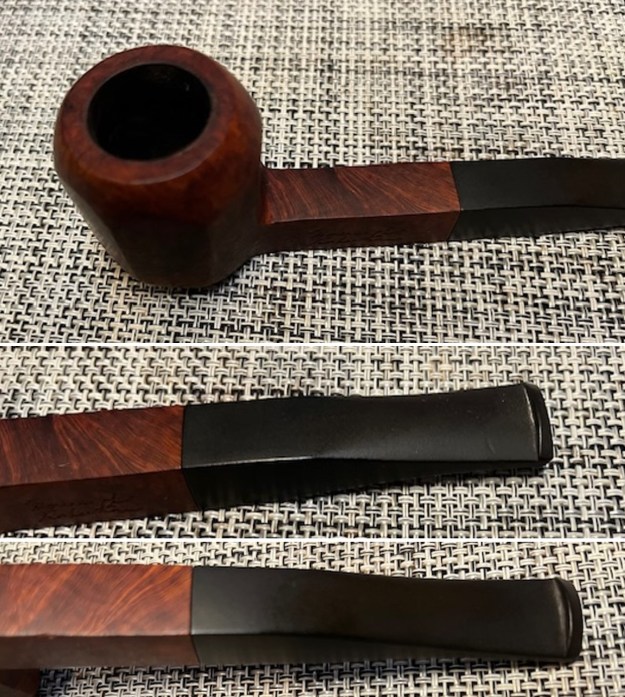
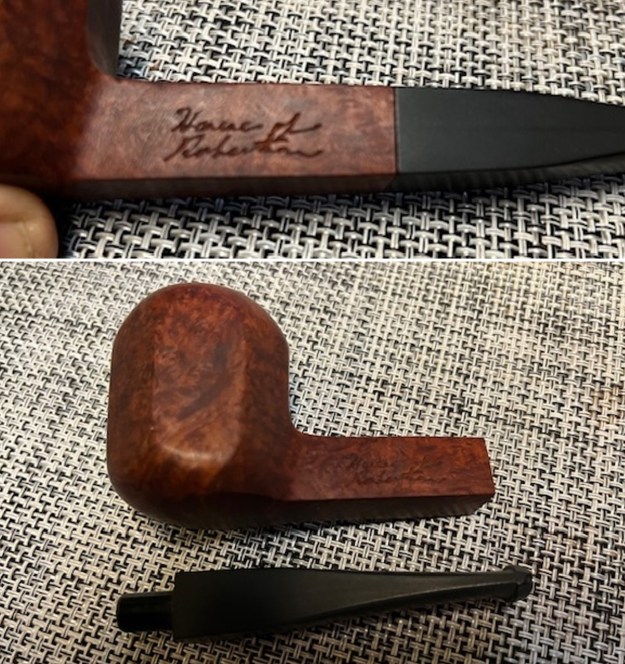
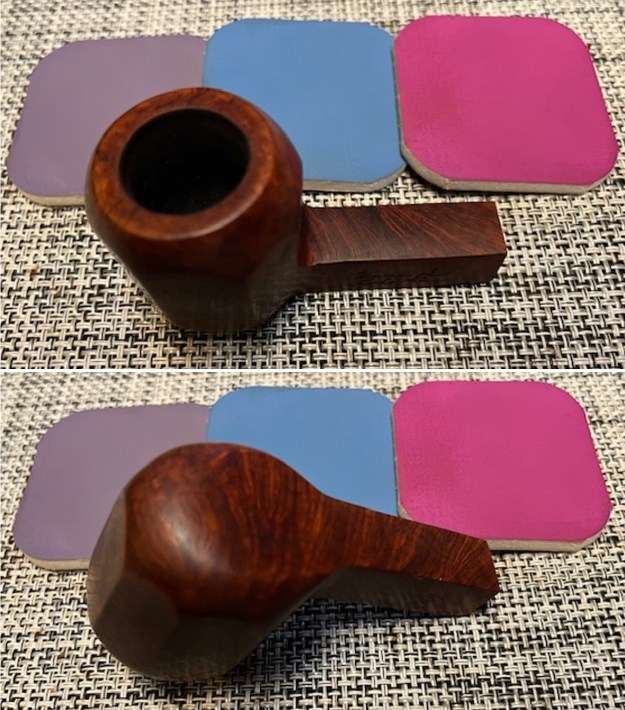
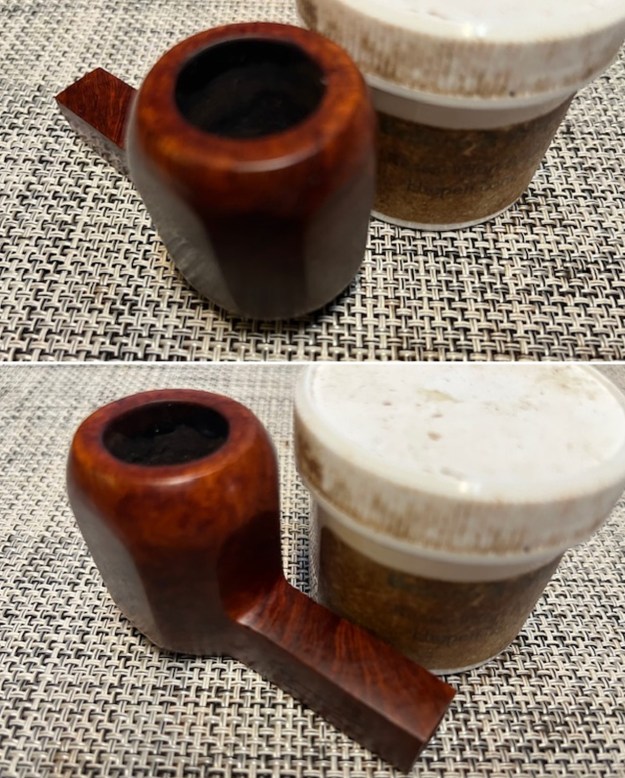
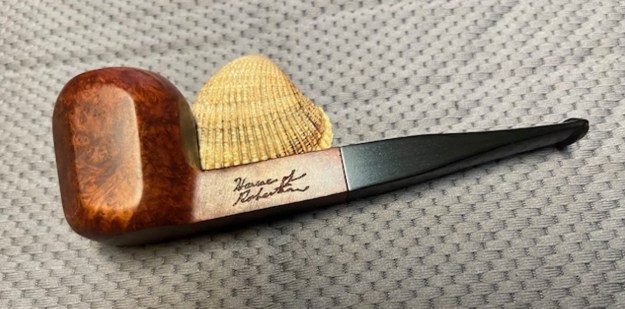
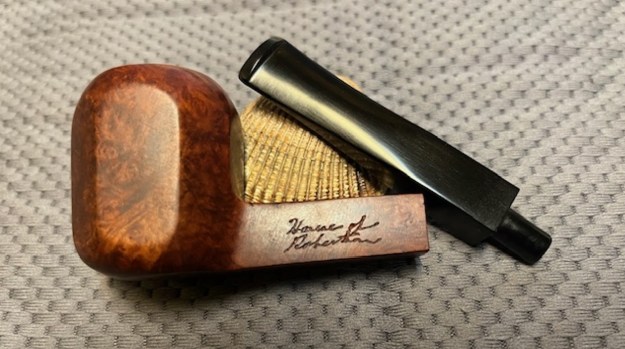
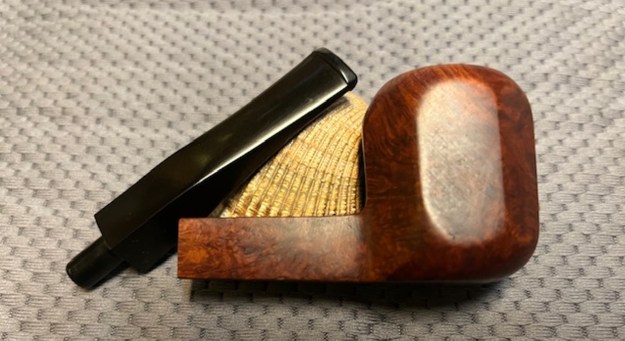
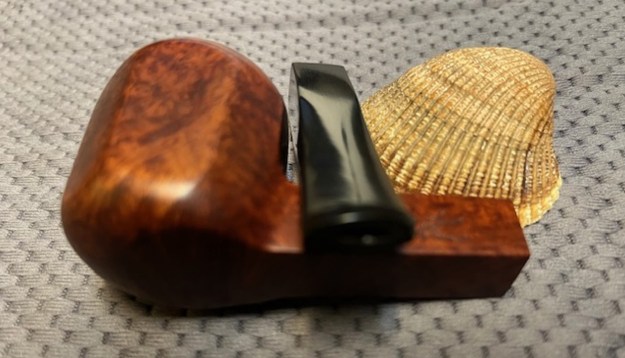
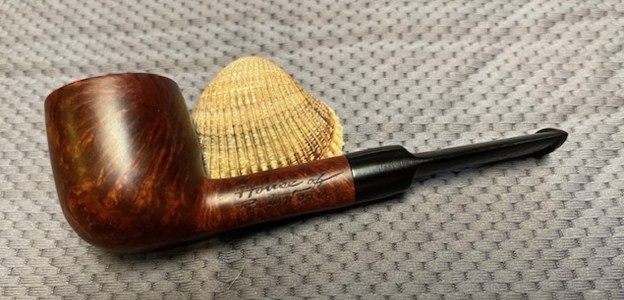
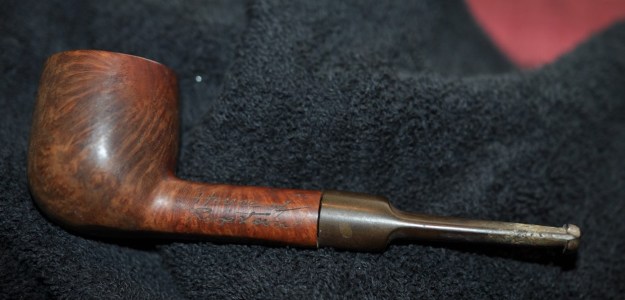
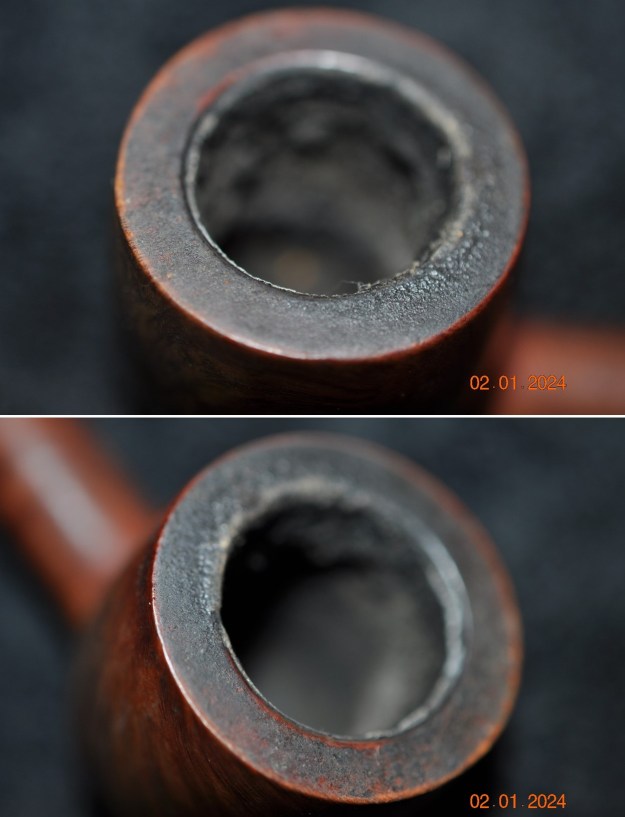
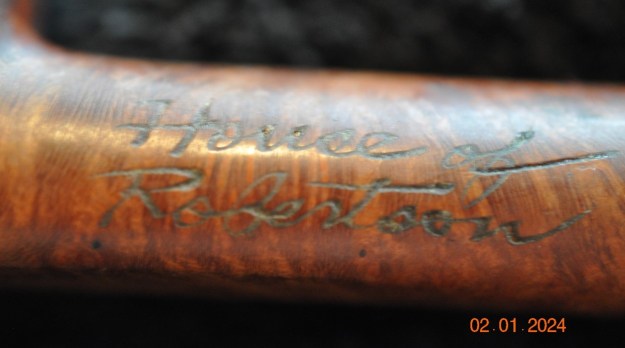
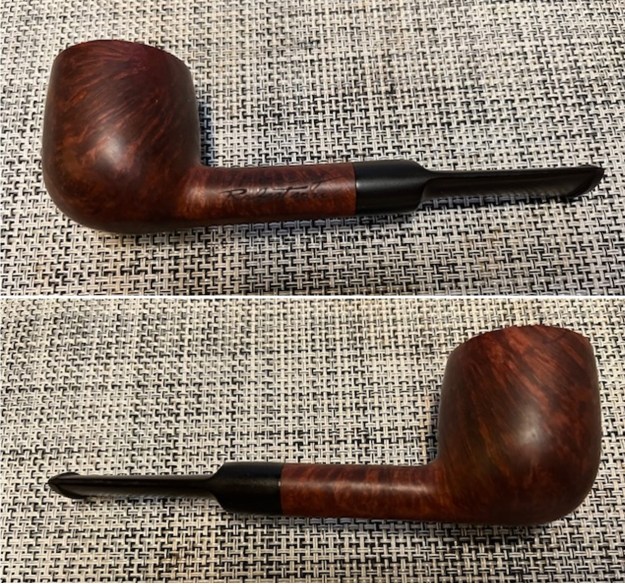
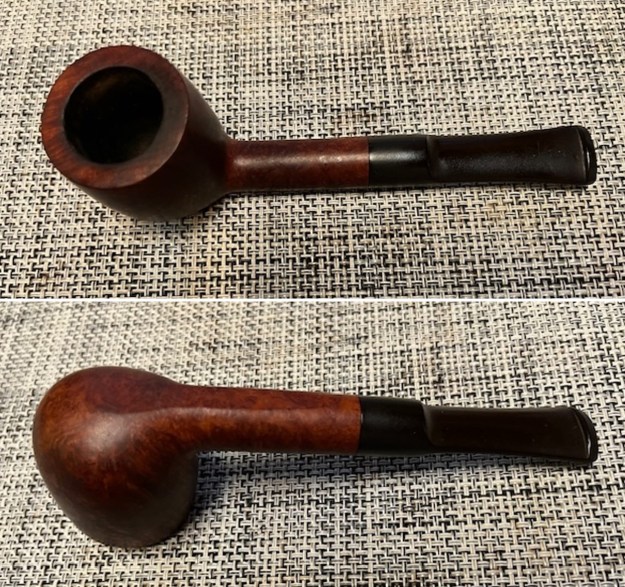
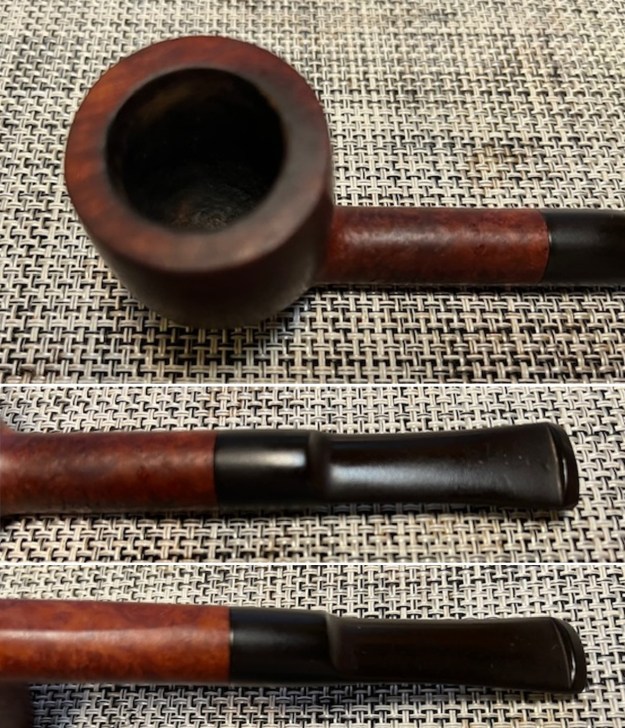
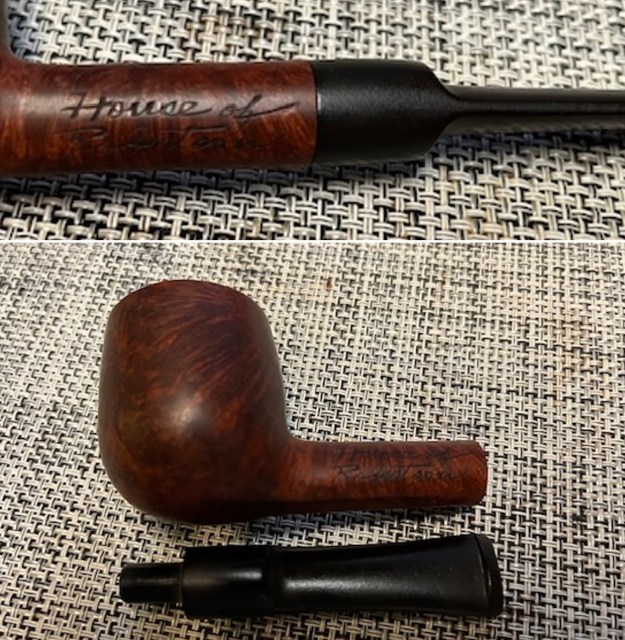
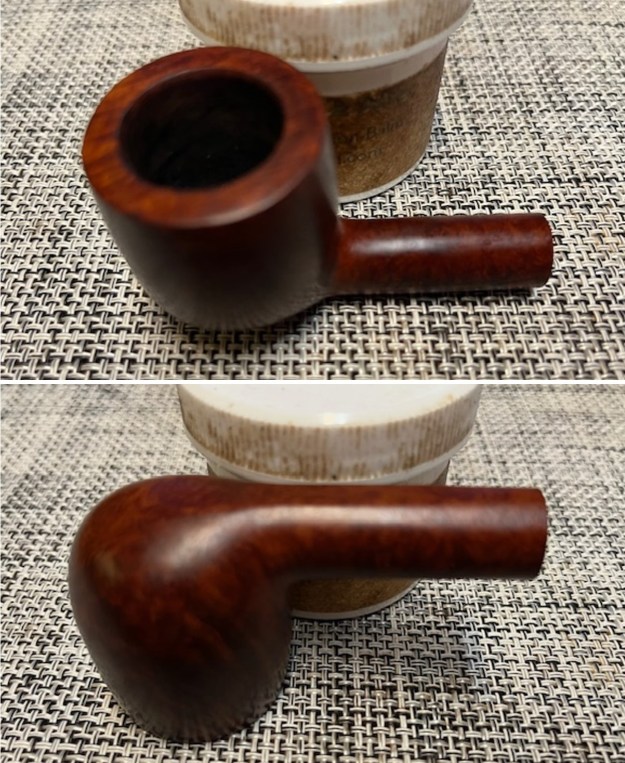
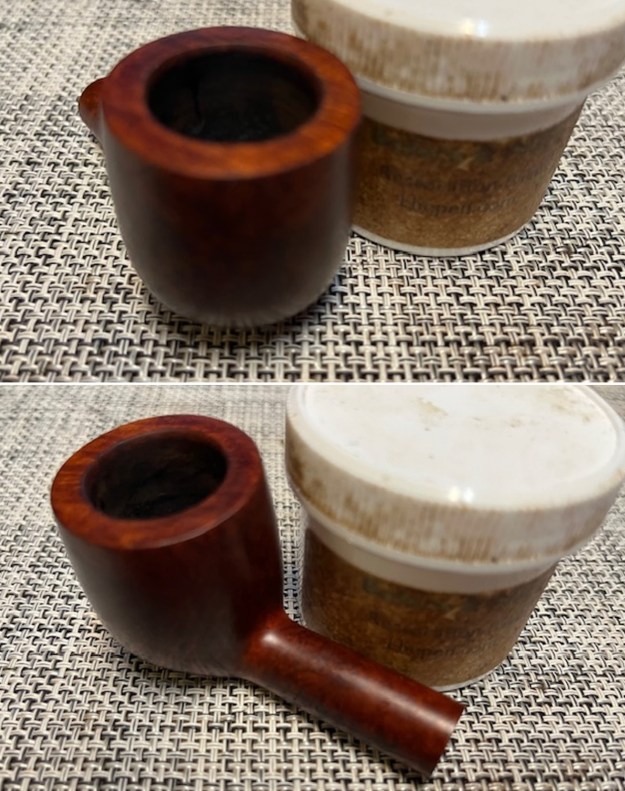
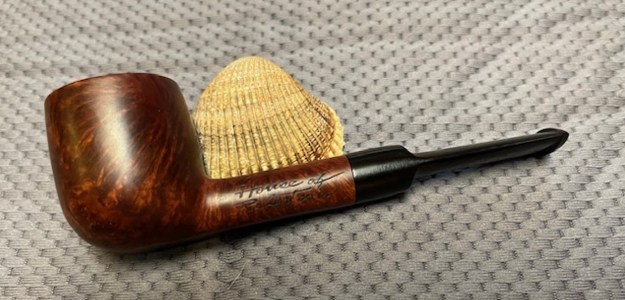
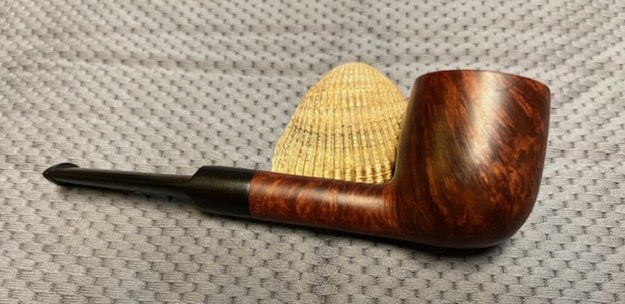
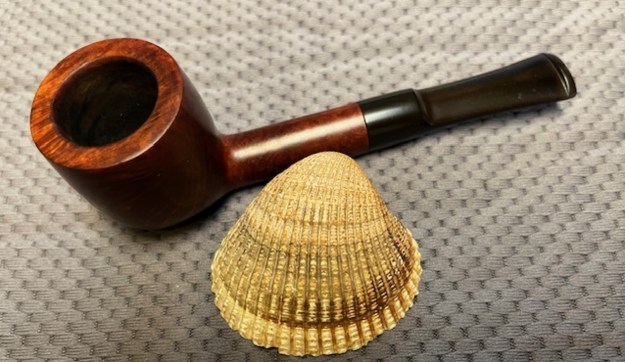
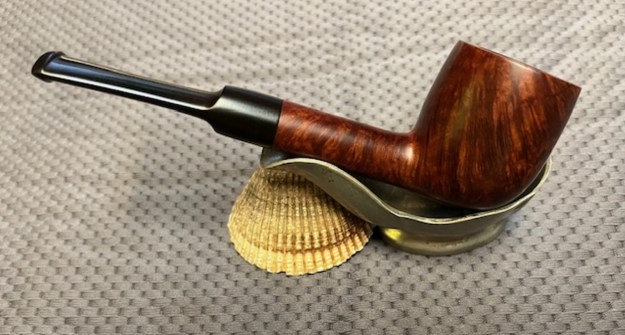
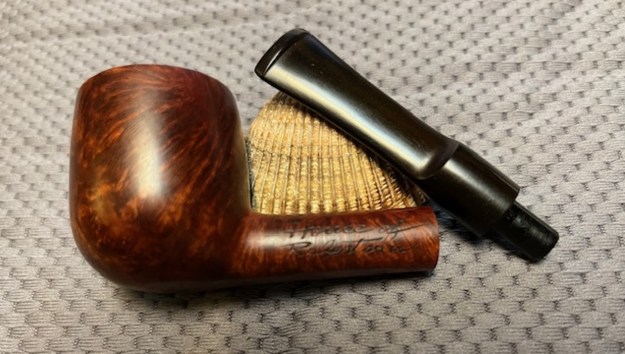
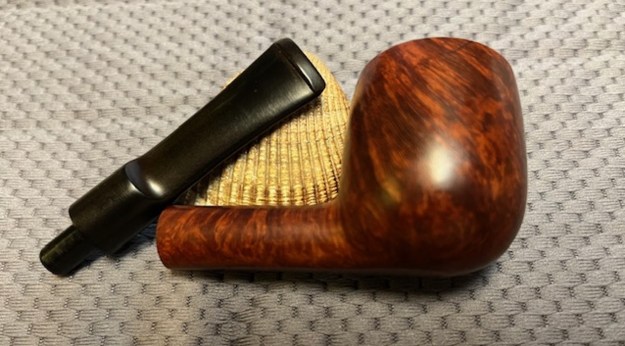
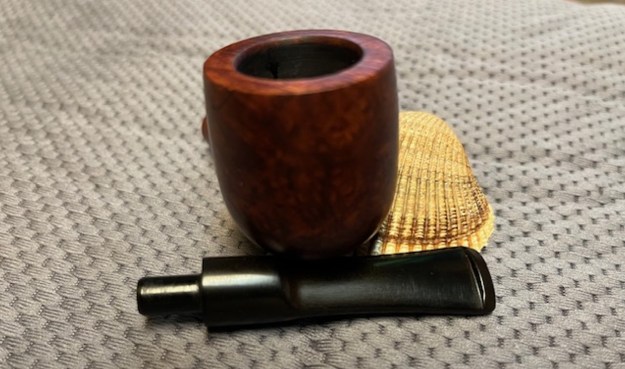
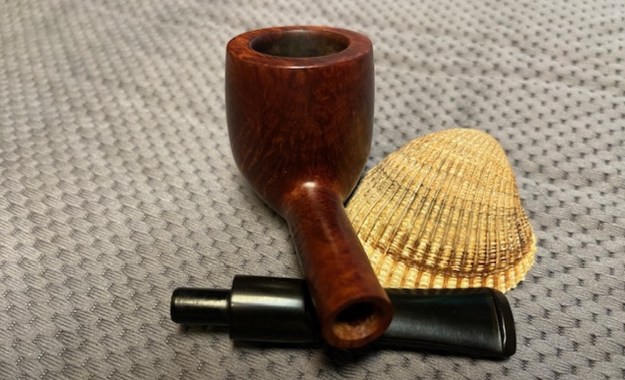
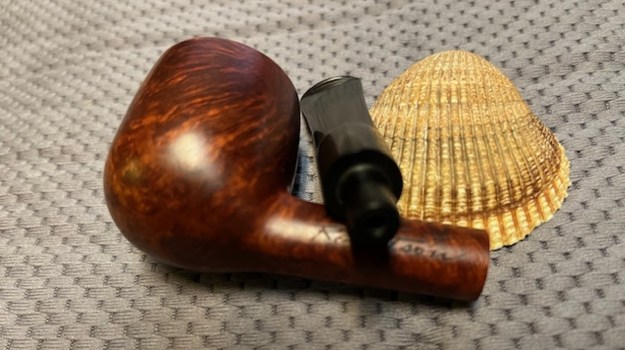
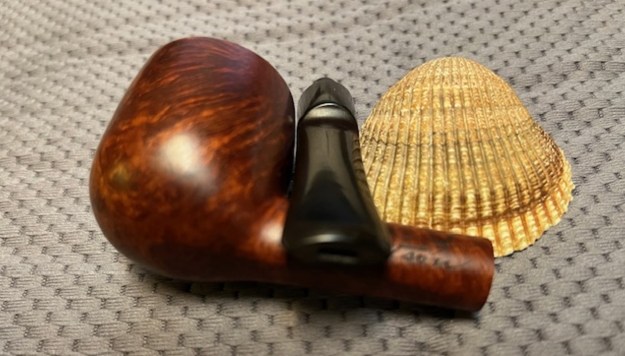
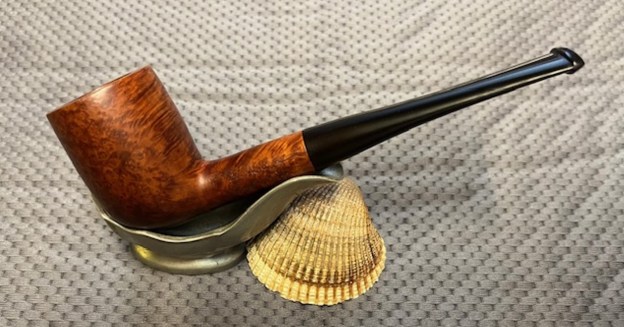
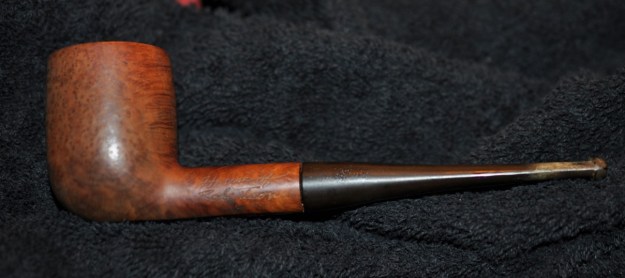
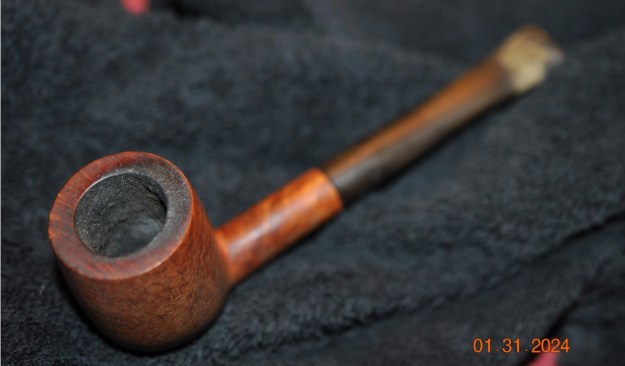
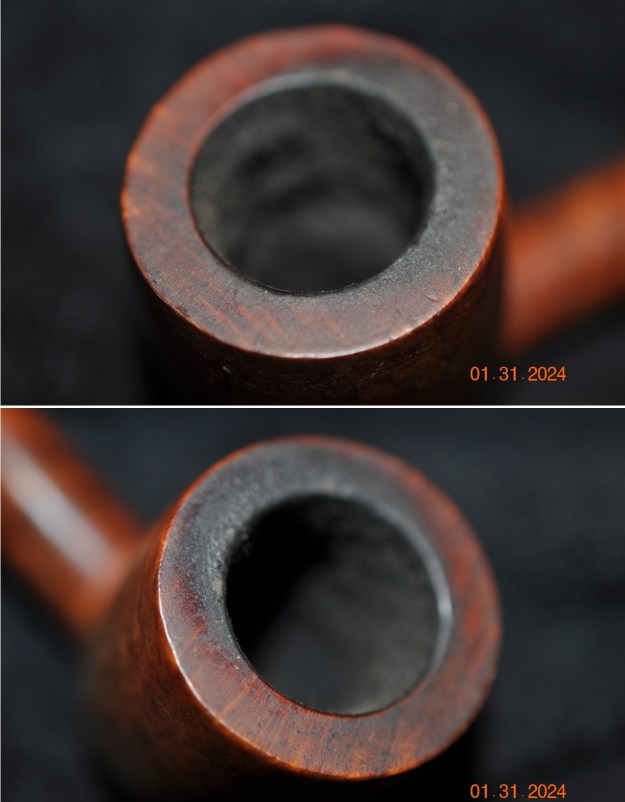
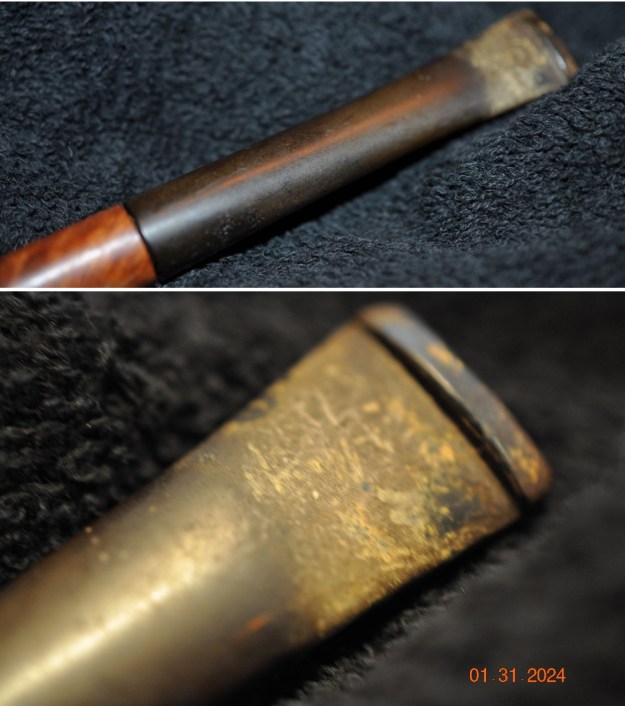
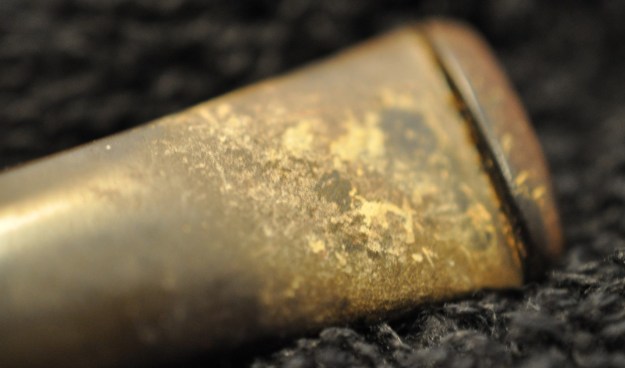
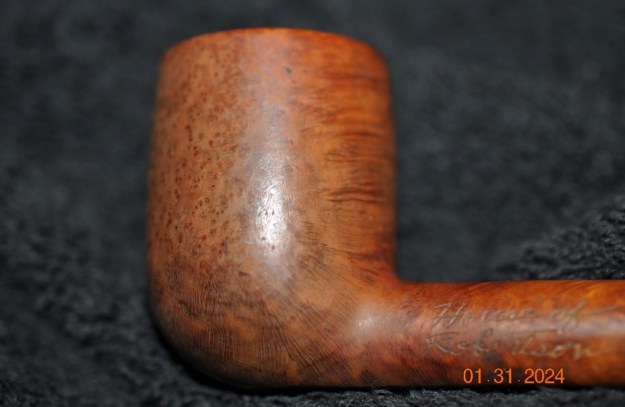
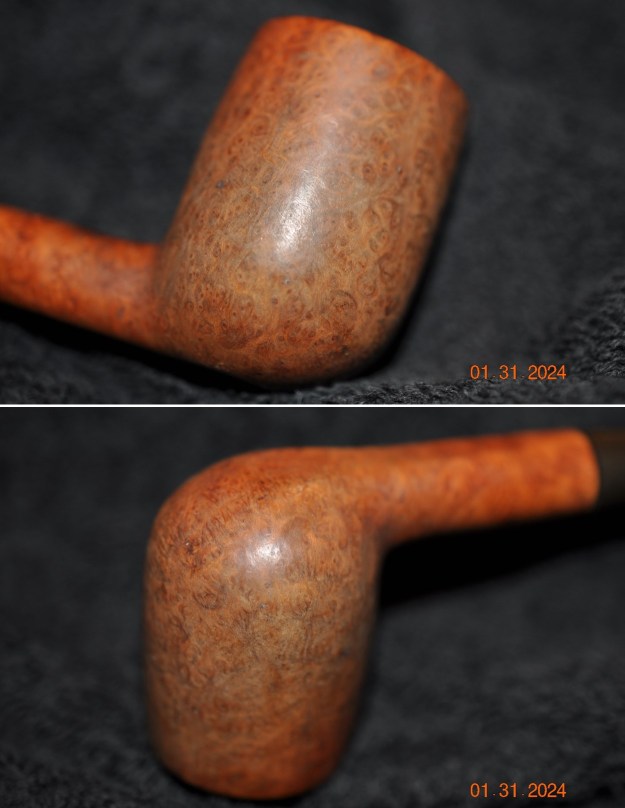
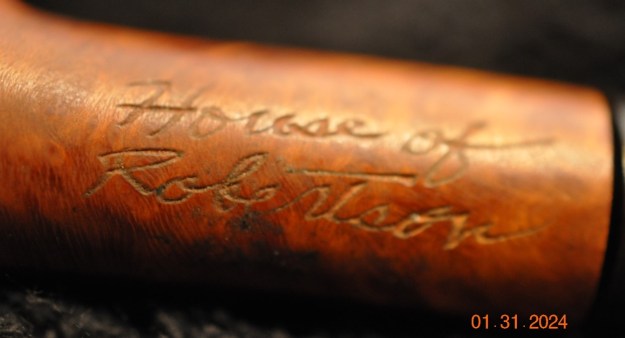
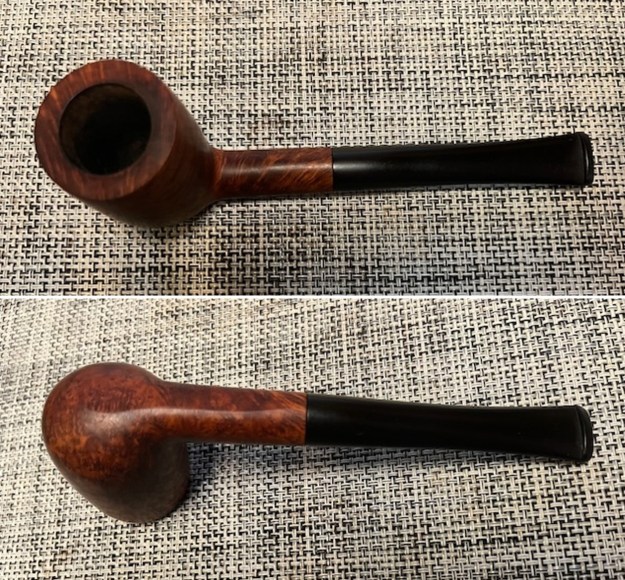
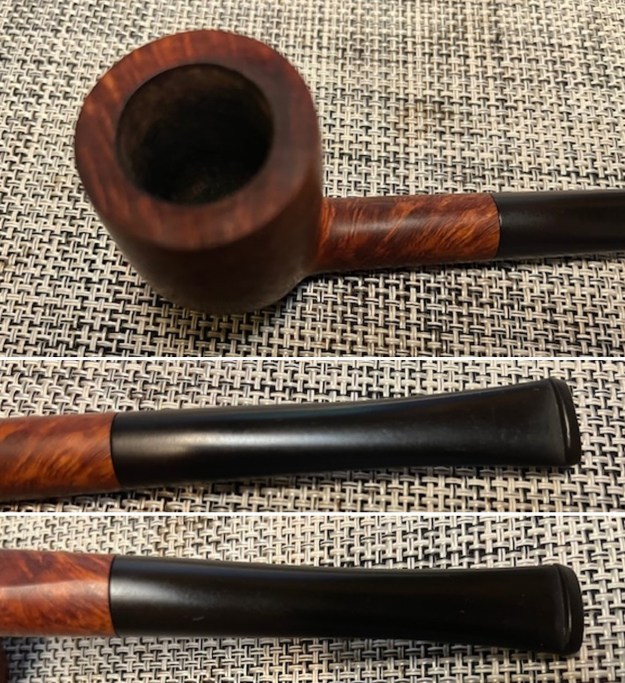
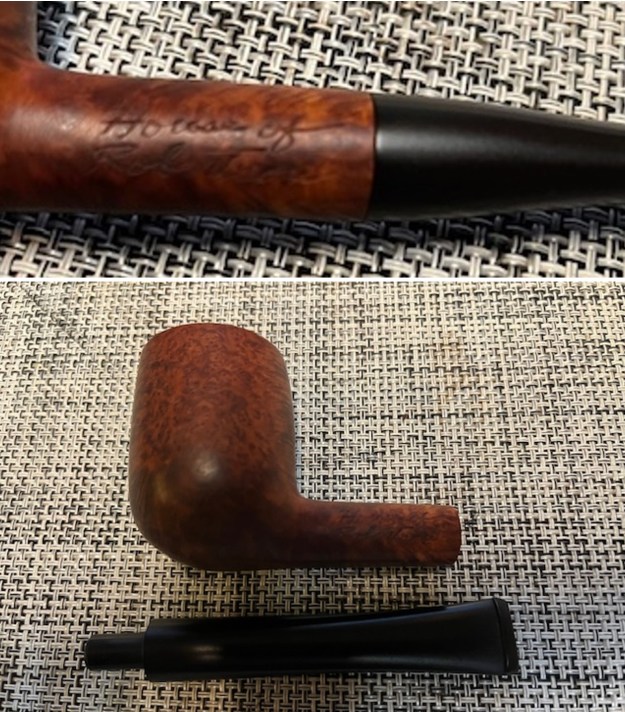
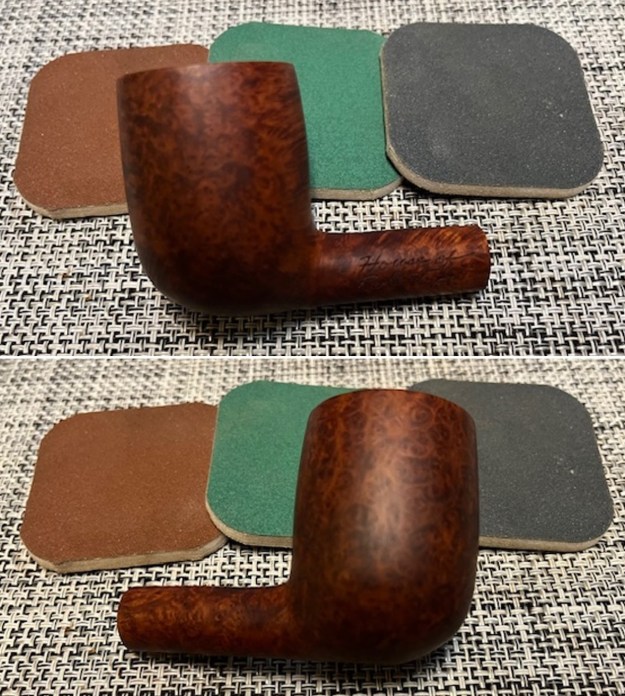
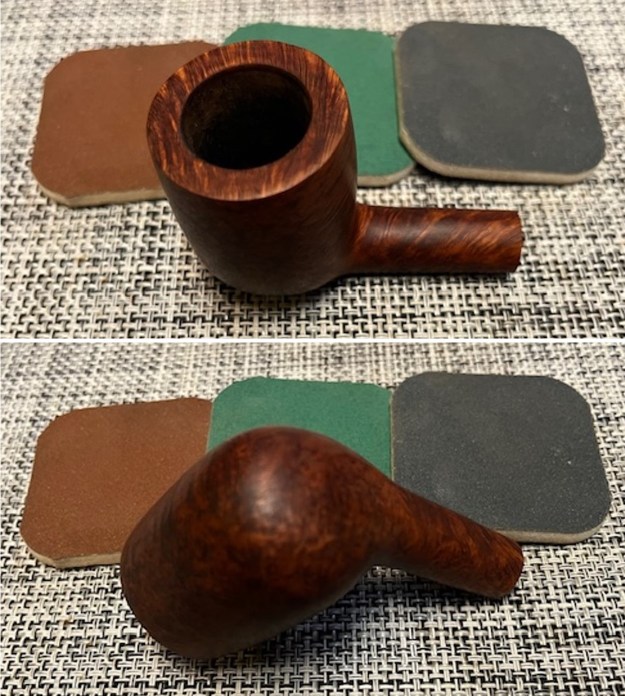
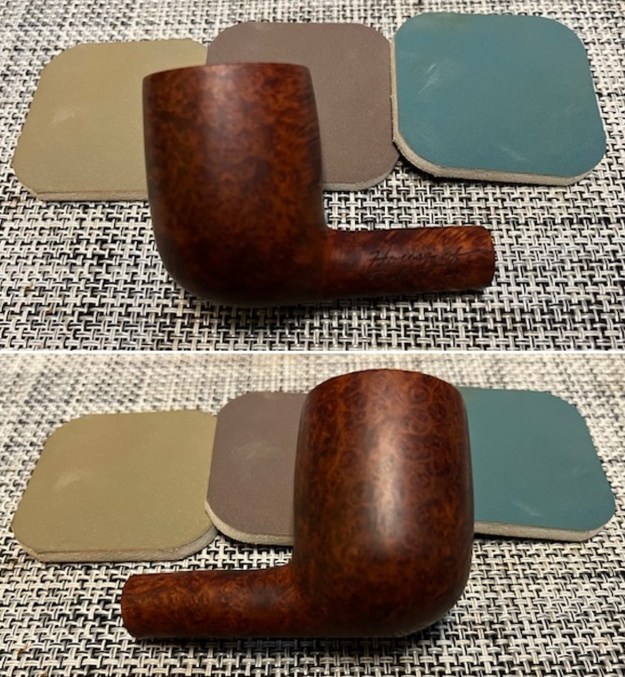
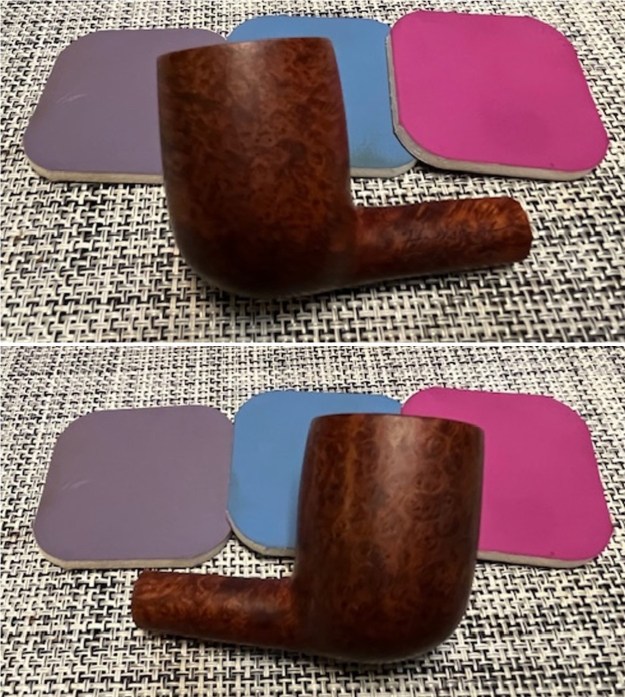
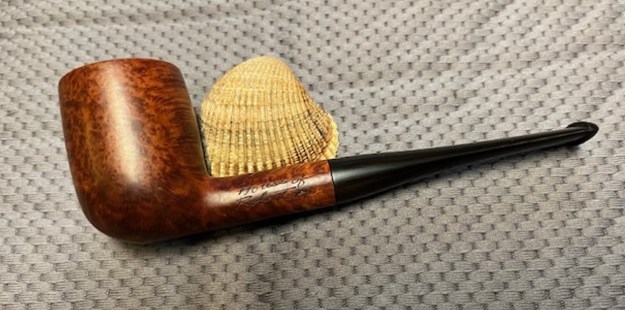
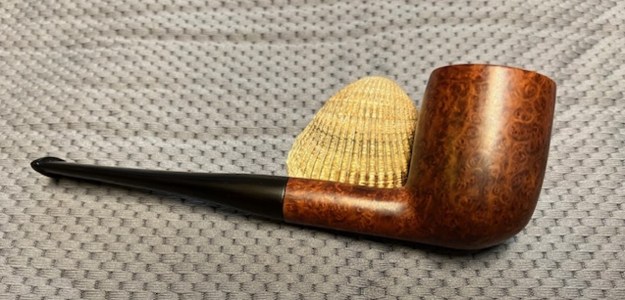
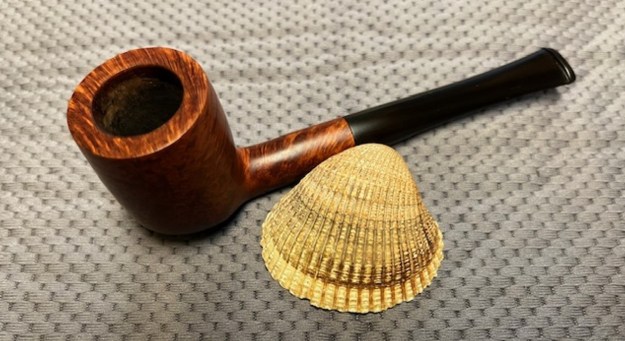
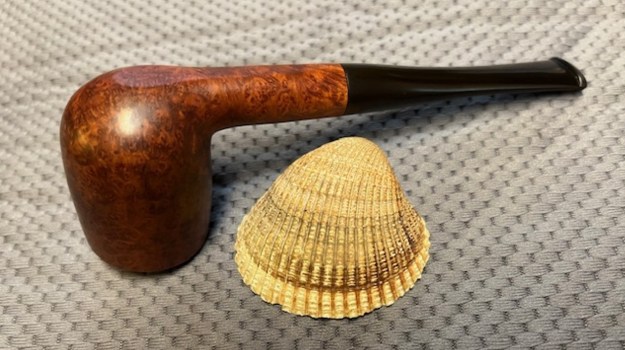
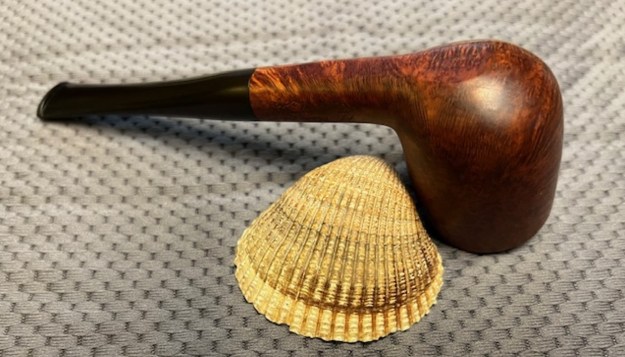
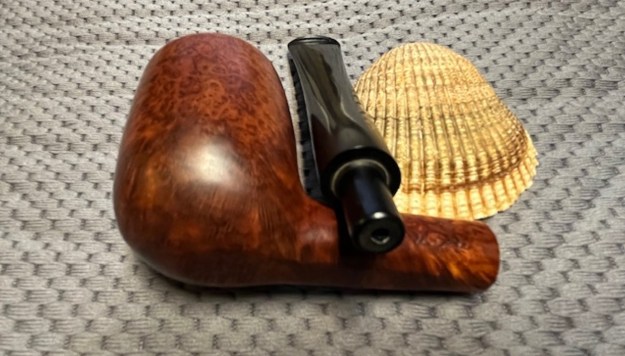
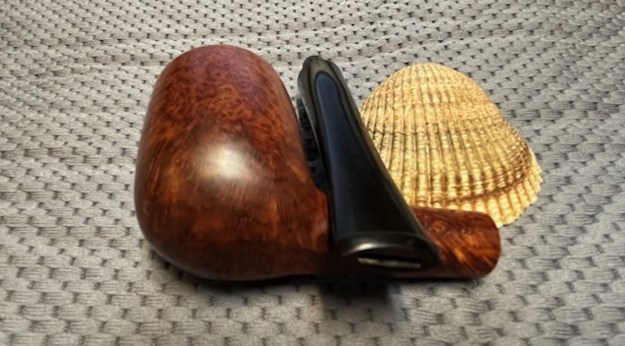
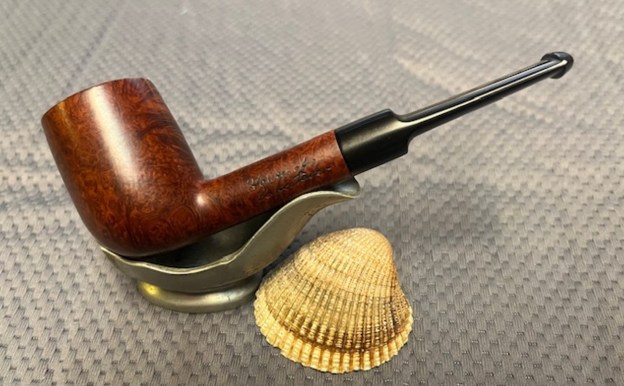
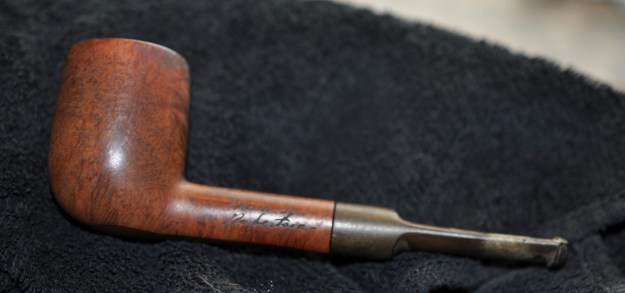
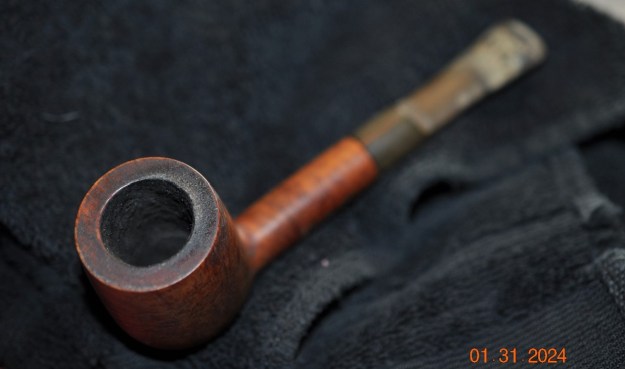
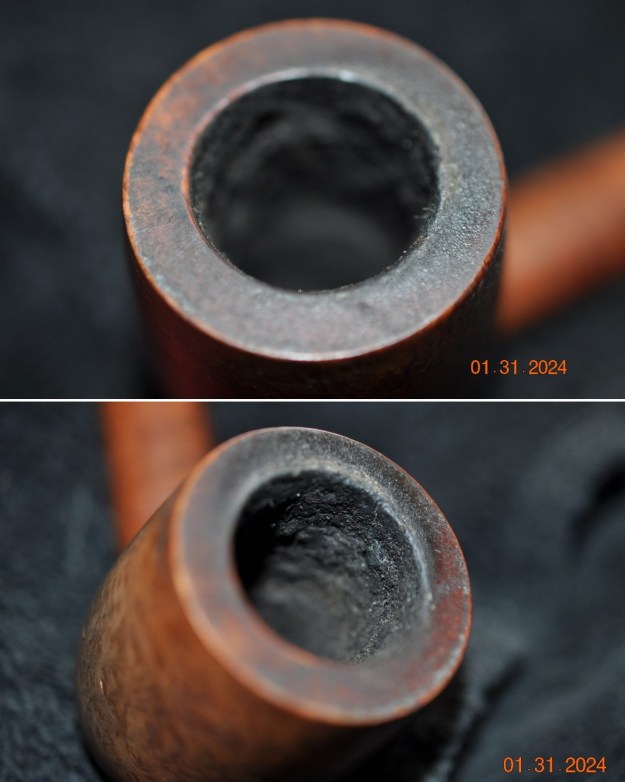
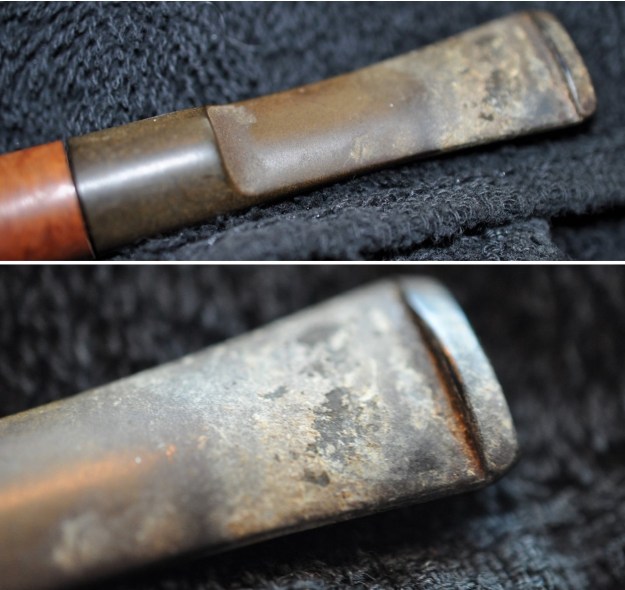
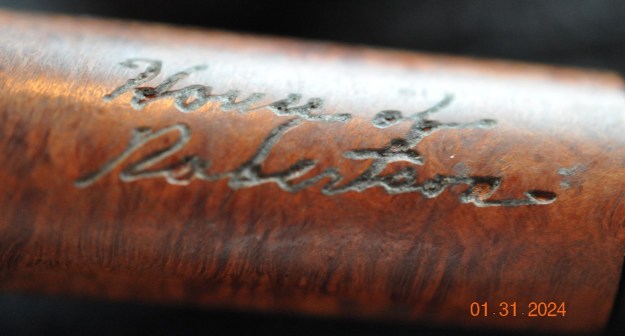
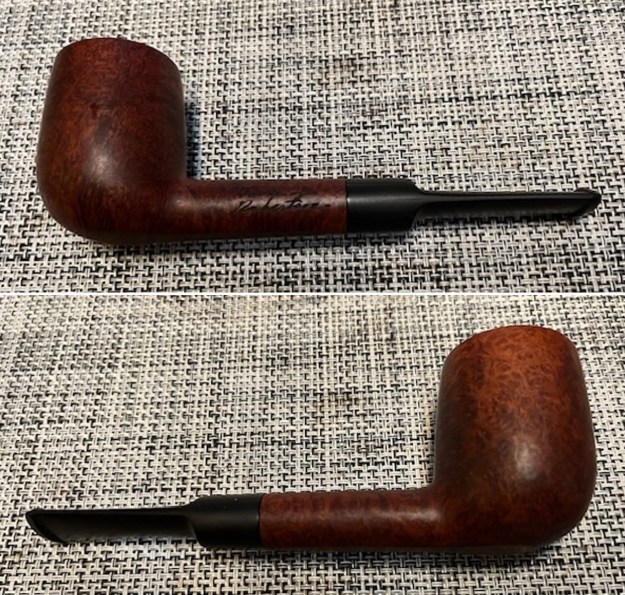
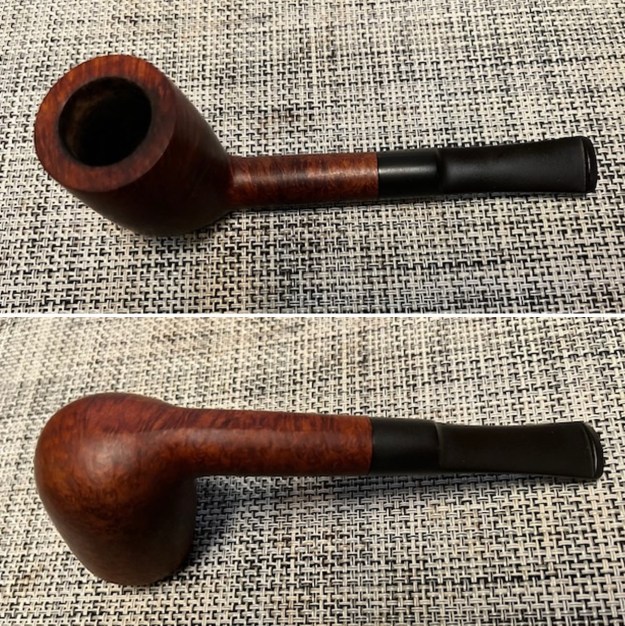
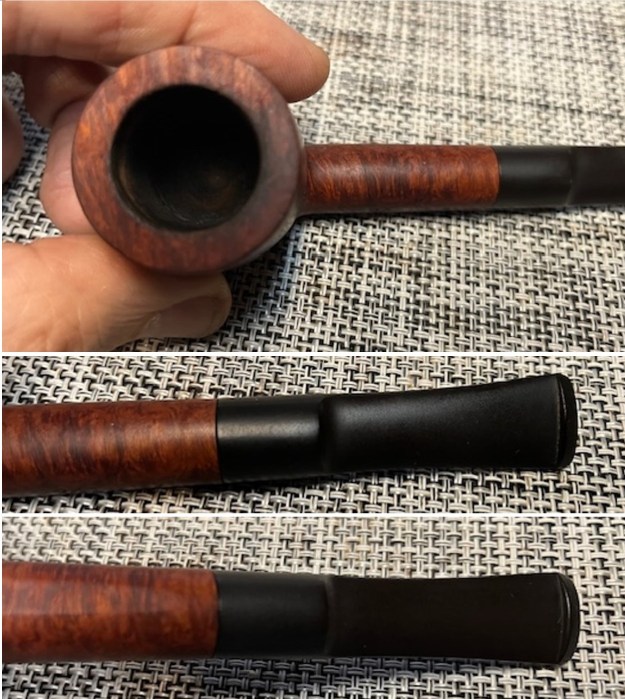
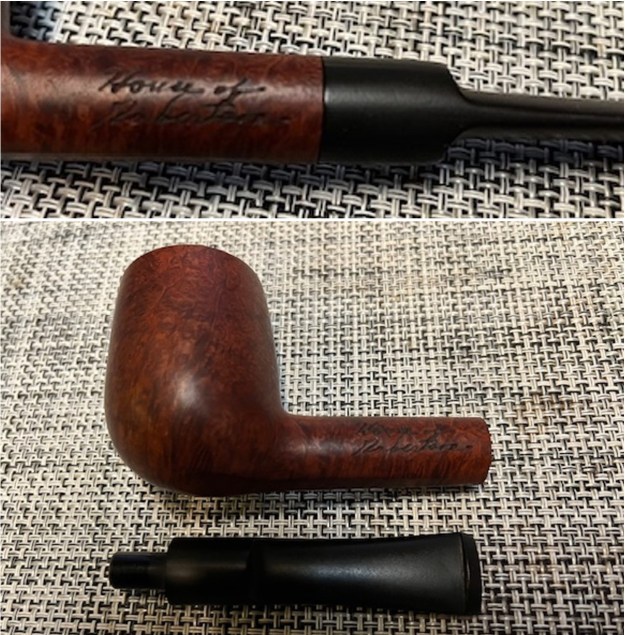
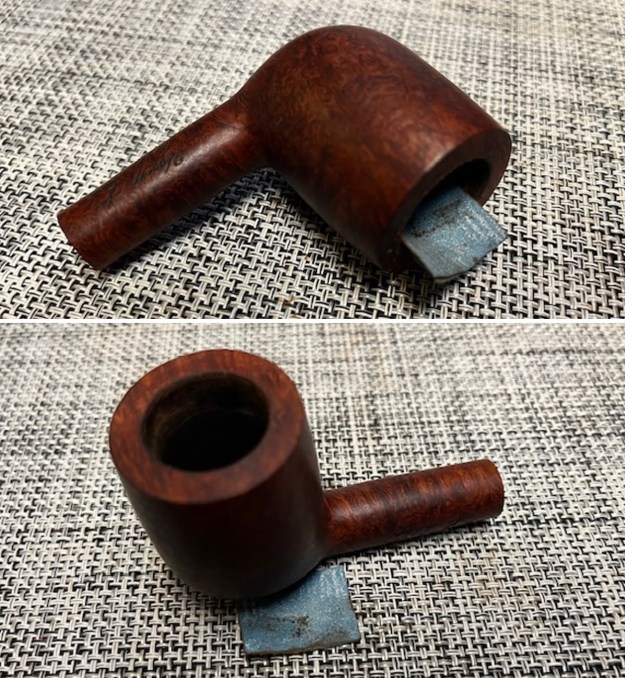
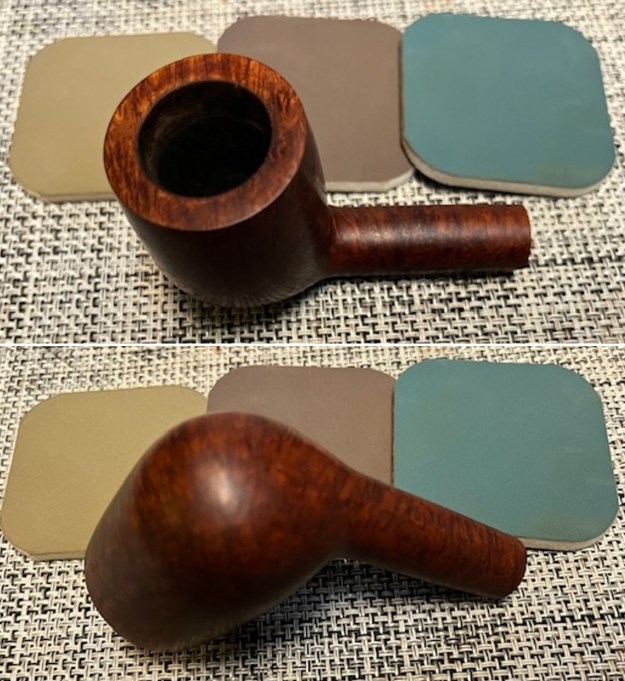
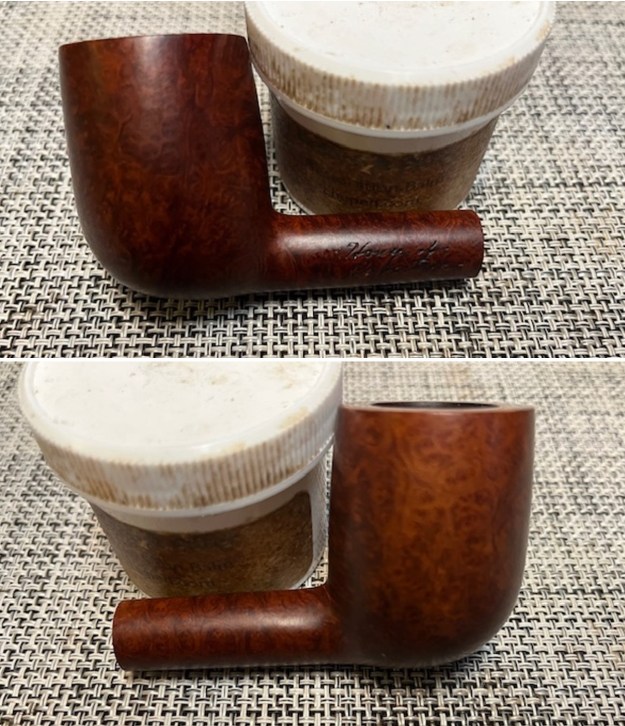
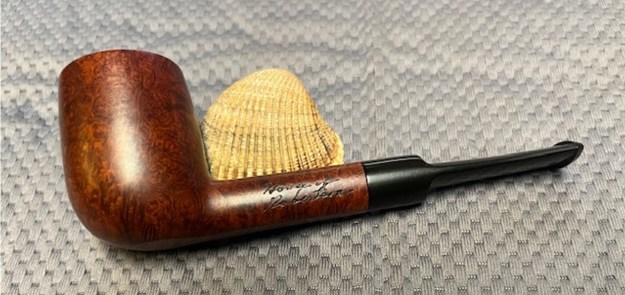
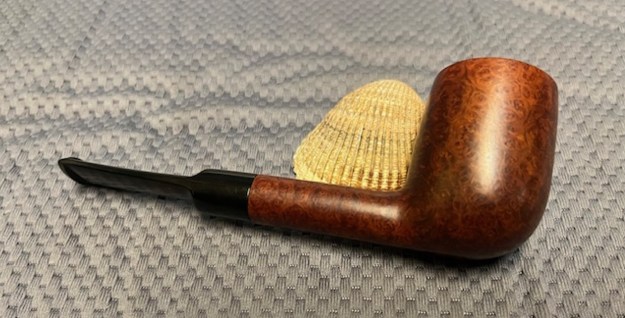
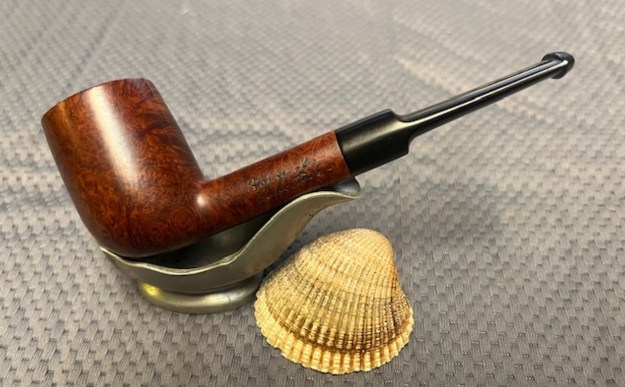
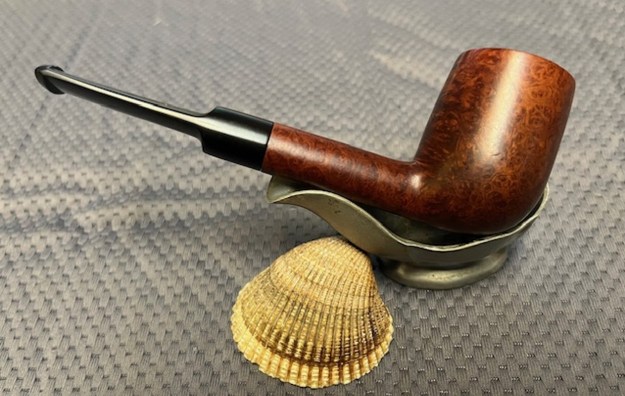
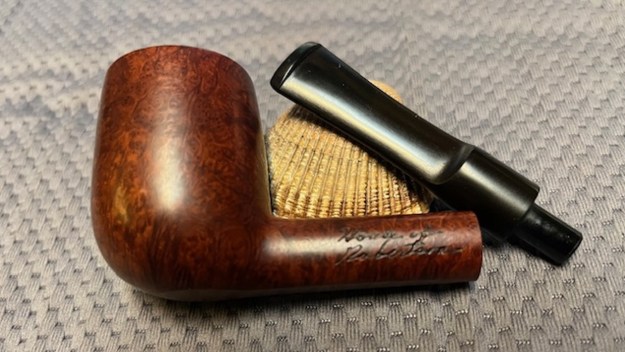
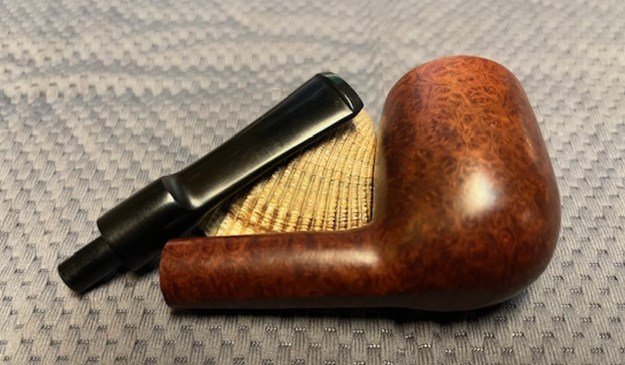
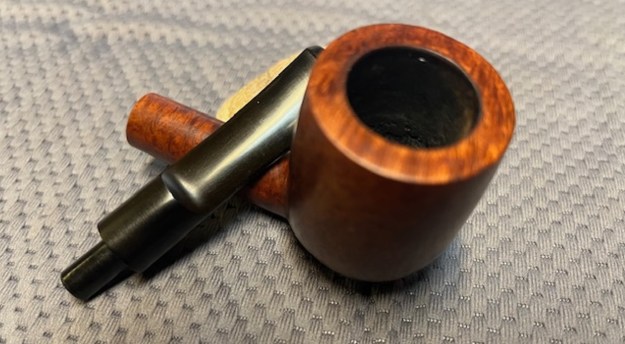
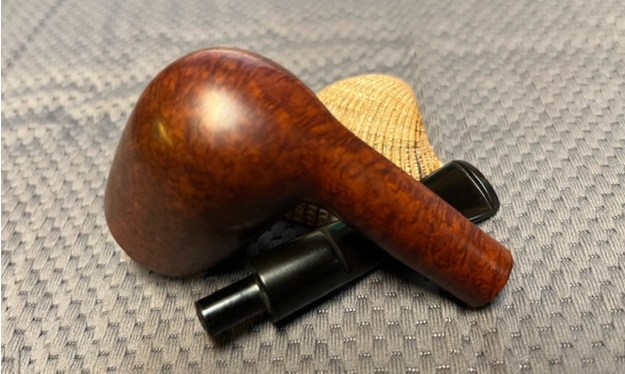
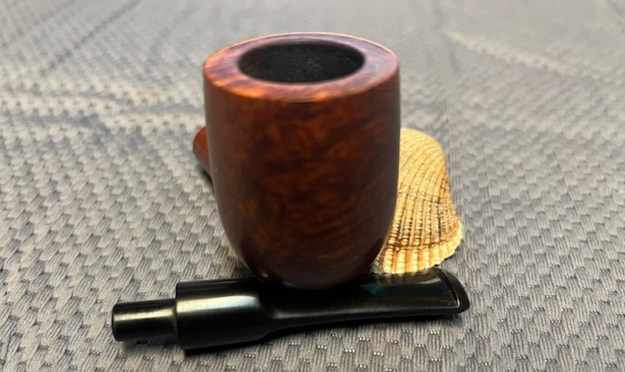
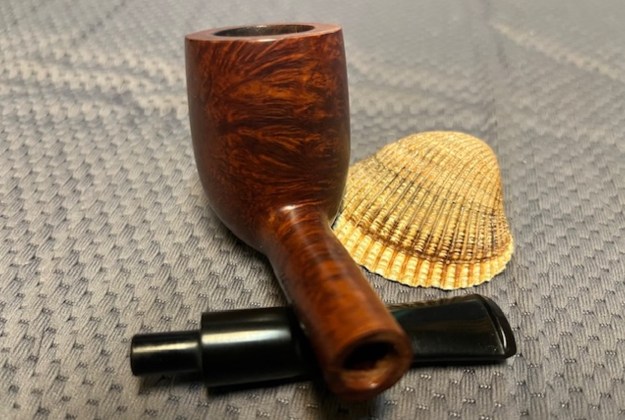
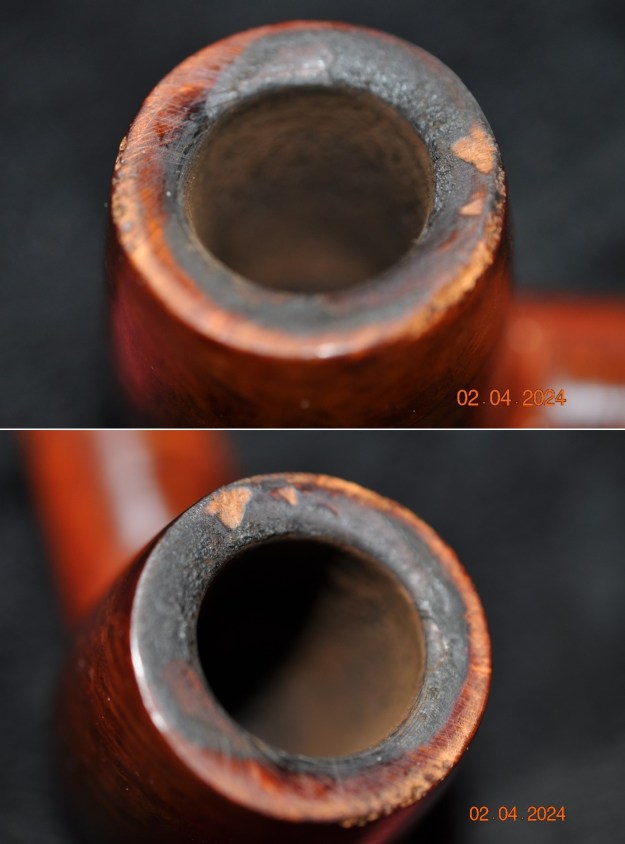
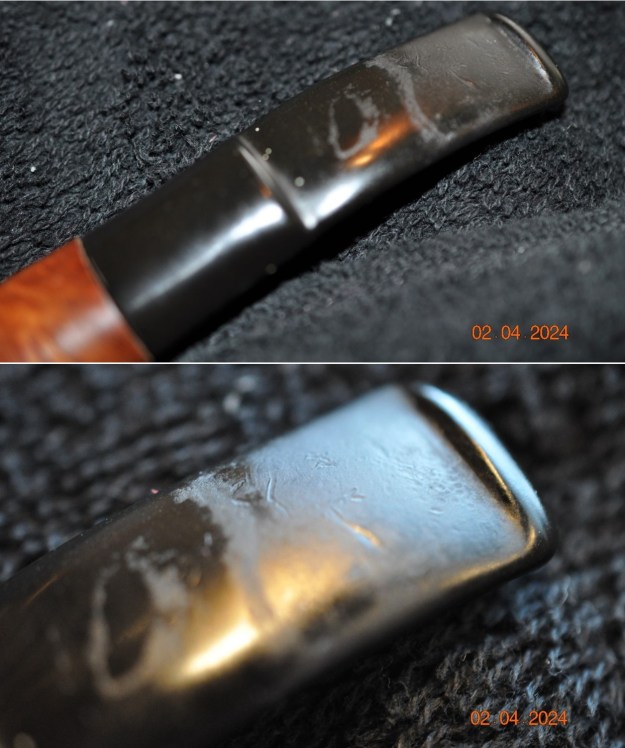
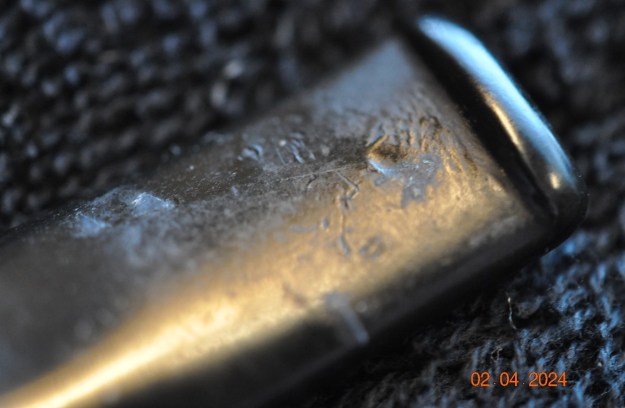
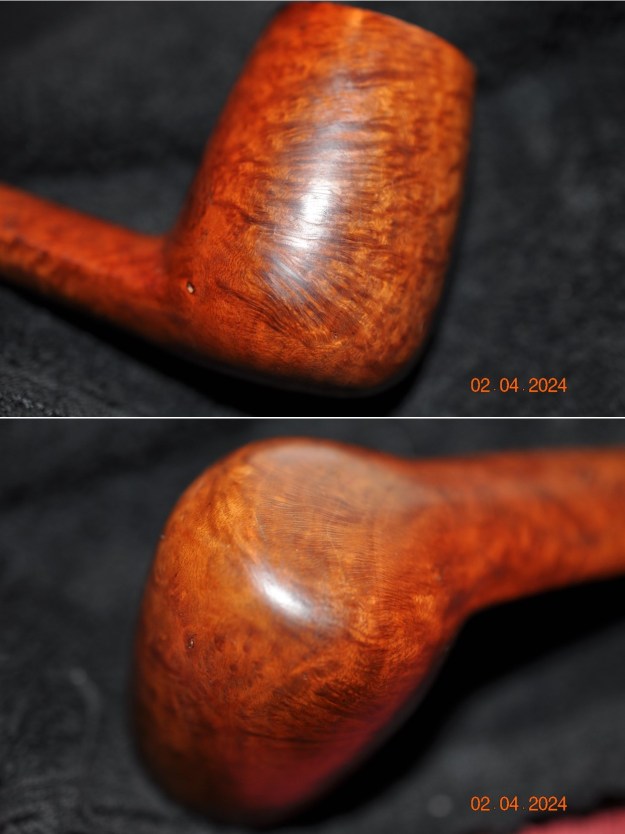
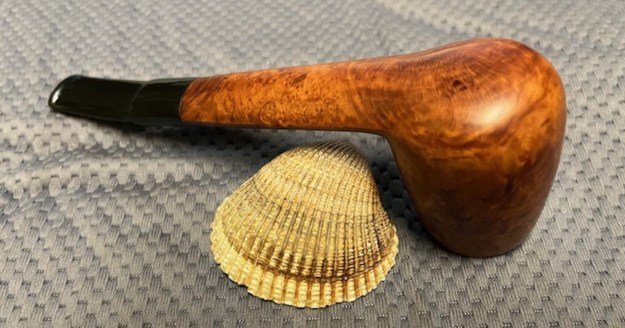
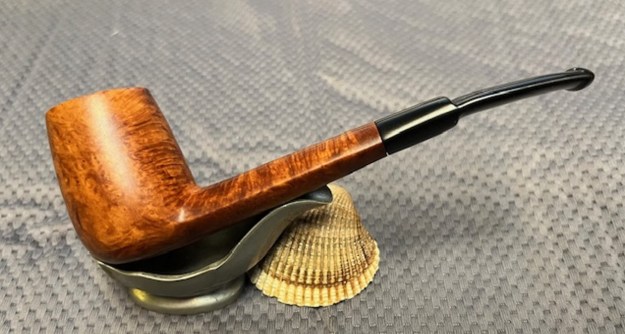
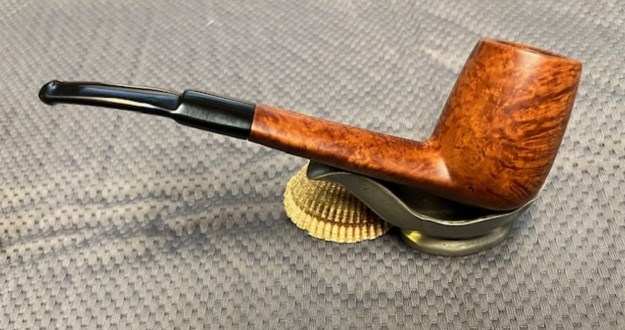
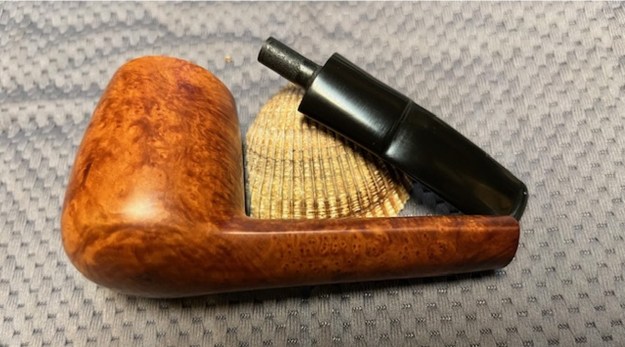
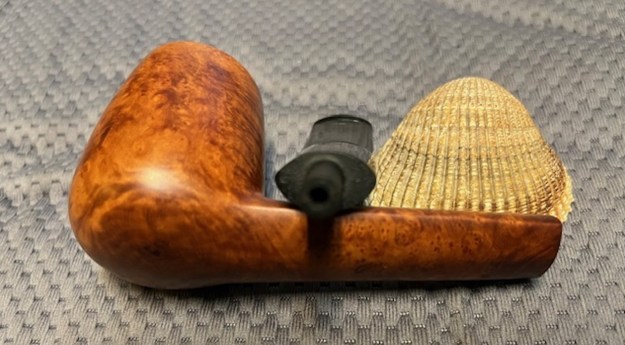
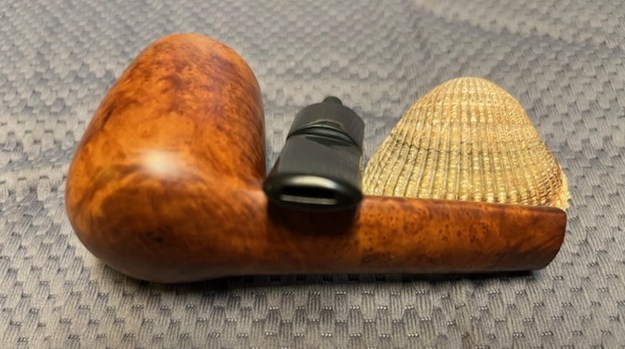
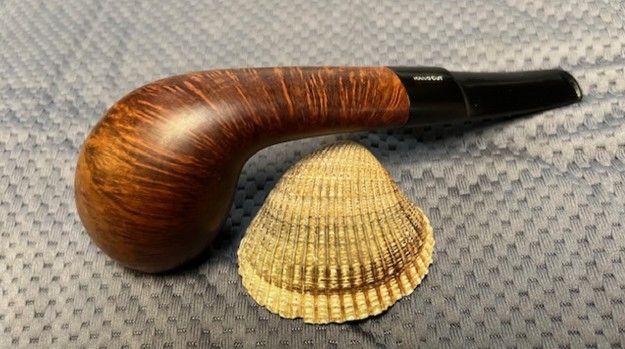
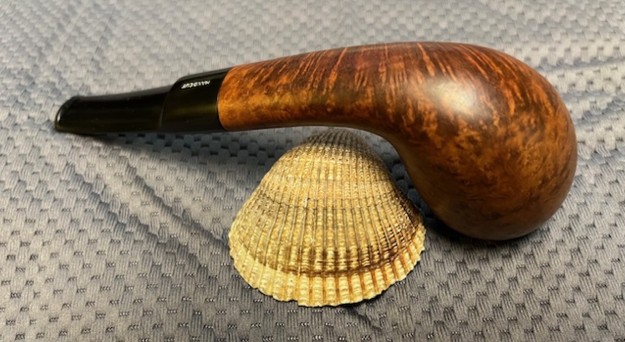
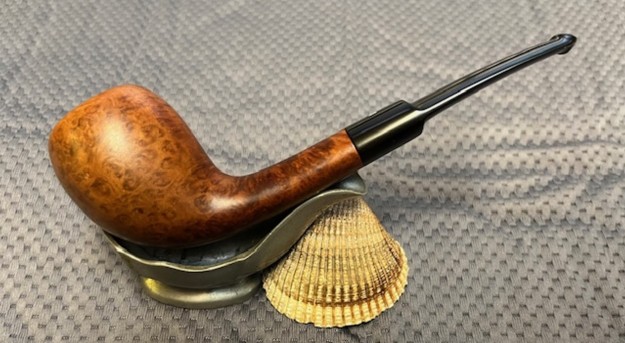
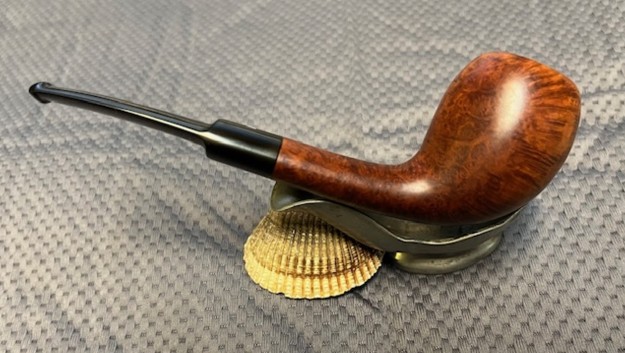
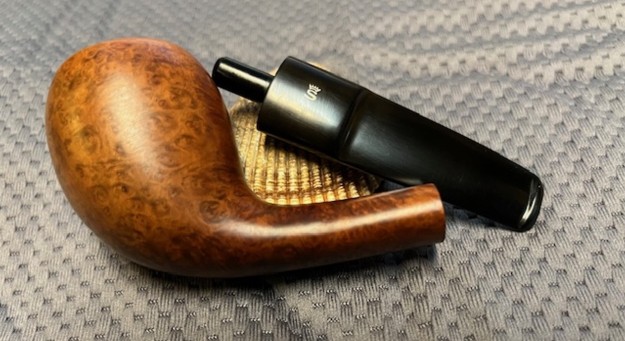
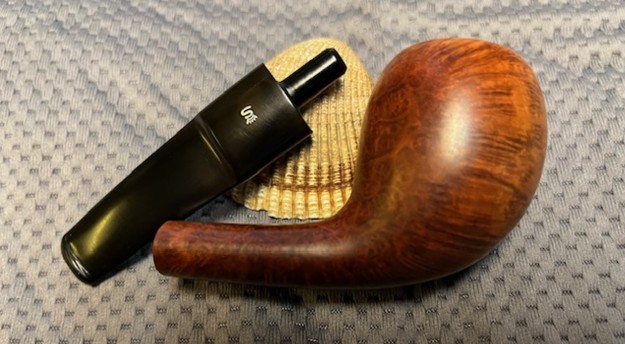
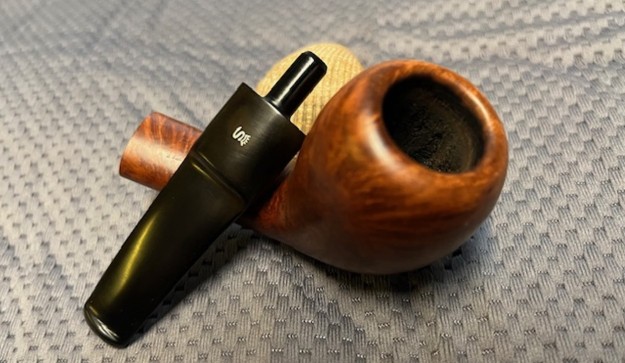
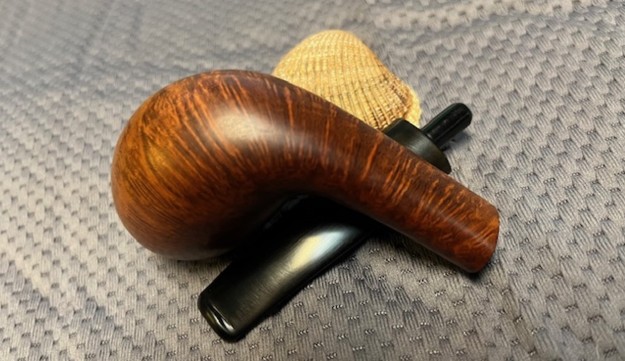
The next pipe on the work table is a change of pace for me. It was purchased along with the three pipes I have worked on recently and two additional pipes. The one I have chosen to work on is an beautiful Apple with a taper stem. We bought the five pipes off eBay on 07/28/2023 from Niles, Michigan, USA. They are all classic shaped pipes. The name House of Robertson is roughly hand-etched on the left side of the shank with an engraving tool. This pipe is a well shaped taper stem Apple with the bottom of the shank flat so the pipe sits nicely on the desk top as a sitter. The bowl has some interesting mixed grain on the sides of the bowl and shank. The bowl is thickly caked with some lava overflow on the rim top. The outer and inner edges of the rim look to be in good condition. The pipe was dirty but underneath all of the grime it appears to be in excellent condition. It is definitely an interesting pipe and should clean up very well. The fit of the stem to the shank was good. The taper stem was oxidized and calcified. There are light tooth marks and chatter on both sides near the button. Jeff took photos of the pipe before he started the cleanup. Jeff took photos of the pipe before he started his clean up work. Jeff took photos show the condition of the bowl and the stem. The photos of the bowl and rim show the cake in the bowl and the lava overflowing onto the rim top. The grain on the top of the bowl and the inner and outer edge of the rim looks really good. It was hard to know what the edges and top really looked like until we cleaned it. The square taper stem was oxidized, calcified and had tooth chatter and marks on both sides of the stem near the button. The photos of the sides and heel of the bowl show some stunning and unique grain all around the pipe. The finish makes the grain really stand out on the bowl and shank. The next photo shows the etched name on the left side of shank on the shank. It reads House of Robertson.I am including the information that I found when I received my first of the House of Robertson Pipes. I found a link on Pipedia that gave me the only information I could find on the brand. I include that in total as it is interesting to read.
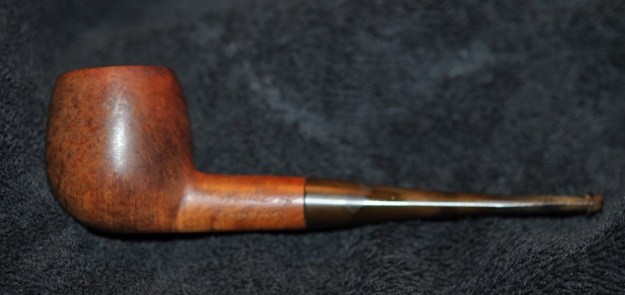
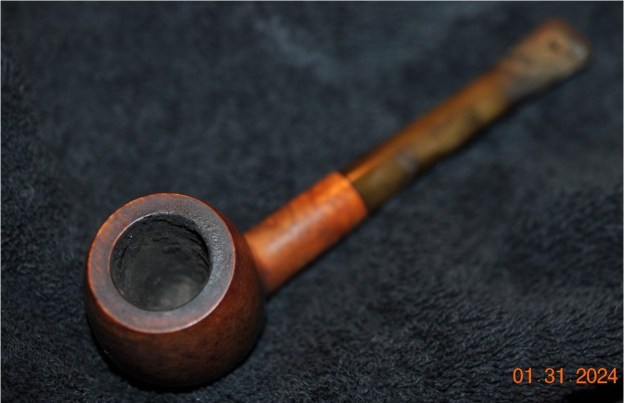
“House of Robertson” was in business for many years, but alas, closed their doors in 1999. They were located in Boise, Idaho. They are noted for making rather large and interesting pipes. Thayne Robertson was a Master Mason, AF & AM, and started the shop about 1947 and his son Jon started working there in 1970 when he finished college, along with Thayne’s daughter. Thayne and his son started making the big pipes at that time, and made them together until 1987 when Thayne passed away. Jon kept the store and his sister moved on to other things. The House of Robertson appears to have closed around 1999 (https://pipedia.org/wiki/Robertson).

Since then I have worked on a lot of House of Robertson pipes and have been able to track down more information. I am including a link to a Catalogue that I picked up on eBay. Click on the link and have a look at this interesting book of information on the brand and the pipe maker himself (https://rebornpipes.com/2022/12/11/a-house-of-robertson-catalogue-filled-with-great-examples-of-thayne-robertsons-work/).

I am also including a biography of Thayne Robertson that I found on Facebook from a fellow in Boise, Idaho. It is an interesting read into the mind of the pipe maker. Make sure to take time to read it (https://rebornpipes.com/2021/10/31/house-of-robertson-pipes-boise-pipe-carver-thayne-robertson/).

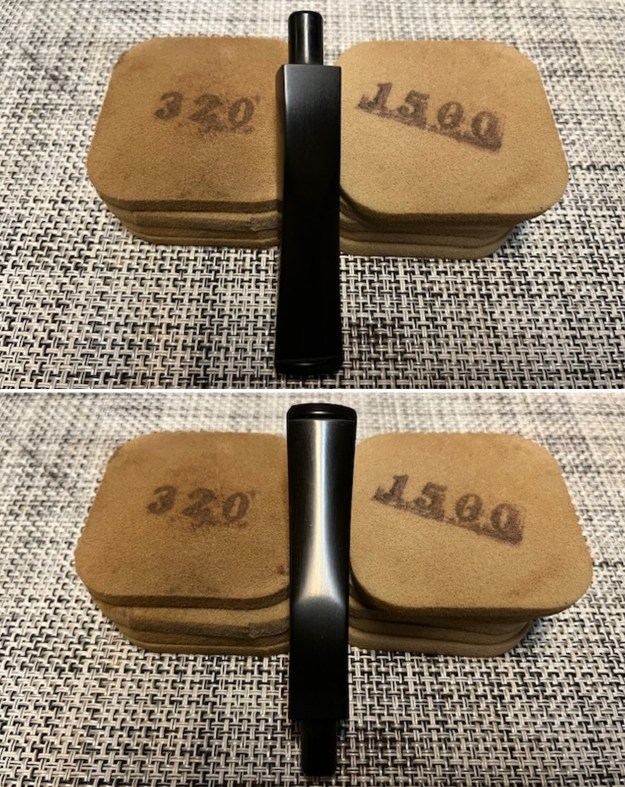
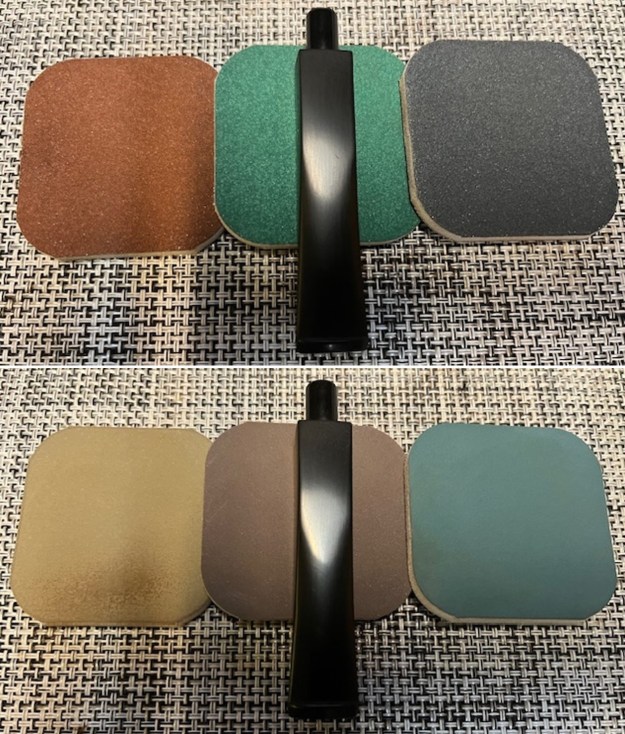
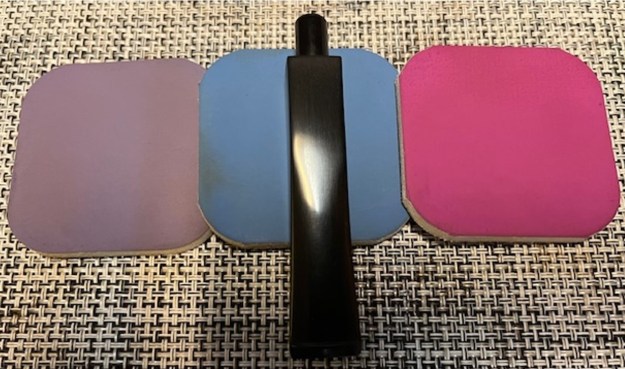
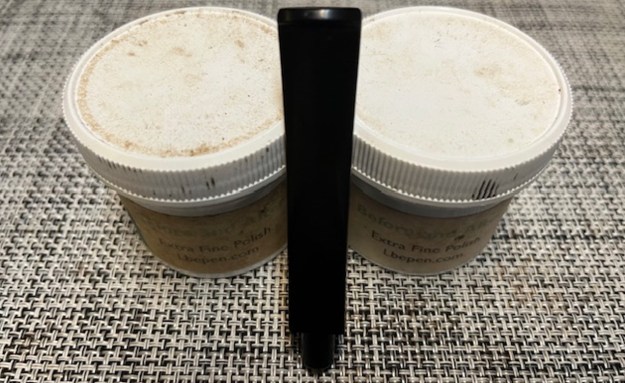
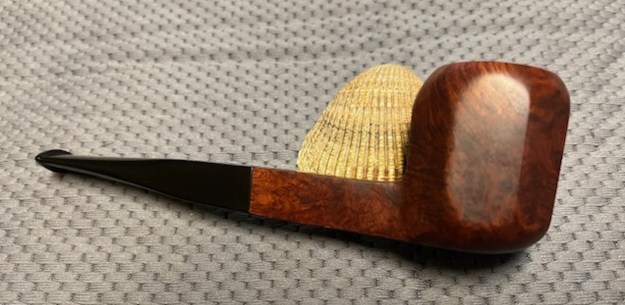
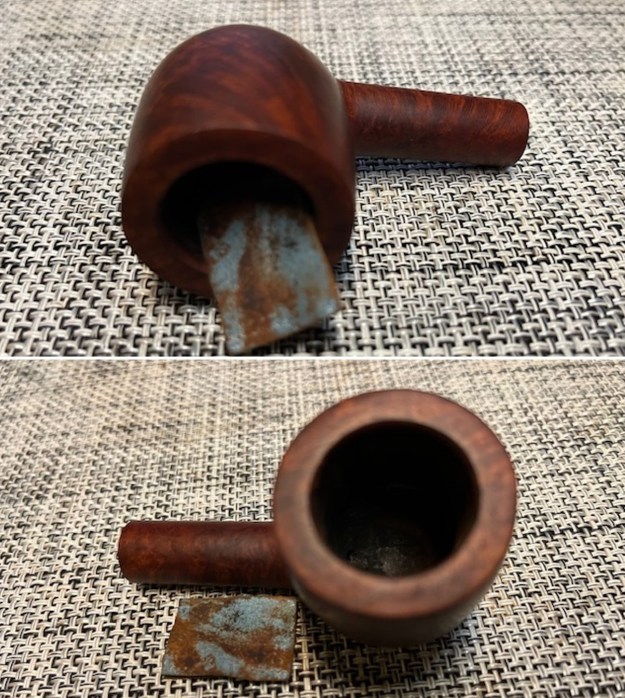
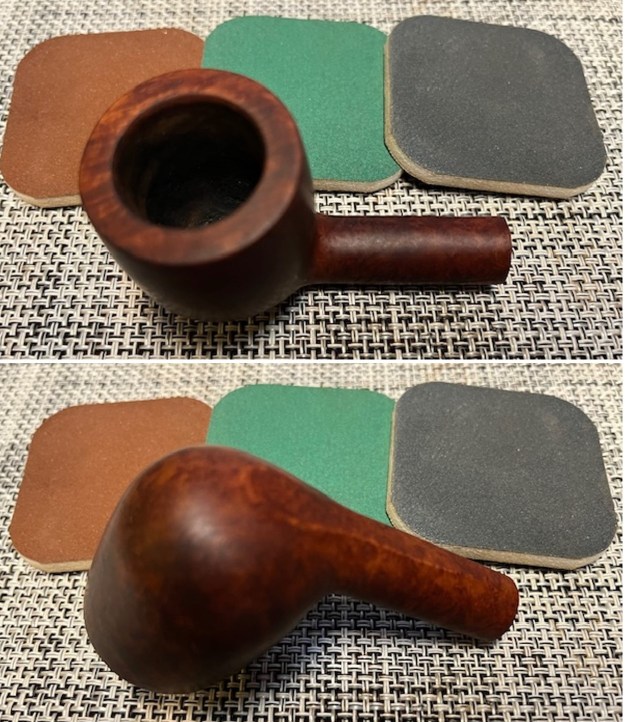
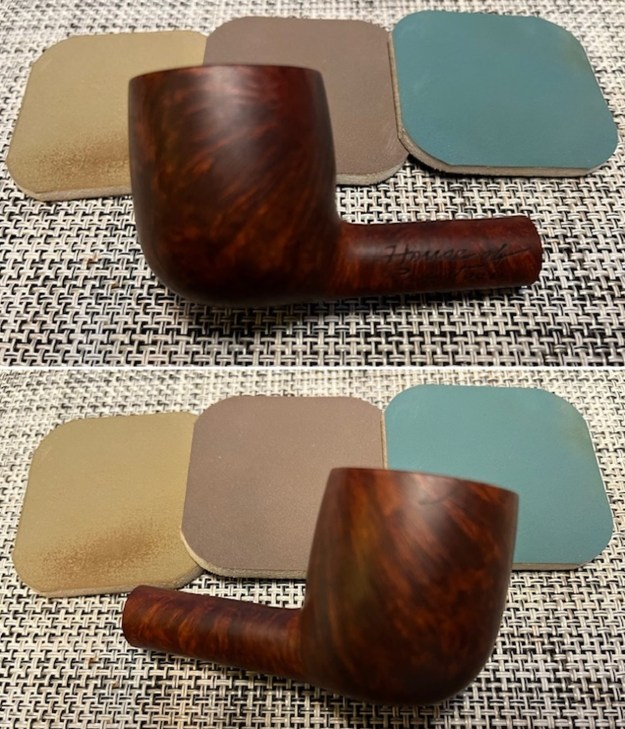
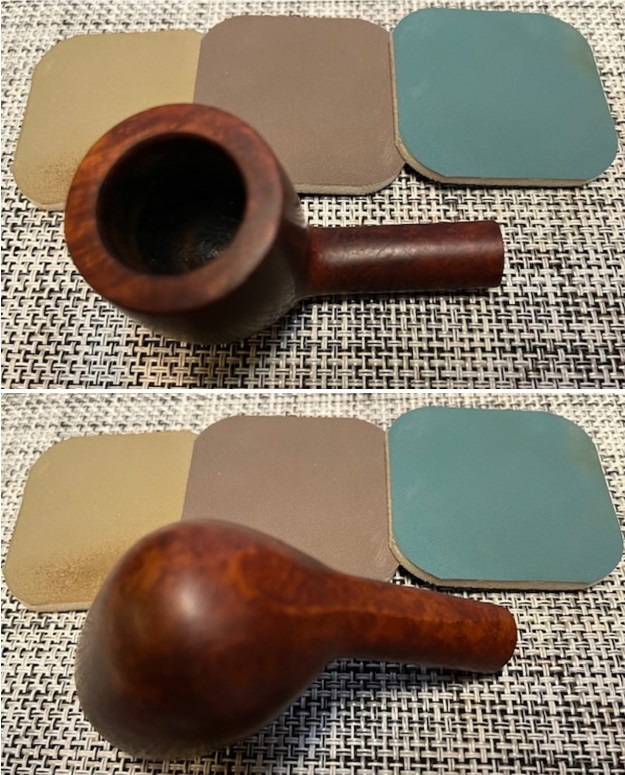
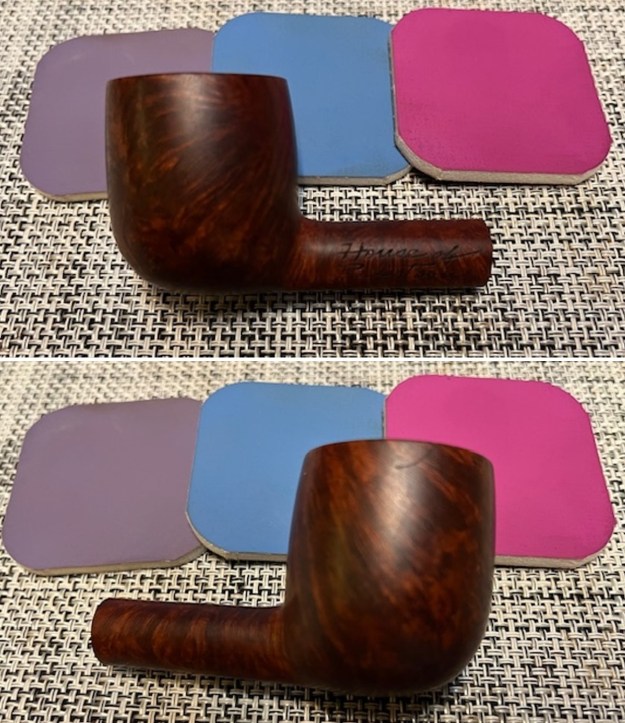
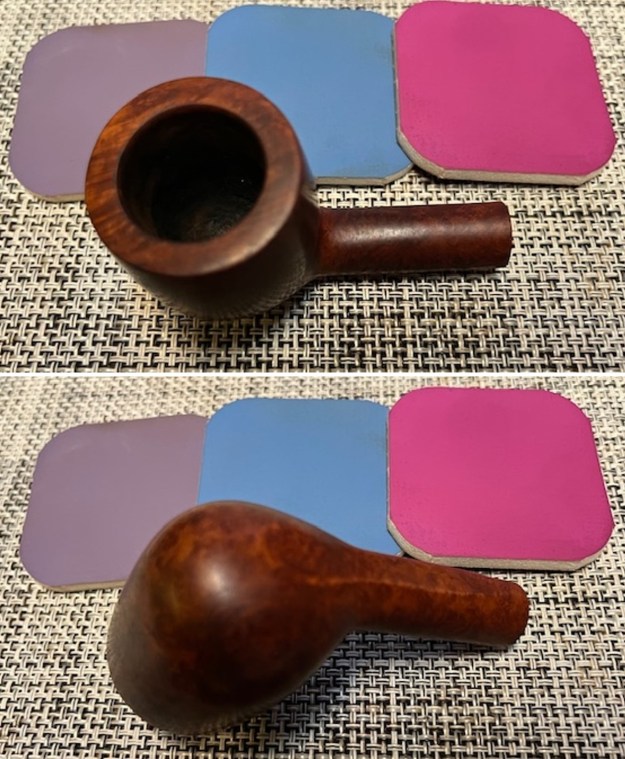
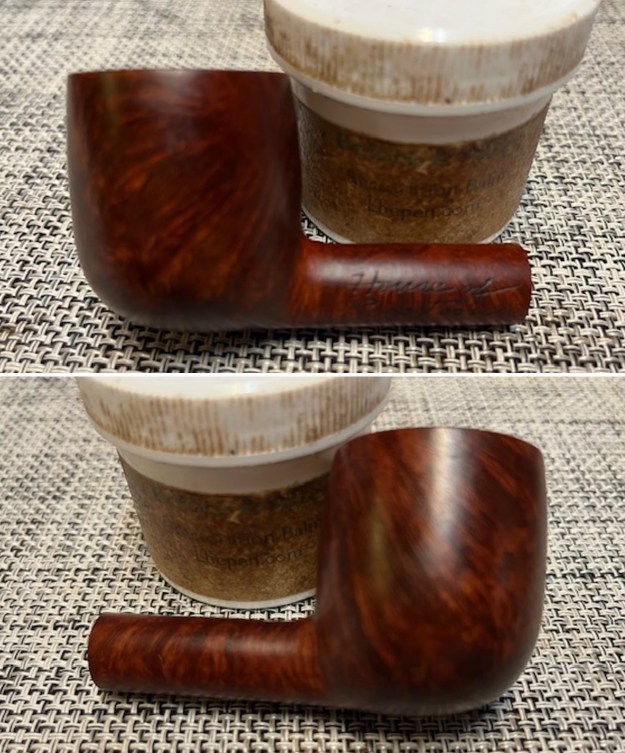
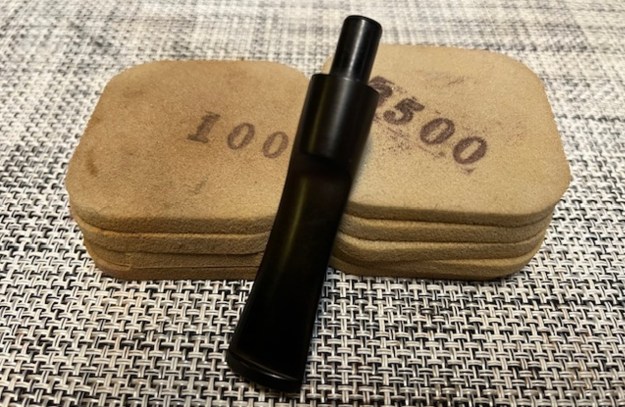
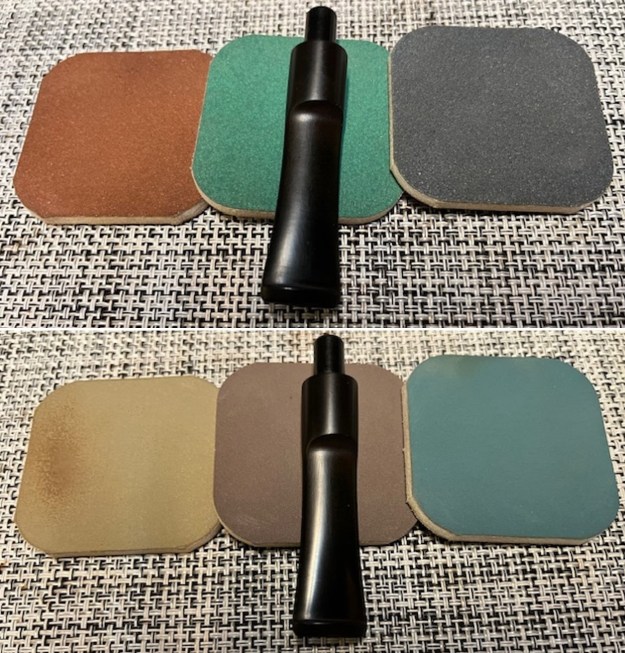
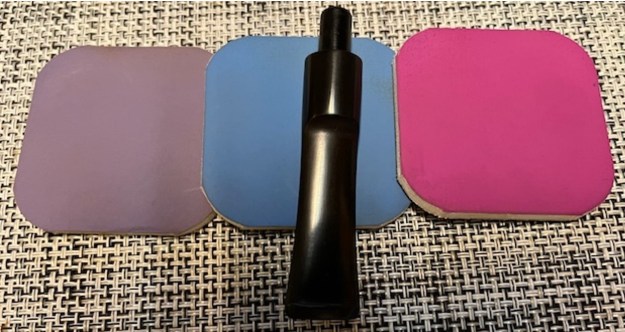
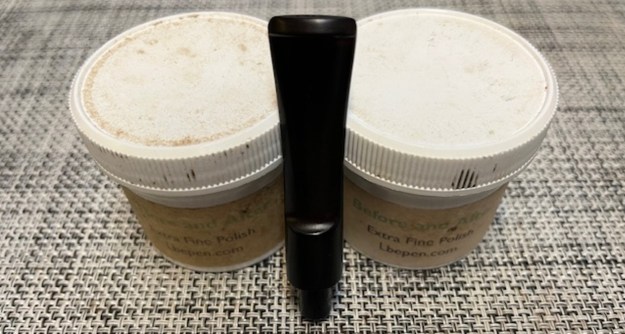
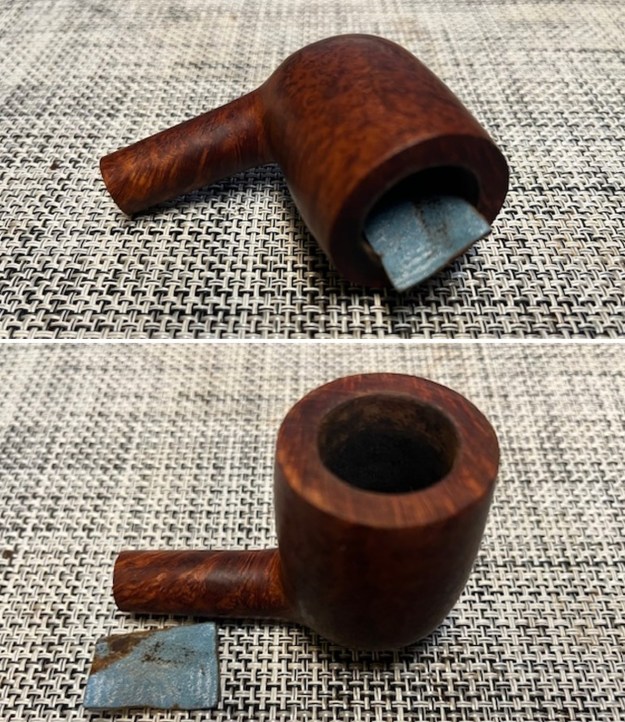
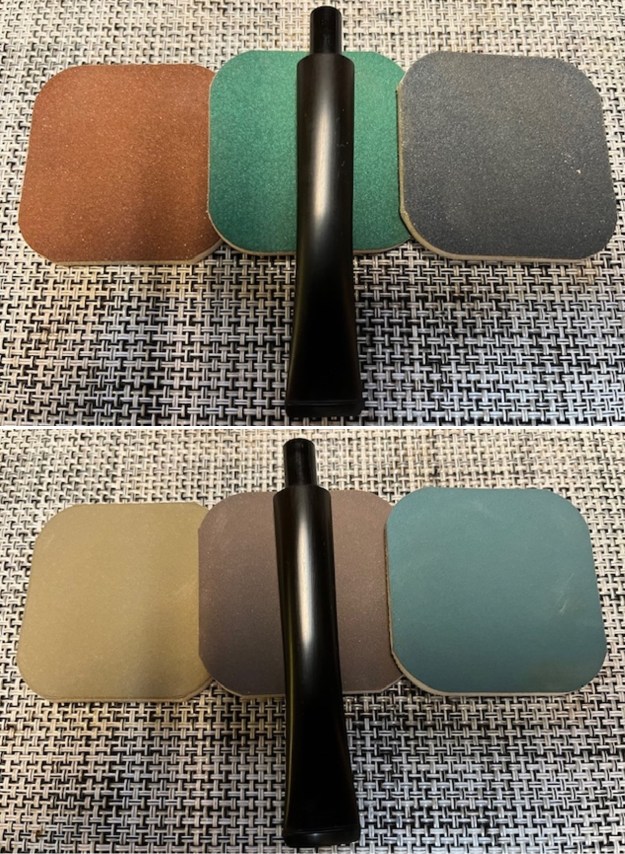
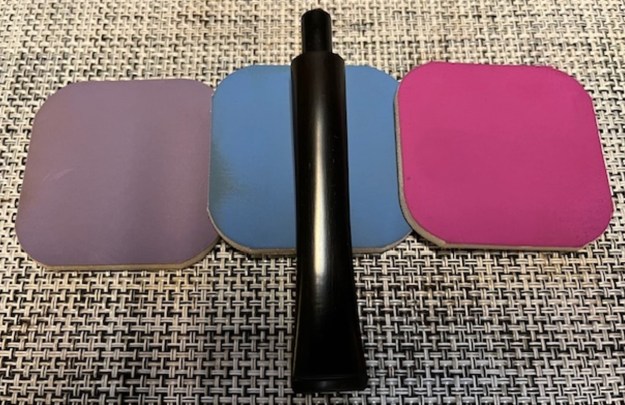
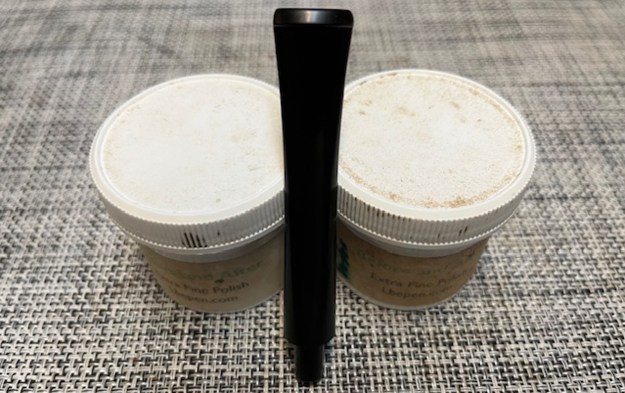
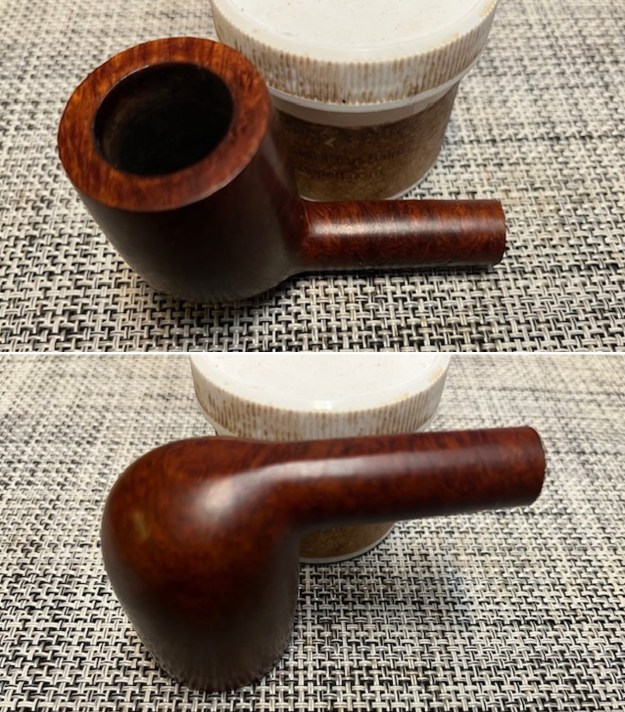
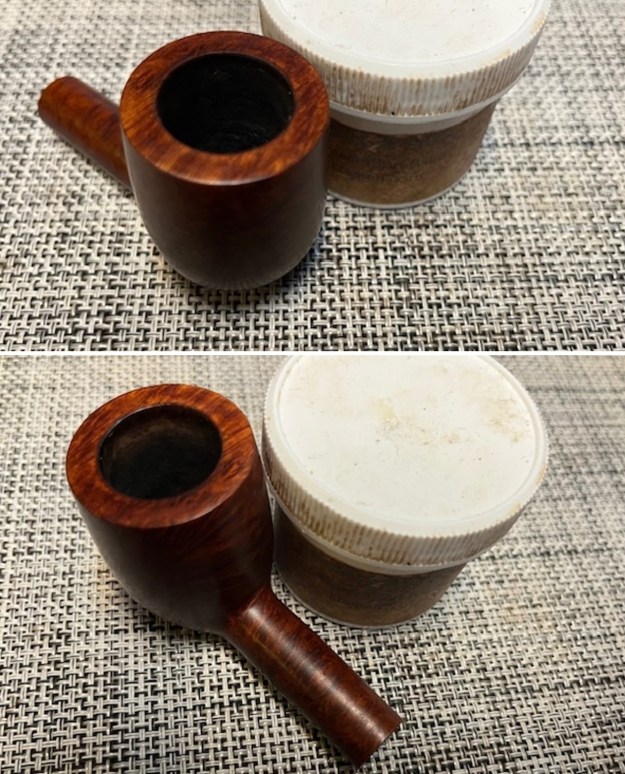
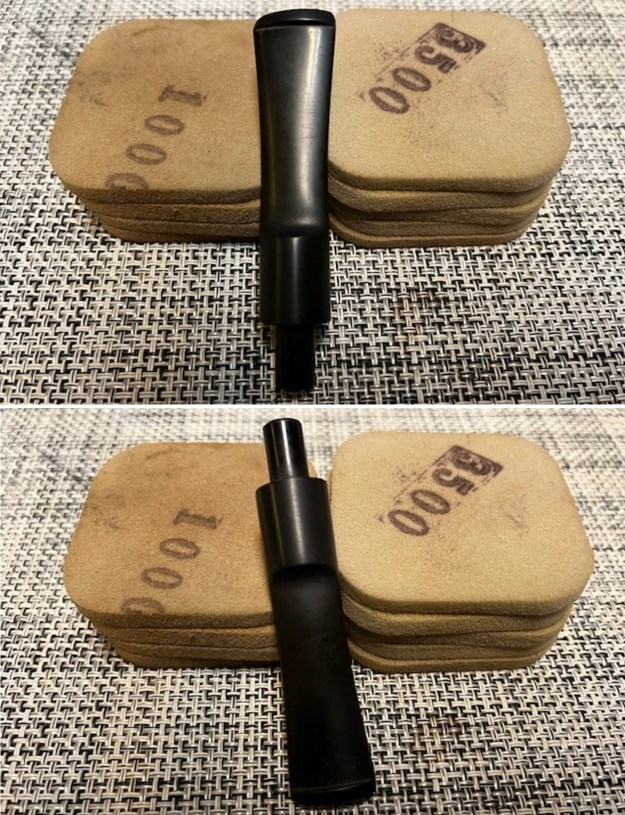
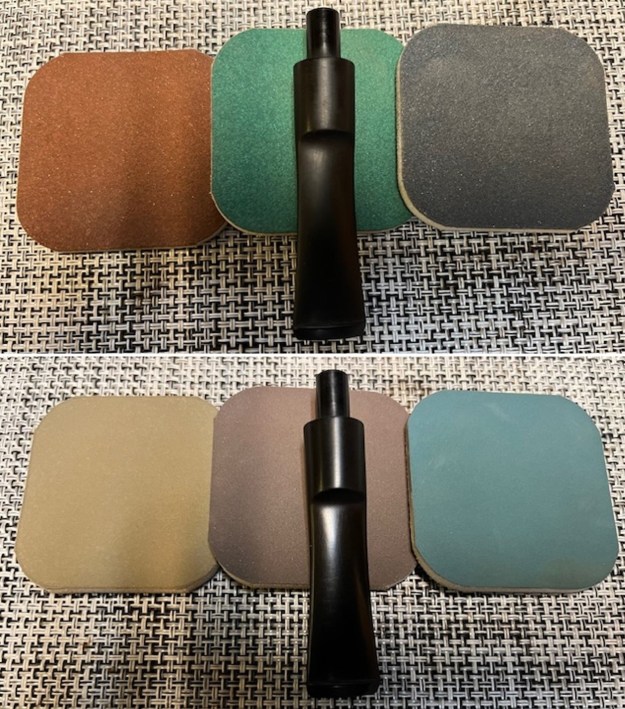
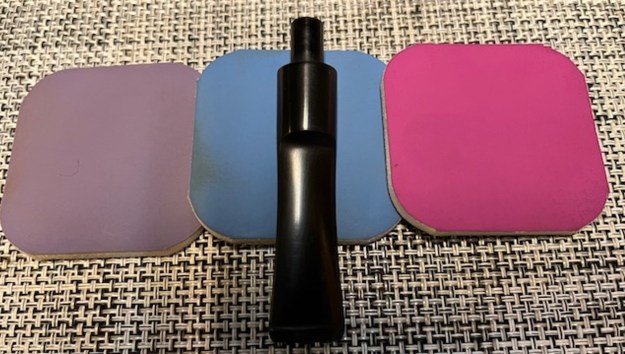
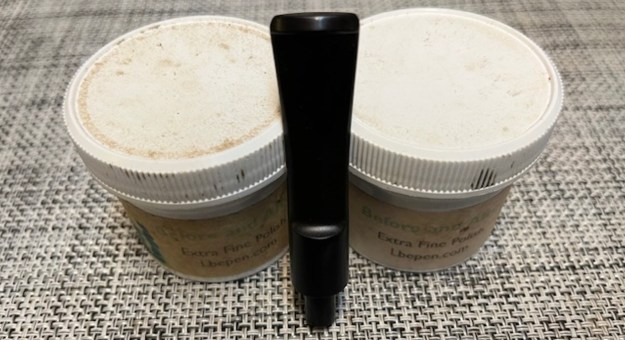
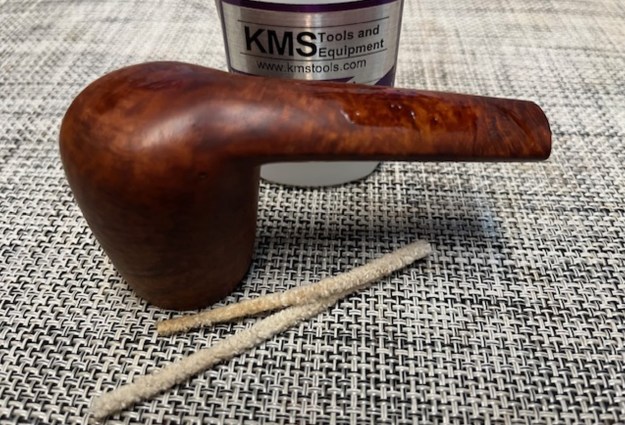
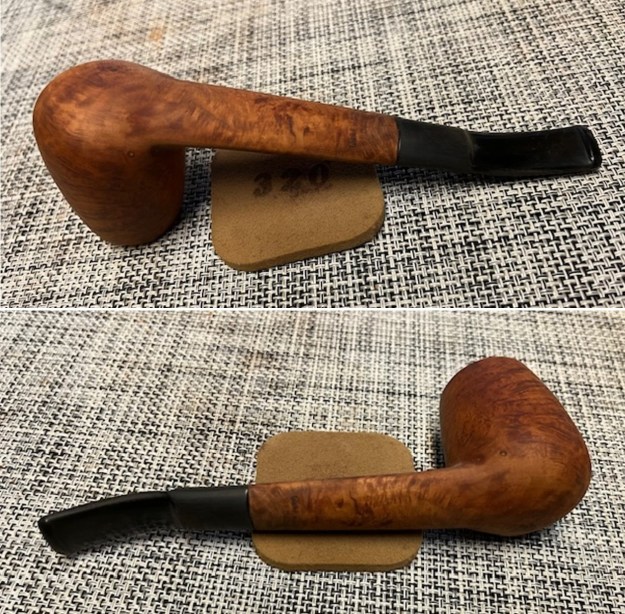
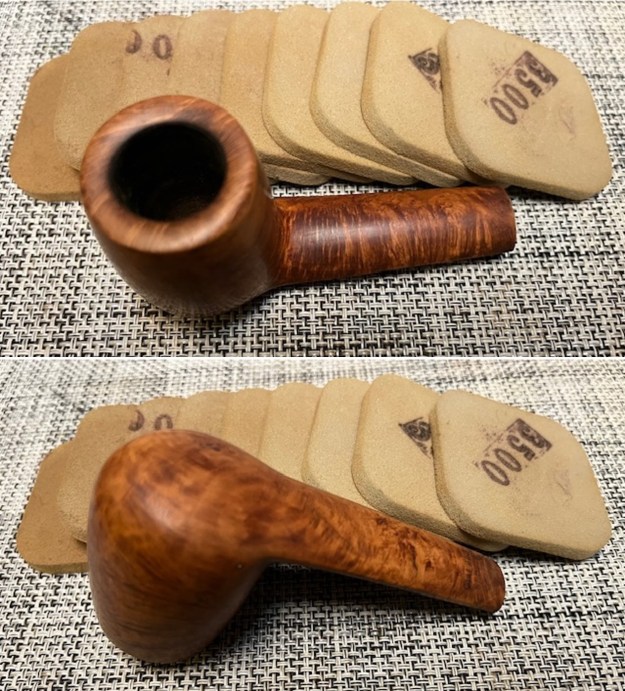
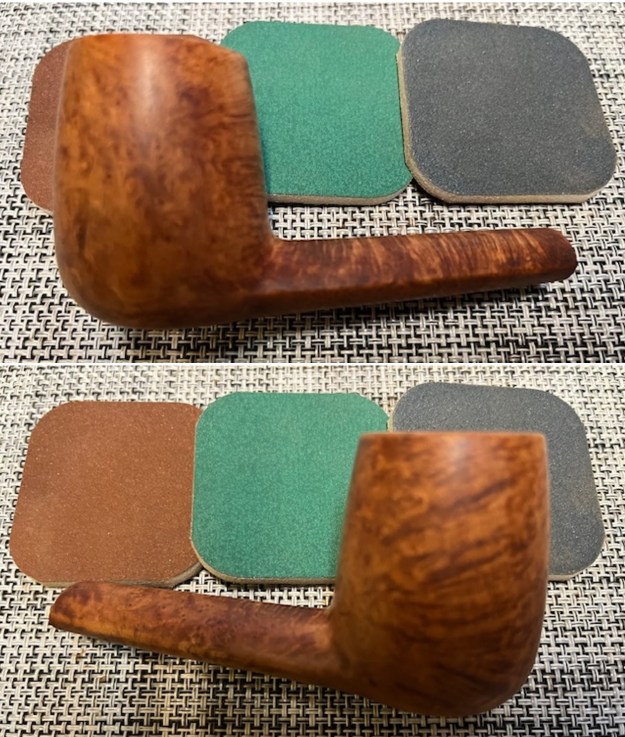
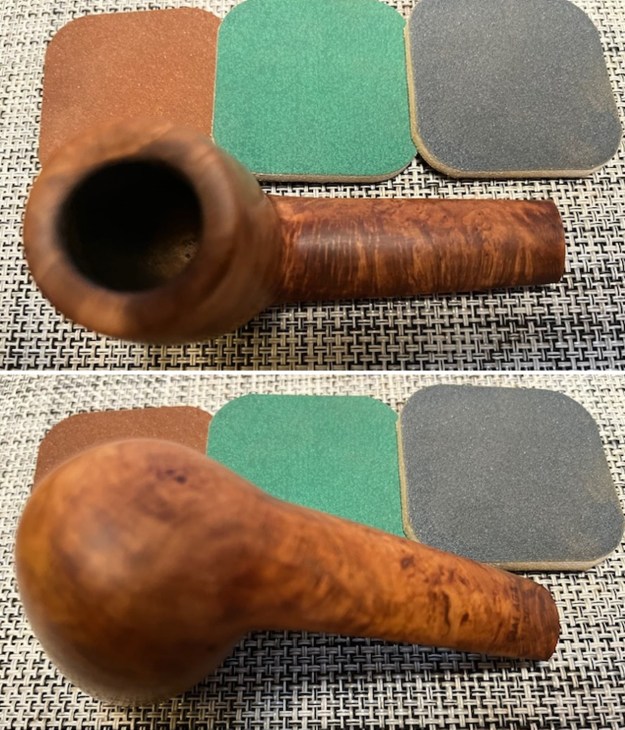
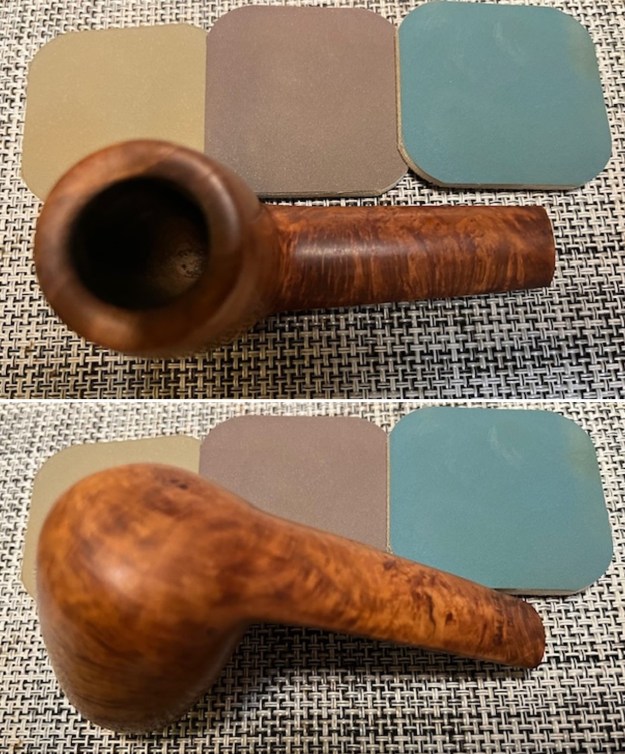
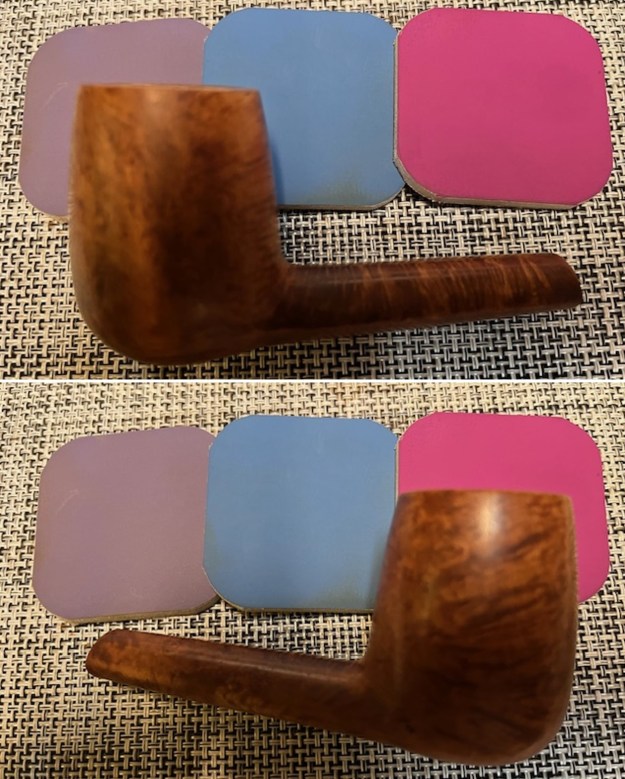
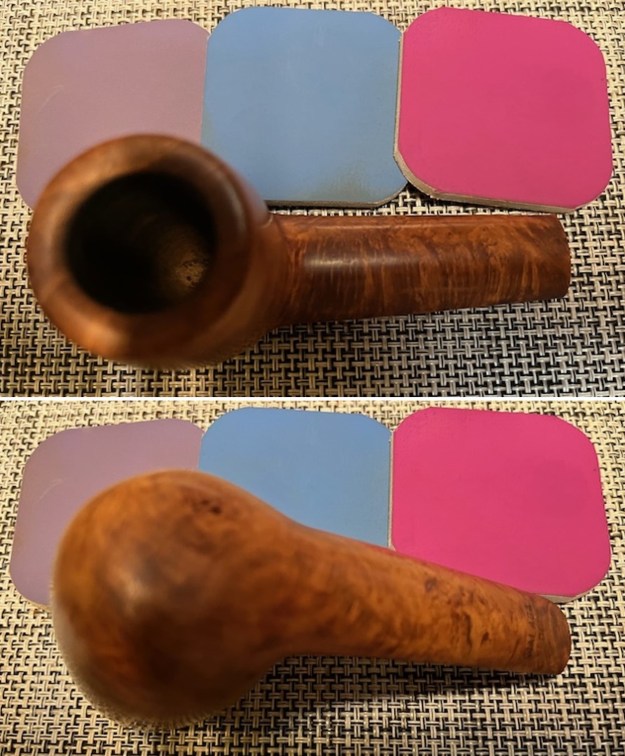
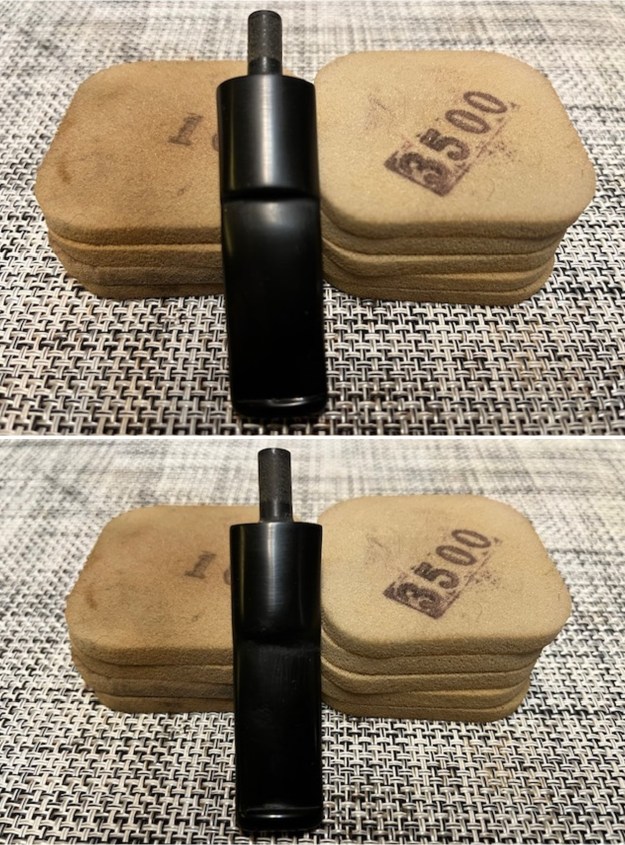
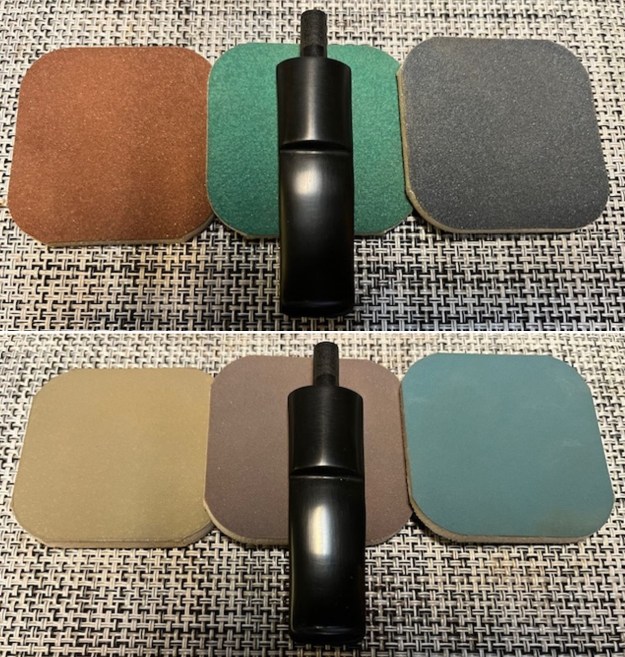
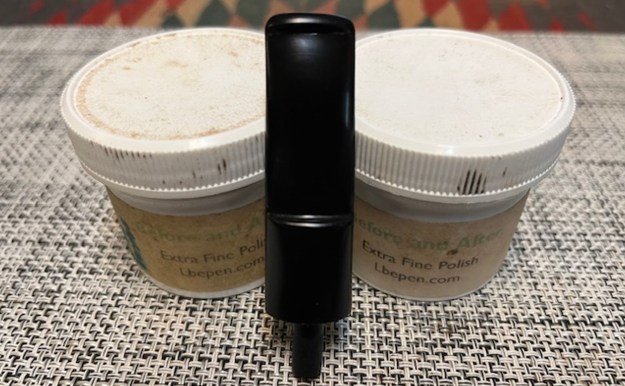
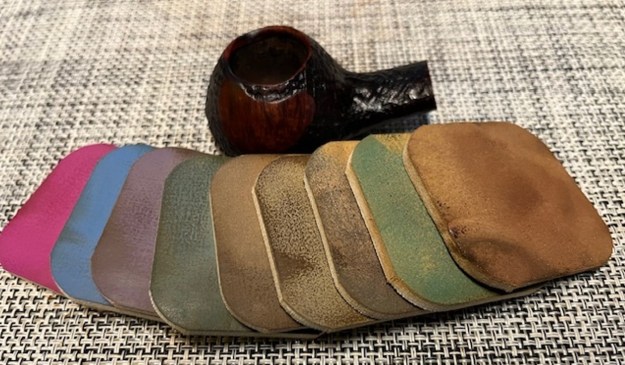
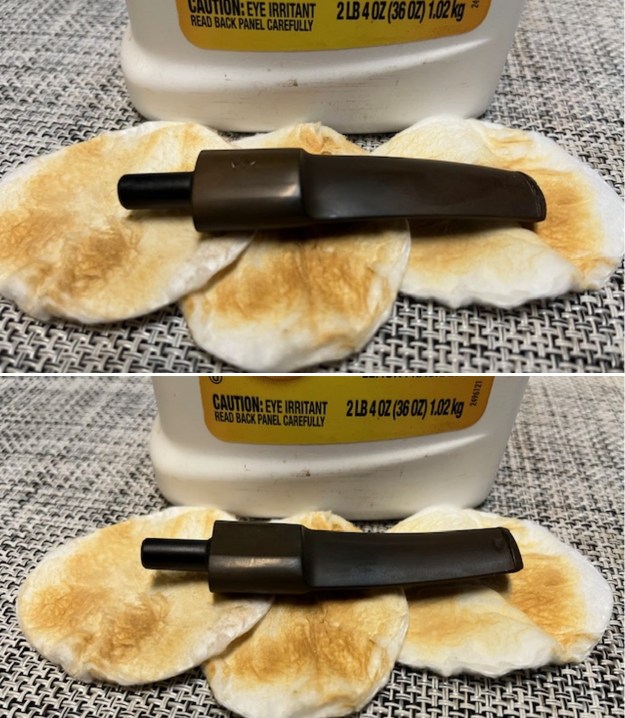
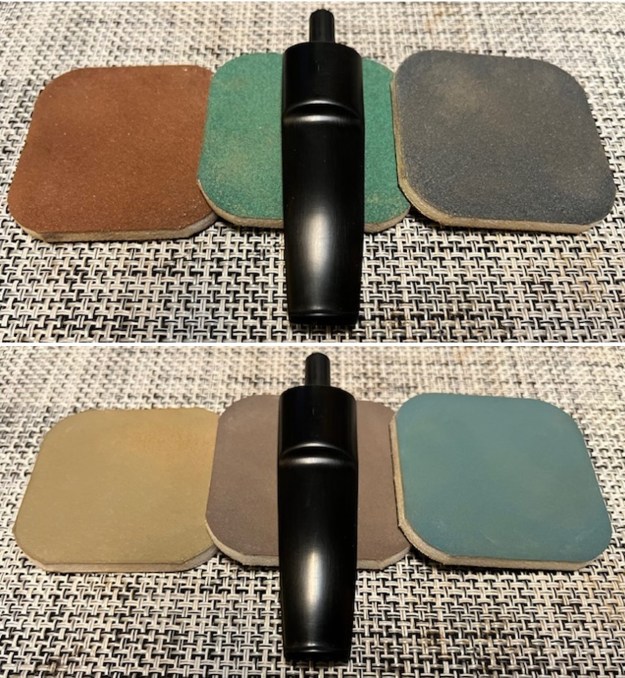
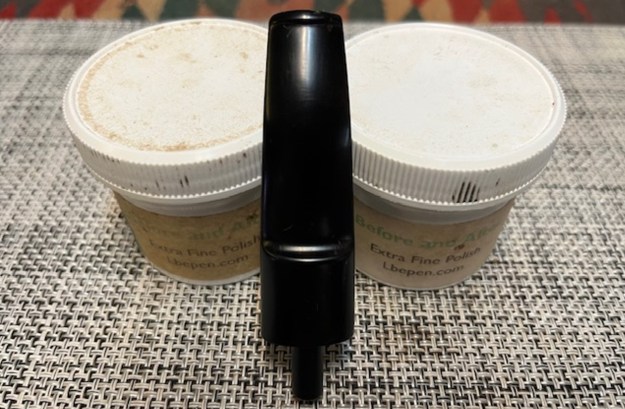
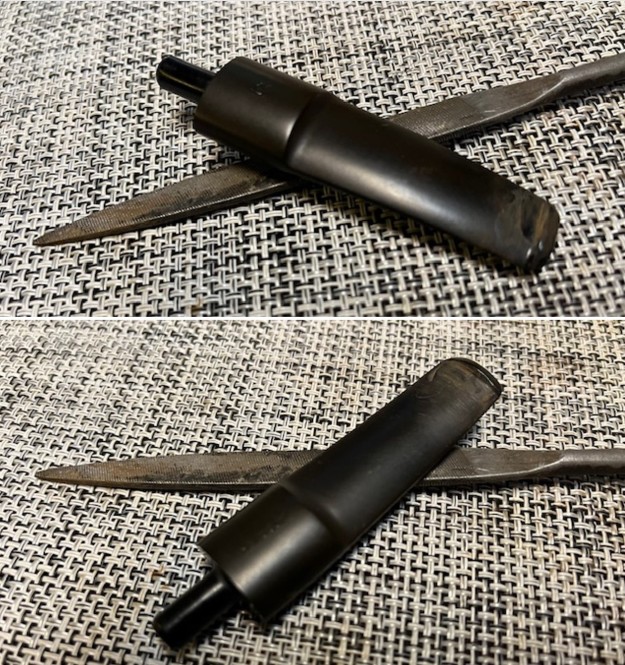
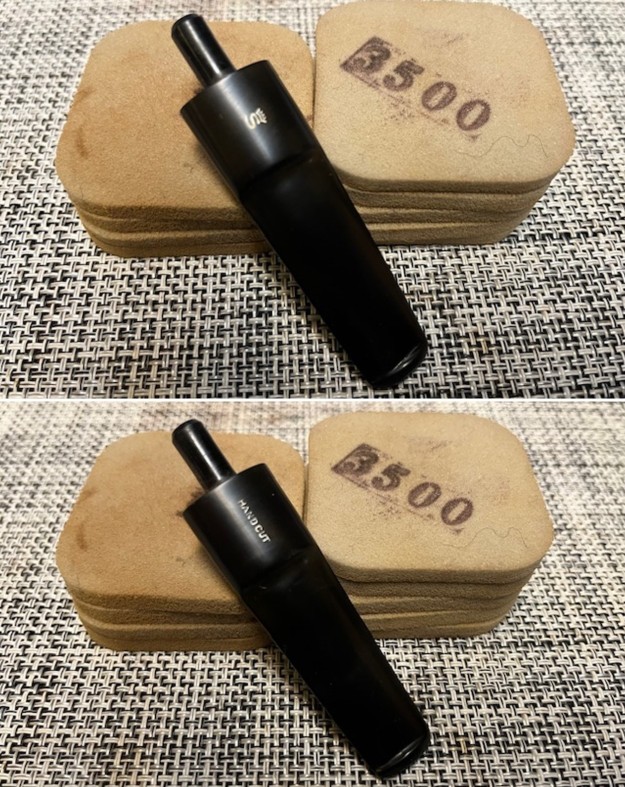
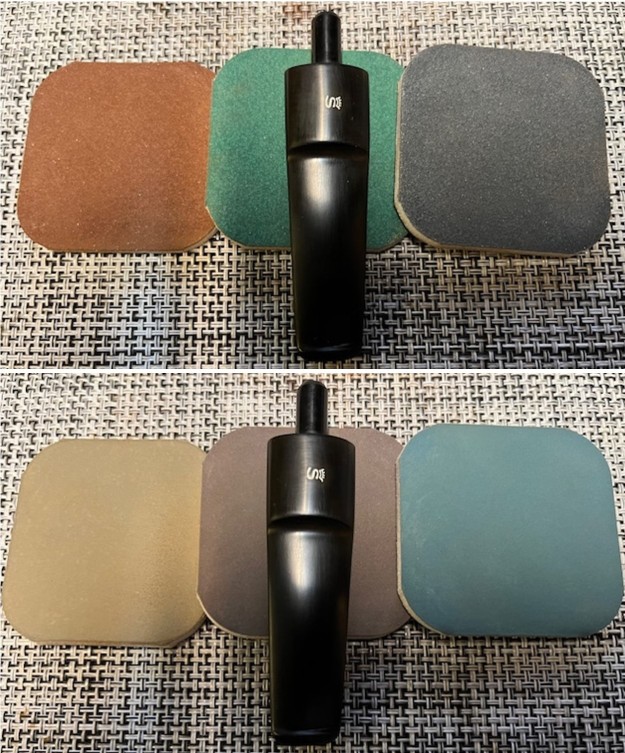
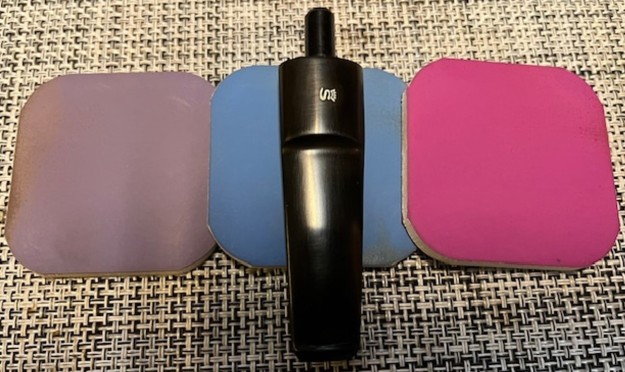
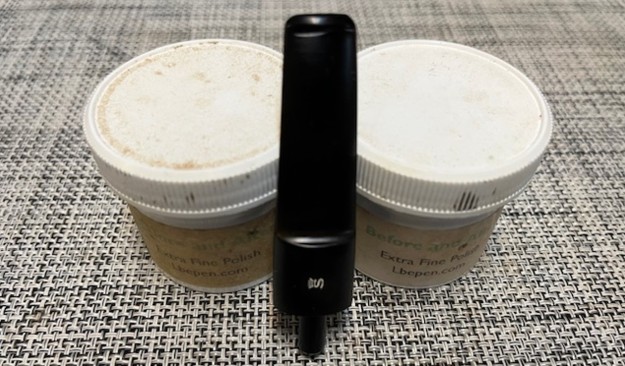
Now it was time to work on the pipe itself. When it gets to Vancouver it my turn to contribute to its restoration. Jeff did a great job cleaning the pipe on the inside and outside. He reamed the bowl with a PipNet pipe reamer and cleaned up the remnants with the Savinelli Fitsall Pipe Knife. He scrubbed out the mortise and the airway in the shank and stem with alcohol, cotton swabs and pipe cleaners. He scrubbed the exterior of the bowl with a tooth brush and Murphy’s Oil Soap to remove the dust in the rustication on the bowl and shank as well as the smooth portions. He rinsed it under running water. He dried it off with a soft cloth. Once the dust and debris were removed the finish was dull but appeared to be in excellent condition. He soaked the stem in Briarville’s Pipe Stem Deoxidizer and rinsed it under warm water to remove the deoxidizer gel solution. I took photos of the pipe to show its condition before I started my work on it. I took a photo of the bowl and rim top to show how well it had cleaned up. There is some rim darkening but you can see the interesting grain on the top of the bowl. The stem tooth marks and chatter are very light.I took a photo of the engraving on the left side of the shank. It is clear and reads as noted above. I also took the stem off the pipe and took a photo of the parts to give a sense of the proportions of the pipe. It is a beauty.I started my work on the pipe by dealing with the darkening on the inner edge of the rim and the darkening on the rim top with a folded piece of 220 grit sandpaper. It looked much better when finished.I polished the bowl and shank with micromesh sanding pads – dry sanding with 1500-12000 grit pads. I wiped the bowl with a damp cotton pad after each sanding pad. The surface began to take on a nice shine. I worked Before & After Restoration Balm deep into the smooth finish to clean, enliven and protect the briar. I hand rubbed it with my fingers and worked it into the finish then set it aside to dry for 10-15 minutes. I wiped it off with a soft cloth. I buffed the bowl with a cotton cloth to polish it. It really began to have a deep shine in the briar. I took some photos of the bowl at this point to mark the progress in the restoration. The grain on the bowl stands out with interesting lines moving across the sides of the bowl and the shank. I set the bowl aside and sanded the stem with the 2 inch square 320-3500 grit sanding pads. I wiped down the stem after each sanding pad. I was able to remove the tooth marks and chatter on both sides with the pads. The stem looked very good.I polished the vulcanite stem with micromesh sanding pads – dry sanding it with 1500-12000 grit pads. I wiped the stem down after each sanding pad with Obsidian Oil and set it aside to dry. I polished it further with Before & After Pipe Polish – using both the Fine and Extra Fine Polishes. I gave it a rubdown with Obsidian Oil one last time and set it aside.I put the House of Robertson Taper Stem Apple back together and worked the pipe over on the buffing wheel using Blue Diamond to lightly polish the stem. I buffed the bowl and stem to raise the gloss on the briar and the vulcanite. I gave the pipe multiple coats of carnauba wax. I buffed the entire pipe with a clean buffing pad to raise the shine. I hand buffed it with a microfiber cloth to deepen the shine. The finished the House of Robertson Apple is shown in the photos below. The medium brown stains on the smooth Billiard shaped bowl works well with the rich black of the vulcanite stem. The dimensions of the pipe are: Length: 5 ¾ inches, Height: 1 ¾ inches, Outside Diameter: 1 ¼ inches, Diameter of the chamber: ¾ inches. The weight of the pipe is 48 grams/1.69 ounces. This is an interesting piece of briar, cross grain and birdseye on the bowl and shank. The patterns on the sides are almost circular. I really like how the briar and the vulcanite work well together. This one will soon be on the rebornpipes store. If you are interested in adding a House of Robertson to your collection this may well be the one for you. Thanks for walking with me through the restoration process.

What a Beautiful Octagonal Square Shank Billiard from the House of Robertson


Blog by Steve Laug

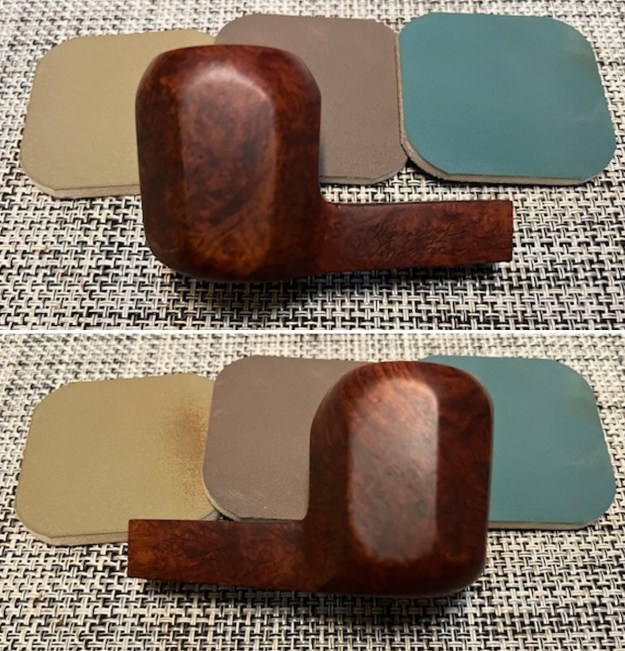
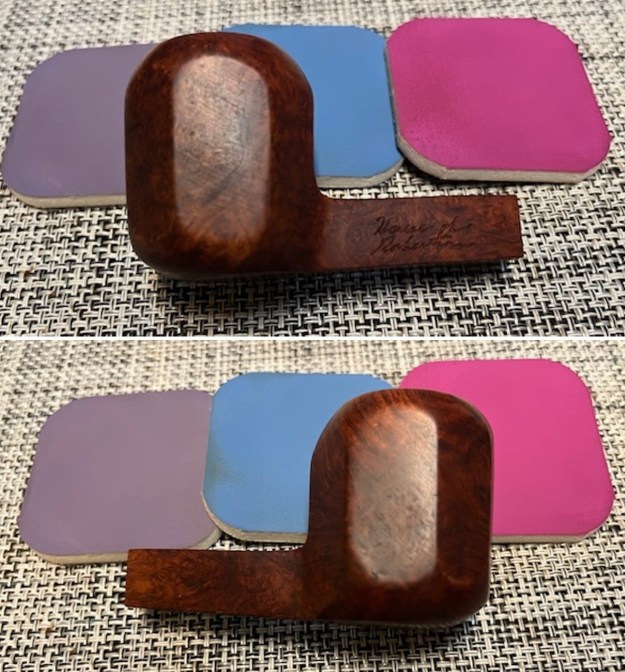
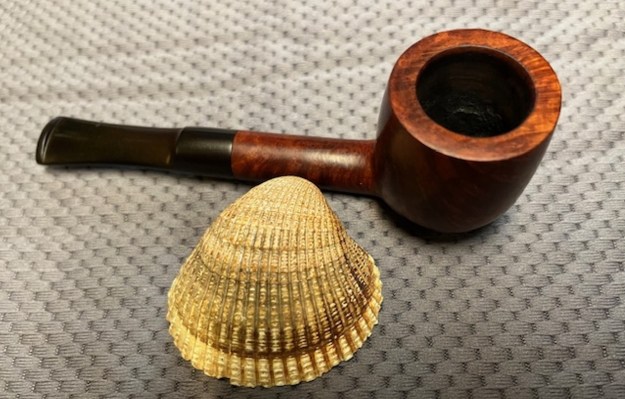
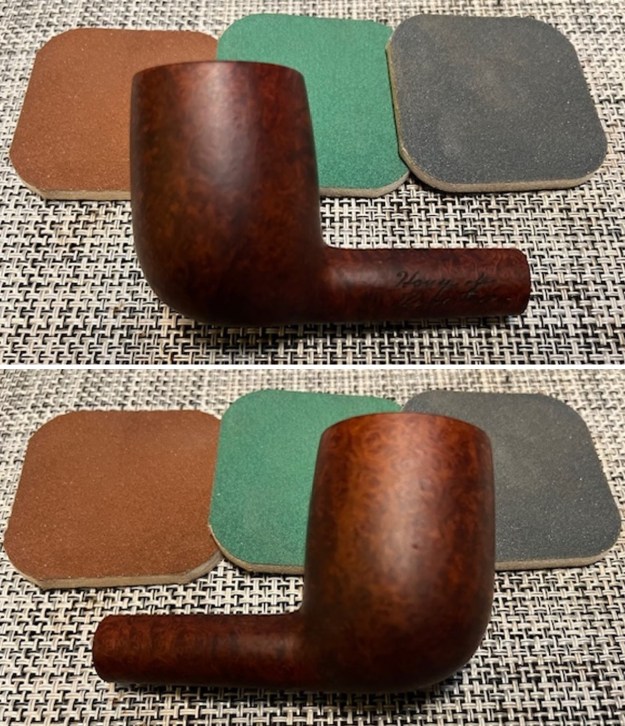
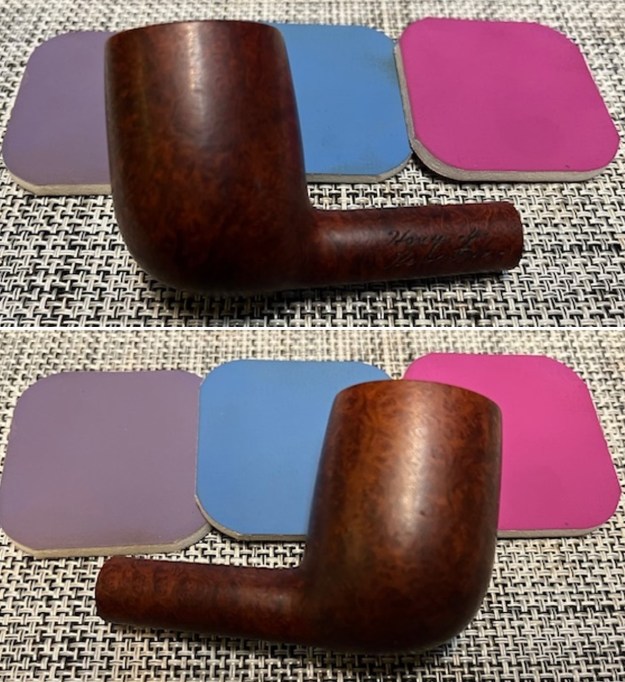
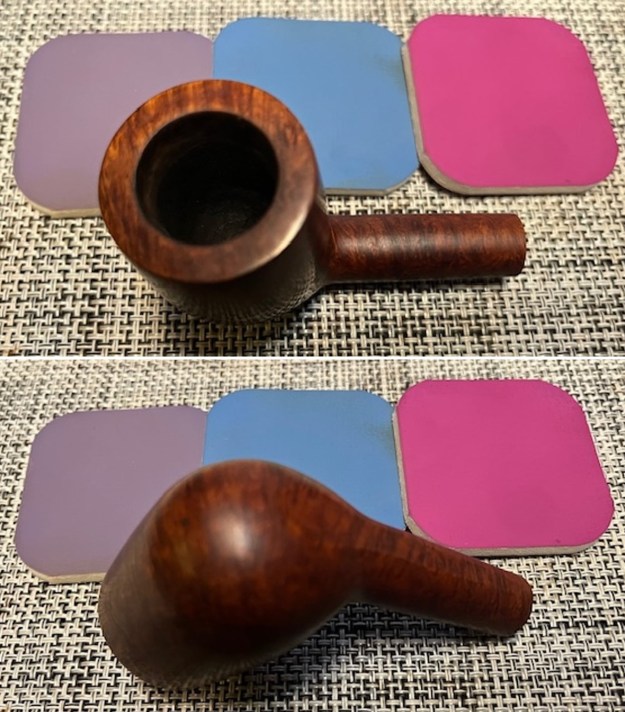
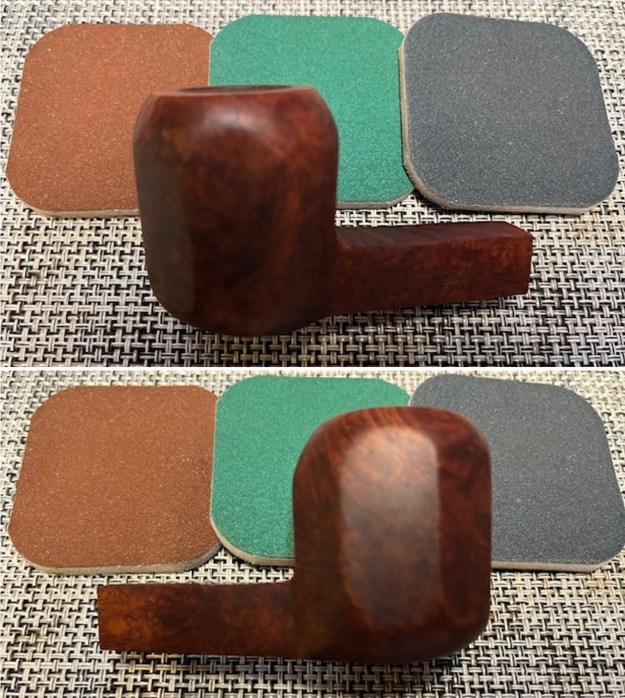
The next pipe on the work table is a change of pace for me. It was purchased along with the three pipes I have worked on recently and two additional pipes. The one I have chosen to work on is an octagonal bowl, square shank billiard. We bought the five pipes off eBay on 07/28/2023 from Niles, Michigan, USA. It was one of five House of Robertson pipes we purchased on that date. They are all classic shaped pipes. The name House of Robertson is roughly hand-etched on the left side of the shank with an engraving tool. This pipe is a well shaped taper stem octagonal square shank Billiard with the bottom of the bowl/shank flat so the pipe sits nicely on the desk top as a sitter. The bowl has some interesting mixed grain on the sides of the bowl and shank. The bowl is thickly caked with some lava overflow on the rim top. The outer and inner edges of the rim look to be in good condition. The pipe was dirty but underneath all of the grime it appears to be in excellent condition. It is definitely an interesting pipe and should clean up very well. The fit of the stem to the shank was good. The taper stem was oxidized and calcified. There are light tooth marks and chatter on both sides near the button. Jeff took photos of the pipe before he started the cleanup. Jeff took photos of the pipe before he started his clean up work. Jeff took photos show the condition of the bowl and the stem. The photos of the bowl and rim show the cake in the bowl and the lava overflowing onto the rim top. The grain on the top of the bowl and the inner and outer edge of the rim looks really good. It was hard to know what the edges and top really looked like until we cleaned it. The square taper stem was oxidized, calcified and had tooth chatter and marks on both sides of the stem near the button. The photos of the sides and heel of the bowl show some stunning and unique grain all around the pipe. The finish makes the grain really stand out on the bowl and shank. The next photo shows the etched name on the left side of shank on the shank. It reads House of Robertson.I am including the information that I found when I received my first of the House of Robertson Pipes. I found a link on Pipedia that gave me the only information I could find on the brand. I include that in total as it is interesting to read.
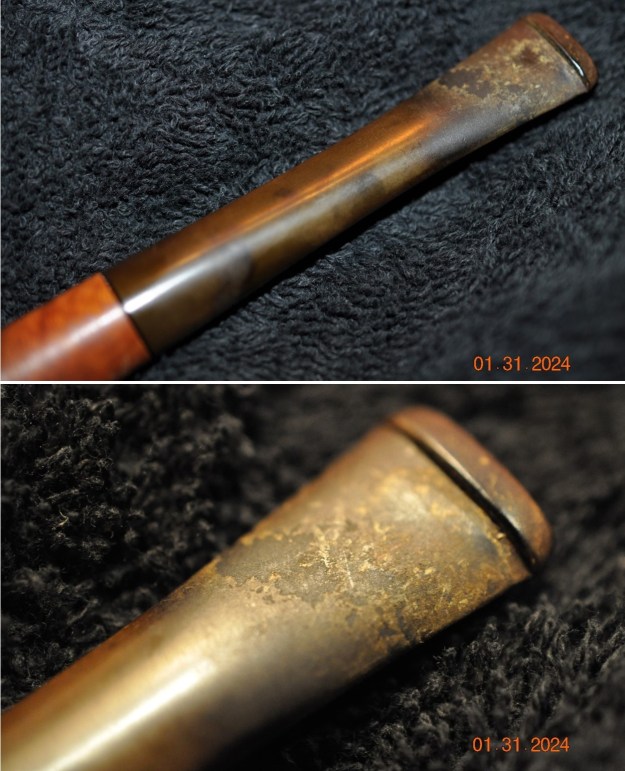
“House of Robertson” was in business for many years, but alas, closed their doors in 1999. They were located in Boise, Idaho. They are noted for making rather large and interesting pipes. Thayne Robertson was a Master Mason, AF & AM, and started the shop about 1947 and his son Jon started working there in 1970 when he finished college, along with Thayne’s daughter. Thayne and his son started making the big pipes at that time, and made them together until 1987 when Thayne passed away. Jon kept the store and his sister moved on to other things. The House of Robertson appears to have closed around 1999 (https://pipedia.org/wiki/Robertson).

Since then I have worked on a lot of House of Robertson pipes and have been able to track down more information. I am including a link to a Catalogue that I picked up on eBay. Click on the link and have a look at this interesting book of information on the brand and the pipe maker himself (https://rebornpipes.com/2022/12/11/a-house-of-robertson-catalogue-filled-with-great-examples-of-thayne-robertsons-work/).

I am also including a biography of Thayne Robertson that I found on Facebook from a fellow in Boise, Idaho. It is an interesting read into the mind of the pipe maker. Make sure to take time to read it (https://rebornpipes.com/2021/10/31/house-of-robertson-pipes-boise-pipe-carver-thayne-robertson/).

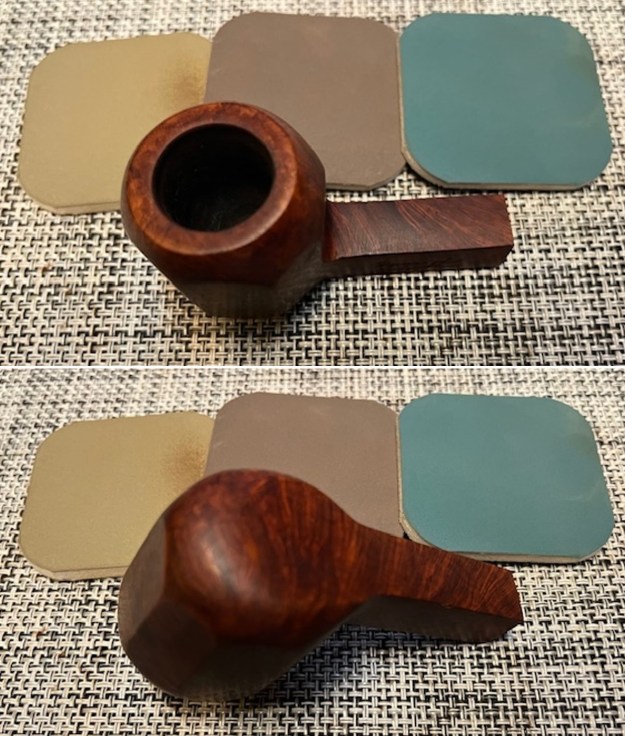
Now it was time to work on the pipe itself. When it gets to Vancouver it my turn to contribute to its restoration. Jeff did a great job cleaning the pipe on the inside and outside. He reamed the bowl with a PipNet pipe reamer and cleaned up the remnants with the Savinelli Fitsall Pipe Knife. He scrubbed out the mortise and the airway in the shank and stem with alcohol, cotton swabs and pipe cleaners. He scrubbed the exterior of the bowl with a tooth brush and Murphy’s Oil Soap to remove the dust in the rustication on the bowl and shank as well as the smooth portions. He rinsed it under running water. He dried it off with a soft cloth. Once the dust and debris were removed the finish was dull but appeared to be in excellent condition. He soaked the stem in Briarville’s Pipe Stem Deoxidizer and rinsed it under warm water to remove the deoxidizer gel solution. I took photos of the pipe to show its condition before I started my work on it. I took a photo of the bowl and rim top to show how well it had cleaned up. There is some rim darkening but you can see the interesting grain on the top of the bowl. The stem tooth marks and chatter are very light.I took a photo of the engraving on the left side of the shank. It is clear and reads as noted above. I also took the stem off the pipe and took a photo of the parts to give a sense of the proportions of the pipe. It is a beauty.I started my work on the pipe by dealing with the darkening on the inner edge of the rim and the darkening on the rim top with a folded piece of 220 grit sandpaper. It looked much better when finished.I polished the bowl and shank with micromesh sanding pads – dry sanding with 1500-12000 grit pads. I wiped the bowl with a damp cotton pad after each sanding pad. The surface began to take on a nice shine. I worked Before & After Restoration Balm deep into the smooth finish to clean, enliven and protect the briar. I hand rubbed it with my fingers and worked it into the finish then set it aside to dry for 10-15 minutes. I wiped it off with a soft cloth. I buffed the bowl with a cotton cloth to polish it. It really began to have a deep shine in the briar. I took some photos of the bowl at this point to mark the progress in the restoration. The grain on the bowl stands out with interesting lines moving across the sides of the bowl and the shank. I set the bowl aside and sanded the stem with the 2 inch square 320-3500 grit sanding pads. I wiped down the stem after each sanding pad. I was able to remove the tooth marks and chatter on both sides with the pads. The stem looked very good.I polished the vulcanite stem with micromesh sanding pads – dry sanding it with 1500-12000 grit pads. I wiped the stem down after each sanding pad with Obsidian Oil and set it aside to dry. I polished it further with Before & After Pipe Polish – using both the Fine and Extra Fine Polishes. I gave it a rubdown with Obsidian Oil one last time and set it aside. I put the House of Robertson Octagonal Square Shank Taper Stem Billiard back together and worked the pipe over on the buffing wheel using Blue Diamond to lightly polish the stem. I buffed the bowl and stem to raise the gloss on the briar and the vulcanite. I gave the pipe multiple coats of carnauba wax. I buffed the entire pipe with a clean buffing pad to raise the shine. I hand buffed it with a microfiber cloth to deepen the shine. The finished the House of Robertson Octagonal Billiard is shown in the photos below. The medium brown stains on the smooth Billiard shaped bowl works well with the rich black of the vulcanite stem. The dimensions of the pipe are: Length: 5 ½ inches, Height: 1 ½ inches, Outside Diameter: 1 ¼ inches, Diameter of the chamber: ¾ inches. The weight of the pipe is 38 grams/1.34 ounces. This is an interesting piece of briar, cross grain and birdseye on the bowl and shank. The patterns on the sides are almost circular. I really like how the briar and the vulcanite work well together. This one will soon be on the rebornpipes store in the American (US) Pipemakers section. If you are interested in adding a House of Robertson to your collection this may well be the one for you. Thanks for walking with me through the restoration process.

A Beautifully Grained Saddle Stem Pot from the House of Robertson


Blog by Steve Laug

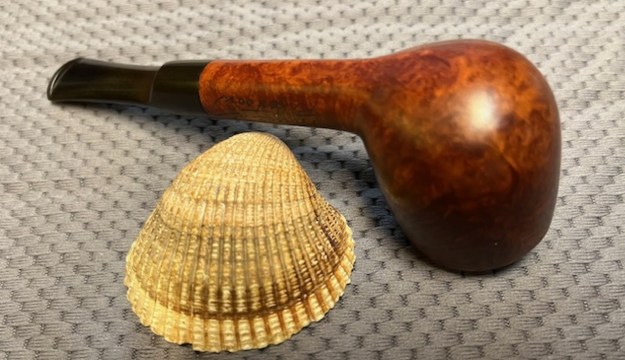
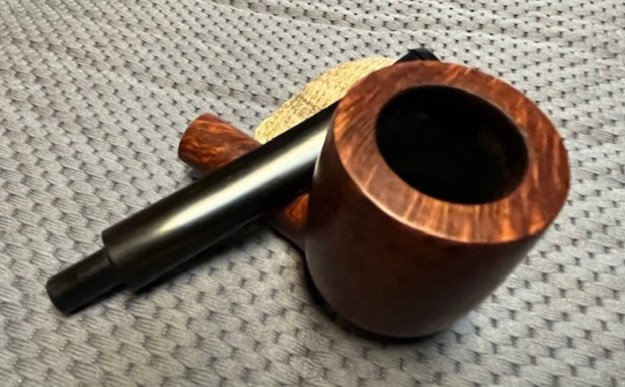
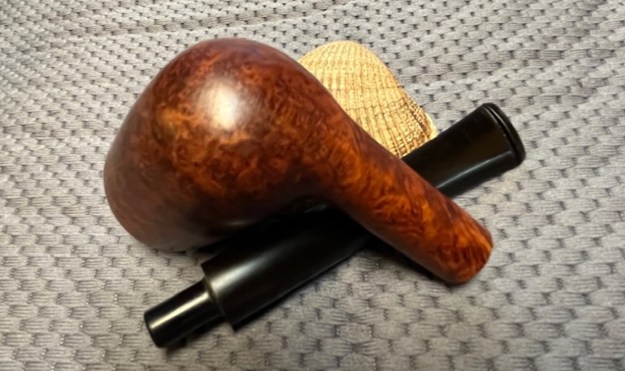
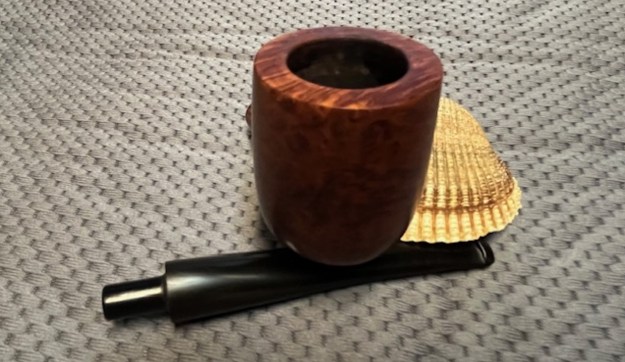
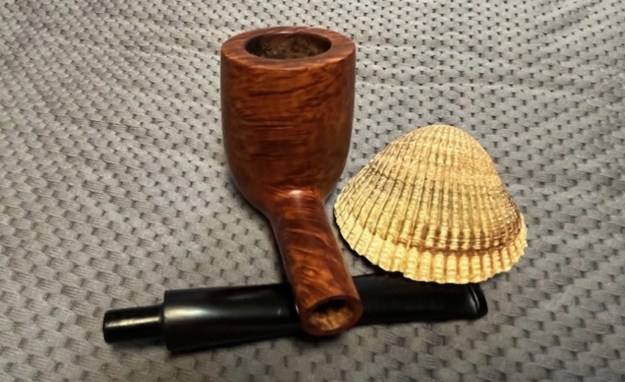
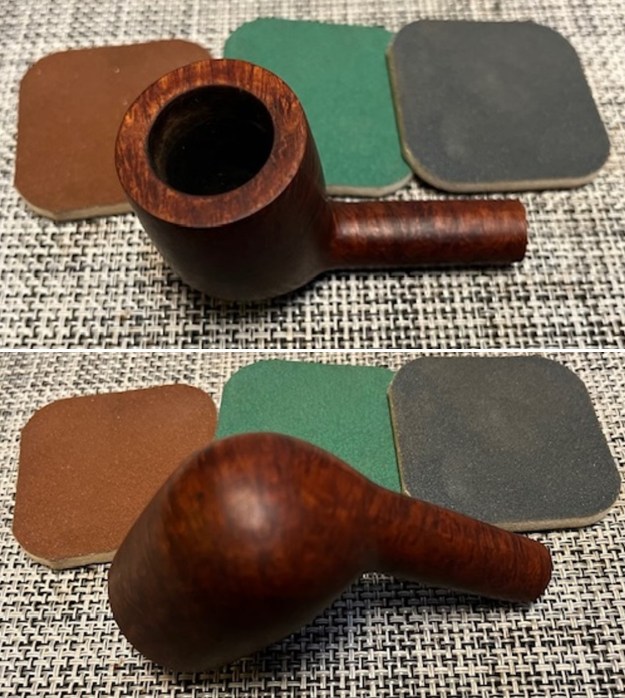
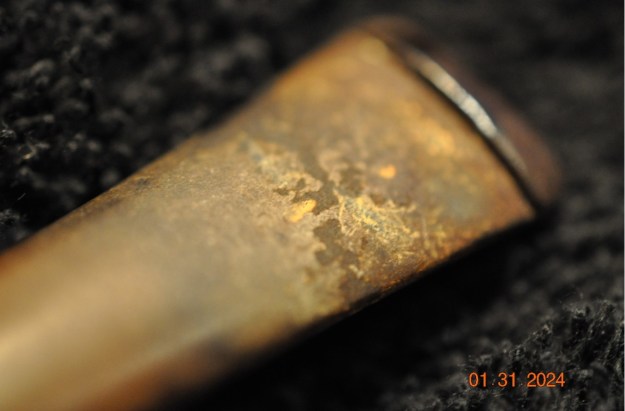
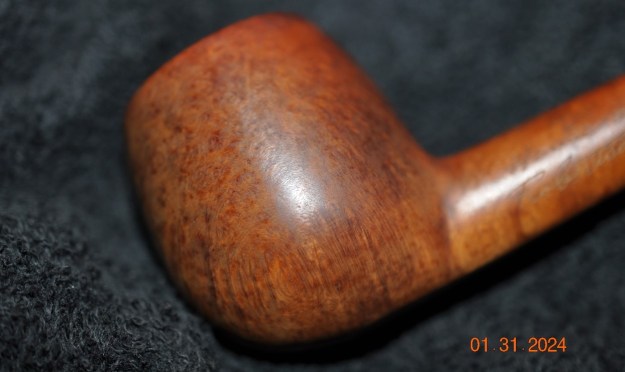
The next pipe on the work table is a change of pace for me. It was purchased as one of three pipes off eBay on 07/28/2023 from Niles, Michigan, USA. It was the third of three House of Robertson pipes – two billiards and a pot. This one is a nicely grained Pot shaped pipe. The name House of Robertson is roughly hand-etched on the left side of the shank with an engraving tool. The pipe is a well shaped saddle stem Pot with the bottom of the shank flat and the pipe sits nicely on the desk top like a sitter. The bowl has some interesting flame grain on it along with a mix of other grains. The bowl is thickly caked with some lava overflow on the rim top. The outer and inner edges of the rim look to be in good condition. The pipe was dirty but underneath all of the grime it appears to be in excellent condition. It is definitely an interesting pipe and should clean up very well. The fit of the stem to the shank was good. The taper stem was oxidized and calcified. There are light tooth marks and chatter on both sides near the button. Jeff took photos of the pipe before he started the cleanup. Jeff took photos show the condition of the bowl and the stem. The photos of the bowl and rim show the cake in the bowl and the heavy lava overflowing onto the rim top. It was hard to know what the edges and top really looked like until we cleaned it. The saddle stem was oxidized, calcified and had tooth chatter and marks on both sides of the stem near the button. The photos of the sides and heel of the bowl show some stunning and unique grain all around the pipe. The finish makes the grain really stand out on the bowl and shank. The next photo shows the etched name on the left side of shank on the shank. It reads House of Robertson.I am including the information that I found when I received my first of the House of Robertson Pipes. I found a link on Pipedia that gave me the only information I could find on the brand. I include that in total as it is interesting to read.
“House of Robertson” was in business for many years, but alas, closed their doors in 1999. They were located in Boise, Idaho. They are noted for making rather large and interesting pipes. Thayne Robertson was a Master Mason, AF & AM, and started the shop about 1947 and his son Jon started working there in 1970 when he finished college, along with Thayne’s daughter. Thayne and his son started making the big pipes at that time, and made them together until 1987 when Thayne passed away. Jon kept the store and his sister moved on to other things. The House of Robertson appears to have closed around 1999 (https://pipedia.org/wiki/Robertson).

Since then I have worked on a lot of House of Robertson pipes and have been able to track down more information. I am including a link to a Catalogue that I picked up on eBay. Click on the link and have a look at this interesting book of information on the brand and the pipe maker himself (https://rebornpipes.com/2022/12/11/a-house-of-robertson-catalogue-filled-with-great-examples-of-thayne-robertsons-work/).

I am also including a biography of Thayne Robertson that I found on Facebook from a fellow in Boise, Idaho. It is an interesting read into the mind of the pipe maker. Make sure to take time to read it (https://rebornpipes.com/2021/10/31/house-of-robertson-pipes-boise-pipe-carver-thayne-robertson/).

Now it was time to work on the pipe itself. When it gets to Vancouver it my turn to contribute to its restoration. Jeff did a great job cleaning the pipe on the inside and outside. He reamed the bowl with a PipNet pipe reamer and cleaned up the remnants with the Savinelli Fitsall Pipe Knife. He scrubbed out the mortise and the airway in the shank and stem with alcohol, cotton swabs and pipe cleaners. He scrubbed the exterior of the bowl with a tooth brush and Murphy’s Oil Soap to remove the dust in the rustication on the bowl and shank as well as the smooth portions. He rinsed it under running water. He dried it off with a soft cloth. Once the dust and debris were removed the finish was dull but appeared to be in excellent condition. He soaked the stem in Before & After Pipe Stem Deoxidizer and rinsed it under warm water to remove the deoxidizer gel solution. I took photos of the pipe to show its condition before I started my work on it.  I took a photo of the bowl and rim top to show how well it had cleaned up. There is some rim darkening but you can see the interesting grain on the top of the bowl. The stem tooth marks and chatter are very light.I took a photo of the engraving on the left side of the shank. It is clear and reads as noted above. I also took the stem off the pipe and took a photo of the parts to give a sense of the proportions of the pipe. It is a beauty.I worked on the darkening of the inner edge of the rim and the darkening on the rim top with a folded piece of 220 grit sandpaper. It looked much better when finished.I polished the bowl with micromesh sanding pads – dry sanding with 1500-12000 grit pads. I wiped the bowl with a damp cotton pad after each sanding pad. The surface began to take on a nice shine. I worked Before & After Restoration Balm deep into the smooth finish to clean, enliven and protect the briar. I hand rubbed it with my fingers and worked it into the finish then set it aside to dry for 10-15 minutes. I wiped it off with a soft cloth. I buffed the bowl with a cotton cloth to polish it. It really began to have a deep shine in the briar. I took some photos of the bowl at this point to mark the progress in the restoration. The grain on the bowl stands out with interesting lines moving across the sides of the bowl and the shank. I set the bowl aside and sanded the stem with the 2 inch square 320-3500 grit sanding pads. I wiped down the stem after each sanding pad. I was able to remove the tooth marks and chatter on both sides with the pads. The stem looked very good. I polished the vulcanite stem with micromesh sanding pads – dry sanding it with 1500-12000 grit pads. I wiped the stem down after each sanding pad with Obsidian Oil and set it aside to dry. I polished it further with Before & After Pipe Polish – using both the Fine and Extra Fine Polishes. I gave it a rubdown with Obsidian Oil one last time and set it aside. I put the House of Robertson Saddle Stem Pot back together and worked the pipe over on the buffing wheel using Blue Diamond to lightly polish the stem. I buffed the bowl and stem to raise the gloss on the briar and the vulcanite. I gave the pipe multiple coats of carnauba wax. I buffed the entire pipe with a clean buffing pad to raise the shine. I hand buffed it with a microfiber cloth to deepen the shine. The finished HOR Pot is shown in the photos below. The medium brown stains on the smooth Billiard shaped bowl works well with the rich black of the vulcanite stem. The dimensions of the pipe are: Length: 5 inches, Height: 1 ½ inches, Outside Diameter: 1 ¼ inches, Diameter of the chamber: 7/8 of an inch. The weight of the pipe is 31 grams/1.09 ounces. This is an interesting piece of briar, cross grain and birdseye on the bowl and shank. The patterns on the sides are almost circular. I really like how the briar and the vulcanite work well together. This one will soon be on the rebornpipes store in the American Pipe Making Companies and Makers. If you are interested in adding a House of Robertson to your collection this may well be the one for you. Thanks for walking with me through the restoration process.

Another Lovely Billiard from the House of Robertson with a Taper Stem


Blog by Steve Laug

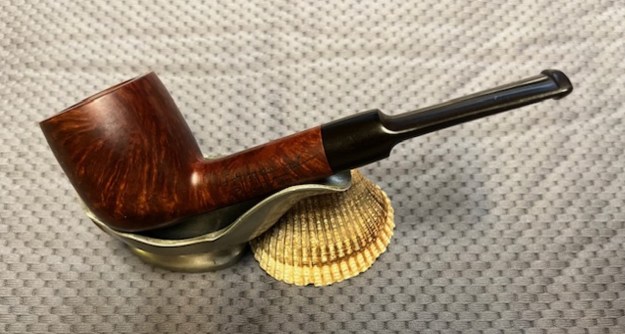
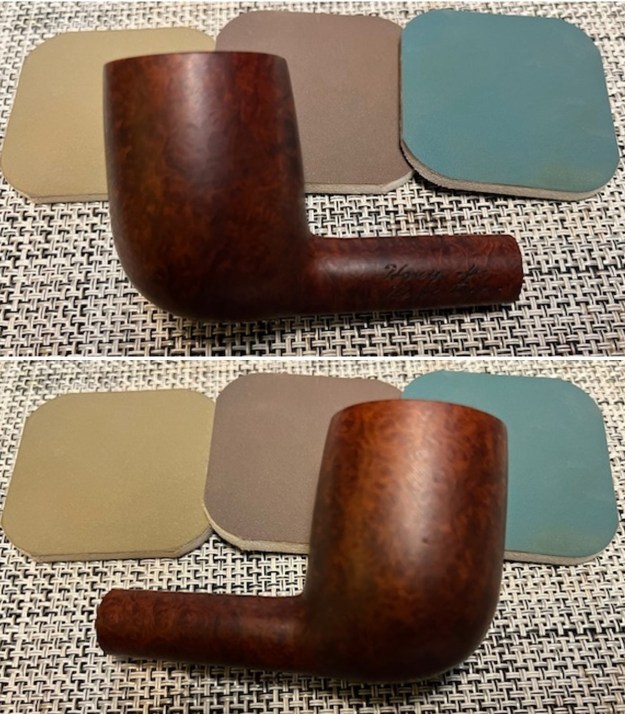
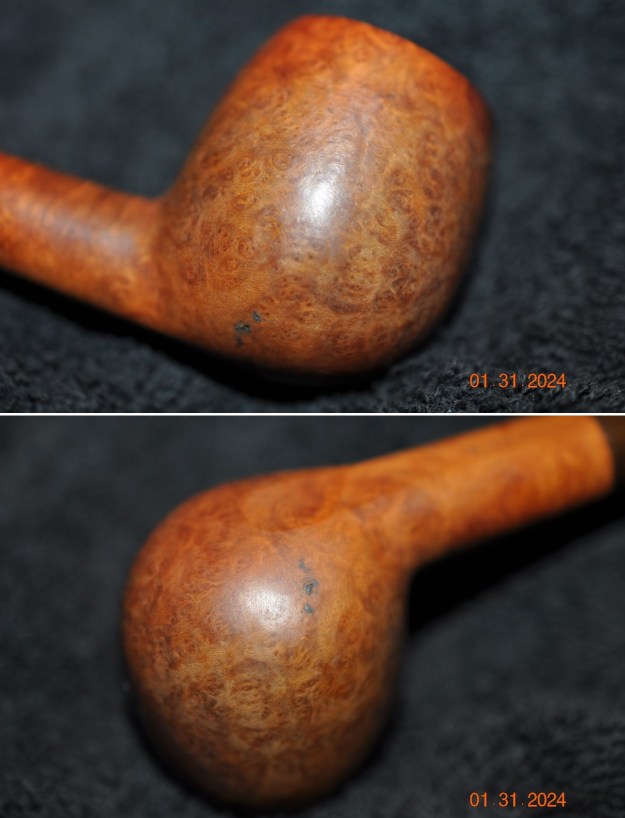
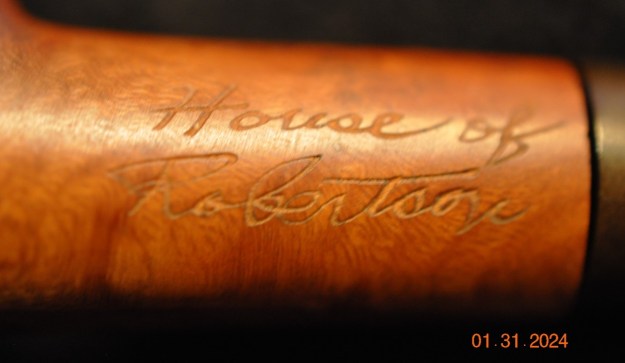
The next pipe on the work table is a change of pace for me. It was purchased as one of three pipes off eBay on 07/28/2023 from Niles, Michigan, USA. It was the second of three House of Robertson pipes – two billiards and a pot. They are all classic shaped pipes. The name House of Robertson is roughly hand-etched on the left side of the shank with an engraving tool. The pipe is a well shaped taper stem Billiard with the bottom of the shank flat and the pipe sits nicely on the desk top like a sitter. The bowl has some interesting grain on it – birds’ eye on the sides of the bowl and shank and cross grain on the front and the back of the bowl. The bowl is thickly caked with some lava overflow on the rim top. The outer and inner edges of the rim look to be in good condition. The pipe was dirty but underneath all of the grime it appears to be in excellent condition. It is definitely an interesting pipe and should clean up very well. The fit of the stem to the shank was good. The taper stem was oxidized and calcified. There are light tooth marks and chatter on both sides near the button. Jeff took photos of the pipe before he started the cleanup. Jeff took photos show the condition of the bowl and the stem. The photos of the bowl and rim show the cake in the bowl and the lava overflowing onto the rim top. The grain on the top of the bowl and the inner and outer edge of the rim looks really good. It was hard to know what the edges and top really looked like until we cleaned it. The taper stem was oxidized, calcified and had tooth chatter and marks on both sides of the stem near the button. The photos of the sides and heel of the bowl show some stunning and unique grain all around the pipe. The finish makes the grain really stand out on the bowl and shank. The next photo shows the etched name on the left side of shank on the shank. It reads House of Robertson.I am including the information that I found when I received my first of the House of Robertson Pipes. I found a link on Pipedia that gave me the only information I could find on the brand. I include that in total as it is interesting to read.
“House of Robertson” was in business for many years, but alas, closed their doors in 1999. They were located in Boise, Idaho. They are noted for making rather large and interesting pipes. Thayne Robertson was a Master Mason, AF & AM, and started the shop about 1947 and his son Jon started working there in 1970 when he finished college, along with Thayne’s daughter. Thayne and his son started making the big pipes at that time, and made them together until 1987 when Thayne passed away. Jon kept the store and his sister moved on to other things. The House of Robertson appears to have closed around 1999 (https://pipedia.org/wiki/Robertson).

Since then I have worked on a lot of House of Robertson pipes and have been able to track down more information. I am including a link to a Catalogue that I picked up on eBay. Click on the link and have a look at this interesting book of information on the brand and the pipe maker himself (https://rebornpipes.com/2022/12/11/a-house-of-robertson-catalogue-filled-with-great-examples-of-thayne-robertsons-work/).

I am also including a biography of Thayne Robertson that I found on Facebook from a fellow in Boise, Idaho. It is an interesting read into the mind of the pipe maker. Make sure to take time to read it (https://rebornpipes.com/2021/10/31/house-of-robertson-pipes-boise-pipe-carver-thayne-robertson/).

Now it was time to work on the pipe itself. When it gets to Vancouver it my turn to contribute to its restoration. Jeff did a great job cleaning the pipe on the inside and outside. He reamed the bowl with a PipNet pipe reamer and cleaned up the remnants with the Savinelli Fitsall Pipe Knife. He scrubbed out the mortise and the airway in the shank and stem with alcohol, cotton swabs and pipe cleaners. He scrubbed the exterior of the bowl with a tooth brush and Murphy’s Oil Soap to remove the dust in the rustication on the bowl and shank as well as the smooth portions. He rinsed it under running water. He dried it off with a soft cloth. Once the dust and debris were removed the finish was dull but appeared to be in excellent condition. He soaked the stem in Before & After Pipe Stem Deoxidizer and rinsed it under warm water to remove the deoxidizer gel solution. I took photos of the pipe to show its condition before I started my work on it.  I took a photo of the bowl and rim top to show how well it had cleaned up. There is some rim darkening but you can see the interesting grain on the top of the bowl. The stem tooth marks and chatter are very light.I took a photo of the engraving on the left side of the shank. It is clear and reads as noted above. I also took the stem off the pipe and took a photo of the parts to give a sense of the proportions of the pipe. It is a beauty.I worked on the darkening of the inner edge of the rim and the darkening on the rim top with a folded piece of 220 grit sandpaper. It looked much better when finished.I polished the bowl with micromesh sanding pads – dry sanding with 1500-12000 grit pads. I wiped the bowl with a damp cotton pad after each sanding pad. The surface began to take on a nice shine. I worked Before & After Restoration Balm deep into the smooth finish to clean, enliven and protect the briar. I hand rubbed it with my fingers and worked it into the finish then set it aside to dry for 10-15 minutes. I wiped it off with a soft cloth. I buffed the bowl with a cotton cloth to polish it. It really began to have a deep shine in the briar. I took some photos of the bowl at this point to mark the progress in the restoration. The grain on the bowl stands out with interesting lines moving across the sides of the bowl and the shank. I set the bowl aside and sanded the stem with the 2 inch square 320-3500 grit sanding pads. I wiped down the stem after each sanding pad. I was able to remove the tooth marks and chatter on both sides with the pads. The stem looked very good.I polished the vulcanite stem with micromesh sanding pads – dry sanding it with 1500-12000 grit pads. I wiped the stem down after each sanding pad with Obsidian Oil and set it aside to dry. I polished it further with Before & After Pipe Polish – using both the Fine and Extra Fine Polishes. I gave it a rubdown with Obsidian Oil one last time and set it aside. I put the House of Robertson Taper Stem Billiard back together and worked the pipe over on the buffing wheel using Blue Diamond to lightly polish the stem. I buffed the bowl and stem to raise the gloss on the briar and the vulcanite. I gave the pipe multiple coats of carnauba wax. I buffed the entire pipe with a clean buffing pad to raise the shine. I hand buffed it with a microfiber cloth to deepen the shine. The finished HOR Billiard is shown in the photos below. The medium brown stains on the smooth Billiard shaped bowl works well with the rich black of the vulcanite stem. The dimensions of the pipe are: Length: 5 ½ inches, Height: 1 ¾ inches, Outside Diameter: 1 ¼ inches, Diameter of the chamber: ¾ of an inch. The weight of the pipe is 37 grams/1.31 ounces. This is an interesting piece of briar, cross grain and birdseye on the bowl and shank. The patterns on the sides are almost circular. I really like how the briar and the vulcanite work well together. This one will soon be on the rebornpipes store. If you are interested in adding a House of Robertson to your collection this may well be the one for you. Thanks for walking with me through the restoration process.
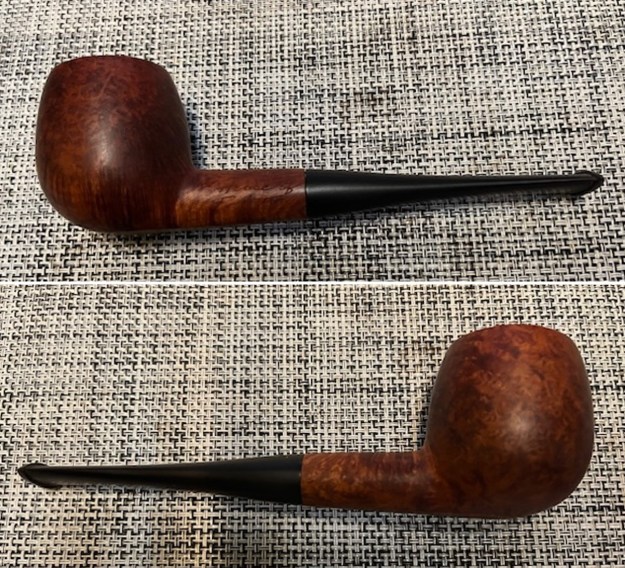
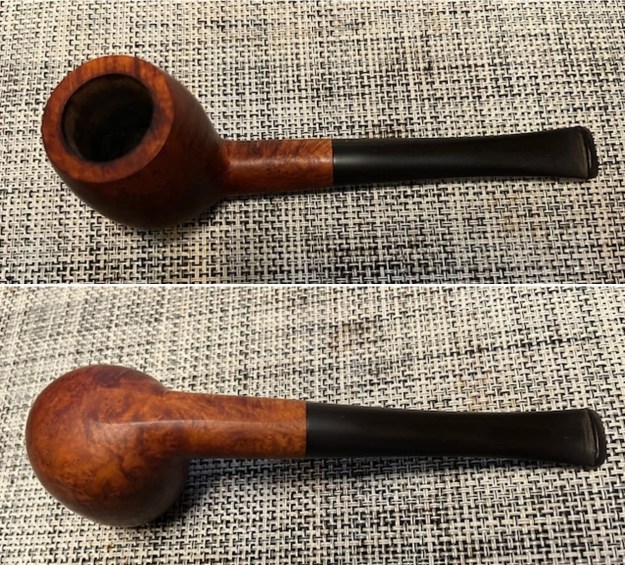
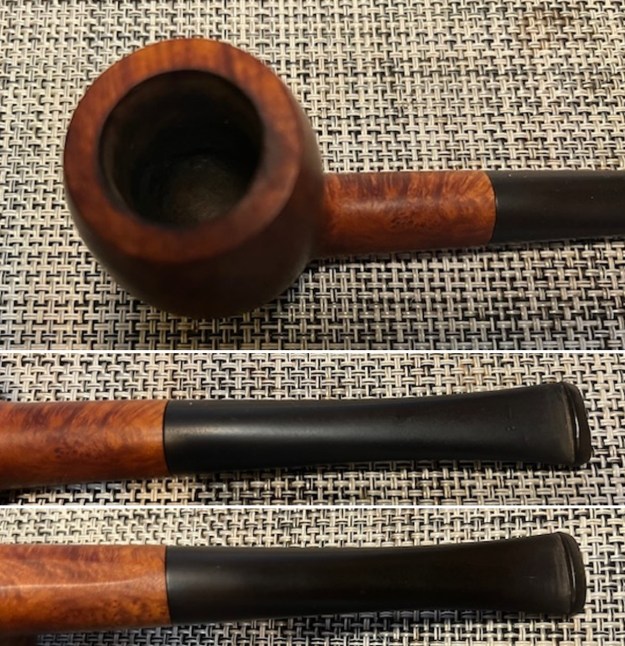
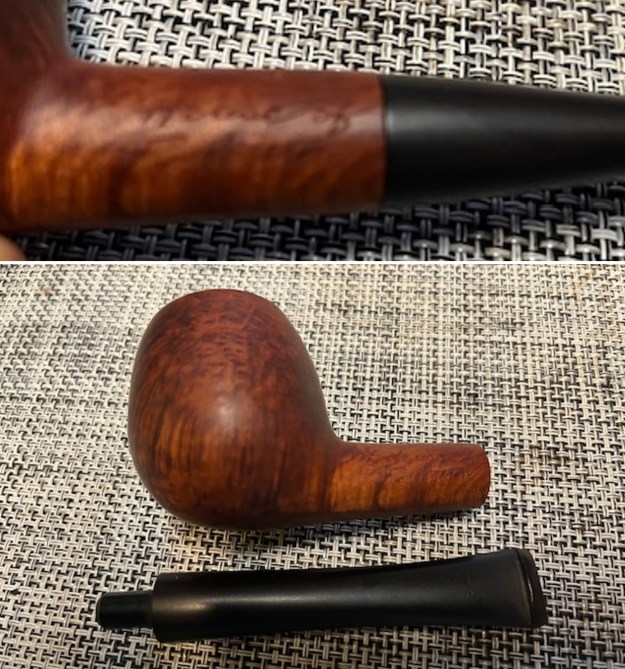
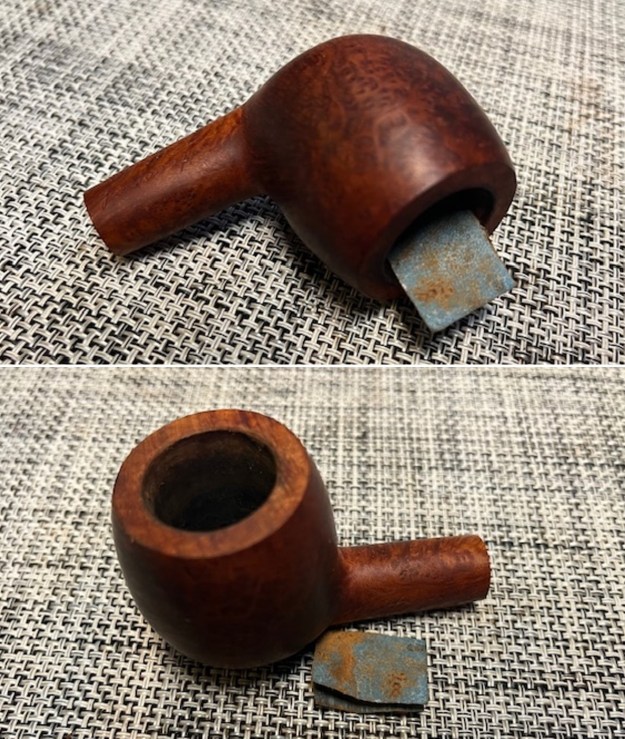
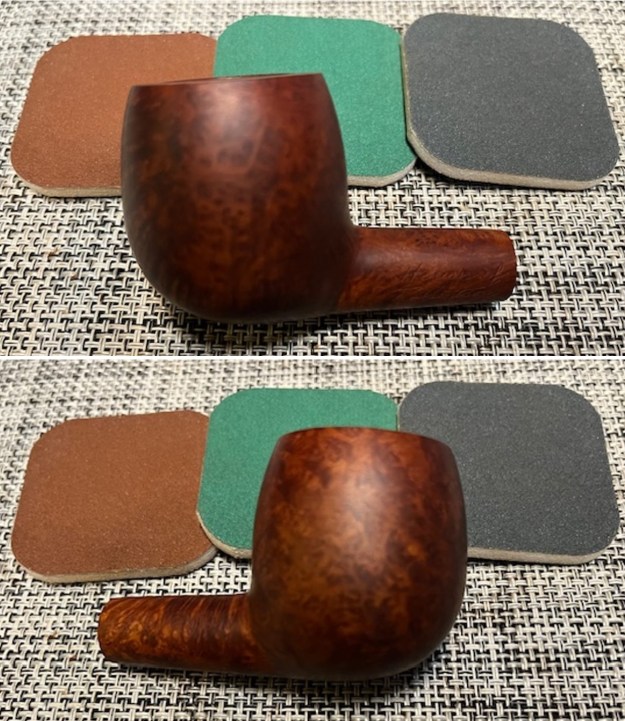
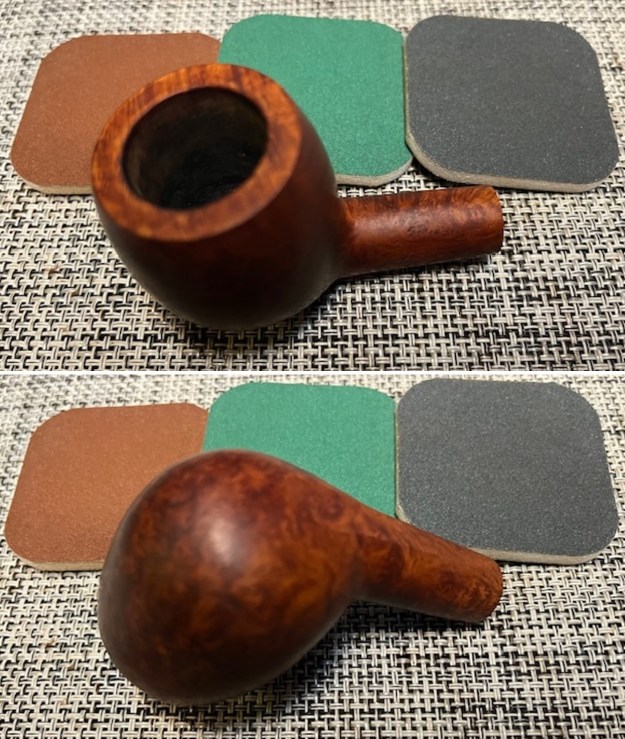
What a lovely Saddle Stem Billiard from the House of Robertson


Blog by Steve Laug

The next pipe on the work table is a change of pace for me. It was purchased as one of three pipes off eBay on 07/28/2023 from Niles, Michigan, USA. It was one of three House of Robertson pipes – two billiards and a pot. They are all classic shaped pipes. The name House of Robertson is roughly hand-etched on the left side of the shank with an engraving tool. The pipe is a well shaped saddle stem Billiard with the bottom of the shank flat and the pipe sits nicely on the desk top like a sitter. The bowl has some interesting grain on it – birds’ eye on the sides of the bowl and shank and cross grain on the front and the back of the bowl. The bowl is thickly caked with some lava overflow on the rim top. The outer and inner edges of the rim look to be in good condition. The pipe was dirty but underneath all of the grime it appears to be in excellent condition. It is definitely an interesting pipe and should clean up very well. The fit of the stem to the shank was good. The saddle stem was oxidized and calcified. There are light tooth marks and chatter on both sides near the button. Jeff took photos of the pipe before he started the cleanup. Jeff took photos show the condition of the bowl and the stem. The photos of the bowl and rim show the cake in the bowl and the lava overflowing onto the rim top. The grain on the top of the bowl and the inner and outer edge of the rim looks really good. It was hard to know what the edges and top really looked like until we cleaned it. The saddle stem was oxidized, calcified and had tooth chatter and marks on both sides of the stem near the button. The photos of the sides and heel of the bowl show some stunning and unique grain all around the pipe. The finish makes the grain really stand out on the bowl and shank. The next photo shows the etched name on the left side of shank on the shank. It reads House of Robertson.I am including the information that I found when I received my first of the House of Robertson Pipes. I found a link on Pipedia that gave me the only information I could find on the brand. I include that in total as it is interesting to read.

“House of Robertson” was in business for many years, but alas, closed their doors in 1999. They were located in Boise, Idaho. They are noted for making rather large and interesting pipes. Thayne Robertson was a Master Mason, AF & AM, and started the shop about 1947 and his son Jon started working there in 1970 when he finished college, along with Thayne’s daughter. Thayne and his son started making the big pipes at that time, and made them together until 1987 when Thayne passed away. Jon kept the store and his sister moved on to other things. The House of Robertson appears to have closed around 1999 (https://pipedia.org/wiki/Robertson).

Since then I have worked on a lot of House of Robertson pipes and have been able to track down more information. I am including a link to a Catalogue that I picked up on eBay. Click on the link and have a look at this interesting book of information on the brand and the pipe maker himself (https://rebornpipes.com/2022/12/11/a-house-of-robertson-catalogue-filled-with-great-examples-of-thayne-robertsons-work/).

I am also including a biography of Thayne Robertson that I found on Facebook from a fellow in Boise, Idaho. It is an interesting read into the mind of the pipe maker. Make sure to take time to read it (https://rebornpipes.com/2021/10/31/house-of-robertson-pipes-boise-pipe-carver-thayne-robertson/).

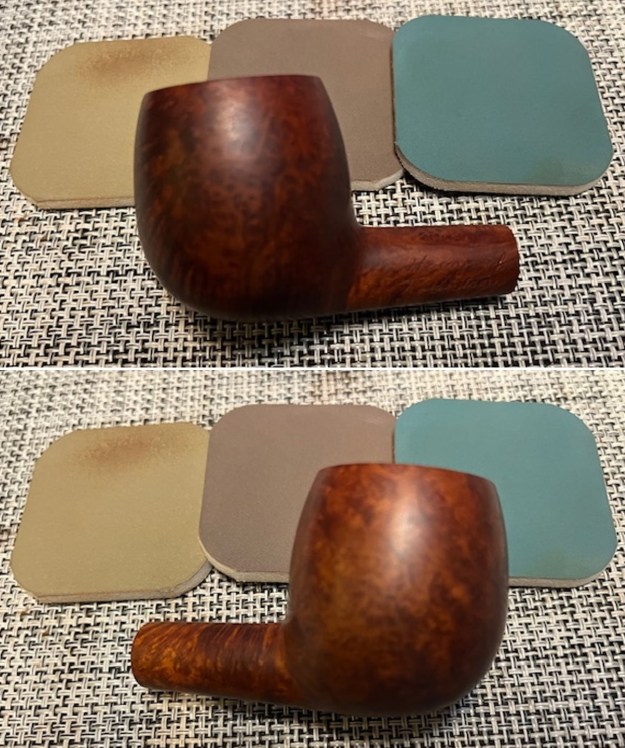
Now it was time to work on the pipe itself. When it gets to Vancouver it my turn to contribute to its restoration. Jeff did a great job cleaning the pipe on the inside and outside. He reamed the bowl with a PipNet pipe reamer and cleaned up the remnants with the Savinelli Fitsall Pipe Knife. He scrubbed out the mortise and the airway in the shank and stem with alcohol, cotton swabs and pipe cleaners. He scrubbed the exterior of the bowl with a tooth brush and Murphy’s Oil Soap to remove the dust in the rustication on the bowl and shank as well as the smooth portions. He rinsed it under running water. He dried it off with a soft cloth. Once the dust and debris were removed the finish was dull but appeared to be in excellent condition. He soaked the stem in Before & After Pipe Stem Deoxidizer and rinsed it under warm water to remove the deoxidizer gel solution. I took photos of the pipe to show its condition before I started my work on it. I took a photo of the bowl and rim top to show how well it had cleaned up. There is some rim darkening but you can see the interesting grain on the top of the bowl. The stem tooth marks and chatter are very light.I took a photo of the engraving on the left side of the shank. It is clear and reads as noted above. I also took the stem off the pipe and took a photo of the parts to give a sense of the proportions of the pipe. It is a beauty.I worked on the darkening of the inner edge of the rim and the darkening on the rim top with a folded piece of 220 grit sandpaper. It looked much better when finished.I polished the rim top with micromesh sanding pads – dry sanding with 1500-12000 grit pads. I wiped the bowl with a damp cotton pad after each sanding pad. The surface began to take on a nice shine. I worked Before & After Restoration Balm deep into the smooth finish to clean, enliven and protect the briar. I hand rubbed it with my fingers and worked it into the finish then set it aside to dry for 10-15 minutes. I wiped it off with a soft cloth. I buffed the bowl with a cotton cloth to polish it. It really began to have a deep shine in the briar. I took some photos of the bowl at this point to mark the progress in the restoration. The grain on the bowl stands out with interesting lines moving across the sides of the bowl and the shank. I set the bowl aside and sanded the stem with the 2 inch square 320-3500 grit sanding pads. I wiped down the stem after each sanding pad. I was able to remove the tooth marks and chatter on both sides with the pads. The stem looked very good.I polished the vulcanite stem with micromesh sanding pads – dry sanding it with 1500-12000 grit pads. I wiped the stem down after each sanding pad with Obsidian Oil and set it aside to dry. I polished it further with Before & After Pipe Polish – using both the Fine and Extra Fine Polishes. I gave it a rubdown with Obsidian Oil one last time and set it aside. I put the House of Robertson Saddle Stem Billiard back together and worked the pipe over on the buffing wheel using Blue Diamond to lightly polish the stem. I buffed the bowl and stem to raise the gloss on the briar and the vulcanite. I gave the pipe multiple coats of carnauba wax. I buffed the entire pipe with a clean buffing pad to raise the shine. I hand buffed it with a microfiber cloth to deepen the shine. The finished HOR Billiard is shown in the photos below. The medium brown stains on the smooth Billiard shaped bowl works well with the rich black of the vulcanite stem. The dimensions of the pipe are: Length: 5 1/4 inches, Height: 1 5/8 inches, Outside Diameter: 1 1/4 inches, Diameter of the chamber: 3/4 inches. This is an interesting piece of briar, cross grain and birdseye on the bowl and shank. The patterns on the sides are almost circular. I really like how the briar and the vulcanite work well together. This one will soon be on the rebornpipes store. If you are interested in adding a House of Robertson to your collection this may well be the one for you. Thanks for walking with me through the restoration process.
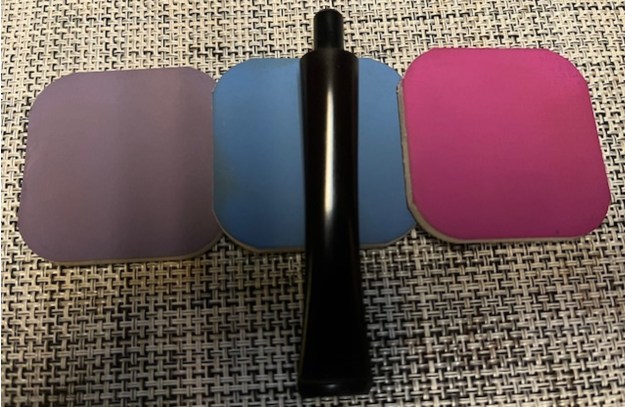
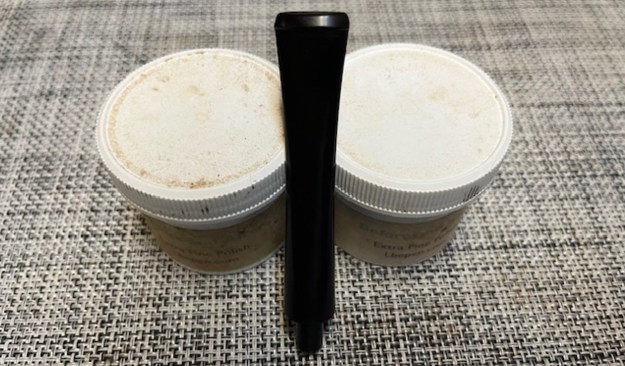
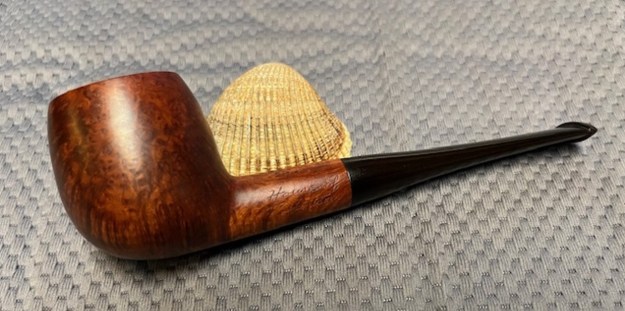
I was not hoping for much with this poor Malaga Second Oval Shank Brandy


Blog by Steve Laug

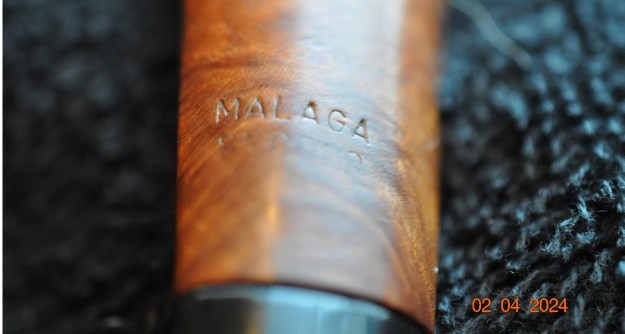
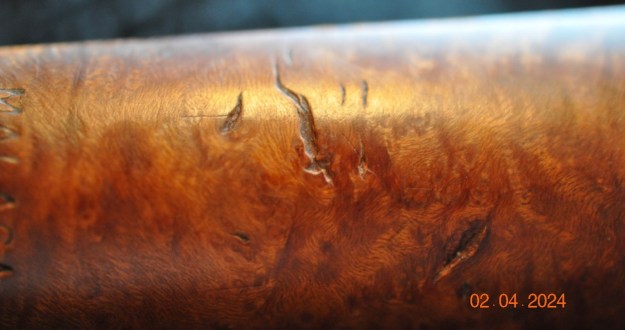
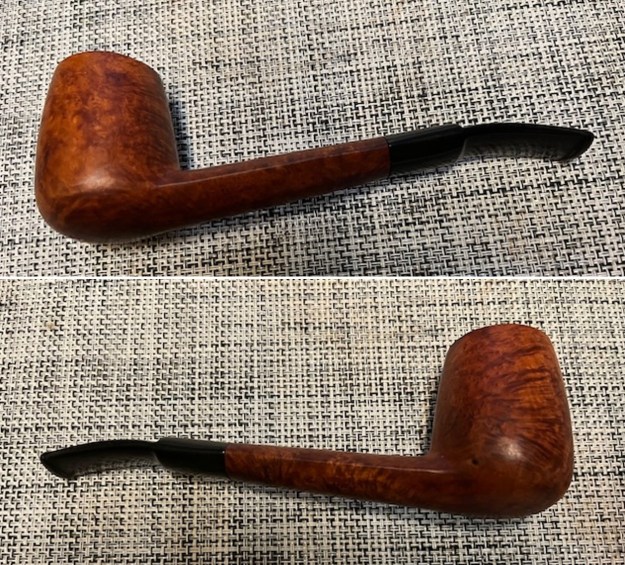
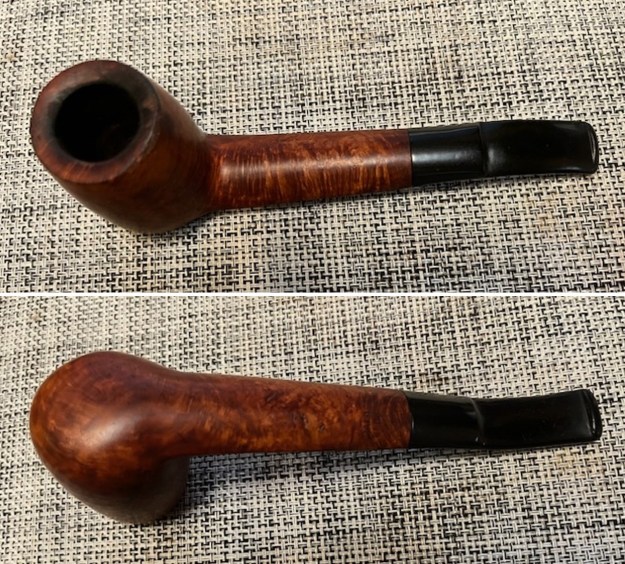
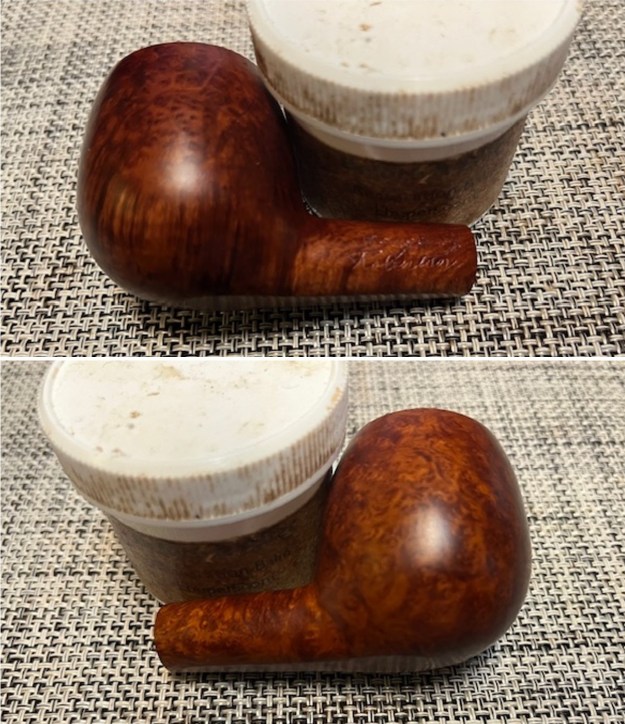
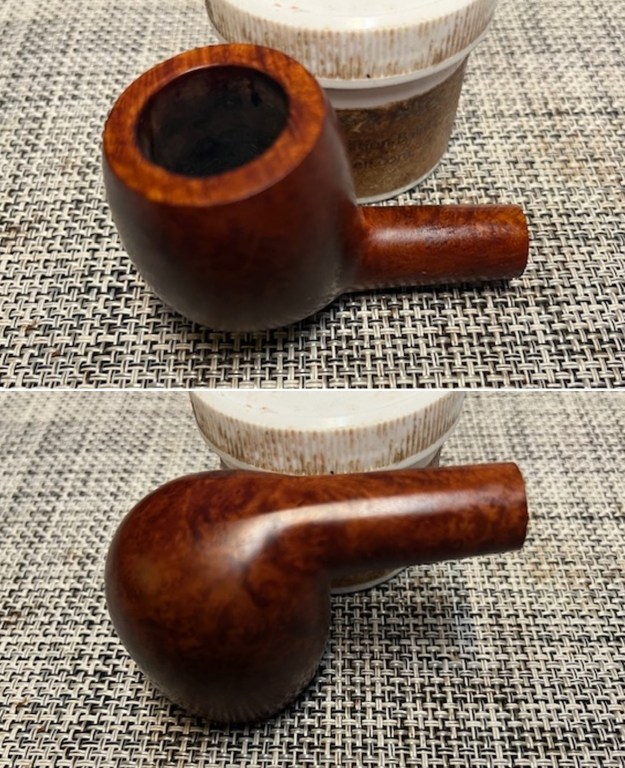
For the next little while I am working on some Malaga Pipes. I have several in queue to work on so I tend to pick them by what catches my eye. The next pipe is the last of the latest batch of Malaga Pipes. This one is a Oval Shank Brandy with a ¼ bent vulcanite stem. Jeff saw it on eBay and purchased it on 09/30/2023 from a seller in Cape Fair, Missouri, USA. The grain on this pipe is quite nice. Once again it was obviously someone’s favourite smoker. The pipe is stamped on the underside of the shank and reads MALAGA [over] Second. The smooth briar bowl and shank were dirty and worn. There were tars and oils ground into the surface of the briar. The bowl had a very thick cake that flowed over the top of the inwardly bevelled rim in a thick lava coat. The cake in the bowl was thick right up to the top of the rim. It was hard to fully assess the condition of the inner edge. It looked like the rim top had some burn marks and chips on the back and the front side. The inner edge was also damaged. The condition of the rim edge and top would become clear in the cleaning process. The outer edge also had some damage. The saddle stem was vulcanite and had light tooth marks on the top and the underside of the stem ahead of the button. Jeff took photos of the pipes before he started his clean up work. Jeff took photos of the rim and bowl to show the heavy cake and lava on the rim top and edges. You can also see the damage on the rim top. The back top and outer edges appear to have been knocked against some hard surface given the amount of damage. The inner edge of the rim showed thick cake coming up to the top and flowing over the edge. It was a dirty pipe but still a beauty. The vulcanite saddle stem had tooth marks and chatter on the top and underside of the stem ahead of the button. The photos of the sides and heel of the bowl show some stunning and unique grain all around the pipe. The oil curing/finish makes the grain really stand out on the bowl and shank. Jeff took a photo of the stamping on the underside of the shank. It read “Malaga” [over] Second. The stamping was clear and readable as noted above.Jeff took photos of the flaws in the briar on the underside of the shank. There are fills in place in the shank but they are shrunken and are quite tactile. I am sure that this is what made the pipe a Malaga Second.For those of you who are unfamiliar with the brand, I am also including the link to a blog that I wrote that gives some of the history of the Malaga brand and the Malaga Pipe Shop in Royal Oak, Michigan in the USA. Here is the link – https://rebornpipes.com/2013/02/09/george-khoubesser-and-malaga-pipes/. That blog also includes links to a catalogue and the history of the pipemaker George Khoubesser. If you are interested to learn more then I invite you to follow the link to get a feel for the brand and the pipemaker.
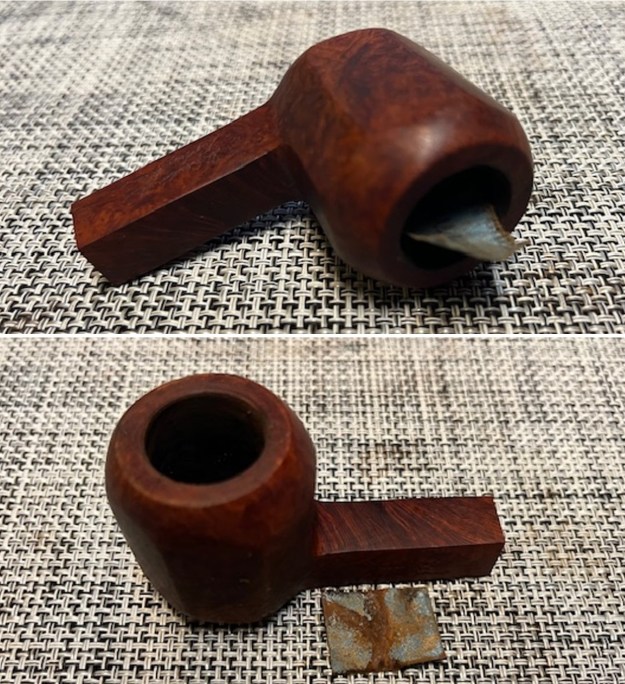
I am also am including a link to some printed material on the Malaga brand that came to me from the daughter of George Koch (we purchased George’s pipes from his daughter) to help identify the particular stamping on the pipe. The link takes you to the entire collection of materials that were sent to me (https://rebornpipes.com/2019/02/27/malaga-pipes-catalogue-of-pipes-and-tobaccos/).

This particular pipe was a second and it is not listed in the catalogue.

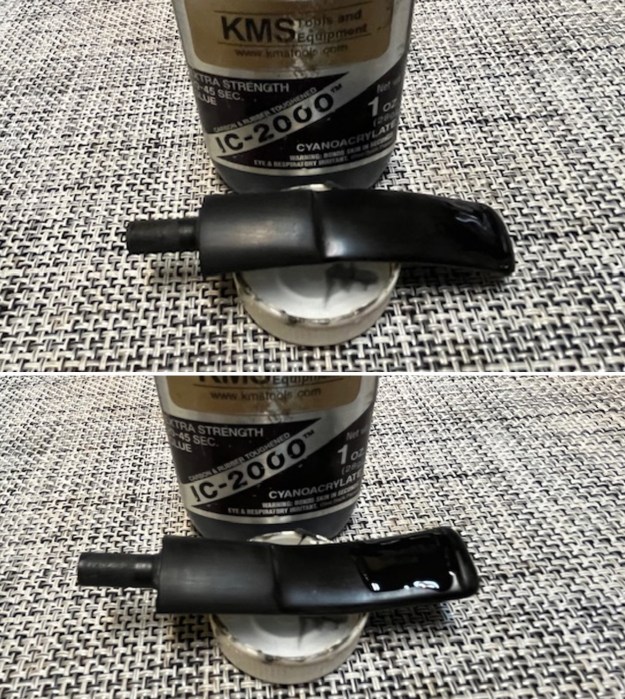
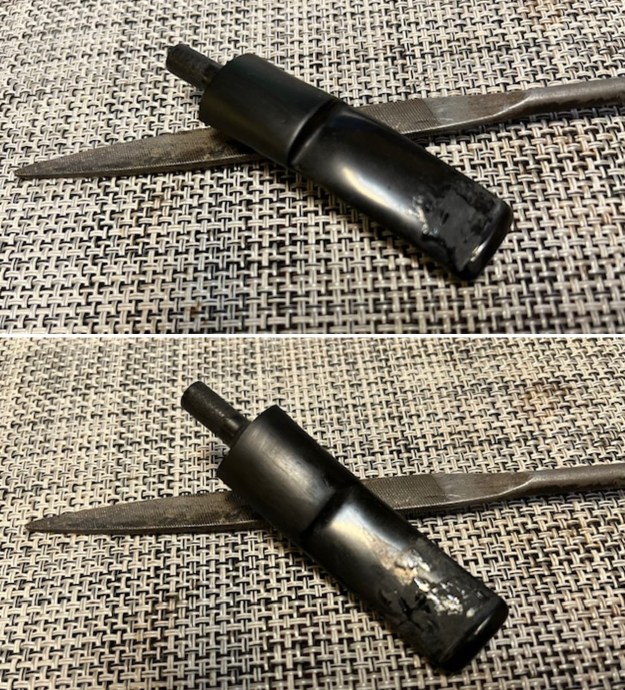
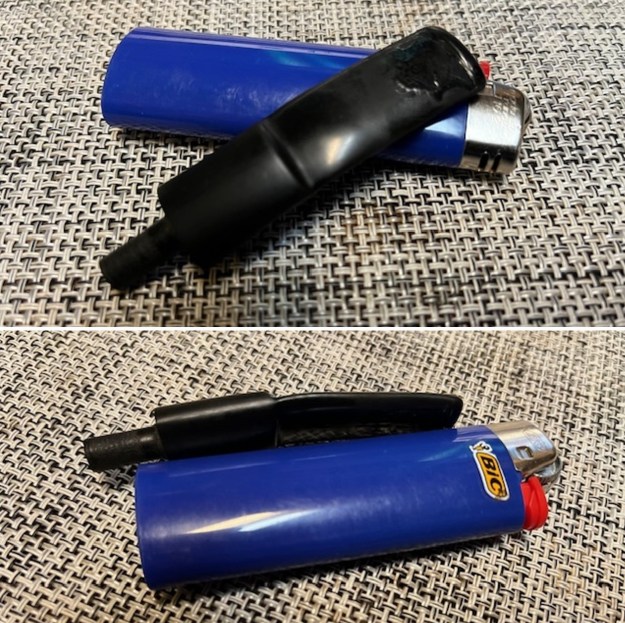
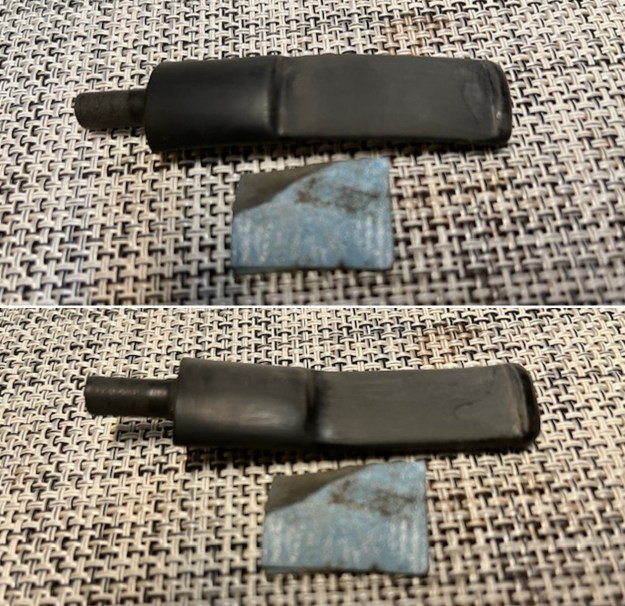
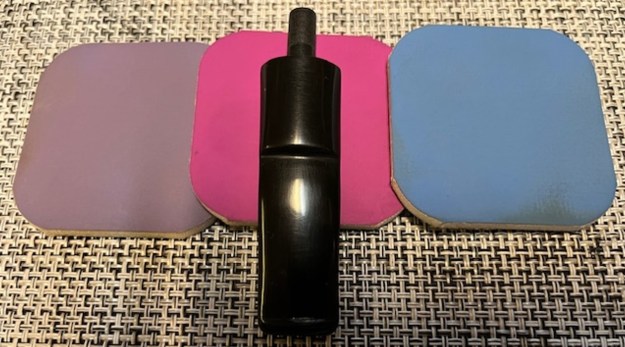
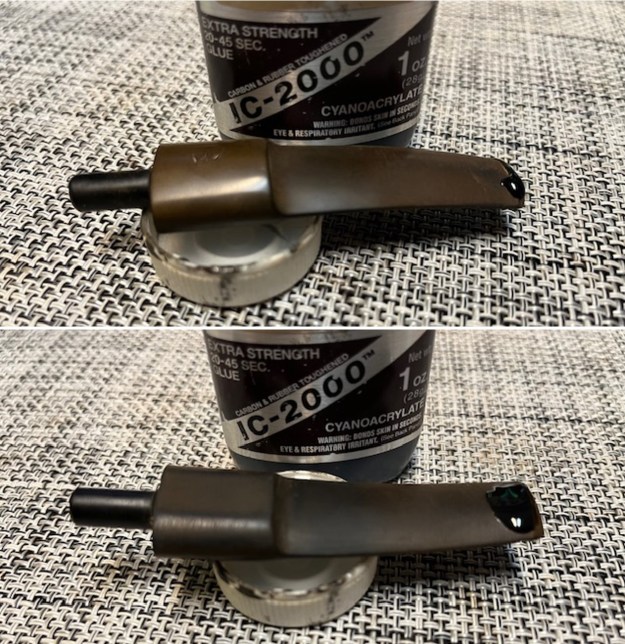
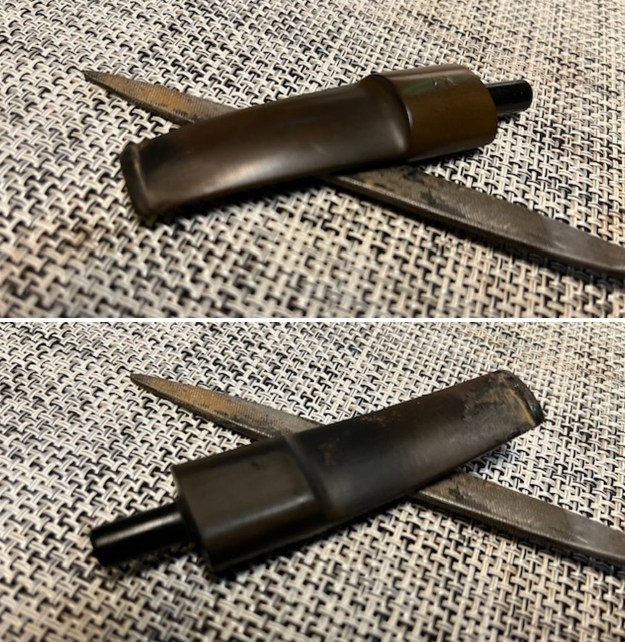
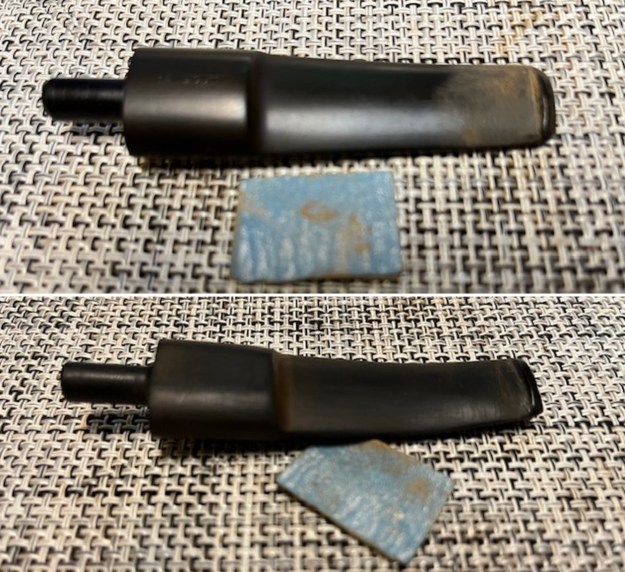
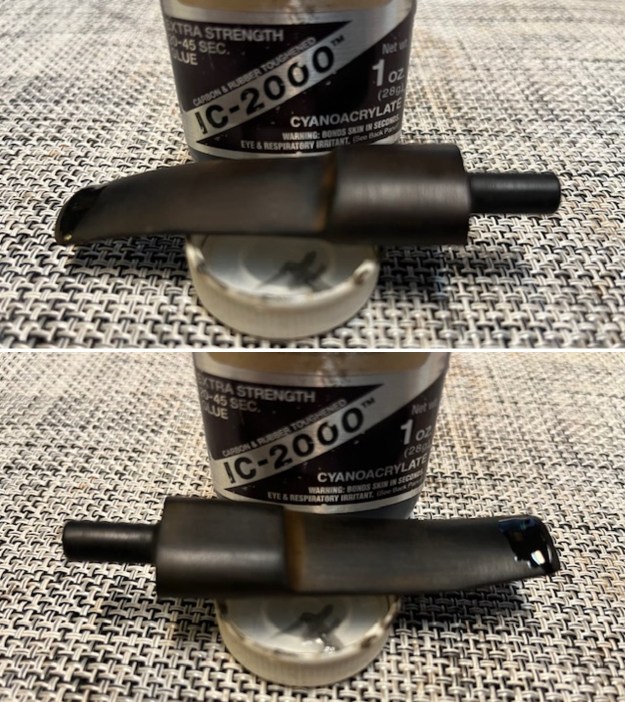
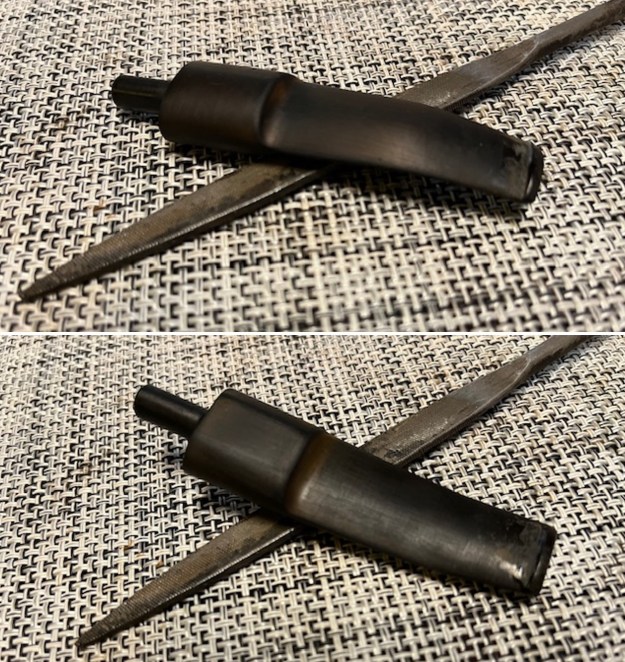
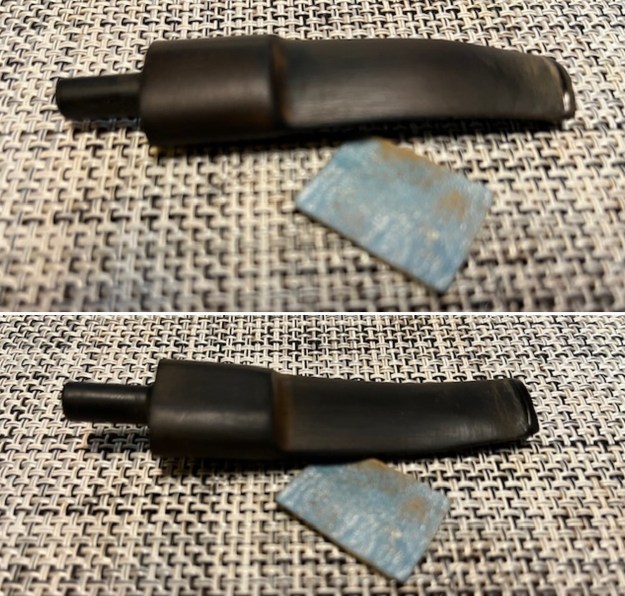
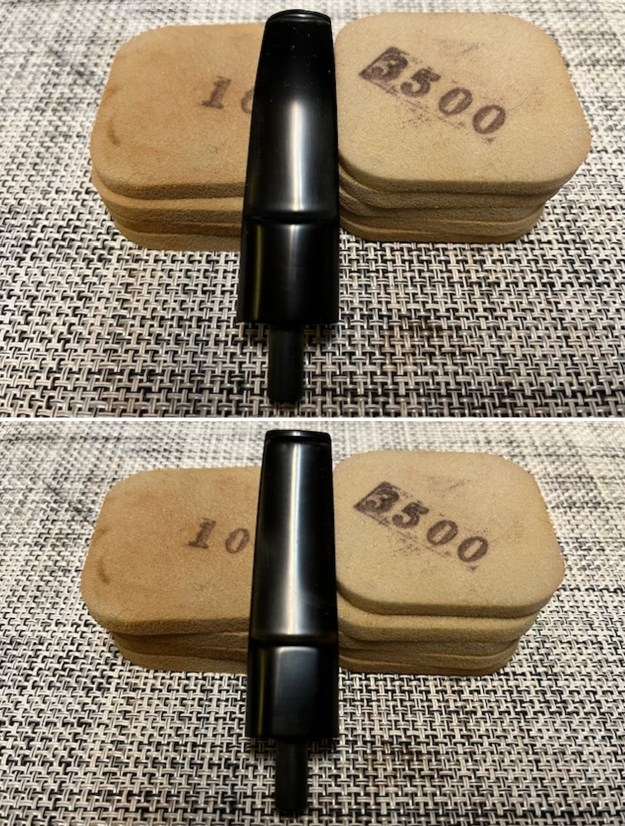
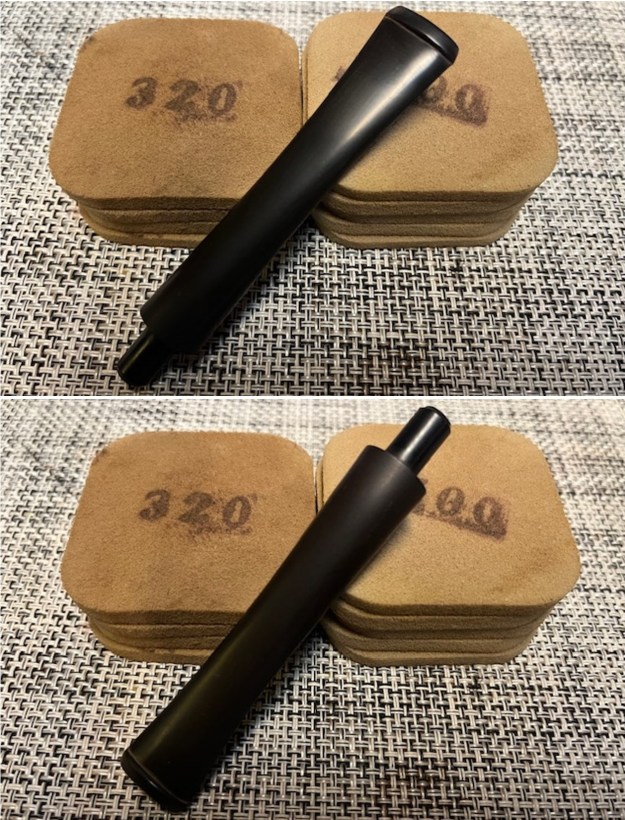
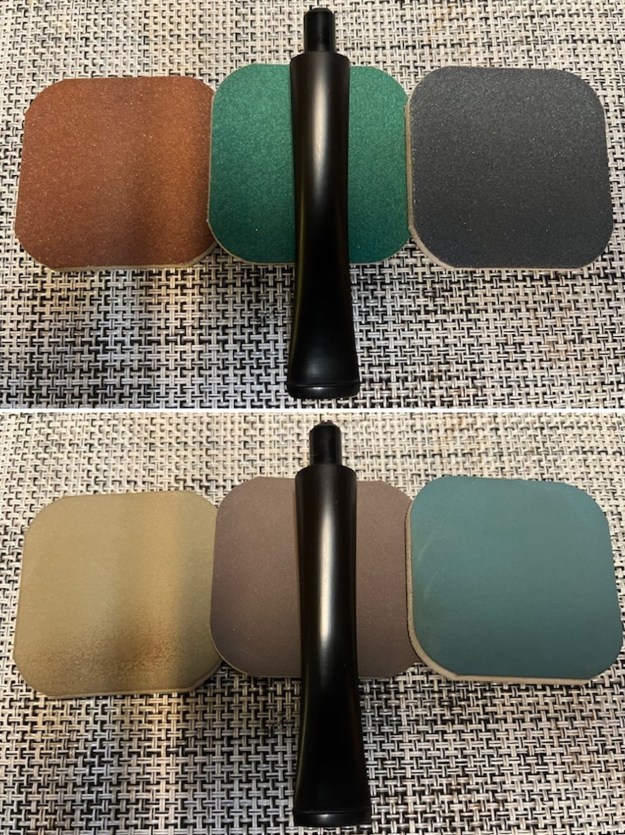
Jeff had cleaned up the pipe using his usual procedure. He reamed the pipe with a PipNet pipe reamer and removed the rest of it with a Savinelli Fitsall Pipe Knife. He scrubbed the bowl with undiluted Murphy’s Oil Soap with a tooth brush. He rinsed it under running warm water to remove the soap and grime from around the bowl sides. It looked much better. He cleaned out the inside of the shank and the airway with alcohol, cotton swabs and pipe cleaners. The stem looked much better and the light tooth marks on both sides were still visible and would need a little work. I took photos of the pipe once I received it.  I took a photo of the rim top and the stem to show their condition. Jeff was able to clean up the cake and the lava overflow that was shown in the rim and bowl photos above. The rim top was clean but there were chips, nicks burned areas around the rim top and the edges of the bowl. There was also some darkening on the flat surface of the rim and the edges. It is visible in the first photo below. The stem looked better, though there were tooth marks and chatter on both sides ahead of the button. I took a photo of the stamping on the underside of the shank. It is quite readable as noted above. I removed the stem from the shank and took a photo of the parts to give a sense of what the pipe looks like.I started my work on the pipe by addressing the damage to the rim top and outer edge of the bowl. I topped it with a topping board and 220 grit sandpaper. I cleaned up the inward bevel on the bowl edge with a folded piece of 220 grit sandpaper. I brought it back to the same inward bevel that it had before I topped it. I turned my attention to the flaws and fills in the heel and the underside of the shank. I filled these in with clear CA glue. I smooth out the repairs with a folded pipe cleaner to smooth them out.I sanded the bowl top and the repaired fills on the shank and heel with a 320 grit sanding pad to blend them into the surrounding briar. They looked significantly better. From there I chose to sand the entire bowl and shank with 320-3500 grit sanding pads. This removed the darker areas and blended the repairs into the bowl and shank. It also took care of the roughness to the finish and some of the marks on the outside of the bowl and shank. The grain really began to stand out on the pipe. From there I went on to polish the briar with micromesh sanding pads – dry sanding with 1500-12000 grit pads. I wiped the bowl down after each pad. The pipe really began to have a rich shine and some beautiful grain that minimized the repaired fills. I rubbed the bowl and shank down with Before & After Restoration Balm to deep clean the finish on the bowl and shank. The product works to clean, enliven and protect the briar. I worked it in with my fingers to get it into the briar. I let it sit for 10 minutes then I wiped it off and buffed it with a soft cloth. The briar really began to have a rich shine. I took some photos of the bowl at this point to mark the progress in the restoration, it is a beautiful bowl. I set the bowl aside and turned my attention to the stem. I “painted” the tooth marks with the flame of a lighter and was able to lift them significantly. I filled in what remained with a black CA glue. Once it cured I used a small file to flatten the repairs and start the process of blending them into the surrounding vulcanite. Once the repairs cured I straightened out the stem a bit to give it a more gentle bend. To me the previous bend was to abrupt and made the stem hang from the mouth poorly. I adjusted it so that in the mouth it sits comfortably.Once the bend was corrected I sanded the repairs smooth with a folded piece of 220 grit sandpaper. I was able to further blend it into the surrounding vulcanite.I started the polishing of the stem with 2 x 2 inch sanding pads – dry sanding with 320-3500 grit pads and wiping it down after each pad. I was able to remove the light tooth marks and chatter on the stem surface on both sides. I polished the stem with micromesh sanding pads – dry sanding with 1500-12000 grit pads. I wiped the stem down after each sanding pad with Obsidian Oil.  I did a final hand polish of the stem with Before & After Pipe Stem Polish – both Fine and Extra Fine. I gave it a coat of Obsidian Pipe Stem Oil. It works to protect the stem from oxidizing. I set it aside to dry. I put the pipe back together – the bowl with its new stem. This restored Malaga Second Long Shank Brandy turned out surprisingly to be a real beauty. I did not hold out much hope for it when I started on it but boy was I surprised. The grain on the bowl is quite beautiful came alive with the buffing. I used Blue Diamond on the buffing wheel on both the bowl and stem. I gave both multiple coats of carnauba wax on the wheel then buffed it with a clean buffing pad to raise the shine. I hand buffed it with a microfibre cloth to deepen the shine. The Malaga Second Brandy feels great in the hand. It is lightweight and the contrast in the browns of the briar and the polished vulcanite stem is quite amazing. The dimensions of the pipe are Length: 6 inches, Height: 2 inches, Outer diameter of the bowl: 1 ¼ inches, Chamber diameter: ¾ of an inch. The weight of the pipe is 1.90 ounces/54 grams. It really is a beauty. I will be putting it on the rebornpipes store in the American (US) Pipe Makers section shortly if you are interested in adding it to your collection. Thanks for walking through the restemming and the restoration with me. Cheers.

This Rare and Beautiful “Malaga” Raskassa Cutty cleaned up extremely well


Blog by Steve Laug

For the next little while I am working on some Malaga Pipes. I have several in queue to work on so I tend to pick them by what catches my eye. The next pipe on the table is an interesting Malaga Raskassa Large Cutty. Jeff saw it on eBay and purchased it on 10/05/2023 from a seller in Pomona, Missouri, USA. The grain on this pipe is very stunning. It was obviously someone’s favourite smoker. The pipe is stamped on the left side of the shank and reads RASKASSA. The smooth bowl and shank were dirty and worn. There were tars and oils ground into the surface of the briar. The bowl had a very thick cake that flowed over the top of the smooth rim in a spotty lava coat. The cake in the bowl was thick right up to the top of the rim. It was hard to fully assess the condition of the inner edge. The rim top and inner edge of the bowl appeared to have some damage but more would become clear in the cleaning process. The outer edge had chips and dents from knocking the pipe against a hard surface. The taper stem appeared to be either vulcanite or hard rubber. There were tooth marks on the top and the underside ahead of the button. Jeff took photos of the pipes before he started his clean up work.Jeff took photos of the rim and bowl to show the heavy cake and lava spots on the rim top and edges. The bevelled inner edge of the rim showed some darkening and had some cake on it. The grain on the rim top is quite stunning. It was a dirty pipe but still a beauty. The hard rubber stem had tooth marks and chatter on the top and underside of the stem ahead of the button. The photos of the sides and heel of the bowl show some stunning and unique grain all around the pipe. The oil curing/finish makes the grain really stand out on the bowl and shank. Jeff took a photo of the stamping on the left side it read Raskassa as noted above. It was clear and readable.For those of you who are unfamiliar with the brand, I am also including the link to a blog that I wrote that gives some of the history of the Malaga brand and the Malaga Pipe Shop in Royal Oak, Michigan in the USA. Here is the link – https://rebornpipes.com/2013/02/09/george-khoubesser-and-malaga-pipes/. That blog also includes links to a catalogue and the history of the pipemaker George Khoubesser. If you are interested to learn more then I invite you to follow the link to get a feel for the brand and the pipemaker.
I am also am including a link to some printed material on the Malaga brand that came to me from the daughter of George Koch (we purchased George’s pipes from his daughter) to help identify the particular stamping on the pipe. The link takes you to the entire collection of materials that were sent to me. I have included a screen capture of one particular page that helps identify the RAS KASSA stamping on the pipe (https://rebornpipes.com/2019/02/27/malaga-pipes-catalogue-of-pipes-and-tobaccos/). I have enclosed the section on the brand in a red box in the picture above. To summarize, it basically says that the stamping is applied to pipes with special rare grain patterns in the briar. These appear to be straight grain, birdseye, swirled grains etc. that are tight patterns. They are rare – 1 or 2 in every hundred pipes. This pipe is one of those. You can read the description in the detailed explanation below.

Jeff had cleaned up the pipe using his usual procedure. He reamed the pipe with a PipNet pipe reamer and removed the rest of it with a Savinelli Fitsall Pipe Knife. He scrubbed the bowl with undiluted Murphy’s Oil Soap with a tooth brush. He rinsed it under running warm water to remove the soap and grime. He cleaned out the inside of the shank and the airway with alcohol, cotton swabs and pipe cleaners. The shank had an inset to take in the tenon and the end of the stem so I would need to fit a stem to sit in the shank. I took photos of the pipe once I received it. I took a photo of the rim top and the stem to show their condition. Jeff was able to clean up the cake and the lava overflow that was shown in the rim and bowl photos above. The rim top was clean but there were chips and nicks around the inner edge of the bowl and nicks on the outer edge. There was also some darkening on the flat surface of the rim. It is visible in the first photo below. The stem looked better, though there were tooth marks and chatter on both sides near the button and on the button surface itself.I took a photo of the stamping on the left side of the shank to show that it was readable and undamaged by the cleanup work. I removed the stem from the shank and took a photo of the parts to give a sense of what the pipe looks like.It was time to start my work on the pipe. I started with the rim top and edges of the bowl. I sanded the inner and the outer edge of the bowl. I used a topping board and 220 grit sandpaper to clean up the rim top and darkening. Once I was finished with the light topping the grain on the rim top looked very good. I polished the smooth panels on the bowl sides and the smooth rim top with micromesh sanding pads. I dry sanded it with 1500-2400 grit sanding pads and wiped the bowl down with a damp cloth after each sanding pad. I touched up the clean rim top with a Maple Stain Pen. After the staining I continued sanding the rim top and bowl with 3200-12000 grit micromesh pads. I wiped it down after each pad. It really began to be beautiful. I rubbed the bowl and shank down with Before & After Restoration Balm to deep clean the finish on the bowl and shank. The product works to clean, enliven and protect the briar. I worked it in with my fingers to get it into the briar. I let it sit for 10 minutes then I wiped it off and buffed it with a soft cloth. The briar really began to have a rich shine. I took some photos of the bowl at this point to mark the progress in the restoration. It is a beautiful bowl. I set the bowl aside and turned my attention to the stem. I filled in the tooth marks on both sides with black CA glue. I set it aside to cure. Once the repairs hardened I used a small needle file to flatten out the repairs. I smoothed them out with 220 grit sandpaper to blend them into the rest of the surrounding vulcanite. I set the finished bowl aside and we back to the stem. I started the polishing of the stem with 2 x 2 inch sanding pads – dry sanding with 320-3500 grit pads and wiping it down after each pad.I polished the stem with micromesh sanding pads – dry sanding with 1500-12000 grit pads. I wiped the stem down after each sanding pad with Obsidian Oil. I did a final hand polish of the stem with Before & After Pipe Stem Polish – both Fine and Extra Fine. I gave it a coat of Obsidian Pipe Stem Oil. It works to protect the stem from oxidizing. I set it aside to dry.I put the stem back on the “Malaga” Beautifully Grained Raskassa Large Cutty and took it to the buffer. I buffed the bowl and stem with Blue Diamond to polish the briar and the vulcanite. Blue Diamond does a great job on the smaller scratches that remain in both. I gave the bowl and the stem several coats of carnauba wax and buffed the pipe with a clean buffing pad to raise the shine. I hand buffed it with a microfiber cloth to deepen the shine. I am amazed at how well it turned out. The finished pipe is shown in the photos below. This is a beautiful “Malaga” Large Raskassa Cutty and the hard rubber taper stem and smooth finish combine to give the pipe a great look. I honestly have no idea why it is labeled a second as there are no fills or flaws in the briar. The dimensions of the pipe are Length: 7 inches, Height: 2 ¼ inches, Outside diameter of the bowl: 1 ½ inches, Chamber diameter: 7/8 of an inch. The weight of the pipe is 1.98 ounces/56 grams. This is another pipe that I will be putting on the rebornpipes online store in the American Pipe Makers and Pipemaking Companies Section shortly, if you are interested in adding it to your collection. Thanks for walking through the restoration with me on this beauty!

As always, I encourage your questions and comments as you read the blog. Thanks to each of you who are reading this blog. Remember we are not pipe owners; we are pipe men and women who hold our pipes in trust until they pass on into the trust of those who follow us.

Still Some Wow Factor Left in this Royal Danish 992 Ukulele Sitter


Blog by Steve Laug

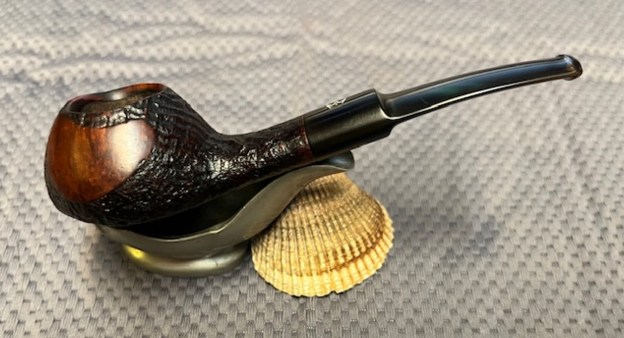
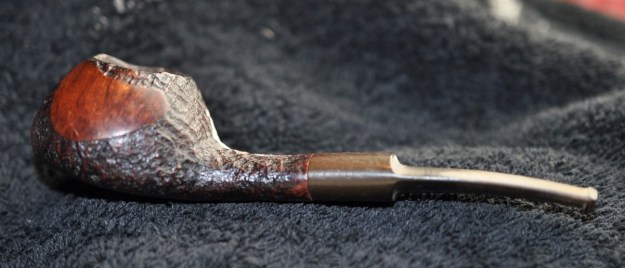
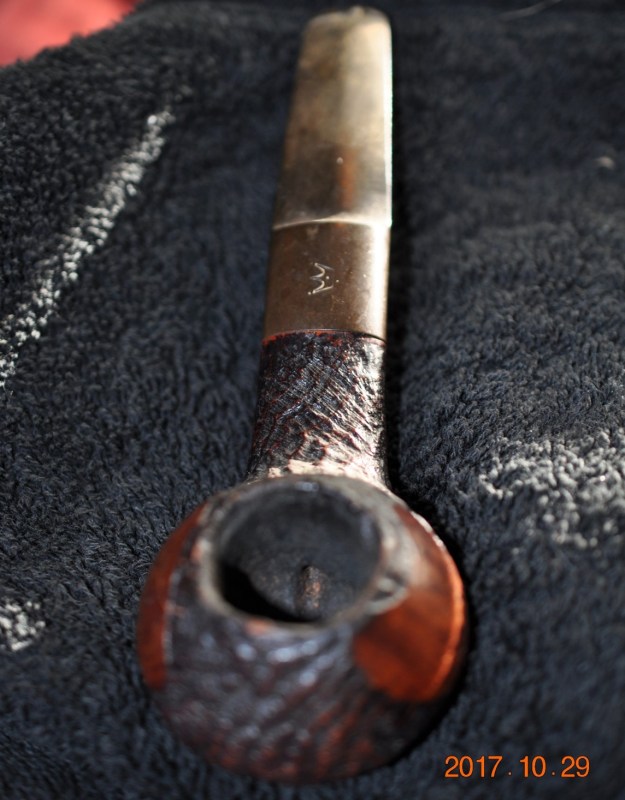
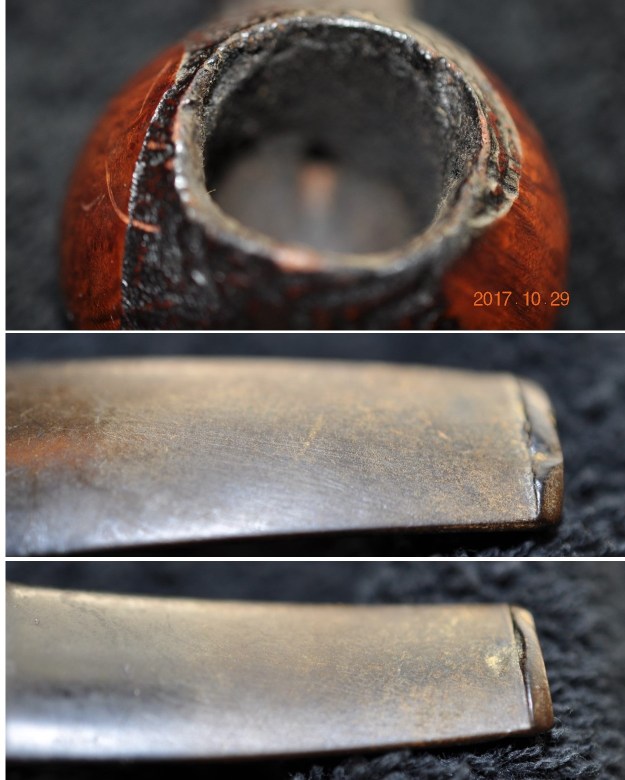
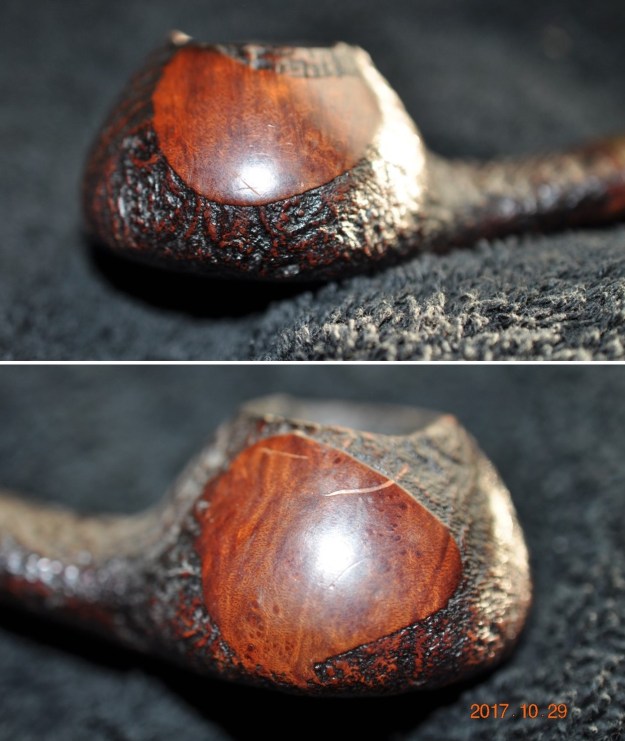
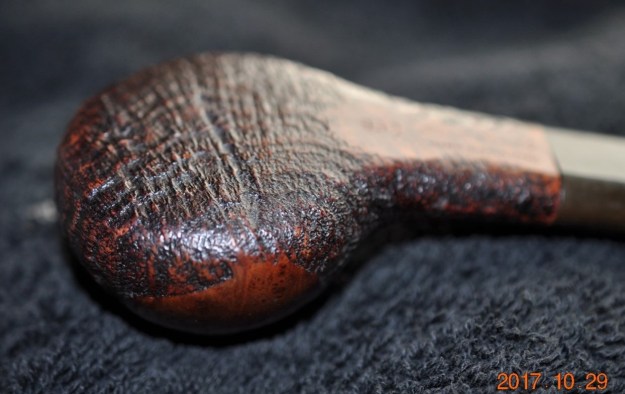
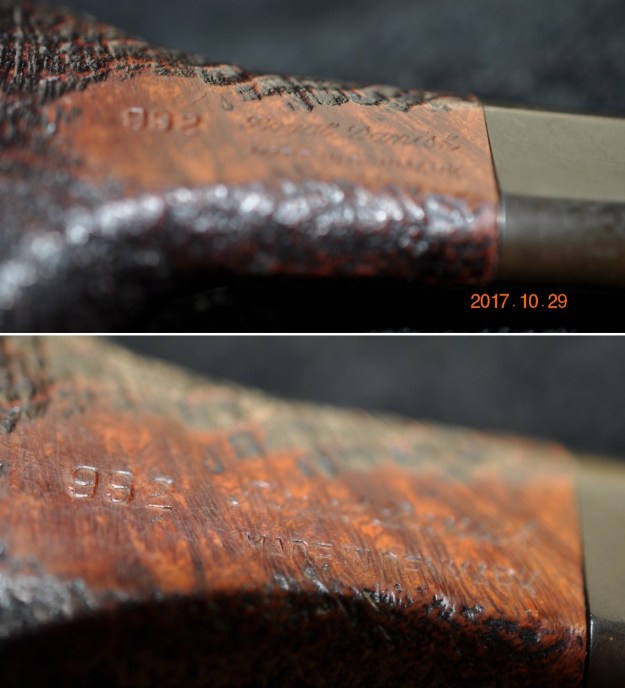
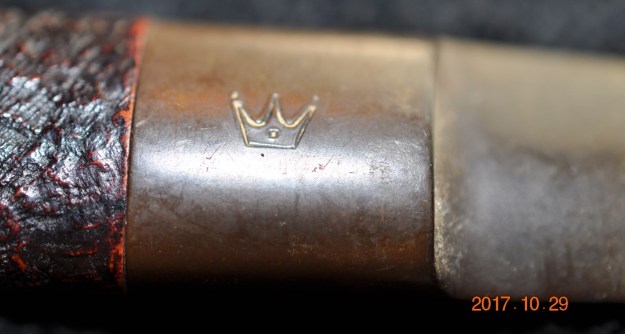
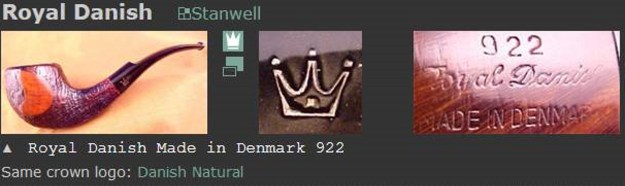
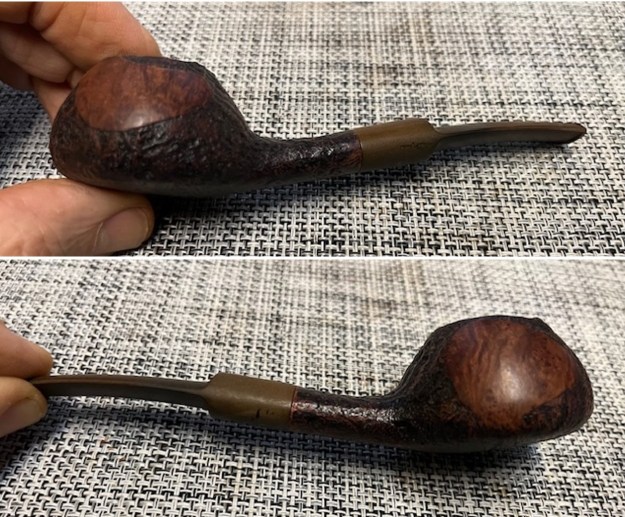
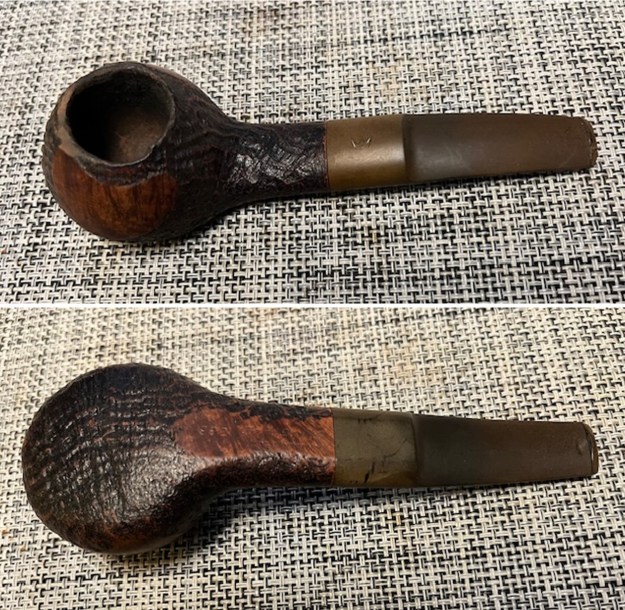
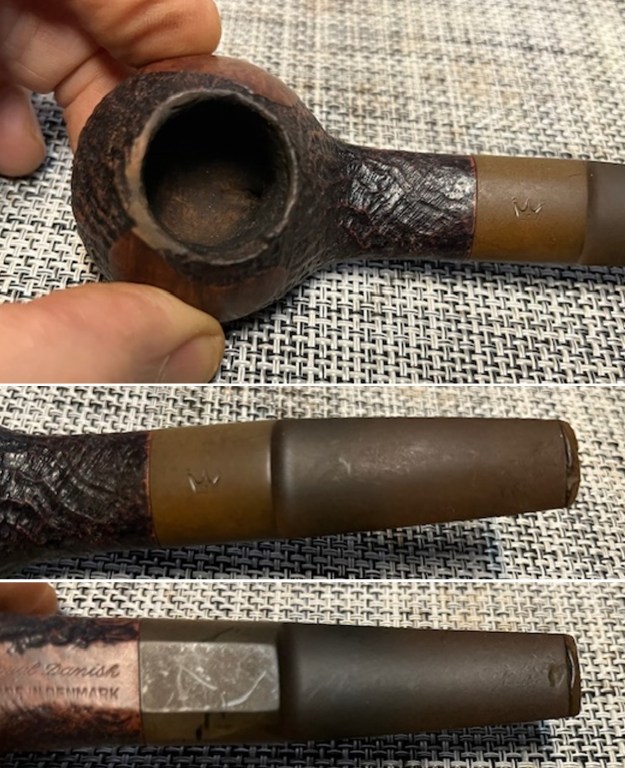
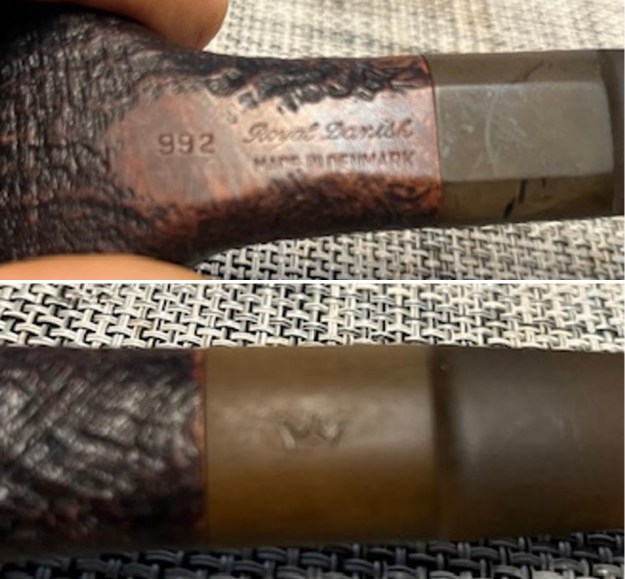
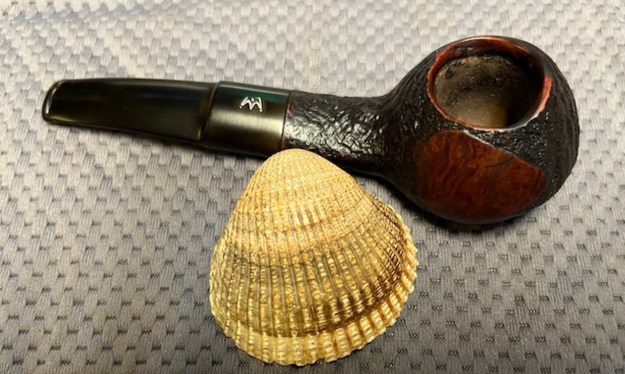
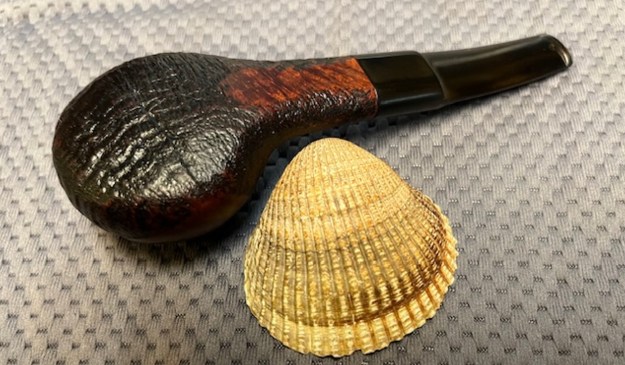
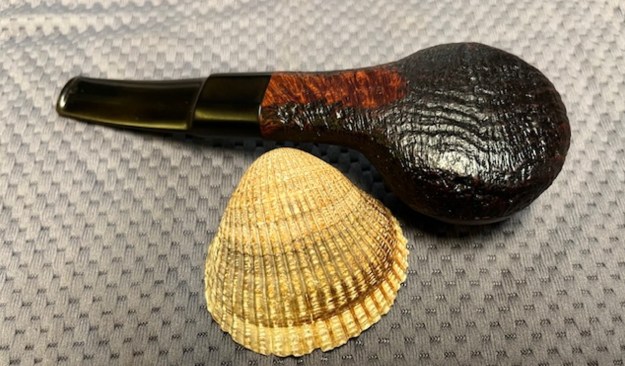
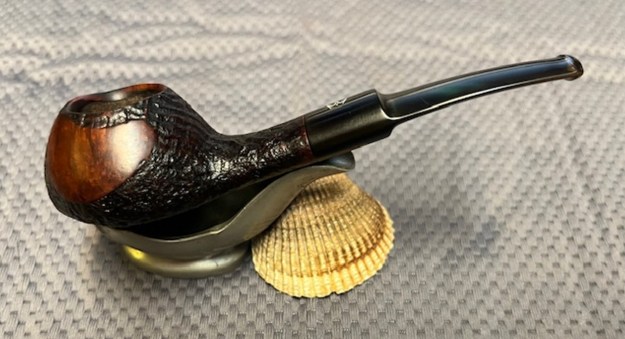
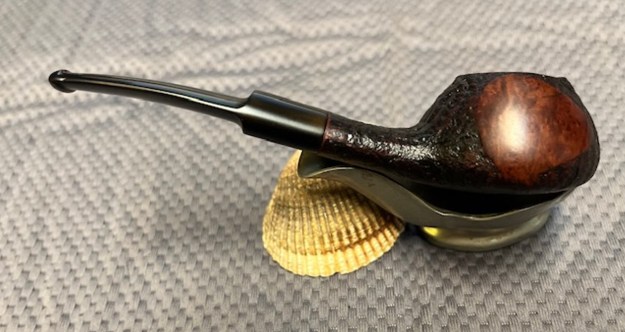
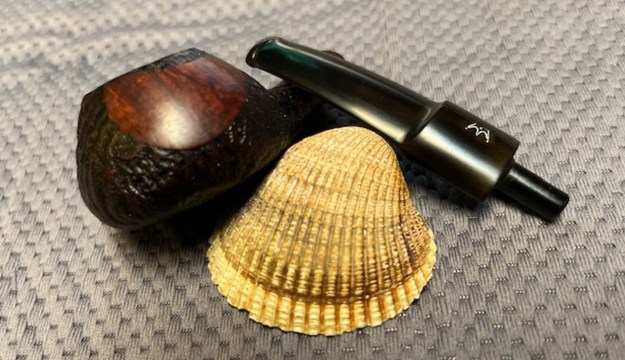
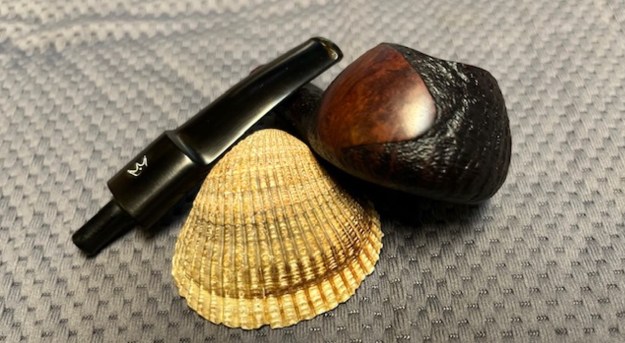
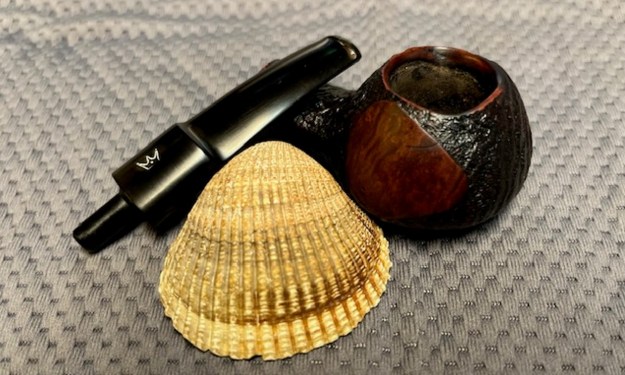
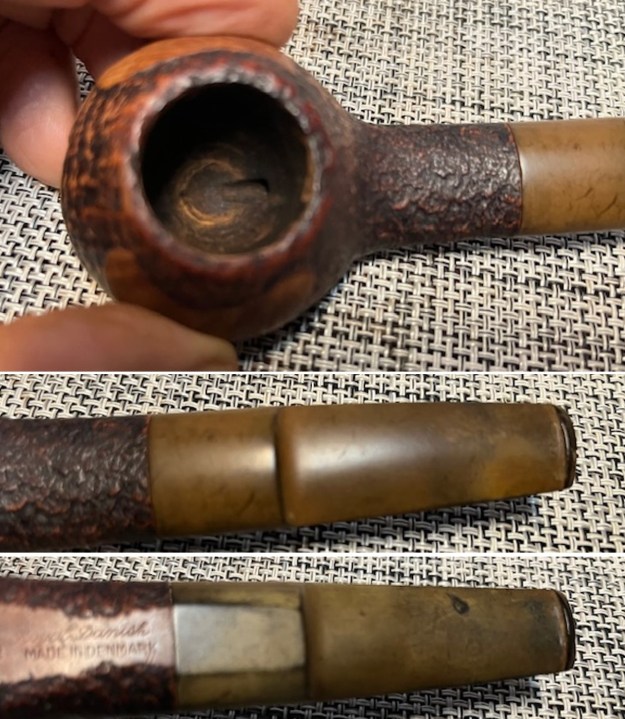
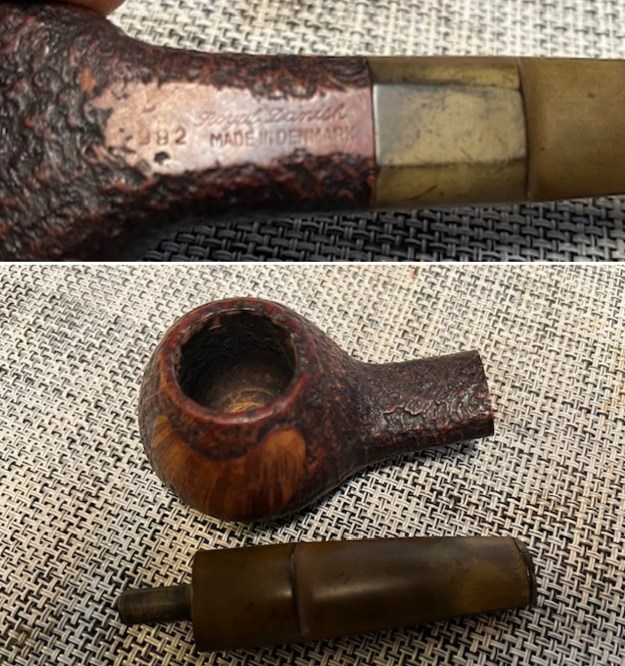
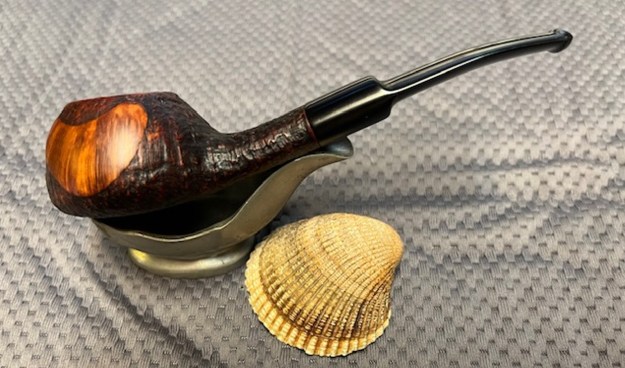
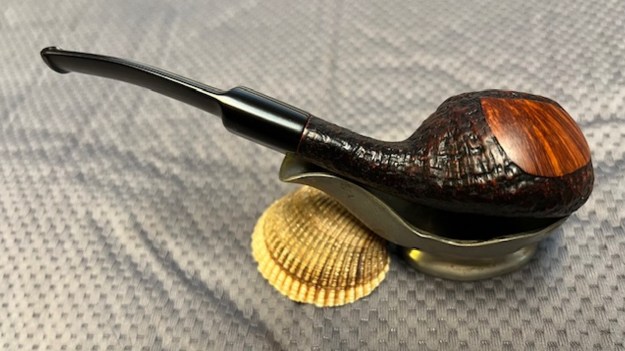
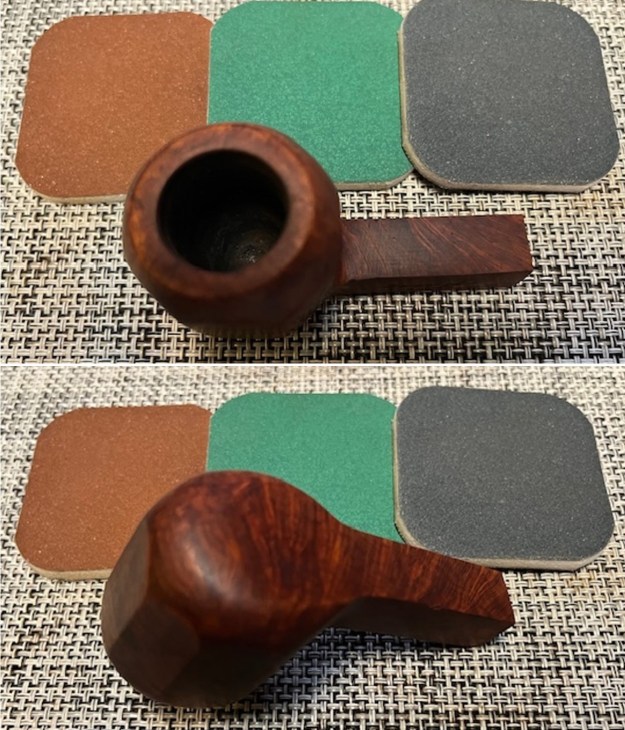
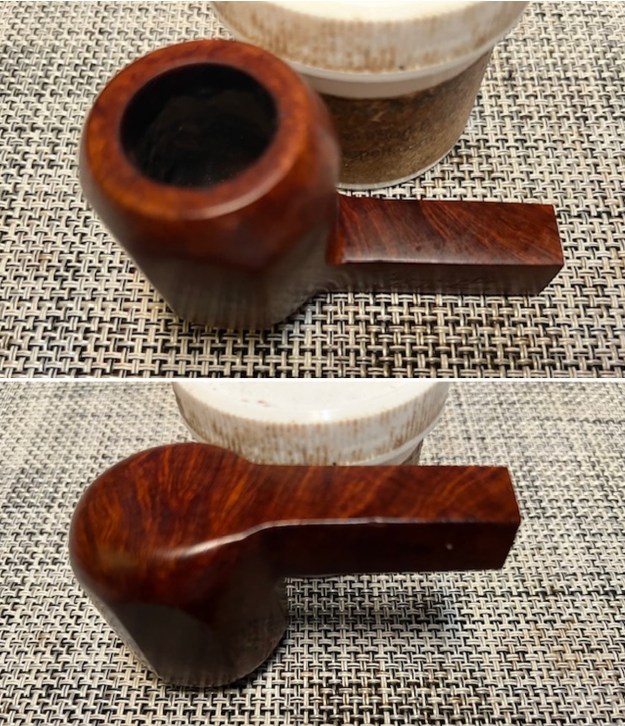
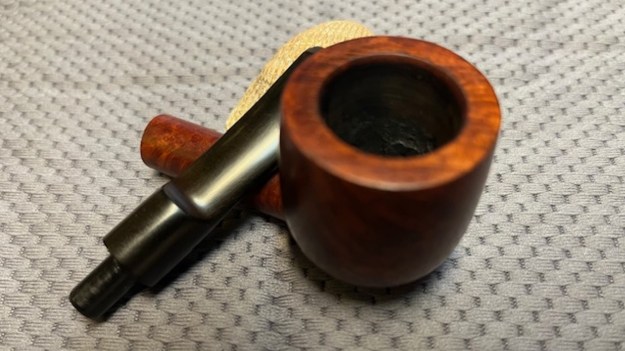
The next pipe is one that Jeff and I picked up at an antique shop in Bozeman, Montana, USD on 10/28/2017. It is another pipe that has been in my box of pipes to work on for a very long time. The pipe was similar to the Stanwell Vario Finish with sandblast finish around the bowl and shank and a smooth panel on the left and right sides of the bowl and a smooth inner edge on the mixed finish rim top. The stamping on the bowl is readable. On the underside of the shank it reads 992, the shape number [followed by] Royal Danish in script [over] Made in Denmark. The shape is quite unique and beautiful with great grain on the smooth panels and deep sandblast grooves around the bowl sides. The briar is very dirty with grime and oils in the grooves of the sandblast and on the smooth panels. The rim top and inner and outer edges showed darkening and wear.  The vulcanite saddle stem was stamped with a Royal Danish Crown logo on the topside. The stem was oxidized and had some deep tooth marks on the top and underside and on the button surface itself. Jeff took photos of the pipe to show you what it looked like before he started his cleanup. Jeff took photos of the bowl and stem. The bowl had a thick cake on the walls and overflowing onto the rim top and edges. It was thickly caked as well and hard to assess its condition. The airway in the shank and stem were dirty with tars and oils. The vulcanite stem was oxidized and calcified on both sides of the stem. There were deep tooth marks and chatter on both sides ahead of the button and on the button surface itself.He took photos of the grain on the smooth panels and the depth of the blast around the bowl and the shank. The grain was quite beautiful and the ruggedness of the blast is quite stunning. He took photos of the stamping on the underside of the shank and it was clear and readable as noted above. He also took a photo of the logo stamp on the top of the stem. Regardless of when this specific briar was made, the shape is very much a 1960s Danish one. I turned to Pipephil’s site and quickly scanned the article on Stanwell getting a great overview of the history. I went through the photos and did not find the shape of the pipe that I was working on (http://pipephil.eu/logos/en/logo-r6.html). There was one that showed the mixed finish of the Royal Danish line – sandblast with smooth patches on each side of the bowl. I have included a screen capture of that section below.I then turned to Pipedia and found that the Royal Danish was also listed as a second or a sub-brand made by Stanwell (https://pipedia.org/wiki/Stanwell#Sub-brands_.2F_Seconds). I have included the list of seconds from the site below. I have highlighted the Royal Danish in blue in the text.

Sub-brands / Seconds – Bijou (discontinued), Danish Quaint, Danish Sovereign, Danske Club,    Henley (discontinued), Kong Christian (discontinued), Majestic, Reddish (discontinued),  Royal Danish, Royal Guard, Royal Sovereign, Sailor (discontinued), Scandia, Sorn (discontinued), Svendson.

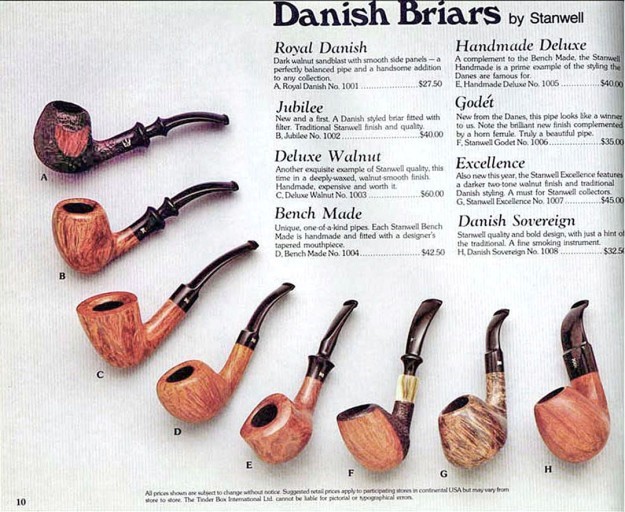
There was also an interesting advertising page on the Danish Briars by Stanwell. The first one on the list was the Royal Danish. The description of the line is clear and concise, be sure to read it below.

I followed one of the links at the end of the site to an article on rebornpipes written by Bas Stevens on the shape numbers and the designers who originally carved those shapes for Stanwell (https://pipedia.org/wiki/Stanwell_Shape_Numbers_and_Designers). The Royal Danish line adds a 9 before the 92 making the number 992. I quote from it as it specifically refers to the shape 92 as being a design by Sixten Ivarsson.

  • 92. Same as shape 91 but smaller by Sixten Ivarsson.

I have also included the information on the shape 91 and 91 R as referred to in the quote above.

  • 91. Slightly bent wide, flattened volcano with an oval shank and a short, standard saddle, trapezoidal saddle, or tapered stem, by Sixten Ivarsson. Nicknamed the ‘Ukulele’ (pictured, left, in its reissued design).
  • Sixten Ivarsson’s shape 91 ‘Ukulele’ for Stanwell, seen here in its reissued form as the 91R. Another signature design in the Danish style from Ivarsson, and a pioneering exploration of the limits of horizontality. Image courtesy Mike at Pipes Pens and More.
  • 91R. A reissue of the shape 91 ‘Ukulele,’ marketed as part of Stanwell’s ‘Giants’ line (see 1960s catalog below; pictured, right).

I now knew that the shape 992 was another Sixteen Ivarsson design. It was a flattened volcano that was nicknamed the Ukulele. It is an interesting shape. Now it was time to work on the pipe.

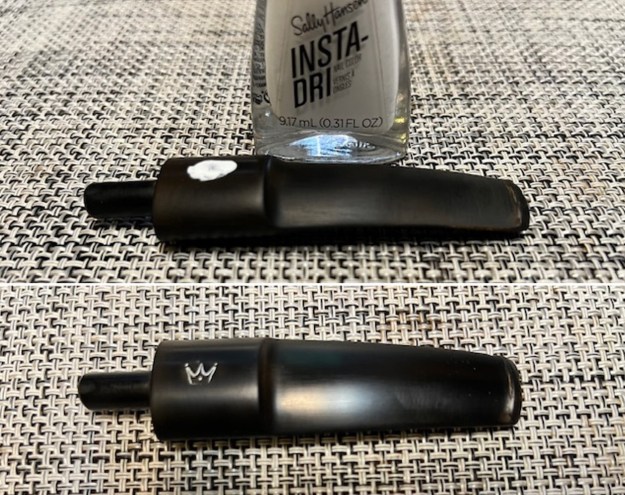
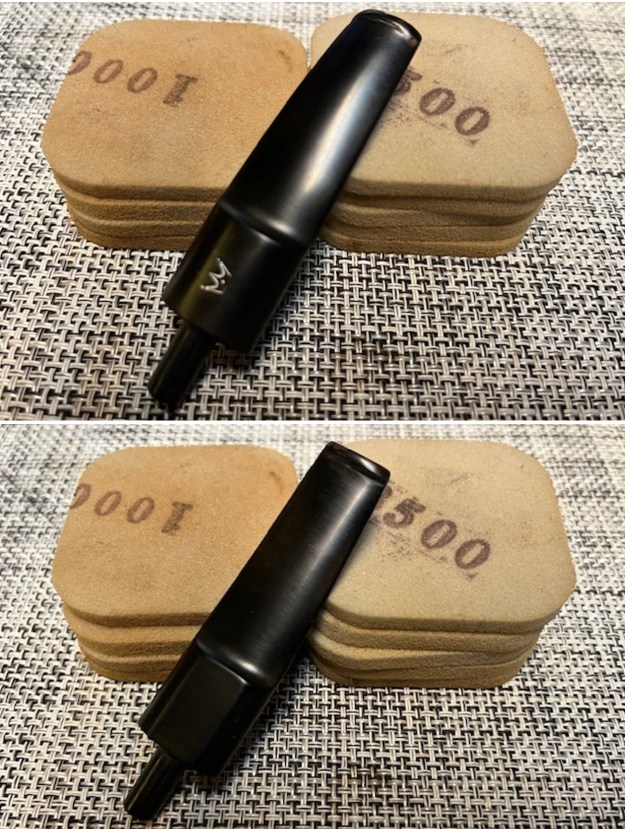
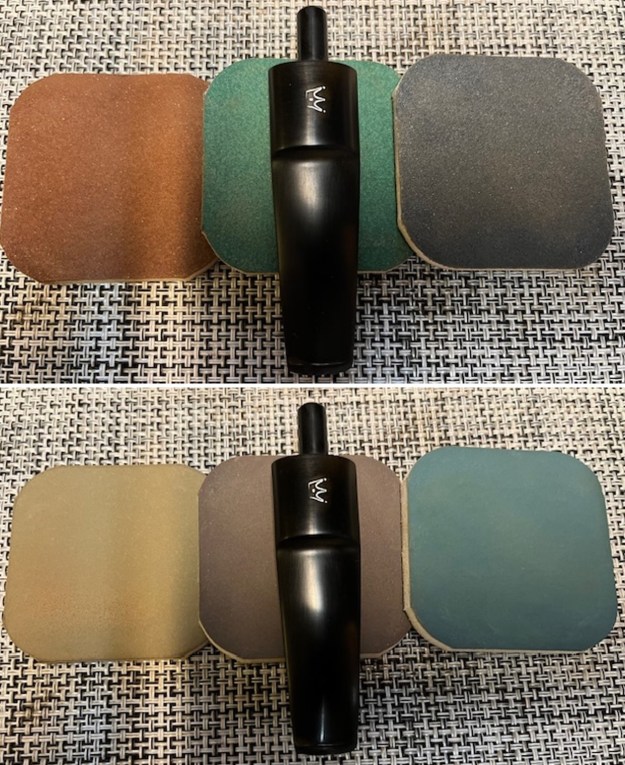
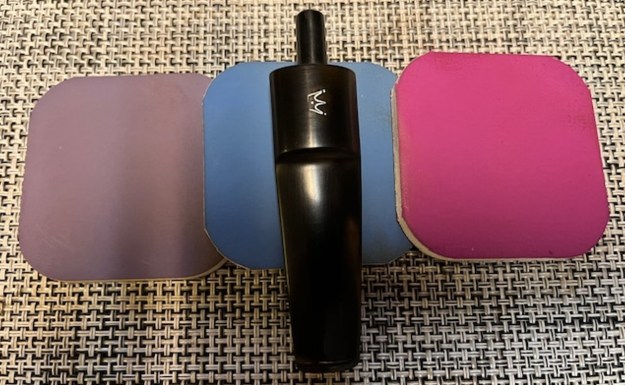
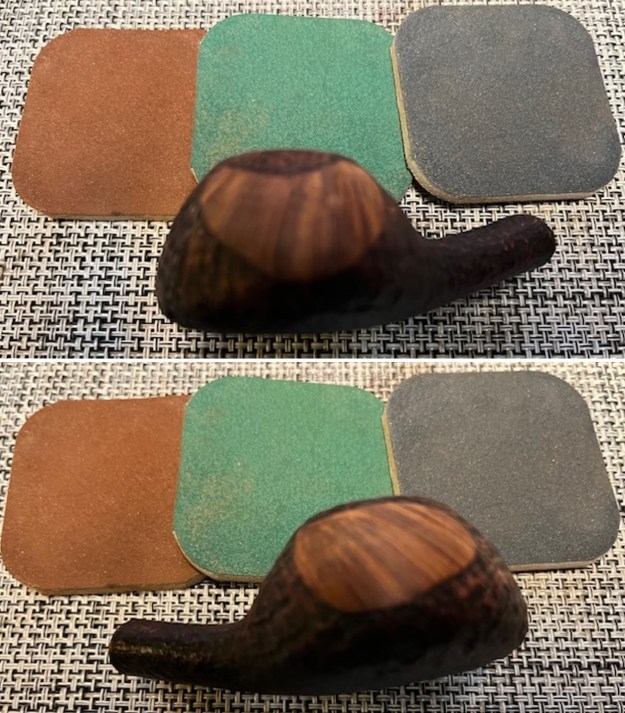
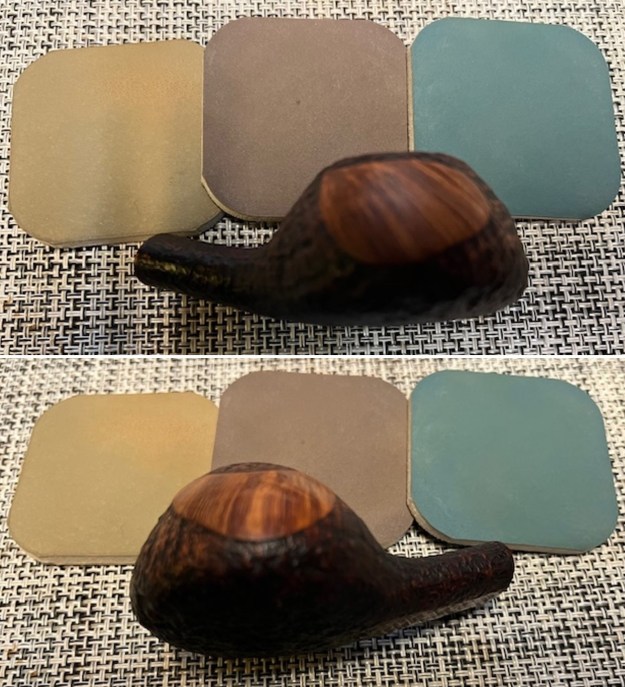
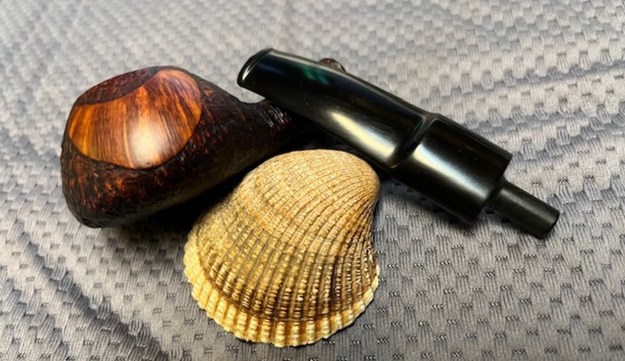
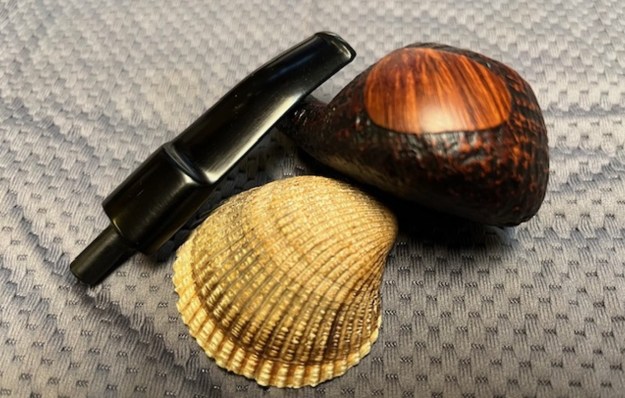
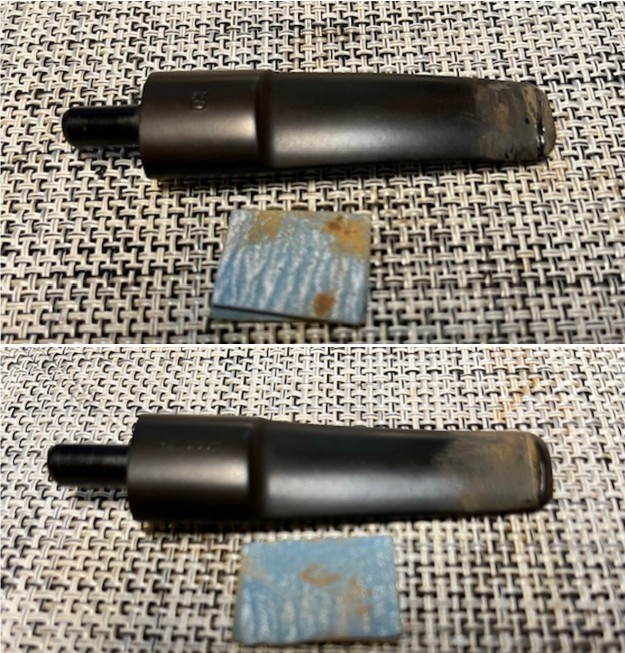
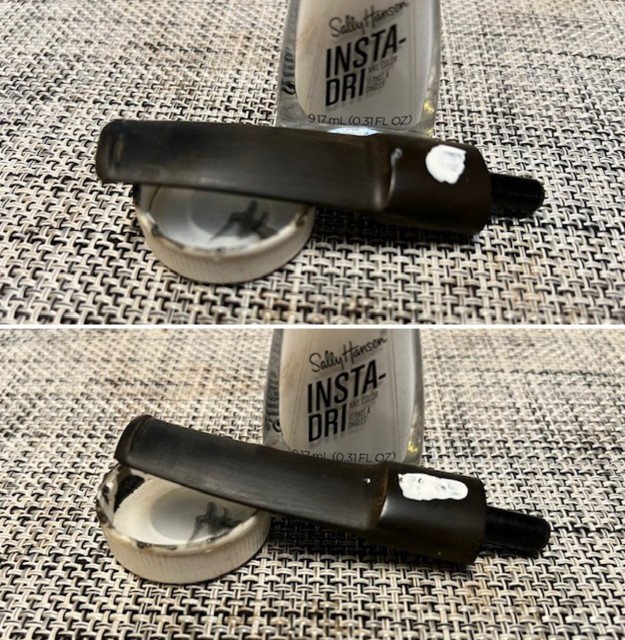
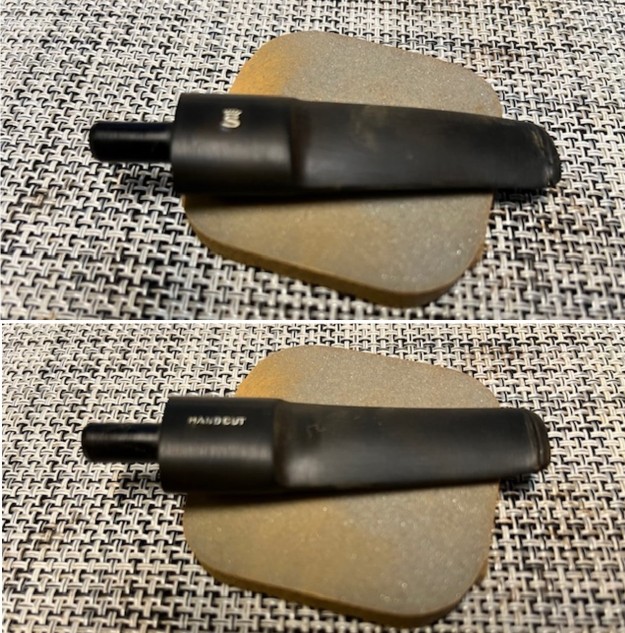
Jeff had cleaned up the pipe following his normal cleaning process. In short, he reamed the bowl with a PipNet pipe reamer and cleaned up the reaming with a Savinelli Fitsall Pipe Knife.  He scrubbed the smooth bowl with undiluted Murphy’s Oil Soap with a tooth brush. He worked over the lava and debris on the rim top and was able to remove it. He rinsed it under running warm water to remove the soap and grime. He cleaned out the inside of the shank and the airway in the stem with alcohol, cotton swabs and pipe cleaners. He scrubbed the stem with Soft Scrub and cotton pads to remove the debris and oils on the stem. He soaked it in a bath of Before & After Pipe Stem Deoxidizer to remove the oxidation. He rinsed it with warm water and dried it off. I took photos of the pipe once I received it. It really looked good. I took a close up photo of the rim top and stem surface to show the condition after the clean up. The bowl was in good condition though the rim top showed some damage toward the front of the bowl. It was worn and had some darkening at the front. The stem surface showed the tooth marks on both sides. They were quite deep on the surface and on the button edge itself.The stamping on the shank was readable as noted above. The stem had a Danish Royal Crown logo on the top of the saddle. I took the stem off the pipe and took a photo of the pipe in proportion. It is a beautiful pipe. Now it was time to work on the pipe. I started by using a folded piece of 220 grit sandpaper to smooth out the inwardly bevelled edge and clean up the darkening and damage to both. It was significantly better when I started. I used a Walnut stain pen to touch up the sanded rim top and inner edge of the bowl. I polished the smooth portion of the bowl sides and the inner edge of the rim with micromesh sanding pads – dry sanding with 1500-12000 grit sanding pads. I wiped it down after each sanding pad to remove the sanding debris. The smooth portions and bevelled inner edge looked much better at this point. I rubbed the bowl down with Before & After Restoration Balm working it into the briar with my fingertips and a horsehair shoe brush to clean, enliven and protect it. I let the balm sit for 15 minutes and then buffed with a cotton cloth to raise the shine. Mark Hoover’s Balm is a product that I have come to appreciate and one I use on every pipe I have been working on. I set the bowl aside and turned my attention to the stem. I scrubbed the surface down with Soft Scrub to remove the oxidation from the surface and particularly from the deep tooth marks on the stem.I “painted” the tooth marks on both sides ahead of the button with the flame of the lighter. I was able to lift them significantly but there were still tooth marks left in the edge of the button and on the surface. I filled in the remaining marks with black CA glue. I set it aside to cure overnight.In the morning I used a small file to recut the edge of the button and to flatten the repairs on the surface of the stem. I smoothed out the repairs further with a folded piece of 220 grit sandpaper. It was starting to look better. I touched up the stamping in the vulcanite on the top of the saddle portion of the stem. I used white acrylic fingernail polish to rewhiten the Crown on the top of the saddle. Once it hardened I sanded it with 320 grit sanding pads. I wiped it down with Obisidian Oil and set it aside.I used the sanding pads I purchased recently – 320-3500 grit regular pads to smooth out the finish and remove the light tooth and chatter marks in the stem. I wiped the stem down with Obsidian Oil to finish the preliminary work after the 3500 grit pad.I polished the stem with micromesh sanding pads – dry sanding with 1500-12000 grit pads. I wiped the stem down after each sanding pad with Obsidian Oil. I finished polishing it with Before & After Pipe Stem Polish – both Fine and Extra Fine. Once I had finished the polishing I gave it final coat of oil and set it aside to dry. As usual at this point in the restoration process I am excited to be on the homestretch. I look forward to the final look when it is put back together, polished and waxed. I put the Sixten Ivarsson design Stanwell Royal Danish Made in Denmark 992 Ukulele back together and it is a beauty. I polished the bowl and stem with Blue Diamond to polish the briar and the vulcanite. I gave the bowl and the stem multiple coats of carnauba wax. I buffed the pipe with a clean buffing pad to raise the shine. I hand buffed it with a microfiber cloth to deepen the shine. The pipe polished up pretty nicely. The grain really pops with the wax and polish. The shiny black vulcanite stem is a beautiful contrast to the browns of the bowl. This Royal Danish 992 Ukulele/ Volcano was a great pipe to spruce up. It is a very comfortable pipe to hold in the hand. The finished pipe is shown in the photos below. The dimensions of the pipe are Length: 5 ½ inches, Height: 1 ¼ inches, Outside diameter of the bowl: 1 ¼ inches, Chamber diameter: 7/8 of an inch. The weight of the pipe is 38 grams/1.34 ounces. I will be putting this pipe on the Danish Pipe Making Companies Section of the rebornpipes store. If you are interested in adding it to your collection let me know by email or message. Thanks for reading this blog and my reflections on the pipe while I worked on it. This is an interesting estate to bring back to life.
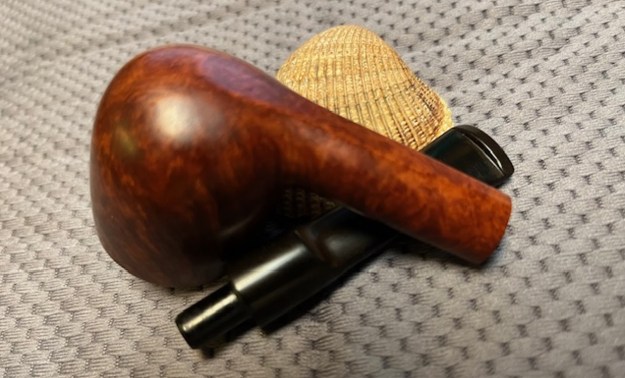
Now I know that this Royal Danish 992 is a Ukulele Design by Ivarsson


Blog by Steve Laug

The next pipe is one that Jeff and I picked up off eBay way back on 04/19/2016. It is another pipe that has been in my box of pipes to work on for a very long time. The pipe, like the previous 992 was similar to the Stanwell Vario Finish with sandblast finish around the bowl and shank and a smooth panel on the left and right sides of the bowl. The stamping on the bowl is readable. On the underside of the shank it reads 992, the shape number [followed by] Royal Danish in script [over] Made in Denmark. The shape is quite unique and beautiful with great grain on the smooth panels and deep sandblast grooves around the bowl sides. The sandblast and on the smooth panels looked very good. The rim top and inner edges were in great condition. The vulcanite saddle stem was lacking the Royal Danish logo on the topside. The stem was heavily oxidized and had some tooth marks on the top and underside of the stem. Jeff took very few photos of the pipe in these early days but the one below shows you what it looked like before he started his cleanup.Jeff took a photo of the bowl and rim top. The bowl had been reamed somewhere along the way and the bowl was quite clean. It also seemed to be quite clean on the finish as well. The vulcanite stem was heavily oxidized on both sides of the stem. There were tooth marks and chatter on both sides ahead of the button. Jeff took a close up of the rim and bowl and the topside of the stem.Regardless of when this specific briar was made, the shape is very much a 1960s Danish one. I turned to Pipephil’s site and quickly scanned the article on Stanwell getting a great overview of the history. I went through the photos and did not find the shape of the pipe that I was working on (http://pipephil.eu/logos/en/logo-r6.html). There was one that showed the mixed finish of the Royal Danish line – sandblast with smooth patches on each side of the bowl. I have included a screen capture of that section below.I then turned to Pipedia and found that the Royal Danish was also listed as a second or a sub-brand made by Stanwell (https://pipedia.org/wiki/Stanwell#Sub-brands_.2F_Seconds). I have included the list of seconds from the site below. I have highlighted the Royal Danish in blue in the text.

Sub-brands / Seconds – Bijou (discontinued), Danish Quaint, Danish Sovereign, Danske Club, Henley (discontinued), Kong Christian (discontinued), Majestic, Reddish (discontinued),  Royal Danish, Royal Guard, Royal Sovereign, Sailor (discontinued), Scandia, Sorn (discontinued), Svendson.

There was also an interesting advertising page on the Danish Briars by Stanwell. The first one on the list was the Royal Danish. The description of the line is clear and concise, be sure to read it below.I followed one of the links at the end of the site to an article on rebornpipes written by Bas Stevens on the shape numbers and the designers who originally carved those shapes for Stanwell (https://pipedia.org/wiki/Stanwell_Shape_Numbers_and_Designers). The Royal Danish line adds a 9 before the 92 making the number 992. I quote from it as it specifically refers to the shape 92 as being a design by Sixten Ivarsson.

  • 92. Same as shape 91 but smaller by Sixten Ivarsson.

I have also included the information on the shape 91 and 91 R as referred to in the quote above.

  • 91. Slightly bent wide, flattened volcano with an oval shank and a short, standard saddle, trapezoidal saddle, or tapered stem, by Sixten Ivarsson. Nicknamed the ‘Ukulele’ (pictured, leftt, in its reissued design).
  • Sixten Ivarsson’s shape 91 ‘Ukulele’ for Stanwell, seen here in its reissued form as the 91R. Another signature design in the Danish style from Ivarsson, and a pioneering exploration of the limits of horizontality. Image courtesy Mike at Pipes Pens and More.
  • 91R. A reissue of the shape 91 ‘Ukulele,’ marketed as part of Stanwell’s ‘Giants’ line (see 1960s catalog on the site link above).

I now knew that the shape 992 was another Sixteen Ivarsson design. It was a flattened volcano that was nicknamed the Ukulele. It is an interesting shape. Now it was time to work on the pipe.

Jeff had cleaned up the bowl with a PipNet pipe reamer and cleaned up the reaming with a Savinelli Fitsall Pipe Knife. He scrubbed the bowl with undiluted Murphy’s Oil Soap with a tooth brush. He worked over the lava and debris on the rim top and was able to remove it. He rinsed it under running warm water to remove the soap and grime. He cleaned out the inside of the shank and the airway in the stem with alcohol, cotton swabs and pipe cleaners. This was in the early years when Jeff did not do his now very thorough clean up. The stem was still very oxidized. I took photos of the pipe when it arrived. I took a close up photo of the rim top and stem surface to show the condition when I started my work on it. The bowl was in good condition though the rim top showed some damage toward the front of the bowl. It was worn and had some darkening at the front. The stem surface showed the tooth marks on both sides. They were quite deep on the surface and on the button edge itself.The stamping on the shank was readable as noted above. The stem did not have the Danish Royal Crown logo on the top of the saddle. I took the stem off the pipe and took a photo of the pipe in proportion. It is a beautiful pipe.Now it was time to work on the pipe. I polished the smooth panels on the bowl sides with micromesh sanding pads – dry sanding with 1500-12000 grit sanding pads. I wiped it down after each sanding pad to remove the sanding debris. I rubbed the bowl down with Before & After Restoration Balm working it into the briar with my fingertips and a horsehair shoe brush to clean, enliven and protect it. I let the balm sit for 15 minutes and then buffed with a cotton cloth to raise the shine. Mark Hoover’s Balm is a product that I have come to appreciate and one I use on every pipe I have been working on. I set the bowl aside and turned my attention to the stem. I scrubbed the surface down with Soft Scrub to remove the oxidation from the surface and particularly from the deep tooth marks on the stem.I “painted” the tooth marks on both sides ahead of the button with the flame of the lighter. I was able to lift them significantly but there were still tooth marks left in the edge of the button and on the surface. I filled in the remaining marks with black CA glue. I set it aside to cure overnight.In the morning I used a small file to recut the edge of the button and to flatten the repairs on the surface of the stem. I smoothed out the repairs further with a folded piece of 220 grit sandpaper. It was starting to look better. I used the sanding pads I purchased recently – 320-3500 grit regular pads to smooth out the finish and remove the light tooth and chatter marks in the stem. I wiped the stem down with Obsidian Oil to finish the preliminary work after the 3500 grit pad.I polished the stem with micromesh sanding pads – dry sanding with 1500-12000 grit pads. I wiped the stem down after each sanding pad with Obsidian Oil. I finished polishing it with Before & After Pipe Stem Polish – both Fine and Extra Fine. Once I had finished the polishing I gave it final coat of oil and set it aside to dry.As usual at this point in the restoration process I am excited to be on the homestretch. I look forward to the final look when it is put back together, polished and waxed. I put the Sixten Ivarsson design Stanwell Royal Danish Made in Denmark 992 Ukulele back together and it is a beauty. I polished the bowl and stem with Blue Diamond to polish the briar and the vulcanite. I gave the bowl and the stem multiple coats of carnauba wax. I buffed the pipe with a clean buffing pad to raise the shine. I hand buffed it with a microfiber cloth to deepen the shine. The pipe polished up pretty nicely. The grain really pops with the wax and polish. The shiny black vulcanite stem is a beautiful contrast to the browns of the bowl. This Royal Danish 992 Ukulele was a great pipe to spruce up. It is a very comfortable pipe to hold in the hand. The finished pipe is shown in the photos below. The dimensions of the pipe are Length: 5 ½ inches, Height: 1 ¼ inches, Outside diameter of the bowl: 1 ¼ inches, Chamber diameter: 7/8 of an inch. The weight of the pipe is 40 grams/1.41 ounces. I will be putting this pipe on the Danish Pipe Making Companies Section of the rebornpipes store. If you are interested in adding it to your collection let me know by email or message. Thanks for reading this blog and my reflections on the pipe while I worked on it. This is an interesting estate to bring back to life.

Cleaning Up a Unique Stanwell Selected Briar Hand Made 13 Bent Pear


Blog by Steve Laug

The next pipe is one that is another intriguing one to me for multiple reasons. Neither Jeff or I have any memory of finding it or trading for it. It has been in my box of pipes to work on for a very long time but I have no sense of when or where I got it. It had been reamed but not cleaned or sanitized. The stamping on it is readable. On the topside of the shank it reads Stanwell [over] Regd. No. 969-48 [over] Hand Made. On the underside of the shank it is stamped Selected Briar [over] the shape number 13 [over] Made in Denmark. The shape is quite unique and beautiful with great grain around the bowl sides. The shape 13 was a Sixten Ivarsson design called a Pear. The briar is very dirty and faded. The rim top and inner and outer edges are covered with darkening and tars. The vulcanite saddle stem was stamped with a Crown S logo on the topside and on the underside with the words Hand Cut. The stem was oxidized and has some tooth marks on the top and underside and on the button surface itself. I took photos of the pipe to show you what I saw. The bowl had been reamed recently but it had not been cleaned. The airway in the shank and stem were dirty with tars and oils. The mortise had tars and oils on the walls and the pipe smelled heavily of English tobacco. The vulcanite stem is also dirty on the inside as well as oxidized on both sides of the stem. There were tooth marks and chatter on both sides ahead of the button and on the button surface itself.I took a photo of the stamping on the top and the underside of the shank. It was stamped as noted above and was clear and readable on both sides. I took the stem off the shank and took a photo of the parts. At this point I started my cleanup on it. I worked over the top and the inner and outer edges of the bowl with a 320 grit sanding pad. I worked to remove the darkening and lava on the bowl surfaces. It was looking much better.I cleaned out the internals of the mortise and the airway in the shank and the stem with isopropyl alcohol, cotton swabs and pipe cleaners. I was able to remove the tars and oils and once finished the smell of the pipe was much cleaner.I polished the briar with micromesh sanding pads. I used 1500-12000 grit pads to dry sand the briar around the bowl and shank. I wiped it down after each sanding pad with a damp cloth. By the end the briar began to take on a real shine. I rubbed the bowl down with Before & After Restoration Balm. I worked it into the surface of the briar with my fingertips and a horse hair shoe brush to clean, enliven and protect it. I let the balm sit for 15 minutes and then buffed with a cotton cloth to raise the shine. Mark Hoover’s Balm is a product that I have come to appreciate and one I use on every pipe I have been working on. I set the bowl aside and turned my attention to the stem. I “painted” the tooth marks on both sides ahead of the button with the flame of the lighter. I was able to lift them significantly but there were still tooth marks left in the edge of the button and on the surface. I filled in the remaining marks with black CA glue. I set it aside to cure overnight. In the morning I used a small file to recut the edge of the button and to flatten the repairs on the surface of the stem. I smoothed out the repairs further with a folded piece of 220 grit sandpaper. It was starting to look better. I paused in the polishing process to touch up the stamping in the vulcanite on the top and underside of the saddle portion of the stem. I used white acrylic fingernail polish to rewhiten the Crown S on the top and the Hand Cut on the underside. Once it hardened I sanded it with 320 grit sanding pads. I wiped it down with Obisidian Oil and set it aside. I used the sanding pads I purchased recently – 320-3500 grit regular pads to smooth out the finish and remove the light tooth and chatter marks in the stem. I wiped the stem down with Obsidian Oil to finish the preliminary work after the 3500 grit pad.I polished the stem with micromesh sanding pads – dry sanding with 1500-12000 grit pads. I wiped the stem down after each sanding pad with Obsidian Oil. I finished polishing it with Before & After Pipe Stem Polish – both Fine and Extra Fine. Once I had finished the polishing I gave it final coat of oil and set it aside to dry. As usual at this point in the restoration process I am excited to be on the homestretch. I look forward to the final look when it is put back together, polished and waxed. I put the Sixten Ivarsson design Stanwell Selected Briar Hand Made in Denmark 13 Pear with a Regd. No. back together and it is a beauty. I polished the bowl and stem with Blue Diamond to polish the briar and the vulcanite. I gave the bowl and the stem multiple coats of carnauba wax. I buffed the pipe with a clean buffing pad to raise the shine. I hand buffed it with a microfiber cloth to deepen the shine. The pipe polished up pretty nicely. The grain really pops with the wax and polish. The shiny black vulcanite stem is a beautiful contrast to the browns of the bowl. This Stanwell Select Briar 13 Pear was a great pipe to spruce up. It is a very comfortable pipe to hold in the hand. The finished pipe is shown in the photos below. The dimensions of the pipe are Length: 5 ½ inches, Height: 2 inches, Outside diameter of the bowl: 1 ¼ inches, Chamber diameter: ¾ of an inch. The weight of the pipe is 44 grams/1.59 ounces. I will be putting this pipe on the Danish Pipe Making Companies Section of the rebornpipes store. If you are interested in adding it to your collection let me know by email or message. Thanks for reading this blog and my reflections on the pipe while I worked on it. This is an interesting estate to bring back to life.