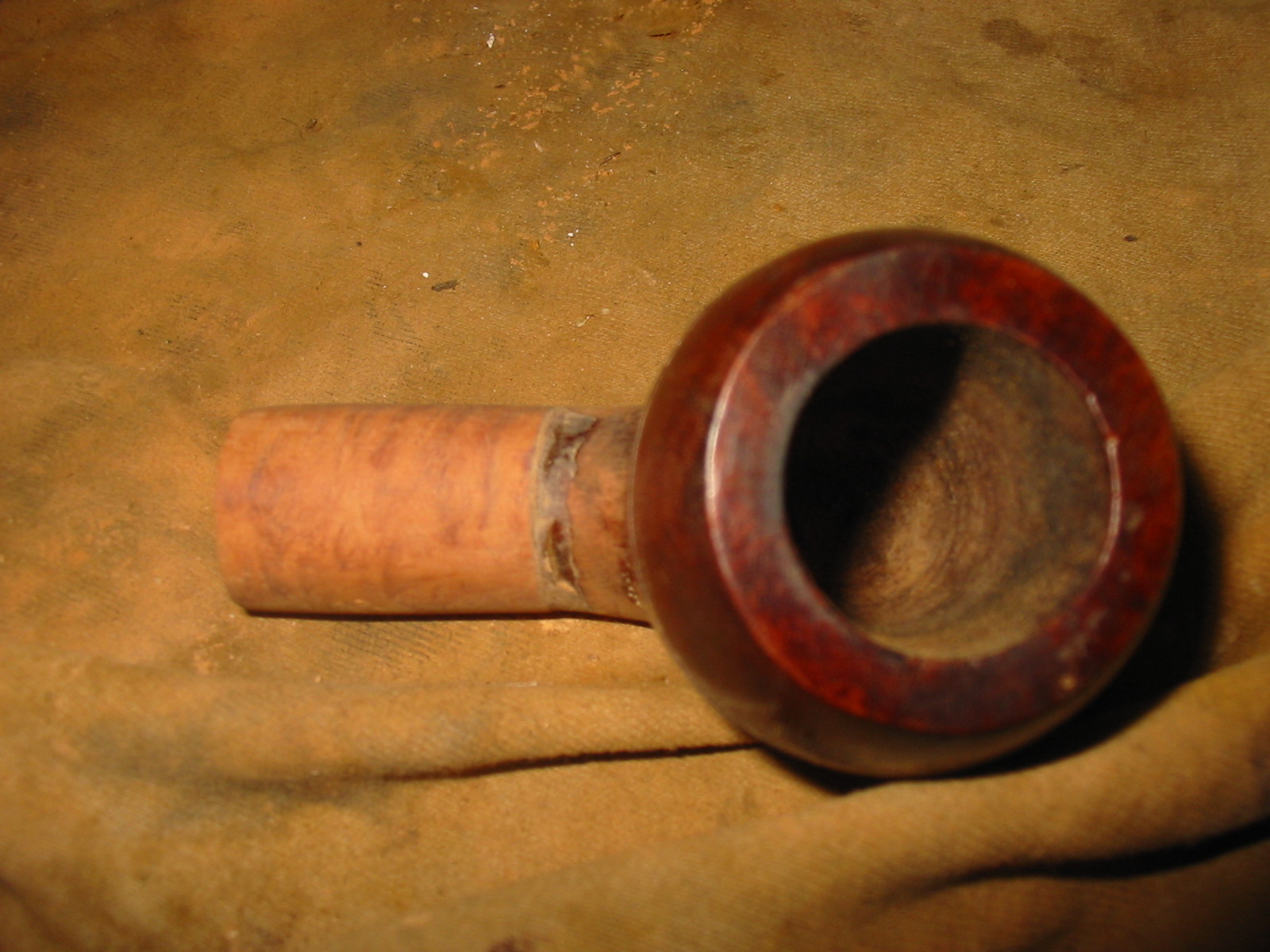
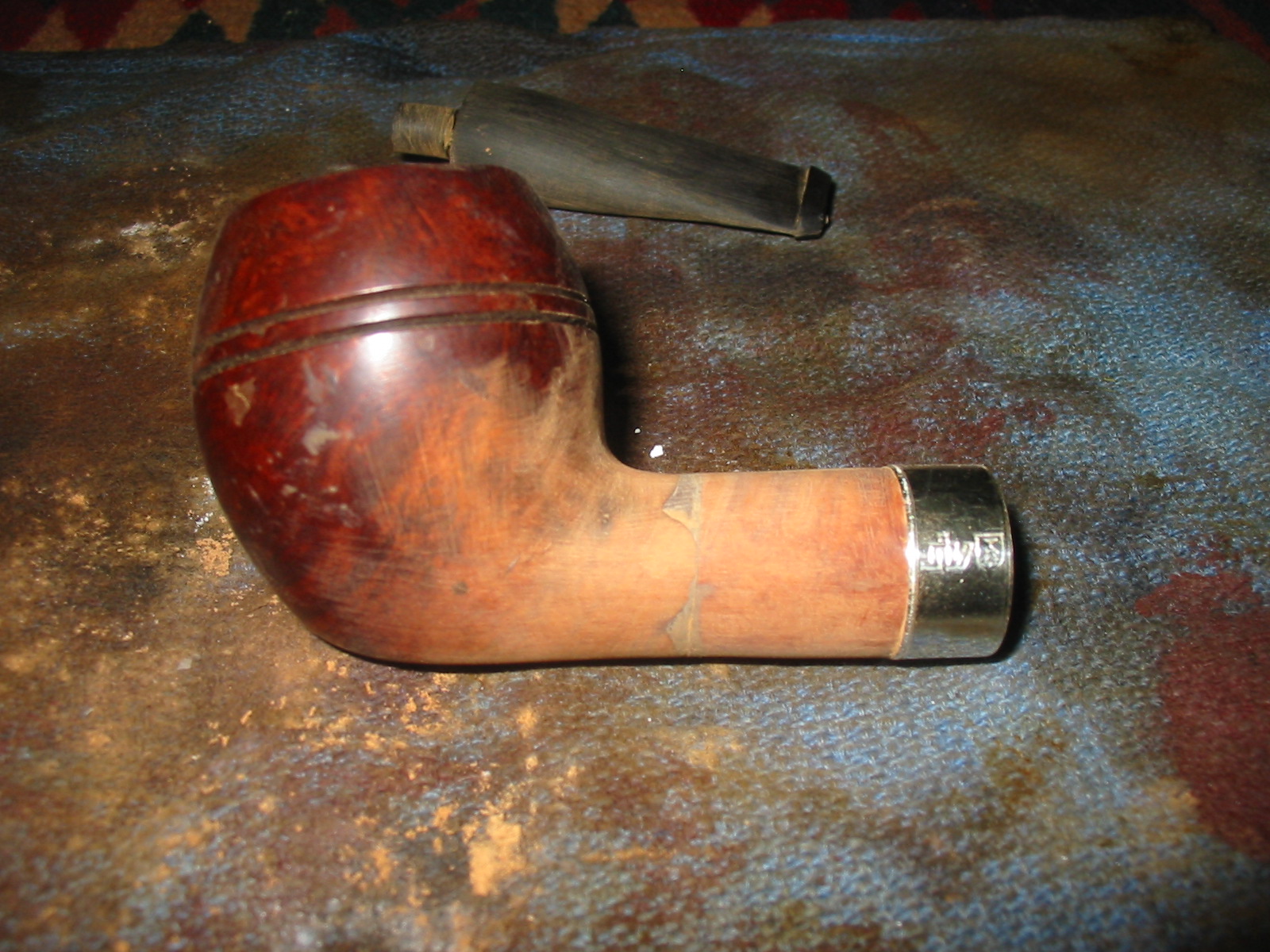
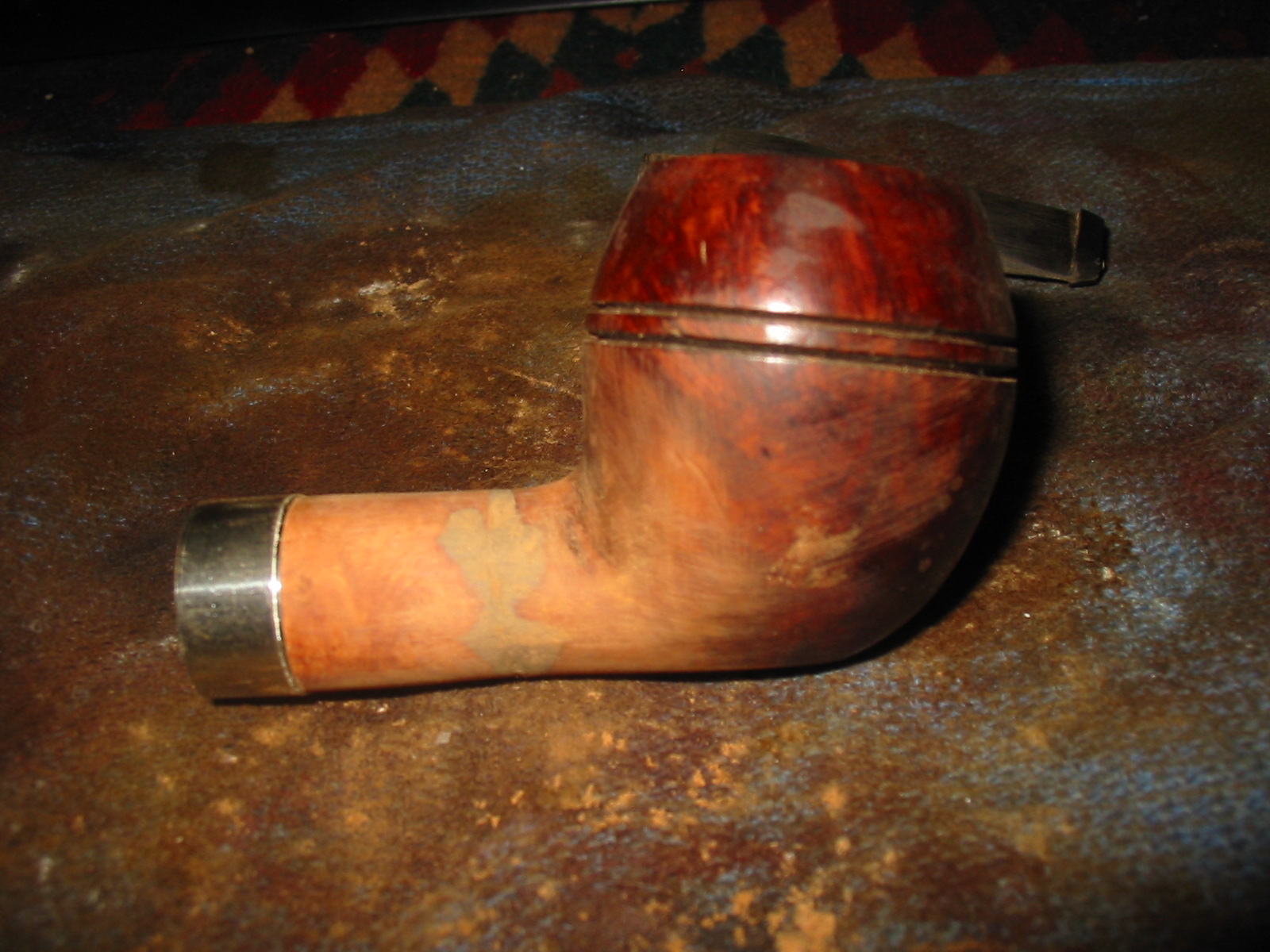
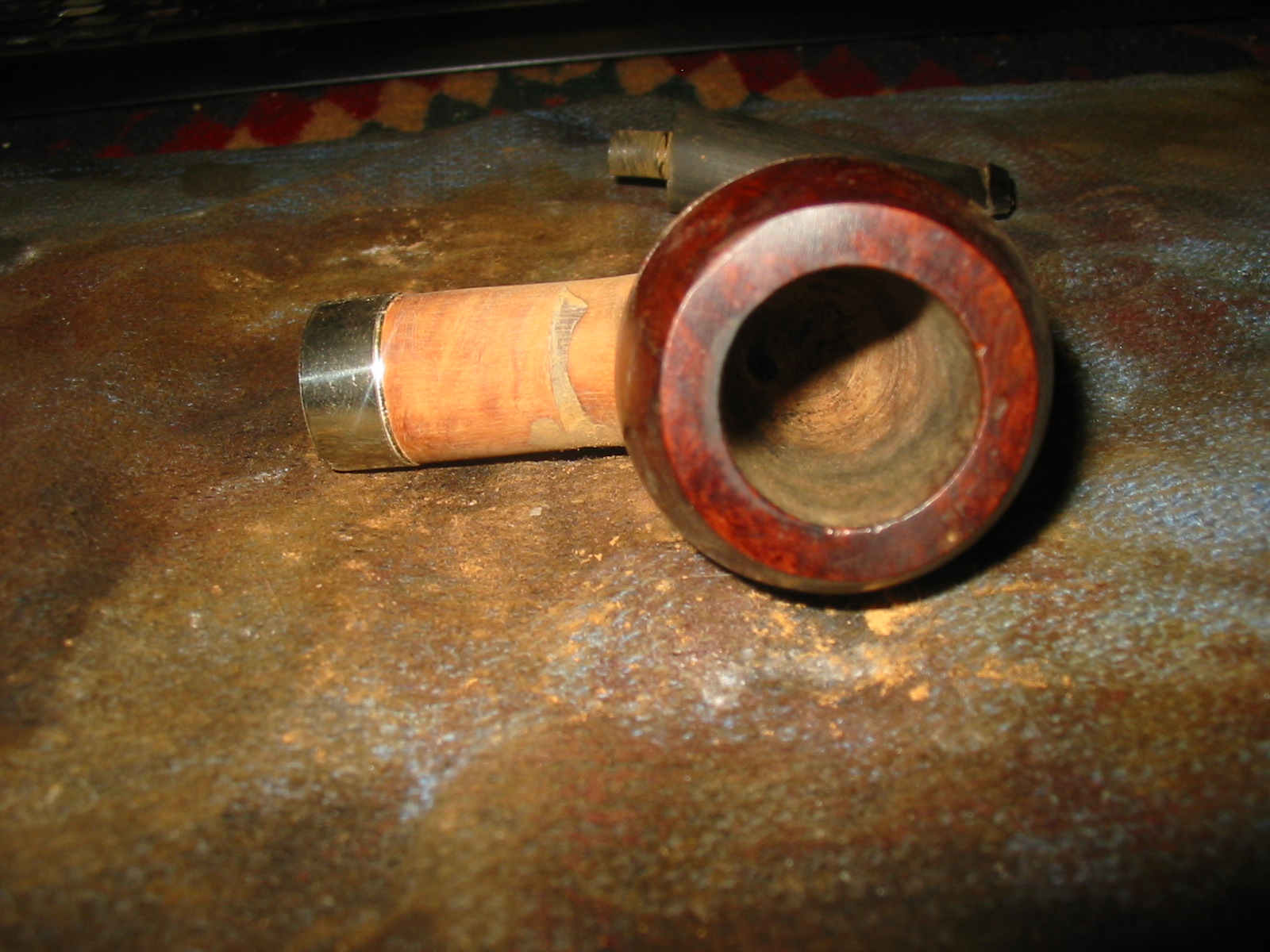
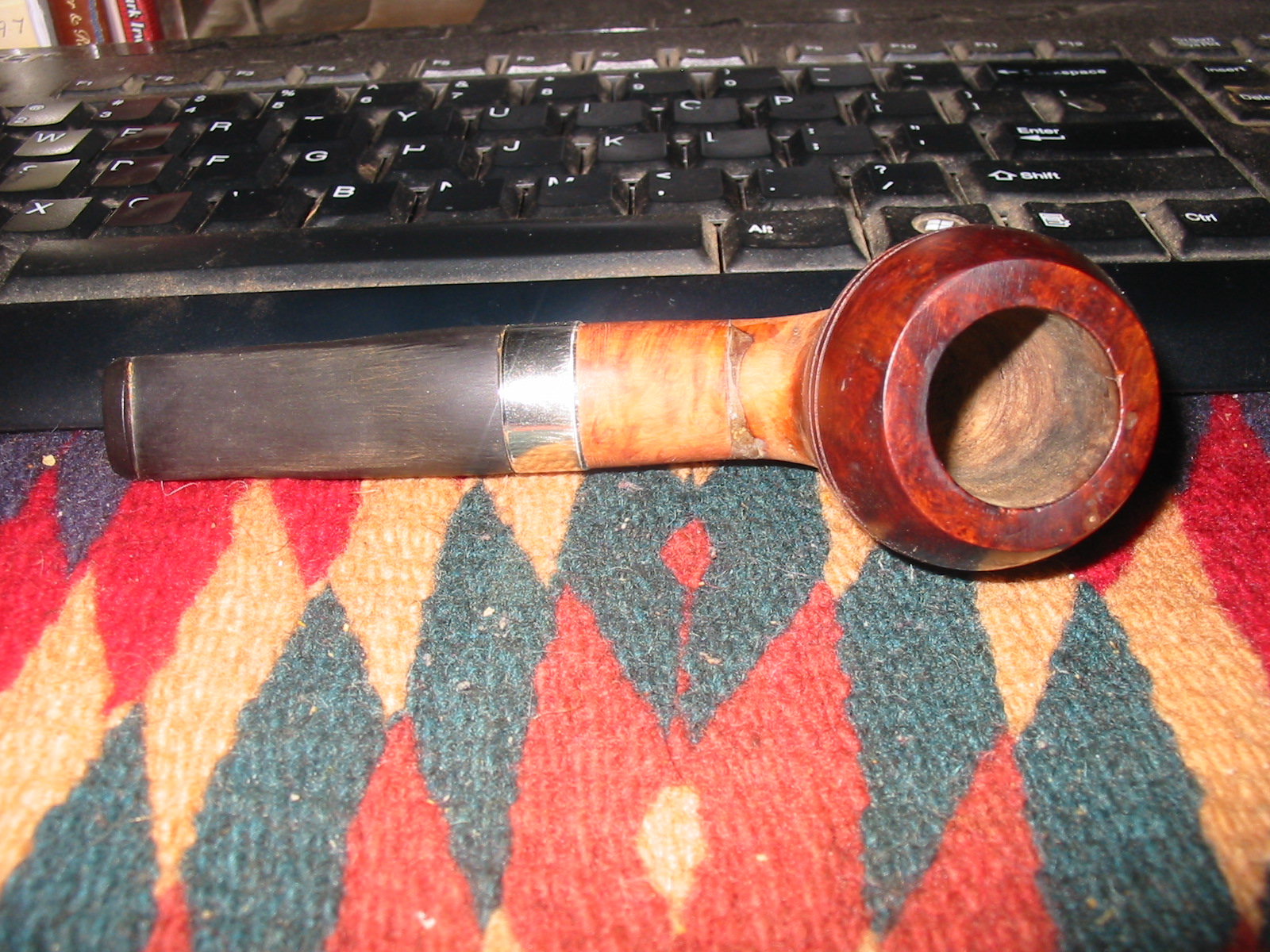
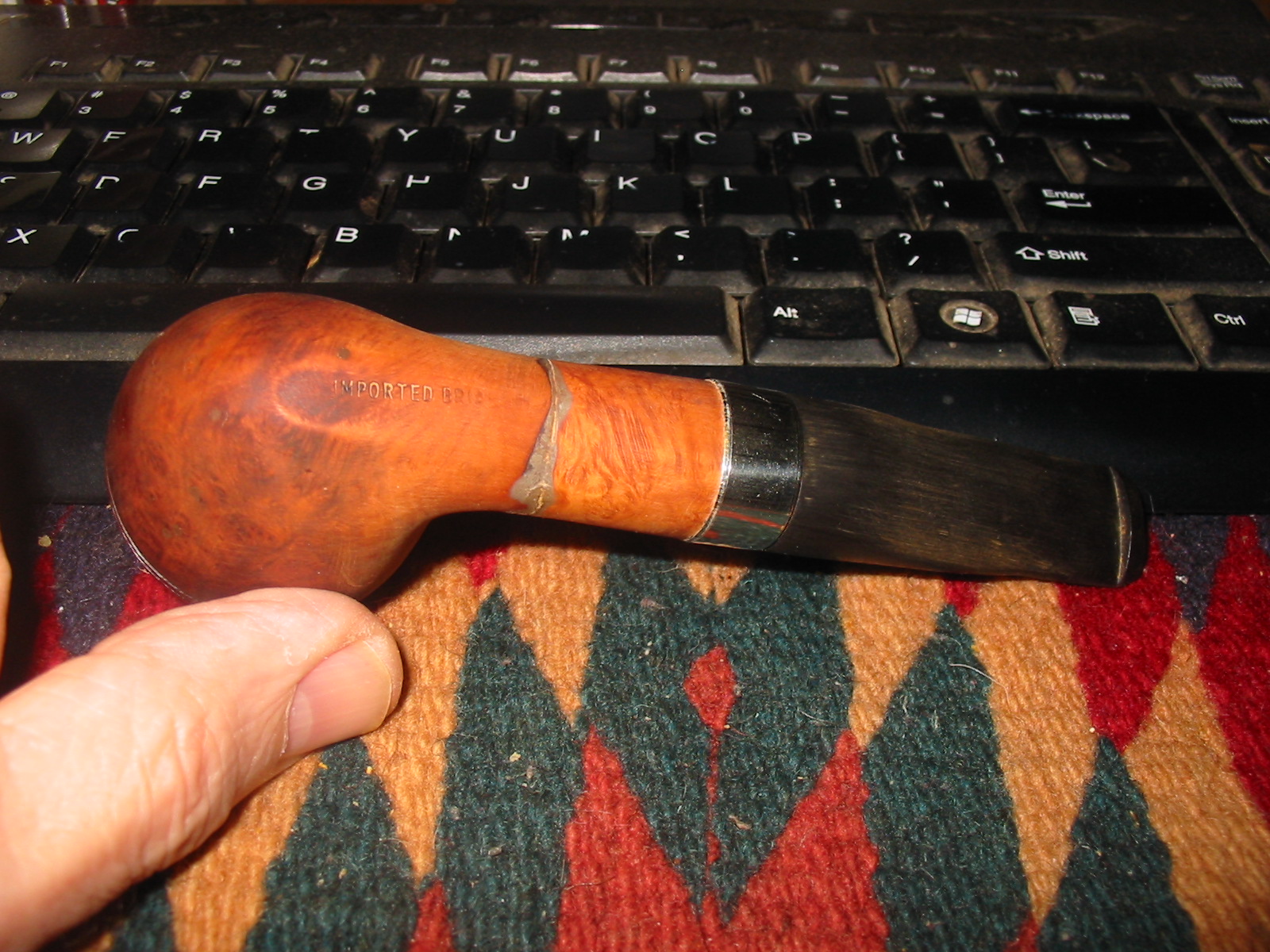
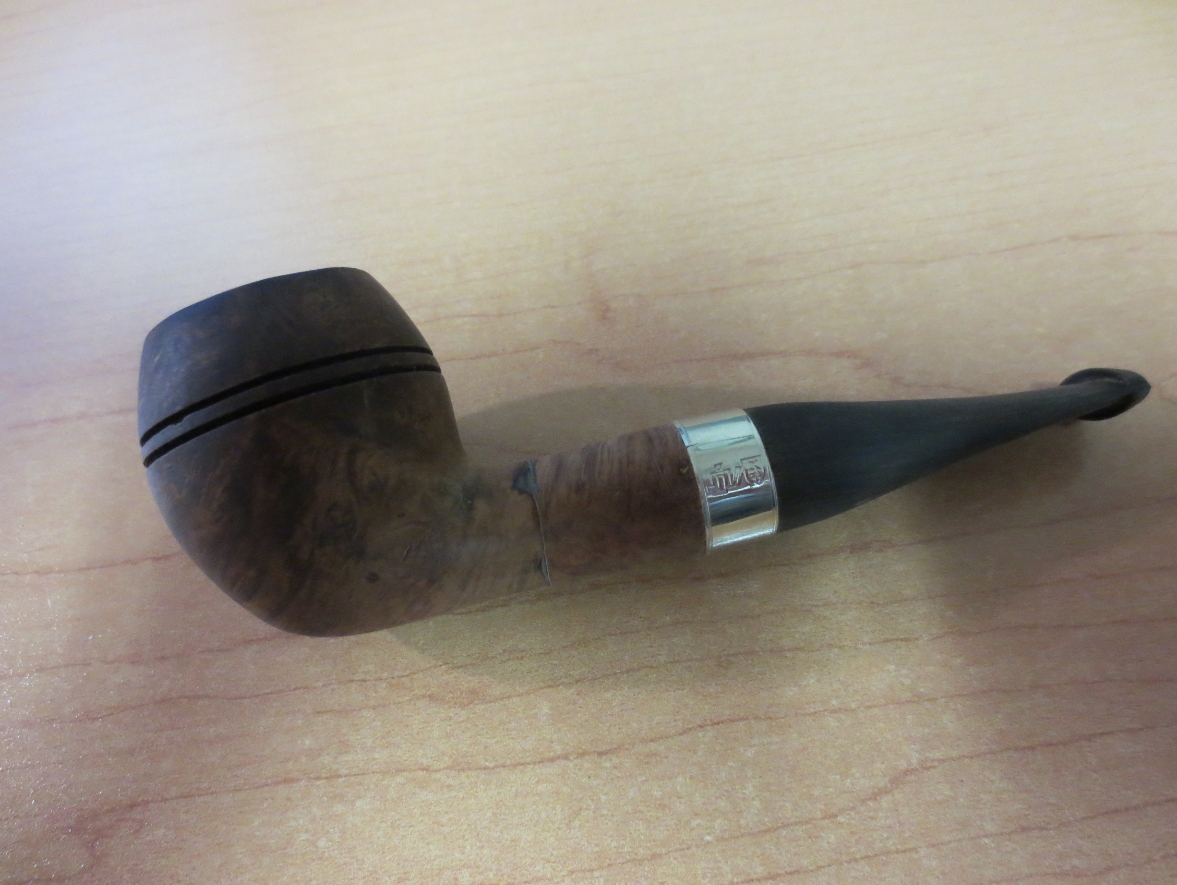
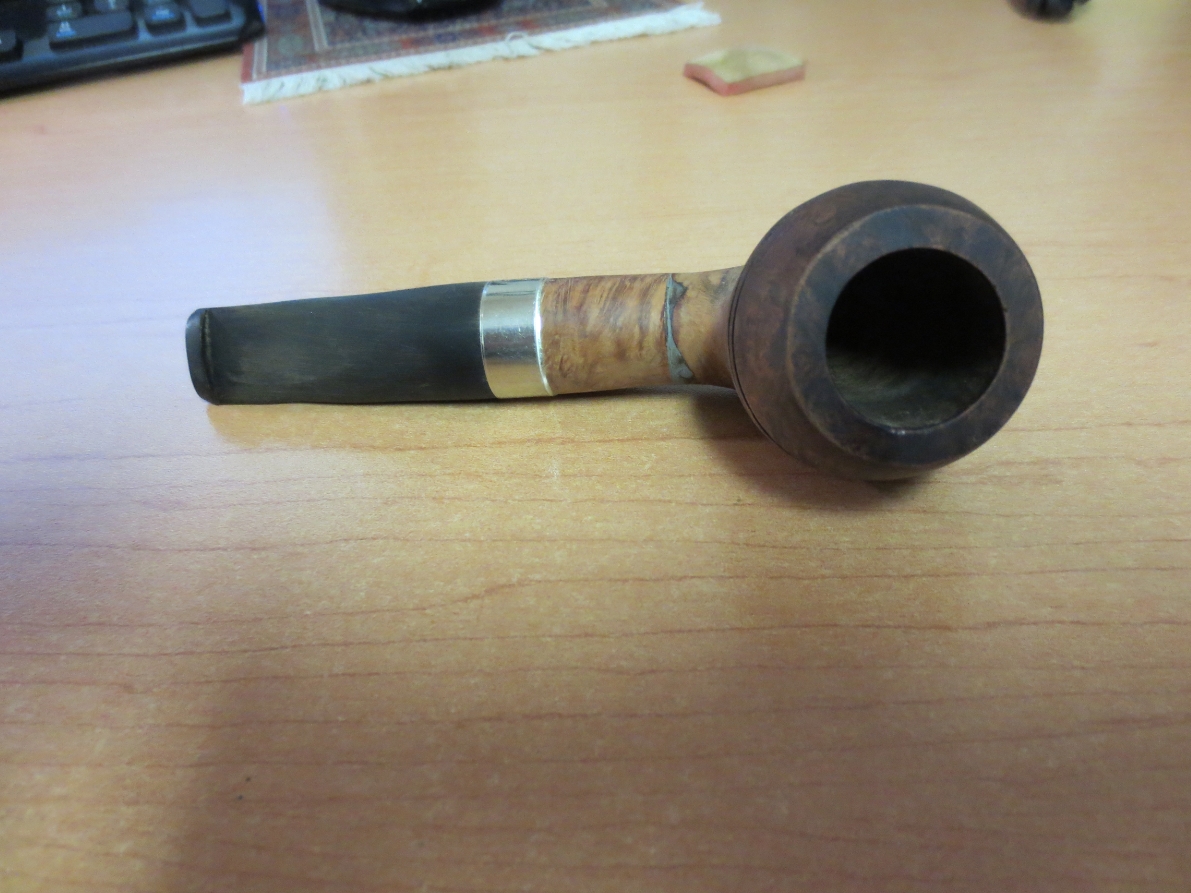
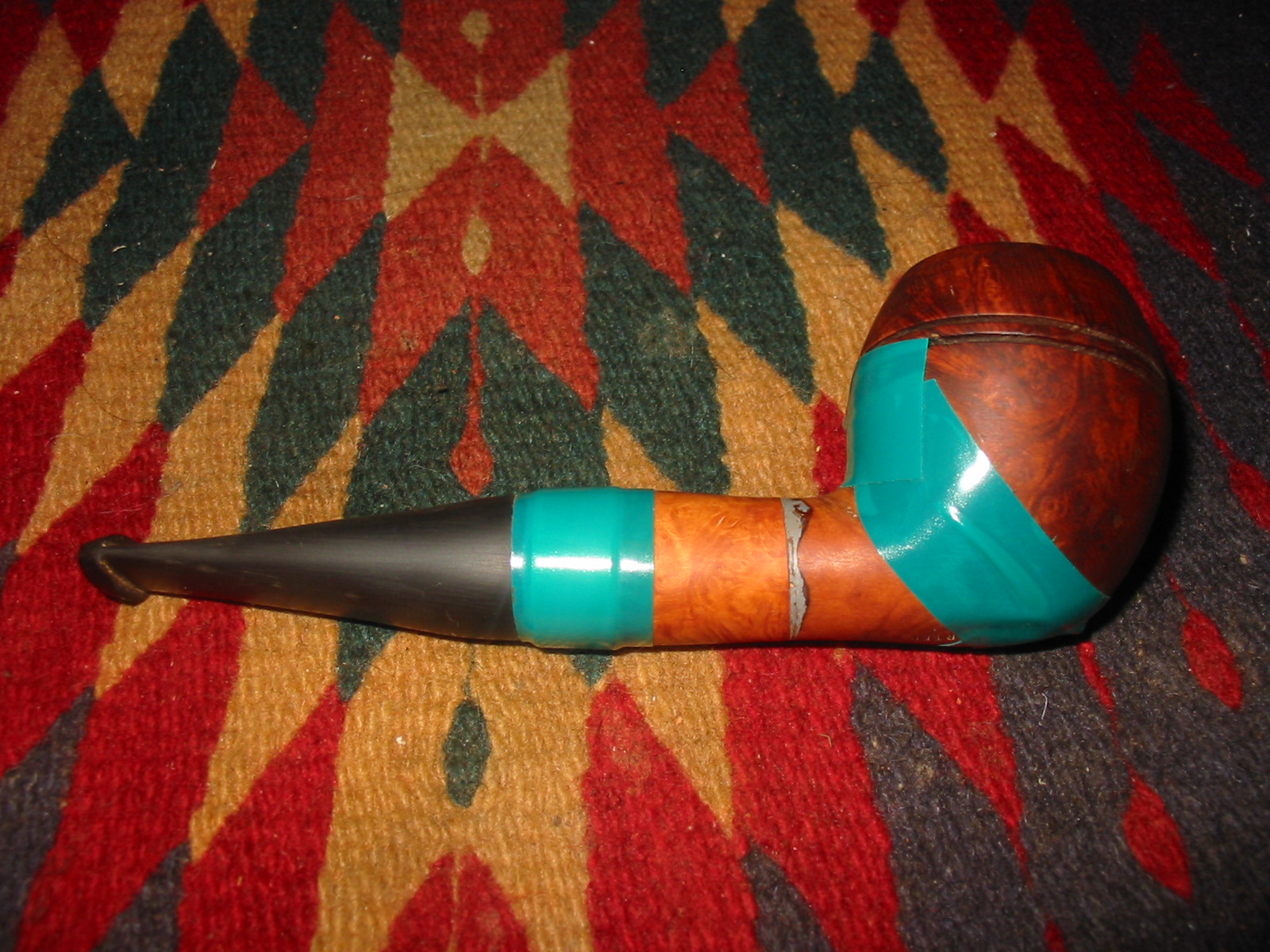
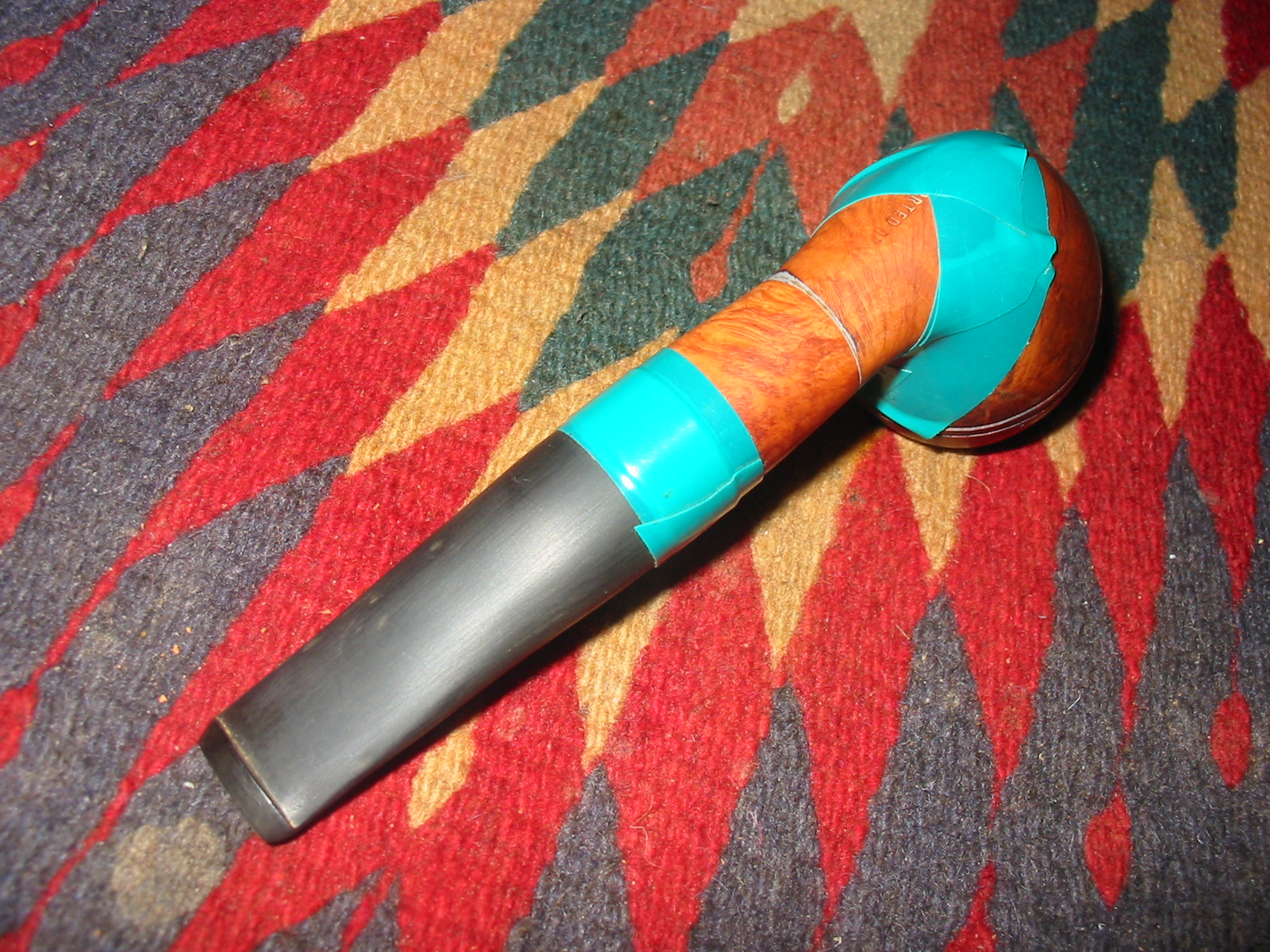
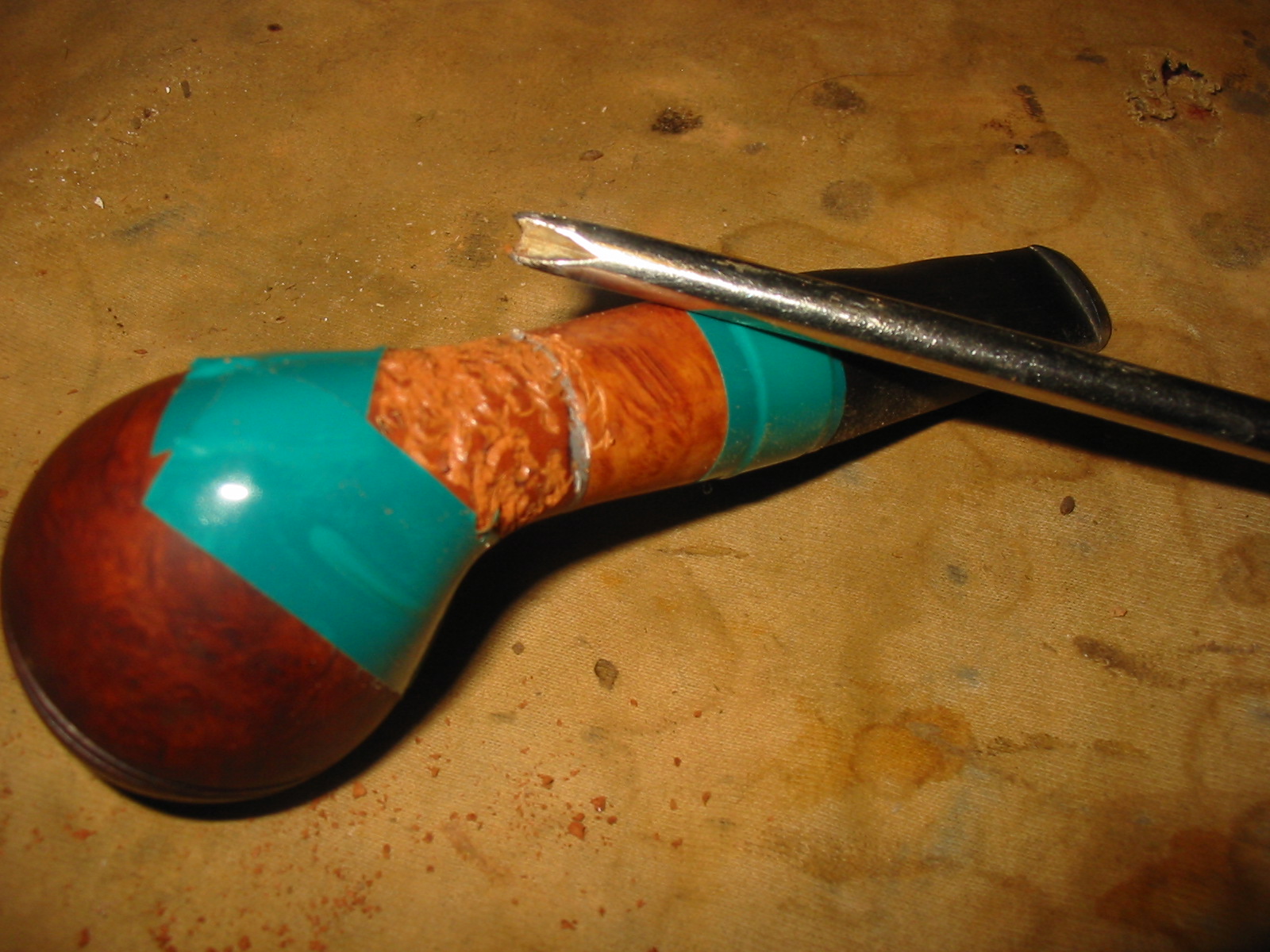
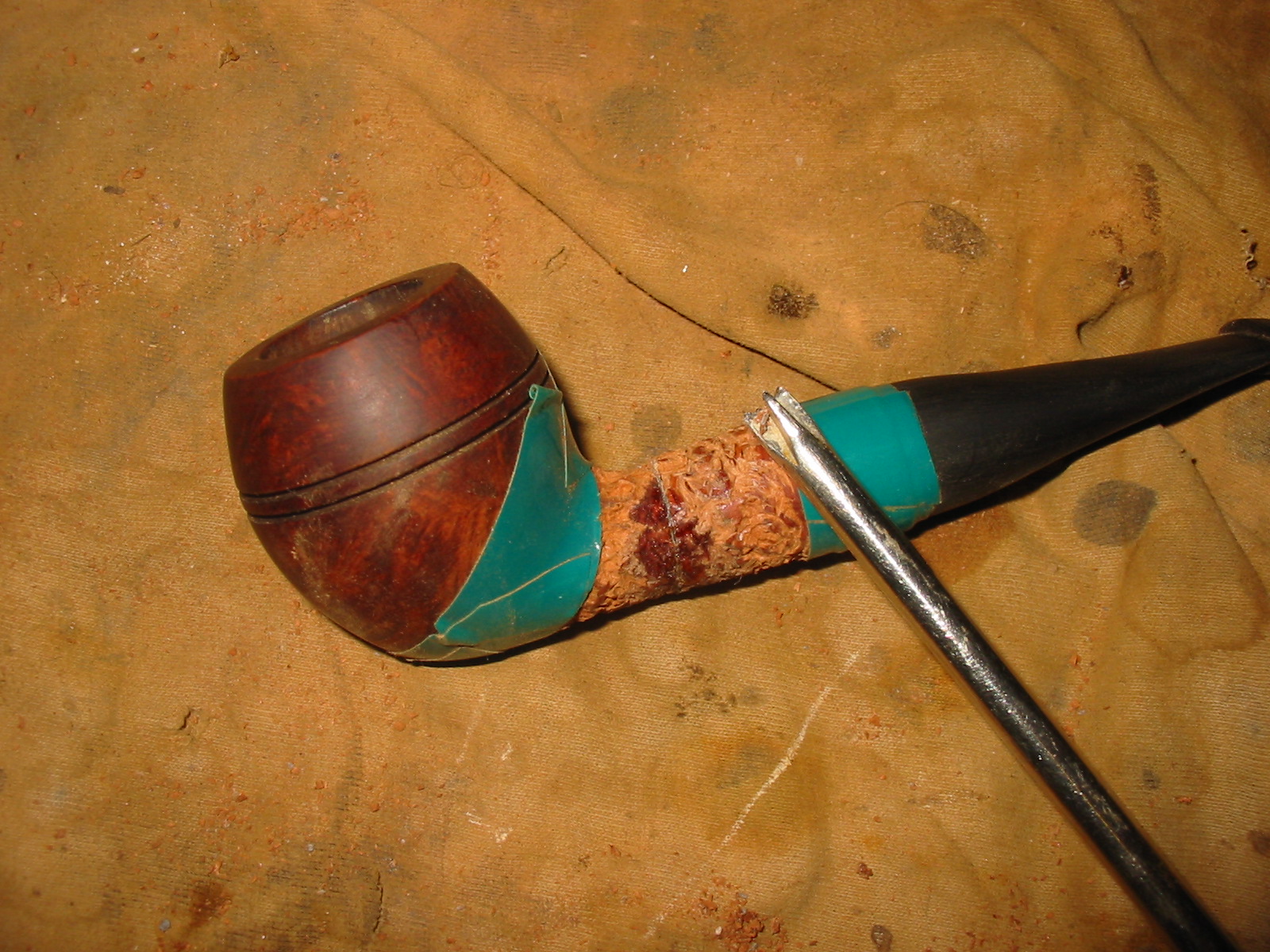
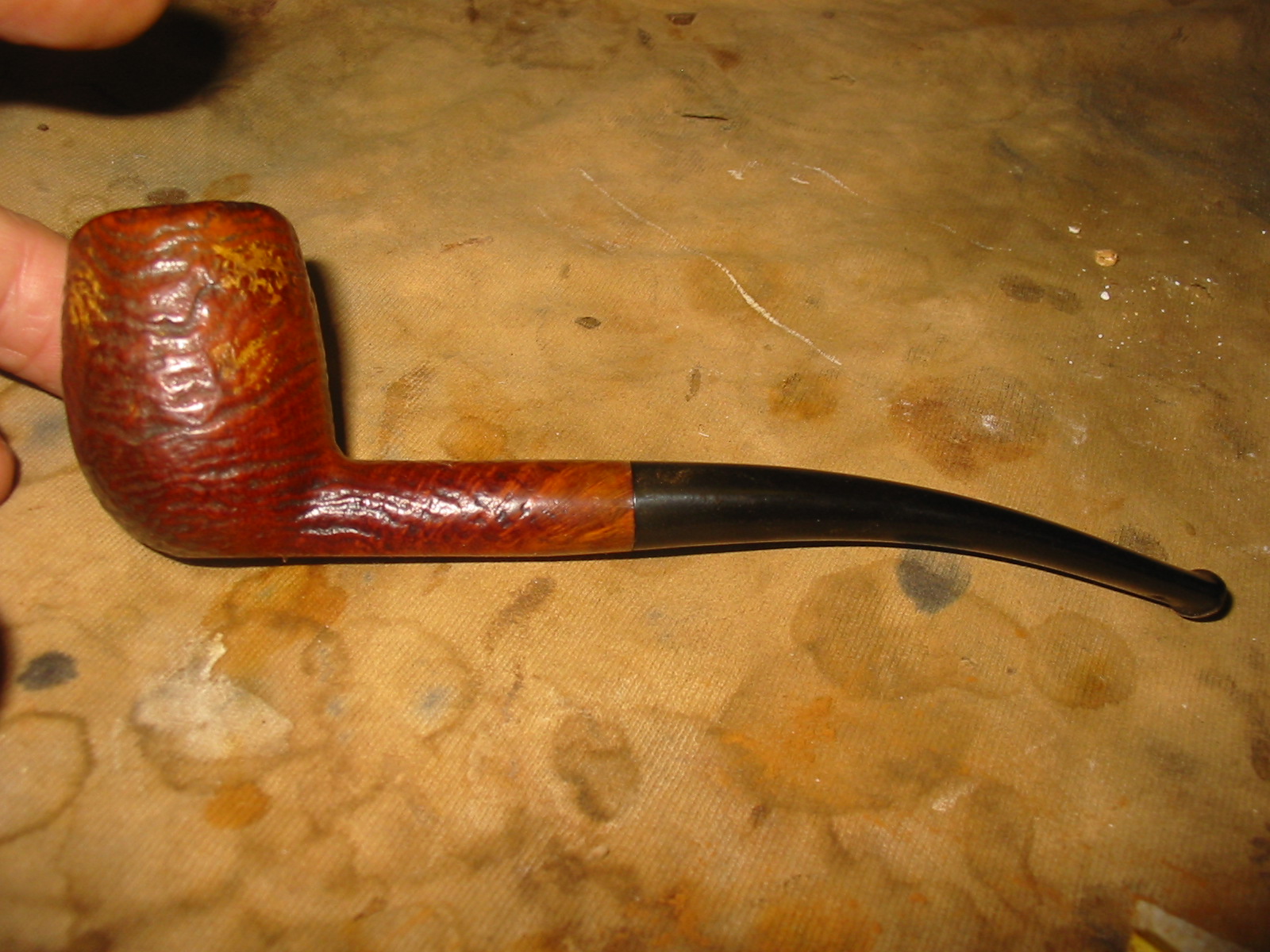
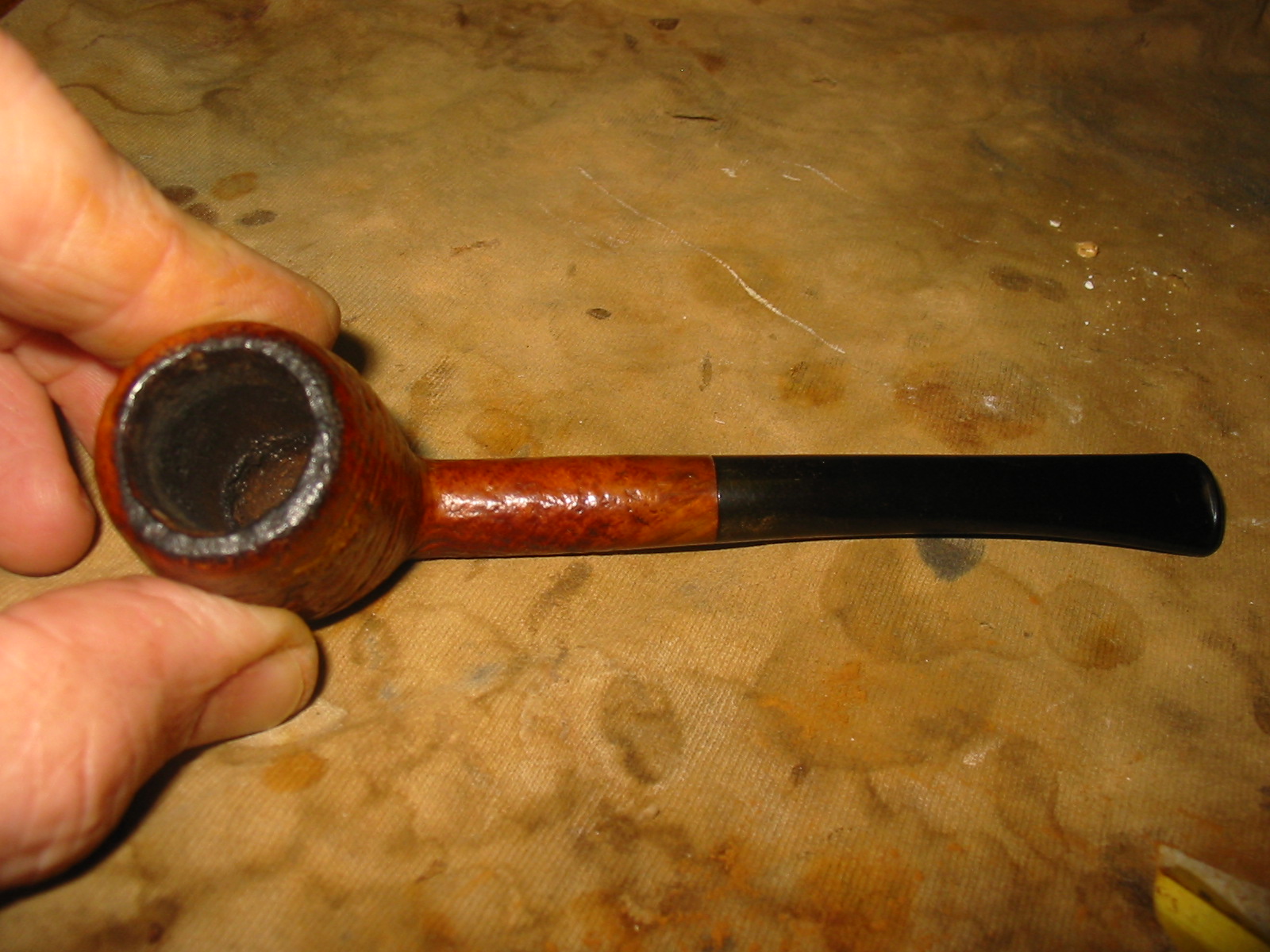
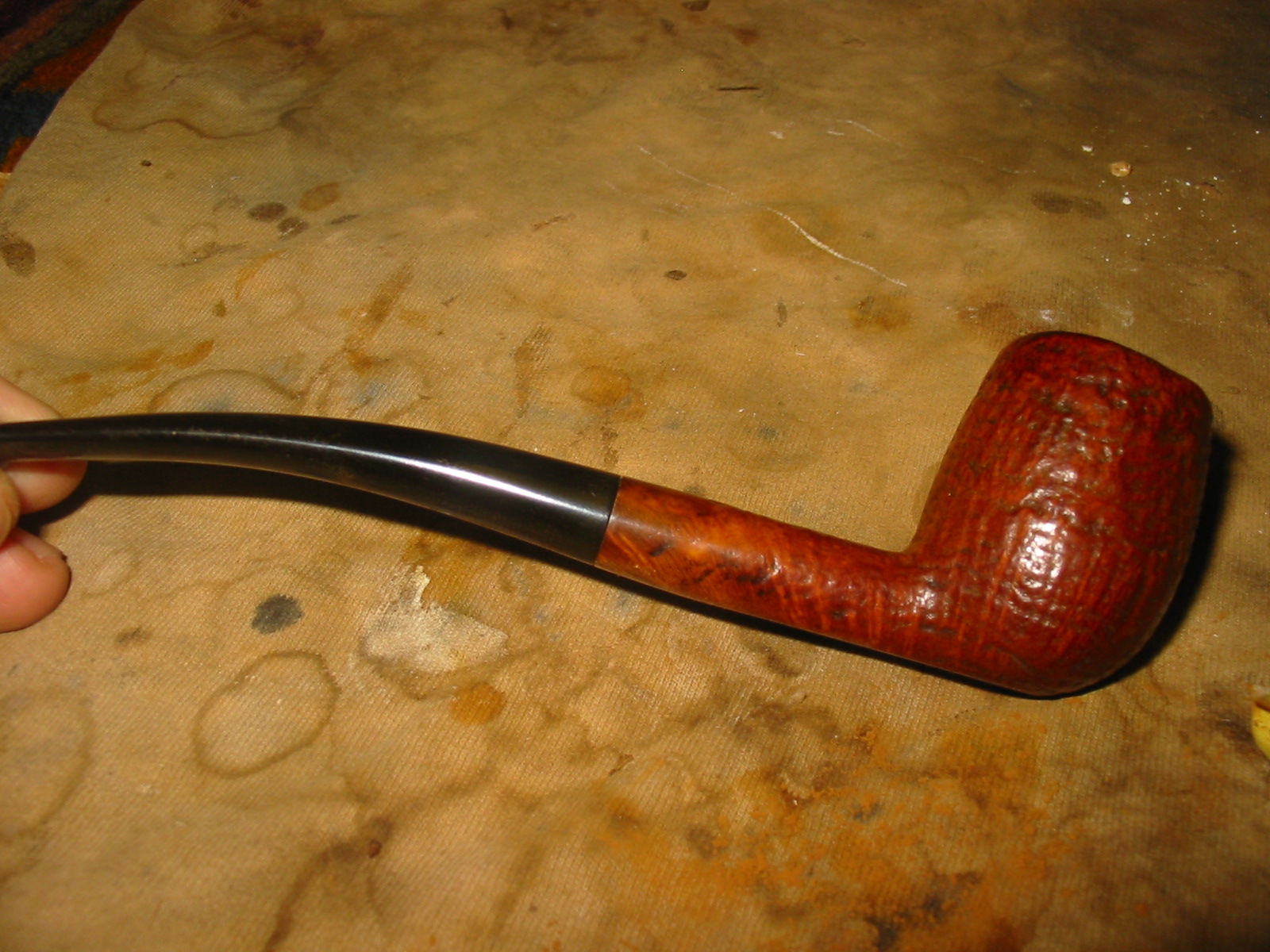
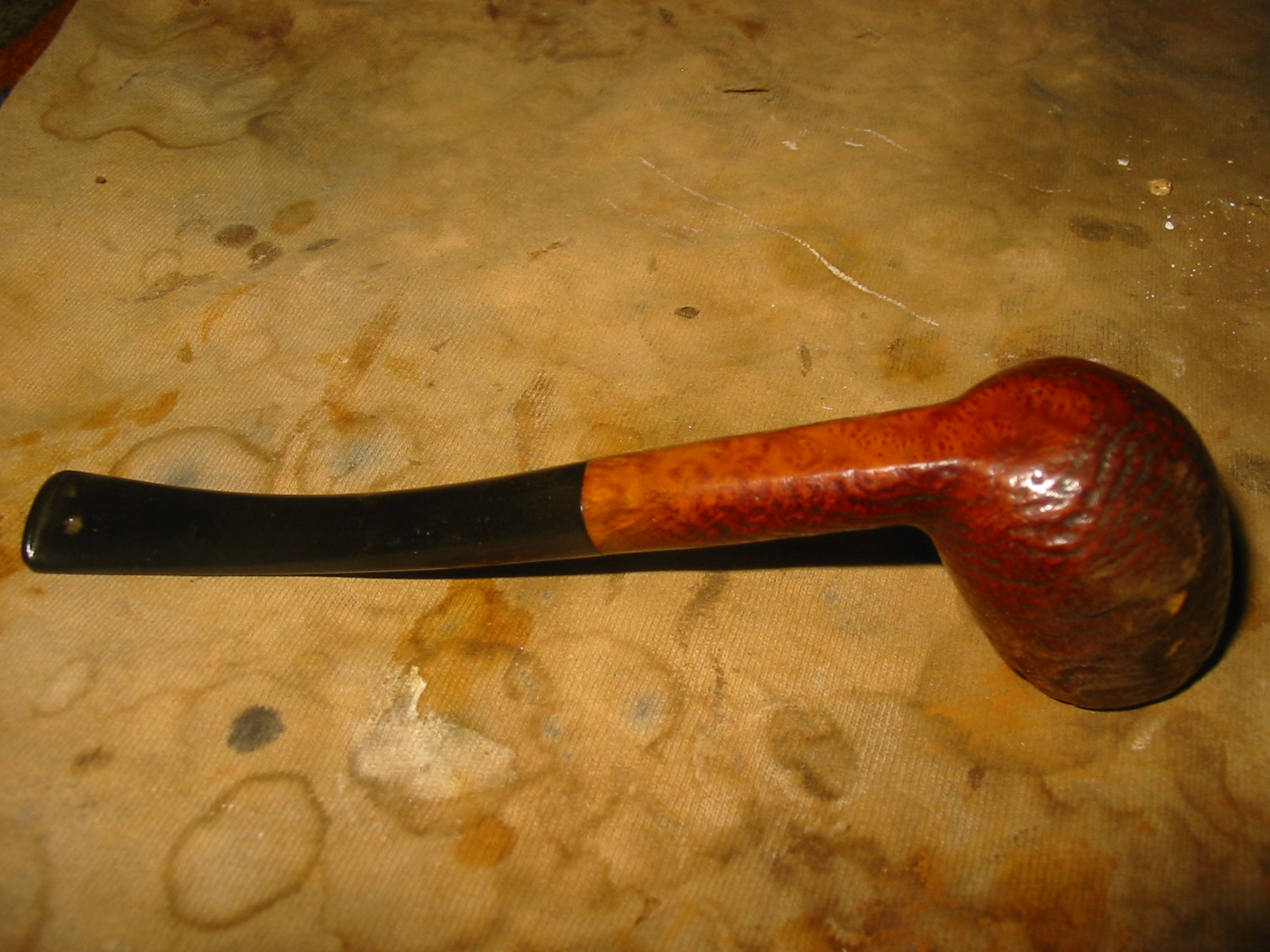
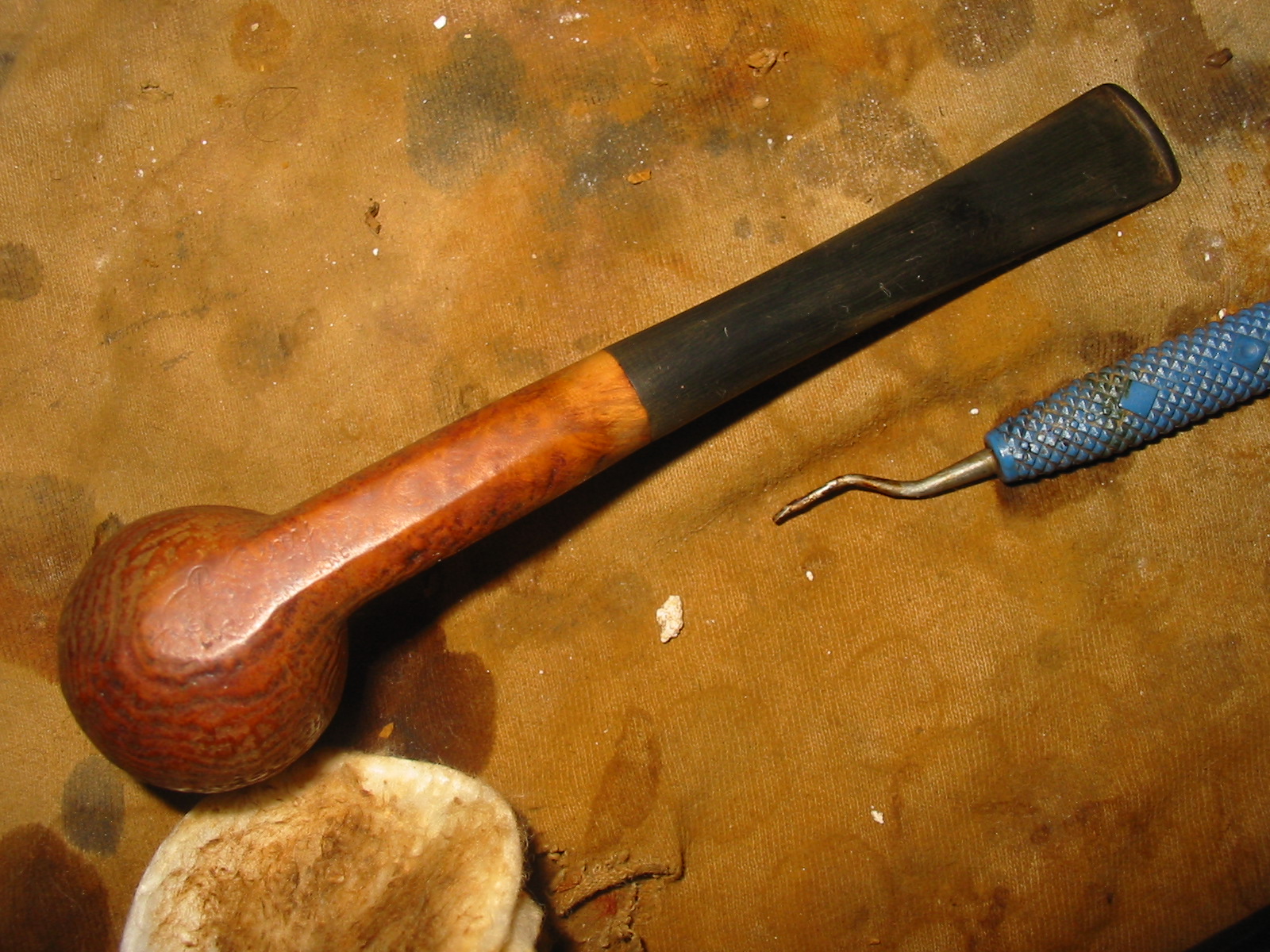
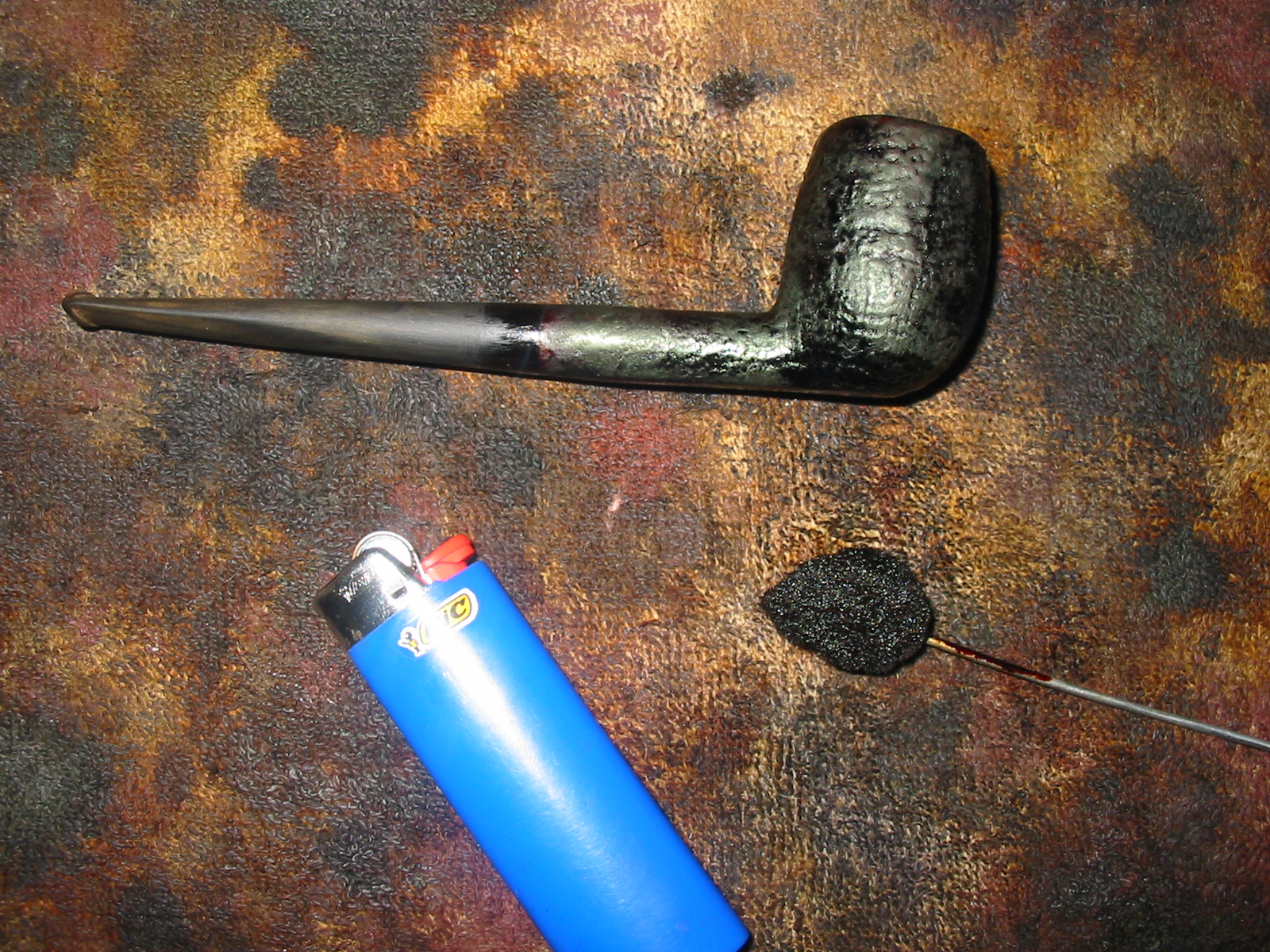
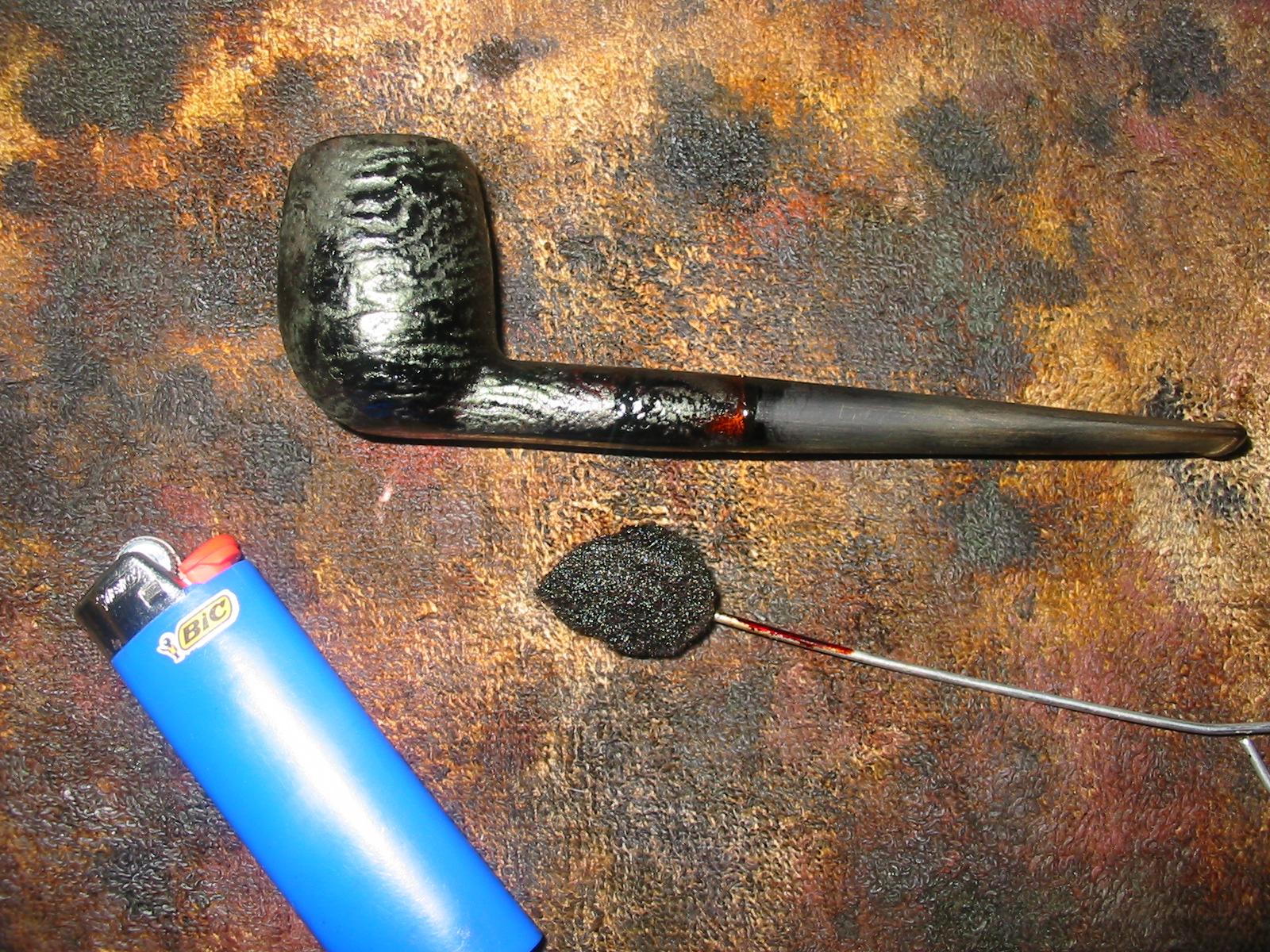
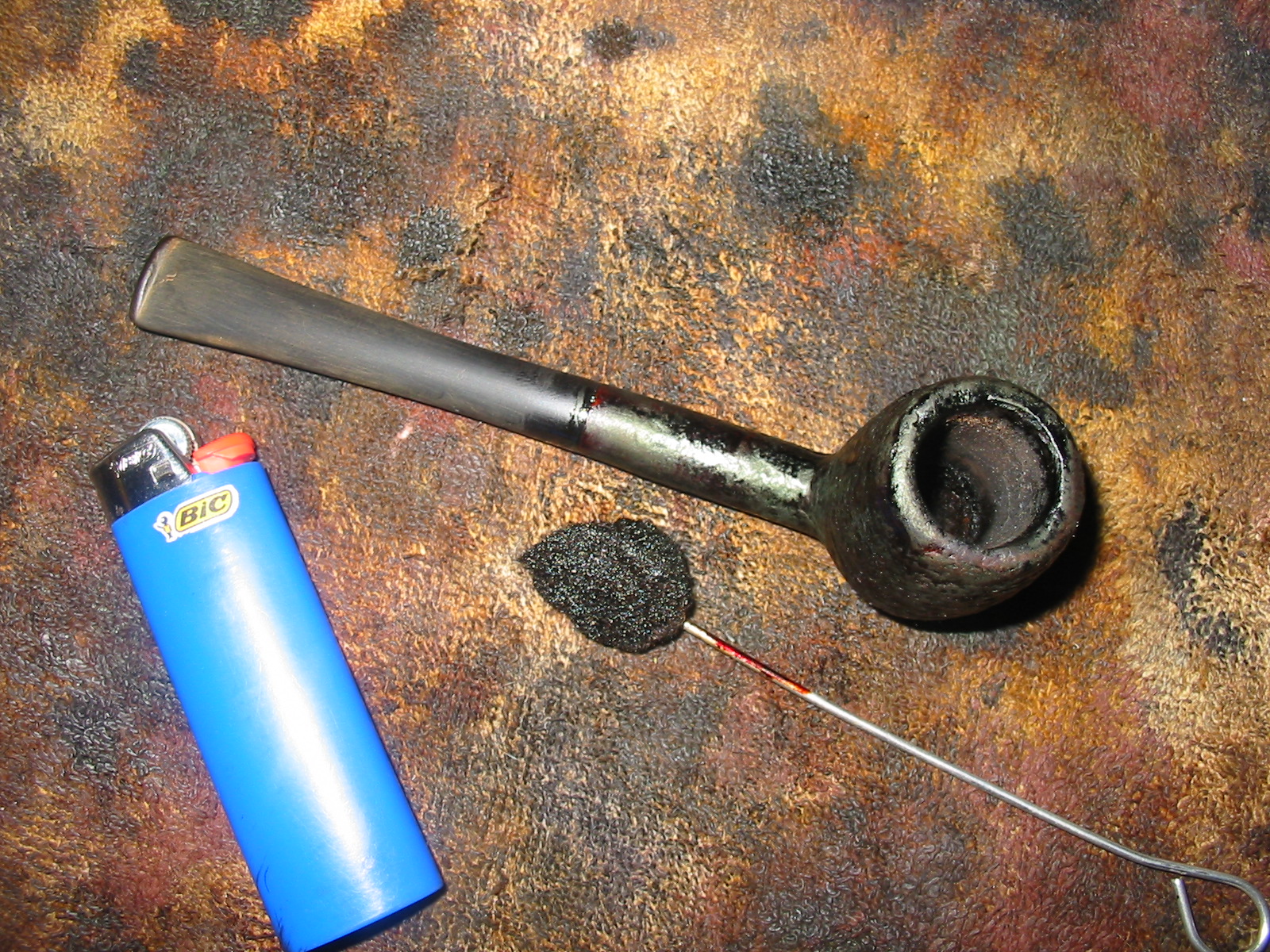
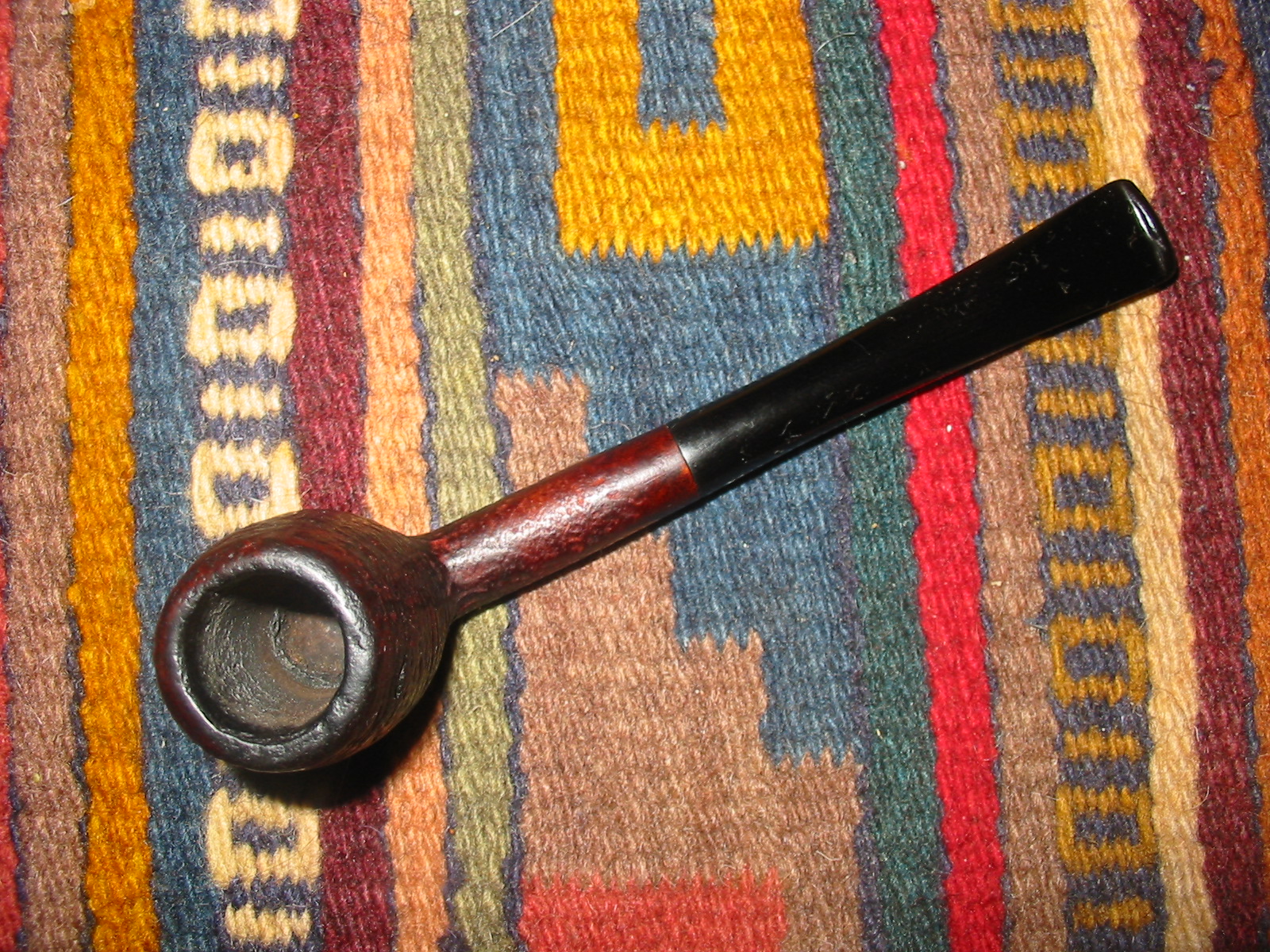
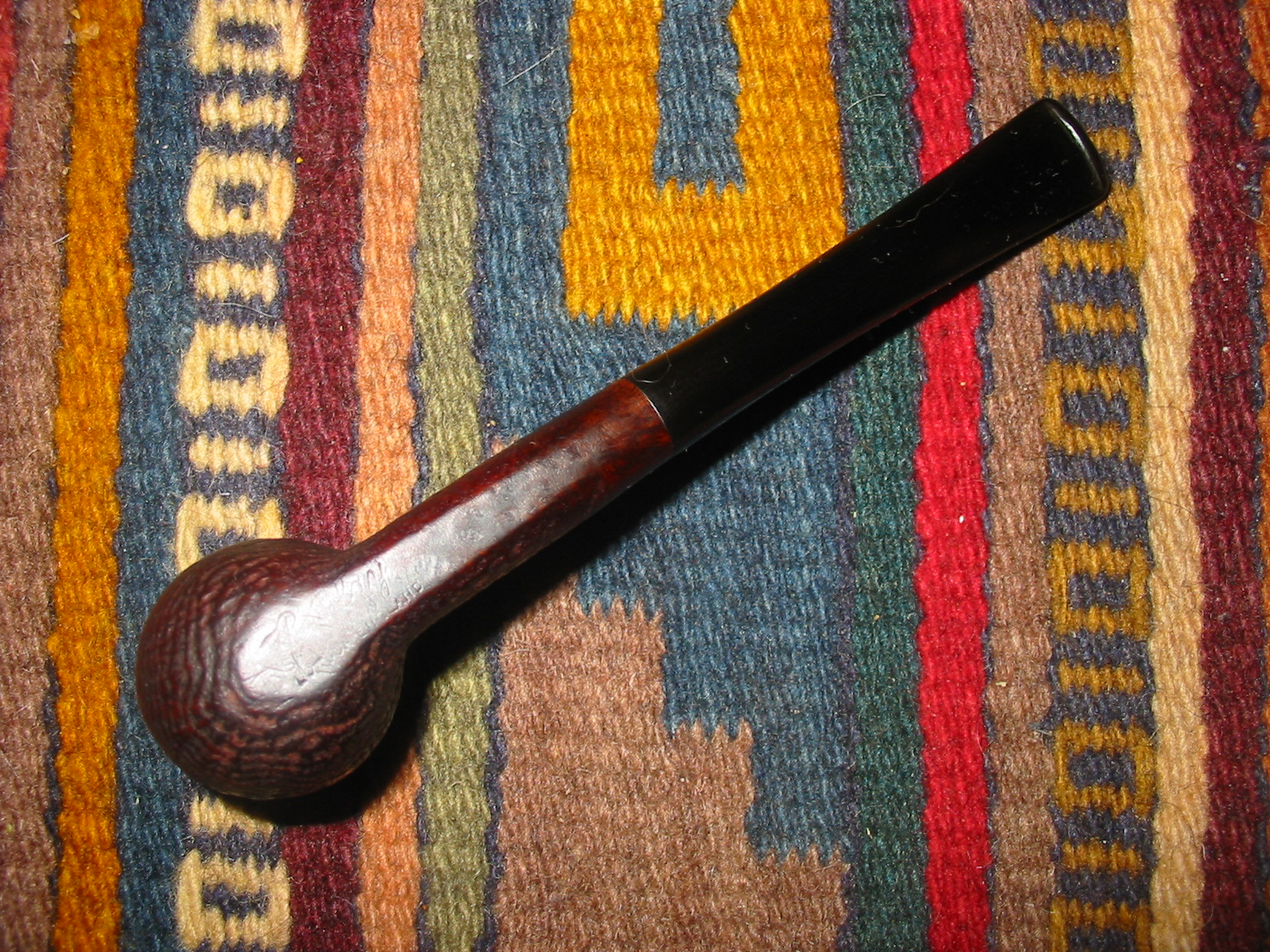
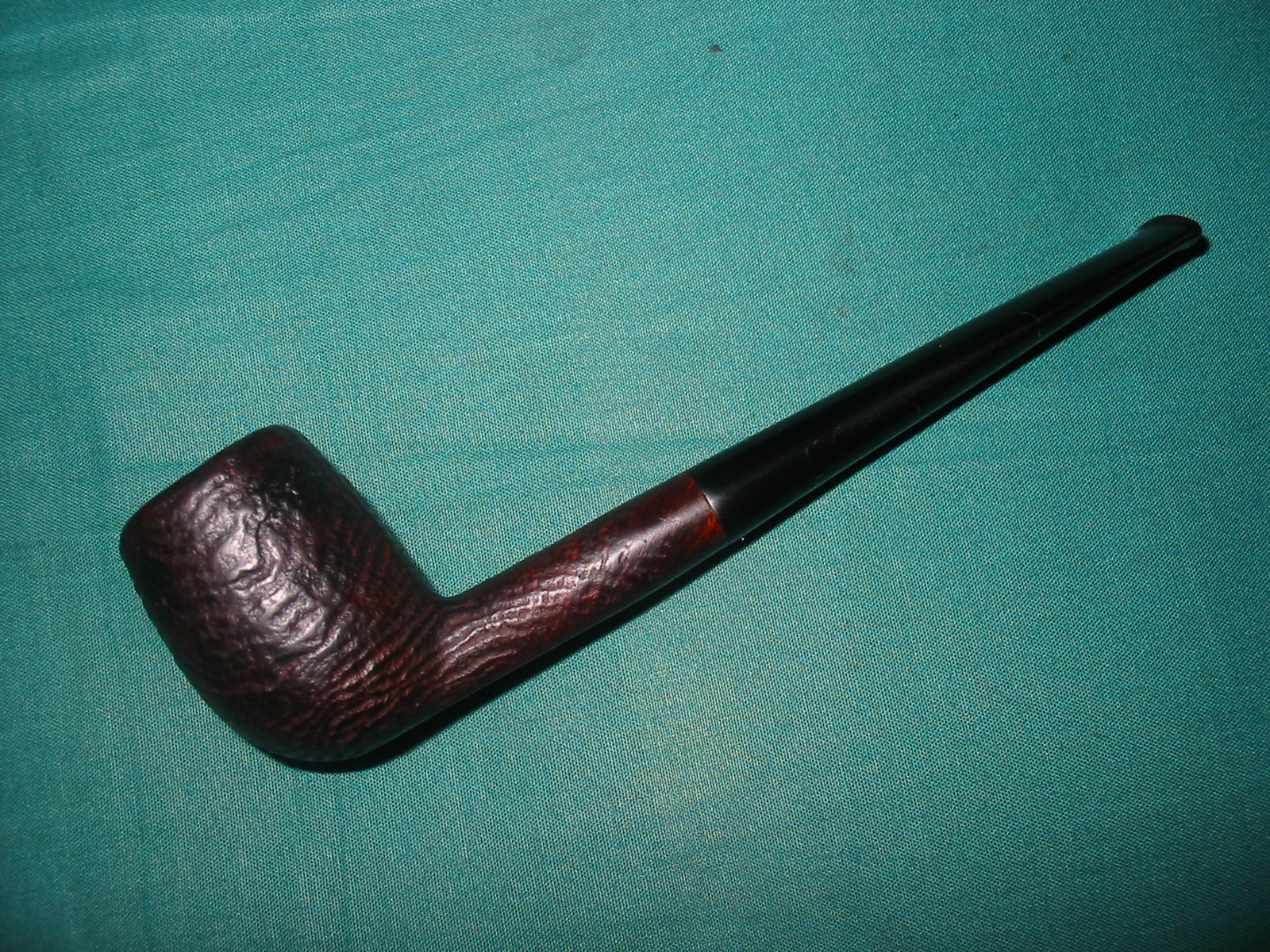
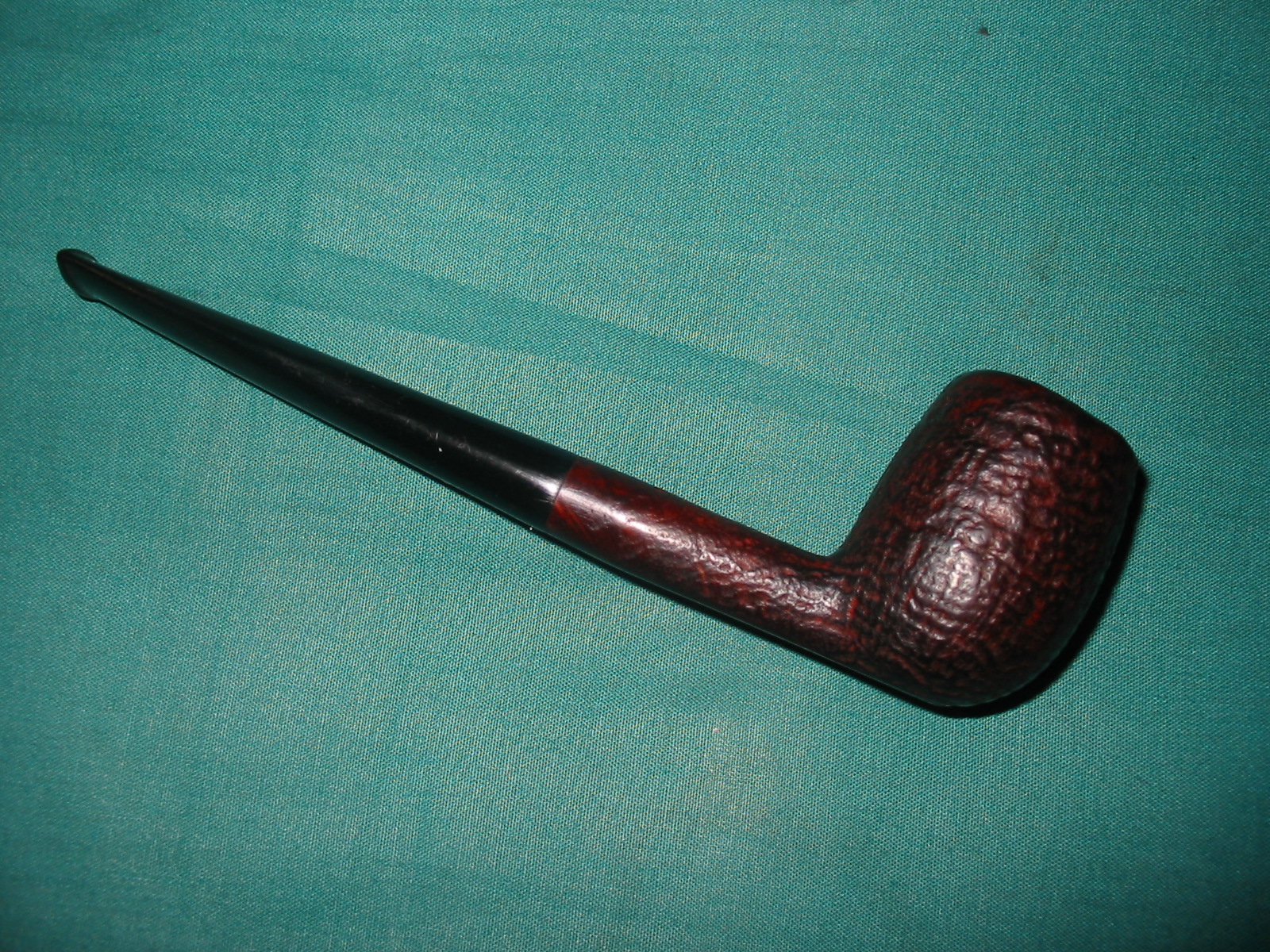
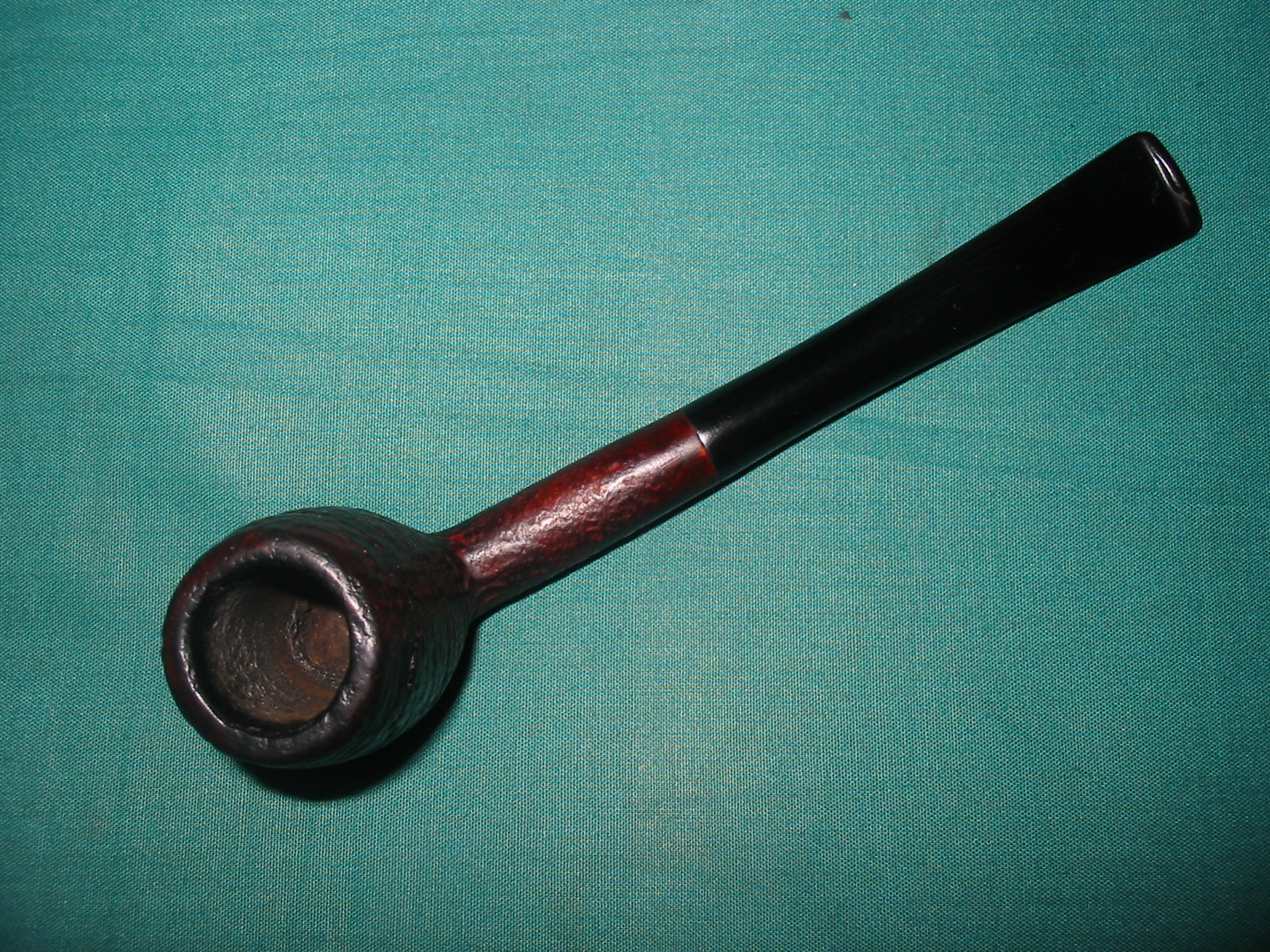
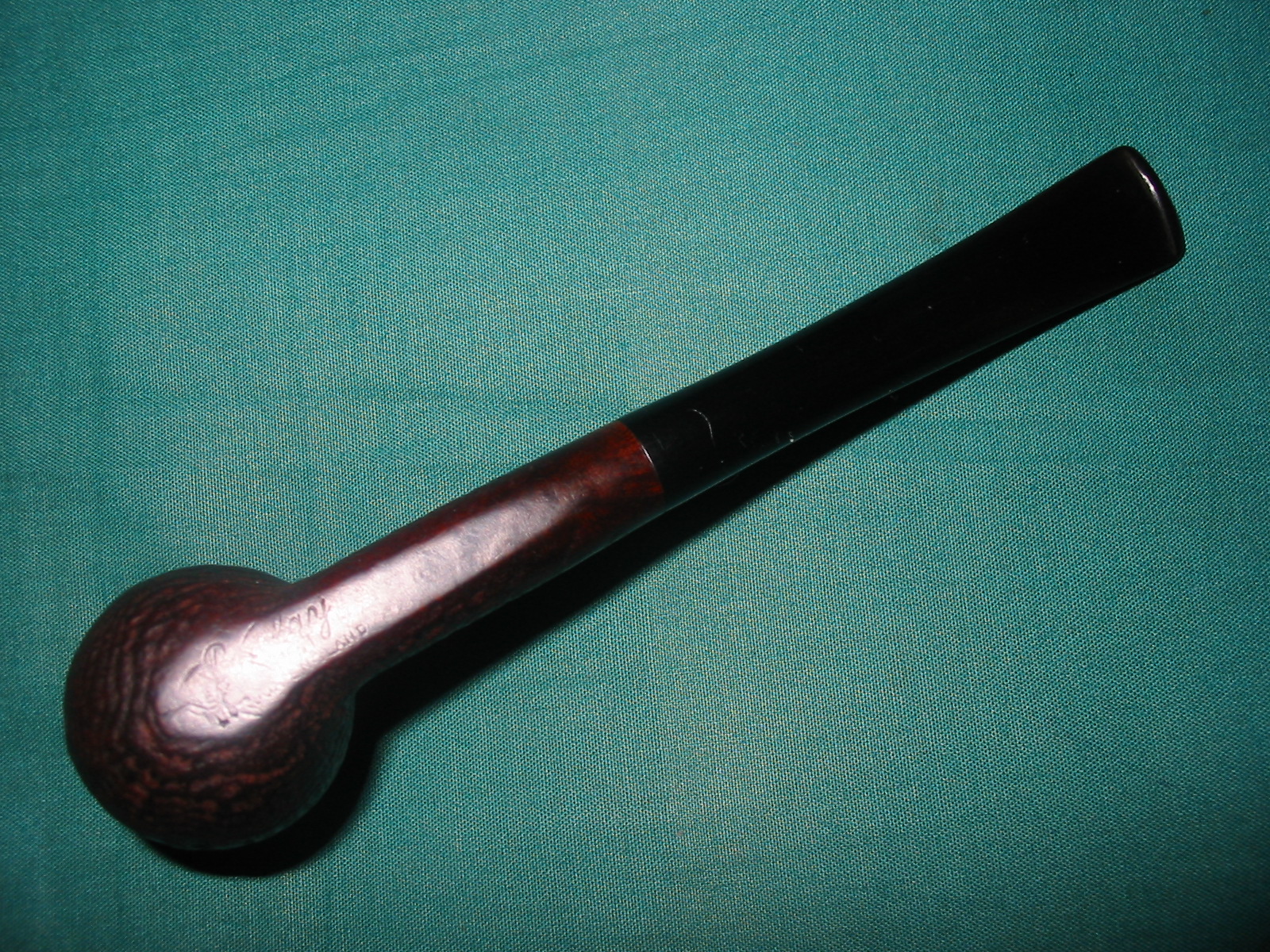
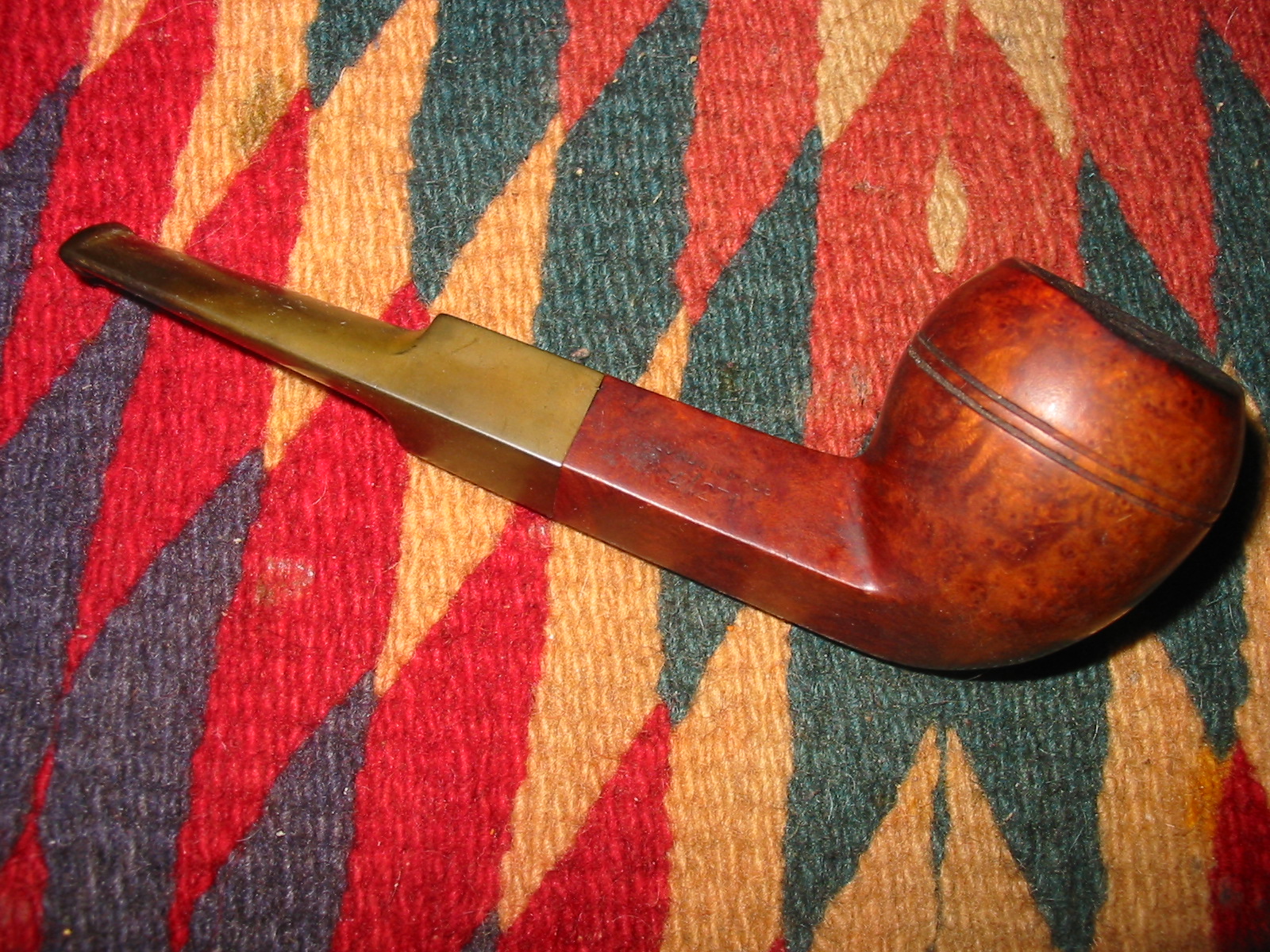
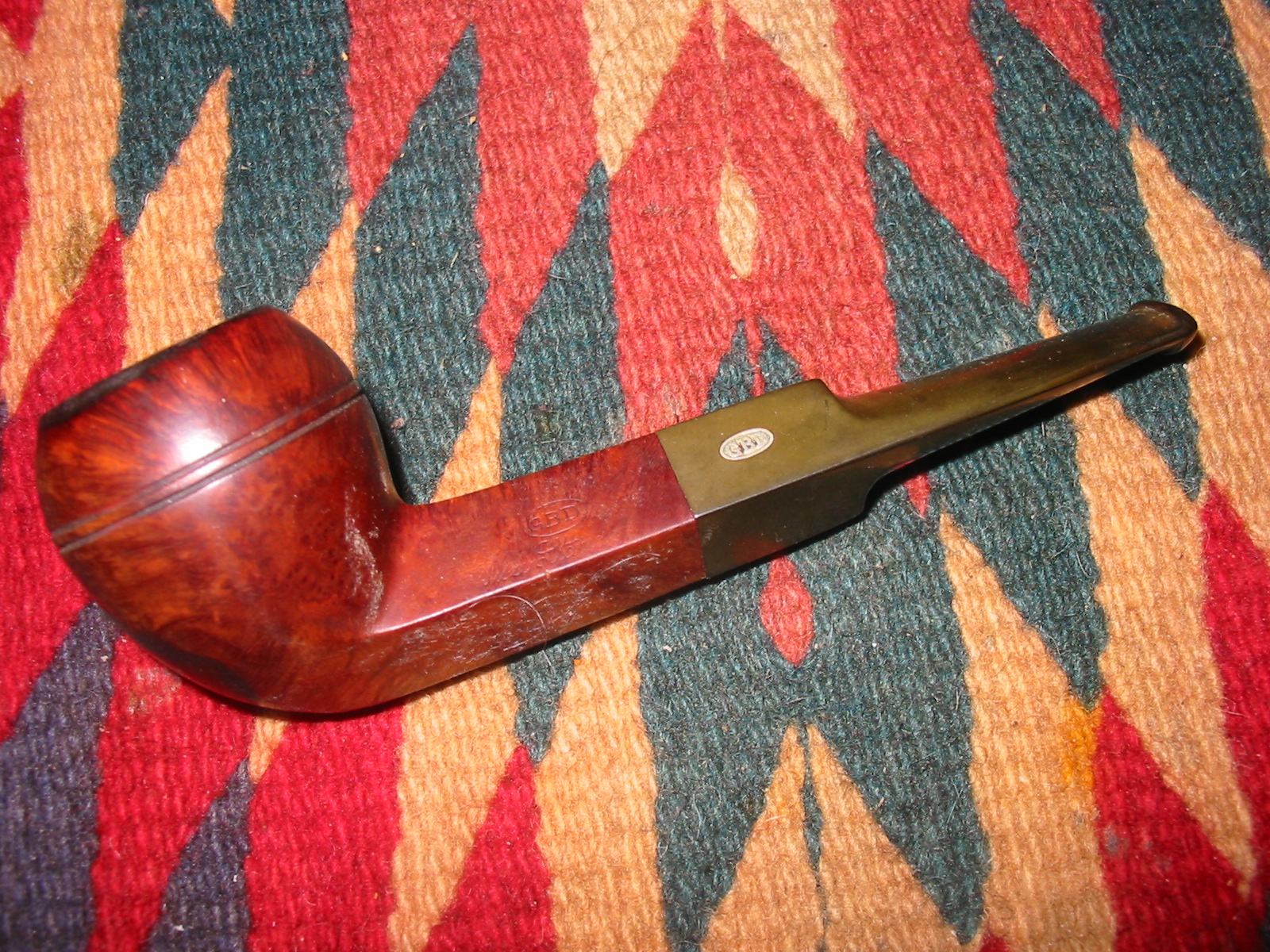
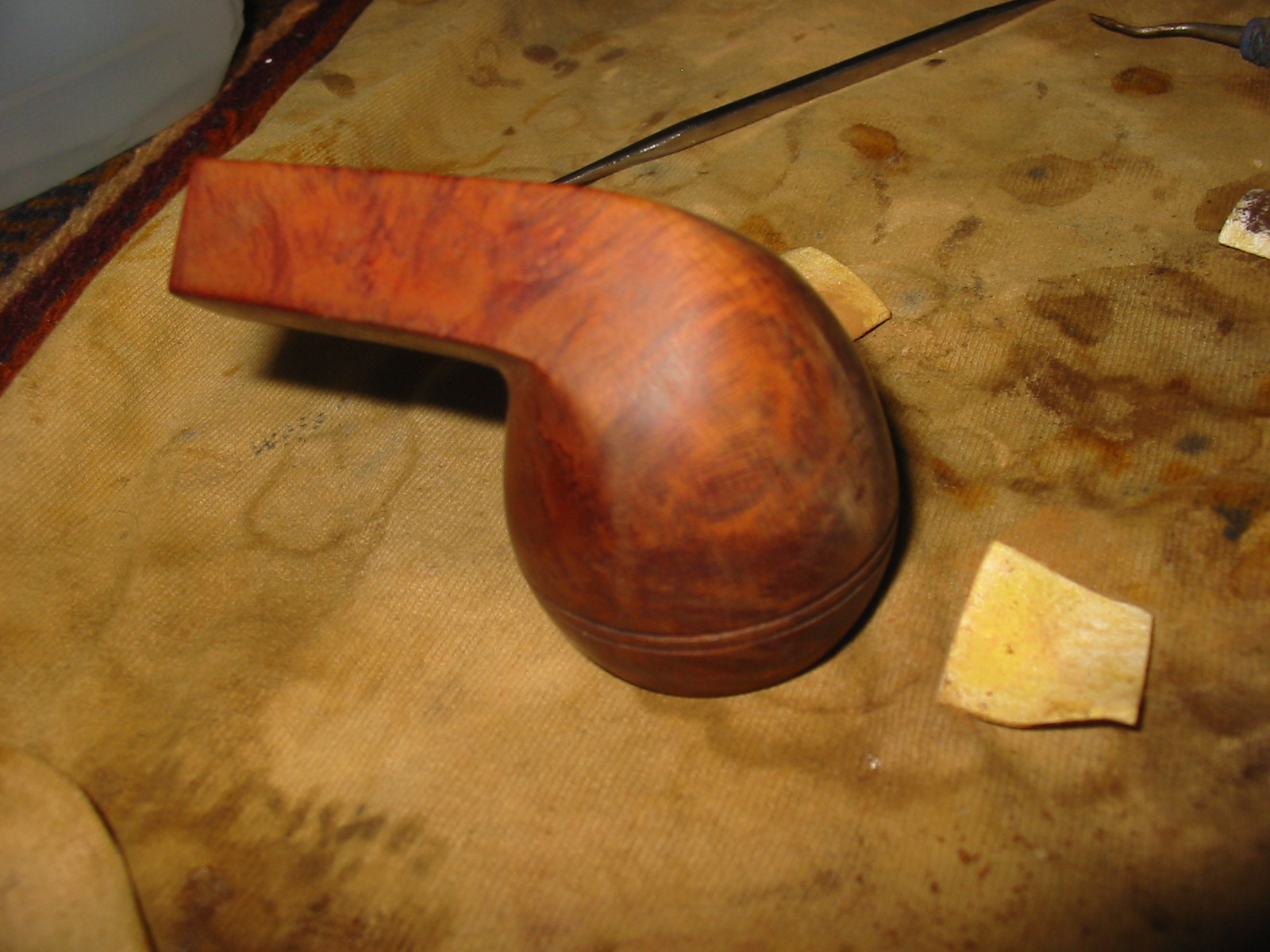
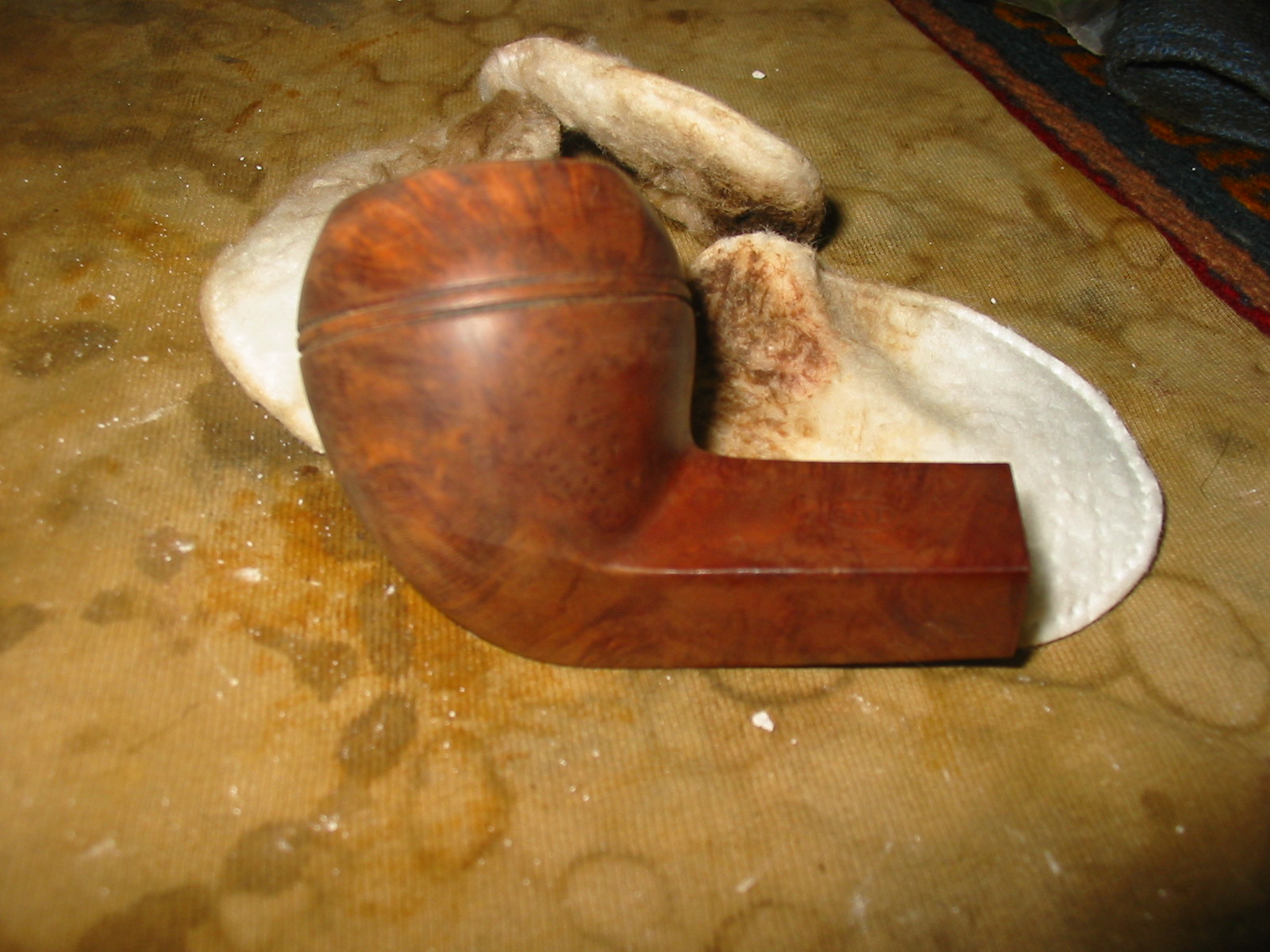
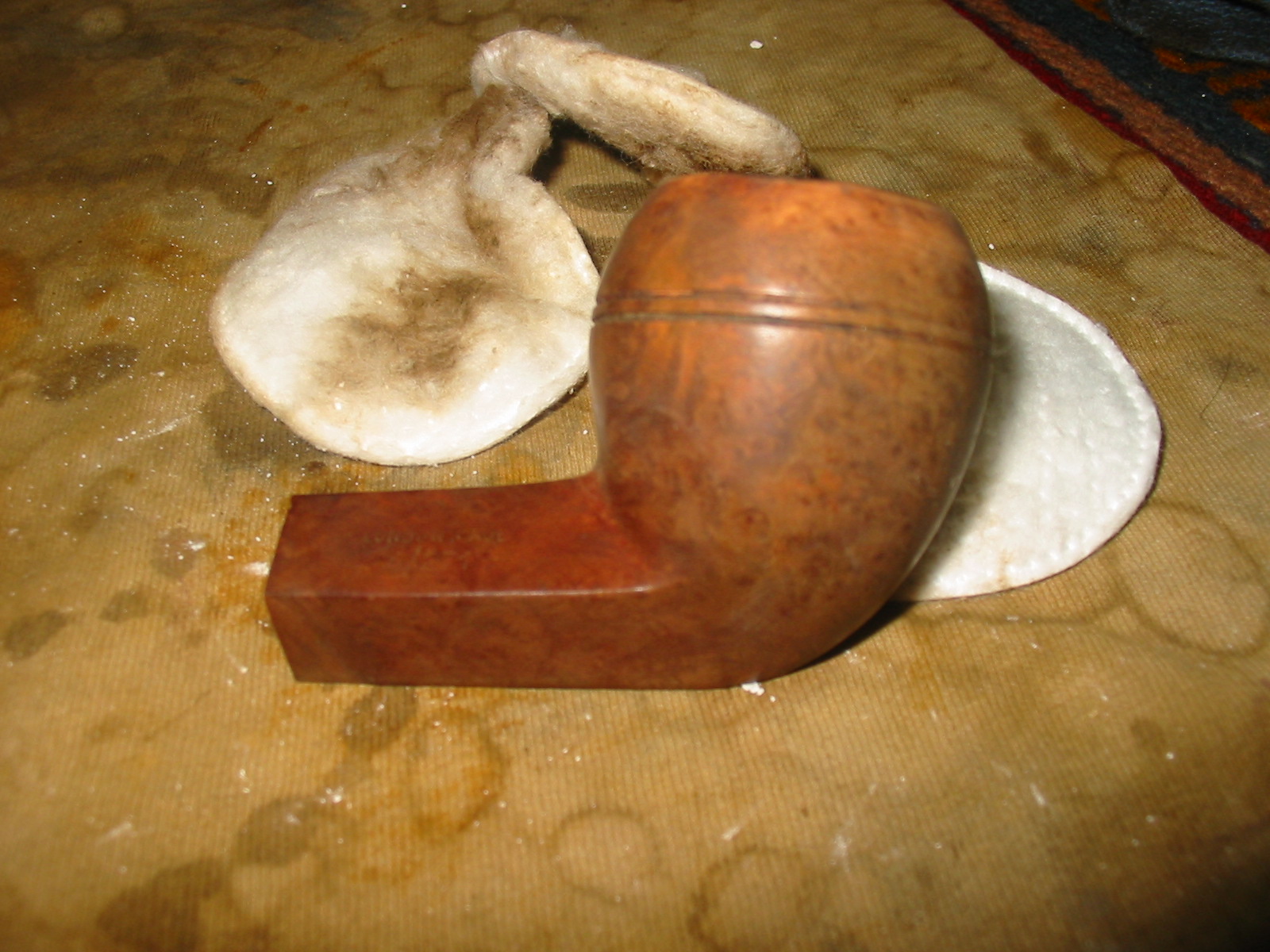
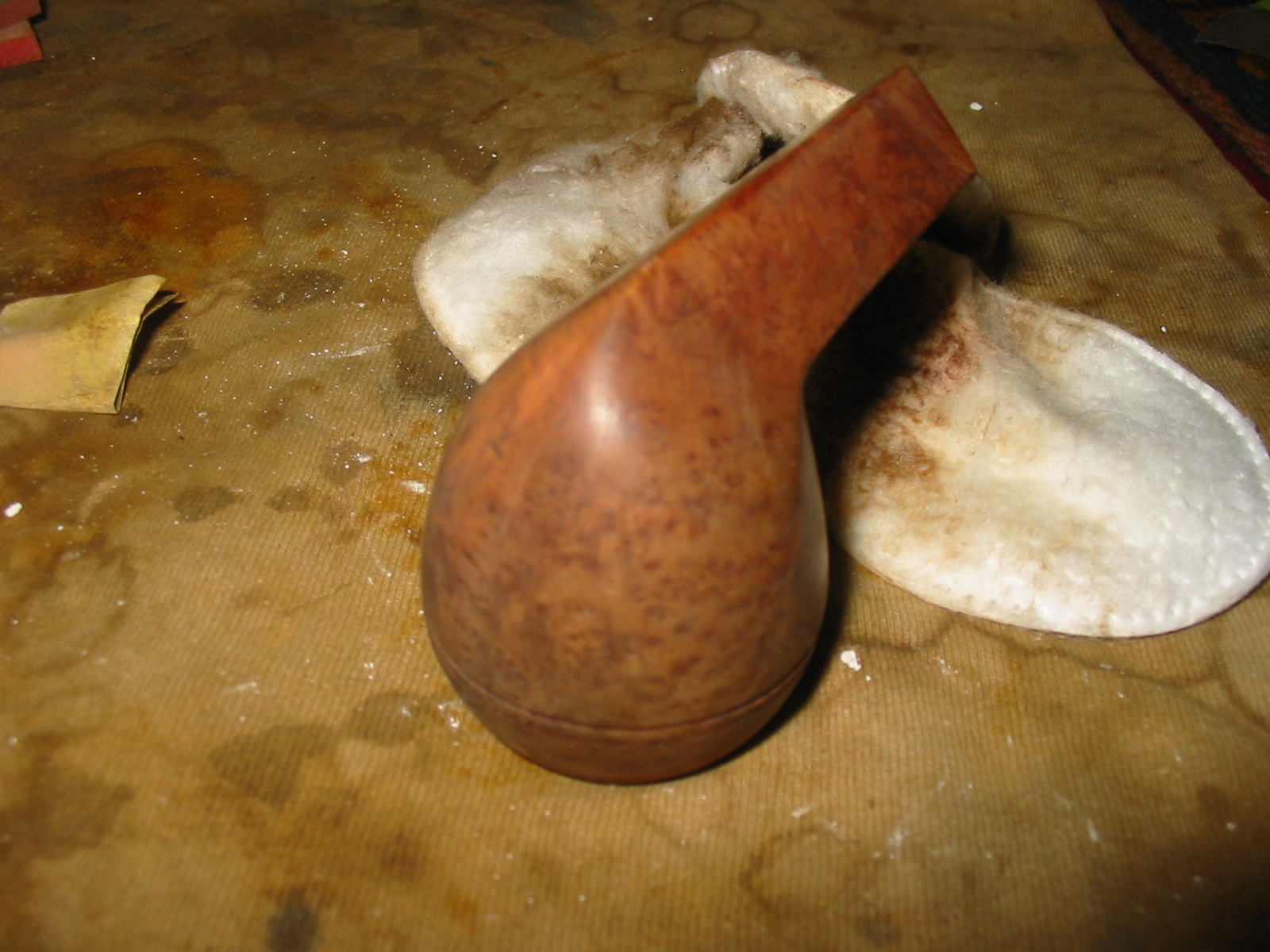
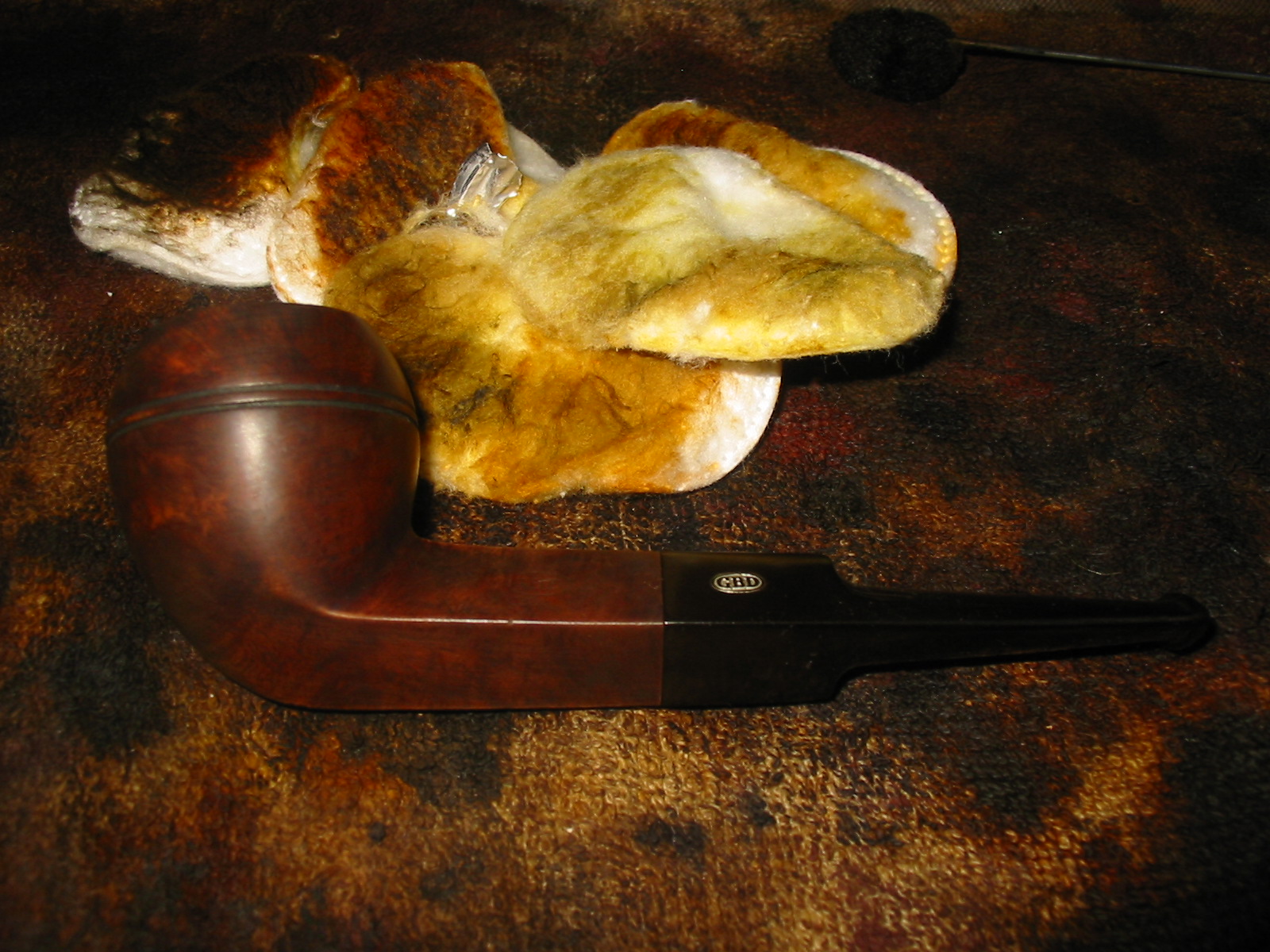
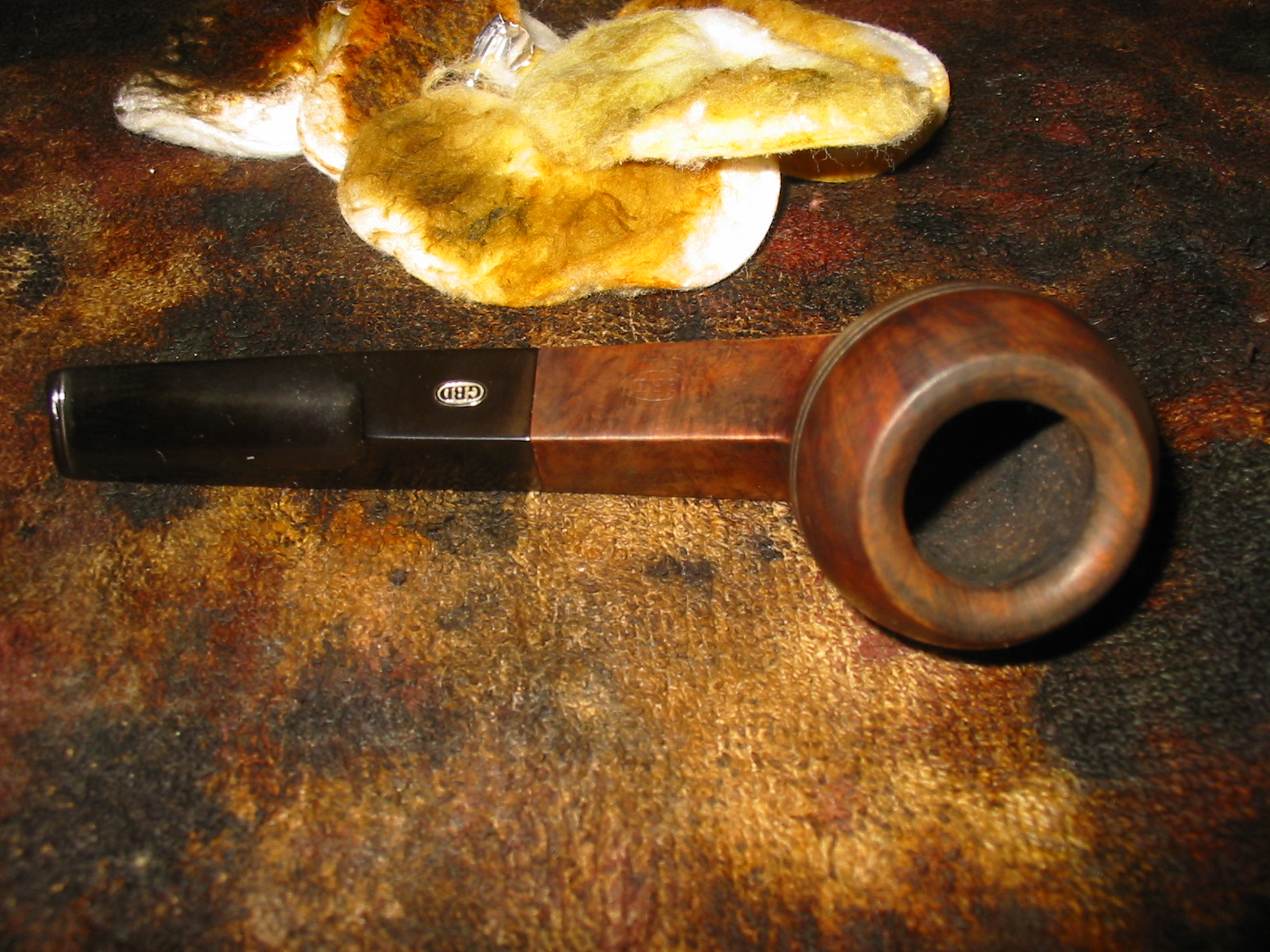
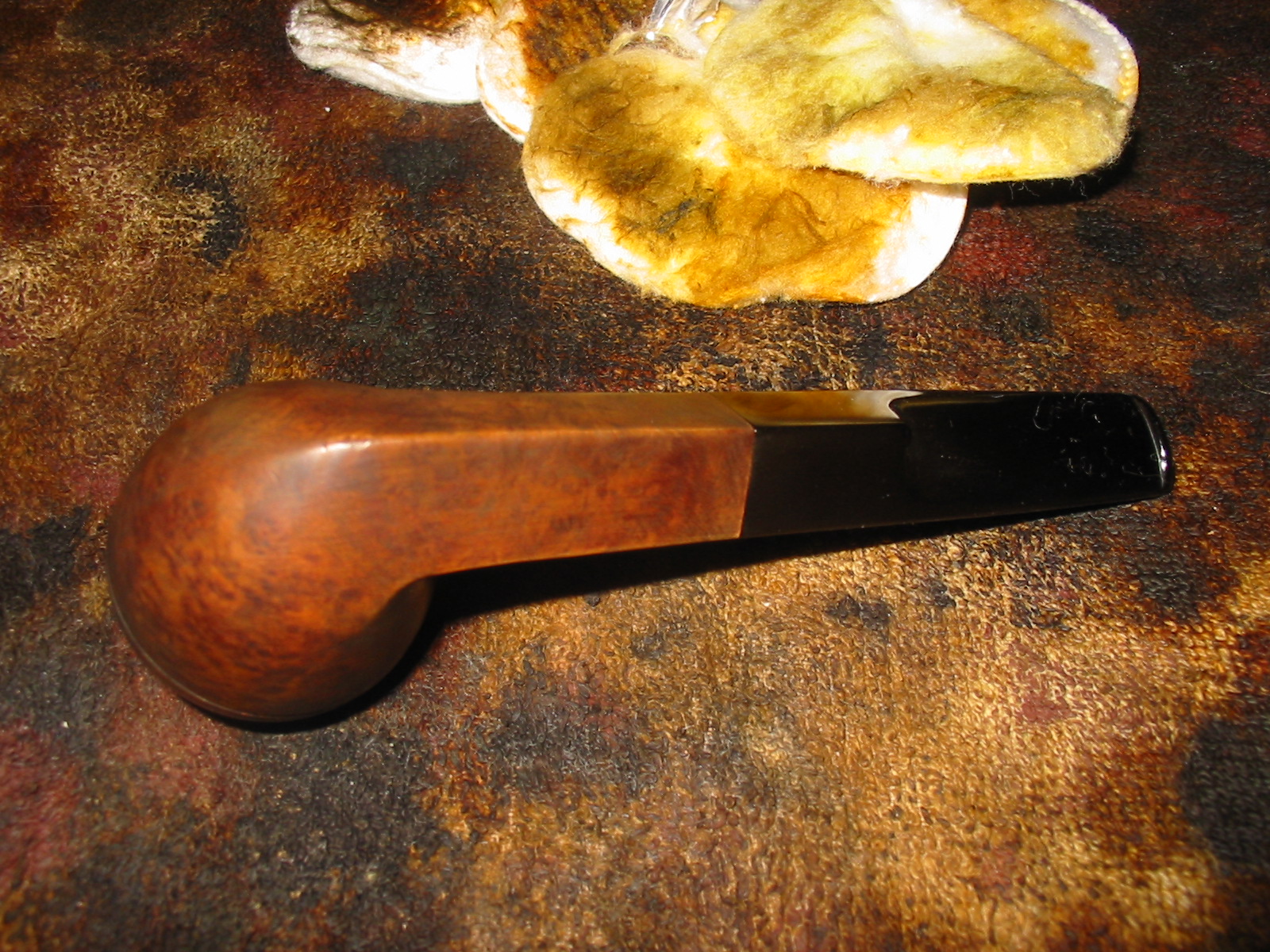
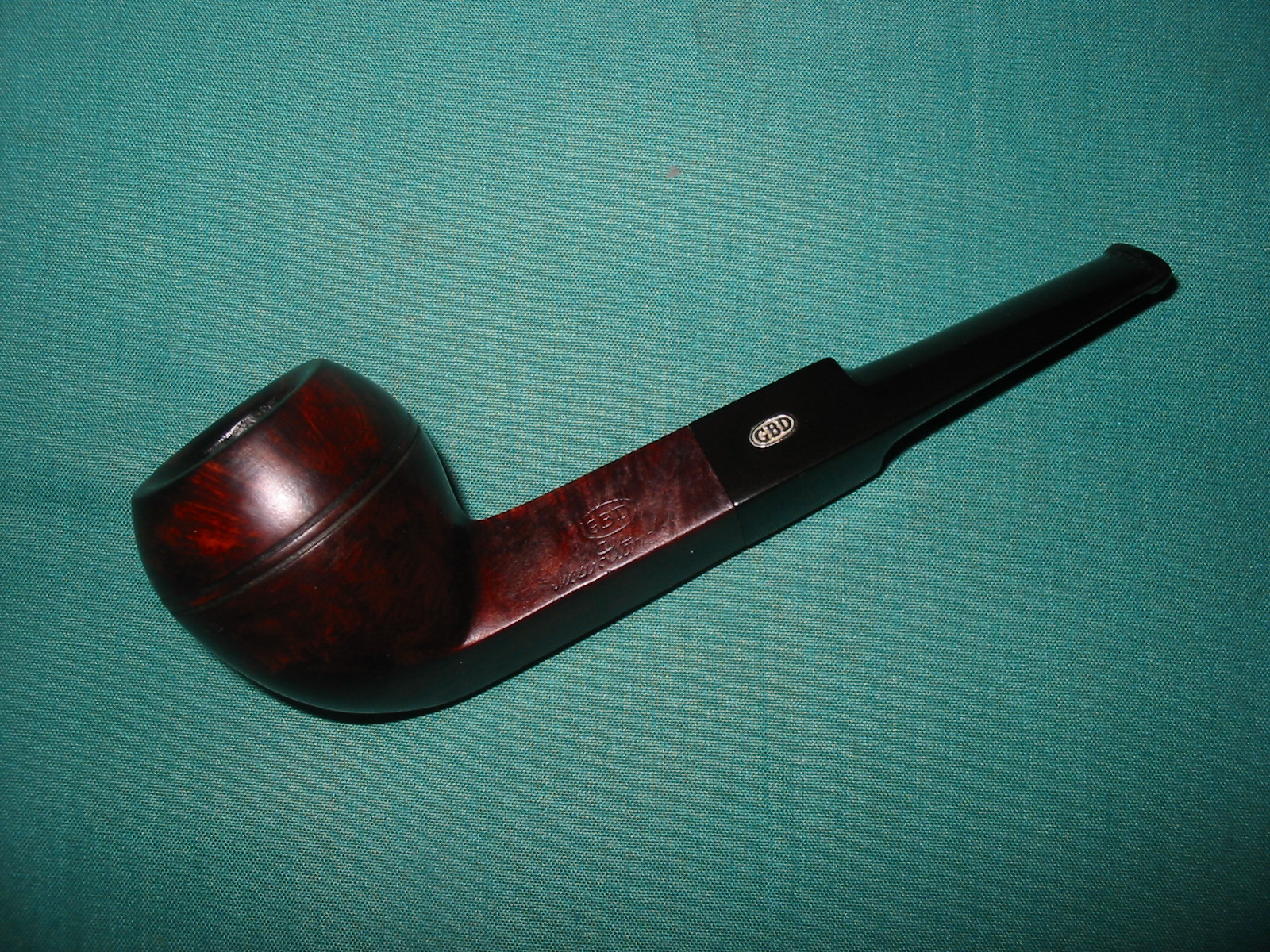
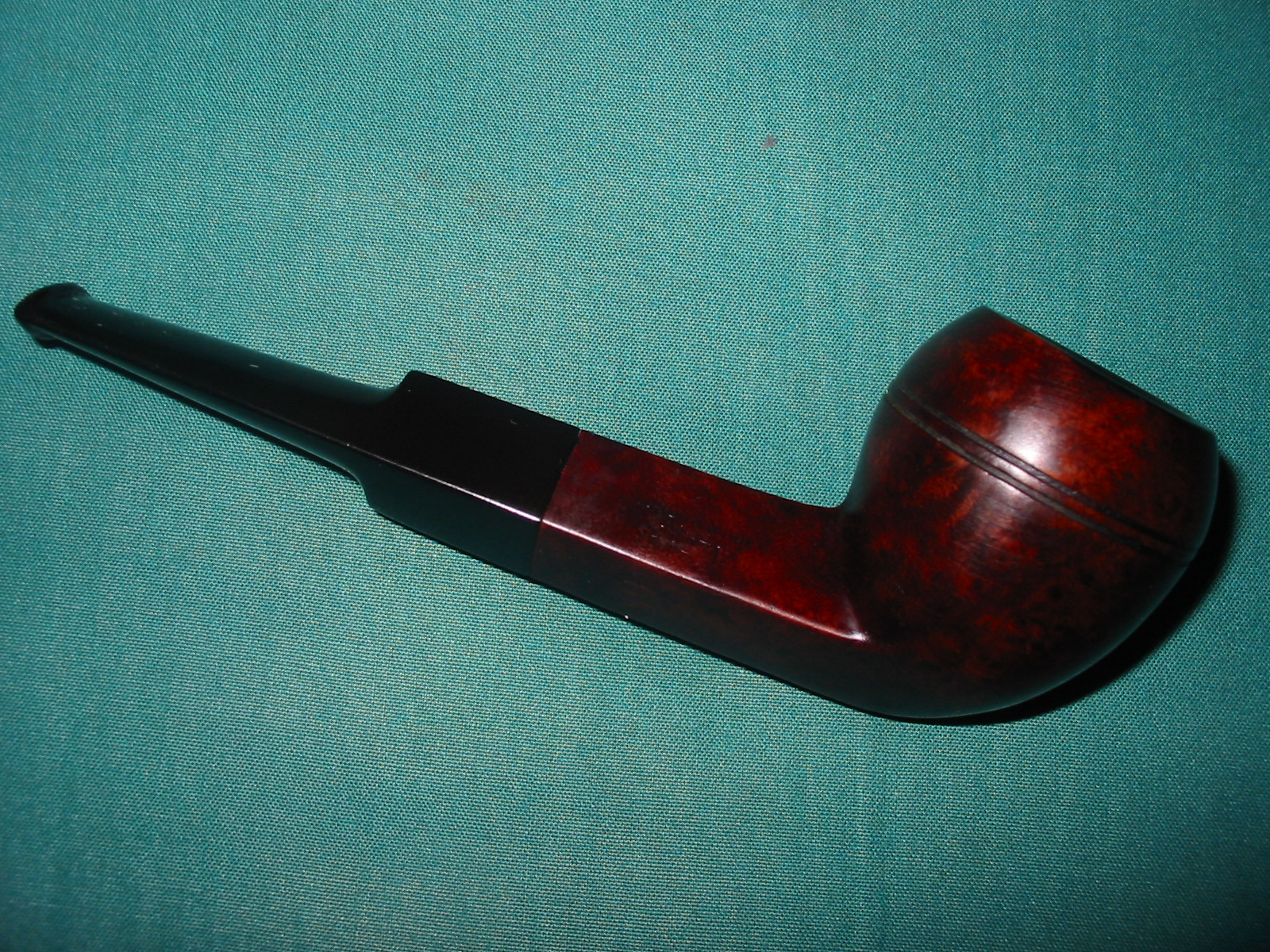
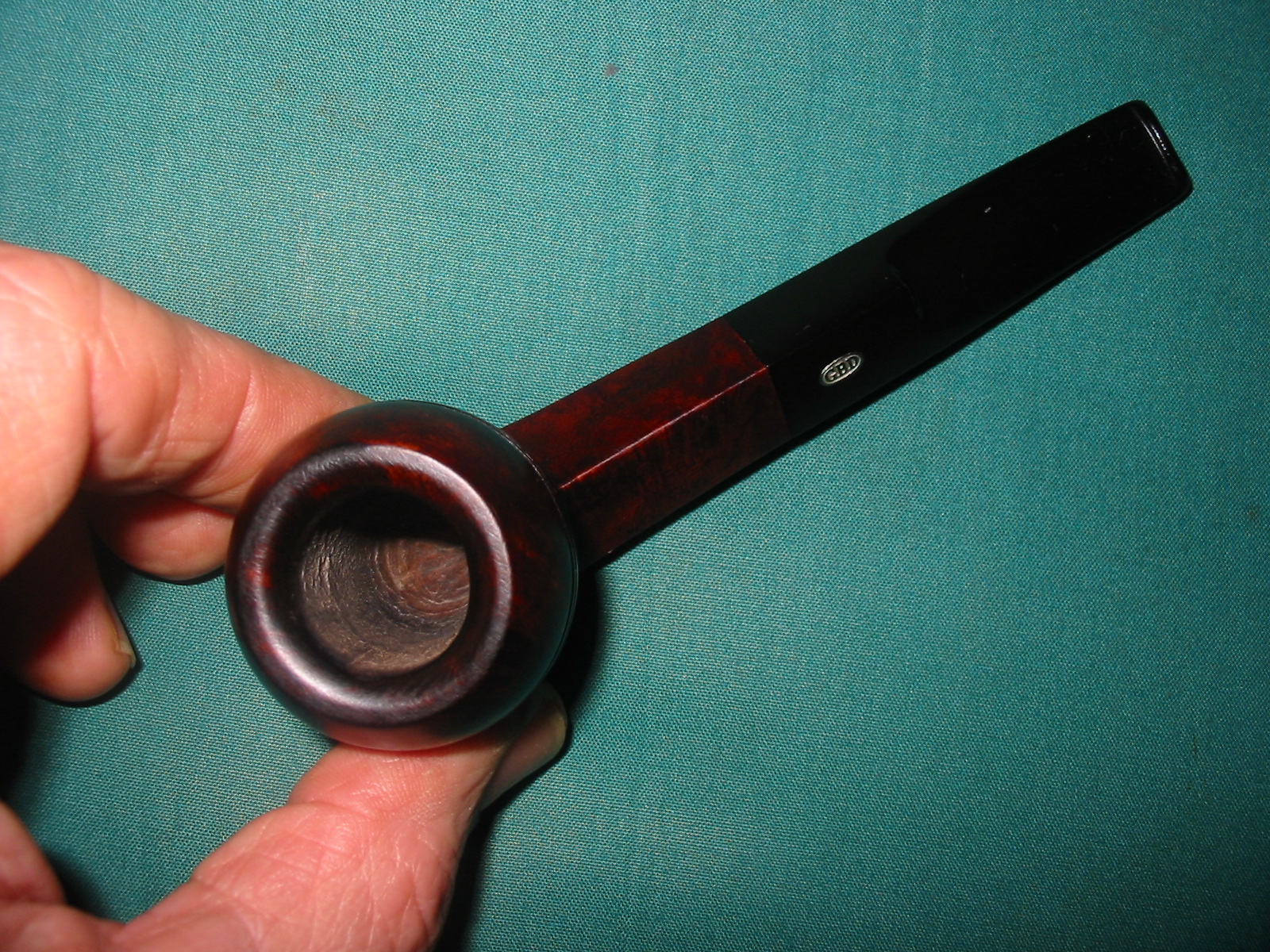
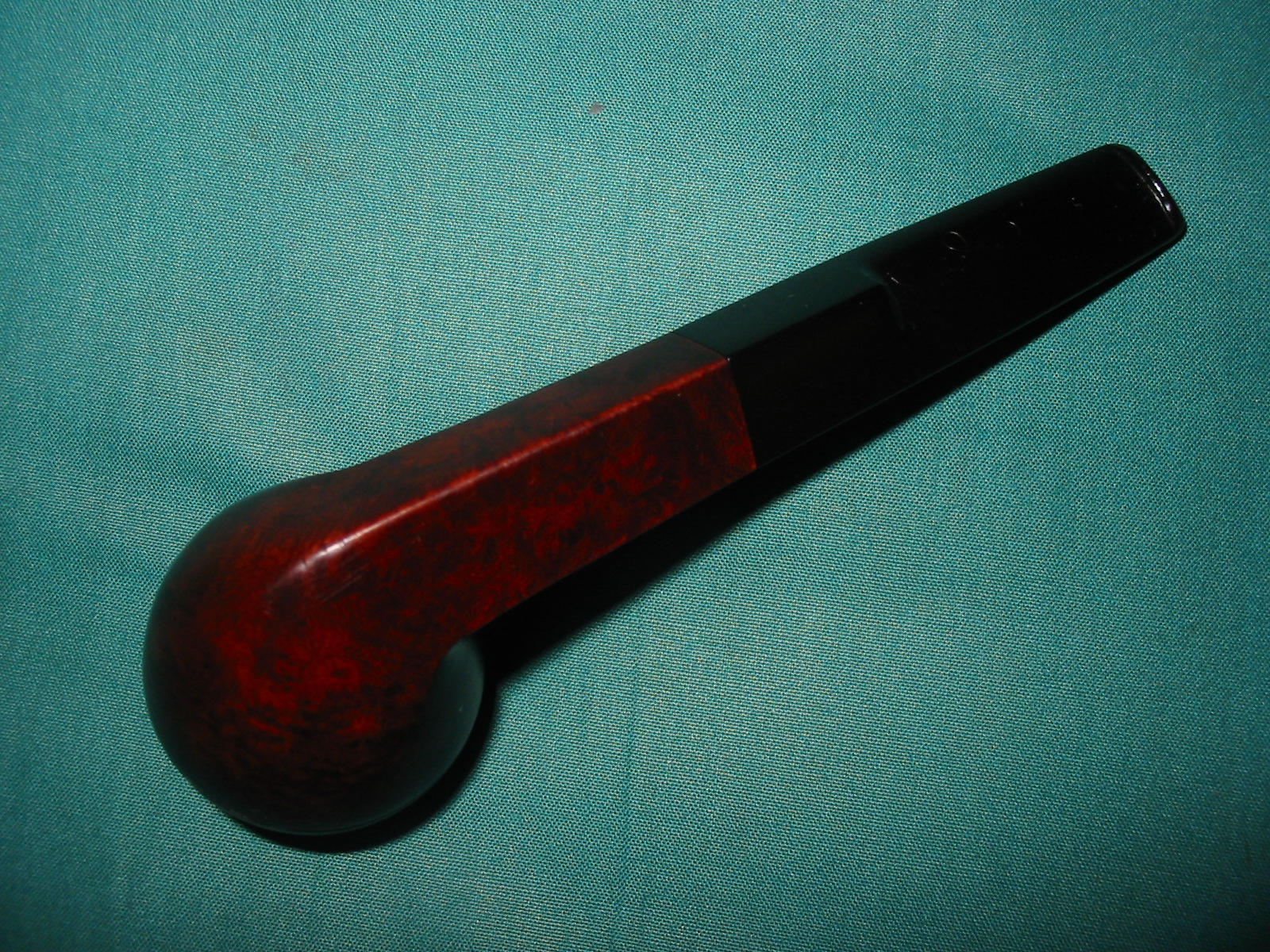
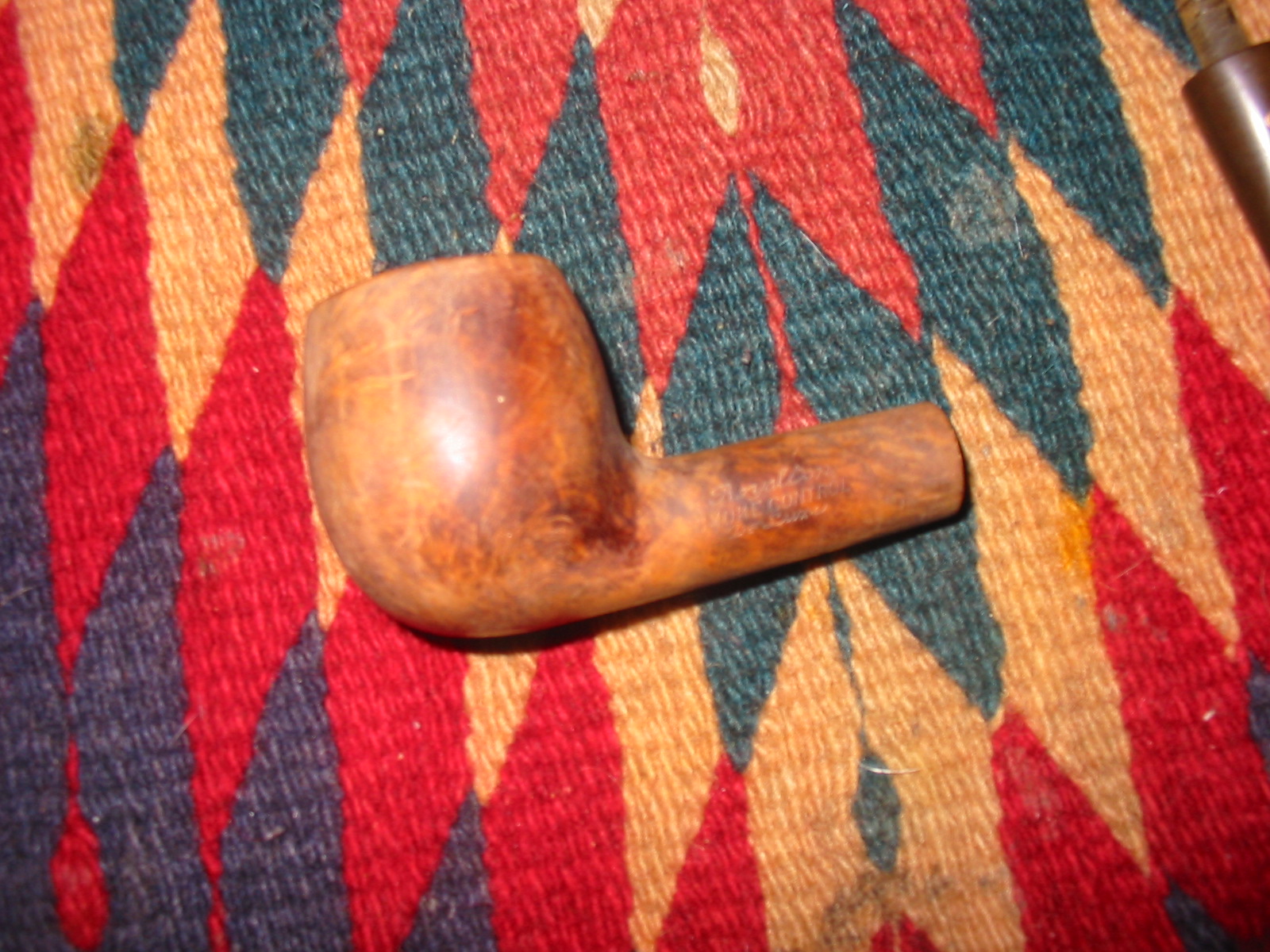
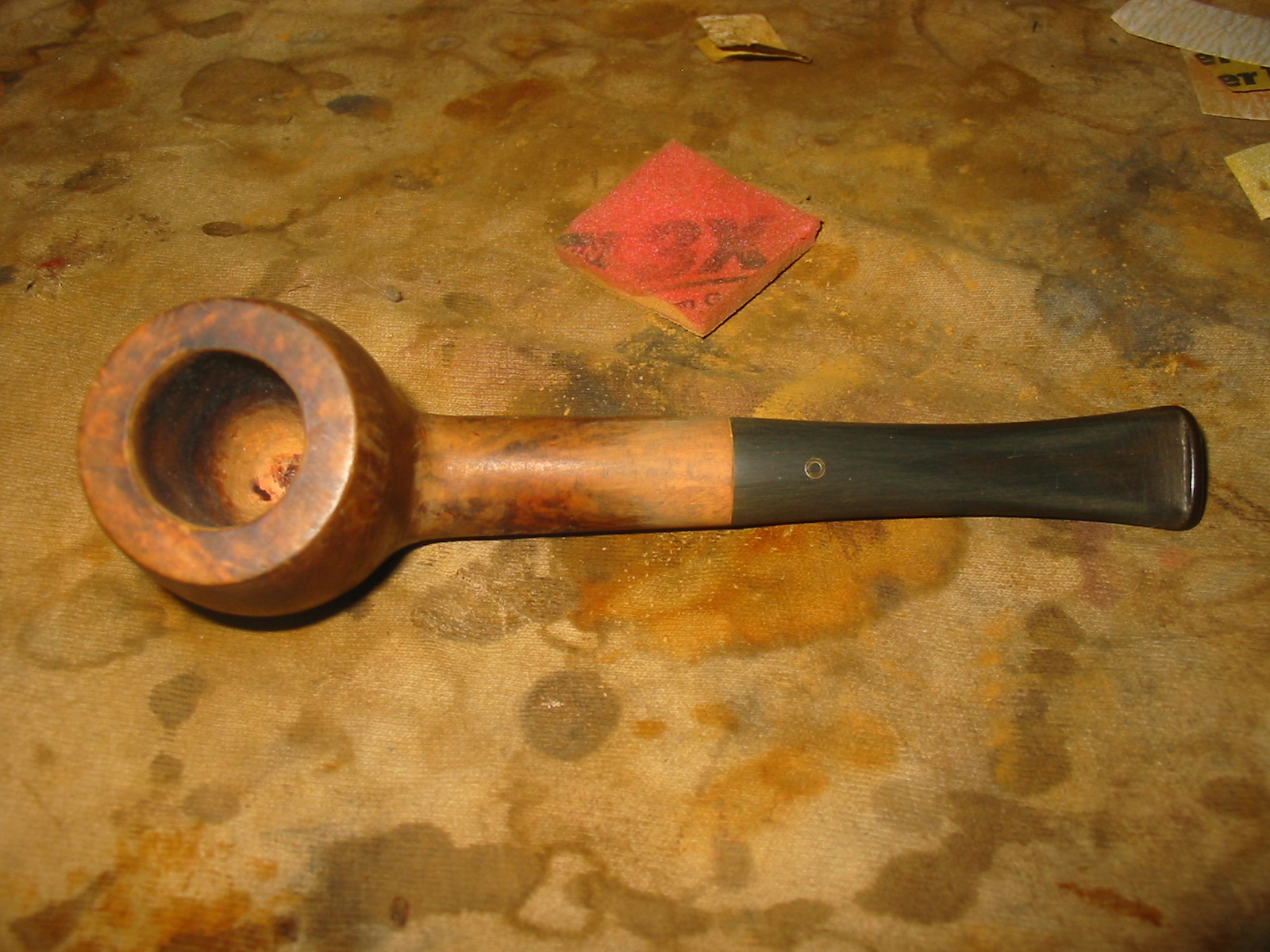
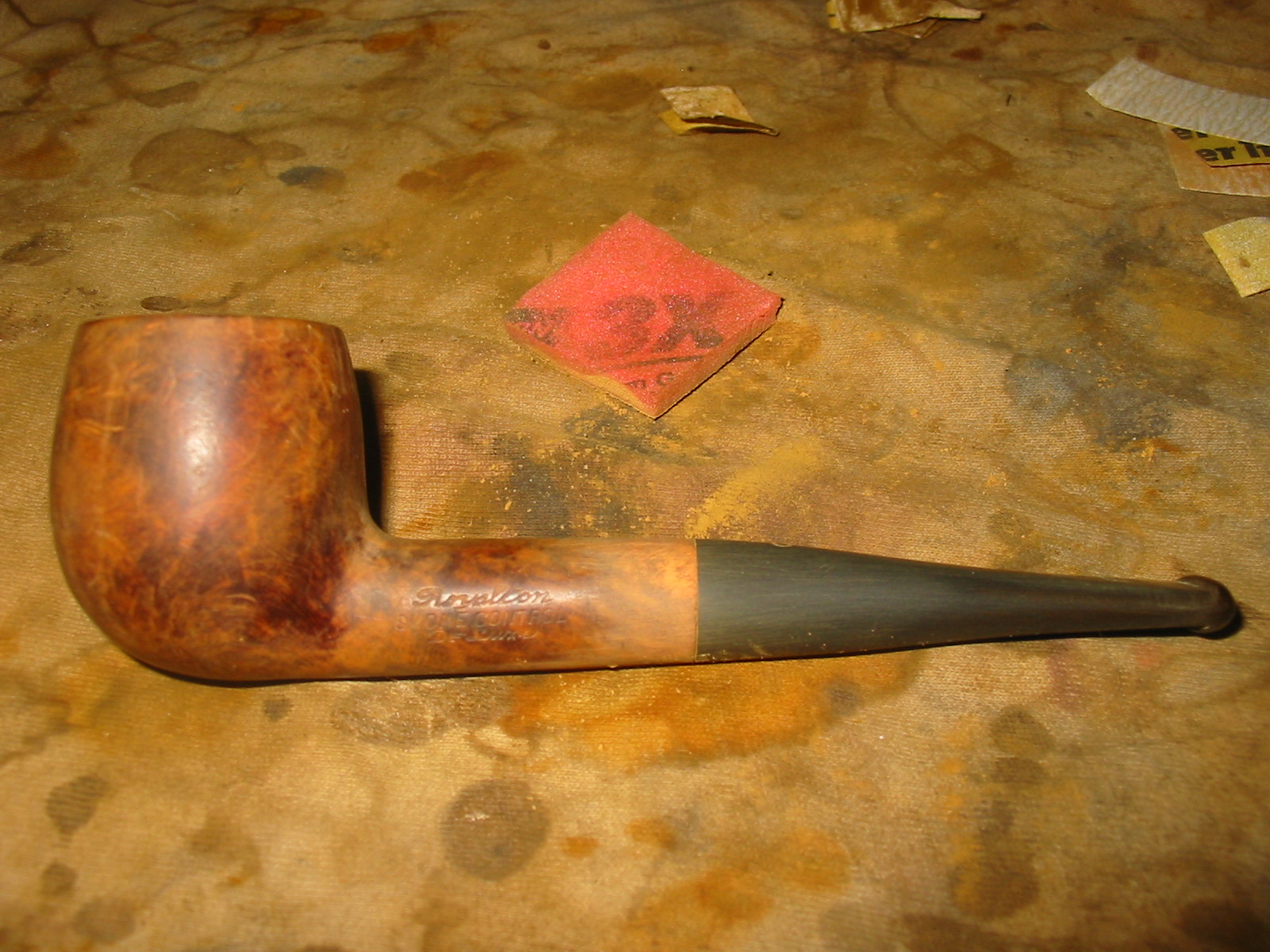
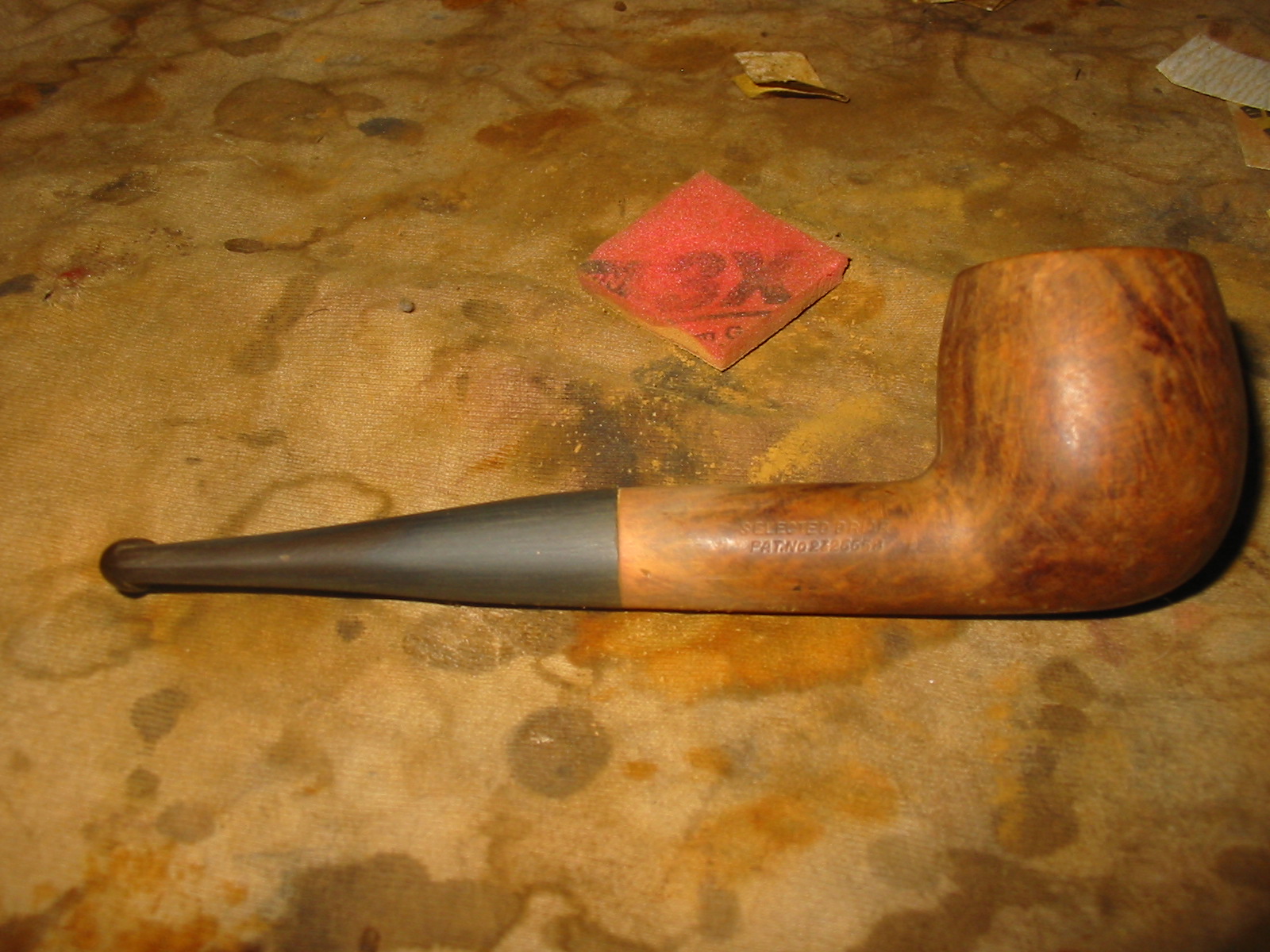
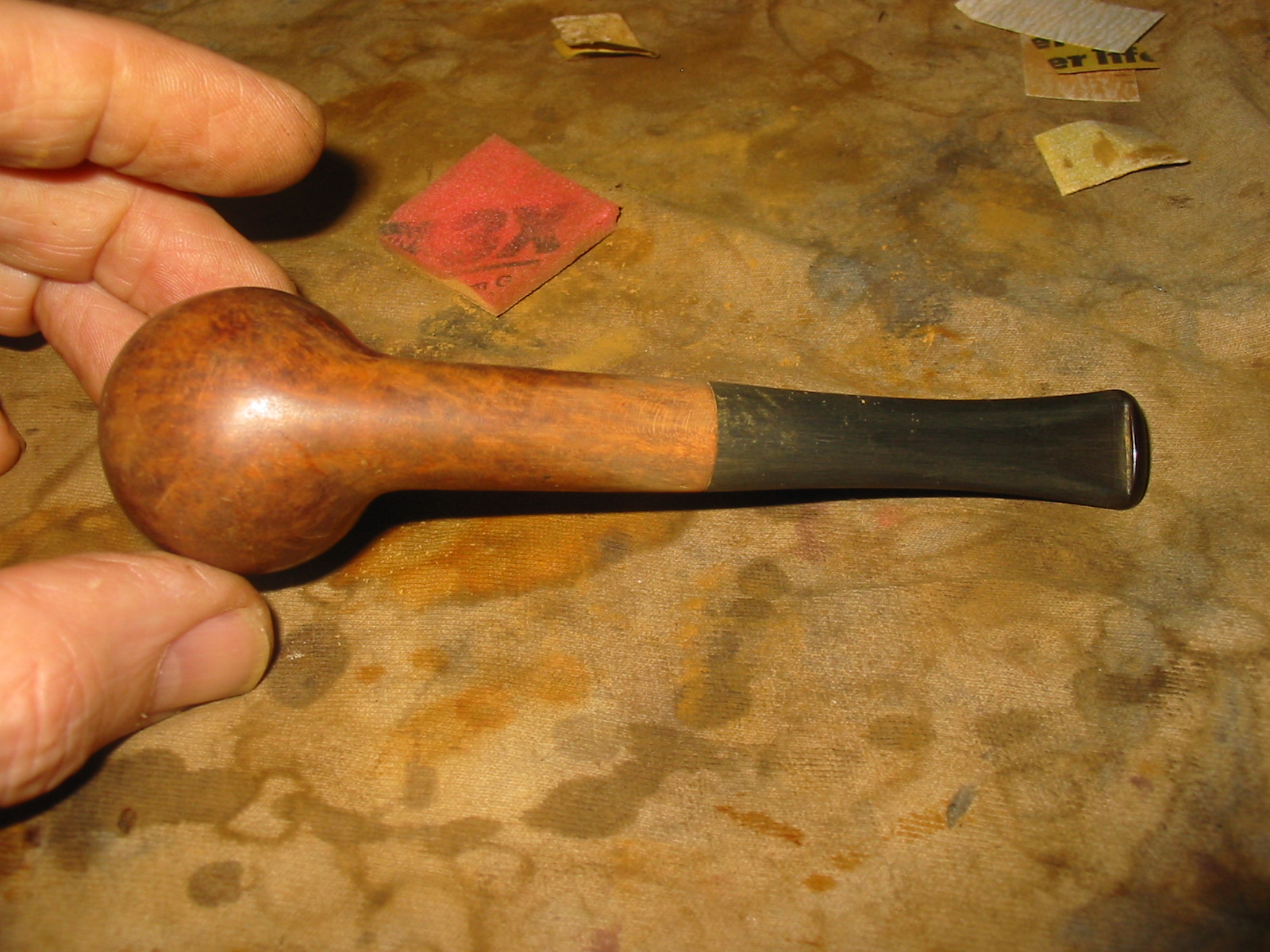
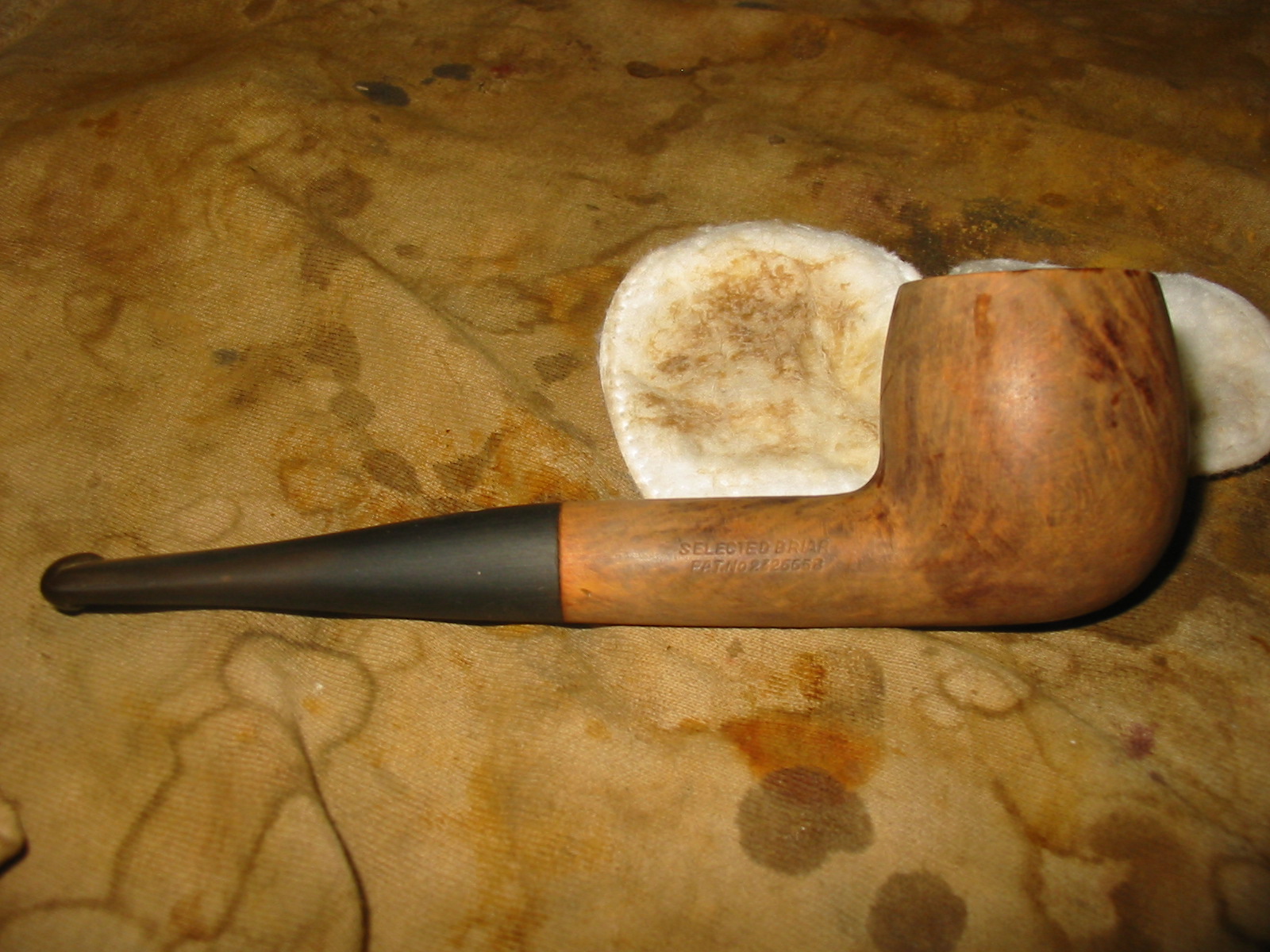
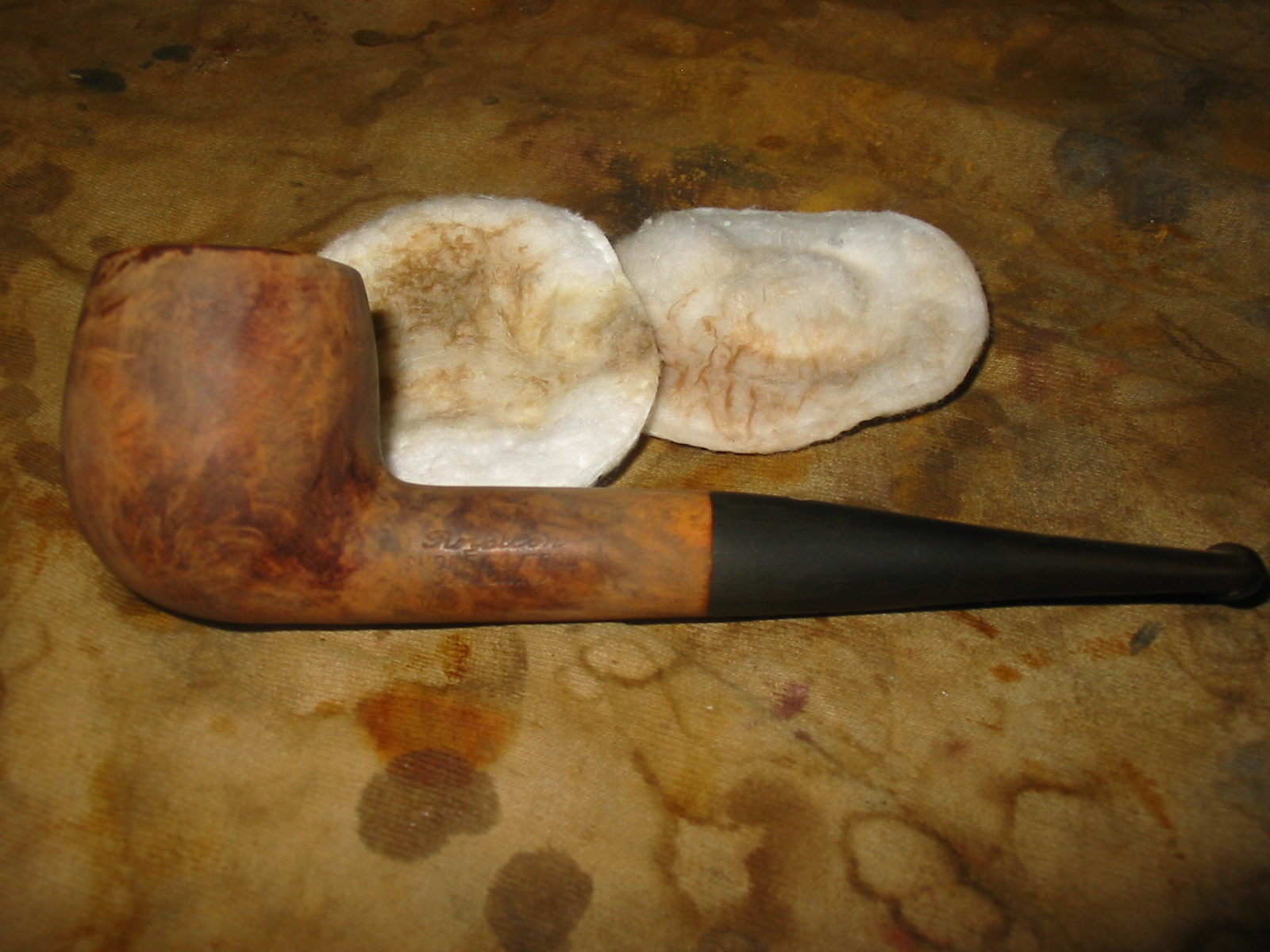
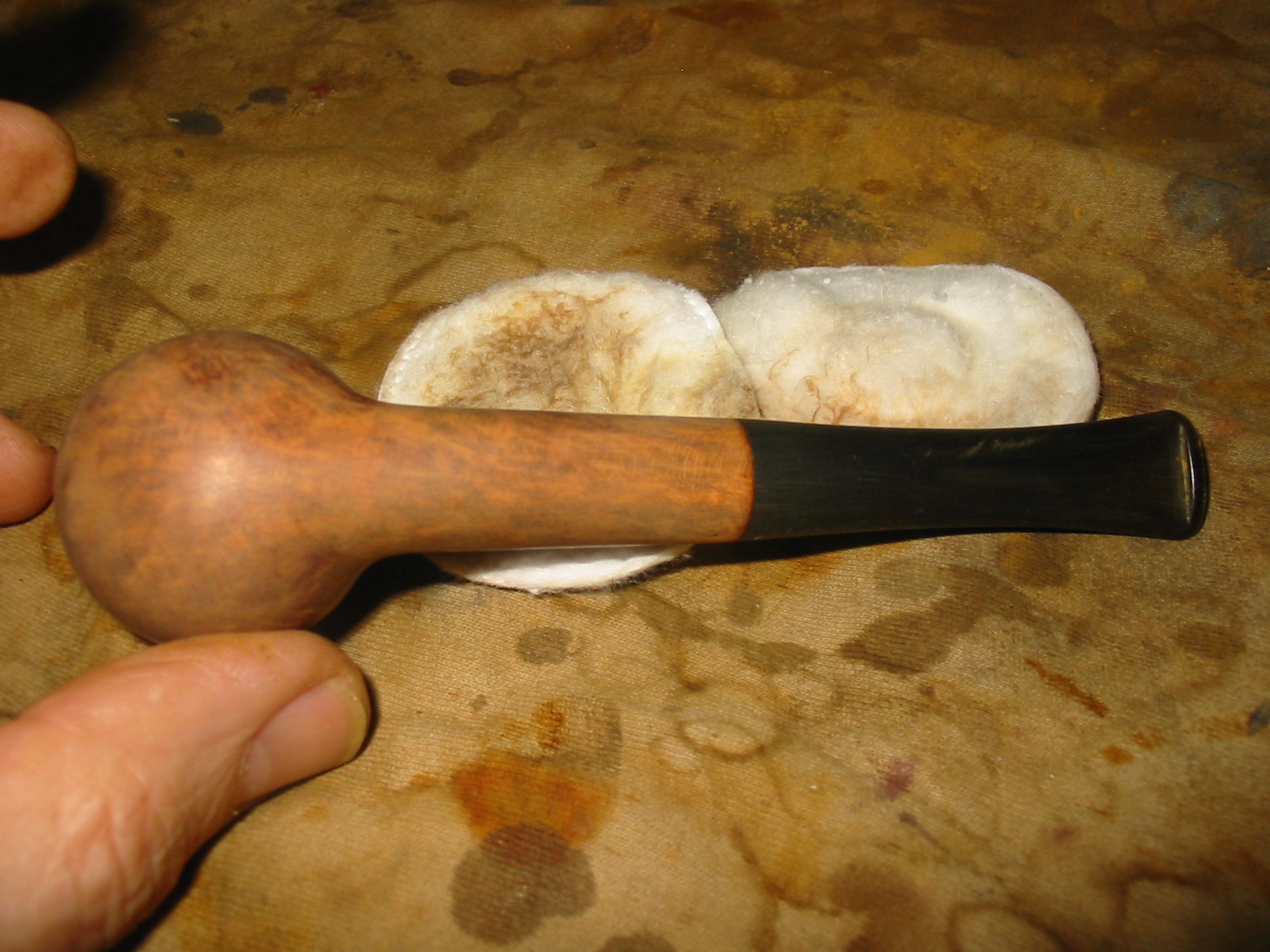
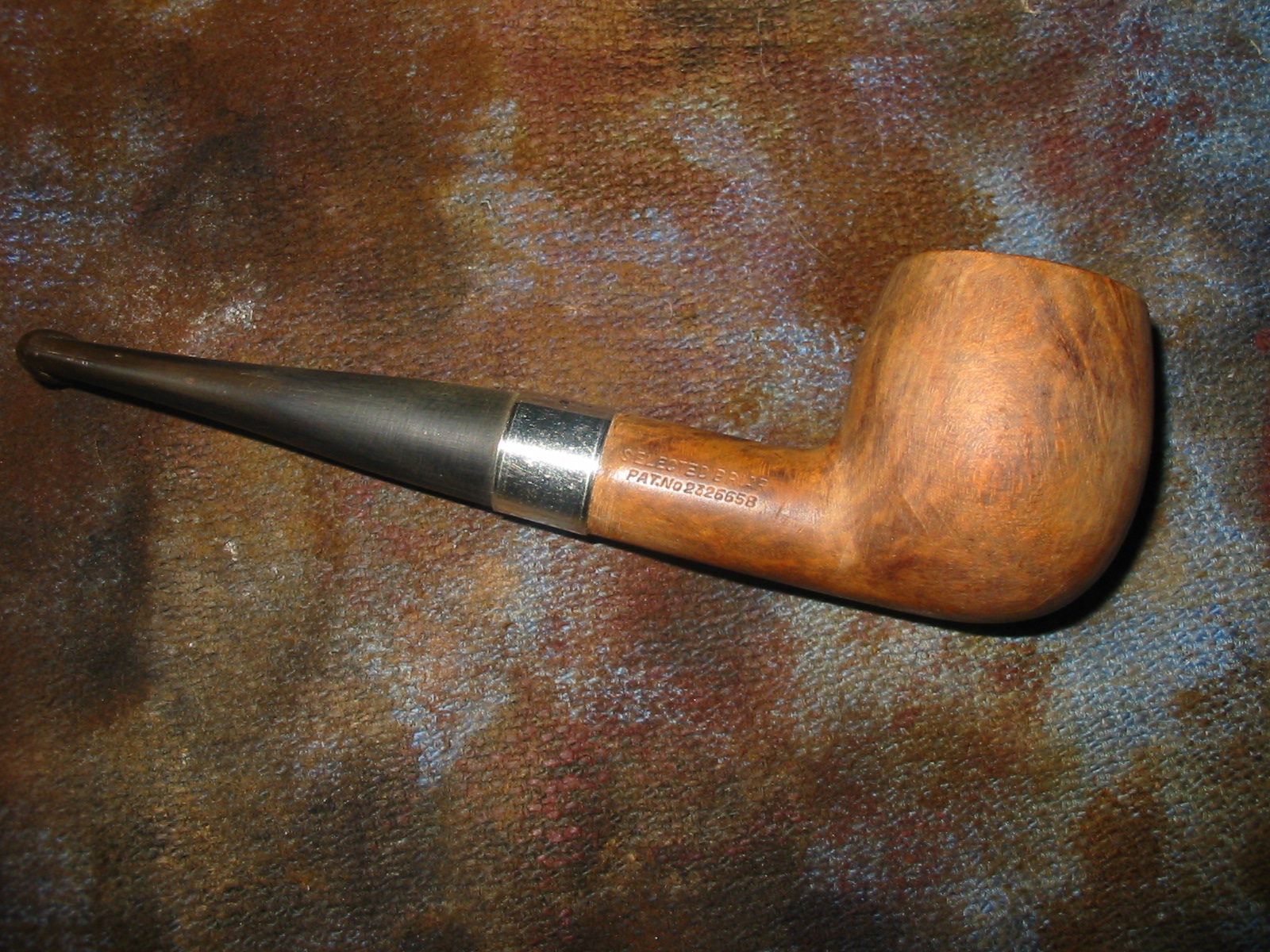
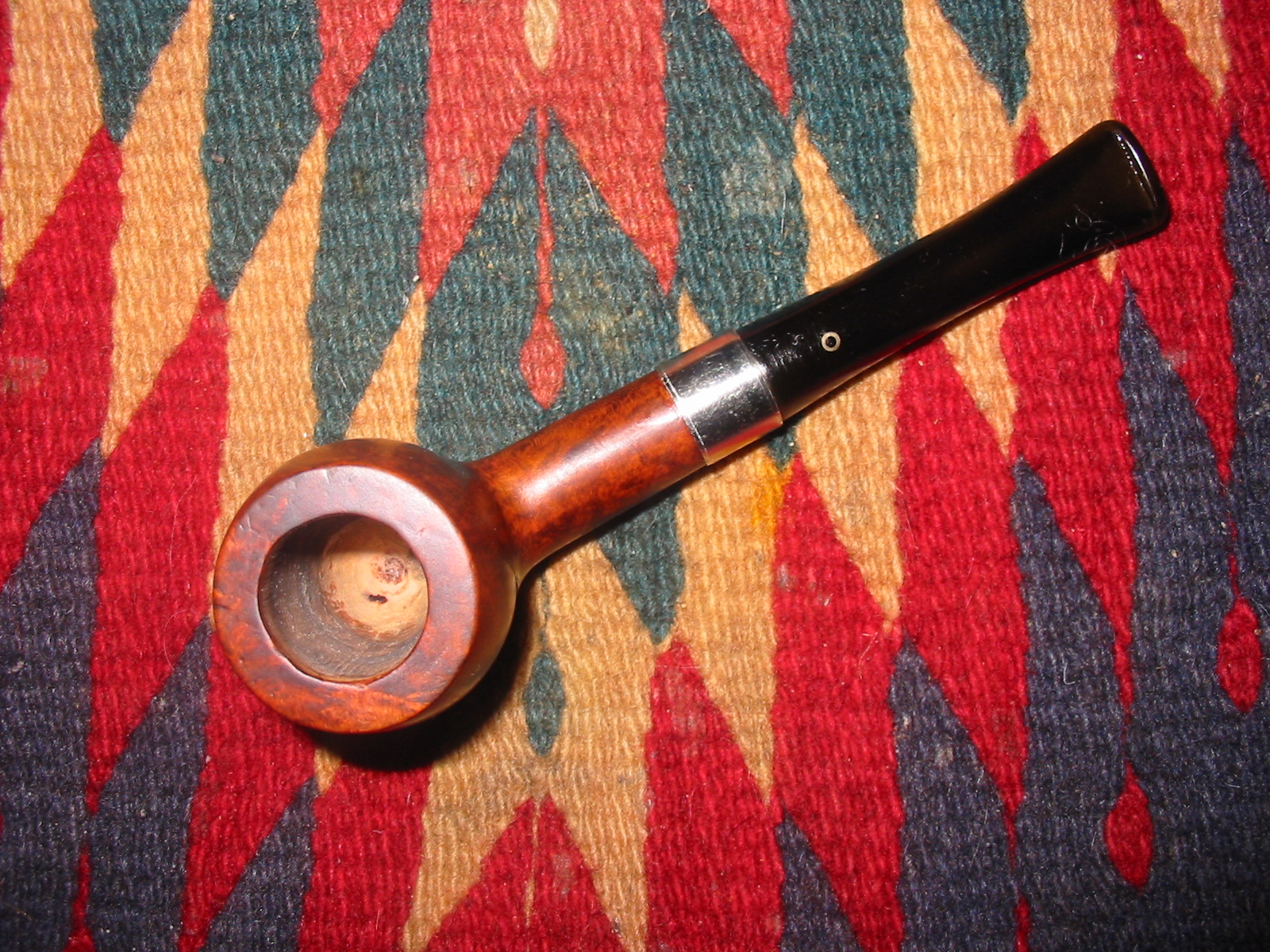
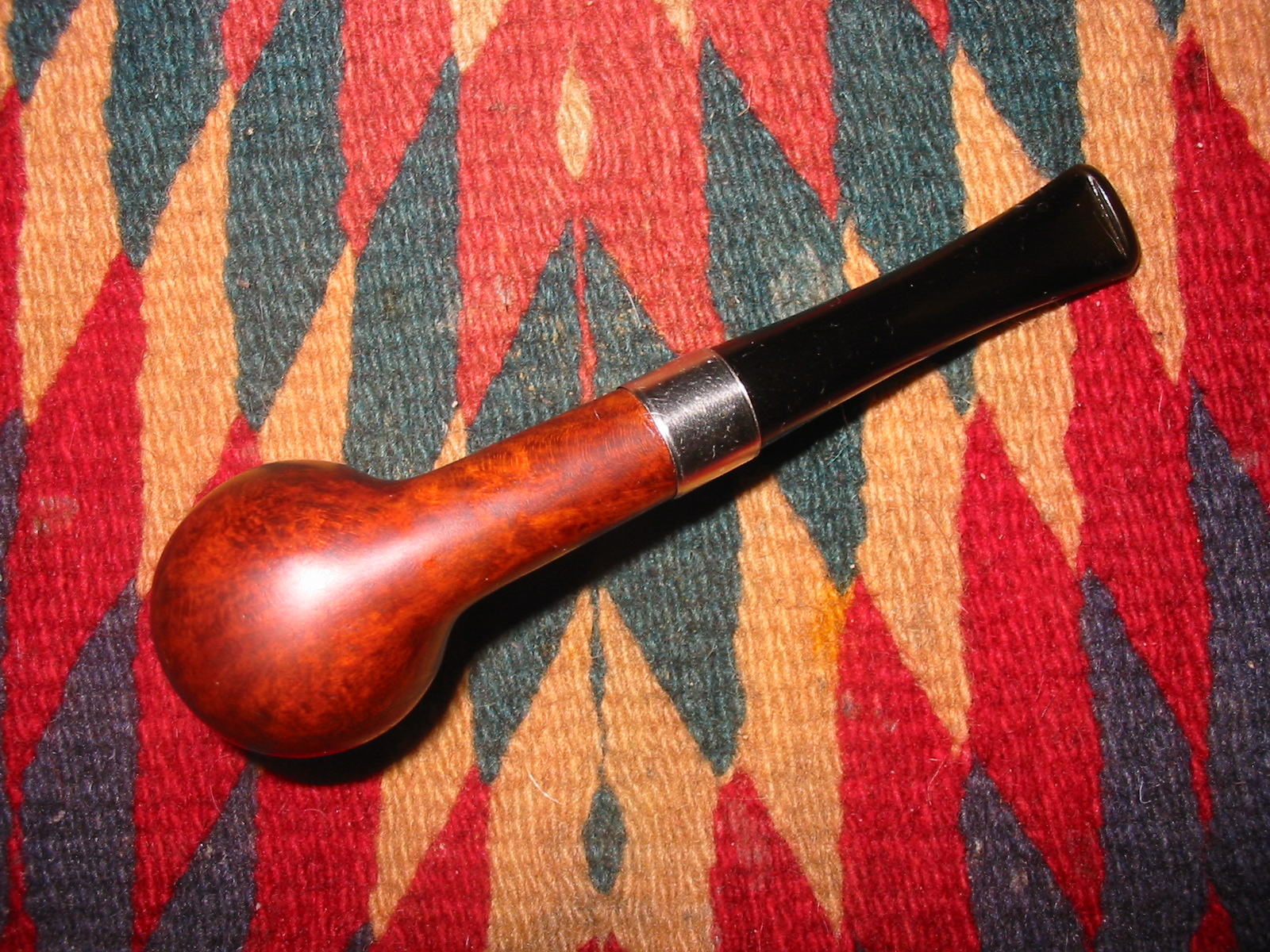
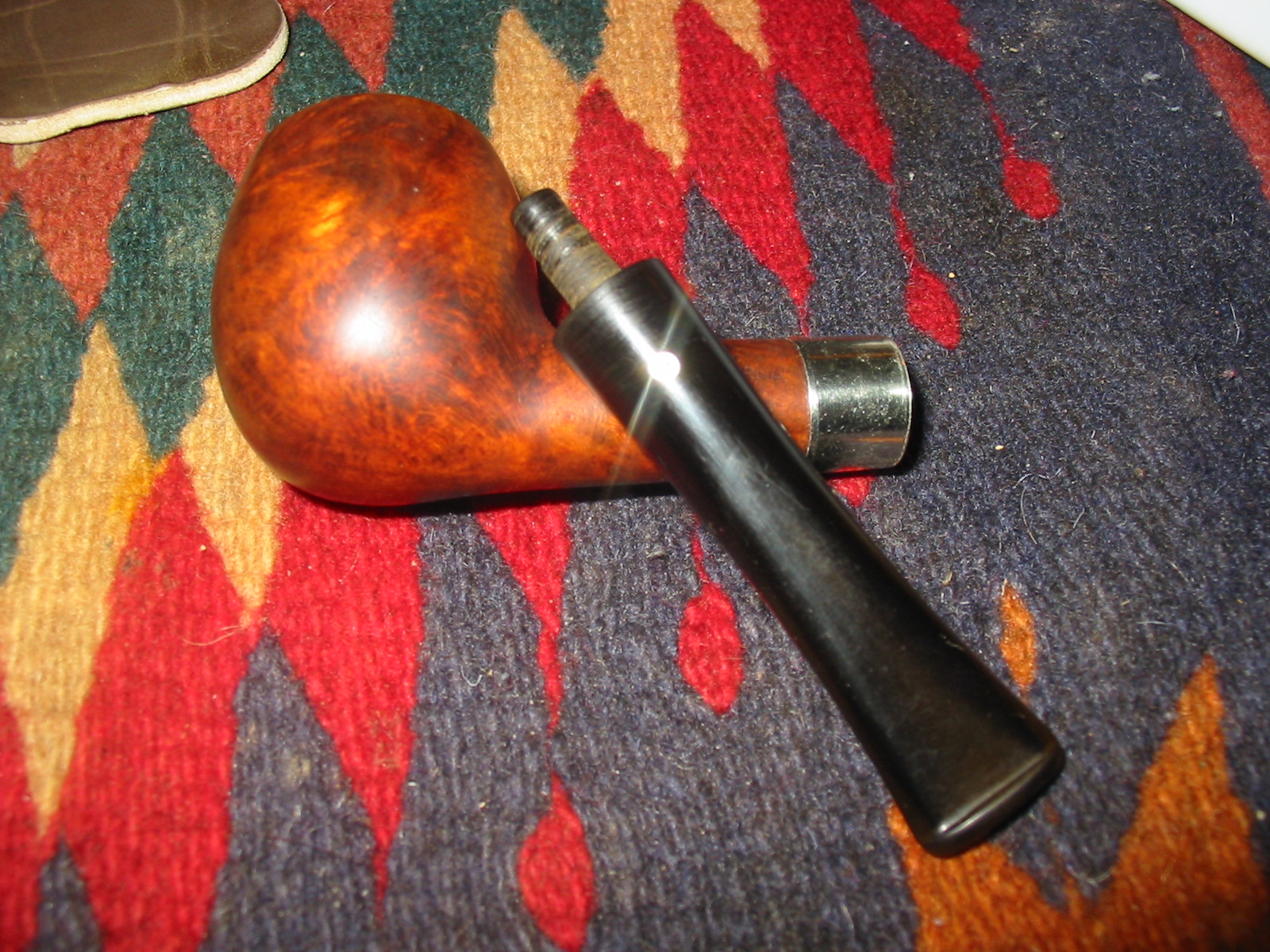
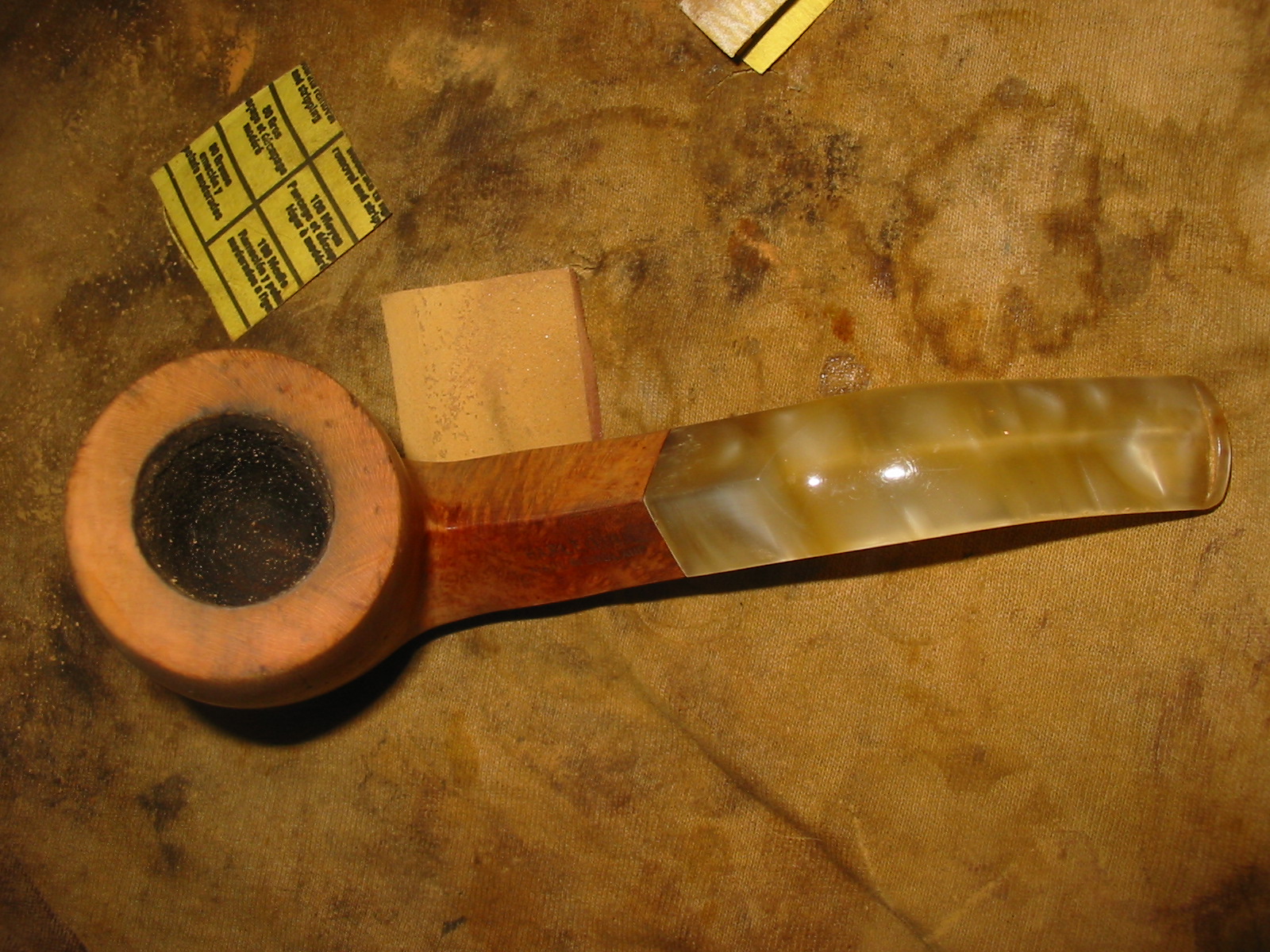
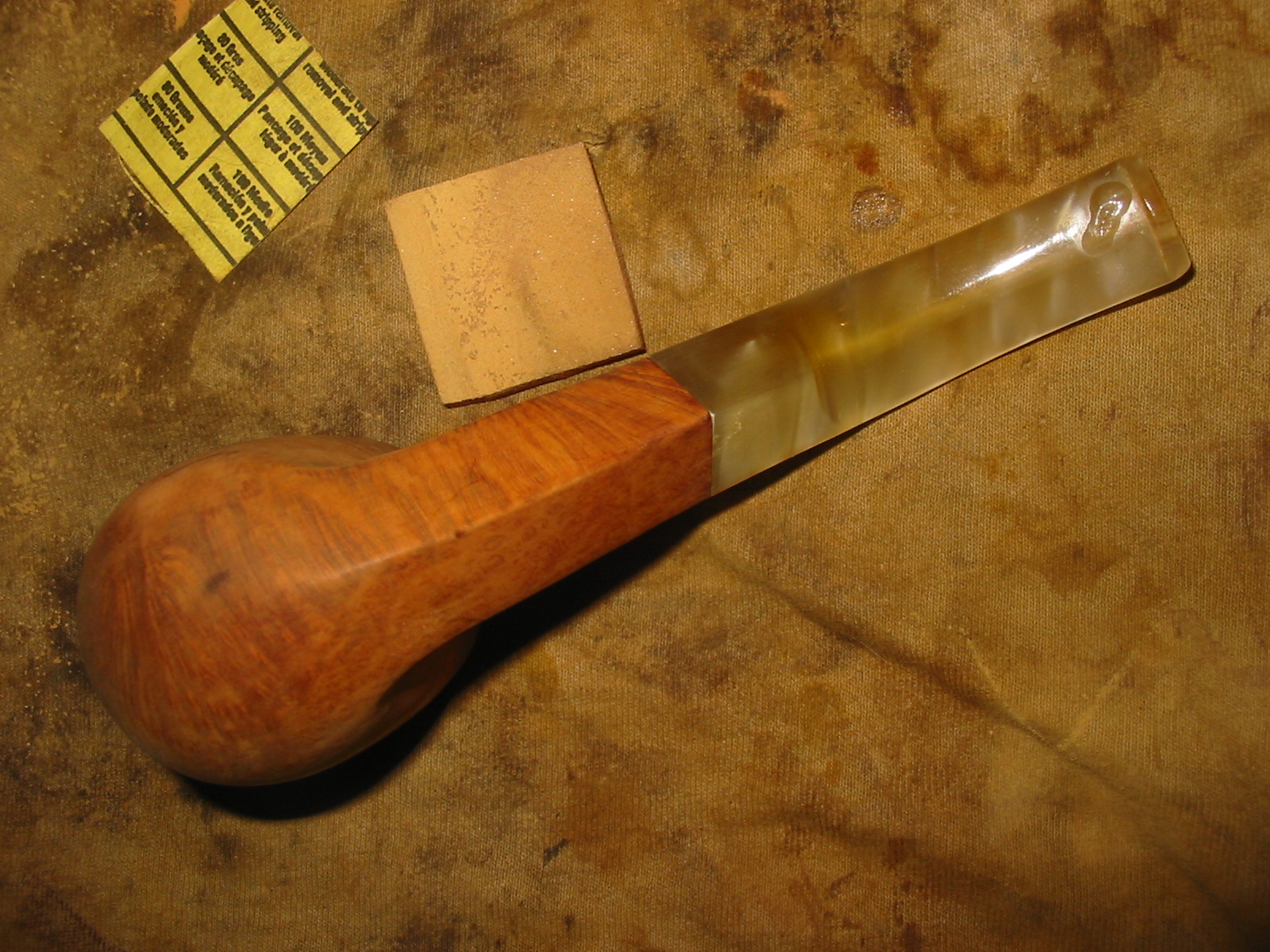
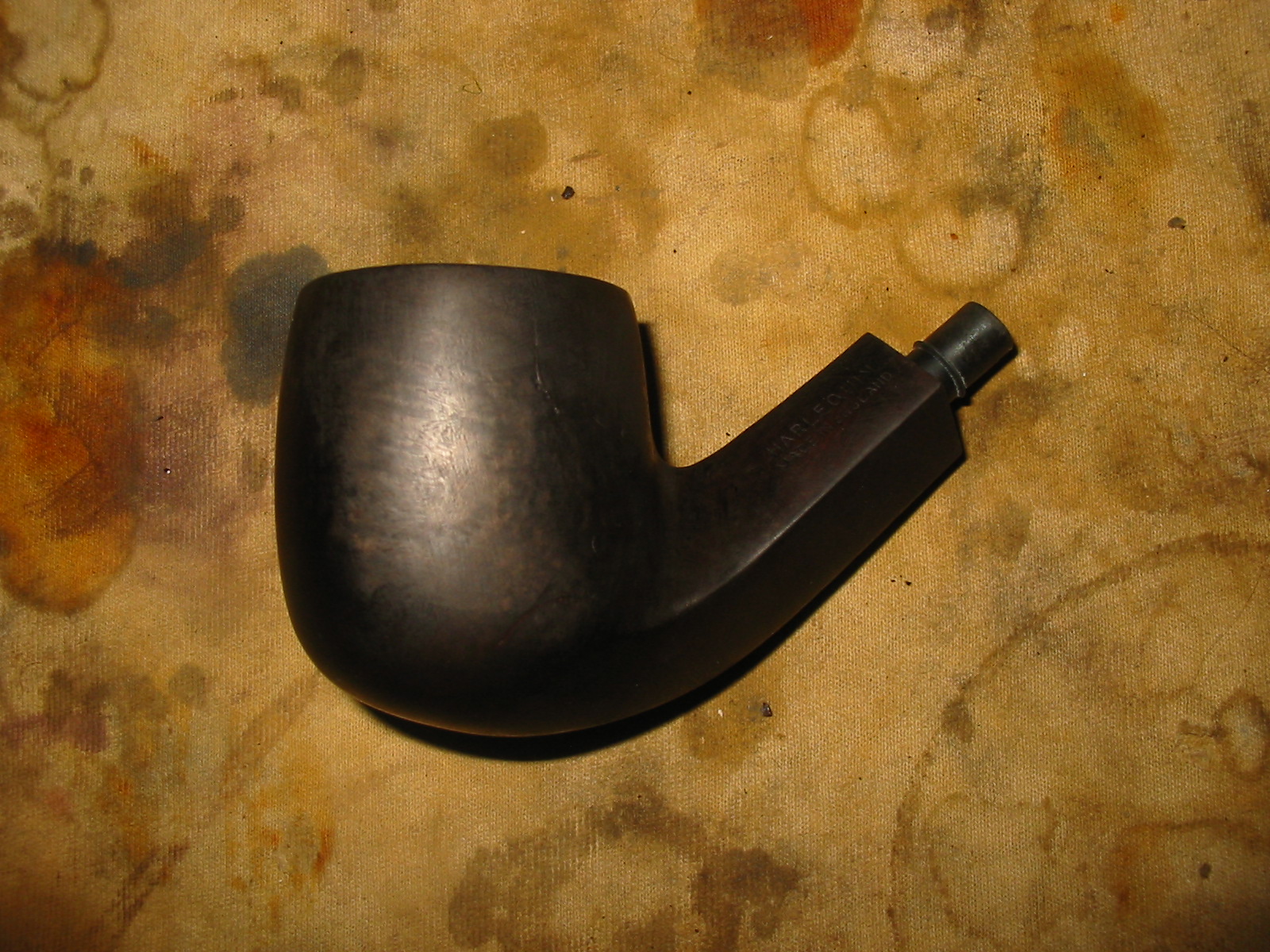
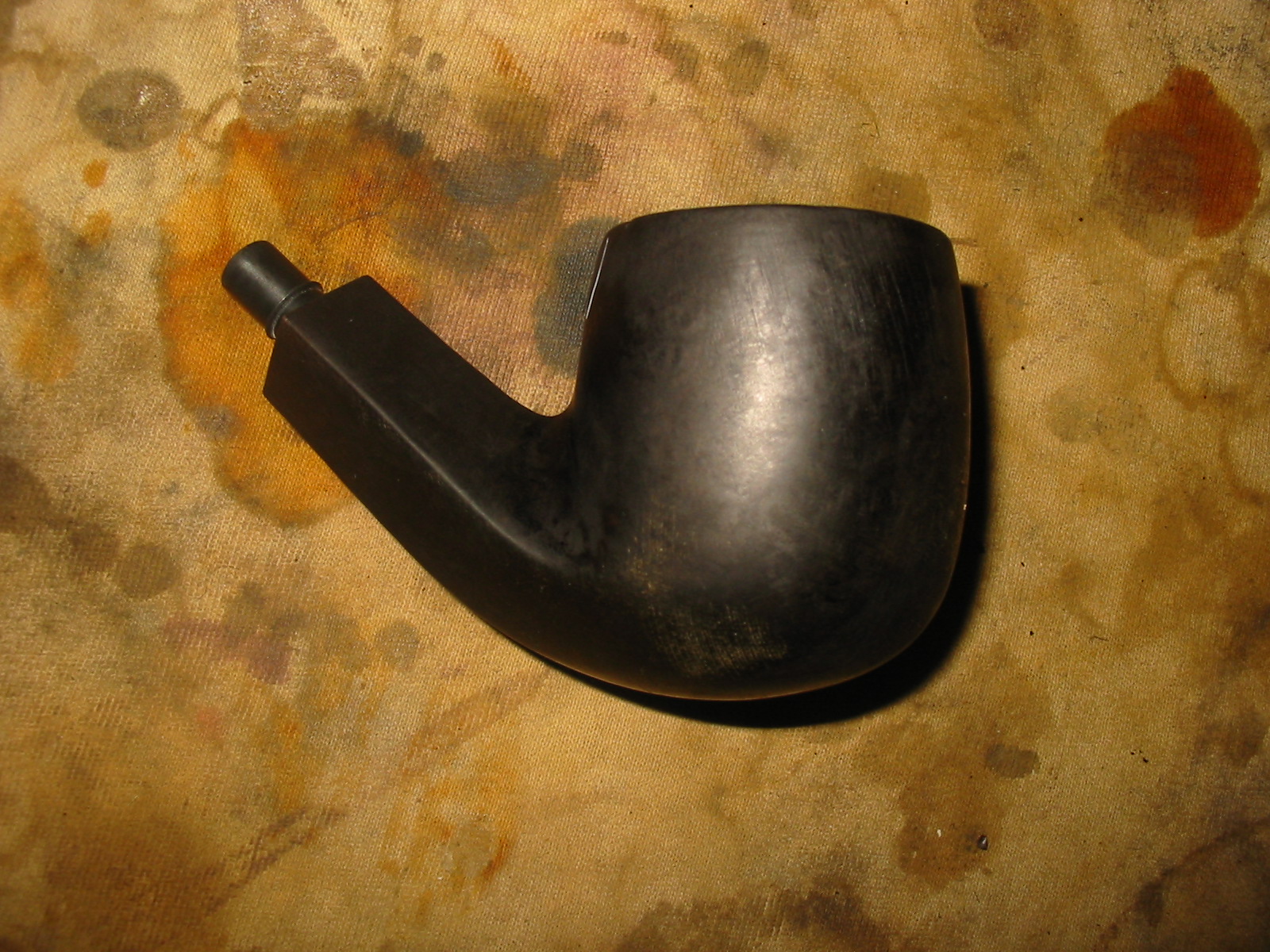
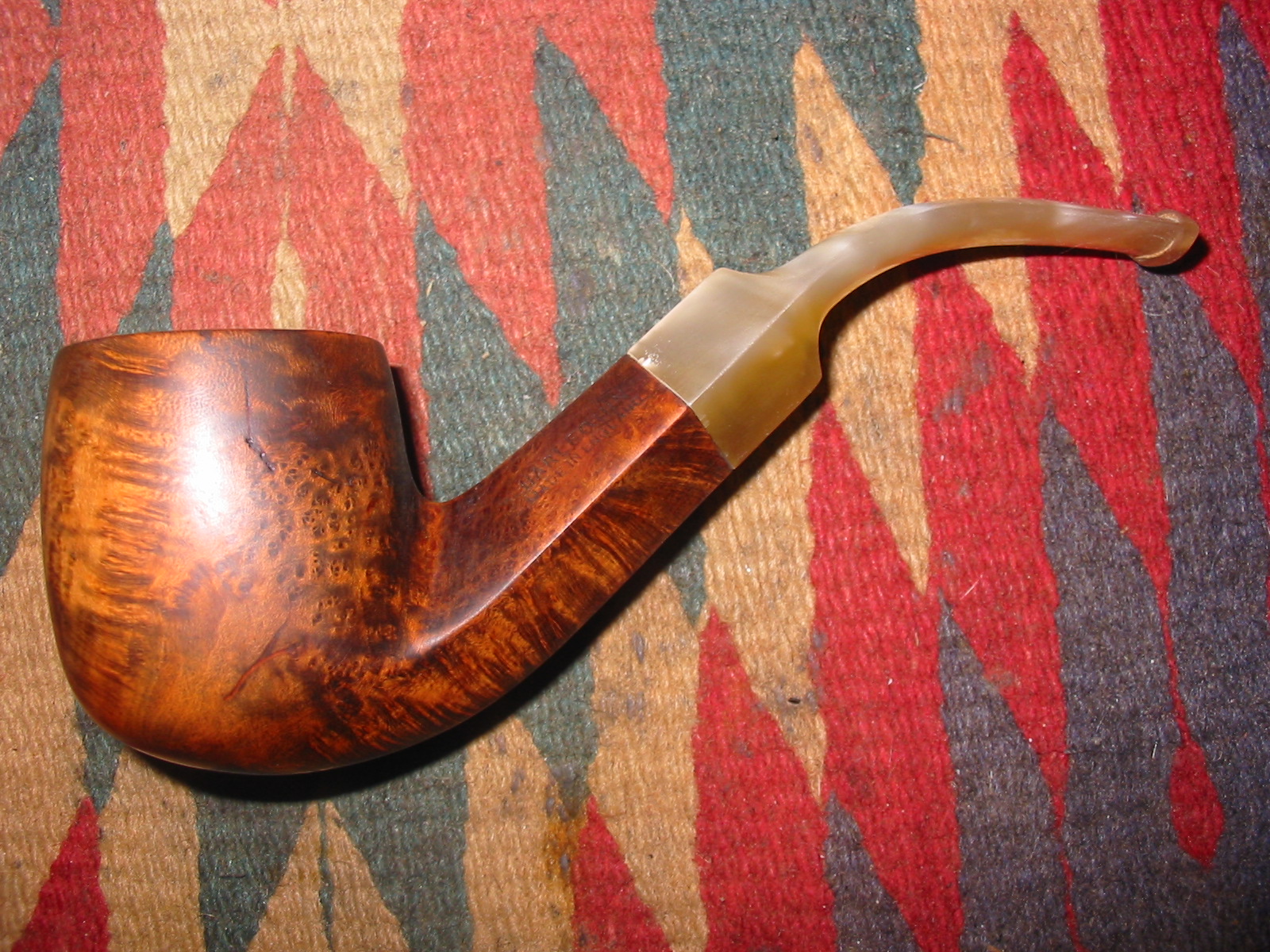
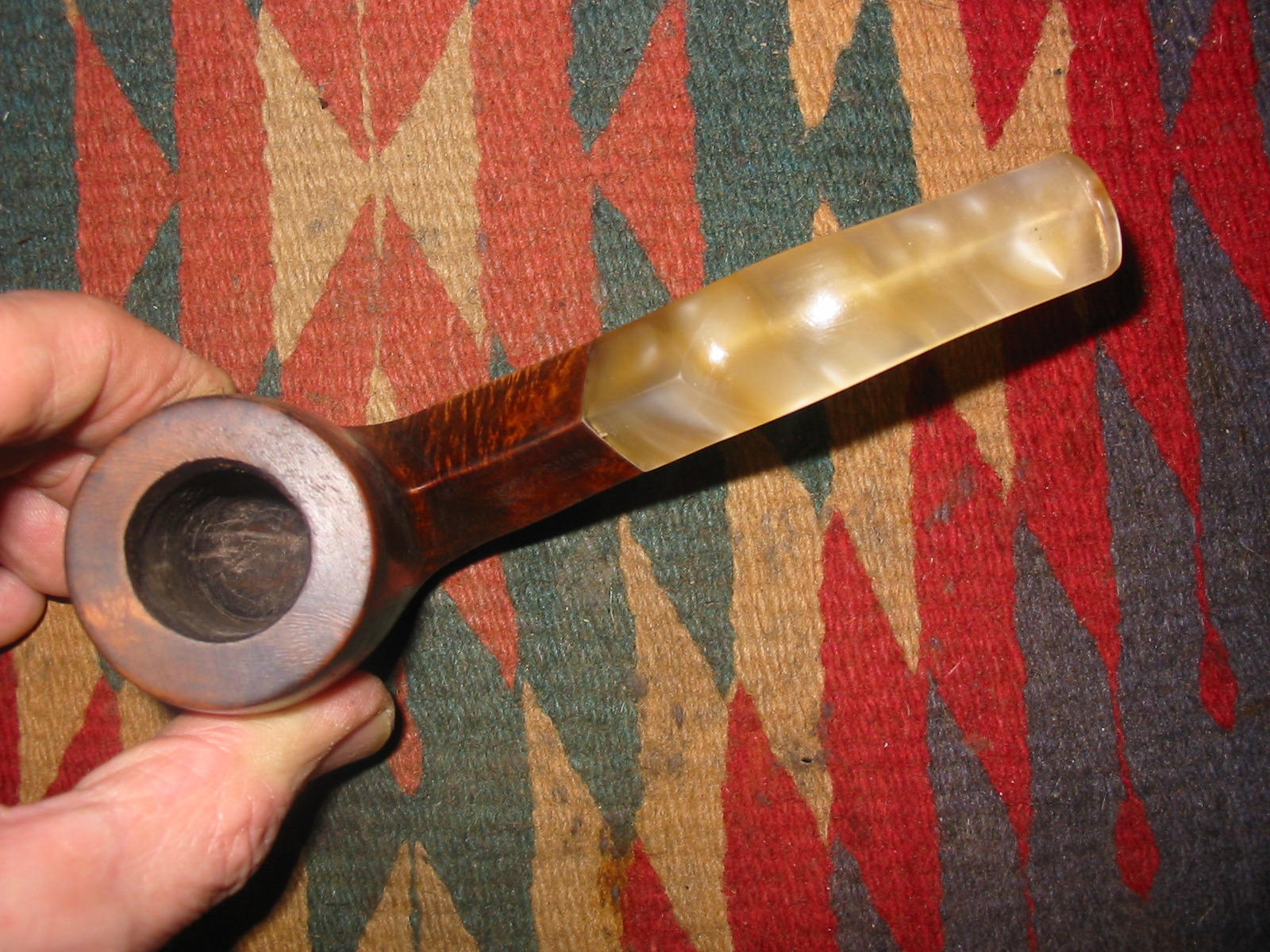
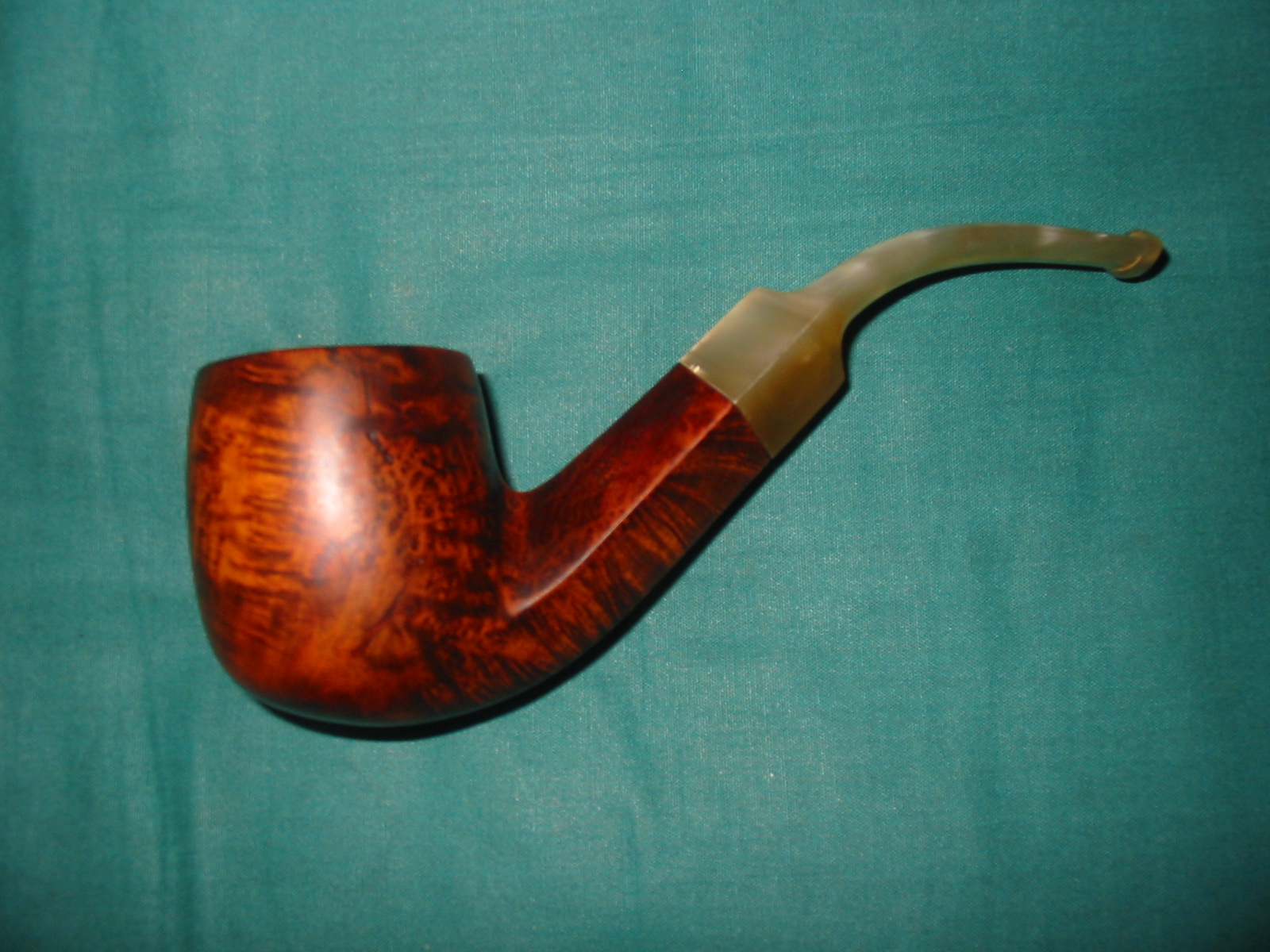
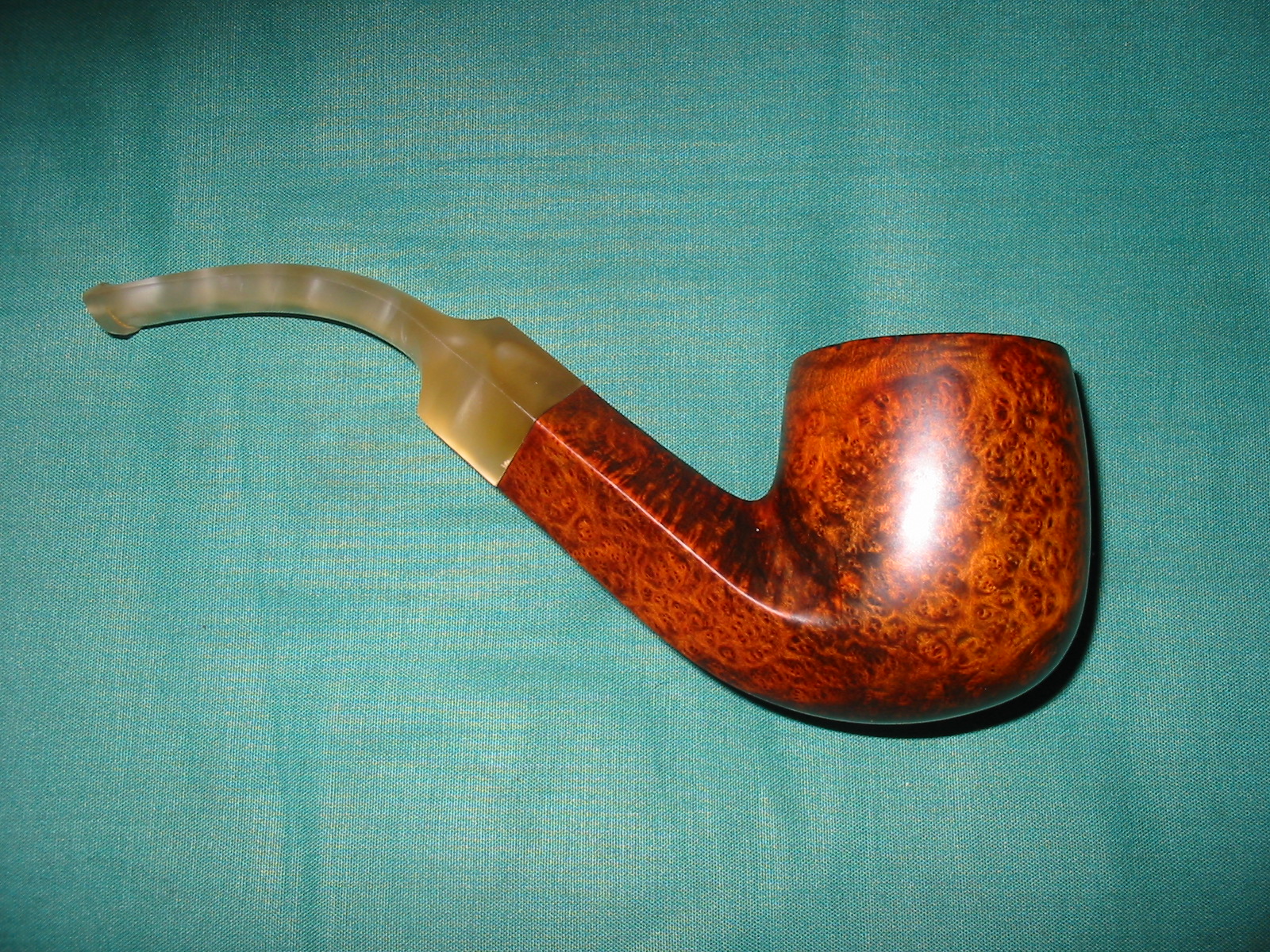
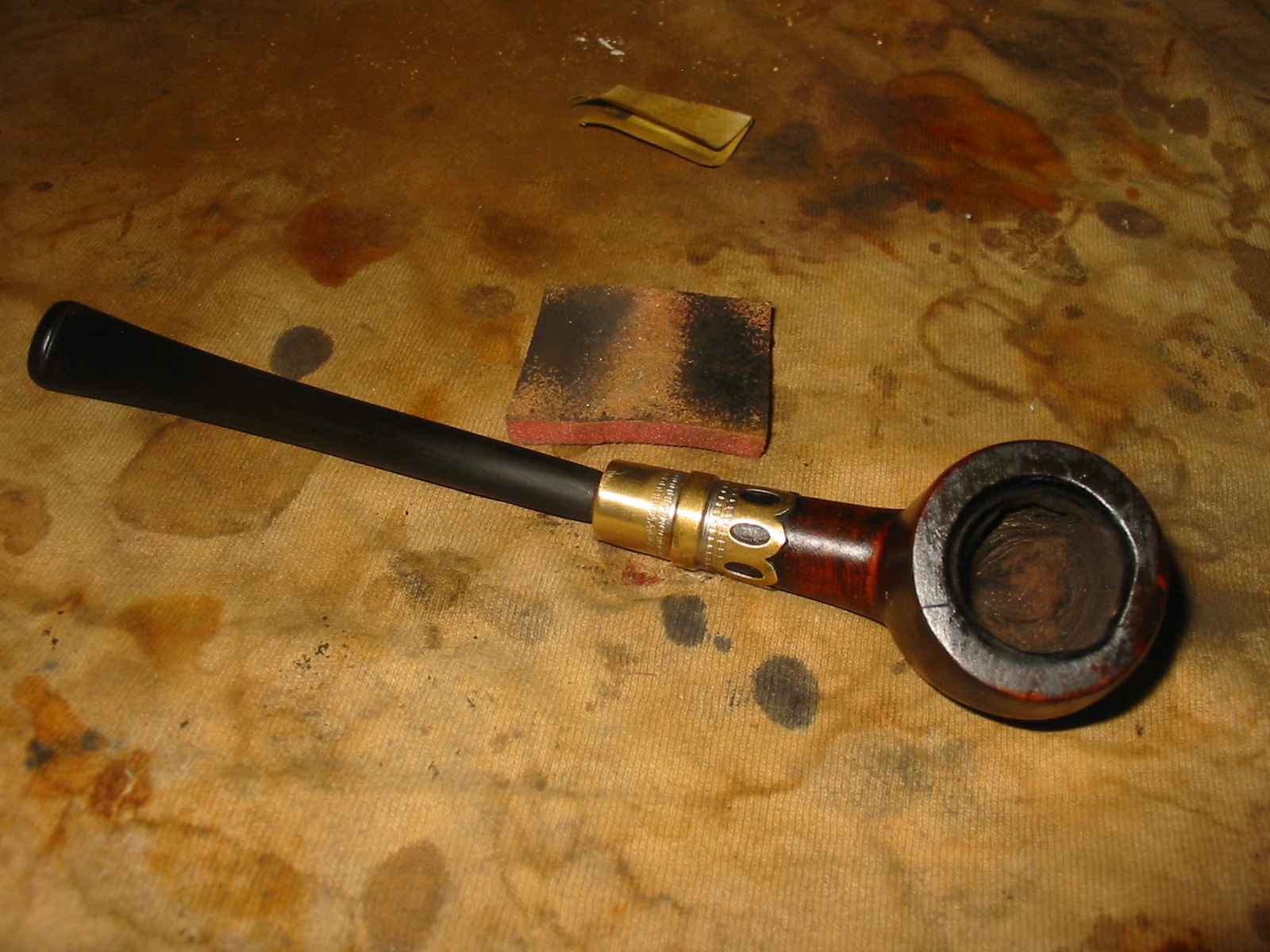
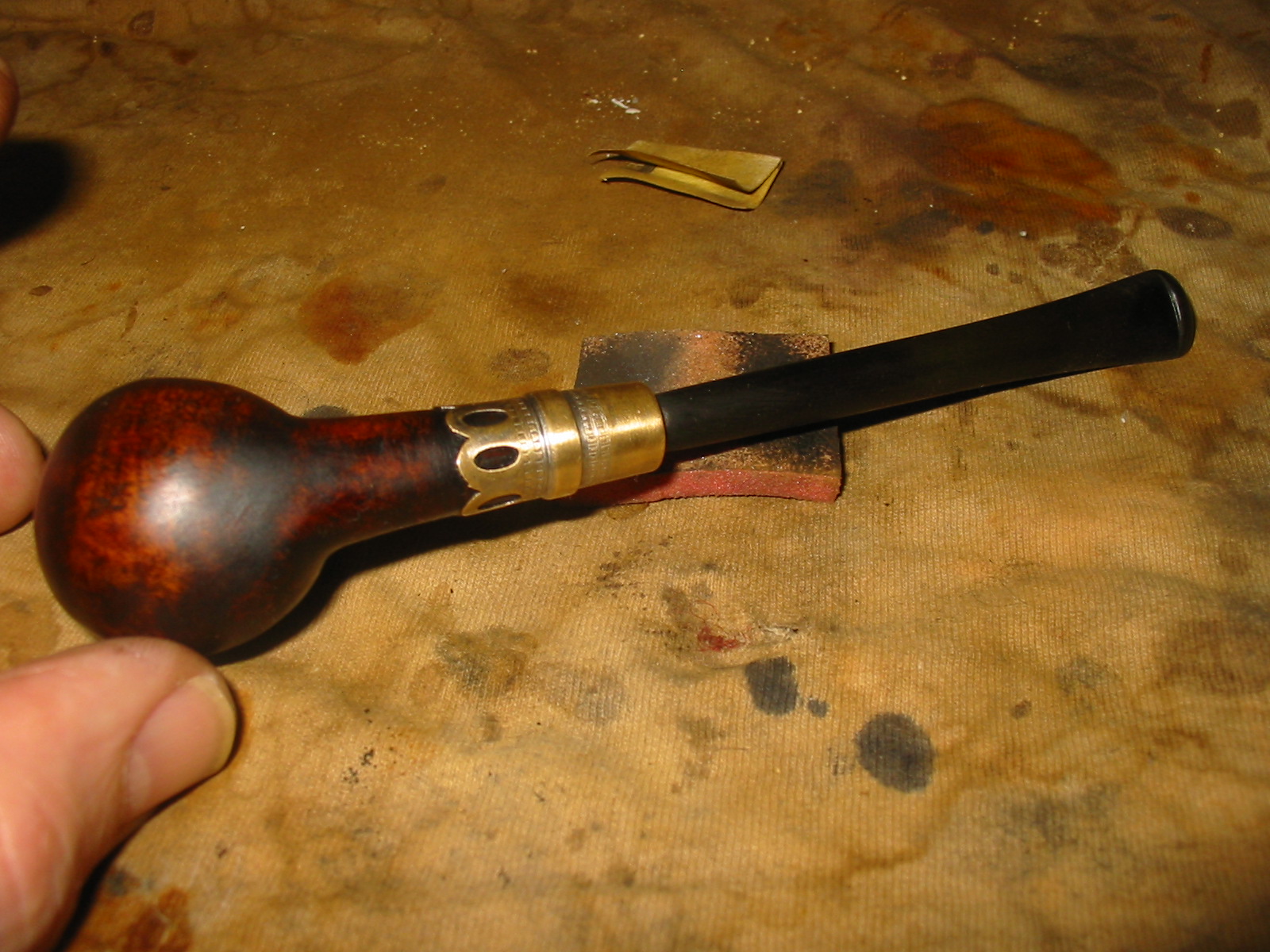
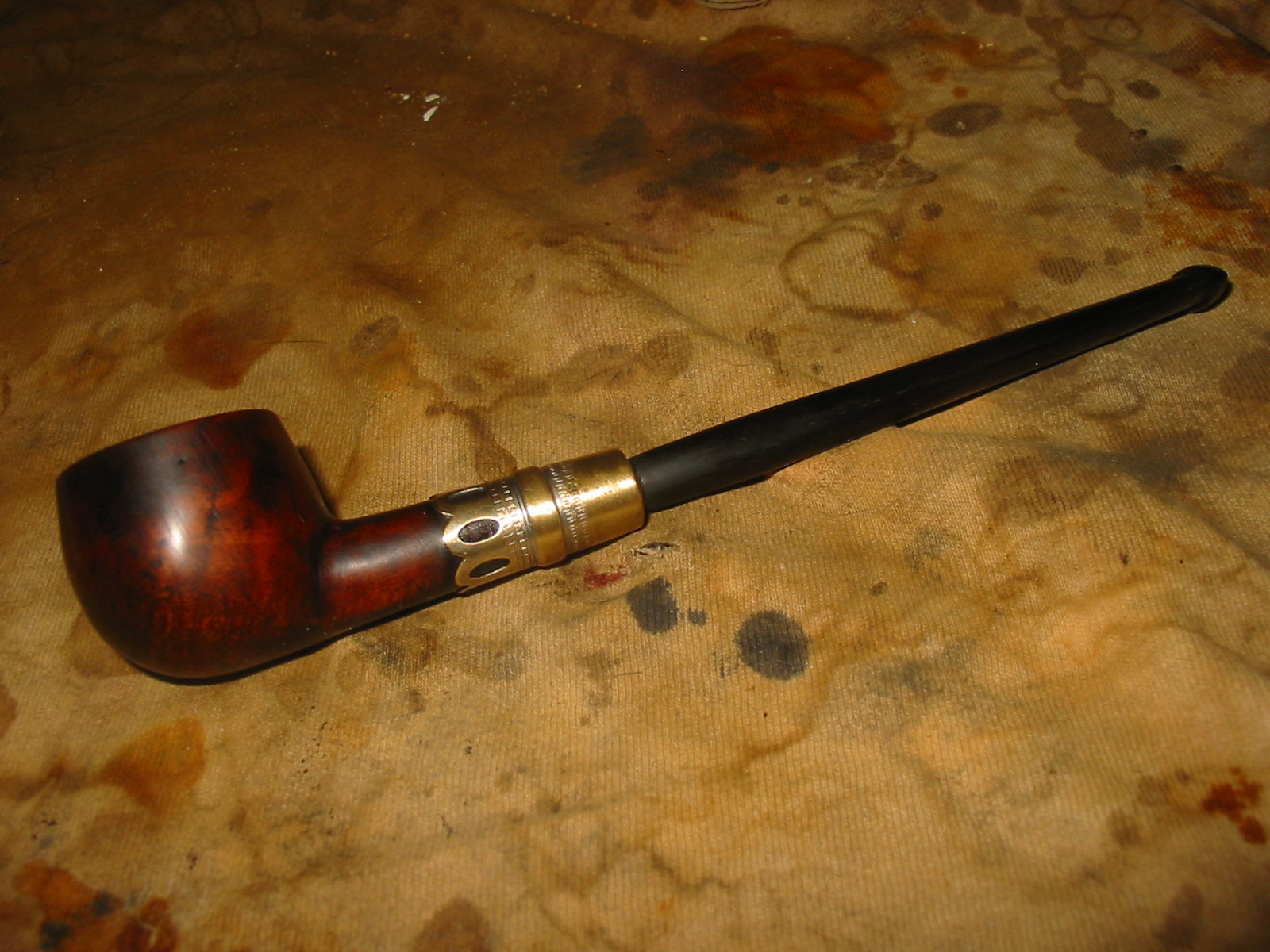
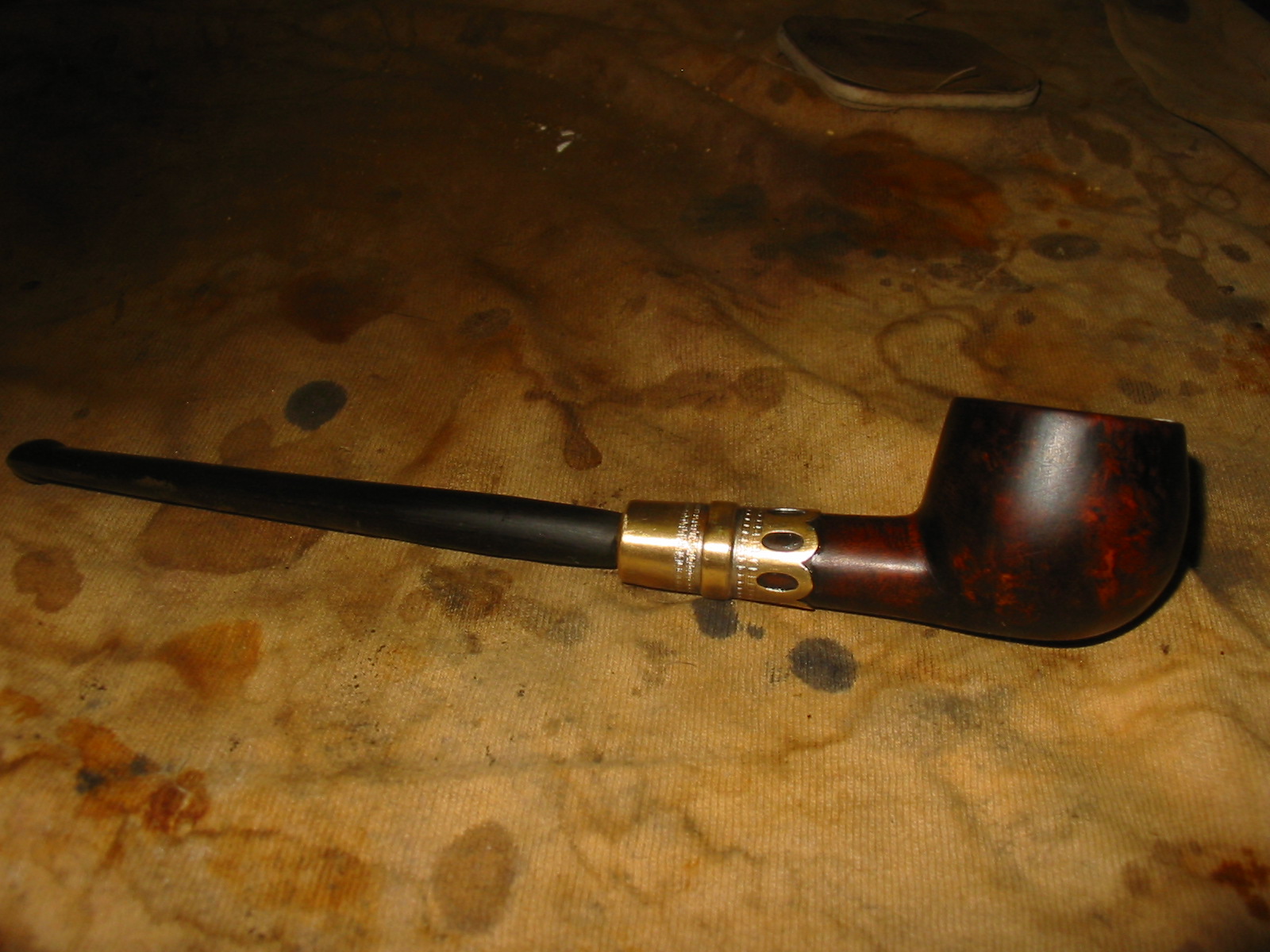
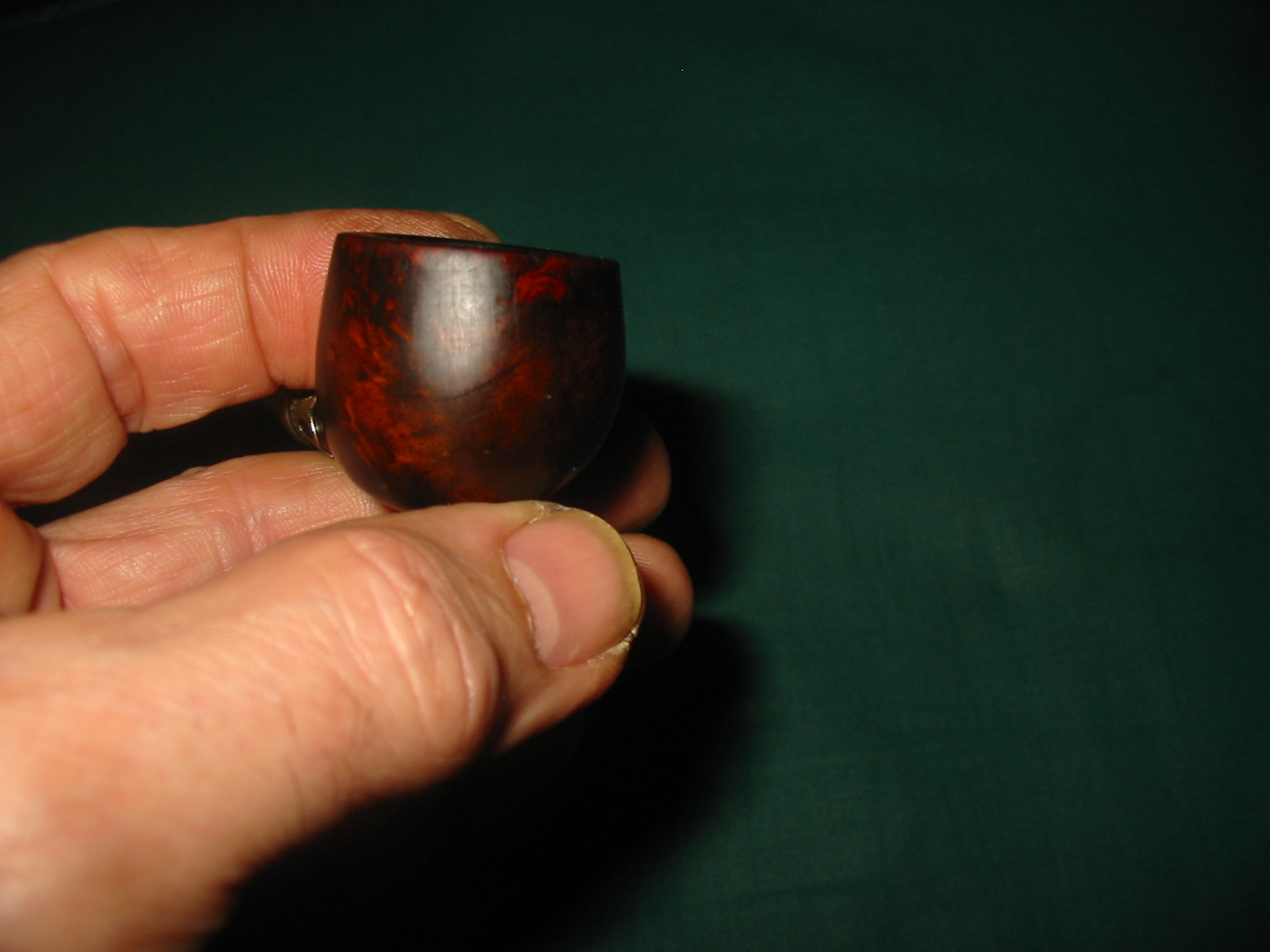
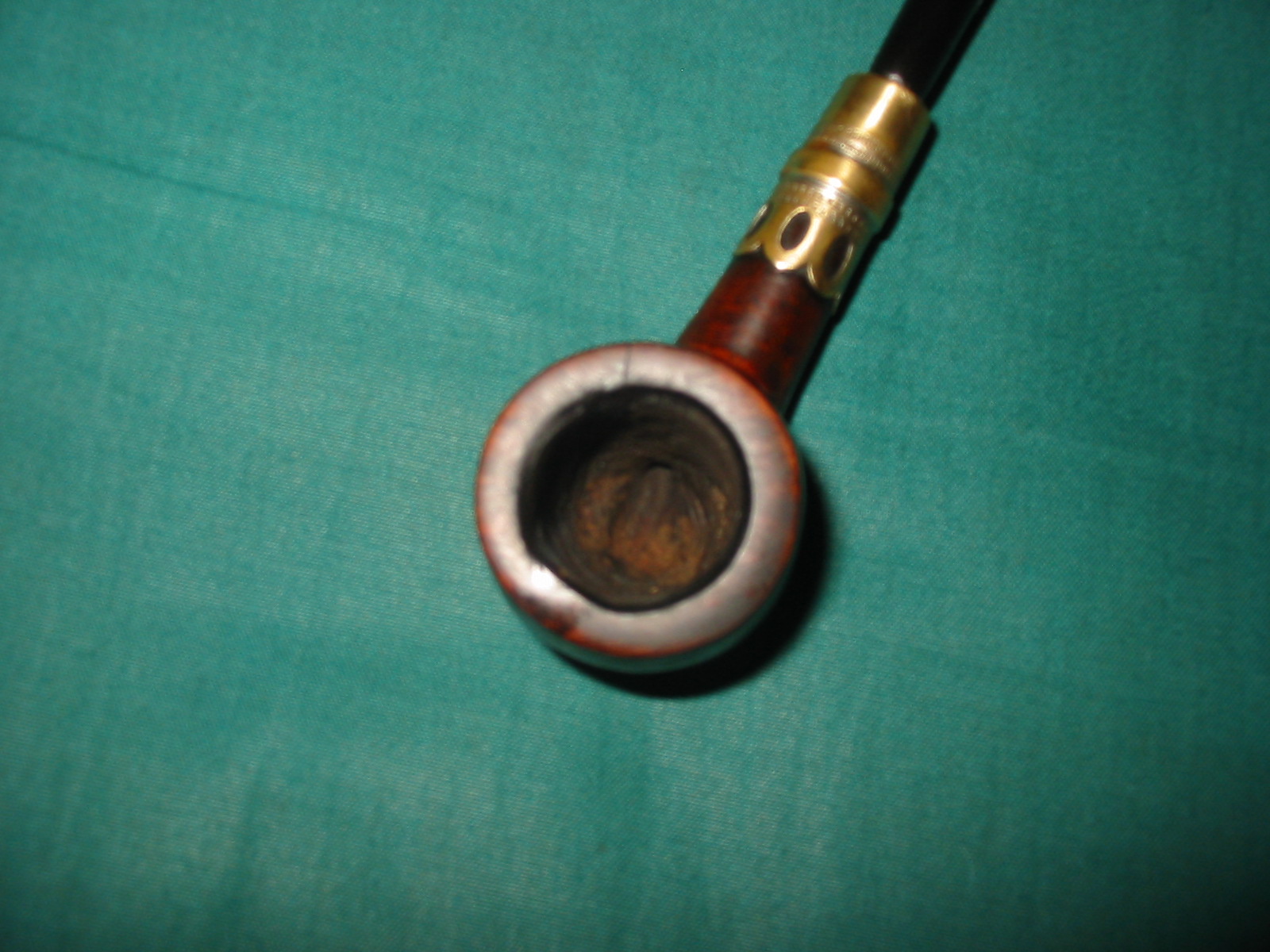
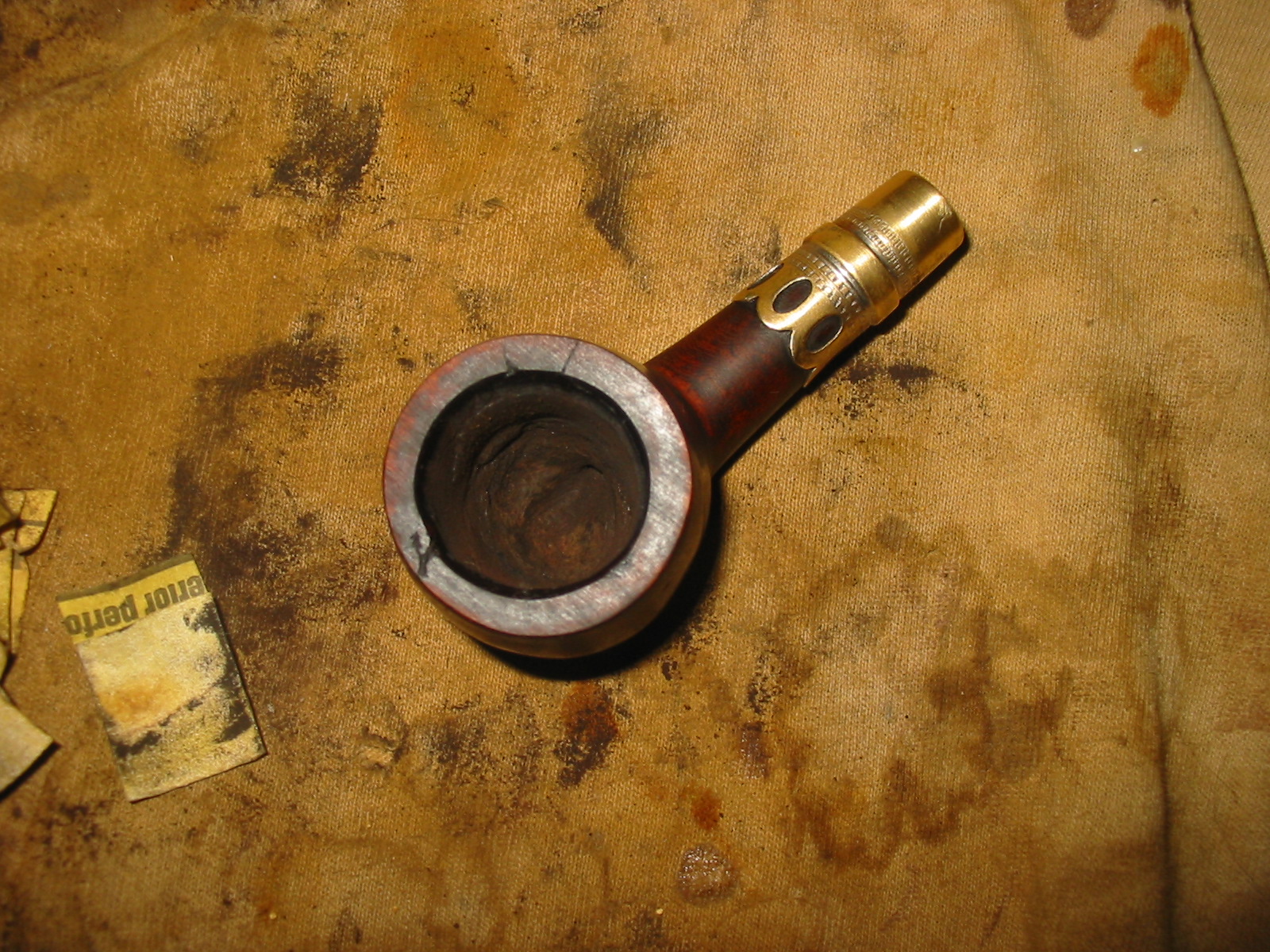
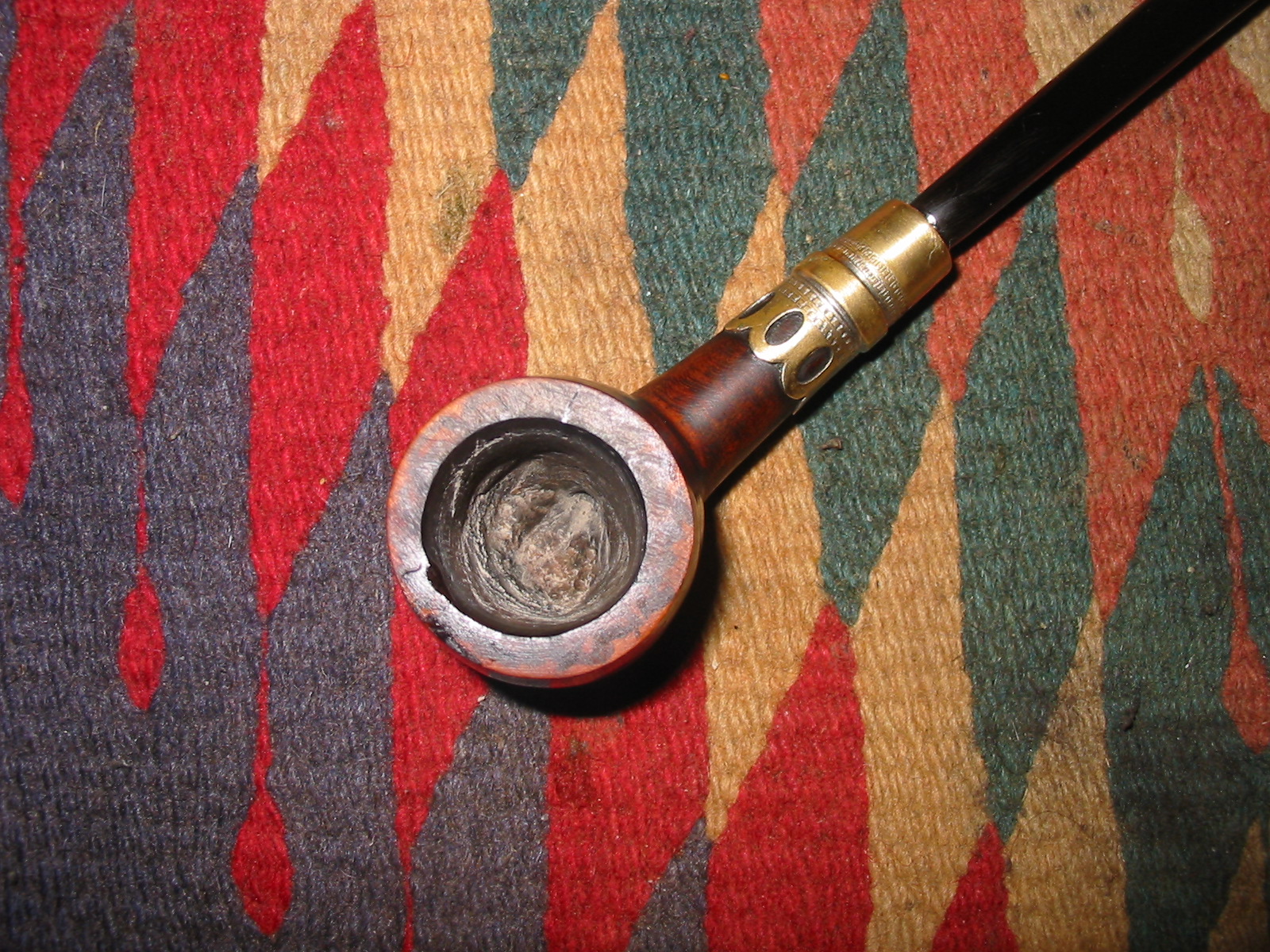
Tag Archives: refinishing

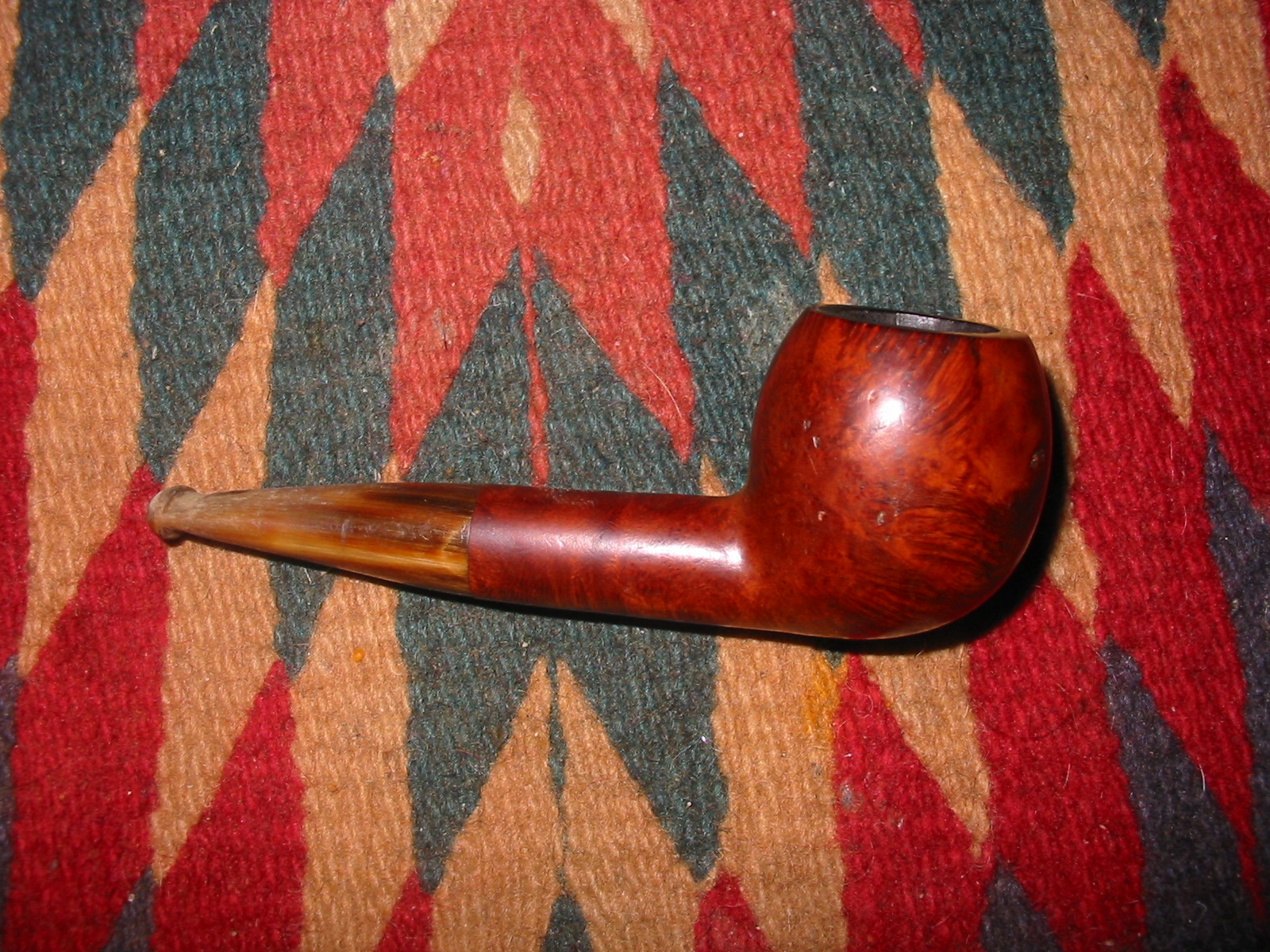
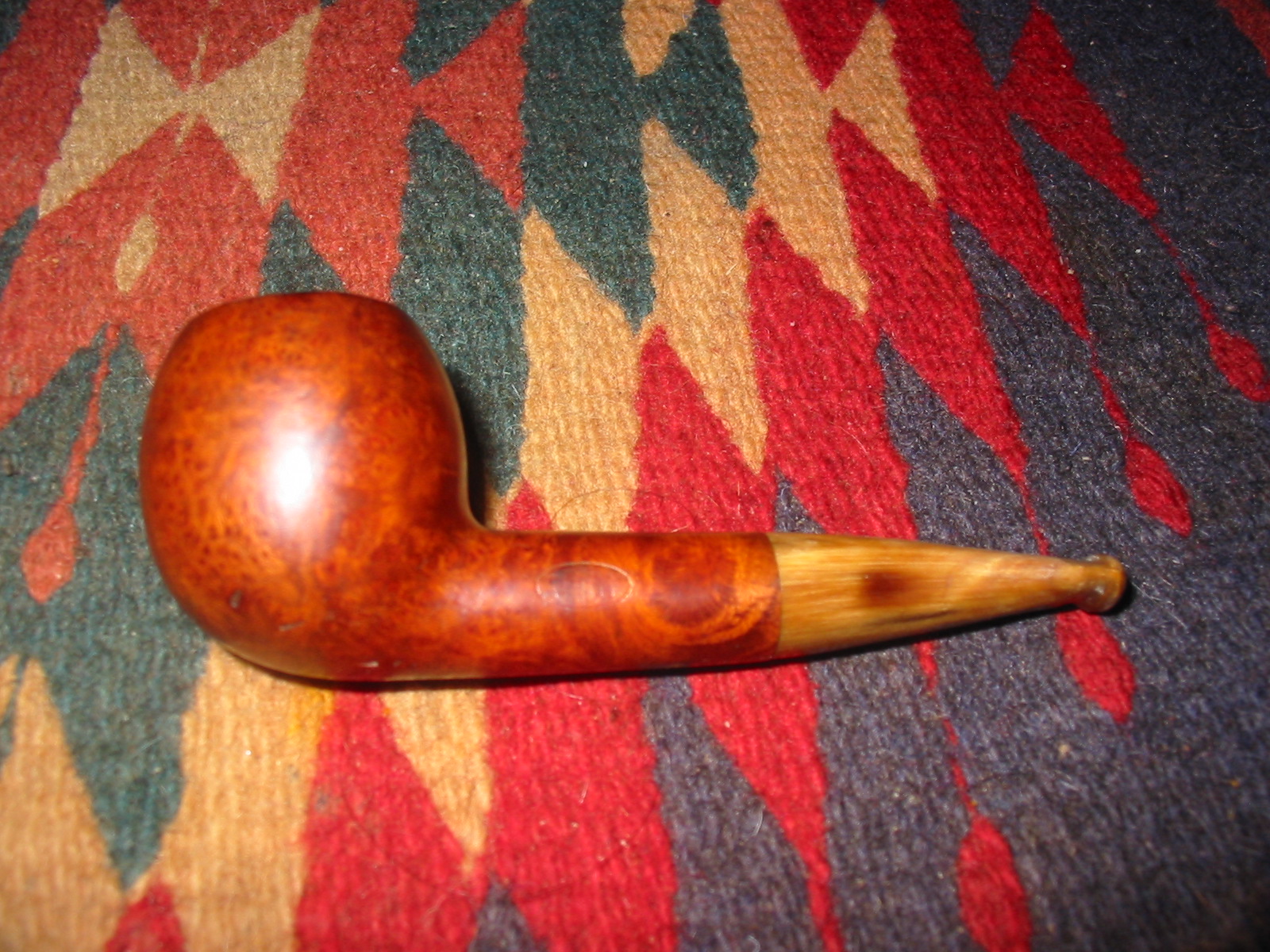
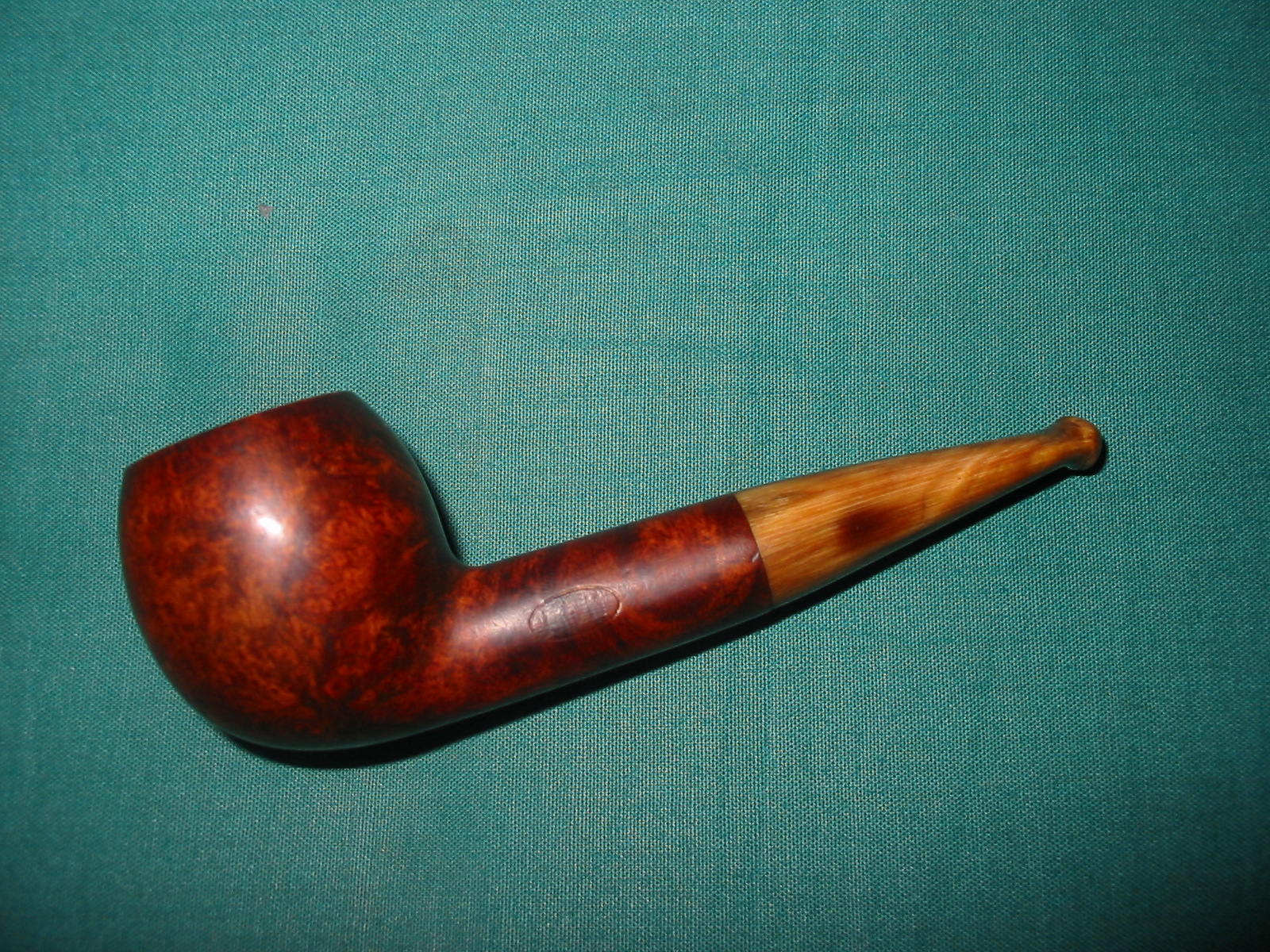
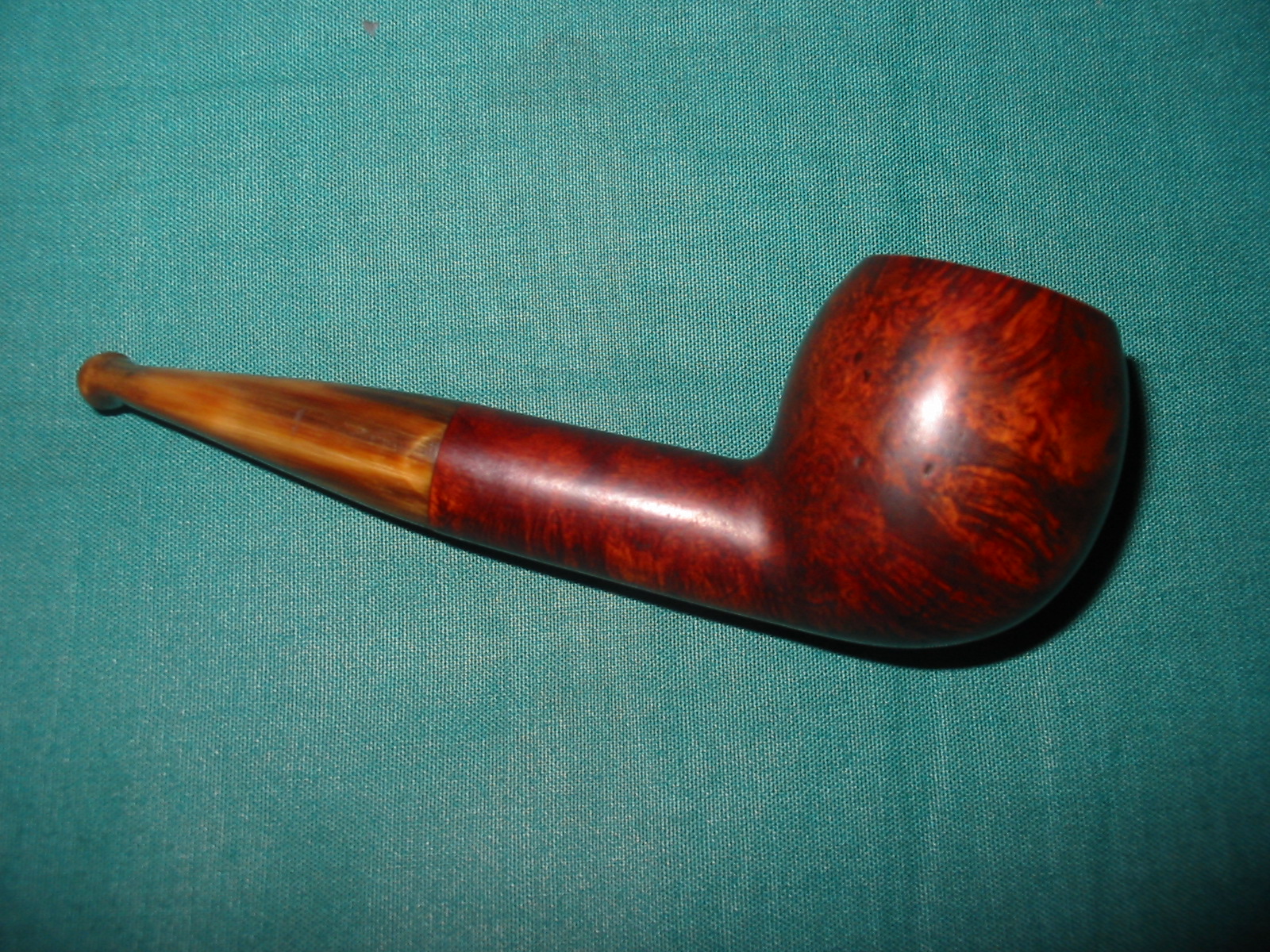
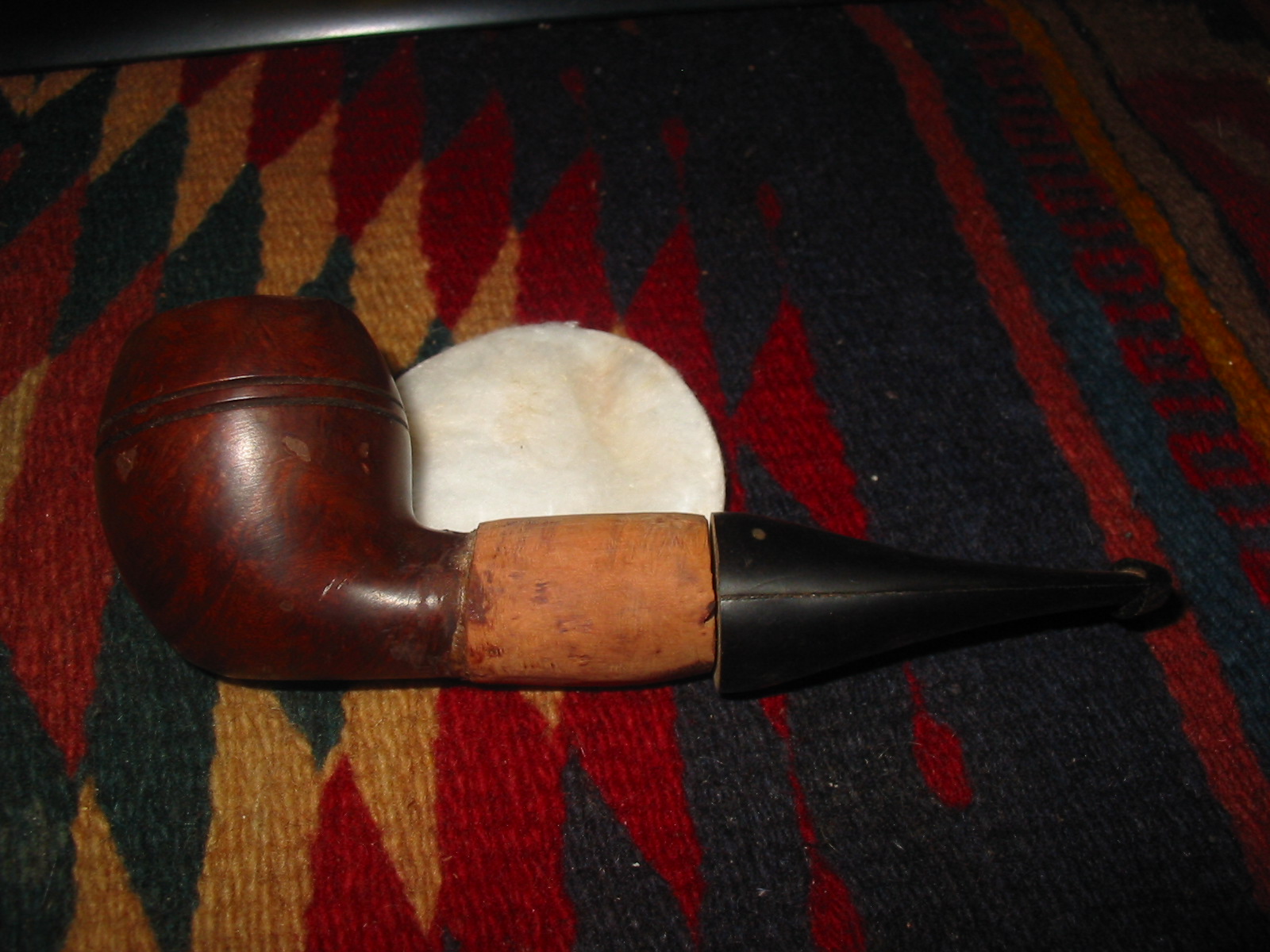
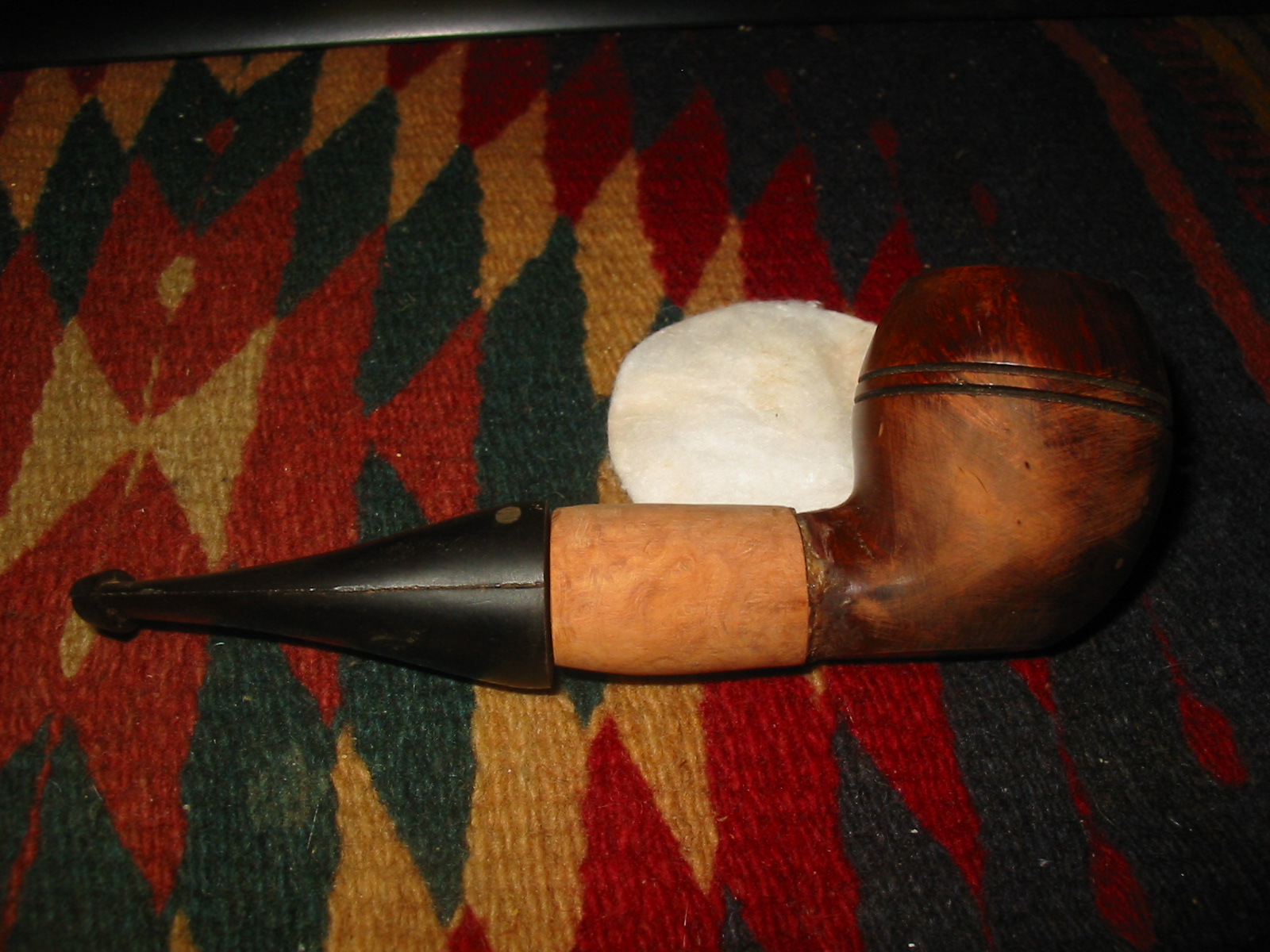
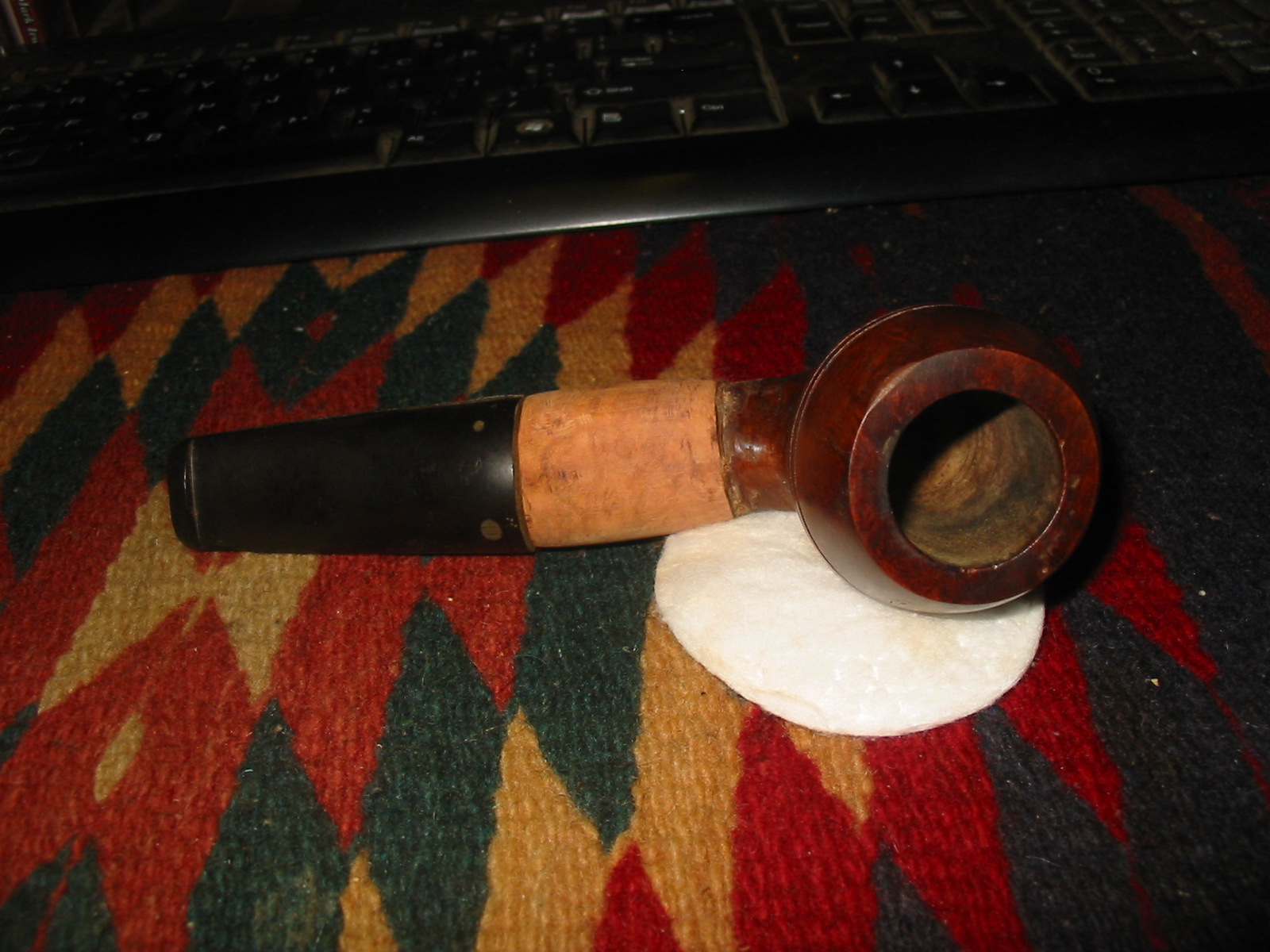
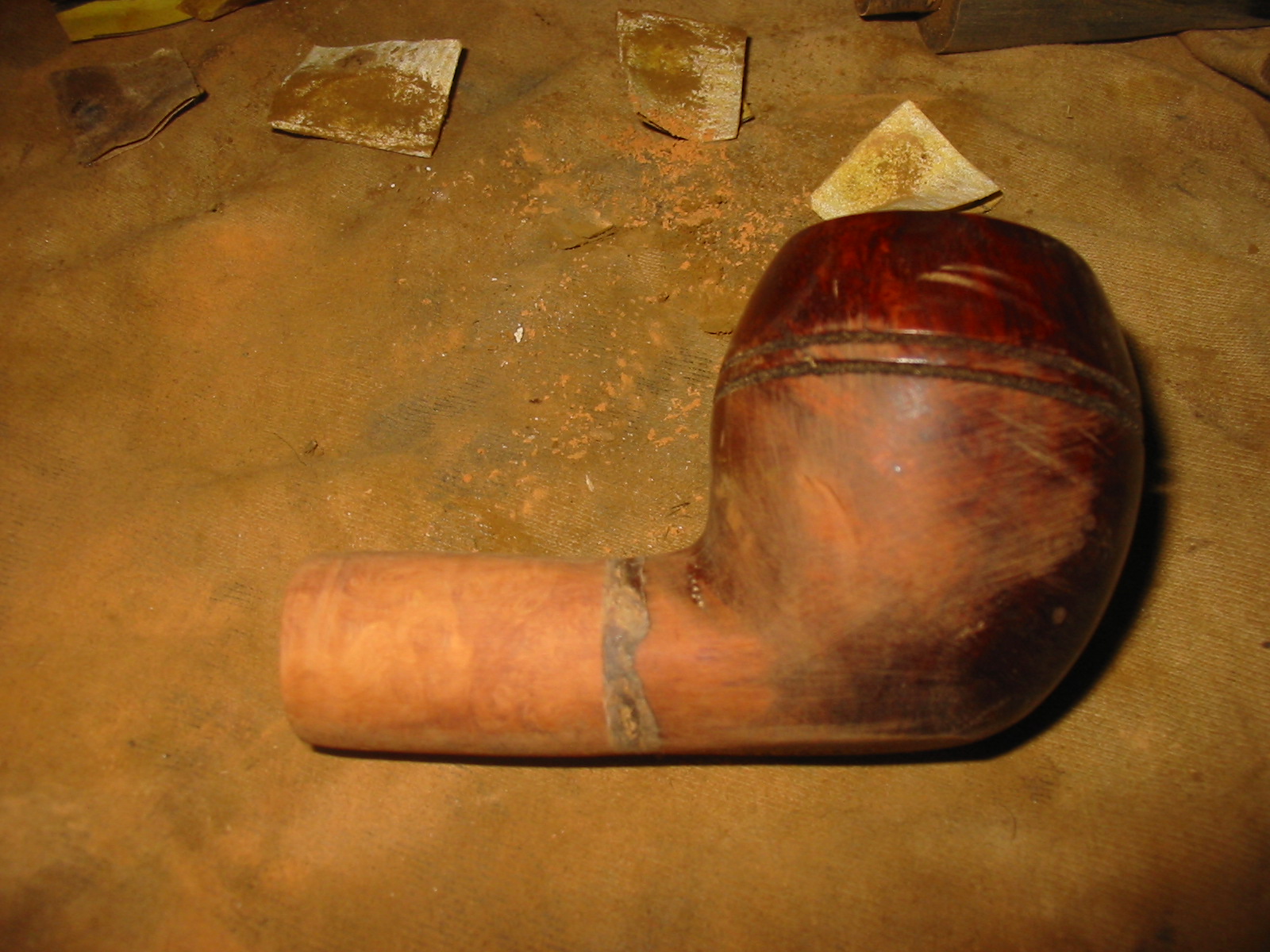
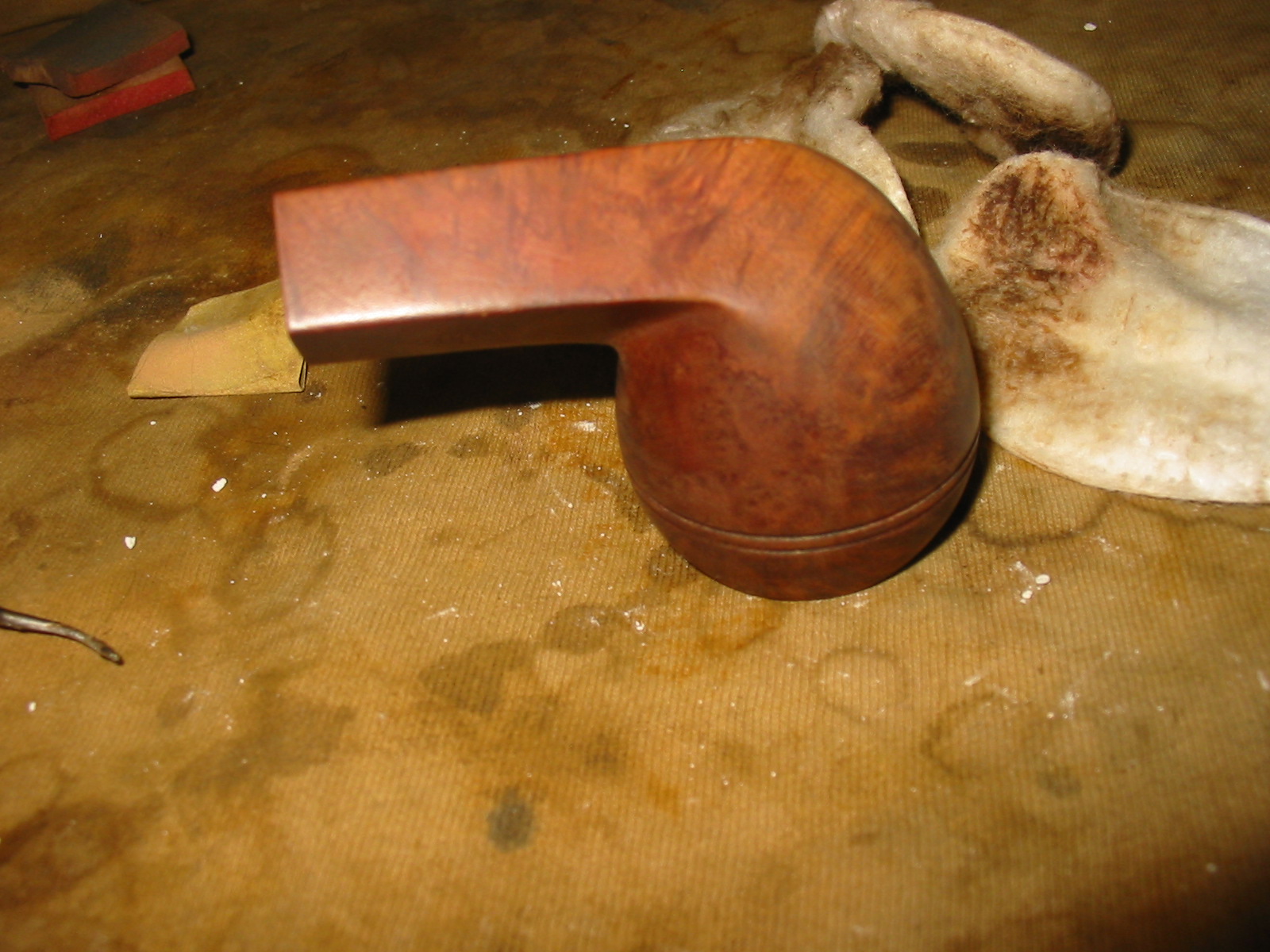
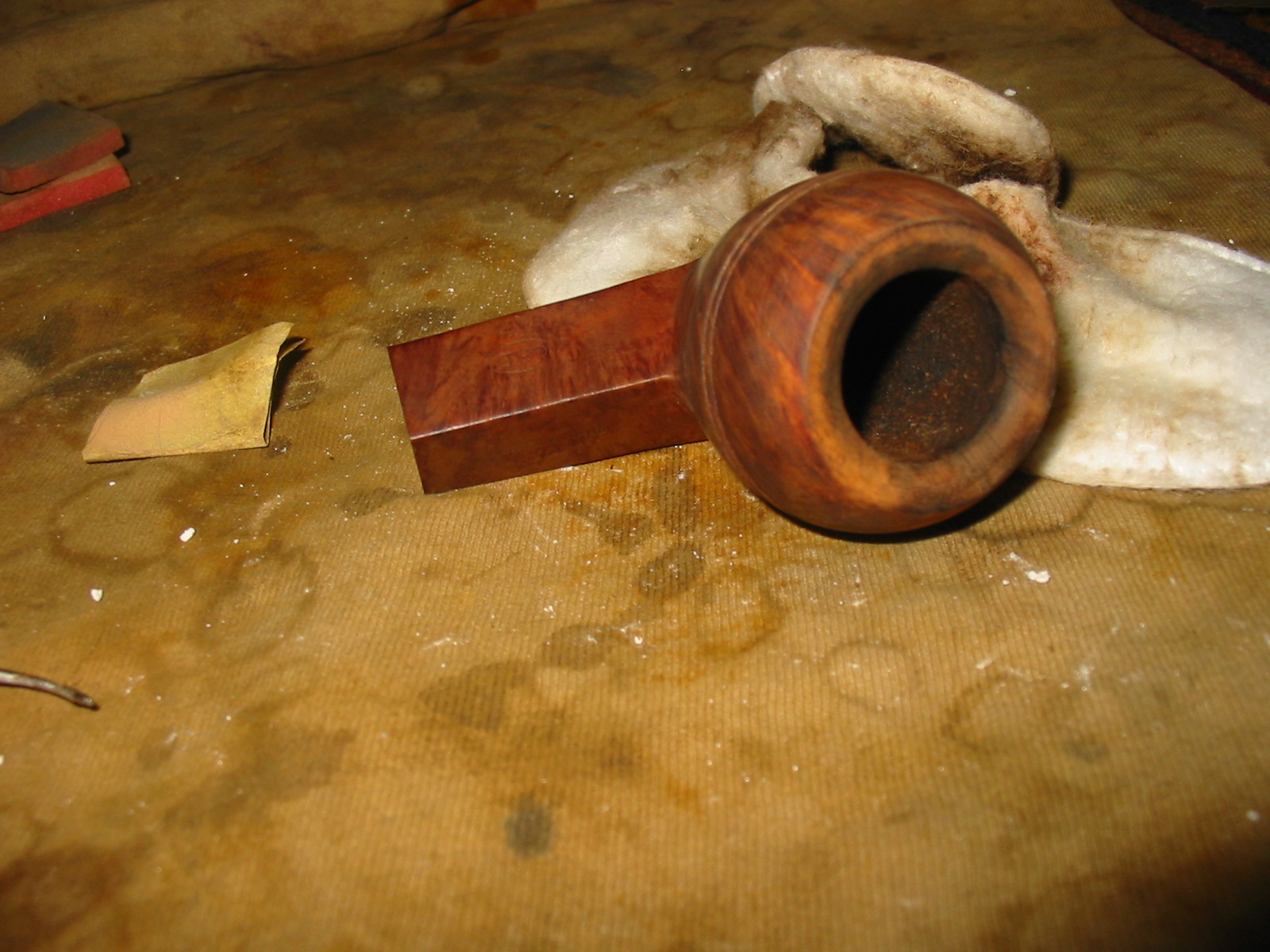
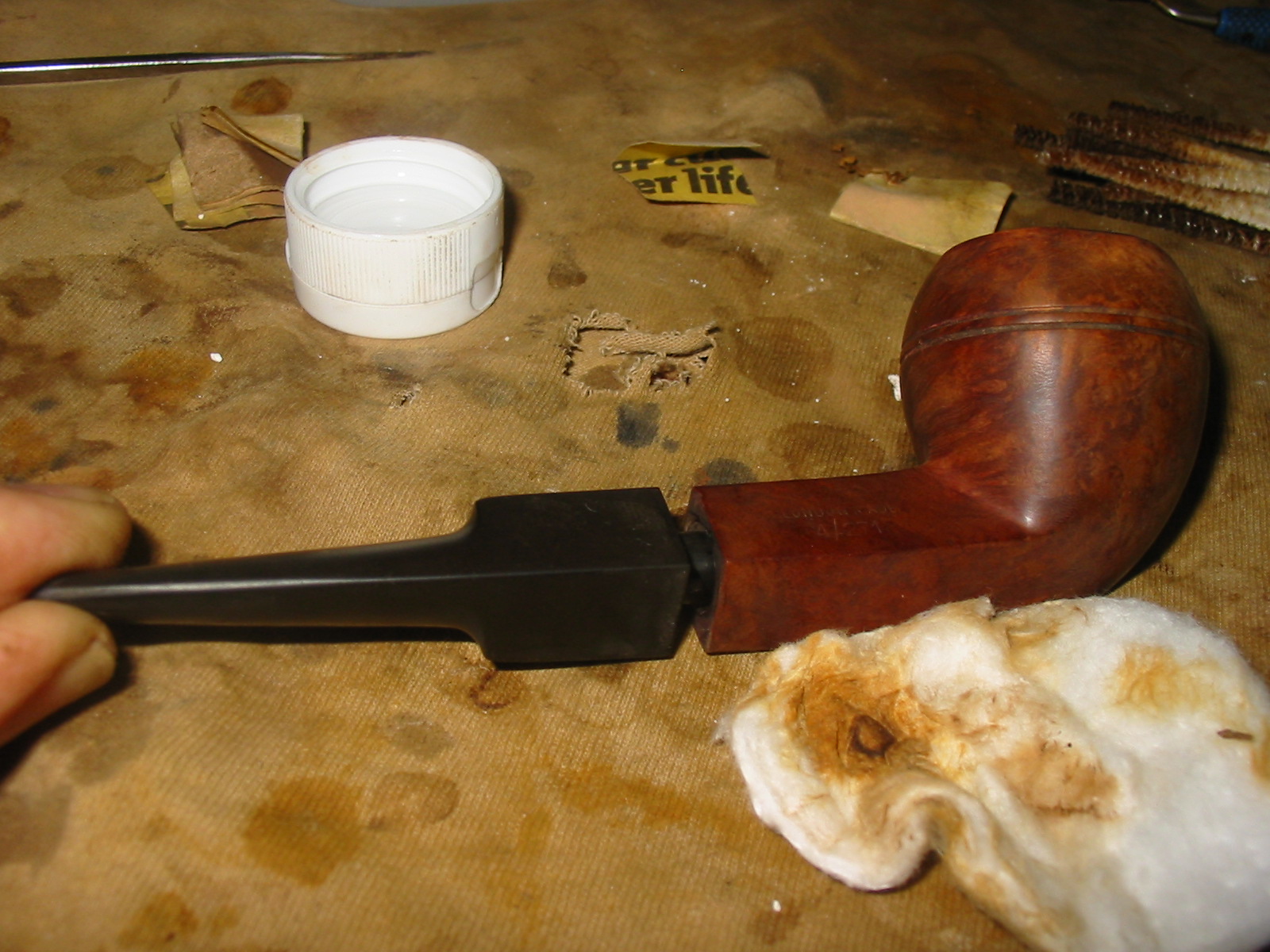
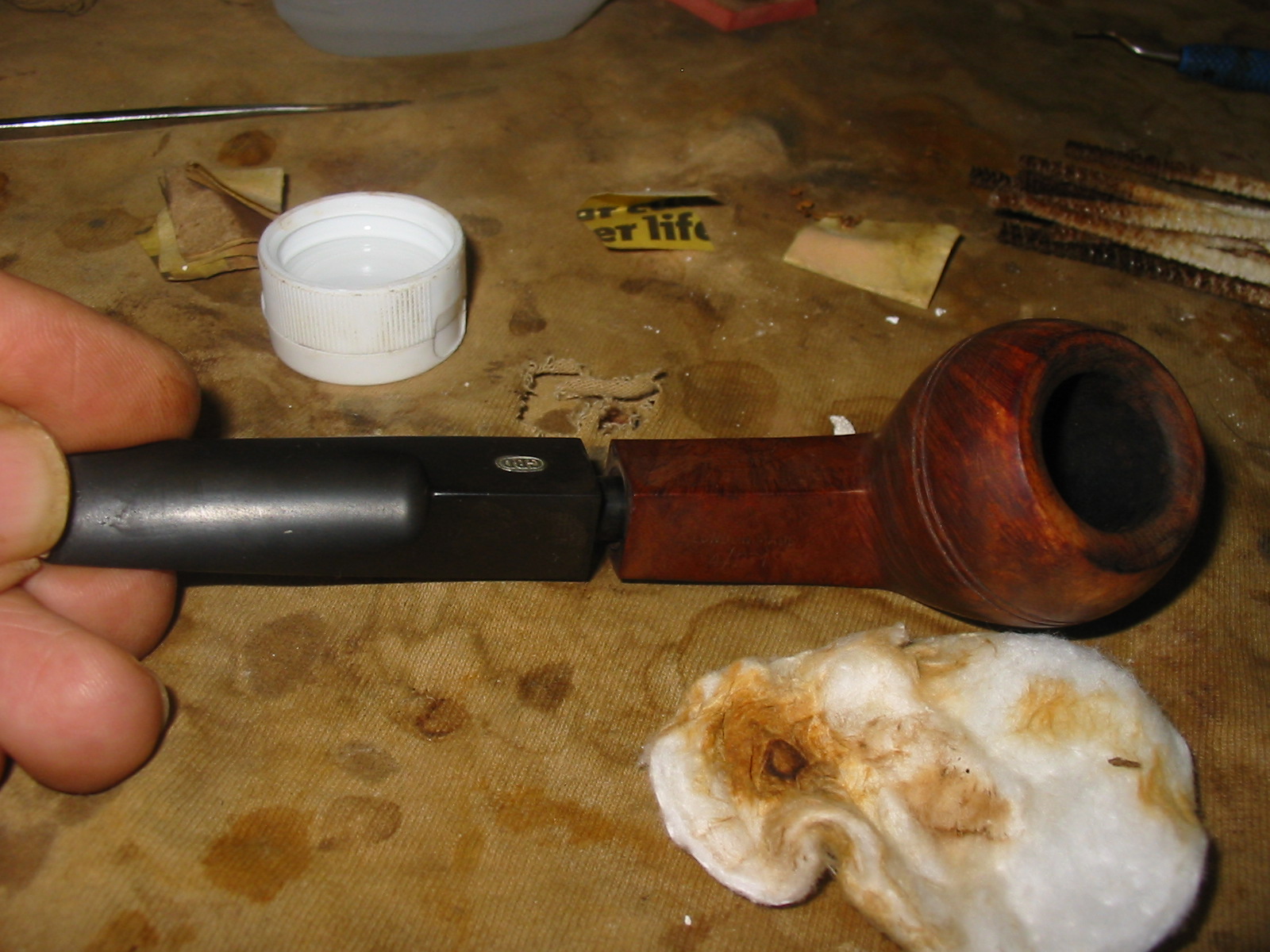
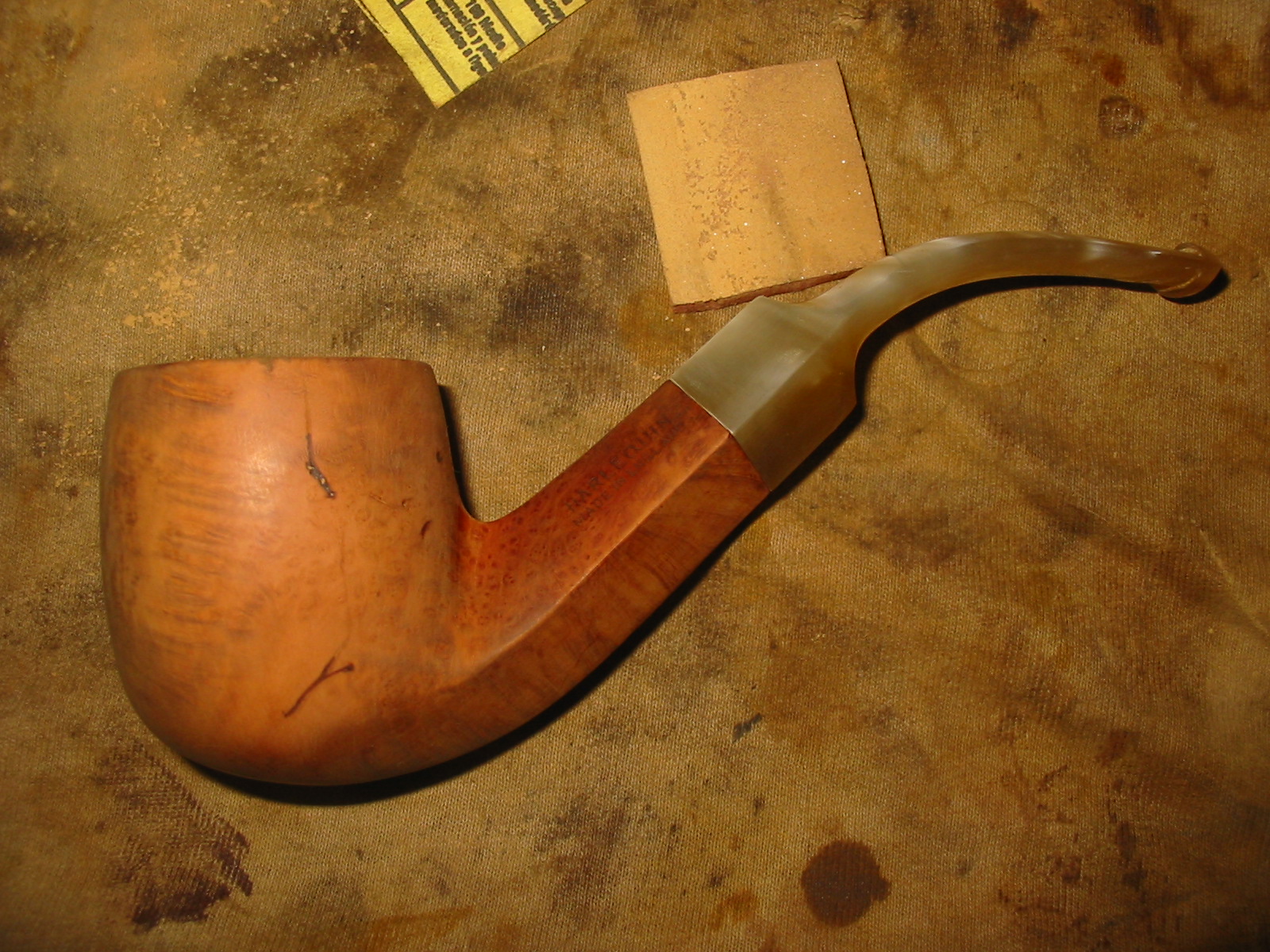
Restoring a Briarmeer Rhodesian 175 ED that was Made in Canada


Blog by Steve Laug

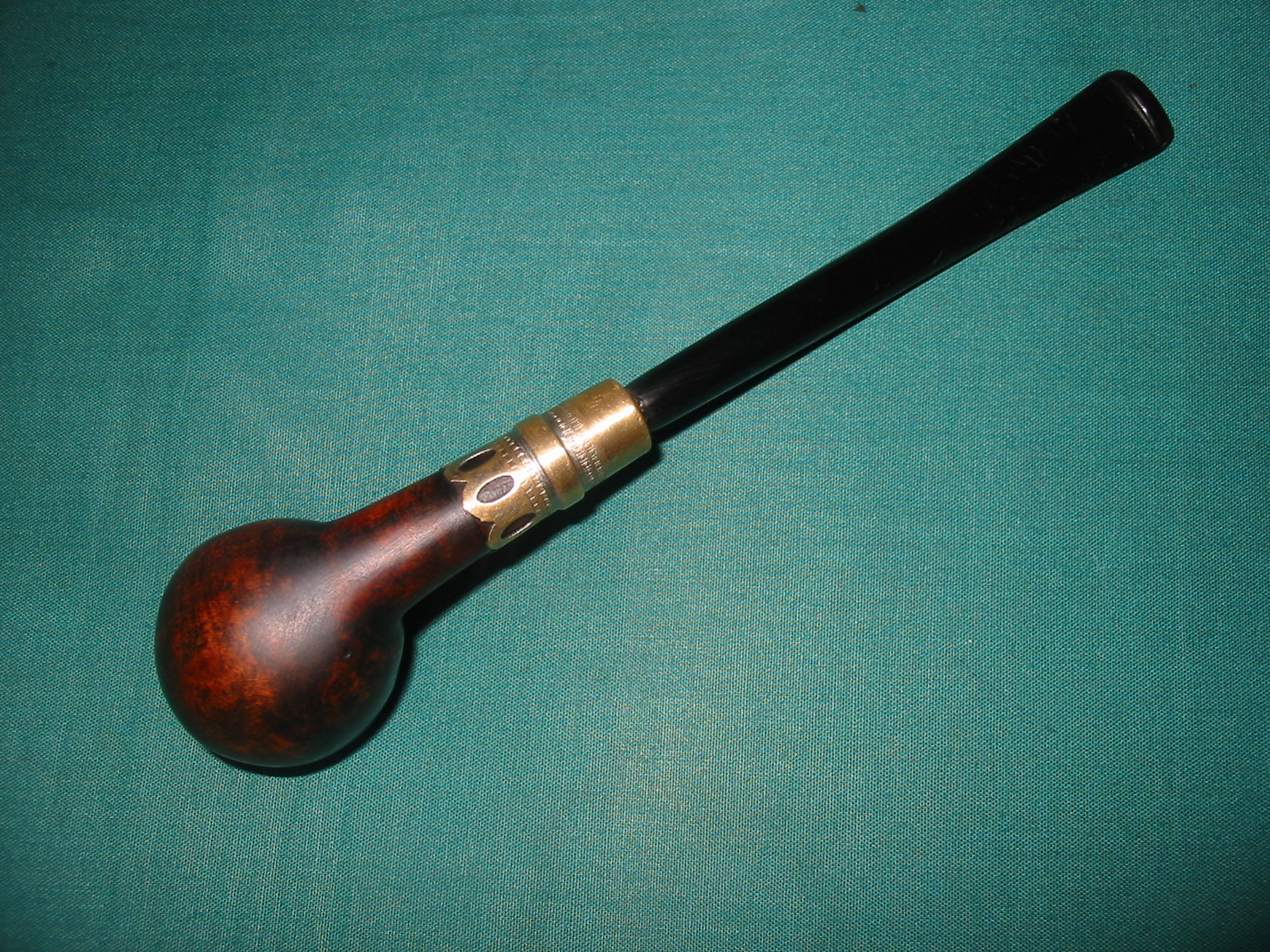
I received an email from Andrew saying that he had a pipe he wanted to send my way. It was my kind of shape – a Rhodesian. He said that it was an odd pipe in that on the bottom of the bowl it had a slightly inset circular divot. The round inset was almost like a poorly made plug on the bottom of the bowl, or one that had shrunken with time. He thought that it would be a great challenge for me to do a repair on it. The stamping on the pipe shank was Briarmeer 175 ED Canada.
Briarmeer1

The brand was one I had not heard of before. And since I am in Canada I wanted to try to figure out where the pipe was made and what the plug was about. The name seemed to suggest that it was a meerlined pipe or at least included meerschaum in some form or fashion. Yet when I emailed Andrew about it he replied that there was no meerschaum lining present in the bowl. Instead it was just a nice looking briar pipe with the strange, misfit looking round plug on the bottom of the bowl.

This would require some research to see what I could find out. I went online and searched for any information that I could find regarding the brand. I wrote to the trademark attorney who was listed as the representative of the brand and received a very cryptic answer that was not helpful at all. I did learn however that Briarmeer pipes were made by Briarmeer Pipes Limited, 226 Park Street, Brockville, Ontario. The business was no longer present at that address and did not show up in any Brockville Business Directories available online or through the Yellow Pages .I searched the Canadian, American and British patent sites hoping to find a patent registration for the pipe but was not able to find one. I found a trademark registration document from the US patent office that showed that the brand or trademark was registered in the US in 1973. The document pictured below gives that information as well as the Canadian Registration Number 180,805 and that it was registered in Canada on January 21, 1972.
Briarmeer US Trademark patent

Using these registration numbers I searched both the Canadian and US patent records but could find no patent information available. From the public records it appears that the Briarmeer Company went out of business sometime in the late1980’s or early 1990’s and the name became public domain.

I was able to find out through further digging that the pipe is a variation on what Kaywoodiedid with its famous Carburetor.Kaywoodie had drilled a hole in the bottom of the bowl and inserted a metal airhole to introduce air into the bottom of the bowl to enhance burning of the tobacco. In the Briarmeer the drilled out area in the bottom of the bowl was significantly larger.It had been drilled out and a meerschaum disk inserted in the resultant hole. The draw hole was to be perfectly centered at the bottom of the bowl. From what I could find out the idea of using the meerschaum insert came to a Canadian engineer about 30+ years ago. He reasoned that the meerschaum bottom of the bowl would allow for a drier and cooler smoke while the briar would be sturdier than the meerschaum for the walls of the bowl.Now I knew what the inset on the bottom of the bowl was and where the Meer portion of the Briarmeer name came from.

I decided to see if I could hunt down some photos of the pipe. I had not noticed them before and did not figure I would find many available. I was wrong. I found quite a few clear photos online that showed the novel meerschaum insert with clarity. In all of the photos it was clear that the insert sits inset into the bottom of the bowl and there is a variance in the external bowl bottom and the depth of the inset meerschaum disk. I have included four of the photos I found to show the insert in the exterior bowl bottom. Some of the photos show a new and unsmoked pipe and other show an estate pipe. All have the pipes show the same variation in the depth of the bottom of the bowl and the depth of the meerschaum disk.
Briarmeer6

Briarmeer8

Briarmeer3

Briarmeer pipe bottom

I also learned that the American Company, Briarcraft who made the Smokemaster pipe also made a pipe with called the Briarmeer Acadian. The Briarcraft version of the pipe was a meerschaum lined pipe and was stamped with the Briarcraft logo, a B in a diamond on the shank and on the stem.However, the pipe I was gifted was not a meerschaum lined briar and it did not have the B stamp on either the shank or the stem. The stem appears to be original and the stamping on the shank clearly says that the pipe is Canadian made.

The pipe from Andrew arrived and it was indeed one of my favourite shapes. The finish was a little dirty and the rim had some carbon build up. The stem was oxidized and had some tooth marks on the underside of the stem near the button. There was also a darkened spot like a burn mark on the underside of the shank near the insert. There were several fills in the grooves of the rustication but I was fairly certain that when I restained the pipe they would be hidden. The meerschaum insert looked to be in very good shape from the outside of the bowl. Inside was caked with a fair amount of carbon and the insert was not visible looking into the bowl.
IMG_5192

IMG_5193

IMG_5194

IMG_5195
Upon closer examination it was evident that there was a crack in the shank on the right side that ran at an angle from mid-shank toward the back of the bowl shank union. The crack did not start on the bottom of the shank but rather started midway up on the right side of the shank and ended near the top middle of the shank. It was very clear under a lens that it was present. The next two photos, though slightly out of focus show the crack. It runs across the rustication pattern mid-shank.
IMG_5196

IMG_5197

I cleaned out the crack with a dental pick to remove the buildup of grime that filled it. The grime was evident through the lens. Once I had it clean when I viewed it through the lens I used superglue to repair the crack. Fortunately the crack did not go all the way into the airway. I checked the inside of the airway with a penlight and it was smooth and flawless. The repair externally would remove the visible damage.
IMG_5218

IMG_5219

I left the superglue to cure overnight and in the morning used the dental pick to clean out the grooves of the rustication and sanded the smooth portions of the briar surface with 220 grit sandpaper and then medium and fine grit sanding sponges. The photo below shows the repair after sanding and shaping.
IMG_5227

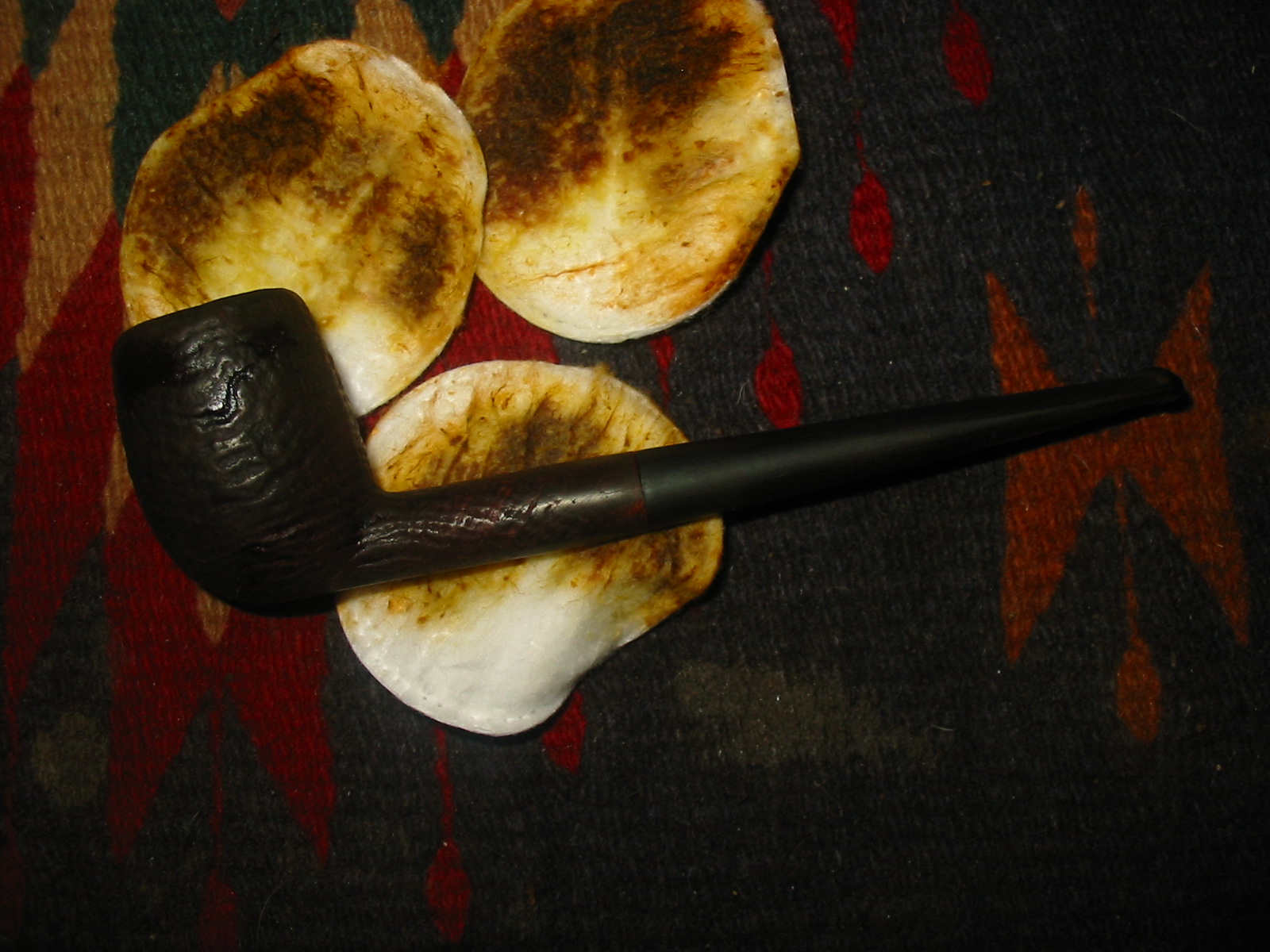
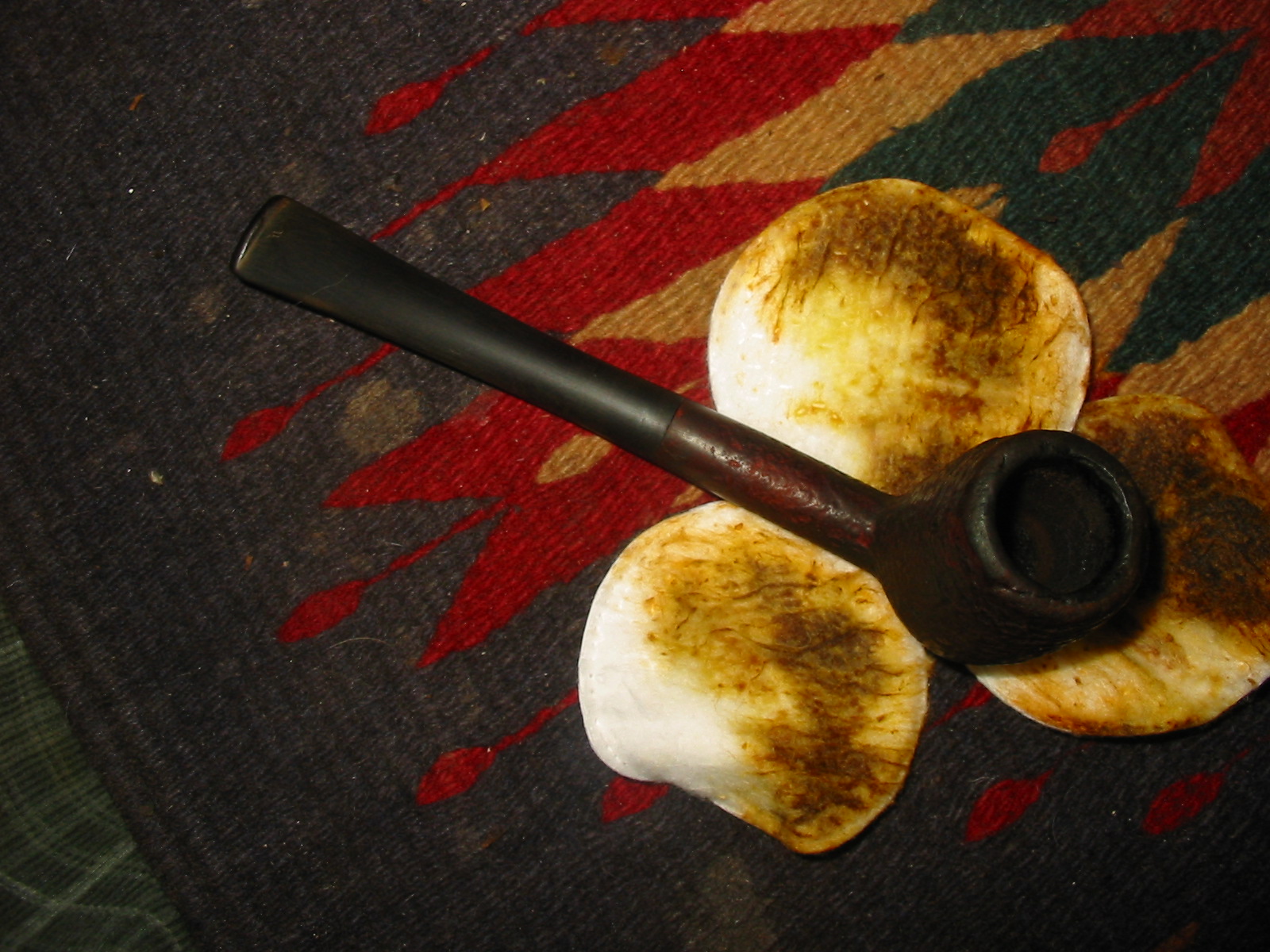
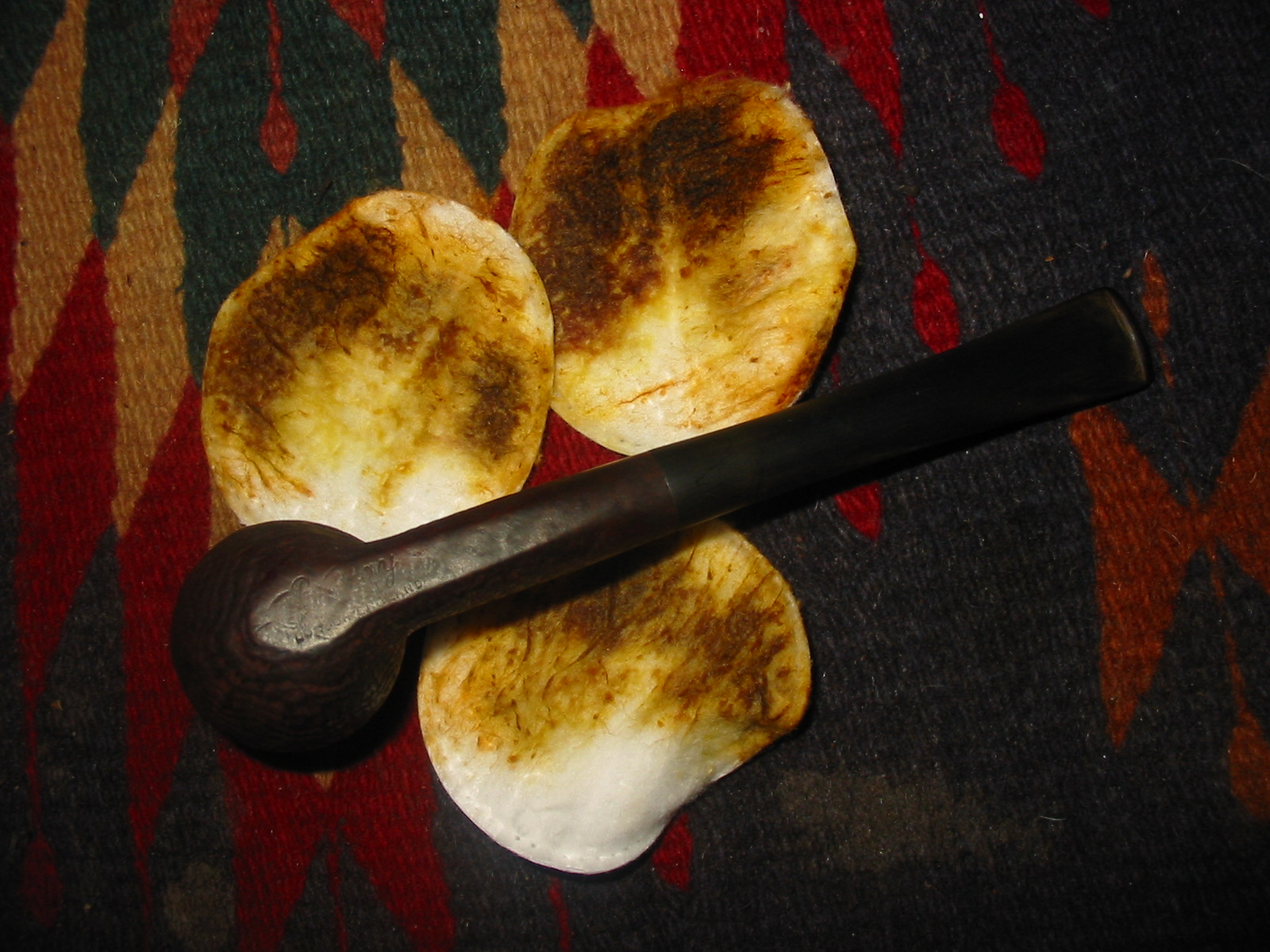
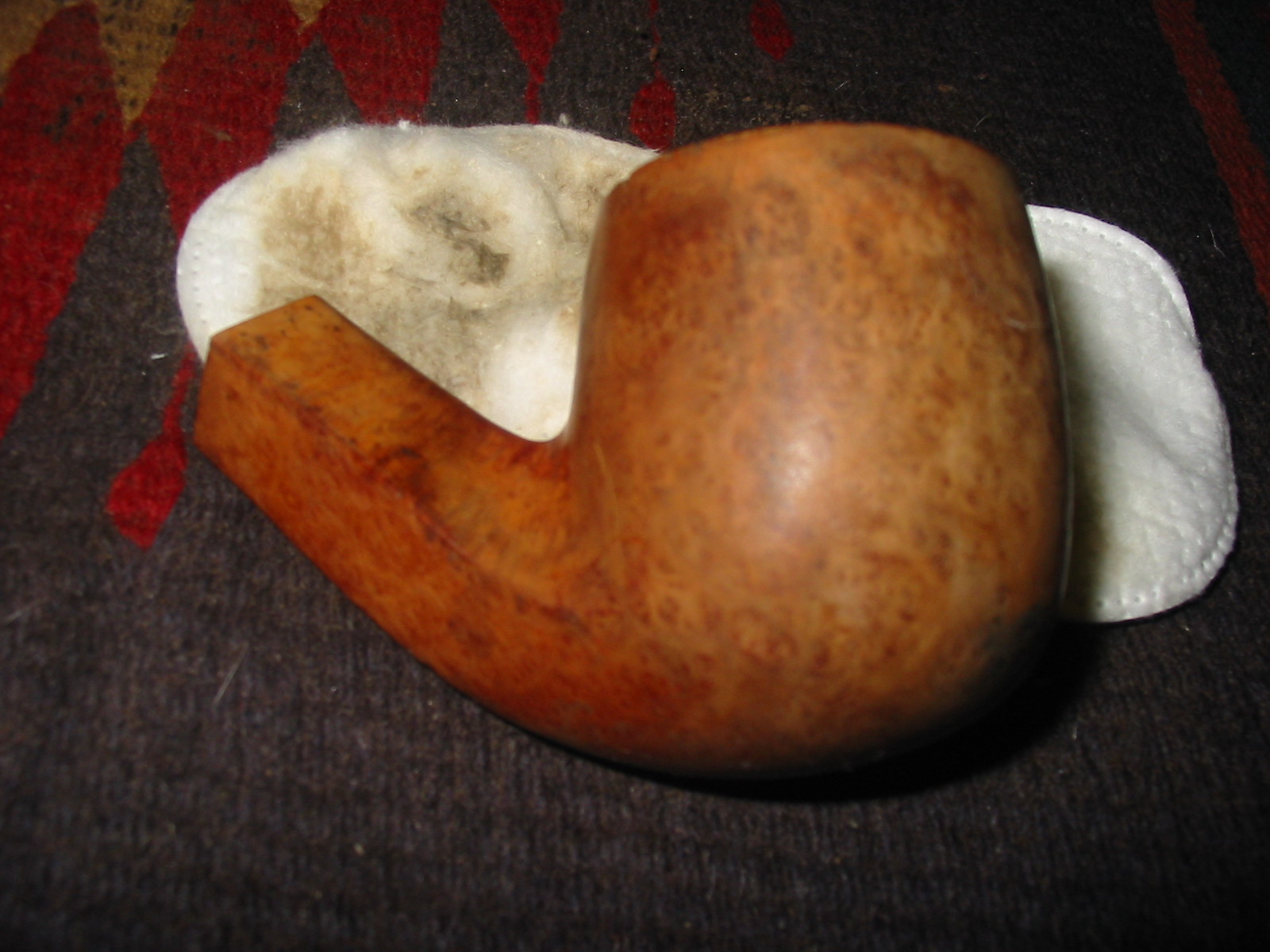
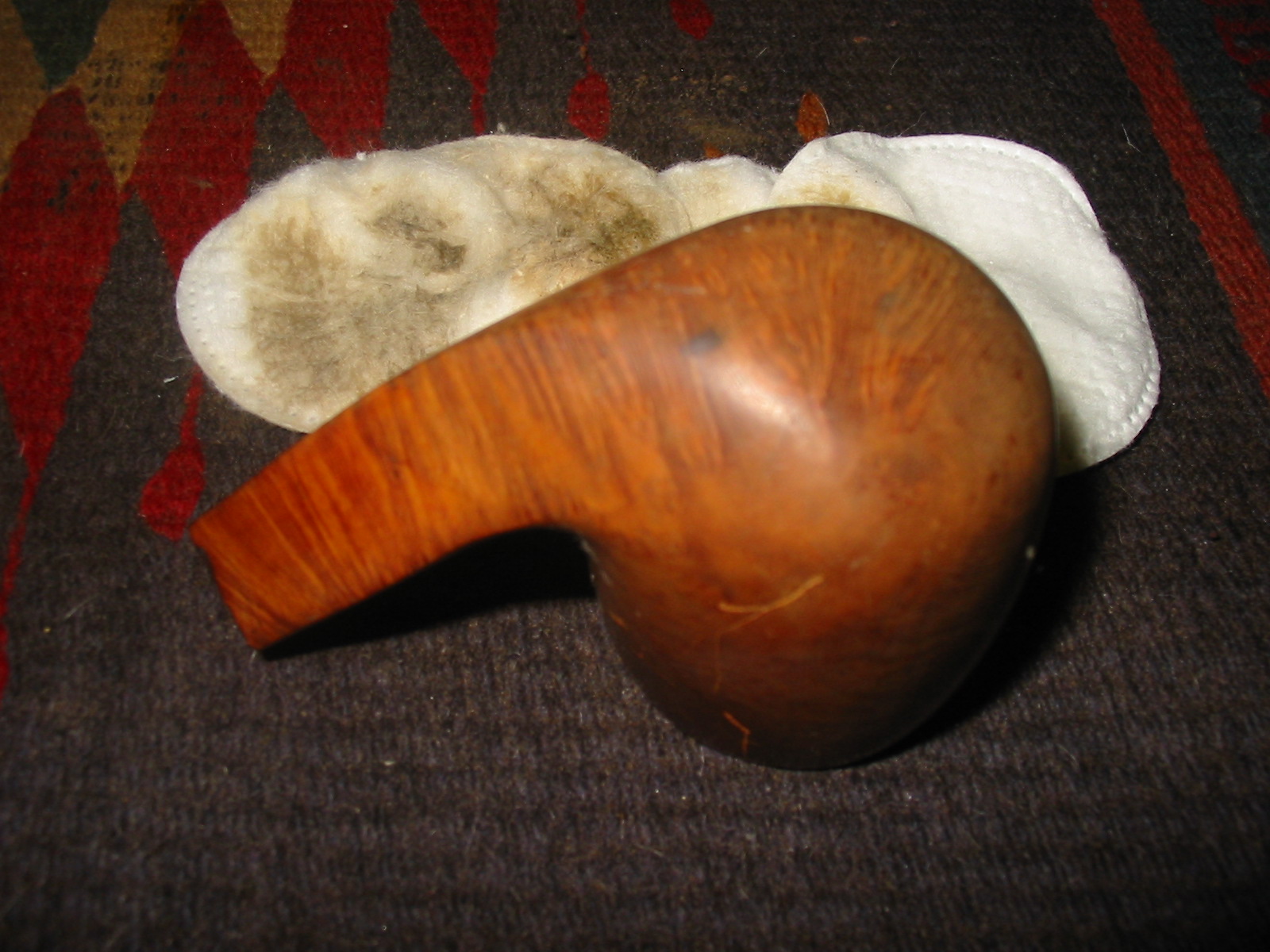
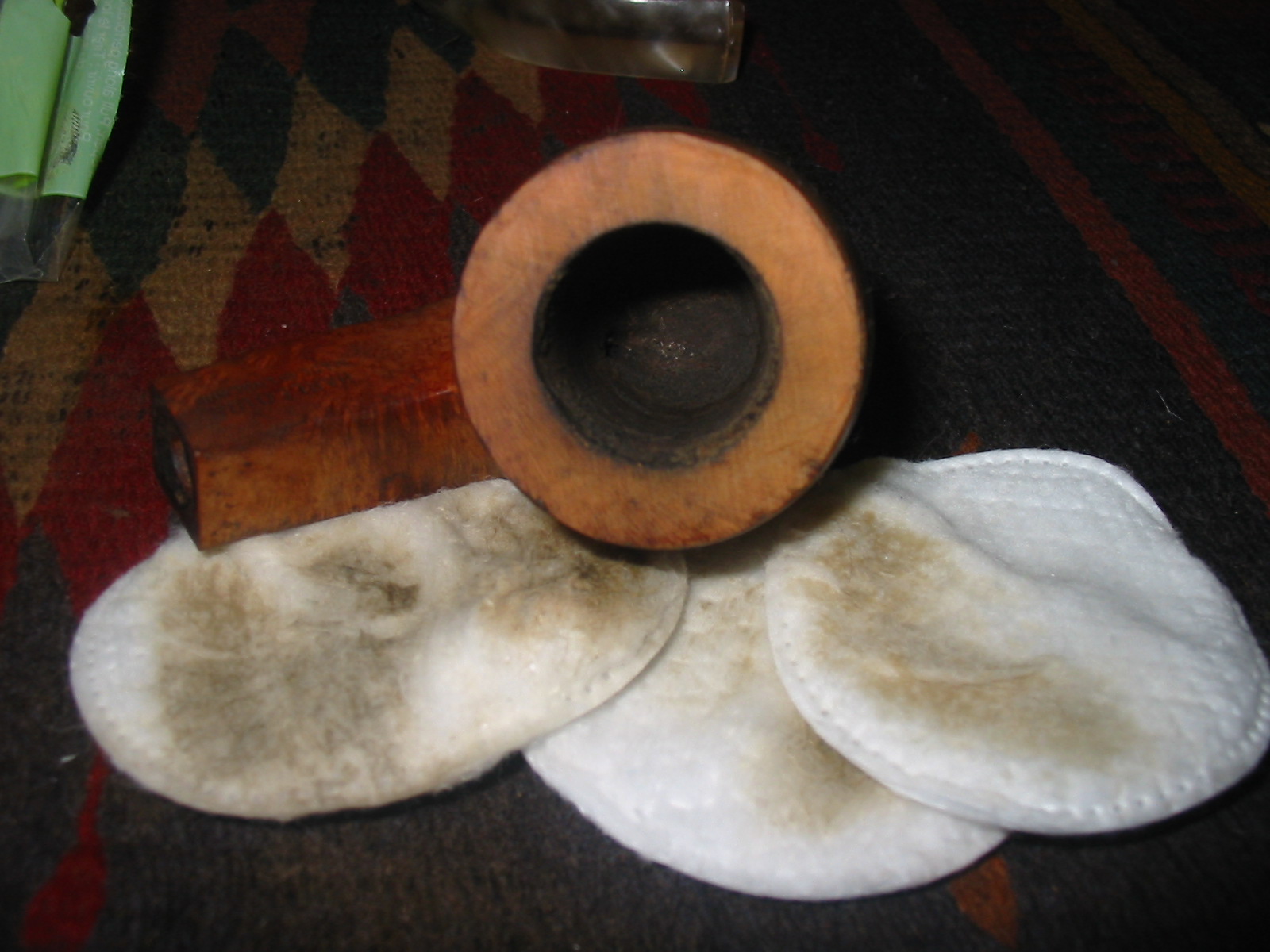
I wiped the surface of the bowl down with acetone on cotton pads to remove the damaged finish and enable me to blend in the patch when I restained the pipe. I scrubbed the rusticated rim of the bowl with the pads as well and was able to remove the carbon build up.
IMG_5228

IMG_5229

IMG_5230

I sanded the darkened area (burn?) on the bottom of the bowl to lighten it in preparation for staining. I wiped that area down with acetone on cotton pads afterward.
IMG_5231

I sanded the stem with 220 grit sandpaper and a medium and fine grit sanding sponge to remove the oxidation. I sanded the tooth marks on the underside of the stem near the button and was able to remove them.
IMG_5233

IMG_5234

IMG_5235

IMG_5236

I wiped the bowl down a final time with acetone, being careful not to scrub the insert with it. Once it was cleaned off I stained it with a dark brown aniline stain applied with a cotton swab. I avoided the meerschaum insert as I did not want to have the stain penetrate the meerschaum. I flamed the stain and reapplied it. I flamed it again and reapplied it again. After the final flaming of the bowl I set it aside to dry.
IMG_5238

IMG_5239

IMG_5240

IMG_5241

IMG_5243

When the stain had dried I buffed it with White Diamond on the buffer to even out the stain and give it a shine. I also applied a coat of Halcyon II wax to the rusticated surface and hand buffed the bowl with a shoe brush. The next four photos show the bowl after the buffing and waxing.
IMG_5244

IMG_5245

IMG_5246

IMG_5247

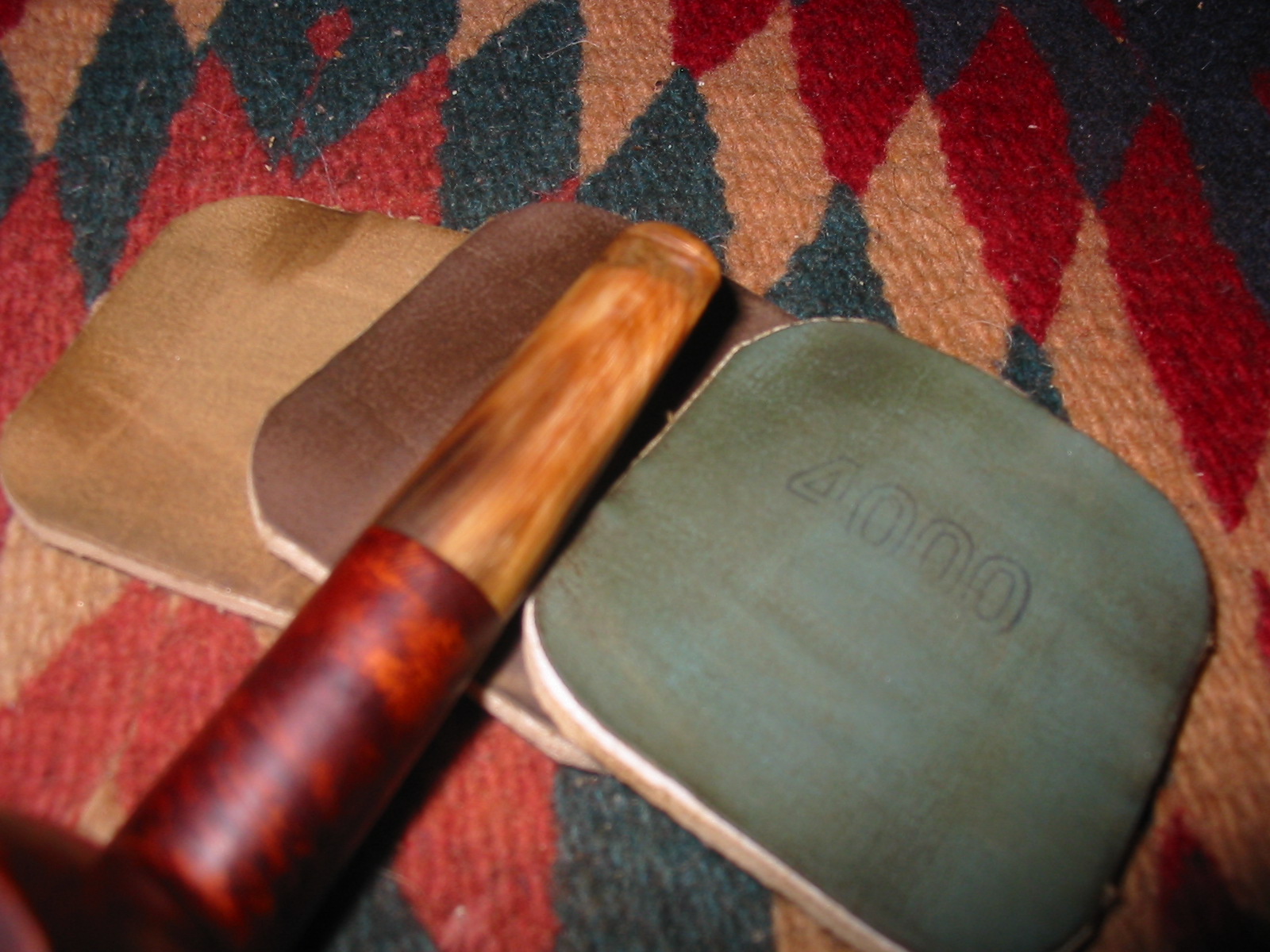
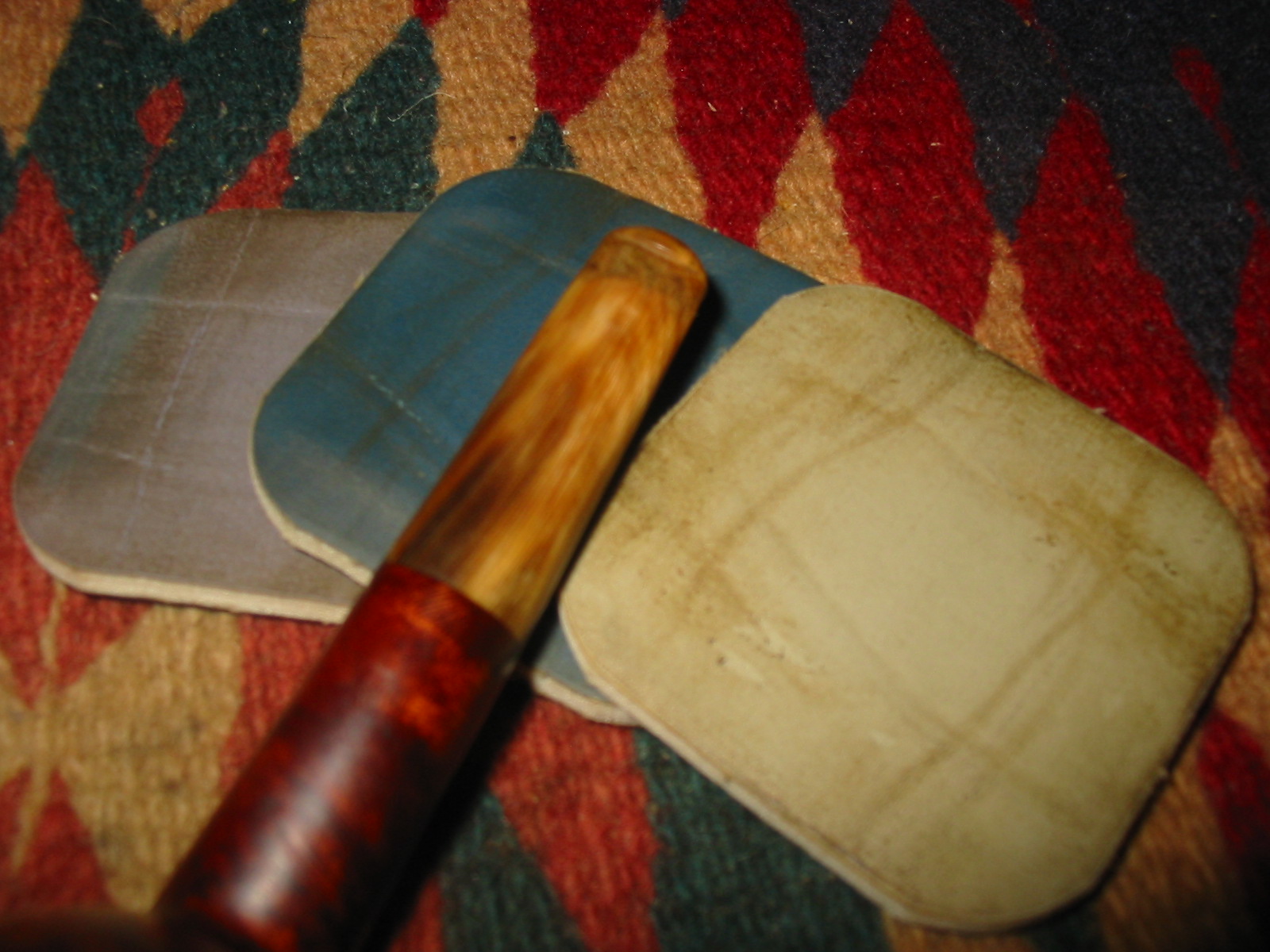
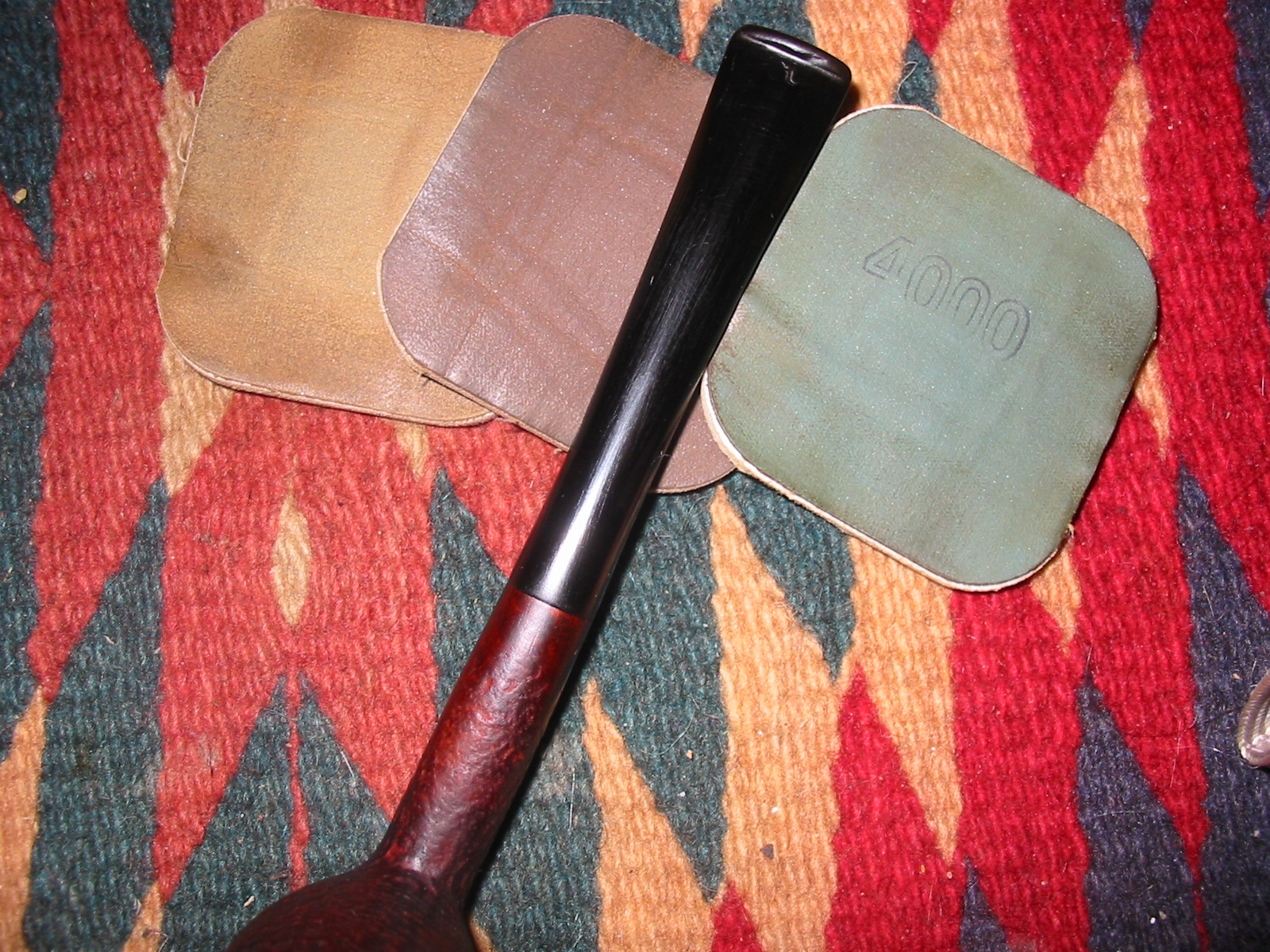
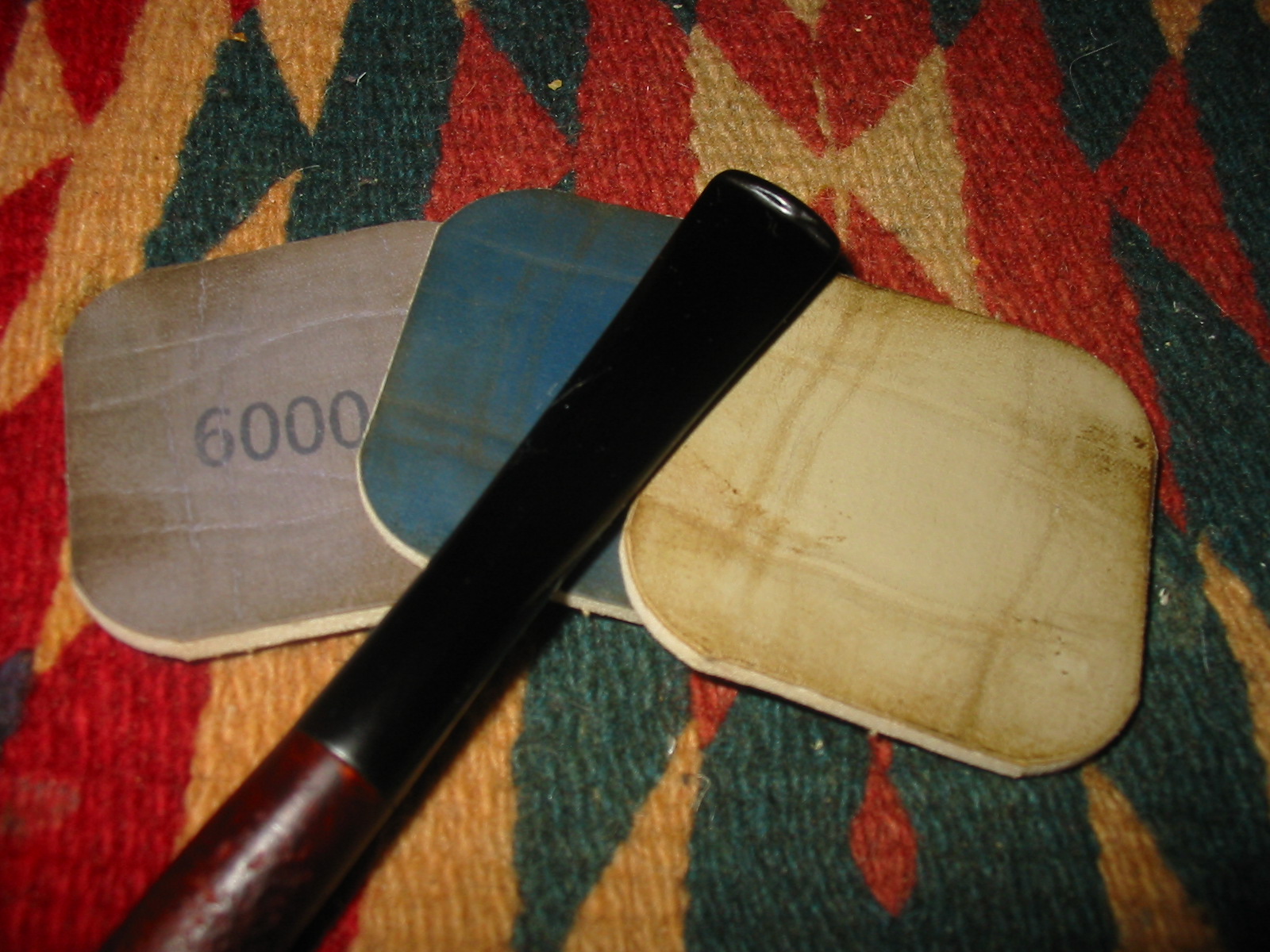
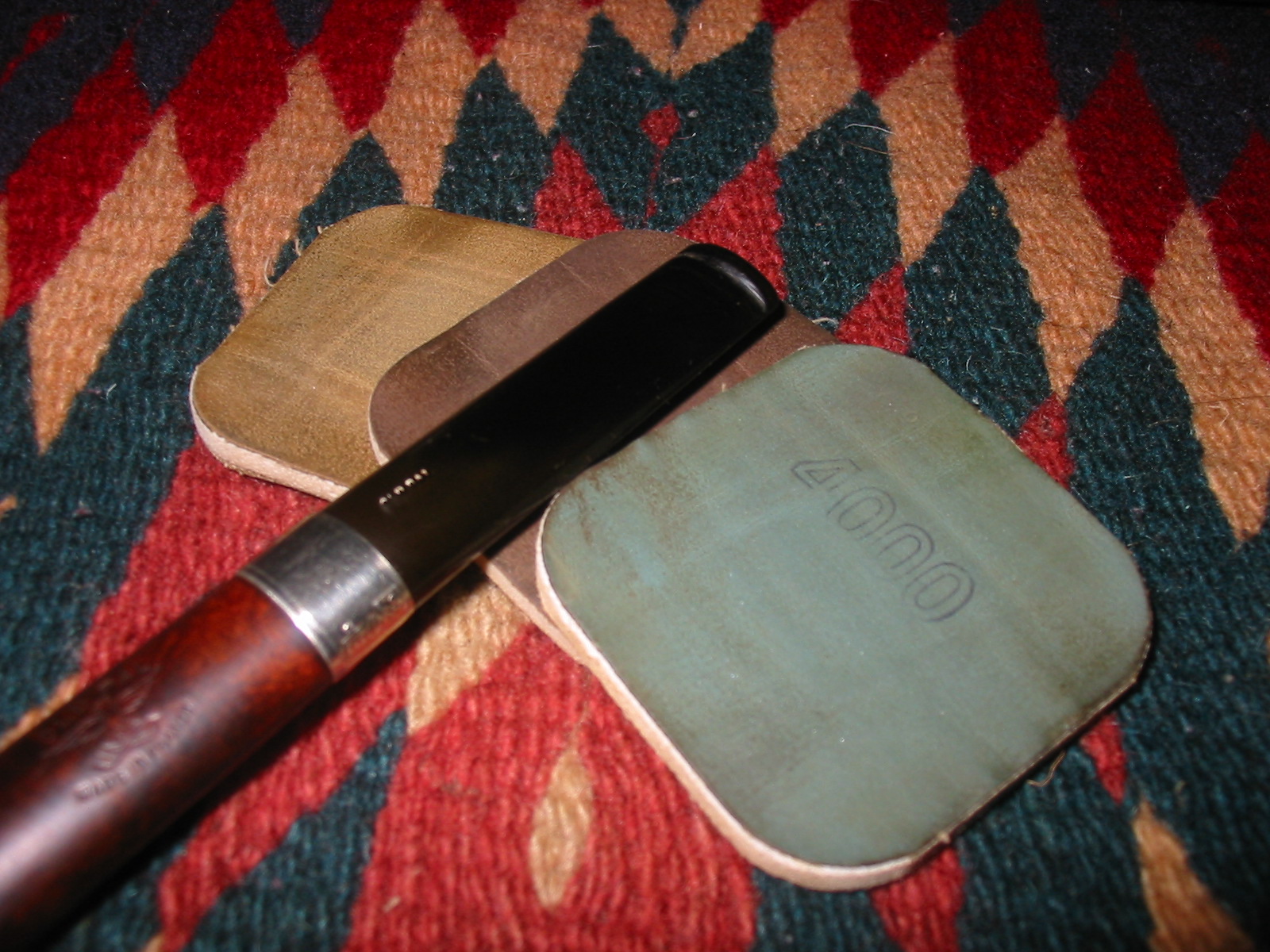
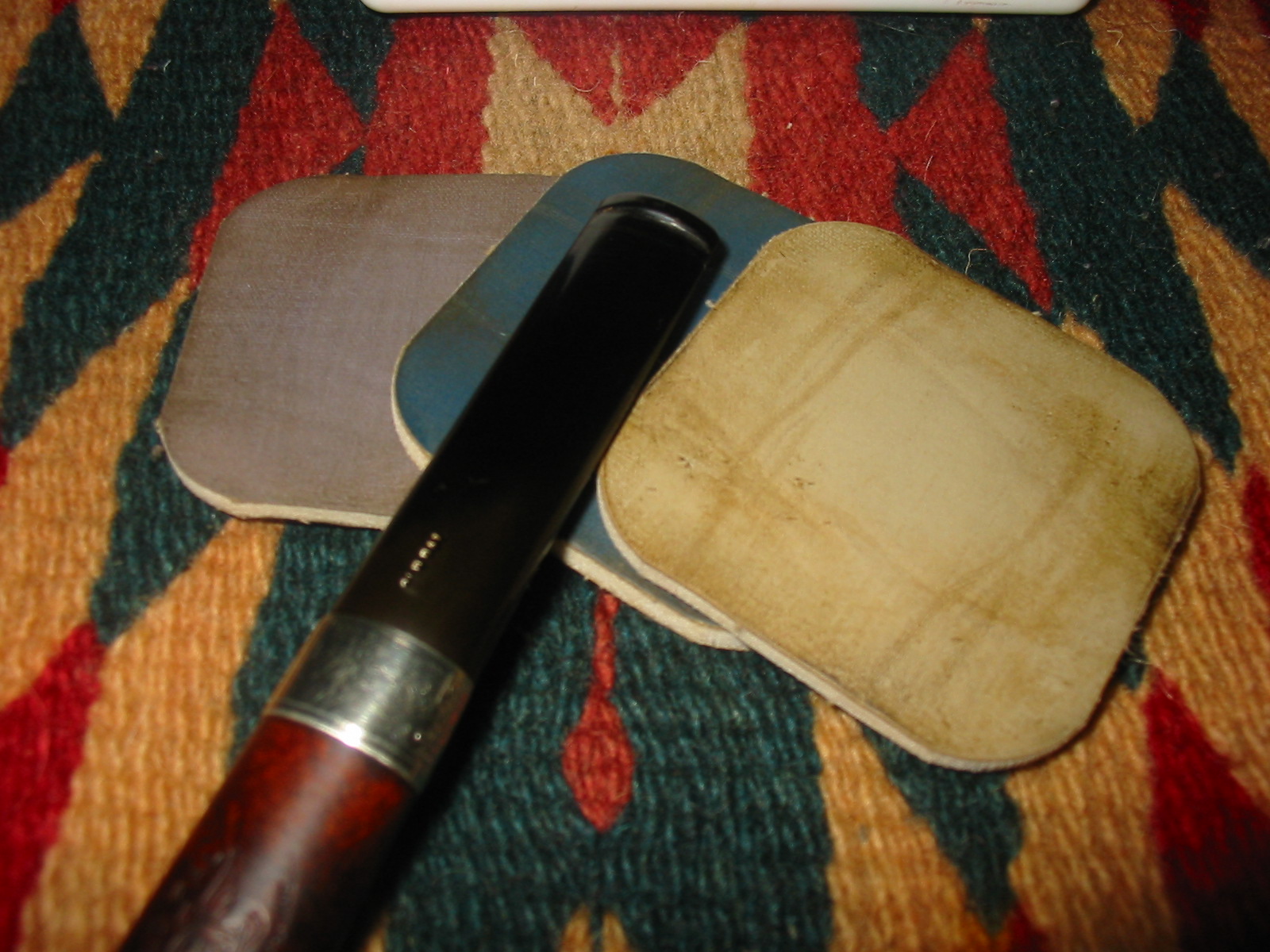
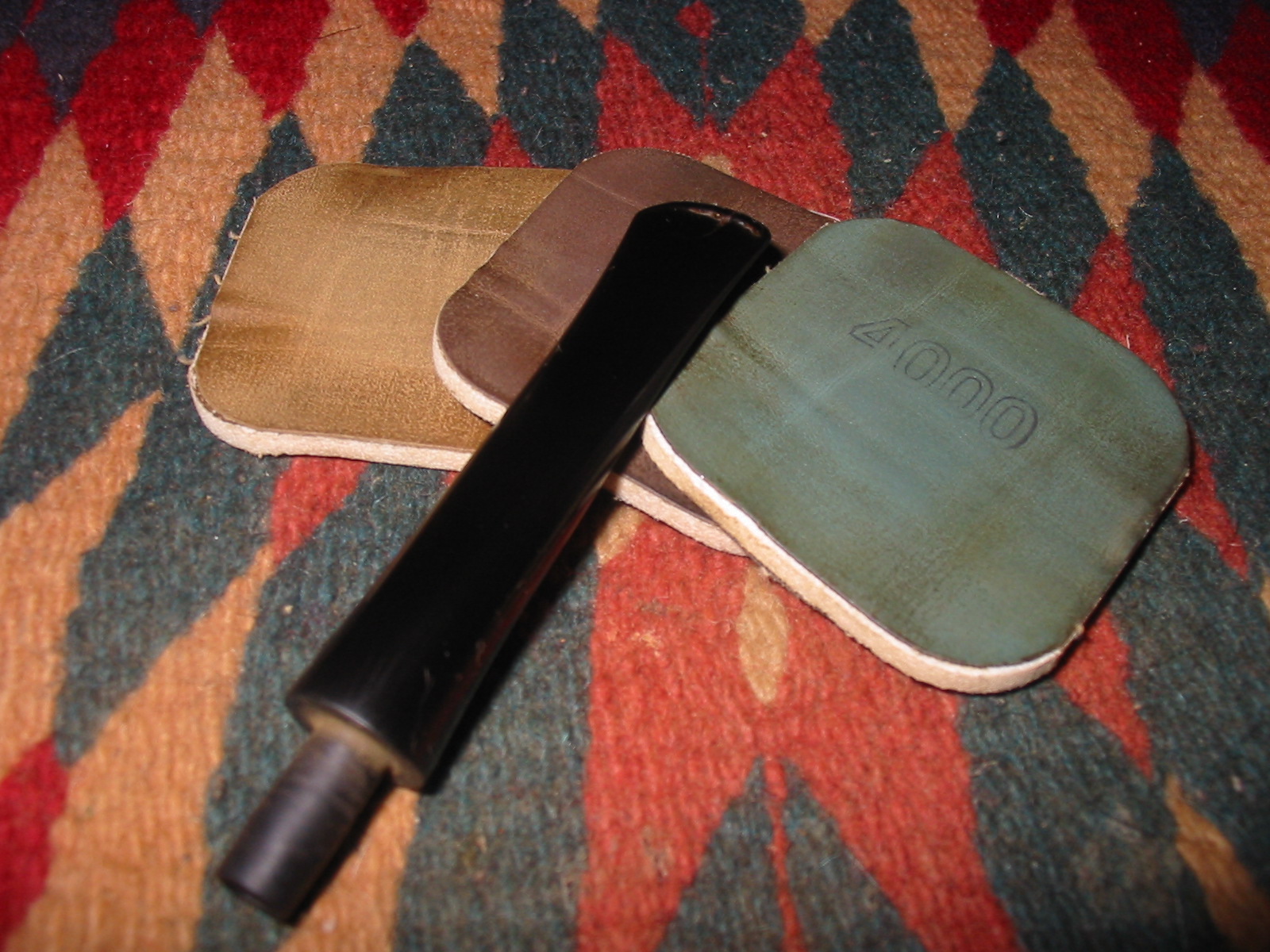
I worked on the stem with my usual group of micromesh sanding pads – wet sanding with 1500-2400 grit pads. I then buffed the stem with red Tripoli and White Diamond before going back to the work table and dry sanding with 3200-12,000 grit micromesh pads. I rubbed the stem down with Obsidian Oil and let it soak into the vulcanite.
IMG_5248

IMG_5249

IMG_5250

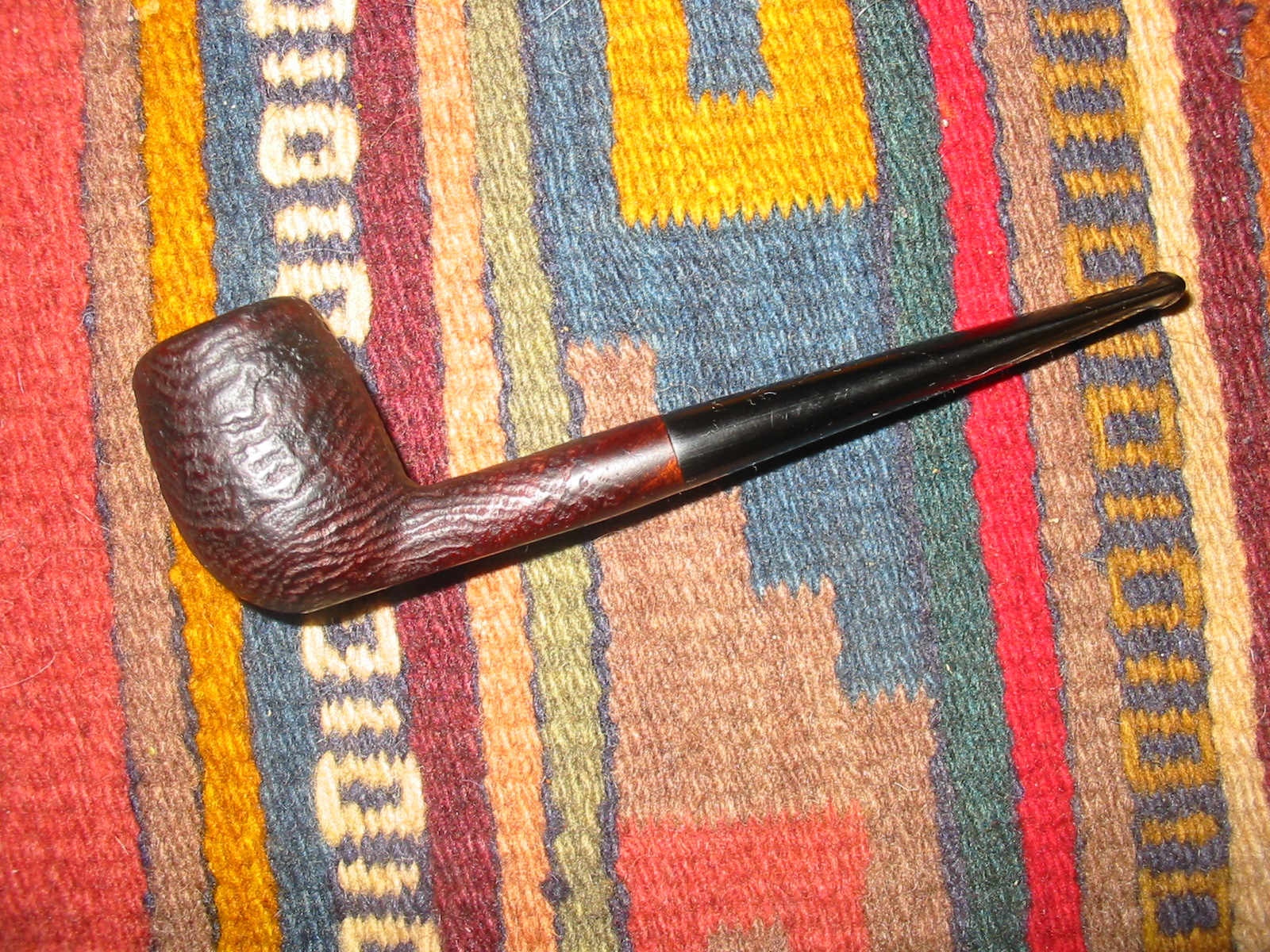
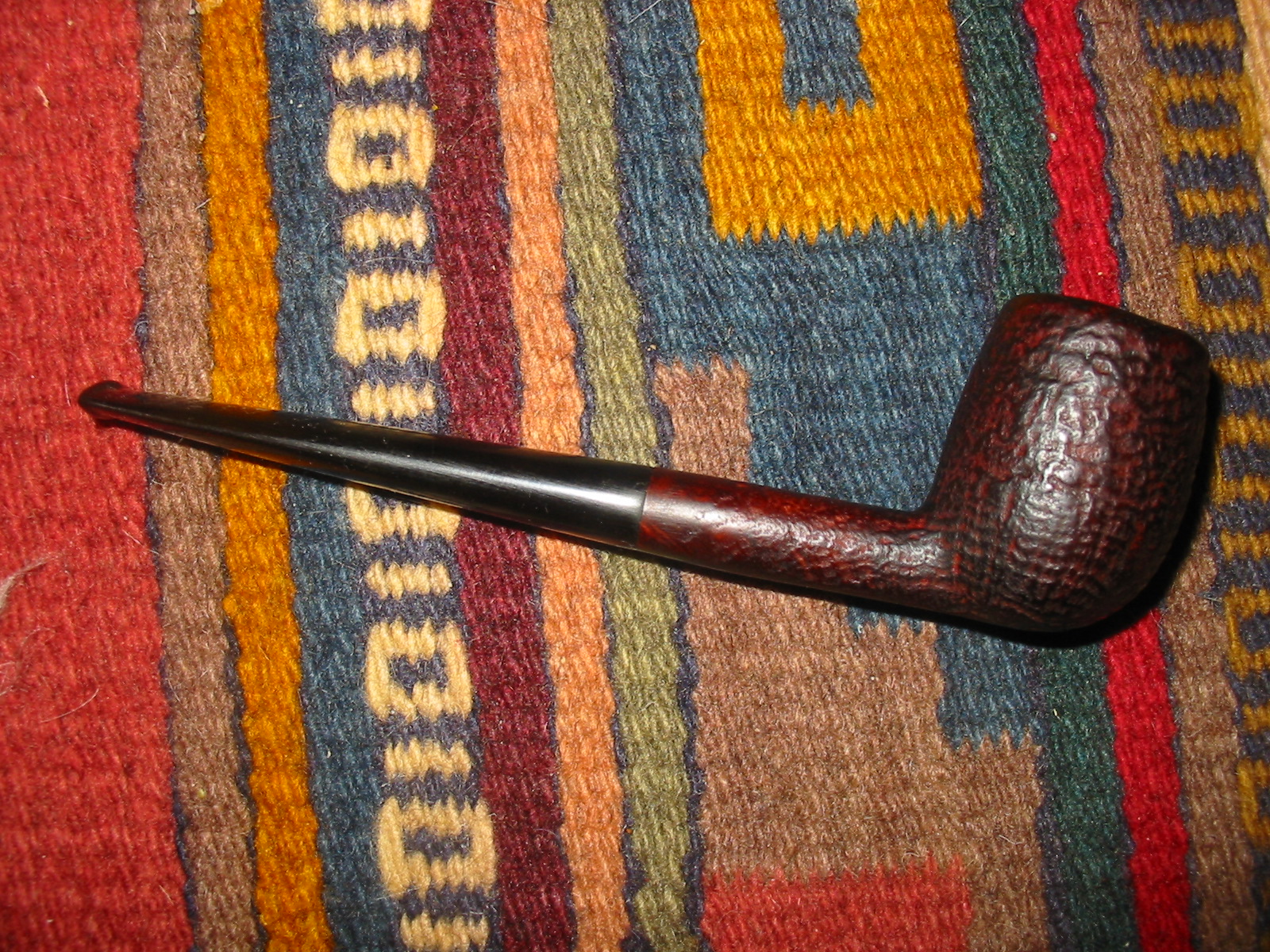
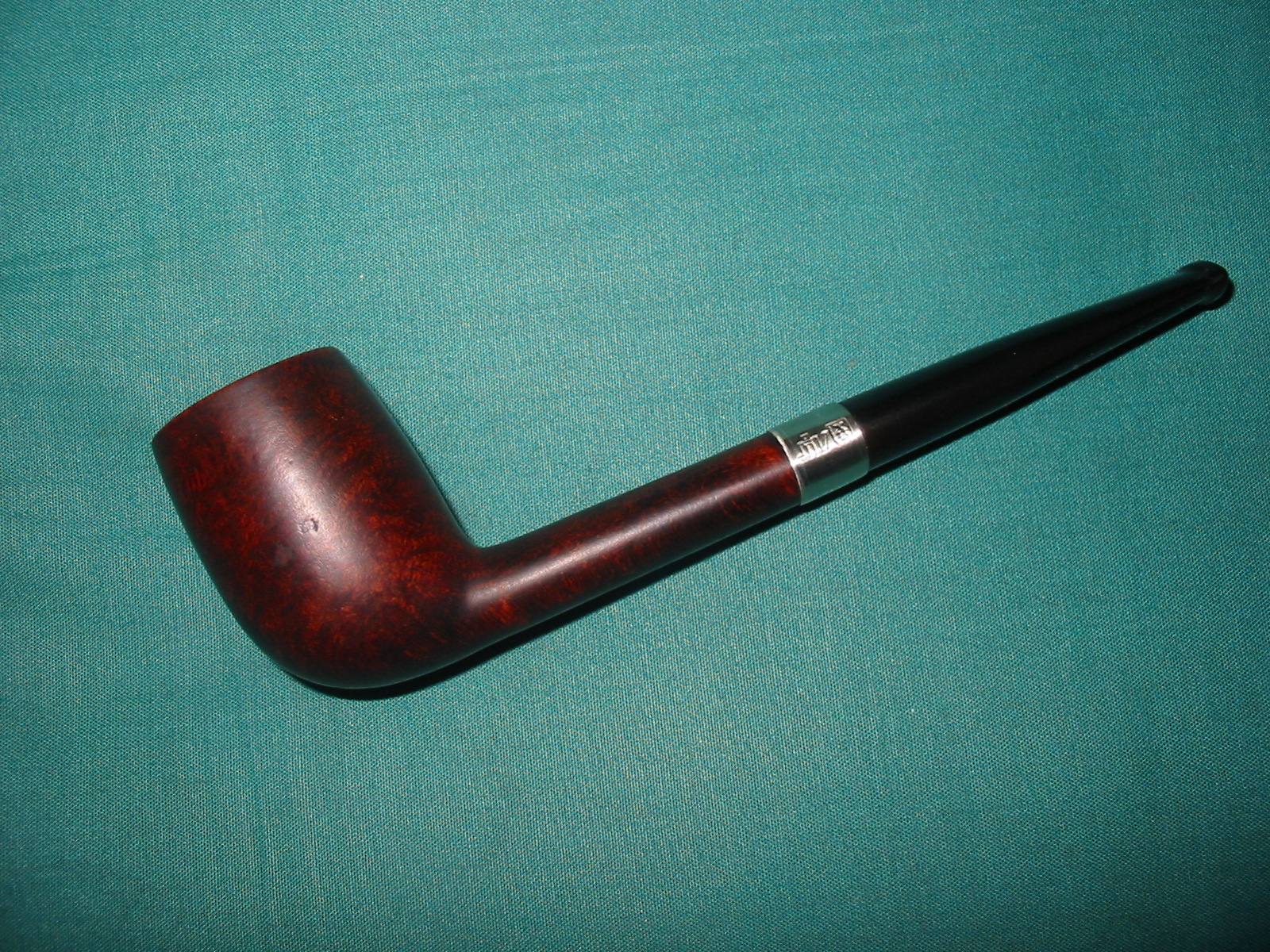
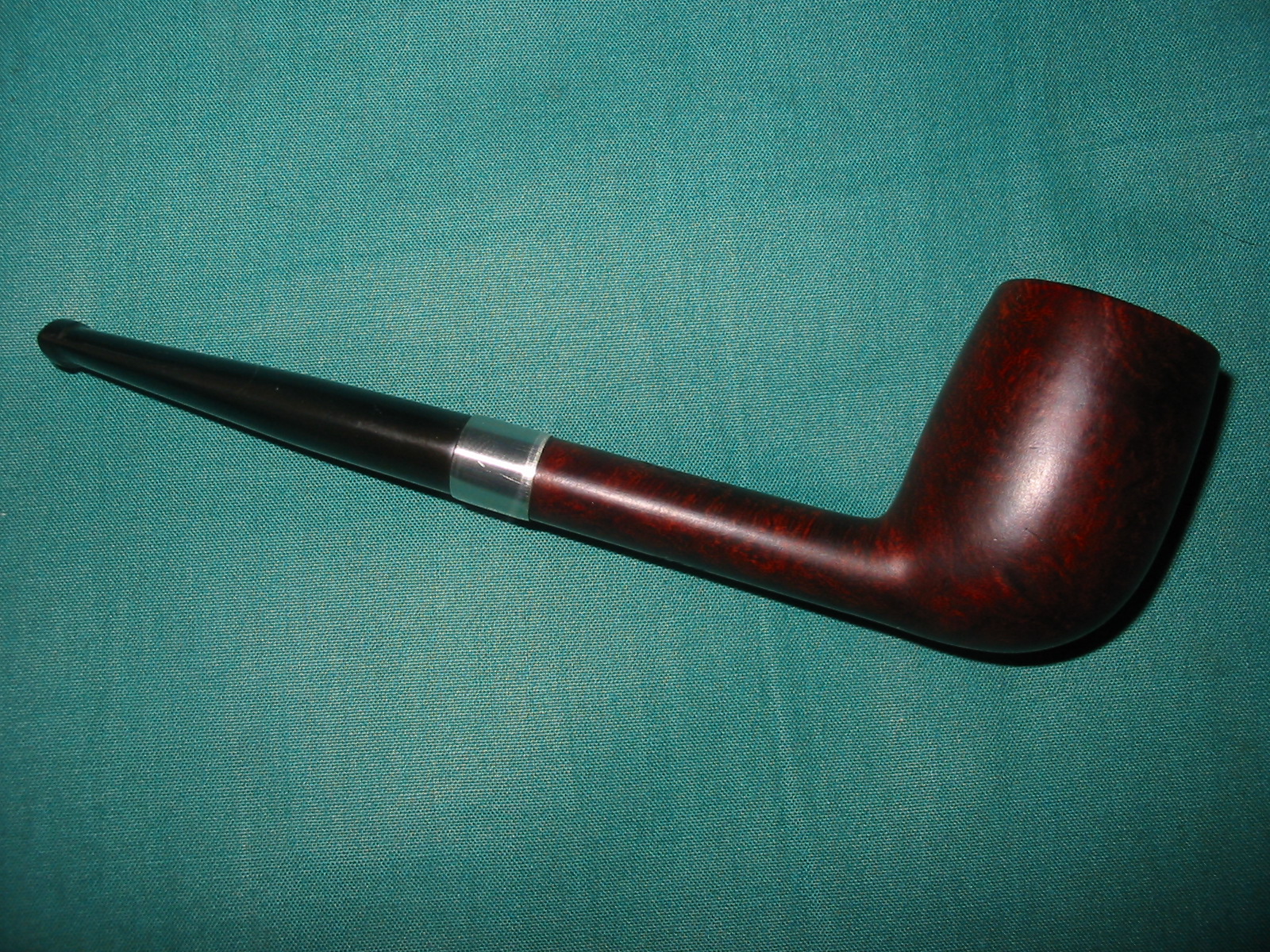
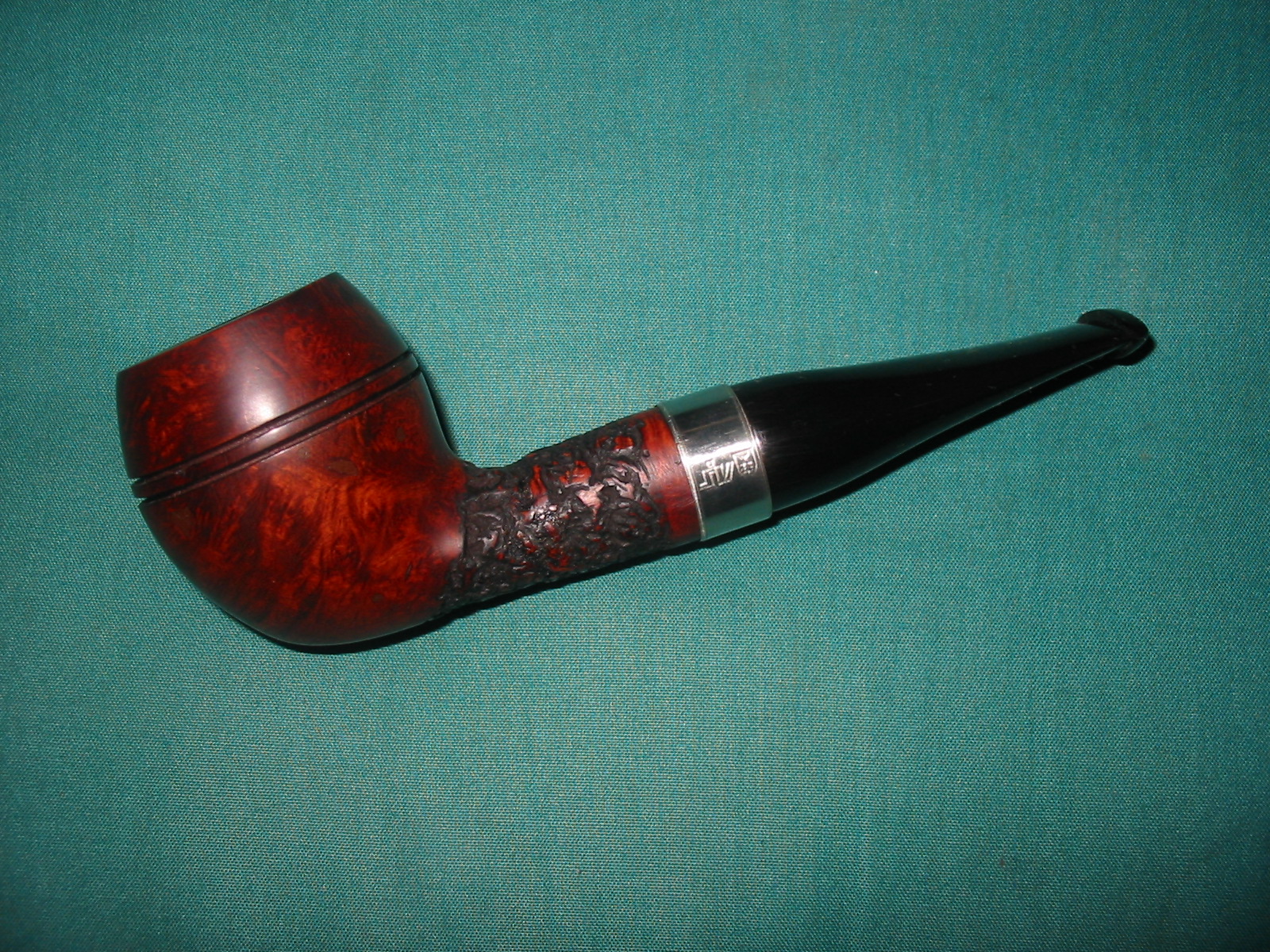
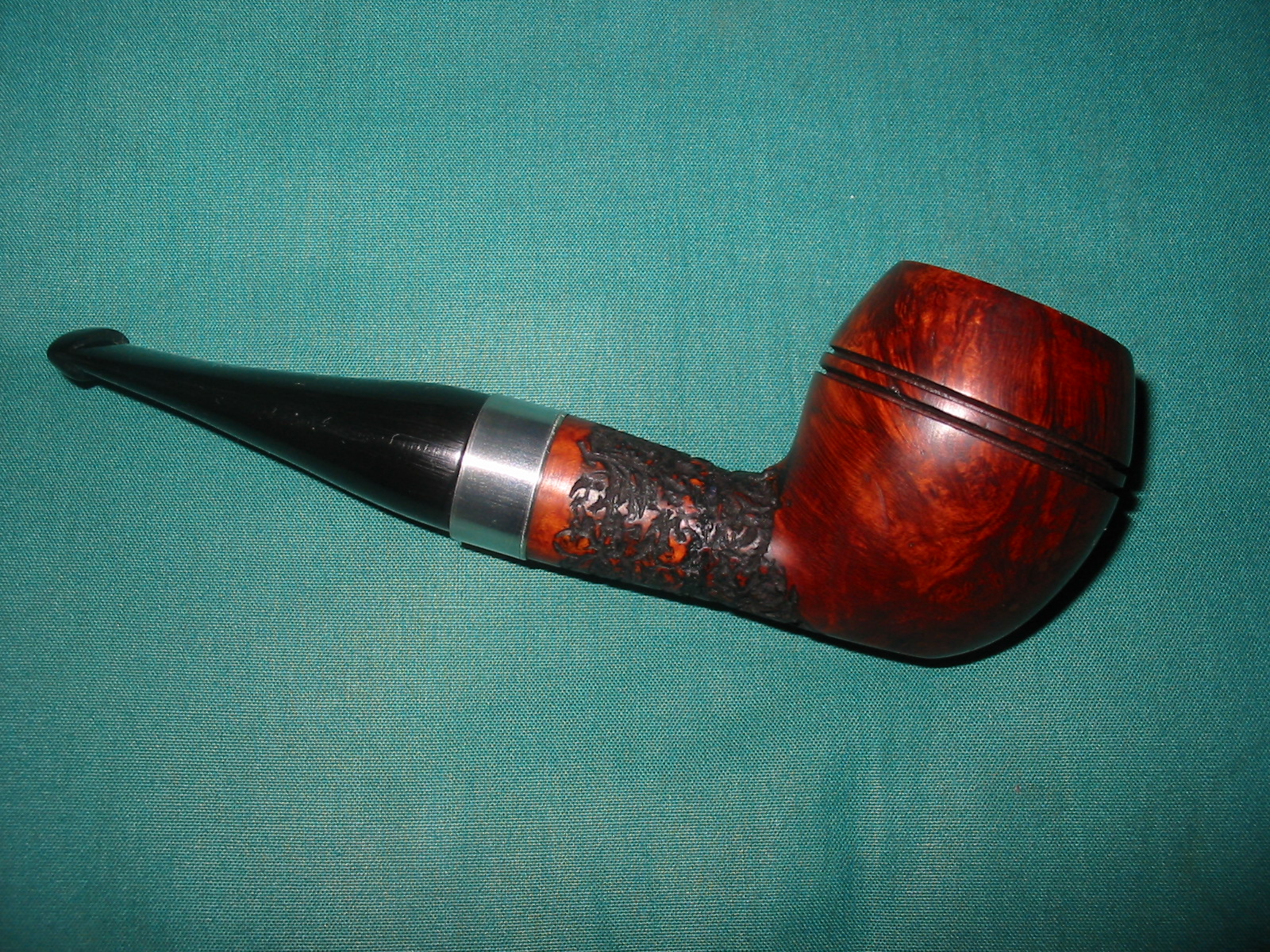
I buffed the finished pipe with White Diamond and then gave it multiple coats of carnauba wax. The finished pipe is shown in the photos below. The meerschaum disk inset into the bottom of the bowl is an interesting touch. I look forward to loading up a bowl and giving it a test run very soon. At the very least this is a great piece of tobacciana that still leaves a bit of mystery unsolved.
IMG_5251

IMG_5252

IMG_5253

IMG_5254

Some remarks on dealing with damaged stems of smoking pipes by Jacek A. Rochacki


Blog by Jacek A. Rochacki

This is Jacek’s second article on pipe repairs. I appreciate the slant that Jacek brings to the work of pipe refurbishing. His art restoration background lends itself to some beautiful solutions to the challenges that face the pipe refurbisher that are far different from those that have been used by myself and others as we deal with the work we do. I am very appreciative of Jacek’s willingness to share his methodology with us here on rebornpipes. Thank you Jacek for taking the time to write-up these pieces and sending them to us. They are a significant contribution to our work and love of all things pipe.

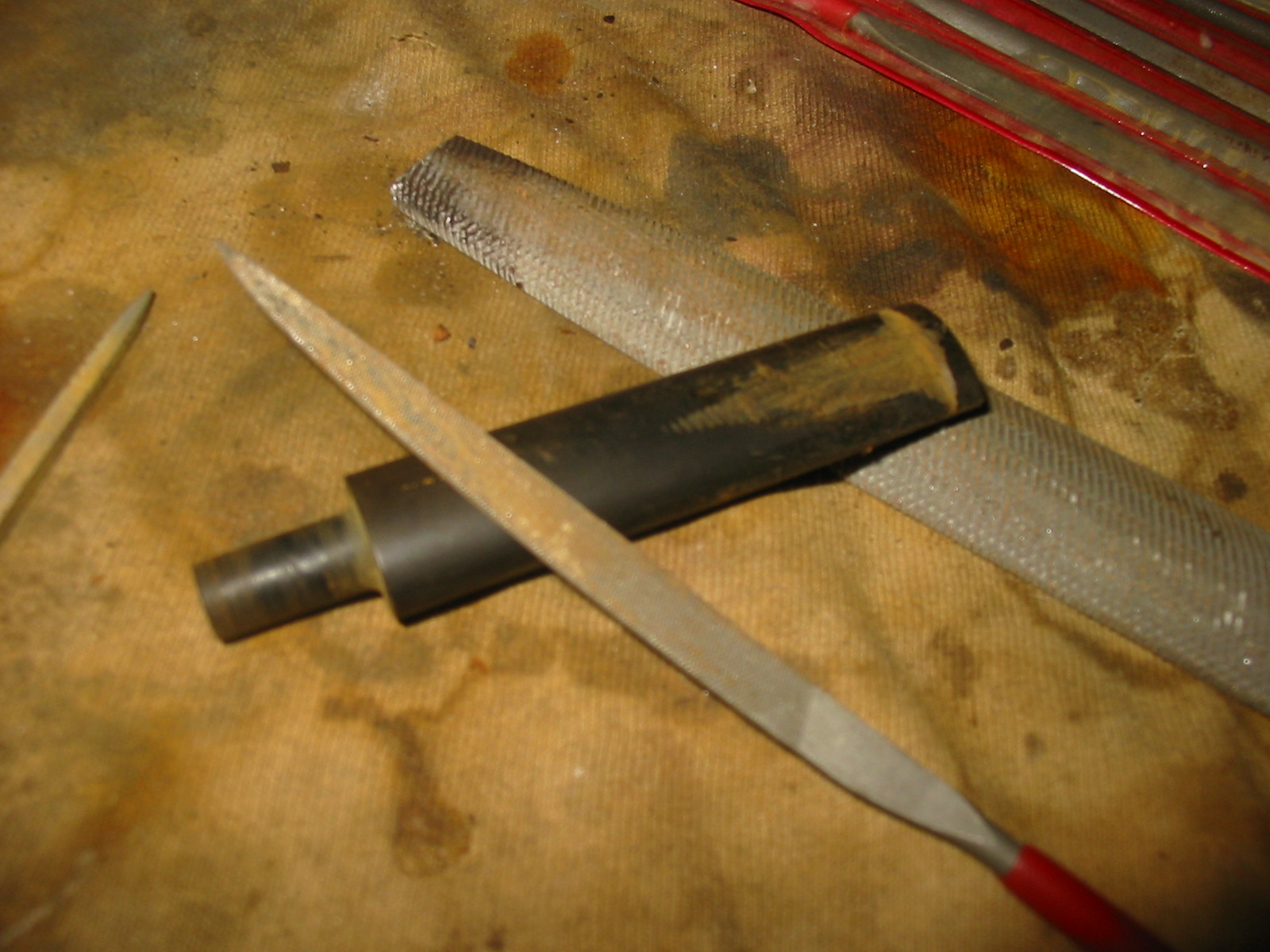
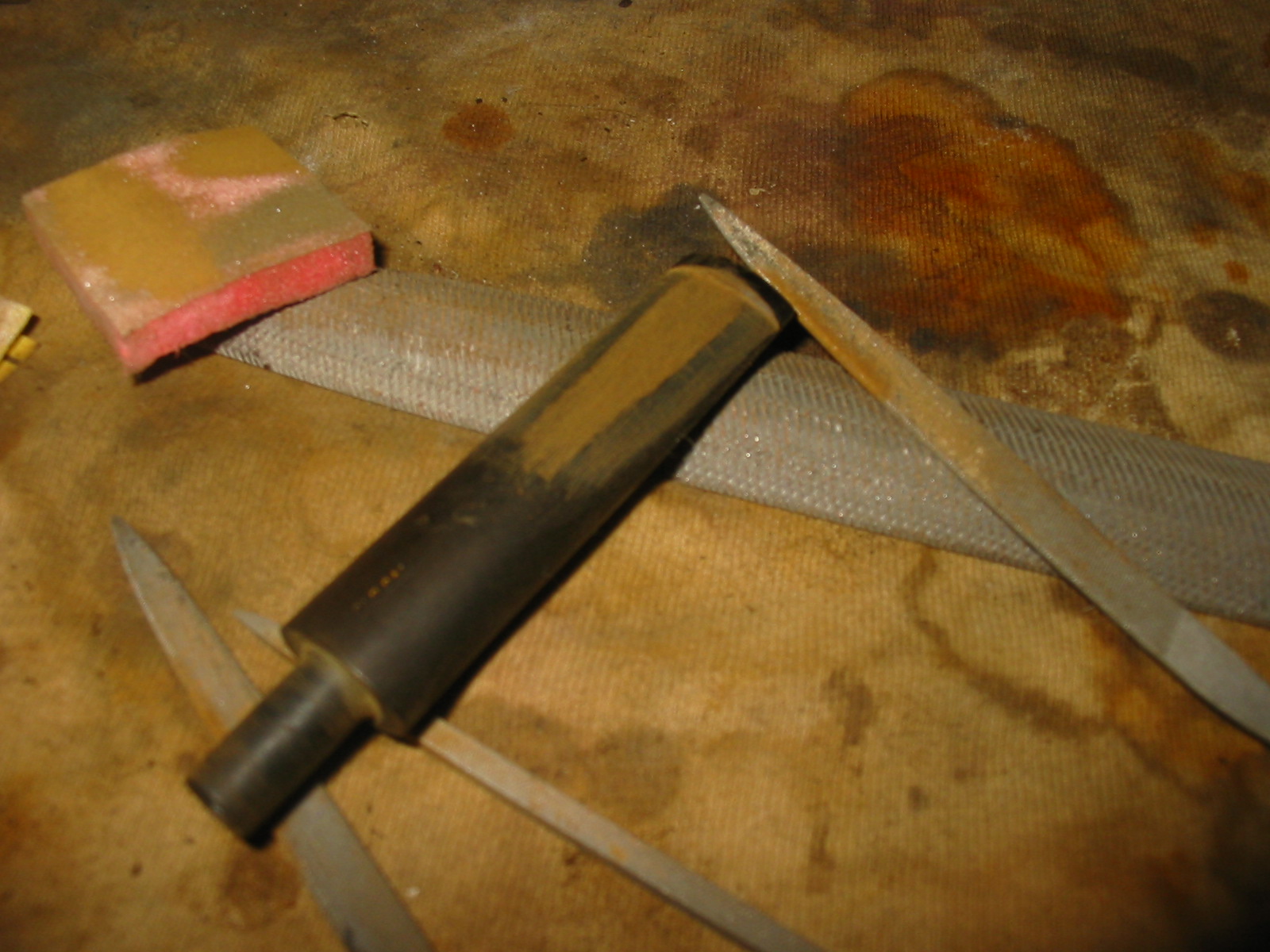
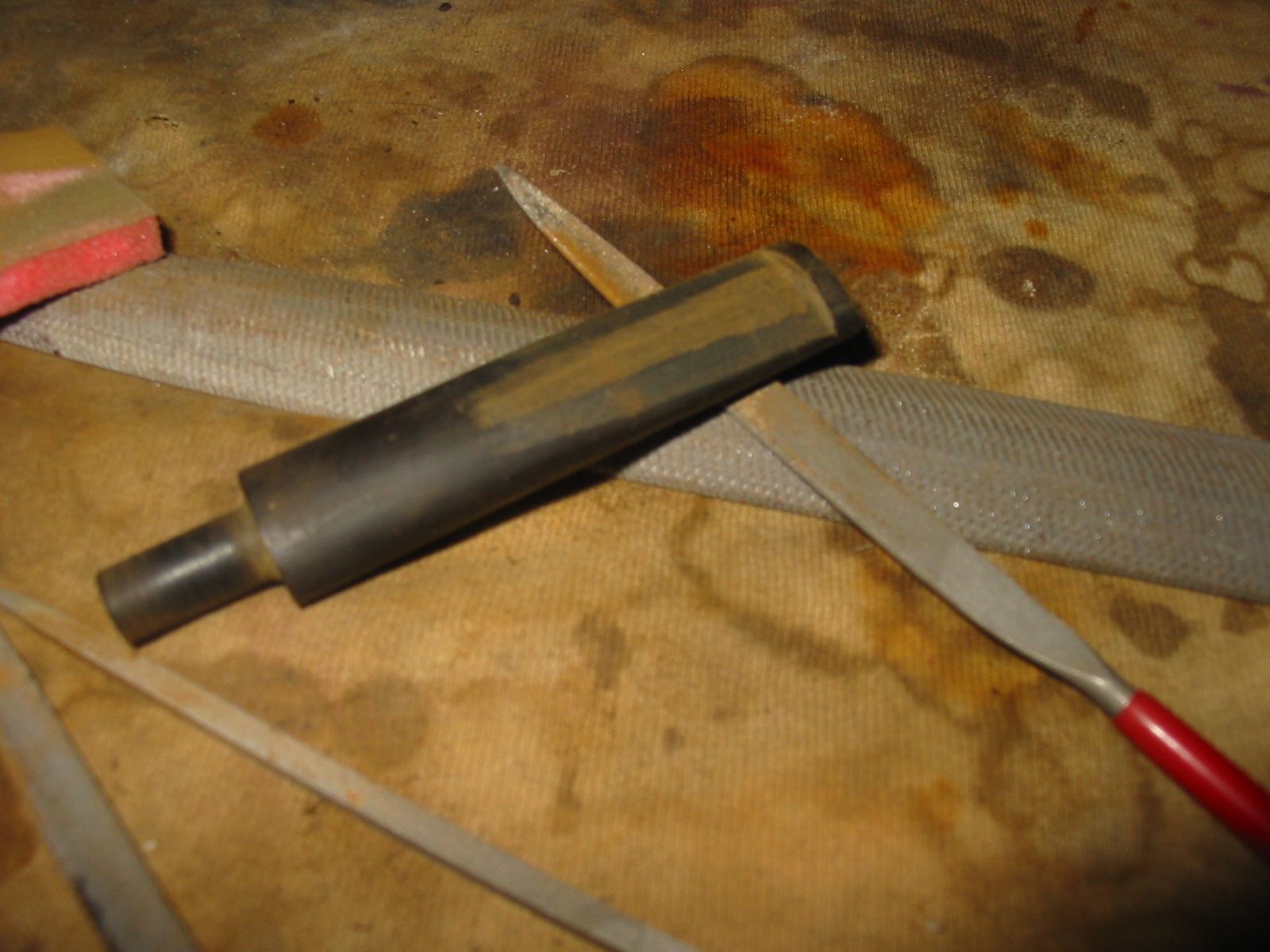
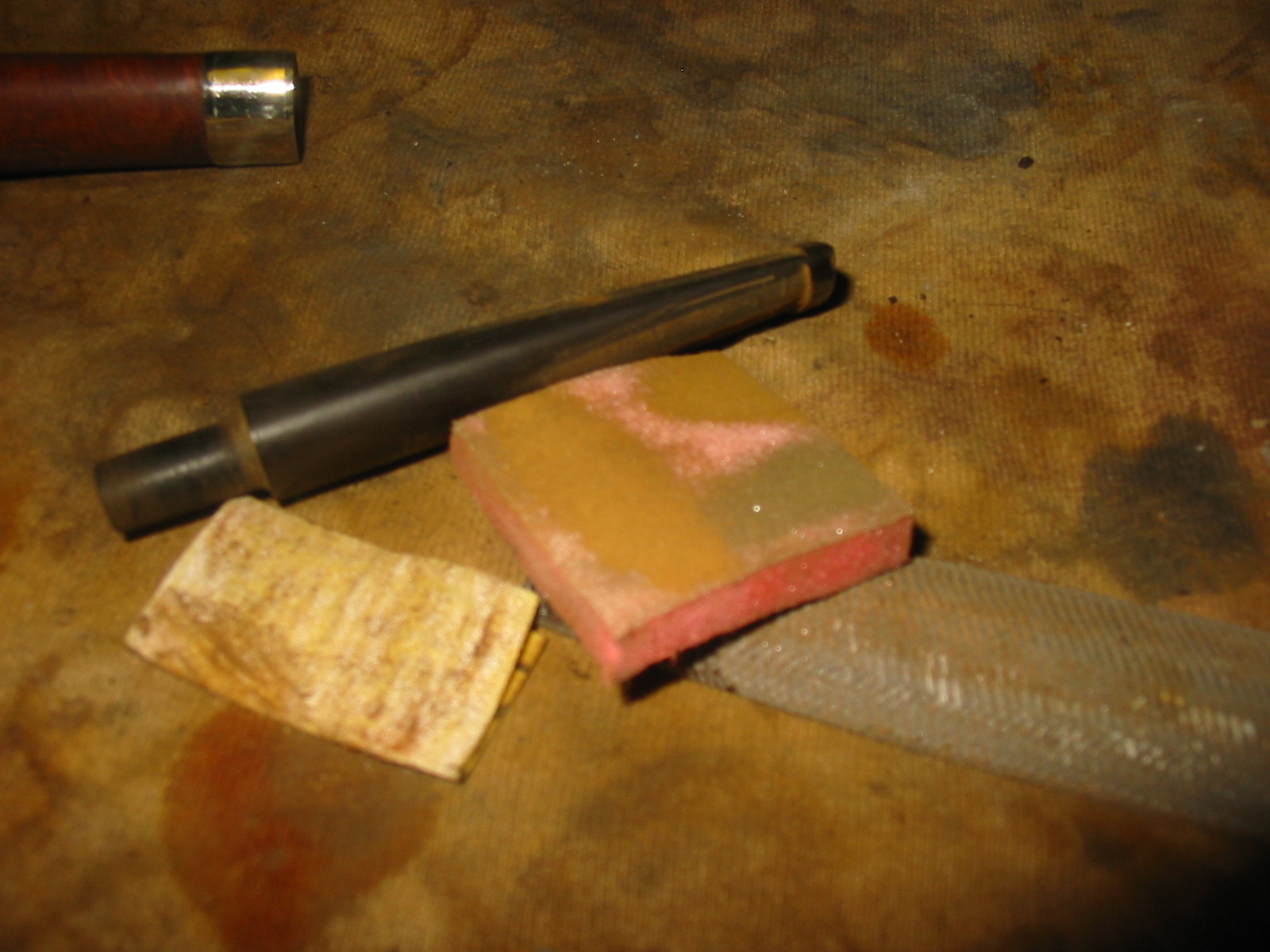
We all have known many different ways in which the stems/mouthpieces of our pipes are damaged. Let me indicate some of them: – broken mouthpiece – sometime in the middle, often in the “lip”/”button”area – tooth dent – this is often at the lip/button area and it does not look so nice – different holes/losses, mostly in the lip/button area, often such holes are”bitten up” by willing smoker. – broken tenon (sometime it is stuck/jammed in the shank) Let me begin from few words on materials. In general we deal mostly with vulcanite/ebonite and transparent Perspex (some models of GBD). But those are not the only materials. There are some similar materials like Ashtonite invented by late William “Bill” Ashton Taylor and used in his Ashton pipes; it is a little harder than typical vulcanite/ebonite. In older pipes we often see mouthpieces in yellow color looking like and named “Amber”; these are seldom made of original amber, more often of yellow glass-like material and are hard and break easily. (There are also yellow stems of softer materials like vulcanite/ebonite, and I would proceed with them as I usually proceed with black or Cumberland vulcanite/ebonite). Their tenons are often made of different, more appropriate material for their function, possibly bone, and sometimes such tenons are of screw in type. In some briar pipes tenons are made of metal – aluminum. And I know cases when owner wanted such metal tenons to be removed and changed for tenons made of vulcanite, modern Teflon etc. in belief that these materials will “cooperate” better with briar wood. I mention this not as advice as it is “intrusion” into originality of the pipe but as some kind of curiosity. As a matter of fact I note that even in case of vulcanite mouthpieces there was/is tendency to remove original tenons and fit tenons of Teflon or other modern material. Here is list (partial to be sure) of some of the different kinds of vulcanite/ebonite materials that have been used for mouthpieces:

Ace – American Hard Rubber Co., USA
Super-Ace – American Hard Rubber Co., USA
Amcosite – Siemens Bros. & Co., UK
Bulwark – Redfern’s Rubber Works, UK
Cohardite – Connecticut Hard Rubber Co., USA
Dexonite – Dexine Ltd., UK
Endurance American Hard Rubber Co., USA
Gallia-Rubber – French ebonite
Keramot – Siemens Bros. & Co., UK
Level Chuck – American Hard Rubber Co., USA
Luzerne – Luzerne Rubber, USA
Mercury – American Hard Rubber Co., USA
Navy – American Hard Rubber Co., USA
Onazote – Expanded Rubber Co., UK
Permcol – British Hard Rubber Co., UK
Resiston – American Hard Rubber Co., USA
Rub-Erok – Richardson Co., USA
Rub-Tex – Richardson Co., USA
Solid Rubber – used by some English makers in 1914-1918 years

I have seen these names/markings on stems/mouthpieces of old pipes. Sometimes it is of help in dating and attributing a pipe that is so marked. Remember that vulcanization of natural rubber with sulfur was invented by Charles Goodyear in USA in 1839 and was patented in 1843; in the same year Thomas Hancock patented it in Great Britain. Here is have good source on vulcanite
http://www.seattlepipeclub.org/content.aspx?page_id=22&club_id=969877&module_id=16894

In the’30’s vulcanite of different mixed colors became popular in making pens and is similar to what we see in some mouthpieces of pipes named “Cumberland”.

As vulcanite consists of vulcanized natural rubber, it may be of help to mention that oil (like in old days was used in oil lamps) and/or turpentine may serve as solvents, helpful with restoration if needed be.

I said all this in order to point out the importance of recognizing the material that our mouthpieces are made of in order to find best matching material for making eventual repairs to missing elements etc. The practical solution seems to be making one’s own “stock” of repair materials – simplest would be to collect broken, unrepairable mouthpieces. But there other ways: I found vulcanite rods that were used in schools for experimenting with electricity to be good material for fixing damaged mouthpieces. In the field of transparent materials I have been using old fashioned artificial plastic glass (sometime named Plexiglas) that was used in aviation some half of century ago. It is also important to choose right type of glue.

Beside the matters of tenons, I would briefly divide our work into two categories:
– joining together broken elements
– filling in holes or broken areas.
Of course, in practice these categories will “mix up” together.

In the case of a repairing a stem or mouthpiece that broken in half, the solution is quite simple. What is to be done is to use a strengthening/enforcing invisible element that will serve as sort of “hard core” – constructional element. The simplest way would be to use thin tube of internal diameter corresponding with diameter of the air channel of our mouthpiece. “Walls” of such tube, if it is tube of metal, may be of 0.3 – 0.4 mm in thickness. In order for it be fitted properly, we have to drill a kind of “nest”/mortise/”channel” for it, drilling the air channel with drill bit of proper diameter making this “nest”/mortise as long as required by length of our tube. The choice of such tube is important as not only air but also condensate will be in contact with the tube, so I would avoid brass, copper etc. The best IMO would be a tube of pure silver or high percentage silver alloy, or some aluminum like that which was used by Dunhill for his Inner Tubes, just of larger diameter. Silver tubes may be available in goldsmith’s supply places.

After making proper strengthening/enforcing tube and making sure that all parts fit well, I use simple glue of cyanoacrylic type – kind of “super glue”.

A more advanced way would be to make the strengthening/enforcing/ element – a drilled tube/cylinder from vulcanite/ebonite. It is possible to make it without using a lathe, just the laborious and precise use of files. The starting material could be the broken tenon from unrepairable mouthpiece from our “stock” of materials. The “nests”/mortises in parts to be glued should be of larger/proper diameter, because it is practically impossible to hand make the vulcanite mini tube with walls of 0.3 or similar thickness, so the outer diameter of our vulcanite tube will be larger than in case of metal tube. We make “nests”/mortises/”channels” of required diameter using drill bits of proper diameter. If we are not sure about precision of our fingers necessary for hand making short tube of vulcanite, we may make just a small cylinder of vulcanite of desired size which would make/allow parts to be glued to fit perfectly, and after gluing all parts together, drill the air channel from the tenon side with a long drill bit of right diameter corresponding to diameter of the air channel and in delicate, secure direction-wise way, drill the inserted cylinder through the air channel so the air/draft channel will be “operational” again.

Summary: use the enforcing/strengthening elements and we may be surprised how many unrepairable looking elements may be repaired and then serve really well.

Now for filling in holes or broken areas.

The relatively simple thing seems to be filling in tooth dents. I begin by cleaning the surface of the dent with some sharp tool – scraper or blade of size of small pocket knife, better with rounded tip, such as those found on pipe knives. This is to remove oxidation from the surface that is to be filled. After “cleaning” the surface I take a needle, scraper or similar sharp tool with sharp pointed tip and “score”/”draw” delicate lines/”mini-groves” on the cleaned surface. This is the old trick used in enameling for better adhesion of filling material (extender) that will be “put” on the prepared surface. This material is simple and known us vulcanite dust – the result of filing a properly chosen piece of vulcanite, sometimes it is result of filing the stem that is to be repaired, sometimes we may use another piece of vulcanite from our “stock” if we are sure that it will fit well. Then I mix this dust with cyanoacrylic glue making my “filling material/paste” – kind of putty, and I apply it on scored dent. After some time – rather longer then shorter – say – good couple of hours depending on thickness of the filling, I use a file and sandpaper and finally polish on the patched stem – this is known as the finishing procedures.

After all this please, be prepared for unpleasant surprise at the first glance. The filled up area may be of different color than the color of the stem. Please do not worry! It is not without reason that I have mentioned before that oil (like in old days was used in oil lamps) and/or turpentine may serve as solvents that are helpful with restoration… so a drop of oil or turpentine applied on the repaired area and “distributed”/”smeared” all over will turn the surface of the glued parts to match the rest of the stem. When the surface dries, I would return to delicate polishing and be prepared for repeating such finishing operation as many times as necessary. At very end I would apply a wee drop of olive or proper mineral oil and smear it all over with soft cotton textile; this is old method of conservation of surfaces of objects made of vulcanite/ebonite – “hard rubber”.
Jacek1

This was an easy case. What about situations when the lip or end of the stem/mouthpiece is partly broken, “eaten up”, has holes, or part is missing? Please, take a look at illustrations published by our host at the beginning of his text “Cutting and shaping a new button on a severely damaged stem”
https://rebornpipes.wordpress.com/2014/02/25/cutting-and-shaping-a-new-button/

Instead of cutting/removing the damaged part and carving the lip/button of what is left, I would proceed in different way. Keeping in mind my wish of keeping original dimension, proportions, form, I would try to reconstruct damaged stem/mouthpiece as following:

By using sharp cutting tools – engravers/burins, scrapers or in case of better equipped “workshop corner” – cutters, like those used by jewelers for stone settings, or even a sharp pocket knife, a frame saw and needle files I would work on the damaged area making it a proper shape a piece of the same material carved that I will later shape/carve to fit what is missing. The words “making it of proper shape”, may be a subject for another longer text. But as sort of inspiration may be the different ways dentists use to “elaborate” holes in teeth so that the filling will be kept securely in place. In a stem the situation is easier as we have good binding glues and are binding together the same kind of materials – vulcanite/ebonite to vulcanite/ebonite.

When the newly carved material is fixed into the missing area with glue, I work with files and drill bits to achieve desired missing shape. Then I proceed with finishing techniques. Let us look at the pictures:
Jacek2

Jacek3

Jacek4

In case of stems/mouthpieces made of transparent material I have been proceeding as described above, just choosing proper equally transparent material for making missing parts. After polishing the seams are invisible. I would use fast cyanoacrylic glue of kind that creates transparent seams.

In Steve’s article one commenter mentioned a missing lip on his Peterson P-Lip pipe. Again: in glue we trust: just proceed as described above and if the work is done properly, it should be impossible to distinguish reconstructed lip from the rest of the stem by the naked eye. In general, if the whole lip is missing, I would glue in a large piece of matching material and would shape it by files etc. The air channel can be easily drilled (easily as we are dealing with comparatively soft materials) with drill bits of proper diameter.

I would deal with problem with missing or broken tenon in ways described above, depending on particular situation. Sometimes I use the reinforcing “inner tube” glued in place as described above. Other times I drill the “nest”/mortise of a diameter corresponding with diameter of new tenon to let it fit tight and correct/straight then glued in place. The old and best known method of removing broken tenon from the shank is:
– use of strong alcohol to dissolve eventual dried condensate and/or residues that “glued” the broken part in the mortise.
– take a self-tapping screw often used in construction, by woodworkers etc. and screw it into the air channel of broken jammed part in the mortise.
– keeping the head of this screw firmly in place carefully use pliers to twist it out while at the same time pulling on the broken part. If it does not come out it often means that it is still “glued” in place by dried condensate, tars, etc., so go back to the strong alcohol and please, repeat over a couple of hours or even days.

In conclusion I would like to present some simple hand tools that I find useful in working with pipe restoration. I would like also to say, that for cutting vulcanite/ebonite I use the typical jeweler’s frame saw with proper blades, similar to this shown here together with workbench pin and set of blades.
Jacek5

Jacek6

Jacek7

Jacek8

Jacek9

Jacek10

Jacek11

Out Damned Spot!…or at Least Hide – By Josiah Ruotsinoja


Josiah and I have been emailing back and forth on this old Kaywoodie for quite a while now. I asked him to do a write up for the blog on it as he tried some different ways of minimizing stains to the briar. Each method he used has its own application and effect. Josiah did a great job writing this up and demonstrating the way the method worked and the results of the application. Thanks Josiah for the great work. I look forward to reading more about your refurbishing in the days ahead.

This last August, I acquired a Lot of estate Kaywoodies. All were in fair condition. Some looked like old, loved friends and a couple hardly smoked at all. One was unsmoked with the price sticker still on the stem. I’m guessing that all came from the same estate judging from the burn pattern on the rims. The main issues to be dealt with were the moderate burns on the rim and some spots from sitting in something wet. These spots proved to be the more serious problem, as you may gather from the title.
Among them was this Connoisseur #69 pot.
Josiah1

Josiah2

As you can see, there was quite a lot of grime and a large dark spot on the left side of the bowl. Another, less severe spot was on the bottom of the shank. However, it appeared to be in good condition overall with nice thick walls and no deep dents or scratches. The bowl had some very nice birdseye on both sides. Visions of a nice blond or honey colored stain immediately jumped into my head.

Time to restore! My first steps were to ream the bowl and put it in an alcohol bath and soak the stem in an Oxyclean solution. The stem came clean and polished up nicely without much trouble. I heated up the stinger and screwed it in to the mortise while still warm to correct the alignment.

The grime on the rim came off quickly, but there were a couple pretty deep scorch marks. I started off topping the bowl with 220 grit sandpaper, but it quickly became apparent that it was going to take forever with that fine a grit. So I started over with 80 grit until most of the burn was removed and worked my way up through 600 until it was gone. Then I put a slight bevel on the outer and inner rim.

Now for the real problem. The water marks (I kinda think old motor oil) hadn’t come out in the alcohol bath as I had hoped it would. Having never dealt with removing such marks from wood, I decided I needed to consult someone with more experience. I sent an email off to Steve here at the blog for advice. In response he suggested a few options: lemon juice, bleach, oxalic acid and as a last resort sand paper.

First, I tried lemon juice.That worked to a degree, but the stains were still clearly visible. Here are the marks after the lemon juice.
Josiah3

Josiah4

I figured anything I could see would be more visible after applying stain, but I decided to give it a try anyway. I sanded the entire surface from 220 up to about 6000 grit. I applied stain and flamed it to set the stain. Below is the first attempt…not so successful.
Josiah5

Josiah6

So I sanded off the stain again and went for bleach. I almost ruined the whole project here by leaving the bowl in the bleach too long. It raised the grain quite a bit and penetrated further than I expected.
Josiah7

Josiah8

After sanding, I managed to get most of the white patched off and the surface smooth again.
Josiah9

Josiah10

On to attempt #2 with stain…
Josiah11

Josiah12

Better results, but the stains were still clearly visible. I moved on to oxalic acid crystals. I mixed a paste of crystals and water, applied it, let it dry and sanded the dried mixture off. Use a particle mask when sanding this stuff. It’s not something you want to inhale.
Josiah13

Josiah14

I tried once more with stain and the results were similar to the second attempt. I seem to have lost the pictures for this, but by this time, you get the idea. This last unsuccessful attempt made it clear to me that I must admit defeat and give up my dreams for a shapely blond and give a brunette a try. The repeated sanding, staining and sanding again had taken its toll on the nomenclature and the side profile was starting to flatten out. In order to save the now faint stampings, I chose a nice deep espresso color and success! The pesky spots are now hiding well in the rich stain. I think that only a very well trained eye, or one that knew the stains were there in the first place, would be able to spot them.
Josiah15

Josiah16

So after a lot of work, I have myself a beautiful Kaywoodie pot. Disaster almost struck in its inaugural smoke, however, when the Kaywoodie club fell out of the stem, the original glue having lost its glue-iness after the soak in the Oxyclean. I managed to find it where I had been sitting and it’s safely superglued back in place.

Many thanks to Steve for his suggestions. Even if it didn’t turn out the way I planned originally, I now have options for tackling similar problems in the future and about a pound of oxalic acid to try to remove the stains my 13 year old has left on her bedroom window sill.

Giving a Brewster Round Top Billiard a Face Lift


Blog by Steve Laug

I was gifted a pipe bowl from a friend in exchange for some work on his Peterson. He had no idea of the brand or maker but thought I could have some fun with it. I dug it out of the refurb bin the other evening and began to work on it. I would need to clean it up and then restem it in the process as it did not come with a stem. It was stamped Brewster over Imported Briar on the left side of the shank with no other identifying stamping.
brewster1b
The finish seemed to be a very heavy lacquer that was cloudy with age. The shape was very interesting to me – a billiard like shape with a crowned rim, rounded and quite elevated. I like the looks of it. It is a small pipe – group 2 sized. There were a lot of putty fills on both sides of the bowl, the shank and the rim that would definitely show up once the lacquer finish was removed.
IMG_5103

IMG_5105

The bowl was in great shape with a light build up of cake that was the right thickness. There was no heavy smell of aromatics clinging to the pipe. The shank was clean and the metal insert in the mortise was also clean and in good shape. The thread pattern and the look of the metal fitment looked exactly like a Dr. Grabow set up.
IMG_5104

IMG_5106

I had an old Dr Grabow stem here that was missing the stinger apparatus but the threaded tenon was in working order. I took it from the can of stems I have and gave it a try on the shank. It threaded in perfectly. It was overturned but it fit. This added some objective evidence to my assumption that this pipe had some connection to Dr. Grabow.
IMG_5107

Back Story of Brewster Pipes (If you get bogged down in the history you can skip ahead to the section on the refurbishing process).

At that point in the process I slowed down the cleanup and went to the computer. I was hooked and wanted to see what I could find out about the Dr. Grabow connection to Brewster, if there was one. I wanted to know who made the pipe so I did some research on the web and in some of my books to see what I could find out about the brand. From the book Who Made that Pipe I learned that the brand was Italian made followed by the words unknown maker. I looked on Pipedia and there found much the same information – Italian made followed by question marks as to the maker. After working the web with Google and other search engines the most I could find out was that slight information – the pipe was an export brand of an unknown Italian company.

I decided to take a different tack. I found the Grabow Company site online and wrote an email to their information centre seeking information on the brand. I decided to follow-up on my hunch from the stamping and the metal insert in the shank that somehow this pipe was related to Dr. Grabow pipes. I had no clue how but it certainly had the signs so I went to the Dr. Grabow forum on-line and posted my questions http://drgrabows.myfreeforum.org/index.php . I also did some reading on the forum of back posts and found one series of posts on the brand. I read the following and immediately had more questions. The Grabow connection was not clear but I had found that the pipe may have been a promotional item. Here is the quote that gave me the information”

“A couple months back, I scored a Brewster off eBay for five bucks. Research on this forum and the wild, untamed internet tells me the Brewster pipes were all made in one batch in 1964 as a promotional item for Sir Walter Raleigh.”

Last evening while relaxing, my iPhone vibrated notifying me of a new email. I picked up the phone and saw that I had a response to the questions that I had posted on the forum. Dave Whitney, author of the book on refurbishing called Old Briar, had responded to my request for information. What he sent me was extremely helpful and a true goldmine of information. His answer affirmed the Grabow connection and gave critical information that I had not been able to find anywhere. I have included that information in part below.

Dave Whitney: Here’s what I have from my accumulated notes on Brewster – much of it looks like it came off this forum, ted/td being one of the early ones to help build this forum and a former Sparta CEO:

All the Brewsters were “made” in about 64’… Brewster… is probably from Fratelli Rossi from 64’… Ted, an older pipe smoker than me, suggested the Brewster pipes are comparable to the Willard pipes, and that Brewsters were often sold either with tobacco, or in a coupon offer. For example Brewster was sold as a redemption offer with Brown and Williamson for Sir Walter Raleigh tobacco.

Further information came from Dr. B… I think (in my feeble state of mind, after today) that Brewster was sold as a redemption offer with Brown and Williamson for Sir Walter Raleigh tobacco. But, Mastercraft in 74 had a LOAD of them left. We (Mastercraft) sold them as closeouts along with several pipes in baskets of 4 dozen at $3.98. We also included a bunch of Mastercraft from F. Rossi at the same price……..Rossi pipes are another story……Remind me of the “sticky lacquer” and I’ll tell it…….ted

Mastercraft was founded by Bernard Hochstein, an Orthodox Jew. Old, White Haired, Santa Claus looking (still alive at 96, last time I knew), and he was REKNOWNED for his ability to “strong arm” the European pipe suppliers into selling pipes to M/C at a bargain. Probably the best (never say nothing) negotiator that I’ve ever met. He sold a business (Mastercraft) to UST for 6 million in STOCK. He’s probably worth 60 million today. Mr. Hochstein could negotiate a peace in the Middle East in a very few days, and talk all parties outta’ their pants in the process.

OK, so Mr H “rapes” the Italian suppliers even up till 1964 when the Surgeon General’s (SG) report comes out. As it turns out, “rape” works both ways. A supplier, Fratelli Rossi, (still in business) took an order in 1963 for over 1 million pipes at 1/2 dollar (US) per pipe. When the SG’s report comes out, Rossi has filled a small part of the order for Hochstein, and had orders for a great many more pipes than Hochstein ordered. Rossi decided to experiment with his lacquer …Whose pipes did he experiment on? Hochsteins.

When I started at Mastercraft we had 1215 cartons of pipes from Rossi…Mastercraft Standard….72 dozen per carton, with lacquer so “tacky” that if you held the pipe as if you were smoking it, you’d have to “shake” it out of your hand. Rossi left out the curing agent. Ever touched wet paint?……..After 10 years they were still STICKY…..after 20 years, they were still STICKY.

We fought these SOB’s for years, when finally Luther Marlow (you’ll see topics about him) concluded that we could re-spray them with the Grabow lacquer and sell em’. We did, and we did. Through a “drive” by the UST salesforce, we sold every one. So if you have a Mastercraft Standard with what looks to be “heavy” lacquer, you are probably right.

Hussar…..Rossi also made Brewster. Better lacquer job though… Brewster was sold as a redemption offer with Brown and Williamson for Sir Walter Raleigh tobacco. But, Mastercraft in 74 had a LOAD of them left. We (Mastercraft) sold them as closeouts along with several pipes in baskets of 4 dozen at $3.98.

When I started with Mastercraft in the early 70’s we had over 400 cartons of pipes from Hully. Each carton contained 60 to 80 dozen, most of which were stamped Brewster or Stetson and these had a base cost (from the 60’s or earlier) of $2.80 /dz. Some of the smaller pipes, called Southern Assortment were $1.90 / dz. May be partly to blame for them going out of business.

That was very helpful information on the brand. It gave a definitive date and origin to the pipe. The Italian connection was also clear. The Dr. Grabow link was also clear in Dave’s answer. Now I wanted to know something about maker, Rossi. Dave kindly included that information in his answer as well. It is as follows:

From approximately 1946 up to the end, Ferdinando Rossi II, a grandchild of the founder, headed the company. But after World War II the world of the pipe changed dramatically. Especially in Italy, where those big pipe factories mainly turned out pipes for the lower priced segments of the international mass markets. The demand for these pipes shrunk considerably as more and more smokers turned to cigarettes. Rossi got into this vortex as well. Little by little the number of pipes produced sank. This evolution was accelerated by the upcoming fame of pipes from Denmark. As well, new Italian brands established after the war like Castello, Brebbia or little later Savinelli operated cleverer and thus were more successful.

So the decline went on through the 1960’s and 1970’s, even though Rossi offered more than 800 possible shapes in dozens of lines and uncounted finishes. Besides the completely machine made pipes there were also some lines of semi-freehands and even quite considerable freehands were made. But all these efforts could not stop the fall anyway. Due to increasing financial difficulties Rossi closed down in 1985, just one year before the 100th anniversary.

In the years around 1870 and still later the bulk of Italian pipes was made by time taking and laboriously manual work. Mainly based on families who sold their pipes to travelling purchasers handing them on to some wholesaler. Most pipes were still made of box or olive wood.

Ferdinando Rossi from Milan was one of the most important wholesalers for tobacco related goods of northern Italy. When he attended one of his pipe suppliers in Saint-Claude in 1880 he got hooked on the idea to establish this manner of industrialised briar pipe production in Italy as well. Rossi went abroad several times to buy the hardware here and there because the special features of machines for pipemaking were secrets – well kept by the French in those days. Many machines and tools had to be modified on Rossi’s defaults.

[From the Catalogue “La Regina della Pipa” (1896)] He acquired a large area of land in Barasso in the province of Varese and founded the Fabbrica di Pipe di Radica Rossi in 1886. For sure there was no lack of skilled workers and Rossi personally recruited 30 craftsmen of different occupations from the environment to get started. After a few years the enterprise had developed well and entered into export trades. In 1892 e.g. the ledgers registered the first pipes shipped to Brazil.

One reason of success was the ultramodern conception of the factory and its equipment at the given time. To give an example: a system of canals invented by Rossi drove water to turbines propelling downstream generators, which supplied the entire machinery with electricity. Also lighting and heating were already electrically operated.

In the first years after 1900 Rossi grew steadily and became one of the ten biggest pipe manufacturers of the world. Rossi’s rapid ascent produced further foundations of pipemaking firms in the area.

I love finding out the old company histories of the pipes that I refurbish. I find that it gives a colour and flavour to the pipe I hold in my hands and rework. It gives me the back story on the pipe and adds another dimension to the work of refurbishing. I have included it here for those who enjoy the same kind of history.

The Refurbishing Process (for those of you who have skipped ahead to see the work here is where it begins.)

I screwed the old Grabow stem into the mortise fitment and found that it was overturned. I used a Bic lighter to heat the metal tenon in the stem to loosen the glue. I put the stem back in place and tried to turn it straight, to clock it, but it was not loose enough. I reheated and retried until it was loose. I then turned the stem into place and aligned it with the bowl. I then cooled it under cool running water to set the glue. From the photos below it can be seen that the diameter of the stem was off. In looking at it from the tenon end it was also not round. The bottom part of the stem and the sides were wider than the top portion.
IMG_5108

IMG_5109

IMG_5110

I sanded the stem with 220 grit sandpaper to decrease the diameter but soon grew tired of hand sanding and decided to give myself a head start on the work. I used a Dremel with the sanding drum to remove the excess vulcanite of the stem. I then brought it back to the work table and sanded the shank to make the transition between the shank and the stem smooth and the bowl to remove the lacquer finish.
IMG_5112

IMG_5113

IMG_5114

IMG_5115

IMG_5116

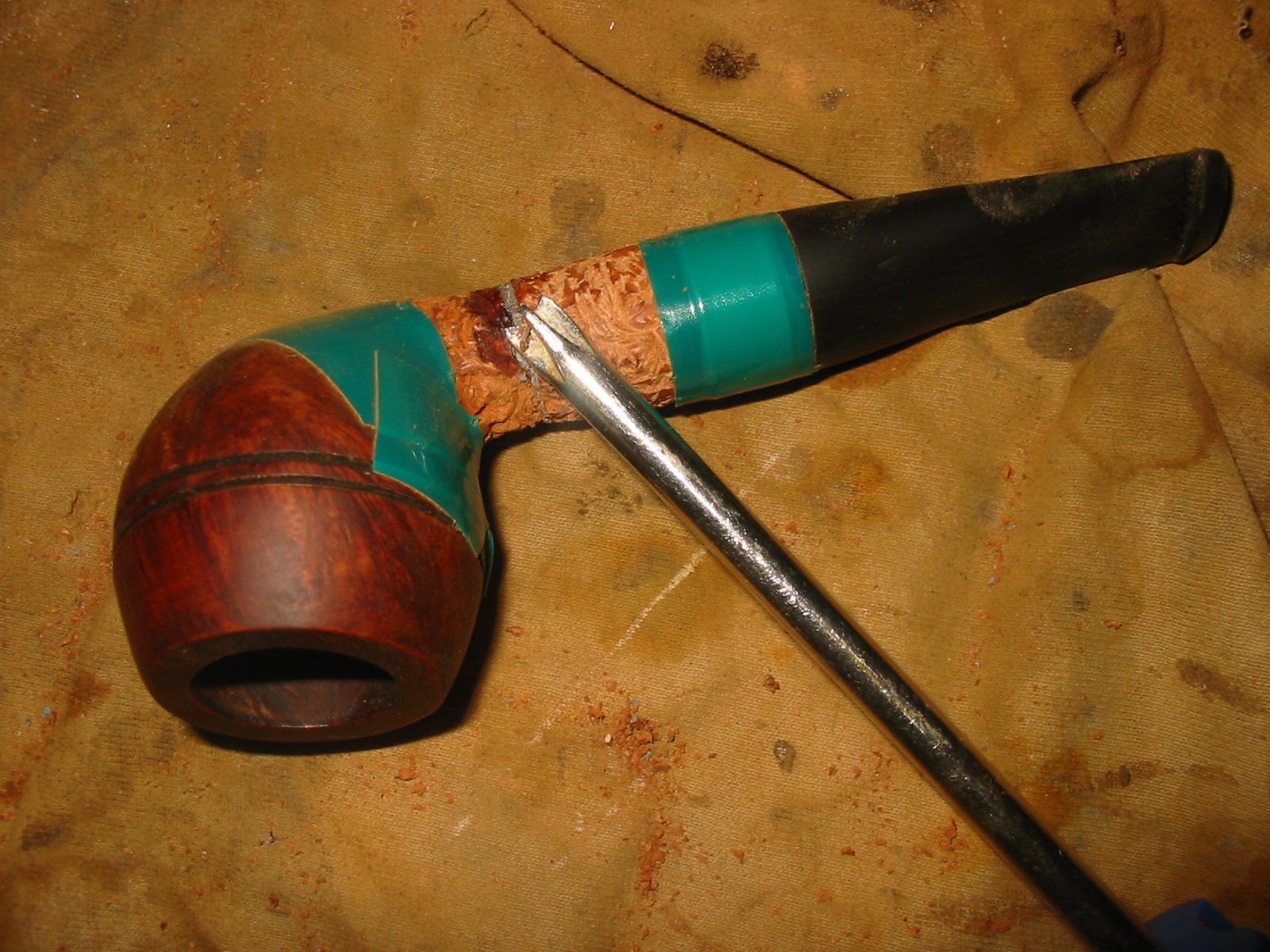
Once I had removed the finish I could see that the number and the size and shape of the fills would make them hard to blend into the new stain. I made a decision to rusticate the bowl at that point in the process. I used the modified Philips screw driver to rusticate the bowl.
IMG_5117

IMG_5118

With the bowl rustication finished and the stem fit finished I set up my heat gun and heated the stem to take out the bend. This particular Brewster shape had a straight stem. I held it above the heat gun until the vulcanite softened and the stem began to straighten on its own.
IMG_5119

IMG_5120

Once it was straight I set the shape by putting it under running water. The straightened stem can be seen in the photo below.
IMG_5121

I took the pipe back to my work table and went over the surface with a brass bristle brush to knock off the rough spots on the surface of the bowl. I also buffed it with Tripoli to smooth it out. I took the photos below to show the new look of the Brewster. The stem and the rustication looked good to me. The smooth rim and the patch with the stamping would look good once the pipe was restained.
IMG_5122

IMG_5123

IMG_5124

I decided to give the pipe a contrast stain. For the bottom coat I used a dark brown aniline stain. I applied it with a cotton swab and flamed it. I repeated the process until the stain had covered the bowl evenly. The dark brown went deep into the crevices of the rustication.
IMG_5127

IMG_5128

IMG_5129

IMG_5130

For the topcoat of stain I chose an oxblood aniline stain. I rubbed it onto the high points of the rustication with a cotton pad. My plan was to leave the dark brown in the crevices and the oxblood on the high points. I flamed the stain and then buffed the pipe with Tripoli.
IMG_5131

IMG_5133

IMG_5134

I sanded the stem with 220 grit sandpaper to finish the shaping and then used medium and fine grit sanding sponges to removes the scratches left behind by the sandpaper. I followed that up by sanding the stem with micromesh sanding pads. I wet sanded with 1500-2400 grit micromesh pads and dry sanded with the 3200-12,000 grit pads. I rubbed the stem down with Obsidian Oil and when it was dry buffed the stem with White Diamond.
IMG_5136

IMG_5140

IMG_5141

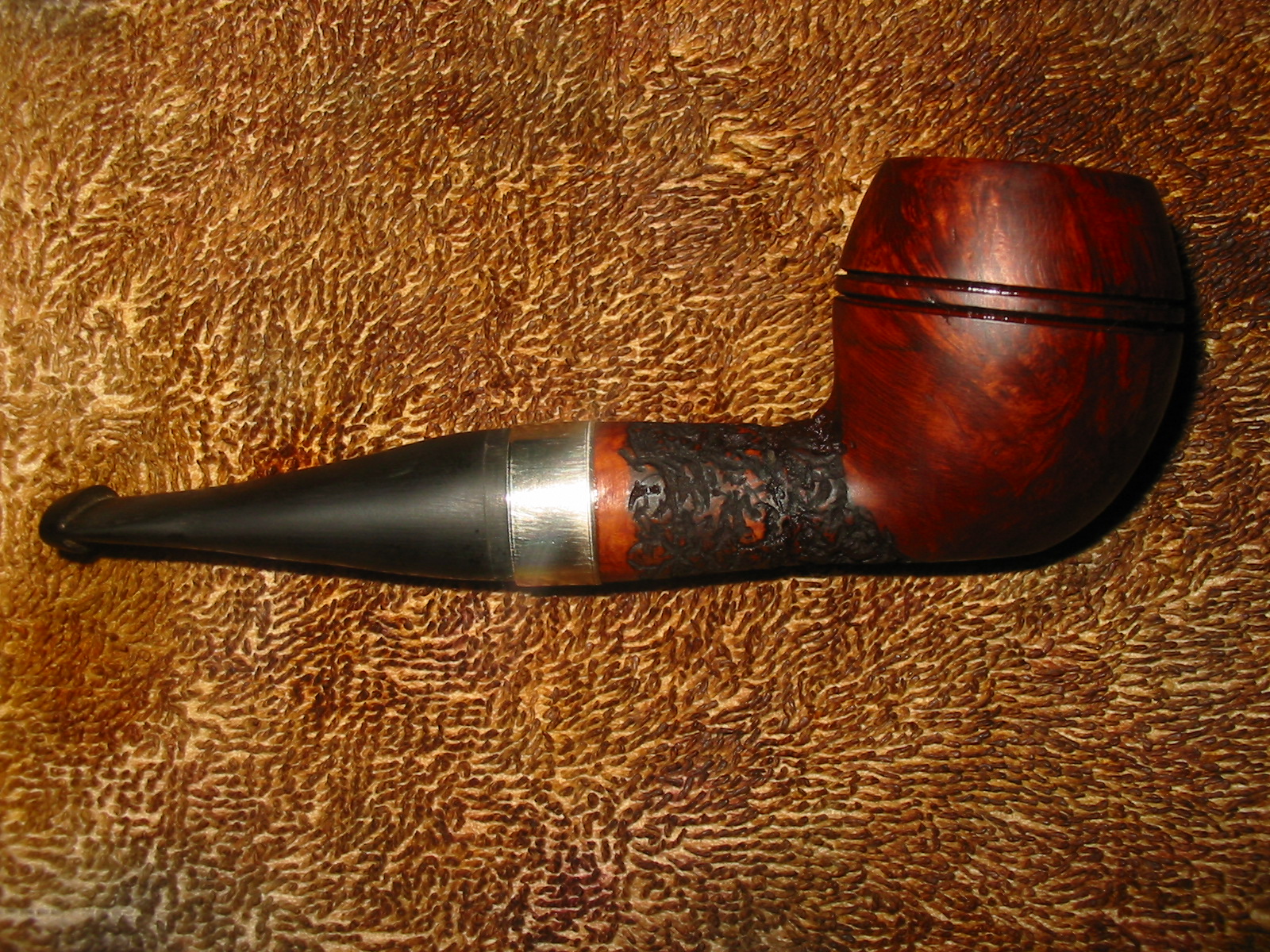
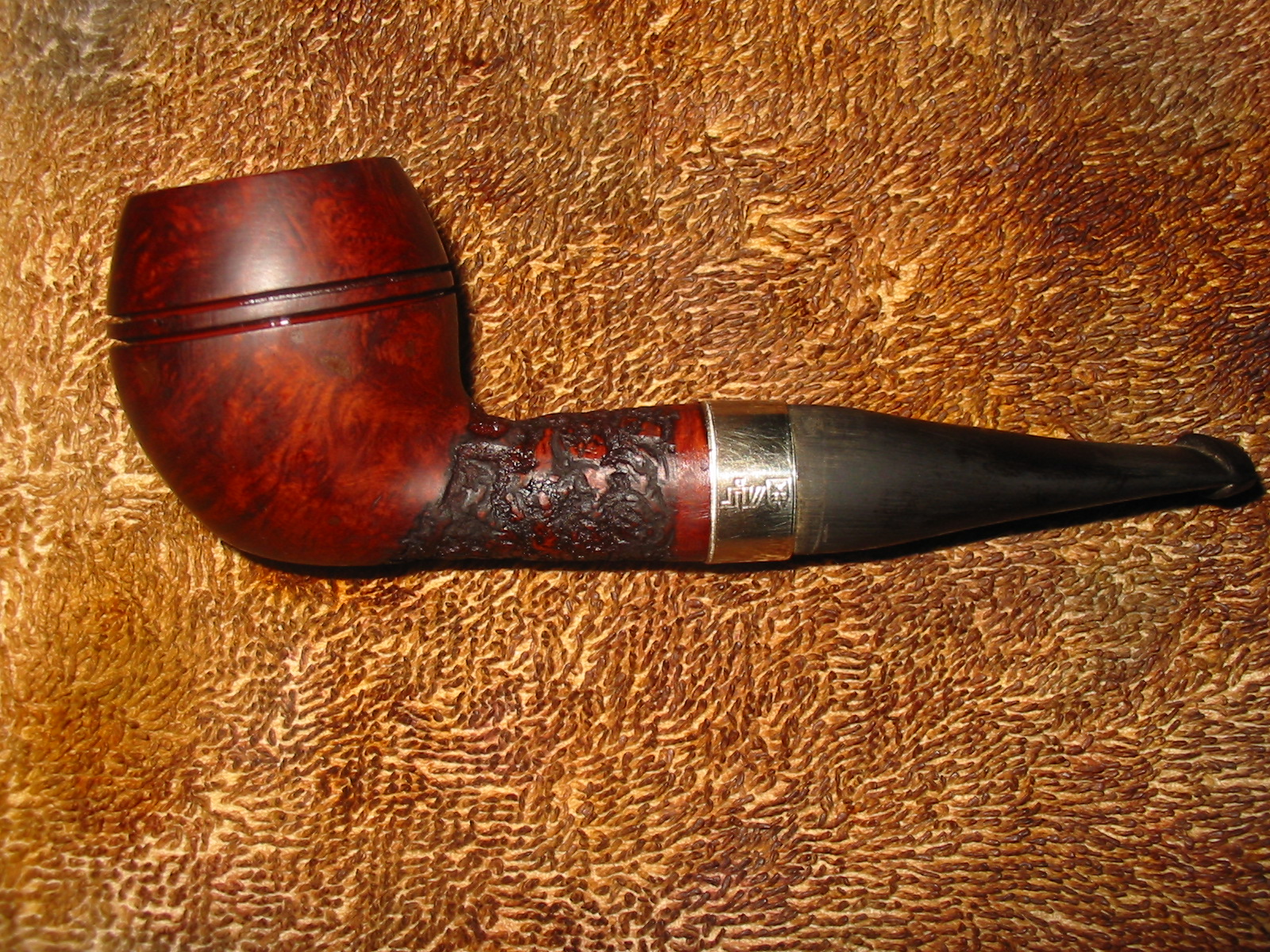
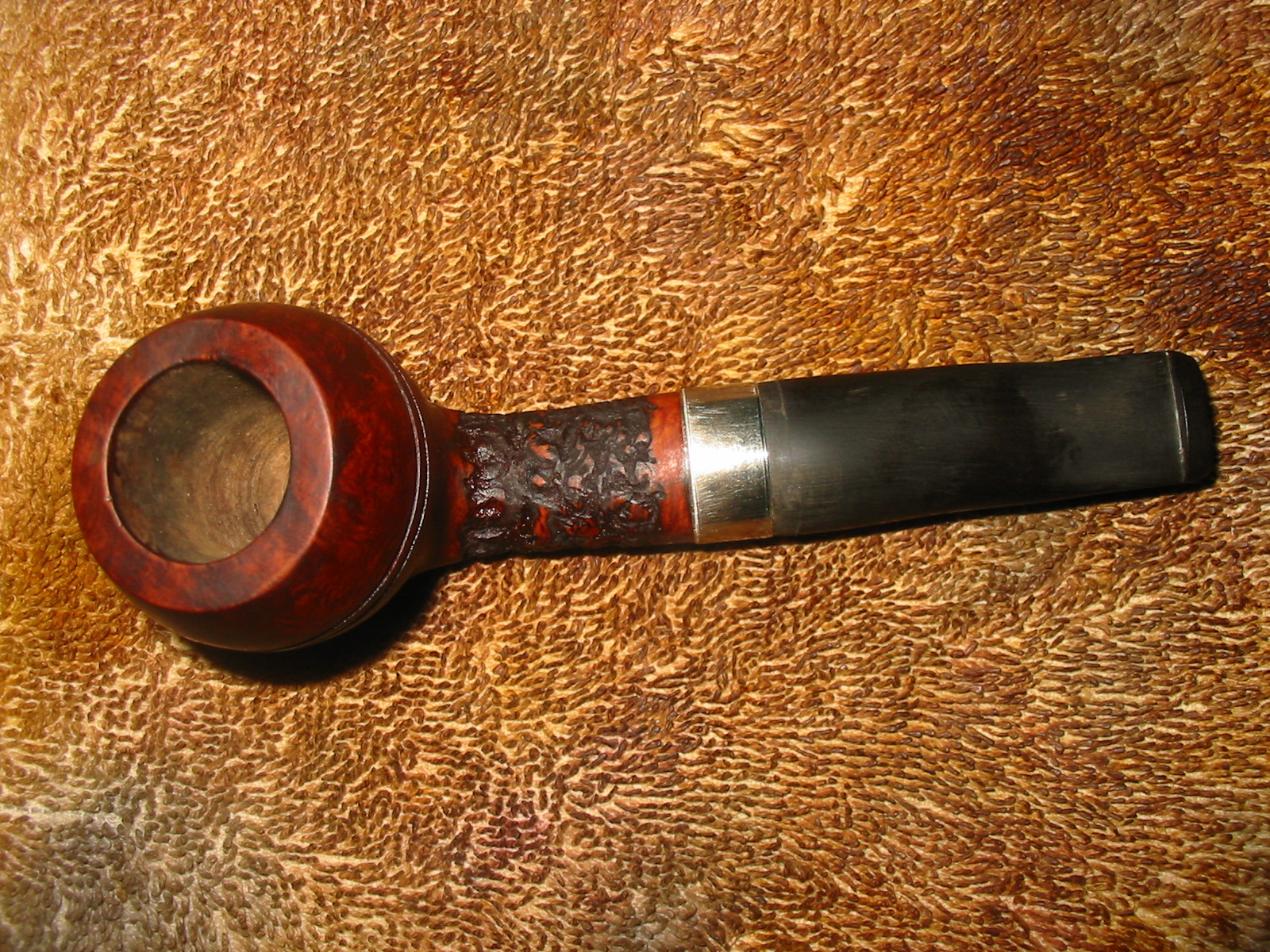
I put the stem back on the bowl and buffed the whole pipe with White Diamond. I then lightly buffed the bowl and buffed the stem with carnauba wax. I wanted to preserve the vulcanite and give it a shine. I also wanted to give a shine to the high points of the rustication on the bowl and also polish the rim. The finished pipe is shown in the pictures below. The old Brewster, with all of its history since 1964, is ready to enter a new phase of its own personal history. The face lift I gave it brings it to a new place. It is my hope that this old timer will give someone a great smoke and endure beyond me. That, after all, is what refurbishing work is all about – extending the life of the old pipes and delivering them intact to the next generation of pipemen.
IMG_5142

IMG_5143

IMG_5144

IMG_5145

Reworking a La Strada Staccato 213 Billiard


The last of the bowls that came to me as a gift from Andrew was a La Strada Billiard bowl. It was stamped La Strada over Staccato on the left side of the shank and shape 213 on the right side. It needed a stem and it had a few minor issues that needed to be addressed. The finish was an interesting rope rustication pattern that went around the bowl like a lasso and the finish under the rope pattern was leatherlike in terms of colour and look. Over the top of the finish was a plastic clear coat that added a perma shine to the bowl. The rim was in very rough shape and had been hammered on to hard surface in tapping out the dottle. The build up on the rim covered the damaged roughness of the surface. The bowl was badly caked on only one side of the bowl. The shank was clean and looked undamaged. There was no stem with the bowl and the shank was very clean.
IMG_5072

IMG_5073

IMG_5074

IMG_5075

The La Strada was once again a brand with which I was unfamiliar. I had some vague memory of seeing them sold through Tinderbox but was not sure about that memory. I did a bit of research and found that indeed they had been sold there. They were Italian Made. Here is a page from a Tinderbox catalogue showing the brand. The catalog describes the pipe as “a gracefully conservative style that has today’s favoured matte finish, enhance by the unexpected touch of random routing.” The price was a princely $8.95-$10.00.
5tbox12

4tbox26

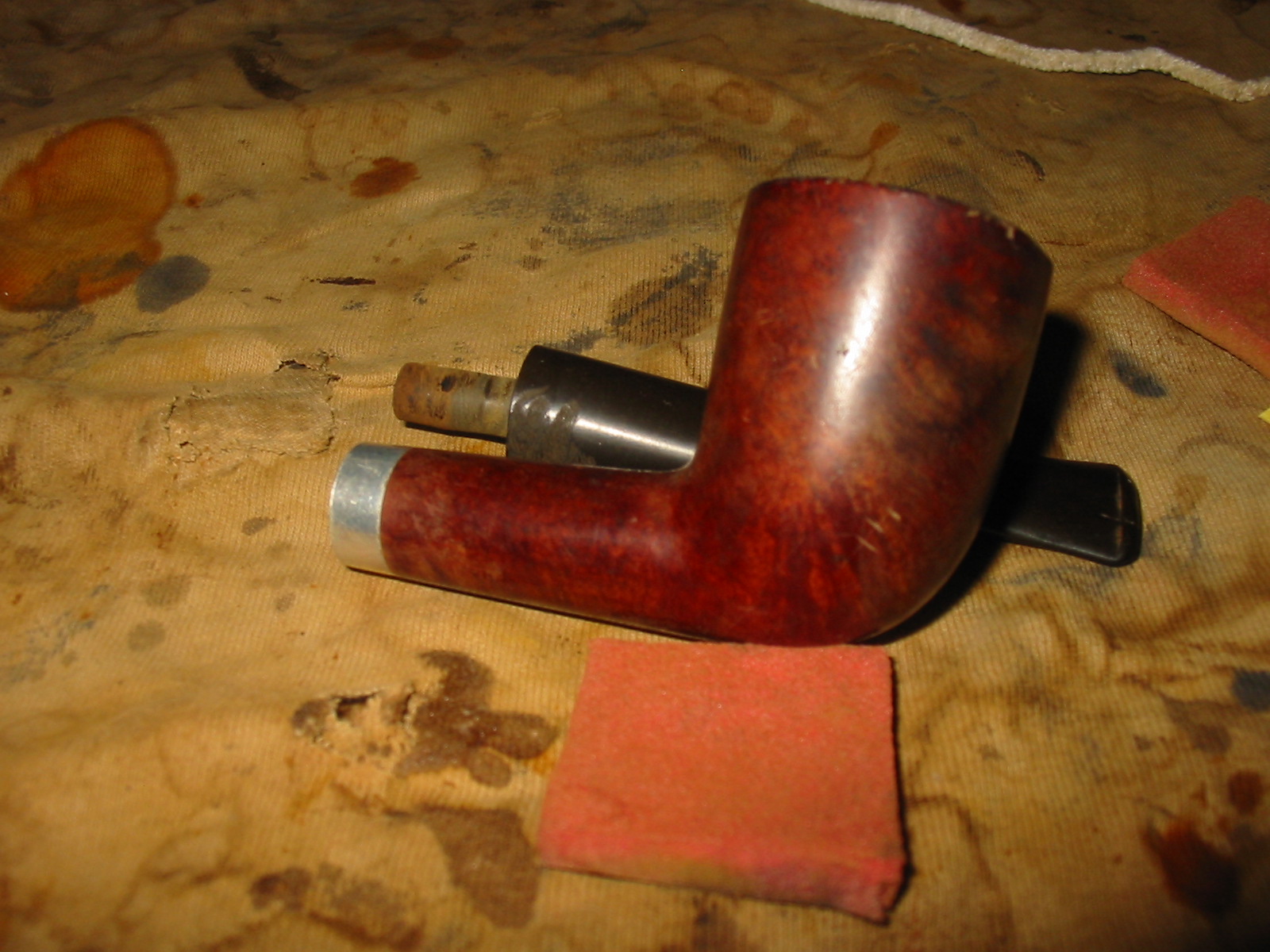
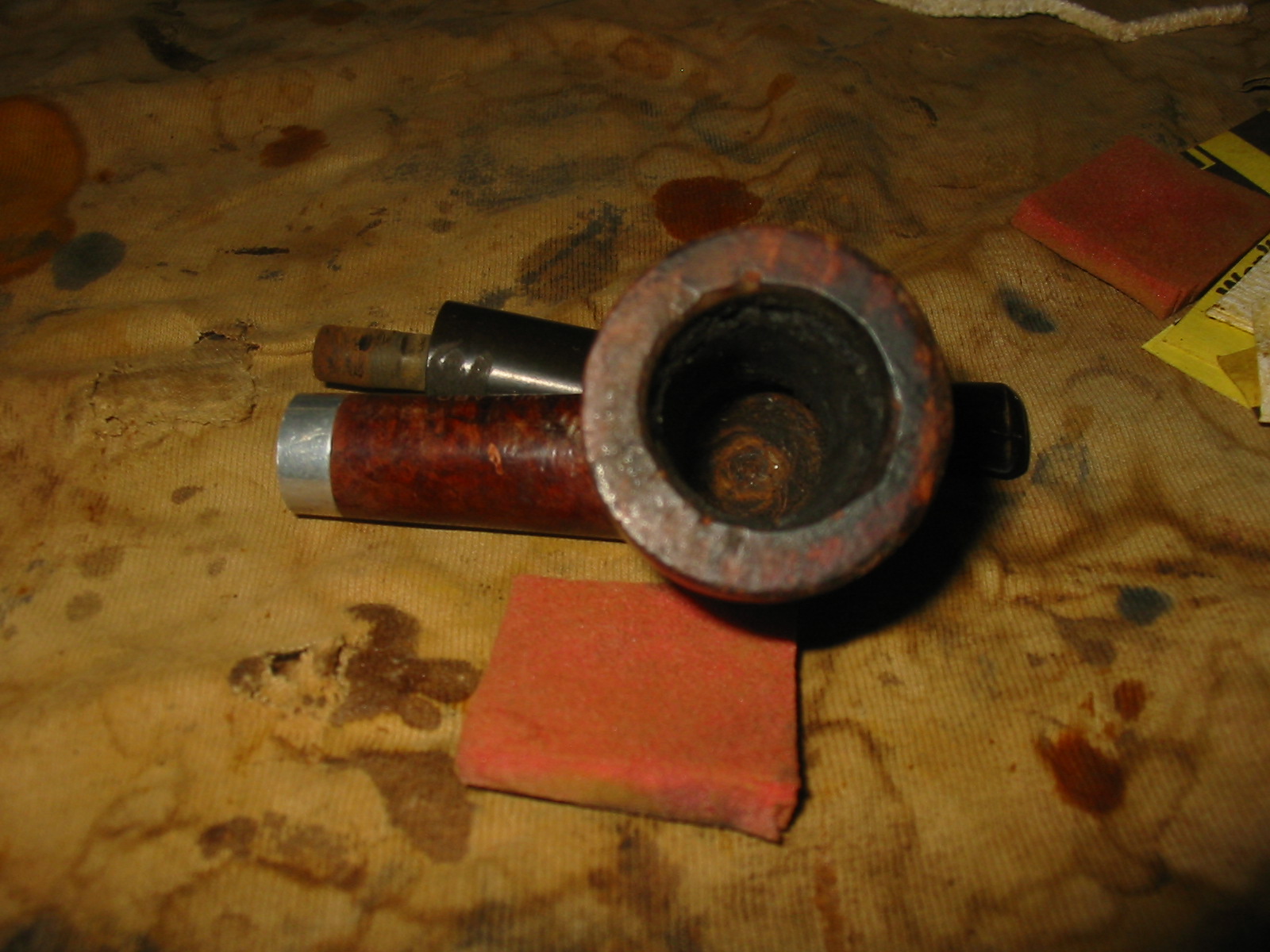
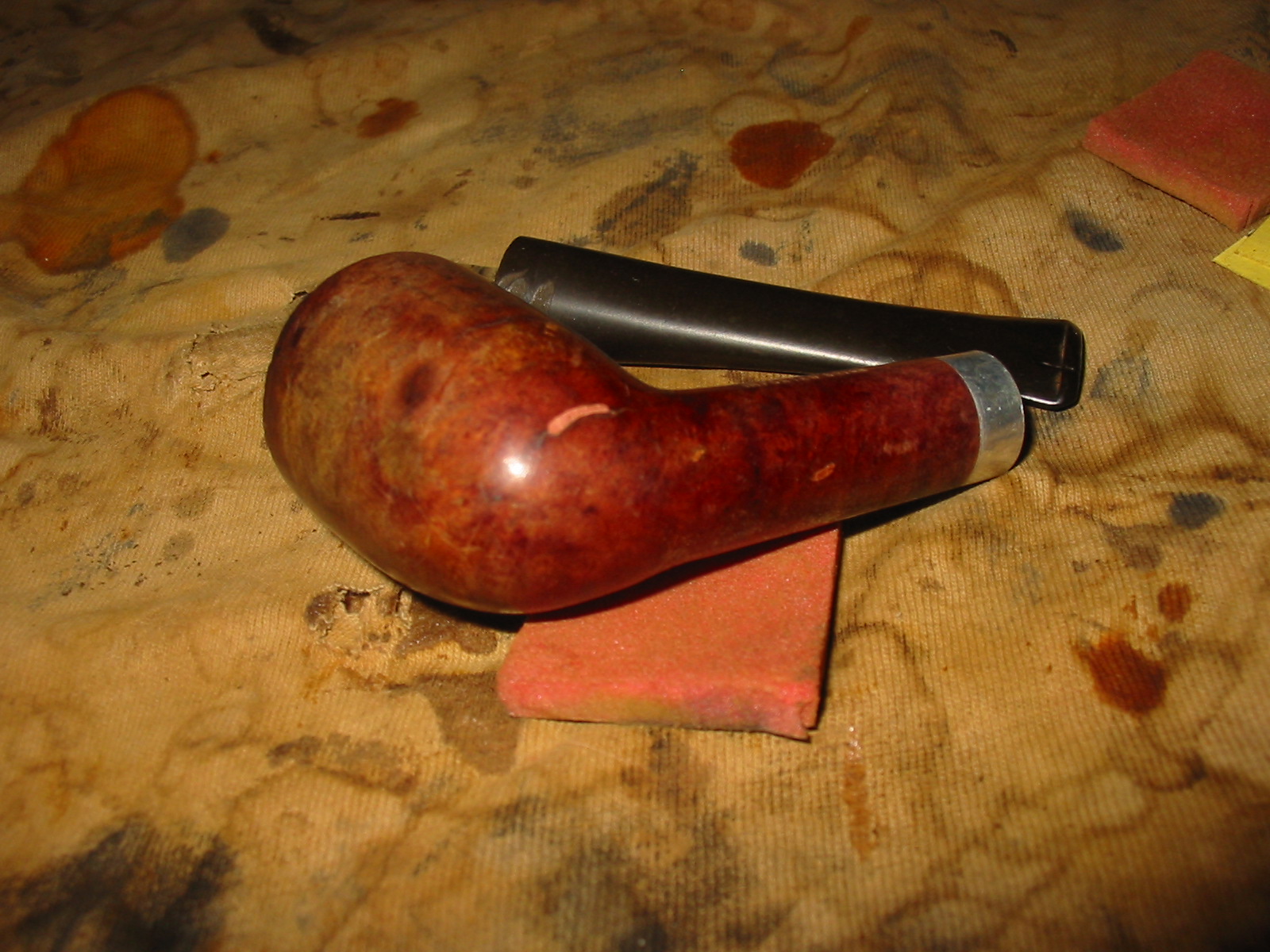
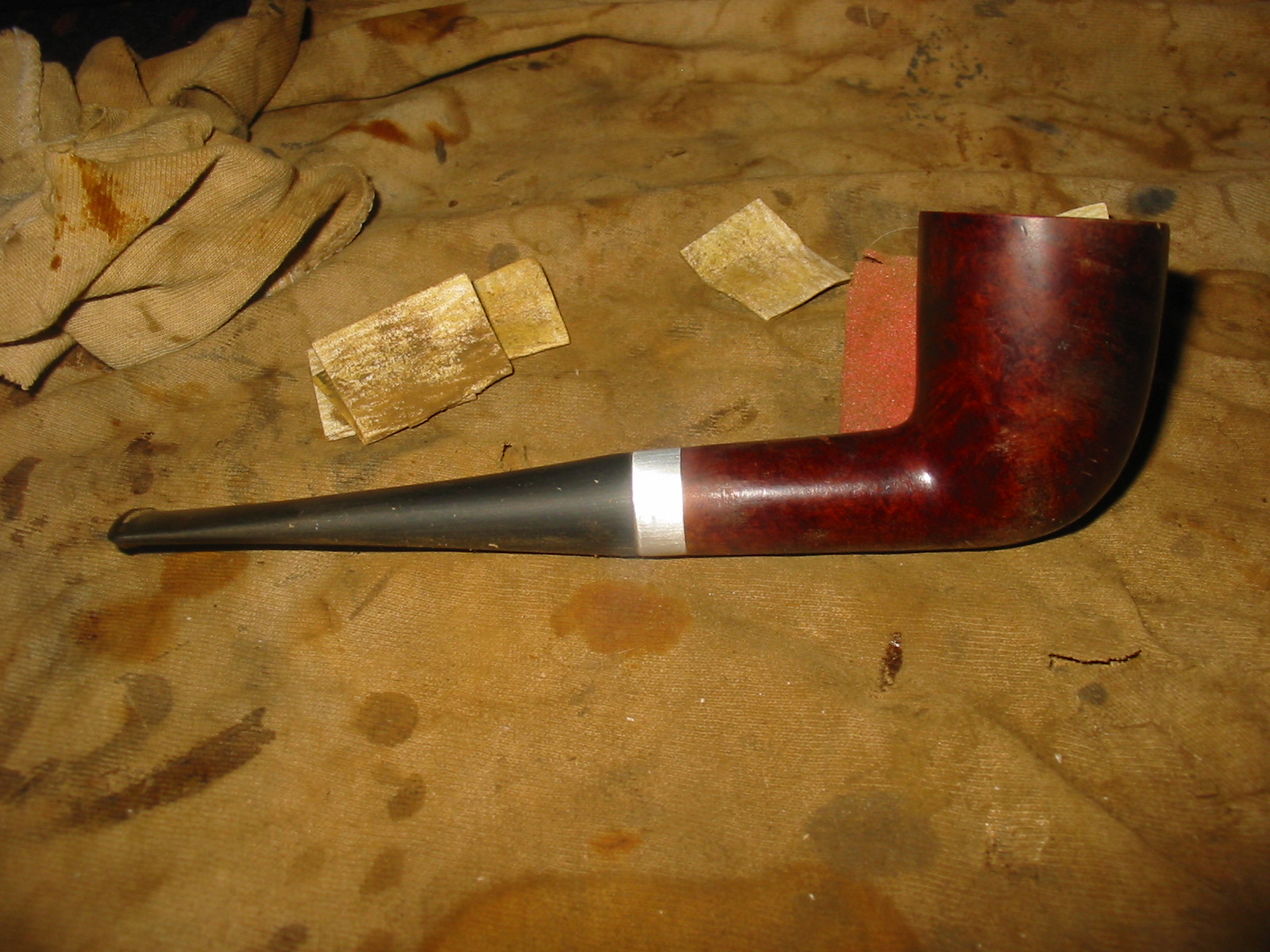
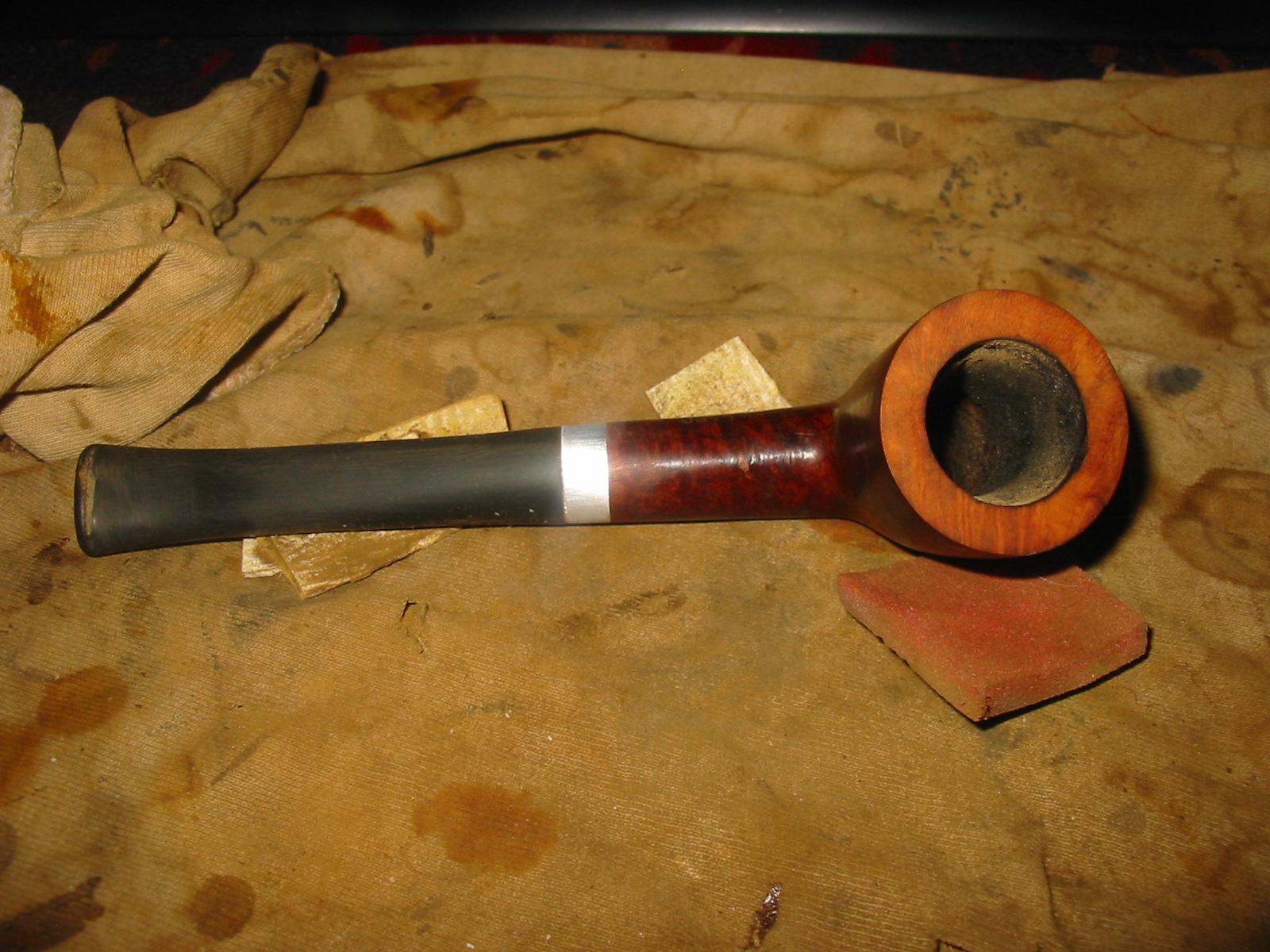
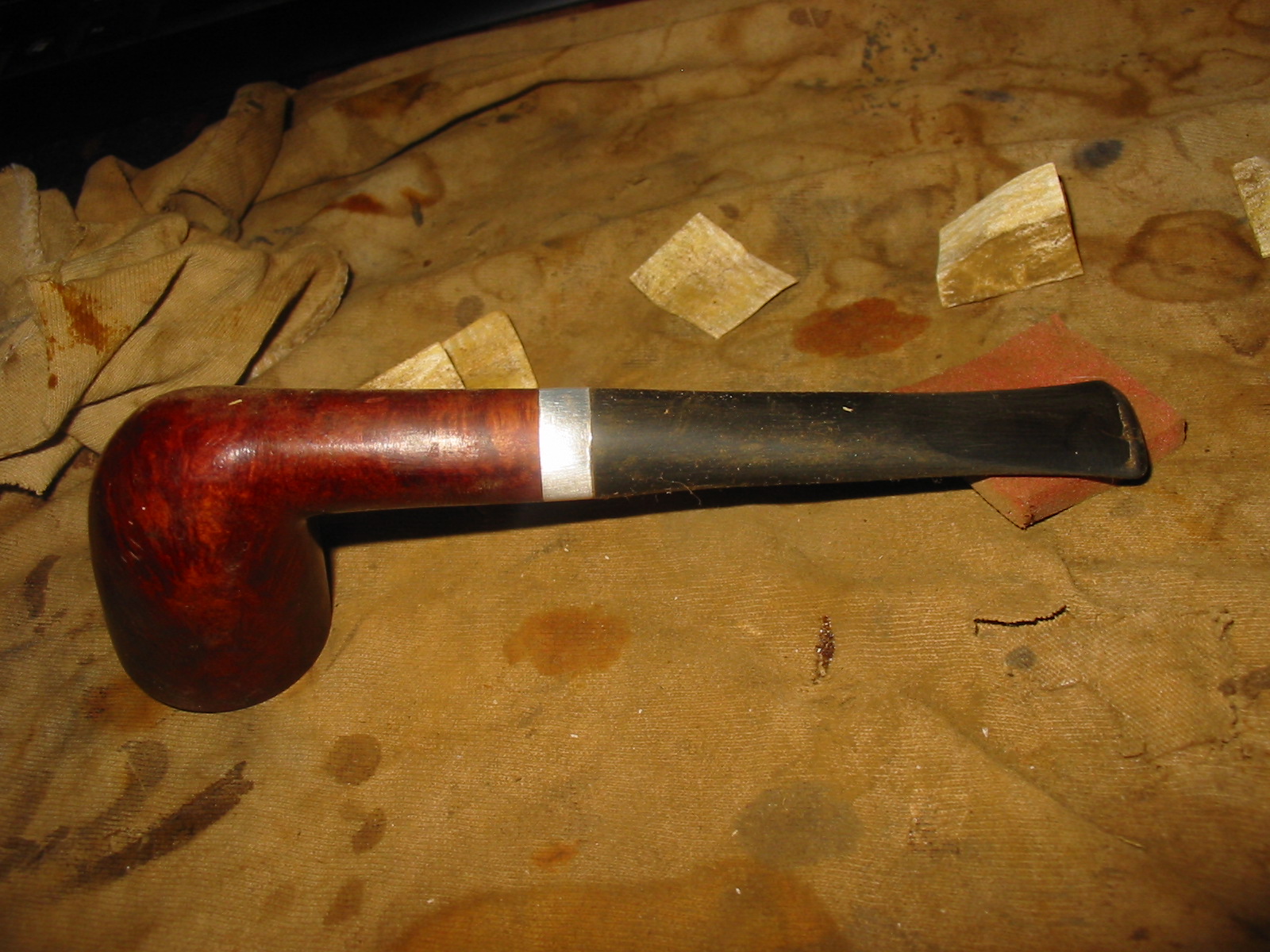
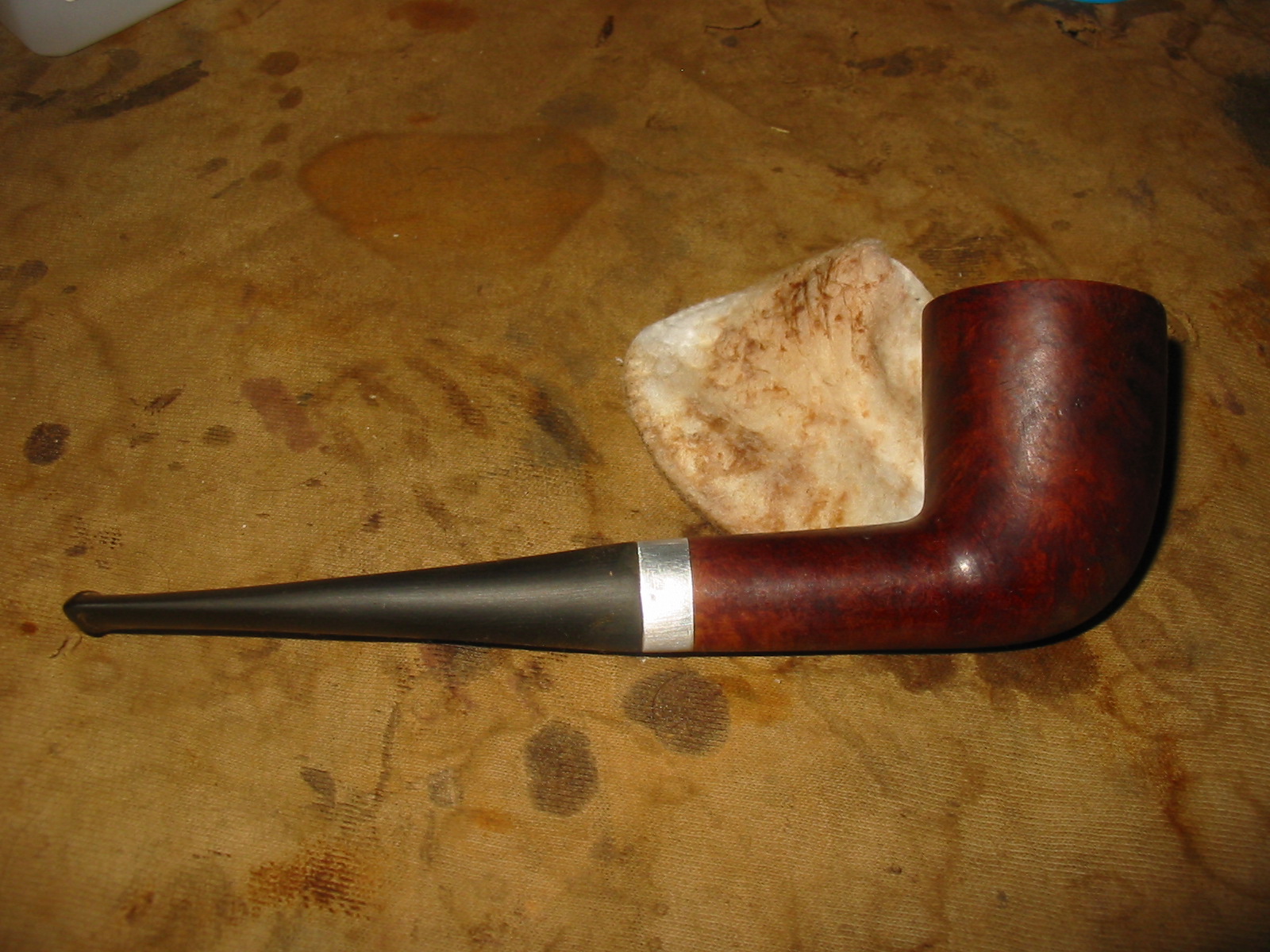
I sorted through my stems and found one that fit very nicely in the shank. When I inserted it there were two cracks revealed, one on top and one on the bottom of the shank. I honestly don’t know if they were present or if the happened when I put the stem in place. It was not a tight fit so I am unsure. It honestly did not matter as banding it would not be a problem. I found a silver band I had in my kit that was a good fit and pressed it into place on the shank. I heated the band with a heat gun and then pressure fit it onto the shank.
IMG_5077

IMG_5078

IMG_5079

IMG_5080

I reamed the bowl with a PipNet reamer (this seems to be more and more my reamer of choice in refurbishing).
IMG_5082

I set up my topping board and then topped the bowl with 220 grit sandpaper. I removed enough of the surface of the rim to take away the damage to the top and the front of the bowl. There were also some burn marks on the left side of the rim that I was able to sand out the majority of damage.
IMG_5083

IMG_5084

IMG_5085

I wiped down the bowl with acetone to try to break up the plastic/shiny finish that was on the bowl and was not able to remove it. The thick coat had bubbles that were thick around the rope rustication areas on the left side of the bowl. I finally put the bowl into an alcohol bath and let it soak overnight to try to break up the finish.
IMG_5086

IMG_5087

IMG_5088

IMG_5089

I took the bowl out of the alcohol bath and sanded it with a medium grit and a fine grit sanding sponge and was able to break through the finish and finally remove it. I wiped the bowl down again with acetone on cotton pads and the bowl was clean. I stained it with a dark brown aniline stain mixed 2:1 with isopropyl alcohol and applied and flamed it until the coverage matched the rim to the rest of the bowl. I buffed the bowl with White Diamond on the buffing wheel and brought it back to the work table and set it aside to work on the stem.
IMG_5090

IMG_5091

IMG_5092

IMG_5094

I sanded the tooth marks on the stem with 220 grit sandpaper and then a medium grit sanding sponge until they were no longer visible. I then used micromesh sanding pads to finish the stem. I wet sanded with 1500-2400 grit pads and dry sanded with 3200-12,000 grit pads. I rubbed down the stem with Obsidian Oil and when dry buffed it with White Diamond.
IMG_5095

IMG_5096

IMG_5097

I polished the silver band with silver polish and micromesh sanding pads and then buffed the pipe and stem with White Diamond. I gave the pipe multiple coats of carnauba wax and buffed it to a shine with a soft flannel buffing pad. The finished pipe is shown in the photos below. It is ready for its initial and should make someone a good pipe in the long run.
IMG_5098

IMG_5099

IMG_5100

IMG_5101

Repairing a Tinderbox Monza that Easily Could Have Been Firewood


Blog by Steve Laug

The pipe I repaired today was the one I wrote about earlier entitled When is a Pipe Not Worth Repairing https://rebornpipes.wordpress.com/2014/02/10/when-is-a-pipe-not-worth-repairing/ It was stamped Tinderbox Monza and according to a 1974 catalogue on Chris Keene’s site it originally sold for $15. It could be purchased in a matte finish smooth or a hand rusticated version. The shapes were varied and the sizes also varied. I have repaired one other pipe that had the same rustication but no stamping on it so I would imagine it also is a Monza. Monza pipes were made by Lorenzo for Tinderbox. They were a house line of Italian made affordable pipes during the 70’s.

This particular Monza had seen better days. I described it in my earlier essay as being virtually ready for the scrap heap. The bowl was badly caked and the one inch diameter bowl had been reduced to a hole small enough that I could barely squeeze my little finger in the bowl. The top portion of the cake had been carved or hacked away with a knife and the bottom portion had also been hacked away. This left a solid girdle of carbon cake around the middle of the bowl. The bottom of the bowl had been gouged at and the right side of the bottom had a huge “smile” carved in it. The rim had been hammered into rough shape so that the outer edge was ruined. The lava build up on the rim was very thick and it totally covered striated rustication that had been present when the pot was new.

The stem was chewed and carved with a huge chunk out of the underside making it non-repairable. The stem had then been covered with a softy bit and left to calcify on the stem. The pipe was a mess. Once I removed the stem I could see that the airway had been left immaculate. There were no tars, no oils, no dirt – it literally shined it was so clean. The inside of the stem was the same. This pipe had been cared for in a functional way and probably smoked to death by the original purchaser. It was the clean airway that tempted me to give this pipe a remake. It must have been someone’s favourite pipe for him to go to the extremes that this pipe had seen in terms of treatment. Every action the fellow carried out on this pipe only made sense in a utilitarian sense of prolonging the purpose the pipe was made for.
IMG_5028

IMG_5029

IMG_5030

IMG_5031

The outer edge of the rim on the back of the bowl had a chunk missing and a crack running down the outside of the bowl. It also ran on the top of the rim and had yet to break through on the inside of the bowl. The crack ran down along one of the striations carved in the bowl for about ½ inch. It was not very deep once it moved away from the chip at the top edge of the bowl.
IMG_5032

The close up photo below shows the cake that forms a ridge around the centre of the bowl. The top had been carved away and the below the ring of cake it had also been carved away. The bowl bottom visible on the top of the photo below shows the gouge that had been carved on that side of the bottom. The other side remained intact and hard.
IMG_5033

The front edge of the bowl had been hammered hard or scraped against something and the outer edge was worn and rough feeling.
IMG_5034

I reamed the bowl with the largest PipNet reamer cutting head in the set and was able to scrape the cake back to the wood. I wanted to see if the walls of the bowl were charred or burned. I further scraped it with a knife blade and found that the walls were solid under the cake. The wood did not have burned or charred portions.
IMG_5035

The stem was ruined as can be seen in the photo below. The bottom side was missing a large triangular shaped chunk that went almost from side to side. I thought about cutting off the end and reshaping the button but the damage was extensive and the previous owner had carved the airway in the broken portion so the material left behind on the top and bottom of the stem was scored and very thin. I would need to fit and shape a new stem.
IMG_5036

I picked at the surface of the rim with the dental pick and could see it was not going to work so I topped the bowl. I decided to make a smooth rim to match the smooth band on the shank and the bottom of the shank. They would set each other off well when the pipe was restained. I set up my topping board and a piece of 220 grit sandpaper and twisted the bowl into the sandpaper until I had removed the damaged portion of the rim. The crack on the surface looked as if it had been filled already with some sort of glue and it was solid. This is visible in the photos below.
IMG_5037

IMG_5038

IMG_5039

IMG_5040

Once the bowl was topped I dropped it in the alcohol bath to soak and loosen the grit and grime that filled all of the rustication on the sides of the bowl. It was a sticky and tarry mess and I wanted to soften it. I soaked it for about an hour and then scrubbed it with a brass tire brush. I picked out all of the grooves with the dental pick and then put it back in the alcohol bath for yet another hour. Once it came out of the bath I scrubbed a final time with the brush and then picked out any remaining grit in the grooves. I then wiped the bowl down with acetone on cotton pads to remove the softened finish and the remaining grime.
IMG_5041

IMG_5042

IMG_5043

I used super glue and briar dust to fill the divot/chip on the outer edge of the bowl and make it less ragged looking.
IMG_5044

I found an old stem blank in my can of blanks that would work with the pipe. It was not a saddle stem like the original one but it would work well. It was considerably larger in diameter than the shank of the pipe so not only would I need to use the PIMO tenon turner to fit it in the shank but I would also need to remove the excess vulcanite and match it to the shank.
IMG_5045

IMG_5046

IMG_5047

IMG_5048

IMG_5049

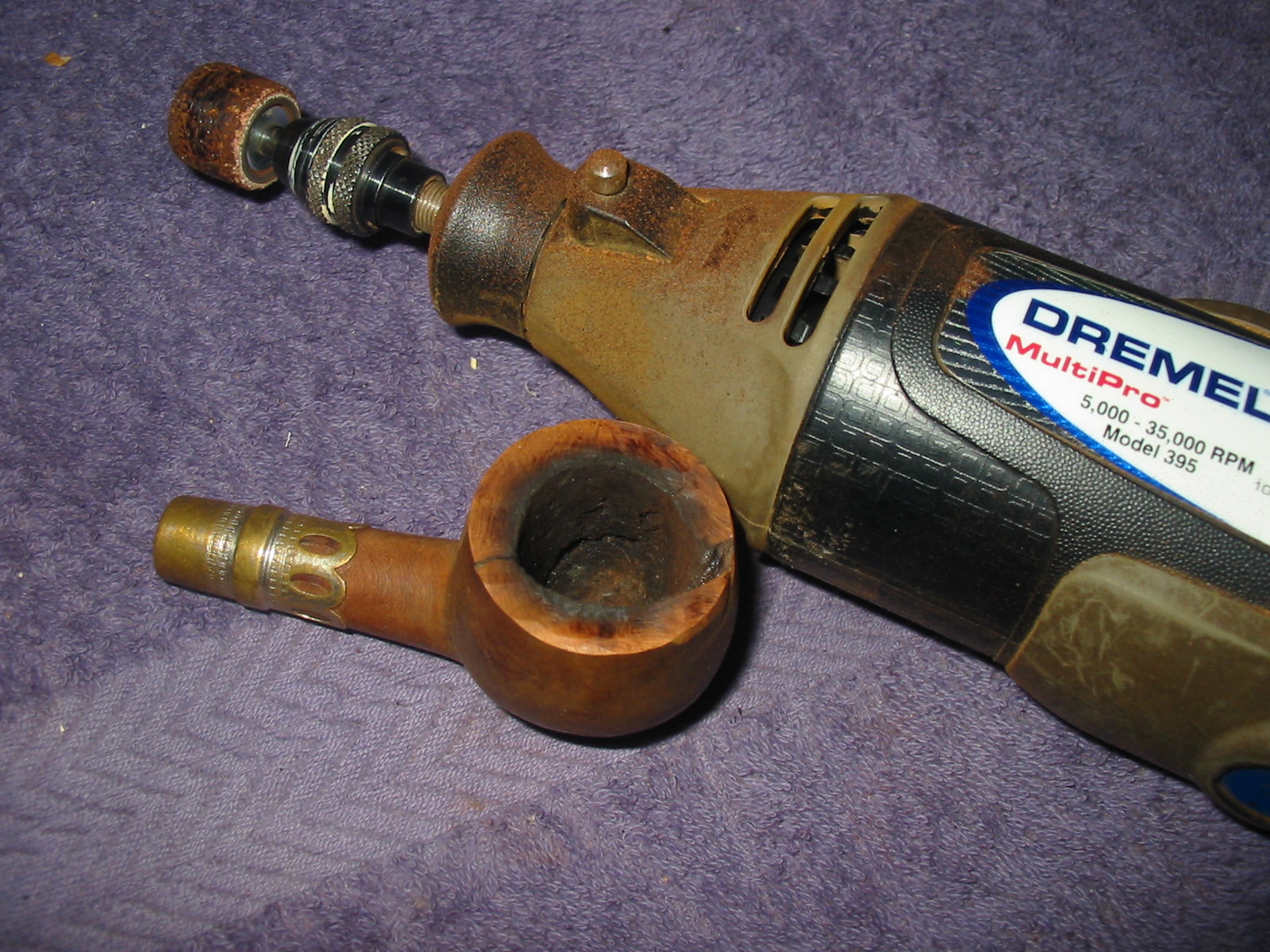
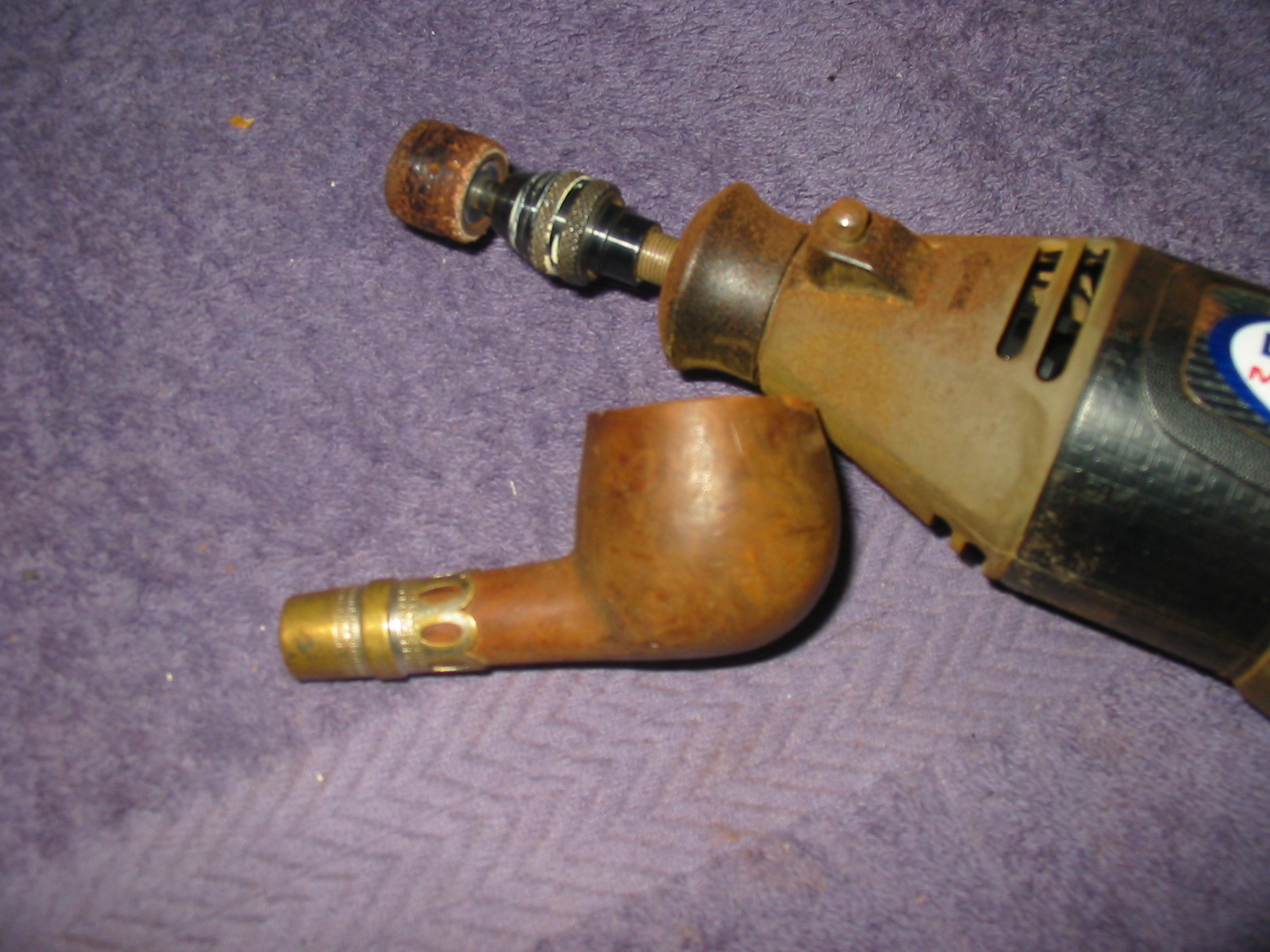
I used the Dremel with the larger sanding drum that comes with the set to cut back the vulcanite and shape the stem. This takes time and a steady hand to keep it from nicking the briar and causing more damage than help.
IMG_5050

IMG_5051

IMG_5052

Once I had the stem close to the diameter of the shank I took it back to the work table and hand sanded it with 220 grit sandpaper to finish the fit. I sanded it until the transition between the shank and the stem was seamless. My fingers needed a break from sanding at this point so I decided to repair the gouged out bottom half of the bowl. I inserted a pipe cleaner in the airway to keep any of the plaster mix getting into the airway. Then I mixed up some plaster of Paris in a shot glass and used the spoon end of a pipe nail to put it in place in the bottom of the bowl. I tamped it with the tamper head of the nail and smooth it out.
IMG_5054

When the plaster had set I stained the bowl with a dark brown aniline stain mixed 2:1 with isopropyl alcohol. I wanted the dark stain in the striations to come through the stain coat and give some contrast to the coloration of the bowl. I applied the stain with a cotton swab, flamed it and reapplied and reflamed it until the coverage was even across the bowl. I worked to get the rim and the smooth portions of the shank to match in colour.
IMG_5055

IMG_5056

IMG_5057

IMG_5059

I sanded the stem with a medium and a fine grit sanding sponge to remove the scratches left behind by the 220 grit sandpaper. I followed that by sanding with micromesh sanding pads – wet sanding with 1500-2400 grit pads and dry sanding with 3200-12,000 grit pads. I rubbed the stem down with Obsidian Oil when I had finished and then buffed it with White Diamond.
IMG_5060

IMG_5061

IMG_5063

The vulcanite stem blank I used was an older one and must have come out during the war years. I had read that in those times there was often piece of metal found in the vulcanite of the stem material. This particular stem had a nice bunch of it on the right side of the stem near the shank. It almost looks like the remnants of a stamp on the stem but it is not. It appeared as I sanded the stem down to fit the shank. The photo below shows it about midway between the top and bottom of the stem near the shank junction. The glare of the flash highlights it as well.
IMG_5071

With the stem polished and ready and the pipe stained it was time to bend the stem. I used a heat gun to heat up the stem until it was pliable and then bent it over the round handle of a chisel that I had on the workbench. I used the original stem as a pattern to determine how far to bend the stem.
IMG_5064

IMG_5065

IMG_5066

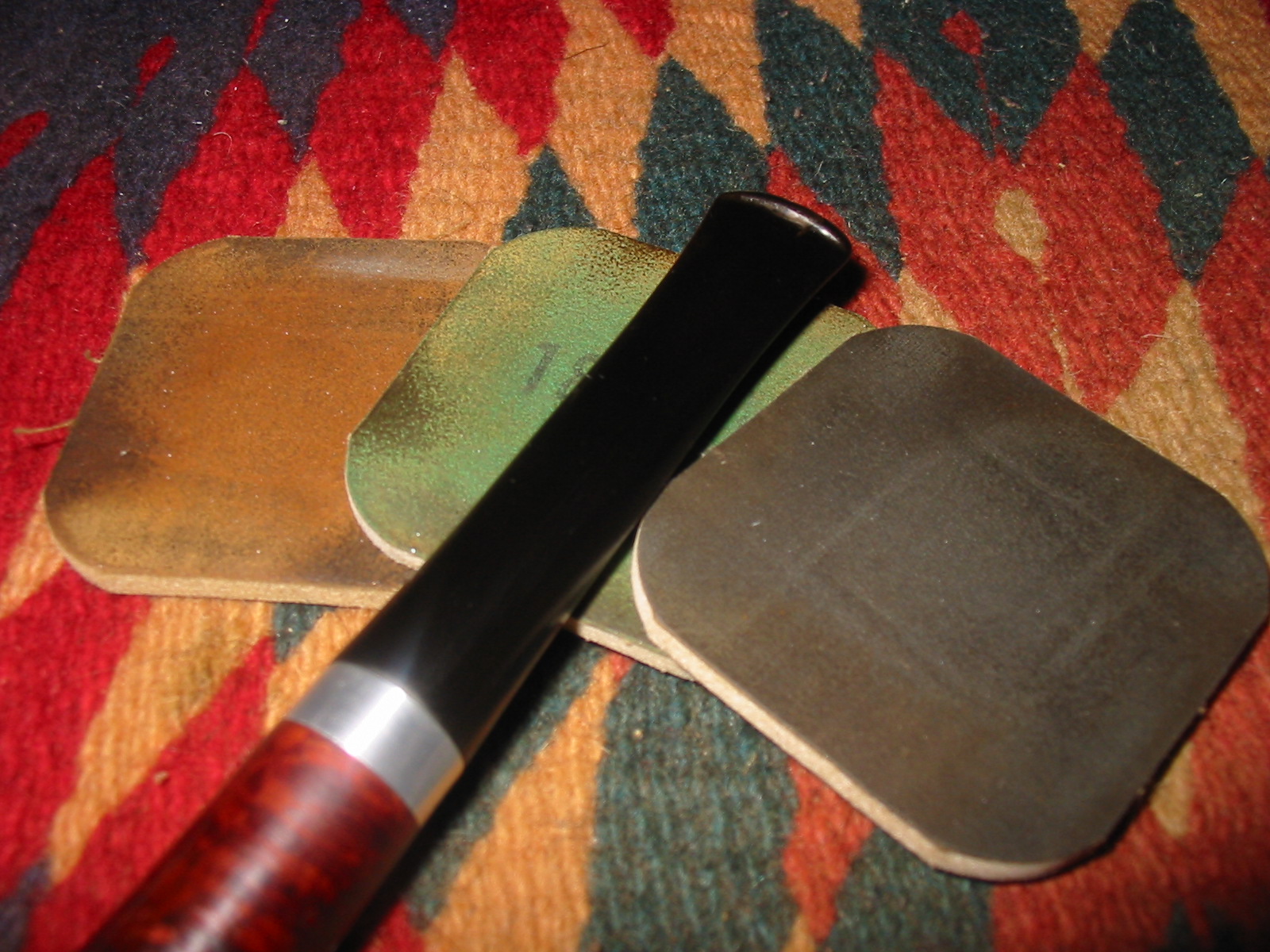
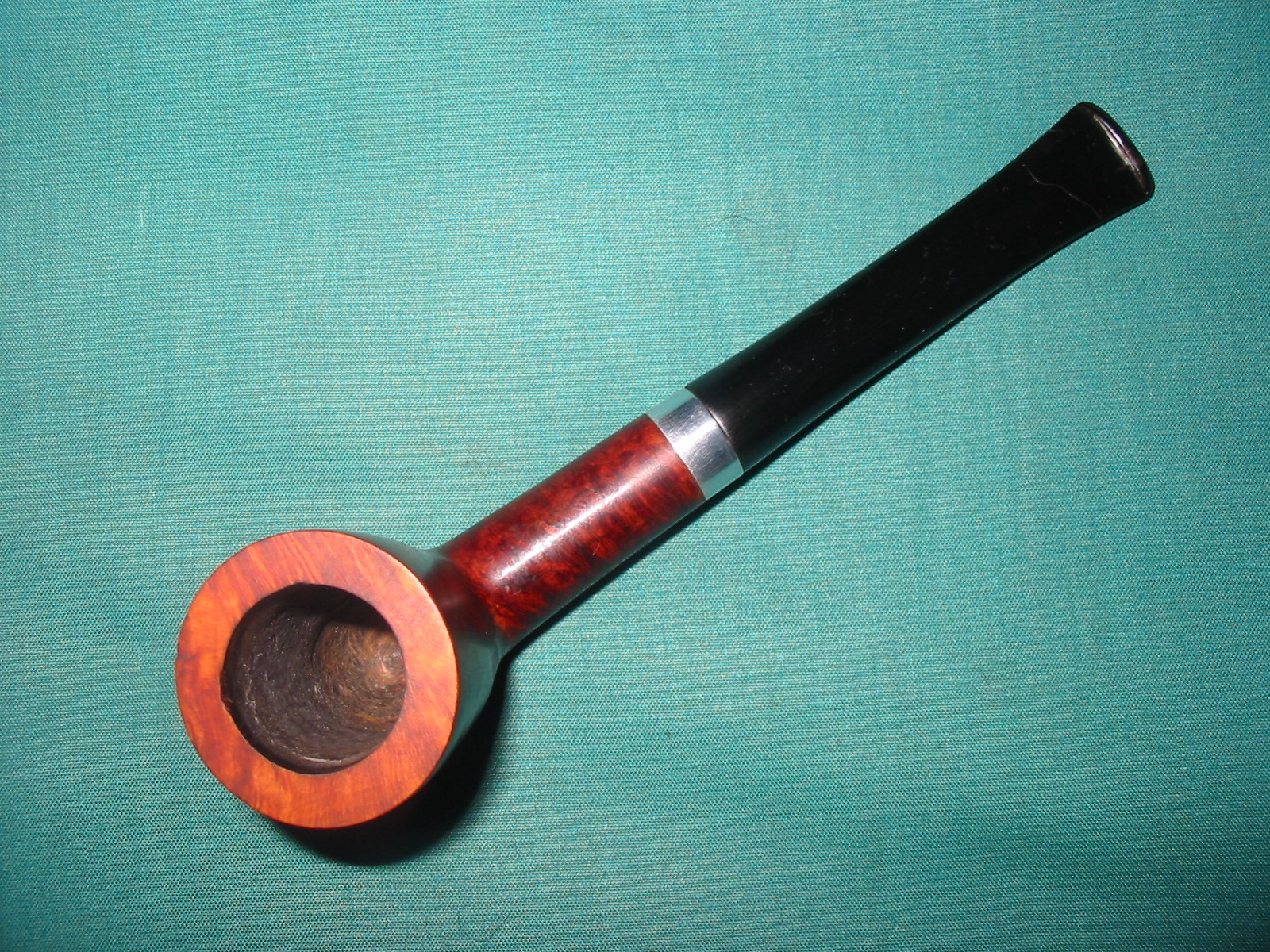
I rubbed the stem down with Obsidian Oil a final time and then buffed the pipe and stem with White Diamond to give it a shine. I then gave the stem multiple coats of carnauba wax and applied the wax to the bowl with a light touch on the buffing wheel. I finished with a buff with a soft flannel buffing wheel. The finished pipe is shown in the pictures below. I think it will last a few more years and yet again deliver a good smoke. In fact I would not be surprised at all if it does not last longer than I will.
IMG_5067

IMG_5068

IMG_5069

IMG_5070

Alternative Woods: Refurbishing and Restemming a Black Walnut Pot


I received this pipe bowl as a gift from a friend in exchange for some work I did on one of his pipes. I took it out of the box and put it in the refurbishing box without giving it much of a look. Today I took it out of the box and looked it over. It is well made; the airway is drilled straight and comes out the bottom of the bowl. The drilling is accurate and clean. The mortise is smooth and clean. The bowl has been smoked very little as the bottom half is still fresh wood. The shank is clean and there are no tars. The wood is clean with a few dings and dents. There seems to be a slight finish on the bowl – varnish or something. It also appeared to have a band on the shank originally as there is a stain from the metal on the end of the shank. It came to me without a stem. Today I will take care of that.
IMG_4987

IMG_4988

IMG_4989

IMG_4990

I wiped down the bowl with acetone and cotton pads to remove the finish and sanded it with a medium grit sanding sponge. I wiped and sanded until the finish was gone from the bowl and then wiped it down a final time. The smell of the sanding dust as well as the grain told me that I was dealing with a well made walnut, probably black walnut pipe. This one would clean up very nicely.
IMG_4991

IMG_4992

IMG_4993

IMG_4994

Since I could not remove the stain left behind by the previous band I decided to reband the pipe. I found a nickel band in my band collection that would be a perfect fit. I heated it with the heat gun and the pressed it into place on the shank. I cleaned up the shank end of the pipe once the band was in place and widened the bevel on the inside end of the mortise to fit the new stem that I would fit for the pipe.
IMG_4995

IMG_4996

IMG_4997

IMG_4998

I went through my can of stems and found three different stems that would work with this pipe. Two of them were vulcanite and one was a clear acrylic. I have not done much work with clear acrylic and never turned the tenon to fit a pipe so this one seemed to be the way to go. Each pipe has to be a bit of a learning experience. Besides I liked the way the clear acrylic looked with the walnut bowl and the silver band.
IMG_4999

I drilled the airway in the stem to fit the end of the PIMO tenon turning tool and then put the tool on my drill and slid the stem in place. I adjusted the cutting head on the tool to cut off enough material to get a close fit on the stem. The tool is touchy in terms of accurate adjustments so I eyeball it close and then sand it by hand until it fits the shank.
IMG_5000

I pushed the stem in place on the walnut bowl and set it down to look at the overall appearance of the pipe. The clear stem was going to work well once I had shaped it to fit. The walnut was already darkening from the oils in my hands. This was going to be a beauty once it was finished.
IMG_5001

IMG_5002

IMG_5003

IMG_5004

The diameter of the stem and that of the shank were different. The stem was significantly larger than the shank of the pipe. I used a Dremel with a sanding drum to sand off excess acrylic material. I proceeded with that slowly and carefully as I did not want to nick the band or damage the pipe bowl.
IMG_5006

IMG_5007

I took the material down as close as possible with the Dremel and then did the rest of the sanding by hand with 220 grit sandpaper. It took quite a bit of time and several return trips to the Dremel before I had the shank and the stem diameter matching. The following photos show the progress on the stem with each one taking it a step closer to the finish.
IMG_5008

IMG_5009

IMG_5010

IMG_5011

When I finally had the fit correct with the 220 grit sandpaper I switched to a medium grit sanding sponge to further refine the fit and to remove the scratches left behind by the sandpaper. I finished sanding with the medium grit and used a fine grit sanding sponge to sand the stem again. When finished the stem looked opaque and the shape was done. All that remained was to polish the stem.
IMG_5012

IMG_5013

IMG_5014

IMG_5015

Before sanding it further I used a needle file to smooth out the transition in the airway between the stem airway and the place where the drill bit ended when I worked on the tenon. I was able to even out the transition and taper it for a smooth and seamless transition. The walnut was continuing to darken from my hands as I worked on it. I also stopped and sanded the rim of the pipe to remove the deep scratches that were present when I received it.
IMG_5016

IMG_5017

IMG_5018

IMG_5019

I wet sanded the stem and the band with 1500-2400 grit micromesh sanding pads and then dry sanded with 3200-12,000 grit pads. I wiped the stem down between each grit of micromesh with a damp cloth to remove the sanding dust and to further polish the stem.
IMG_5020

IMG_5021

IMG_5022

After I finished sanding the stem and the band with the micromesh pads I took the pipe to the buffer and buffed it with White Diamond to further polish it. I rubbed the stem down with Obsidian Oil and when it was dry gave the pipe and the stem multiple coats of carnauba wax and a final buff with a soft flannel buff. The finished pipe is shown below. The bowl has only been given a wax coat and no stain. The finish is natural and I believe that it will continue to darken as it picks up the oils from my hands when I smoke it.
IMG_5023

IMG_5024

IMG_5025

IMG_5027

Restemming and Reworking a Rembrandt Bulldog


Blog by Steve Laug

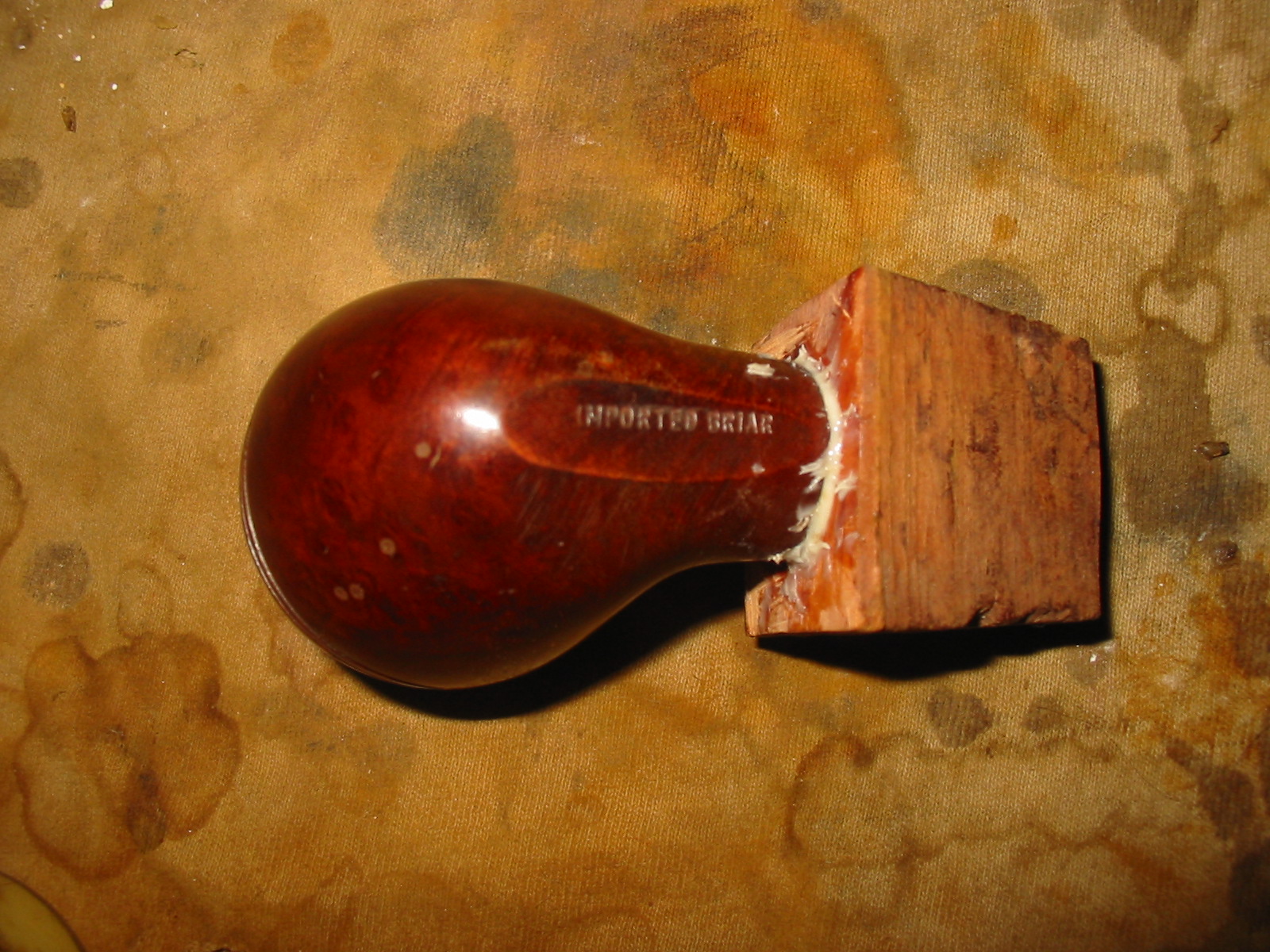
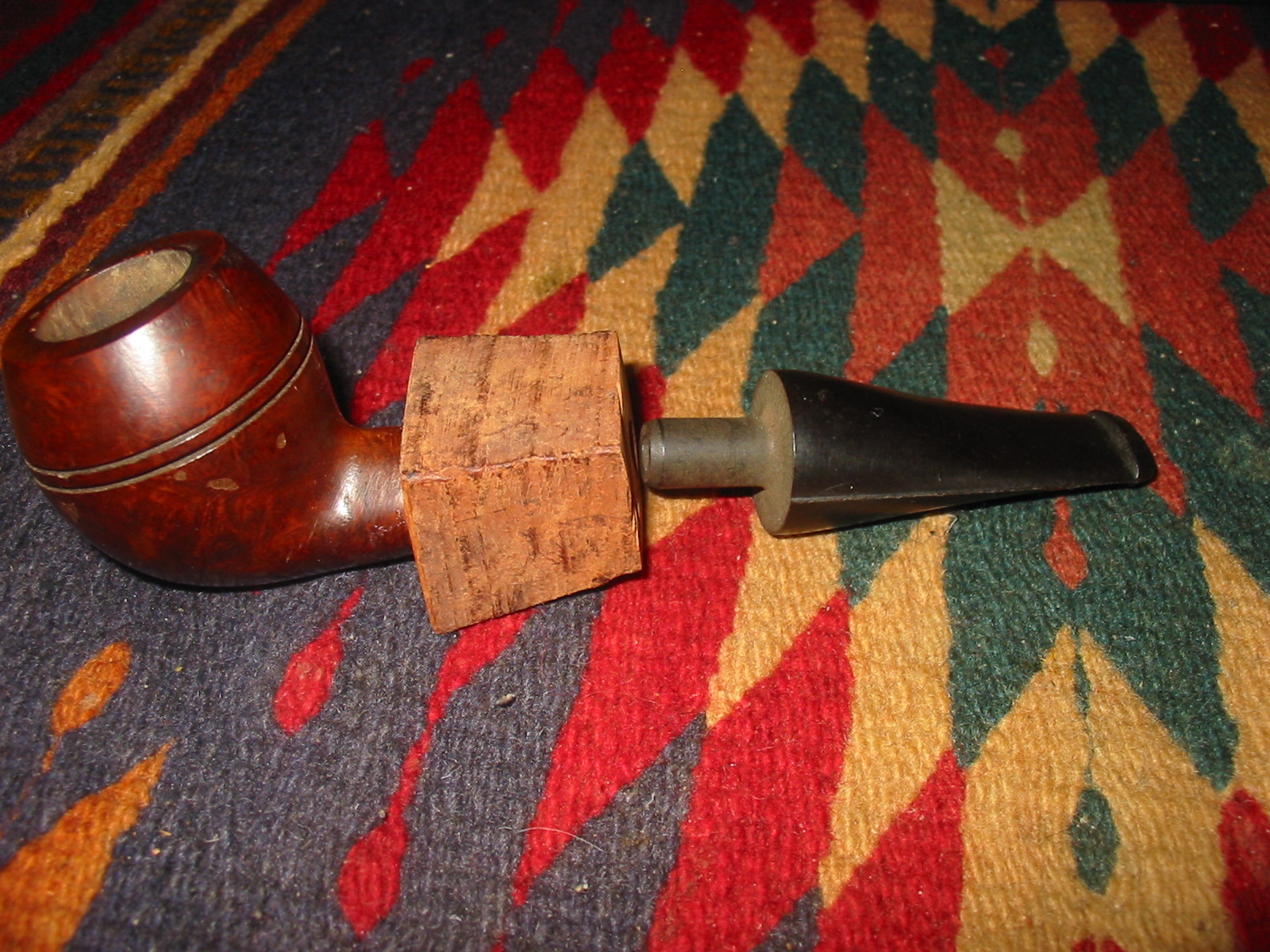
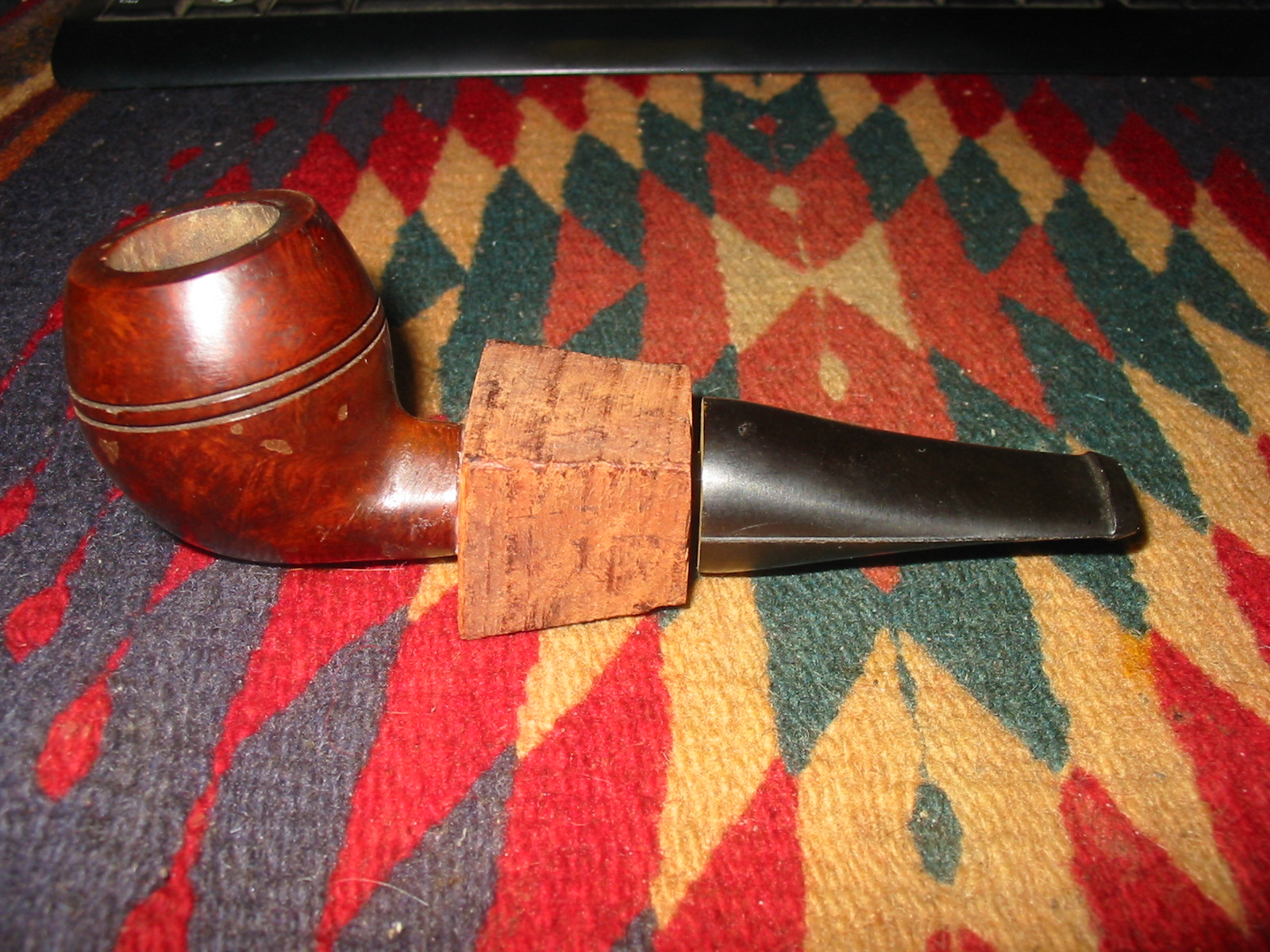
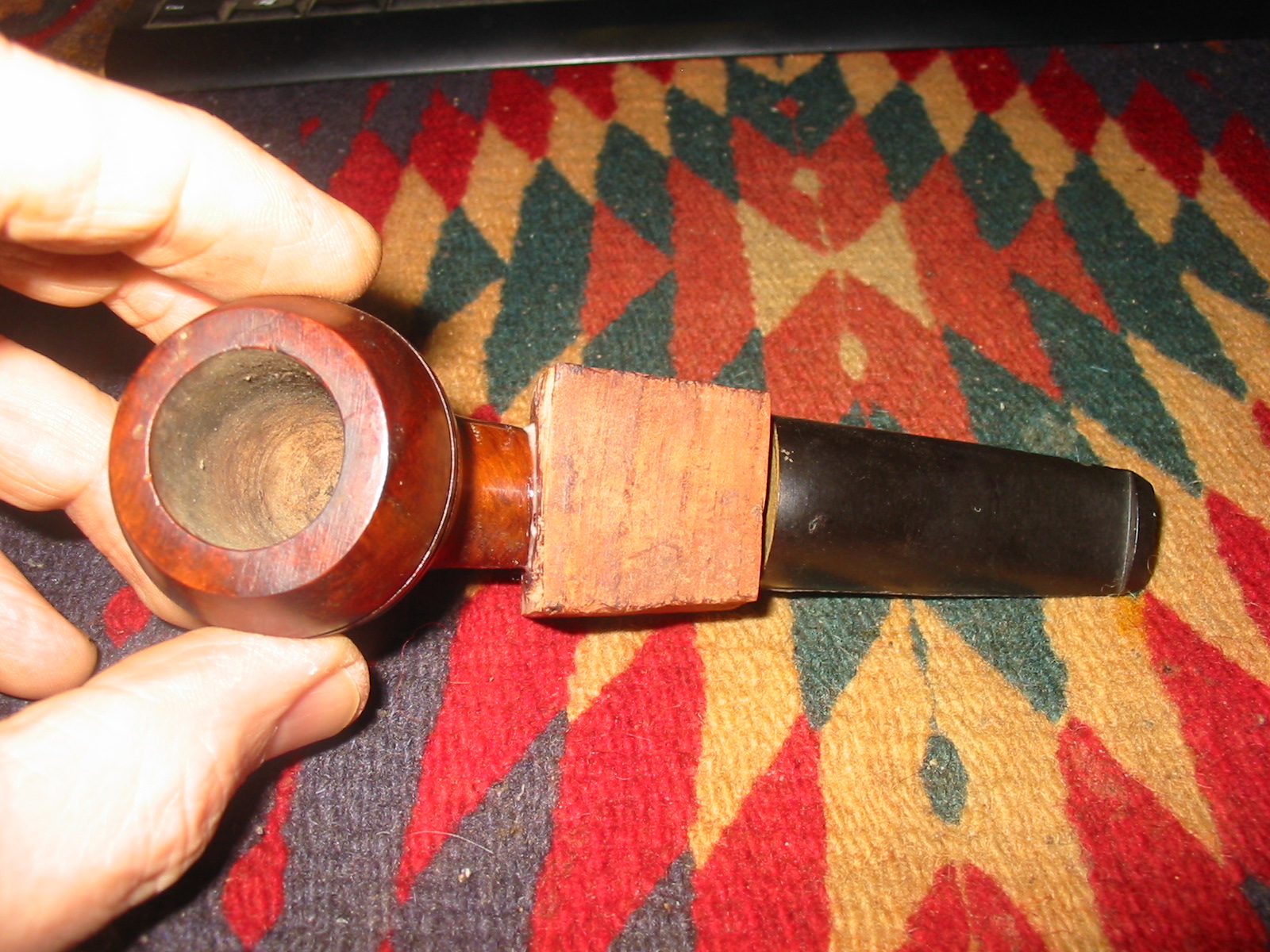
Another bowl that was sent to me was a nice bent bulldog shape that needed a stem. It was in good shape. The bowl needed to be reamed and the top of the rim lightly topped. It was stemless so I needed to make a stem for it. It was stamped on the left side of the shank Rembrandt over Imported Briar. In researching it on the web I found that the company that made the pipe was The National Briar Pipe Co. It was homed in Jersey City, New Jersey. They produced several brands that I have seen over the years: Biltmore, Forecaster, Honeybrook, King Eric, Kleenest, Mayflower, Rembrandt, Sir Sheldon, The Doodler (created and formerly produced by Tracy Mincer, †1966). Typically the original stem of Rembrandt pipes bore a logo on the left side of the stem – a capital “N” in italics. This bowl had some ding marks on the cap on the left side. There was some damage to the briar between the double rings on the cap.

IMG_4952

IMG_4953

IMG_4954

IMG_4955

I sorted through my stem can and found a nice amberoid acrylic stem that would look great with the bulldog bowl. It needed a tenon so I used a piece of white Delrin that was a perfect fit in the hole in the stem. I scored the Delrin with a hack saw so that the glue would have a surface to stick to. I swabbed then tenon down with superglue and pressed it into the stem.
IMG_4956

IMG_4958

Once the glue had set in the stem and the tenon was firmly in place I sanded the tenon down with a folded piece of sandpaper to get a snug fit. I pushed it into the shank and it fit nicely against the shank. The diamond shank was smaller than the diamond saddle on the stem so I needed to sand it down to fit the shank.
IMG_4959

IMG_4960

IMG_4961

IMG_4962

I used 220 grit sandpaper to start the process of shaping the stem and then a sanding drum on a Dremel to bring down the sides of the diamond close to the shank dimensions. I finished the fit with sandpaper and a sanding sponge.
IMG_4963

IMG_4964

IMG_4966

I sanded the stem and the shank with sandpaper and a sanding block until the transition between them was smooth to touch. I reamed the bowl with a PipNet reamer and took the cake back to the wood.
IMG_4967

IMG_4968

I set up my topping board and sandpaper and lightly topped the bowl to remove the nicks and cuts in the surface of the rim. I followed up on the sanding board with a sanding block laid on the board and once again turned the bowl into the sanding block to smooth out the scratches left behind by the sandpaper.
IMG_4969

IMG_4970

I wiped the bowl down with acetone and cotton pads to remove the finish and make the restaining of the bowl more consistent. I have found that when I have sanded the shank and the rim it is easier to remove as much of the finish as possible before I restain the pipe.
IMG_4972

IMG_4973

IMG_4974

IMG_4975

I sanded the stem with my usual array of micromesh sanding pads – wet sanding with 1500-2400 grit pads and dry sanding with 3200-12,000 grit pads. I rubbed the stem down with Obsidian Oil and then did some more work on the bowl.
IMG_4976

IMG_4977

IMG_4978

I stained the bowl with a dark brown aniline stain thinned 2:1 with isopropyl alcohol. I stained and flamed the stain and repeated the process until the coverage on the shank and the rim matched the bowl. I hand buffed the pipe with a soft cotton cloth to see where I stood with the finish on the bowl.
IMG_4979

IMG_4980

IMG_4981

IMG_4982

I gave the pipe another coat of the stain and then took the pipe to the buffer and buffed the bowl and stem with White Diamond. When I had finished I buffed it with multiple coats of carnauba wax and then with a soft flannel buff to finish the shine. The completed pipe is shown in the photos below. I really like the way the stain and the striations in the stem work together. I think that this one may well stay I my own collection!
IMG_4983

IMG_4984

IMG_4985

IMG_4986

Restoring a Kaywoodie Drinkless Volcano


I was gifted this Kaywoodie Drinkless Volcano with a three hole stinger by Andrew, a reader of the blog. He wrote me an email about the pipe as follows:

Steve, I have this Kaywoodie Volcano shape with a 3 hole stinger, so probably 70’s or newer. It was burned out when I got it. I ended up slopping some fireplace cement in the bottom of it trying to fix it but it didn’t come out well as I was trying to form it with a pipe tool and it is rough. The stem is over turned as well. I figure this might “challenge” you as far as trying to bring it back to life somehow. Is this is something you might be interested in trying to some how to fix? — Andrew

I wrote back that would gladly see what I could do with it so he sent it out to me to work on. When it arrived I saw that he had begun the work on it already and had reamed and cleaned the bowl. He had mentioned that when he bought it there was a small burn out area on the bottom of the bowl. When I got it the inside of the bowl was actually quite alright. His repair looked quite good. A little cleanup of the bowl would bring things in order. The fireplace cement needed to be cleaned off the walls and rounded a bit in the bottom of the bowl but it was not bad.

Besides the obvious damage to the bowl there was some other damage to the pipe as well. The outer edge of the rim was damaged on the front and the inner edge was slightly out of round. The external bottom of the bowl had a half-inch long crack that had been cleaned out and repaired but there was still a slight groove in the crack. The sides of the crack had been joined and repaired so what remained was cosmetic. The stem was overturned and slightly out of round in comparison to the round metal insert in the shank. The stem had a partial stamp of the KW cloverleaf but was in bad shape in terms of appearance.
IMG_4899

IMG_4900

IMG_4901

IMG_4903

I set up my topping board and topped the bowl of the pipe to remove the damaged portion of the inner and outer edge of the rim. I sanded the top of the bowl, pressing it against the board and turning it in a clockwise direction until the damaged briar was removed. I used a PipNet reamer with a cutting head that fit the bowl diameter and turned it against the cement until it was removed from the sides of the bowl and the bottom of the bowl had a slight indentation.
IMG_4904

IMG_4905

IMG_4906

I wiped down the bowl with acetone and cotton pads to remove the remaining finish on the bowl and to clean up the partial repair to the bottom crack. I continued to wipe it down until the briar on the bowl was almost the same colouration as the sanded rim of the pipe.
IMG_4907

IMG_4908

IMG_4909

I scratched out the surface of the crack with a dental pick and packed in some briar dust that I had left from sanding the rim of the pipe. I tamped it and then dripped some superglue into the briar dust until it formed a bubble over the crack. I always overfill the crevices and fills to make sure that when they dry they do not shrink and make a second fill necessary. When the glue had dried I sanded it with 220 grit sandpaper and also with a medium and fine grit sanding sponge to smooth out the bubble and blend it into the surface of the bowl.
IMG_4910

IMG_4915

IMG_4916

On the bottom of the stem there were also two very deep tooth indentations that would not lift when heated with a heat gun. I sanded the area around the dents and dripped clear superglue into the dents. I chose clear superglue as the stem did not appear to be vulcanite. When I sanded it the dust was grey rather than brown. I have found that the clear glue blends very well on this material. When it dries and is sanded it blends in quite well to the surrounding stem material.
IMG_4911

IMG_4913

IMG_4917

I wiped down the bowl again with acetone and sanded the whole bowl with a medium and fine grit sanding sponge.
IMG_4918

IMG_4919

IMG_4920

IMG_4921

IMG_4922

The overturn on the stem is something that is easily corrected. I heated the stinger with a heat gun until the glue holding it in place was softer and then turned it in the metal inserted mortise until it lined up correctly with the bowl. I was almost a quarter turn to the right so I needed to turn it all the way around. Once it was aligned I laid it aside to cool. The final photo gives a clear view of the inside of the bowl. The repaired bowl bottom with the minor adjustments I had made with the PipNet reamer are visible.
IMG_4923

IMG_4924

IMG_4925

IMG_4926

IMG_4927

IMG_4928

With the stem aligned it was evident that the diameter of the stem was different than that of the shank. In looking at the stem from the stinger end I could see that the left side was slightly larger than the right side. There was an overhang passed the metal insert in the shank. The next photos show that the left side would need to be sanded to fit properly.
IMG_4929

IMG_4930

I sanded the stem and shank with 220 grit sandpaper folded and was careful to not sand the stamping on the left side of the shank. I wanted the transition to be perfectly smooth to the touch. I sanded it with medium and fine grit sandpaper to smooth out the scratches left behind by the sandpaper.
IMG_4932

IMG_4933

IMG_4934

IMG_4935

IMG_4936

IMG_4937

I stained the bowl with an aniline oxblood stain. I applied it and flamed it and reapplied it and flamed it again until I had a good even coverage across the bowl. I hand buffed the finish with a soft cloth.
IMG_4938

IMG_4939

IMG_4940

IMG_4941

IMG_4942

I sanded the stem with medium and fine grit sanding sponges and then followed up with my usual array of micromesh sanding pads – wet sanding with 1500-2400 grit pads and dry sanding with 3200-13,000 grit pads.
IMG_4943

IMG_4944

IMG_4945

I rubbed the stem down with Obsidian Oil and then sanded it a final time with the 4000-13,000 grit pads. I lightly buffed the stem with White Diamond. I screwed the stem back into the shank and then buffed the entirety with White Diamond and then gave the pipe multiple coats of carnauba wax. I buffed it with a clean flannel buff for the final shine and protection. The finished pipe is pictured below and is ready for more years of service. The bowl repair done by Andrew provides a solid base in the bowl and the external repair and stem repair makes the pipe cosmetically more pleasing. Thanks Andrew for a good challenge. The pipe is ready for its inaugural smoke. I am sure it will last far longer than I do!
IMG_4946

IMG_4947

IMG_4948

IMG_4949

IMG_4950

IMG_4951

Refurbishing an Old Zulu Bowl


I was gifted a few pipe bowls that needed to be restemmed and refurbished by a friend. The first of these that I decided to clean up and restem was an old Zulu bowl. It is stamped Algerian Briar over Made in France on the left side of the shank and no other identifying marks. Thus the maker remains a bit of a mystery that I am not sure can be solved. The bowl itself was in fair shape. The cake in the bowl was not thick but it was particularly crumbly and soft. The finish on the pipe was also shot. The varnish coat was gone and the stain was streaked and damaged. There were a cut groove next to the left side of the stamping and a smaller one on the right side of the stamping. The shank was filthy and caked with oils and tars. The rim was in great shape with no damage to either the inside or outside rim. The grain under the stain coat looked promising with cross grain on the front and back of the bowl and the top and bottom of the shank and mixed birdseye on the sides of the both.
IMG_4862

I had a stem in my can of stems that fit almost perfectly. It was damaged and would need some work but the fit and bend was perfect for the Zulu shape.
IMG_4863

IMG_4864

I fit the stem in place and wiped down the bowl with acetone on cotton pads to remove the remaining finish on the pipe. I reamed the bowl with a PipNet reamer and took the cake back to bare wood. I cleaned out the shank and the bowl with cotton swabs and Everclear.
IMG_4866

IMG_4867

IMG_4868

IMG_4869

I sanded the stem until the transition between the shank and the stem was smooth. I used both 220 grit sandpaper and medium and fine grit sanding sponges to smooth it out. The end of the stem was badly damaged and the button was ruined. I decided to trim off the damaged end of the stem and rework the button. Once it was cut back I cleaned out the stem with Everclear and pipe cleaners. The stem was badly plugged with tars so I had to use a bent paper clip to push through the airway. I used shank brushes and pipe cleaners to remove the tarry build up and open up the stem once again.
IMG_4870

IMG_4872

The airway was still wide and open so I did not need to reshape it. The top and bottom of the button were thin so I could not remove any further material. I reshaped the externals as best as possible by rounding the ends of the stem and making the button more oval in external shape.
IMG_4873

The slight dents in the stem that remained would not lift with heat so I filled them with superglue until they were level with the surface of the stem.
IMG_4874

IMG_4875

I cut the new button with needle files and shaped the end of the stem to have a better flow and taper to the new button. This involved removing some of the thickness of the stem and making the taper more angled. I used files and sandpaper to reshape the stem.
IMG_4876

IMG_4877

With the new button cut I sanded the stem and the entire pipe with 220 grit sandpaper to remove the remaining finish and make sure the flow of the stem was correct to the angles of the pipe. I also sanded it with a medium and fine grit sanding sponge to remove scratches in the briar and vulcanite.
IMG_4879

IMG_4880

IMG_4881

IMG_4882

IMG_4883

IMG_4884

The stain around the stamping on the left side of the shank was very set and stubborn. I lightly sanded it to break through the top coat and then scrubbed it with acetone on cotton pads to match it as much as possible to the unstained briar. I stained the bowl with an oxblood aniline stain, flamed it and restained and reflamed until I had an even coverage on the bowl. I hand buffed it with a soft cloth. I took the pipe to the buffer and buffed the stem and bowl with red Tripoli and White Diamond. The photos below show the pipe after the buffing.
IMG_4885

IMG_4886

IMG_4888

IMG_4889

I sanded the stem with my usual array of micromesh sanding pads – wet sanding with 1500-2400 grit pads and dry sanding with 3200-12,000 grit pads. I rubbed the stem down with Obsidian Oil and when it dried hand buffed the stem.
IMG_4890

IMG_4891

IMG_4892

I buffed the pipe with White Diamond and then gave it multiple coats of carnauba wax. I finished by buffing it with a clean soft flannel buffing pad. The finished pipe is pictured below. It is ready to go into service again. I like the flow of the lines on this pipe. The shape and matte like finish work well together.
IMG_4893

IMG_4894

IMG_4896

IMG_4897