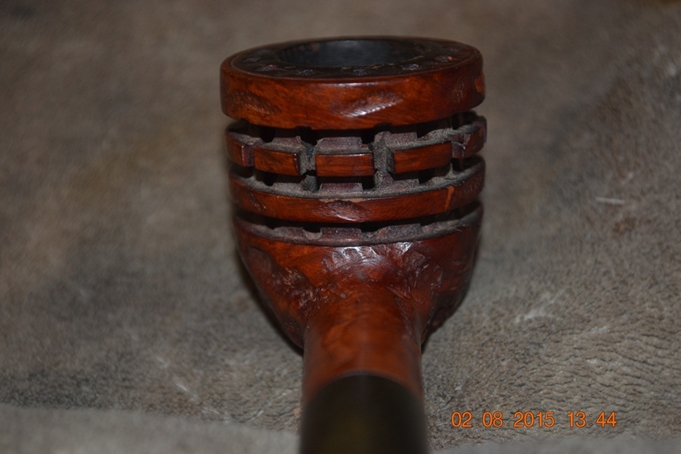
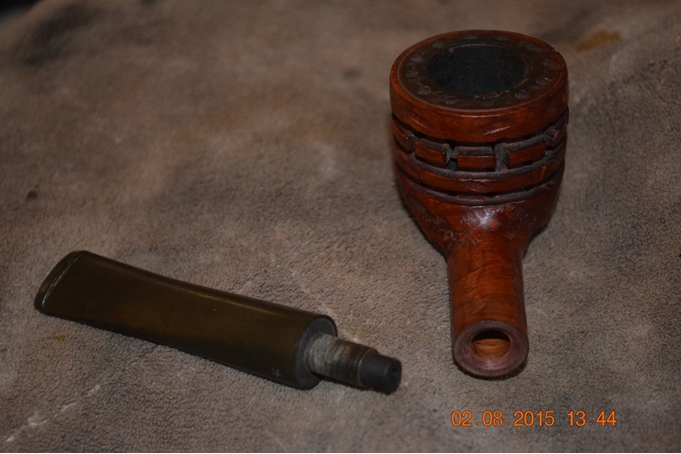
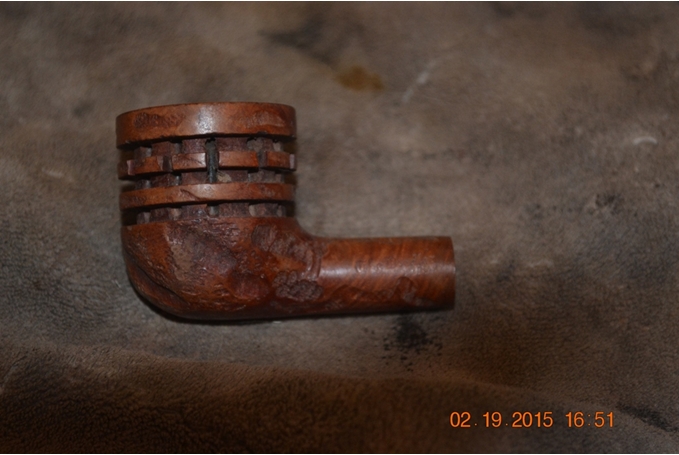
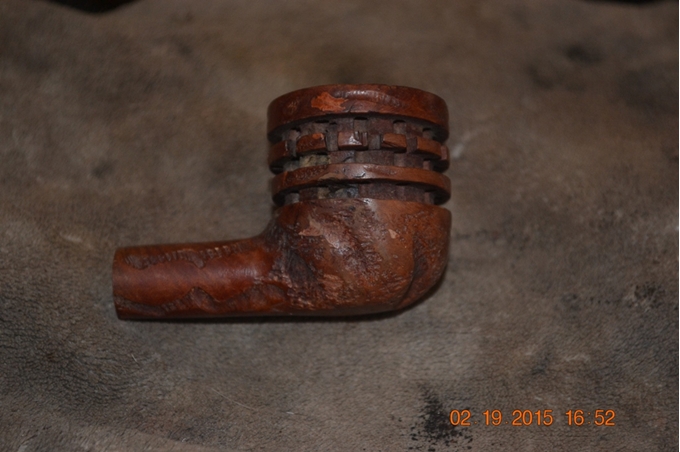
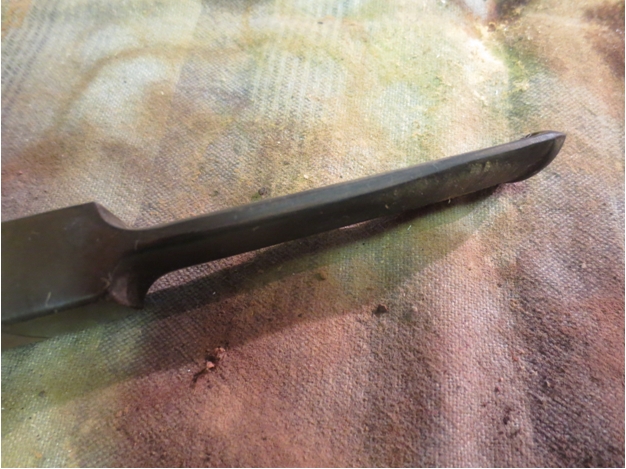
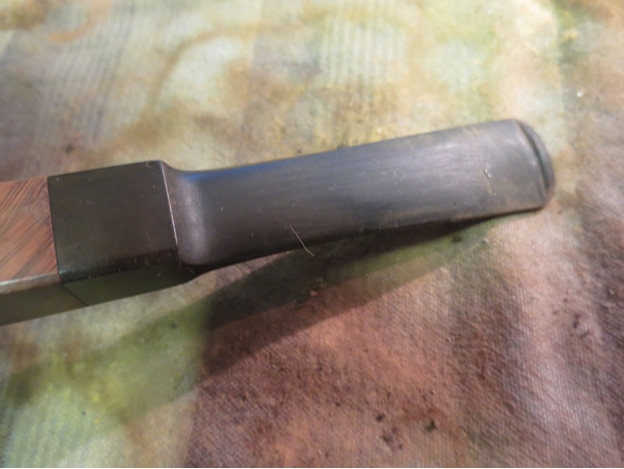
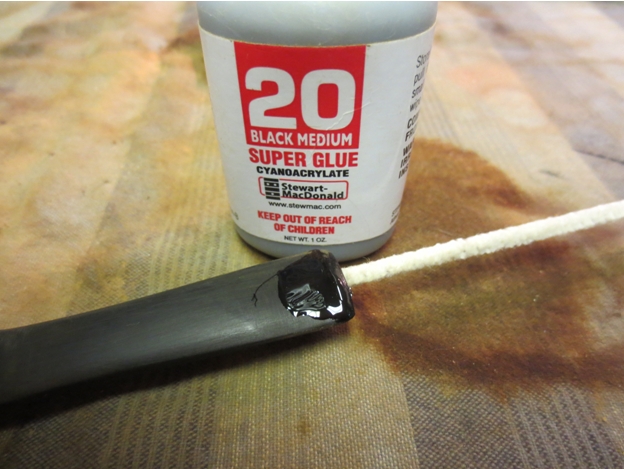
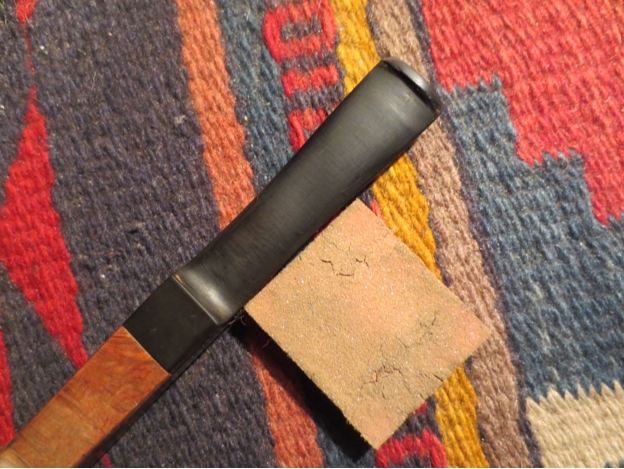
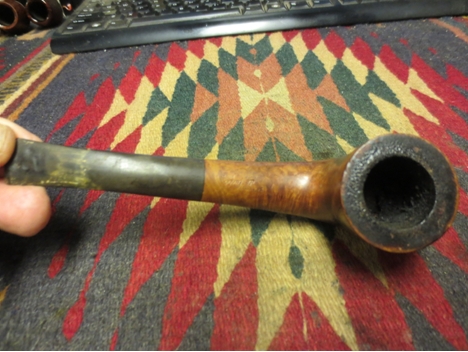
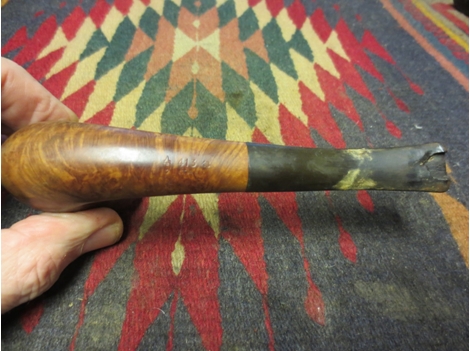
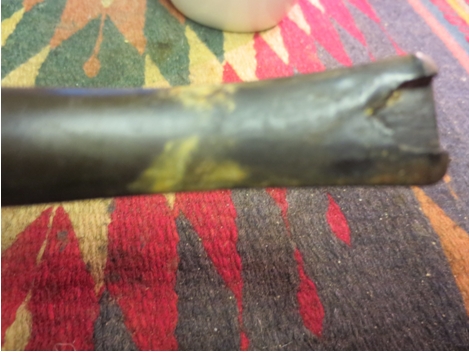
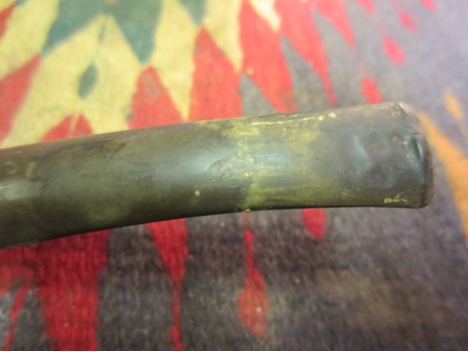
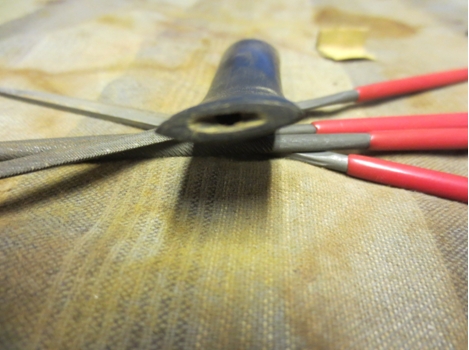
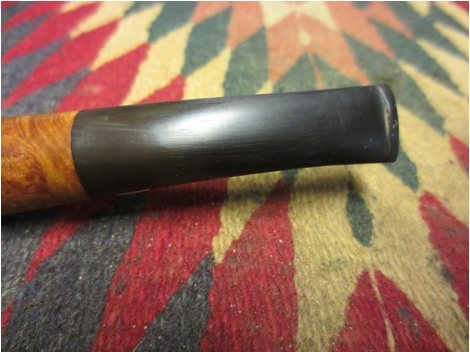
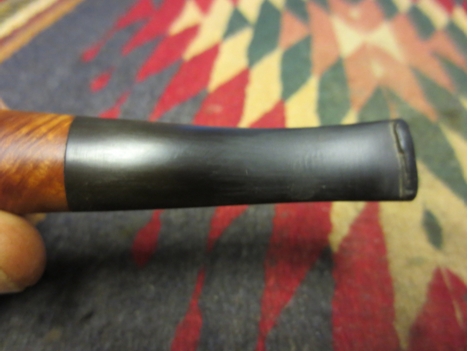
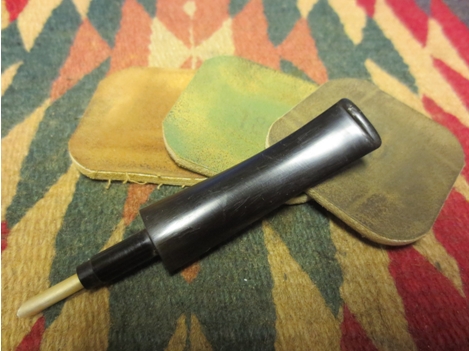
Tag Archives: refinishing

Re-stemming a Hardcastle Pot – Andrew Selking


Blog by Andrew Selking

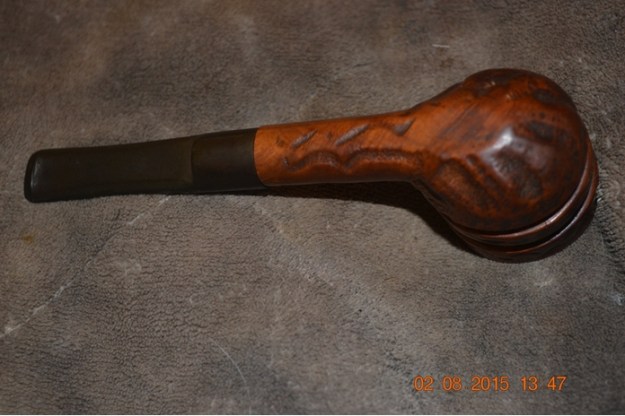
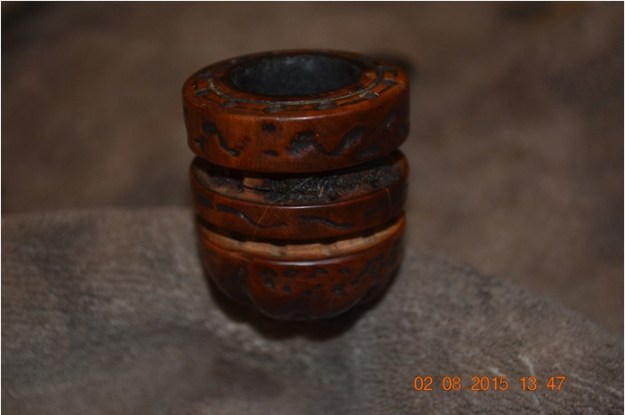
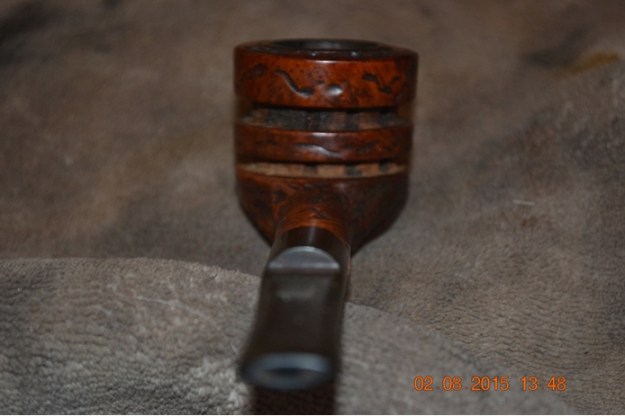
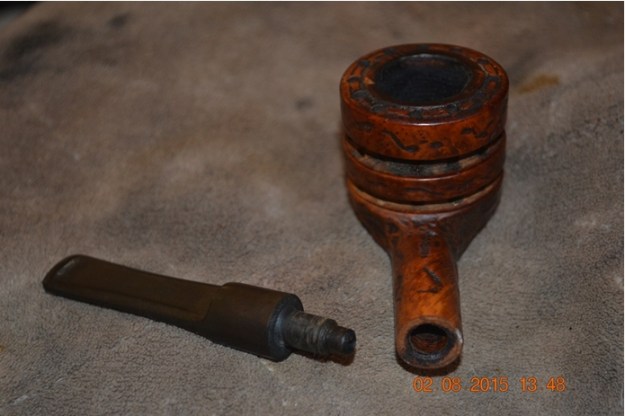
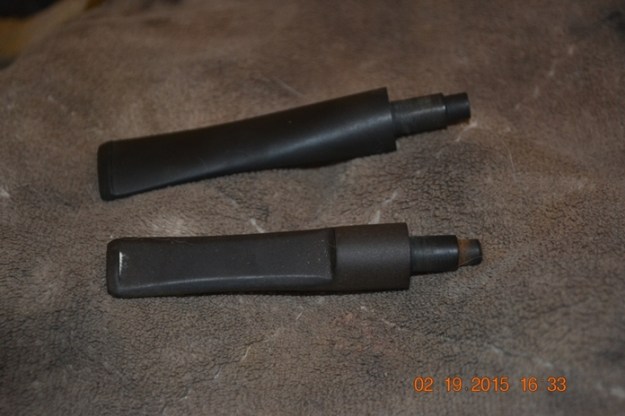
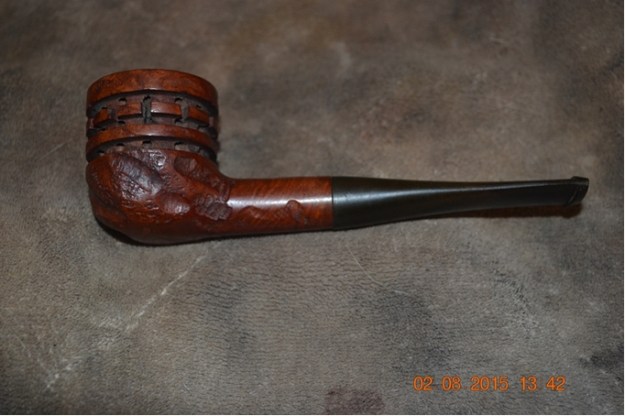
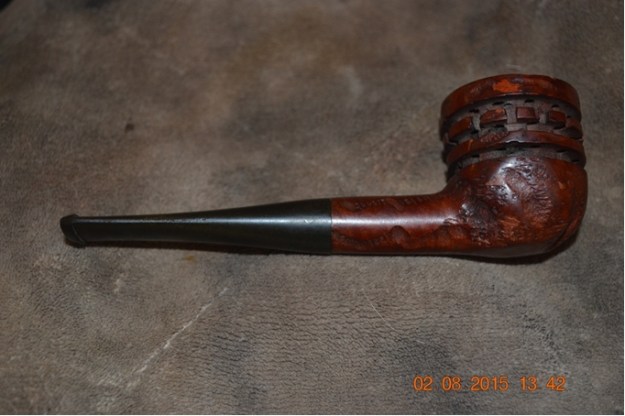
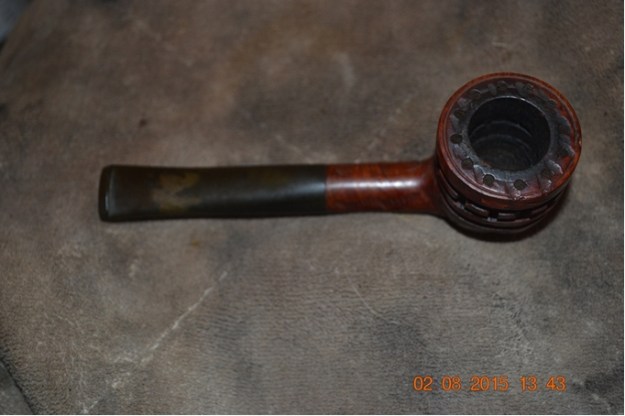
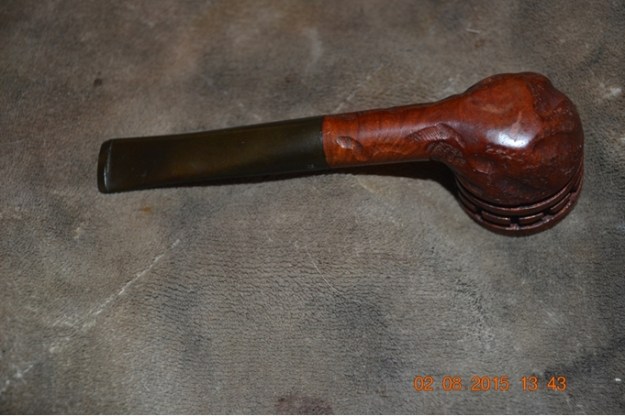
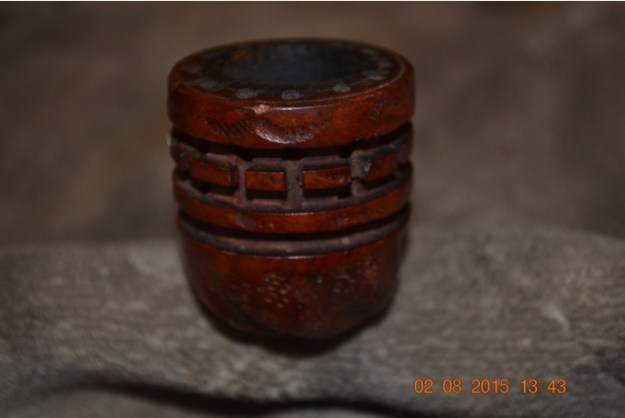
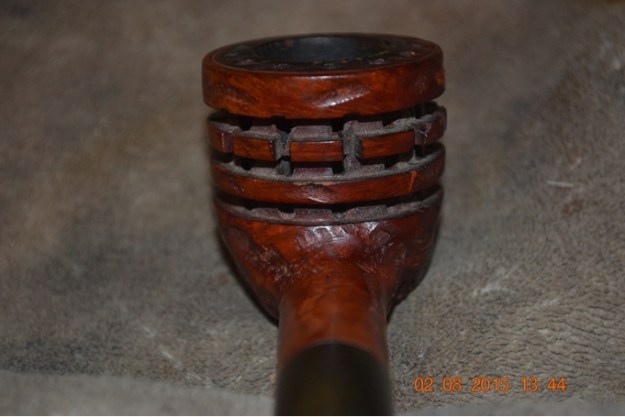
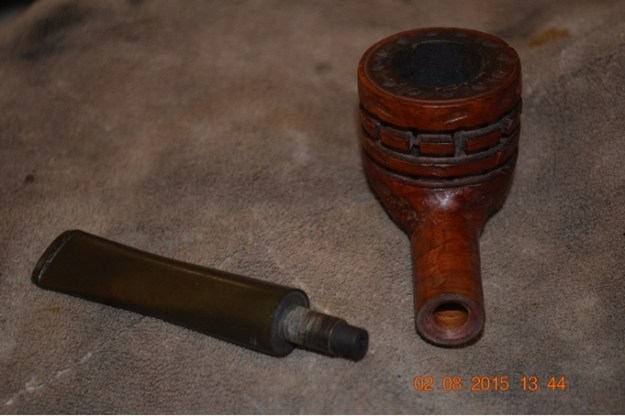
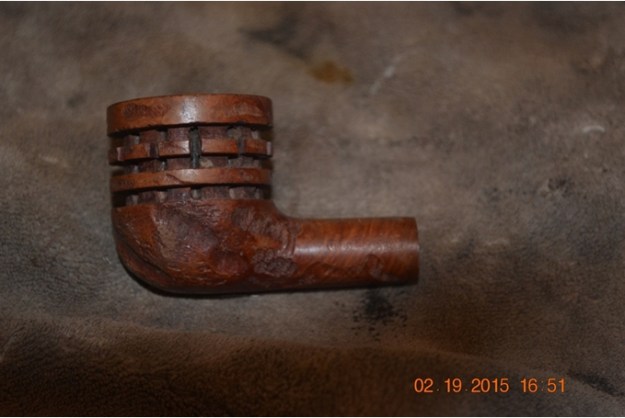
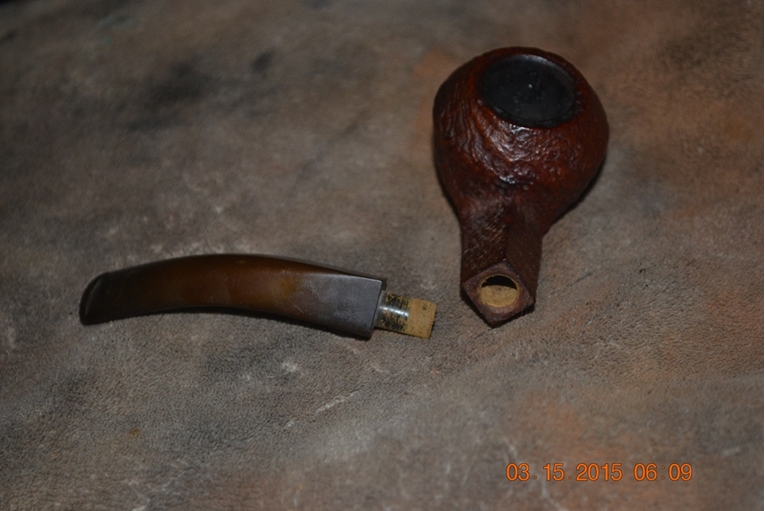
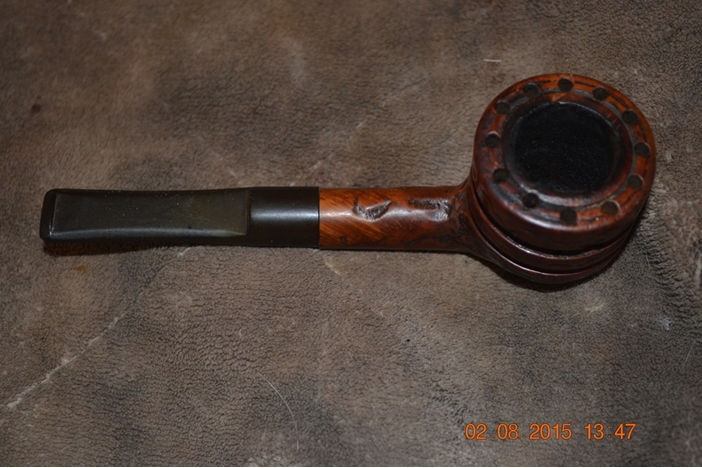
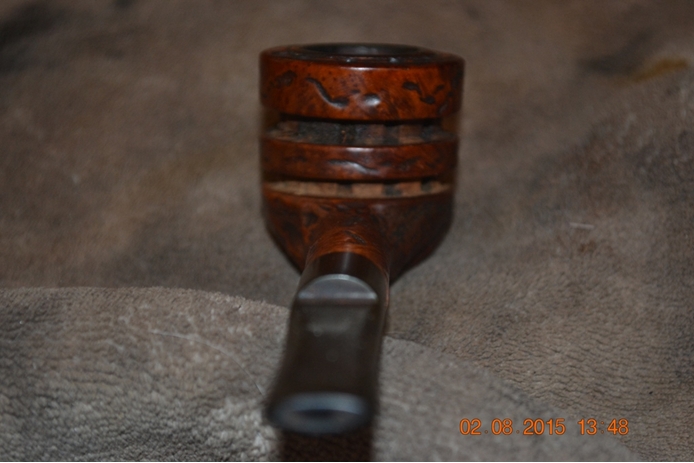
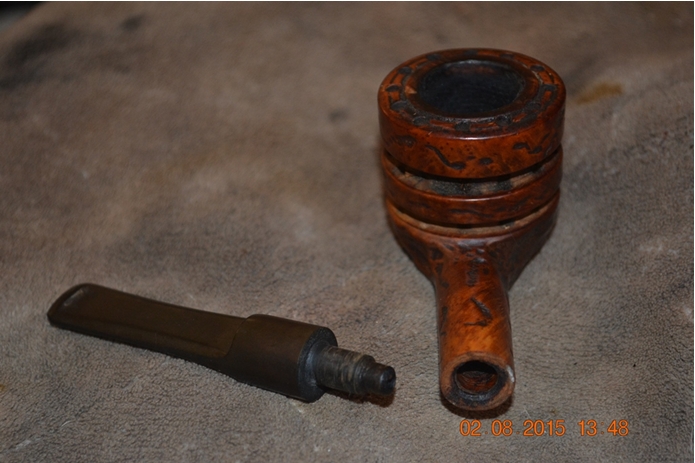
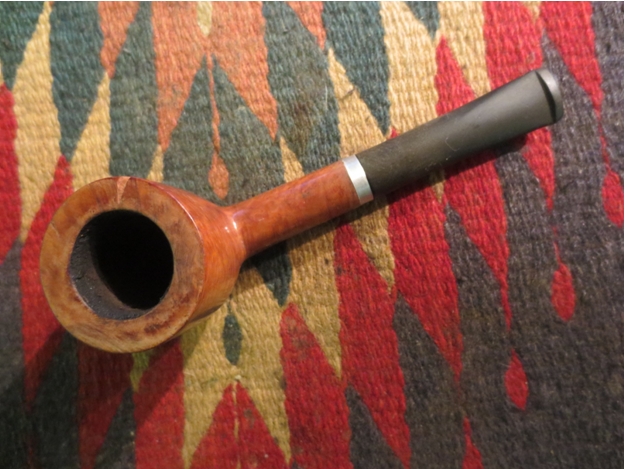
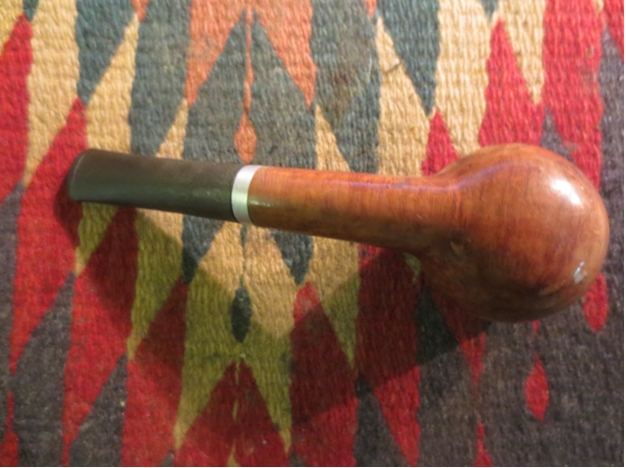
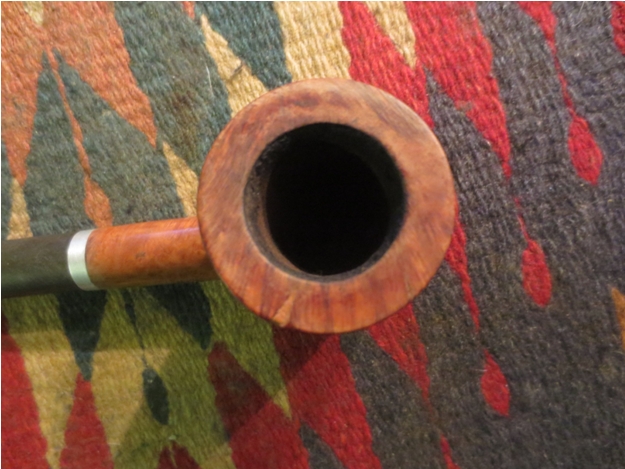
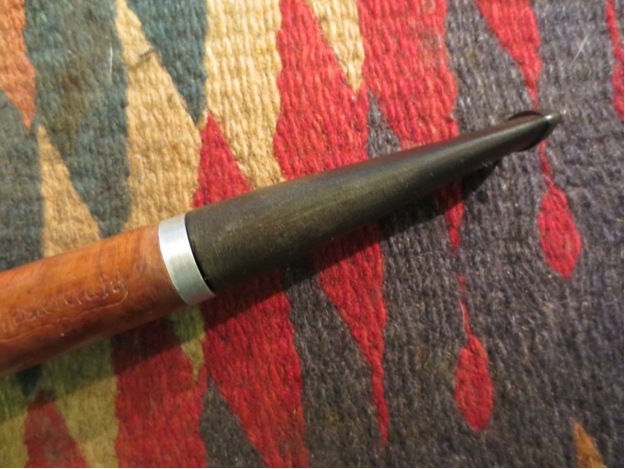
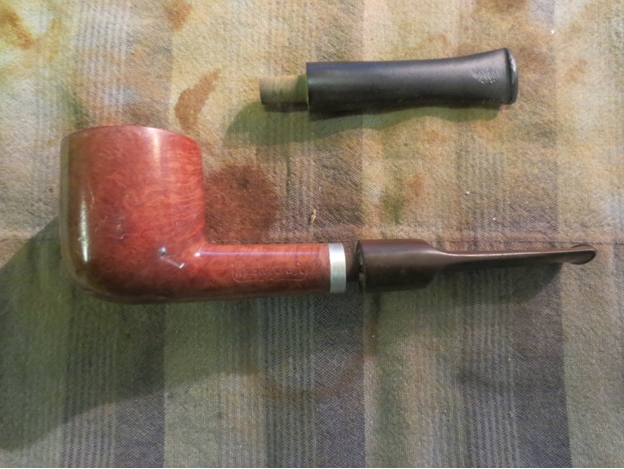
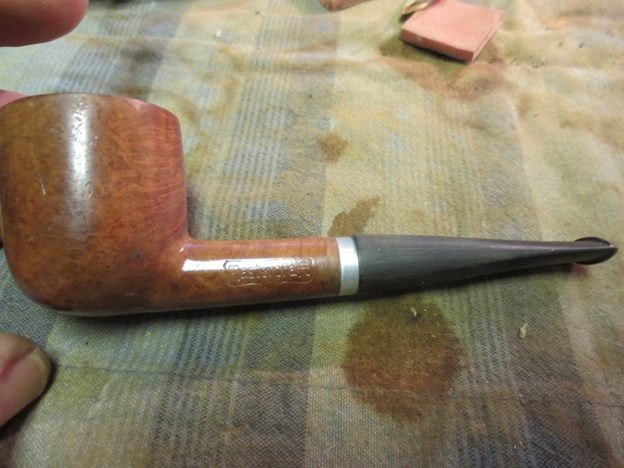
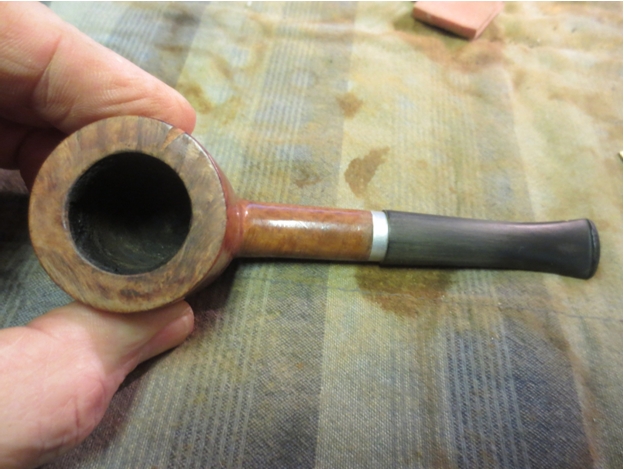
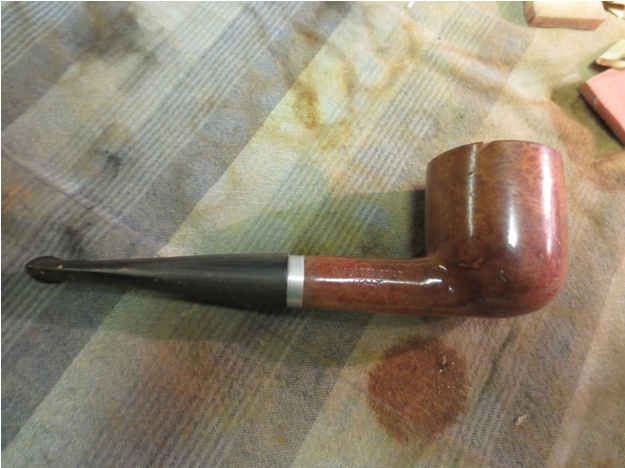
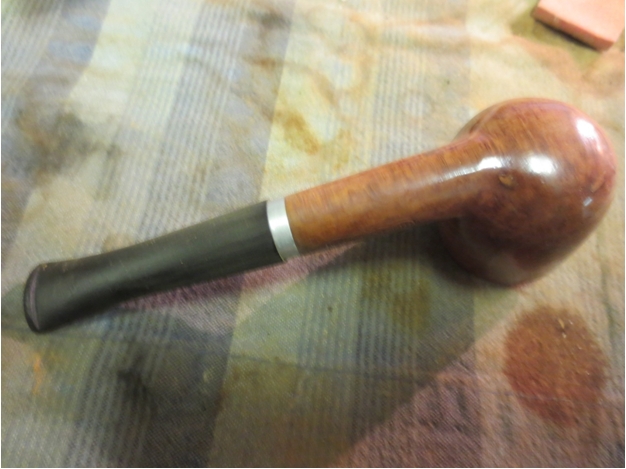
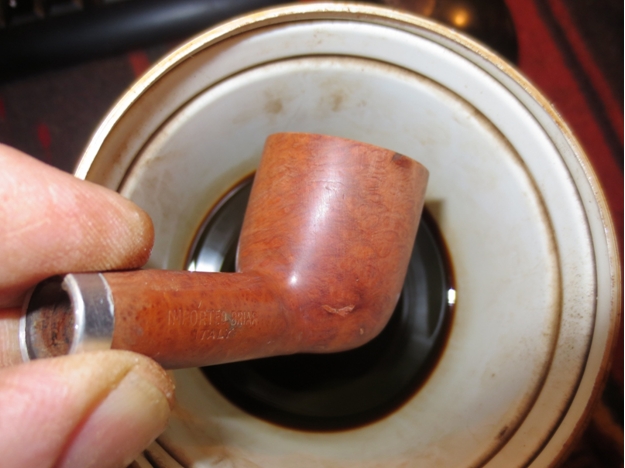
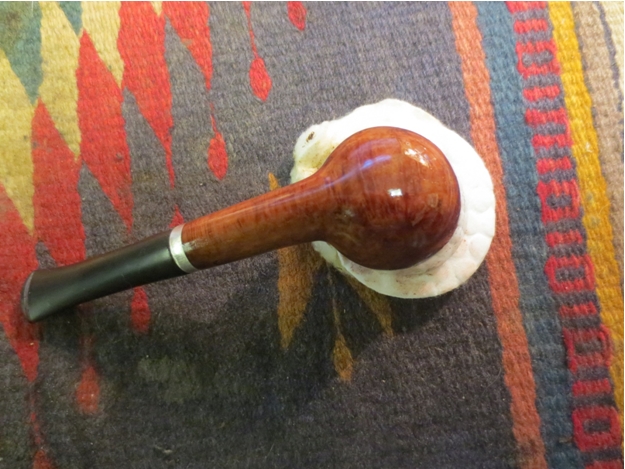
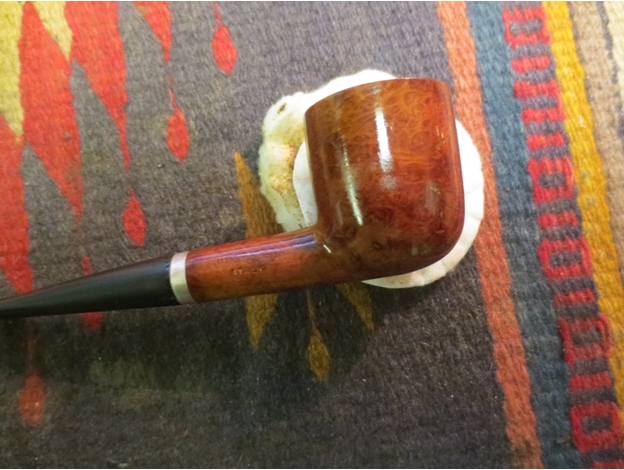
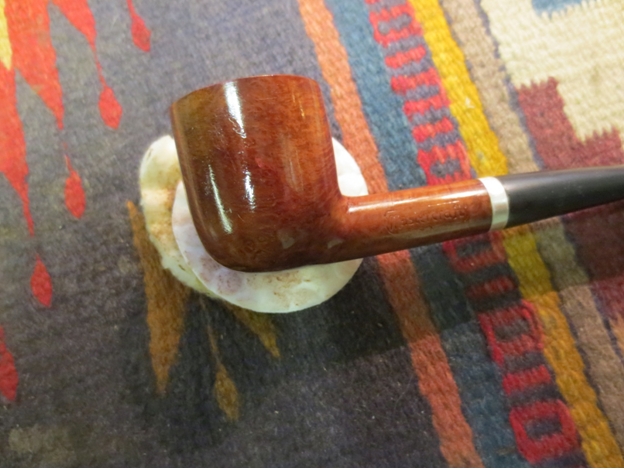
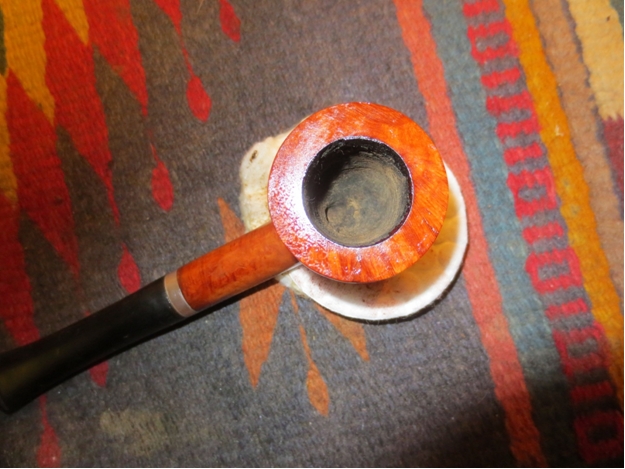
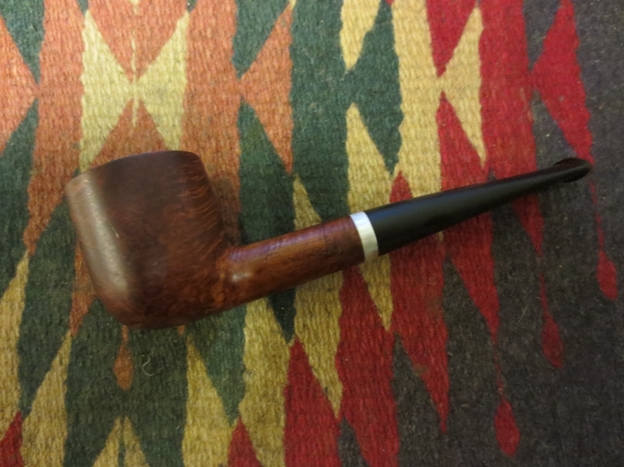
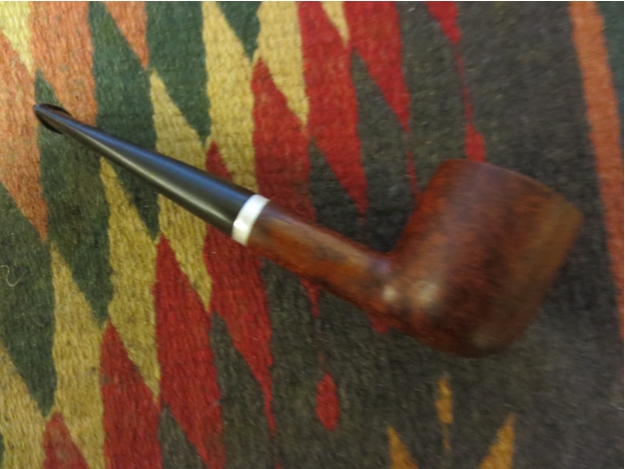
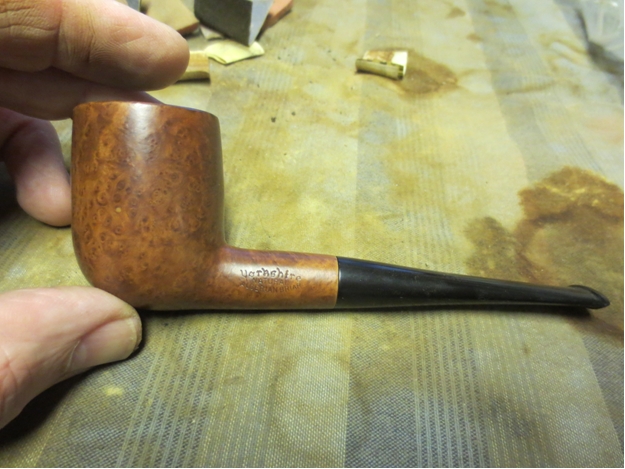
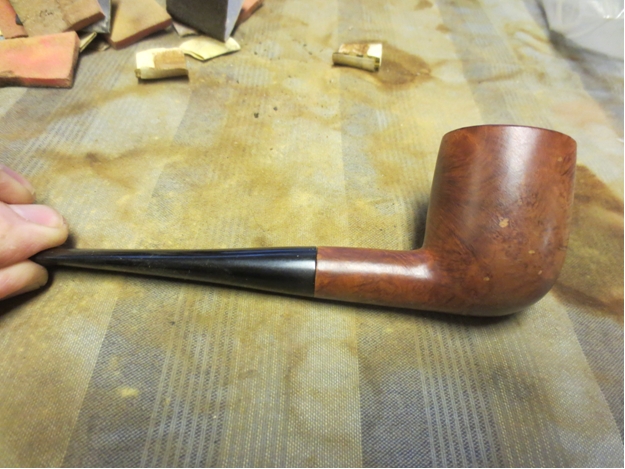
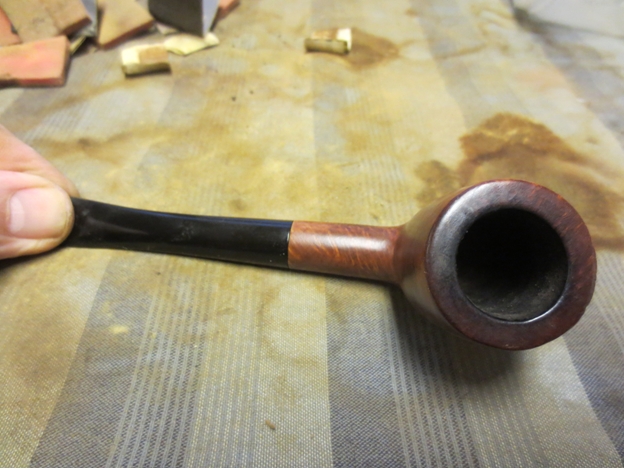
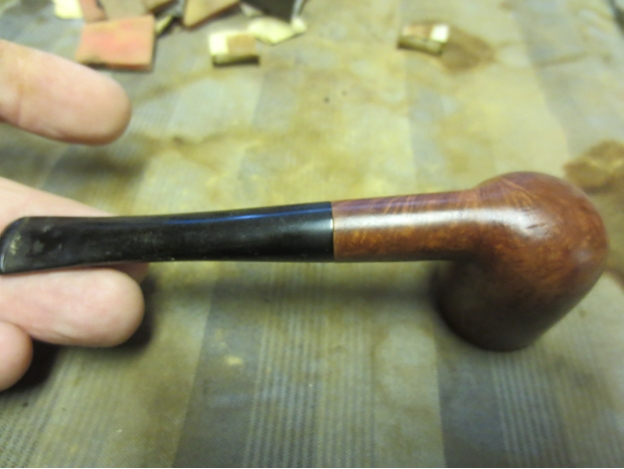
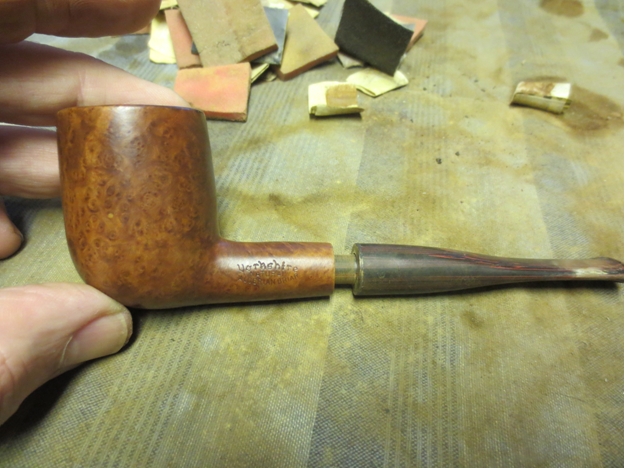
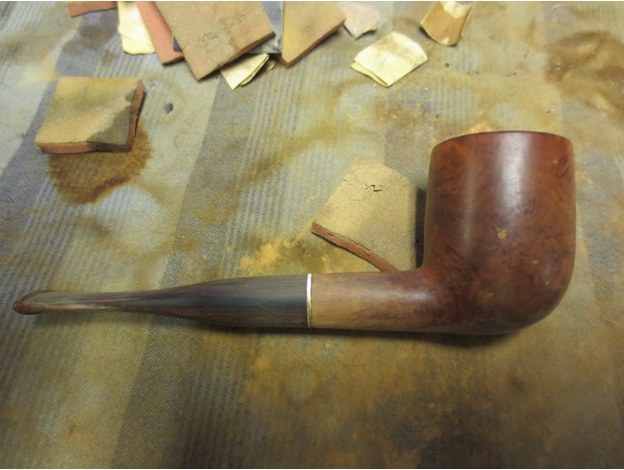
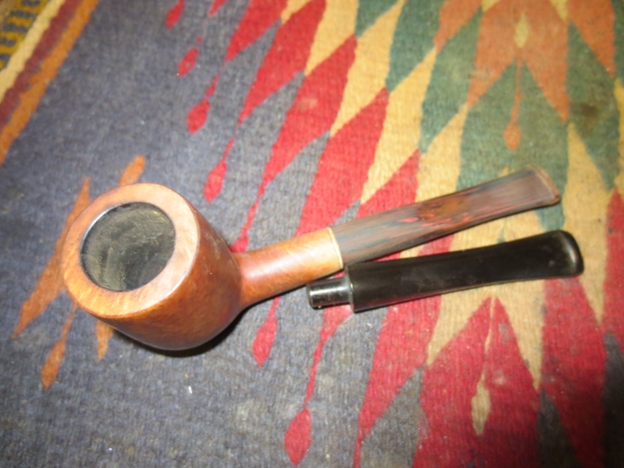
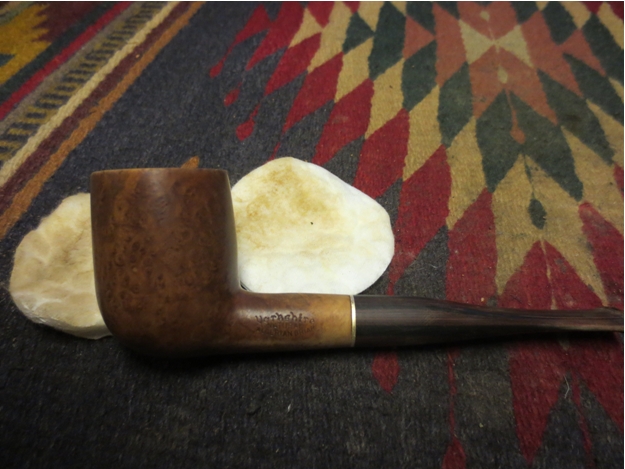
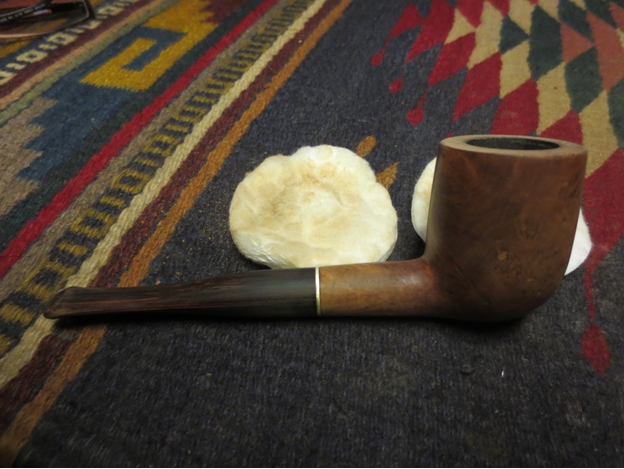
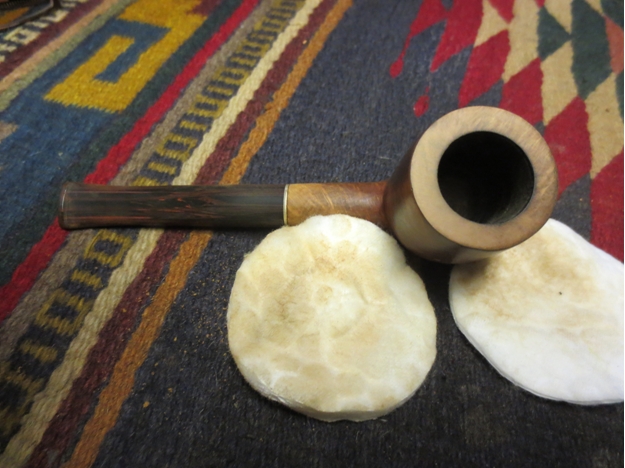
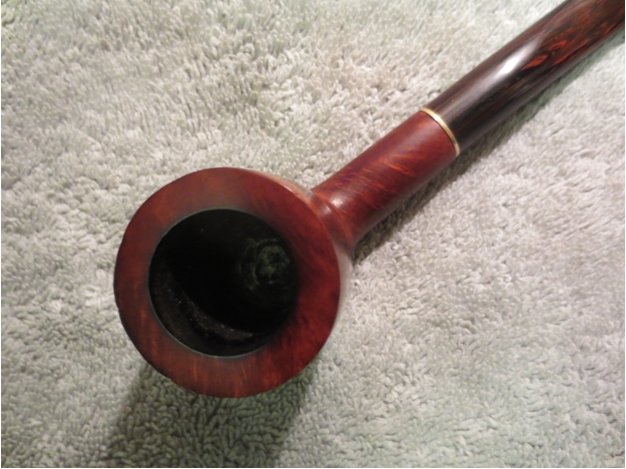
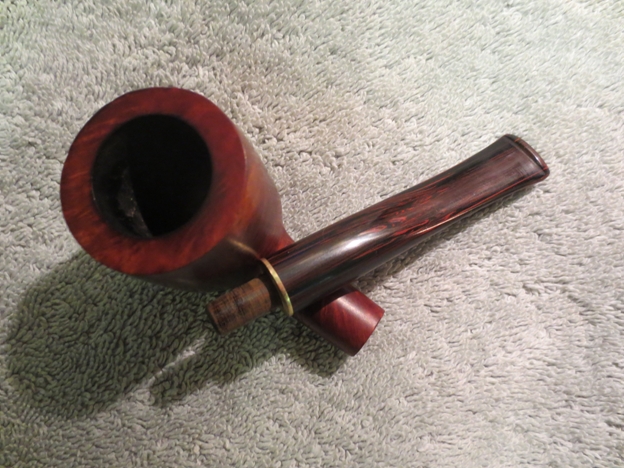
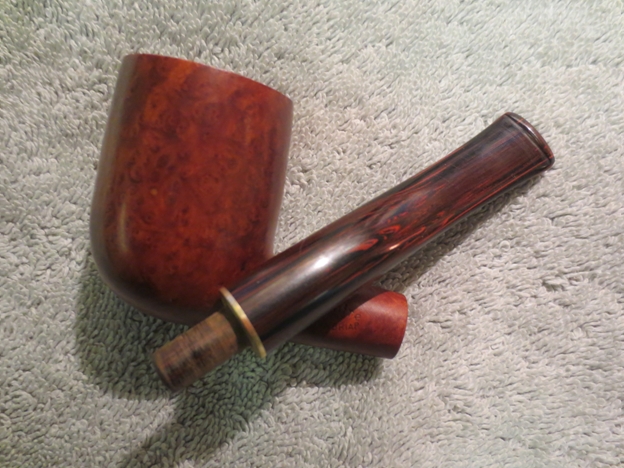
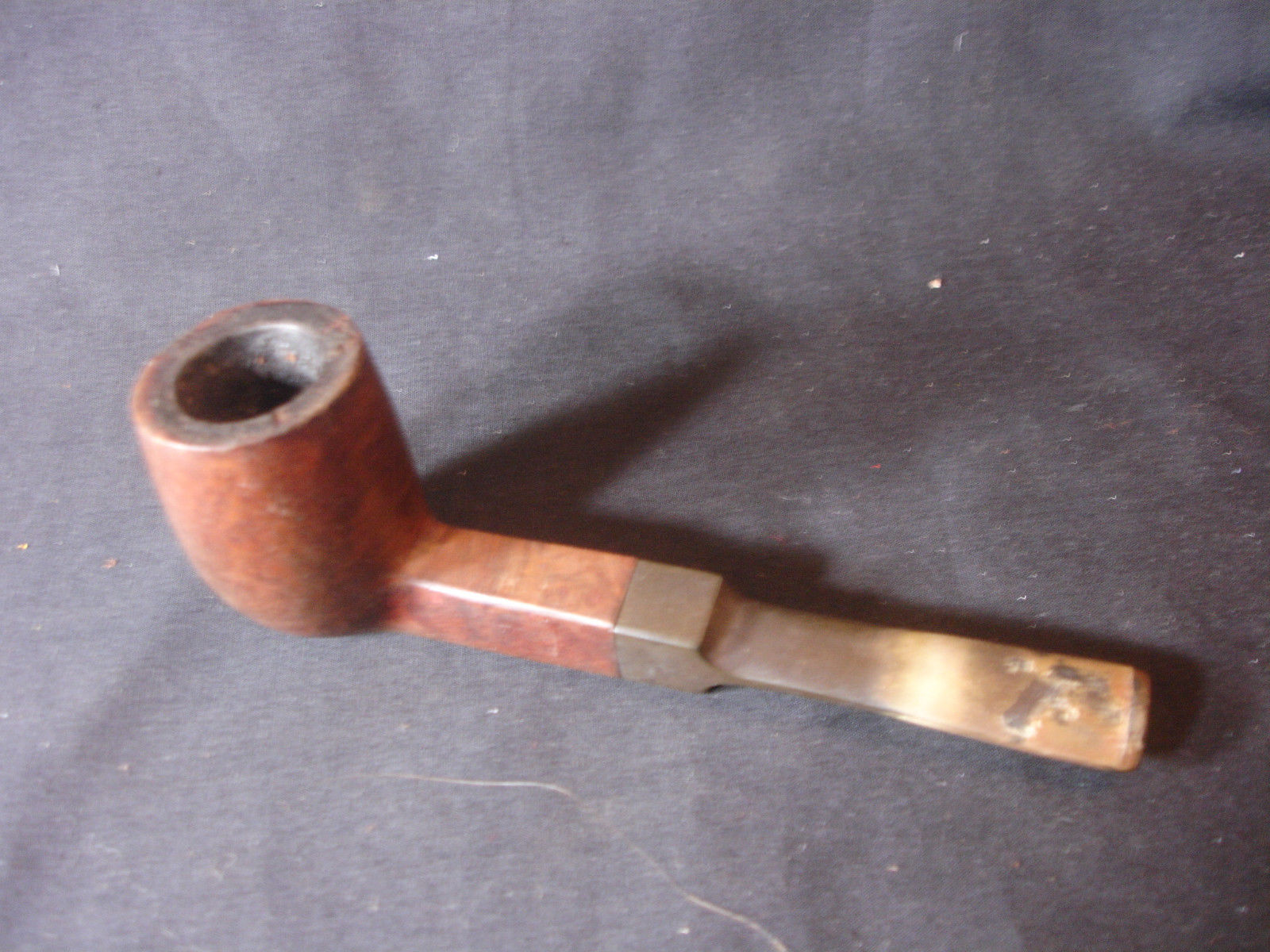
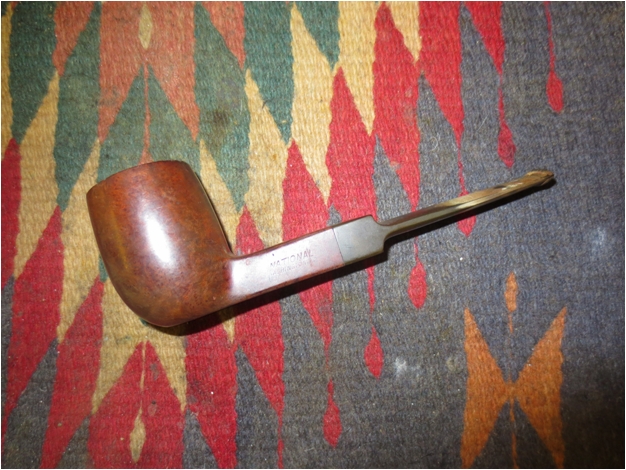
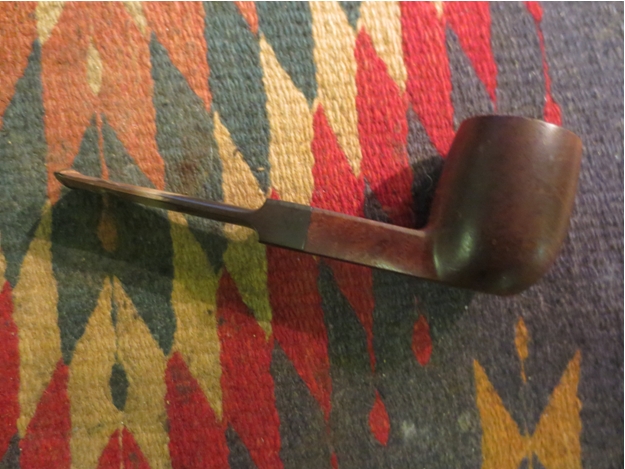
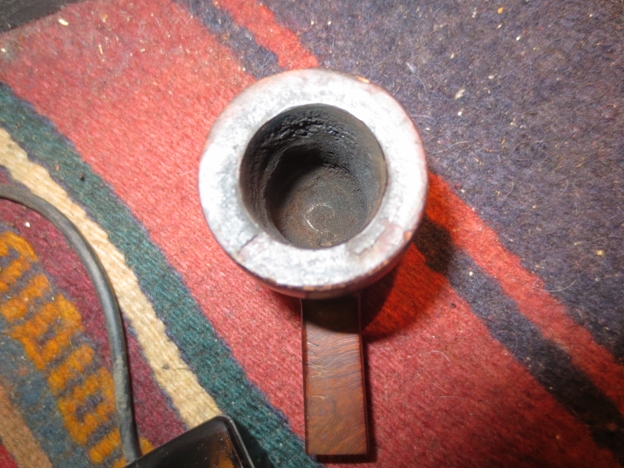
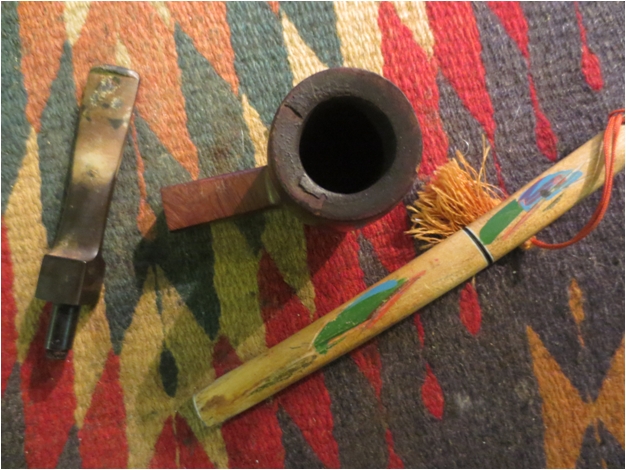
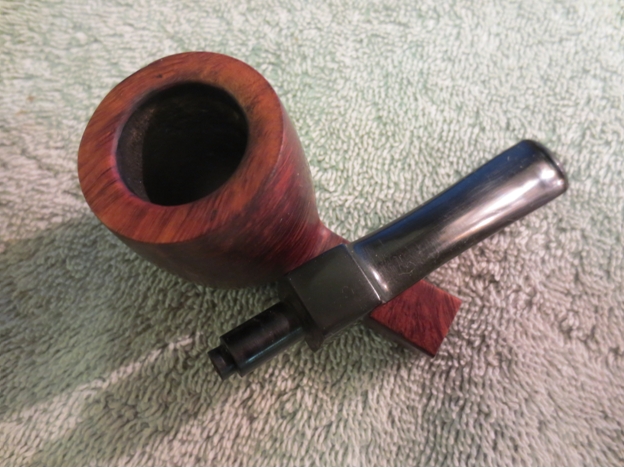
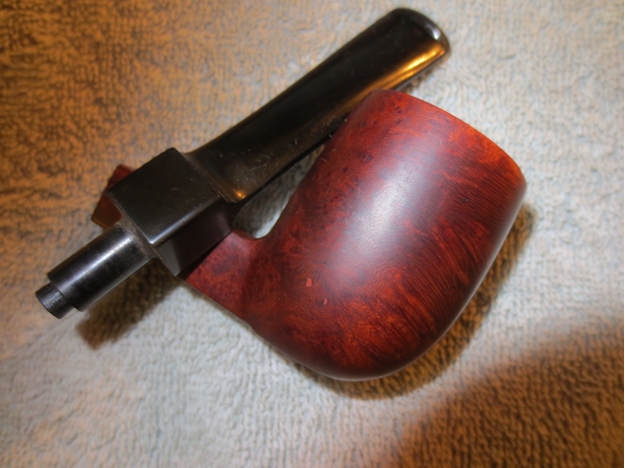
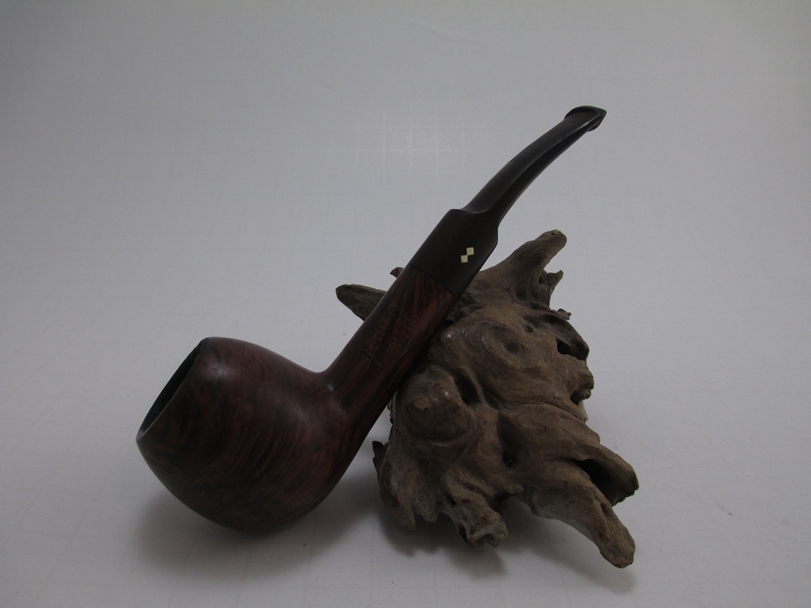
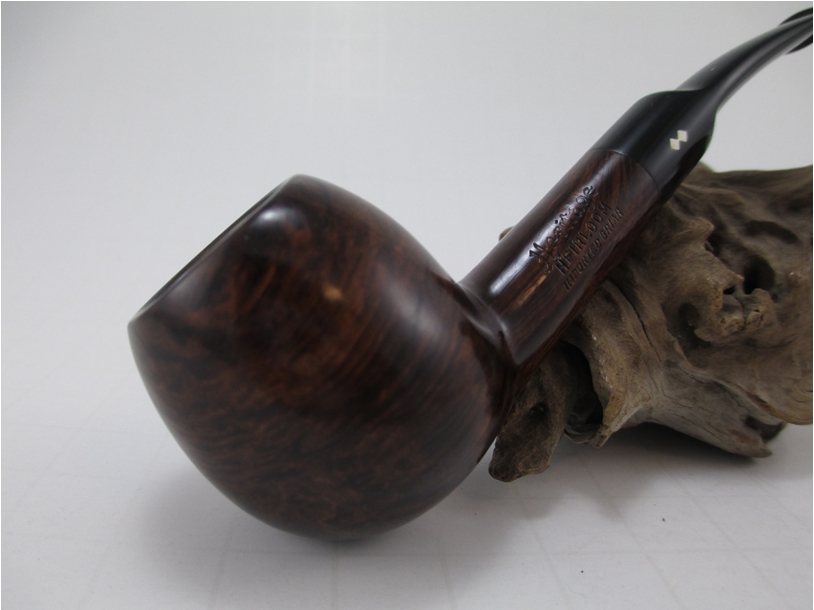
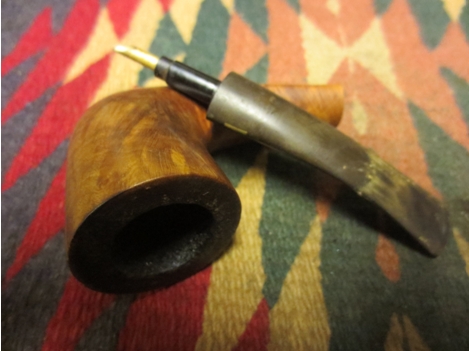
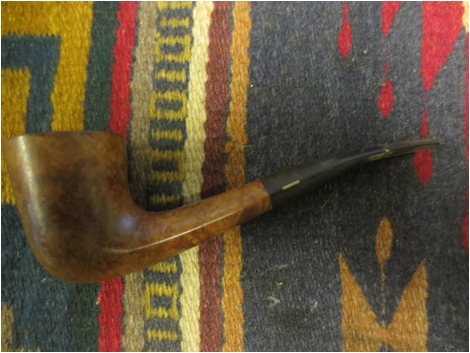
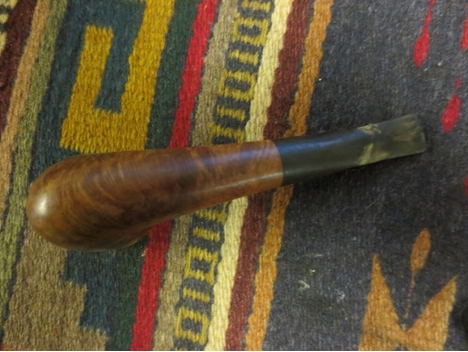
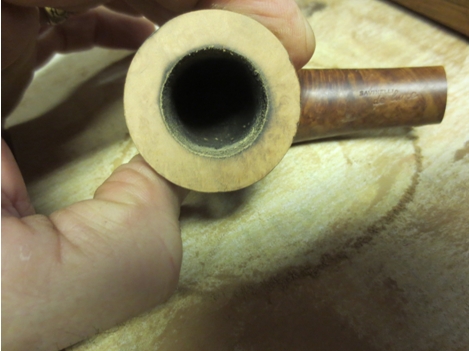
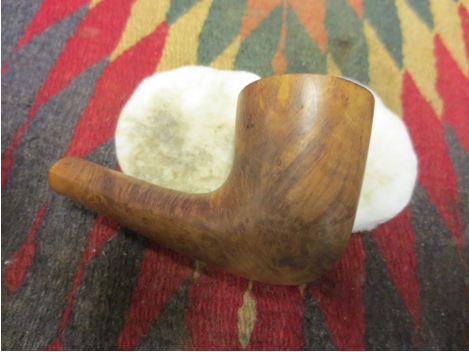
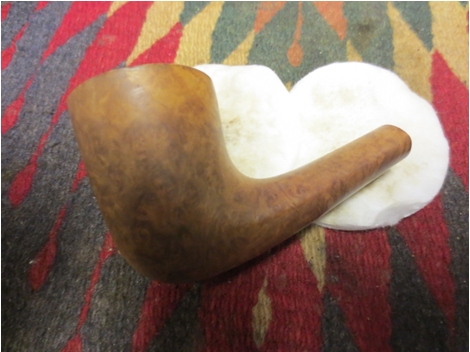
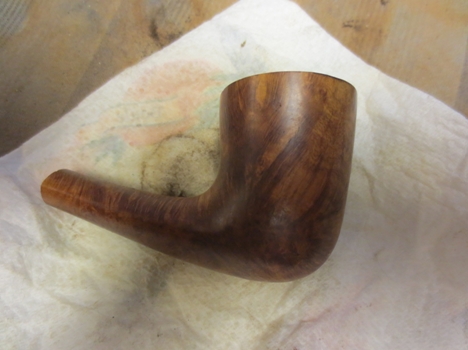
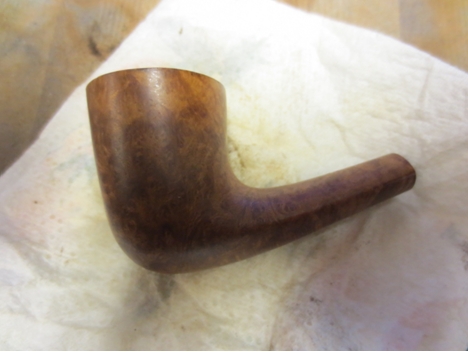
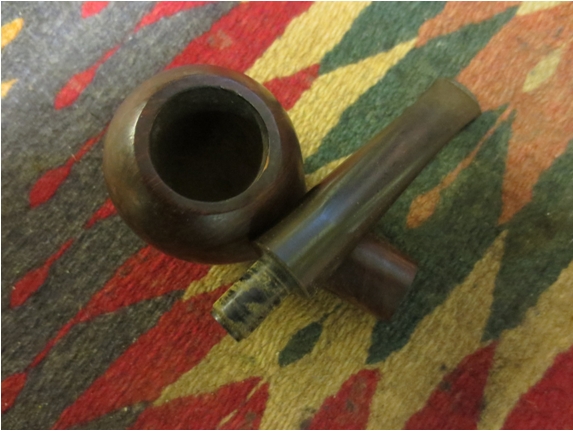
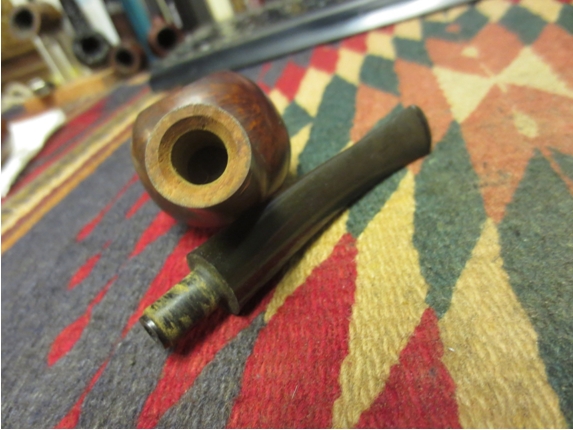
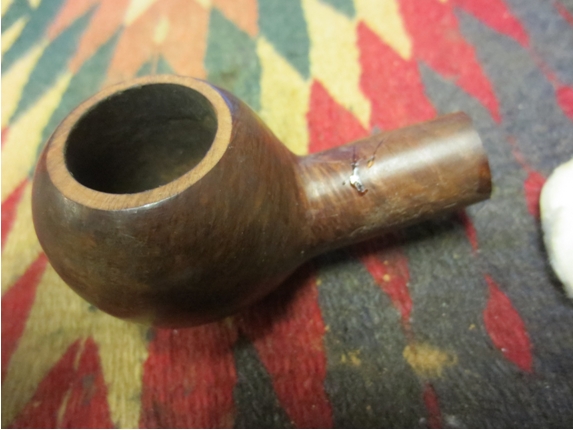
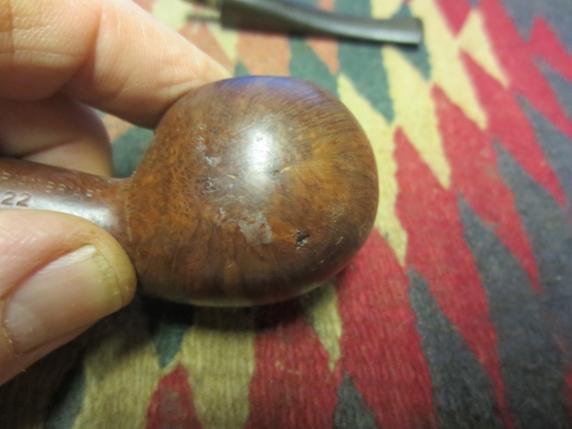
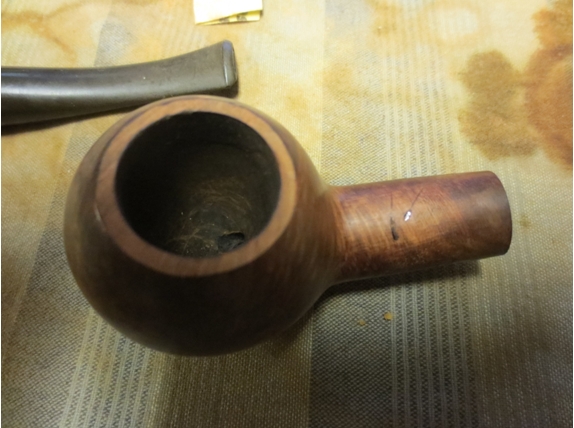
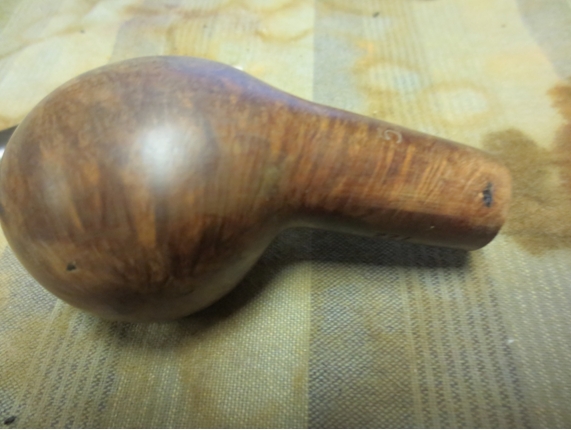
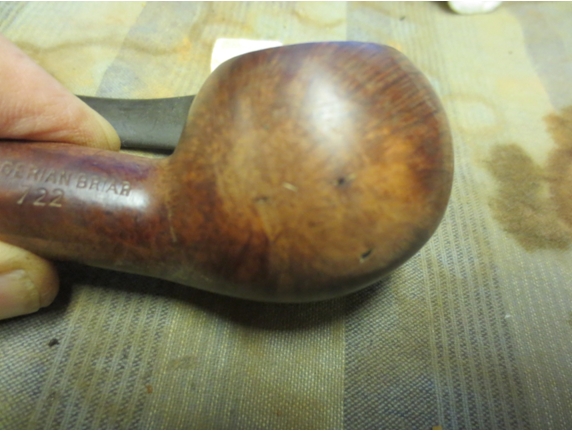
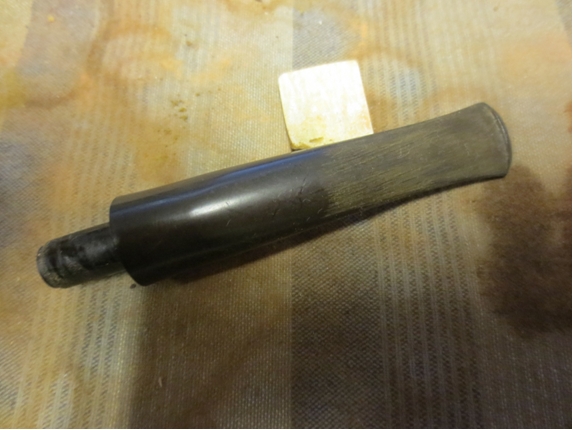
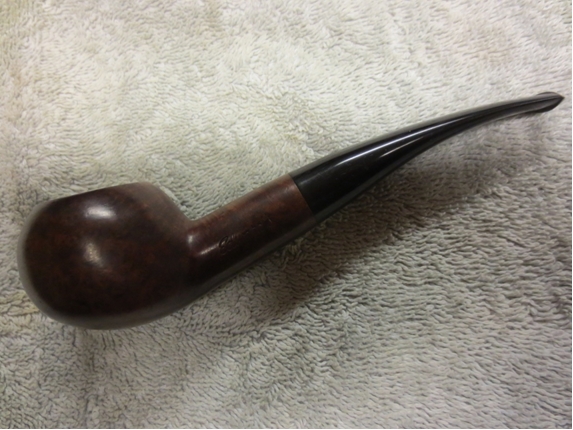
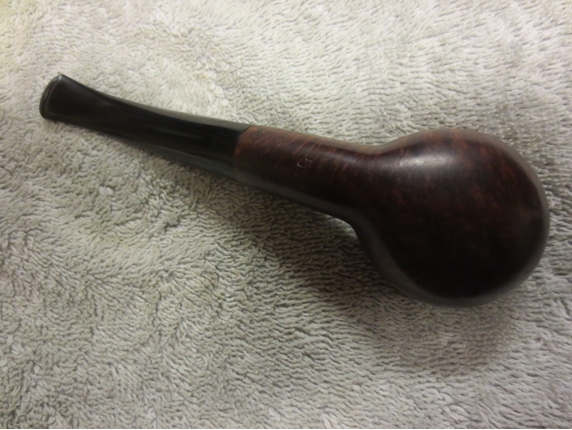
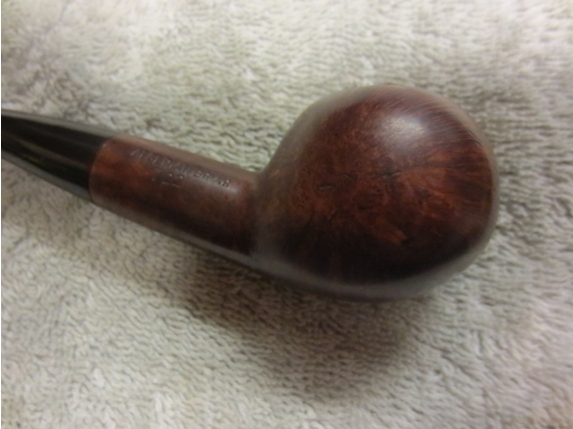
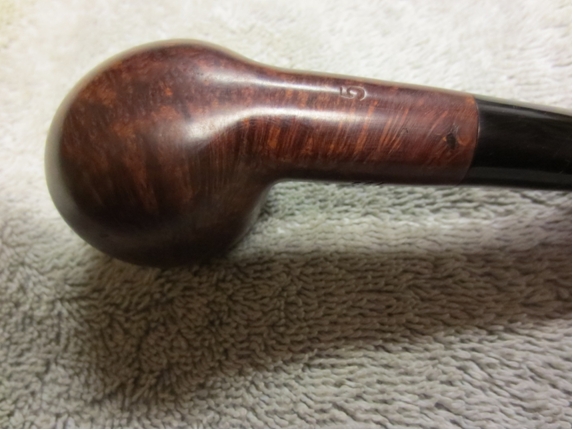
I picked up this nice looking Hardcastle pot, but when it arrived I realized that it did not have the proper stem.Hardcastle1

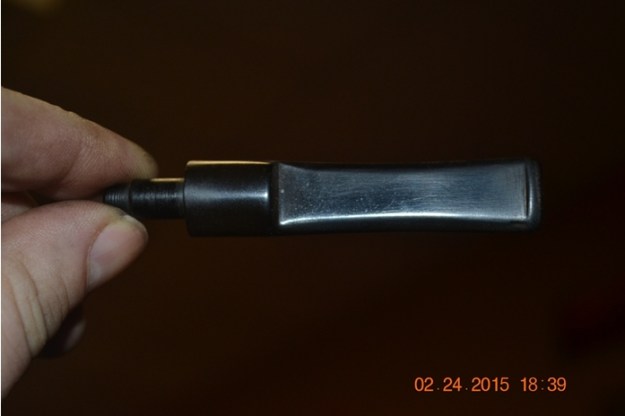
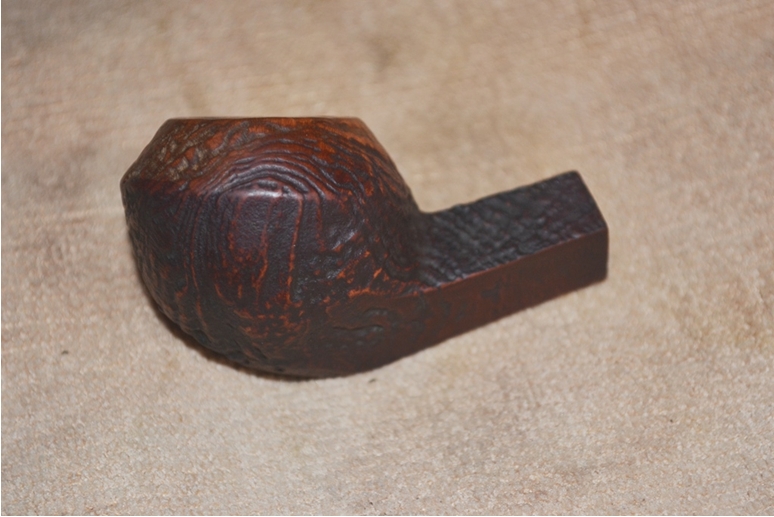
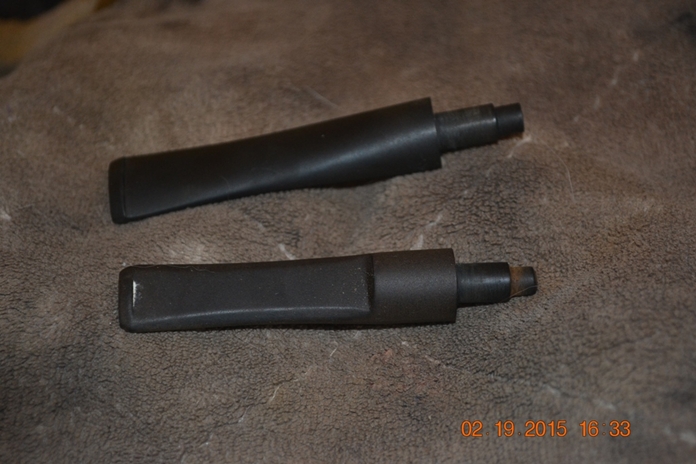
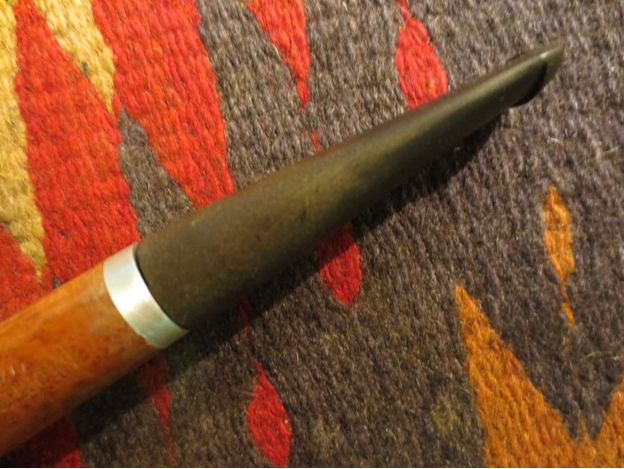
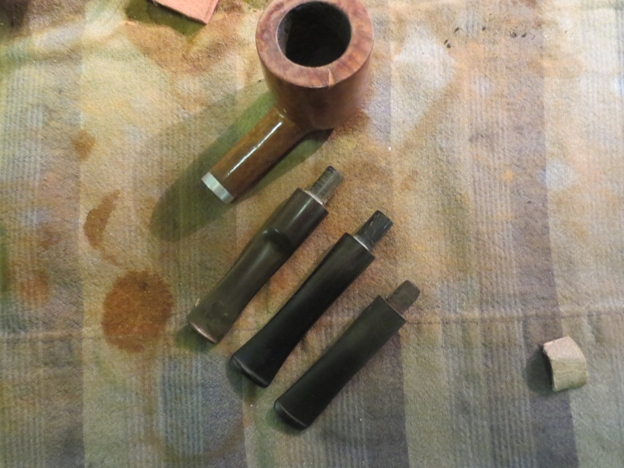
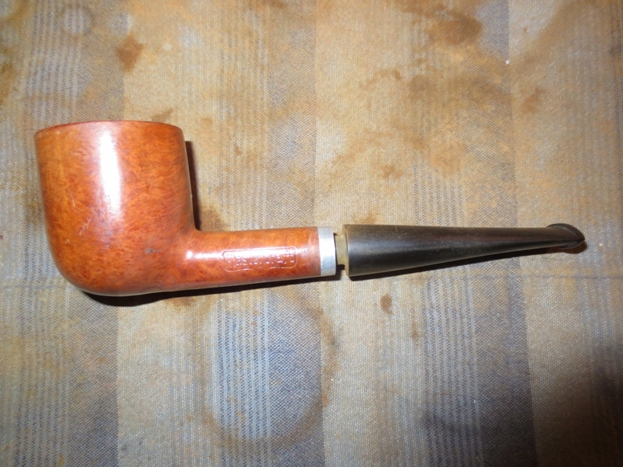
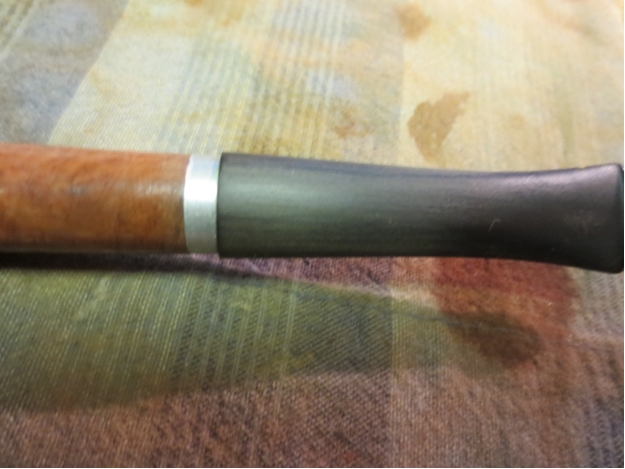
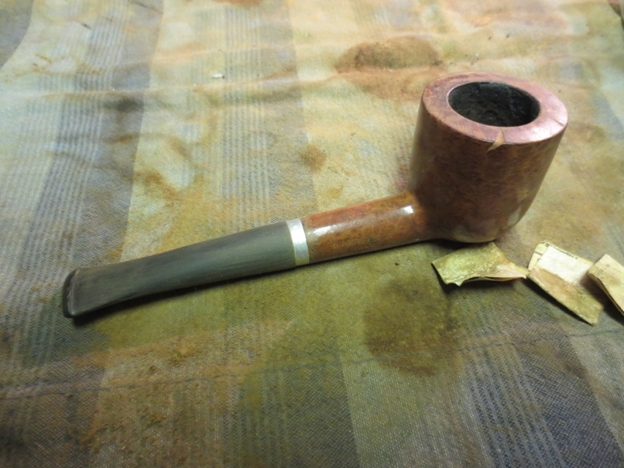
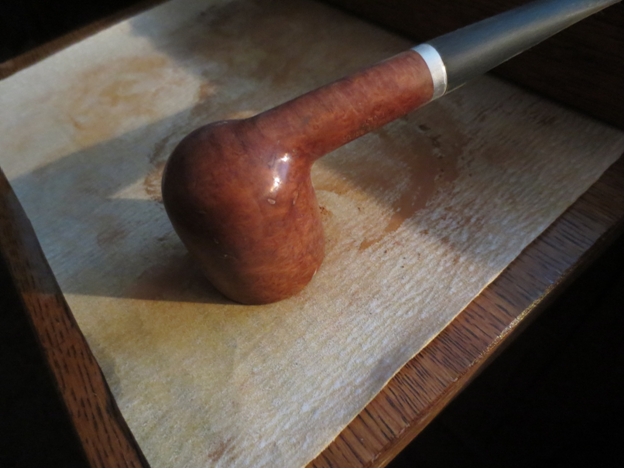
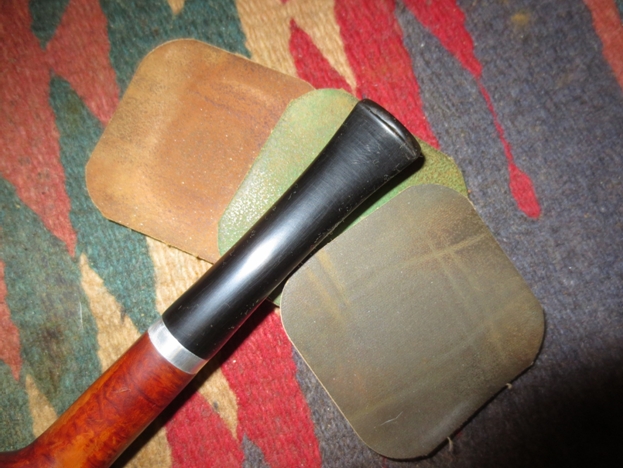
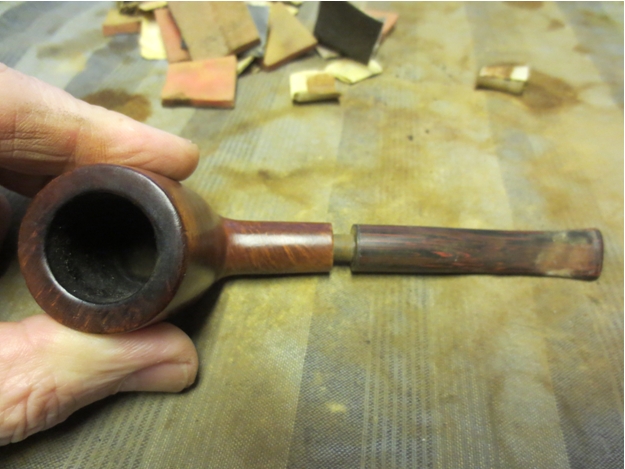
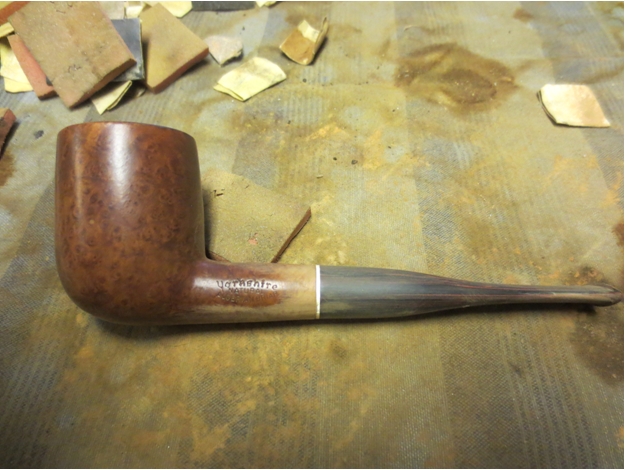
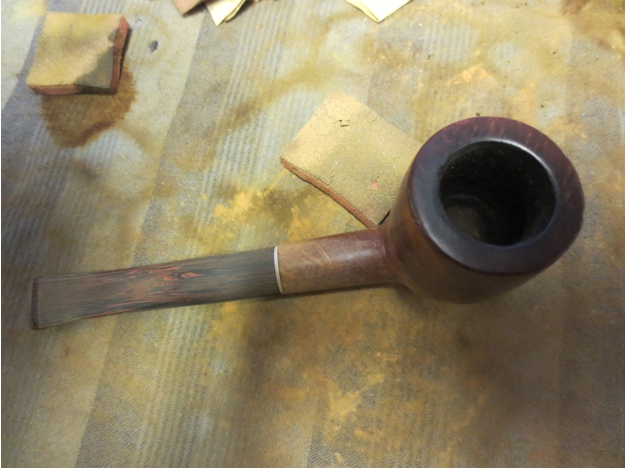
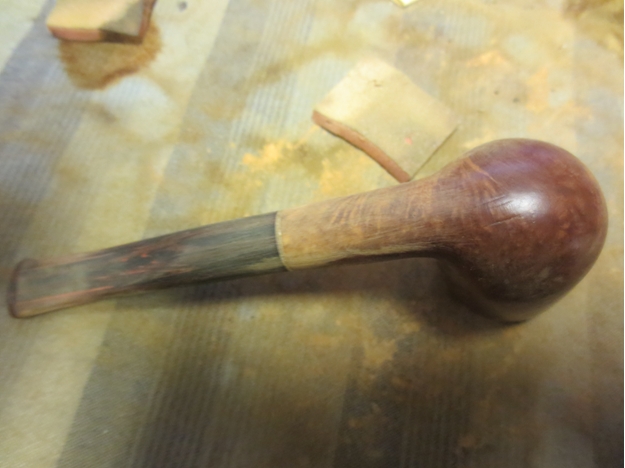
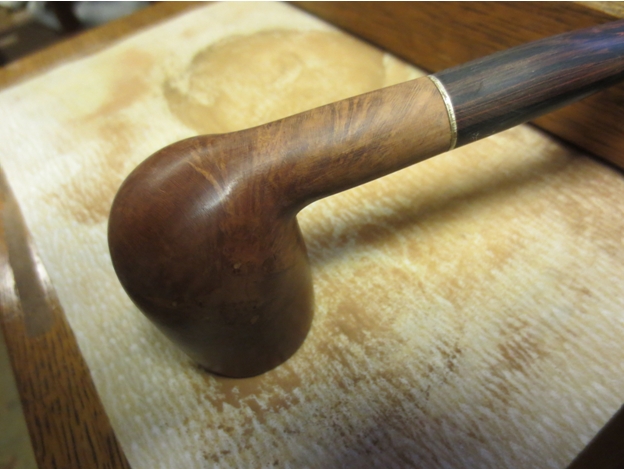
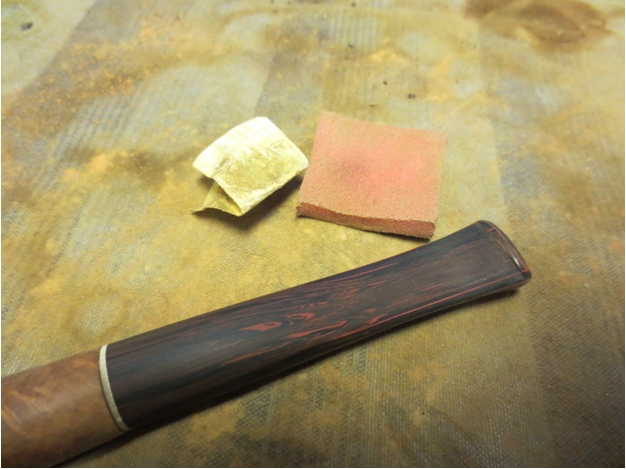
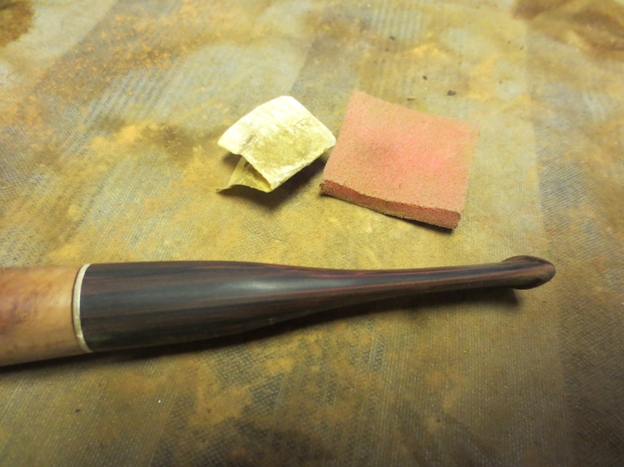
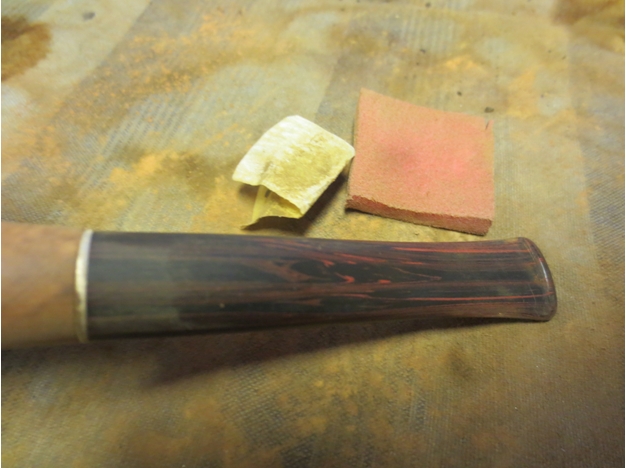
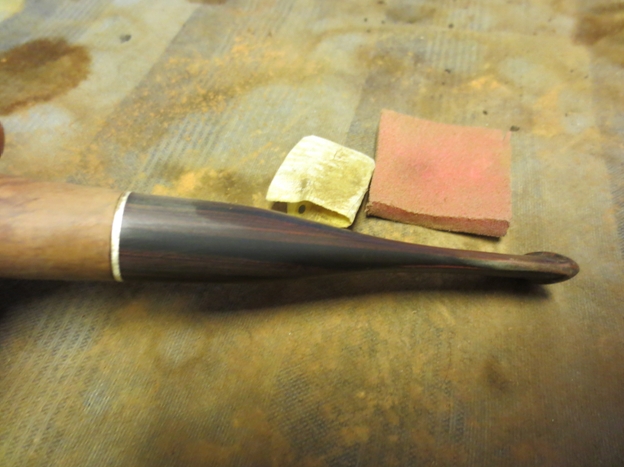
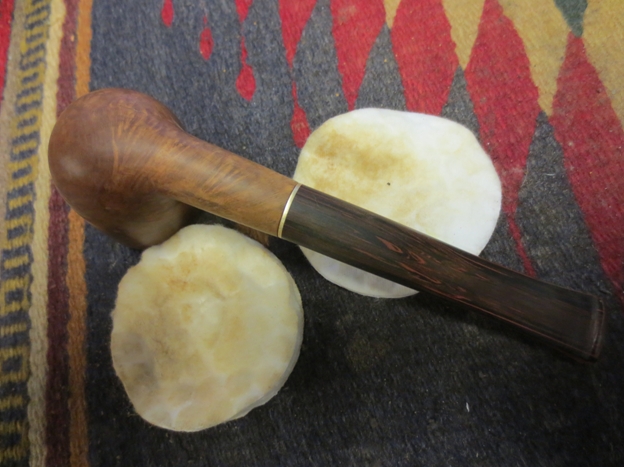
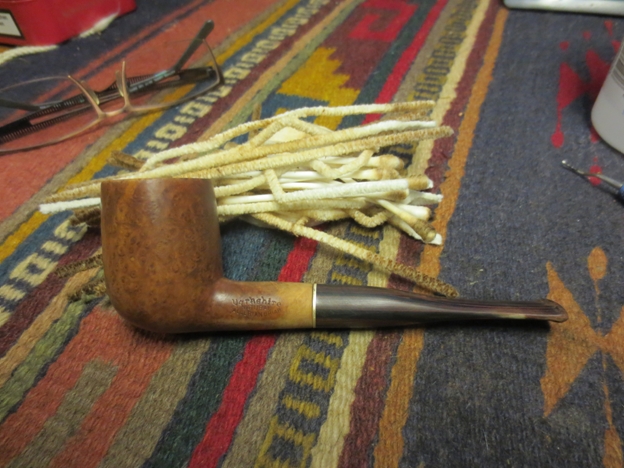
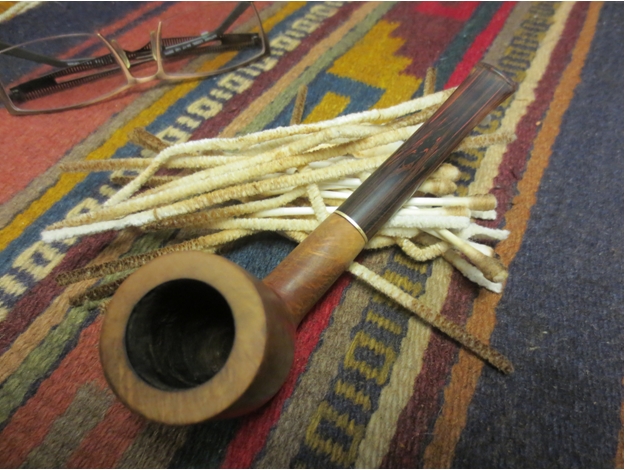
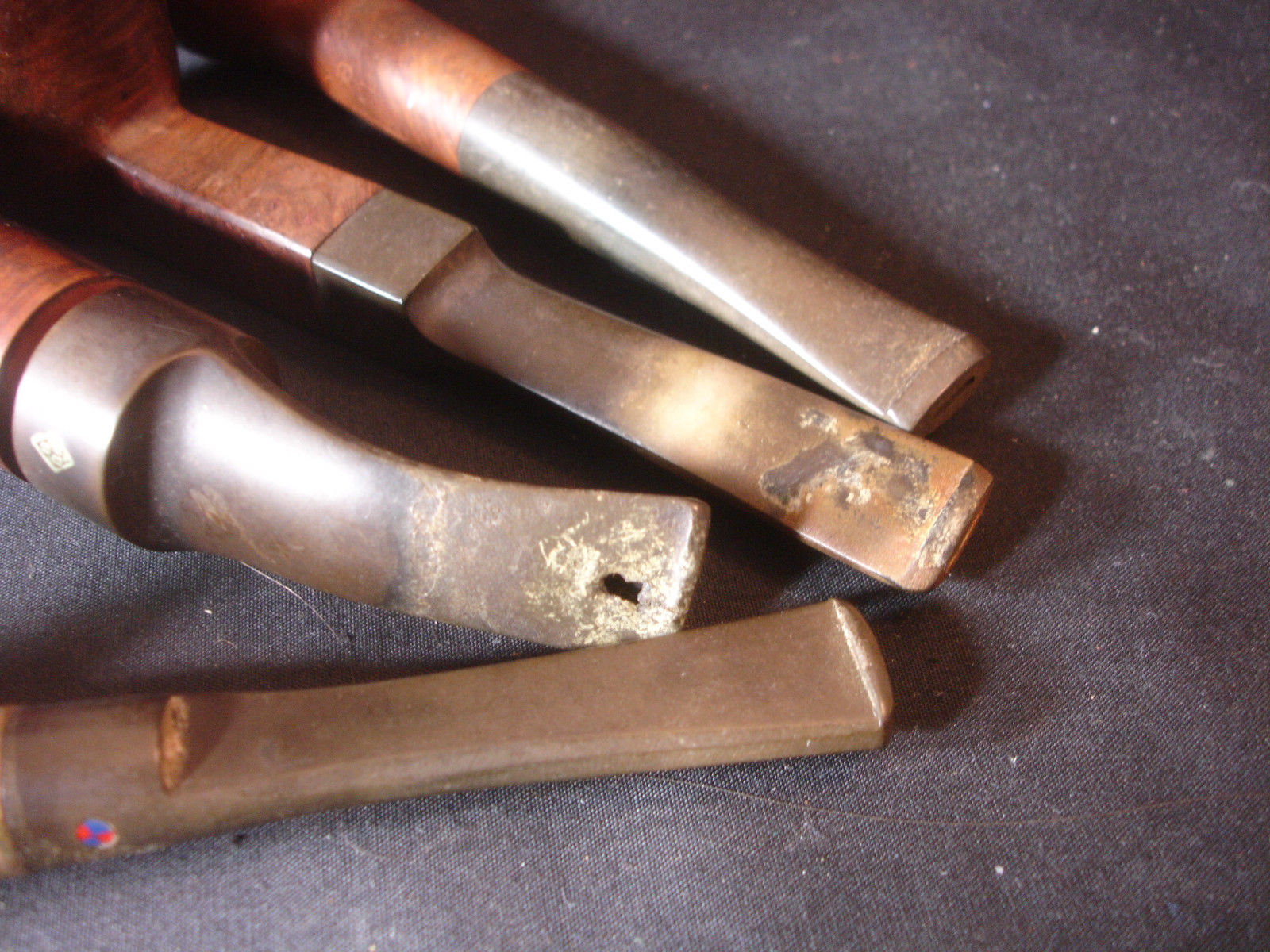
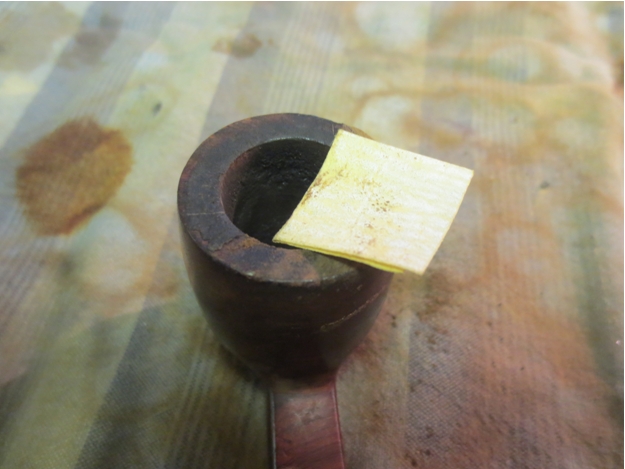
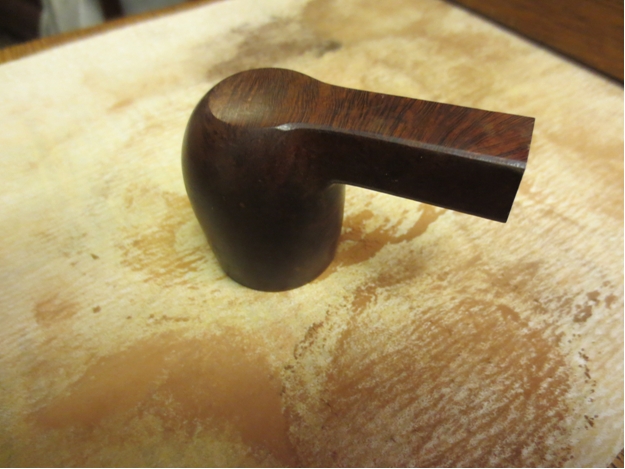
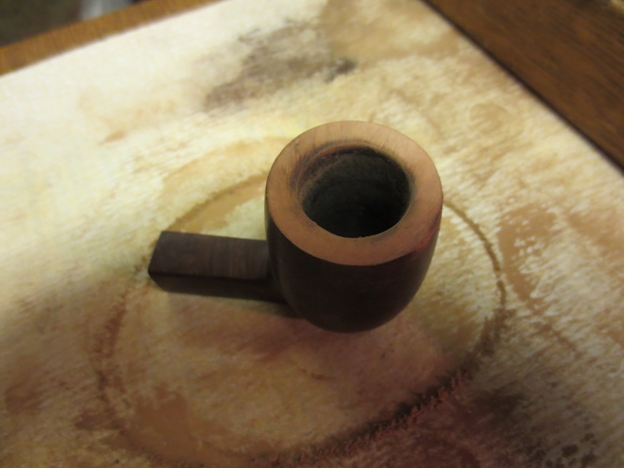
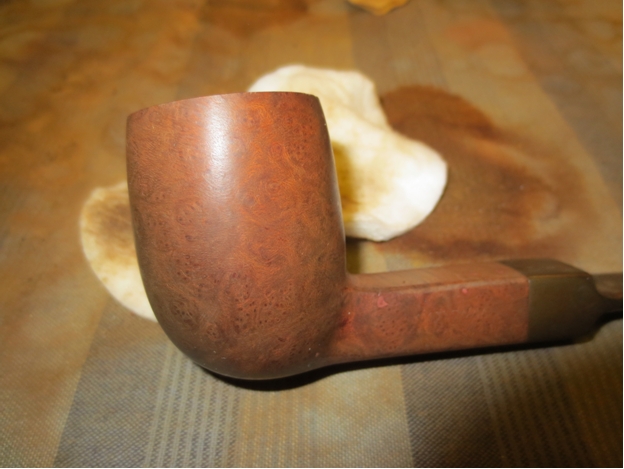
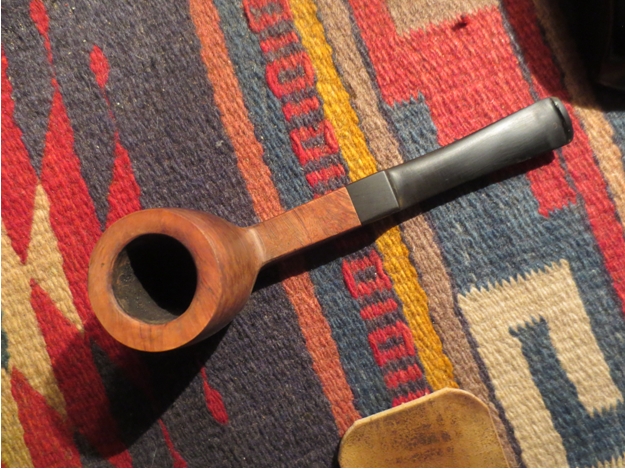
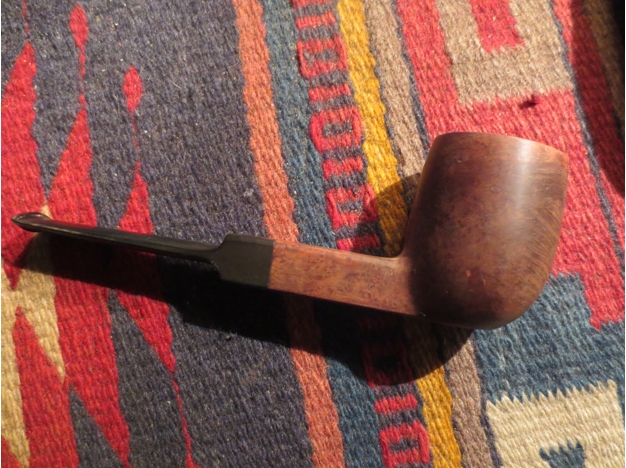
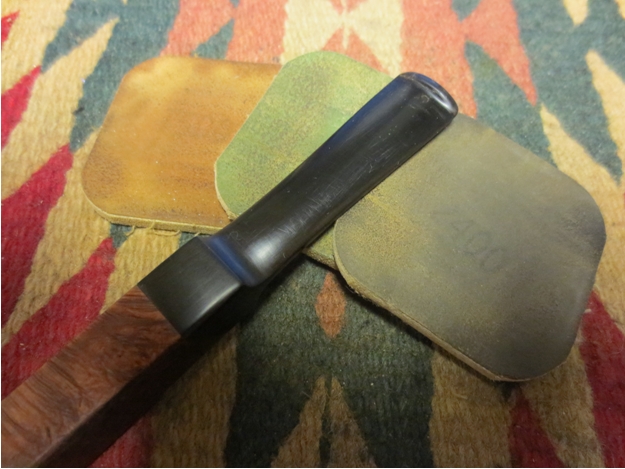
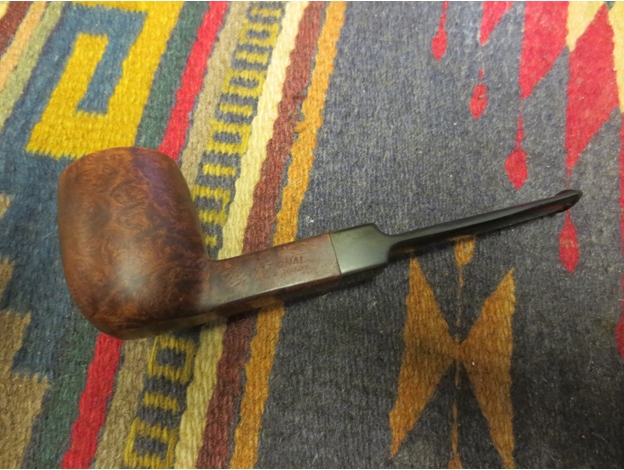
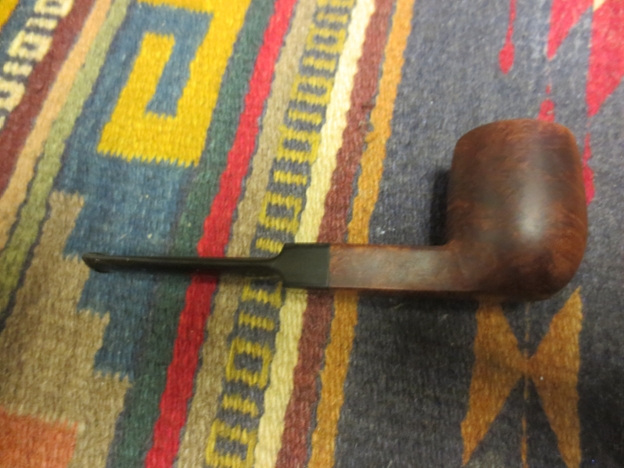
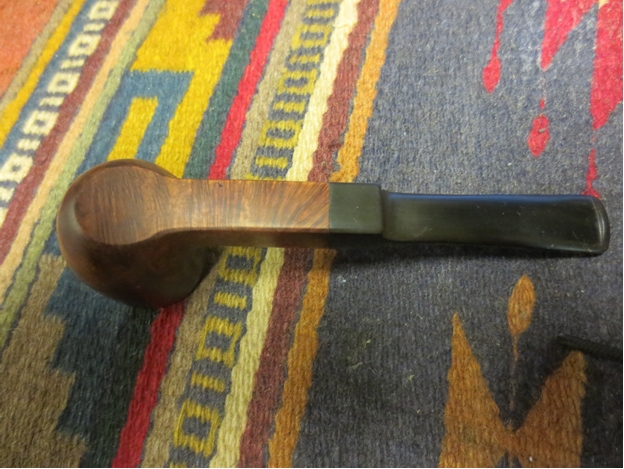
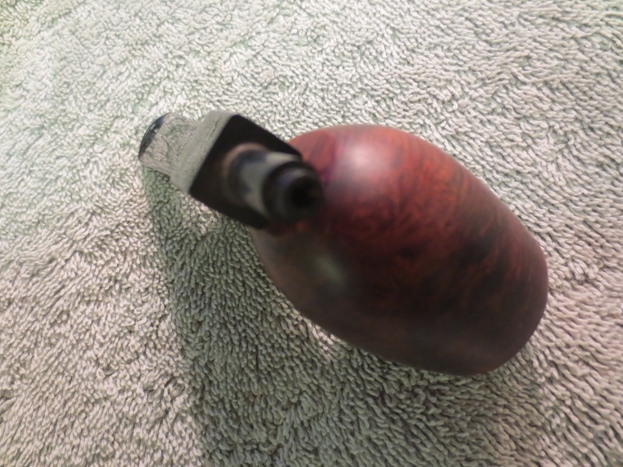
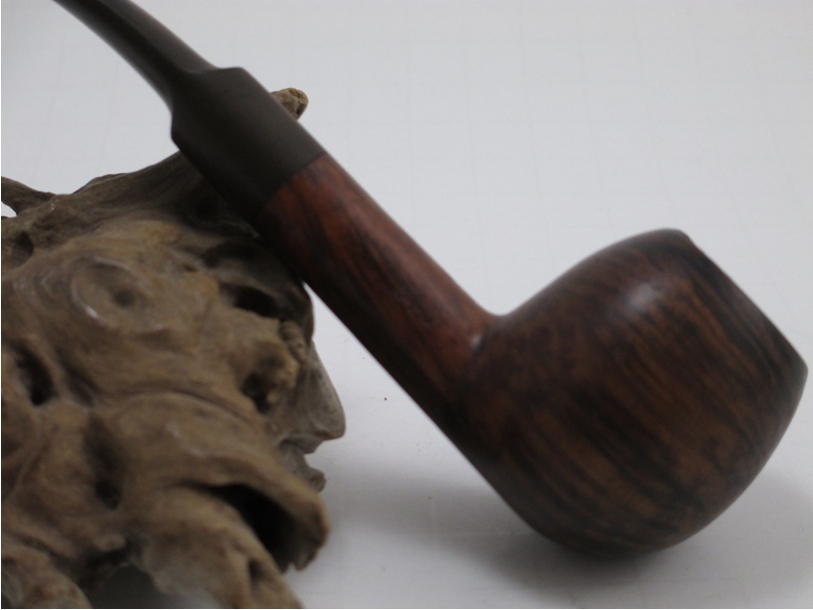
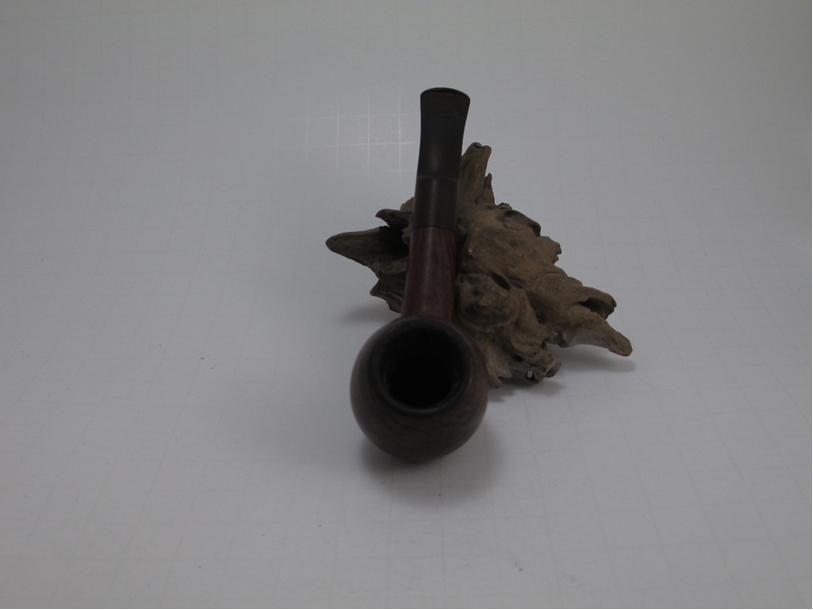
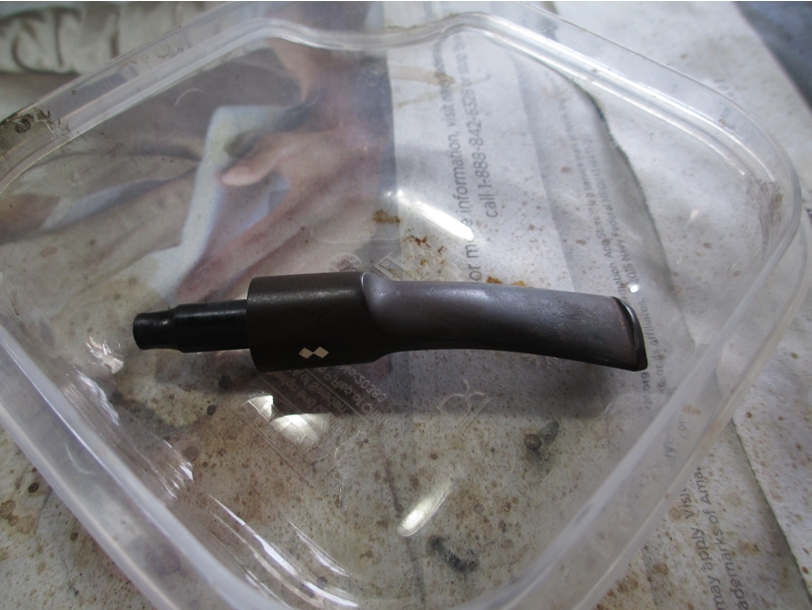
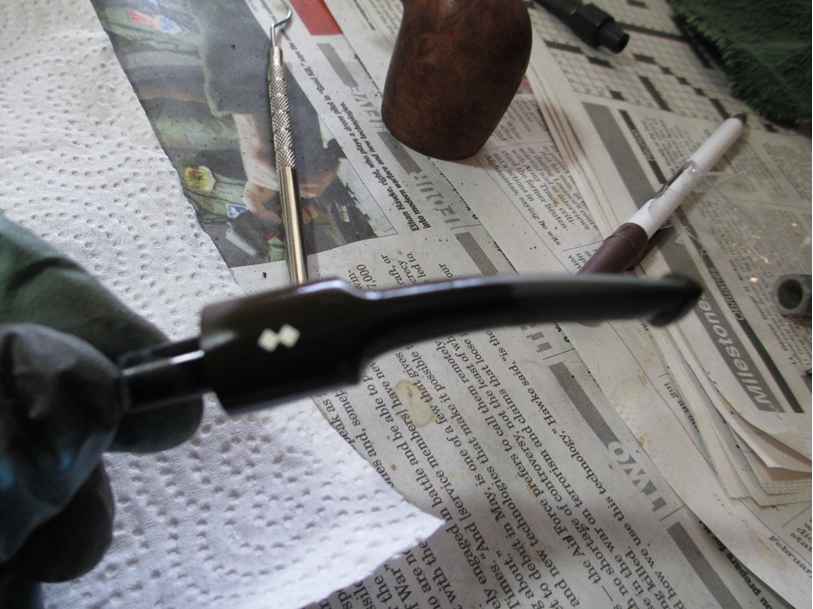
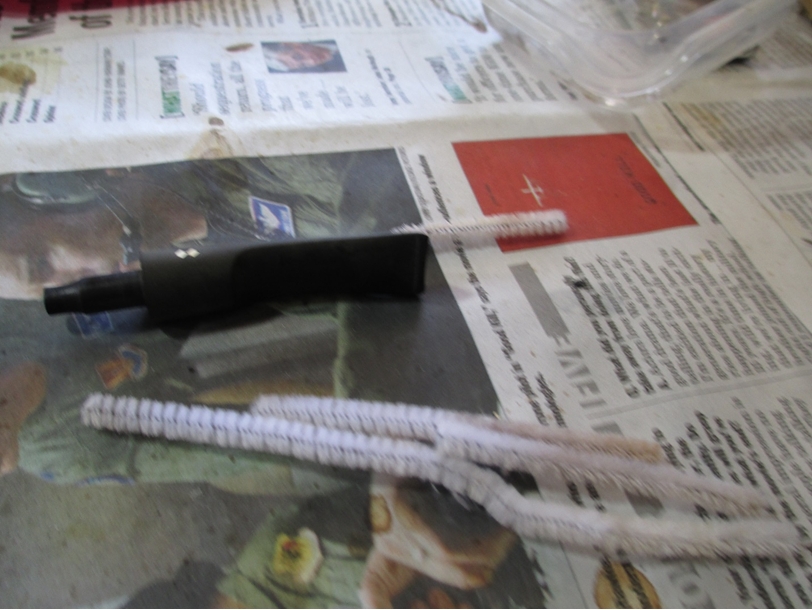
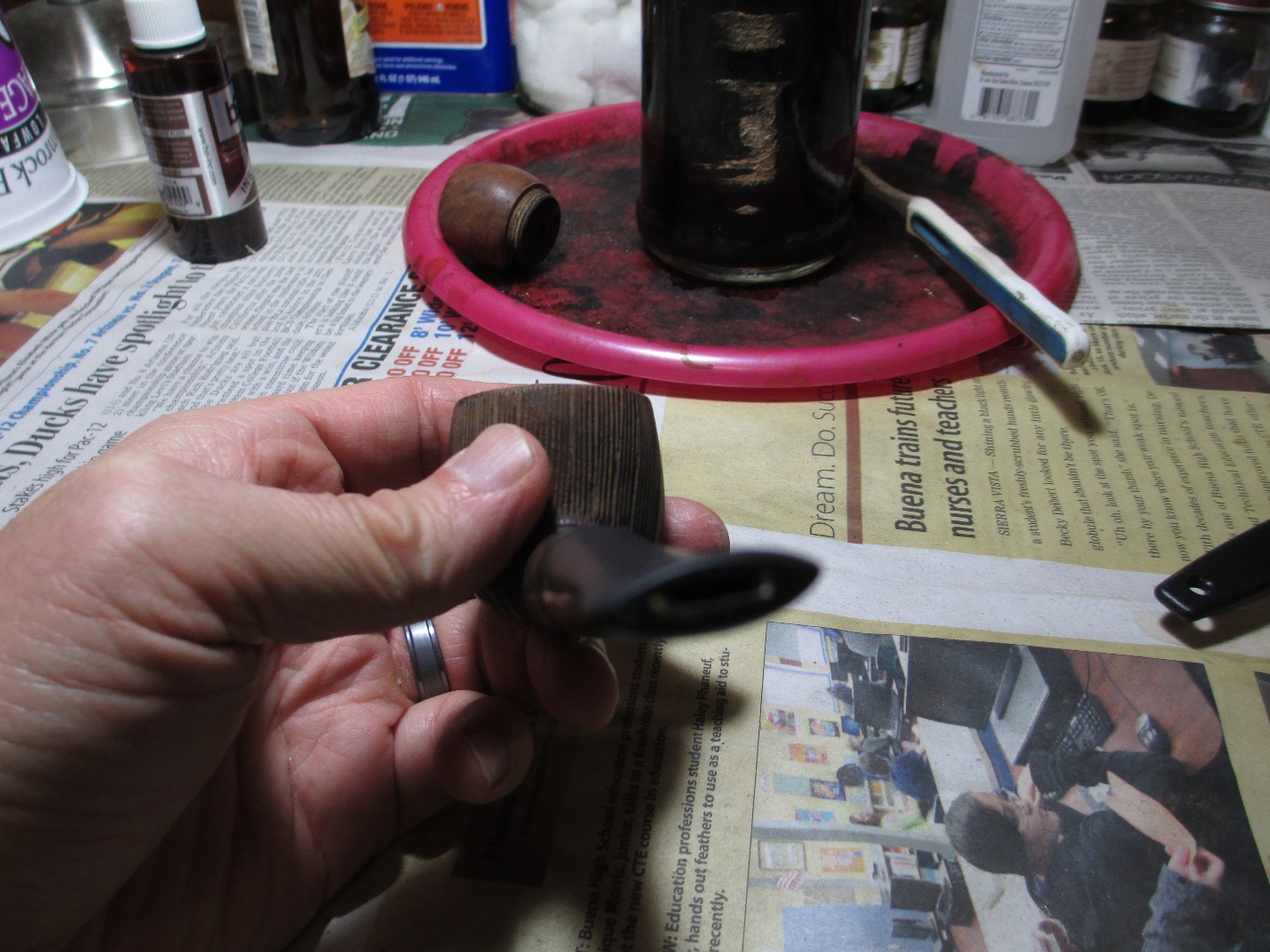
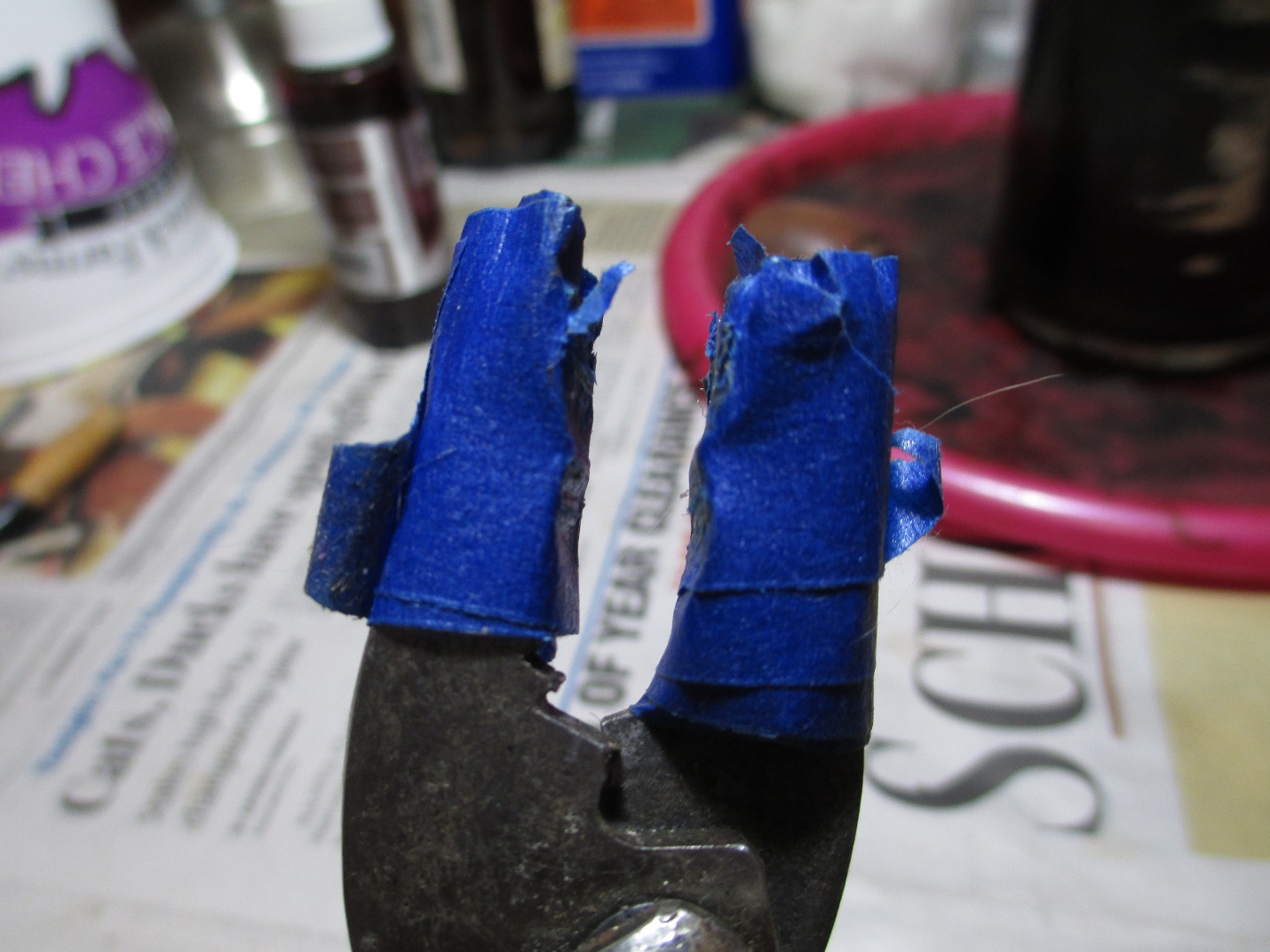
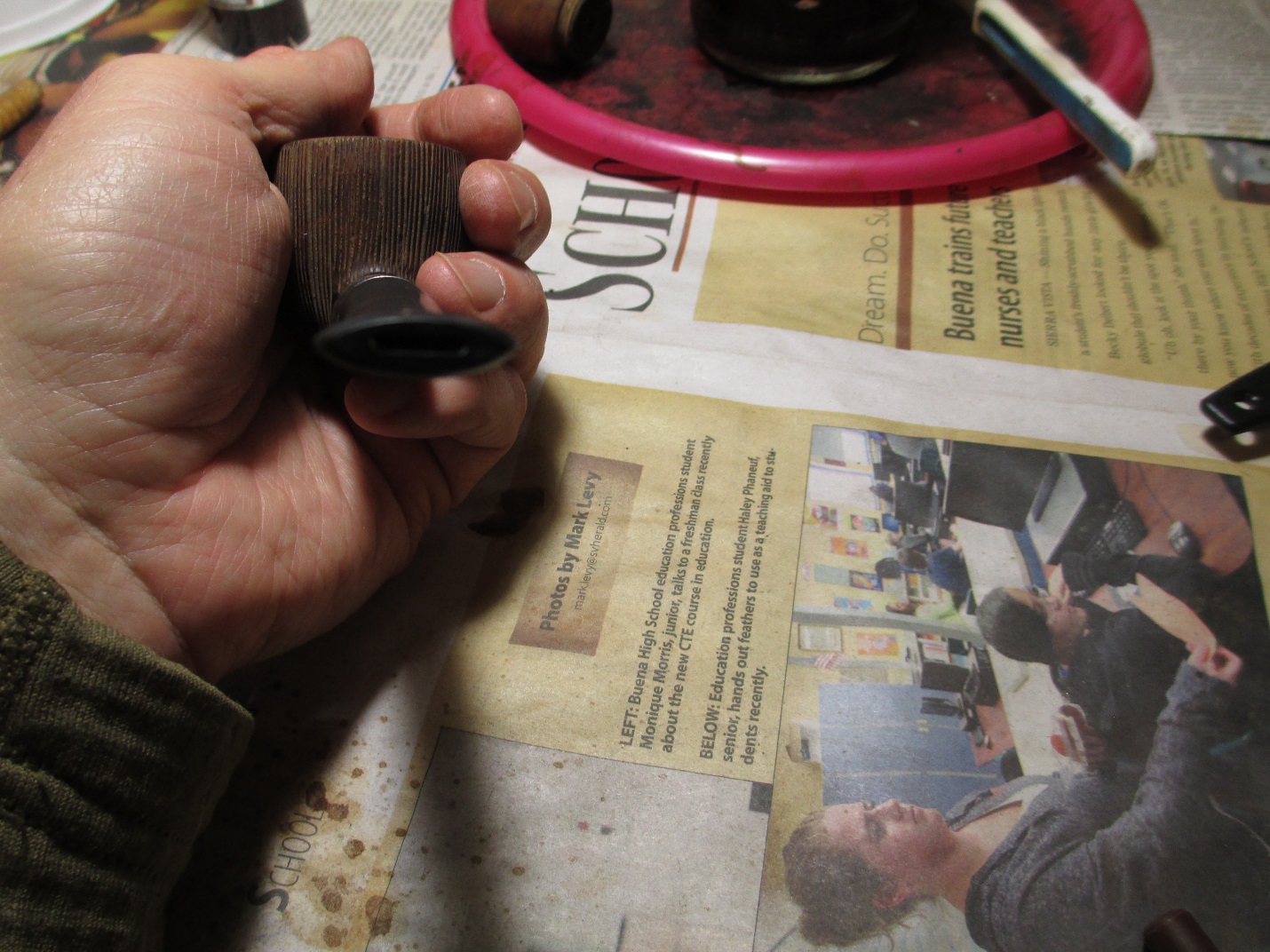
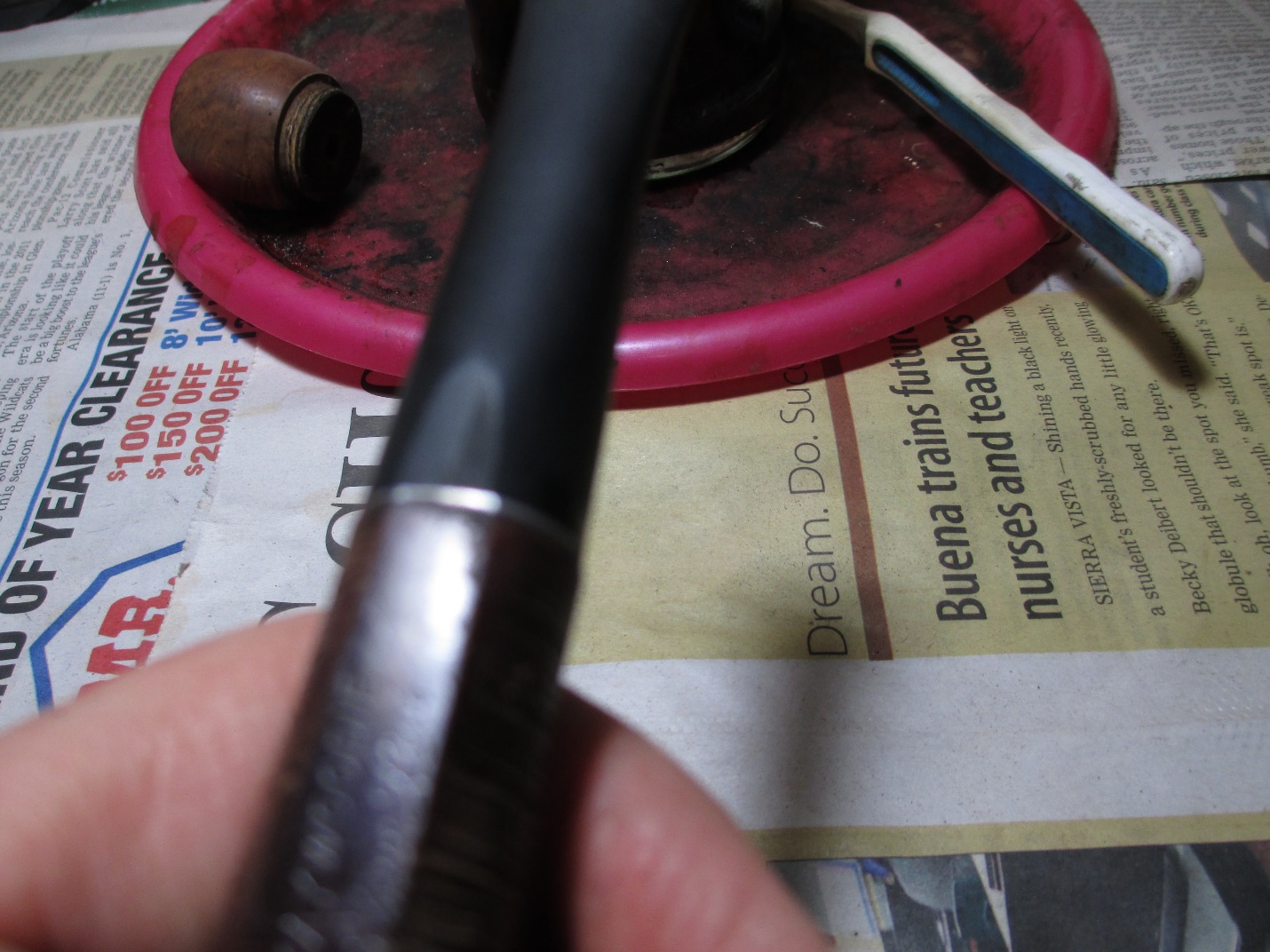
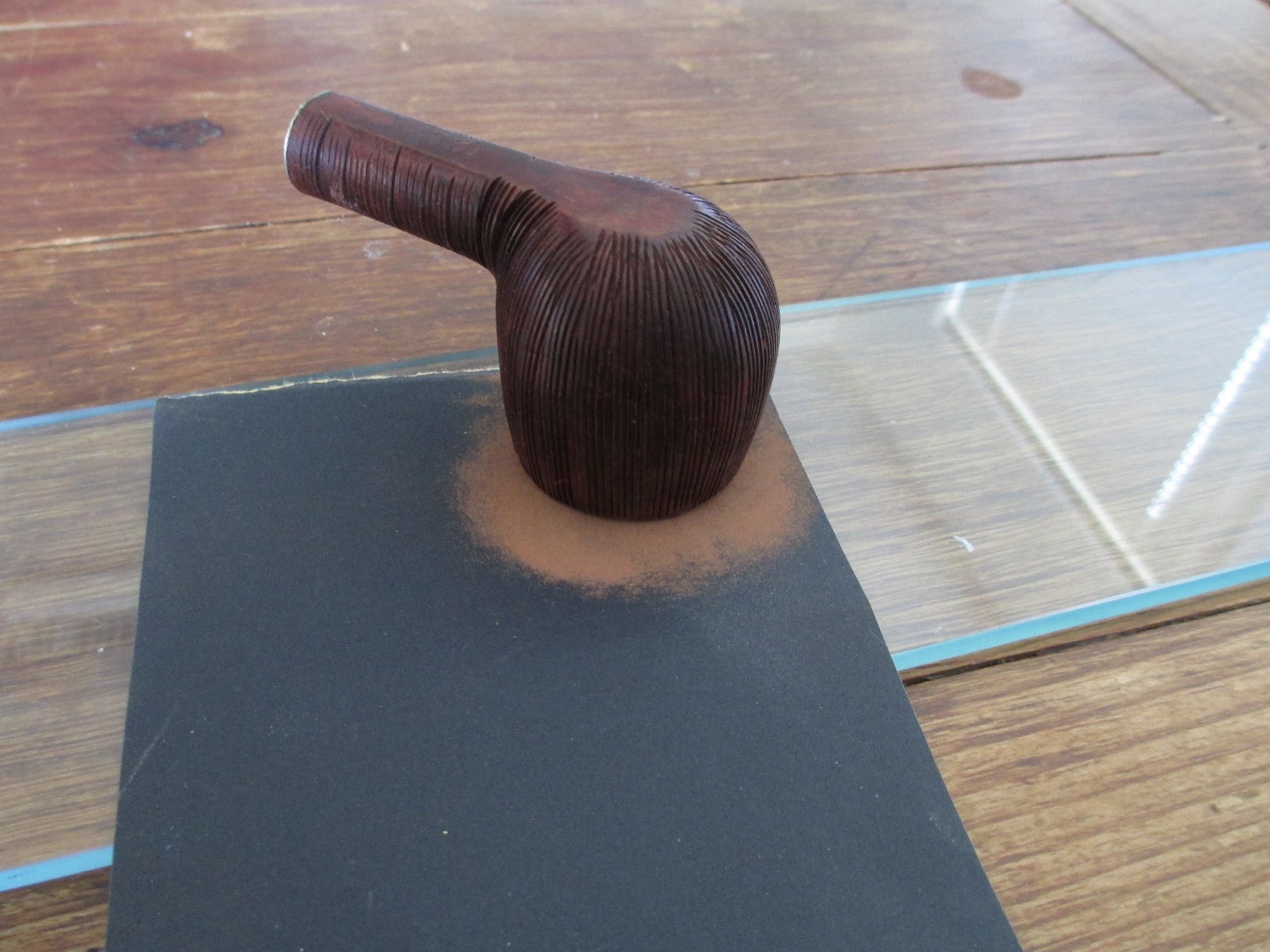
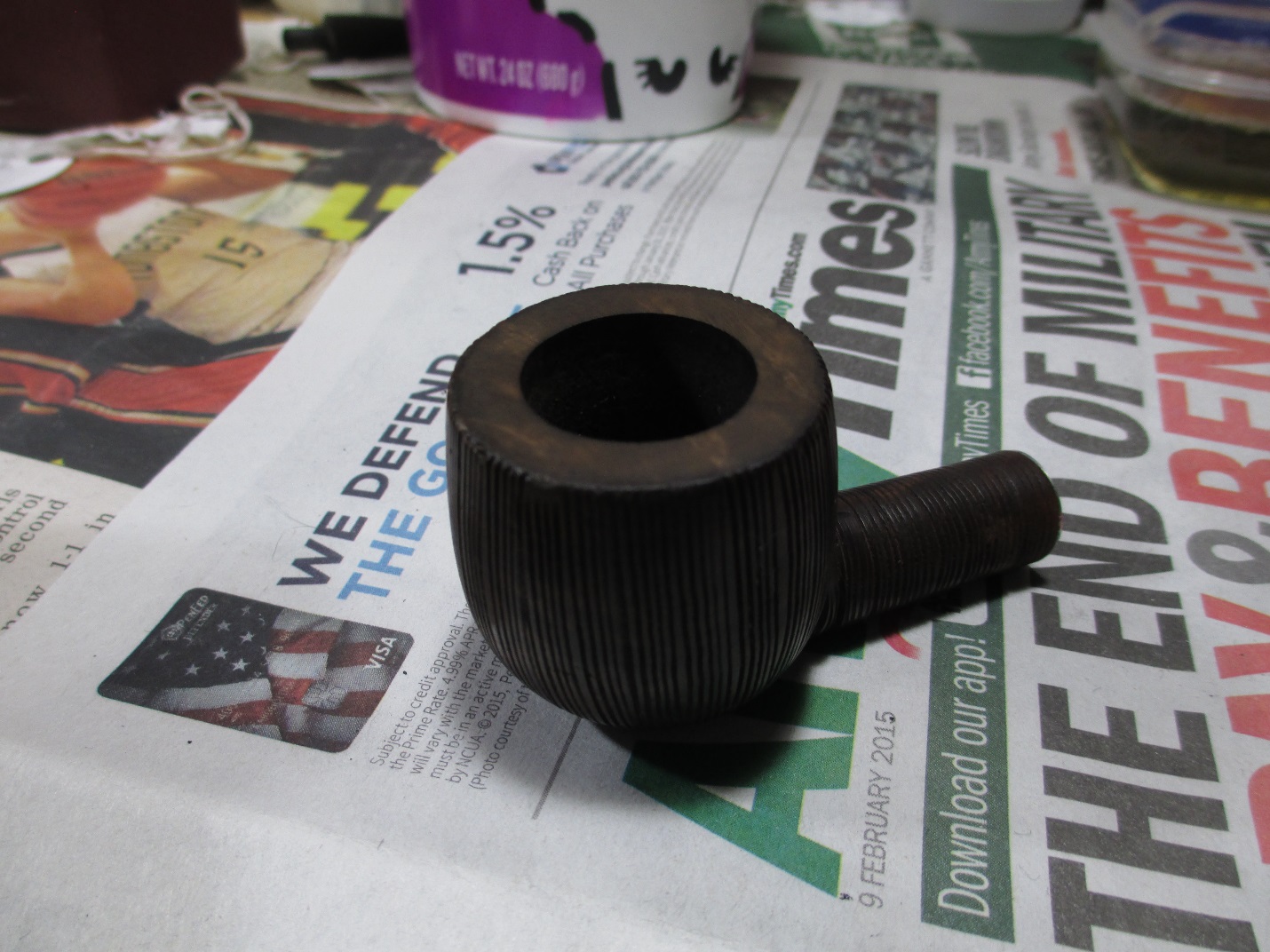
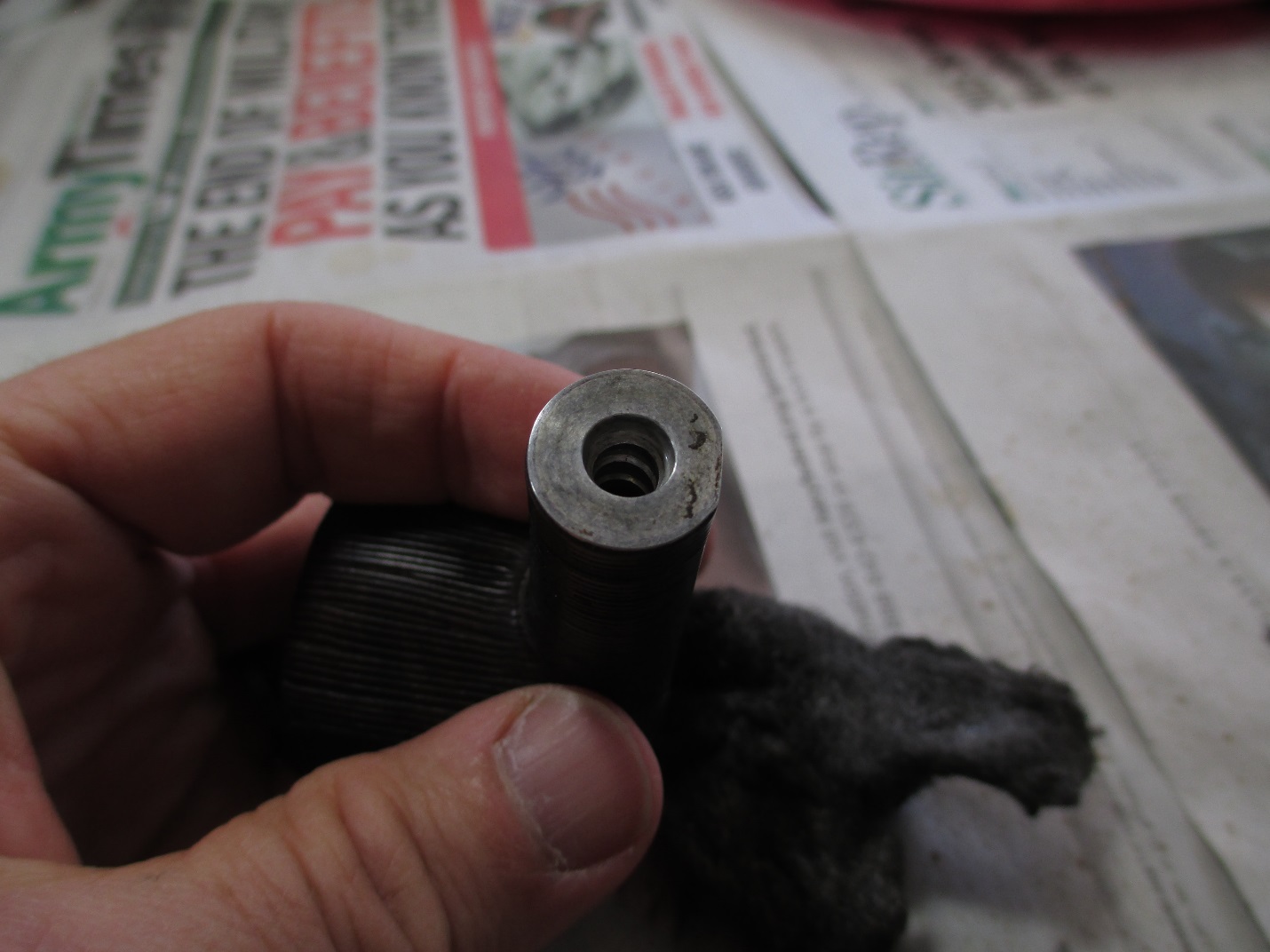
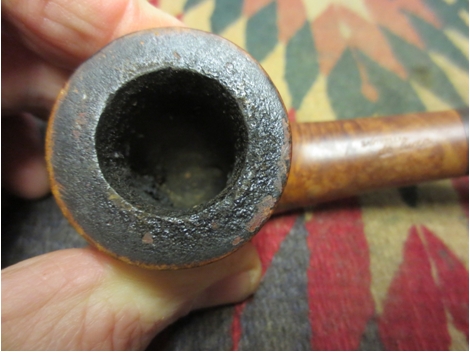
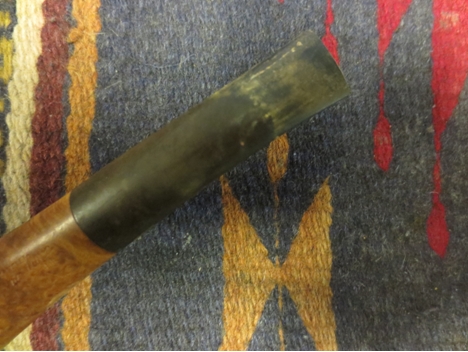
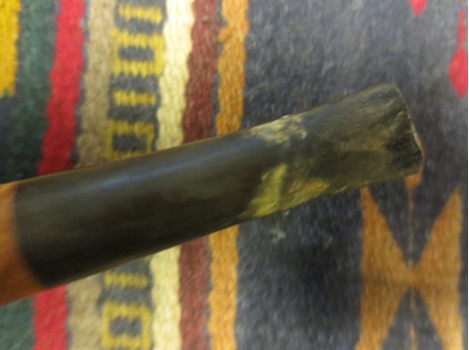
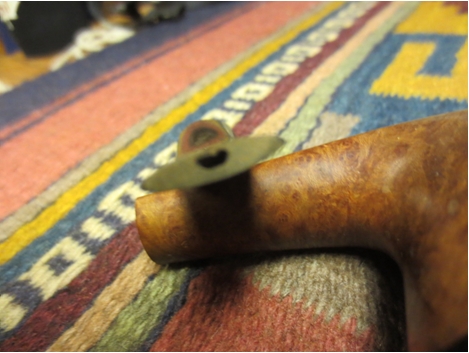
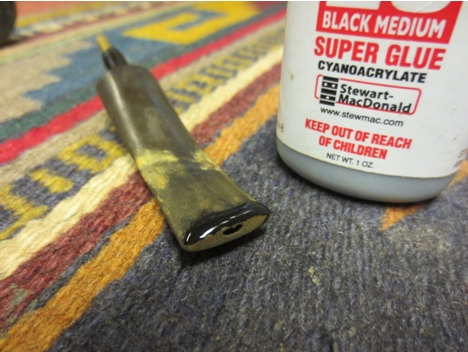
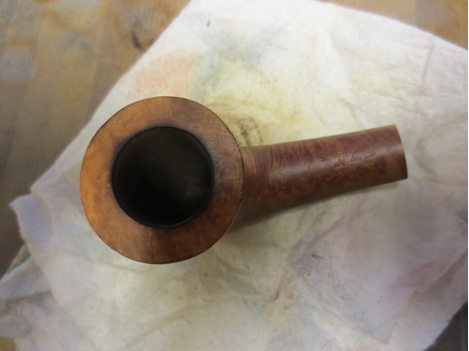
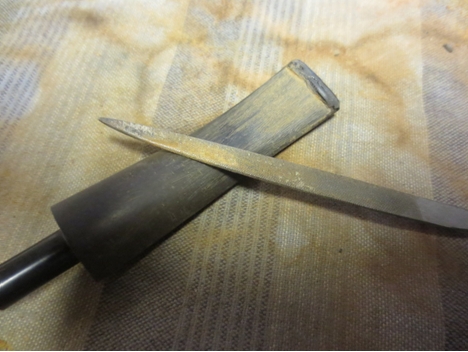
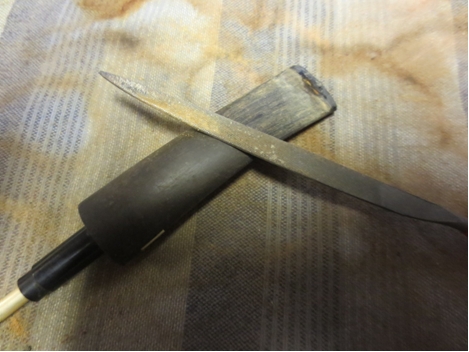
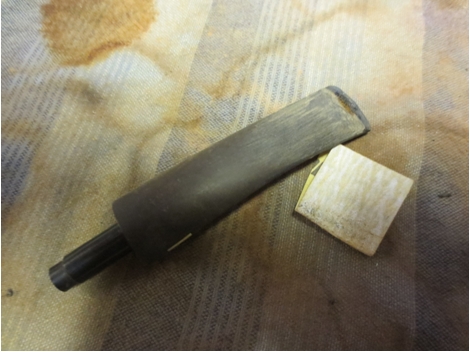
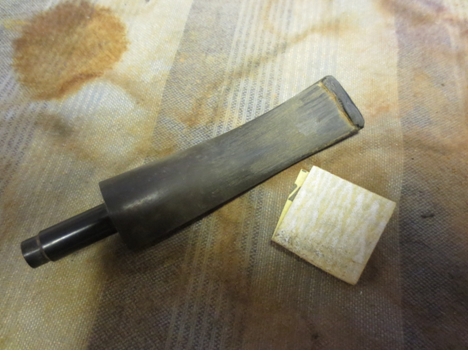
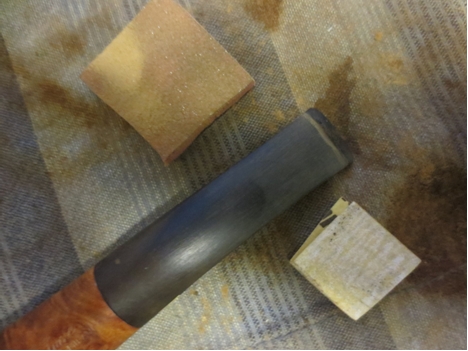
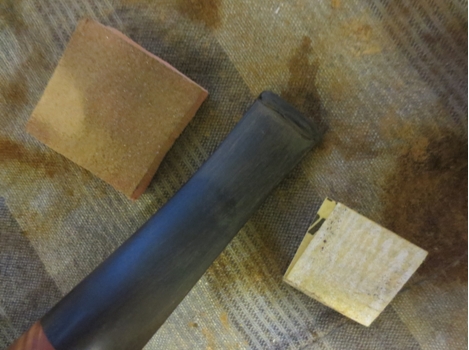
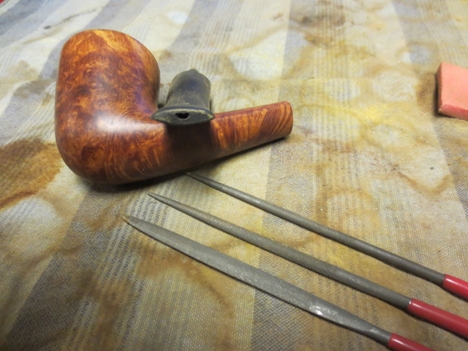
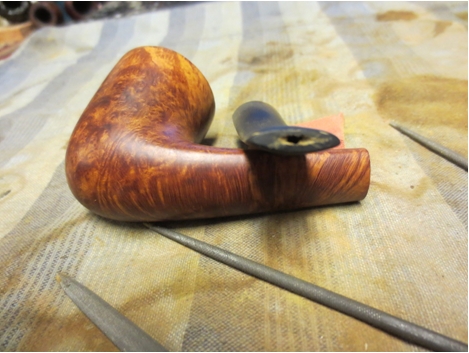
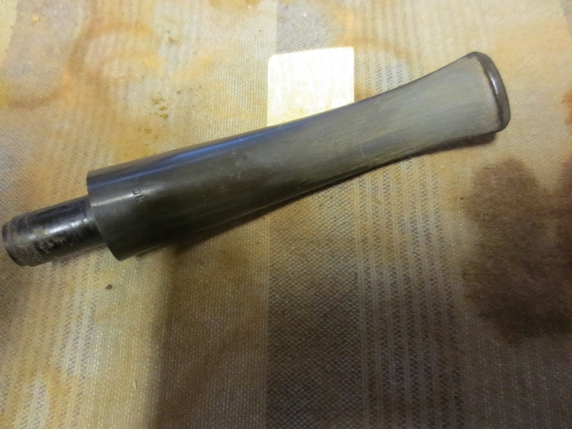
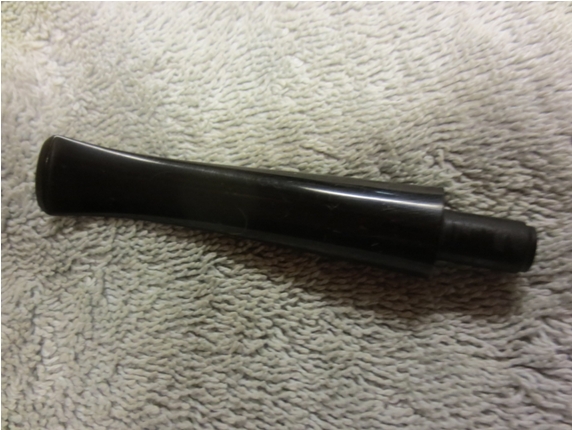
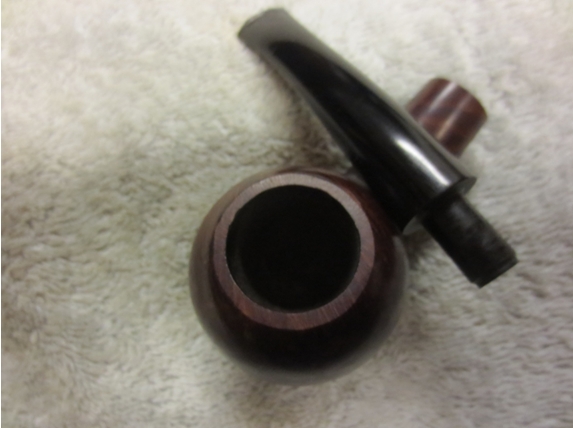
Hardcastle2 Fortunately Steve bailed me out and sent a couple of likely replacements. The stem that I settled on had a slightly smaller tenon diameter and the outside diameter was noticeably bigger. This was going to be a fun challenge. I covered the shank with painter’s tape and started reshaping the stem with 100 grit sand-paper.Hardcastle3 Here is a shot after getting to about 80% completion.Hardcastle4 Next, I took the painter’s tape off and replaced it with Scotch tape (since it is thinner) at the end of the shank. At this point I was using 400 grit wet/dry without water.Hardcastle5 Once I completed that step, I took a rubber washer and placed it on the tenon to protect the end of the stem and shank. I used 400 grit to finish the last little bit, frequently taking the washer out to check the fit.Hardcastle This is what the pipe looked like once I had the stem sanded to fit.Hardcastle6

Hardcastle7

Hardcastle8

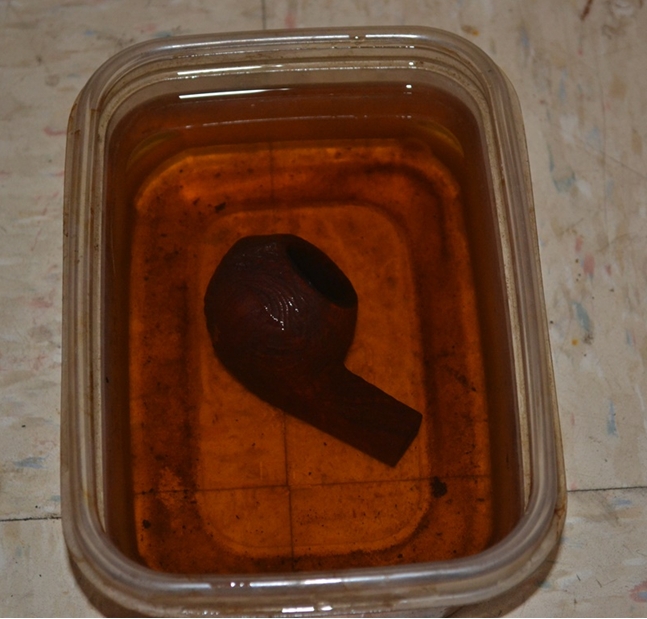
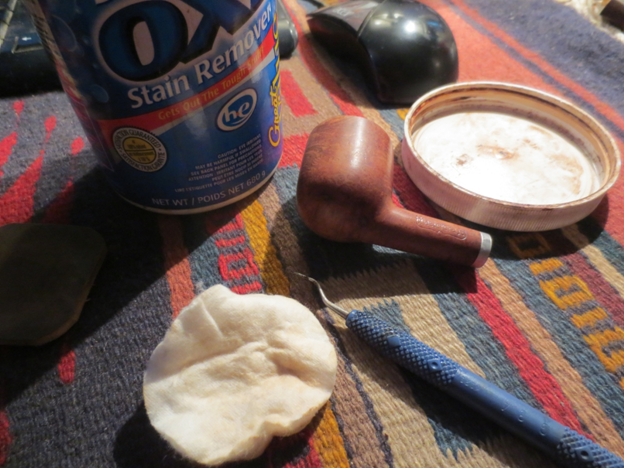
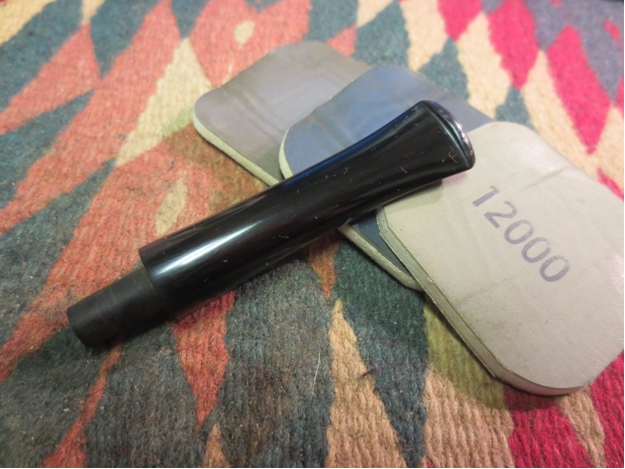
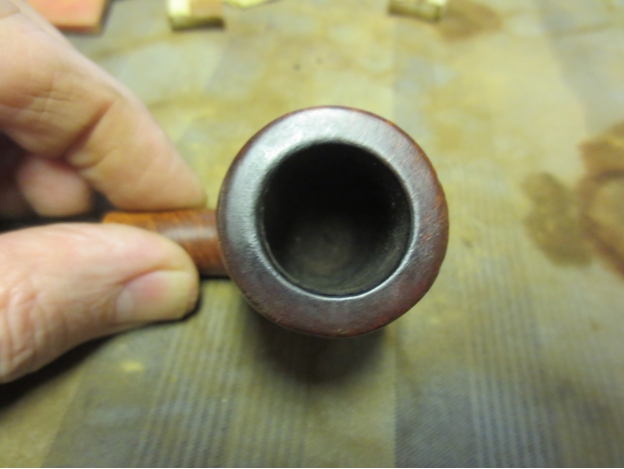
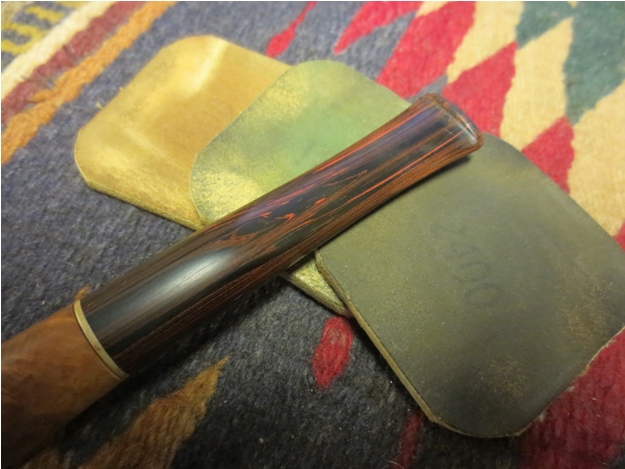
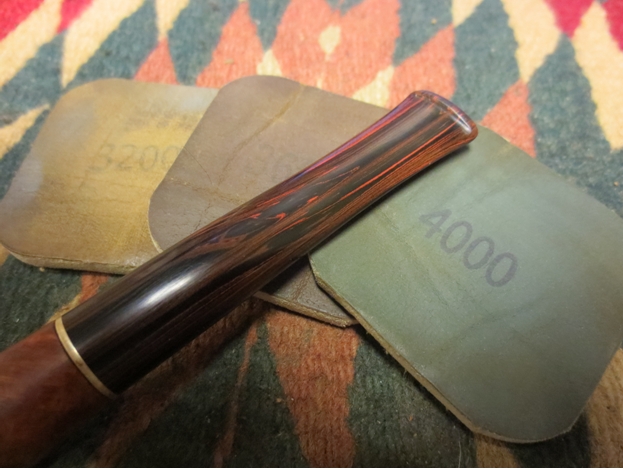
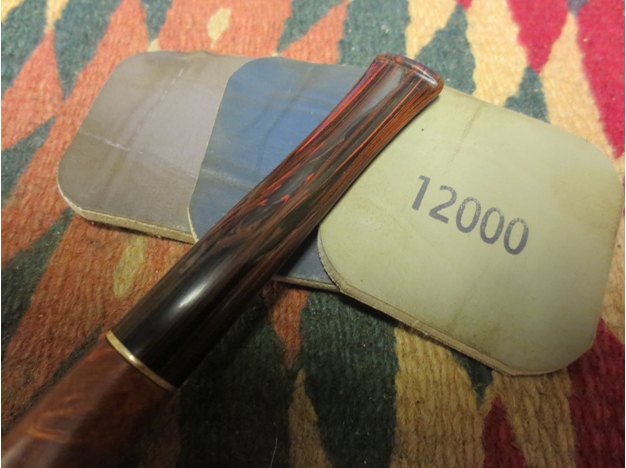
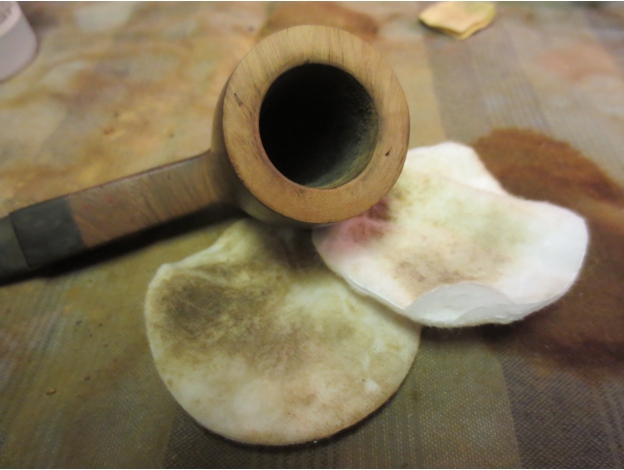
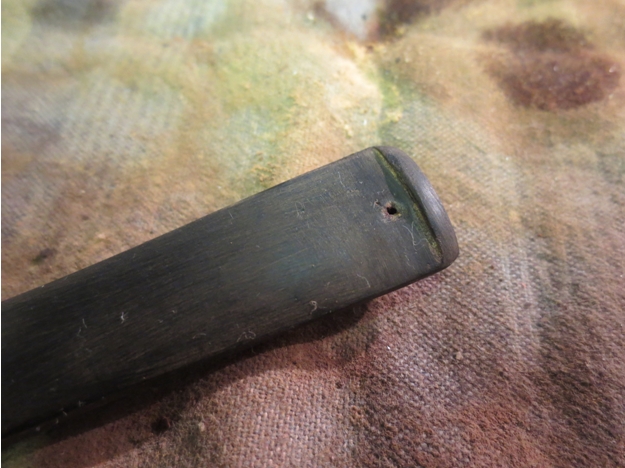
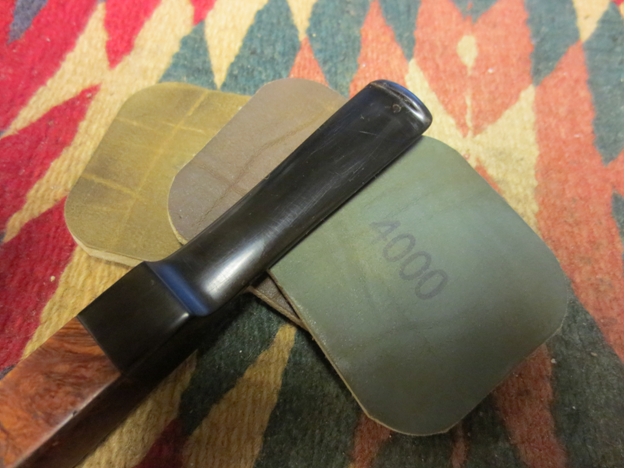
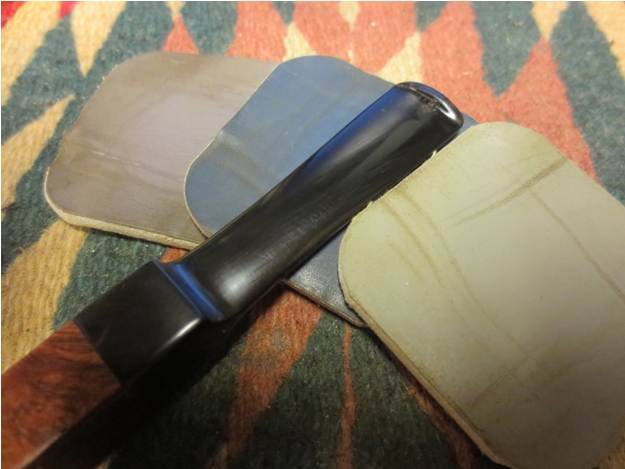
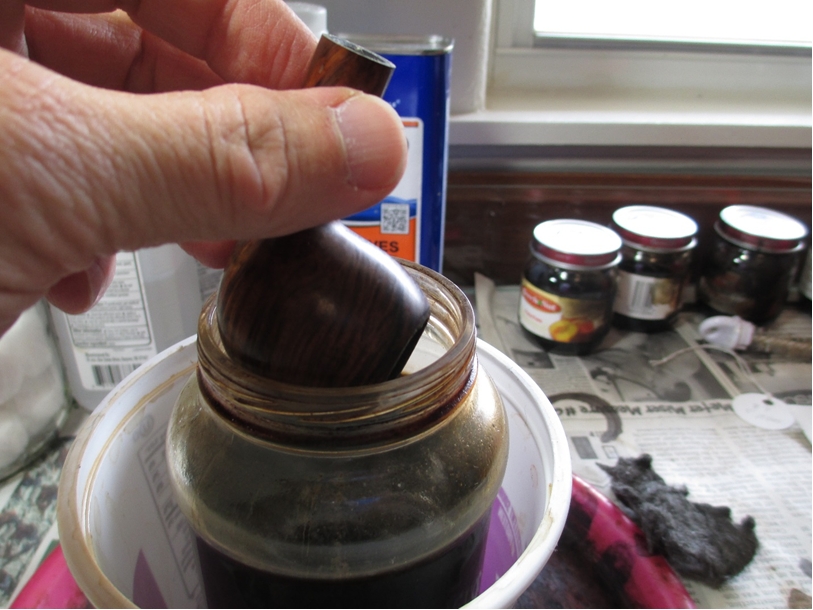
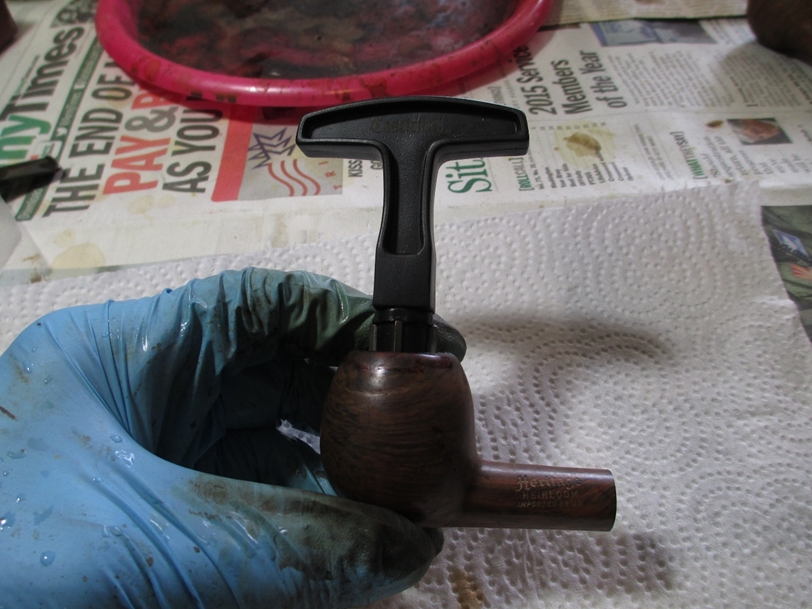
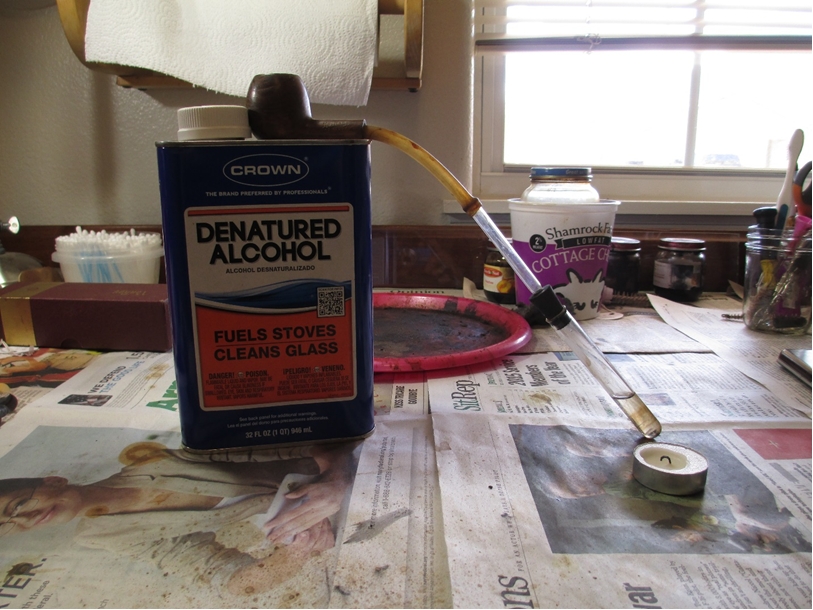
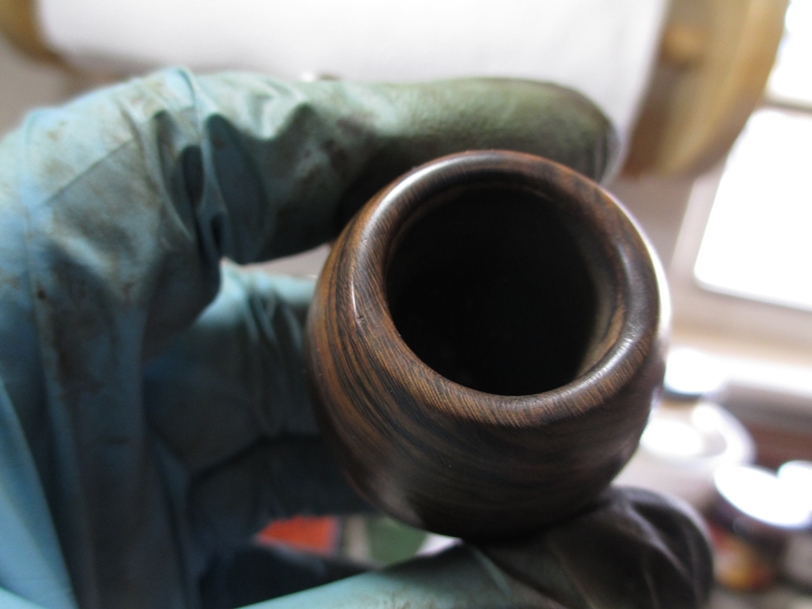
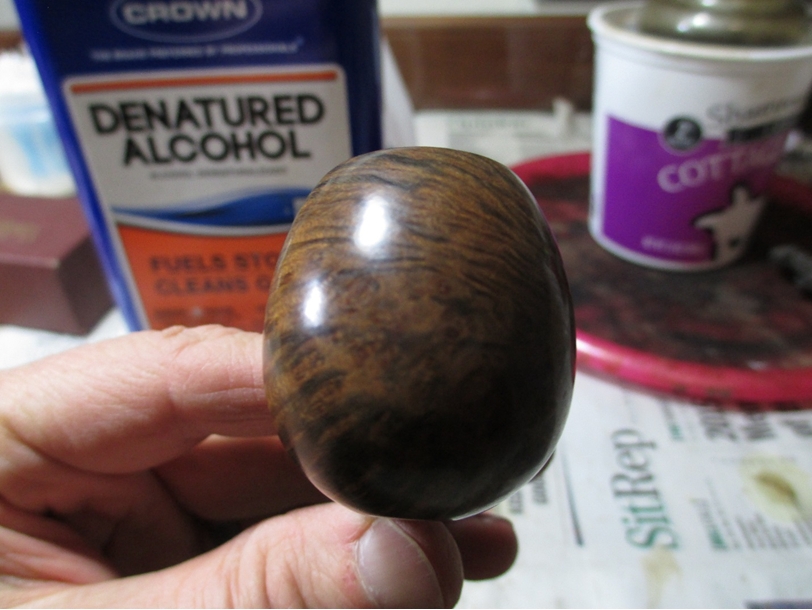
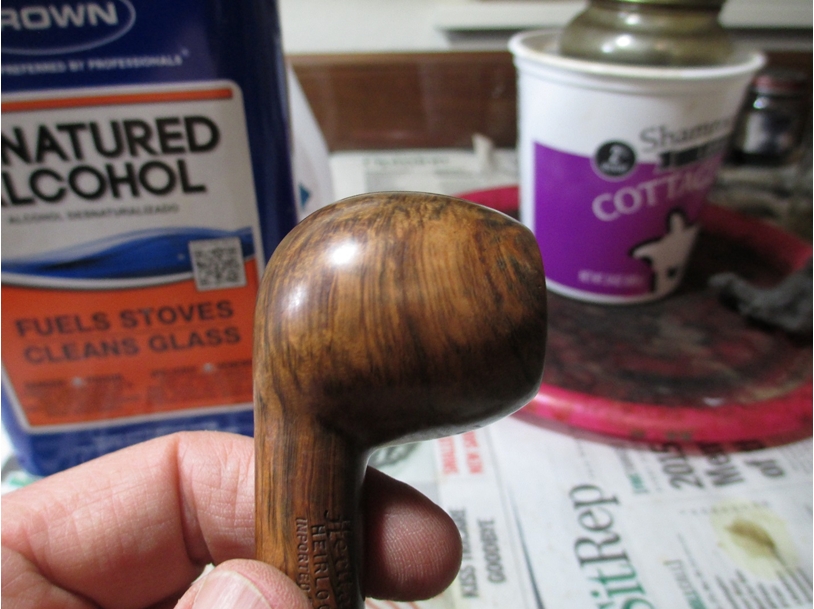
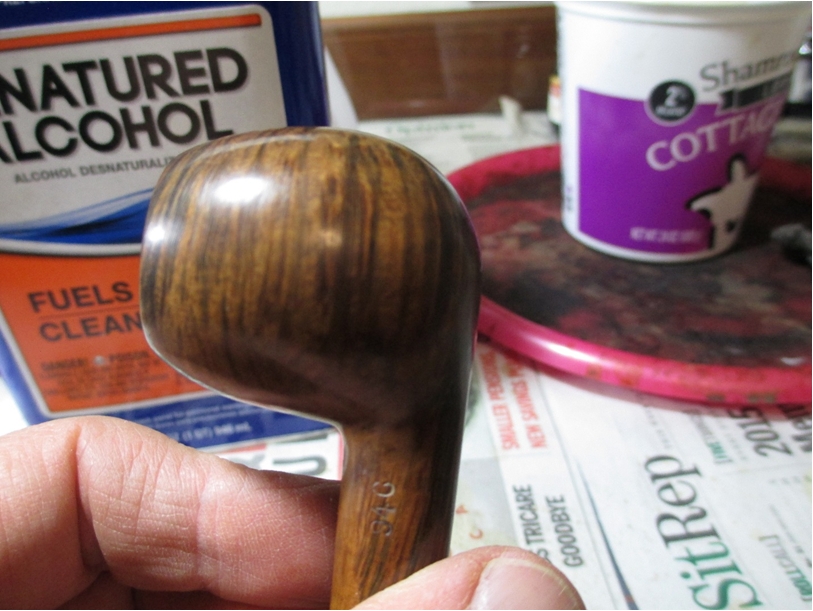
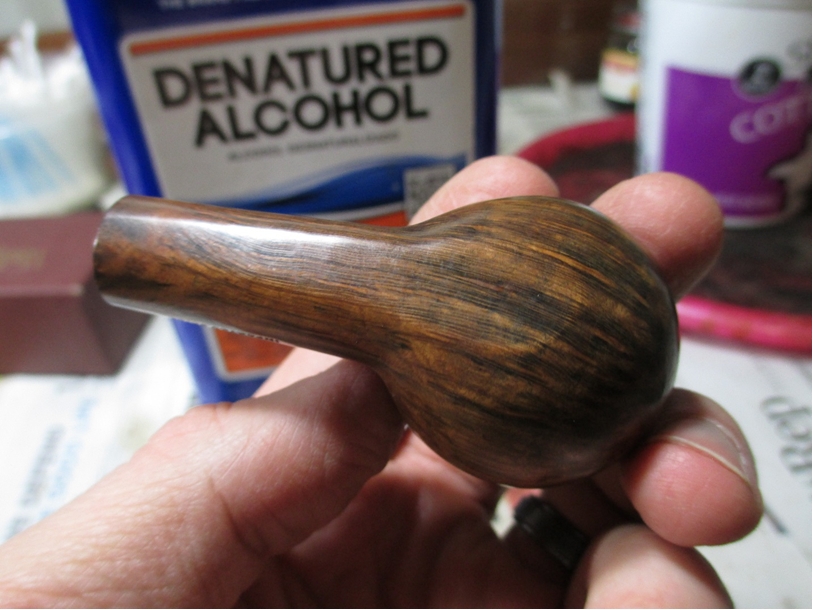
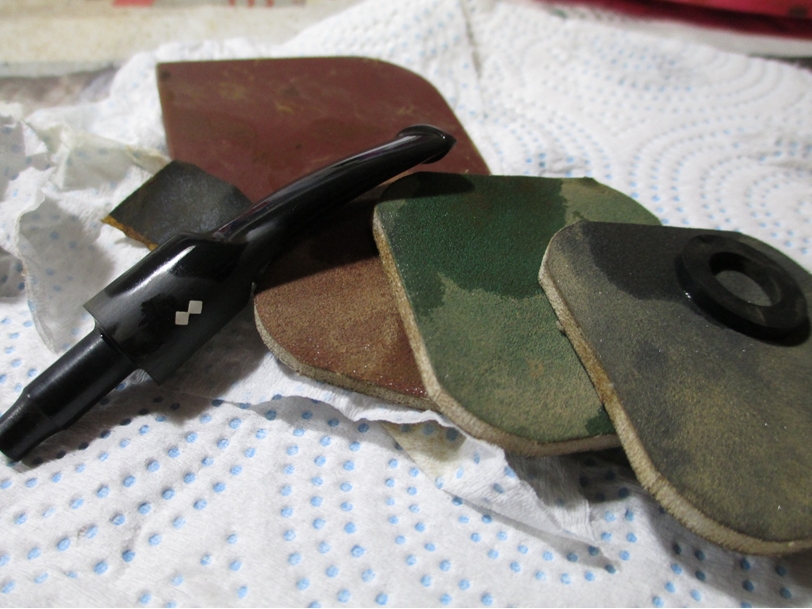
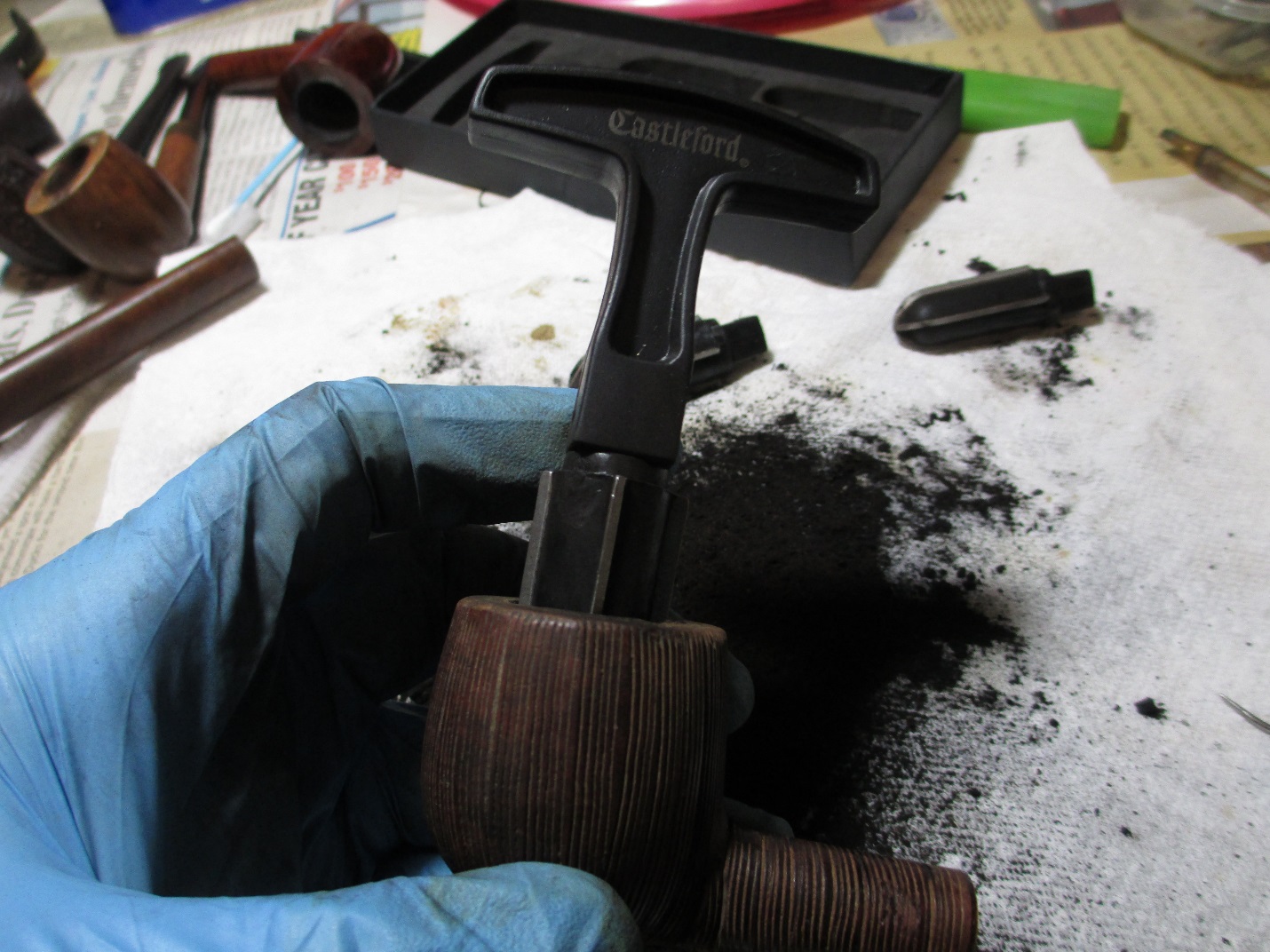
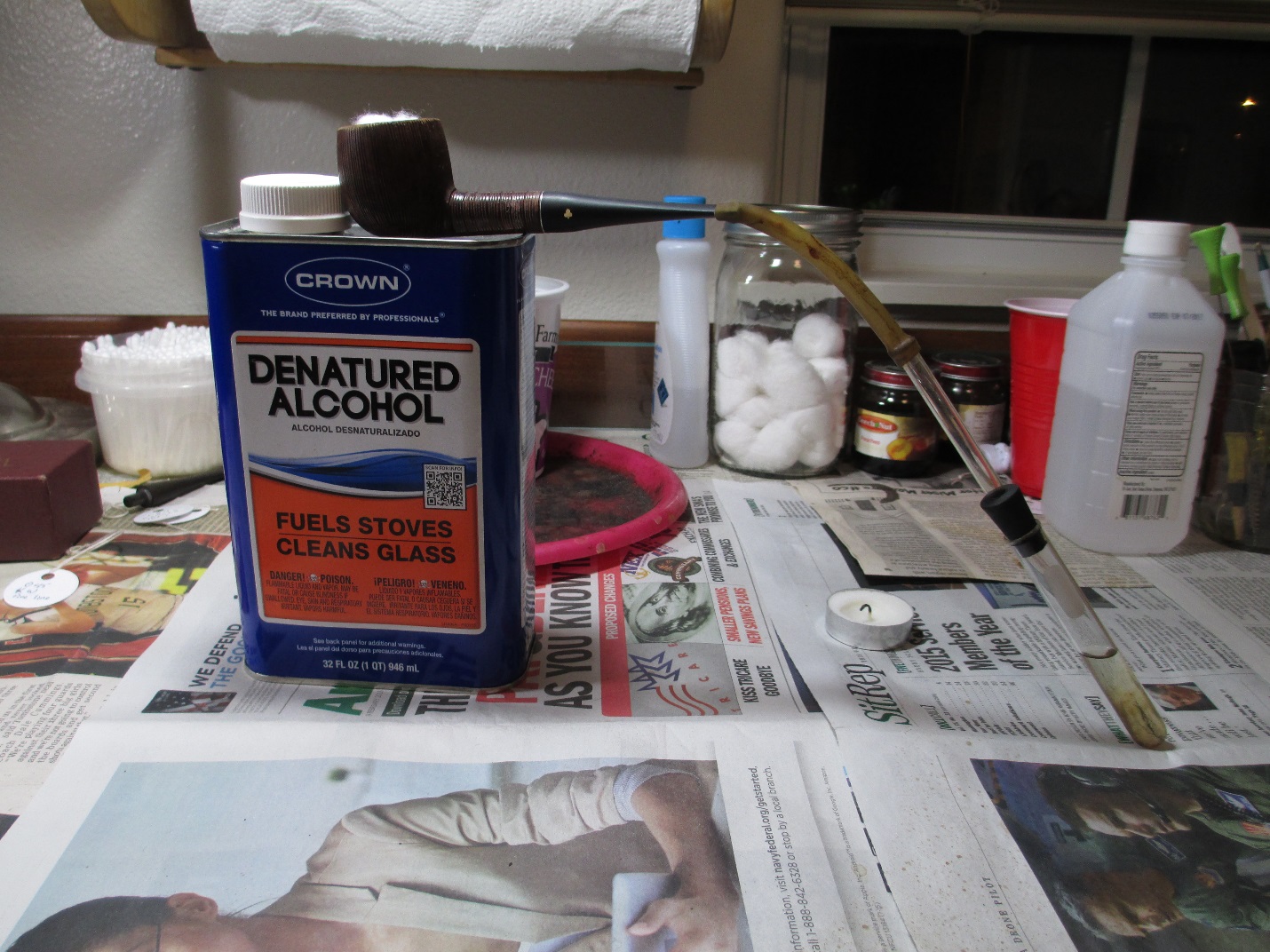
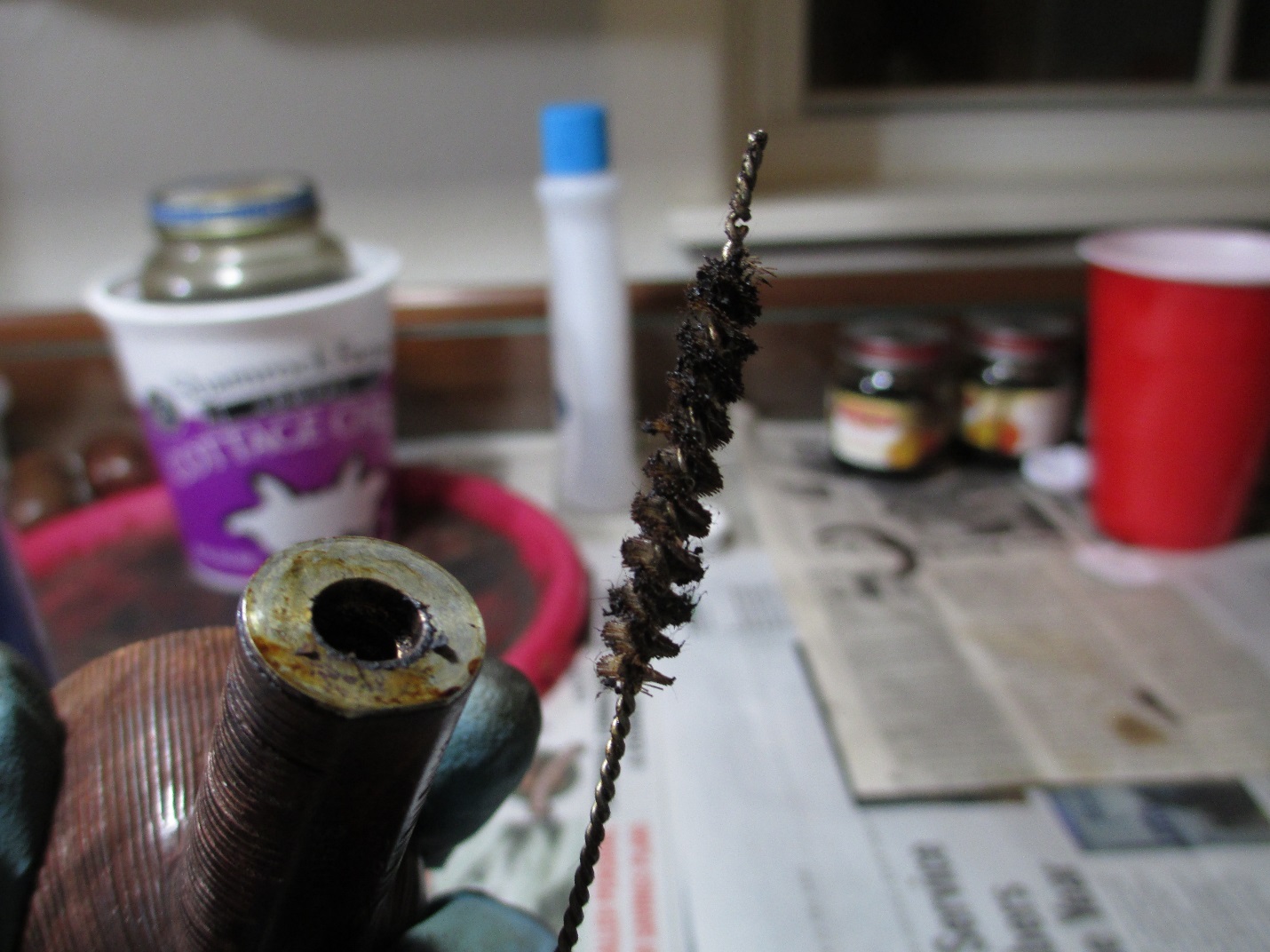
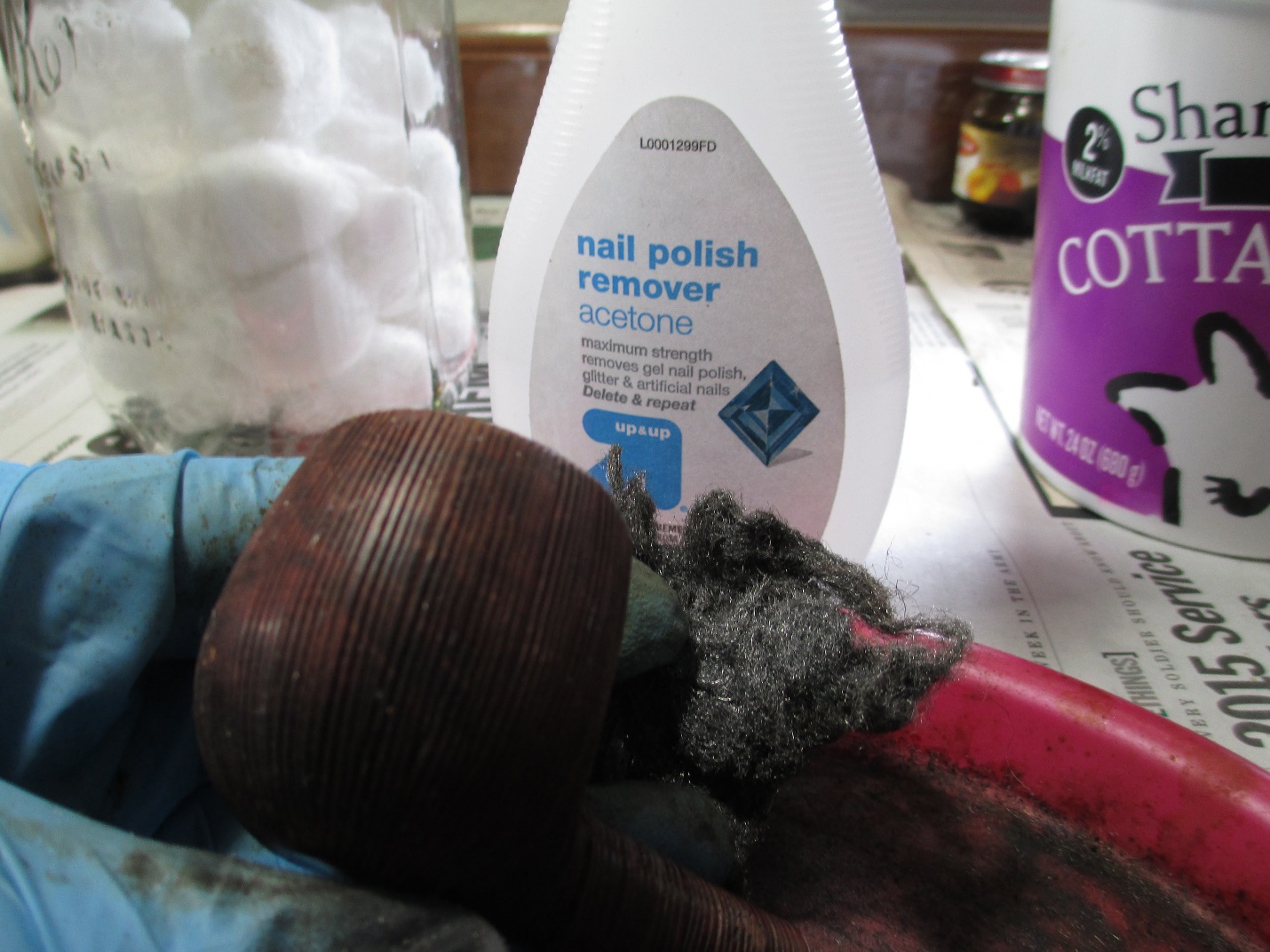
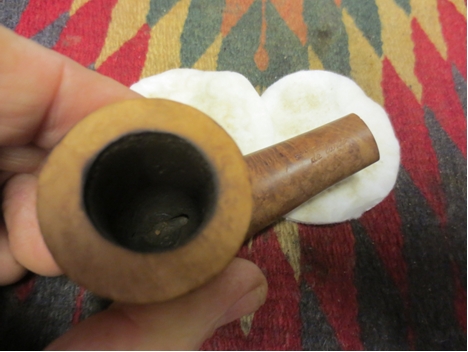
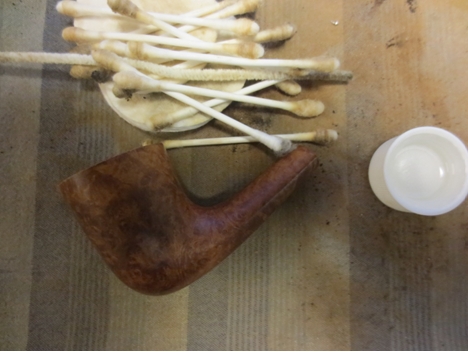
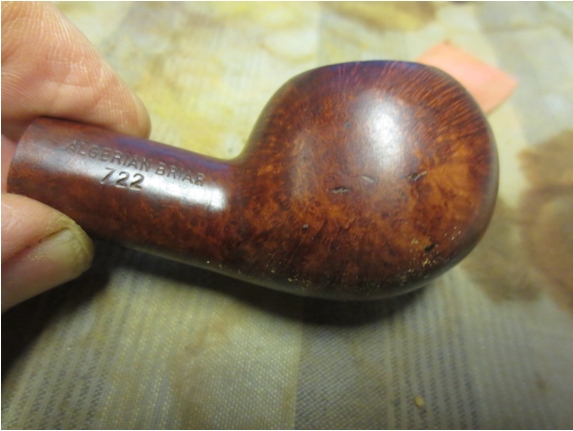
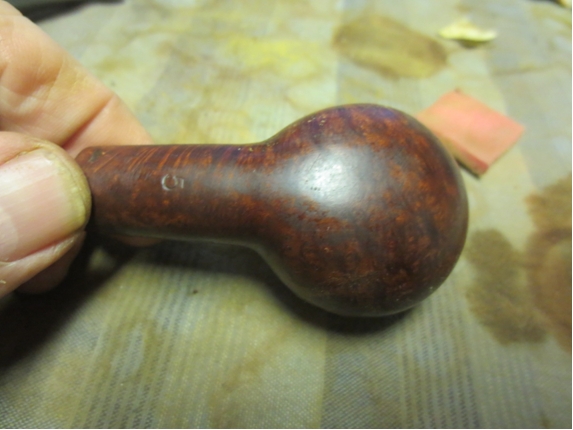
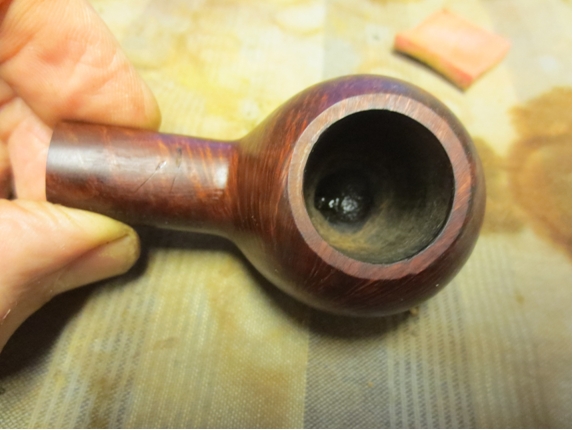
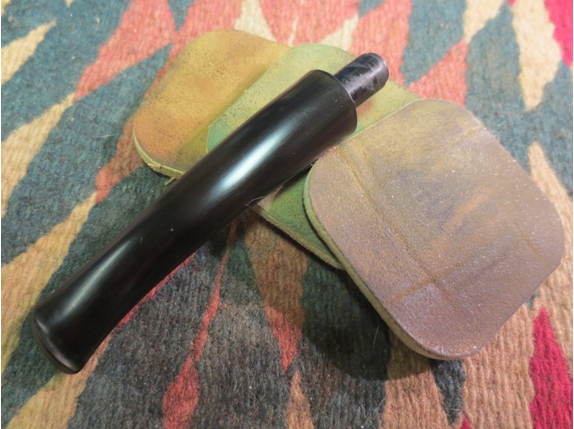
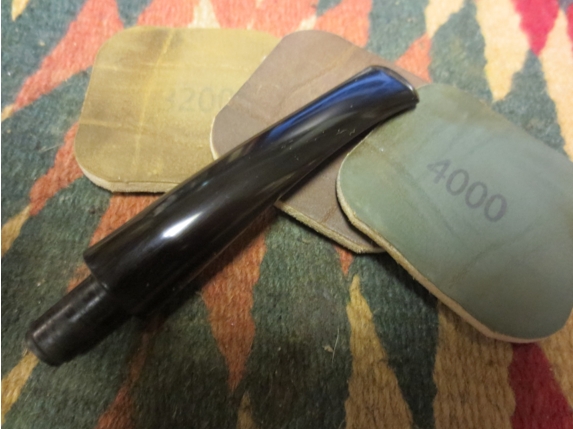
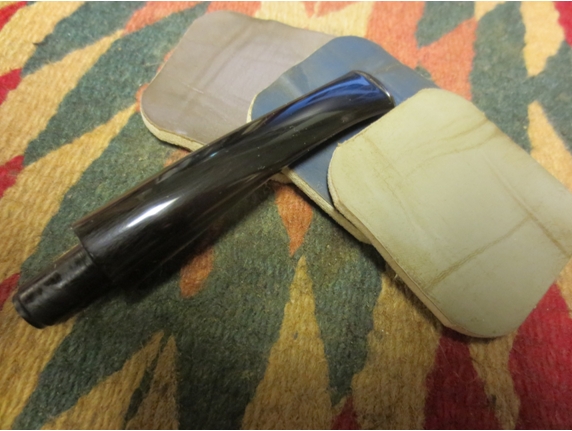
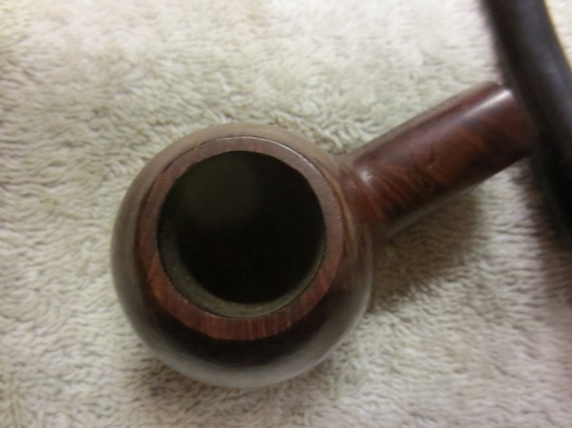
Hardcastle9Next I turned my attention to the bowl. I used the largest reamer to get almost to the bottom and finished it with the next smaller one.Hardcastle10 I used OOOO grade steel wool to remove the tar from the rim.Hardcastle11 Once the bowl was clean, I used my retort to clean the shank.Hardcastle12 This is why I am a firm believer in the retort, pipe cleaners dipped in alcohol came clean, but all this gunk was still inside.Hardcastle13 I used the retort on the stem. Although this picture does not show it, always plug the end of the stem to prevent the retort from boiling over and spitting nasty tobacco juice everywhere (ask me how I know this).Hardcastle14 After the stem was cleaned, I worked on polishing it. I started with 400 grit, then moved to 1500 through 2400 grit micro mesh with water.Hardcastle15 I used the 1500 grit through 2400 grit without water on the bowl, then finished both with a progression through 12,000 grit.Hardcastle16 Now the pipe was ready for stain. This time I used an aniline dye (light walnut) from Pimo Pipe Supply. I diluted the dye by 50% with denatured alcohol, applied it with a cotton ball, flamed it with a lighter, and repeated until I had the coverage I wanted.

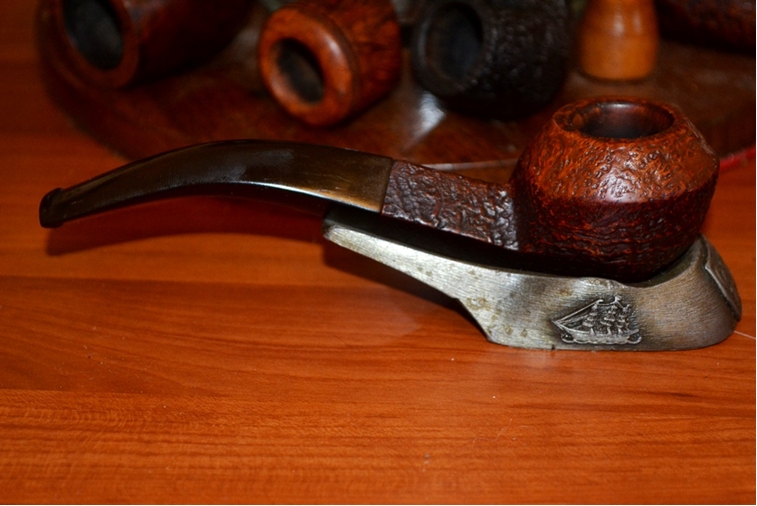
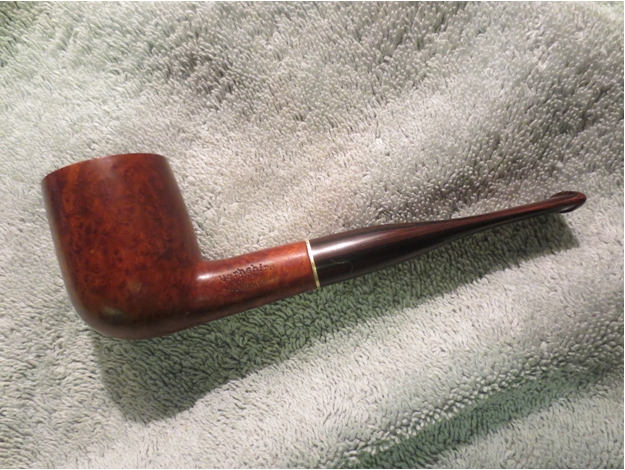
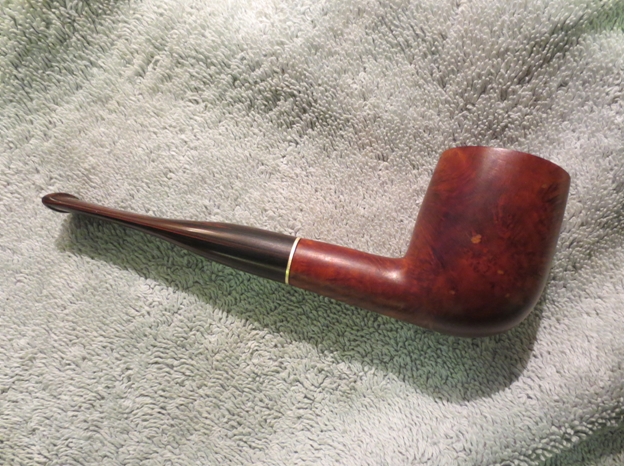
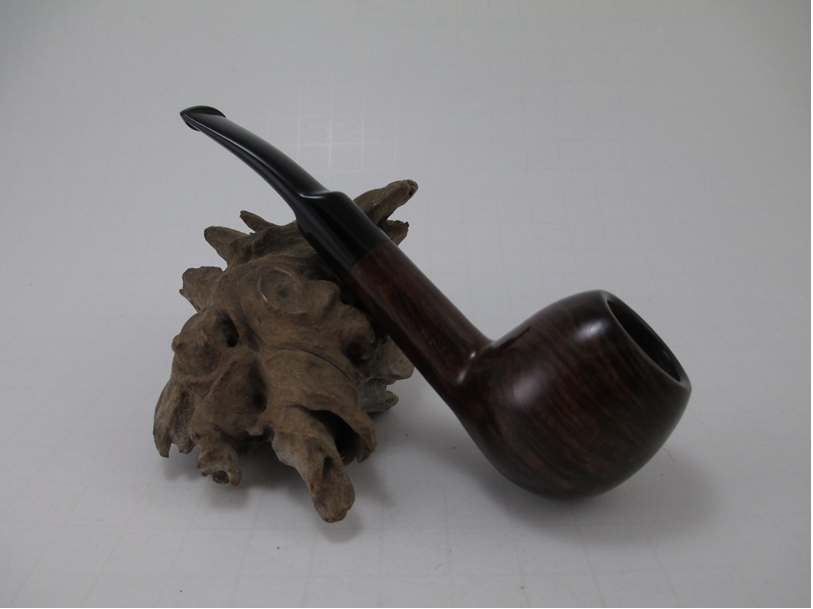
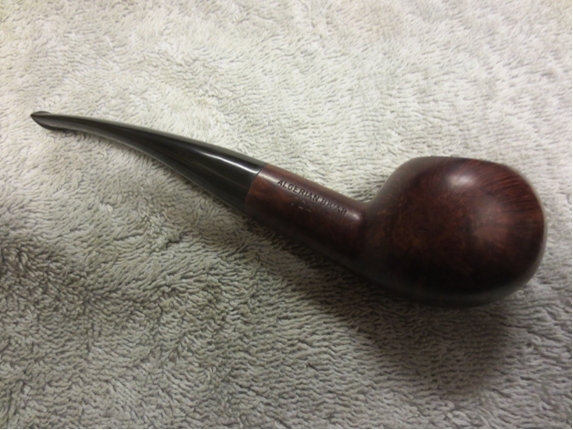
After an uneventful trip to the buffer, where I used white diamond and carnauba wax on both the stem and bowl, this is the result. I am really happy how this turned out. Thanks again to Steve for his generosity in providing the donor stem.Hardcastle17

Hardcastle18

Hardcastle19

Hardcastle20

Hardcastle21

A New Pipe for me – a Diebel’s K.C. Canadian


Blog by Steve Laug

NonameThere is a bit of a back story to this pipe. For as long as I can remember (you have to remember that may not be that long when you reach a certain age. Memory plays tricks on you) I have had two copies of Carl Ehwa Jr.’s The Book of Pipes and Tobaccos. One I am saving is pristine and one that graces my shelf. The other is for lending out and referring to when I am looking for information. It is a book I have read and reread and never tire of in the process. In a recent thread on Smoker’s Forums Ken posted to a thread on a review of the book some interesting information tying the book to a Diebel pipe that he had in his possession. He posted the pipe and then the information that Carl Ehwa Jr. was formerly a Master Blender at Diebels Tobacco and founder of McClelland Tobacco. He received several responses – one from Chris noting that the book’s dedication reads, “For my grandfather, Dr. W. C. McClelland…” I remember meeting Mary McNeil and sharing a limo back to the airport after the Chicago Show. In our conversation I found out that she was married to Ehwa when they started McClellands. He passed away and she married Mike McNeil who has always been a part of things there I believe.

Thanks to Ken I was given the impetus to try to find a Diebel’s pipe. I searched on Ebay and found one – a Diebel’s Canadian – to add to the collection. It should arrive very soon and when it does I will load a bowl of Christmas Cheer and read Ehwa’s book yet again. Adding a pipe to the read will be just one more dimension to the experience.Diebel Canadian

Diebel canadian2

Diebel Canadian3 I was excited to receive the Diebel pipe in the mail so when it arrived I opened the box expecting to see the pipe above. I expected it to be a normal length Canadian with simply the Diebel stamping. When I unwrapped it I found a Diebel pipe but a different one than the one I had purchased. It was stamped DIEBEL’S K.C. on the top of the shank and had a Savinelli shield on the stem. It had a band of gold as part of the stem. On the underside of the shank it is stamped Italy and Savinelli Product. There were no shape numbers on the pipe but it was the long shank Canadian that is common with Savinelli. It measures 7 inches long. The briar was dirty and stained on the sides and the back of the bowl with oils. It was quite dark. It appeared to have a matte finish. The rim was darkened with tars and some scratches on the top front of the rim. The inner edge was darkened and had some burning.Diebel1

Diebel2

Diebel3

Diebel4The bowl had a thick cake that was rock hard. It significantly reduced the diameter of the bowl. The stem had two tooth marks on the top near the button and on the underside was a deep bite mark. I removed the stem and inside it had been drilled to receive the Savinelli balsa filter. There was a new filter in the tenon.Diebel5

Diebel6

Diebel7

Diebel8 Examining the old Diebel’s stamped Savinelli left me with questions that needed answering. I wanted to know more about the Diebel’s pipe shop. I wanted to know if Savinelli made all of their pipes or if some were actually carved in the shop itself. I wanted to know if the other pipe, the one I had actually ordered was made by Savinelli as well or if it may possibly have had a different manufacturer. You can see that the pipe left me with many questions that would require some research to find answers.

I did some digging and found the Diebels web site. On the site was a section on company history. The link follows: http://diebelsg.com/stores/company-history/

In reading through that section on the history of the company I learned that Fred Diebel learned pipe making from a local pipemaker, Fred Metz. He carved in house pipe made the way he had learned to make them from Fred. He also imported Savinelli and English made pipes. I am including a short section from that portion of the company history.

“When Fred Diebel returned from his World War II duty as a U.S. Navy pilot of lighter than air craft (blimps), he knew he wanted to own his own business. Diebel, who earned a degree in mathematics from Kansas City University (now UMKC), saved for his life’s ambition while working successively for two venerable retailers in Kansas City: Rothschild’s and Montgomery Ward.”

“In 1950, Diebel capitalized on his first entrepreneurial opportunity, buying into Afflick & Co., a tobacco shop located at 11th and Walnut in downtown Kansas City. The company was re-named Afflick & Diebel. There, Diebel became an avid pipe smoker and developed an interest in the arcane craft of pipemaking. He sought a noted local pipemaker, Fred Metz, to teach him the craft. Initially, the elderly German native refused. But eventually, Diebel’s persistence paid off and Mr. Metz consented, saying, “Young man, I will teach you to make pipes on these conditions. You buy the proper equipment and you promise to do it my way, the right way.””

“In 1954, Diebel determined it was time to strike out on his own. He saw the Country Club Plaza as a shopping and business district on the rise. So with a bankroll of $1,000, he purchased two display cases for $100 each, tools, tobacco product, and signed a lease. Fred Diebel, Pipemaker, Tobacconist was born at 4625 Wornall, across from Putchs’s Cafeteria (now Houston’s) and next to Renner’s Shoe Repair. The enterprise was successful from the beginning, though not in the way Diebel expected. He underestimated the strong demand for pipe repair and found little time for the pipe making work necessary to supply his retail pipe business. In order to manage the growth demand for new pipes, he began importing pipes from England.”

“For more than a decade, Diebel specialized exclusively in pipes, pipe repair, and pipe tobacco. Customers requesting cigars or cigarettes were politely but firmly referred elsewhere. Mr. Diebel’s philosophy may have been guided more by personal disdain for any smoking related product that did not involve a pipe than by visionary marketing theory. Nonetheless, he became one of the early niche retailing pioneers…”

“…The company also began manufacturing pipe tobacco. Conditioning, cutting, casing, blending, pressing and packing operations occurred in a warehouse located in the caves at Bannister and Holmes. Manufacturing continued through the early 1980’s. The business continued to grow as a family business, with Diebel’s wife plus his two sons and daughter working in the shops and manufacturing facilities during their teen and young adult years.”

I love learning the history of a brand. Further reading on other sites led me to the information that Savinelli made Diebel’s pipes. With that information I went on to clean up the pipe. I reamed it with a PipNet reamer, starting with the smallest cutting head and working up to the second head. I reamed the cake back to bare wood. The cake and bowl smelled of a heavily cased aromatic. The inside of the shank and stem was black with tars.Diebel9

Diebel10 I wiped the bowl down with acetone on cotton pads to remove the grime and the finish. The black grime came off easily with repeated scrubbing.Diebel11

Diebel12 Once I had cleaned the grime and tars off the rim I could see the darkened damaged area of the top of the rim and the inner edge of the bowl. Though it is hard to see there were some deep scratches on the top of the rim on the right front side. They were quite deep gouges. The bowl would need to be topped to remove the damage and minimize the burn marks.Diebel13

Diebel14 I set up a topping board with 220 grit sandpaper on top of it. I turned the top of the bowl into the sandpaper in a circular motion, clockwise until the damaged area of the gouges and burned area was gone. I sanded the rim with a medium and a fine grit sanding sponge to remove the scratches left behind by the sandpaper. I used a folded piece of sandpaper to remove the burn damage on the inner edge of the rim. I sanded the bowl with the medium and fine grit sanding sponges to clean up the remaining dark areas. I wiped it down a final time with acetone on cotton pads.Diebel15

Diebel16

Diebel17 With the bowl cleaned and ready to finish I set it aside and worked on the stem. I sanded the tooth marks with 220 grit sandpaper to smooth out the damage of the tooth marks.Diebel18

Diebel19 The tooth marks on the top of the stem cleaned up nicely, leaving behind two small divots that I needed to repair with super glue. The damage on the underside was much worse – the dent was deep and needed a large fill. The first photo below shows the repaired underside tooth mark. The second photo shows the repairs of the marks on the topside. I used clear super glue and an accelerator to harden it. Some might ask why I used clear super glue instead of black super glue and to be honest I am not sure why, I picked up the tube of clear glue and used it as it was closest to pipe at hand. Both work equally well for me.Diebel20

Diebel21 I sanded the glue patches with 220 grit sandpaper and then with medium and fine grit sanding sponges. I sanded until the surface of the patch was blended in with the surface of the stem. You can see from the photos that the clear glue worked well.Diebel22

Diebel23 At this point in the process I gave the pipe a coat of medium walnut Danish Oil stain. I set the pipe on a cork to dry while I went to work for the day.Diebel24 When I came home I buffed the bowl and shank with White Diamond and then worked on the stem with micromesh sanding pads. I wet sanded the stem with 1500-2400 grit micromesh pads and then dry sanded with 3200-12,000 grit pads. I buffed the stem with White Diamond and then rubbed it down with Obsidian Oil. Once it was dry I gave the bowl and stem several coats of carnauba wax and buffed it with a soft flannel buffing pad to raise a shine.Diebel25

Diebel26

Diebel27 The finished pipe is shown below. It is cleaned and ready to smoke. The overall look of the pipe is clearly a Savinelli to me. It is distinctively Italian. The taper of the stem, the sharper edges on the sides of the shank and the bowl shape all say Italian. The band on the stem is various sizes of gold stripes that encircle the stem at the shank union. The walnut stain gives the pipe a contrast look and makes the grain stand out. The finish is warm an earthy in tone and the smooth feel in the hand is comfortable. I am looking forward to loading up a bowl and enjoying an inaugural smoke.Diebel28

Diebel29

Diebel30

Diebel31 Now I am waiting for the arrival of the original pipe I purchased from the seller in Eastern Canada. I look forward to seeing if it is one of Fred Diebel’s own hand-made pipes. The look in the first trio of photos above is certainly different from the look of the Savinelli. When it arrives I will clean it up and do a write up on it and a comparison with the Sav.

Comoy’s Satin Matte Bent Christmas Pipe, In Four-Part Harmony – Robert M. Boughton


Guest Blog by Robert M. Boughton
Member, North American Society of Pipe Collectors
http://www.naspc.org
http://www.roadrunnerpipes.com
http://about.me/boughtonrobert
Photos © the Author

This blog is dedicated to my older uncle, Frank Lee Grannis (1945-2014), who was maybe Arlo Guthrie’s biggest fan. Frank once snapped a black and white photo of a teenaged Arlo, at an outdoor music festival somewhere in the countryside, smiling and signing an autograph for another fan who was about Arlo’s age. I lost the photo in my younger, wilder days, or I would include it here, but the image will always be in my memory.

Let’s get Santa Clause ’cause:
Santa Clause has a red suit
He’s a communist
And a beard, and long hair
Must be a pacifist
What’s in the pipe that he’s smoking?
—Arlo Guthrie, U.S. singer-songwriter-musician, in “The Pause of Mr. Claus” (1968)

INTRODUCTION
Now friends, tonight we’re gonna sing you a song, a Christmas carol in four-part harmony. The song…the Christmas carol is part of an album called “Arlo.” That’s my name. Some of you right about now might be thinking, thinking in your private thoughts there in your heads, well, this Arlo fella must have a pretty big ego. I mean, to go and name an album after himself, he must have let all that fame and fortune go to his head. I don’t know about the fame and fortune part, because all that doesn’t last long, but my head, my head is really sort of small. We’ve never actually met. All of you out there and me, that is.But that’s not what I came to talk about. Came to talk about a pipe. Remember the pipe? This is a story about a pipe.And I’ll get to it. In time, and four-part harmony.

So there I was, sitting on a bench, looking for a song to start with. I didn’t find it. I’m not proud…or tired.Out of all the songs I wrote, there I was, on the bench trying to pull just one verse from my head, but nothing would come.I knew right then and there I had to get ahold of Steve Laug, he’s a good friend of mine. We’ve never actually met. But we write emails back and forth to each other all the time. Now friends, if you ask me, that’s one hell of a way for folks to talk. Sort of like writing a story, in four-part harmony.

And then it hits me that it would be a friendly gesture to sing a Christmas carol about the guy who started it all. A guy in a red coat who has a beard, and all he does is give presents…for free…to all the rest of us. Must be something deranged about a guy like that.Living in Canada…living at the North Pole, it’ll do that to a guy.

Now, Steve and me, we never exactly said anything about any quote. All we talked about was the pipe. Remember the pipe? Anyway, I sent him a picture with the email, an eight-by-ten color glossy with all the details written down, and I said I thought it was what’s called a brandy shape, and Steve, he says it’s like a BBB he has that’s the same shape, only it’s a Christmas pipe. Well, I never heard of any Christmas pipe shape, but Steve knows more than I do. And later on he wrote back and sent a picture of his BBB, an eight-by-ten color glossy with all the details. And the two eight-by-ten color glossies with all the details were almost the same.

And the good news is, that’s when I remembered this Christmas carol I wrote, in four-part harmony, because it was about Santa Claus, even though it’s spelled with an “e” in the song. Don’t ask me why, you can figure it out. Now, everyone knows old Santa is all about Christmas. So that’s about how that story goes.

Now I’ll get on with the other story, about the pipe. Remember the pipe?

I got mixed up online with some poor fella who was selling seven pipes all together and didn’t have a clue what all was in there. ’Cause my eye went straight to one with a white C on the stem and even I knew what that meant. The listing, in micro-mini small print at the bottom of the page, that you’re not supposed to read, called it a “Como’s Bent Billiard,” but I took a closer look and made out the blurry Y after Como. So there I was, still sitting on the bench and having a good old time knowing how nobody else knew the Como pipe was in there with all the others, and that’s why the price was so low with time running out.Rob2 I’d like to dedicate this Christmas carol to all the pipe-abusing S.O.B.s out there who have been bad little boys and girls and ought to keep that in mind this coming Christmas. It’s called “The Pause of Mr. Como.” Now here’s how the song goes.

RESTORATION
Meanwhile, back to myself again after a brief diversion, I will describe the pipe as I received it. Although there were bad cake buildup in the chamber, rim burning, ubiquitous scratches on all sides of the bowl and a stem in dire need of work and polishing, the allure of this excellent Comoy’s example was almost intoxicating, and I haven’t tasted alcohol in 26 years – not that you could tell after reading my Introduction.Rob3

Rob4

Rob5

Rob6

Rob7

Rob8

Rob9 I like to start on a rim with super fine steel wool, as I did with this pipe. In general, this approach takes off most or all of the char and leaves the wood beneath without a single new scratch and often even shiny. This time I got nowhere with the regular method, and so I switched to 400-grit paper, which removed the char as well as dings and scratches I uncovered. Of course, the sandpaper also took off the old stain.

With the rim clean and smooth, showing the fine grain, I found my old Senior Reamer in its box and took on the chamber.This time, the reamer worked as it should. Almost all of the buildup was reduced to dust. A little quick sanding with 120-grit paper was needed before smoothing with 400.Rob10 Now, as I described earlier, the outer wood was scratched almost everywhere. I very much wanted to avoid ruining the good, light stain of the original. Having learned that micromesh can go a long way, from advice of my mentor, Chuck Richards, as well as our host and several previous readers, I put the theory to a tougher test than I had before.

And you know what? I think they’re on to something! Starting with 800-grade, I was able to eliminate all but the most insignificant scratches. I then worked my way up from 1000 to 1500 to 2400 and ending with 3200, leaving the briar– well, leaving the briar as smooth as it must have been the day it left the Comoy’s shop.

Taking on the stem only required heavy sanding and buffing with 1500, 2400 and 3200 micromesh.

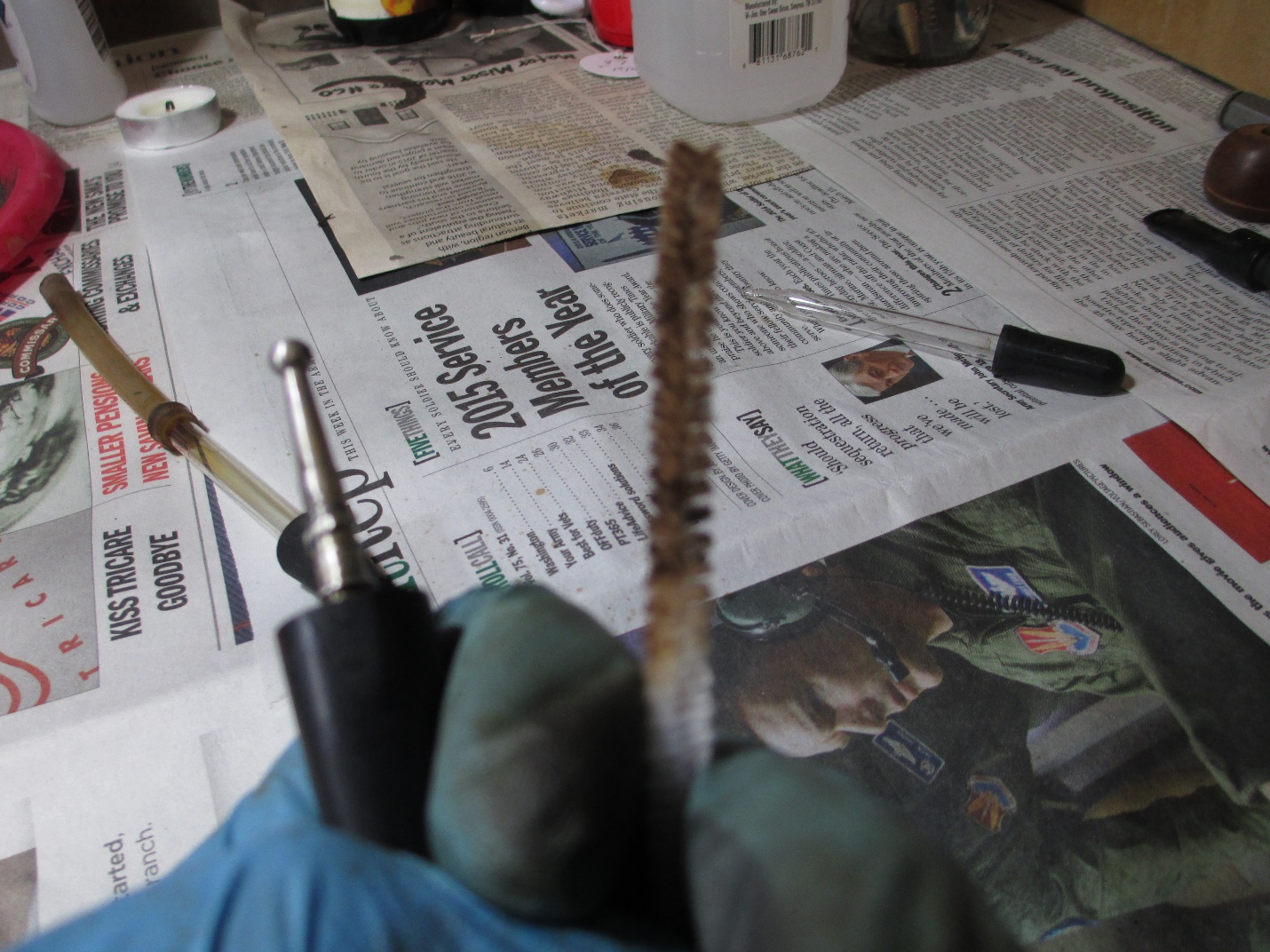
Cleaning the pipe turned out to be the hardest part. I just kept dipping the bristly cleaners in Everclear one half at a time and scrubbing away until they came out of the shank and stem clear.Rob11

Rob12

Rob13

Rob14 CONCLUSION
If I had kept this fine example of Comoy’s craftsmanship, I would prize it as the best as compared to the two I own. However, as fate would have it, the pipe sold almost as soon as I posted it on my restored pipes Website. My only consolation is that I have reason to believe it is in adoring hands.

A Sweet KBB Yello-Bole Honey Cured Bulldog – Robert M. Boughton


Guest Blog by Robert M. Boughton
Member, North American Society of Pipe Collectors
http://www.naspc.org
http://www.roadrunnerpipes.com
http://about.me/boughtonrobert
Photos © the Author

You can’t stop us on the road to freedom
You can’t stop us ’cause our eyes can see
Men with insight, men in granite
Knights in armor intent on chivalry
She’s as sweet as Tupelo honey
She’s an angel of the first degree
She’s as sweet as Tupelo honey

Just like honey, baby, from the bee — Van Morrison, Northern Irish singer-songwriter-musician, “Tupelo Honey” (1971)

INTRODUCTION
As my good friend and mentor, Chuck Richards, commented at a recent gathering of local enjoyers of the fair tobacco pipe in general, Kaufman Brothers & Bondy created the Yello-Bole line in 1932 as a less expensive alternative to its regular stable of Kaywoodie, Reiss-Premier and of course KB&B pipes.

Now the name Yello-Bole is synonymous with the terms second-rate and, worse still, just cheap, as though the measure of a good smoke were ever determined by its price. [See, for example, Peterson’s late great and noble attempt in years gone by to make pipes affordable to the Everyman.]

But its older products, such as the KBB Yello-Bole Imperial Bulldog of this discourse, “Cured with Real Honey” and with the KBB in a clover, as well as a tell-tale encircled “I” on the stem (might it be ambera?) – although crafted with briar deemed unsuitable for the older brothers of the family – nevertheless was still made from higher quality pieces of that fine wood than is, in general if ever, available today.

Also, the KBB Yello-Bole Imperial Bulldog is a definite vintage specimen (another present day determinant of value), based on the four key signs contained on the pipe, which date it to anywhere from the 1930s to the 1950s.Rob1

Rob2

Rob3

Rob4

Rob5

Rob6

Rob7

Rob8

Rob9 Beginning with the rim, I removed most of the blackening with a quick rub of purified water, and the rest except for one small, pernicious burn with a light touch of super fine steel wool that left no new scratches but also made clear the blemishes that were already present. Rob10 I sanded the rim with 400-grit paper and micro-meshed with 1500, 2400 and 3600 grades. I later succeeded in removing the one remaining burn mark shown below.Rob11 Moving on to the chamber, I was startled when most of the cake crumbled from the walls with a couple of turns of the reamer. Still more shocking was the sudden appearance of a thin coat of the original yellow product of honey curing. I knew I had a rare find and wondered at the short-term but intense enjoyment of the pipe that could have led to more than average cake but left the prominent yellowing intact. The rest of the cake came clean with gentle 400-grit sanding.

Staying with the 400-grit paper to remove scratches and dings on the beautiful briar, I lightened the color still more and found a few fills and other grain flaws that accounted for why this finely shaped bulldog didn’t end up with, say, a Kaywoodie stamp.Rob12

Rob13

Rob14

Rob15 Using micromesh at an escalation from 1500 to 2400 and 3600 grades eliminated the remaining scratches.

The cleaning of this pipe was achieved with refreshing ease and the expenditure of few bristly cleaners soaked in Everclear.

In a difficult choice, I decided to re-stain the briar with a medium as opposed to the original light brown color. I applied Lincoln boot stain and flamed the alcohol out before removing the char with 2400 micromesh and smoothing it out using 3600.

To polish the prepped pipe, I used red and white Tripoli, White Diamond and carnauba, and after rubbing the wood with a cotton rag saw it needed another round on all of the buffers except the red Tripoli.

I finished the stem with red and white Tripoli before White Diamond.Rob16

Rob17

Rob18

Rob19

Rob20 CONCLUSION
This was a very pleasant and relaxing restoration, in particular following my Ben Wade and the Chamber of Horrors brush with terror.

Tonight and tomorrow (Wednesday and Thursday), before the monthly official meeting of my pipe club at the local Moose Lodge, I will attempt to power through as many of the easier prospects as possible from my recent online purchase spree. The highlights include what I believe is a Comoy’s Smooth Bent Satin Matt Short Brandy #1770 (Made in London in a circle); a Kaywoodie Silhouette Bent Rusticated Squat Apple; a Kaywoodie Smooth Bent Signet Billiard; an Ehrlich Rusticated Straight Billiard; a LHS Park Lane Smooth Straight Poker; a Reinhard’s Smooth Straight Billiard; an Amadeus Greek Bent Billiard; a Parker Tall Tan Straight Poker; a unique small Town and Country Round-Bottom Straight Squat Rhodesian; a no-name Gourd Calabash Meerschaum Lined; a trio of old Missouri Meerschaum corncobs…and another KBB Yello-Bole, this one a Straight Four-Panel, also with the KBB in a clover but a yellow circle on the stem.

The first person to post a response challenging my ability to pull off the restorations/refurbishes of the above pipes before tomorrow night, and willing to bet a free pipe from the loser to the winner, is on for the bet. I will post before and after shots in a blog on my business Website, noted at the top of this submission, by 9:00 p.m. MDT (U.S.) tomorrow.

Our host, I trust, will vouch for my honesty in this type of wager.

Fitting a Maplewood Bowl to fit a Kirsten Pipe Shank


Blog by Steve Laug

My son-in-law brought his Kirsten with him on the pipe hunt we went on recently and mentioned that the bowl was too small to his liking. We were talking about hunting for a bowl that had a airway drilled in the bottom of the bowl that could be modified to accept the fitting – screw and cap – on a Kirsten bowl. These fittings hold the bowl on the shank. I remembered that I had a Maplewood bowl in my box of pipe parts that could work really well. It had a nipple on the bottom of the bowl. The nipple ended at a rounded cap and then steps up to the bowl. The original bowl can be seen in the photo below. The bowl was clean and unsmoked. There was a varnish finish on the bowl and the wood was quite rough. Around the hip at the base of the bowl there was a rough band around one side of the bowl. The bowl had some really interesting grain on it. Around the top third of the bowl the grain went around the bowl horizontally. Below that there was some vertical grain. The combination was attractive. This bowl would work well once I modified it to fit the pipe.Bowl1 I sawed the nipple off the bottom of the bowl with a hacksaw. I sawed it flat against the bottom of the bowl to make that surface flush.Bowl2 With the nipple removed it was clear that the airway was slightly off centre and would need to be adjusted once I drilled it to open it up to hold the bottom cap from the Kirsten.Bowl3 I measure the diameter and the length of the insert to figure out how much of the bottom of the bowl I would need to remove. I drilled it out with a drill bit the same size as the insert on the Kirsten cap. I used a knife to open the air hole and move it more toward the centre of the bottom of the bowl.Bowl4 I used the Dremel with a sanding drum to shape the bottom of the bowl. I had to remove about ¼ of an inch or more from the bottom of the bowl. I sanded it bring it down and begin to round the edges. The next three photos show the progress of shaping the bowl bottom. The third photo shows the bowl after I also sanded it with 180 and 220 grit sandpaper.Bowl5

Bowl6

Bowl7 I sanded it with a medium grit sanding sponge to smooth out the scratches. I fitted the bottom cap to the bowl to see what more I would need to remove for a proper fit between the bowl and the shank. I fit the screw into the bottom cap and used a Philips screwdriver to tighten it in place.Bowl8

Bowl9 I sanded the bowl more to remove the finish and fine tune the shaping the bottom of the bowl. I wanted the finished bowl to look like a brandy glass shape.Bowl10

Bowl11 When I had fine tuned the bowl shape and the bottom of the bowl I fit it on a Kirsten shank from one of my pipes. The fit was pretty accurate and the look of the shape worked well with the pipe. I would need to sand the bowl some more, remove the remaining varnish and then stain the bowl once finished. I topped the bowl on a topping board with 220 grit sandpaper to smooth out the rim. Though the pipe was unsmoked the rim was roughly finished.Bowl12

Bowl13

Bowl14 I took the bowl apart and prepared it for staining. I wiped it down with acetone to remove the remaining varnish and dust from the bowl. I used a dark brown aniline stain to colour the bowl. I stained it and flamed it with a lighter. I reapplied and reflamed the bowl several more times until the coverage was even.Bowl15

Bowl16

Bowl17 I wanted the finish to be light brown in colour with dark grain patterns on the bowl. I wiped it down with alcohol on cotton pads to thin down the finish. I continued to wipe it until the underlying maple showed through and the grain patterns were darkened.Bowl18 I buffed the bowl with red Tripoli and also White Diamond. Once it was finished I sanded it with 1500-3200 grit micromesh sanding pads to smooth it out. I rubbed it down with a light coat of olive oil and rubbed it into the finish. The bowl was complete at this point – I fit it back on the shank and took the next set of photos to show the look I was aiming for.Bowl19

Bowl20

Bowl21

Bowl22 I took the bowl off the shank and buffed it with White Diamond once more. I gave it multiple coats of carnauba wax and buffed it with a soft flannel buff. The dark brown aniline stain had brought out the grain and contrasted nicely with the rest of the bowl. The horizontal and vertical graining makes this a nice looking pipe bowl.Bowl23

Bowl24

Bowl25

Bowl26

Bowl27I put the bowl back on the Kirsten shank and took the next set of photos to show the finished bowl and shank. It certainly fit the shank well and the larger bowl should meet my son-in-laws request for a longer smoking bowl for his Kirsten. He is away with my daughter for the weekend but when he returns home I look forward to seeing what he thinks of his new bowl.Bowl28

Bowl29

Bowl30

Bowl31

Addendum: I was working my way through Ebay UK when I found a pipe that had the same bowl as the one used in this article. It is a tourist pipe from the Smokey Mountains National Park. It looks to be the same pipe bowl and looks identical to the one I used.$_57

$_58

Restoring a Kaywoodie Super Grain 40 Lovat


Blog by Steve Laug

My son-in-law and I went pipe hunting a few weeks ago and this was one of the finds that day. I picked it up in an antique shop in Bellingham, Washington. I think I paid $15 for it. The stem was slightly overturned and would need to be fixed. The stem was clean of bite marks or tooth chatter. The stinger was intact and was a three-hole one so the pipe was newer rather than older. The finish was not ruined. The rim was caked with tars and oils. The buildup was only back side and went to the left side of the rim. The briar had quite a few fills on the sides and back of the bowl. The stamping on the left side was clean and easily read – Kaywoodie over Super Grain over Imported Briar. On the right side of the shank was stamped the shape number 40.KW1 KW2 The inside of the bowl had a light cake that was soft and crumbling. It would need to be reamed back to the bare wood in order to build a hard carbon cake.KW3 KW4 I reamed the bowl with a PipNet reamer and used the smallest cutting head first and then the second cutting head to finish the job.KW5 I removed the stem from the shank so that I could heat the stinger apparatus with a lighter. The black buildup of tars and oils on the stinger was hardened and not easily removed. Once I heated the stinger with the lighter I was able to wipe down the surface with a cotton pad and alcohol. I heated the stinger until the glue in the stem softened and then screwed the stem back into the shank and turned it until the stem lined up with the bowl.KW6 I cleaned the inside of the shank and stem with pipe cleaners, cotton swabs and isopropyl alcohol. The shank behind the metal insert was very dirty. I used the cotton swabs to clear out that area. I scrubbed it out until it was clean. I also cleaned out the airway in the stem the same way until it was clean.KW7 I scrubbed the top of the bowl with isopropyl alcohol on cotton pads to remove the buildup. It was thick so it took quite a bit of scrubbing. To finish removing it I used 1500 grit micromesh sanding pad and water. I was able to get the rim clean and then used a staining pen to touch up the rim.KW8 KW9 KW10 The lightest colour staining pen matched the finish of the bowl perfectly. I gave the bowl and rim a quick buff with White Diamond and then gave it multiple coats of carnauba wax and buffed it to a shine.KW11 I was fortunate that the stem was not damaged with bite marks or tooth chatter. I use micromesh sanding pads to clean up the stem. I wet sanded with 1500-2400 grit pads and dry sanded with 3200-12,000 grit pads until the finish of the stem was smooth. I buffed it with White Diamond to finish the process and then gave it a coat of carnauba.KW12 KW13 KW14 I put the stem back on the shank and then buffed the entire pipe with White Diamond a final time. I gave the stem and bowl multiple coats of carnauba wax and buffed it with a soft flannel buffing pad to raise the shine.KW15 KW16 I touched up the fills with the stain pen and then buffed the pipe bowl with White Diamond yet again. The results were acceptable. I gave the pipe several more coats of carnauba wax and buffed it with a soft flannel buffing pad. The finished pipe is shown in the next series of photos. It is ready to be loaded and smoked – clean and waiting for the next pipe man who will carry the trust to the next generation of pipe smokers.KW17 KW18 KW19 KW20

Cleaning up a Peterson 312 System Pipe


Blog by Steve Laug

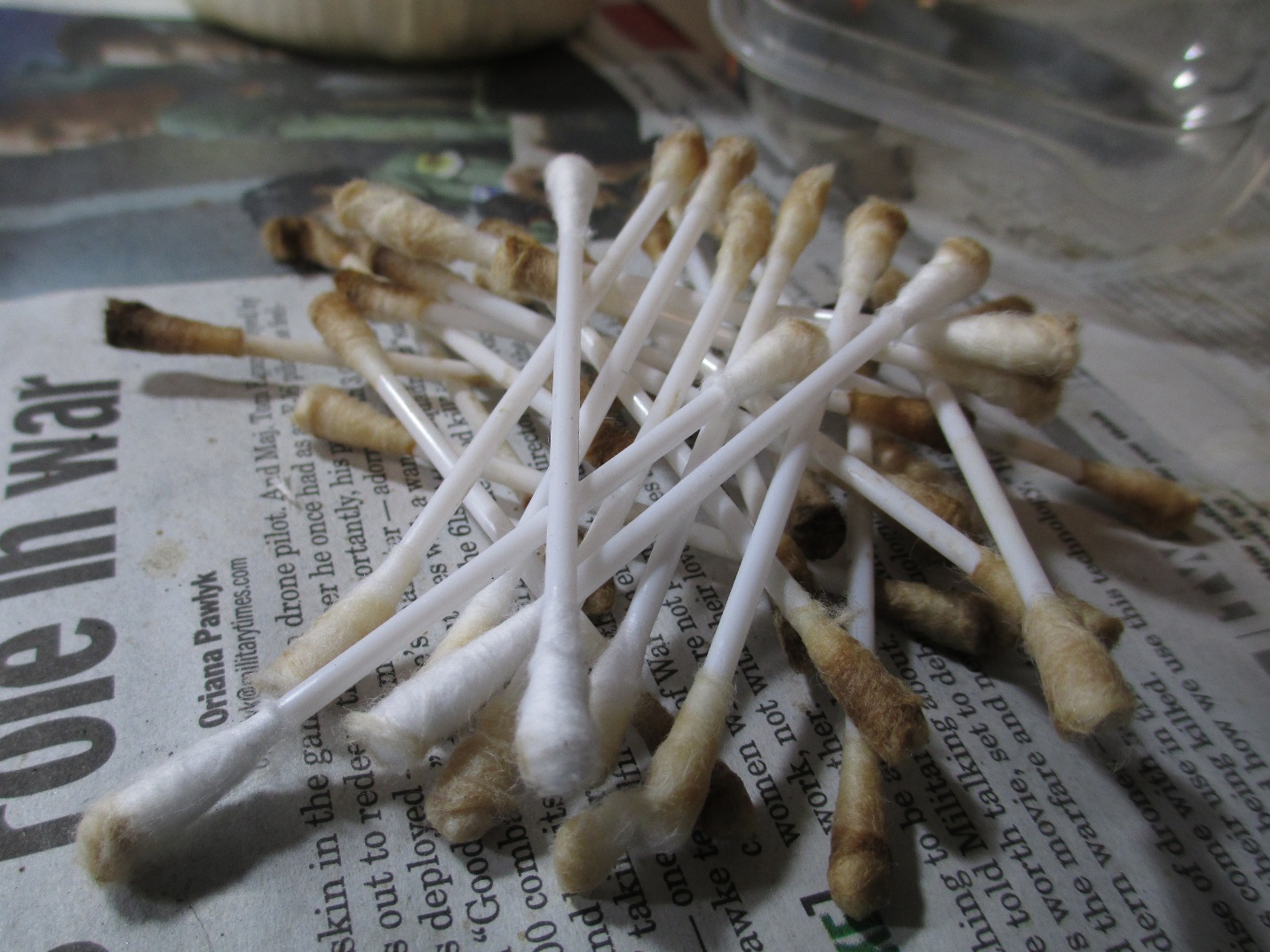
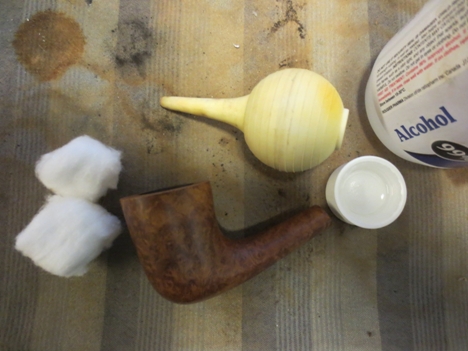
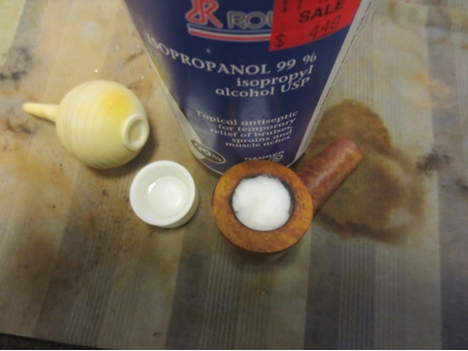
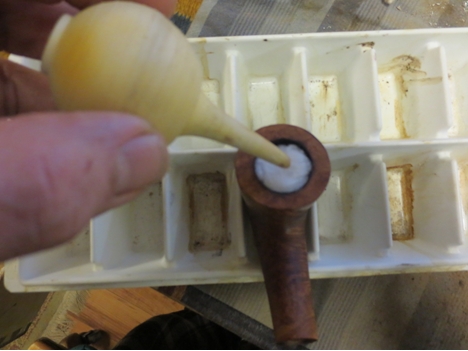
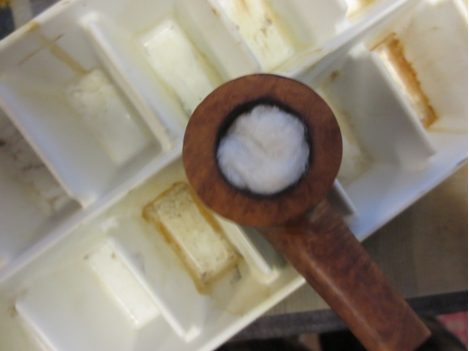
The Peterson I picked up on my trip was in great shape externally. The seller at the antique mall had cleaned up the outside of the pipe and polished the stem and bowl. The pipe was clean and shiny. The stamping was very clear on the ferrule and shank. The ferrule was stamped K&P Peterson’s and had three faux hallmarks as usual on the nickel ferrule of Peterson pipes. The shank was stamped on the left side with an arched Peterson’s over System and over Standard. On the right side of the shank the shape number has been stamped over with Made in the Republic of Ireland. The shape number is present under the over stamp and I can read the first two numbers clearly – 31_, but the third number is covered with other letters so it is not readable.Pete1 Pete2 I wanted to figure out the number stamping that lay hidden under the Made in the Republic of Ireland stamping. I went to the Peterson site and looked for the shape charts. I was able to identify the shape as a 312. Here is the link to the shape http://www.peterson.ie/p/5291/312-standard as well as a picture of the shape 312.0002552_312-standard_430 I also found this shape chart of Peterson System pipes on Pinterest and included the link to it here: http://www.pinterest.com/pin/464996730250913354/ I was particularly interested in noting the size variation between the 312 and the 314. While the shapes are very similar the 314 is significantly smaller than the 312.Pete3 The bowl had been wiped clean and had no cake inside. The rim was dirty and darkened with a thin buildup of carbon and oils. The inside rim was clean and the bowl was in round. There were no serious nicks in the bowl edges. The nickel band was polished and undented. The stem was lightly oxidized and had a light tint of brown. There were no tooth marks or bite marks on the stem. The pipe was in good shape and would be one of my easier clean ups. The inside of the shank and sump had a lot of tars built up inside. The airway was also dirty. The seller had used silver polish on the ferrule and there was a white buildup on the inside edges of the shank.Pete4 Pete5 Pete6 The next photo below shows the underside of the bowl and stem. Both the finish and the stem were in great shape with no visible dents or damage.Pete7 The tenon was wide open like it had been made for a filter. It could hold a paper Medico style filter. I have never seen a filter version of the system pipe. I am wondering if the stem is a replacement or possibly it was drilled out to open it up to receive the paper filter. Obviously the internals had not been cleaned. There was a buildup of hard carbon on the tenon end and on the inside of the tenon. It was hard and would not easily be removed.Pete8 I cleaned up the stem and the sump with cotton swabs, pipe cleaners and isopropyl alcohol until they came out clean. I used a lot of pipe cleaners and cotton swabs before it was clean. I softened the carbon buildup on the tenon with alcohol and then sanded it with 220 grit sandpaper and scraped it away with a small blade to remove the hardened carbon.Pete9 Pete10 The bowl and shank had a heavy aromatic tobacco smell so I stuffed them both with cotton balls and used an ear syringe to put alcohol in both the bowl and shank. I set the bowl upright in an ice-cube tray and let it sit while the alcohol and cotton wicked out the oils and tars and sweetened the pipe. By doing this the pipe would be reset and could be smoked with any tobacco without picking up residual tastes.Pete11 Pete12 While the bowl sat soaking I worked on the stem to remove the oxidation. I sanded it with micromesh sanding pads – wet sanding with 1500-2400 grit pads and dry sanding with 3200-12,000 grit pads. I wiped it down with Obsidian Oil between each set of three pads.Pete13 Pete14 Pete15 I buffed it with White Diamond on the buffing wheel. Then I gave it several coats of carnauba wax and buffed it to a shine with a soft flannel buffing pad.Pete16 Pete17 Pete18 Pete19 After the bowl had been sitting for 4 hours I took the photo below and then pulled out the cotton balls. The alcohol had evaporated and left behind a brown/amber residue on the cotton balls. Once the cotton was out I ran a folded pipe cleaner through the bowl and the sump area of the shank. It came out clean. I ran a straight cleaner through the airway into the bowl. It also picked up a slight bit of residue from the soak but it was clean after a few swabs. Best of all the smell of the aromatic tobacco was gone and what was left was a clean new pipe smell.Pete20 Pete21 Pete22 When the shank was dry I put the newly polished stem back in the shank. I gave the pipe a quick buff with some carnauba and polished it with a shoe brush to raise the shine. The finished pipe is shown in the photos below. It has some slight rim darkening from the previous owner but otherwise it is like new. The bowl and shank are fresh and ready to be loaded with a bowl of fine Virginias or some Virginia/Perique. I have some aged 5100 sitting in a jar here ready to smoke and also a small jar of some blending Perique so I may have to mix a small batch just for the inaugural smoke on this pipe…The briar is beautiful and the refurbished pipe came out very nice. I am looking forward to having a bowl very soon – just have to let the bowl dry out and air for a couple of days before I load it up and smoke it. In the meantime I will just look it over and enjoy the beauty of the pipe.Pete23 Pete24 Pete25 Pete26

Stripping a Chacom Cocktail Pipe and giving it a new look


Blog by Steve Laug

My son-in-law and I dropped off his wife and two of my other daughters at the shopping mall and made our way to the pipe hunting turf. He found a nice Peterson Dunmore and I picked up this little Chacom. I love the shape of the bowl. It is an oval shanked pipe with stamping on both the top and the underside. On top it is stamped Chacom over Cocktail and on the underside it is stamped St. Claude over France and 338 next to the stem shank junction. The bowl was caked and quite dirty. The top of the rim while undamaged by dents or chips was thickly covered with tars and oils. The finish was shot – the black paint, kind of shiny dress black, was peeling and large spots on the finish were missing. The stem was dirty, oxidize, and covered with a calcification for the first inch of the stem. There was tooth chatter on the top and bottom of the stem and on the underside it had some tooth dents that would need to be addressed.Chacom 1 Chacom 2 Chacom 3 Chacom 4 I reamed back the cake to the bare briar with a PipNet pipe reamer. I used both the first and second sized cutting heads to ream the cake back. This time it was not hard but rather it crumbled when the blades of the reamer touched them.Chacom 5 I put the bowl in an alcohol bath overnight and let it soak. In the morning I took it from the bath and found that the finish was unphased by the soak. I had run out of acetone for removing the finish but I borrowed some fingernail polish remover from my daughter. It was a peach flavoured wash with added vitamin E. I figured that neither the pipe nor I would mine the smell of fresh peaches as I scrubbed down the finish. The peach aroma made the acetone removal of the painted finish not only quick and easy but made it smell like peach cobbler! Wow. I used a lot of cotton pads soaked in the acetone to remove the paint and clean up the finish. I sanded the bowl with 220 grit sandpaper but did not sand the shank as I did not want to damage the stamping on the top and the bottom. I went over the sanded bowl with a medium and fine grit sanding sponge.Chacom 6 Chacom 7 Chacom 8 Chacom 9 I dropped the bowl into an alcohol bath to soak out the deep stain and remove some more of the paint that held on fast. While it soaked I worked on the stem. I sanded it with 220 grit sandpaper to remove the calcification and oxidation and then wiped it down with alcohol. I was able to remove the tooth chatter from the top side but the bottom side still had a deep tooth mark. I sanded it and opened up the edges of the mark. I wiped it down with alcohol and then filled it in with black superglue and sprayed it with accelerator.Chacom 10 I sanded the patch with 180 and 220 grit sandpaper and then with the sanding sponges to blend it into the surface of the stem.Chacom 11 Chacom 12 I removed the bowl from the alcohol bath after it had soaked for about an hour. I dried it off with a soft rag and took the following four photos to give a clear idea of where it stood at this point in the process of removing the finish. The peach flavoured acetone and the isopropyl alcohol had done their magic and the paint was gone!Chacom 13 Chacom 14 Chacom 15 Chacom 16 I let the bowl dry and continued to work on the oxidation on the stem. I sanded the bowl lightly with a medium and fine grit sanding sponge and then wiped it down with a cotton pad and alcohol to remove the dust. I put the stem back on the bowl and took the pictures below to show the progress toward the new look of this old dress pipe.Chacom 17 Chacom 18 Chacom 19 I used a folded piece of 220 grit sandpaper to rework the inner edge of the rim. It had originally had a slight bevel toward the bowl and I wanted to clean that up and redefine it. Once that was completed I wiped the bowl down a final time with the alcohol and prepared it for staining. I decided to use a dark brown aniline stain to work with the black highlights on the grain. I applied the stain, flamed it and reapplied and flamed it again.Chacom 20 Chacom 21 Chacom 22 Chacom 23When the stain dried I wiped it down with isopropyl alcohol on a cotton pad to remove some of the opacity of the colour and to try to make it more transparent. The next four photos show the pipe after the wipe down.Chacom 24 Chacom 25 Chacom 26 Chacom 27I took the pipe to the buffer and buffed it with White Diamond, being careful to avoid buffing the stamping on the shank. I am careful not to damage that in the process of the restoration. Once buffed the stamping really shows up again. Now it was time to work on the stem some more and get rid of the oxidation and scratches. I use a plastic spacer between the shank and the stem to protect the shank and to allow me to sand the stem without rounding the shoulders. I sanded with 220 grit sandpaper, medium and fine grit sandpaper and then used micromesh sanding pads. I wet sanded with 1500-2400 grit pads and dry sanded with 3200-12,000 grit pads. I rubbed it down with Obsidian Oil between each set of three pads.Chacom 28The tooth repair on the underside of the stem is smooth and even. However, when I sprayed it with the accelerator it left a white centre to the patch. I have not had that happen before but it is all the way through the patch. I will live with it for now, but one day may pick it out and redo it to remove that aspect of the patch.Chacom 29 Chacom 30 Chacom 31 Chacom 32I continued to sand the stem as the photos highlighted areas that still showed oxidation. Once I had that removed I buffed the stem with White Diamond and gave it multiple coats of carnauba wax. I wiped the bowl down once again with isopropyl alcohol on a cotton pad to further lighten the brown stain and highlight the contrast with the remaining black stain in the grain. I buffed it with White Diamond and then gave it several coats of carnauba. I buffed the entire pipe with a soft flannel buff to give it a shine and set it aside for an inaugural smoke – either later today or early this week. The finished pipe is shown below.Chacom 33 Chacom 34 Chacom 35 Chacom 36

The Wily Nature of a WDC 14K Full Bent Billiard Restore – Robert M. Boughton


Guest Blog by Robert M. Boughton
Member, North American Society of Pipe Collectors
http://www.roadrunnerpipes.com
http://about.me/boughtonrobert
Photos © the Author

O, what a tangled web we weave,
When first we practise to deceive!

— Sir Walter Scott, Scottish historical novelist, playwright and poet, in “Marmion” (1808), Canto VI, stanza xvii.

INTRODUCTION
I mention poet last among the great Scot’s endeavors because, if any of them were much good, the poetry was most lacking. However, there are forever those two lines that people remember, even if they often misattribute it to Shakespeare, who would have made a much better and shorter sonnet of the one theme had he thought of it. Scott’s epic in length tragic poem (in more senses than intended) – with its jumbled use of rhymed couplets in iambic tetrameter, alternating rhyme in iambic pentameter and alternating or nested rhyme in hymn meter – just tends to bore. I admit that my writing skills do not include poetry, which I consider the highest form of the literary art form, but I also do not pretend to have the mind for it.

Many of the quotes I include before my blogs are no doubt somewhat enigmatic, but this one hits the mark much closer. A quick look at the WDC Full Bent Billiard with 14K gold band reveals much ado about nothing as far as the need for serious restoration is concerned.Robert1In fact, when it came in the mail with six others I bought in a pipe lot, I was happy to see they were nowhere near as thrashed as many others I received before. Most, in particular the WDC, seemed at a glance to need only a simple refurbishing. Only upon close examination did I see the problems that appeared little but might indeed create bigger problems when the actual work began. Still I chose this one both because of its seeming almost pristine condition but because I might have a buyer lined up already.

As a note, WDC is short for the William Demuth Co., a U.S. crafter of fine pipes from 1862-c. 1973, after the venture had changed hands several times and was at last liquidated. The Full Bent Billiard described in this blog appears to be quite old, perhaps dating to the 1930s or ’40s, based on a WDC Master List by Kaywoodie [http://kaywoodie.myfreeforum.org/viewtopic.php?t=191&start=0].

Photo © WDC Master List

Photo © WDC Master List

RESTORATION
The problems I encountered, despite being almost invisible in the following photos, by the hidden nature of their presence convinced me to take on this supposed easy project. As a result, I was led, step by step, into a web of blemishes, some of which were simple to fix and others proving more difficult.Robert3 Robert4 Robert5 Robert6 Robert7In general, I start with the chamber, which in my recent blogs has involved the removal of massive cake buildup. Here it is apparent that is not a problem, but that fact ends up concealing a more significant flaw, which I will get to in short order. This time, I chose to begin with the rim and shank opening Even in the photo above, the blackening, scratches and jagged inner rim show. Closer photos display the rim and shank hole better.Robert8 Robert9Steel wool was perfect for the shank opening. But 1500 and even 800 micromesh proved ineffective on the rim. I jumped to 400 micromesh, which removed the blackening. As I intended only to sand the bowl this time instead of using my reamer that has been mandatory with so many other recent restores, I switched to 150-grit paper for the chamber, starting with the rim to eliminate the craggy inside.

After continuing with multiple turns of the paper until I reached the bottom, I tapped and blew out most of the accumulated carbon dust and used a small piece of cotton cloth to wipe off enough of the residue to insert a finger and feel the sides. They were smooth, but what I found at the bottom was troubling: a big hole with another ridge of cake around it.

And so I decided to go with the reamer after all. Besides, I thought, I like to leave the chamber wall as close as possible to the wood, and the reamer would accomplish that and even out the hole in the bottom – I thought.

However, while I indeed removed more carbon from the sides and bottom, the latter proved much more stubborn. Returning to the 150-grit paper, I took the walls down to where the wood almost showed all the way. With awkward, slow turns of the paper, during which I heard an awful scraping wail rising from the base of the chamber, I succeeded in sanding the hole as far as it would go. In the end, a small hole remained. For the first time, I understood that I needed some sort of tool I do not yet possess, but the result was satisfactory.

Meanwhile, I used a record 15 bristly pipe cleaners to remove the long-accreted mess of tar and other fantastic buildup of nastiness from the shank. I concluded a serious alcohol flush was in order. I stuck a piece of cotton in the bottom and for the first time plugged the shank with some cork I had on hand.robert10About a half-hour later, seeing the cotton was dark, I removed it with a cheap tobacco pick and pulled the cork, letting the brown alcohol drain through the shank. I had given the outer wood a good bath with purified water, which removed considerable filth, but being quick to wipe up the overflow of alcohol, I used it to wipe away more tenacious hangers-on, so to speak.Robert11 robert12The next strands of the web were the many tiny scratches and pits on the bowl and shank, all of which were so small I was (I have to admit) tempted to let them slide. That being a sin of restoration I have yet to commit with malice aforethought, my senses returned. I considered how to accomplish their elimination.

The 1500 micromesh worked on a few superficial scratches. Given that I could see them myself, I used the 320 micromesh for the deeper flaws that were small but still clear to serious scrutiny. That was the magic number but left the treated areas lightened. One of my goals with this restore was to avoid re-staining anywhere, and I had succeeded so far so I was determined not to resort to the last measure at the point. I tried the 1500 again on these spots and found it shined up the wood almost as it had been.

Then I had a thought. I know, the phenomenon doesn’t occur every day, but this was like one of James Joyce’s little epiphanies. Taking a risk, I used the 1500 micromesh on the entire bowl and shank, smoothing the entire surface to a nice glow.Robert13 Robert14 Robert15 Robert16 Robert17The only part of the web before I was clear of it was the stem. Now, I have had stems discolored and bitten almost to the point of being irreparable and made them shine like new. This stem, on the other hand, which showed nothing but the slightest use by a long-time, caring pipe tobacco enjoyer, eluded several efforts to remove the minor scratches. To my surprise, the chatter came off with ease, but the scratches would disappear with micro-meshing and then new scratches and even white blotches popped up when I wiped the stem down with my cotton cloth.

Nothing was going to stop me. And so, with a barrage of micromesh grades starting with 1500 and then 800 followed by 3200 and 320 and at last 1500 again, I could find no scratches, chatter or blotches.Robert18 Robert19All that remained was the buffing. I finished the stem with red Tripoli and White Diamond. The briar I used everything at my disposal, starting with white and red Tripoli, then White Diamond and at last carnauba.Robert20 Robert21 Robert22 Robert23 robert24 robert25CONCLUSION
I had a good time restoring this excellent old pipe, despite the unexpected difficulties I seemed to encounter at every turn. In fact, I suspect the new problems added to the pleasure. I’ve always enjoyed a challenge, and while mine in this process may seem tame compared to those some of my more experienced readers have dealt with – and believe me, I’ve read enough of Steve’s and heard about plenty of my friend’s and mentor’s to know there is far worse – they nevertheless represent new obstacles I overcame. That, I understand, is what the job is all about.

I suppose I was born with the type of personality that finds it impossible to overlook even the slightest flaws I notice in any project I undertake. People – for the most part those who are satisfied with mediocre conclusions – have always called me a perfectionist, but I never use the word to describe myself because I know I am far from it. Only on rare occasions have I completed a project (whether it be a short story, screenplay, novel, blog, pipe restoration or anything else) to which I did not return later and see how I could write, edit or do it better.

By way of example, when I was writing my last blog, on The Guildhall London Pipe, I started to insert photos and noticed the stem was not up to my present snuff, so to speak. And so, although it was somewhat of a hassle to stop my blog, get the pipe, remove the stem and not just rebuff it using the White Diamond wax I recently added to my wheels but re-sand it to remove the horrible discoloration I had missed before, I could not bring myself to publish photos knowing they would show my incompetence. I think the final result was worth the extra effort.

I am beginning to realize an important part of the restoration learning process is simple rising self-expectations. By good fortune, I have several dozen estate pipes in many shapes and degrees of duress on which to practice in the near future…and I am chomping on the bit!

The One That Got Away – Robert M. Boughton


Guest Blog by Robert M. Boughton
Member, North American Society of Pipe Collectors
http://www.roadrunnerpipes.com
http://about.me/boughtonrobert
Photos © the Author

“Love bravely, live bravely, be courageous, there’s really nothing to lose.”
— Jewel (Jewel Kilcher), singer-songwriter, guitarist, actress, author and poet

INTRODUCTION
Indeed, I endeavor to live life to the fullest and take calculated risks. But be advised, the good lady, Jewel, is not altogether correct. This, therefore, is a cautionary account of a wonderful Gilpin, being the product of a maker called Salisbury.

Because of its humble background that defies my concerted attempts to trace the brand even to a country of origin, the 5-1/2″ long pipe (from the front of the small, flat, rounded base to the lip of the stem) with a 1-7/8″ bowl height, though an uneven mix of birds-eye and erratic lines, is nevertheless a fine example of engineering, briar quality and the ultimate smoking pleasure that results. I believe Salisbury is or was a small, independent pipe shop, or perhaps just the name of the town where a modest craftsman who created the Gilpin lived.

RESTORATION
For anyone who has read my other recent blogs, the beginning of this part will come as a given. More for the benefit of others, I have to say this unfortunate pipe, which came as part of a lot I purchased online because I could see through the beast to the beauty inside, was not treated well by its former owner. Exercising the utmost restraint, I will forego any judgment calls as to the personality of that ignorant individual and just get to proof of where I started. The only redeeming factor is that there was nothing wrong with the interior structural character of the Gilpin.Robert1 Robert2 Robert3 Robert4Needless to say, the pipe was as thrashed as the others in its lot, to my benefit since, taken as a whole, the collection did not appear to be worth my overbid that succeeded in scaring off the other contenders, and I won for next to nothing.

When I finished with my reamer and 150-grit paper on the chamber, I had removed enough cake both to fill three bowls and to rest my softened case against the previous individual who had possession of this pipe.
Robert5For the rim I started with 220-grit paper and then, as the wood began to peek through, finished the removal of the serious burning with 1500 micromesh.Robert6The uniform scratches all around the rim indicated a need for slow work with 400-grit paper and 2400 micromesh to achieve smoothness.Robert7I re-stained the rim a light brown and hand-buffed it with 2400 micromesh.

The stem on the Gilpin was so roughed-up and discolored that it proved to be the most difficult part of the restoration. Beginning with vigorous sanding using more 220-grit paper, I spent close to a half-hour removing the blemishes that must have contributed to the collectors who also bid on this lot giving up after my one max offer of $40. I paid $22.50 for the four pipes. I finished my labor on the stem with 1500 micromesh, then 3200.

THE FATAL CRISIS
After cleaning and sanitizing the near-finished Gilpin, I had only to polish the stem and wood on my twin fixed-speed buffers. I know, I know! I can’t count the times my friend and mentor, Chuck Richards, and other restorers more experienced than I have admonished me to have a firm grip on the material being buffed when using this type of inexpensive tool. And I swear to all that is holy to me that I did just that. Read on, and I shall tell you the tale.

Starting with the stem, using red Tripoli and White Diamond, the result was perfect. I moved on to the bowl and shank, buffing them to a beautiful sheen with white Tripoli, White Diamond and the last touch of carnauba. I was, in fact, in the act of removing the beautiful briar from the carnauba wheel.

And that was when…

Well, that was when the unthinkable happened. You know by now where this is going. The precious piece of wood got away from me and, thanks to my not having set up a soft net for such contingencies, flew at warp speed straight into the wall a mere few inches behind the buffer.

I actually heard the sound of the snap, although I could not see where the consequence of my mistake came to rest. As a nauseating, heartbroken sickness spread from my stomach to the rest of my body and mind in one breathless heartbeat, I switched off the second buffer and leaned over the edge of the stand and spotted the bowl on the carpet – with a jagged break in the shank near the draught hole.

Of all the accursed luck! Right before the frigging draught hole! (That, for your information, was not the adjective I in fact shouted out loud in a maelstrom of horror and self-flagellation.) Even through the mental fog that swirled inside my addled head and made my sight blur, I had a good idea of the significance of that location, more or less the hottest place on a pipe, as opposed to the stem end, where I might have had a fighting chance to Super Glue it back together and band the sorry, mortally wounded Gilpin.

But where was the other piece? I grew frantic in a way I had not experienced in years. Standing there where I had frozen, without moving my feet, I searched everywhere around the stand until at last, turning only my head, I found the missing piece of the shank. It was behind me by a box near the middle of the room.Robert8And so it came to pass, the next day at my tobacconist, that I took the all but ruined pipe, in its three clean and sparkling pieces that seemed to mock me, and at least having calmed down enough to smile for Chuck as I handed him the violated parts said:

“The one that got away.”

“What’s this?” Chuck said with his grin of curious amusement.

“The one that got away,” I said again. “You know how often you’ve told me to be extra careful holding pipes on the buffers I have. Well, one finally got away.”

Recounting my story to him, I saw his big, warm smile emerge and felt so much better, even though I knew in my heart that he would confirm that the hapless Gilpin was beyond repair for purposes of selling.

Chuck and Chad

Chuck and Chad

As luck would have it, though, if such a phrase could even be conceived to apply to this calamity, the fractured pipe was not beyond repair for what Chuck called a shop pipe, or one to be enjoyed by myself while restoring others. All I needed to do was find some sort of short rod to anchor the two parts of the shank in place and Super Glue them together without letting any of the glue seep inside.

I can do that, I thought, and a local hardware store where I could find such a thing came to mind. The next day I visited the store and searched through the limited possibilities. I spotted a 315-piece box of assorted sizes of spring steel, black oxidized roll pins, and after much thought decided what the heck. One of the two smallest pins, I concluded, would fit the bill.Robert10Choosing the smallest, which was 1/16×3/16″ in size, I inserted one end of the roll pin into the bowl end of the shank, as is obvious in the photo above. With great care, I applied Super Glue around the exposed wood of the same end and fitted the other piece of the shank, without the stem, over the pin and into place, lined up in a perfect match.Robert11The next step I chose, after letting the glue set, was to use 400-grit paper to smooth the dried scab of glue as well as I could. In the process, of course, some of the finish came with it, but that was easy to fix with a small amount of brown boot stain around the lighter area.

I flamed it and used 2400 micromesh to remove the char. At that point, the dreaded time to return to the buffers had arrived, and so there I went. Taking a deep breath and telling myself whatever happened was okay, I felt a calmness come over me. I turned on the two buffers and re-did the entire bowl and shank with red and white Tripoli, White Diamond and carnaubaRobert12 Robert13 Robert14Only the knowledge that I would be smoking the finished pipe alone in my little shop and thinking of this black experience every time consoled me.

CONCLUSION
I have been smoking a bowl of Cornell & Diehl Sunday Picnic in my new shop pipe as I finish up this most excellent example of how not to restore a pipe. The Gilpin is every bit as good as I expected, but of course I remain unhappy with the end. I would much rather have concluded on a happy note with the Salisbury whole and rejuvenated and ready to sell, but life sometimes takes cruel turns.

Then again, maybe the beautiful, aptly named Jewel had it right.