Tag Archives: polishing

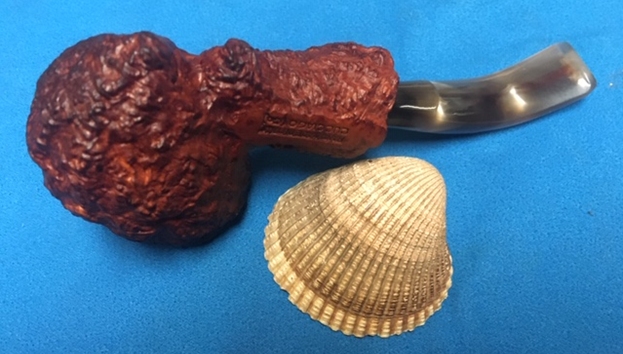
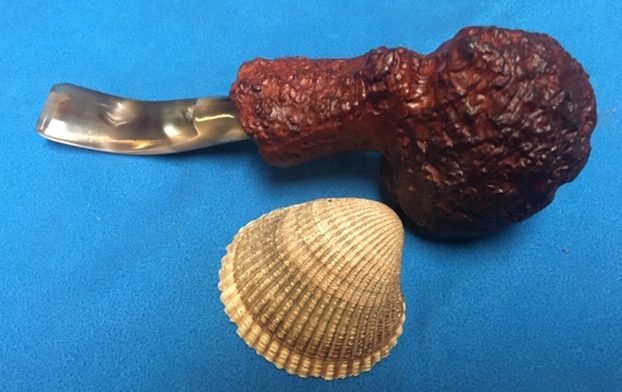
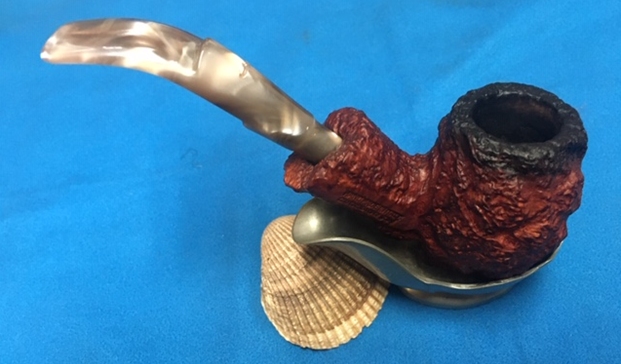
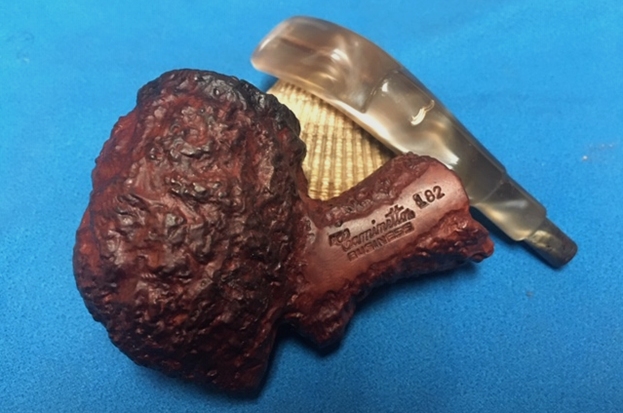
UPDATE!!! Pretty Tired and Dirty – Messy Restoration of a Caminetto Business Tomahawk 182


Blog by Steve Laug

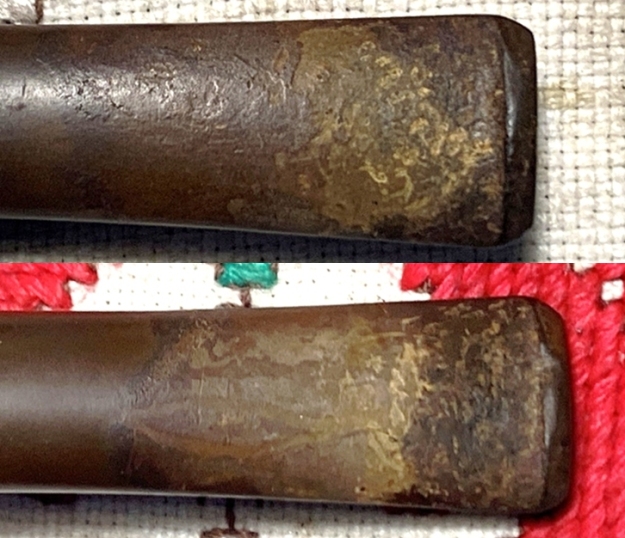
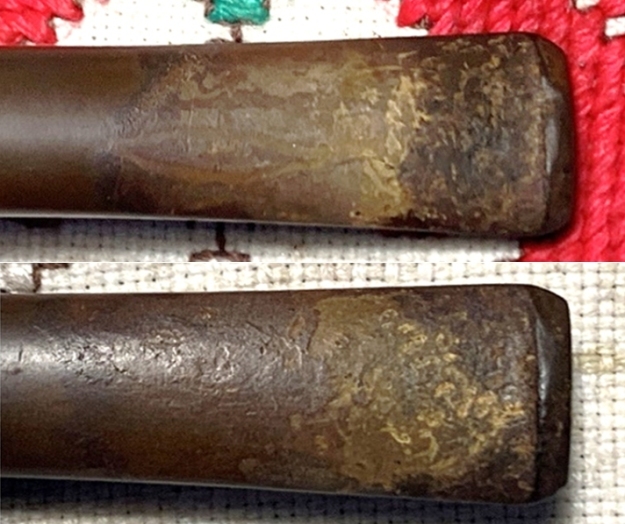
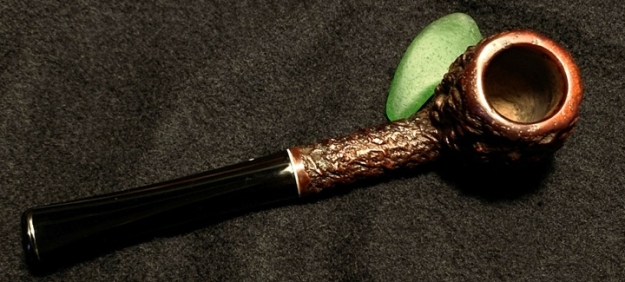
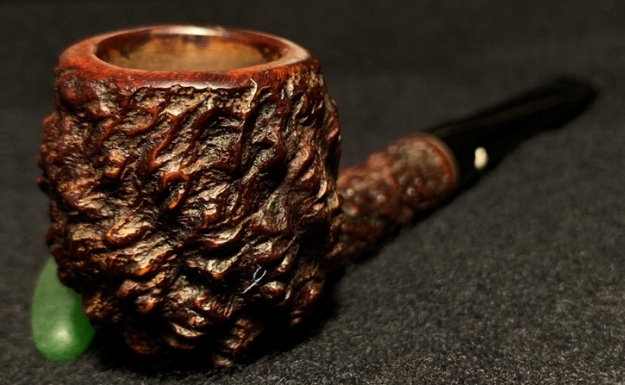
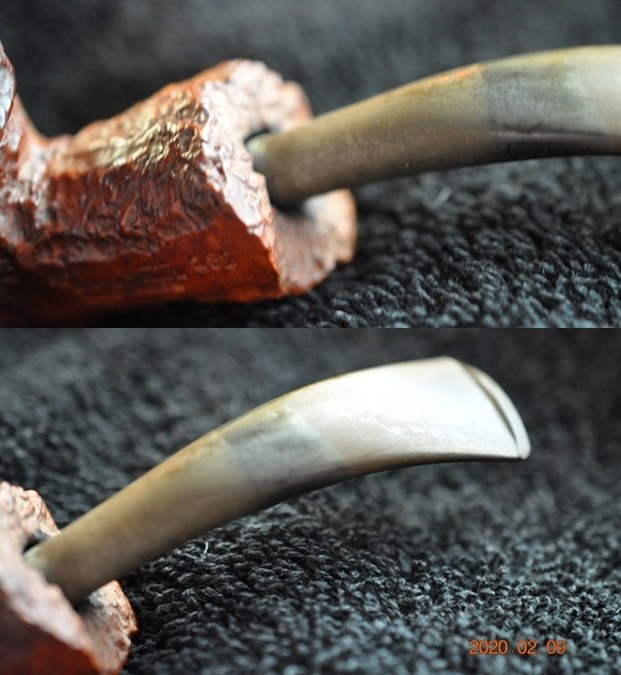
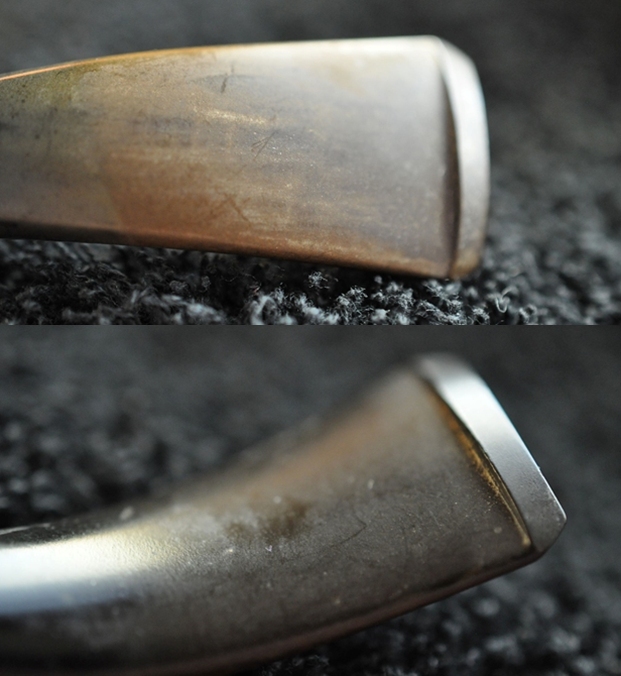
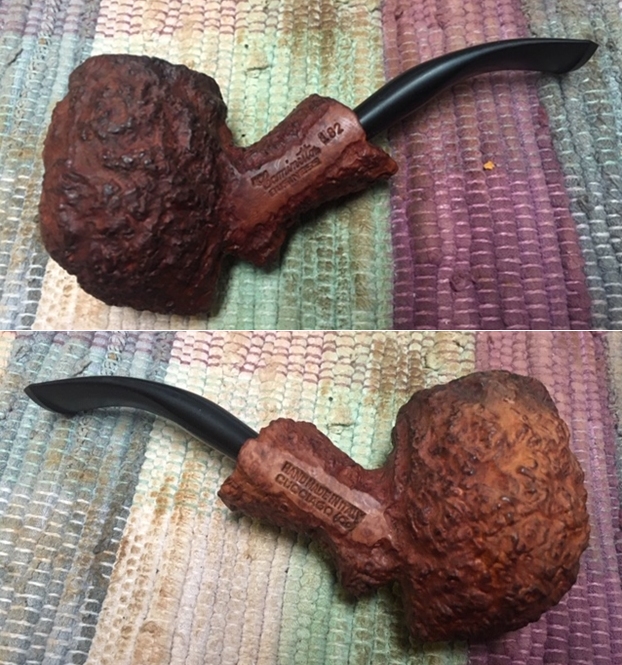
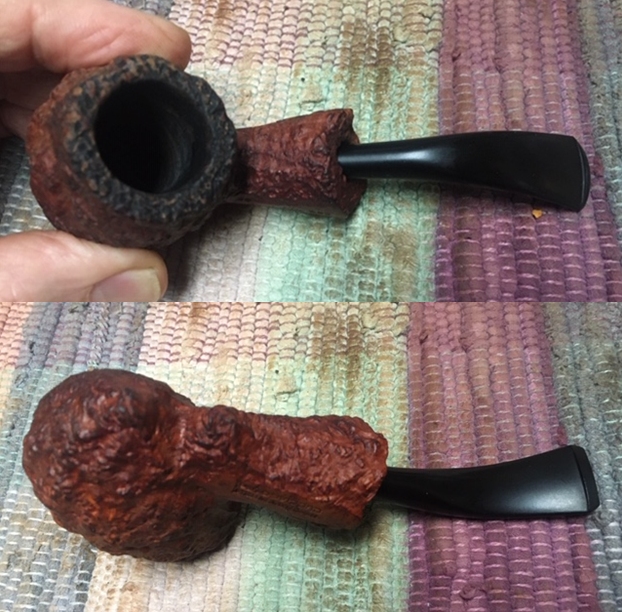
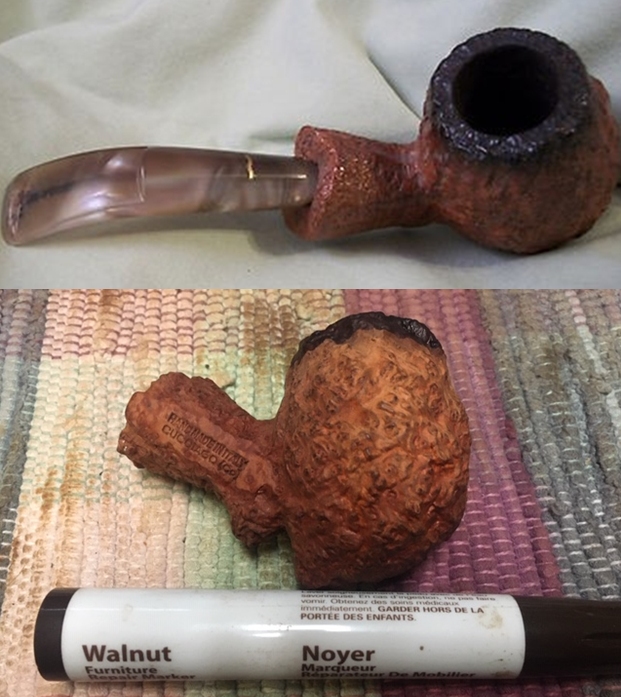
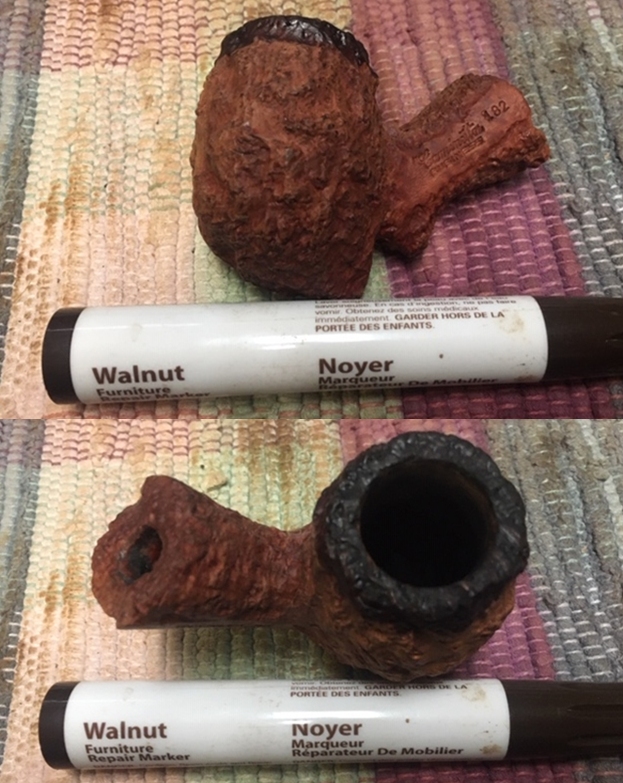
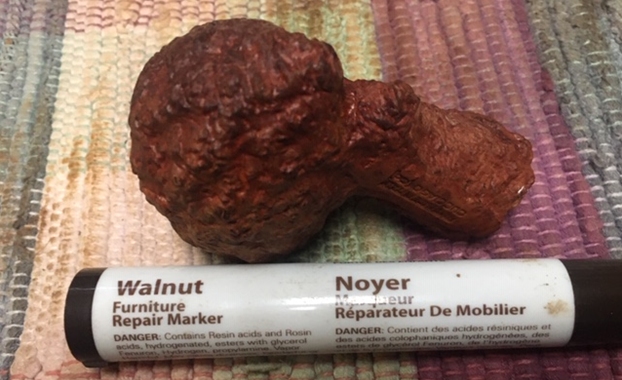
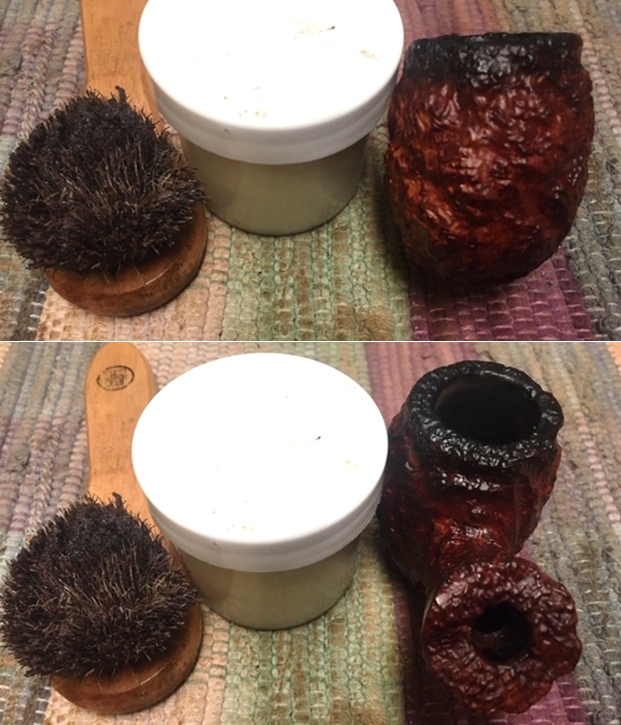
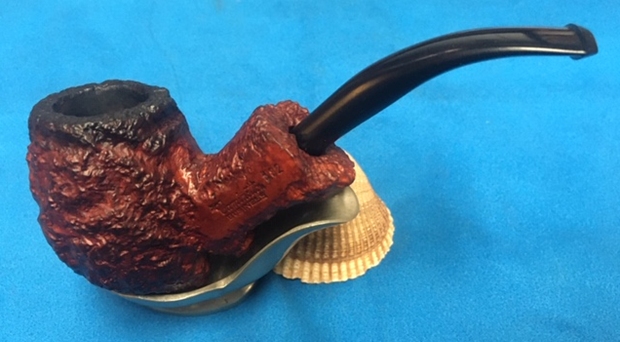
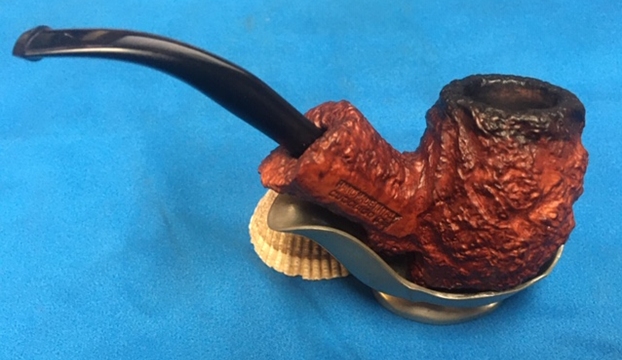
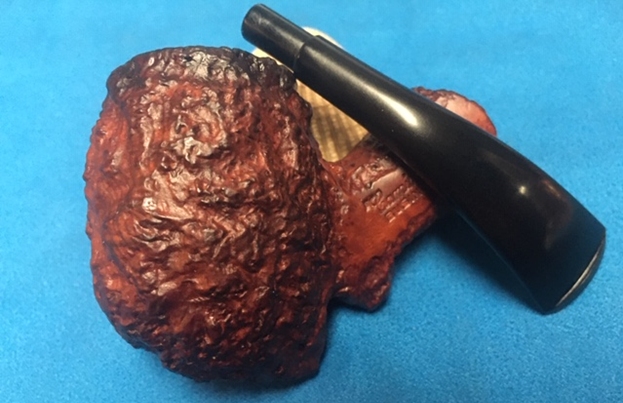
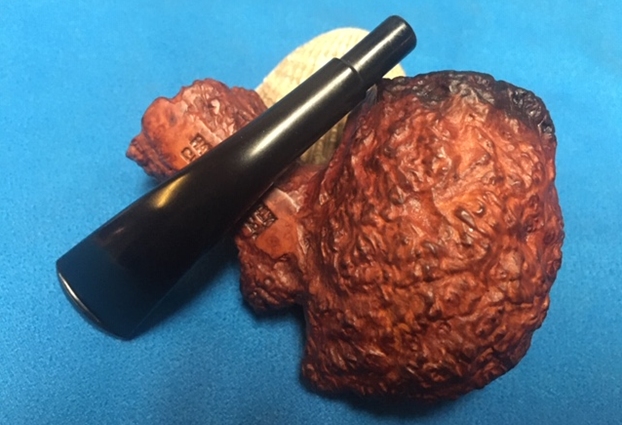
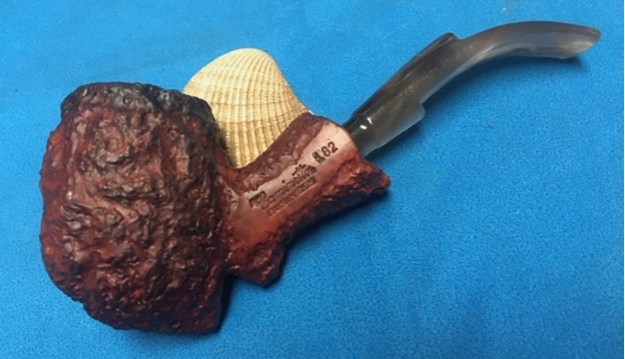
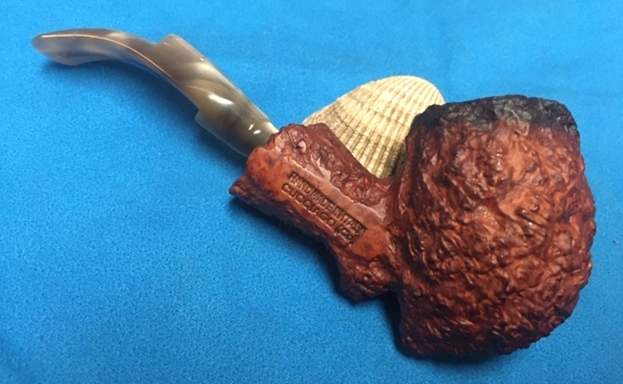
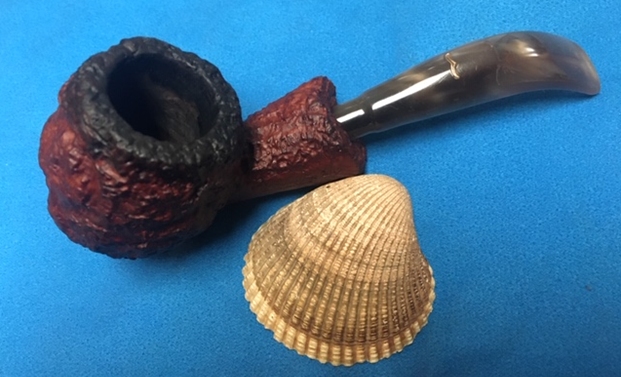
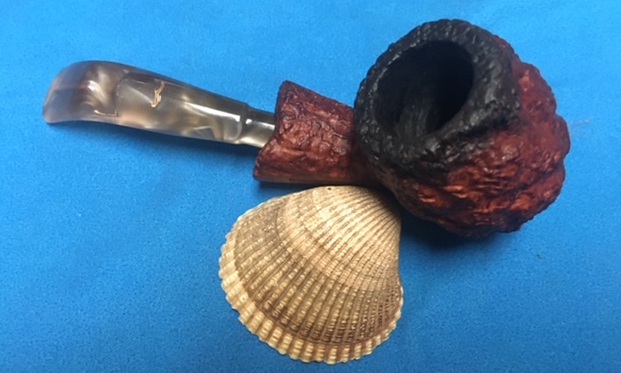
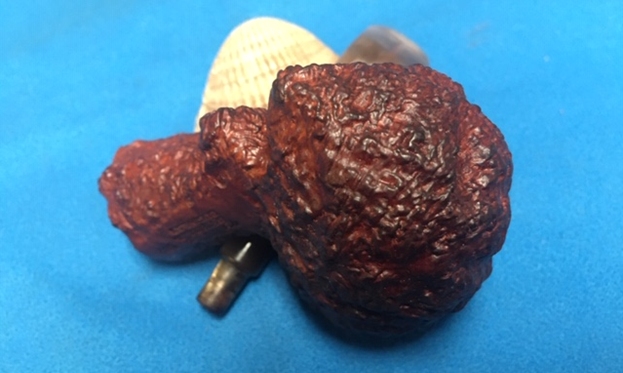
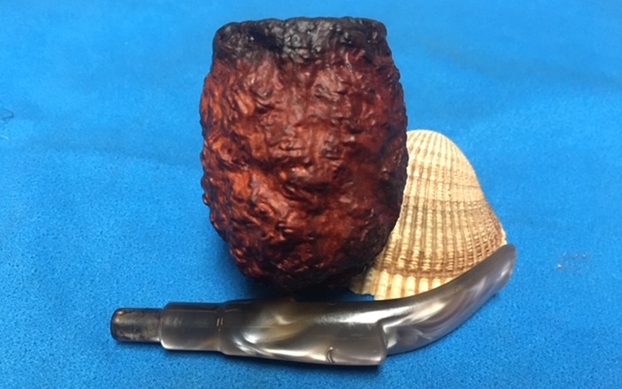
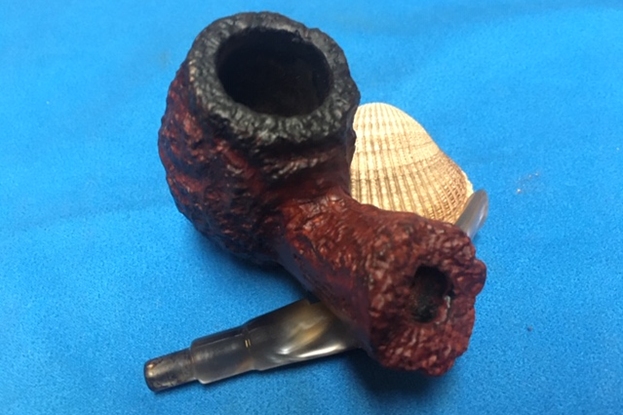
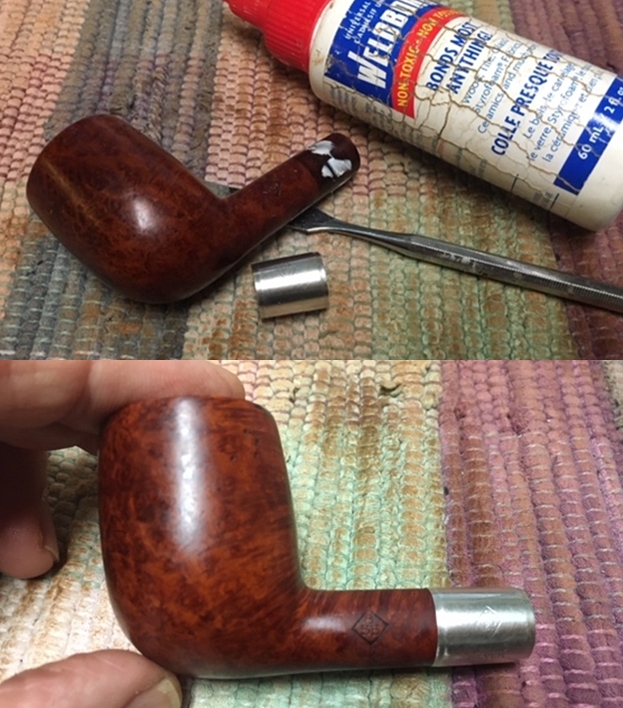
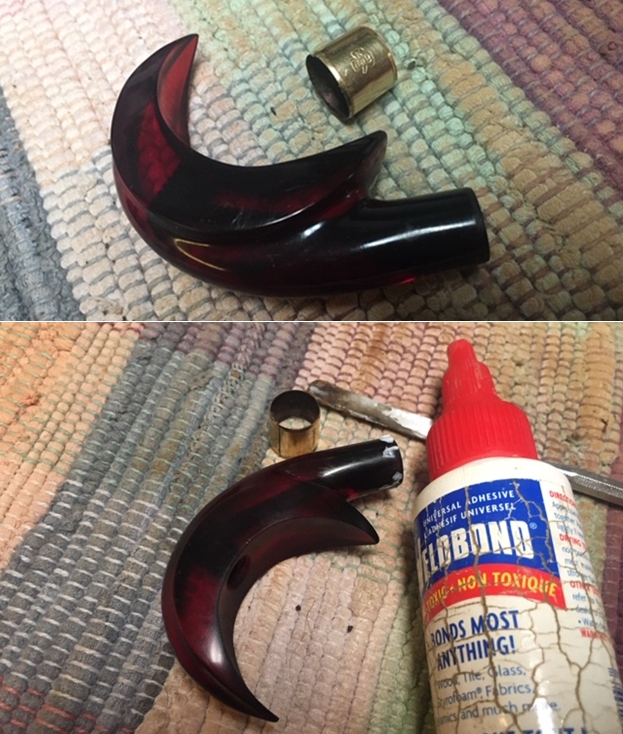
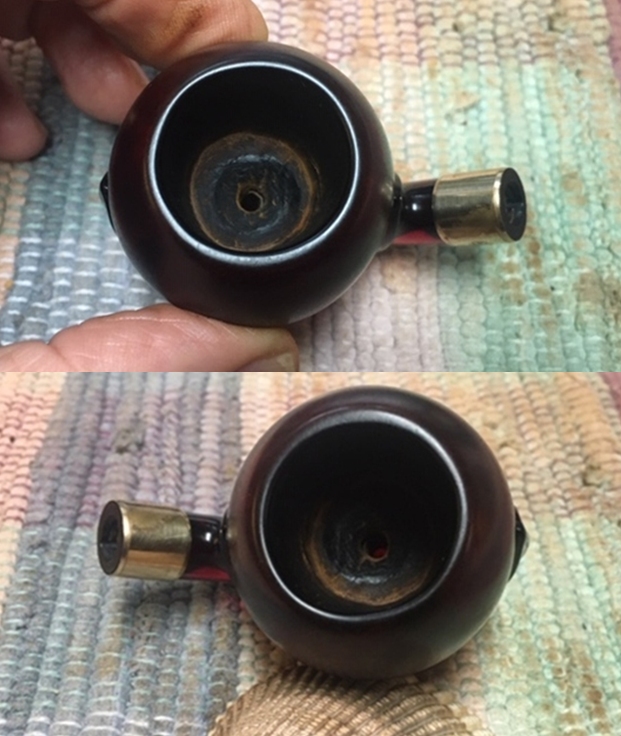
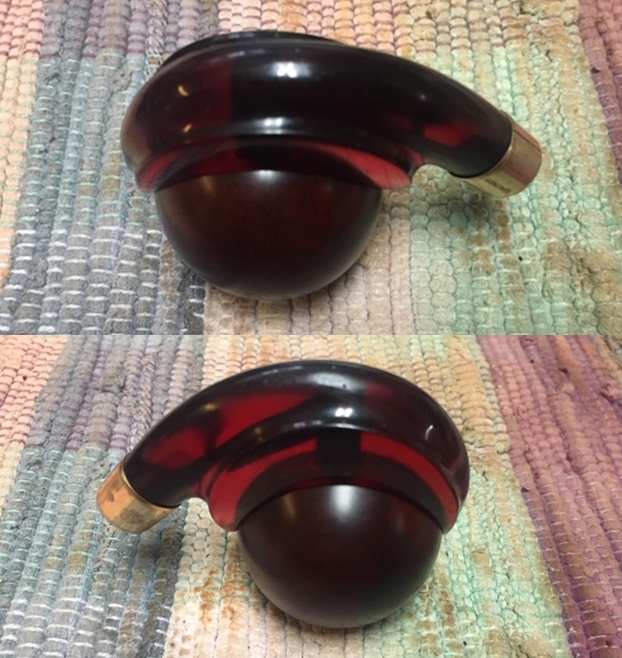
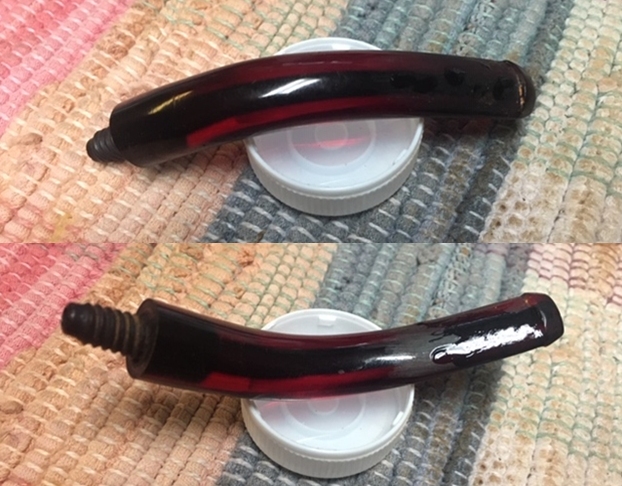
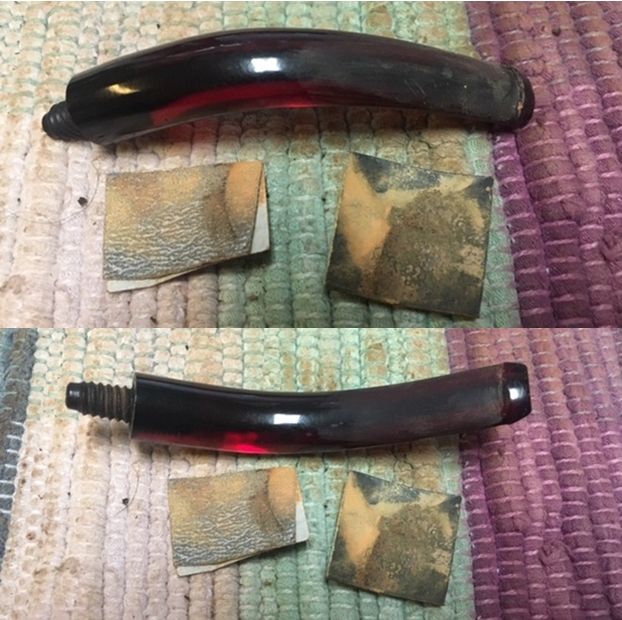
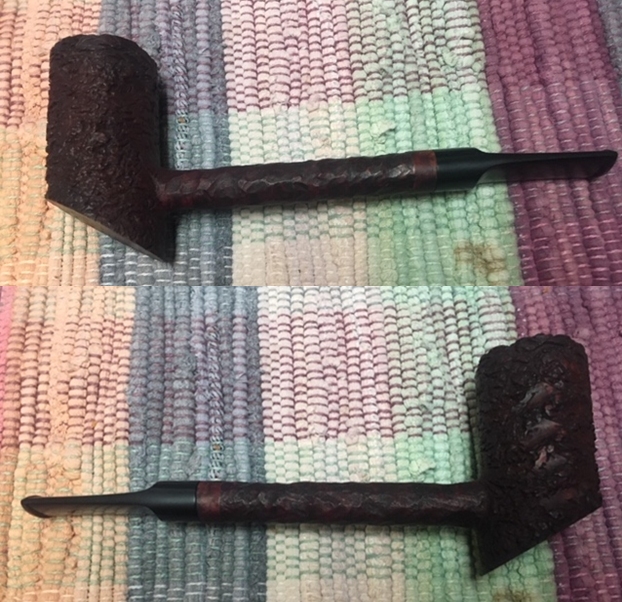
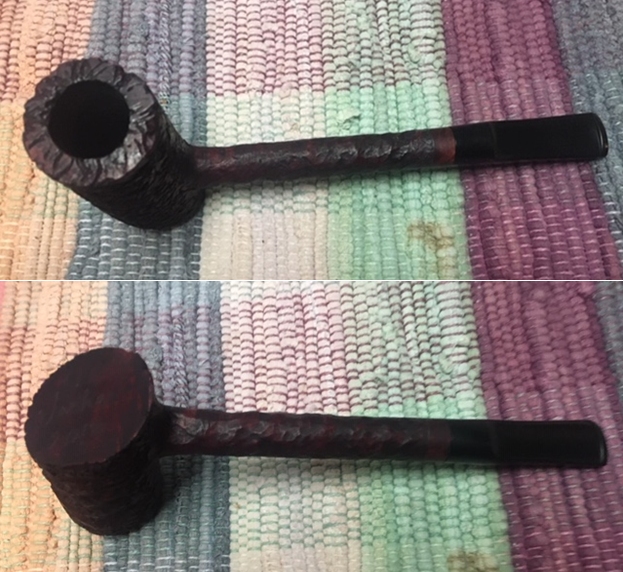
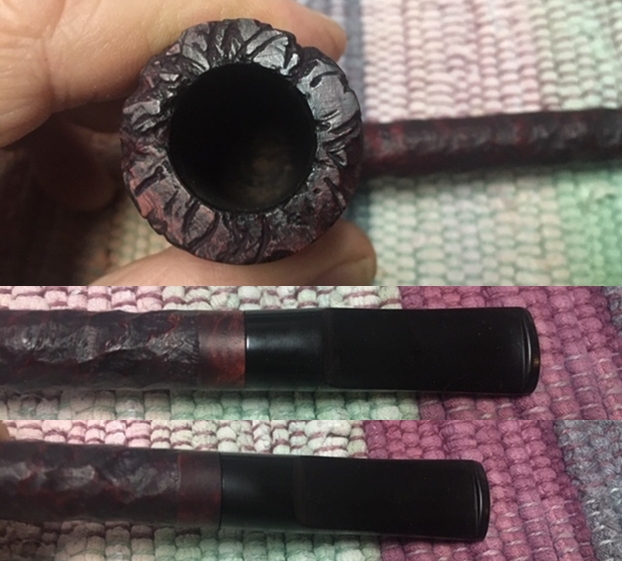
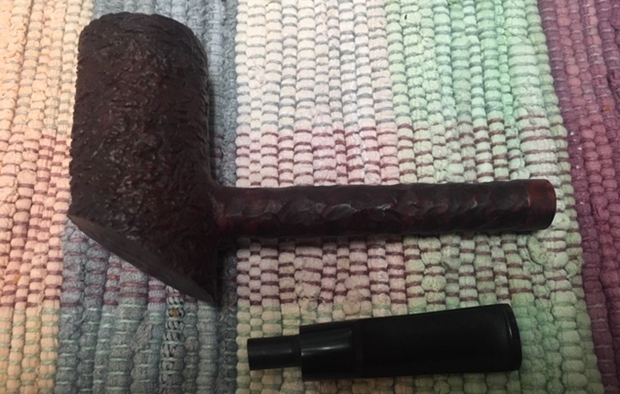
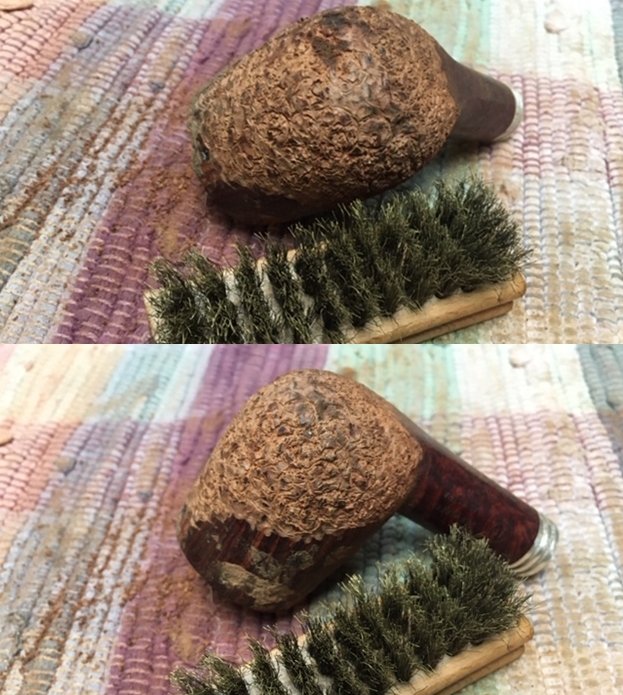
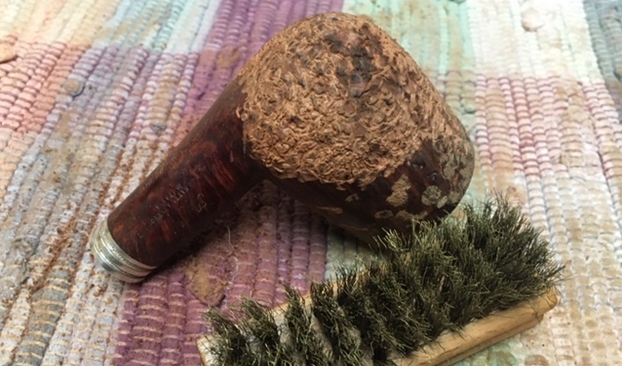
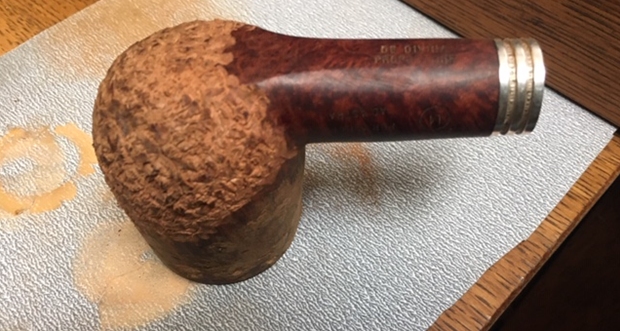
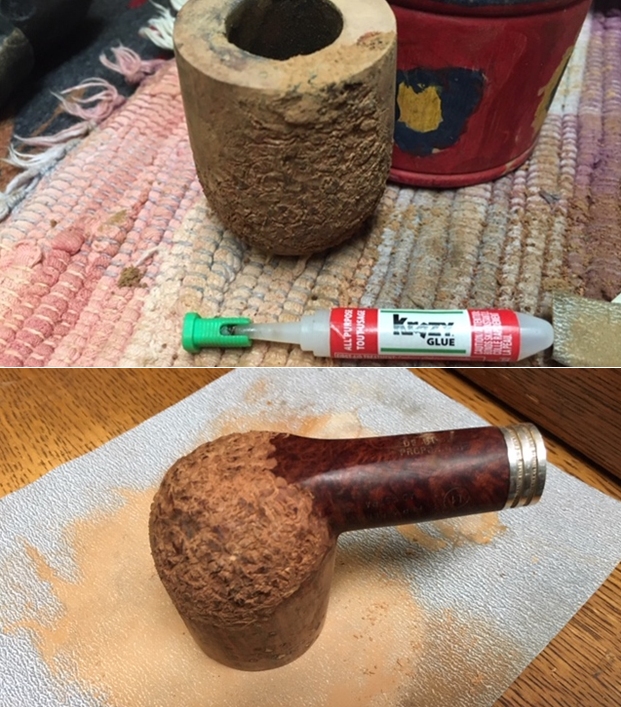
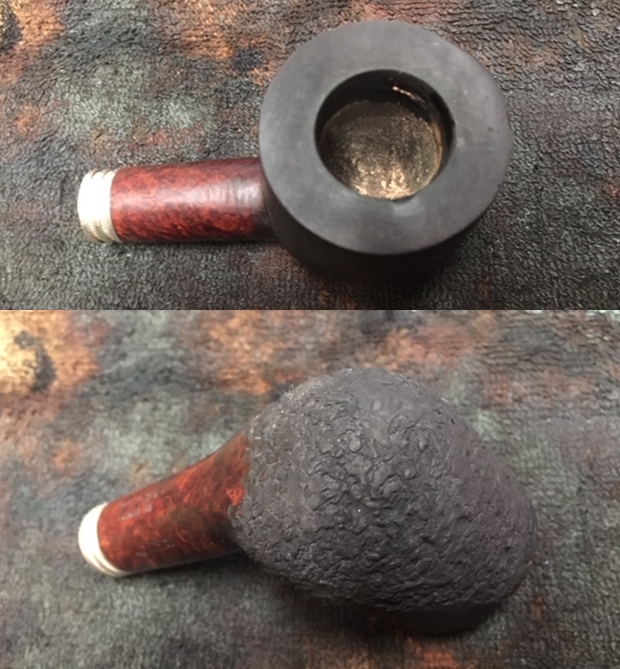
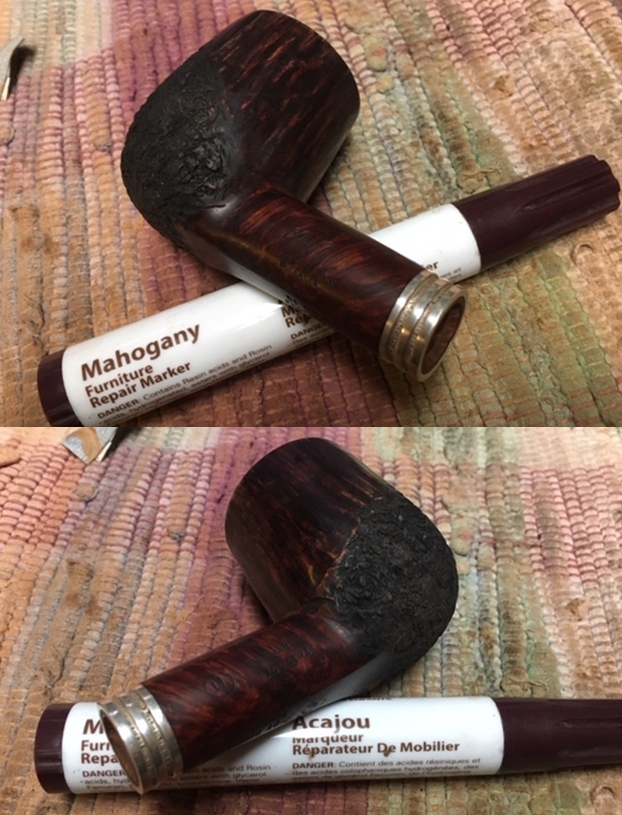
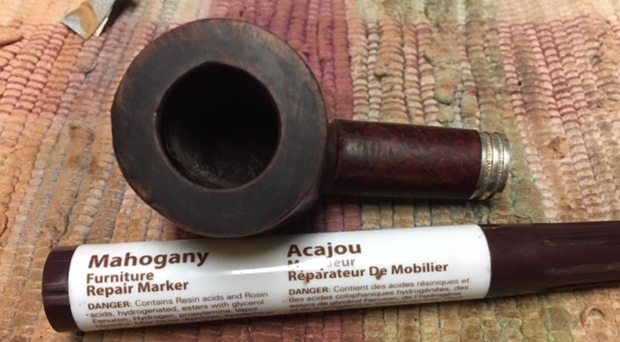
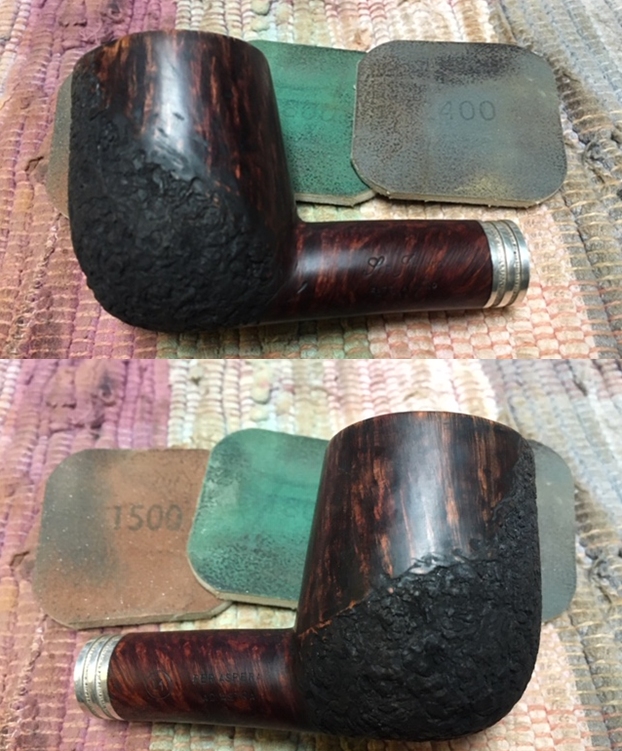
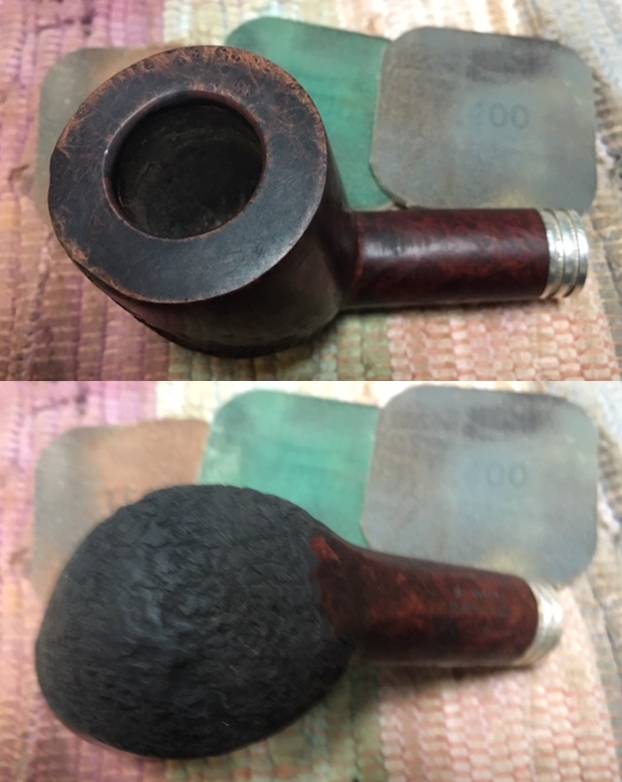
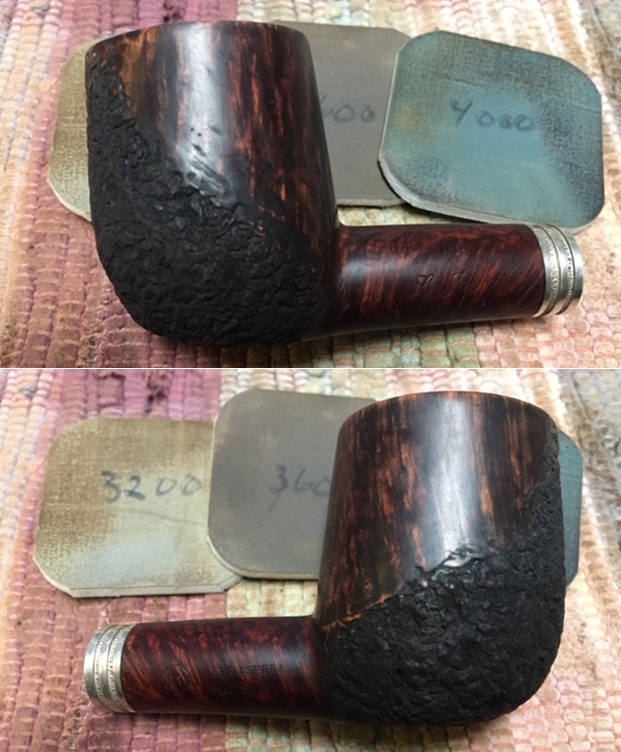
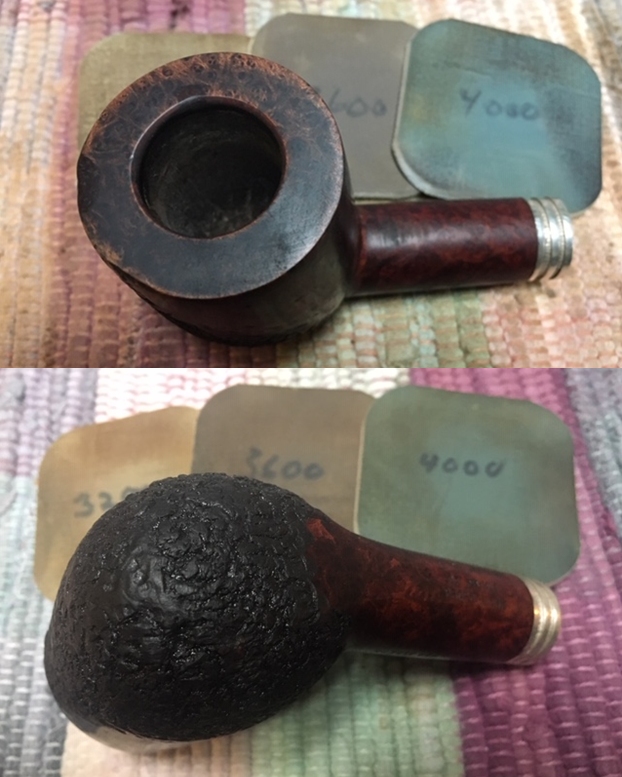
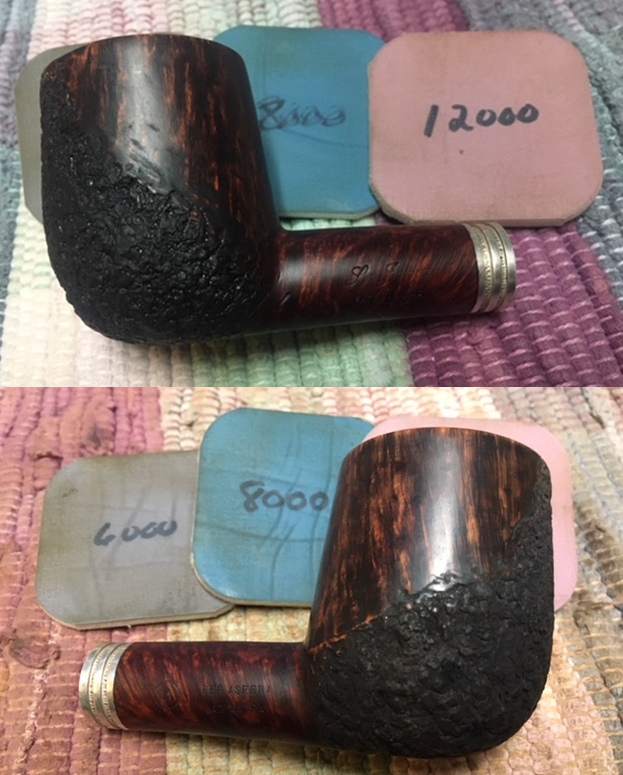
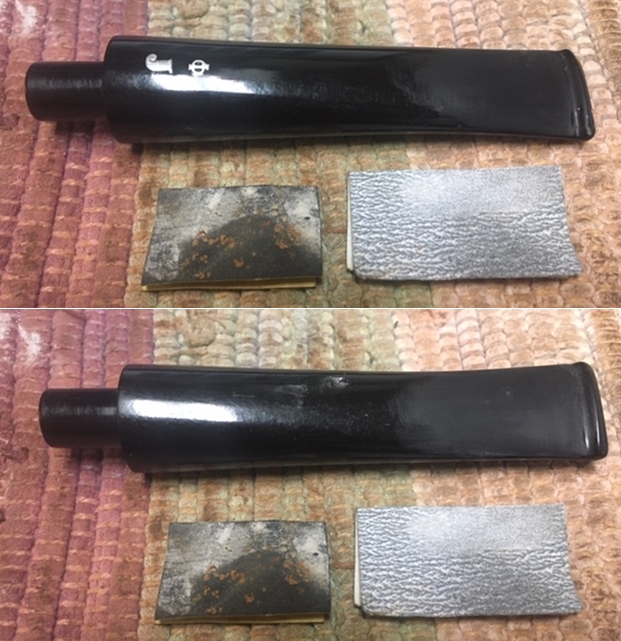
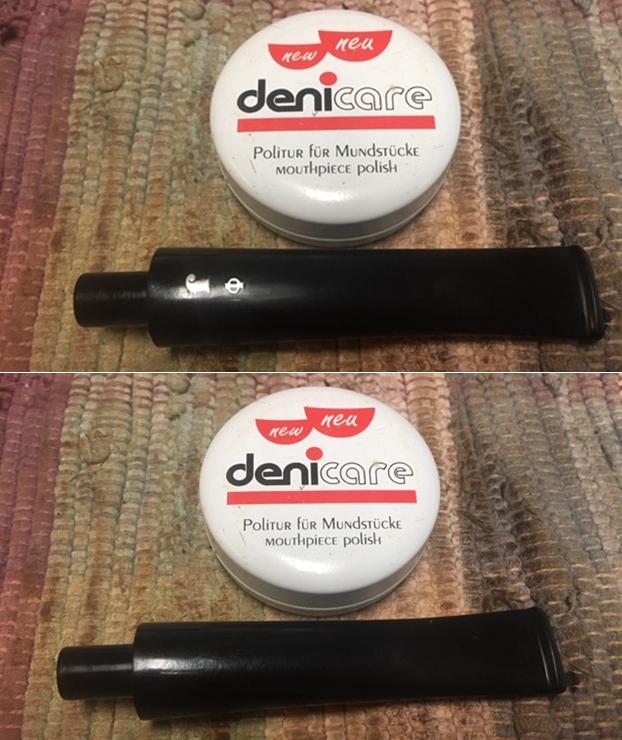
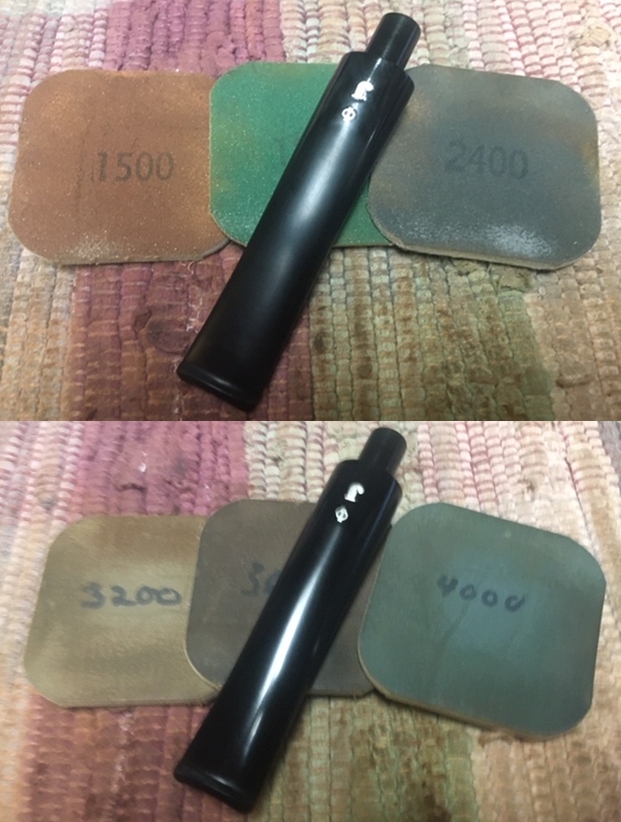
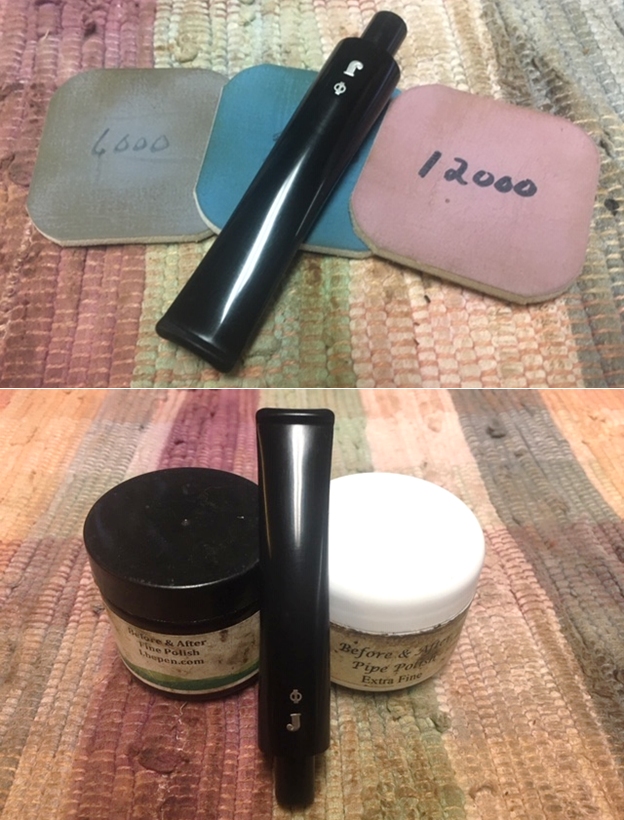
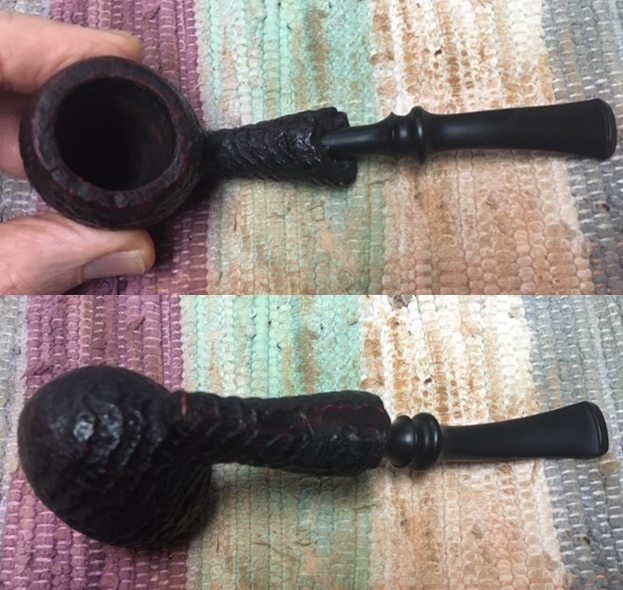
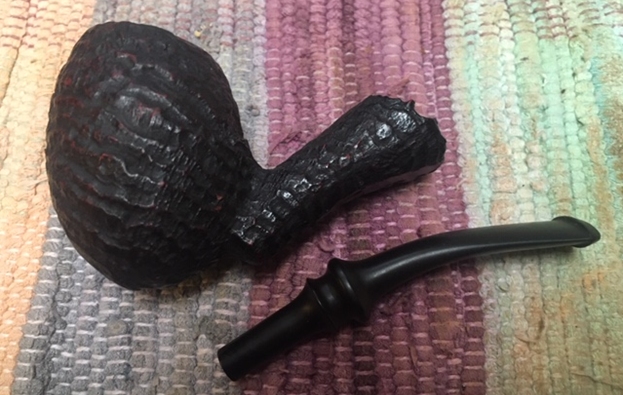
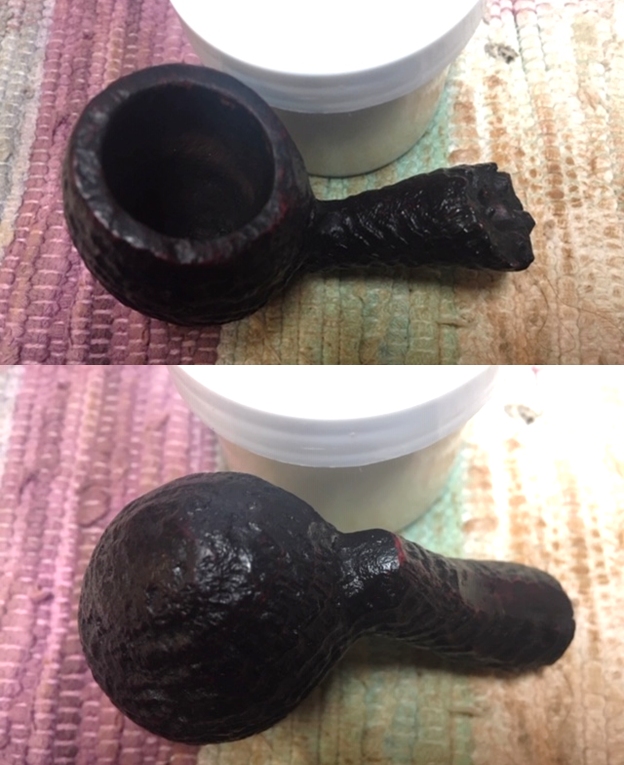
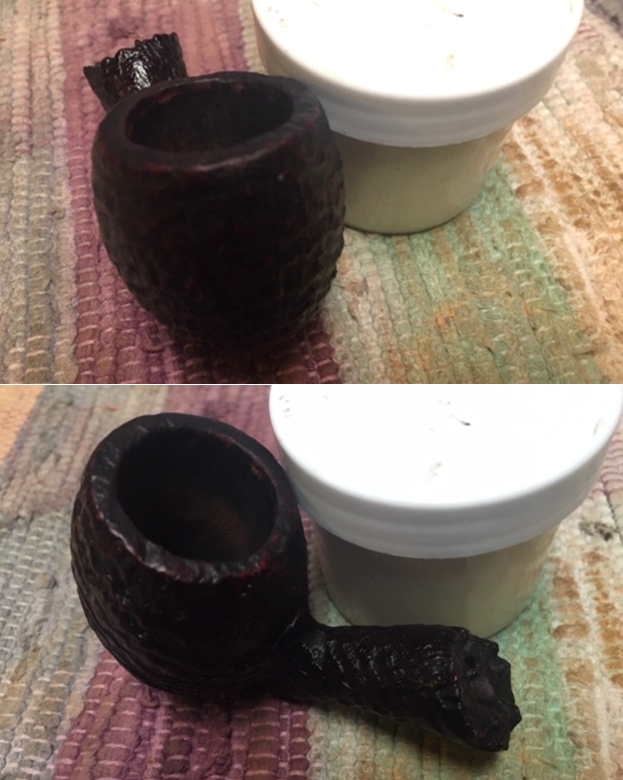
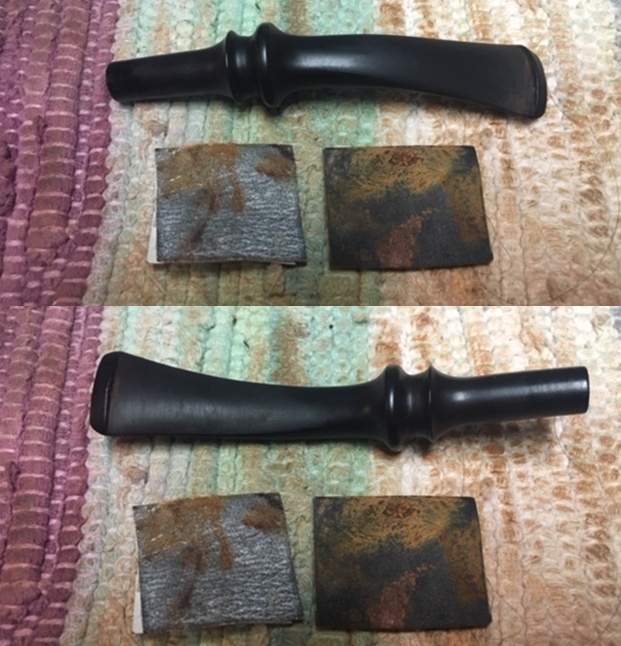
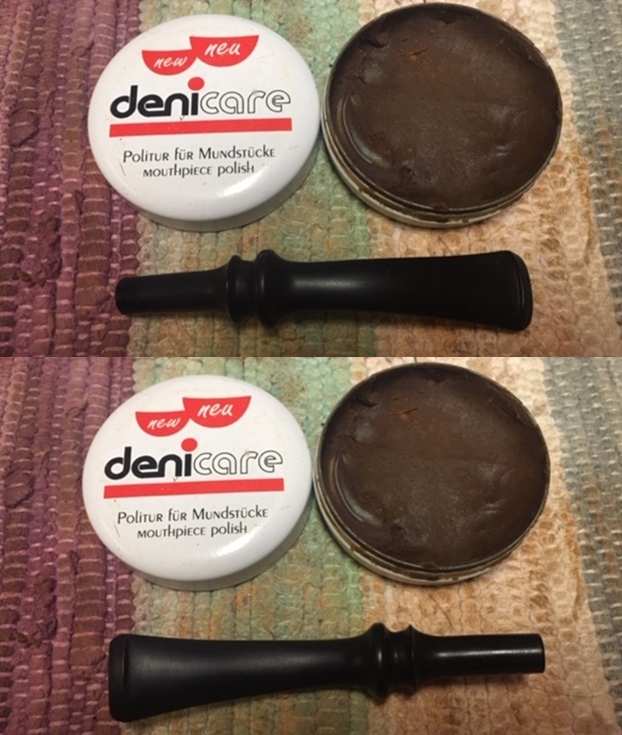
GREAT NEWS! When we bought this pipe we also bought a BC and the seller had swapped the stems. This morning I was looking at the pipes in that box and the shape of the stem on the BC did not look right! It had a moustache on the top of the fancy acrylic stem. Now the problem was that it was stuck in the acrylic shank extension… Took a bit of work but I got it out and polished it up. I have included the new photos below.

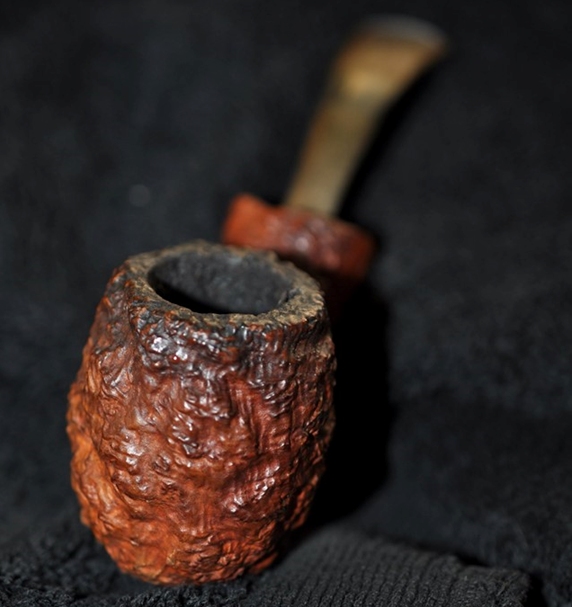
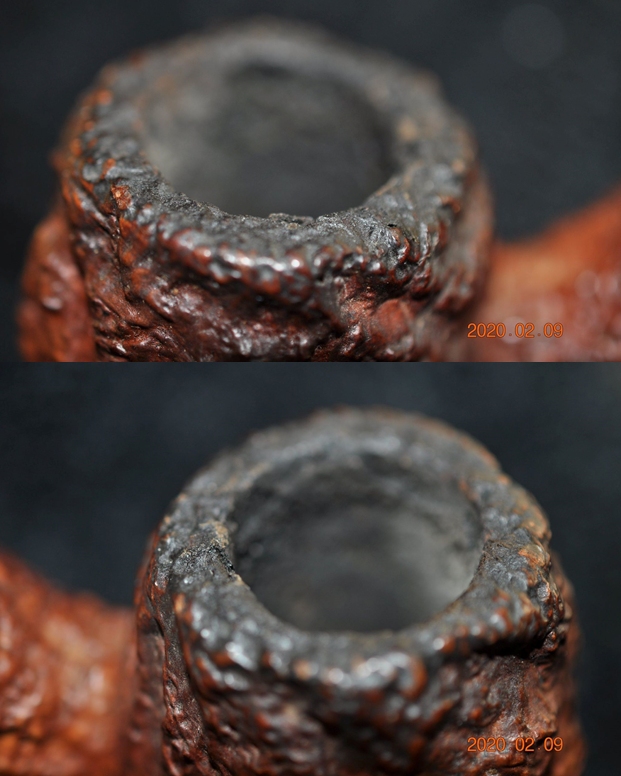
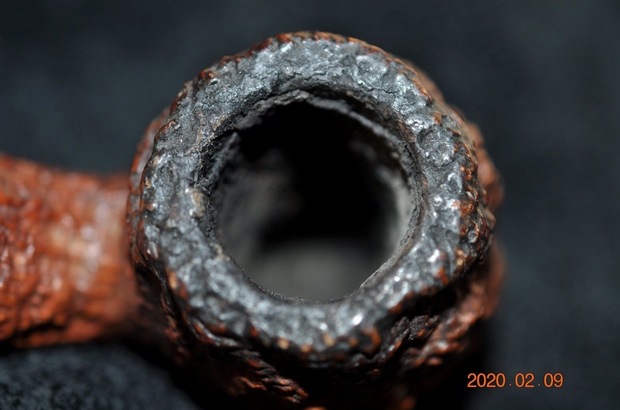
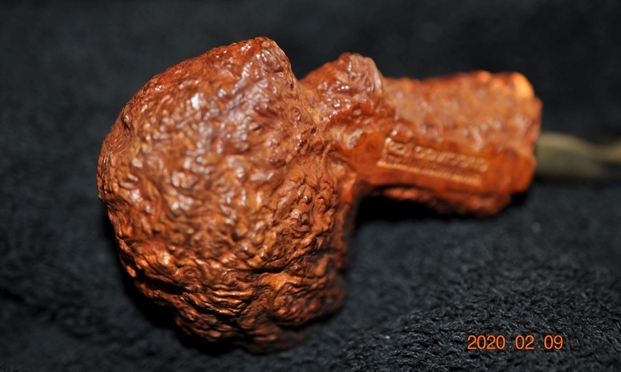
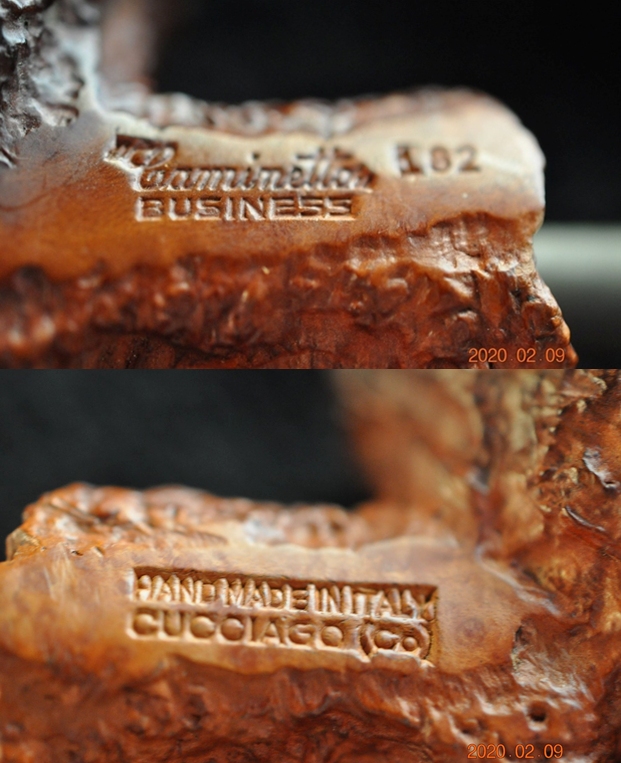
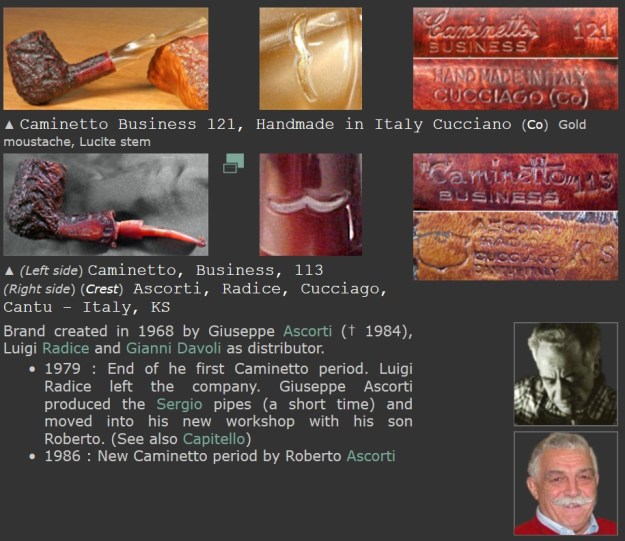
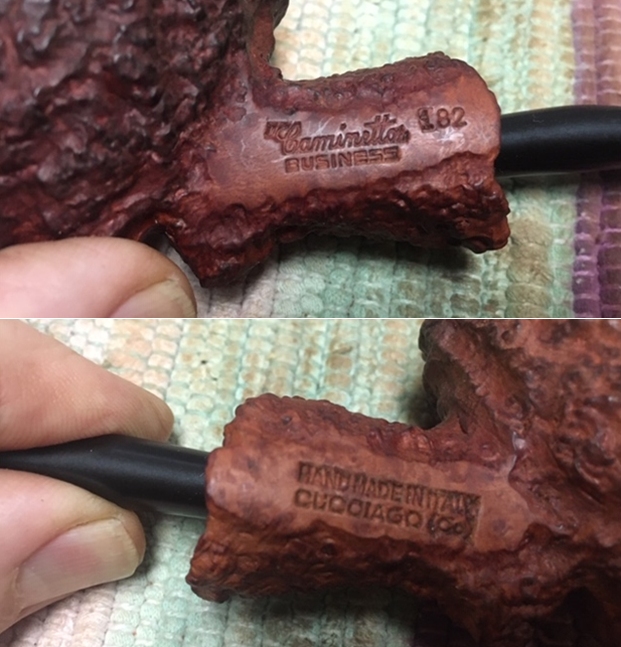
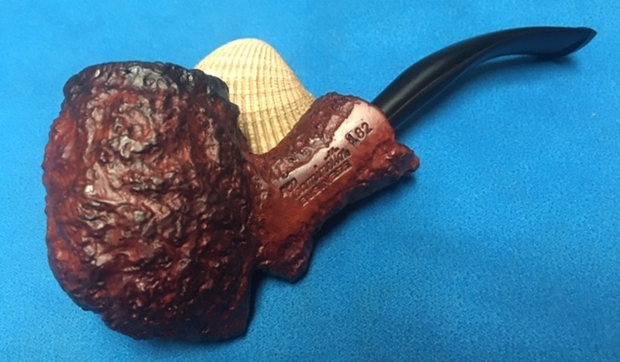
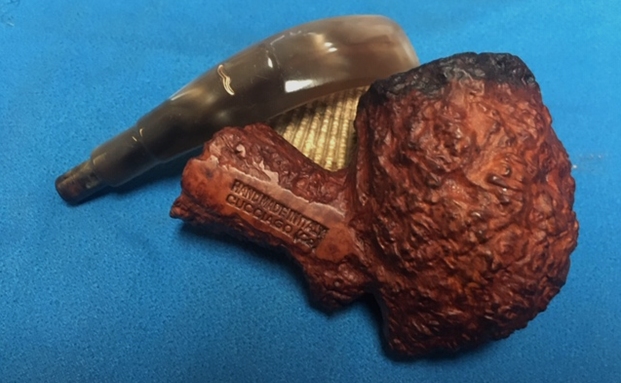
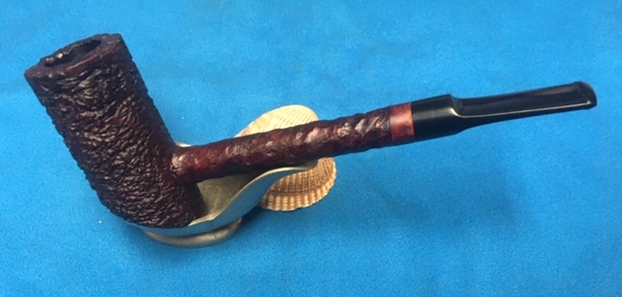
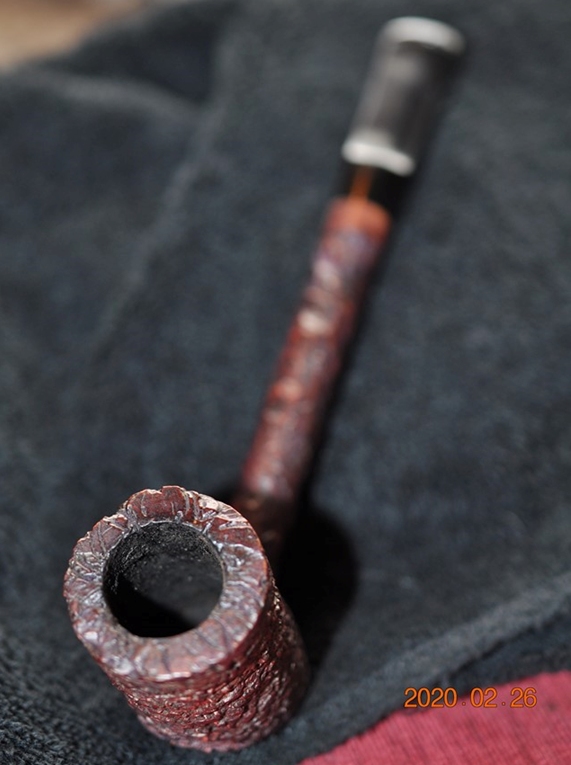
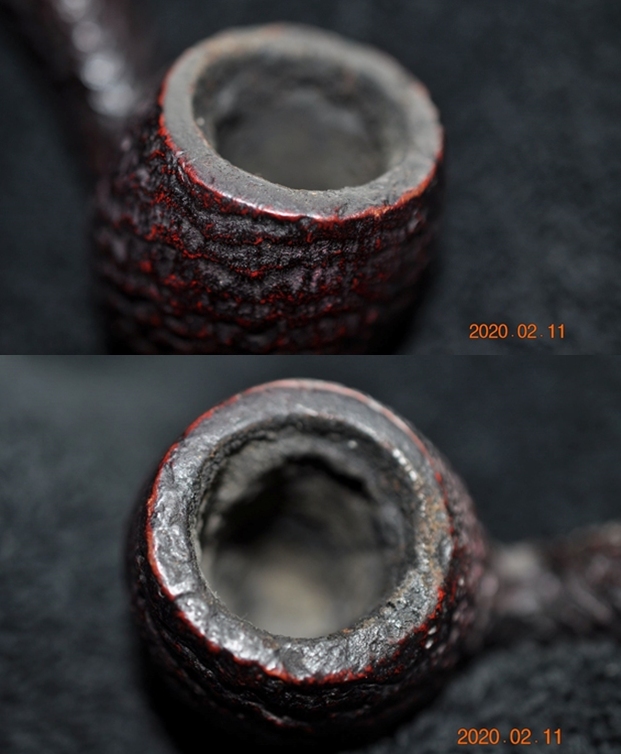
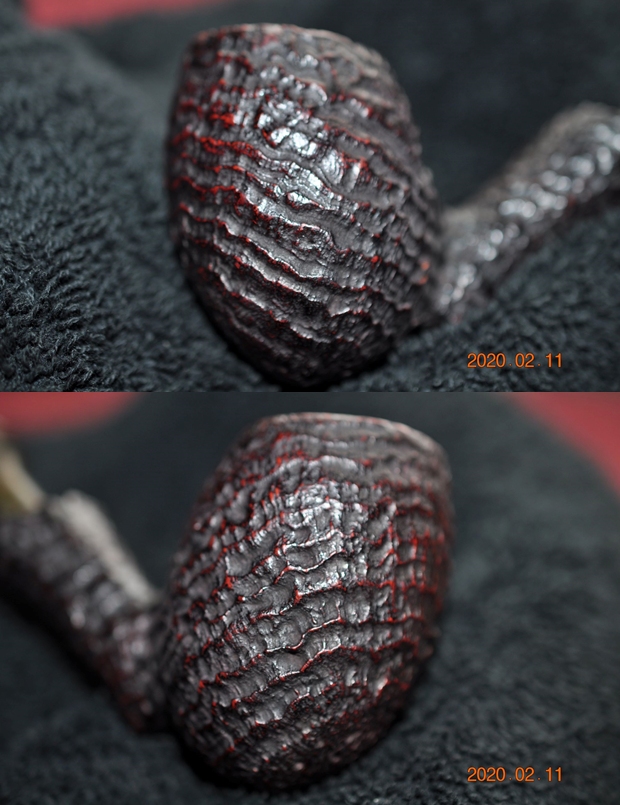
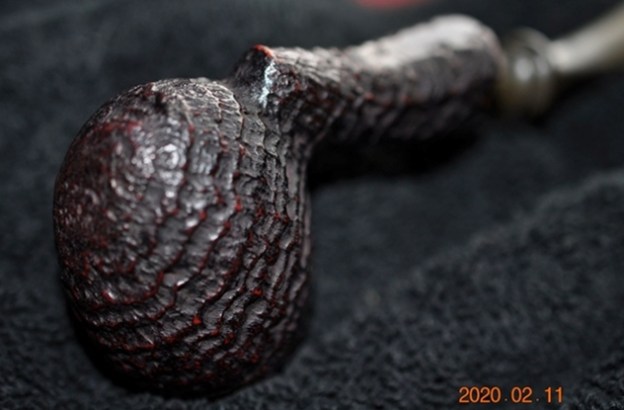
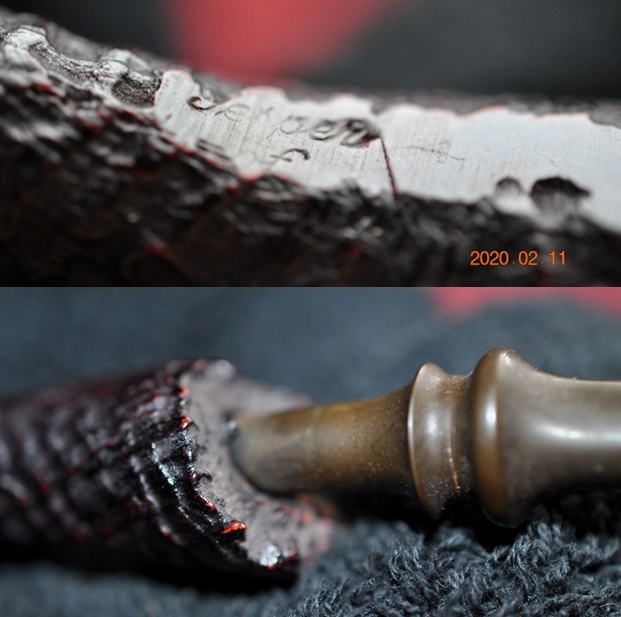
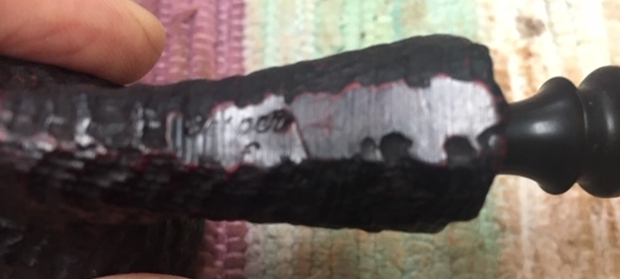
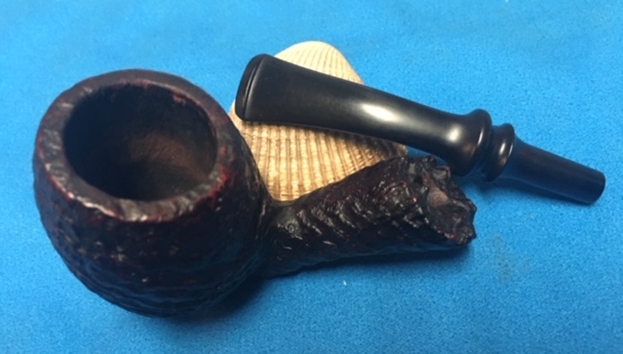
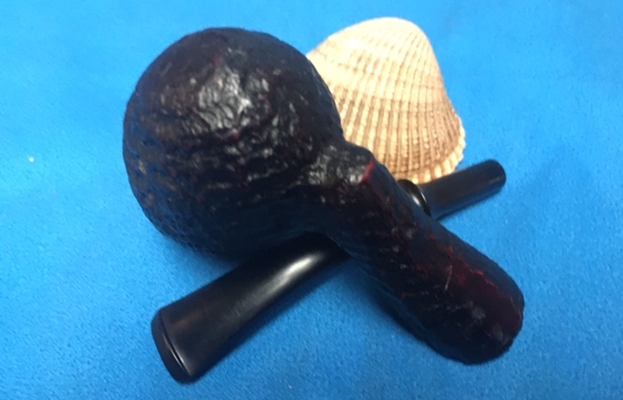
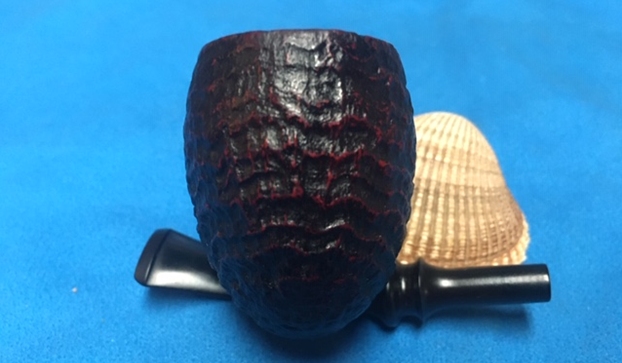
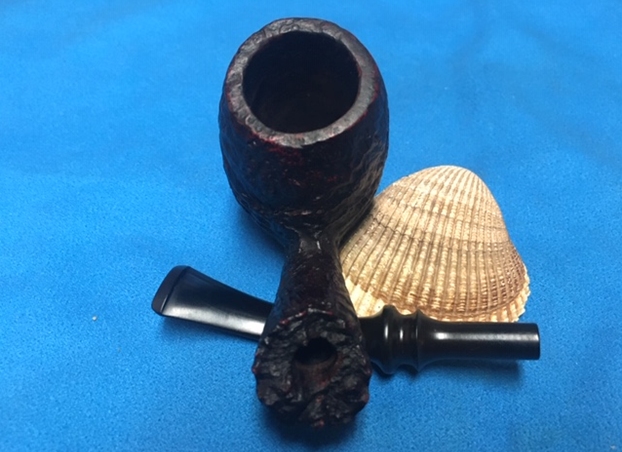
The next pipe on my worktable is one of the first Caminetto Business Pipes that I have ever worked on. It has a rugged rusticated finish and a taper military bit vulcanite stem. It had come to Jeff and me in very rough condition. It was a filthy pipe with grime and oils ground into the rusticated finish on the bowl. The pipe had some rustic beauty shining through the dust and debris in the valleys of the rough finish. The blast covered the rim top, bowl and shank with a smooth panel on each side of the shank. The finish was dull and lifeless and dirty from sitting around. There was a very thick cake in the bowl with lava flowing out of the bowl and over the rim top. The lava had filled in the deeper grooves of the finish on the rim top. The inner edge of the rim appeared to be in good condition but it was hard to tell under the thick lava. The shape is called a Tomahawk. The stamping on the left side of the shank read Caminetto in script over BUSINESS. To the right of that toward the stem was the shape number 182. On the right side of the shank it was stamped HAND MADE IN ITALY over CUCCIAGO (CO). The taper military bit stem had a broad fishtail shape and no significant markings. The surface was oxidized and there was light tooth chatter on both sides near the button. Jeff took the following photos before he started his cleanup work on the pipe. He took close-up photos of the bowl and rim top from various angles to capture the condition of the bowl and rim top edges. You can see the lava overflow and debris in the rustications of the rim top. You can see the cake in the bowl. This was a dirty pipe but it was the finish was in great condition. He took photos of the sides and heel of the bowl to show the beautiful incredibly deep rustication around the bowl. It is the same kind of rough finish that I really like on Castello Sea Rock pipes. You can see the oil, dust and debris in the finish on both sides of the bowl. It is a good looking sandblast. Jeff took a photo of the stamping on the shank. It reads as noted above. The stamping is clear and readable.The next photos show the overview of the stem and the fit in the rusticated shank end as well as the tooth chatter and oxidation on the top and underside of the stem. When the pipe arrived I turned to Pipephil (http://www.pipephil.eu/logos/en/logo-c1.html) to see if he included not only information on this Caminetto Business 182. He gave some interesting information about the brand. It was created in 1986 by Guiseppe Ascorti, Luigi Radice and Gianni Davoli as the distributor. It states that in 1979 the first Caminetto period ended with Luigi Radic leaving the company. Guiseppe Ascorti continued making the pipe with his son Roberto. In 1986 the New Caminetto period began by Roberto Ascorti.I turned to Pipedia for more information on the Caminetto and how to date the pipe I had in hand (https://pipedia.org/wiki/The_History_of_Caminetto_(shapes,_stamping,_articles,_etc.). I quote a pertinent paragraph:

Stampings and dating: First off, dating earlier Caminetto’s is nearly impossible. Nevertheless, there were three phases, some in which were much earlier, of development that occurred in the stamping process of Caminetto. Before that though, every pipe had the stamp of Caminetto in one of two ways: Caminetto in script or Caminetto within quotation marks in block letters (I do not know how it was decided which pipe got which stamp, as I have had EARLY Caminetto’s with both)…

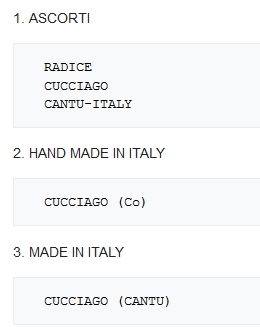
The stampings are shown in the photo to the left. The stamping on this pipe is like #2.

…Now, the question is which stamps are earlier and more likely to have been made by Ascorti and/or Radice. The answer is #1. The differences in #2 and #3 seem to be minute, as Cucciago is simply a suburb of Cantu. Pipes stamped like #1 are the most valuable Caminetto’s as they are the earliest production of the brand, as well as what some would claim the most perfect of Ascorti and Radice’s work. The last tidbit is, of course, debatable…

There is also another factor in stamping, that is, which series the pipe falls in. The majority of Caminetto’s one sees are those of the “Business” series, which are stamped such with their collective shape (see photo of shapes below). Another stamp that sometimes follows the “Business” one is “KS,” which from what I know means “King-size” (this could be wrong, as there are pipes stamped with KS1, KS2, and KS3).

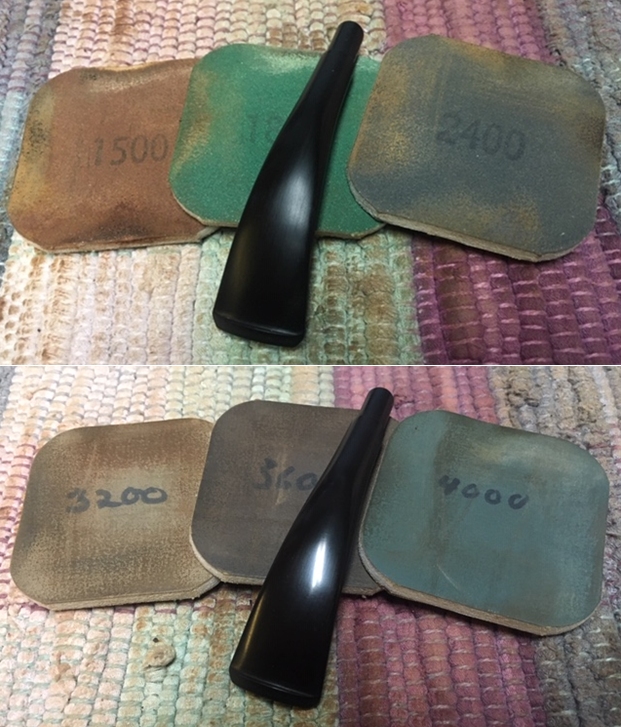
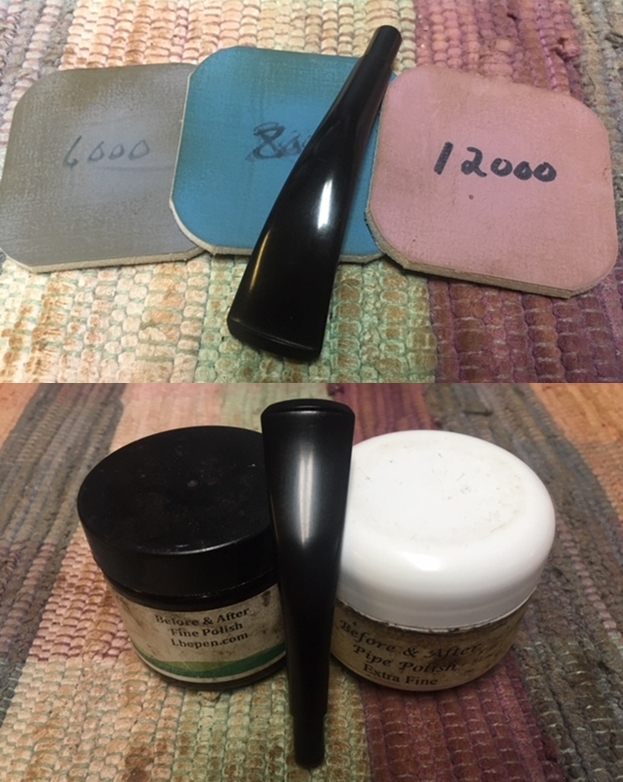
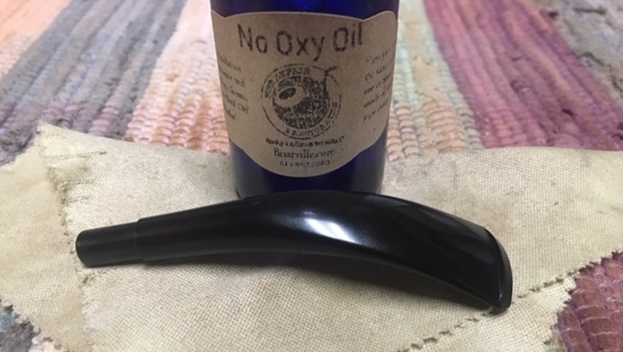
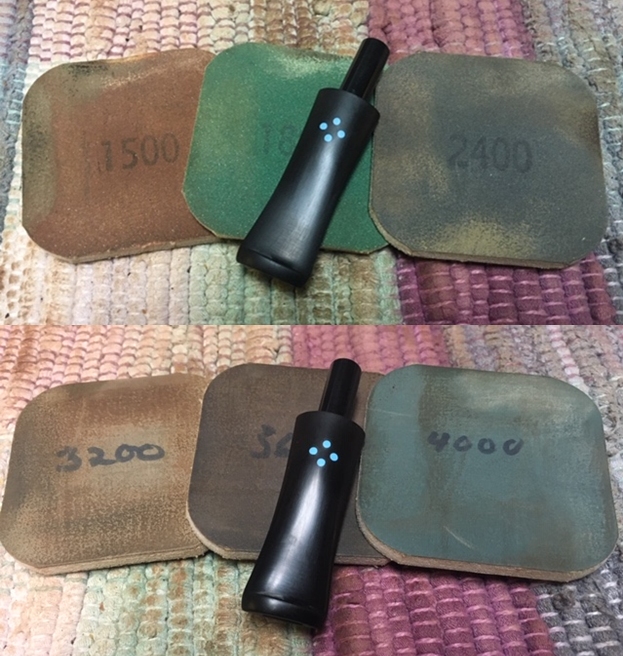
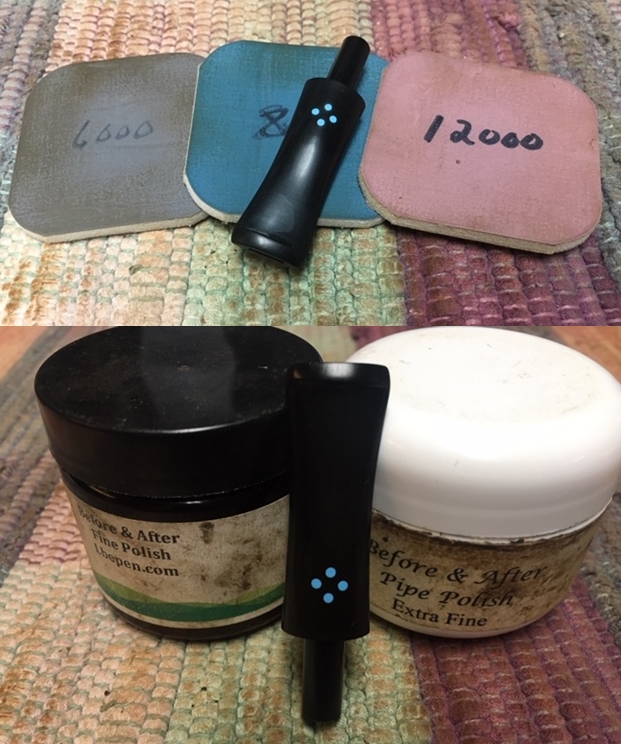
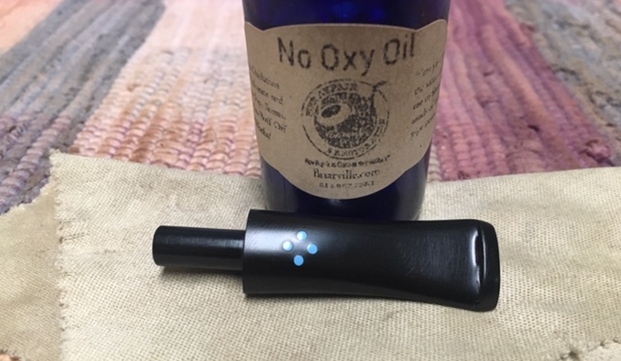
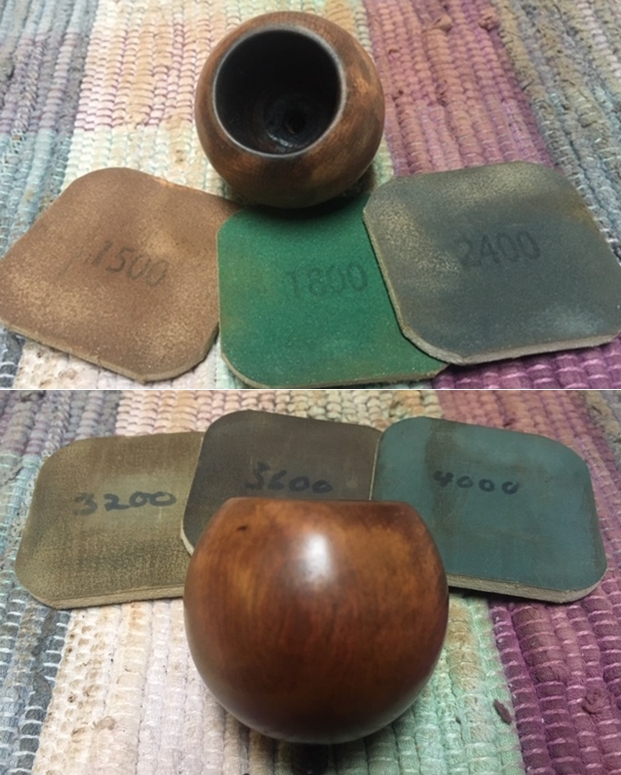
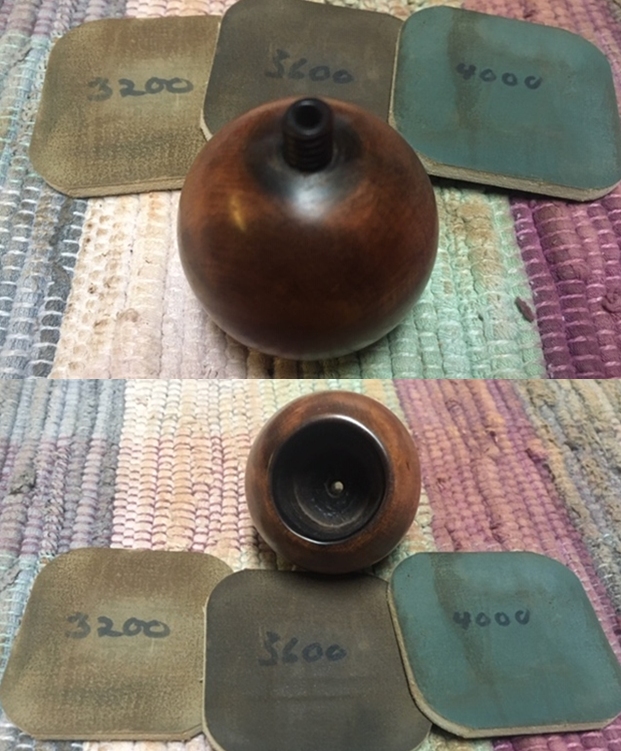
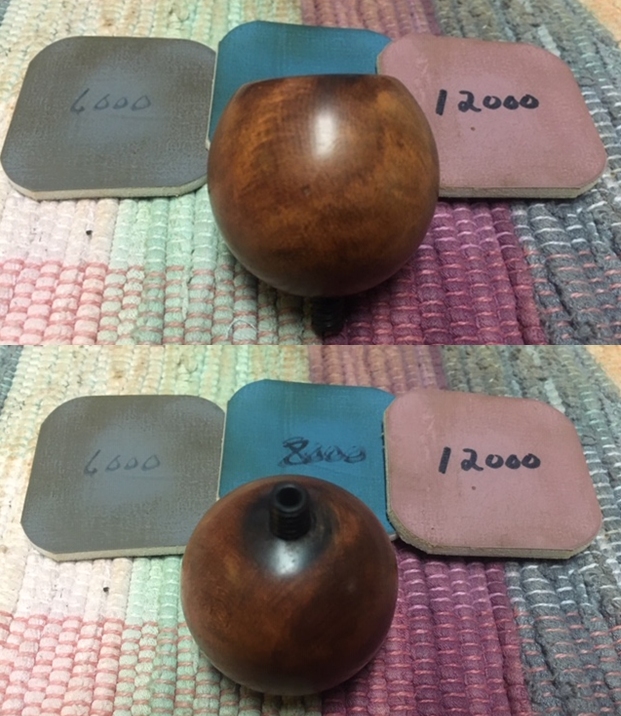
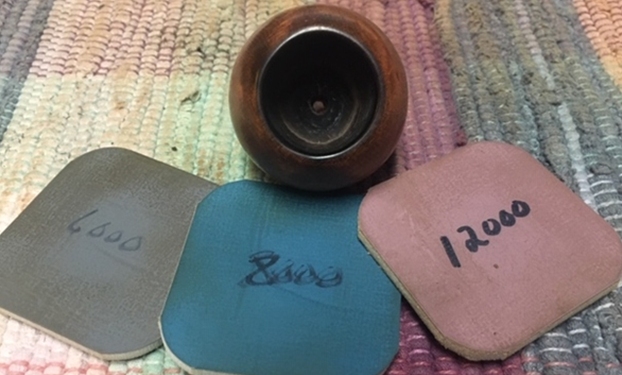
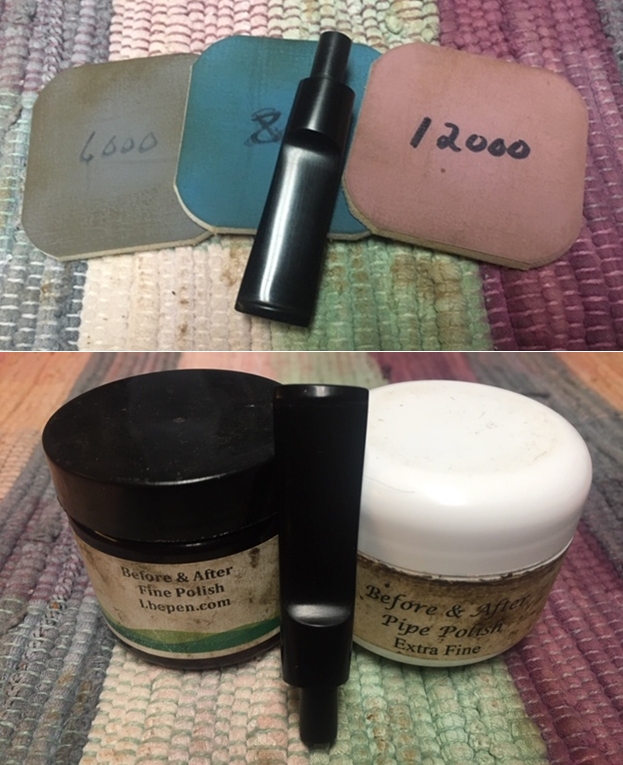
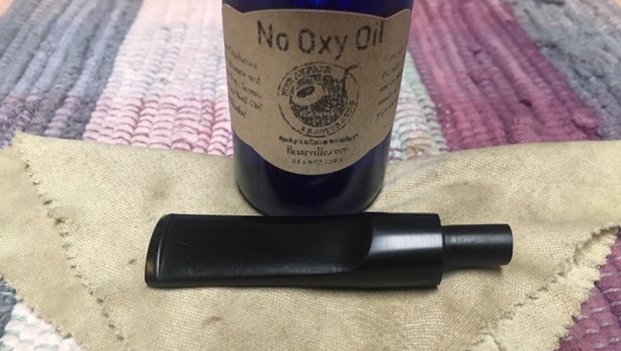
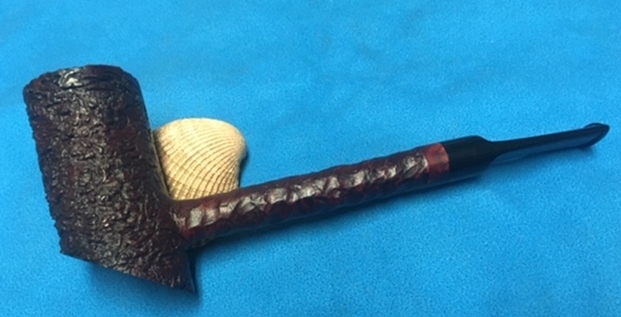
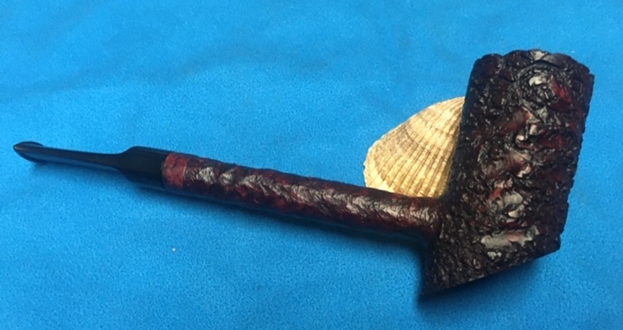
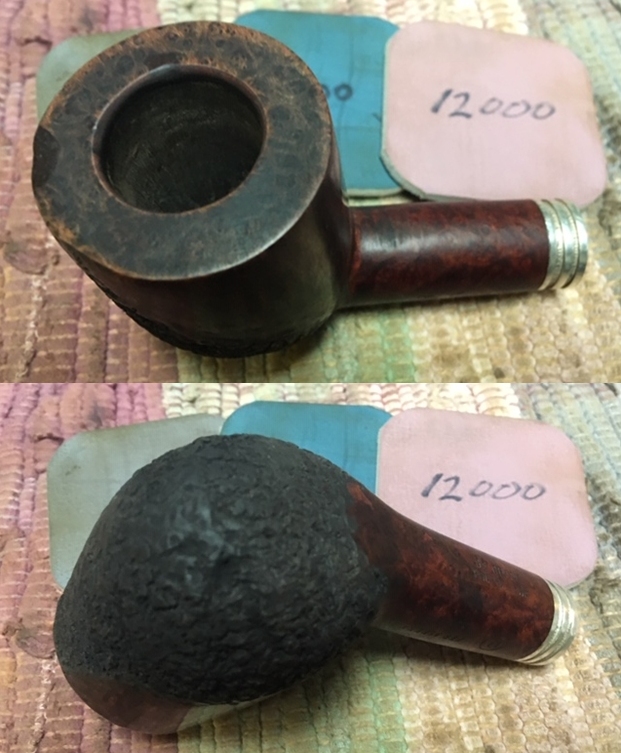
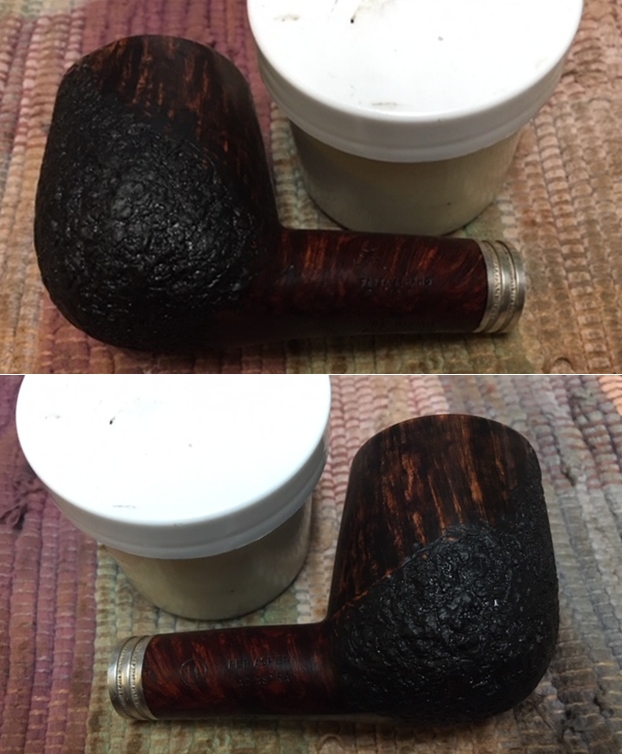
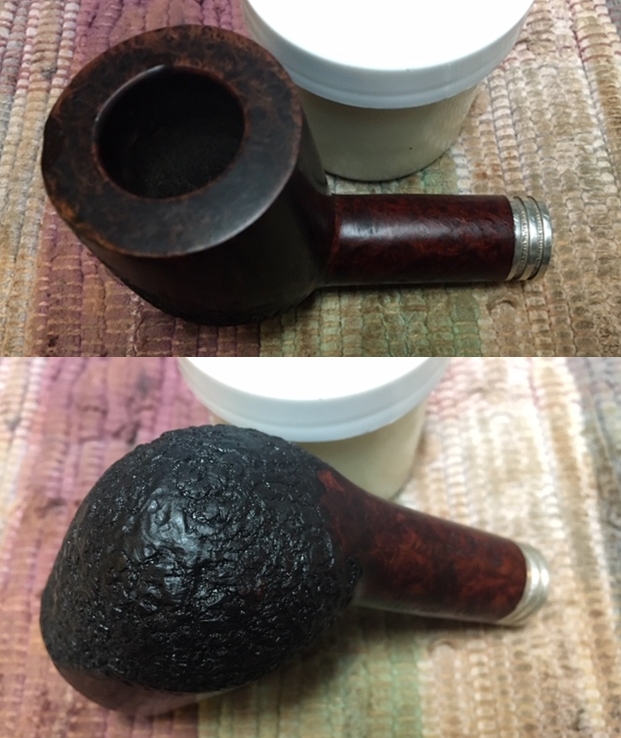
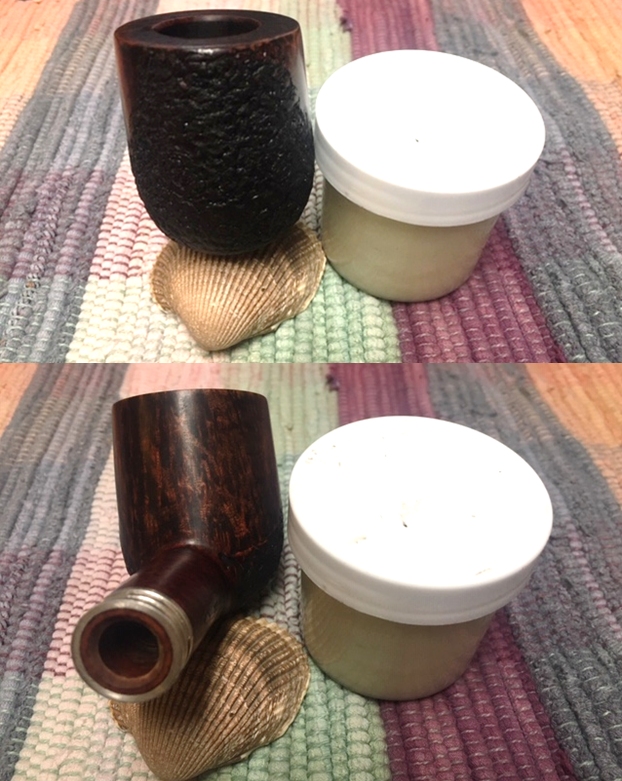
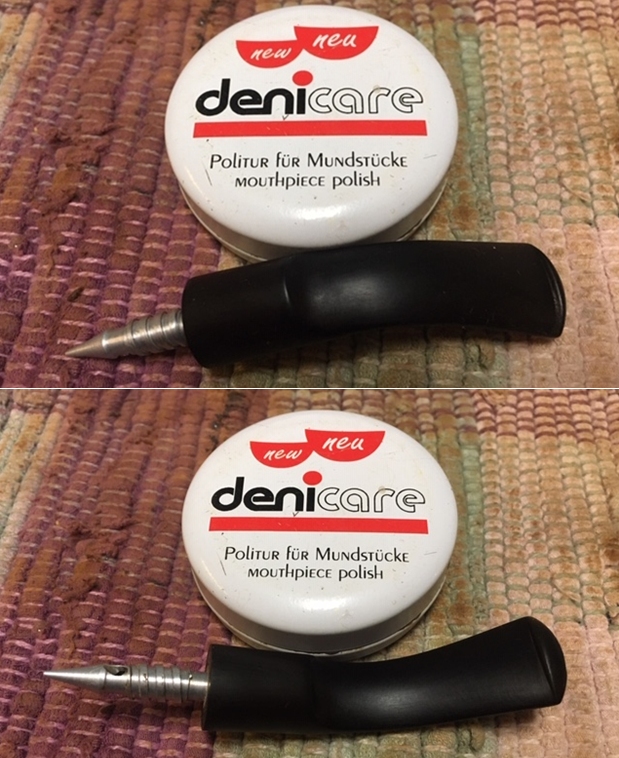
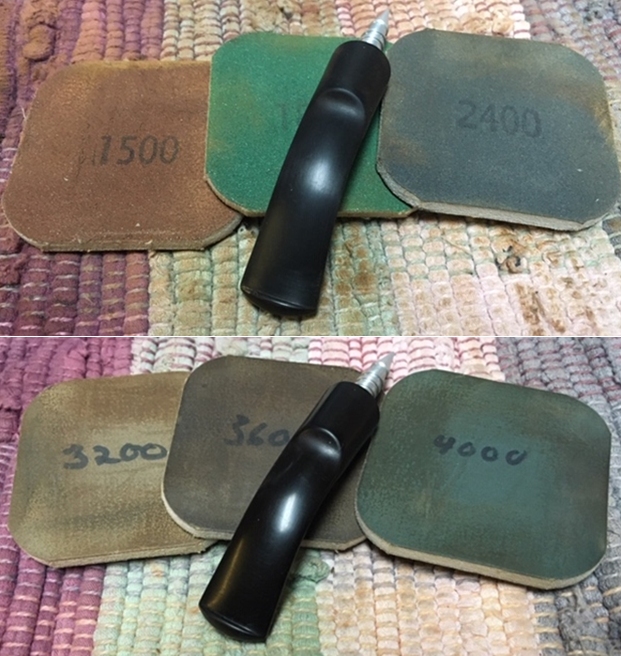
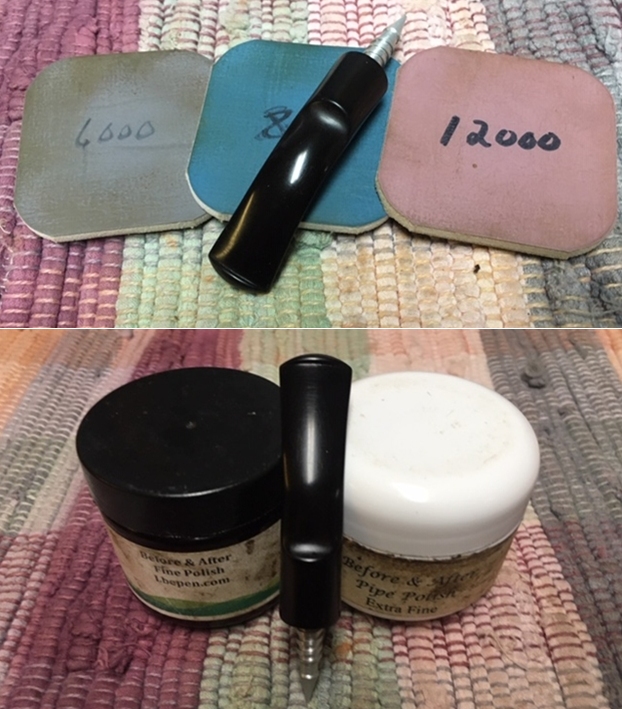
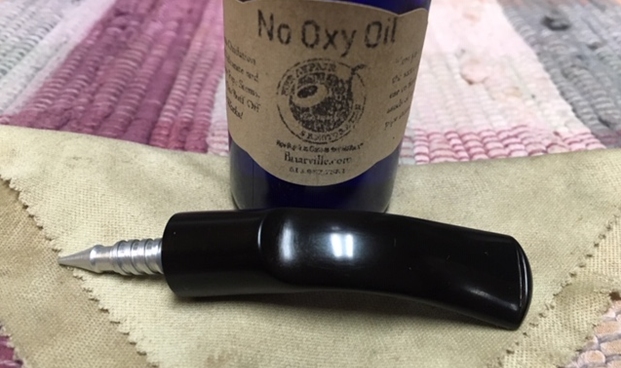
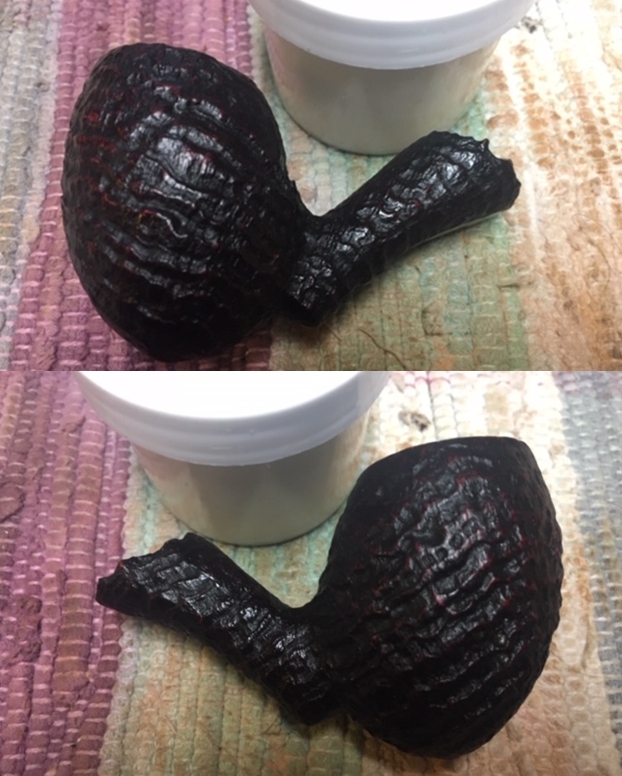
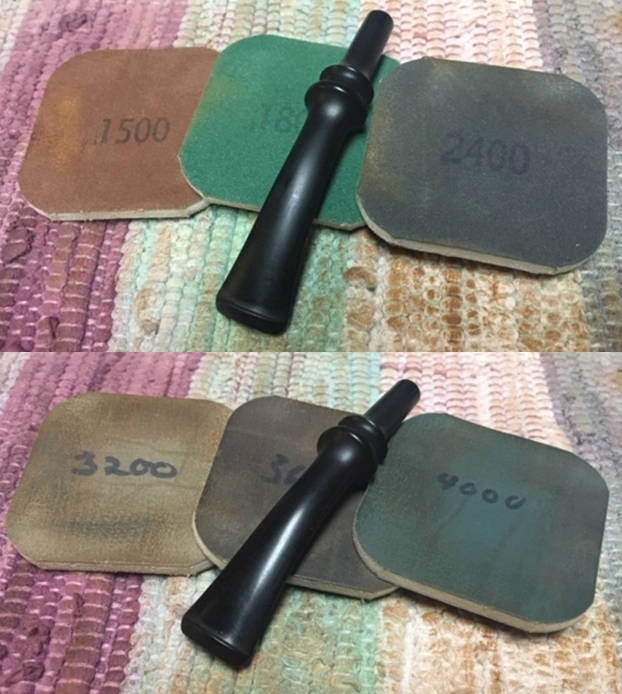
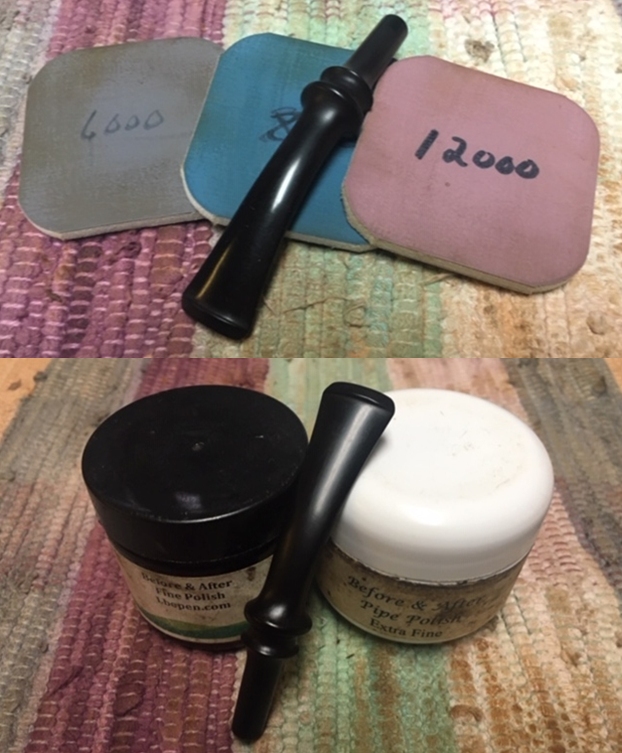
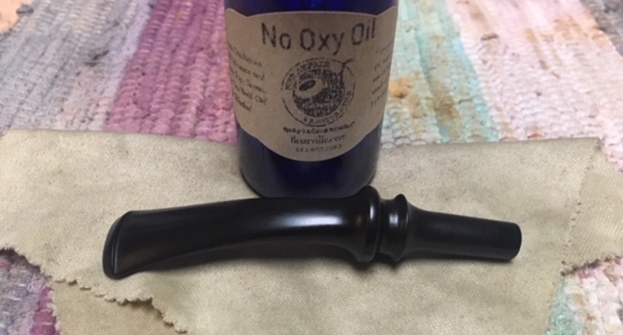
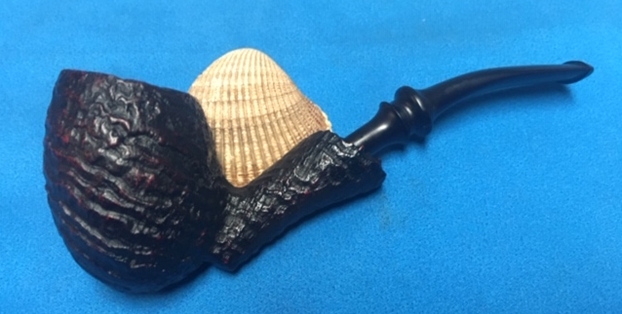
Now it was time to look at it up close and personal. Jeff had done an amazing job in removing all of the cake and the lava on the rim top. He had reamed the bowl with a PipNet Pipe Reamer and cleaned up the remnants with a Savinelli Fitsall Pipe Knife. He took the cake back to bare briar so we could check the walls for damage. He scrubbed the exterior of the bowl with Murphy’s Oil Soap and a tooth brush to remove the grime on the bowl and rim and was able to remove the lava and dirt. He cleaned out the interior of the bowl and shank with pipe cleaners, cotton swabs and alcohol until they came out clean. He cleaned the stem with Soft Scrub to remove the grime on the exterior and cleaned out the airway with alcohol, cotton swabs and pipe cleaners. I took photos of the pipe before I started my part of the restoration. To show how clean the rim top and stem really was I took a close-up photo of the rim and stem. The bowl was clean and cake free. The rim top is very clean with no residual lava in the sandblast finish. The inner edges of the bowl look good. The plateau shank end also looks good. The black vulcanite fancy stem looks cleaned up nicely. The surface had some light tooth marks but the button edge looked really good.I took a photo of the stamping on both sides of the shank. You can see the clear stamping.I knew that the original Caminetto Business 182 pipe had a flumed rim top and runoff down the top ½ inch of the bowl sides. I found a photo of the same pipe online and flumed the bowl on the one I had accordingly. I used a Walnut stain pen to touch up the rim top and give the bowl a slight flume around the top edge. Once I treated the pipe with Before & After Restoration Balm the flumed part would flow better with the surrounding briar. The bowl looked very good so I did not need to do any further work on it. I rubbed the bowl and shank down with Before & After Restoration Balm to deep clean the finish on the bowl and shank. The product works to clean, enliven and protect the briar. I worked it in with my fingers and with a horse hair shoe brush to get it into the nooks and crannies of the deep rustication of the finish on the bowl and shank. I let it sit for about 20 minutes to let it do its magic. I buffed it with a soft cloth. The briar really began to have a rich shine. I took some photos of the bowl at this point to mark the progress in the restoration. The bowl was finished so I set it aside and turned my attention to the stem. While the stem was in very good condition I am certain it is a replacement stem rather than the original that came with the pipe. I am pretty sure that the original was an acrylic stem that would have had a gold mustache on the top of the fancy saddle. Other than some light tooth marks and some light oxidaiton. I polished the stem with micromesh sanding pads – dry sanding with 1500-12000 grit sanding pads. I wiped the stem down after each sanding pad with a cloth containing some Obsidian Oil. I finished polishing it with Before & After Pipe Stem Polish – both Fine and Extra Fine and buffed it off with a cotton cloth. I gave it a final rub down with Briarville’s No Oxy Oil to preserve and protect the vulcanite stem. The vulcanite stem is not the original for sure as the fit in the upper part of the mortise is a little larger in diameter than this stem. The fit of the stem is still snug in the lower part of the mortise so it works well with the pipe. I put the bowl and stem back together again and buffed the bowl and the stem with Blue Diamond on the buffing wheel. I used a soft touch on the rusticated bowl so as not to fill it in with the polishing product. I gave the bowl several coats of Conservator’s Wax and the stem several coats of carnauba wax. I carefully buffed the entire pipe with a clean buffing pad to raise the shine. I finished buffing with a microfiber cloth to deepen the shine. The finished pipe looks very good. The rustication is very tactile and feels great in the hand. It is comfortable and light weight. The finished Caminetto Business 182 Tomahawk is shown in the photos below. The dimensions of the pipe are Length: 5 ½ inches, Height: 2 ¼ inches, Outside diameter of the bowl: 1 ¼ inches, Chamber diameter: ¾ of an inch. This great looking rusticated Caminetto turned out very well. It should be a great pipe. It will be going on the rebornpipes store shortly if you are interested in adding it to your collection. Thanks for reading this blog and my reflections on the pipe while I worked on it. ADDENDUM

I found the correct stem for this one in the box as noted above. I have polished the new stem and took photos of the proper look for this nice Caminetto Business 182. Whether you call it a Tomahawk or an Egg and Spur you have to admit it is a beauty! The adjusted dimensions of the pipe with the proper stem are Length: 6 inches, Height: 2 ¼ inches, Outside diameter of the bowl: 1 ¼ inches, Chamber diameter: ¾ of an inch. This great looking rusticated Caminetto turned out very well. It should be a great pipe. It will be going on the rebornpipes store shortly if you are interested in adding it to your collection.

An easy Restoration of a Sasieni 4 Dot Ruff Root Dark 13 Canadian


Blog by Steve Laug

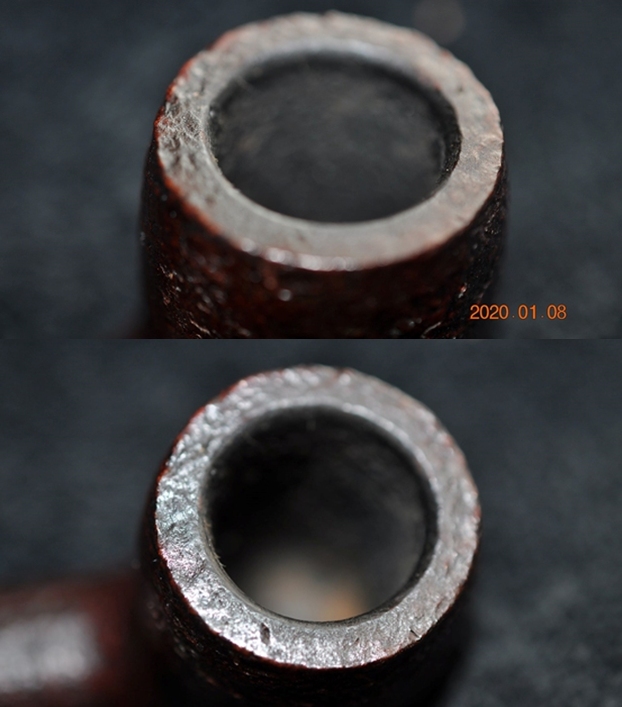
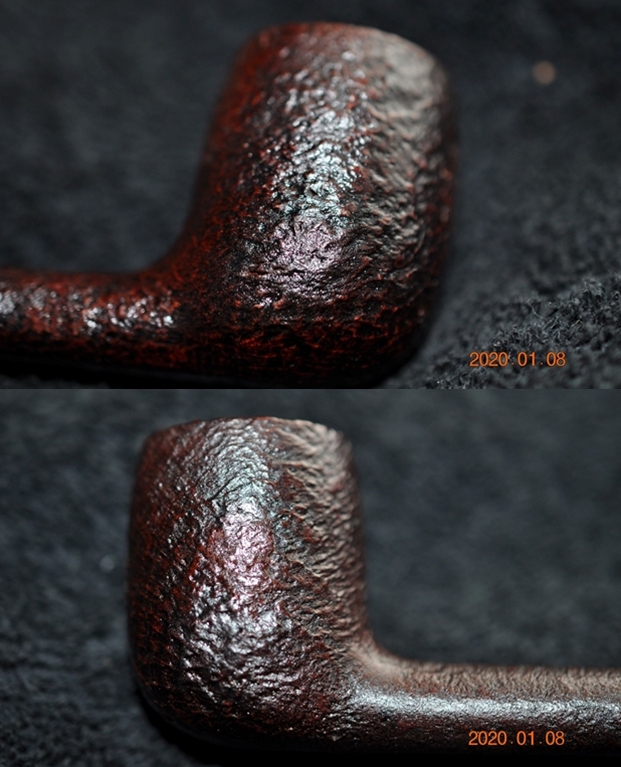
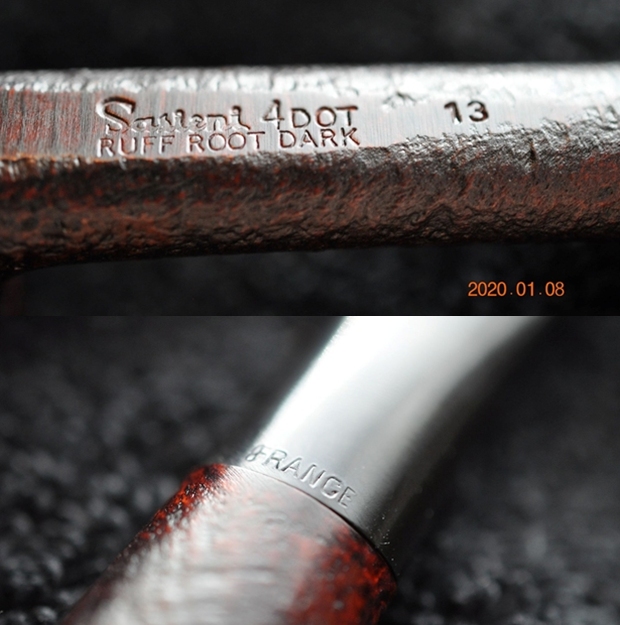
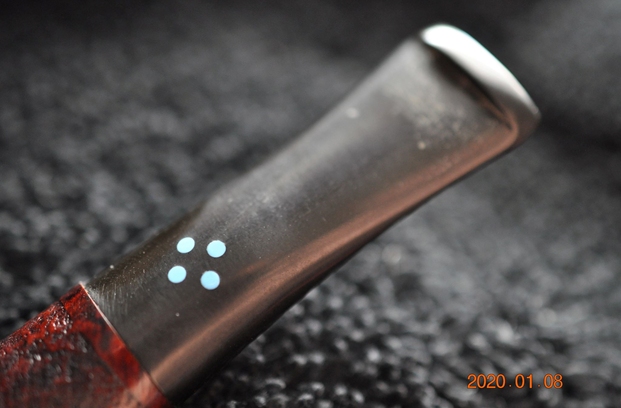
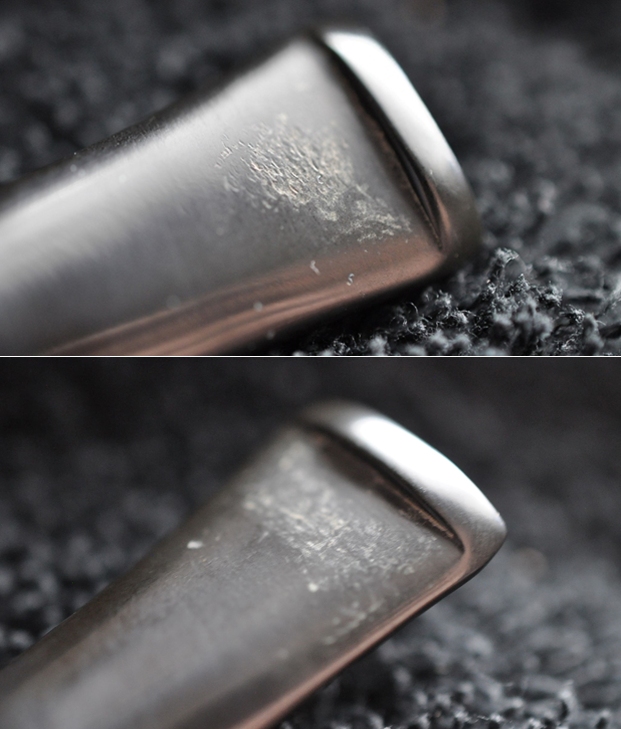
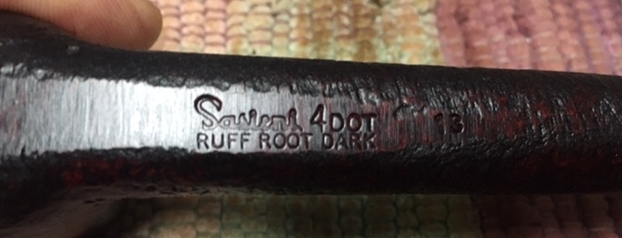
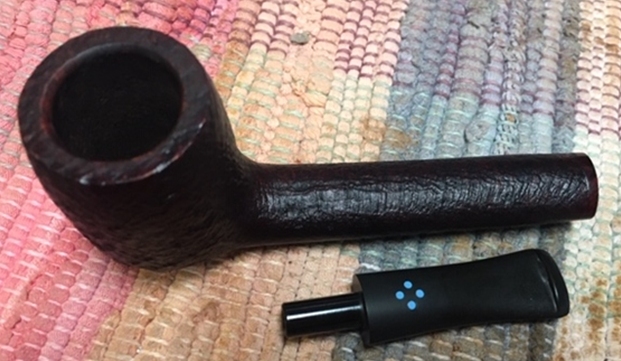
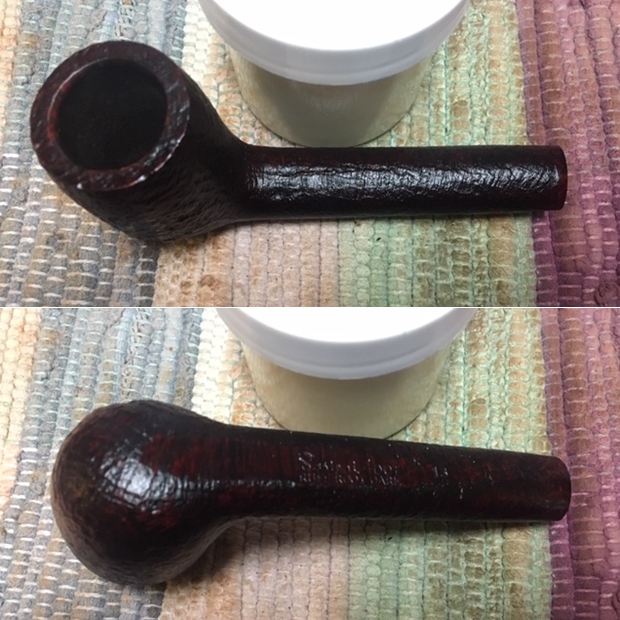
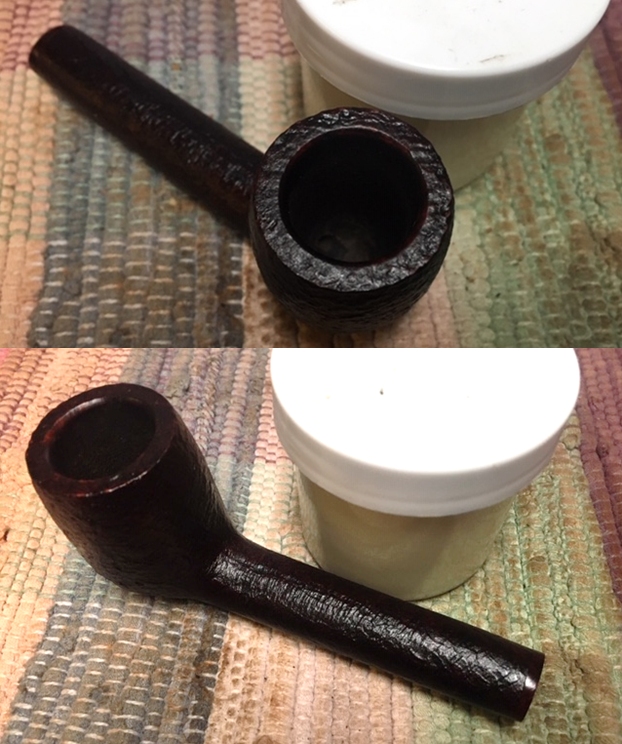
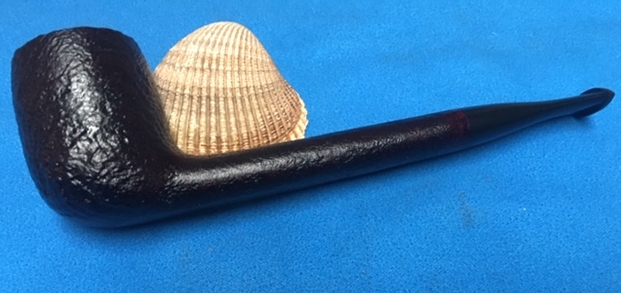
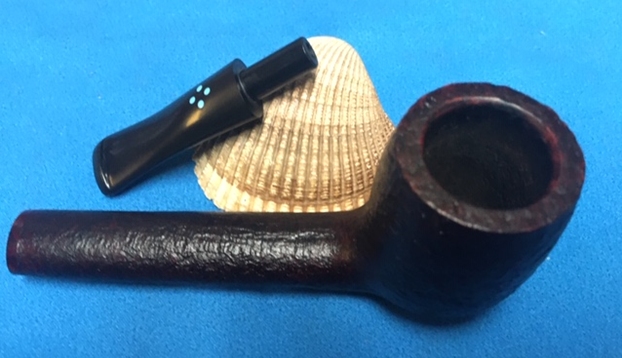
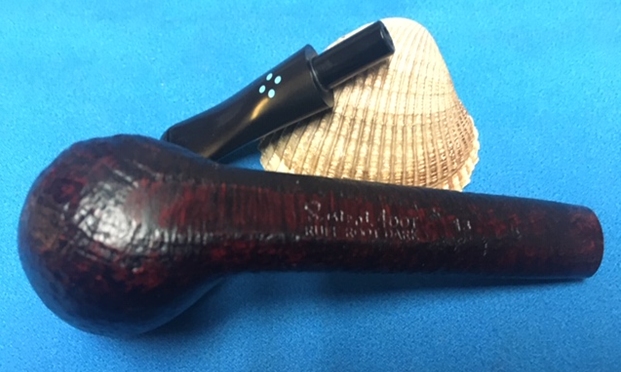
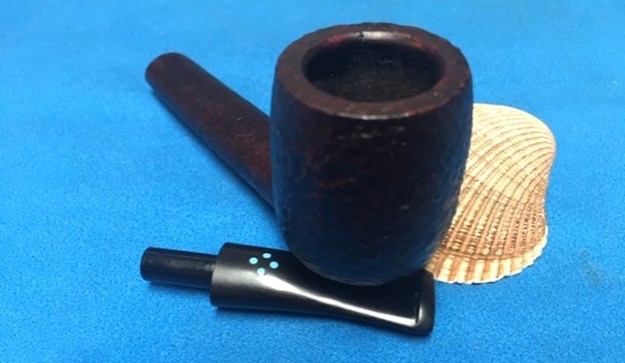
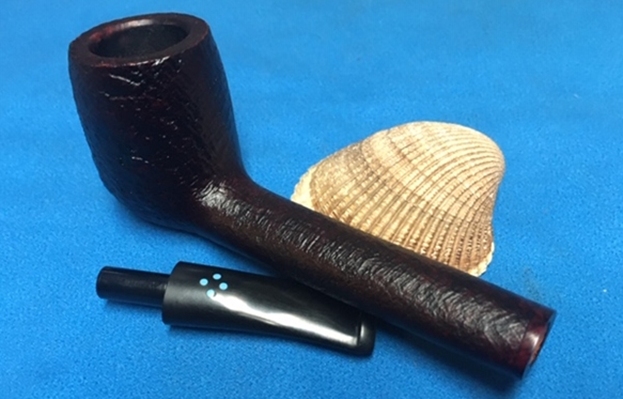
The next pipe on my worktable is a really nice looking Canadian with a sandblast finish and a taper vulcanite stem. It had come with its original box but the pipe sock was missing. The pipe had some beauty shining through the dust and debris in the valleys of the lighter sandblast finish. The blast covered the rim top, bowl and shank with a smooth panel on the underside of the shank. The finish was dull and lifeless and dirty from sitting around. There was a moderate cake in the bowl with a light coat of lava flowing out of the bowl and over the rim top. The lava had filled in the deeper grooves of the sandblasted finish on the rim top. The inner edge of the rim appeared to be in good condition. The stamping on the shank read Sasieni in script followed by 4 Dot on one line and under that it was stamped Ruff Root Dark. To the right of this stamping was the shape number 13. The taper stem had four blue dots arranged in a triangle on top of the taper. The surface was oxidized and there was light tooth chatter on both sides near the button. Jeff took the following photos before he started his cleanup work on the pipe. He took close-up photos of the bowl and rim top from various angles to capture the condition of the bowl and rim top edges. You can see the lava overflow and debris in the sandblasted rim top. You can see the cake in the bowl. This was a dirty pipe but it was the finish was in great condition. He took photos of the sides and heel of the bowl to show the beautiful light sandblast around the bowl. It is quite uniform and you can see the dust and debris in the finish as well as thumb and fingerprints on both sides of the bowl. It is a good looking sandblast. Jeff took a photo of the stamping on the shank. It reads as noted above. The stamping is clear and readable. The is also stamping on the underside of the stem that reads FRANCE.The next photos show the overview of the stem top and the tooth chatter and oxidation on the top and underside of the stem. When the pipe arrived I turned to Pipephil (http://www.pipephil.eu/logos/en/logo-sasieni.html) to see if he included not only information on this Sasieni 4 Dot Ruff Root Dark Canadian. Sure enough he quick information for me that identified the time frame of this pipe. He dates it as a Post Transition piece 1986-today. The Ruff Root name is what they call a sandblasted finish. He points out that the 4 Dot has replaced the Four Dot from 1986.I turned to Pipedia for more information on 4 Dot line of Sasieni pipes and any information that was added there (https://pipedia.org/wiki/Sasieni). I quote a pertinent paragraph:

…The nomenclature changed again in 1986, with the sale of the company to the Post-Transition firm. The three line nomenclature was changed to two lines, with the first reading “Sasieni 4 Dot” and the second identifying the finish, e.g. Natural, Walnut, or Ruff Root. Note how 4 Dot is spelled, using an Arabic numeral 4, as opposed to spelling out the word “four”. This is the easiest way to spot a Post-Transition Sasieni, as the new company has used both script and block lettering to spell the word “Sasieni” on the shank…

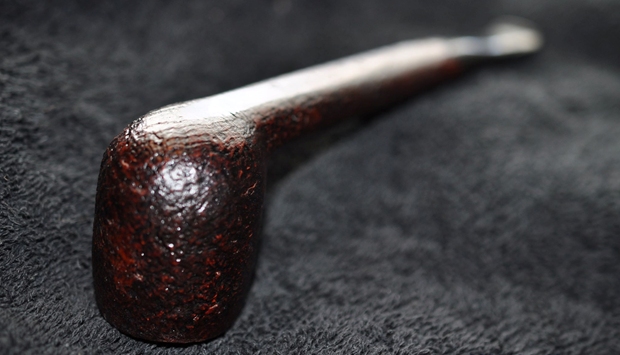
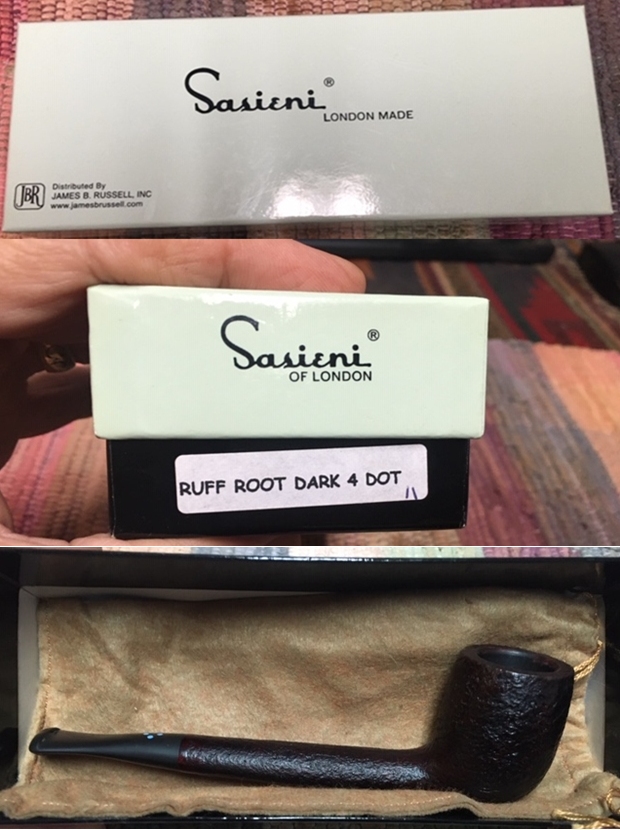
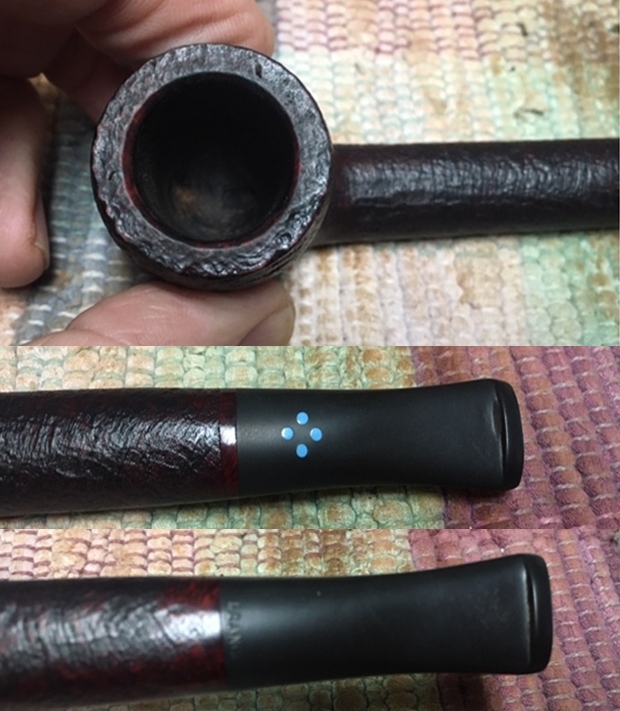
Now it was time to look at it up close and personal. Jeff had done an amazing job in removing all of the cake and the lava on the rim top. He had reamed the bowl with a PipNet Pipe Reamer and cleaned up the remnants with a Savinelli Fitsall Pipe Knife. He took the cake back to bare briar so we could check the walls for damage. He scrubbed the exterior of the bowl with Murphy’s Oil Soap and a tooth brush to remove the grime on the bowl and rim and was able to remove the lava and dirt. He cleaned out the interior of the bowl and shank with pipe cleaners, cotton swabs and alcohol until they came out clean. He cleaned the stem with Soft Scrub to remove the grime on the exterior and cleaned out the airway with alcohol, cotton swabs and pipe cleaners. I took some photos of the box that the pipe arrived in. The first shows the top and the second the end with the  identifying stamping on the pipe. I took a photo of the pipe in the box with a no name pipe sock.I took the pipe out of the box and took photos of it to show what it looked like before I did my part of the work on the pipe. To show how clean the rim top and stem really was I took a close-up photo of the rim and stem. The bowl was clean and cake free. The rim top is very clean with no residual lava in the sandblast finish. The inner edges of the bowl look good. The plateau shank end also looks good. The black vulcanite fancy stem looks cleaned up nicely. The surface had some light tooth marks but the button edge looked really good.I took a photo of the stamping on the under side of the shank. You can see the clear stamping.I removed the stem from the bowl and took photos of the parts. The 4 Blue Dots on the tapered vulcanite stem look very good. The bowl looked very good so I did not need to do any further work on it. I rubbed the bowl and shank down with Before & After Restoration Balm to deep clean the finish on the bowl and shank. The product works to clean, enliven and protect the briar. I worked it in with my fingers and with a horse hair shoe brush to get it into the nooks and crannies of the sandblast finish on the bowl and shank. I let it sit for 10 minutes to let it do its magic. I buffed it with a soft cloth. The briar really began to have a rich shine. I took some photos of the bowl at this point to mark the progress in the restoration. The bowl was finished so I set it aside and turned my attention to the stem. The stem was in very good condition other than some light tooth marks and some light oxidaiton. I polished the stem with micromesh sanding pads – dry sanding with 1500-12000 grit sanding pads. I wiped the stem down after each sanding pad with a cloth containing some Obsidian Oil. I finished polishing it with Before & After Pipe Stem Polish – both Fine and Extra Fine and buffed it off with a cotton cloth. I gave it a final rub down with Briarville’s No Oxy Oil to preserve and protect the vulcanite stem. I put the bowl and stem back together again and buffed the bowl and the stem with Blue Diamond on the buffing wheel. I used a soft touch on the sandblast bowl so as not to fill in the blast with the product. I gave the bowl several coats of Conservator’s Wax and the stem several coats of carnauba wax. I carefully buffed the entire pipe with a clean buffing pad to raise the shine. I finished buffing with a microfiber cloth to deepen the shine. The finished pipe looks very good. The sandblast is light but interesting and feels great in the hand. It is comfortable and light weight. The finished Sasieni Ruff Root Dark 13 Canadian is shown in the photos below. The dimensions of the pipe are Length: 5 ¾ inches, Height: 1 ½ inches, Outside diameter of the bowl: 1 ¼ inches, Chamber diameter: ¾ of an inch. This great looking sandblast Canadian turned out very well. It should be a great pipe. It will be going on the rebornpipes store shortly if you are interested in adding it to your collection. Thanks for reading this blog and my reflections on the pipe while I worked on it.

New Start for an older BBB Best Ambroid Cased Billiard


Blog by Steve Laug

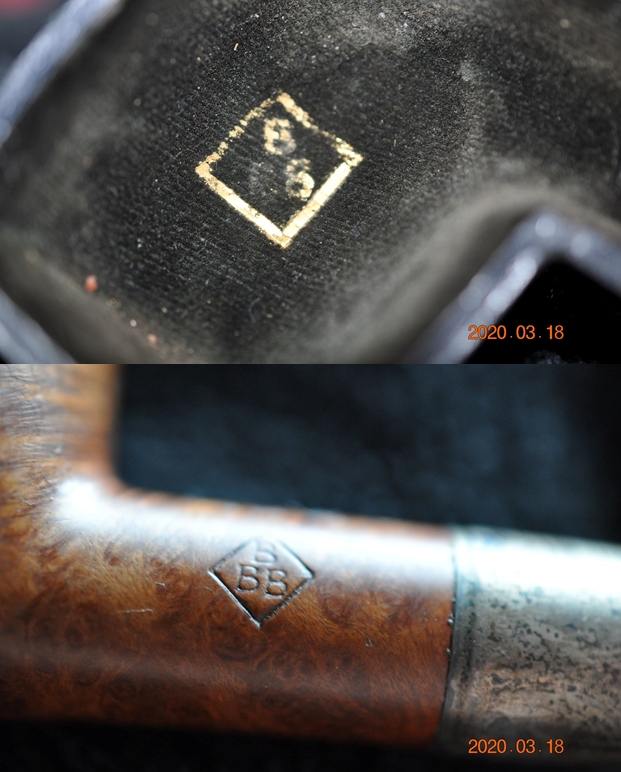
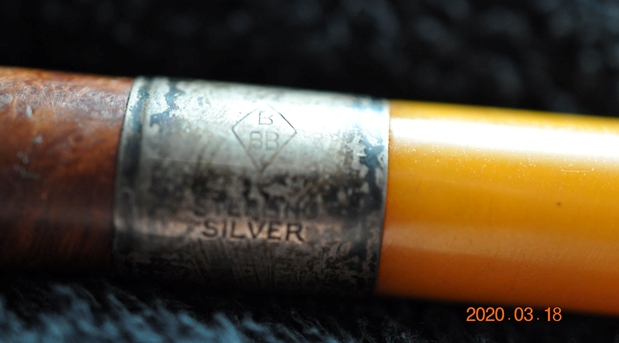
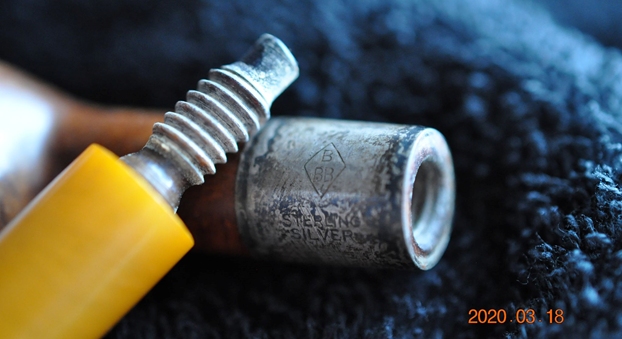
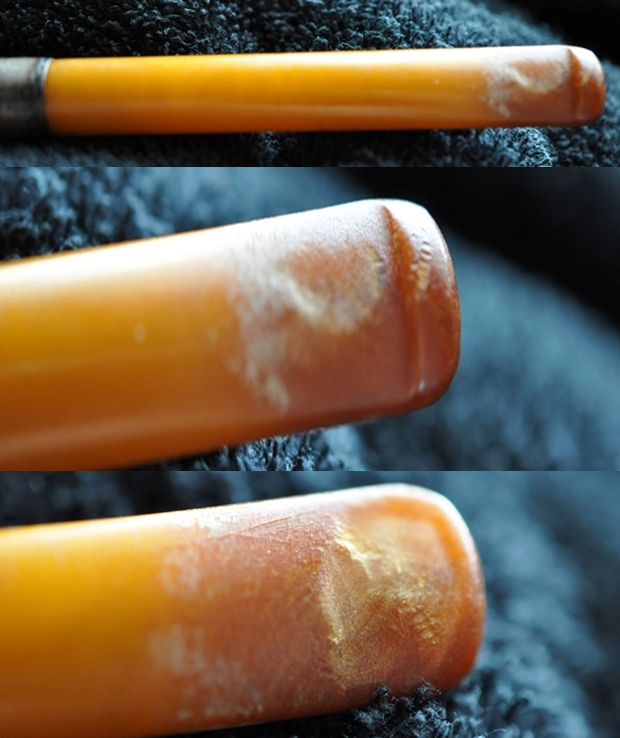
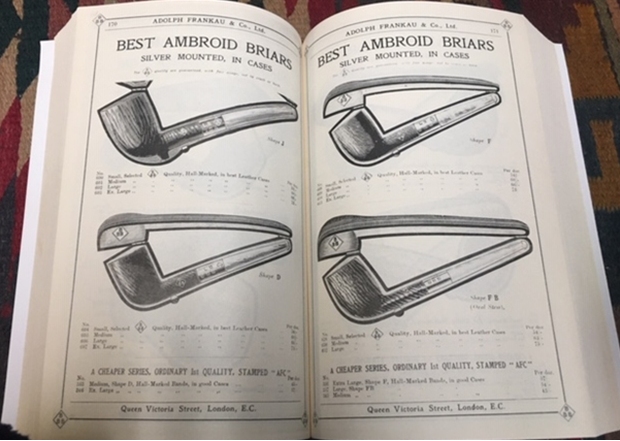
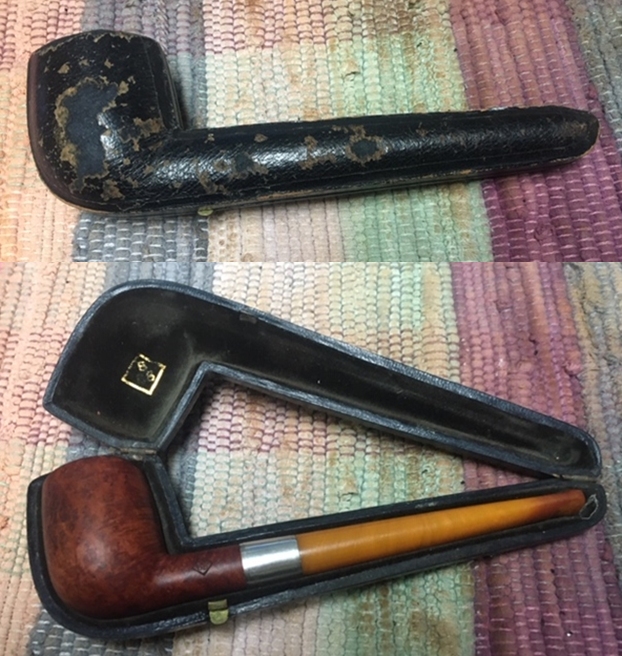
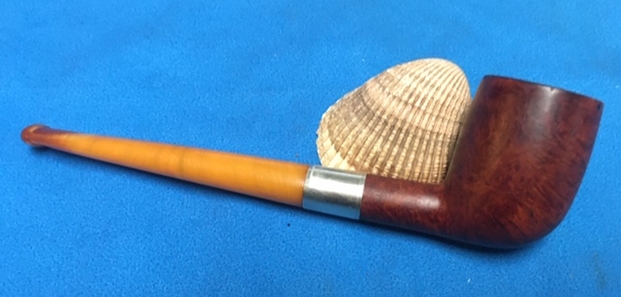
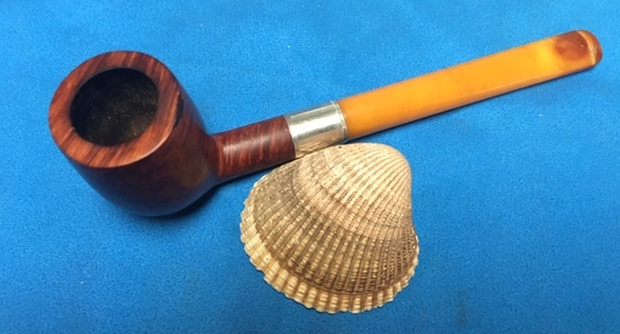
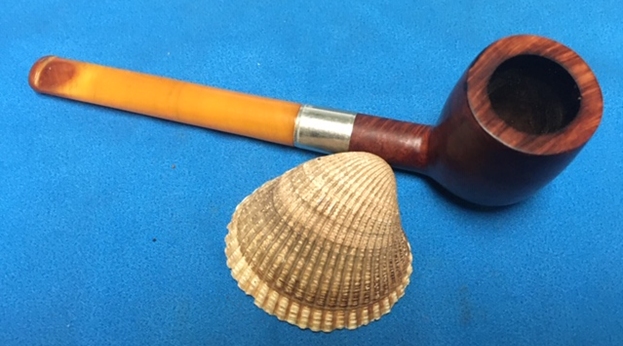
Jeff and I picked up this older BBB Cased Billiard in a group of pipes we purchased not too long ago. It is quite unique. I have worked on a lot of BBB pipes over the years as they are one of my favourite brands and I have quite a few in my collection. This one is a bit different in that it has very little that gives a clue to its age. It is a nice briar with a silver band that is stamped with BBB in the Diamond and Sterling Silver. There were no hallmarks on the band to pin down a date.  It is stamped on the inside of the case with the BBB Diamond logo. The left side of the shank itself is stamped with the BBB Diamond logo. The stem in golden Ambroid and has a bone tenon that screws into the briar shank. It came in a worn black leather covered case lined with black chamois. The case has a brass clasp on the front and brass hinges on the back. It was obviously custom made for this pipe.Jeff opened the case and this was what the pipe that was inside looked like. It was a nice looking classic billiard that is for sure but it was also very dirty. The bowl and shank were a rich medium brown that was very dirty. The stem was golden Ambroid material. The exterior of the bowl was very dirty and had tars and oils ground into the finish and sticky spots on the finish. There was a chip missing on the outer edge at the back of the bowl. The rim top was a mess with lava overflowing out of the thick cake in the bowl. I am sure once it was out of the case it would become clear how dirty it really was.Jeff took it out of the case to have a better look at the condition of the pipe. It was a very classic billiard with a silver band and golden stem. It looked like it would cleanup really well and look great when finished. The finish on the briar bowl looked like it would be great once it was clean. He took some close-up photos of the bowl and rim top. There was a thick cake in the bowl that was hard and uneven. The lava overflowed over the rim top but it looked like the inner edge of the bowl was in good condition. The outer edge had some large nicks and gouges – chunks of briar missing on the back edge. Jeff took photos of the sides of the bowl and heel to show the grain and condition of the finish around the bowl. The pipe has some great grain around the sides. In terms of stamping the only identifying marks on the pipe were the gold BBB Diamond logo on the inside of the case lid, the same stamped on the left side of the shank and again on the silver band. Jeff captured those marks in the next set of photos. The logo on the inside lid of the case was worn and but still readable. Jeff took photos of the stamping on the left side of the shank and the band. He took photos of the stem off the shank/base. The stem has a threaded bone tenon that was filthy with oils and tars. The internals of the pipe were very dirty.Jeff took photos of the stem to show the general condition of the stem shape. The Ambroid stem is well gnawed on both sides around the button. The first photo shows the profile of the straight narrow stem. He took photos of the top and underside of the stem to show the damage and bite marks on both sides up the stem from the button.In 2009 Briar Books Press published a reprint of the 1912 BBB Catalogue No.XX from Adolph Frankau & Co, Ltd.London, E.C. I purchased a copy of the book when it came out and enjoyed reading through it and dreaming about the various pipes that were pictured there. I remembered that there was a section of pipes in the catalogue –Section E called pipes in Cases and it had individually cased pipes with Ambroid stems. I turned to that section in the catalogue and read through the various descriptions and looked at the pictures and sure enough I found this pipe. The only variation was that the one in the drawing had hallmarks on the silver but the rest was identical including the case and stamping on the lid. The top pipe on the right side of the page photo below looks like the one that I am working on.It is described in the title of the page a Best Ambroid Briars Silver Mounted in Cases and available in a variety of sizes. Now I knew the pipe I was working on and that there was at least some variation of it available in the 1912 BBB Catalogue.

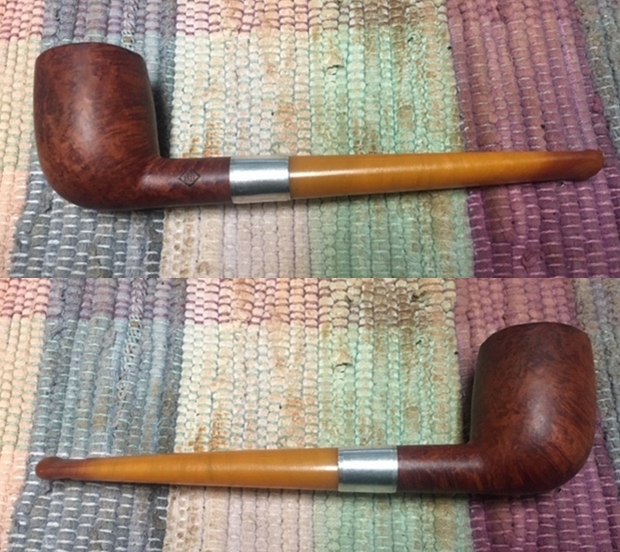
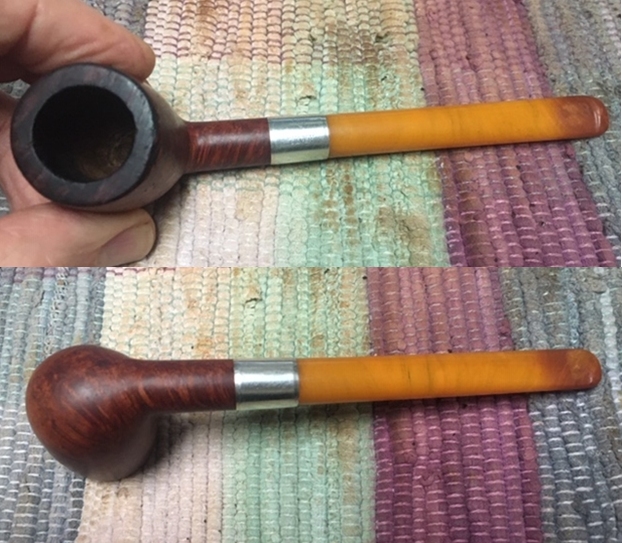
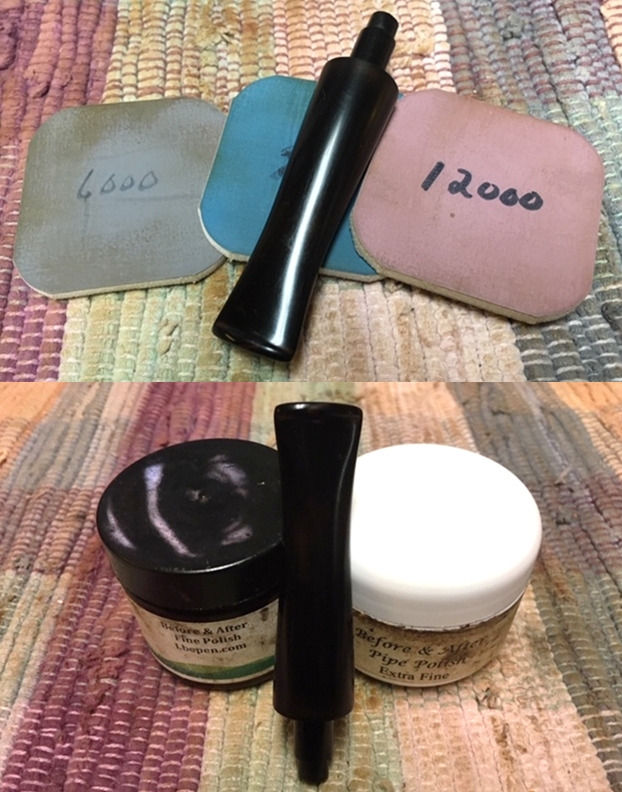
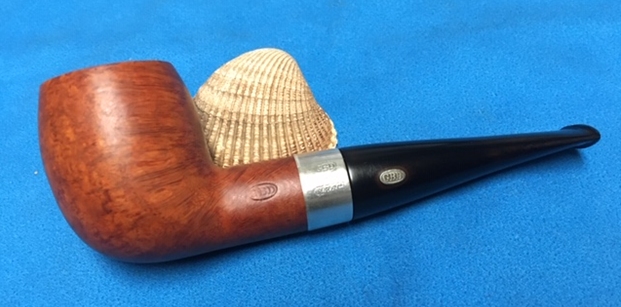
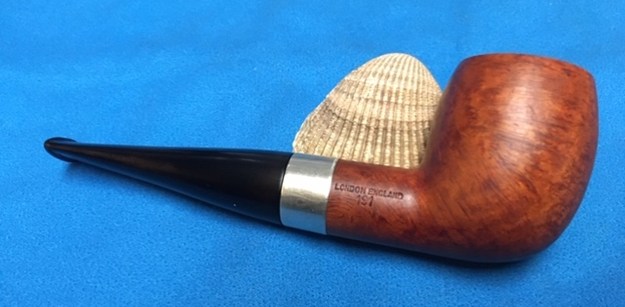
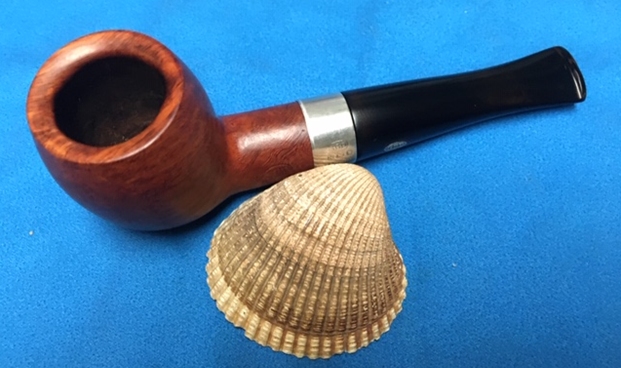
It was time to work on it now and do my part of the restoration. I took the leather case from the box that Jeff had shipped to me and brought it to the work table. I opened it up and took photos of the case and the pipe in the case before taking it out and examining it thoroughly to see what I needed to do. You can see the definite similarity between this pipe and the on in the drawing on the top right of the photo above.The pipe looked very clean. The bowl had been reamed back with a PipNet reamer and cleaned up with a Savinelli Fitsall Pipe Knife. The internals of the shank and stem had been cleaned with alcohol, cotton swabs and pipe cleaners. The exterior of the bowl had been scrubbed with a tooth brush and undiluted Murphy’s Oil Soap. The silver band had been cleaned and the tarnish removed. The stem was clean and the damage to the Ambroid was very visible and ready to repair. Jeff had done his usual great job on the clean up. I took photos of the pipe before I started my part of the work. I took some close up photos of the bowl and rim top as well as the stem to show the areas that I would need to address. You can see the that the bowl and rim are very clean. The inner edge of the rim has some damage as do the top and outer edge. There is general darkening to the rim top and scratches and nicks on the surface. The stem is also very clean and the gouges on the top and underside near the button are visible and ready for repair.I took a photo of the stamping on the left side of the shank. I also wanted to show that the band had turned on the shank so that the BBB Diamond was now on the topside so I took a second photo to capture that. I would need to realign the band and glue it in place.I unscrewed the stem from the shank and took photos of the parts. The bone tenon that connects the stem to the shank is visible.I decided to begin my part of the restoration by addressing the issues with the rim top and edges. I topped the bowl with 220 grit sandpaper on the topping board to smooth out the damage on the rim top and the immediate damage on the inner and outer edges. Once I had it smooth I used clear super glue and briar dust to repair the deep gouges in the back outer edge of the bowl. I took a photo of the rim top at this point to show how good the inner edge and top looked. You can also see the repair on the back outer edge of the bowl that still needs to be sanded. I sanded the repair with a folded piece of 220 grit sandpaper to blend it into the surrounding briar and then took a photo of the bowl looking down at the edges. I am happy with the state of the rim and edges at this point in the process. I removed the band from the shank before moving on to  polish the briar with micromesh sanding pads. I sanded the old glue off the shank to make it smooth for the refit. I polished the bowl, rim and shank with 1500-12000 grit micromesh pads wiping it down between pads with a damp cloth. The way in which the rim top colour was blending in with the rest of the briar was perfect and would not need to be stained. I worked some Before & After Restoration Balm into the briar with my fingertips to clean, enliven and preserve the briar. I find that it adds a depth to the polish that I really have come to appreciate. All that remains at this point is to wax and polish the bowl. The bowl looked very good at this point. I was able to preserve the old patina and through polishing blend the rim top into the rest of the finish. It was time to put the band back in place. I used a dental spatula to apply all-purpose white glue to the shank and aligned the band and pressed it in place. I wanted the BBB Diamonds on the shank and band to match as I had seen in photos on line. I wiped away the excess glue with a damp cotton pad.I set the bowl aside and turned to address the issues with the stem. I used a clear CA glue to fill in the deep tooth marks on both sides of the stem and to rebuild the button. I had to layer the glue and let it harden between applications to get a smooth fill on the stem.Once the repairs had cured I used a needle file to cut the sharp edge of the button and to smooth out the repairs.I smoothed out the repairs with a folded piece of 220 grit sandpaper. I started the polishing with a folded piece of 400 grit wet dry sandpaper.I polished the stem with micromesh sanding pads – dry sanding with 1500-12000 grit sanding pads. I wiped it down after each sanding pad with a cloth containing some Obsidian Oil. I finished polishing it with Before & After Pipe Stem Polish – both Fine and Extra Fine and buffed it off with a cotton cloth. I put the bowl and stem back together and carefully buffed the pipe with Blue Diamond polish on the buffing wheel. I gave the bowl and stem multiple coats of Carnauba wax on the buffing wheel and buffed it with a clean buffing pad. I hand buffed the entirety of the pipe with a microfiber cloth. The pipe was alive now and looked great to me. The patina of the older BBB shines through and the repaired Ambroid stem – though far from it pristine beginnings – looks very good.  This pipe is well balanced feels great in my hand. The finished pipe is shown in the photos below. The dimensions of the pipe are Length: 6 inches, Height: 1 ¾ inches, Outside diameter of the bowl: 1 ¼ inches, Chamber diameter: ¾ of an inch. This older BBB Best Ambroid Cased Briar pipe is a beauty and the Ambroid Stem, Sterling Silver Band and old patina briar look stunning together. It is an old BBB pipe so of course it is one that will be staying in my BBB collection. It will be a great addition to my collection of that classic English Brand. Thanks for reading this blog and my reflections on the pipe while I worked on it.

Beginning again – a KB&B Bakelite Blueline Cup and Ball Pipe


Blog by Steve Laug

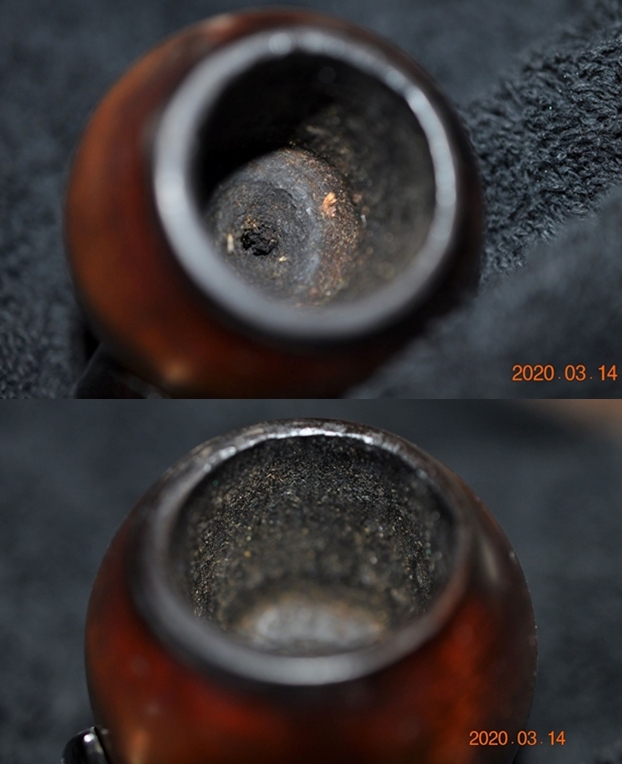
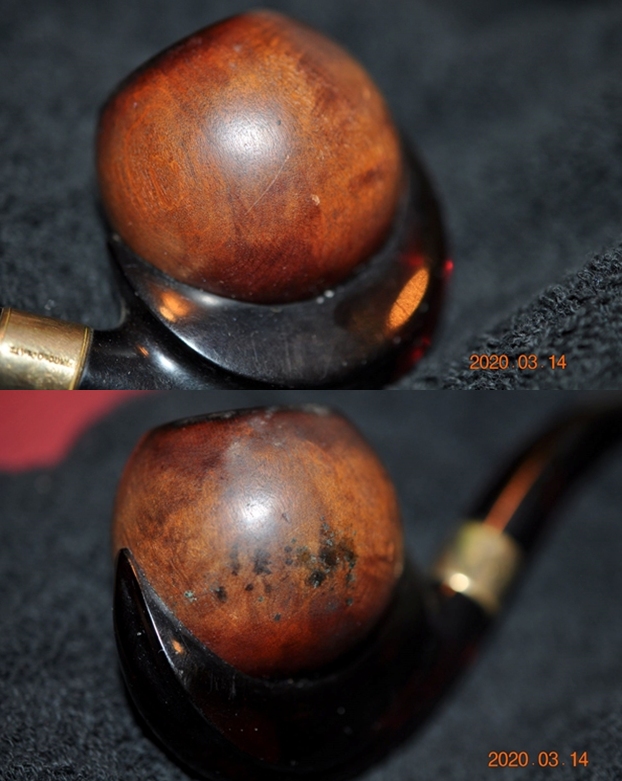
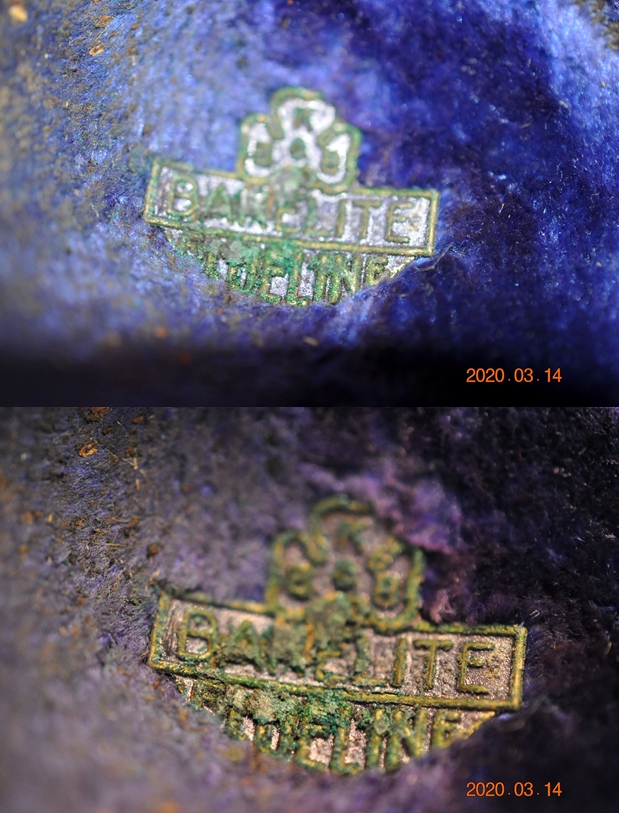
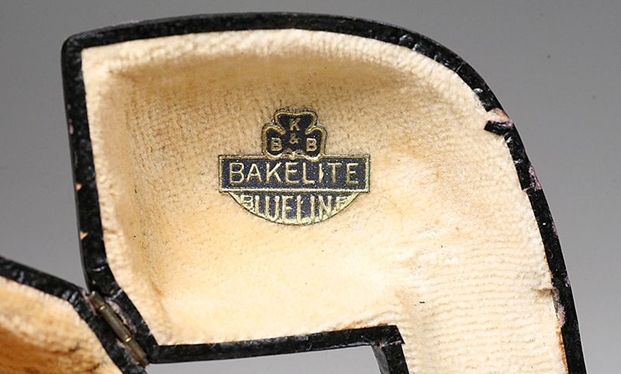
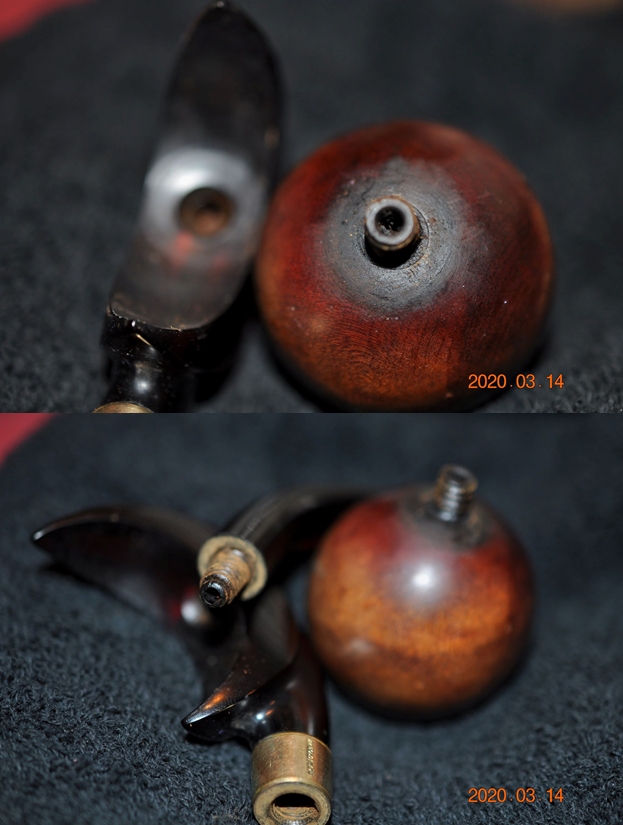
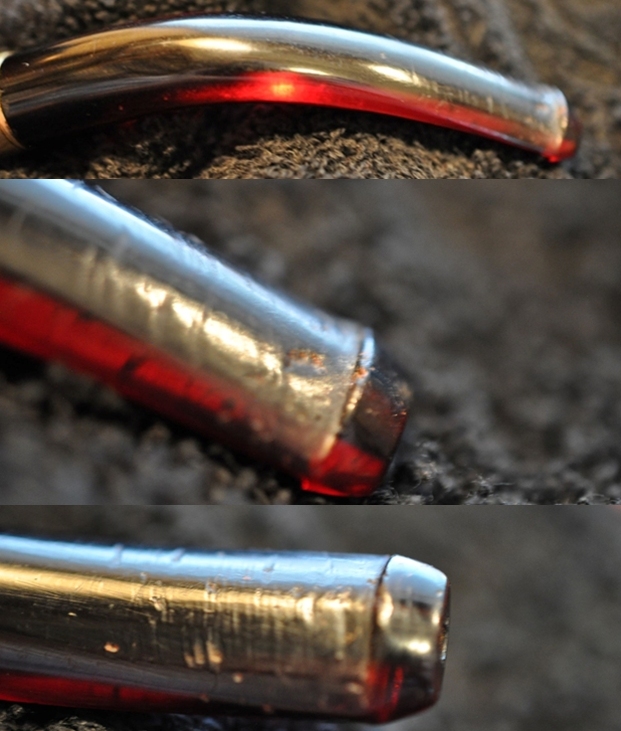
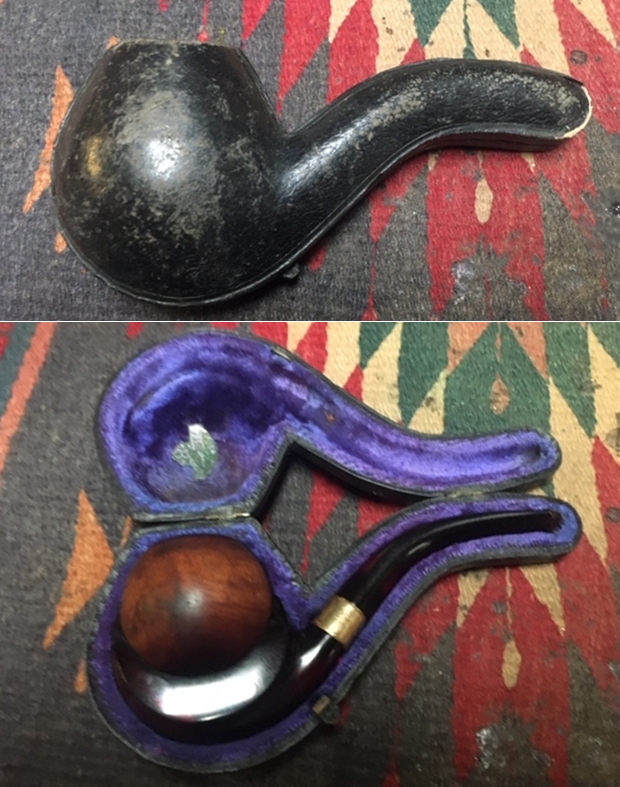
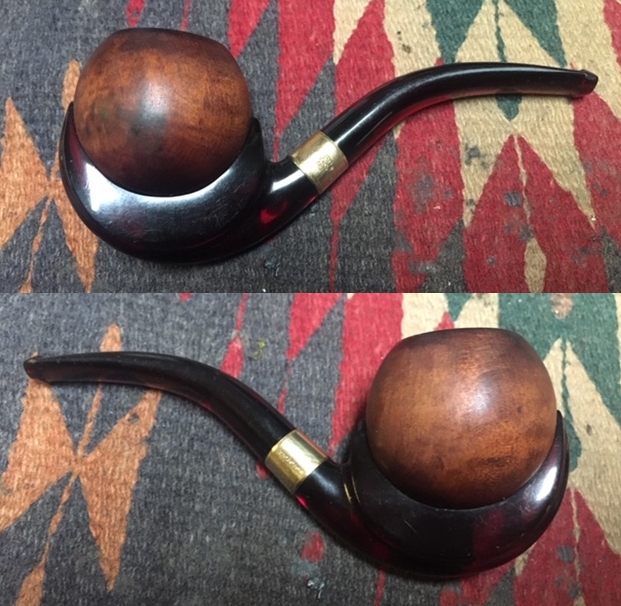
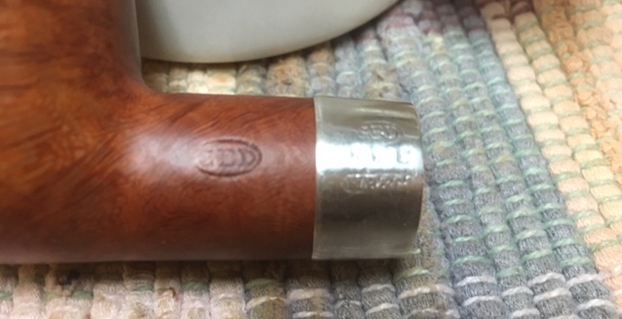
Jeff picked up this interesting Cup and Ball or Claw and Ball pipe somewhere along his hunts or in an auction. It is quite unique. I have worked on a lot of KB&B pipes but never one like this. It is stamp on the inside of the case with the KB&B Cloverleaf and Bakelite in the centre. Underneath it appears to read Blueline. The gold band on the shank end is also stamped with the KB&B Cloverleaf as well as what looks like 12K Gold Plate. Both the base of the pipe and the stem are Bakelite. The stem has a bone tenon that screws into the Bakelite shank. It came in a black leather covered case lined with blue velvet fabric. The only marking on the case was what I mentioned above. The case has a brass clasp on the front and brass hinges on the back. It was obviously custom made for this pipe.Jeff opened the case and this was what the pipe that was inside looked like. It was a very unique looking pipe that is for sure but it was also very dirty. The base, shank and stem were rich red coloured Bakelite. The exterior of the bowl was very dirty and had tars and oils ground into the finish and sticky spots on the finish. Looking at the top of the bowl you can see the cake and how much lava had overflowed onto the rim top. I am sure once it was out of the case it would become clear how dirty it really was.Jeff took it out of the case to have a better look at the condition of the pipe. It was a very interesting looking rendition of a Ball and Cup pipe – at least that is what I would call it. It looked like it would cleanup really well and look great when finished. The hardwood bowl (cherry or maple) had some colour from either being filthy or from age. Cleaning would reveal the facts! He took some close-up photos of the bowl and rim top. There was a very thick cake in the bowl that was hard and uneven and had lots of flakes of tobacco debris stuck to the walls. The lava overflowed down the outside of the ball on several sides. The edges of the bowl looked to be in pretty good condition at this point. Jeff took photos of the sides of the bowl to show the grain and condition of the finish around the bowl. These photos also lead me to conclude that the bowl is not briar… perhaps Cherry or Maple.In terms of stamping the only identifying marks on the pipe were those on the case on the gold band on the shank. Jeff captured those marks in the next set of photos. The logo on the inside lid of the case was worn and dirty so he included two photos of that. I also found a similar lid logo online and have included it as well for comparison sake. Jeff took photos of the KB&B Cloverleaf and the 12K Gold Plate stamp on the band.He took photos of the ball and the stem off the shank/base. The ball and the stem both are threaded and are screwed into the base. It was filthy with oils and tars. The internals of the pipe were in as bad a condition as the inside of the bowl and airway.Jeff took photos of the stem to show the general condition of the stem shape. The curve is graceful and the curve great. The photo shows the profile of the stem. He took photos of the top and underside of the stem to show the damage and bite and scratch marks on both sides up the stem from the button.I remembered that one of the contributors to rebornpipes, Troy Wilburn had done a lot of work on older KB&B pipes so I turned to one of his blogs on rebornpipes on a Blueline Billiard that he restored (https://rebornpipes.com/tag/kbb-blue-line-pipes-with-bakelite-stems/). As expected Troy had done a great job digging into the Blueline brand and potential dates. I quote from his blog the following sections.

I was thinking after some initial research that these pipes were from around 1910 – early 1920s. Seems it’s a little older than I thought. I got this info from a Kaywoodie and early KBB collector who has had several Blue Lines.

Your pipe is made by Kaufman Brothers and Bondy, or KB&B, which later (1915) created the Kaywoodie line we all know. But this pipe is Pre-Kaywoodie, as they were making pipes under the KB&B branding from about 1900 to 1914. Bakelite was invented in 1907, so this pipe was likely made from 1908 to 1914, as the Bakelite was quite the technological wonder of the time, and was used in many products (still in use today). These “Blue Line Bakelite” pipes are rare pieces, seldom seen.”

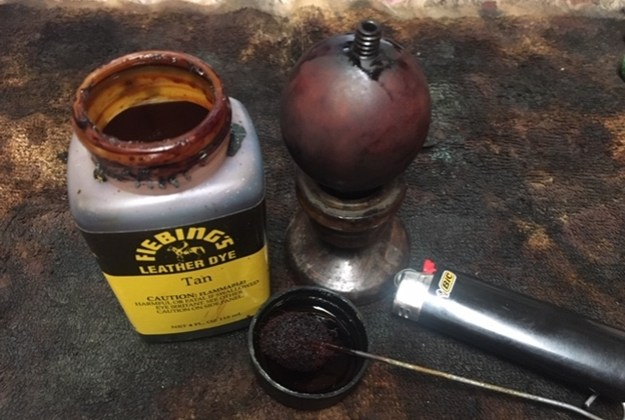
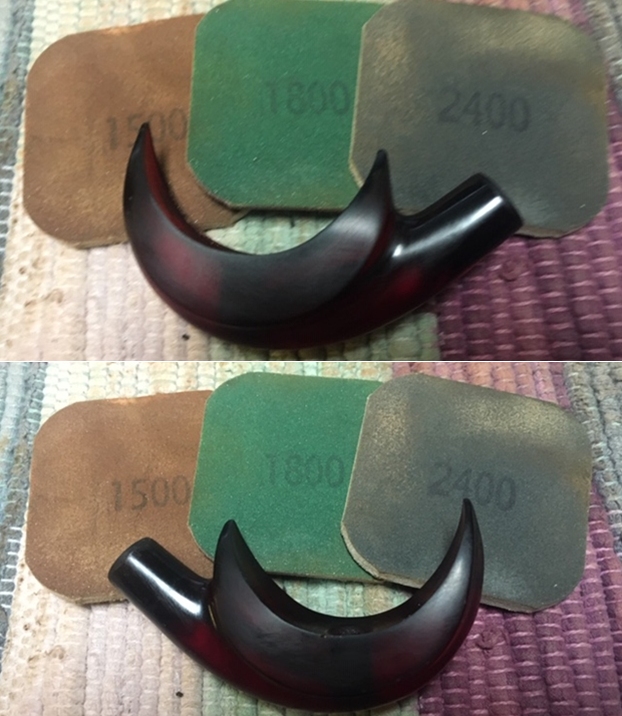
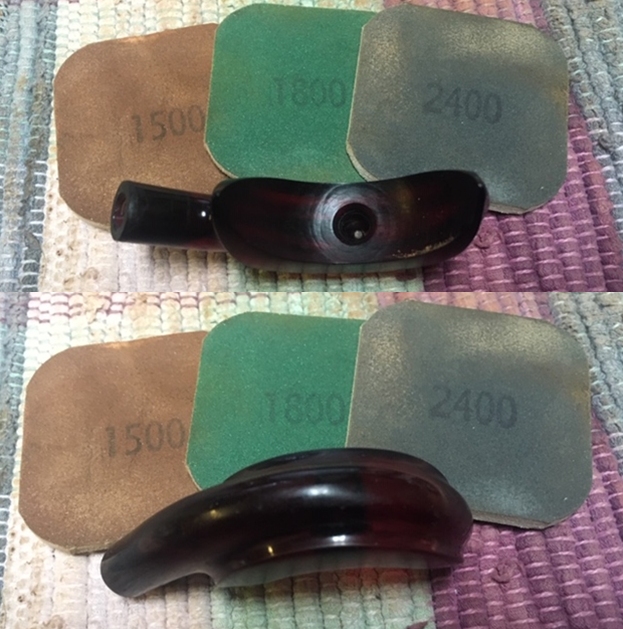
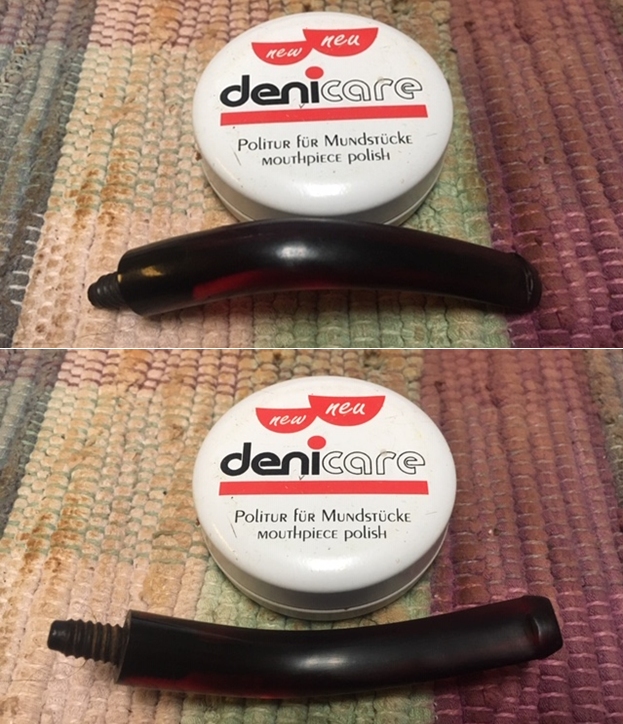
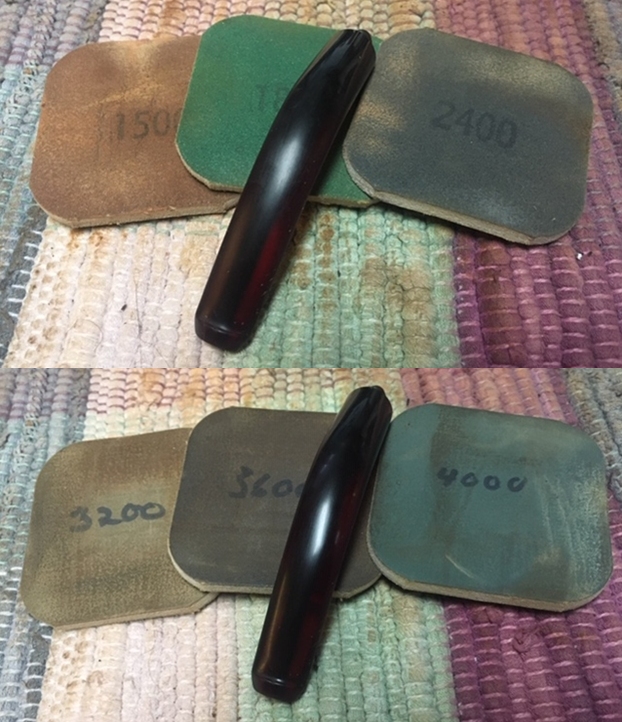
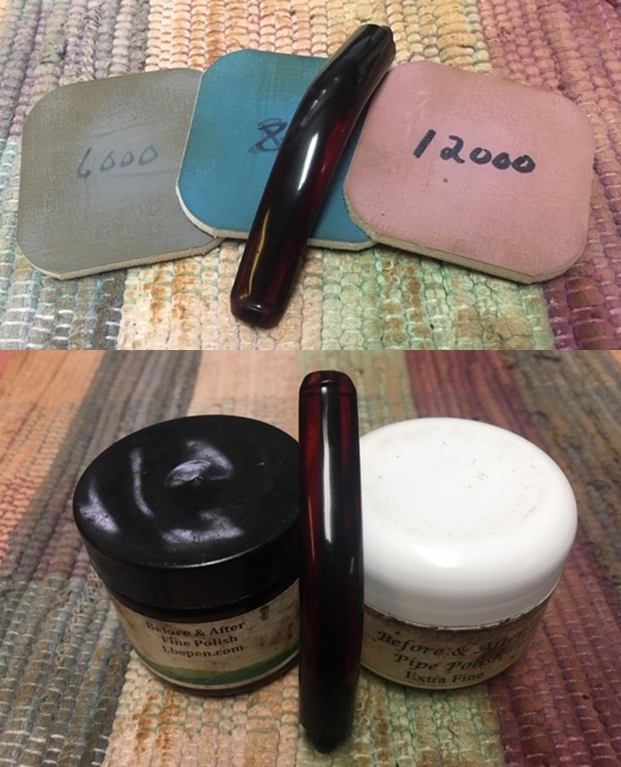
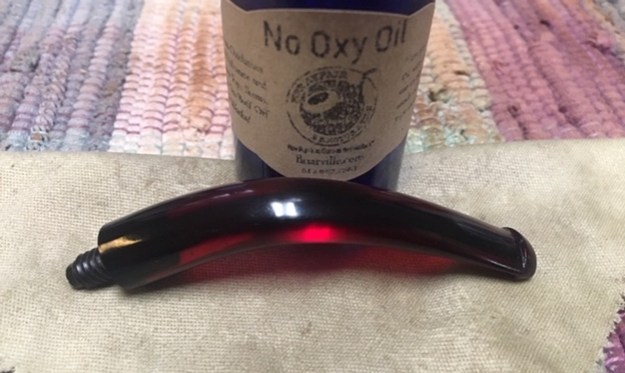
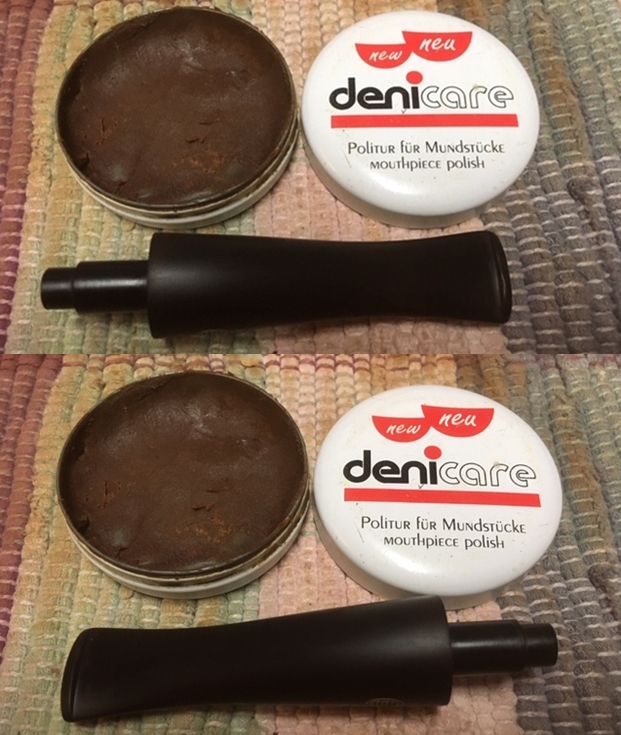
Having seen the before pictures on this pipe I was looking forward to what it would look like when I unpacked the most recent box Jeff sent to me. The pipe was present in the box and I took it out of the box to see what work awaited me when I removed it from the case. I put the case on my desk and opened it to see what was there. I opened the case and took a photo of the pipe inside.I was astonished to see how clean the pipe was. The bowl clean and the Bakelite base and stem looked very good. Even the gold band looked better. Now it was time to take it out of the case and have a look at it up close and personal. I took photos of the pipe as I saw it. Jeff had done an incredible job in cleaning up this pipe. He had reamed the bowl with a PipNet Pipe reamer and cleaned up the remaining debris with a Savinelli Fitsall Pipe Knife. He also scraped the thick lava on the rim top. He scrubbed the exterior of the bowl with Murphy’s Oil Soap and a tooth brush to remove the grime on the bowl and rim. He cleaned out the interior of the bowl base and stem with pipe cleaners, cotton swabs and alcohol until they came out clean. The rim top looked incredible when you compare it with where it started. There is some slight darkening on the inside edge of the bowl. He cleaned the base and stem with Soft Scrub to remove the grime on the exterior and cleaned out the airway with alcohol, cotton swabs and pipe cleaners. I included a photo of the KB&B Cloverleaf on the gold plated band.I unscrewed the bowl and the stem from the base and took photos of the parts. The bowl and stem both had threaded connectors. The bowl was metal and the stem was bone.I stripped the spotty finish off the bowl with acetone. I know for some this is a no-no for old pipes but honestly this finish was very rough. I would restain it as close to the original aniline as I could but there was damage that needed to remove the stain and finish to address. I followed that by sanding the bowl with a medium and a fine grit sanding sponge. The bowl was looking better and the dark spots turned out to be oils and not burn marks! Whew! I polished the bowl with micromesh sanding pads – dry sanding with 1500-12000 grit pads and wiping the bowl down after each pad with a damp cloth. Note the developing shine on the wood. I went through my various stains and chose a Tan aniline stain for the bowl. It is a nice coloured stain that is close to what was original and will give me some coverage over some of the dark spots on the sides of the bowl. I applied the stain and flamed it with a lighter. The flaming burns off the alcohol and sets the stain in the wood. I repeated the process until I was happy with the coverage.I set the bowl aside to let the stain cure and turned my attention to the base. The band was loose so I removed it for the first round of pads. I polished the Bakelite with micromesh sanding pads to remove the scratching and bring out a shine. I dry sanded with 1500-12000 grit pads and wiped it down with a cloth I use that has Obsidian Oil impregnated in the fibres. It works well to remove the dust. I paused the polishing to glue the gold band on the shank end. I put some white all-purpose glue on the Bakelite and pressed the band in place on the shank. I wiped the excess glue off with a damp cloth. I let the glue dry for a short time.When it had set I continued polishing with the micromesh pads. I set the base aside and went back to the bowl. I buffed out the newly stained bowl with Blue Diamond to bring out a shine. The colour is opaque enough to hide the dark spots and transparent enough to show some grain in the sunlight. I like it!I rubbed Before & After Restoration Balm into the wood with my fingertips to clean, enliven and preserve the newly stained bowl. I find that it adds a depth to the polish that I really have come to appreciate. All that remains at this point is to wax and polish the bowl. With the bowl and the base finished it was time to put them back together. I would still need to buff and wax both but the project was coming to an end. All that remained was to finish the stem work. I set the base and bowl aside and turned to address the issues with the stem. I used a clear CA glue to fill in the gouges across the stem from the button forward an inch on both sides. I also filled in the deep tooth marks on both at the same time.I smoothed out the repairs with a folded piece of 220 grit sandpaper. I started the polishing with a folded piece of 400 grit wet dry sandpaper.I rubbed the stem down with Denicare Mouthpiece Polish. It is a gritty, red paste with the consistency of red Tripoli. I find that it works well to polish out scratches and light marks in the surface of the stem. I polished it off with a cotton pad to raise the shine.I polished the stem with micromesh sanding pads – dry sanding with 1500-12000 grit sanding pads. I wiped it down after each sanding pad with a cloth containing some Obsidian Oil. I finished polishing it with Before & After Pipe Stem Polish – both Fine and Extra Fine and buffed it off with a cotton cloth. I gave it a coat of Briarville’s No Oxy Oil to preserve and protect it. I put the hardwood bowl and Bakelite Base stem back together again and carefully buffed it with Blue Diamond polish on the buffing wheel. I gave the bowl, base and stem multiple coats of Carnauba wax on the buffing wheel. I hand buffed the entirety of the pipe with a microfiber cloth. The pipe was alive now and looked great to me. It has a great feel in the hand that is very tactile and the colouring on the bowl should develop more deeply as the pipe is smoked. The finished pipe is shown in the photos below. The dimensions of the pipe are Length: 5 1/2 inches, Height: 2 1/4 inches, Outside diameter of the bowl: 1 1/4 inches, Chamber diameter: 7/8 of an inch. This older KB&B Blueline Cup and Ball pipe is a beauty and the Bakelite looks great with the newly stained bowl. It is one of those old timers that will be staying in my KB&B collection. It will be a great addition to my collection of old pipes. Thanks for reading this blog and my reflections on the pipe while I worked on it.

Now for a bit of a Break – a Vacher Long Shank Cherrywood Poker


Blog by Steve Laug

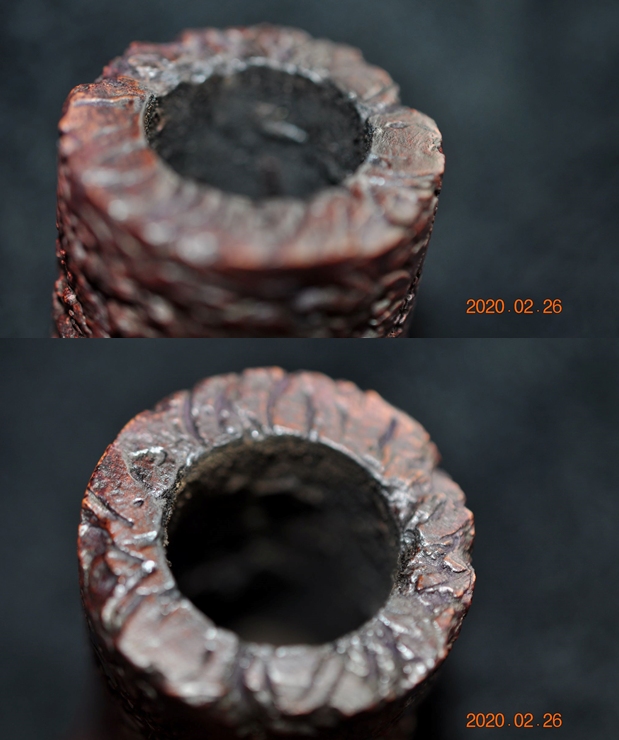
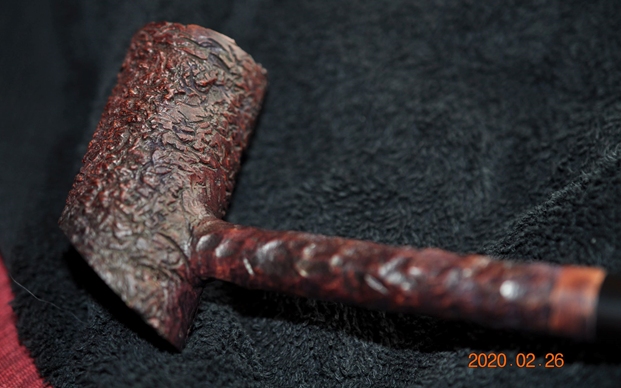
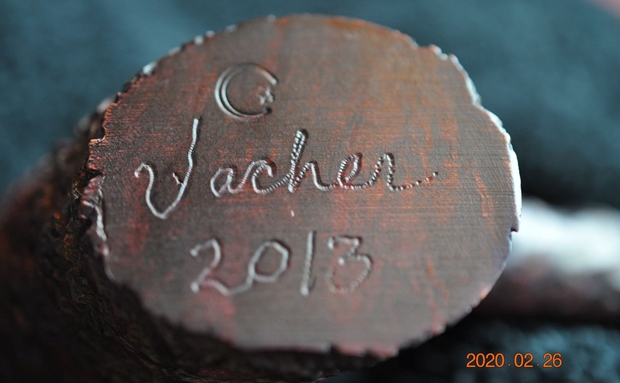
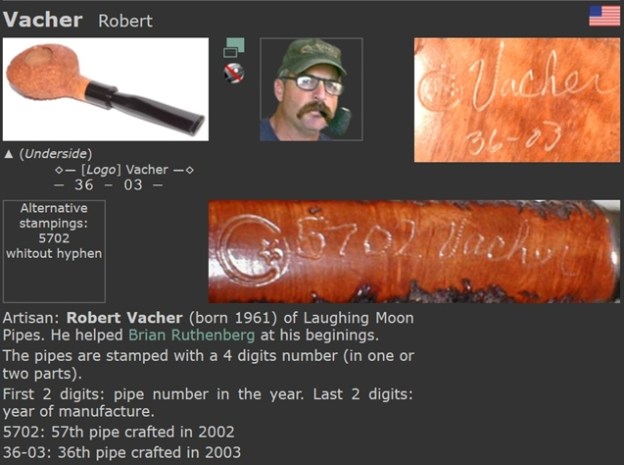
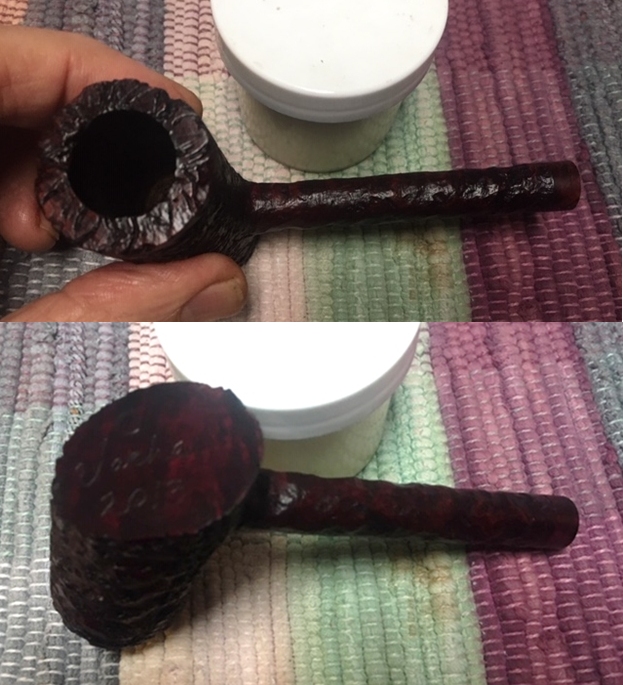
The next pipe on my worktable is a long shank Cherrywood or Poker. It is a tall pipe with an angled heel that makes it a sitter. It is well balanced so it is a very stable sitter. The finish is a unique mix of rustication patterns. The left side of the bowl (shown in the first photo) is a tight patterned rustication. The right side has some angled grooves across the pattern that is quite unique. The shank rustication is a much looser rustication and again some of the grooves so it is very different from the rest of the bowl. The briar is stain with some black undercoat and an oxblood top coat. The pipe has a smooth heel on the bowl and a smooth band around the shank. The saddle stem is vulcanite that has some light tooth chatter and marks at the button. The bowl has a moderated cake and the inner edge of the rim has some darkening. The rim top itself is quite clean. The stamping is the logo for Laughing Moon Pipes – a crescent moon and a star. Under that is Vacher signature and the number 2013. The pipe is dusty but otherwise in good shape. Jeff took the following photos before he started his cleanup work on the pipe. He took close-up photos of the bowl and rim top from various angles to capture the condition of the bowl and rim top edges. You can see the clean rim top free of lava and just a bit dusty. There is also some darkening around the inner edge of the bowl. The rustication on the rim is another different style pattern from the rest of the pipe. Very unique.He took photos of the sides and heel of the bowl to show the unique and rugged rustication patterns around the bowl. It is craggy and random looking. You can see the dust and debris in the finish. Jeff took a photo of the stamping on the flat, smooth heel. It has the Laughing Moon Pipes logo at the top and underneath it bears Vacher’s signature and the number 2013 which could be the year of manufacture or something else…The next two photos show the top and underside of the stem. The oxidation and the tooth marks on both sides near the button are visible in the photos. When the pipe arrived I knew I had worked on pipes from Vacher and Laughing Moon Pipes in the past but I could not find them on the blog. That was strange – maybe age playing a trick on me? Ah well! I instead turned to Pipephil (http://www.pipephil.eu/logos/en/logo-v1.html) to see if he included a quick summary of information on the brand. I was not disappointed. I have included  a screen capture of the pertinent section. From there I learned a few things.

The pipe maker was Robert Vacher who had worked with Brian Ruthenberg in his early days. I also learned that his pipe were stamped with 4 digit numbers. The first 2 digits was the pipe number in the year. The last 2 digits was the year of manufacture. Interestingly that made the pipe on my table the 20th pipe made in 2013 if I am interpreting it correctly.I turned to Pipedia for more information on Robert Vacher and the Laughing Moon Pipes that he carved (https://pipedia.org/wiki/Laughingmoon_Pipes). The site had a great writeup by Vacher himself taken from his Ebay store. The thing that stood out to me was his mission statement which I quote below:

MISSION STATEMENT: I believe that EVERYONE who desires to smoke a handcrafted pipe should be able to buy one regardless of their station in life. There is no reason why the janitor in a highrise should not be able to smoke the same pipe as the owner of that building. My pipes are made for, but not limited to, the people who make up the backbone of this world. The people who get up every day and get the job done. I just want you to know that when I make YOUR pipe, I made it with YOU in mind. So in the future, as in the past, I will make super-affordable pipes for those who enjoy them.

The article also includes the following information on the maker as well as his email address should you desire to contact him.

Robert Vacher
477-700 Laura Lane
Litchfield, California 96117  USA
E-mail: rvacher@citlink.net

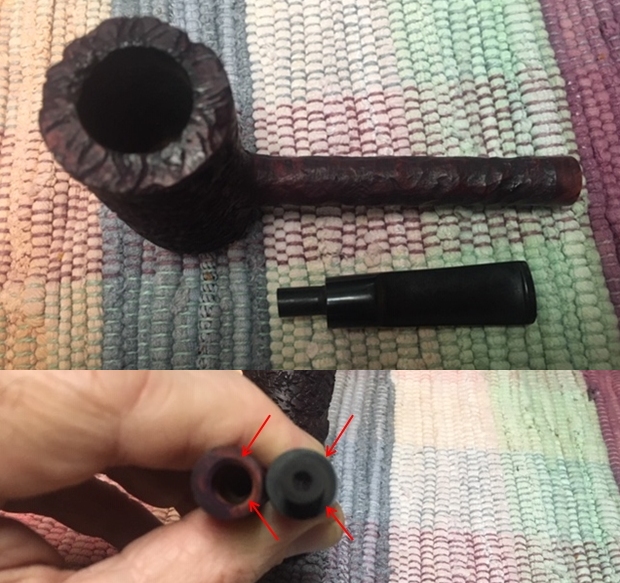
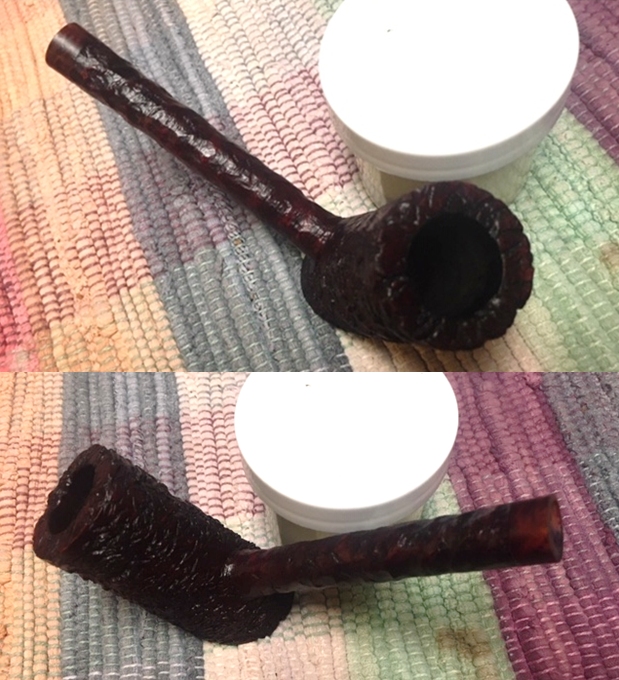
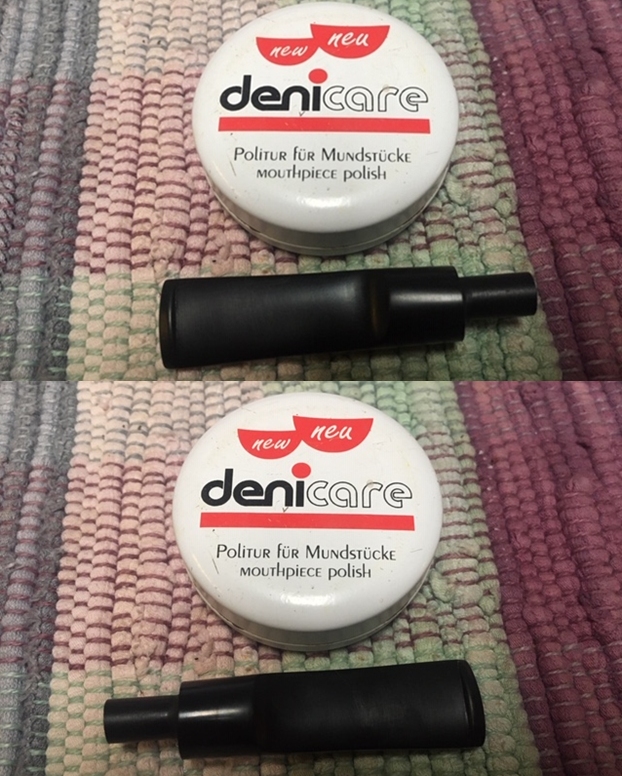
Now it was time to look at the pipe up close and personal. I had just finished reworking the dog chewed Ser Jacopo so I was looking for something more like a simple restoration that needed little work. The Vacher appeared to be that  pipe . Jeff had done an amazing job in removing all of the cake and the thick lava on the rim top. He had reamed the bowl with a PipNet Pipe Reamer and cleaned up the remnants with a Savinelli Fitsall Pipe Knife. He took the cake back to bare briar so we could check the walls for damage. He scrubbed the exterior of the bowl with Murphy’s Oil Soap and a tooth brush to remove the grime on the bowl and rim and was able to remove the dirt. He cleaned out the interior of the bowl and shank with pipe cleaners, cotton swabs and alcohol until they came out clean. He cleaned the stem with Soft Scrub to remove the grime on the exterior and cleaned out the airway with alcohol, cotton swabs and pipe cleaners. I took some photos of the pipe as I saw it. To show how clean the rim top and stem really was I took a close-up photo of the rim and stem. The bowl was clean and cake free. The rim top is very clean with no residual grime in the groves of the rustication. The inner edges of the bowl look good. The black vulcanite saddle stem cleaned up nicely. The surface had some light tooth marks but the button edge looked really good.I took a photo of the stamping on the smooth heel of the bowl. You can see the Laughing Moon Pipes logo, Vacher’s name and the numbers.I removed the stem from the bowl and took photos of the parts. The vulcanite saddle stem worked really well with the thin pencil shank. Take particular note of the stem and tenon in both photos. The distance from the edge of the stem to the side of the tenon is different on both sides. It is definitely narrower on the right and underside which made it clear that the shank drilling was not quite round. I took a photo of the end of the shank and end of the stem to show the same thing. I have identified the thinner side of the shank and stem with red arrows in the 3rd photo below. The bowl looked very good so I did not need to do any further work on it. I rubbed the bowl and shank down with Before & After Restoration Balm to deep clean the finish on the bowl and shank. The product works to clean, enliven and protect the briar. I worked it in with my fingers and with a horse hair shoe brush to get it into the deep nooks and crannies of the rusticated finish on the rim and bowl sides. I let it sit for 30 minutes to let it do its magic. I buffed it with a soft cloth. The briar really began to have a rich shine. I took some photos of the bowl at this point to mark the progress in the restoration. The bowl was finished so I set it aside and turned my attention to the stem. I sanded out the tooth marks on both sides of the stem with a folded piece of 220 sandpaper and started polishing with 400 grit wet dry sandpaper.I rubbed the stem down with Denicare Mouthpiece Polish – a red gritty paste a lot like Tripoli to polish it after the 400 grit sandpaper. I rub it on with my fingertips and work it into the vulcanite and buff it off with a cloth. It does a great job before I polish it further with the micromesh pads.I polished the stem with micromesh sanding pads – dry sanding with 1500-12000 grit sanding pads. I wiped the stem down after each sanding pad with a cloth containing some Obsidian Oil. I finished polishing it with Before & After Pipe Stem Polish – both Fine and Extra Fine and buffed it off with a cotton cloth. I gave it a final rub down with Briarville’s No Oxy Oil to preserve and protect the vulcanite stem. I put the bowl and stem back together again and lightly buffed the bowl and the stem with Blue Diamond on the buffing wheel. I used a soft touch on the rusticated bowl so as not to fill in the valleys and crannies with the product. I gave the bowl several coats of Conservator’s Wax and the stem several coats of carnauba wax. I carefully buffed the entire pipe with a clean buffing pad to raise the shine. I finished buffing with a microfiber cloth to deepen the shine. The finished pipe looks very good. The rusticated finish is deep and rugged with a great look and feel in the hand. It is comfortable and light weight. The finished American Made Vacher is shown in the photos below. The dimensions of the pipe are Length: 6 ½ inches, Height: 2 ½ inches, Outside diameter of the bowl: 1 ¼ inches, Chamber diameter: 5/8 of an inch. This great looking rusticated Cherrywood Poker turned out very well. It should be a great pipe. It will make someone a great smoking pipe. I will be putting it on the rebornpipes store shortly. If you are interested let me know. Thanks for reading this blog and my reflections on the pipe while I worked on it.

Operation Rescue – “My Dog Ate my Ser Jacopo L1 Billiard!”


Blog by Steve Laug

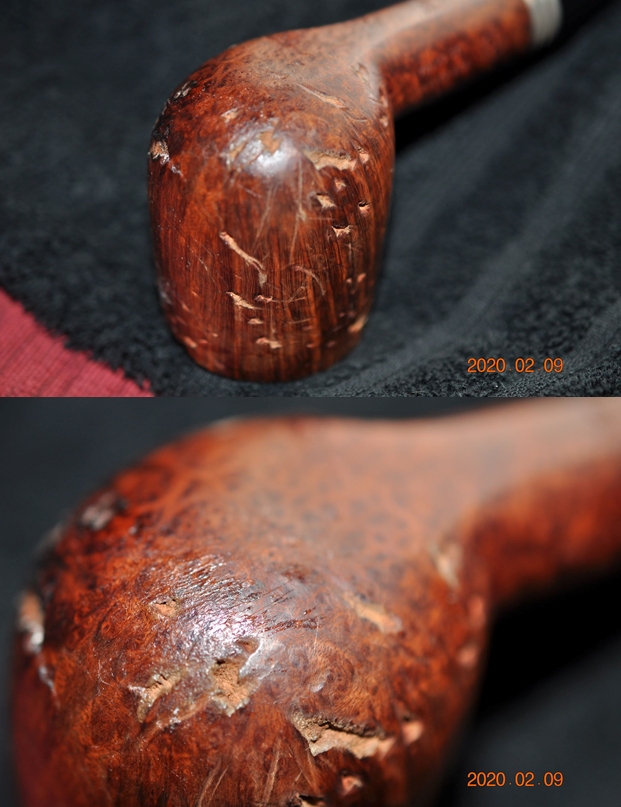
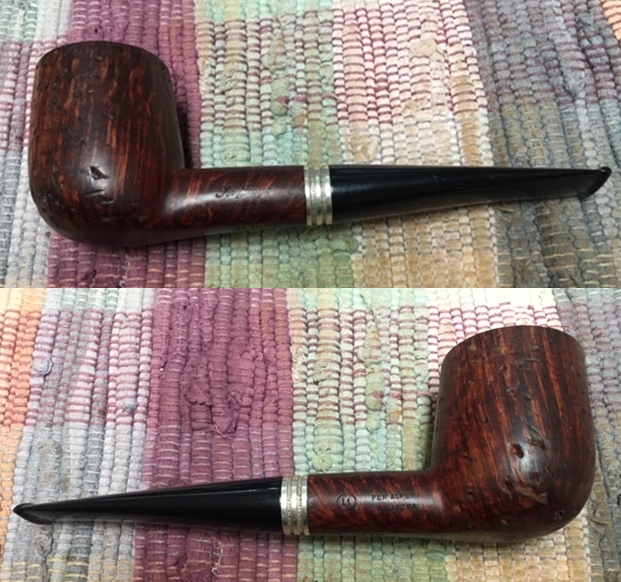
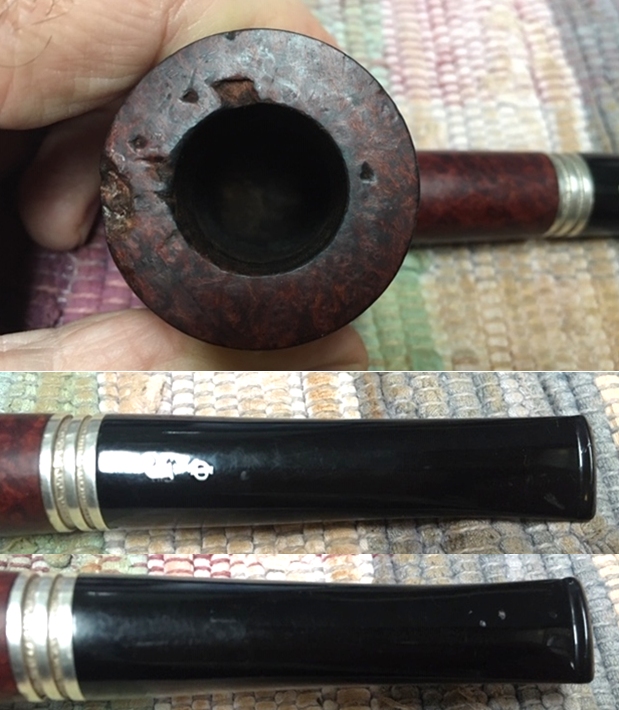
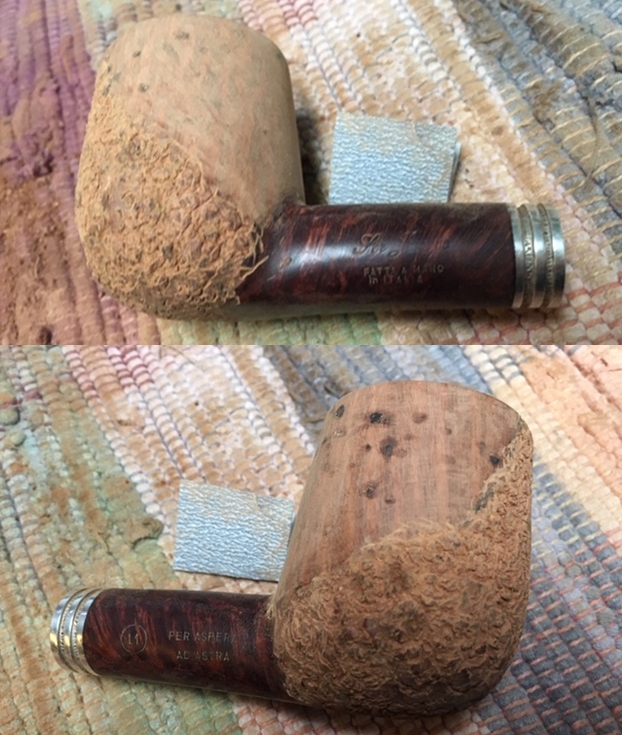
When Jeff showed me the next pipe on the table we went back and forth about buying it or just leaving it with the seller. It was a really nice Ser Jacopo L1 Billiard at some point in its life but that time had passed. It had literally become a chew toy for someone’s dog. The bowl was in very rough shape and had deep tooth gouges around the bowl with chunks of briar missing on the rim and top. The bowl was really damaged to the point of being questionable. The shank interestingly was free of bite marks and the stem had less bite marks than some of the stems I have worked on from pipemen who chew their stems. For me the question was whether or not I wanted to work on it. There was no doubt that the pipe would be a challenge but was it a challenge I wanted to take on. That was the question we weighed before moving ahead with the buy.

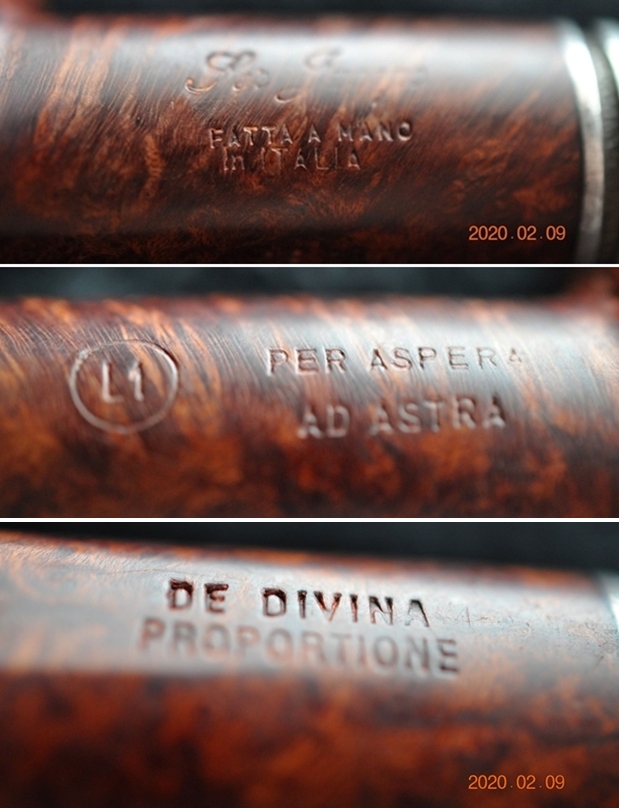
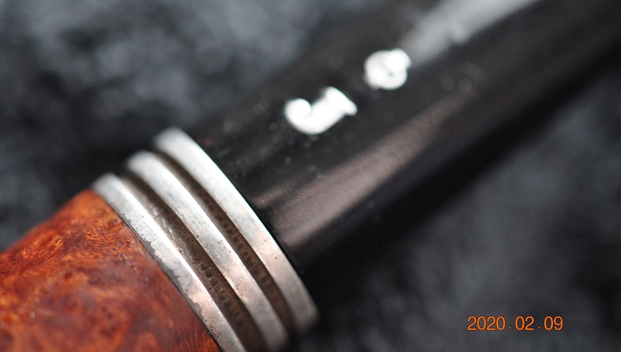
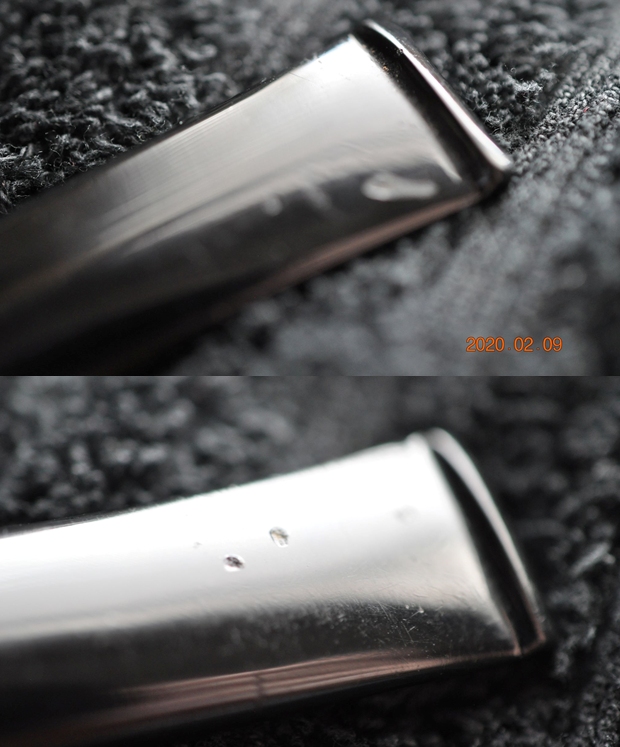
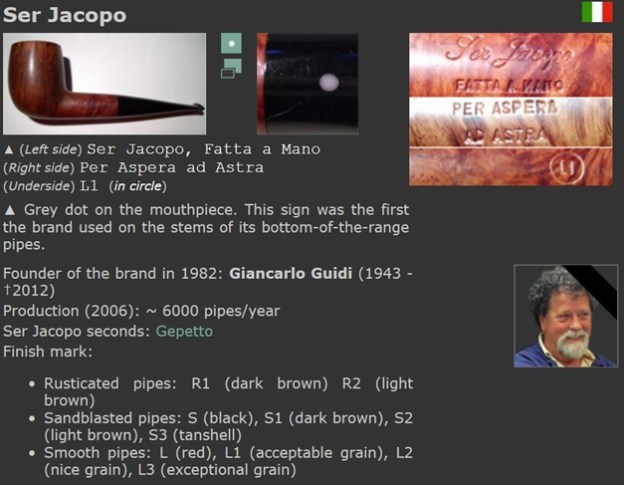
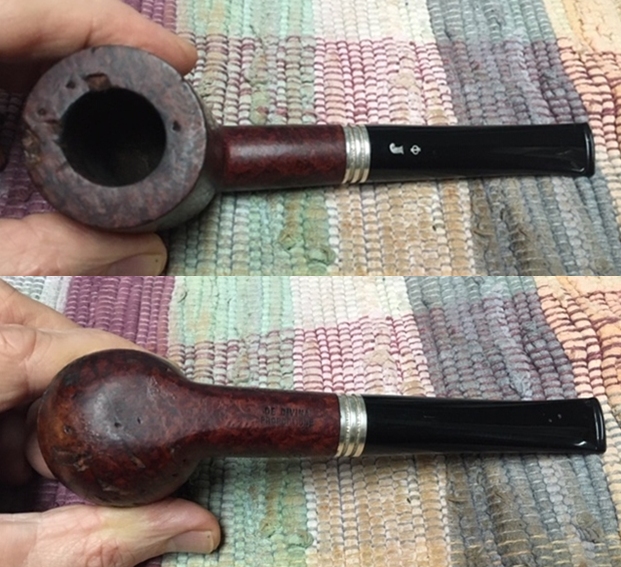
After spending time talking about it we decided to pick up the pipe and see what I could do with it. When Jeff got it the story became even sadder!  The bowl had amazing straight grain around the sides and it appeared to have been barely smoked. It looked as if maybe a bowl or two had been enjoyed before the dog got a hold of the pipe and did the massive damage that showed when we saw it. The bowl had some darkening but there was no cake in the bowl. It smelled smoky but otherwise was very clean. Jeff would still clean up the pipe before he sent it on to me that way I would be able to just pick it up and see what I could do with it. Jeff took the following photos before he started his cleanup work on the pipe. Just look at the damage! Oh my; the pipeman or woman must have just wept after the initial shock or anger when he or she saw the pipe dangling from the dog’s mouth. He took close-up photos of the bowl and rim top from various angles to capture the gnawing damage to the bowl and rim top edges. You can see the large bite marks and chunks of briar missing on both the inner and outer edges. The largest chunk is on the front of the bowl and the inner edges damage is on the right side. You can also see the damage to the sides of the bowl. Jeff took photos of the sides and heel of the bowl to show the both the extent of the damage to the bowl and the amazing grain around the bowl. It really is a shame that this poor pipe suffered this fate. Jeff took photos of the stamping on sides of the bowl. On the left side it reads Ser Jacopo over Fatta A Mano over In Italia. On the right side it reads L1 in a circle Per Aspera Ad Aspera. On De Divina Proportione. All the stampings are very readable and clear. He took a photo of the inlays on the tapered stem top. The silver J with an I and a circle. The next two photos show the top and underside of the stem. Notice the few tooth marks on both sides. It is not as bad as it could be. I wanted to know a bit more about the pipe in hand. I knew a little of the history of the brand but I wanted to understand the stamping on the shank sides and underside so I turned first to the Pipephil website (http://www.pipephil.eu/logos/en/logo-s5.html). Interestingly the first pipe they had a photo of was similar to the one that I had. It is stamped similarly on the left side of the shank with the Ser Jacopo over Fatta a Mano but the one I have also was stamped In Italia under that. The right side of mine is stamped with the L1 in a circle and the Per Aspera Ad Astra followed that. Mine also was stamped on the underside of the shank and read: De Divina Proportione. The one I am working on also had a band on the shank and the stem stamp was different as well. I also learned the L1 stamp stood for a pipe with acceptable grain. I have included a screen capture of the  pertinent information.Once I had that material digested a bit I turned to Pipedia to understand more about the stamping on the pipe (https://pipedia.org/wiki/Ser_Jacopo). I am including the information on that below. The standard nomenclature found on Ser Jacopo pipes is as follows: Ser Jacopo Fatta A Mano In Italia Per Aspera Ad Astra.

Fatta A Mano translates to “Made By Hand”. Per Aspera Ad Astra is a Latin phrase found on Ser Jacopo pipes and is the Ser Jacopo motto. It translates to “To the Stars Through Travails”, meaning that success comes through hard work. In the Summer 1997 Pipes and Tobaccos article Giancarlo Guidi translated this as “through a difficult way until the stars are reached”.

All that remained was to find out what the De Divina Proportione on the underside of the shank meant. I turned to wikipedia (https://en.wikipedia.org/wiki/Divina_proportione) for what I assumed referred to Divine Proportion or the Golden Ratio. I quote from there a good summary.

Divina proportione (15th century Italian for Divine proportion), later also called De divina proportione (converting the Italian title into a Latin one) is a book on mathematics written by Luca Pacioli and illustrated by Leonardo da Vinci, composed around 1498 in Milan and first printed in 1509.[1] Its subject was mathematical proportions (the title refers to the golden ratio) and their applications to geometry, to visual art through perspective, and to architecture. The clarity of the written material and Leonardo’s excellent diagrams helped the book to achieve an impact beyond mathematical circles, popularizing contemporary geometric concepts and images.

Now I had a clear idea of the meaning of the stamping. The Golden Ratio refers to the mathematical proportions of this particular pipe fitting that Ratio. It is seriously a beautiful pipe and now I am even sadder at the damage that was done. That motivates me to try to bring it back to some semblance of beauty.

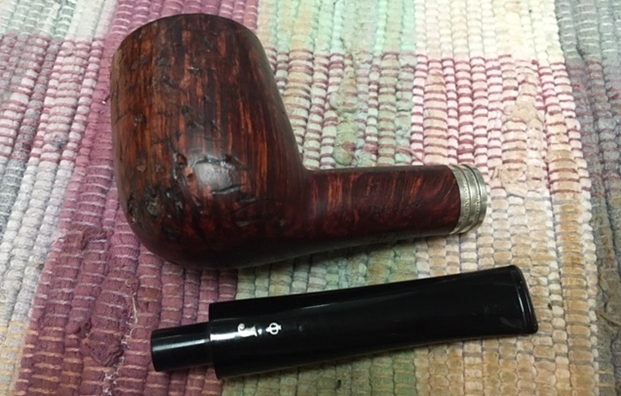
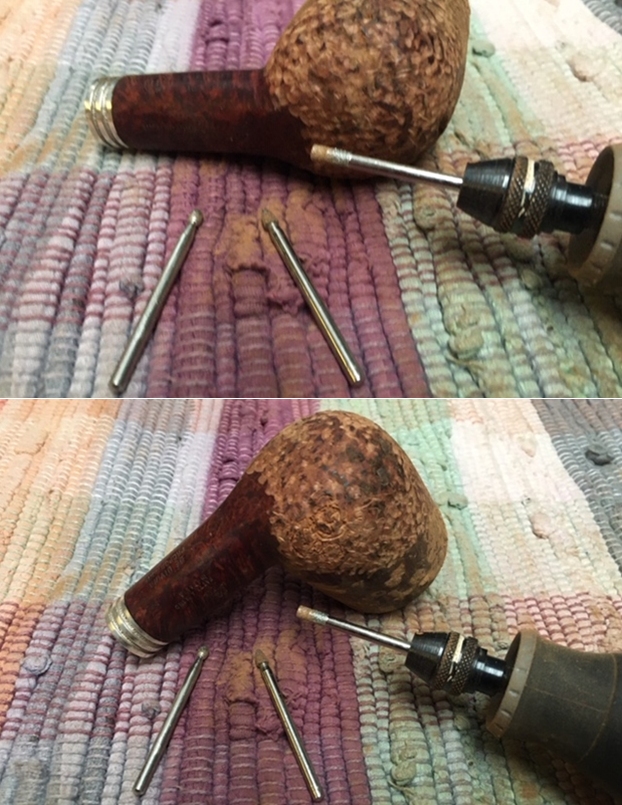
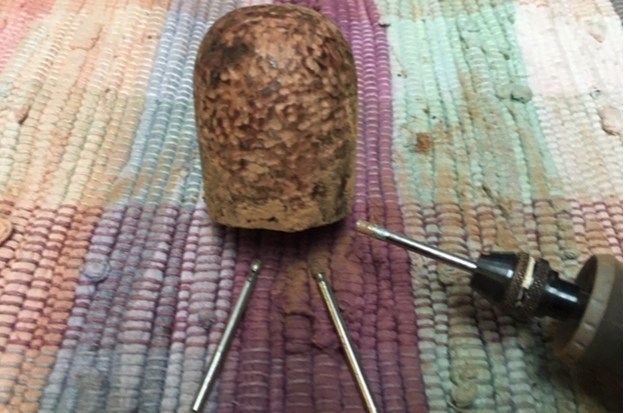
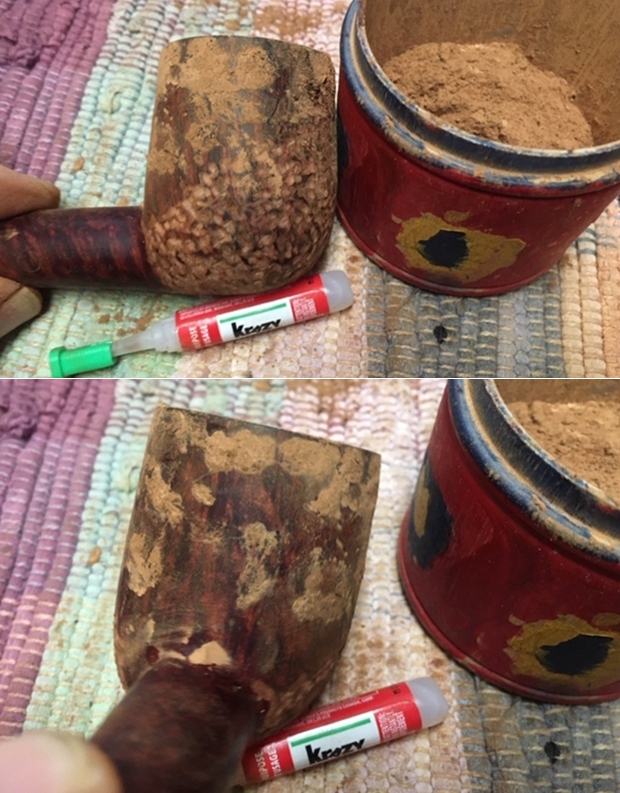
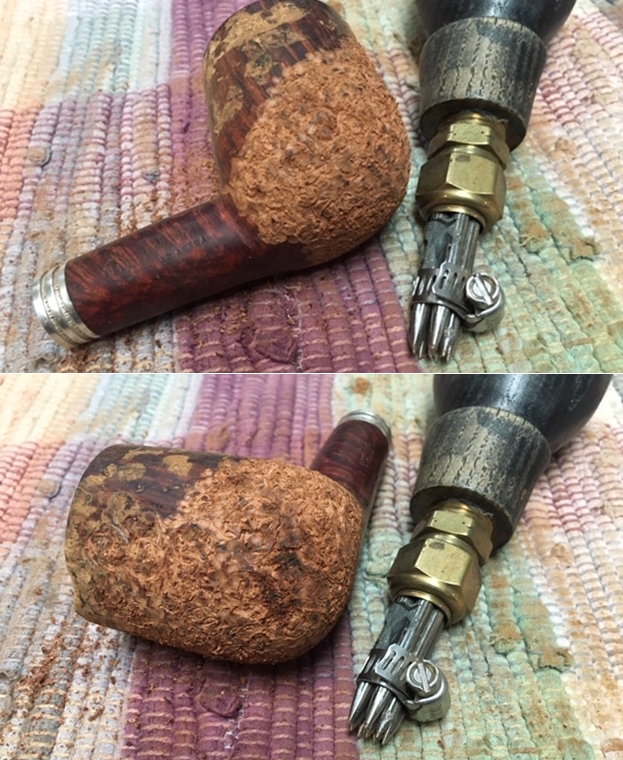
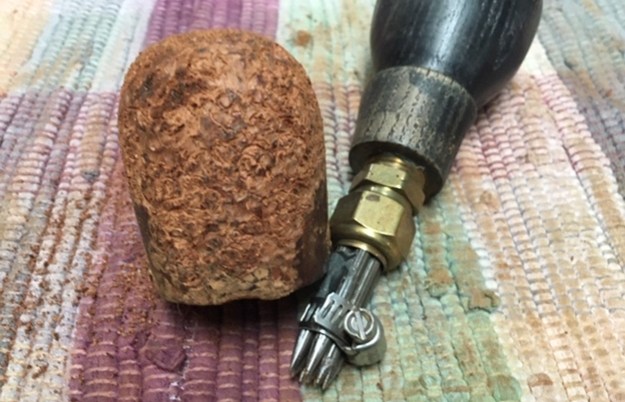
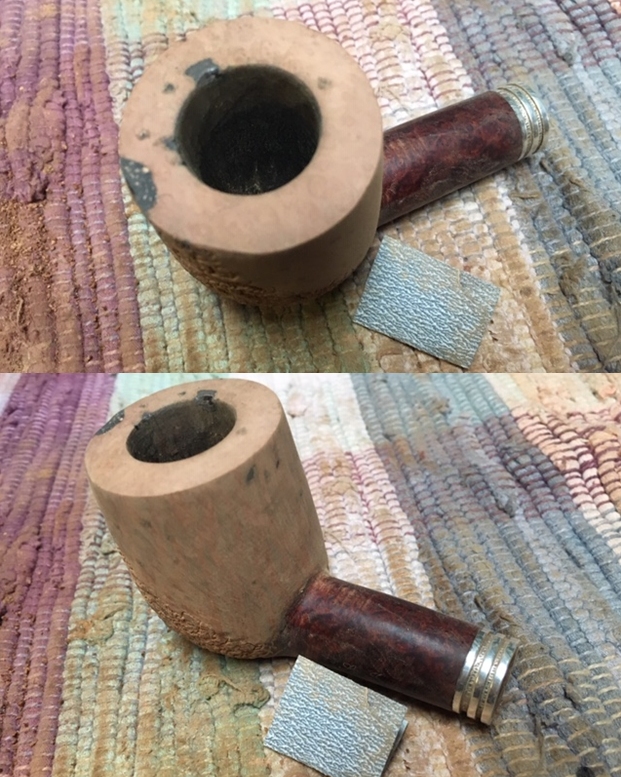
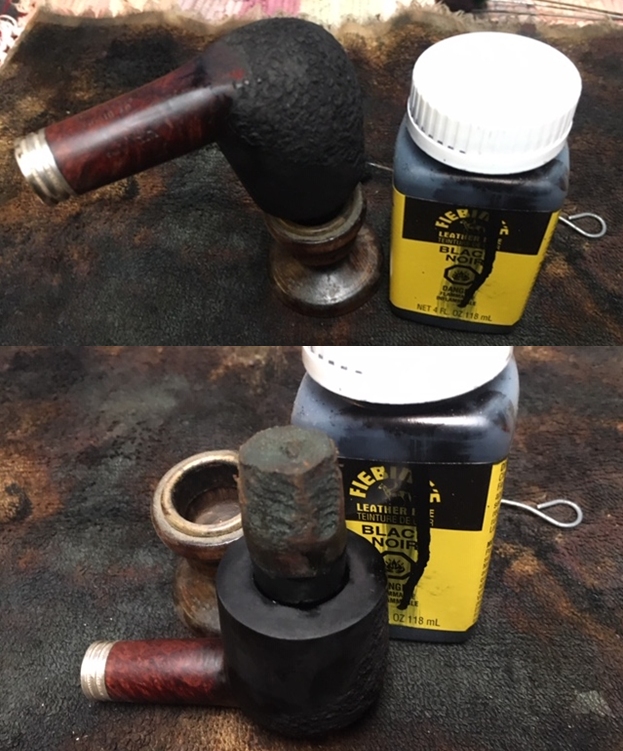
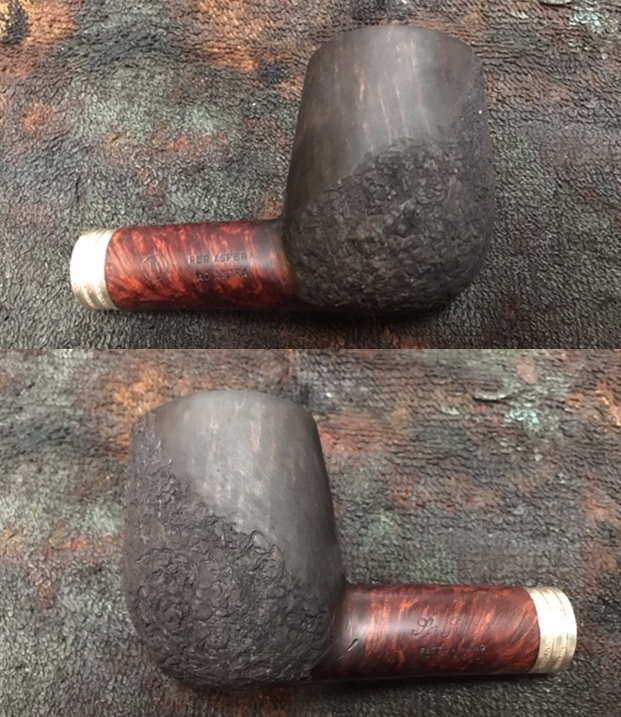
Now it was time to look at it up close and personal. Jeff had done an amazing job in removing all debris and bits of broken briar from the finish. He had done a quick reaming of the bowl with a Savinelli Fitsall Pipe Knife. He scrubbed the exterior of the bowl with Murphy’s Oil Soap and a tooth brush to remove the grime the grime and dirt on the finish so the pipe was clean – damaged but clean. He cleaned out the interior of the bowl and shank with pipe cleaners, cotton swabs and alcohol until they came out clean. The rim top looked quite daunting with the missing chunks of briar but it too was clean. He cleaned the stem with Soft Scrub to remove the grime on the exterior and cleaned out the airway with alcohol, cotton swabs and pipe cleaners. I took some photos of the pipe as I saw it when I brought it to the work table. To show how the rim top and stem looked at this point I took a close-up photo of the rim and stem. The bowl was clean and the damage to the inner edge and the rim top was very visible. It was a mess! The black acrylic stem was saved from major dog chomping. There are just a few tooth marks on both sides of the stem that could be addressed fairly easily.I removed the stem from the bowl and took photos of the parts. I chose the left side of the bowl as really both sides were equally damaged. This is truly a sad sight to see as the great grain on the bowl shows up nicely under the damage.I had been thinking about what to do with the finish since first seeing the photos. I had decided I would rusticate it but was undecided as to what extent I would go in the process. I wanted to retain the original shape and intent of the pipe while working out the damages. I started by using three different burrs on the Dremel – a ball, a cone and cylinder. Each one gives a slightly different finish. I worked them one after another to seek to blend in the tooth marks as much as possible. I also decided to rusticate the worst areas – the base and part way up each side of the bowl and the entire bowl front. The photos show this first step. I decided to let that rustication pattern sit with me for awhile and not add more to it. I just wanted to think about it for a  while. I decided then to patch the bite marks in the upper part of each side and the entire back of the bowl. I also wanted to repair as much of the rim top and edge damage as I could. I used clear super glue and briar dust to patch the many tooth marks around the bowl. The photos show the freckled sides. I built up the damaged front outer edge and the deep marks on the top of the rim with super glue and briar dust. These took some layering to do the job. I looked over the rustication some more and was not completely satisfied with the coverage of the existing rustication or the distance I came around the sides of the bowl. I decided to use a tool that a reader of rebornpipes made for me for rusticating. You can see it in the photos. It is essential a group nails bound together in a handle and with a clamp to give me multiple points to rusticate with. The way it works is to press it into the briar and twist it. You move across the briar until it is “randomly” covered. Once I was happy with the coverage I knock off the debris left behind with a brass bristly brush. I like to knock it down and smooth it out to give it an old leather like look to the rustication. I left the rustication and turned to address the damage to the rim top. I topped the rim with 220 grit sandpaper on the topping board. Once it was smoother and flatter I filled in the divots and holes in the rim top and edges with briar dust and super glue once more. Once I finished I topped it once more to smooth out the repaired areas.With that finished for the moment I turned to sanding the smooth portions of the bowl. I used my Dremel and sanding drum to flatten out the repaired areas first. I followed up by sanding them with 220 grit sandpaper. The photos below show the bowl at this point in the process. Note that there was no damage to the shank so I left it as is and would match the stain to that once I stained the repaired area. I was pretty happy with the way it was looking. I was ready to stain the undercoat on the bowl. I decided to use a black aniline stain for the rusticated part of the bowl and for the undercoat on the smooth sides and rim top. Black does a great job hiding the kind of repairs that I had to do with this briar. I applied the stain and flamed with a lighter. I repeated the process to ensure the coverage was thorough. I flamed it again and set it aside to dry while I had some dinner.I took photos of the bowl at this point to show the coverage of the black stain on the rustication and the undercoat on the smooth areas. After dinner I wiped down the smooth areas with isopropyl alcohol on a cotton pad to make them more transparent and show the grain. I then gave the smooth areas a coat of Mahogany stain using my stain pens to get into the transition areas and control the flow better. The combination of the black undercoat and the Mahogany matched the original shank colour! When that coat of stain had cured I polished the smooth portions of the bowl with micromesh sanding pads. One of the pains of this process is all the flaws show up in the initial sanding. You can see my repairs in some spots but hopefully they bill disappear a bit in the polishing. I was really happy with the right side of the bowl. The repairs virtually disappeared in the staining and sanding. I worked on the left side a little more. I sanded the offending areas of the transition with 400 grit wet dry sandpaper and restained the area. I worked through all of the micromesh pads another time on that area. I was happy with the finished looked at this point. I rubbed the finish down with Before & After Restoration Balm. I worked it into the smooth areas on the bowl and rim top with my fingertips and the rusticated areas with a horsehair shoe brush. The product cleans, protects and enlivens the briar. I let it sit for about 30 minutes and buffed it off with a cotton cloth. The photos below show the bowl at this point… it is a far cry from the dog eaten bowl that I started with — at least I think it is ;). I set the bowl aside and turned to the stem to address the issues that were on the top and underside. I filled in the tooth marks on the stem with clear super glue. I generally overfill them a bit so that it takes into account the shrinkage that occurs as the repair cures.Once the repairs had cured I sanded them smooth to start to blend them in with the surround acrylic of the stem. I sanded the repairs on both sides with a folded piece of 220 sandpaper and started polishing with 400 grit wet dry sandpaper.I rubbed the stem down with Denicare Mouthpiece Polish – a red gritty paste a lot like Tripoli to polish it after the 400 grit sandpaper. I rub it on with my fingertips and work it into the vulcanite and buff it off with a cloth. It does a great job before I polish it further with the micromesh pads.I polished the stem with micromesh sanding pads – dry sanding with 1500-12000 grit sanding pads. I wiped the stem down after each sanding pad with a cloth containing some Obsidian Oil. I finished polishing it with Before & After Pipe Stem Polish – both Fine and Extra Fine and buffed it off with a cotton cloth. The next steps in this restoration were ones that I have been looking forward to. I was glad to reunite the bowl and stem and see what the finished pipe looked like. I polished the silver with a jeweler’s cloth and buffed the bowl and the stem with Blue Diamond on the buffing wheel. I used a light touch on the rusticated portion as I did not want to fill in the rustication with the product. I gave the bowl multiple coats of Conservator’s Wax and the stem multiple coats of carnauba wax. I carefully buffed the entire pipe with a clean buffing pad to raise the shine. I finished buffing with a microfiber cloth to deepen the shine. The finished pipe looks a lot better than dog chewed pipe that I started with. I am happy with the finished look at this point. While the repairs to the smooth areas show a bit they are smooth. The leather like rustication works well with the finish on the bowl in my opinion. The finished Ser Jacopo L1 Billiard is shown in the photos below. The dimensions of the pipe are Length: 6 ½ inches, Height: 2 ¼ inches, Outside diameter of the bowl: 1 ½ inches, Chamber diameter: ¾ of an inch. This should be a great pipe once it is broken in. The rustication on the base and front give it a very tactile feel that should only be better as it heats up during a smoke. This one will go on the rebornpipes store shortly. If you are interested in it let me know. Thanks for reading this blog and my reflections on the pipe while I worked on it.


Bringing to Life a Unique Kaywoodie Natural Burl 33 – Another Legacy Pipe of a Great Grandfather


Blog by Dal Stanton

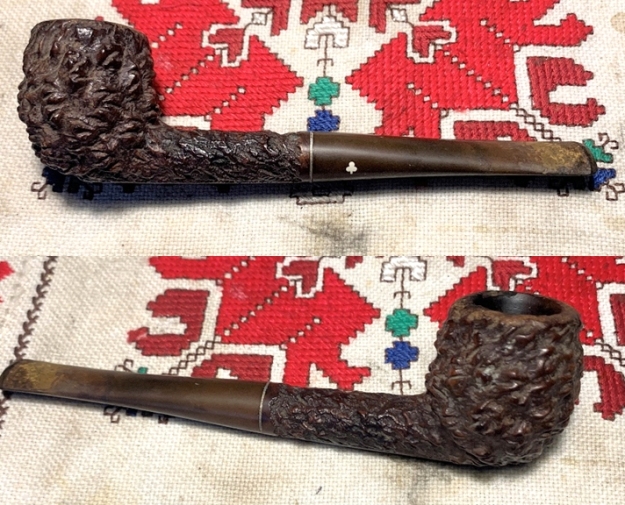
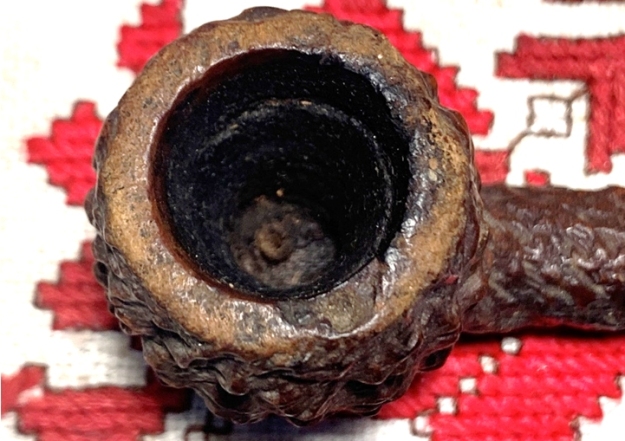
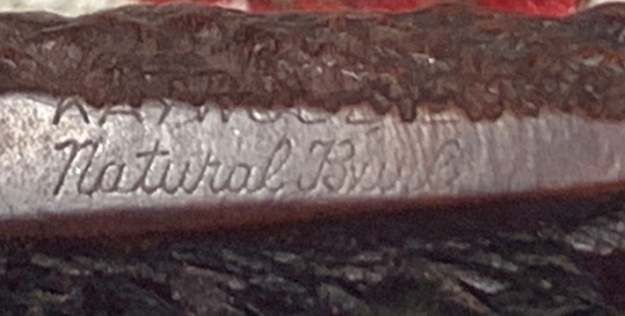
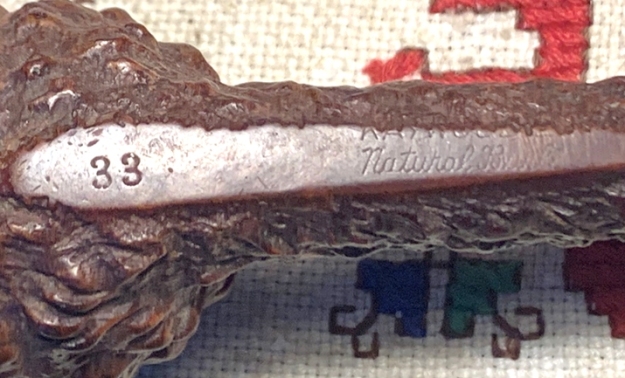
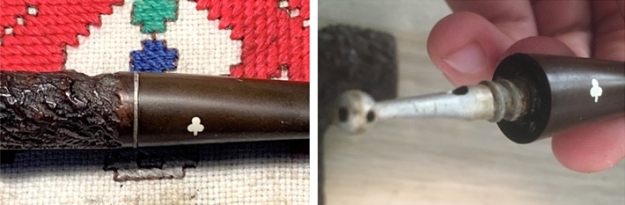
This is the second of 3 of Paw’s pipes that Joe sent to me from Athens, Greece, where he and his wife, Hannah, live and work.  Paw is Hannah’s great grandfather who left behind several pipes that Joe has asked me to restore for the family.  Paw, also known as, ‘2-Page Sam’ by those who knew him as a salesman of over 40 years of the tobacco giant, Brown & Williamson Tobacco, Corp, has a fascinating story that was described in an article in B&W’s company magazine that I included in the write up of Paw’s Medico Apollo Brylon, which I just completed that turned out well (See: Another Legacy Pipe of a Great-Grandfather: Challenges Working with ‘Brylon’ on a Medico Apollo).  Next, two Kaywoodies remain to be restored – a Kaywoodie “500” and the one on my worktable now, a Kaywoodie Natural Burl 33.  Here are pictures to take a closer look. The nomenclature is on the underside of the shank’s smooth briar panel with ‘KAYWOODIE’ (as most of it is not legible as the upper half of ‘Kaywoodie’ bleeds into the craggy rusticated landscape) [over] ‘Natural Burl’ in fancy cursive script. To the left of the nomenclature is stamped the Kaywoodie shape number of 33.  In Pipedia’s listings of Kaywoodie shape numbers, 33 is listed as: “Large apple, rounded top” that was used as a shape designator from 1937 to 1972.The dating indicators of this Kaywoodie are good.  The Natural Burl has a 4-holed stinger which were phased out at the end of the 1950s, though they still show up some in the 60s according to Pipephil.eu’s discussion about Kaywoodie’s stinger evolution.  The inlaid white shamrock also points to an earlier period.I found nothing specific in Pipedia or Pipephil.eu about Kaywoodie’s ‘Natural Burl’ line.  Expanding my search, I did find very helpful anecdotal information in a February, 2013, thread by ‘kwguy’ on a Kaywoodie discussion group on Tapatalk.com:
Natural Burls are in the catalogs from 1957 to 1962. They were $4.00 when they first came out and $5.00 by the time they were discontinued.  They were basically a stained version of the Coral White Briar, which also debuted in 1957.  The overall rough texture was described in the catalogs as having a rough texture like the outside of the burl.  The rough texture in theory would create more surface area for a cooler feeling bowl.  Carving of this type was done on bowls of less desirable grain and with excessive surface imperfections.  On the lower side of the quality scale, Natural Burls would have had the white cloverleaf.  There may have been the occasional higher grade pipe that was downgraded during production and hence would have the round logo, but I think you’ll mostly see them with the white logos.

Based upon the information of this thread, the Natural Burl Apple before me dates from 1957 to 1962, when they were featured in Kaywoodie catalogs. I looked for a catalog during this period online, but unfortunately, I was unable to find one.  The rusticated or carved surface theoretically provides a cooler feeling bowl.  This pipe fits Sam’s low budget approach to his pipes.  When the Natural Burl Apple first hit the market, it was in a working man’s modest budget range, $4!  I’m hopeful that after I’ve completed working on Paw’s vintage Kaywoodie it will look like a million bucks!

The above thread from ‘kwguy’ also mentions that the ‘Natural Burl’ line was featured in Kaywoodie catalogs from 1957 to 1962.  There are Kaywoodie catalogs and adds referenced on Pipedia and the Chris Keene Directory of Pictures, but I could find nothing in these ‘go-to’ places for catalogs or listing between 57 and 62.  Emails to Steve and rebornpipes contributor, Al Jones, also came up empty.  However, Al encouraged me to reach out to Bill Feuerbach, the current president of S.M. Frank with Kaywoodie production in New York.  Al said that Bill had always been helpful and had seemed to enjoy providing info.  Nothing like going to the top of the pipe food chain!  I sent a note to Bill through the S.M. Frank website as well as to the ‘kwguy’ in the Natural Burl thread with the hope of getting a response and perhaps a historical Natural Burl add!

Al’s suggestion to me paid off!  In a few days I received a response from Bill Feuerbach, president of S.M. Frank since taking over the role from his father in 1990 as the fourth generation of Feuerbachs overseeing the company.  Bill’s note to me:

Dal 

I’d love to be able to help you out with that. I’ve looked through what I have at the shop and most of those catalogs are later 60’s to later 70’s.  I’m sure I’ll have those older catalogs from that range at home.  I’ll try and check tonight.

Best regards

Bill

After arriving home that night, Bill sent an additional note that he hadn’t found anything at his home and would redouble his efforts the following day at the shop to find the sought after ’57 to 62’ catalog pages.  Then, this note came in and the treasure hunt ended with success!

Dal

Success!!  I found the catalogs at home.  They were in a storage tub in the downstairs closet. Funny I don’t remember putting them there. It’s probably been 4 years since I referenced them. It is hell getting old, CRS is kicking in.

Anyway, I’ve attached three images from the 1958, 1960 and 1962 catalogs.  I was only using my phone to take pictures and it was difficult not to get any flash or glare.  Are they ok?  You can tell the year by the retail prices for the Natural Burl.

1958- $4.00

1960- $5.00

1962- $5.95

Let me know when you’ve posted this and the link. I’d like to take a look.  If you have any other questions let me know. If in the future you need other images from the catalogs, let me know.

Best regards

Bill

The images Bill sent were great depicting the Kaywoodie presentation of the Natural Burl line.  Both the 1960 and 1962 pages, second and third below, showcase the Large Apple on my worktable.  The pictures and descriptions are great helping to wrap Paw’s pipe in its historical context! I appreciated the help of Bill Feuerbach, president of the S. M. Frank Co. & Inc. based in New Windsor, New York.  The Frank website not only showcases the Kaywoodie, Yello-Bole and Medico brand lines, but has other interesting information as well.  In my email response to Bill, I offered to digitize the ‘treasure tubs’ of Kaywoodie catalogs and adds if I only lived a bit closer to his neighborhood!  Oh my….
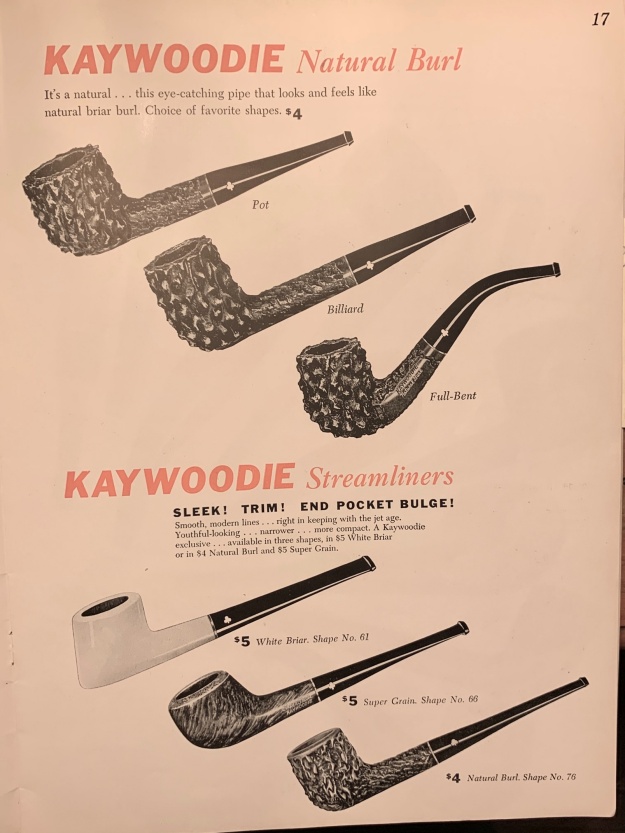
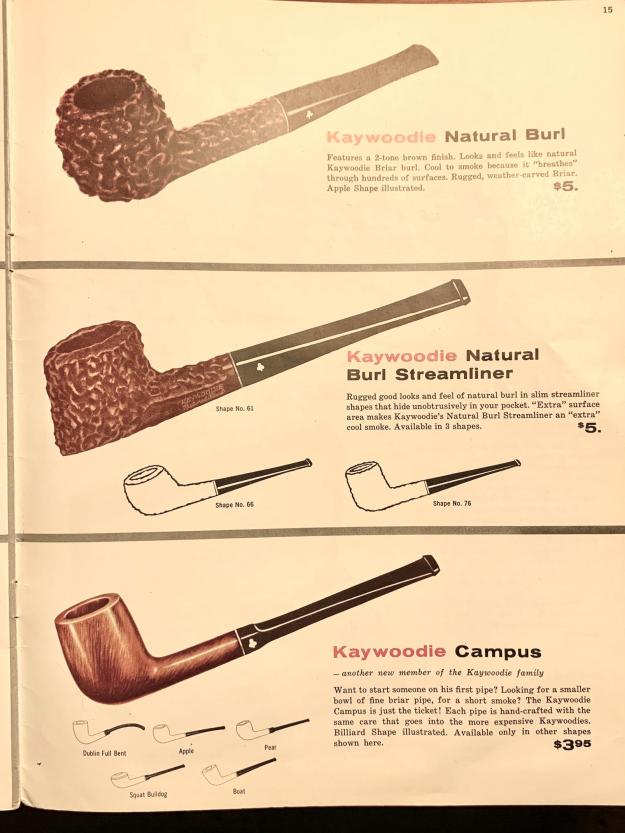
As I was waiting for word from Bill before he found the catalogs, I reread the Pipedia article on the S.M Frank Co. and discovered at the bottom of the article a reference to Brian Levine’s interview of Bill on the Pipes Magazine Radio Show.  I tuned in to learn more about Bill and the Kaywoodie name.  I was interested to hear in the interview that not only is Bill the CEO of the company, but he is an accomplished freehand pipe maker himself, likes single malts and owns and enjoys pipes in his rotation other than Kaywoodies!  It was a great interview and I encourage readers to tune in too!

The name for this Kaywoodie series, ‘Natural Burl’, harkens back to a pipe’s origins – or at least its bowl.  The Natural Burl adds above from Bill describe the ‘rugged, weather-carved briar’ that breathes more because of the increased surface of the bowl.  Briar comes from a bush-like plant that grows in arid lands.  The Kaywoodie motif focuses on the rough state of the burl in its natural form sporting rusticated or carved bowls to emulate a natural harvested burl.  The burl is the base of the briar bush that is cut into blocks, each becoming the raw material for fashioning each unique bowl. I found this example online of the burl texture which looks very much like the pipe on my worktable! This interesting information was added about the process at the WorthPoint site:
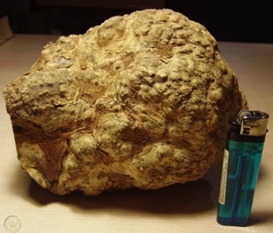
The mother of briar is Erica Arborea, an evergreen bush / tree, that grows in all forests of the Mediterranean area, preferring acid soils (Cyprus, Greece, Italy, Spain, France, Portugal, Morocco, Algeria- these are the countries where it is found). The bush has a typical height of 3 – 12 feet. But not the visible parts are the wanted ones, the ball-like roots are the pipe makers desire. These are the raw material for the briar wood, which is cut in blocks (plateaux and ebauchons) by real specialists. After a long process of boiling them in clear water and drying periods, these briar blocks will be ready for the experienced hands of a pipe maker.

With a deepened understanding and appreciation for Paw’s Kaywoodie on my worktable, I look more closely at the issues it brings from its years of service. As one would expect, the craggy Burl bowl is full of grime.  The chamber has thickening cake as you go down toward the floor.  This needs to be cleaned out as well to inspect the chamber wall and to give the briar a fresh start. The rim has evidences of Sam’s penchant for knocking the stummel on the back side of the rim.  It is worn and tapers away from the chamber. The rim was fashioned to be somewhat rough complementing the craggy bowl motif, but there is a large chip or divot out of the rim that will need to be filled and then blended. The bowl itself, along with the rim, is faded and skinned up.  I suspect that the original finish bent toward a light brown, but it is now thin and will need refreshing with new dye to blend the rim and bowl.  The 1962 add above describes a ‘2-tone brown finish’ characterizing the ‘Natural Burl’ line.  This is helpful information that hints at the depth of the final finish.The stem is in rough shape.  The oxidation is thick and deep.  The bit has calcium caked on it and some lower tooth compressions – not as bad as I’ve seen on Paw’s previous pipes! The stem orientation is also over-clocked which is a normal phenomenon with Kaywoodie screw in stems that happens over years of use with repeated loosening and tightening.  This will need to be adjusted as well. I begin the restoration of Paw’s Kaywoodie Natural Burl Large Apple by addressing the severe oxidation in the stem.  Before placing the stem in a soak of Before & After Deoxidizer, I get a head-start on removing the oxidation by pre-sanding the stem.  I use both 240 grade sanding paper and 000 grade steel wool to sand the stem to remove as much oxidation and caked calcium as possible.  The nickel 4-hole stinger also is cleaned up with the steel wool.After the sanding, the stem joins other pipes in the queue in a soak of Before & After Deoxidizer. After a few hours, the Kaywoodie’s stem is extracted from the Deoxidizer and after draining, I squeegee the liquid off the stem with my fingers.  I then run a pipe cleaner wetted with isopropyl 95% through the airway to clear the Deoxidizer.  Using a cotton pad and alcohol, the stem is wiped to remove the raised oxidation resulting from the soak.After cleaning the stem, paraffin oil is applied to help condition the vulcanite.  I put the stem aside to absorb the oil.  The stem looks great compared to where it started. It’s cleaning up nicely.Next, I turn the attention to the stummel.  I begin by reaming the Kaywoodie’s chamber to remove the cake.  Using the Pipnet Reaming Kit, I use two of the four blade heads available in the Kit.  I don’t know how long this cake has been waiting to be removed, but it is as hard as a brick.  I’m careful not to force the blades beyond their torque endurance level – simply allowing the scraping action to wear away the brick cake.  When both blades do what they can, the Savinelli Fitsall Tool continues the scraping of the chamber walls. Finally, to remove the last remaining carbon remnants, a 240 grade sanding paper is wrapped around a Sharpie Pen to sand the chamber getting down to fresh briar. After wiping the chamber with a cotton pad wetted with alcohol, and inspection reveals a perfectly healthy chamber.  The picture on the 10th floor Man Cave balcony where I’m working, does not allow a very good picture of the chamber, but it looks good.  Moving on.Next, using undiluted Murphy’s Oil Soap, I go to work on the wonderfully craggy but grime-filled surface of the Natural Burl bowl.  I use a cotton pad a bit, but transfer to using a bristled toothbrush which gets into the nooks and crannies of the landscape much more effectively.Next, after transferring the bowl to the kitchen sink, I continue to clean the surface and use shank brushes and liquid anti-oil dish soap and warm water to work on the internals.  After rinsing thoroughly, back on the worktable I take some pictures of the results.  The cleaning has totally removed what was left of the old finish – not unexpected.  The cleaning reveals some white fills on the right side of the stummel which are fully embraced in the craggy landscape cover and seem to be solid after testing them with a sharp dental probe.Next, I focus again on the internal cleaning using pipe cleaners and cotton buds wetted with isopropyl 95%.  Cleaning Kaywoodie pipes tends not to be easy.  Working through the threaded metal shank facing makes access to the mortise difficult.  Along with pipe cleaners and buds, the full arsenal added the use of shank brushes, and a dental spoon to scrape the mortise walls.  After quite a bit of time and effort, the buds start to emerge lighter and a cease fire is called. I’ll continue the cleaning later with a kosher salt and alcohol soak to work through the night to further clean and freshen the internals of the Kaywoodie stummel.Turning now to the rim, the next step is to fill the divot, or perhaps, the crater on the rim.  I go along with the ‘rough’ motif of this Kaywoodie Natural Burl.  The rim is rough and the only repair I plan for the stummel is this divot.  The damage of Paw’s knocking will remain – it simply adds to the rough rustic look and will be a remembrance of Paw when it is put into service by the family.I place a small mound of briar dust on the mixing palette that I’ve covered with scotch tape for ease of cleaning.  Next to the briar dust a small amount of BCI Extra Thick CA glue is puddled.Using the toothpick, briar dust is pulled into the glue and mixed as it is added.  As more is added, the resulting briar dust putty thickens.  When it reaches the thickness of molasses, with the toothpick the putty is troweled to fill the rim divot.With the briar putty applied, I place the stummel aside for several hours for the putty to cure.Turning now to the stem, the upper bit is in good shape after the ‘pre-sanding’ that was done before putting the stem into the Deoxidizer.  The lower bit, pictured below, has some compressions and a button bite compression that need addressing.I start by using the heating method with a Bic lighter.  Using the flame of a Bic lighter, I paint the bit using a back and forth motion heating the vulcanite.  As the vulcanite heats, it also expands to regain the disposition of the stem before the compressions were made by Paw.  The picture below is after the heating and the process has helped the bit compressions so that only sanding should be needed to remove the damage.  However, the button is still in need of additional steps.To fill the button lip bite, after wiping the area with alcohol to clean it, I spot drop black CA glue on the compression and put the stem aside for the patch to cure.The patch on the rim is now ready for filing.  I use both the flat and half-rounded needle files to remove the excess putty and to shape the internal curve of the rim. I put a stop on sanding and further cleaning the rim because the hour is late, and through the night I want to use a kosher salt and alcohol soak to advance the cleaning of the internals of the stummel.  I first fashion a cotton ball into a ‘wick’ by pulling and twisting it.  It is then inserted down the mortise into the airway with the help of a stiff wire. The wick helps to draw out the latent residue of tars and oils.The bowl is then filled with kosher salt, which leaves no aftertaste as with regular iodized salt.  After placing it in the egg carton to keep it stable, I then fill the chamber with isopropyl 95% until it surfaces over the salt. After a few minutes, as the alcohol is drawn into the stummel, the alcohol is topped off and it is set aside to work through the night. The next morning, the salt and wick are slightly soiled which hopefully means that the internals are already clean from earlier. After dumping the expended salt and wiping the bowl with a paper towel, I blow through the mortise to make sure all the salt crystals have been dislodged. To make sure that the internals are clean, and nothing has been left behind after the soak, I use only one pipe cleaner and cotton bud as confirmation of the cleaning. Moving on.I return now to the rim.  I plan to apply a fresh color to the stummel and the only preparation for applying the new stain to the stummel is on the rim.  I plan to leave it in the rough motif of the Natural Burl line, but I want the rim cleaned.  I lightly sand the internal rim edge as well as lightly around the rough external rim edge as it transitions into the Burl landscape.  I’m looking for ‘rough’ and ‘rustic’ but ‘fresh’ to give this unique Kaywoodie a fresh start.I follow the 240 paper with 600 grade paper with the same approach – keep the rustic but refresh the rim.Before moving to the next step, I notice that the nickel shank facing after the cleaning had not been spruced up.  A quick revolution of 000 steel wool takes care of this.  This is the only bling this Kaywoodie has and I’m making the most of it!As I think about applying a fresh color to Paw’s Kaywoodie, I have only one picture of another Natural Burl online and it is no help in hinting at the original 2-toned brown coloring Kaywoodie used.  The best clue I have is on Paw’s pipe. The smooth briar panel on the underside of the shank holding the nomenclature holds a clue.  To guard the stamping on the panel I’ve not sanded it – only cleaned with the rest of the stummel.  I’m guessing that the coloring of the panel leans toward a light brown.  I’m thinking that Kaywoodie’s approach was straightforward with this less expensive line of pipes.  Yet, the craggy surface now is so dry and bare, showing pristine briar, that applying even a light brown dye will probably darken considerably as the thirsty briar drinks it in.Looking at the craggy landscape in the picture above brings the next question in my mind about applying a new finish.  My normal way of staining with aniline dye is to flame it to combust the alcohol which encourages a deeper embrace of the dye by the briar grain.  My normal follow-up to this is then to apply compounds to remove the crusting the combustion creates and to further shine the surface with the fine abrasives of Tripoli and Blue Diamond compounds.  The roughness of this stummel causes me to question my normal approach.  My concern is that if compounds are used on this craggy rough surface, I will forever be trying to clean out the compound residue lodged in the rough surface!  I think I can utilize buffing wheels on the Dremel without too much problem, but without compounds.  I decide in the end to apply a dye wash instead of flaming the dye because of this concern.
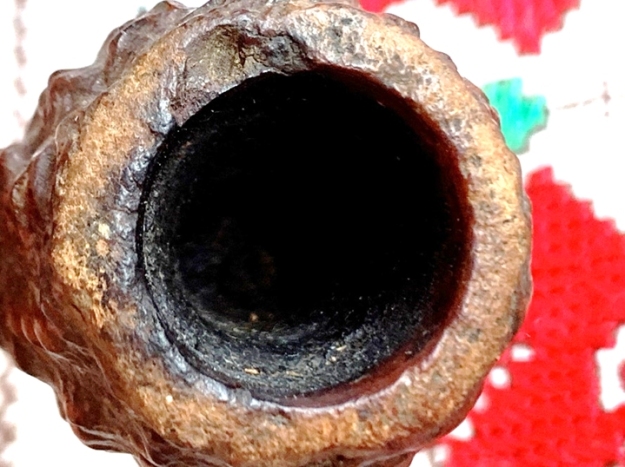
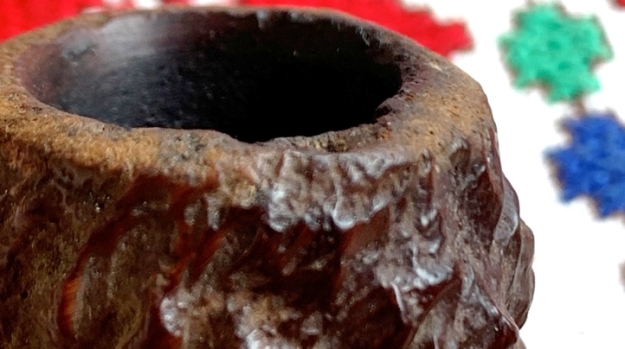
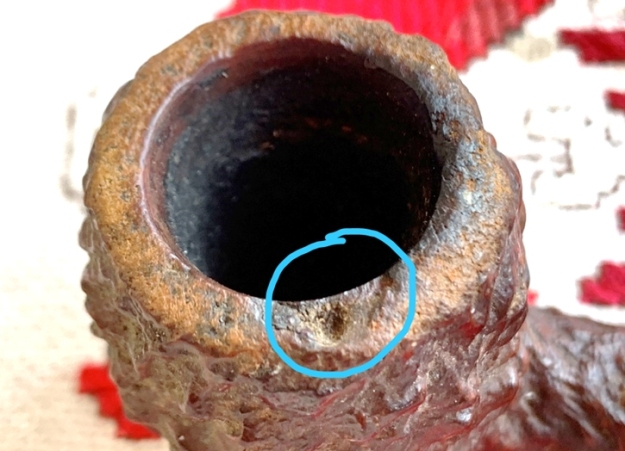
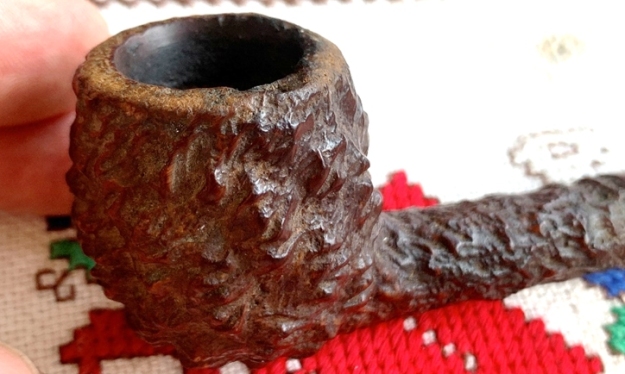
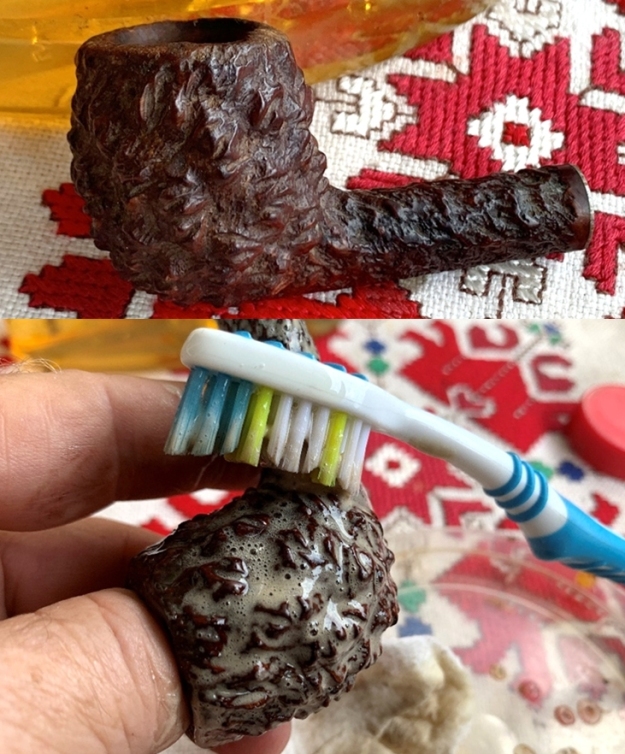
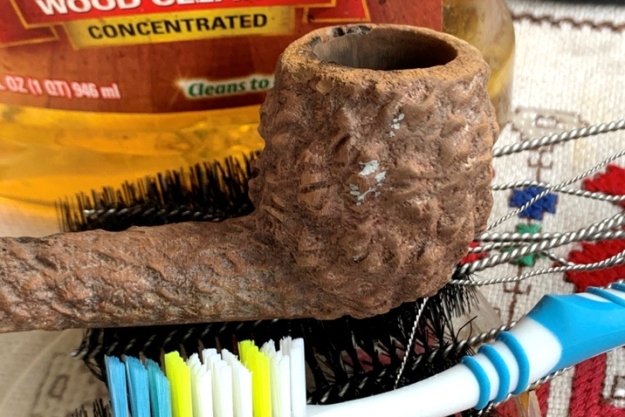
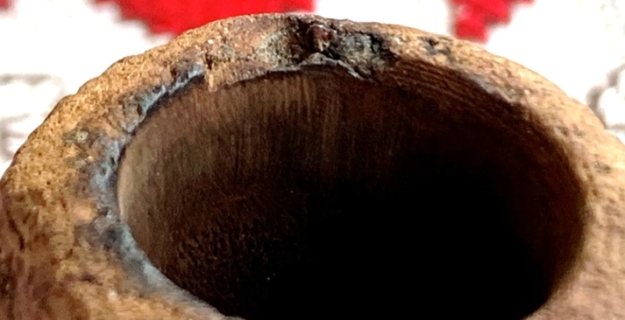
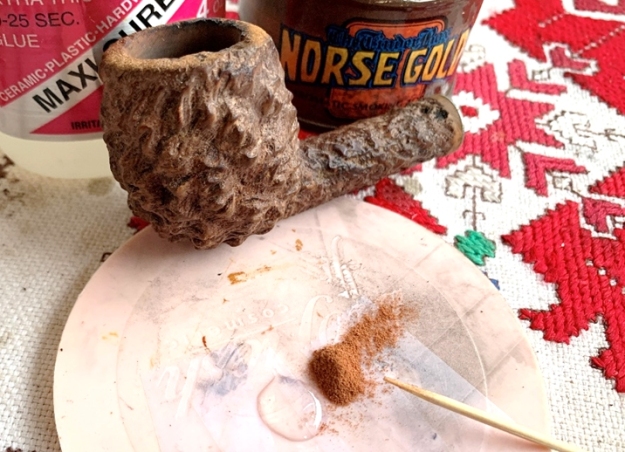
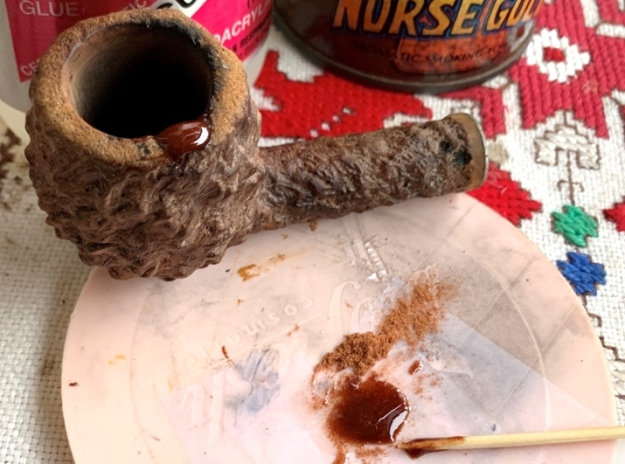
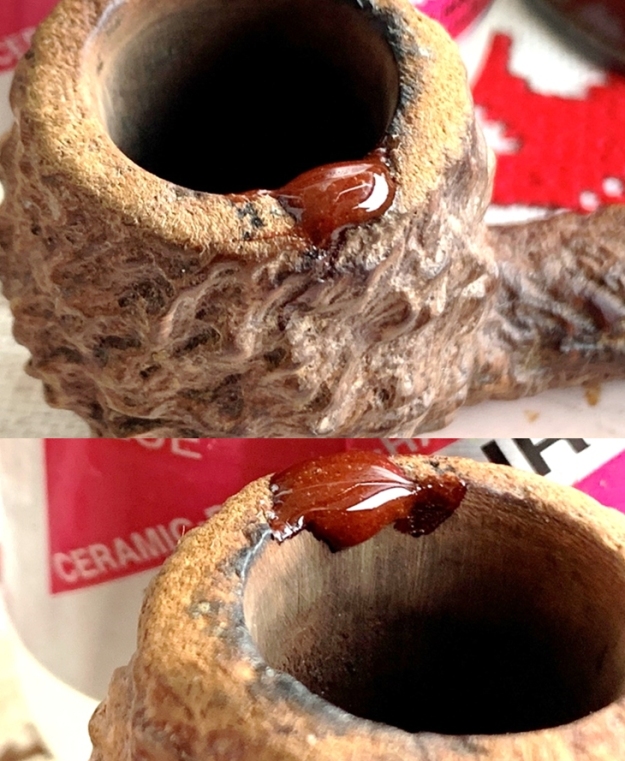
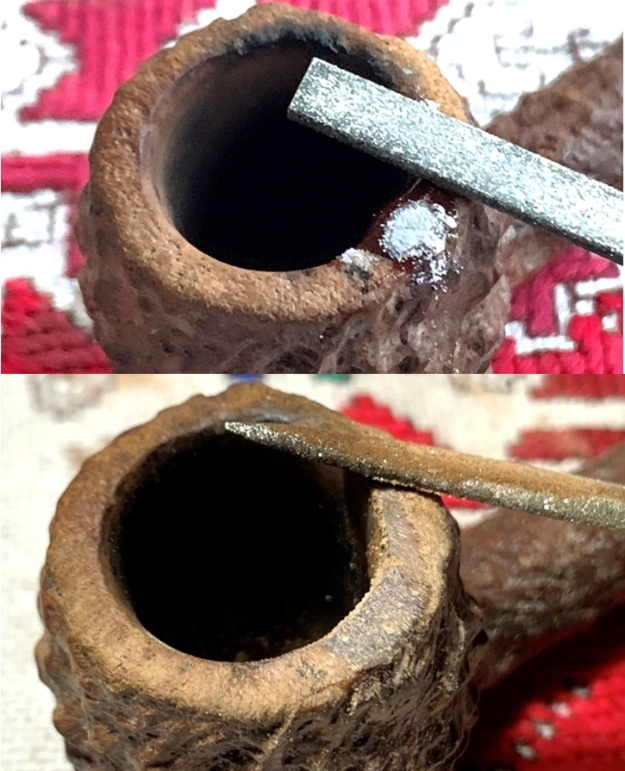
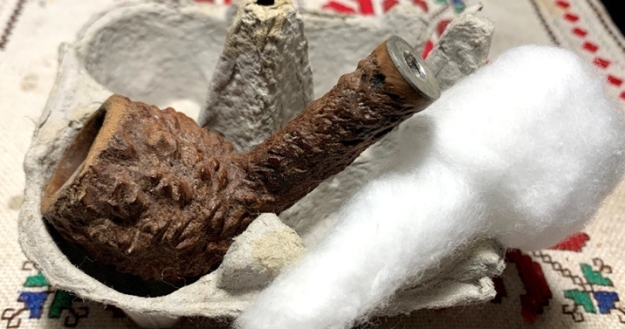
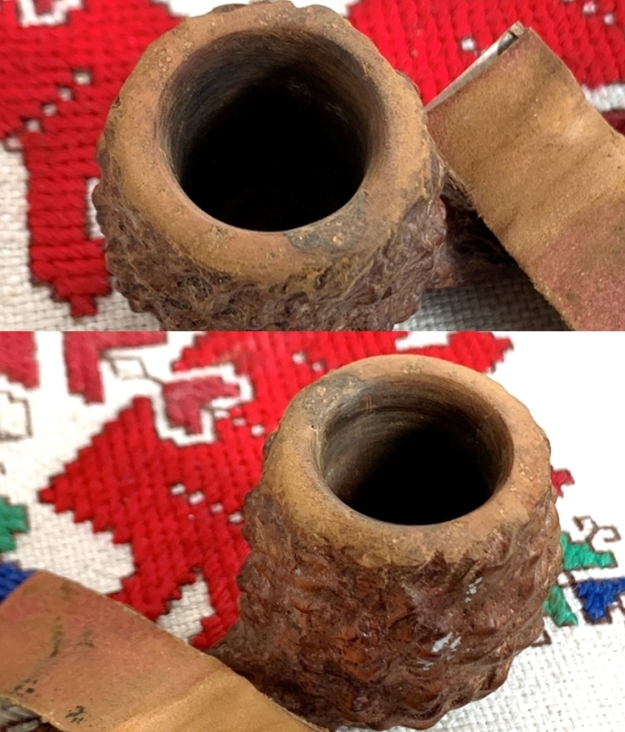
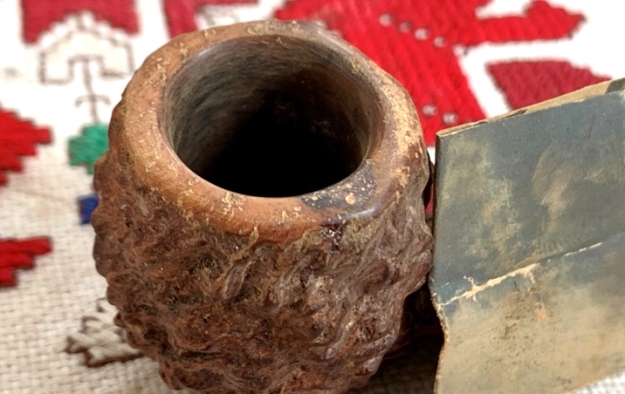
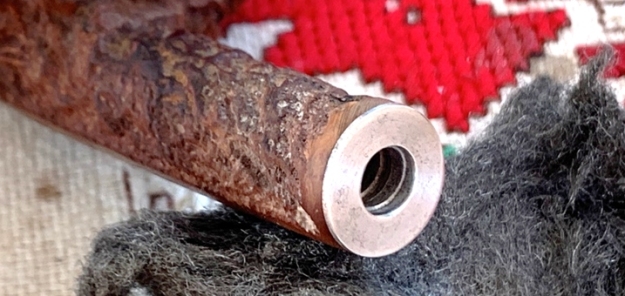
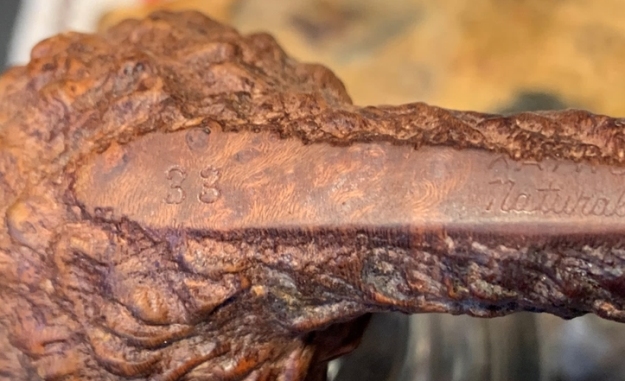
After wiping the stummel down with a cloth and alcohol to clean it the best I could, the stummel is heated with the hot air gun to open the briar.Then, with the use of a folded pipe cleaner, the surface is painted with Fiebing’s Light Brown Leather Dye.  I make sure the dye is getting into all the cracks, crevasses, nooks and crannies.  The rim also receives the dye.After the dye is applied, the stummel is set aside to rest for several hours before continuing with the next steps of finishing.  This ‘rest’ helps the new dye to stabilize in the briar.Turning back to the stem, the patch applied to the lower button lip is cured and I use a flat needle file to remove the excess patch material and to shape and refresh the button lip.  I also file the bit area to remove any residual tooth compression.Flipping over to the upper bit, I file residual compressions as well as refresh the button lip.  Refreshing the button lip is helpful to allow a better ‘hang’ grip of the pipe without biting and clenching, and extreme chewing!Continuing now with 240 grade sanding paper on the upper side, the file scratches are removed, and the button is smoothed further.  The same is done on the lower bit and to further blend the button patch.   I expand the 240 sanding to the entire stem to make sure that residual oxidation has been addressed. Following the 240 sanding, I wet sand the entire stem with 600 grade paper and follow with applying 000 steel wool. The nickel stinger is also a benefactor of the steel wool polishing again.Moving on, the full regimen of 9 micromesh pads are applied by first wet sanding with pads 1500 to 2400 and dry sanding with pads 3200 to 4000 and 6000 to 12000.  Between each set of 3 pads, Obsidian Oil is applied to condition the vulcanite and to guard against oxidation. I love the glossy pop of newly micromeshed vulcanite! I had observed earlier that the Kaywoodie screw in stem was over clocked a few degrees.  This happens over time with tightening and loosening.To correct this problem and to bring the stem back to an accurate orientation, a Bic lighter is used to heat the nickel 4-hole stinger.  Since the stinger is gripped by the vulcanite of the stem, the goal is to warm the stinger so that the vulcanite gripping the stinger heats and loosens its grip allowing the stinger to rotate. After heating the stinger, I quickly re-screw the stem into the threaded shank facing and when it tightens to the orientation pictured above, I continue to apply clockwise pressure and the heated vulcanite releases its grip and it allows me to turn the stem one full revolution to line it up correctly.  I had to heat the stinger twice as the first try did not loosen the grip.  After lining the stem orientation correctly, I leave the stem in place and as the vulcanite cools, the grip on the stinger is re-engaged holding the stem again in the proper orientation.Time to address the dyed stummel.  It has been resting for several hours to help stabilize the dye in the briar.I use a cotton pad wetted with alcohol to wipe down the dyed stummel.  I do this to remove excesses of dye on the surface and to lighten and blend the new dye.Next, I mount a cotton cloth buffing wheel onto the Dremel and simply buff the stummel.  I do not use any compounds so that the compound dust does not fowl up the surface getting lodged in the plethora of hiding places on the Burl surface causing me to have to clean it!  The Dremel is a great tool for getting into the nooks and crannies of the Natural Burl landscape. I’m able to rotate and move up and down ridges and to reach into crevasses.  The newly dyed surface responds well to the buffing wheel.  The coloring of the wheel shows that new dye is leeching out of the surface.  The more I’m able to remove now, less likely to come off on hands later!Next, I use the 1500 grade micromesh pad and lightly sand over the Burl surface.  The aim is to ‘scalp’ the peaks of the mountain tops on the craggy surface to lighten them.  The lightening of the peaks creates more contrast and depth definition to the landscape.  I follow the scalp sanding by running the Dremel’s buffing wheel over the surface again.  This, I believe, achieves the ‘2-toned’ look of Kaywoodie’s design for the ‘Natural Burl’ line.In the homestretch – next, I mount another buffing wheel onto the Dremel setting the speed at about 40% full power.  After reuniting the Kaywoodie’s stem and stummel, Blue Diamond compound is applied to the rim and smooth briar surface on the underside and end of the shank.  The compound is also applied to the stem.  After applying the Blue Diamond compound, the pipe is buffed with a felt cloth to remove the compound dust from the areas on the stummel and from the stem.  Next, another cotton cloth buffing wheel is mounted and set at the same speed and carnauba wax is applied to the entire pipe.  I’m careful to apply with a very light touch of wax to the Natural Burl surface not to allow wax to build up in the crannies.  Wax is applied to both stummel and stem and then the pipe receives a rigorous hand buffing with a microfiber cloth to raise the shine.
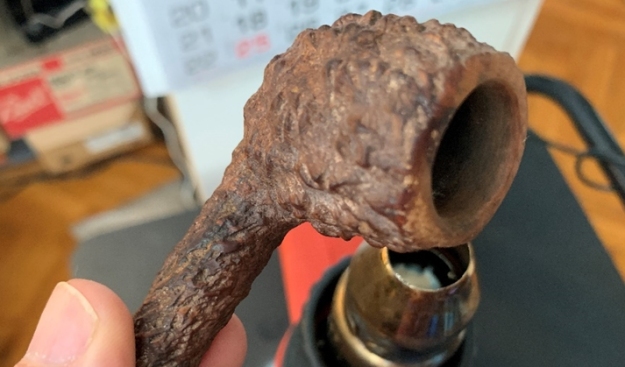
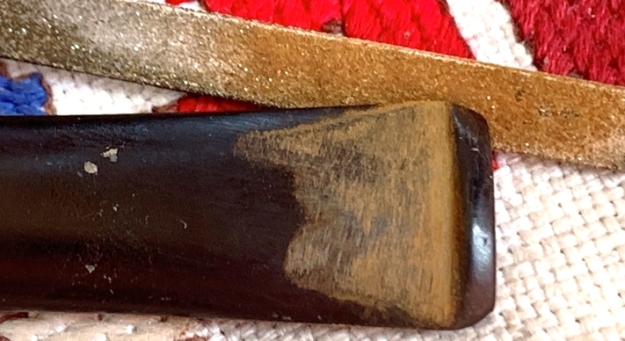
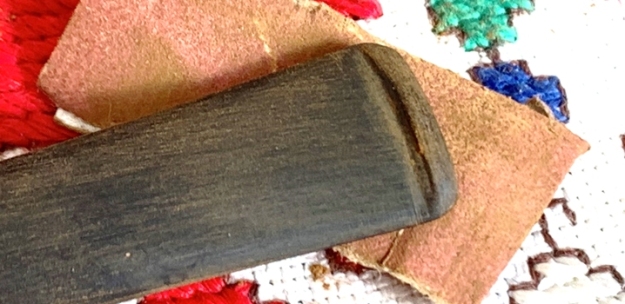
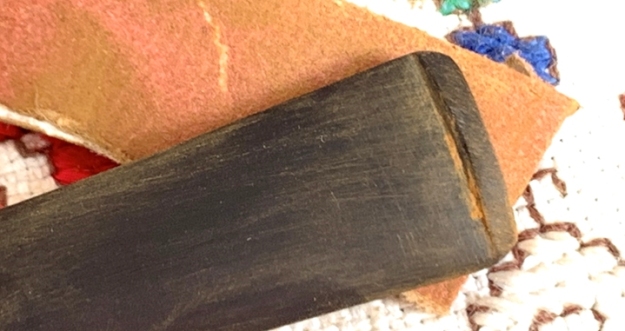
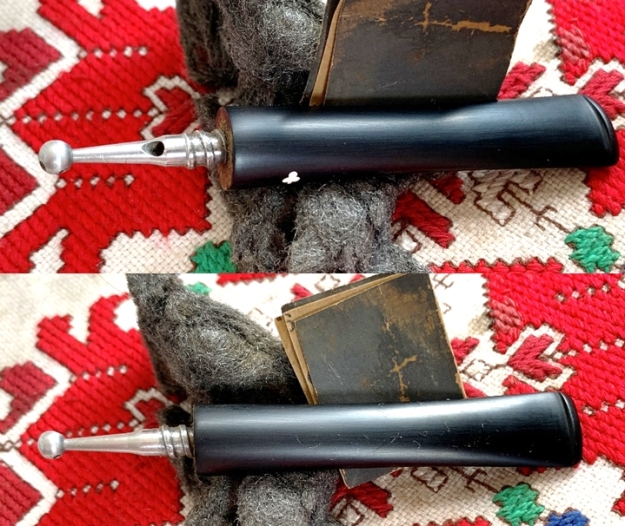
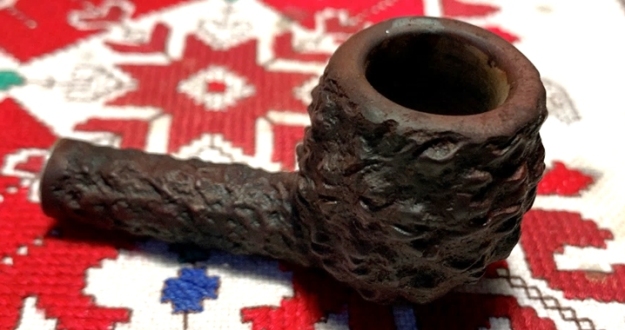
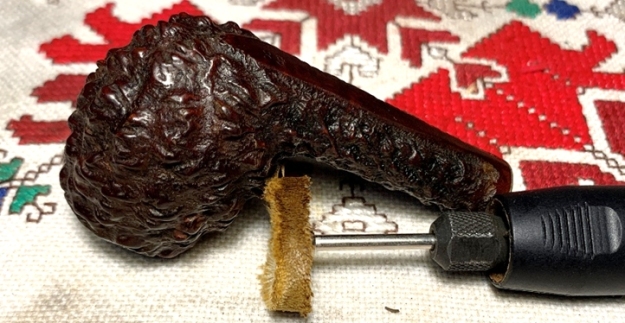
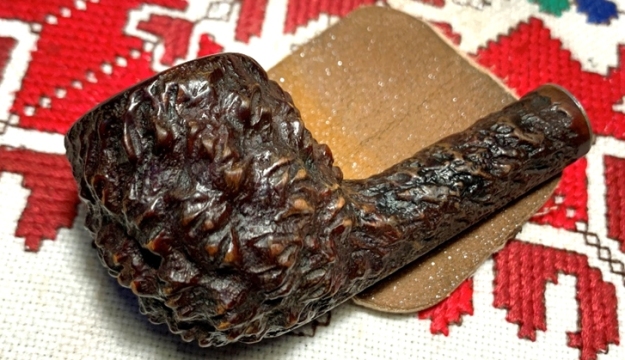
Wow!  I’m very pleased with how this Kaywoodie Natural Burl Apple shaped up.  The brown craggy finish is flecked with shade differences that give it a depth and warmth – a rustic knobby feel.  I always enjoy the contrast nuances that the coalescing of rough and smooth briar creates. The smooth briar underside and shank ring alongside of the Burl texture is nice.  I’m amazed that this pipe occupied the lower shelf on Kaywoodie’s offerings back in the day when Sam chose it and added it to his rotation of pipes.  The TLC it has received has enhanced the briar presentation with this unique Natural Burl finish. I appreciate the collaborative help from Bill Feurbach who even as the president of the S.M. Frank Co., was not hindered from helping with the recommissioning of this one vintage Kaywoodie – a pipe man at heart.  Thanks, Bill!  I like the Natural Burl a lot and I trust that Joe likes it too.  Paw’s Kaywoodie Natural Burl 33 – Large Apple, that was put into production in the mid-50s/early 60s, is a venerable 60-year-old(!), and is starting a new lifetime in the loving care and stewardship of Paw’s family.  Adding frosting to the Kaywoodie cake, Joe’s commissioning of this restoration of Paw’s Natural Burl also benefits the Daughters of Bulgaria – women and girls who have been trafficked and sexually exploited.  Thanks for joining me!
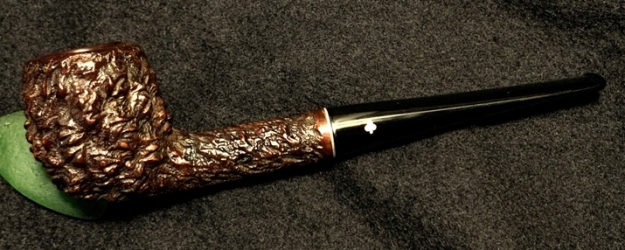
Next on the table – A Strange Saucer Shaped Pipe Stamped Flying Disc


Blog by Steve Laug

The next pipe on my worktable is a really different one! I am not sure where Jeff picked this one up but it is different. It is shaped like a little flying saucer. I have never seen one like this in all of my restorations. I have seen squashed Tomato shaped pipes that are almost disk shaped but nothing like this one. It has a pretty normal sized bowl on it and it was well smoked. The pipe had thick peeling varnish coat on the bowl that looked rough and there were a few fills around the bowl. It was another dirty pipe with a briar bowl, and aluminum stationary shank and screw in vulcanite stem. There was something uniquely charming about this strange little pipe. The bowl is heavily caked and the beveled rim has lava overflow and may have some damage. Hard to tell with the cake. There appears to be damage internally around the entrance of the airway into the bowl as it is a large cavern. The stamping on the heel of the bowl was interesting as it was all over the bowl. It read Flying Disc in an oval in one spot, Imported briar in another and next to a large fill it was stamped Italy. The vulcanite stem was oxidized and there was light tooth chatter on both sides near the button. It was also under turned and would not align properly in the shank. Jeff took the following photos before he started his cleanup work on the pipe. He took close-up photos of the bowl and rim top from various angles to capture the condition of the bowl and rim top edges. You can see the lava overflow and debris the edges of the bowl an on the rim top. You can see the thick cake in the bowl. This was a dirty pipe for sure but it must have been someone’s favorite judging from the condition of the bowl! Jeff took photos of the sides and heel of the bowl to show the grain around the bowl and the condition of the finish. You can see the peeling varnish as well as the fills in the photos. Jeff took a photo of the stamping on the heel of the bowl. You can see the various stamping clearly and they read as noted above. Note the large fill next to Italy is a pink putty.The next two photos show the top and underside of the stem. The oxidation, calcification and the light tooth chatter on both sides near the button are visible in the photos. I did a search on Pipephil and came up with nothing on the brand. I searched the brand online and came up with a link to a discussion on the pipe on Pipesmagazine forum. I am including that link and the original and concluding post (https://pipesmagazine.com/forums/threads/who-made-that-pipe.46221/). I am also including a photo of the pipe the questioner on the forum spoke of.…There are more than one of these flying disc shaped UFO pipes around. Some are stamped “Jet Set” on the left side of the vulcanized bit (see pic), & some have the Mastercraft logo there instead (pic from Pipephil). Jet Set is listed as one of the seconds for Mastercraft; Mastercraft being owned by Lane Ltd. On the bottom of the bowl stamped inside an oval is “Flying Disc”. Other stampings are “Italy” & “Imported Briar”…

…Lorenzo didn’t go into business as a brand until 1946. Using Google Translator (since I don’t speak French) the translation can sometimes be rough, but here is the confirmation that these Jet Pipe pipes were made by Lorenzo for Mastercraft:

“Both Jet Pipe pipes were manufactured by Lorenzo for the brand Mastercraft in the 60’s as well as pipes sparkless in this chapter pipes cigarette.”

It is pure speculation on my part then that Lorenzo either acquired Jet Pipe after making pipes for them or registered the name Jet Set and designed the Flying Disc pipe on their own for Mastercraft. Either way, Lorenzo is the maker of the Flying Disc pipe.

It became clear that the pipe had been made for Mastercraft in the US by Lorenzo. It probably was made in the 1960s. It reminded me of something from my childhood limited television cartoon watching – the Jetsons!

Now it was time to look at it up close and personal. Jeff had done an amazing job in removing all of the cake and the thick lava on the rim top. He had reamed the bowl with a PipNet Pipe Reamer and cleaned up the remnants with a Savinelli Fitsall Pipe Knife. He took the cake back to bare briar so we could check the walls for damage. He scrubbed the exterior of the bowl with Murphy’s Oil Soap and a tooth brush to remove the grime on the bowl and rim and was able to remove the lava and dirt. He cleaned out the interior of the bowl and shank with pipe cleaners, cotton swabs and alcohol until they came out clean. The rim top looked amazing when you compare it with what it looked like before he started. He cleaned the stem with Soft Scrub to remove the grime on the exterior and cleaned out the airway with alcohol, cotton swabs and pipe cleaners. I took some photos of the pipe as I saw it. To show how clean the rim top and stem really was I took a close-up photo of the rim and stem. The bowl was clean and cake free. The rim top is very clean with no residual lava in the sandblast finish. The inner edges of the rim show some darkening on the right and the left side. The black vulcanite stem looks cleaned up nicely. The surface had some light tooth marks but the button edge looked really good.I took photos of the stamping on the under side of the bowl. They are literally all around the bowl bottom. You can see that from the photos below. I removed the stem from the bowl and took photos of the parts. The “plumbing” on this pipe is quite unique. Look at the stinger apparatus that extends through the aluminum shank.Now it was time to start addressing issues with this pipe. I sanded the exterior of the bowl with 1500 grit micromesh sanding pads to remove the peeling varnish from the bowl. I worked on the rim edge a bit and paused as I examined the cavernous entry of airway into the bowl. It was badly burned and enlarged. I wonder if the metal stinger tip heated too much and burned the surrounding airway. I took two photos to try to capture the large cavernous opening.As I examined the area I had very few choices in terms of addressing the issue. I could carve and insert briar, glue it in place and hope that the burnout would not reoccur. The other option would be to build up the area with some JB Weld which dries inert and is basically burn proof and would preserve the airway area from further damage. I chose to use the JB Weld repair. I mixed a batch of the resin and hardener and inserted a Vaseline greased pipe cleaner in the airway so as not to close it off during the repair.I applied the mixture to the surface area around the pipe cleaner with a dental spatula. I pressed it into the cavernous pit. I knew that I would need to do this several times as it was a deep pit. I gave the first coat to the wall of the bowl and set the bowl aside overnight.This morning I filled in a few spots where the repair shrunk as it cured. The entrance to the bowl is now the size of a pipe cleaner. Once it has cured I will sand it smooth and even out the back of the bowl. I set the bowl aside and had some lunch!Once the repair had hardened to touch I worked on the underside of the bowl. There was a large pink fill next to the Italy stamp. It was damaged and hard so I picked it out with a dental pick and cleaned up the edges until all of it was gone. I wiped it out with a cotton swab and alcohol and then filled it in with a mix of clear super glue and briar dust. I know that Dal mixes the two into a putty and presses them in place. I have never succeeded in getting his putty mixture as it always hardens to quickly. Instead I layer the mix into the area to be filled. I start with glue, then briar dust pressed in with a dental spatula, then another layer of glue and some more dust. I finish it with a top layer of glue and let it dry.Once the repair has cured I used a needle file to flatten it as much as possible to the surface of the briar. I followed up by sanding it with a small corner of folded 220 grit sandpaper to blend it into the surrounding briar. Once it was smooth I buffed it lightly with 1500 grit micromesh and then stained it with  an Oak Stain pen to blend it into the bowl. At this point in the process I set the bowl aside for awhile to let the bowl cure some more and turned my attention to the stem. The first issue with the stem was the fact that it was under-turned almost a quarter turn. I removed the stem and heated the metal stinger with the flame of a Bic lighter. The heat softens the glue holding the stinger in the stem. After a few minutes I screwed the stem back in the shank and corrected the under-turned stem. Once I had it aligned I set it aside and let it cool off while in place.I moved on to addressing the remaining oxidation on the stem and the tooth chatter and marks. I sanded out the tooth marks on both sides of the stem with a folded piece of 220 sandpaper and sanded out the remaining oxidation. I started polishing with 400 grit wet dry sandpaper. I rubbed the stem down with Denicare Mouthpiece Polish – a red gritty paste a lot like Tripoli to polish it after the 400 grit sandpaper. I rub it on with my fingertips and work it into the vulcanite and buff it off with a cloth. It does a great job before I polish it further with the micromesh pads.I polished the stem with micromesh sanding pads – dry sanding with 1500-12000 grit sanding pads. I wiped the stem down after each sanding pad with a cloth containing some Obsidian Oil. I finished polishing it with Before & After Pipe Stem Polish – both Fine and Extra Fine and buffed it off with a cotton cloth. I gave it a final rub down with Briarville’s No Oxy Oil to preserve and protect the vulcanite stem. I set the stem aside and went back to work on the bowl. The bowl looked very good so I did not need to do any further work on it. I rubbed the bowl and shank down with Before & After Restoration Balm to deep clean the finish on the bowl and shank. The product works to clean, enliven and protect the briar. I worked it in with my fingers and with a horse hair shoe brush to get it into the deep nooks and crannies of the sandblast finish on the rim and bowl sides. I let it sit for 10 minutes to let it do its magic. I buffed it with a soft cloth. The briar really began to have a rich shine. I took some photos of the bowl at this point to mark the progress in the restoration. I sanded out the bowl with 220 grit sandpaper and a sanding drum on my Dremel to smooth out the walls on the bowl. With that finished the pipe was complete. I put the bowl and stem back together again and buffed the bowl and the stem with Blue Diamond on the buffing wheel. I gave the bowl and the stem several coats of carnauba wax. I carefully buffed the entire pipe with a clean buffing pad to raise the shine. I finished buffing with a microfiber cloth to deepen the shine. The finished pipe looks very good. The disc shaped pipe has a different feel in the hand. It is comfortable and light weight. The finished Flying Disc pipe is shown in the photos below. The dimensions of the pipe are Length: 5 inches, Height: 1 ½ inches, Outside diameter of the bowl: 2 ½ inches, Chamber diameter: ¾ of an inch. This unique looking Flying Disc/UFO pipe turned out very well. It should be a great pipe if the way it arrived to us was any indication. This one will go on the rebornpipes store shortly. If you are interested in it let me know. Thanks for reading this blog and my reflections on the pipe while I worked on it.
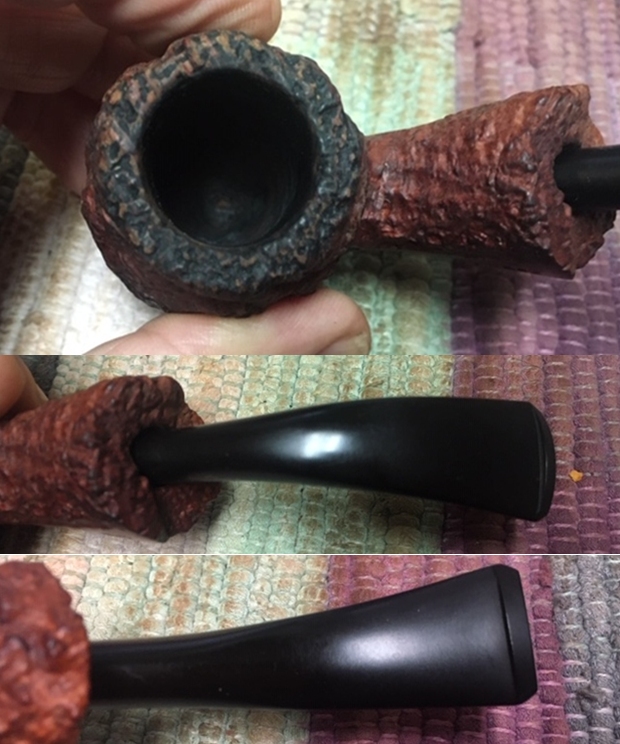
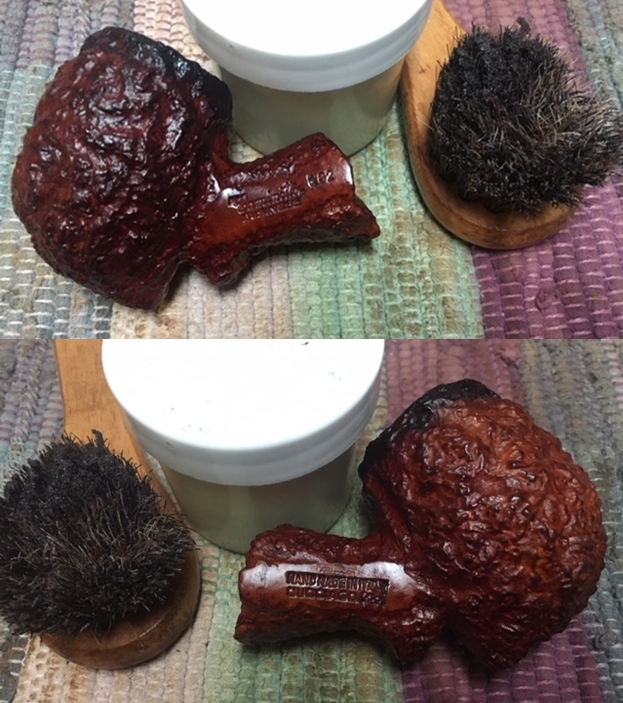
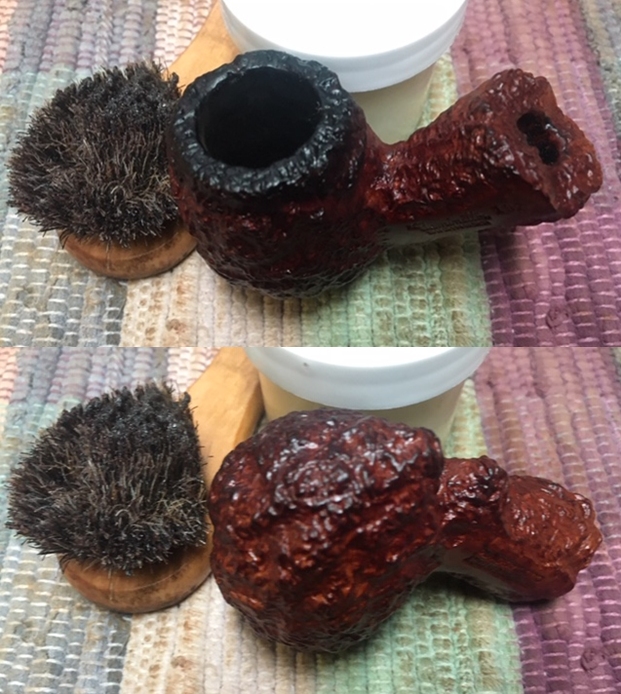
Next on the table – a 1948 MR&Co GBD 191 Chubby Billiard


Blog by Steve Laug

The next pipe on my worktable is an older GBD Chubby Billiard that Jeff and I picked up in a recent purchase of pipes. I have always loved older GBD pipes and the thick shank ones always have my attention. The pipe had some beautiful grain shining through the dust grime ground into the smooth finish. The finish was dull and lifeless and very dirty from sitting around. There was a thick cake in the bowl with lava flowing out of the bowl and over the beveled rim top. The cake and lava was thick enough that it was hard to know what the inner edge of the rim looked like. The pipe was stamped on both sides of the shank. The left side bore the GBD Oval logo stamp and nothing else. The right side read London England over the shape number 191. The tarnished band on the shank is Sterling Silver and bears the GBD Oval logo with three hallmarks underneath. There is also the MR&Co stamp below the hallmarks on the band. The thick tapered stem bore the GBD Oval Brass Roundel and was heavily oxidized and there was light tooth chatter and tooth marks on both sides near the button. The button surface also had some deep tooth marks that would need to be addressed.  Jeff took the following photos before he started his cleanup work on the pipe. He took close-up photos of the bowl and rim top from various angles to capture the absolutely filthy condition of the bowl and rim top edges. It is caked with a thick cake with tobacco debris in the bowl and the rim top is beveled but that can hardly be seen in the debris and overflow that has filled in the top. This was a dirty pipe for sure but it must have been a favourite of the pipeman who had held it in trust before it came to us. The next photos of the sides and heel of the bowl show the beautiful smooth mix of birdseye and cross grain around the bowl. It is quite stunning and you can see the grime and grit that is ground into the finish on the bowl sides. Did I say that this pipe was dirty? Perhaps that was a bit of an understatement. Jeff took photos of the stamping on the shank. The left side has the standard GBD Oval stamped into the briar. There is nothing else on the briar of the left side. The right side reads LONDON ENGLAND over 191 which is the shape number. He also took a photo of the band on the shank with its stamping as well as the GBD Oval Roundel on the left side of the stem. The next photos show a top view of the thick tapered stem as well as the top and underside. The oxidation, calcification and tooth marks and chatter on both sides near and on the button are visible in the photos. When the pipe arrived I turned to Pipephil (http://www.pipephil.eu/logos/en/logo-gbd.html) to see if he could help me with the MR&Co stamp on the shank band. There was some quick information the top of the page so I did a screen capture of the section and have included it below. It gave me the name behind MR&Co which I already knew – Marechal & Ruchon Cie. It simply said that MR&Co first, the CJ Verguet Freres owned GBD from 1903 to 1970 and manufactured the pipes in the St. Claude, France plant. I needed more specific information so I would do some more reading.I turned to Pipedia for more information MR&C – Marechal Ruchon & Cie. There was a specific listing for the company so I turned there https://pipedia.org/wiki/Marechal_Ruchon_%26_Cie.). I quote in full:

Marechal Ruchon & Cie. was a company owned by Auguste Marechal and Ferdinand Ruchon (“& Cie” is the french equivalent of “& Co”) which owned the GBD brand from the end of the 19th century until 1902 when they sold Marechal, Ruchon & Cie. to Oppenheimer Pipe, which in turn changed the name of the company to Marechal, Ruchon & Co., Ltd.. Upon the creation of Cadogan, however, the brand was no more, remembered only in the name of the GBD Marcee pipes made until just after the Second World War. For more information see GBD.

Since the GBD pipe that I was working on bore the MR&Co stamp in a extended rectangle with pointed ends that helped me know that it was made after MR&Cie sold the company in 1902 to Oppenheimer Pipe in 1902 who changed the name to Marechal, Ruchon & Co., Ltd. The stamp from that time forward matches the one on the GBD on my table.

I turned to the article on Pipedia on GBD itself and found some interesting additional information (https://pipedia.org/wiki/GBD). I quote:

…Meanwhile the GBD name was well established and thus retained. August Marechal and Ferdinand Ruchon led the firm into the 20th century. They were in charge of the company for more than 50 years….

This means that MR&Co led the firm from 1902-1970. Now I felt like I was on my way to dating this pipe and I have not even looked at the silver hallmarks yet.

I decided to turn to the hallmarks at this point. I knew that the marks were clear and read as follows from right to left. There was a Leopard’s Head without a Crown, a prancing or rampant Lion and the letter N. Each of them was in a square cartouche.

I turned to an internet site on British Silver Hallmarks to unpack the meaning of each of the hallmarks (https://www.925-1000.com/british_marks.html). The first screen capture below picks up the information on the Silver Standard Marks. The Rampant Lion is shown in letter A. It informed the buyer that the silver was Sterling .925.The second screen capture shows the Leopard Heads that were often on silver from London. They are the City Marks and I captured only the London section. The Leopard on this band is the one without the crown. The information on the screen capture is clear that the uncrowned Leopard was on silver from 1822 to the present.Now I knew the first two hallmarks on the band – It was a London Made Silver band made after 1822 and it was .925 Sterling. Now it was time to narrow down the dates on the band. I turned to another webpage that gave me the letter codes so that I could pin down the date on this pipe from that site (https://www.silvermakersmarks.co.uk/Dates/London.html). The large chart on that site covers the time period from 1544-2024. I include a screen capture of the section from 1698 to 1974 as it includes the stamp I am interested in.I have to thank John Fetter on the Facebook Tobacco Pipe Restorers Group for helping me nail this down. I posted the stamping on the shank band on the group with a potential date I was looking at and he posted a more accurate read. He included a photo of a pipe that he was waiting for from 1955 with similar hallmarks other than the “N” stamp that I have inserted below.I also checked the site for the 1948 date that he surmised and found that it matched perfectly to the stamping on the band on my pipe. I have included a screen capture of the section on the chart with the 1948 N stamp.

Now I knew that I was dealing with a GBD pipe made when Oppenheimer owned the company and operated as Marechal, Ruchon & Co. It was made in 1948 and bore the City of London mark in a band of .925 Sterling Silver. This was an old timer – 72 years old, just 7 years older than I am!

Now it was time to look at it up close and personal. I know I have said this before but I have to tell you this again. Jeff does an incredible job when he cleans these pipes. I know for a fact that I could not work on so many pipes without his cleanup work. He saves me an amazing amount of time with what he does. I receive these pipe cleaned and ready to work on with my part. I am very thankful for his help. He is a major part of rebornpipes.

This pipe was nothing short of looking like a completely different pipe! He had a real job in removing all of the cake and the thick lava on the rim top. He had reamed the bowl with a PipNet Pipe Reamer and cleaned up the remnants with a Savinelli Fitsall Pipe Knife. He took the cake back to bare briar so we could check the walls for damage. He scrubbed the exterior of the bowl with Murphy’s Oil Soap and a tooth brush to remove the grime on the bowl and rim and was able to remove the lava and dirt. He cleaned out the interior of the bowl and shank with pipe cleaners, cotton swabs and alcohol until they came out clean. The rim top was clean when you compare it with what it looked like before he started. There was still some darkening on the top and inner edge of the bowl. There was one burned area toward the back of the inner edge and top.  He cleaned the stem with Soft Scrub to remove the grime on the exterior and cleaned out the airway with alcohol, cotton swabs and pipe cleaners. I took some photos of the pipe as I saw it. To show how clean the rim top and stem really were I took a close-up photo of them both. The bowl was clean and cake free. The rim top is very clean with no residual lava on the surface of the inward beveled rim top. There was some darkening in the finish on the top and the inner edges of the bowl. The black vulcanite tapered stem cleaned up nicely. There were still some deep spots of oxidation around the shank end and in the crease of the button. The surface had some light tooth marks and the button edge had a deeper mark on each side.I took photos of the stamping on both sides of the shank. You can see that it is very readable and clear on both sides.I removed the stem from the bowl and took photos of the parts. The taper vulcanite stem has the older style stepped down tenon end that extended beyond the end of the mortise into the first part of the airway.I started my part of the restoration by addressing the issues that remained on the rim top. I used a folded piece of 220 grit sandpaper to clean up the inner edges of the bowl and also sand the smooth portion of the inward bevel on the top. I worked it over to minimize the burn mark on the rear inner edge and remove the darkening from the rest of the edge and the rim top. I started the polishing with 400 grit wet dry sandpaper. I am happy with the results thus far. It definitely is an improvement. I would be able to polish it and blend it into the natural finish of the bowl.I polished the briar with micromesh sanding pads – dry sanding with 1500-12000 grit pads. I wiped the bowl down after each pad with a damp cloth. The grain really began to stand out and the finish took on a shine by the last sanding pad. The photos tell the story! The bowl looked very good. There were a few war wounds that I decided to leave in the briar as they were part of the story of the pipe. I rubbed the bowl and shank down with Before & After Restoration Balm to deep clean the finish on the bowl and shank. The product works to clean, enliven and protect the briar. I worked it into the smooth finish on the bowl with my fingertips. I let it sit for 10 minutes to let it do its magic. I buffed it with a soft cloth. The briar really began to have a rich shine and grain began to come alive in the finish. I took photos of the bowl at this point to mark the progress in the restoration. The bowl was finished so I set it aside and turned my attention to the stem. I sanded out the deeper oxidation that still remained in the vulcanite and the tooth marks on both sides of the stem with a folded piece of 220 sandpaper. I also reshaped the button surfaces with the sandpaper at the same time. I started polishing with a folded piece of 400 grit wet dry sandpaper.I rubbed the stem down with Denicare Mouthpiece Polish – a red gritty paste a lot like Tripoli to polish it after the 400 grit sandpaper. I rub it on with my fingertips and work it into the vulcanite and buff it off with a cloth. It does a great job before I polish it further with the micromesh pads.I polished the band with some tooth paste – rubbed it on with my fingertips and rubbed it off with a cotton pad. It really shone and gave a bit of pop to the shank and stem.I polished the stem with micromesh sanding pads – dry sanding with 1500-12000 grit sanding pads. I wiped the stem down after each sanding pad with a cloth containing some Obsidian Oil. I finished polishing it with Before & After Pipe Stem Polish – both Fine and Extra Fine and buffed it off with a cotton cloth. I gave it a final rub down with Briarville’s No Oxy Oil to preserve and protect the vulcanite stem. I put the bowl and stem back together again and buffed the bowl and the stem with Blue Diamond on the buffing wheel. I used a soft touch on the sandblast bowl so as not to fill in the blast with the product. I gave the bowl and the stem several coats of carnauba wax. I carefully buffed the entire pipe with a clean buffing pad to raise the shine. I finished buffing with a microfiber cloth to deepen the shine. The finished pipe looks very good. The grain patterns around the bowl are very nice and the chunky shape of the bowl and shank look great. The pipe feels great in the hand. It is comfortable and light weight for a pipe of its size. The finished GBD 191 London England Chunky Billiard is shown in the photos below. The dimensions of the pipe are Length: 5 ¼ inches, Height: 2 inches, Outside diameter of the bowl: 1 ¼ inches, Chamber diameter: ¾ of an inch. This 1948 GBD Billiard turned out very well. It should be a great pipe. This one will be joining my collection of older GBD pipes. Thanks for reading this blog and my reflections on the pipe while I worked on it.


Next on the table – an uncommonly beautiful sandblast Jesper of Denmark


Blog by Steve Laug

The next pipe on my worktable is an interesting smaller sandblast egg-shaped Freehand with a fancy vulcanite stem. The pipe had some beauty shining through the dust and debris in the valleys of the deep and rugged sandblast finish. The blast continued up the shank to the plateau finished shank end. The finish was dull and lifeless and very dirty from sitting around. There was a thick cake in the bowl with lava flowing out of the bowl and over the rim top. The lava had filled in the sandblasted finish on the rim top. The cake and lava was thick enough that it was hard to know what the inner edge of the rim looked like. The stamping on the shank appeared to read Jesper of Denmark but the major part of the second line was hidden in the sandblast. The fancy stem was oxidized and there was light tooth chatter on both sides near the button. Jeff took the following photos before he started his cleanup work on the pipe. He took close-up photos of the bowl and rim top from various angles to capture the condition of the bowl and rim top edges. You can see the lava overflow and debris in the sandblasted rim top. You can see the thick cake in the bowl. This was a dirty pipe for sure but it must have been a favourite of the pipeman who had held it in trust before it came to us. He took photos of the sides and heel of the bowl to show the beautiful deep and rugged sandblast around the bowl. It is quite uniform and you can see the dust and debris in the finish. It is an good looking sandblast. Jeff took a photo of the stamping on the shank. It looks like it reads Jesper of…the “Denmark” portion of the stamp is lost in the sandblast below it. The line at the end of the “r” is a deep carved line in the smooth panel. The second photo below shows the plateau shank end.The next two photos show the top and underside of the stem. The oxidation, calcification and the light tooth chatter on both sides near the button are visible in the photos. When the pipe arrived I turned to Pipephil (www.pipephil.eu/logos/en/logo-j2.html) to see if he included not only information on the Jesper of Denmark brand. Sure enough he quick information for me that identified the designer/carver as Jorgen Larsen.I turned to Pipedia for more information on Robert Eugene (Mic) Burns and the Micoli line of pipe that he carved (https://pipedia.org/wiki/Jesper_of_Denmark). The site confirms that the pipes were designed by Jorgen Larsen. Interestingly Pipedia included a photo of a catalogue page featuring Jesper of Denmark pipes and a picture of the carver himself. The catalogue page came through Doug Valitchka. Now it was time to look at it up close and personal. Jeff had done an amazing job in removing all of the cake and the thick lava on the rim top. He had reamed the bowl with a PipNet Pipe Reamer and cleaned up the remnants with a Savinelli Fitsall Pipe Knife. He took the cake back to bare briar so we could check the walls for damage. He scrubbed the exterior of the bowl with Murphy’s Oil Soap and a tooth brush to remove the grime on the bowl and rim and was able to remove the lava and dirt. He cleaned out the interior of the bowl and shank with pipe cleaners, cotton swabs and alcohol until they came out clean. The rim top looked amazing when you compare it with what it looked like before he started. He cleaned the stem with Soft Scrub to remove the grime on the exterior and cleaned out the airway with alcohol, cotton swabs and pipe cleaners. I took some photos of the pipe as I saw it. To show how clean the rim top and stem really was I took a close-up photo of the rim and stem. The bowl was clean and cake free. The rim top is very clean with no residual lava in the sandblast finish. The inner edges of the bowl look good. The plateau shank end also looks good. The black vulcanite fancy stem looks cleaned up nicely. The surface had some light tooth marks but the button edge looked really good.I took a photo of the stamping on the under side of the shank. You can see the name Jesper and the word “of” on the smooth panel.I removed the stem from the bowl and took photos of the parts. The fancy vulcanite stem worked really well with the sandblast egg shape and plateau shank.The bowl looked very good so I did not need to do any further work on it. I rubbed the bowl and shank down with Before & After Restoration Balm to deep clean the finish on the bowl and shank. The product works to clean, enliven and protect the briar. I worked it in with my fingers and with a horse hair shoe brush to get it into the deep nooks and crannies of the sandblast finish on the rim and bowl sides. I let it sit for 10 minutes to let it do its magic. I buffed it with a soft cloth. The briar really began to have a rich shine. I took some photos of the bowl at this point to mark the progress in the restoration. The bowl was finished so I set it aside and turned my attention to the stem. I sanded out the tooth marks on both sides of the stem with a folded piece of 220 sandpaper and started polishing with 400 grit wet dry sandpaper.I rubbed the stem down with Denicare Mouthpiece Polish – a red gritty paste a lot like Tripoli to polish it after the 400 grit sandpaper. I rub it on with my fingertips and work it into the vulcanite and buff it off with a cloth. It does a great job before I polish it further with the micromesh pads.I polished the stem with micromesh sanding pads – dry sanding with 1500-12000 grit sanding pads. I wiped the stem down after each sanding pad with a cloth containing some Obsidian Oil. I finished polishing it with Before & After Pipe Stem Polish – both Fine and Extra Fine and buffed it off with a cotton cloth. I gave it a final rub down with Briarville’s No Oxy Oil to preserve and protect the vulcanite stem. I put the bowl and stem back together again and buffed the bowl and the stem with Blue Diamond on the buffing wheel. I used a soft touch on the sandblast bowl so as not to fill in the blast with the product. I gave the bowl several coats of Conservator’s Wax and the stem several coats of carnauba wax. I carefully buffed the entire pipe with a clean buffing pad to raise the shine. I finished buffing with a microfiber cloth to deepen the shine. The finished pipe looks very good. The sandblast is deep and rugged look and feel in the hand. It is comfortable and light weight. The finished Jesper of Denmark Freehand is shown in the photos below. The dimensions of the pipe are Length: 5 ½ inches, Height: 2 inches, Outside diameter of the bowl: 1 ¼ inches, Chamber diameter: 7/8 of an inch. This great looking sandblast egg turned out very well. It should be a great pipe. There is something about this one that interests me. While I don’t have many freehand pipes this one may well stay with me. I will keep you posted. Thanks for reading this blog and my reflections on the pipe while I worked on it.